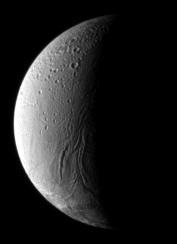
The Arabian Connection
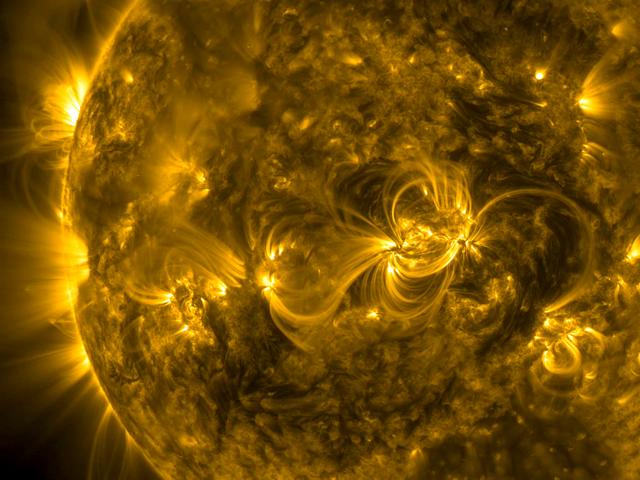
A series of linked loops across the face of the Sun highlighted the dynamic magnetic connections generated by several active regions (Jan. 3-6, 2015). Active regions have magnetic north and south polarity and the arcing loops find the opposite pole to make the connection. What is unusual here is that they all kind of line up and link nicely together. These movies are made in a wavelength of extreme ultraviolet light. Credit: NASA/Solar Dynamics Observatory <b><a href="http://www.nasa.gov/audience/formedia/features/MP_Photo_Guidelines.html" rel="nofollow">NASA image use policy.</a></b> <b><a href="http://www.nasa.gov/centers/goddard/home/index.html" rel="nofollow">NASA Goddard Space Flight Center</a></b> enables NASA’s mission through four scientific endeavors: Earth Science, Heliophysics, Solar System Exploration, and Astrophysics. Goddard plays a leading role in NASA’s accomplishments by contributing compelling scientific knowledge to advance the Agency’s mission. <b>Follow us on <a href="http://twitter.com/NASAGoddardPix" rel="nofollow">Twitter</a></b> <b>Like us on <a href="http://www.facebook.com/pages/Greenbelt-MD/NASA-Goddard/395013845897?ref=tsd" rel="nofollow">Facebook</a></b> <b>Find us on <a href="http://instagram.com/nasagoddard?vm=grid" rel="nofollow">Instagram</a></b>
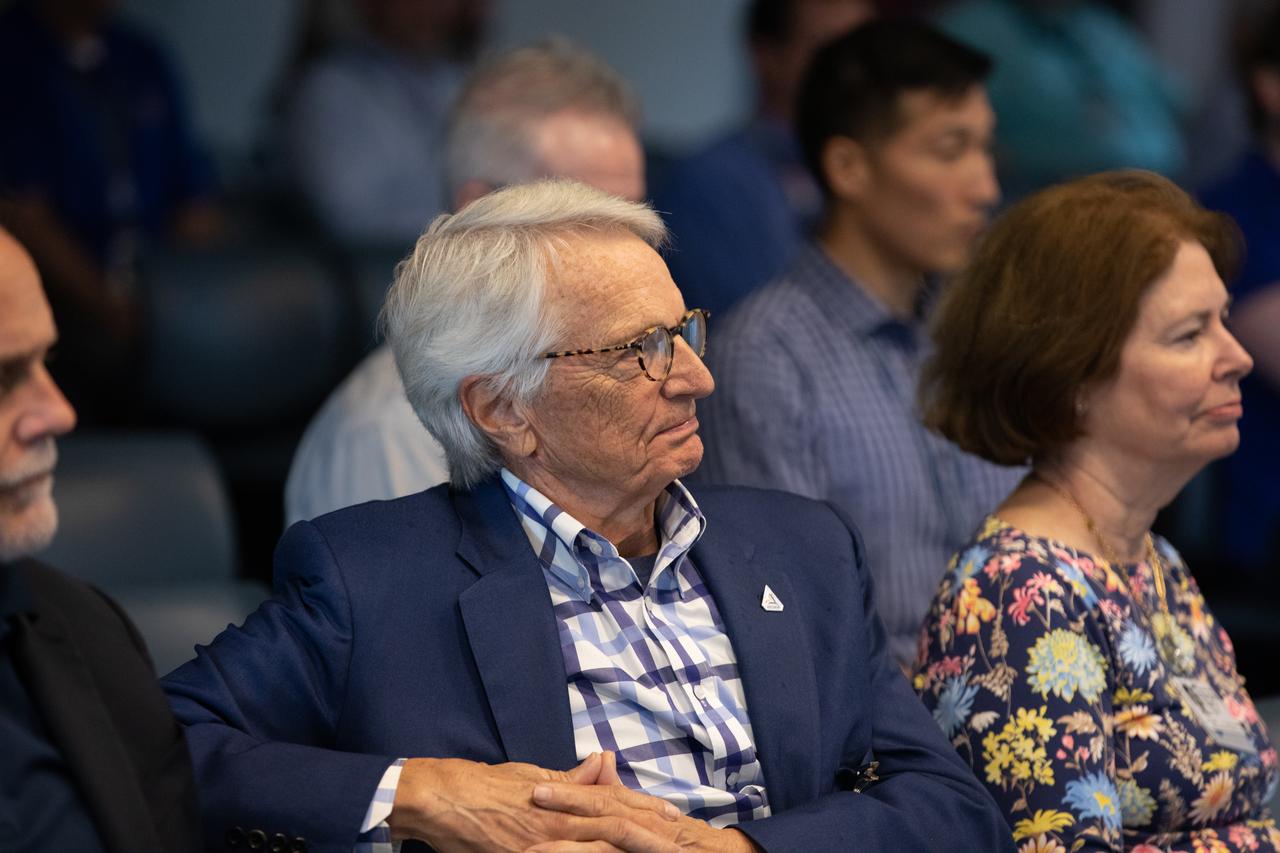
Arthur Muir, a retired Chicago attorney and America’s oldest Mt. Everest summiteer, attends the inaugural Cross-Program Connection event at NASA Kennedy Space Center’s Space Station Processing Facility on March 8, 2023. Muir, 75, was the speaker at the Florida spaceport function titled “Explorers Doing the Impossible.” He toured Kennedy before sharing his experiences in overcoming incredible challenges during his journey to the top of Earth’s highest mountain.
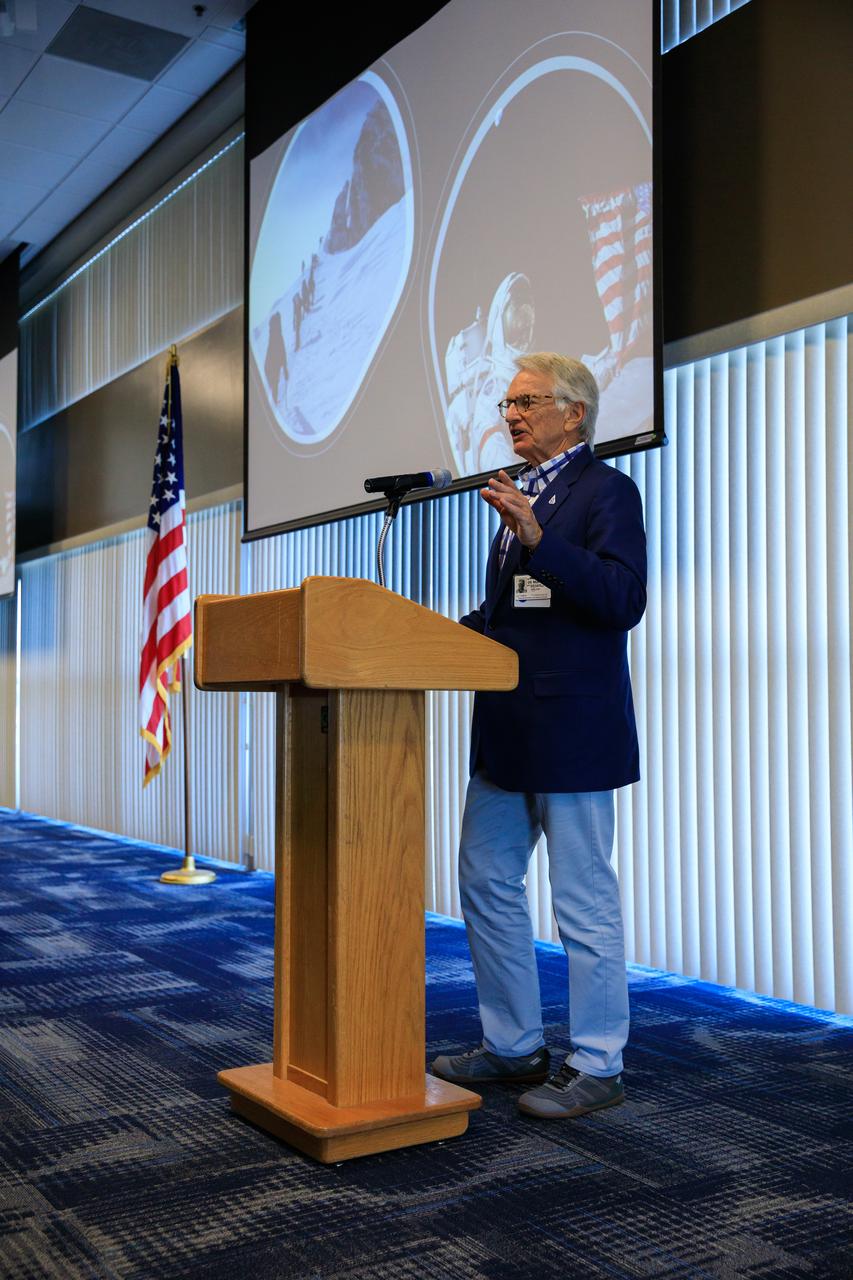
Arthur Muir, a retired Chicago attorney and America’s oldest Mt. Everest summiteer, addresses the audience during the inaugural Cross-Program Connection event at NASA Kennedy Space Center’s Space Station Processing Facility on March 8, 2023. Muir, 75, was the speaker at the Florida spaceport function titled “Explorers Doing the Impossible.” He toured Kennedy before sharing his experiences in overcoming incredible challenges during his journey to the top of Earth’s highest mountain.

Arthur Muir, a retired Chicago attorney and America’s oldest Mt. Everest summiteer, addresses the audience during the inaugural Cross-Program Connection event at NASA Kennedy Space Center’s Space Station Processing Facility on March 8, 2023. Muir, 75, was the speaker at the Florida spaceport function titled “Explorers Doing the Impossible.” He toured Kennedy before sharing his experiences in overcoming incredible challenges during his journey to the top of Earth’s highest mountain.
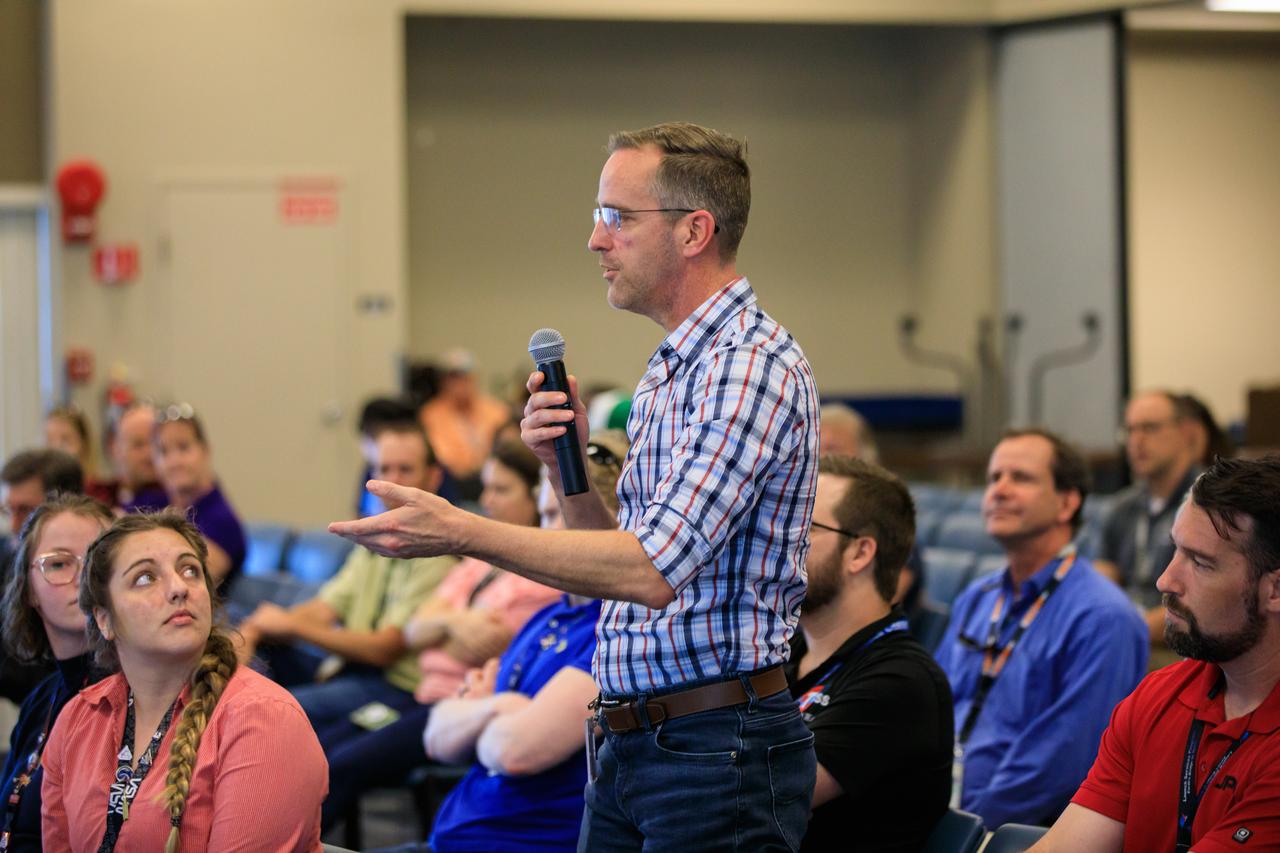
An audience member asks a question during the inaugural Cross-Program Connection event at NASA Kennedy Space Center’s Space Station Processing Facility on March 8, 2023. Arthur Muir, a retired Chicago attorney and America’s oldest Mt. Everest summiteer, was the speaker at the Florida spaceport function titled “Explorers Doing the Impossible.” He toured Kennedy before sharing his experiences in overcoming incredible challenges during his journey to the top of Earth’s highest mountain.
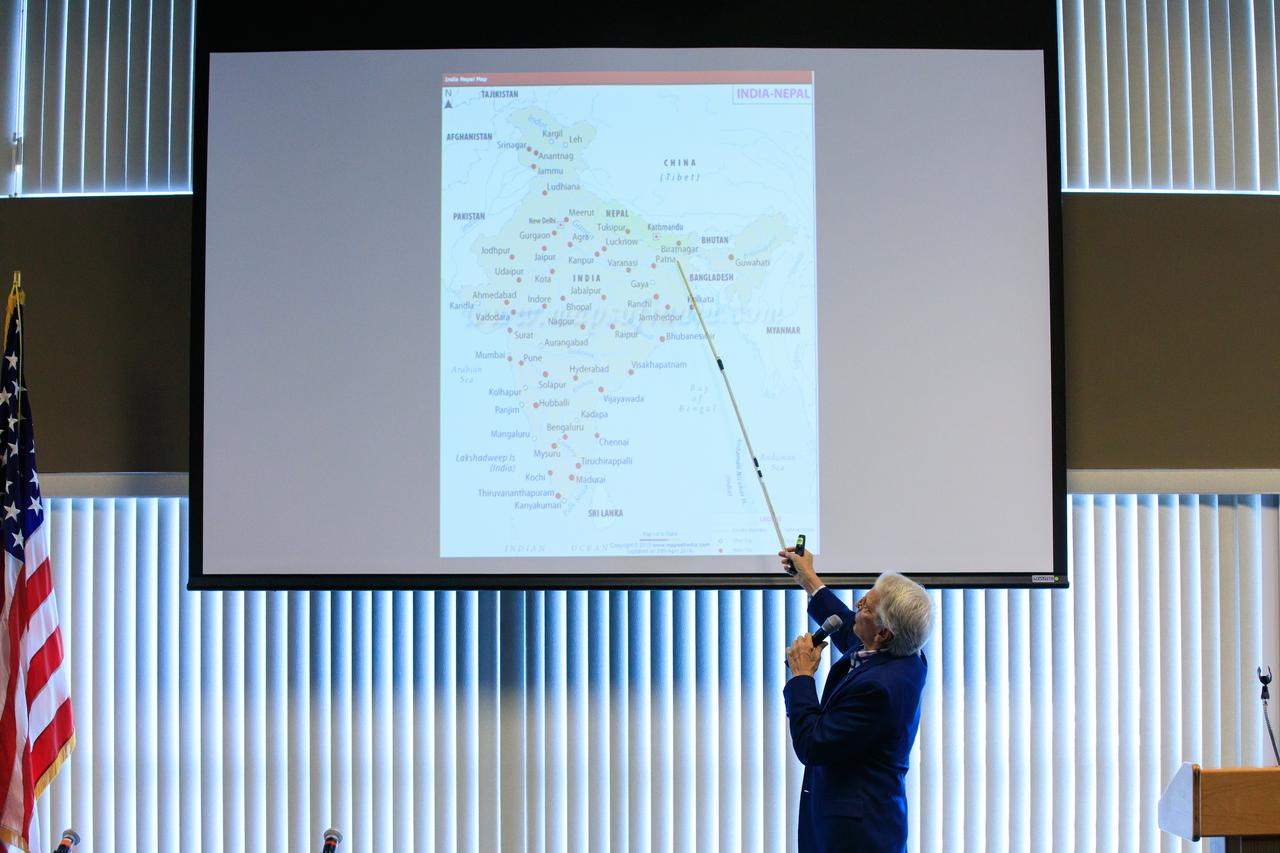
Arthur Muir, a retired Chicago attorney and America’s oldest Mt. Everest summiteer, delivers his presentation during the inaugural Cross-Program Connection event at NASA Kennedy Space Center’s Space Station Processing Facility on March 8, 2023. Muir, 75, was the speaker at the Florida spaceport function titled “Explorers Doing the Impossible.” He toured Kennedy before sharing his experiences in overcoming incredible challenges during his journey to the top of Earth’s highest mountain.

NASA’s Exploration Ground Systems Manager Shawn Quinn, right, moderates the inaugural Cross-Program Connection event at NASA Kennedy Space Center’s Space Station Processing Facility in Florida on March 8, 2023. Other participants, from left, are: Stacie Turner, Kennedy’s Deep Space Logistics; Dana Hutcherson, NASA’s Commercial Crew Program deputy program manager; and Arthur Muir, a retired Chicago attorney and America’s oldest Mt. Everest summiteer. Muir, 75, was the speaker at the event titled “Explorers Doing the Impossible.” He toured Kennedy before sharing his experiences in overcoming incredible challenges during his journey to the top of Earth’s highest mountain.
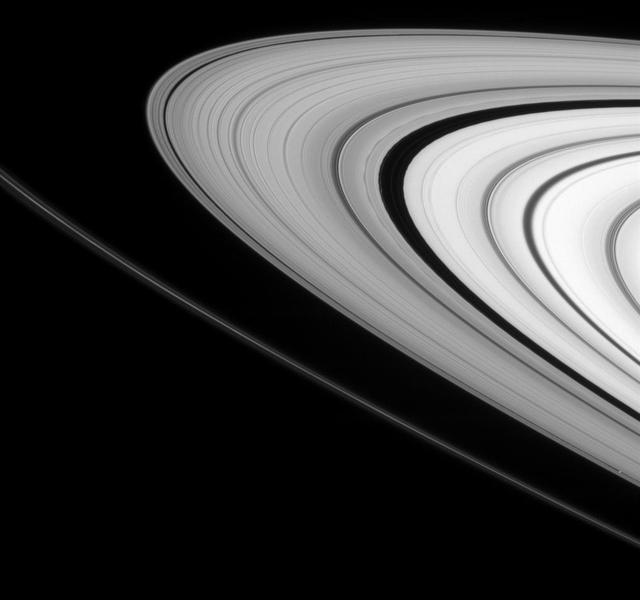
Ring-Moon Connections
Students, Public Connect with Mars
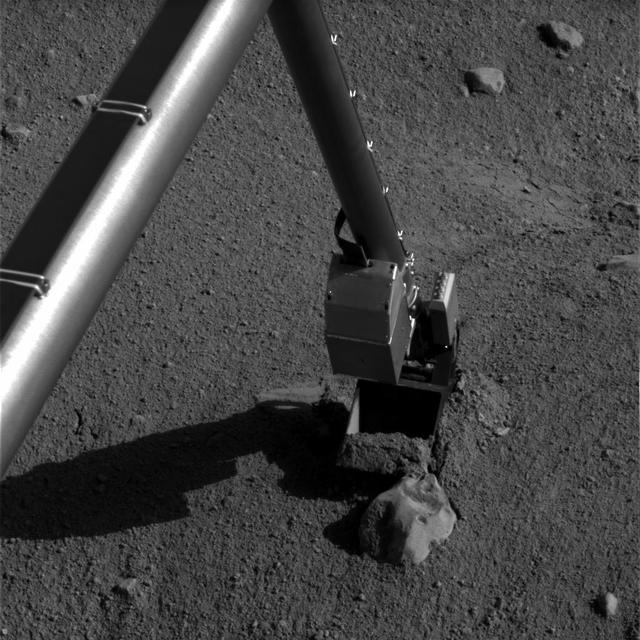
Phoenix Robotic Arm connects with Alice
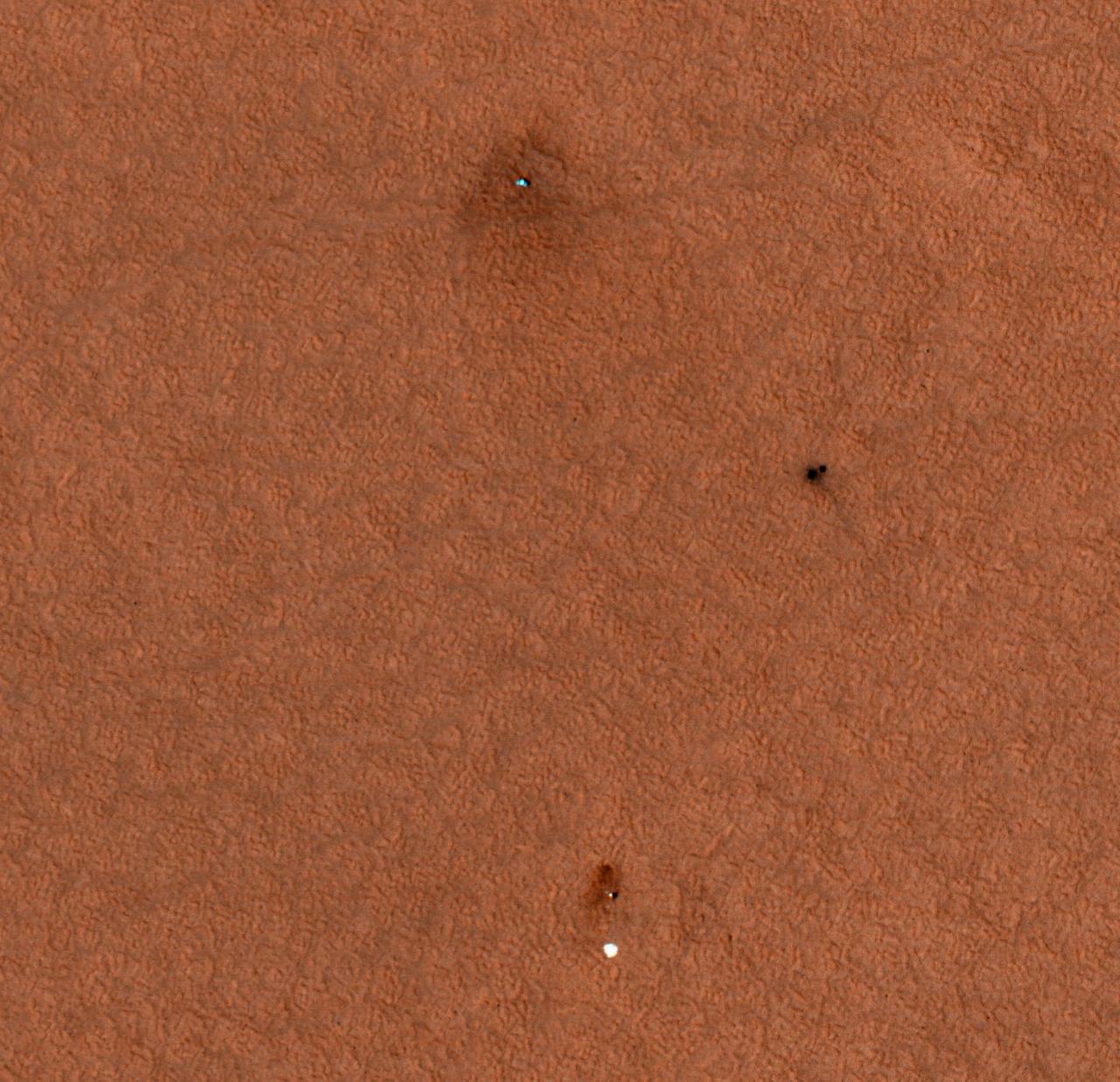
Connecting the Dots: Lander, Heat Shield, Parachute

“It was part of my career, but then it was also personal. I was doing it on a volunteer basis, but it was part of my work because I was bringing my service dog in training everywhere with me, which meant to work every day and to meetings at NOAA (National Oceanic and Atmospheric Administration). And I was taking the dog across the country to meetings over at Ball Aerospace; that was all part of the training of a service dog. That was an incredible time. I really enjoyed it. “The fact that I was able to do the two combined, that to me was just such an accomplishment. To some people, it could be they got permission to do it and then that’s all they focused on was the dog, but no. I had my job I had to do. I’ve always gotten a distinguished rating in my performances my entire career, and it didn't change when I was training this service dog. “It was a challenge for sure. “After I had to turn back over the service dog I trained, it was really very difficult because the dog was with me for two years, even though I knew it was for a wonderful cause. I ended up going out and getting my own dog who I’ve trained to be a therapy dog, so now we do therapy visits with veterans, elderly, and others. ” Jean Wolfe, Program Executive for the Geostationary Operational Environmental Satellite (GOES)-R Series Program at NASA Headquarters, poses for a portrait with Bonnie, who was named for U.S. Air Force Reserve Major Bonnie Carroll, Ret., Friday, Dec. 18, 2020 at the Warrior Canine Connection in Boyds, MD. “Warrior Canine Connection enlists service members and veterans with combat stress in the critical mission of training service dogs for fellow Wounded Warriors.” Photo Credit: (NASA/Aubrey Gemignani)
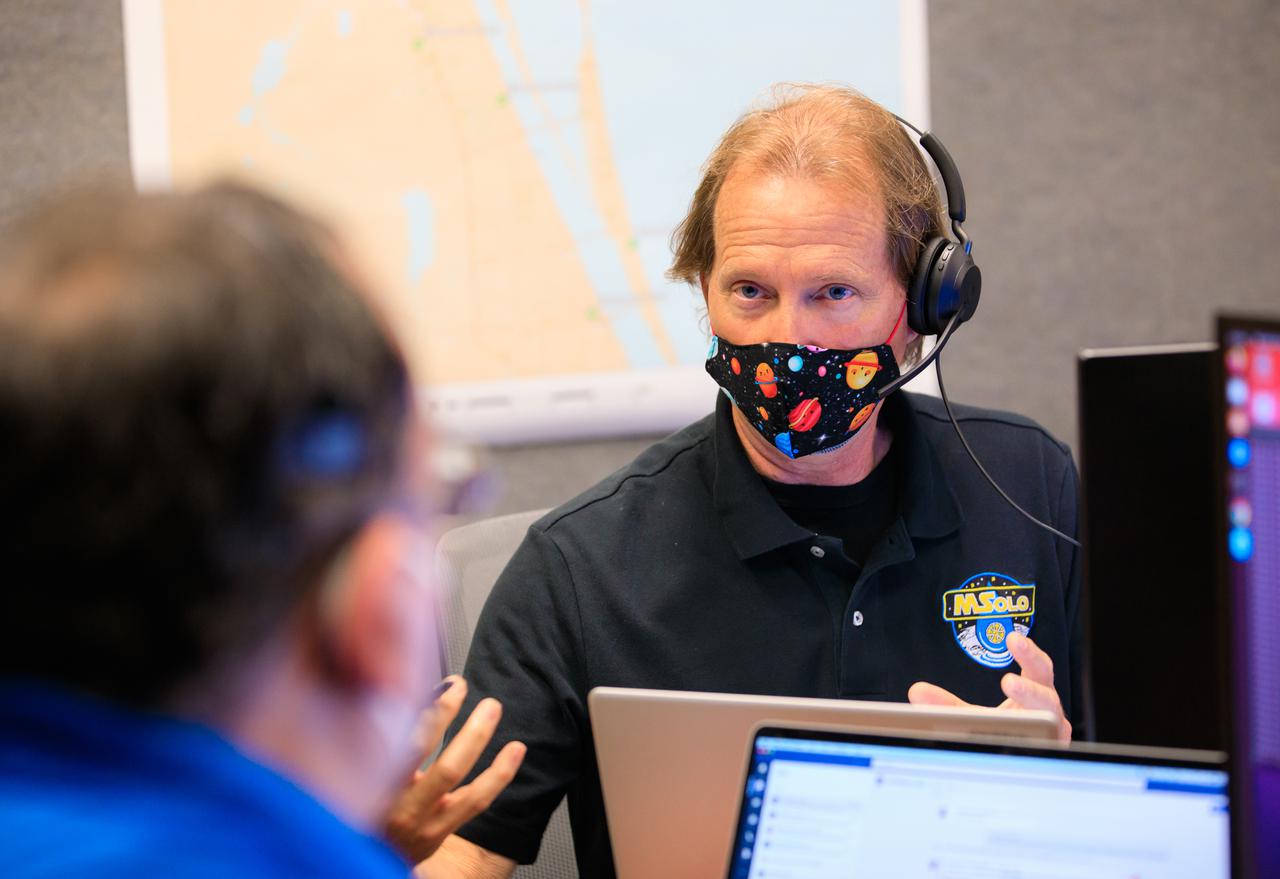
Kevin Smith, software team and science team liaison for NASA’s Mass Spectrometer observing lunar operations (MSolo), takes part in a joint simulation of the Peregrine One Mission on March 26, 2021, at NASA’s Kennedy Space Center in Florida, where MSolo connected from inside the Neil Armstrong Operations and Checkout Building to Astrobotic’s mission control facility in Pittsburgh, Pennsylvania. MSolo is a commercial off-the-shelf mass spectrometer modified to work in space and it will help analyze the chemical makeup of landing sites on the Moon, as well as study water on the lunar surface. This was the first mission round of simulations for Peregrine Mission One to develop and refine procedures between Astrobotic’s Peregrine Lander and MSolo. Later, there will be other simulations with multiple instruments. Peregrine Mission One will be one of NASA’s first Commercial Lunar Payload Delivery Service (CLPS) missions where under the Artemis program, commercial deliveries beginning in 2021 will perform science experiments, test technologies and demonstrate capabilities to help NASA explore the Moon and prepare for human missions.
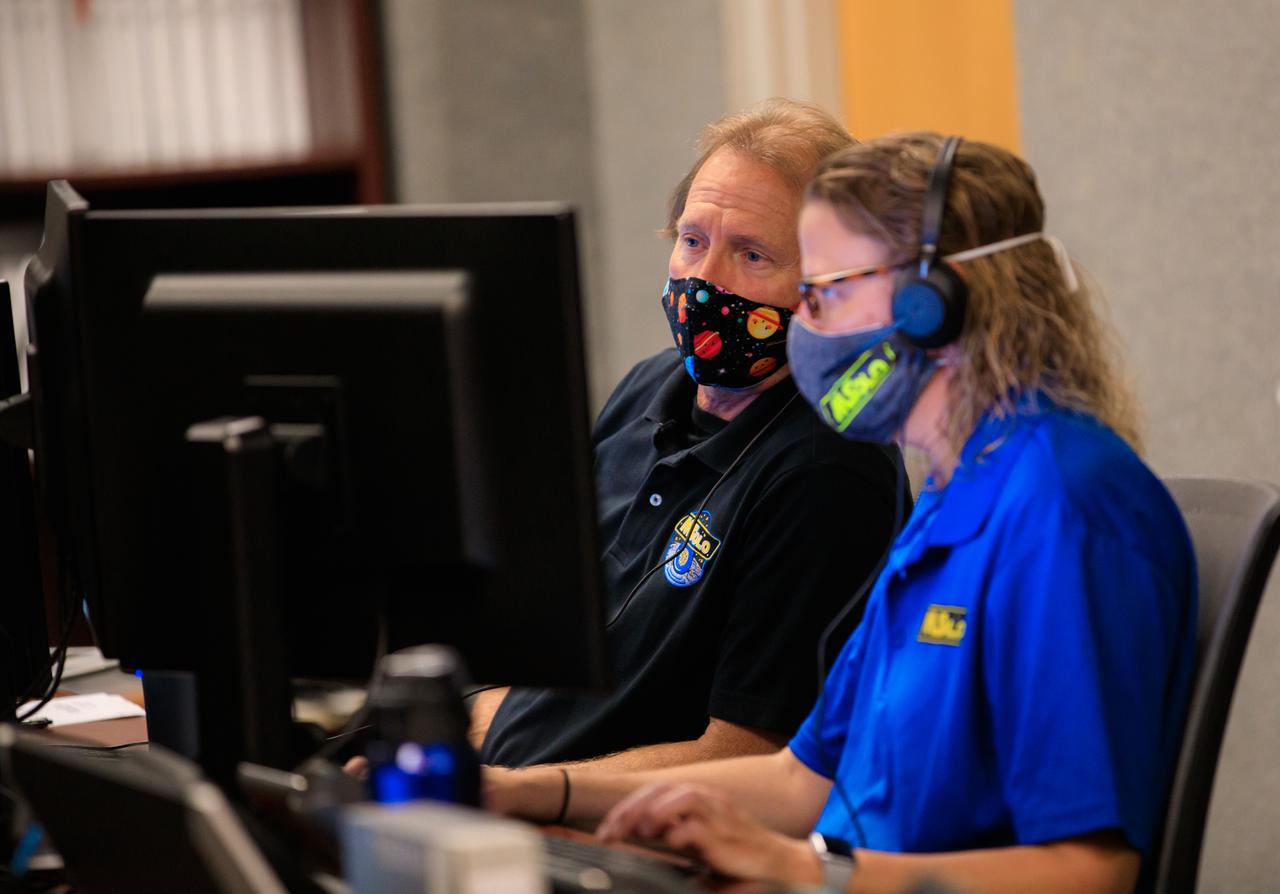
Janine Captain, at right, principal investigator for NASA’s Mass Spectrometer observing lunar operations (MSolo) and Kevin Smith, software team and science team liaison at NASA’s Kennedy Space Center in Florida, confer during a joint simulation of the Peregrine One Mission on March 26, 2021, where MSolo is connected from inside the Neil Armstrong Operations and Checkout Building to Astrobotic’s mission control facility in Pittsburgh, Pennsylvania. MSolo is a commercial off-the-shelf mass spectrometer modified to work in space and it will help analyze the chemical makeup of landing sites on the Moon, as well as study water on the lunar surface. This was the first mission round of simulations for Peregrine Mission One to develop and refine procedures between Astrobotic’s Peregrine Lander and MSolo. Later, there will be other simulations with multiple instruments. Peregrine Mission One will be one of NASA’s first Commercial Lunar Payload Delivery Service (CLPS) missions where under the Artemis program, commercial deliveries beginning in 2021 will perform science experiments, test technologies and demonstrate capabilities to help NASA explore the Moon and prepare for human missions.
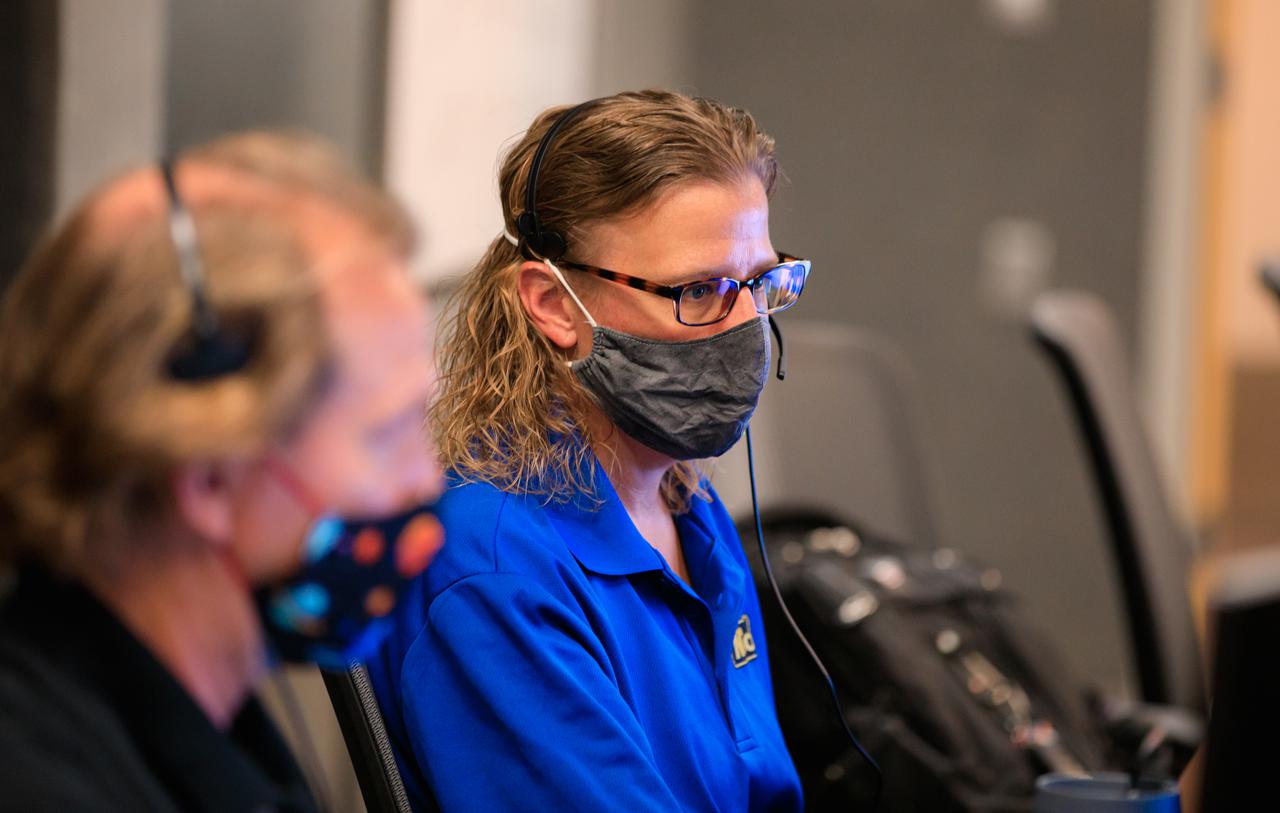
Janine Captain, at right, principal investigator for NASA’s Mass Spectrometer observing lunar operations (MSolo) takes part in a simulation of the Peregrine One Mission on March 26, 2021, where MSolo connected from inside the Neil Armstrong Operations and Checkout Building at NASA’s Kennedy Space Center in Florida to Astrobotic’s mission control facility in Pittsburgh, Pennsylvania. MSolo is a commercial off-the-shelf mass spectrometer modified to work in space and it will help analyze the chemical makeup of landing sites on the Moon, as well as study water on the lunar surface. This was the first mission round of simulations for Peregrine Mission One to develop and refine procedures between Astrobotic’s Peregrine Lander and MSolo. Later, there will be other simulations with multiple instruments. Peregrine Mission One will be one of NASA’s first Commercial Lunar Payload Delivery Service (CLPS) missions where under the Artemis program, commercial deliveries beginning in 2021 will perform science experiments, test technologies and demonstrate capabilities to help NASA explore the Moon and prepare for human missions.
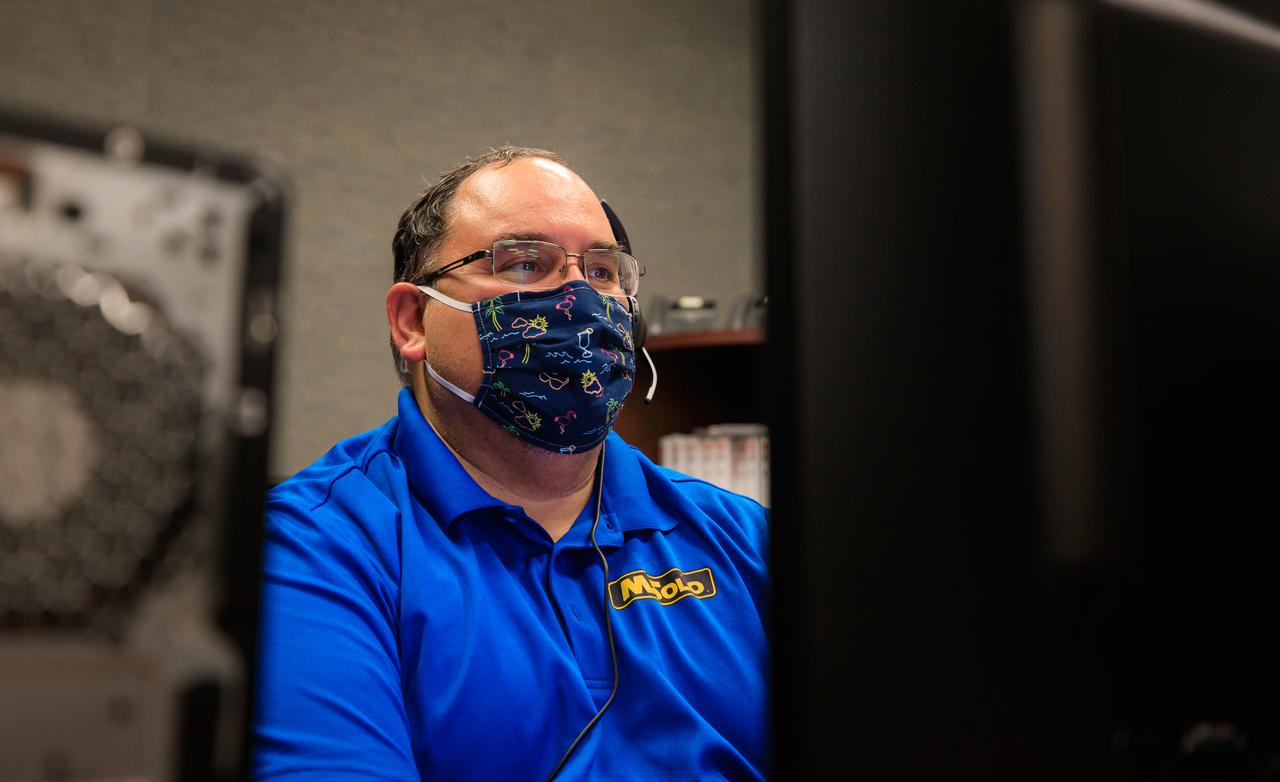
Rolando Nieves, software architect for NASA’s Mass Spectrometer observing lunar operations (MSolo) takes part in a joint simulation of the Peregrine One Mission on March 26, 2021, where MSolo is connected from inside the Neil Armstrong Operations and Checkout Building at NASA’s Kennedy Space Center in Florida to Astrobotic’s mission control facility in Pittsburgh, Pennsylvania. MSolo is a commercial off-the-shelf mass spectrometer modified to work in space and it will help analyze the chemical makeup of landing sites on the Moon, as well as study water on the lunar surface. This was the first mission round of simulations for Peregrine Mission One to develop and refine procedures between Astrobotic’s Peregrine Lander and MSolo. Later, there will be other simulations with multiple instruments. Peregrine Mission One will be one of NASA’s first Commercial Lunar Payload Delivery Service (CLPS) missions where under the Artemis program, commercial deliveries beginning in 2021 will perform science experiments, test technologies and demonstrate capabilities to help NASA explore the Moon and prepare for human missions.
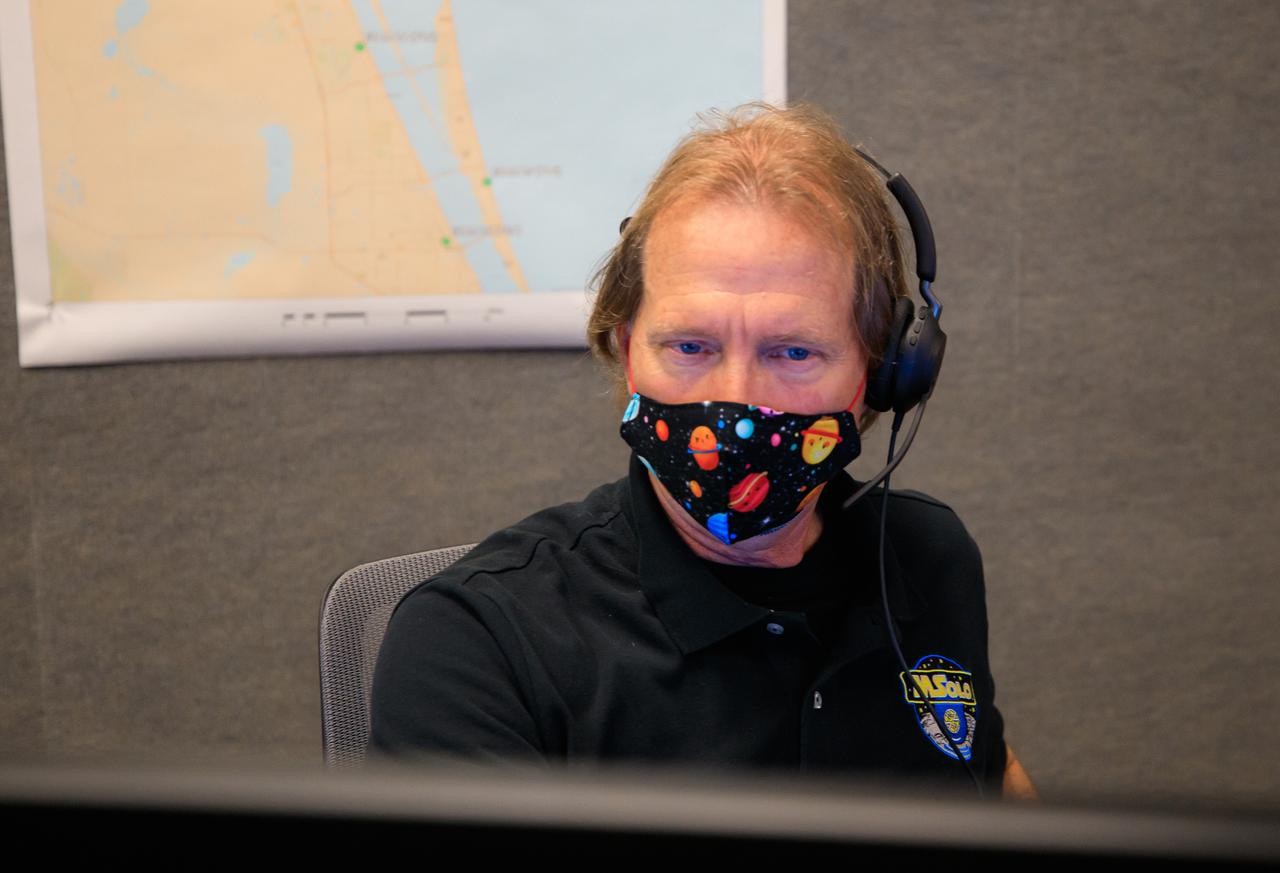
Kevin Smith, software team and science team liaison for NASA’s Mass Spectrometer observing lunar operations (MSolo), takes part in a joint simulation of the Peregrine One Mission on March 26, 2021, at NASA’s Kennedy Space Center in Florida, where MSolo connected from inside the Neil Armstrong Operations and Checkout Building to Astrobotic’s mission control facility in Pittsburgh, Pennsylvania. MSolo is a commercial off-the-shelf mass spectrometer modified to work in space and it will help analyze the chemical makeup of landing sites on the Moon, as well as study water on the lunar surface. This was the first mission round of simulations for Peregrine Mission One to develop and refine procedures between Astrobotic’s Peregrine Lander and MSolo. Later, there will be other simulations with multiple instruments. Peregrine Mission One will be one of NASA’s first Commercial Lunar Payload Delivery Service (CLPS) missions where under the Artemis program, commercial deliveries beginning in 2021 will perform science experiments, test technologies and demonstrate capabilities to help NASA explore the Moon and prepare for human missions.
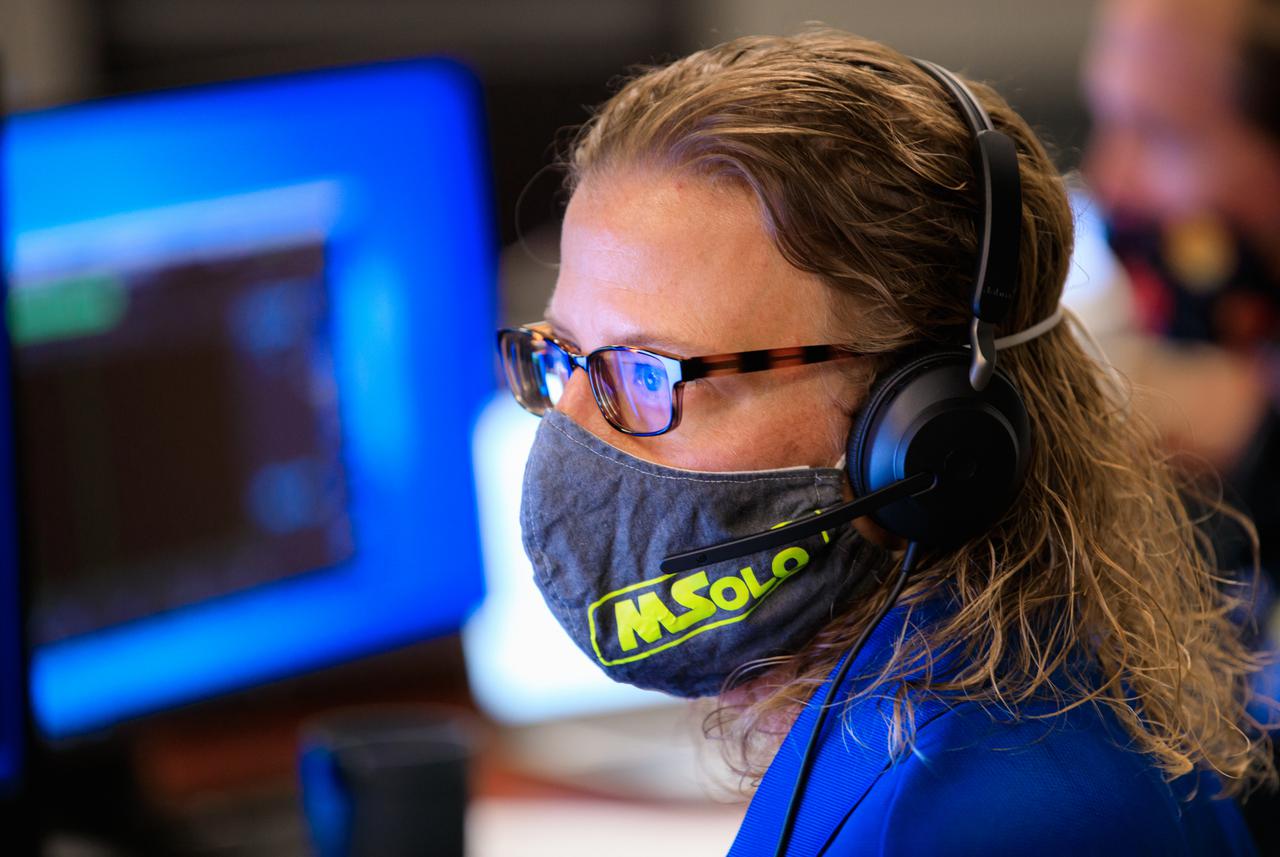
Janine Captain, principal investigator for NASA’s Mass Spectrometer observing lunar operations (MSolo) takes part in a joint simulation of the Peregrine One Mission on March 26, 2021, where MSolo connected from inside the Neil Armstrong Operations and Checkout Building at NASA’s Kennedy Space Center in Florida to Astrobotic’s mission control facility in Pittsburgh, Pennsylvania. MSolo is a commercial off-the-shelf mass spectrometer modified to work in space and it will help analyze the chemical makeup of landing sites on the Moon, as well as study water on the lunar surface. This was the first mission round of simulations for Peregrine Mission One to develop and refine procedures between Astrobotic’s Peregrine Lander and MSolo. Later, there will be other simulations with multiple instruments. Peregrine Mission One will be one of NASA’s first Commercial Lunar Payload Delivery Service (CLPS) missions where under the Artemis program, commercial deliveries beginning in 2021 will perform science experiments, test technologies and demonstrate capabilities to help NASA explore the Moon and prepare for human missions.
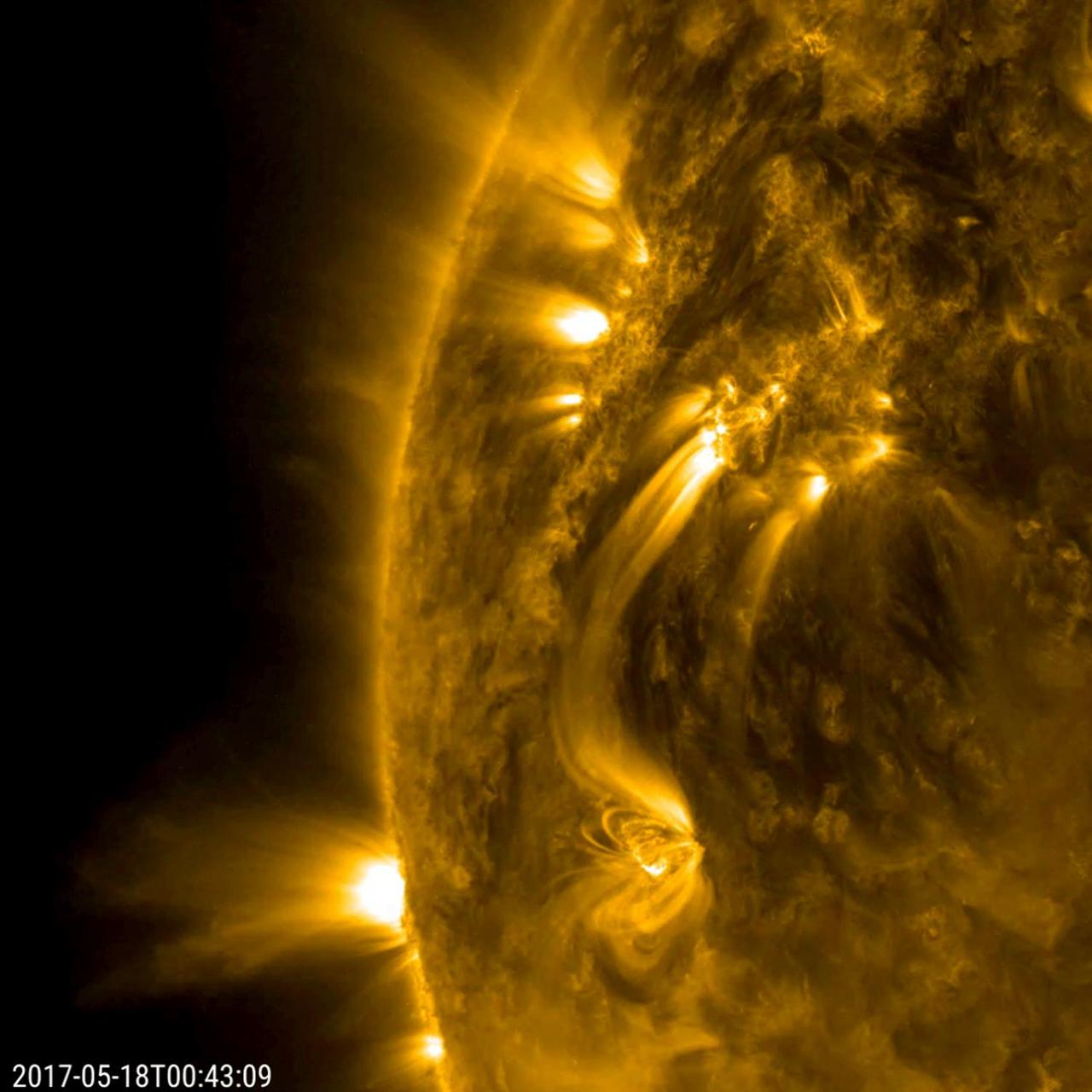
Several bright bands of plasma connect from one active region to another, even though they are tens of thousands of miles away from each other (May 17-18, 2017). Active regions are, by their nature, strong magnetic areas with north and south poles. The plasma consists of charged particles that stream along the magnetic field lines between these two regions. These connecting lines are clearly visible in this wavelength of extreme ultraviolet light. Other loops and strands of bright plasma can be seen rising up and out of smaller active regions as well. The video covers about one day's worth of activity. Movies are available at https://photojournal.jpl.nasa.gov/catalog/PIA21638
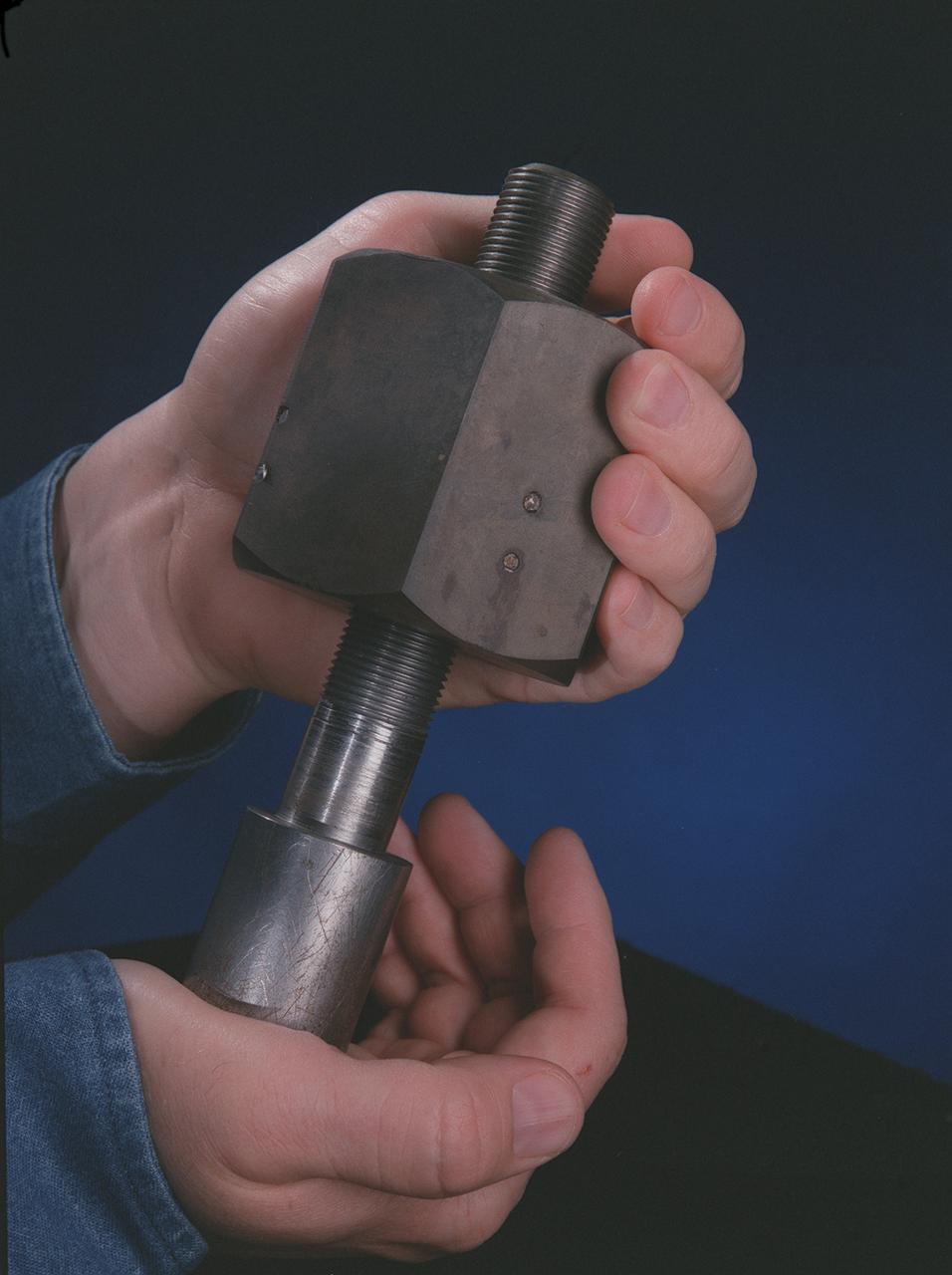
Marshall Space Flight Center (MSFC) has developed a specially-designed nut, called the Quick-Connect Nut, for quick and easy assembly of components in the harsh environment of space, as in assembly of International Space Station. The design permits nuts to be installed simply by pushing them onto standard bolts, then giving a quick twist. To remove, they are unscrewed like conventional nuts. Possible applications include the mining industry for erecting support barriers, assembling underwater oil drilling platforms, fire-fighting equipment, scaffolding, assembly-line machinery, industrial cranes, and even changing lug nuts on race cars. The speed of assembly can make the difference between life and death in different aspects of life on Earth.
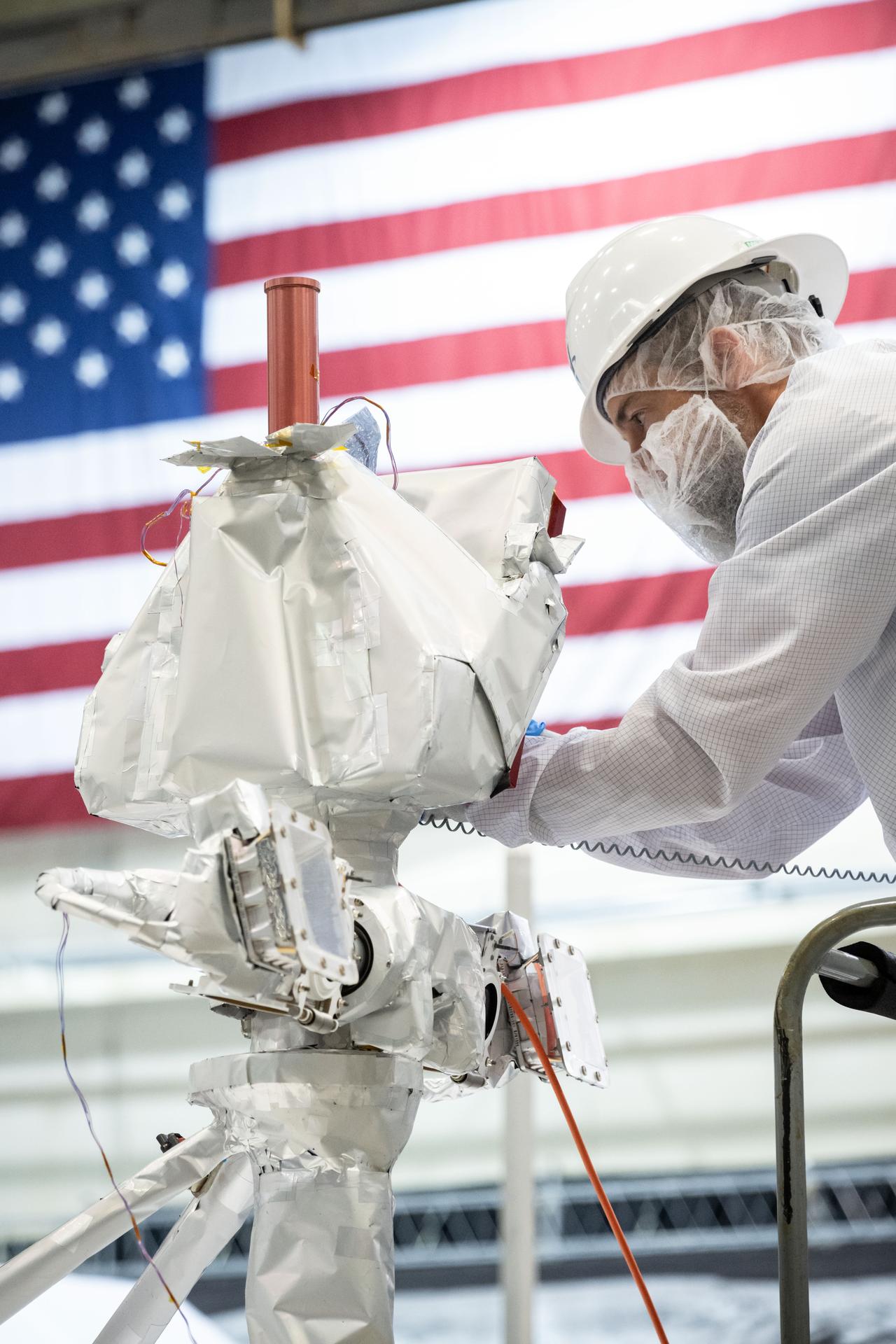
jsc2025e064263 - VIPER Vehicle Manager Justin Ridley connects a cable to the VIPER high gain antenna while preparing the rover for long-term storage testing in the high bay of Building 9S at Johnson Space Center. Photographer: Helen Arase Vargas – Johnson Space Center
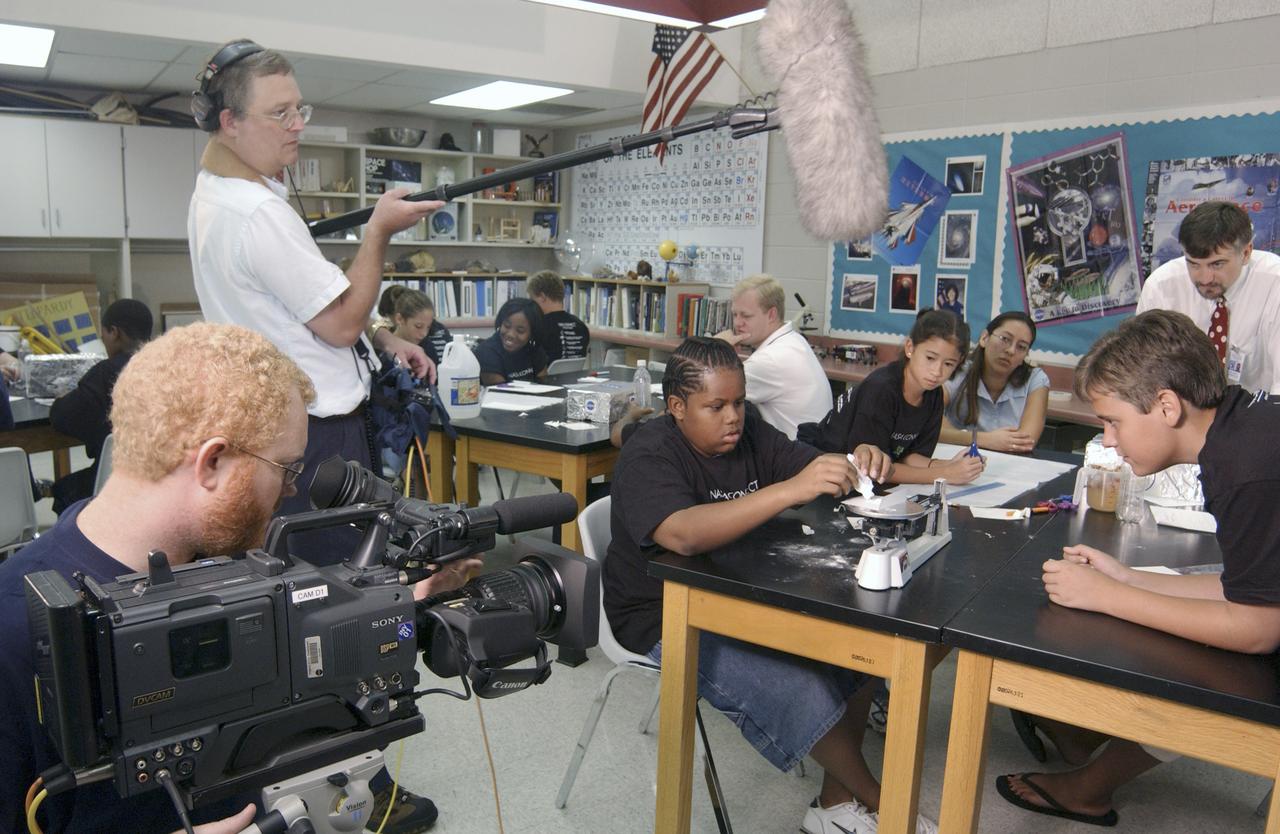
Students at Williams Technology Middle School in Huntsville were featured in a new segment of NASA CONNECT, a video series aimed to enhance the teaching of math, science, and technology to middle school students. The segment premiered nationwide May 15, 2003, and helped viewers understand Sir Isaac Newton's first, second, and third laws of gravity and how they relate to NASA's efforts in developing the next generation of space transportation.
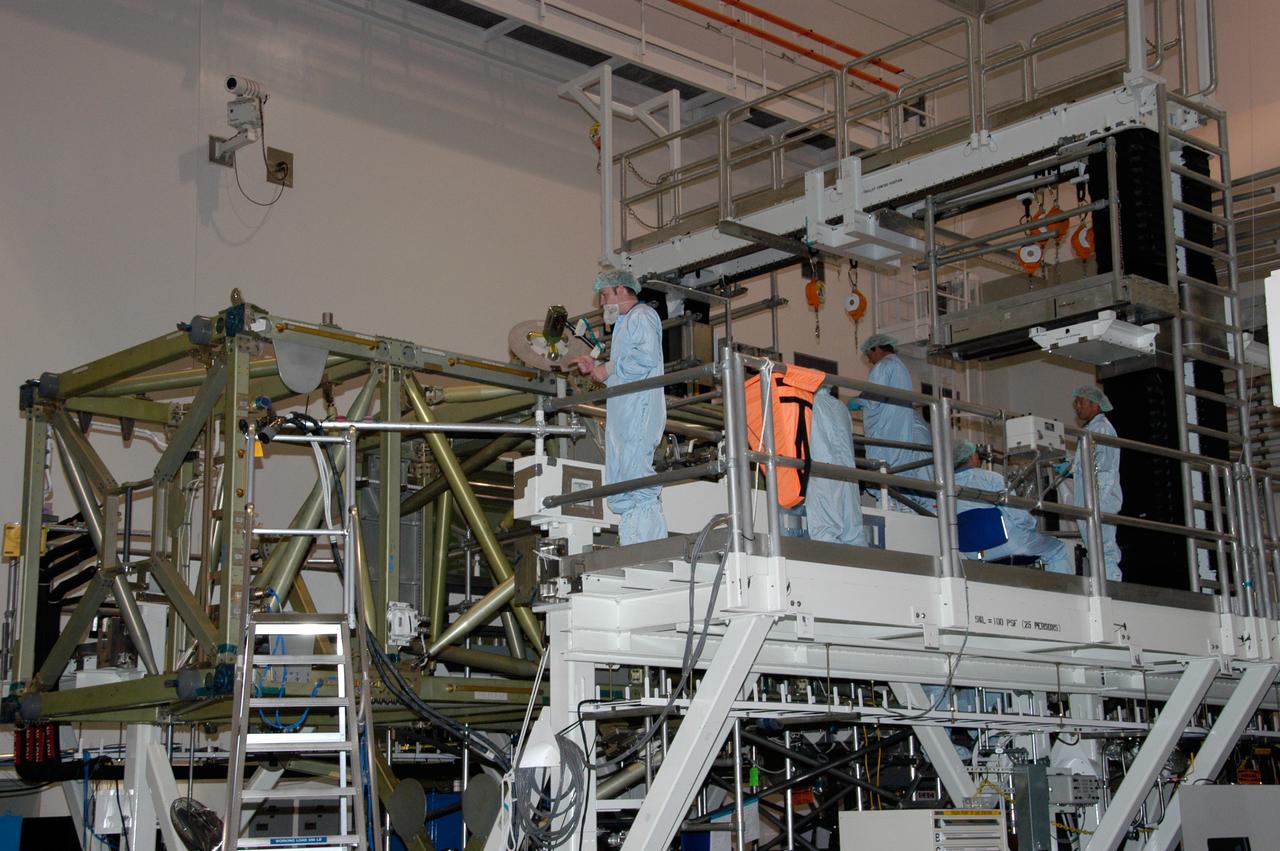
In the Space Station Processing Facility at NASA's Kennedy Space Center, workers prepare to connect cables that will recharge the battery for the S6 integrated truss. The final starboard truss in the assembly of the International Space Station, the S6 is scheduled to fly on space shuttle mission STS-119, whose launch date is not yet determined.
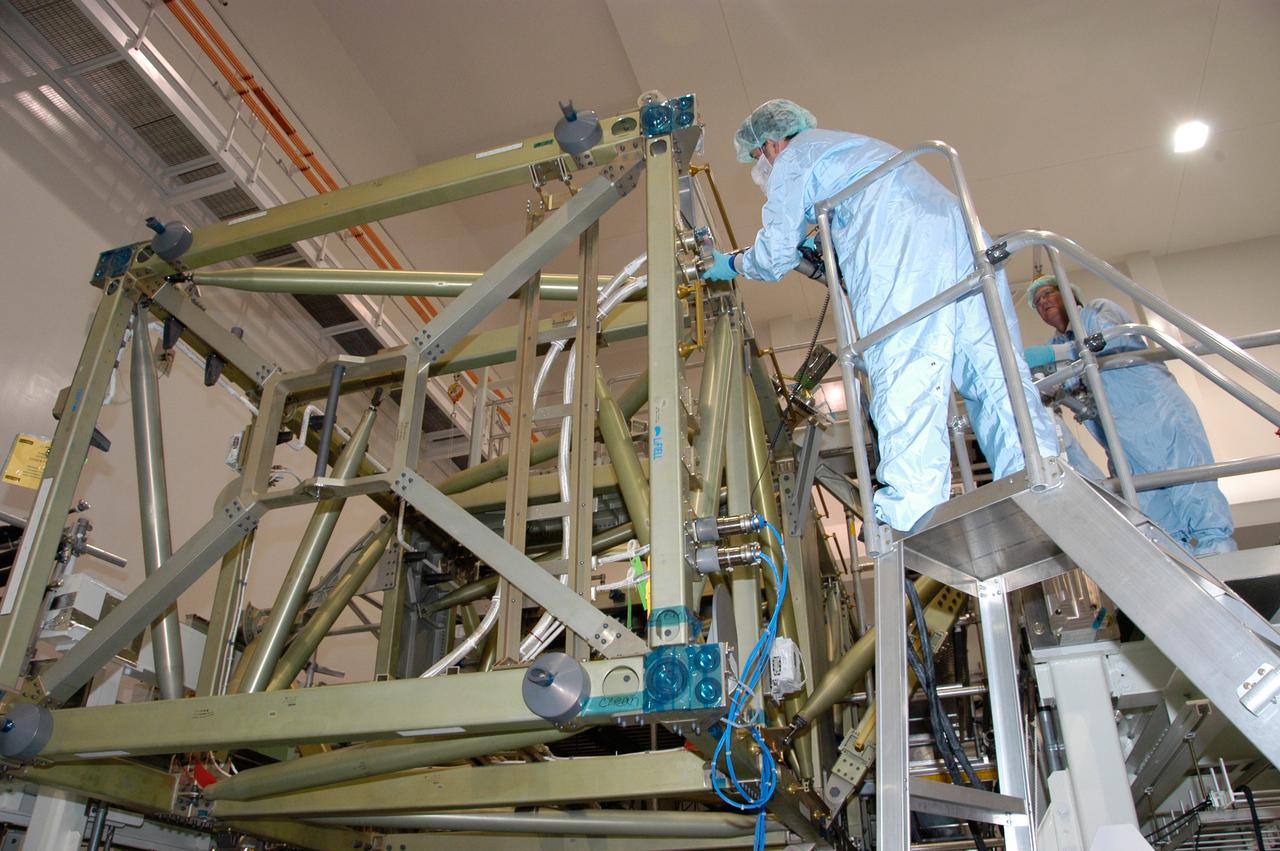
In the Space Station Processing Facility at NASA's Kennedy Space Center, a worker connects a cable to recharge the battery for the S6 integrated truss. The final starboard truss in the assembly of the International Space Station, the S6 is scheduled to fly on space shuttle mission STS-119, whose launch date is not yet determined.
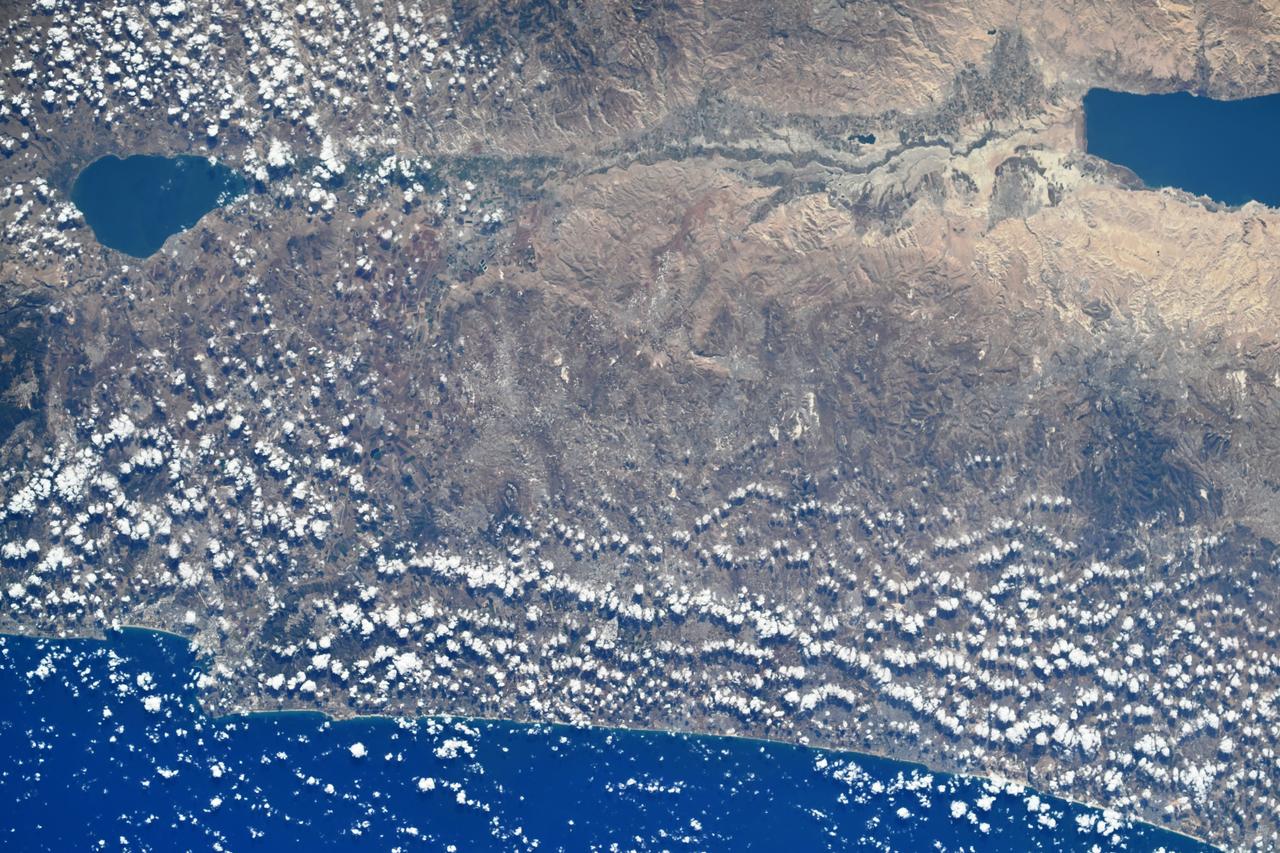
iss073e0425936 (Aug. 7, 2025) --- From left to right, the Sea of Galilee—the world’s lowest freshwater lake—and the Dead Sea—the lowest saltwater lake—are connected by the Jordan River in Israel. At the bottom of the image, the Mediterranean coastline is visible from the International Space Station as it orbited 260 miles above Earth. Credit: Roscosmos
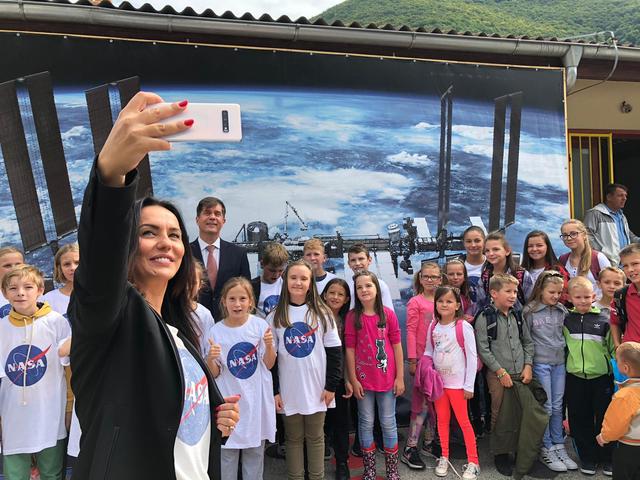
On Sept. 23, 2019, Eric Nelson, the U.S. Ambassador to Bosnia and Herzegovina, presented a framed letter to Snezana Ružičić, mayor of the Balkan municipality of Jezero. The letter, from NASA's director of Mars Exploration, James Watzin, honored the connection between the small Balkan town and Jezero Crater the landing site of NASA's upcoming Mars 2020 mission. In this picture, Ružičić snaps a selfie of the ambassador with local school children. https://photojournal.jpl.nasa.gov/catalog/PIA23463

STS077-319-036 (19-29 May 1996) --- Astronaut Andrew S. W. Thomas, mission specialist, floats through the tunnel that connects the Spacehab Module to the Space Shuttle Endeavour?s cabin. Thomas and five other astronauts went on to spend almost ten days aboard Endeavour in support of the Spacehab 4 mission and a number of other payloads.
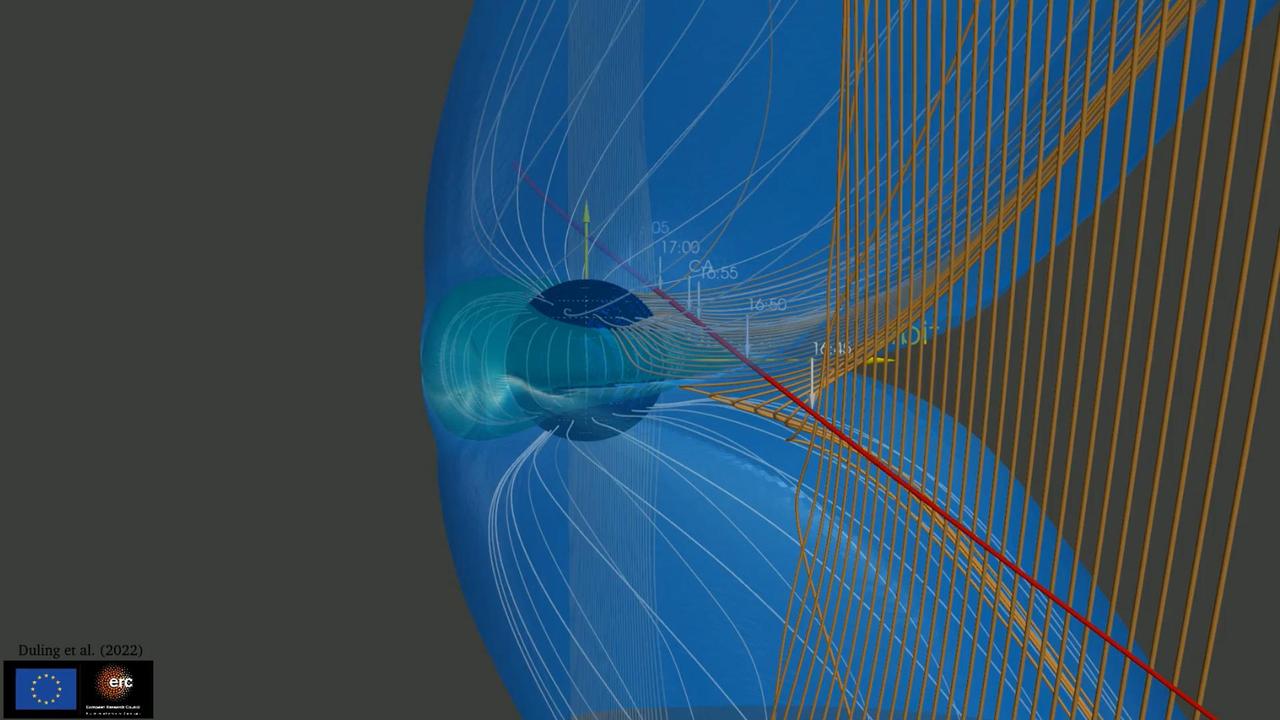
This animation illustrates how the magnetic field surrounding Jupiter's moon Ganymede (represented by the blue lines) interacts with and disrupts the magnetic field surrounding Jupiter (represented by the orange lines). During the June 2021 close approach to Ganymede by NASA's Juno spacecraft, the Magnetic Field (MAG) and Jovian Auroral Distributions Experiment (JADE) instruments aboard the spacecraft recorded data showing evidence of the breaking and reforming of magnetic field connections between Jupiter and Ganymede. Studying Ganymede's magnetic field can provide scientists with clues about the nature of the salty water reservoir suspected to exist deep under the moon's surface. Animation available at https://photojournal.jpl.nasa.gov/catalog/PIA25724
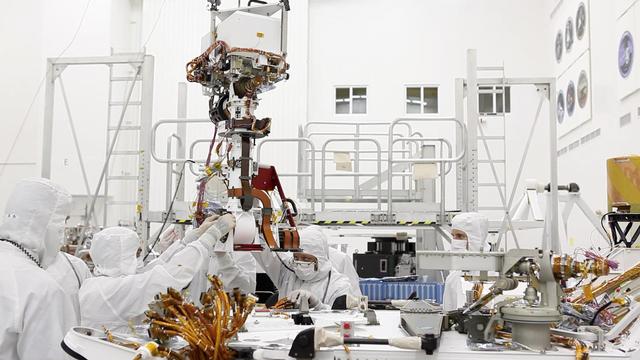
In the clean room at NASA Jet Propulsion Laboratory, engineers gather around the base of Curiosity neck the Mast as they slowly lower it into place for attachment to the rover body the Wet Electronics Box, or WEB.
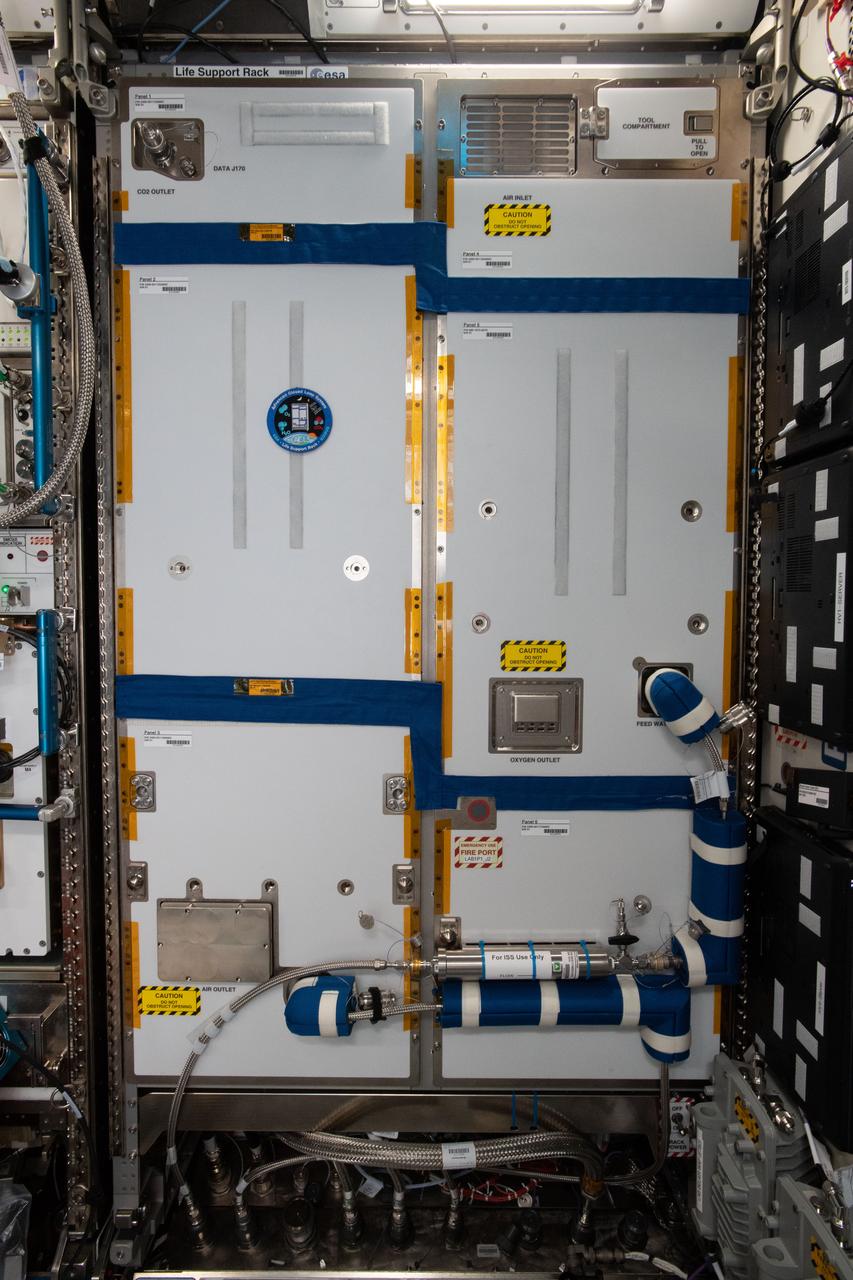
iss057e055217 (10/19/2018) --- A view of the LSR rack inside the Destiny laboratory onboard the International Space Station (ISS). The Life Support Rack (LSR) is a Technology Demonstrator for Closed Loop Air Revitalisation. LSR captures carbon dioxide from cabin air and recovers 50% of its oxygen for use by the astronauts. LSR operates for a minimum of one year on the International Space Station to demonstrate the robustness of the technology for future Exploration Missions.
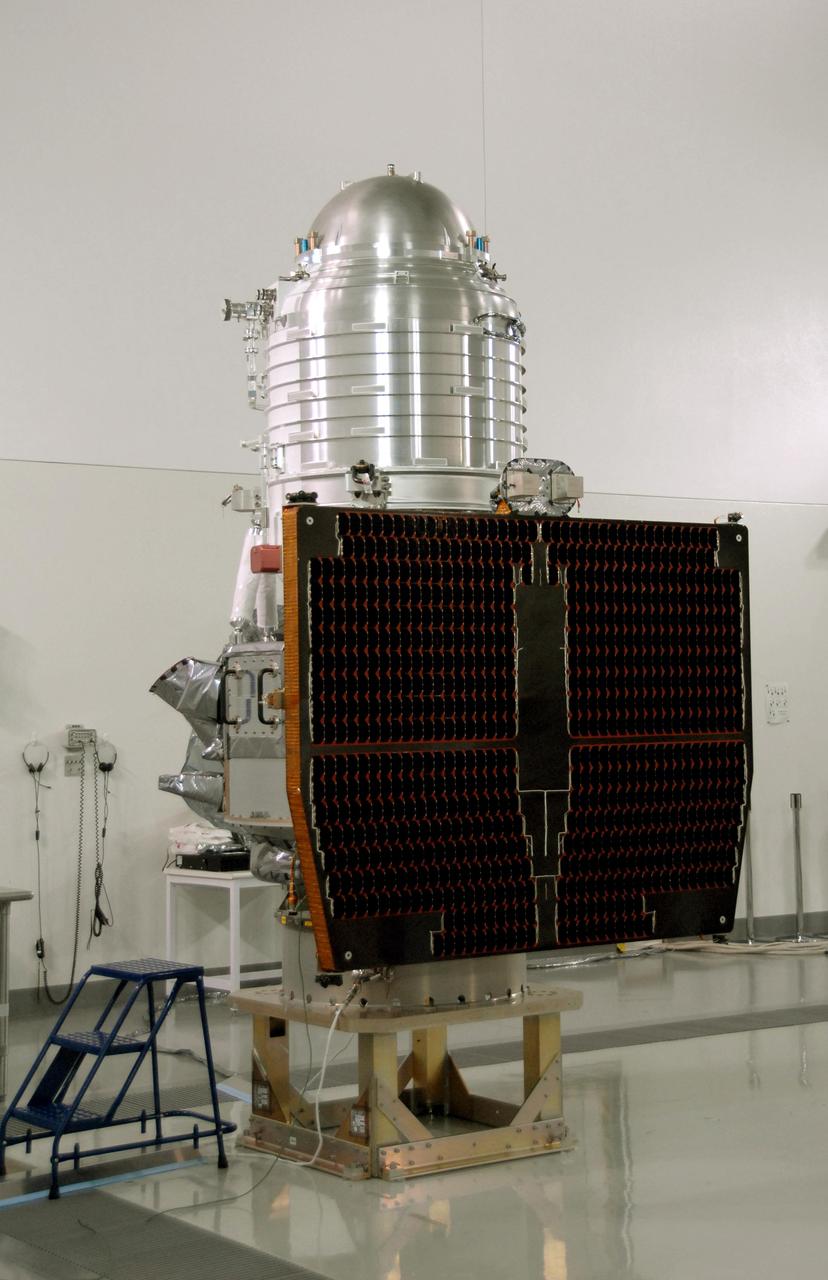
NASA Wide-field Infrared Survey Explorer, or WISE, spacecraft sits on the test stand after connection to the conical adapter.
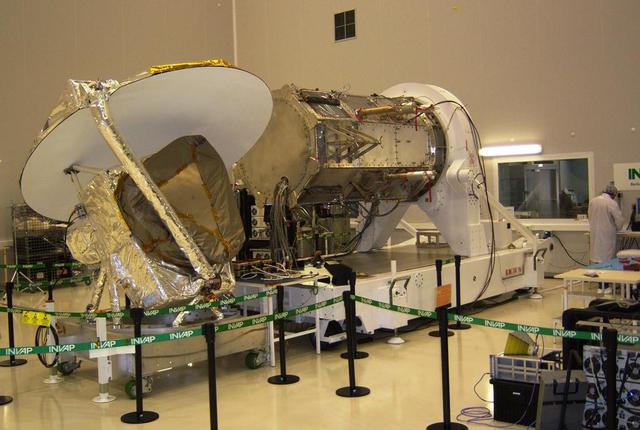
All NASA Aquarius electrical interfaces have successfully been connected to the SAC-D service platform S/P.
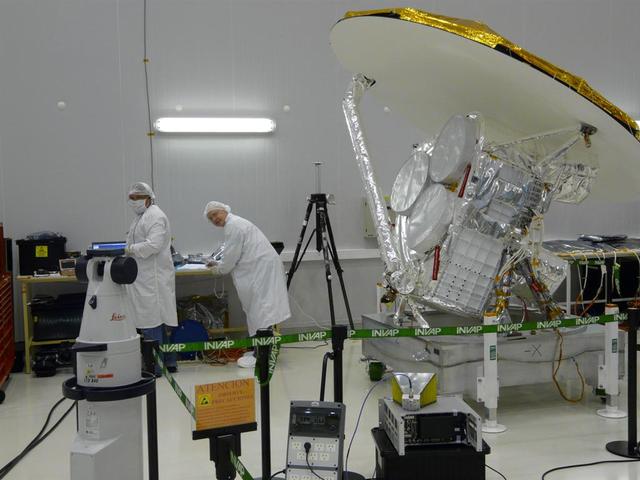
NASA Aquarius instrument power interfaces are tested prior to connection with the SAC-D service platform at the INVAP facility in Bariloche, Argentina.
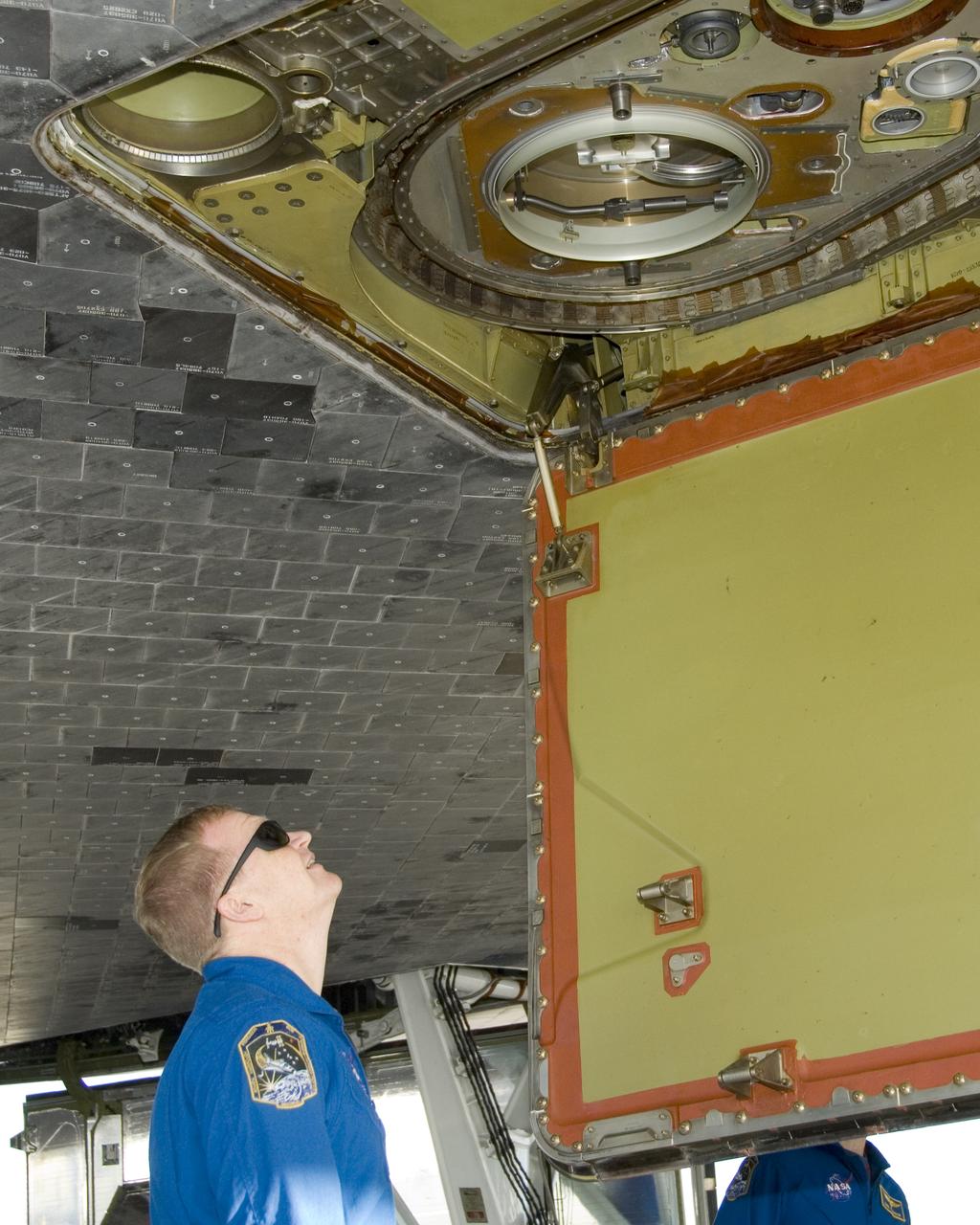
STS-126 pilot Eric Boe inspects the liquid oxygen line connection on the belly of Space Shuttle Endeavour following landing at Edwards Air Force Base Sunday.
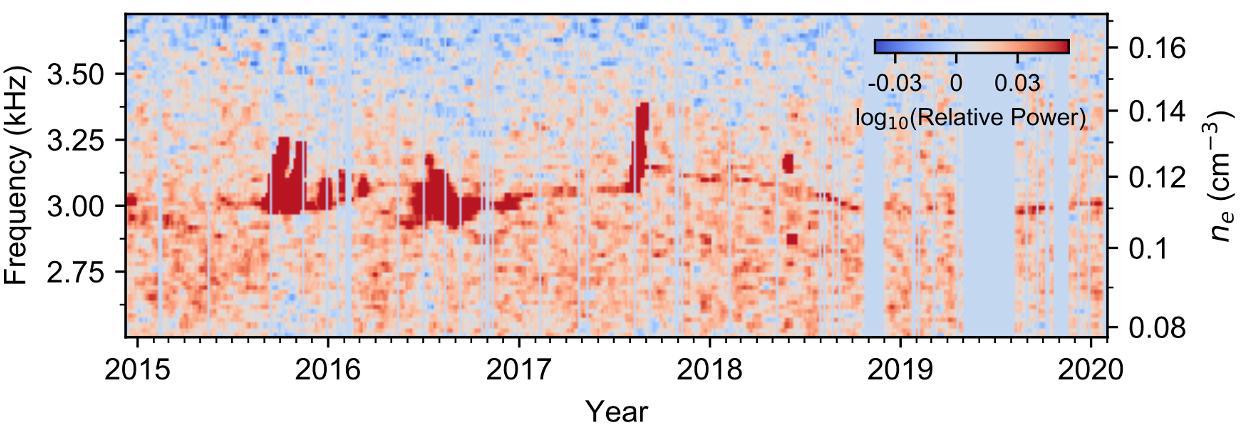
Weak but nearly continuous plasma oscillation events — visible as a thin red line in this graphic — connect stronger events in Voyager 1's Plasma Wave Subsystem data. https://photojournal.jpl.nasa.gov/catalog/PIA24572
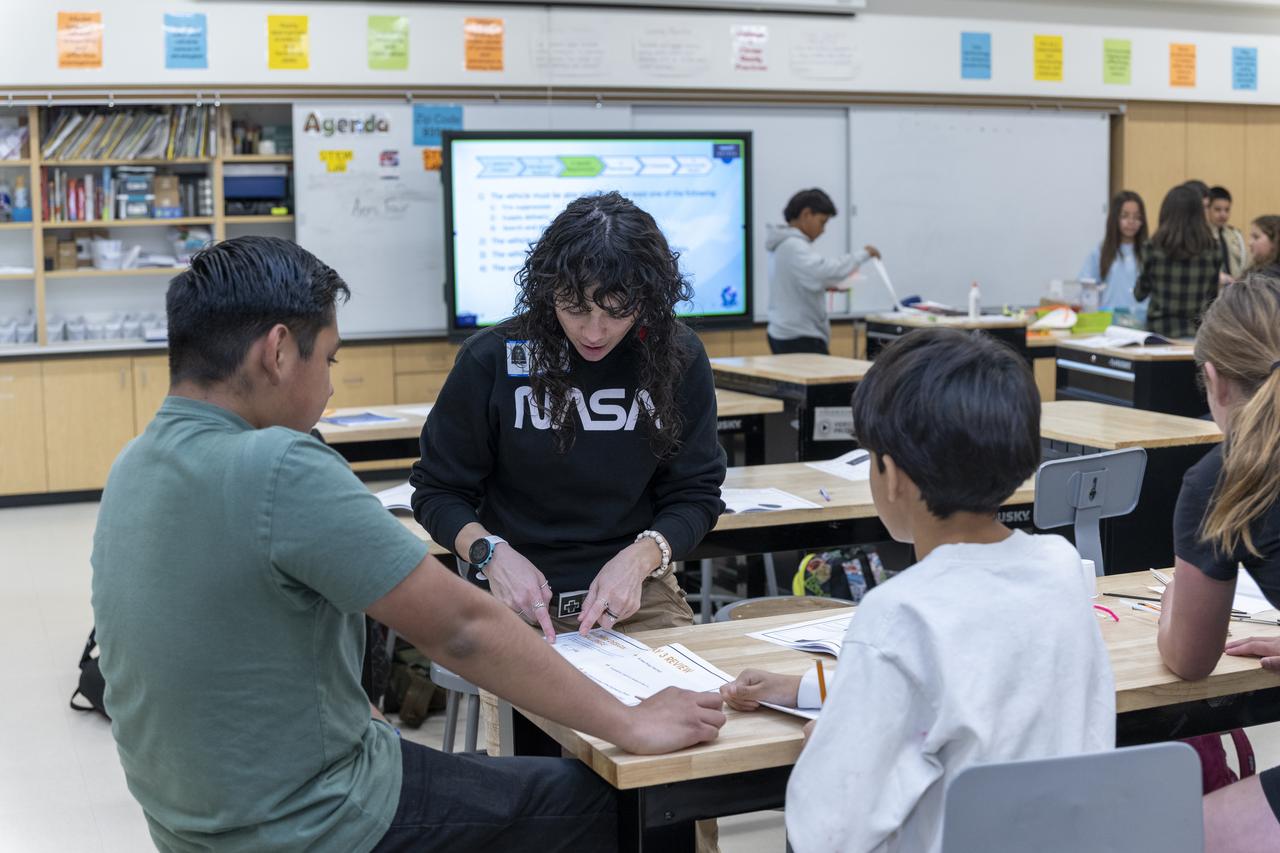
Giovanna Camacho, Pathways systems engineering intern from NASA’s Armstrong Flight Research Center in Edwards, California, teaches students about aeronautics during Aero Fair at Tropico Middle School in Rosamond, California, on April 9, 2025.

Observations from NASA Spitzer Space Telescope show that filamentary galaxies form stars at twice the rate of their densely clustered counterparts. This is a representation of galaxies in and surrounding a galaxy cluster called Abell 1763.
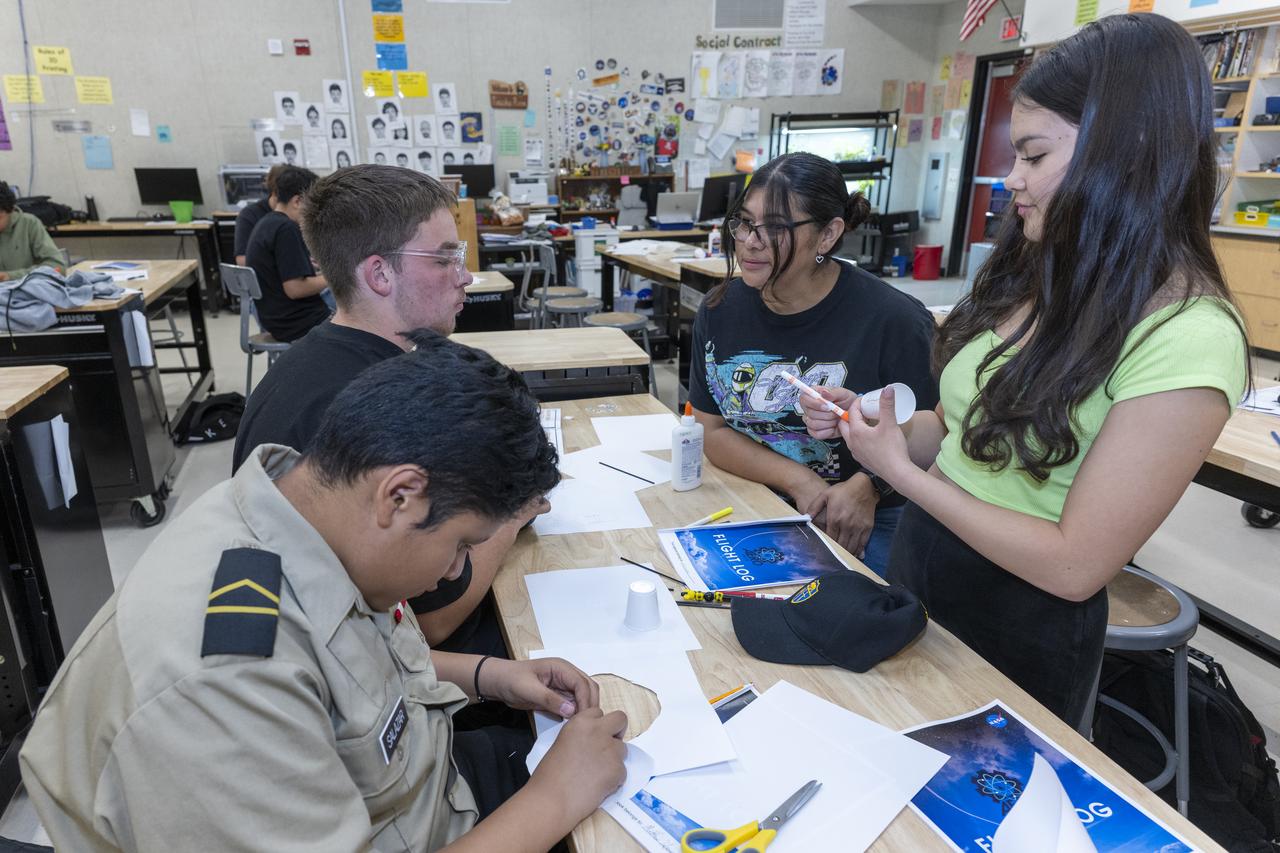
Students from Tropico Middle School in Rosamond, California, build their own paper planes as part of a project during NASA Aero Fair on April 9, 2025.
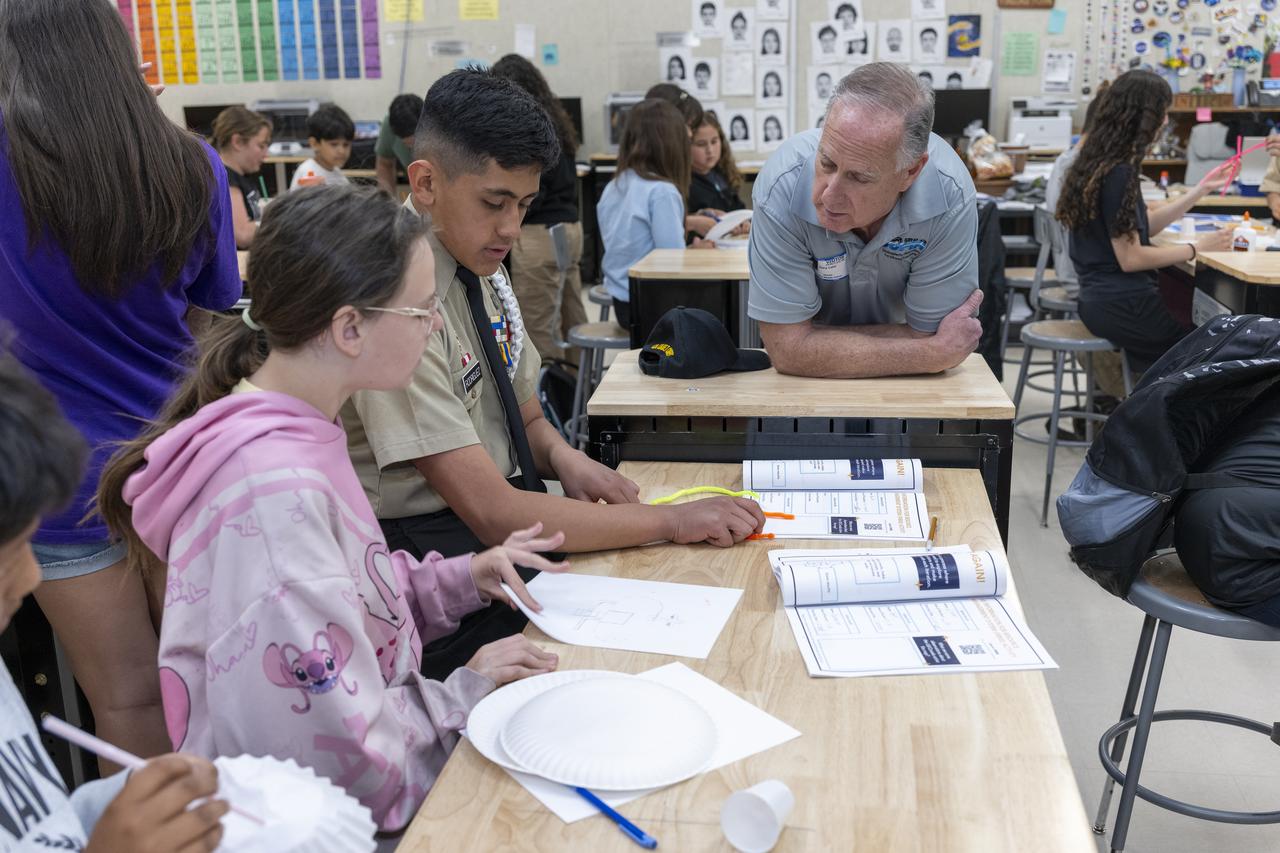
Gary Laier, center liaison for the Small Business Innovation Research/Small Business Technology Transfer (SBIR/STTR) program at NASA’s Armstrong Flight Research Center in Edwards, California, teaches students about aeronautics during Aero Fair at Tropico Middle School in Rosamond, California, on April 9, 2025.
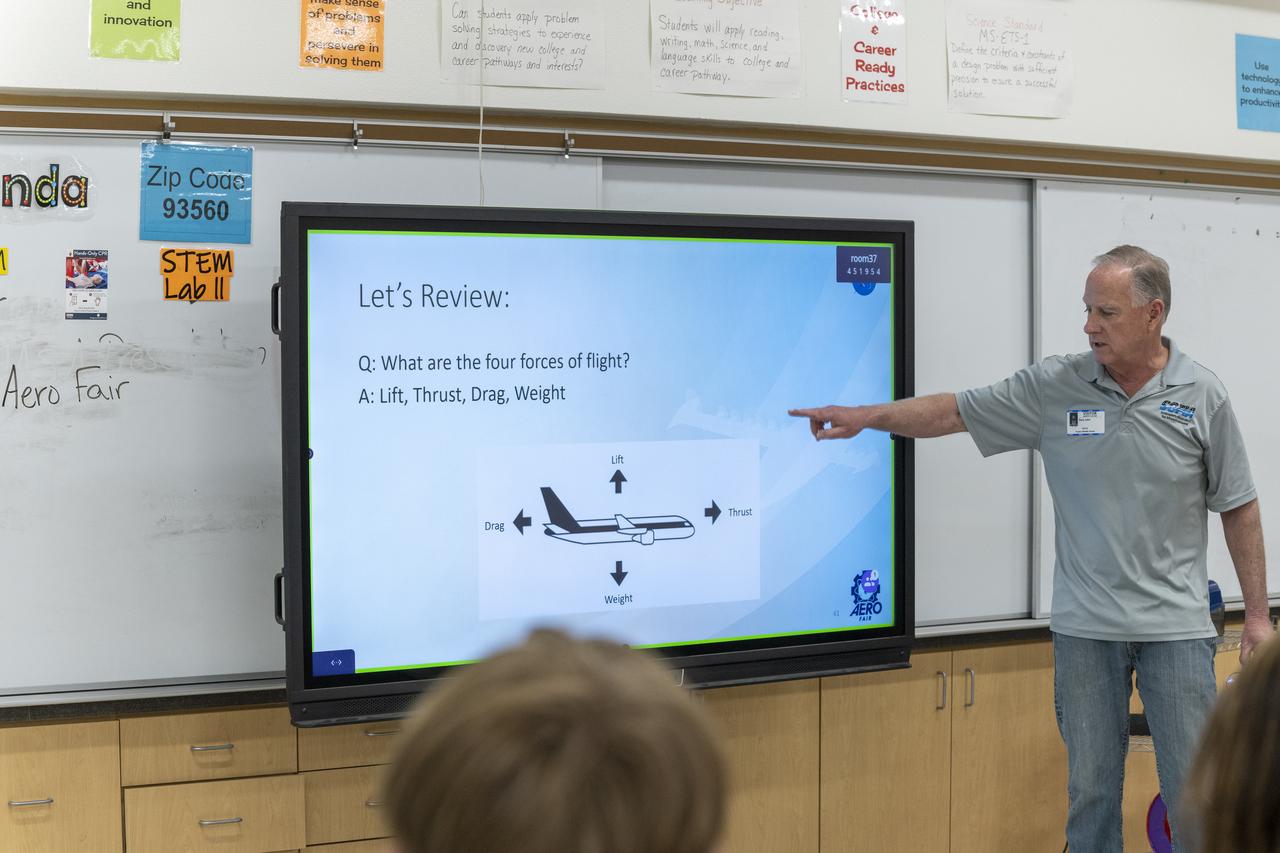
Gary Laier, center liaison for the Small Business Innovation Research/Small Business Technology Transfer (SBIR/STTR) program at NASA’s Armstrong Flight Research Center in Edwards, California, teaches students about aeronautics during Aero Fair at Tropico Middle School in Rosamond, California, on April 9, 2025.
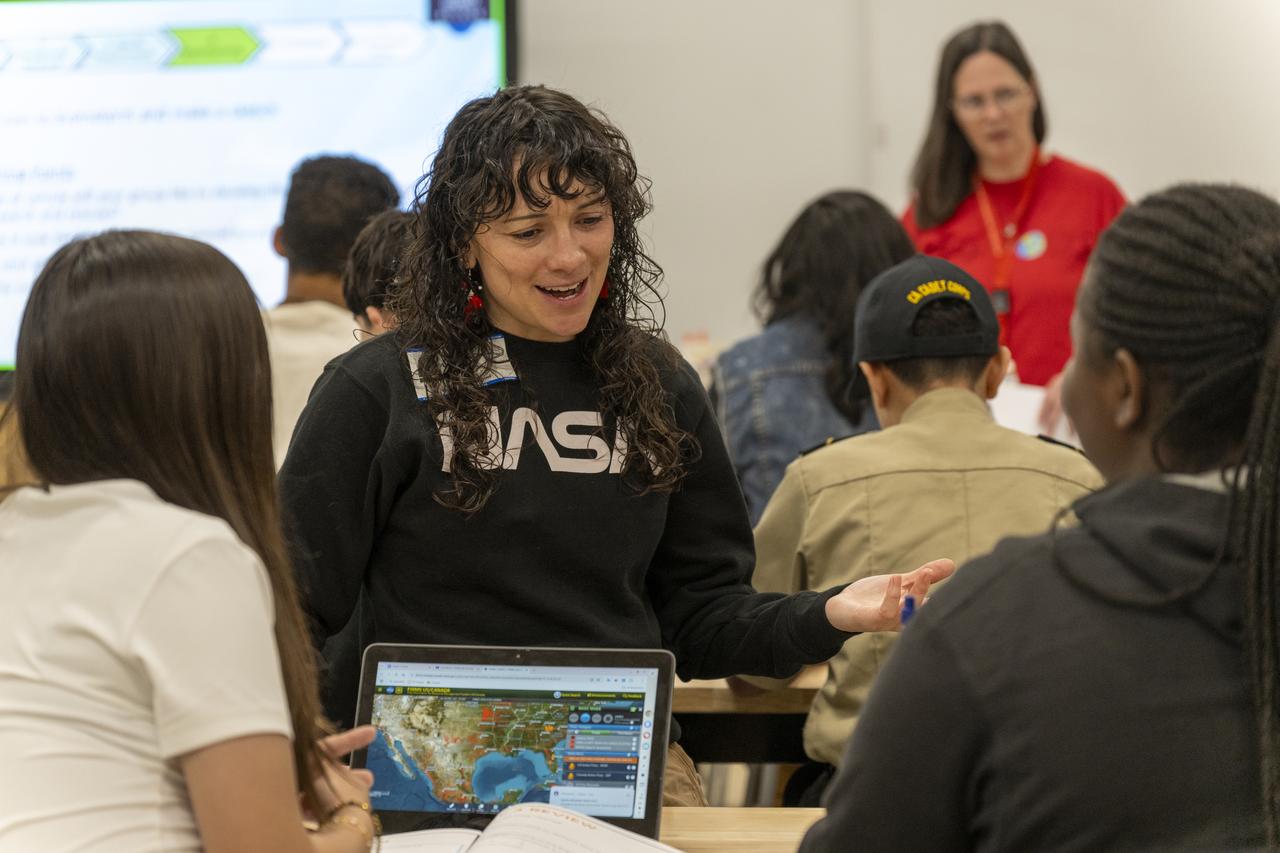
Giovanna Camacho, Pathways systems engineering intern at NASA’s Armstrong Flight Research Center in Edwards, California, teaches students about aeronautics during Aero Fair at Tropico Middle School in Rosamond, California, on April 9, 2025.
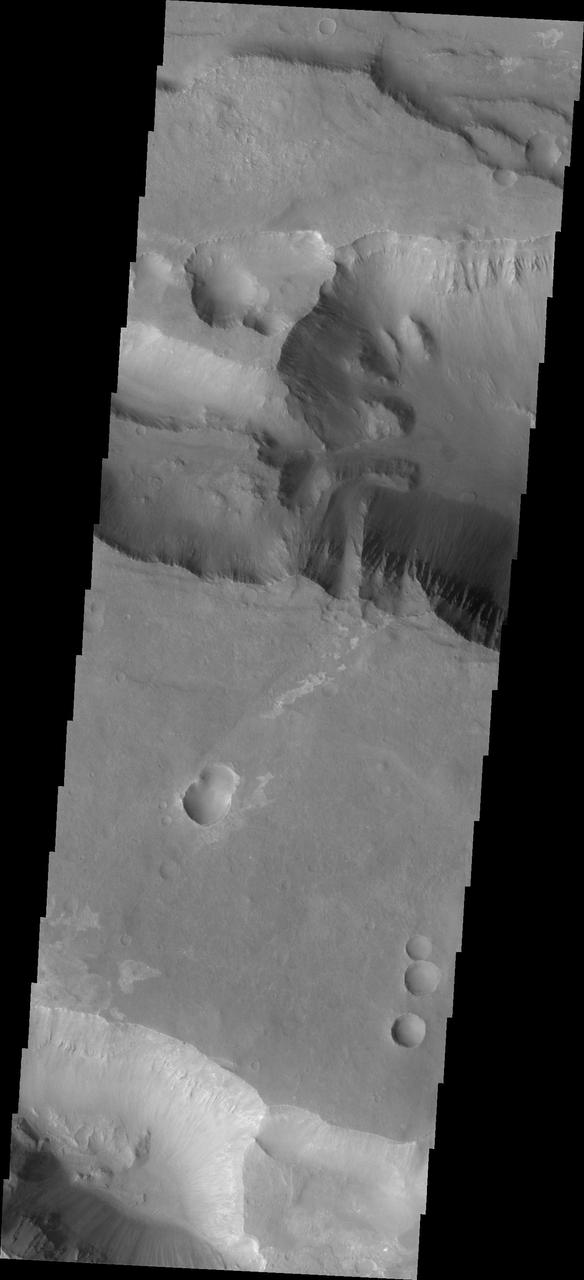
This image captured by NASA 2001 Mars Odyssey spacecraft shows a portion of Coprates Catena, a shallow system of connecting depressions south of Coprates Chasma.
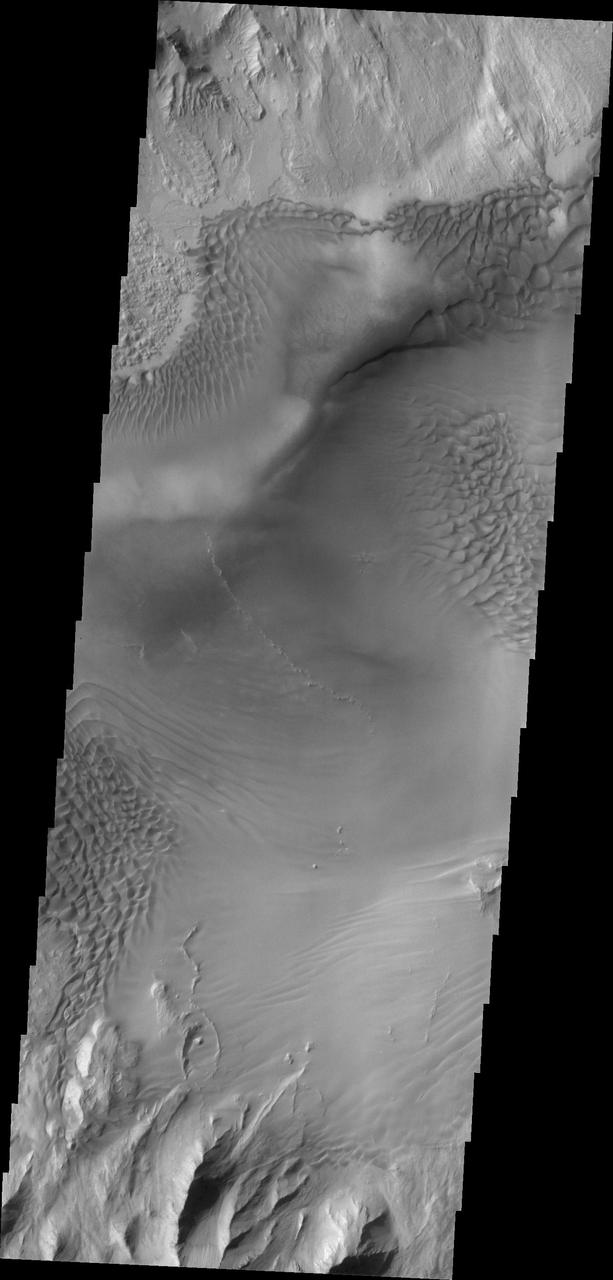
Baetis Chasma is a chasmata near but not directly connected to Valles Marineris. Dunes are prevalent on the floor of this portion of Juventae Chasma in this image taken by NASA 2001 Mars Odyssey.
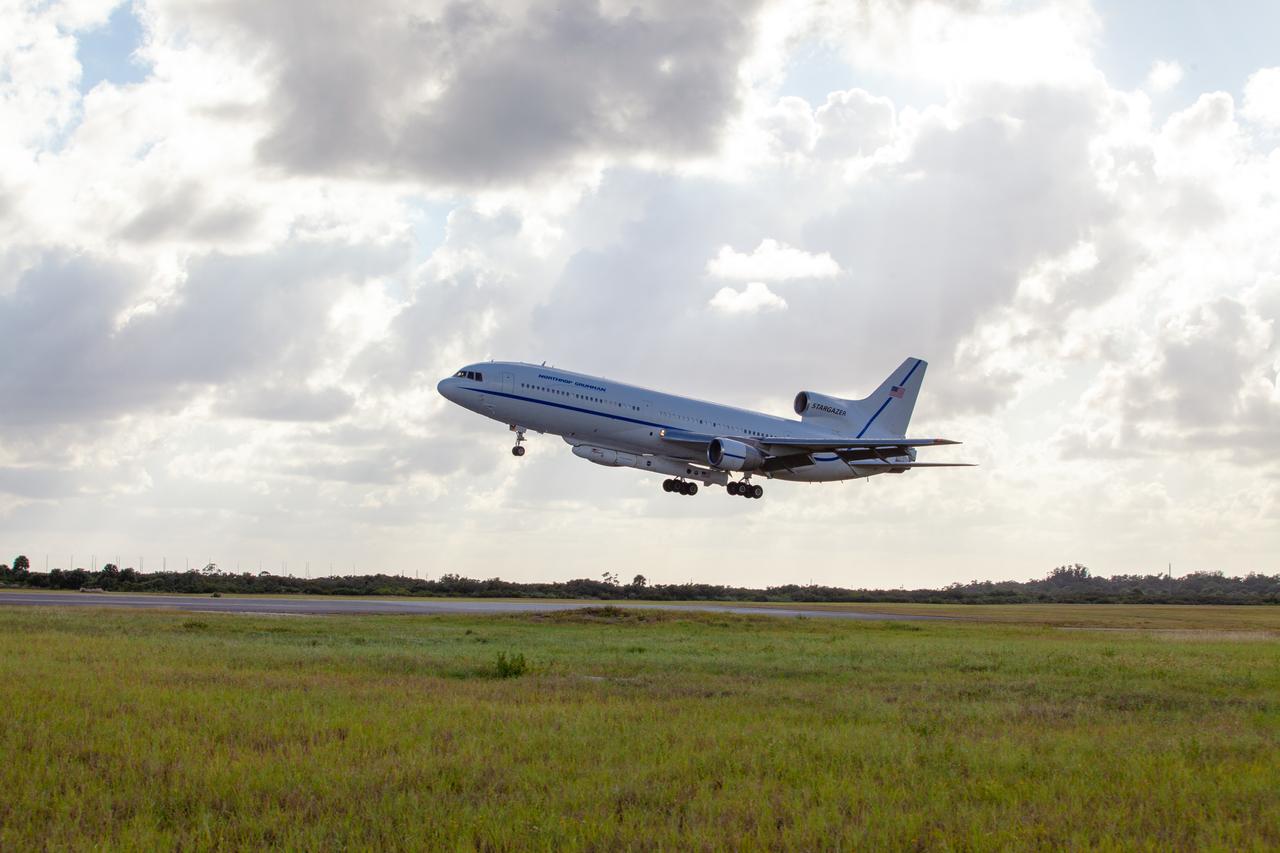
Northrop Grumman's L-1011 Stargazer aircraft descends toward the Skid Strip at Cape Canaveral Air Force Station in Florida on Oct. 1, 2019. The company's Pegasus XL rocket, containing NASA's Ionospheric Connection Explorer (ICON), is attached beneath the aircraft. ICON will study the frontier of space - the dynamic zone high in Earth's atmosphere where terrestrial weather from below meets space weather above.
Northrop Grumman's L-1011 Stargazer aircraft has arrived at the Skid Strip at Cape Canaveral Air Force Station in Florida on Oct. 1, 2019. The company's Pegasus XL rocket, containing NASA's Ionospheric Connection Explorer (ICON), is attached beneath the aircraft. ICON will study the frontier of space - the dynamic zone high in Earth's atmosphere where terrestrial weather from below meets space weather above.
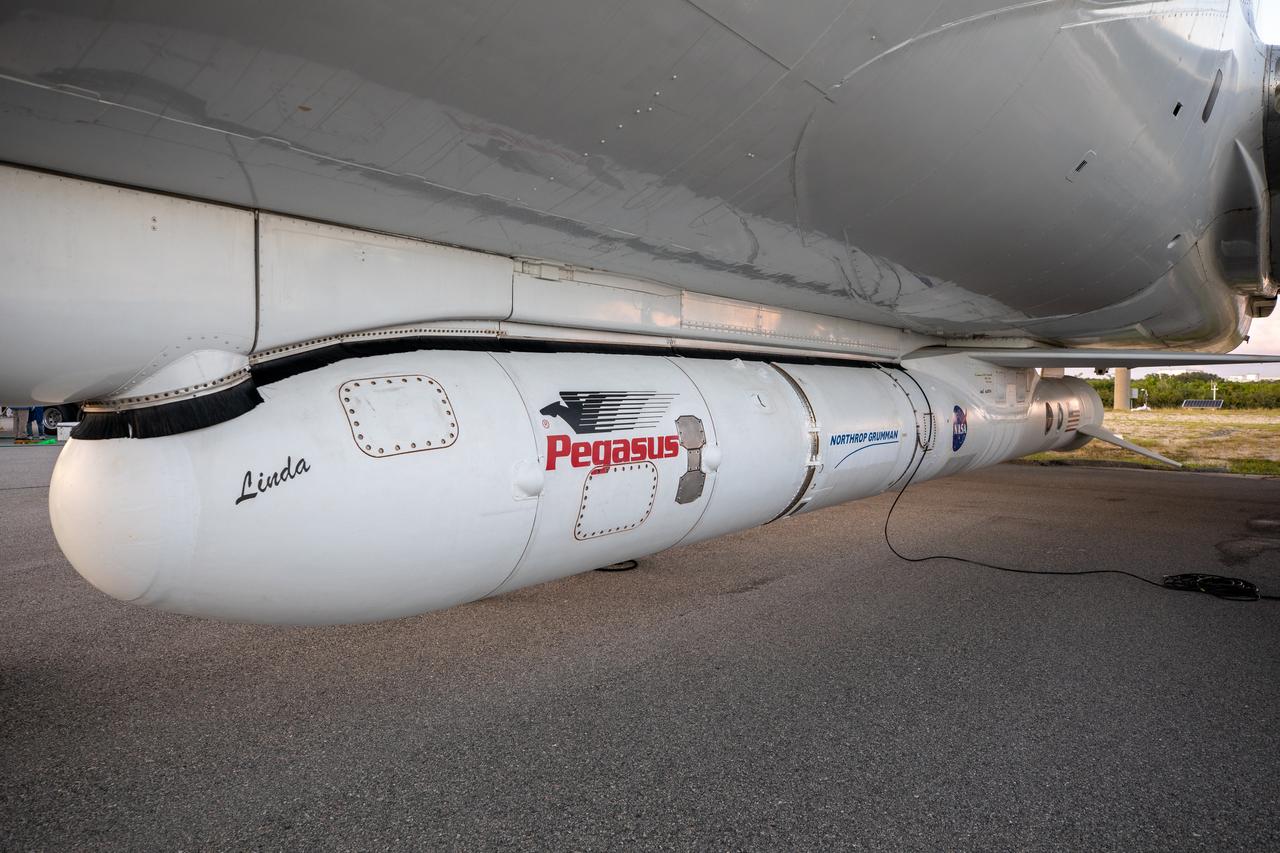
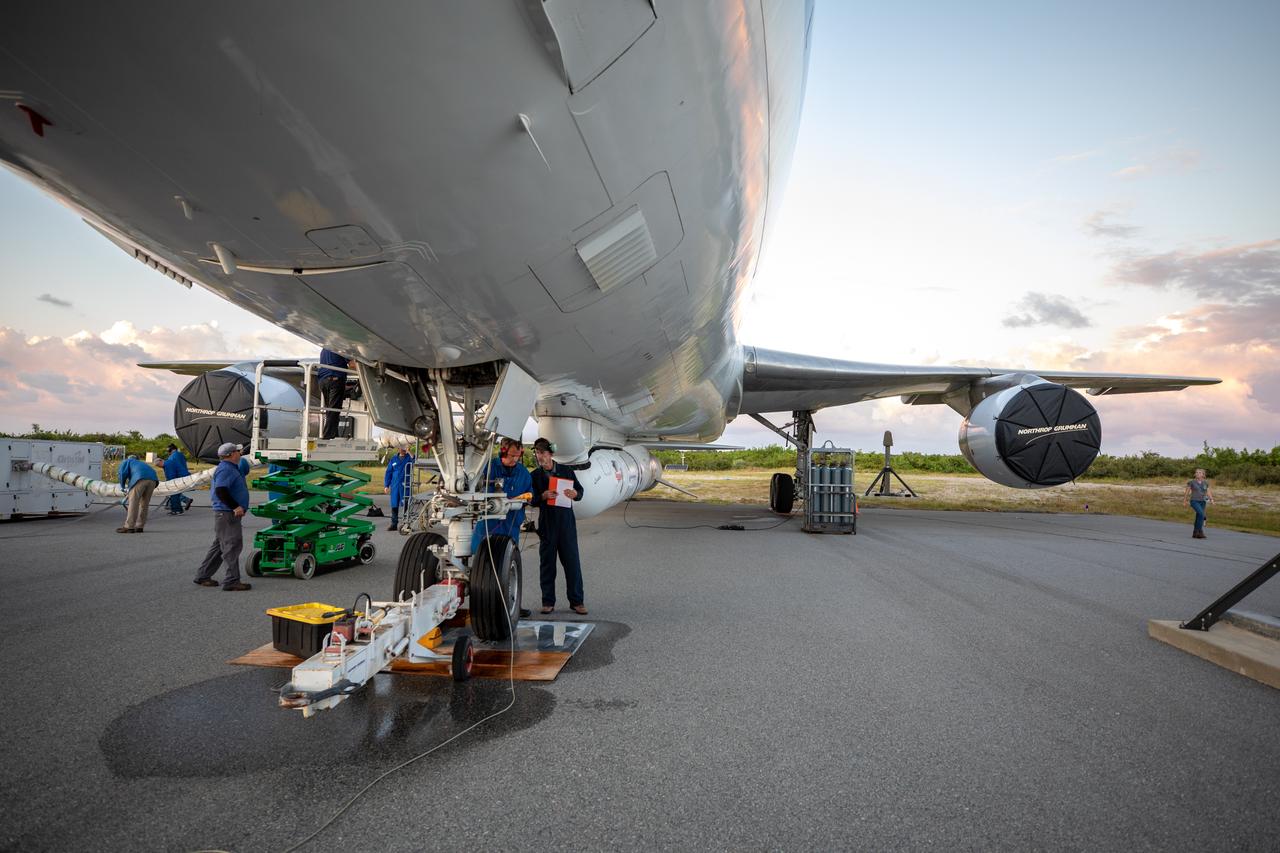
The Northrop Grumman Pegasus XL rocket, carrying NASA’s Ionospheric Connection Explorer (ICON), has arrived at the Skid Strip at Cape Canaveral Air Force Station in Florida on Oct. 1, 2019. The rocket is attached beneath the company’s L-1011 Stargazer aircraft. ICON will study the frontier of space - the dynamic zone high in Earth's atmosphere where terrestrial weather from below meets space weather above.
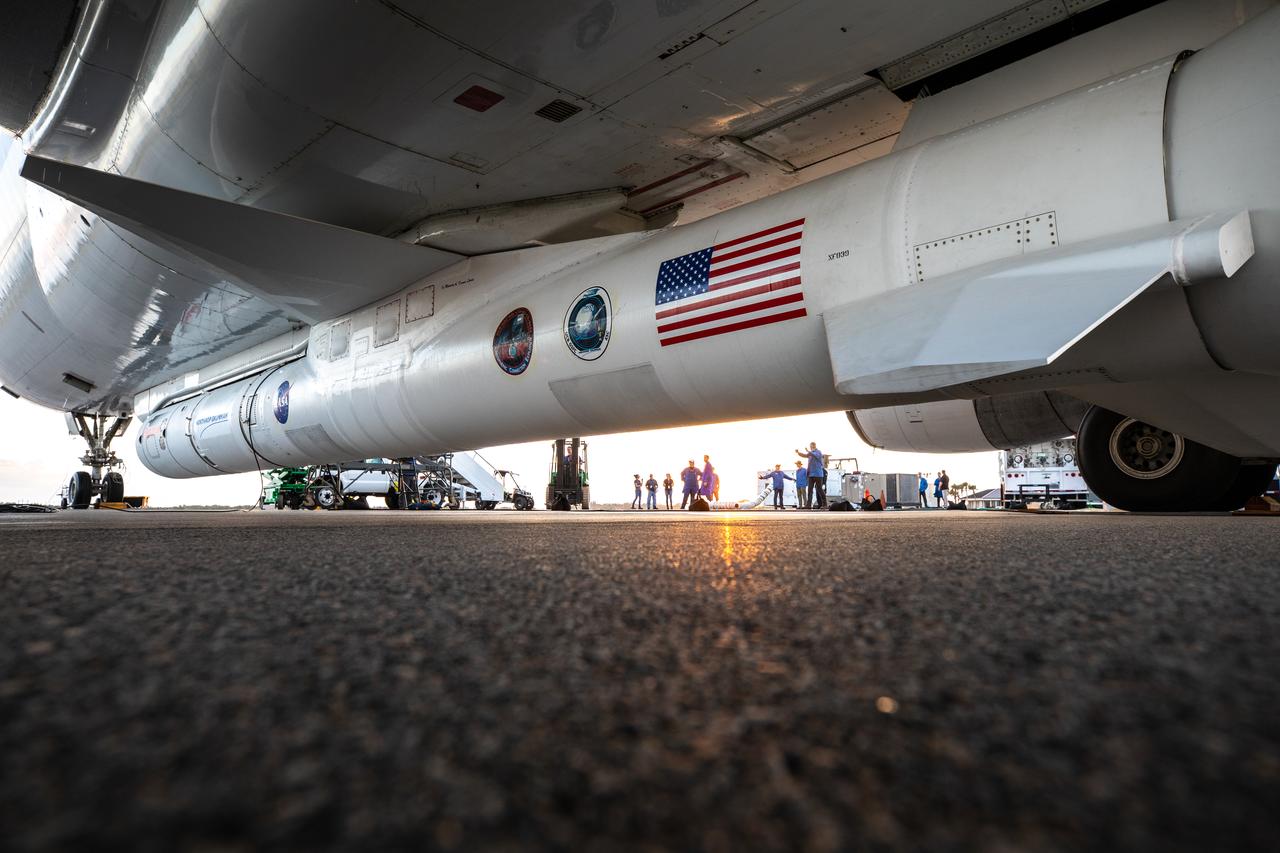
The Northrop Grumman Pegasus XL rocket, carrying NASA’s Ionospheric Connection Explorer (ICON), has arrived at the Skid Strip at Cape Canaveral Air Force Station in Florida on Oct. 1, 2019. The rocket is attached beneath the company’s L-1011 Stargazer aircraft. ICON will study the frontier of space - the dynamic zone high in Earth's atmosphere where terrestrial weather from below meets space weather above.
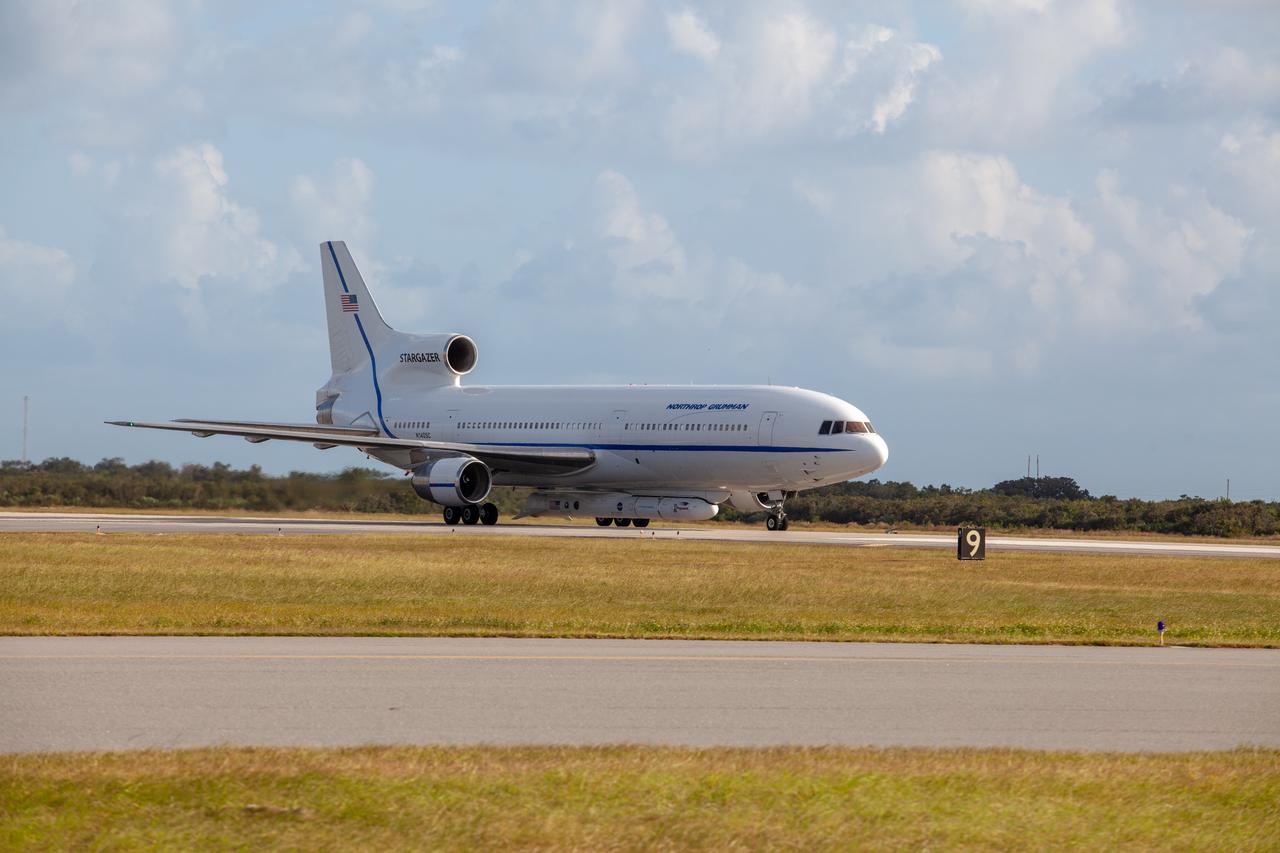
Northrop Grumman's L-1011 Stargazer aircraft has arrived at the Skid Strip at Cape Canaveral Air Force Station in Florida on Oct. 1, 2019. The company's Pegasus XL rocket, containing NASA's Ionospheric Connection Explorer (ICON), is attached beneath the aircraft. ICON will study the frontier of space - the dynamic zone high in Earth's atmosphere where terrestrial weather from below meets space weather above.
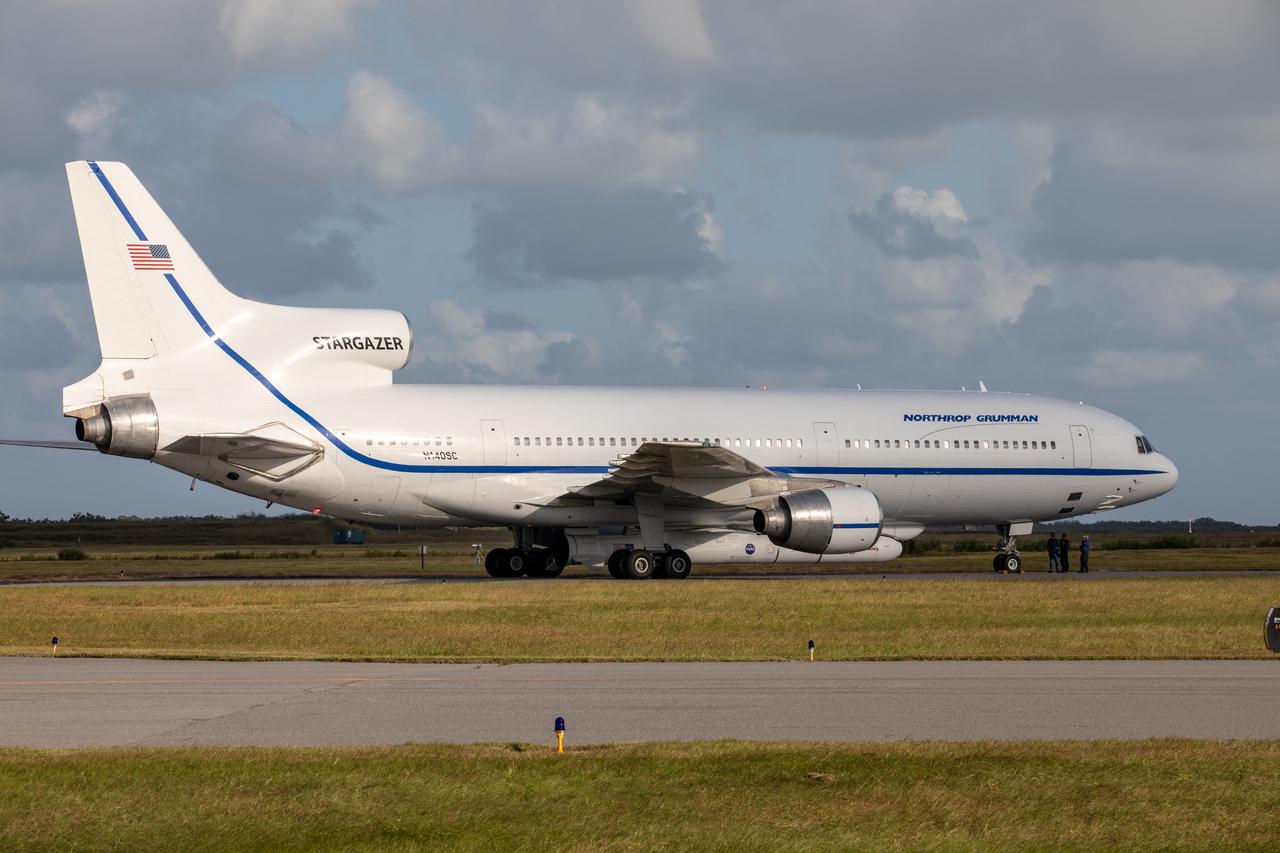
Northrop Grumman's L-1011 Stargazer aircraft has arrived at the Skid Strip at Cape Canaveral Air Force Station in Florida on Oct. 1, 2019. The company's Pegasus XL rocket, containing NASA's Ionospheric Connection Explorer (ICON), is attached beneath the aircraft. ICON will study the frontier of space - the dynamic zone high in Earth's atmosphere where terrestrial weather from below meets space weather above.
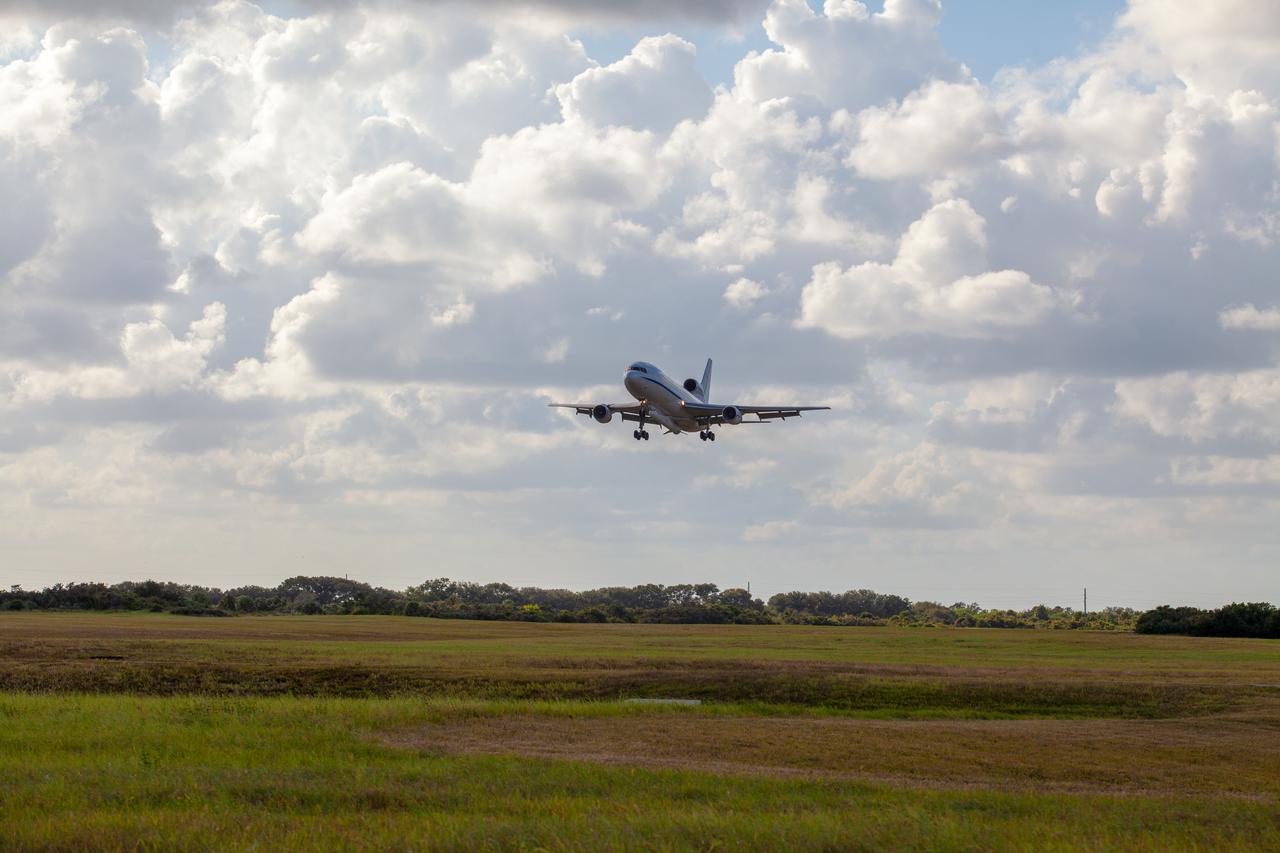
Northrop Grumman's L-1011 Stargazer aircraft descends toward the Skid Strip at Cape Canaveral Air Force Station in Florida on Oct. 1, 2019. The company's Pegasus XL rocket, containing NASA's Ionospheric Connection Explorer (ICON), is attached beneath the aircraft. ICON will study the frontier of space - the dynamic zone high in Earth's atmosphere where terrestrial weather from below meets space weather above.
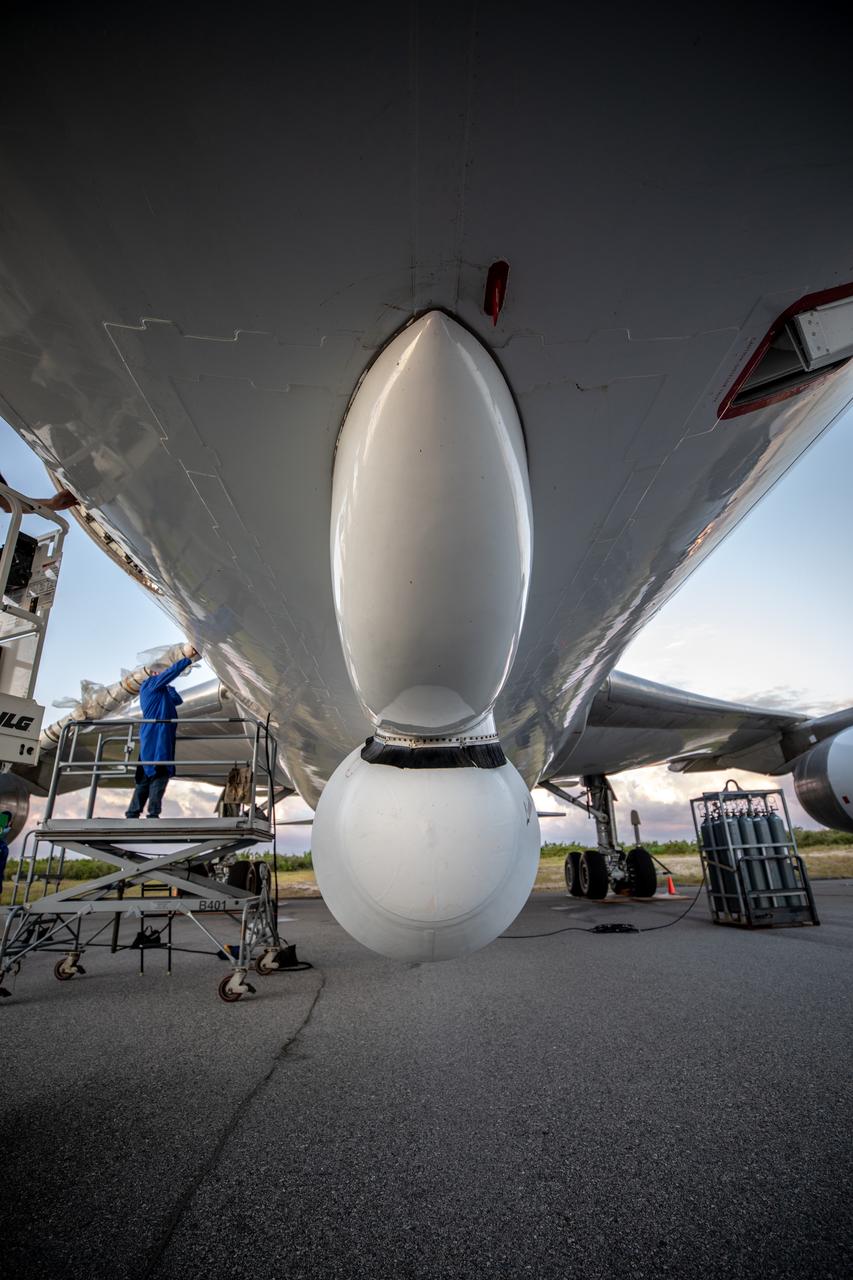
The Northrop Grumman Pegasus XL rocket, carrying NASA’s Ionospheric Connection Explorer (ICON), has arrived at the Skid Strip at Cape Canaveral Air Force Station in Florida on Oct. 1, 2019. The rocket is attached beneath the company’s L-1011 Stargazer aircraft. ICON will study the frontier of space - the dynamic zone high in Earth's atmosphere where terrestrial weather from below meets space weather above.

The Northrop Grumman Pegasus XL rocket, carrying NASA’s Ionospheric Connection Explorer (ICON), has arrived at the Skid Strip at Cape Canaveral Air Force Station in Florida on Oct. 1, 2019. The rocket is attached beneath the company’s L-1011 Stargazer aircraft. ICON will study the frontier of space - the dynamic zone high in Earth's atmosphere where terrestrial weather from below meets space weather above.
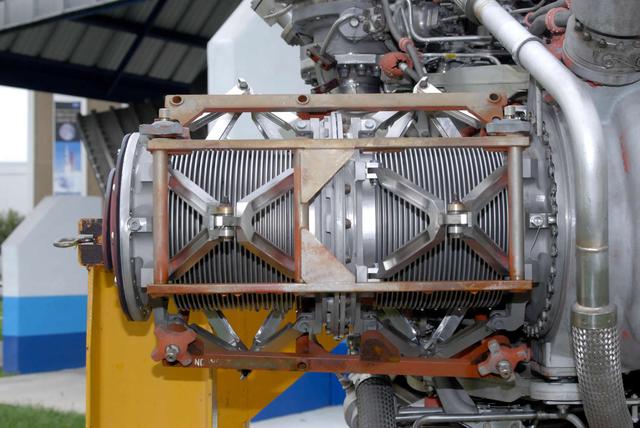
Stennis Space Center engineers are preparing to conduct water tests on an updated version of the scissors duct component of the J-2X engine. Measuring about 2 feet long and about 8 inches in diameter, the duct on the J-2X predecessor, the J-2, connected its fuel turbo pumps to the flight vehicle's upper stage run tanks. According to NASA's J-2X project manager at SSC, Gary Benton, the water tests should establish the limits of the duct's ability to withstand vibration.
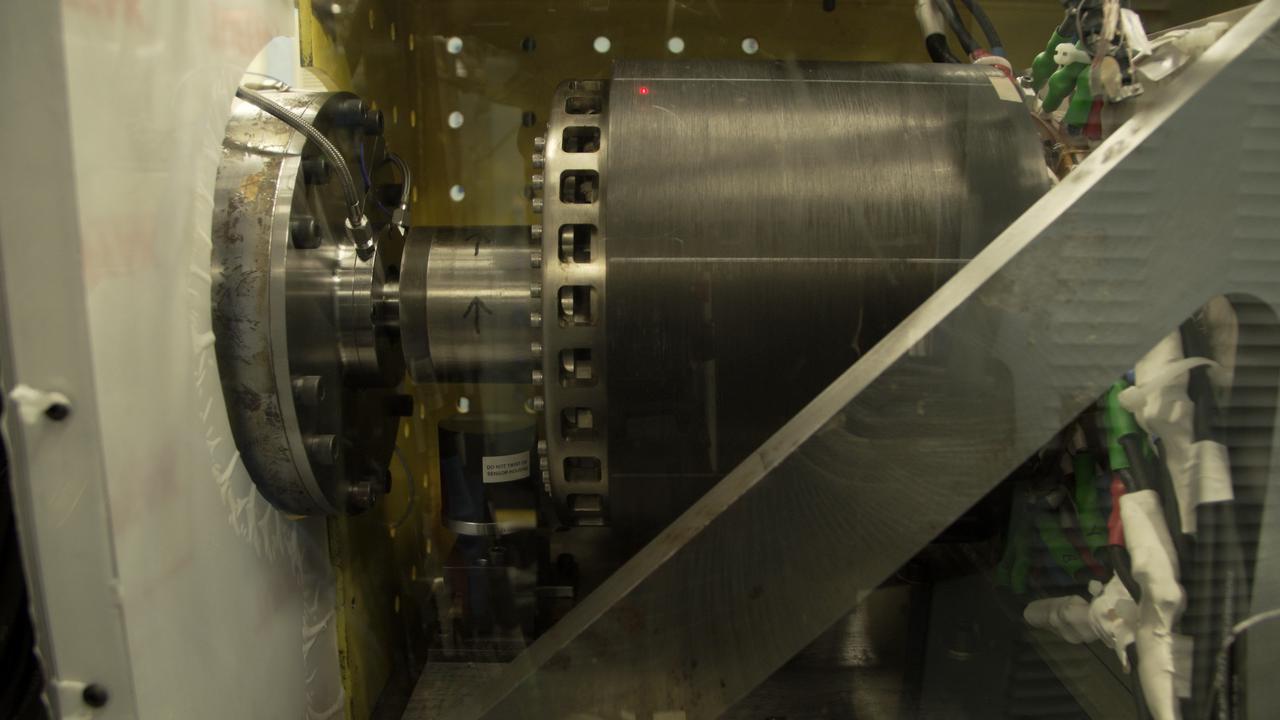
UIUC’s megawatt machine (right) was connected to a dynamometer (left) to test its effectiveness as an electric generator in a safety enclosure at a Collins Aerospace test facility in Rockford, Illinois. This unusual design has its rotating parts on the outside, so that both the cylinder on the right and the cylinder with arrows spin during operation.

ESA Herschel Space Observatory has discovered a giant, galaxy-packed filament ablaze with billions of new stars. The filament connects two clusters of galaxies that, along with a third cluster, will smash together in several billion years.
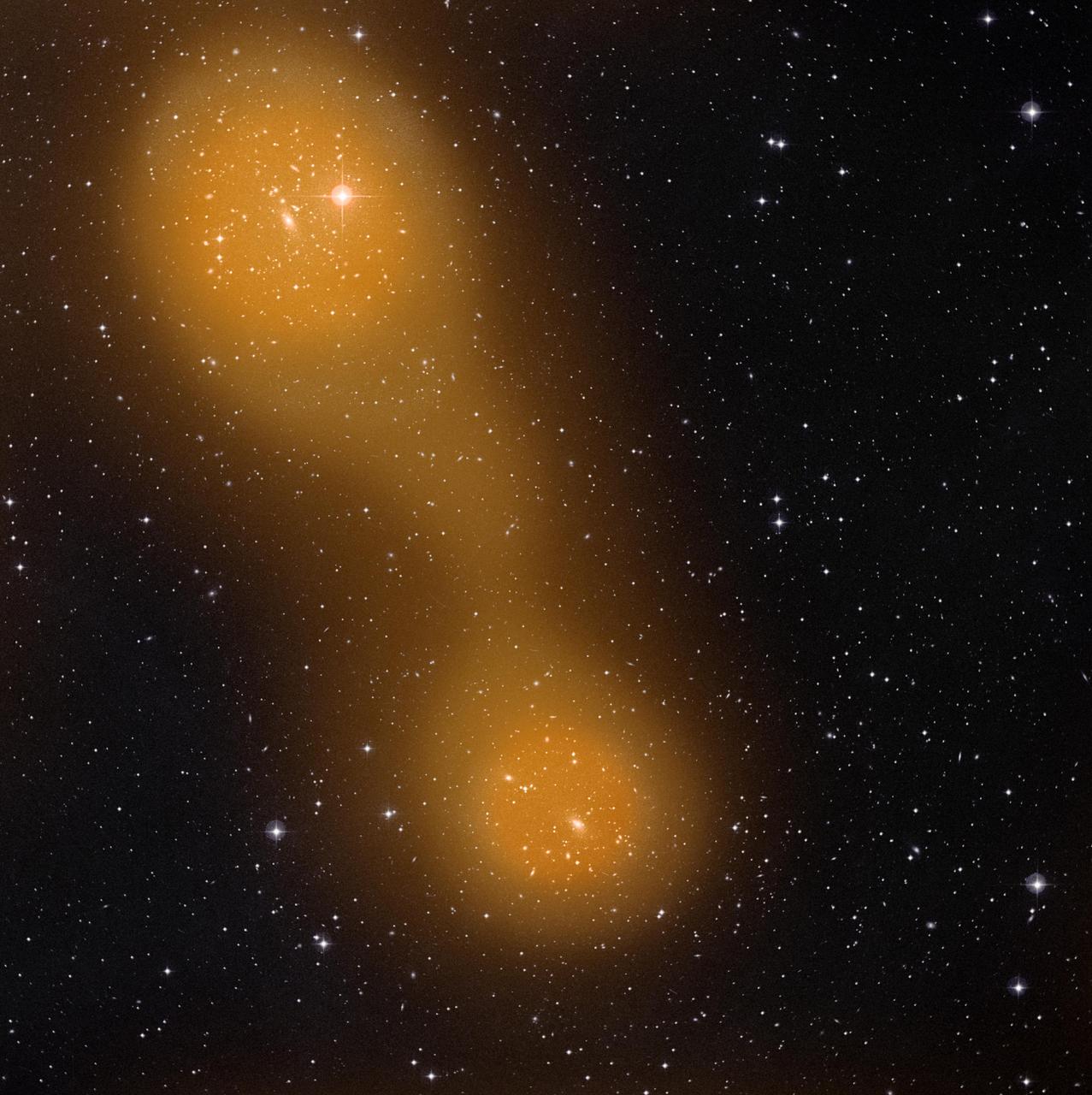
Planck has discovered a bridge of hot gas that connects galaxy clusters Abell 399 lower center and Abell 401 top left. The galaxy pair is located about a billion light-years from Earth.
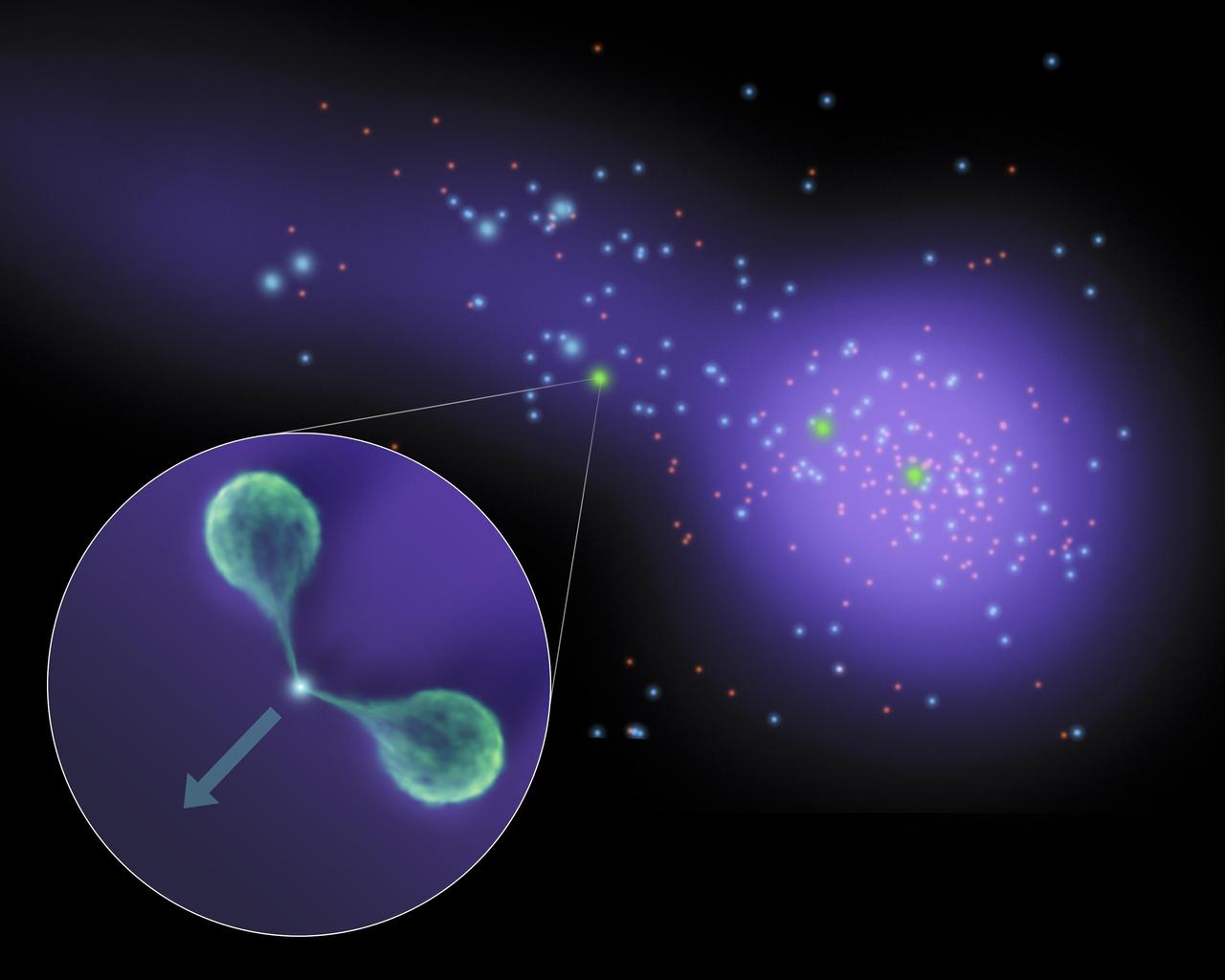
This diagram shows findings of results of observations made primarily by NASA Spitzer Telescopes and the Very Large Array radio telescope and illuminates new details about a celestial andbar connecting two massive islands of galaxies.
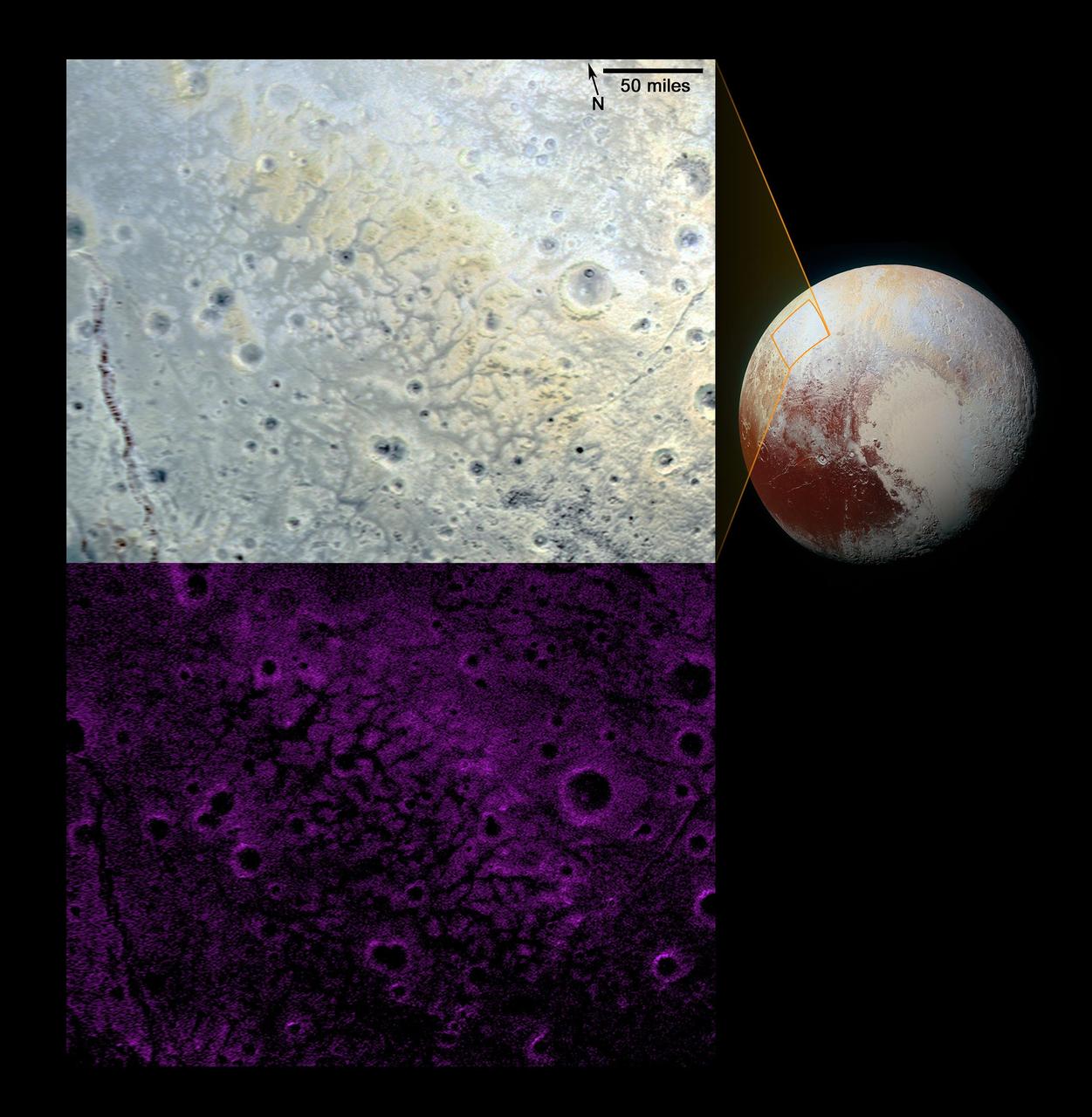
NASA New Horizons scientists have spotted an expanse of terrain they describe as fretted bright plains divided into polygon-shaped blocks by a network of dark, connected valleys in Pluto informally named Venera Terra region.
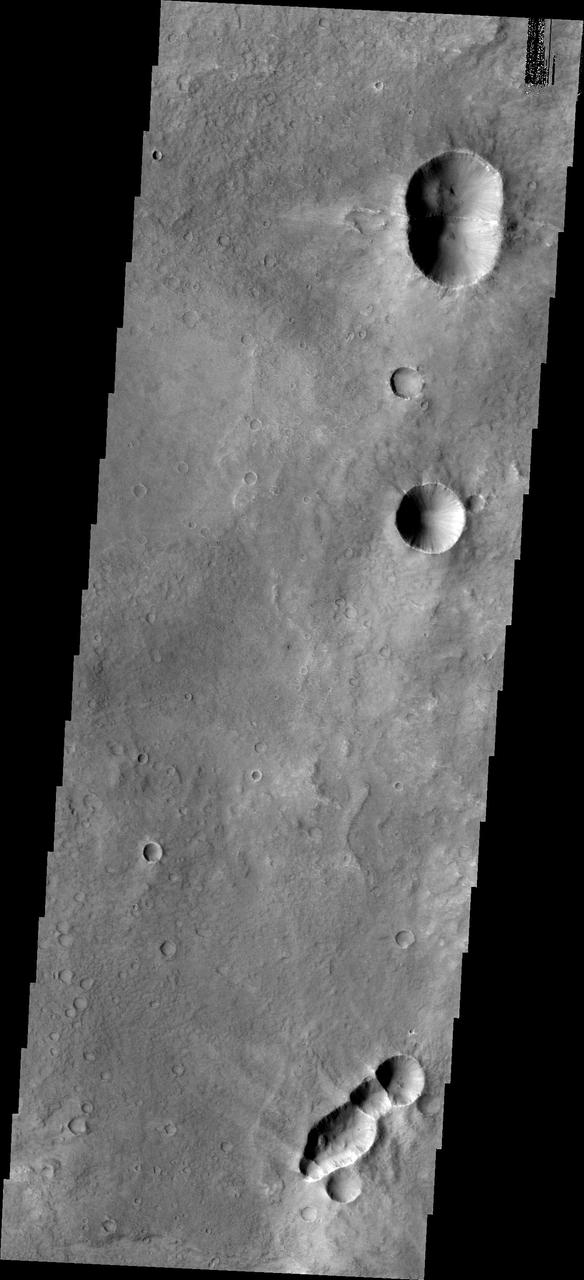
Do you see what I see in this image from NASA Mars Odyssey spacecraft? The connected craters at the top and bottom of this image look like bugs, perhaps a bumble bee at the top and a wasp at the bottom.
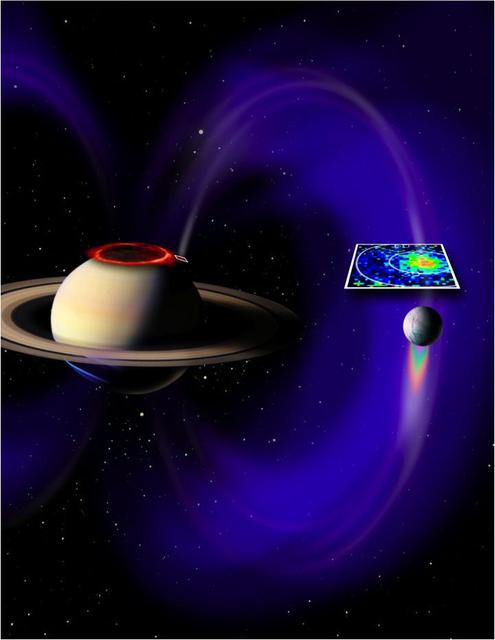
This artist concept based on data from NASA Cassini spacecraft, shows a glowing patch of ultraviolet light near Saturn north pole that occurs at the footprint of the magnetic connection between Saturn and its moon Enceladus.
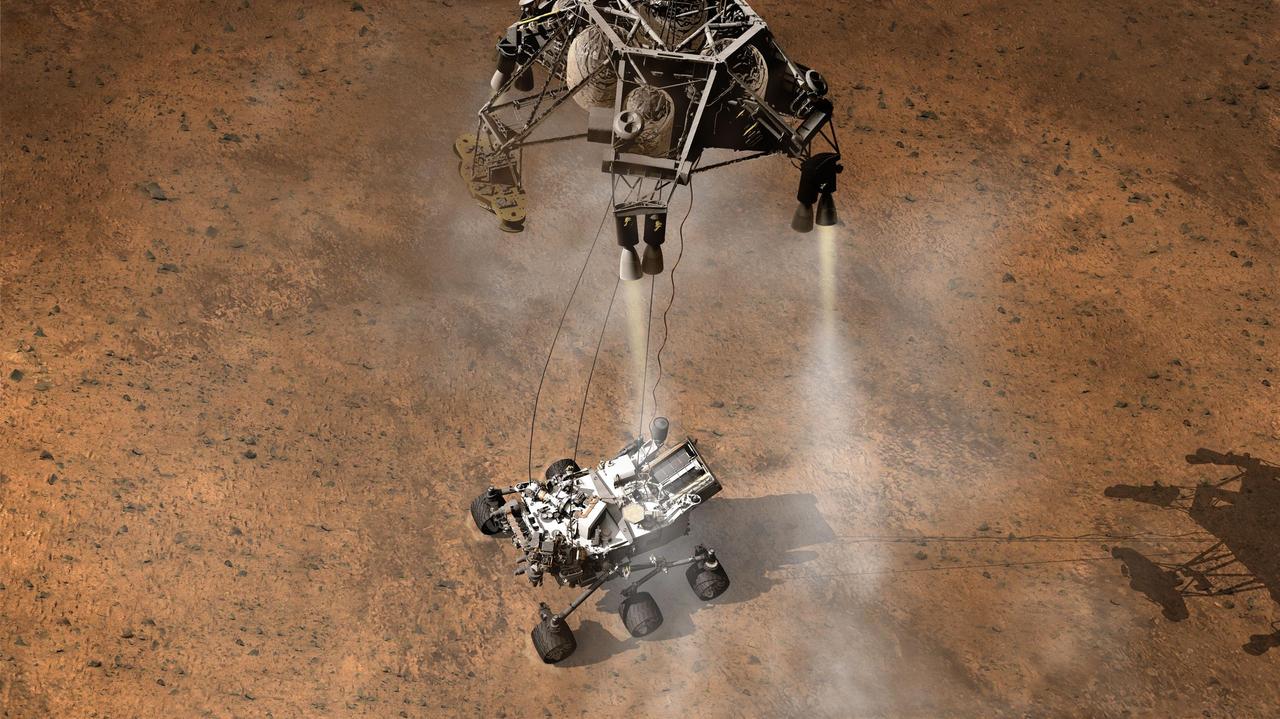
This artist concept depicts the moment immediately after NASA Curiosity rover touches down onto the Martian surface. The spacecraft has detected touchdown, and pyrotechnic cutters have severed connections between rover and spacecraft descent stage.
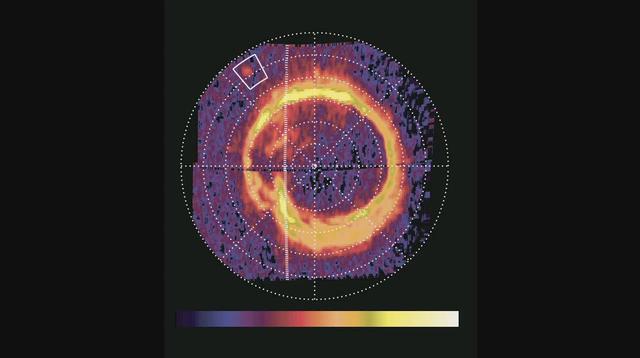
NASA Cassini spacecraft has spotted a glowing patch of ultraviolet light near Saturn north pole that marks the presence of an electrical circuit that connects Saturn with its moon Enceladus. Movie available at the Photojournal.
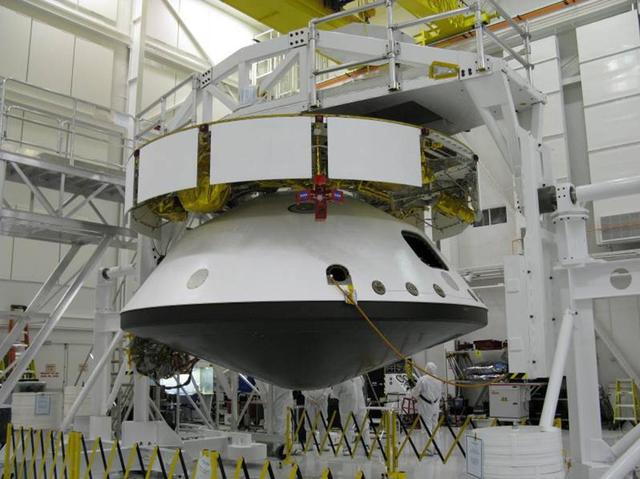
The major components of NASA Mars Science Laboratory spacecraft -- cruise stage atop the aeroshell, which has the descent stage and rover inside -- were connected together in October 2008 for several weeks of system testing.
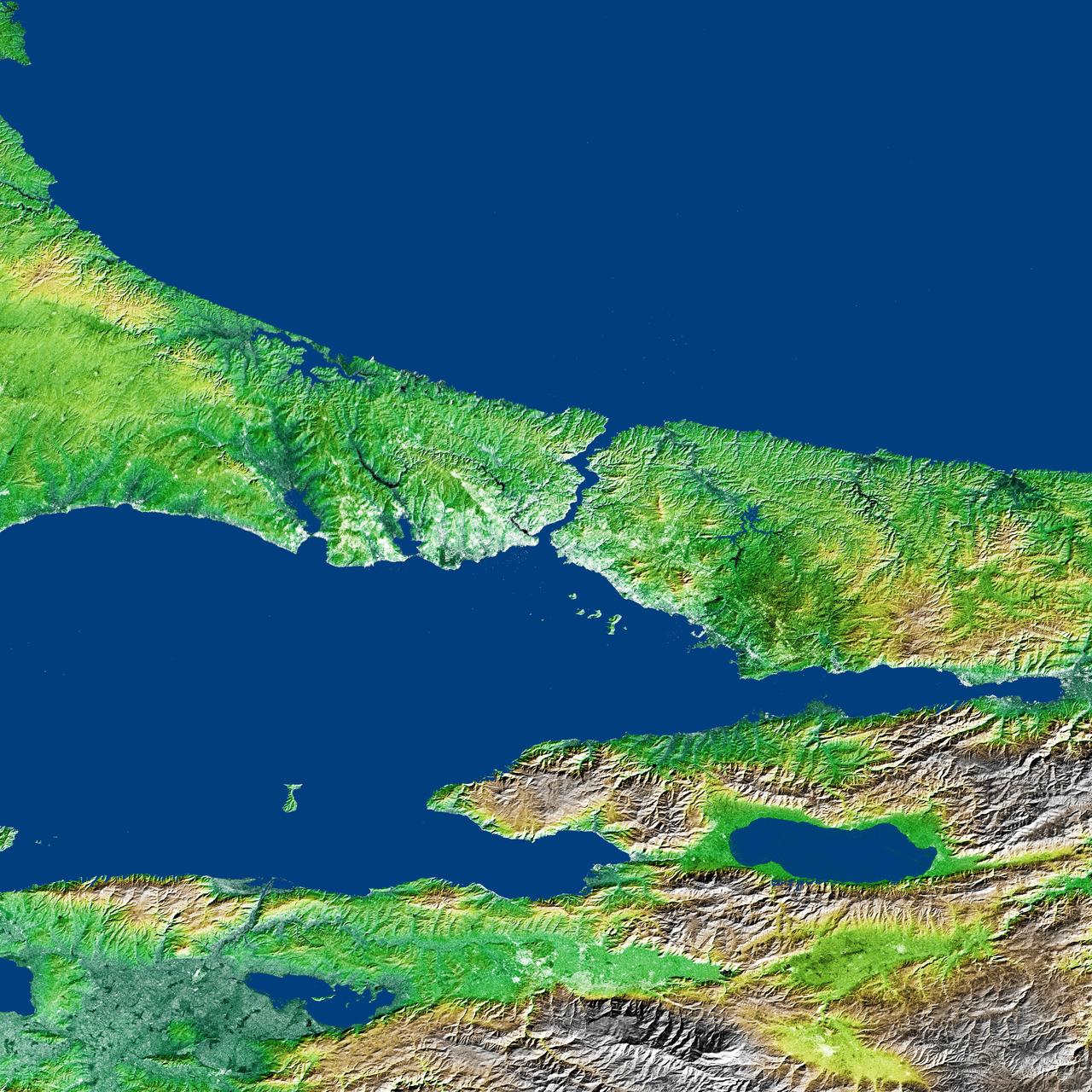
The Bosporus also spelled Bosphorus is a strait that connects the Black Sea with the Sea of Marmara in the center of this view of northwest Turkey, taken during NASA Shuttle Radar Topography Mission.
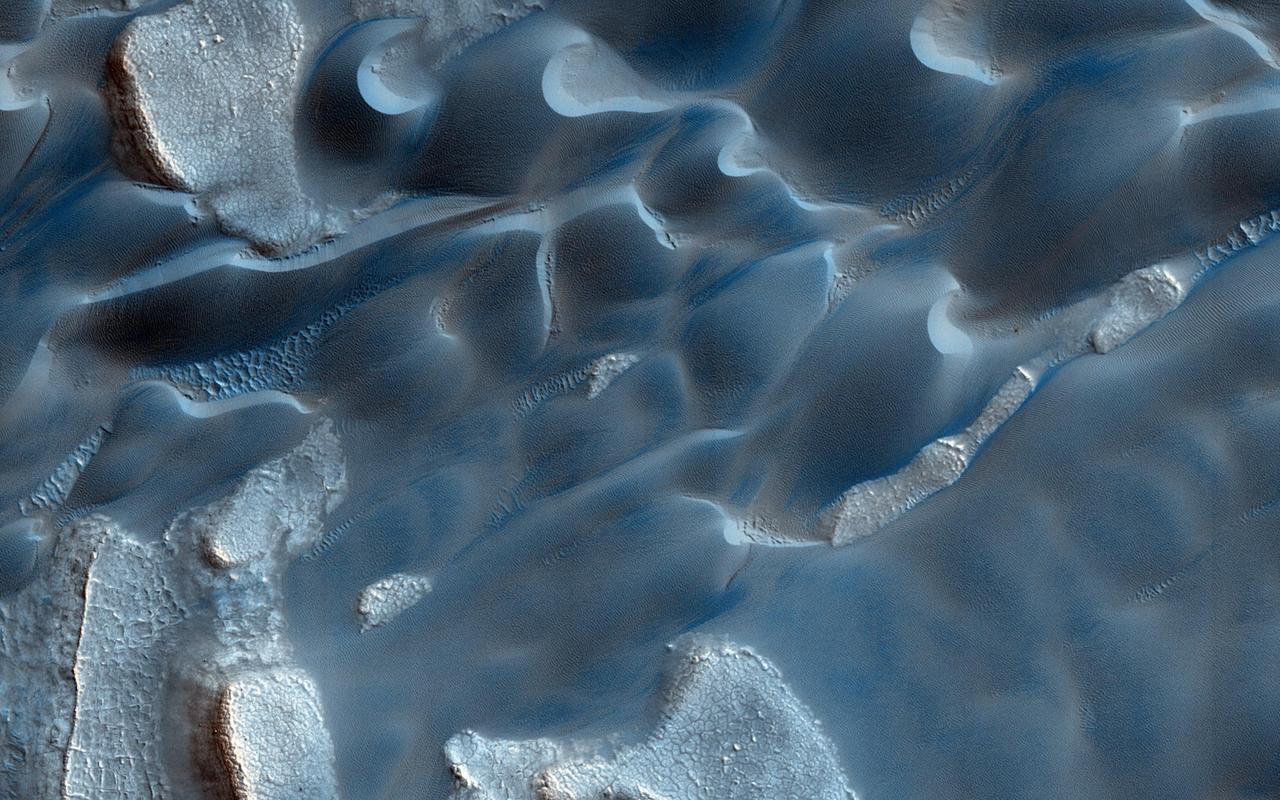
The deep chasm that formed on the polar cap edge is identified as an area of strong down-slope winds and has a clear connection to Mars largest dune field, Olympia Undae as observed by NASA Mars Reconnaissance Orbiter.

A dense network of small rivers or swampy areas appears to connect some of the seas on Saturn moon Titan, as seen in this comparison of data of the same area from two instruments on NASA Cassini spacecraft.
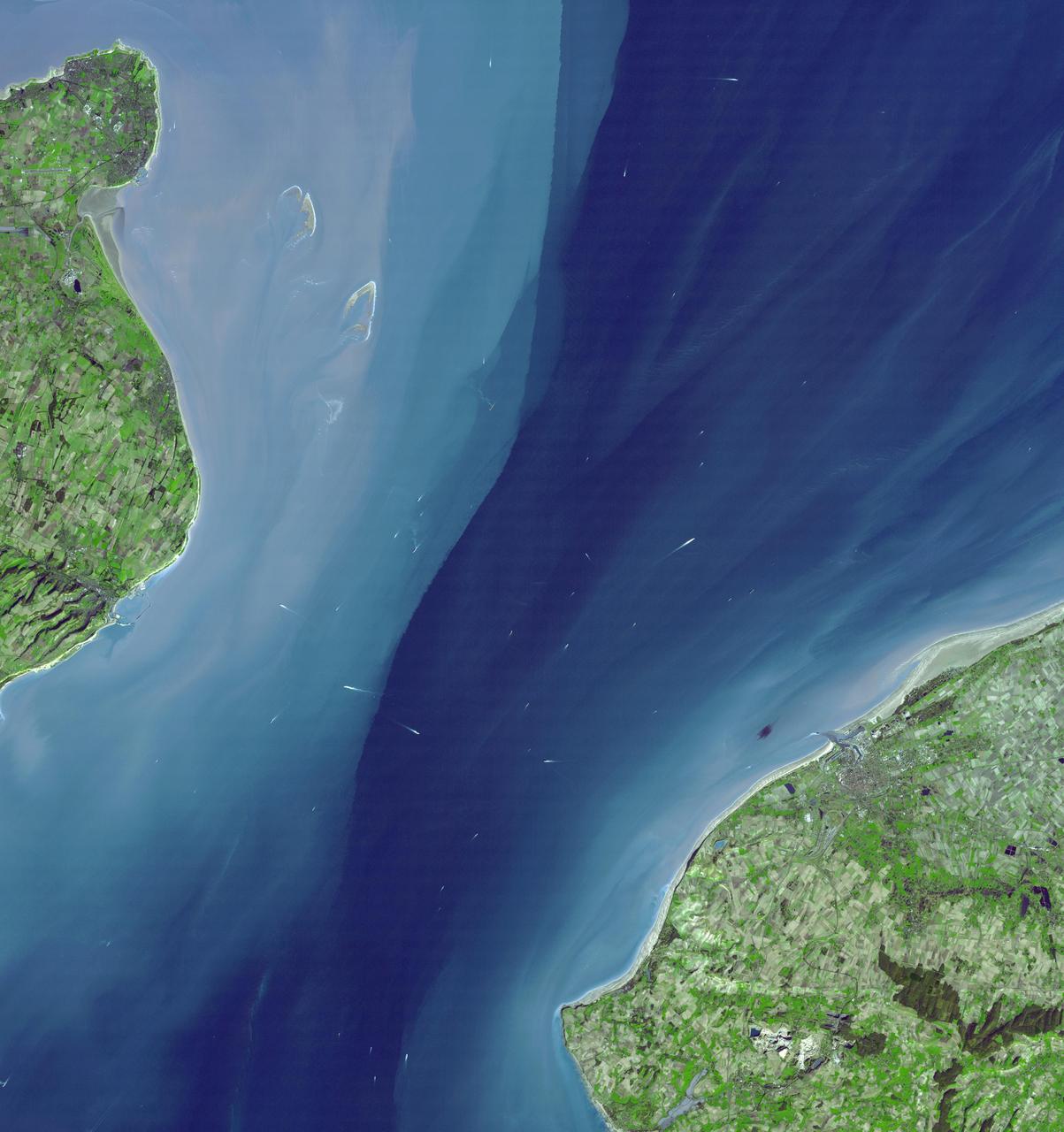
The Channel Tunnel is a 50.5 km-long rail tunnel beneath the English Channel at the Straits of Dover. It connects Dover, Kent in England with Calais, northern France. This image was acquired by NASA Terra spacecraft.
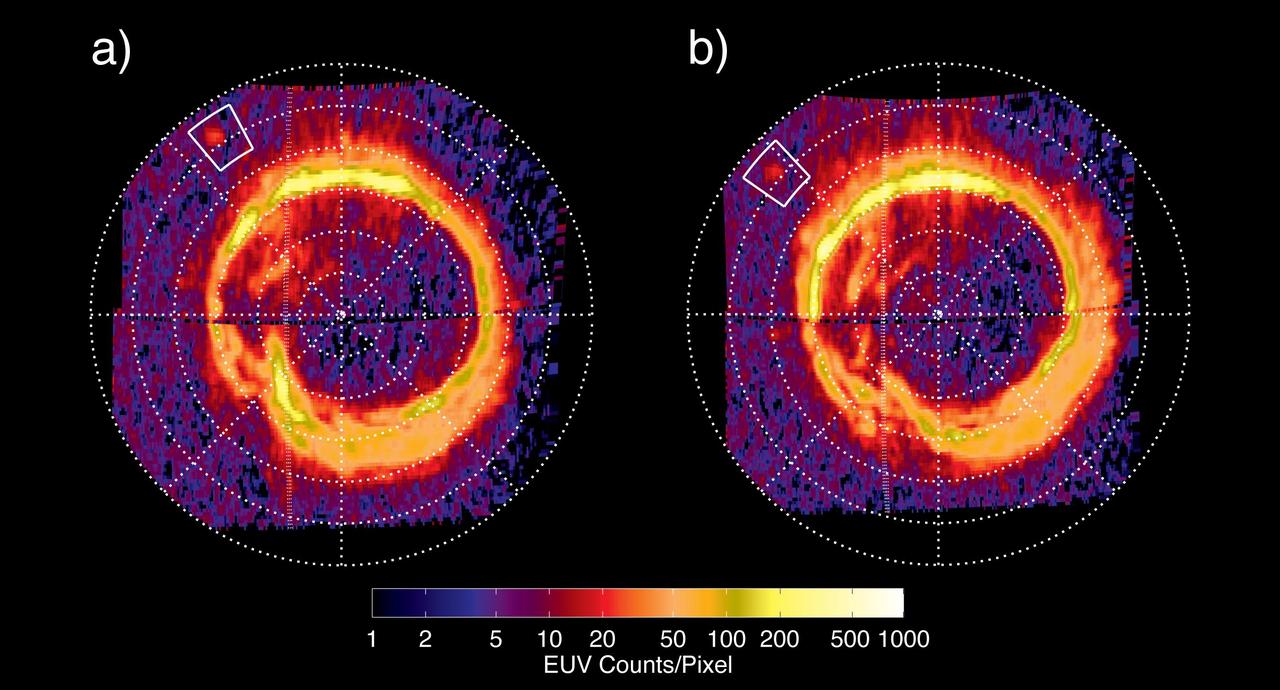
NASA Cassini spacecraft has spotted a glowing patch of ultraviolet light near Saturn north pole that marks the presence of an electrical circuit that connects Saturn with its moon Enceladus.
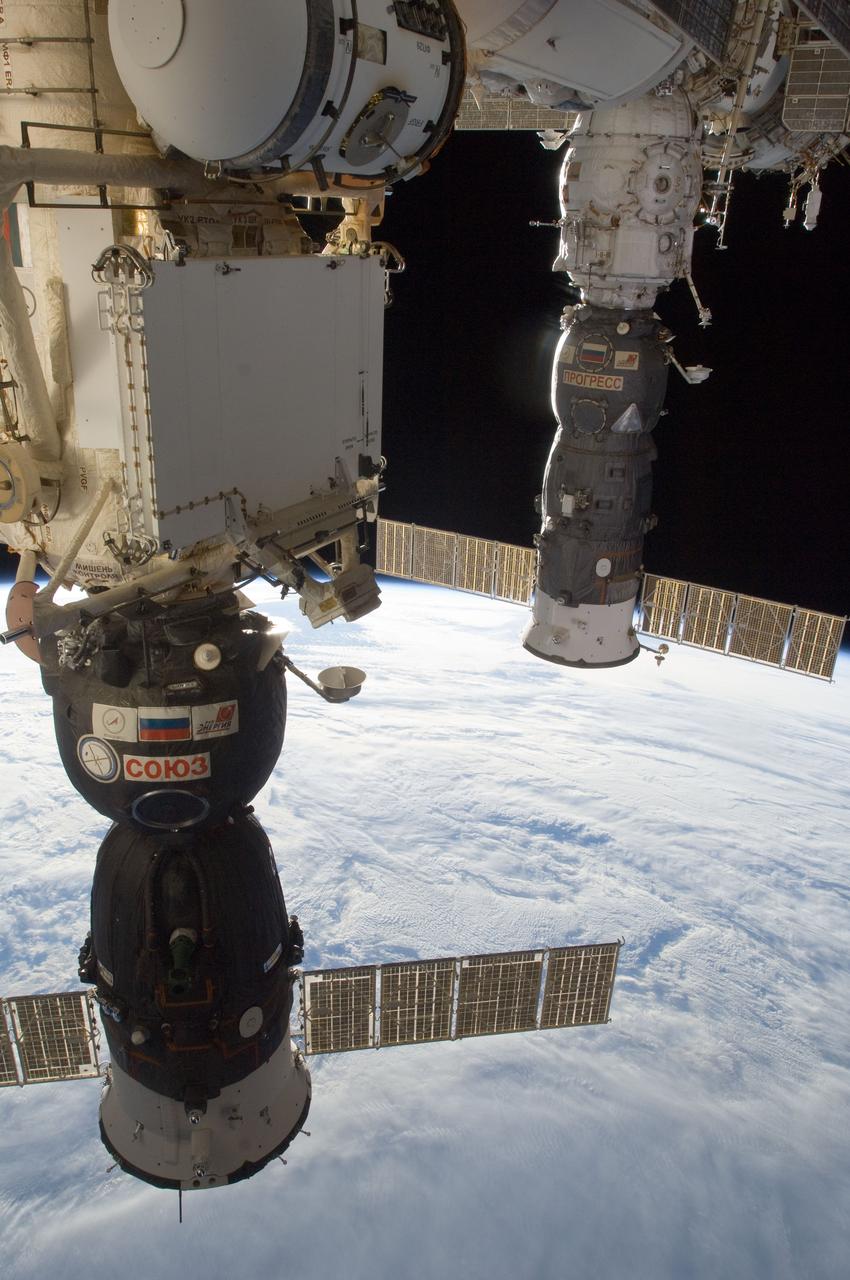
View of Soyuz Spacecraft connected to the Mini Research Module 1 MRM1), and Progress Spacecraft connected to the Pirs Docking Compartment 1 (DC1). Photo was taken during Expedition 34.
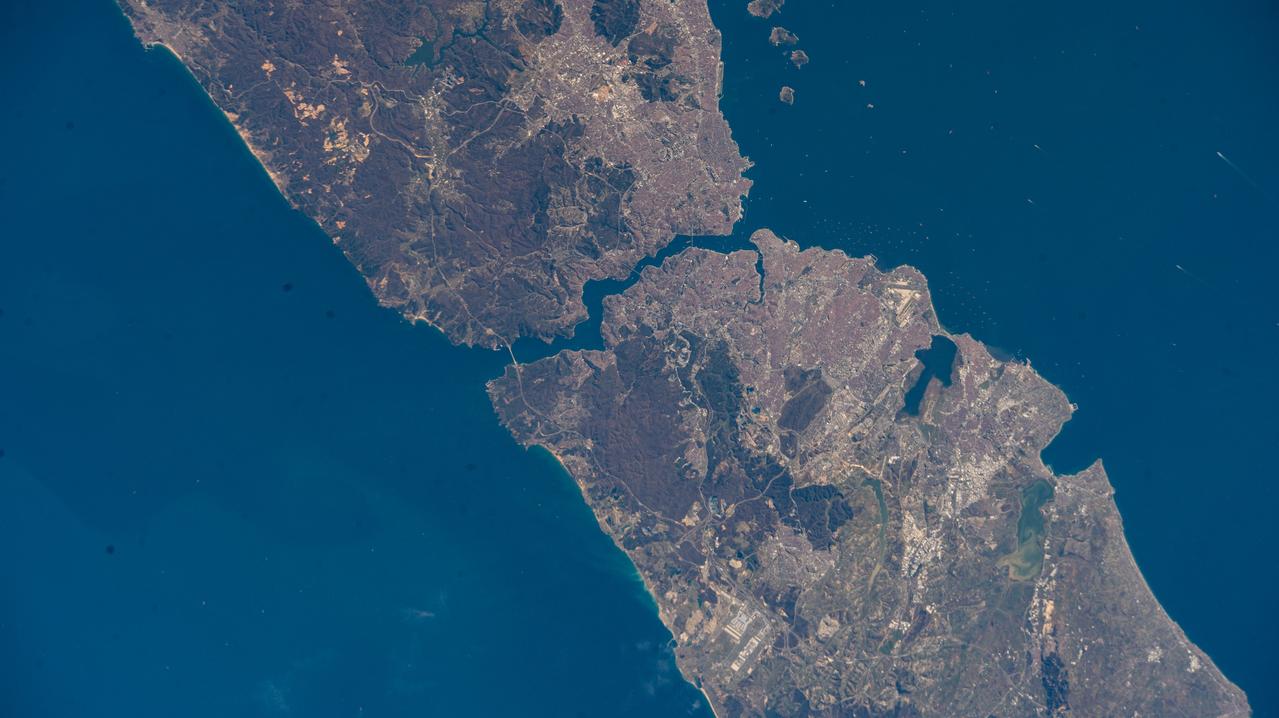
iss072e574770 (Jan. 29, 2025) --- The Bosphorus Strait splits the city of Istanbul, Türkiye, and connects the Black Sea with the Sea of Marmara in this photograph from the International Space Station as it orbited 260 miles above where Europe connects to Asia.
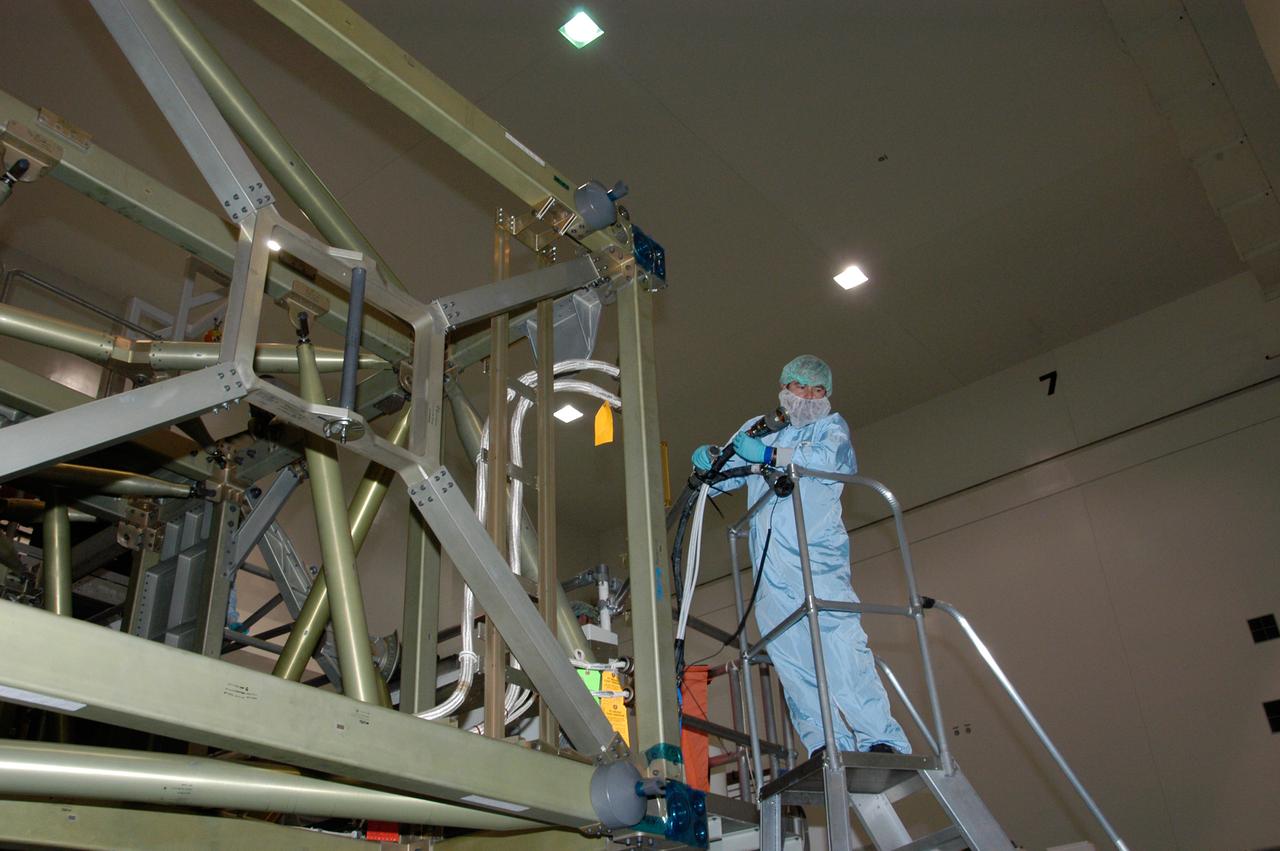
In the Space Station Processing Facility at NASA's Kennedy Space Center, a worker holds a cable that will help recharge the battery for the S6 integrated truss. The final starboard truss in the assembly of the International Space Station, the S6 is scheduled to fly on space shuttle mission STS-119, whose launch date is not yet determined.
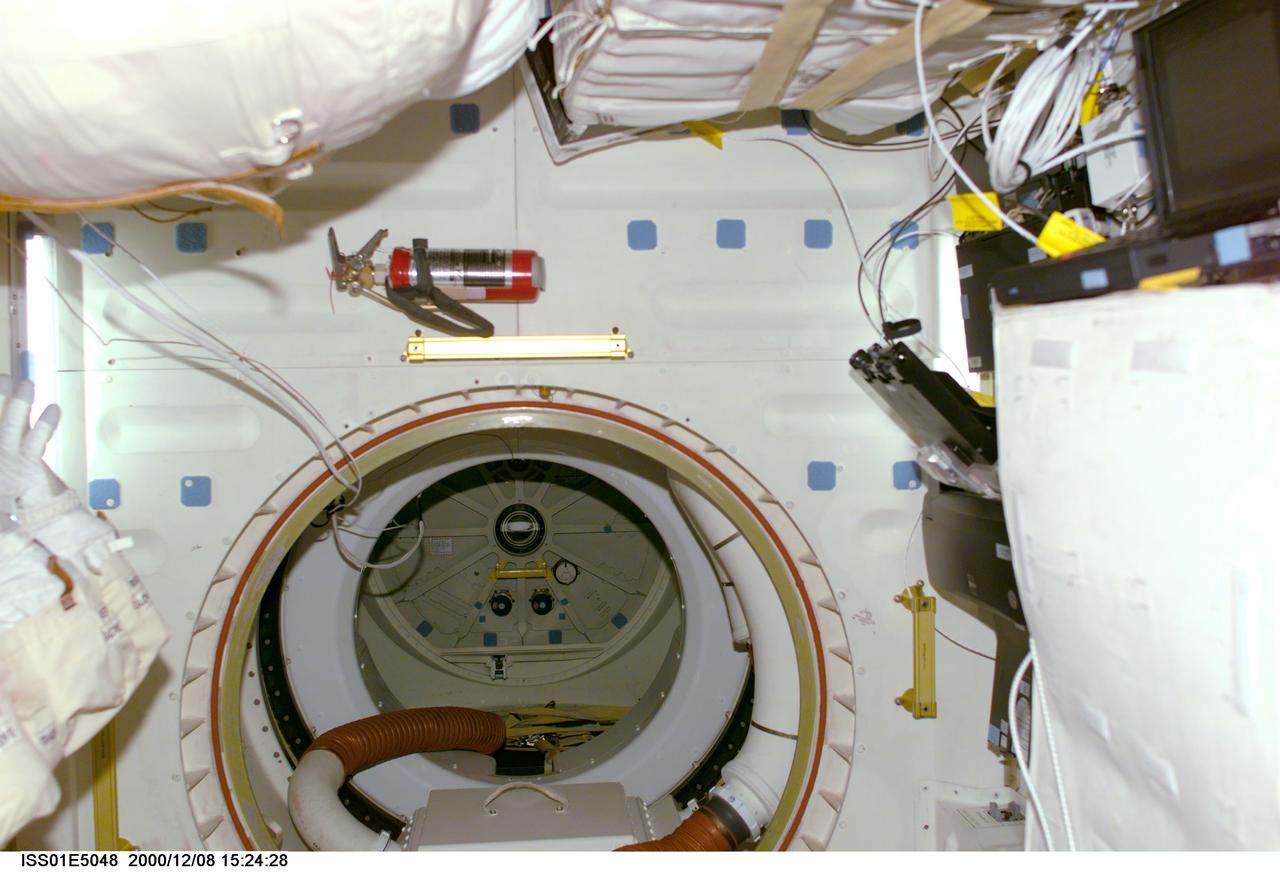
ISS01-E-5048 (8 December 2000) ---This digital still camera's view was taken in the International Space Station's Primary Mating Adapter-3 (PMA-3) looking into the tunnel that leads to the Unity node.
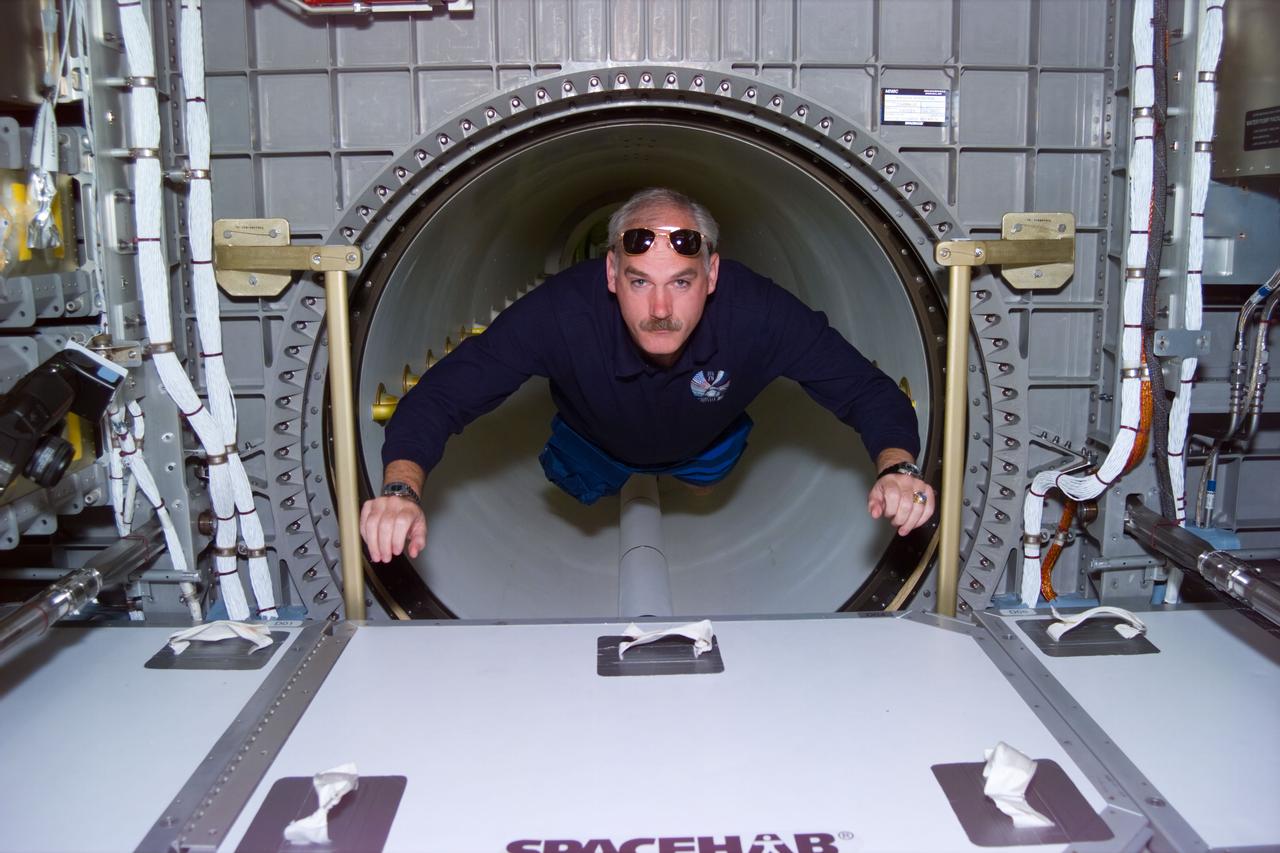
STS79-E-5008 (17 September 1996) --- Astronaut William F. Readdy, mission commander, floats through tunnel into Spacehab Module, onboard the Space Shuttle Atlantis on Flight Day 2.
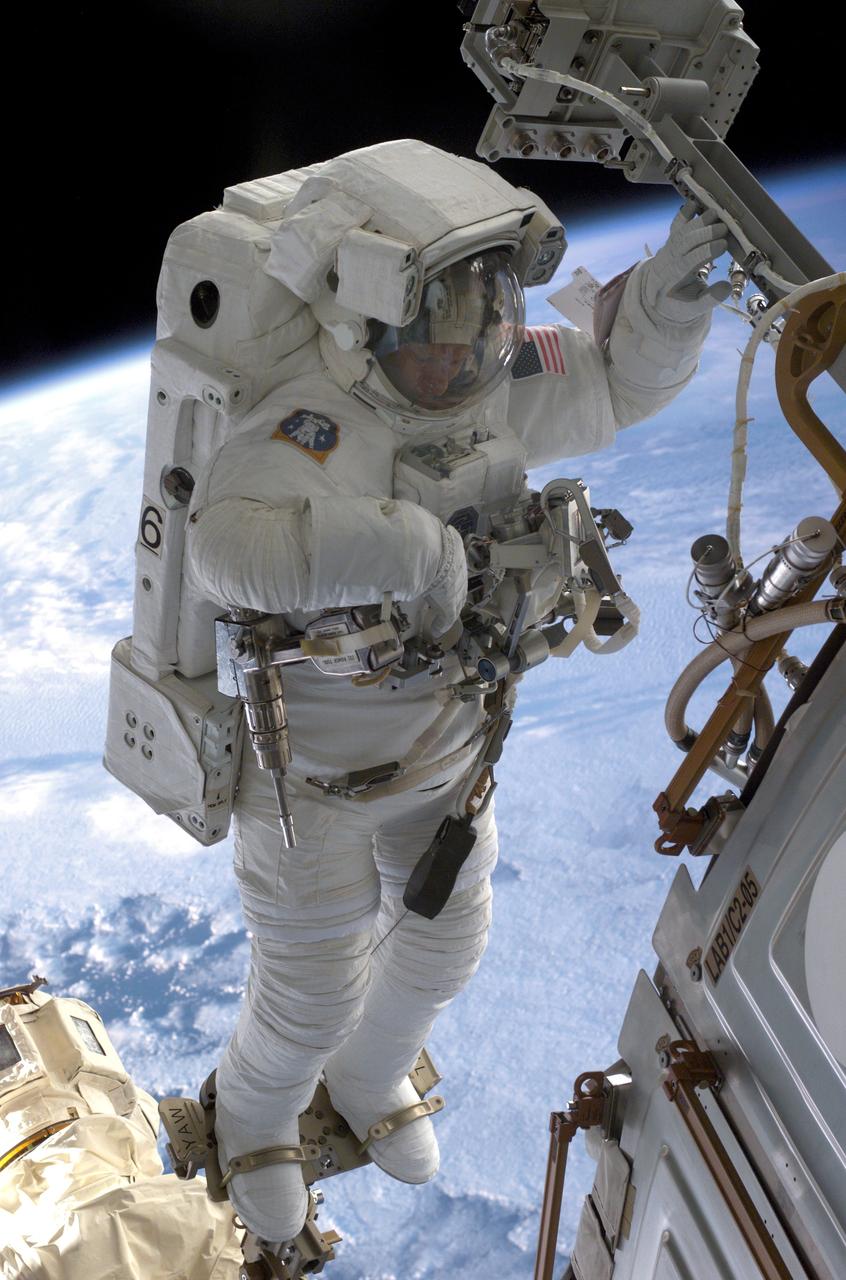
STS112-E-05311 (12 October 2002) --- Astronaut Piers J. Sellers uses both a handrail on the Destiny Laboratory and a foot restraint on the Space Station Remote Manipulator System or Canadarm2 to remain stationary while performing work at the end of the STS-112 mission's second spacewalk. A cloud-covered Earth provides the backdrop for the scene.
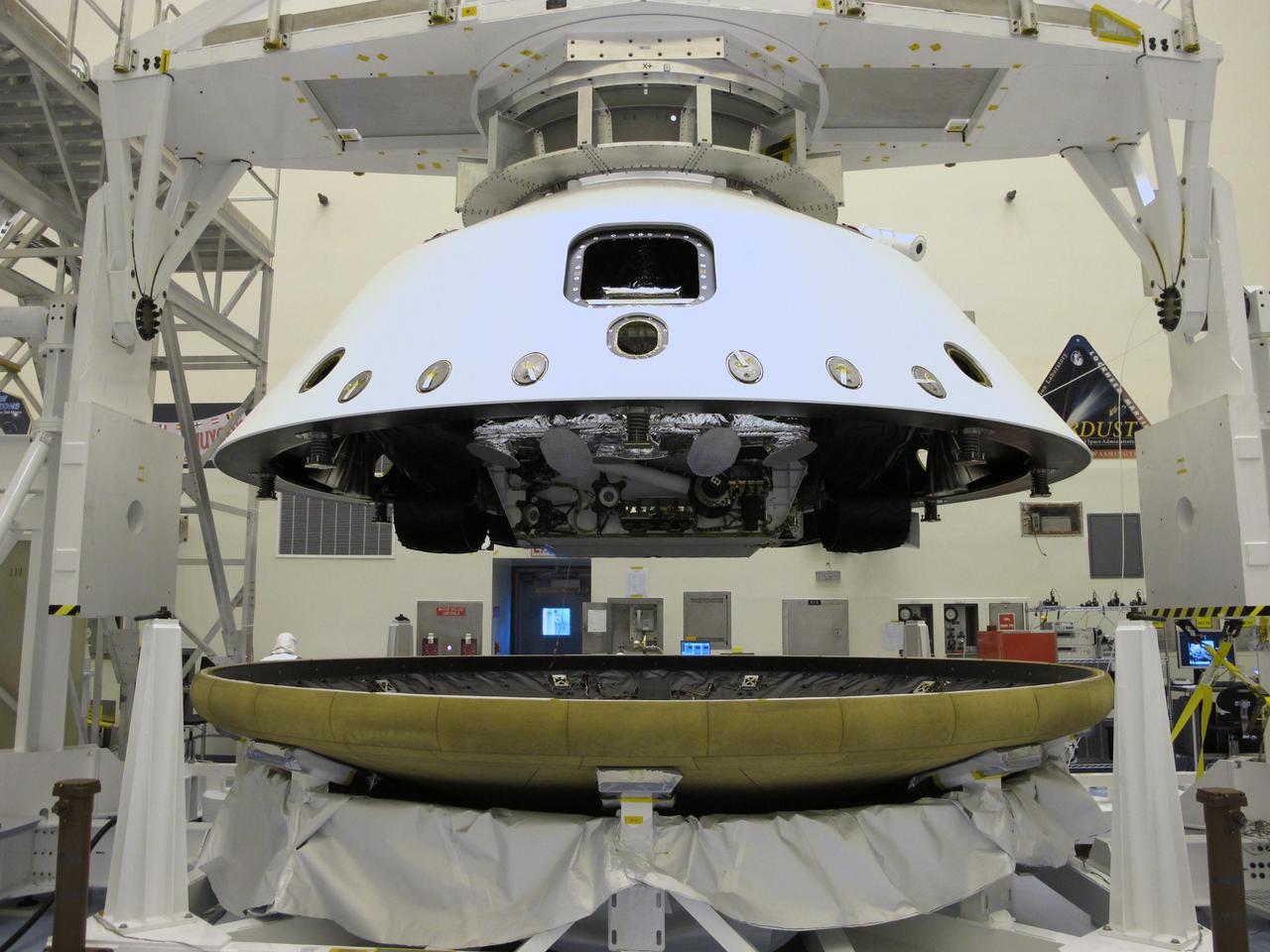
At the Payload Hazardous Servicing Facility at NASA Kennedy Space Center in Florida, the back shell powered descent vehicle configuration, containing NASA Mars Science Laboratory rover, Curiosity, is being placed on the spacecraft heat shield.

STS112-E-5291 (12 October 2002) --- Astronaut Piers J. Sellers uses both a handrail on the Destiny Laboratory and a foot restraint on the Space Station Remote Manipulator System or Canadarm2 to remain stationary while performing work at the end of the STS-112 mission's second spacewalk.
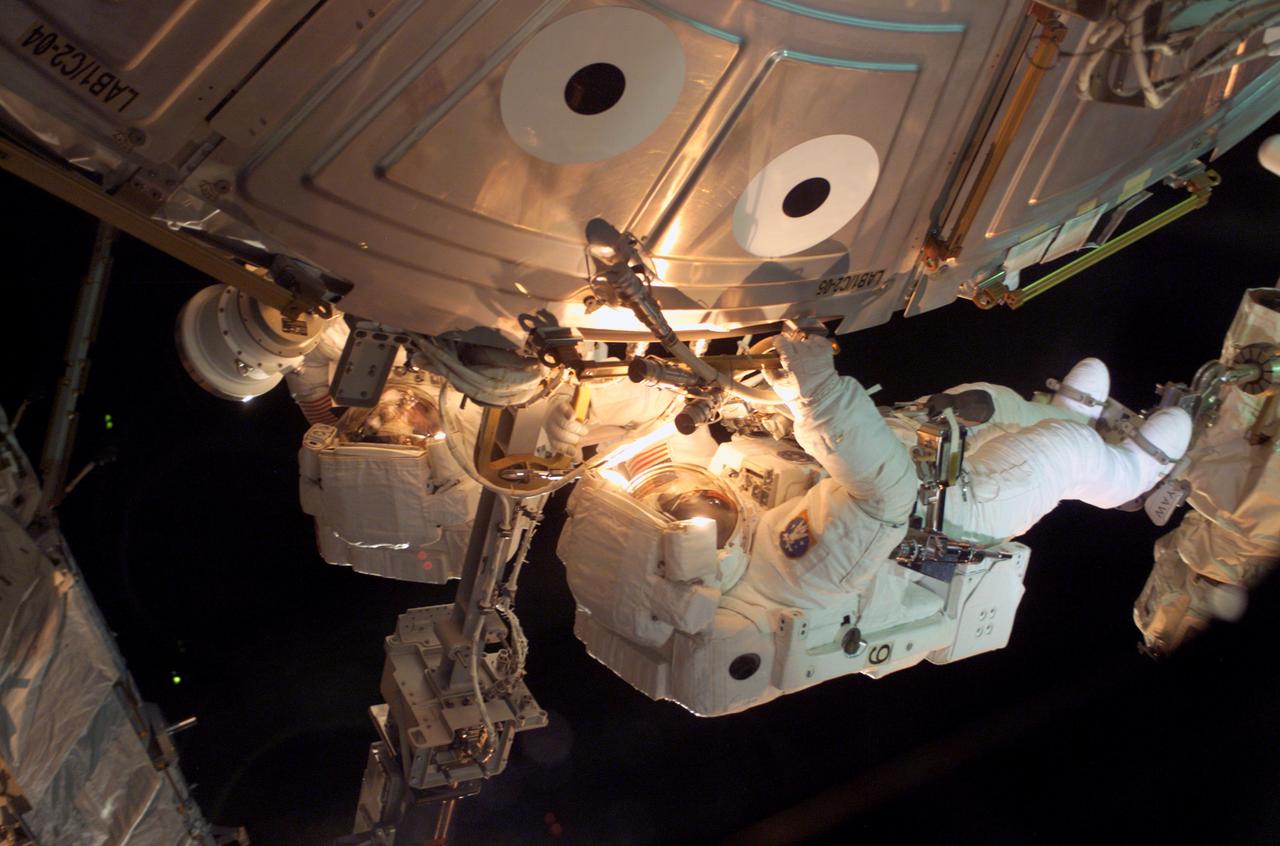
STS112-E-05295 (12 October 2002) --- Astronaut Piers J. Sellers uses both a handrail on the Destiny Laboratory and a foot restraint on the Space Station Remote Manipulator System or Canadarm2 to remain stationary while performing work at the end of the STS-112 mission's second spacewalk.
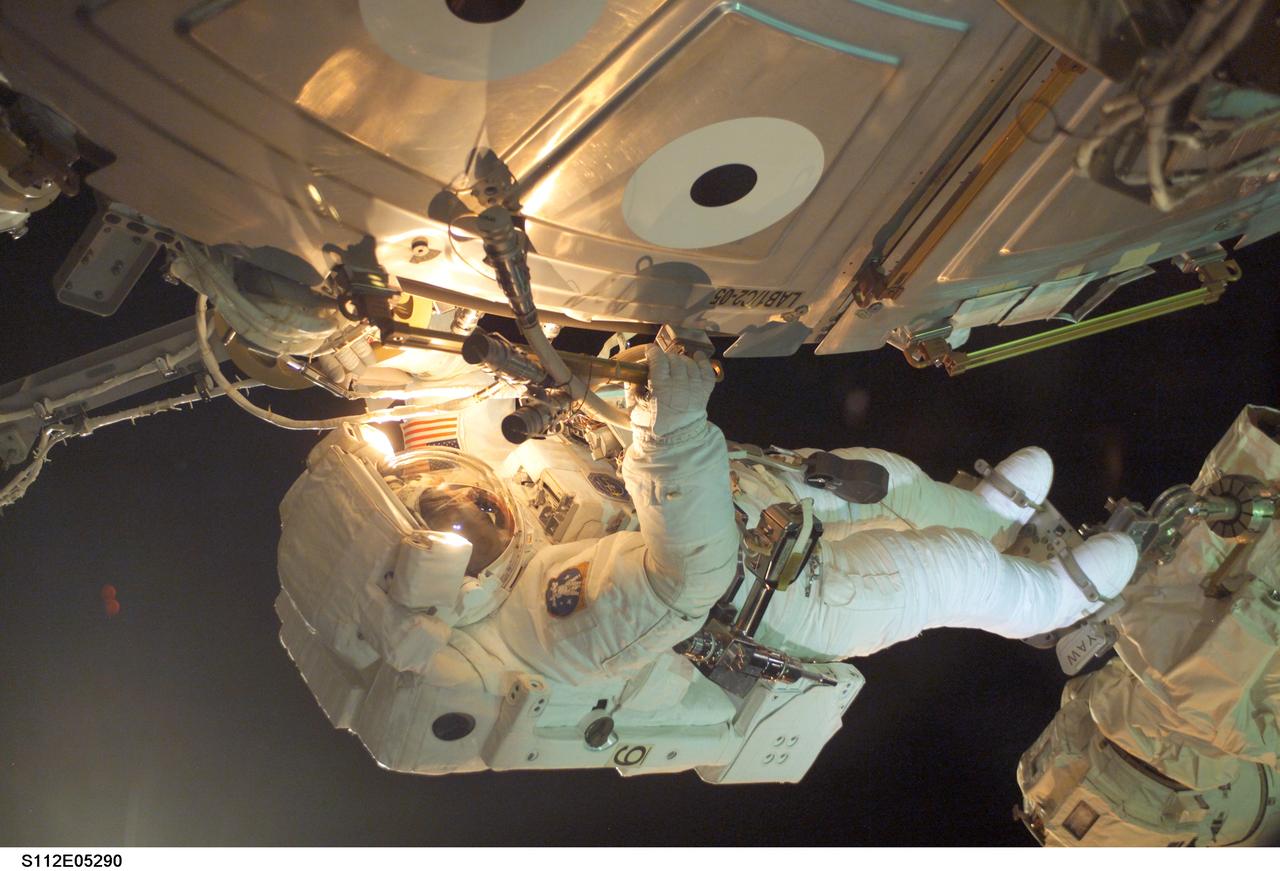
STS112-E-5290 (12 October 2002) --- With the aid of artificial lighting, astronaut Piers J. Sellers uses both a handrail on the Destiny Laboratory and a foot restraint on the Space Station Remote Manipulator System or Canadarm2 to remain stationary while performing work at the end of the STS-112 mission's second spacewalk.
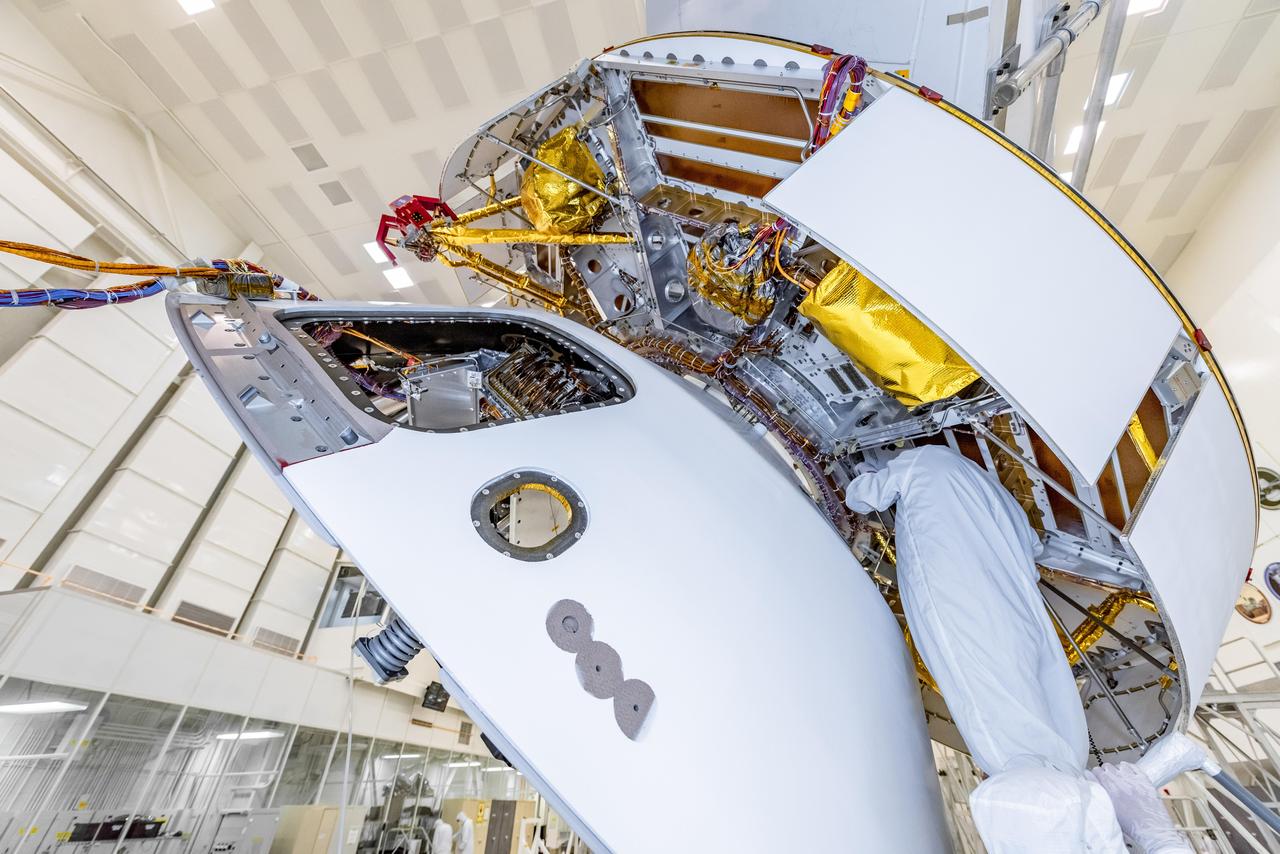
A member of NASA's Mars 2020 project checks connections between the spacecraft's back shell and cruise stage. The image was taken on March 26, 2019, in the Spacecraft Assembly Facility's High Bay 1 clean room at NASA's Jet Propulsion Laboratory, in Pasadena, California. During the mission's voyage to Mars, the cruise stage houses the hardware that steers and provides power to the spacecraft. The back shell, along with the heatshield (not pictured), protects the 2020 rover and the sky crane landing system during Mars atmospheric entry. https://photojournal.jpl.nasa.gov/catalog/PIA23163
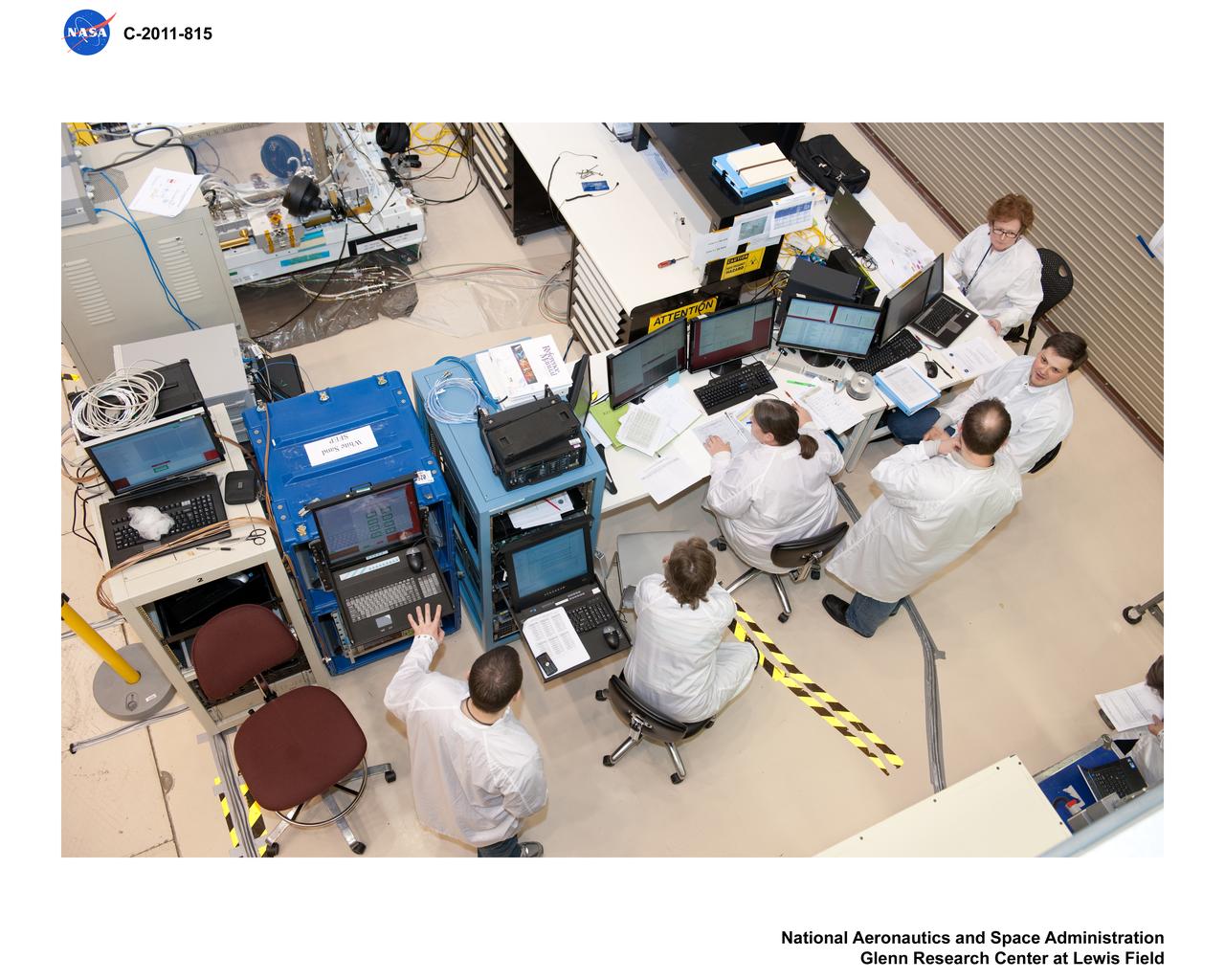
Communications, Navigation, and Network Reconfigurable Test-bed, CoNNeCT
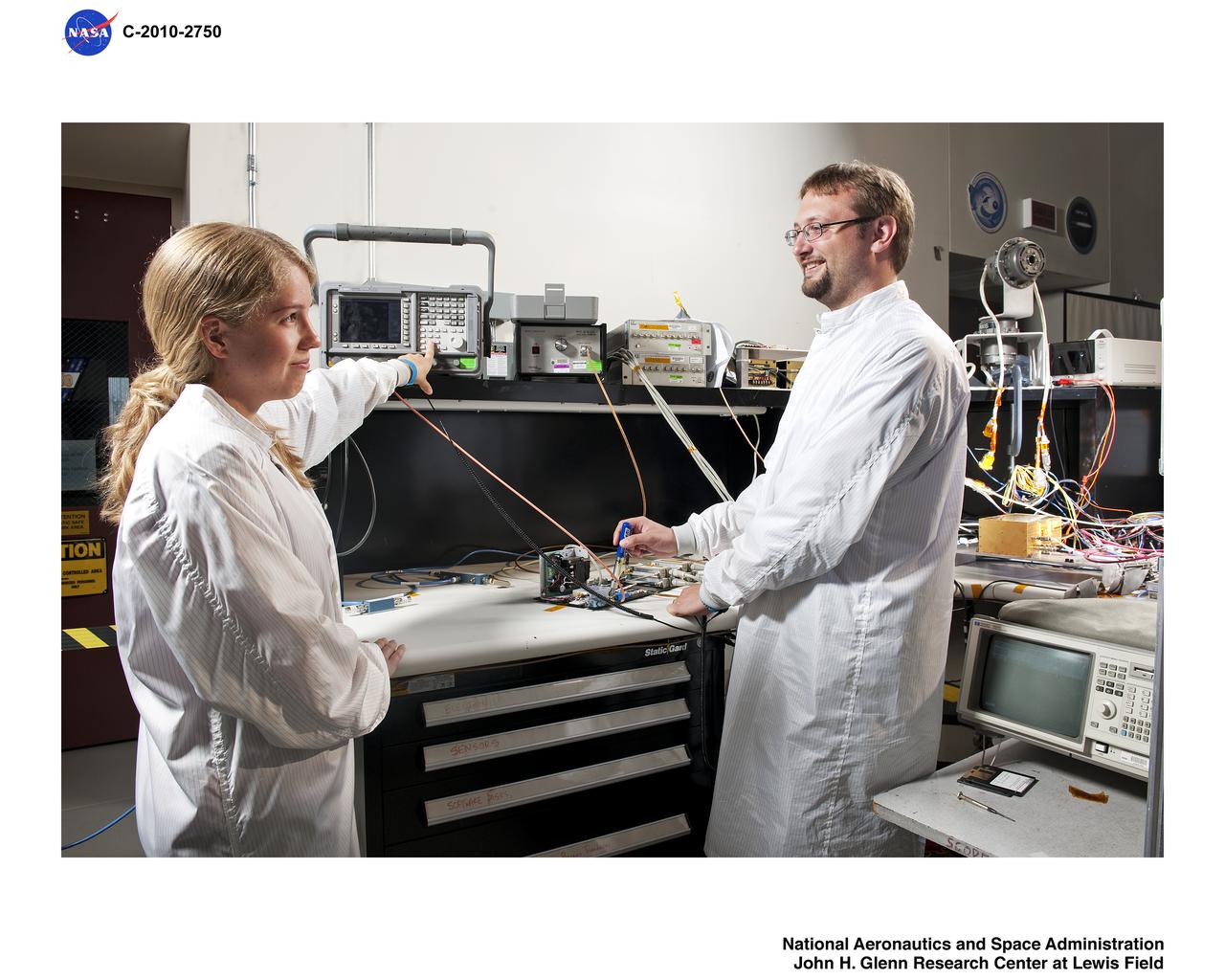
Communications, Navigation, and Networking Reconfigurable Test-bed (CoNNeCT)
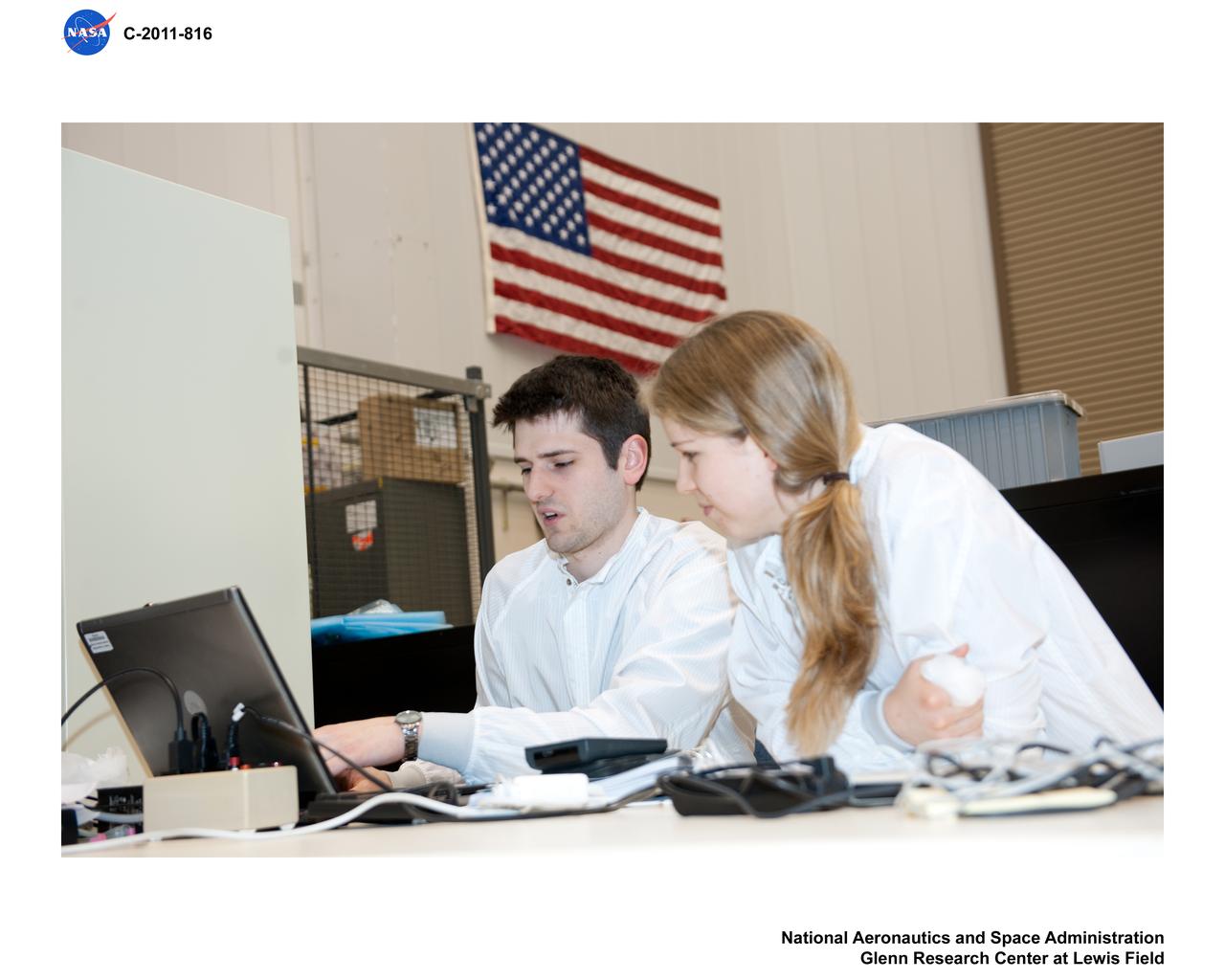
Communications, Navigation, and Network Reconfigurable Test-bed, CoNNeCT
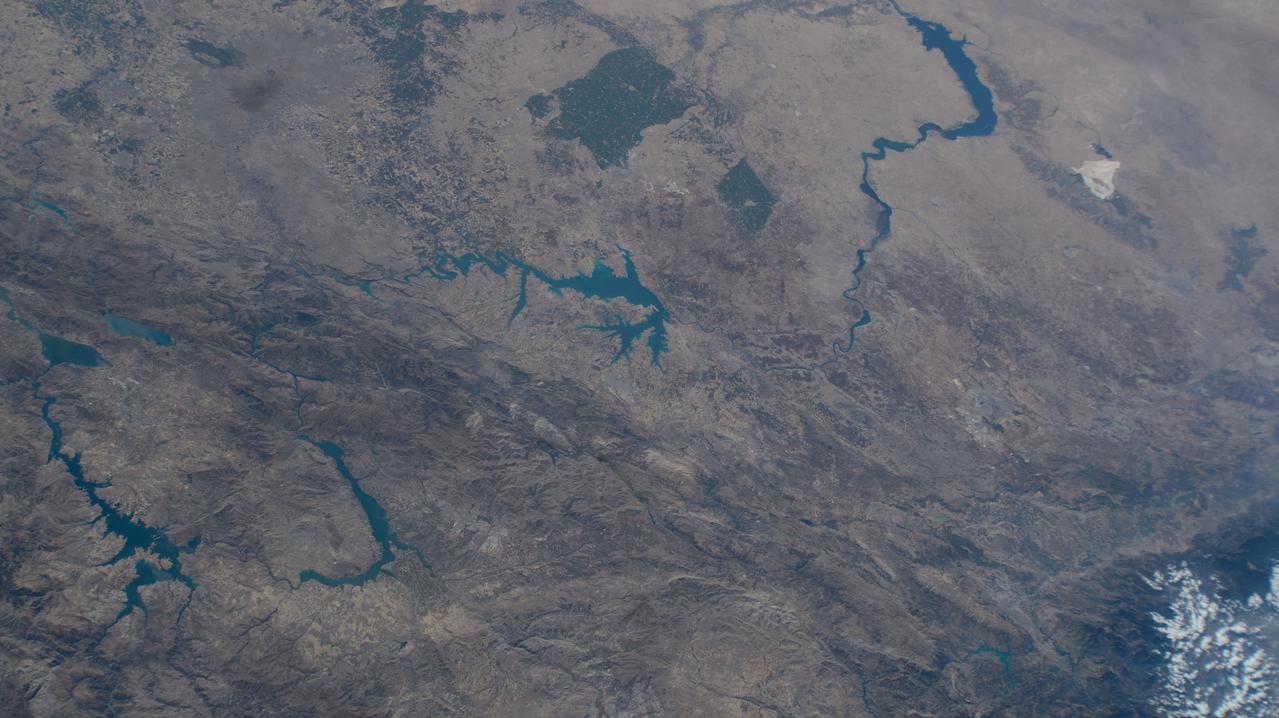
iss071e462180 (Aug. 9, 2024) --- Lake Assad in Syria (upper right) and lakes created by hydroelectric dams in Turkiye, all along the Euphrates River, are pictured from the International Space Station as it orbited 263 miles above the Turkish nation that connects Europe with Asia.
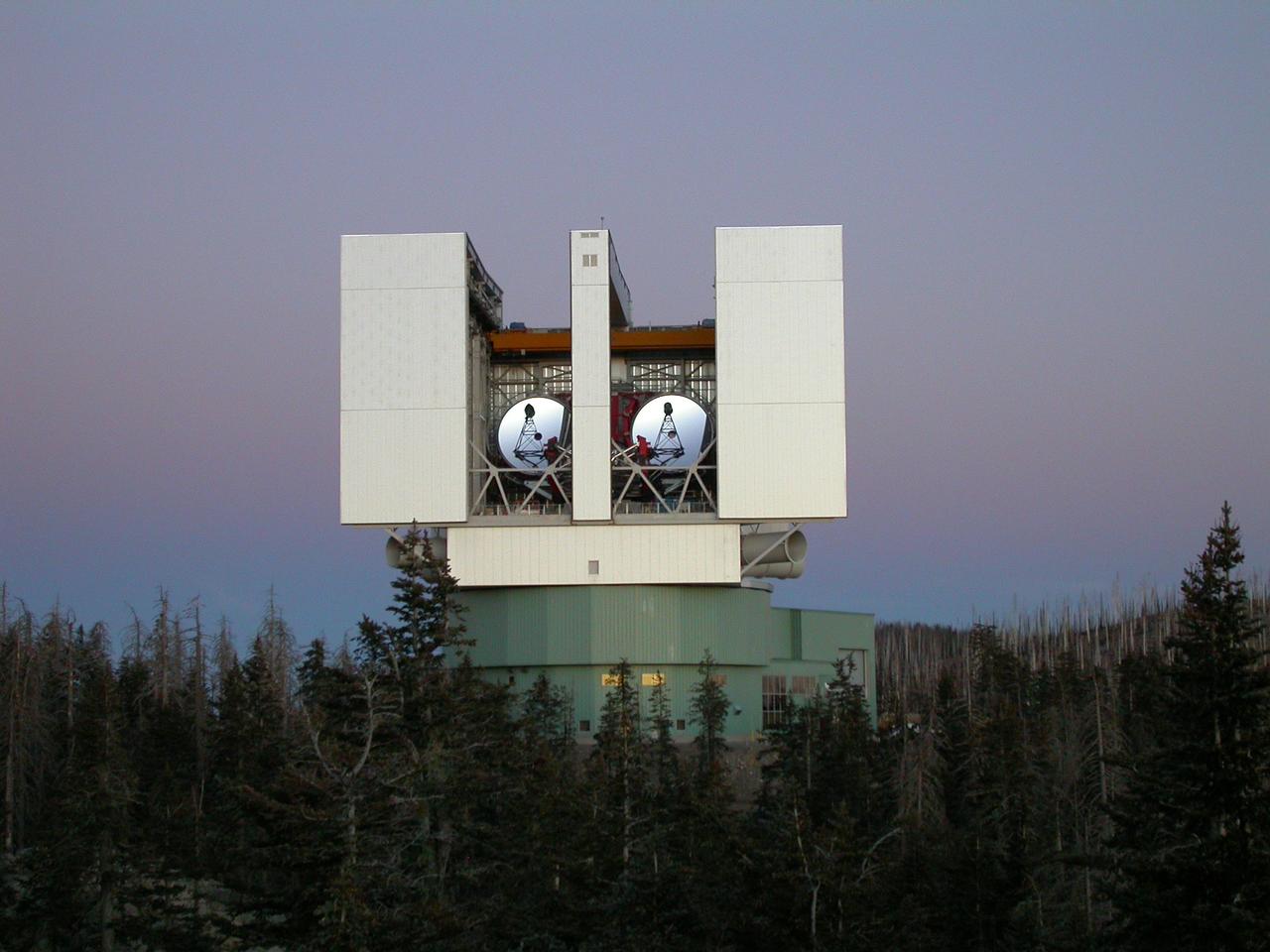
The Large Binocular Telescope Interferometer, or LBTI, is a ground-based instrument connecting two 8-meter class telescopes on Mount Graham in Arizona to form the largest single-mount telescope in the world. The interferometer is designed to detect and study stars and planets outside our solar system. https://photojournal.jpl.nasa.gov/catalog/PIA22354
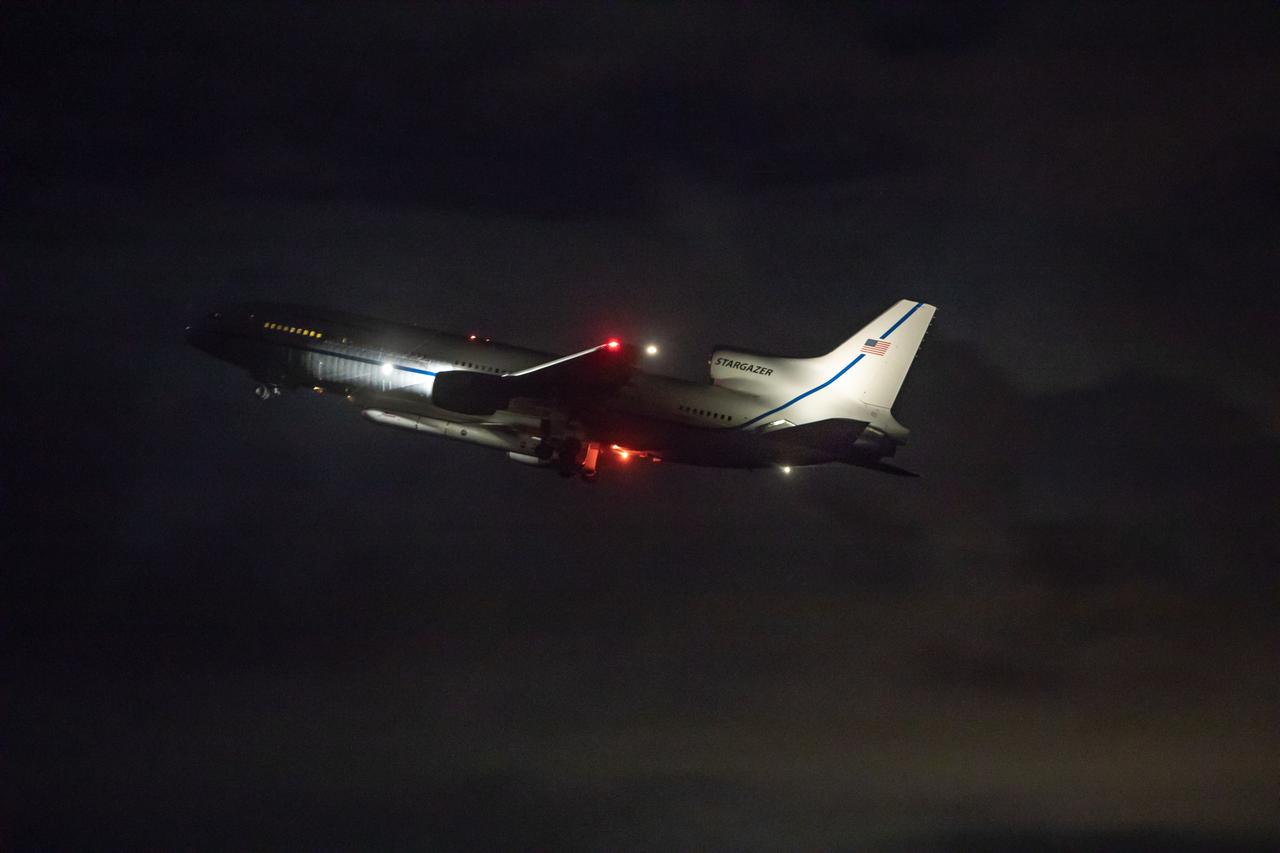
Northrop Grumman’s L-1011 Stargazer aircraft, with the company’s Pegasus XL rocket attached beneath, takes off from the Skid Strip runway at Cape Canaveral Air Force Station in Florida on Oct. 10, 2019. NASA's Ionospheric Connection Explorer (ICON) is secured inside the rocket's payload fairing. The air-launched Pegasus XL was released from the aircraft at 9:59 p.m. EDT to start ICON’s journey to space. The explorer will study the frontier of space - the dynamic zone high in Earth's atmosphere where terrestrial weather from below meets space weather above.

Members of the launch team monitor the launch of NASA’s Ionospheric Connection Explorer (ICON) satellite inside Hangar AE at Cape Canaveral Air Force Station (CCAFS) in Florida. The Northrop Grumman Pegasus XL rocket carrying ICON was released from the company’s L-1011 Stargazer aircraft at 9:59 p.m. EDT on Oct. 10, 2019, over the Atlantic Ocean about 50 miles from Daytona Beach following takeoff from CCAFS. ICON will spend two years studying the Earth’s ionosphere – the dynamic zone in our atmosphere where terrestrial weather from below meets space weather from above. The launch was managed by the agency’s Launch Services Program.
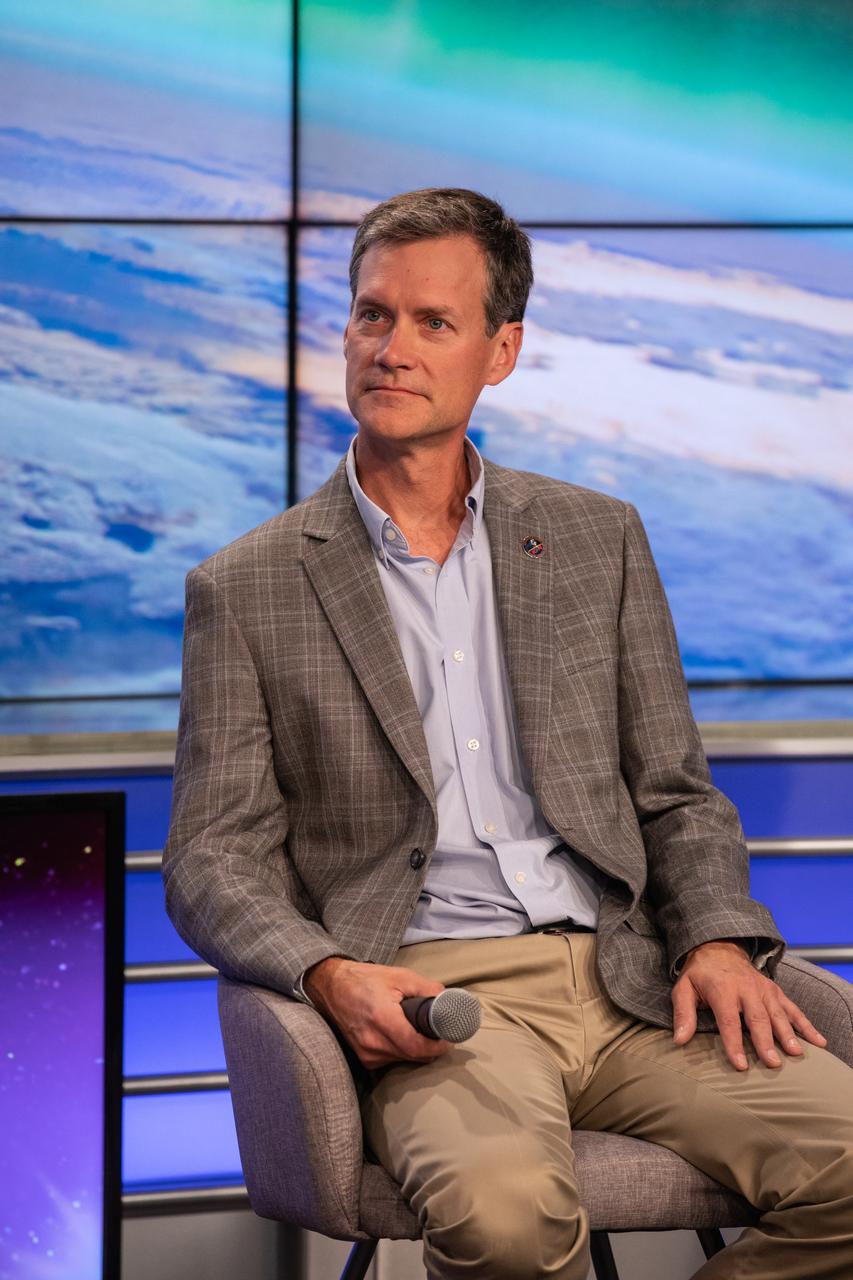
Thomas Immel of the Space Sciences Laboratory at the University of California Berkeley speaks to news media during a prelaunch mission briefing for NASA’s Ionospheric Connection Explorer (ICON), on Oct. 8, 2019, in the News Center auditorium at the agency’s Kennedy Space Center in Florida. Immel is ICON’s principal investigator. ICON is targeted to launch from Cape Canaveral Air Force Station in Florida on Oct. 9, 2019, aboard a Northrop Grumman Pegasus XL rocket carried aloft by the company’s Stargazer L-1011 aircraft. The explorer will study the frontier of space - the dynamic zone high in Earth's atmosphere where terrestrial weather from below meets space weather above.
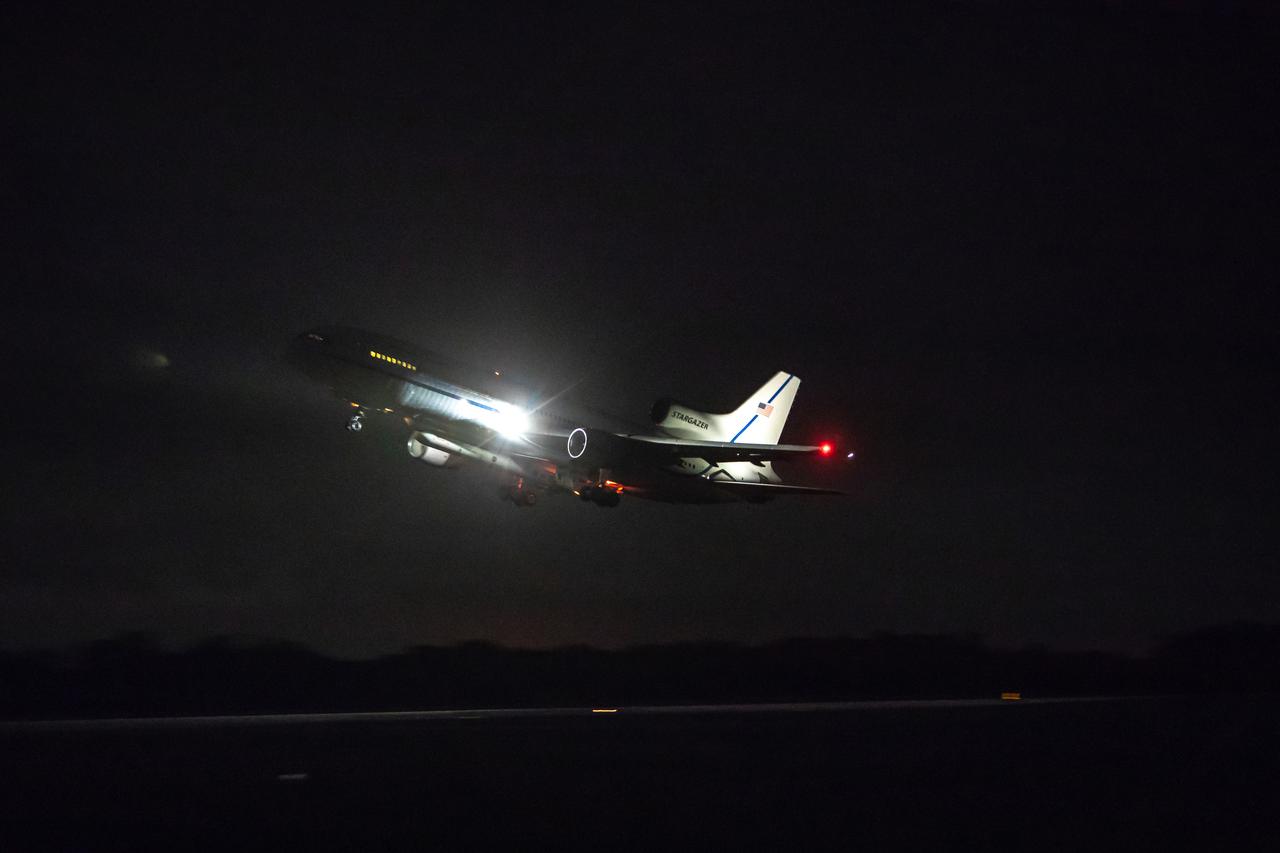
Northrop Grumman’s L-1011 Stargazer aircraft, with the company’s Pegasus XL rocket attached beneath, takes off from the Skid Strip runway at Cape Canaveral Air Force Station in Florida on Oct. 10, 2019. NASA's Ionospheric Connection Explorer (ICON) is secured inside the rocket's payload fairing. The air-launched Pegasus XL was released from the aircraft at 9:59 p.m. EDT to start ICON’s journey to space. The explorer will study the frontier of space - the dynamic zone high in Earth's atmosphere where terrestrial weather from below meets space weather above.

Karen Fox of NASA Communications moderates a prelaunch mission briefing for NASA’s Ionospheric Connection Explorer (ICON), on Oct. 8, 2019, in the News Center auditorium at the agency’s Kennedy Space Center in Florida. ICON is targeted to launch from Cape Canaveral Air Force Station in Florida on Oct. 9, 2019, aboard a Northrop Grumman Pegasus XL rocket carried aloft by the company’s Stargazer L-1011 aircraft. The explorer will study the frontier of space - the dynamic zone high in Earth's atmosphere where terrestrial weather from below meets space weather above.
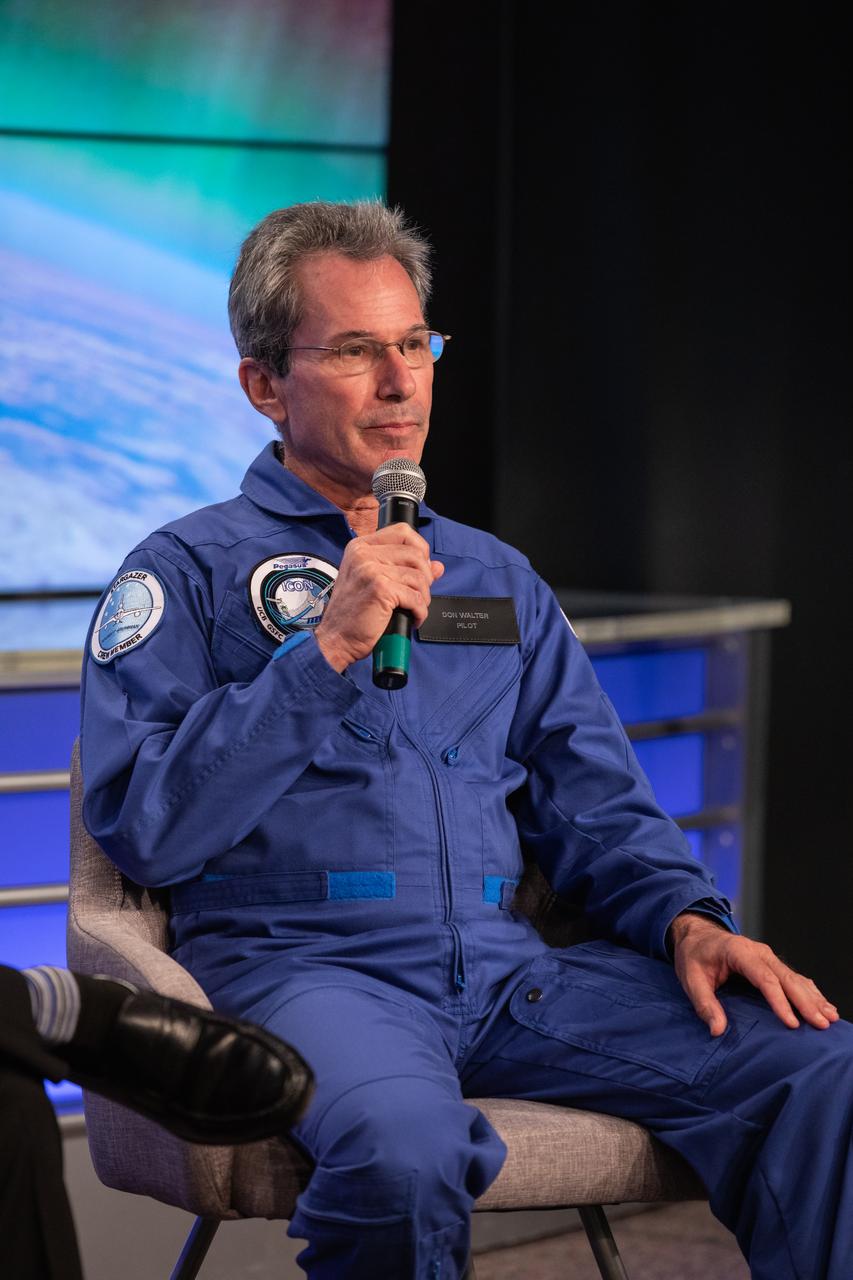
Don Walters, chief pilot of the L-1011 Stargazer aircraft for Northrop Grumman Innovation Systems, speaks to news media during a prelaunch mission briefing for NASA’s Ionospheric Connection Explorer (ICON), on Oct. 8, 2019, in the News Center auditorium at the agency’s Kennedy Space Center in Florida. ICON is targeted to launch from Cape Canaveral Air Force Station in Florida on Oct. 9, 2019, aboard a Northrop Grumman Pegasus XL rocket carried aloft by the company’s Stargazer L-1011 aircraft. The explorer will study the frontier of space - the dynamic zone high in Earth's atmosphere where terrestrial weather from below meets space weather above.

A member of the launch team monitors the launch of NASA’s Ionospheric Connection Explorer (ICON) satellite inside Hangar AE at Cape Canaveral Air Force Station (CCAFS) in Florida. The Northrop Grumman Pegasus XL rocket carrying ICON was released from the company’s L-1011 Stargazer aircraft at 9:59 p.m. EDT on Oct. 10, 2019, over the Atlantic Ocean about 50 miles from Daytona Beach following takeoff from CCAFS. ICON will spend two years studying the Earth’s ionosphere – the dynamic zone in our atmosphere where terrestrial weather from below meets space weather from above. The launch was managed by the agency’s Launch Services Program.
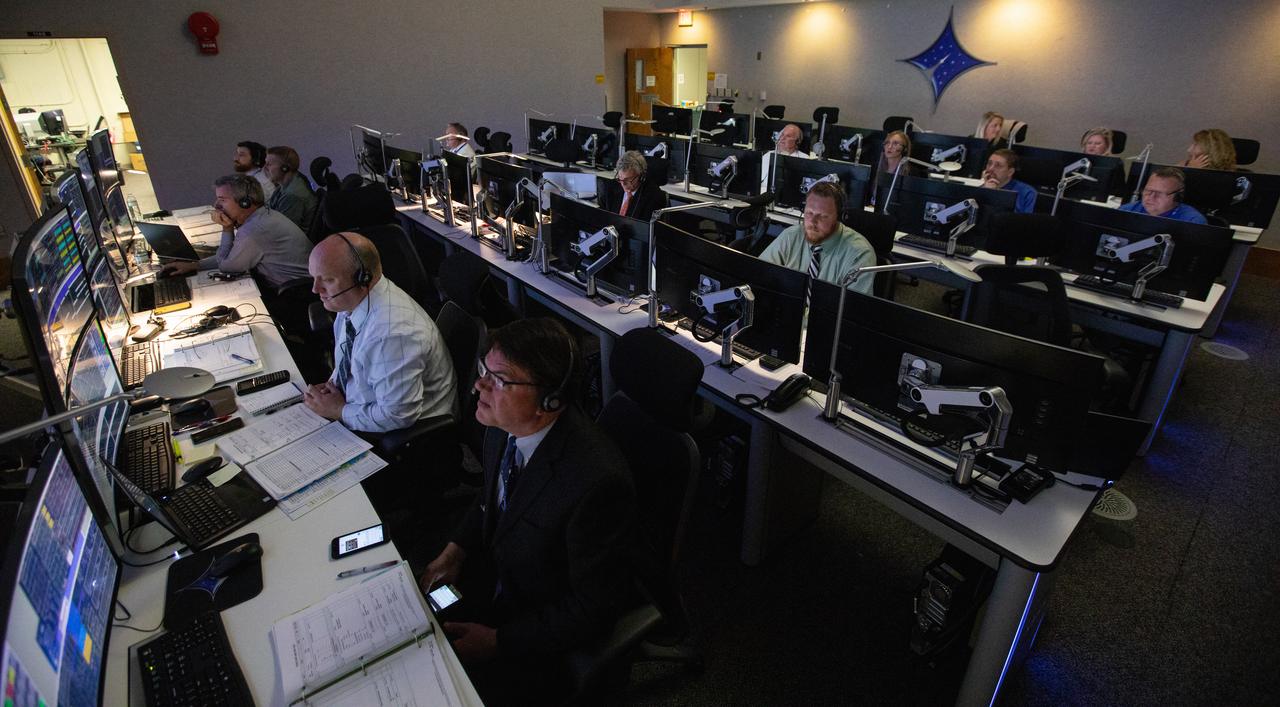
Members of the launch team monitor the launch of NASA’s Ionospheric Connection Explorer (ICON) satellite inside Hangar AE at Cape Canaveral Air Force Station (CCAFS) in Florida. The Northrop Grumman Pegasus XL rocket carrying ICON was released from the company’s L-1011 Stargazer aircraft at 9:59 p.m. EDT on Oct. 10, 2019, over the Atlantic Ocean about 50 miles from Daytona Beach following takeoff from CCAFS. ICON will spend two years studying the Earth’s ionosphere – the dynamic zone in our atmosphere where terrestrial weather from below meets space weather from above. The launch was managed by the agency’s Launch Services Program.
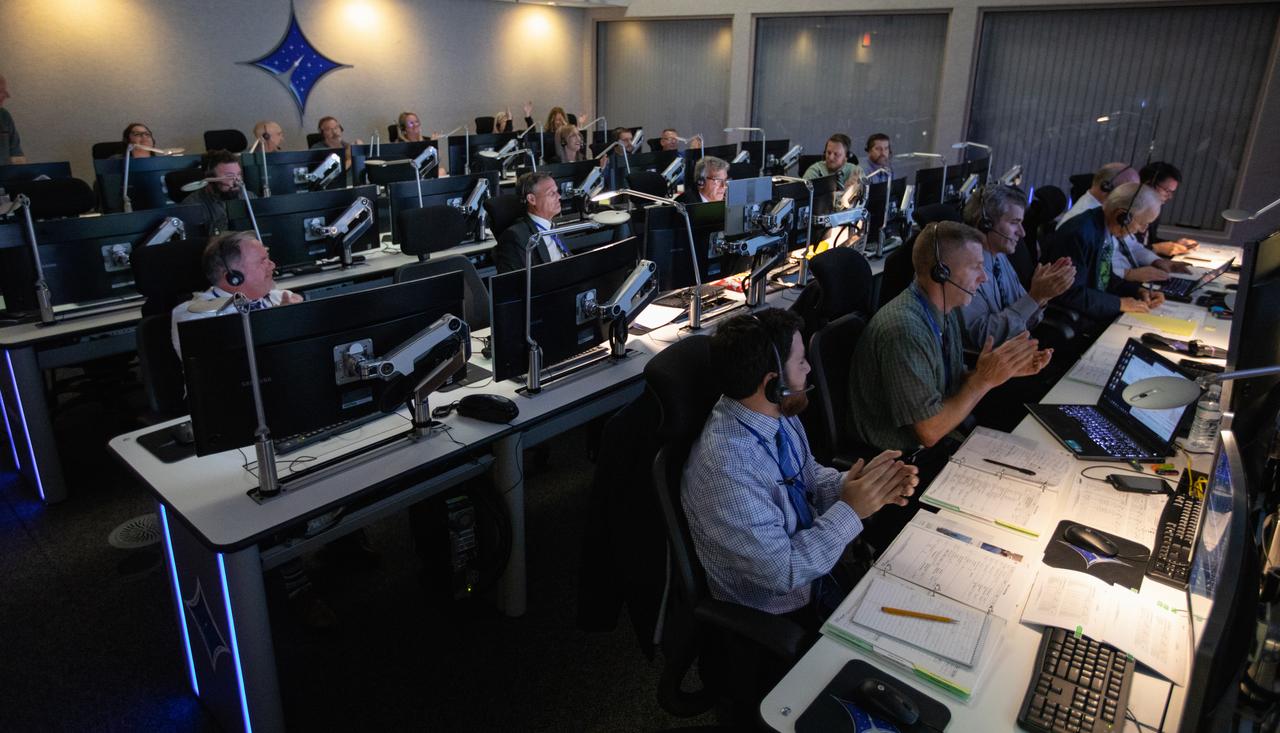
Inside Hangar AE at Cape Canaveral Air Force Station (CCAFS), members of the launch team applaud the successful launch of NASA’s Ionospheric Connection Explorer (ICON) satellite on Oct. 10, 2019. The Northrop Grumman Pegasus XL rocket carrying ICON was released from the company’s L-1011 Stargazer aircraft at 9:59 p.m. EDT over the Atlantic Ocean about 50 miles from Daytona Beach, Florida, following takeoff from CCAFS. ICON will spend two years studying the Earth’s ionosphere – the dynamic zone in our atmosphere where terrestrial weather from below meets space weather from above. The launch was managed by the agency’s Launch Services Program.

Members of the launch team monitor the launch of NASA’s Ionospheric Connection Explorer (ICON) satellite inside Hangar AE at Cape Canaveral Air Force Station (CCAFS) in Florida. The Northrop Grumman Pegasus XL rocket carrying ICON was released from the company’s L-1011 Stargazer aircraft at 9:59 p.m. EDT on Oct. 10, 2019, over the Atlantic Ocean about 50 miles from Daytona Beach following takeoff from CCAFS. ICON will spend two years studying the Earth’s ionosphere – the dynamic zone in our atmosphere where terrestrial weather from below meets space weather from above. The launch was managed by the agency’s Launch Services Program.

Members of the launch team monitor the launch of NASA’s Ionospheric Connection Explorer (ICON) satellite inside Hangar AE at Cape Canaveral Air Force Station (CCAFS) in Florida. The Northrop Grumman Pegasus XL rocket carrying ICON was released from the company’s L-1011 Stargazer aircraft at 9:59 p.m. EDT on Oct. 10, 2019, over the Atlantic Ocean about 50 miles from Daytona Beach following takeoff from CCAFS. ICON will spend two years studying the Earth’s ionosphere – the dynamic zone in our atmosphere where terrestrial weather from below meets space weather from above. The launch was managed by the agency’s Launch Services Program.
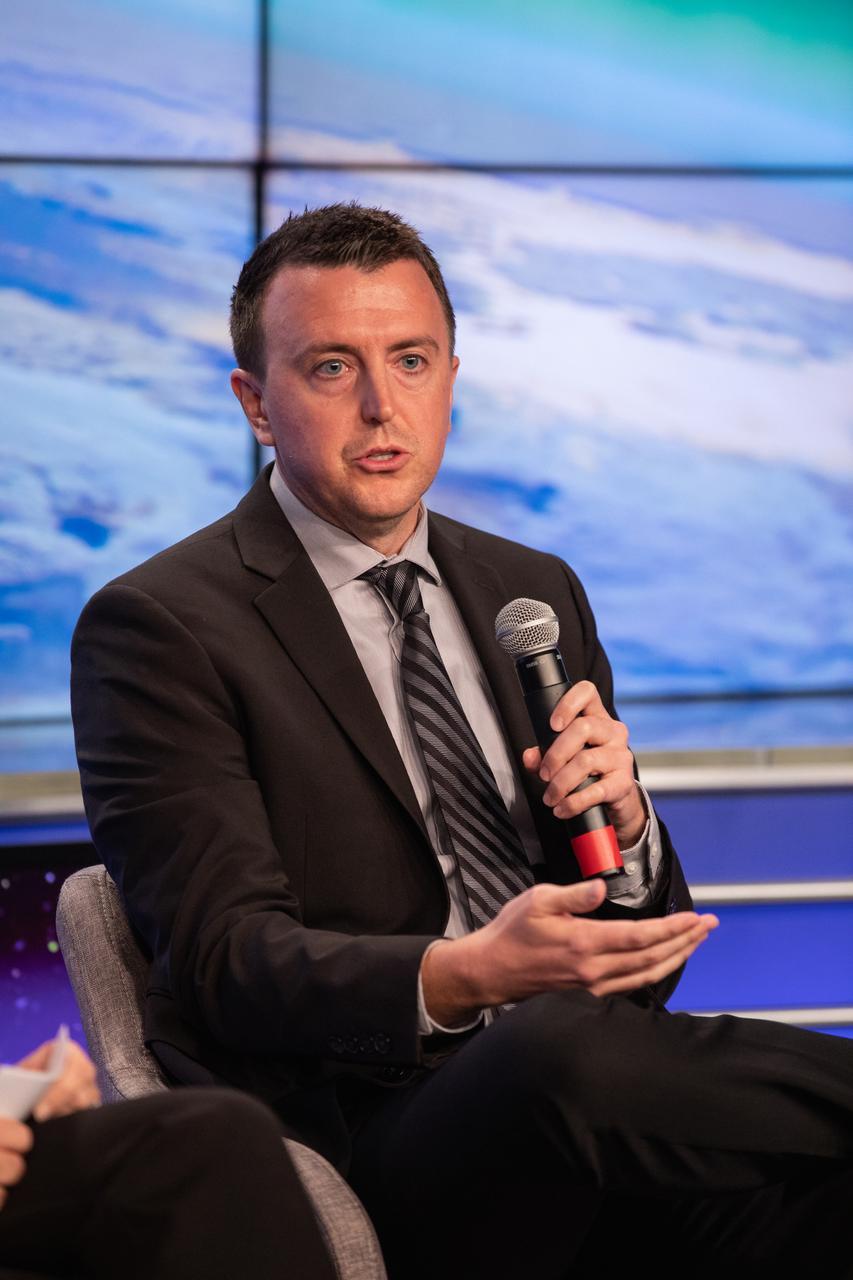
Will Ulrich, launch weather officer with the U.S. Air Force 45th Space Wing, speaks to news media during a prelaunch mission briefing for NASA’s Ionospheric Connection Explorer (ICON), on Oct. 8, 2019, in the News Center auditorium at the agency’s Kennedy Space Center in Florida. ICON is targeted to launch from Cape Canaveral Air Force Station in Florida on Oct. 9, 2019, aboard a Northrop Grumman Pegasus XL rocket carried aloft by the company’s Stargazer L-1011 aircraft. The explorer will study the frontier of space - the dynamic zone high in Earth's atmosphere where terrestrial weather from below meets space weather above.
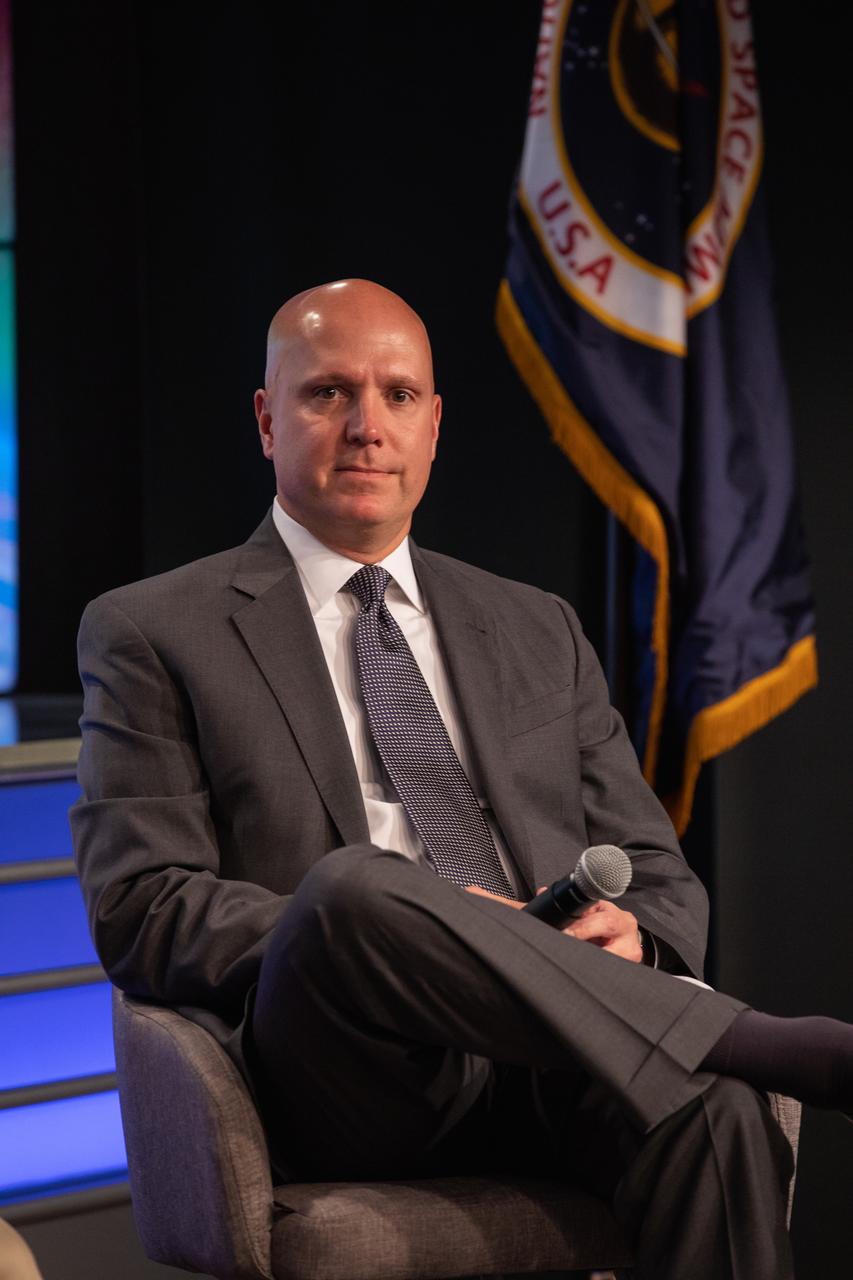
Steve Krein, vice president of civil and commercial space for Northrop Grumman Innovation Systems, speaks to news media during a prelaunch mission briefing for NASA’s Ionospheric Connection Explorer (ICON), on Oct. 8, 2019, in the News Center auditorium at the agency’s Kennedy Space Center in Florida. ICON is targeted to launch from Cape Canaveral Air Force Station in Florida on Oct. 9, 2019, aboard a Northrop Grumman Pegasus XL rocket carried aloft by the company’s Stargazer L-1011 aircraft. The explorer will study the frontier of space - the dynamic zone high in Earth's atmosphere where terrestrial weather from below meets space weather above.
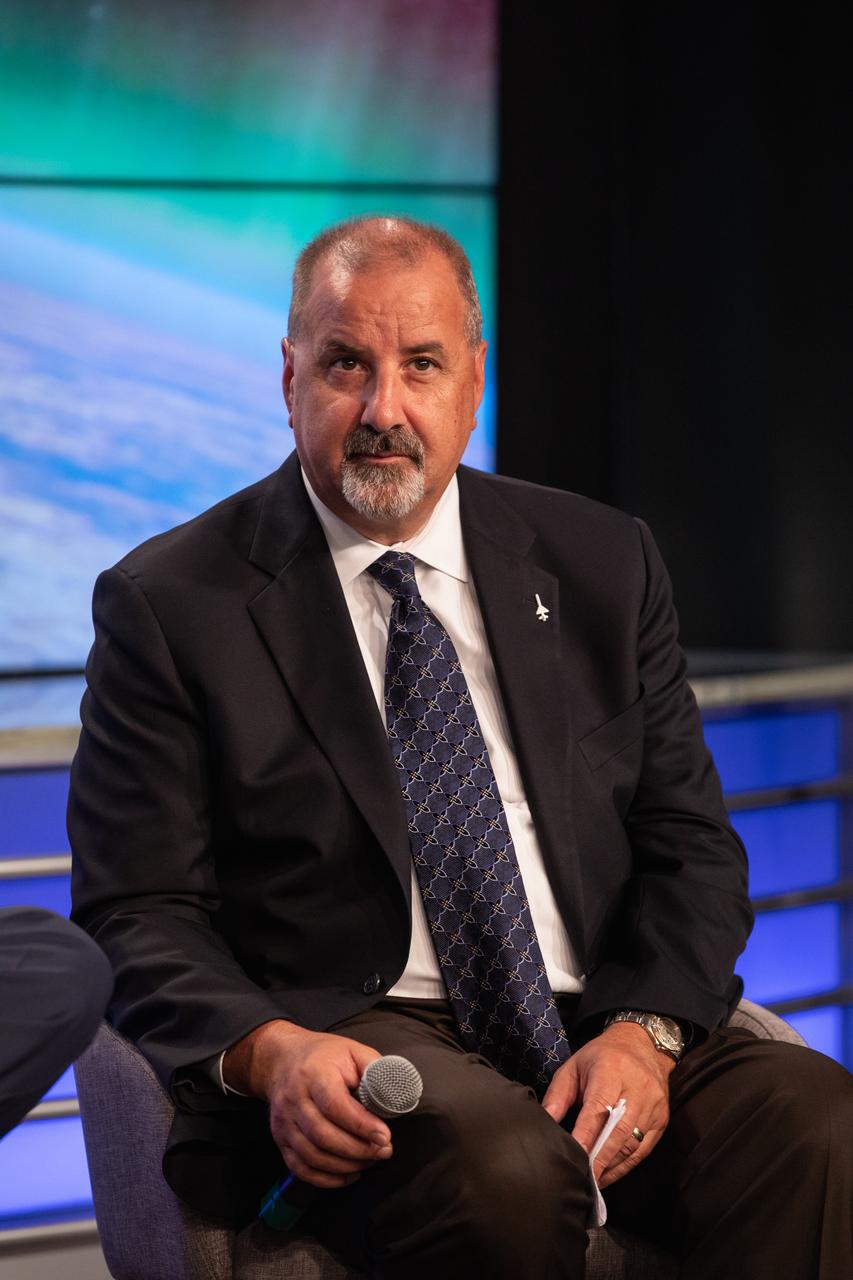
Phil Joyce, vice president of space launch programs for Northrop Grumman Innovation Systems, speaks to news media during a prelaunch mission briefing for NASA’s Ionospheric Connection Explorer (ICON), on Oct. 8, 2019, in the News Center auditorium at the agency’s Kennedy Space Center in Florida. ICON is targeted to launch from Cape Canaveral Air Force Station in Florida on Oct. 9, 2019, aboard a Northrop Grumman Pegasus XL rocket carried aloft by the company’s Stargazer L-1011 aircraft. The explorer will study the frontier of space - the dynamic zone high in Earth's atmosphere where terrestrial weather from below meets space weather above.

Members of the launch team monitor the launch of NASA’s Ionospheric Connection Explorer (ICON) satellite inside Hangar AE at Cape Canaveral Air Force Station (CCAFS) in Florida. The Northrop Grumman Pegasus XL rocket carrying ICON was released from the company’s L-1011 Stargazer aircraft at 9:59 p.m. EDT on Oct. 10, 2019, over the Atlantic Ocean about 50 miles from Daytona Beach following takeoff from CCAFS. ICON will spend two years studying the Earth’s ionosphere – the dynamic zone in our atmosphere where terrestrial weather from below meets space weather from above. The launch was managed by the agency’s Launch Services Program.