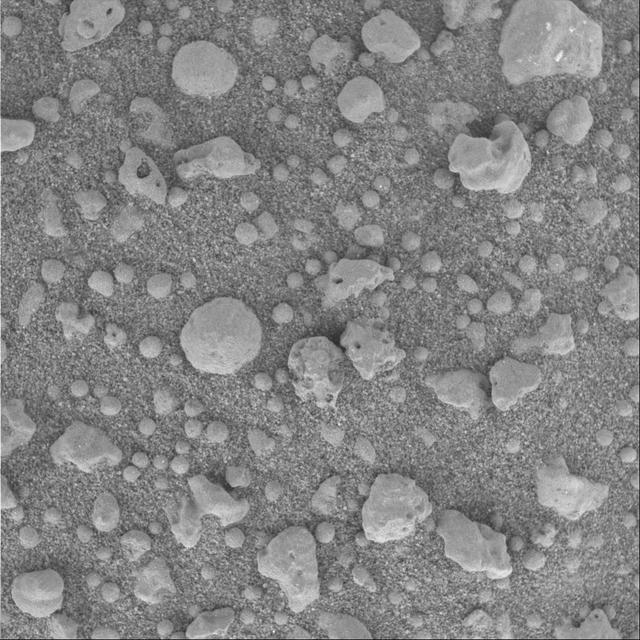
Cookies and Cream Under the Microscope
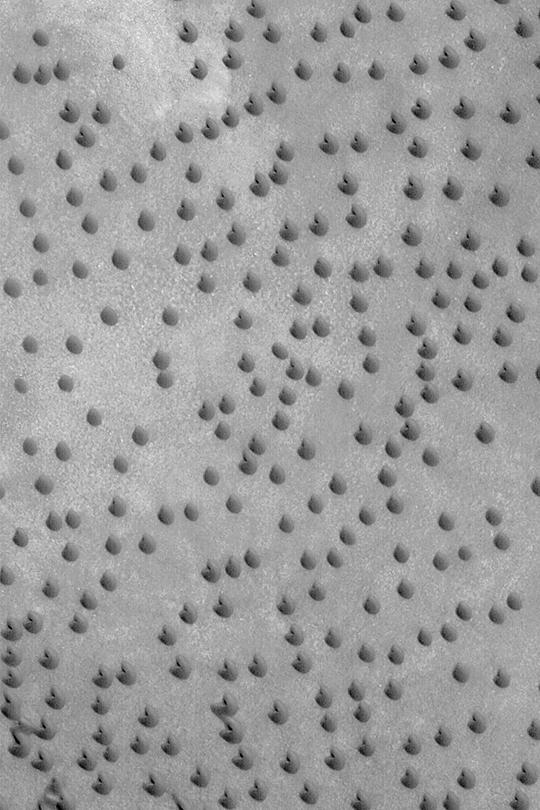
Fortune Cookie Sand Dunes
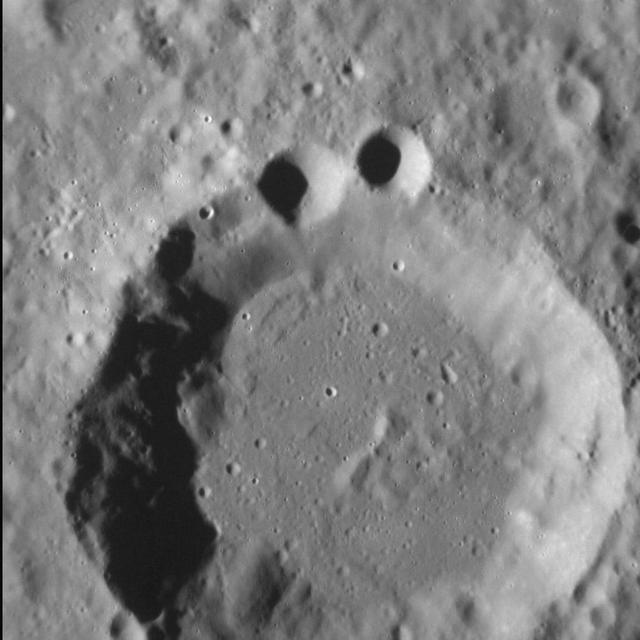
Anyone Else Think This Looks Like the Cookie Monster?
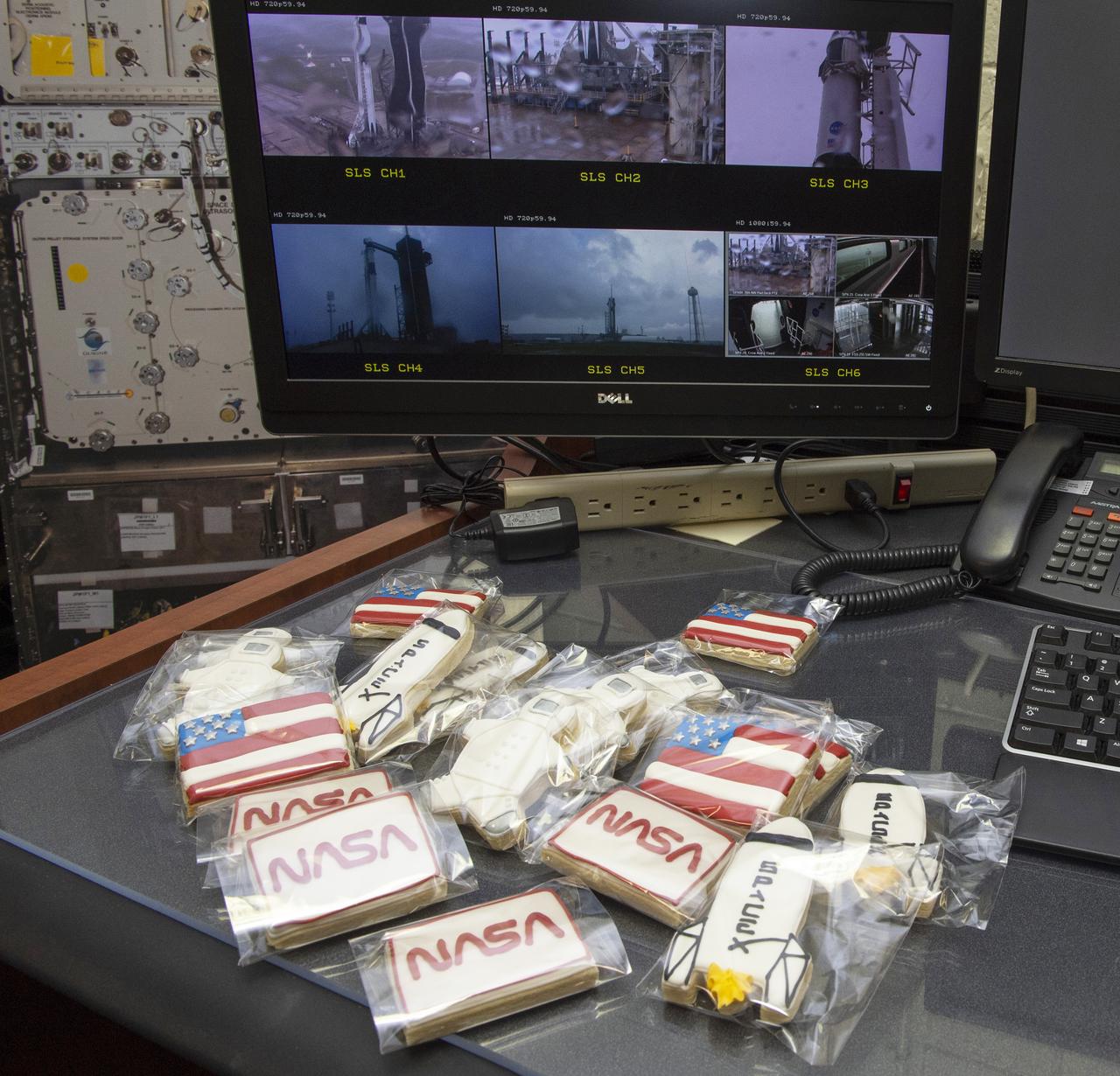
NASA themed cookies for teams at NASA’s Marshall Space Flight Center help monitor launch conditions for the Demo-2 mission from the Huntsville Operations Support Center, HOSC.
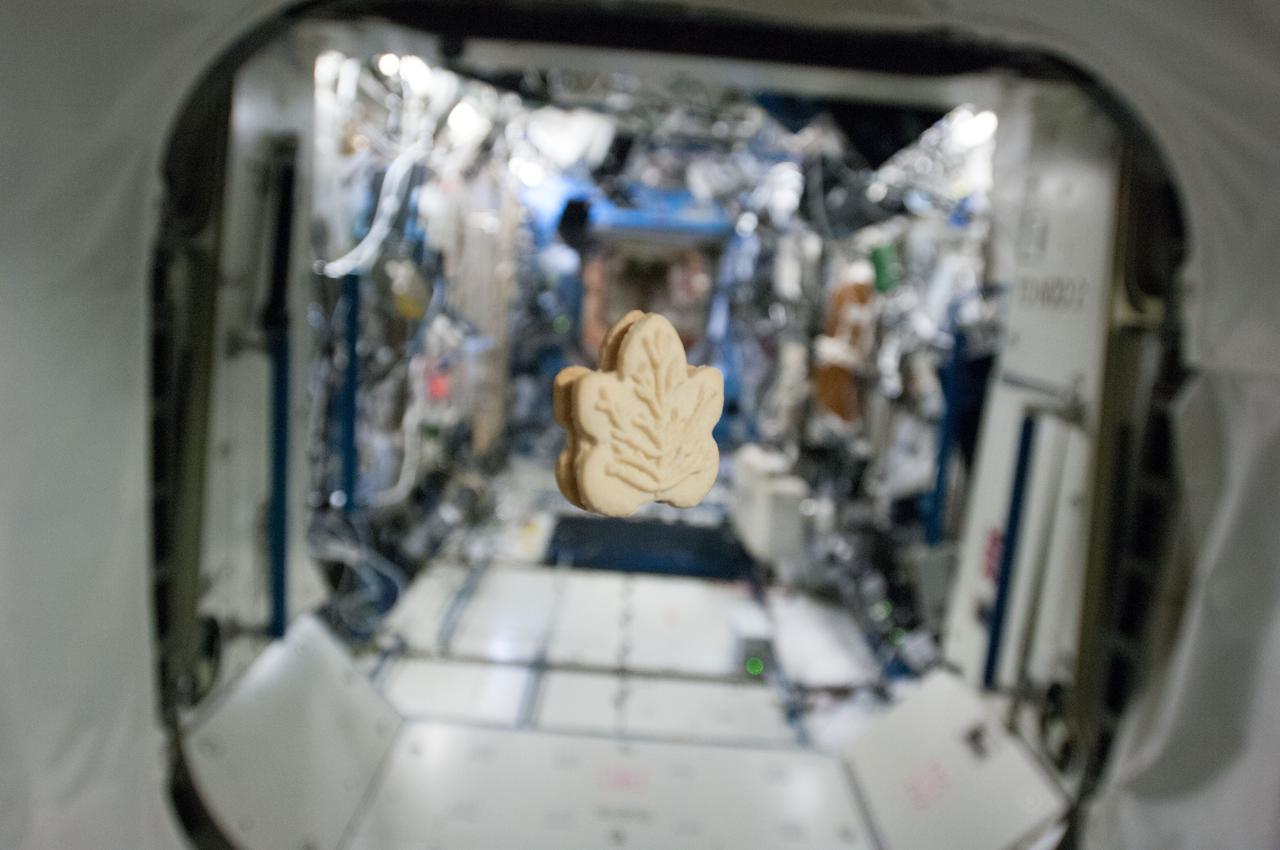
View of a maple cookie floating in the Harmony Node 2. The hatch into the Destiny U.S. Laboratory is in the background. Image was taken during Expedition 35.
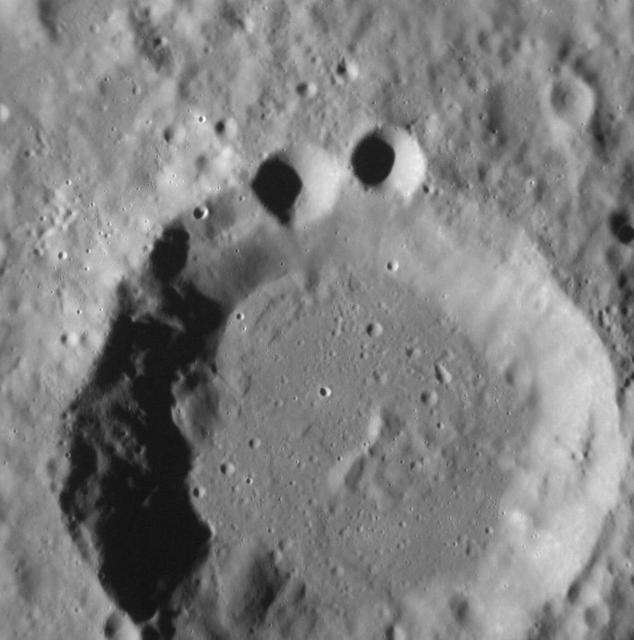
NASA image acquired August 29, 2012 Ok, so maybe it's just me. But the superposition of younger craters on older craters (in this case two smaller craters upon the rim of an older crater) can result in landforms that appear to resemble more familiar shapes to human eyes. More generally, the Law of Superposition allows scientists to determine which surface features pre- and postdate others, leading to a better understanding of the geological history of different regions of Mercury's surface. This image was acquired as a high-resolution targeted observation. Targeted observations are images of a small area on Mercury's surface at resolutions much higher than the 200-meter/pixel morphology base map. It is not possible to cover all of Mercury's surface at this high resolution, but typically several areas of high scientific interest are imaged in this mode each week. The MESSENGER spacecraft is the first ever to orbit the planet Mercury, and the spacecraft's seven scientific instruments and radio science investigation are unraveling the history and evolution of the Solar System's innermost planet. Visit the Why Mercury? section of this website to learn more about the key science questions that the MESSENGER mission is addressing. During the one-year primary mission, MESSENGER acquired 88,746 images and extensive other data sets. MESSENGER is now in a yearlong extended mission, during which plans call for the acquisition of more than 80,000 additional images to support MESSENGER's science goals. Go here to read more about the MESSENGER mission: <a href="http://www.nasa.gov/mission_pages/messenger/main/index.html" rel="nofollow">www.nasa.gov/mission_pages/messenger/main/index.html</a> Credit: NASA/Johns Hopkins University Applied Physics Laboratory/Carnegie Institution of Washington <b><a href="http://www.nasa.gov/audience/formedia/features/MP_Photo_Guidelines.html" rel="nofollow">NASA image use policy.</a></b> <b><a href="http://www.nasa.gov/centers/goddard/home/index.html" rel="nofollow">NASA Goddard Space Flight Center</a></b> enables NASA’s mission through four scientific endeavors: Earth Science, Heliophysics, Solar System Exploration, and Astrophysics. Goddard plays a leading role in NASA’s accomplishments by contributing compelling scientific knowledge to advance the Agency’s mission. <b>Follow us on <a href="http://twitter.com/NASA_GoddardPix" rel="nofollow">Twitter</a></b> <b>Like us on <a href="http://www.facebook.com/pages/Greenbelt-MD/NASA-Goddard/395013845897?ref=tsd" rel="nofollow">Facebook</a></b> <b>Find us on <a href="http://instagrid.me/nasagoddard/?vm=grid" rel="nofollow">Instagram</a></b>
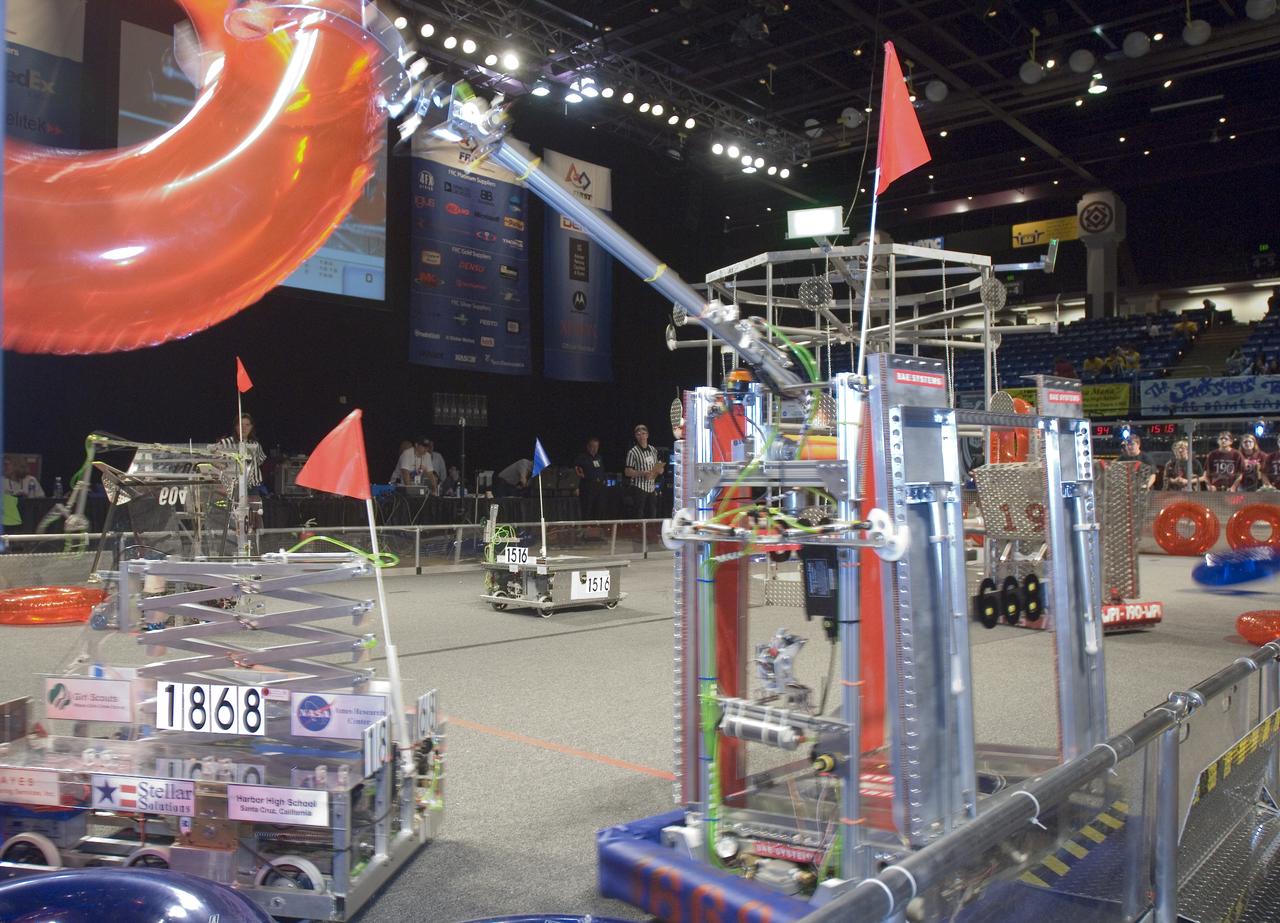
Silicon Valley FIRST Regional Robotics competition: Space Cookies - Battle on! teams 1516 Grizzles, 1868 Space Cookies, 668 The Apes of Wrath
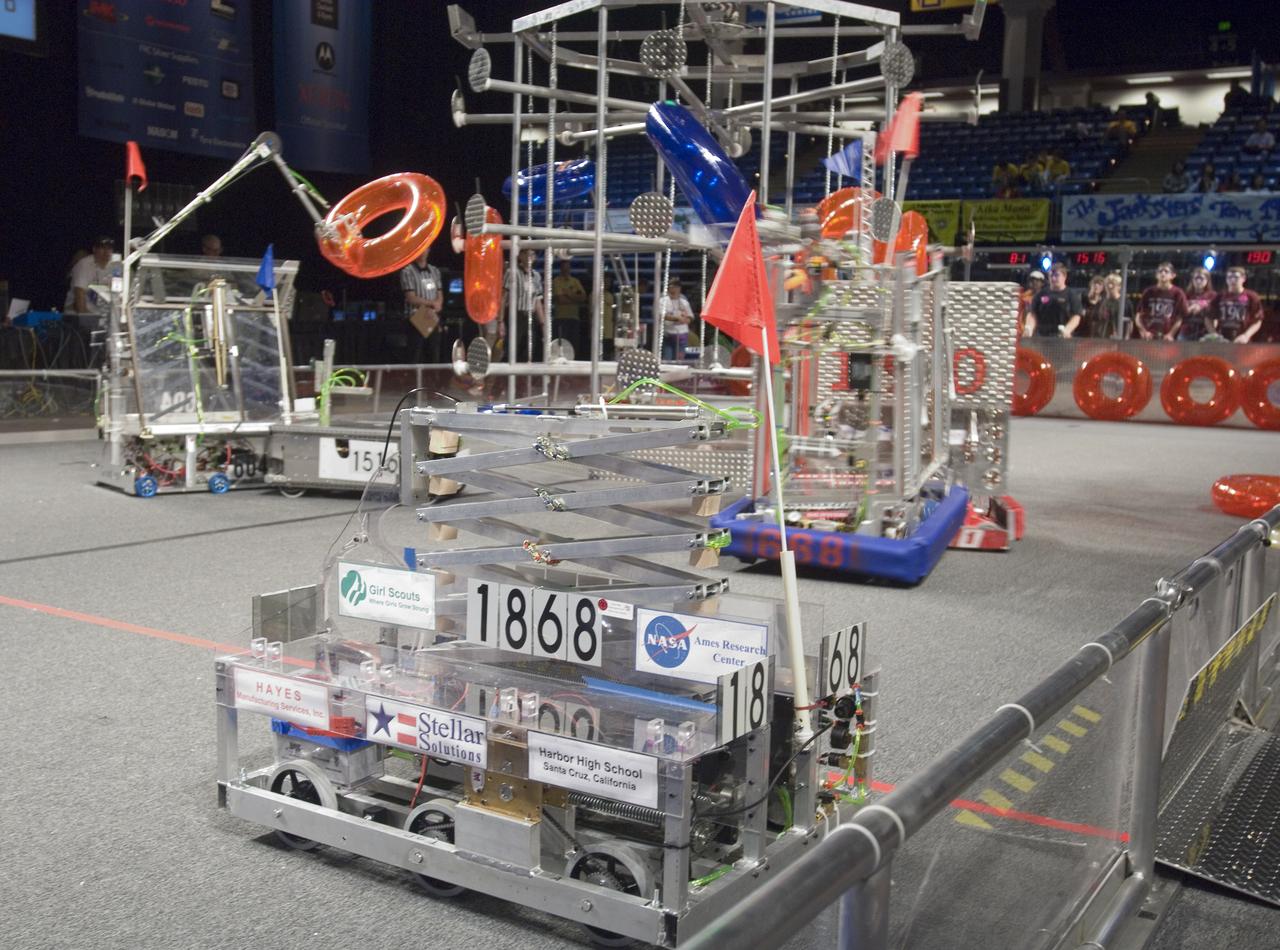
Silicon Valley FIRST Regional Robotics competition: Battle on! teams 1516 Grizzles, 1868 Space Cookies, 668 The Apes of Wrath

Silicon Valley FIRST Regional Robotics competition: Space Cookies - Team 1868 - NASA Ames Research Center & Girl Scouts, Moffett Field, California (CA)
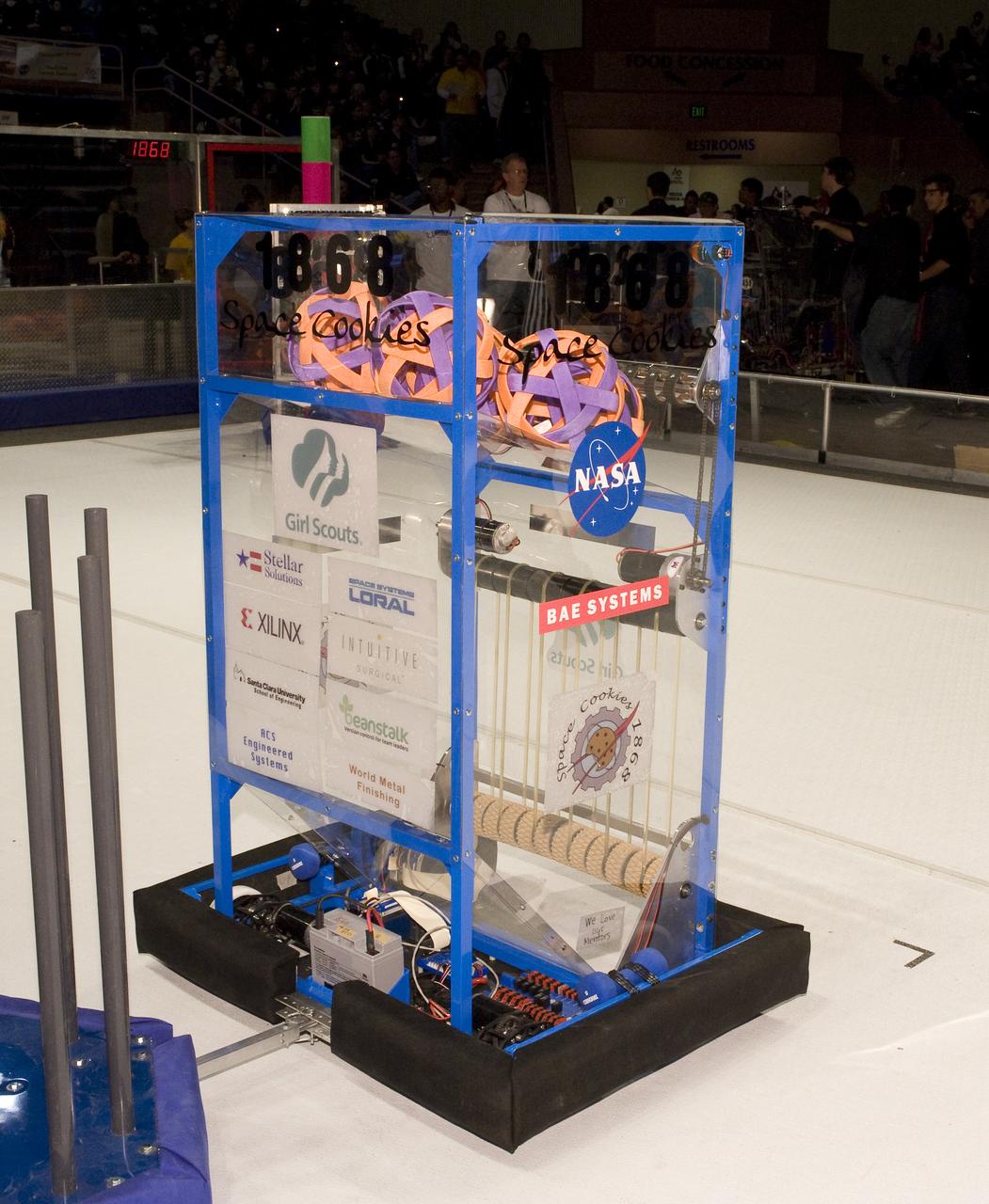
FIRST Robotics Competition 'Lunacy' hosted by NASA at San Jose State University Event Center. For Inspiration and Recognition of Science and Technology let the games begin. Ames Space Cookies team #1868 on the floor
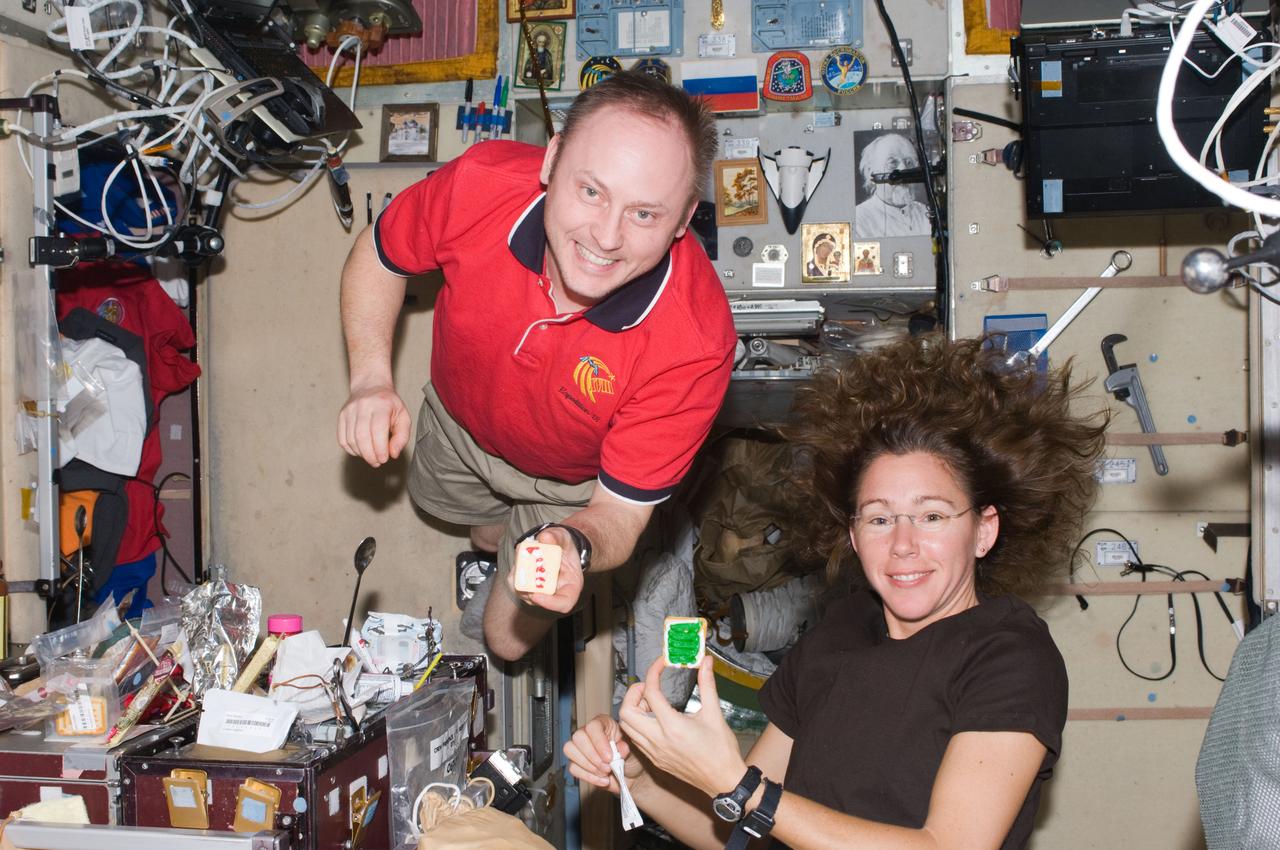
ISS018-E-015394 (25 Dec. 2008) --- Astronauts Michael Fincke, Expedition 18 commander, and Sandra Magnus, flight engineer, hold Christmas cookies while posing for a photo near the galley in the Zvezda Service Module of the International Space Station.
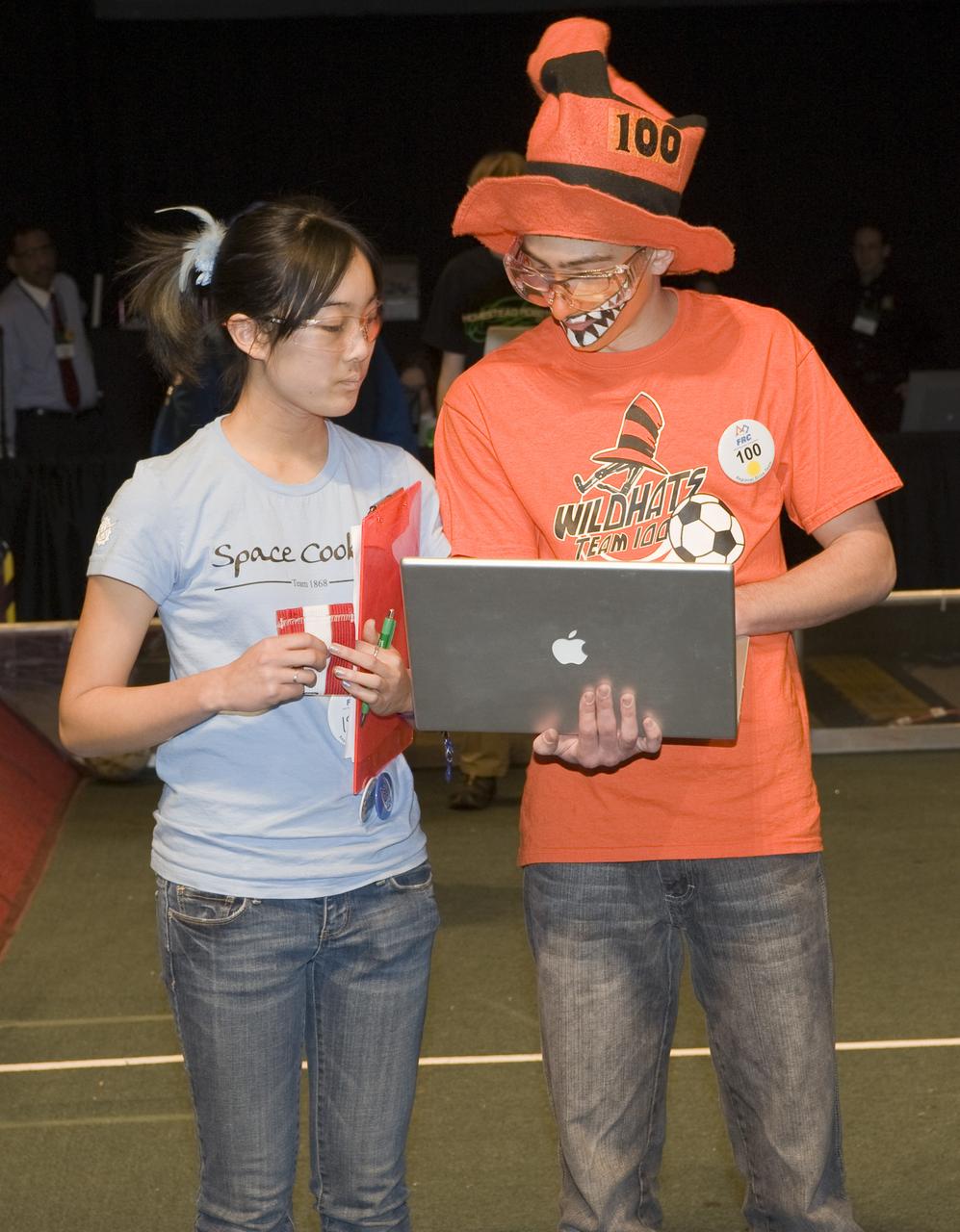
For Inspiration and Recognition of Science and Technology; FIRST Robotics Competition 2010 Silicon Valley Regional held at San Jose State University, San Jose, California NASA Ames Space Cookies Team 1868 and WildHats of Woodside H.S. & Carlmont H. S. & Sequoia H.S & Sequoia H.S. District, CA - Team 100
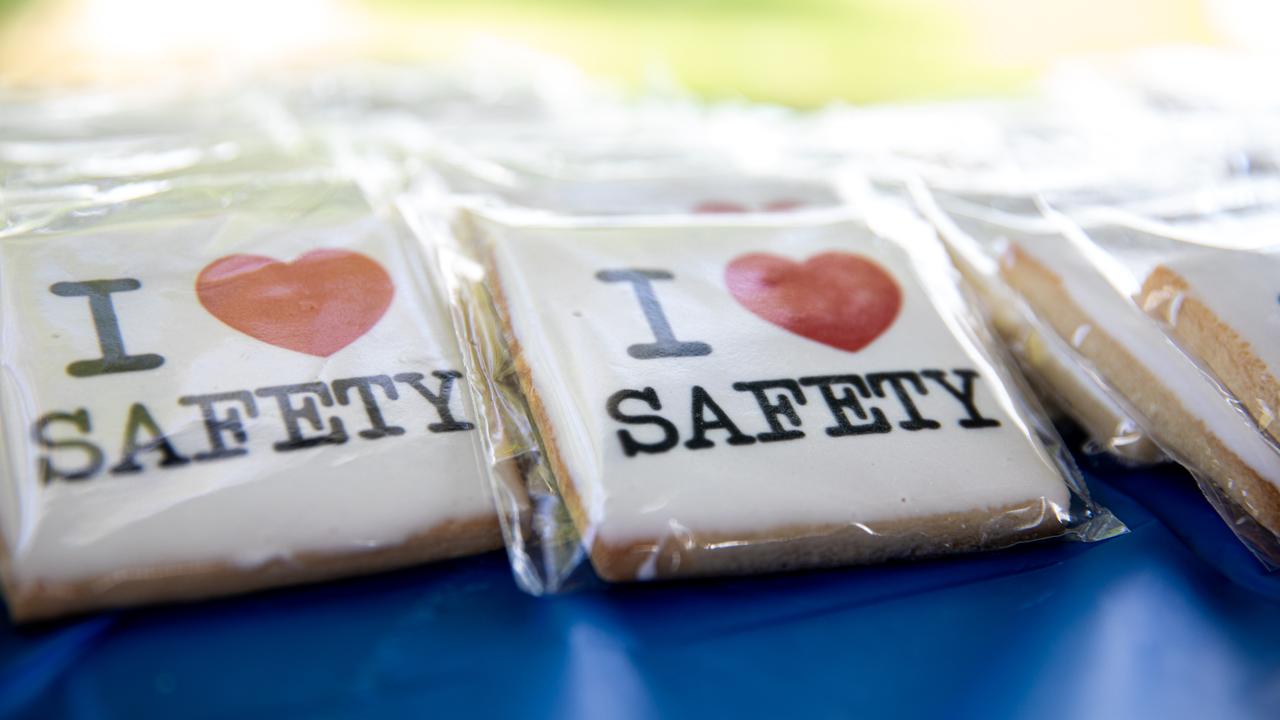
“I Love Safety” cookies are photographed at a Safety and Health Days celebration at Kennedy Space Center’s KARS Park II on March 5, 2020. Taking place March 2 through March 6, Safety and Health Days provides Kennedy employees with a variety of presentations to attend – all of which focus on how to maintain a safe and healthy workforce. The celebration on March 5 was open for all employees to attend.
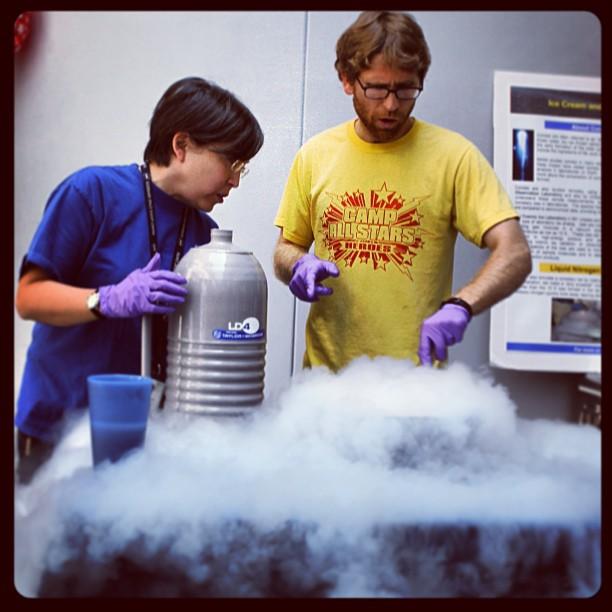
Pictured above, Goddard's astrobiology lab makes cookies and cream ice cream using liquid nitrogen at the Science Jamboree. The NASA Goddard Science Jamboree took place on July 16, 2013. The event allowed the different departments at Goddard a chance to showcase their research and projects to other employees and summer interns. #nasa #nasagoddard #icecream Credit: NASA/Goddard Sawyer Rosenstein
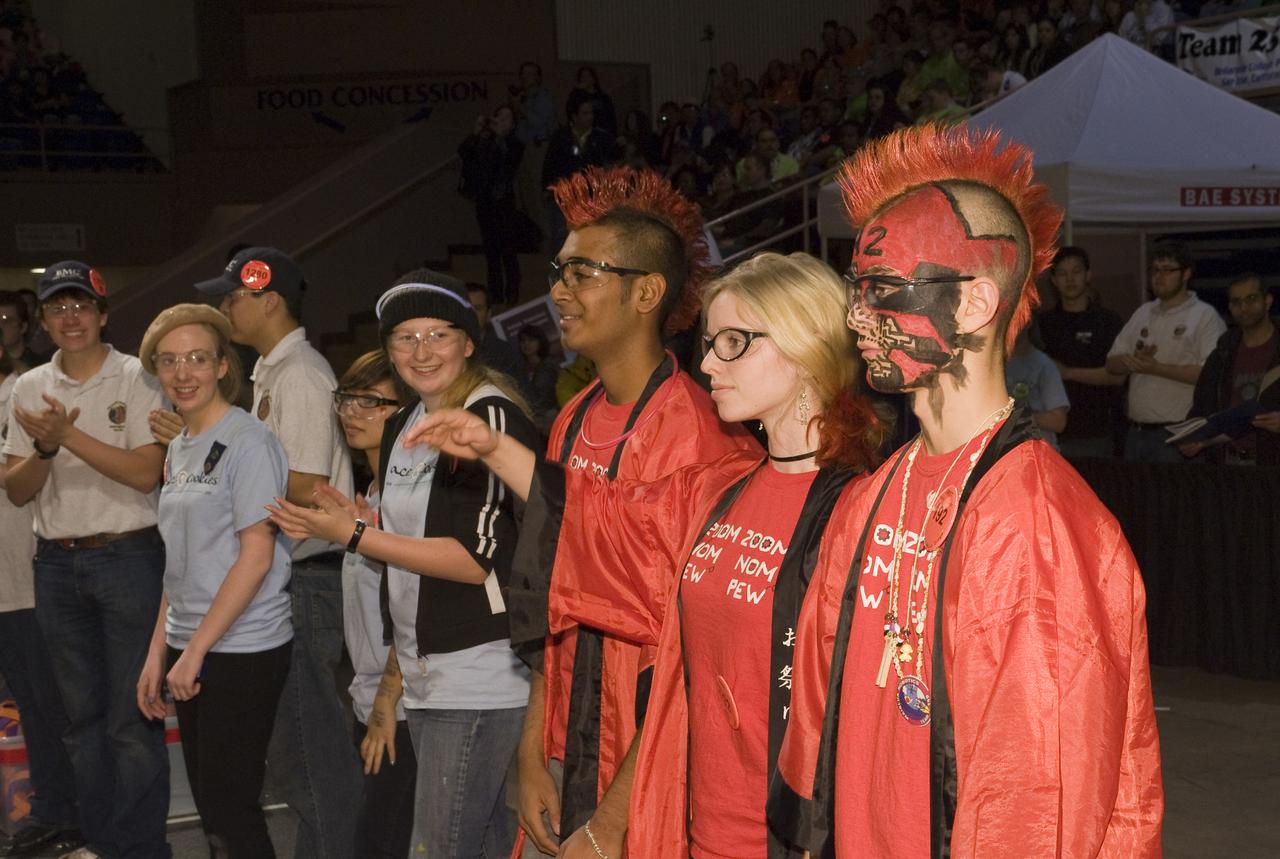
FIRST Robotics Competition 'Lunacy' hosted by NASA at San Jose State University Event Center. For Inspiration and Recognition of Science and Technology let the games begin. GRT of Gunn High School #192 in forground, Ames Space Cookies team #1868 in middle, Ragin' C-Biscuits of San Ramon Valley High team #1280 in background
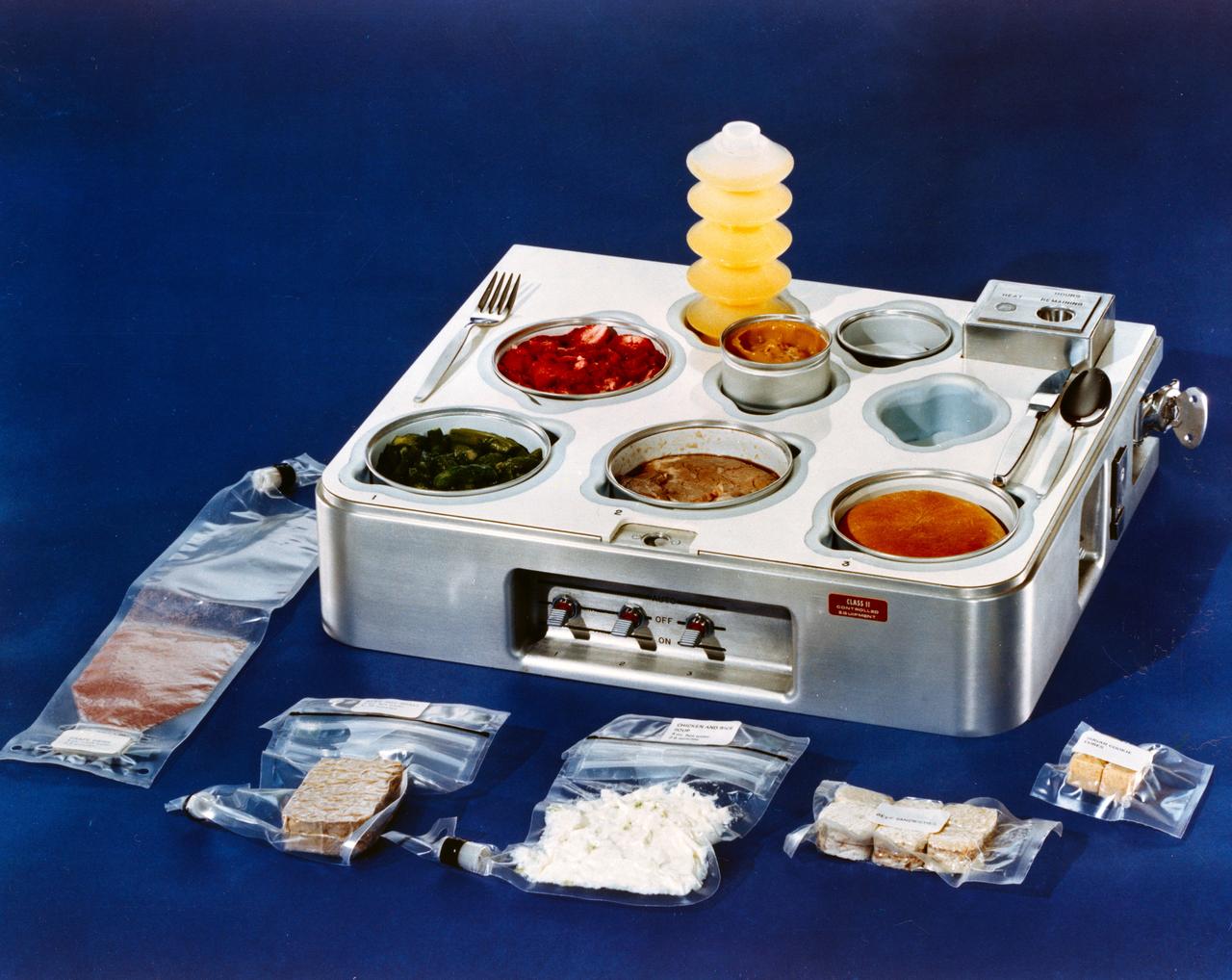
S72-15409 (1972) --- A close-up view of a food tray which is scheduled to be used in the Skylab program. Several packages of space food lie beside the tray. The food in the tray is ready to eat. Out of tray, starting from bottom left: grape drink, beef pot roast, chicken and rice, beef sandwiches and sugar cookie cubes. In tray, from back left: orange drink, strawberries, asparagus, prime rib, dinner roll and butterscotch pudding in the center. Photo credit: NASA
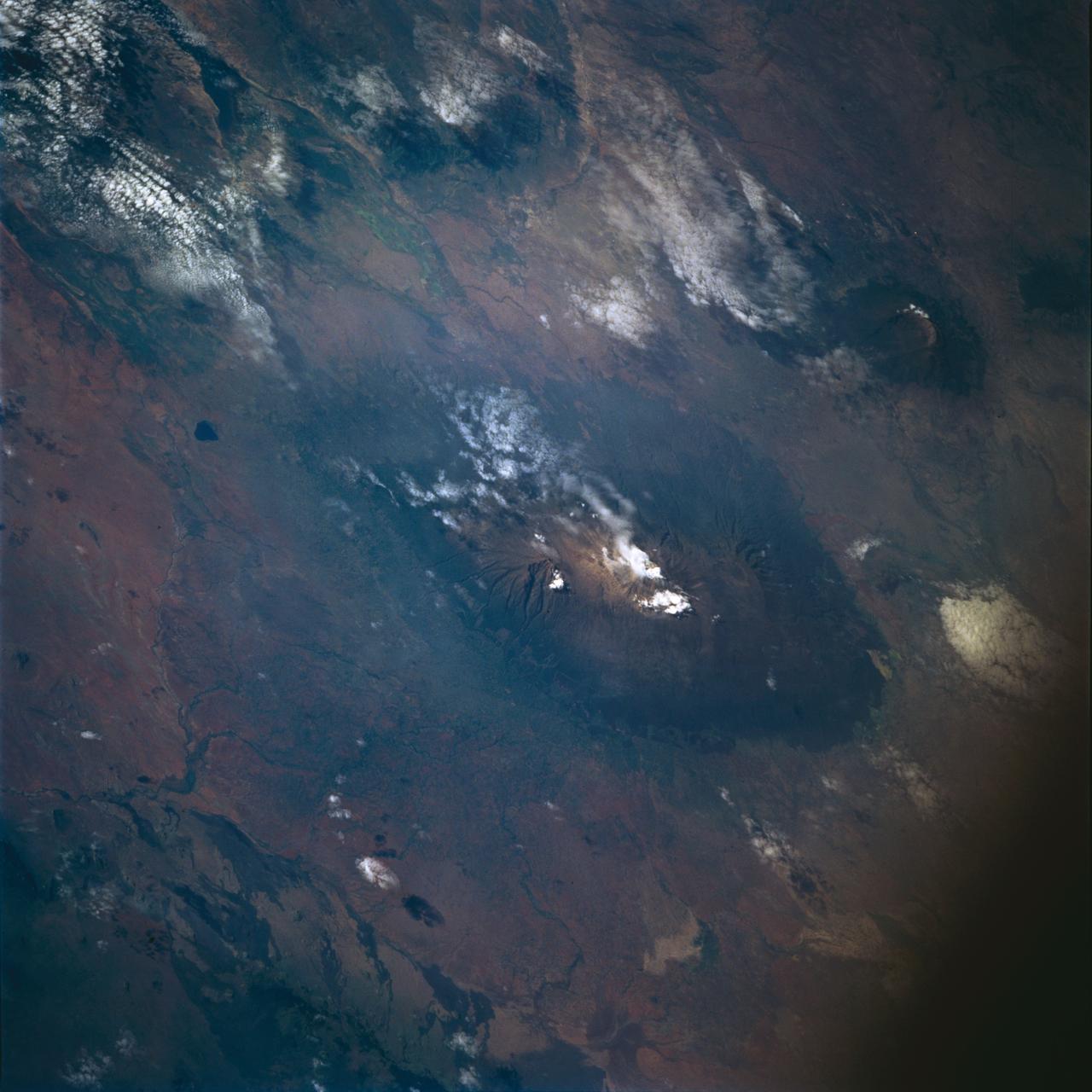
STS072-722-004 (11-20 Jan. 1996) --- Mount Kilimanjaro in Tanzania is featured in this 70mm frame exposed from the Earth-orbiting Space Shuttle Endeavour. Orient with the clouds trailing to the left; then the view is southwest from Kenya past Kilimanjaro to Mount Meru, in Tanzania. Mount Kilimanjaro is about three degrees south of the Equator, but at nearly 6,000 meters has a permanent snowfield. The mountain displays a classic zonation of vegetation types from seasonally dry savannah on the plains at 1,000 meters, to the cloud forest near the top. The mountain is being managed experimentally as an international biosphere reserve. A buffer zone of "traditional" agriculture and pastoral land use is designated around the closed-canopy forest reserve. Specialists familiar with this area say management is partially successful so far, but cleared areas of the forest can be seen on this photograph as light green "nibbles" or "cookie cuts" extending into the dark forest region.
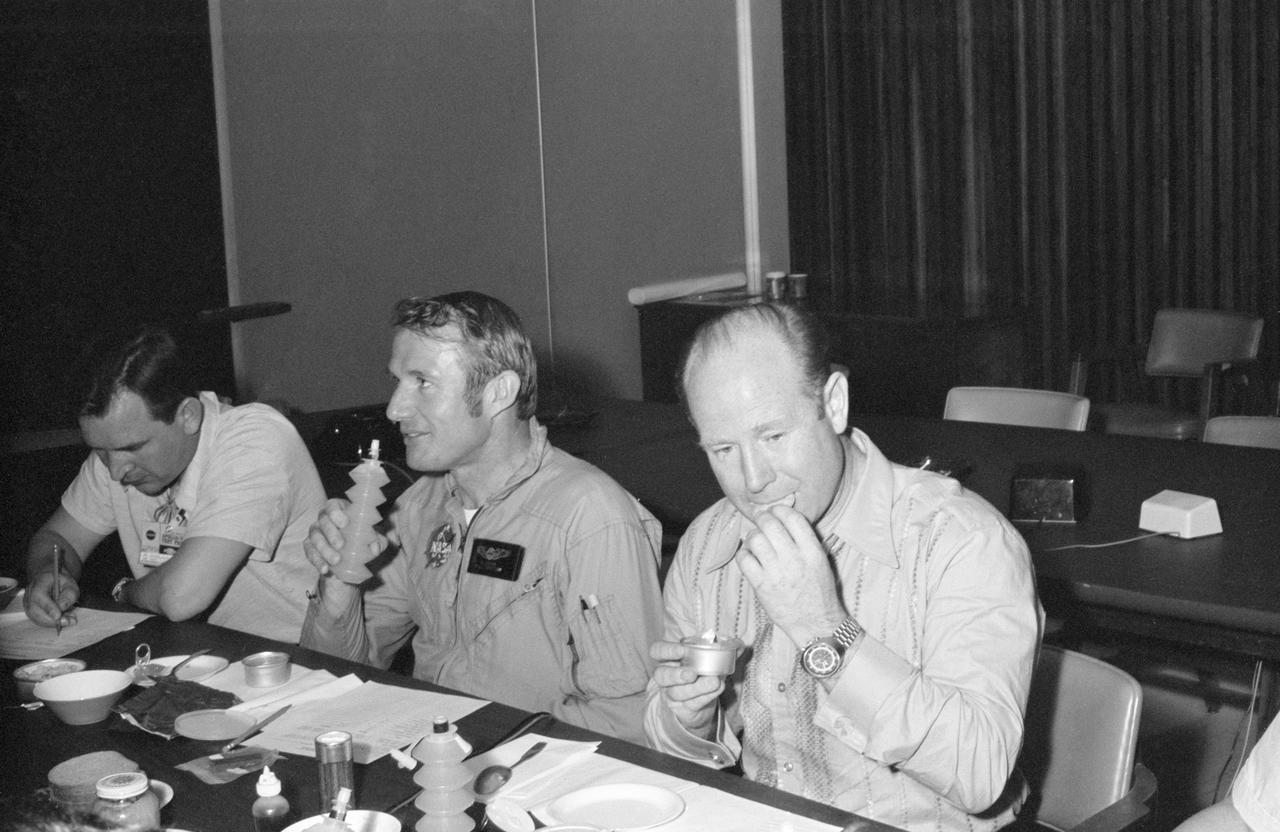
S74-20797 (23 April 1974) --- Candidate food items being considered for the joint U.S.-USSR Apollo-Soyuz Test Project mission are sampled by three ASTP crewmen in Building 4 at the Johnson Space Center. They are, left to right, cosmonaut Valeriy N. Kubasov, engineer on the Soviet ASTP crew; astronaut Vance D. Brand, command module pilot of the American ASTP crew; and cosmonaut Aleksey A. Leonov, commander of the Soviet ASTP crew. Kubasov is marking a food rating chart on which the crewmen mark their choices, likes and dislikes of the food being sampled. Brand is drinking orange juice from an accordion-like dispenser. Leonov is eating butter cookies. The two Soviet crewmen will have an opportunity to eat with the three American crewmen while the Apollo and Soyuz spacecraft are docked in Earth orbit. Leonov and Kubasov will dine on food being chosen individually by them now.