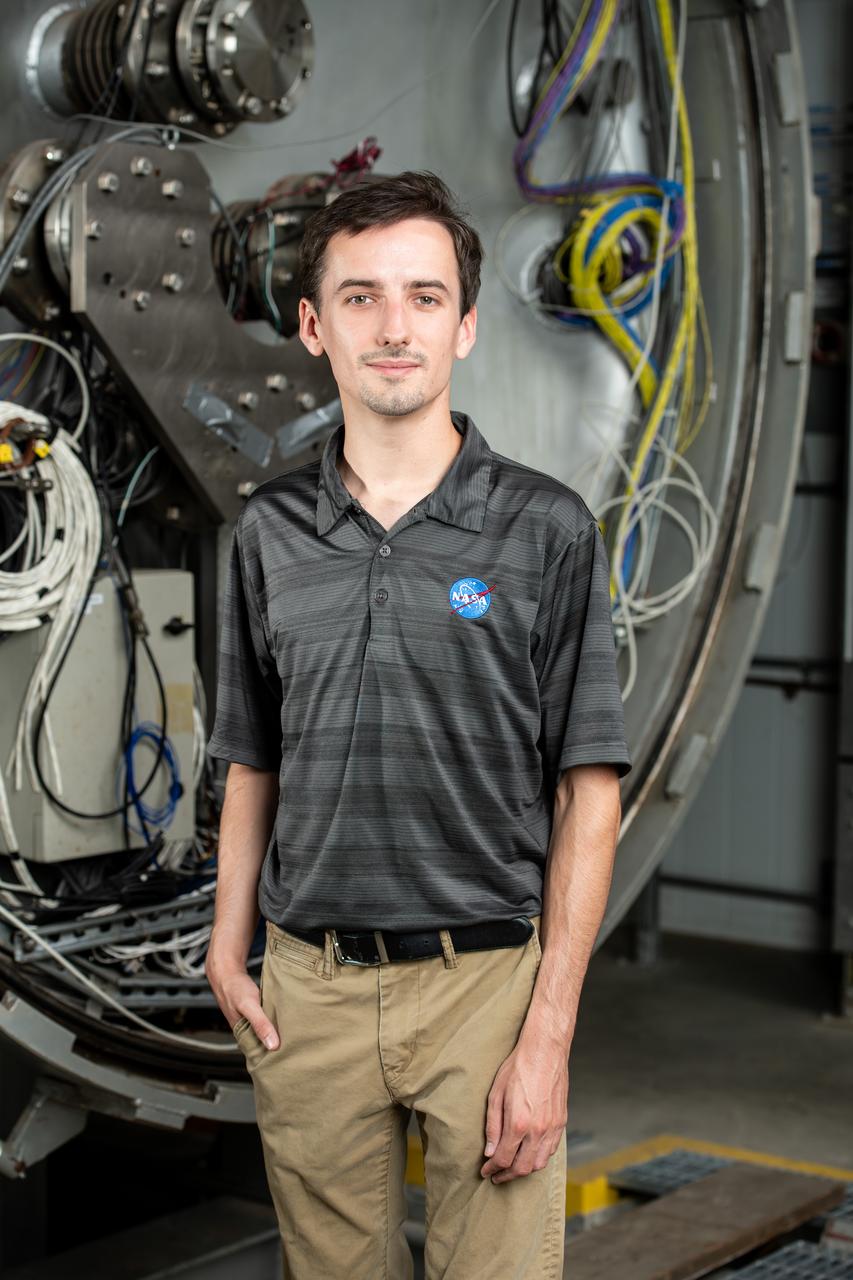
Each year, the NESC produces the NESC Technical Update, which highlights two or three individuals from each Center and includes assessments throughout the year. Because of the critical contributions to the NESC mission this year, Rob Jankovsky, NESC Chief Engineer at GRC, chose two individuals to be highlighted. This year, it is Andrew Ring and Michael Cooper. The Lead Analyst for GRC’s Chemical and Thermal Propulsion Systems branch, Mr. Michael Cooper, is supporting NESC test operations on reaction control system thrusters for Gateway’s Power & Propulsion Element. “These thrusters are small with few moving parts, but the heat and mass transfers involved are very complex,” he said. The test campaign is putting the thrusters through a rigorous profile to simulate the lifetime they will experience over decades in space. Mr. Cooper is analyzing test data gathered on chamber pressure, temperature, flow rates, and more to develop models on thruster performance. He also built the tool that read in that data from the test stand instrumentation. Photo Credit: (NASA/Sara Lowthian-Hanna)
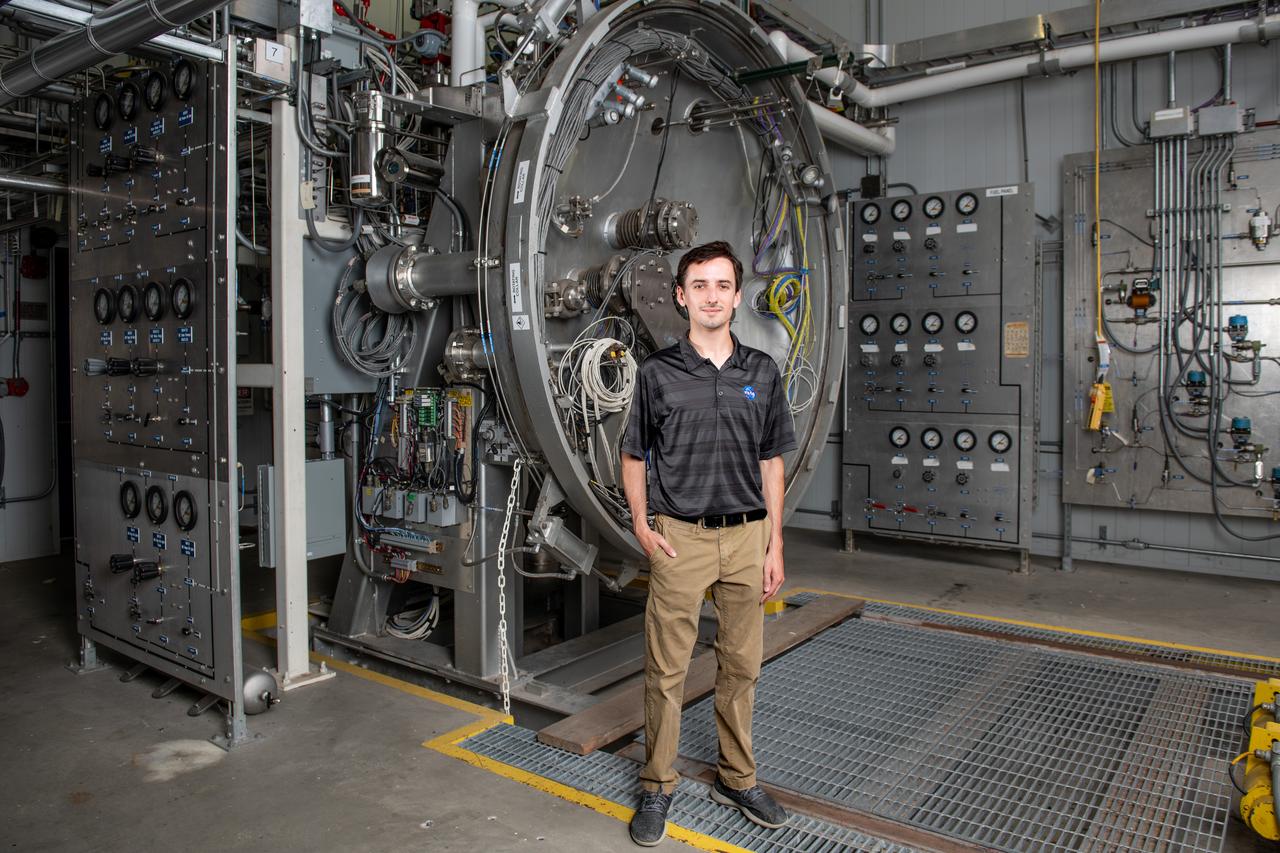
Each year, the NESC produces the NESC Technical Update, which highlights two or three individuals from each Center and includes assessments throughout the year. Because of the critical contributions to the NESC mission this year, Rob Jankovsky, NESC Chief Engineer at GRC, chose two individuals to be highlighted. This year, it is Andrew Ring and Michael Cooper. The Lead Analyst for GRC’s Chemical and Thermal Propulsion Systems branch, Mr. Michael Cooper pictured here in this environmental portrait on August 16, 2024. He is supporting NESC test operations on reaction control system thrusters for Gateway’s Power & Propulsion Element. “These thrusters are small with few moving parts, but the heat and mass transfers involved are very complex,” he said. The test campaign is putting the thrusters through a rigorous profile to simulate the lifetime they will experience over decades in space. Mr. Cooper is analyzing test data gathered on chamber pressure, temperature, flow rates, and more to develop models on thruster performance. He also built the tool that read in that data from the test stand instrumentation. Photo Credit: (NASA/Sara Lowthian-Hanna)
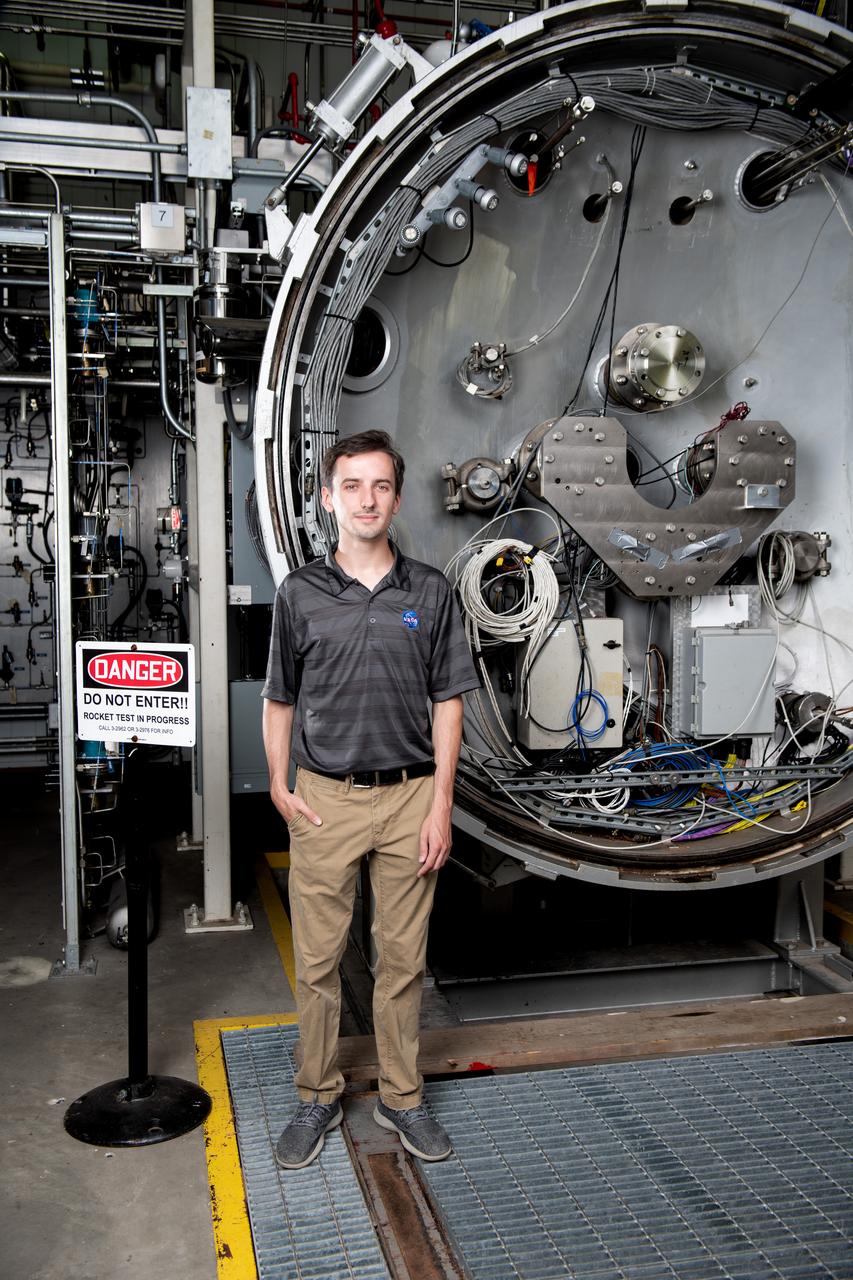
Each year, the NESC produces the NESC Technical Update, which highlights two or three individuals from each Center and includes assessments throughout the year. Because of the critical contributions to the NESC mission this year, Rob Jankovsky, NESC Chief Engineer at GRC, chose two individuals to be highlighted. This year, it is Andrew Ring and Michael Cooper. The Lead Analyst for GRC’s Chemical and Thermal Propulsion Systems branch, Mr. Michael Cooper, is supporting NESC test operations on reaction control system thrusters for Gateway’s Power & Propulsion Element. “These thrusters are small with few moving parts, but the heat and mass transfers involved are very complex,” he said. The test campaign is putting the thrusters through a rigorous profile to simulate the lifetime they will experience over decades in space. Mr. Cooper is analyzing test data gathered on chamber pressure, temperature, flow rates, and more to develop models on thruster performance. He also built the tool that read in that data from the test stand instrumentation. Photo Credit: (NASA/Sara Lowthian-Hanna)
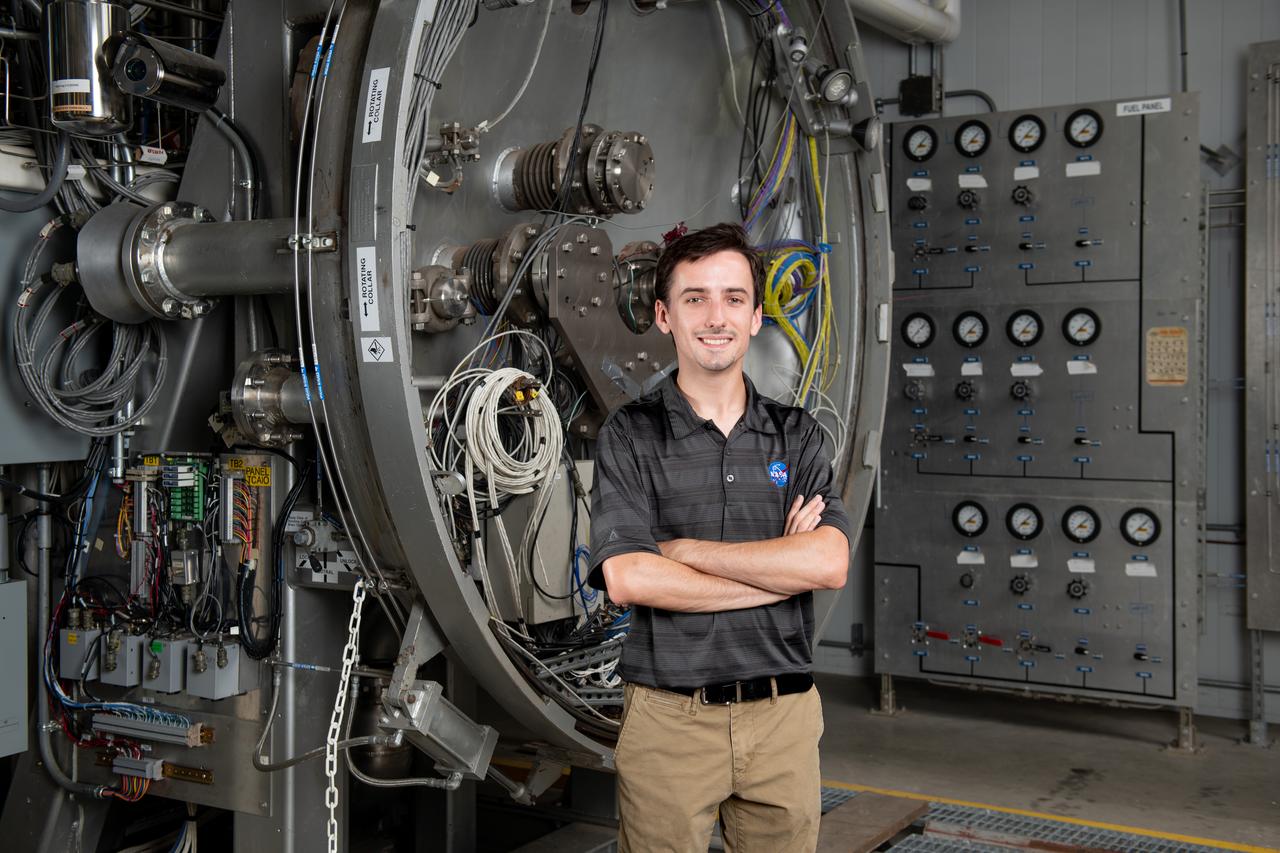
Each year, the NESC produces the NESC Technical Update, which highlights two or three individuals from each Center and includes assessments throughout the year. Because of the critical contributions to the NESC mission this year, Rob Jankovsky, NESC Chief Engineer at GRC, chose two individuals to be highlighted. This year, it is Andrew Ring and Michael Cooper. The Lead Analyst for GRC’s Chemical and Thermal Propulsion Systems branch, Mr. Michael Cooper, is supporting NESC test operations on reaction control system thrusters for Gateway’s Power & Propulsion Element. “These thrusters are small with few moving parts, but the heat and mass transfers involved are very complex,” he said. The test campaign is putting the thrusters through a rigorous profile to simulate the lifetime they will experience over decades in space. Mr. Cooper is analyzing test data gathered on chamber pressure, temperature, flow rates, and more to develop models on thruster performance. He also built the tool that read in that data from the test stand instrumentation. Photo Credit: (NASA/Sara Lowthian-Hanna)
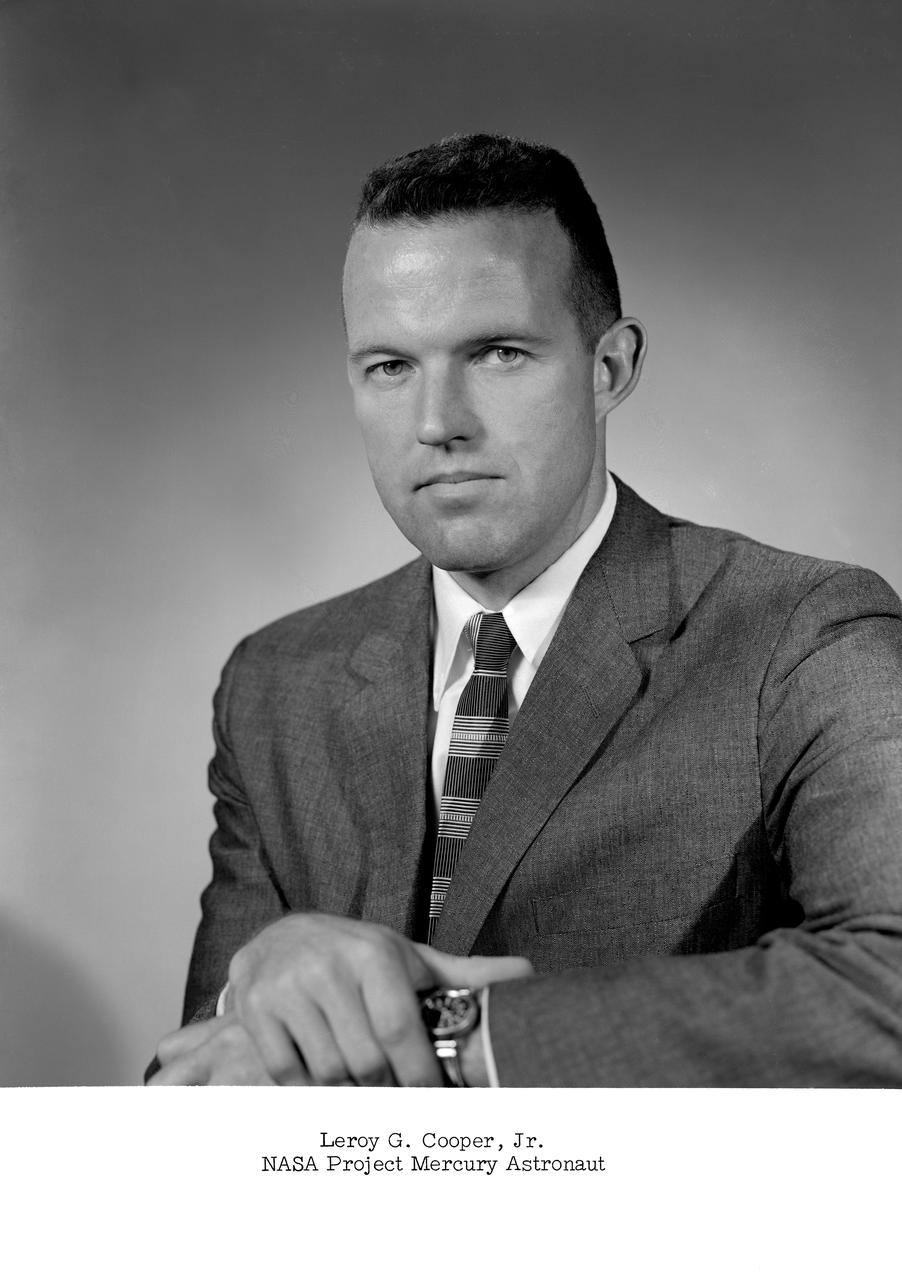
NASA Project Mercury astronaut. -- Cooper was later known as L. Gordon Cooper.
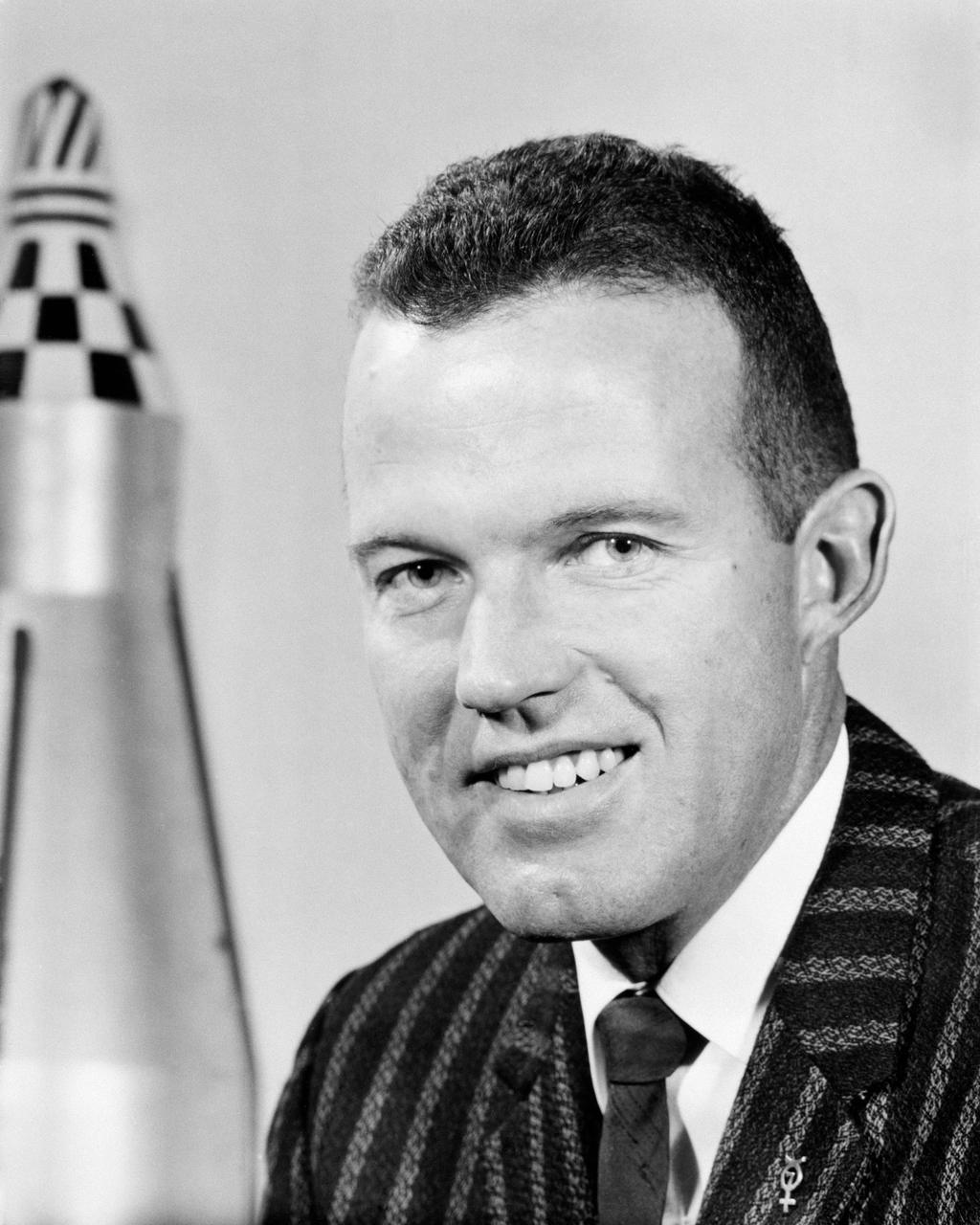
G60-02738 (May 1960) --- Astronaut L. Gordon Cooper Jr. Photo credit: NASA
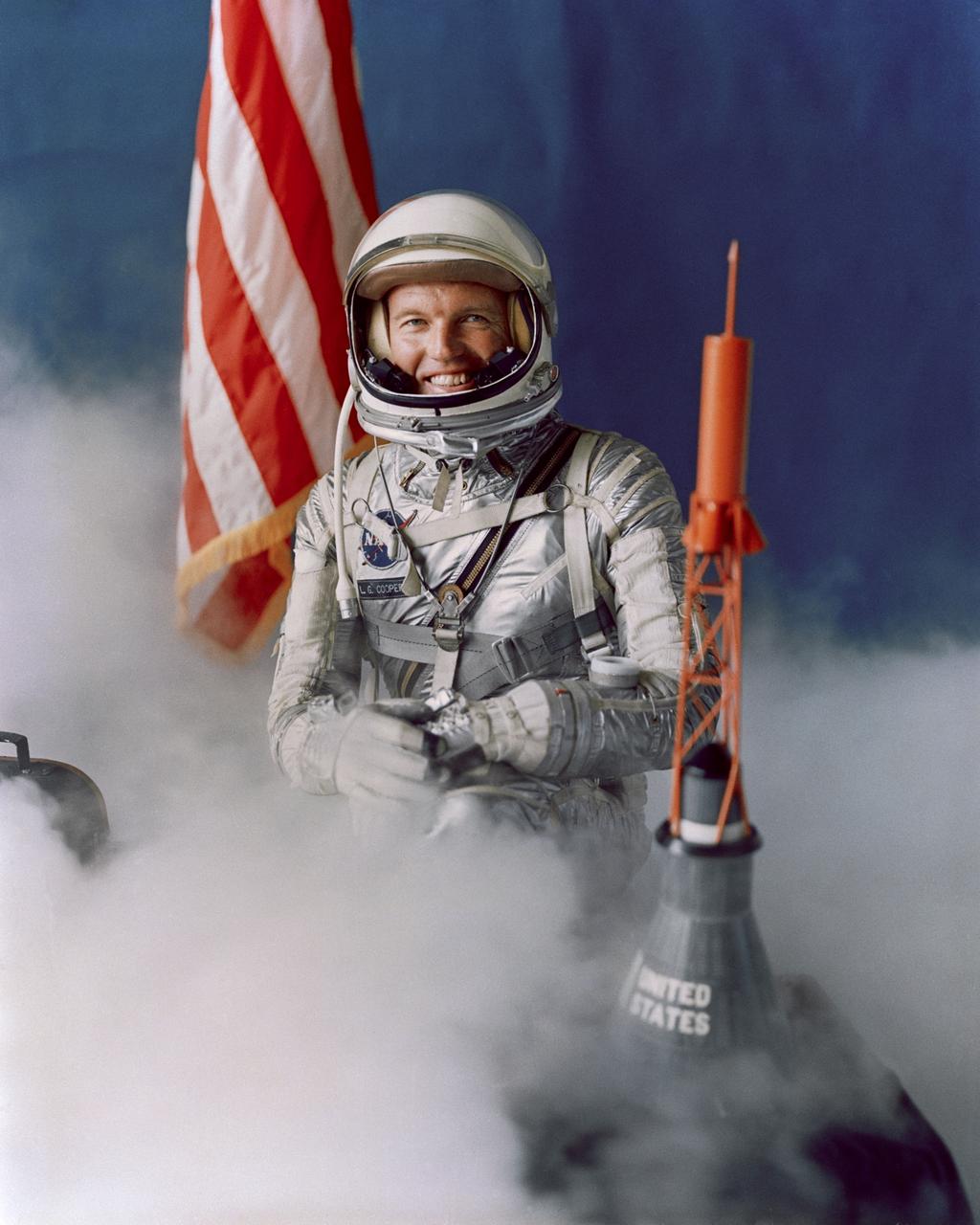
S62-05530 (25 Sept. 1962) --- Astronaut L. Gordon Cooper Jr. Photo credit: NASA

NACA Test Pilot George Cooper stand in front of the F-86D
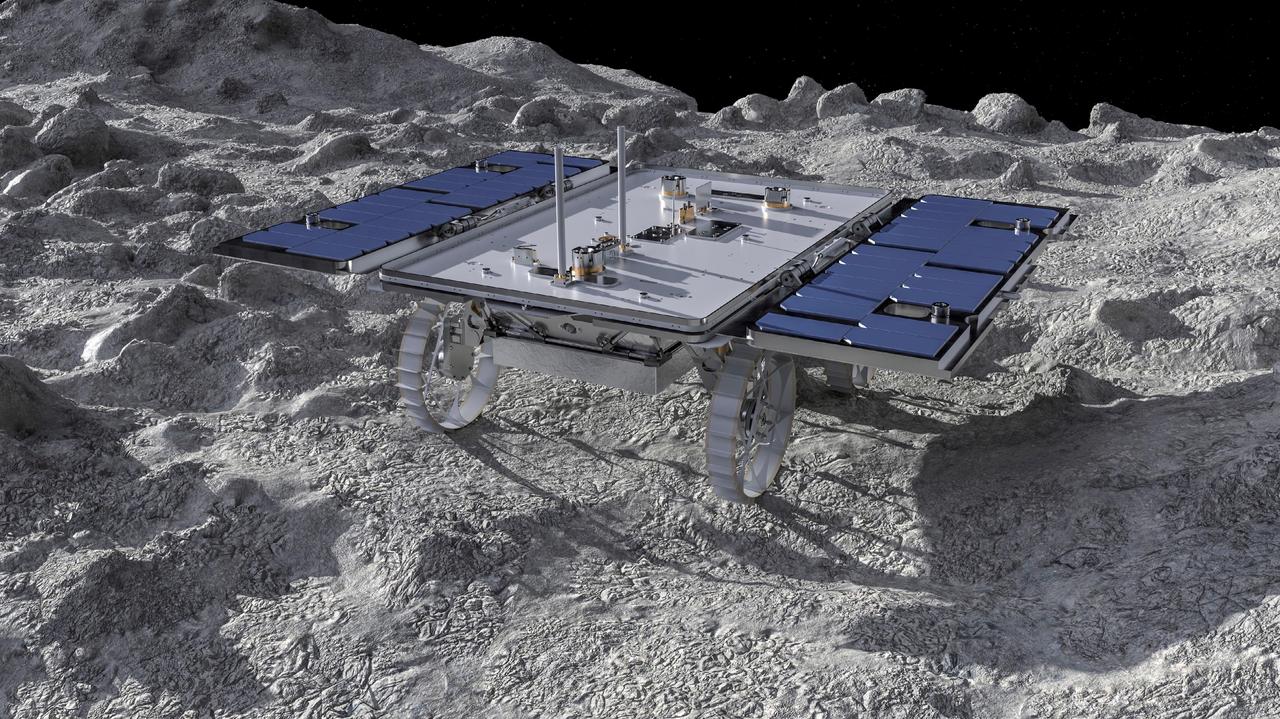
This artist's concept depicts a small rover – part of NASA's CADRE (Cooperative Autonomous Distributed Robotic Exploration) technology demonstration headed for the Moon – on the lunar surface. Motiv Space Systems in Pasadena, California, created the rendering and is collaborating with NASA's Jet Propulsion Laboratory on critical rover and mobility functions. Slated to arrive aboard a lunar lander in 2024 under NASA's CLPS (Commercial Lunar Payload Services) initiative, CADRE is designed to demonstrate that multiple robots can cooperate and explore together autonomously – without direct input from human mission controllers. A trio of the miniature solar-powered rovers, each about the size of a carry-on suitcase, will explore the Moon as a team, communicating via radio with each other and a base station aboard a lunar lander. By taking simultaneous measurements from multiple locations, CADRE will also demonstrate how multirobot missions can record data impossible for a single robot to achieve – a tantalizing prospect for future missions. Motiv contributed subsystems and hardware elements for three of four CADRE systems, including designing and building the mobility system and rover chassis, the base station, the rover deployers, and the motor controller boards. The company also procured and tested the actuators with the flight motor controller boards. https://photojournal.jpl.nasa.gov/catalog/PIA26161
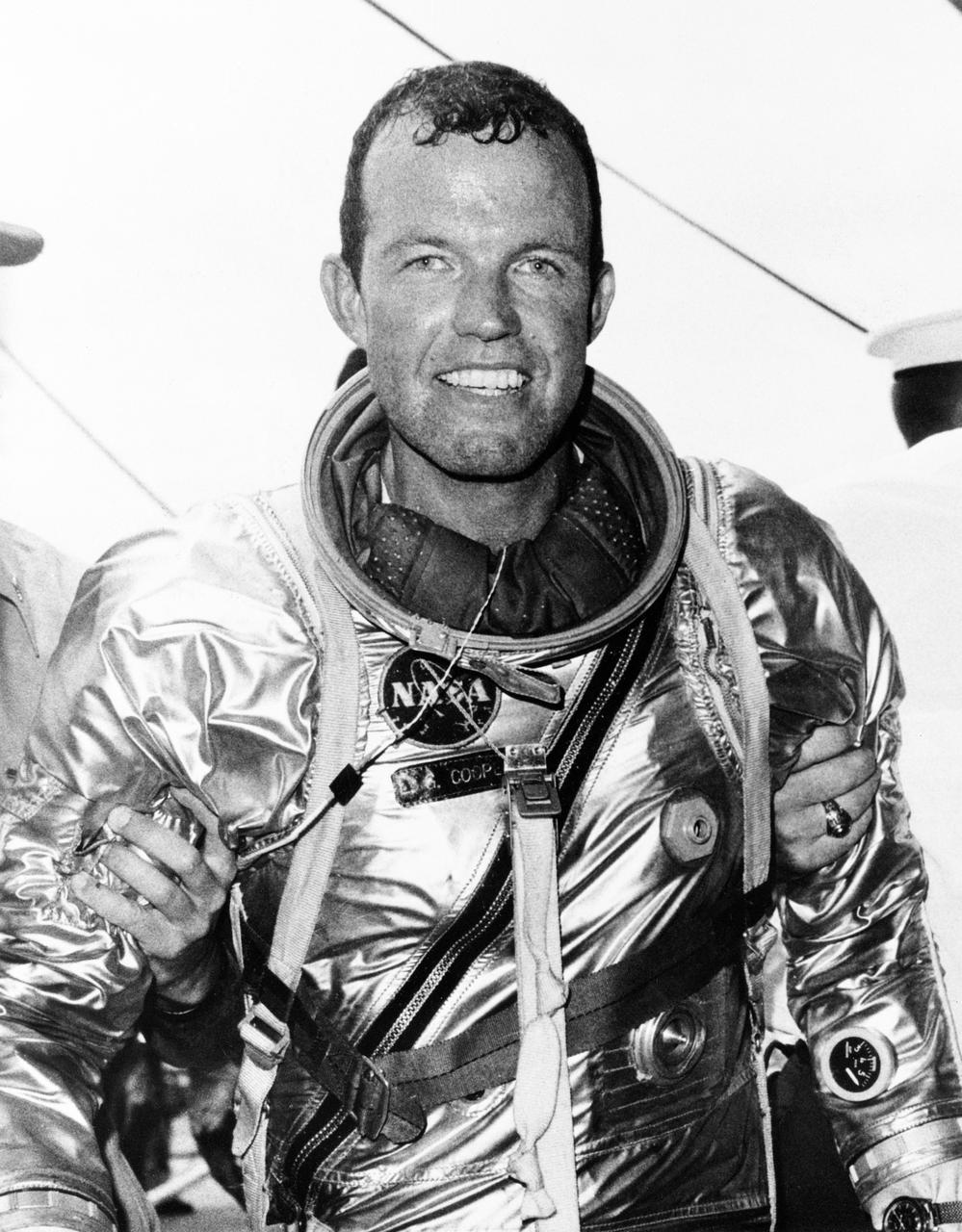
S63-07853 (16 May 1963) --- Astronaut L. Gordon Cooper Jr., pilot of the Mercury-Atlas 9 (MA-9) mission, stands supported by strong hands after climbing out of his spacecraft "Faith 7" after a 600,000-mile, 22-orbit journey around Earth. He elected to remain in the spacecraft until it was hoisted to the deck of the USS Kearsarge, as did astronaut Walter Schirra during the previous mission. Photo credit: NASA
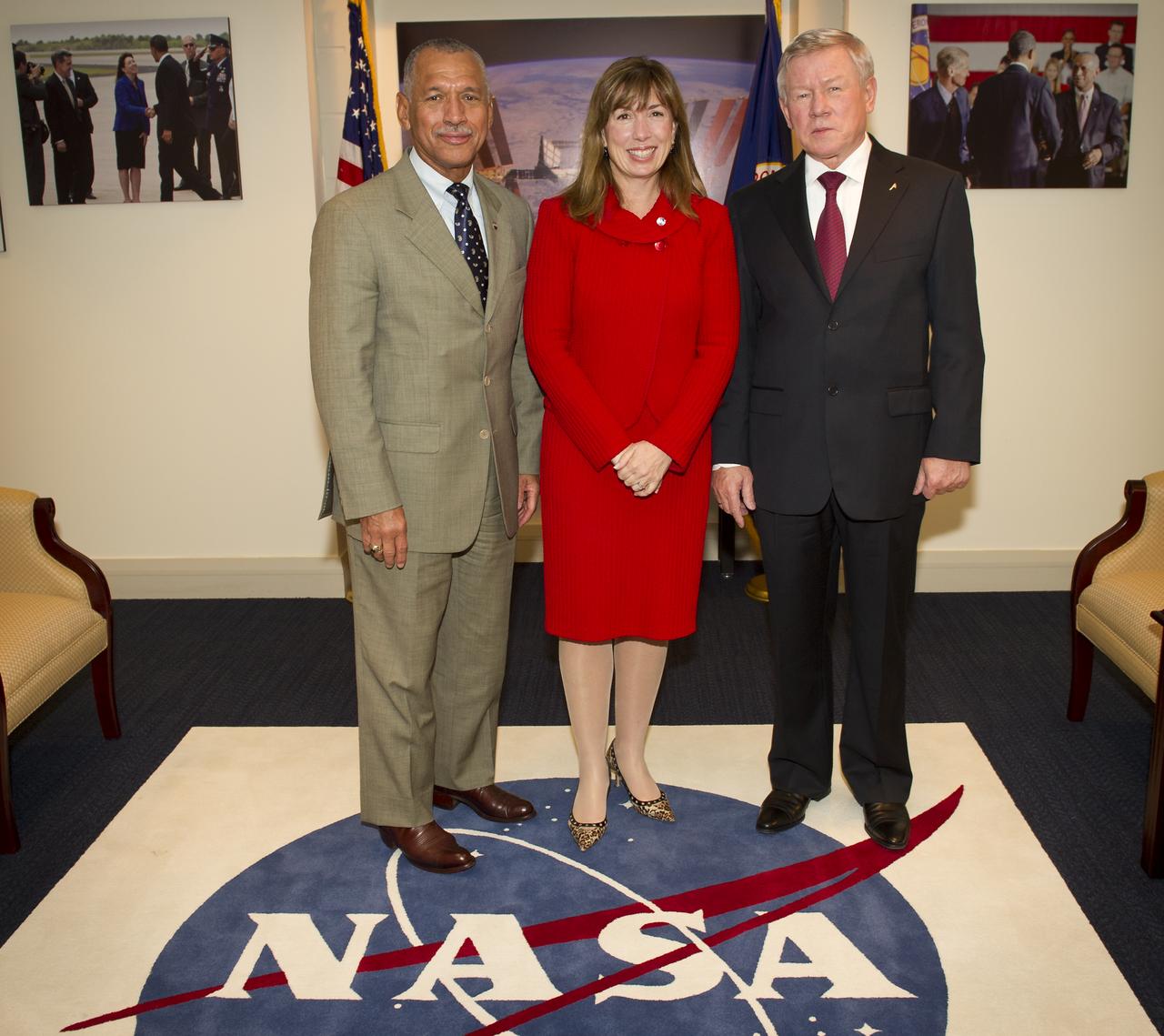
NASA Administrator Charles Bolden, left, and NASA Deputy Administrator Lori Garver, welcome Head of the Russian Federal Space Agency Anatoly Perminov, right, for the third Space Cooperation Working Group meeting of the U.S. – Russia Bilateral Presidential Commission on Thursday, Nov. 18, 2010 in Washington. Photo Credit: (NASA/Bill Ingalls)
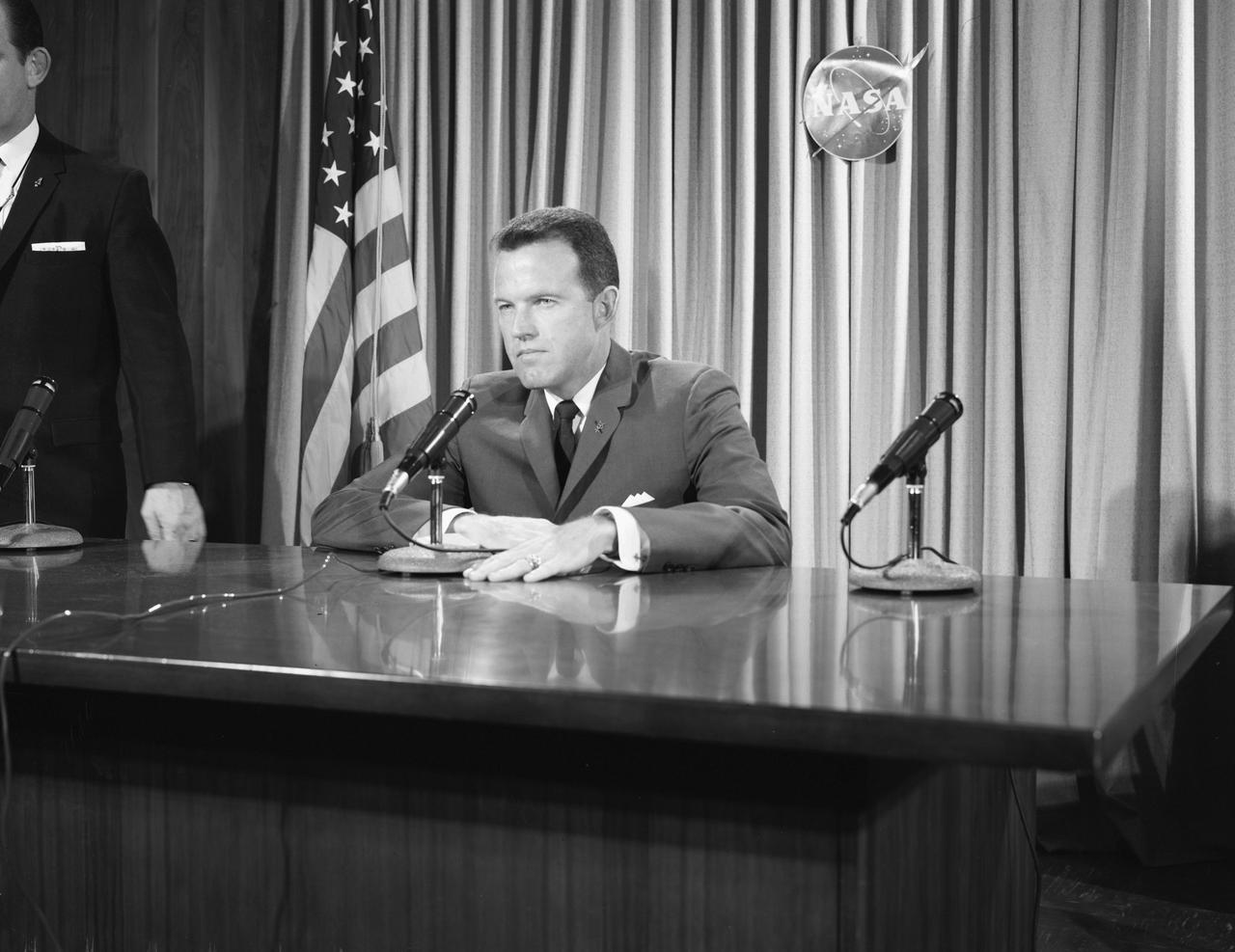
S63-00581 (1963) --- Astronaut L. Gordon Cooper Jr., pilot of the Mercury Atlas 9 (MA-9) space mission, appears before newsmen at a preflight press conference. Photo credit: NASA
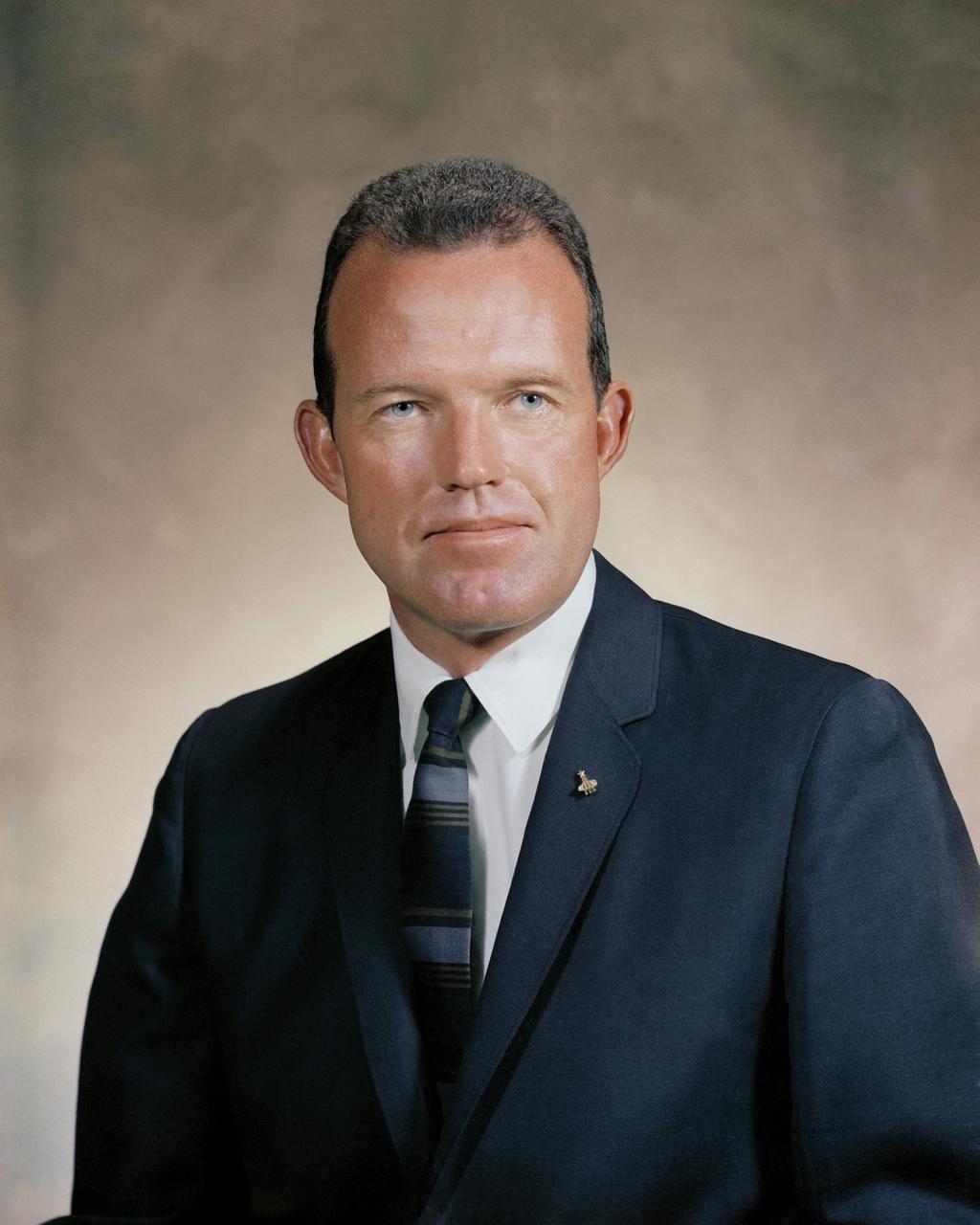
S64-31847 (10 Sept. 1964) --- Astronaut L. Gordon Cooper Jr. portrait
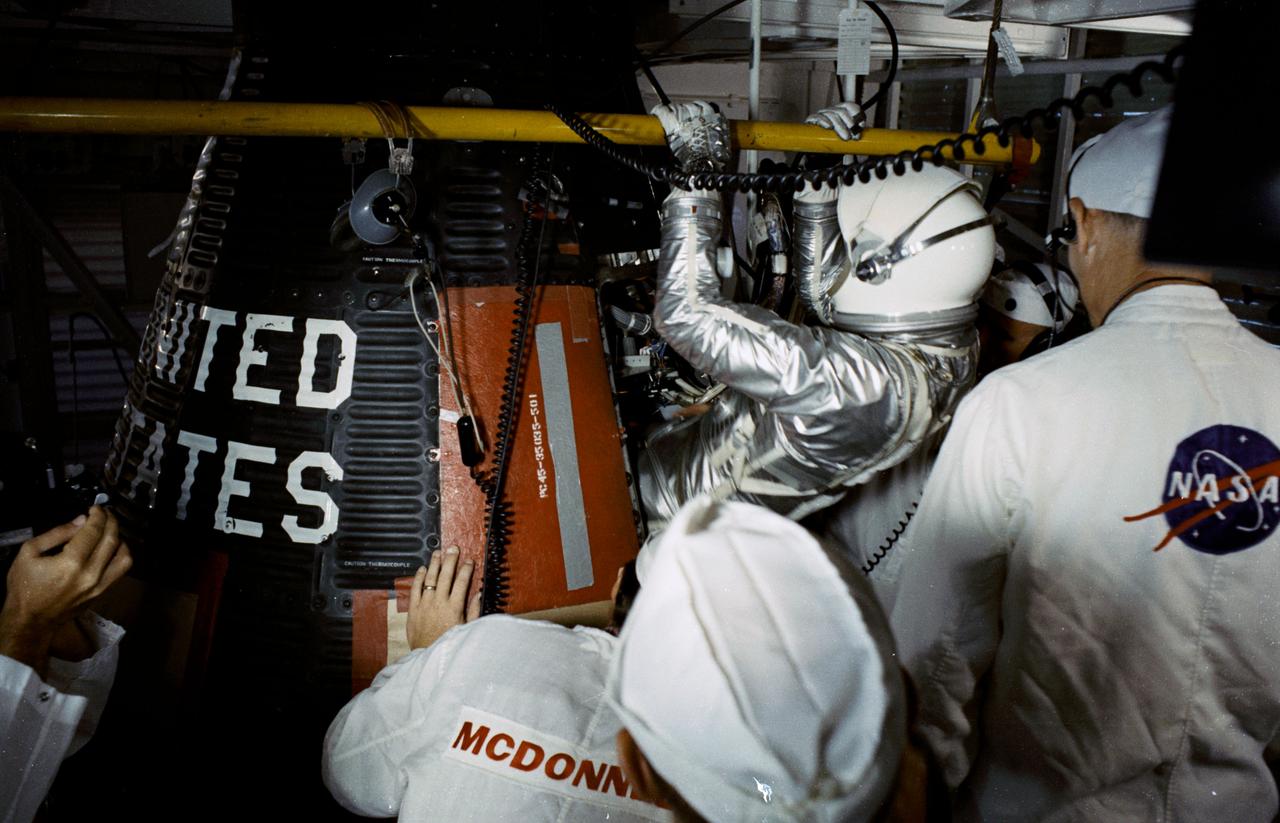
S63-07521 (15 May 1963) --- Astronaut L. Gordon Cooper Jr., pilot of the Mercury-Atlas 9 (MA-9) Earth-orbital space mission, is assisted into his "Faith 7" Mercury spacecraft during the prelaunch countdown. MA-9 was launched on May 15, 1963, and the flight lasted for 34 hours and 20 minutes. Photo credit: NASA
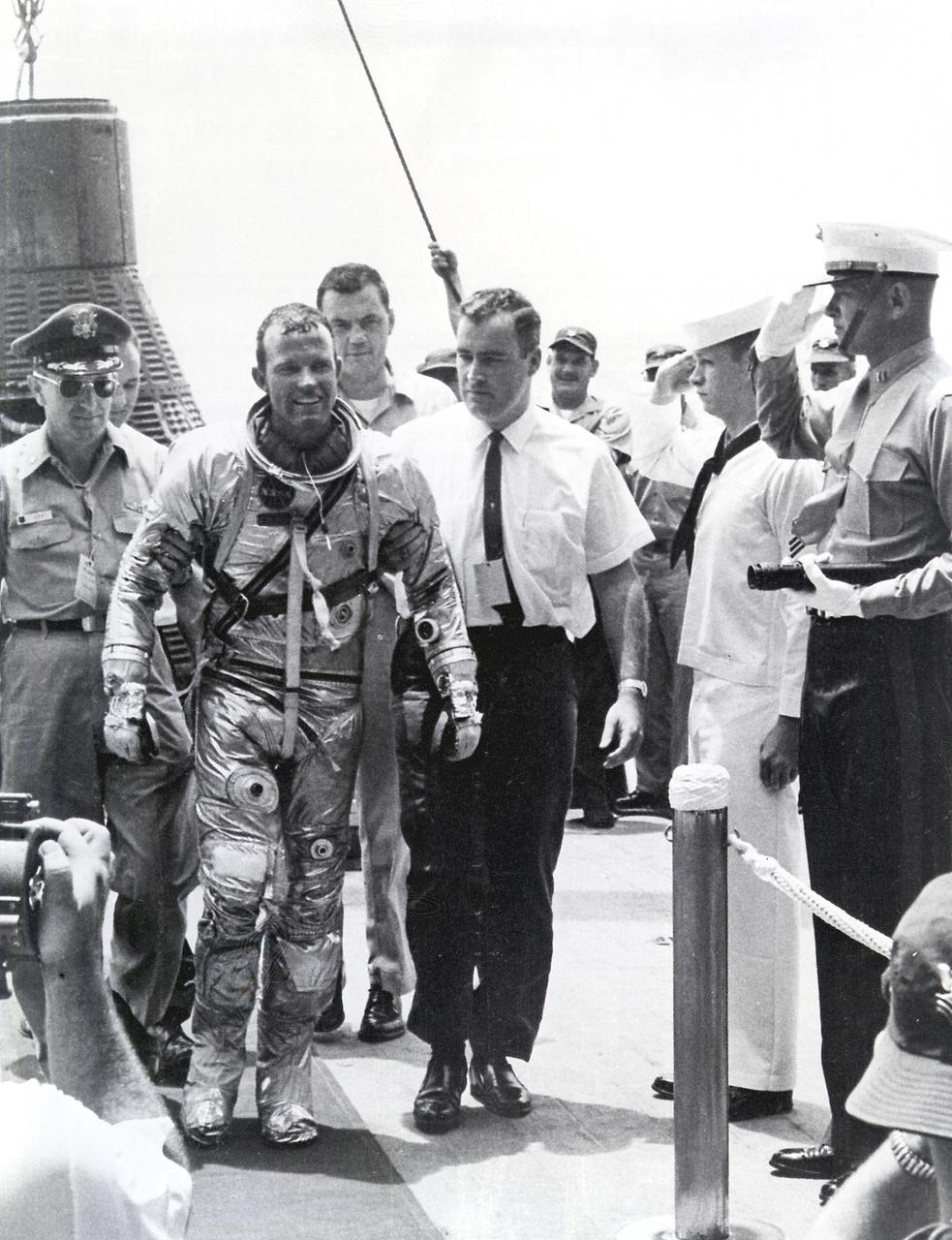
Astronaut Gordon Cooper leaves the Faith 7 (MA-9) spacecraft after a successful recovery operation. The MA-9 mission, the last flight of the Mercury Project, was launched on May 15, 1963, orbited the Earth 22 times, and lasted for 1-1/2 days.
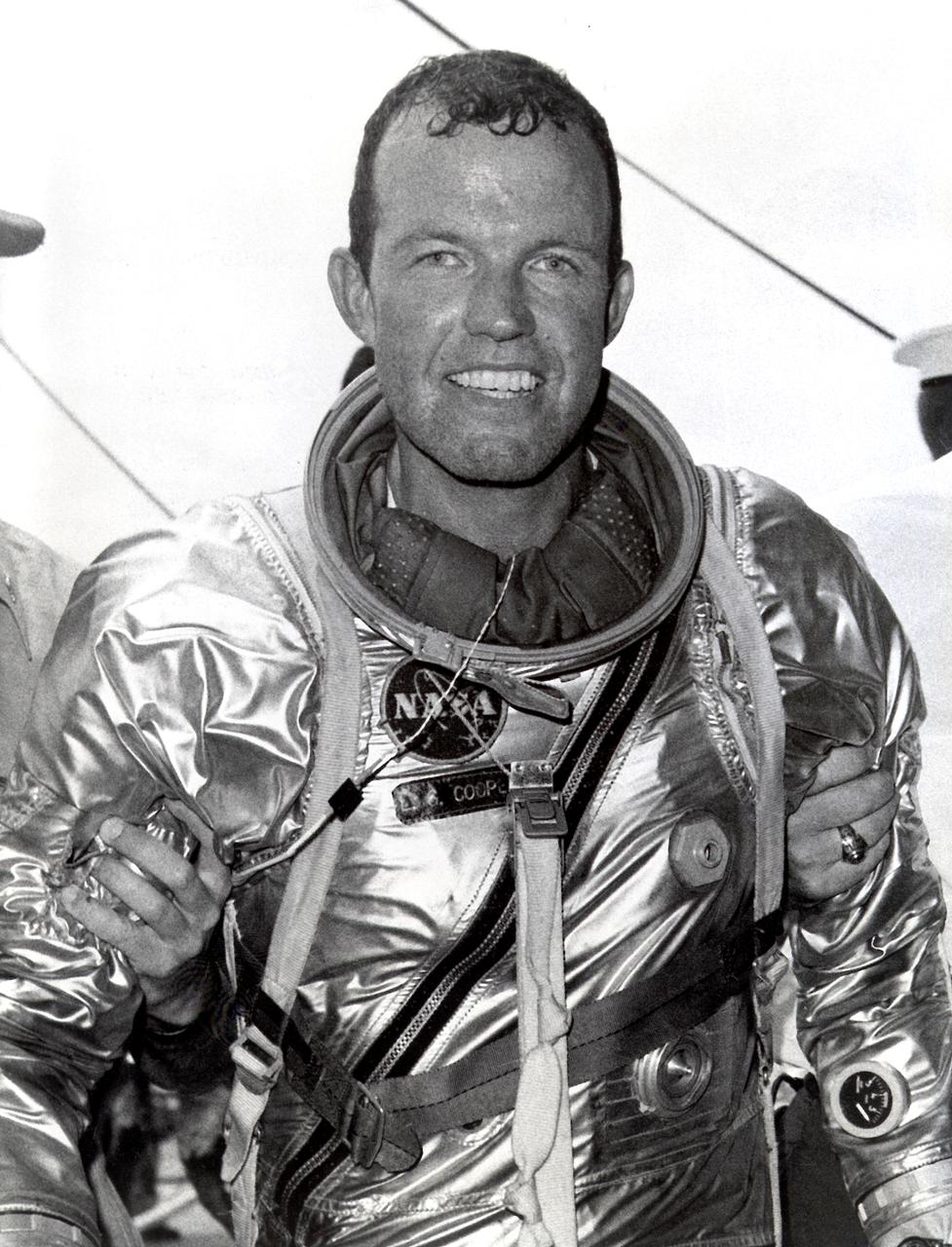
Astronaut Gordon Cooper leaves the Faith 7 (MA-9) spacecraft after a successful recovery operation. The MA-9 mission, the last flight of the Mercury Project, was launched on May 15, 1963, orbited the Earth 22 times, and lasted for 1-1/2 days.
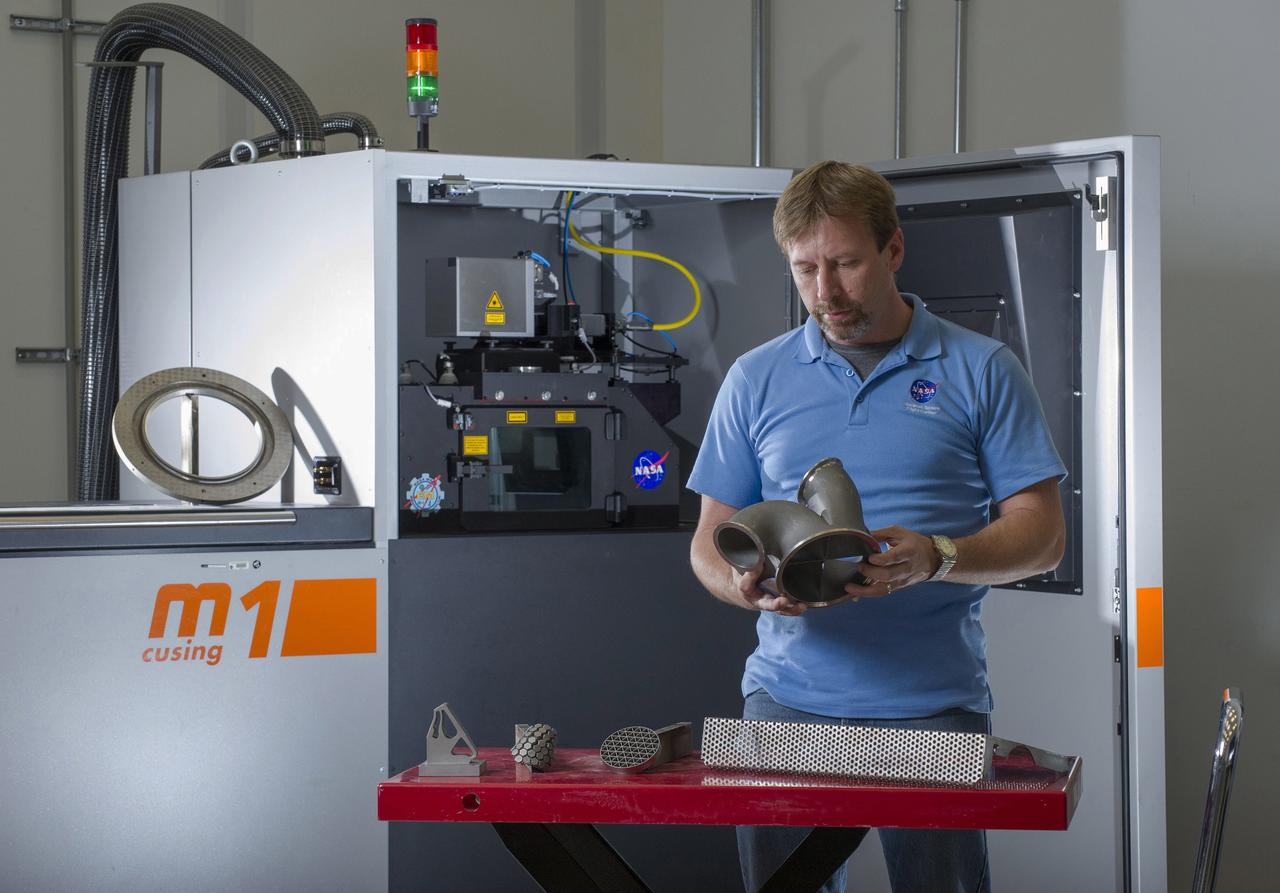
KEN COOPER, TEAM LEAD OF MSFC’S ADVANCED MANUFACTURING TEAM, WITH NICKEL ALLOY 718 PARTS FABRICATED USING THE M1 SELECTIVE LASER MELTING SYSTEM. THE M1 MACHINE IS DEDICATED TO BUILDING QUALIFICATION SAMPLES AND HARDWARE DEMONSTRATORS FOR THE RS25 ENGINE PROJECT.
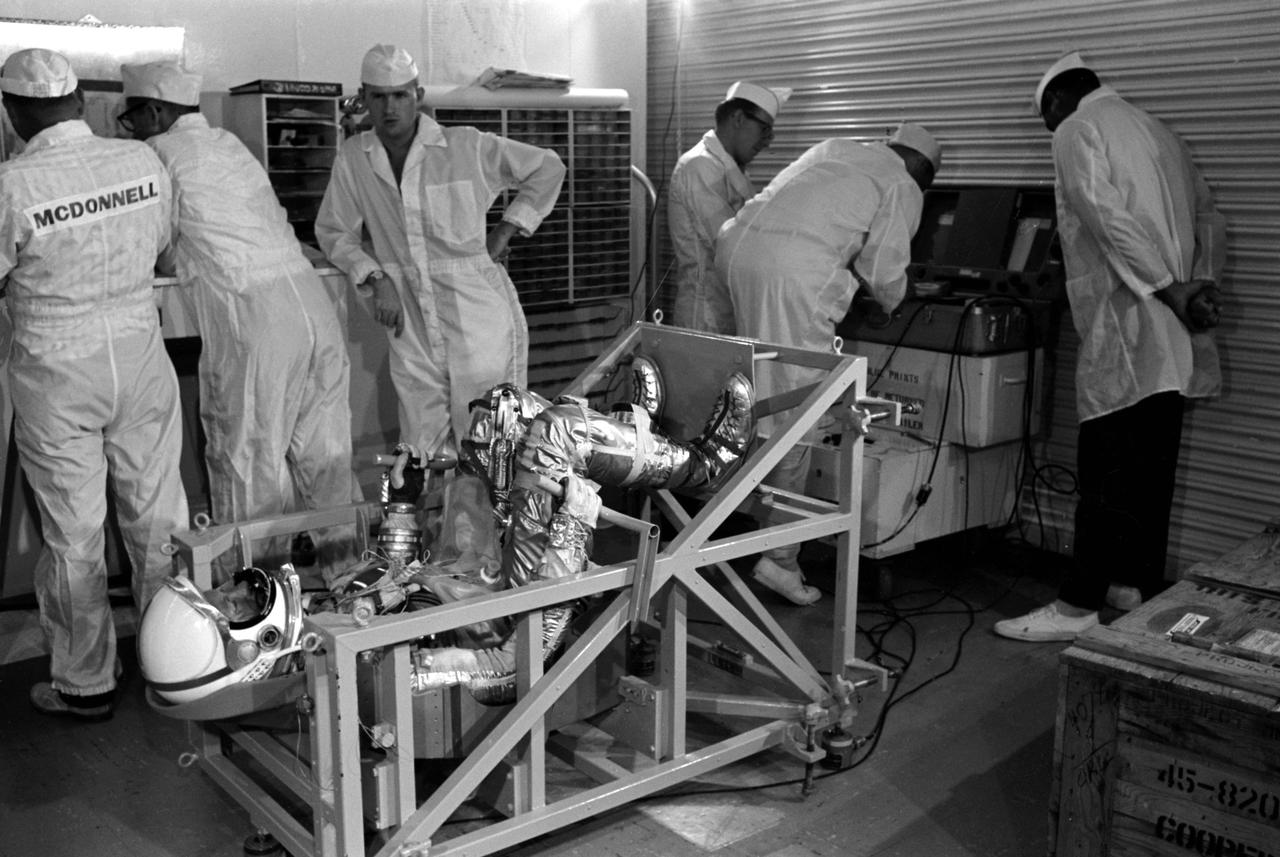
S62-05118 (1962) --- Astronaut L. Gordon Cooper Jr. on weight and balance scale in the White Room, Hangar S at Cape Canaveral. Photo credit: NASA
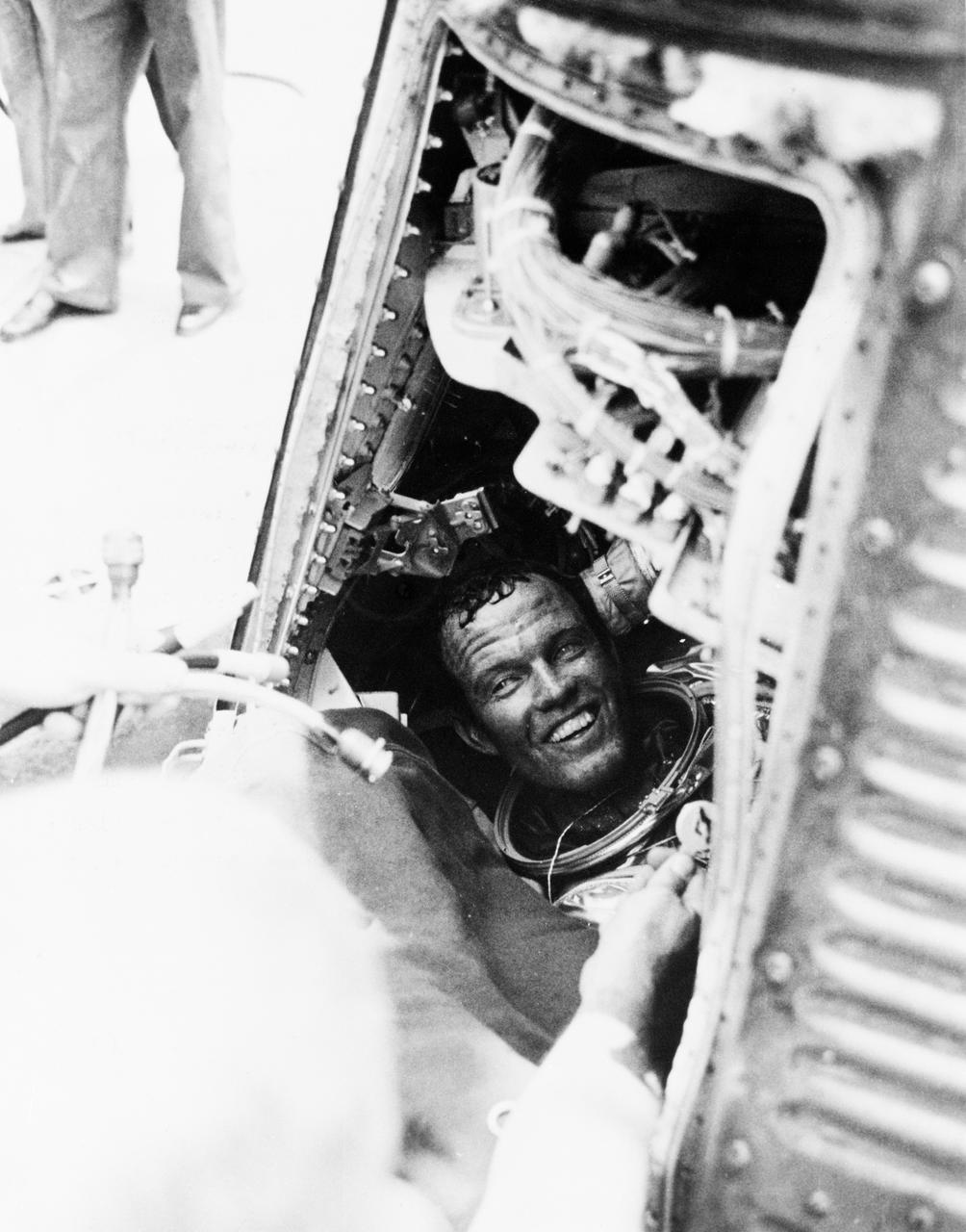
S63-07852 (16 May 1963)--- Astronaut L. Gordon Cooper Jr., pilot of the Mercury-Atlas 9 (MA-9) mission, has a smile for the recovery crew of the USS Kearsarge, after he is onboard from a successful 22-orbit mission of Earth in his spacecraft "Faith 7". Cooper is still sitting in his capsule, with his helmet off. Photo credit: NASA
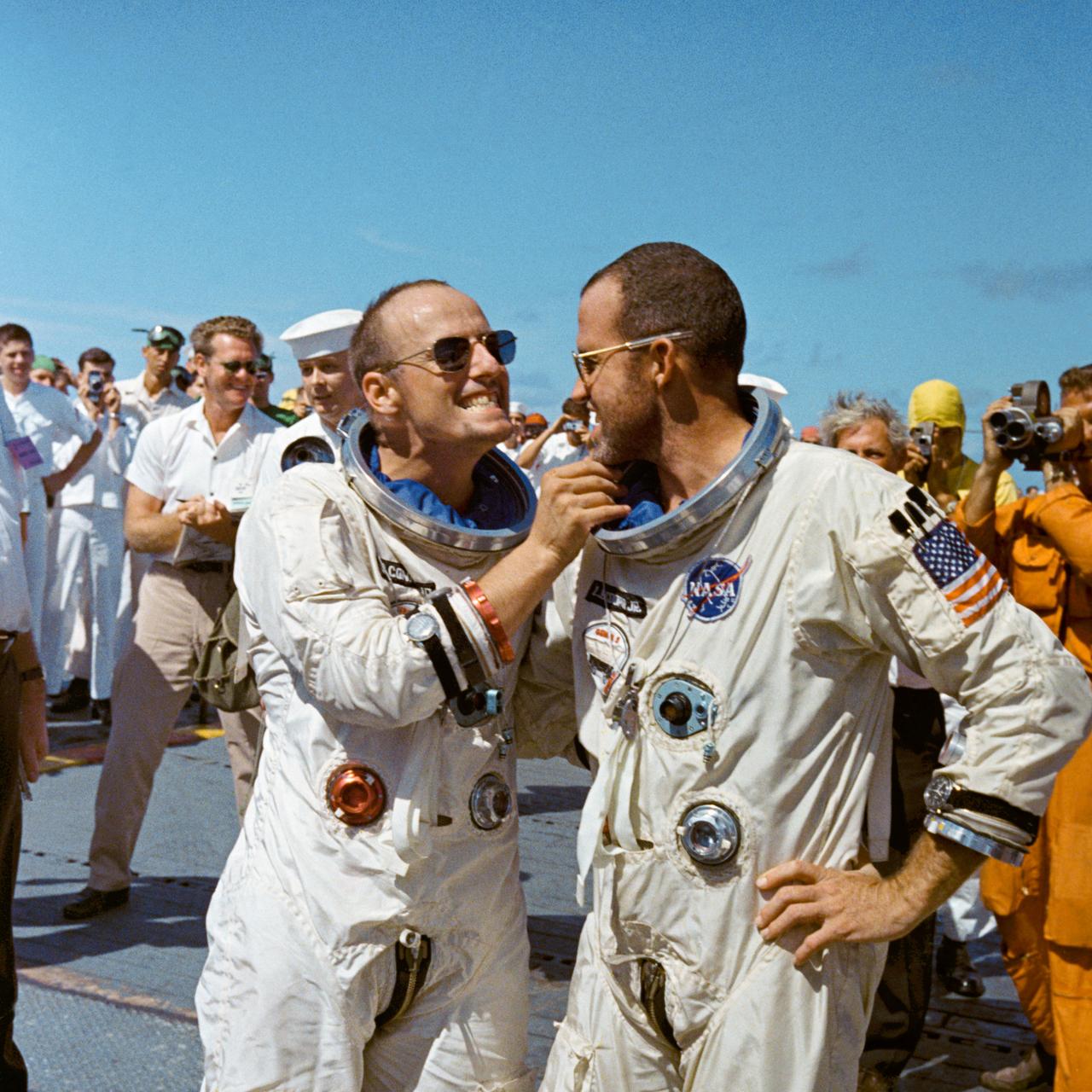
S65-46638 (29 Aug. 1965) --- Astronaut Charles Conrad Jr. tweaks astronaut L. Gordon Cooper's eight-day growth of beard for the cameramen while onboard the prime recovery vessel after their Gemini-5 flight.
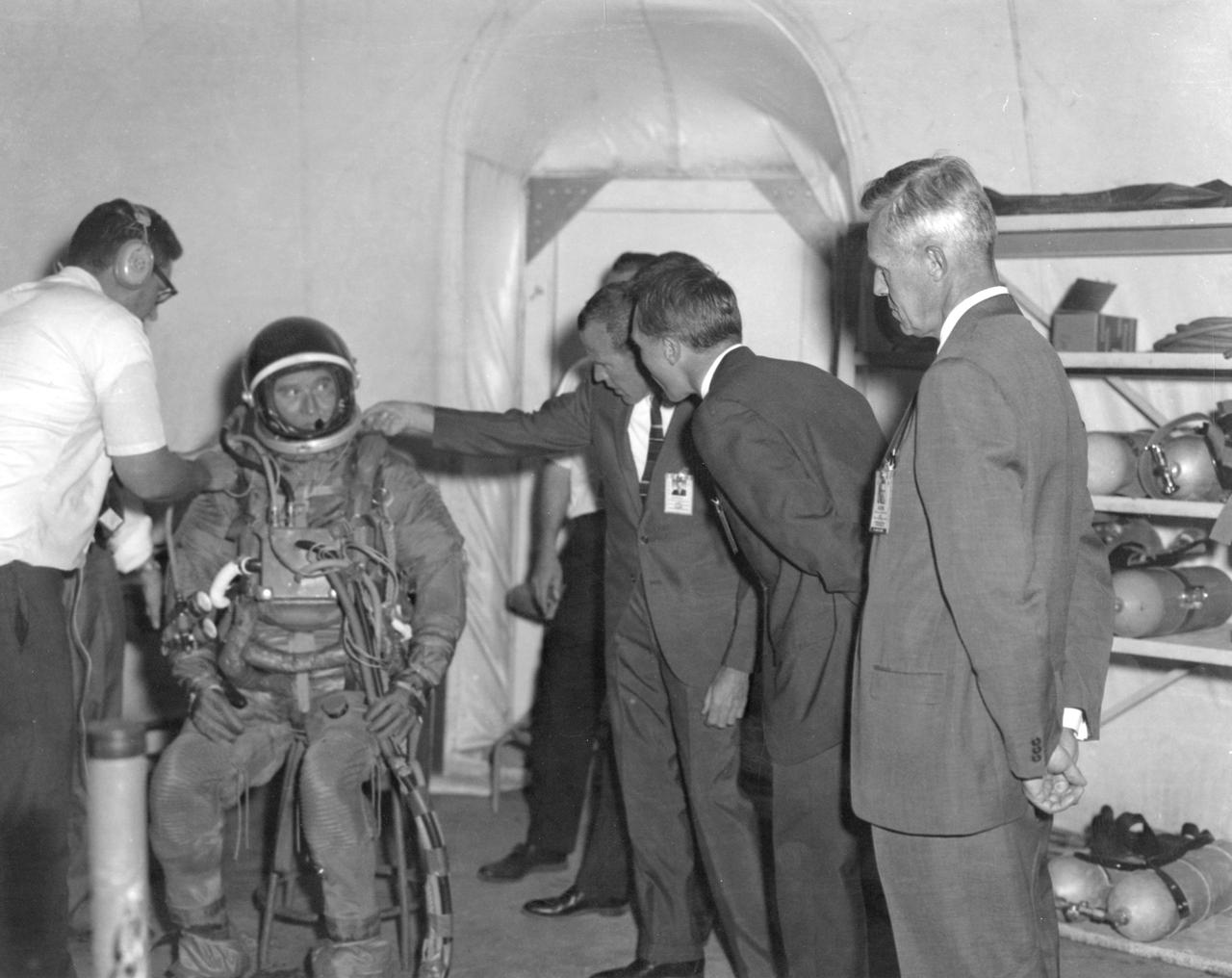
Astronaut L. Gordon Cooper checks the neck ring of a space suit worn by Marshall Space Flight Center (MSFC) Director, Dr. von Braun before he submerges into the water of the MSFC Neutral Buoyancy Simulator (NBS). Wearing a pressurized suit and weighted to a neutrally buoyant condition, Dr. von Braun was able to perform tasks underwater which simulated weightless conditions found in space.
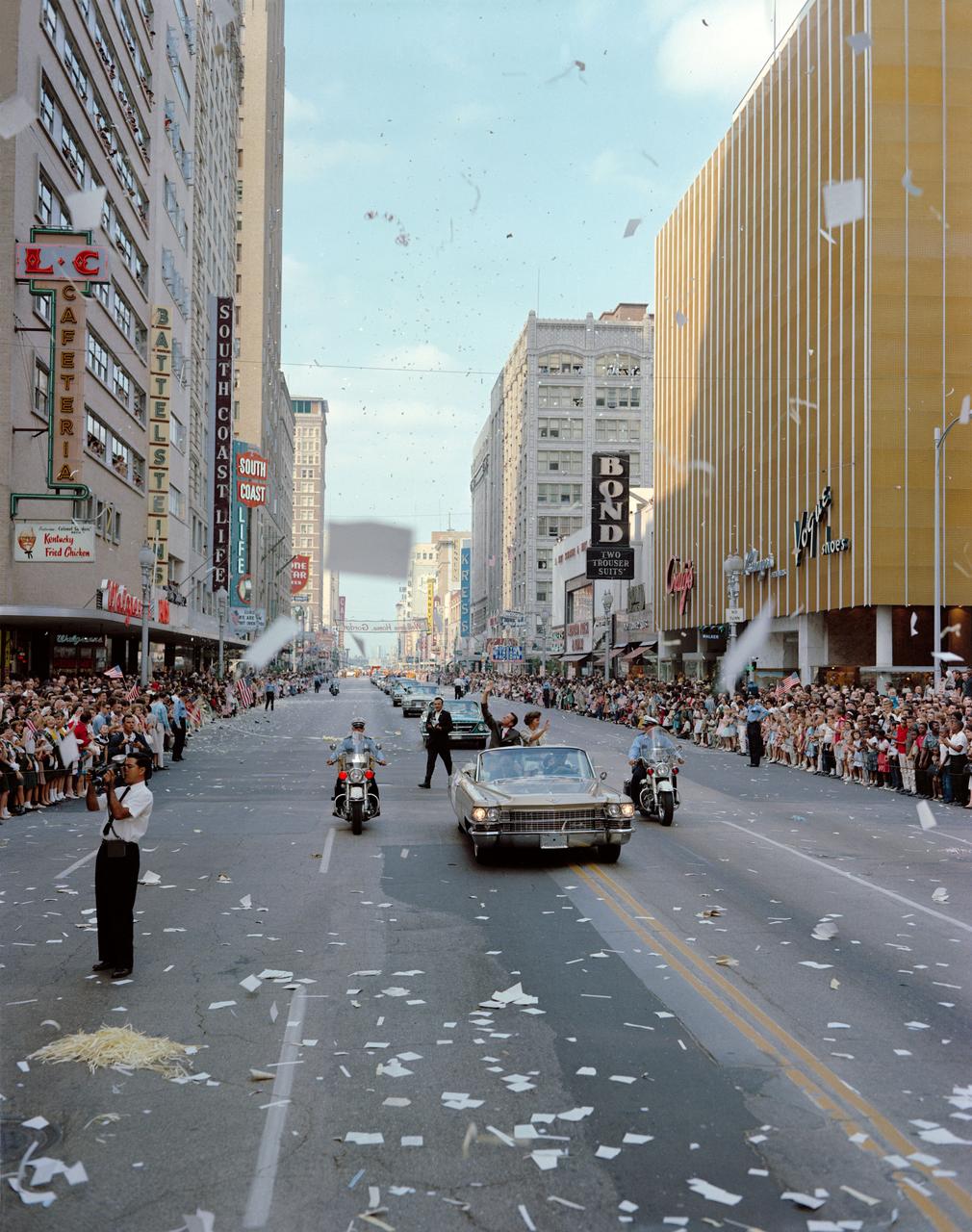
View of Astronaut Gordon Cooper Homecoming Parade after 22-orbit flight. HOUSTON, TX CN
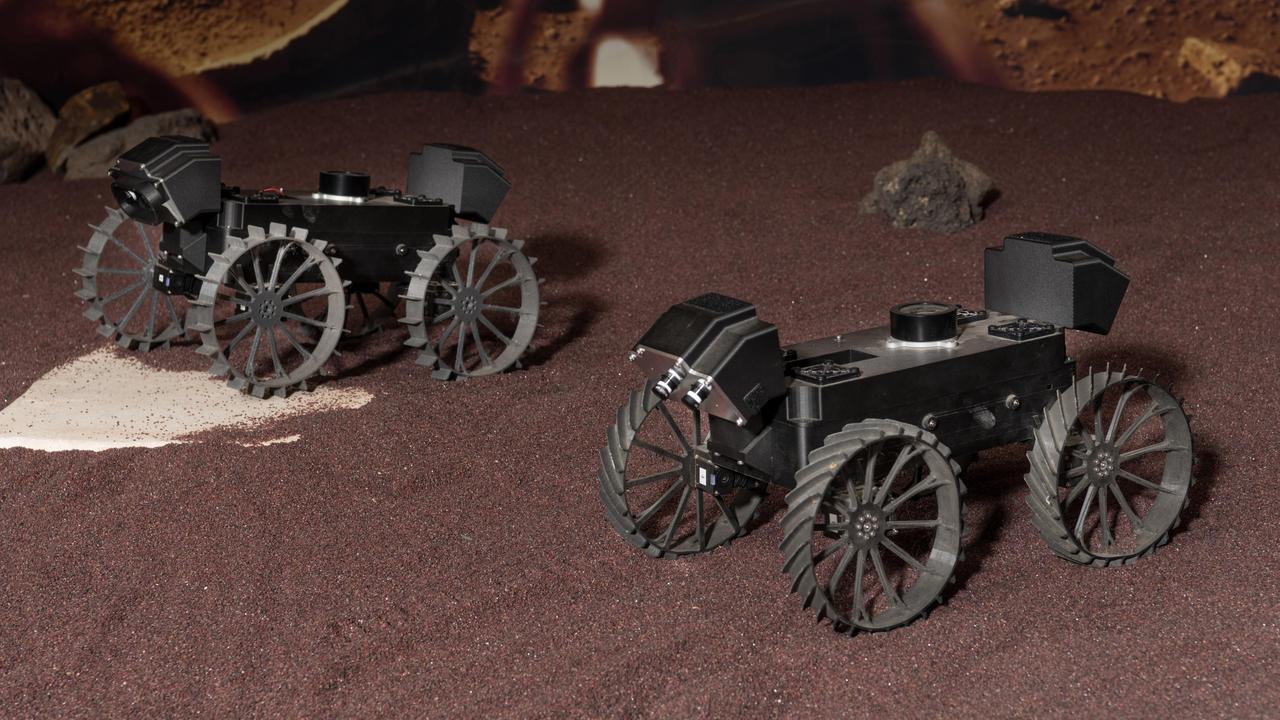
Prototypes of the rovers being built for NASA's CADRE (Cooperative Autonomous Distributed Robotic Exploration) technology demonstration were tested at the agency's Jet Propulsion Laboratory in Southern California in August 2022. CADRE is a technology demonstration designed to show that multiple robots can cooperate and explore together autonomously – without direct input from human mission controllers. By taking simultaneous measurements from multiple locations, CADRE will also demonstrate how multirobot missions can record data impossible for a single robot to achieve – a tantalizing prospect for future missions. The CADRE team dubbed the seven plastic test prototypes the "Mercury 7" and named each after one of NASA's seven Project Mercury astronauts. John (for John Glenn) and Scott (for Scott Carpenter) are shown here in a sandbox during a test of the rovers' capability for driving in formation. The formation-driving algorithm will be used to help CADRE rovers map the lunar surface and subsurface with cameras and sensors. The prototypes are smaller than the three CADRE rovers slated to arrive at the Moon aboard a lander in spring 2024 as part of NASA's CLPS (Commercial Lunar Payload Services) initiative. Those flight models will be about the size of a carry-on suitcase. https://photojournal.jpl.nasa.gov/catalog/PIA25666

A development model rover that is part of NASA's CADRE (Cooperative Autonomous Distributed Robotic Exploration) technology demonstration took its first autonomous drive around the Mars Yard at the agency's Jet Propulsion Laboratory in Southern California in June 2023. The CADRE team tested a new wheel design, surface navigation software, and mobility capabilities, among other aspects of the project. Engineer Kristopher Sherrill is shown recording video of the test. The rover being tested is similar in size and appearance to the flight models of the CADRE rovers, which are still being built. Slated to arrive at the Moon in spring 2024 as part of NASA's CLPS (Commercial Lunar Payload Services) initiative, CADRE is designed to demonstrate that multiple robots can cooperate and explore together autonomously – without direct input from human mission controllers. A trio of the miniature solar-powered rovers, each about the size of a carry-on suitcase, will explore the Moon as a team, communicating via radio with each other and a base station aboard a lunar lander. By taking simultaneous measurements from multiple locations, CADRE will also demonstrate how multirobot missions can record data impossible for a single robot to achieve – a tantalizing prospect for future missions. Movie available at https://photojournal.jpl.nasa.gov/catalog/PIA25665
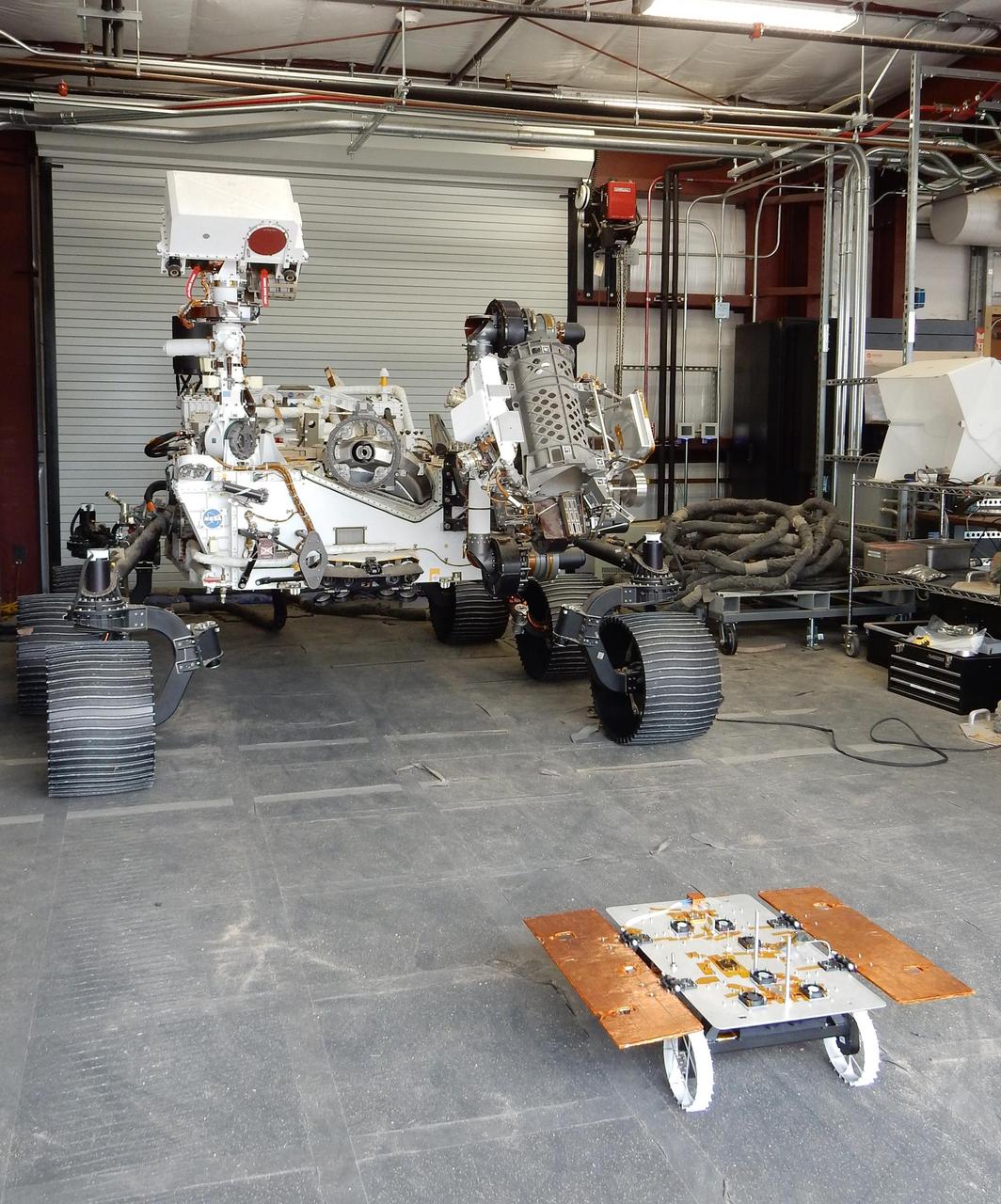
The Earth-bound full-scale engineering model of NASA's Perseverance rover, called OPTIMISM, seems to peer down at a much smaller CADRE rover in a building in the Mars Yard at NASA's Jet Propulsion Laboratory in Southern California in June 2023. Short for Cooperative Autonomous Distributed Robotic Exploration, NASA's CADRE technology demonstration is slated to arrive at the Moon in spring 2024 as part of the agency's CLPS (Commercial Lunar Payload Services) initiative. CADRE is designed to demonstrate that multiple robots can cooperate and explore together autonomously – without direct input from human mission controllers. The development rover being tested is similar in size and appearance to the flight models of the CADRE rovers, which are still being built. A trio of the miniature solar-powered rovers, each about the size of a carry-on suitcase, will explore the Moon as a team, communicating via radio with each other and a base station aboard a lunar lander. By taking simultaneous measurements from multiple locations, CADRE will also demonstrate how multirobot missions can record data impossible for a single robot to achieve – a tantalizing prospect for future missions. https://photojournal.jpl.nasa.gov/catalog/PIA25668
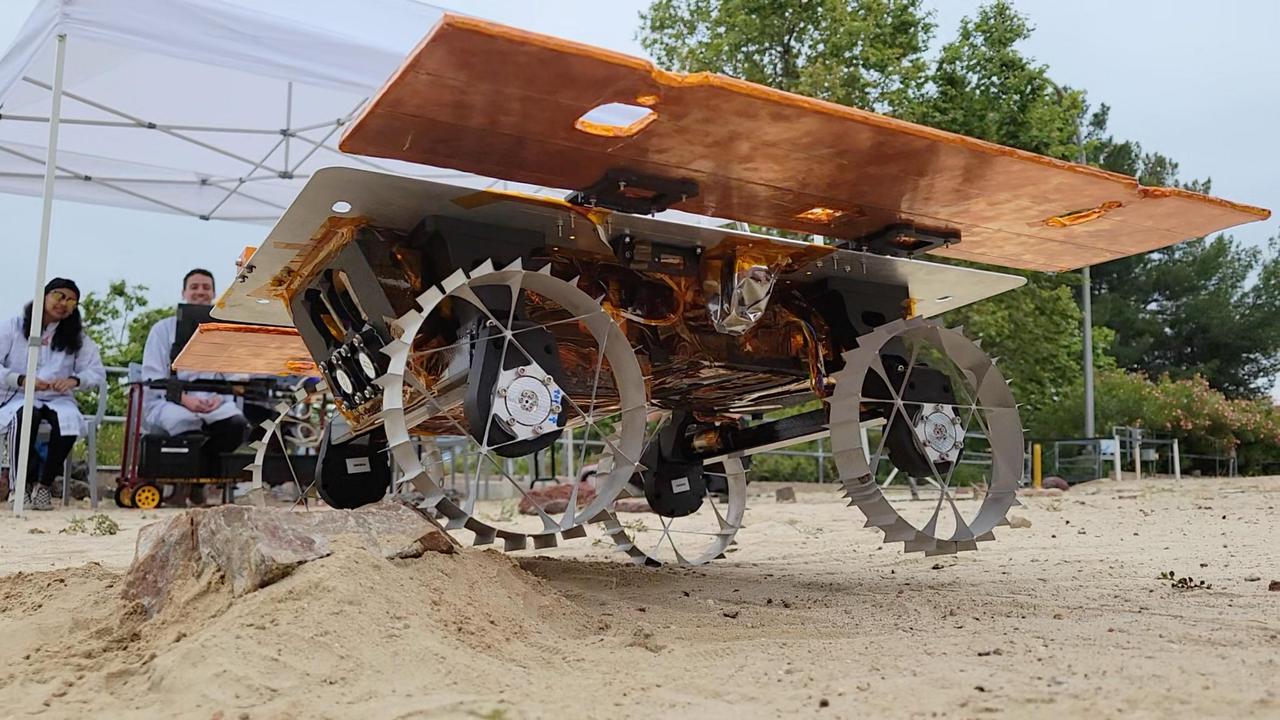
A development rover that is part of NASA's CADRE (Cooperative Autonomous Distributed Robotic Exploration) technology demonstration drives over a rock during its first autonomous drive around the Mars Yard at the agency's Jet Propulsion Laboratory in Southern California in June 2023. Under a canopy behind the rover are, from left, graduate student intern Natalie Deo and CADRE verification and validation lead Sawyer Brooks of JPL. The CADRE team successfully tested a new wheel design, surface navigation software, and mobility capabilities, among other aspects of the project. The rover being tested is similar in size and appearance to the flight models of the CADRE rovers, which are still being built. Slated to arrive at the Moon in spring 2024 as part of NASA's CLPS (Commercial Lunar Payload Services) initiative, CADRE is designed to demonstrate that multiple robots can cooperate and explore together autonomously – without direct input from human mission controllers. A trio of the miniature solar-powered rovers, each about the size of a carry-on suitcase, will explore the Moon as a team, communicating via radio with each other and a base station aboard a lunar lander. By taking simultaneous measurements from multiple locations, CADRE will also demonstrate how multirobot missions can record data impossible for a single robot to achieve – a tantalizing prospect for future missions. Movie available at https://photojournal.jpl.nasa.gov/catalog/PIA25667
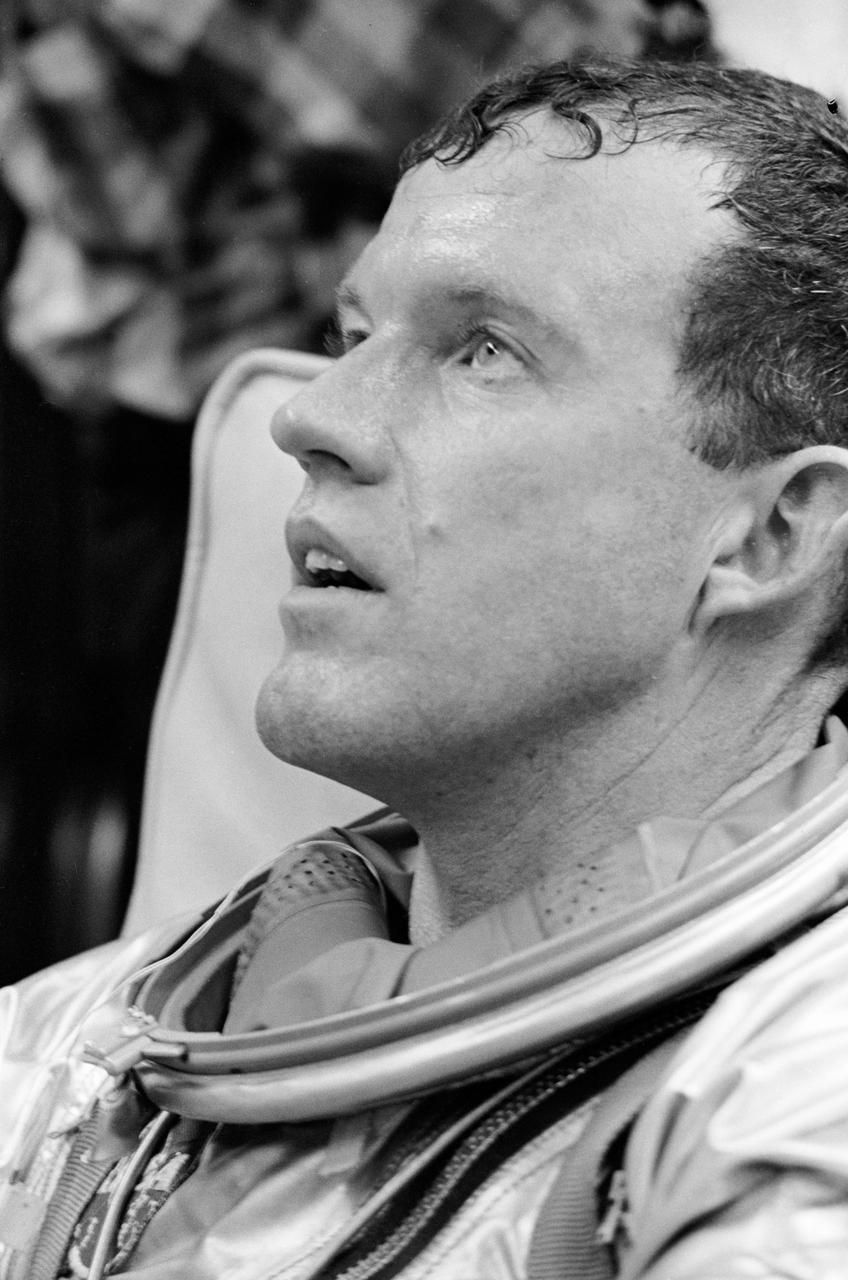
S63-03984 (1963) --- Astronaut L. Gordon Cooper Jr., prime pilot for the Mercury-Atlas 9 (MA-9) mission, is pictured just after his helmet had been removed. He has just spent approximately five hours in the spacecraft during altitude chamber tests. Photo credit: NASA
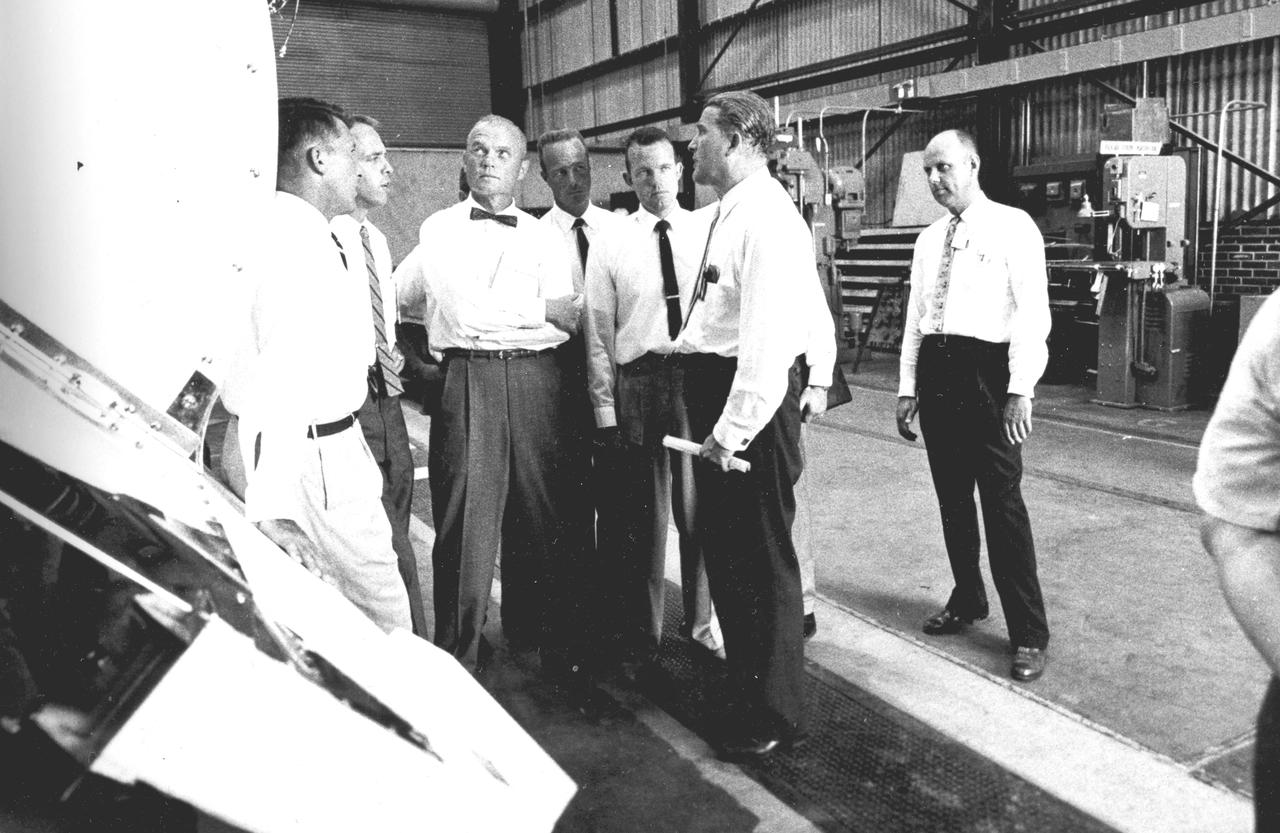
Five of the seven original astronauts are seen with Dr. von Braun inspecting the Mercury-Redstone hardware in the Fabrication Laboratory of Army Ballistic Missile Agency (ABMA) in 1959. Left to right: Astronauts Walter Schirra, Alan Shepard, John Glenn, Scott Carpenter, Gordon Cooper, and Dr. von Braun.
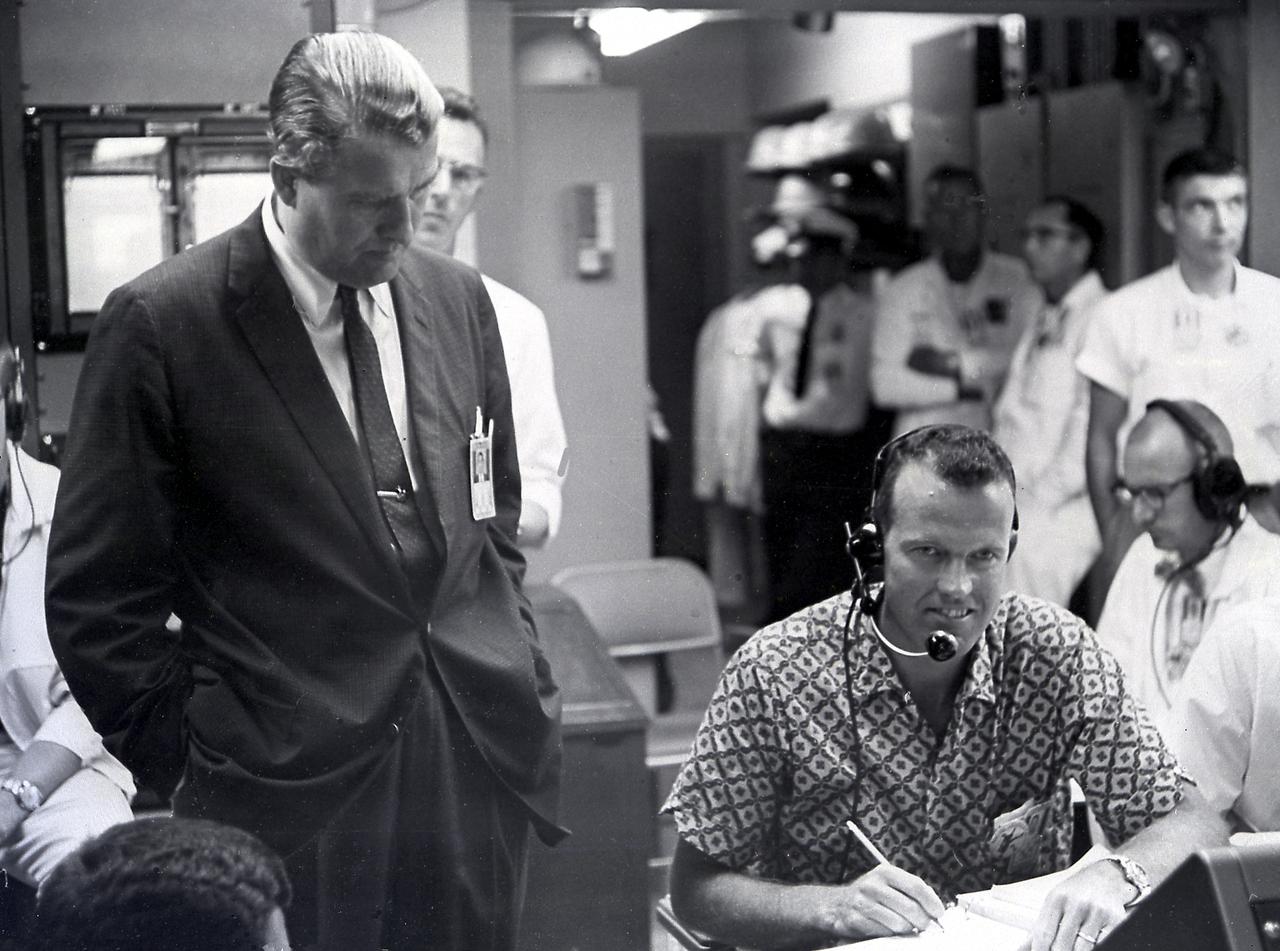
Photographed are Dr. von Braun and Astronaut L. Gordon Cooper in the blockhouse during the recovery operation of the MR-3 (Freedom 7) mission on May 5, 1961. The MR-3 mission, a 15-1/2-minute suborbital test flight, put the first American astronaut, Alan Shepard, in space.
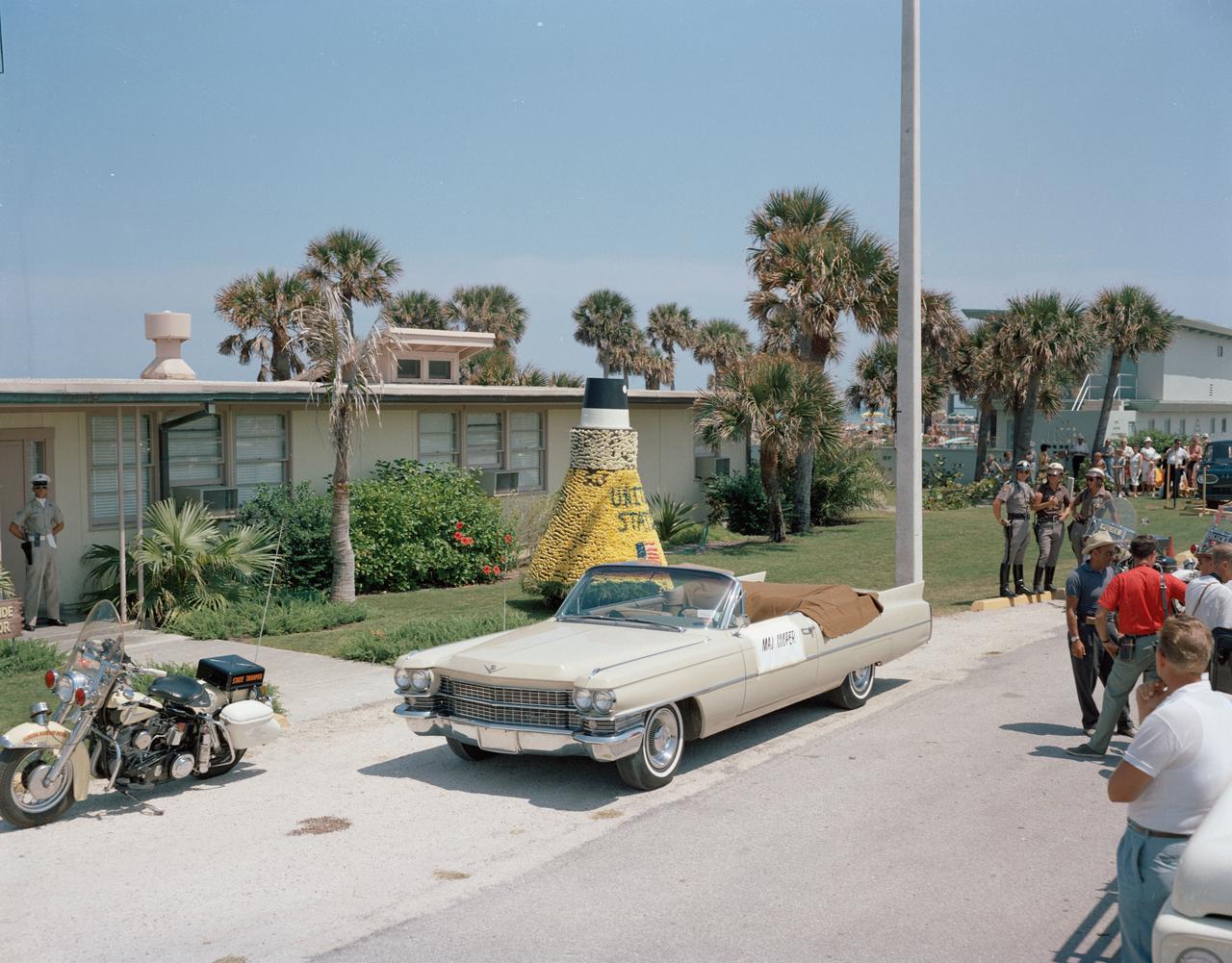
S63-07642 (1963) --- Arrival of astronaut L. Gordon Cooper Jr. at Patrick Air Force Base for parade in his honor. Photo credit: NASA
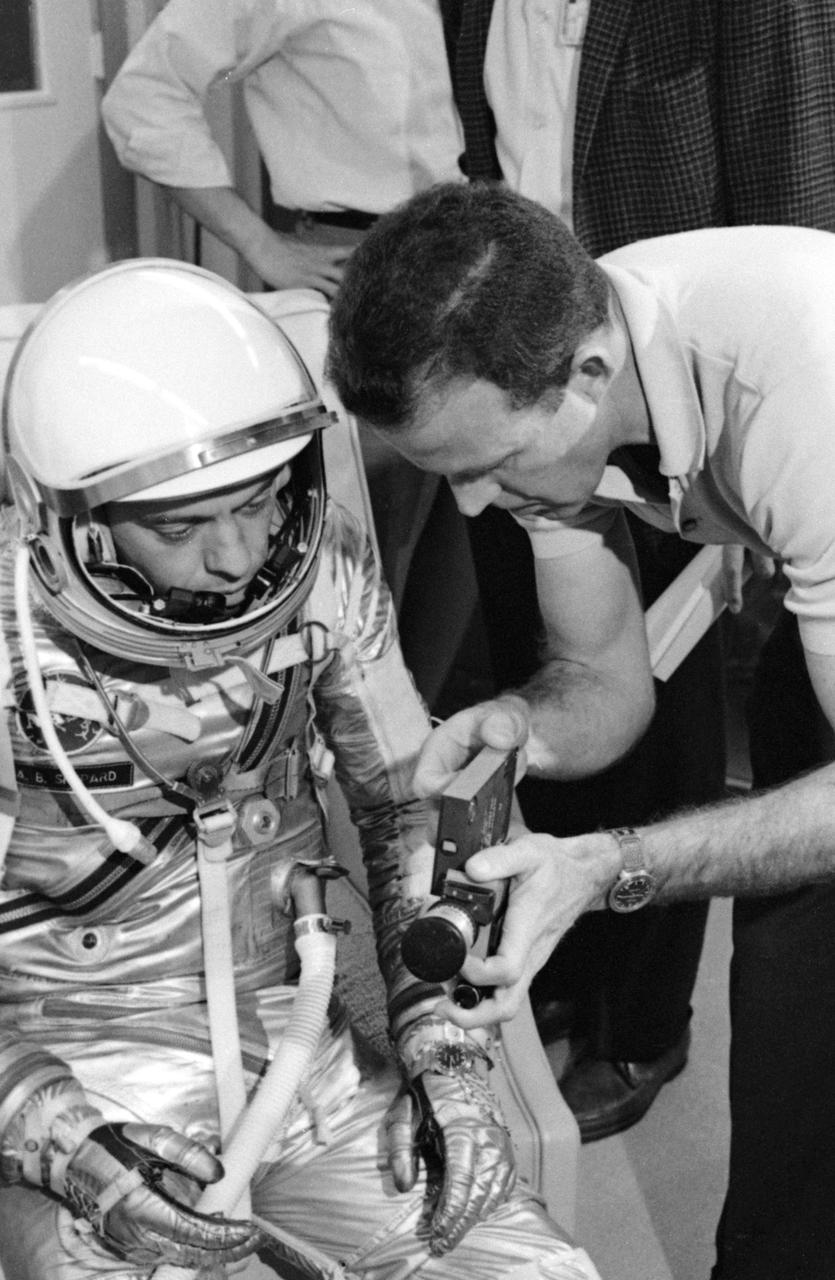
S63-03952 (1963) --- Astronaut L. Gordon Cooper Jr. explains the 16mm handheld spacecraft camera to his backup pilot astronaut Alan Shepard. The camera, designed by J.R. Hereford of McDonnell Aircraft Corp., will be used by Cooper during the Mercury-Atlas 9 (MA-9) mission to photograph experiments in space for M.I.T. and the Weather Bureau. Photo credit: NASA

S63-07602 (15 May 1963) --- This is the launch of Mercury-Atlas 9 (MA-9) on May 15, 1963, at 8:04 a.m. (EST) carrying astronaut L. Gordon Cooper Jr., pilot. Astronaut Cooper made 22 orbits in 34 hours and 19 minutes, in a spacecraft designated the ?Faith 7." Photo credit: NASA
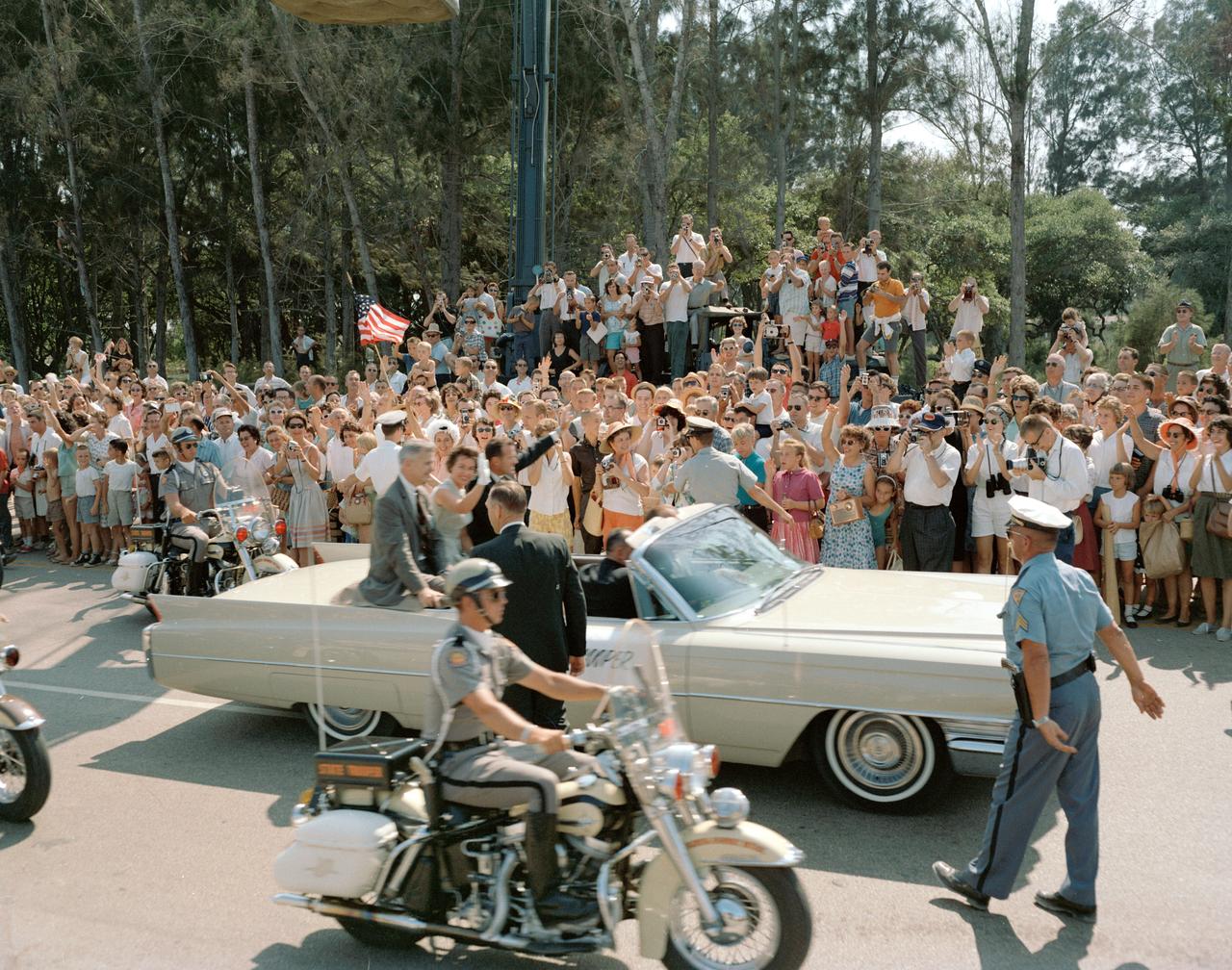
S63-07645 (1963) --- Astronaut L. Gordon Cooper Jr. and his wife at Patrick Air Force Base rides a convertible in a parade given in his honor. Photo credit: NASA
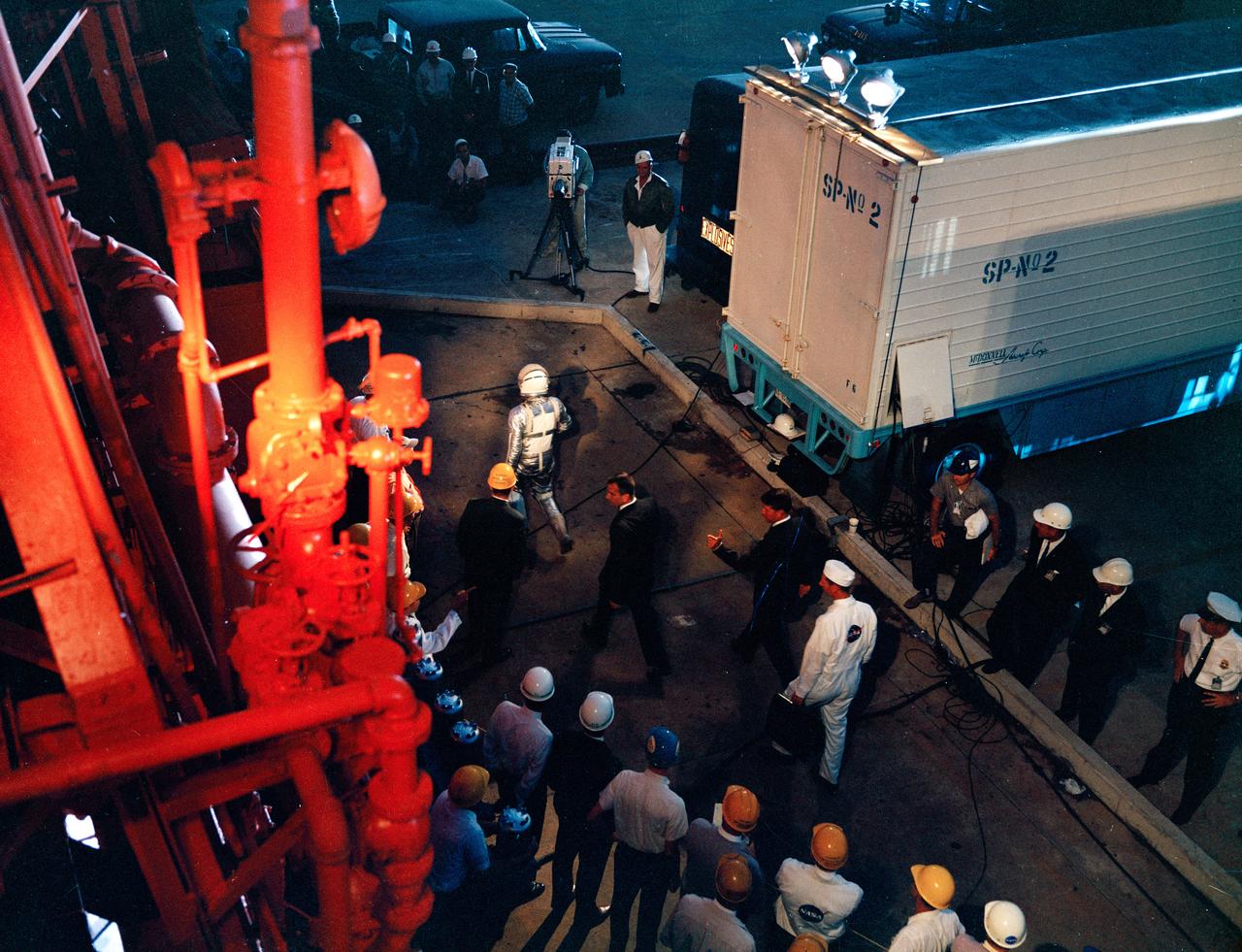
S63-07632 (15 May 1963) --- Astronaut L. Gordon Cooper Jr. leaves the transfer van for the launch pad and the beginning of the Mercury-Atlas 9 (MA-9) flight on May 15, 1963. Photo credit: NASA
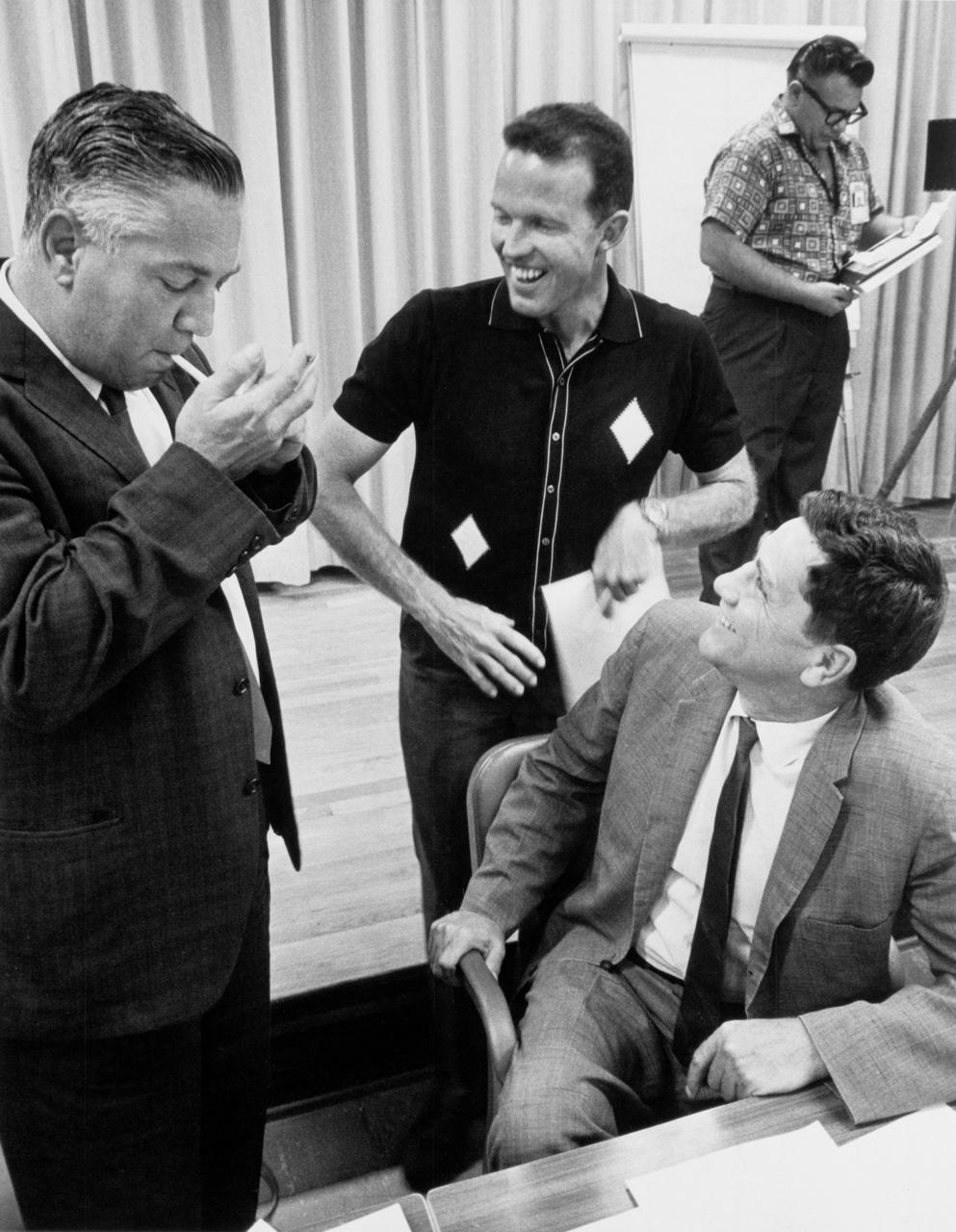
S63-06123 (1963) --- Walter C. Williams, astronaut L. Gordon Cooper Jr., and Merritt Preston are pictured during an Mercury Atlas 9 (MA-9) prelaunch mission review. Photo credit: NASA
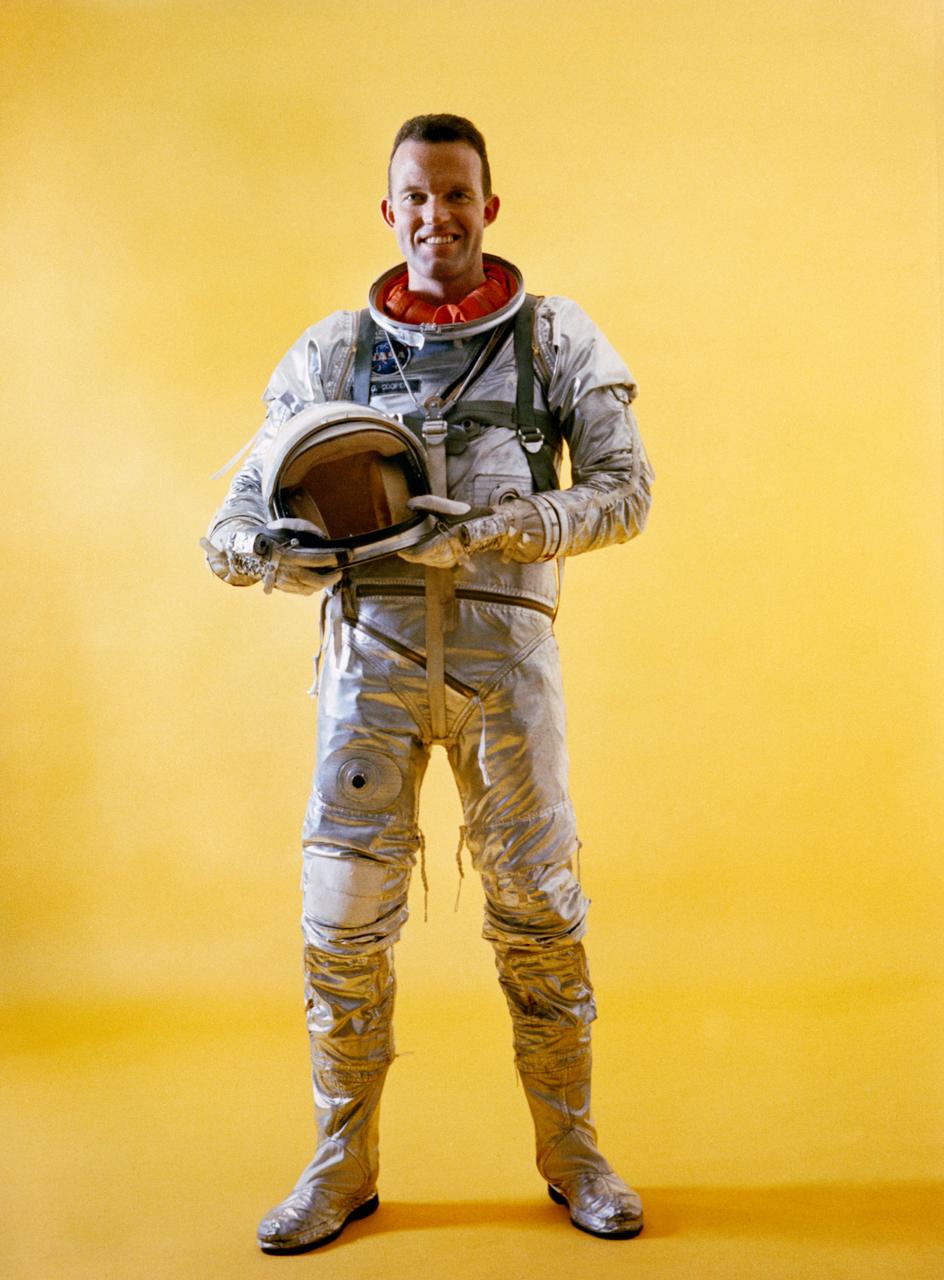
S63-01755 (May 1963) --- Full-length portrait of Mercury astronaut L. Gordon Cooper Jr., in spacesuit during Mercury-Atlas 9 prelaunch activities. Photo credit: NASA
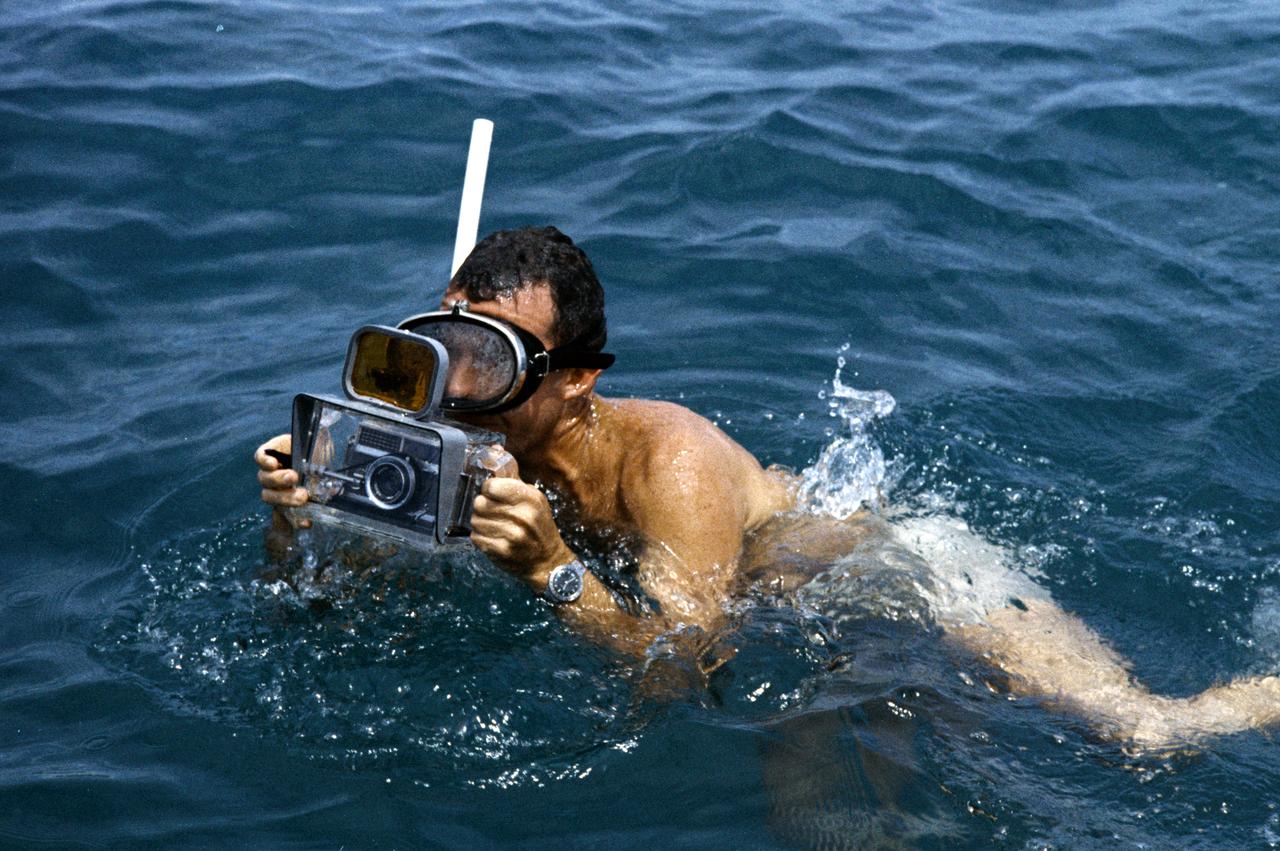
S62-05161 (1962) --- Astronaut L. Gordon Cooper Jr. participates in Mercury water egress training. He is wearing a snorkel and holding a camera for underwater photography. Photo credit: NASA
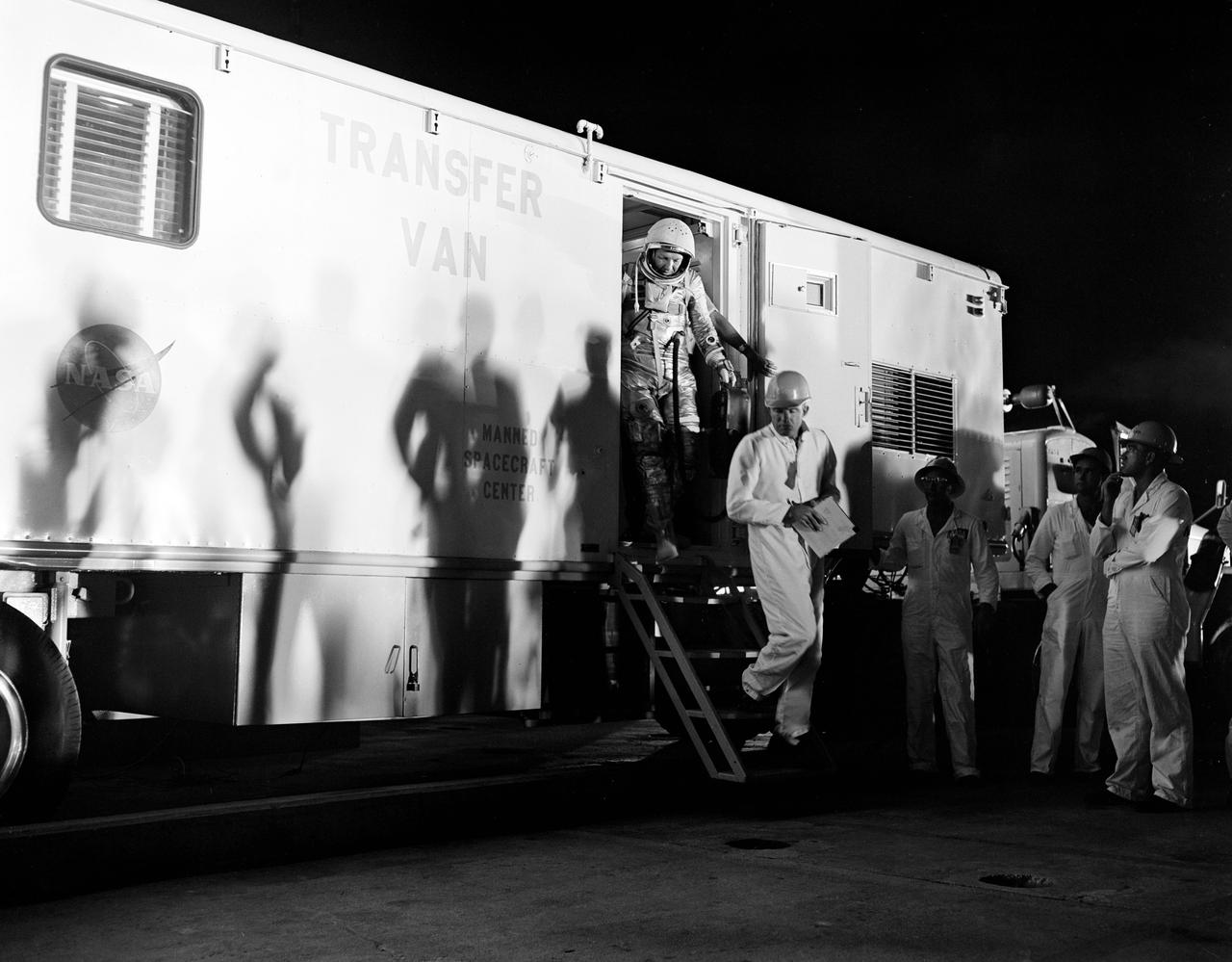
S62-06008 (3 Oct. 1962) --- Astronaut Walter M. Schirra Jr., pilot of the Mercury-Atlas 8 (MA-8) Earth-orbital spaceflight, steps from a transport van as he arrives at Cape Canaveral's Pad 14 during the MA-8 prelaunch countdown. Schirra is accompanied by astronaut L. Gordon Cooper Jr. (in white coveralls), MA-8 backup pilot. Photo credit: NASA
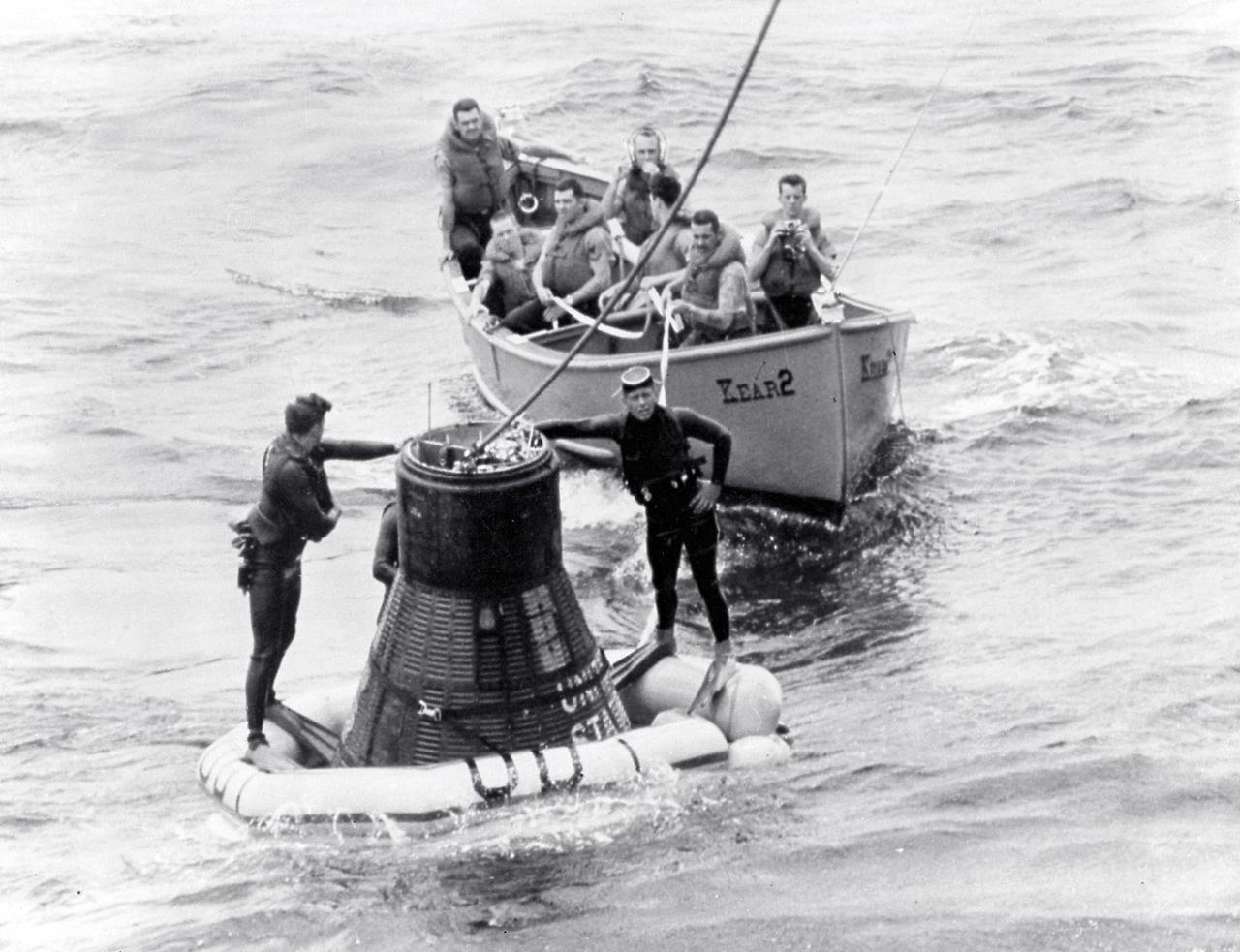
The recovery operation of the Faith 7 spacecraft after the completion of the 1-1/2 day orbital flight (MA-9 mission) with Astronaut Gordon Cooper. Navy frogmen attach the flotation collar to the spacecraft. The MA-9 mission was the last flight of the Mercury Project and launched on May 15, 1963 boosted by The Mercury-Atlas launch vehicle.
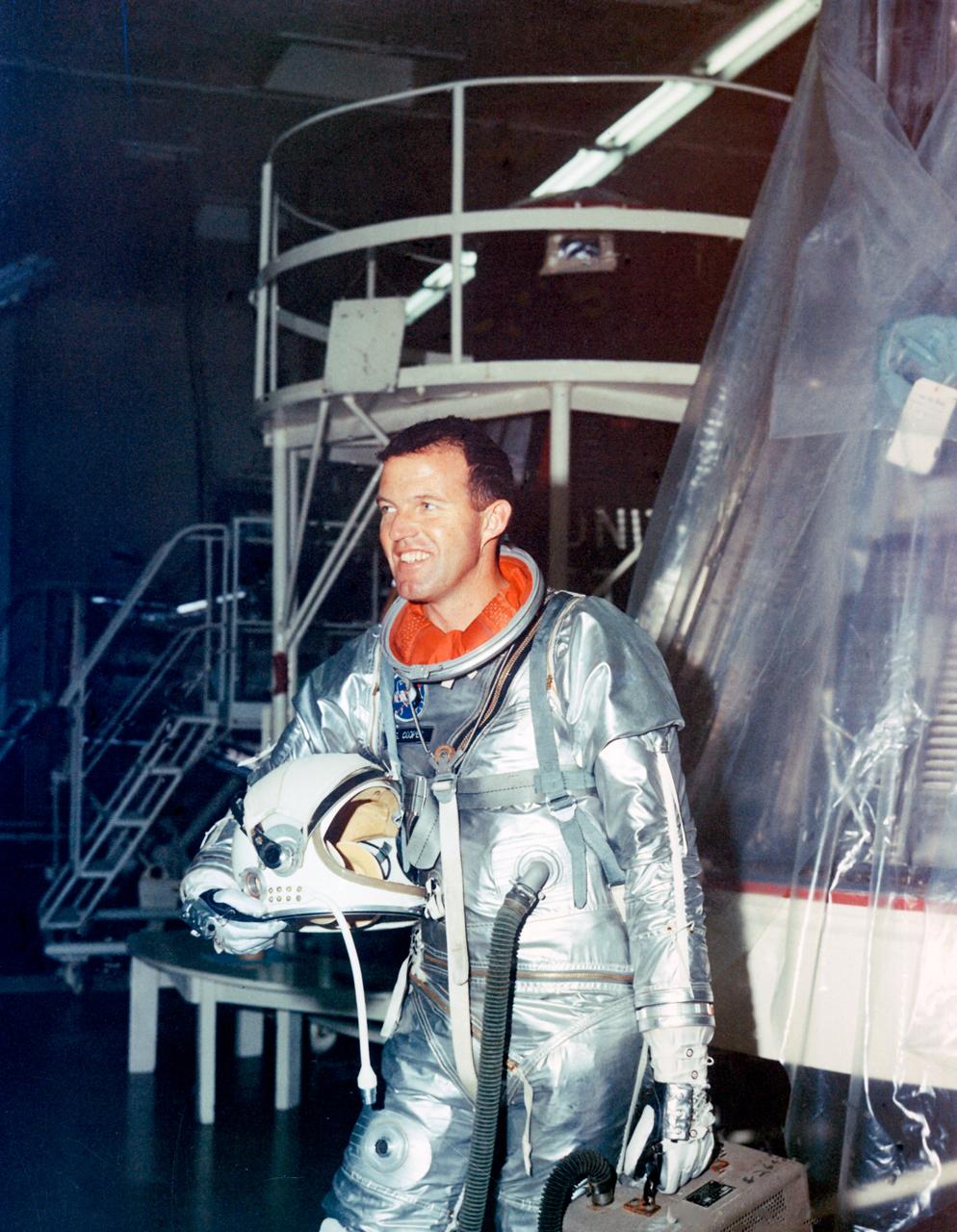
S63-01922 (1963) --- Astronaut L. Gordon Cooper Jr., pilot for the Mercury-Atlas 9 (MA-9) mission, stands fully suited beside his spacecraft during preflight testing. Cooper named his spacecraft the Faith 7. Photo credit: NASA
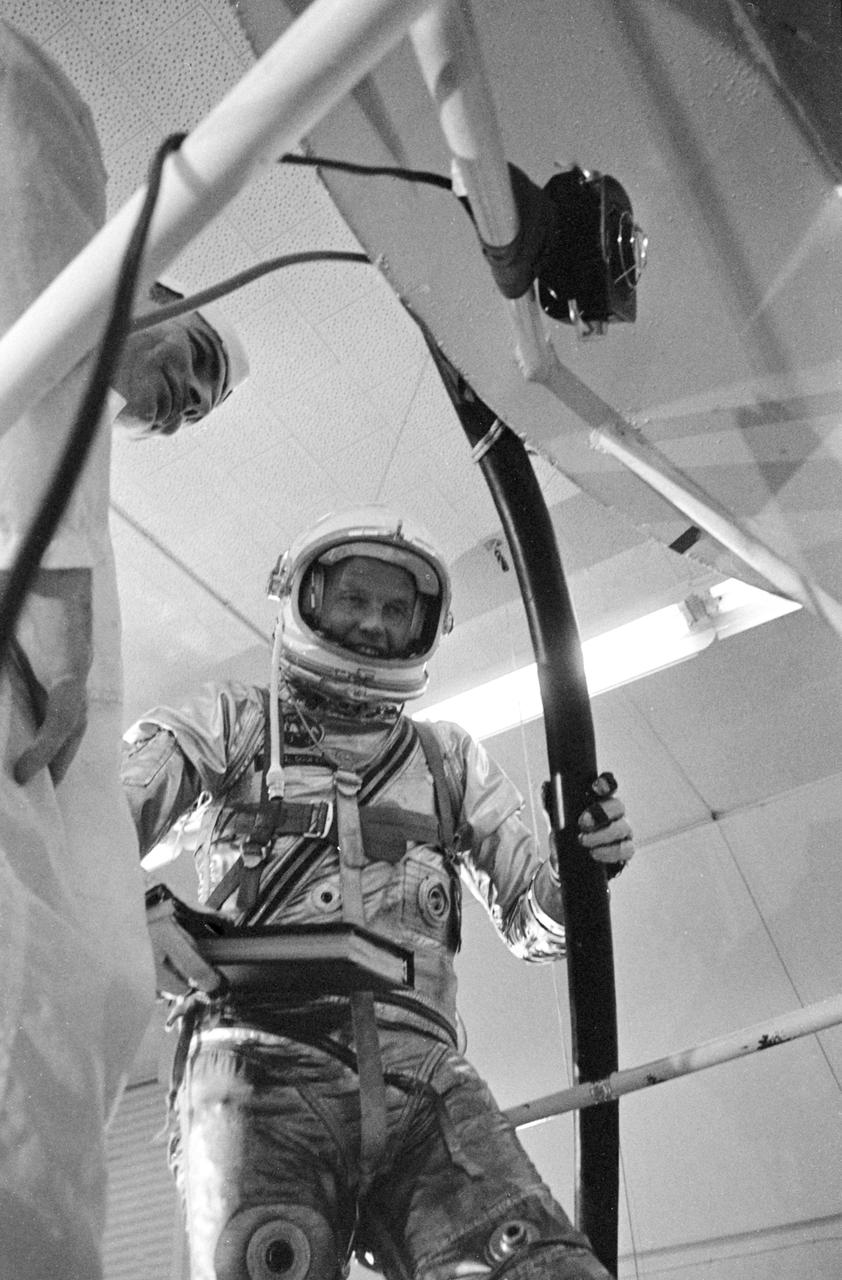
S63-03975 (1963) --- Astronaut L. Gordon Cooper Jr., prime pilot for the Mercury-Atlas 9 (MA-9) mission, is pictured prior to entering the Mercury spacecraft for a series of simulated flight tests. During these tests NASA doctors, engineers and technicians monitor Cooper's performance. Photo credit: NASA
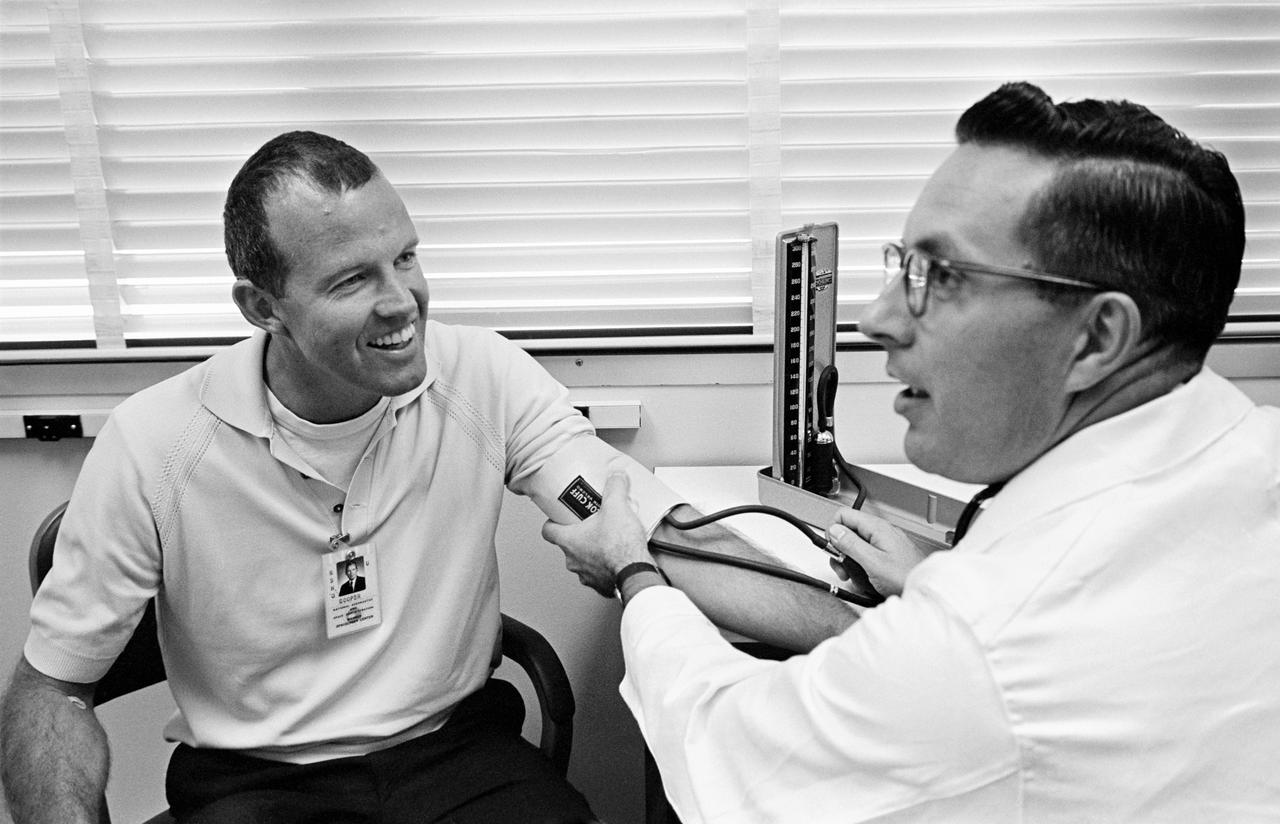
S65-28710 (17 Aug. 1965) --- Astronaut L. Gordon Cooper Jr., command pilot for the Gemini-5 spaceflight, has his blood pressure checked by Dr. Charles A. Berry, chief, Center Medical Programs, Manned Spacecraft Center, during a preflight physical examination.

S63-06445 (15-16 May 1963) --- View of the Himalaya Mountain Range in the India-Nepal-Tibet border area, as photographed from the Mercury-Atlas 9 capsule by astronaut L. Gordon Cooper Jr., during his 22-orbit MA-9 spaceflight. Photo credit: NASA
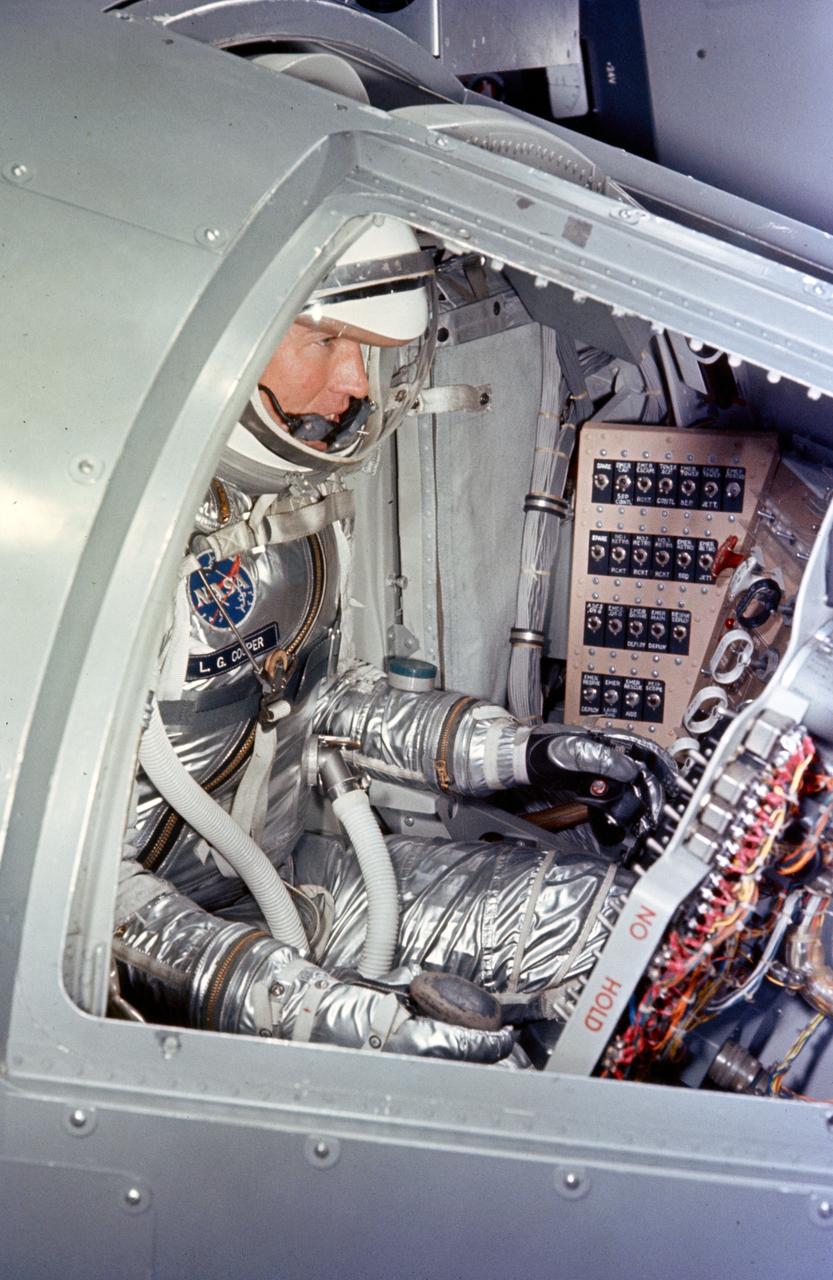
S64-14868 (1963) --- Astronaut L. Gordon Cooper Jr., pilot of the Mercury-Atlas 9 (MA-9) Earth-orbital space mission, participates in preflight simulation training inside his Mercury capsule at Cape Canaveral, Florida. Photo credit: NASA
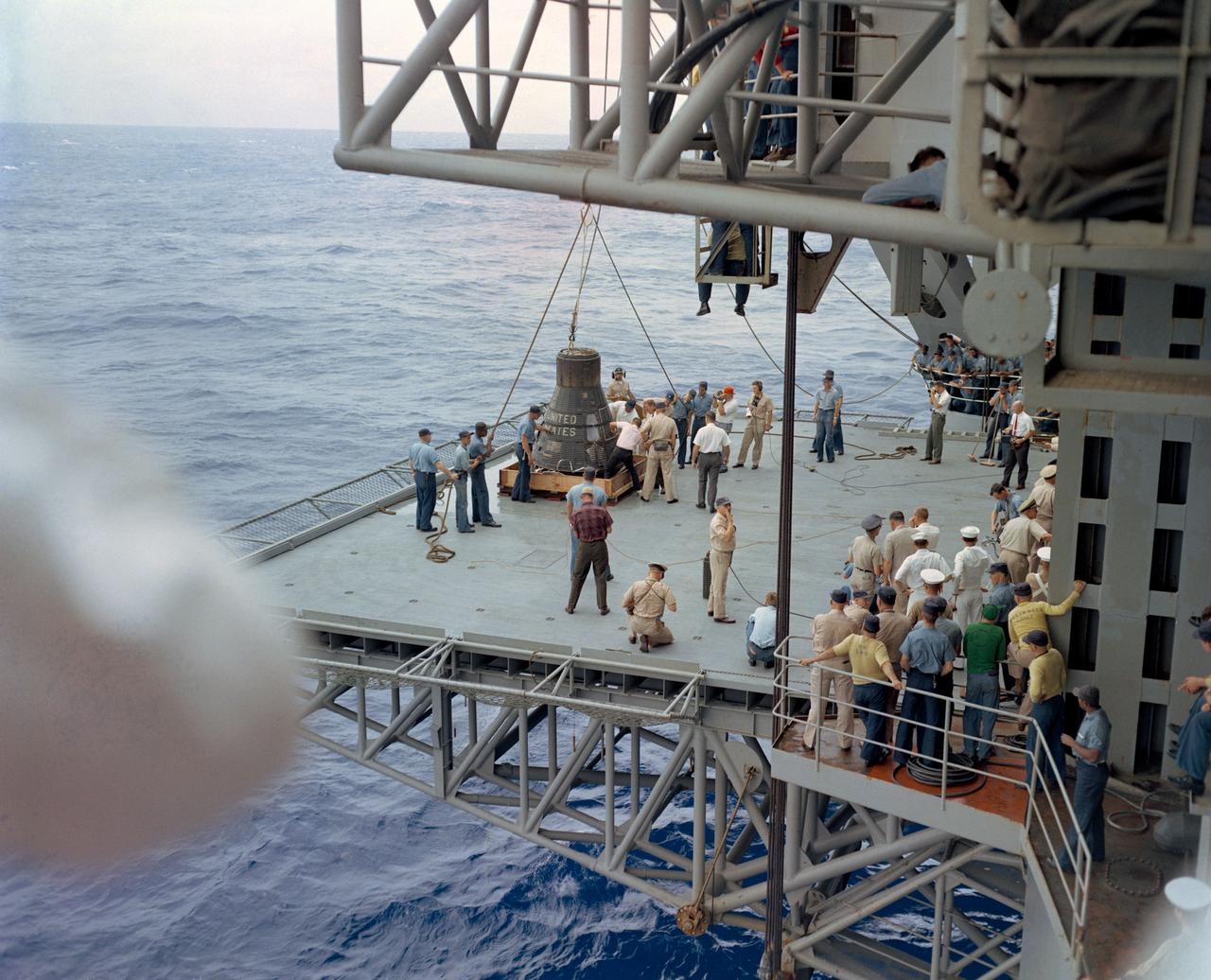
S63-07701 (16 May 1963) --- Recovery Force personnel bring the Mercury-Atlas 9 (MA-9) spacecraft aboard the prime recovery vessel following its successful flight into space. Pilot inside the spacecraft is astronaut L. Gordon Cooper Jr. Photo credit: NASA
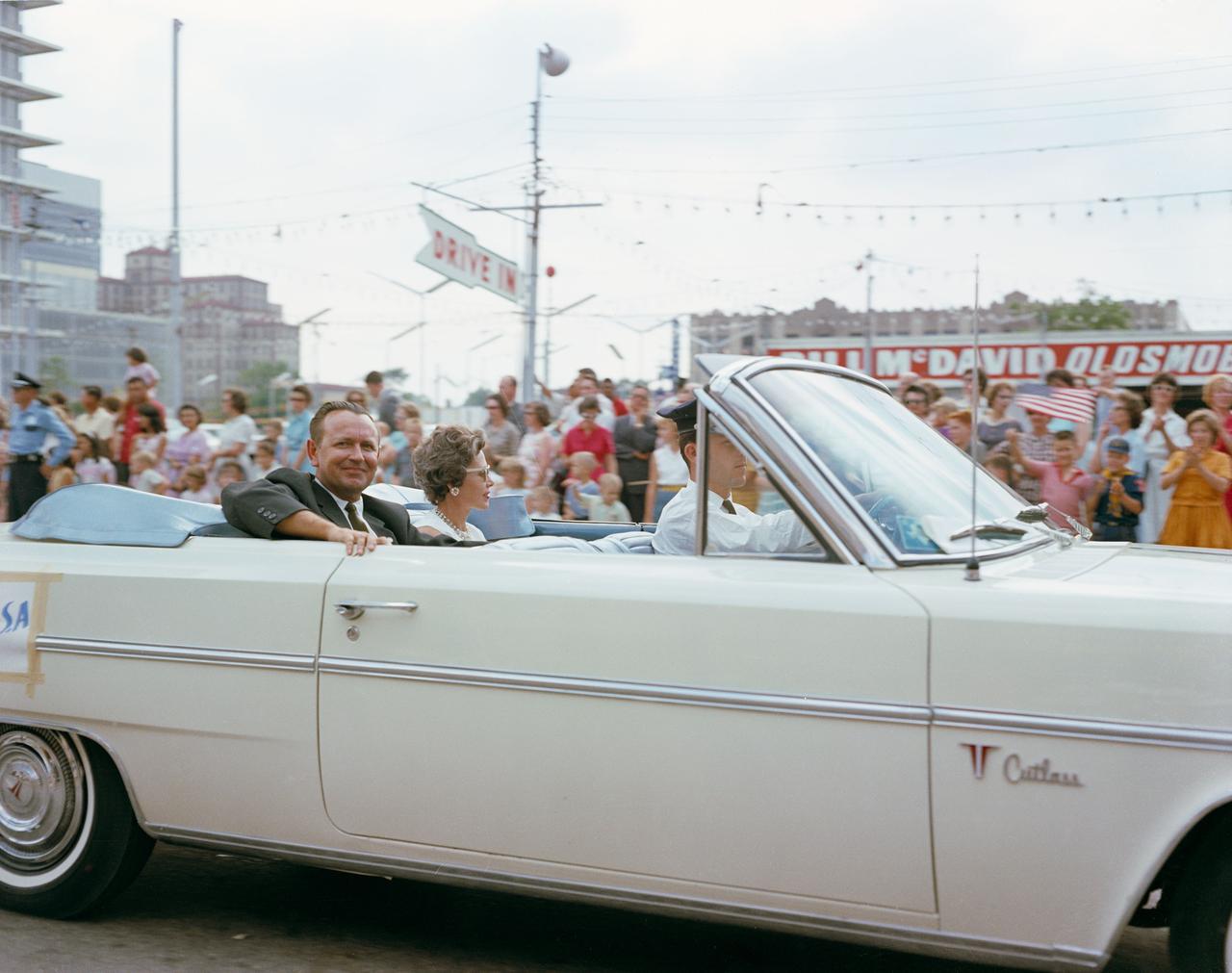
S63-07945 (23 May 1963) --- Flight Director Christopher C. Kraft Jr. rides in a Houston parade celebrating the successful completion of the final Mercury mission ? the MA-9 flight of astronaut Gordon Cooper. Photo credit: NASA
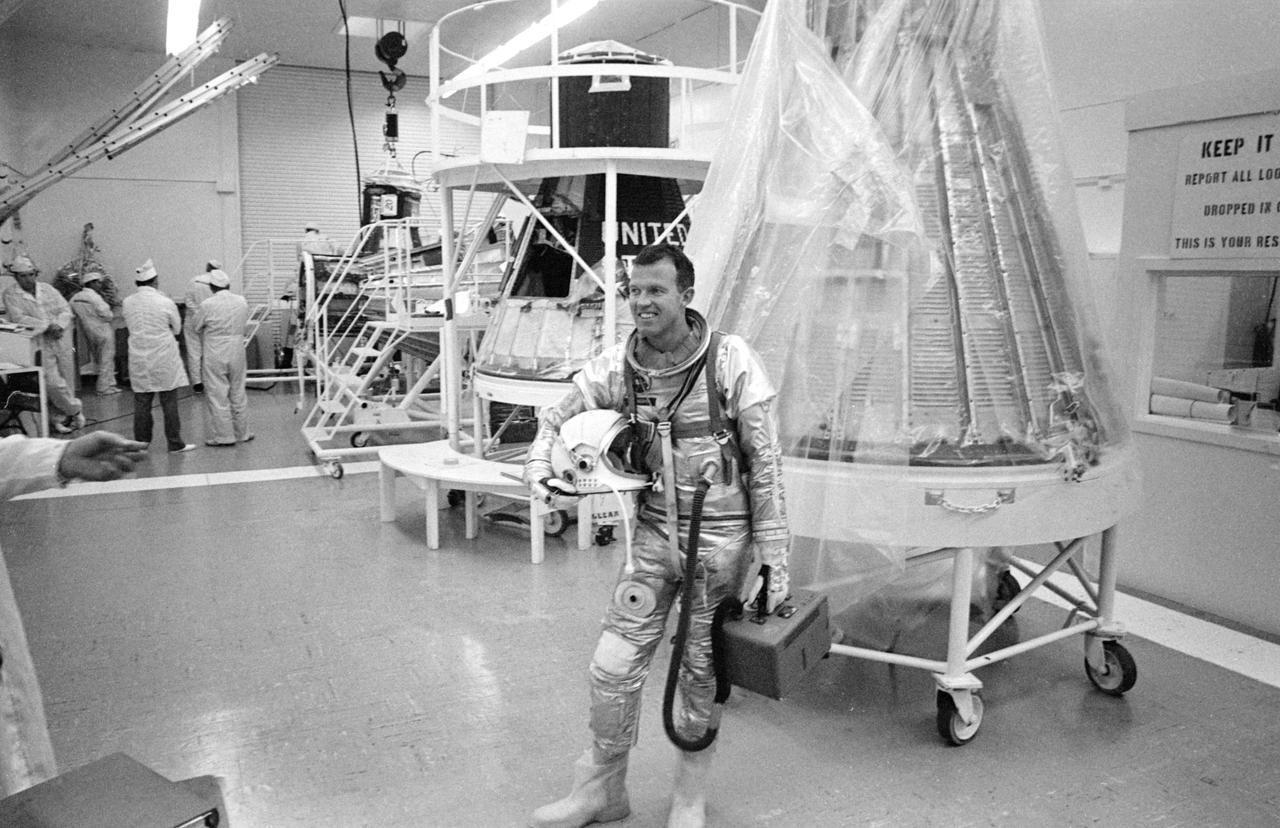
S63-03966 (1963) --- Astronaut L. Gordon Cooper Jr., prime pilot for the Mercury-Atlas 9 (MA-9) mission, carrying the portable air conditioner to his spacesuit, leaves Hangar S after completing the day's simulated flight tests. Photo credit: NASA
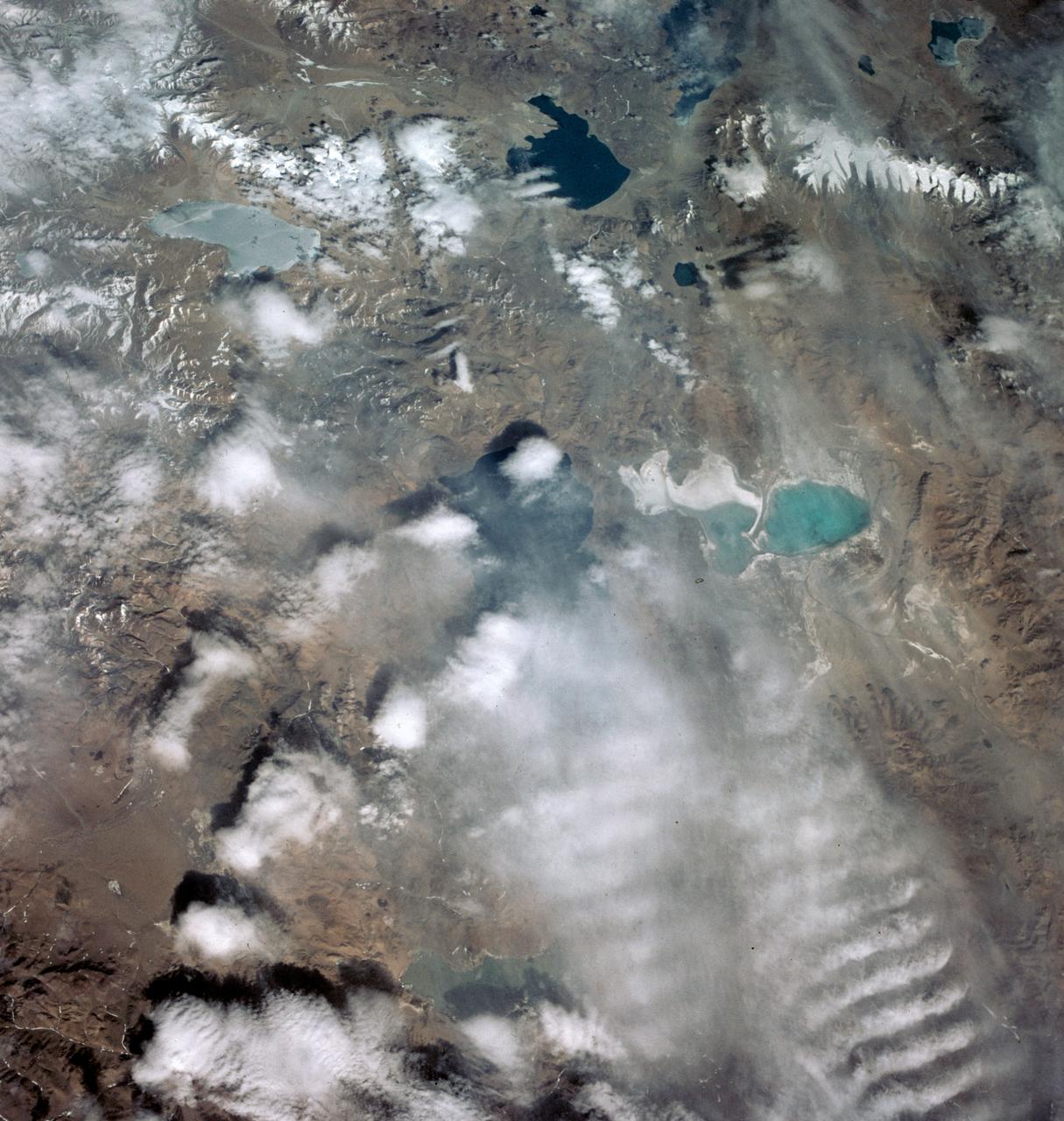
S63-06454 (15-16 May 1963) --- Tibetan Lake Country North of Katmandu, west of Ihasa, photographed from the Mercury-Atlas 9 (MA-9) capsule by astronaut L. Gordon Cooper Jr., during his 22-orbit MA-9 spaceflight. Photo credit: NASA
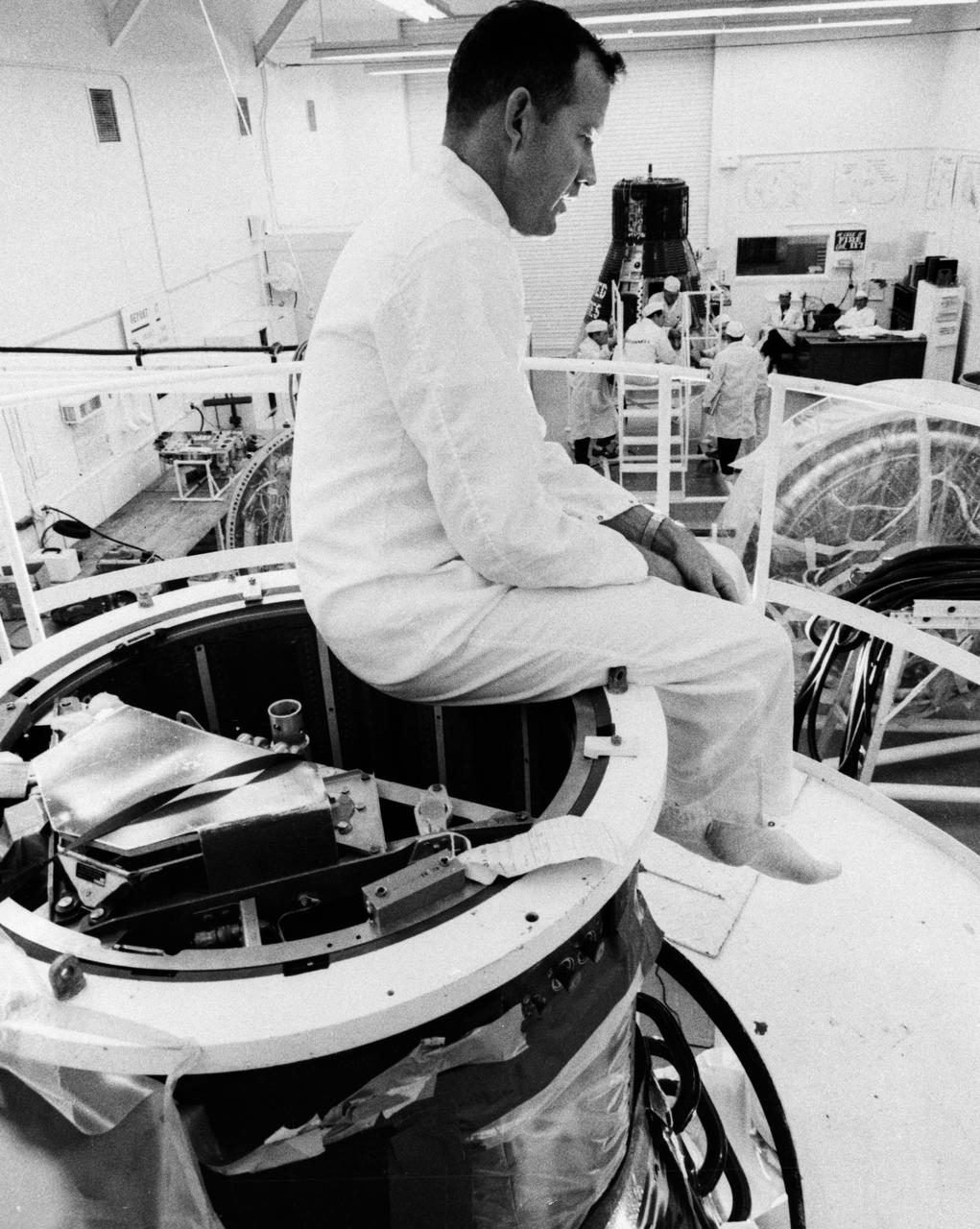
S63-03951 (January 1963) --- Astronaut L. Gordon Cooper Jr., prime pilot for the Mercury-Atlas 9 (MA-9) mission, practices his egress training at Hangar "S" White Room. The pilot may elect to egress from the neck of the spacecraft as shown or by the explosive actuated side hatch. Photo credit: NASA
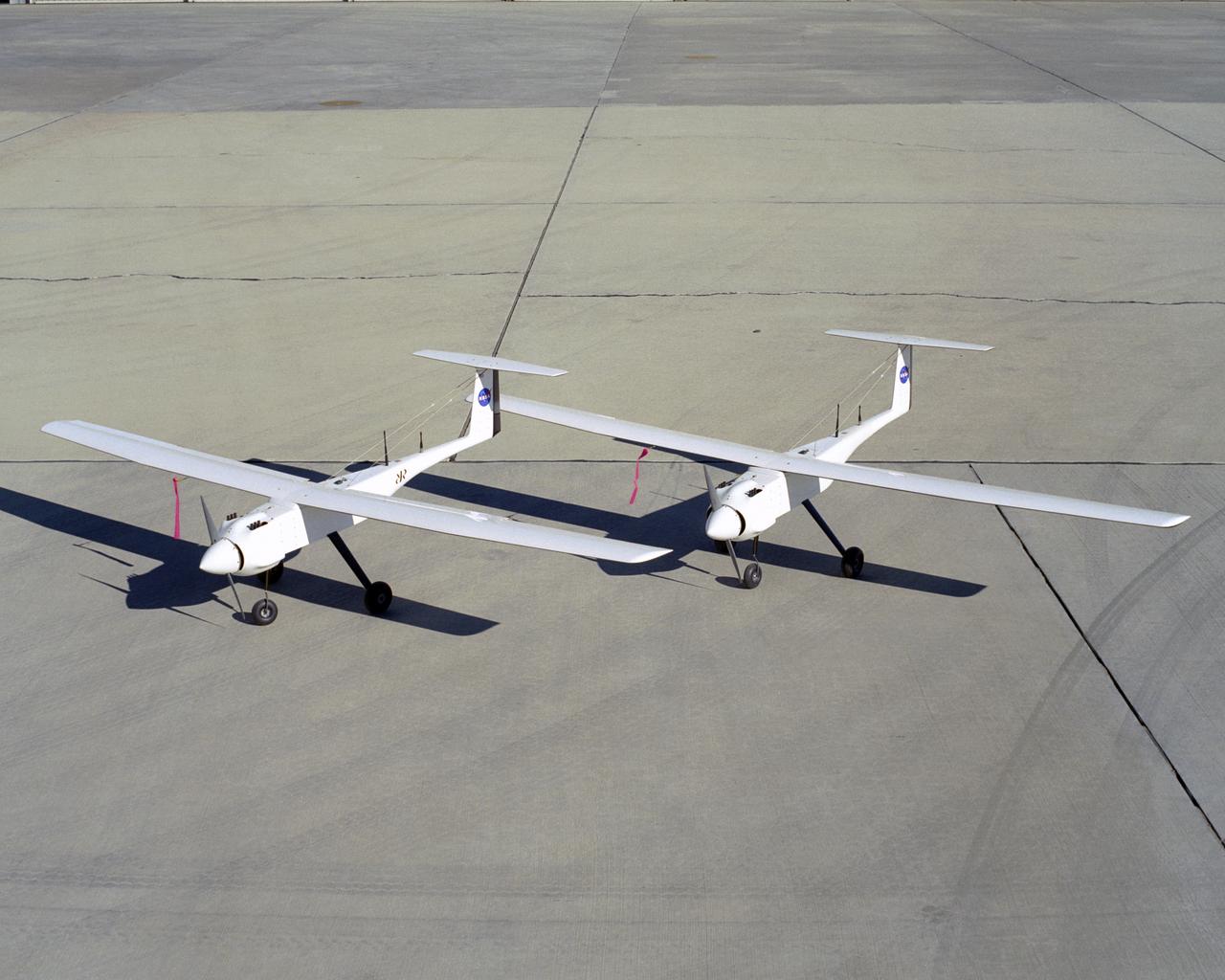
Two identical RnR Products APV-3 aircraft validated cooperative flight control software in the Networked UAV Teaming Experiment at NASA Dryden in early 2005.

The original seven astronauts for the Mercury Project pose in front of an Air Force Jet. From left to right: Scott Carpenter, L. Gordon Cooper, John H. Glenn, Virgil I. Gus Grissom, Walter M. Wally Schirra, Alan B. Shepard, and Donald K. Deke Slayton.
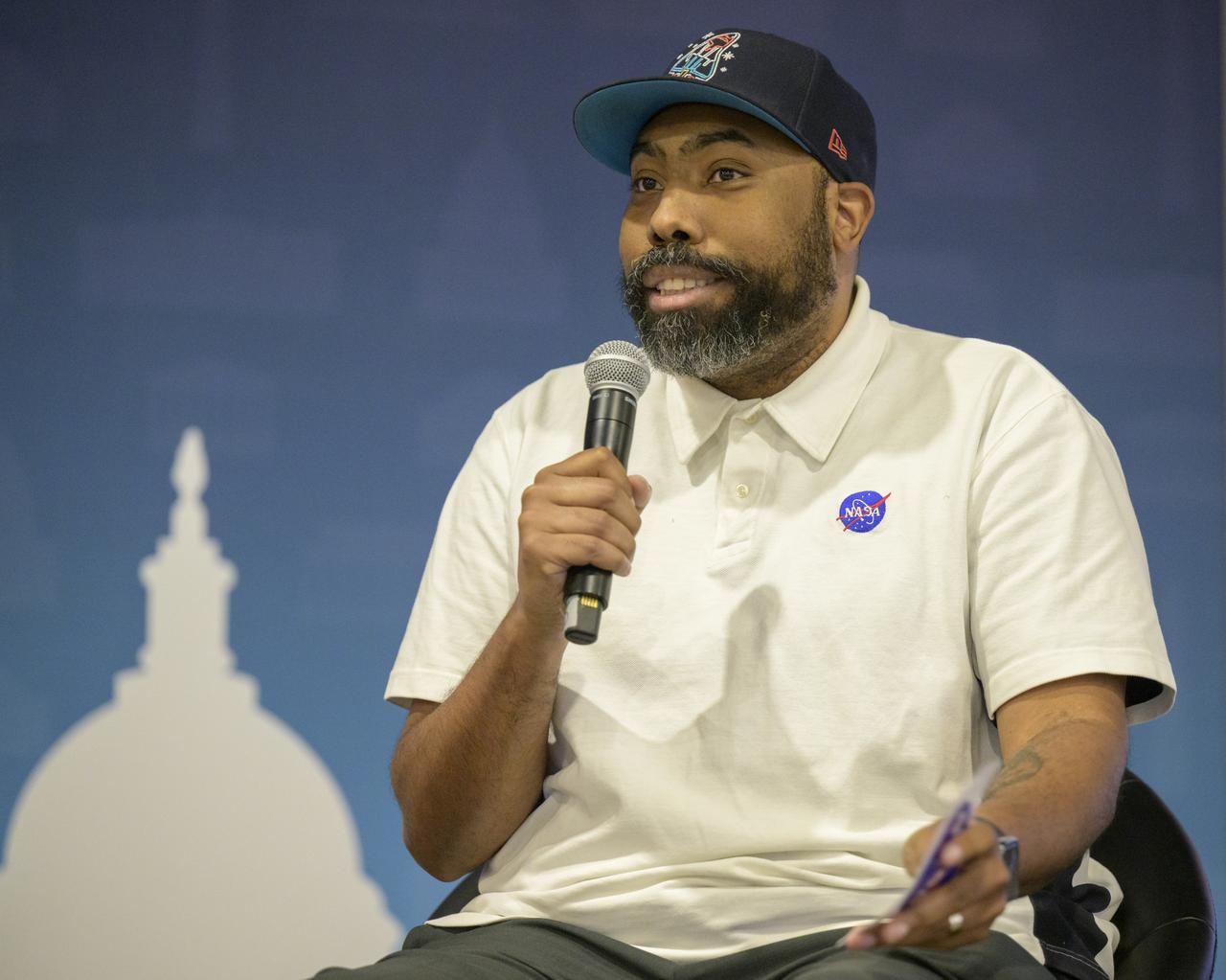
NASA Audio Engineer Manny Cooper is seen during a Podcast Movement, NASA hosted a panel entitled, "Eclipses, Moon Missions, and Climate Change: How NASA Reaches Curious Listeners", Tuesday, Aug. 20, 2024, at the Gaylord National Resort and Convention Center in National Harbor, Md. Photo Credit: (NASA/Bill Ingalls)
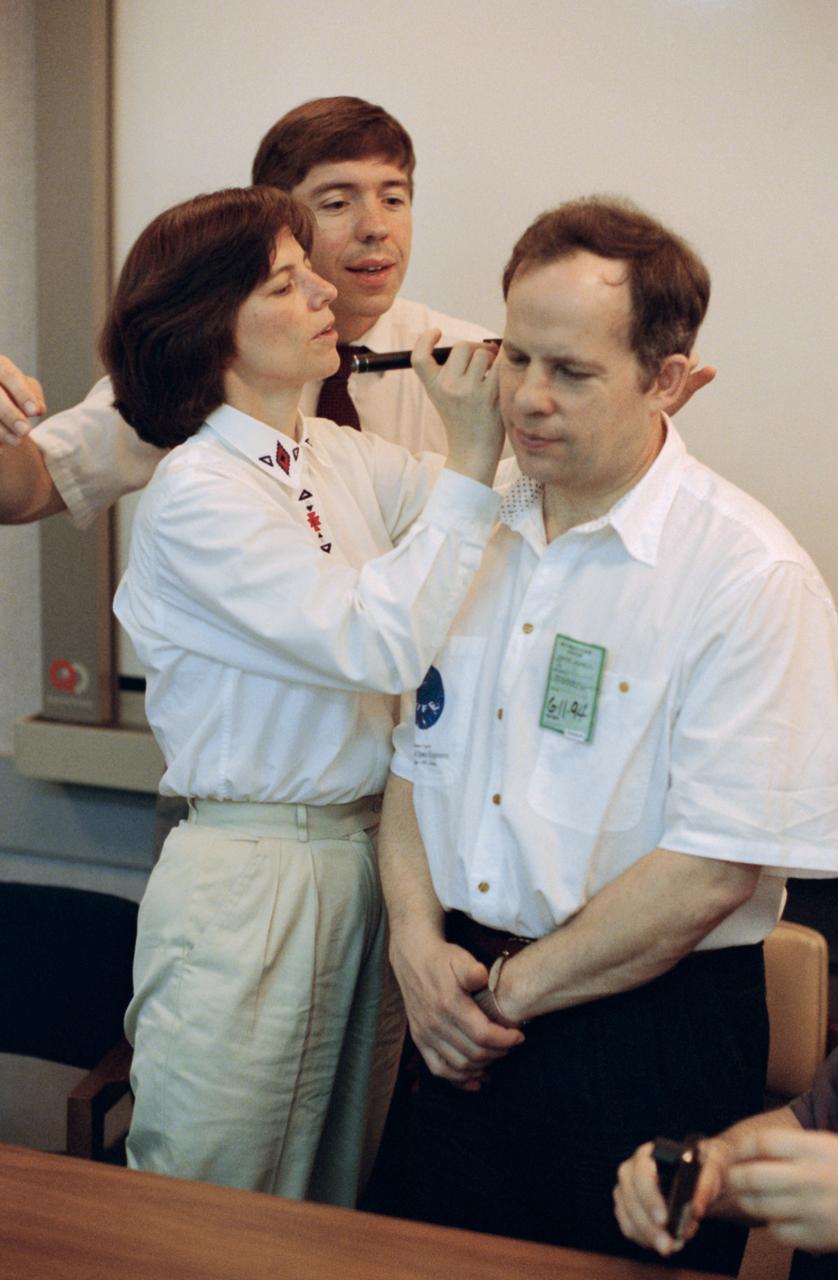
S94-35071 (17 June 1994) --- Flight surgeon Mike Barrett looks on as astronaut Bonnie J. Dunbar conducts a physical examination on cosmonaut Anatoly Solovyov. Crew members for the joint Space Shuttle/Mir missions are in the midst of three weeks' medical operations training for their cooperative flights.

Astronaut L. Gordon Cooper, Jr., one of the original seven astronauts for Mercury Project selected by NASA on April 27, 1959. The MA-9 mission, boosted by the Mercury-Atlas launch vehicle, was the last flight of the Mercury Project. The Faith 7 spacecraft orbited the Earth 22 times in 1-1/2 days.
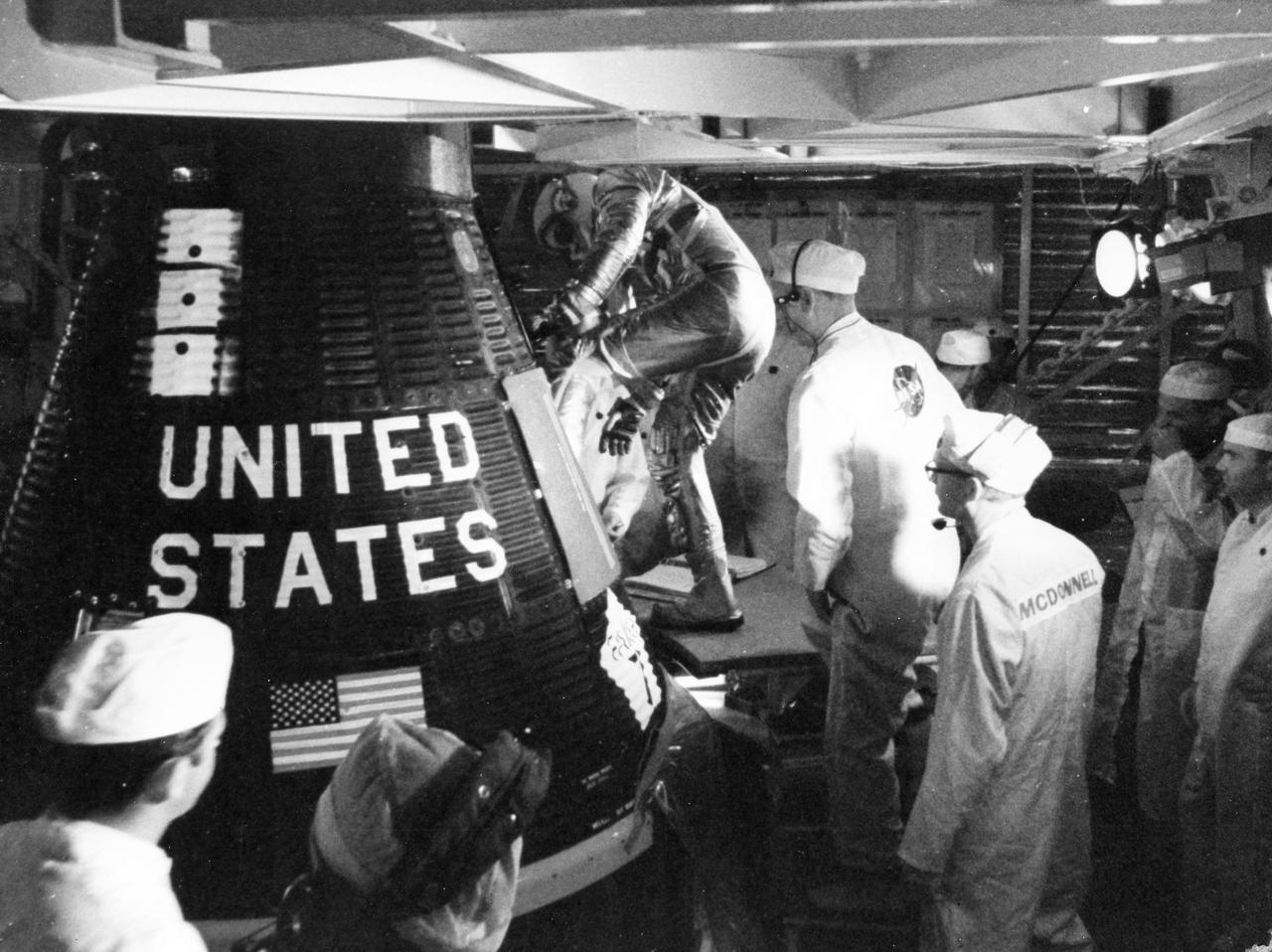
S63-06259 (14 May 1963) --- Astronaut L. Gordon Cooper Jr., prime pilot for the Mercury-Atlas 9 (MA-9) mission, is assisted into his "Faith 7" Mercury spacecraft early morning on May 14, 1963. Cooper remained in the spacecraft for approximately five hours and then climbed out again as the mission was delayed because of trouble at a tracking station. Photo credit: NASA
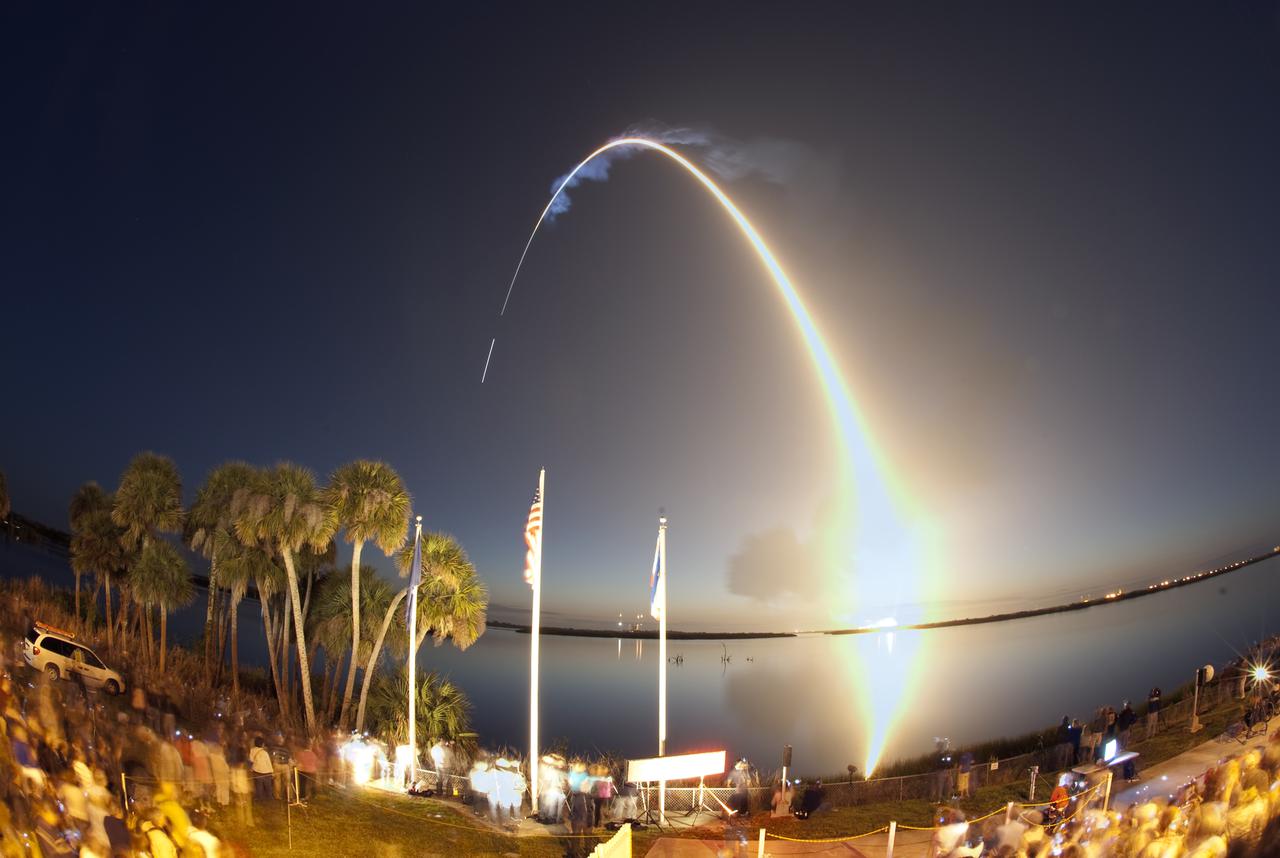
CAPE CANAVERAL, Fla. - Time-elapsed photography captures space shuttle Discovery's path to orbit. Liftoff from Launch Pad 39A at NASA's Kennedy Space Center in Florida was at 6:21 a.m. EDT April 5 on the STS-131 mission. The seven-member crew will deliver the multi-purpose logistics module Leonardo, filled with supplies, a new crew sleeping quarters and science racks that will be transferred to the International Space Station's laboratories. The crew also will switch out a gyroscope on the station’s truss, install a spare ammonia storage tank and retrieve a Japanese experiment from the station’s exterior. STS-131 is the 33rd shuttle mission to the station and the 131st shuttle mission overall. For information on the STS-131 mission and crew, visit http:__www.nasa.gov_mission_pages_shuttle_shuttlemissions_sts131_index.html. Photo credit: NASA_Ben Cooper
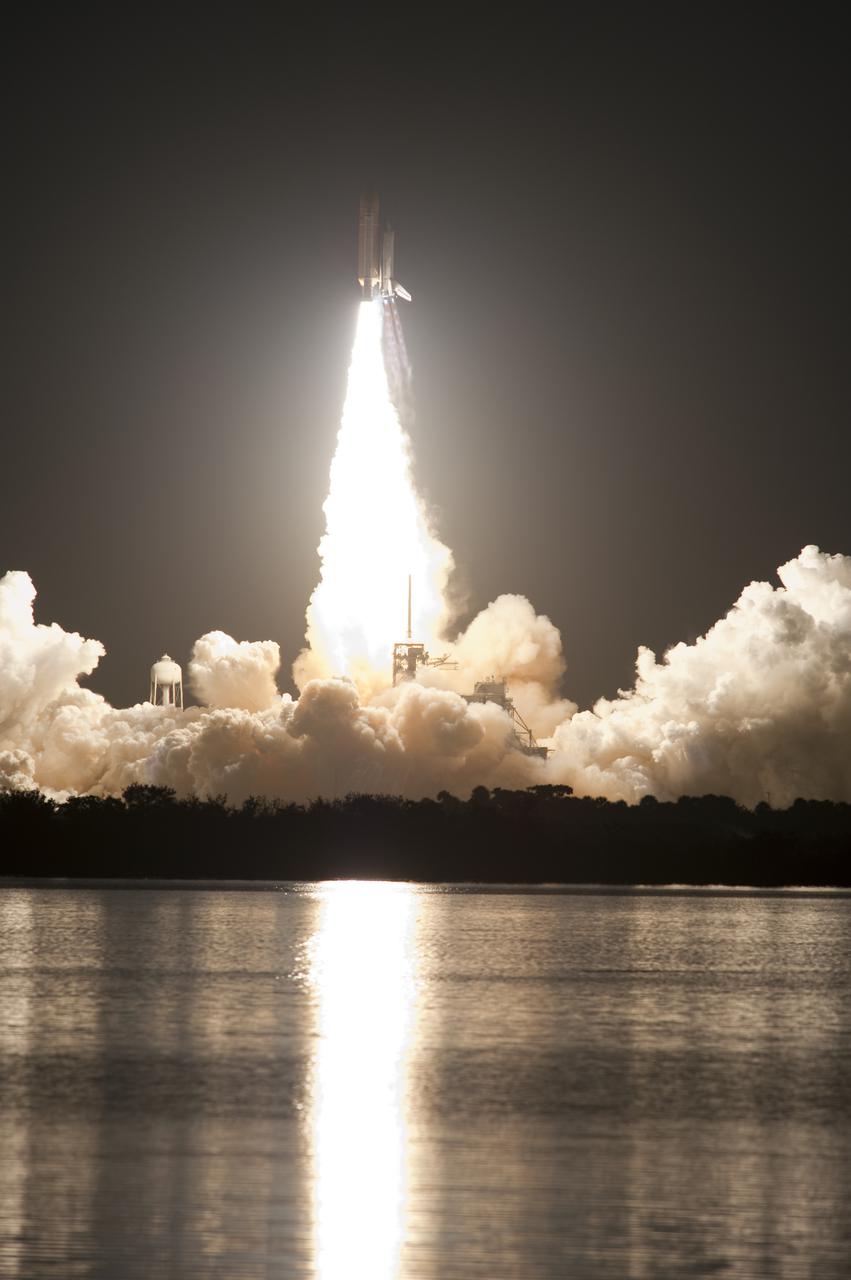
CAPE CANAVERAL, Fla. - Space shuttle Discovery's launch is brilliant as it lifts off Launch Pad 39A at NASA's Kennedy Space Center in Florida at 6:21 a.m. EDT April 5 to begin the STS-131 mission. The seven-member crew will deliver the multi-purpose logistics module Leonardo, filled with supplies, a new crew sleeping quarters and science racks that will be transferred to the International Space Station's laboratories. The crew also will switch out a gyroscope on the station’s truss, install a spare ammonia storage tank and retrieve a Japanese experiment from the station’s exterior. STS-131 is the 33rd shuttle mission to the station and the 131st shuttle mission overall. For information on the STS-131 mission and crew, visit http:__www.nasa.gov_mission_pages_shuttle_shuttlemissions_sts131_index.html. Photo credit: NASA_Ben Cooper
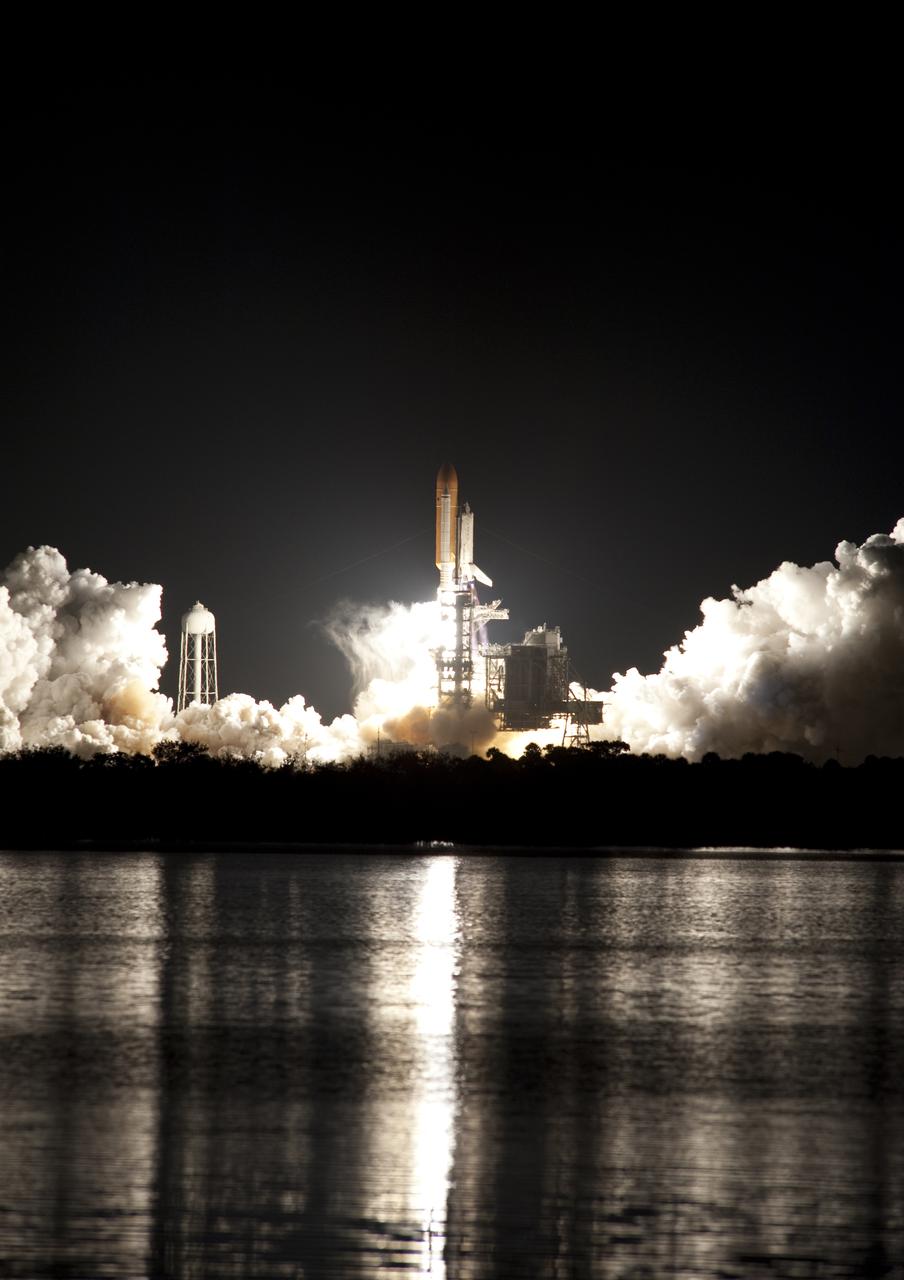
CAPE CANAVERAL, Fla. - An exhaust cloud builds at Launch Pad 39A at NASA's Kennedy Space Center in Florida as space shuttle Discovery lifts off at 6:21 a.m. EDT April 5 to begin the STS-131 mission. The seven-member crew will deliver the multi-purpose logistics module Leonardo, filled with supplies, a new crew sleeping quarters and science racks that will be transferred to the International Space Station's laboratories. The crew also will switch out a gyroscope on the station’s truss, install a spare ammonia storage tank and retrieve a Japanese experiment from the station’s exterior. STS-131 is the 33rd shuttle mission to the station and the 131st shuttle mission overall. For information on the STS-131 mission and crew, visit http:__www.nasa.gov_mission_pages_shuttle_shuttlemissions_sts131_index.html. Photo credit: NASA_Ben Cooper
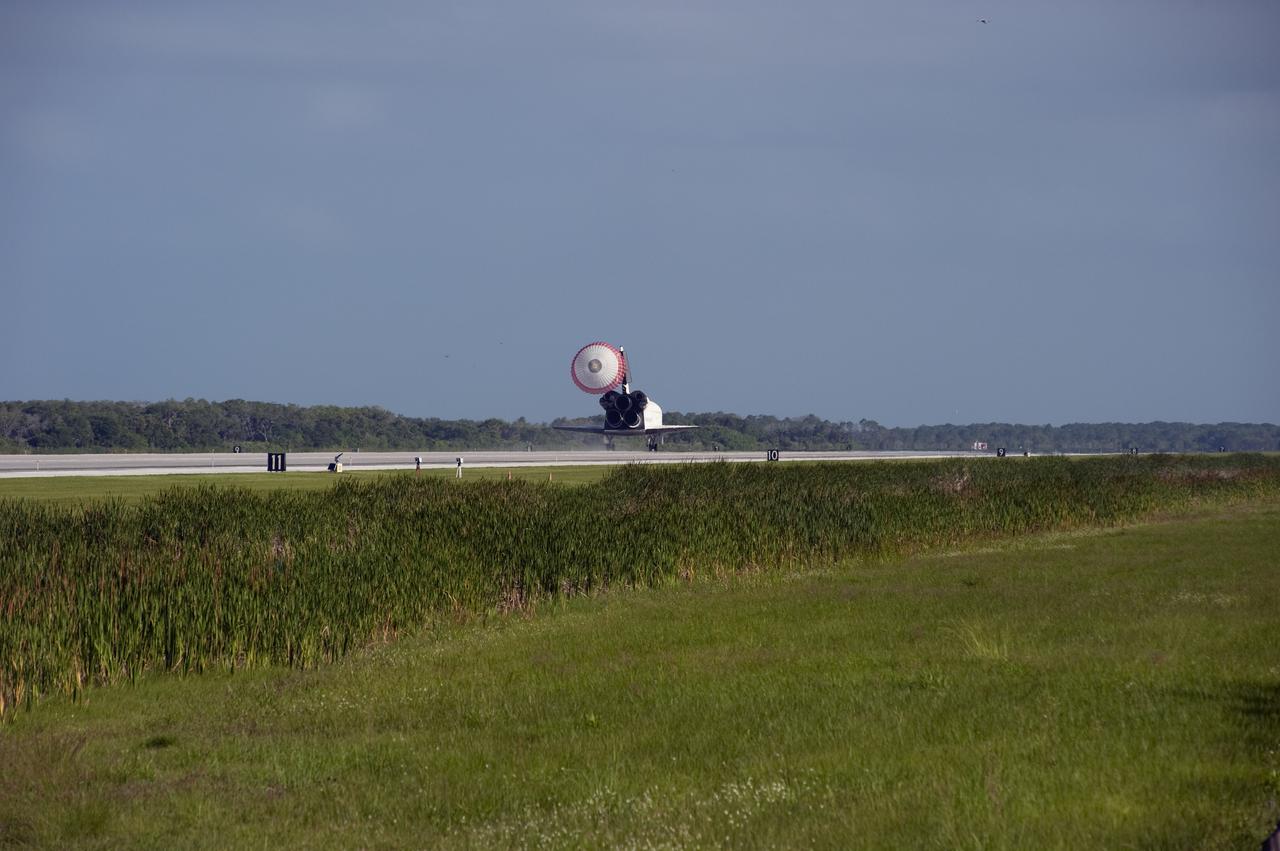
CAPE CANAVERAL, Fla. - The drag chute slows space shuttle Atlantis as it rolls down Runway 33 at the Shuttle Landing Facility at NASA's Kennedy Space Center in Florida. Landing was at 8:48 a.m. EDT, completing the 12-day STS-132 mission to the International Space Station. Main gear touchdown was at 8:48:11 a.m. EDT, followed by nose gear touchdown at 8:48:21 a.m. and wheelstop at 8:49:18 a.m. On board are Commander Ken Ham, Pilot Tony Antonelli, Mission Specialists Garrett Reisman, Michael Good, Steve Bowen and Piers Sellers. The six-member STS-132 crew carried the Russian-built Mini Research Module-1 to the International Space Station. STS-132 is the 34th shuttle mission to the station, the 132nd shuttle mission overall and the last planned flight for Atlantis. For information on the STS-132 mission and crew, visit www.nasa.gov_mission_pages_shuttle_shuttlemissions_sts132_index.html. Photo credit: NASA_Ben Cooper
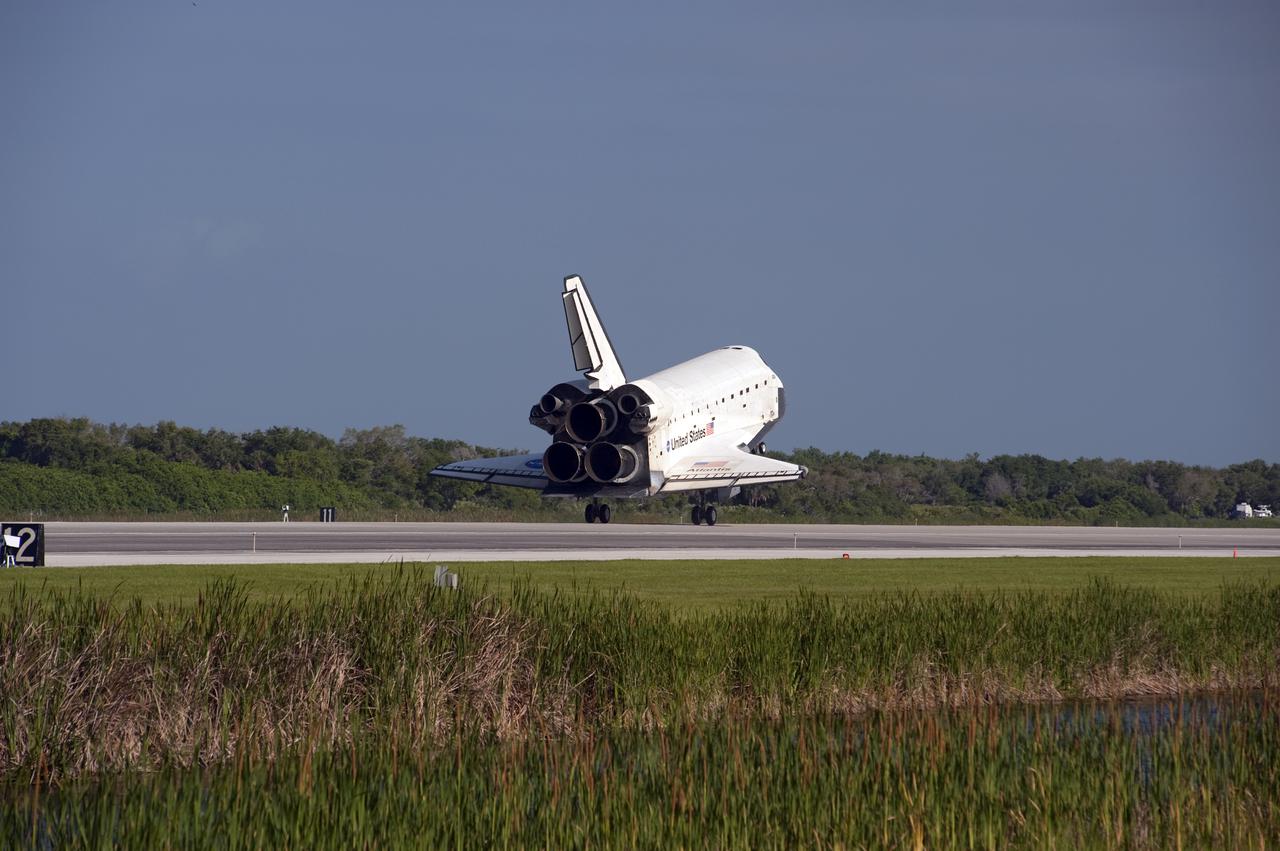
CAPE CANAVERAL, Fla. - Space shuttle Atlantis' main gear touches down on Runway 33 at the Shuttle Landing Facility at NASA's Kennedy Space Center in Florida. Landing was at 8:48 a.m. EDT, completing the 12-day STS-132 mission to the International Space Station. Main gear touchdown was at 8:48:11 a.m. EDT, followed by nose gear touchdown at 8:48:21 a.m. and wheelstop at 8:49:18 a.m. On board are Commander Ken Ham, Pilot Tony Antonelli, Mission Specialists Garrett Reisman, Michael Good, Steve Bowen and Piers Sellers. The six-member STS-132 crew carried the Russian-built Mini Research Module-1 to the International Space Station. STS-132 is the 34th shuttle mission to the station, the 132nd shuttle mission overall and the last planned flight for Atlantis. For information on the STS-132 mission and crew, visit www.nasa.gov_mission_pages_shuttle_shuttlemissions_sts132_index.html. Photo credit: NASA_Ben Cooper
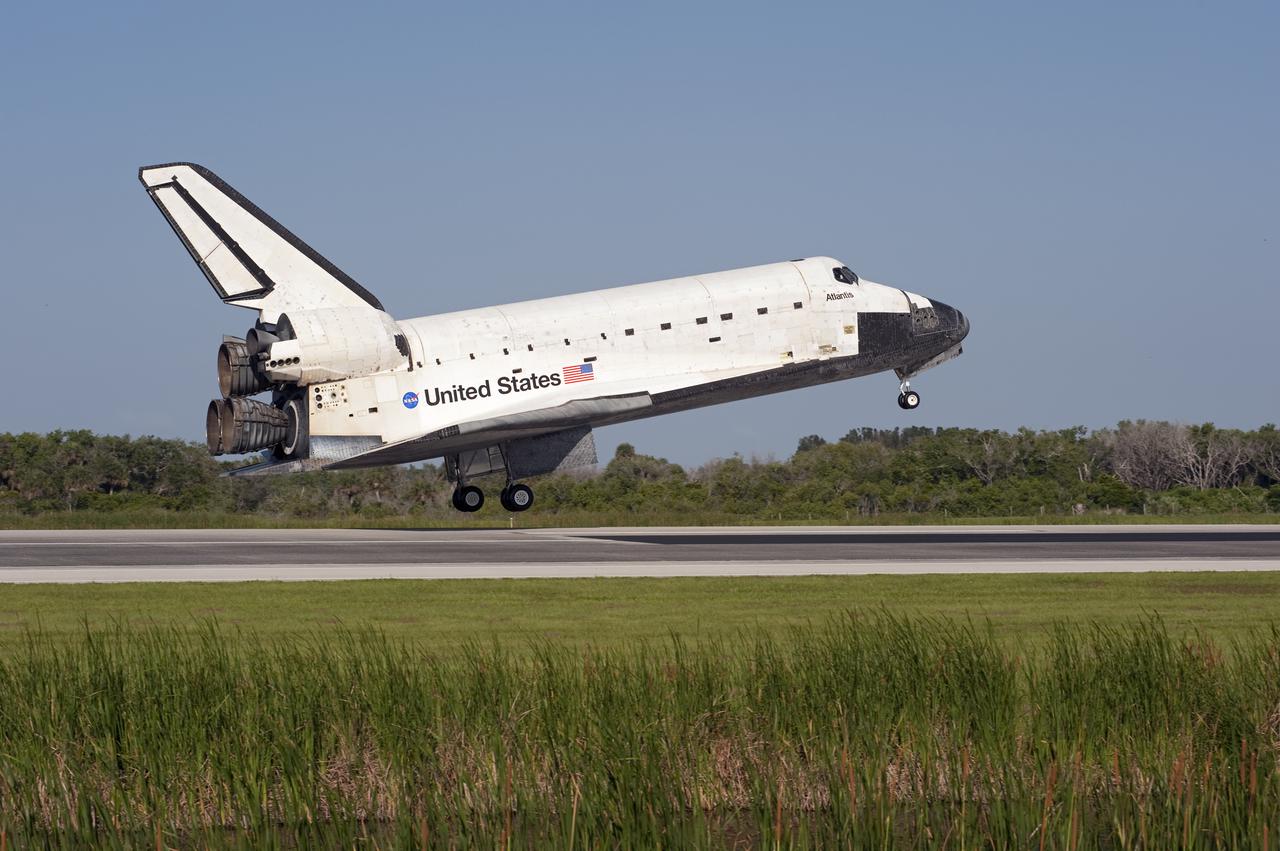
CAPE CANAVERAL, Fla. - Space shuttle Atlantis nears touchdown on Runway 33 at the Shuttle Landing Facility at NASA's Kennedy Space Center in Florida. Landing was at 8:48 a.m. EDT, completing the 12-day STS-132 mission to the International Space Station. Main gear touchdown was at 8:48:11 a.m. EDT, followed by nose gear touchdown at 8:48:21 a.m. and wheelstop at 8:49:18 a.m. On board are Commander Ken Ham, Pilot Tony Antonelli, Mission Specialists Garrett Reisman, Michael Good, Steve Bowen and Piers Sellers. The six-member STS-132 crew carried the Russian-built Mini Research Module-1 to the International Space Station. STS-132 is the 34th shuttle mission to the station, the 132nd shuttle mission overall and the last planned flight for Atlantis. For information on the STS-132 mission and crew, visit www.nasa.gov_mission_pages_shuttle_shuttlemissions_sts132_index.html. Photo credit: NASA_Ben Cooper
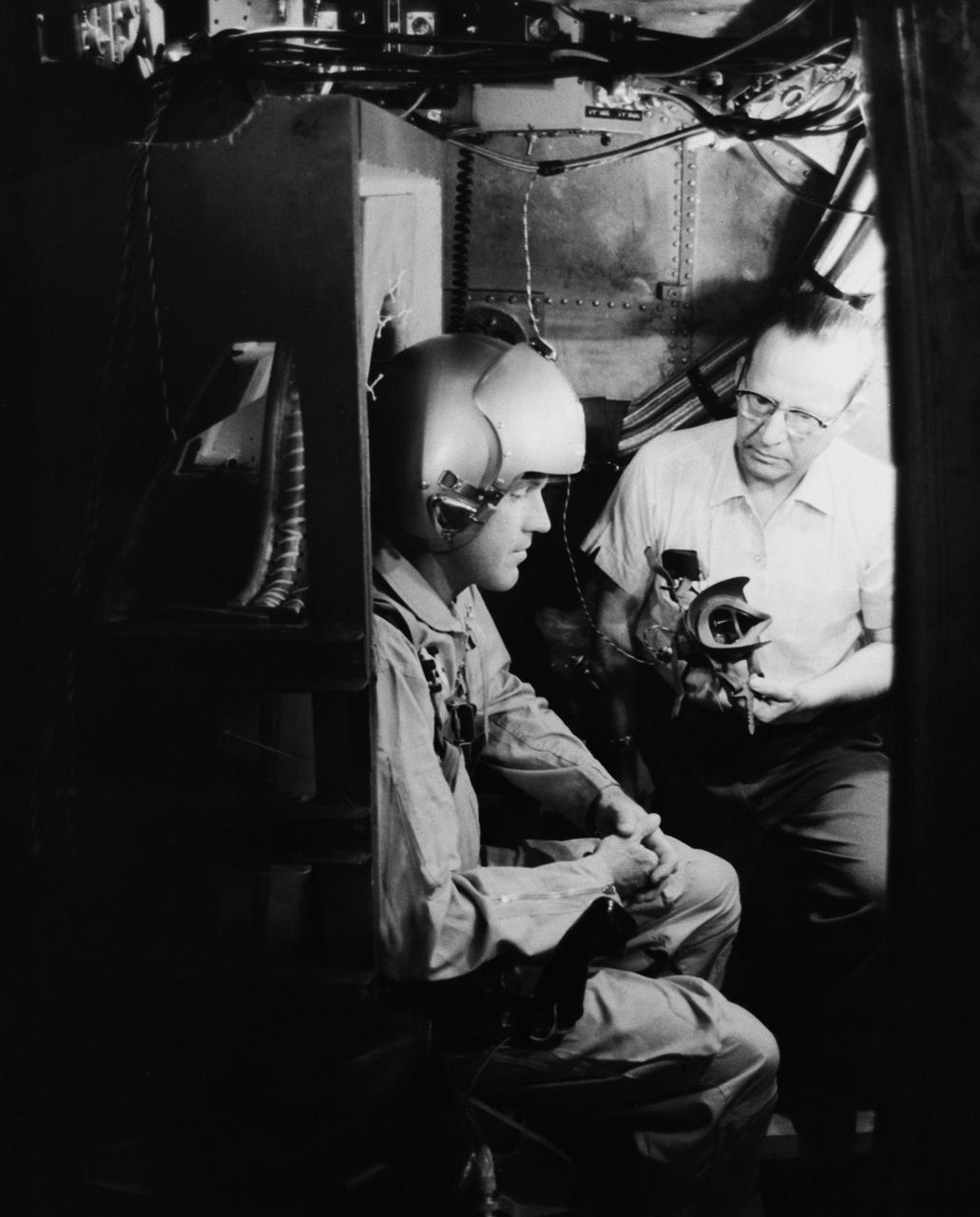
S63-03978 (1963) --- Astronaut L. Gordon Cooper Jr., prime pilot for the Mercury-Atlas 9 (MA-9) mission, is strapped into the gondola while undergoing tests in the centrifuge at the Naval Air Development Center, Johnsville, Pennsylvania. The centrifuge is used to investigate by simulation the pilot's capability to control the vehicle during the actual flight in its booster and reentry profile. Photo credit: NASA
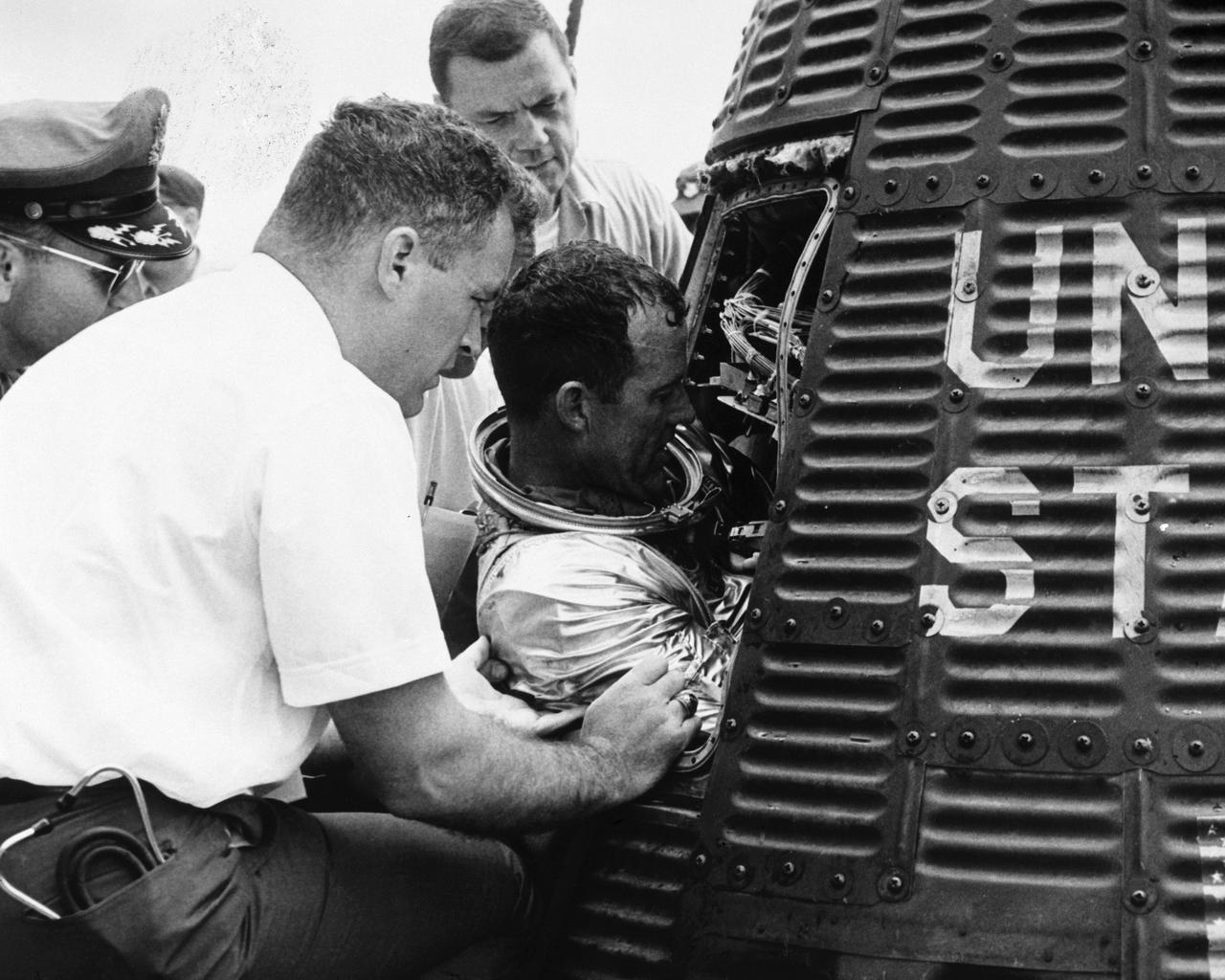
S63-07855 (16 May 1963) --- Astronaut L. Gordon Cooper Jr. is assisted in backing out of his spacecraft "Faith 7" after a 600,000-mile, 22-orbit journey around Earth. He elected to remain in the spacecraft until it was hoisted to the deck of the USS Kearsarge, as did astronaut Walter Schirra during the previous mission. Photo credit: NASA
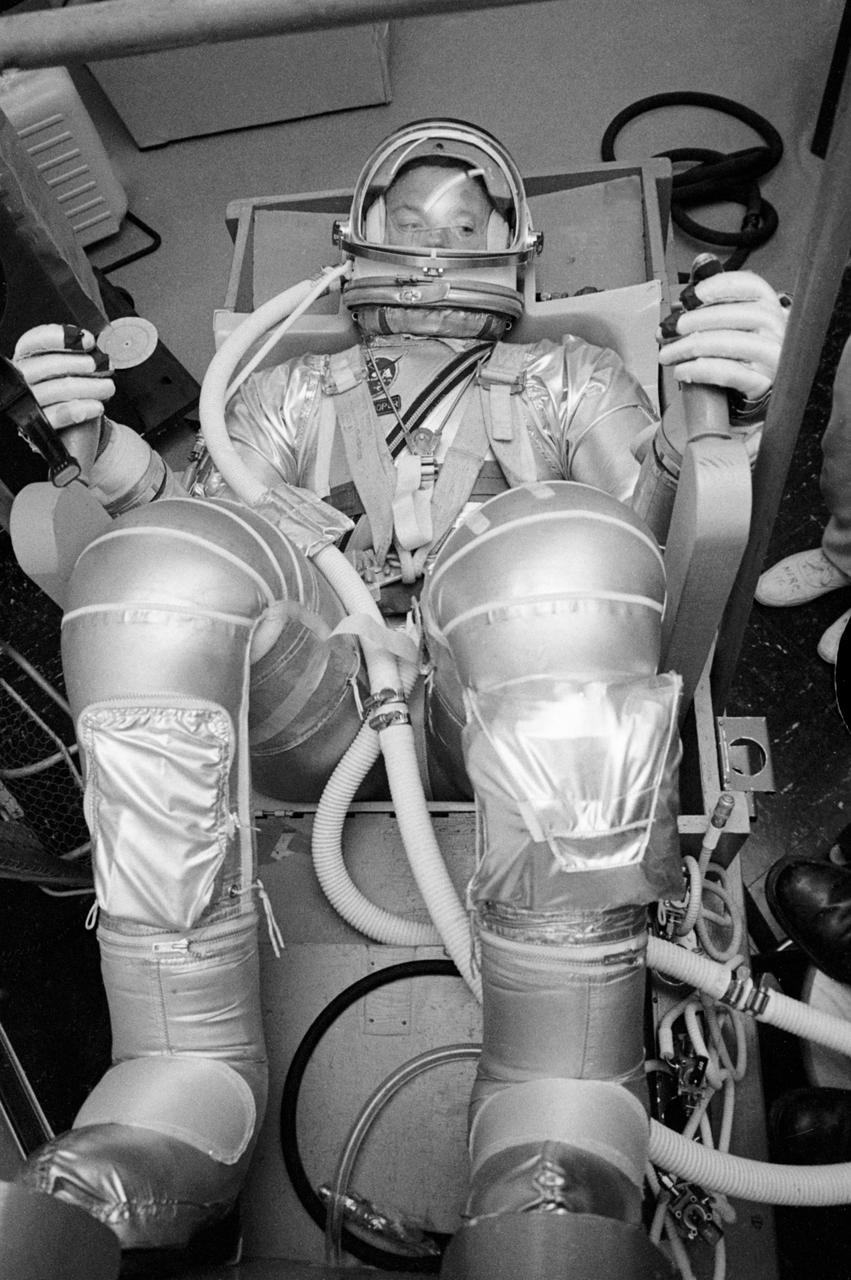
S63-03976 (1963) --- Astronaut L. Gordon Cooper Jr., prime pilot for the Mercury-Atlas 9 (MA-9) mission, undergoes suit pressurization tests. Photo credit: NASA
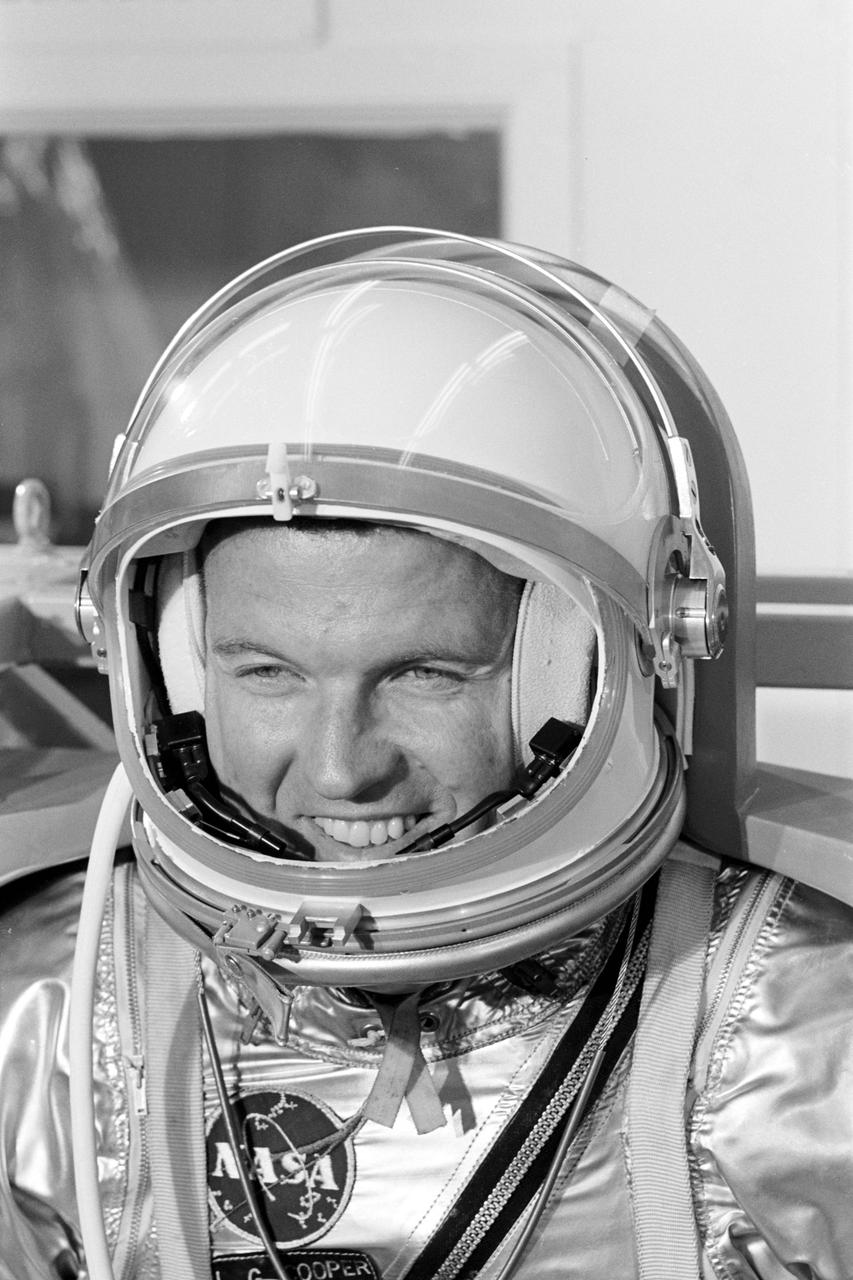
S63-03974 (1963) --- Astronaut L. Gordon Cooper Jr., prime pilot for the Mercury-Atlas 9 (MA-9) mission, relaxes while waiting for weight and balance tests to begin. Photo credit: NASA
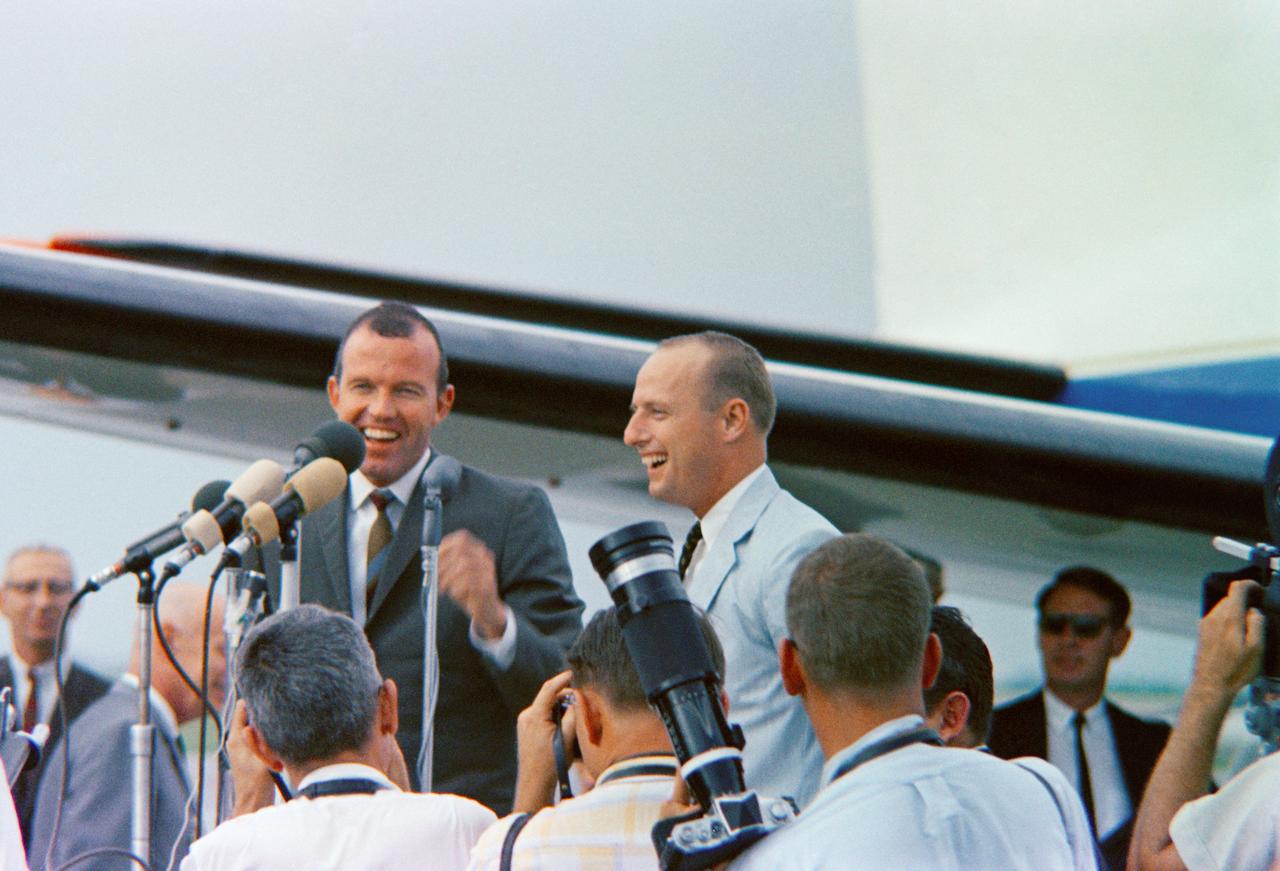
S65-50698 (2 Sept. 1965) --- Astronauts Charles Conrad Jr. (right) and L. Gordon Cooper Jr. speak to news media after their return home from the successful Gemini-5 spaceflight.
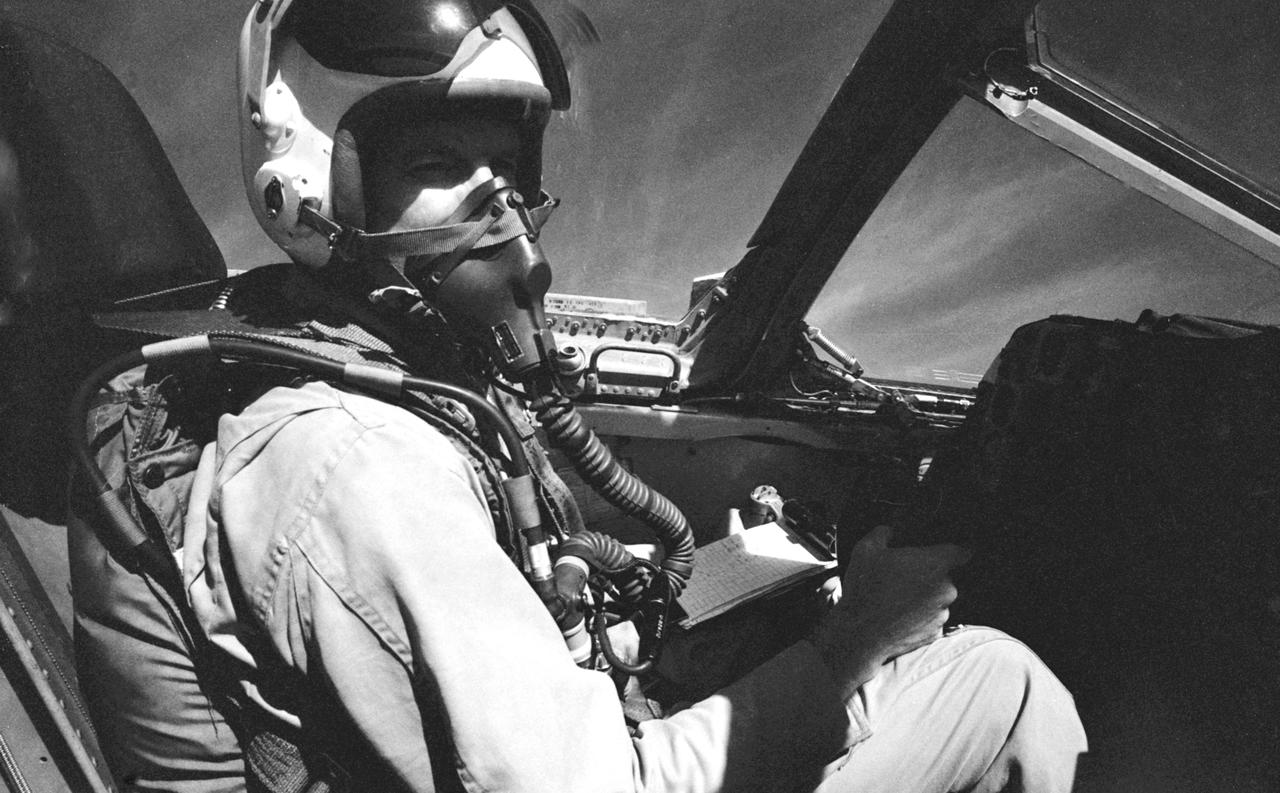
S63-03980 (1963) --- Astronaut L. Gordon Cooper Jr., prime pilot for the Mercury-Atlas 9 (MA-9) mission, in flight in a Convair TF-102 aircraft. Photo credit: NASA

S65-46366 (19 Aug. 1965) --- Astronauts Charles Conrad Jr. (right) and L. Gordon Cooper Jr. during suiting up operations before Gemini-5 spaceflight.
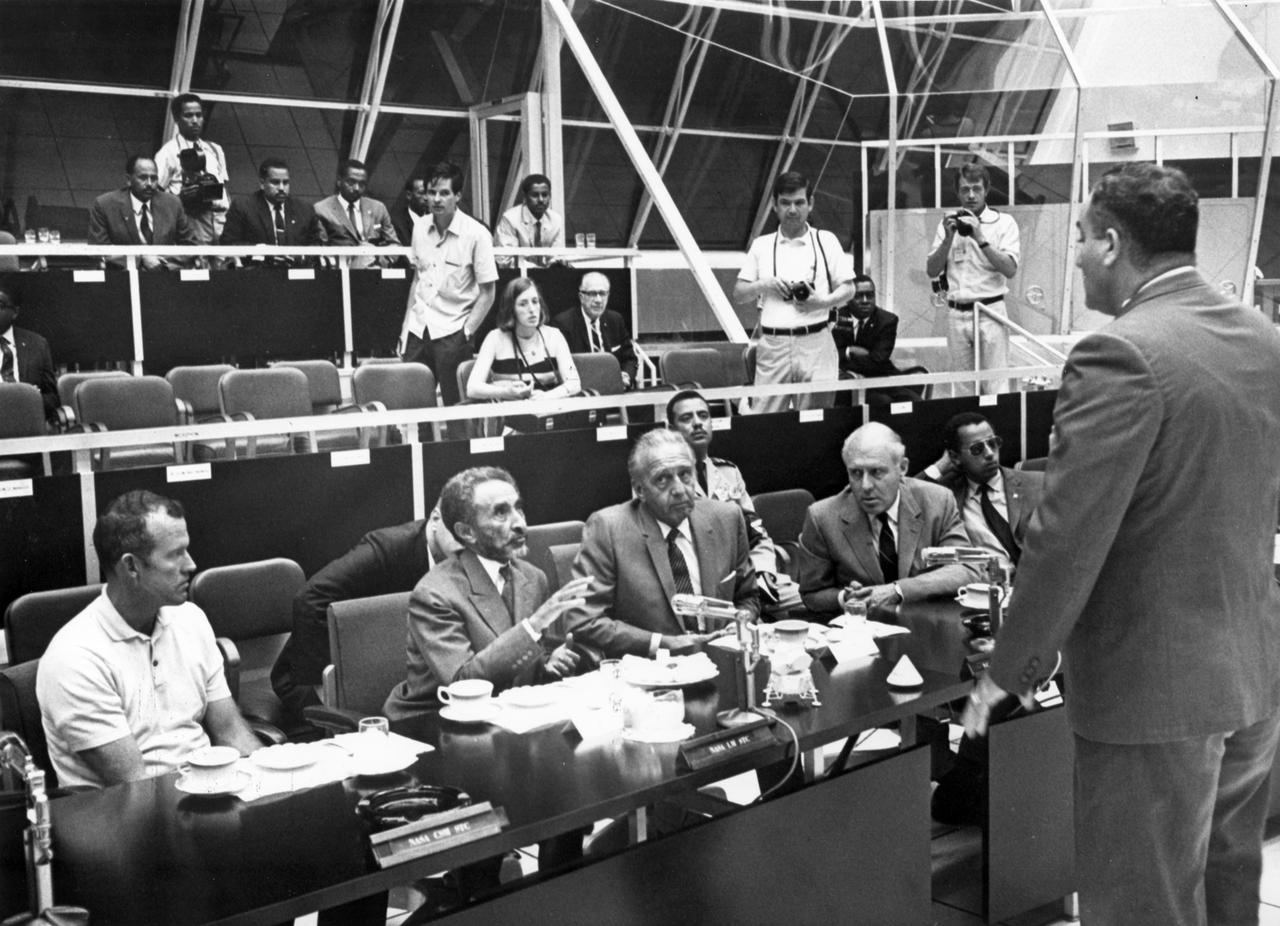
During a Kennedy Space Center (KSC) briefing on the next day’s Apollo 11 launch, Emperor Haile Selassie of Ethiopia (with raised hand) asks a question of Rocco A. Petrone, director of launch operations at KSC. To the right of the emperor is astronaut Gordon Cooper and to his left is Dr. Kurt Debus, director of KSC. The first manned lunar launch occurred at 9:32 am on July 16, 1969. The crew included astronauts Neil A. Armstrong, commander; Michael Collins, Command Module (CM) pilot; and Edwin E. Aldrin Jr., Lunar Module (LM) pilot. After 21/2 hours of collecting samples on the lunar surface, the crew safely splashed down into the Pacific Ocean on July 24, 1969. With the success of Apollo 11, the national objective to land men on the Moon and return them safely to Earth had been accomplished.
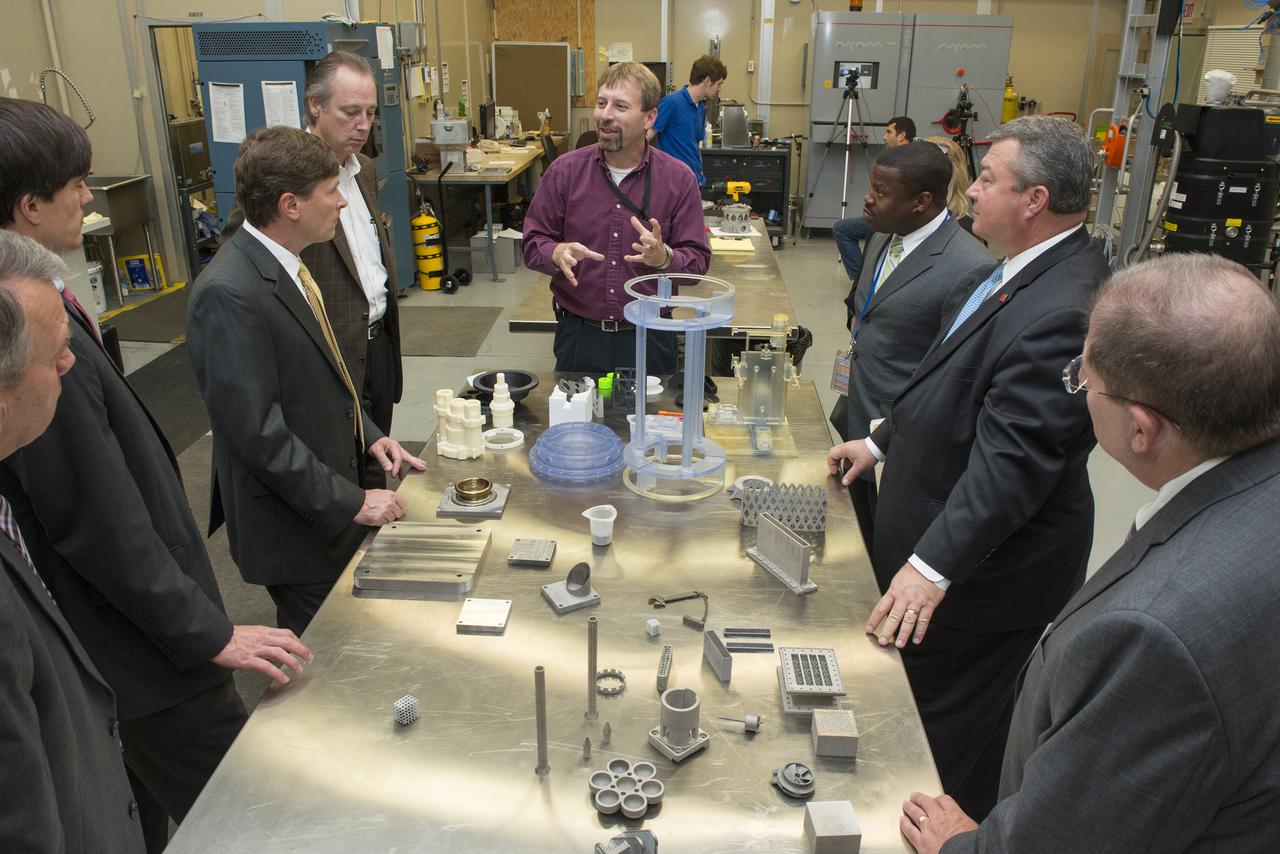
KEN COOPER GIVES AN OVERVIEW OF ADDITIVE MANUFACTURING TO STATE SENATOR BILL HOLTZCLAW, REPRESENTATIVE MAC MCCUTCHEON, GREG CANFIELD OF THE ALABAMA DEPARTMENT OF COMMERCE, GOVERNOR BENTLEY’S CHIEF OF STAFF, DAVID PERRY, AND LT. GOVERNOR STRANGES CHIEF OF STAFF, STEVE PELHAM.
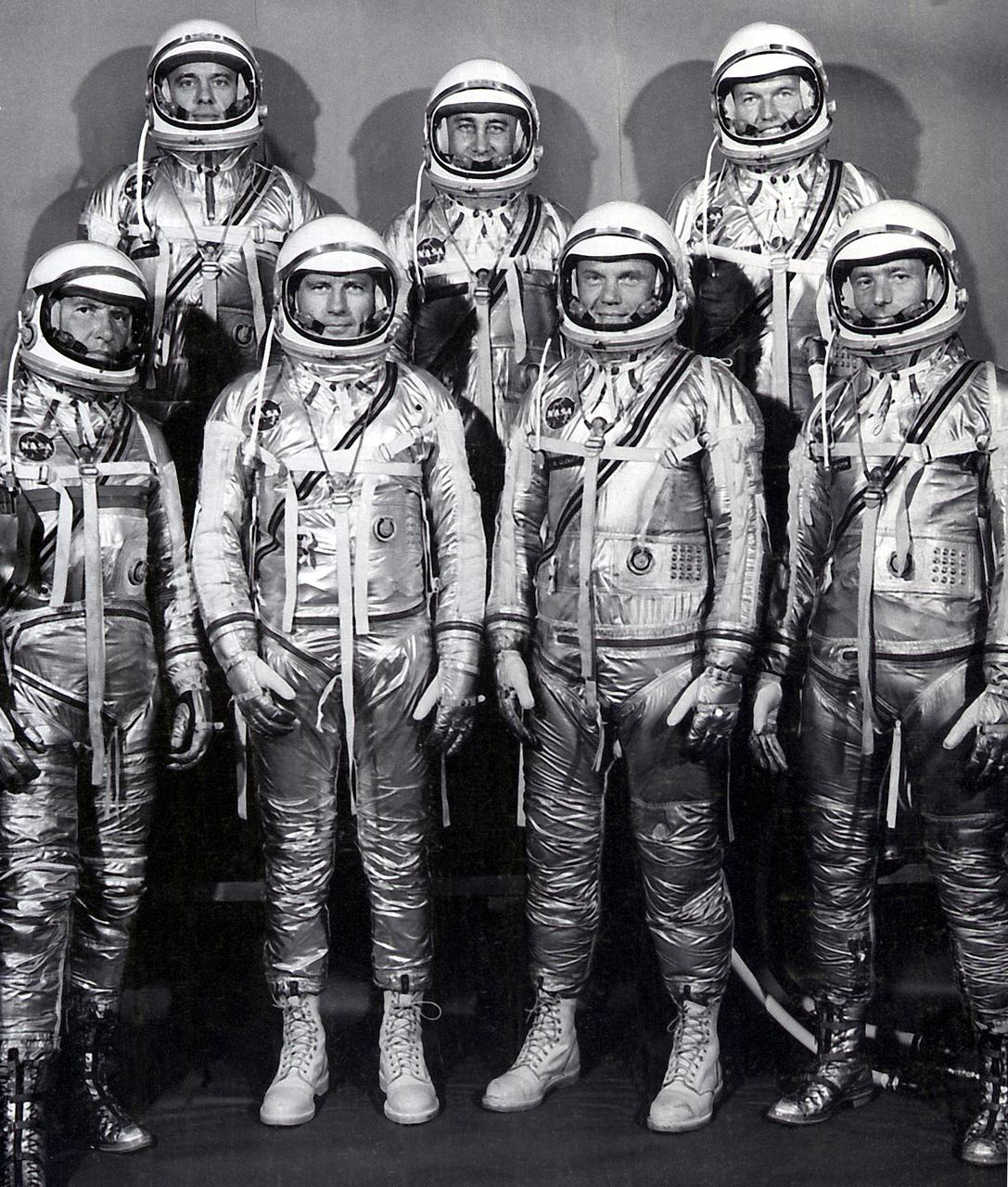
The group portrait of the original seven astronauts for the Mercury Project. NASA selected its first seven astronauts on April 27, 1959. Left to right at front: Walter M. Wally Schirra, Donald K. Deke Slayton, John H. Glenn, Jr., and Scott Carpenter. Left to right at rear: Alan B. Shepard, Virgil I. Gus Grissom, and L. Gordon Cooper, Jr.
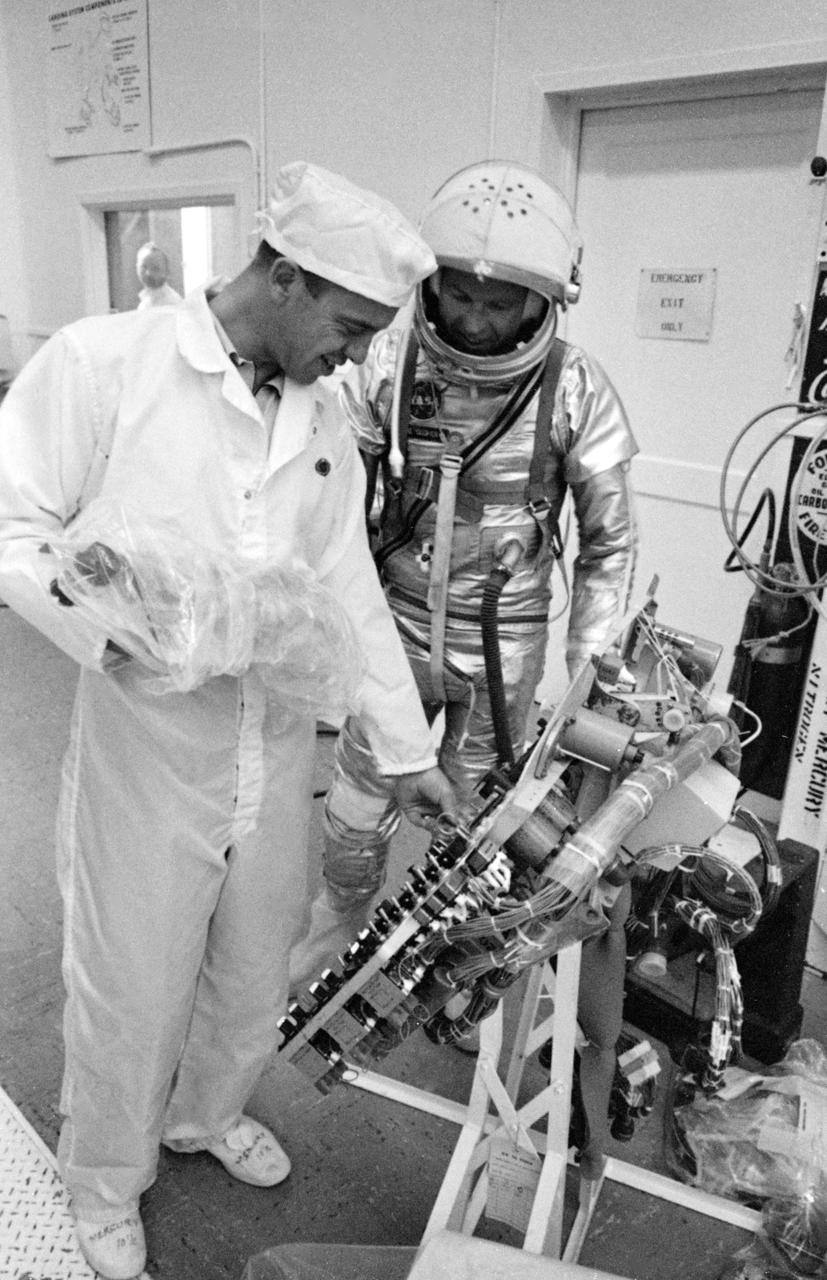
S63-03965 (1963) --- Astronauts Alan Shepard (left) and L. Gordon Cooper Jr.(in suit) check over the instrument panel from Mercury spacecraft #20. It contains the instruments necessary to monitor spacecraft systems and sequencing, the controls required to initiate primary sequences manually, and the necessary flight control displays. Photo credit: NASA
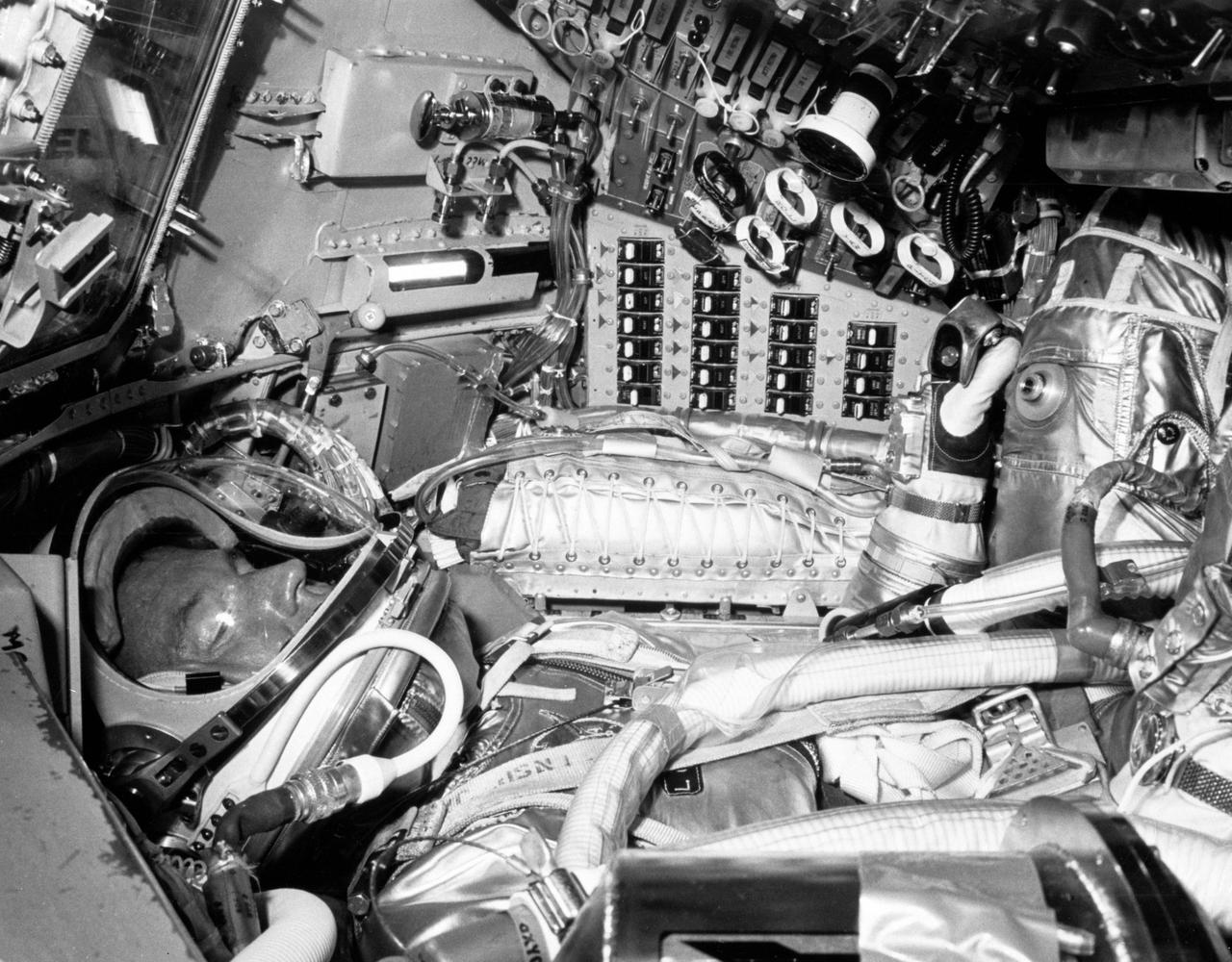
S63-06129 (1963) --- Astronaut L. Gordon Cooper Jr., prime pilot for the Mercury-Atlas 9 (MA-9) mission, inside his Mercury spacecraft, runs through one of the numerous preflight checks surrounded by dials, switches, indicators and buttons. Photo credit: NASA
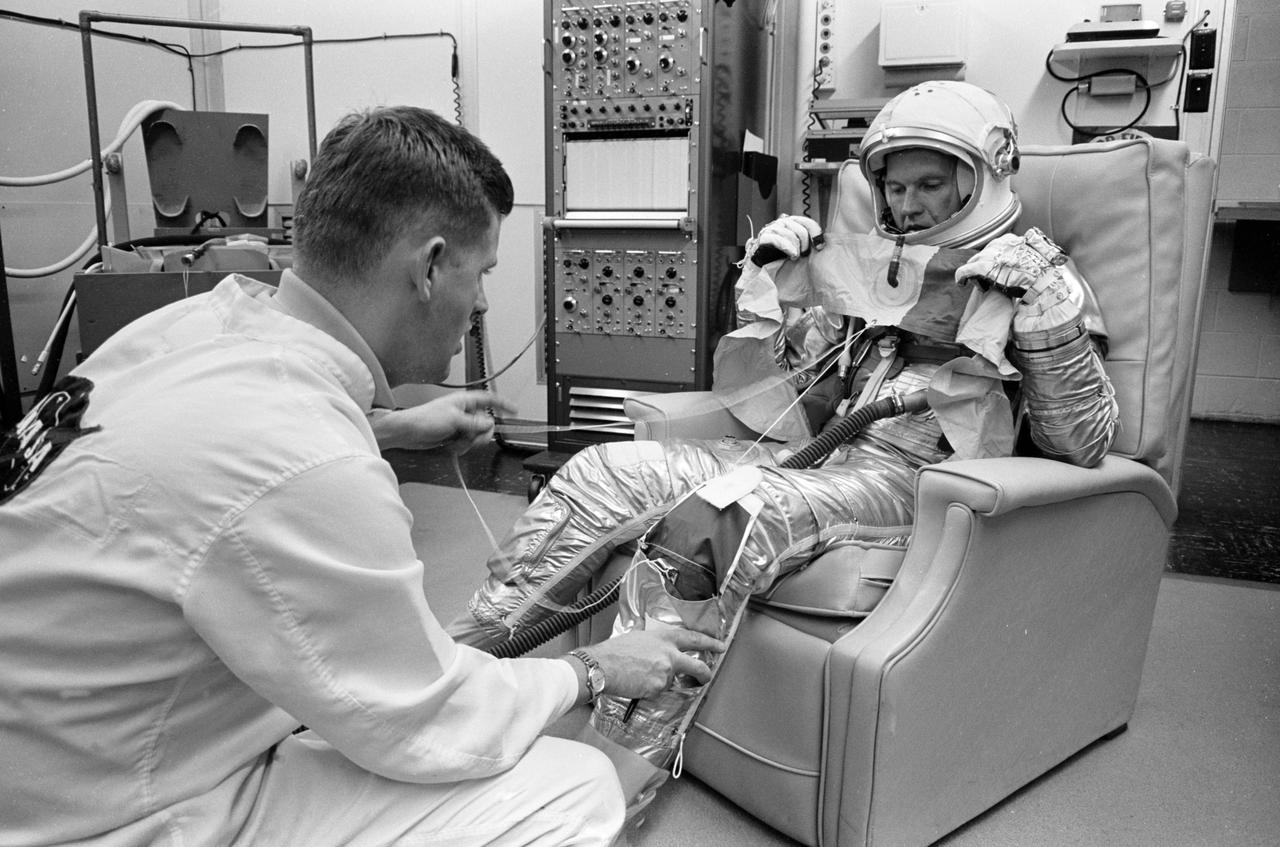
S63-03964 (1963) --- Al Rochford, Crew Systems, Manned Space Center, assists astronaut L. Gordon Cooper Jr., in checking his life vest, normally stowed in a pocket in the lower left leg. Photo credit: NASA
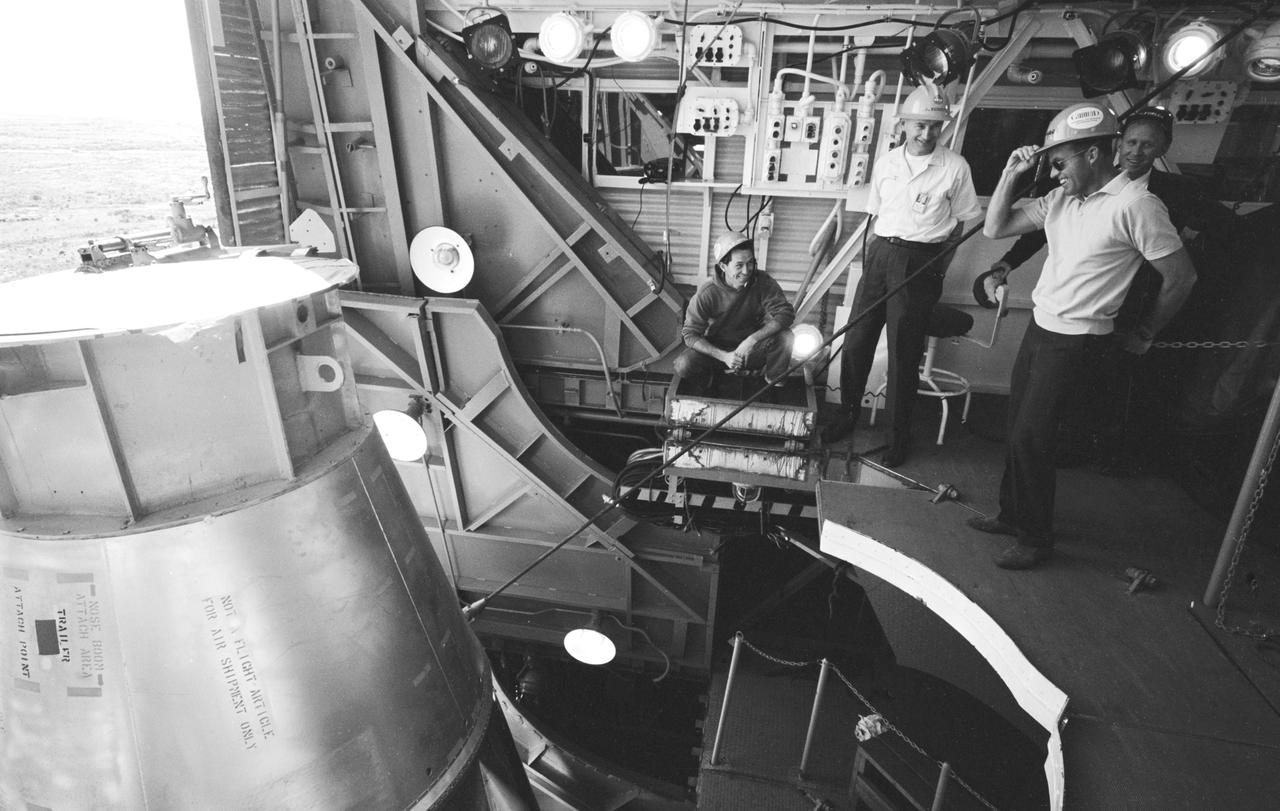
S63-03986 (1963) --- Astronaut L. Gordon Cooper Jr., prime pilot for the Mercury-Atlas 9 (MA-9) mission, and General Dynamics pad technicians watch Atlas 130D being hoisted into place in the gantry at pad #14, Cape Canaveral, Florida. Photo credit: NASA
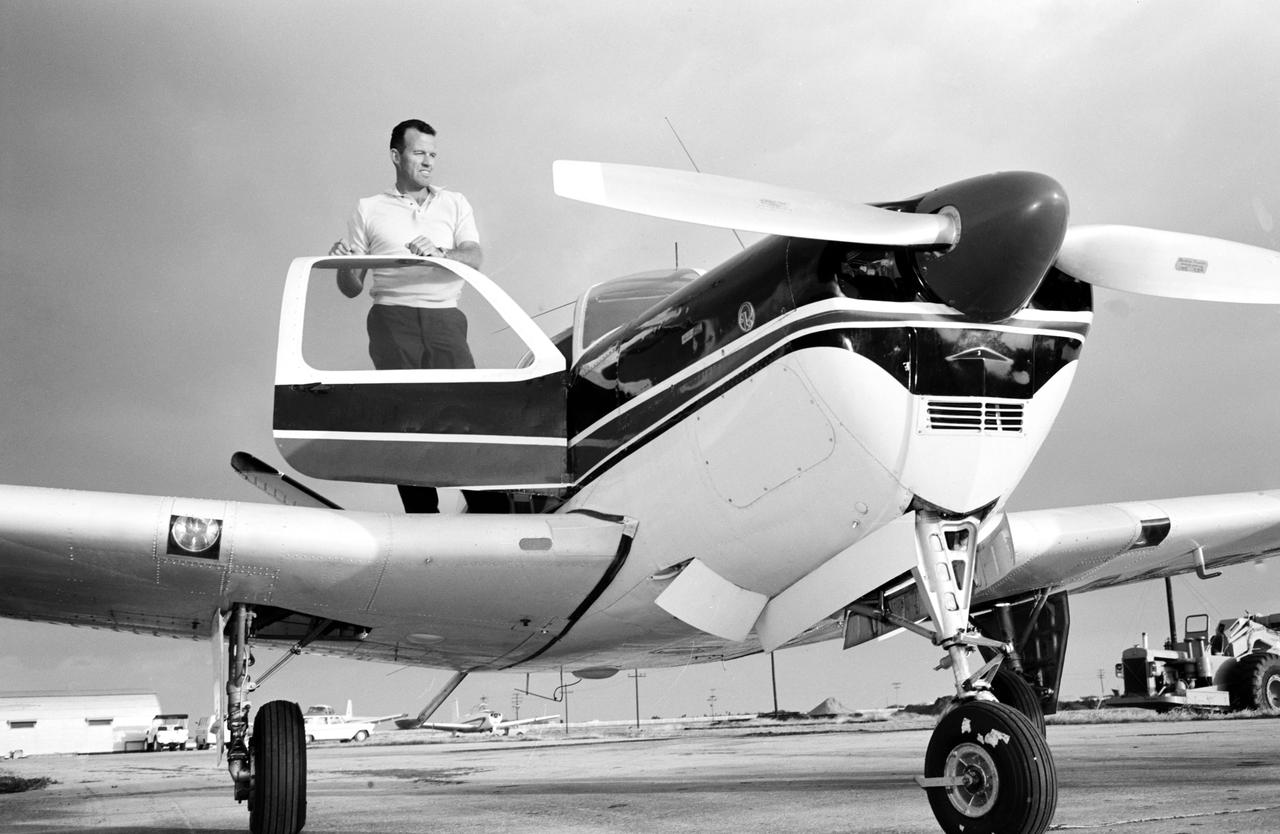
S63-03989 (1963) --- Astronaut L. Gordon Cooper Jr., prime pilot for the Mercury Atlas 9 (MA-9) 22-orbit flight, stands by his privately owned Beechcraft Bonanza aircraft, at Patrick Air Base, Florida. Photo credit: NASA
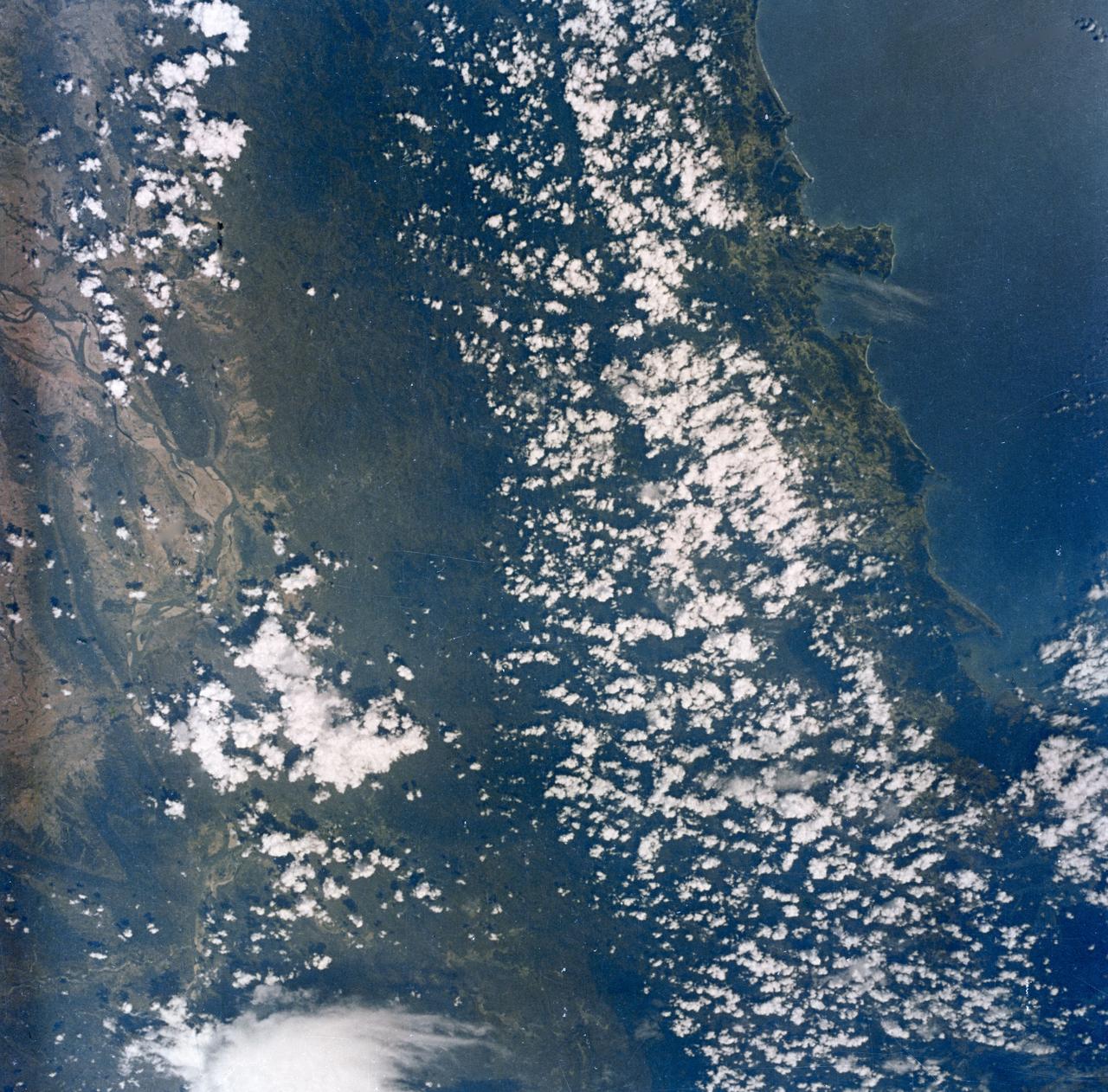
S63-06427 (15-16 May 1963) --- Burma's west coast, west of Rangoon and Irrawaddy River (right), are featured in this image photographed by astronaut L. Gordon Cooper Jr., during his 22-orbit Mercury Atlas 9 (MA-9) spaceflight. Photo credit: NASA
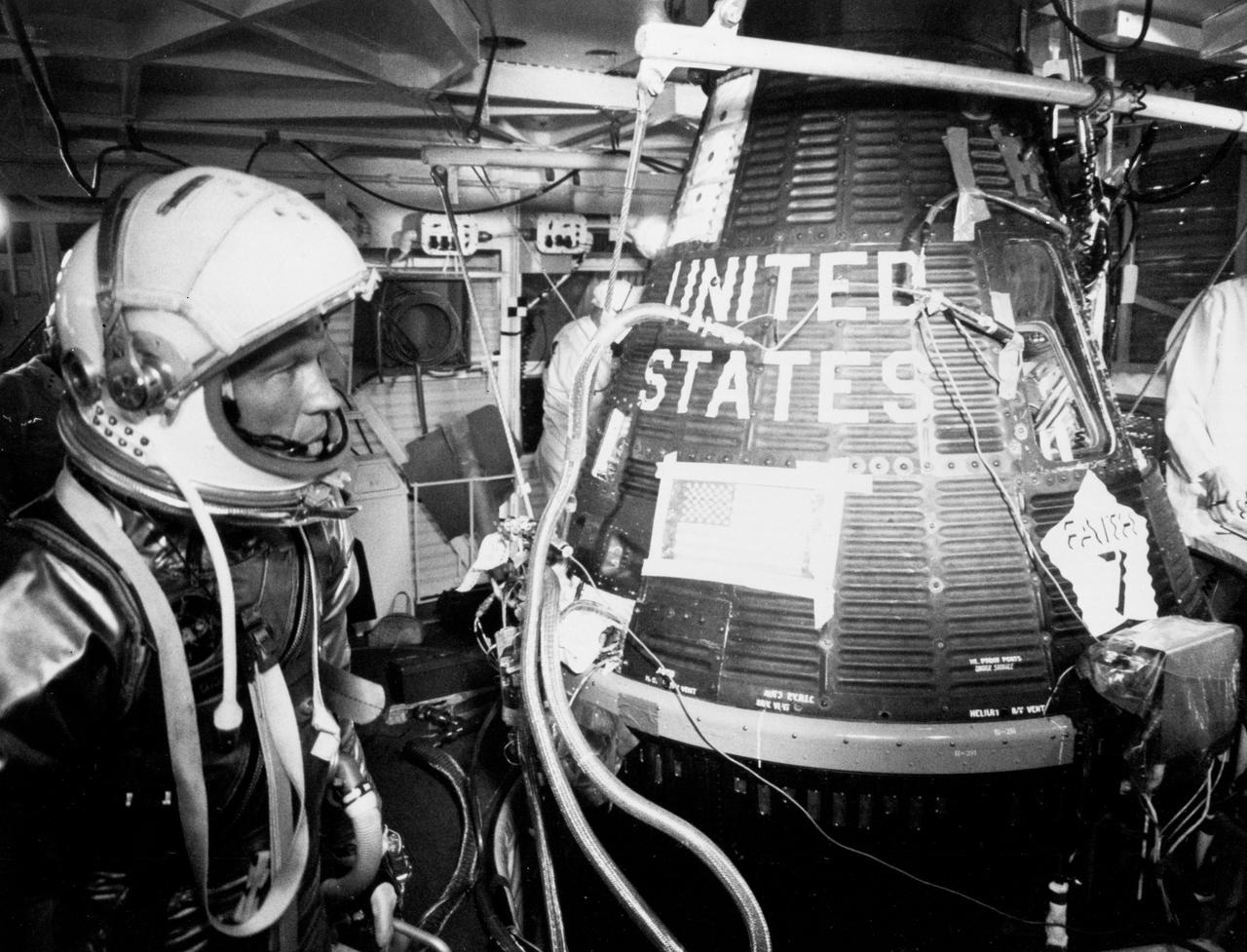
S63-06124 (1963) --- Astronaut L. Gordon Cooper Jr., prime pilot for the Mercury Atlas 9 (MA-9) mission, arrives at the top of the gantry during a preflight simulated mission, three days before he is scheduled to take "Faith 7" on the 22-orbit flight. Photo credit: NASA
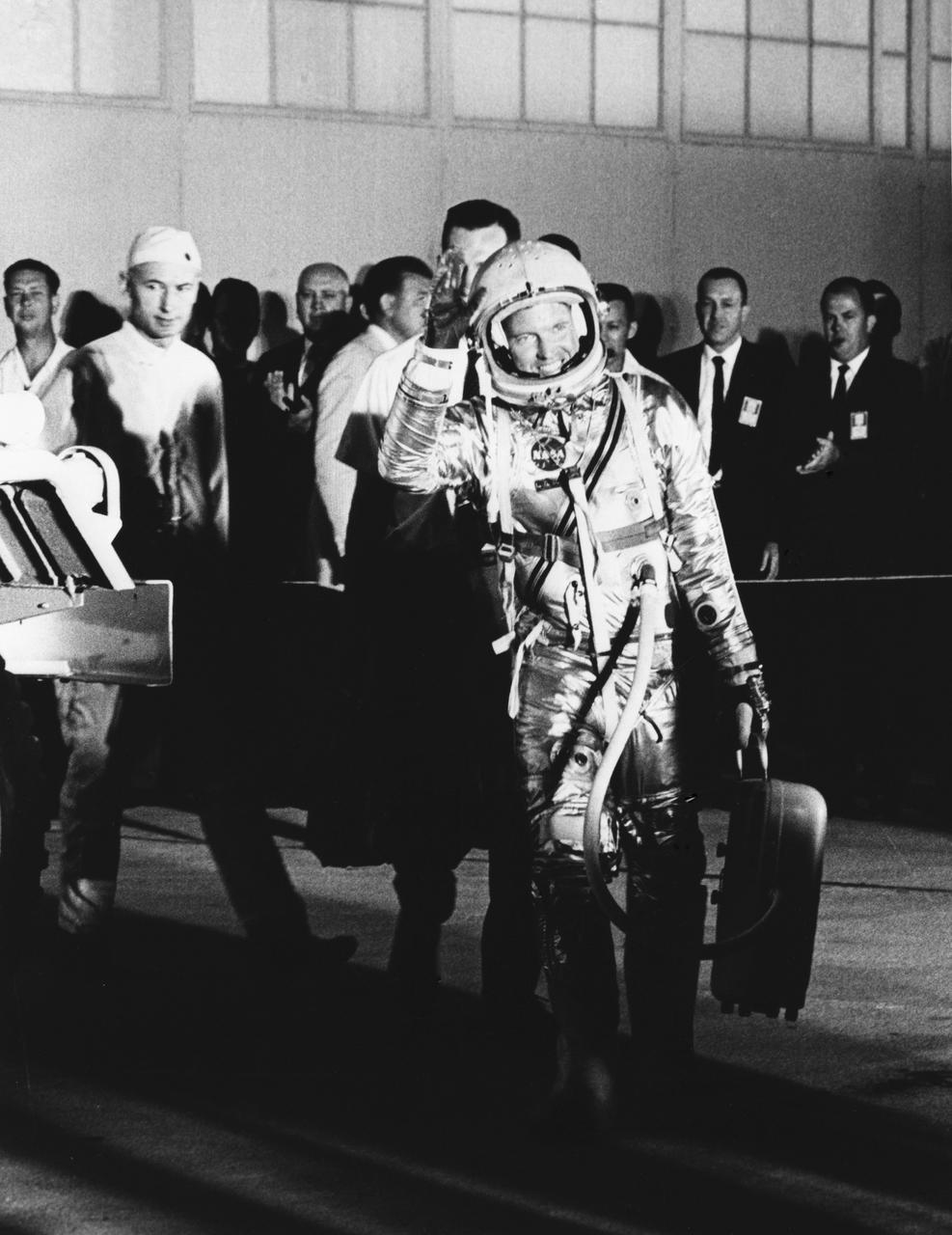
S63-06252 (May 1963) --- Mercury workers and news media are greeted by astronaut L. Gordon Cooper Jr., prime pilot for the Mercury-Atlas 9 (MA-9) mission, as he leaves Hangar "S" for Pad 14 to start his 22-orbit MA-9 mission. Photo credit: NASA
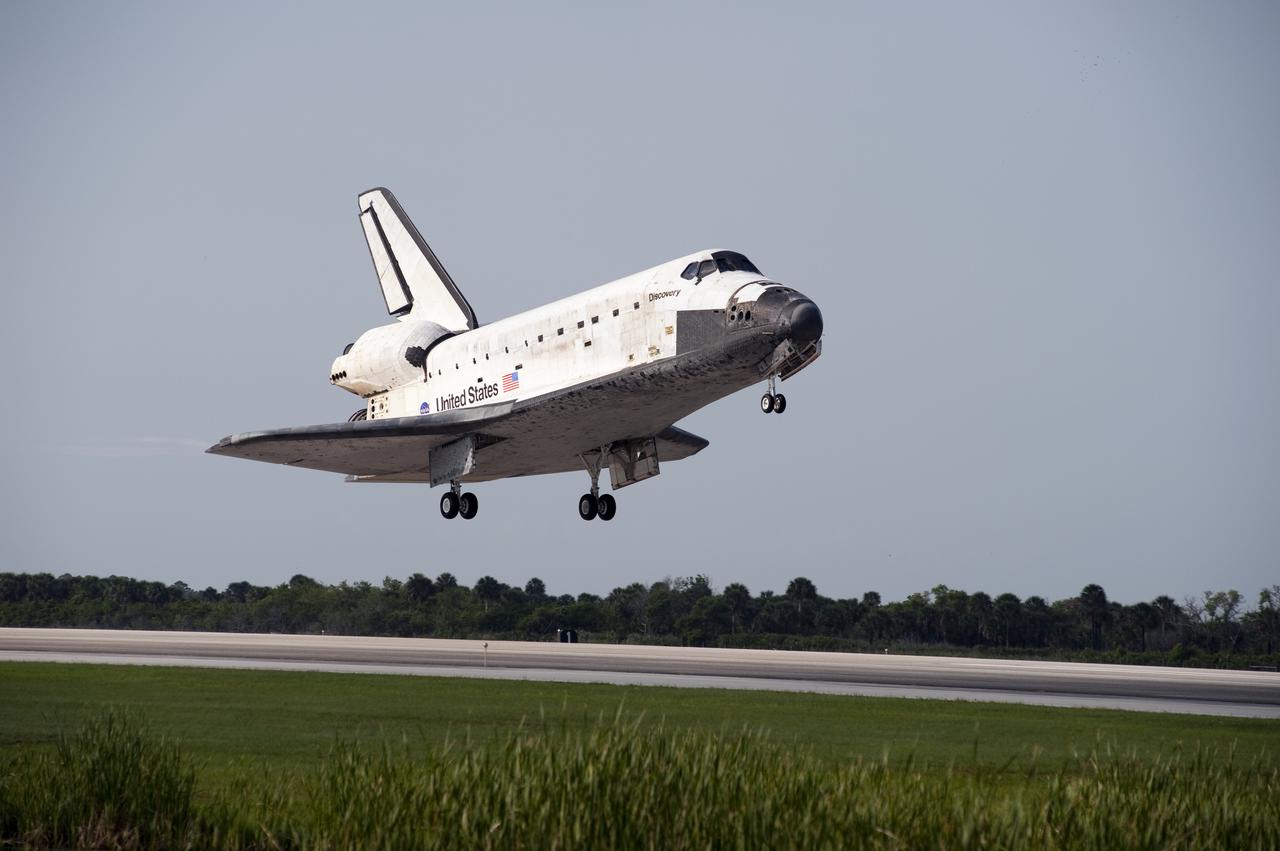
CAPE CANAVERAL, Fla. - Space shuttle Discovery nears touchdown on Runway 33 at the Shuttle Landing Facility at NASA's Kennedy Space Center in Florida. Landing was at 9:08 a.m. EDT, completing the 15-day STS-131 mission to the International Space Station. Main gear touchdown was at 9:08:35 a.m. EDT followed by nose gear touchdown at 9:08:47 a.m. and wheelstop at 9:09:33 a.m. Aboard are Commander Alan Poindexter; Pilot James P. Dutton Jr.; and Mission Specialists Rick Mastracchio, Clayton Anderson, Dorothy Metcalf-Lindenburger, Stephanie Wilson and Naoko Yamazaki of the Japan Aerospace Exploration Agency. The seven-member STS-131 crew carried the multi-purpose logistics module Leonardo, filled with supplies, a new crew sleeping quarters and science racks that were transferred to the International Space Station's laboratories. The crew also switched out a gyroscope on the station’s truss, installed a spare ammonia storage tank and retrieved a Japanese experiment from the station’s exterior. STS-131 is the 33rd shuttle mission to the station and the 131st shuttle mission overall. For information on the STS-131 mission and crew, visit http:__www.nasa.gov_mission_pages_shuttle_shuttlemissions_sts131_index.html. Photo credit: NASA_Ben Cooper
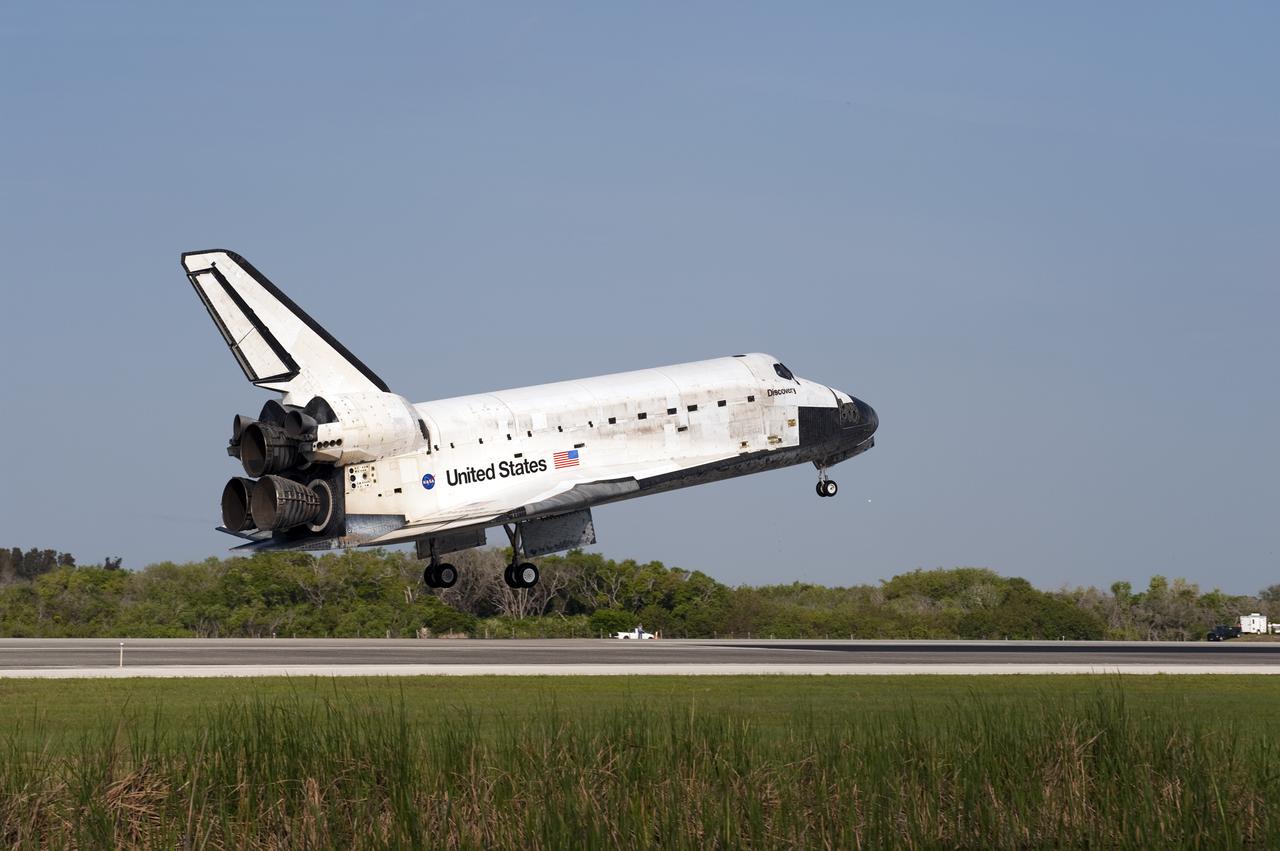
CAPE CANAVERAL, Fla. - Space shuttle Discovery nears touchdown on Runway 33 at the Shuttle Landing Facility at NASA's Kennedy Space Center in Florida. Landing was at 9:08 a.m. EDT, completing the 15-day STS-131 mission to the International Space Station. Main gear touchdown was at 9:08:35 a.m. EDT followed by nose gear touchdown at 9:08:47 a.m. and wheelstop at 9:09:33 a.m. Aboard are Commander Alan Poindexter; Pilot James P. Dutton Jr.; and Mission Specialists Rick Mastracchio, Clayton Anderson, Dorothy Metcalf-Lindenburger, Stephanie Wilson and Naoko Yamazaki of the Japan Aerospace Exploration Agency. The seven-member STS-131 crew carried the multi-purpose logistics module Leonardo, filled with supplies, a new crew sleeping quarters and science racks that were transferred to the International Space Station's laboratories. The crew also switched out a gyroscope on the station’s truss, installed a spare ammonia storage tank and retrieved a Japanese experiment from the station’s exterior. STS-131 is the 33rd shuttle mission to the station and the 131st shuttle mission overall. For information on the STS-131 mission and crew, visit http:__www.nasa.gov_mission_pages_shuttle_shuttlemissions_sts131_index.html. Photo credit: NASA_Ben Cooper
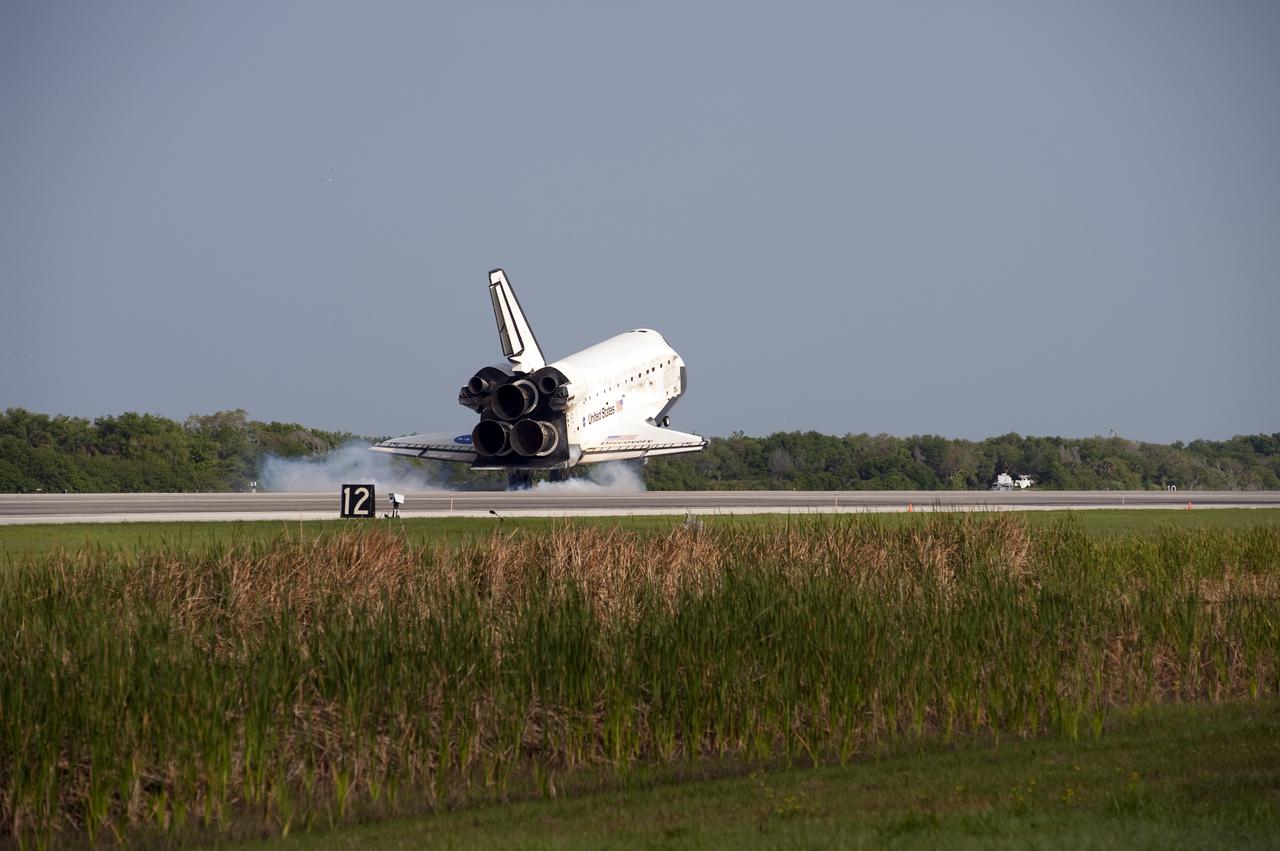
CAPE CANAVERAL, Fla. - Space shuttle Discovery lands on Runway 33 at the Shuttle Landing Facility at NASA's Kennedy Space Center in Florida at 9:08 a.m. EDT, completing the 15-day STS-131 mission to the International Space Station. Main gear touchdown was at 9:08:35 a.m. EDT followed by nose gear touchdown at 9:08:47 a.m. and wheelstop at 9:09:33 a.m. Aboard are Commander Alan Poindexter; Pilot James P. Dutton Jr.; and Mission Specialists Rick Mastracchio, Clayton Anderson, Dorothy Metcalf-Lindenburger, Stephanie Wilson and Naoko Yamazaki of the Japan Aerospace Exploration Agency. The seven-member STS-131 crew carried the multi-purpose logistics module Leonardo, filled with supplies, a new crew sleeping quarters and science racks that were transferred to the International Space Station's laboratories. The crew also switched out a gyroscope on the station’s truss, installed a spare ammonia storage tank and retrieved a Japanese experiment from the station’s exterior. STS-131 is the 33rd shuttle mission to the station and the 131st shuttle mission overall. For information on the STS-131 mission and crew, visit http:__www.nasa.gov_mission_pages_shuttle_shuttlemissions_sts131_index.html. Photo credit: NASA_Ben Cooper
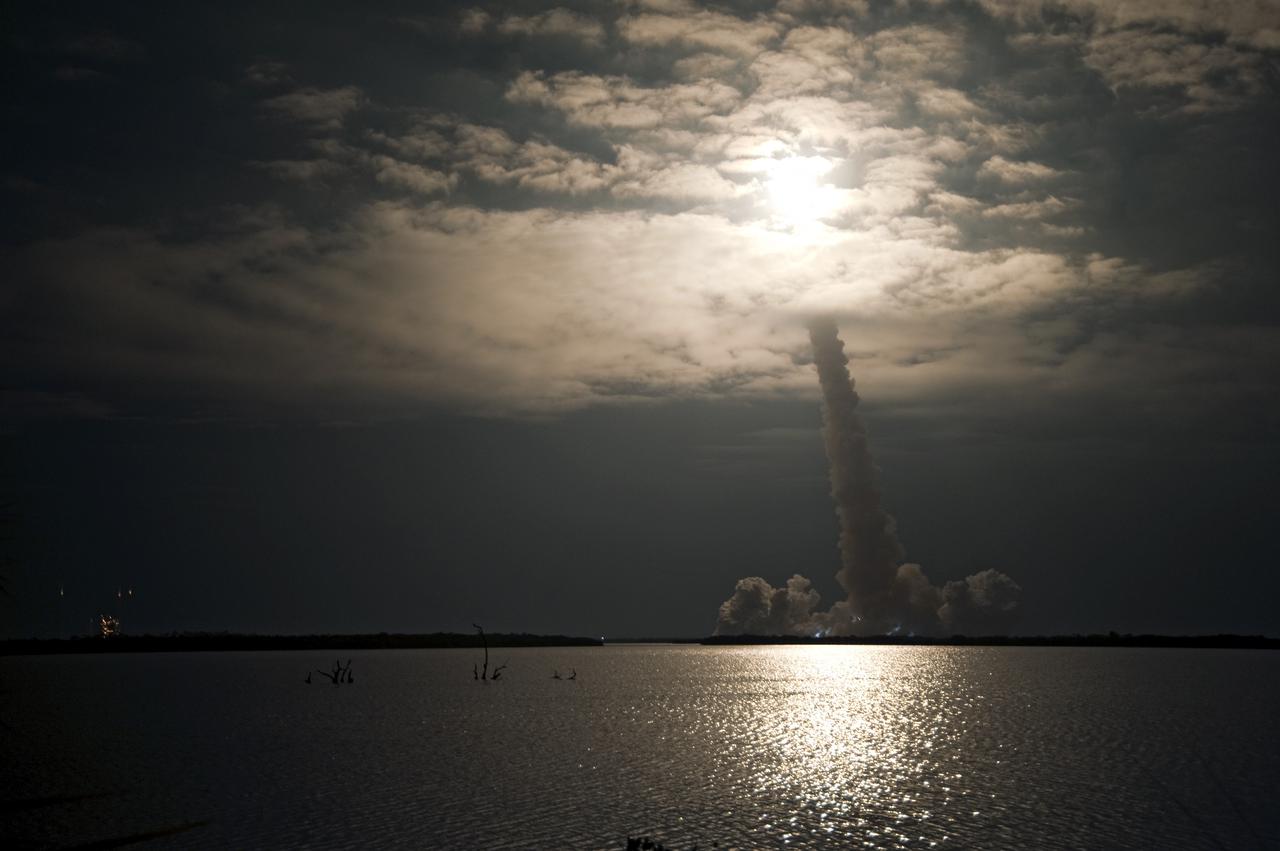
CAPE CANAVERAL, Fla. - Space shuttle Endeavour lights up the clouds over Launch Pad 39A as it lifts off from NASA's Kennedy Space Center in Florida. Launch of the STS-130 mission to the International Space Station was at 4:14 a.m. EST. This was the second launch attempt for space shuttle Endeavour's STS-130 crew and the final scheduled space shuttle night launch. The first attempt on Feb. 7 was scrubbed due to unfavorable weather. The primary payload for the STS-130 mission to the International Space Station is the Tranquility node, a pressurized module that will provide additional room for crew members and many of the station's life support and environmental control systems. Attached to one end of Tranquility is a cupola, a unique work area with six windows on its sides and one on top. The cupola resembles a circular bay window and will provide a vastly improved view of the station's exterior. The multi-directional view will allow the crew to monitor spacewalks and docking operations, as well as provide a spectacular view of Earth and other celestial objects. The module was built in Turin, Italy, by Thales Alenia Space for the European Space Agency. For information on the STS-130 mission and crew, visit http:__www.nasa.gov_mission_pages_shuttle_shuttlemissions_sts130_index.html. Photo credit: NASA_Ben Cooper
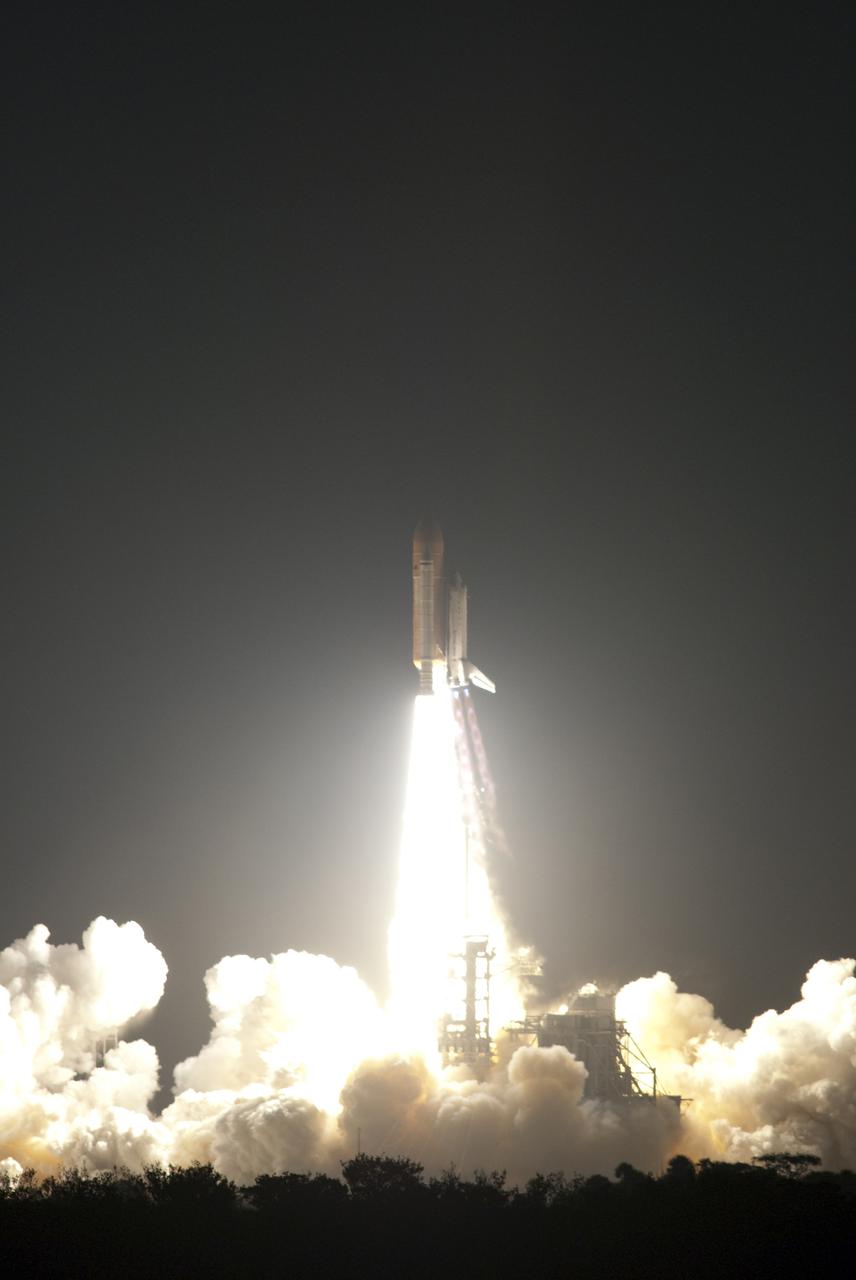
CAPE CANAVERAL, Fla. - Space shuttle Endeavour lights up the predawn sky above Florida's Space Coast as it lifts off Launch Pad 39A at NASA's Kennedy Space Center. Launch of the STS-130 mission to the International Space Station was at 4:14 a.m. EST. This was the second launch attempt for space shuttle Endeavour's STS-130 crew and the final scheduled space shuttle night launch. The first attempt on Feb. 7 was scrubbed due to unfavorable weather. The primary payload for the STS-130 mission to the International Space Station is the Tranquility node, a pressurized module that will provide additional room for crew members and many of the station's life support and environmental control systems. Attached to one end of Tranquility is a cupola, a unique work area with six windows on its sides and one on top. The cupola resembles a circular bay window and will provide a vastly improved view of the station's exterior. The multi-directional view will allow the crew to monitor spacewalks and docking operations, as well as provide a spectacular view of Earth and other celestial objects. The module was built in Turin, Italy, by Thales Alenia Space for the European Space Agency. For information on the STS-130 mission and crew, visit http:__www.nasa.gov_mission_pages_shuttle_shuttlemissions_sts130_index.html. Photo credit: NASA_Ben Cooper
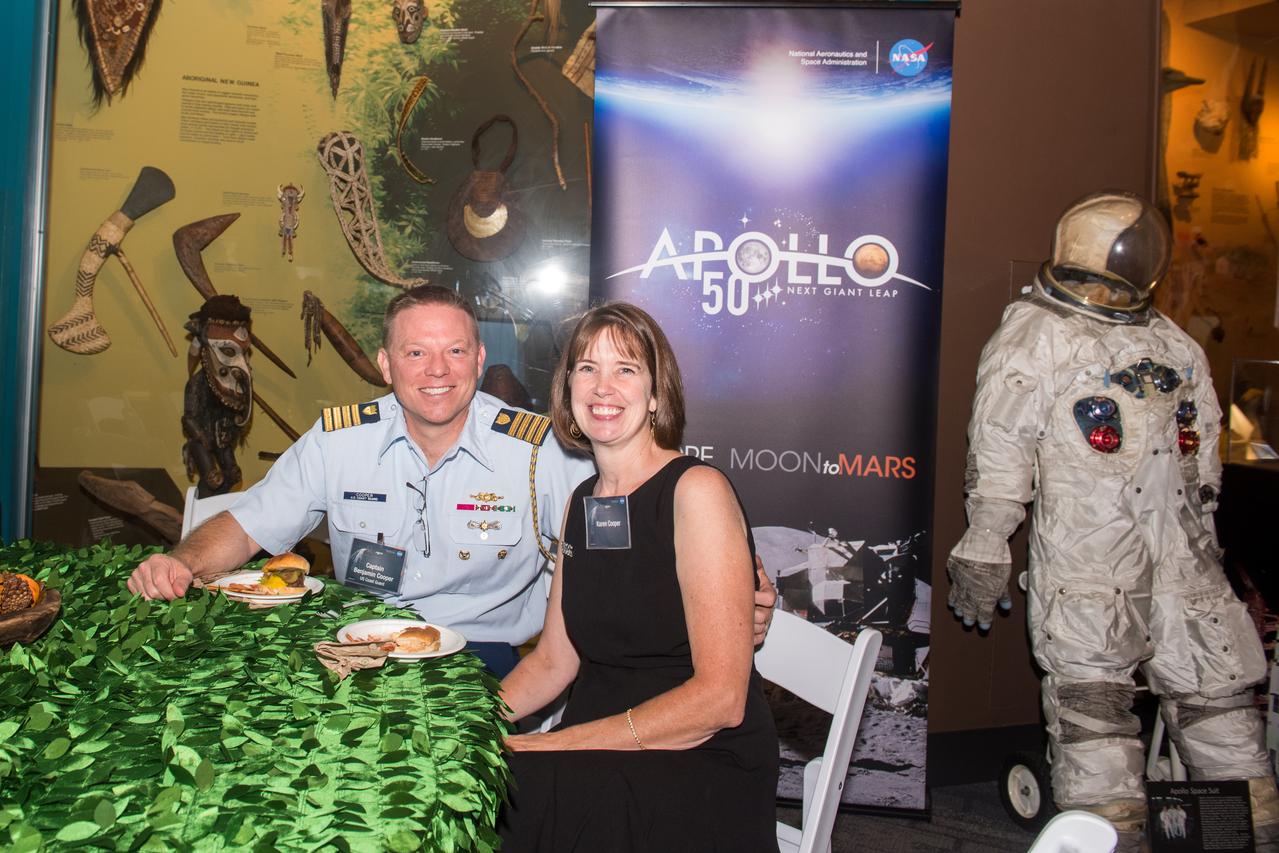
Evening With The Stars - 2019
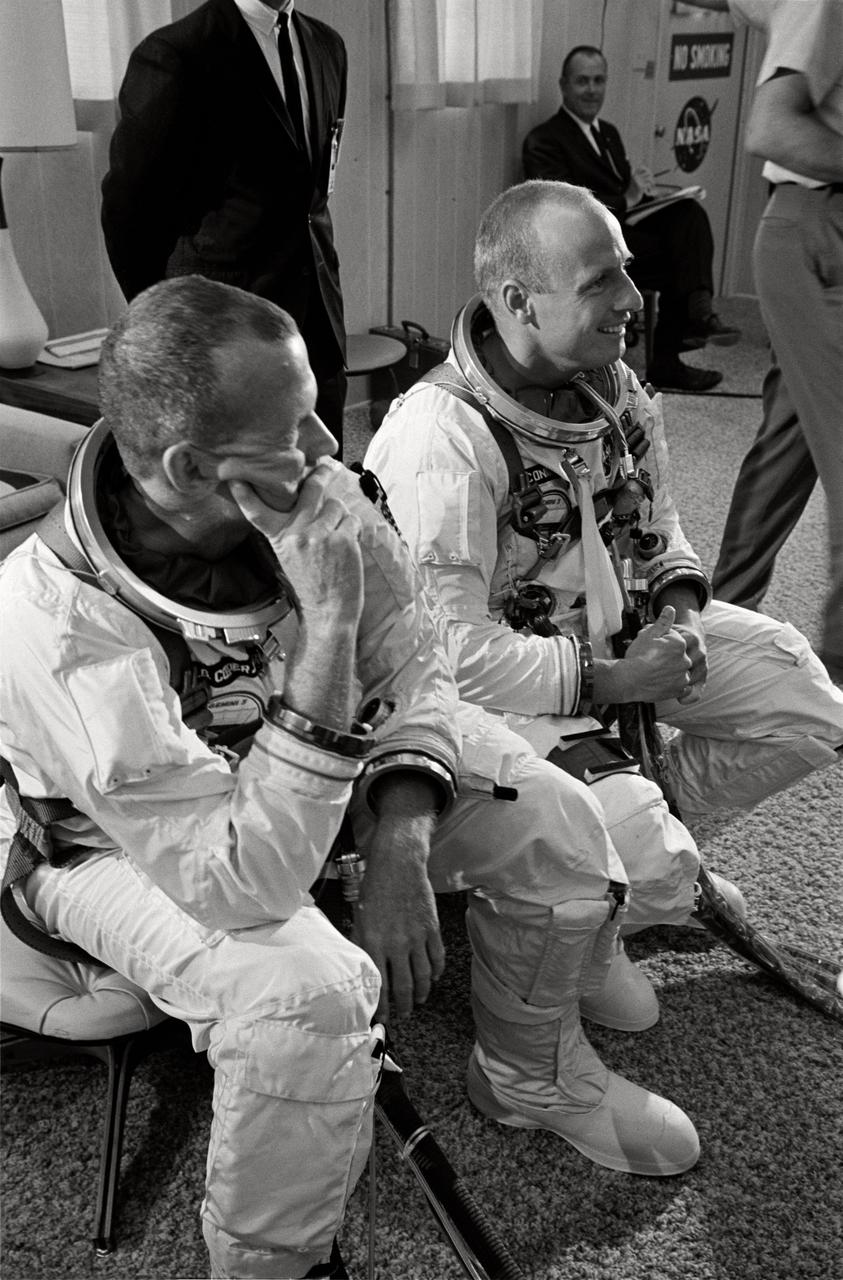
S65-46367 (19 Aug. 1965) --- Astronauts Charles Conrad Jr. (right) and L. Gordon Cooper Jr. are pictured during suiting up operations before Gemini-5 spaceflight. Editor's note: The scheduled Aug. 19 launch was postponed due to weather conditions and problems with loading cryogenic fuel for the fuel cell. The launch occurred on Aug. 21, 1965.
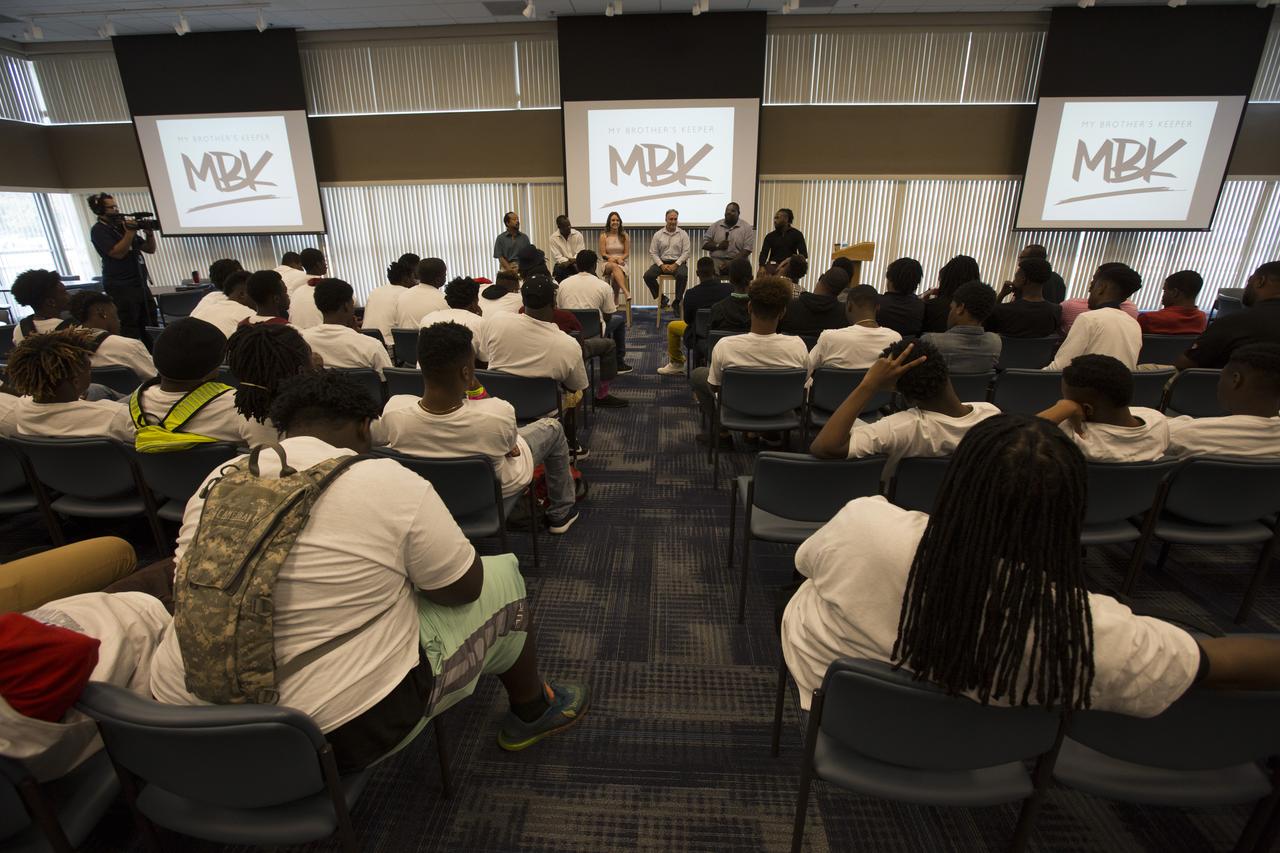
Students in the My Brother’s Keeper program hear from experts from across NASA’s Kennedy Space Center during a panel discussion in the Space Station Processing Facility Conference Center. Seated from left to right are Sheldon Lauderdale of the Commercial Crew Program (CCP); Yves Lamothe of the Ground Systems Development and Operations Program; Jennifer Levitt of CCP; Trent Smith and DeAntae Cooper (far right) of the Exploration Research and Technology Programs; and Malcolm Boston of the Launch Services Program. The spaceport is one of six NASA centers that participated in My Brother’s Keeper National Lab Week. The event is a nationwide effort to bring youth from underrepresented communities into federal labs and centers for hands-on activities, tours and inspirational speakers.
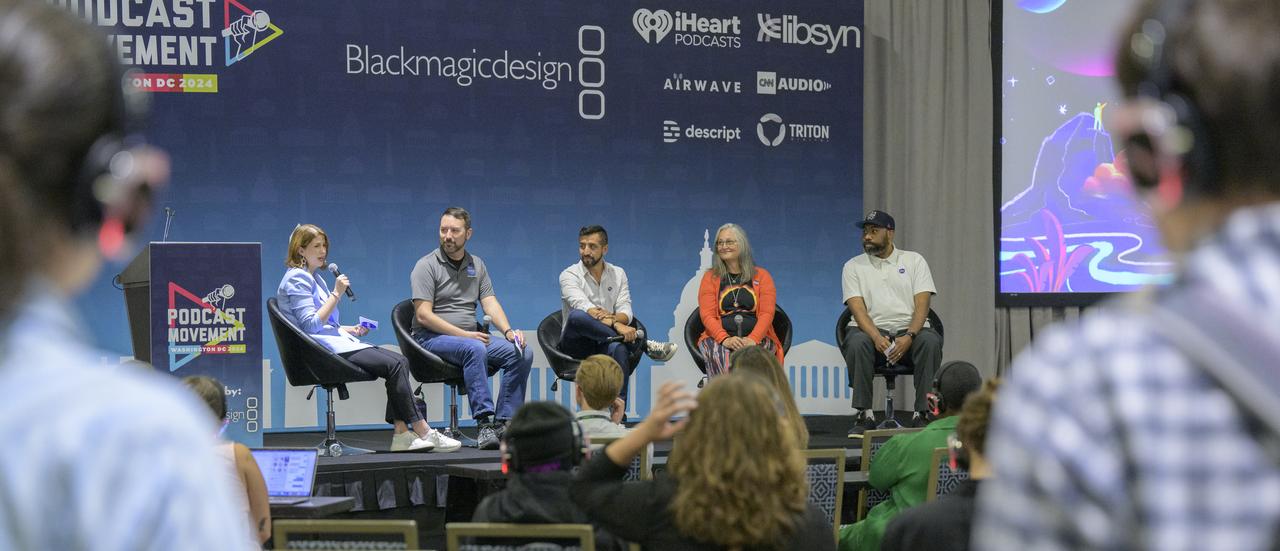
NASA Audio Lead Katie Konans, left, NASA Multimedia Producer and Host of Houston, We Have a Podcast Dane Turner, NASA Writer and Host of the Small Steps, Giant Leaps podcast Andrés Almeida, NASA Astrophysicist and Host of NASA's Curious Universe podcast Padi Boyd, and NASA Audio Engineer Manny Cooper, right, are seen during a Podcast Movement, NASA hosted a panel entitled, "Eclipses, Moon Missions, and Climate Change: How NASA Reaches Curious Listeners", Tuesday, Aug. 20, 2024, at the Gaylord National Resort and Convention Center in National Harbor, Md. Photo Credit: (NASA/Bill Ingalls)
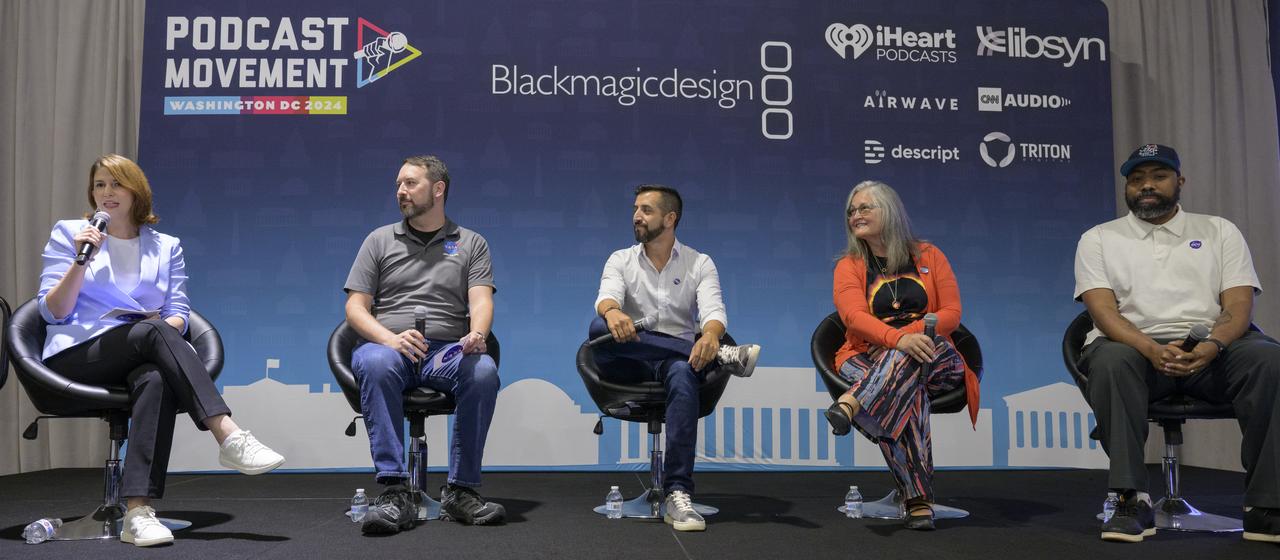
NASA Audio Lead Katie Konans, left, NASA Multimedia Producer and Host of Houston, We Have a Podcast Dane Turner, NASA Writer and Host of the Small Steps, Giant Leaps podcast Andrés Almeida, NASA Astrophysicist and Host of NASA's Curious Universe podcast Padi Boyd, and NASA Audio Engineer Manny Cooper, right, are seen during a Podcast Movement, NASA hosted a panel entitled, "Eclipses, Moon Missions, and Climate Change: How NASA Reaches Curious Listeners", Tuesday, Aug. 20, 2024, at the Gaylord National Resort and Convention Center in National Harbor, Md. Photo Credit: (NASA/Bill Ingalls)
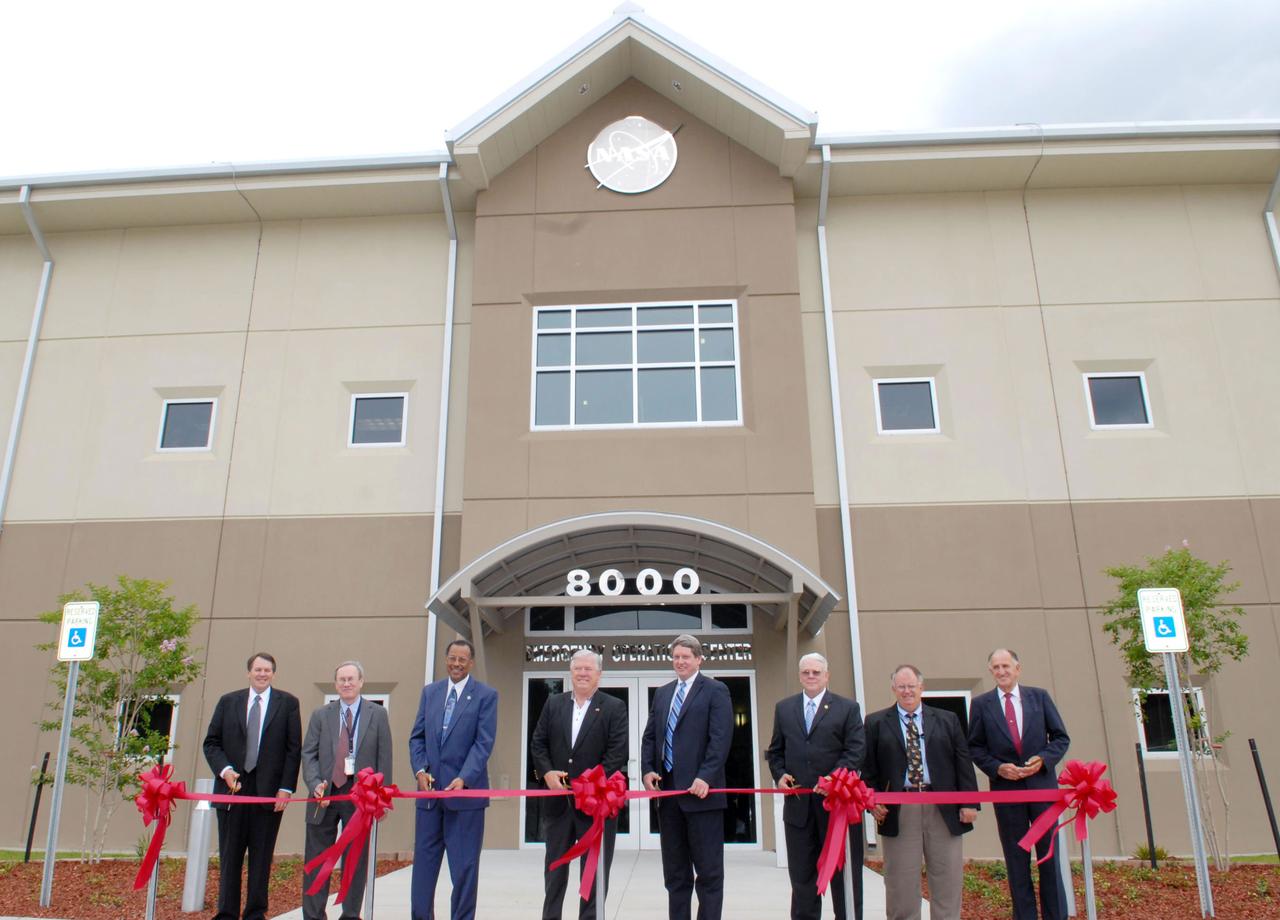
Center Director Gene Goldman and special guests celebrate the opening of the site's new Emergency Operations Center on June 2. Participants included (l t r): Steven Cooper, deputy director of the National Weather Service Southern Region; Tom Luedtke, NASA associate administrator for institutions and management; Charles Scales, NASA associate deputy administrator; Mississippi Gov. Haley Barbour; Gene Goldman, director of Stennis Space Center; Jack Forsythe, NASA assistant administrator for the Office of Security and Program Protection; Dr. Richard Williams, NASA chief health and medical officer; and Weldon Starks, president of Starks Contracting Company Inc. of Biloxi.
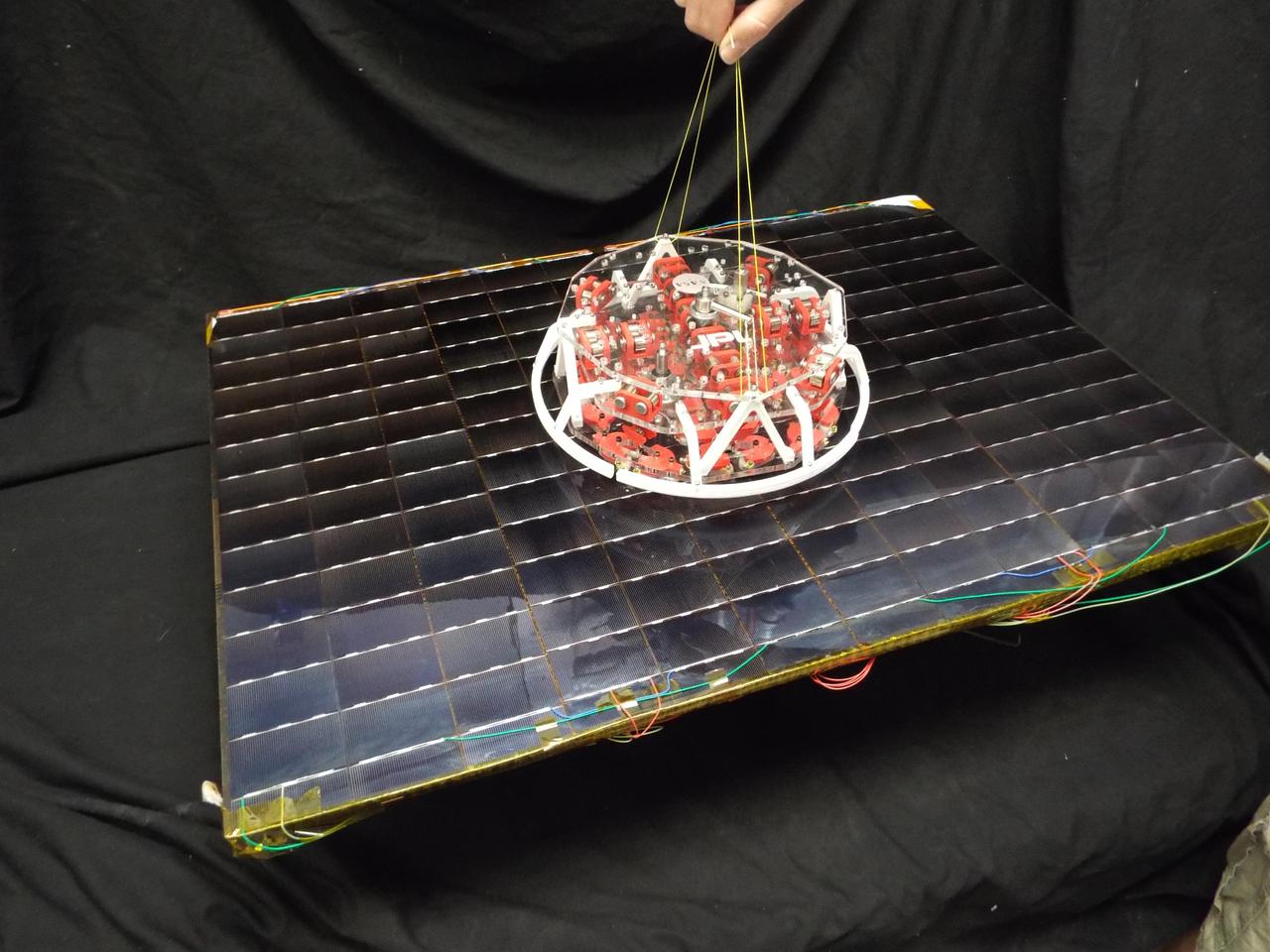
Scientists at NASA Jet Propulsion Laboratory have developed a tool for grappling non-cooperative objects that incorporates gecko-like adhesives. The adhesives are reusable and can be turned on and off.
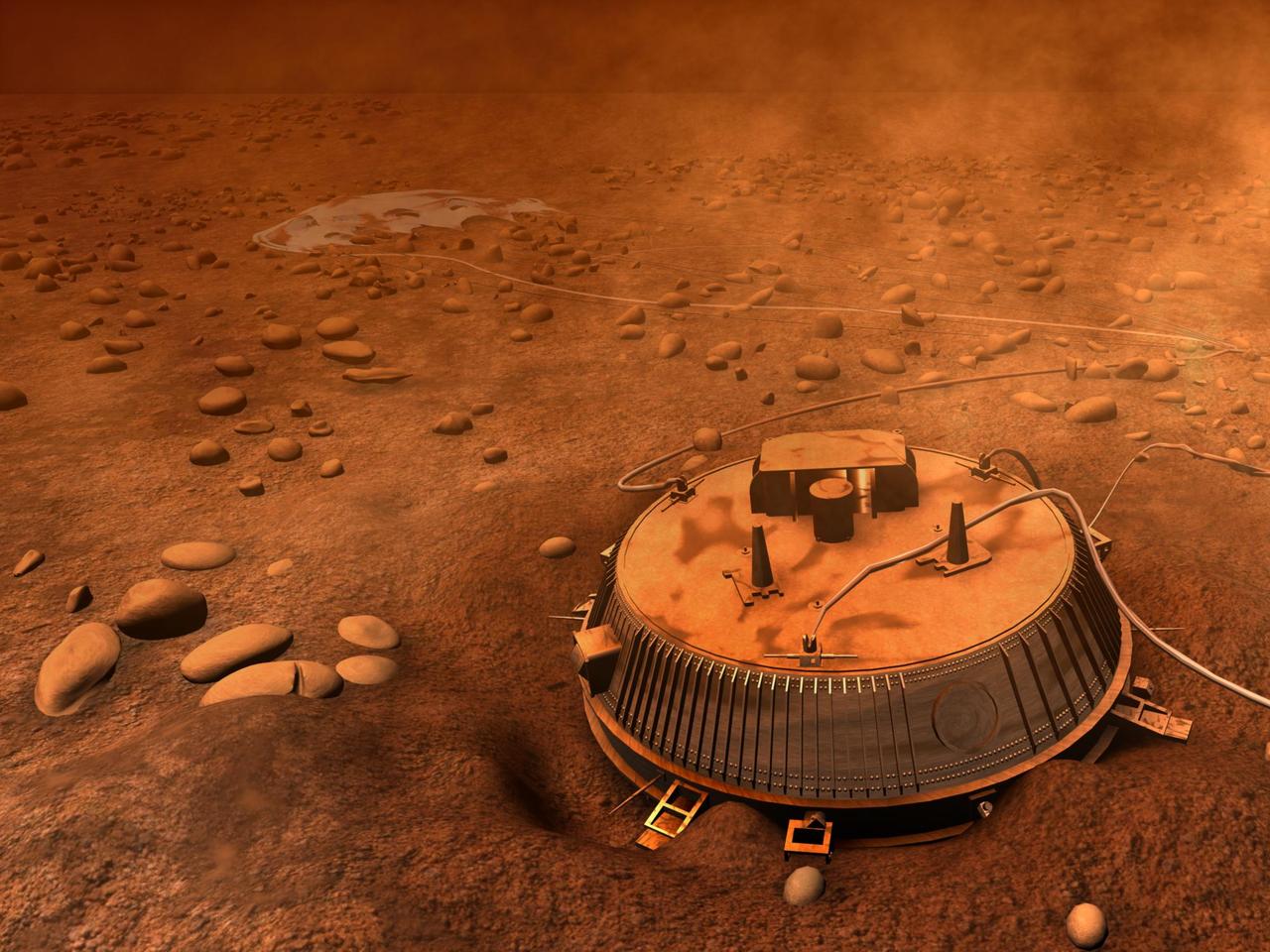
This is an artist interpretation of the area surrounding Huygens landing site, based on images and data returned Jan. 14, 2005. The Cassini-Huygens mission is a cooperative project of NASA, the European Space Agency and the Italian Space Agency.
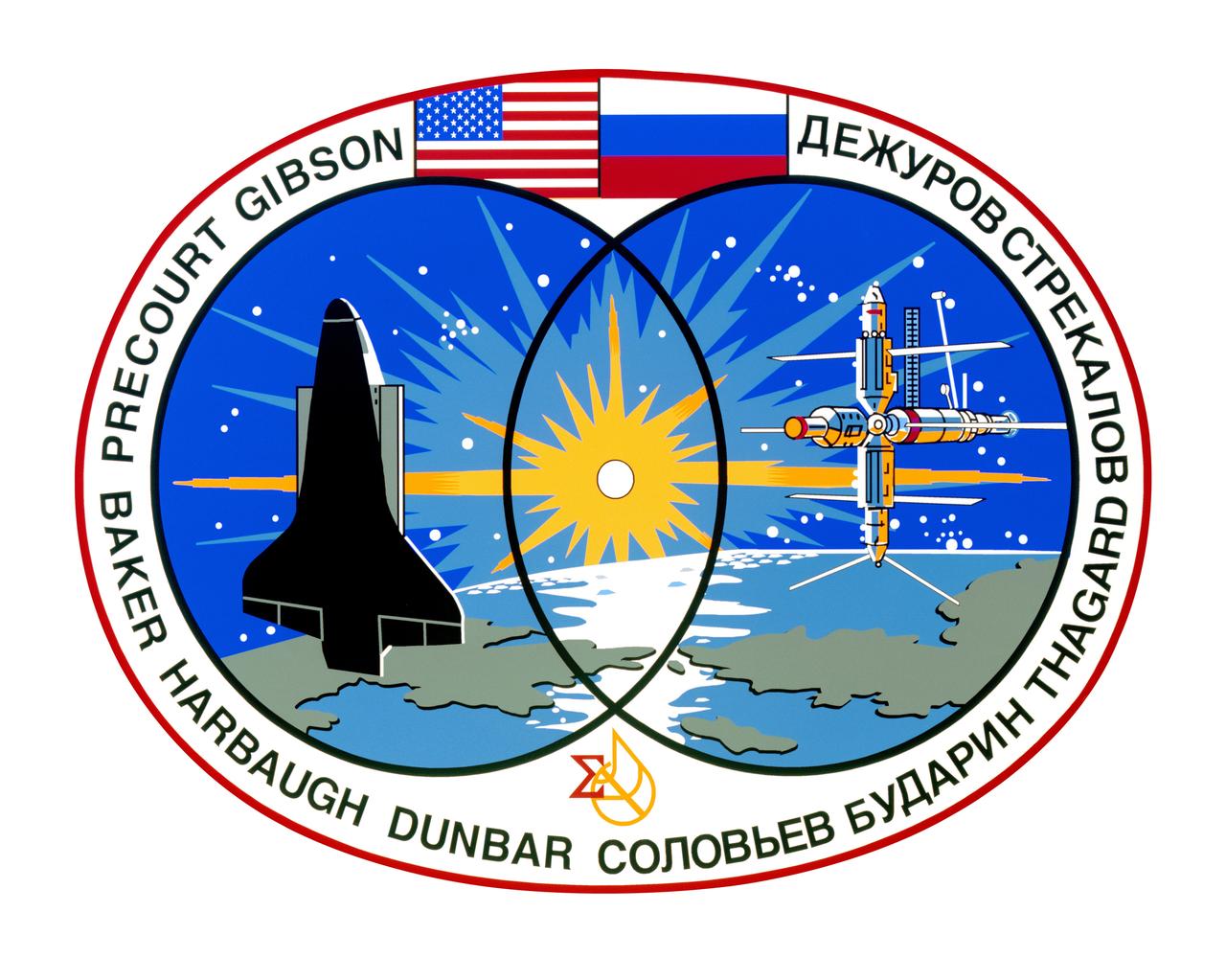
STS071-S-001 (April 1995) --- The STS-71 crew patch design depicts the orbiter Atlantis in the process of the first international docking mission of the space shuttle Atlantis with the Russian Mir Space Station. The names of the 10 astronauts and cosmonauts who will fly aboard the orbiter as shown along the outer border of the patch. The rising sun symbolizes the dawn of a new era of cooperation between the two countries. The vehicles Atlantis and Mir are shown in separate circles converging at the center of the emblem symbolizing the merger of the space programs of the two space faring nations. The flags of the United States and Russia emphasize the equal partnership of the mission. The joint program symbol at the lower center of the patch acknowledges the extensive contributions made by the Mission Control Centers (MCC) of both countries. The crew insignia was designed by aviation and space artist, Bob McCall, who also designed the crew patch for the Apollo-Soyuz Test Project (ASTP) in 1975, the first international space docking mission. The NASA insignia design for space shuttle flights is reserved for use by the astronauts and for other official use as the NASA Administrator may authorize. Public availability has been approved only in the forms of illustrations by the various news media. When and if there is any change in this policy, which is not anticipated, the change will be publicly announced. Photo credit: NASA
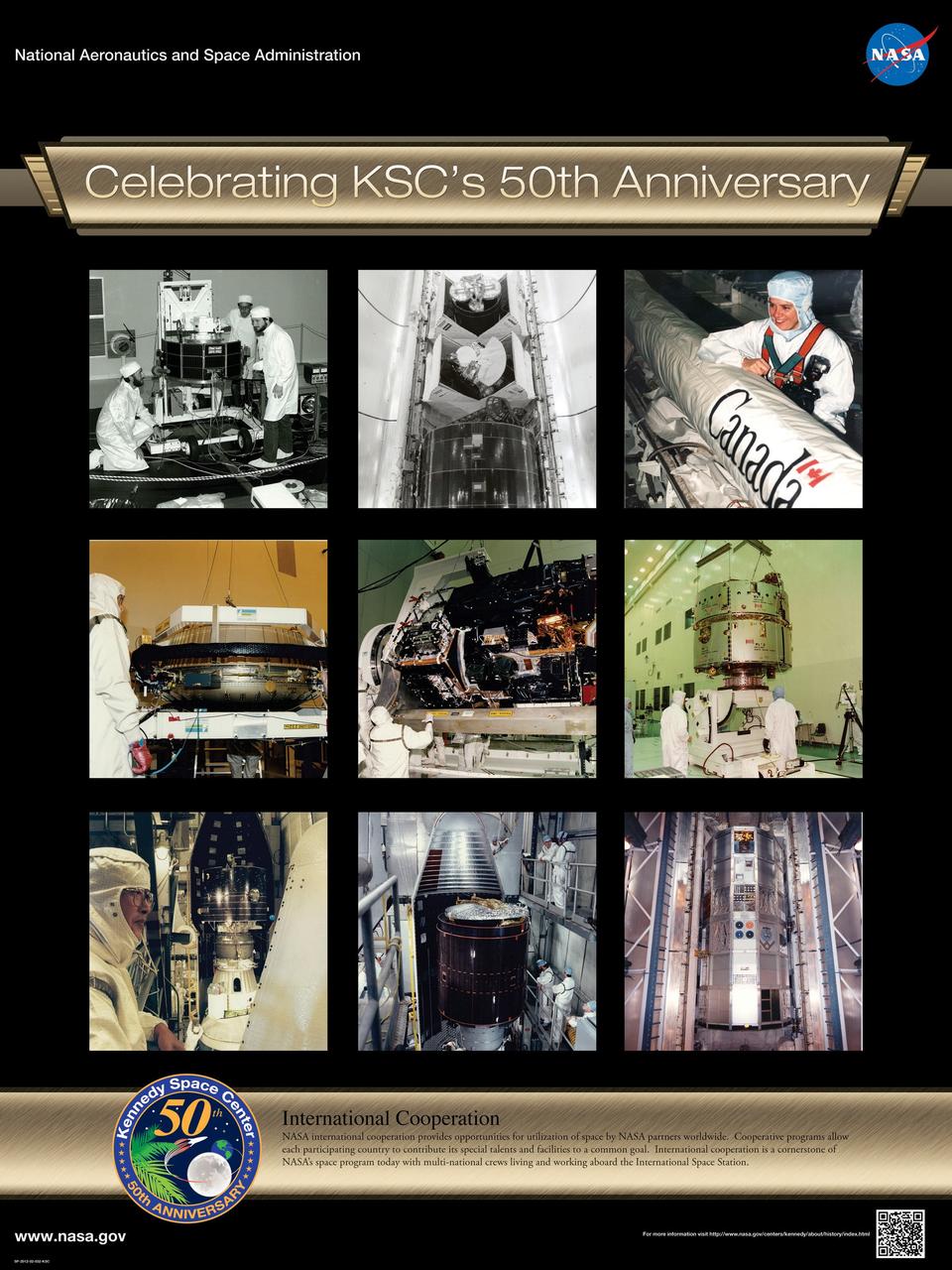
International Cooperation: NASA international cooperation provides opportunities for utilization of space by NASA partners worldwide. Cooperative programs allow each participating country to contribute its special talents and facilities to a common goal. International cooperation is a cornerstone of NASA’s space program today with multi-national crews living and working aboard the International Space Station. Poster designed by Kennedy Space Center Graphics Department/Greg Lee. Credit: NASA
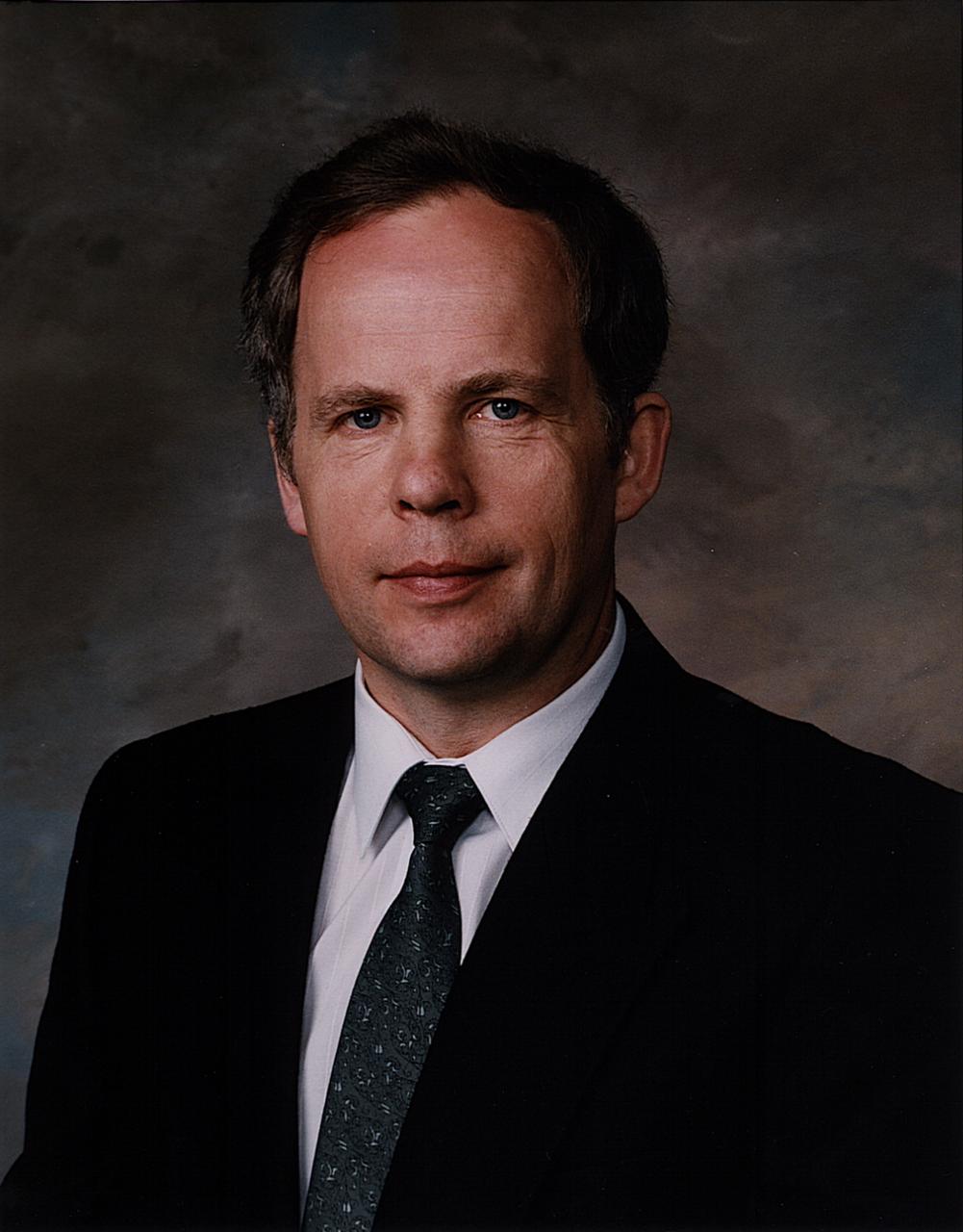
s94-34935 --- Portrait of Russian cosmonaut and Mir 19 commander Anatoly Solovyev in civilian clothes.
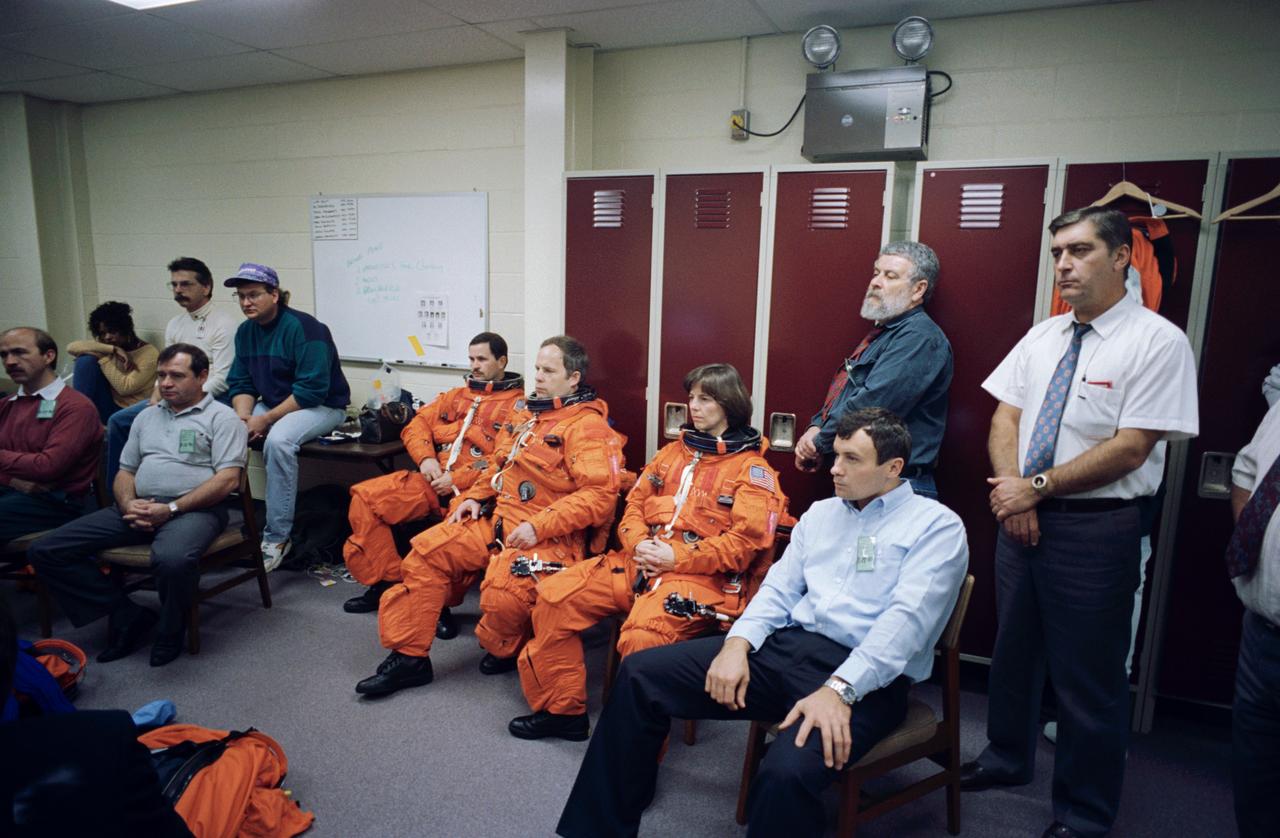
S94-47218 (28 Oct 1994) --- A number of Russian cosmonauts and an American astronaut listen to a briefing on launch and landing emergency situations during a training session in the Systems Integration Facility at the Johnson Space Center (JSC). Scheduled to launch aboard the Space Shuttle Atlantis with the STS-71 crew (in orange suits, left to right) are Nikolai M. Budarin, Mir 19 flight engineer; Anatoliy Y. Solovyev, Mir 19 mission commander; and Bonnie J. Dunbar, STS-71 mission specialist. The three are flanked by cosmonauts Gennadiy M. Strekalov (seated, second left) and Vladimir N. Dezhurov (seated, right foreground), flight engineer and commander, respectively, for the Mir-18 mission, who will return from a Russian Mir Space Station stay in Atlantis along with the two-way crew members of the STS-71 mission. Alexsandr F. Poleshchuk (seated, far left) is a Mir-reserve crew member.

S94-34940 (June 1994) --- Vladimir N. Dezhurov, Russian cosmonaut Commander, Mir-18 EDITOR'S NOTE: Early next year, Dezhurov, along with NASA astronaut Norman E. Thagard and another cosmonaut, will be launched into Earth-orbit to spend three months aboard Russia's Mir space station.
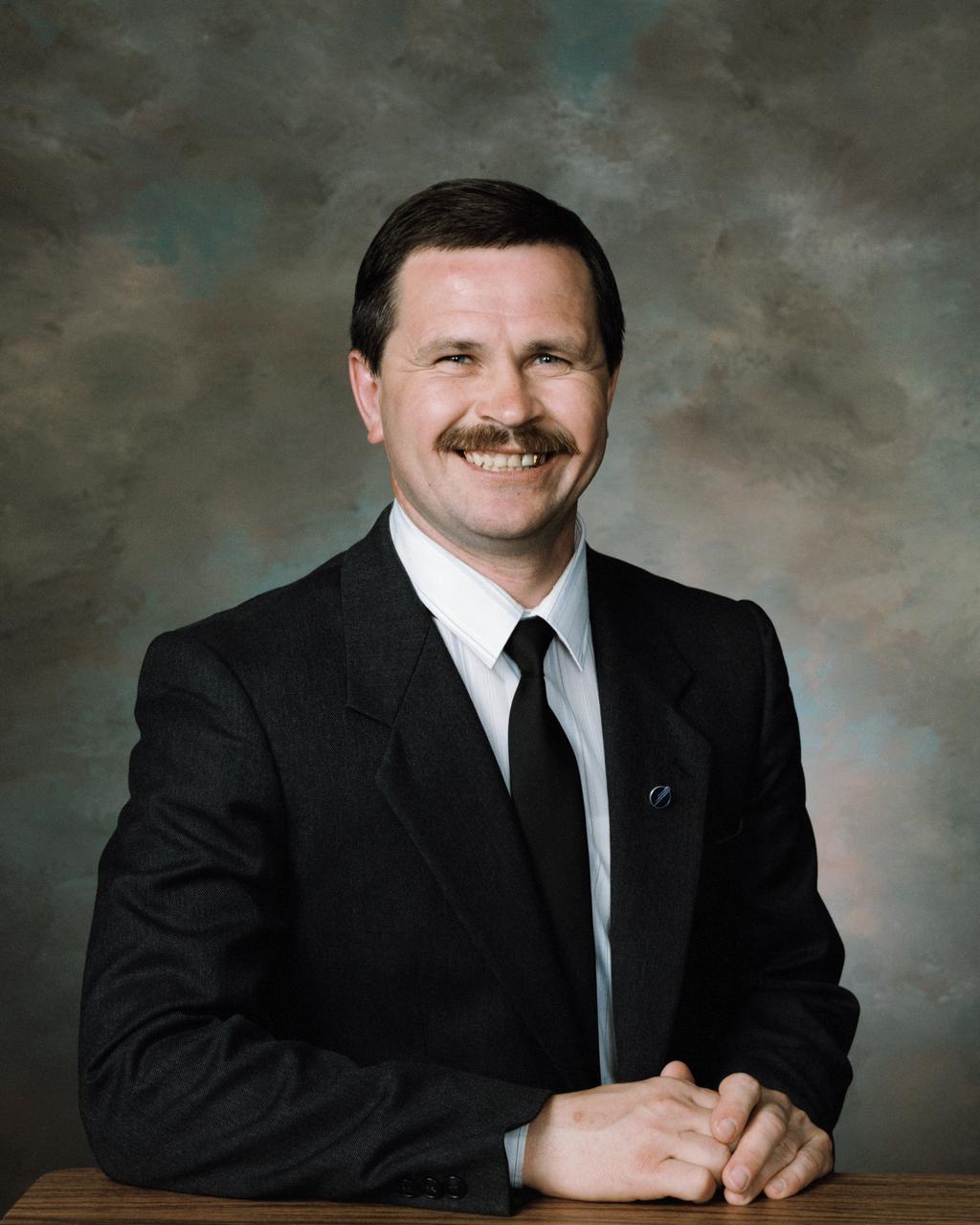
S94-34938 (27 May 1994) --- Cosmonaut Nikolai M. Budarin, flight engineer.
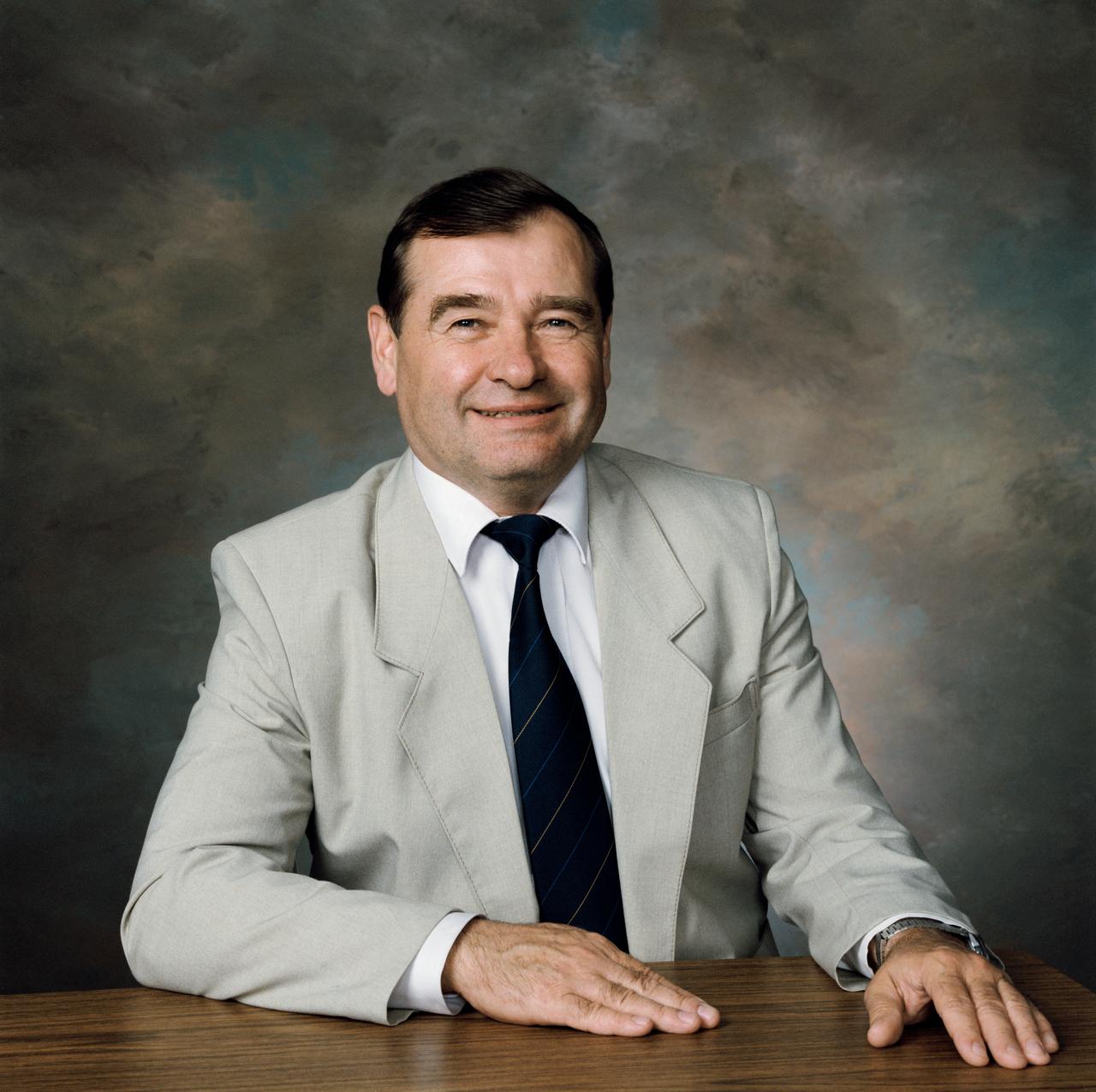
S94-34939 (Nov 1994) --- Gennadity M. Strekalov, Russian cosmonaut Flight Engineer, Mir-18.
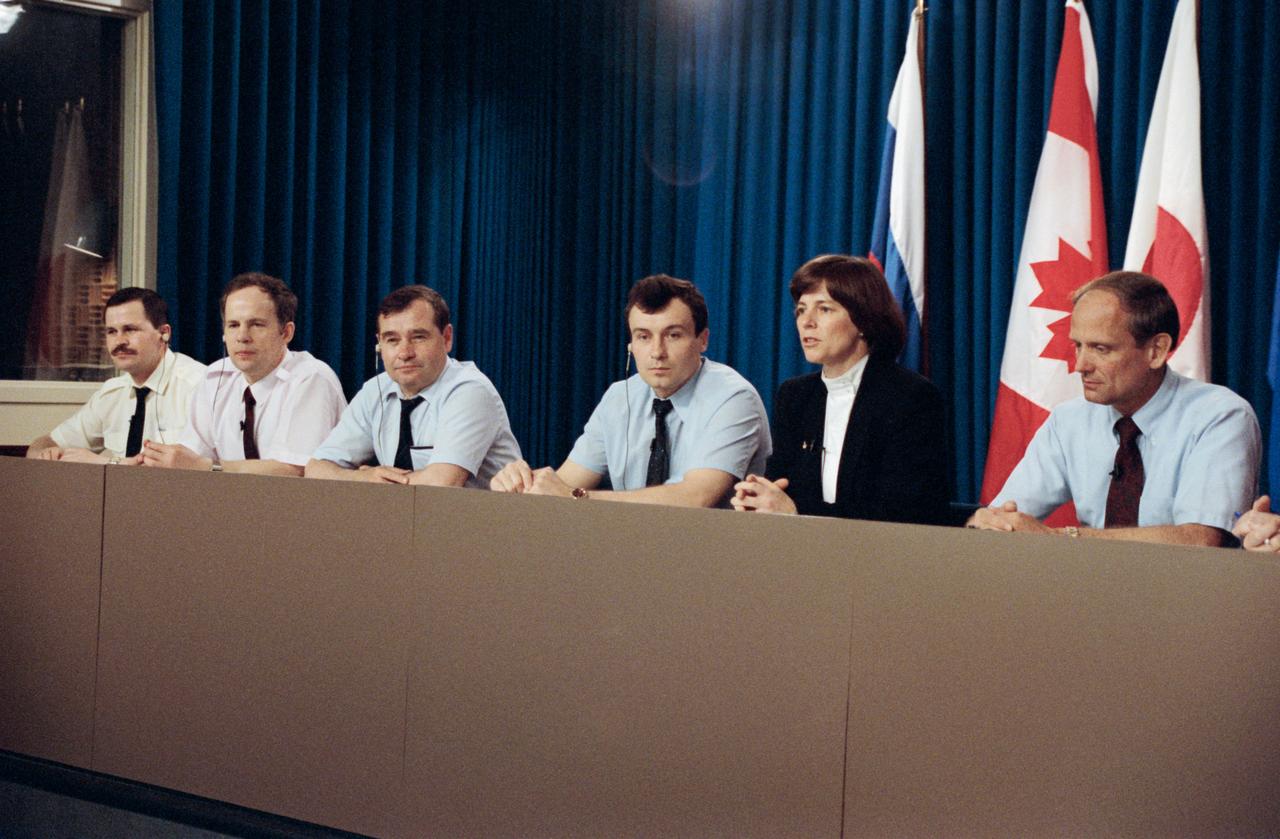
S94-34094 (16 June 1994) --- Crewmembers for the joint Space Shuttle/Mir missions meet the press at the Johnson Space Center (JSC). On the dais are, left to right, cosmonauts Nikolai M. Budarin, Anatoly Y. Solovyov, Gennady M. Strekalov and Vladimir N. Dezhurov, and astronauts Bonnie J. Dunbar and Norman E. Thagard. In a precedent-setting flight, Thagard will be launched with Dezhurov and Strekalov to Mir early next year for a three month mission, designated as Mir 18, on Russia's space station. Then in late May, as the assignment of STS-71, the space shuttle Atlantis will rendezvous with Mir to pick up the Mir 18 crew and transfer cosmonauts Solovyov and Budarin to the station for the Mir 19 mission. STS-71 mission specialist Dunbar is training as Thagard's backup.