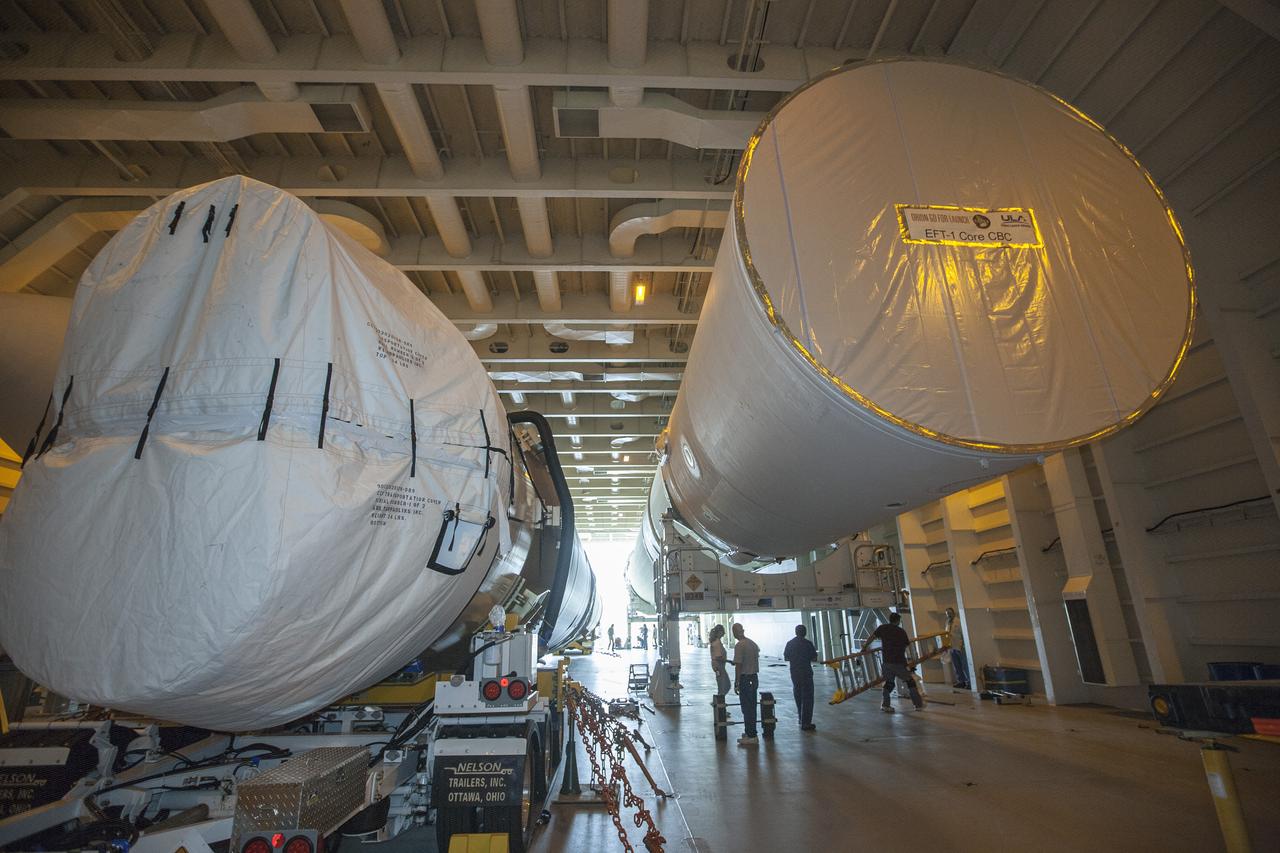
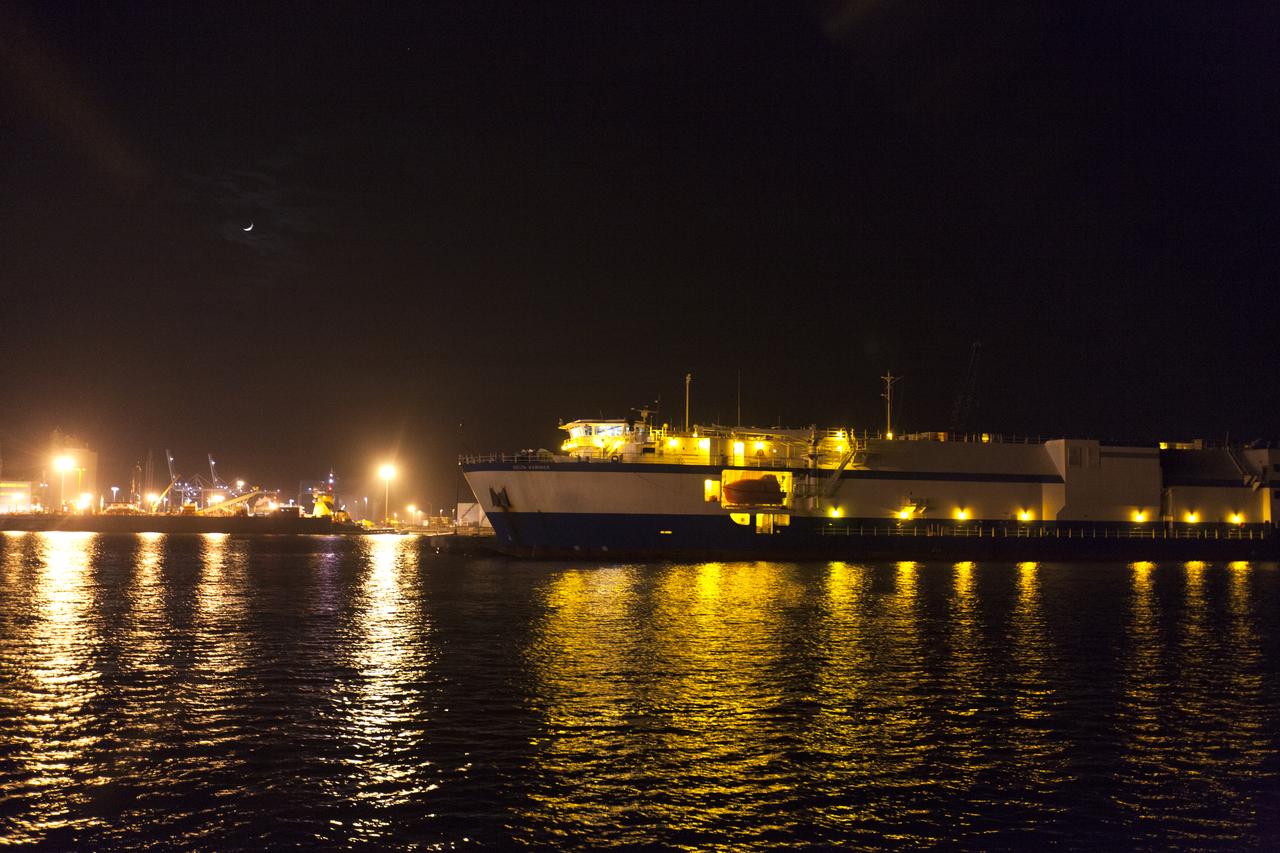
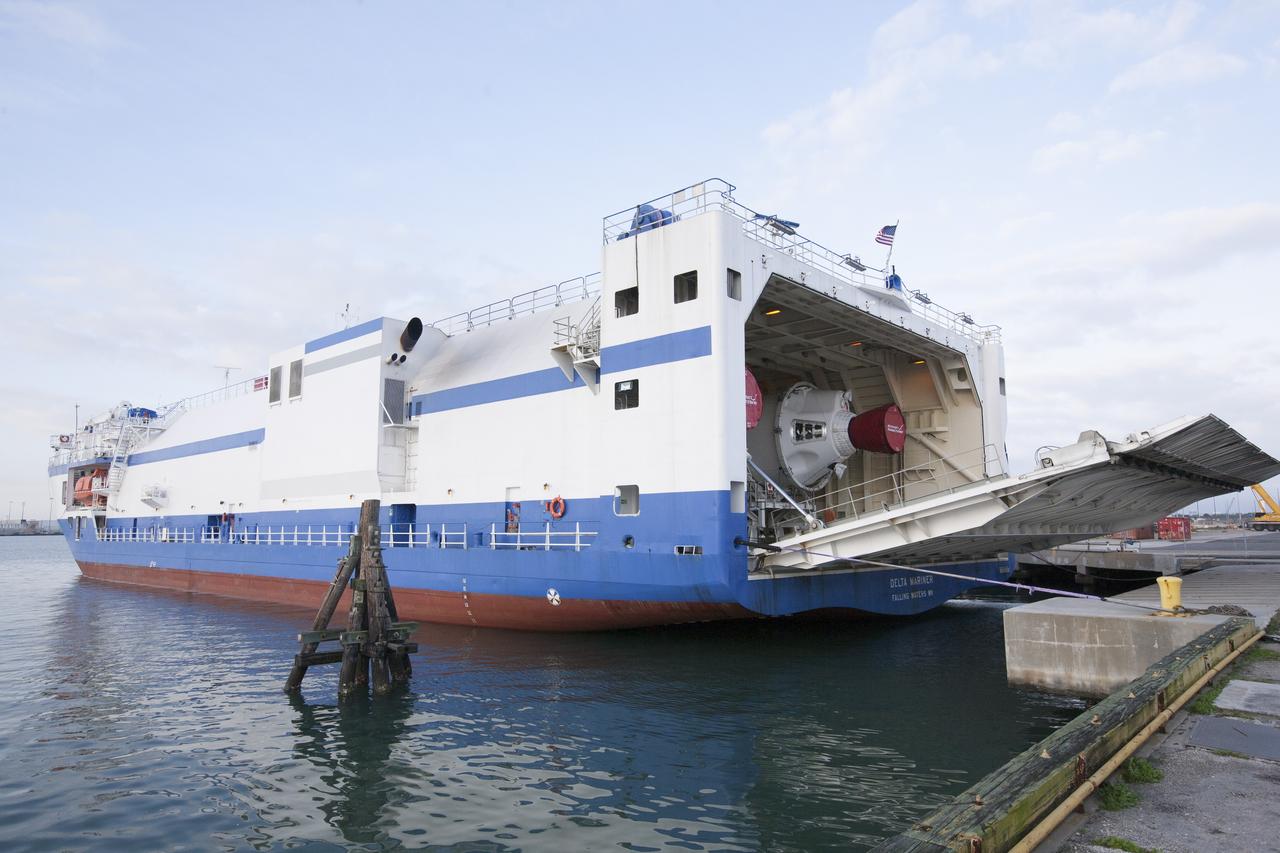
CAPE CANAVERAL, Fla. – A barge arrives at the U.S. Army Outpost wharf at Port Canaveral in Florida, carrying two of the three United Launch Alliance Delta IV heavy boosters for NASA’s upcoming Exploration Flight Test-1, or EFT-1, mission with the Orion spacecraft. The core booster and starboard booster will be offloaded and then transported to the Horizontal Integration Facility, or HIF, at Space Launch Complex 37 on Cape Canaveral Air Force Station. The port booster and the upper stage are planned to be shipped to Cape Canaveral in April. At the HIF, all three boosters will be processed and checked out before being moved to the nearby launch pad and hoisted into position. During the EFT-1 mission, Orion will travel farther into space than any human spacecraft has gone in more than 40 years. The data gathered during the flight will influence design decisions, validate existing computer models and innovative new approaches to space systems development, as well as reduce overall mission risks and costs for later Orion flights. Liftoff of Orion on EFT-1 is planned for fall 2014. Photo credit: NASA/Kim Shiflett
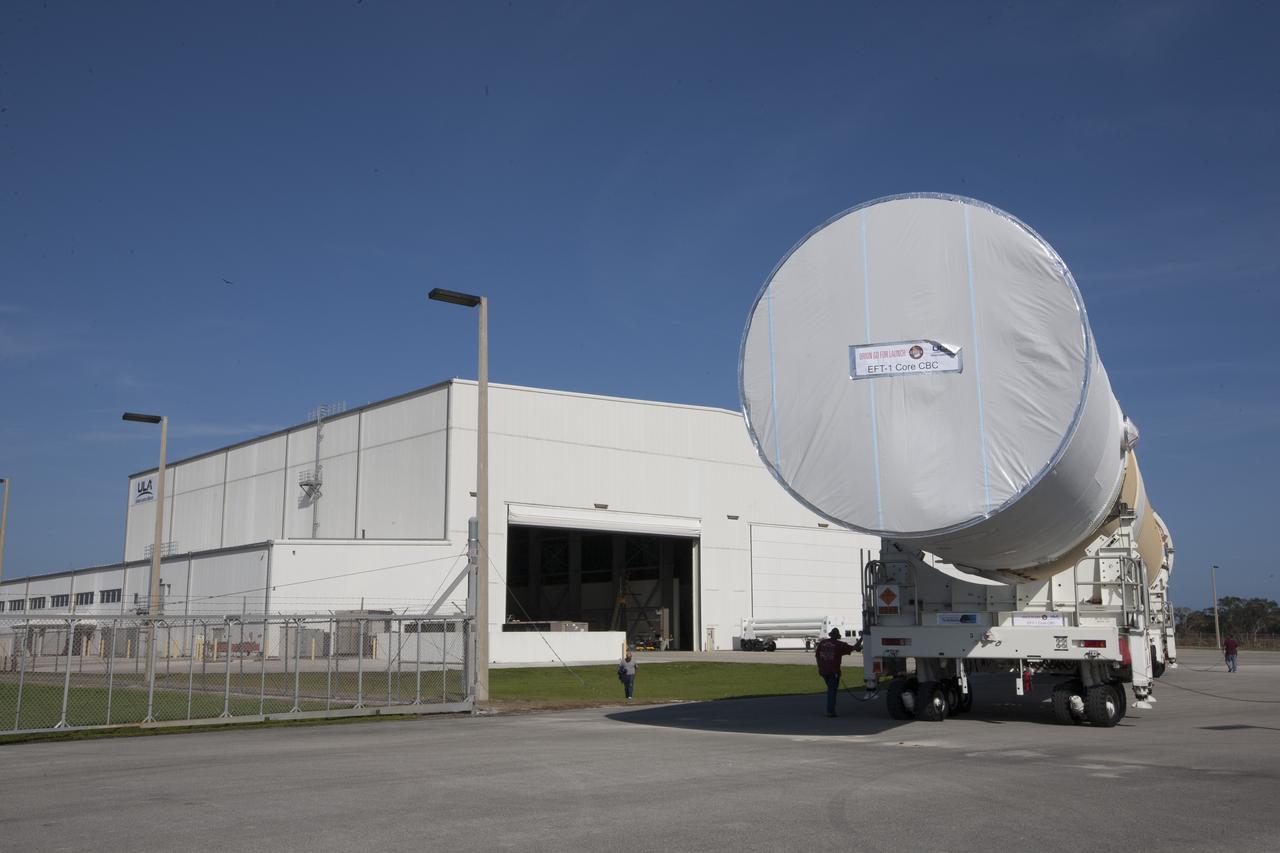
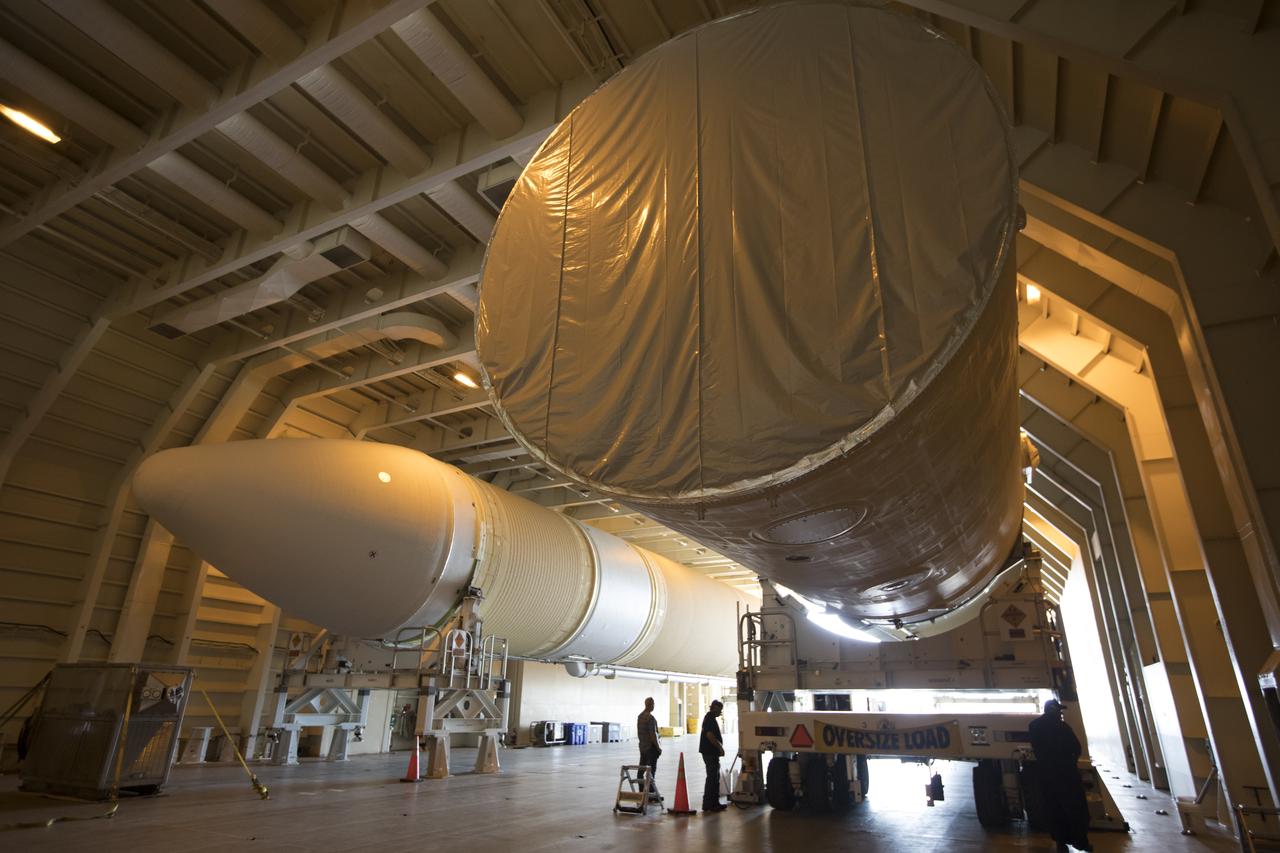
CAPE CANAVERAL, Fla. – Two of the three United Launch Alliance Delta IV heavy boosters for NASA’s upcoming Exploration Flight Test-1, or EFT-1, mission with the Orion spacecraft, arrived by barge at the U.S. Army Outpost wharf at Port Canaveral in Florida. The core booster, shown in this photo, and starboard booster were offloaded and transported to the Horizontal Integration Facility, or HIF, at Space Launch Complex 37 on Cape Canaveral Air Force Station. The port booster and the upper stage are planned to be shipped to Cape Canaveral in April. At the HIF, all three boosters will be processed and checked out before being moved to the nearby launch pad and hoisted into position. During the EFT-1 mission, Orion will travel farther into space than any human spacecraft has gone in more than 40 years. The data gathered during the flight will influence design decisions, validate existing computer models and innovative new approaches to space systems development, as well as reduce overall mission risks and costs for later Orion flights. Liftoff of Orion on EFT-1 is planned for fall 2014. Photo credit: NASA/Kim Shiflett
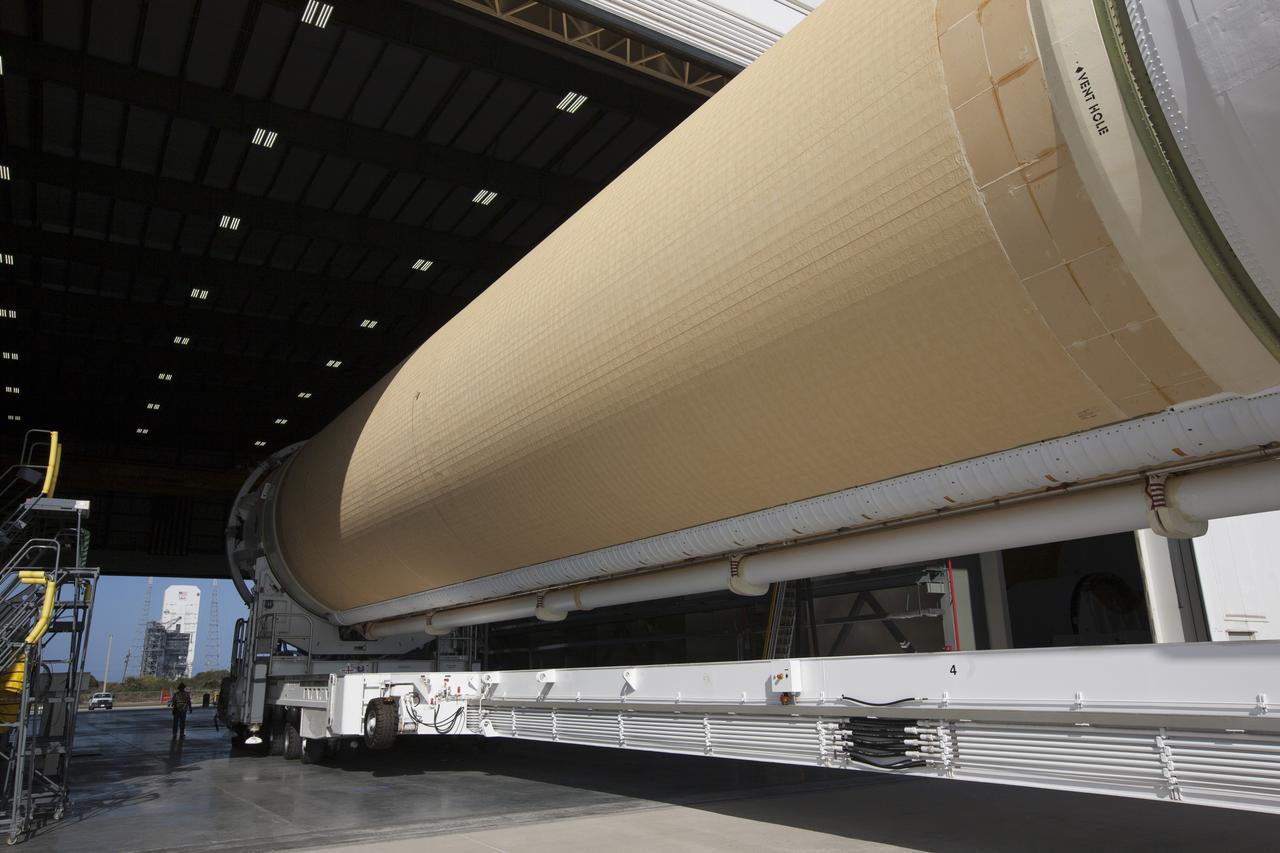
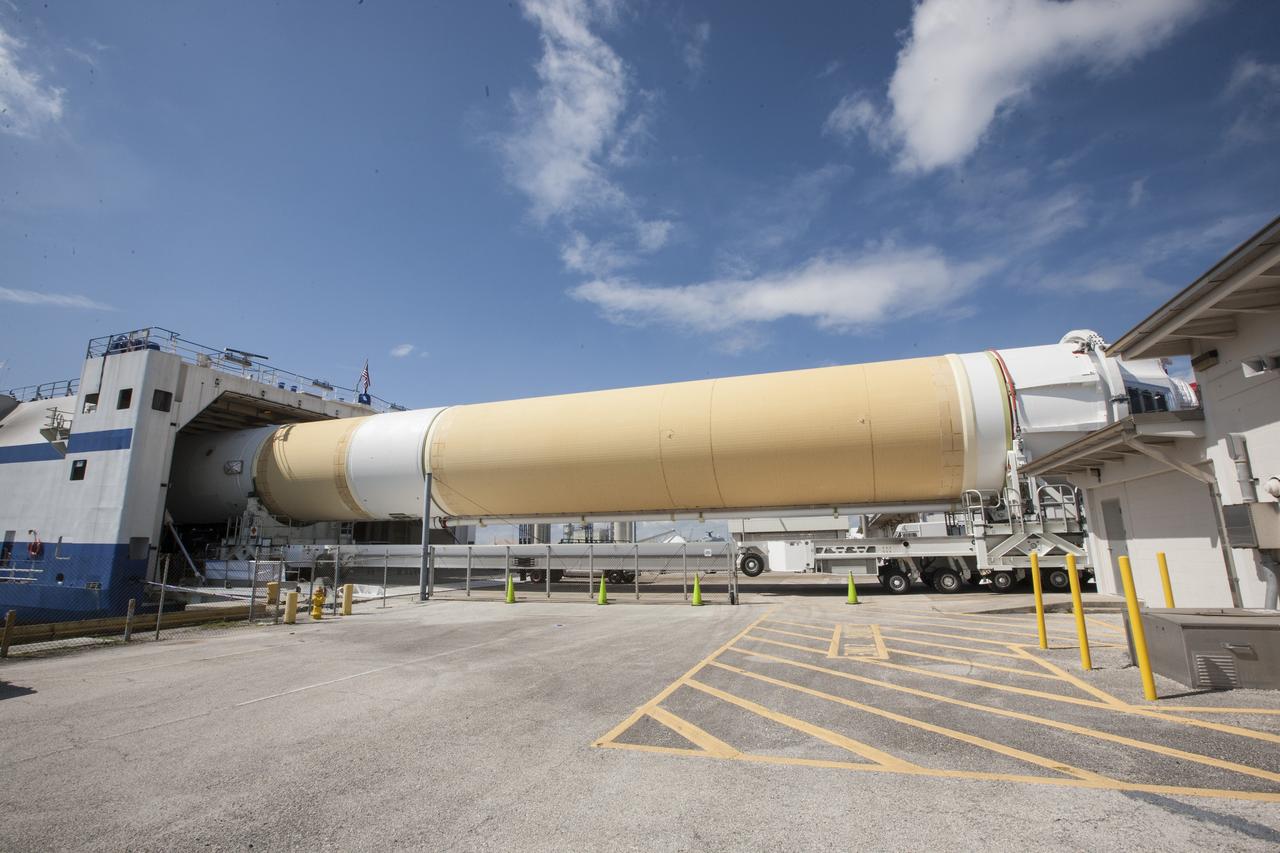
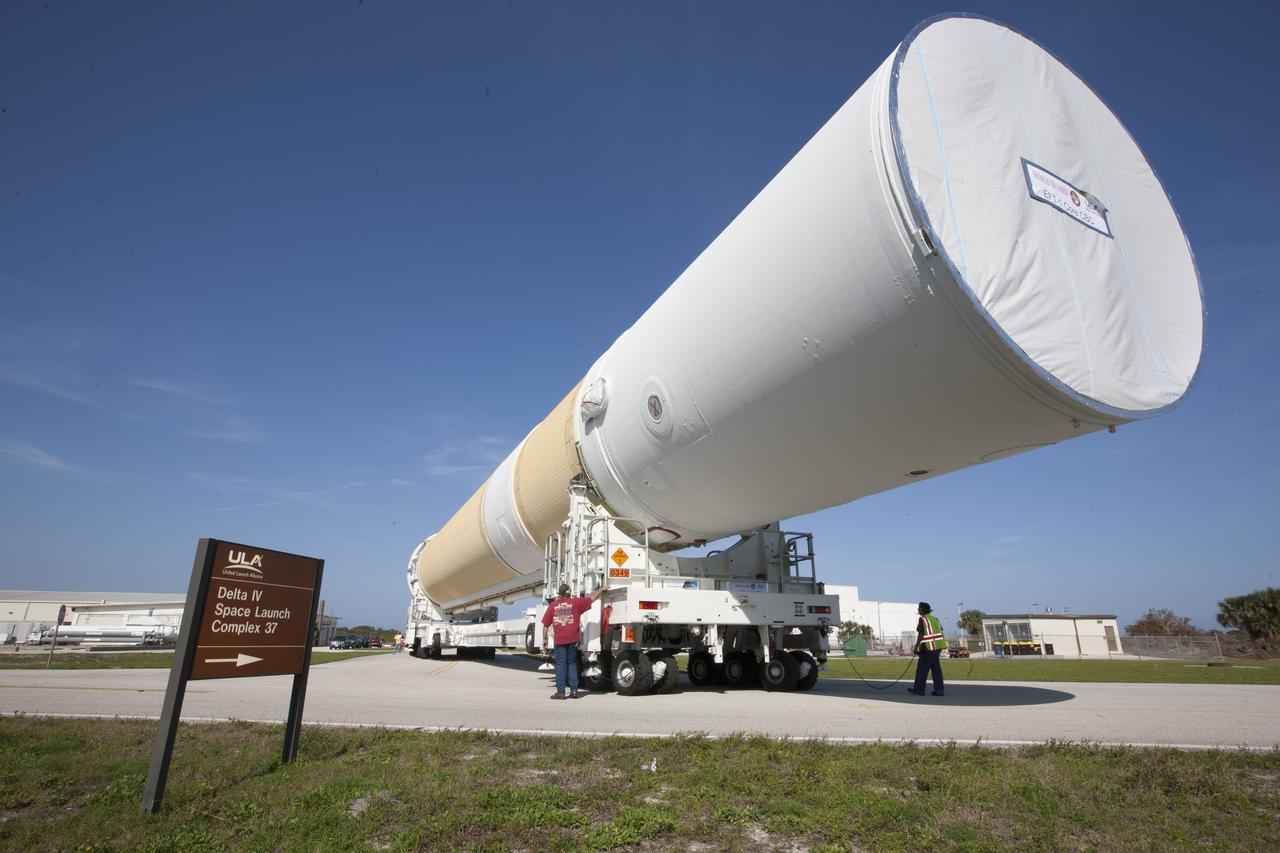
CAPE CANAVERAL, Fla. – The core booster for the United Launch Alliance Delta IV heavy for NASA’s upcoming Exploration Flight Test-1, or EFT-1, mission with the Orion spacecraft, was transported to the Horizontal Integration Facility, or HIF, at Space Launch Complex 37 on Cape Canaveral Air Force Station in Florida. The core booster and starboard booster arrived by barge at the U.S. Army Outpost wharf at Port Canaveral. The port booster and the upper stage are planned to be shipped to Cape Canaveral in April. At the HIF, all three boosters will be processed and checked out before being moved to the nearby launch pad and hoisted into position. During the EFT-1 mission, Orion will travel farther into space than any human spacecraft has gone in more than 40 years. The data gathered during the flight will influence design decisions, validate existing computer models and innovative new approaches to space systems development, as well as reduce overall mission risks and costs for later Orion flights. Liftoff of Orion on EFT-1 is planned for fall 2014. Photo credit: NASA/Kim Shiflett
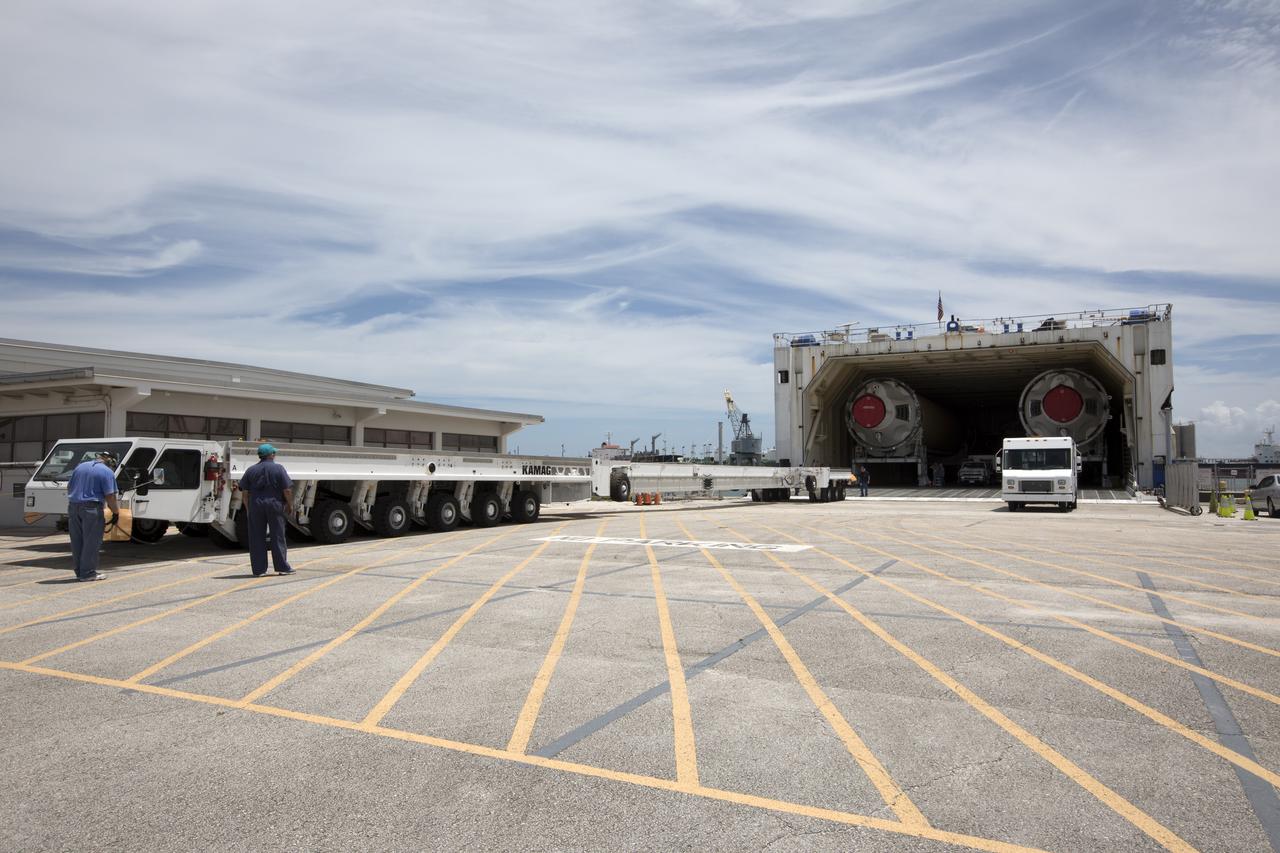
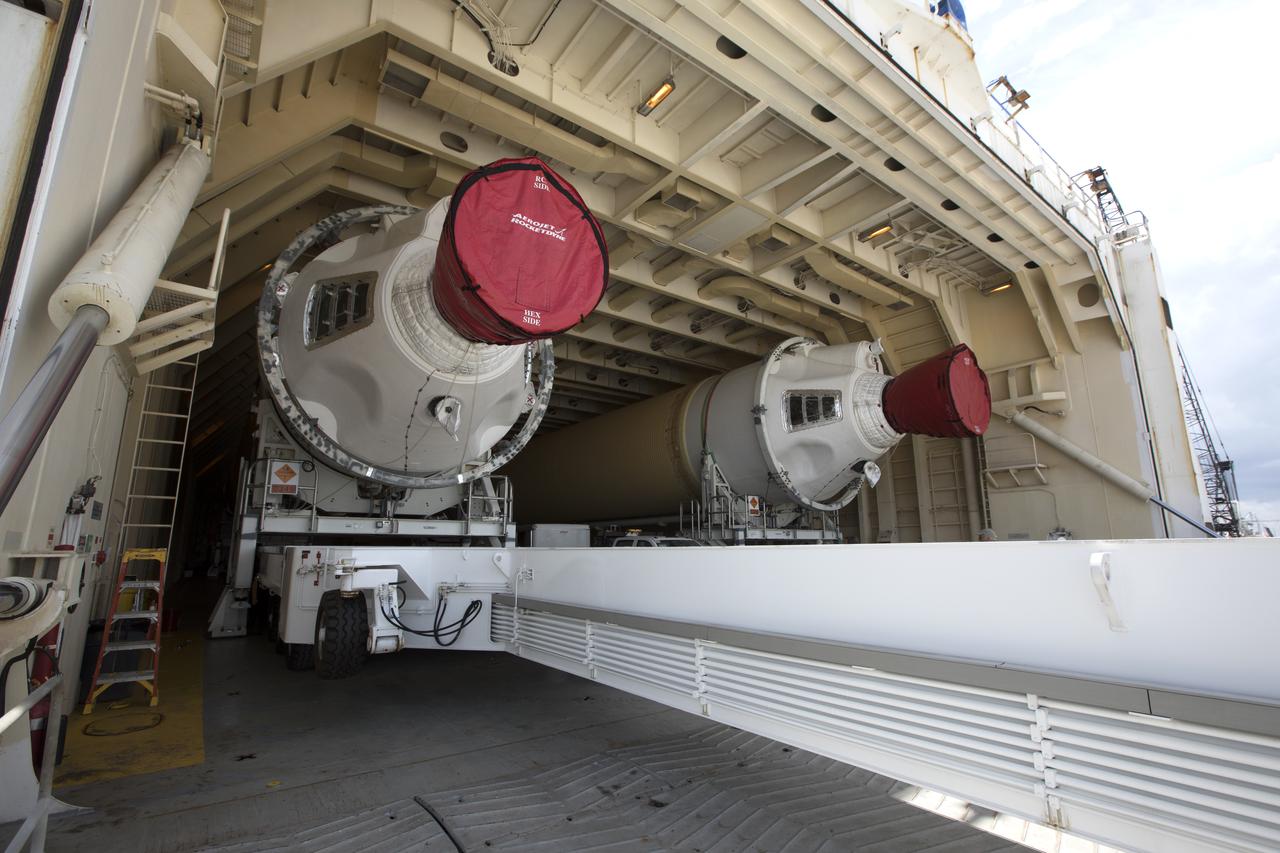
The United Launch Alliance Delta IV Heavy common booster core arrives aboard the company's Mariner ship at Port Canaveral in Florida. Preparations are underway to offload the booster onto a transporter. The Delta IV Heavy will launch NASA's upcoming Parker Solar Probe mission. The mission will perform the closest-ever observations of a star when it travels through the Sun's atmosphere, called the corona. The probe will rely on measurements and imaging to revolutionize our understanding of the corona and the Sun-Earth connection. Liftoff atop the Delta IV Heavy rocket is scheduled to take place from Cape Canaveral's Space Launch Complex 37 in summer 2018.
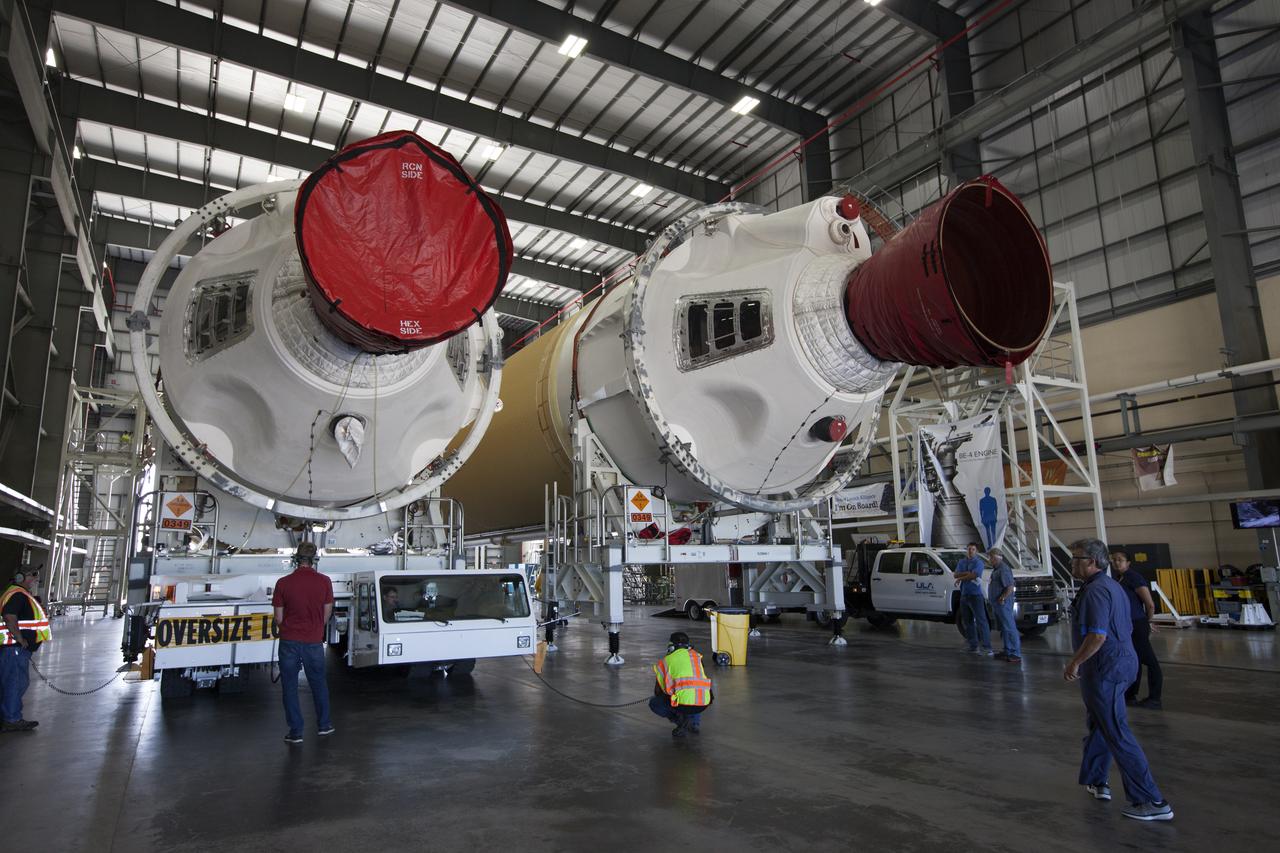
A United Launch Alliance Delta IV Heavy common booster core is placed beside an additional core inside Cape Canaveral Air Force Station's Launch Complex 37 Horizontal Processing Facility. The Delta IV Heavy will launch NASA's upcoming Parker Solar Probe mission. The mission will perform the closest-ever observations of a star when it travels through the Sun's atmosphere, called the corona. The probe will rely on measurements and imaging to revolutionize our understanding of the corona and the Sun-Earth connection. Liftoff atop the Delta IV Heavy rocket is scheduled to take place from Cape Canaveral's Space Launch Complex 37 in summer 2018.
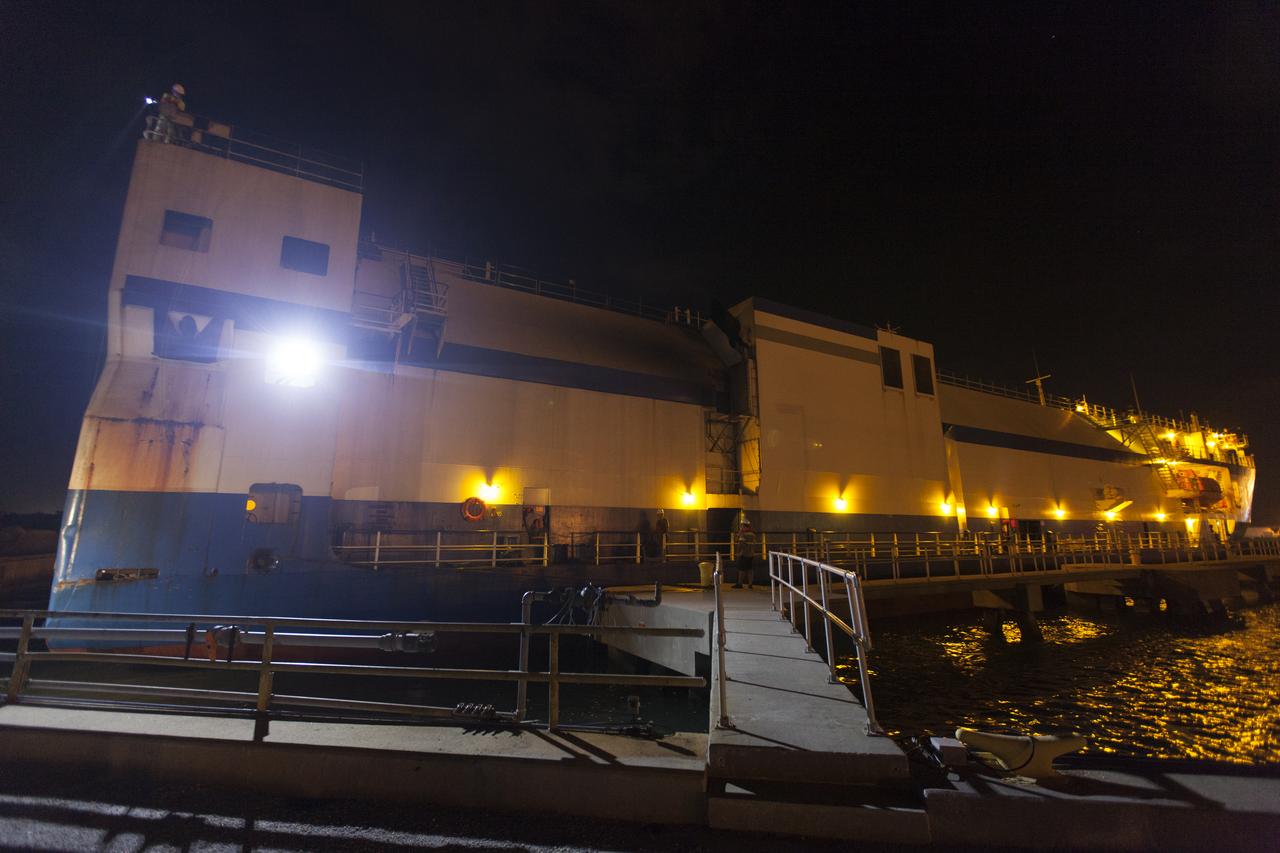
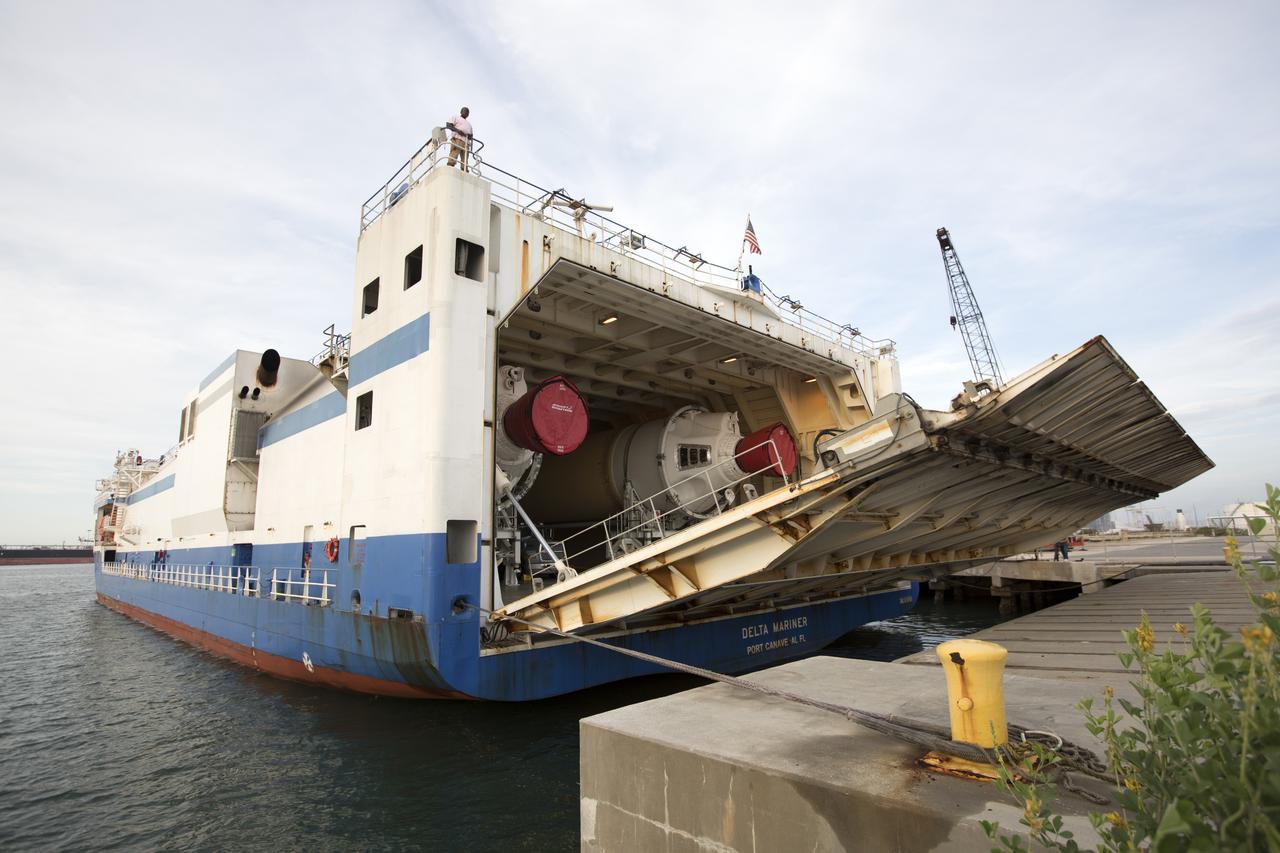
The United Launch Alliance (ULA) Mariner docks at Port Canaveral in Florida carrying two of the three Delta IV Heavy Common Booster Cores for NASA's upcoming Parker Solar Probe mission. The mission will perform the closest-ever observations of a star when it travels through the Sun's atmosphere, called the corona. The probe will rely on measurements and imaging to revolutionize our understanding of the corona and the Sun-Earth connection. Liftoff atop the Delta IV rocket is scheduled to take place from Cape Canaveral's Space Launch Complex 37 in summer 2018.
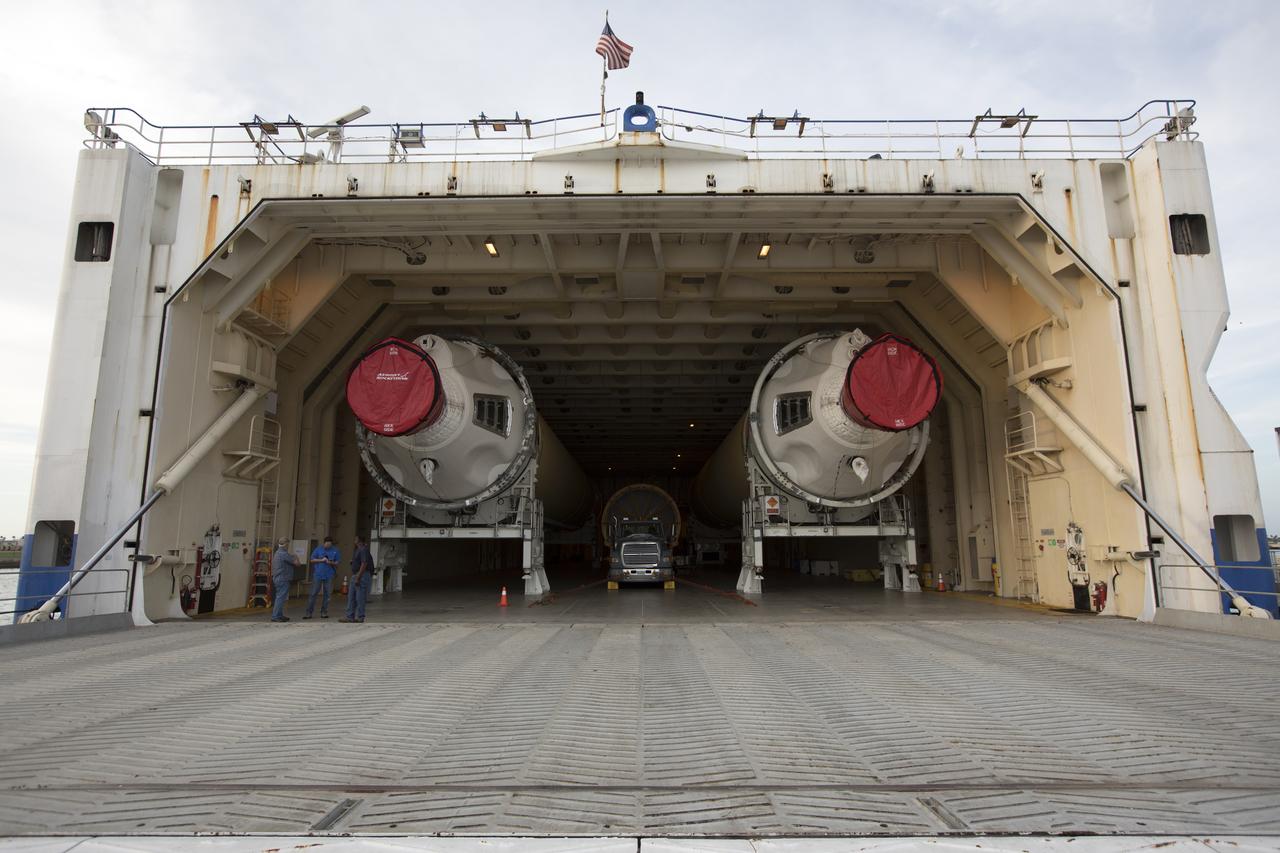
The United Launch Alliance Delta IV Heavy common booster core arrives aboard the company's Mariner ship and prepared for offload at Port Canaveral in Florida. The Delta IV Heavy will launch NASA's upcoming Parker Solar Probe mission. The mission will perform the closest-ever observations of a star when it travels through the Sun's atmosphere, called the corona. The probe will rely on measurements and imaging to revolutionize our understanding of the corona and the Sun-Earth connection. Liftoff atop the Delta IV Heavy rocket is scheduled to take place from Cape Canaveral's Space Launch Complex 37 in summer 2018.
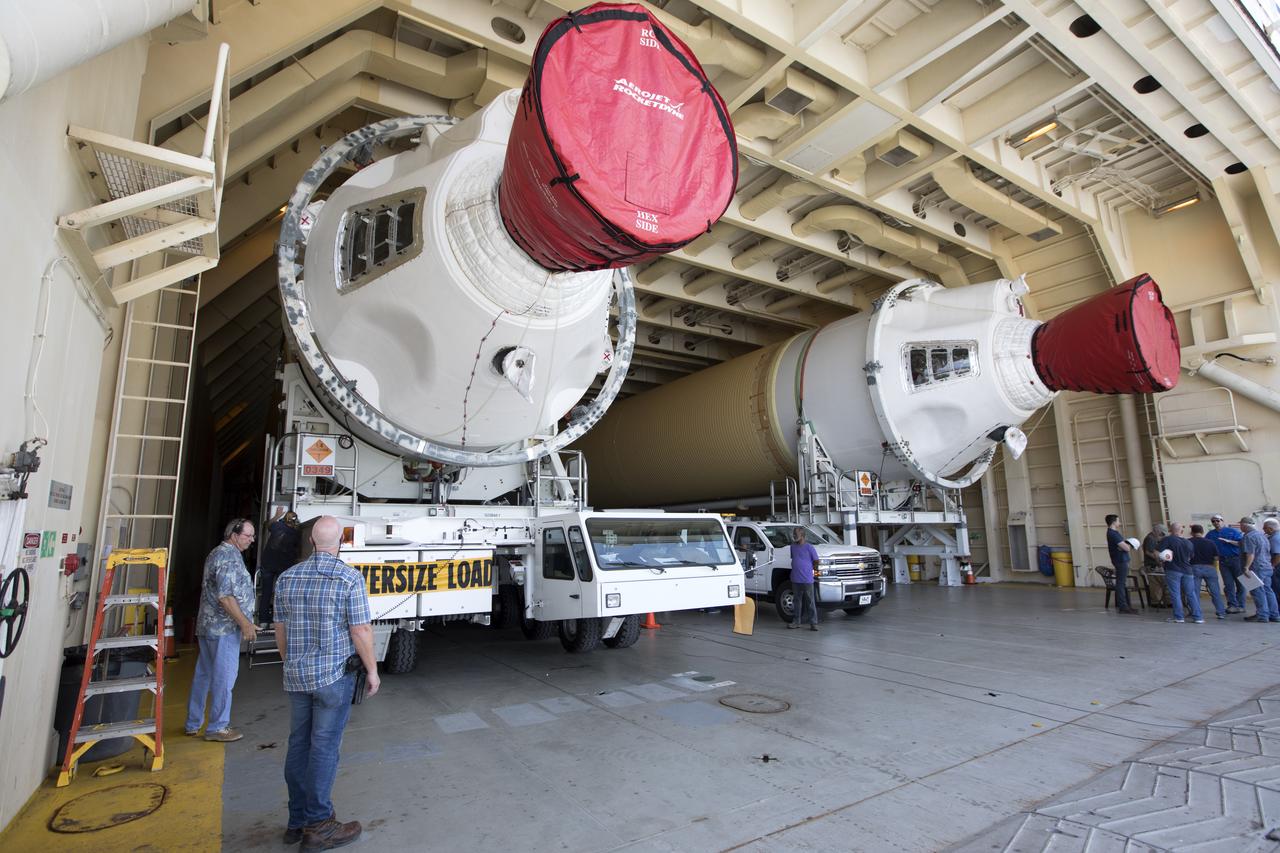
Preparations are underway to offload the United Launch Alliance Delta IV Heavy common booster core from the company's Mariner ship at Port Canaveral in Florida. The Delta IV Heavy will launch NASA's upcoming Parker Solar Probe mission. The mission will perform the closest-ever observations of a star when it travels through the Sun's atmosphere, called the corona. The probe will rely on measurements and imaging to revolutionize our understanding of the corona and the Sun-Earth connection. Liftoff atop the Delta IV Heavy rocket is scheduled to take place from Cape Canaveral's Space Launch Complex 37 in summer 2018.
The United Launch Alliance (ULA) Mariner docks at Port Canaveral in Florida carrying two of the three Delta IV Heavy Common Booster Cores for NASA's upcoming Parker Solar Probe mission. The mission will perform the closest-ever observations of a star when it travels through the Sun's atmosphere, called the corona. The probe will rely on measurements and imaging to revolutionize our understanding of the corona and the Sun-Earth connection. Liftoff atop the Delta IV rocket is scheduled to take place from Cape Canaveral's Space Launch Complex 37 in summer 2018.
Preparations are underway to offload the United Launch Alliance Delta IV Heavy common booster core from the company's Mariner ship at Port Canaveral in Florida. The Delta IV Heavy will launch NASA's upcoming Parker Solar Probe mission. The mission will perform the closest-ever observations of a star when it travels through the Sun's atmosphere, called the corona. The probe will rely on measurements and imaging to revolutionize our understanding of the corona and the Sun-Earth connection. Liftoff atop the Delta IV Heavy rocket is scheduled to take place from Cape Canaveral's Space Launch Complex 37 in summer 2018.
The United Launch Alliance Delta IV Heavy common booster core is being offloaded from the company's Mariner ship at Port Canaveral in Florida. The Delta IV Heavy will launch NASA's upcoming Parker Solar Probe mission. The mission will perform the closest-ever observations of a star when it travels through the Sun's atmosphere, called the corona. The probe will rely on measurements and imaging to revolutionize our understanding of the corona and the Sun-Earth connection. Liftoff atop the Delta IV Heavy rocket is scheduled to take place from Cape Canaveral's Space Launch Complex 37 in summer 2018.
The United Launch Alliance Delta IV Heavy common booster core arrives aboard the company's Mariner ship at Port Canaveral in Florida. The Delta IV Heavy will launch NASA's upcoming Parker Solar Probe mission. The mission will perform the closest-ever observations of a star when it travels through the Sun's atmosphere, called the corona. The probe will rely on measurements and imaging to revolutionize our understanding of the corona and the Sun-Earth connection. Liftoff atop the Delta IV Heavy rocket is scheduled to take place from Cape Canaveral's Space Launch Complex 37 in summer 2018.
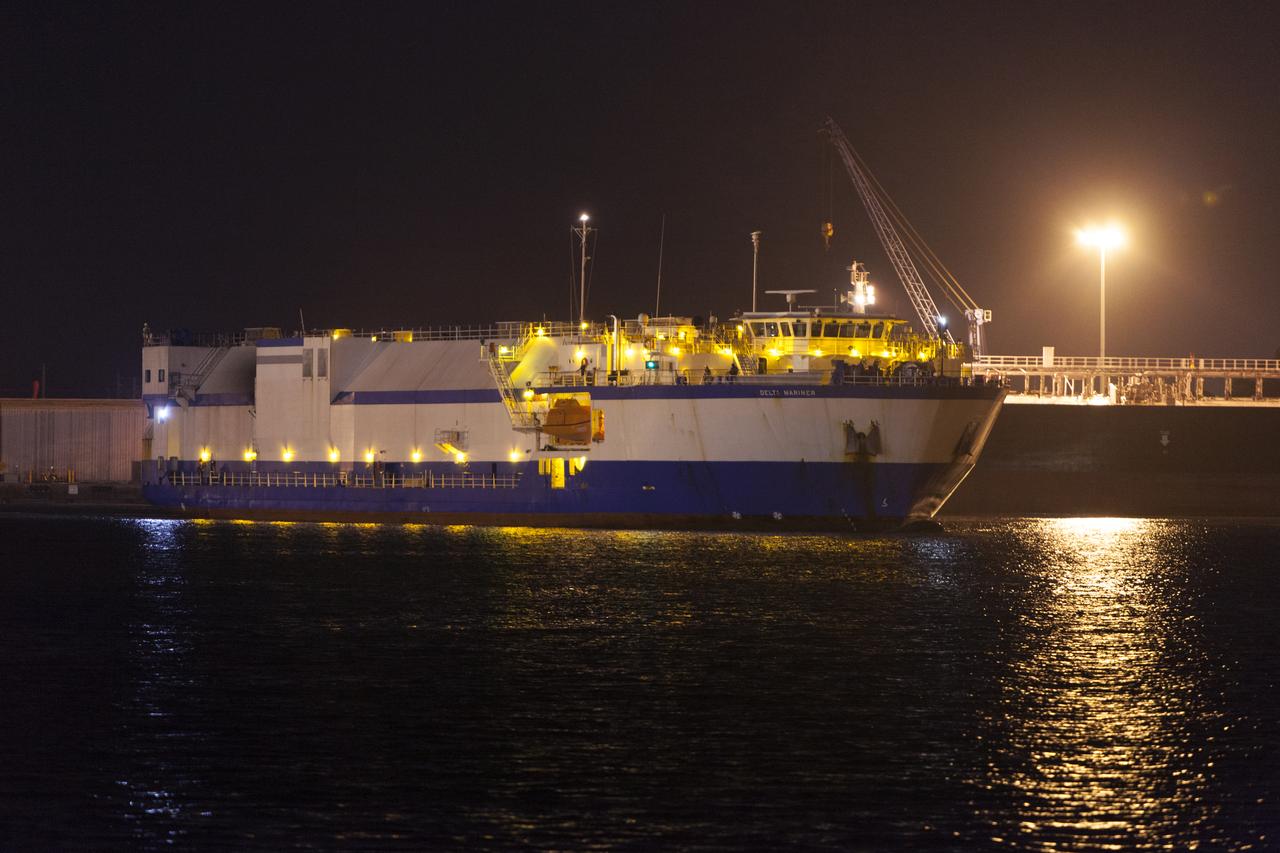
The United Launch Alliance (ULA) Mariner arrives at Port Canaveral in Florida carrying two of the three Delta IV Heavy Common Booster Cores for NASA's upcoming Parker Solar Probe mission. The mission will perform the closest-ever observations of a star when it travels through the Sun's atmosphere, called the corona. The probe will rely on measurements and imaging to revolutionize our understanding of the corona and the Sun-Earth connection. Liftoff atop the Delta IV rocket is scheduled to take place from Cape Canaveral's Space Launch Complex 37 in summer 2018.
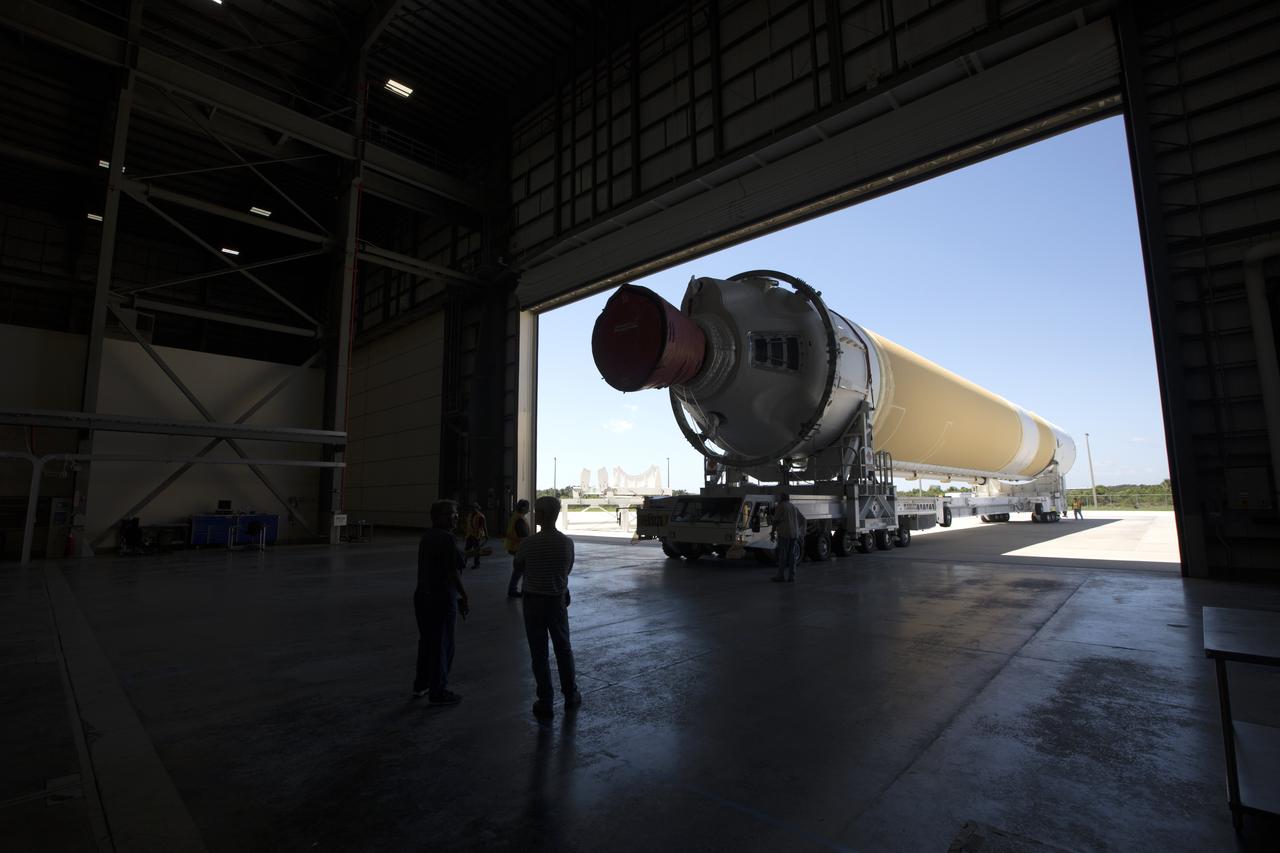
A United Launch Alliance Delta IV Heavy common booster core is transported by truck inside Cape Canaveral Air Force Station's Launch Complex 37 Horizontal Processing Facility. The Delta IV Heavy will launch NASA's upcoming Parker Solar Probe mission. The mission will perform the closest-ever observations of a star when it travels through the Sun's atmosphere, called the corona. The probe will rely on measurements and imaging to revolutionize our understanding of the corona and the Sun-Earth connection. Liftoff atop the Delta IV Heavy rocket is scheduled to take place from Cape Canaveral's Space Launch Complex 37 in summer 2018.
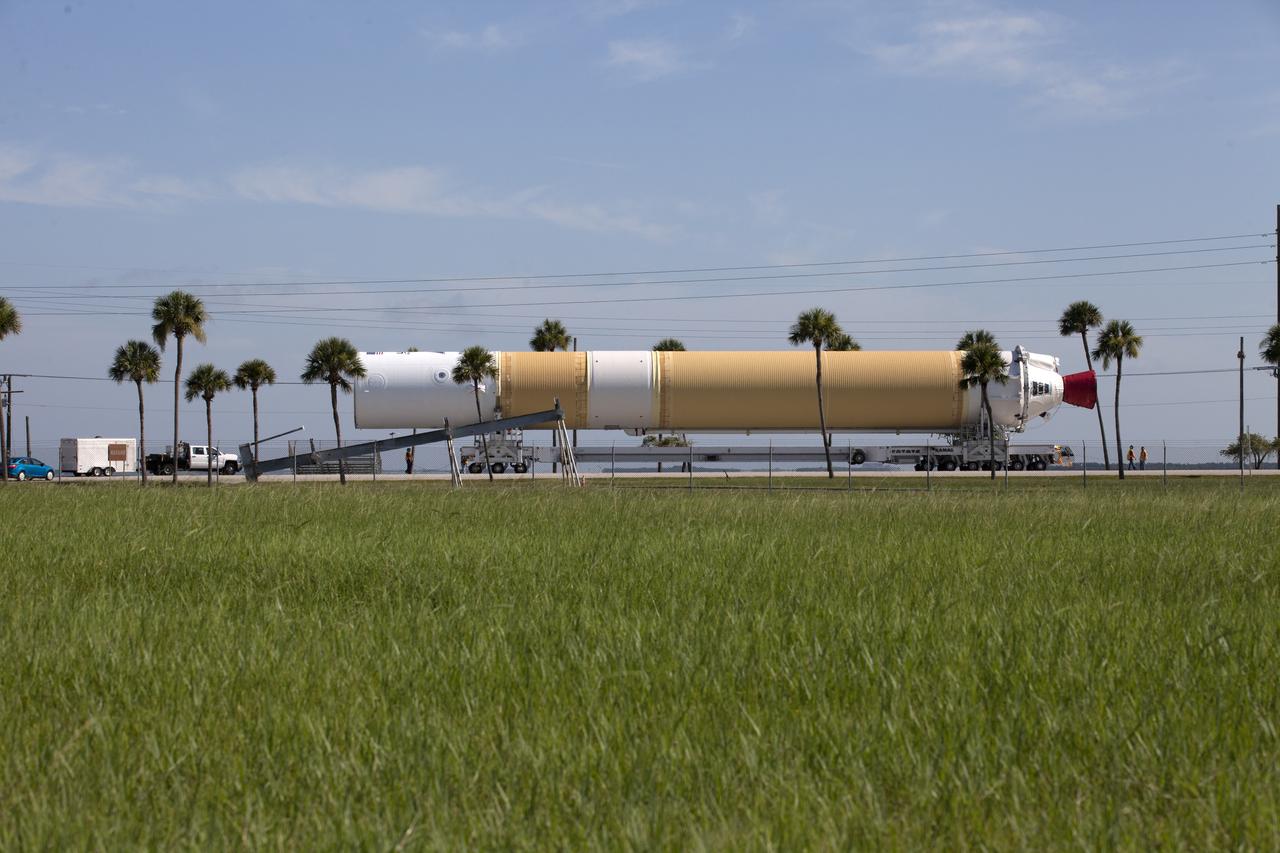
Framed by a series of cabbage palms, a United Launch Alliance Delta IV Heavy common booster core is transported by truck to Cape Canaveral Air Force Station's Launch Complex 37 Horizontal Processing Facility after arriving at Port Canaveral. The Delta IV Heavy will launch NASA's upcoming Parker Solar Probe mission. The mission will perform the closest-ever observations of a star when it travels through the Sun's atmosphere, called the corona. The probe will rely on measurements and imaging to revolutionize our understanding of the corona and the Sun-Earth connection. Liftoff atop the Delta IV Heavy rocket is scheduled to take place from Cape Canaveral's Space Launch Complex 37 in summer 2018.
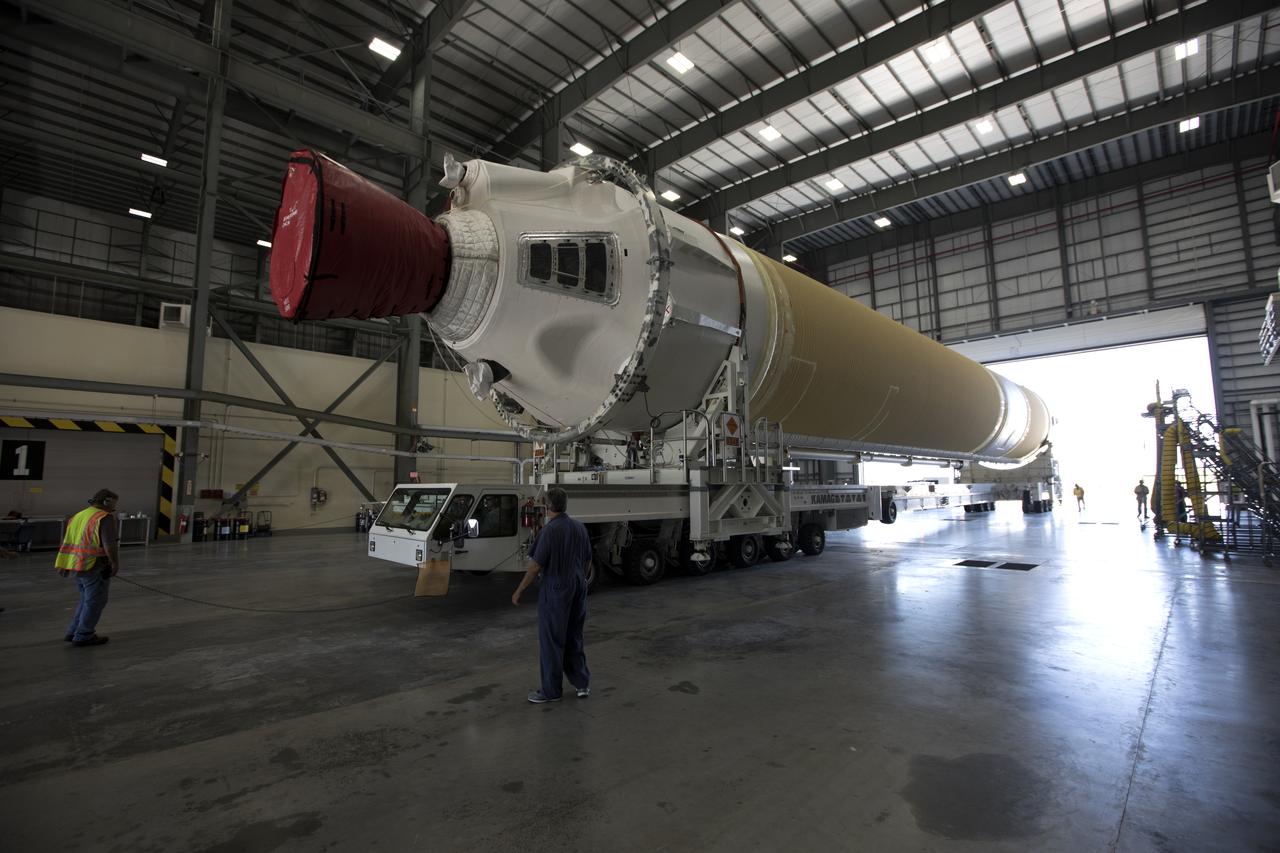
A United Launch Alliance Delta IV Heavy common booster core is transported by truck inside Cape Canaveral Air Force Station's Launch Complex 37 Horizontal Processing Facility. The Delta IV Heavy will launch NASA's upcoming Parker Solar Probe mission. The mission will perform the closest-ever observations of a star when it travels through the Sun's atmosphere, called the corona. The probe will rely on measurements and imaging to revolutionize our understanding of the corona and the Sun-Earth connection. Liftoff atop the Delta IV Heavy rocket is scheduled to take place from Cape Canaveral's Space Launch Complex 37 in summer 2018.
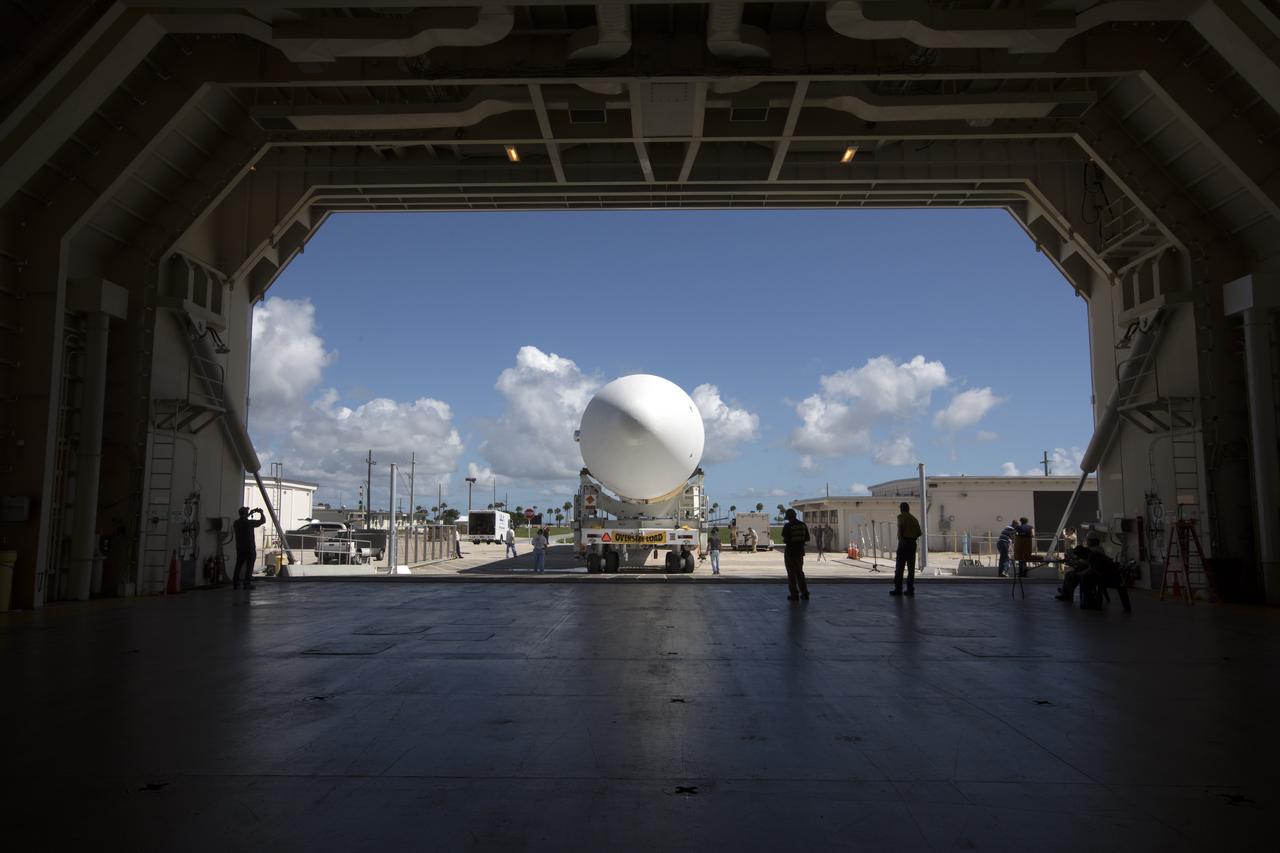
A United Launch Alliance Delta IV Heavy common booster core is offloaded from the company's Mariner ship at Port Canaveral in Florida. The Delta IV Heavy will launch NASA's upcoming Parker Solar Probe mission. The mission will perform the closest-ever observations of a star when it travels through the Sun's atmosphere, called the corona. The probe will rely on measurements and imaging to revolutionize our understanding of the corona and the Sun-Earth connection. Liftoff atop the Delta IV Heavy rocket is scheduled to take place from Cape Canaveral's Space Launch Complex 37 in summer 2018.
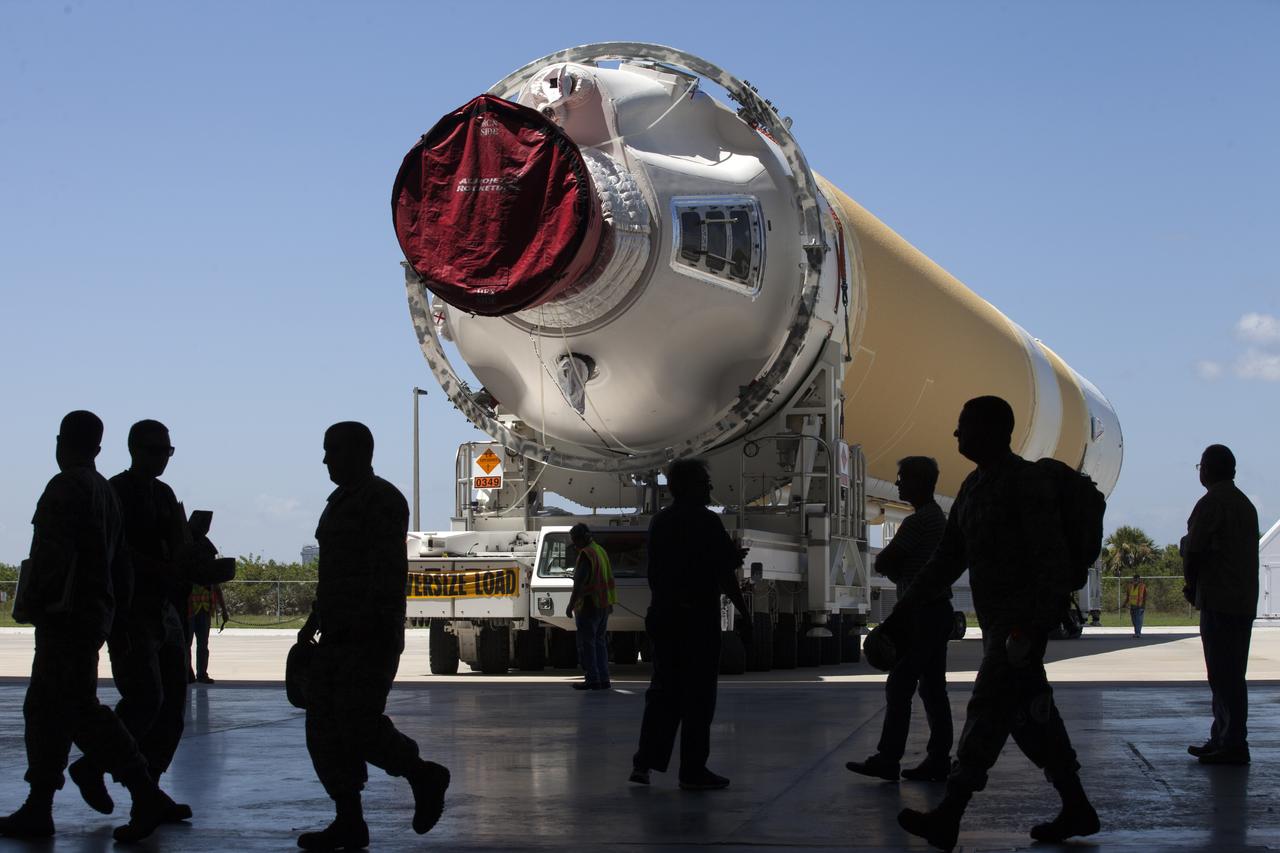
A United Launch Alliance Delta IV Heavy common booster core arrives by truck at Cape Canaveral Air Force Station's Launch Complex 37 Horizontal Processing Facility. The Delta IV Heavy will launch NASA's upcoming Parker Solar Probe mission. The mission will perform the closest-ever observations of a star when it travels through the Sun's atmosphere, called the corona. The probe will rely on measurements and imaging to revolutionize our understanding of the corona and the Sun-Earth connection. Liftoff atop the Delta IV Heavy rocket is scheduled to take place from Cape Canaveral's Space Launch Complex 37 in summer 2018.
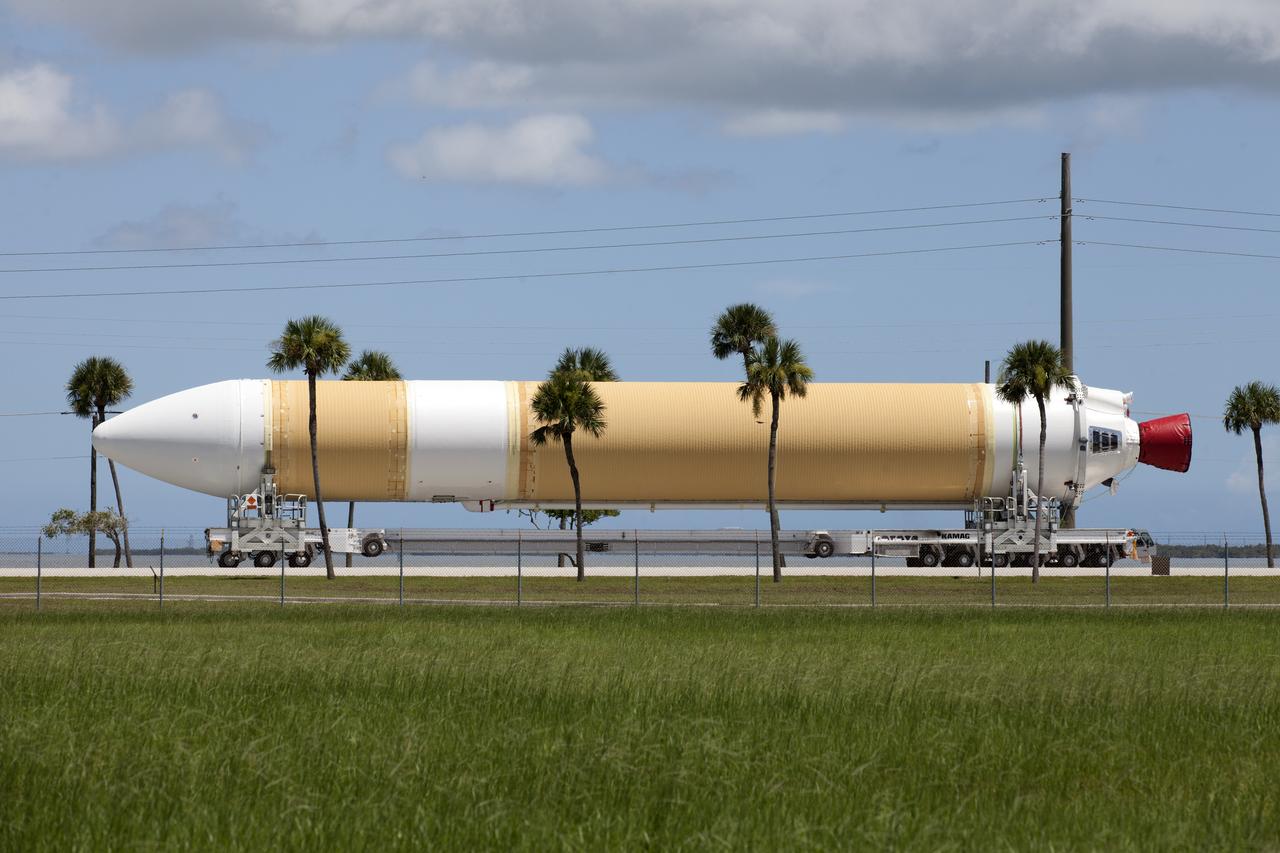
Framed by a series of cabbage palms, a United Launch Alliance Delta IV Heavy common booster core is transported by truck to Cape Canaveral Air Force Station's Launch Complex 37 Horizontal Processing Facility after arriving at Port Canaveral. The Delta IV Heavy will launch NASA's upcoming Parker Solar Probe mission. The mission will perform the closest-ever observations of a star when it travels through the Sun's atmosphere, called the corona. The probe will rely on measurements and imaging to revolutionize our understanding of the corona and the Sun-Earth connection. Liftoff atop the Delta IV Heavy rocket is scheduled to take place from Cape Canaveral's Space Launch Complex 37 in summer 2018.
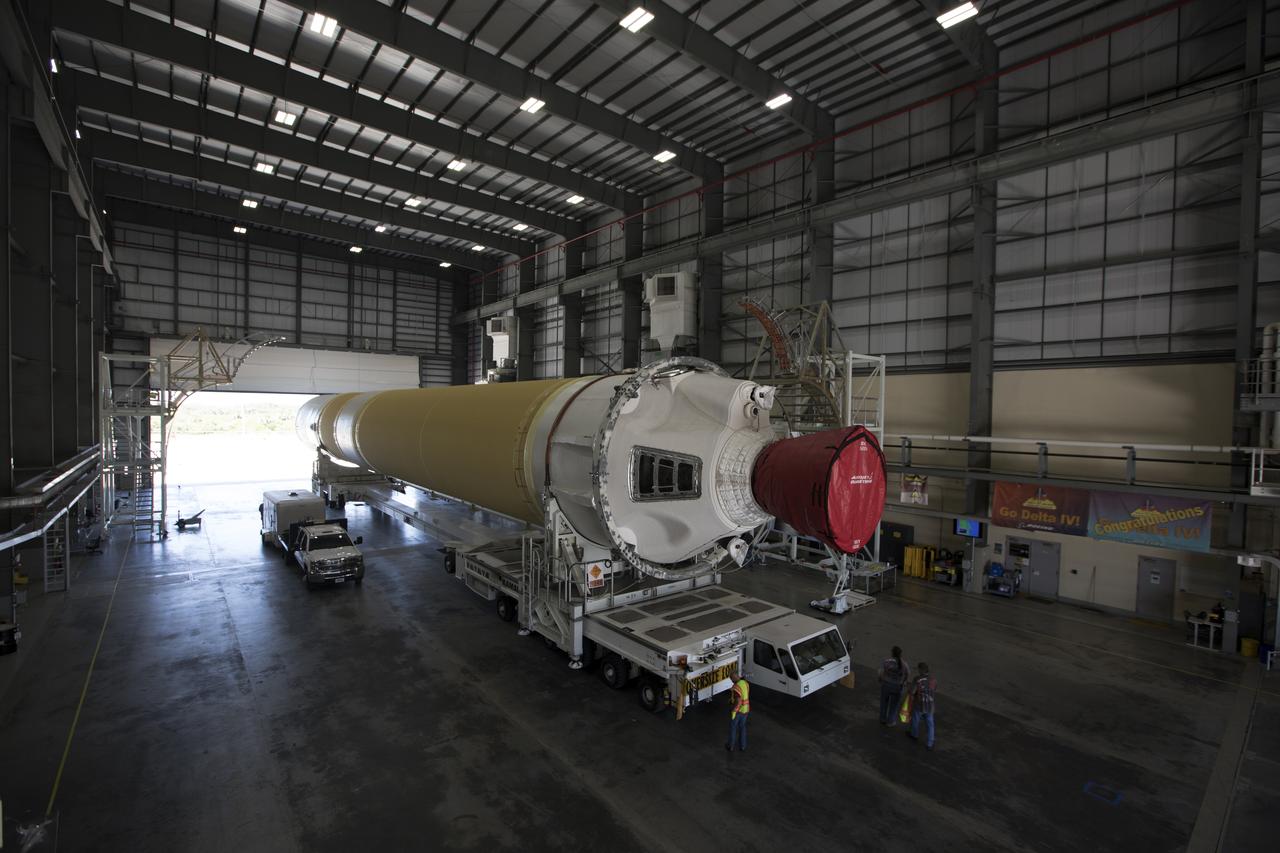
A United Launch Alliance Delta IV Heavy common booster core is transported by truck inside Cape Canaveral Air Force Station's Launch Complex 37 Horizontal Processing Facility. The Delta IV Heavy will launch NASA's upcoming Parker Solar Probe mission. The mission will perform the closest-ever observations of a star when it travels through the Sun's atmosphere, called the corona. The probe will rely on measurements and imaging to revolutionize our understanding of the corona and the Sun-Earth connection. Liftoff atop the Delta IV Heavy rocket is scheduled to take place from Cape Canaveral's Space Launch Complex 37 in summer 2018.
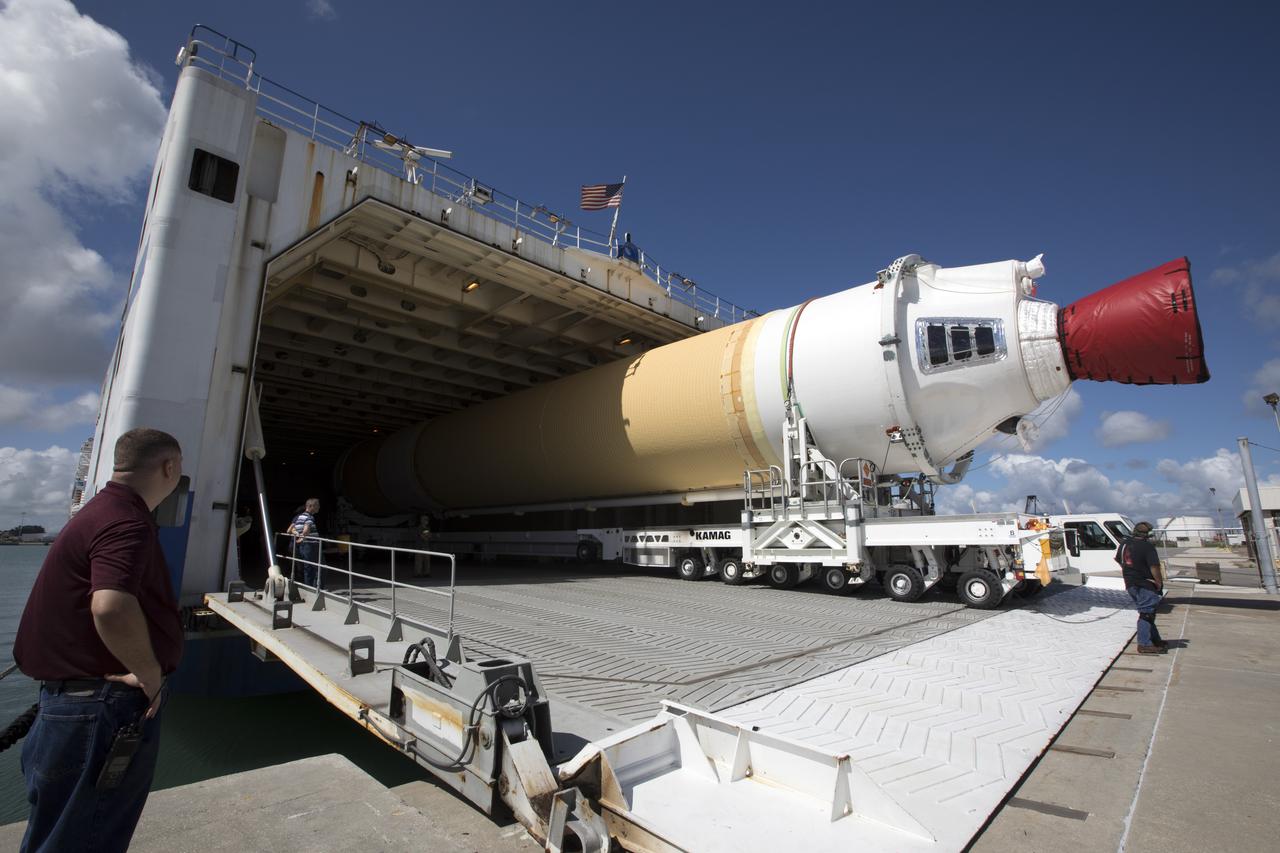
A United Launch Alliance Delta IV Heavy common booster core is offloaded from the company's Mariner ship at Port Canaveral in Florida. The Delta IV Heavy will launch NASA's upcoming Parker Solar Probe mission. The mission will perform the closest-ever observations of a star when it travels through the Sun's atmosphere, called the corona. The probe will rely on measurements and imaging to revolutionize our understanding of the corona and the Sun-Earth connection. Liftoff atop the Delta IV Heavy rocket is scheduled to take place from Cape Canaveral's Space Launch Complex 37 in summer 2018.
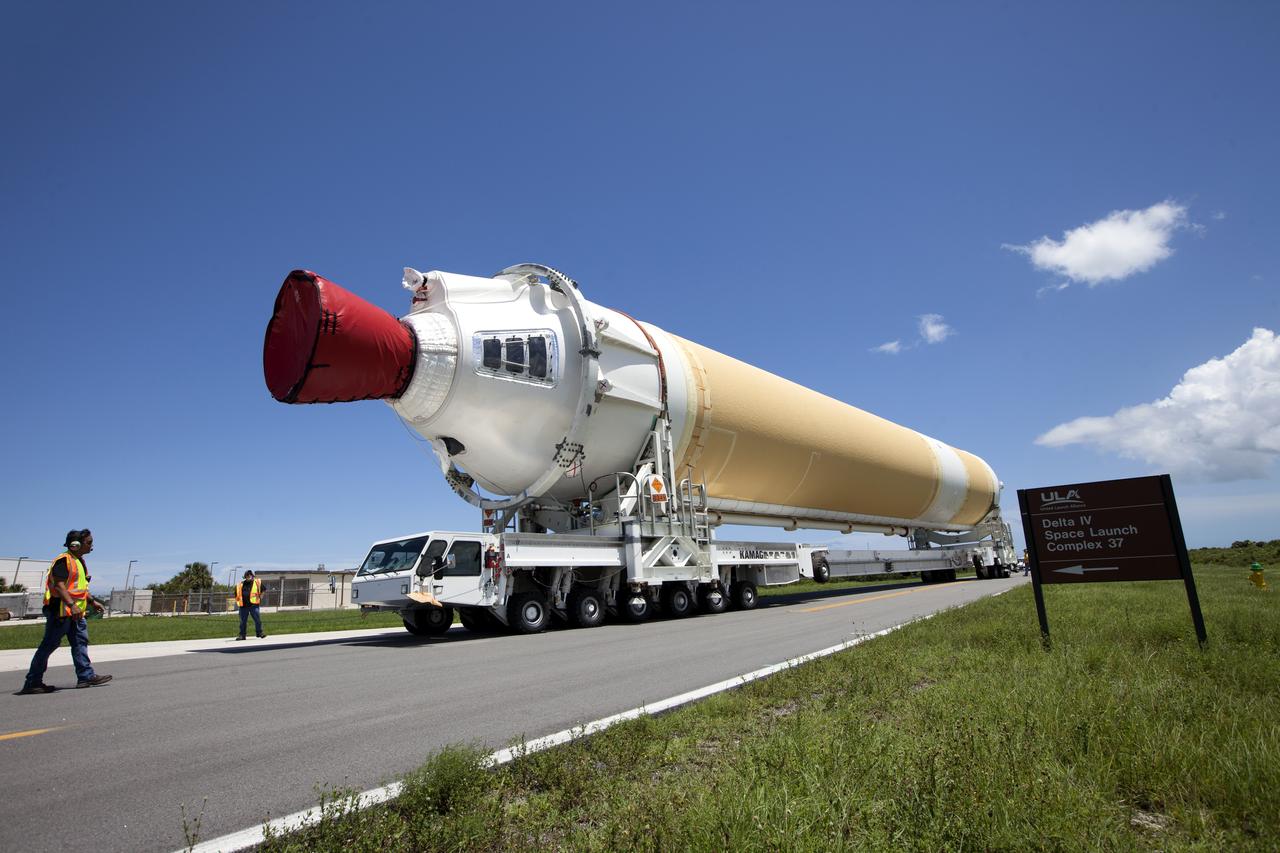
A United Launch Alliance Delta IV Heavy common booster core is transported by truck to Cape Canaveral Air Force Station's Launch Complex 37 Horizontal Processing Facility after arriving at Port Canaveral. The Delta IV Heavy will launch NASA's upcoming Parker Solar Probe mission. The mission will perform the closest-ever observations of a star when it travels through the Sun's atmosphere, called the corona. The probe will rely on measurements and imaging to revolutionize our understanding of the corona and the Sun-Earth connection. Liftoff atop the Delta IV Heavy rocket is scheduled to take place from Cape Canaveral's Space Launch Complex 37 in summer 2018.
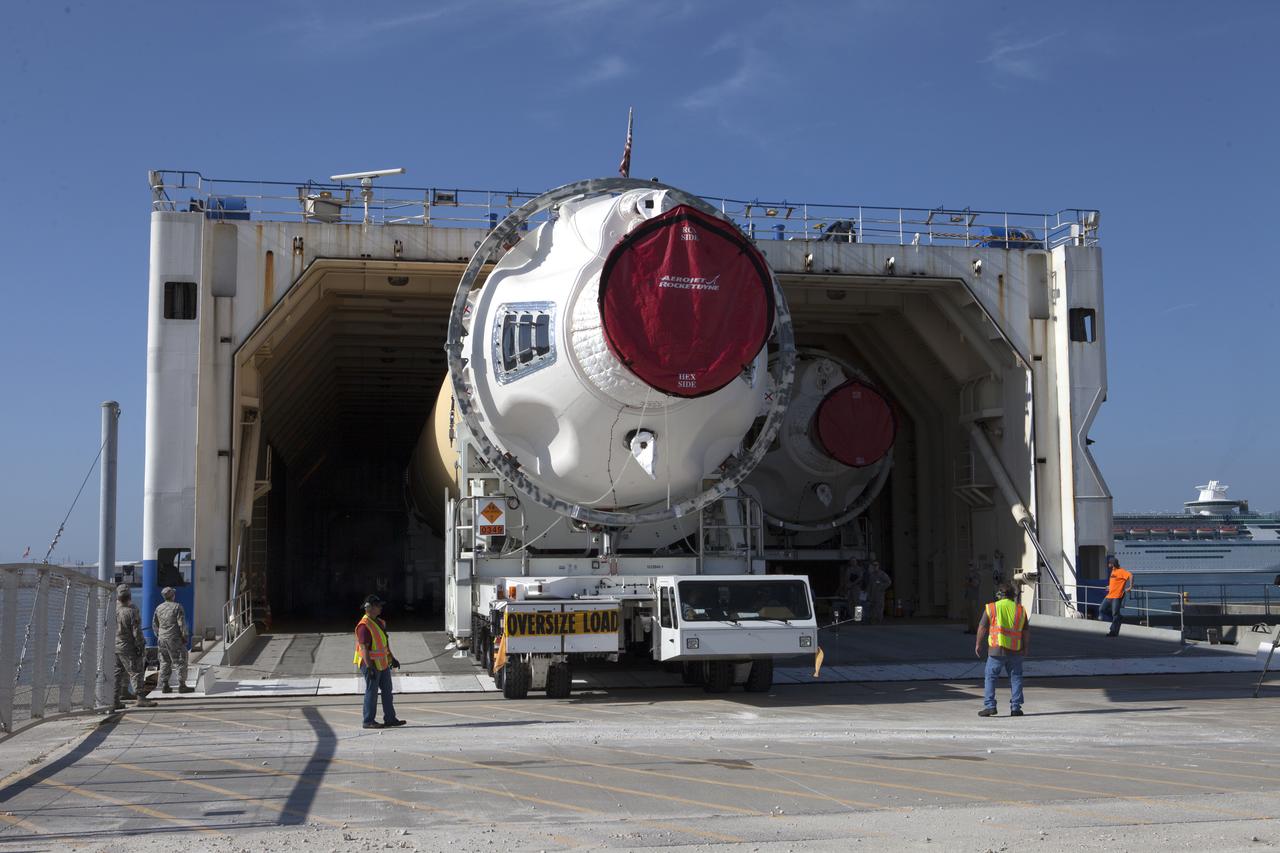
A United Launch Alliance Delta IV Heavy common booster core is offloaded from the company's Mariner ship at Port Canaveral in Florida. The Delta IV Heavy will launch NASA's upcoming Parker Solar Probe mission. The mission will perform the closest-ever observations of a star when it travels through the Sun's atmosphere, called the corona. The probe will rely on measurements and imaging to revolutionize our understanding of the corona and the Sun-Earth connection. Liftoff atop the Delta IV Heavy rocket is scheduled to take place from Cape Canaveral's Space Launch Complex 37 in summer 2018.
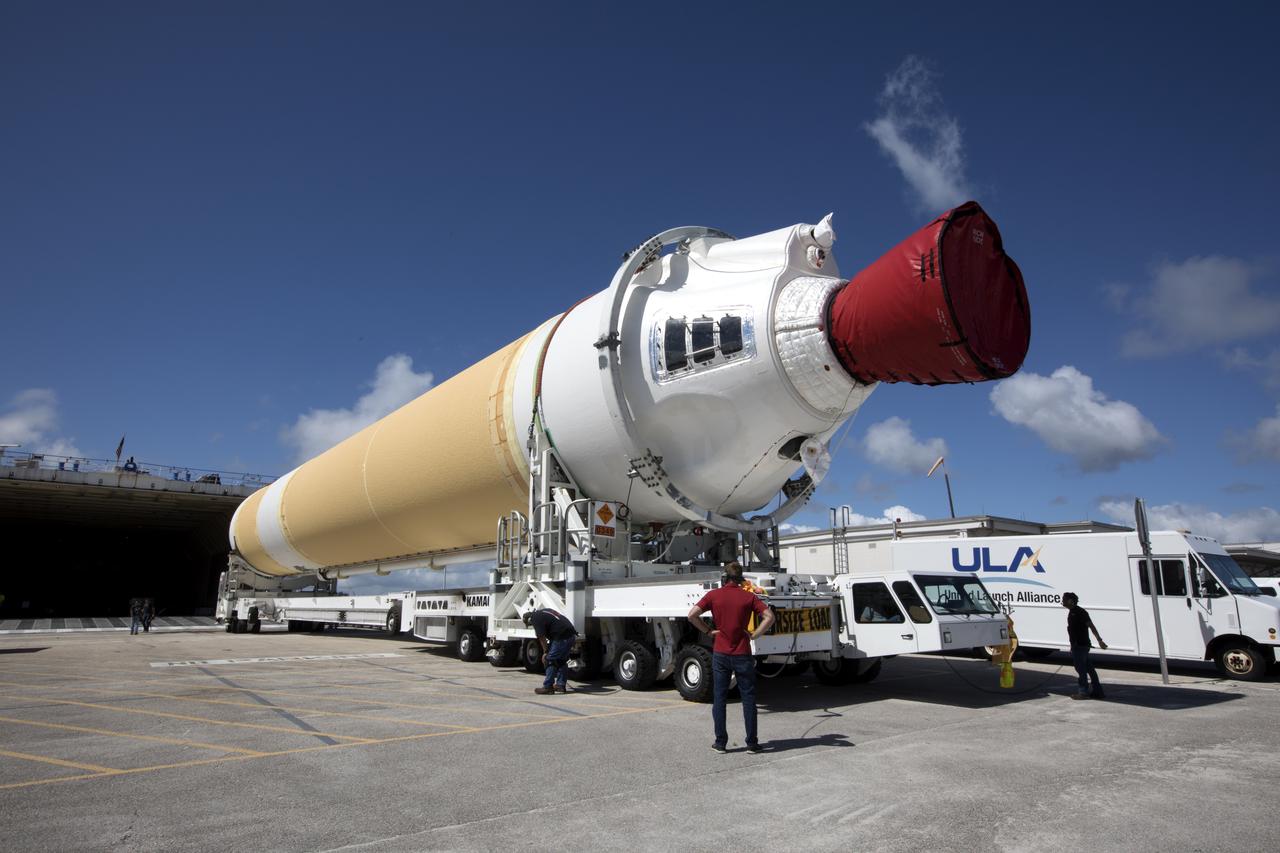
A United Launch Alliance Delta IV Heavy common booster core is offloaded from the company's Mariner ship at Port Canaveral in Florida. The Delta IV Heavy will launch NASA's upcoming Parker Solar Probe mission. The mission will perform the closest-ever observations of a star when it travels through the Sun's atmosphere, called the corona. The probe will rely on measurements and imaging to revolutionize our understanding of the corona and the Sun-Earth connection. Liftoff atop the Delta IV Heavy rocket is scheduled to take place from Cape Canaveral's Space Launch Complex 37 in summer 2018.
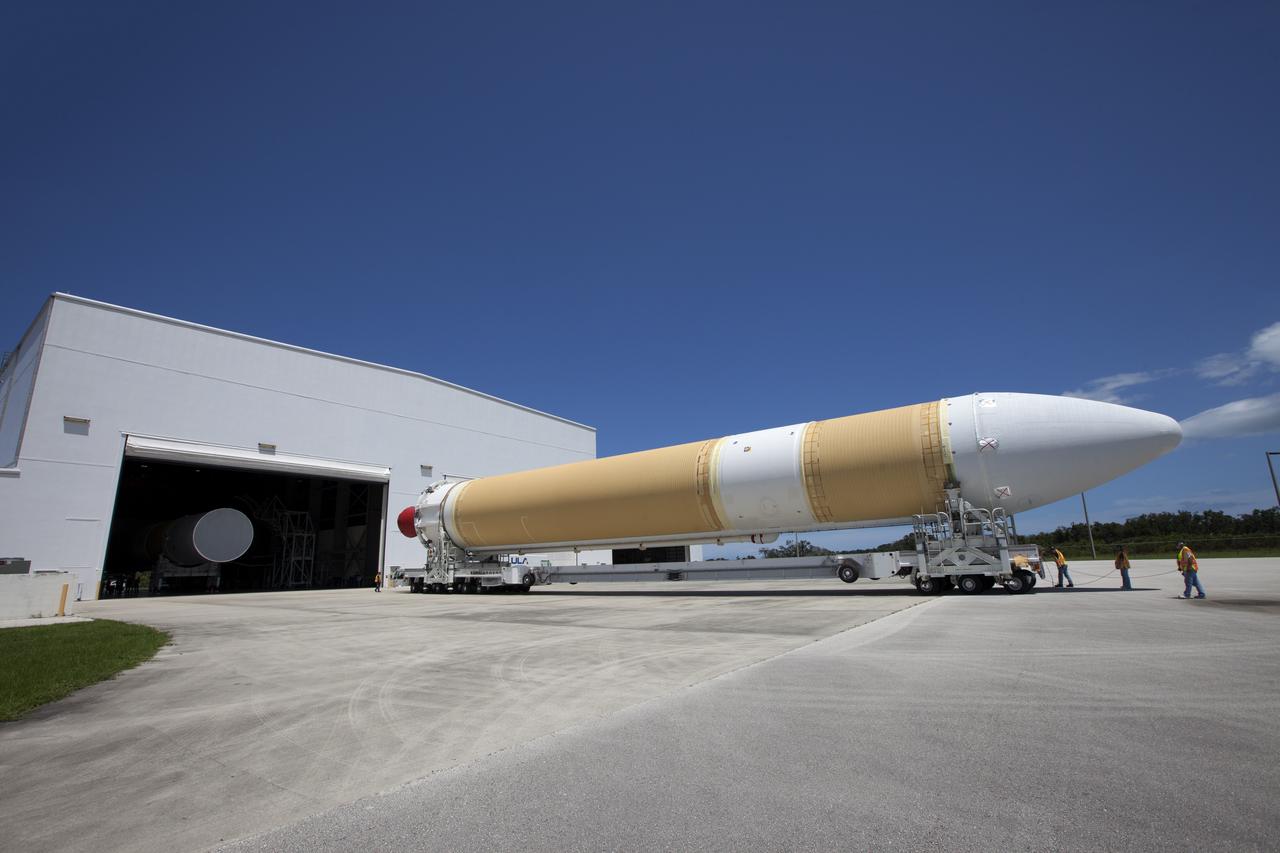
A United Launch Alliance Delta IV Heavy common booster core arrives by truck at Cape Canaveral Air Force Station's Launch Complex 37 Horizontal Processing Facility. The Delta IV Heavy will launch NASA's upcoming Parker Solar Probe mission. The mission will perform the closest-ever observations of a star when it travels through the Sun's atmosphere, called the corona. The probe will rely on measurements and imaging to revolutionize our understanding of the corona and the Sun-Earth connection. Liftoff atop the Delta IV Heavy rocket is scheduled to take place from Cape Canaveral's Space Launch Complex 37 in summer 2018.
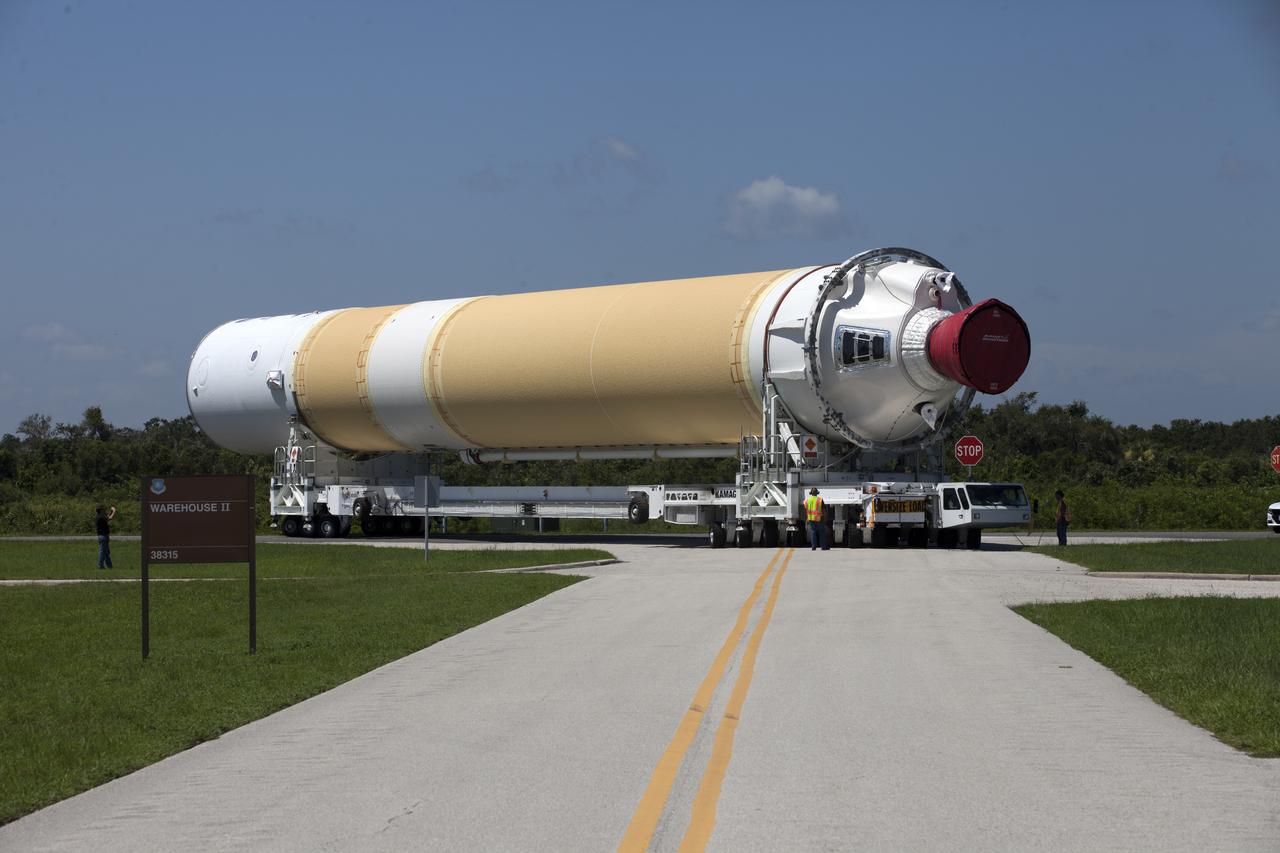
A United Launch Alliance Delta IV Heavy common booster core is transported by truck to Cape Canaveral Air Force Station's Launch Complex 37 Horizontal Processing Facility after arriving at Port Canaveral. The Delta IV Heavy will launch NASA's upcoming Parker Solar Probe mission. The mission will perform the closest-ever observations of a star when it travels through the Sun's atmosphere, called the corona. The probe will rely on measurements and imaging to revolutionize our understanding of the corona and the Sun-Earth connection. Liftoff atop the Delta IV Heavy rocket is scheduled to take place from Cape Canaveral's Space Launch Complex 37 in summer 2018.
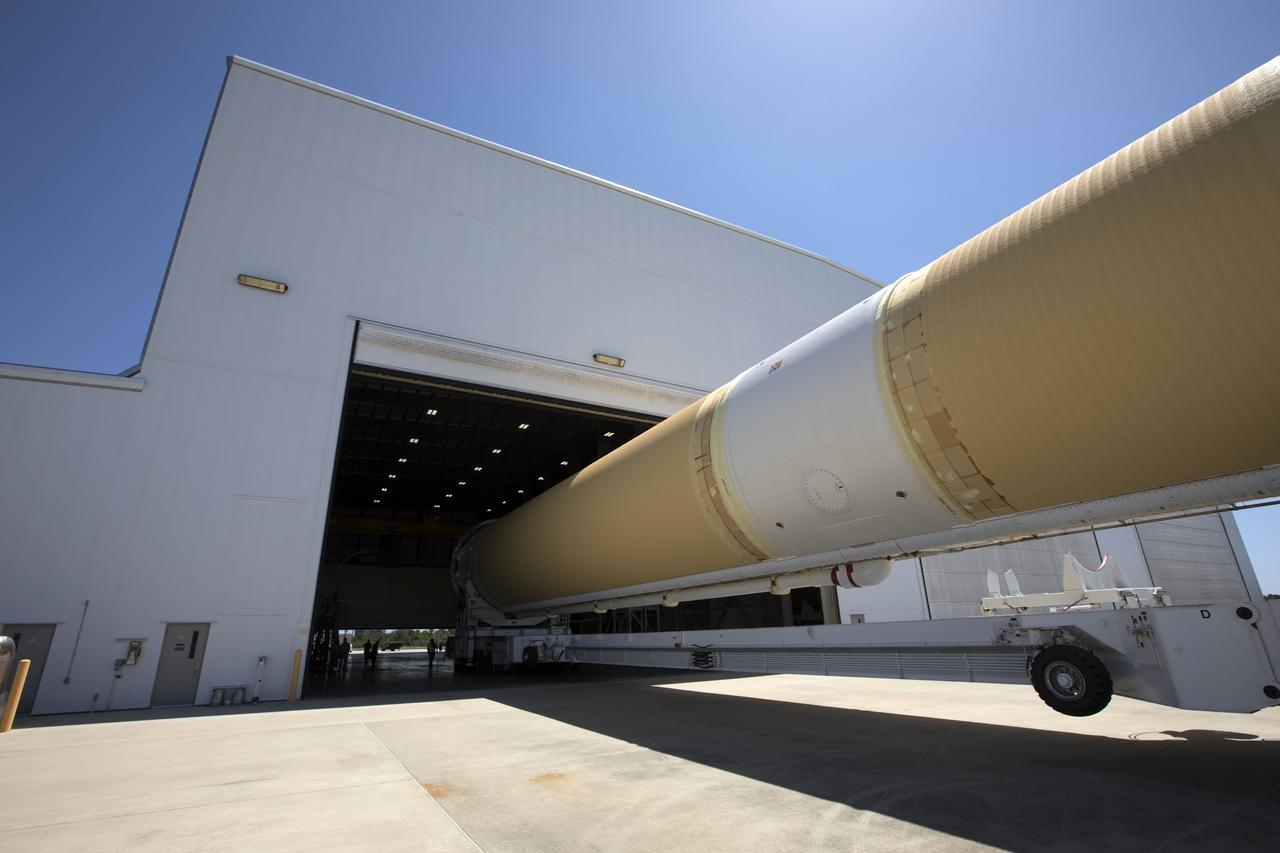
A United Launch Alliance Delta IV Heavy common booster core is transported by truck inside Cape Canaveral Air Force Station's Launch Complex 37 Horizontal Processing Facility. The Delta IV Heavy will launch NASA's upcoming Parker Solar Probe mission. The mission will perform the closest-ever observations of a star when it travels through the Sun's atmosphere, called the corona. The probe will rely on measurements and imaging to revolutionize our understanding of the corona and the Sun-Earth connection. Liftoff atop the Delta IV Heavy rocket is scheduled to take place from Cape Canaveral's Space Launch Complex 37 in summer 2018.
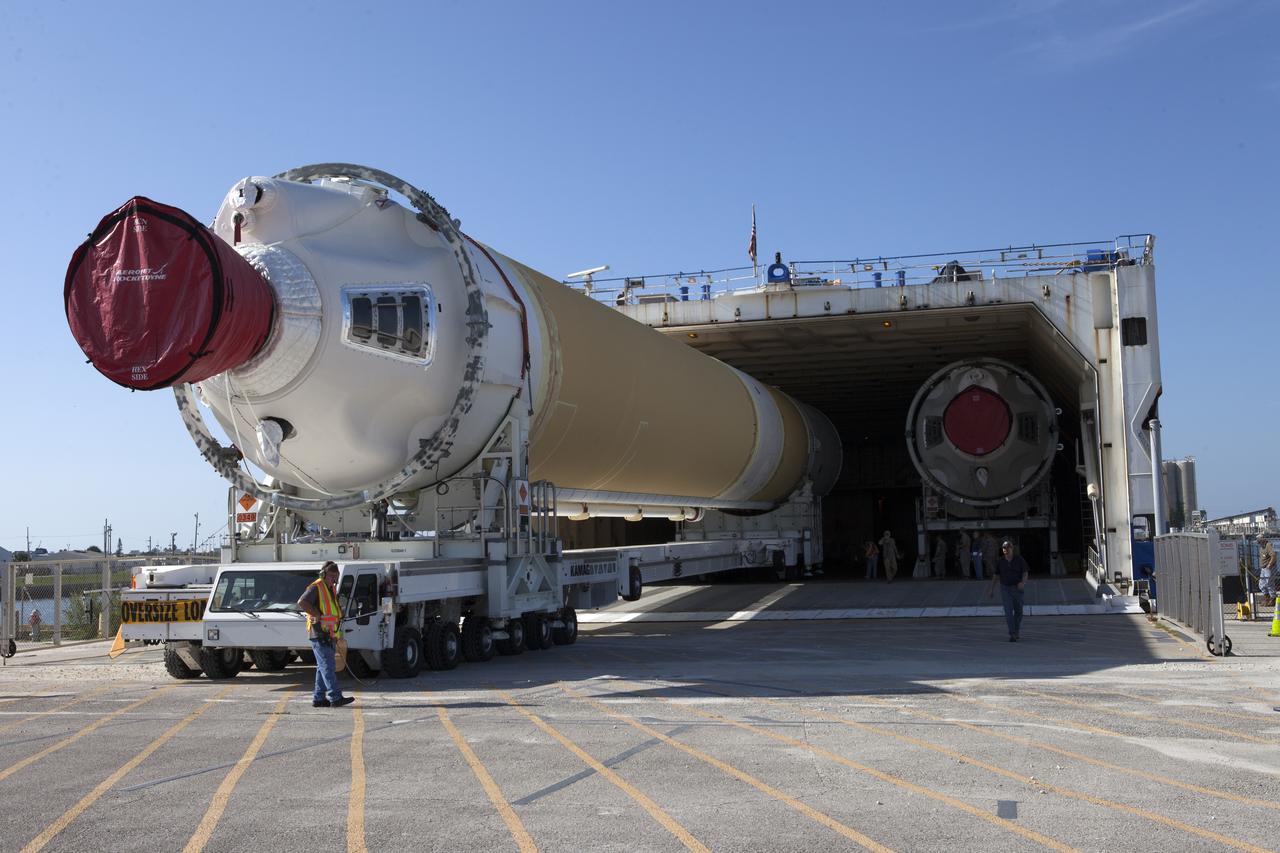
A United Launch Alliance Delta IV Heavy common booster core is offloaded from the company's Mariner ship at Port Canaveral in Florida. The Delta IV Heavy will launch NASA's upcoming Parker Solar Probe mission. The mission will perform the closest-ever observations of a star when it travels through the Sun's atmosphere, called the corona. The probe will rely on measurements and imaging to revolutionize our understanding of the corona and the Sun-Earth connection. Liftoff atop the Delta IV Heavy rocket is scheduled to take place from Cape Canaveral's Space Launch Complex 37 in summer 2018.
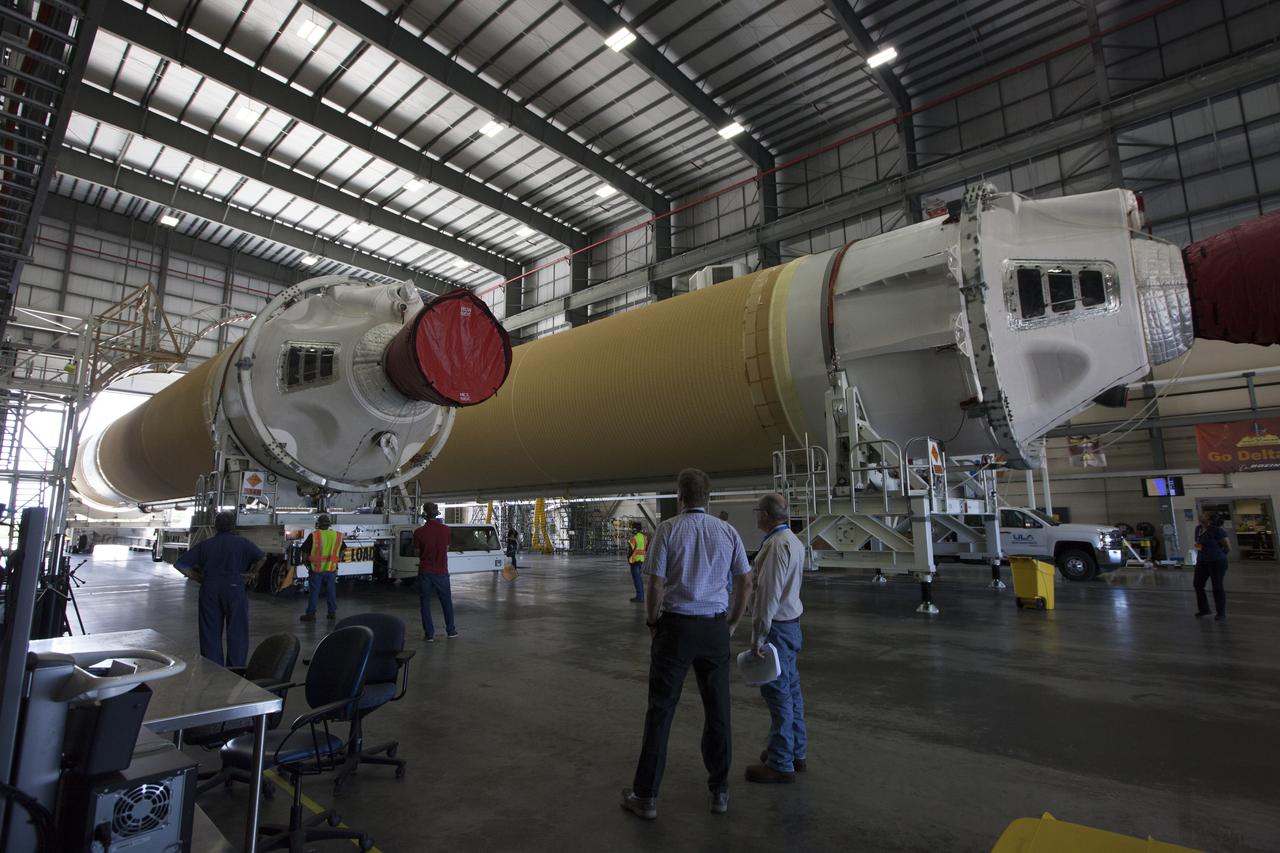
A United Launch Alliance Delta IV Heavy common booster core is transported by truck into Cape Canaveral Air Force Station's Launch Complex 37 Horizontal Processing Facility. The Delta IV Heavy will launch NASA's upcoming Parker Solar Probe mission. The mission will perform the closest-ever observations of a star when it travels through the Sun's atmosphere, called the corona. The probe will rely on measurements and imaging to revolutionize our understanding of the corona and the Sun-Earth connection. Liftoff atop the Delta IV Heavy rocket is scheduled to take place from Cape Canaveral's Space Launch Complex 37 in summer 2018.
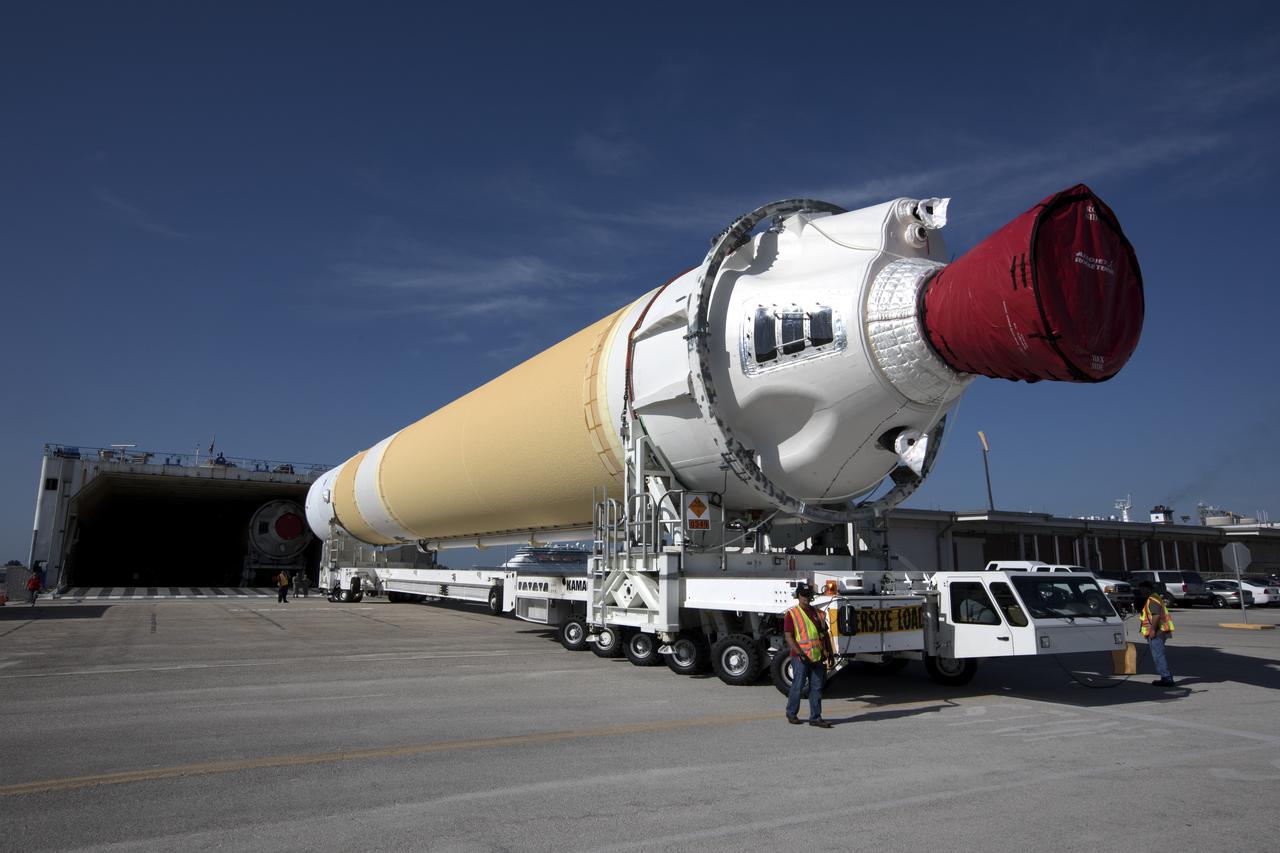
A United Launch Alliance Delta IV Heavy common booster core is offloaded from the company's Mariner ship at Port Canaveral in Florida. The Delta IV Heavy will launch NASA's upcoming Parker Solar Probe mission. The mission will perform the closest-ever observations of a star when it travels through the Sun's atmosphere, called the corona. The probe will rely on measurements and imaging to revolutionize our understanding of the corona and the Sun-Earth connection. Liftoff atop the Delta IV Heavy rocket is scheduled to take place from Cape Canaveral's Space Launch Complex 37 in summer 2018.
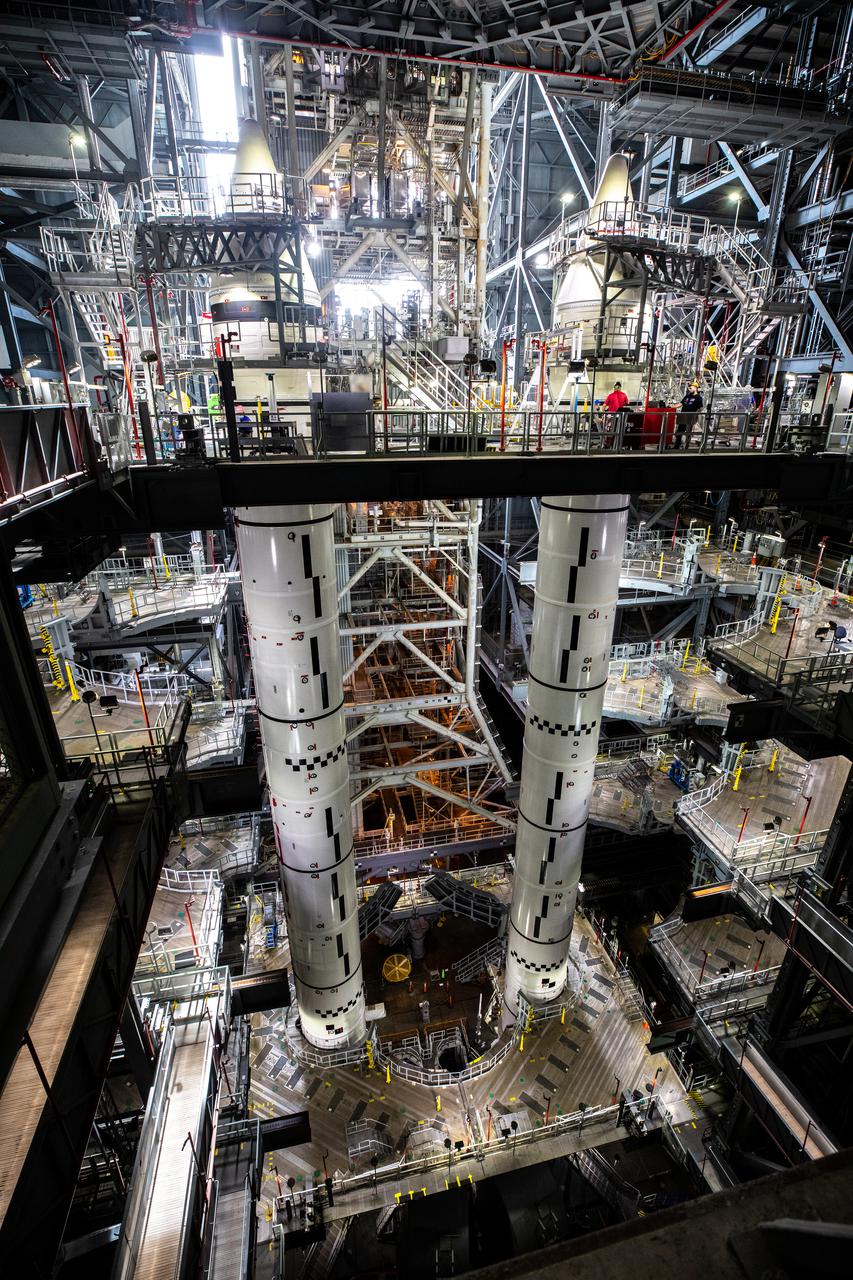
The fully stacked twin solid rocket boosters for NASA’s Space Launch System (SLS) rocket are seen on top of the mobile launcher inside High Bay 3 of the Vehicle Assembly Building (VAB) at the agency’s Kennedy Space Center in Florida on June 4, 2021. Now that booster stacking is complete, teams with NASA’s Exploration Ground Systems and contractor Jacobs are preparing to integrate the massive core stage, which arrived at Kennedy in April 2020, with the boosters inside the VAB. The 188,000-pound core stage alone will provide more than 2 million pounds of thrust at launch, and coupled with the boosters, will provide more than 8.8 million pounds of thrust to launch the Artemis I mission. The first in an increasingly complex series of missions, Artemis I will test SLS and the Orion spacecraft as an integrated system ahead of crewed flights to the Moon.
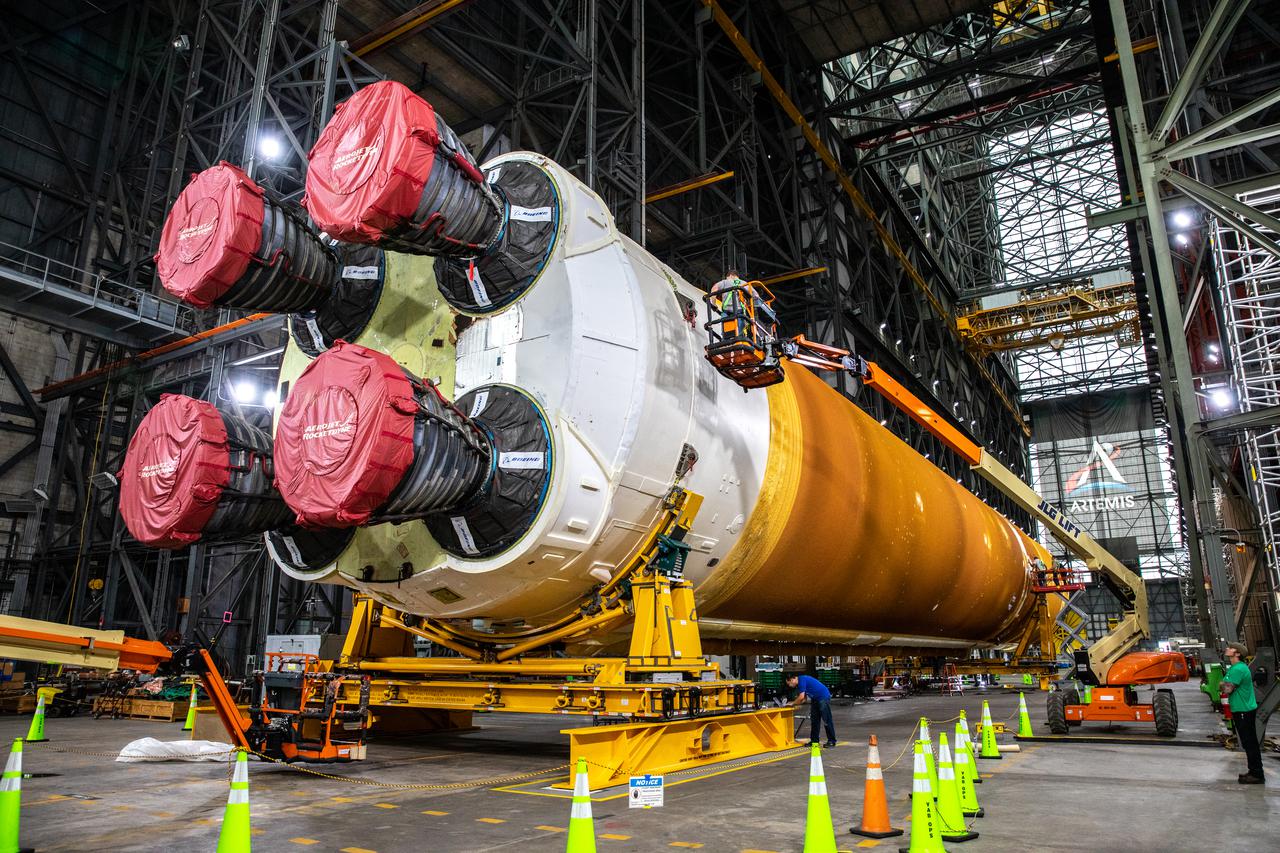
The Space Launch System (SLS) core stage is seen in the transfer aisle of the Vehicle Assembly Building (VAB) at NASA’s Kennedy Space Center in Florida on June 4, 2021. Teams with the agency’s Exploration Ground Systems and contractor Jacobs are preparing to lift the 188,000-pound core stage and place it on the mobile launcher in between the two solid rocket boosters in High Bay 3 of the VAB. The core stage alone will provide more than 2 million pounds of thrust at launch, and coupled with the boosters, will provide more than 8.8 million pounds of thrust to launch the Artemis I mission. The first in an increasingly complex series of missions, Artemis I will test SLS and the Orion spacecraft as an integrated system ahead of crewed flights to the Moon.
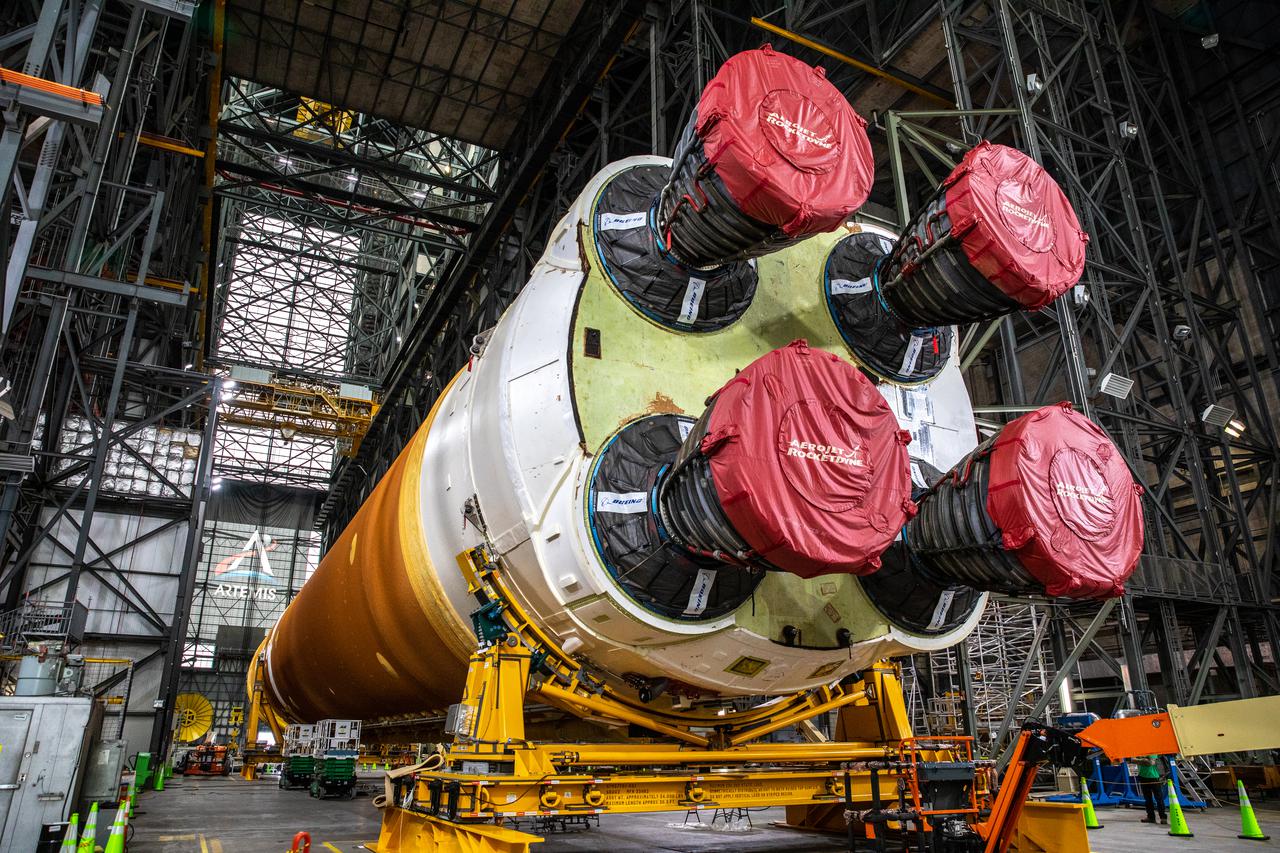
The Space Launch System (SLS) core stage is seen in the transfer aisle of the Vehicle Assembly Building (VAB) at NASA’s Kennedy Space Center in Florida on June 4, 2021. Teams with the agency’s Exploration Ground Systems and contractor Jacobs are preparing to lift the 188,000-pound core stage and place it on the mobile launcher in between the two solid rocket boosters in High Bay 3 of the VAB. The core stage alone will provide more than 2 million pounds of thrust at launch, and coupled with the boosters, will provide more than 8.8 million pounds of thrust to launch the Artemis I mission. The first in an increasingly complex series of missions, Artemis I will test SLS and the Orion spacecraft as an integrated system ahead of crewed flights to the Moon.
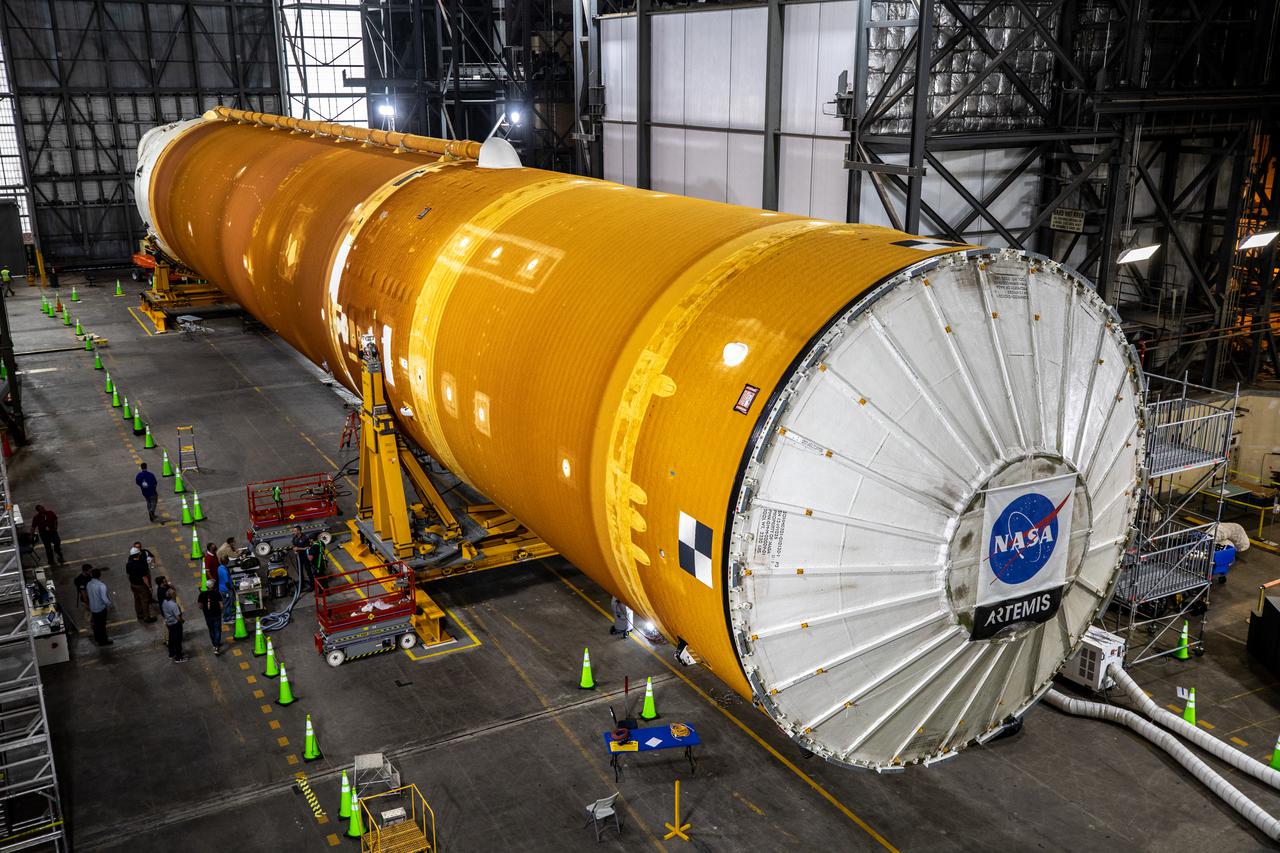
The Space Launch System (SLS) core stage is seen in the transfer aisle of the Vehicle Assembly Building (VAB) at NASA’s Kennedy Space Center in Florida on June 4, 2021. Teams with the agency’s Exploration Ground Systems and contractor Jacobs are preparing to lift the 188,000-pound core stage and place it on the mobile launcher in between the two solid rocket boosters in High Bay 3 of the VAB. The core stage alone will provide more than 2 million pounds of thrust at launch, and coupled with the boosters, will provide more than 8.8 million pounds of thrust to launch the Artemis I mission. The first in an increasingly complex series of missions, Artemis I will test SLS and the Orion spacecraft as an integrated system ahead of crewed flights to the Moon.
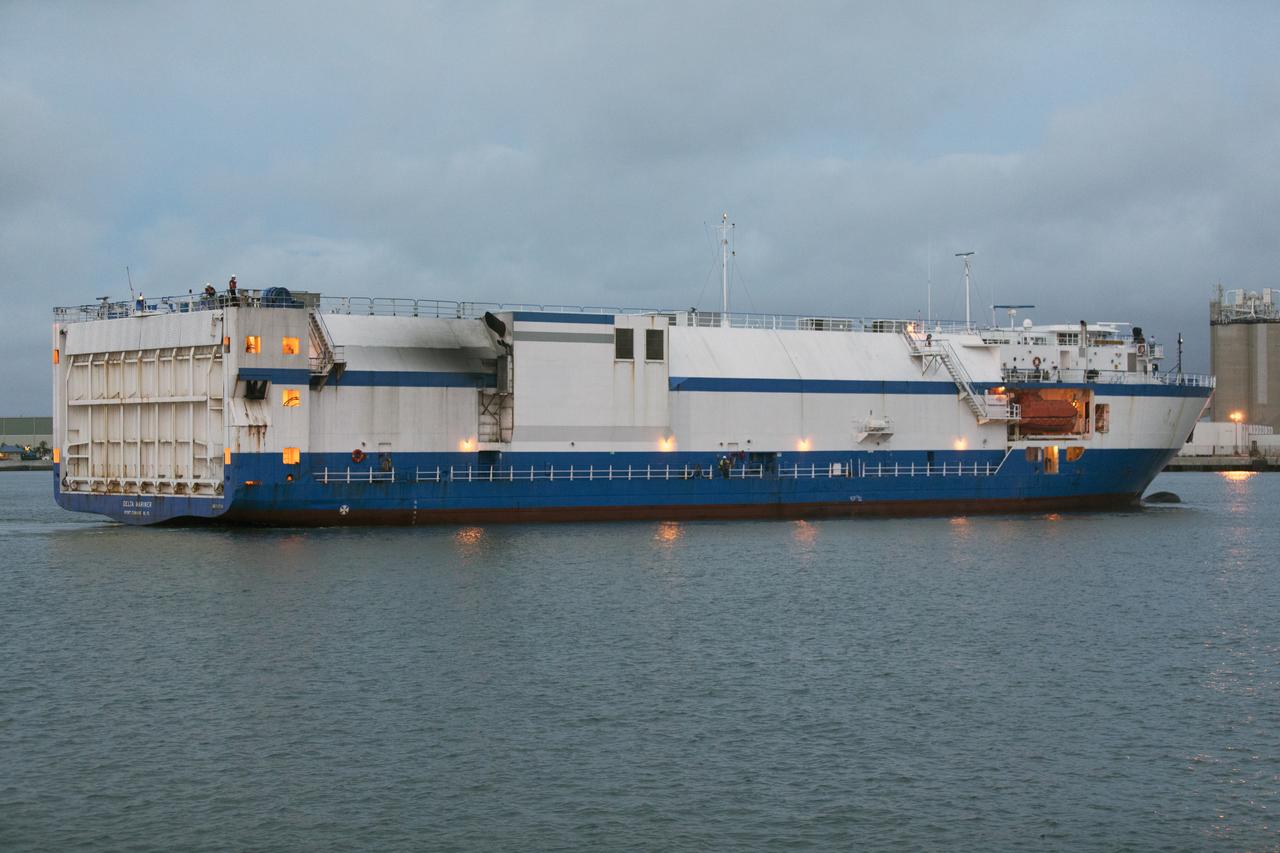
The United Launch Alliance Mariner arrives at Port Canaveral's Army Warf carrying the third Delta IV Heavy common booster core and second stage for NASA's upcoming Parker Solar Probe spacecraft. The mission will perform the closest-ever observations of a star when it travels through the Sun's atmosphere, called the corona. The probe will rely on measurements and imaging to revolutionize our understanding of the corona and the Sun-Earth connection. Liftoff atop the Delta IV Heavy rocket is scheduled to take place from Cape Canaveral's Space Launch Complex 37 in summer 2018.
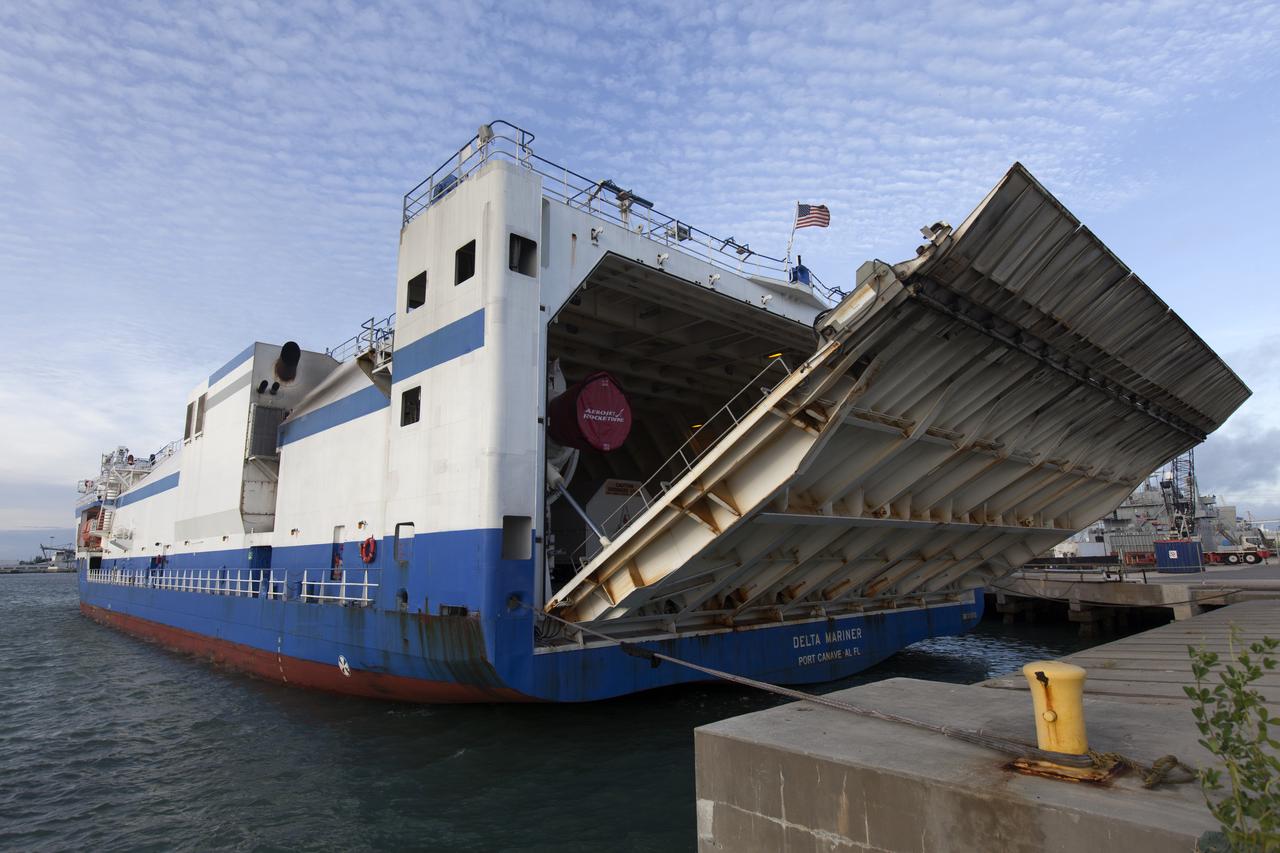
The United Launch Alliance Mariner arrives at Port Canaveral's Army Warf carrying the third Delta IV Heavy common booster core and second stage for NASA's upcoming Parker Solar Probe spacecraft. The mission will perform the closest-ever observations of a star when it travels through the Sun's atmosphere, called the corona. The probe will rely on measurements and imaging to revolutionize our understanding of the corona and the Sun-Earth connection. Liftoff atop the Delta IV Heavy rocket is scheduled to take place from Cape Canaveral's Space Launch Complex 37 in summer 2018.
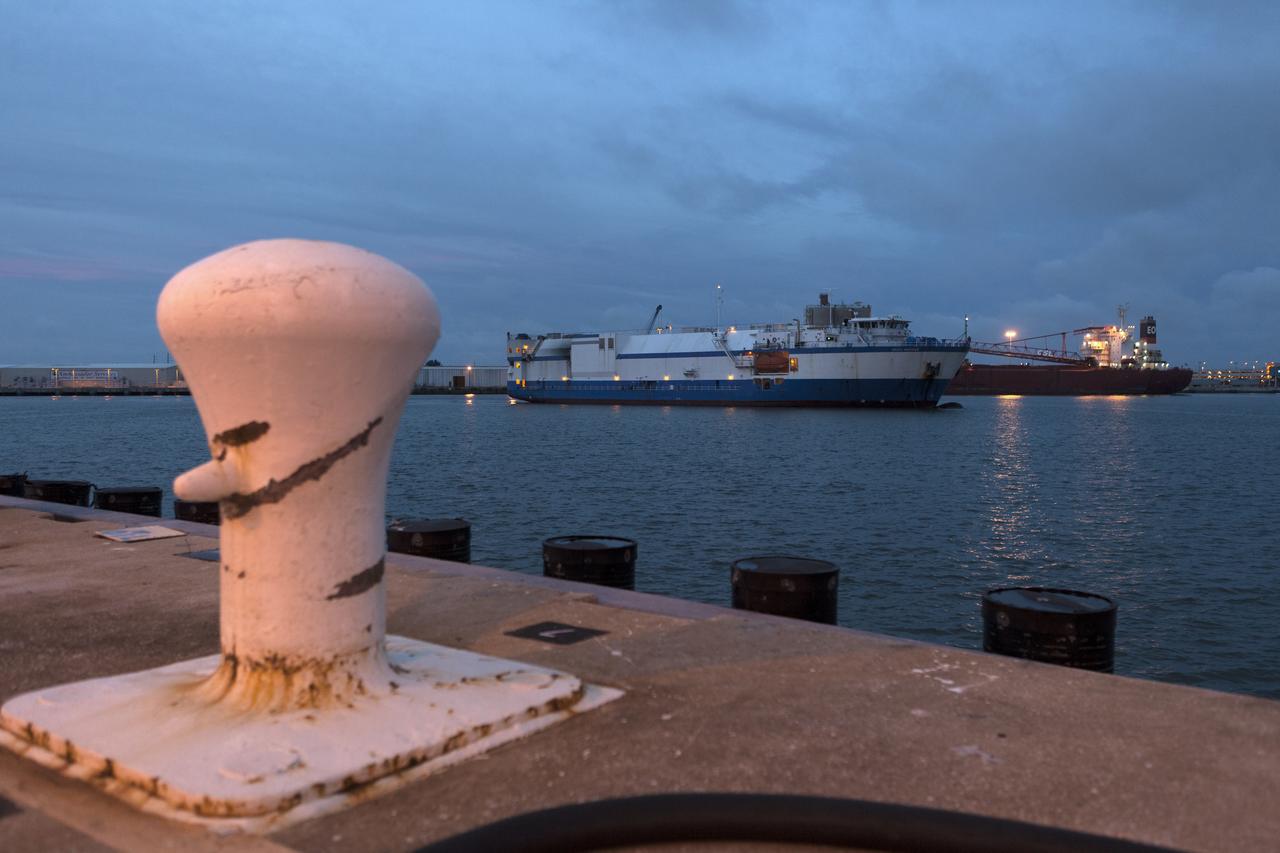
The United Launch Alliance Mariner arrives at Port Canaveral's Army Warf carrying the third Delta IV Heavy common booster core and second stage for NASA's upcoming Parker Solar Probe spacecraft. The mission will perform the closest-ever observations of a star when it travels through the Sun's atmosphere, called the corona. The probe will rely on measurements and imaging to revolutionize our understanding of the corona and the Sun-Earth connection. Liftoff atop the Delta IV Heavy rocket is scheduled to take place from Cape Canaveral's Space Launch Complex 37 in summer 2018.
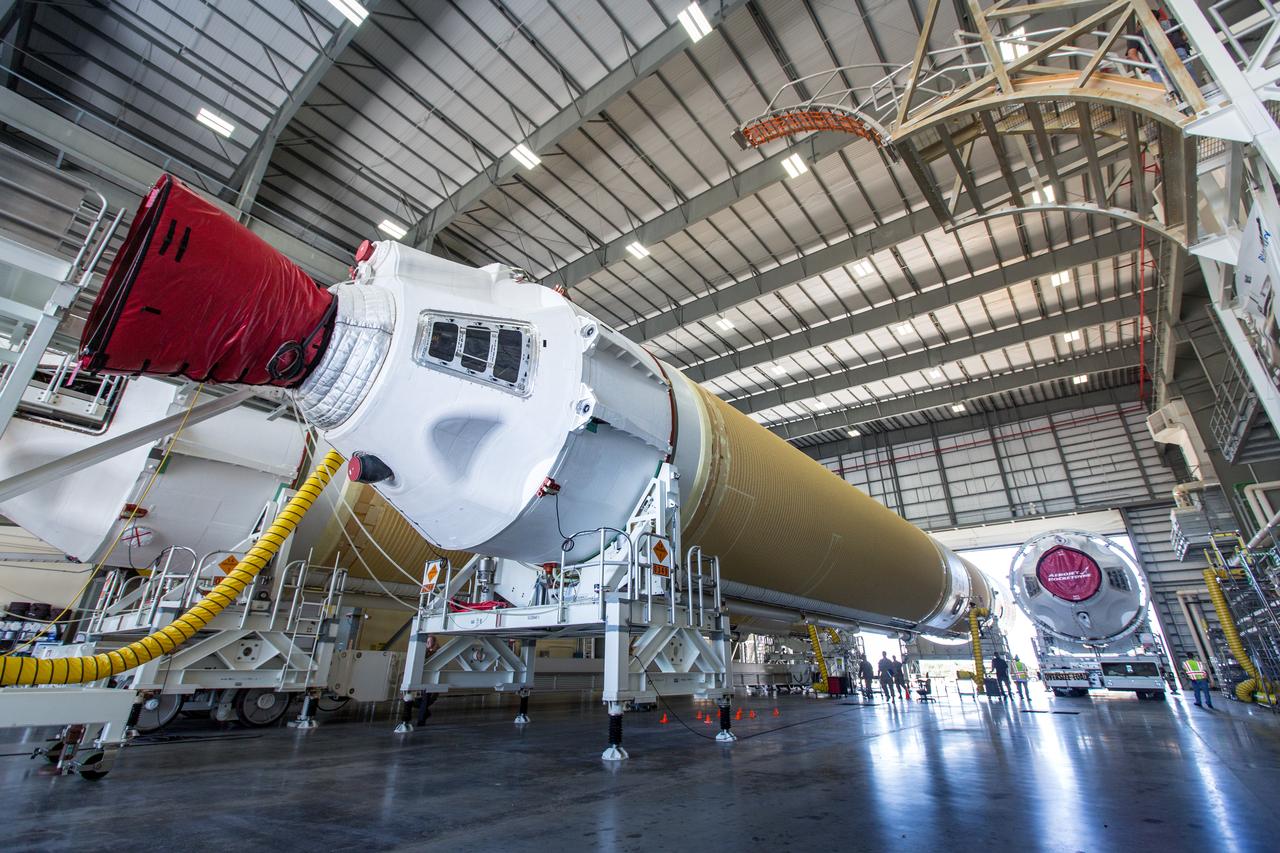
A United Launch Alliance Delta IV Heavy common booster core arrives at the Horizontal Integration Facility at Cape Canaveral Air Force Station for preflight processing. The Delta IV Heavy will launch NASA's upcoming Parker Solar Probe mission. The mission will perform the closest-ever observations of a star when it travels through the Sun's atmosphere, called the corona. The probe will rely on measurements and imaging to revolutionize our understanding of the corona and the Sun-Earth connection. Liftoff atop the Delta IV Heavy rocket is scheduled to take place from Cape Canaveral's Space Launch Complex 37 in summer 2018.
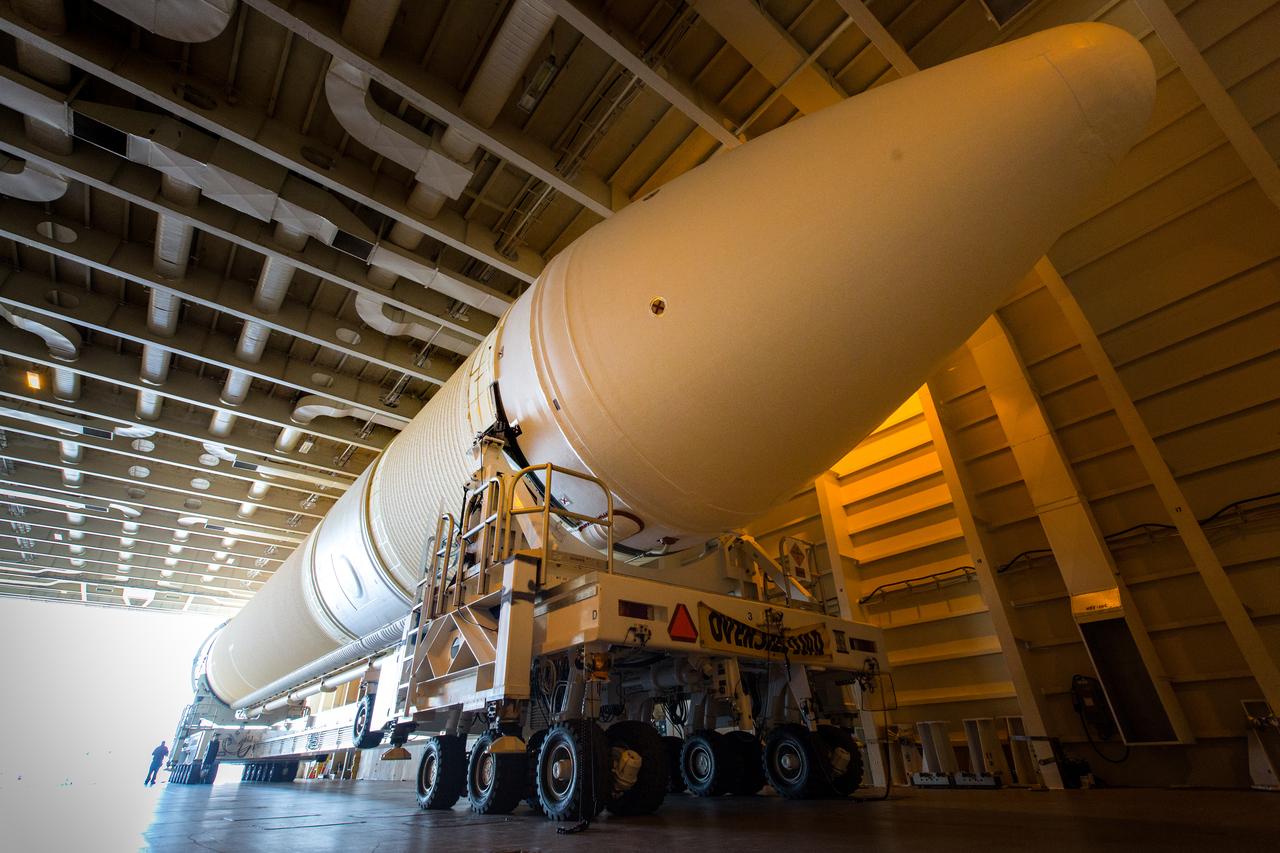
A United Launch Alliance Delta IV Heavy common booster core is about to be offloaded from the company's Mariner ship at Port Canaveral in Florida. The Delta IV Heavy will launch NASA's upcoming Parker Solar Probe mission. The mission will perform the closest-ever observations of a star when it travels through the Sun's atmosphere, called the corona. The probe will rely on measurements and imaging to revolutionize our understanding of the corona and the Sun-Earth connection. Liftoff atop the Delta IV Heavy rocket is scheduled to take place from Cape Canaveral's Space Launch Complex 37 in summer 2018.
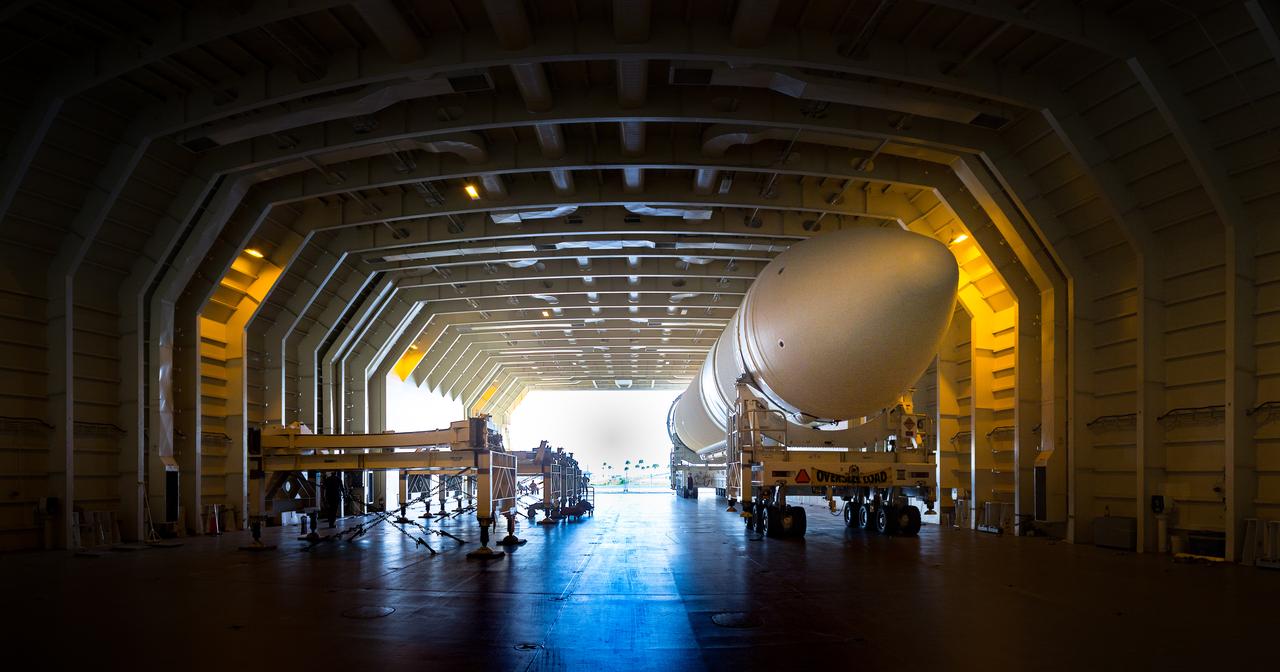
A United Launch Alliance Delta IV Heavy common booster core is about to be offloaded from the company's Mariner ship at Port Canaveral in Florida. The Delta IV Heavy will launch NASA's upcoming Parker Solar Probe mission. The mission will perform the closest-ever observations of a star when it travels through the Sun's atmosphere, called the corona. The probe will rely on measurements and imaging to revolutionize our understanding of the corona and the Sun-Earth connection. Liftoff atop the Delta IV Heavy rocket is scheduled to take place from Cape Canaveral's Space Launch Complex 37 in summer 2018.
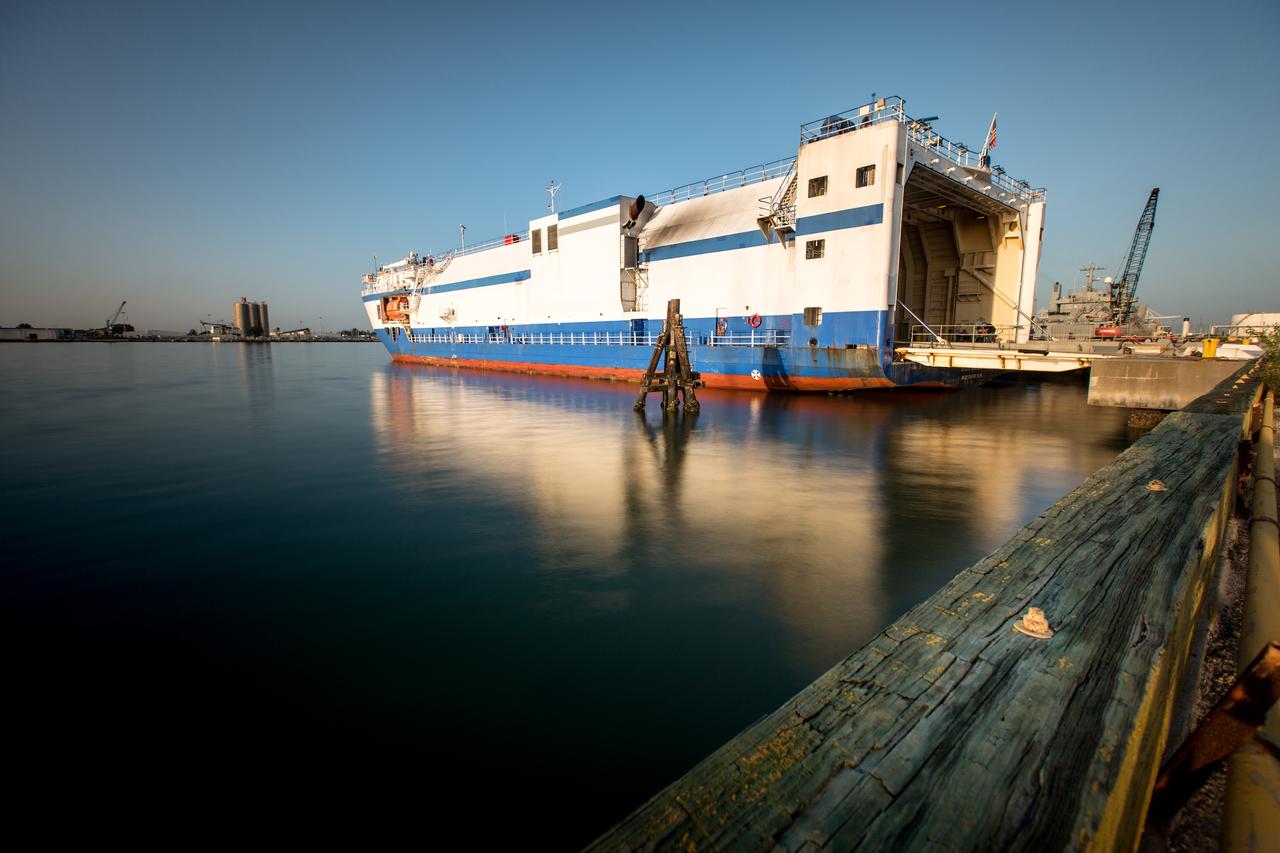
The United Launch Alliance Mariner arrives at Port Canaveral's Army Warf carrying the third Delta IV Heavy common booster core and second stage for NASA's upcoming Parker Solar Probe spacecraft. The mission will perform the closest-ever observations of a star when it travels through the Sun's atmosphere, called the corona. The probe will rely on measurements and imaging to revolutionize our understanding of the corona and the Sun-Earth connection. Liftoff atop the Delta IV Heavy rocket is scheduled to take place from Cape Canaveral's Space Launch Complex 37 in summer 2018.
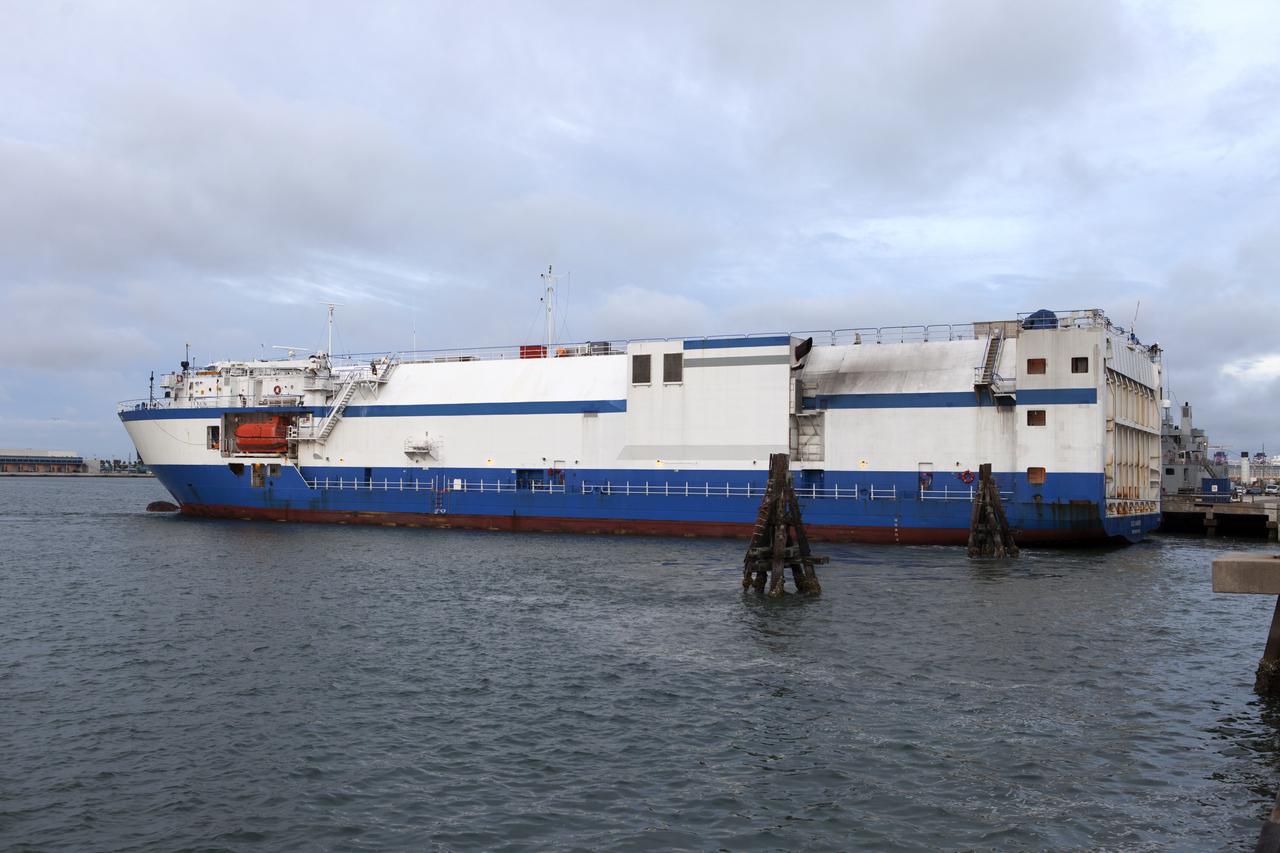
The United Launch Alliance Mariner arrives at Port Canaveral's Army Warf carrying the third Delta IV Heavy common booster core and second stage for NASA's upcoming Parker Solar Probe spacecraft. The mission will perform the closest-ever observations of a star when it travels through the Sun's atmosphere, called the corona. The probe will rely on measurements and imaging to revolutionize our understanding of the corona and the Sun-Earth connection. Liftoff atop the Delta IV Heavy rocket is scheduled to take place from Cape Canaveral's Space Launch Complex 37 in summer 2018.
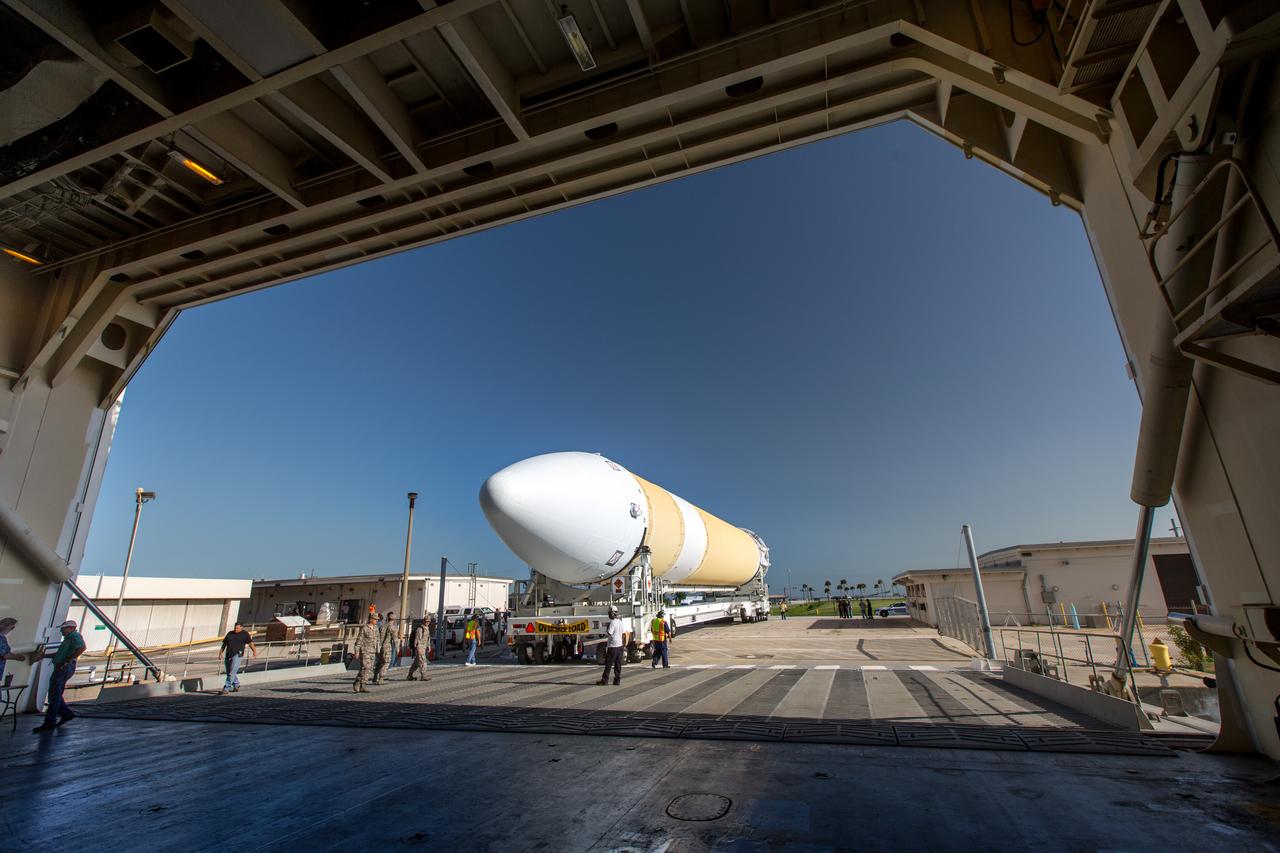
A United Launch Alliance Delta IV Heavy common booster core is offloaded from the company's Mariner ship at Port Canaveral in Florida. The Delta IV Heavy will launch NASA's upcoming Parker Solar Probe mission. The mission will perform the closest-ever observations of a star when it travels through the Sun's atmosphere, called the corona. The probe will rely on measurements and imaging to revolutionize our understanding of the corona and the Sun-Earth connection. Liftoff atop the Delta IV Heavy rocket is scheduled to take place from Cape Canaveral's Space Launch Complex 37 in summer 2018.
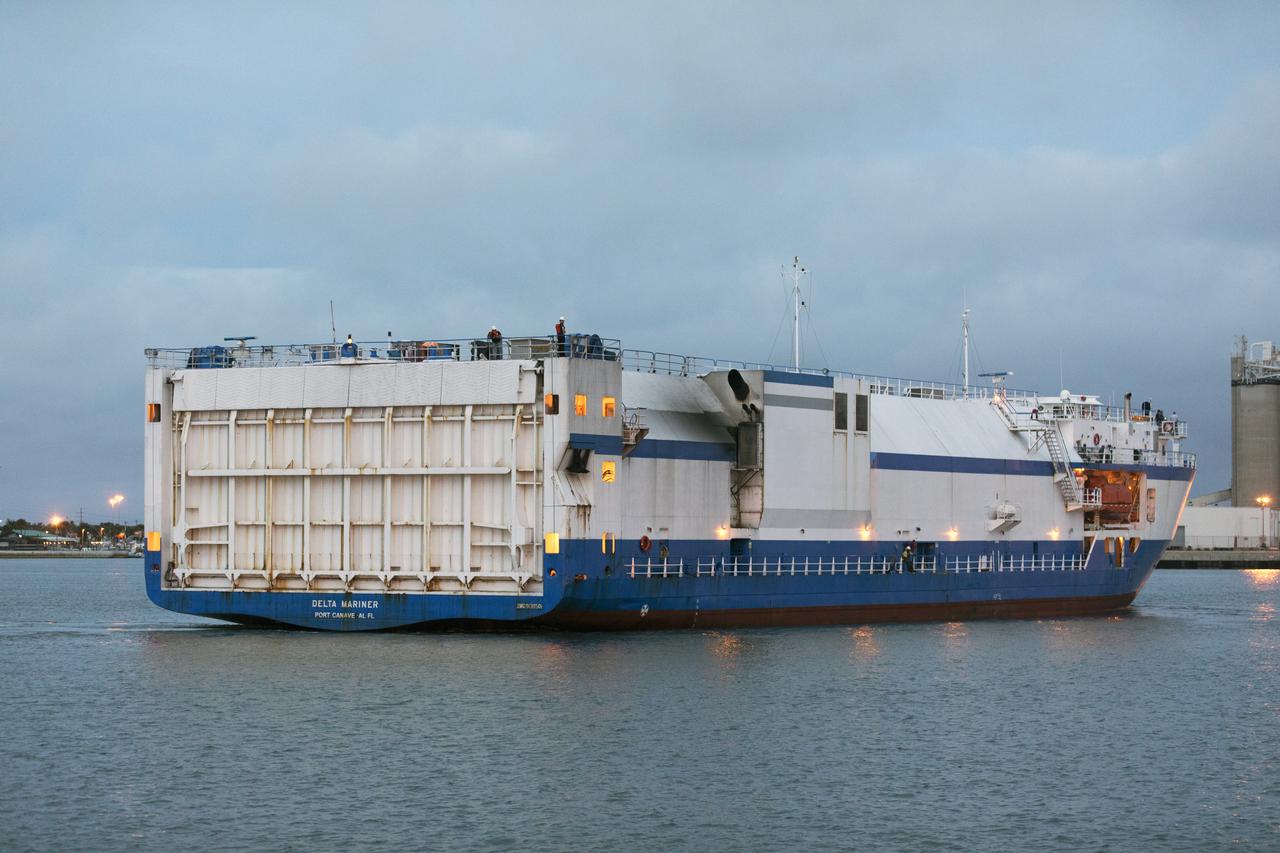
The United Launch Alliance Mariner arrives at Port Canaveral's Army Warf carrying the third Delta IV Heavy common booster core and second stage for NASA's upcoming Parker Solar Probe spacecraft. The mission will perform the closest-ever observations of a star when it travels through the Sun's atmosphere, called the corona. The probe will rely on measurements and imaging to revolutionize our understanding of the corona and the Sun-Earth connection. Liftoff atop the Delta IV Heavy rocket is scheduled to take place from Cape Canaveral's Space Launch Complex 37 in summer 2018.
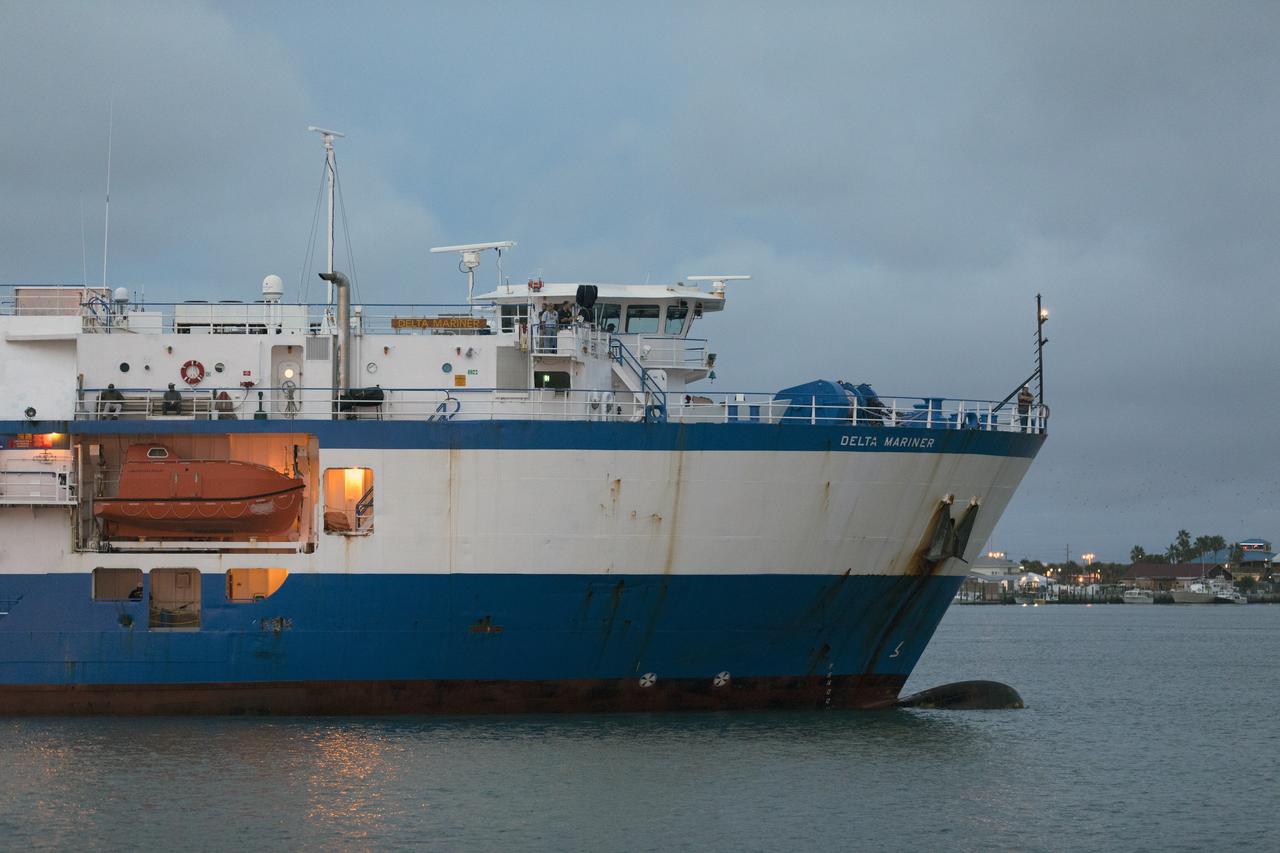
The United Launch Alliance Mariner arrives at Port Canaveral's Army Warf carrying the third Delta IV Heavy common booster core and second stage for NASA's upcoming Parker Solar Probe spacecraft. The mission will perform the closest-ever observations of a star when it travels through the Sun's atmosphere, called the corona. The probe will rely on measurements and imaging to revolutionize our understanding of the corona and the Sun-Earth connection. Liftoff atop the Delta IV Heavy rocket is scheduled to take place from Cape Canaveral's Space Launch Complex 37 in summer 2018.
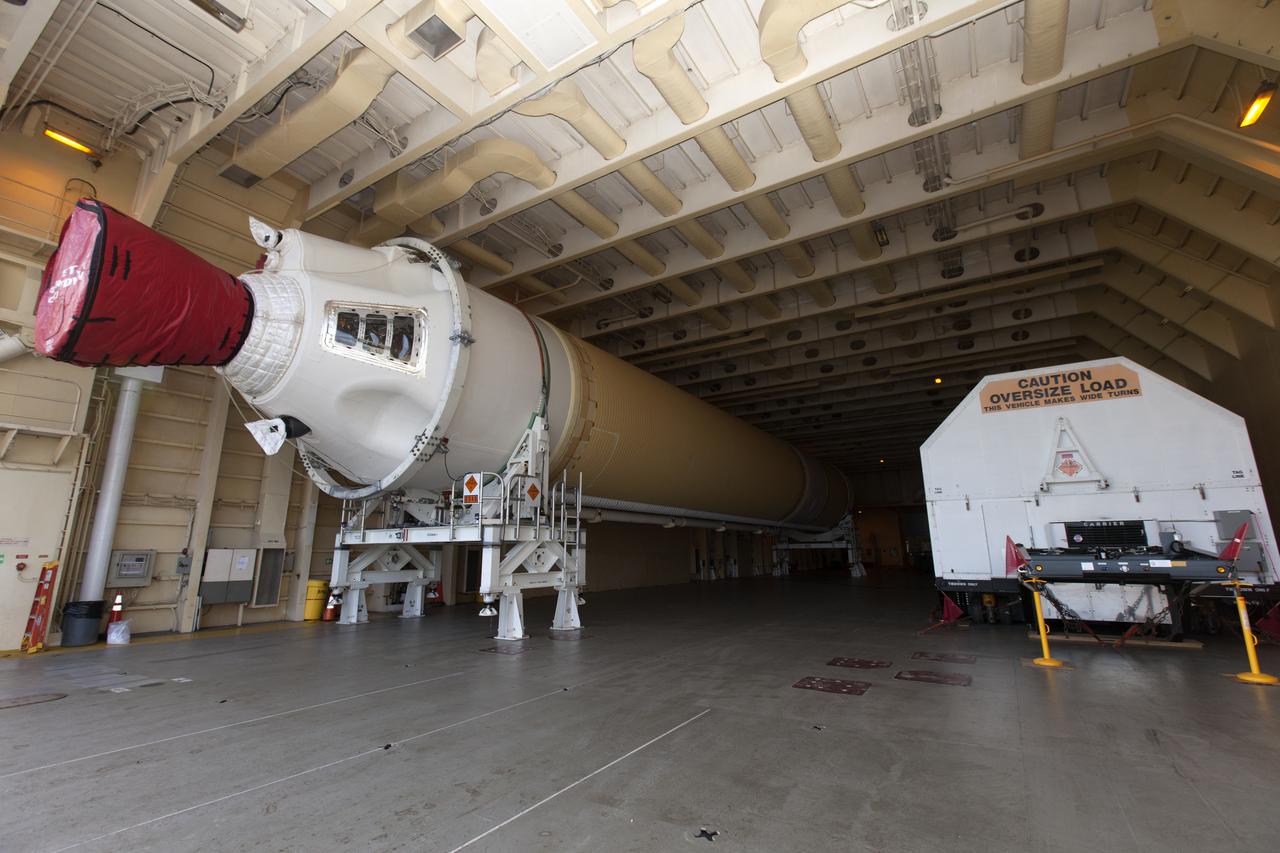
A United Launch Alliance Delta IV Heavy common booster core is offloaded from the company's Mariner ship at Port Canaveral in Florida. The Delta IV Heavy will launch NASA's upcoming Parker Solar Probe mission. The mission will perform the closest-ever observations of a star when it travels through the Sun's atmosphere, called the corona. The probe will rely on measurements and imaging to revolutionize our understanding of the corona and the Sun-Earth connection. Liftoff atop the Delta IV Heavy rocket is scheduled to take place from Cape Canaveral's Space Launch Complex 37 in summer 2018.
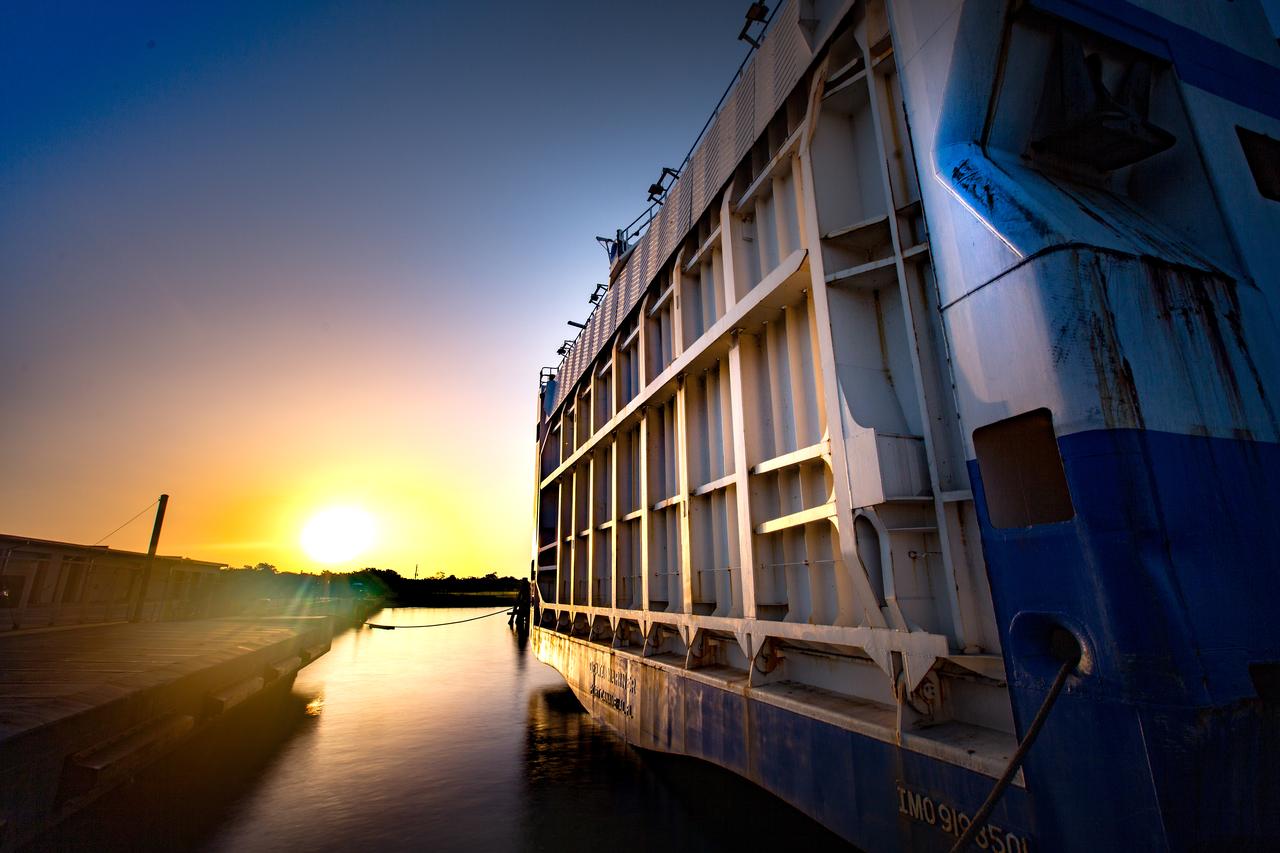
The United Launch Alliance Mariner arrives at Port Canaveral's Army Warf carrying the third Delta IV Heavy common booster core and second stage for NASA's upcoming Parker Solar Probe spacecraft. The mission will perform the closest-ever observations of a star when it travels through the Sun's atmosphere, called the corona. The probe will rely on measurements and imaging to revolutionize our understanding of the corona and the Sun-Earth connection. Liftoff atop the Delta IV Heavy rocket is scheduled to take place from Cape Canaveral's Space Launch Complex 37 in summer 2018.
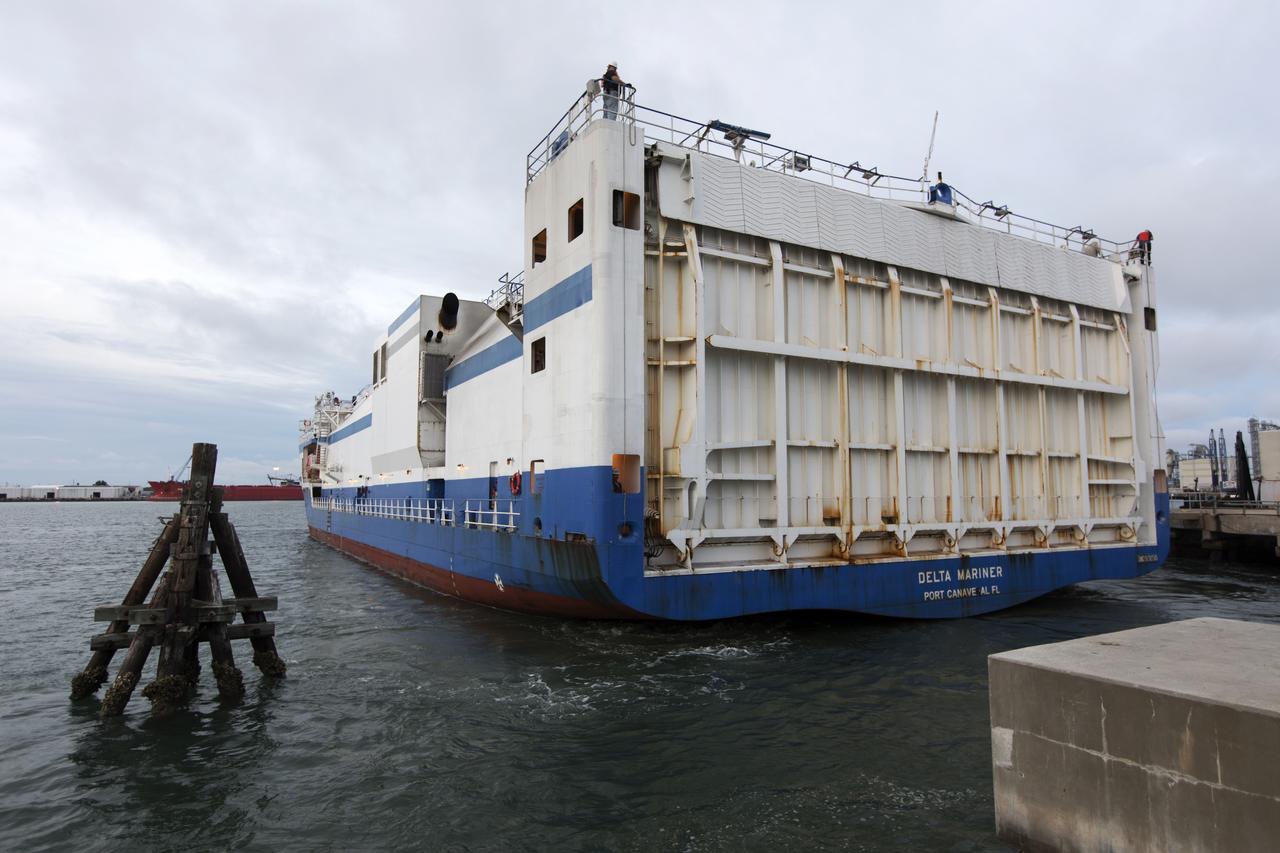
The United Launch Alliance Mariner arrives at Port Canaveral's Army Warf carrying the third Delta IV Heavy common booster core and second stage for NASA's upcoming Parker Solar Probe spacecraft. The mission will perform the closest-ever observations of a star when it travels through the Sun's atmosphere, called the corona. The probe will rely on measurements and imaging to revolutionize our understanding of the corona and the Sun-Earth connection. Liftoff atop the Delta IV Heavy rocket is scheduled to take place from Cape Canaveral's Space Launch Complex 37 in summer 2018.
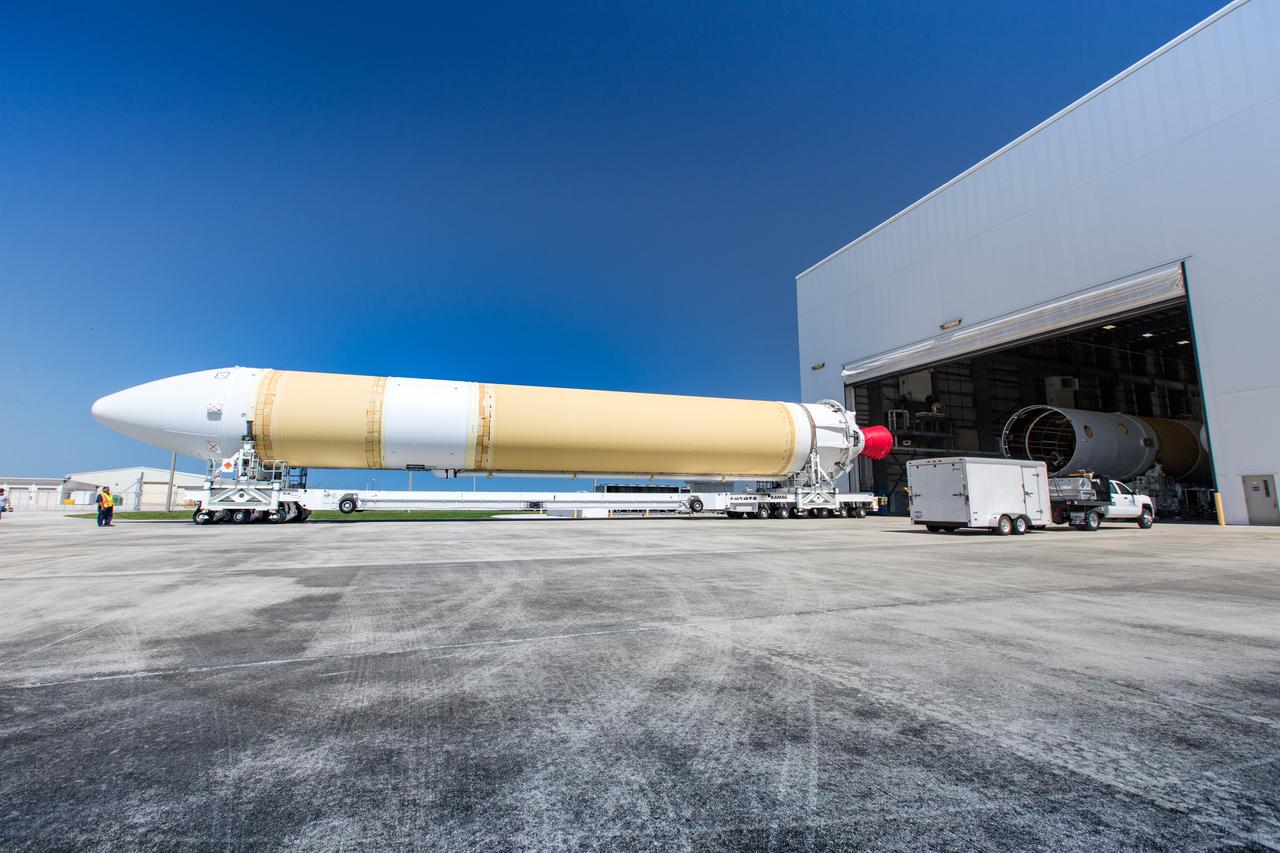
A United Launch Alliance Delta IV Heavy common booster core arrives at the Horizontal Integration Facility at Cape Canaveral Air Force Station for preflight processing. The Delta IV Heavy will launch NASA's upcoming Parker Solar Probe mission. The mission will perform the closest-ever observations of a star when it travels through the Sun's atmosphere, called the corona. The probe will rely on measurements and imaging to revolutionize our understanding of the corona and the Sun-Earth connection. Liftoff atop the Delta IV Heavy rocket is scheduled to take place from Cape Canaveral's Space Launch Complex 37 in summer 2018.
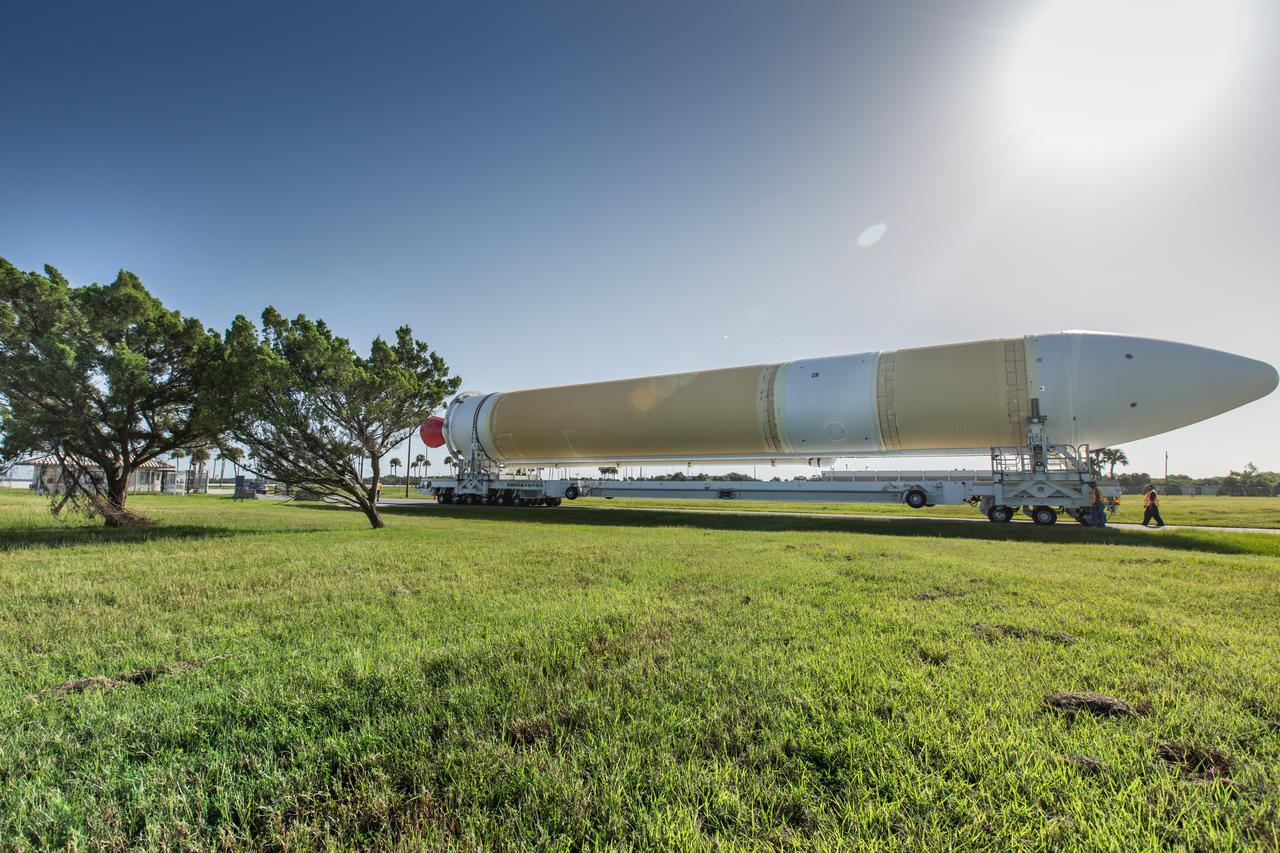
A United Launch Alliance Delta IV Heavy common booster core is transported to the Horizontal Integration Facility at Cape Canaveral Air Force Station for preflight processing. The Delta IV Heavy will launch NASA's upcoming Parker Solar Probe mission. The mission will perform the closest-ever observations of a star when it travels through the Sun's atmosphere, called the corona. The probe will rely on measurements and imaging to revolutionize our understanding of the corona and the Sun-Earth connection. Liftoff atop the Delta IV Heavy rocket is scheduled to take place from Cape Canaveral's Space Launch Complex 37 in summer 2018.
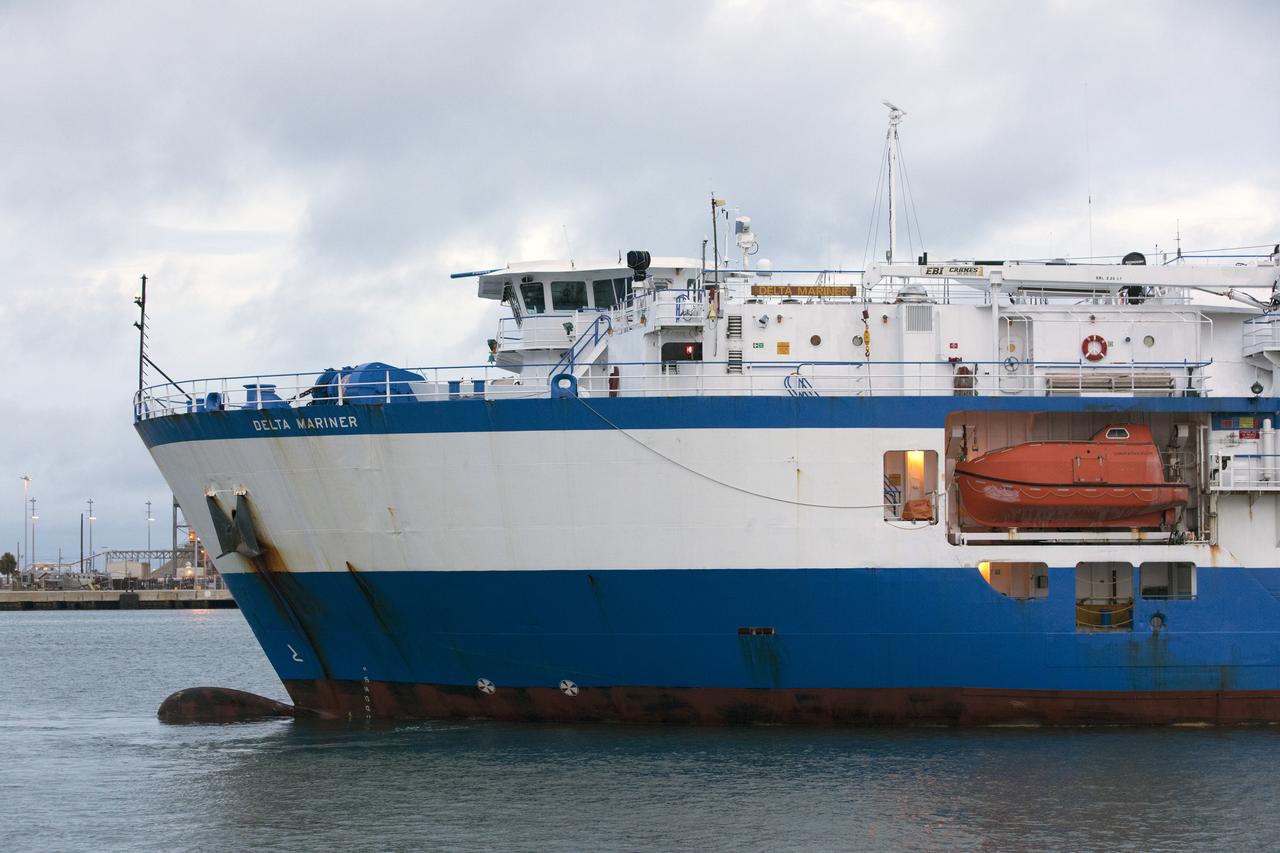
The United Launch Alliance Mariner arrives at Port Canaveral's Army Warf carrying the third Delta IV Heavy common booster core and second stage for NASA's upcoming Parker Solar Probe spacecraft. The mission will perform the closest-ever observations of a star when it travels through the Sun's atmosphere, called the corona. The probe will rely on measurements and imaging to revolutionize our understanding of the corona and the Sun-Earth connection. Liftoff atop the Delta IV Heavy rocket is scheduled to take place from Cape Canaveral's Space Launch Complex 37 in summer 2018.
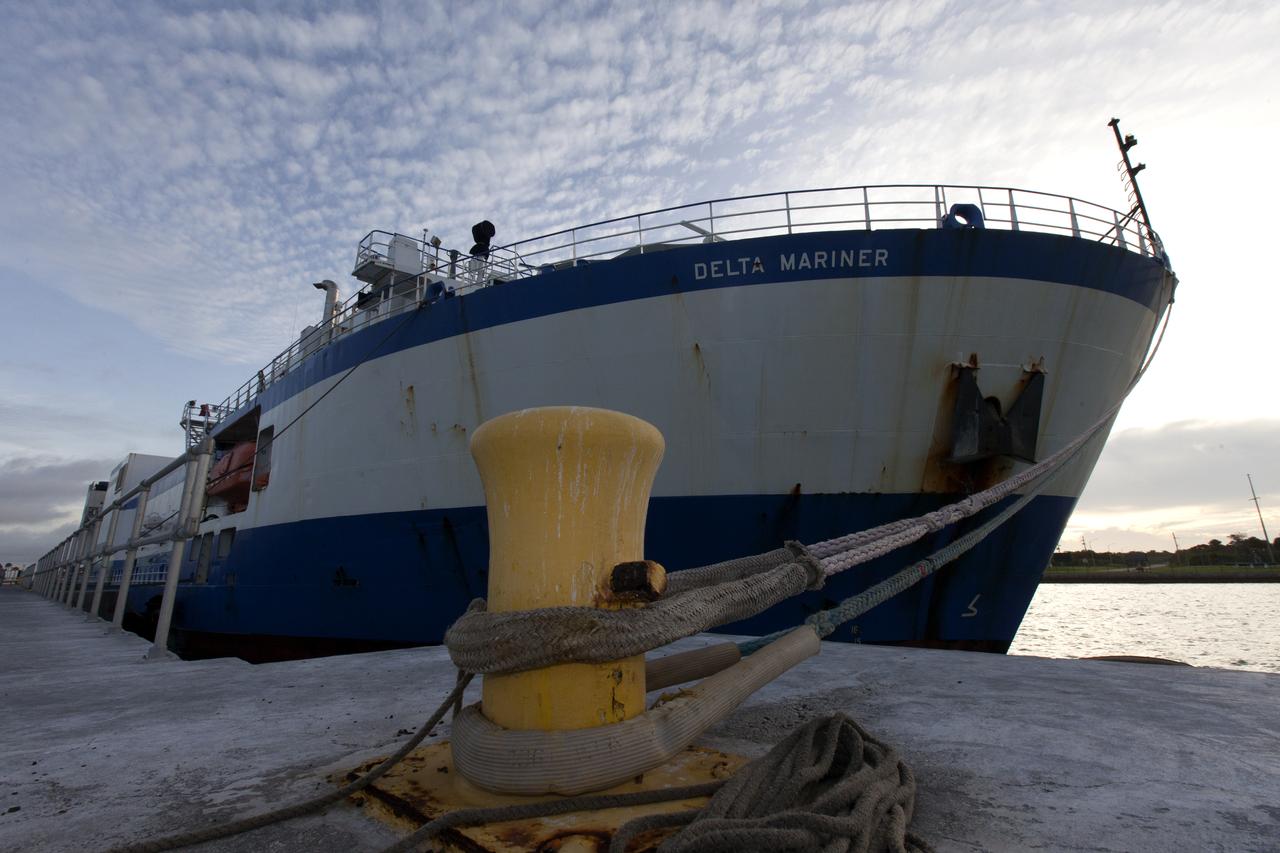
The United Launch Alliance Mariner arrives at Port Canaveral's Army Warf carrying the third Delta IV Heavy common booster core and second stage for NASA's upcoming Parker Solar Probe spacecraft. The mission will perform the closest-ever observations of a star when it travels through the Sun's atmosphere, called the corona. The probe will rely on measurements and imaging to revolutionize our understanding of the corona and the Sun-Earth connection. Liftoff atop the Delta IV Heavy rocket is scheduled to take place from Cape Canaveral's Space Launch Complex 37 in summer 2018.
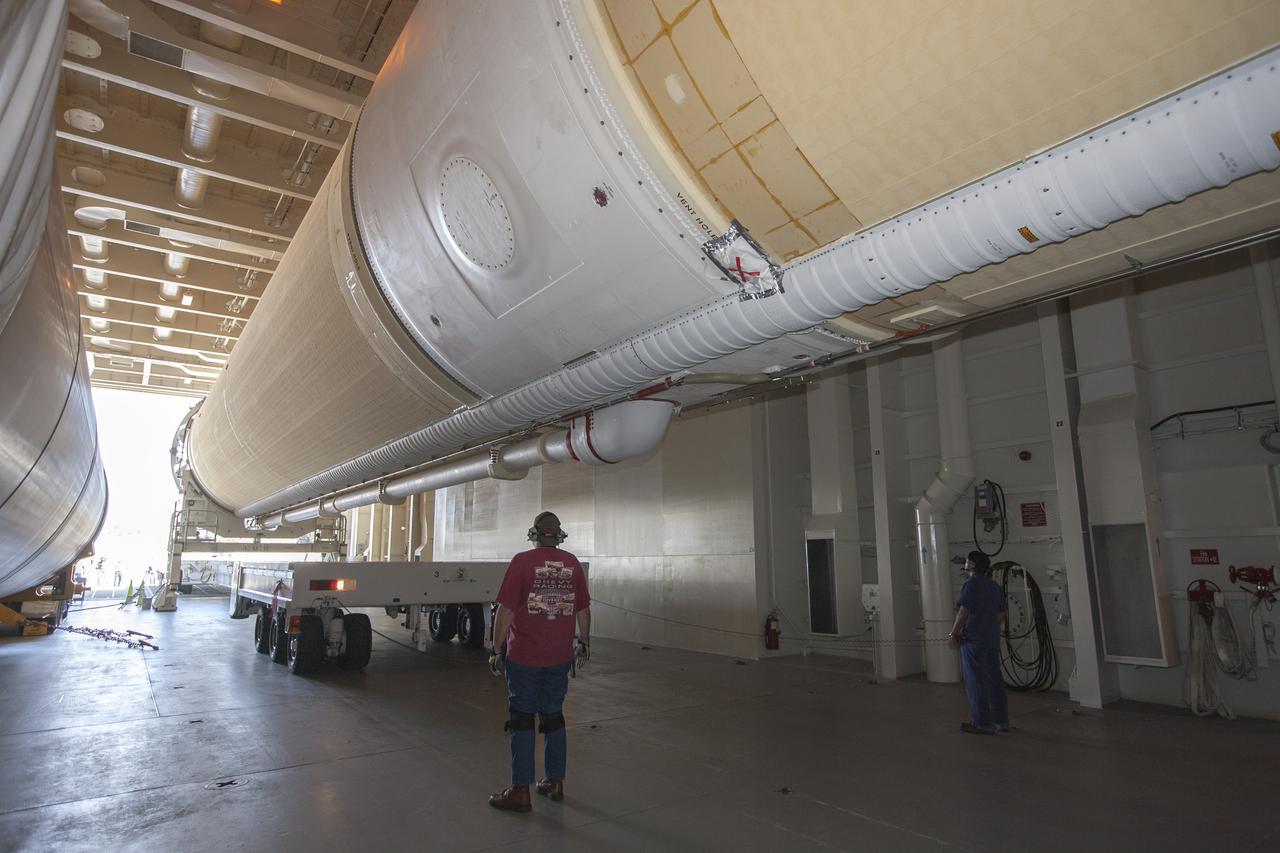
CAPE CANAVERAL, Fla. – Two of the three United Launch Alliance Delta IV heavy boosters for NASA’s upcoming Exploration Flight Test-1, or EFT-1, mission with the Orion spacecraft, have arrived by barge at the U.S. Army Outpost wharf at Port Canaveral in Florida. The core booster and starboard booster will be offloaded and then transported to the Horizontal Integration Facility, or HIF, at Space Launch Complex 37 on Cape Canaveral Air Force Station. The port booster and the upper stage are planned to be shipped to Cape Canaveral in April. At the HIF, all three boosters will be processed and checked out before being moved to the nearby launch pad and hoisted into position. During the EFT-1 mission, Orion will travel farther into space than any human spacecraft has gone in more than 40 years. The data gathered during the flight will influence design decisions, validate existing computer models and innovative new approaches to space systems development, as well as reduce overall mission risks and costs for later Orion flights. Liftoff of Orion on EFT-1 is planned for fall 2014. Photo credit: NASA/Kim Shiflett
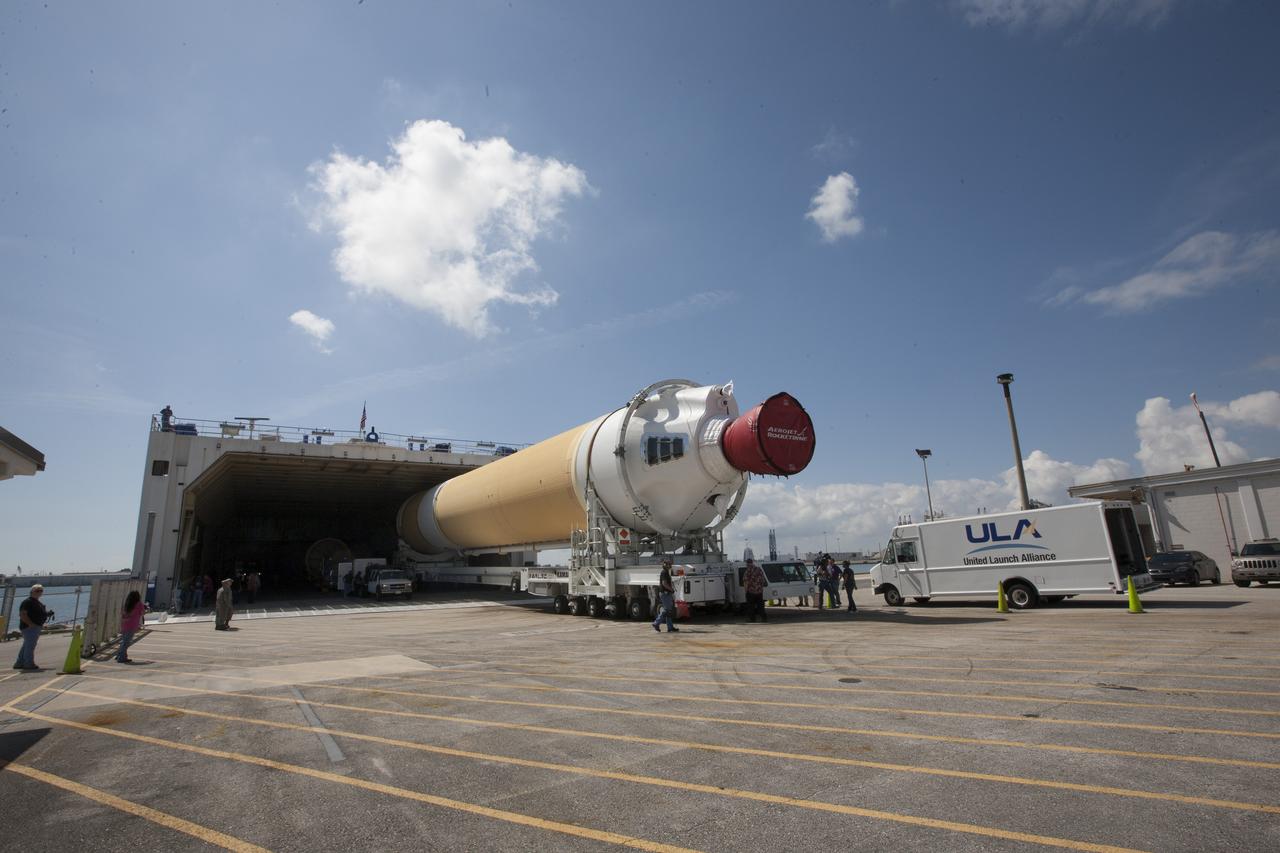
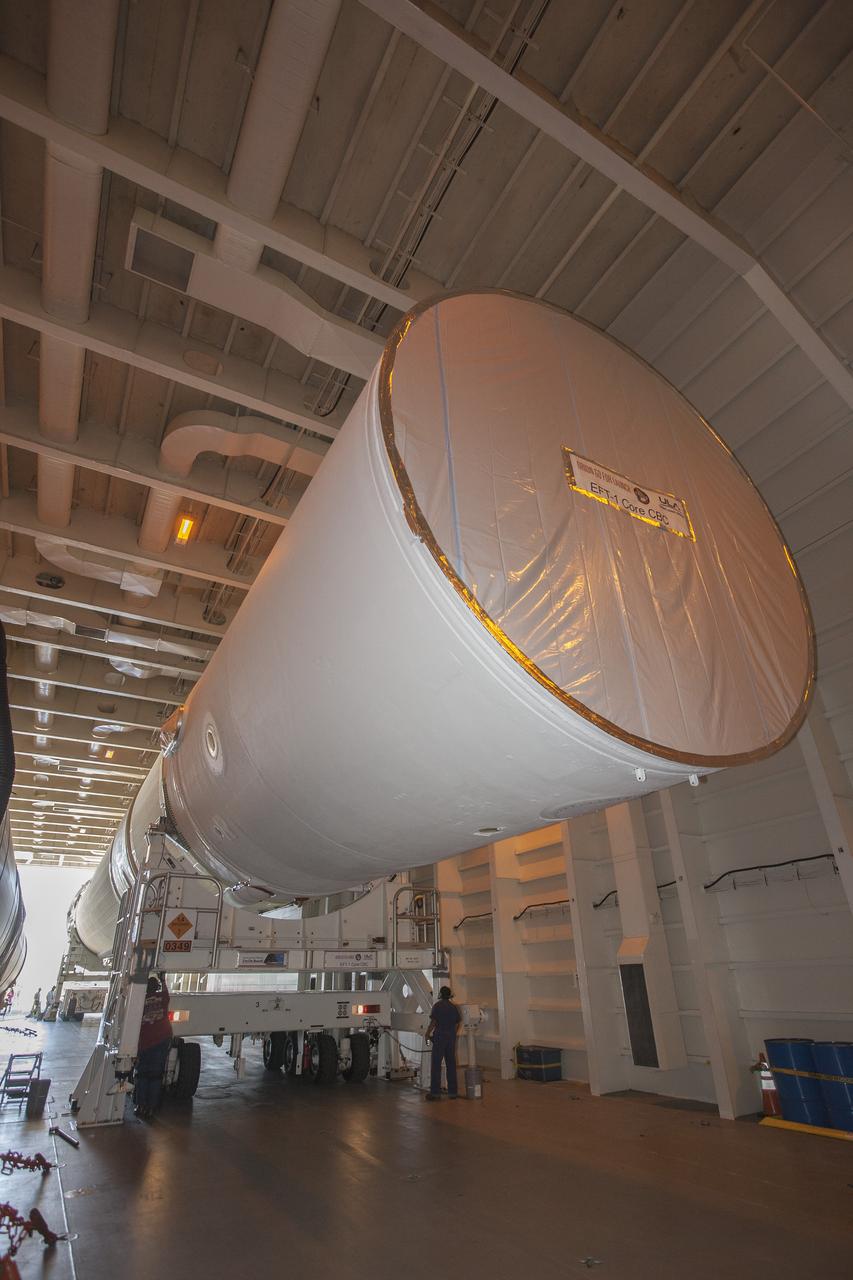
CAPE CANAVERAL, Fla. – Two of the three United Launch Alliance Delta IV heavy boosters for NASA’s upcoming Exploration Flight Test-1, or EFT-1, mission with the Orion spacecraft, have arrived by barge at the U.S. Army Outpost wharf at Port Canaveral in Florida. The core booster and starboard booster are being offloaded and will be transported to the Horizontal Integration Facility, or HIF, at Space Launch Complex 37 on Cape Canaveral Air Force Station. The port booster and the upper stage are planned to be shipped to Cape Canaveral in April. At the HIF, all three boosters will be processed and checked out before being moved to the nearby launch pad and hoisted into position. During the EFT-1 mission, Orion will travel farther into space than any human spacecraft has gone in more than 40 years. The data gathered during the flight will influence design decisions, validate existing computer models and innovative new approaches to space systems development, as well as reduce overall mission risks and costs for later Orion flights. Liftoff of Orion on EFT-1 is planned for fall 2014. Photo credit: NASA/Kim Shiflett
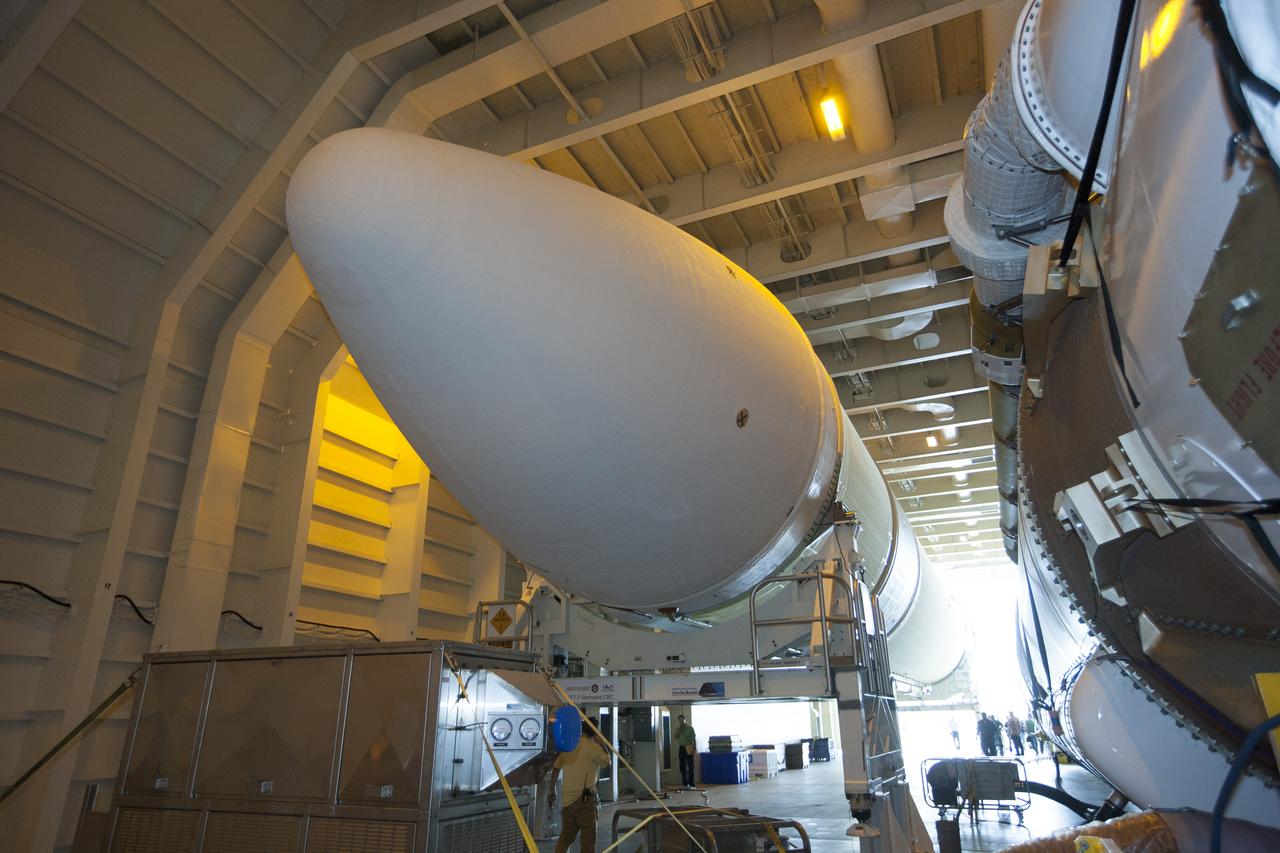
CAPE CANAVERAL, Fla. – Two of the three United Launch Alliance Delta IV heavy boosters for NASA’s upcoming Exploration Flight Test-1, or EFT-1, mission with the Orion spacecraft, have arrived by barge at the U.S. Army Outpost wharf at Port Canaveral in Florida. The core booster and starboard booster will be offloaded and then transported to the Horizontal Integration Facility, or HIF, at Space Launch Complex 37 on Cape Canaveral Air Force Station. The port booster and the upper stage are planned to be shipped to Cape Canaveral in April. At the HIF, all three boosters will be processed and checked out before being moved to the nearby launch pad and hoisted into position. During the EFT-1 mission, Orion will travel farther into space than any human spacecraft has gone in more than 40 years. The data gathered during the flight will influence design decisions, validate existing computer models and innovative new approaches to space systems development, as well as reduce overall mission risks and costs for later Orion flights. Liftoff of Orion on EFT-1 is planned for fall 2014. Photo credit: NASA/Kim Shiflett
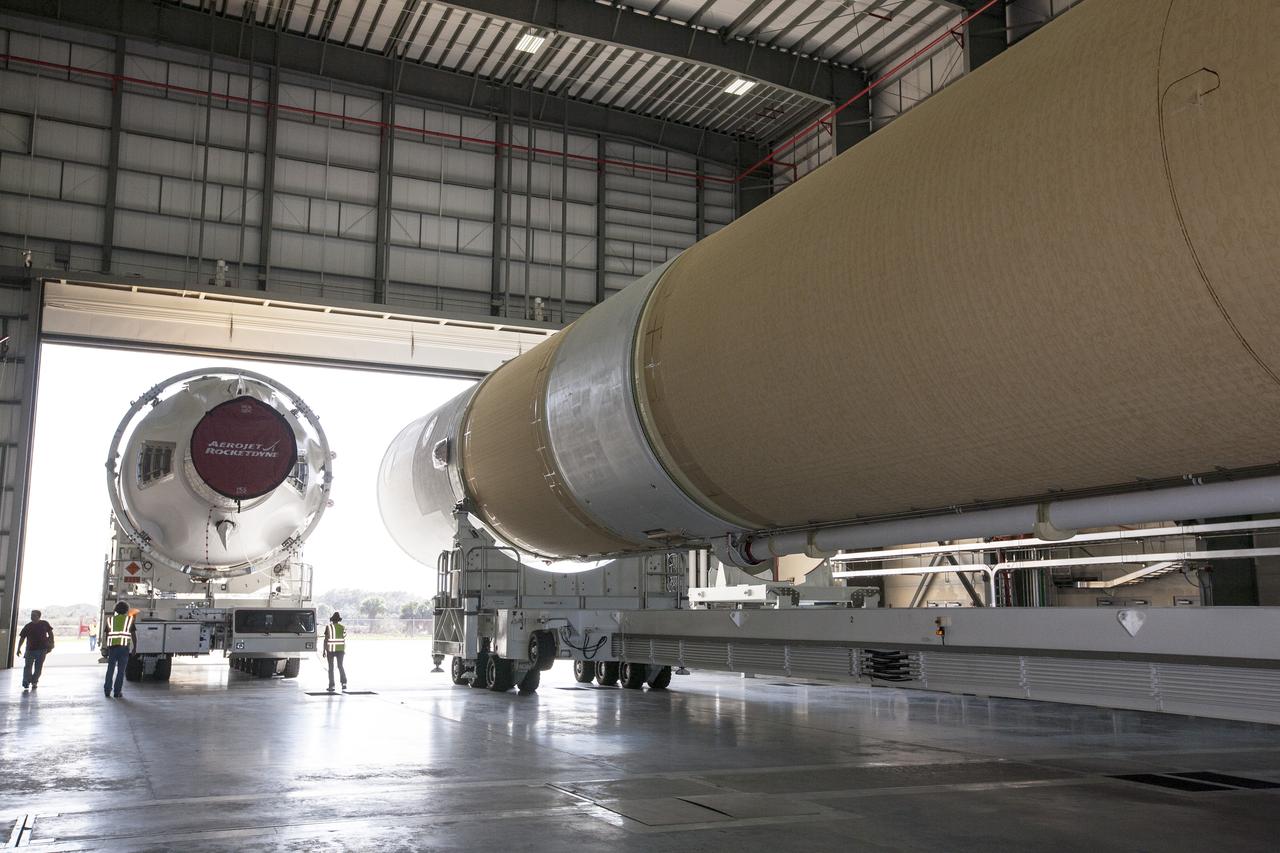
CAPE CANAVERAL, Fla. – Two of the three United Launch Alliance Delta IV heavy boosters for NASA’s upcoming Exploration Flight Test-1, or EFT-1, mission with the Orion spacecraft, were transported to the Horizontal Integration Facility, or HIF, at Space Launch Complex 37 on Cape Canaveral Air Force Station in Florida. The core booster and starboard booster arrived by barge at the U.S. Army Outpost wharf at Port Canaveral. The port booster and the upper stage are planned to be shipped to Cape Canaveral in April. At the HIF, all three boosters will be processed and checked out before being moved to the nearby launch pad and hoisted into position. During the EFT-1 mission, Orion will travel farther into space than any human spacecraft has gone in more than 40 years. The data gathered during the flight will influence design decisions, validate existing computer models and innovative new approaches to space systems development, as well as reduce overall mission risks and costs for later Orion flights. Liftoff of Orion on EFT-1 is planned for fall 2014. Photo credit: NASA/Kim Shiflett
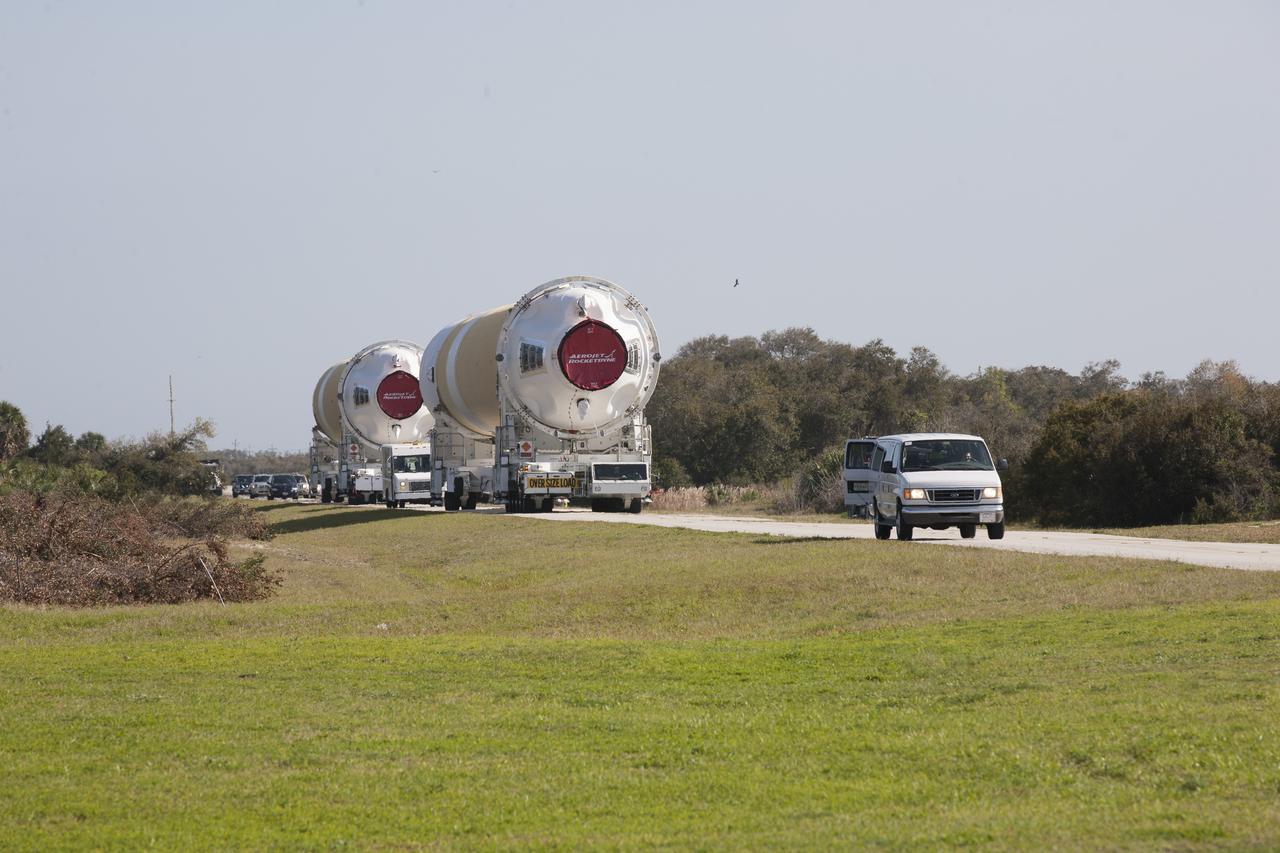
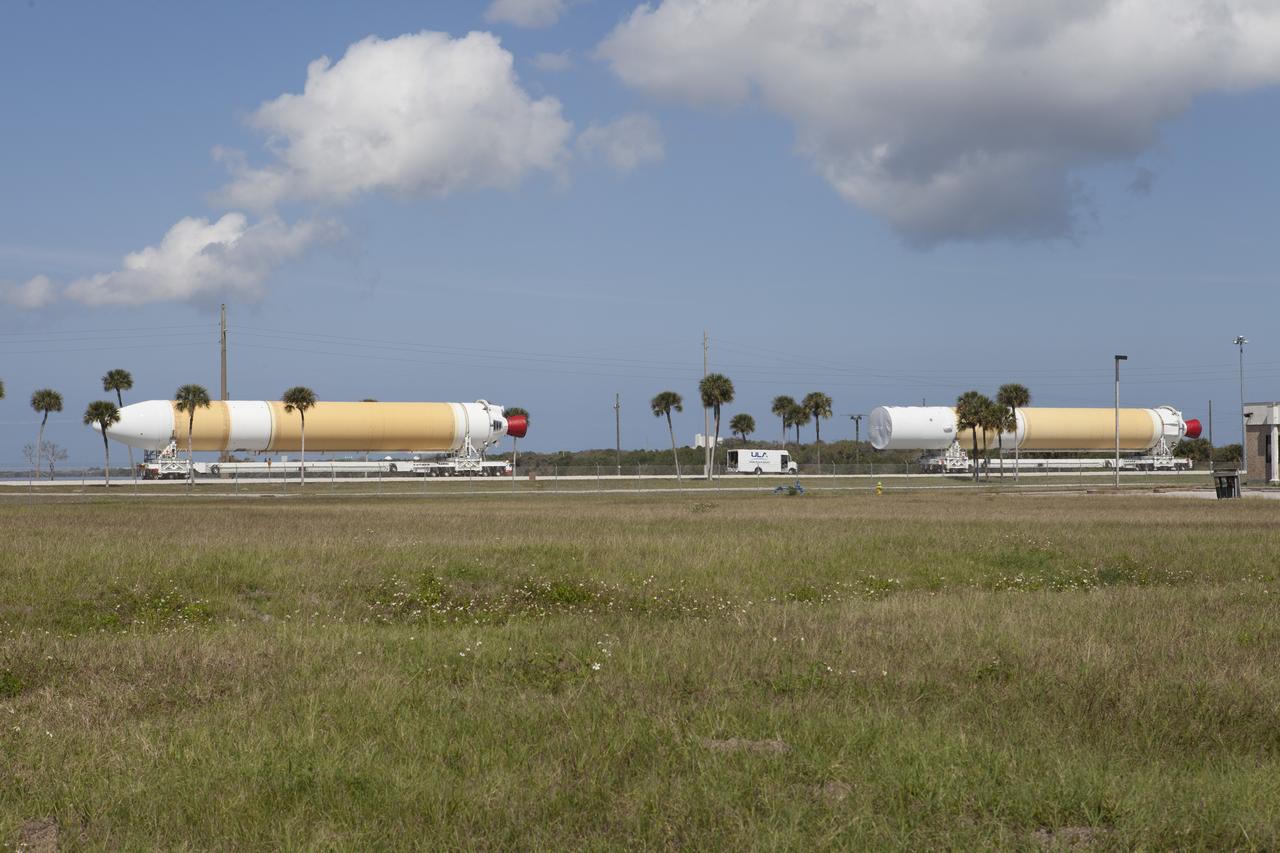
CAPE CANAVERAL, Fla. – Two of the three United Launch Alliance Delta IV heavy boosters for NASA’s upcoming Exploration Flight Test-1, or EFT-1, mission with the Orion spacecraft, arrived by barge at the U.S. Army Outpost wharf at Port Canaveral in Florida. The core booster and starboard booster were offloaded and are being transported to the Horizontal Integration Facility, or HIF, at Space Launch Complex 37 on Cape Canaveral Air Force Station. The port booster and the upper stage are planned to be shipped to Cape Canaveral in April. At the HIF, all three boosters will be processed and checked out before being moved to the nearby launch pad and hoisted into position. During the EFT-1 mission, Orion will travel farther into space than any human spacecraft has gone in more than 40 years. The data gathered during the flight will influence design decisions, validate existing computer models and innovative new approaches to space systems development, as well as reduce overall mission risks and costs for later Orion flights. Liftoff of Orion on EFT-1 is planned for fall 2014. Photo credit: NASA/Kim Shiflett
CAPE CANAVERAL, Fla. – Two of the three United Launch Alliance Delta IV heavy boosters for NASA’s upcoming Exploration Flight Test-1, or EFT-1, mission with the Orion spacecraft, have arrived by barge at the U.S. Army Outpost wharf at Port Canaveral in Florida. The core booster and starboard booster are being offloaded and will be transported to the Horizontal Integration Facility, or HIF, at Space Launch Complex 37 on Cape Canaveral Air Force Station. The port booster and the upper stage are planned to be shipped to Cape Canaveral in April. At the HIF, all three boosters will be processed and checked out before being moved to the nearby launch pad and hoisted into position. During the EFT-1 mission, Orion will travel farther into space than any human spacecraft has gone in more than 40 years. The data gathered during the flight will influence design decisions, validate existing computer models and innovative new approaches to space systems development, as well as reduce overall mission risks and costs for later Orion flights. Liftoff of Orion on EFT-1 is planned for fall 2014. Photo credit: NASA/Kim Shiflett
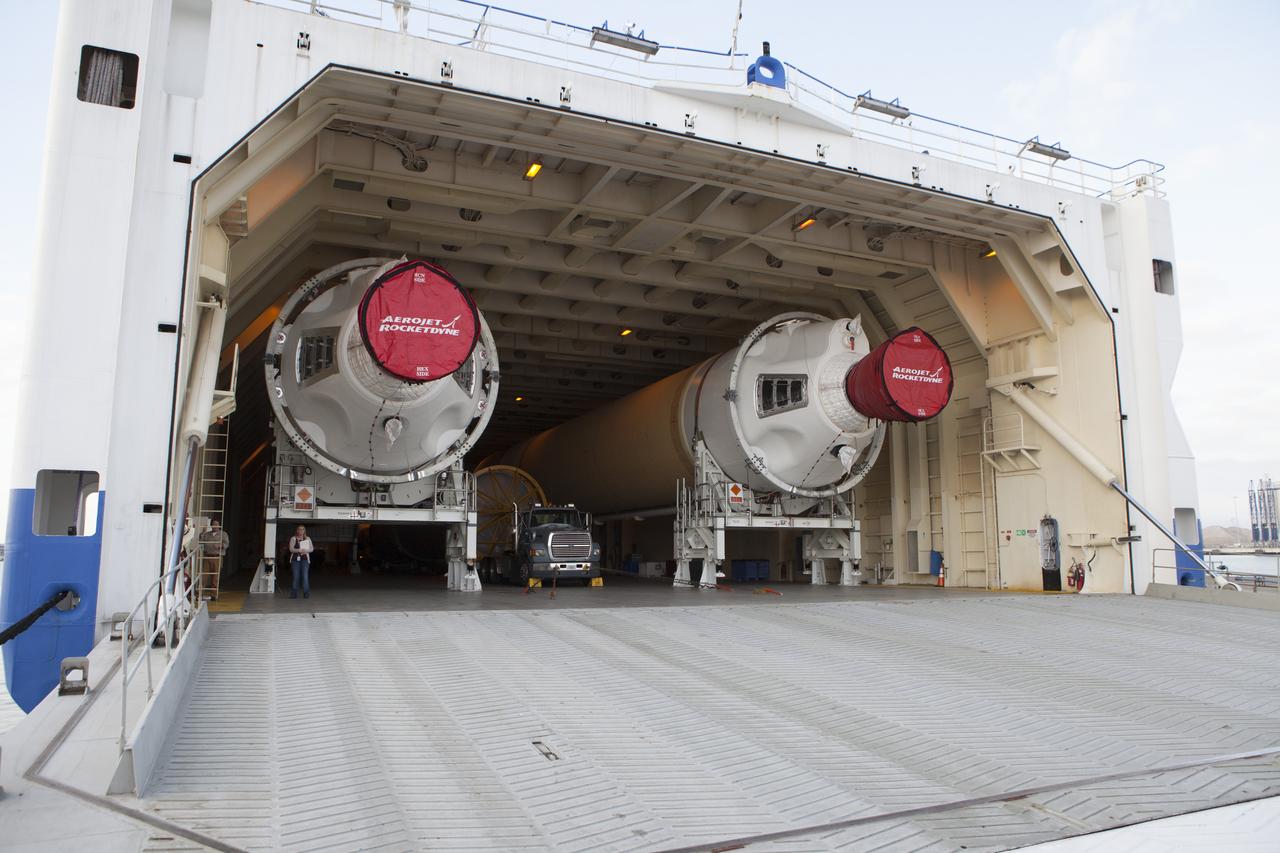
CAPE CANAVERAL, Fla. – A barge arrives at the U.S. Army Outpost wharf at Port Canaveral in Florida, carrying two of the three United Launch Alliance Delta IV heavy boosters for NASA’s upcoming Exploration Flight Test-1, or EFT-1, mission with the Orion spacecraft. The core booster and starboard booster will be offloaded and then transported to the Horizontal Integration Facility, or HIF, at Space Launch Complex 37 on Cape Canaveral Air Force Station. The port booster and the upper stage are planned to be shipped to Cape Canaveral in April. At the HIF, all three boosters will be processed and checked out before being moved to the nearby launch pad and hoisted into position. During the EFT-1 mission, Orion will travel farther into space than any human spacecraft has gone in more than 40 years. The data gathered during the flight will influence design decisions, validate existing computer models and innovative new approaches to space systems development, as well as reduce overall mission risks and costs for later Orion flights. Liftoff of Orion on EFT-1 is planned for fall 2014. Photo credit: NASA/Kim Shiflett
CAPE CANAVERAL, Fla. – Two of the three United Launch Alliance Delta IV heavy boosters for NASA’s upcoming Exploration Flight Test-1, or EFT-1, mission with the Orion spacecraft, have arrived by barge at the U.S. Army Outpost wharf at Port Canaveral in Florida. The core booster and starboard booster will be offloaded and then transported to the Horizontal Integration Facility, or HIF, at Space Launch Complex 37 on Cape Canaveral Air Force Station. The port booster and the upper stage are planned to be shipped to Cape Canaveral in April. At the HIF, all three boosters will be processed and checked out before being moved to the nearby launch pad and hoisted into position. During the EFT-1 mission, Orion will travel farther into space than any human spacecraft has gone in more than 40 years. The data gathered during the flight will influence design decisions, validate existing computer models and innovative new approaches to space systems development, as well as reduce overall mission risks and costs for later Orion flights. Liftoff of Orion on EFT-1 is planned for fall 2014. Photo credit: NASA/Kim Shiflett
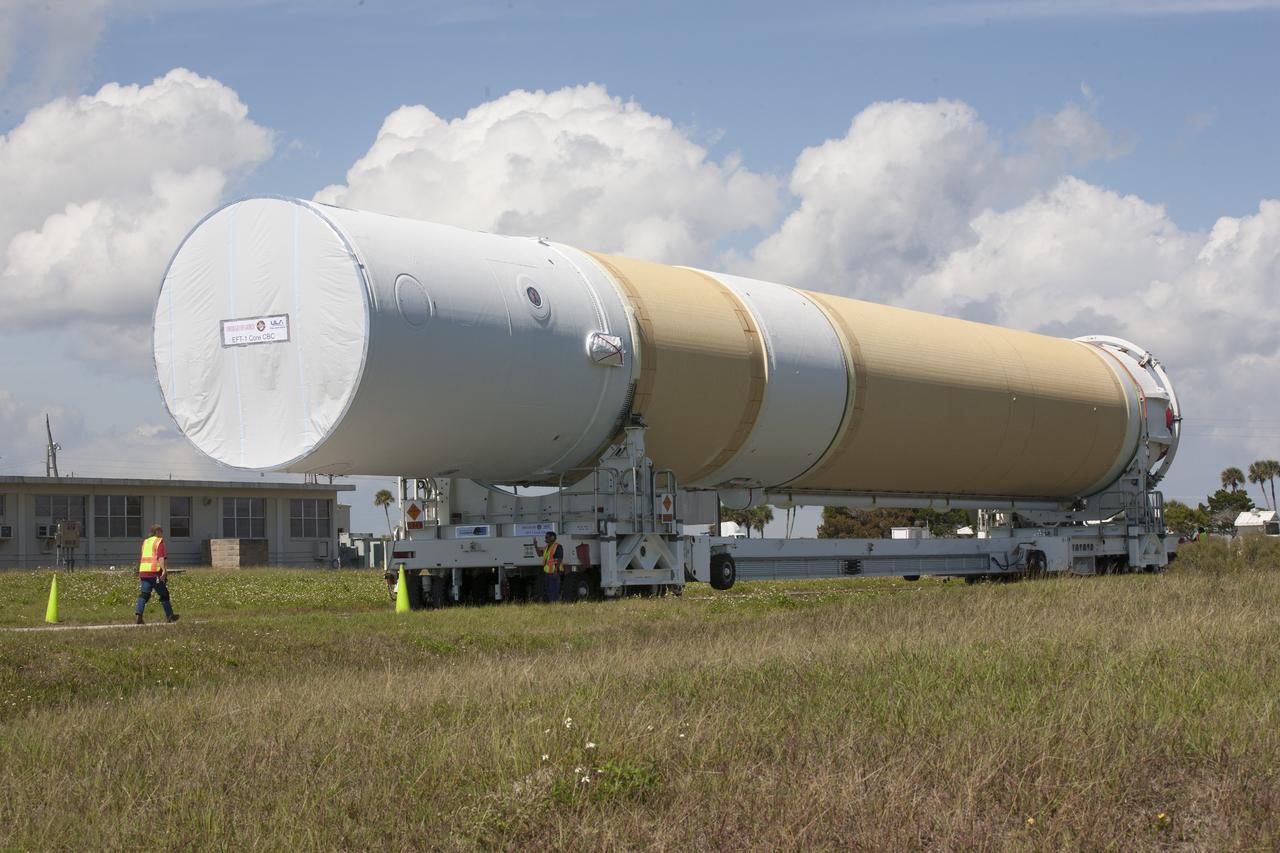
CAPE CANAVERAL, Fla. – Two of the three United Launch Alliance Delta IV heavy boosters for NASA’s upcoming Exploration Flight Test-1, or EFT-1, mission with the Orion spacecraft, arrived by barge at the U.S. Army Outpost wharf at Port Canaveral in Florida. The core booster, shown in this photo, and starboard booster were offloaded and will be transported to the Horizontal Integration Facility, or HIF, at Space Launch Complex 37 on Cape Canaveral Air Force Station. The port booster and the upper stage are planned to be shipped to Cape Canaveral in April. At the HIF, all three boosters will be processed and checked out before being moved to the nearby launch pad and hoisted into position. During the EFT-1 mission, Orion will travel farther into space than any human spacecraft has gone in more than 40 years. The data gathered during the flight will influence design decisions, validate existing computer models and innovative new approaches to space systems development, as well as reduce overall mission risks and costs for later Orion flights. Liftoff of Orion on EFT-1 is planned for fall 2014. Photo credit: NASA/Kim Shiflett
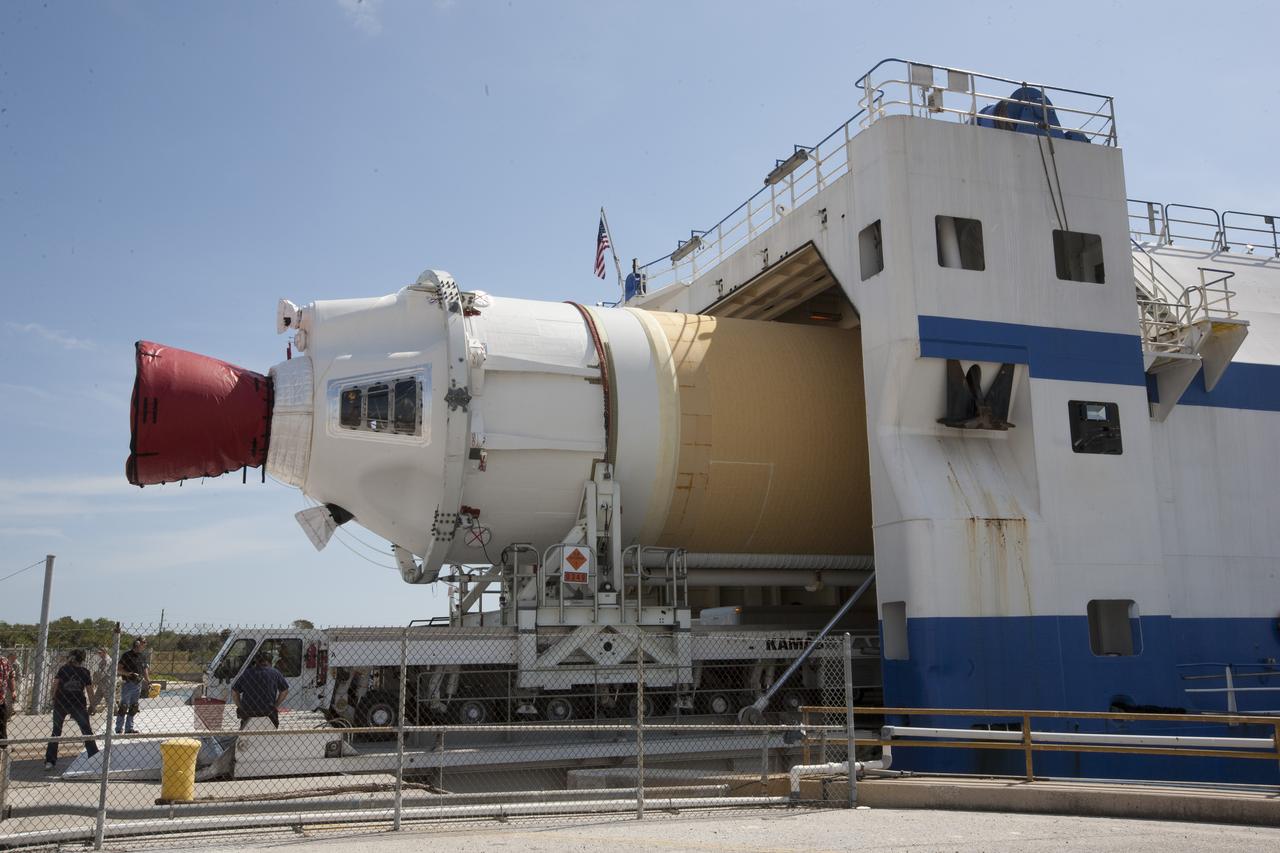
CAPE CANAVERAL, Fla. – Two of the three United Launch Alliance Delta IV heavy boosters for NASA’s upcoming Exploration Flight Test-1, or EFT-1, mission with the Orion spacecraft, have arrived by barge at the U.S. Army Outpost wharf at Port Canaveral in Florida. The core booster and starboard booster are being offloaded and will be transported to the Horizontal Integration Facility, or HIF, at Space Launch Complex 37 on Cape Canaveral Air Force Station. The port booster and the upper stage are planned to be shipped to Cape Canaveral in April. At the HIF, all three boosters will be processed and checked out before being moved to the nearby launch pad and hoisted into position. During the EFT-1 mission, Orion will travel farther into space than any human spacecraft has gone in more than 40 years. The data gathered during the flight will influence design decisions, validate existing computer models and innovative new approaches to space systems development, as well as reduce overall mission risks and costs for later Orion flights. Liftoff of Orion on EFT-1 is planned for fall 2014. Photo credit: NASA/Kim Shiflett
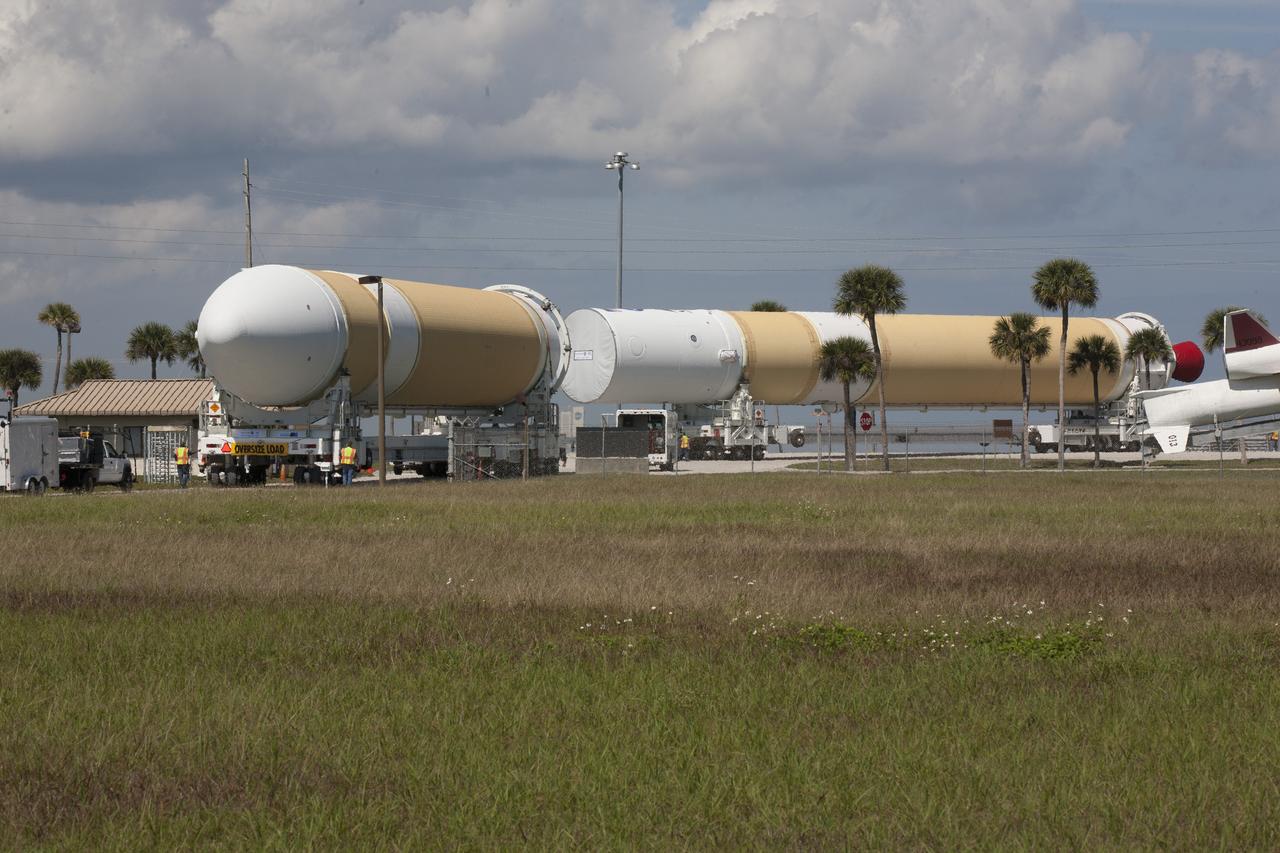
CAPE CANAVERAL, Fla. – Two of the three United Launch Alliance Delta IV heavy boosters for NASA’s upcoming Exploration Flight Test-1, or EFT-1, mission with the Orion spacecraft, arrived by barge at the U.S. Army Outpost wharf at Port Canaveral in Florida. The core booster and starboard booster were offloaded and are being transported to the Horizontal Integration Facility, or HIF, at Space Launch Complex 37 on Cape Canaveral Air Force Station. The port booster and the upper stage are planned to be shipped to Cape Canaveral in April. At the HIF, all three boosters will be processed and checked out before being moved to the nearby launch pad and hoisted into position. During the EFT-1 mission, Orion will travel farther into space than any human spacecraft has gone in more than 40 years. The data gathered during the flight will influence design decisions, validate existing computer models and innovative new approaches to space systems development, as well as reduce overall mission risks and costs for later Orion flights. Liftoff of Orion on EFT-1 is planned for fall 2014. Photo credit: NASA/Kim Shiflett
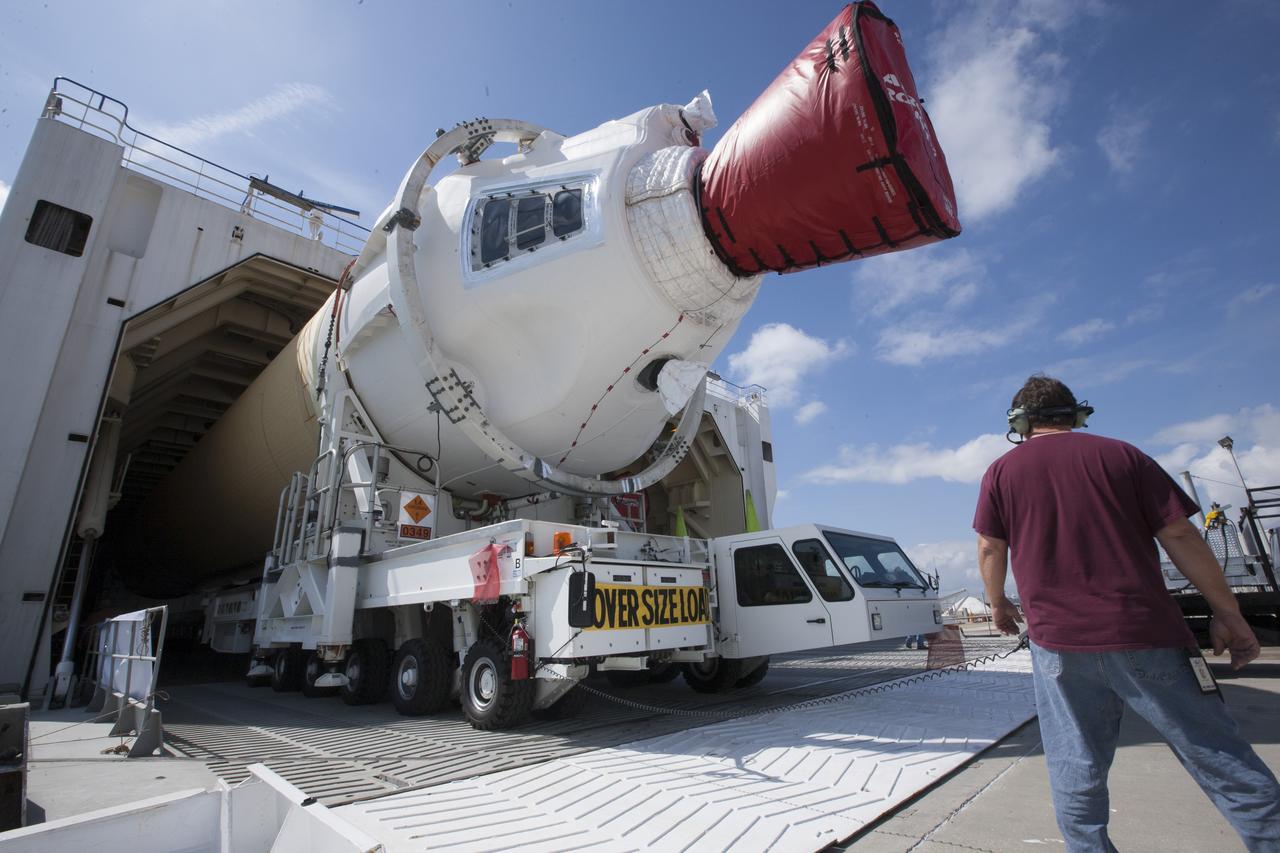
CAPE CANAVERAL, Fla. – Two of the three United Launch Alliance Delta IV heavy boosters for NASA’s upcoming Exploration Flight Test-1, or EFT-1, mission with the Orion spacecraft, have arrived by barge at the U.S. Army Outpost wharf at Port Canaveral in Florida. The core booster and starboard booster are being offloaded and will be transported to the Horizontal Integration Facility, or HIF, at Space Launch Complex 37 on Cape Canaveral Air Force Station. The port booster and the upper stage are planned to be shipped to Cape Canaveral in April. At the HIF, all three boosters will be processed and checked out before being moved to the nearby launch pad and hoisted into position. During the EFT-1 mission, Orion will travel farther into space than any human spacecraft has gone in more than 40 years. The data gathered during the flight will influence design decisions, validate existing computer models and innovative new approaches to space systems development, as well as reduce overall mission risks and costs for later Orion flights. Liftoff of Orion on EFT-1 is planned for fall 2014. Photo credit: NASA/Kim Shiflett
CAPE CANAVERAL, Fla. – Two of the three United Launch Alliance Delta IV heavy boosters for NASA’s upcoming Exploration Flight Test-1, or EFT-1, mission with the Orion spacecraft, arrived by barge at the U.S. Army Outpost wharf at Port Canaveral in Florida. The core booster and starboard booster were offloaded and are being transported to the Horizontal Integration Facility, or HIF, at Space Launch Complex 37 on Cape Canaveral Air Force Station. The port booster and the upper stage are planned to be shipped to Cape Canaveral in April. At the HIF, all three boosters will be processed and checked out before being moved to the nearby launch pad and hoisted into position. During the EFT-1 mission, Orion will travel farther into space than any human spacecraft has gone in more than 40 years. The data gathered during the flight will influence design decisions, validate existing computer models and innovative new approaches to space systems development, as well as reduce overall mission risks and costs for later Orion flights. Liftoff of Orion on EFT-1 is planned for fall 2014. Photo credit: NASA/Kim Shiflett
CAPE CANAVERAL, Fla. – A barge arrives at the U.S. Army Outpost wharf at Port Canaveral in Florida, carrying two of the three United Launch Alliance Delta IV heavy boosters for NASA’s upcoming Exploration Flight Test-1, or EFT-1, mission with the Orion spacecraft. The core booster and starboard booster will be offloaded and then transported to the Horizontal Integration Facility, or HIF, at Space Launch Complex 37 on Cape Canaveral Air Force Station. The port booster and the upper stage are planned to be shipped to Cape Canaveral in April. At the HIF, all three boosters will be processed and checked out before being moved to the nearby launch pad and hoisted into position. During the EFT-1 mission, Orion will travel farther into space than any human spacecraft has gone in more than 40 years. The data gathered during the flight will influence design decisions, validate existing computer models and innovative new approaches to space systems development, as well as reduce overall mission risks and costs for later Orion flights. Liftoff of Orion on EFT-1 is planned for fall 2014. Photo credit: NASA/Kim Shiflett
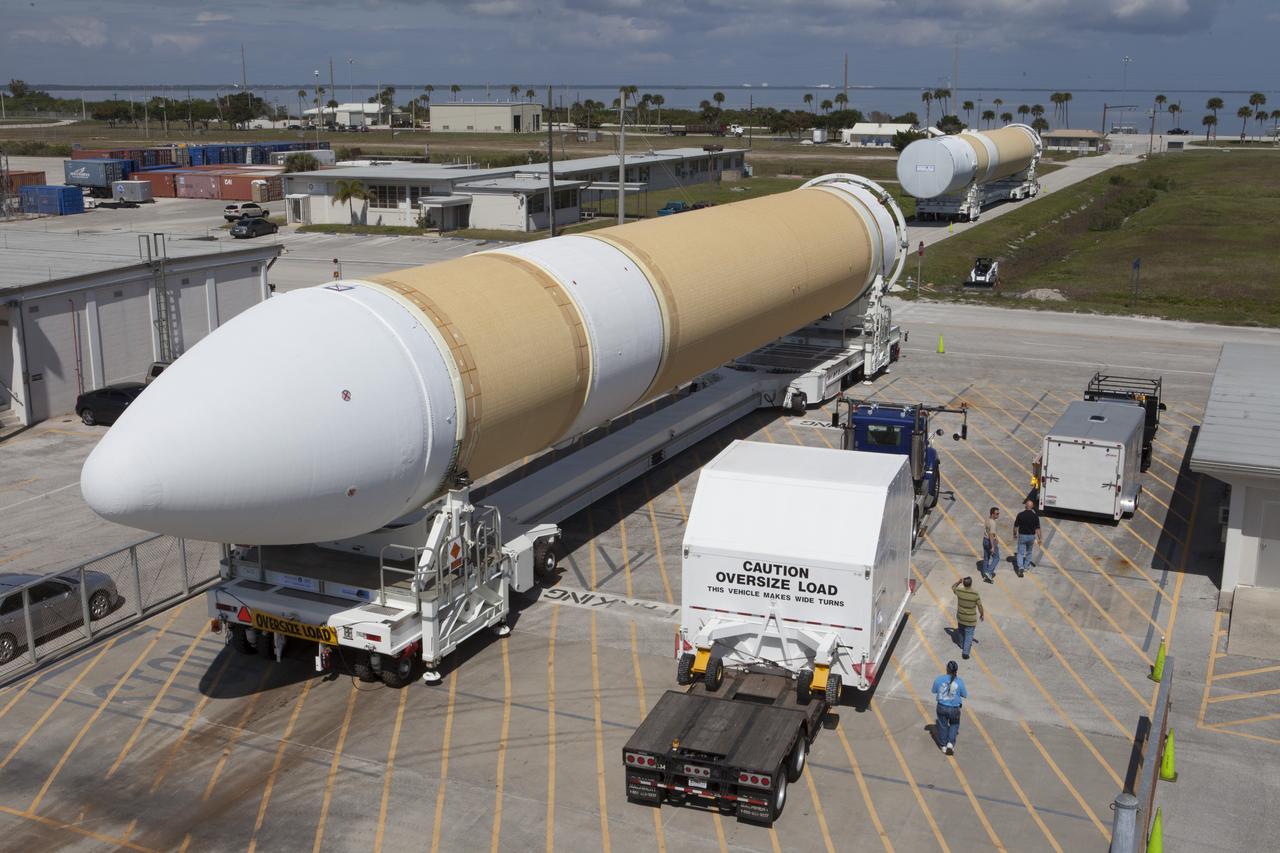
CAPE CANAVERAL, Fla. – Two of the three United Launch Alliance Delta IV heavy boosters for NASA’s upcoming Exploration Flight Test-1, or EFT-1, mission with the Orion spacecraft, arrived by barge at the U.S. Army Outpost wharf at Port Canaveral in Florida. The core booster and starboard booster have been offloaded and will be transported to the Horizontal Integration Facility, or HIF, at Space Launch Complex 37 on Cape Canaveral Air Force Station. The port booster and the upper stage are planned to be shipped to Cape Canaveral in April. At the HIF, all three boosters will be processed and checked out before being moved to the nearby launch pad and hoisted into position. During the EFT-1 mission, Orion will travel farther into space than any human spacecraft has gone in more than 40 years. The data gathered during the flight will influence design decisions, validate existing computer models and innovative new approaches to space systems development, as well as reduce overall mission risks and costs for later Orion flights. Liftoff of Orion on EFT-1 is planned for fall 2014. Photo credit: NASA/Kim Shiflett
CAPE CANAVERAL, Fla. – Two of the three United Launch Alliance Delta IV heavy boosters for NASA’s upcoming Exploration Flight Test-1, or EFT-1, mission with the Orion spacecraft, arrived by barge at the U.S. Army Outpost wharf at Port Canaveral in Florida. The core booster and starboard booster were offloaded and are being transported to the Horizontal Integration Facility, or HIF, at Space Launch Complex 37 on Cape Canaveral Air Force Station. The port booster and the upper stage are planned to be shipped to Cape Canaveral in April. At the HIF, all three boosters will be processed and checked out before being moved to the nearby launch pad and hoisted into position. During the EFT-1 mission, Orion will travel farther into space than any human spacecraft has gone in more than 40 years. The data gathered during the flight will influence design decisions, validate existing computer models and innovative new approaches to space systems development, as well as reduce overall mission risks and costs for later Orion flights. Liftoff of Orion on EFT-1 is planned for fall 2014. Photo credit: NASA/Kim Shiflett
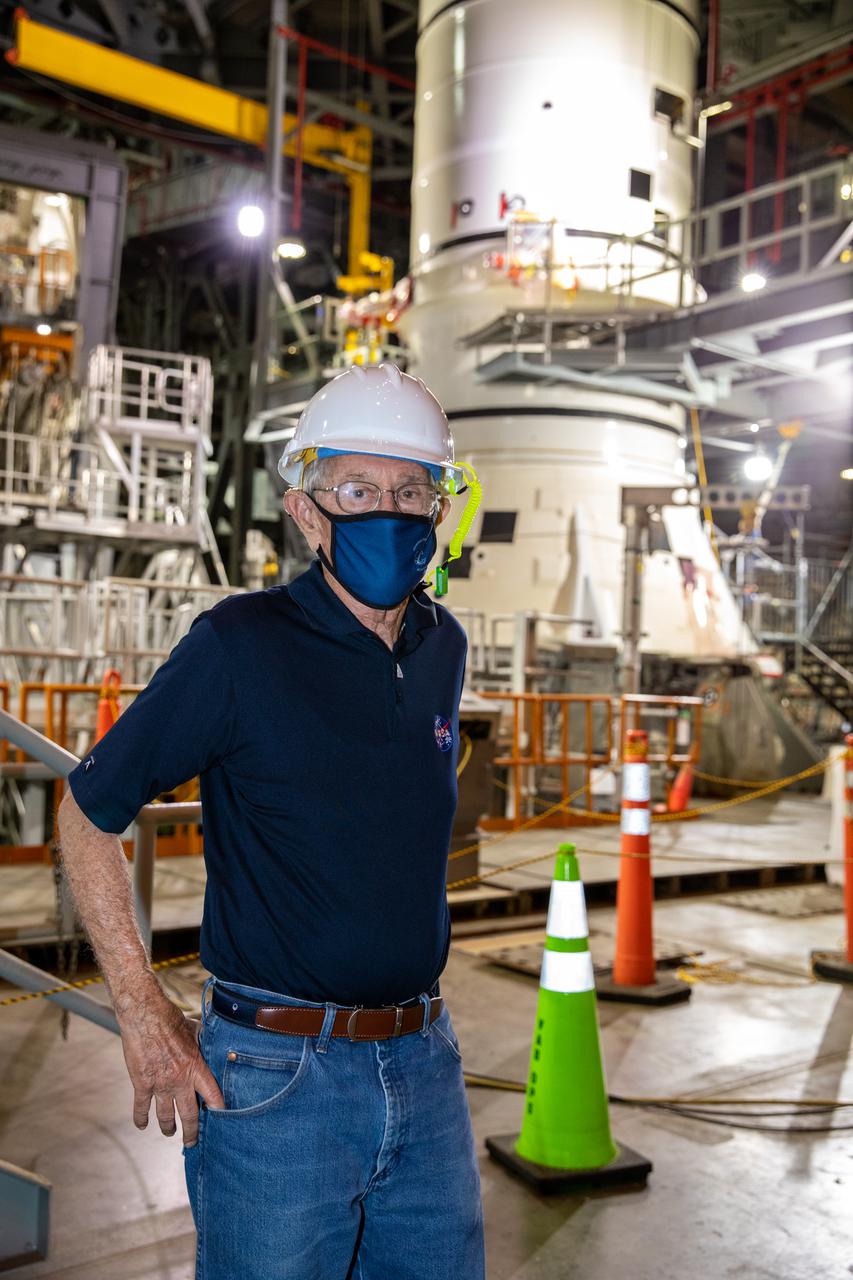
Charlie Duke, NASA Astronaut (former), shown in front of one of the aft booster segments for the Space Launch System inside the Kennedy Space Center's Vehicle Assembly Building (VAB) in Florida on May 10, 2021. Inside the VAB, the SLS core stage is being prepared for integration with the completed stack of solid rocket boosters atop the mobile launcher ahead of the Artemis I launch. The first in a series of increasingly complex missions, Artemis I will test SLS and Orion as an integrated system prior to crewed flights to the Moon.
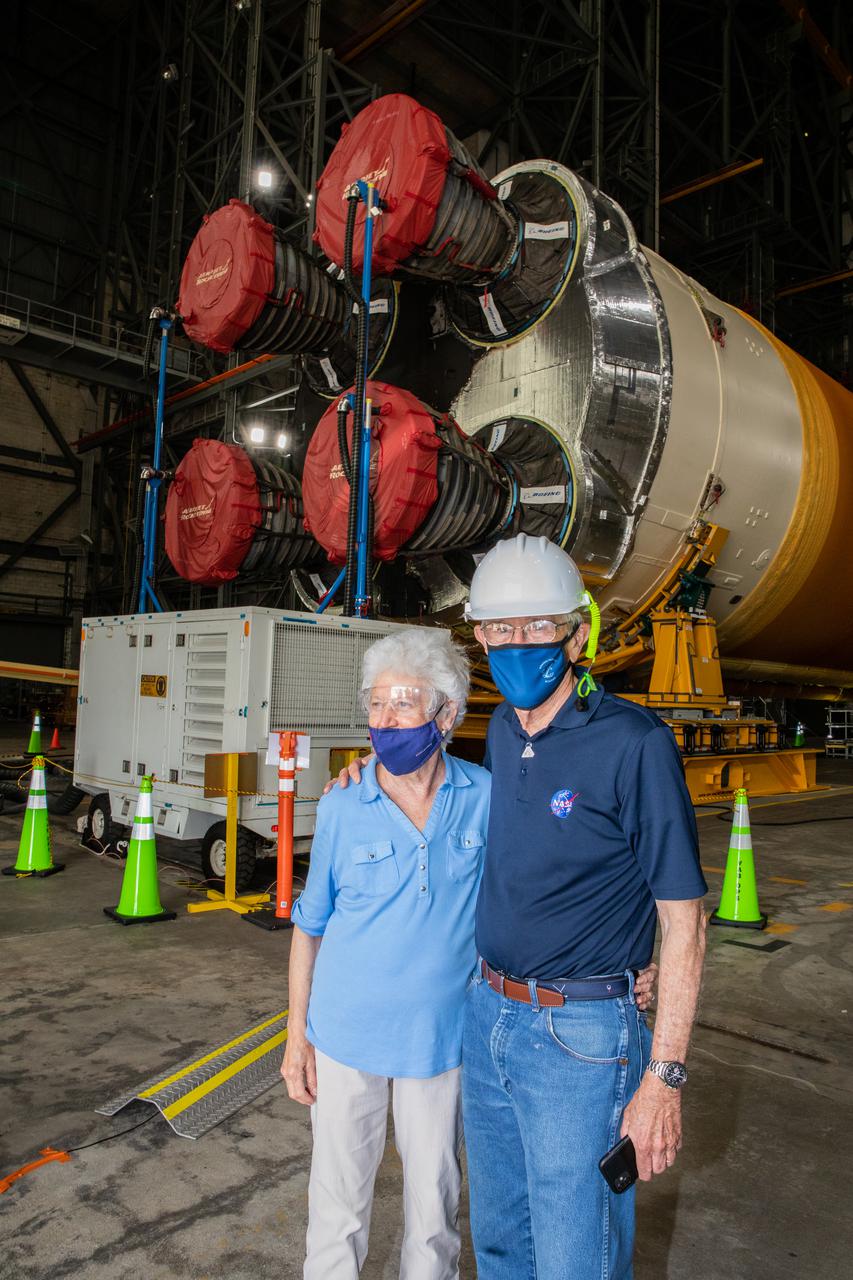
Charlie Duke, NASA Astronaut (former), and Dottie Duke, wife of Charlie Duke, shown in front of the massive Space Launch System (SLS) core stage in Kennedy Space Center's Vehicle Assembly Building (VAB) in Florida on May 10, 2021. Inside the VAB, the SLS core stage is being prepared for integration with the completed stack of twin solid rocket boosters atop the mobile launcher ahead of the Artemis I launch. The first in a series of increasingly complex missions, Artemis I will test SLS and Orion as an integrated system prior to crewed flights to the Moon.

From left to right, Jim Keys, Pilot; Dottie Duke, wife of Charlie Duke, Charlie Duke, NASA Astronaut (former); Christina Korp, Assistant to Charlie Duke; and Nicole Stott, NASA Astronaut (former) pose in front of the massive Space Launch System (SLS) core stage in Kennedy Space Center's Vehicle Assembly Building (VAB) in Florida on May 10, 2021. Inside the VAB, the SLS core stage is being prepared for integration with the completed stack of solid rocket boosters atop the mobile launcher ahead of the Artemis I launch. The first in a series of increasingly complex missions, Artemis I will test SLS and Orion as an integrated system prior to crewed flights to the Moon.
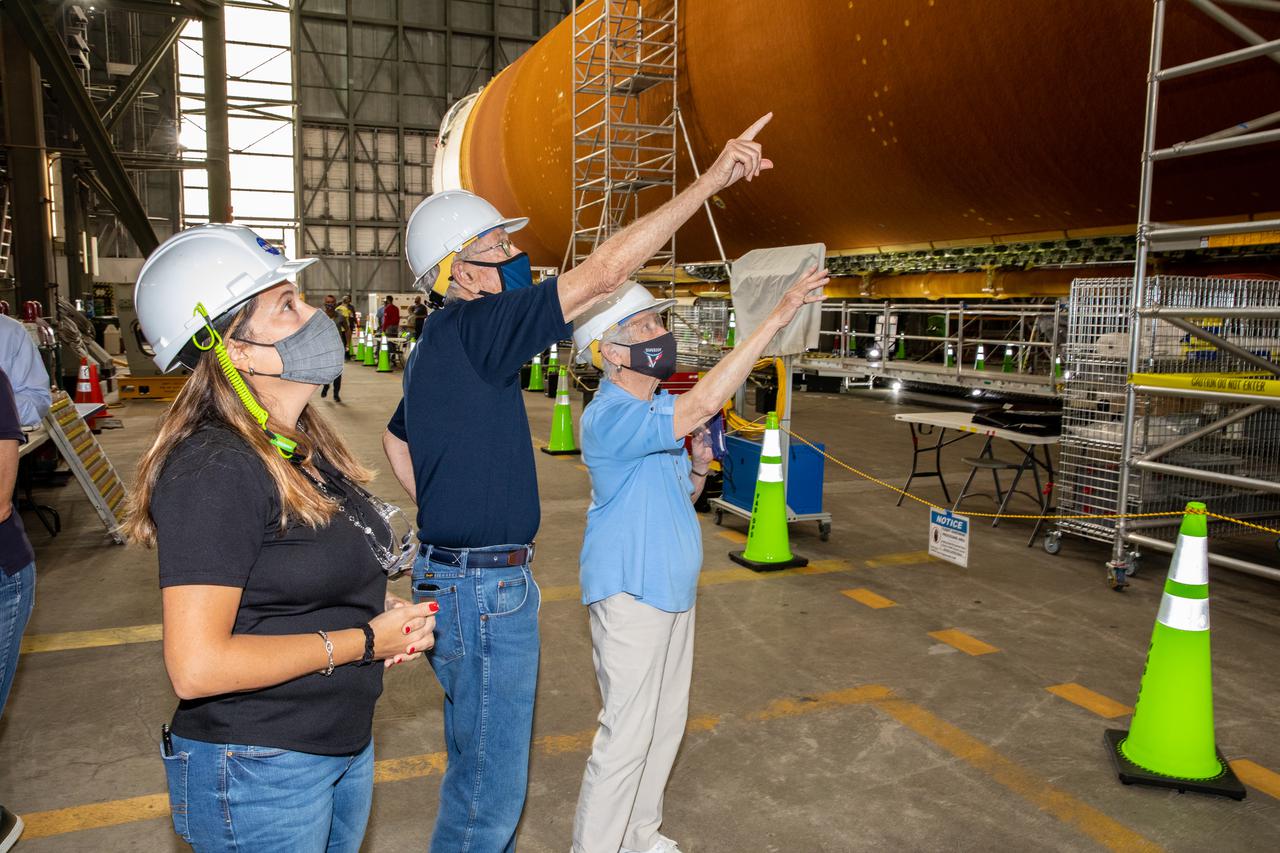
From left to right, Lili Villareal, Operations Flow Manager, Exploration Ground Systems; Charlie Duke, NASA Astronaut (former); and Dottie Duke, wife of Charlie Duke, view the massive Space Launch System (SLS) core stage in Kennedy Space Center's Vehicle Assembly Building (VAB) in Florida on May 10, 2021. Inside the VAB, the SLS core stage is being prepared for integration with the completed stack of twin solid rocket boosters atop the mobile launcher ahead of the Artemis I launch. The first in a series of increasingly complex missions, Artemis I will test SLS and Orion as an integrated system prior to crewed flights to the Moon.
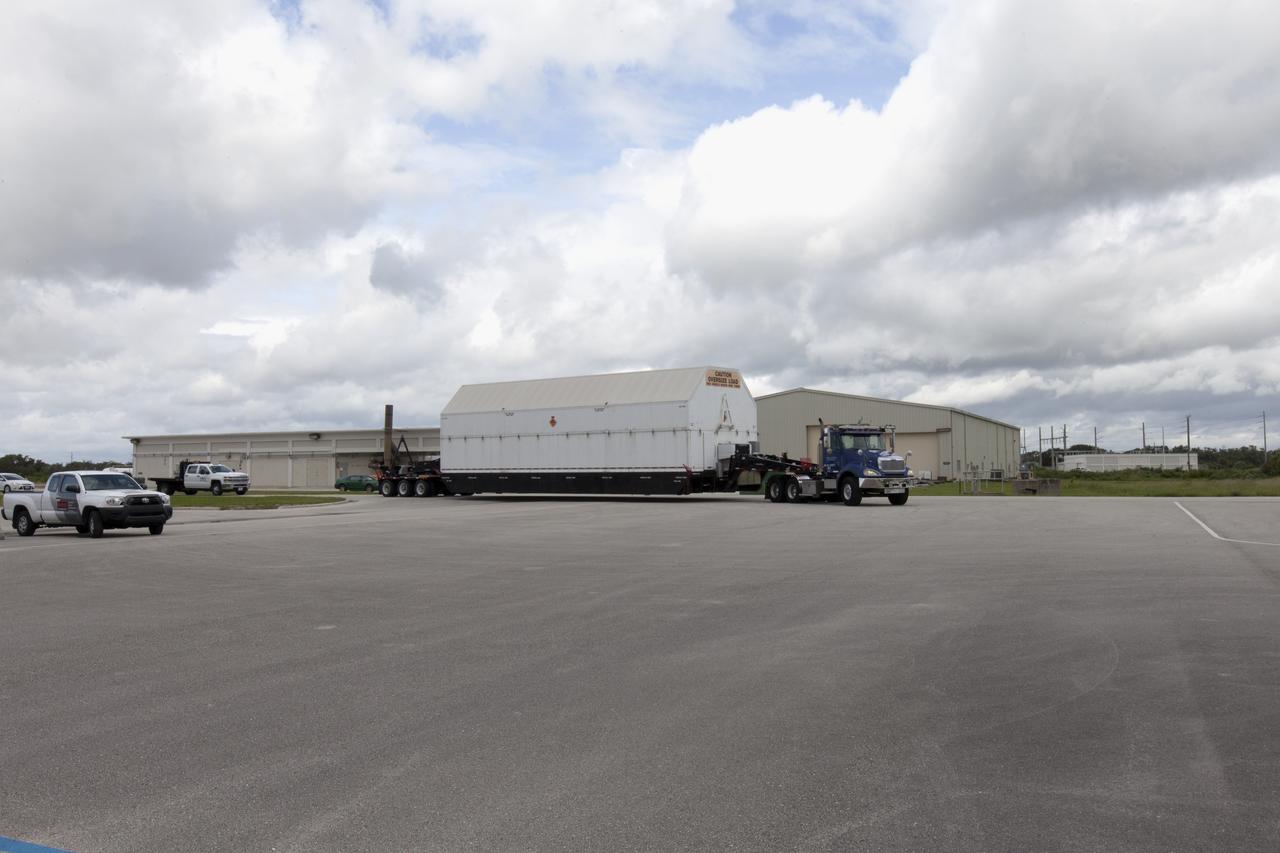
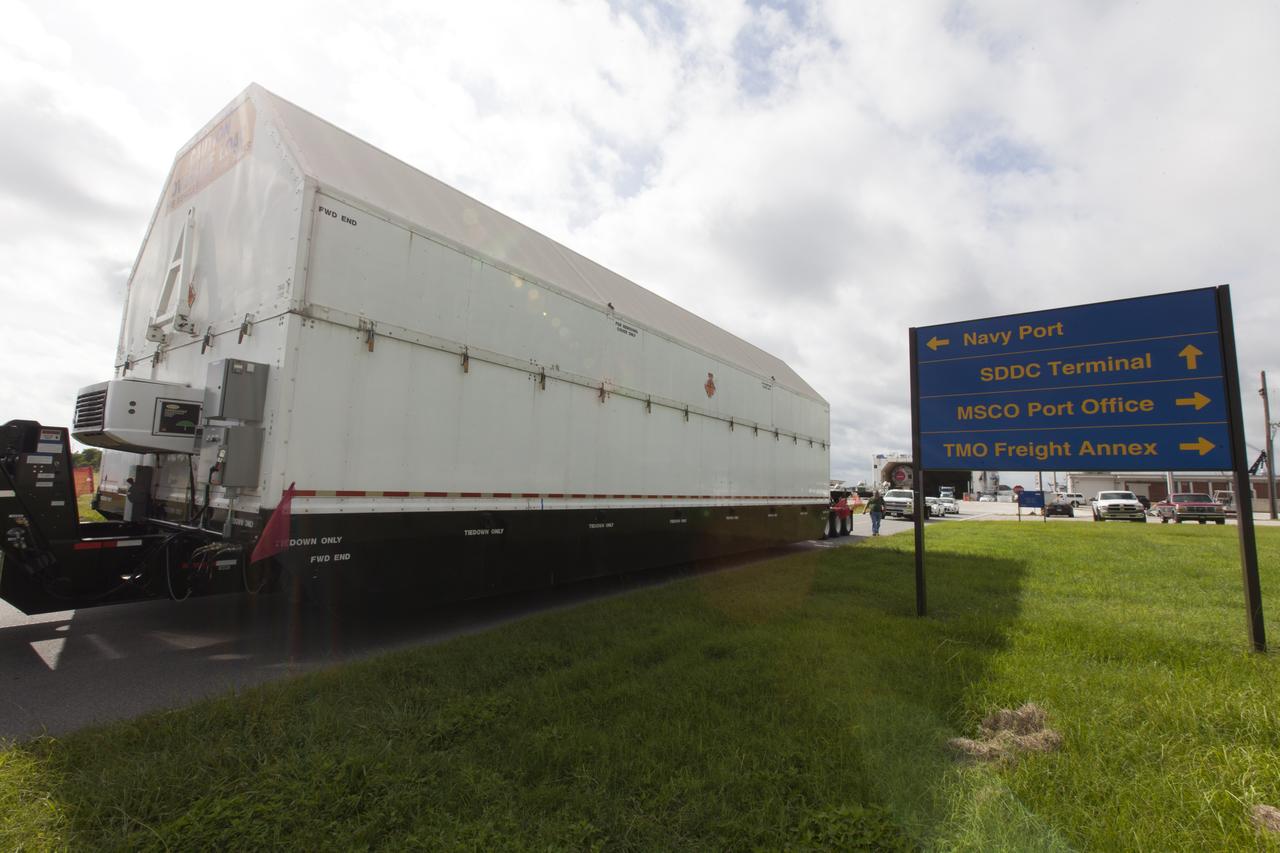
A United Launch Alliance Delta IV Heavy second stage, packaged in its shipping container, arrives at the Horizontal Integration Facility at Cape Canaveral Air Force Station for preflight processing. The Delta IV Heavy will launch NASA's upcoming Parker Solar Probe mission. The mission will perform the closest-ever observations of a star when it travels through the Sun's atmosphere, called the corona. The probe will rely on measurements and imaging to revolutionize our understanding of the corona and the Sun-Earth connection. Liftoff atop the Delta IV Heavy rocket is scheduled to take place from Cape Canaveral's Space Launch Complex 37 in summer 2018.
A United Launch Alliance Delta IV Heavy second stage, packaged in its shipping container, has been offloaded from the company's Mariner ship at Port Canaveral in Florida. It will be transported to the Horizontal Integration Facility at Cape Canaveral Air Force Station for preflight processing. The Delta IV Heavy will launch NASA's upcoming Parker Solar Probe mission. The mission will perform the closest-ever observations of a star when it travels through the Sun's atmosphere, called the corona. The probe will rely on measurements and imaging to revolutionize our understanding of the corona and the Sun-Earth connection. Liftoff atop the Delta IV Heavy rocket is scheduled to take place from Cape Canaveral's Space Launch Complex 37 in summer 2018.
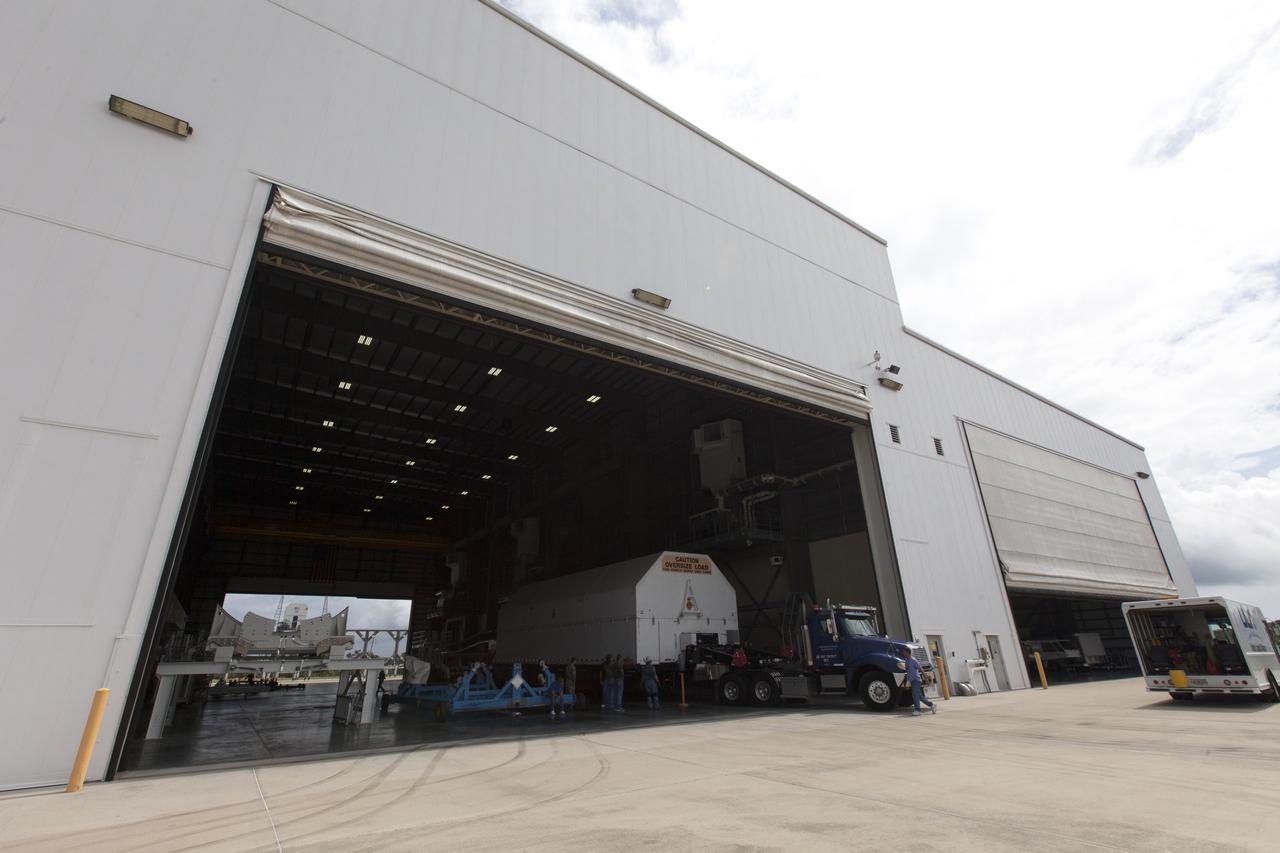
A United Launch Alliance Delta IV Heavy second stage, packaged in its shipping container, arrives at the Horizontal Integration Facility at Cape Canaveral Air Force Station for preflight processing. The Delta IV Heavy will launch NASA's upcoming Parker Solar Probe mission. The mission will perform the closest-ever observations of a star when it travels through the Sun's atmosphere, called the corona. The probe will rely on measurements and imaging to revolutionize our understanding of the corona and the Sun-Earth connection. Liftoff atop the Delta IV Heavy rocket is scheduled to take place from Cape Canaveral's Space Launch Complex 37 in summer 2018.
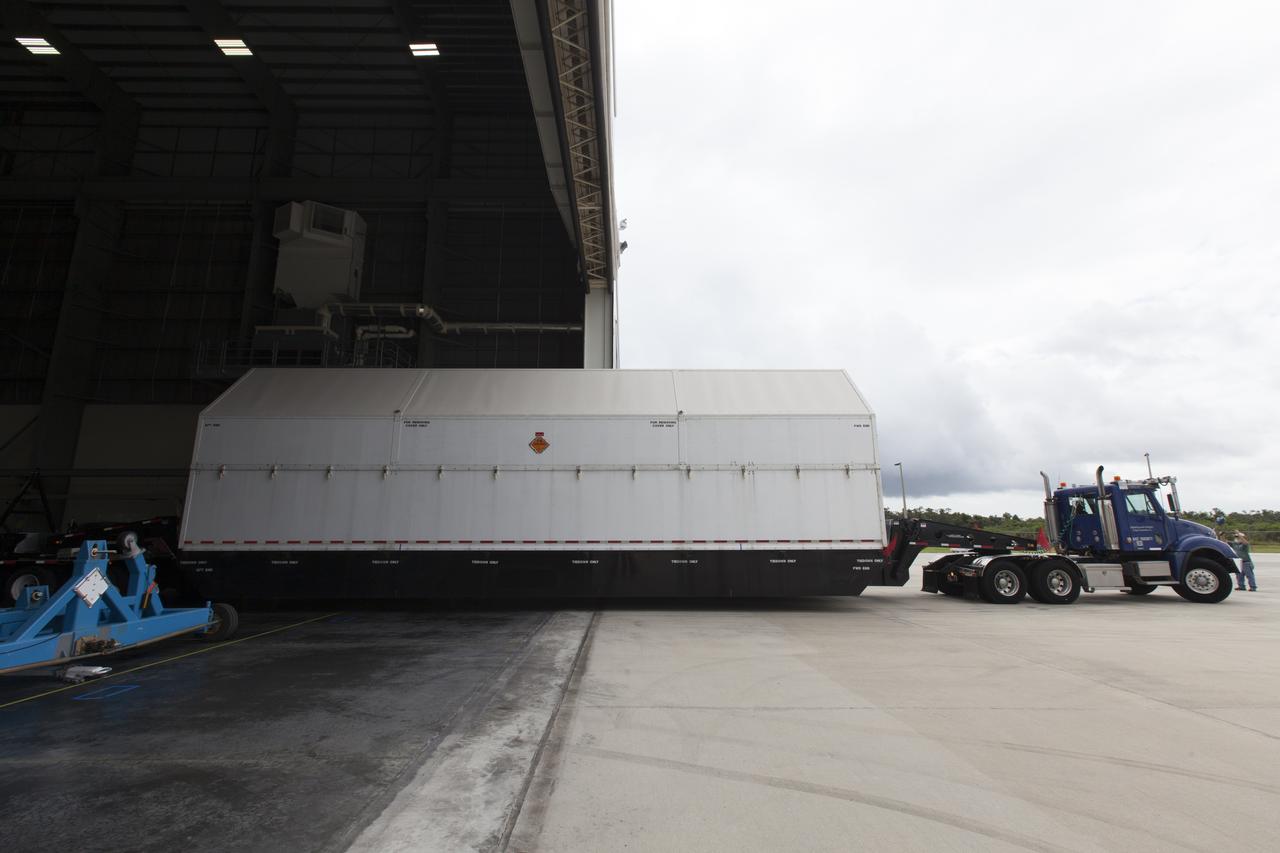
A United Launch Alliance Delta IV Heavy second stage, packaged in its shipping container, arrives at the Horizontal Integration Facility at Cape Canaveral Air Force Station for preflight processing. The Delta IV Heavy will launch NASA's upcoming Parker Solar Probe mission. The mission will perform the closest-ever observations of a star when it travels through the Sun's atmosphere, called the corona. The probe will rely on measurements and imaging to revolutionize our understanding of the corona and the Sun-Earth connection. Liftoff atop the Delta IV Heavy rocket is scheduled to take place from Cape Canaveral's Space Launch Complex 37 in summer 2018.
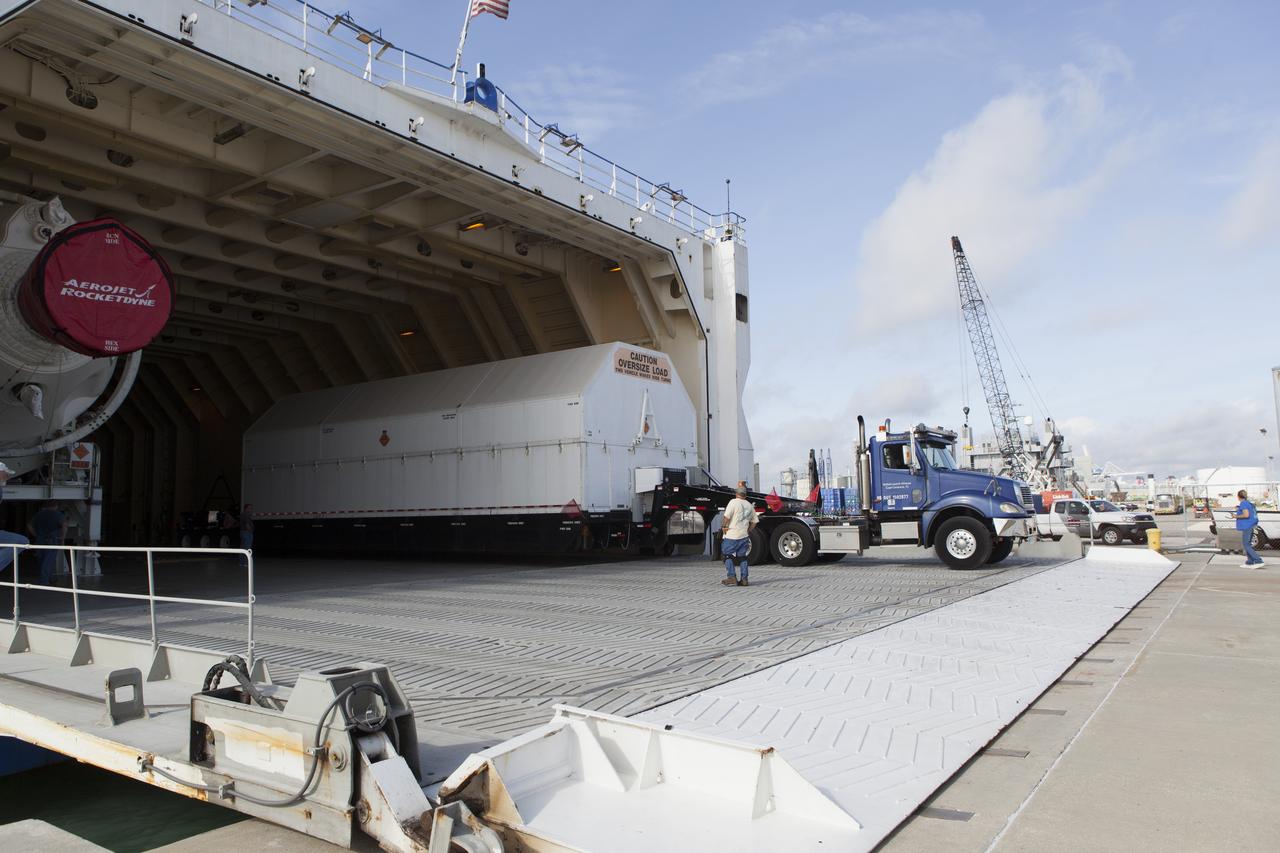
A United Launch Alliance Delta IV Heavy second stage, packaged in its shipping container, is offloaded from the company's Mariner ship at Port Canaveral in Florida. The Delta IV Heavy will launch NASA's upcoming Parker Solar Probe mission. The mission will perform the closest-ever observations of a star when it travels through the Sun's atmosphere, called the corona. The probe will rely on measurements and imaging to revolutionize our understanding of the corona and the Sun-Earth connection. Liftoff atop the Delta IV Heavy rocket is scheduled to take place from Cape Canaveral's Space Launch Complex 37 in summer 2018.
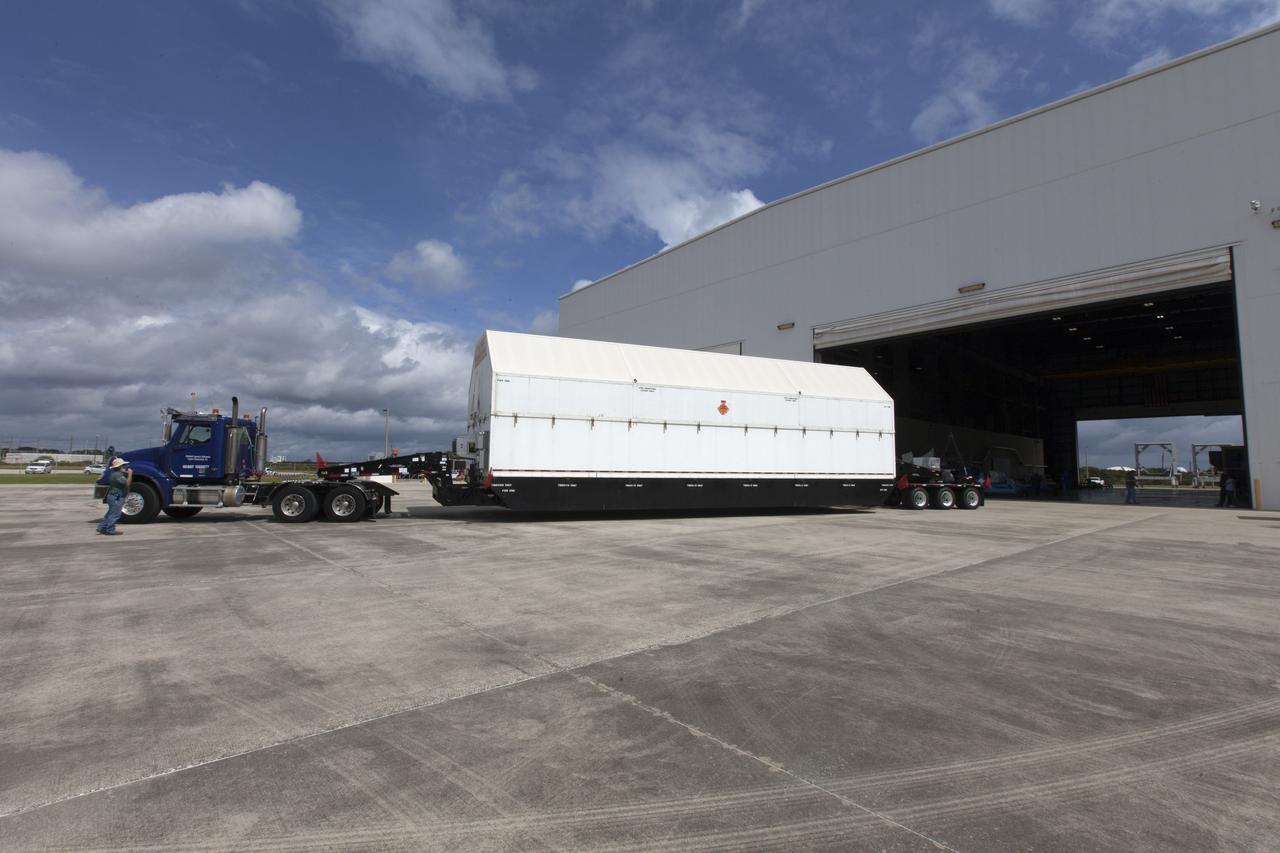
A United Launch Alliance Delta IV Heavy second stage, packaged in its shipping container, arrives at the Horizontal Integration Facility at Cape Canaveral Air Force Station for preflight processing. The Delta IV Heavy will launch NASA's upcoming Parker Solar Probe mission. The mission will perform the closest-ever observations of a star when it travels through the Sun's atmosphere, called the corona. The probe will rely on measurements and imaging to revolutionize our understanding of the corona and the Sun-Earth connection. Liftoff atop the Delta IV Heavy rocket is scheduled to take place from Cape Canaveral's Space Launch Complex 37 in summer 2018.
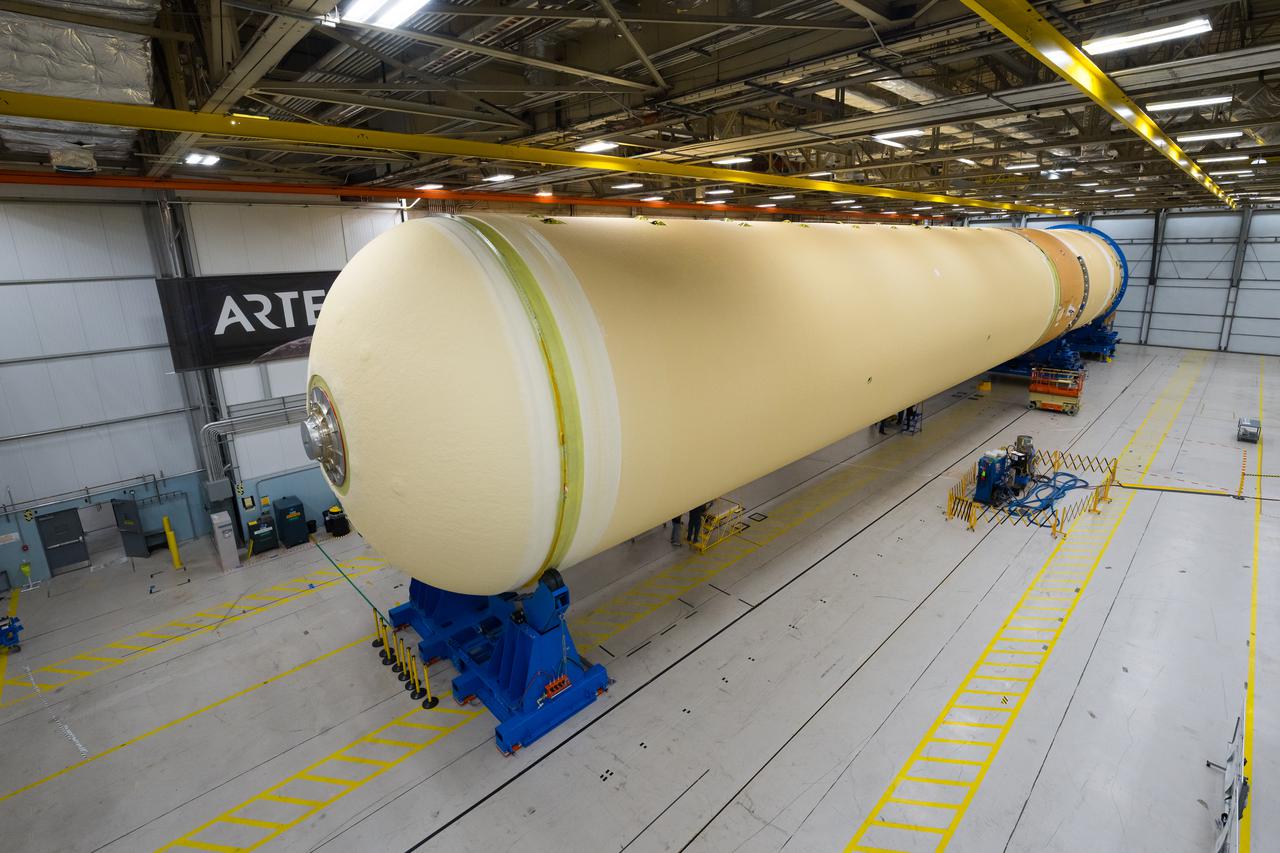
NASA joined the Space Launch System rocket’s core stage forward assembly with the 130-foot liquid hydrogen tank for the Artemis II mission on March 18. This completes assembly of four of the five large structures that make up the core stage that will help send the first astronauts to lunar orbit on Artemis II. The 66-foot forward assembly consists of the forward skirt, liquid oxygen tank and the intertank, which were mated earlier. Engineers inserted 360 bolts to connect the forward assembly to the liquid hydrogen tank to make up the bulk of the stage. Only the engine section, which is currently being outfitted and includes the main propulsion systems that connect to the four RS-25 engines, remains to be added to form the final core stage. All parts of the core stage are manufactured by NASA and Boeing, the core stage lead contractor at the agency’s Michoud Assembly Facility in New Orleans. Currently, the team is building core stages for three Artemis missions. The first core stage is stacked with the rest of the SLS rocket, which will launch the Artemis I mission to the Moon this year. Together with its twin solid rocket boosters, the core stage will produce 8.8 million pounds of thrust to send NASA’s Orion spacecraft, astronauts, and supplies beyond Earth’s orbit to the Moon. The SLS rocket and the Orion spacecraft form the foundation for Artemis missions and future deep space exploration.
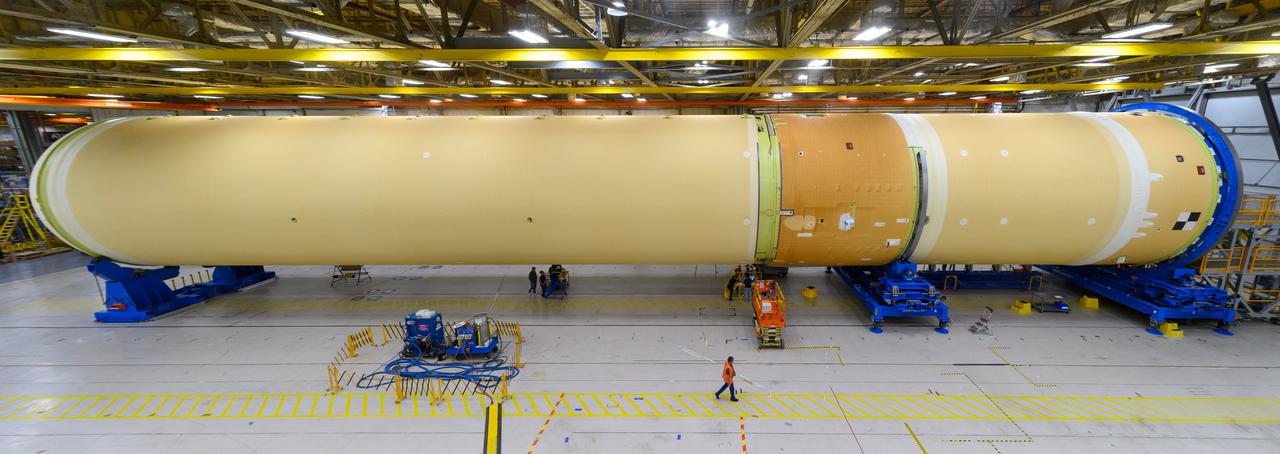
NASA joined the Space Launch System rocket’s core stage forward assembly with the 130-foot liquid hydrogen tank for the Artemis II mission on March 18. This completes assembly of four of the five large structures that make up the core stage that will help send the first astronauts to lunar orbit on Artemis II. The 66-foot forward assembly consists of the forward skirt, liquid oxygen tank and the intertank, which were mated earlier. Engineers inserted 360 bolts to connect the forward assembly to the liquid hydrogen tank to make up the bulk of the stage. Only the engine section, which is currently being outfitted and includes the main propulsion systems that connect to the four RS-25 engines, remains to be added to form the final core stage. All parts of the core stage are manufactured by NASA and Boeing, the core stage lead contractor at the agency’s Michoud Assembly Facility in New Orleans. Currently, the team is building core stages for three Artemis missions. The first core stage is stacked with the rest of the SLS rocket, which will launch the Artemis I mission to the Moon this year. Together with its twin solid rocket boosters, the core stage will produce 8.8 million pounds of thrust to send NASA’s Orion spacecraft, astronauts, and supplies beyond Earth’s orbit to the Moon. The SLS rocket and the Orion spacecraft form the foundation for Artemis missions and future deep space exploration.

NASA joined the Space Launch System rocket’s core stage forward assembly with the 130-foot liquid hydrogen tank for the Artemis II mission on March 18. This completes assembly of four of the five large structures that make up the core stage that will help send the first astronauts to lunar orbit on Artemis II. The 66-foot forward assembly consists of the forward skirt, liquid oxygen tank and the intertank, which were mated earlier. Engineers inserted 360 bolts to connect the forward assembly to the liquid hydrogen tank to make up the bulk of the stage. Only the engine section, which is currently being outfitted and includes the main propulsion systems that connect to the four RS-25 engines, remains to be added to form the final core stage. All parts of the core stage are manufactured by NASA and Boeing, the core stage lead contractor at the agency’s Michoud Assembly Facility in New Orleans. Currently, the team is building core stages for three Artemis missions. The first core stage is stacked with the rest of the SLS rocket, which will launch the Artemis I mission to the Moon this year. Together with its twin solid rocket boosters, the core stage will produce 8.8 million pounds of thrust to send NASA’s Orion spacecraft, astronauts, and supplies beyond Earth’s orbit to the Moon. The SLS rocket and the Orion spacecraft form the foundation for Artemis missions and future deep space exploration.
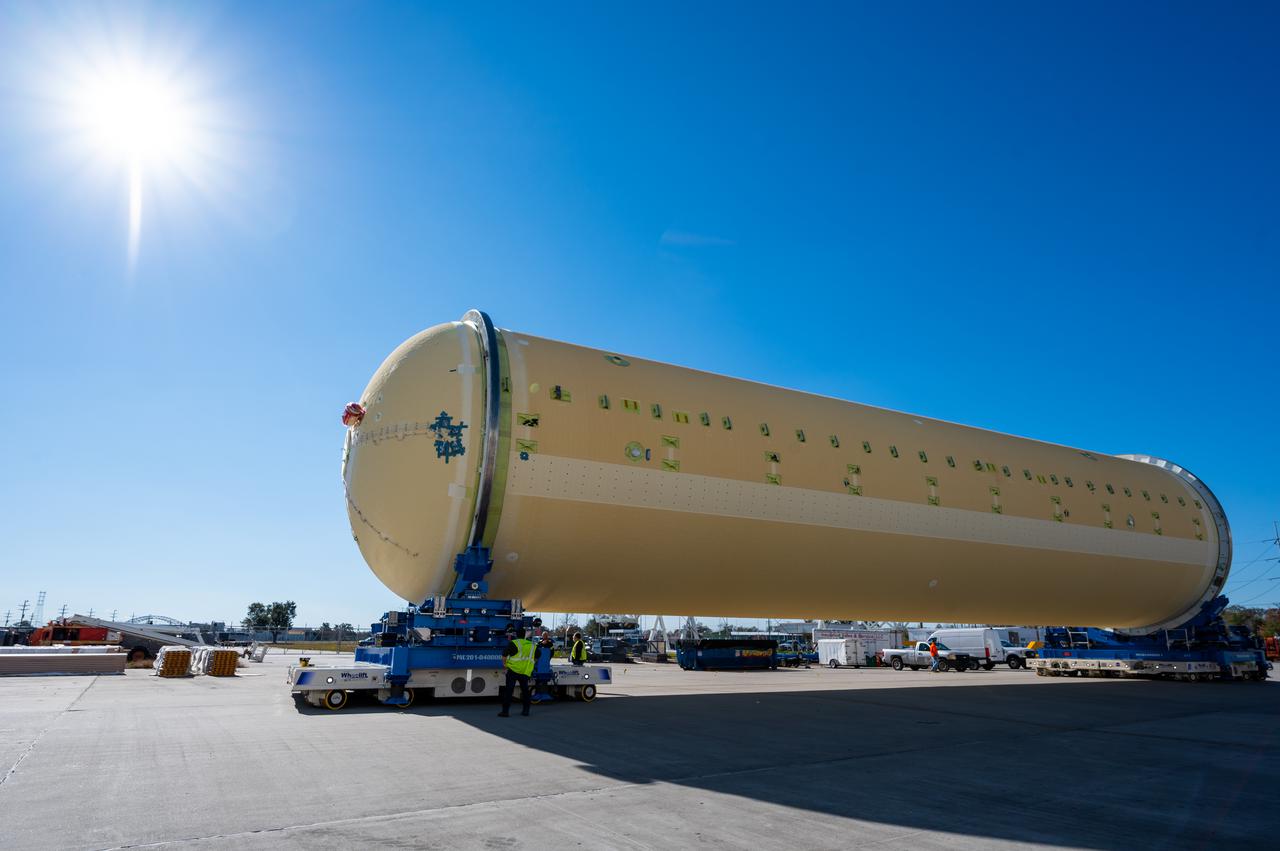
Technicians transported the assembled upper part of the Artemis II core stage to the final assembly area inside the factory at NASA’s Michoud Assembly Facility in New Orleans. On Jan 10, the forward assembly, left was moved next to the Artemis II liquid hydrogen tank, which has been undergoing assembly. Next, Boeing, the lead core stage contractor, will join the forward assembly and the liquid hydrogen tank to complete most of the core stage for the Space Launch System (SLS) rocket that will send the first crew on an Artemis mission. The core stage consists of five major structures that are built, outfitted, and then connected to form the final stage. The forward skirt, liquid oxygen and intertank were connected and tested to form the 66-foot forward assembly. After the forward assembly is joined with the 130-foot liquid hydrogen tank, only the engine section, the fifth piece of the stage, will need to be added to complete the Artemis II core stage. The core stage serves as the backbone of the rocket, supporting the weight of the payload, upper stage, and crew vehicle, as well as the thrust of its four RS-25 engines and two five-segment solid rocket boosters attached to the engine and intertank sections. On Artemis II, the SLS rocket will launch the Orion spacecraft and a crew, sending them into lunar orbit, in preparation for later Artemis missions that will enable the first woman and first person of color to land on the Moon.
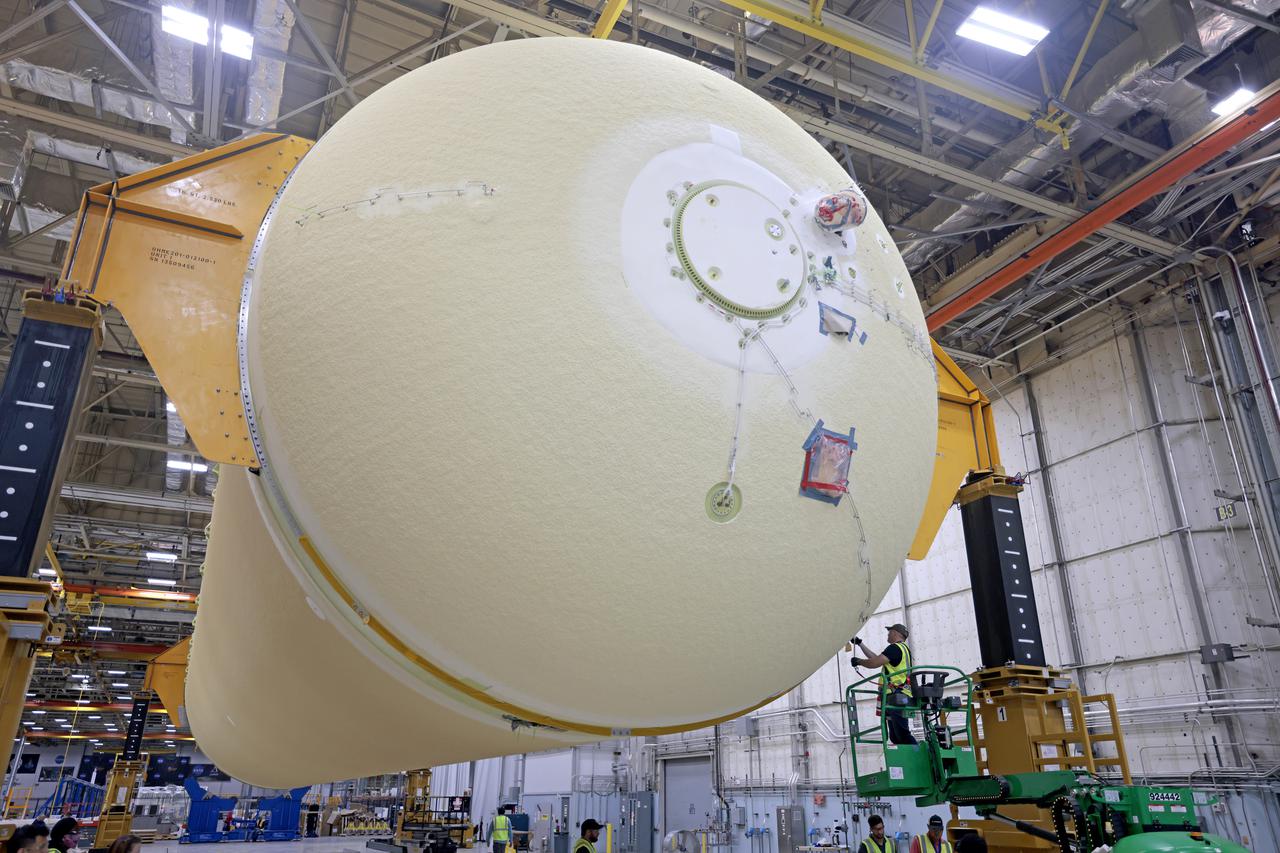
NASA is preparing major pieces of the Space Launch System rocket’s core stage to be joined as part of assembling the core stage for the Artemis II mission that will send crews to lunar orbit. Crews will soon connect the forward assembly with the 130-foot liquid hydrogen tank in the final assembly area at NASA’s Michoud Assembly Facility in New Orleans. When this process is completed, four of the five large structures that make up the core stage will be joined. The 66-foot forward assembly consists of the forward skirt, liquid oxygen tank and the intertank, which were mated earlier. This forward assembly will be joined with the 130-foot liquid hydrogen tank, the largest part of the stage that holds more than 500,000 gallons of cryogenic propellant. To compete the Artemis II core stage, engineers will add the engine section, which is currently being outfitted and includes the main propulsion systems that connect to the four RS-25 engines, Together, with the SLS twin solid rocket boosters, the core stage will produce 8.8 million pounds of thrust to send NASA’s Orion spacecraft, astronauts, and supplies beyond Earth’s orbit to the Moon. The SLS rocket and the Orion spacecraft form the foundation for deep space exploration and the Artemis lunar program. For more on the core stage: https://www.nasa.gov/exploration/systems/sls/multimedia/infographics/corestage101.html Image credit: NASA/Michael DeMocker
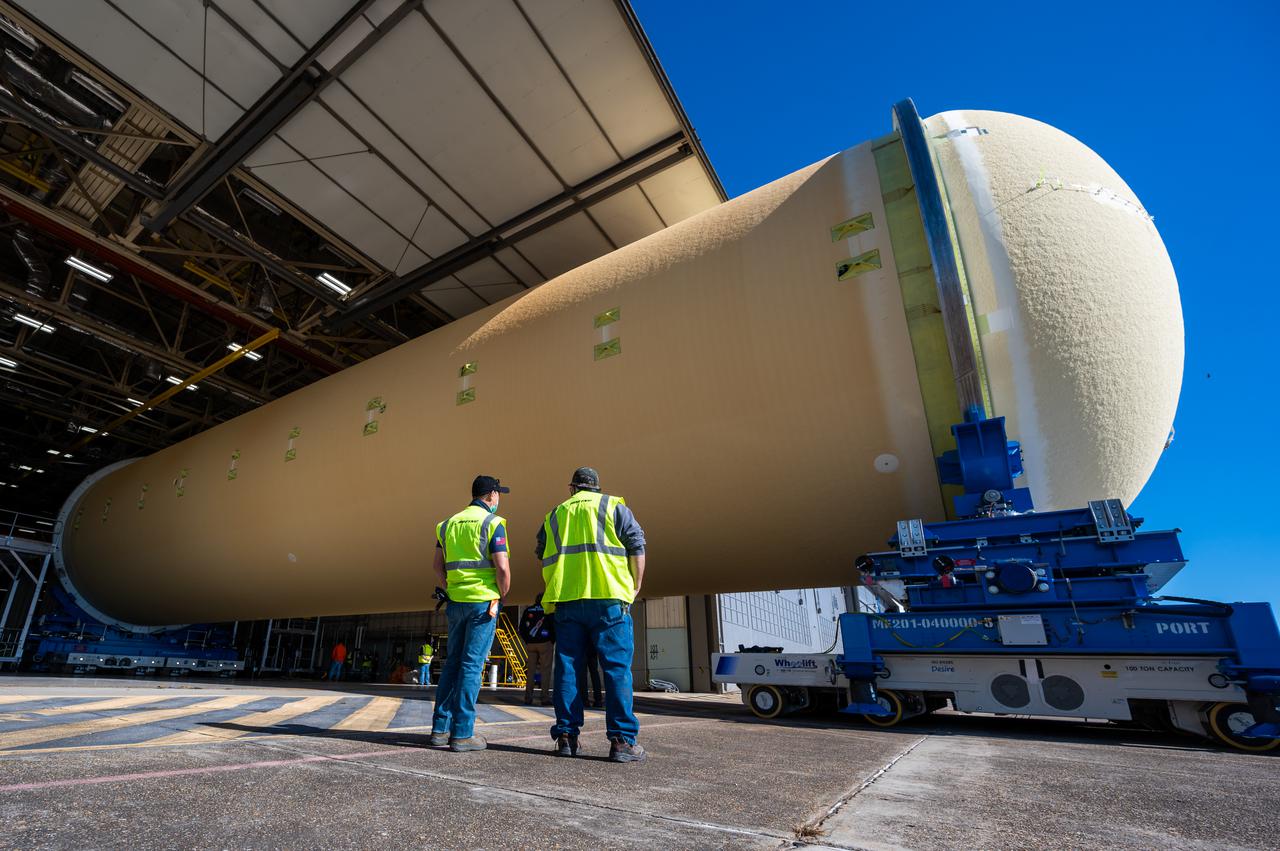
Technicians transported the assembled upper part of the Artemis II core stage to the final assembly area inside the factory at NASA’s Michoud Assembly Facility in New Orleans. On Jan 10, the forward assembly, left was moved next to the Artemis II liquid hydrogen tank, which has been undergoing assembly. Next, Boeing, the lead core stage contractor, will join the forward assembly and the liquid hydrogen tank to complete most of the core stage for the Space Launch System (SLS) rocket that will send the first crew on an Artemis mission. The core stage consists of five major structures that are built, outfitted, and then connected to form the final stage. The forward skirt, liquid oxygen and intertank were connected and tested to form the 66-foot forward assembly. After the forward assembly is joined with the 130-foot liquid hydrogen tank, only the engine section, the fifth piece of the stage, will need to be added to complete the Artemis II core stage. The core stage serves as the backbone of the rocket, supporting the weight of the payload, upper stage, and crew vehicle, as well as the thrust of its four RS-25 engines and two five-segment solid rocket boosters attached to the engine and intertank sections. On Artemis II, the SLS rocket will launch the Orion spacecraft and a crew, sending them into lunar orbit, in preparation for later Artemis missions that will enable the first woman and first person of color to land on the Moon.
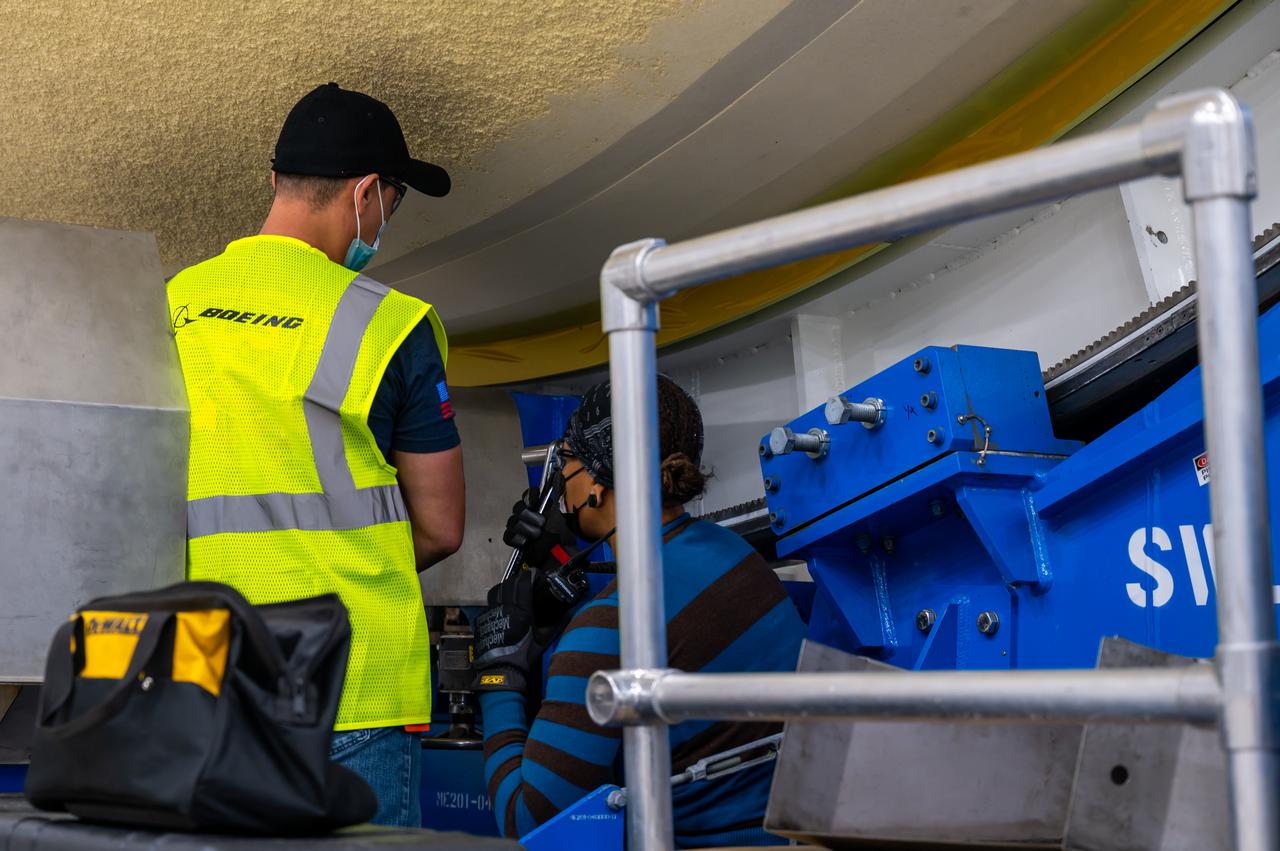
Technicians transported the assembled upper part of the Artemis II core stage to the final assembly area inside the factory at NASA’s Michoud Assembly Facility in New Orleans. On Jan 10, the forward assembly, left was moved next to the Artemis II liquid hydrogen tank, which has been undergoing assembly. Next, Boeing, the lead core stage contractor, will join the forward assembly and the liquid hydrogen tank to complete most of the core stage for the Space Launch System (SLS) rocket that will send the first crew on an Artemis mission. The core stage consists of five major structures that are built, outfitted, and then connected to form the final stage. The forward skirt, liquid oxygen and intertank were connected and tested to form the 66-foot forward assembly. After the forward assembly is joined with the 130-foot liquid hydrogen tank, only the engine section, the fifth piece of the stage, will need to be added to complete the Artemis II core stage. The core stage serves as the backbone of the rocket, supporting the weight of the payload, upper stage, and crew vehicle, as well as the thrust of its four RS-25 engines and two five-segment solid rocket boosters attached to the engine and intertank sections. On Artemis II, the SLS rocket will launch the Orion spacecraft and a crew, sending them into lunar orbit, in preparation for later Artemis missions that will enable the first woman and first person of color to land on the Moon.
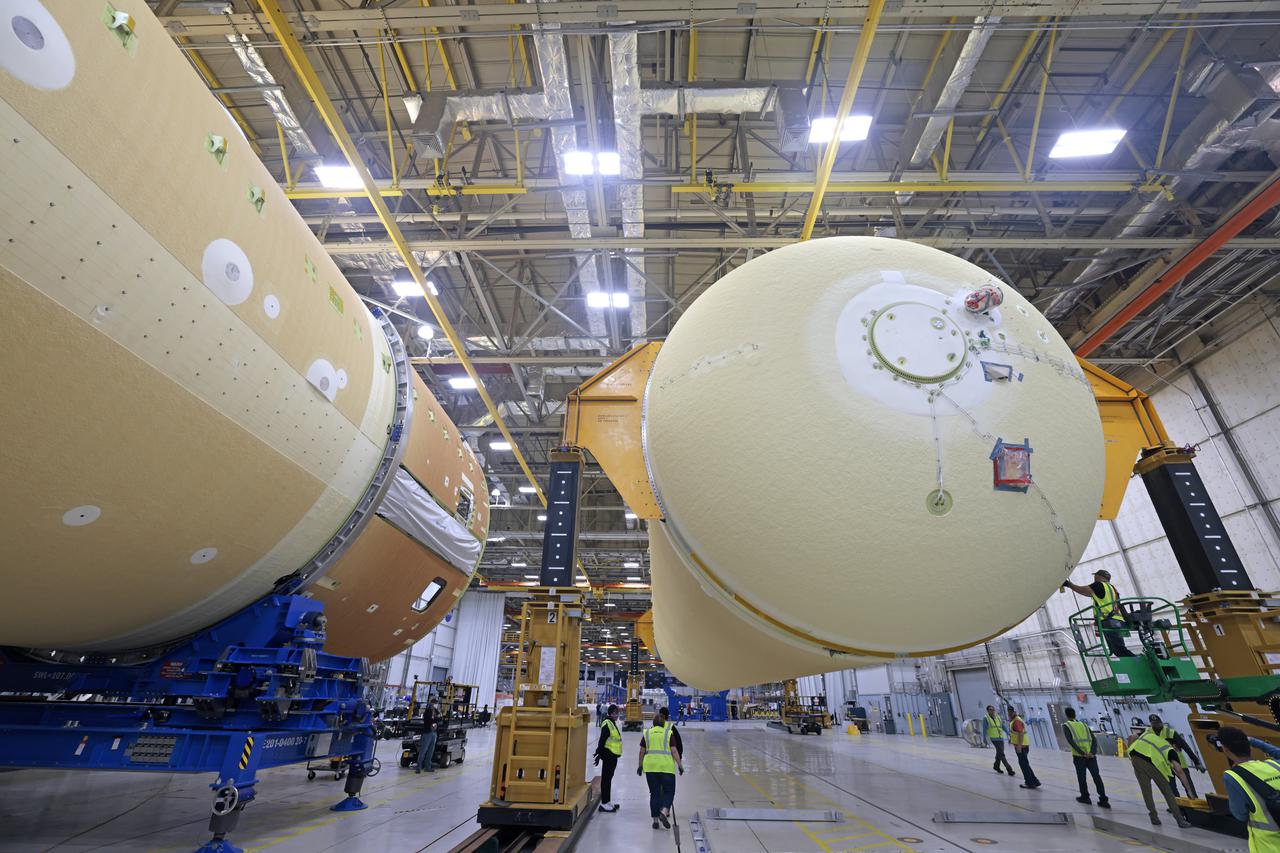
NASA is preparing major pieces of the Space Launch System rocket’s core stage to be joined as part of assembling the core stage for the Artemis II mission that will send crews to lunar orbit. Crews will soon connect the forward assembly with the 130-foot liquid hydrogen tank in the final assembly area at NASA’s Michoud Assembly Facility in New Orleans. When this process is completed, four of the five large structures that make up the core stage will be joined. The 66-foot forward assembly consists of the forward skirt, liquid oxygen tank and the intertank, which were mated earlier. This forward assembly will be joined with the 130-foot liquid hydrogen tank, the largest part of the stage that holds more than 500,000 gallons of cryogenic propellant. To compete the Artemis II core stage, engineers will add the engine section, which is currently being outfitted and includes the main propulsion systems that connect to the four RS-25 engines, Together, with the SLS twin solid rocket boosters, the core stage will produce 8.8 million pounds of thrust to send NASA’s Orion spacecraft, astronauts, and supplies beyond Earth’s orbit to the Moon. The SLS rocket and the Orion spacecraft form the foundation for deep space exploration and the Artemis lunar program. For more on the core stage: https://www.nasa.gov/exploration/systems/sls/multimedia/infographics/corestage101.html Image credit: NASA/Michael DeMocker
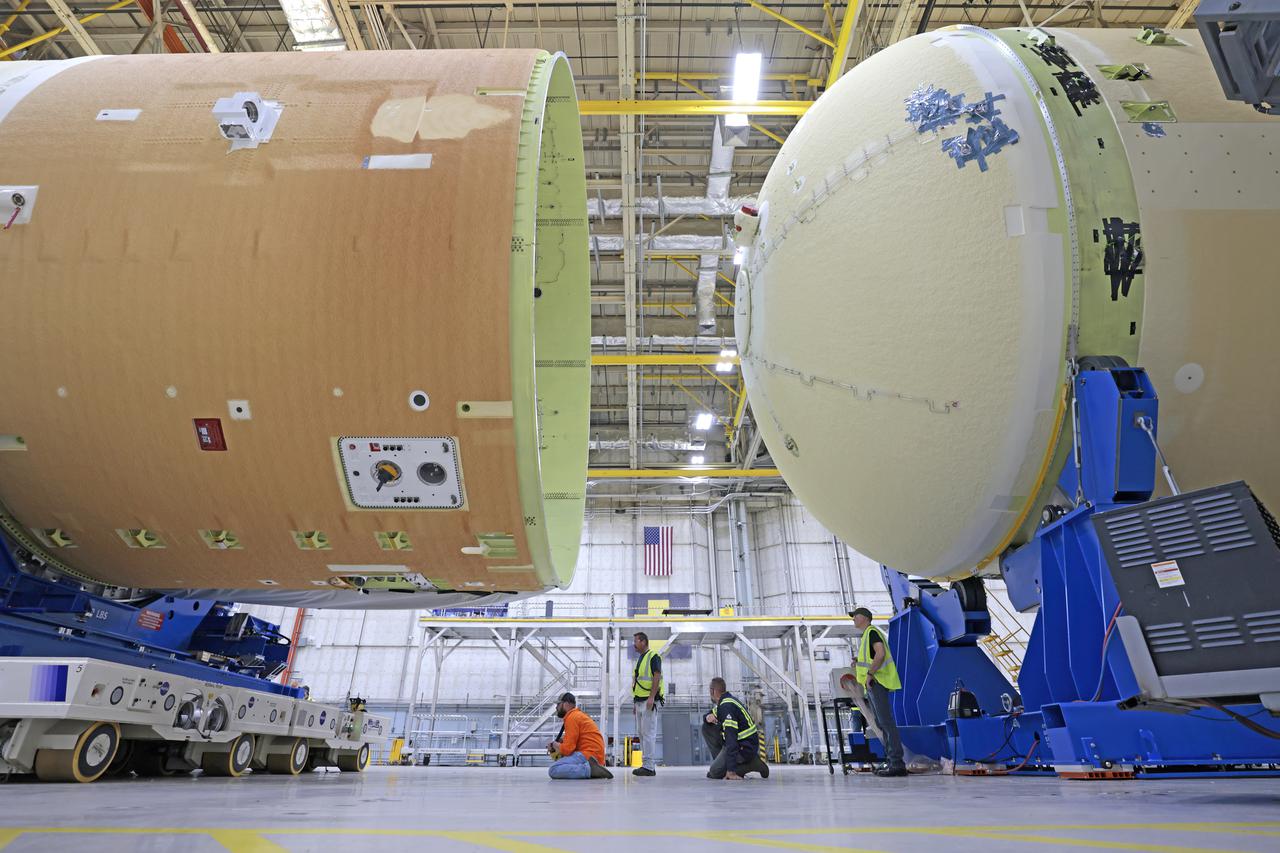
NASA is preparing major pieces of the Space Launch System rocket’s core stage to be joined as part of assembling the core stage for the Artemis II mission that will send crews to lunar orbit. Crews will soon connect the forward assembly with the 130-foot liquid hydrogen tank in the final assembly area at NASA’s Michoud Assembly Facility in New Orleans. When this process is completed, four of the five large structures that make up the core stage will be joined. The 66-foot forward assembly consists of the forward skirt, liquid oxygen tank and the intertank, which were mated earlier. This forward assembly will be joined with the 130-foot liquid hydrogen tank, the largest part of the stage that holds more than 500,000 gallons of cryogenic propellant. To compete the Artemis II core stage, engineers will add the engine section, which is currently being outfitted and includes the main propulsion systems that connect to the four RS-25 engines, Together, with the SLS twin solid rocket boosters, the core stage will produce 8.8 million pounds of thrust to send NASA’s Orion spacecraft, astronauts, and supplies beyond Earth’s orbit to the Moon. The SLS rocket and the Orion spacecraft form the foundation for deep space exploration and the Artemis lunar program. For more on the core stage: https://www.nasa.gov/exploration/systems/sls/multimedia/infographics/corestage101.html Image credit: NASA/Michael DeMocker
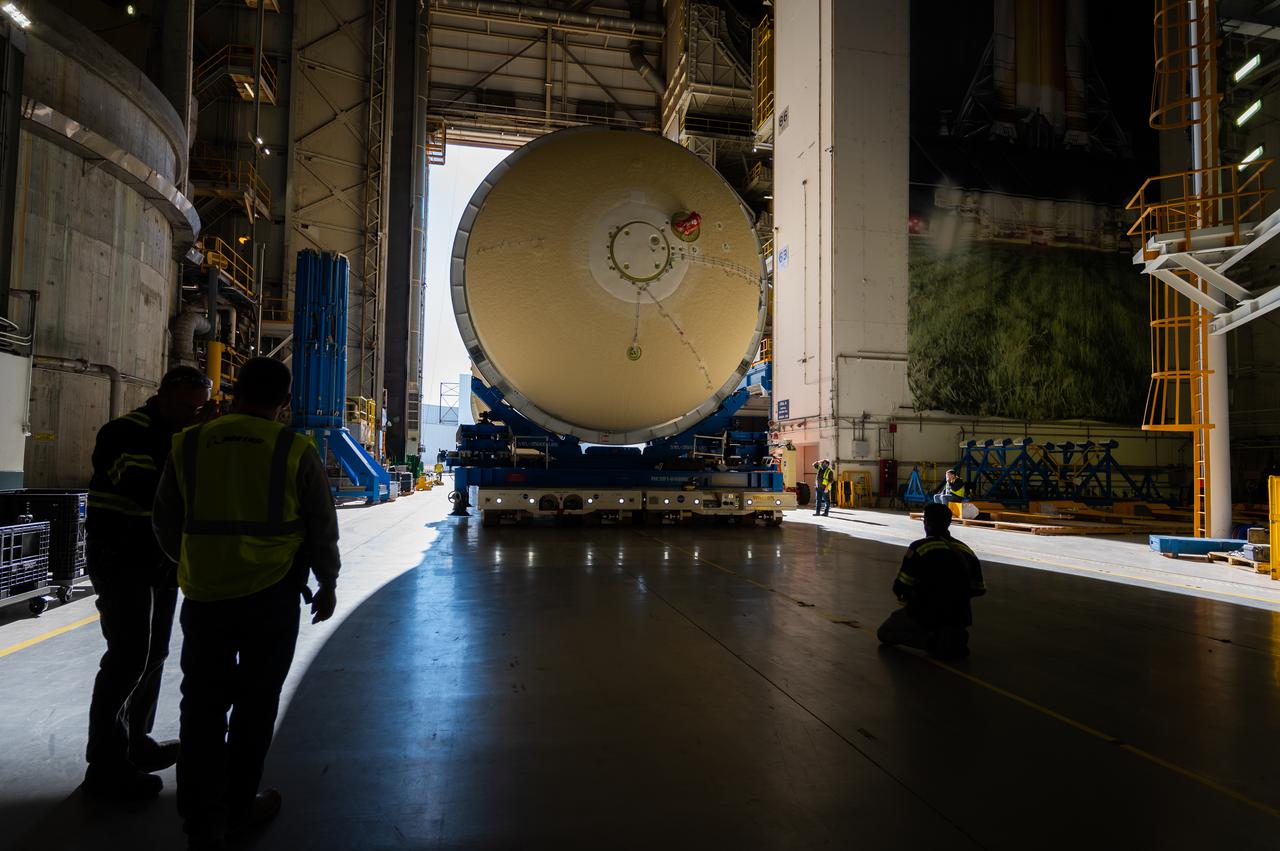
Technicians transported the assembled upper part of the Artemis II core stage to the final assembly area inside the factory at NASA’s Michoud Assembly Facility in New Orleans. On Jan 10, the forward assembly, left was moved next to the Artemis II liquid hydrogen tank, which has been undergoing assembly. Next, Boeing, the lead core stage contractor, will join the forward assembly and the liquid hydrogen tank to complete most of the core stage for the Space Launch System (SLS) rocket that will send the first crew on an Artemis mission. The core stage consists of five major structures that are built, outfitted, and then connected to form the final stage. The forward skirt, liquid oxygen and intertank were connected and tested to form the 66-foot forward assembly. After the forward assembly is joined with the 130-foot liquid hydrogen tank, only the engine section, the fifth piece of the stage, will need to be added to complete the Artemis II core stage. The core stage serves as the backbone of the rocket, supporting the weight of the payload, upper stage, and crew vehicle, as well as the thrust of its four RS-25 engines and two five-segment solid rocket boosters attached to the engine and intertank sections. On Artemis II, the SLS rocket will launch the Orion spacecraft and a crew, sending them into lunar orbit, in preparation for later Artemis missions that will enable the first woman and first person of color to land on the Moon.
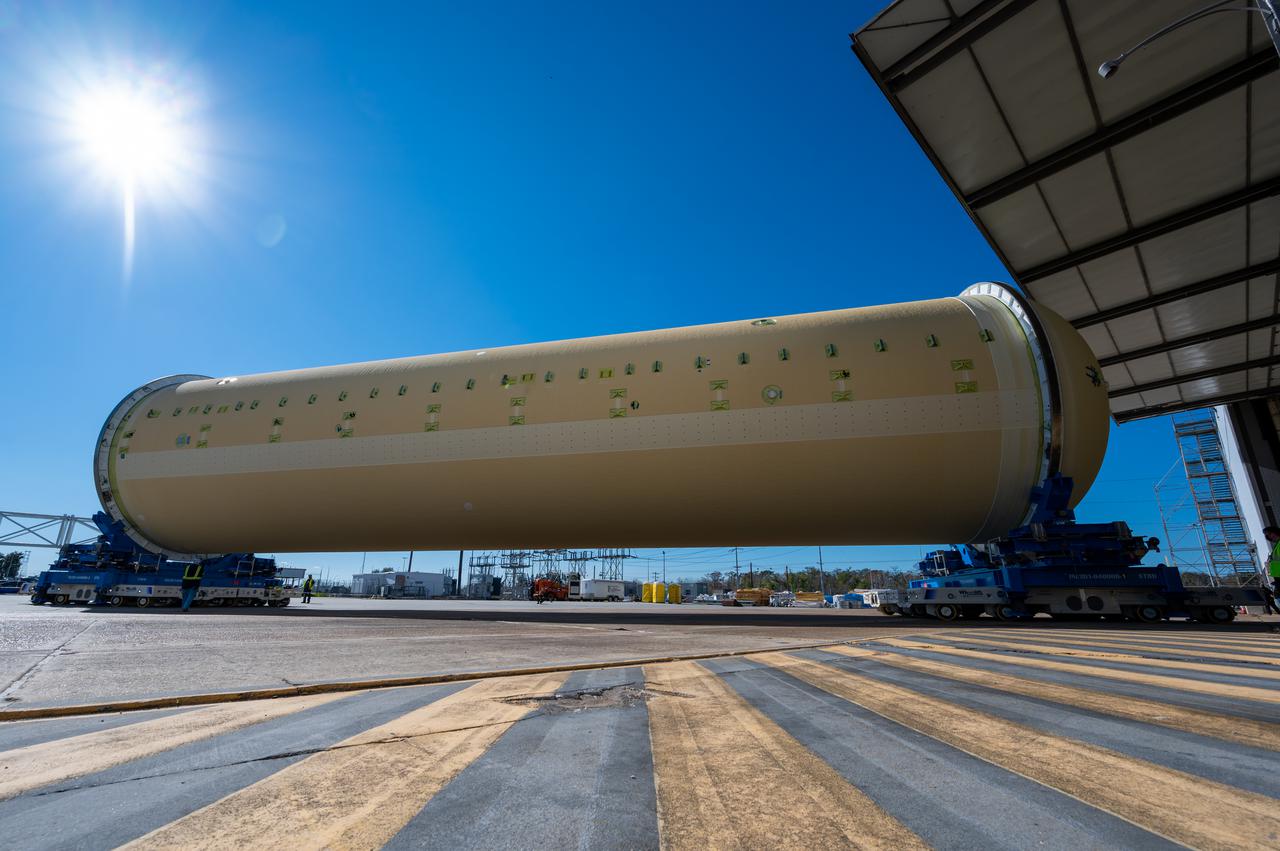
Technicians transported the assembled upper part of the Artemis II core stage to the final assembly area inside the factory at NASA’s Michoud Assembly Facility in New Orleans. On Jan 10, the forward assembly, left was moved next to the Artemis II liquid hydrogen tank, which has been undergoing assembly. Next, Boeing, the lead core stage contractor, will join the forward assembly and the liquid hydrogen tank to complete most of the core stage for the Space Launch System (SLS) rocket that will send the first crew on an Artemis mission. The core stage consists of five major structures that are built, outfitted, and then connected to form the final stage. The forward skirt, liquid oxygen and intertank were connected and tested to form the 66-foot forward assembly. After the forward assembly is joined with the 130-foot liquid hydrogen tank, only the engine section, the fifth piece of the stage, will need to be added to complete the Artemis II core stage. The core stage serves as the backbone of the rocket, supporting the weight of the payload, upper stage, and crew vehicle, as well as the thrust of its four RS-25 engines and two five-segment solid rocket boosters attached to the engine and intertank sections. On Artemis II, the SLS rocket will launch the Orion spacecraft and a crew, sending them into lunar orbit, in preparation for later Artemis missions that will enable the first woman and first person of color to land on the Moon.
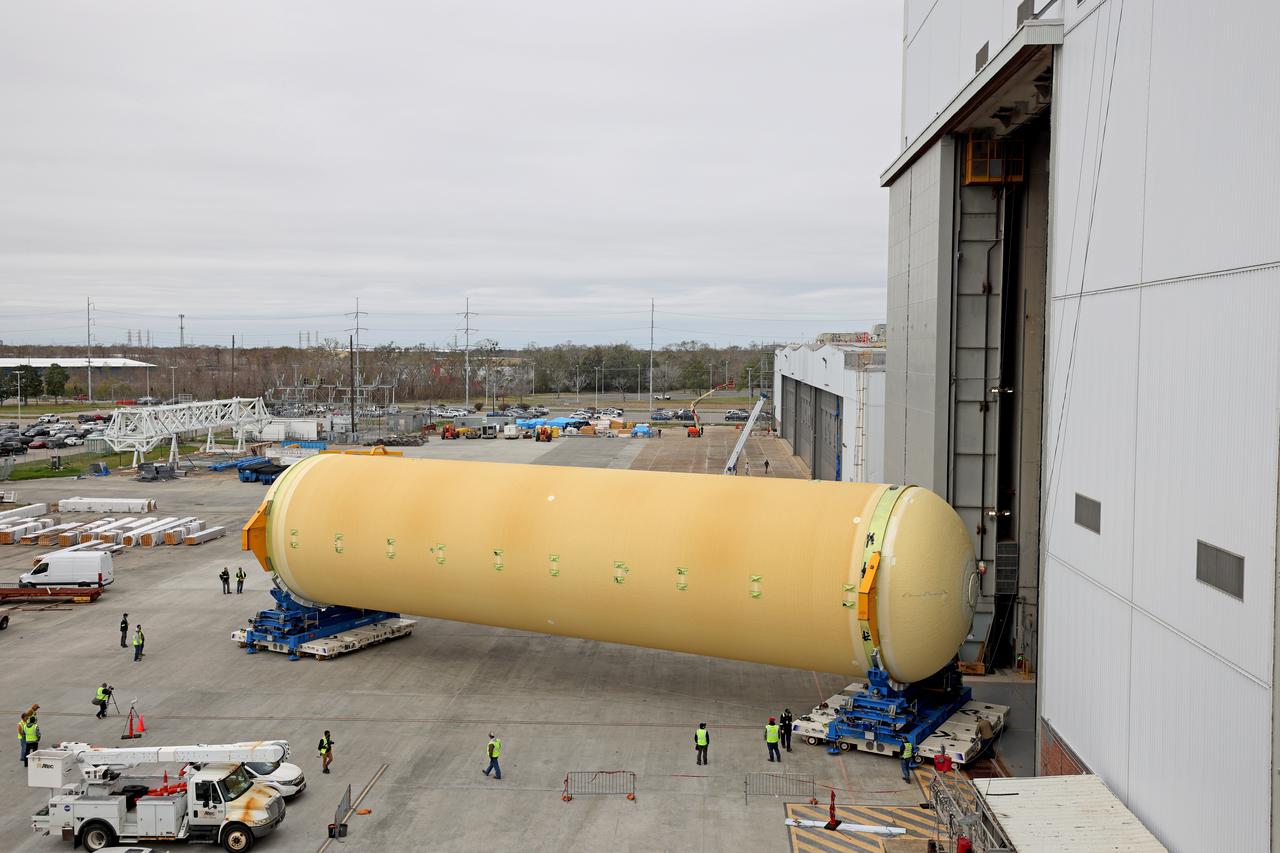
NASA is preparing major pieces of the Space Launch System rocket’s core stage to be joined as part of assembling the core stage for the Artemis II mission that will send crews to lunar orbit. Crews will soon connect the forward assembly with the 130-foot liquid hydrogen tank in the final assembly area at NASA’s Michoud Assembly Facility in New Orleans. When this process is completed, four of the five large structures that make up the core stage will be joined. The 66-foot forward assembly consists of the forward skirt, liquid oxygen tank and the intertank, which were mated earlier. This forward assembly will be joined with the 130-foot liquid hydrogen tank, the largest part of the stage that holds more than 500,000 gallons of cryogenic propellant. To compete the Artemis II core stage, engineers will add the engine section, which is currently being outfitted and includes the main propulsion systems that connect to the four RS-25 engines, Together, with the SLS twin solid rocket boosters, the core stage will produce 8.8 million pounds of thrust to send NASA’s Orion spacecraft, astronauts, and supplies beyond Earth’s orbit to the Moon. The SLS rocket and the Orion spacecraft form the foundation for deep space exploration and the Artemis lunar program. For more on the core stage: https://www.nasa.gov/exploration/systems/sls/multimedia/infographics/corestage101.html Image credit: NASA/Michael DeMocker
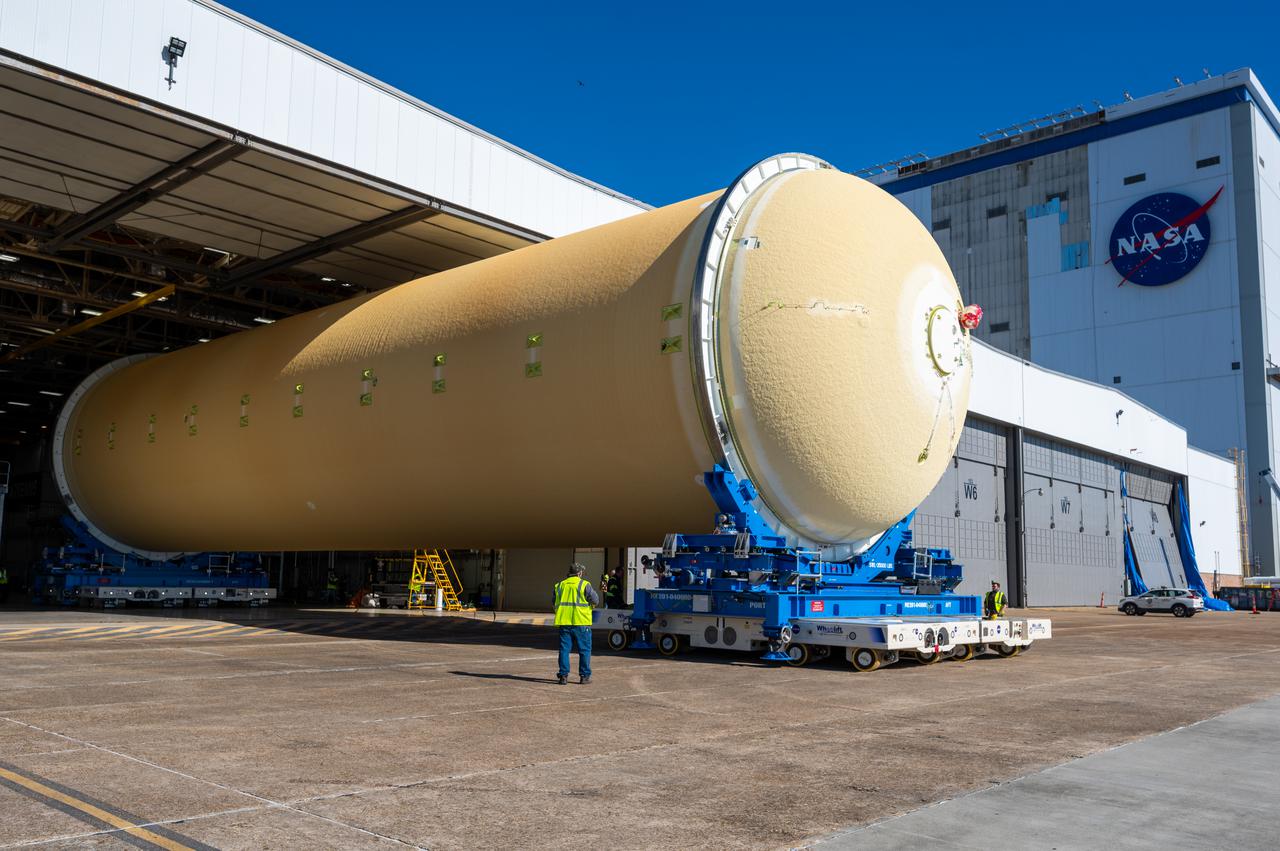
Technicians transported the assembled upper part of the Artemis II core stage to the final assembly area inside the factory at NASA’s Michoud Assembly Facility in New Orleans. On Jan 10, the forward assembly, left was moved next to the Artemis II liquid hydrogen tank, which has been undergoing assembly. Next, Boeing, the lead core stage contractor, will join the forward assembly and the liquid hydrogen tank to complete most of the core stage for the Space Launch System (SLS) rocket that will send the first crew on an Artemis mission. The core stage consists of five major structures that are built, outfitted, and then connected to form the final stage. The forward skirt, liquid oxygen and intertank were connected and tested to form the 66-foot forward assembly. After the forward assembly is joined with the 130-foot liquid hydrogen tank, only the engine section, the fifth piece of the stage, will need to be added to complete the Artemis II core stage. The core stage serves as the backbone of the rocket, supporting the weight of the payload, upper stage, and crew vehicle, as well as the thrust of its four RS-25 engines and two five-segment solid rocket boosters attached to the engine and intertank sections. On Artemis II, the SLS rocket will launch the Orion spacecraft and a crew, sending them into lunar orbit, in preparation for later Artemis missions that will enable the first woman and first person of color to land on the Moon.
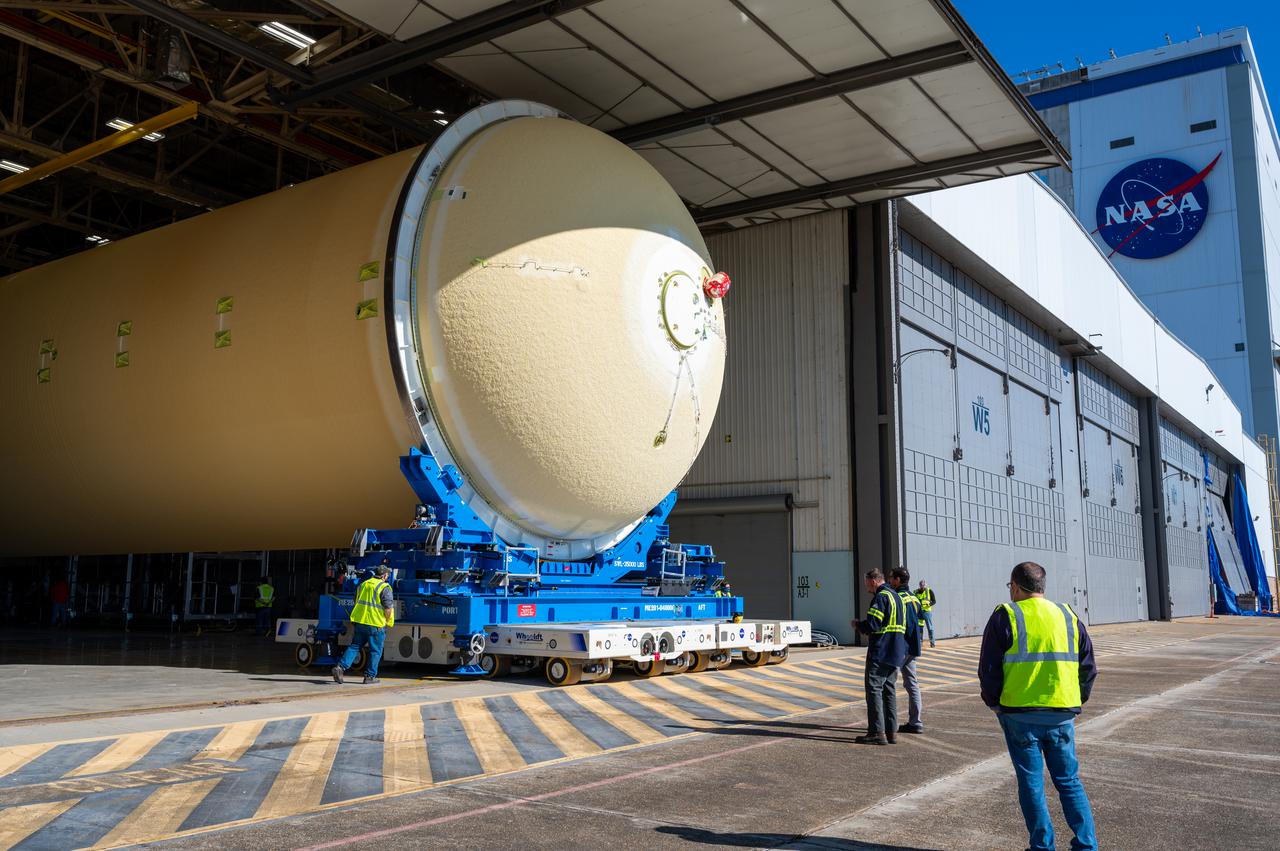
Technicians transported the assembled upper part of the Artemis II core stage to the final assembly area inside the factory at NASA’s Michoud Assembly Facility in New Orleans. On Jan 10, the forward assembly, left was moved next to the Artemis II liquid hydrogen tank, which has been undergoing assembly. Next, Boeing, the lead core stage contractor, will join the forward assembly and the liquid hydrogen tank to complete most of the core stage for the Space Launch System (SLS) rocket that will send the first crew on an Artemis mission. The core stage consists of five major structures that are built, outfitted, and then connected to form the final stage. The forward skirt, liquid oxygen and intertank were connected and tested to form the 66-foot forward assembly. After the forward assembly is joined with the 130-foot liquid hydrogen tank, only the engine section, the fifth piece of the stage, will need to be added to complete the Artemis II core stage. The core stage serves as the backbone of the rocket, supporting the weight of the payload, upper stage, and crew vehicle, as well as the thrust of its four RS-25 engines and two five-segment solid rocket boosters attached to the engine and intertank sections. On Artemis II, the SLS rocket will launch the Orion spacecraft and a crew, sending them into lunar orbit, in preparation for later Artemis missions that will enable the first woman and first person of color to land on the Moon.
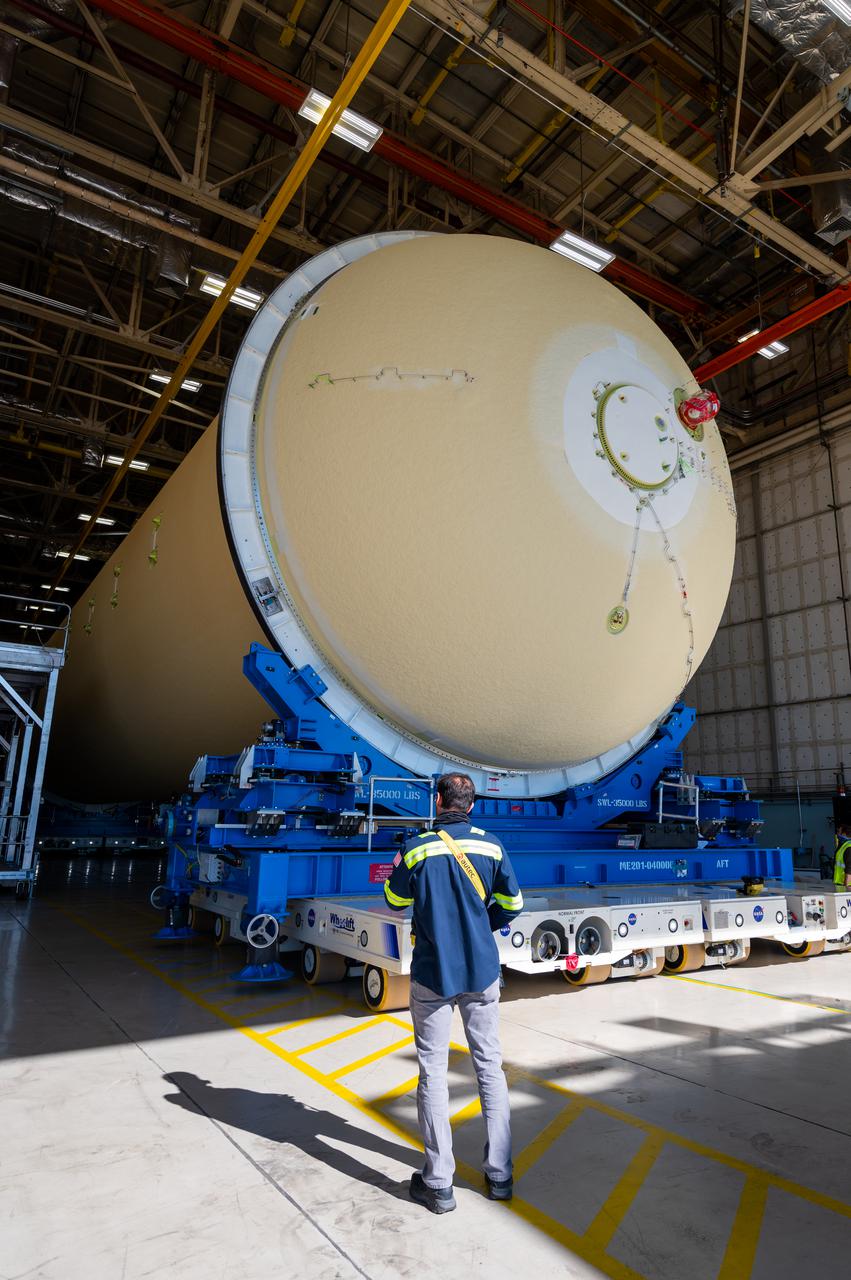
Technicians transported the assembled upper part of the Artemis II core stage to the final assembly area inside the factory at NASA’s Michoud Assembly Facility in New Orleans. On Jan 10, the forward assembly, left was moved next to the Artemis II liquid hydrogen tank, which has been undergoing assembly. Next, Boeing, the lead core stage contractor, will join the forward assembly and the liquid hydrogen tank to complete most of the core stage for the Space Launch System (SLS) rocket that will send the first crew on an Artemis mission. The core stage consists of five major structures that are built, outfitted, and then connected to form the final stage. The forward skirt, liquid oxygen and intertank were connected and tested to form the 66-foot forward assembly. After the forward assembly is joined with the 130-foot liquid hydrogen tank, only the engine section, the fifth piece of the stage, will need to be added to complete the Artemis II core stage. The core stage serves as the backbone of the rocket, supporting the weight of the payload, upper stage, and crew vehicle, as well as the thrust of its four RS-25 engines and two five-segment solid rocket boosters attached to the engine and intertank sections. On Artemis II, the SLS rocket will launch the Orion spacecraft and a crew, sending them into lunar orbit, in preparation for later Artemis missions that will enable the first woman and first person of color to land on the Moon.
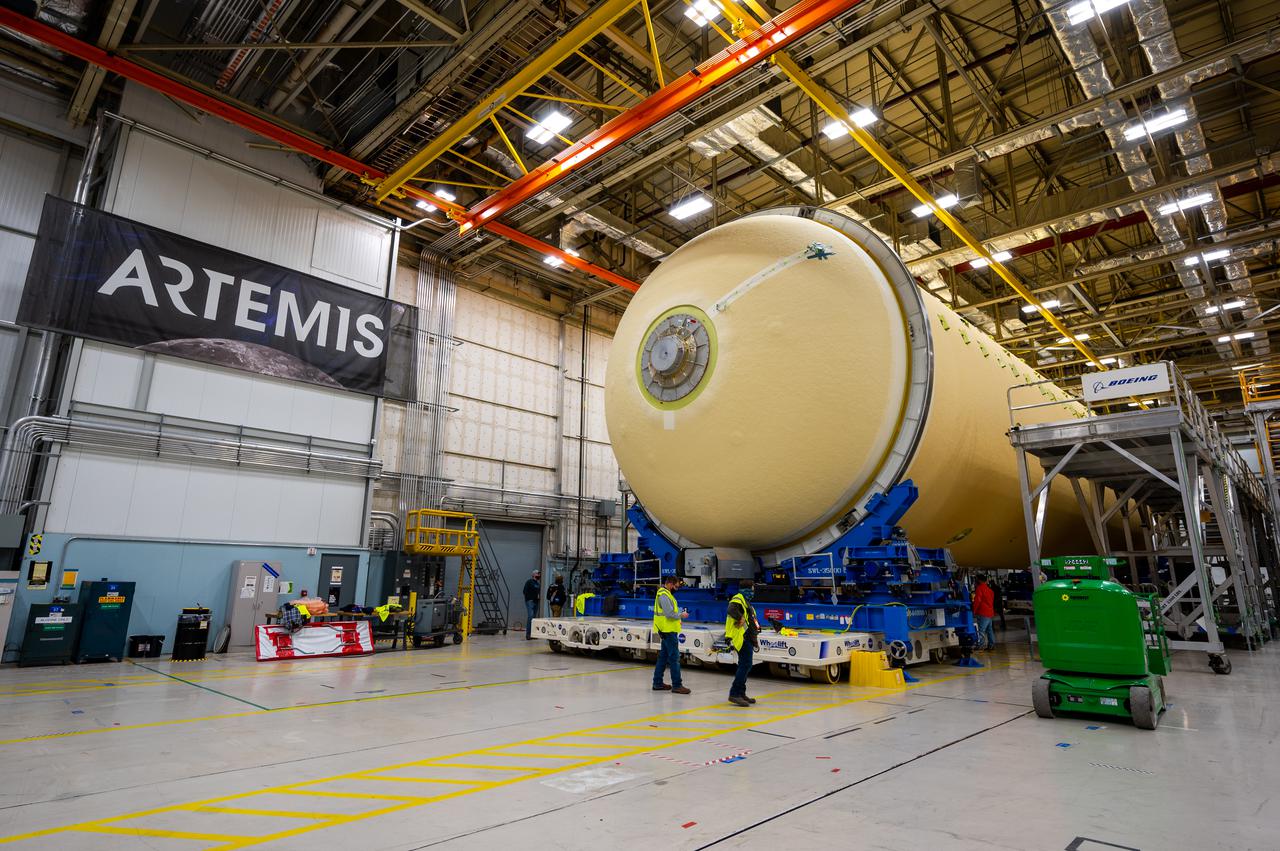
Technicians transported the assembled upper part of the Artemis II core stage to the final assembly area inside the factory at NASA’s Michoud Assembly Facility in New Orleans. On Jan 10, the forward assembly, left was moved next to the Artemis II liquid hydrogen tank, which has been undergoing assembly. Next, Boeing, the lead core stage contractor, will join the forward assembly and the liquid hydrogen tank to complete most of the core stage for the Space Launch System (SLS) rocket that will send the first crew on an Artemis mission. The core stage consists of five major structures that are built, outfitted, and then connected to form the final stage. The forward skirt, liquid oxygen and intertank were connected and tested to form the 66-foot forward assembly. After the forward assembly is joined with the 130-foot liquid hydrogen tank, only the engine section, the fifth piece of the stage, will need to be added to complete the Artemis II core stage. The core stage serves as the backbone of the rocket, supporting the weight of the payload, upper stage, and crew vehicle, as well as the thrust of its four RS-25 engines and two five-segment solid rocket boosters attached to the engine and intertank sections. On Artemis II, the SLS rocket will launch the Orion spacecraft and a crew, sending them into lunar orbit, in preparation for later Artemis missions that will enable the first woman and first person of color to land on the Moon.
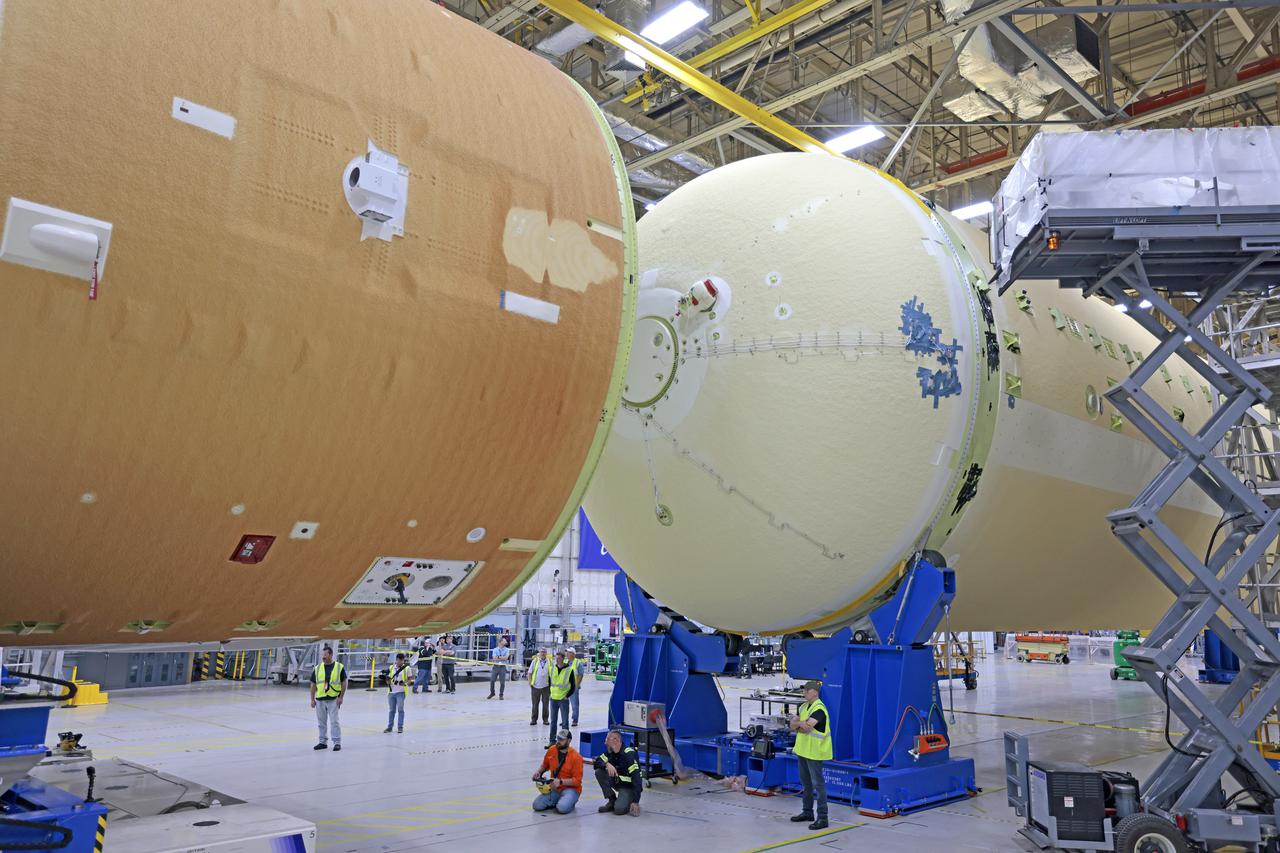
NASA is preparing major pieces of the Space Launch System rocket’s core stage to be joined as part of assembling the core stage for the Artemis II mission that will send crews to lunar orbit. Crews will soon connect the forward assembly with the 130-foot liquid hydrogen tank in the final assembly area at NASA’s Michoud Assembly Facility in New Orleans. When this process is completed, four of the five large structures that make up the core stage will be joined. The 66-foot forward assembly consists of the forward skirt, liquid oxygen tank and the intertank, which were mated earlier. This forward assembly will be joined with the 130-foot liquid hydrogen tank, the largest part of the stage that holds more than 500,000 gallons of cryogenic propellant. To compete the Artemis II core stage, engineers will add the engine section, which is currently being outfitted and includes the main propulsion systems that connect to the four RS-25 engines, Together, with the SLS twin solid rocket boosters, the core stage will produce 8.8 million pounds of thrust to send NASA’s Orion spacecraft, astronauts, and supplies beyond Earth’s orbit to the Moon. The SLS rocket and the Orion spacecraft form the foundation for deep space exploration and the Artemis lunar program. For more on the core stage: https://www.nasa.gov/exploration/systems/sls/multimedia/infographics/corestage101.html Image credit: NASA/Michael DeMocker
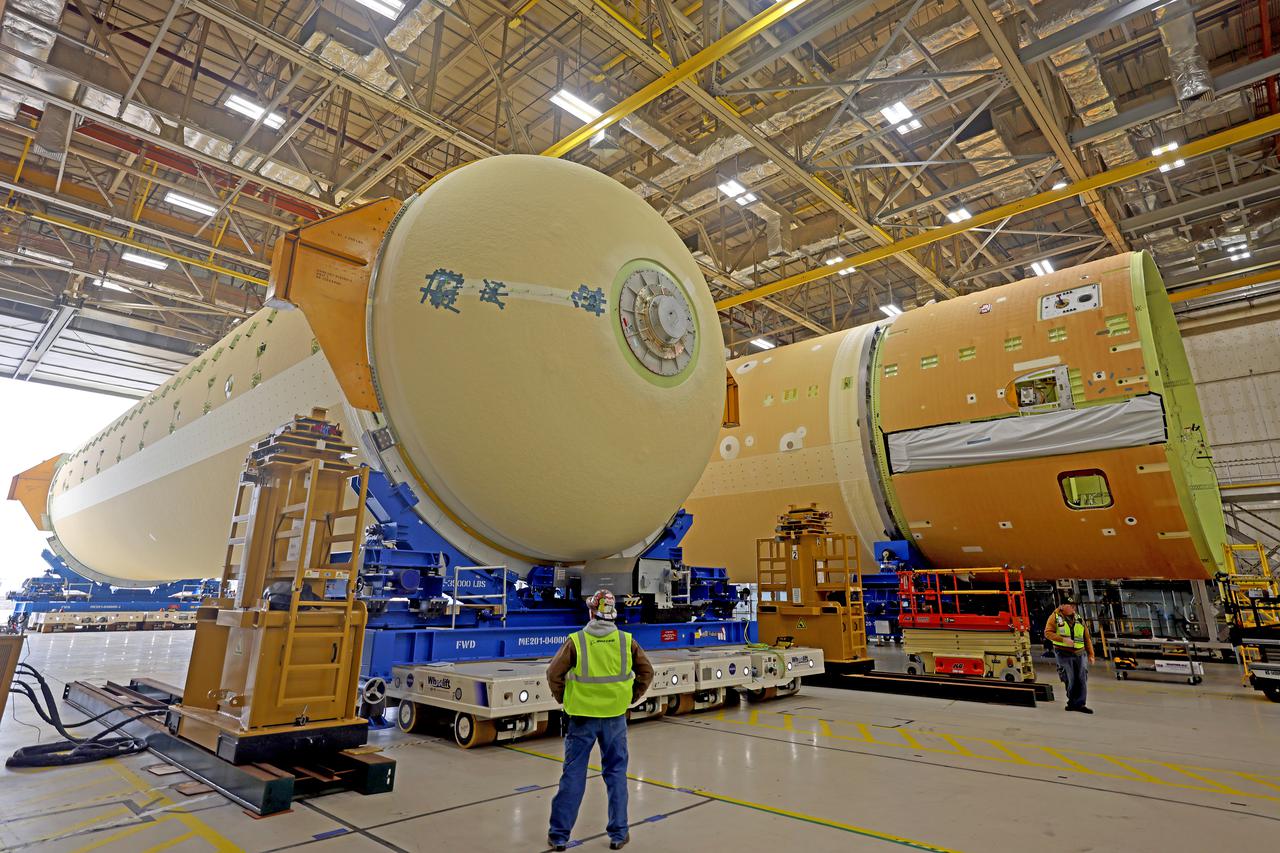
NASA is preparing major pieces of the Space Launch System rocket’s core stage to be joined as part of assembling the core stage for the Artemis II mission that will send crews to lunar orbit. Crews will soon connect the forward assembly with the 130-foot liquid hydrogen tank in the final assembly area at NASA’s Michoud Assembly Facility in New Orleans. When this process is completed, four of the five large structures that make up the core stage will be joined. The 66-foot forward assembly consists of the forward skirt, liquid oxygen tank and the intertank, which were mated earlier. This forward assembly will be joined with the 130-foot liquid hydrogen tank, the largest part of the stage that holds more than 500,000 gallons of cryogenic propellant. To compete the Artemis II core stage, engineers will add the engine section, which is currently being outfitted and includes the main propulsion systems that connect to the four RS-25 engines, Together, with the SLS twin solid rocket boosters, the core stage will produce 8.8 million pounds of thrust to send NASA’s Orion spacecraft, astronauts, and supplies beyond Earth’s orbit to the Moon. The SLS rocket and the Orion spacecraft form the foundation for deep space exploration and the Artemis lunar program. For more on the core stage: https://www.nasa.gov/exploration/systems/sls/multimedia/infographics/corestage101.html Image credit: NASA/Michael DeMocker
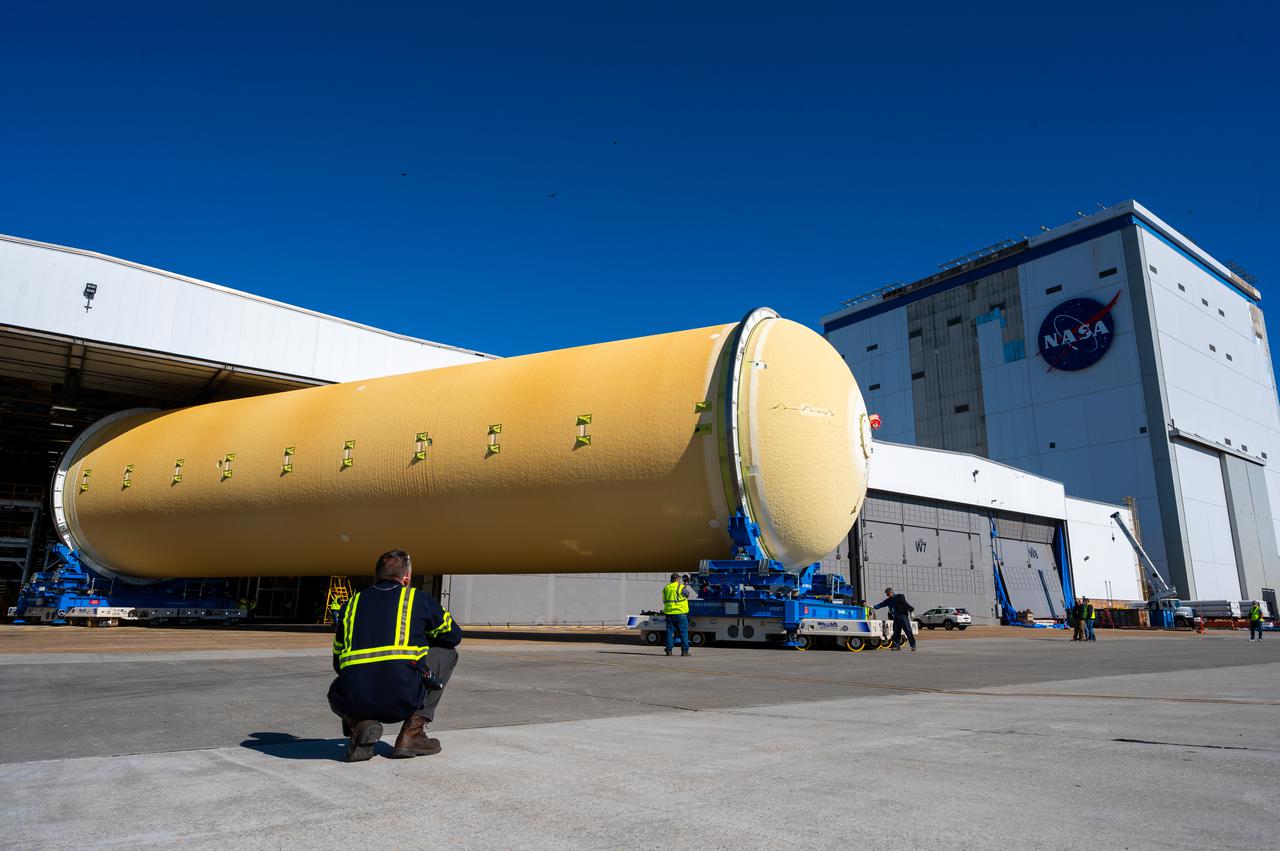
Technicians transported the assembled upper part of the Artemis II core stage to the final assembly area inside the factory at NASA’s Michoud Assembly Facility in New Orleans. On Jan 10, the forward assembly, left was moved next to the Artemis II liquid hydrogen tank, which has been undergoing assembly. Next, Boeing, the lead core stage contractor, will join the forward assembly and the liquid hydrogen tank to complete most of the core stage for the Space Launch System (SLS) rocket that will send the first crew on an Artemis mission. The core stage consists of five major structures that are built, outfitted, and then connected to form the final stage. The forward skirt, liquid oxygen and intertank were connected and tested to form the 66-foot forward assembly. After the forward assembly is joined with the 130-foot liquid hydrogen tank, only the engine section, the fifth piece of the stage, will need to be added to complete the Artemis II core stage. The core stage serves as the backbone of the rocket, supporting the weight of the payload, upper stage, and crew vehicle, as well as the thrust of its four RS-25 engines and two five-segment solid rocket boosters attached to the engine and intertank sections. On Artemis II, the SLS rocket will launch the Orion spacecraft and a crew, sending them into lunar orbit, in preparation for later Artemis missions that will enable the first woman and first person of color to land on the Moon.
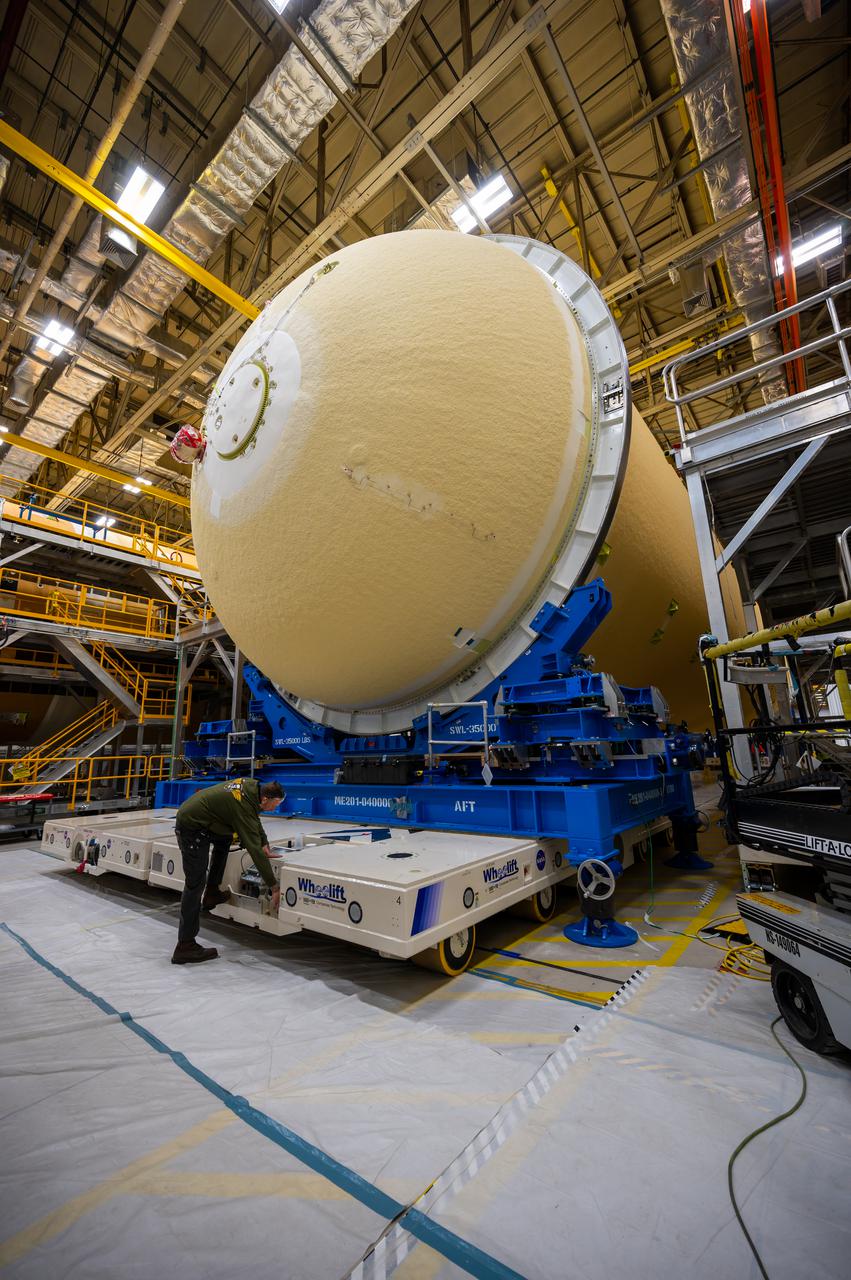
Technicians transported the assembled upper part of the Artemis II core stage to the final assembly area inside the factory at NASA’s Michoud Assembly Facility in New Orleans. On Jan 10, the forward assembly, left was moved next to the Artemis II liquid hydrogen tank, which has been undergoing assembly. Next, Boeing, the lead core stage contractor, will join the forward assembly and the liquid hydrogen tank to complete most of the core stage for the Space Launch System (SLS) rocket that will send the first crew on an Artemis mission. The core stage consists of five major structures that are built, outfitted, and then connected to form the final stage. The forward skirt, liquid oxygen and intertank were connected and tested to form the 66-foot forward assembly. After the forward assembly is joined with the 130-foot liquid hydrogen tank, only the engine section, the fifth piece of the stage, will need to be added to complete the Artemis II core stage. The core stage serves as the backbone of the rocket, supporting the weight of the payload, upper stage, and crew vehicle, as well as the thrust of its four RS-25 engines and two five-segment solid rocket boosters attached to the engine and intertank sections. On Artemis II, the SLS rocket will launch the Orion spacecraft and a crew, sending them into lunar orbit, in preparation for later Artemis missions that will enable the first woman and first person of color to land on the Moon.
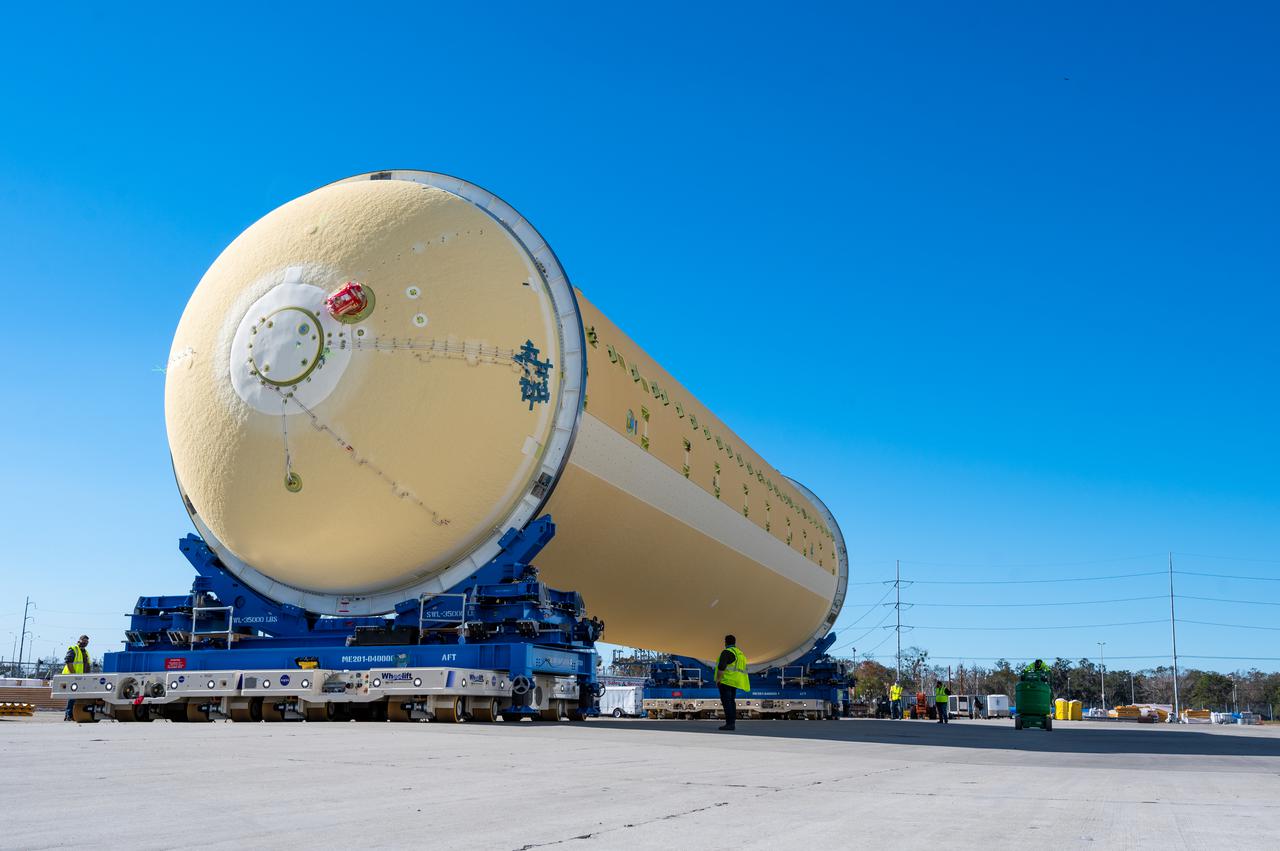
Technicians transported the assembled upper part of the Artemis II core stage to the final assembly area inside the factory at NASA’s Michoud Assembly Facility in New Orleans. On Jan 10, the forward assembly, left was moved next to the Artemis II liquid hydrogen tank, which has been undergoing assembly. Next, Boeing, the lead core stage contractor, will join the forward assembly and the liquid hydrogen tank to complete most of the core stage for the Space Launch System (SLS) rocket that will send the first crew on an Artemis mission. The core stage consists of five major structures that are built, outfitted, and then connected to form the final stage. The forward skirt, liquid oxygen and intertank were connected and tested to form the 66-foot forward assembly. After the forward assembly is joined with the 130-foot liquid hydrogen tank, only the engine section, the fifth piece of the stage, will need to be added to complete the Artemis II core stage. The core stage serves as the backbone of the rocket, supporting the weight of the payload, upper stage, and crew vehicle, as well as the thrust of its four RS-25 engines and two five-segment solid rocket boosters attached to the engine and intertank sections. On Artemis II, the SLS rocket will launch the Orion spacecraft and a crew, sending them into lunar orbit, in preparation for later Artemis missions that will enable the first woman and first person of color to land on the Moon.
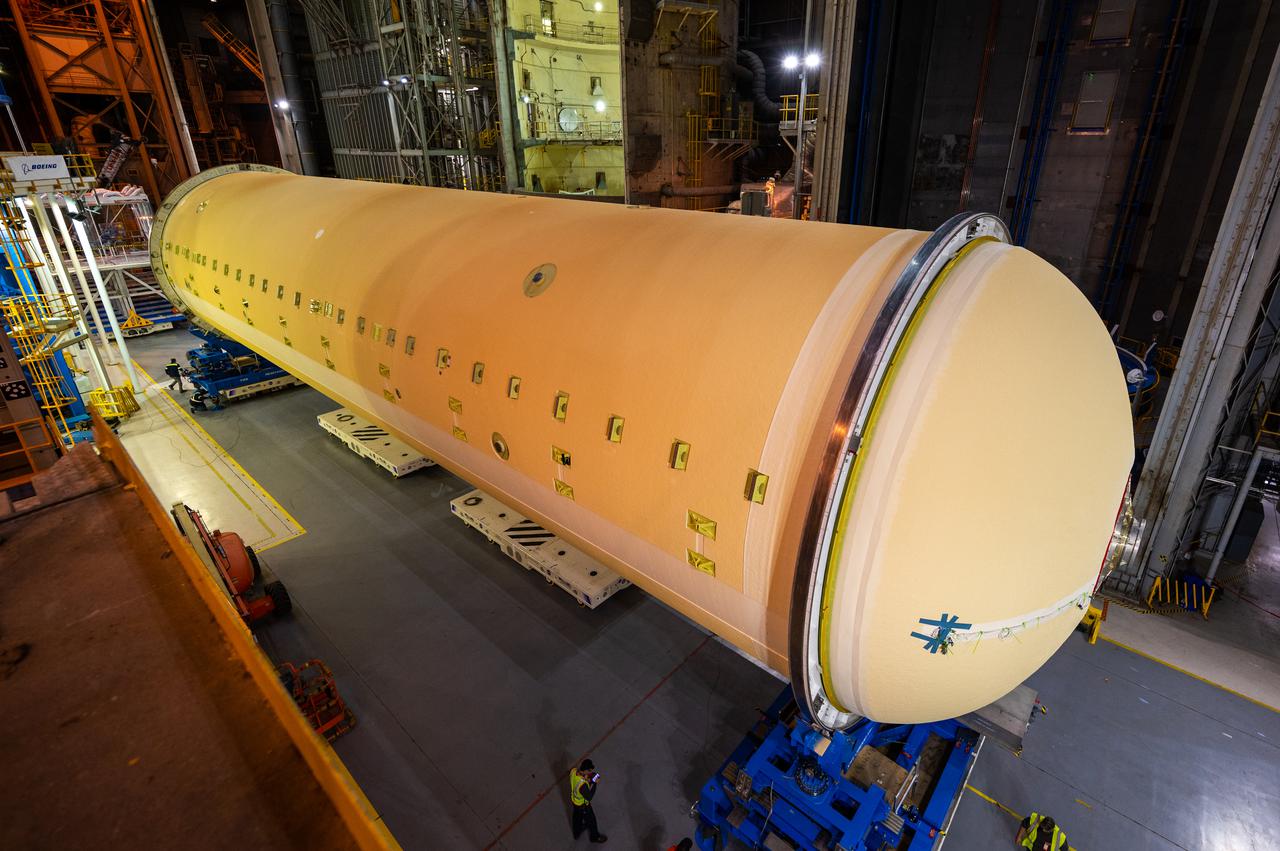
Technicians transported the assembled upper part of the Artemis II core stage to the final assembly area inside the factory at NASA’s Michoud Assembly Facility in New Orleans. On Jan 10, the forward assembly, left was moved next to the Artemis II liquid hydrogen tank, which has been undergoing assembly. Next, Boeing, the lead core stage contractor, will join the forward assembly and the liquid hydrogen tank to complete most of the core stage for the Space Launch System (SLS) rocket that will send the first crew on an Artemis mission. The core stage consists of five major structures that are built, outfitted, and then connected to form the final stage. The forward skirt, liquid oxygen and intertank were connected and tested to form the 66-foot forward assembly. After the forward assembly is joined with the 130-foot liquid hydrogen tank, only the engine section, the fifth piece of the stage, will need to be added to complete the Artemis II core stage. The core stage serves as the backbone of the rocket, supporting the weight of the payload, upper stage, and crew vehicle, as well as the thrust of its four RS-25 engines and two five-segment solid rocket boosters attached to the engine and intertank sections. On Artemis II, the SLS rocket will launch the Orion spacecraft and a crew, sending them into lunar orbit, in preparation for later Artemis missions that will enable the first woman and first person of color to land on the Moon.