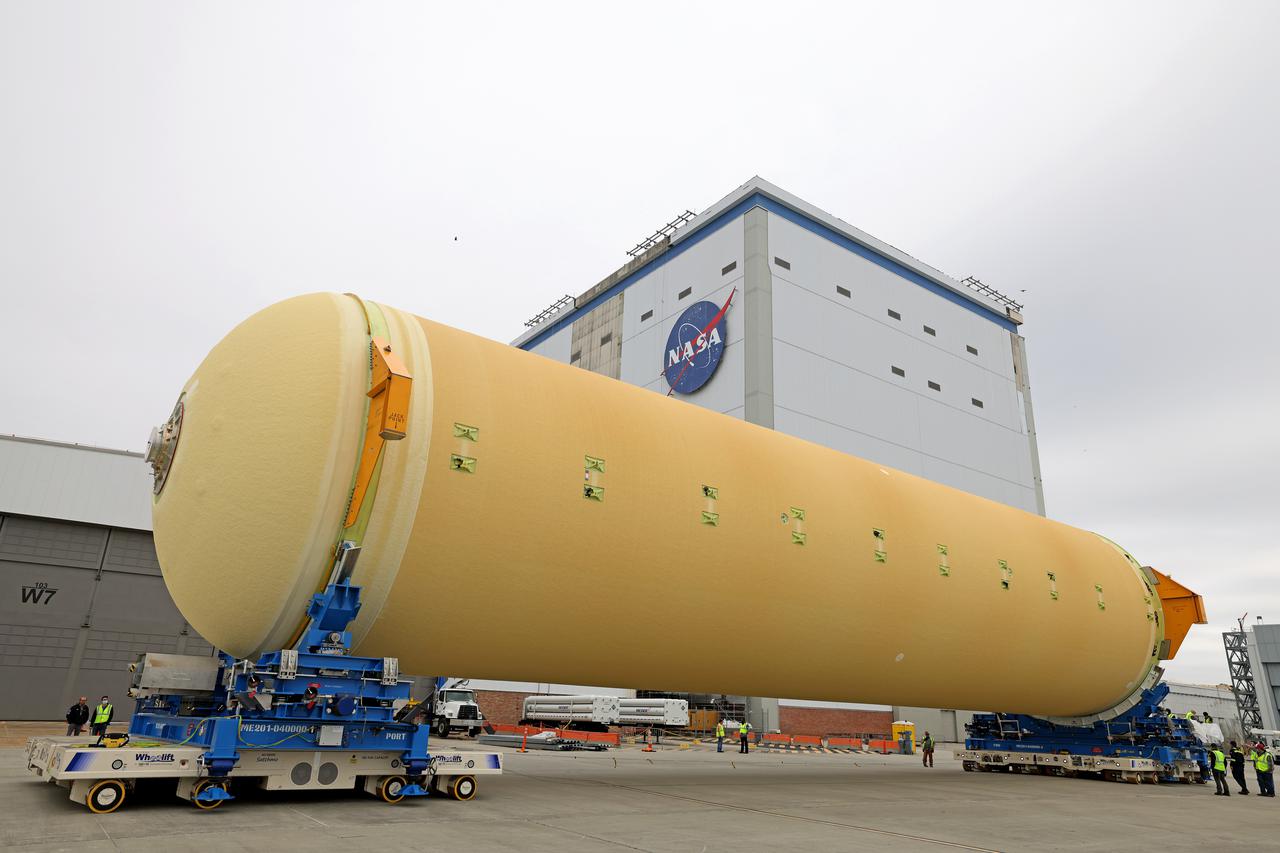
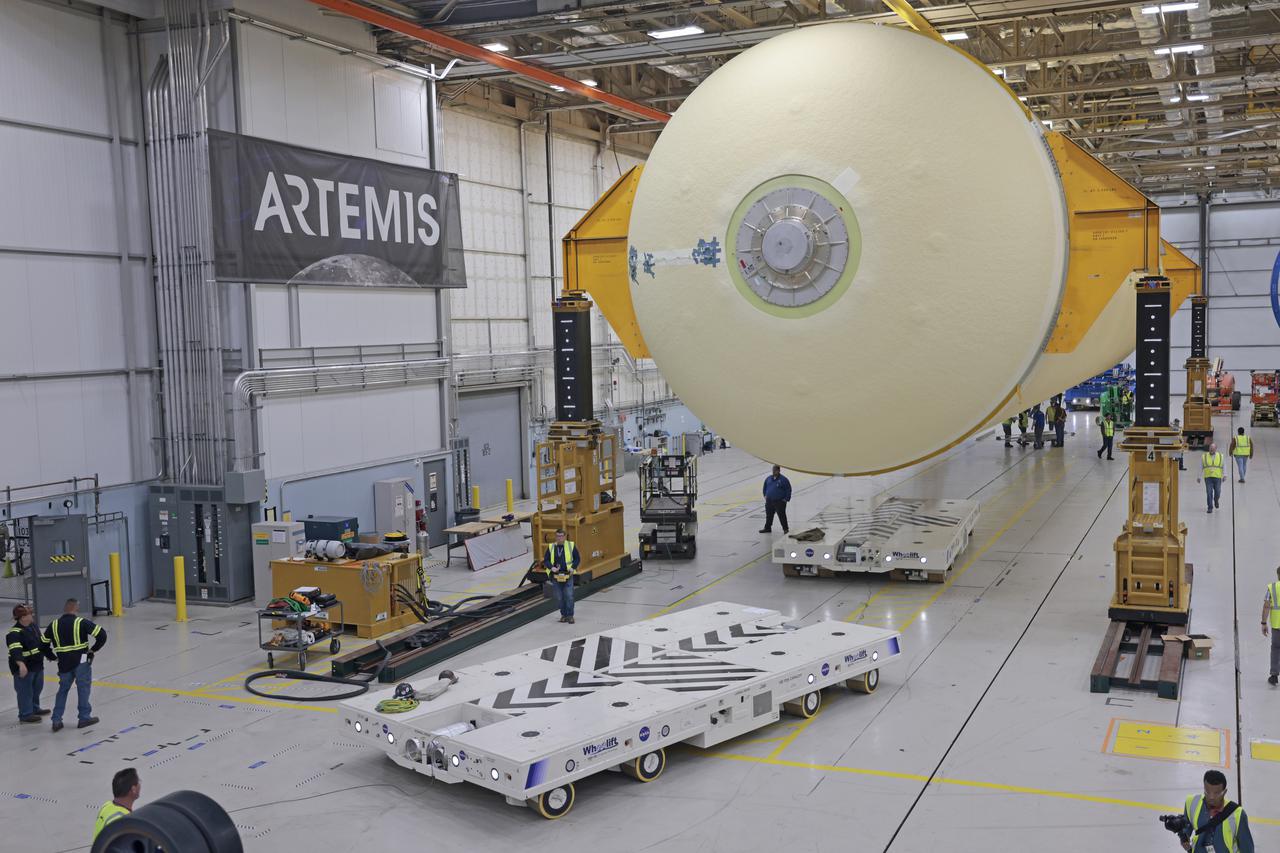
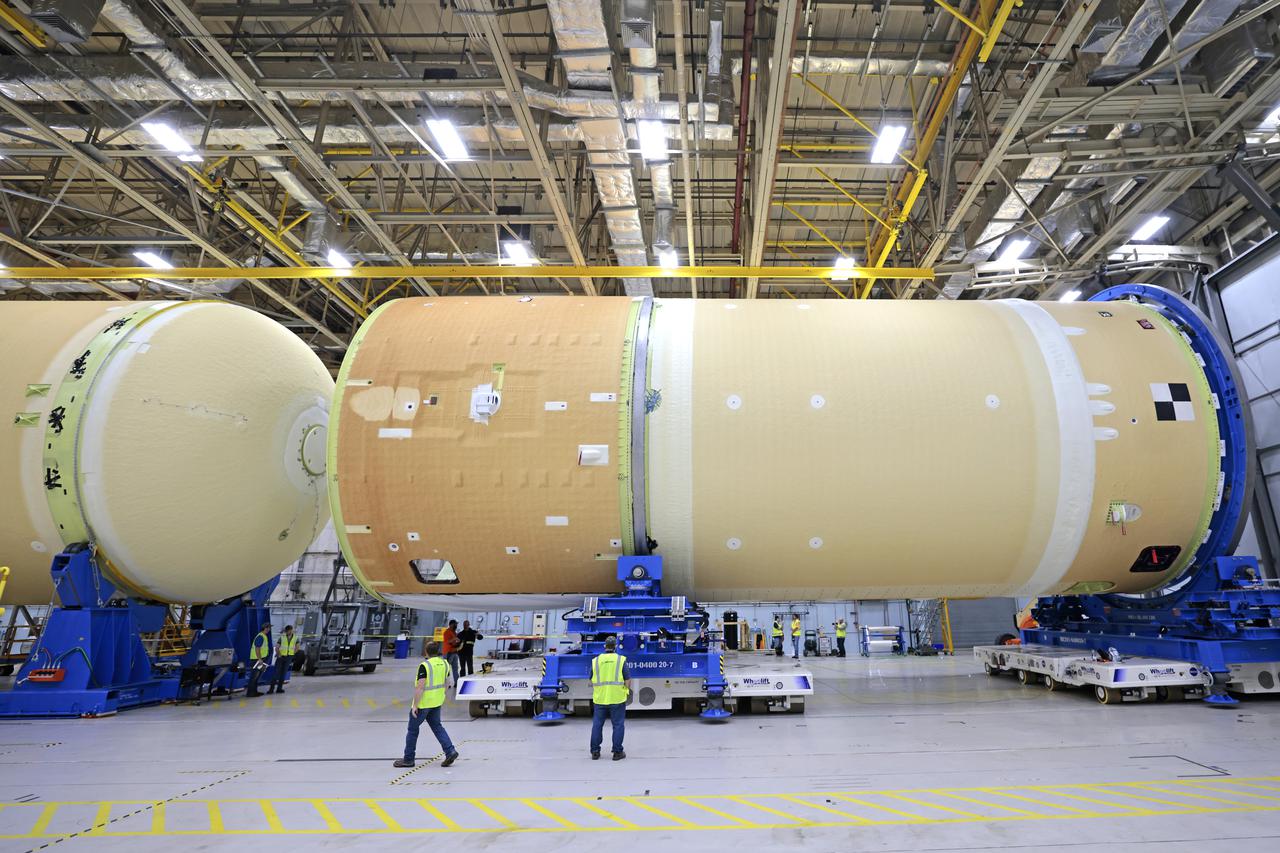
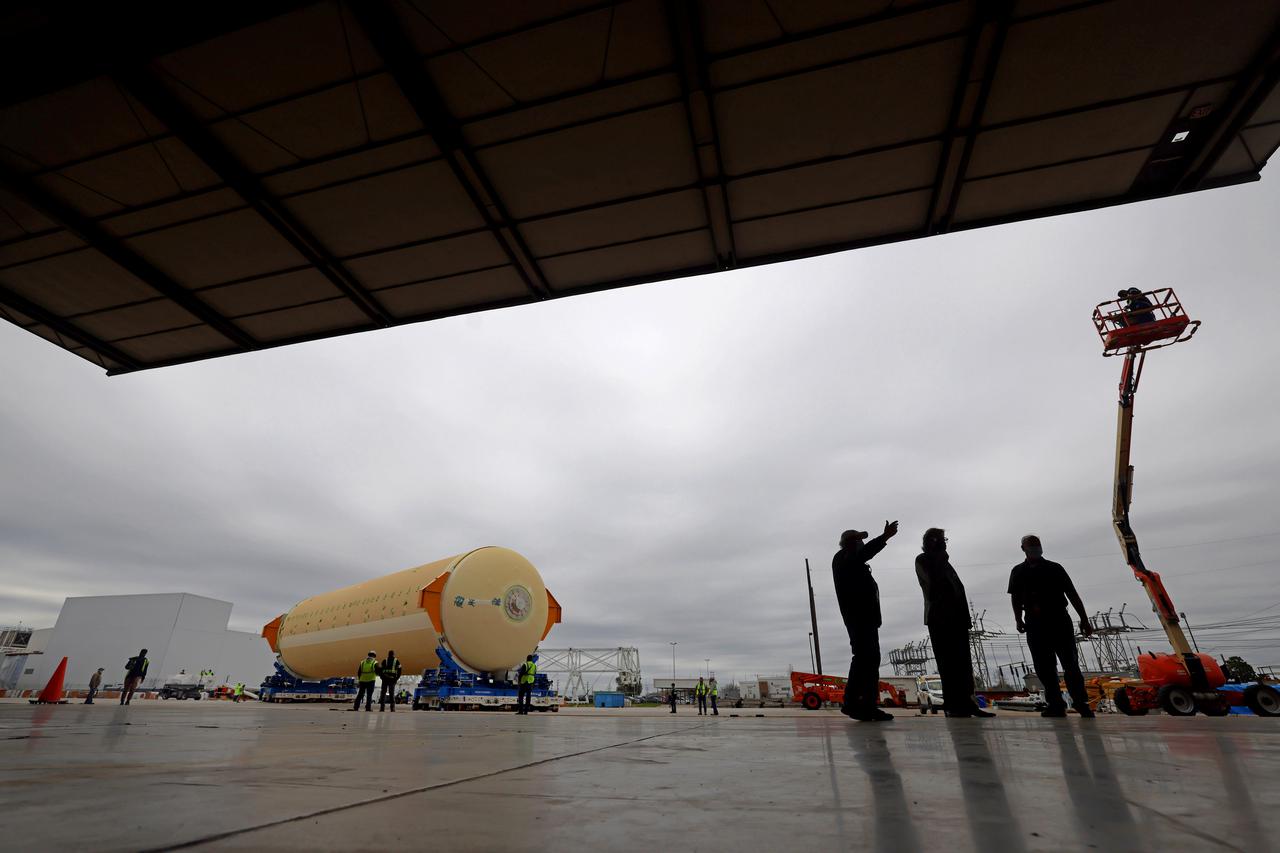
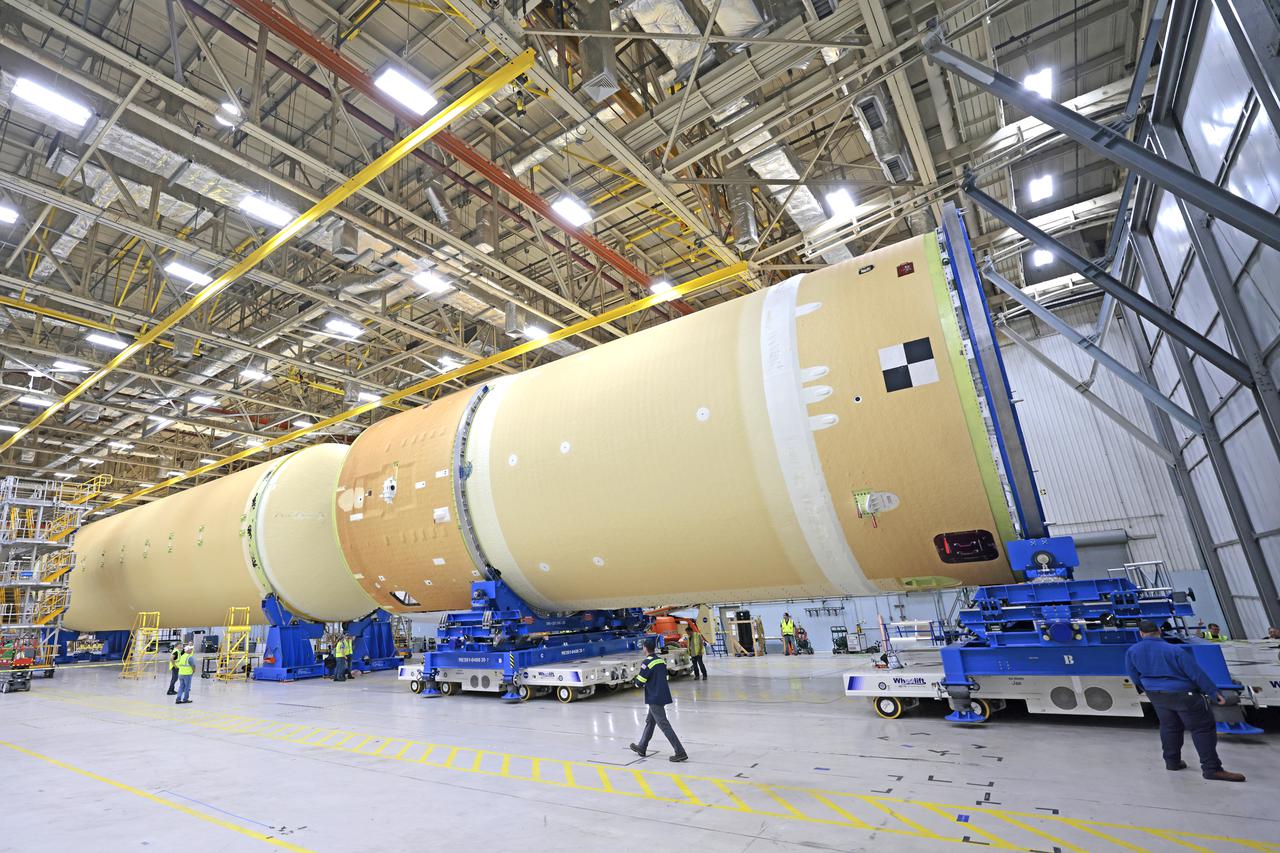
NASA is preparing major pieces of the Space Launch System rocket’s core stage to be joined as part of assembling the core stage for the Artemis II mission that will send crews to lunar orbit. Crews will soon connect the forward assembly with the 130-foot liquid hydrogen tank in the final assembly area at NASA’s Michoud Assembly Facility in New Orleans. When this process is completed, four of the five large structures that make up the core stage will be joined. The 66-foot forward assembly consists of the forward skirt, liquid oxygen tank and the intertank, which were mated earlier. This forward assembly will be joined with the 130-foot liquid hydrogen tank, the largest part of the stage that holds more than 500,000 gallons of cryogenic propellant. To compete the Artemis II core stage, engineers will add the engine section, which is currently being outfitted and includes the main propulsion systems that connect to the four RS-25 engines, Together, with the SLS twin solid rocket boosters, the core stage will produce 8.8 million pounds of thrust to send NASA’s Orion spacecraft, astronauts, and supplies beyond Earth’s orbit to the Moon. The SLS rocket and the Orion spacecraft form the foundation for deep space exploration and the Artemis lunar program. For more on the core stage: https://www.nasa.gov/exploration/systems/sls/multimedia/infographics/corestage101.html Image credit: NASA/Michael DeMocker
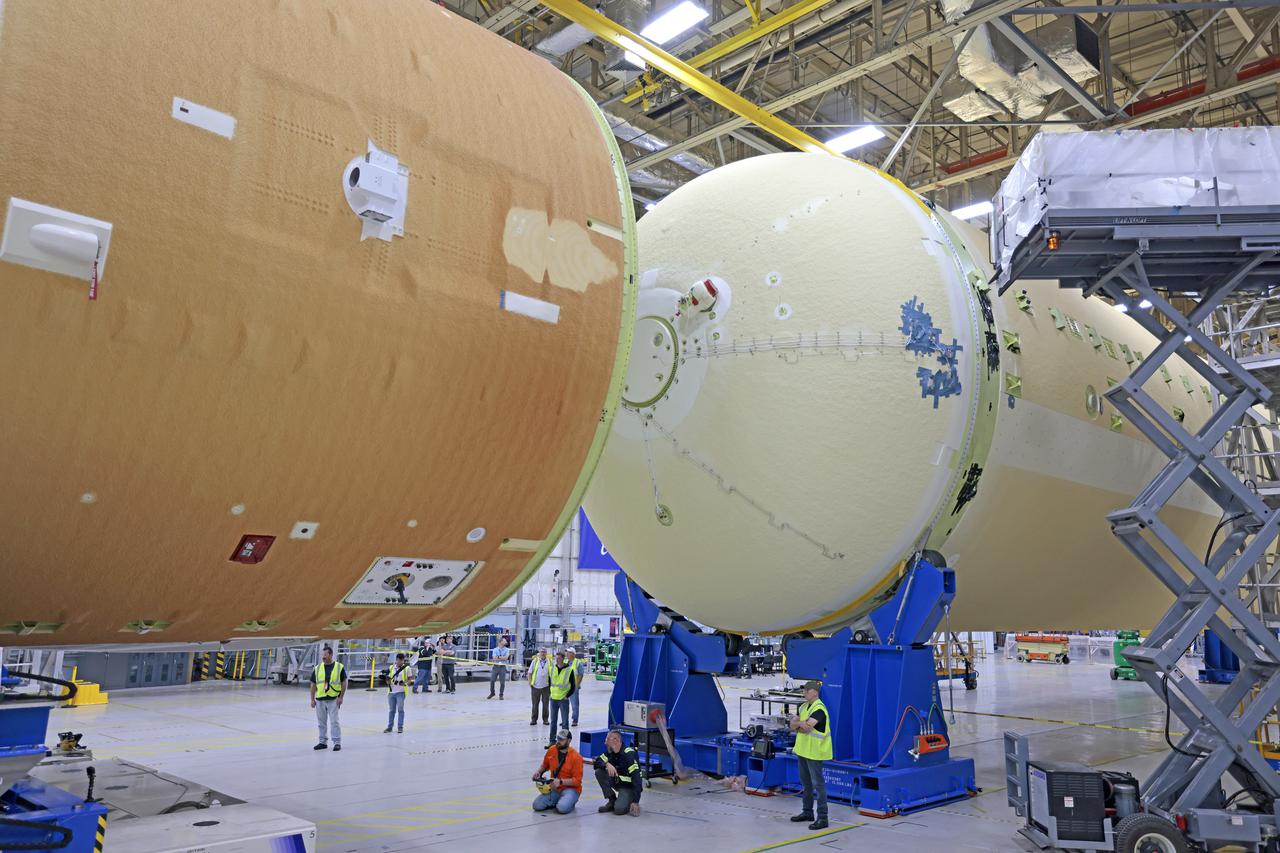
NASA is preparing major pieces of the Space Launch System rocket’s core stage to be joined as part of assembling the core stage for the Artemis II mission that will send crews to lunar orbit. Crews will soon connect the forward assembly with the 130-foot liquid hydrogen tank in the final assembly area at NASA’s Michoud Assembly Facility in New Orleans. When this process is completed, four of the five large structures that make up the core stage will be joined. The 66-foot forward assembly consists of the forward skirt, liquid oxygen tank and the intertank, which were mated earlier. This forward assembly will be joined with the 130-foot liquid hydrogen tank, the largest part of the stage that holds more than 500,000 gallons of cryogenic propellant. To compete the Artemis II core stage, engineers will add the engine section, which is currently being outfitted and includes the main propulsion systems that connect to the four RS-25 engines, Together, with the SLS twin solid rocket boosters, the core stage will produce 8.8 million pounds of thrust to send NASA’s Orion spacecraft, astronauts, and supplies beyond Earth’s orbit to the Moon. The SLS rocket and the Orion spacecraft form the foundation for deep space exploration and the Artemis lunar program. For more on the core stage: https://www.nasa.gov/exploration/systems/sls/multimedia/infographics/corestage101.html Image credit: NASA/Michael DeMocker
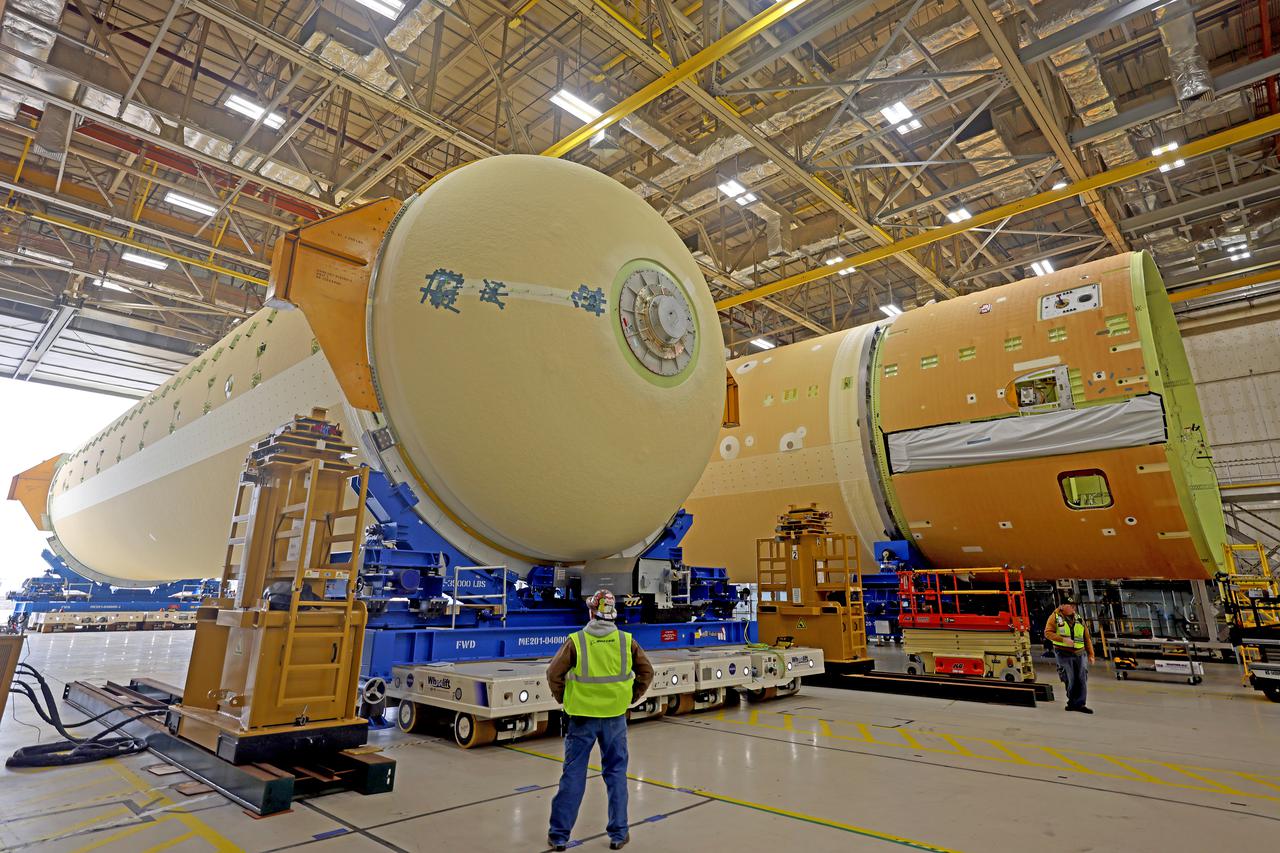
NASA is preparing major pieces of the Space Launch System rocket’s core stage to be joined as part of assembling the core stage for the Artemis II mission that will send crews to lunar orbit. Crews will soon connect the forward assembly with the 130-foot liquid hydrogen tank in the final assembly area at NASA’s Michoud Assembly Facility in New Orleans. When this process is completed, four of the five large structures that make up the core stage will be joined. The 66-foot forward assembly consists of the forward skirt, liquid oxygen tank and the intertank, which were mated earlier. This forward assembly will be joined with the 130-foot liquid hydrogen tank, the largest part of the stage that holds more than 500,000 gallons of cryogenic propellant. To compete the Artemis II core stage, engineers will add the engine section, which is currently being outfitted and includes the main propulsion systems that connect to the four RS-25 engines, Together, with the SLS twin solid rocket boosters, the core stage will produce 8.8 million pounds of thrust to send NASA’s Orion spacecraft, astronauts, and supplies beyond Earth’s orbit to the Moon. The SLS rocket and the Orion spacecraft form the foundation for deep space exploration and the Artemis lunar program. For more on the core stage: https://www.nasa.gov/exploration/systems/sls/multimedia/infographics/corestage101.html Image credit: NASA/Michael DeMocker
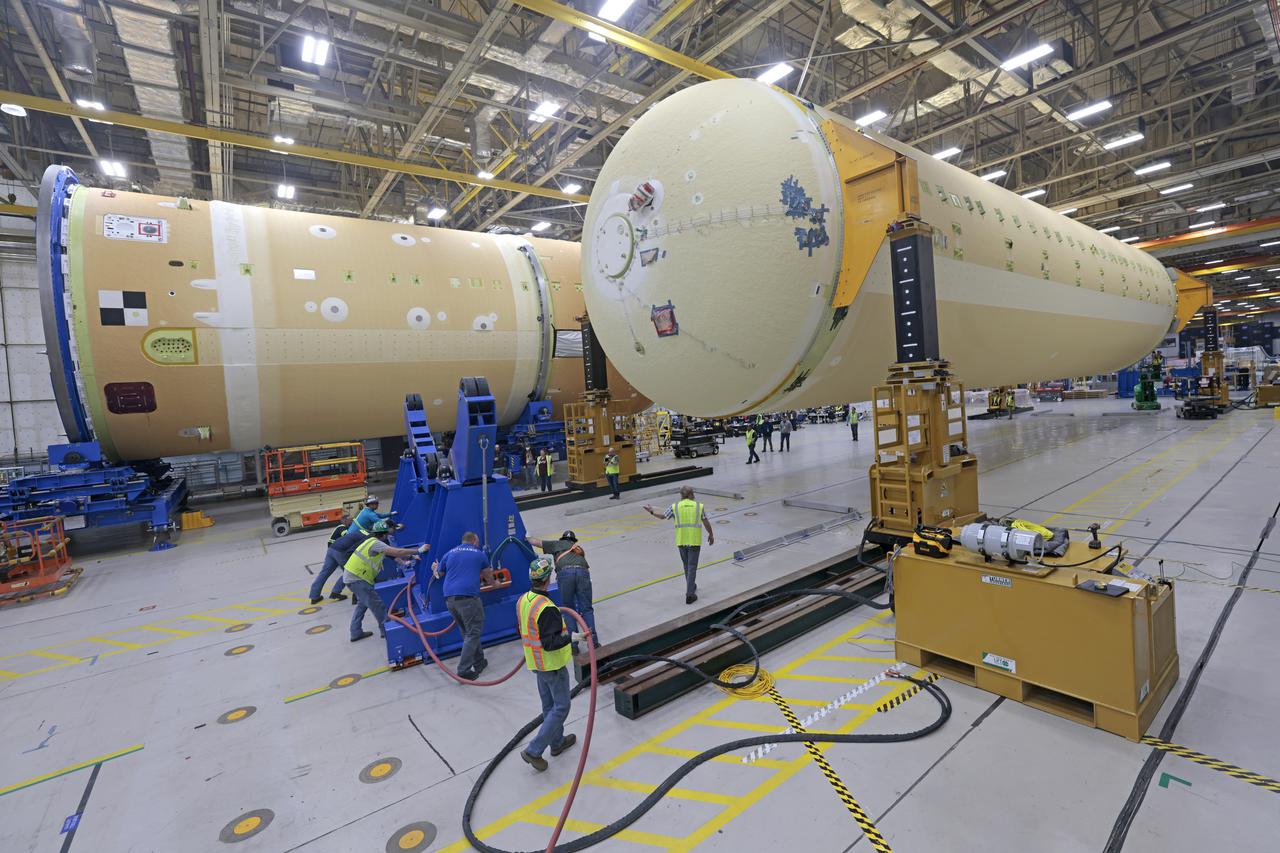
NASA is preparing major pieces of the Space Launch System rocket’s core stage to be joined as part of assembling the core stage for the Artemis II mission that will send crews to lunar orbit. Crews will soon connect the forward assembly with the 130-foot liquid hydrogen tank in the final assembly area at NASA’s Michoud Assembly Facility in New Orleans. When this process is completed, four of the five large structures that make up the core stage will be joined. The 66-foot forward assembly consists of the forward skirt, liquid oxygen tank and the intertank, which were mated earlier. This forward assembly will be joined with the 130-foot liquid hydrogen tank, the largest part of the stage that holds more than 500,000 gallons of cryogenic propellant. To compete the Artemis II core stage, engineers will add the engine section, which is currently being outfitted and includes the main propulsion systems that connect to the four RS-25 engines, Together, with the SLS twin solid rocket boosters, the core stage will produce 8.8 million pounds of thrust to send NASA’s Orion spacecraft, astronauts, and supplies beyond Earth’s orbit to the Moon. The SLS rocket and the Orion spacecraft form the foundation for deep space exploration and the Artemis lunar program. For more on the core stage: https://www.nasa.gov/exploration/systems/sls/multimedia/infographics/corestage101.html Image credit: NASA/Michael DeMocker
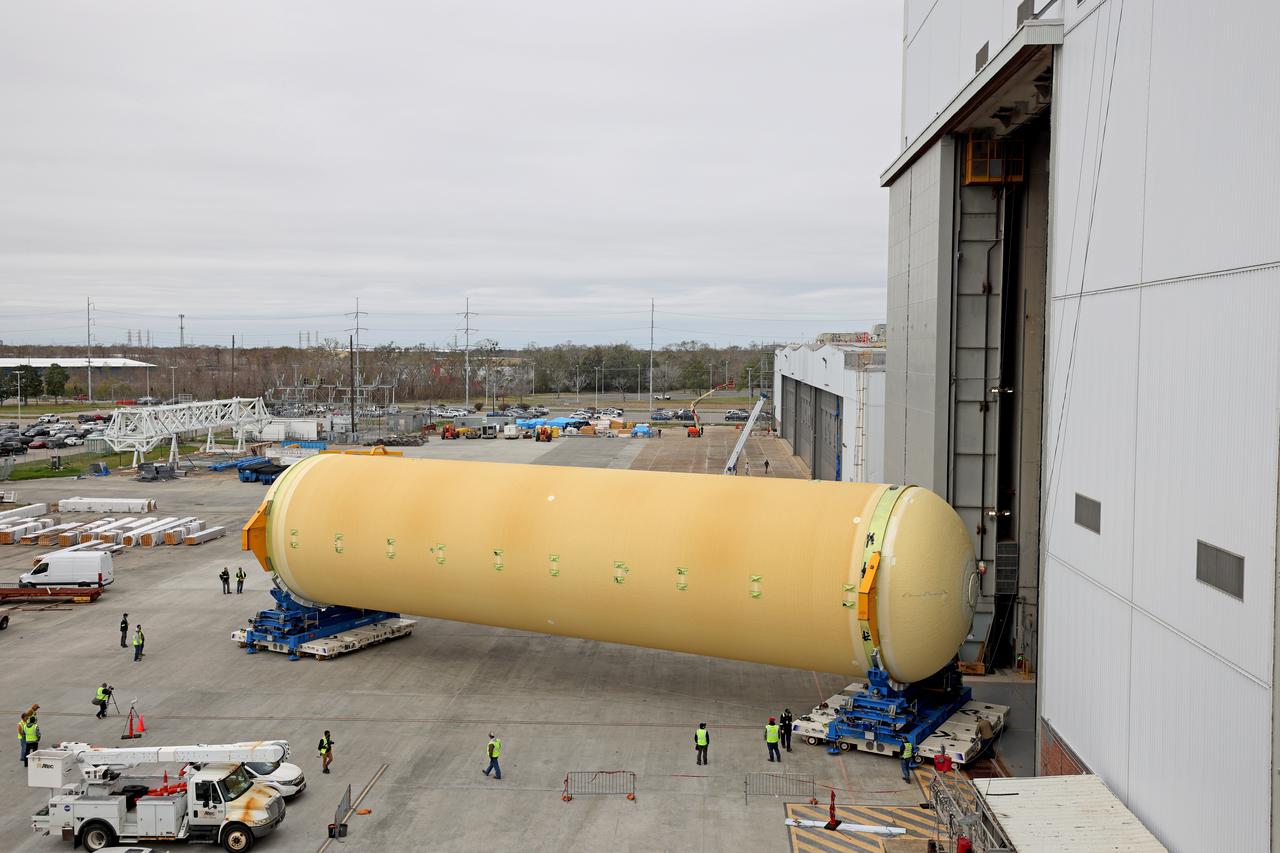
NASA is preparing major pieces of the Space Launch System rocket’s core stage to be joined as part of assembling the core stage for the Artemis II mission that will send crews to lunar orbit. Crews will soon connect the forward assembly with the 130-foot liquid hydrogen tank in the final assembly area at NASA’s Michoud Assembly Facility in New Orleans. When this process is completed, four of the five large structures that make up the core stage will be joined. The 66-foot forward assembly consists of the forward skirt, liquid oxygen tank and the intertank, which were mated earlier. This forward assembly will be joined with the 130-foot liquid hydrogen tank, the largest part of the stage that holds more than 500,000 gallons of cryogenic propellant. To compete the Artemis II core stage, engineers will add the engine section, which is currently being outfitted and includes the main propulsion systems that connect to the four RS-25 engines, Together, with the SLS twin solid rocket boosters, the core stage will produce 8.8 million pounds of thrust to send NASA’s Orion spacecraft, astronauts, and supplies beyond Earth’s orbit to the Moon. The SLS rocket and the Orion spacecraft form the foundation for deep space exploration and the Artemis lunar program. For more on the core stage: https://www.nasa.gov/exploration/systems/sls/multimedia/infographics/corestage101.html Image credit: NASA/Michael DeMocker
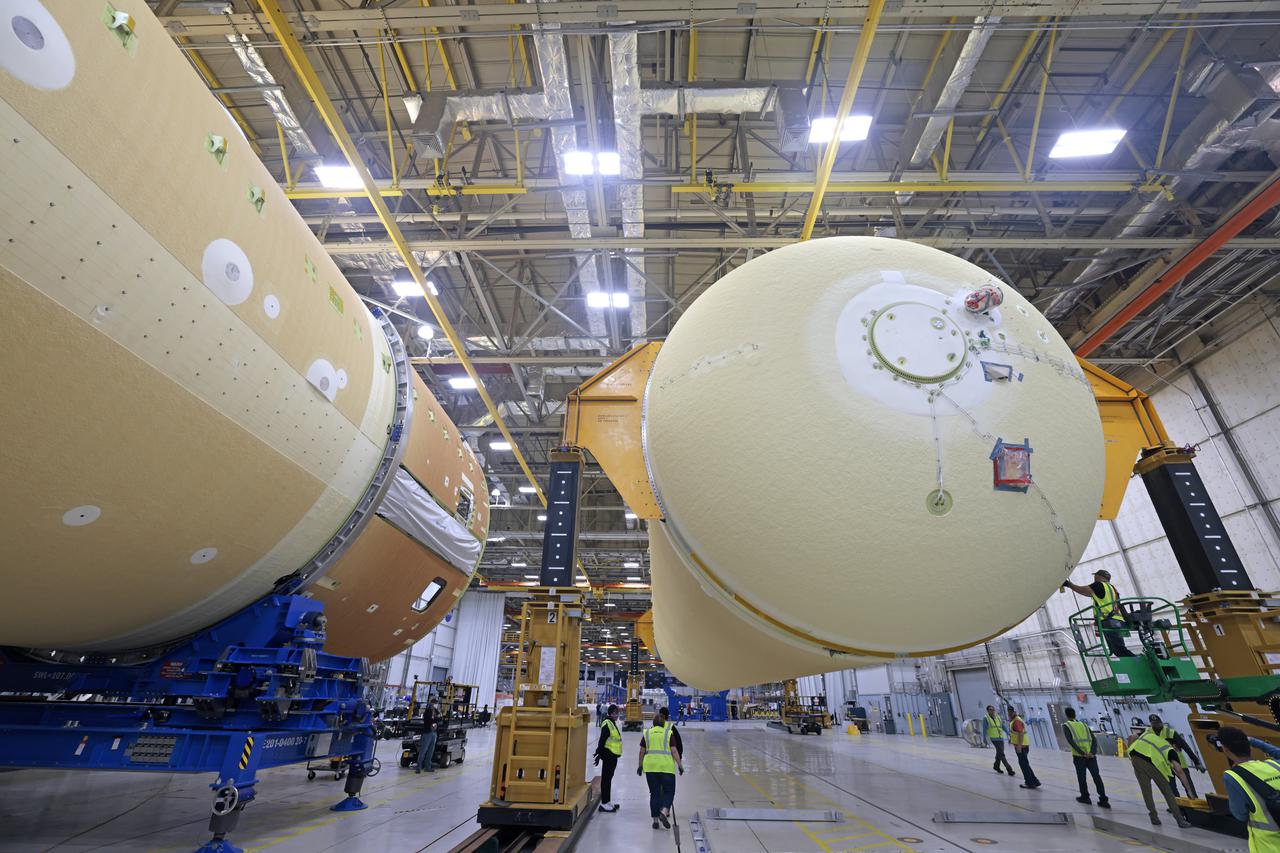
NASA is preparing major pieces of the Space Launch System rocket’s core stage to be joined as part of assembling the core stage for the Artemis II mission that will send crews to lunar orbit. Crews will soon connect the forward assembly with the 130-foot liquid hydrogen tank in the final assembly area at NASA’s Michoud Assembly Facility in New Orleans. When this process is completed, four of the five large structures that make up the core stage will be joined. The 66-foot forward assembly consists of the forward skirt, liquid oxygen tank and the intertank, which were mated earlier. This forward assembly will be joined with the 130-foot liquid hydrogen tank, the largest part of the stage that holds more than 500,000 gallons of cryogenic propellant. To compete the Artemis II core stage, engineers will add the engine section, which is currently being outfitted and includes the main propulsion systems that connect to the four RS-25 engines, Together, with the SLS twin solid rocket boosters, the core stage will produce 8.8 million pounds of thrust to send NASA’s Orion spacecraft, astronauts, and supplies beyond Earth’s orbit to the Moon. The SLS rocket and the Orion spacecraft form the foundation for deep space exploration and the Artemis lunar program. For more on the core stage: https://www.nasa.gov/exploration/systems/sls/multimedia/infographics/corestage101.html Image credit: NASA/Michael DeMocker
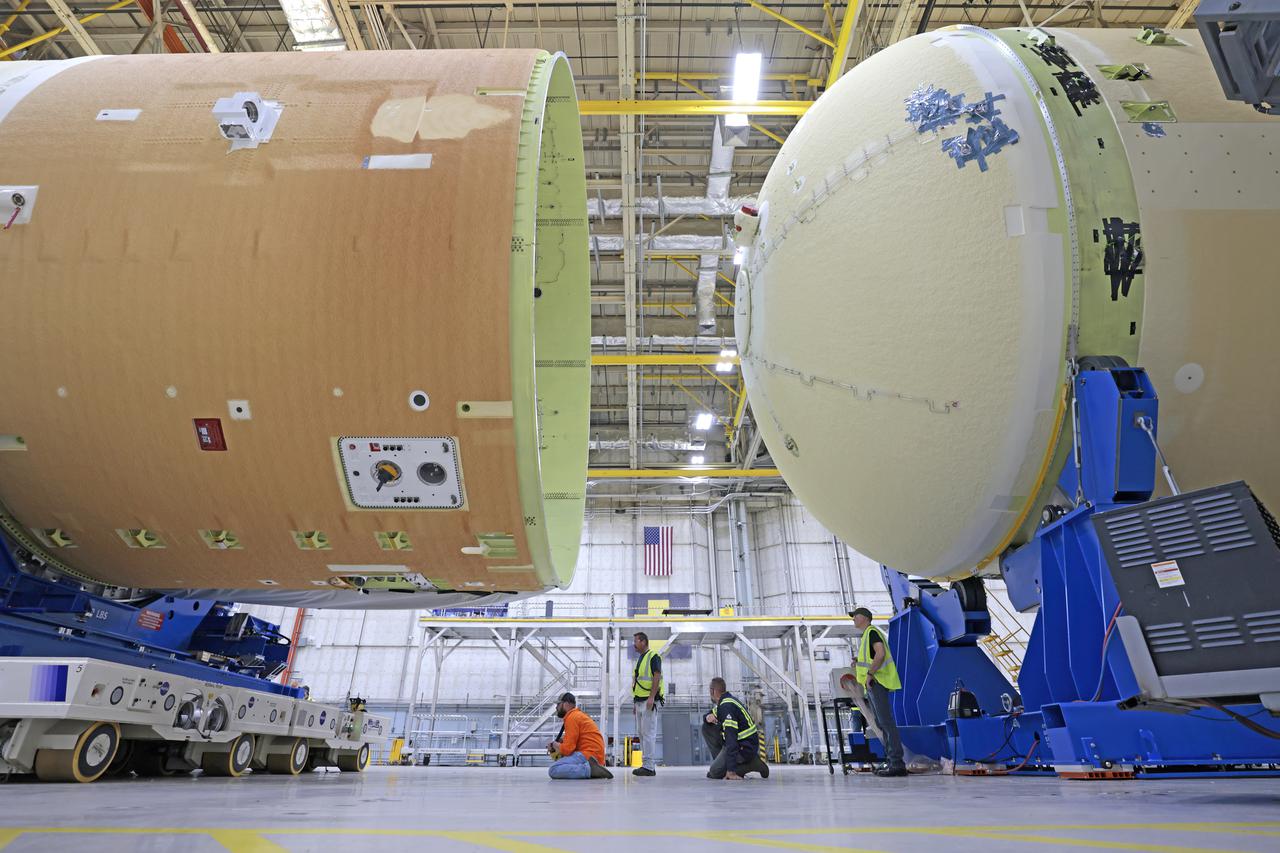
NASA is preparing major pieces of the Space Launch System rocket’s core stage to be joined as part of assembling the core stage for the Artemis II mission that will send crews to lunar orbit. Crews will soon connect the forward assembly with the 130-foot liquid hydrogen tank in the final assembly area at NASA’s Michoud Assembly Facility in New Orleans. When this process is completed, four of the five large structures that make up the core stage will be joined. The 66-foot forward assembly consists of the forward skirt, liquid oxygen tank and the intertank, which were mated earlier. This forward assembly will be joined with the 130-foot liquid hydrogen tank, the largest part of the stage that holds more than 500,000 gallons of cryogenic propellant. To compete the Artemis II core stage, engineers will add the engine section, which is currently being outfitted and includes the main propulsion systems that connect to the four RS-25 engines, Together, with the SLS twin solid rocket boosters, the core stage will produce 8.8 million pounds of thrust to send NASA’s Orion spacecraft, astronauts, and supplies beyond Earth’s orbit to the Moon. The SLS rocket and the Orion spacecraft form the foundation for deep space exploration and the Artemis lunar program. For more on the core stage: https://www.nasa.gov/exploration/systems/sls/multimedia/infographics/corestage101.html Image credit: NASA/Michael DeMocker
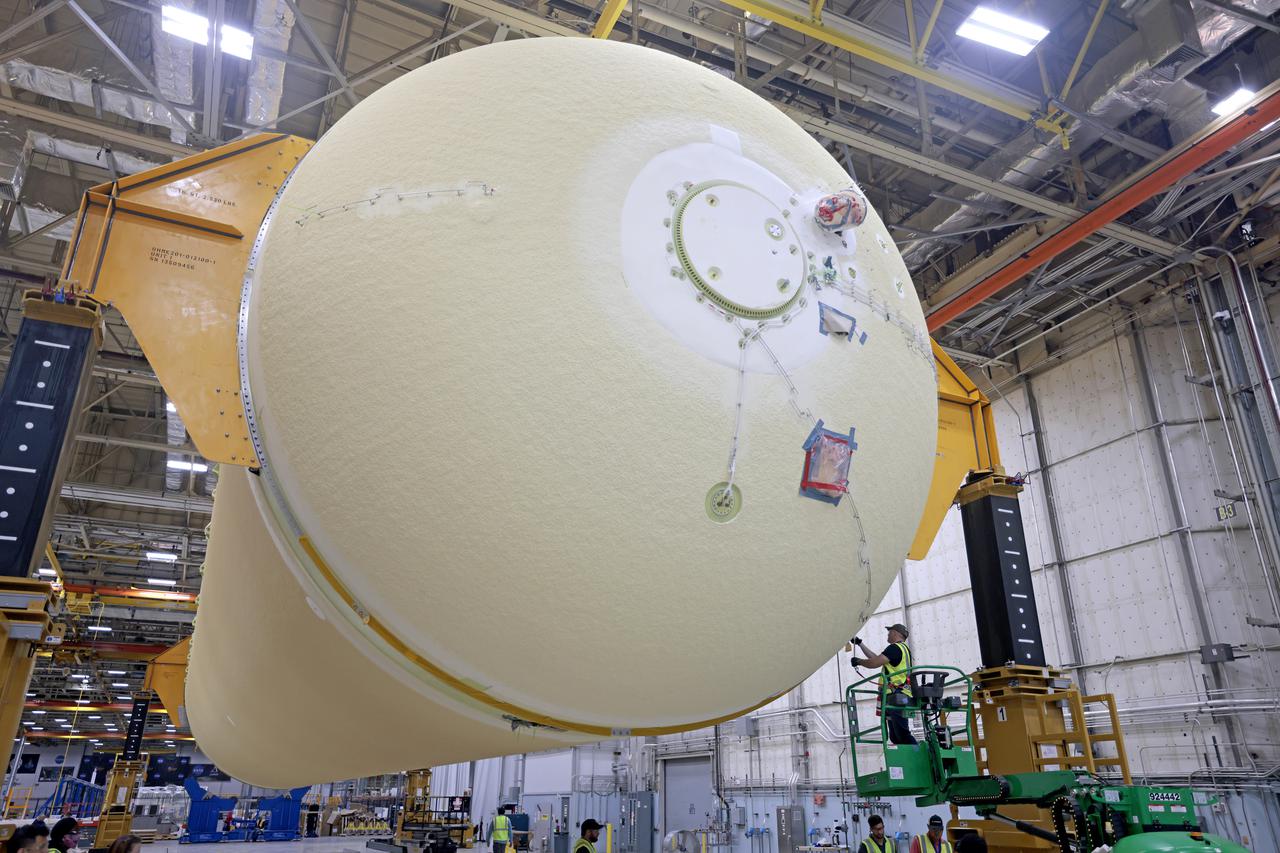
NASA is preparing major pieces of the Space Launch System rocket’s core stage to be joined as part of assembling the core stage for the Artemis II mission that will send crews to lunar orbit. Crews will soon connect the forward assembly with the 130-foot liquid hydrogen tank in the final assembly area at NASA’s Michoud Assembly Facility in New Orleans. When this process is completed, four of the five large structures that make up the core stage will be joined. The 66-foot forward assembly consists of the forward skirt, liquid oxygen tank and the intertank, which were mated earlier. This forward assembly will be joined with the 130-foot liquid hydrogen tank, the largest part of the stage that holds more than 500,000 gallons of cryogenic propellant. To compete the Artemis II core stage, engineers will add the engine section, which is currently being outfitted and includes the main propulsion systems that connect to the four RS-25 engines, Together, with the SLS twin solid rocket boosters, the core stage will produce 8.8 million pounds of thrust to send NASA’s Orion spacecraft, astronauts, and supplies beyond Earth’s orbit to the Moon. The SLS rocket and the Orion spacecraft form the foundation for deep space exploration and the Artemis lunar program. For more on the core stage: https://www.nasa.gov/exploration/systems/sls/multimedia/infographics/corestage101.html Image credit: NASA/Michael DeMocker
NASA is preparing major pieces of the Space Launch System rocket’s core stage to be joined as part of assembling the core stage for the Artemis II mission that will send crews to lunar orbit. Crews will soon connect the forward assembly with the 130-foot liquid hydrogen tank in the final assembly area at NASA’s Michoud Assembly Facility in New Orleans. When this process is completed, four of the five large structures that make up the core stage will be joined. The 66-foot forward assembly consists of the forward skirt, liquid oxygen tank and the intertank, which were mated earlier. This forward assembly will be joined with the 130-foot liquid hydrogen tank, the largest part of the stage that holds more than 500,000 gallons of cryogenic propellant. To compete the Artemis II core stage, engineers will add the engine section, which is currently being outfitted and includes the main propulsion systems that connect to the four RS-25 engines, Together, with the SLS twin solid rocket boosters, the core stage will produce 8.8 million pounds of thrust to send NASA’s Orion spacecraft, astronauts, and supplies beyond Earth’s orbit to the Moon. The SLS rocket and the Orion spacecraft form the foundation for deep space exploration and the Artemis lunar program. For more on the core stage: https://www.nasa.gov/exploration/systems/sls/multimedia/infographics/corestage101.html Image credit: NASA/Michael DeMocker
NASA is preparing major pieces of the Space Launch System rocket’s core stage to be joined as part of assembling the core stage for the Artemis II mission that will send crews to lunar orbit. Crews will soon connect the forward assembly with the 130-foot liquid hydrogen tank in the final assembly area at NASA’s Michoud Assembly Facility in New Orleans. When this process is completed, four of the five large structures that make up the core stage will be joined. The 66-foot forward assembly consists of the forward skirt, liquid oxygen tank and the intertank, which were mated earlier. This forward assembly will be joined with the 130-foot liquid hydrogen tank, the largest part of the stage that holds more than 500,000 gallons of cryogenic propellant. To compete the Artemis II core stage, engineers will add the engine section, which is currently being outfitted and includes the main propulsion systems that connect to the four RS-25 engines, Together, with the SLS twin solid rocket boosters, the core stage will produce 8.8 million pounds of thrust to send NASA’s Orion spacecraft, astronauts, and supplies beyond Earth’s orbit to the Moon. The SLS rocket and the Orion spacecraft form the foundation for deep space exploration and the Artemis lunar program. For more on the core stage: https://www.nasa.gov/exploration/systems/sls/multimedia/infographics/corestage101.html Image credit: NASA/Michael DeMocker
NASA is preparing major pieces of the Space Launch System rocket’s core stage to be joined as part of assembling the core stage for the Artemis II mission that will send crews to lunar orbit. Crews will soon connect the forward assembly with the 130-foot liquid hydrogen tank in the final assembly area at NASA’s Michoud Assembly Facility in New Orleans. When this process is completed, four of the five large structures that make up the core stage will be joined. The 66-foot forward assembly consists of the forward skirt, liquid oxygen tank and the intertank, which were mated earlier. This forward assembly will be joined with the 130-foot liquid hydrogen tank, the largest part of the stage that holds more than 500,000 gallons of cryogenic propellant. To compete the Artemis II core stage, engineers will add the engine section, which is currently being outfitted and includes the main propulsion systems that connect to the four RS-25 engines, Together, with the SLS twin solid rocket boosters, the core stage will produce 8.8 million pounds of thrust to send NASA’s Orion spacecraft, astronauts, and supplies beyond Earth’s orbit to the Moon. The SLS rocket and the Orion spacecraft form the foundation for deep space exploration and the Artemis lunar program. For more on the core stage: https://www.nasa.gov/exploration/systems/sls/multimedia/infographics/corestage101.html Image credit: NASA/Michael DeMocker
NASA is preparing major pieces of the Space Launch System rocket’s core stage to be joined as part of assembling the core stage for the Artemis II mission that will send crews to lunar orbit. Crews will soon connect the forward assembly with the 130-foot liquid hydrogen tank in the final assembly area at NASA’s Michoud Assembly Facility in New Orleans. When this process is completed, four of the five large structures that make up the core stage will be joined. The 66-foot forward assembly consists of the forward skirt, liquid oxygen tank and the intertank, which were mated earlier. This forward assembly will be joined with the 130-foot liquid hydrogen tank, the largest part of the stage that holds more than 500,000 gallons of cryogenic propellant. To compete the Artemis II core stage, engineers will add the engine section, which is currently being outfitted and includes the main propulsion systems that connect to the four RS-25 engines, Together, with the SLS twin solid rocket boosters, the core stage will produce 8.8 million pounds of thrust to send NASA’s Orion spacecraft, astronauts, and supplies beyond Earth’s orbit to the Moon. The SLS rocket and the Orion spacecraft form the foundation for deep space exploration and the Artemis lunar program. For more on the core stage: https://www.nasa.gov/exploration/systems/sls/multimedia/infographics/corestage101.html Image credit: NASA/Michael DeMocker
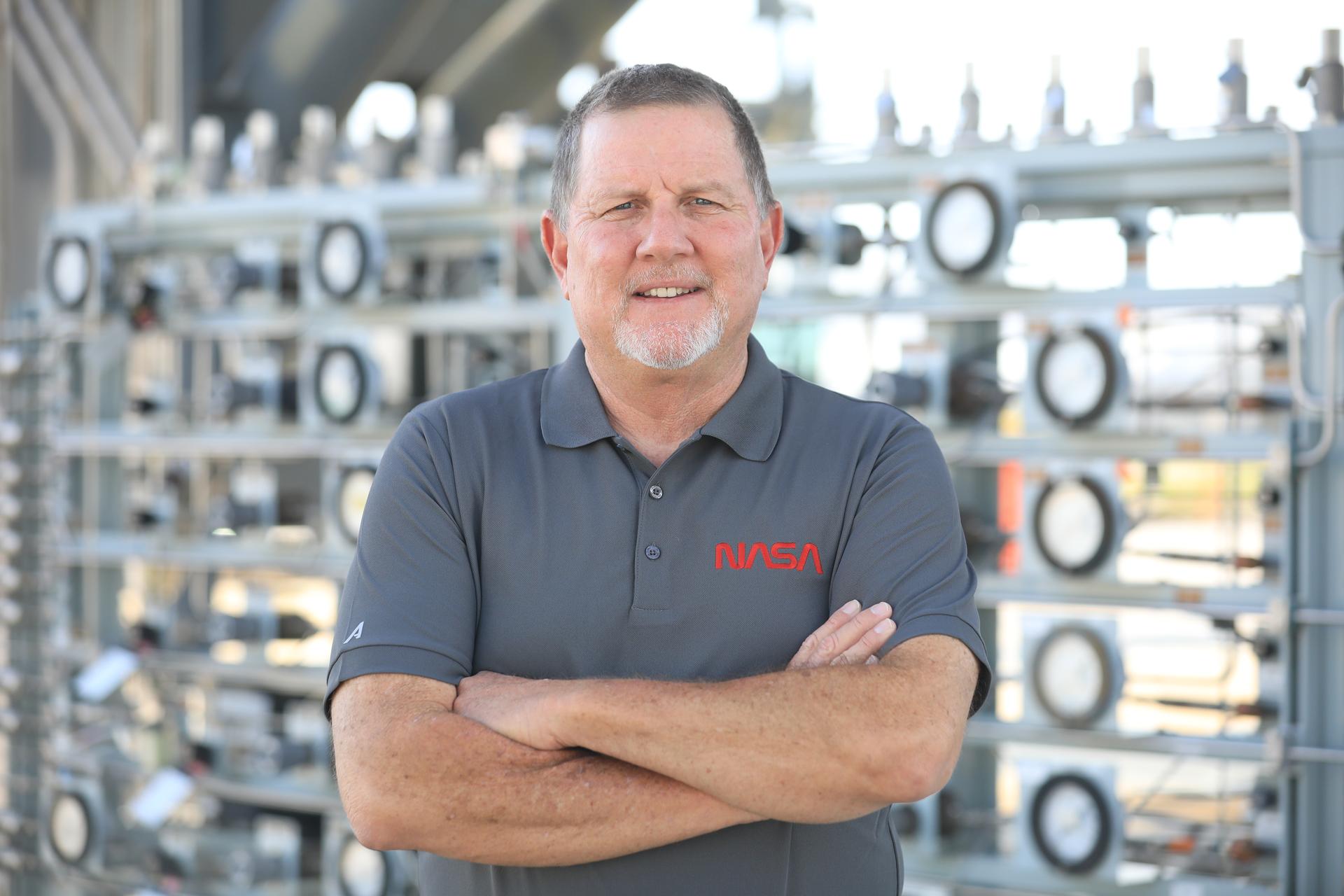
Kenny Heckle, lead, mechanical operations, Launch Equipment Test Facility at NASA’s Kennedy Space Center in Florida, poses for a photograph on Monday, May 26, 2026. Heckle is among the first engineers and technicians sworn in as new NASA civil servants as part of the administrator’s workforce directive to restore technical core competencies within the civil servants ranks.
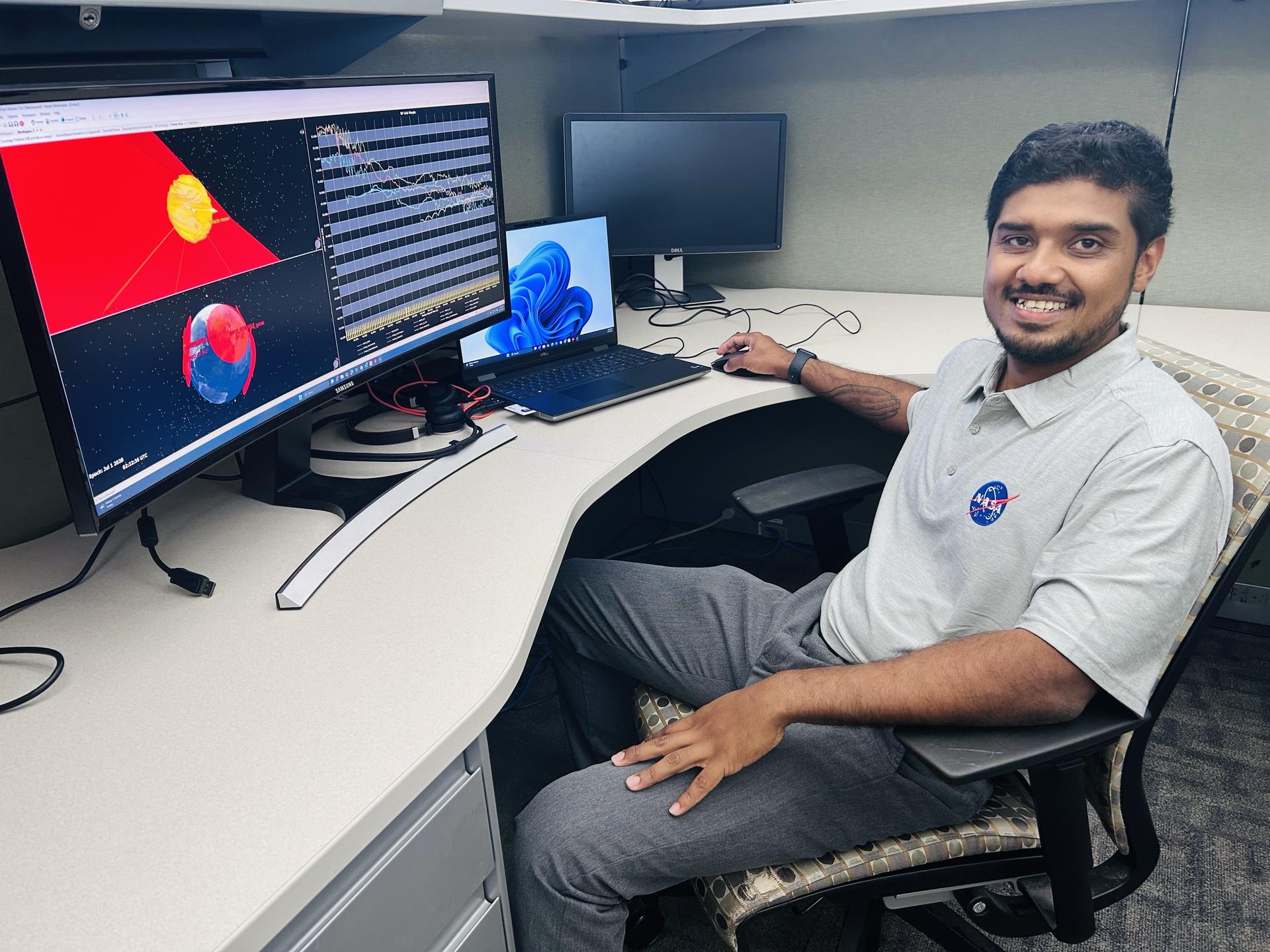
Rohit Goeptar, an electromagnetic/radio frequency analyst with NASA’s Launch Services Program at the agency’s Kennedy Space Center in Florida, reviews a radio frequency link budget analysis for NASA’s Nancy Grace Roman Space Telescope from his office. Goeptar is among the engineers and technicians sworn in as new NASA civil servants as part of NASA Administrator Jared Isaacman’s workforce directive to restore technical core competencies within the civil servants ranks.

Rohit Goeptar, an electromagnetic/radio frequency analyst with NASA’s Launch Services Program at the agency’s Kennedy Space Center in Florida, reviews a radio frequency link budget analysis for NASA’s Nancy Grace Roman Space Telescope with a colleague. Goeptar is among the engineers and technicians sworn in as new NASA civil servants as part of NASA Administrator Jared Isaacman’s workforce directive to restore technical core competencies within the civil servants ranks.
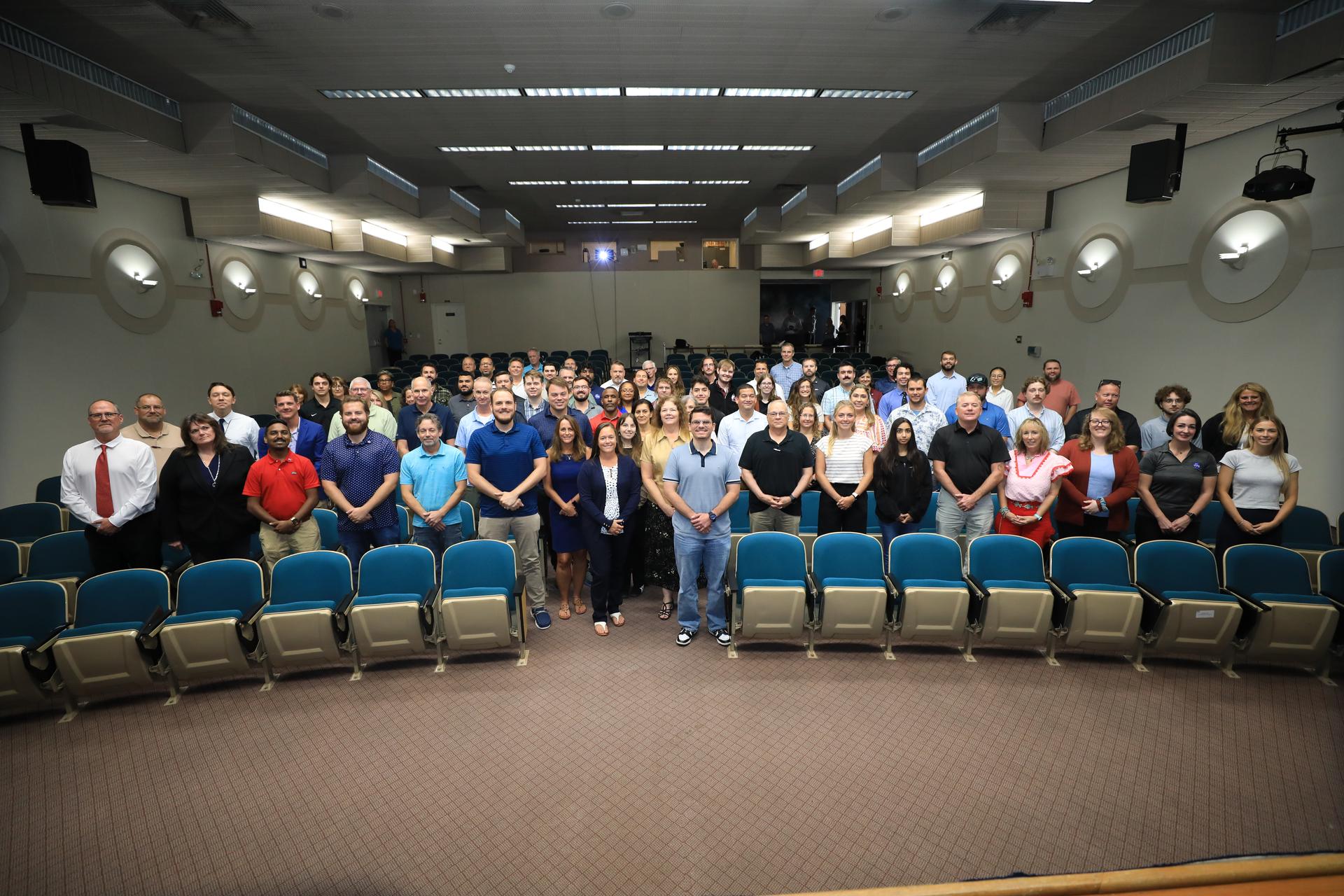
NASA’s Kennedy Space Center Director Brian Hughes swore in the first phase of employees formerly from the Consolidated Operations, Management, Engineering, and Test (COMET) contract as new NASA civil servants on Monday, July 13, 2026, at NASA Kennedy in Florida. The latest round of civil servants is part of the administrator’s workforce directive to restore technical core competencies within the civil servants ranks.
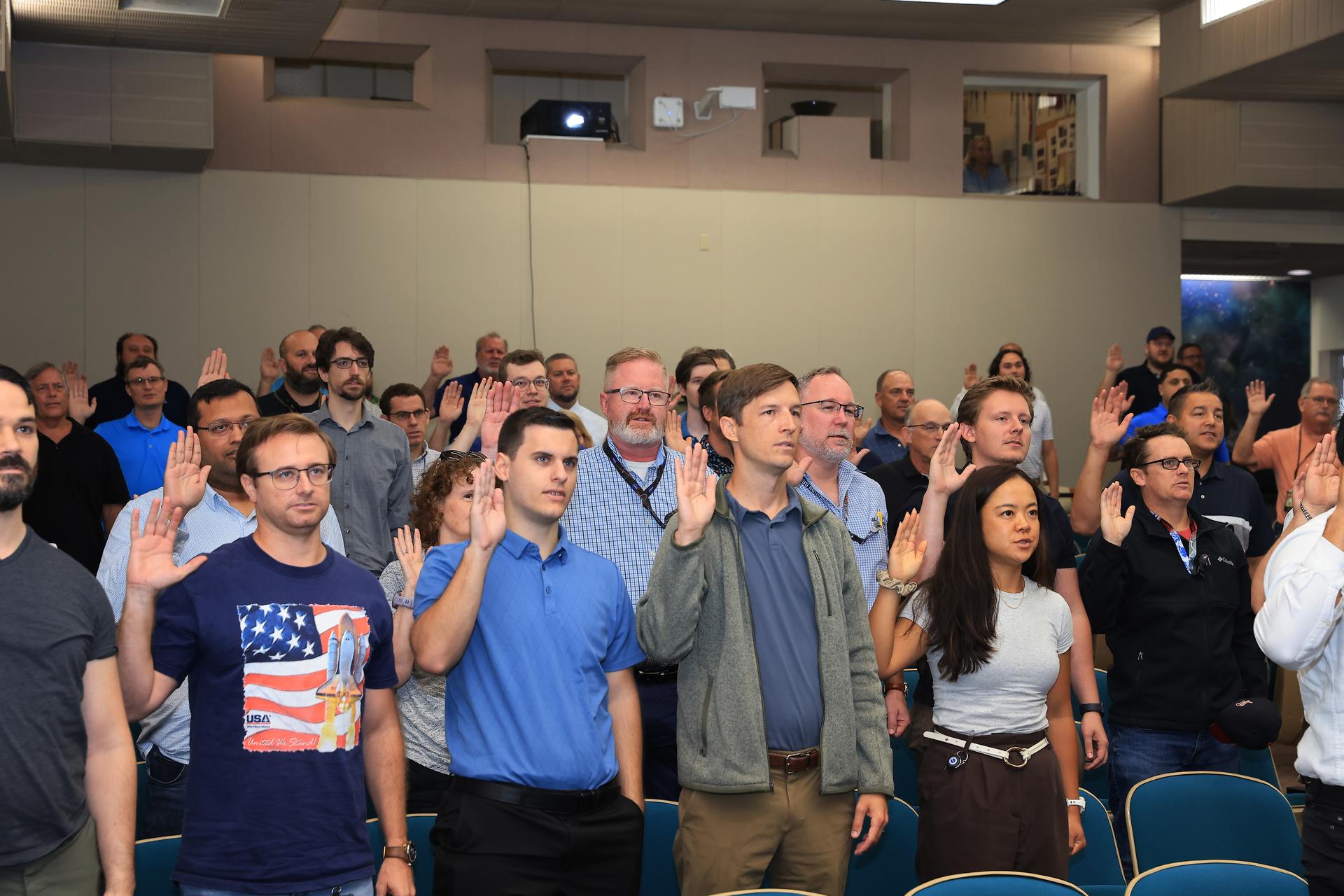
NASA’s Kennedy Space Center Director Brian Hughes swore in employees formerly from the Consolidated Operations, Management, Engineering, and Test (COMET) contract as new NASA civil servants on Monday, July 27, 2026, at NASA Kennedy in Florida. The latest round of civil servants is part of the administrator’s workforce directive to restore technical core competencies within the civil servants ranks.

NASA’s Kennedy Space Center Director Brian Hughes swore in employees formerly from the Consolidated Operations, Management, Engineering, and Test (COMET) contract as new NASA civil servants on Monday, July 27, 2026, at NASA Kennedy in Florida. The latest round of civil servants is part of the administrator’s workforce directive to restore technical core competencies within the civil servants ranks.
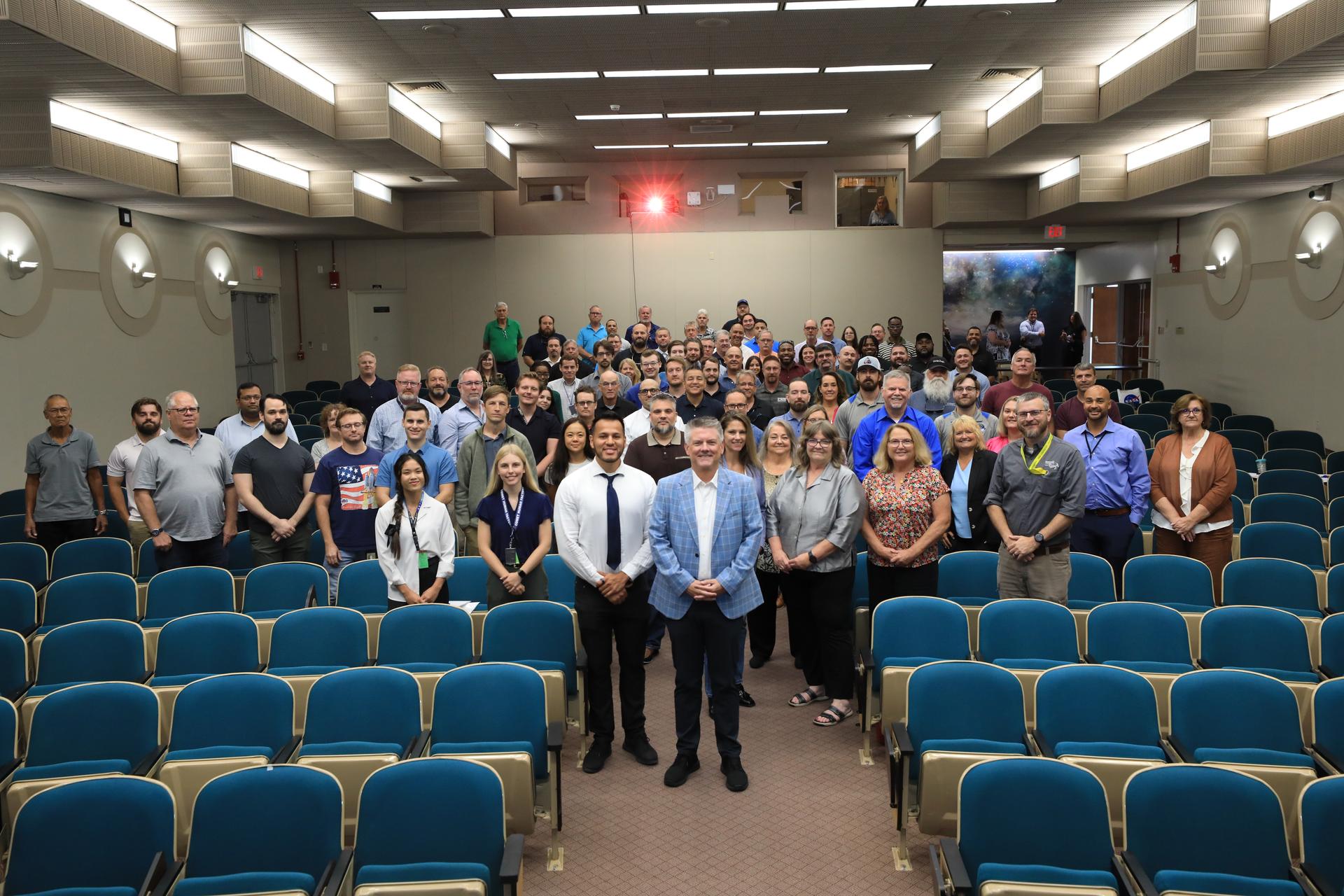
NASA’s Kennedy Space Center Director Brian Hughes (front, center) swore in employees formerly from the Consolidated Operations, Management, Engineering, and Test (COMET) contract as new NASA civil servants on Monday, July 27, 2026, at NASA Kennedy in Florida. The latest round of civil servants is part of the administrator’s workforce directive to restore technical core competencies within the civil servants ranks.
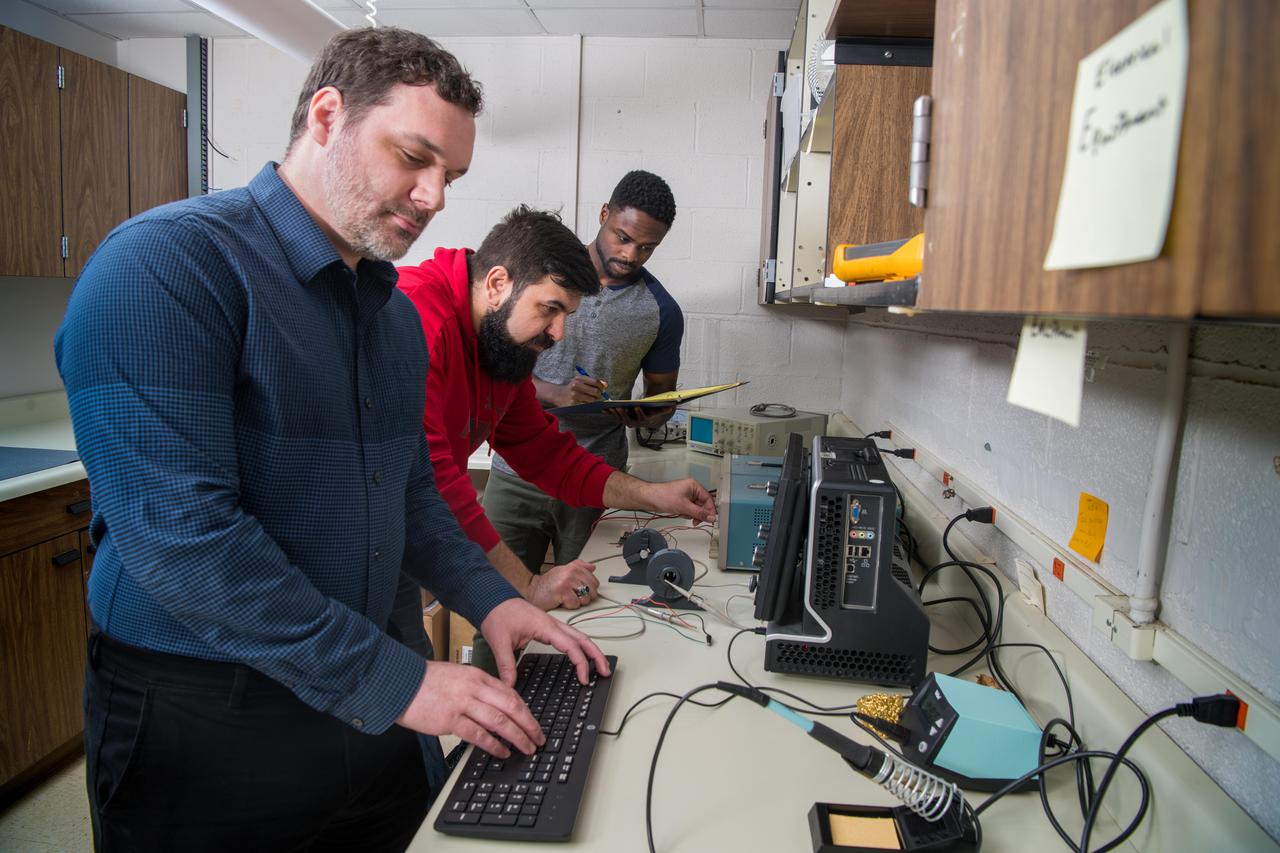
Ultrasonic Measurement System. Ultrasonic measurement system will enable simultaneous measurement of temperature, velocity and density fields through a grid of ultrasonic sensors. This method incorporates a theoretical approach and machine learning techniques to develop a physics-informed data-driven calibration and operation workflow. This allows at least ten times faster data processing times as well as potential capability of transient measurements and solid particle detection. The system can also be utilized for health monitoring. This measurement technique is in line with the “air-breathing propulsion” core competency of GRC. However it can also enables next generation space data processing with higher performance computing capable of operating in harsh deep space environments.
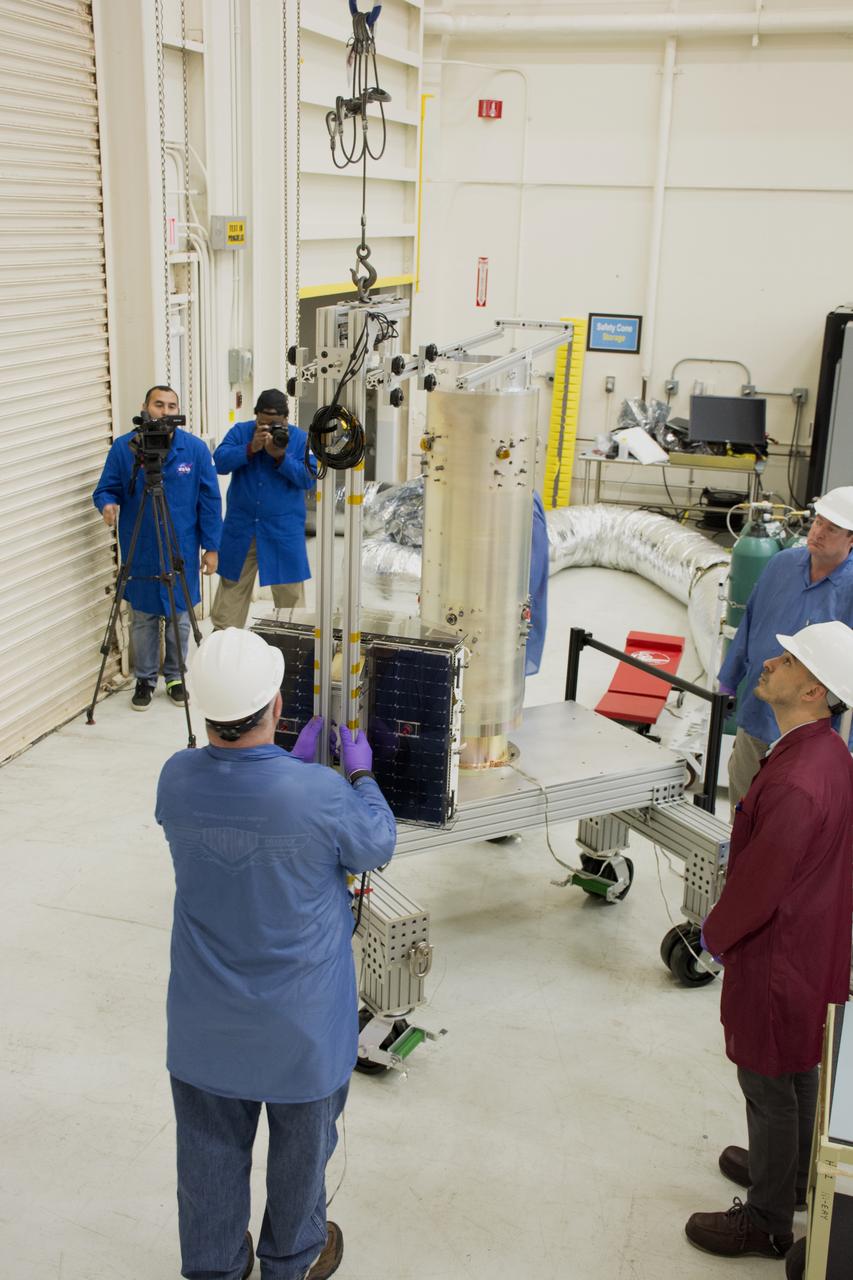
Inside Building 1555 at Vandenberg Air Force Base in California, technicians and engineers install one of eight NASA Cyclone Global Navigation Satellite System (CYGNSS) spacecraft on its deployment module. Processing activities will prepare the spacecraft for launch aboard an Orbital ATK Pegasus XL rocket. When preparations are competed at Vandenberg, the rocket will be transported to NASA’s Kennedy Space Center in Florida attached to the Orbital ATK L-1011 carrier aircraft with in its payload fairing. CYGNSS will launch on the Pegasus XL rocket from the Skid Strip at Cape Canaveral Air Force Station. CYGNSS will make frequent and accurate measurements of ocean surface winds throughout the life cycle of tropical storms and hurricanes. The data that CYGNSS provides will enable scientists to probe key air-sea interaction processes that take place near the core of storms, which are rapidly changing and play a critical role in the beginning and intensification of hurricanes.
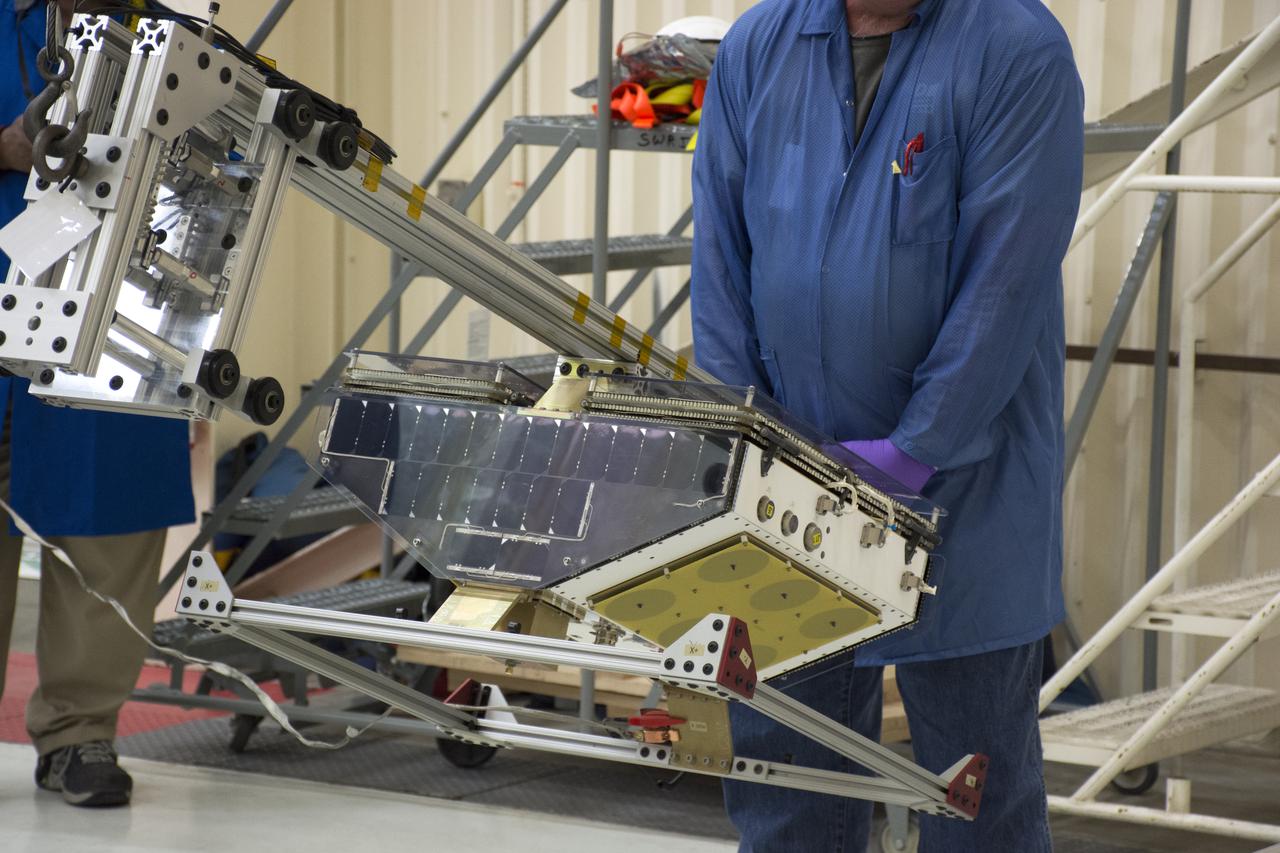
Inside Building 1555 at Vandenberg Air Force Base in California, technicians and engineers install one of eight NASA Cyclone Global Navigation Satellite System (CYGNSS) spacecraft on its deployment module. Processing activities will prepare the spacecraft for launch aboard an Orbital ATK Pegasus XL rocket. When preparations are competed at Vandenberg, the rocket will be transported to NASA’s Kennedy Space Center in Florida attached to the Orbital ATK L-1011 carrier aircraft with in its payload fairing. CYGNSS will launch on the Pegasus XL rocket from the Skid Strip at Cape Canaveral Air Force Station. CYGNSS will make frequent and accurate measurements of ocean surface winds throughout the life cycle of tropical storms and hurricanes. The data that CYGNSS provides will enable scientists to probe key air-sea interaction processes that take place near the core of storms, which are rapidly changing and play a critical role in the beginning and intensification of hurricanes.
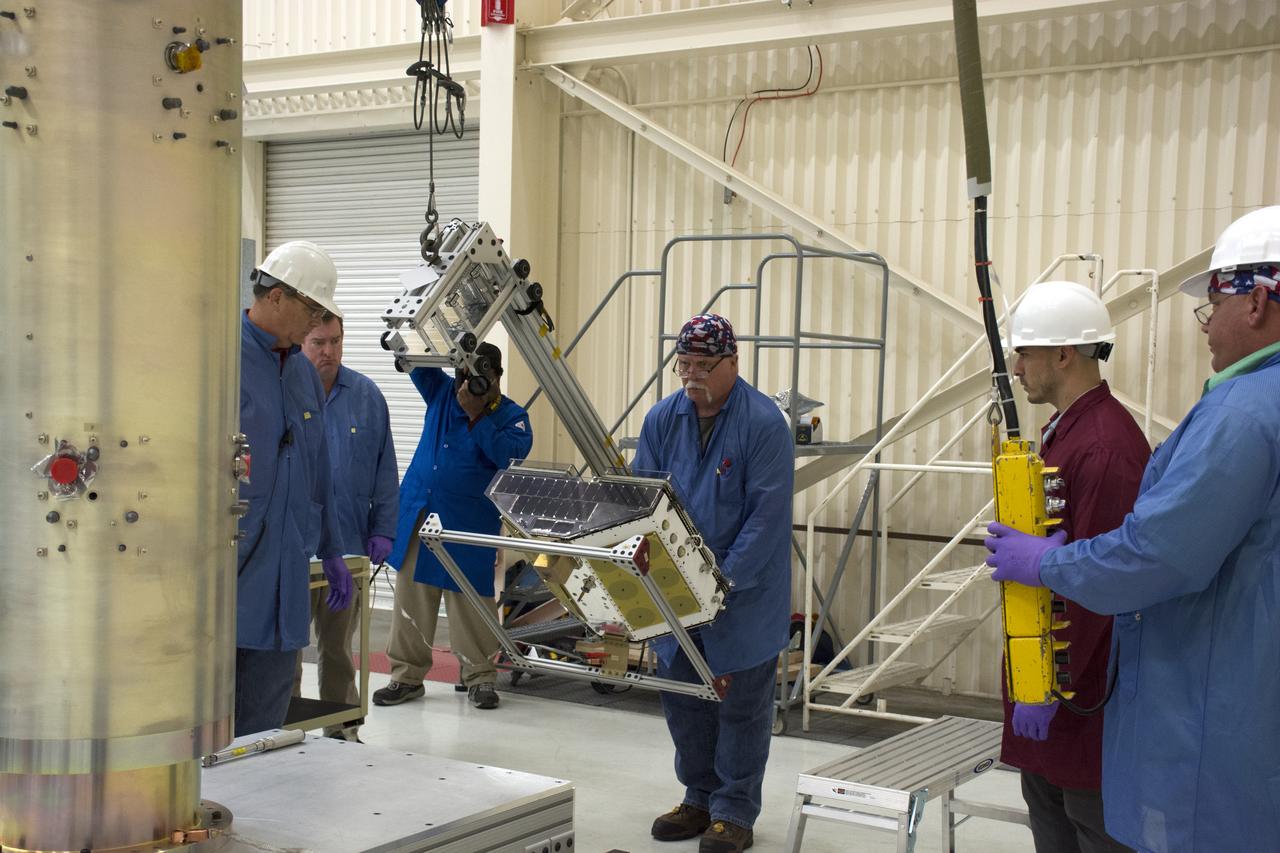
Inside Building 1555 at Vandenberg Air Force Base in California, technicians and engineers install one of eight NASA Cyclone Global Navigation Satellite System (CYGNSS) spacecraft on its deployment module. Processing activities will prepare the spacecraft for launch aboard an Orbital ATK Pegasus XL rocket. When preparations are competed at Vandenberg, the rocket will be transported to NASA’s Kennedy Space Center in Florida attached to the Orbital ATK L-1011 carrier aircraft with in its payload fairing. CYGNSS will launch on the Pegasus XL rocket from the Skid Strip at Cape Canaveral Air Force Station. CYGNSS will make frequent and accurate measurements of ocean surface winds throughout the life cycle of tropical storms and hurricanes. The data that CYGNSS provides will enable scientists to probe key air-sea interaction processes that take place near the core of storms, which are rapidly changing and play a critical role in the beginning and intensification of hurricanes.
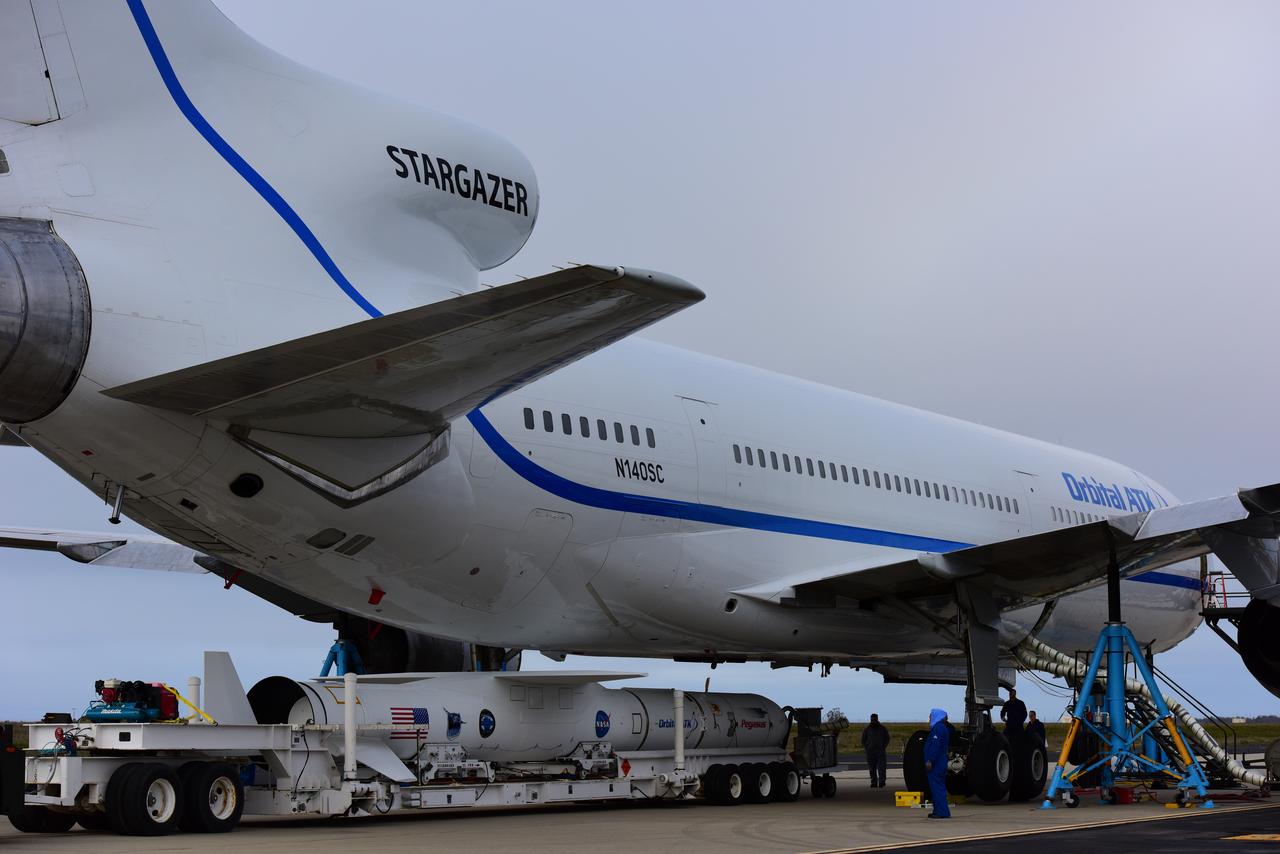
At Vandenberg Air Force Base in California, an Orbital ATK Pegasus XL rocket is mated to the company's L-1011 carrier aircraft near Vandenberg's runway. On board Pegasus are eight NASA Cyclone Global Navigation Satellite System, or CYGNSS, spacecraft. When preparations are competed at Vandenberg, the L-1011/Pegasus XL combination will be flown to NASA’s Kennedy Space Center in Florida. On Dec. 12, 2016, the carrier aircraft is scheduled to take off from the Skid Strip at Cape Canaveral Air Force Station and CYGNSS will launch on the Pegasus XL rocket with the L-1011 flying off shore. CYGNSS satellites will make frequent and accurate measurements of ocean surface winds throughout the life cycle of tropical storms and hurricanes. The data that CYGNSS provides will enable scientists to probe key air-sea interaction processes that take place near the core of storms, which are rapidly changing and play a critical role in the beginning and intensification of hurricanes.
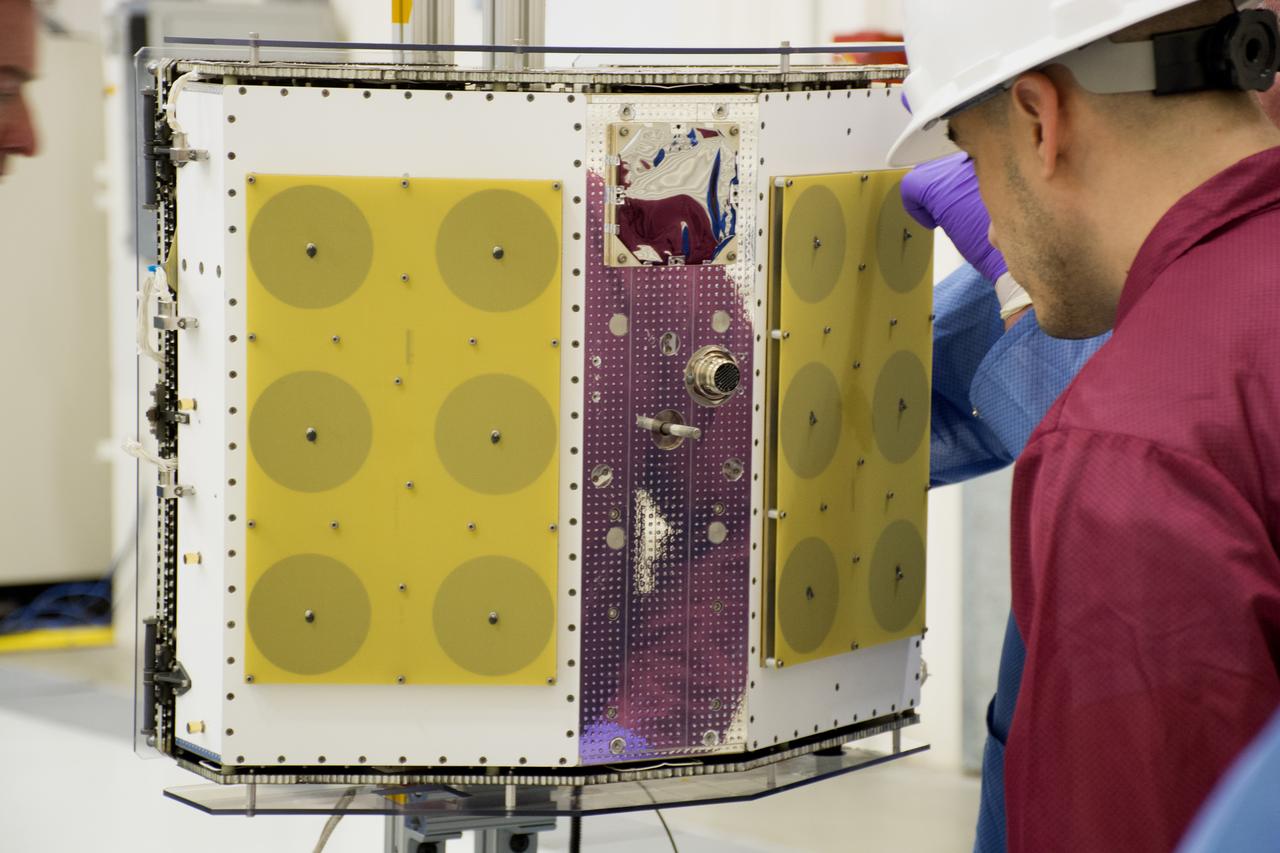
Inside Building 1555 at Vandenberg Air Force Base in California, one of eight NASA Cyclone Global Navigation Satellite System (CYGNSS) spacecraft is inspected. Processing activities will prepare the spacecraft for launch aboard an Orbital ATK Pegasus XL rocket. When preparations are competed at Vandenberg, the rocket will be transported to NASA’s Kennedy Space Center in Florida attached to the Orbital ATK L-1011 carrier aircraft with in its payload fairing. CYGNSS will launch on the Pegasus XL rocket from the Skid Strip at Cape Canaveral Air Force Station. CYGNSS will make frequent and accurate measurements of ocean surface winds throughout the life cycle of tropical storms and hurricanes. The data that CYGNSS provides will enable scientists to probe key air-sea interaction processes that take place near the core of storms, which are rapidly changing and play a critical role in the beginning and intensification of hurricanes.
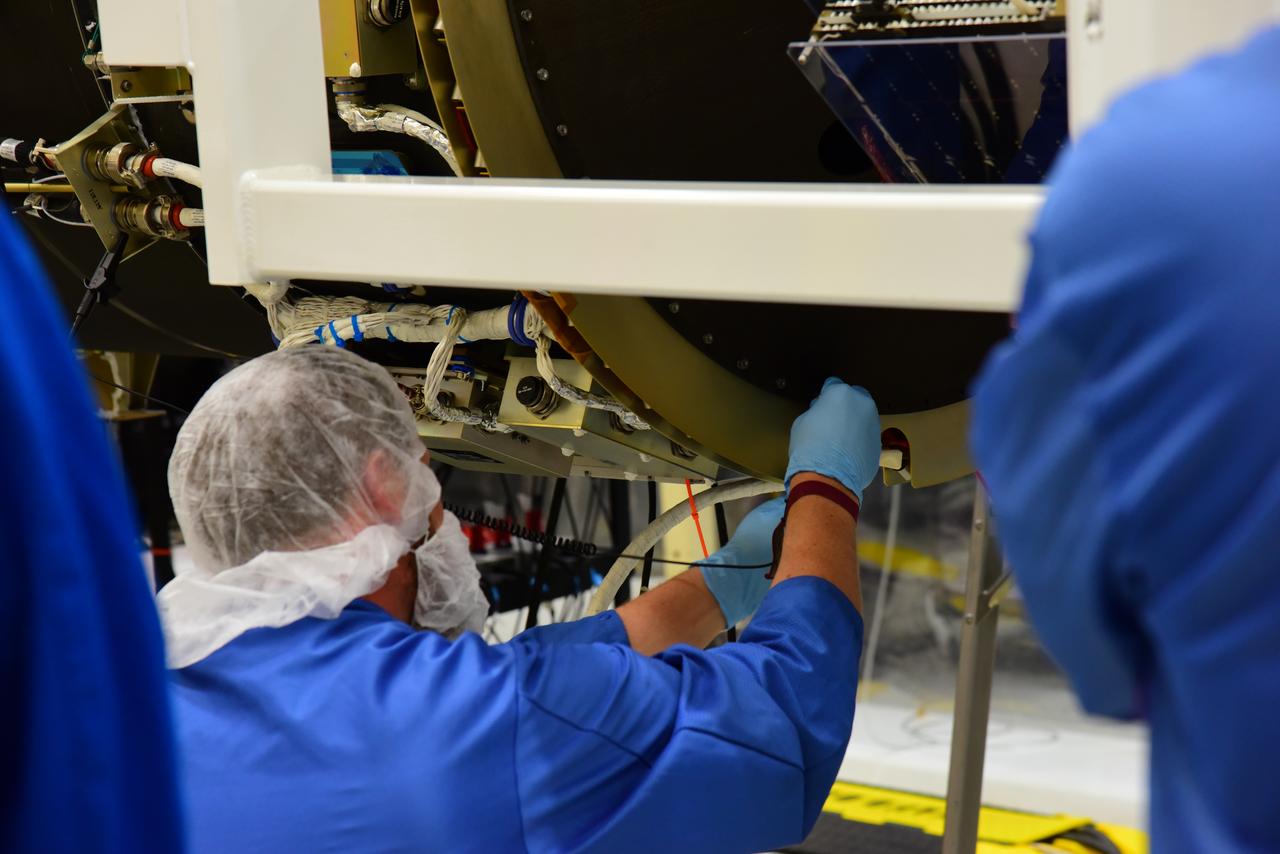
Inside Building 1555 at Vandenberg Air Force Base in California, the eight NASA Cyclone Global Navigation Satellite System (CYGNSS) spacecraft installed on their deployment module undergo inspections prior to NASA’s Kennedy Space Center in Florida. Processing activities will prepare the spacecraft for launch aboard an Orbital ATK Pegasus XL rocket. When preparations are competed at Vandenberg, the rocket will be transported to Kennedy attached to the Orbital ATK L-1011 carrier aircraft with in its payload fairing. CYGNSS will launch on the Pegasus XL rocket from the Skid Strip at Cape Canaveral Air Force Station. CYGNSS will make frequent and accurate measurements of ocean surface winds throughout the life cycle of tropical storms and hurricanes. The data that CYGNSS provides will enable scientists to probe key air-sea interaction processes that take place near the core of storms, which are rapidly changing and play a critical role in the beginning and intensification of hurricanes.
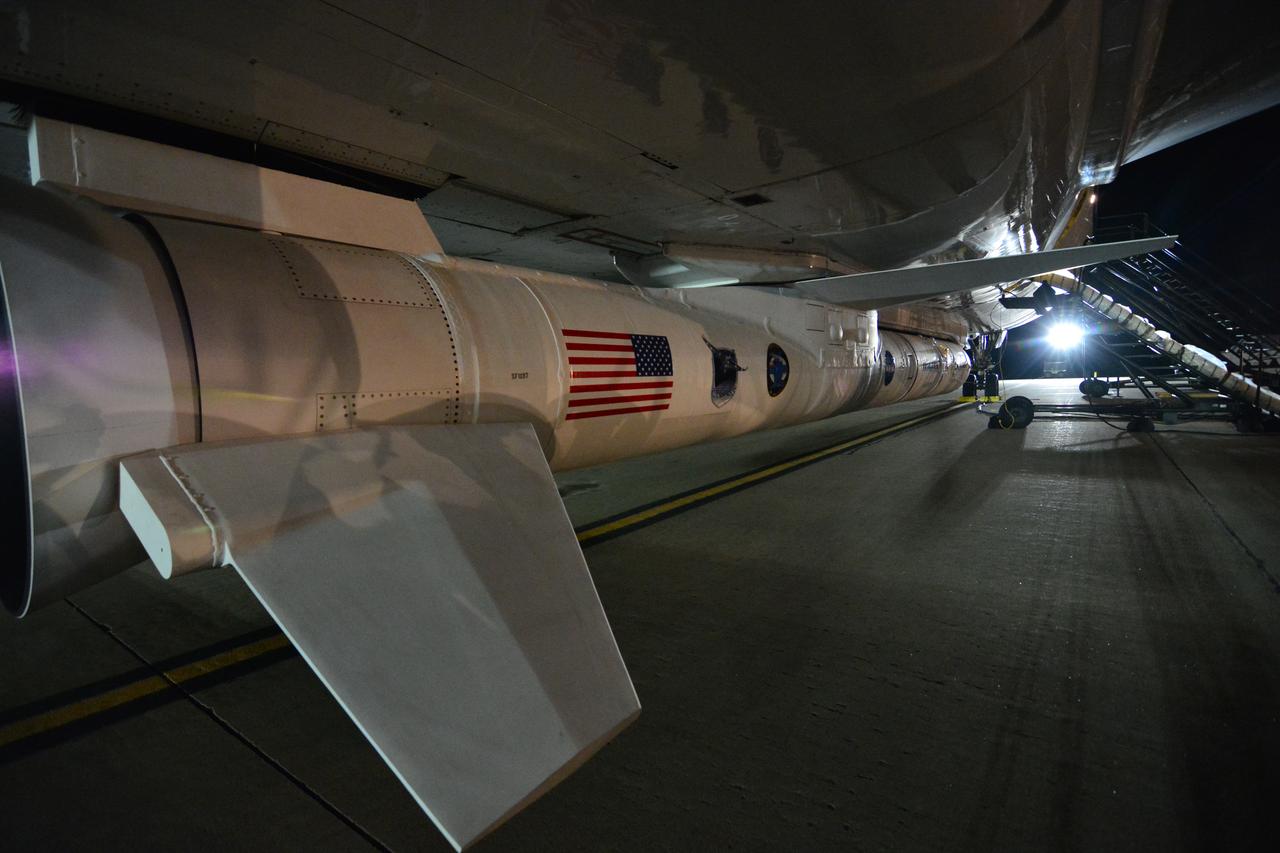
An Orbital ATK Pegasus XL rocket is mated to the underside of the company's L-1011 Stargazer aircraft. The Stargazer is being prepared for takeoff from Vandenberg Air Force Base in California. On board Pegasus XL are eight NASA Cyclone Global Navigation Satellite System, or CYGNSS, spacecraft. When preparations are competed at Vandenberg, the /Pegasus XL combination will be flown to NASA’s Kennedy Space Center in Florida. On Dec. 12, 2016, the carrier aircraft is scheduled to take off from the Skid Strip at Cape Canaveral Air Force Station and CYGNSS will launch on the Pegasus XL rocket with the L-1011 flying off shore. CYGNSS satellites will make frequent and accurate measurements of ocean surface winds throughout the life cycle of tropical storms and hurricanes. The data that CYGNSS provides will help scientists to probe key air-sea interaction processes that take place near the core of storms, which are rapidly changing and play a crucial role in the beginning and intensification of hurricanes.
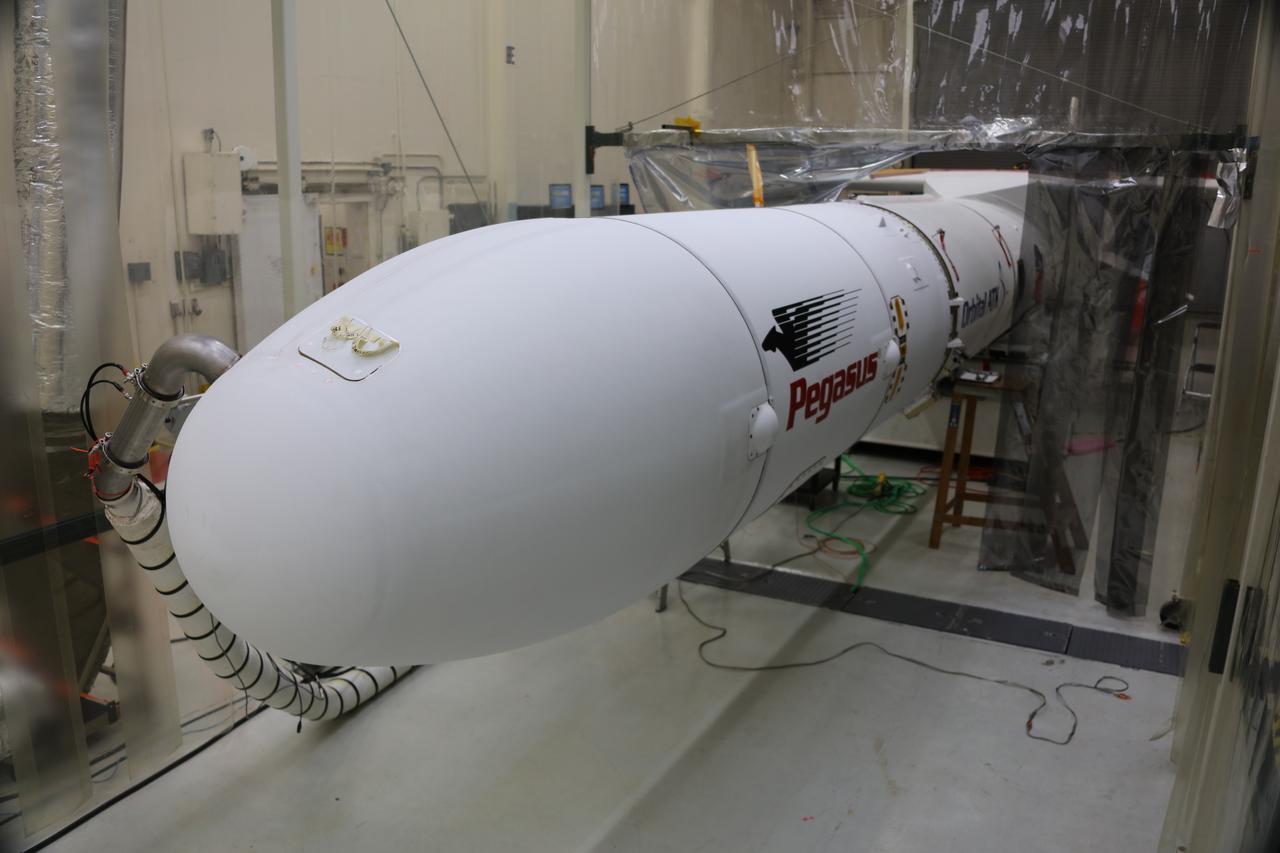
In Building 1555 at Vandenberg Air Force Base in California, an Orbital ATK Pegasus XL rocket is seen after payload fairing installation. On board Pegasus are eight NASA Cyclone Global Navigation Satellite System, or CYGNSS, spacecraft. When preparations are competed at Vandenberg, the L-1011/Pegasus XL combination will be flown to NASA’s Kennedy Space Center in Florida. On Dec. 12, 2016, the carrier aircraft is scheduled to take off from the Skid Strip at Cape Canaveral Air Force Station and CYGNSS will launch on the Pegasus XL rocket with the L-1011 flying off shore. CYGNSS satellites will make frequent and accurate measurements of ocean surface winds throughout the life cycle of tropical storms and hurricanes. The data that CYGNSS provides will help scientists to probe key air-sea interaction processes that take place near the core of storms, which are rapidly changing and play a crucial role in the beginning and intensification of hurricanes.
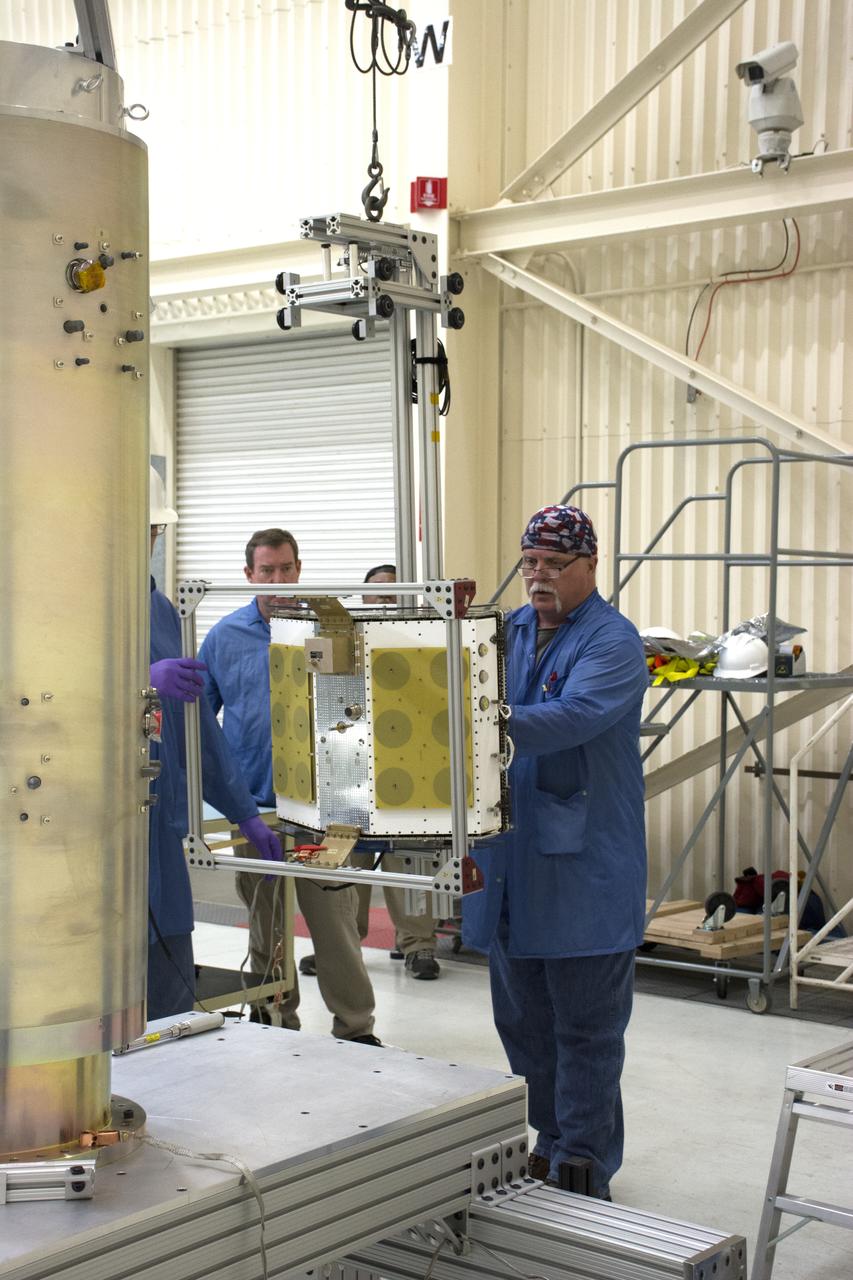
Inside Building 1555 at Vandenberg Air Force Base in California, technicians and engineers install one of eight NASA Cyclone Global Navigation Satellite System (CYGNSS) spacecraft on its deployment module. Processing activities will prepare the spacecraft for launch aboard an Orbital ATK Pegasus XL rocket. When preparations are competed at Vandenberg, the rocket will be transported to NASA’s Kennedy Space Center in Florida attached to the Orbital ATK L-1011 carrier aircraft with in its payload fairing. CYGNSS will launch on the Pegasus XL rocket from the Skid Strip at Cape Canaveral Air Force Station. CYGNSS will make frequent and accurate measurements of ocean surface winds throughout the life cycle of tropical storms and hurricanes. The data that CYGNSS provides will enable scientists to probe key air-sea interaction processes that take place near the core of storms, which are rapidly changing and play a critical role in the beginning and intensification of hurricanes.
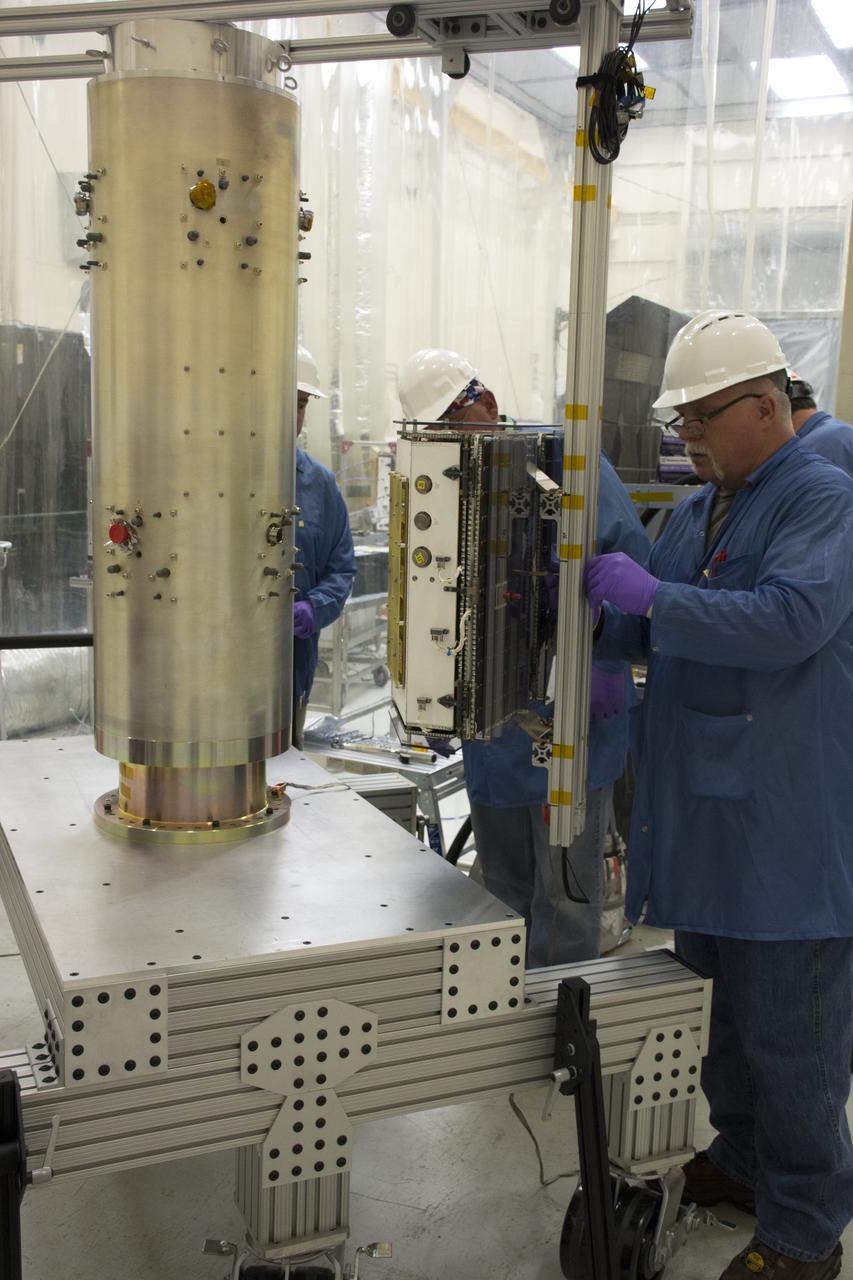
Inside Building 1555 at Vandenberg Air Force Base in California, one of eight NASA Cyclone Global Navigation Satellite System (CYGNSS) spacecraft is installed on its deployment module. Processing activities will prepare the spacecraft for launch aboard an Orbital ATK Pegasus XL rocket. When preparations are competed at Vandenberg, the rocket will be transported to NASA’s Kennedy Space Center in Florida attached to the Orbital ATK L-1011 carrier aircraft with in its payload fairing. CYGNSS will launch on the Pegasus XL rocket from the Skid Strip at Cape Canaveral Air Force Station. CYGNSS will make frequent and accurate measurements of ocean surface winds throughout the life cycle of tropical storms and hurricanes. The data that CYGNSS provides will enable scientists to probe key air-sea interaction processes that take place near the core of storms, which are rapidly changing and play a critical role in the beginning and intensification of hurricanes.
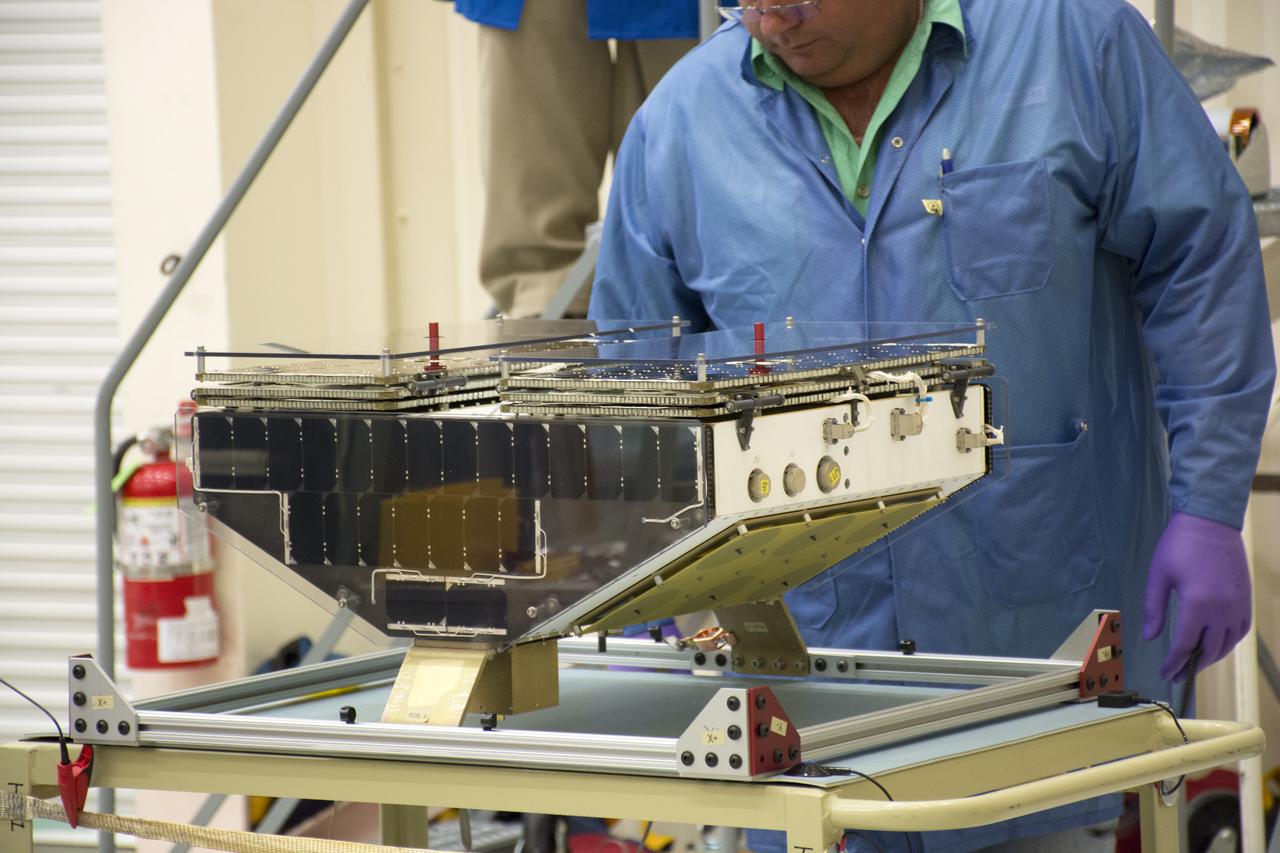
Inside Building 1555 at Vandenberg Air Force Base in California, technicians and engineers install one of eight NASA Cyclone Global Navigation Satellite System (CYGNSS) spacecraft on its deployment module. Processing activities will prepare the spacecraft for launch aboard an Orbital ATK Pegasus XL rocket. When preparations are competed at Vandenberg, the rocket will be transported to NASA’s Kennedy Space Center in Florida attached to the Orbital ATK L-1011 carrier aircraft with in its payload fairing. CYGNSS will launch on the Pegasus XL rocket from the Skid Strip at Cape Canaveral Air Force Station. CYGNSS will make frequent and accurate measurements of ocean surface winds throughout the life cycle of tropical storms and hurricanes. The data that CYGNSS provides will enable scientists to probe key air-sea interaction processes that take place near the core of storms, which are rapidly changing and play a critical role in the beginning and intensification of hurricanes.
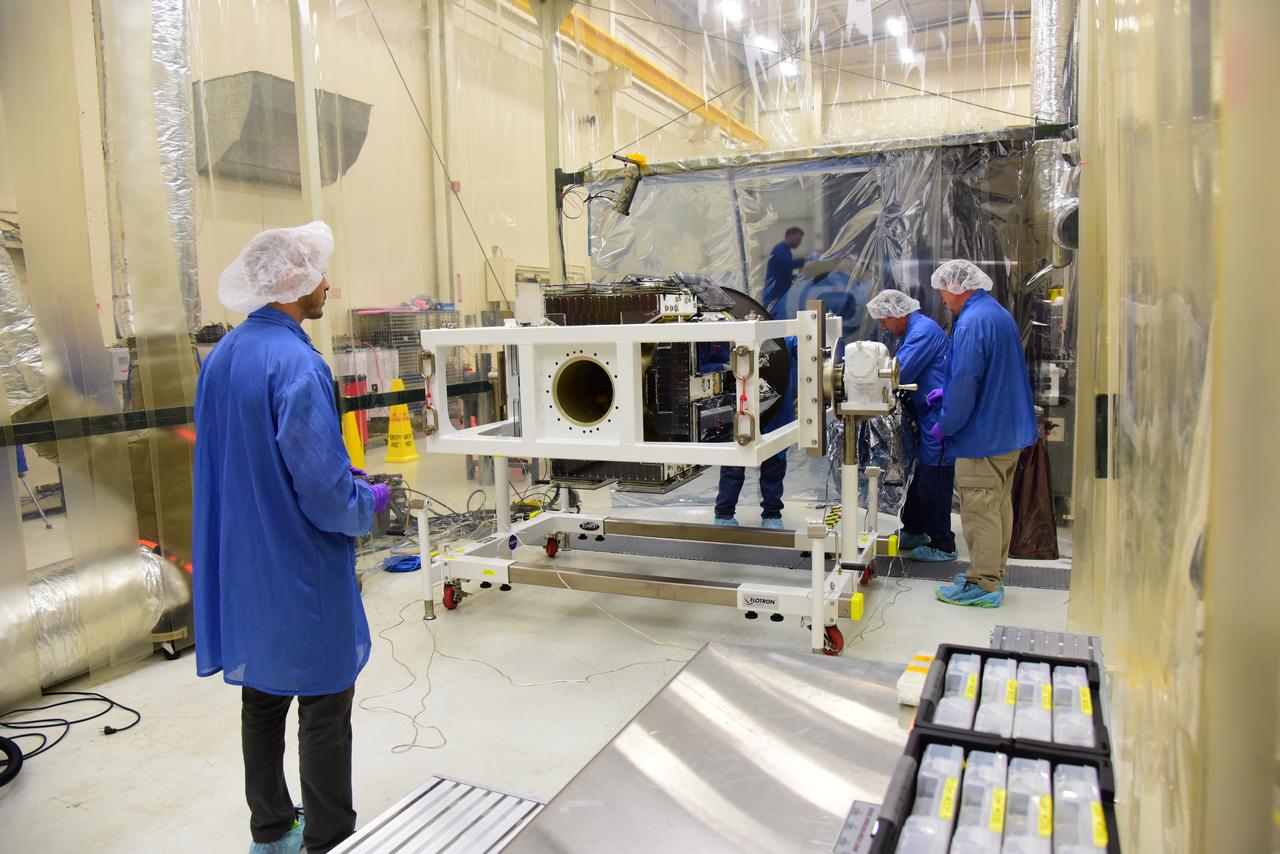
Inside Building 1555 at Vandenberg Air Force Base in California, the eight NASA Cyclone Global Navigation Satellite System (CYGNSS) spacecraft installed on their deployment module undergo inspections prior to NASA’s Kennedy Space Center in Florida. Processing activities will prepare the spacecraft for launch aboard an Orbital ATK Pegasus XL rocket. When preparations are competed at Vandenberg, the rocket will be transported to Kennedy attached to the Orbital ATK L-1011 carrier aircraft with in its payload fairing. CYGNSS will launch on the Pegasus XL rocket from the Skid Strip at Cape Canaveral Air Force Station. CYGNSS will make frequent and accurate measurements of ocean surface winds throughout the life cycle of tropical storms and hurricanes. The data that CYGNSS provides will enable scientists to probe key air-sea interaction processes that take place near the core of storms, which are rapidly changing and play a critical role in the beginning and intensification of hurricanes.

Inside Building 1555 at Vandenberg Air Force Base in California, the eight NASA Cyclone Global Navigation Satellite System (CYGNSS) spacecraft installed on their deployment module undergo inspections prior to NASA’s Kennedy Space Center in Florida. Processing activities will prepare the spacecraft for launch aboard an Orbital ATK Pegasus XL rocket. When preparations are competed at Vandenberg, the rocket will be transported to Kennedy attached to the Orbital ATK L-1011 carrier aircraft with in its payload fairing. CYGNSS will launch on the Pegasus XL rocket from the Skid Strip at Cape Canaveral Air Force Station. CYGNSS will make frequent and accurate measurements of ocean surface winds throughout the life cycle of tropical storms and hurricanes. The data that CYGNSS provides will enable scientists to probe key air-sea interaction processes that take place near the core of storms, which are rapidly changing and play a critical role in the beginning and intensification of hurricanes.
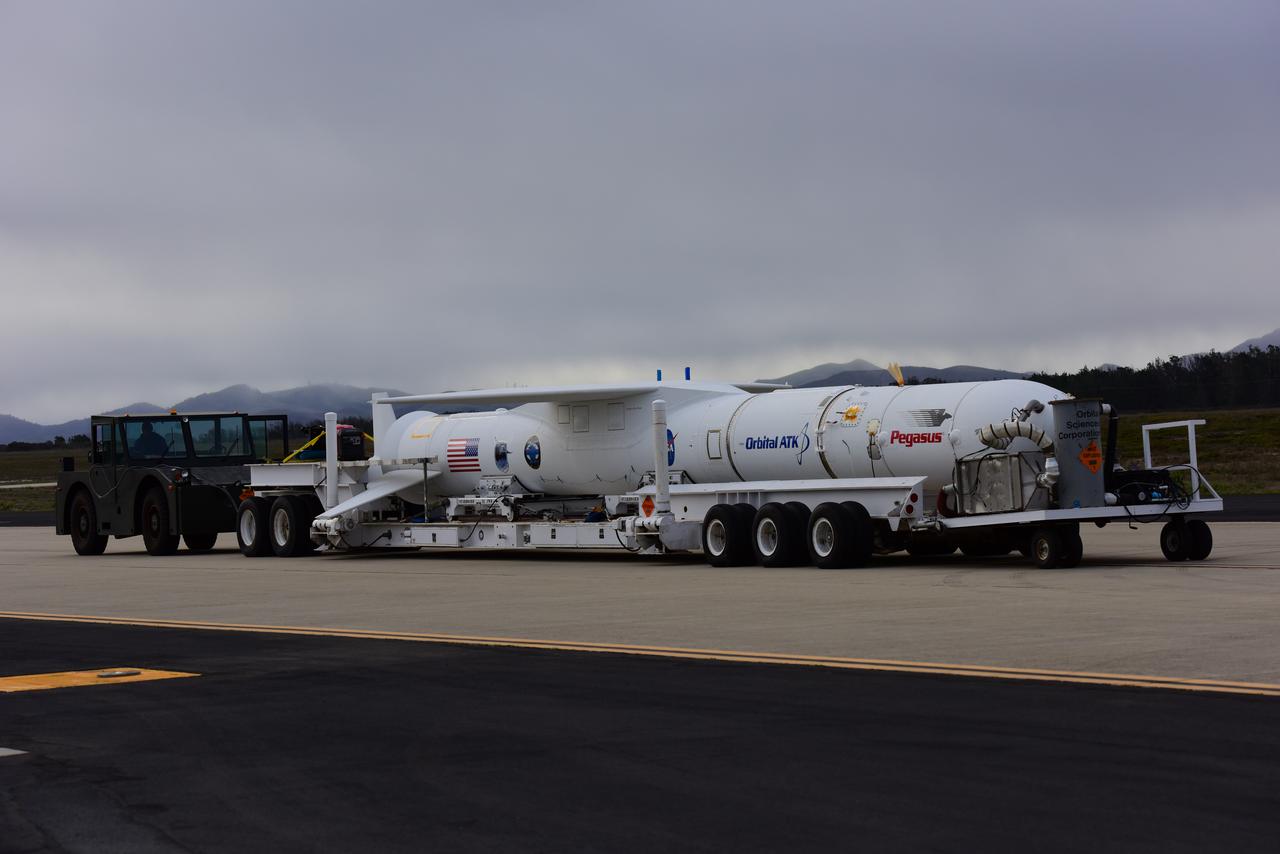
At Vandenberg Air Force Base in California, an Orbital ATK Pegasus XL rocket is transported to be mated to the company's L-1011 carrier aircraft near Vandenberg's runway. On board Pegasus are eight NASA Cyclone Global Navigation Satellite System, or CYGNSS, spacecraft. When preparations are competed at Vandenberg, the L-1011/Pegasus XL combination will be flown to NASA’s Kennedy Space Center in Florida. On Dec. 12, 2016, the carrier aircraft is scheduled to take off from the Skid Strip at Cape Canaveral Air Force Station and CYGNSS will launch on the Pegasus XL rocket with the L-1011 flying off shore. CYGNSS satellites will make frequent and accurate measurements of ocean surface winds throughout the life cycle of tropical storms and hurricanes. The data that CYGNSS provides will enable scientists to probe key air-sea interaction processes that take place near the core of storms, which are rapidly changing and play a critical role in the beginning and intensification of hurricanes.
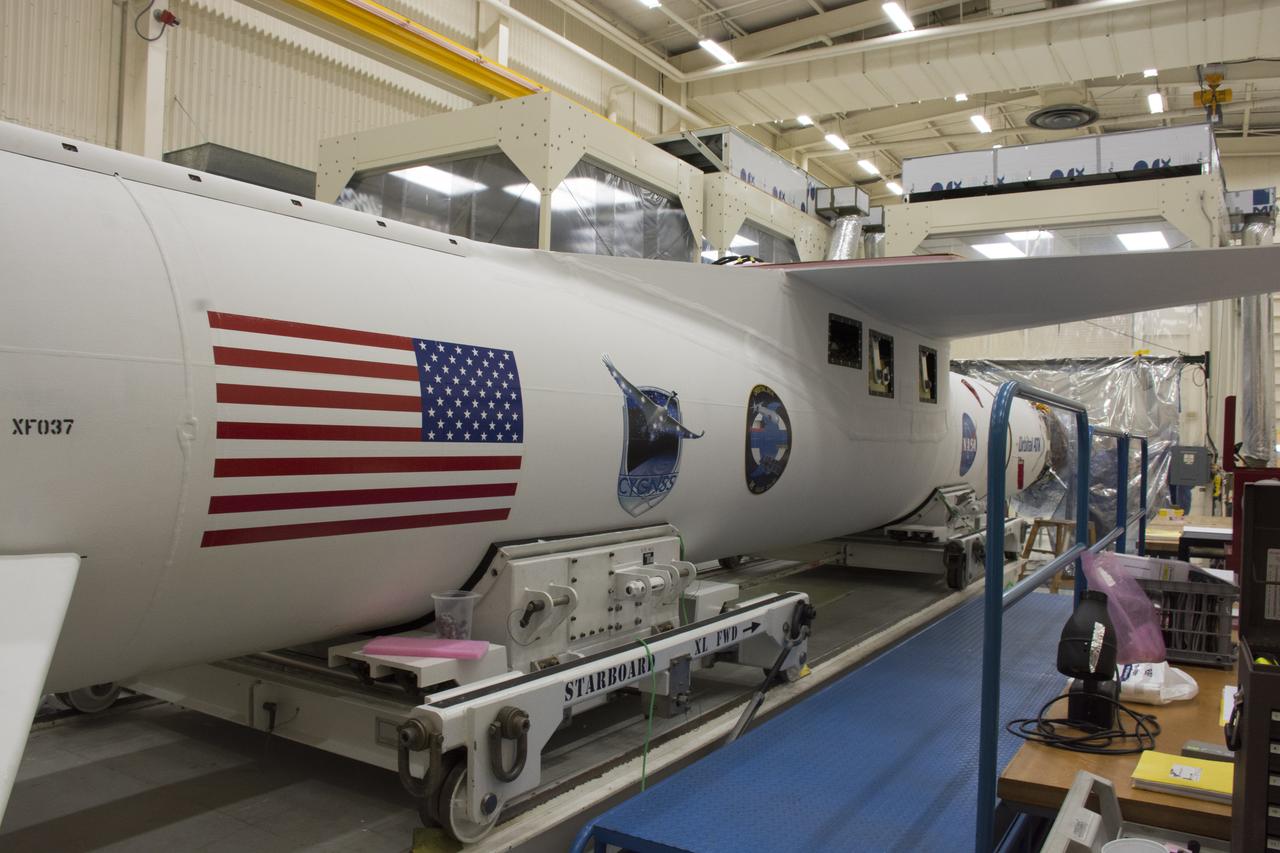
At Vandenberg Air Force Base in California, an Orbital ATK Pegasus XL rocket is seen during payload fairing installation in Building 1555. On board Pegasus are eight NASA Cyclone Global Navigation Satellite System, or CYGNSS, spacecraft. When preparations are competed at Vandenberg, the L-1011/Pegasus XL combination will be flown to NASA’s Kennedy Space Center in Florida. On Dec. 12, 2016, the carrier aircraft is scheduled to take off from the Skid Strip at Cape Canaveral Air Force Station and CYGNSS will launch on the Pegasus XL rocket with the L-1011 flying off shore. CYGNSS satellites will make frequent and accurate measurements of ocean surface winds throughout the life cycle of tropical storms and hurricanes. The data that CYGNSS provides will help scientists to probe key air-sea interaction processes that take place near the core of storms, which are rapidly changing and play a crucial role in the beginning and intensification of hurricanes.
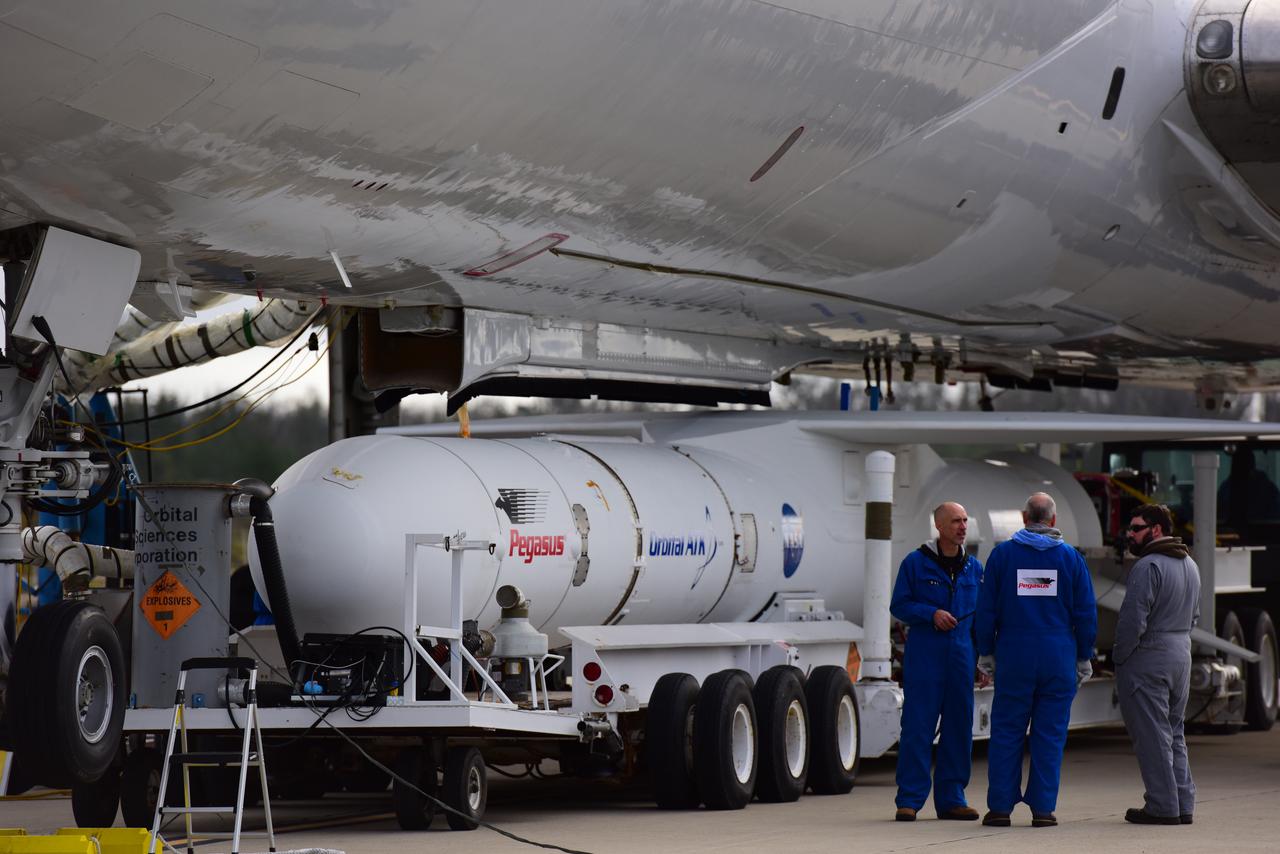
At Vandenberg Air Force Base in California, an Orbital ATK Pegasus XL rocket is mated to the company's L-1011 carrier aircraft near Vandenberg's runway. On board Pegasus are eight NASA Cyclone Global Navigation Satellite System, or CYGNSS, spacecraft. When preparations are competed at Vandenberg, the L-1011/Pegasus XL combination will be flown to NASA’s Kennedy Space Center in Florida. On Dec. 12, 2016, the carrier aircraft is scheduled to take off from the Skid Strip at Cape Canaveral Air Force Station and CYGNSS will launch on the Pegasus XL rocket with the L-1011 flying off shore. CYGNSS satellites will make frequent and accurate measurements of ocean surface winds throughout the life cycle of tropical storms and hurricanes. The data that CYGNSS provides will enable scientists to probe key air-sea interaction processes that take place near the core of storms, which are rapidly changing and play a critical role in the beginning and intensification of hurricanes.
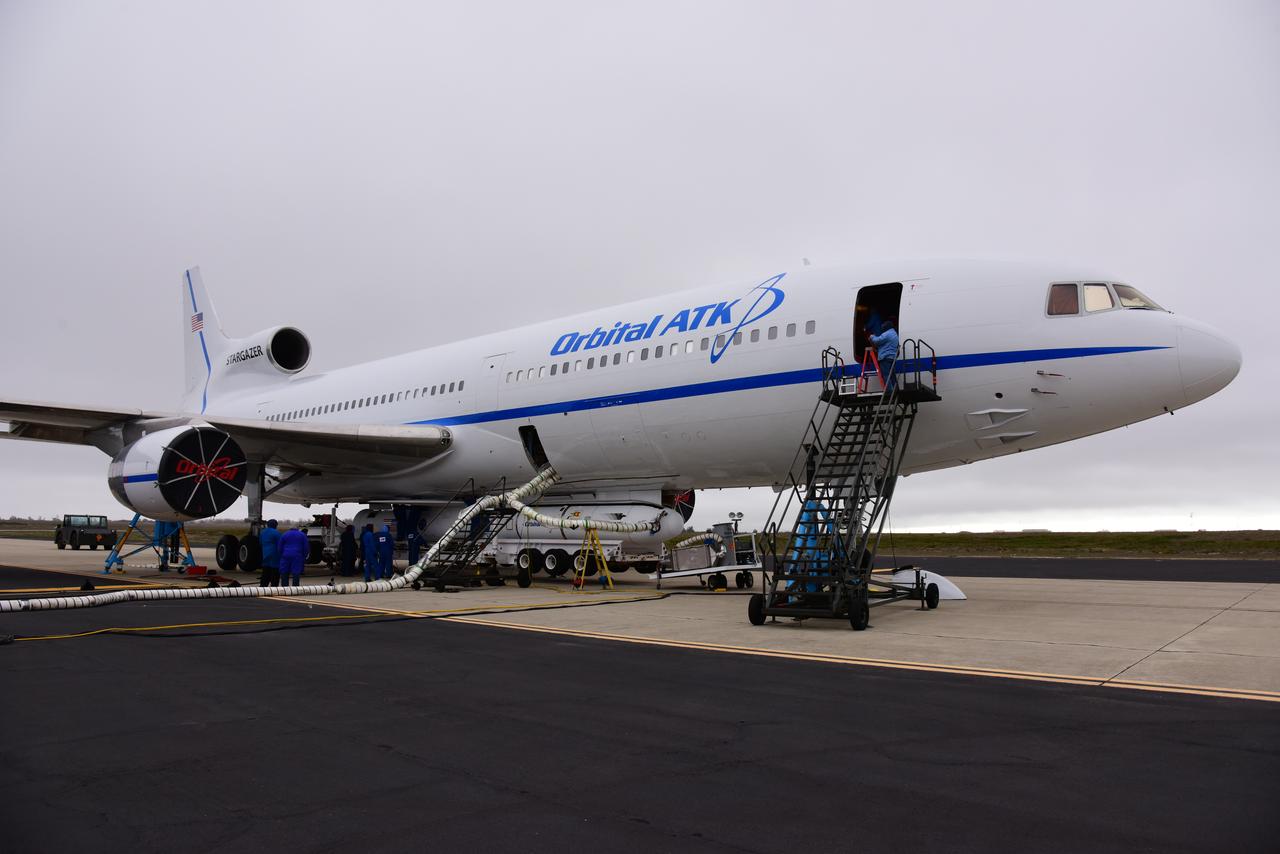
At Vandenberg Air Force Base in California, an Orbital ATK Pegasus XL rocket is mated to the company's L-1011 carrier aircraft near Vandenberg's runway. On board Pegasus are eight NASA Cyclone Global Navigation Satellite System, or CYGNSS, spacecraft. When preparations are competed at Vandenberg, the L-1011/Pegasus XL combination will be flown to NASA’s Kennedy Space Center in Florida. On Dec. 12, 2016, the carrier aircraft is scheduled to take off from the Skid Strip at Cape Canaveral Air Force Station and CYGNSS will launch on the Pegasus XL rocket with the L-1011 flying off shore. CYGNSS satellites will make frequent and accurate measurements of ocean surface winds throughout the life cycle of tropical storms and hurricanes. The data that CYGNSS provides will enable scientists to probe key air-sea interaction processes that take place near the core of storms, which are rapidly changing and play a critical role in the beginning and intensification of hurricanes.
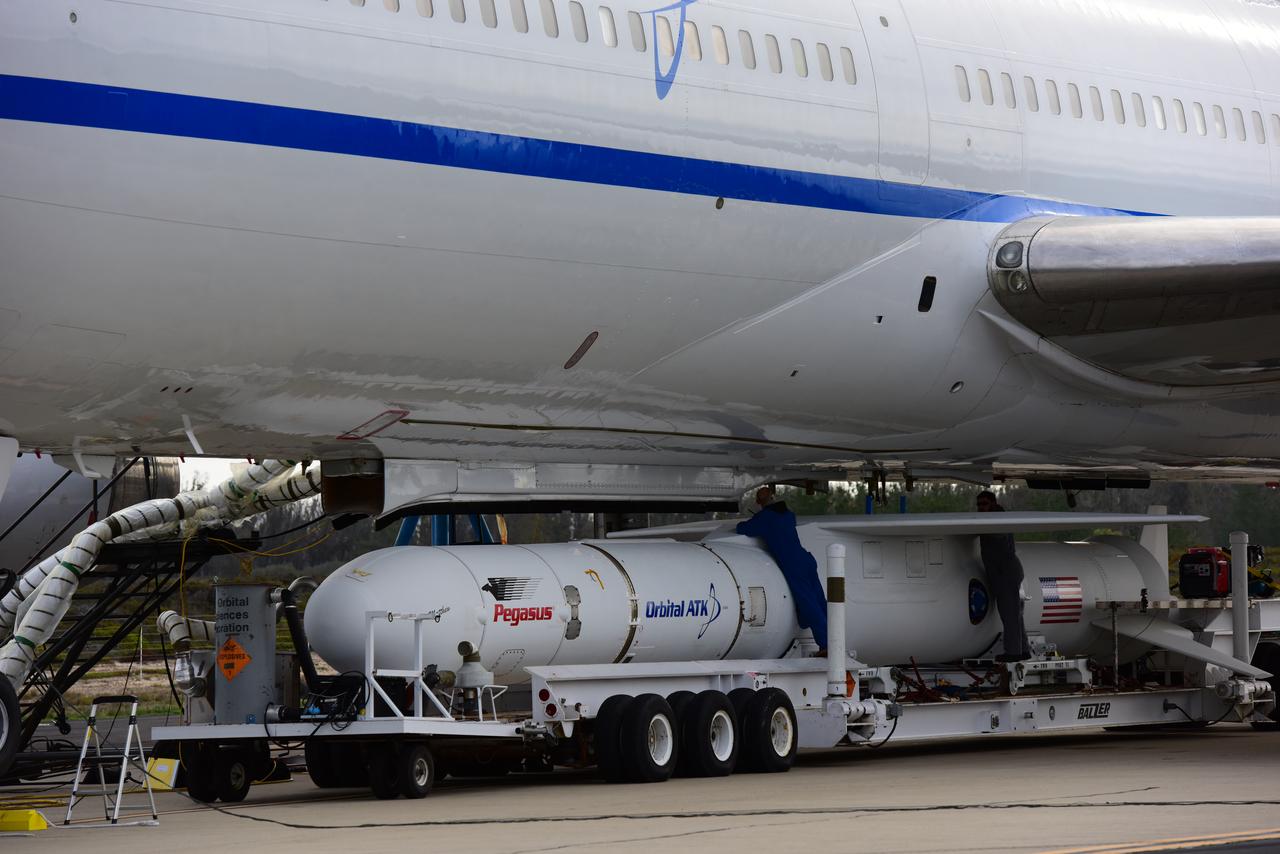
At Vandenberg Air Force Base in California, an Orbital ATK Pegasus XL rocket is mated to the company's L-1011 carrier aircraft near Vandenberg's runway. On board Pegasus are eight NASA Cyclone Global Navigation Satellite System, or CYGNSS, spacecraft. When preparations are competed at Vandenberg, the L-1011/Pegasus XL combination will be flown to NASA’s Kennedy Space Center in Florida. On Dec. 12, 2016, the carrier aircraft is scheduled to take off from the Skid Strip at Cape Canaveral Air Force Station and CYGNSS will launch on the Pegasus XL rocket with the L-1011 flying off shore. CYGNSS satellites will make frequent and accurate measurements of ocean surface winds throughout the life cycle of tropical storms and hurricanes. The data that CYGNSS provides will enable scientists to probe key air-sea interaction processes that take place near the core of storms, which are rapidly changing and play a critical role in the beginning and intensification of hurricanes.
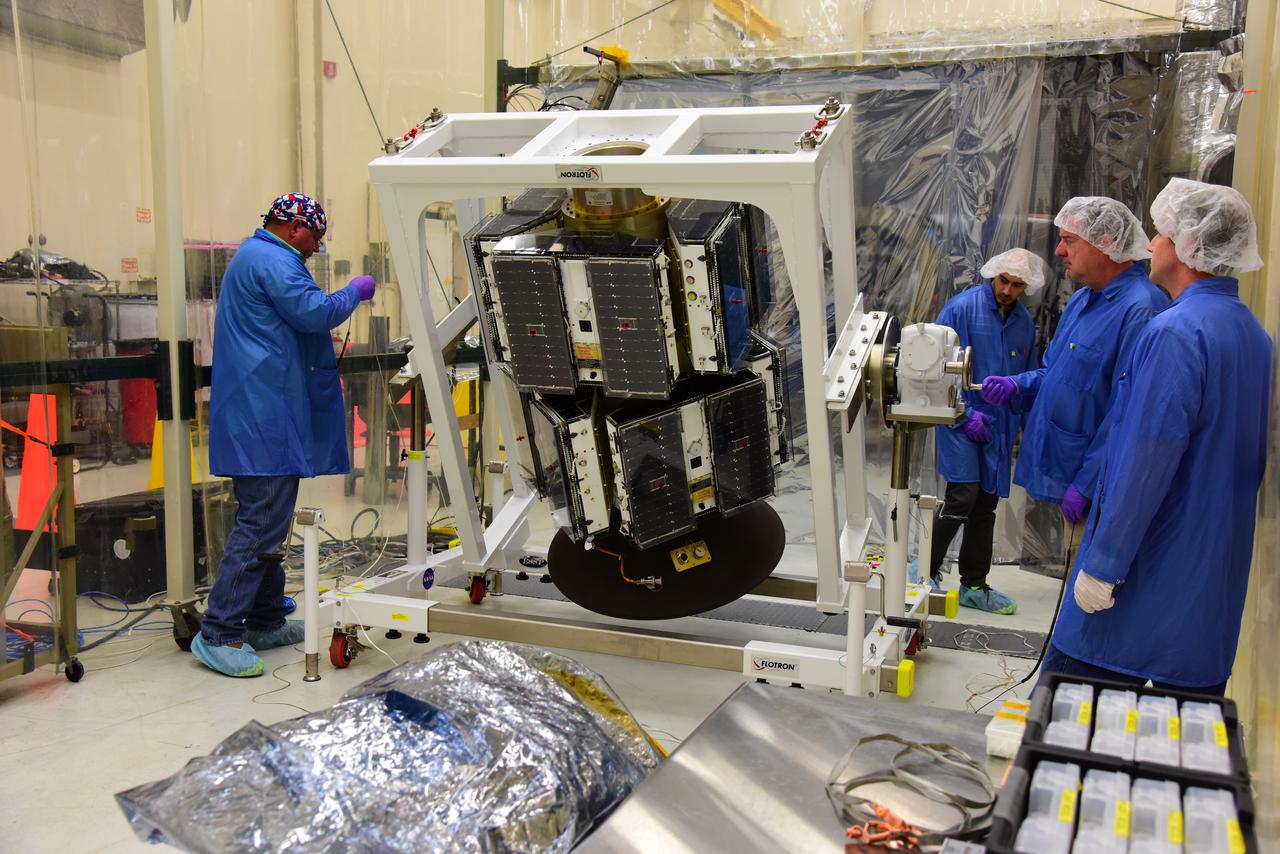
Inside Building 1555 at Vandenberg Air Force Base in California, the eight NASA Cyclone Global Navigation Satellite System (CYGNSS) spacecraft installed on their deployment module undergo inspections prior to NASA’s Kennedy Space Center in Florida. Processing activities will prepare the spacecraft for launch aboard an Orbital ATK Pegasus XL rocket. When preparations are competed at Vandenberg, the rocket will be transported to Kennedy attached to the Orbital ATK L-1011 carrier aircraft with in its payload fairing. CYGNSS will launch on the Pegasus XL rocket from the Skid Strip at Cape Canaveral Air Force Station. CYGNSS will make frequent and accurate measurements of ocean surface winds throughout the life cycle of tropical storms and hurricanes. The data that CYGNSS provides will enable scientists to probe key air-sea interaction processes that take place near the core of storms, which are rapidly changing and play a critical role in the beginning and intensification of hurricanes.
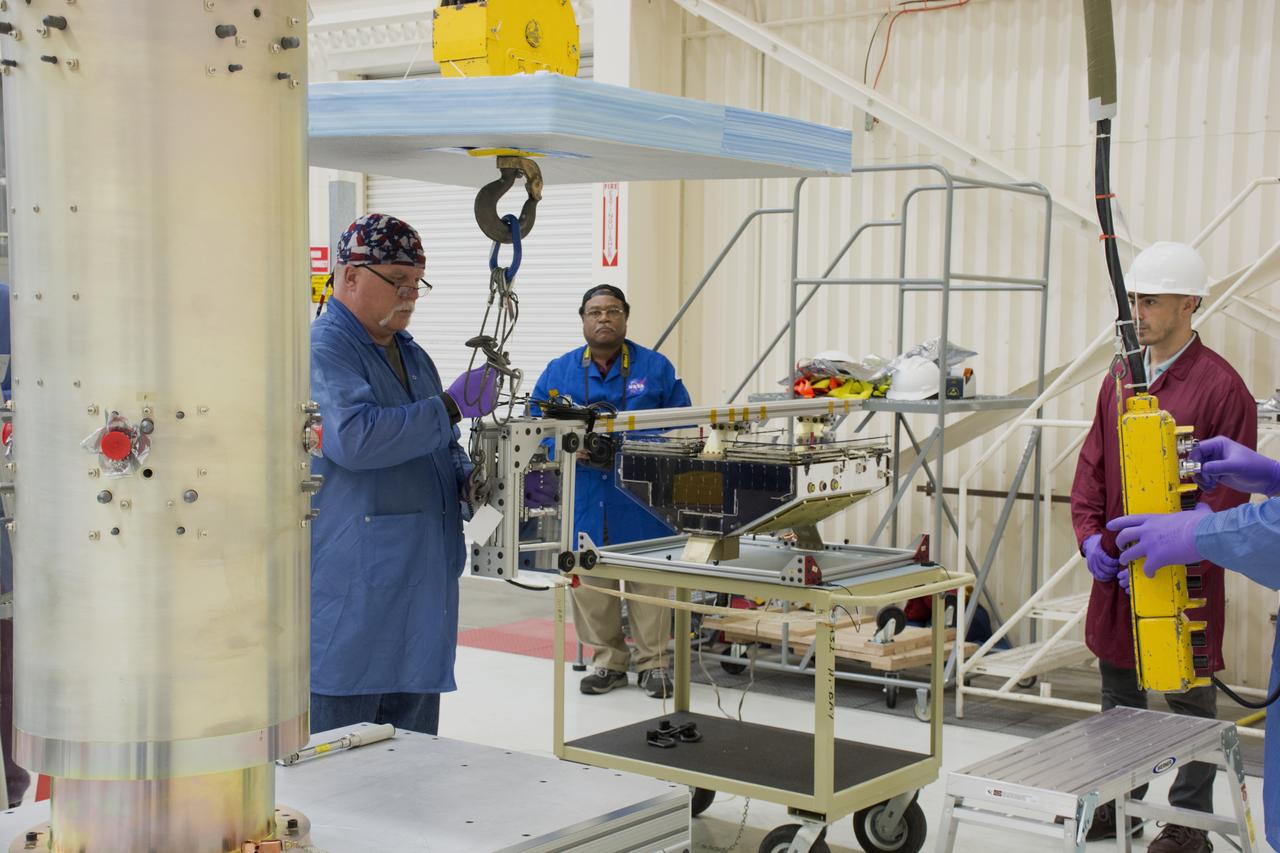
Inside Building 1555 at Vandenberg Air Force Base in California, technicians and engineers install one of eight NASA Cyclone Global Navigation Satellite System (CYGNSS) spacecraft on its deployment module. Processing activities will prepare the spacecraft for launch aboard an Orbital ATK Pegasus XL rocket. When preparations are competed at Vandenberg, the rocket will be transported to NASA’s Kennedy Space Center in Florida attached to the Orbital ATK L-1011 carrier aircraft with in its payload fairing. CYGNSS will launch on the Pegasus XL rocket from the Skid Strip at Cape Canaveral Air Force Station. CYGNSS will make frequent and accurate measurements of ocean surface winds throughout the life cycle of tropical storms and hurricanes. The data that CYGNSS provides will enable scientists to probe key air-sea interaction processes that take place near the core of storms, which are rapidly changing and play a critical role in the beginning and intensification of hurricanes.
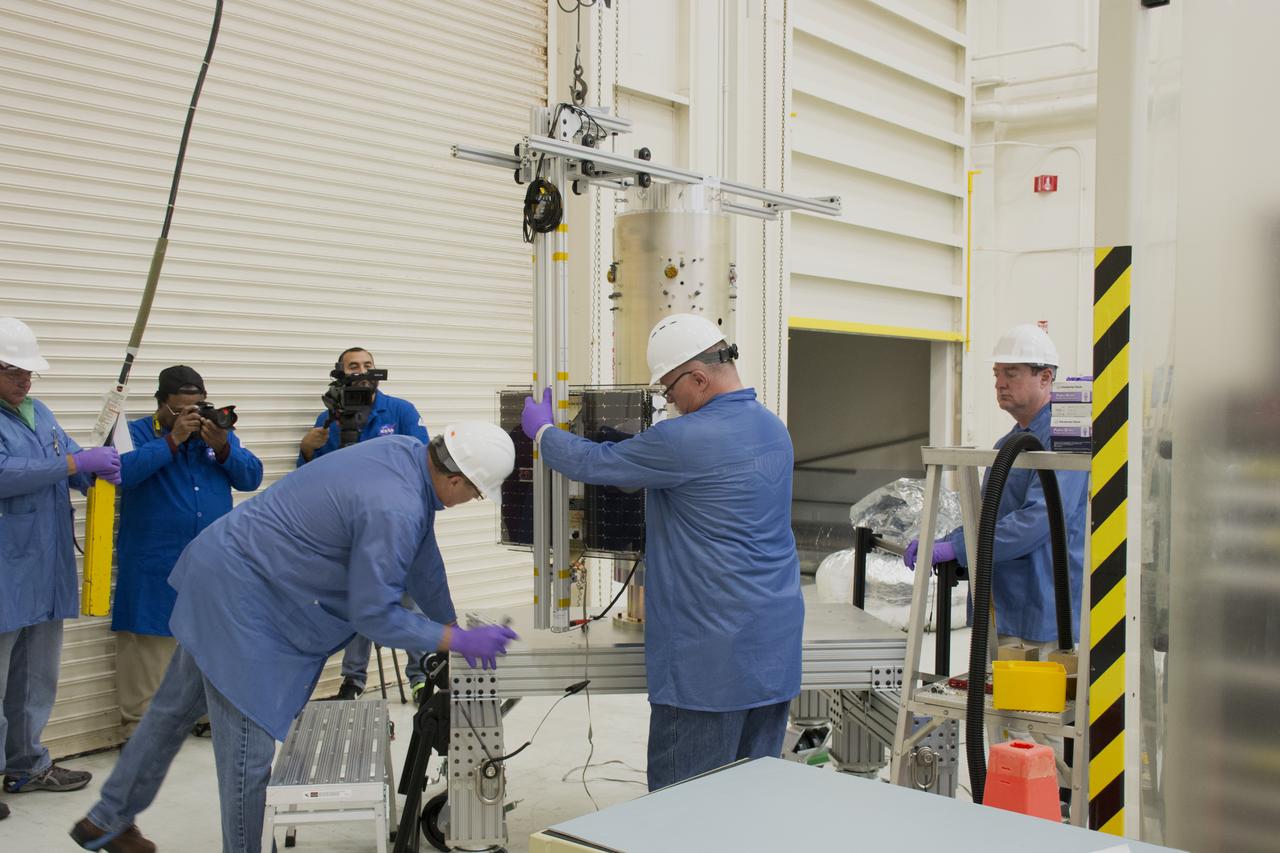
Inside Building 1555 at Vandenberg Air Force Base in California, technicians and engineers install one of eight NASA Cyclone Global Navigation Satellite System (CYGNSS) spacecraft on its deployment module. Processing activities will prepare the spacecraft for launch aboard an Orbital ATK Pegasus XL rocket. When preparations are competed at Vandenberg, the rocket will be transported to NASA’s Kennedy Space Center in Florida attached to the Orbital ATK L-1011 carrier aircraft with in its payload fairing. CYGNSS will launch on the Pegasus XL rocket from the Skid Strip at Cape Canaveral Air Force Station. CYGNSS will make frequent and accurate measurements of ocean surface winds throughout the life cycle of tropical storms and hurricanes. The data that CYGNSS provides will enable scientists to probe key air-sea interaction processes that take place near the core of storms, which are rapidly changing and play a critical role in the beginning and intensification of hurricanes.
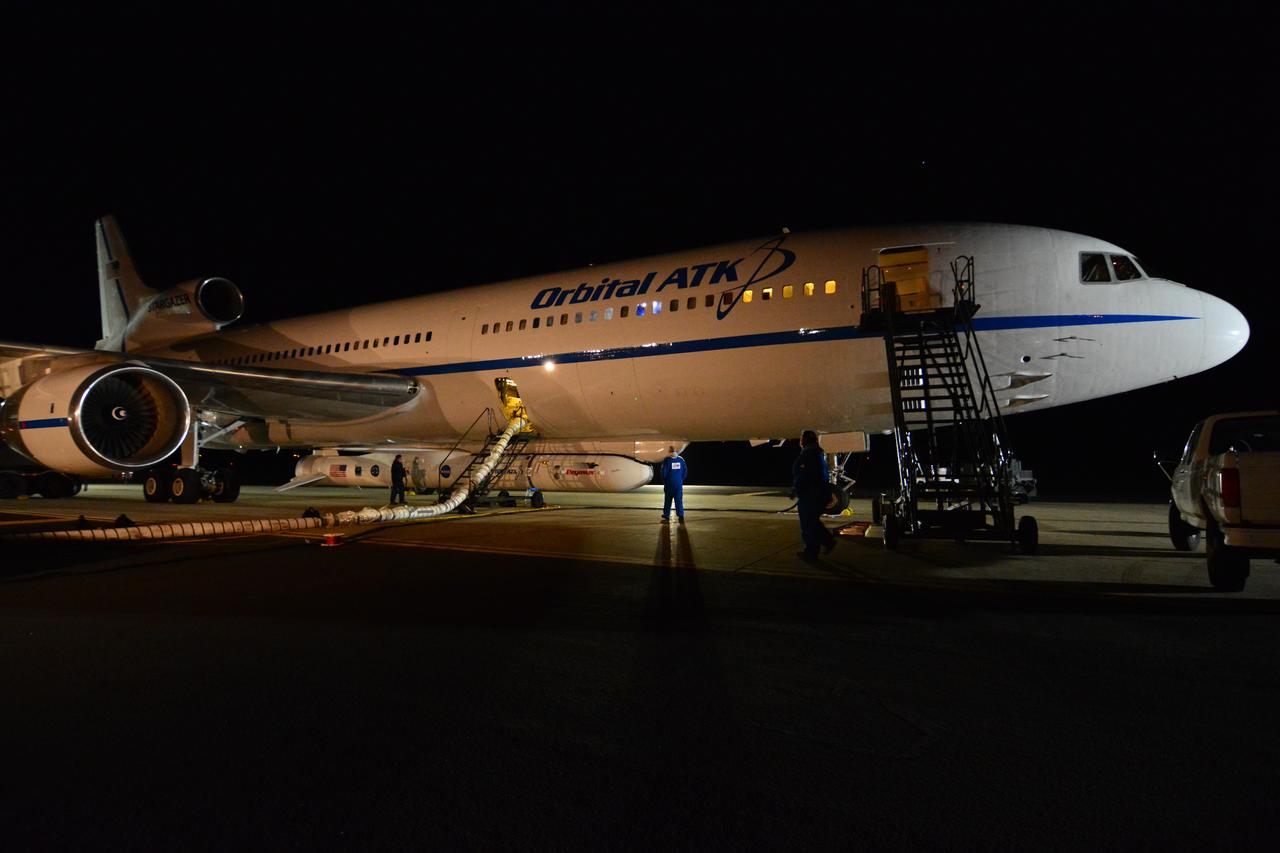
At Vandenberg Air Force Base in California, the Orbital ATK L-1011 Stargazer, with a Pegasus XL rocket mated to the underside of the aircraft, is prepared for takeoff. On board Pegasus XL are eight NASA Cyclone Global Navigation Satellite System, or CYGNSS, spacecraft. When preparations are competed at Vandenberg, the /Pegasus XL combination will be flown to NASA’s Kennedy Space Center in Florida. On Dec. 12, 2016, the carrier aircraft is scheduled to take off from the Skid Strip at Cape Canaveral Air Force Station and CYGNSS will launch on the Pegasus XL rocket with the L-1011 flying off shore. CYGNSS satellites will make frequent and accurate measurements of ocean surface winds throughout the life cycle of tropical storms and hurricanes. The data that CYGNSS provides will help scientists to probe key air-sea interaction processes that take place near the core of storms, which are rapidly changing and play a crucial role in the beginning and intensification of hurricanes.
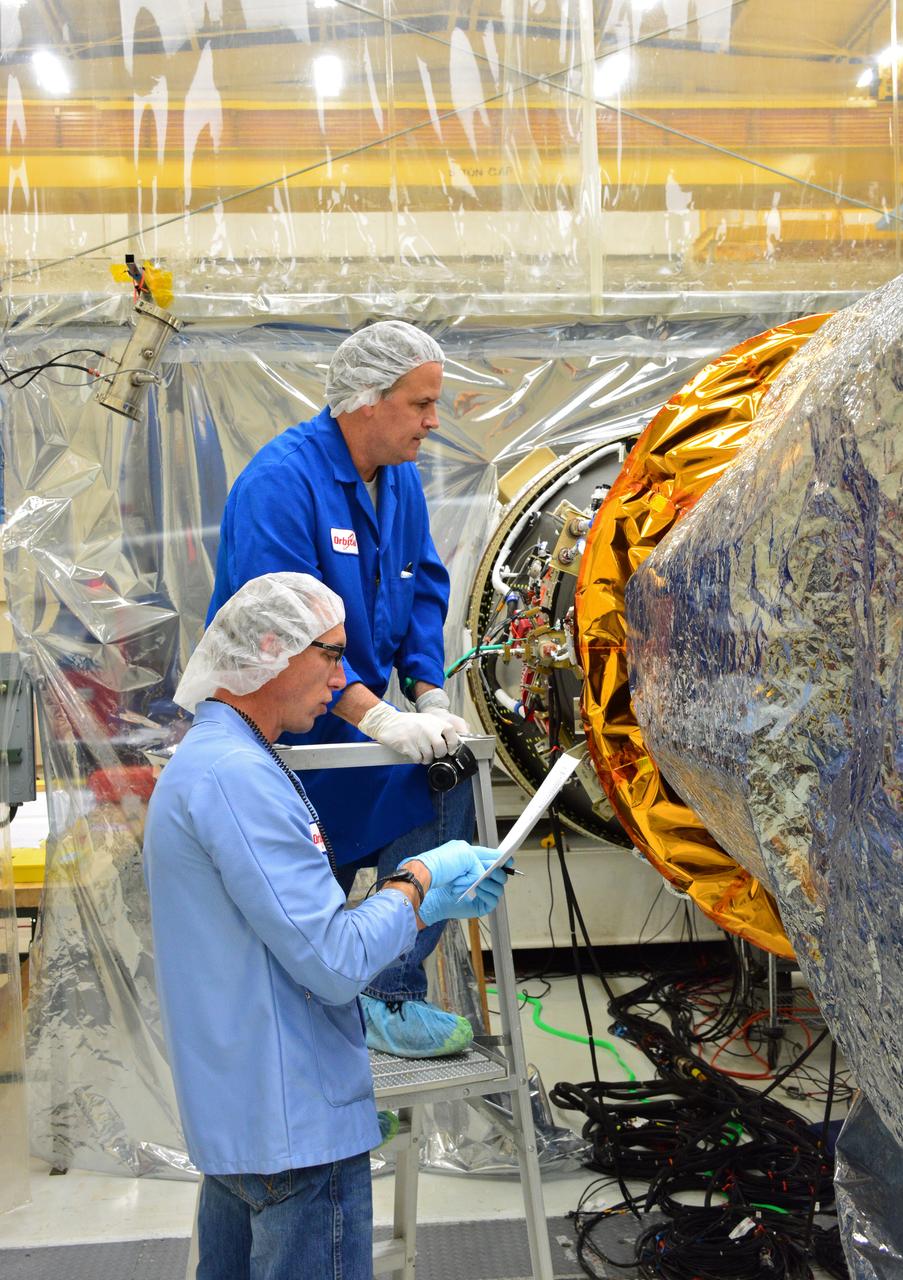
In Building 1555 at Vandenberg Air Force Base in California, the payload fairing is being installed on an Orbital ATK Pegasus XL rocket. On board Pegasus are eight NASA Cyclone Global Navigation Satellite System, or CYGNSS, spacecraft. When preparations are competed at Vandenberg, the L-1011/Pegasus XL combination will be flown to NASA’s Kennedy Space Center in Florida. On Dec. 12, 2016, the carrier aircraft is scheduled to take off from the Skid Strip at Cape Canaveral Air Force Station and CYGNSS will launch on the Pegasus XL rocket with the L-1011 flying off shore. CYGNSS satellites will make frequent and accurate measurements of ocean surface winds throughout the life cycle of tropical storms and hurricanes. The data that CYGNSS provides will help scientists to probe key air-sea interaction processes that take place near the core of storms, which are rapidly changing and play a crucial role in the beginning and intensification of hurricanes.
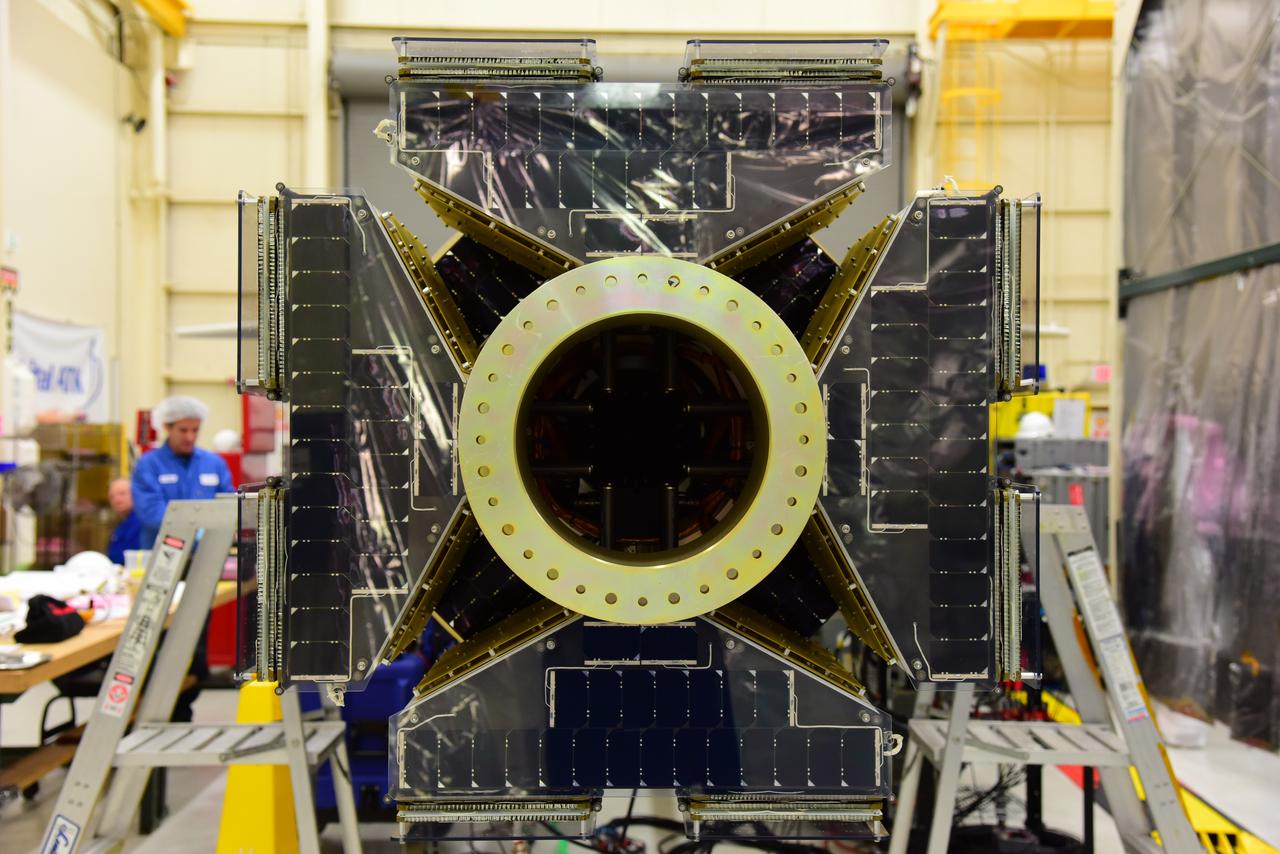
Inside Building 1555 at Vandenberg Air Force Base in California, the eight NASA Cyclone Global Navigation Satellite System (CYGNSS) spacecraft installed on their deployment module undergo inspections prior to NASA’s Kennedy Space Center in Florida. Processing activities will prepare the spacecraft for launch aboard an Orbital ATK Pegasus XL rocket. When preparations are competed at Vandenberg, the rocket will be transported to Kennedy attached to the Orbital ATK L-1011 carrier aircraft with in its payload fairing. CYGNSS will launch on the Pegasus XL rocket from the Skid Strip at Cape Canaveral Air Force Station. CYGNSS will make frequent and accurate measurements of ocean surface winds throughout the life cycle of tropical storms and hurricanes. The data that CYGNSS provides will enable scientists to probe key air-sea interaction processes that take place near the core of storms, which are rapidly changing and play a critical role in the beginning and intensification of hurricanes.
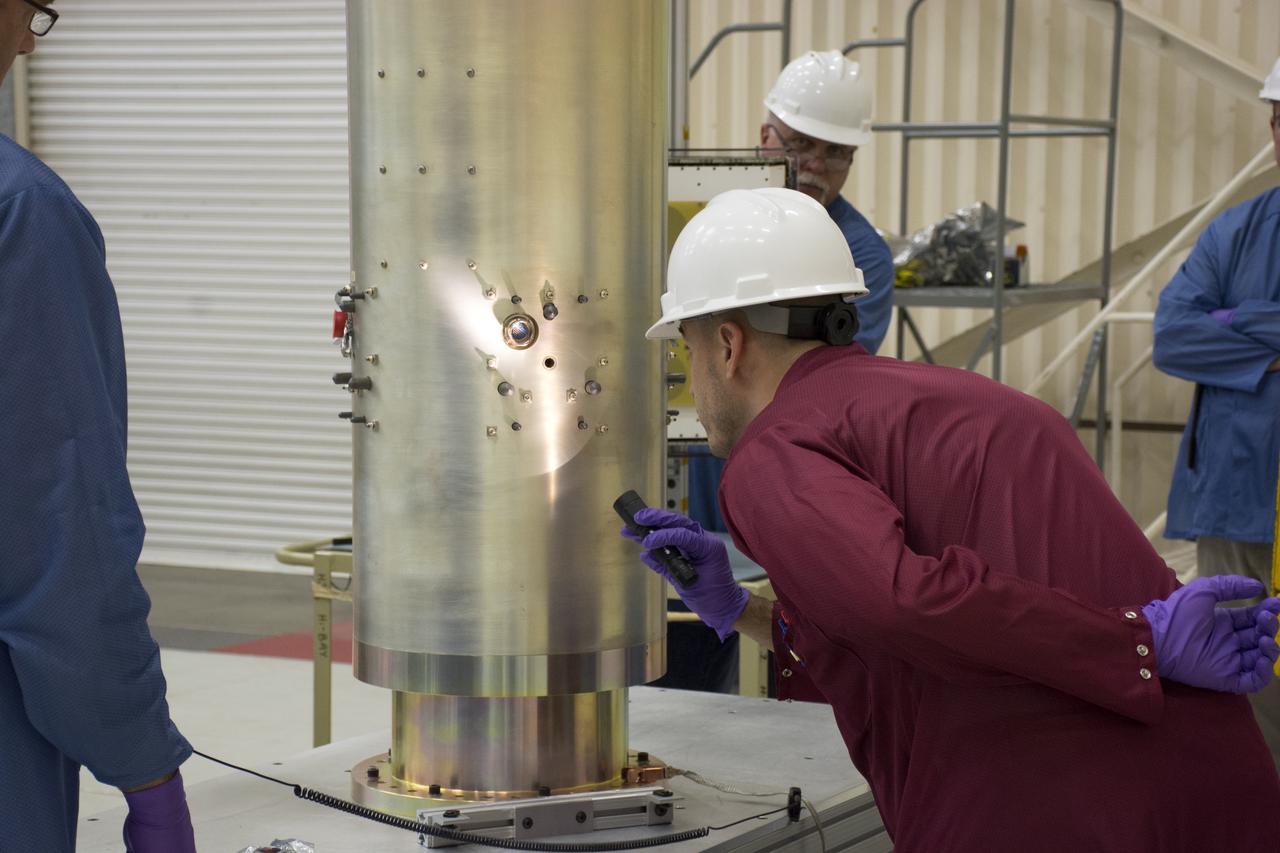
Inside Building 1555 at Vandenberg Air Force Base in California, NASA’s Cyclone Global Navigation Satellite System (CYGNSS) deployment module is inspected prior to installation of eight spacecraft that will be part of the program’s constellation of spacecraft. Processing activities will prepare the spacecraft for launch aboard an Orbital ATK Pegasus XL rocket. When preparations are competed at Vandenberg, the rocket will be transported to NASA’s Kennedy Space Center in Florida attached to the Orbital ATK L-1011 carrier aircraft with in its payload fairing. CYGNSS will launch on the Pegasus XL rocket from the Skid Strip at Cape Canaveral Air Force Station. CYGNSS will make frequent and accurate measurements of ocean surface winds throughout the life cycle of tropical storms and hurricanes. The data that CYGNSS provides will enable scientists to probe key air-sea interaction processes that take place near the core of storms, which are rapidly changing and play a critical role in the beginning and intensification of hurricanes.
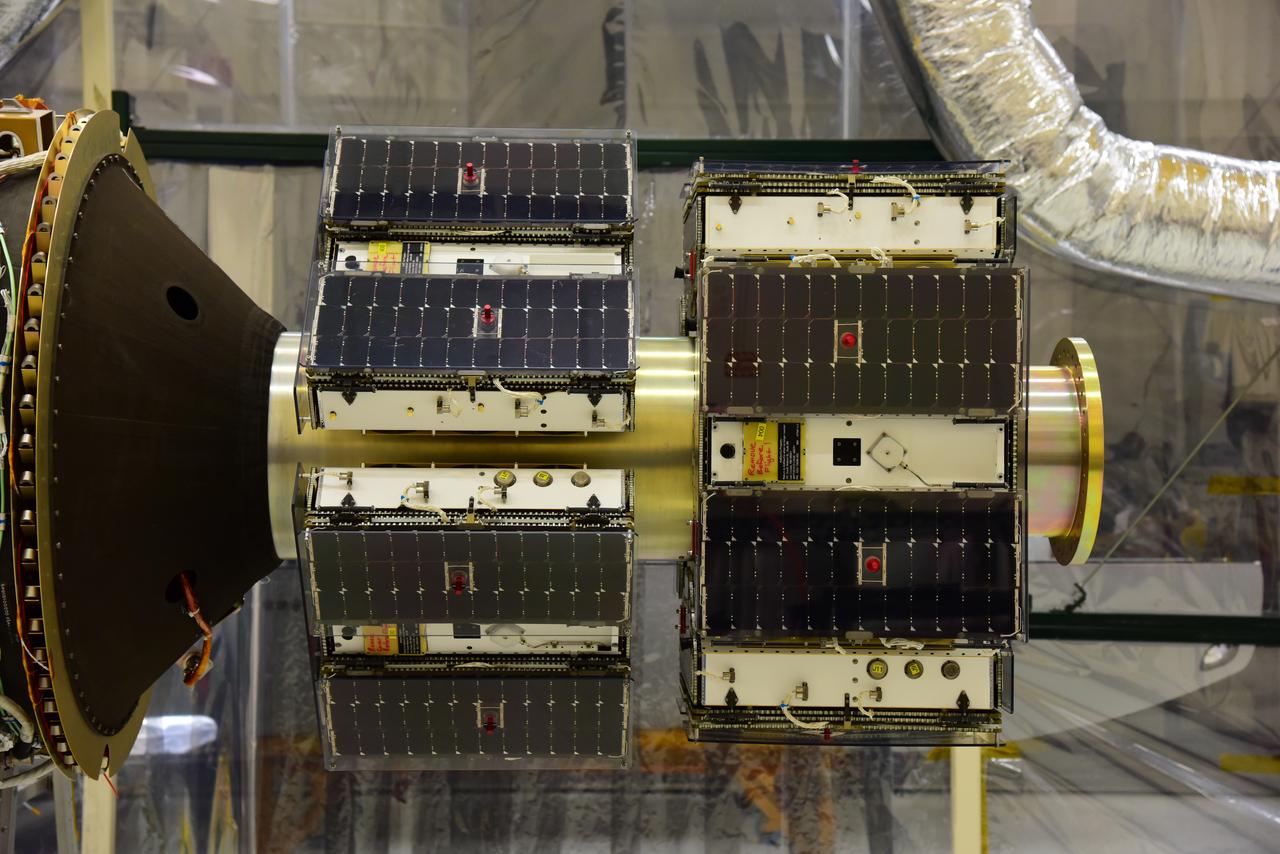
Inside Building 1555 at Vandenberg Air Force Base in California, the eight NASA Cyclone Global Navigation Satellite System (CYGNSS) spacecraft installed on their deployment module undergo inspections prior to NASA’s Kennedy Space Center in Florida. Processing activities will prepare the spacecraft for launch aboard an Orbital ATK Pegasus XL rocket. When preparations are competed at Vandenberg, the rocket will be transported to Kennedy attached to the Orbital ATK L-1011 carrier aircraft with in its payload fairing. CYGNSS will launch on the Pegasus XL rocket from the Skid Strip at Cape Canaveral Air Force Station. CYGNSS will make frequent and accurate measurements of ocean surface winds throughout the life cycle of tropical storms and hurricanes. The data that CYGNSS provides will enable scientists to probe key air-sea interaction processes that take place near the core of storms, which are rapidly changing and play a critical role in the beginning and intensification of hurricanes.
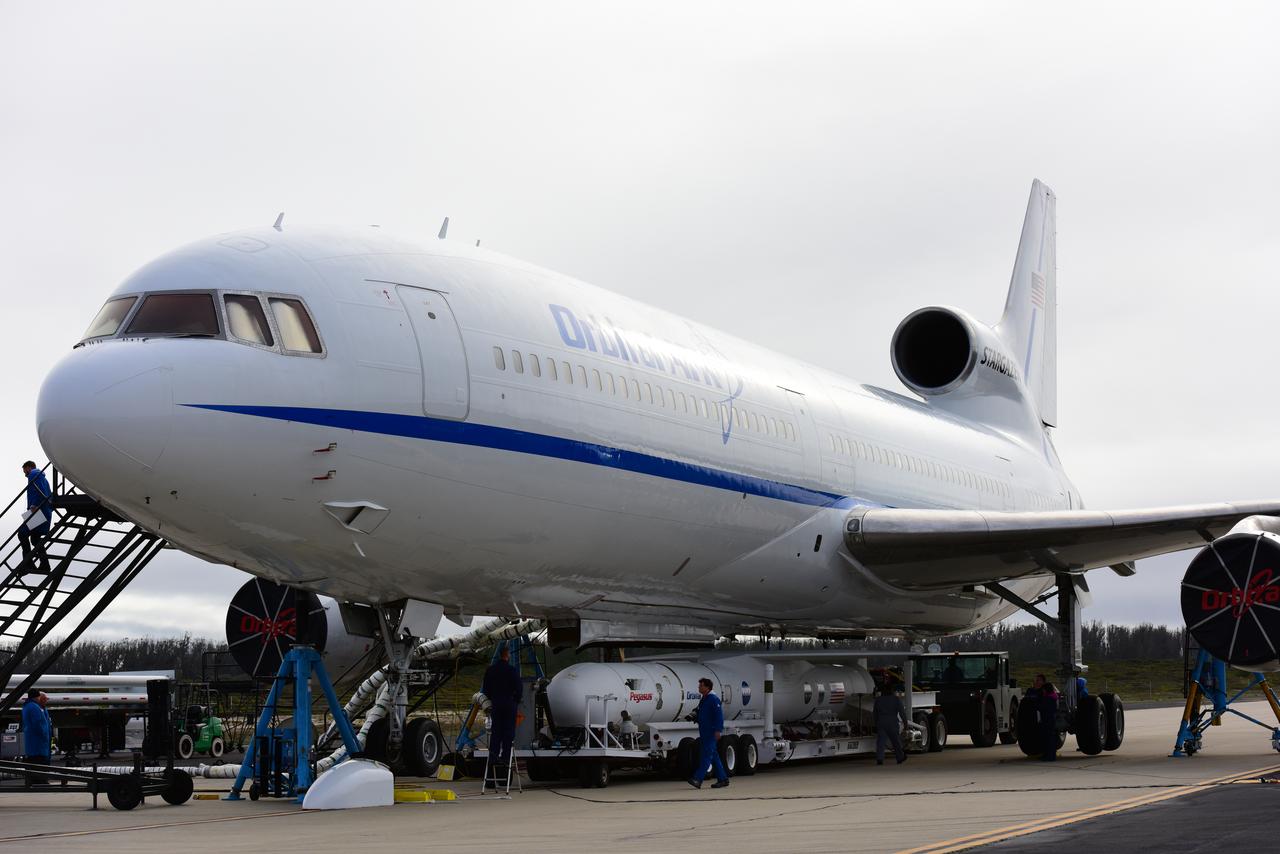
At Vandenberg Air Force Base in California, an Orbital ATK Pegasus XL rocket is mated to the company's L-1011 carrier aircraft near Vandenberg's runway. On board Pegasus are eight NASA Cyclone Global Navigation Satellite System, or CYGNSS, spacecraft. When preparations are competed at Vandenberg, the L-1011/Pegasus XL combination will be flown to NASA’s Kennedy Space Center in Florida. On Dec. 12, 2016, the carrier aircraft is scheduled to take off from the Skid Strip at Cape Canaveral Air Force Station and CYGNSS will launch on the Pegasus XL rocket with the L-1011 flying off shore. CYGNSS satellites will make frequent and accurate measurements of ocean surface winds throughout the life cycle of tropical storms and hurricanes. The data that CYGNSS provides will enable scientists to probe key air-sea interaction processes that take place near the core of storms, which are rapidly changing and play a critical role in the beginning and intensification of hurricanes.
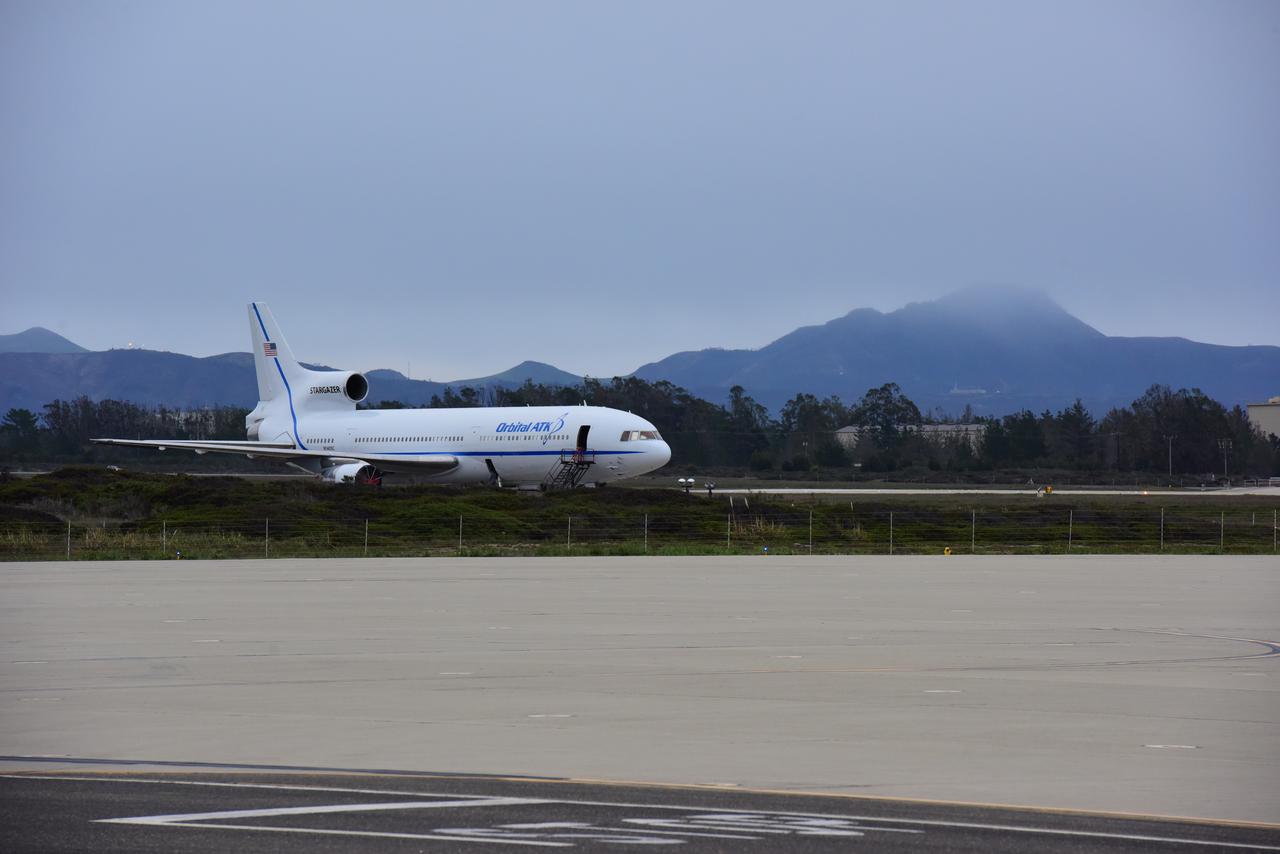
At Vandenberg Air Force Base in California, the Orbital ATK L-1011 Stargazer awaits a Pegasus XL rocket to be mated to the aircraft. On board Pegasus XL are eight NASA Cyclone Global Navigation Satellite System, or CYGNSS, spacecraft. When preparations are competed at Vandenberg, the /Pegasus XL combination will be flown to NASA’s Kennedy Space Center in Florida. On Dec. 12, 2016, the carrier aircraft is scheduled to take off from the Skid Strip at Cape Canaveral Air Force Station and CYGNSS will launch on the Pegasus XL rocket with the L-1011 flying off shore. CYGNSS satellites will make frequent and accurate measurements of ocean surface winds throughout the life cycle of tropical storms and hurricanes. The data that CYGNSS provides will help scientists to probe key air-sea interaction processes that take place near the core of storms, which are rapidly changing and play a crucial role in the beginning and intensification of hurricanes.
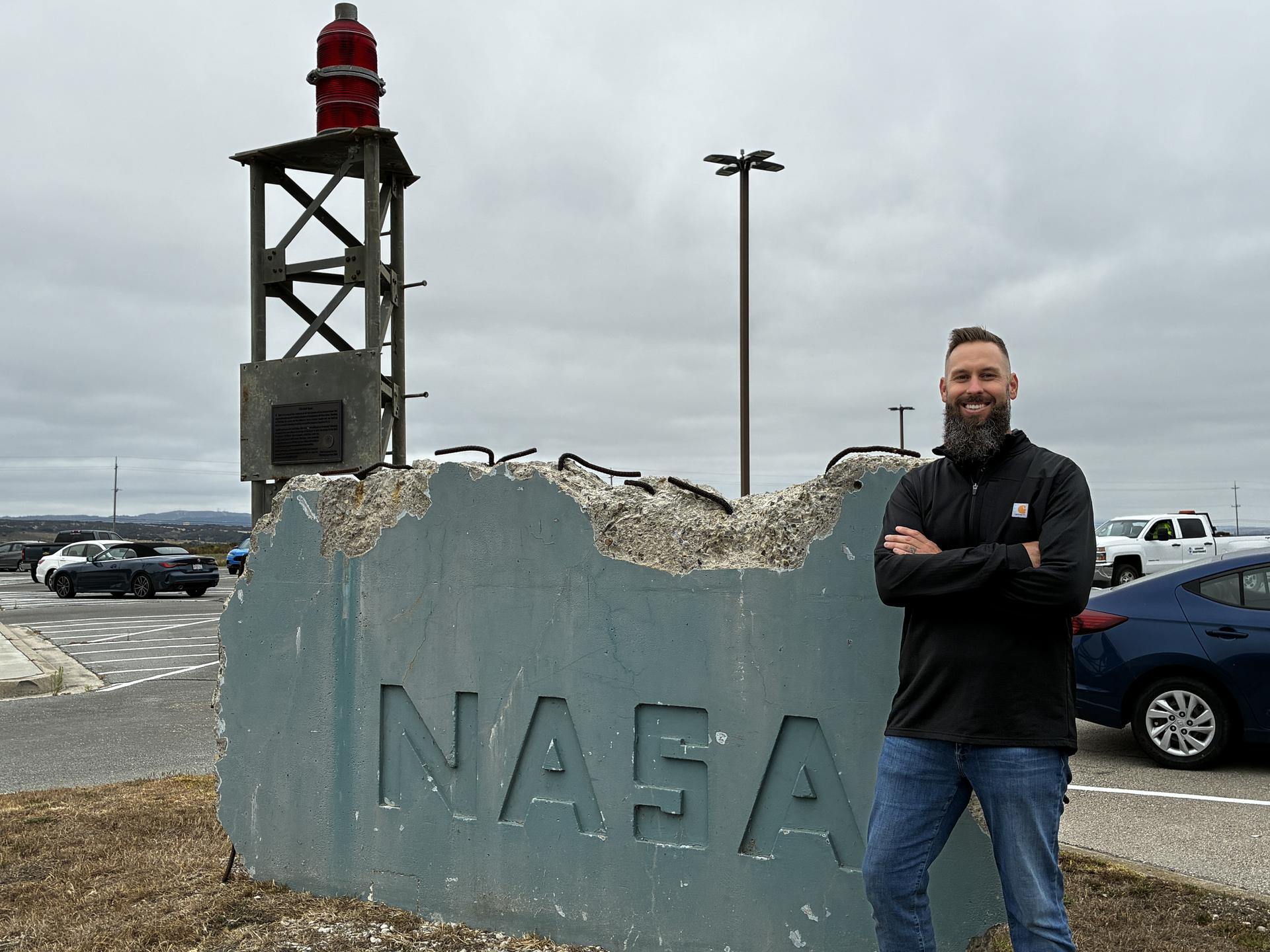
At Vandenberg Space Force Base in California, NASA employee Eric Fernandez stands by a preserved concrete section from the Space Launch Complex2 Mobile Service Tower counterweight, saved during demolition to retain the NASA insignia. The artifact was part of Delta and Delta II launches for decades before demolition, with its last launch for the agency being NASA’s ICESat2 on Sept. 15, 2018.
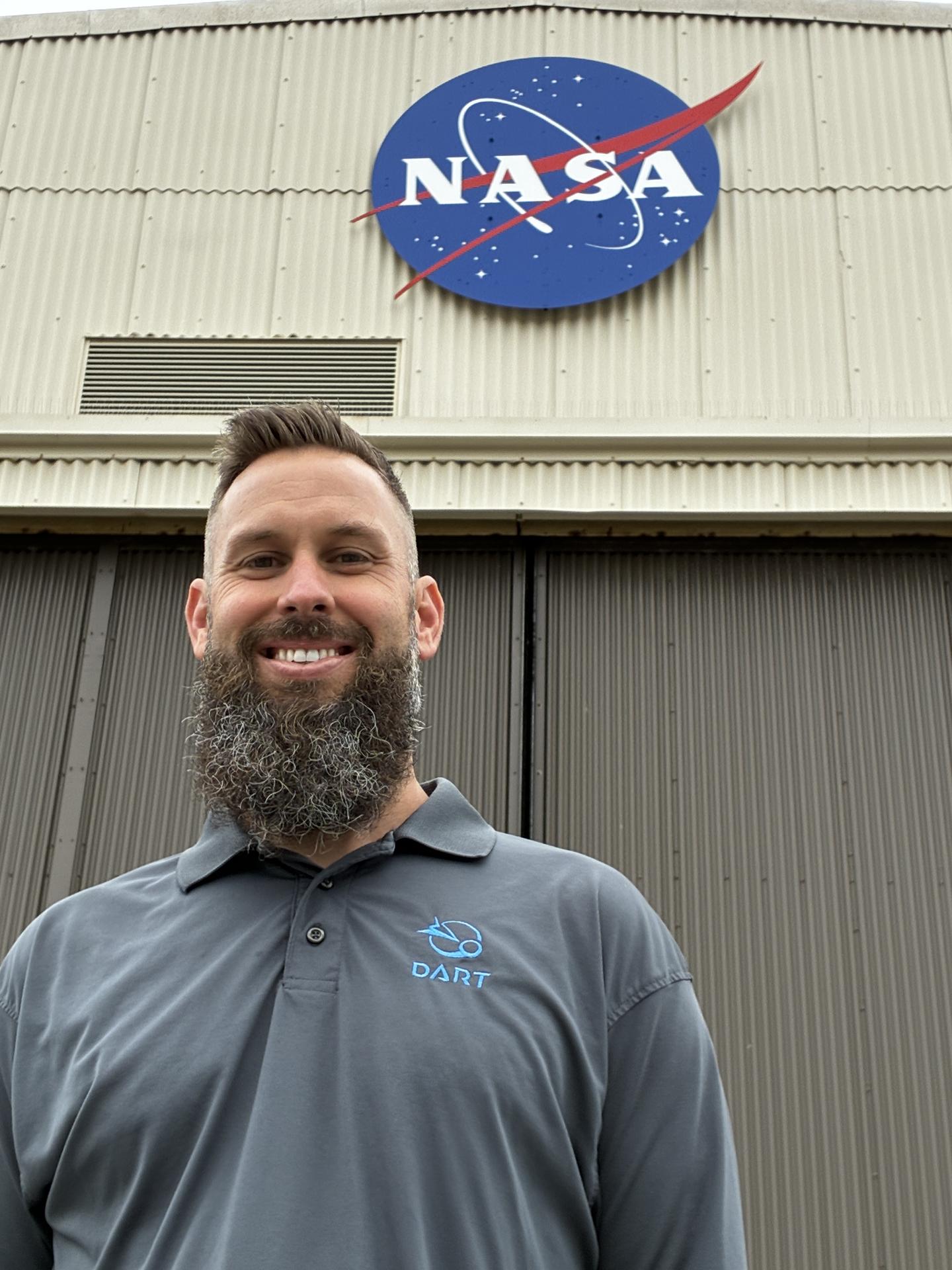
At Vandenberg Space Force Base in California, Eric Fernandez stands in front of Building 836, where he performs work as a telemetry engineer for NASA.
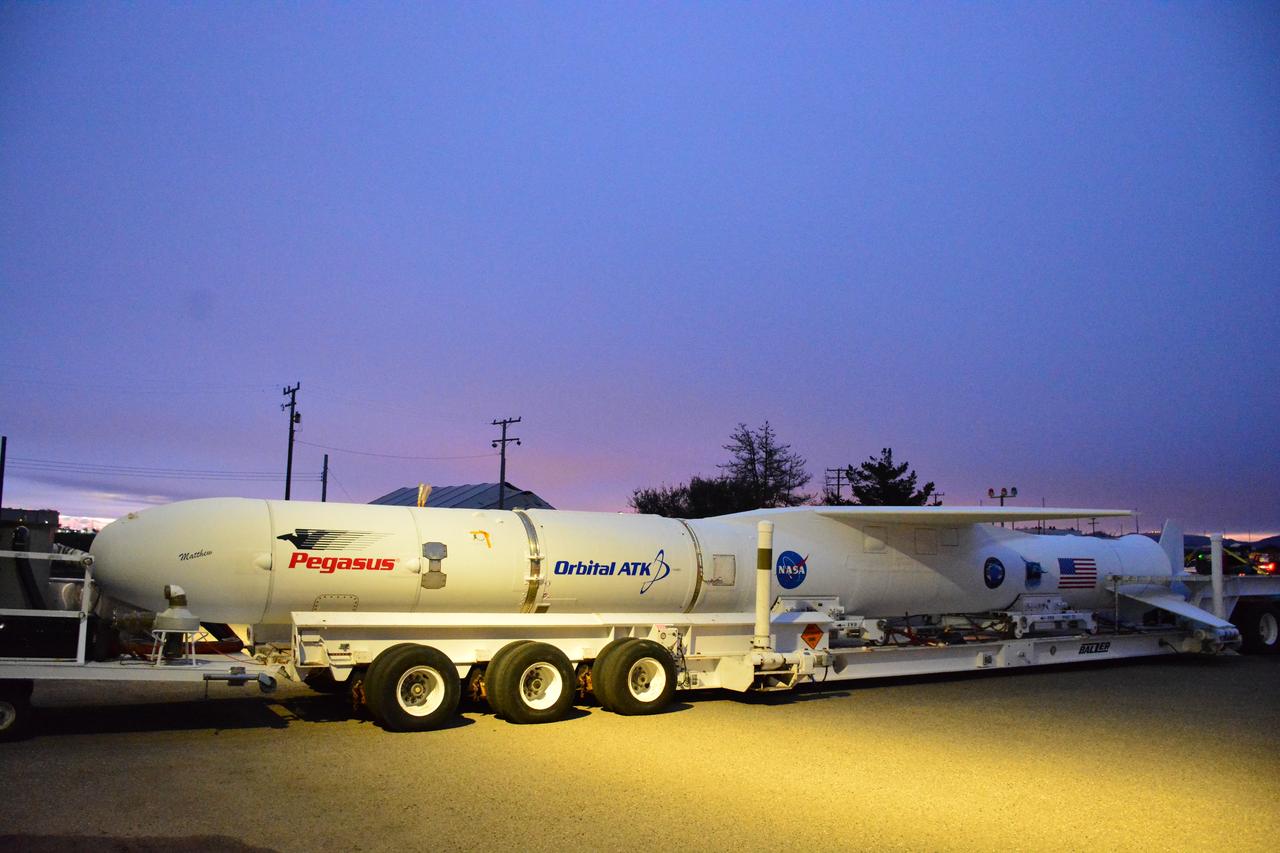
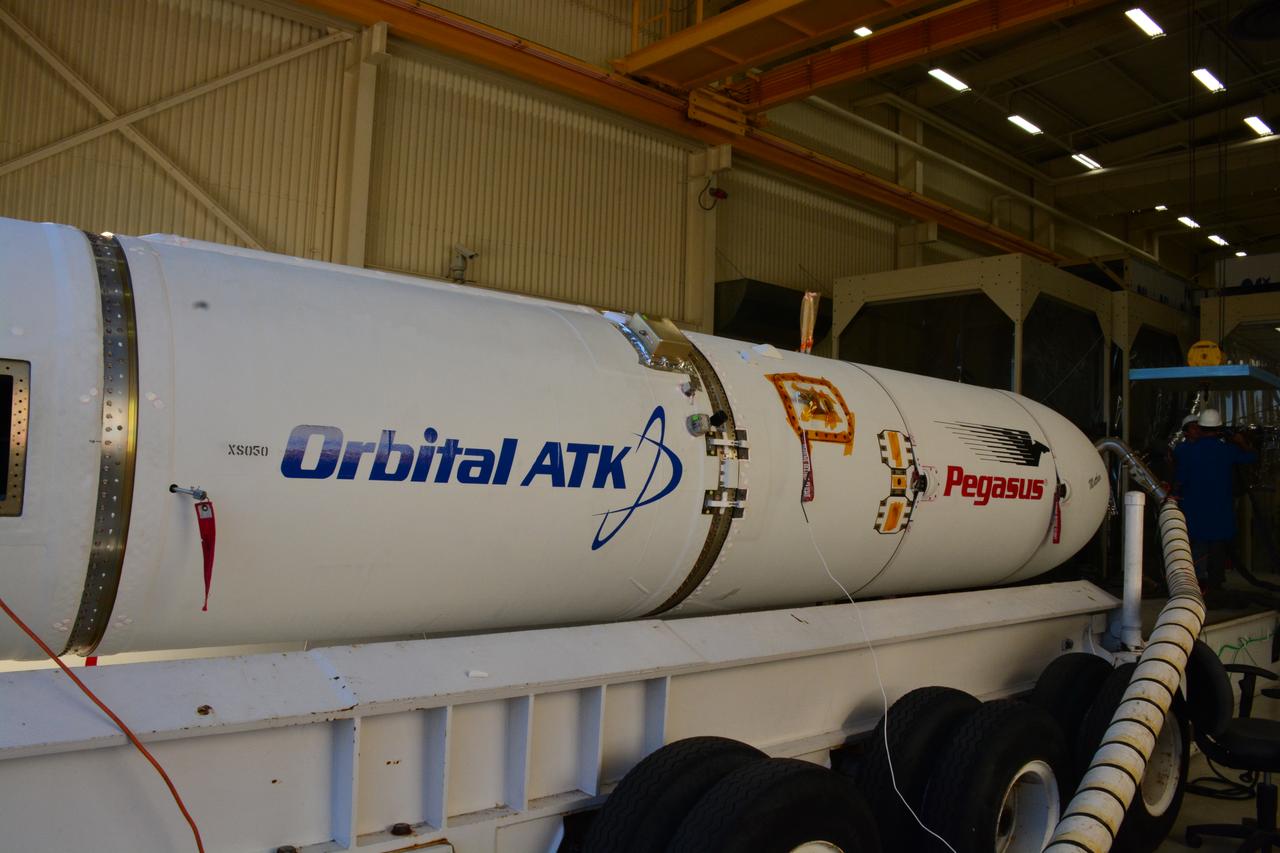
At Vandenberg Air Force Base in California, an Orbital ATK Pegasus XL rocket is transported from the hangar at Building 1555 to be mated to L-1011 carrier aircraft near Vandenberg's runway. On board Pegasus are eight NASA Cyclone Global Navigation Satellite System, or CYGNSS, spacecraft. When preparations are competed at Vandenberg, the L-1011/Pegasus XL combination will be flown to NASA’s Kennedy Space Center in Florida. On Dec. 12, 2016, the carrier aircraft is scheduled to take off from the Skid Strip at Cape Canaveral Air Force Station and CYGNSS will launch on the Pegasus XL rocket with the L-1011 flying off shore. CYGNSS satellites will make frequent and accurate measurements of ocean surface winds throughout the life cycle of tropical storms and hurricanes. The data that CYGNSS provides will enable scientists to probe key air-sea interaction processes that take place near the core of storms, which are rapidly changing and play a critical role in the beginning and intensification of hurricanes.
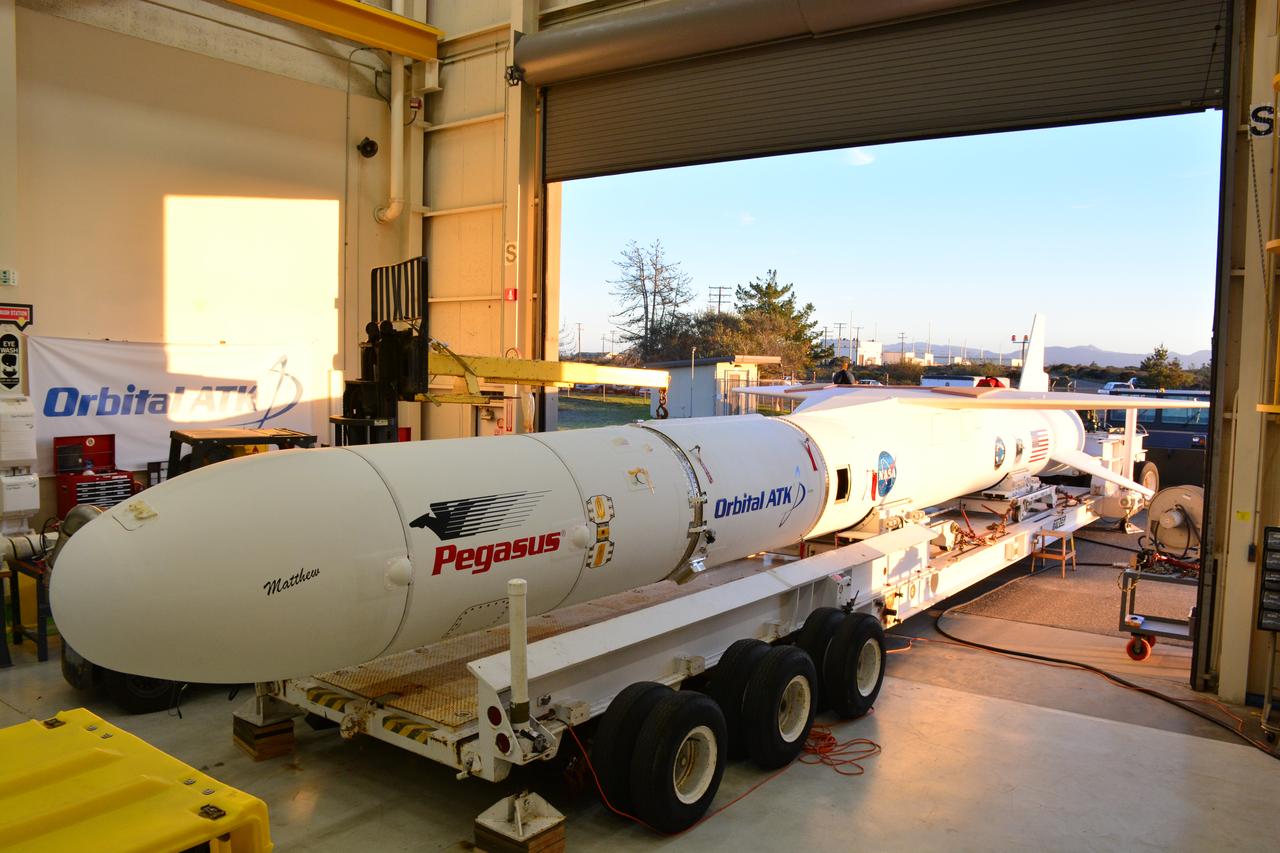
At Vandenberg Air Force Base in California, an Orbital ATK Pegasus XL rocket is placed on an assembly integration transporter for the move from the hangar at Building 1555 to be mated to L-1011 carrier aircraft near Vandenberg's runway. On board Pegasus are eight NASA Cyclone Global Navigation Satellite System, or CYGNSS, spacecraft. When preparations are competed at Vandenberg, the L-1011/Pegasus XL combination will be flown to NASA’s Kennedy Space Center in Florida. On Dec. 12, 2016, the carrier aircraft is scheduled to take off from the Skid Strip at Cape Canaveral Air Force Station and CYGNSS will launch on the Pegasus XL rocket with the L-1011 flying off shore. CYGNSS satellites will make frequent and accurate measurements of ocean surface winds throughout the life cycle of tropical storms and hurricanes. The data that CYGNSS provides will enable scientists to probe key air-sea interaction processes that take place near the core of storms, which are rapidly changing and play a critical role in the beginning and intensification of hurricanes.
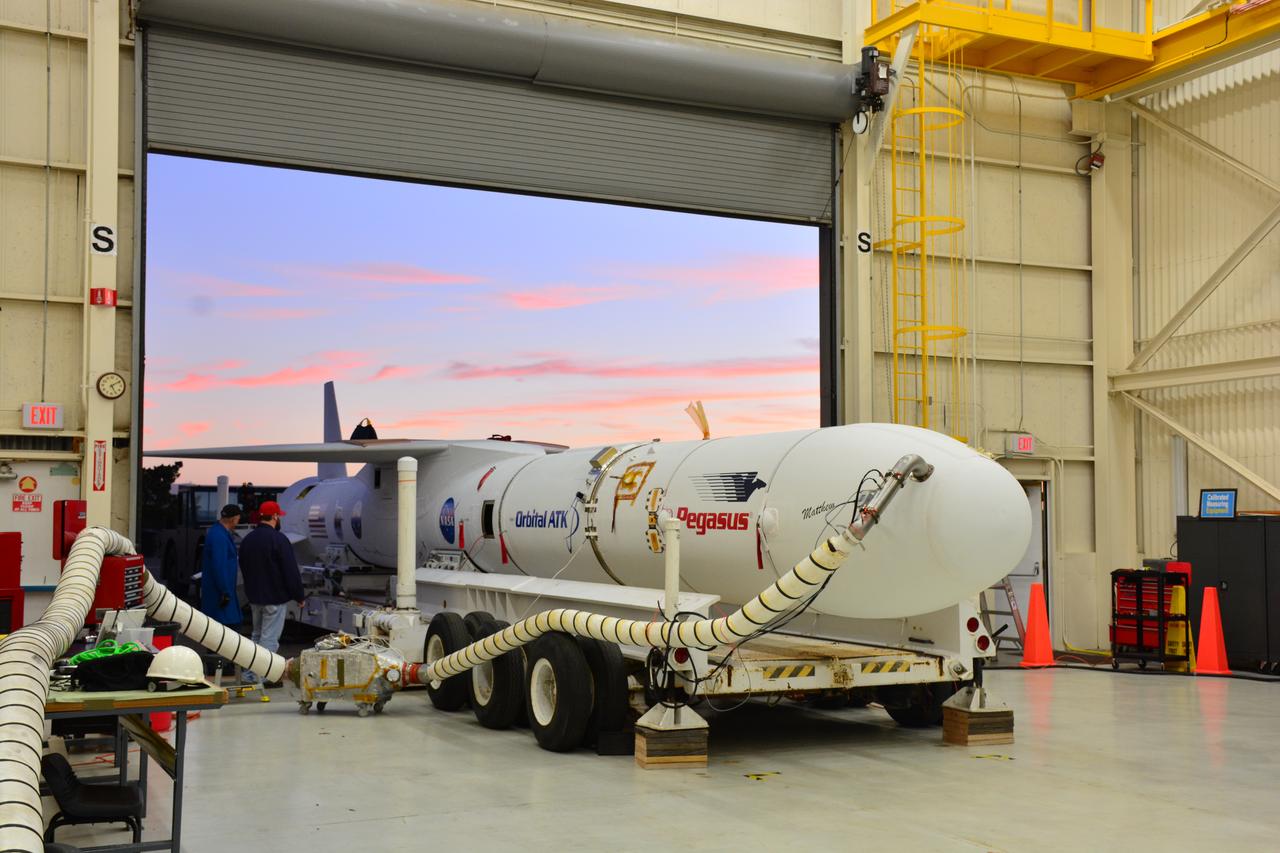
At Vandenberg Air Force Base in California, an Orbital ATK Pegasus XL rocket is placed on an assembly integration transporter for the move from the hangar at Building 1555 to be mated to L-1011 carrier aircraft near Vandenberg's runway. On board Pegasus are eight NASA Cyclone Global Navigation Satellite System, or CYGNSS, spacecraft. When preparations are competed at Vandenberg, the L-1011/Pegasus XL combination will be flown to NASA’s Kennedy Space Center in Florida. On Dec. 12, 2016, the carrier aircraft is scheduled to take off from the Skid Strip at Cape Canaveral Air Force Station and CYGNSS will launch on the Pegasus XL rocket with the L-1011 flying off shore. CYGNSS satellites will make frequent and accurate measurements of ocean surface winds throughout the life cycle of tropical storms and hurricanes. The data that CYGNSS provides will enable scientists to probe key air-sea interaction processes that take place near the core of storms, which are rapidly changing and play a critical role in the beginning and intensification of hurricanes.
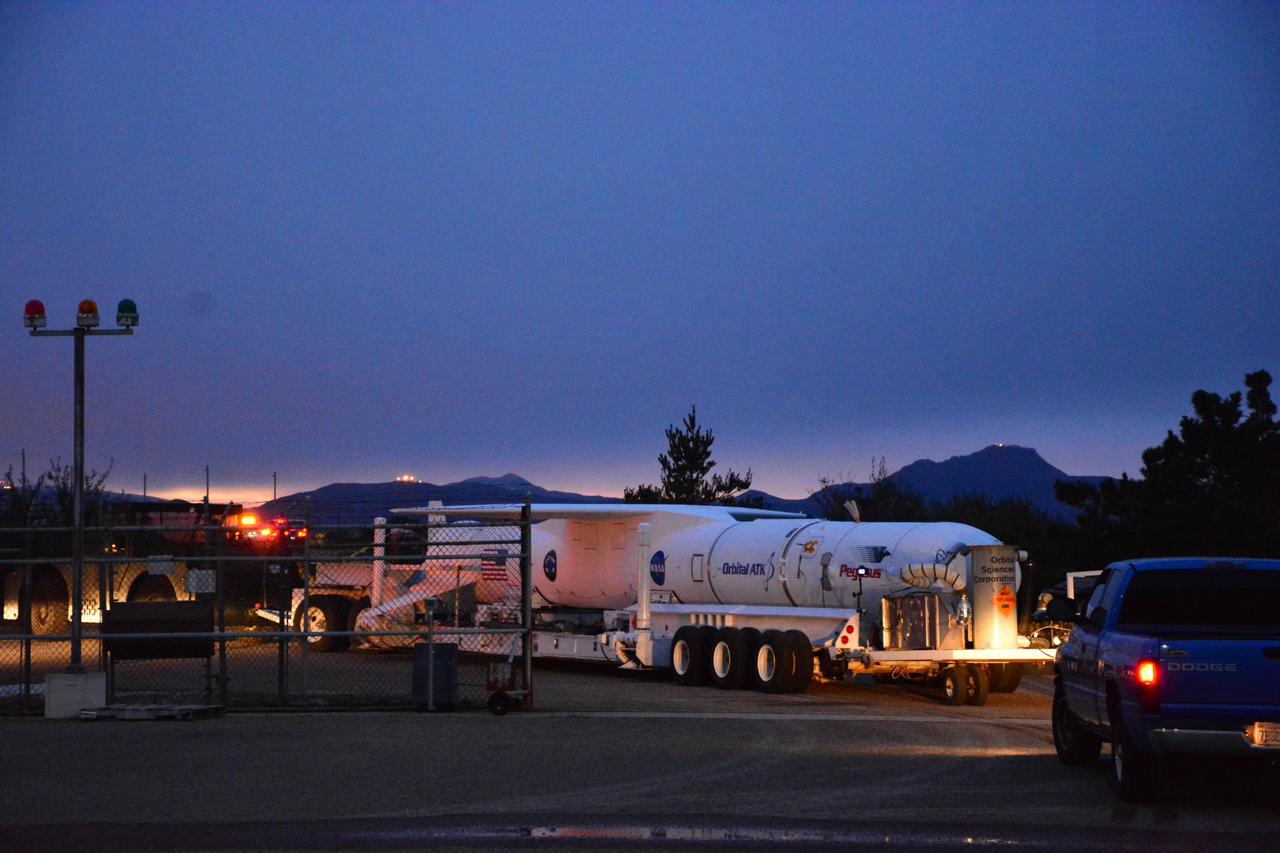
At Vandenberg Air Force Base in California, an Orbital ATK Pegasus XL rocket is transported from the hangar at Building 1555 to be mated to L-1011 carrier aircraft near Vandenberg's runway. On board Pegasus are eight NASA Cyclone Global Navigation Satellite System, or CYGNSS, spacecraft. When preparations are competed at Vandenberg, the L-1011/Pegasus XL combination will be flown to NASA’s Kennedy Space Center in Florida. On Dec. 12, 2016, the carrier aircraft is scheduled to take off from the Skid Strip at Cape Canaveral Air Force Station and CYGNSS will launch on the Pegasus XL rocket with the L-1011 flying off shore. CYGNSS satellites will make frequent and accurate measurements of ocean surface winds throughout the life cycle of tropical storms and hurricanes. The data that CYGNSS provides will enable scientists to probe key air-sea interaction processes that take place near the core of storms, which are rapidly changing and play a critical role in the beginning and intensification of hurricanes.
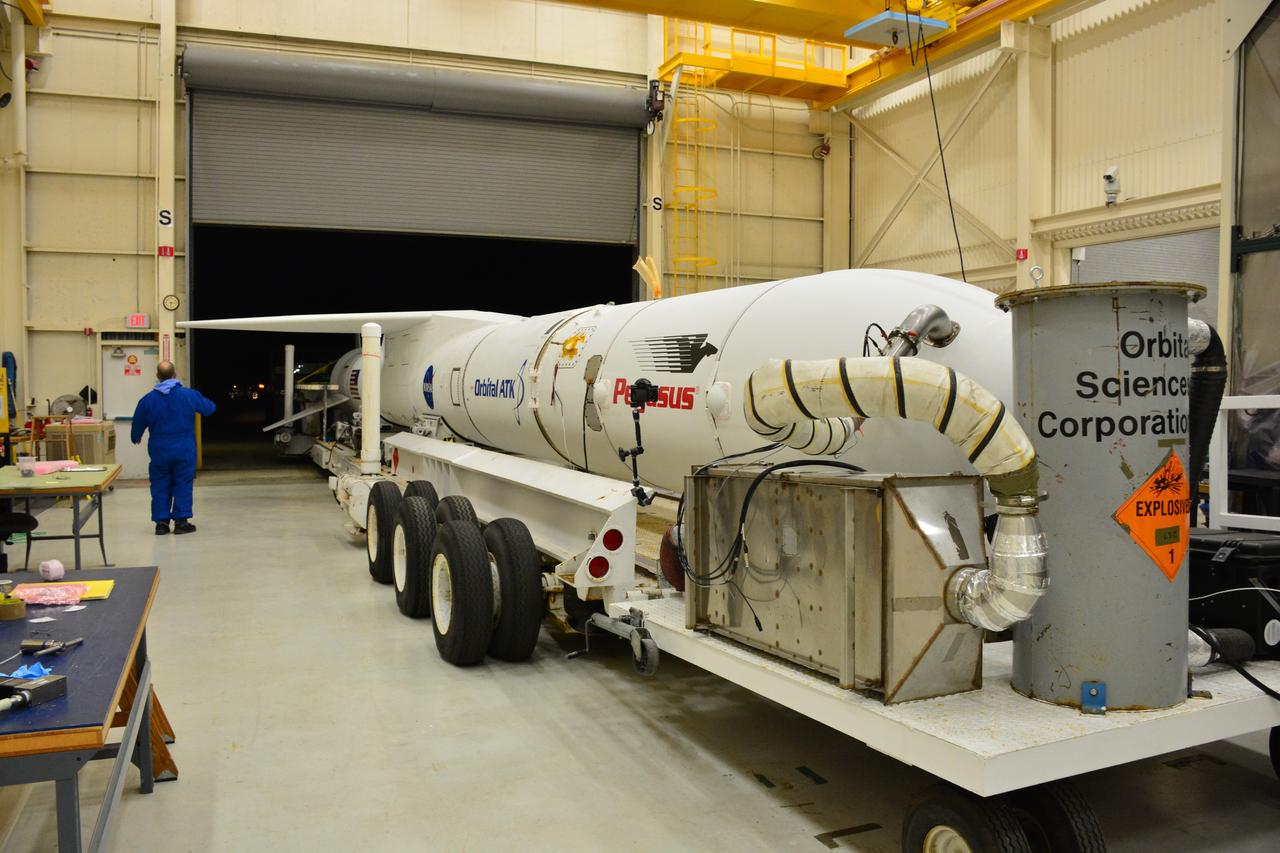
At Vandenberg Air Force Base in California, an Orbital ATK Pegasus XL rocket is transported from the hangar at Building 1555 to be mated to L-1011 carrier aircraft near Vandenberg's runway. On board Pegasus are eight NASA Cyclone Global Navigation Satellite System, or CYGNSS, spacecraft. When preparations are competed at Vandenberg, the L-1011/Pegasus XL combination will be flown to NASA’s Kennedy Space Center in Florida. On Dec. 12, 2016, the carrier aircraft is scheduled to take off from the Skid Strip at Cape Canaveral Air Force Station and CYGNSS will launch on the Pegasus XL rocket with the L-1011 flying off shore. CYGNSS satellites will make frequent and accurate measurements of ocean surface winds throughout the life cycle of tropical storms and hurricanes. The data that CYGNSS provides will enable scientists to probe key air-sea interaction processes that take place near the core of storms, which are rapidly changing and play a critical role in the beginning and intensification of hurricanes.
At Vandenberg Air Force Base in California, an Orbital ATK Pegasus XL rocket is placed on an assembly integration transporter for the move from the hangar at Building 1555 to be mated to L-1011 carrier aircraft near Vandenberg's runway. On board Pegasus are eight NASA Cyclone Global Navigation Satellite System, or CYGNSS, spacecraft. When preparations are competed at Vandenberg, the L-1011/Pegasus XL combination will be flown to NASA’s Kennedy Space Center in Florida. On Dec. 12, 2016, the carrier aircraft is scheduled to take off from the Skid Strip at Cape Canaveral Air Force Station and CYGNSS will launch on the Pegasus XL rocket with the L-1011 flying off shore. CYGNSS satellites will make frequent and accurate measurements of ocean surface winds throughout the life cycle of tropical storms and hurricanes. The data that CYGNSS provides will enable scientists to probe key air-sea interaction processes that take place near the core of storms, which are rapidly changing and play a critical role in the beginning and intensification of hurricanes.
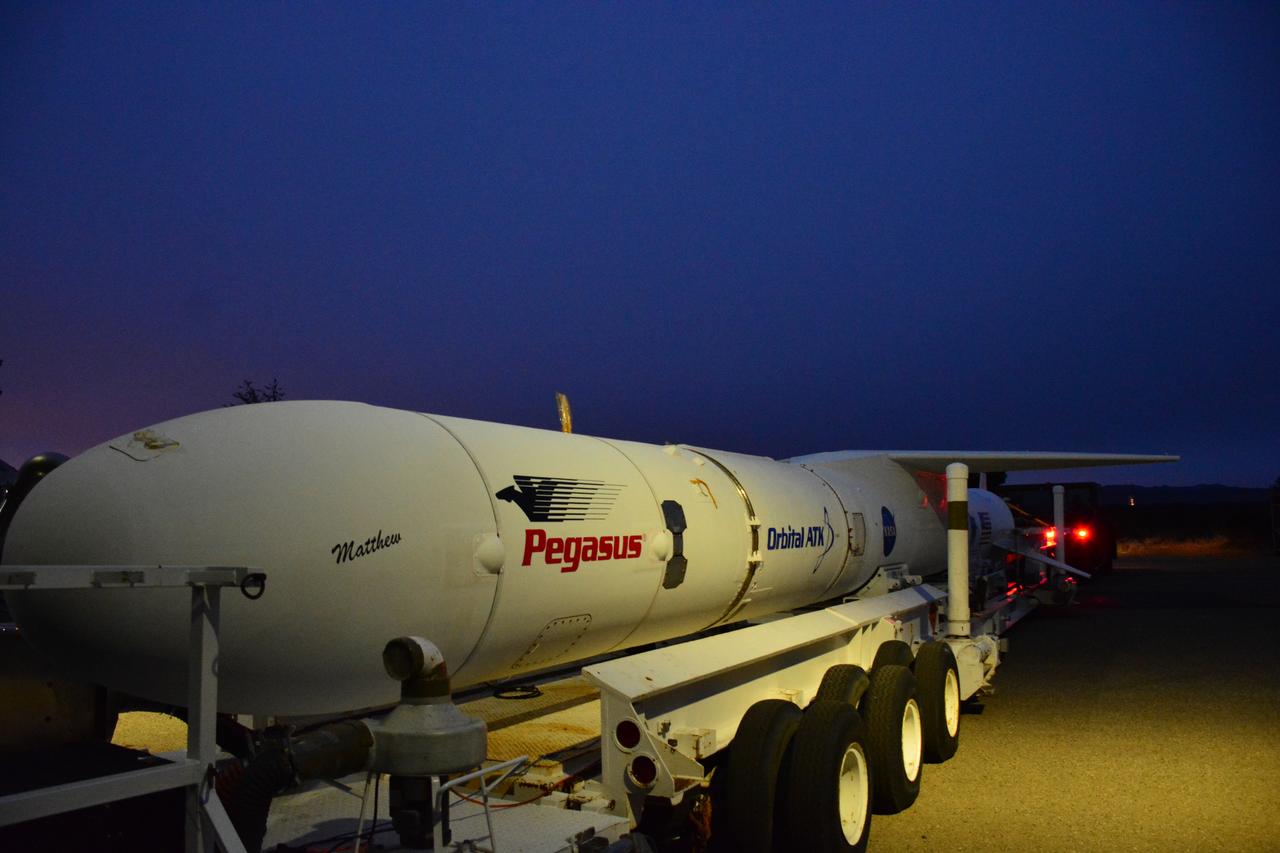
At Vandenberg Air Force Base in California, an Orbital ATK Pegasus XL rocket is transported from the hangar at Building 1555 to be mated to L-1011 carrier aircraft near Vandenberg's runway. On board Pegasus are eight NASA Cyclone Global Navigation Satellite System, or CYGNSS, spacecraft. When preparations are competed at Vandenberg, the L-1011/Pegasus XL combination will be flown to NASA’s Kennedy Space Center in Florida. On Dec. 12, 2016, the carrier aircraft is scheduled to take off from the Skid Strip at Cape Canaveral Air Force Station and CYGNSS will launch on the Pegasus XL rocket with the L-1011 flying off shore. CYGNSS satellites will make frequent and accurate measurements of ocean surface winds throughout the life cycle of tropical storms and hurricanes. The data that CYGNSS provides will enable scientists to probe key air-sea interaction processes that take place near the core of storms, which are rapidly changing and play a critical role in the beginning and intensification of hurricanes.
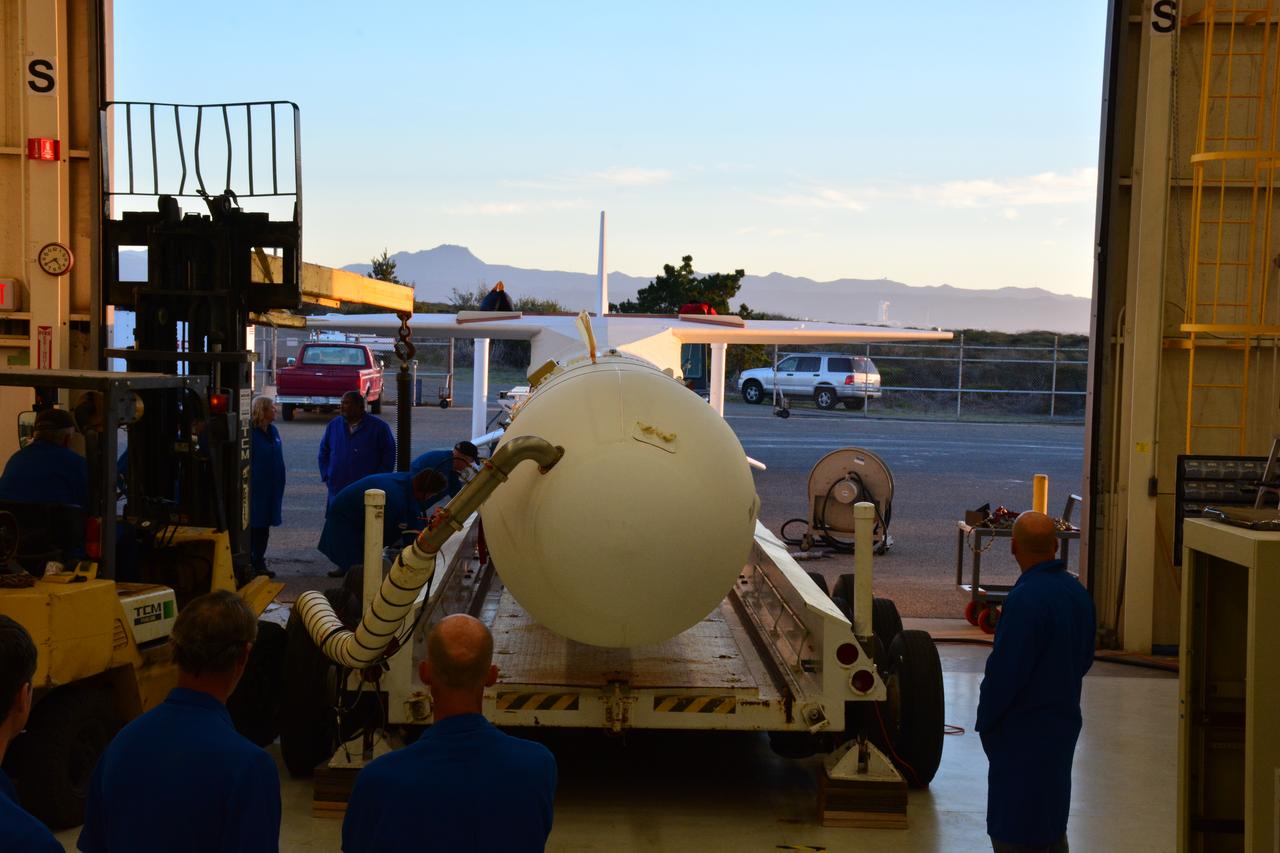
At Vandenberg Air Force Base in California, an Orbital ATK Pegasus XL rocket is placed on an assembly integration transporter for the move from the hangar at Building 1555 to be mated to L-1011 carrier aircraft near Vandenberg's runway. On board Pegasus are eight NASA Cyclone Global Navigation Satellite System, or CYGNSS, spacecraft. When preparations are competed at Vandenberg, the L-1011/Pegasus XL combination will be flown to NASA’s Kennedy Space Center in Florida. On Dec. 12, 2016, the carrier aircraft is scheduled to take off from the Skid Strip at Cape Canaveral Air Force Station and CYGNSS will launch on the Pegasus XL rocket with the L-1011 flying off shore. CYGNSS satellites will make frequent and accurate measurements of ocean surface winds throughout the life cycle of tropical storms and hurricanes. The data that CYGNSS provides will enable scientists to probe key air-sea interaction processes that take place near the core of storms, which are rapidly changing and play a critical role in the beginning and intensification of hurricanes.