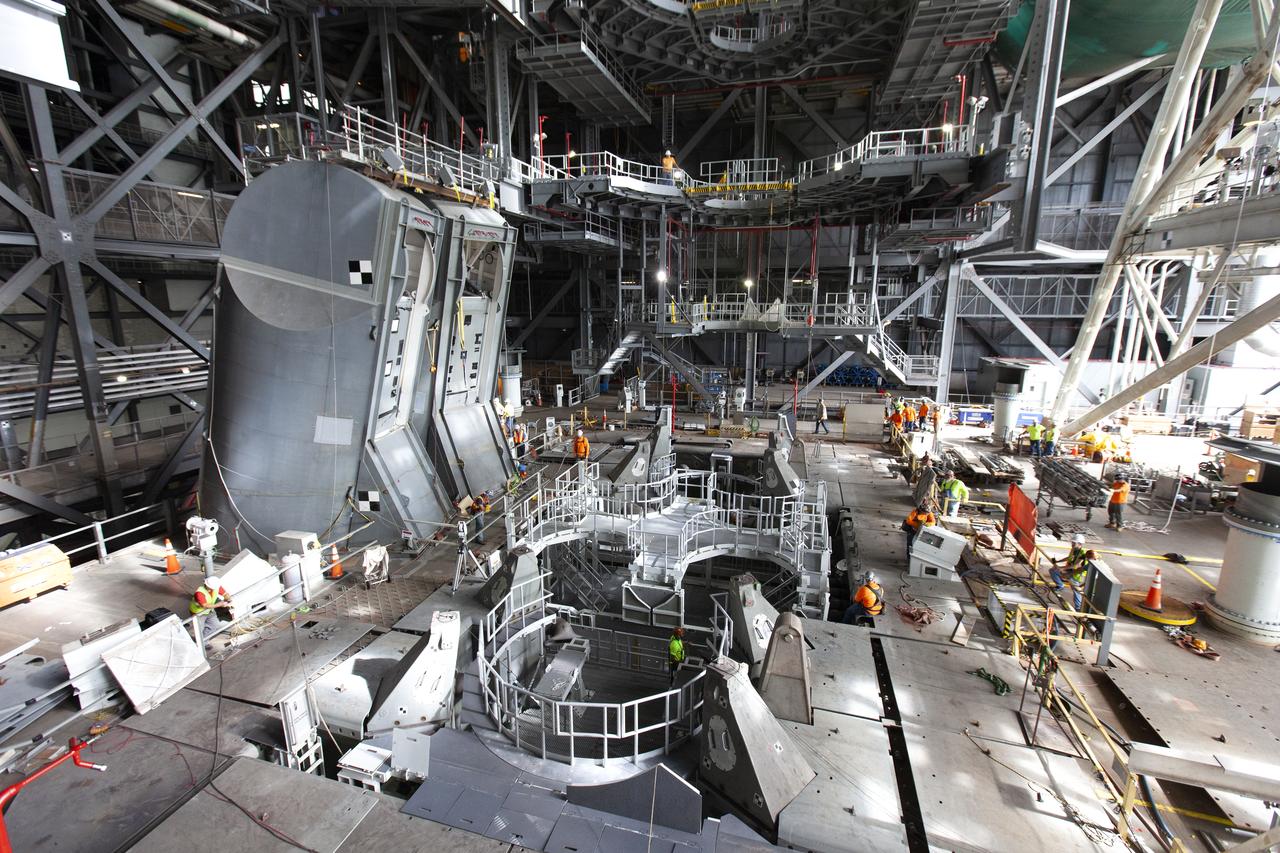
Inside the Vehicle Assembly Building at NASA’s Kennedy Space Center in Florida, the engine service platform that will provide access to the core stage of the Space Launch System (SLS) rocket is lifted up in the center of the mobile launcher (ML) in High Bay 3 on June 18, 2019. The large work platform is designed to provide unrestricted access to the RS-25 engines on the SLS core stage from the ML. The service platform will be used for Artemis 1 and subsequent missions. For Artemis 1, the Orion spacecraft will launch atop the SLS rocket from Launch Pad 39B and begin an approximately three-week mission that will send Orion thousands of miles beyond the Moon. In view at left are the two Tail Service Mast Umbilicals. They will provide liquid oxygen and liquid hydrogen fluid lines and electrical cable connections to the SLS core stage engine section. Exploration Ground Systems is overseeing work on the ML.
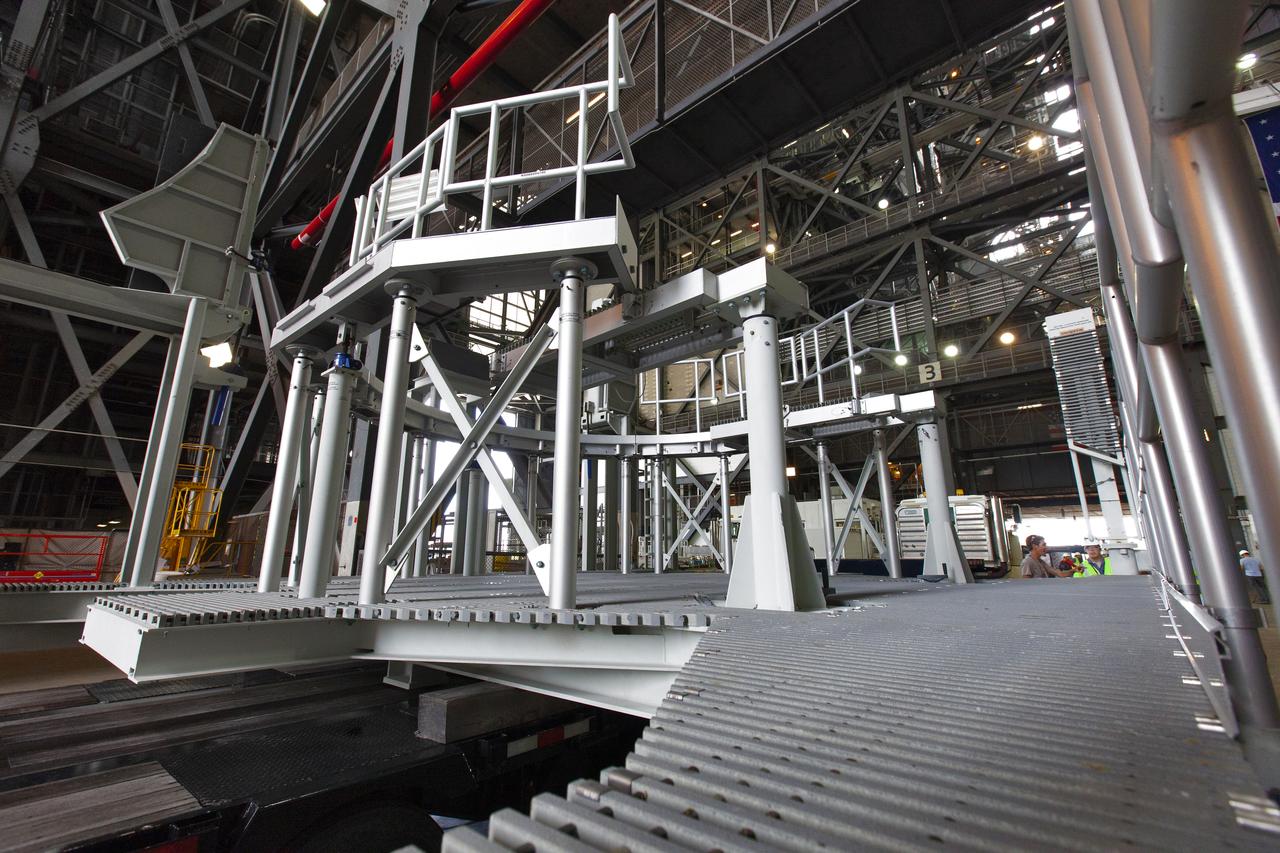
The engine service platform that will provide access to the core stage of the Space Launch System (SLS) rocket is moved beneath the mobile launcher (ML) in High Bay 3 of the Vehicle Assembly Building at NASA’s Kennedy Space Center in Florida on June 14, 2019. The large work platform is designed to provide unrestricted access to the RS-25 engines on the SLS core stage from the ML. The service platform will be used for Artemis 1 and subsequent missions. For Artemis 1, the Orion spacecraft will launch atop the SLS rocket from Launch Pad 39B and begin an approximately three-week mission that will send Orion thousands of miles beyond the Moon. Exploration Ground Systems is overseeing work on the ML.
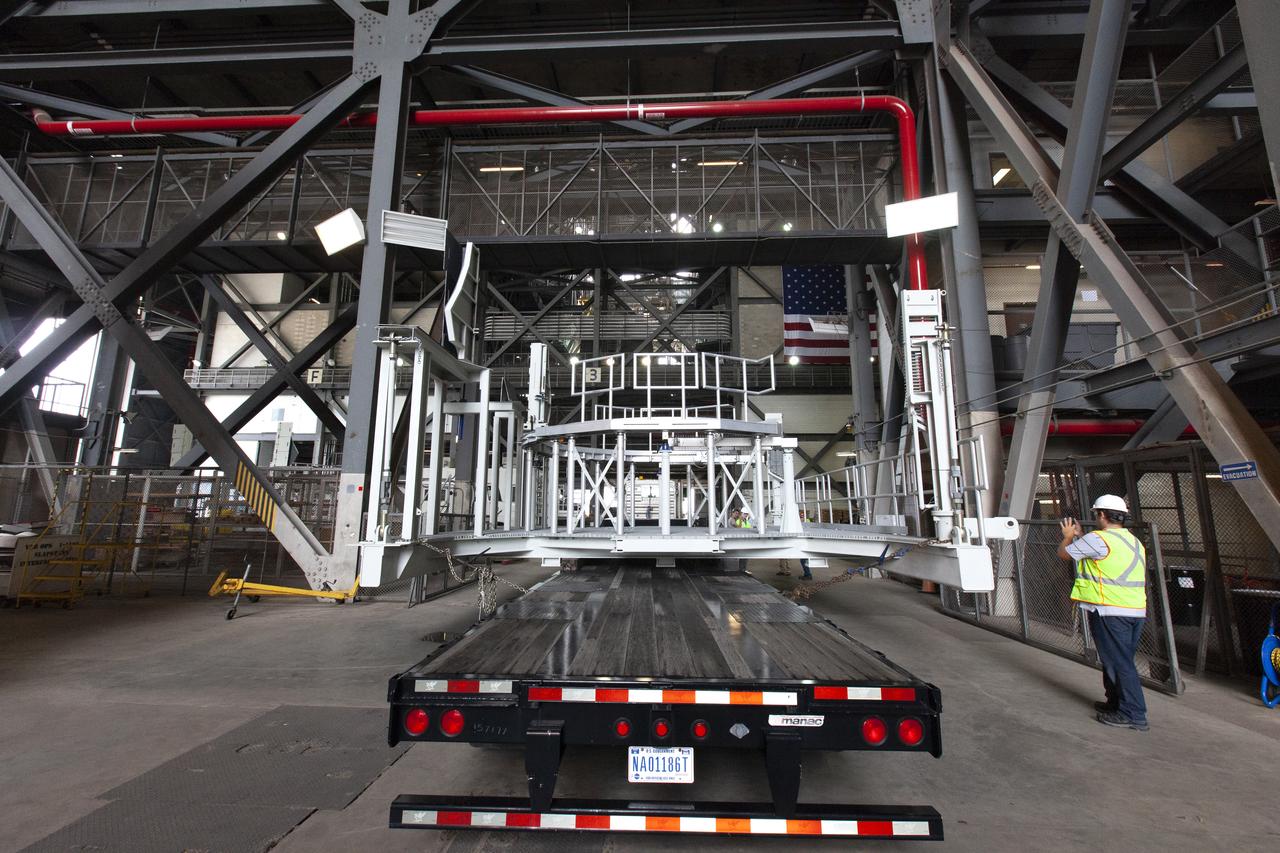
The engine service platform that will provide access to the core stage of the Space Launch System (SLS) rocket arrives in the Vehicle Assembly Building at NASA’s Kennedy Space Center in Florida on June 14, 2019. The large work platform is designed to provide unrestricted access to the RS-25 engines on the SLS core stage from the ML. The service platform will be used for Artemis 1 and subsequent missions. For Artemis 1, the Orion spacecraft will launch atop the SLS rocket from Launch Pad 39B and begin an approximately three-week mission that will send Orion thousands of miles beyond the Moon. Exploration Ground Systems is overseeing work on the ML.

The engine service platform that will provide access to the core stage of the Space Launch System (SLS) rocket is moved beneath the mobile launcher (ML) in High Bay 3 of the Vehicle Assembly Building at NASA’s Kennedy Space Center in Florida on June 14, 2019. The large work platform is designed to provide unrestricted access to the RS-25 engines on the SLS core stage from the ML. The service platform will be used for Artemis 1 and subsequent missions. For Artemis 1, the Orion spacecraft will launch atop the SLS rocket from Launch Pad 39B and begin an approximately three-week mission that will send Orion thousands of miles beyond the Moon. Exploration Ground Systems is overseeing work on the ML.
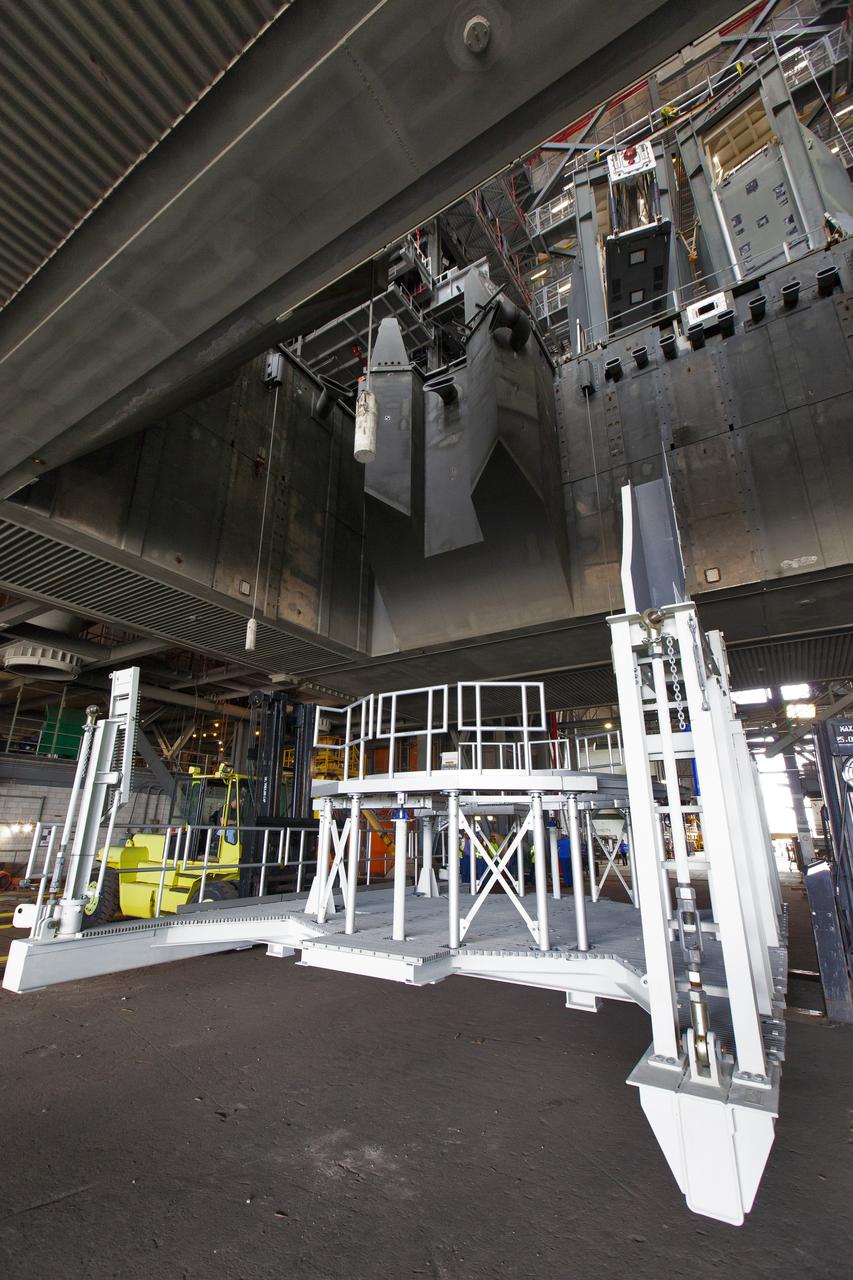
The engine service platform that will provide access to the core stage of the Space Launch System (SLS) rocket arrives in High Bay 3 of the Vehicle Assembly Building at NASA’s Kennedy Space Center in Florida on June 14, 2019. The large work platform is designed to provide unrestricted access to the RS-25 engines on the SLS core stage from the ML. The service platform will be used for Artemis 1 and subsequent missions. For Artemis 1, the Orion spacecraft will launch atop the SLS rocket from Launch Pad 39B and begin an approximately three-week mission that will send Orion thousands of miles beyond the Moon. Exploration Ground Systems is overseeing work on the ML.
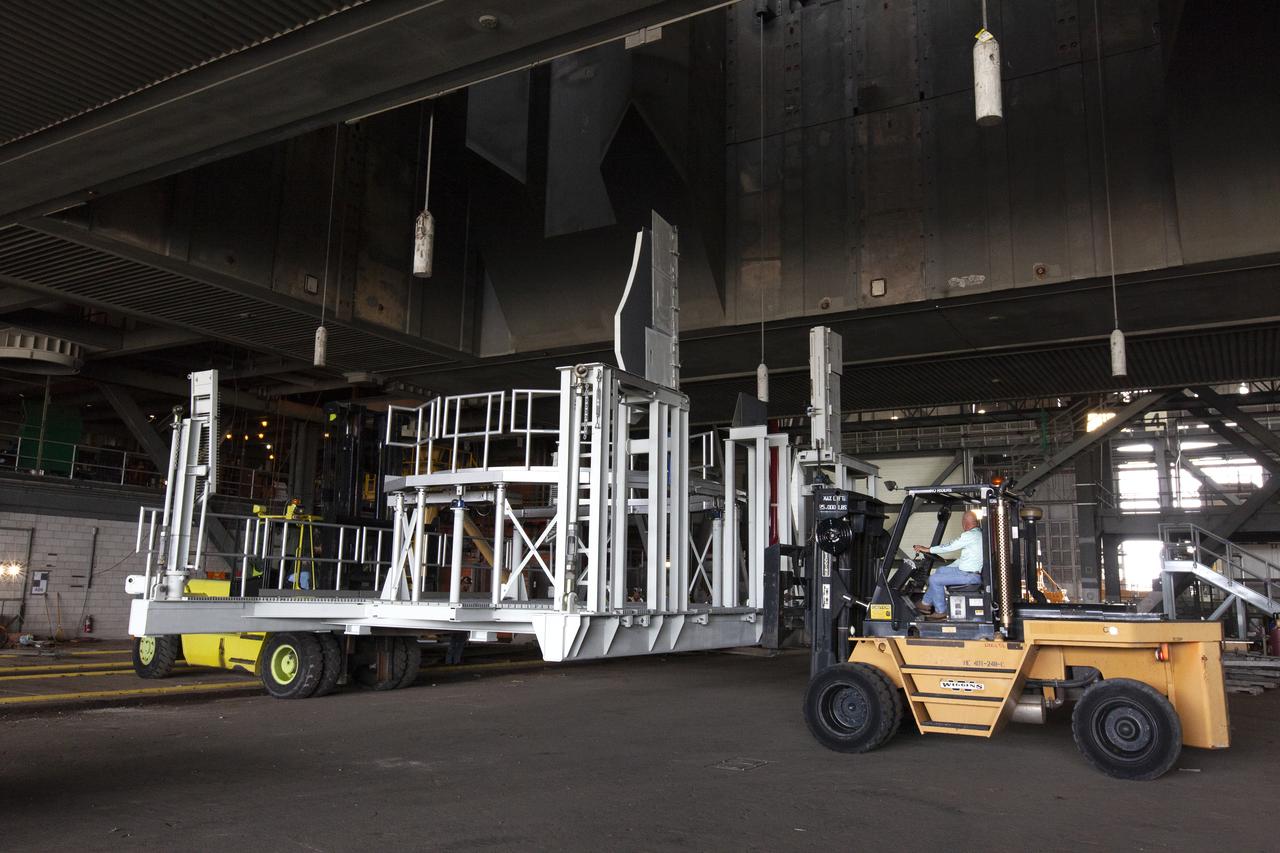
The engine service platform that will provide access to the core stage of the Space Launch System (SLS) rocket arrives in High Bay 3 of the Vehicle Assembly Building at NASA’s Kennedy Space Center in Florida on June 14, 2019. The large work platform is designed to provide unrestricted access to the RS-25 engines on the SLS core stage from the ML. The service platform will be used for Artemis 1 and subsequent missions. For Artemis 1, the Orion spacecraft will launch atop the SLS rocket from Launch Pad 39B and begin an approximately three-week mission that will send Orion thousands of miles beyond the Moon. Exploration Ground Systems is overseeing work on the ML.
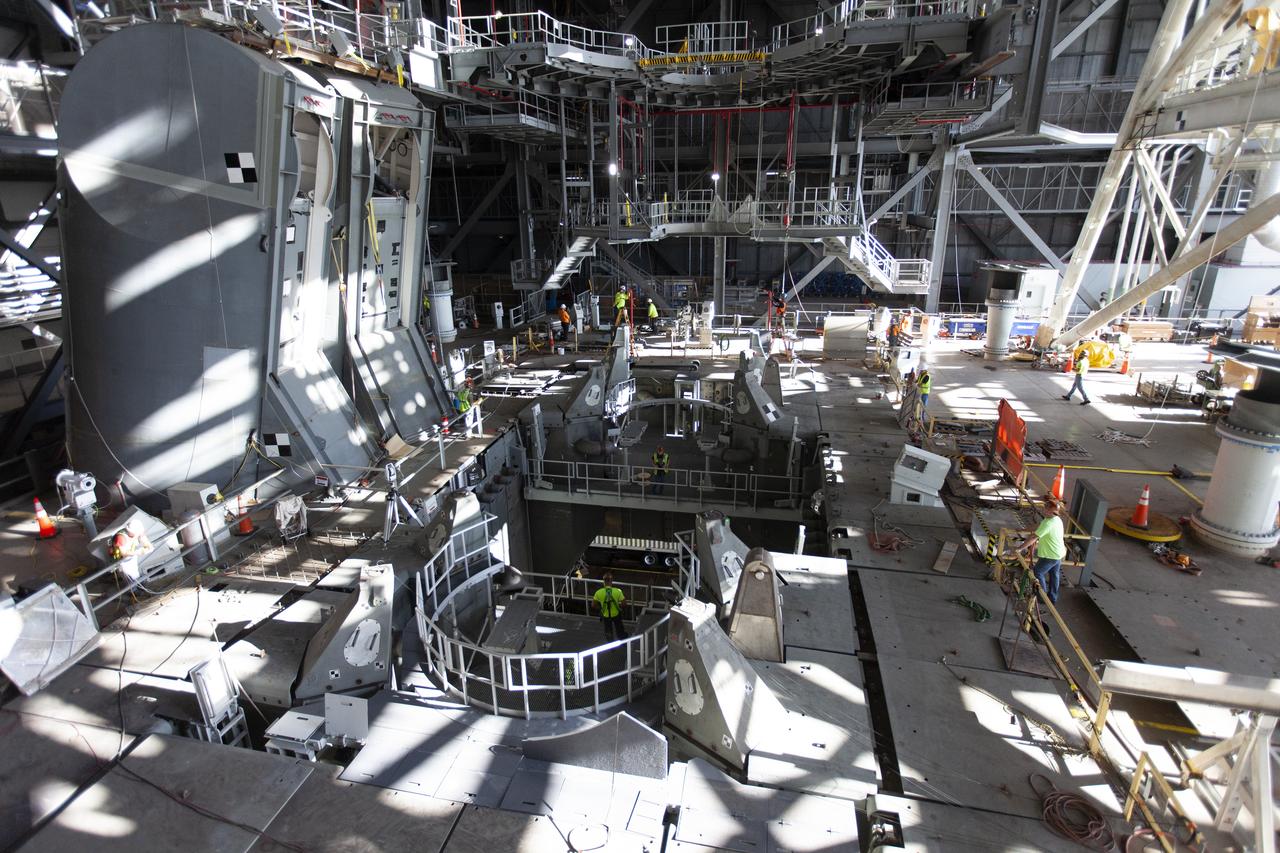
Inside the Vehicle Assembly Building at NASA’s Kennedy Space Center in Florida, the engine service platform that will provide access to the core stage of the Space Launch System (SLS) rocket is lifted up in the center of the mobile launcher (ML) in High Bay 3 on June 18, 2019. The large work platform is designed to provide unrestricted access to the RS-25 engines on the SLS core stage from the ML. The service platform will be used for Artemis 1 and subsequent missions. For Artemis 1, the Orion spacecraft will launch atop the SLS rocket from Launch Pad 39B and begin an approximately three-week mission that will send Orion thousands of miles beyond the Moon. Exploration Ground Systems is overseeing work on the ML.
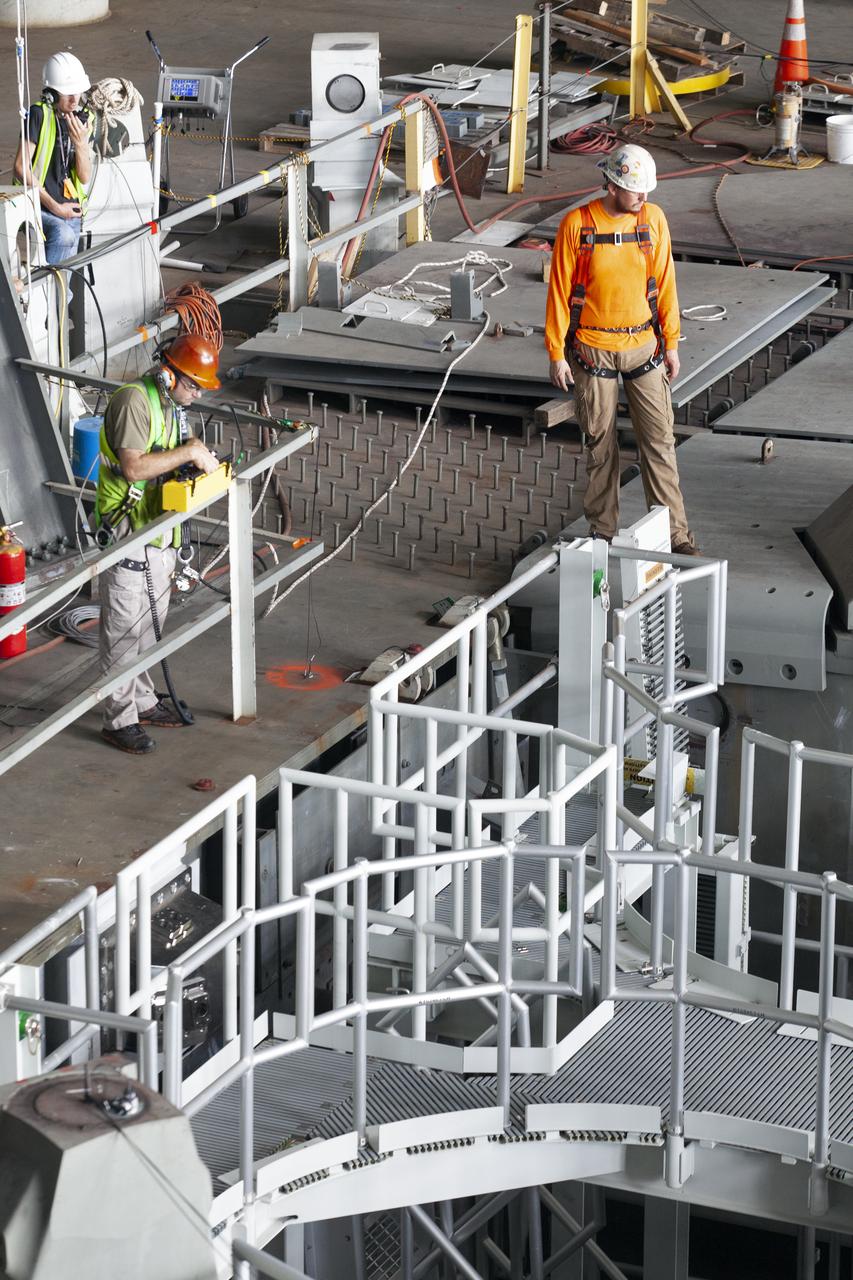
Workers with Bragg Crane and Rigging prepare for the lift of the engine service platform that will provide access to the core stage of the Space Launch System (SLS) rocket on the mobile (ML) in High Bay 3 of the Vehicle Assembly Building at NASA’s Kennedy Space Center in Florida on June 18, 2019. The large work platform is designed to provide unrestricted access to the RS-25 engines on the SLS core stage from the ML. The service platform will be used for Artemis 1 and subsequent missions. For Artemis 1, the Orion spacecraft will launch atop the SLS rocket from Launch Pad 39B and begin an approximately three-week mission that will send Orion thousands of miles beyond the Moon. Exploration Ground Systems is overseeing work on the ML.
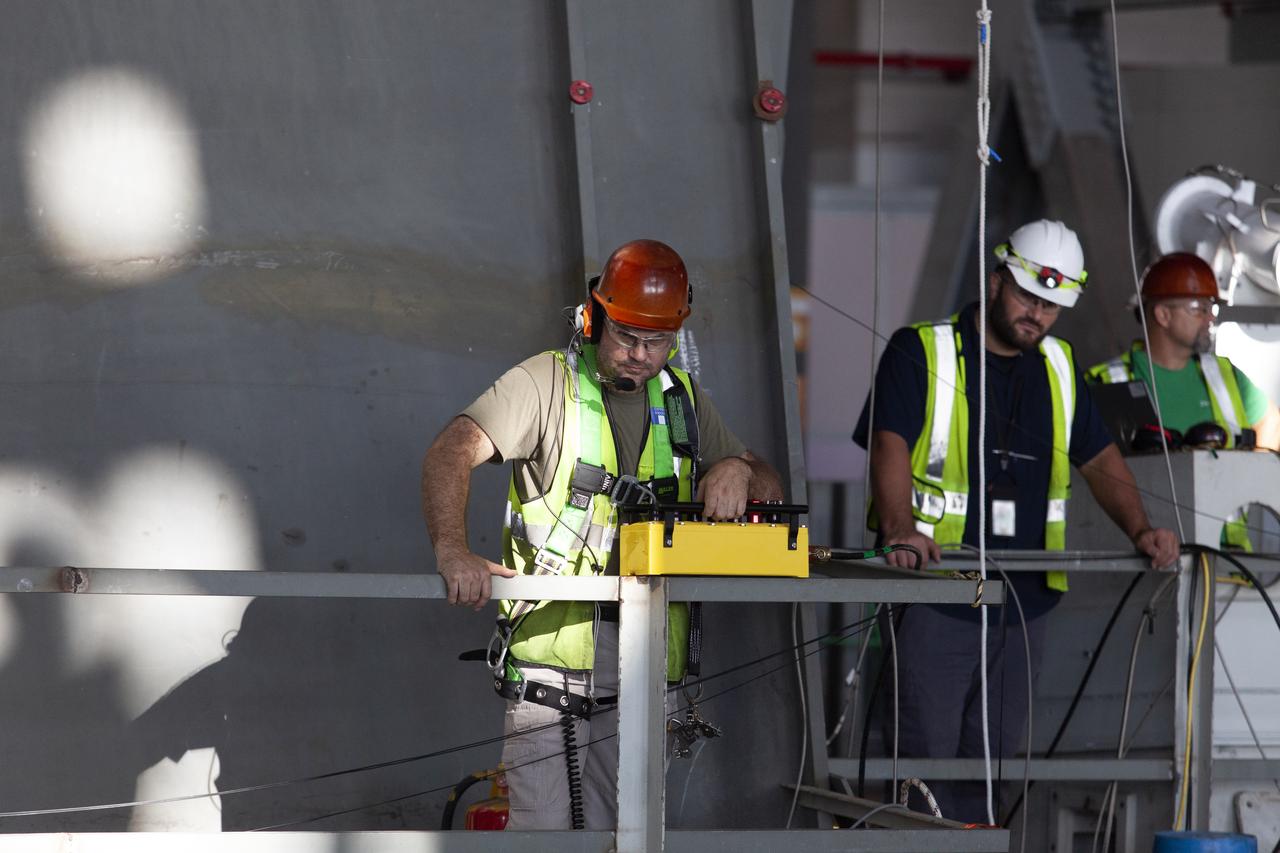
Jacobs TOSC workers prepare for the lift of the engine service platform that will provide access to the core stage of the Space Launch System (SLS) rocket on the mobile launcher (ML) in High Bay 3 of the Vehicle Assembly Building at NASA’s Kennedy Space Center in Florida on June 18, 2019. The large work platform is designed to provide unrestricted access to the RS-25 engines on the SLS core stage from the ML. The service platform will be used for Artemis 1 and subsequent missions. For Artemis 1, the Orion spacecraft will launch atop the SLS rocket from Launch Pad 39B and begin an approximately three-week mission that will send Orion thousands of miles beyond the Moon. Exploration Ground Systems is overseeing work on the ML.
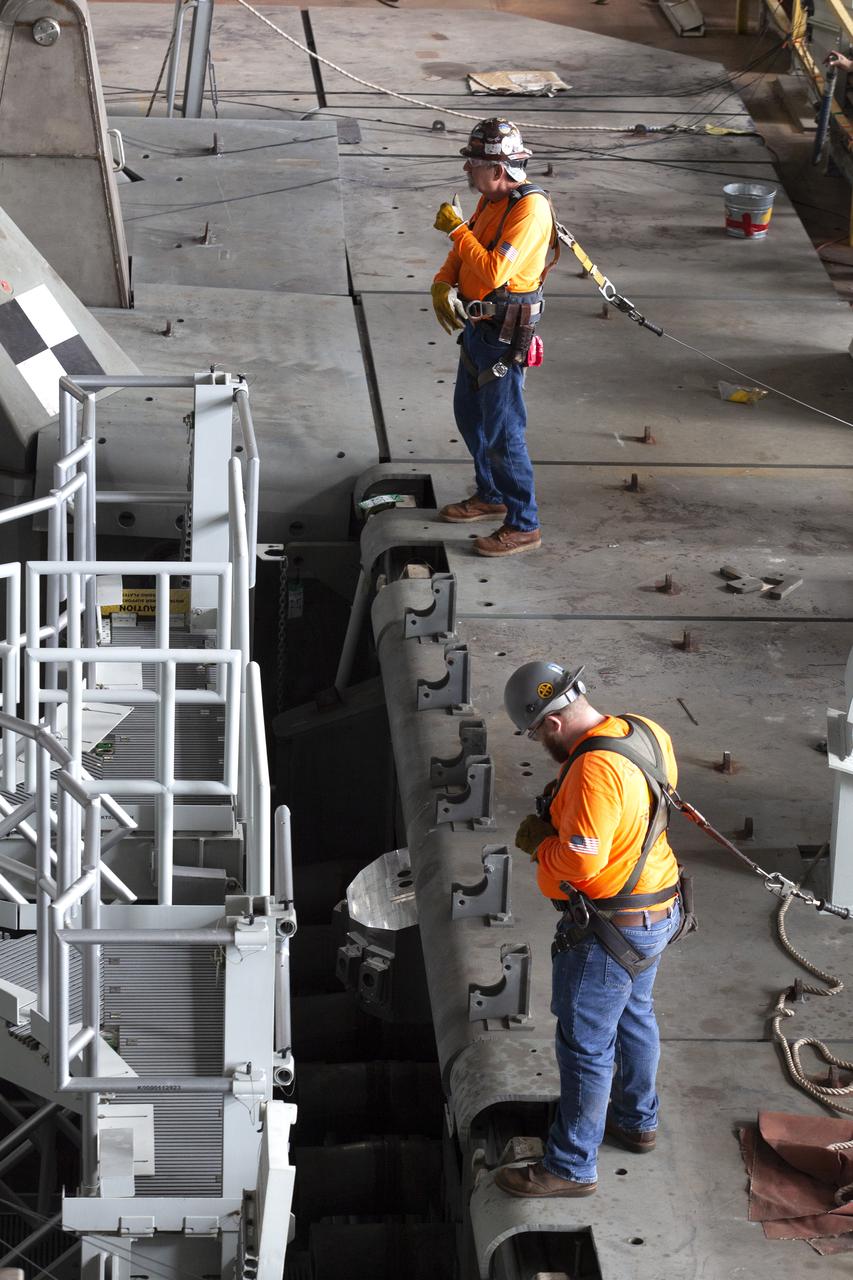
Workers with Bragg Crane and Rigging prepare to assist with the lift of the engine service platform that will provide access to the core stage of the Space Launch System (SLS) rocket on the mobile (ML) in High Bay 3 of the Vehicle Assembly Building at NASA’s Kennedy Space Center in Florida on June 18, 2019. The large work platform is designed to provide unrestricted access to the RS-25 engines on the SLS core stage from the ML. The service platform will be used for Artemis 1 and subsequent missions. For Artemis 1, the Orion spacecraft will launch atop the SLS rocket from Launch Pad 39B and begin an approximately three-week mission that will send Orion thousands of miles beyond the Moon. Exploration Ground Systems is overseeing work on the ML.
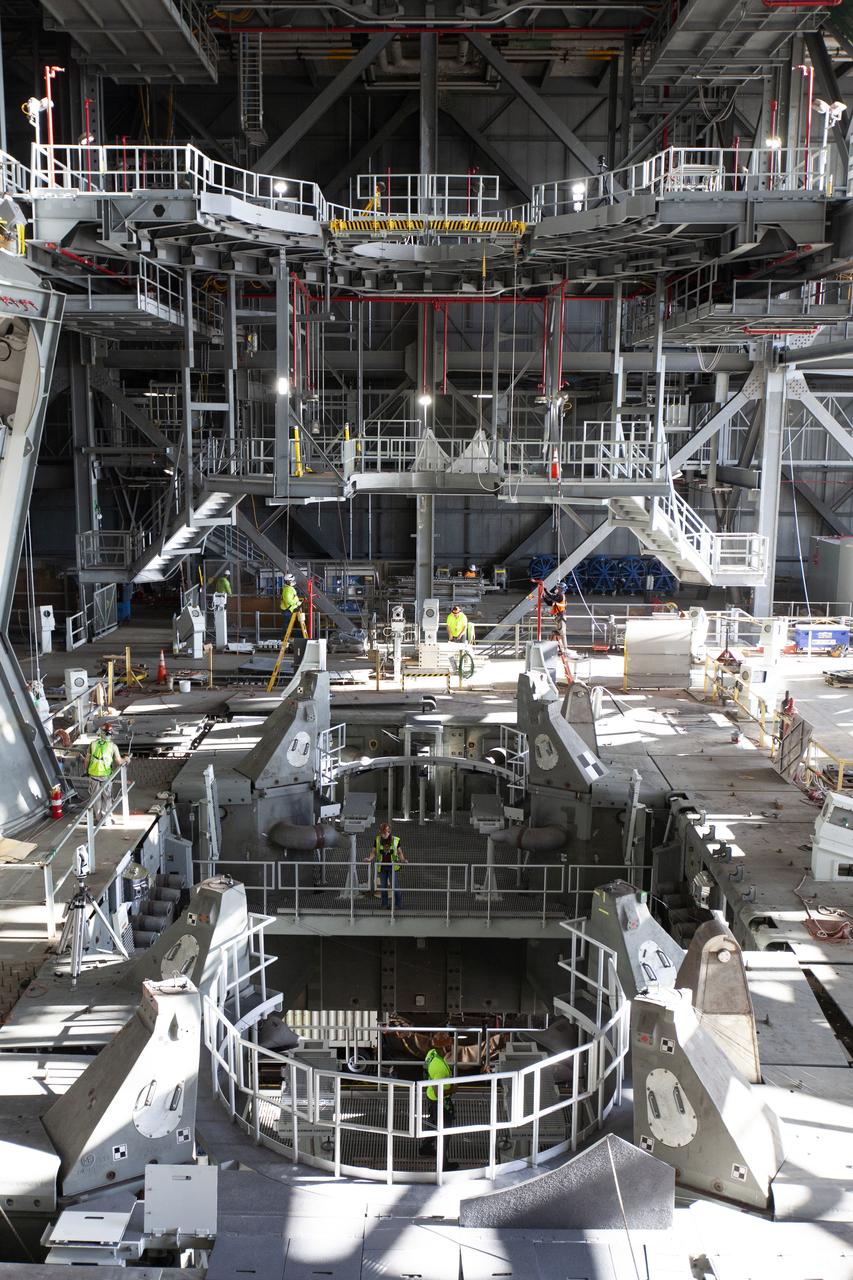
Inside the Vehicle Assembly Building at NASA’s Kennedy Space Center in Florida, the engine service platform that will provide access to the core stage of the Space Launch System (SLS) rocket is lifted up in the center of the mobile launcher (ML) in High Bay 3 on June 18, 2019. The large work platform is designed to provide unrestricted access to the RS-25 engines on the SLS core stage from the ML. The service platform will be used for Artemis 1 and subsequent missions. For Artemis 1, the Orion spacecraft will launch atop the SLS rocket from Launch Pad 39B and begin an approximately three-week mission that will send Orion thousands of miles beyond the Moon. Exploration Ground Systems is overseeing work on the ML.
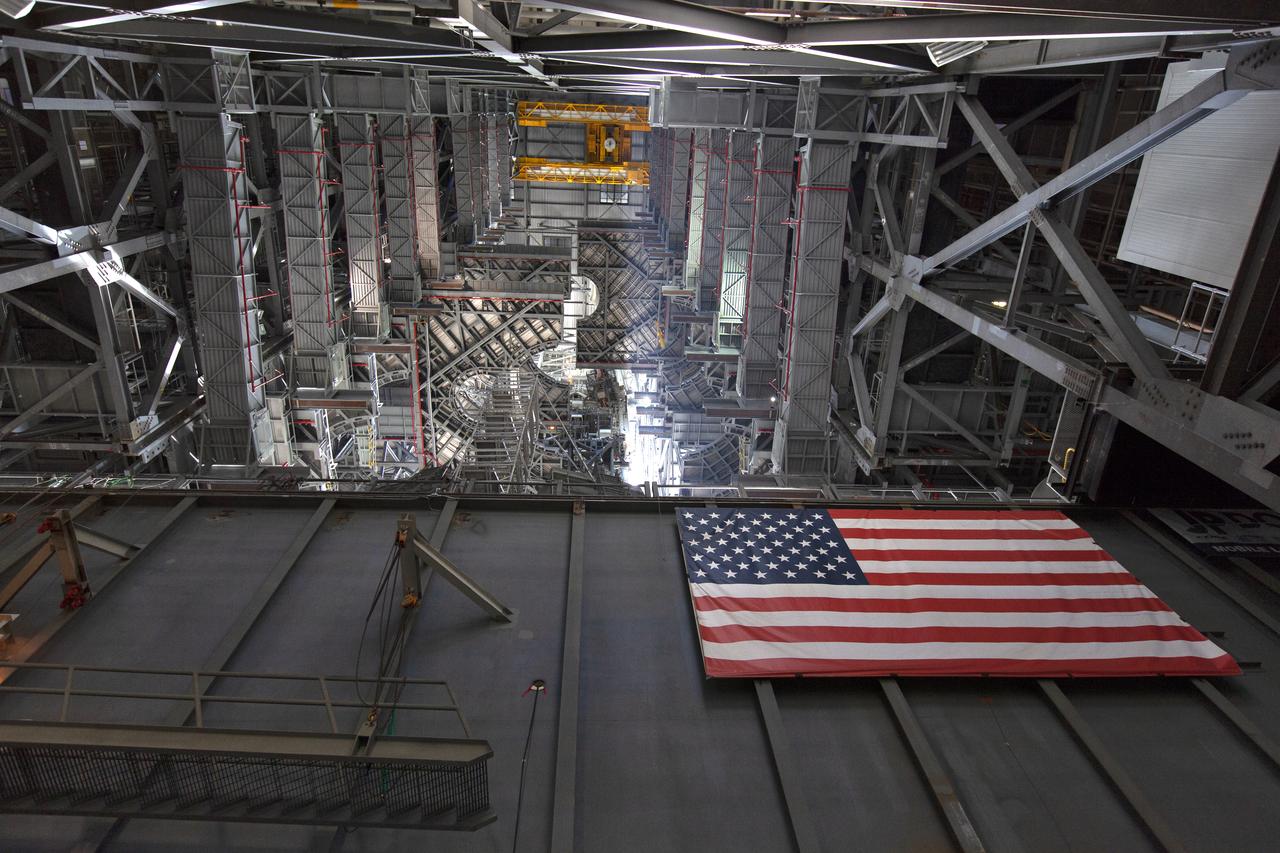
A view looking up at the mobile launcher (ML) in High Bay 3 of the Vehicle Assembly Building at NASA’s Kennedy Space Center in Florida on June 18, 2019. Work is underway to lift the engine service platform that will provide access to the core stage of the Space Launch System (SLS) rocket in the center of the ML. The large work platform is designed to provide unrestricted access to the RS-25 engines on the SLS core stage from the ML. The service platform will be used for Artemis 1 and subsequent missions. For Artemis 1, the Orion spacecraft will launch atop the SLS rocket from Launch Pad 39B and begin an approximately three-week mission that will send Orion thousands of miles beyond the Moon. Exploration Ground Systems is overseeing work on the ML.
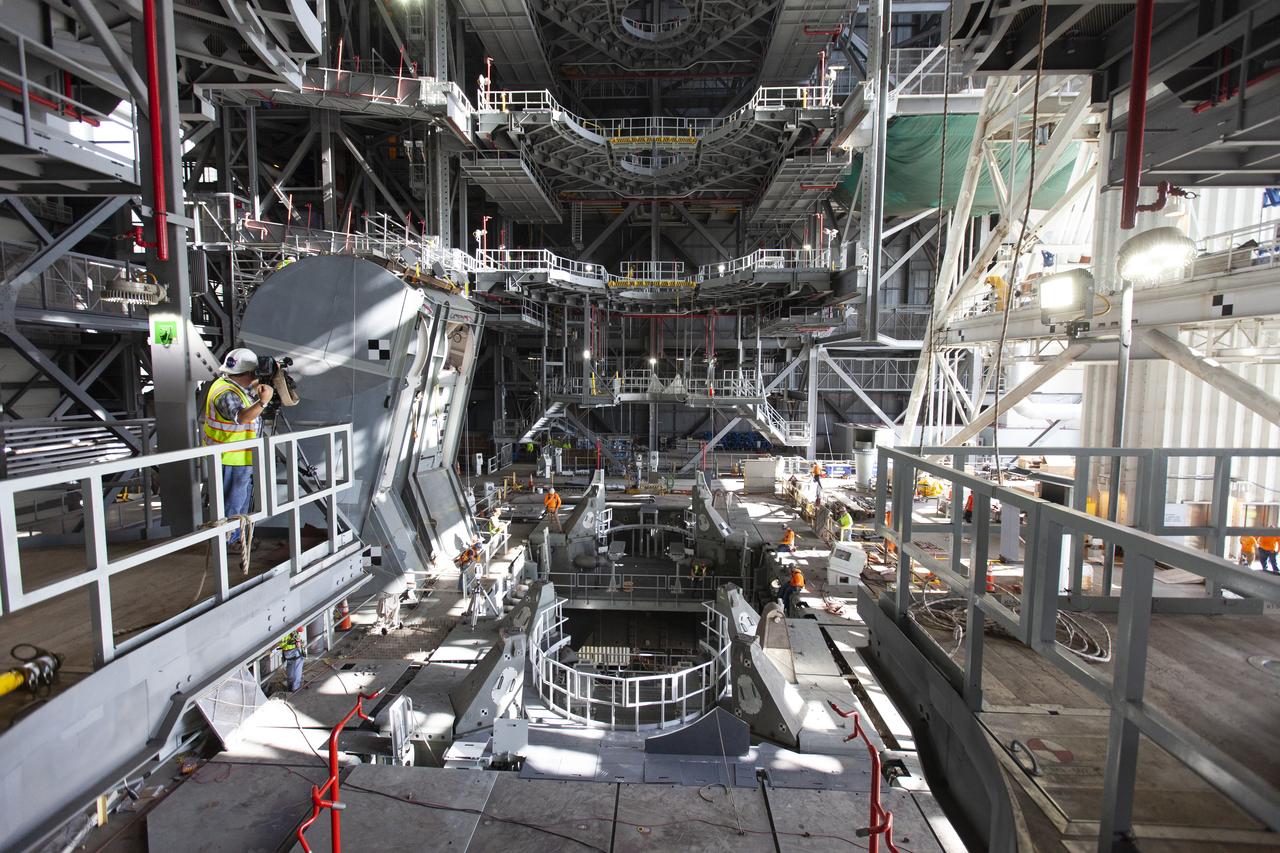
Inside the Vehicle Assembly Building at NASA’s Kennedy Space Center in Florida, the engine service platform that will provide access to the core stage of the Space Launch System (SLS) rocket is lifted up in the center of the mobile launcher (ML) in High Bay 3 on June 18, 2019. The large work platform is designed to provide unrestricted access to the RS-25 engines on the SLS core stage from the ML. The service platform will be used for Artemis 1 and subsequent missions. For Artemis 1, the Orion spacecraft will launch atop the SLS rocket from Launch Pad 39B and begin an approximately three-week mission that will send Orion thousands of miles beyond the Moon. Exploration Ground Systems is overseeing work on the ML.
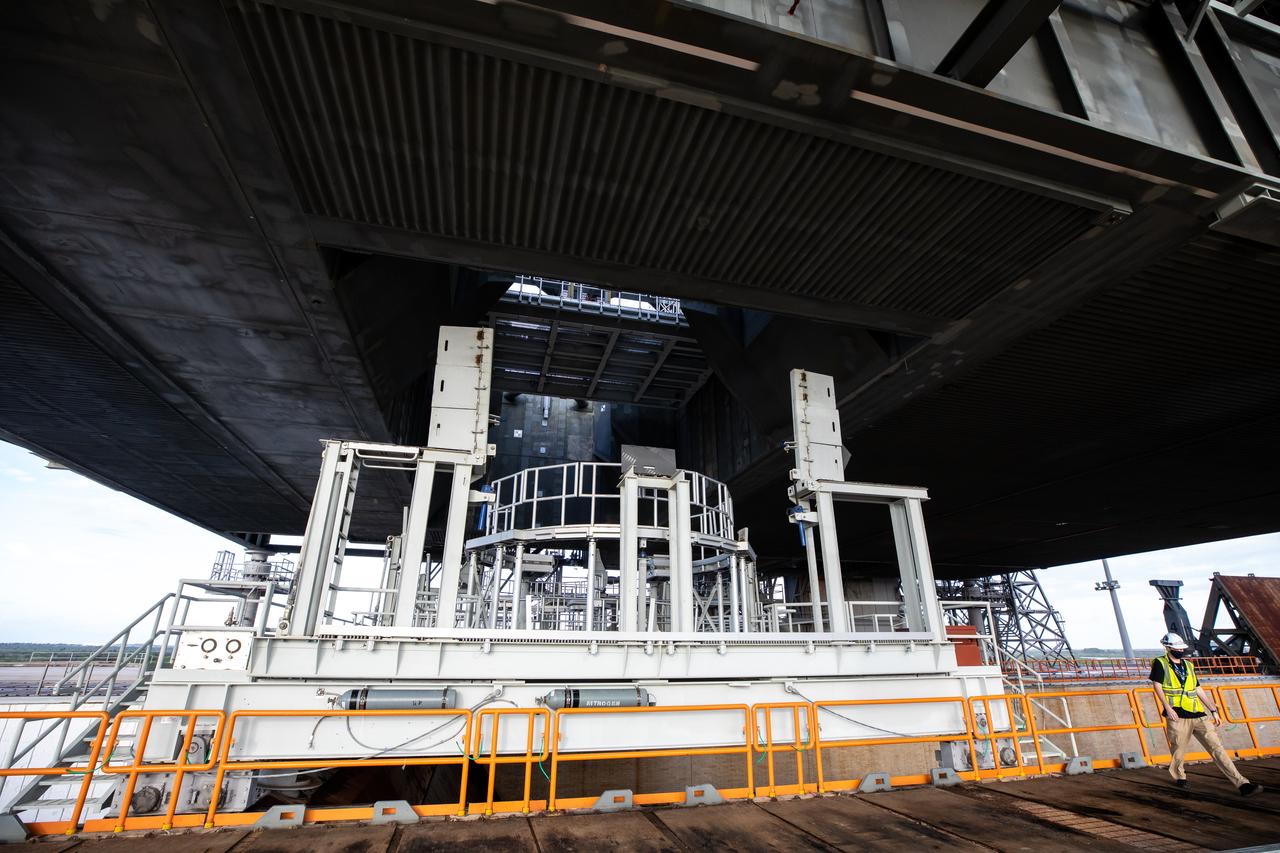
The engine service platform is moved into position beneath the mobile launcher for Artemis I at Launch Pad 39B on Oct. 23, 2020, at NASA’s Kennedy Space Center in Florida. The service platform allows access to the RS-25 engines on the Space Launch System core stage for routine work or inspections. The nearly 400-foot-tall mobile launcher will remain at the pad while engineers with Exploration Ground Systems and Jacobs complete several tasks, including a timing test to validate the launch team’s countdown timeline, and a thorough, top-to-bottom wash down of the mobile launcher to remove any debris remaining from construction and installation of the umbilical arms. Artemis I will test the Orion spacecraft and Space Launch System as an integrated system ahead of crewed flights to the Moon. Under the Artemis program, NASA will land the first woman and the next man on the Moon in 2024.
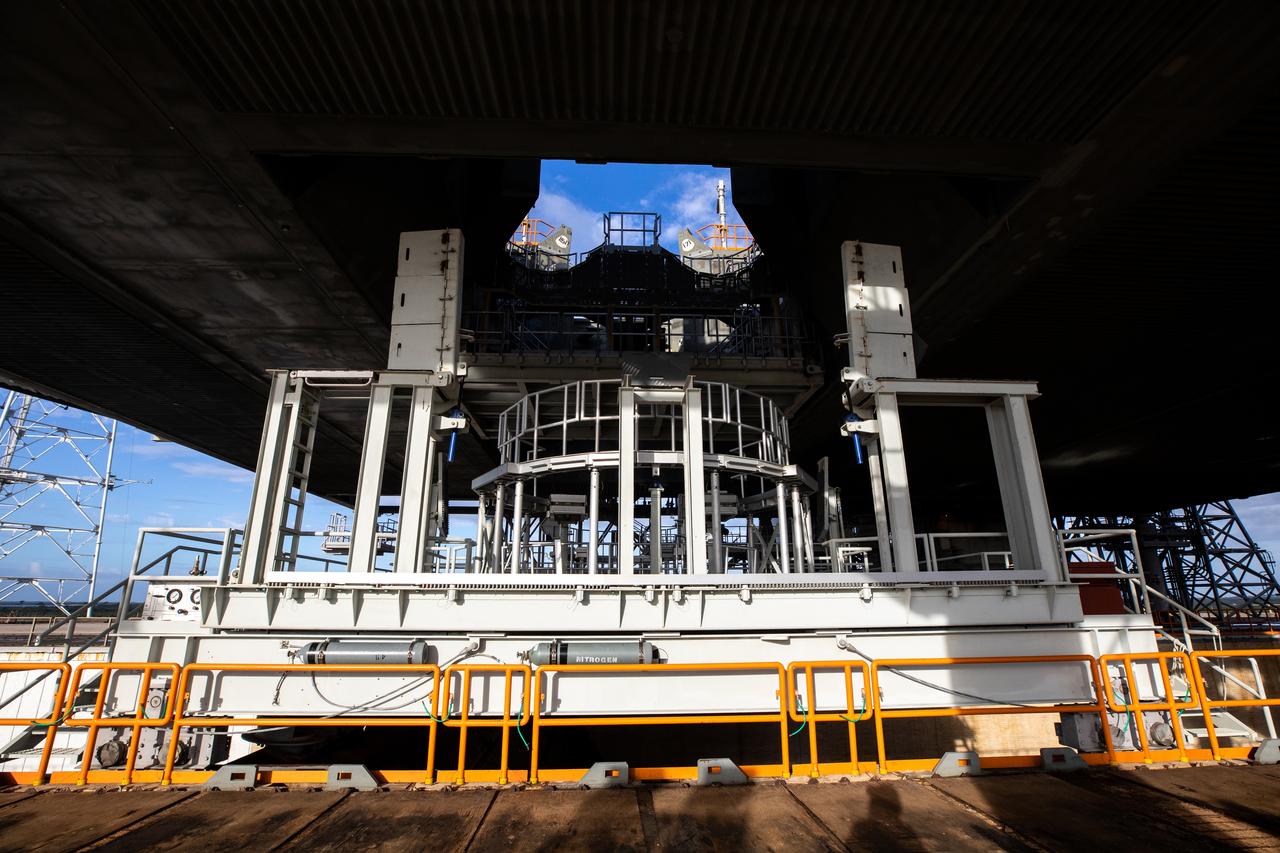
The engine service platform is moved into position beneath the mobile launcher for Artemis I at Launch Pad 39B on Oct. 23, 2020, at NASA’s Kennedy Space Center in Florida. The service platform allows access to the RS-25 engines on the Space Launch System core stage for routine work or inspections. The nearly 400-foot-tall mobile launcher will remain at the pad while engineers with Exploration Ground Systems and Jacobs will complete several tasks, including a timing test to validate the launch team’s countdown timeline, and a thorough, top-to-bottom wash down of the mobile launcher to remove any debris remaining from construction and installation of the umbilical arms. Artemis I will test the Orion spacecraft and Space Launch System as an integrated system ahead of crewed flights to the Moon. Under the Artemis program, NASA will land the first woman and the next man on the Moon in 2024.
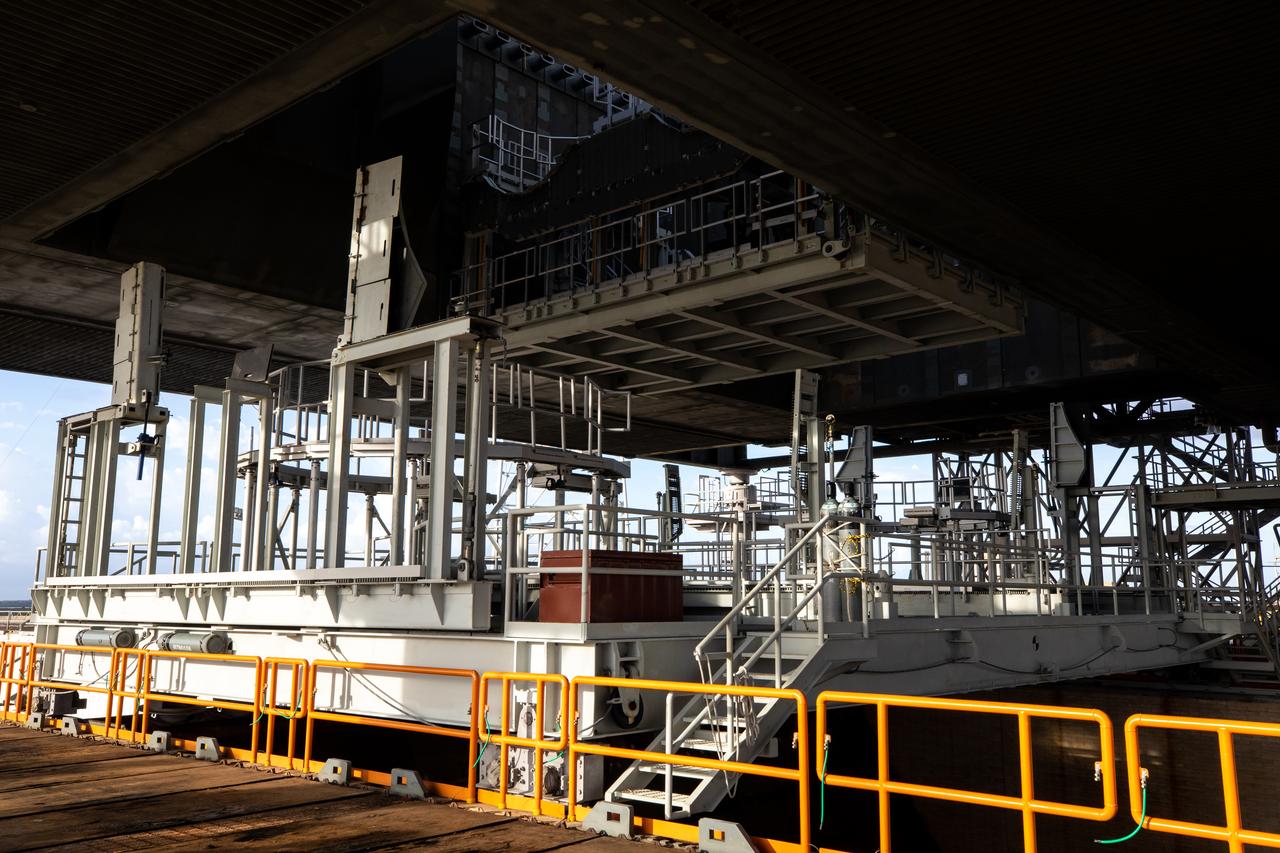
The engine service platform is moved into position beneath the mobile launcher for Artemis I at Launch Pad 39B on Oct. 23, 2020, at NASA’s Kennedy Space Center in Florida. The service platform allows access to the RS-25 engines on the Space Launch System core stage for routine work or inspections. The nearly 400-foot-tall mobile launcher will remain at the pad while engineers with Exploration Ground Systems and Jacobs complete several tasks, including a timing test to validate the launch team’s countdown timeline, and a thorough, top-to-bottom wash down of the mobile launcher to remove any debris remaining from construction and installation of the umbilical arms. Artemis I will test the Orion spacecraft and Space Launch System as an integrated system ahead of crewed flights to the Moon. Under the Artemis program, NASA will land the first woman and the next man on the Moon in 2024.
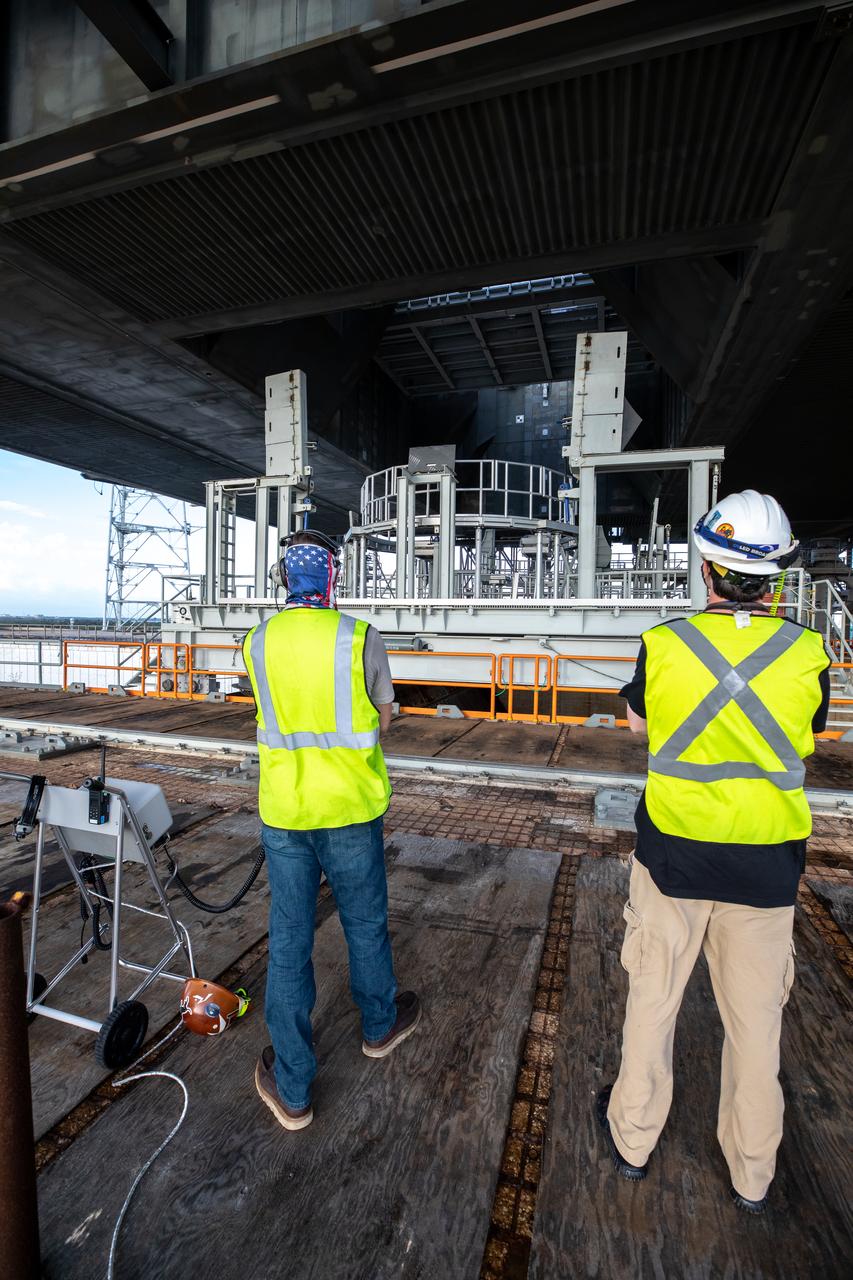
The engine service platform is moved into position beneath the mobile launcher for Artemis I at Launch Pad 39B on Oct. 23, 2020, at NASA’s Kennedy Space Center in Florida. The service platform allows access to the RS-25 engines on the Space Launch System core stage for routine work or inspections. The nearly 400-foot-tall mobile launcher will remain at the pad while engineers with Exploration Ground Systems and Jacobs will complete several tasks, including a timing test to validate the launch team’s countdown timeline, and a thorough, top-to-bottom wash down of the mobile launcher to remove any debris remaining from construction and installation of the umbilical arms. Artemis I will test the Orion spacecraft and Space Launch System as an integrated system ahead of crewed flights to the Moon. Under the Artemis program, NASA will land the first woman and the next man on the Moon in 2024.