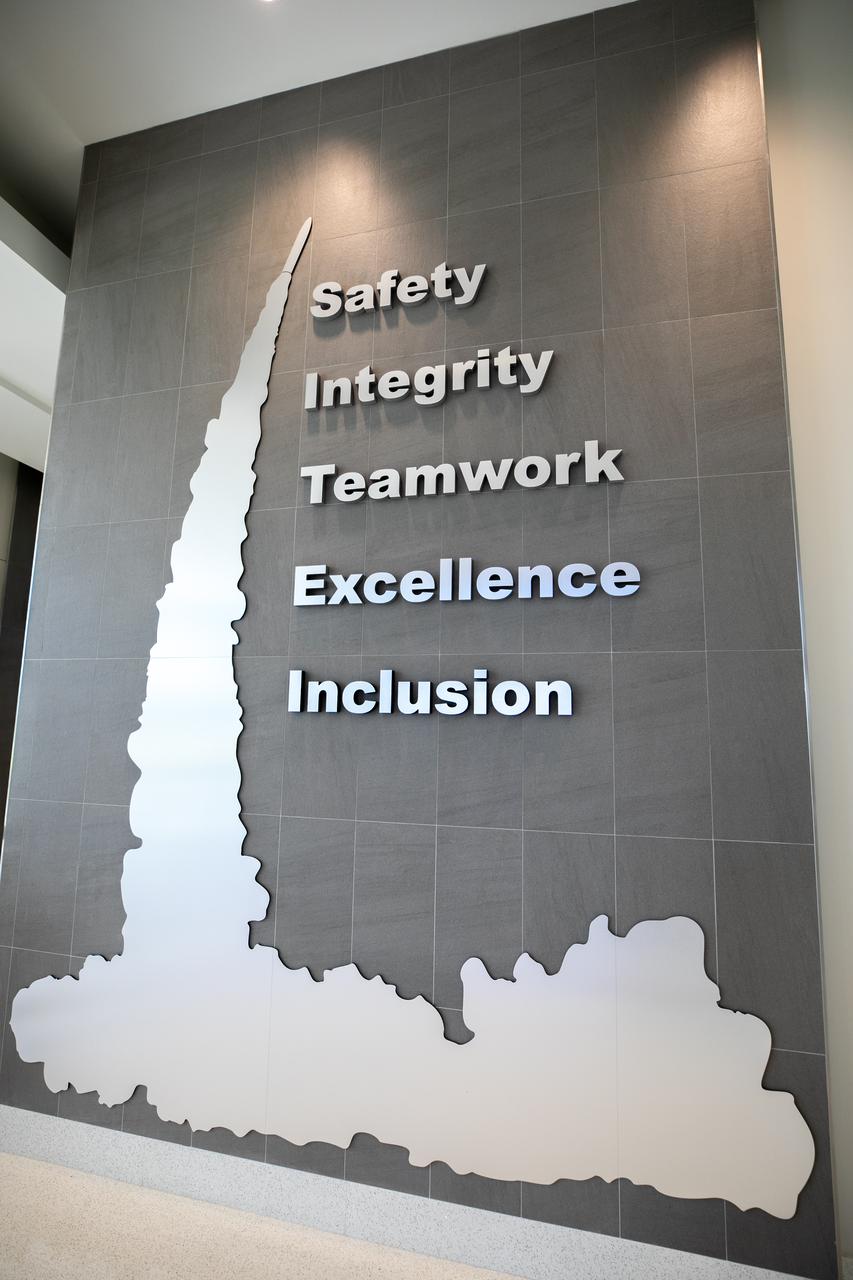
NASA’s core values are shown in the Central Campus lobby at the agency’s Kennedy Space Center in Florida following the installation of NASA’s fifth core value – inclusion – on Sept. 1, 2020. On July 23, NASA Administrator Jim Bridenstine announced the addition of this fifth core value to the existing values embraced by NASA: safety, integrity, teamwork, and excellence. In his announcement, Bridenstine stated “Incorporating inclusion as a NASA core value is an important step to ensuring this principle remains a long-term focus for our agency and becomes ingrained in the NASA family DNA.”
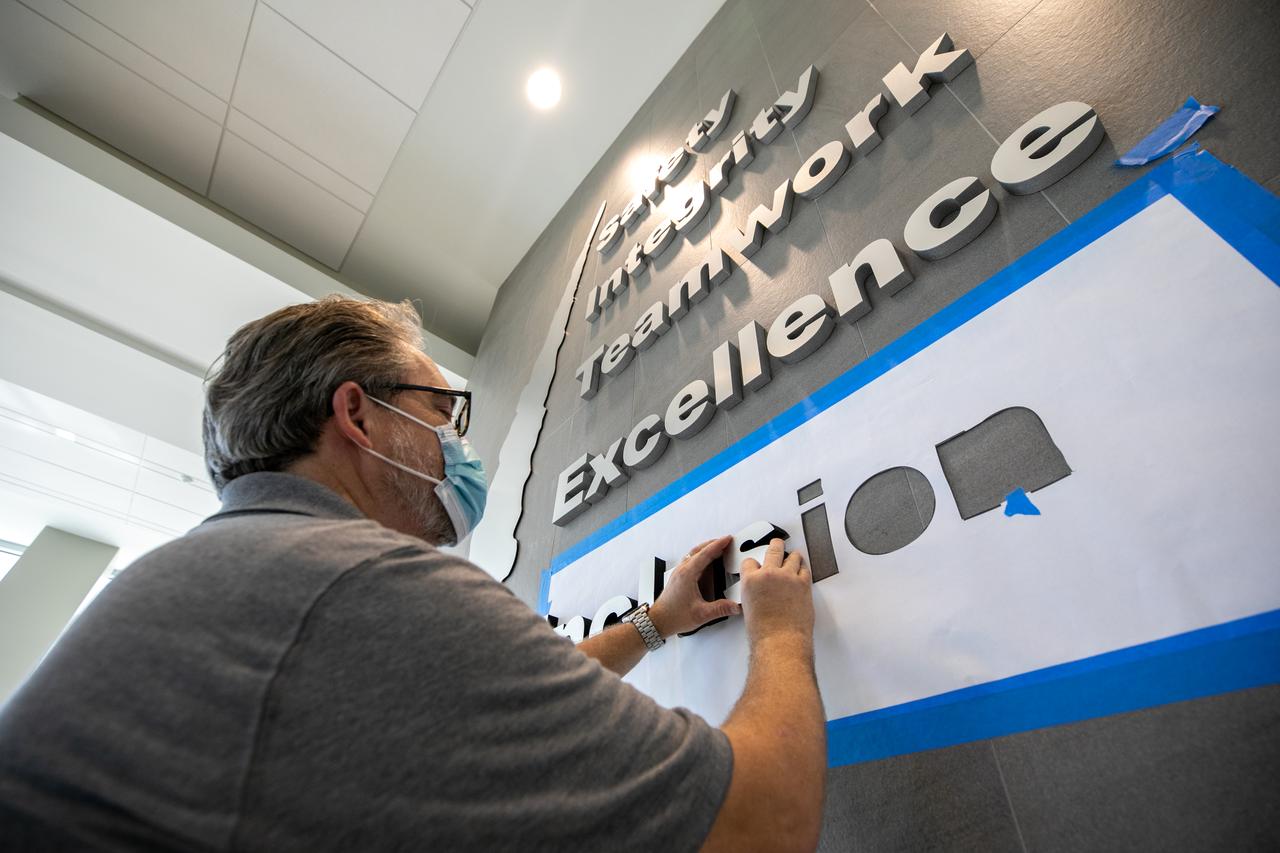
NASA’s fifth core value – inclusion – is installed in the Central Campus lobby at the agency’s Kennedy Space Center in Florida on Sept. 1, 2020. On July 23, NASA Administrator Jim Bridenstine announced the addition of this fifth core value to the existing values embraced by NASA: safety, integrity, teamwork, and excellence. In his announcement, Bridenstine stated “Incorporating inclusion as a NASA core value is an important step to ensuring this principle remains a long-term focus for our agency and becomes ingrained in the NASA family DNA.”
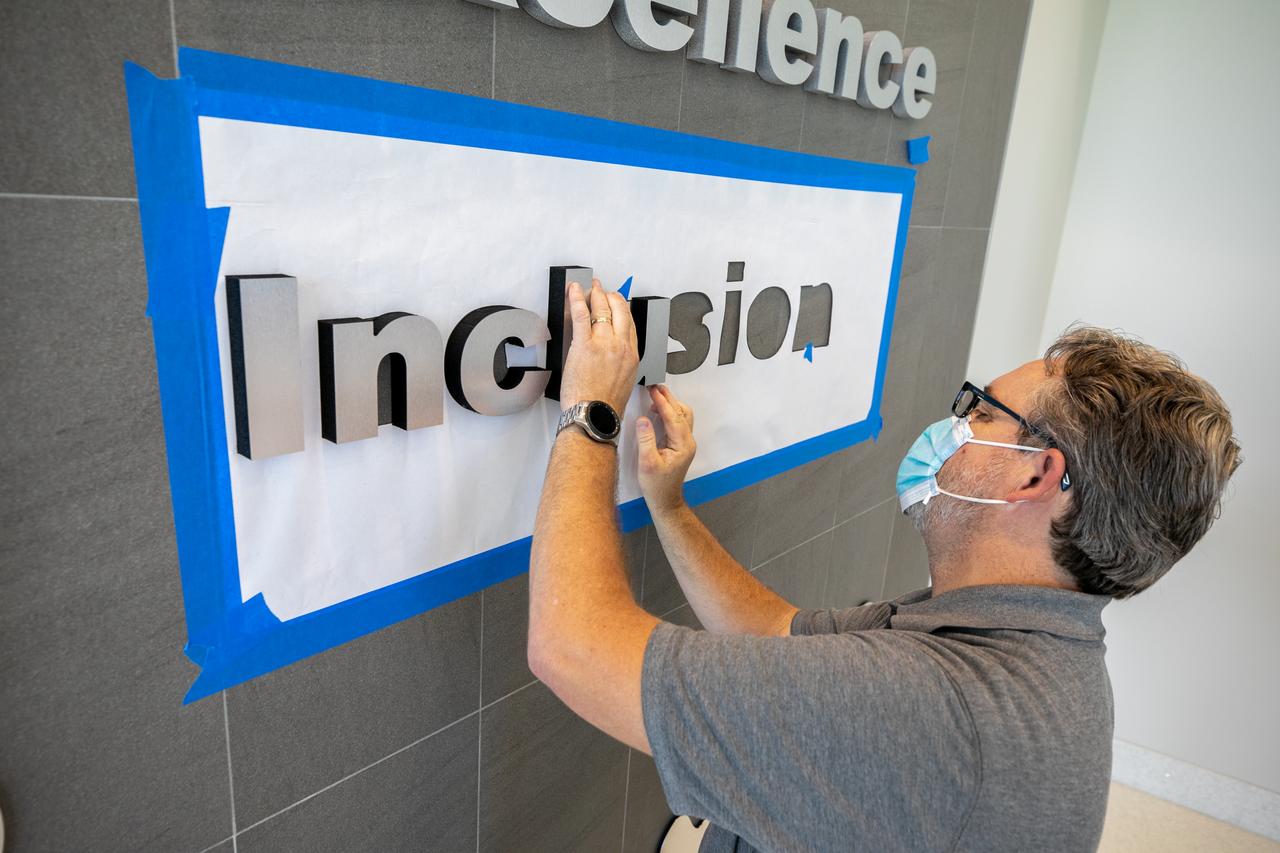
NASA’s fifth core value – inclusion – is installed in the Central Campus lobby at the agency’s Kennedy Space Center in Florida on Sept. 1, 2020. On July 23, NASA Administrator Jim Bridenstine announced the addition of this fifth core value to the existing values embraced by NASA: safety, integrity, teamwork, and excellence. In his announcement, Bridenstine stated “Incorporating inclusion as a NASA core value is an important step to ensuring this principle remains a long-term focus for our agency and becomes ingrained in the NASA family DNA.”
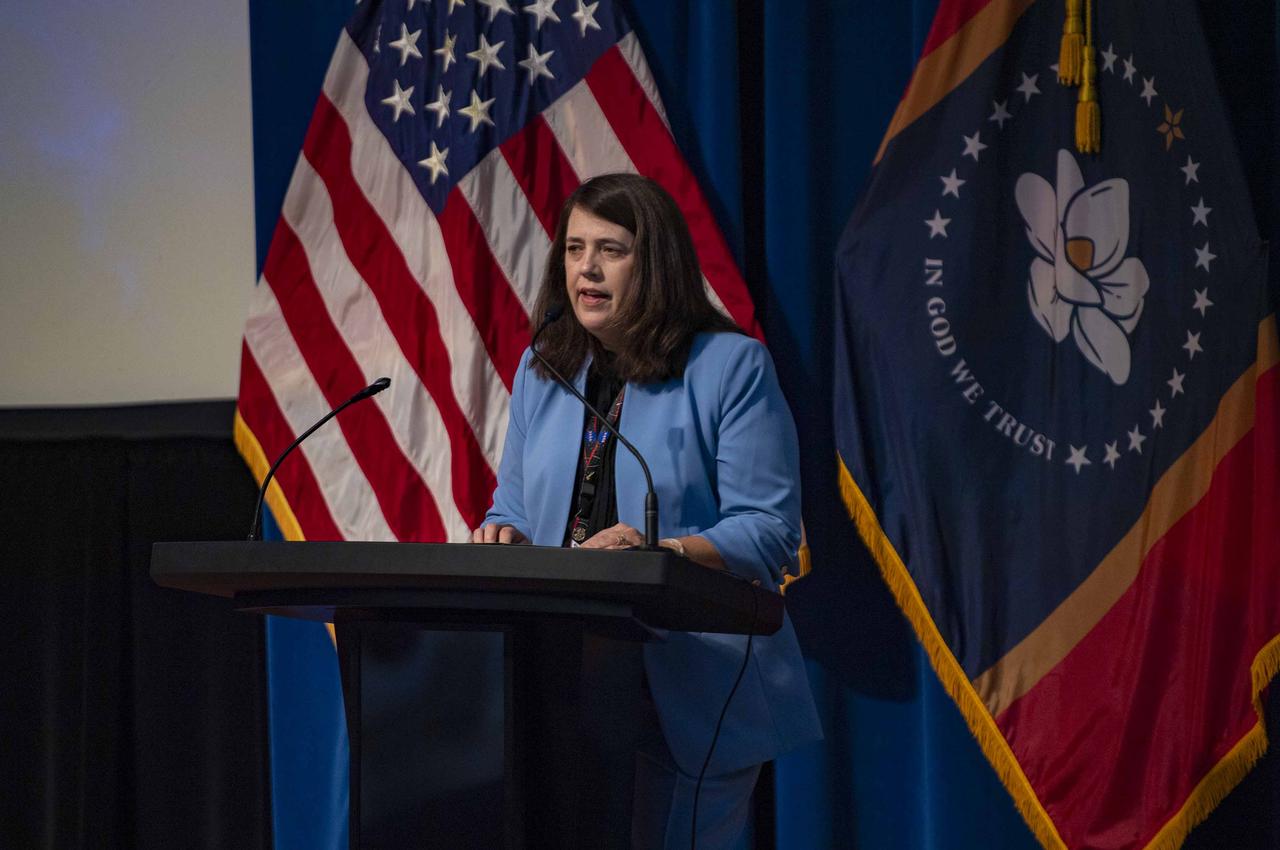
NASA Stennis Deputy Director Christine Powell thanks all employees for attending the annual Safety and Health Day event in the StenniSphere Auditorium at NASA’s Stennis Space Center on Sept. 26. Powell noted the NASA Stennis workforce contributed to the NASA mission while holding safety – a NASA core value – as a top priority.
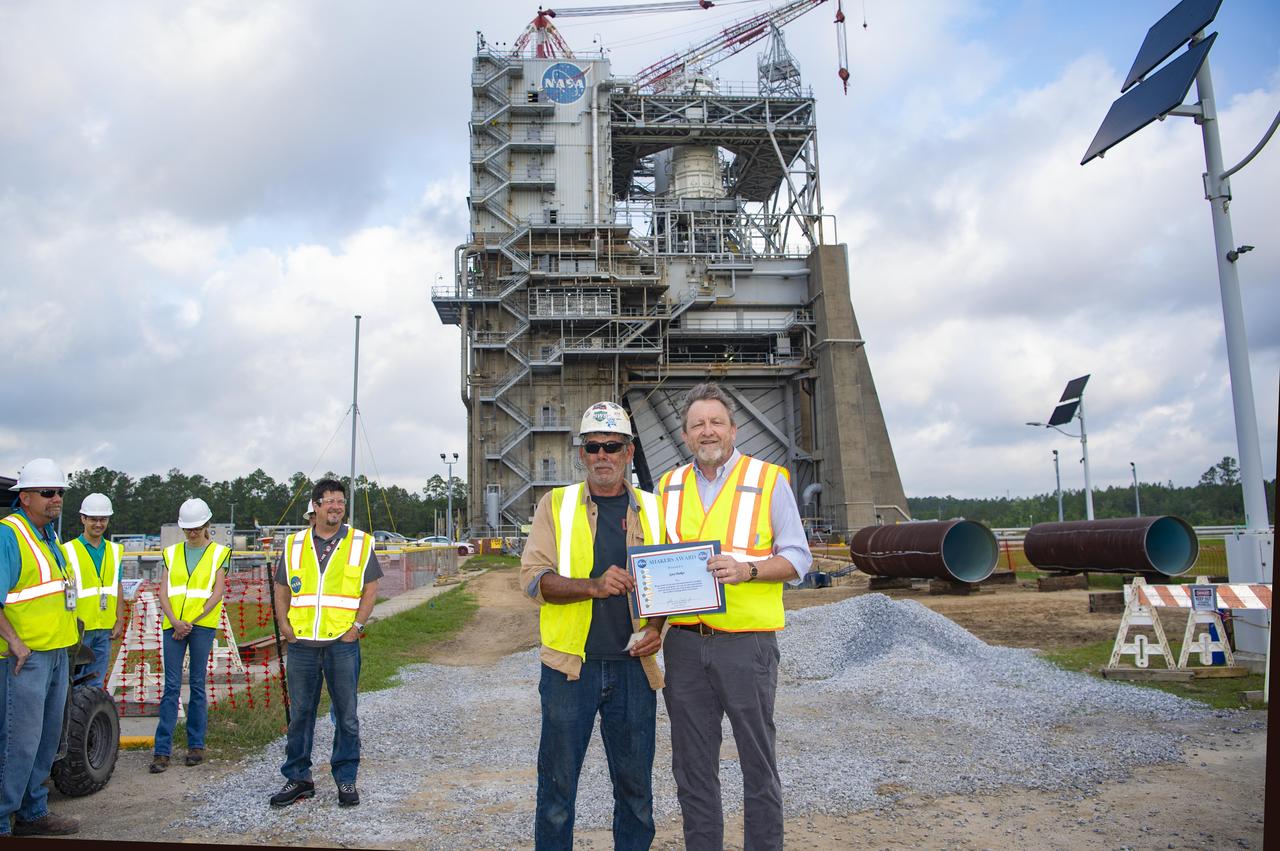
: Gary Parker, an employee with Healtheon, Inc., is presented a NASA SHAKERS (Smart Human Actions Keep Everyone Really Safe) Award from NASA Stennis Associate Director Rodney McKellip on May 8. Parker, left, received the award for leadership and dedication to safety of the crew working to upgrade an essential test complex water system at NASA Stennis. As one of the crew leaders, Parker ensured all took the safest approach for each task, even as the scale of the project increased. NASA’s constant attention to safety, one of the agency’s five core values, is the cornerstone for mission success.
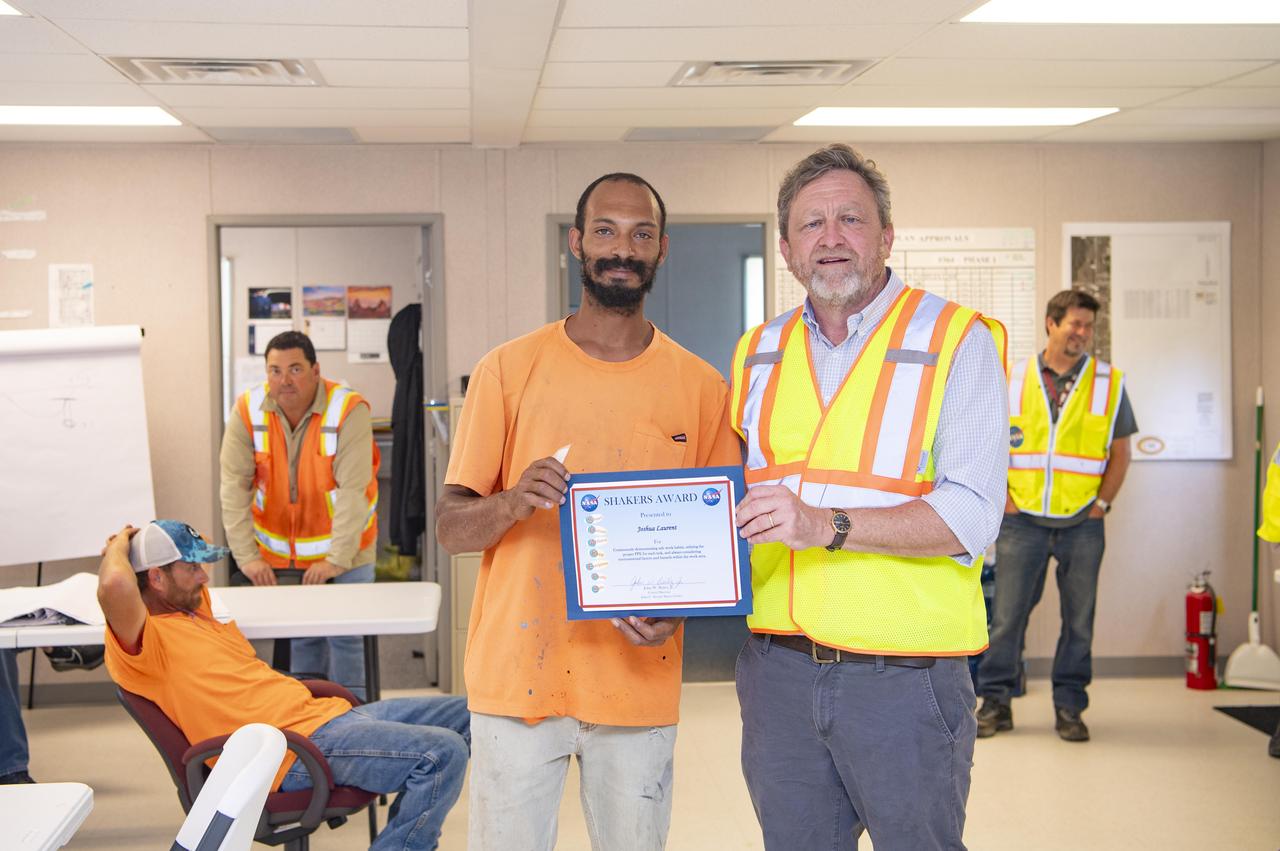
Joshua Laurent, an employee with Civil Works Contracting, is presented a NASA SHAKERS (Smart Human Actions Keep Everyone Really Safe) Award from NASA Stennis Associate Director Rodney McKellip on May 8. Laurent, left, received the award for continuously demonstrating safe work habits, utilizing the proper personal protective equipment for each task, and always considering environmental factors and hazards within the work area while working on the NASA Stennis potable water system. NASA’s constant attention to safety, one of the agency’s five core values, is the cornerstone for mission success.
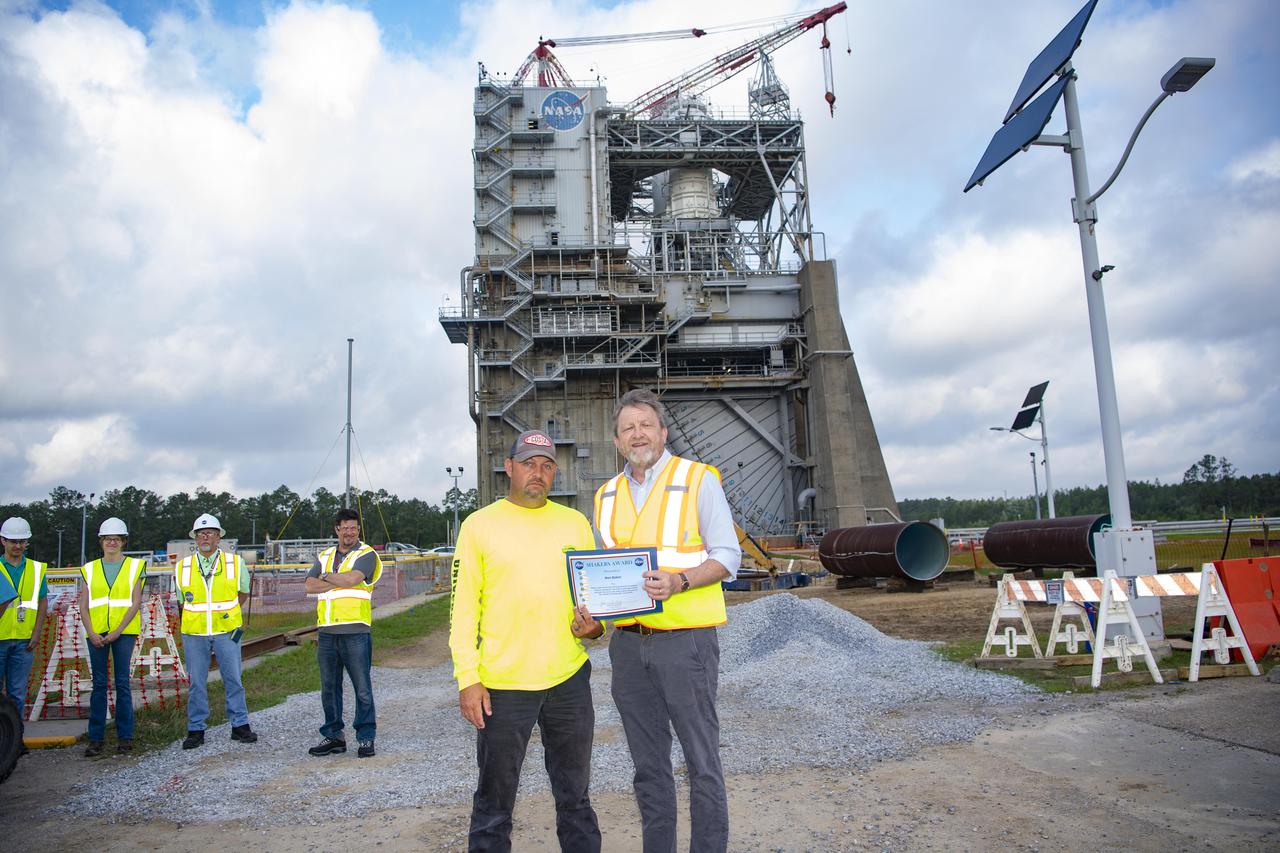
Matt Roberts, an employee with Healtheon, Inc., is presented a NASA SHAKERS (Smart Human Actions Keep Everyone Really Safe) Award from NASA Stennis Associate Director Rodney McKellip on May 8. Roberts, left, received the award for leadership and dedication to safety of the crew working to upgrade an essential test complex water system at NASA Stennis. As one of the crew leaders, Roberts ensured all took the safest approach for each task, even as the scale of the project increased. NASA’s constant attention to safety, one of the agency’s five core values, is the cornerstone for mission success.
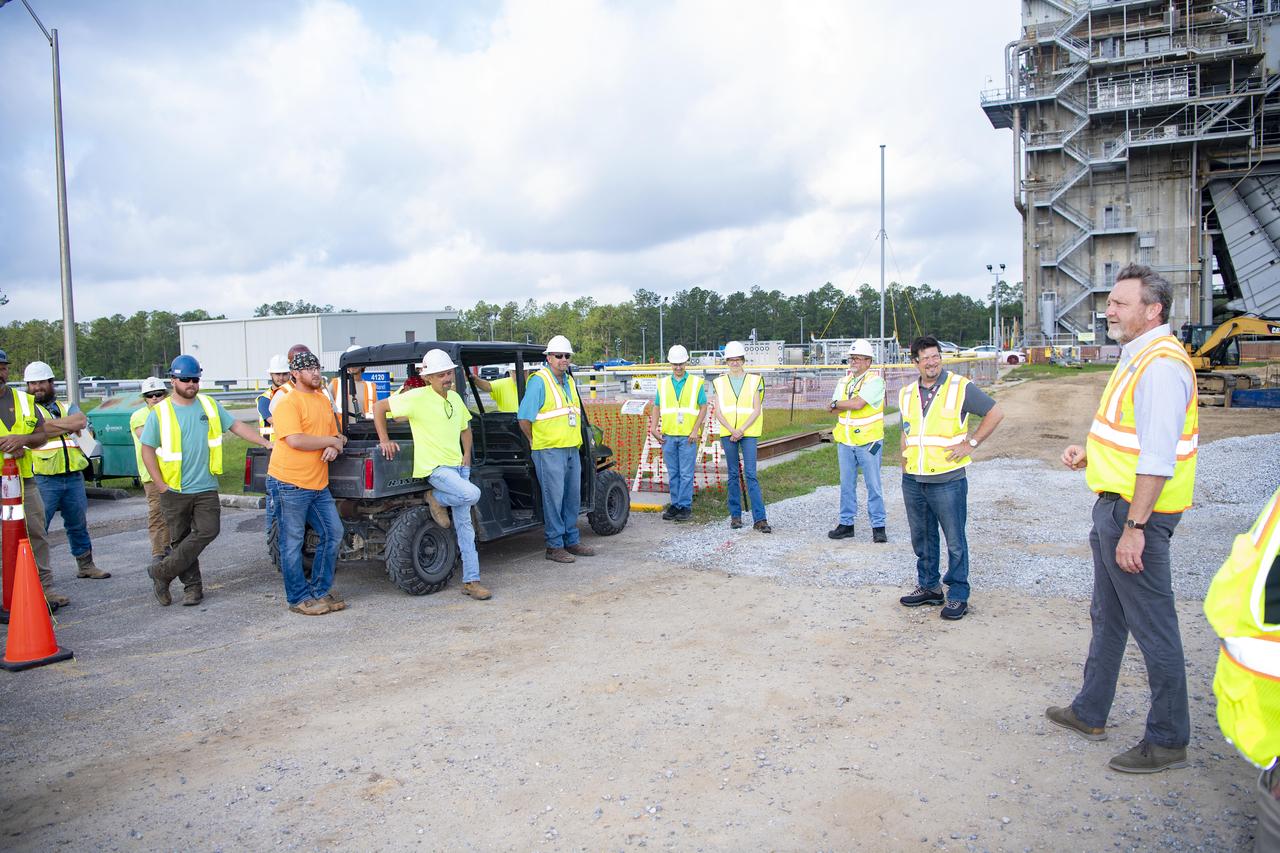
Rodney McKellip, associate director of NASA’s Stennis Space Center, and Gary Benton, director of the NASA Stennis Safety and Mission Assurance Directorate, are shown, from right to left, with employees working on the High Pressure Industrial Water Facility project near the Fred Haise Test Stand. The NASA Stennis leaders visited work sites on May 8 to recognize employees with NASA SHAKERS (Smart Human Actions Keep Everyone Really Safe) Awards for conducting work in a safe manner. NASA’s constant attention to safety, one of the agency’s five core values, is the cornerstone for mission success.
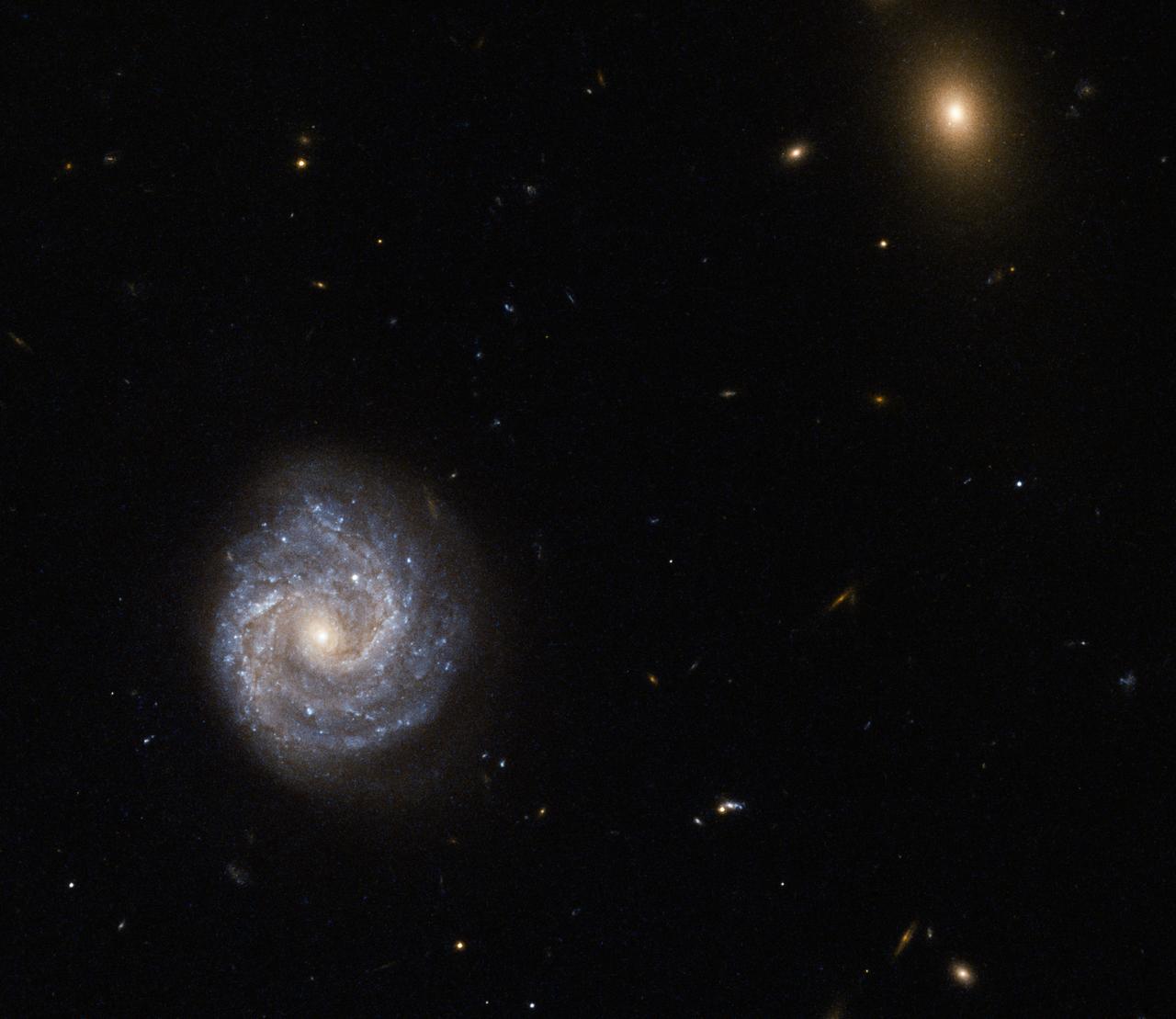
Not all galaxies have the luxury of possessing a simple moniker or quirky nickname. This impressive galaxy imaged by the NASA/ESA Hubble Space Telescope is one of the unlucky ones, and goes by a name that looks more like a password for a computer: 2XMM J143450.5+033843. Such a name may seem like a random jumble of numbers and letters, but like all galactic epithets it has a distinct meaning. This galaxy, for example, was detected and observed as part of the second X-ray sky survey performed by ESA’s XMM-Newton Observatory. Its celestial coordinates form the rest of the bulky name, following the “J”: a right ascension value of 14h (hours) 34m (minutes) 50.5s (seconds). This can be likened to terrestrial longitude. It also has a declination of +03d (degrees) 38m (minutes) 43s (seconds). Declination can be likened to terrestrial latitude. The other fuzzy object in the frame was named in the same way — it is a bright galaxy named 2XMM J143448.3+033749. 2XMM J143450.5+033843 lies nearly 400 million light-years away from Earth. It is a Seyfert galaxy that is dominated by something known as an Active Galactic Nucleus — its core is thought to contain a supermassive black hole that is emitting huge amounts of radiation, pouring energetic X-rays out into the Universe. Photo credit: ESA/Hubble & NASA <b><a href="http://www.nasa.gov/audience/formedia/features/MP_Photo_Guidelines.html" rel="nofollow">NASA image use policy.</a></b> <b><a href="http://www.nasa.gov/centers/goddard/home/index.html" rel="nofollow">NASA Goddard Space Flight Center</a></b> enables NASA’s mission through four scientific endeavors: Earth Science, Heliophysics, Solar System Exploration, and Astrophysics. Goddard plays a leading role in NASA’s accomplishments by contributing compelling scientific knowledge to advance the Agency’s mission. <b>Follow us on <a href="http://twitter.com/NASAGoddardPix" rel="nofollow">Twitter</a></b> <b>Like us on <a href="http://www.facebook.com/pages/Greenbelt-MD/NASA-Goddard/395013845897?ref=tsd" rel="nofollow">Facebook</a></b> <b>Find us on <a href="http://instagrid.me/nasagoddard/?vm=grid" rel="nofollow">Instagram</a></b>