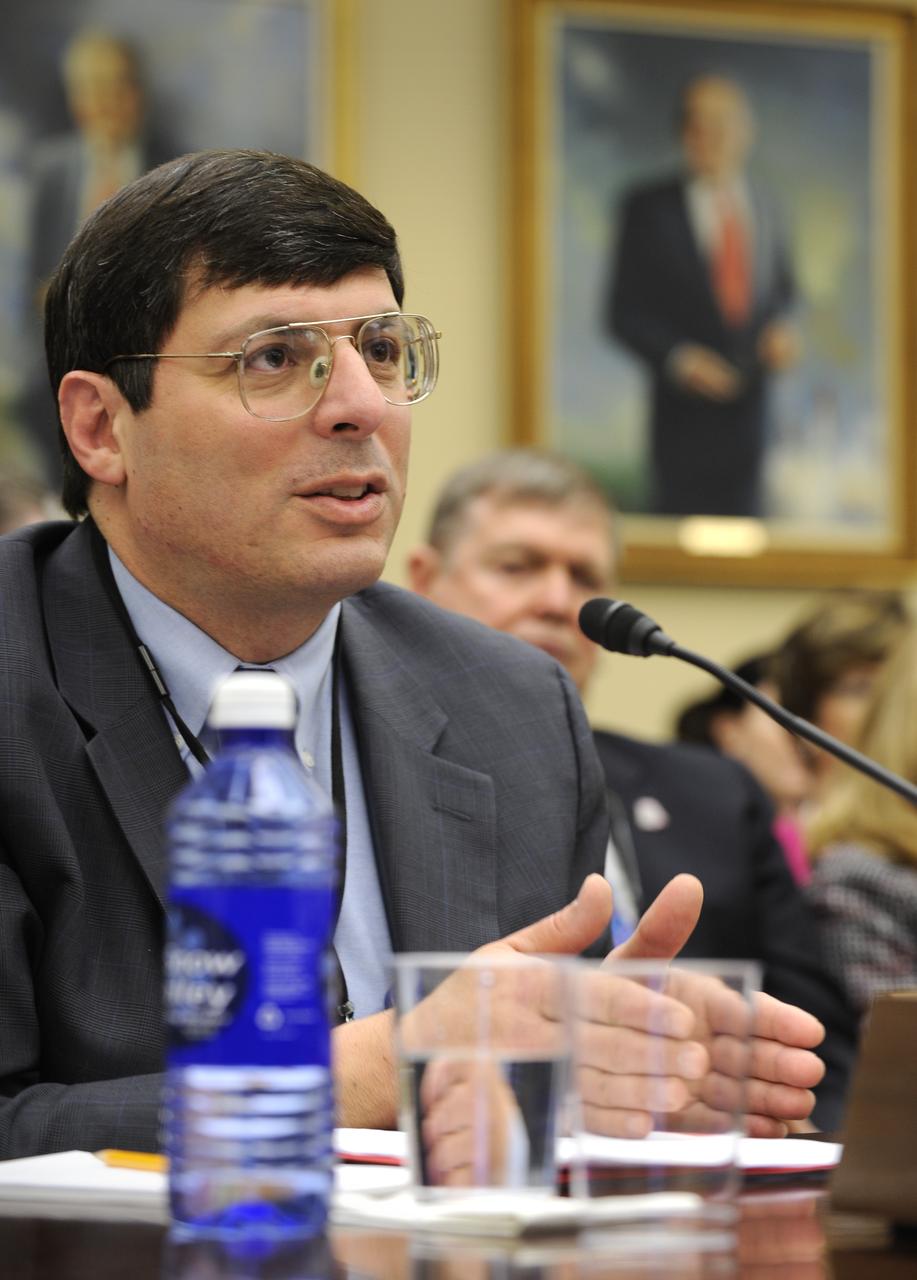
NASA's Acting Administrator, Christopher Scolese, responds to questions concerning NASA Cost and Contract Management during a hearing before the the House Subcommittee on Space and Aeronautics, Thursday, March 5, 2009, Rayburn Building, Washington. Photo Credit: (NASA/Bill Ingalls)

NASA's Acting Administrator, Christopher Scolese, responds to questions concerning NASA Cost and Contract Management during a hearing before the the House Subcommittee on Space and Aeronautics, Thursday, March 5, 2009, Rayburn Building, Washington. Photo Credit: (NASA/Bill Ingalls)

NASA's Acting Administrator, Christopher Scolese, responds to questions concerning NASA Cost and Contract Management during a hearing before the the House Subcommittee on Space and Aeronautics, Thursday, March 5, 2009, Rayburn Building, Washington. Photo Credit: (NASA/Bill Ingalls)
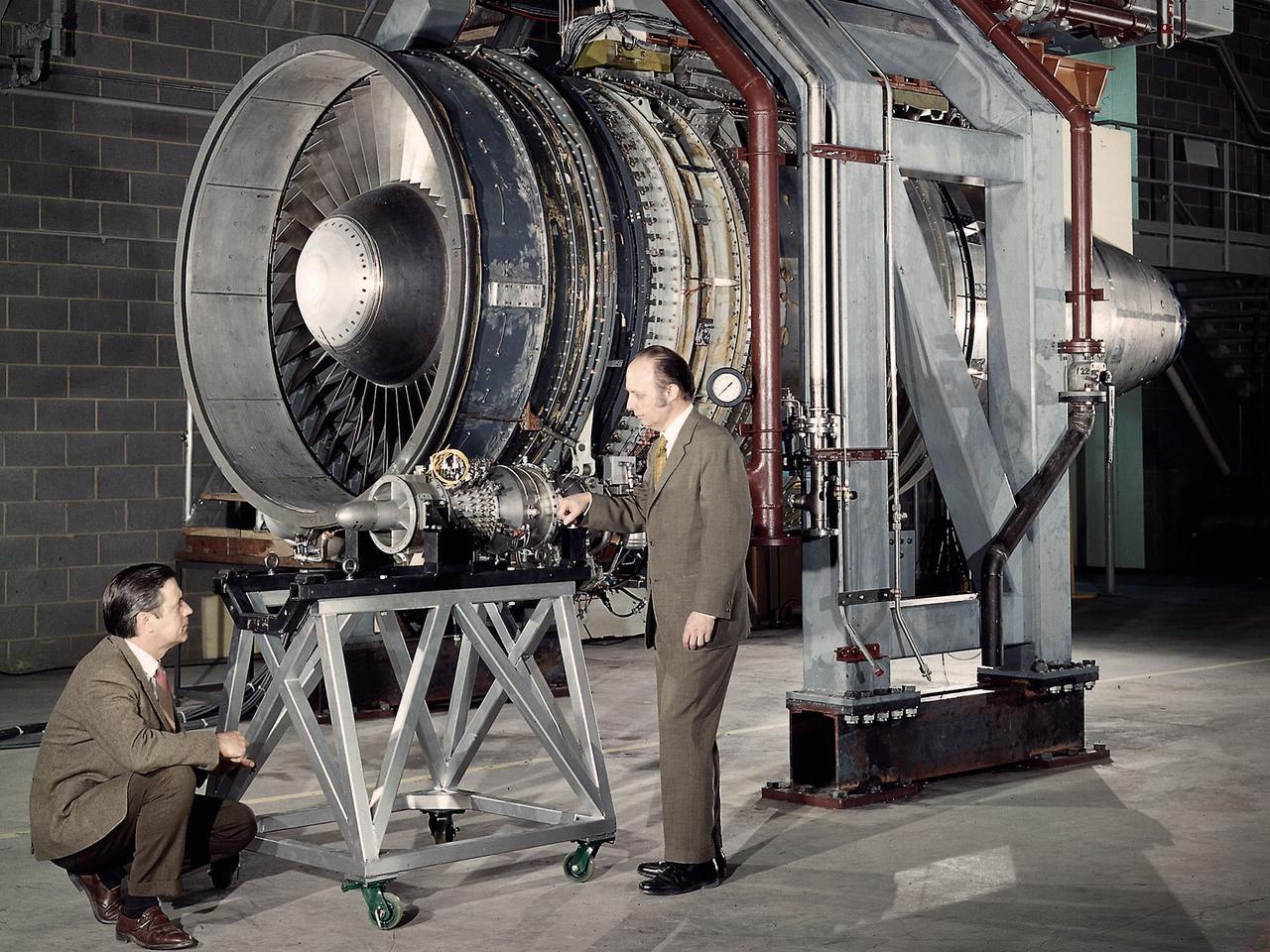
Researchers Robert Cummings, left, and Harold Gold with the small Low Cost Engine in the shadow of the much larger Quiet Engine at the National Aeronautics and Space Administration (NASA) Lewis Research Center. The two engines were being studied in different test cells at the Propulsion Systems Laboratory. Jet engines had proven themselves on military and large transport aircraft, but their use on small general aviation aircraft was precluded by cost. Lewis undertook a multiyear effort to develop a less expensive engine to fill this niche using existing technologies. Lewis researchers designed a four-stage, axial-flow engine constructed from sheet metal. It was only 11.5 inches in diameter and weighed 100 pounds. The final design specifications were turned over to a manufacturer in 1972. Four engines were created, and, as expected, the fabrication and assembly of the engine were comparatively inexpensive. In 1973 the Low Cost Engine had its first realistic analysis in the Propulsion Systems Laboratory altitude tank. The engine successfully operated at speeds up to Mach 1.24 and simulated altitudes of 30,000 feet. NASA released the engine to private industry in the hope that design elements would be incorporated into future projects and reduce the overall cost of small jet aircraft. Small jet and turboprop engines became relatively common in general aviation aircraft by the late 1970s.
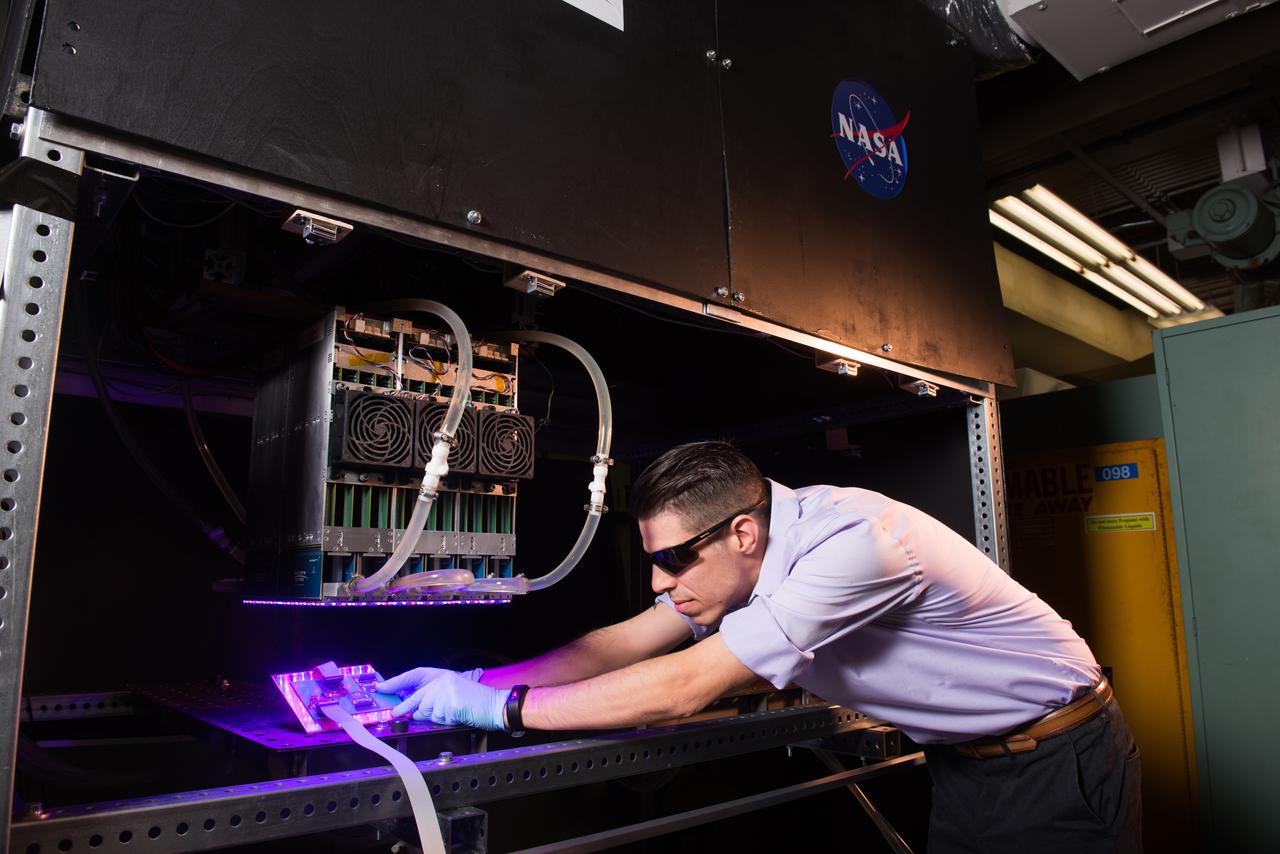
NASA Glenn researcher Tim Peshek shows off a new type of ultrathin solar cell, known as a ‘perovskite’ because of its structure. These solar cells show promise for space applications because of their high efficiency and radiation tolerance and open the door to extremely low cost and large solar arrays for spacecraft or lunar surface habitats.
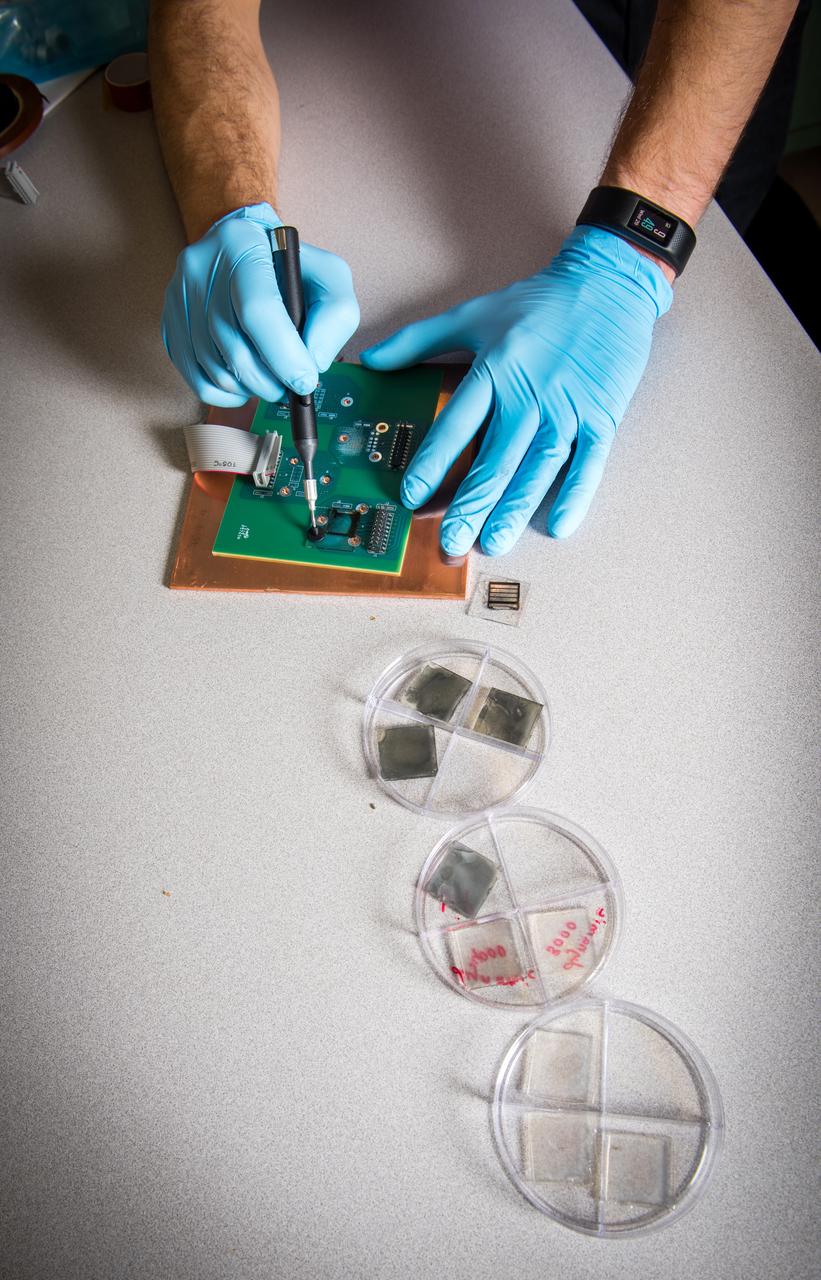
NASA Glenn researcher Tim Peshek shows off a new type of ultrathin solar cell, known as a ‘perovskite’ because of its structure. These solar cells show promise for space applications because of their high efficiency and radiation tolerance and open the door to extremely low cost and large solar arrays for spacecraft or lunar surface habitats.
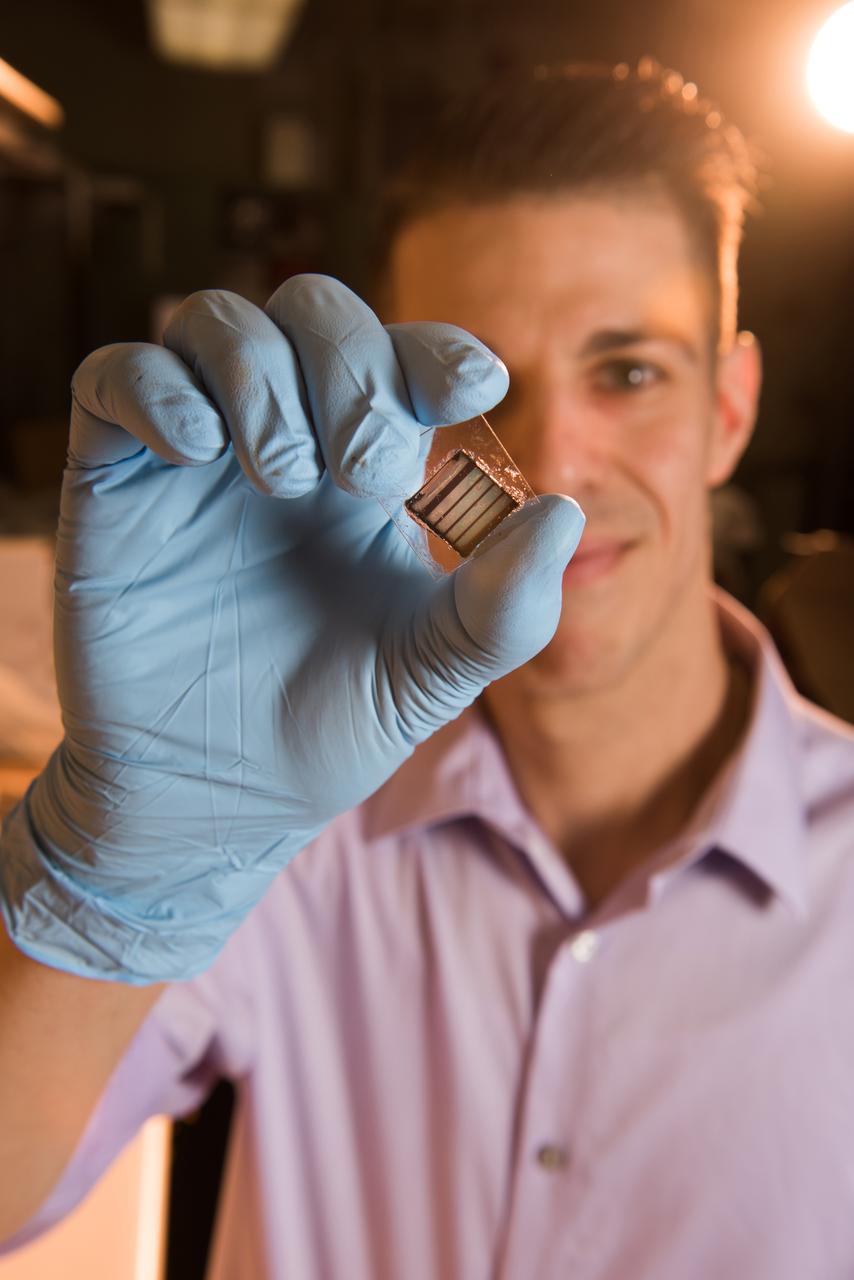
NASA Glenn researcher Tim Peshek shows off a new type of ultrathin solar cell, known as a ‘perovskite’ because of its structure. These solar cells show promise for space applications because of their high efficiency and radiation tolerance and open the door to extremely low cost and large solar arrays for spacecraft or lunar surface habitats.
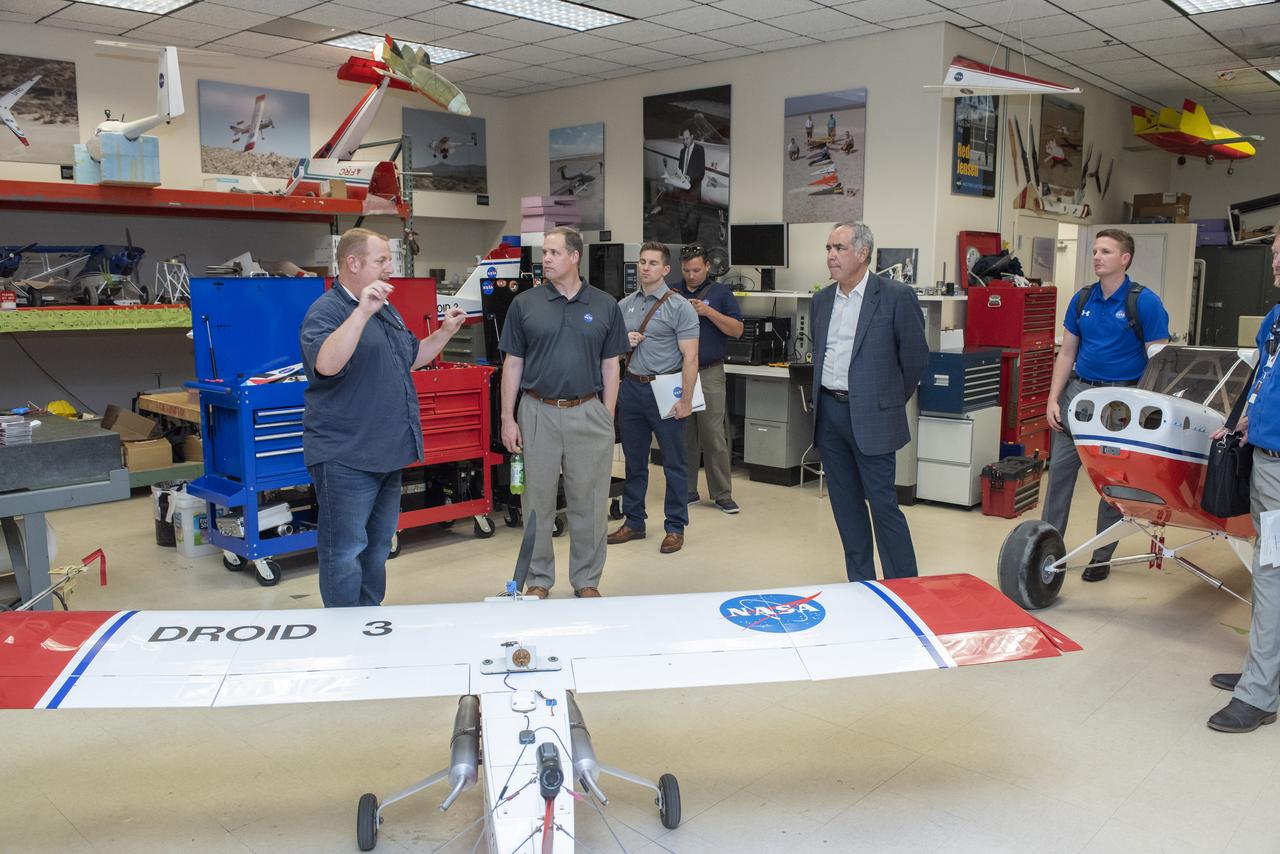
Armstrong's Robert "Red" Jensen talks to Bridenstine about using small scale aircraft to test aeronautical concepts keeping cost of aviation discoveries lower until technology is proved for larger aircraft.
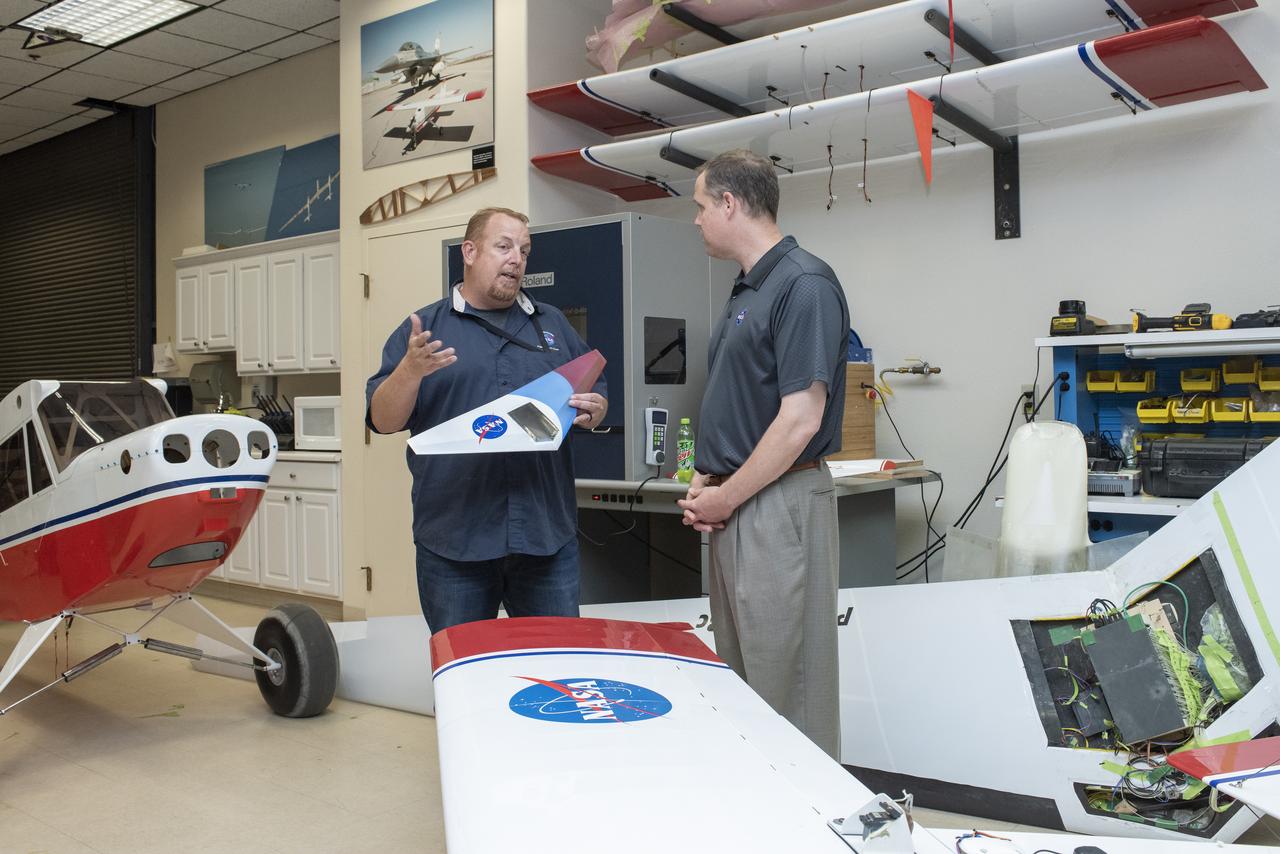
Armstrong's Robert "Red" Jensen talks to Bridenstine about using small scale aircraft to test aeronautical concepts keeping cost of aviation discoveries lower until technology is proved for larger aircraft.
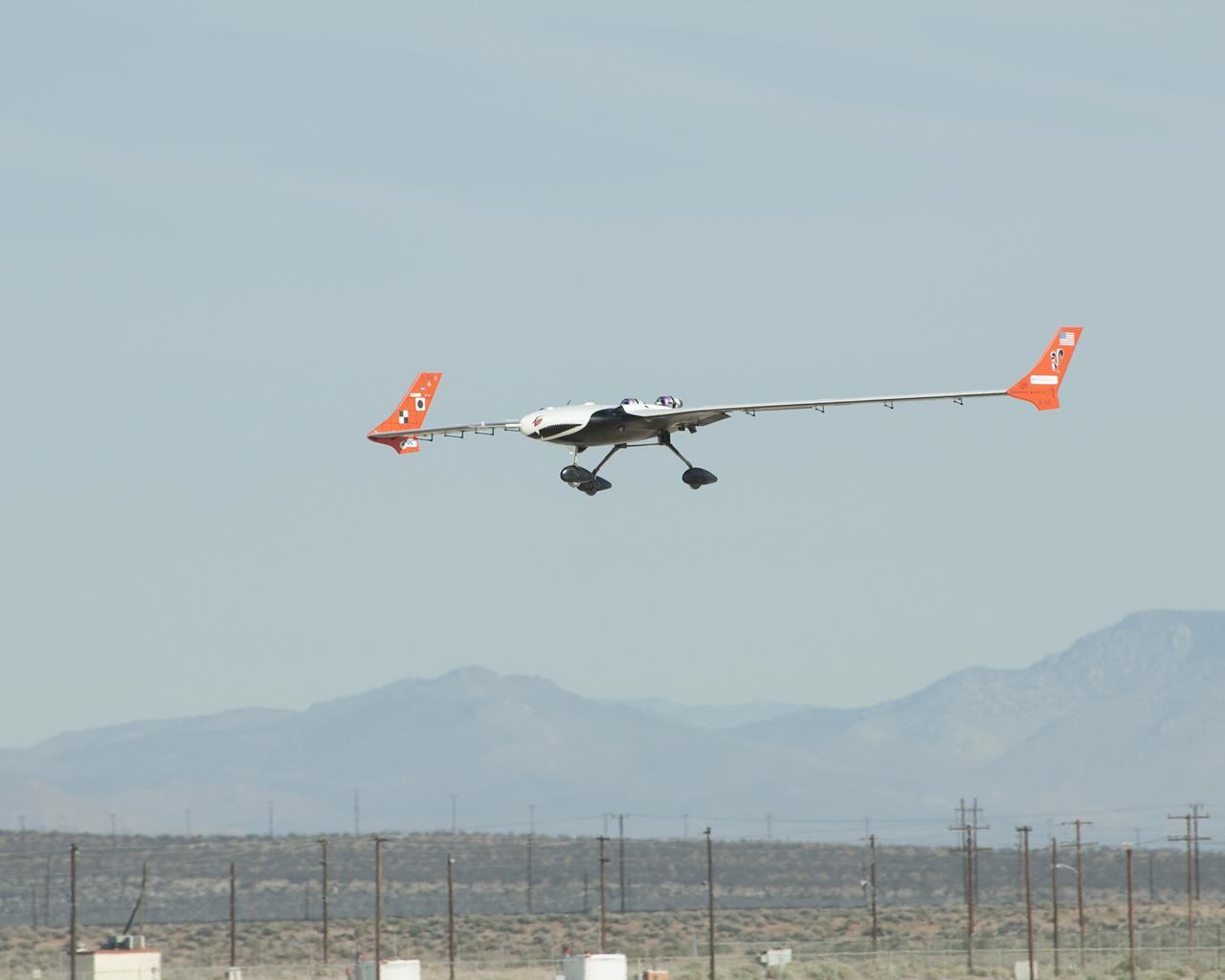
NASA researchers are using the X-56A, a low-cost, modular, remotely piloted aerial vehicle, to explore the behavior of lightweight, flexible aircraft structures.
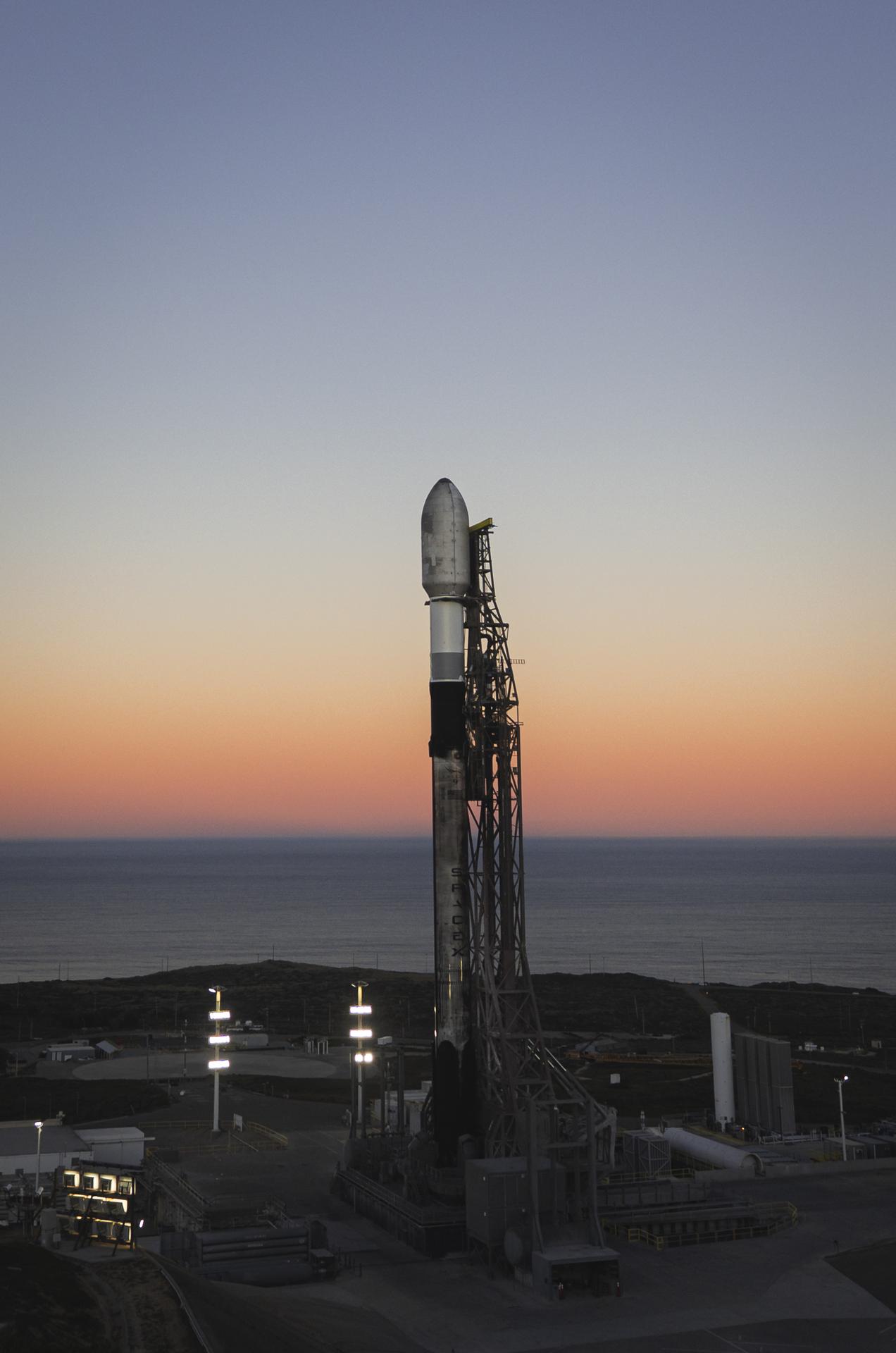
A SpaceX Falcon 9 rocket carrying NASA’s R5-S7 (Realizing Rapid, Reduced-cost high-Risk Research project Spacecraft 7) CubeSat along with several other satellites as part of the company’s Transporter-15 mission stands vertical on the launch pad of Space Launch Complex 4 East at Vandenberg Space Force Base in California on Wednesday, Nov. 26, 2025. The latest in a series of spacecraft, R5-S7 will explore ways to get multiple technology prototypes into low Earth orbit rapidly and at a low cost, accelerating the demonstration of these technologies in orbit and allowing engineers and scientists to more quickly prove them and make them available to NASA missions and other users.
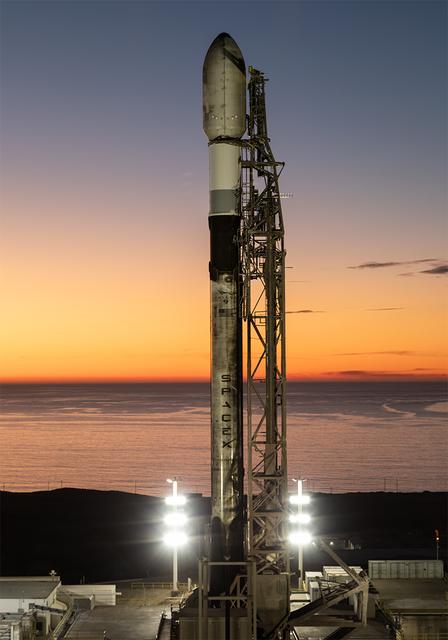
A SpaceX Falcon 9 rocket carrying NASA’s R5-S7 (Realizing Rapid, Reduced-cost high-Risk Research project Spacecraft 7) CubeSat along with several other satellites as part of the company’s Transporter-15 mission stands vertical on the launch pad of Space Launch Complex 4 East at Vandenberg Space Force Base in California on Wednesday, Nov. 26, 2025. The latest in a series of spacecraft, R5-S7 will explore ways to get multiple technology prototypes into low Earth orbit rapidly and at a low cost, accelerating the demonstration of these technologies in orbit and allowing engineers and scientists to more quickly prove them and make them available to NASA missions and other users.
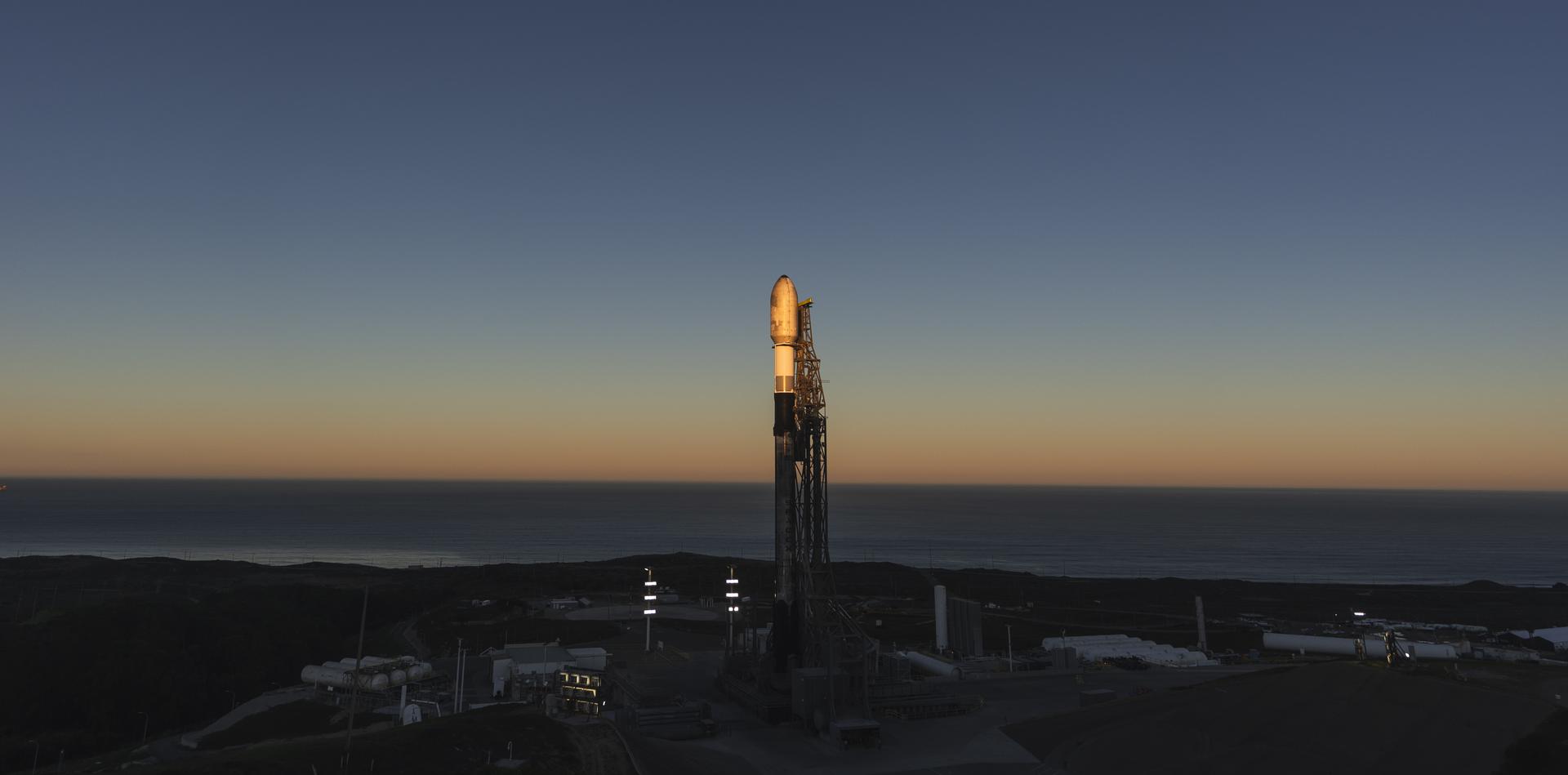
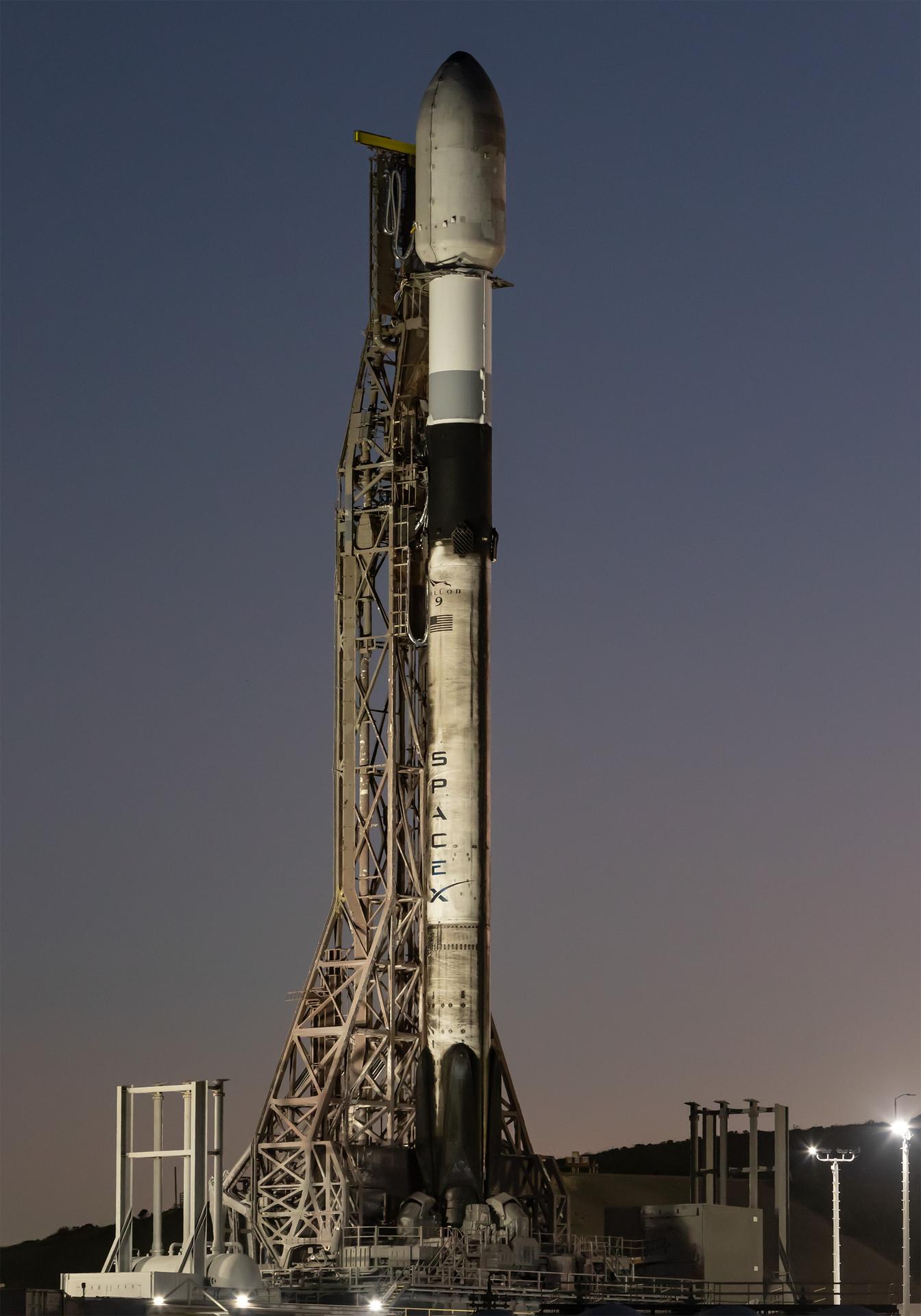
A SpaceX Falcon 9 rocket carrying NASA’s R5-S7 (Realizing Rapid, Reduced-cost high-Risk Research project Spacecraft 7) CubeSat along with several other satellites as part of the company’s Transporter-15 mission stands vertical on the launch pad of Space Launch Complex 4 East at Vandenberg Space Force Base in California on Thursday, Nov. 27, 2025. The latest in a series of spacecraft, R5-S7 will explore ways to get multiple technology prototypes into low Earth orbit rapidly and at a low cost, accelerating the demonstration of these technologies in orbit and allowing engineers and scientists to more quickly prove them and make them available to NASA missions and other users.
A SpaceX Falcon 9 rocket carrying NASA’s R5-S7 (Realizing Rapid, Reduced-cost high-Risk Research project Spacecraft 7) CubeSat along with several other satellites as part of the company’s Transporter-15 mission stands vertical on the launch pad of Space Launch Complex 4 East at Vandenberg Space Force Base in California on Wednesday, Nov. 26, 2025. The latest in a series of spacecraft, R5-S7 will explore ways to get multiple technology prototypes into low Earth orbit rapidly and at a low cost, accelerating the demonstration of these technologies in orbit and allowing engineers and scientists to more quickly prove them and make them available to NASA missions and other users.
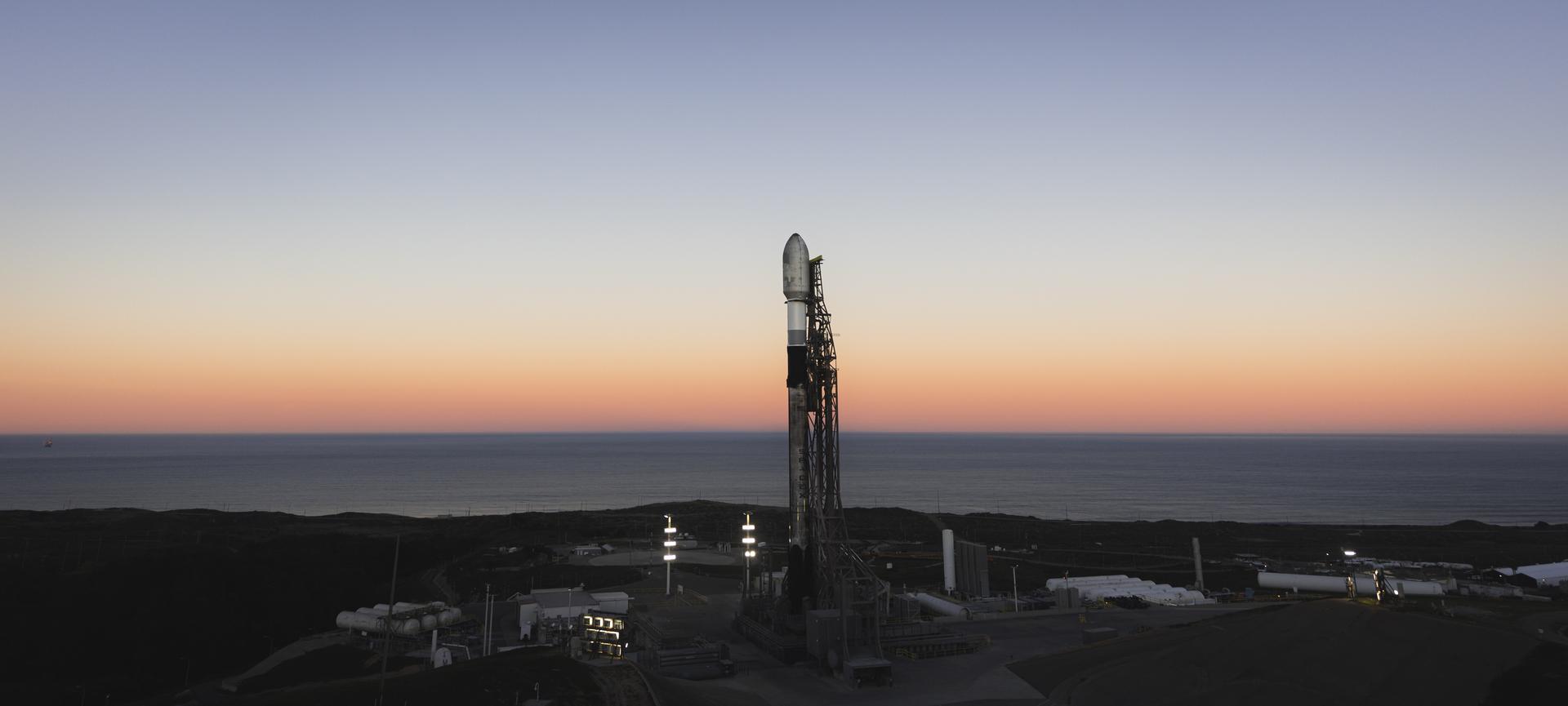
A SpaceX Falcon 9 rocket carrying NASA’s R5-S7 (Realizing Rapid, Reduced-cost high-Risk Research project Spacecraft 7) CubeSat along with several other satellites as part of the company’s Transporter-15 mission stands vertical on the launch pad of Space Launch Complex 4 East at Vandenberg Space Force Base in California on Wednesday, Nov. 26, 2025. The latest in a series of spacecraft, R5-S7 will explore ways to get multiple technology prototypes into low Earth orbit rapidly and at a low cost, accelerating the demonstration of these technologies in orbit and allowing engineers and scientists to more quickly prove them and make them available to NASA missions and other users.
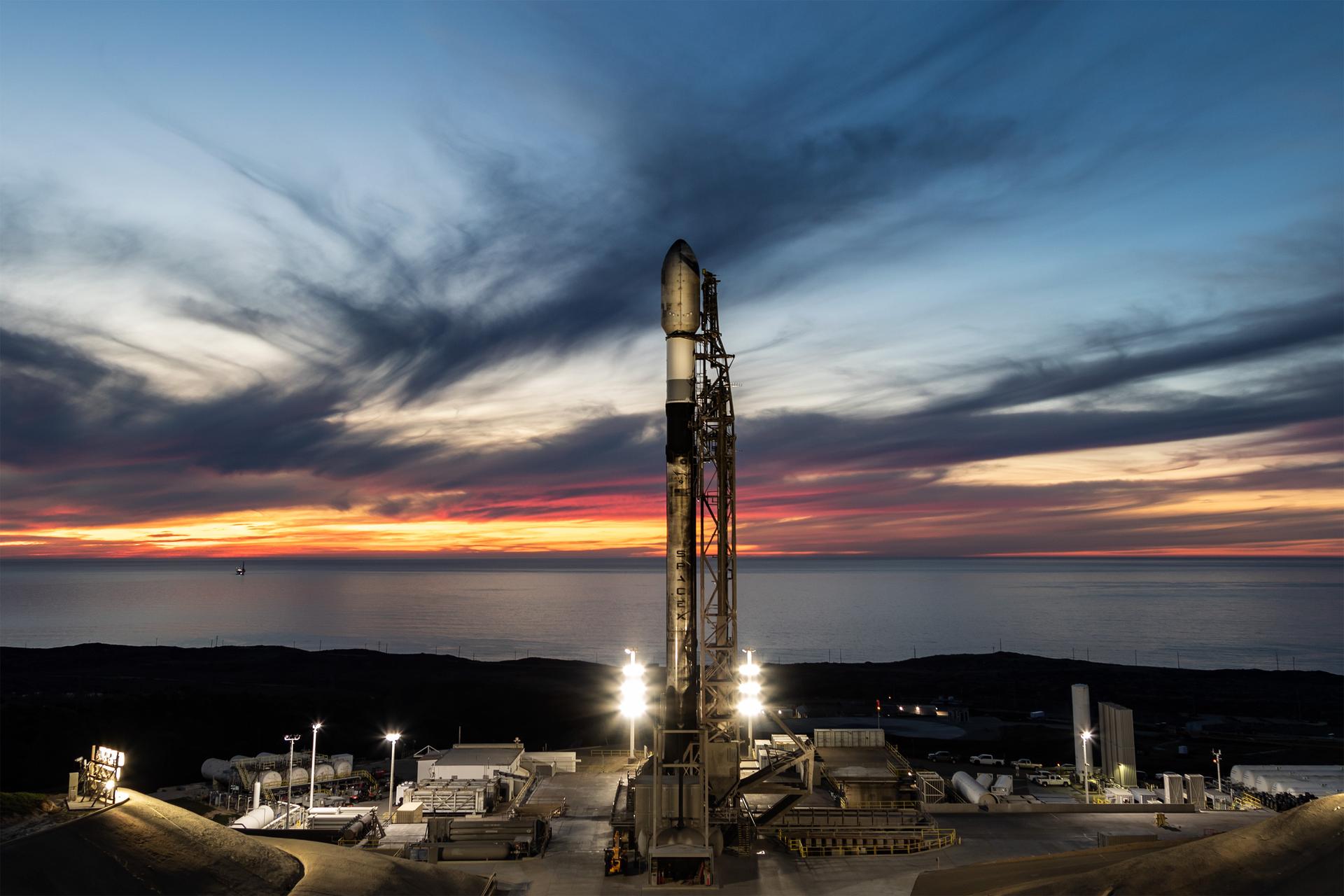
A SpaceX Falcon 9 rocket carrying NASA’s R5-S7 (Realizing Rapid, Reduced-cost high-Risk Research project Spacecraft 7) CubeSat along with several other satellites as part of the company’s Transporter-15 mission stands vertical on the launch pad of Space Launch Complex 4 East at Vandenberg Space Force Base in California on Thursday, Nov. 27, 2025. The latest in a series of spacecraft, R5-S7 will explore ways to get multiple technology prototypes into low Earth orbit rapidly and at a low cost, accelerating the demonstration of these technologies in orbit and allowing engineers and scientists to more quickly prove them and make them available to NASA missions and other users.
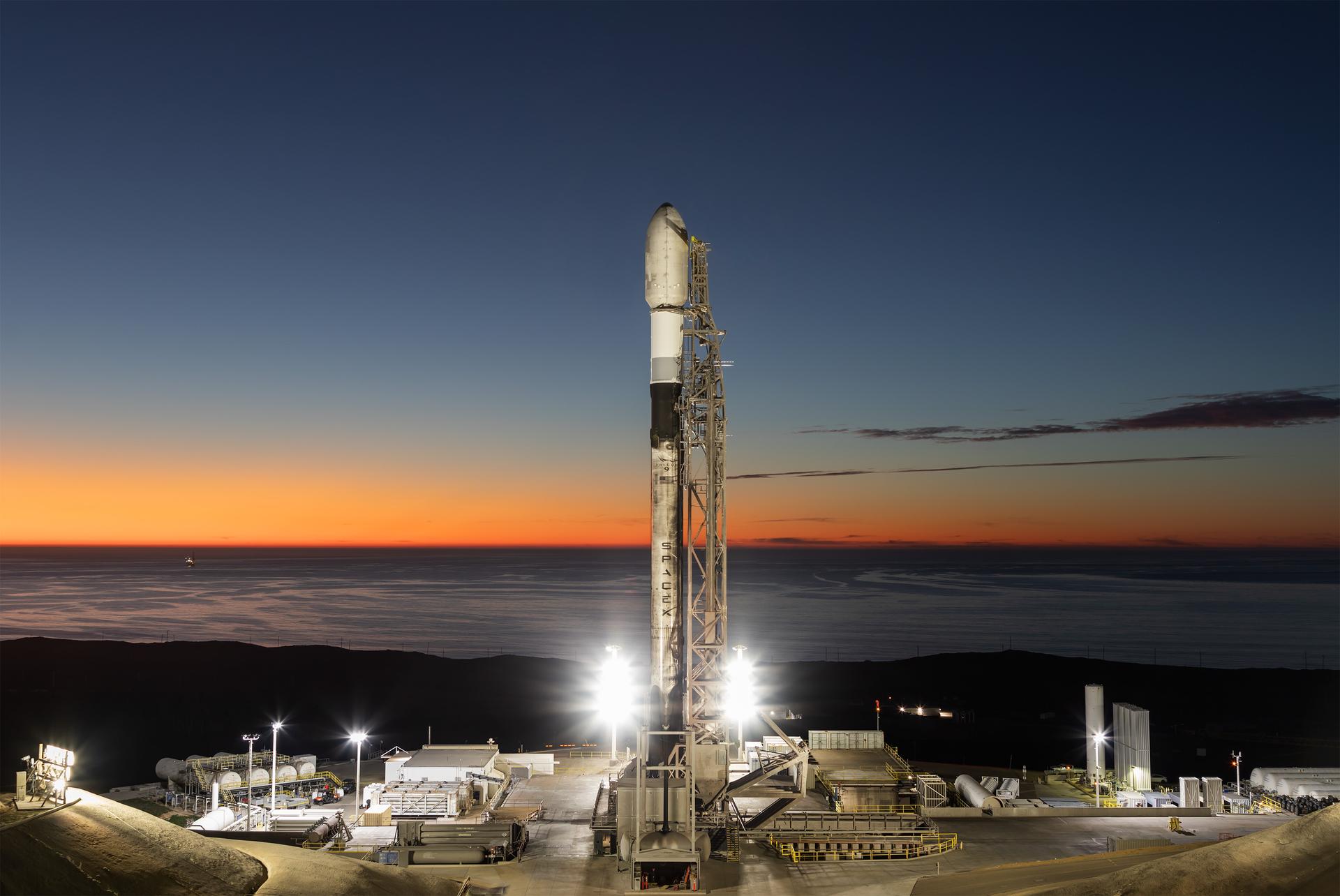
A SpaceX Falcon 9 rocket carrying NASA’s R5-S7 (Realizing Rapid, Reduced-cost high-Risk Research project Spacecraft 7) CubeSat along with several other satellites as part of the company’s Transporter-15 mission stands vertical on the launch pad of Space Launch Complex 4 East at Vandenberg Space Force Base in California on Thursday, Nov. 27, 2025. The latest in a series of spacecraft, R5-S7 will explore ways to get multiple technology prototypes into low Earth orbit rapidly and at a low cost, accelerating the demonstration of these technologies in orbit and allowing engineers and scientists to more quickly prove them and make them available to NASA missions and other users.
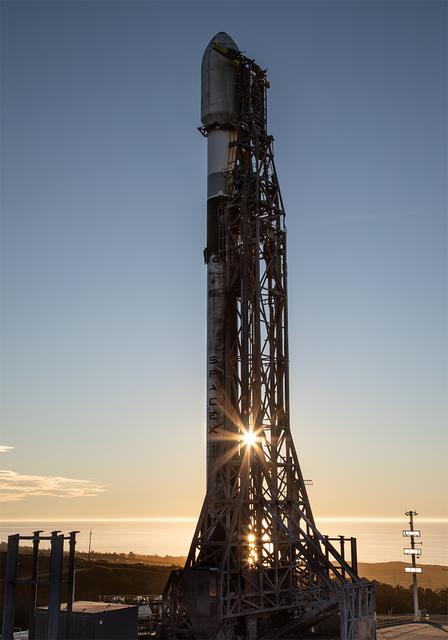
A SpaceX Falcon 9 rocket carrying NASA’s R5-S7 (Realizing Rapid, Reduced-cost high-Risk Research project Spacecraft 7) CubeSat along with several other satellites as part of the company’s Transporter-15 mission stands vertical on the launch pad of Space Launch Complex 4 East at Vandenberg Space Force Base in California on Thursday, Nov. 27, 2025. The latest in a series of spacecraft, R5-S7 will explore ways to get multiple technology prototypes into low Earth orbit rapidly and at a low cost, accelerating the demonstration of these technologies in orbit and allowing engineers and scientists to more quickly prove them and make them available to NASA missions and other users.
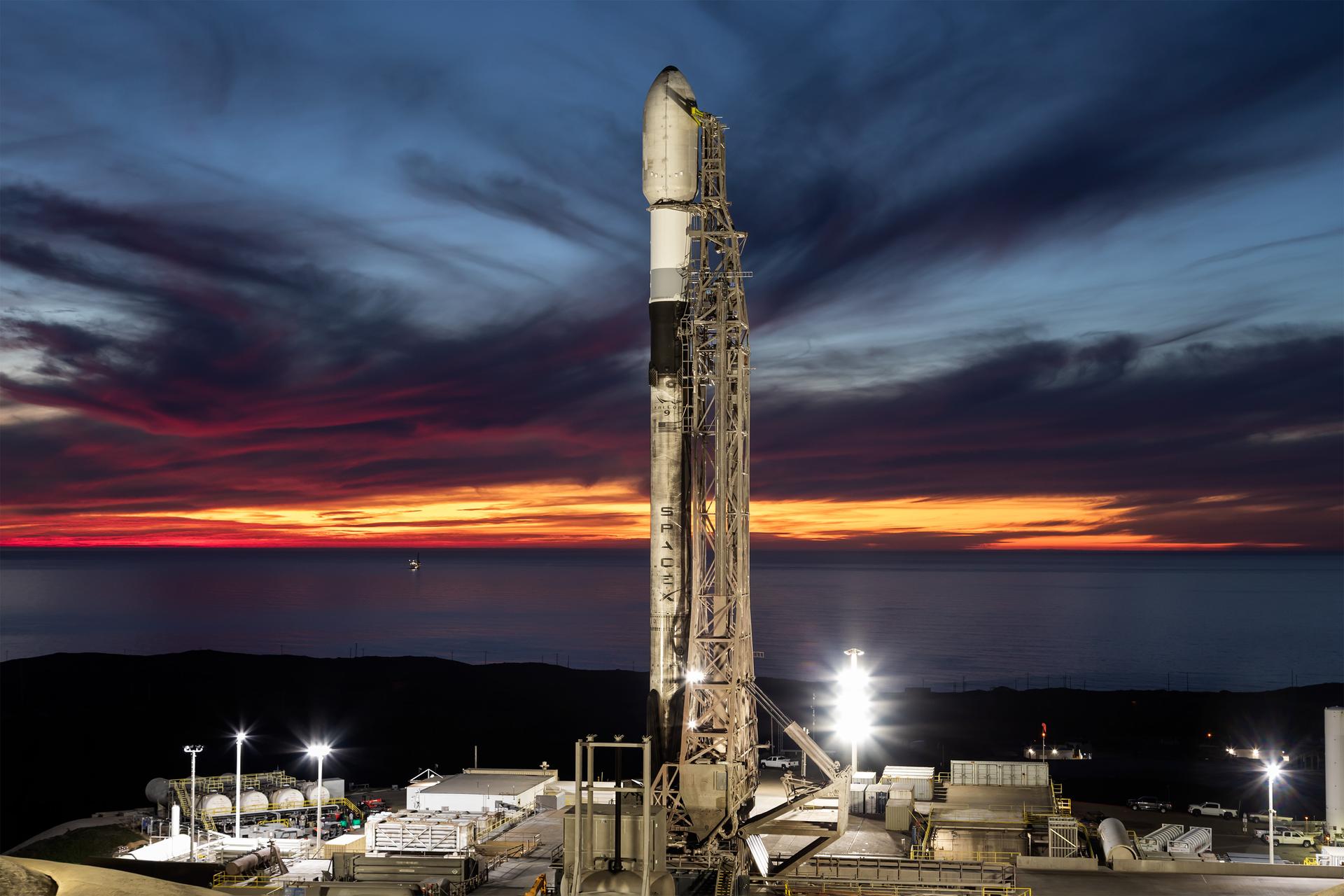
A SpaceX Falcon 9 rocket carrying NASA’s R5-S7 (Realizing Rapid, Reduced-cost high-Risk Research project Spacecraft 7) CubeSat along with several other satellites as part of the company’s Transporter-15 mission stands vertical on the launch pad of Space Launch Complex 4 East at Vandenberg Space Force Base in California on Thursday, Nov. 27, 2025. The latest in a series of spacecraft, R5-S7 will explore ways to get multiple technology prototypes into low Earth orbit rapidly and at a low cost, accelerating the demonstration of these technologies in orbit and allowing engineers and scientists to more quickly prove them and make them available to NASA missions and other users.
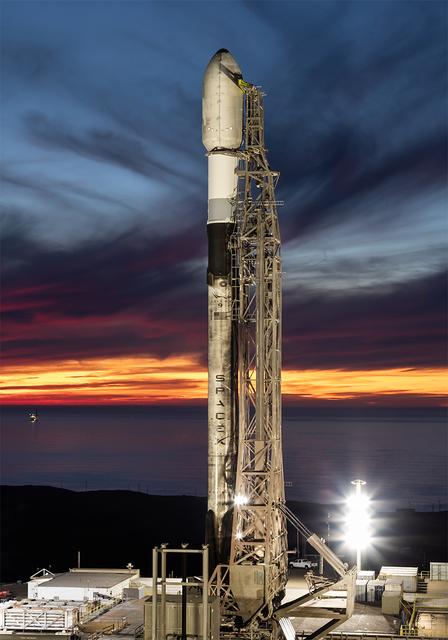
A SpaceX Falcon 9 rocket carrying NASA’s R5-S7 (Realizing Rapid, Reduced-cost high-Risk Research project Spacecraft 7) CubeSat along with several other satellites as part of the company’s Transporter-15 mission stands vertical on the launch pad of Space Launch Complex 4 East at Vandenberg Space Force Base in California on Thursday, Nov. 27, 2025. The latest in a series of spacecraft, R5-S7 will explore ways to get multiple technology prototypes into low Earth orbit rapidly and at a low cost, accelerating the demonstration of these technologies in orbit and allowing engineers and scientists to more quickly prove them and make them available to NASA missions and other users.
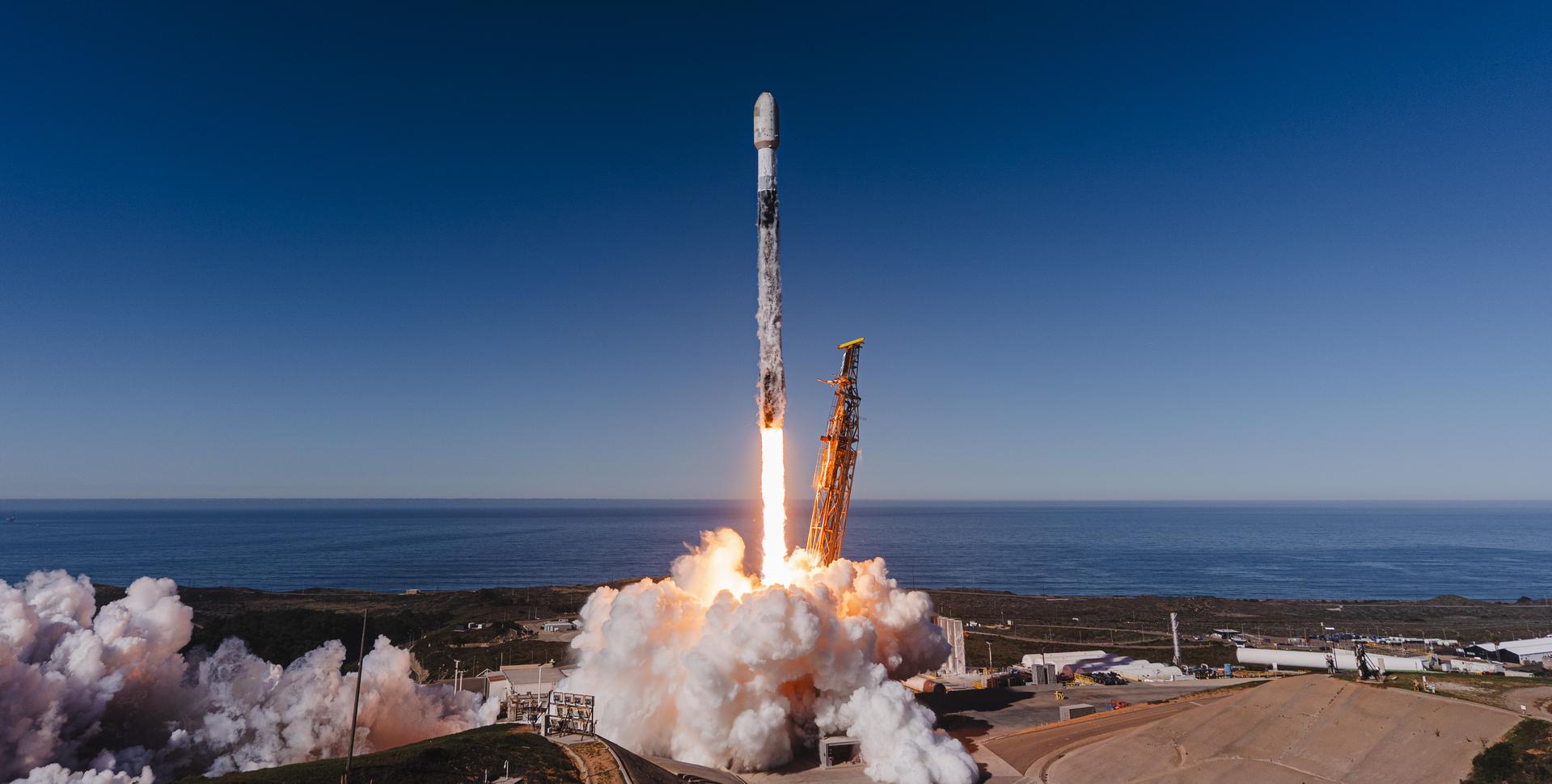
A SpaceX Falcon 9 rocket carrying NASA’s R5-S7 (Realizing Rapid, Reduced-cost high-Risk Research project Spacecraft 7) CubeSat along with several other satellites as part of the company’s Transporter-15 mission lifts off from Space Launch Complex 4 East at Vandenberg Space Force Base in California at 10:44 a.m. PST Friday, Nov. 28, 2025. The latest in a series of spacecraft, R5-S7 will explore ways to get multiple technology prototypes into low Earth orbit rapidly and at a low cost, accelerating the demonstration of these technologies in orbit and allowing engineers and scientists to more quickly prove them and make them available to NASA missions and other users.
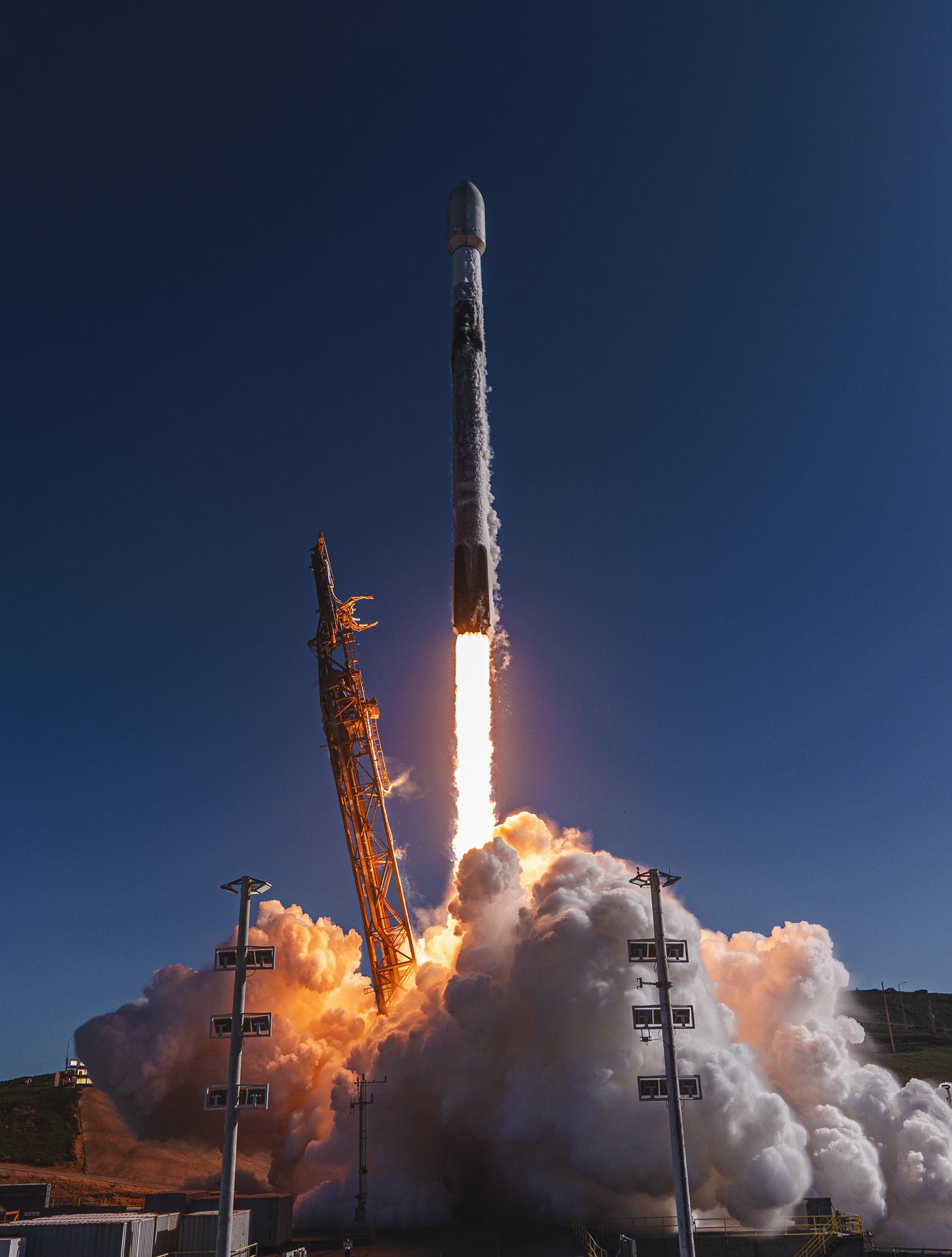
A SpaceX Falcon 9 rocket carrying NASA’s R5-S7 (Realizing Rapid, Reduced-cost high-Risk Research project Spacecraft 7) CubeSat along with several other satellites as part of the company’s Transporter-15 mission lifts off from Space Launch Complex 4 East at Vandenberg Space Force Base in California at 10:44 a.m. PST Friday, Nov. 28, 2025. The latest in a series of spacecraft, R5-S7 will explore ways to get multiple technology prototypes into low Earth orbit rapidly and at a low cost, accelerating the demonstration of these technologies in orbit and allowing engineers and scientists to more quickly prove them and make them available to NASA missions and other users.
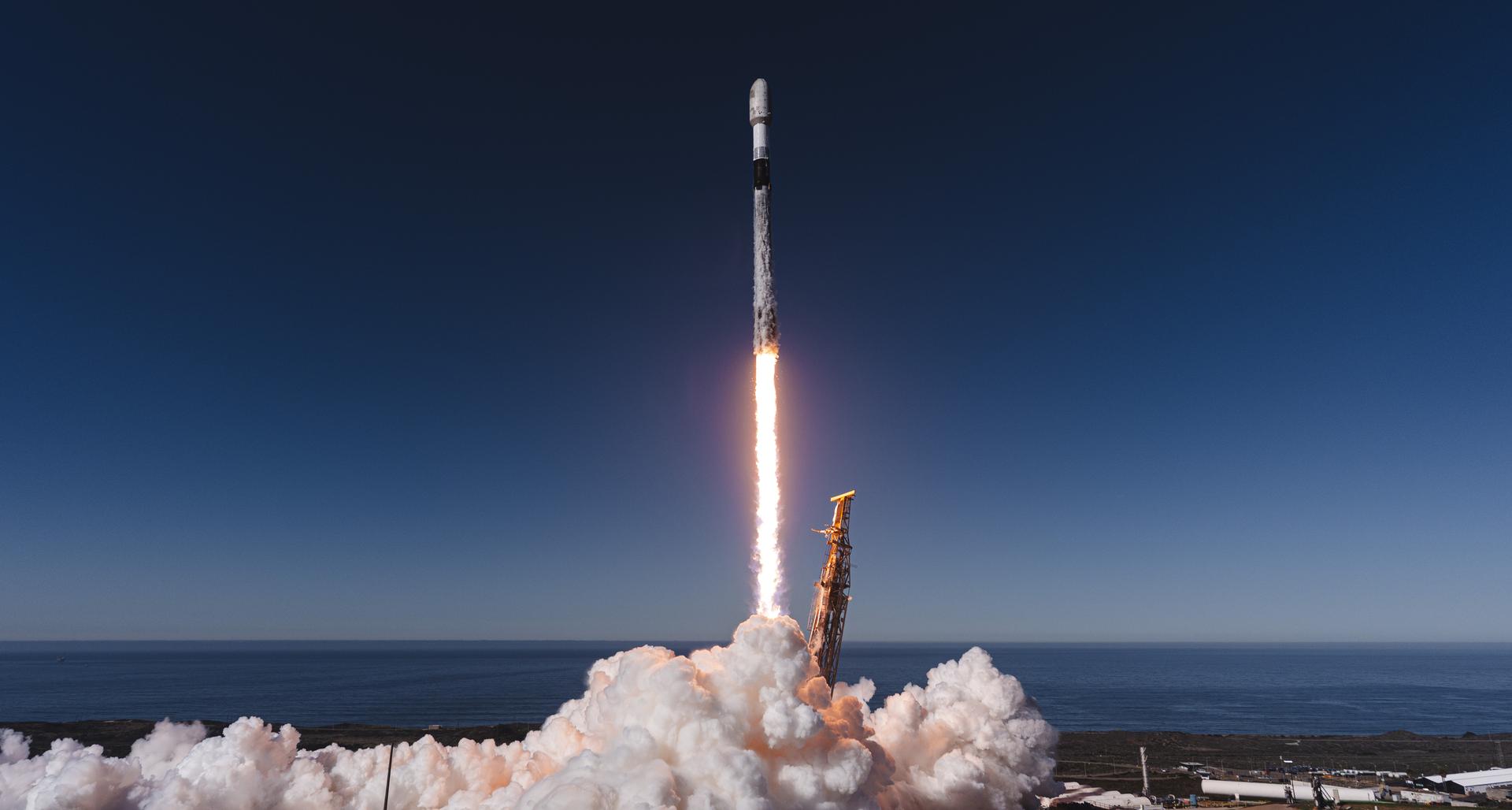
A SpaceX Falcon 9 rocket carrying NASA’s R5-S7 (Realizing Rapid, Reduced-cost high-Risk Research project Spacecraft 7) CubeSat along with several other satellites as part of the company’s Transporter-15 mission lifts off from Space Launch Complex 4 East at Vandenberg Space Force Base in California at 10:44 a.m. PST Friday, Nov. 28, 2025. The latest in a series of spacecraft, R5-S7 will explore ways to get multiple technology prototypes into low Earth orbit rapidly and at a low cost, accelerating the demonstration of these technologies in orbit and allowing engineers and scientists to more quickly prove them and make them available to NASA missions and other users.
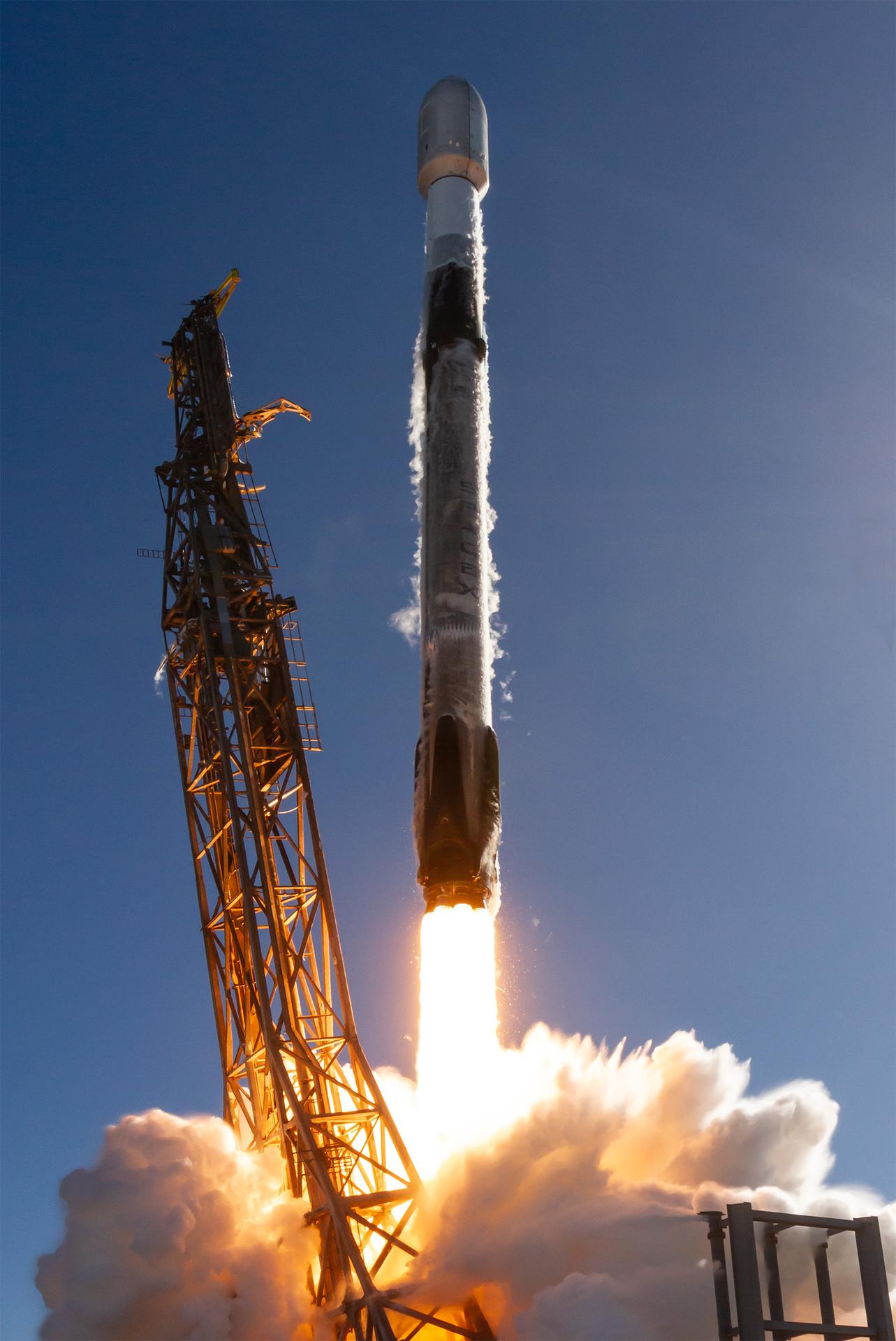
A SpaceX Falcon 9 rocket carrying NASA’s R5-S7 (Realizing Rapid, Reduced-cost high-Risk Research project Spacecraft 7) CubeSat along with several other satellites as part of the company’s Transporter-15 mission lifts off from Space Launch Complex 4 East at Vandenberg Space Force Base in California at 10:44 a.m. PST Friday, Nov. 28, 2025. The latest in a series of spacecraft, R5-S7 will explore ways to get multiple technology prototypes into low Earth orbit rapidly and at a low cost, accelerating the demonstration of these technologies in orbit and allowing engineers and scientists to more quickly prove them and make them available to NASA missions and other users.
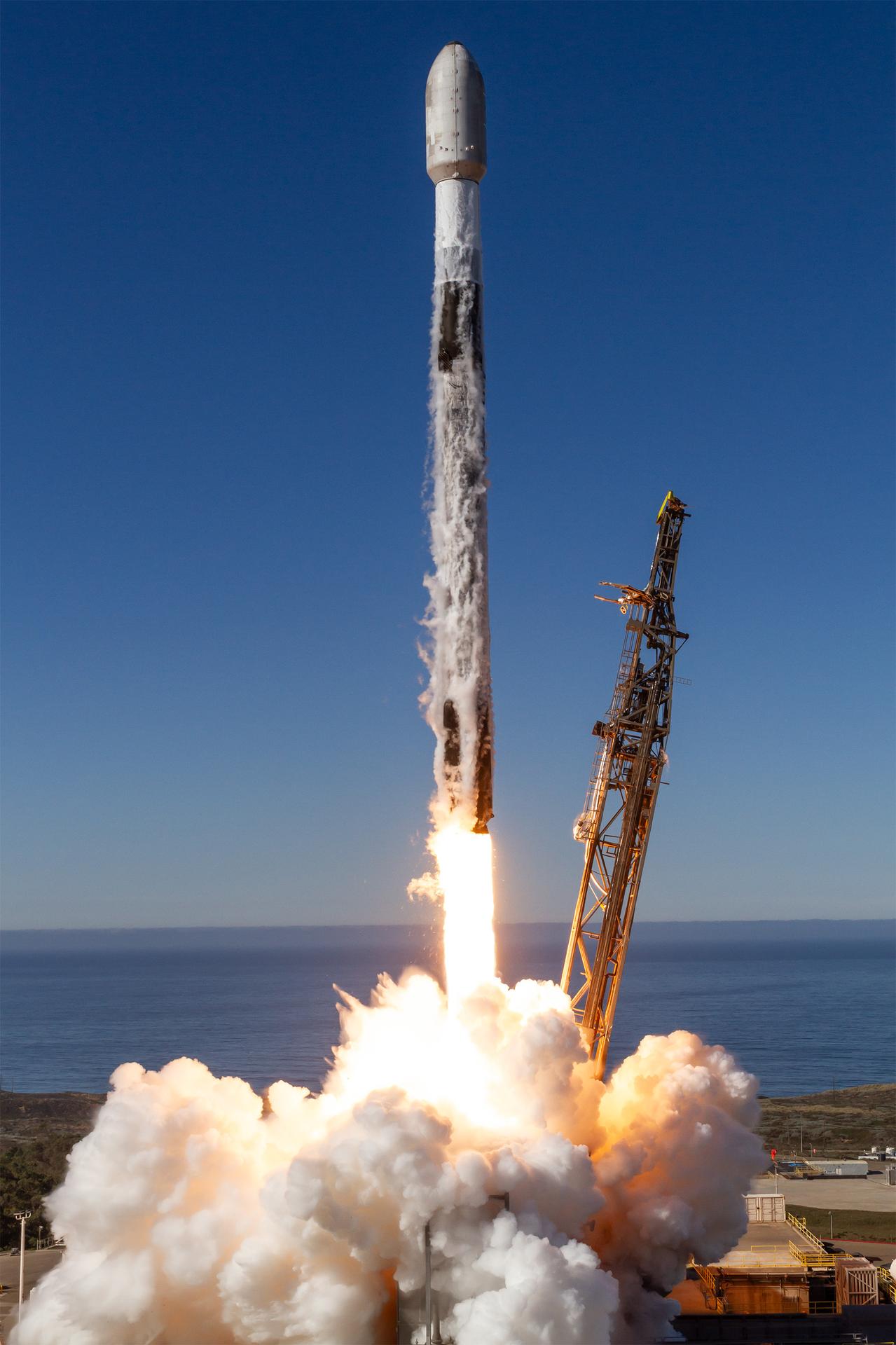
A SpaceX Falcon 9 rocket carrying NASA’s R5-S7 (Realizing Rapid, Reduced-cost high-Risk Research project Spacecraft 7) CubeSat along with several other satellites as part of the company’s Transporter-15 mission lifts off from Space Launch Complex 4 East at Vandenberg Space Force Base in California at 10:44 a.m. PST Friday, Nov. 28, 2025. The latest in a series of spacecraft, R5-S7 will explore ways to get multiple technology prototypes into low Earth orbit rapidly and at a low cost, accelerating the demonstration of these technologies in orbit and allowing engineers and scientists to more quickly prove them and make them available to NASA missions and other users.

A SpaceX Falcon 9 rocket carrying NASA’s R5-S7 (Realizing Rapid, Reduced-cost high-Risk Research project Spacecraft 7) CubeSat along with several other satellites as part of the company’s Transporter-15 mission lifts off from Space Launch Complex 4 East at Vandenberg Space Force Base in California at 10:44 a.m. PST Friday, Nov. 28, 2025. The latest in a series of spacecraft, R5-S7 will explore ways to get multiple technology prototypes into low Earth orbit rapidly and at a low cost, accelerating the demonstration of these technologies in orbit and allowing engineers and scientists to more quickly prove them and make them available to NASA missions and other users.

A SpaceX Falcon 9 rocket carrying NASA’s R5-S7 (Realizing Rapid, Reduced-cost high-Risk Research project Spacecraft 7) CubeSat along with several other satellites as part of the company’s Transporter-15 mission lifts off from Space Launch Complex 4 East at Vandenberg Space Force Base in California at 10:44 a.m. PST Friday, Nov. 28, 2025. The latest in a series of spacecraft, R5-S7 will explore ways to get multiple technology prototypes into low Earth orbit rapidly and at a low cost, accelerating the demonstration of these technologies in orbit and allowing engineers and scientists to more quickly prove them and make them available to NASA missions and other users.
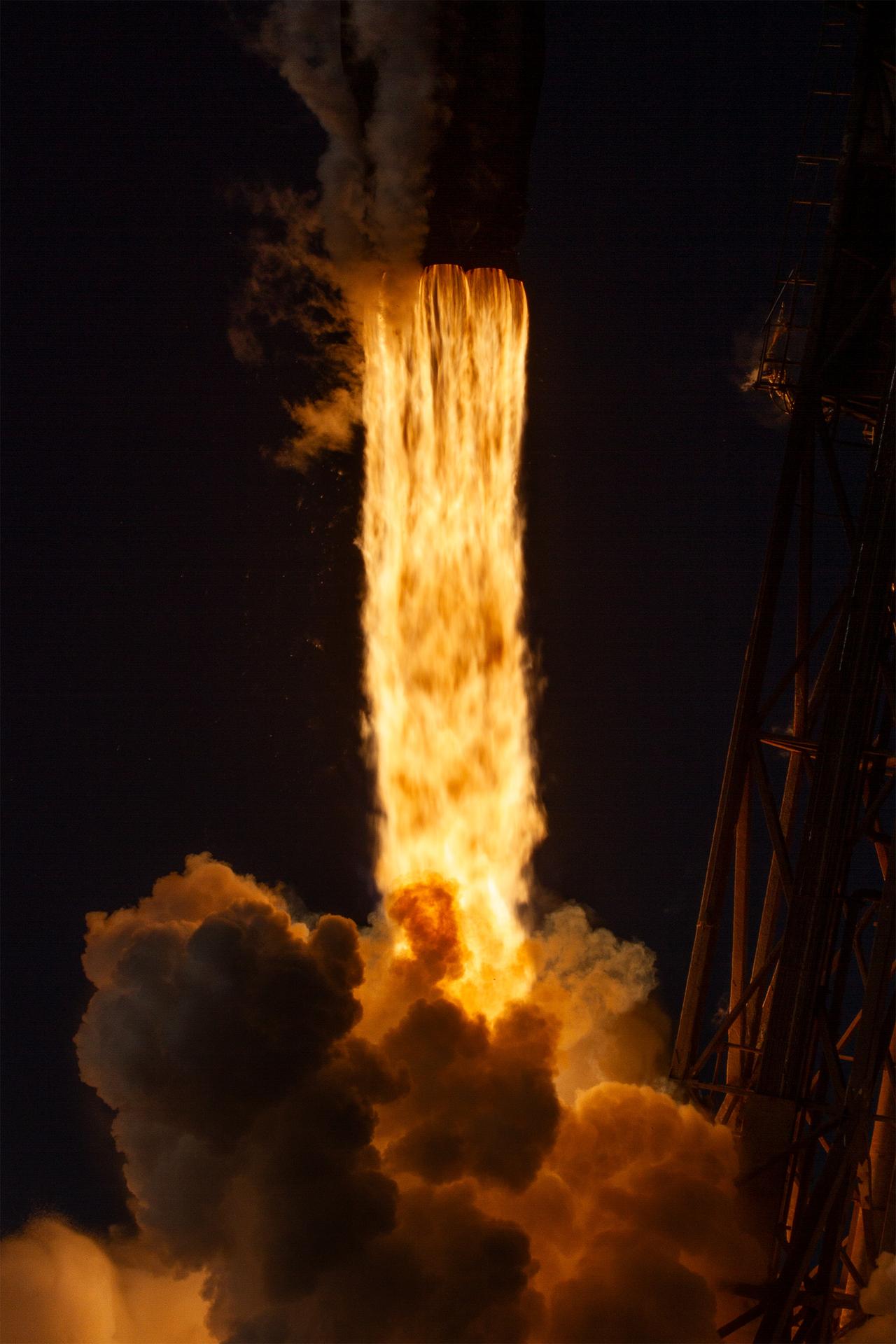
A SpaceX Falcon 9 rocket carrying NASA’s R5-S7 (Realizing Rapid, Reduced-cost high-Risk Research project Spacecraft 7) CubeSat along with several other satellites as part of the company’s Transporter-15 mission lifts off from Space Launch Complex 4 East at Vandenberg Space Force Base in California at 10:44 a.m. PST Friday, Nov. 28, 2025. The latest in a series of spacecraft, R5-S7 will explore ways to get multiple technology prototypes into low Earth orbit rapidly and at a low cost, accelerating the demonstration of these technologies in orbit and allowing engineers and scientists to more quickly prove them and make them available to NASA missions and other users.
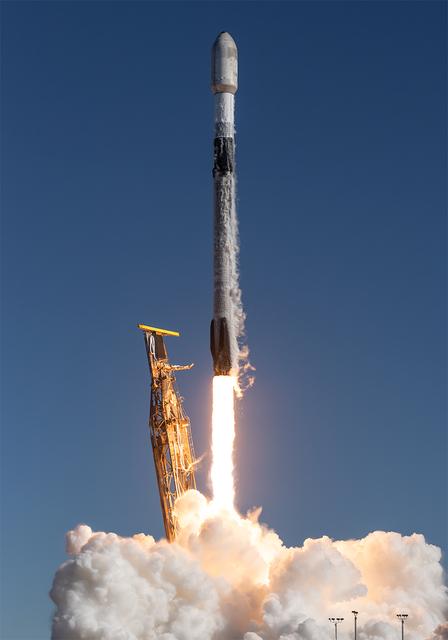
A SpaceX Falcon 9 rocket carrying NASA’s R5-S7 (Realizing Rapid, Reduced-cost high-Risk Research project Spacecraft 7) CubeSat along with several other satellites as part of the company’s Transporter-15 mission lifts off from Space Launch Complex 4 East at Vandenberg Space Force Base in California at 10:44 a.m. PST Friday, Nov. 28, 2025. The latest in a series of spacecraft, R5-S7 will explore ways to get multiple technology prototypes into low Earth orbit rapidly and at a low cost, accelerating the demonstration of these technologies in orbit and allowing engineers and scientists to more quickly prove them and make them available to NASA missions and other users.
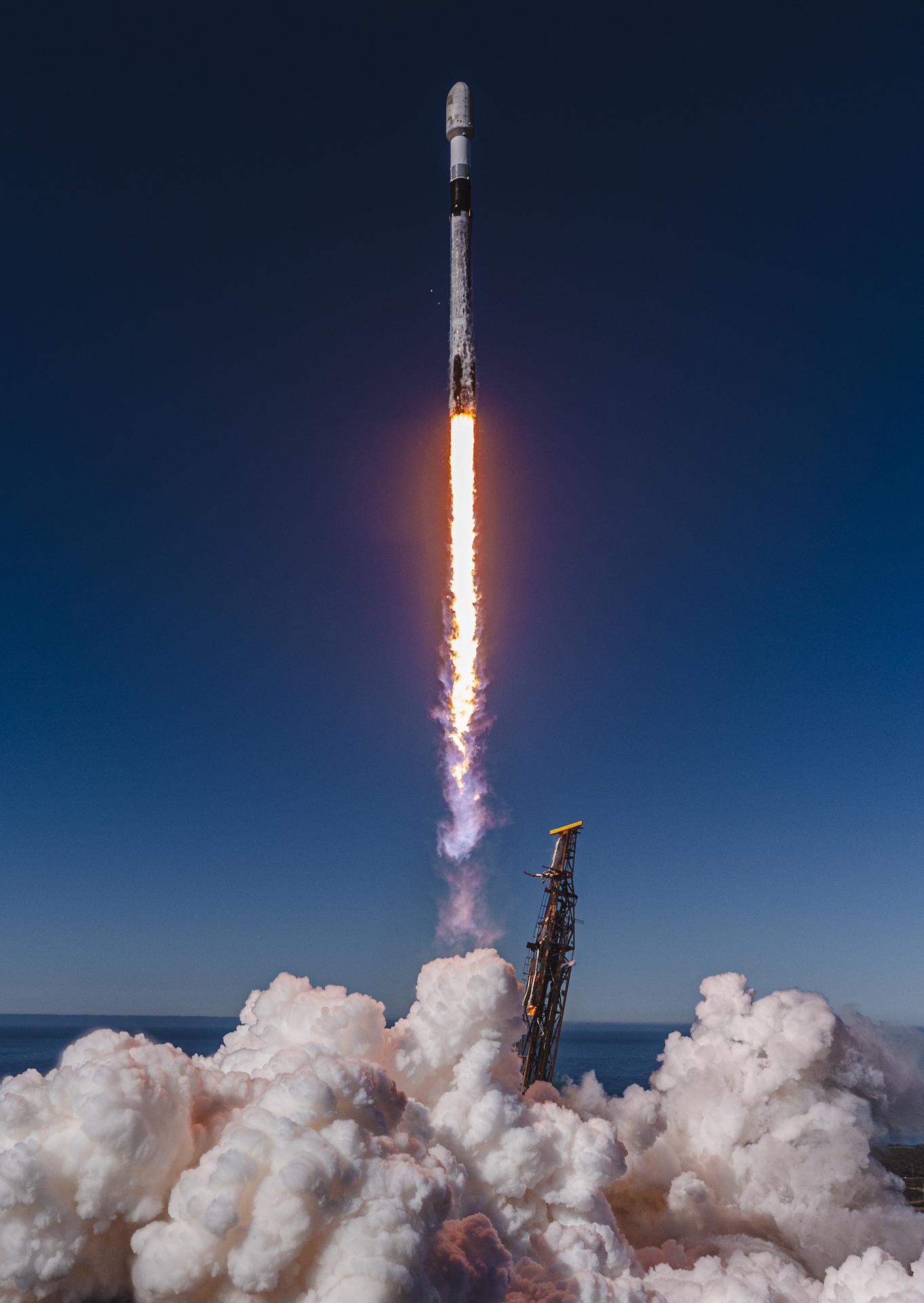
A SpaceX Falcon 9 rocket carrying NASA’s R5-S7 (Realizing Rapid, Reduced-cost high-Risk Research project Spacecraft 7) CubeSat along with several other satellites as part of the company’s Transporter-15 mission lifts off from Space Launch Complex 4 East at Vandenberg Space Force Base in California at 10:44 a.m. PST Friday, Nov. 28, 2025. The latest in a series of spacecraft, R5-S7 will explore ways to get multiple technology prototypes into low Earth orbit rapidly and at a low cost, accelerating the demonstration of these technologies in orbit and allowing engineers and scientists to more quickly prove them and make them available to NASA missions and other users.
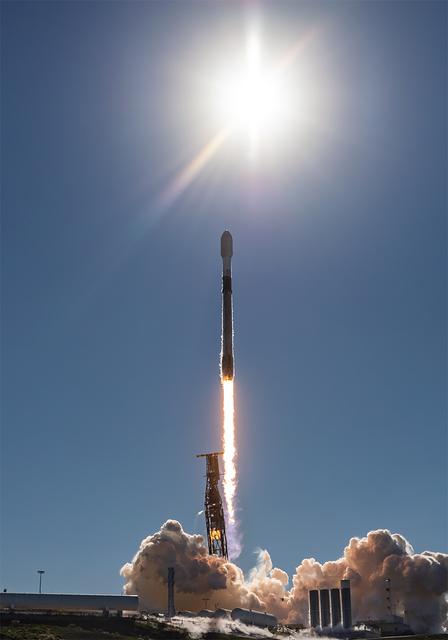
A SpaceX Falcon 9 rocket carrying NASA’s R5-S7 (Realizing Rapid, Reduced-cost high-Risk Research project Spacecraft 7) CubeSat along with several other satellites as part of the company’s Transporter-15 mission lifts off from Space Launch Complex 4 East at Vandenberg Space Force Base in California at 10:44 a.m. PST Friday, Nov. 28, 2025. The latest in a series of spacecraft, R5-S7 will explore ways to get multiple technology prototypes into low Earth orbit rapidly and at a low cost, accelerating the demonstration of these technologies in orbit and allowing engineers and scientists to more quickly prove them and make them available to NASA missions and other users.
![Teams encapsulate NASA’s R5-S7 (Realizing Rapid, Reduced-cost high-Risk Research project Spacecraft 7) CubeSat inside a SpaceX Falcon 9 payload fairing along with several other satellites at Vandenberg Space Force Base in California at [TIME, DAY, DATE], as part of the company’s Transporter-15 mission. The latest in a series of spacecraft, R5-S7 will explore ways to get multiple technology prototypes into low Earth orbit rapidly and at a low cost, accelerating the demonstration of these technologies in orbit and allowing engineers and scientists to more quickly prove them and make them available to NASA missions and other users. Launch of SpaceX’s Transporter-15 mission, carrying R5-S7, is scheduled for 10:18 a.m. PST Wednesday, Nov. 26, 2025, from Vandenberg’s Space Launch Complex 4 East.](https://images-assets.nasa.gov/image/KSC-20251126-PH-SPX01_0001/KSC-20251126-PH-SPX01_0001~large.jpg)
Teams encapsulate NASA’s R5-S7 (Realizing Rapid, Reduced-cost high-Risk Research project Spacecraft 7) CubeSat inside a SpaceX Falcon 9 payload fairing along with several other satellites at Vandenberg Space Force Base in California at [TIME, DAY, DATE], as part of the company’s Transporter-15 mission. The latest in a series of spacecraft, R5-S7 will explore ways to get multiple technology prototypes into low Earth orbit rapidly and at a low cost, accelerating the demonstration of these technologies in orbit and allowing engineers and scientists to more quickly prove them and make them available to NASA missions and other users. Launch of SpaceX’s Transporter-15 mission, carrying R5-S7, is scheduled for 10:18 a.m. PST Wednesday, Nov. 26, 2025, from Vandenberg’s Space Launch Complex 4 East.
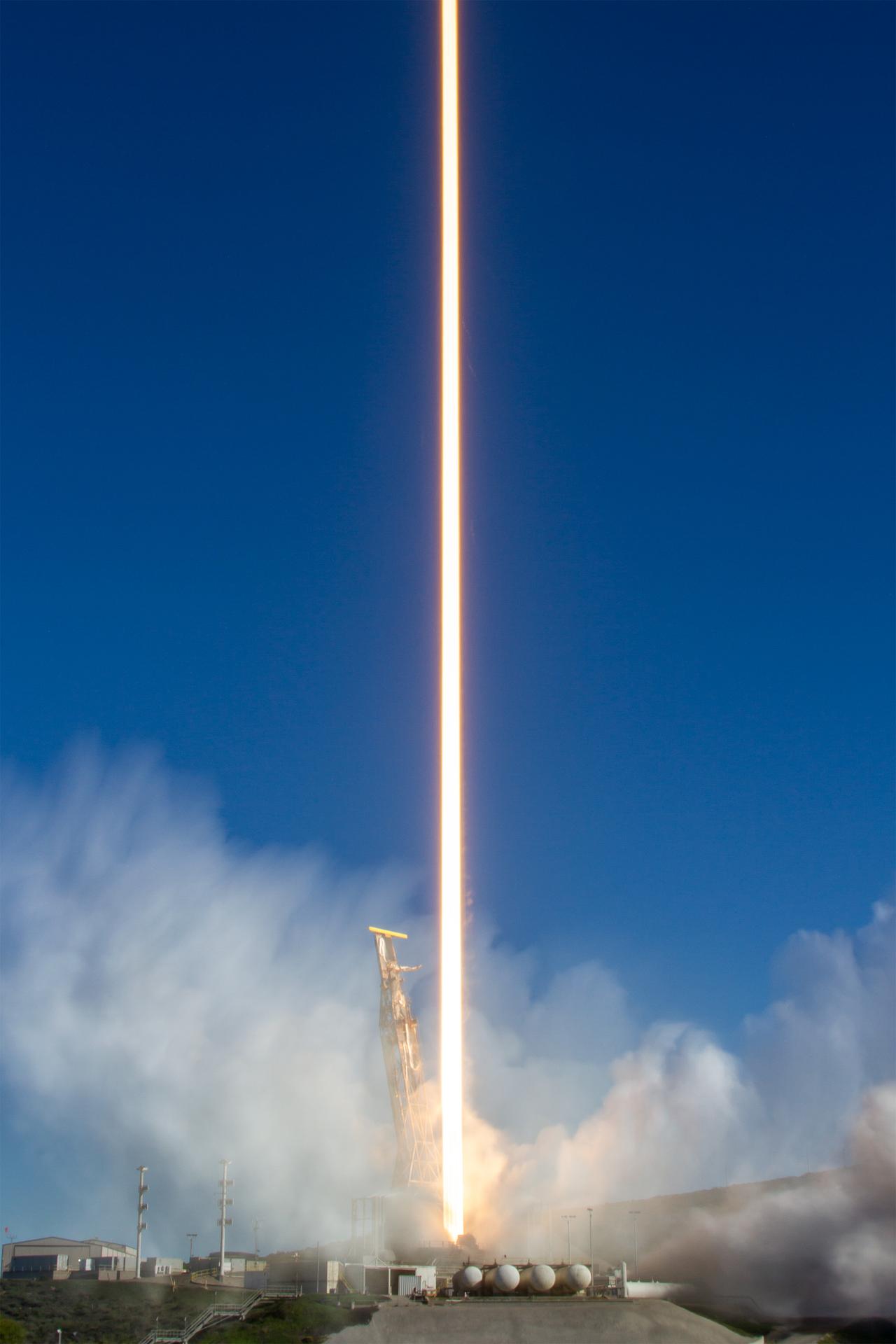
A SpaceX Falcon 9 rocket carrying NASA’s R5-S7 (Realizing Rapid, Reduced-cost high-Risk Research project Spacecraft 7) CubeSat along with several other satellites as part of the company’s Transporter-15 mission lifts off from Space Launch Complex 4 East at Vandenberg Space Force Base in California at 10:44 a.m. PST Friday, Nov. 28, 2025. The latest in a series of spacecraft, R5-S7 will explore ways to get multiple technology prototypes into low Earth orbit rapidly and at a low cost, accelerating the demonstration of these technologies in orbit and allowing engineers and scientists to more quickly prove them and make them available to NASA missions and other users.
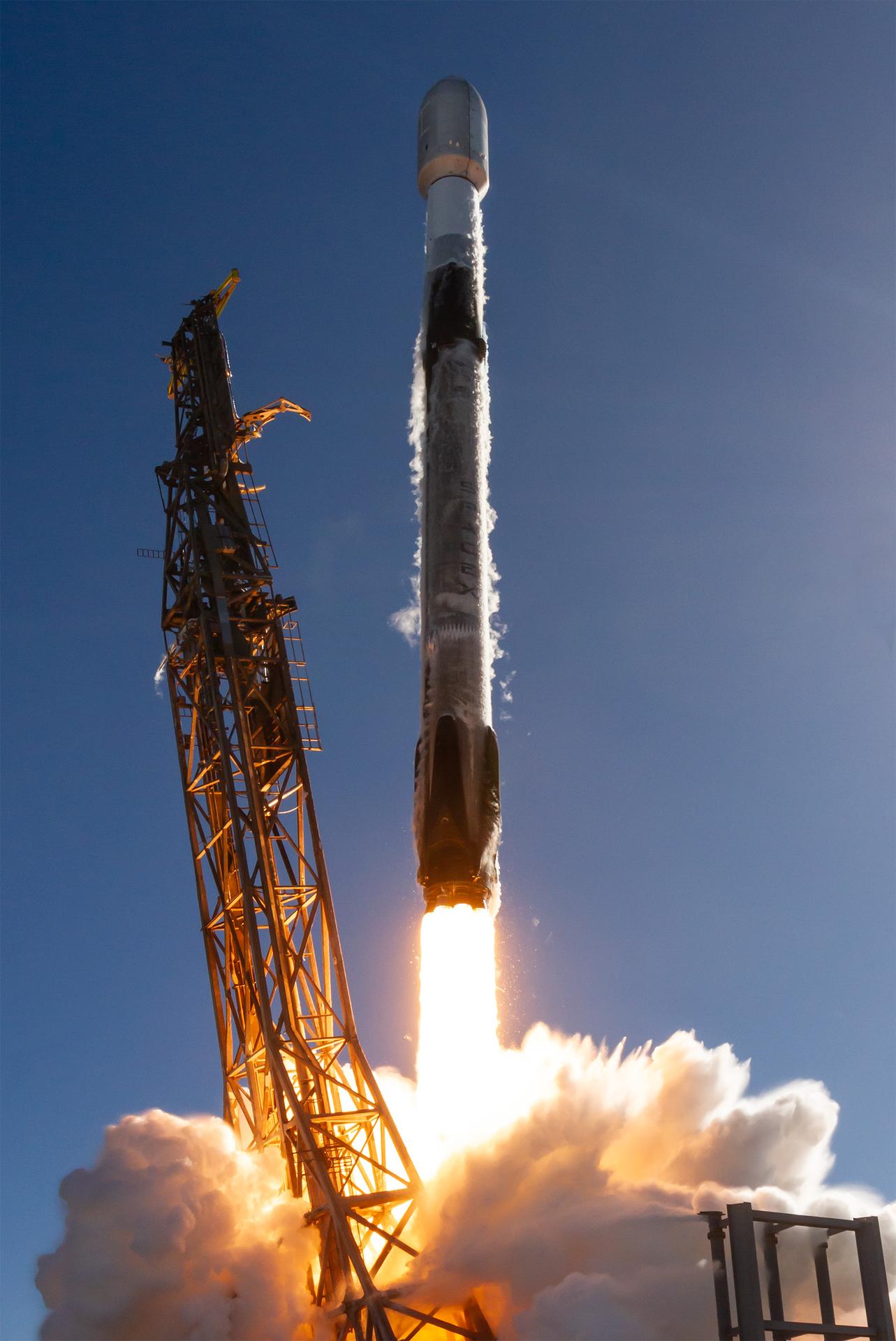
A SpaceX Falcon 9 rocket carrying NASA’s R5-S7 (Realizing Rapid, Reduced-cost high-Risk Research project Spacecraft 7) CubeSat along with several other satellites as part of the company’s Transporter-15 mission lifts off from Space Launch Complex 4 East at Vandenberg Space Force Base in California at 10:44 a.m. PST Friday, Nov. 28, 2025. The latest in a series of spacecraft, R5-S7 will explore ways to get multiple technology prototypes into low Earth orbit rapidly and at a low cost, accelerating the demonstration of these technologies in orbit and allowing engineers and scientists to more quickly prove them and make them available to NASA missions and other users.
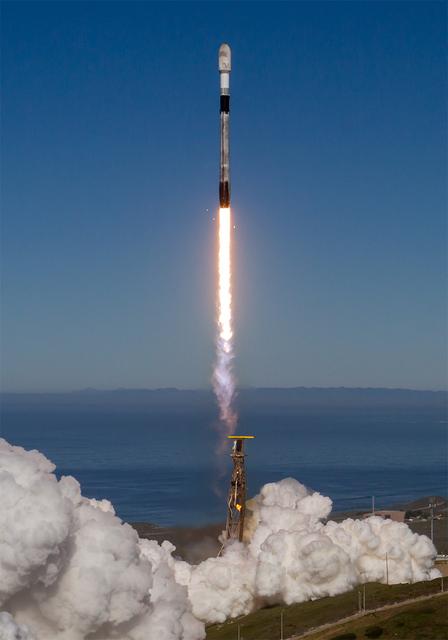
A SpaceX Falcon 9 rocket carrying NASA’s R5-S7 (Realizing Rapid, Reduced-cost high-Risk Research project Spacecraft 7) CubeSat along with several other satellites as part of the company’s Transporter-15 mission lifts off from Space Launch Complex 4 East at Vandenberg Space Force Base in California at 10:44 a.m. PST Friday, Nov. 28, 2025. The latest in a series of spacecraft, R5-S7 will explore ways to get multiple technology prototypes into low Earth orbit rapidly and at a low cost, accelerating the demonstration of these technologies in orbit and allowing engineers and scientists to more quickly prove them and make them available to NASA missions and other users.
A SpaceX Falcon 9 rocket carrying NASA’s R5-S7 (Realizing Rapid, Reduced-cost high-Risk Research project Spacecraft 7) CubeSat along with several other satellites as part of the company’s Transporter-15 mission lifts off from Space Launch Complex 4 East at Vandenberg Space Force Base in California at 10:44 a.m. PST Friday, Nov. 28, 2025. The latest in a series of spacecraft, R5-S7 will explore ways to get multiple technology prototypes into low Earth orbit rapidly and at a low cost, accelerating the demonstration of these technologies in orbit and allowing engineers and scientists to more quickly prove them and make them available to NASA missions and other users.
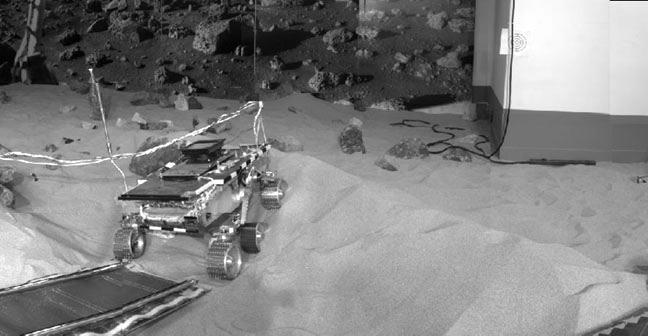
Marie Curie rover drives down the rear ramp during Operational Readiness Test ORT 4. NASA Pathfinder, a low-cost Discovery mission, is the first of a new fleet of spacecraft that are planned to explore Mars.
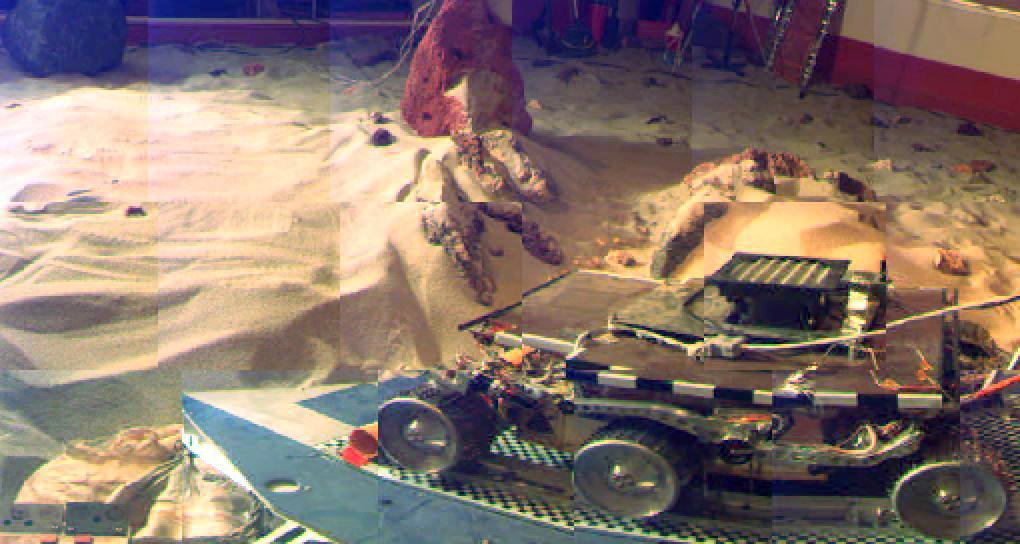
Marie Curie sits on the lander petal prior to deployment during the pre-launch Operations Readiness Test ORT 6. NASA Pathfinder, a low-cost Discovery mission, is the first of a new fleet of spacecraft that are planned to explore Mars.
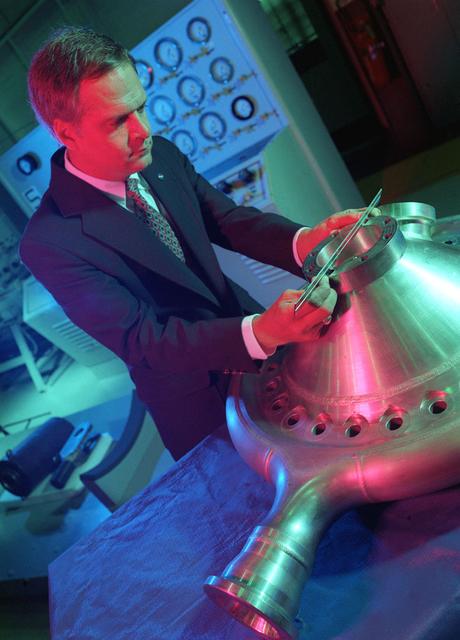
Research to lower the cost of thrust chamber assembly is conducted by Marshall scientist to significantly reduce the costs associated with thrust chamber/injector development and fabrication.
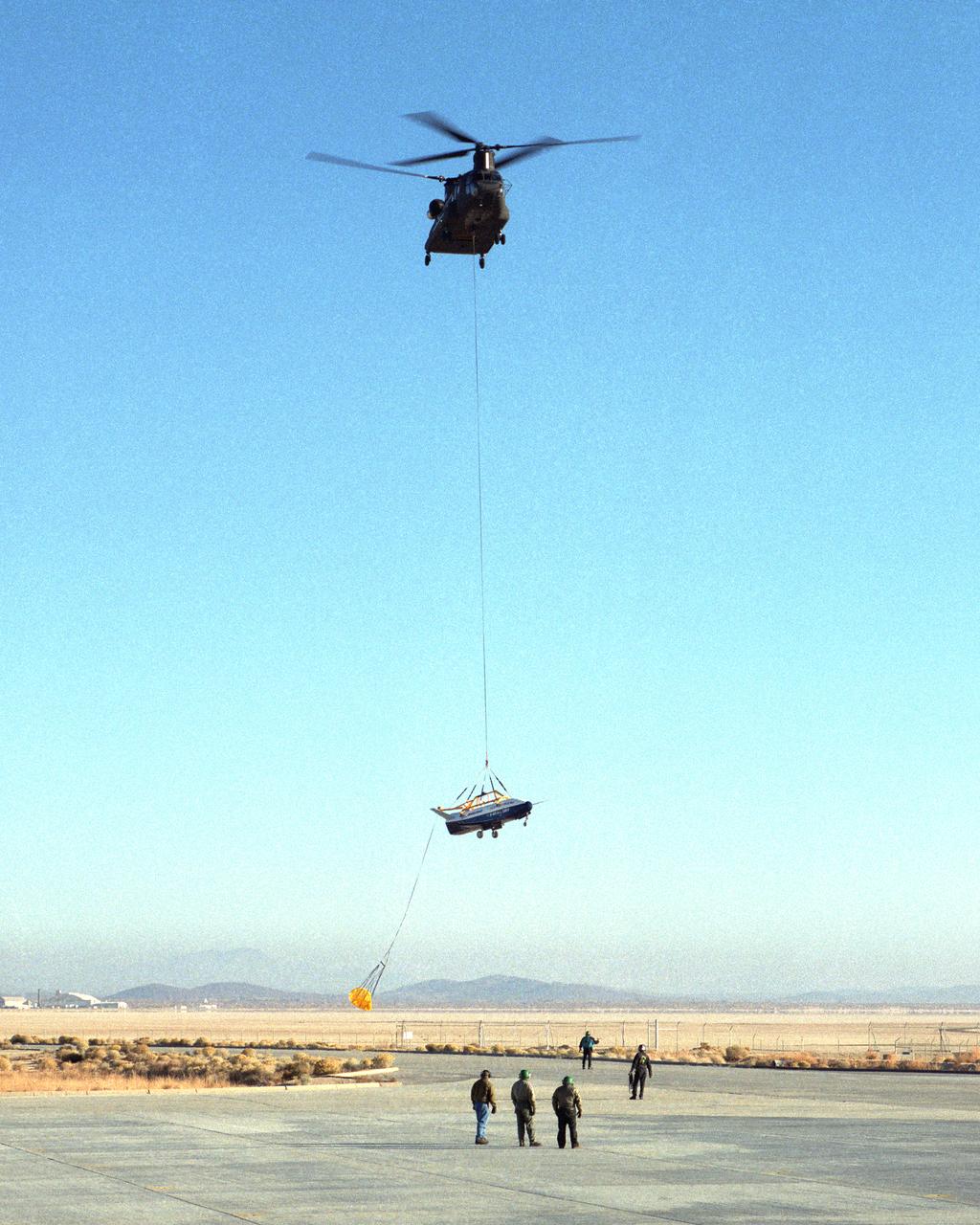
A U.S. Army CH-47 Chinook helicopter slowly lowers the X-40 sub-scale technology demonstrator to the ground under the watchful eyes of ground crew at the conclusion of a captive-carry test flight at NASA's Dryden Flight Research Center, Edwards, California. Several captive-carry flights were conducted to check out all operating systems and procedures before the X-40 made its first free flight at Edwards, gliding to a fully-autonomous approach and landing on the Edwards runway. The X-40 is an unpowered 82 percent scale version of the X-37, a Boeing-developed spaceplane designed to demonstrate various advanced technologies for development of future lower-cost access to space vehicles. Flight tests of the X-40 are designed to reduce the risks associated with research flights of the larger, more complex X-37.
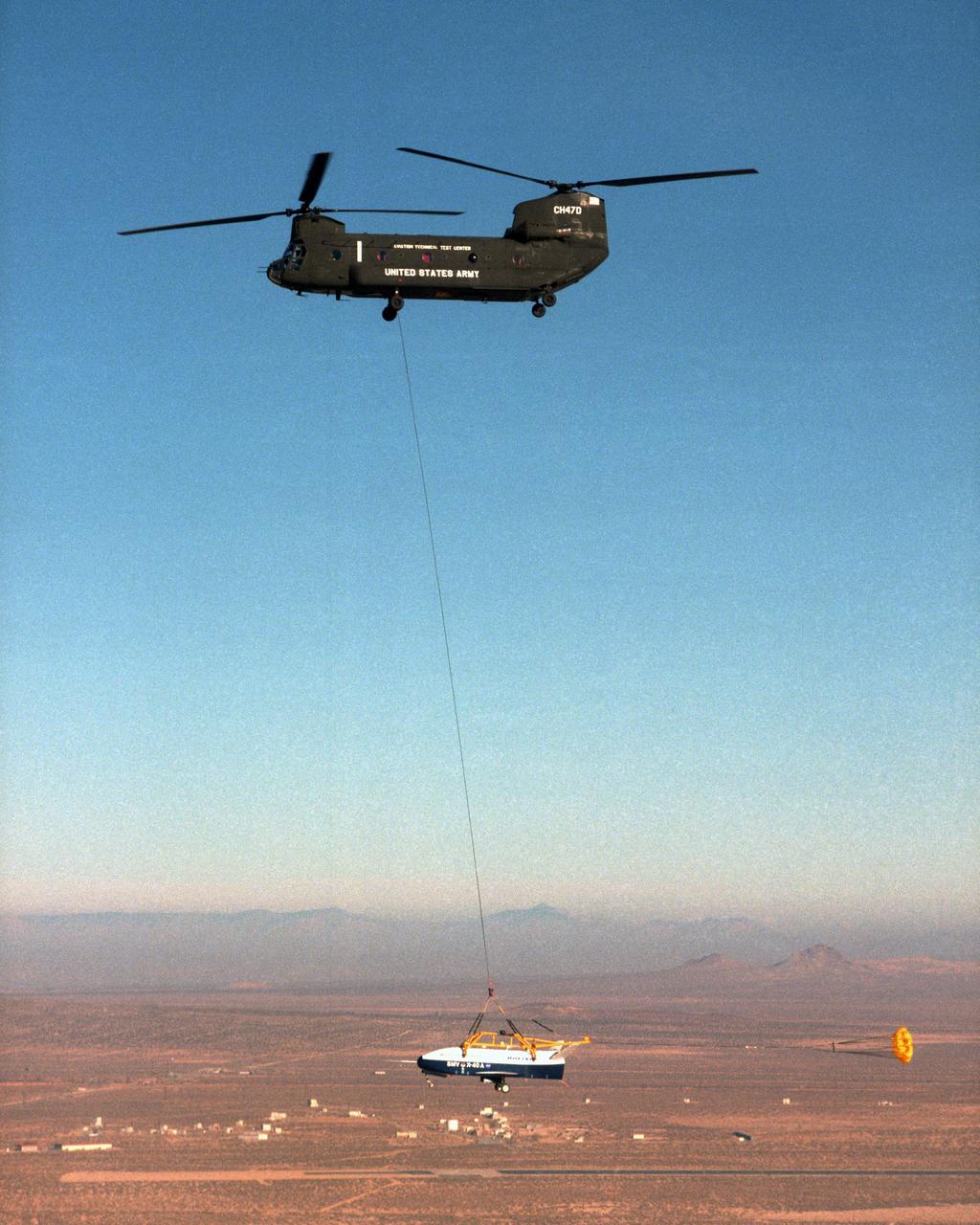
With a small stabilization parachute trailing behind, the X-40 sub-scale technology demonstrator is suspended under a U.S. Army CH-47 Chinook cargo helicopter during a captive-carry test flight at NASA's Dryden Flight Research Center, Edwards, California. The captive carry flights are designed to verify the X-40's navigation and control systems, rigging angles for its sling, and stability and control of the helicopter while carrying the X-40 on a tether. Following a series of captive-carry flights, the X-40 made free flights from a launch altitude of about 15,000 feet above ground, gliding to a fully autonomous landing. The X-40 is an unpowered 82 percent scale version of the X-37, a Boeing-developed spaceplane designed to demonstrate various advanced technologies for development of future lower-cost access to space vehicles.
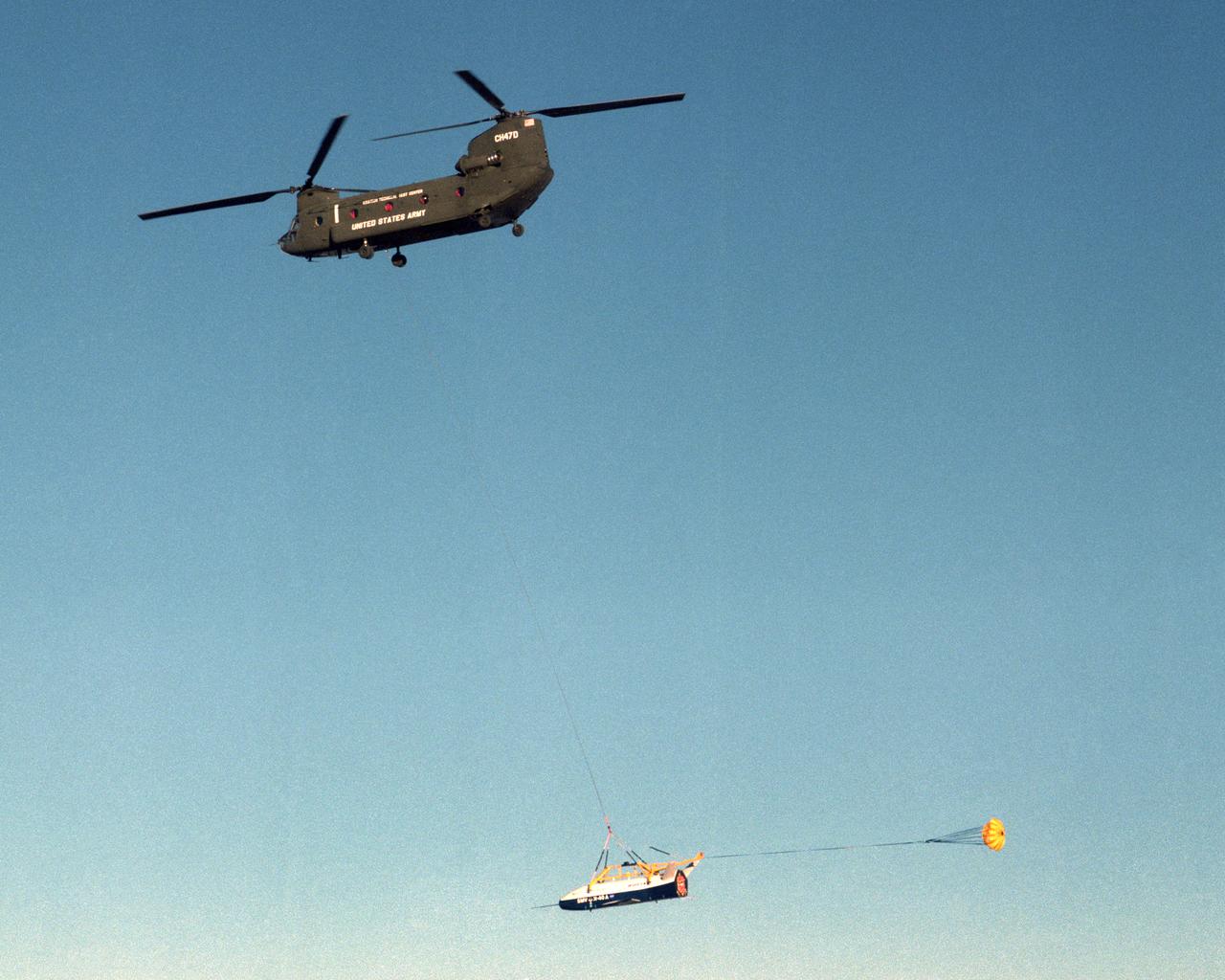
The X-40 sub-scale technology demonstrator is suspended under a U.S. Army CH-47 Chinook cargo helicopter during a captive-carry test flight at NASA's Dryden Flight Research Center, Edwards, California. The captive carry flights are designed to verify the X-40's navigation and control systems, rigging angles for its sling, and stability and control of the helicopter while carrying the X-40 on a tether. Following a series of captive-carry flights, the X-40 made free flights from a launch altitude of about 15,000 feet above ground, gliding to a fully autonomous landing. The X-40 is an unpowered 82 percent scale version of the X-37, a Boeing-developed spaceplane designed to demonstrate various advanced technologies for development of future lower-cost access to space vehicles.
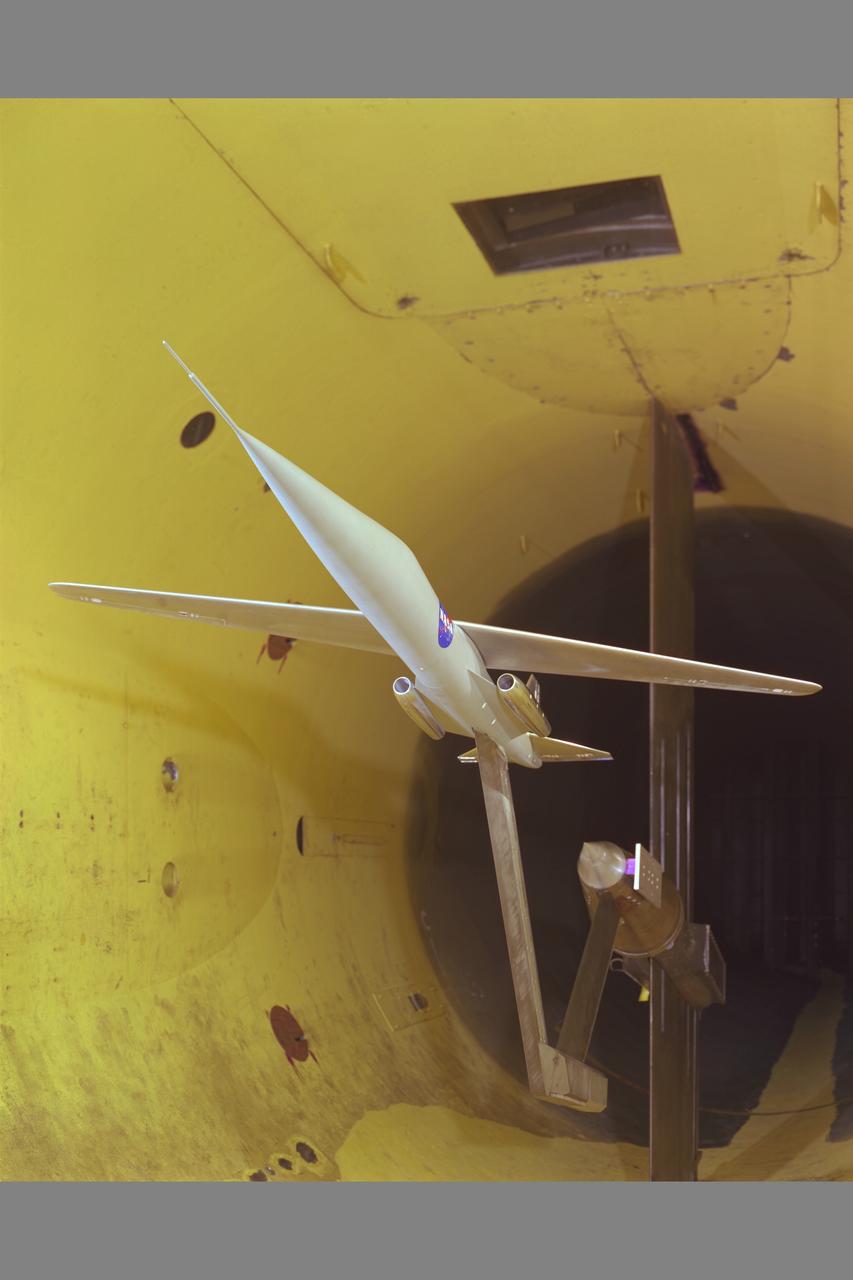
Aerodynamics Low cost Oblique Wing Model in 12ft w.t.
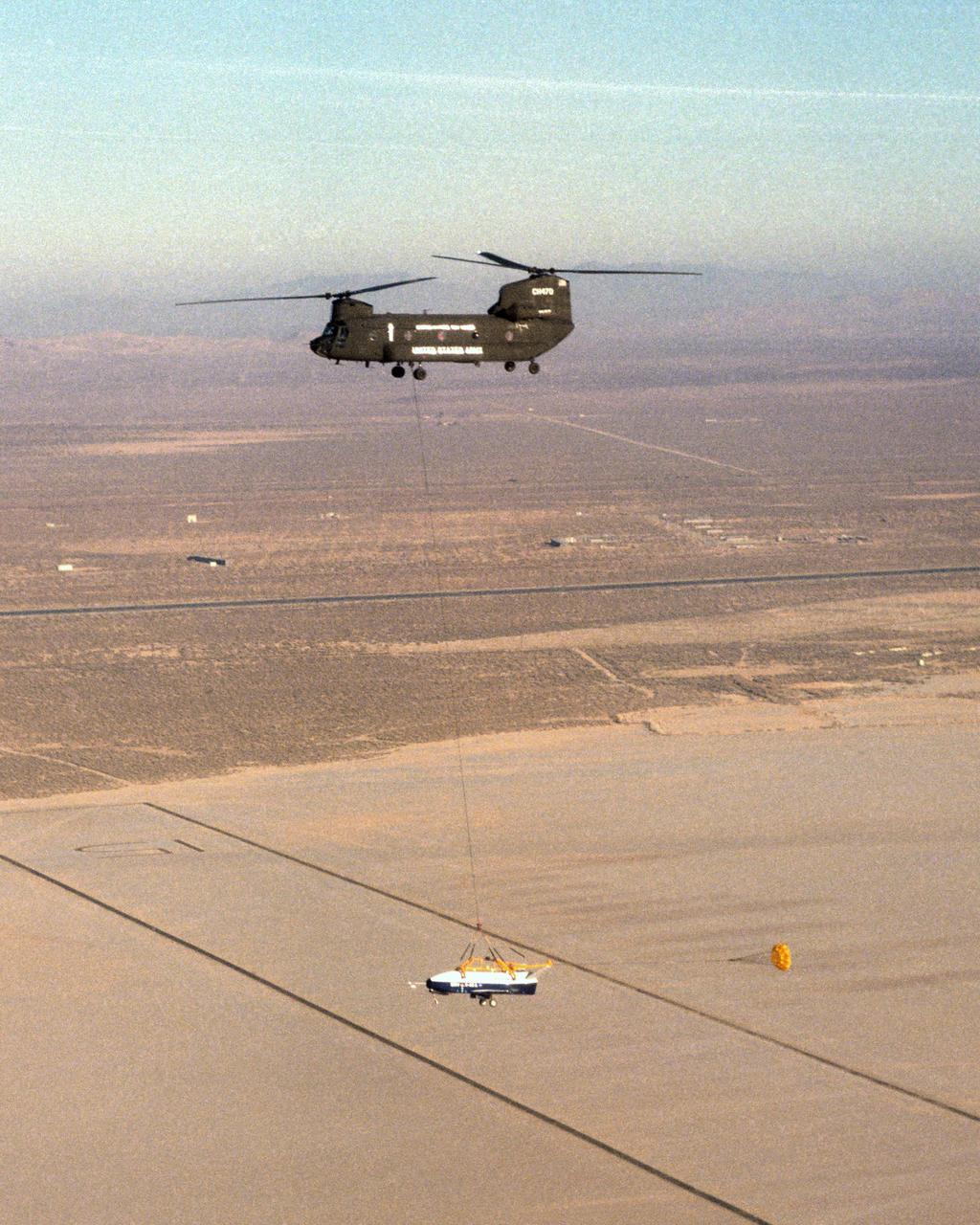
The X-40 sub-scale technology demonstrator and its U.S. Army CH-47 Chinook helicopter mothership fly over a dry lakebed runway during a captive-carry test flight from NASA's Dryden Flight Research Center, Edwards, California. The X-40 is attached to a sling which is suspended from the CH-47 by a 110-foot-long cable during the tests, while a small parachute trails behind to provide stability. The captive carry flights are designed to verify the X-40's navigation and control systems, rigging angles for its sling, and stability and control of the helicopter while carrying the X-40 on a tether. Following a series of captive-carry flights, the X-40 made free flights from a launch altitude of about 15,000 feet above ground, gliding to a fully autonomous landing. The X-40 is an unpowered 82 percent scale version of the X-37, a Boeing-developed spaceplane designed to demonstrate various advanced technologies for development of future lower-cost access to space vehicles.
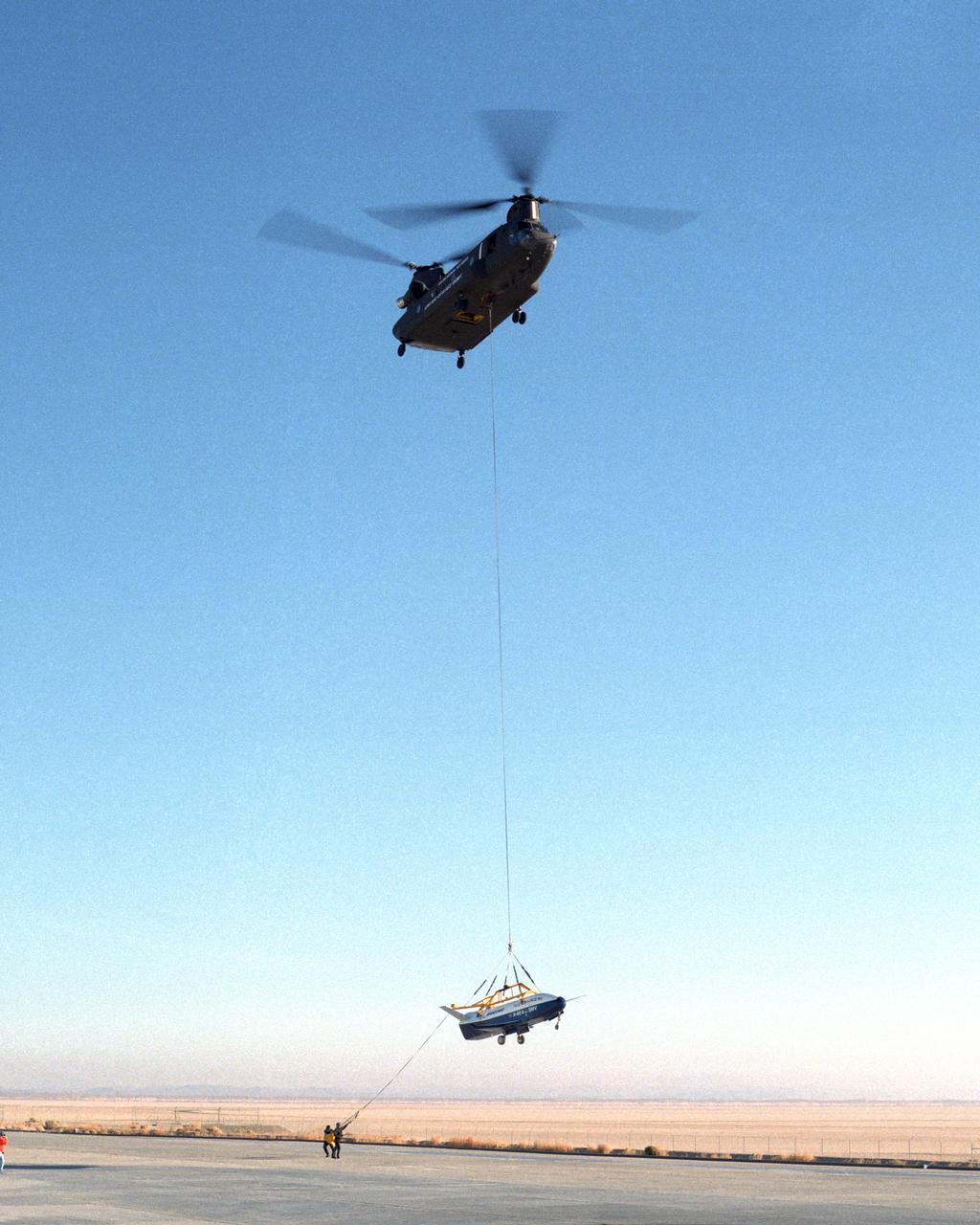
Ground crewmen help guide the alignment of the X-40 technology demonstrator as the experimental craft is gently lowered to the ground by a U.S. Army CH-47 Chinook cargo helicopter following a captive-carry test flight at NASA's Dryden Flight Research Center, Edwards, California. The X-40 is an unpowered 82 percent scale version of the X-37, a Boeing-developed spaceplane designed to demonstrate various advanced technologies for development of future lower-cost access to space vehicles. The X-37 will be carried into space aboard a space shuttle and then released to perform various maneuvers and a controlled re-entry through the Earth's atmosphere to an airplane-style landing on a runway, controlled entirely by pre-programmed computer software. Following a series of captive-carry flights, the X-40 made several free flights from a launch altitude of about 15,000 feet above ground, gliding to a fully autonomous landing. The captive carry flights helped verify the X-40's navigation and control systems, rigging angles for its sling, and stability and control of the helicopter while carrying the X-40 on a tether.
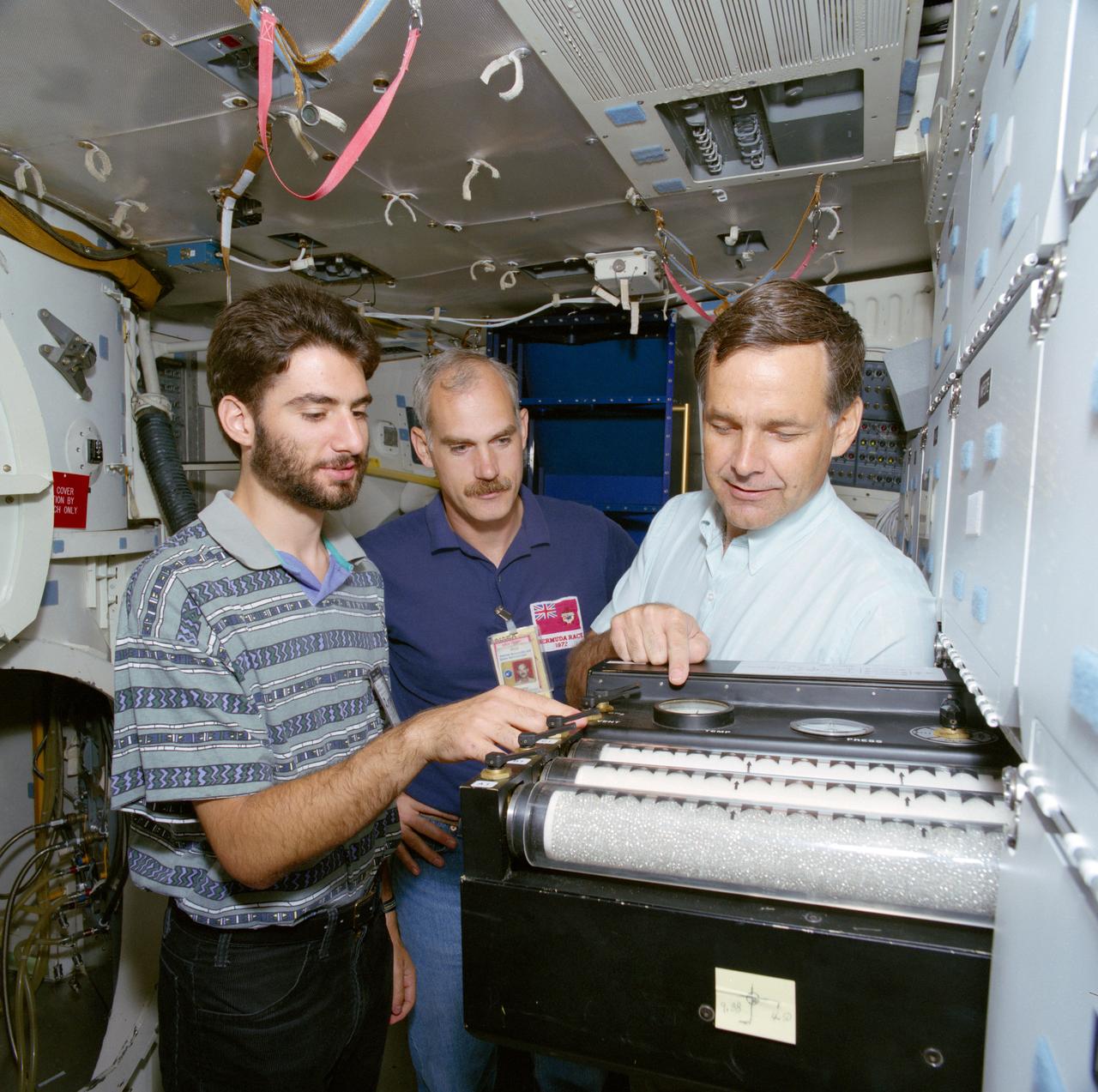
S91-47323 (18 Sept 1991) --- Constantine Costes, left, a student experimenter sponsored by United Space Boosters Inc, in Huntsville, Alabama, discusses his student experiment, "Zero-G Rise of Liquid Through Porous Media" with astronauts Ronald J. Grabe (right), STS 42 mission commander; and William Readdy, mission specialist. The student experimenter and crew members are in the Full Fuselage Trainer (FFT) in the Shuttle Mockup and Integration Laboratory. While attending Randolph School, a high school in Huntsville, Alabama, Costes was chosen in the national competition to participate in the Shuttle Student Involvement Program (SSIP). The experiment, contained in a middeck locker, involves the investigation of the effects of gravity on the flow characteristics of a fluid. Both pure capillary and forced flow behavior will be investigated. A ground based experiment was conducted so that gravity influenced data can be compared to that gathered in weightlessness. Costes is now a candidate for a Ph.D in mathematics at Harvard University.
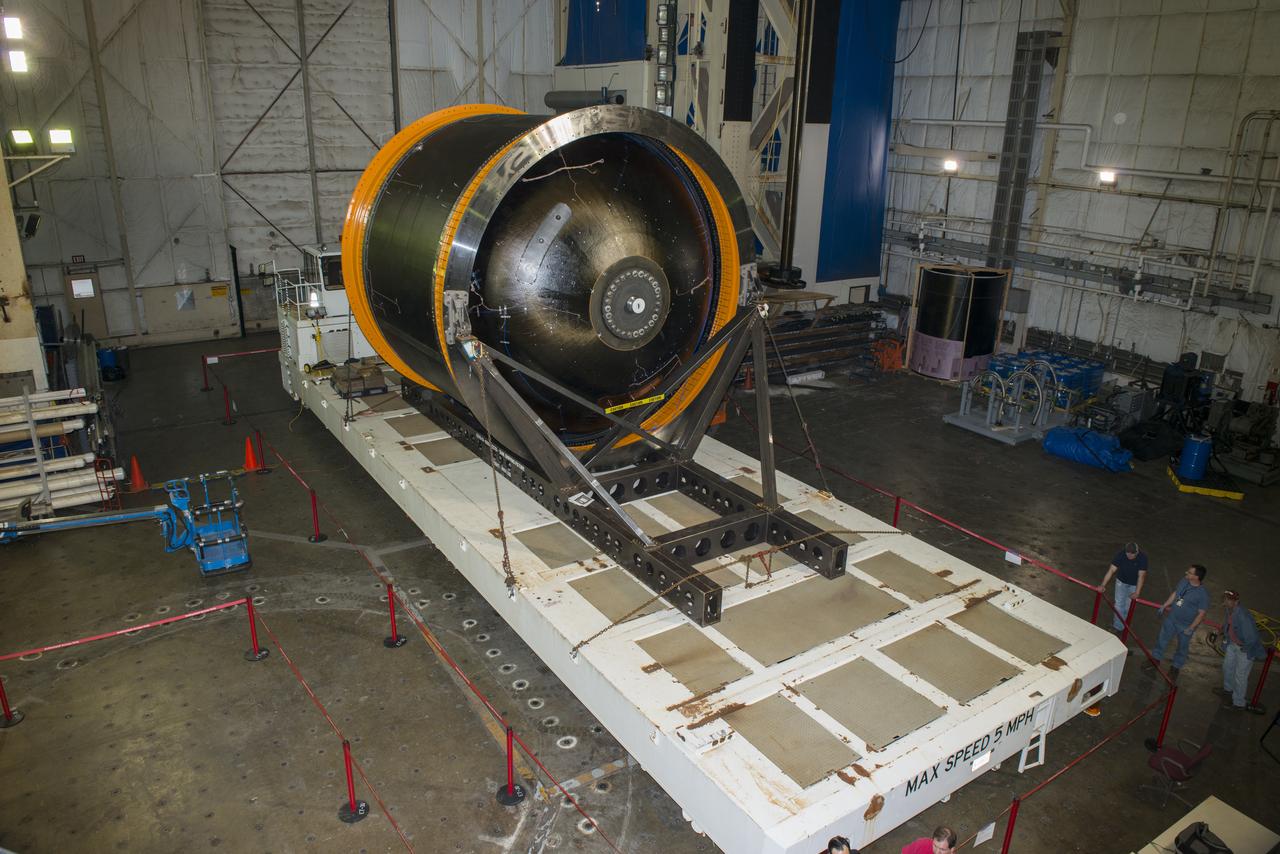
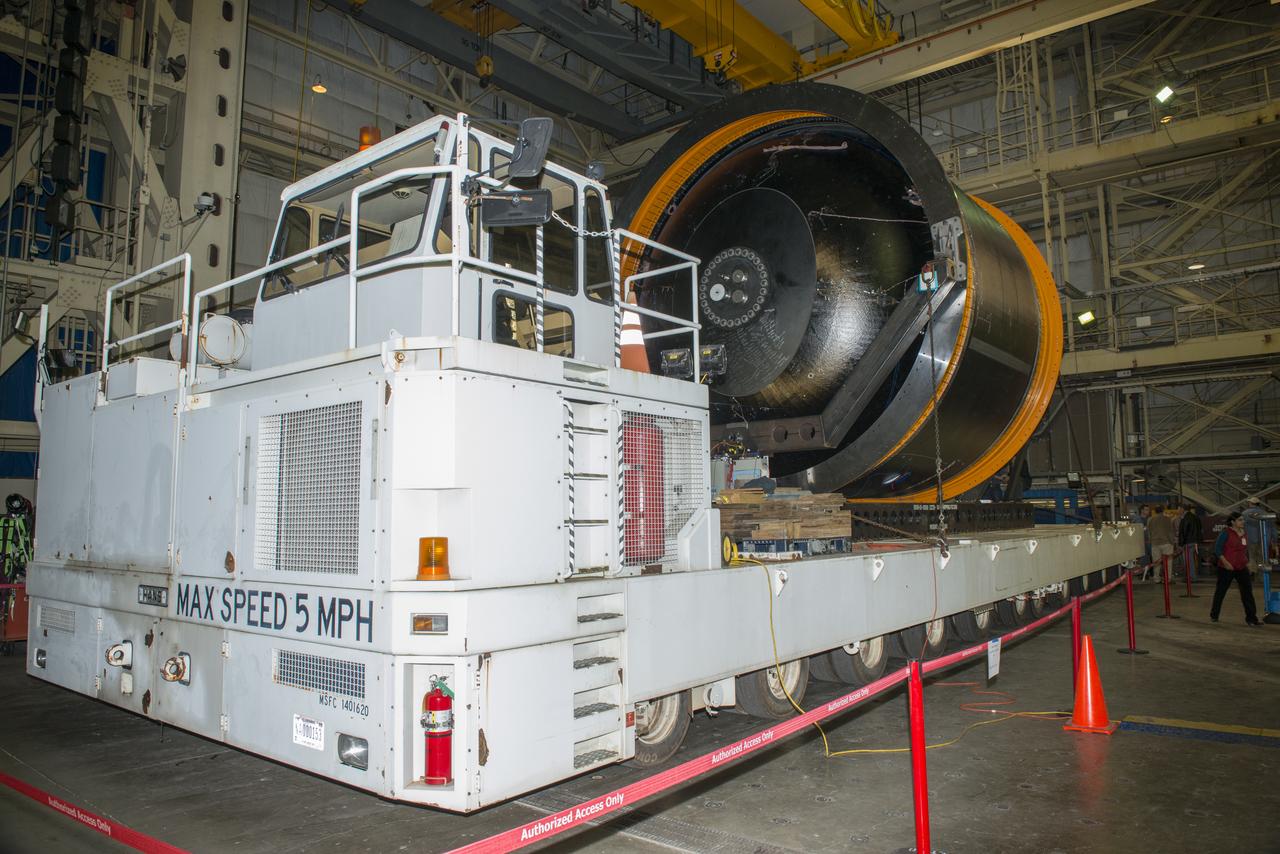
NASA AND BOEING ENGINEERS INSPECT AND PREPARE ONE OF THE LARGEST COMPSITE ROCKET PROPELLANT TANKS EVER MANUFACTURED. THE COMPOSITE CRYOTANK PROMISES A 30% WEIGHT REDUCTION AND A 25 % COST REDUCTION OVER THE PREVIOUSLY USED METAL TANKS.
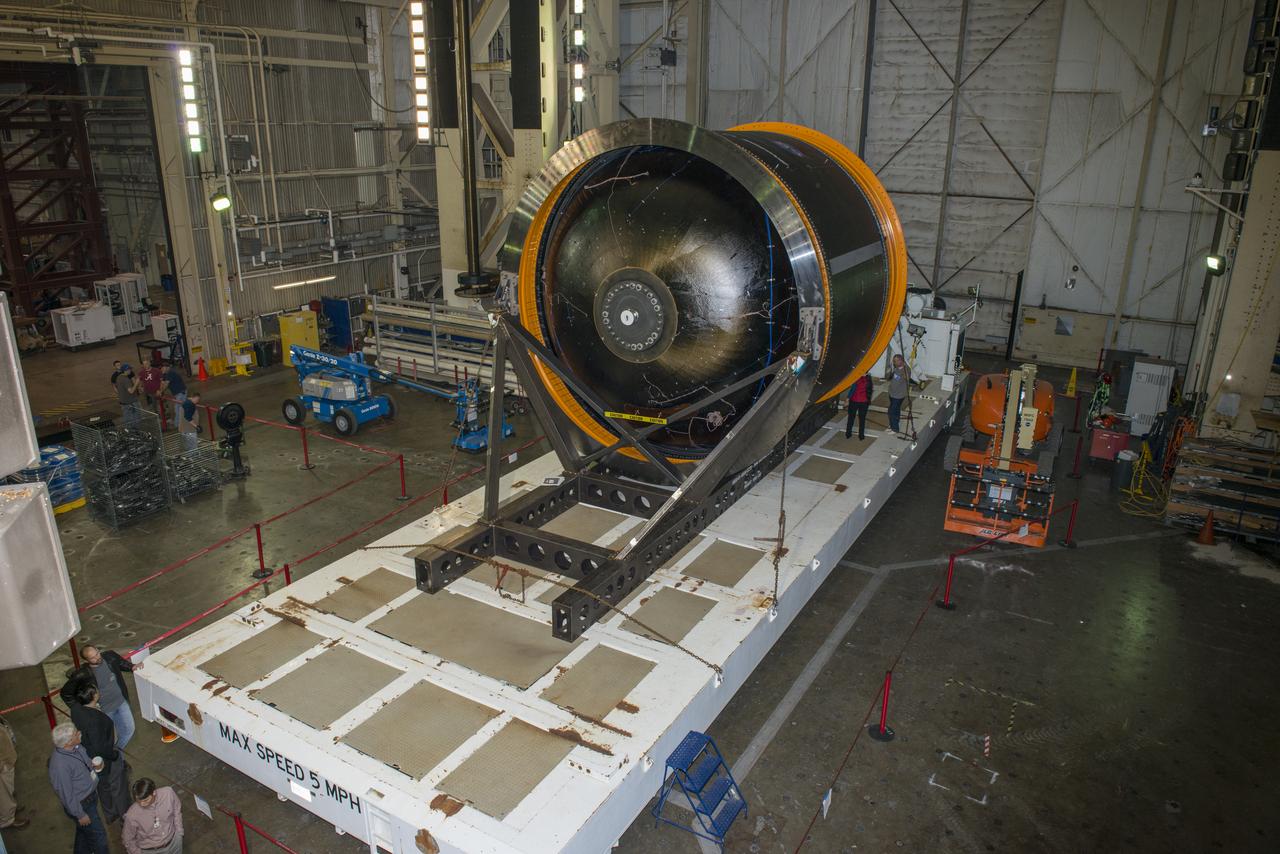
NASA AND BOEING ENGINEERS INSPECT AND PREPARE ONE OF THE LARGEST COMPSITE ROCKET PROPELLANT TANKS EVER MANUFACTURED. THE COMPOSITE CRYOTANK PROMISES A 30% WEIGHT REDUCTION AND A 25 % COST REDUCTION OVER THE PREVIOUSLY USED METAL TANKS.
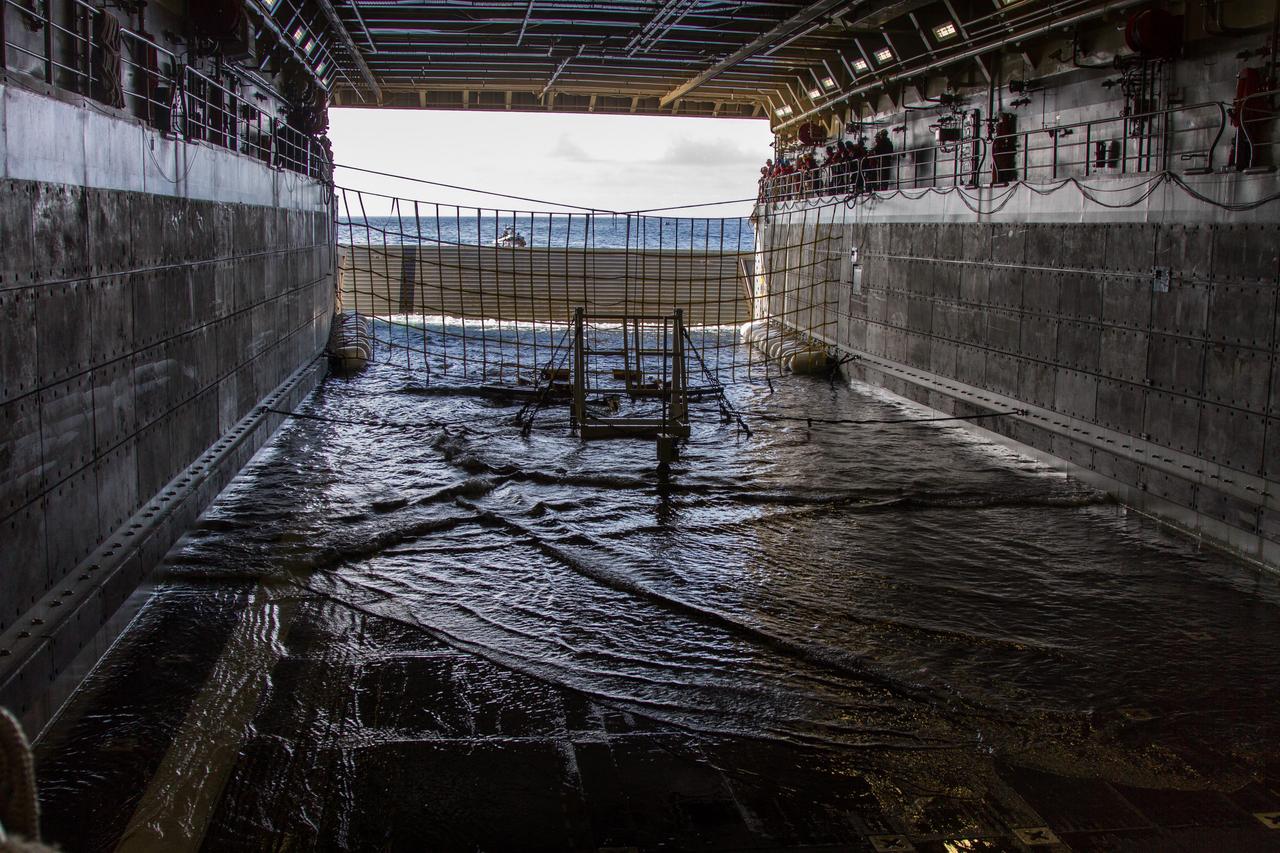
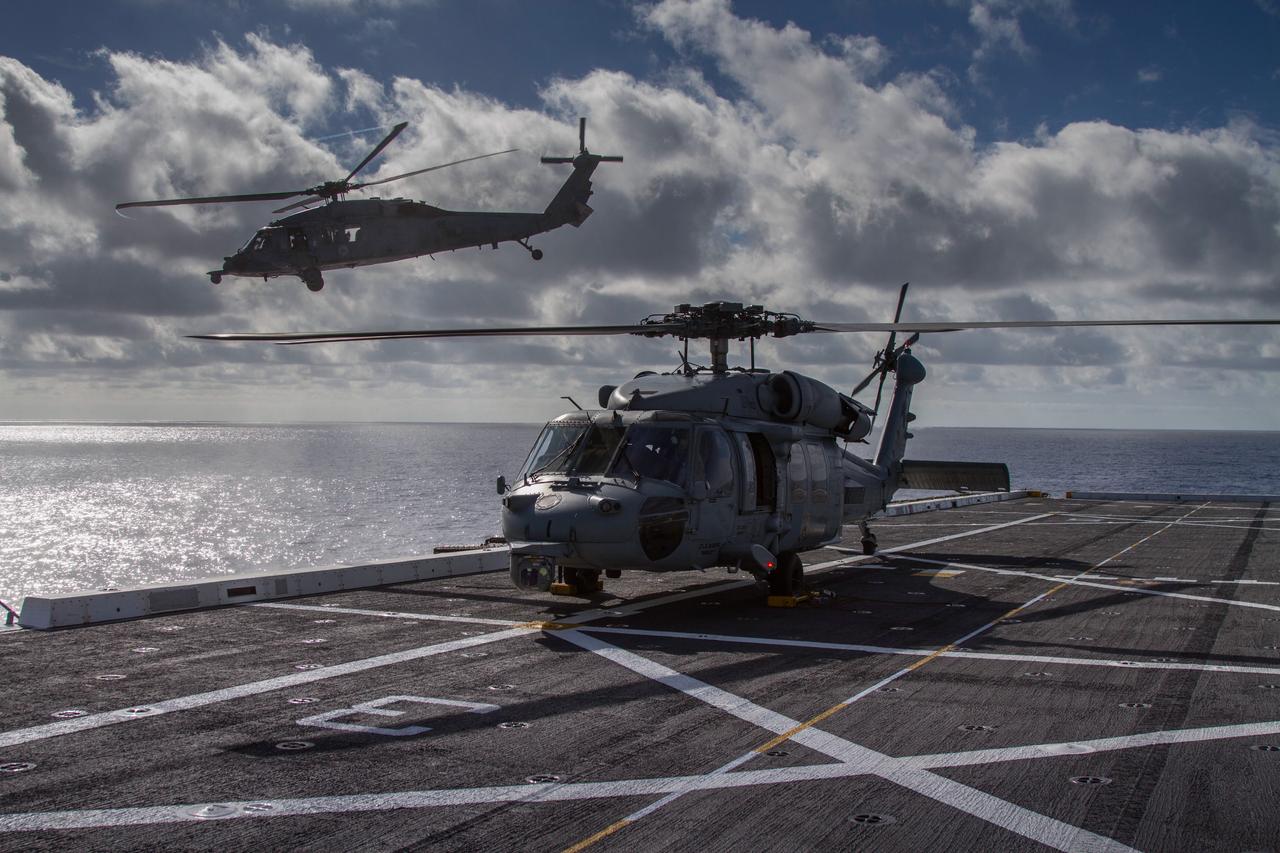
The US Navy and NASA recovery teams are on station off the cost of California on Dec. 3, 2014 and ready to recover Orion after Exploration Flight Test-1 (EFT-1) landing.
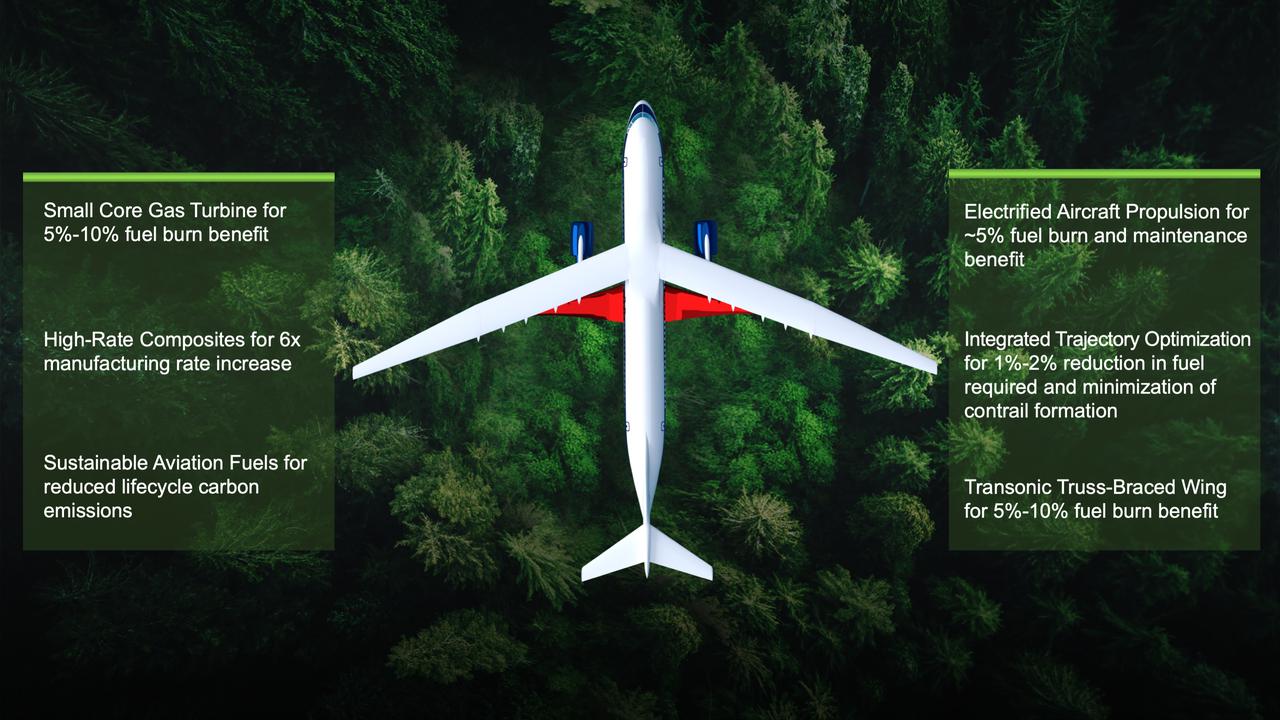
NASA will demonstrate high-risk, high-payoff technology advancements critical for U.S. aerospace manufacturers to bring to market innovative, cost-effective, and sustainable products and services demanded by airlines and customers.
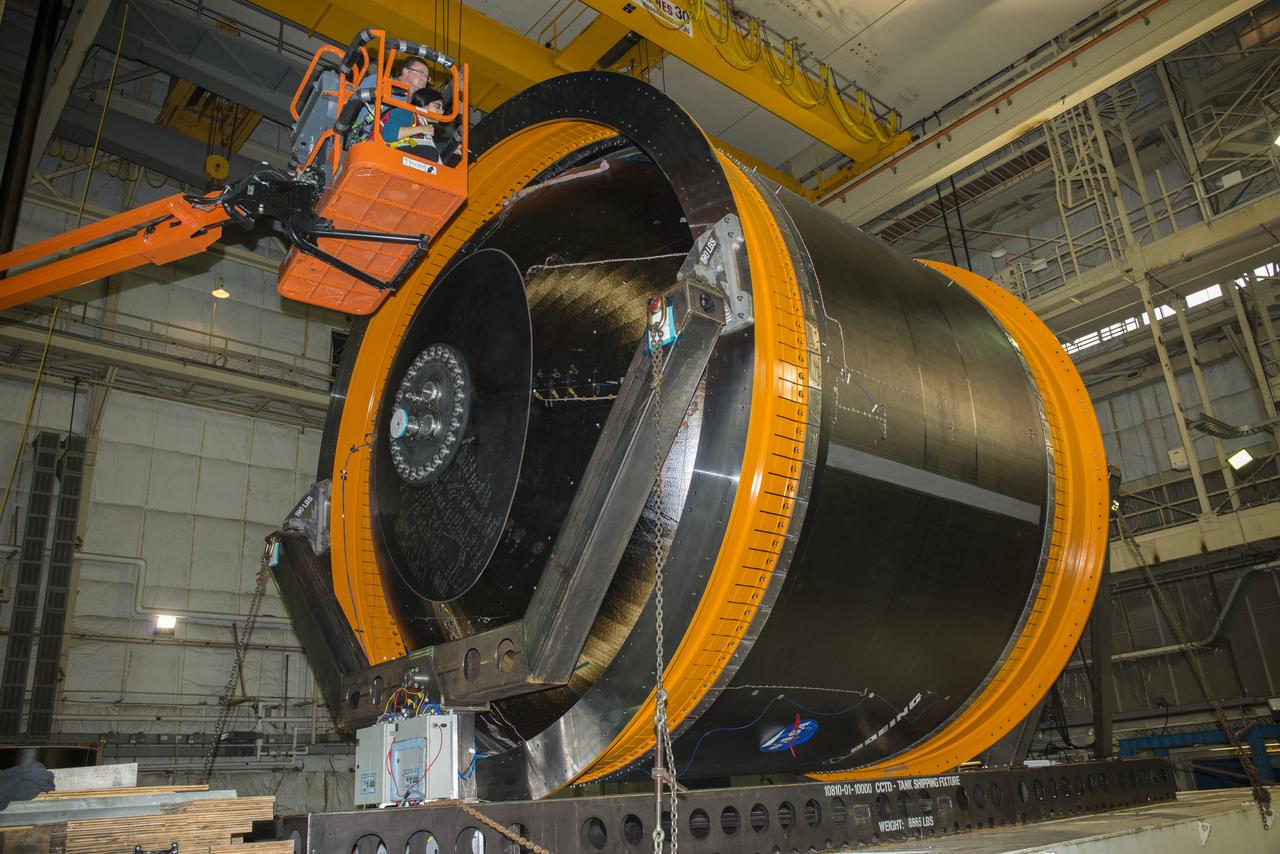
NASA AND BOEING ENGINEERS INSPECT AND PREPARE ONE OF THE LARGEST COMPSITE ROCKET PROPELLANT TANKS EVER MANUFACTURED. THE COMPOSITE CRYOTANK PROMISES A 30% WEIGHT REDUCTION AND A 25 % COST REDUCTION OVER THE PREVIOUSLY USED METAL TANKS.
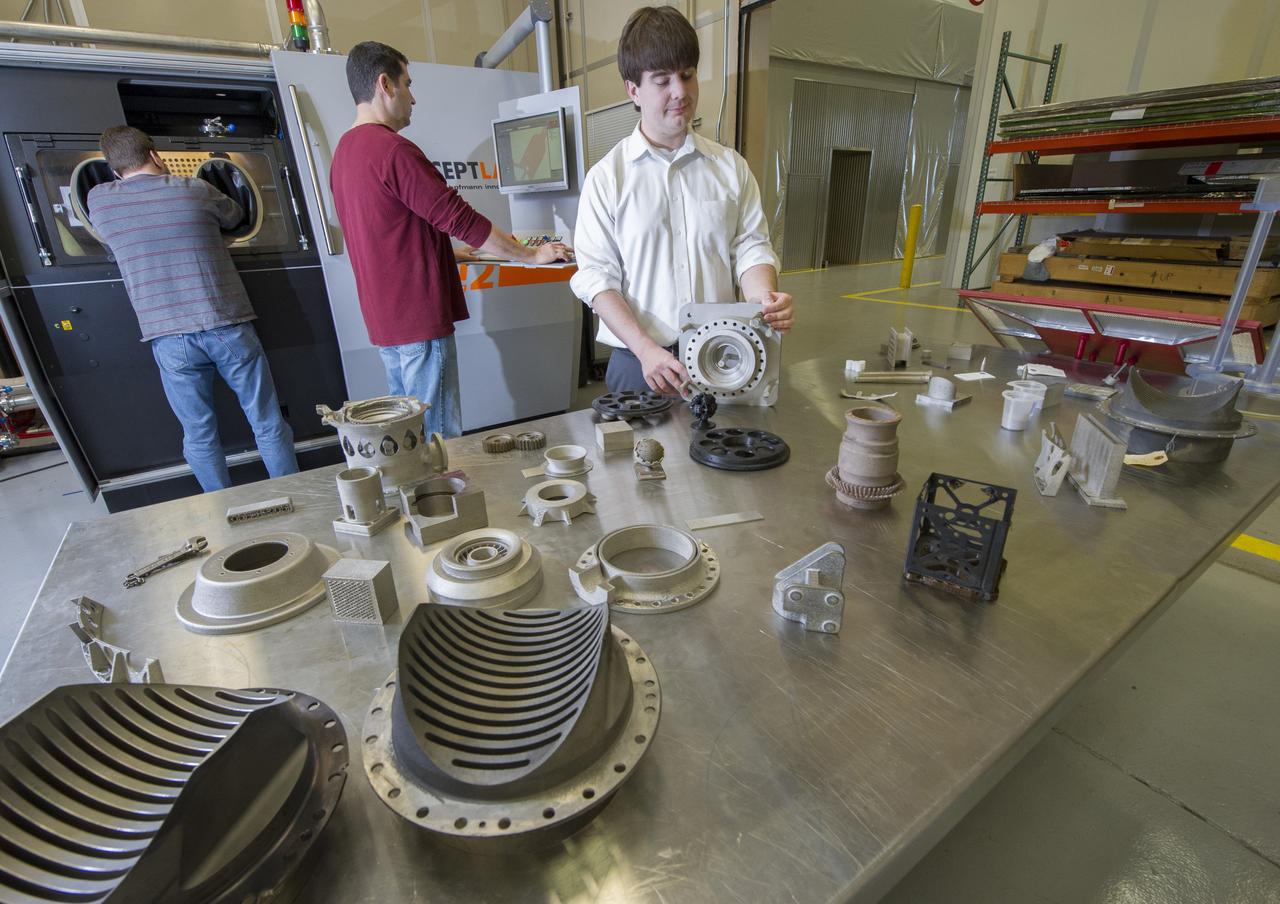
QUINCY BEAN, JIM LYDON, AND ZACK JONES OF MSFC’S ADVANCED MANUFACTURING TEAM, WITH MSFC’S M2 SELECTIVE LASER MELTING SYSTEM. THE M2 IS CURRENTLY DEDICATED TO ADVANCED COPPER MATERIAL DEVELOPMENT FOR THE LOW COST UPPER STAGE PROGRAM.
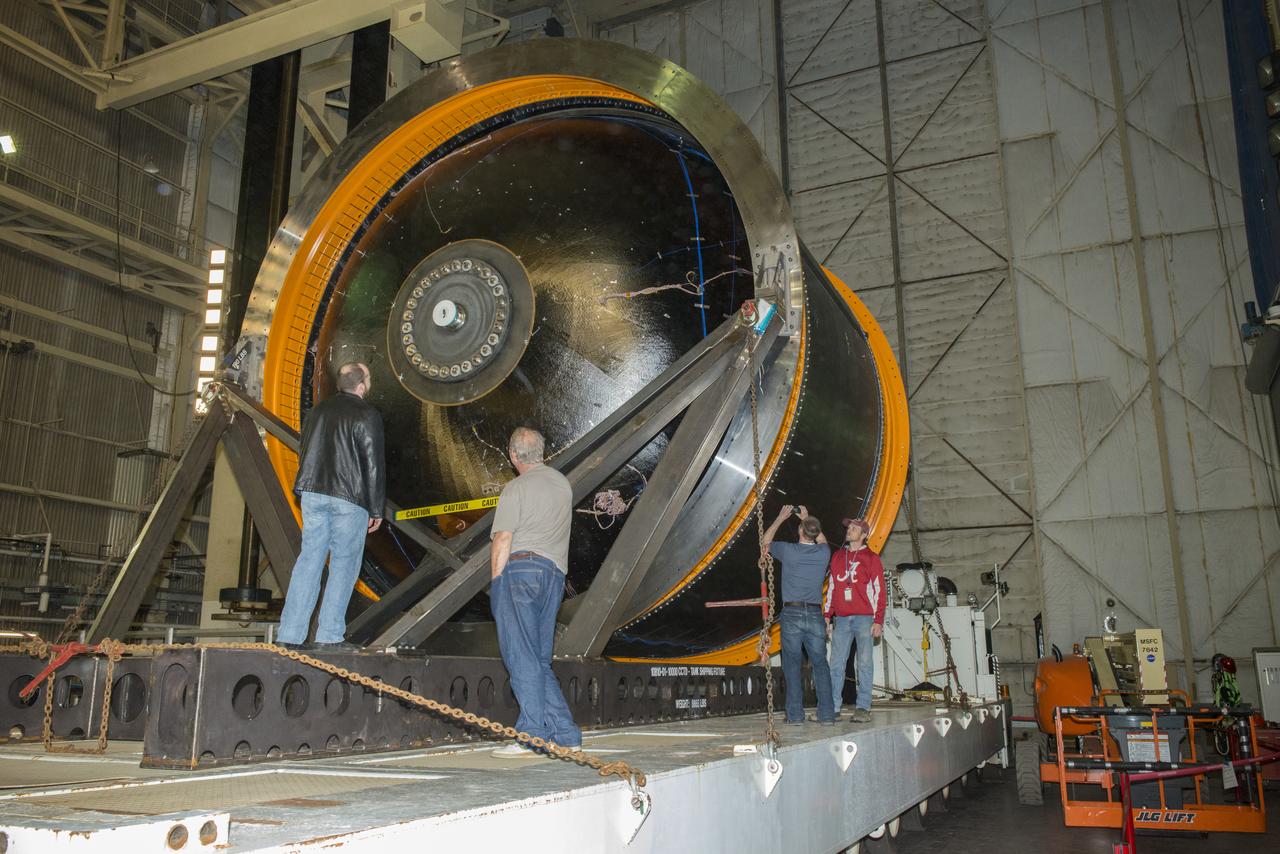
NASA AND BOEING ENGINEERS INSPECT AND PREPARE ONE OF THE LARGEST COMPSITE ROCKET PROPELLANT TANKS EVER MANUFACTURED. THE COMPOSITE CRYOTANK PROMISES A 30% WEIGHT REDUCTION AND A 25 % COST REDUCTION OVER THE PREVIOUSLY USED METAL TANKS.

Pictured here is an artist's depiction of Rockwell's Vertical Landing Single-Stage-to-Orbit (SSTO) Reusable Launch Vehicle (RLV) deploying a satellite concept. The development of the RLV is essential in the cost reduction of future space travel.
NASA AND BOEING ENGINEERS INSPECT AND PREPARE ONE OF THE LARGEST COMPSITE ROCKET PROPELLANT TANKS EVER MANUFACTURED. THE COMPOSITE CRYOTANK PROMISES A 30% WEIGHT REDUCTION AND A 25 % COST REDUCTION OVER THE PREVIOUSLY USED METAL TANKS.
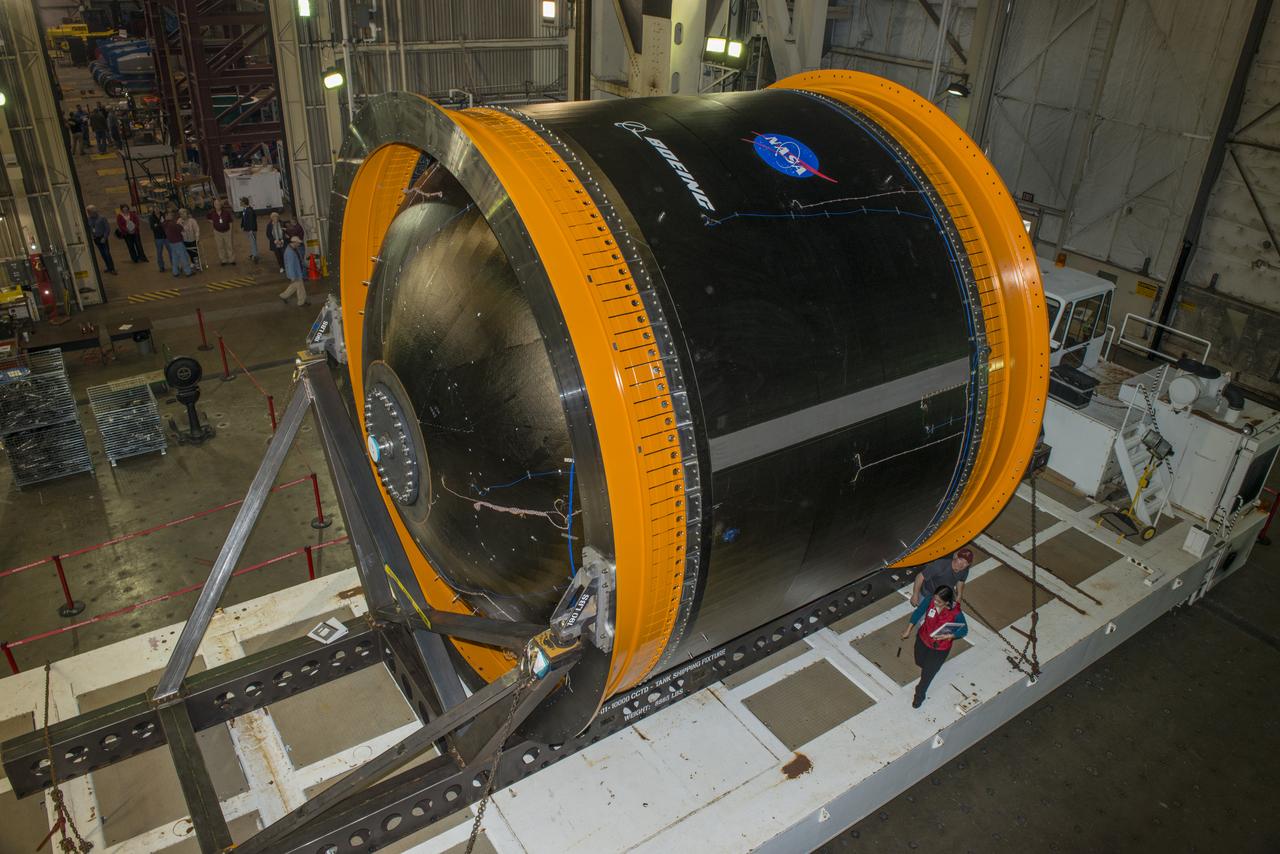
NASA AND BOEING ENGINEERS INSPECT AND PREPARE ONE OF THE LARGEST COMPSITE ROCKET PROPELLANT TANKS EVER MANUFACTURED. THE COMPOSITE CRYOTANK PROMISES A 30% WEIGHT REDUCTION AND A 25 % COST REDUCTION OVER THE PREVIOUSLY USED METAL TANKS.
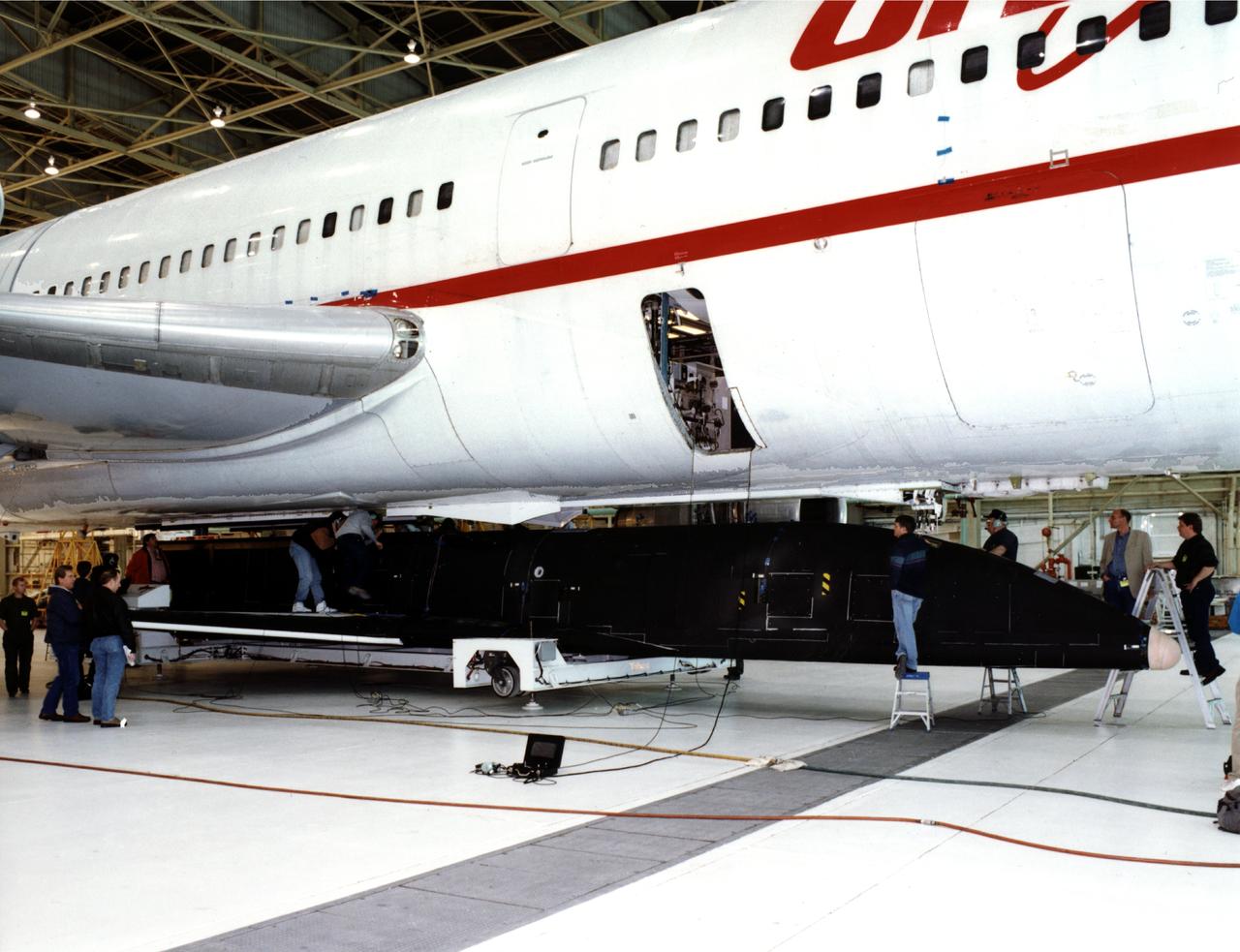
This is the X-34 Technology Testbed Demonstrator being mated with the L-1011 mothership. The X-34 will demonstrate key vehicle and operational technologies applicable to future low-cost resuable launch vehicles.
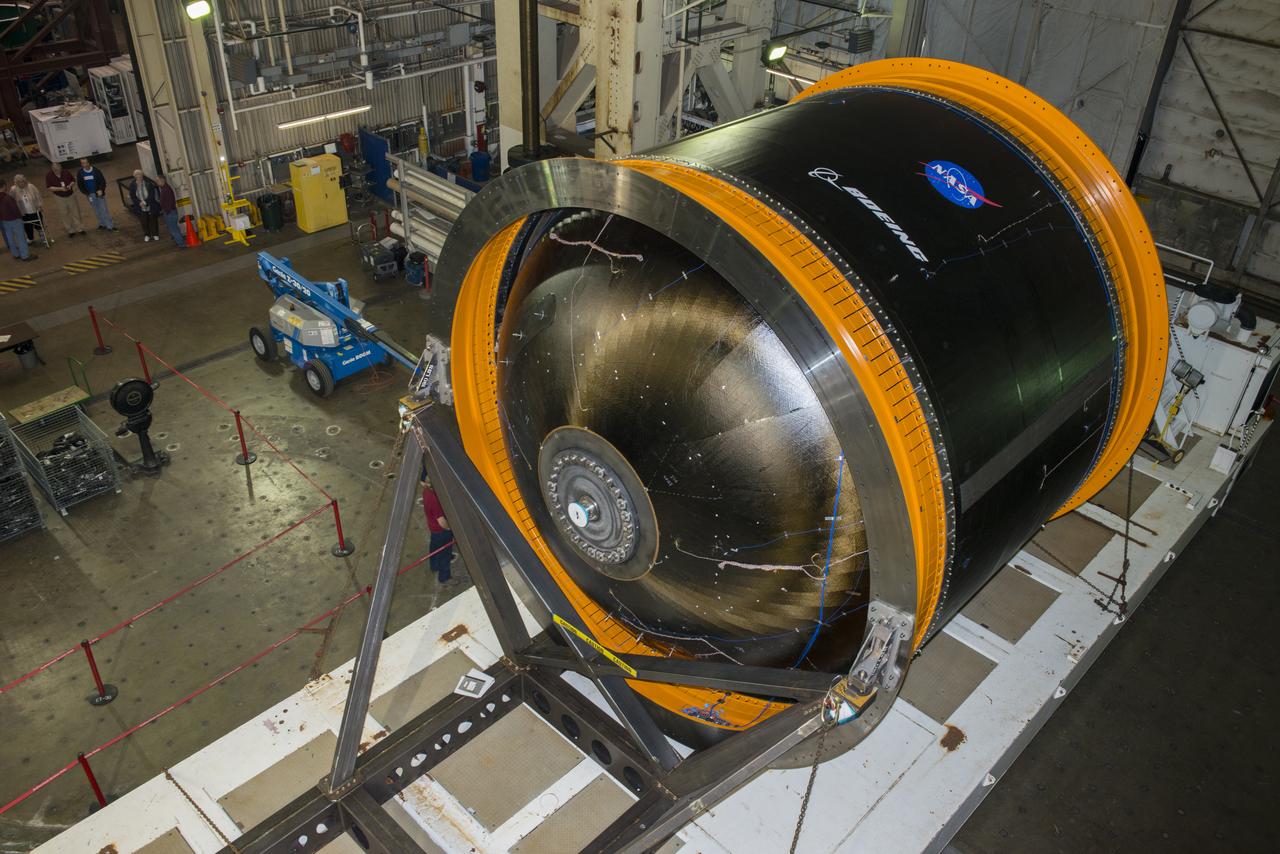
NASA AND BOEING ENGINEERS INSPECT AND PREPARE ONE OF THE LARGEST COMPSITE ROCKET PROPELLANT TANKS EVER MANUFACTURED. THE COMPOSITE CRYOTANK PROMISES A 30% WEIGHT REDUCTION AND A 25 % COST REDUCTION OVER THE PREVIOUSLY USED METAL TANKS.

A NASA scientist displays Space Shuttle Main Engine (SSME) turbine component which underwent air flow tests at Marshall's Structures and Dynamics Lab. Such studies could improve efficiency of aircraft engines, and lower operational costs.
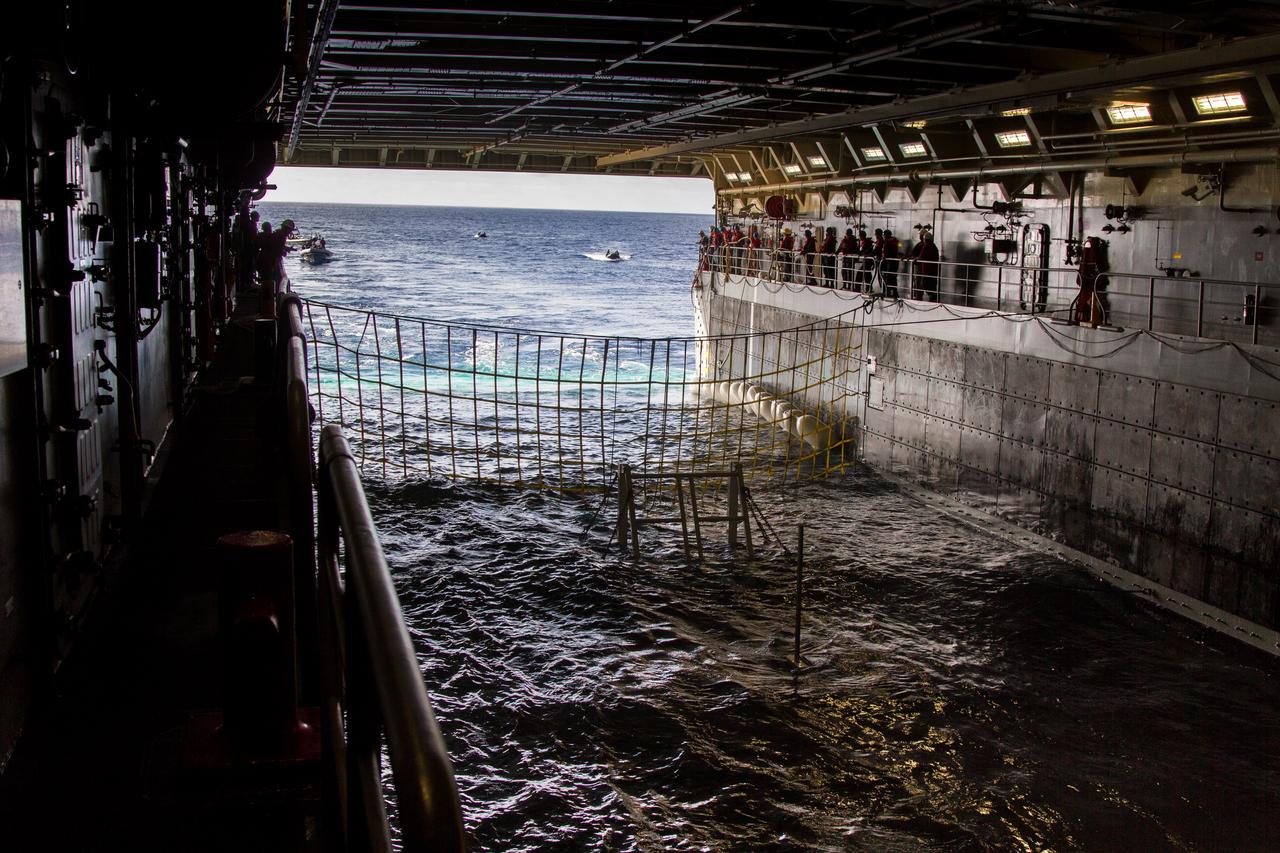
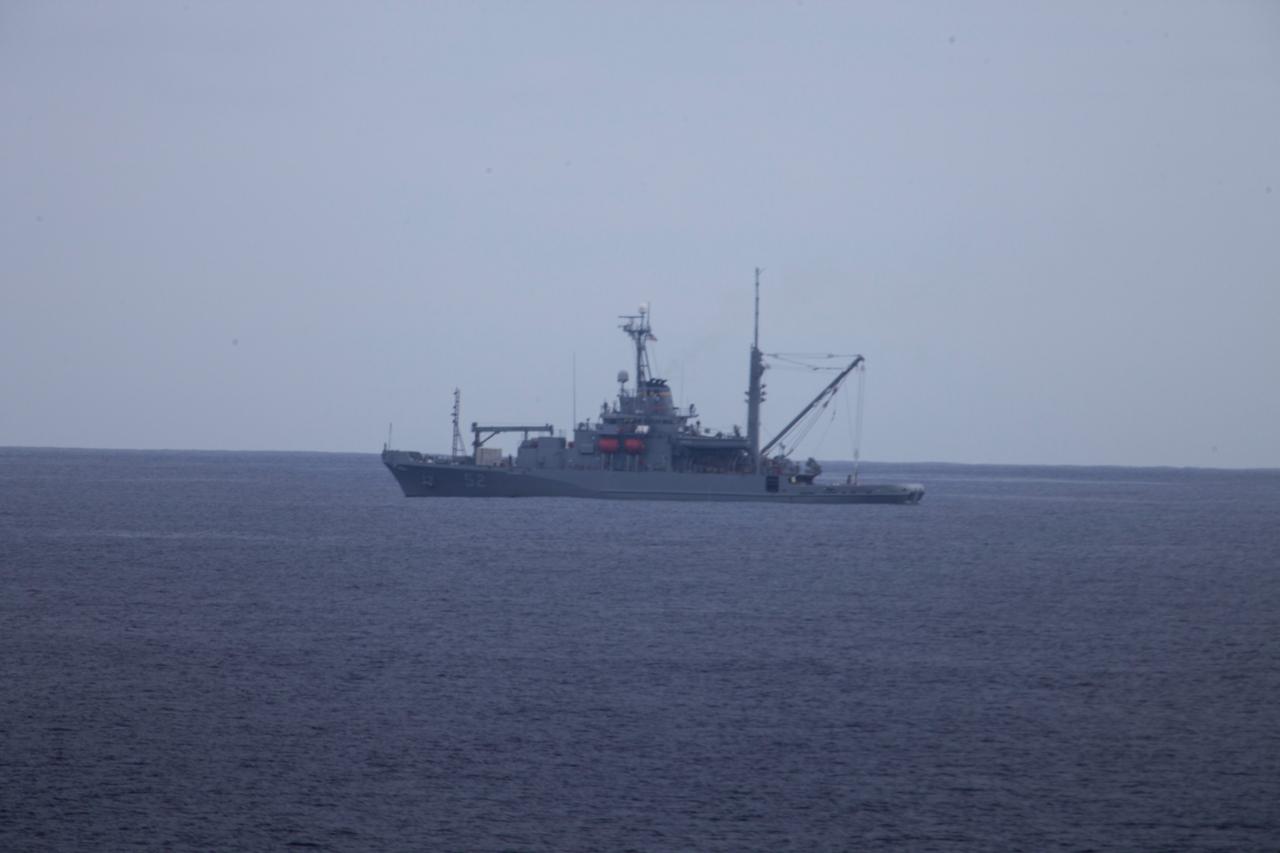
The US Navy and NASA recovery teams are on station off the cost of California on Dec. 3, 2014 and ready to recover Orion after Exploration Flight Test-1 (EFT-1) landing.
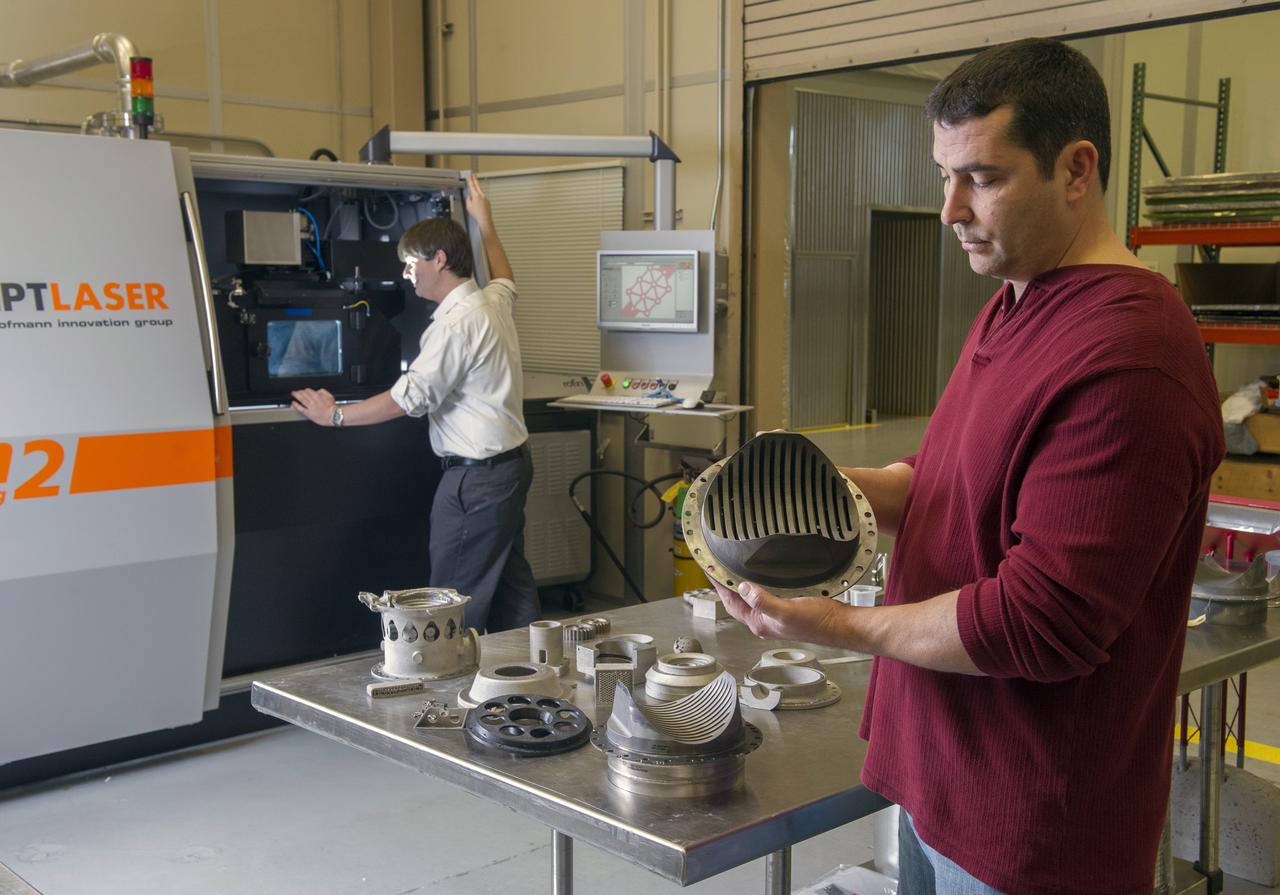
ZACK JONES AND JIM LYDON OF MSFC’S ADVANCED MANUFACTURING TEAM, WITH MSFC’S M2 SELECTIVE LASER MELTING SYSTEM. THE M2 IS CURRENTLY DEDICATED TO ADVANCED COPPER MATERIAL DEVELOPMENT FOR THE LOW COST UPPER STAGE PROGRAM.
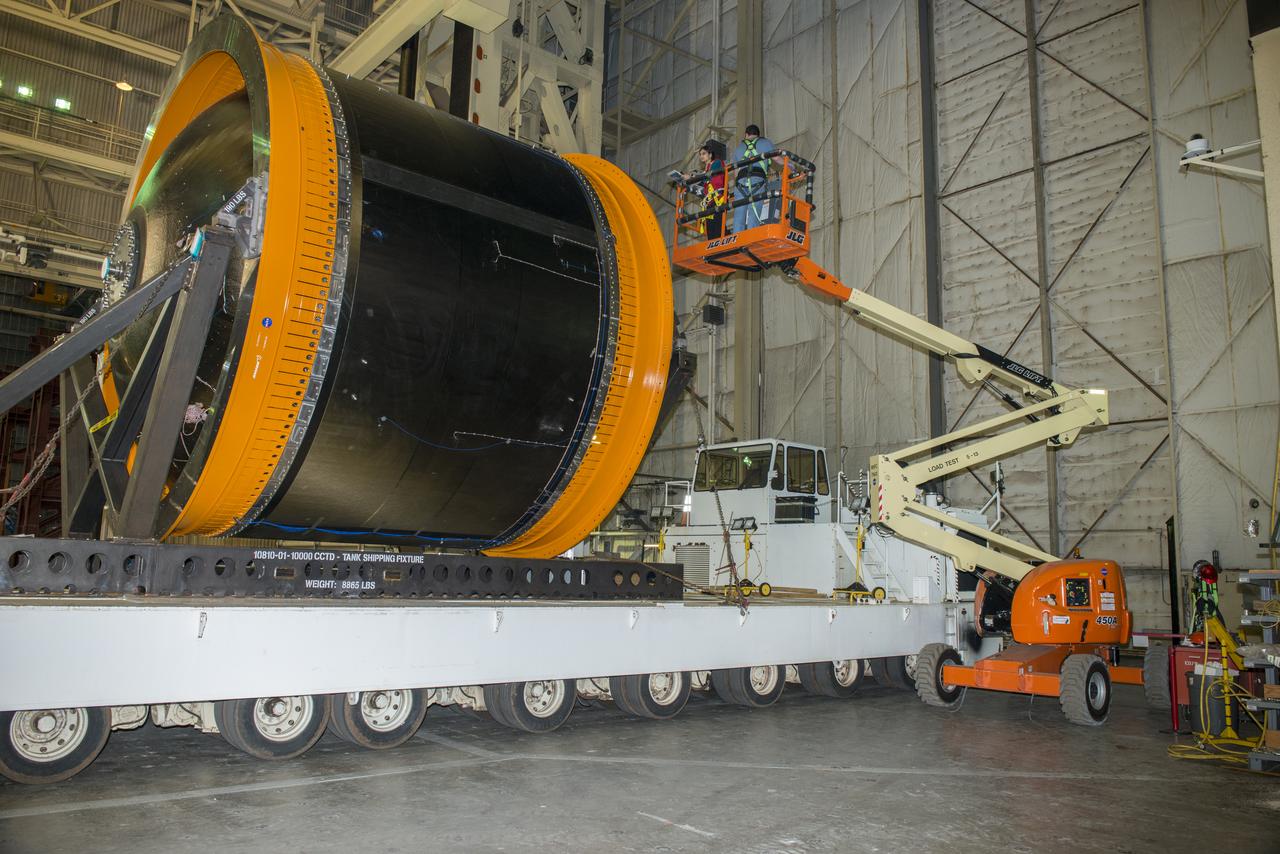
NASA AND BOEING ENGINEERS INSPECT AND PREPARE ONE OF THE LARGEST COMPSITE ROCKET PROPELLANT TANKS EVER MANUFACTURED. THE COMPOSITE CRYOTANK PROMISES A 30% WEIGHT REDUCTION AND A 25 % COST REDUCTION OVER THE PREVIOUSLY USED METAL TANKS.
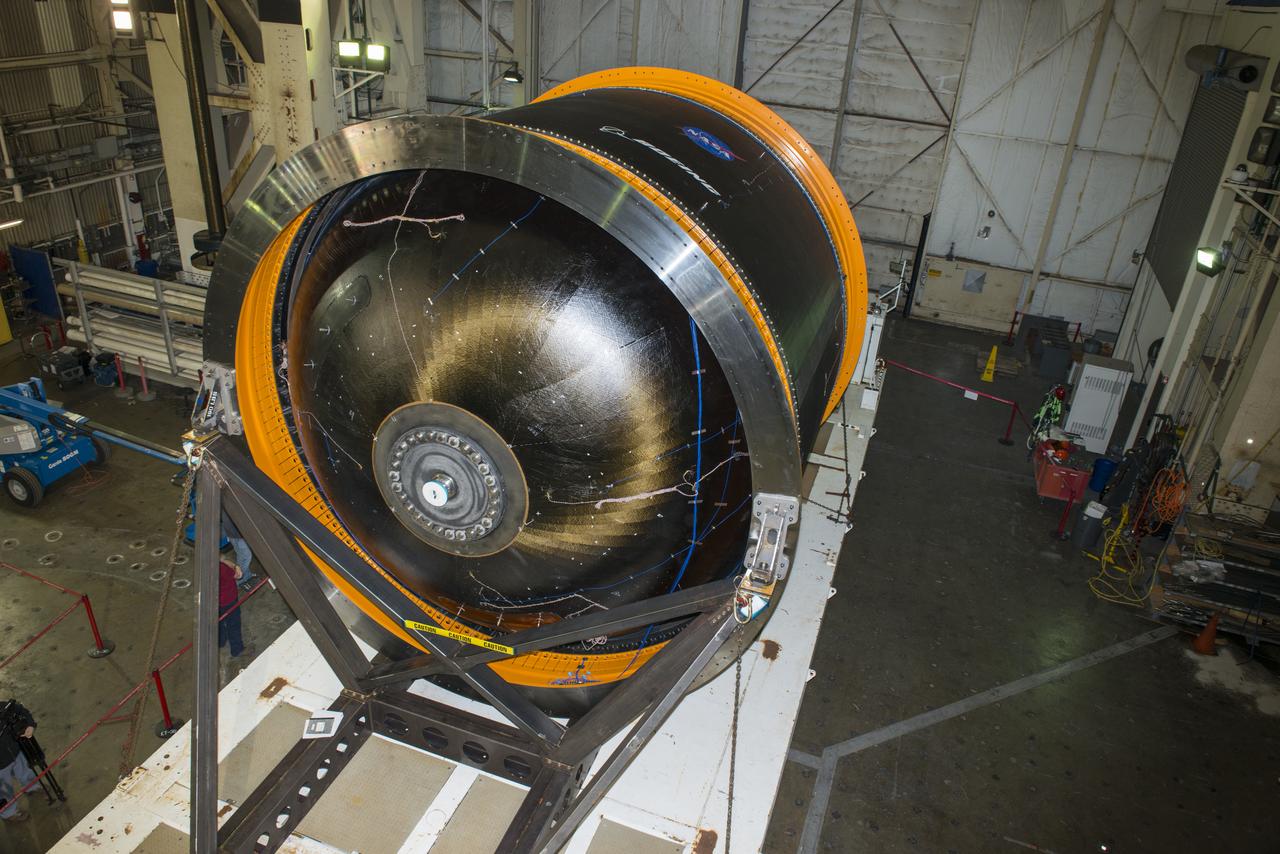
NASA AND BOEING ENGINEERS INSPECT AND PREPARE ONE OF THE LARGEST COMPSITE ROCKET PROPELLANT TANKS EVER MANUFACTURED. THE COMPOSITE CRYOTANK PROMISES A 30% WEIGHT REDUCTION AND A 25 % COST REDUCTION OVER THE PREVIOUSLY USED METAL TANKS.
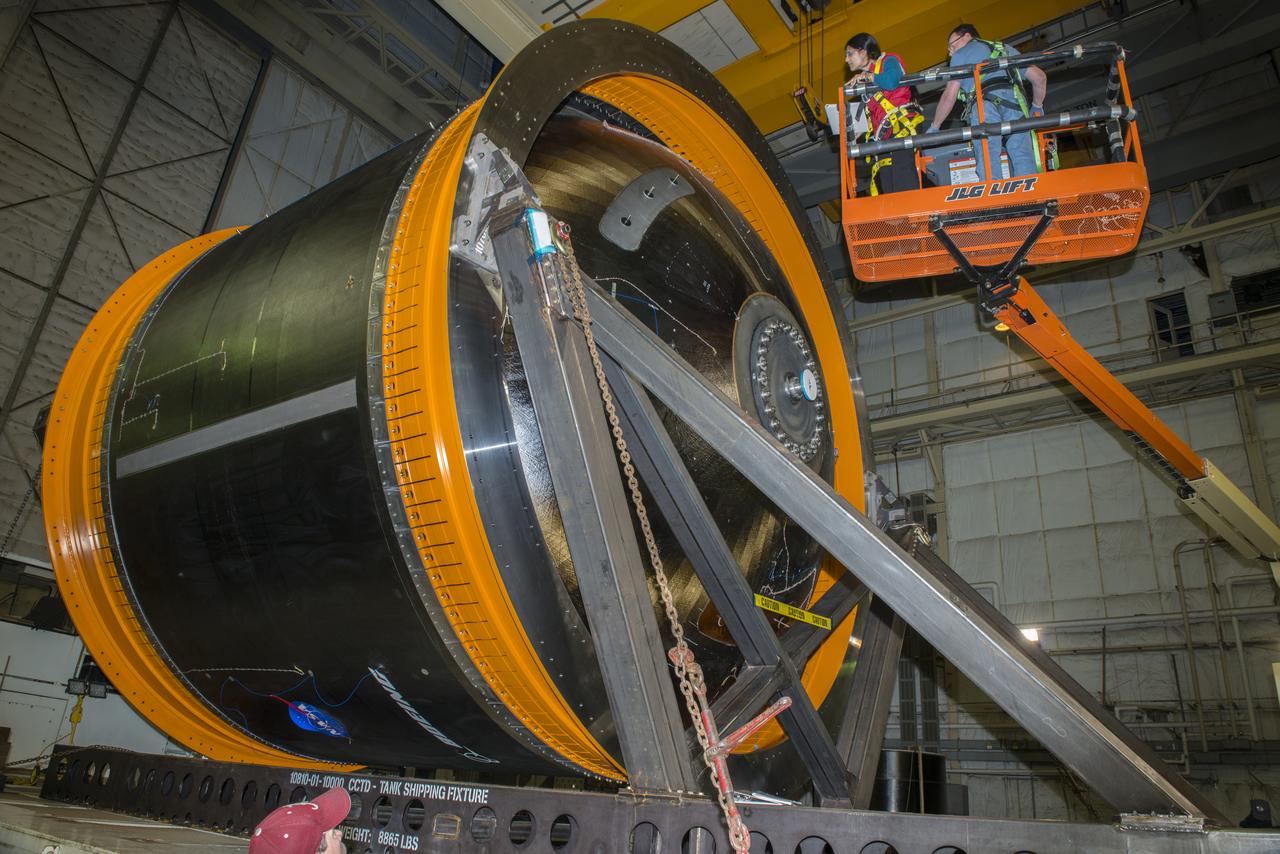
NASA AND BOEING ENGINEERS INSPECT AND PREPARE ONE OF THE LARGEST COMPSITE ROCKET PROPELLANT TANKS EVER MANUFACTURED. THE COMPOSITE CRYOTANK PROMISES A 30% WEIGHT REDUCTION AND A 25 % COST REDUCTION OVER THE PREVIOUSLY USED METAL TANKS.
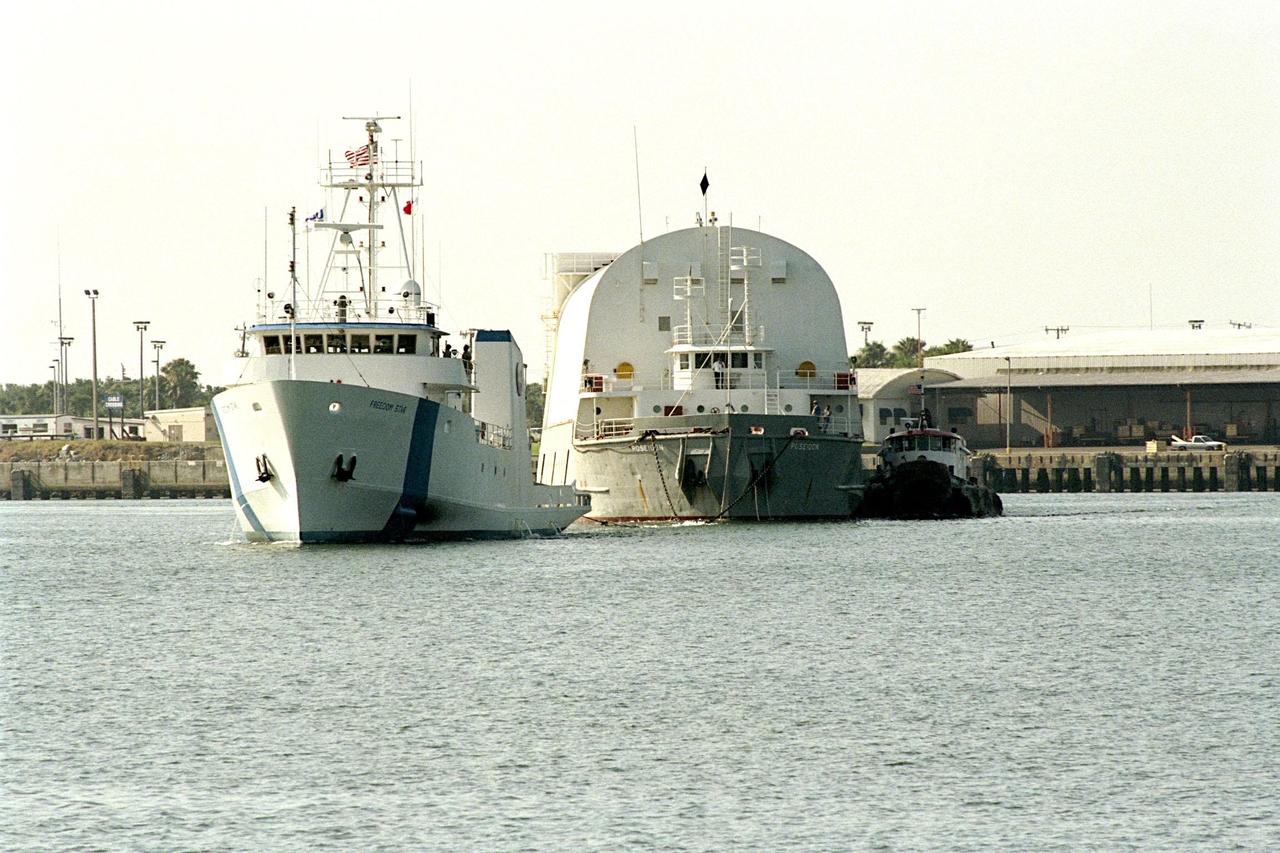
KENNEDY SPACE CENTER, FLA. -- Freedom Star, one of NASA's two solid rocket booster recovery ships, tows a barge containing the third Space Shuttle super lightweight external tank (SLWT) into Port Canaveral. This SLWT will be used to launch the orbiter Discovery on mission STS-95 in October. This first-time towing arrangement, part of a cost savings plan by NASA to prudently manage existing resources, began June 12 from the Michoud Assembly Facility in New Orleans where the Shuttle's external tanks are manufactured. The barge will now be transported up the Banana River to the LC-39 turn basin using a conventional tugboat. Previously, NASA relied on an outside contractor to provide external tank towing services at a cost of about $120,000 per trip. The new plan allows NASA's Space Flight Operations contractor, United Space Alliance (USA), to provide the same service directly to NASA using the recovery ships during their downtime between Shuttle launches. Studies show a potential savings of about $50,000 per trip. The cost of the necessary ship modifications should be paid back by the fourteenth tank delivery. The other recovery ship, Liberty Star, has also undergone deck strengthening enhancements and will soon have the necessary towing winch installed
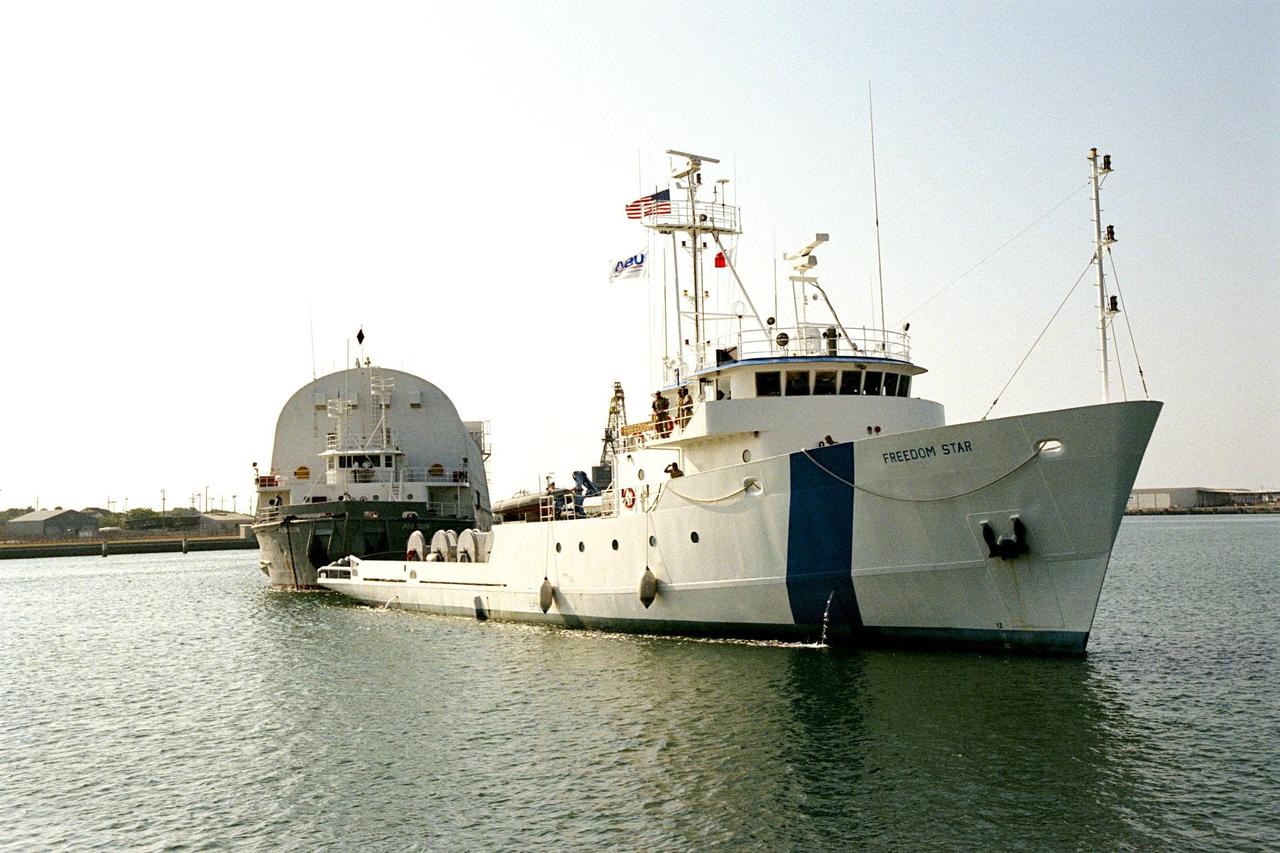
KENNEDY SPACE CENTER, FLA. -- Freedom Star, one of NASA's two solid rocket booster recovery ships, tows a barge containing the third Space Shuttle super lightweight external tank (SLWT) into Port Canaveral. This SLWT will be used to launch the orbiter Discovery on mission STS-95 in October. This first-time towing arrangement, part of a cost savings plan by NASA to prudently manage existing resources, began June 12 from the Michoud Assembly Facility in New Orleans where the Shuttle's external tanks are manufactured. The barge will now be transported up the Banana River to the LC-39 turn basin using a conventional tugboat. Previously, NASA relied on an outside contractor to provide external tank towing services at a cost of about $120,000 per trip. The new plan allows NASA's Space Flight Operations contractor, United Space Alliance (USA), to provide the same service directly to NASA using the recovery ships during their downtime between Shuttle launches. Studies show a potential savings of about $50,000 per trip. The cost of the necessary ship modifications should be paid back by the fourteenth tank delivery. The other recovery ship, Liberty Star, has also undergone deck strengthening enhancements and will soon have the necessary towing winch installed
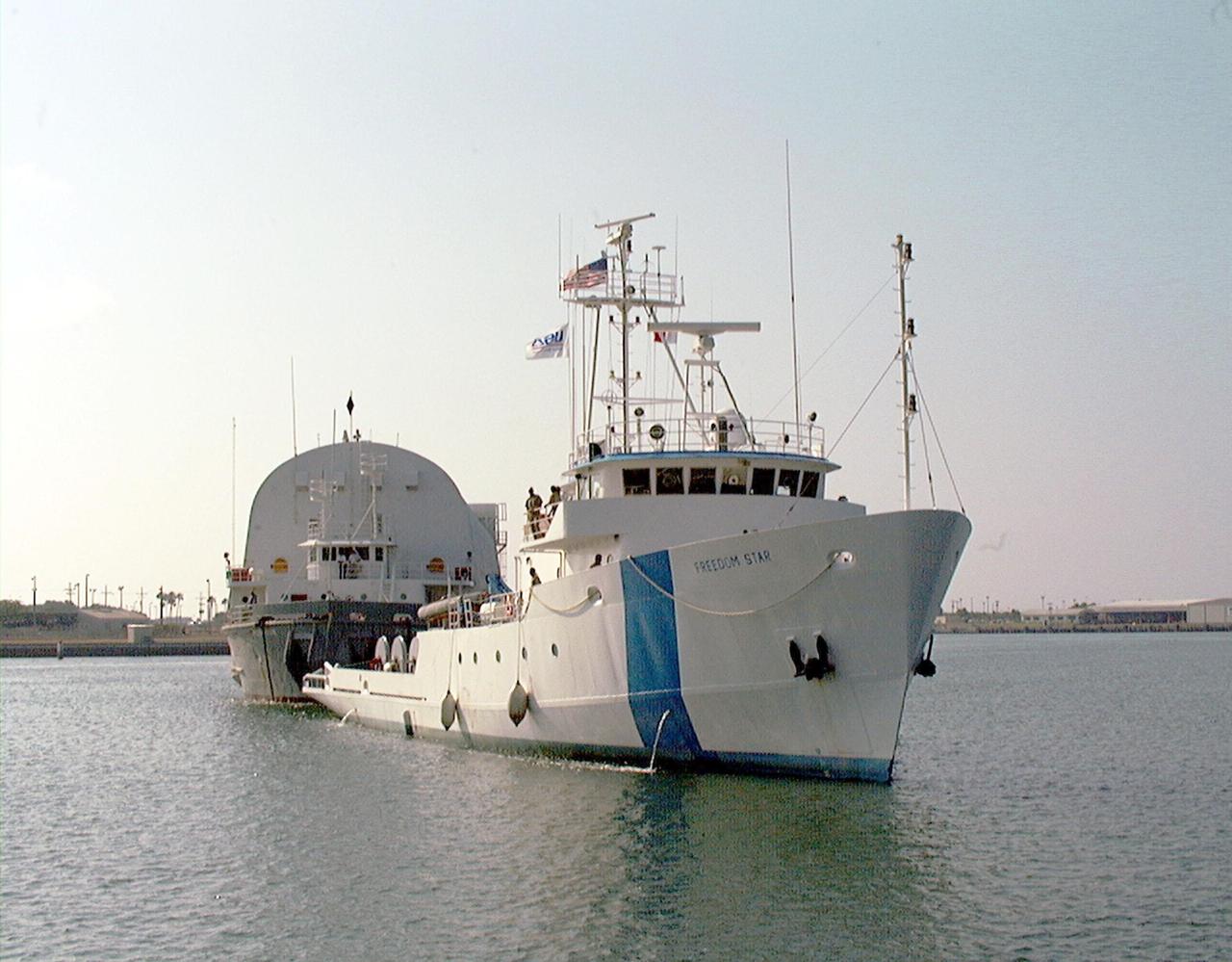
KENNEDY SPACE CENTER, FLA. -- Freedom Star, one of NASA's two solid rocket booster recovery ships, tows a barge containing the third Space Shuttle super lightweight external tank (SLWT) into Port Canaveral. This SLWT will be used to launch the orbiter Discovery on mission STS-95 in October. This first-time towing arrangement, part of a cost savings plan by NASA to prudently manage existing resources, began June 12 from the Michoud Assembly Facility in New Orleans where the Shuttle's external tanks are manufactured. The barge will now be transported up the Banana River to the LC-39 turn basin using a conventional tugboat. Previously, NASA relied on an outside contractor to provide external tank towing services at a cost of about $120,000 per trip. The new plan allows NASA's Space Flight Operations contractor, United Space Alliance (USA), to provide the same service directly to NASA using the recovery ships during their downtime between Shuttle launches. Studies show a potential savings of about $50,000 per trip. The cost of the necessary ship modifications should be paid back by the fourteenth tank delivery. The other recovery ship, Liberty Star, has also undergone deck strengthening enhancements and will soon have the necessary towing winch installed
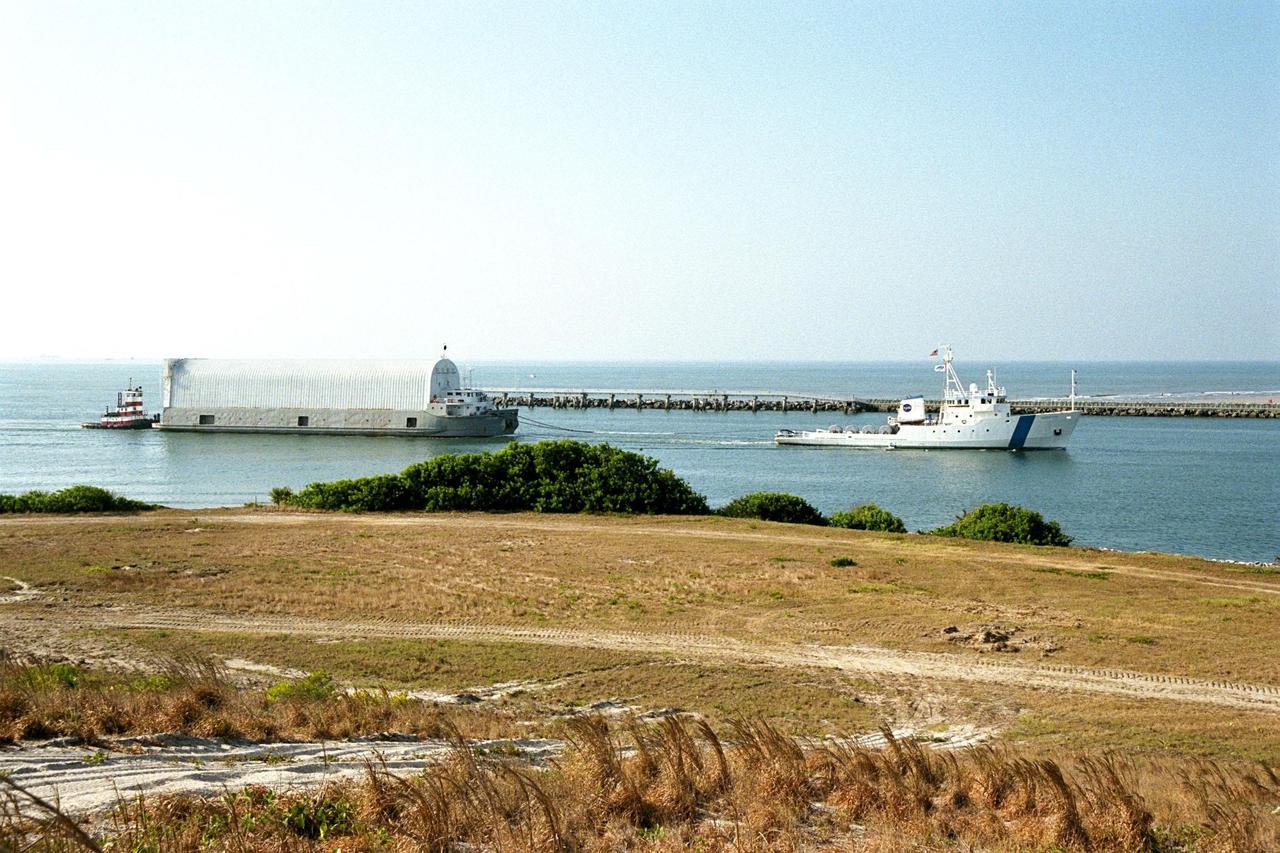
KENNEDY SPACE CENTER, FLA. -- Freedom Star, one of NASA's two solid rocket booster recovery ships, tows a barge containing the third Space Shuttle super lightweight external tank (SLWT) into Port Canaveral. This SLWT will be used to launch the orbiter Discovery on mission STS-95 in October. This first-time towing arrangement, part of a cost savings plan by NASA to prudently manage existing resources, began June 12 from the Michoud Assembly Facility in New Orleans where the Shuttle's external tanks are manufactured. The barge will now be transported up the Banana River to the LC-39 turn basin using a conventional tugboat. Previously, NASA relied on an outside contractor to provide external tank towing services at a cost of about $120,000 per trip. The new plan allows NASA's Space Flight Operations contractor, United Space Alliance (USA), to provide the same service directly to NASA using the recovery ships during their downtime between Shuttle launches. Studies show a potential savings of about $50,000 per trip. The cost of the necessary ship modifications should be paid back by the fourteenth tank delivery. The other recovery ship, Liberty Star, has also undergone deck strengthening enhancements and will soon have the necessary towing winch installed
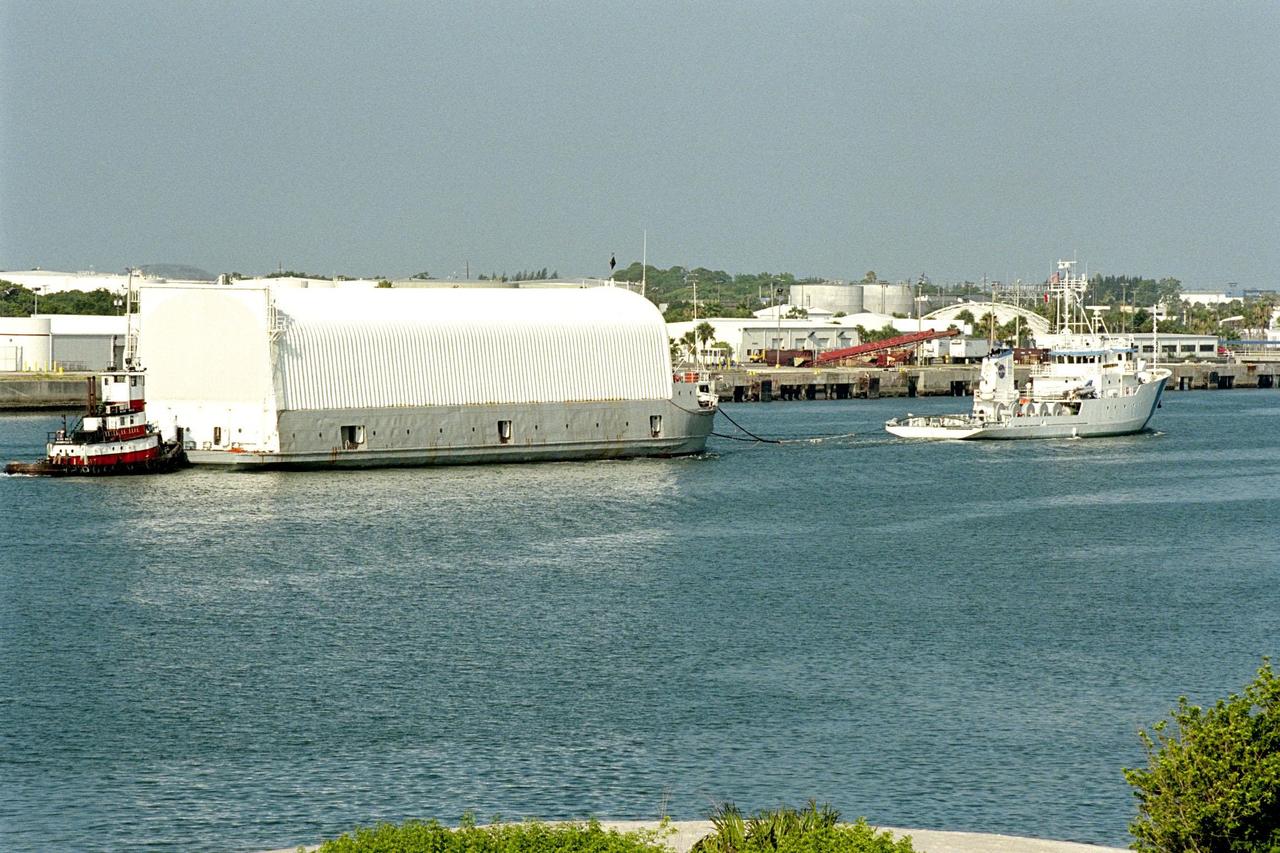
KENNEDY SPACE CENTER, FLA. -- Freedom Star, one of NASA's two solid rocket booster recovery ships, tows a barge containing the third Space Shuttle super lightweight external tank (SLWT) into Port Canaveral. This SLWT will be used to launch the orbiter Discovery on mission STS-95 in October. This first-time towing arrangement, part of a cost savings plan by NASA to prudently manage existing resources, began June 12 from the Michoud Assembly Facility in New Orleans where the Shuttle's external tanks are manufactured. The barge will now be transported up the Banana River to the LC-39 turn basin using a conventional tugboat. Previously, NASA relied on an outside contractor to provide external tank towing services at a cost of about $120,000 per trip. The new plan allows NASA's Space Flight Operations contractor, United Space Alliance (USA), to provide the same service directly to NASA using the recovery ships during their downtime between Shuttle launches. Studies show a potential savings of about $50,000 per trip. The cost of the necessary ship modifications should be paid back by the fourteenth tank delivery. The other recovery ship, Liberty Star, has also undergone deck strengthening enhancements and will soon have the necessary towing winch installed
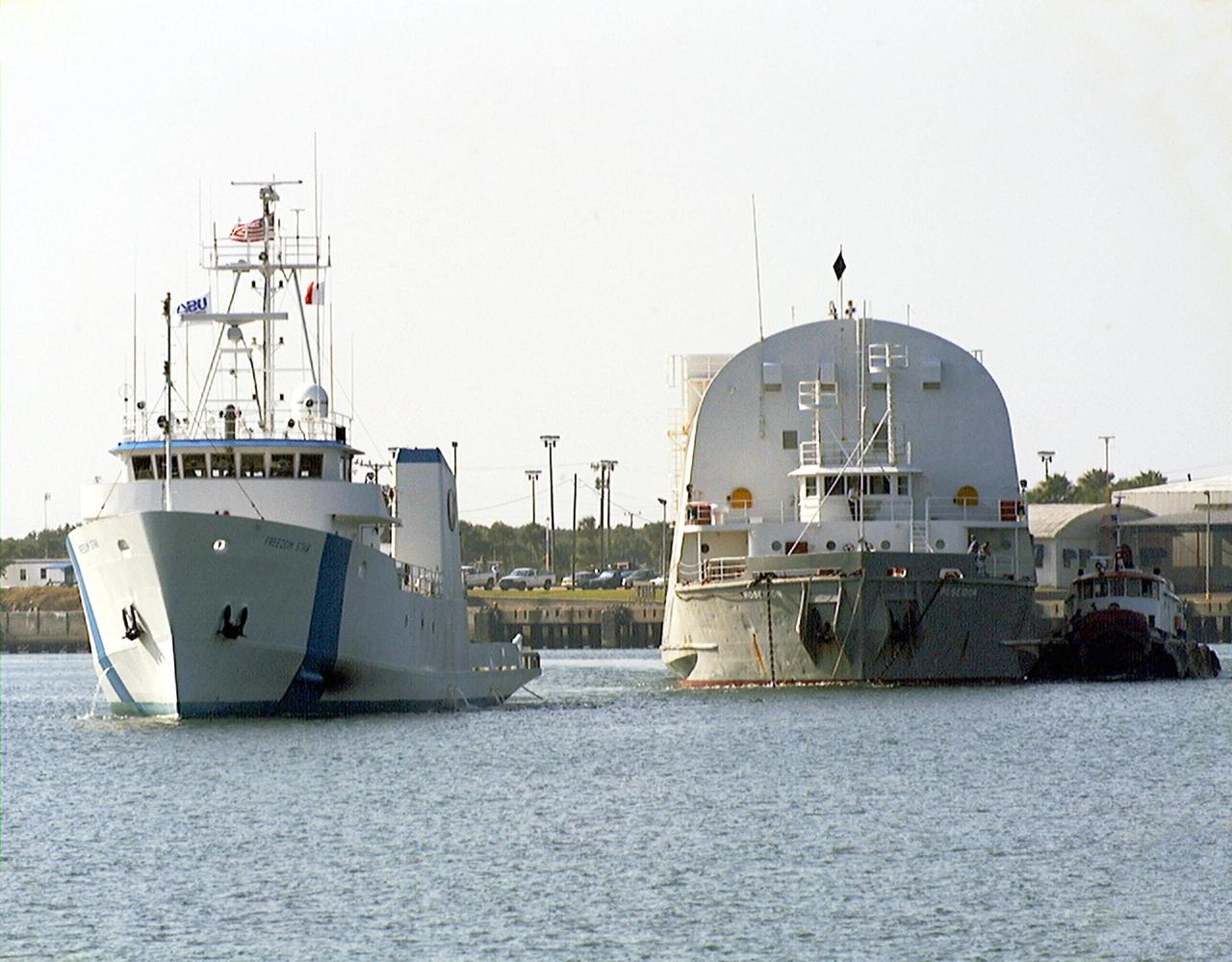
KENNEDY SPACE CENTER, FLA. -- Freedom Star, one of NASA's two solid rocket booster recovery ships, tows a barge containing the third Space Shuttle super lightweight external tank (SLWT) into Port Canaveral. This SLWT will be used to launch the orbiter Discovery on mission STS-95 in October. This first-time towing arrangement, part of a cost savings plan by NASA to prudently manage existing resources, began June 12 from the Michoud Assembly Facility in New Orleans where the Shuttle's external tanks are manufactured. The barge will now be transported up the Banana River to the LC-39 turn basin using a conventional tugboat. Previously, NASA relied on an outside contractor to provide external tank towing services at a cost of about $120,000 per trip. The new plan allows NASA's Space Flight Operations contractor, United Space Alliance (USA), to provide the same service directly to NASA using the recovery ships during their downtime between Shuttle launches. Studies show a potential savings of about $50,000 per trip. The cost of the necessary ship modifications should be paid back by the fourteenth tank delivery. The other recovery ship, Liberty Star, has also undergone deck strengthening enhancements and will soon have the necessary towing winch installed
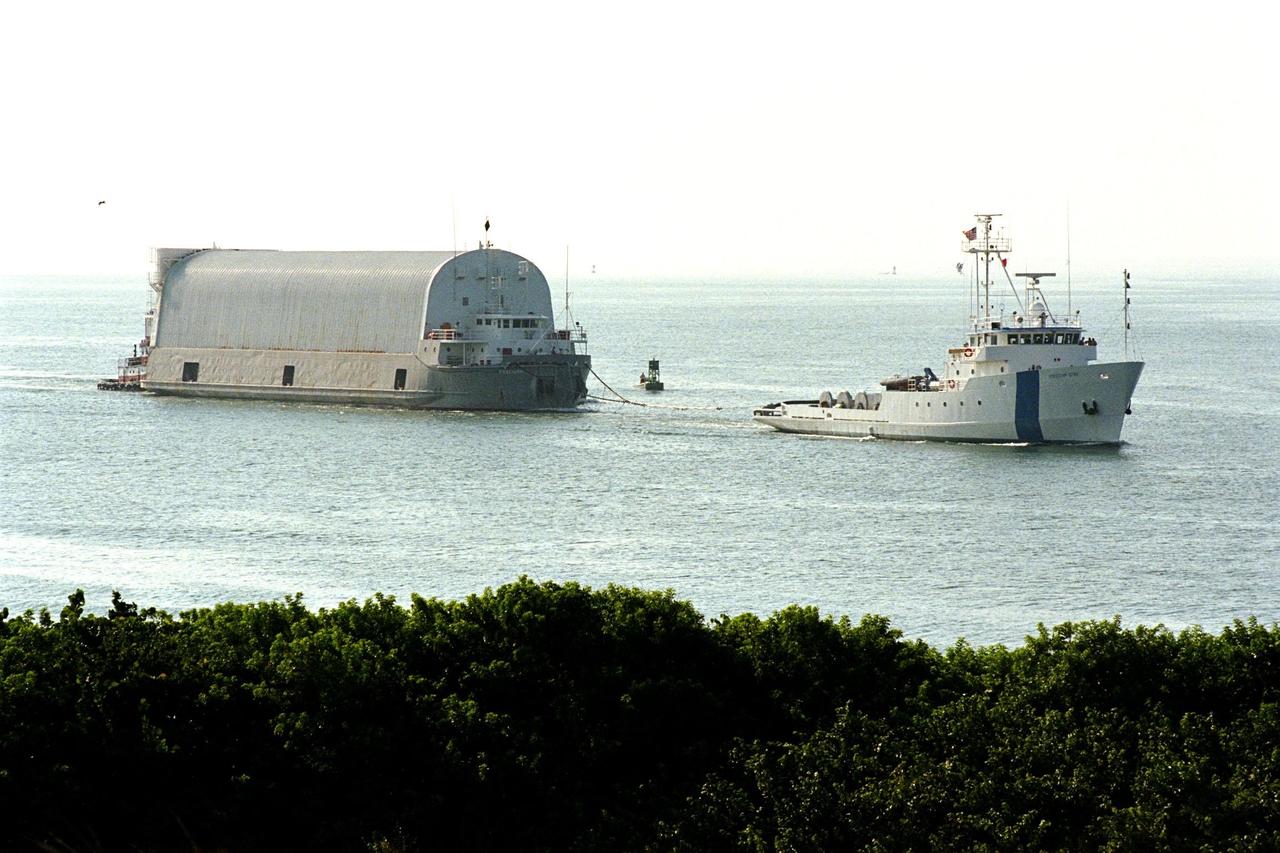
KENNEDY SPACE CENTER, FLA. -- Freedom Star, one of NASA's two solid rocket booster recovery ships, tows a barge containing the third Space Shuttle super lightweight external tank (SLWT) into Port Canaveral. This SLWT will be used to launch the orbiter Discovery on mission STS-95 in October. This first-time towing arrangement, part of a cost savings plan by NASA to prudently manage existing resources, began June 12 from the Michoud Assembly Facility in New Orleans where the Shuttle's external tanks are manufactured. The barge will now be transported up the Banana River to the LC-39 turn basin using a conventional tugboat. Previously, NASA relied on an outside contractor to provide external tank towing services at a cost of about $120,000 per trip. The new plan allows NASA's Space Flight Operations contractor, United Space Alliance (USA), to provide the same service directly to NASA using the recovery ships during their downtime between Shuttle launches. Studies show a potential savings of about $50,000 per trip. The cost of the necessary ship modifications should be paid back by the fourteenth tank delivery. The other recovery ship, Liberty Star, has also undergone deck strengthening enhancements and will soon have the necessary towing winch installed.
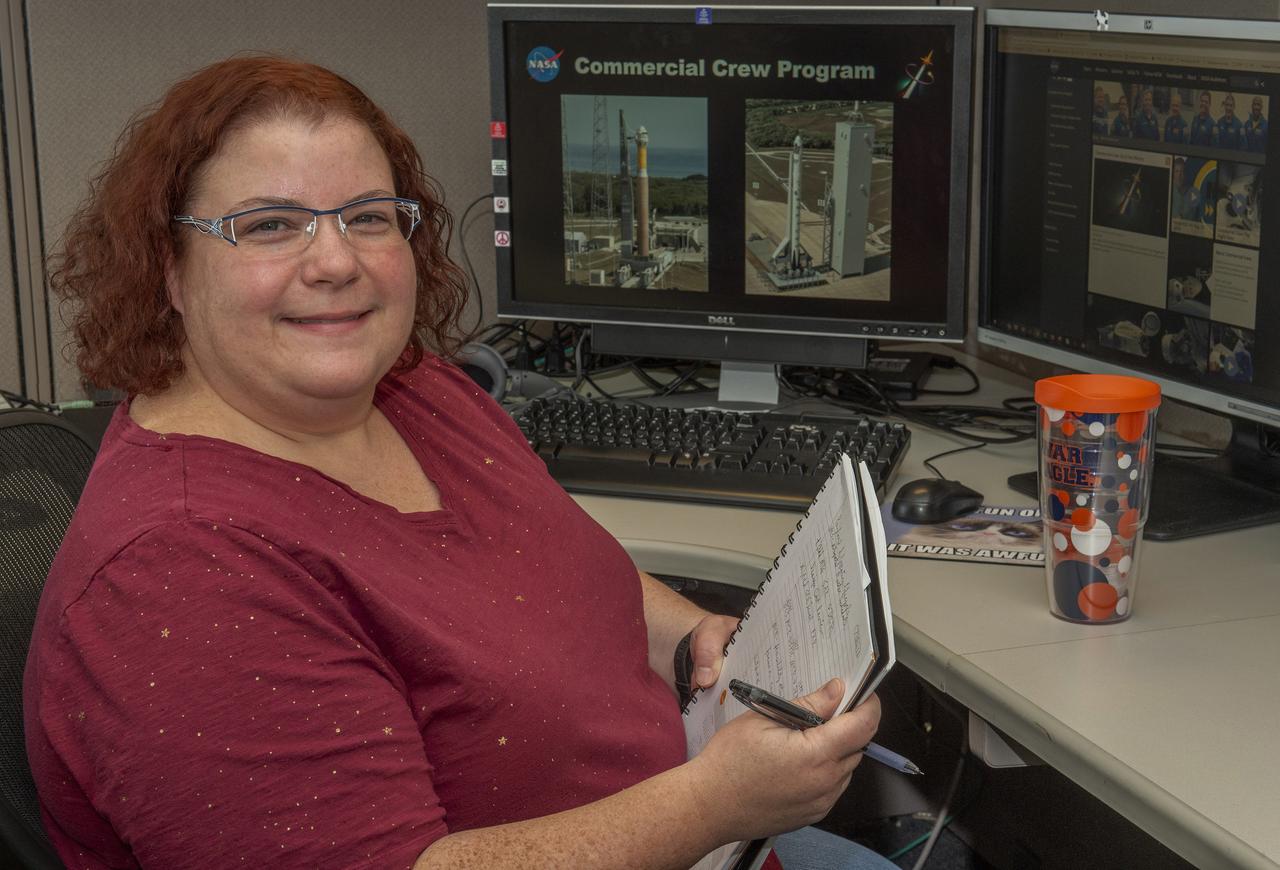
Miranda Holton is the Main Propulsion Systems (MPS) Subsystem Manager for NASA’s Commercial Crew Program. The goal of the Commercial Crew Program is to have safe, reliable and cost-effective access to and from the International Space Station and foster commercial access to other potential low-Earth orbit destinations.
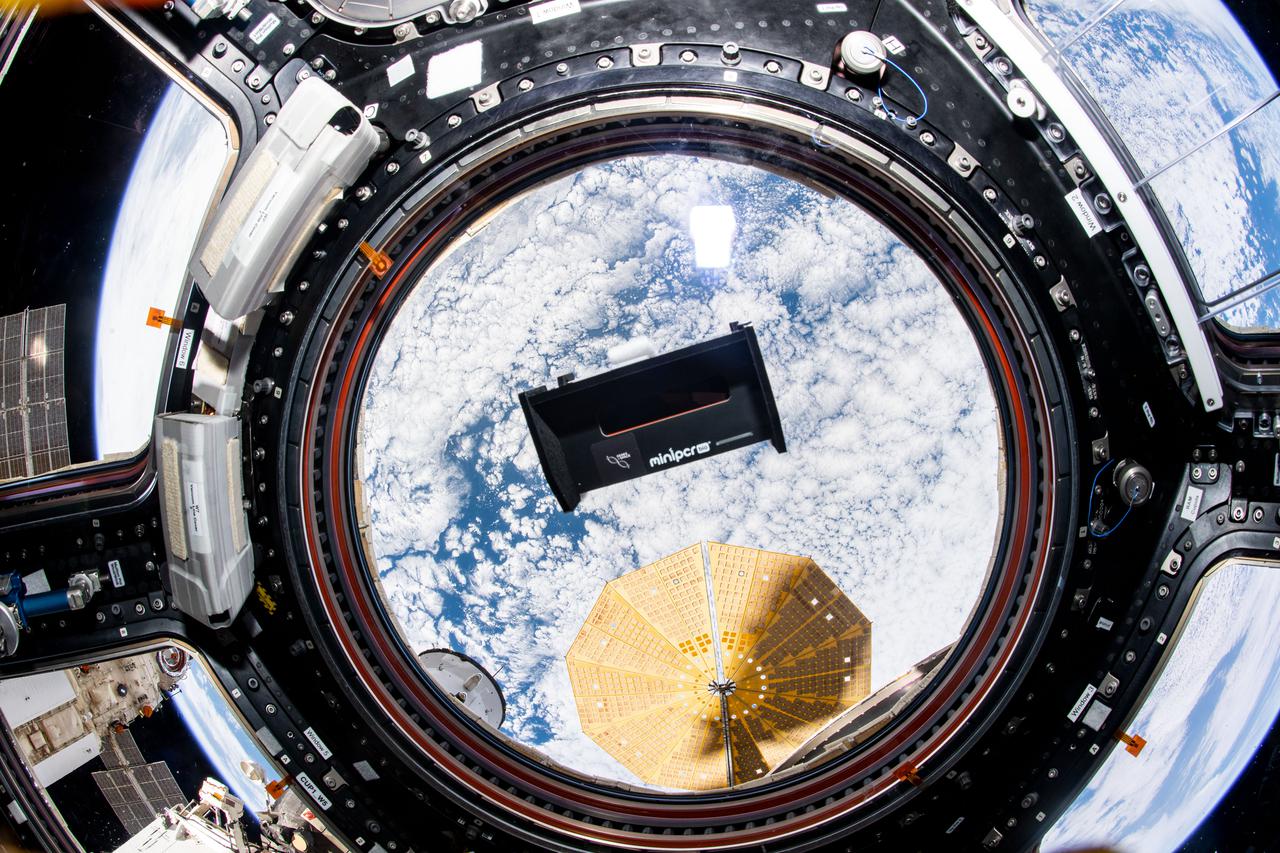
iss065e341636 (9/2/2021) --- A view of the Genes in Space 8 Fluorescence Viewer floating in front of the Cupola module window aboard the International Space Station (ISS). Genes in Space-9 evaluates low-cost and portable BioBits cell-free technology as well as two biological sensors aboard the International Space Station (ISS).
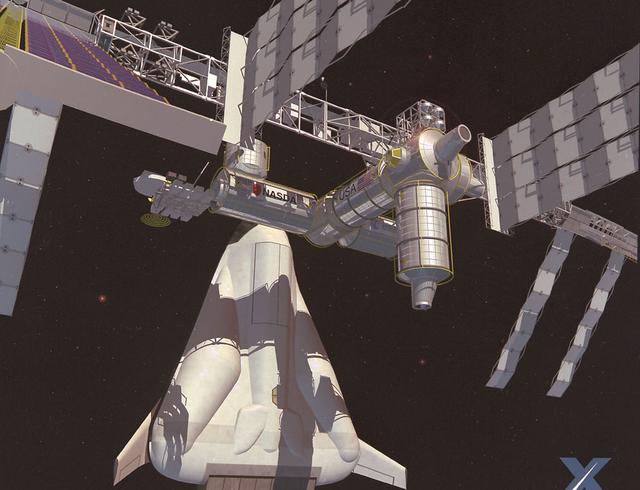
Pictured here is an artist's depiction of Lockheed Martin's Lifting Body Single-Stage-to-Orbit (SSTO) Reusable Launch Vehicle (RLV) concept servicing the International Space Station. The development of the RLV is essential in the cost reduction of future space travel.
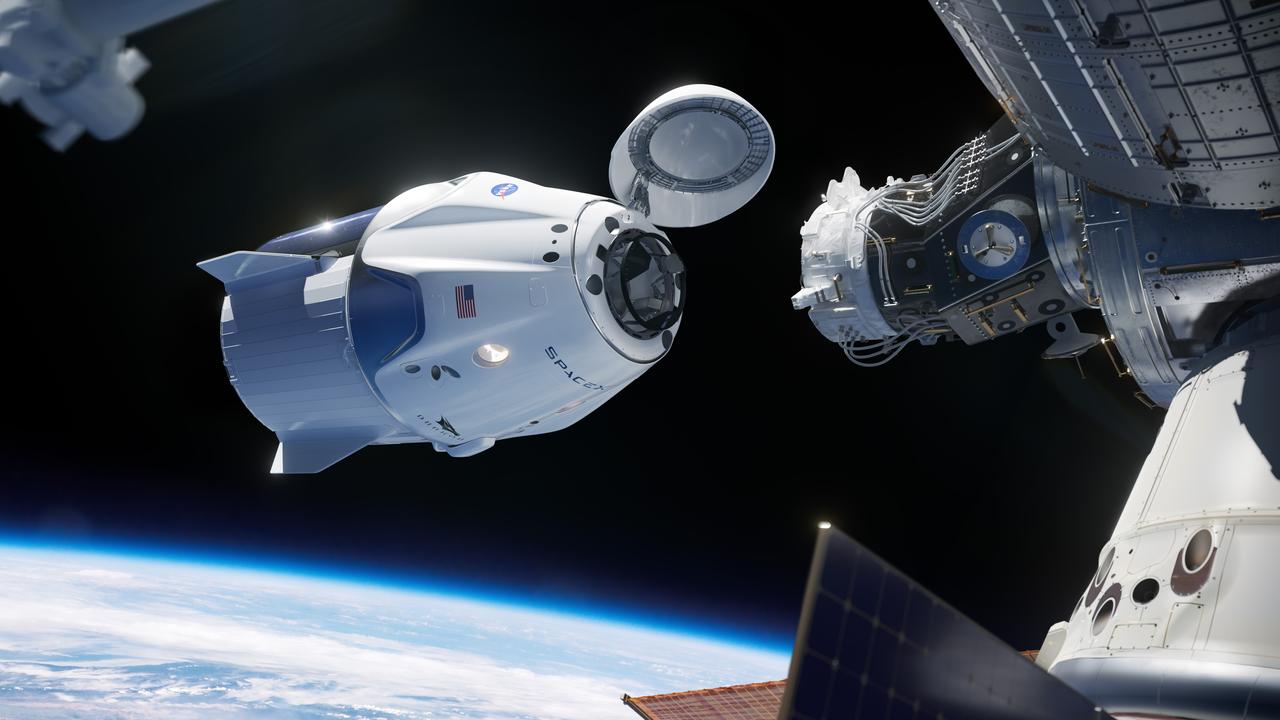
This artist illustration shows the SpaceX Crew Dragon spacecraft docking to the International Space Station. SpaceX is one of two American companies working with NASA to design, build, test and operate safe, reliable and cost-effective human transportation systems, restoring the nation’s human launch capability to and from the station.
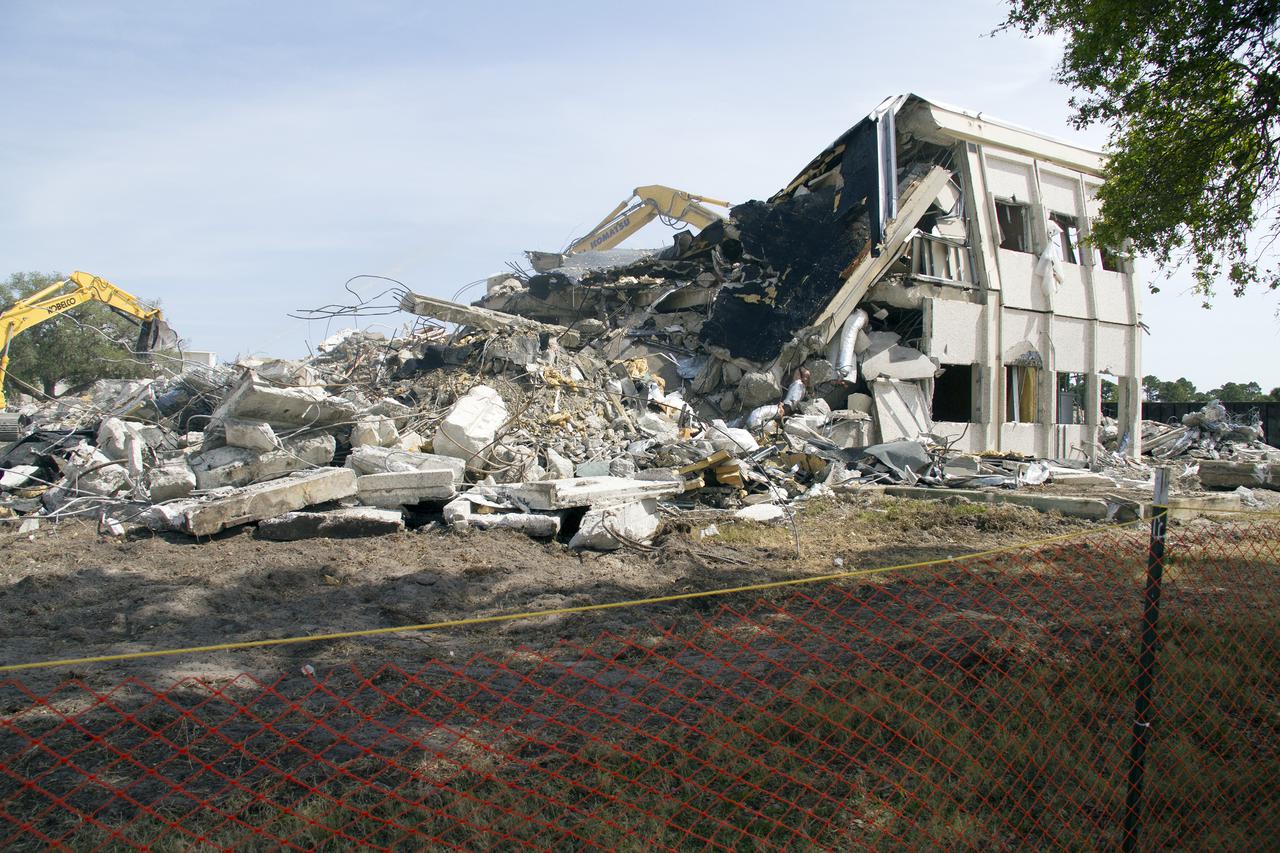
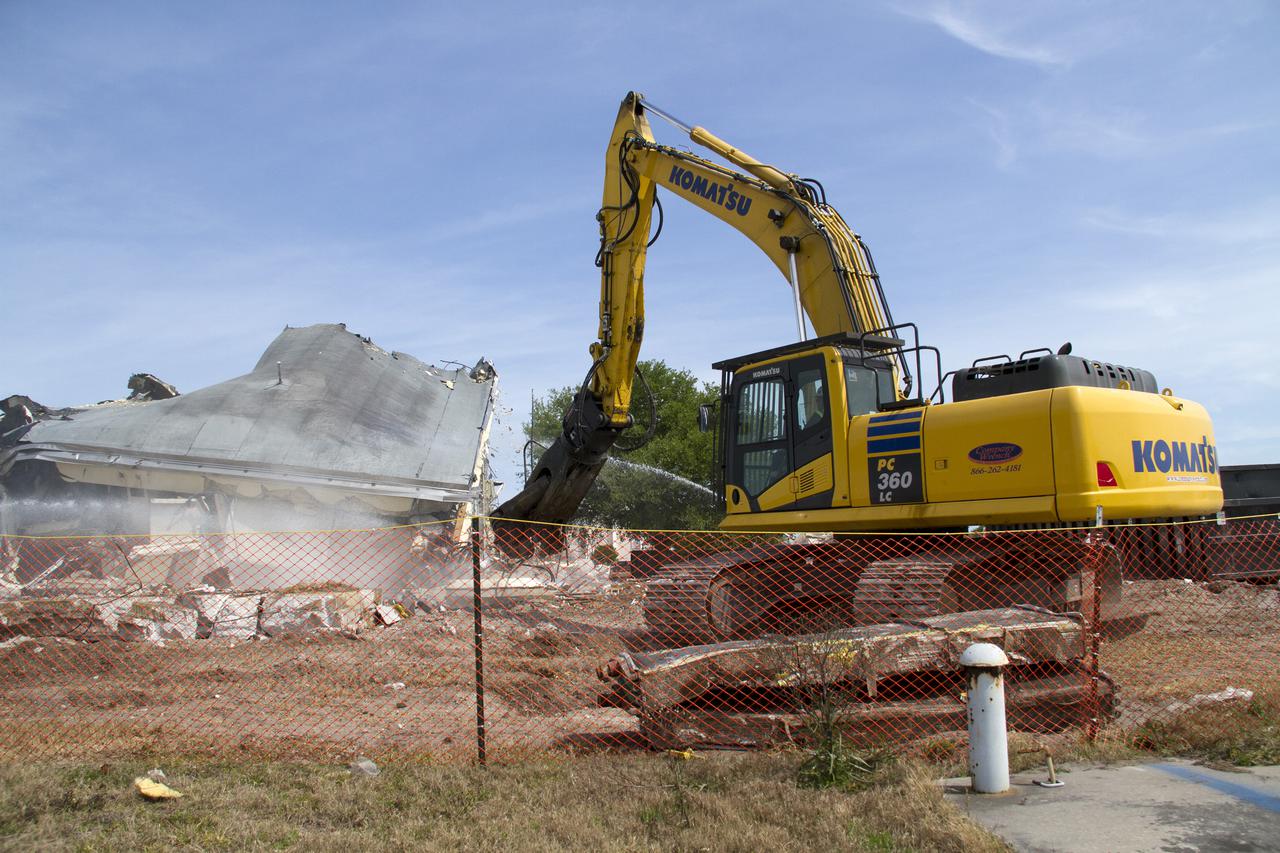
CAPE CANAVERAL, Fla. -- At NASA’s Kennedy Space Center in Florida, demolition is underway on the Base Operations Building, or BOB, in the Industrial Area. The two-story BOB was constructed in 1965 as office space for workers. Kennedy is demolishing some of the older facilities due to their age and to reduce maintenance and repair costs. Photo credit: NASA_ Cory Huston
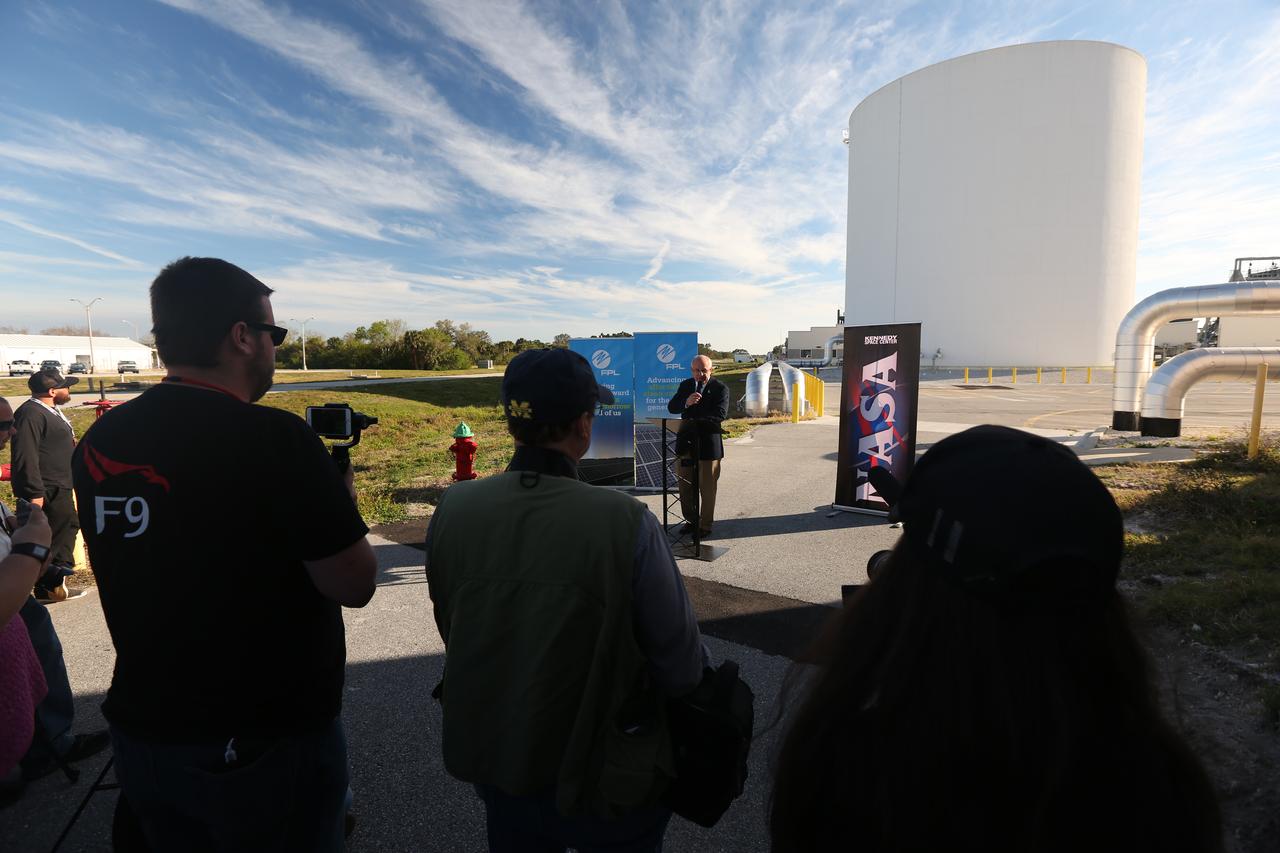
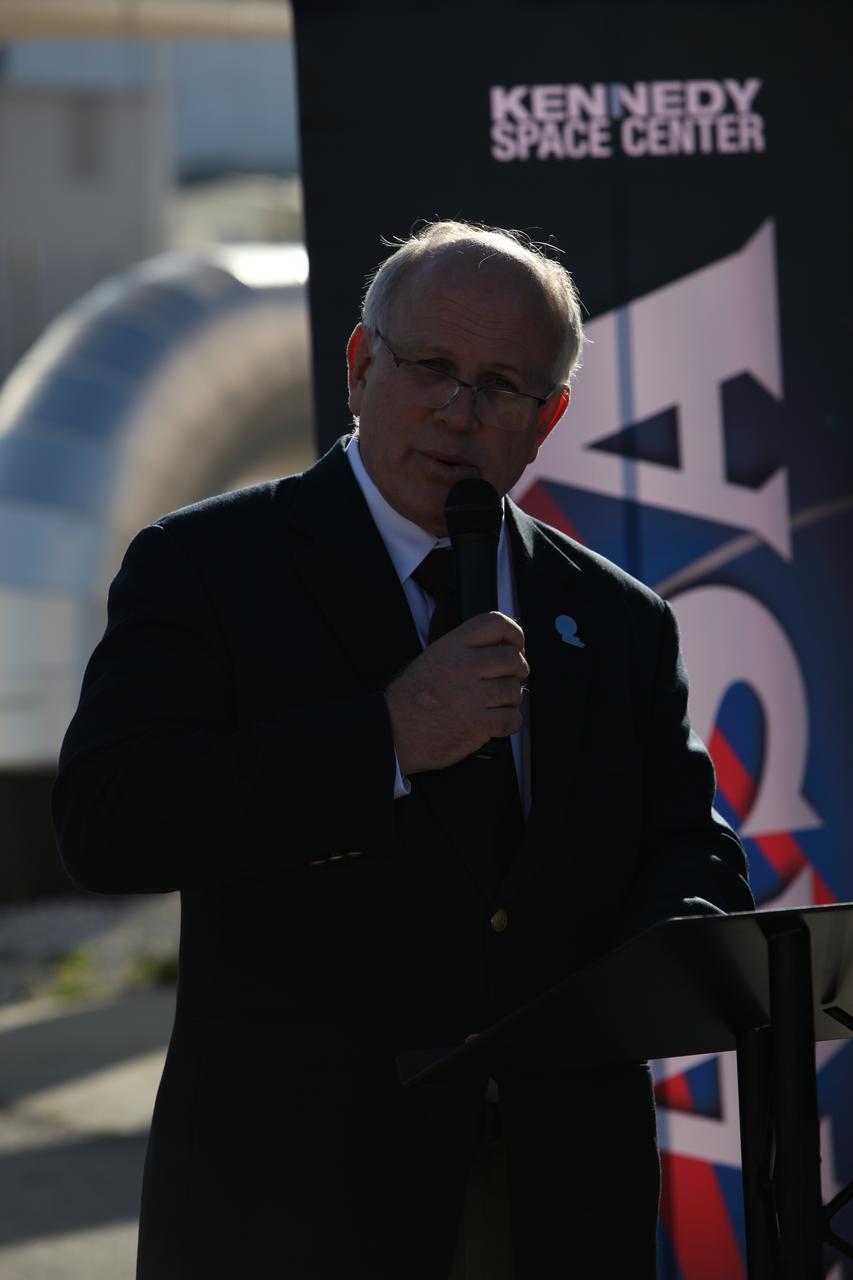
Bart Gaetjens, Florida Power & Light's FPL area external affairs manager, addresses the news media and NASA Social about the new Thermal Energy Storage (TES) tank Feb. 17. The TES tank works like a giant battery and is saving the center utility cost. These savings will be applied to new sustainable projects at Kennedy.
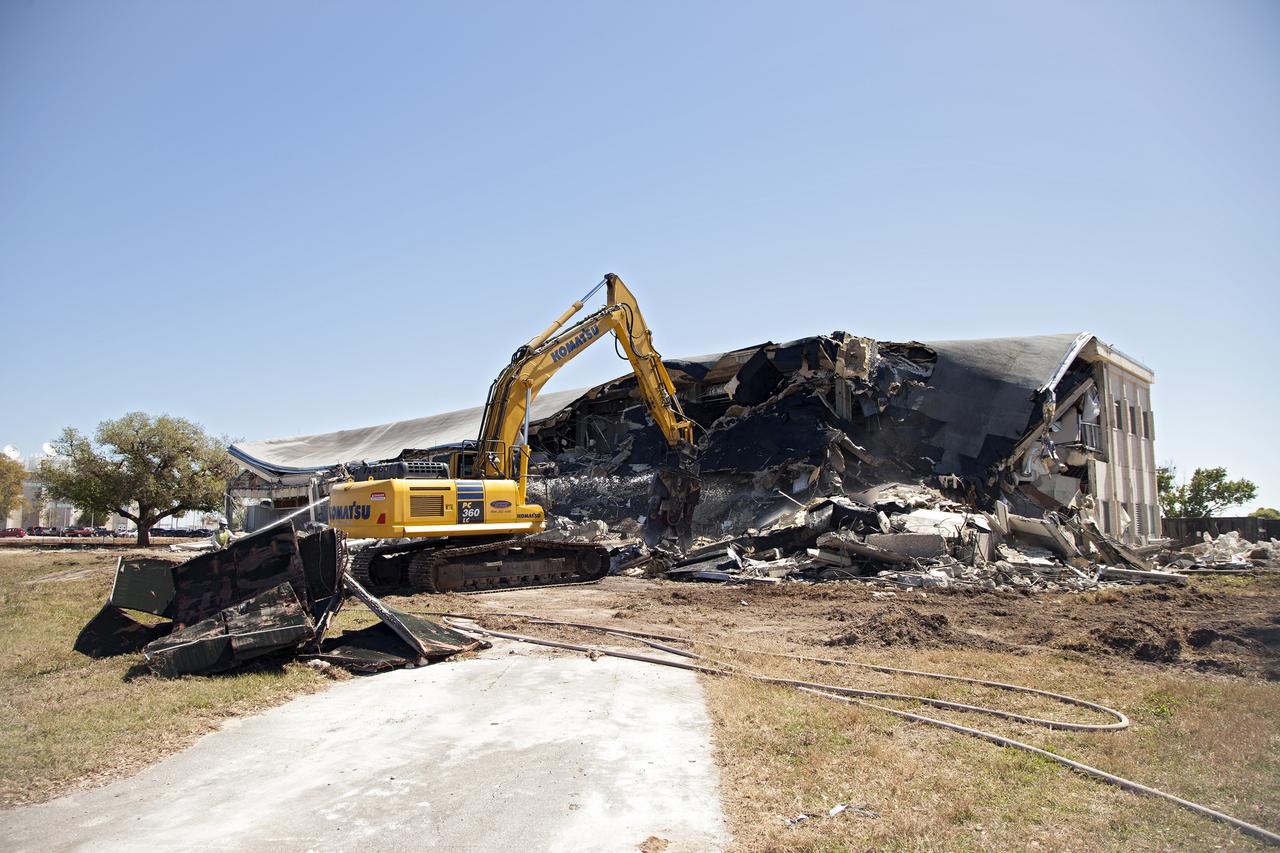
CAPE CANAVERAL, Fla. -- At NASA’s Kennedy Space Center in Florida, demolition is underway on the Base Operations Building, or BOB, in the Industrial Area. The two-story BOB was constructed in 1965 as office space for workers. Kennedy is demolishing some of the older facilities due to their age and to reduce maintenance and repair costs. Photo credit: NASA_Kim Shiflett
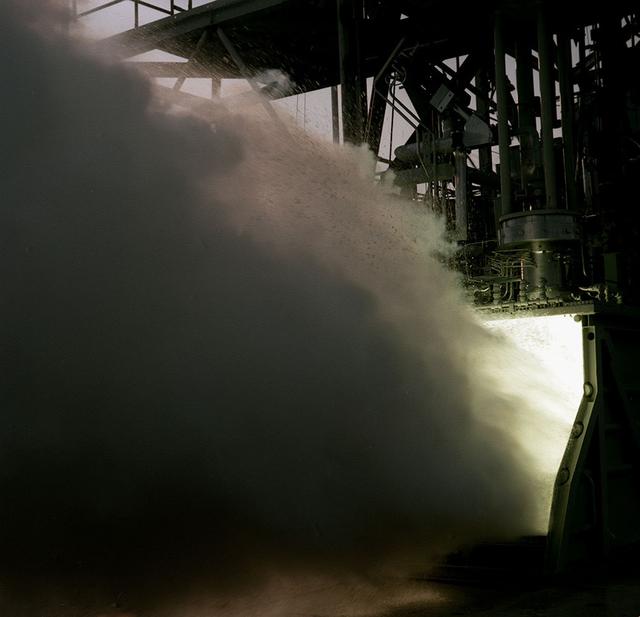
This photodepicts a 15 K Fastrac motor ignition test performed at Marshall Test Stand-116. The Fastrac motor is an alternative low-cost engine which is being developed and tested at Marshall. This engine was to eventually be used on an X-34 launchvehicle. The X-34 program was cancelled in 2001.
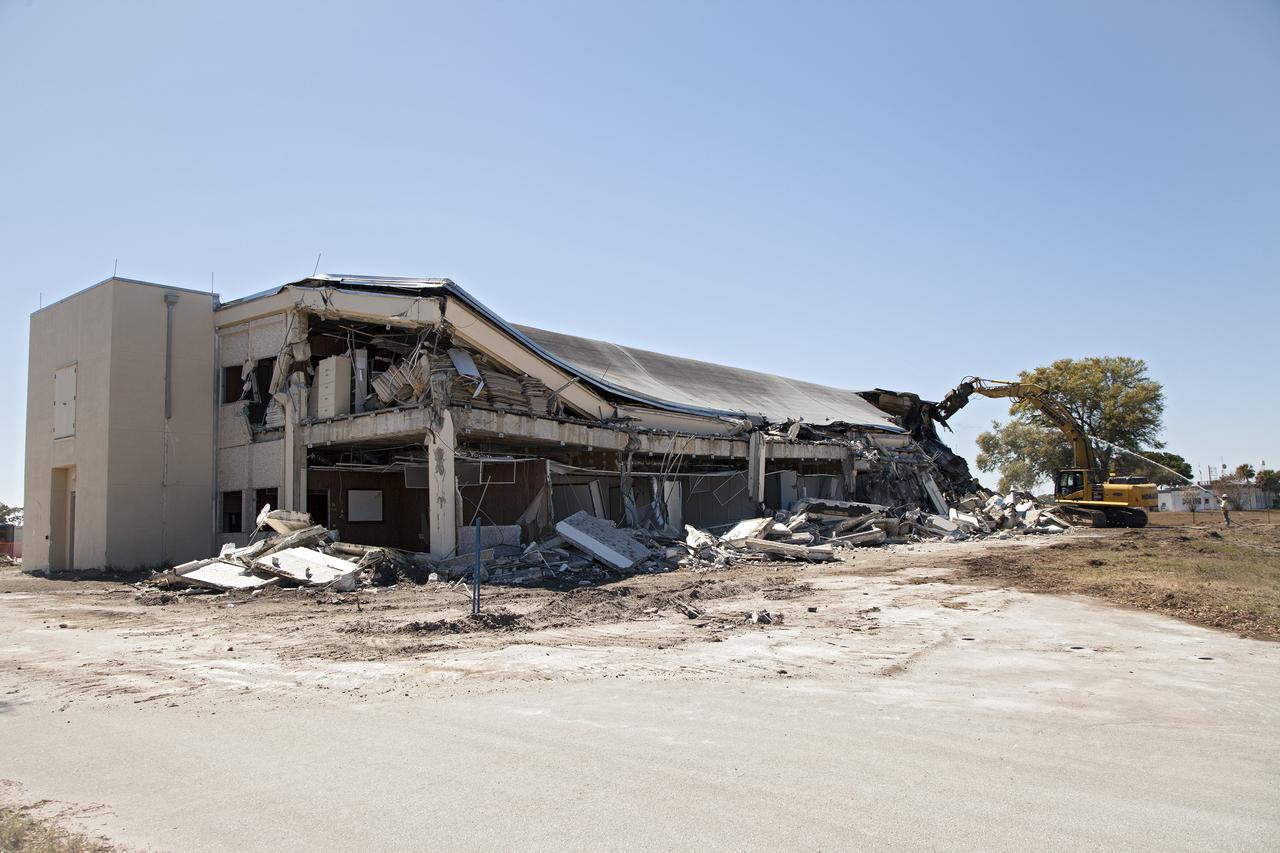
CAPE CANAVERAL, Fla. -- At NASA’s Kennedy Space Center in Florida, demolition is underway on the Base Operations Building, or BOB, in the Industrial Area. The two-story BOB was constructed in 1965 as office space for workers. Kennedy is demolishing some of the older facilities due to their age and to reduce maintenance and repair costs. Photo credit: NASA_Kim Shiflett
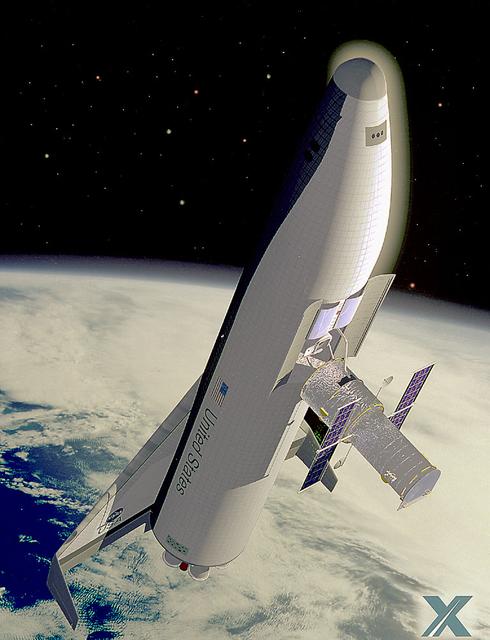
Pictured here is an artist's depiction of the McDornel Douglas' wing body Single-Stage-to-Orbit (SSTO) Reusable Launch Vehicle (RLV) servicing the Hubble Space Telescope (HST) concept. The development of the RLV is essential in the cost reduction of future space travel.
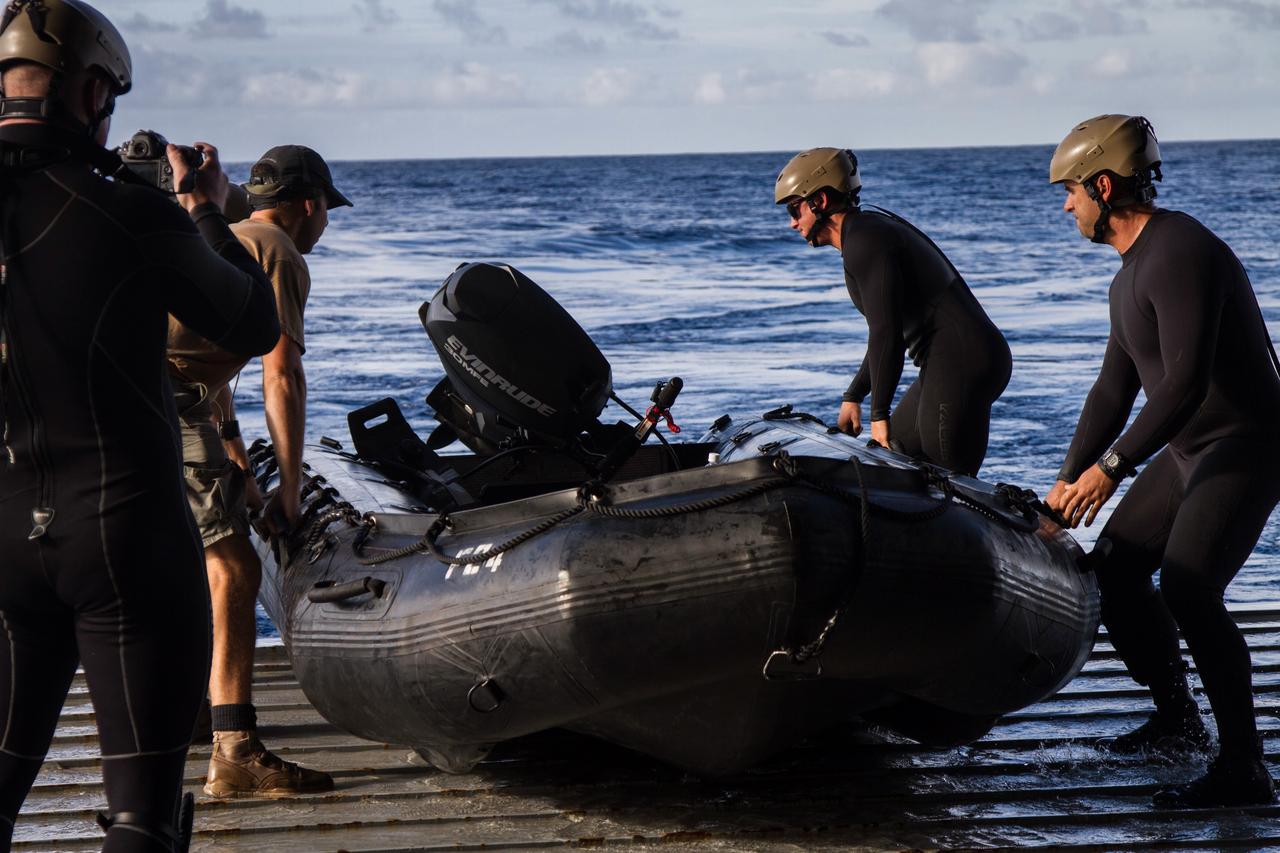
The US Navy and NASA recovery teams are on station off the cost of California on Dec. 3, 2014 and ready to recover Orion after Exploration Flight Test-1 (EFT-1) landing. Part of Batch image transfer from Flickr.
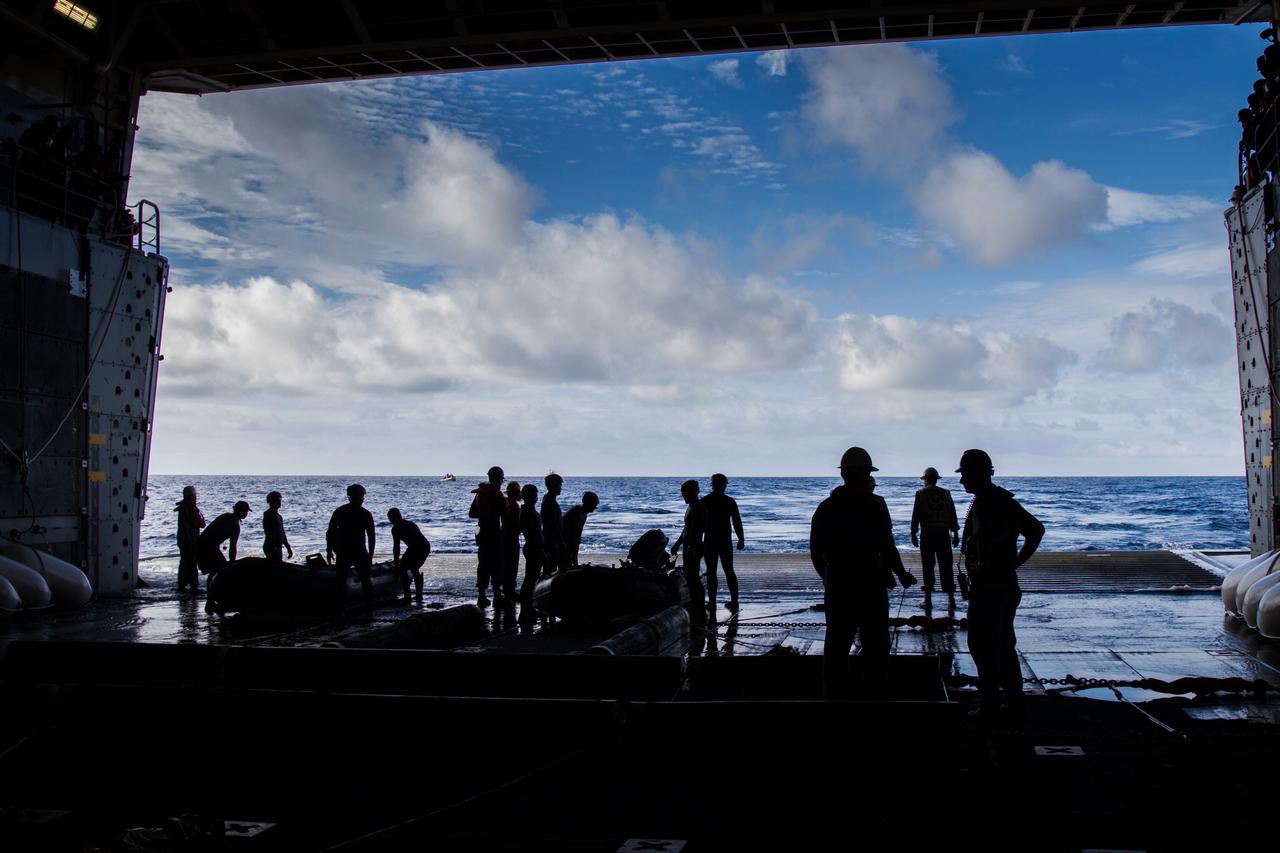
The US Navy and NASA recovery teams are on station off the cost of California on Dec. 3, 2014 and ready to recover Orion after Exploration Flight Test-1 (EFT-1) landing. Part of Batch image transfer from Flickr.
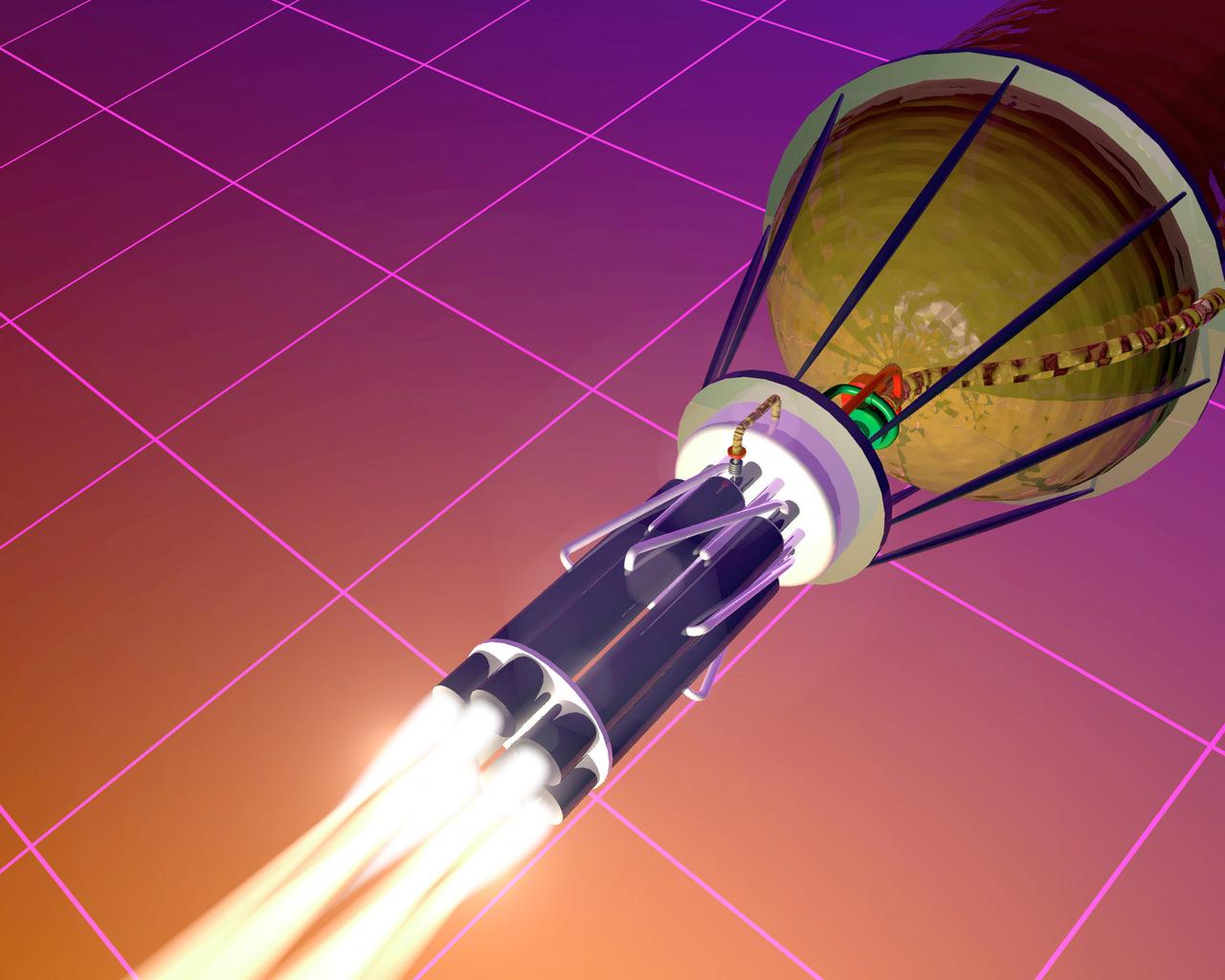
Pictured is an artist's concept of an advanced chemical propulsion system called Pulse Detonation. Long term technology research in this advanced propulsion system has the potential to dramatically change the way we think about space propulsion systems. This research is expected to significantly reduce the cost of space travel within the next 25 years.
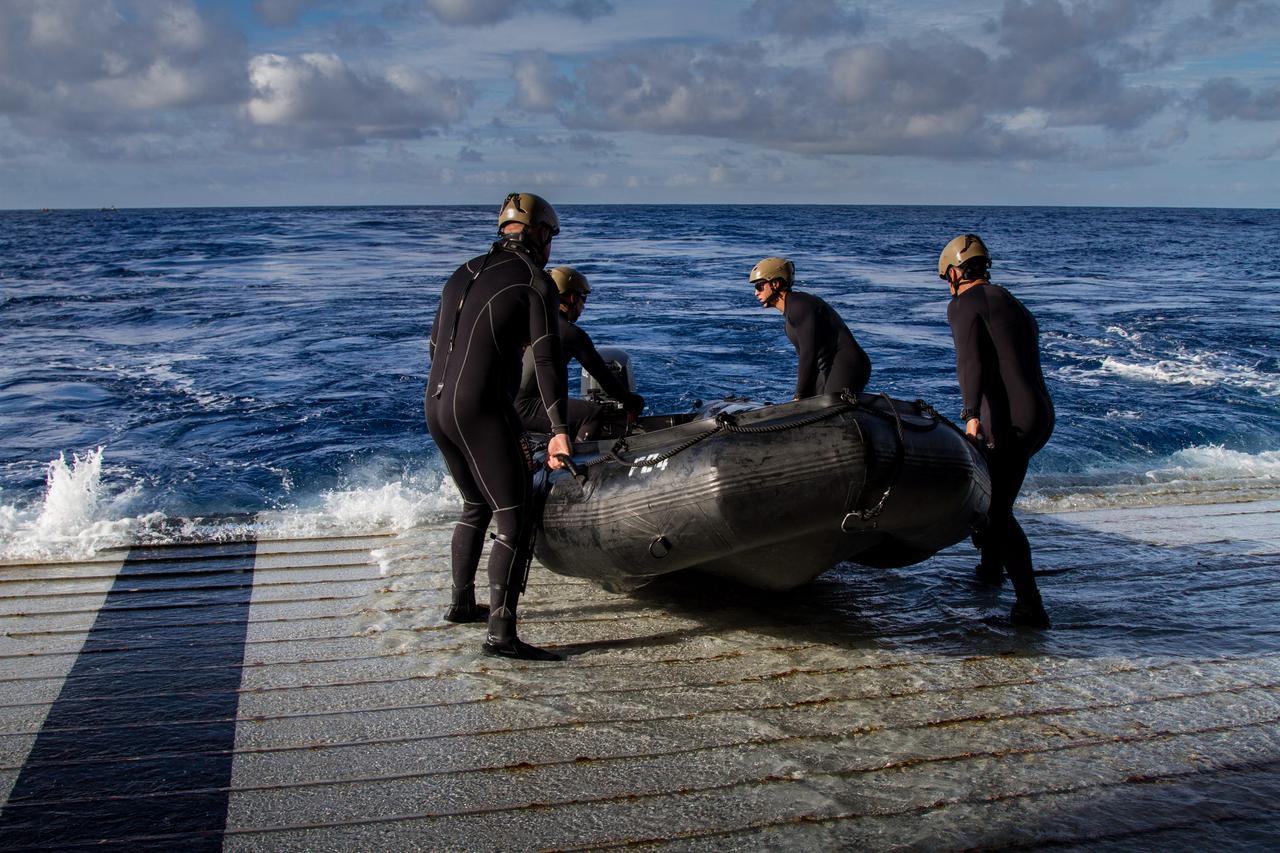
The US Navy and NASA recovery teams are on station off the cost of California on Dec. 3, 2014 and ready to recover Orion after Exploration Flight Test-1 (EFT-1) landing. Part of Batch image transfer from Flickr.
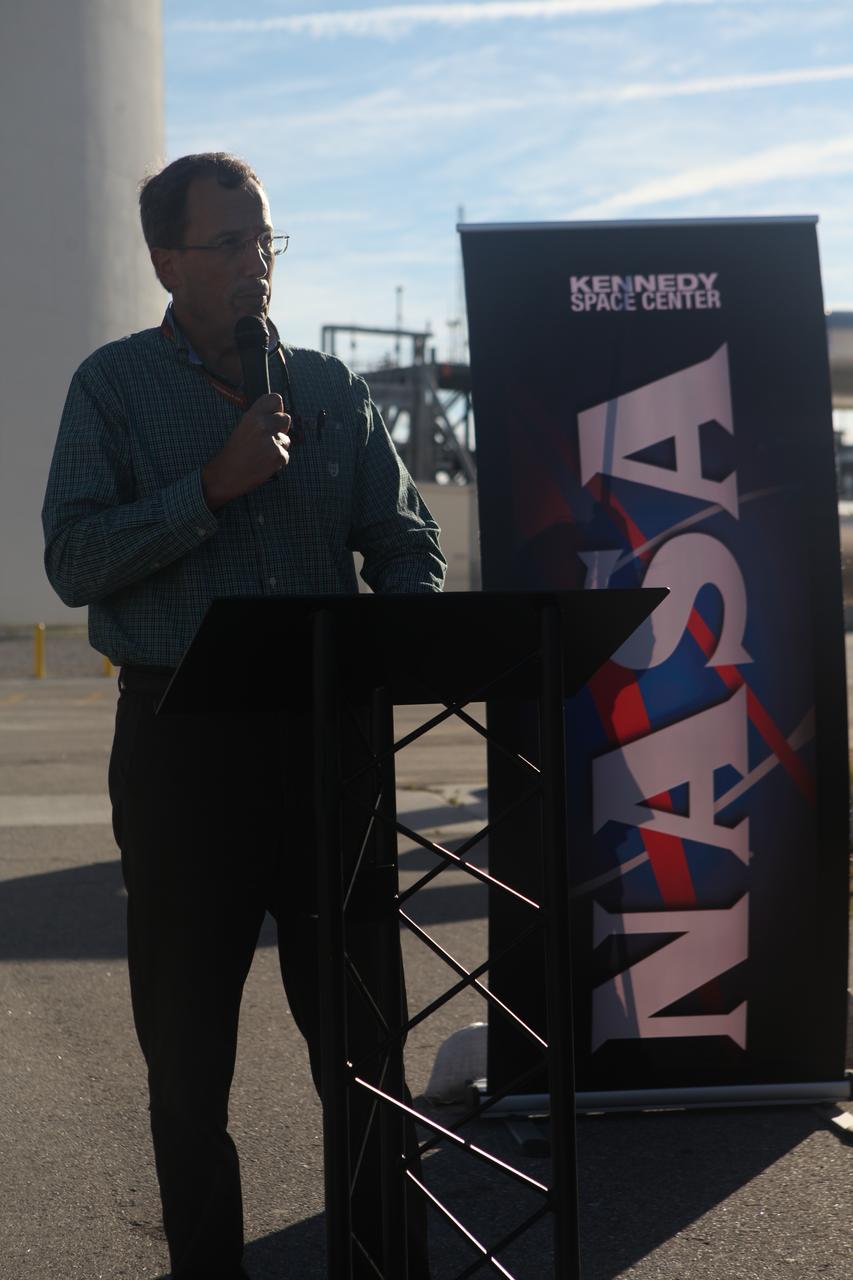
Sustainability Team Lead Dan Clark addresses the news media and NASA Social about the new Thermal Energy Storage (TES) tank at NASA's Kennedy Space Center Feb. 17. The TES tank works like a giant battery and is saving the center utility cost. These savings will be applied to new sustainable projects at Kennedy.
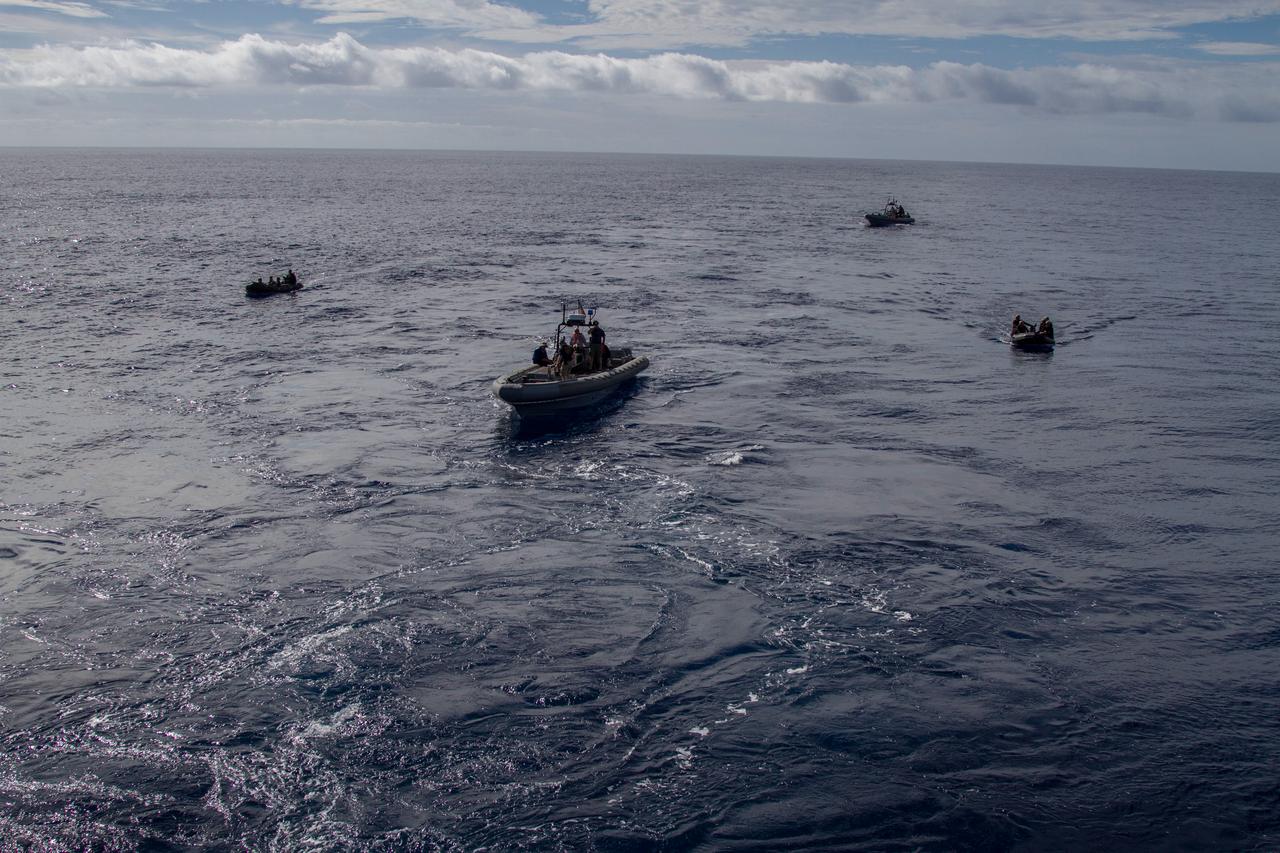
The US Navy and NASA recovery teams are on station off the cost of California on Dec. 3, 2014 and ready to recover Orion after Exploration Flight Test-1 (EFT-1) landing. Part of Batch image transfer from Flickr.
The US Navy and NASA recovery teams are on station off the cost of California on Dec. 3, 2014 and ready to recover Orion after Exploration Flight Test-1 (EFT-1) landing. Part of Batch image transfer from Flickr.
The US Navy and NASA recovery teams are on station off the cost of California on Dec. 3, 2014 and ready to recover Orion after Exploration Flight Test-1 (EFT-1) landing. Part of Batch image transfer from Flickr.
CAPE CANAVERAL, Fla. -- At NASA’s Kennedy Space Center in Florida, demolition is underway on the Base Operations Building, or BOB, in the Industrial Area. The two-story BOB was constructed in 1965 as office space for workers. Kennedy is demolishing some of the older facilities due to their age and to reduce maintenance and repair costs. Photo credit: NASA_ Cory Huston
Bart Gaetjens, Florida Power & Light's FPL area external affairs manager, addresses the news media and NASA Social about the new Thermal Energy Storage (TES) tank Feb. 17. The TES tank works like a giant battery and is saving the center utility cost. These savings will be applied to new sustainable projects at Kennedy.
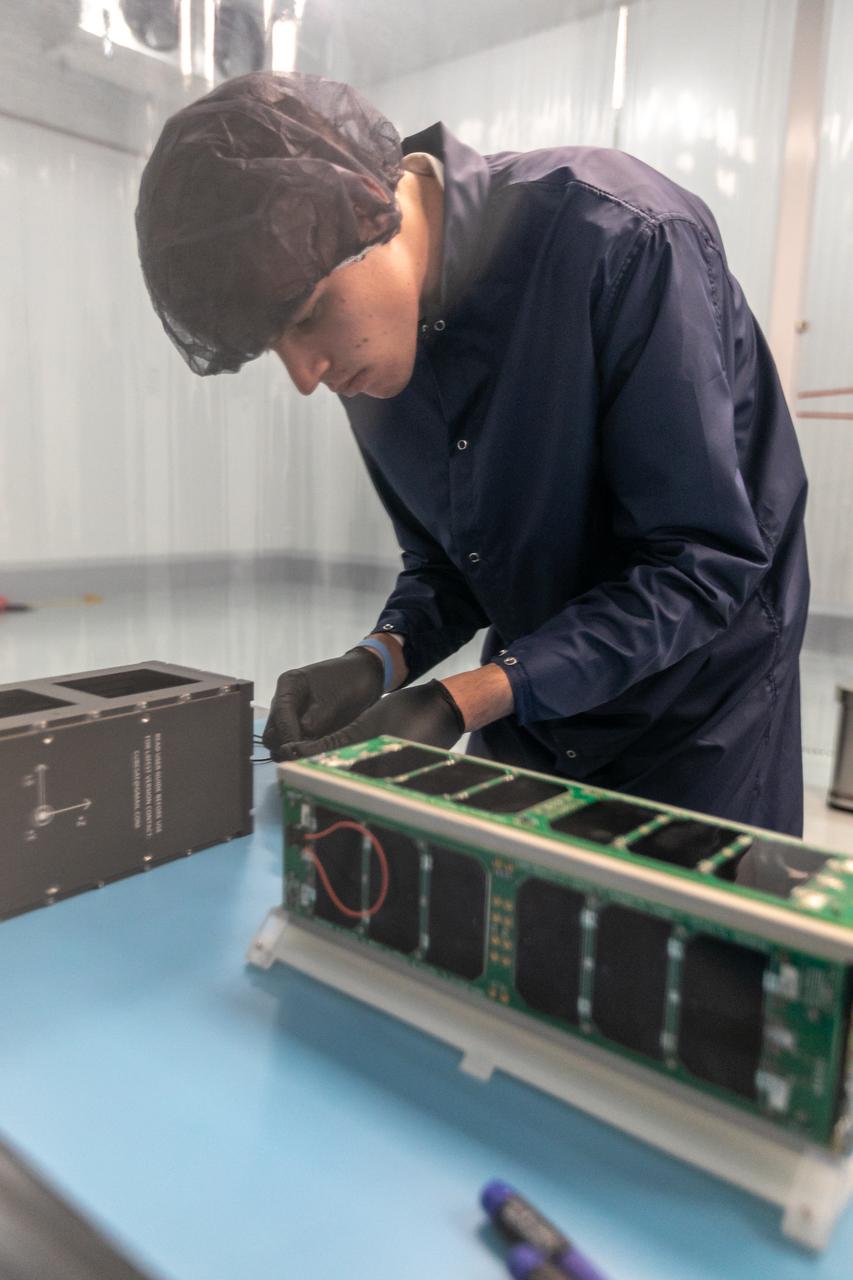
RSat is a 3U CubeSat with two seven degree of freedom robotic arms designed to latch onto a host satellite and maneuver around to image and potentially repair malfunctioning components. RSat is part of the AMODS research project developed by a team of Midshipmen from the United States Naval Academy. The three-year-old program aims to employ a small satellite platform to provide both new and legacy spacecraft with cost-effective on-orbit assessments and repair services. Currently, if a satellite makes it to orbit, there is no guarantee it will work as intended. In these cases, not only is the spacecraft lost, but invaluable experience vanishes with it. RSat takes advantage of cost and profile efficiencies of the small satellite platform to offer satellite developers and operators a fundamentally new way to reduce risk, protect investment and effect design improvements correlated against observed space environment experience. RSat-P is launching as part of ELaNa XIX as a free-flying unit intended to validate the on-orbit effectiveness of compact robotic manipulators.
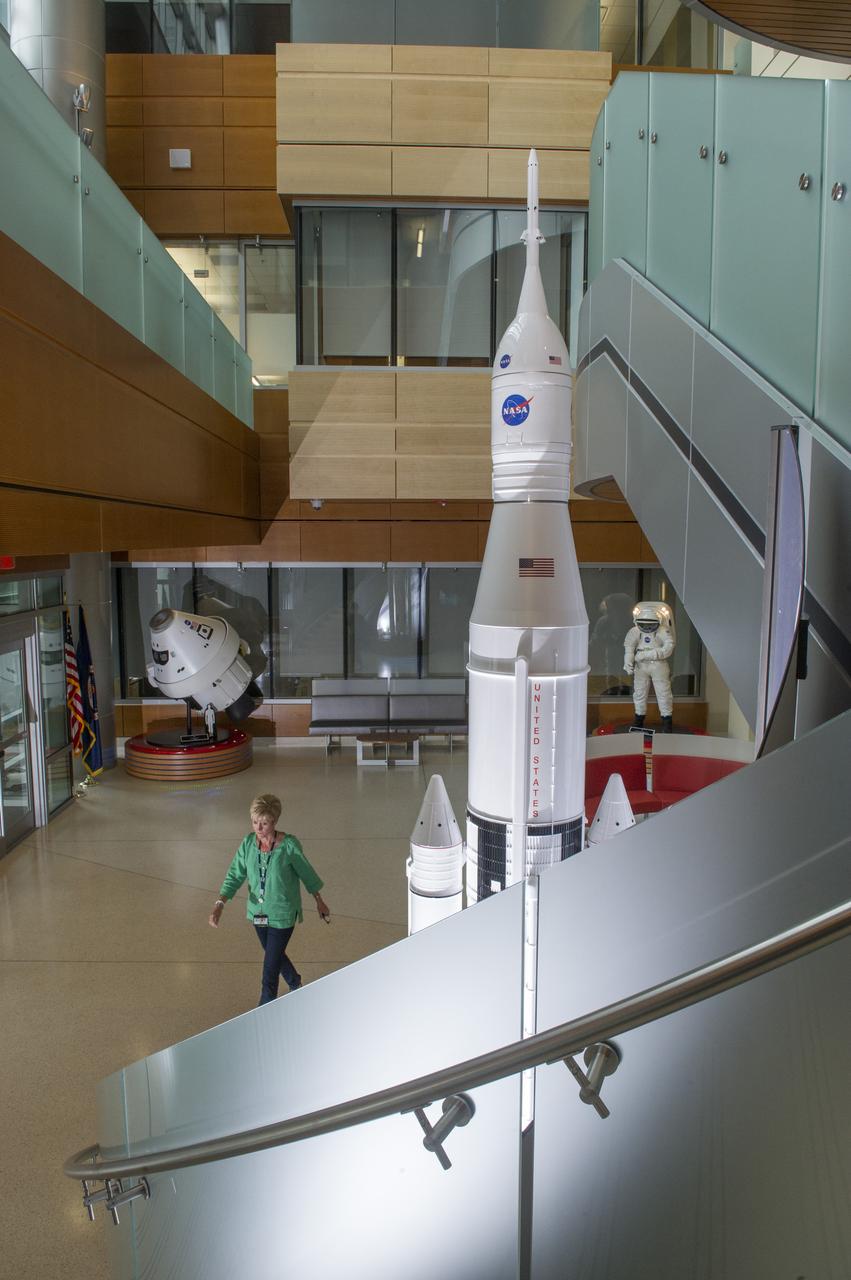
THE INTERIOR OF THE MARSHALL SPACE FLIGHT CENTER’S NEWLY OPENED BUILDING 4220, PRIMARILY HOME TO THE SPACE LAUNCH SYSTEM PROGRAM, REFLECTS A BLEND OF AESTHETICS, PRACTICALITY AND HIGH EFFICIENCY. THE COST-CONSCIOUS NEW FACILITY IS ENVIRONMENTALLY FRIENDLY ON ALL FRONTS, FEATURING STATE-OF-THE-ART GREEN TECHNOLOGIES AND ENERGY-CONSERVATION SYSTEMS THROUGHOUT THE BUILDING. THE ENTIRE STRUCTURE IS SPECIALLY INSULATED, WITH MUCH OF THE EXTERIOR COVERED IN LOW-EMISSIVITY GLASS THAT DEFLECTS HEAT TO REDUCE COOLING COSTS WITHIN. ROOFTOP SOLAR-POWER UNITS ABSORB ENERGY TO AUGMENT ELECTRICAL POWER, AND A 10,000-GALLON CISTERN COLLECTS STORMWATER TO IRRIGATE THE SURROUNDING GREENERY. EVEN THE FACILITY'S NEW PARKING LOT HAS A GREEN ELEMENT: RATHER THAN GUTTERS, IT INCLUDES A "BIOSWALE," A NATURAL, SOIL-AND-VEGETATION-BASED MEANS OF CAPTURING AND FILTERING STORMWATER RUNOFF, WHICH IS DIRECTED INTO A NEARBY COLLECTING POND. ONCE CERTIFICATION IS COMPLETE, BUILDING 4220 WILL BECOME THE SEVENTH LEED CERTIFIED MARSHALL STRUCTURE ON CAMPUS
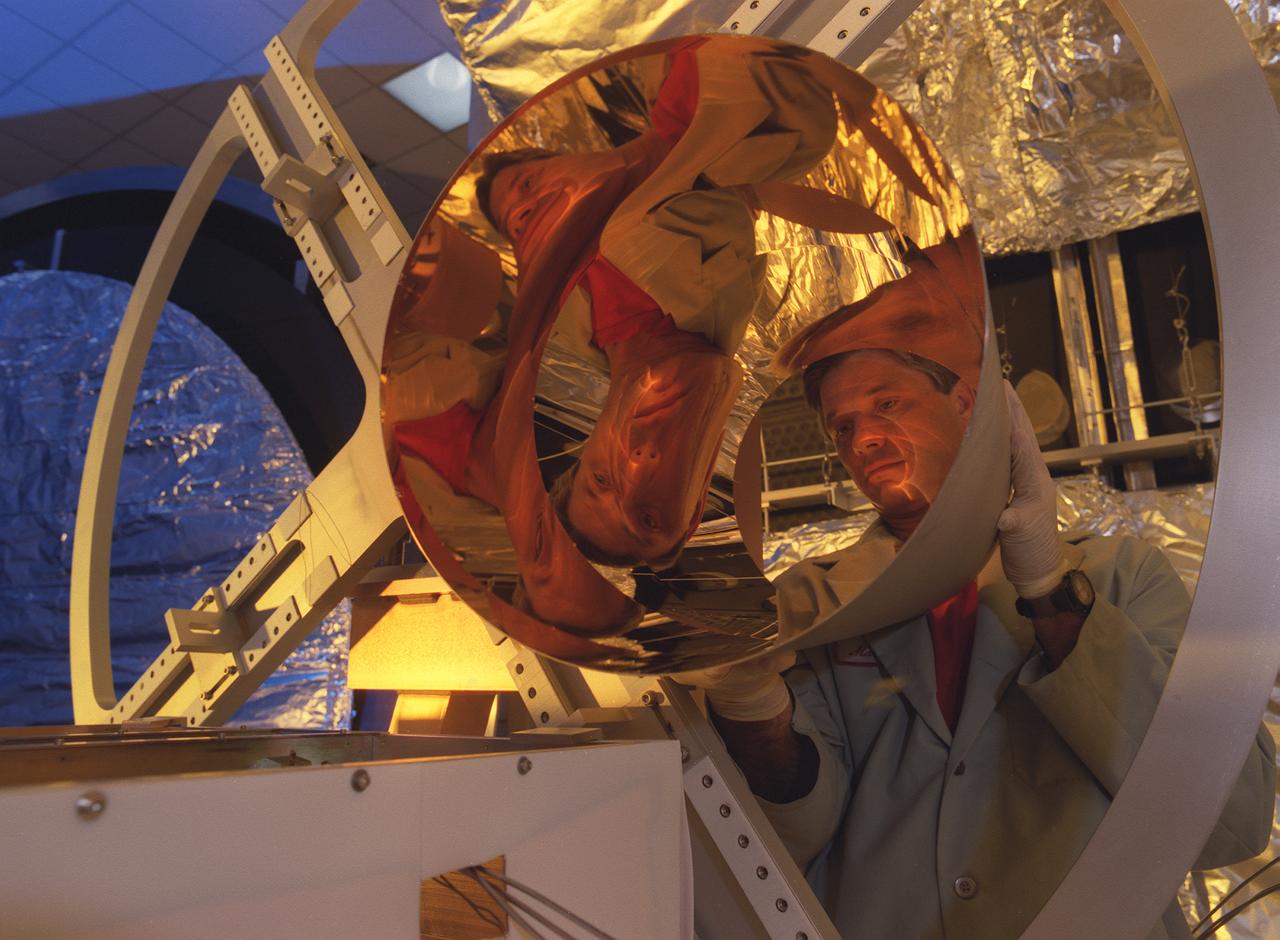
NASA's Space Optics Manufacturing Center has been working to expand our view of the universe via sophisticated new telescopes. The Optics Center's goal is to develop low-cost, advanced space optics technologies for the NASA program in the 21st century - including the long-term goal of imaging Earth-like planets in distant solar systems. To reduce the cost of mirror fabrication, Marshall Space Flight Center (MSFC) has developed replication techniques, the machinery and materials to replicate electro-formed nickel mirrors. The process allows fabricating precisely shaped mandrels to be used and reused as masters for replicating high-quality mirrors. This image shows a lightweight replicated x-ray mirror with gold coatings applied.

RSat is a 3U CubeSat with two seven degree of freedom robotic arms designed to latch onto a host satellite and maneuver around to image and potentially repair malfunctioning components. RSat is part of the AMODS research project developed by a team of Midshipmen from the United States Naval Academy. The three-year-old program aims to employ a small satellite platform to provide both new and legacy spacecraft with cost-effective on-orbit assessments and repair services. Currently, if a satellite makes it to orbit, there is no guarantee it will work as intended. In these cases, not only is the spacecraft lost, but invaluable experience vanishes with it. RSat takes advantage of cost and profile efficiencies of the small satellite platform to offer satellite developers and operators a fundamentally new way to reduce risk, protect investment and effect design improvements correlated against observed space environment experience. RSat-P is launching as part of ELaNa XIX as a free-flying unit intended to validate the on-orbit effectiveness of compact robotic manipulators.
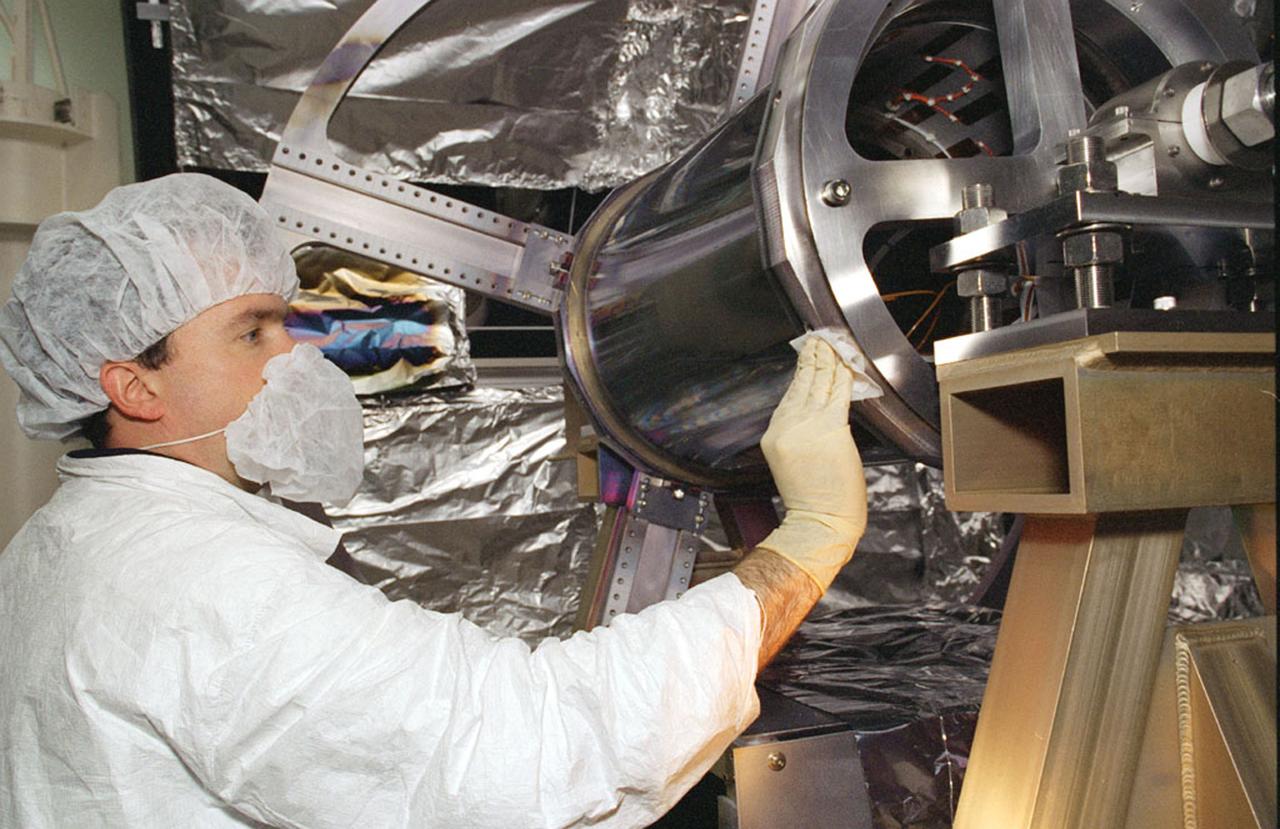
NASA's Space Optics Manufacturing Center has been working to expand our view of the universe via sophisticated new telescopes. The Optics Center's goal is to develop low-cost, advanced space optics technologies for the NASA program in the 21st century - including the long-term goal of imaging Earth-like planets in distant solar systems. To reduce the cost of mirror fabrication, Marshall Space Flight Center (MSFC) has developed replication techniques, the machinery, and materials to replicate electro-formed nickel mirrors. The process allows fabricating precisely shaped mandrels to be used and reused as masters for replicating high-quality mirrors. Image shows Dr. Alan Shapiro cleaning mirror mandrel to be applied with highly reflective and high-density coating in the Large Aperture Coating Chamber, MFSC Space Optics Manufacturing Technology Center (SOMTC).
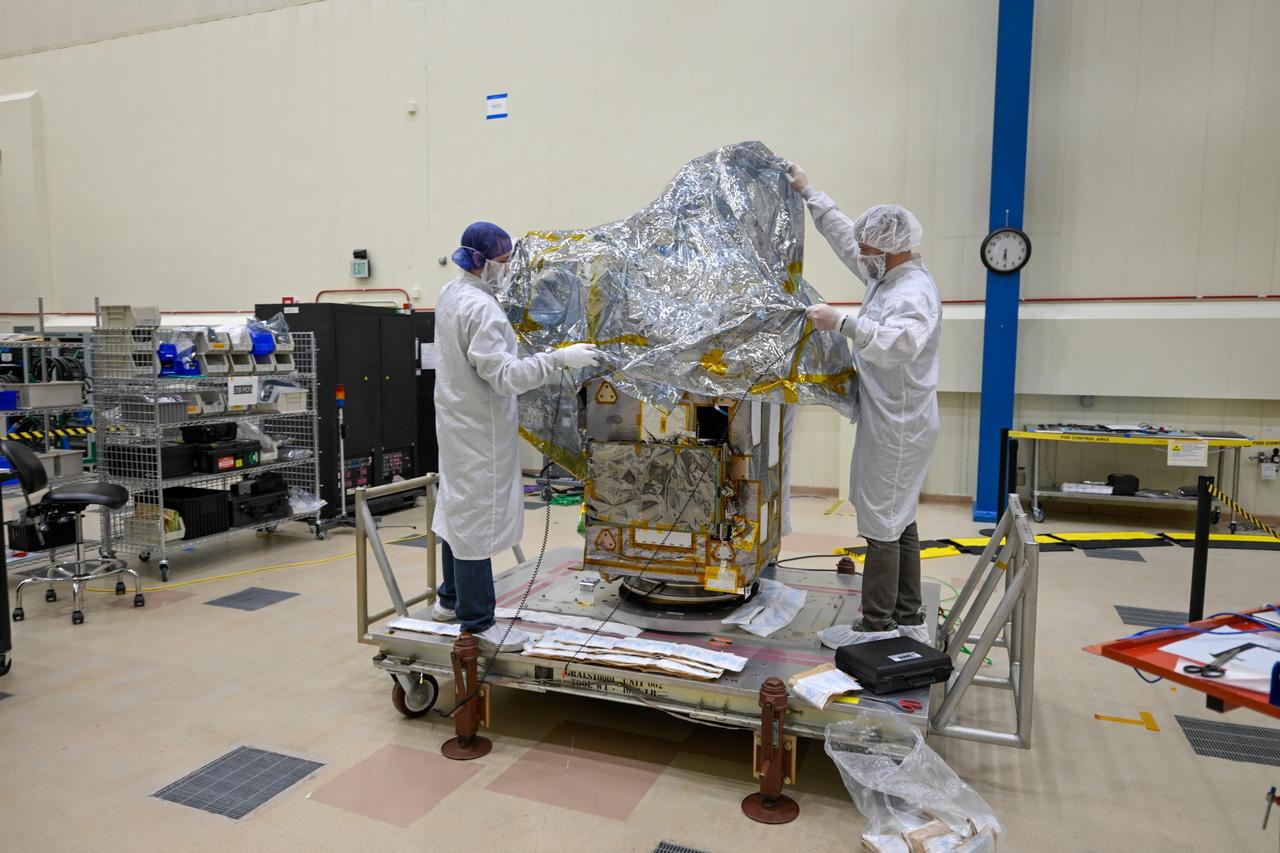
NASA's Lunar Trailblazer spacecraft gets covered in anti-static wrap before being shipped from Lockheed Martin Space in Littleton, Colorado, to Florida, where it arrived on Jan. 29, 2025. The spacecraft was built and tested at Lockheed and will launch no earlier than Feb. 26 from Launch Complex 39A at the agency's Kennedy Space Center. Lunar Trailblazer was a selection of NASA's SIMPLEx (Small Innovative Missions for Planetary Exploration), which provides opportunities for low-cost science spacecraft to ride-share with selected primary missions. To maintain the lower overall cost, SIMPLEx missions have a higher risk posture and lighter requirements for oversight and management. This higher risk acceptance allows NASA to test pioneering technologies, and the definition of success for these missions includes the lessons learned from more experimental endeavors. https://photojournal.jpl.nasa.gov/catalog/PIA26458
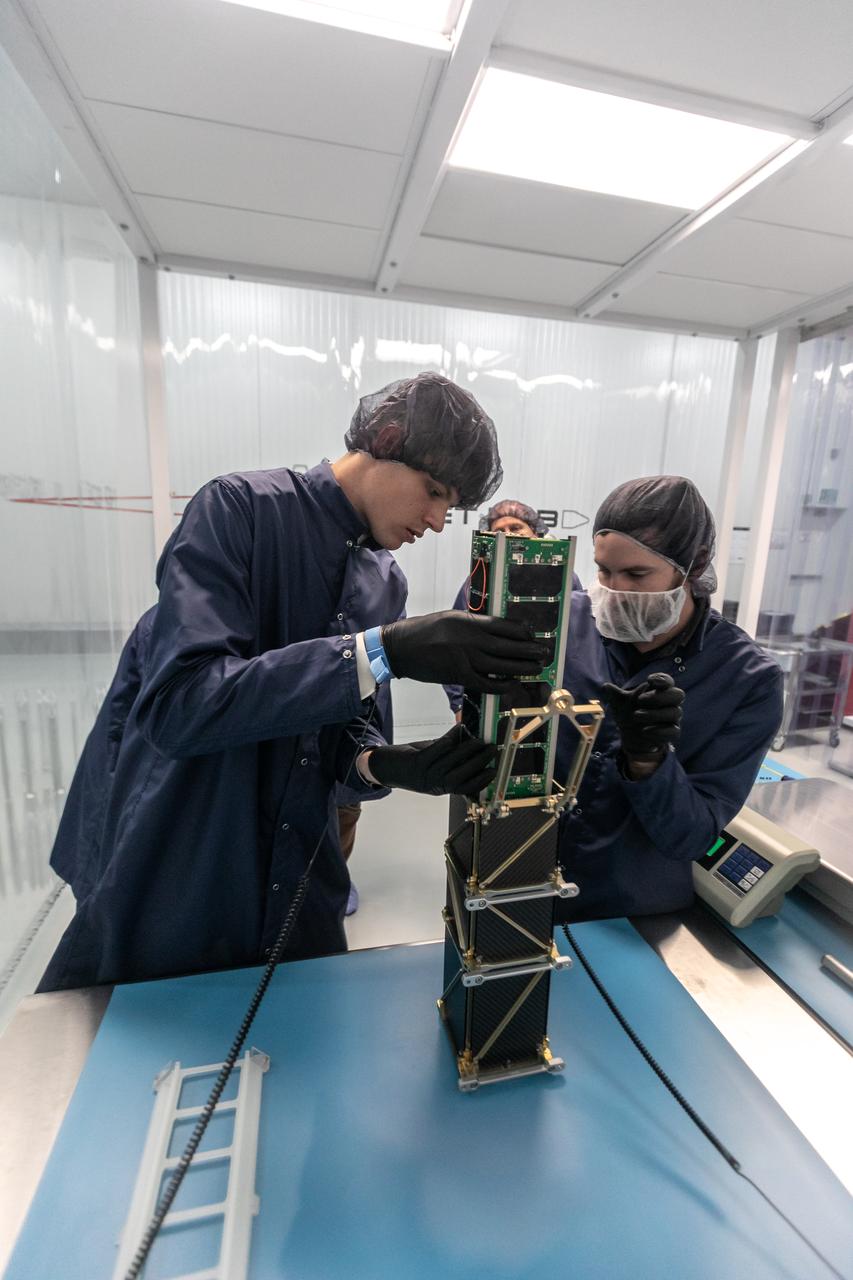
RSat is a 3U CubeSat with two seven degree of freedom robotic arms designed to latch onto a host satellite and maneuver around to image and potentially repair malfunctioning components. RSat is part of the AMODS research project developed by a team of Midshipmen from the United States Naval Academy. The three-year-old program aims to employ a small satellite platform to provide both new and legacy spacecraft with cost-effective on-orbit assessments and repair services. Currently, if a satellite makes it to orbit, there is no guarantee it will work as intended. In these cases, not only is the spacecraft lost, but invaluable experience vanishes with it. RSat takes advantage of cost and profile efficiencies of the small satellite platform to offer satellite developers and operators a fundamentally new way to reduce risk, protect investment and effect design improvements correlated against observed space environment experience. RSat-P is launching as part of ELaNa XIX as a free-flying unit intended to validate the on-orbit effectiveness of compact robotic manipulators.
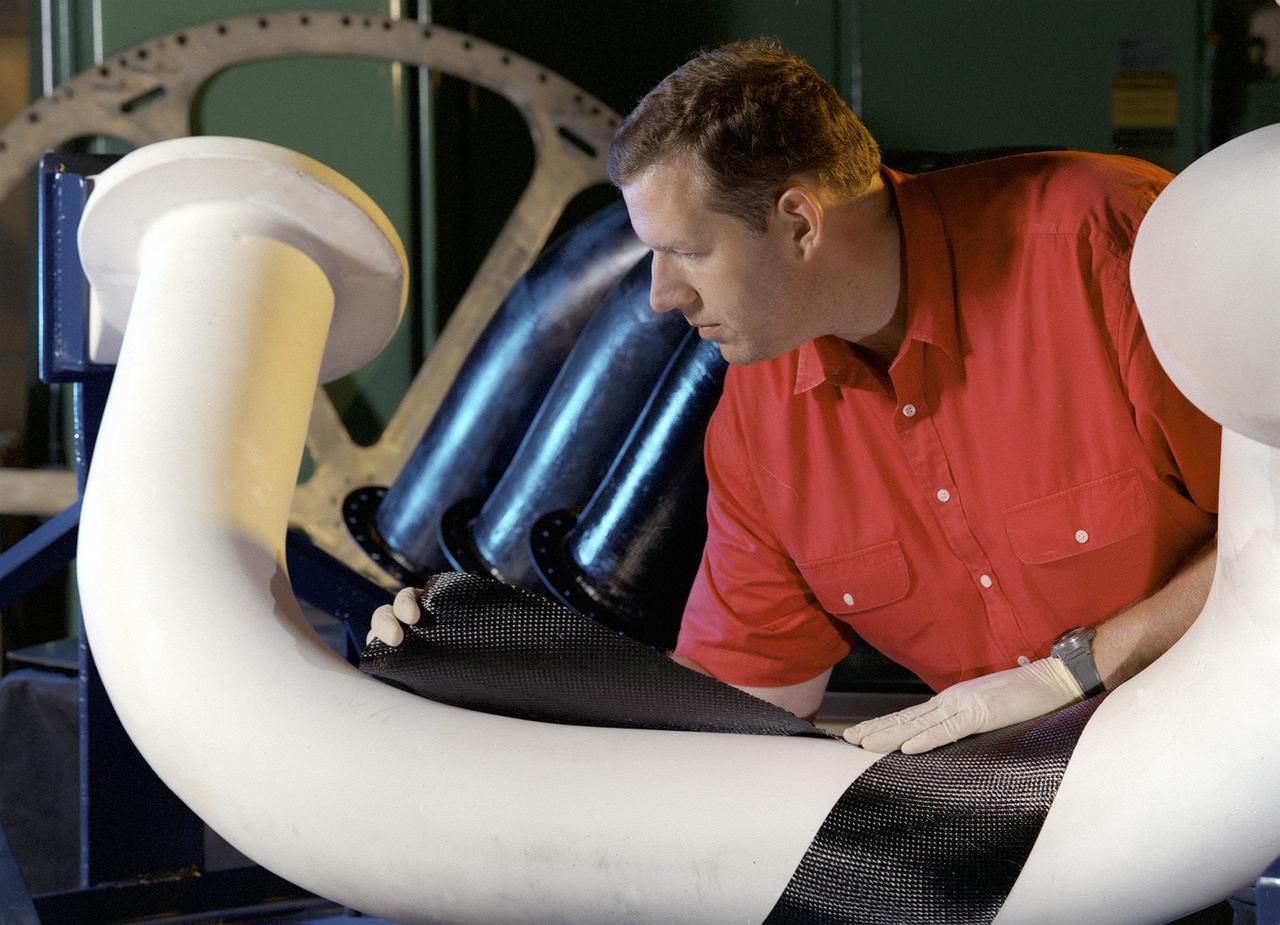
Engineers at Marshall Space Flight Center (MSFC) in Huntsville, Alabama, are working with industry partners to develop a new generation of more cost-efficient space vehicles. Lightweight fuel tanks and components under development will be the critical elements in tomorrow's reusable launch vehicles and will tremendously curb the costs of getting to space. In this photo, Tom DeLay, a materials processes engineer for MSFC, uses a new graphite epoxy technology to create lightweight cryogenic fuel lines for futuristic reusable launch vehicles. He is wrapping a water-soluble mandrel, or mold, with a graphite fabric coated with an epoxy resin. Once wrapped, the pipe will be vacuum-bagged and autoclave-cured. The disposable mold will be removed to reveal a thin-walled fuel line. In addition to being much lighter and stronger than metal, this material won't expand or contract as much in the extreme temperatures encountered by launch vehicles.
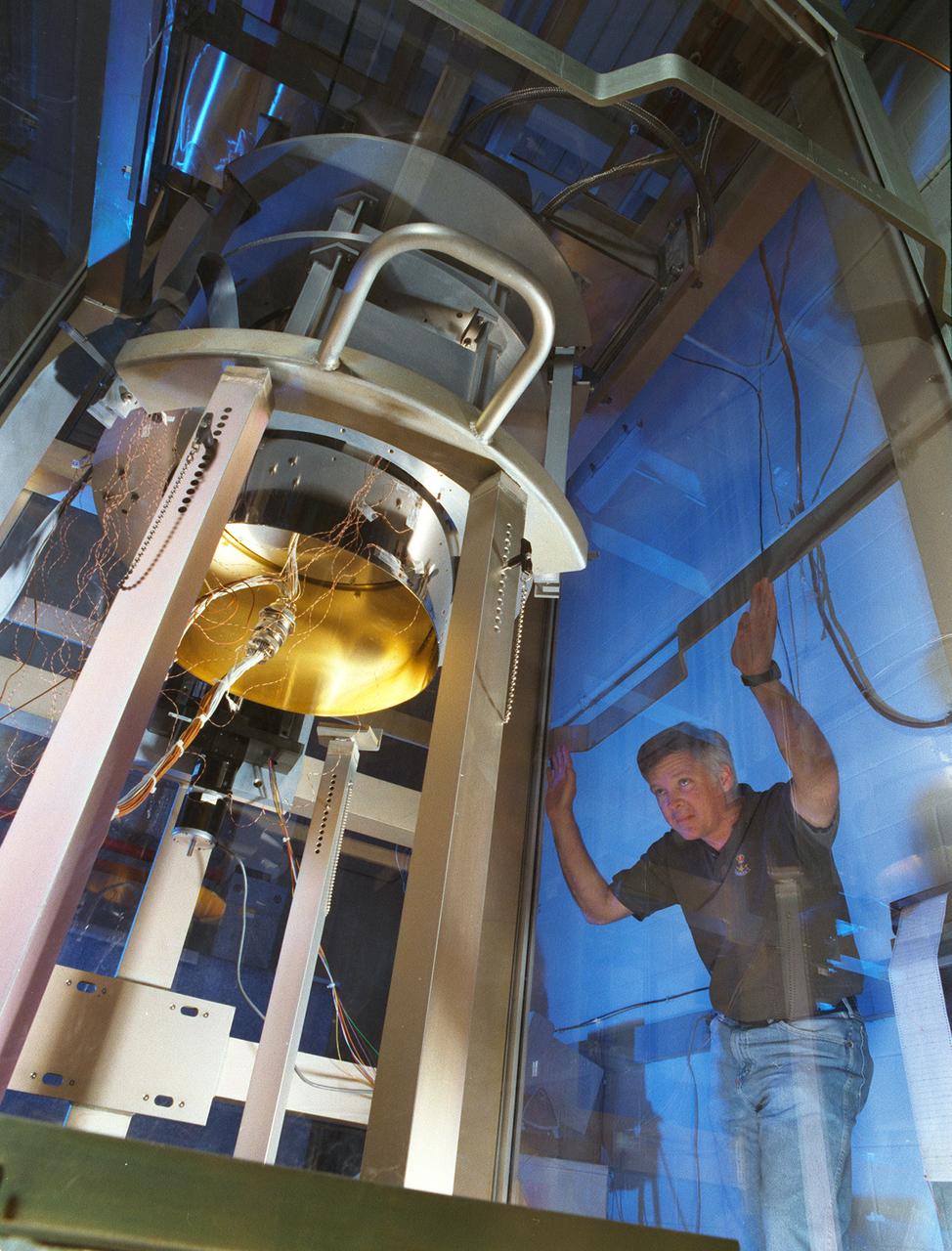
NASA's Space Optics Manufacturing Center has been working to expand our view of the universe via sophisticated new telescopes. The Optics Center's goal is to develop low-cost, advanced space optics technologies for the NASA program in the 21st century - including the long-term goal of imaging Earth-like planets in distant solar systems. To reduce the cost of mirror fabrication, Marshall Space Flight Center (MSFC) has developed replication techniques, the machinery, and materials to replicate electro-formed nickel mirrors. Optics replication uses reusable forms, called mandrels, to make telescope mirrors ready for final finishing. MSFC optical physicist Bill Jones monitors a device used to chill a mandrel, causing it to shrink and separate from the telescope mirror without deforming the mirror's precisely curved surface.