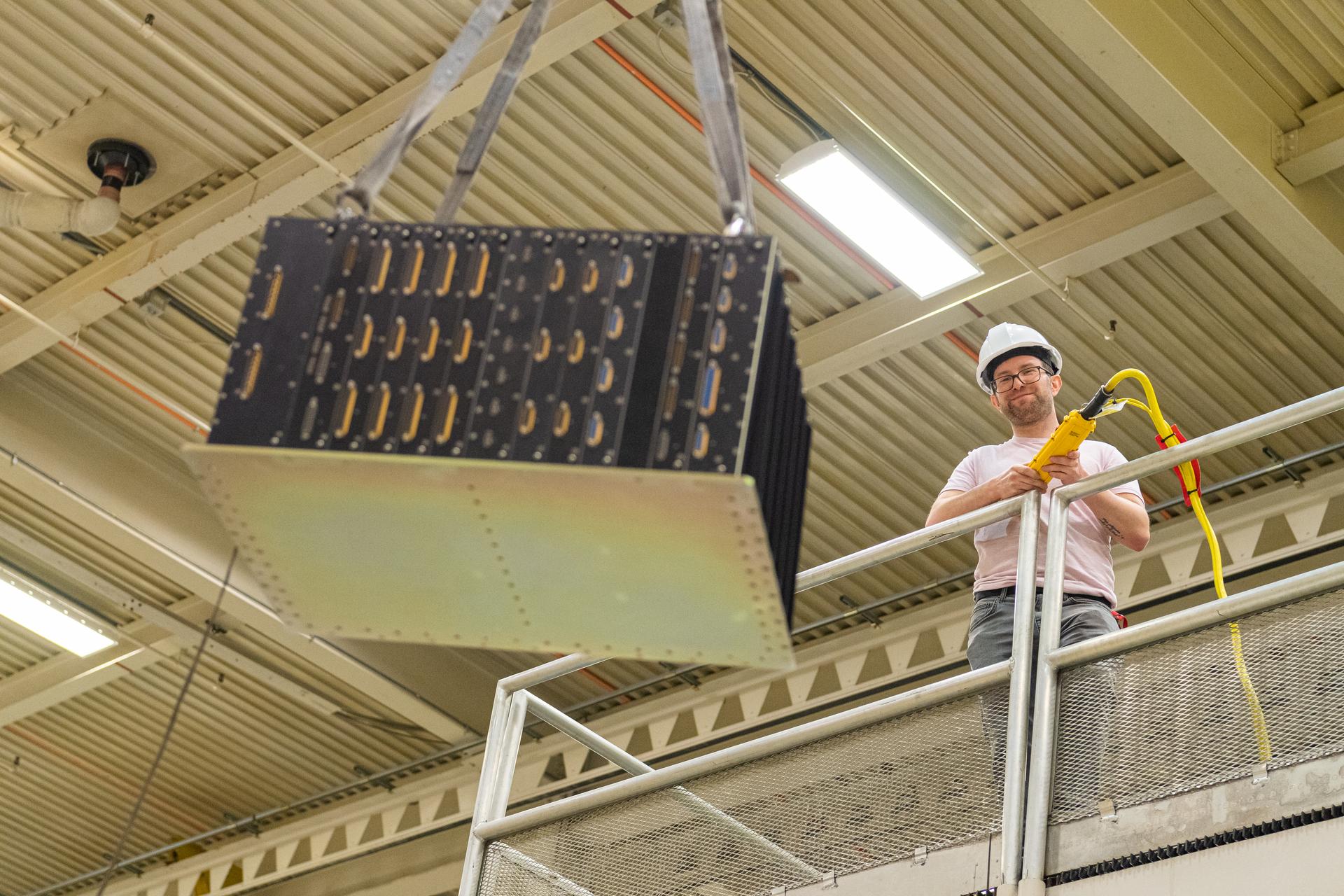
Mechanical engineering and integration technician Seth Alton crane lifts the OSAM-1 power supply unit into the thermal vacuum chamber at Goddard Space Flight Center, Greenbelt Md., April 12, 2023. This photo has been reviewed by OSAM1 project management and the Export Control Office and is released for public view. NASA/Mike Guinto
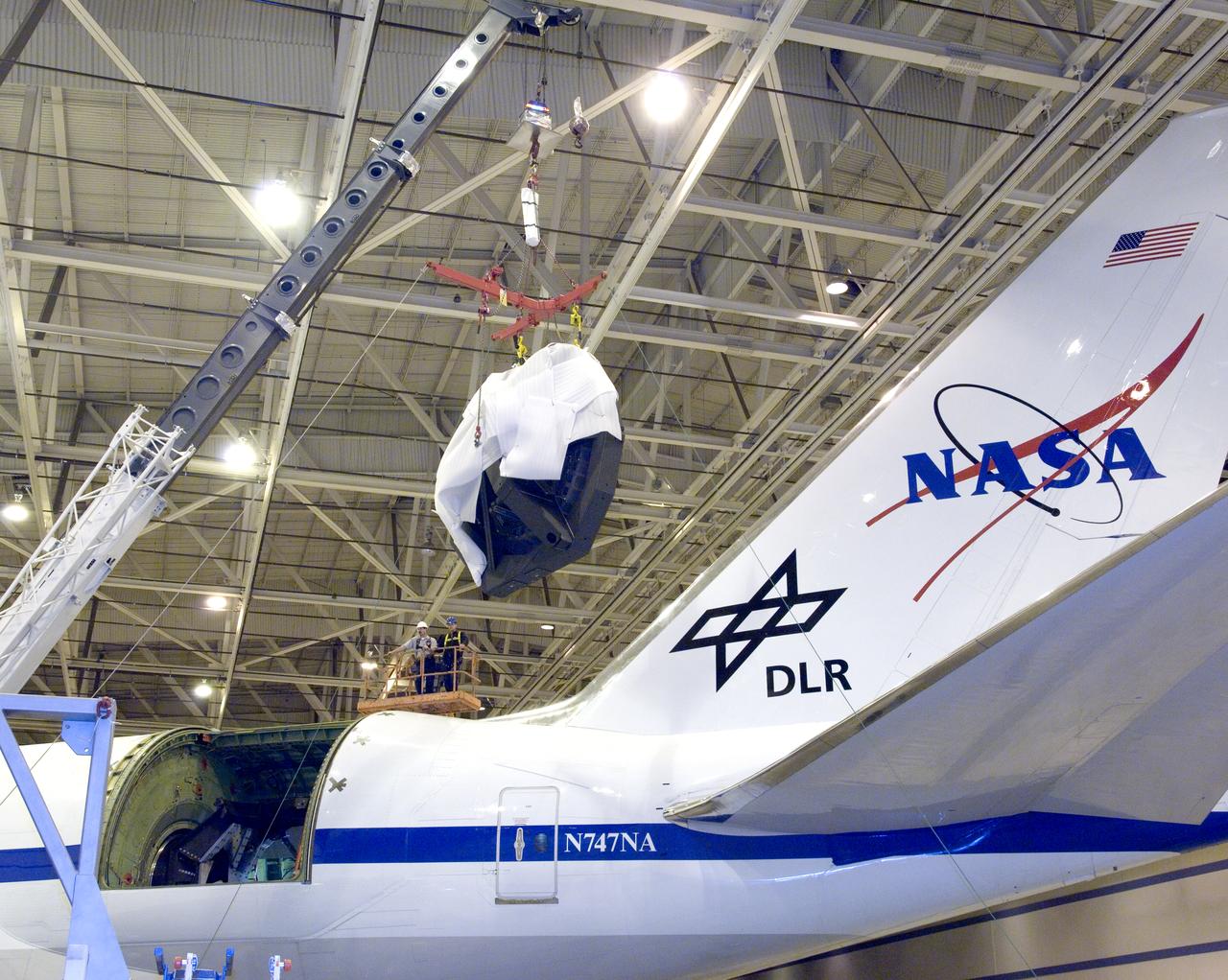
Technicians at the NASA Dryden Aircraft Operations Facility in Palmdale, Calif., removed the German-built primary mirror assembly from the Stratospheric Observatory for Infrared Astronomy, or SOFIA, April 18, 2008 in preparation for the final finish coating of the mirror. A precision crane lifted the more than two-ton mirror assembly from its cavity in the rear fuselage of the highly modified Boeing 747SP. The assembly was then secured in its transport dolly and moved to a clean room where it was prepared for shipment to NASA Ames Research Center at Moffett Field near Mountain View, Calif. where it would receive its aluminized finish coating before being re-installed in the SOFIA aircraft.
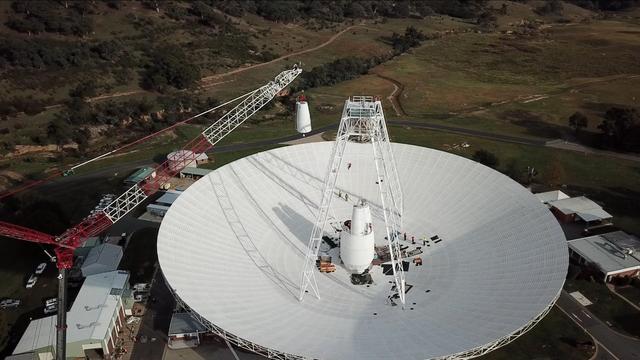
In a delicate operation, a 400-ton crane lifts the new X-band cone into the 70-meter (230-foot) Deep Space Network's Deep Space Station 43 (DSS-43) dish in Canberra, Australia. The new cone houses upgraded receiver and transmitter equipment for the 48-year-old antenna. One of several antennas located at the Canberra site, DSS-43 is the largest and responsible for transmitting commands to NASA's Voyager spacecraft. Since early March 2020, DSS43 has been offline for upgrades, which are expected to continue until January 2021. https://photojournal.jpl.nasa.gov/catalog/PIA23796
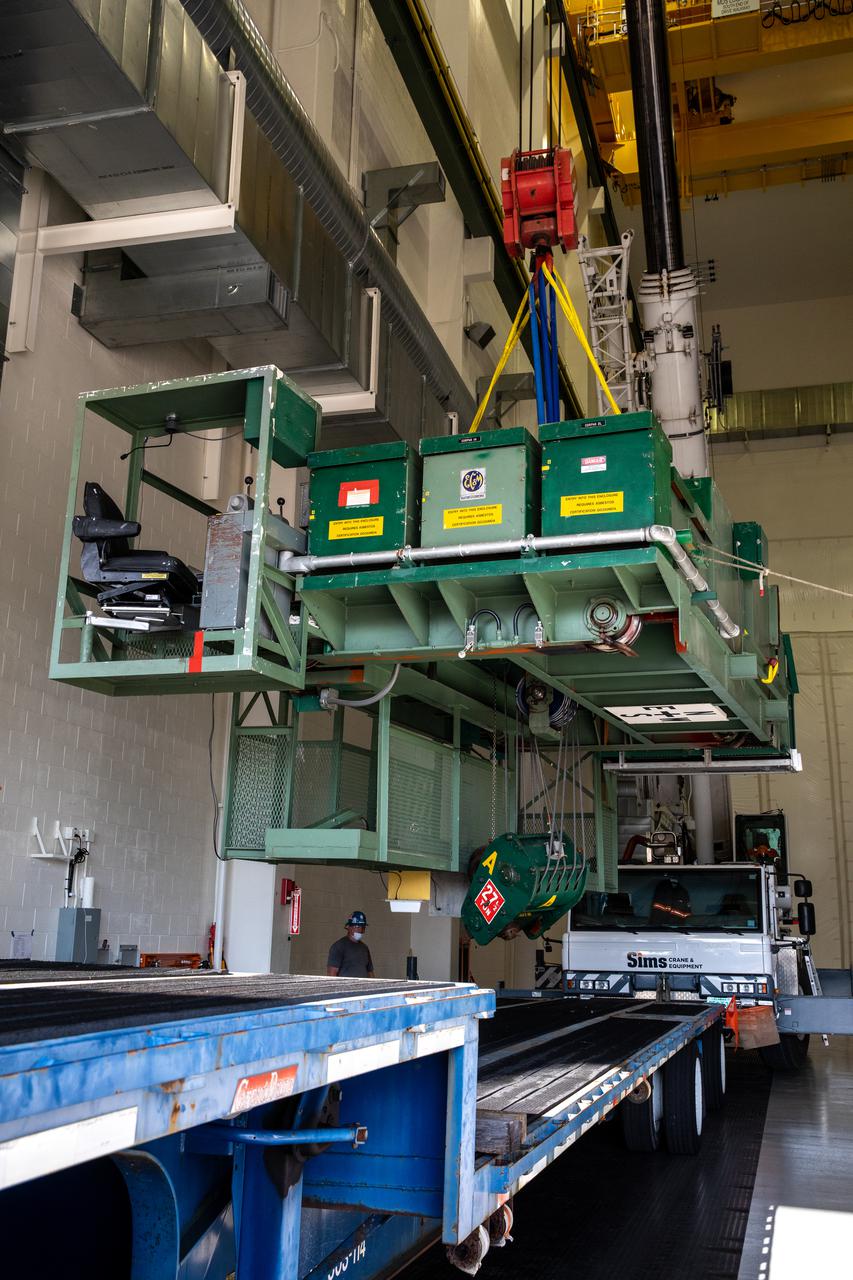
Inside the Neil Armstrong Operations and Checkout Building high bay at NASA’s Kennedy Space Center in Florida, a new overhead crane was installed, while the old Lypta 2.5-ton crane is lowered by crane on March 15, 2021. The new overhead crane will be used to process Orion for the agency’s first crewed mission, Artemis II. Teams from American Crane and Equipment Corp. are replacing the Lypta crane with the new Artemis-rated 30-ton crane. The new crane has enhanced controls and additional safety features that will allow for micro movements to within 1/100th of an inch. Operators will use the crane to lift Orion once the crew and service modules are mated.
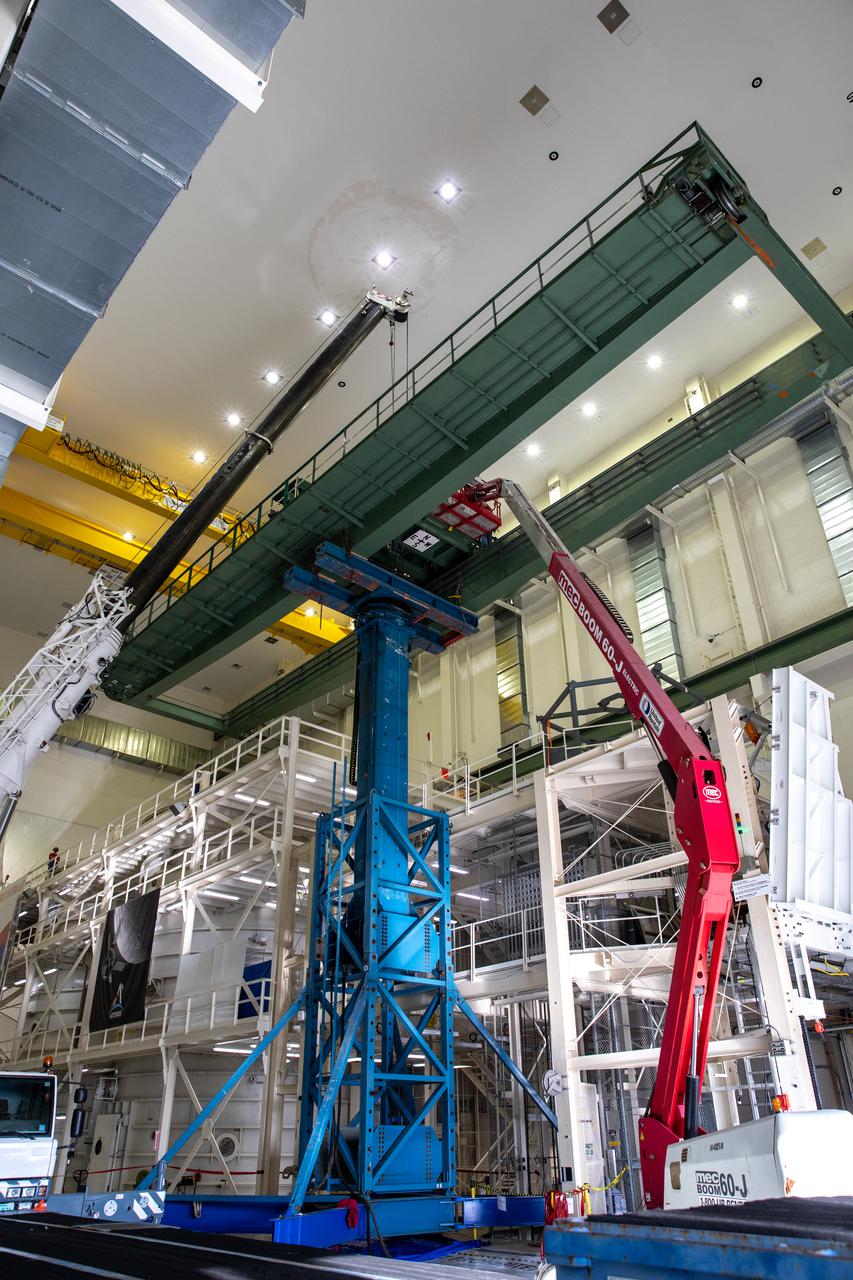
Inside the Neil Armstrong Operations and Checkout Building high bay at NASA’s Kennedy Space Center in Florida, installation of a new overhead crane is in progress on March 15, 2021. The previous Lypta 2.5-ton crane is lowered by crane to the floor. It will be used to process Orion beginning with the agency’s first crewed mission, Artemis II. Teams from American Crane and Equipment Corp. are replacing the Lypta crane with the new Artemis-rated 30-ton crane. The hardware has enhanced controls and additional safety features that will allow for micro movements to within 1/100th of an inch. Operators will use the crane to lift Orion once the crew and service modules are mated.
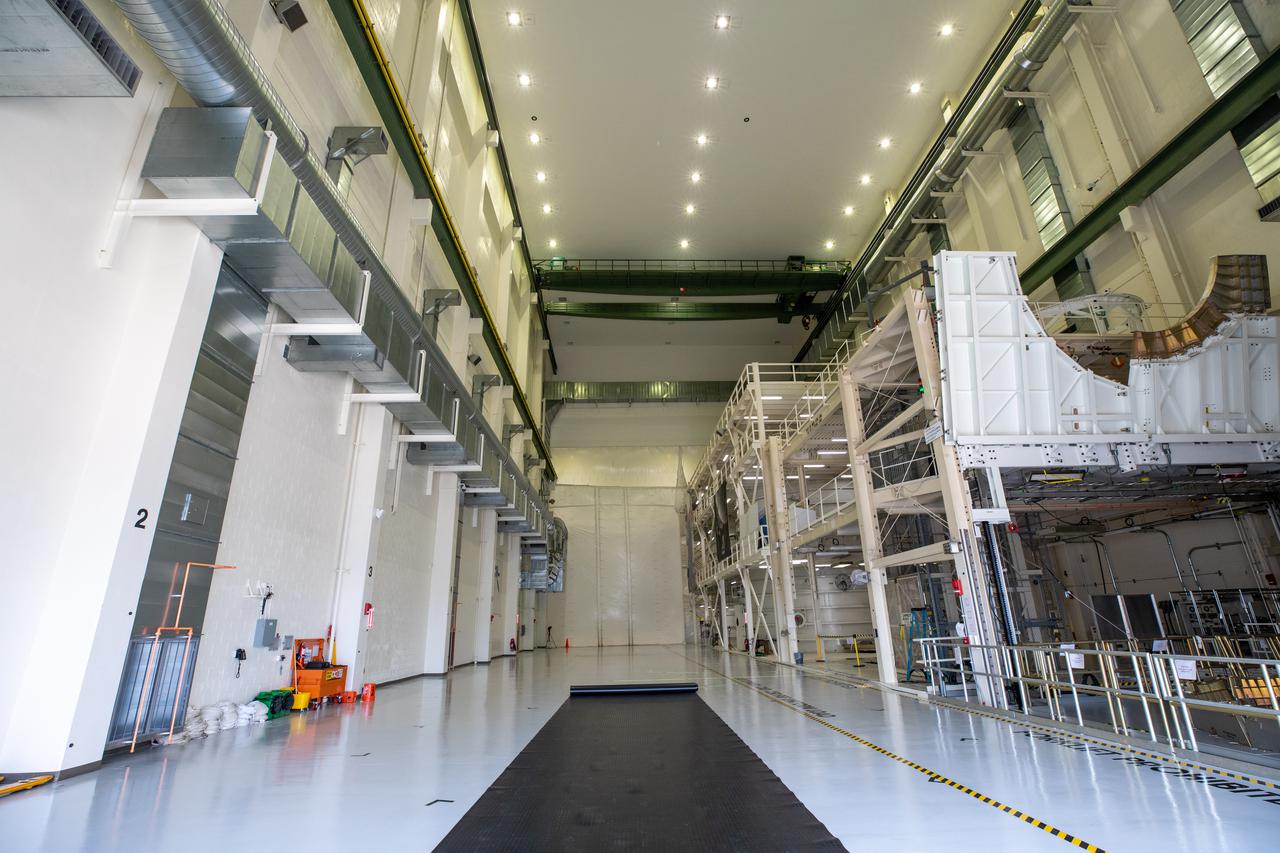
The high bay inside the Neil Armstrong Operations and Checkout Building at NASA’s Kennedy Space Center in Florida, is being readied on March 3, 2021, for installation of a new crane. The new overhead crane will be used to process Orion beginning with the agency’s first crewed mission, Artemis II. Teams from American Crane and Equipment Corp. replaced the Lypta 27.5-ton crane (pictured) with the new Artemis-rated 30-ton crane. The new crane will have enhanced controls and additional safety features that will allow for micro movements to within 1/100th of an inch. Operators will use the crane to lift Orion once the crew and service modules are mated.
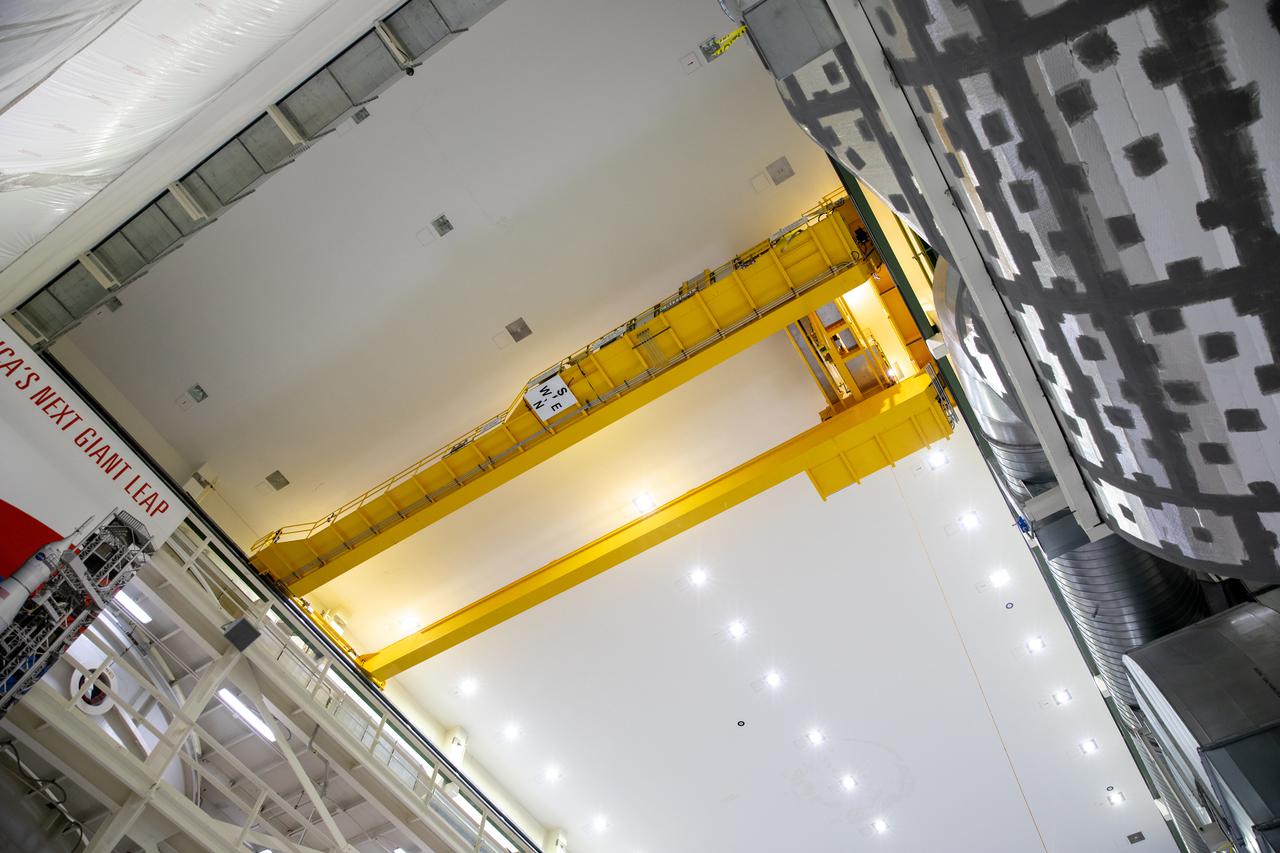
Inside the Neil Armstrong Operations and Checkout Building high bay at NASA’s Kennedy Space Center in Florida, installation of a new overhead crane is completed on March 17, 2021. The new hardware will be used to process Orion beginning with the agency’s first crewed mission, Artemis II. Teams from American Crane and Equipment Corp. replaced the Lypta 27.5-ton crane with the new Artemis-rated 30-ton crane. The new crane has enhanced controls and additional safety features that will allow for micro movements to within 1/100th of an inch. Operators will use the crane to lift Orion once the crew and service modules are mated.
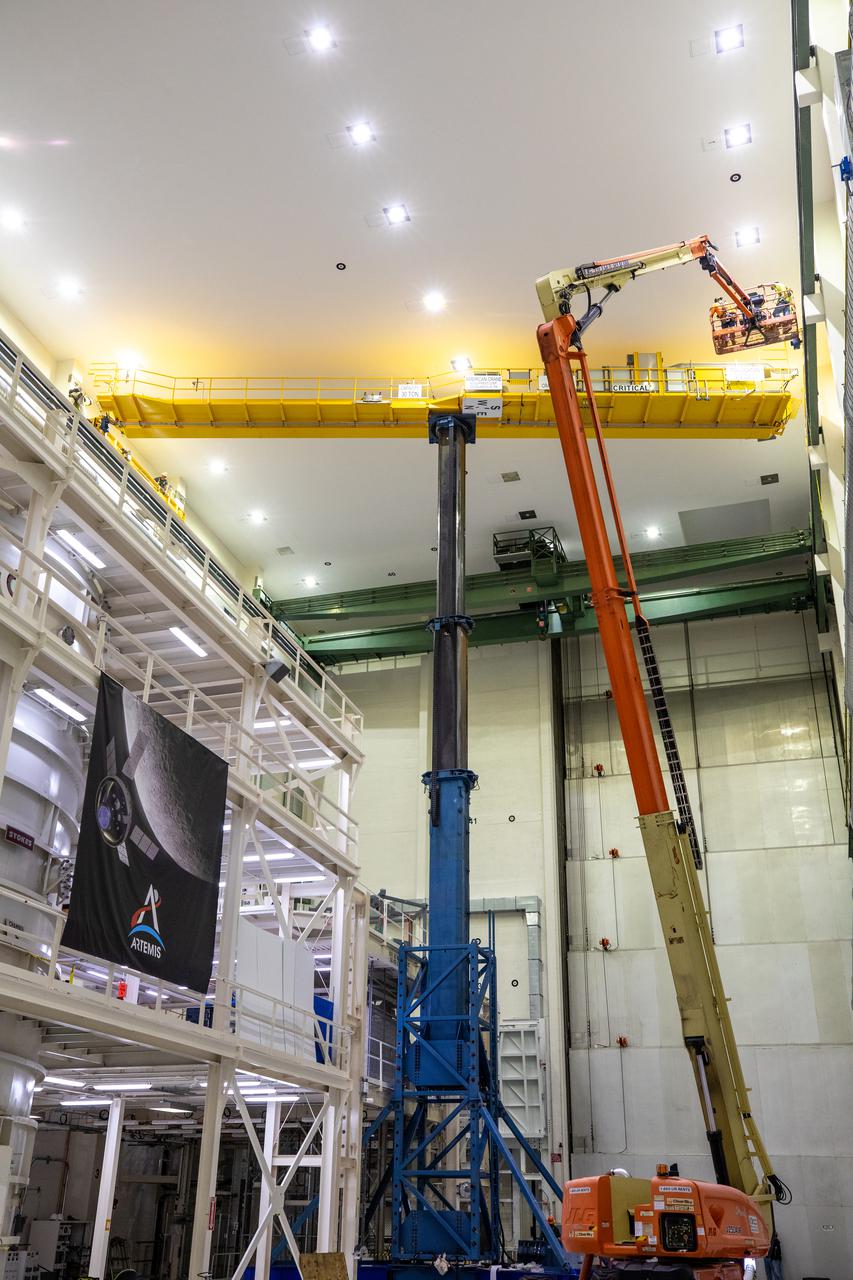
Inside the Neil Armstrong Operations and Checkout Building high bay at NASA’s Kennedy Space Center in Florida, a new overhead crane is being installed on March 10, 2021. The new hardware will be used to process Orion beginning with the agency’s first crewed mission, Artemis II. Teams from American Crane and Equipment Corp. are replacing the Lypta 27.5-ton crane with the new Artemis-rated 30-ton crane. The new crane has enhanced controls and additional safety features that will allow for micro movements to within 1/100th of an inch. Operators will use the crane to lift Orion once the crew and service modules are mated.
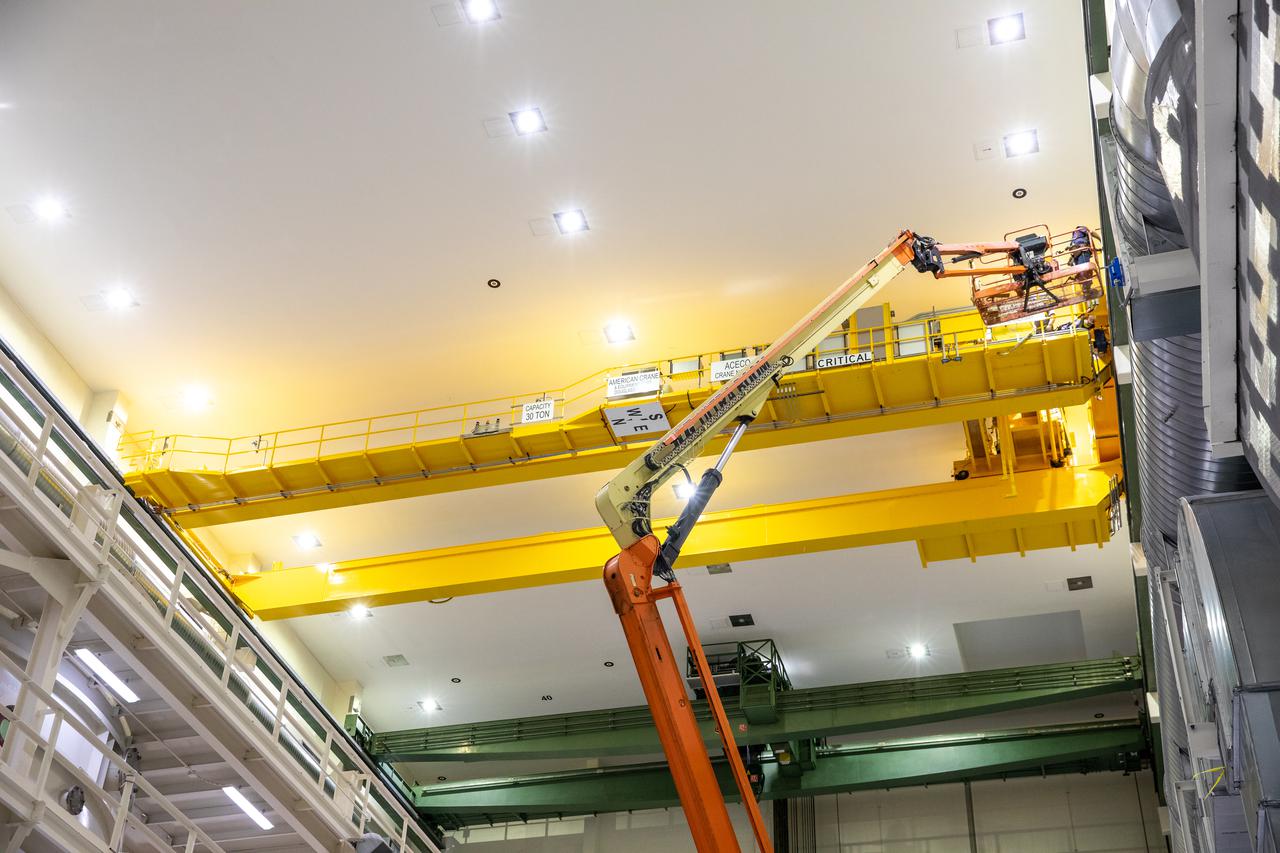
Inside the Neil Armstrong Operations and Checkout Building high bay at NASA’s Kennedy Space Center in Florida, a new overhead crane is being installed on March 10, 2021. The new hardware will be used to process Orion beginning with the agency’s first crewed mission, Artemis II. Teams from American Crane and Equipment Corp. are replacing the Lypta 27.5-ton crane with the new Artemis-rated 30-ton crane. The new crane has enhanced controls and additional safety features that will allow for micro movements to within 1/100th of an inch. Operators will use the crane to lift Orion once the crew and service modules are mated.
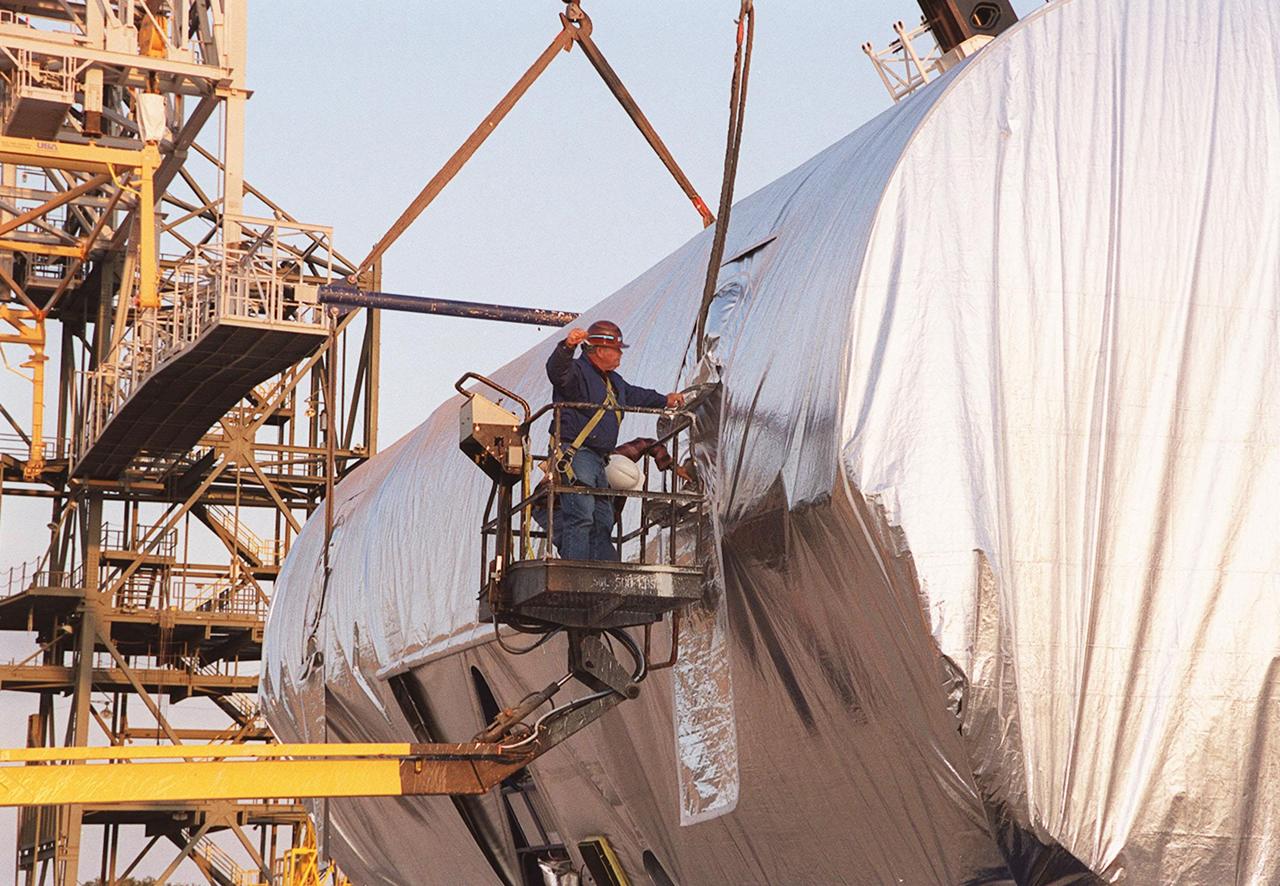
At the Shuttle Landing Facility, a worker attaches one of the cranes to the Integrated Truss Structure S3. Cranes will lift and move the truss to a transporter and take it to the Operations and Checkout Building. The second starboard truss segment of the International Space Station, the S3 truss is scheduled to be added to the Station in April 2003
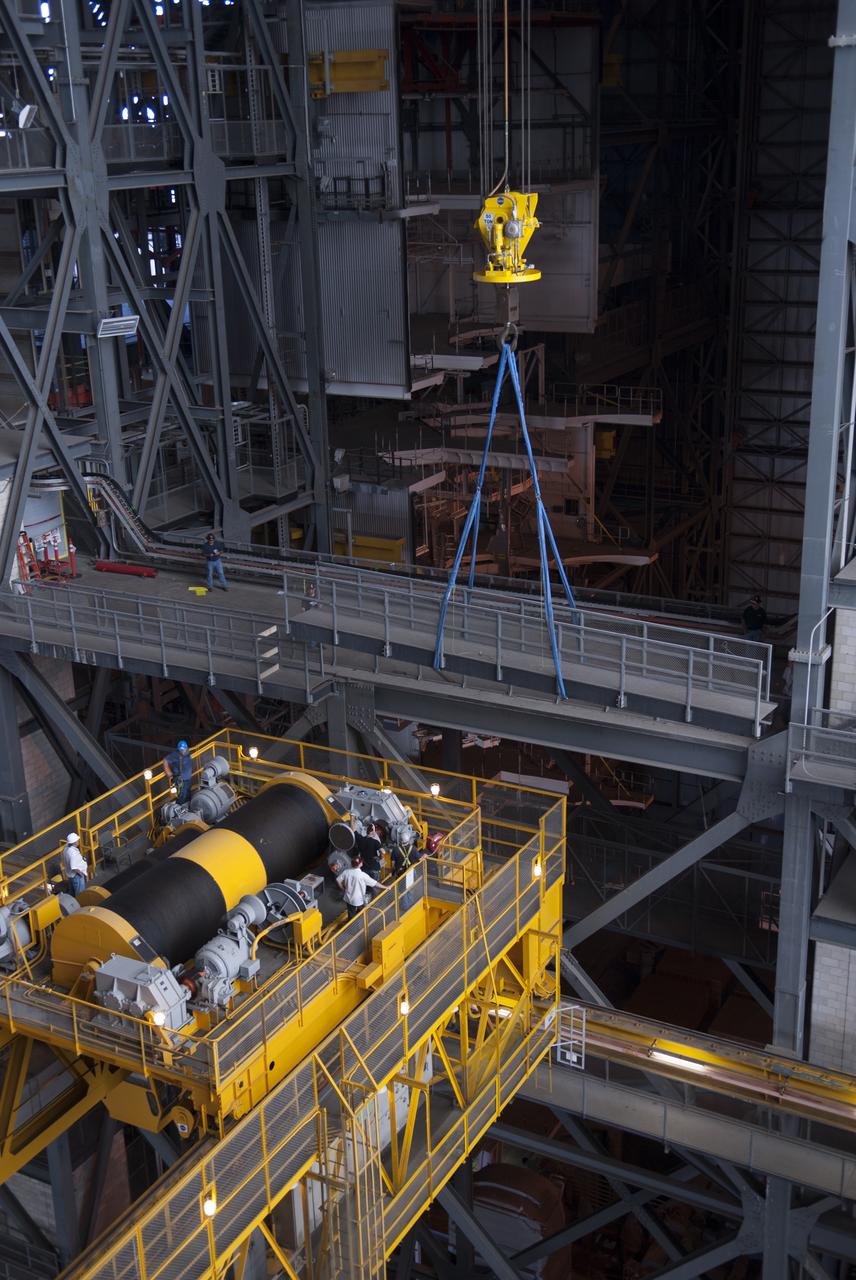
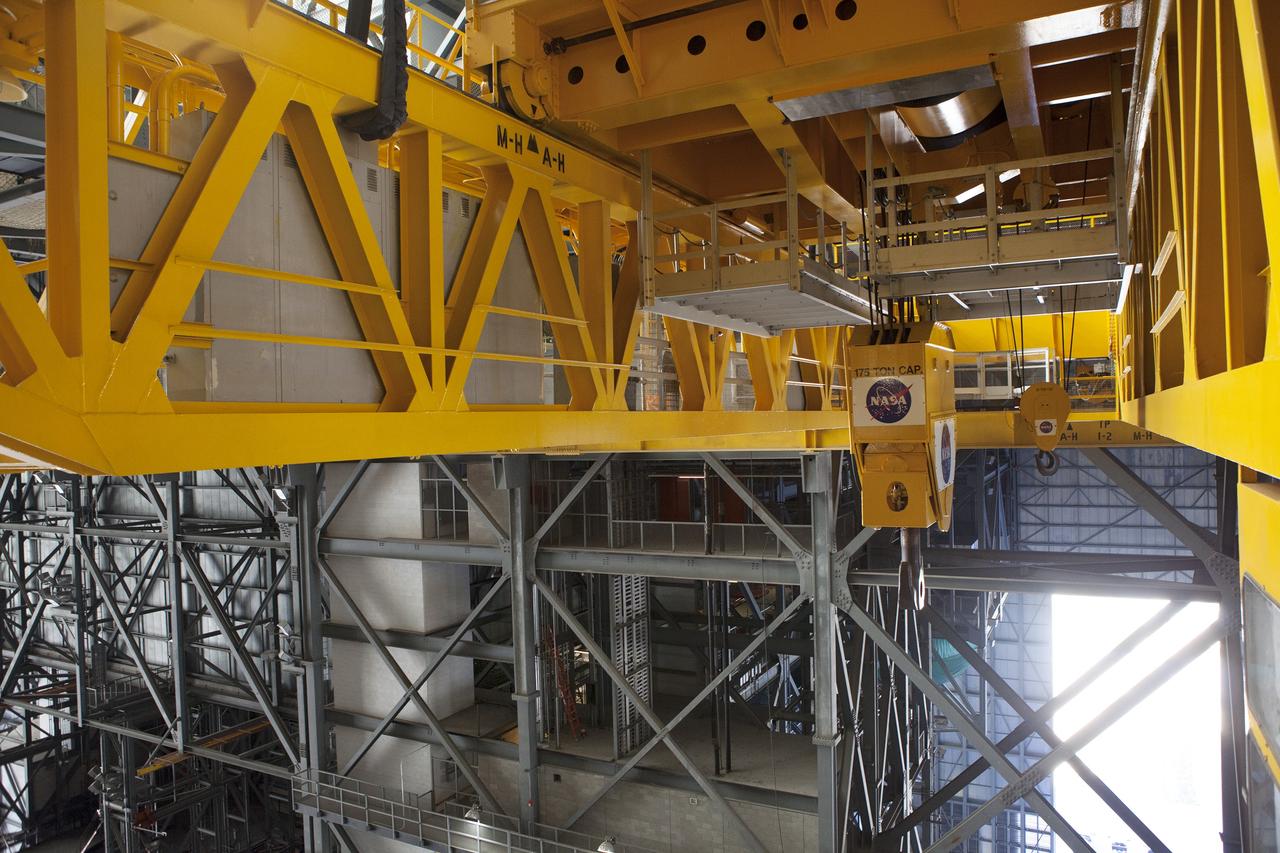
CAPE CANAVERAL, Fla. – Inside the Vehicle Assembly Building, or VAB, at NASA's Kennedy Space Center in Florida, a crane is used to lift up a portion of the catwalk on the east side of Level 16. The catwalk is being removed to allow room for the removal of the 175-ton crane that is situated above the transfer aisle. The crane will be lowered to the floor to perform upgrades to its 45-year-old controls in order to improve reliability, precision and safety. The Ground Systems Development and Operations Program is overseeing upgrades and modifications to the VAB. The crane will be upgraded so that it can support lifting needs for NASA and other exploration vehicles, including the agency's Space Launch System and Orion spacecraft. Photo credit: NASA/Jim Grossmann
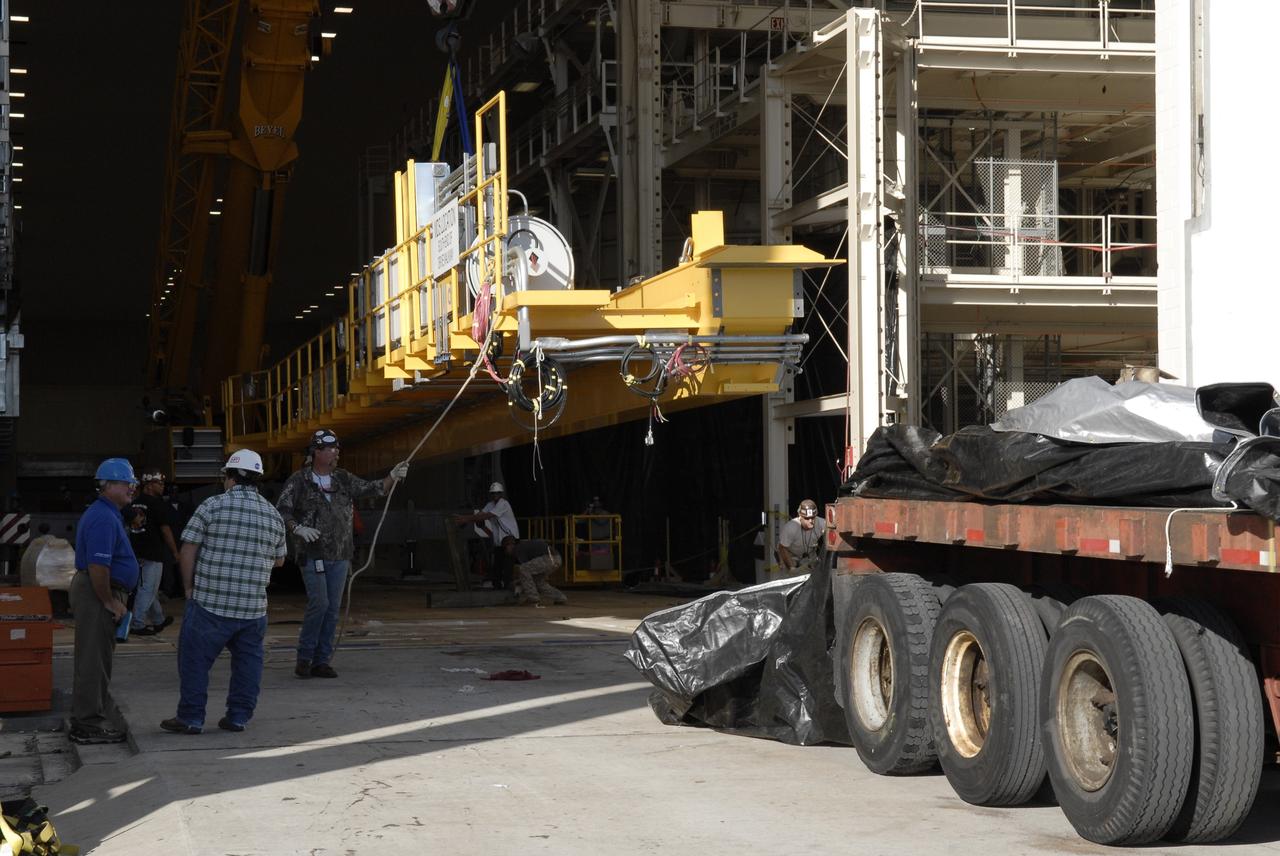
CAPE CANAVERAL, Fla. – Segments of a crane are being offloaded at the Operations and Checkout Building at NASA's Kennedy Space Center in Florida. The new O&C low-bay crane is a 25-ton overhead bridge crane built for Lockheed Martin and Space Florida by American Crane and Equipment Corporation in Douglasville, Pa. The crane has a bridge span of 78’-2” and a hook height of 48’-10”. The crane will be used for lifting and moving flight hardware, fixtures and equipment in support of the Orion spacecraft manufacturing. Part of NASA's Constellation Program, the Orion spacecraft will return humans to the moon and prepare for future voyages to Mars and other destinations in our solar system. Photo credit: NASA/Kim Shiflett

CAPE CANAVERAL, Fla. – Inside the Vehicle Assembly Building, or VAB, at NASA's Kennedy Space Center in Florida, the 175-ton crane is being lowered by crane onto steel stands on the transfer aisle floor. The crane was lowered from Level 16. In view at right is the cab that is used to control the crane. Upgrades to the crane's 45-year-old controls will be performed in order to improve reliability, precision and safety. The Ground Systems Development and Operations Program is overseeing upgrades and modifications to the VAB. The crane will be upgraded so that it can support lifting needs for NASA and other exploration vehicles, including the agency's Space Launch System and Orion spacecraft. Photo credit: NASA/Daniel Casper
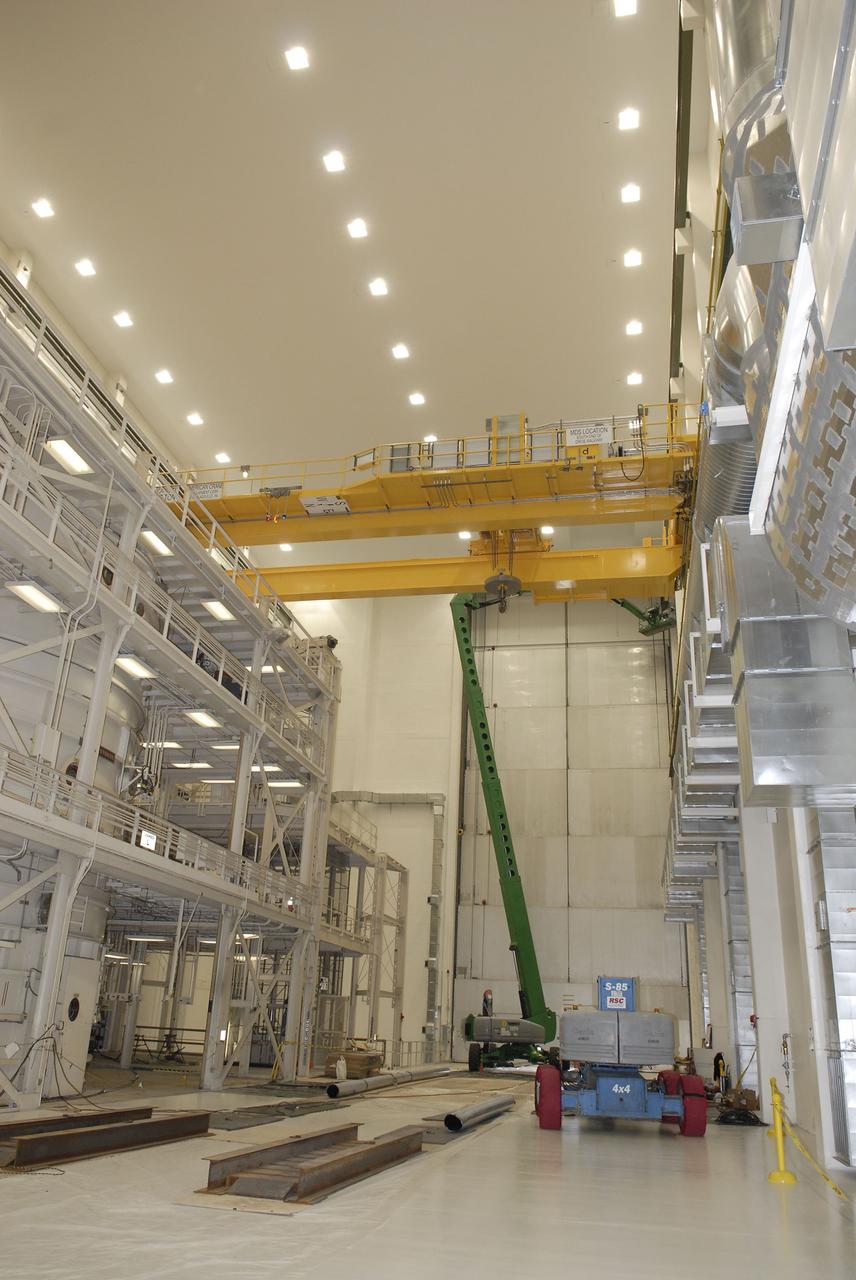
CAPE CANAVERAL, Fla. – Segments of a new crane are tested inside the Operations and Checkout Building at NASA's Kennedy Space Center in Florida. The new O&C low-bay crane is a 25-ton overhead bridge crane built for Lockheed Martin and Space Florida by American Crane and Equipment Corporation in Douglasville, Pa. The crane has a bridge span of 78’-2” and a hook height of 48’-10”. The crane will be used for lifting and moving flight hardware, fixtures and equipment in support of the Orion spacecraft manufacturing. Part of NASA's Constellation Program, the Orion spacecraft will return humans to the moon and prepare for future voyages to Mars and other destinations in our solar system. Photo credit: NASA/Kim Shiflett
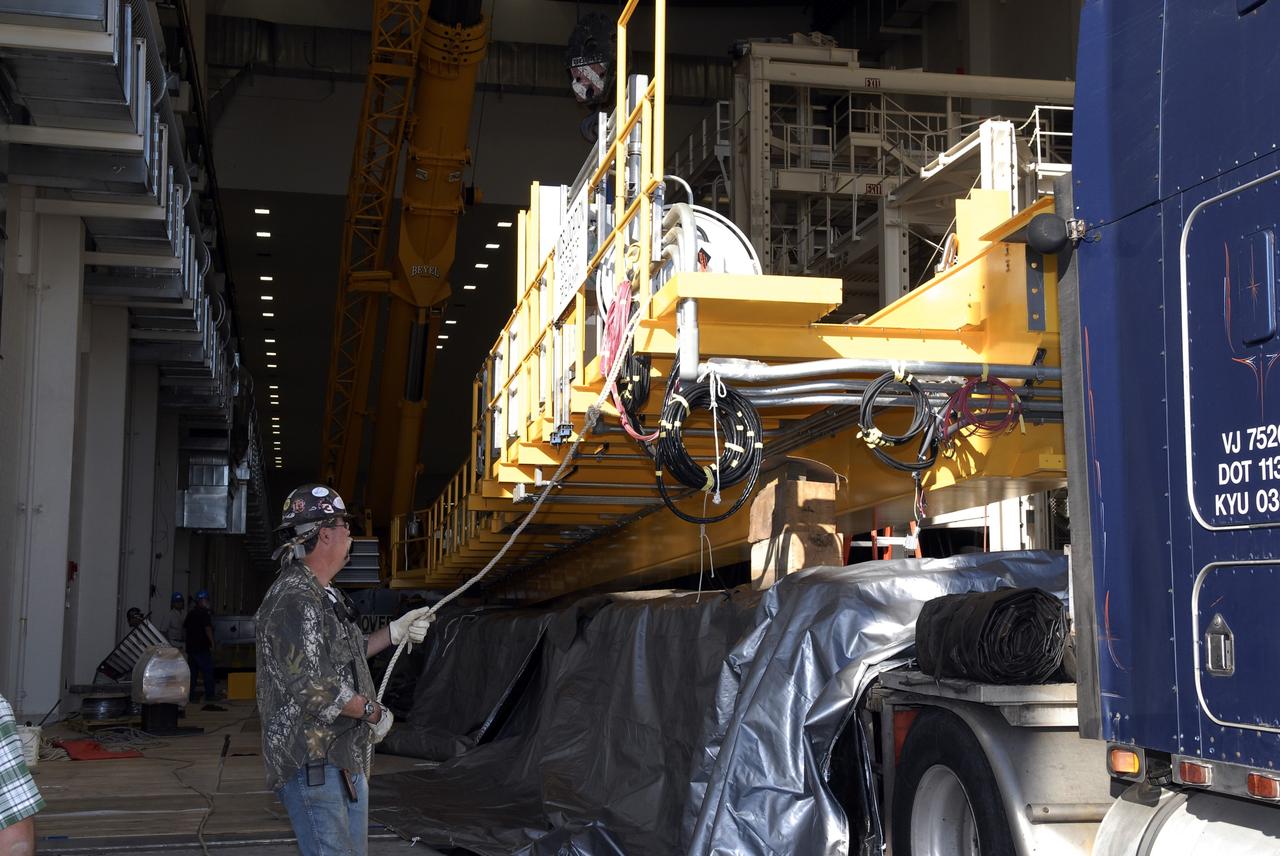
CAPE CANAVERAL, Fla. – Segments of a crane arrive at the Operations and Checkout Building at NASA's Kennedy Space Center in Florida. The new O&C low-bay crane is a 25-ton overhead bridge crane built for Lockheed Martin and Space Florida by American Crane and Equipment Corporation in Douglasville, Pa. The crane has a bridge span of 78’-2” and a hook height of 48’-10”. The crane will be used for lifting and moving flight hardware, fixtures and equipment in support of the Orion spacecraft manufacturing. Part of NASA's Constellation Program, the Orion spacecraft will return humans to the moon and prepare for future voyages to Mars and other destinations in our solar system. Photo credit: NASA/Kim Shiflett
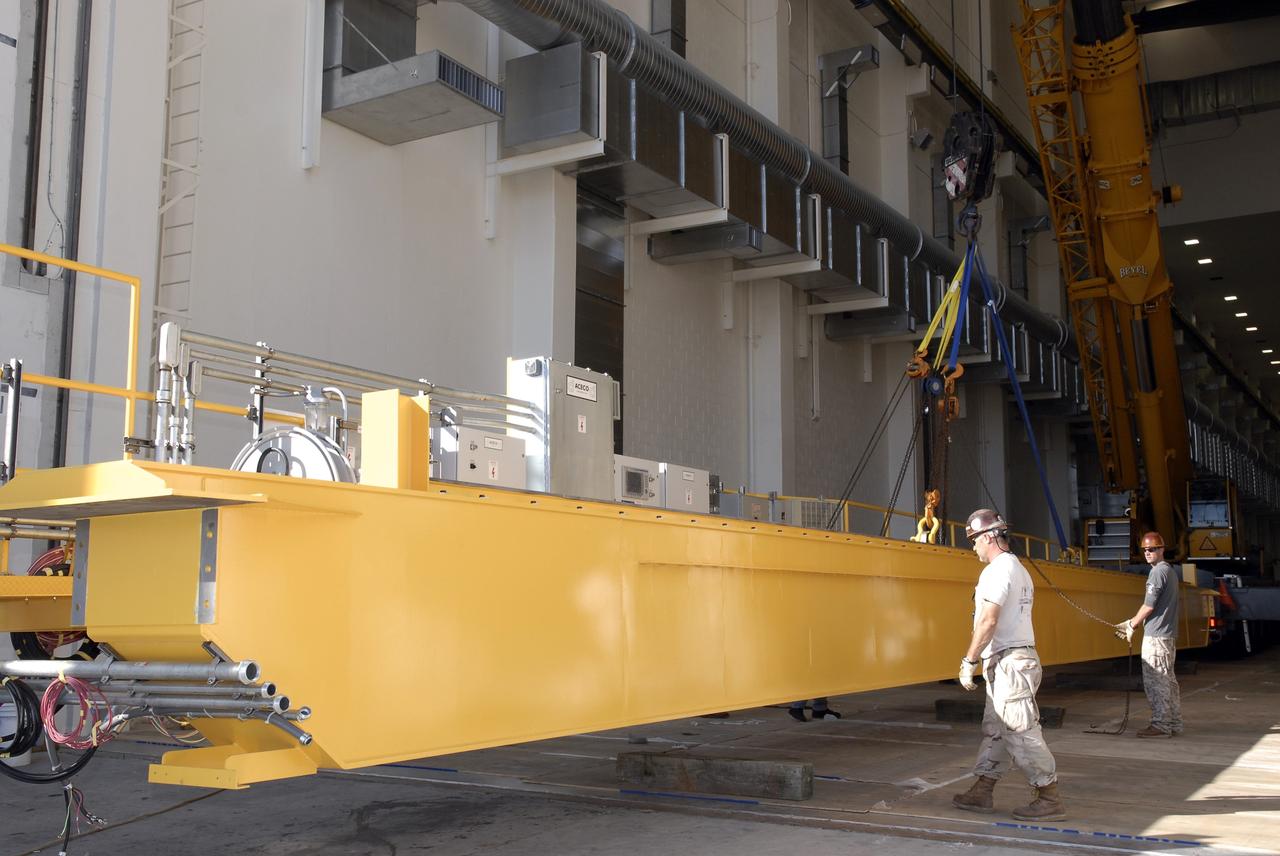
CAPE CANAVERAL, Fla. – Segments of a crane are lowered onto the floor of the Operations and Checkout Building at NASA's Kennedy Space Center in Florida. The new O&C low-bay crane is a 25-ton overhead bridge crane built for Lockheed Martin and Space Florida by American Crane and Equipment Corporation in Douglasville, Pa. The crane has a bridge span of 78’-2” and a hook height of 48’-10”. The crane will be used for lifting and moving flight hardware, fixtures and equipment in support of the Orion spacecraft manufacturing. Part of NASA's Constellation Program, the Orion spacecraft will return humans to the moon and prepare for future voyages to Mars and other destinations in our solar system. Photo credit: NASA/Kim Shiflett
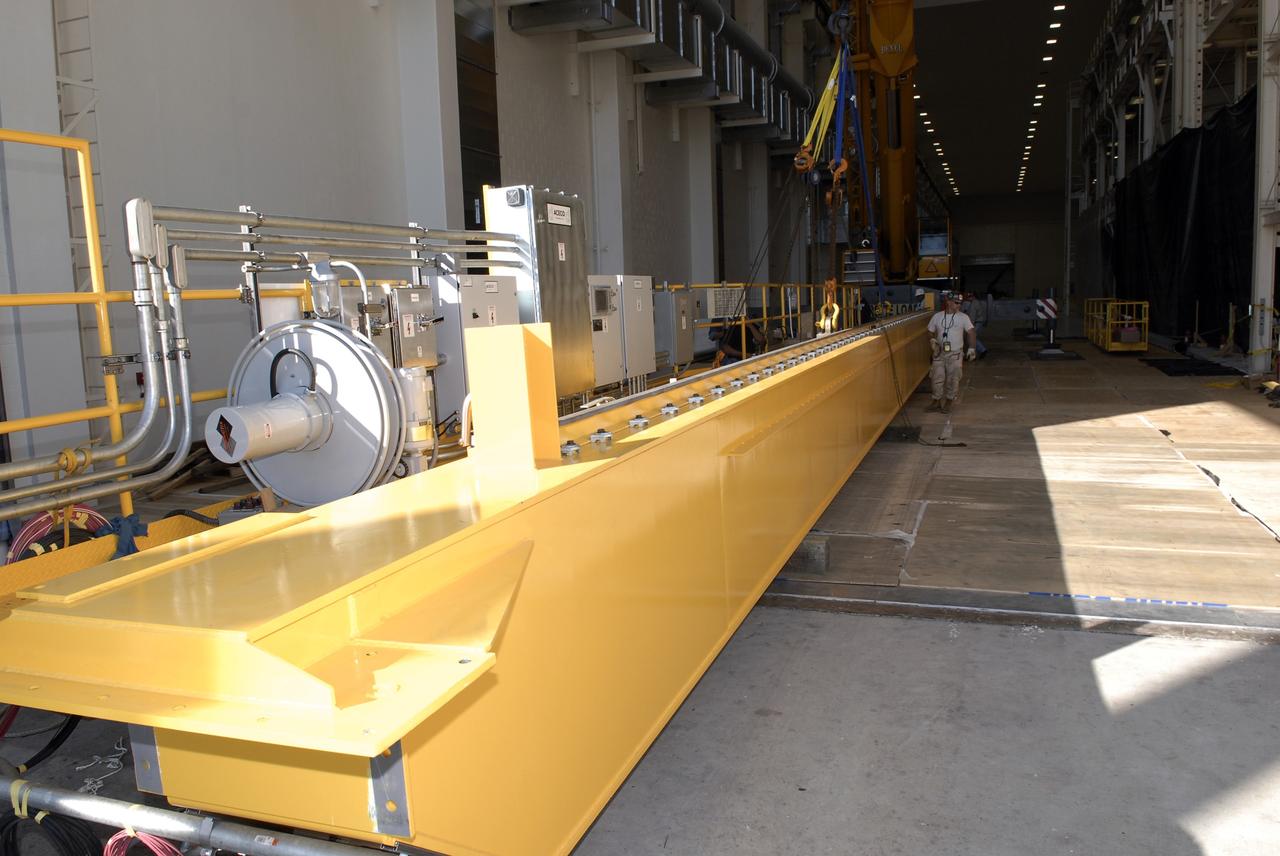
CAPE CANAVERAL, Fla. – Segments of a crane are moved into the Operations and Checkout Building at NASA's Kennedy Space Center in Florida. The new O&C low-bay crane is a 25-ton overhead bridge crane built for Lockheed Martin and Space Florida by American Crane and Equipment Corporation in Douglasville, Pa. The crane has a bridge span of 78’-2” and a hook height of 48’-10”. The crane will be used for lifting and moving flight hardware, fixtures and equipment in support of the Orion spacecraft manufacturing. Part of NASA's Constellation Program, the Orion spacecraft will return humans to the moon and prepare for future voyages to Mars and other destinations in our solar system. Photo credit: NASA/Kim Shiflett
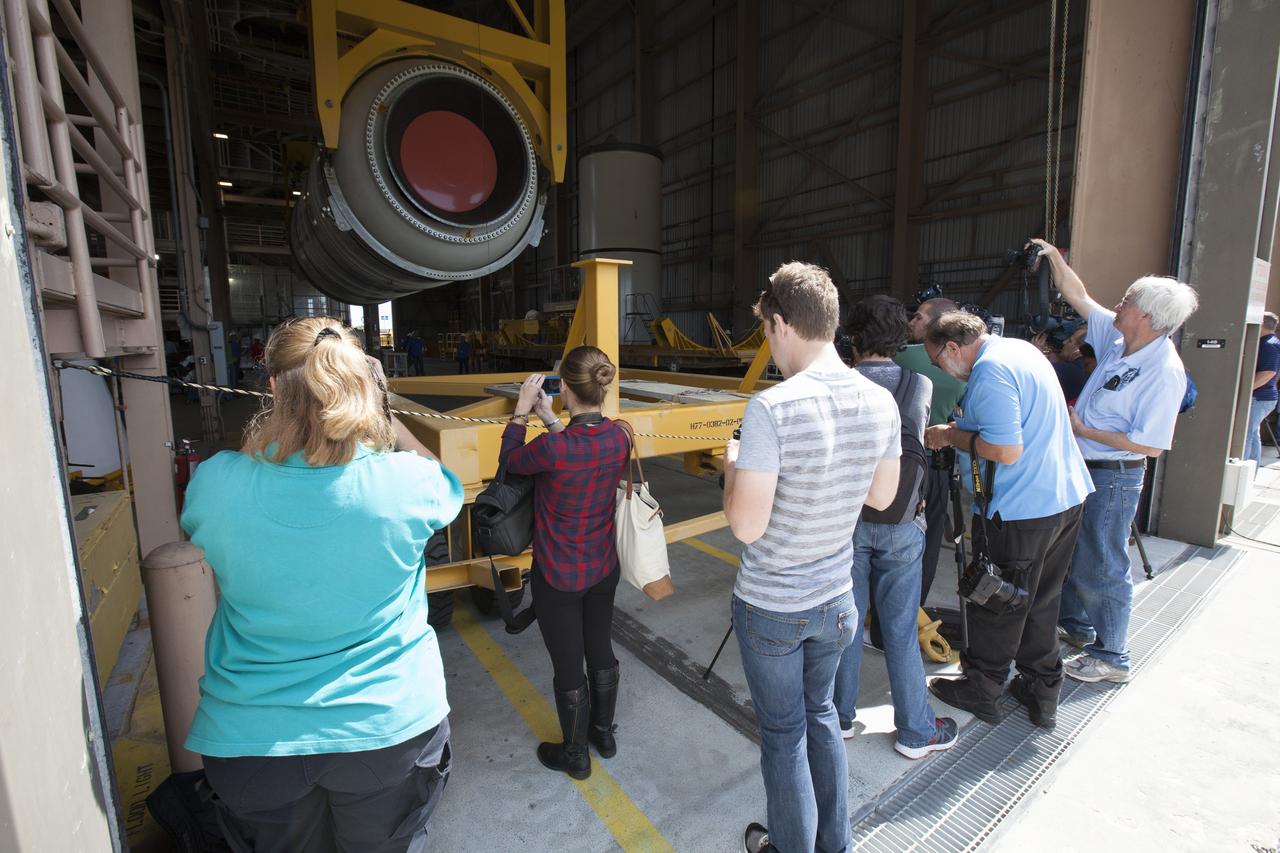
At the Rotation, Processing and Surge Facility (RPSF) at NASA’s Kennedy Space Center in Florida, members of the news media photograph the process as cranes are used to lift one of two pathfinders, or test versions, of solid rocket booster segments for NASA’s Space Launch System rocket. The Ground Systems Development and Operations Program and Jacobs Engineering, on the Test and Operations Support Contract, are preparing the booster segments, which are inert, for a series of lifts, moves and stacking operations to prepare for Exploration Mission-1, deep-space missions and the journey to Mars.
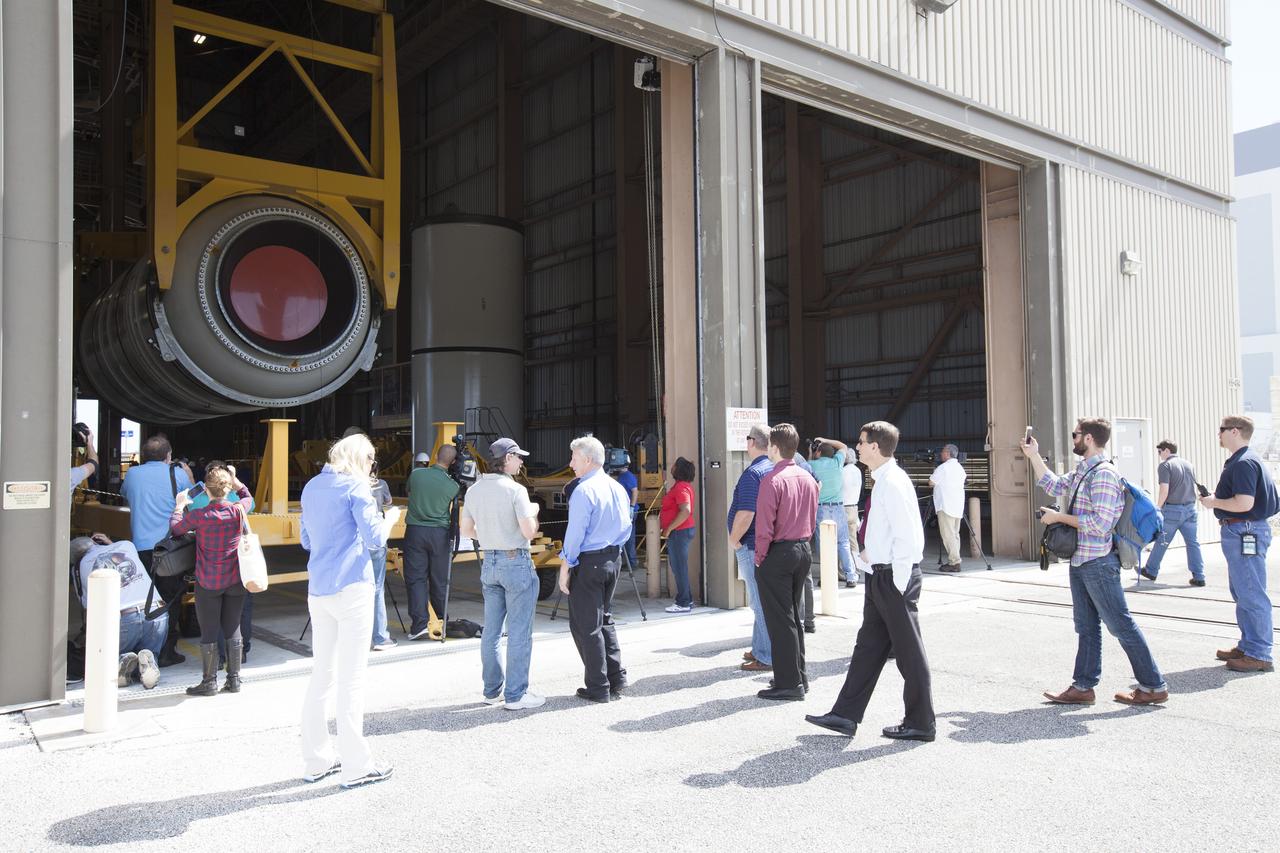
At the Rotation, Processing and Surge Facility (RPSF) at NASA’s Kennedy Space Center in Florida, members of the news media watch as cranes are used to lift one of two pathfinders, or test versions, of solid rocket booster segments for NASA’s Space Launch System rocket. The Ground Systems Development and Operations Program and Jacobs Engineering, on the Test and Operations Support Contract, are preparing the booster segments, which are inert, for a series of lifts, moves and stacking operations to prepare for Exploration Mission-1, deep-space missions and the journey to Mars.
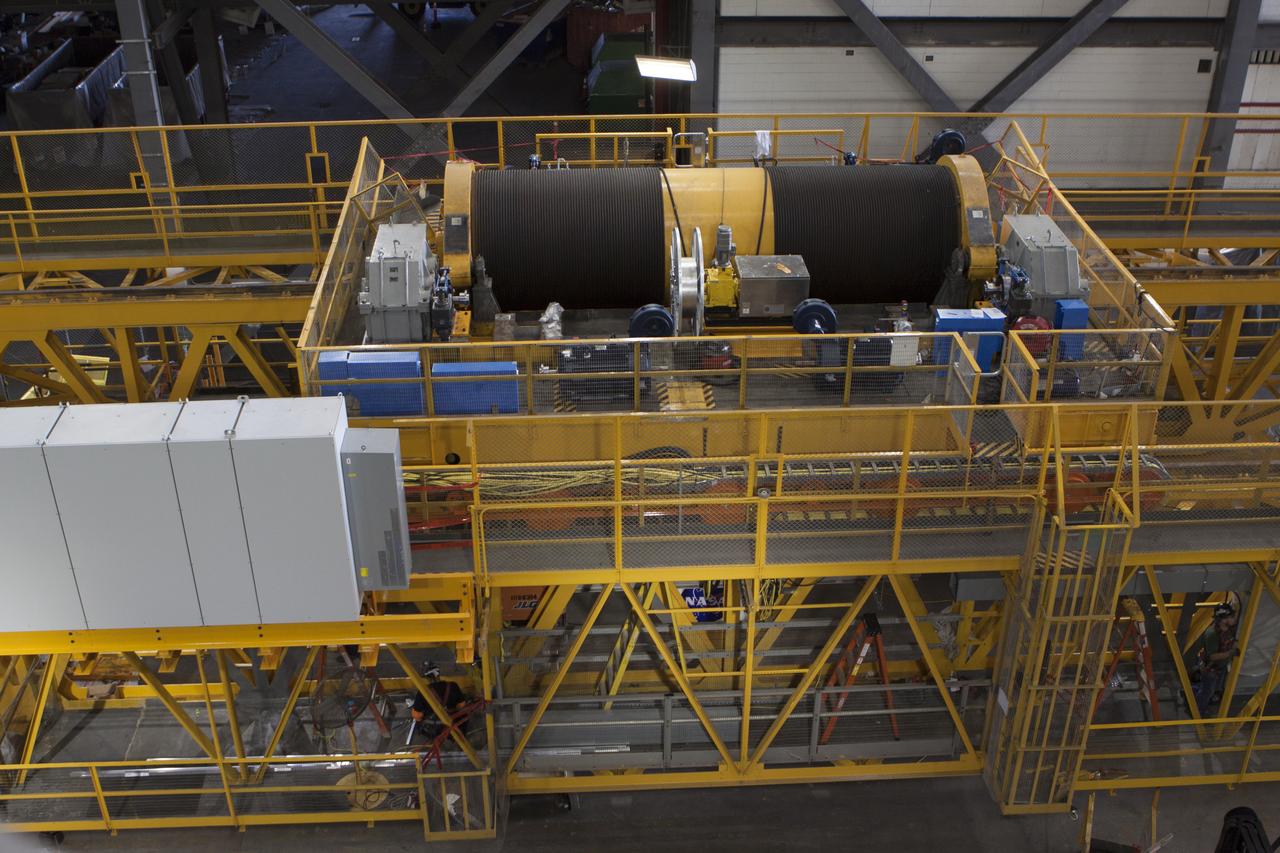
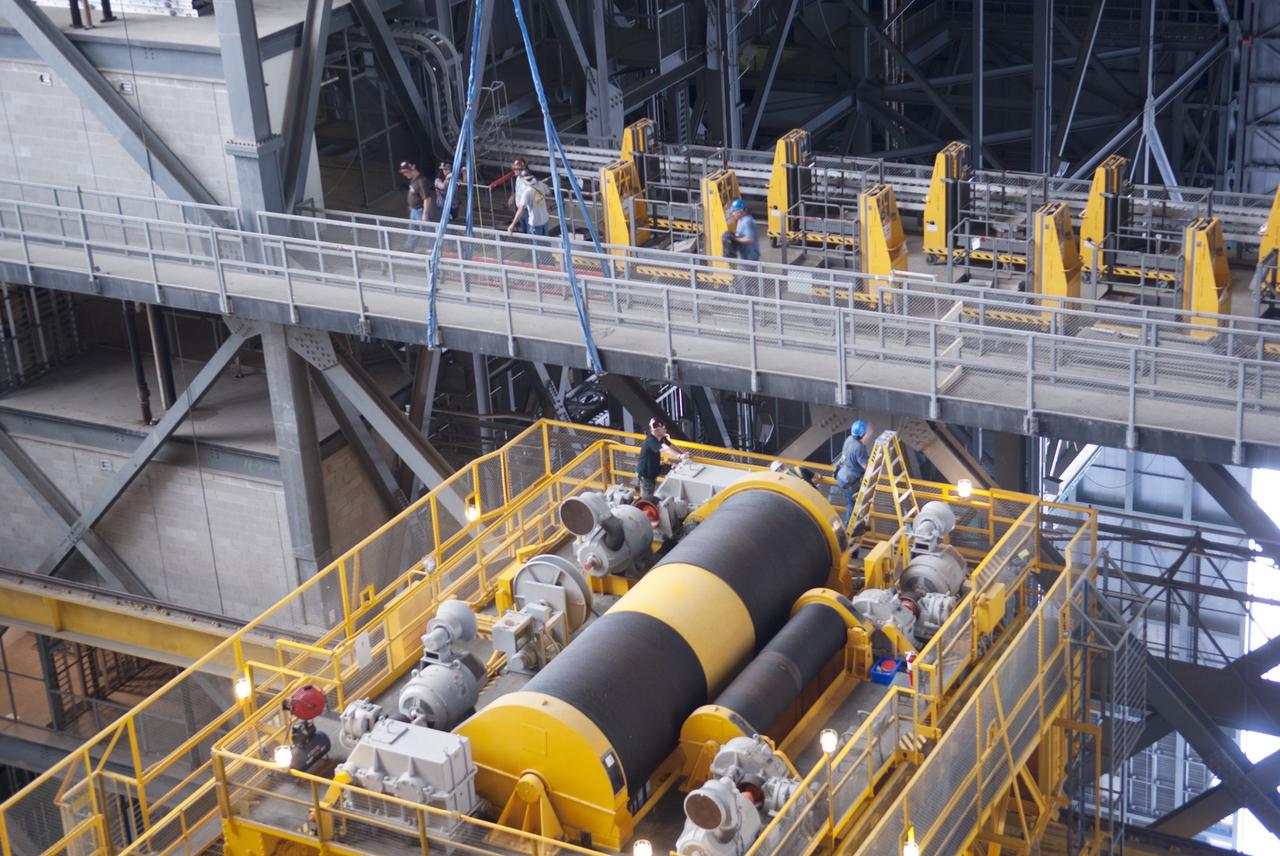
A view from above inside the Vehicle Assembly Building at NASA's Kennedy Space Center in Florida, shows the 175-ton crane on the ground floor of the transfer aisle. The crane's 45-year-old controls are being upgraded to improve reliability, precision and safety. The Ground Systems Development and Operations Program is overseeing upgrades and modifications to the crane so that it can support lifting needs for NASA and other exploration vehicles, including the agency's Space Launch System and Orion spacecraft.
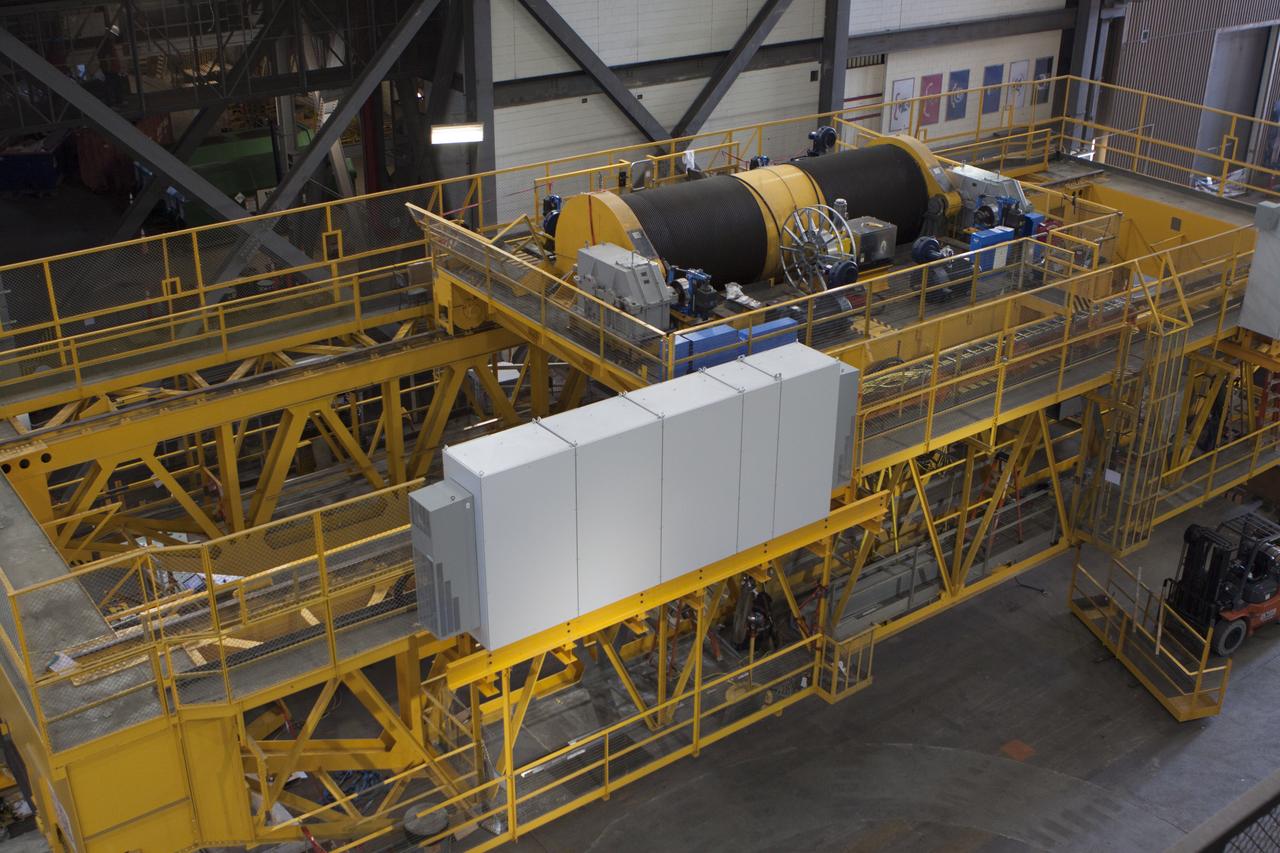
A view from above inside the Vehicle Assembly Building at NASA's Kennedy Space Center in Florida, shows the 175-ton crane on the ground floor of the transfer aisle. The crane's 45-year-old controls are being upgraded to improve reliability, precision and safety. The Ground Systems Development and Operations Program is overseeing upgrades and modifications to the crane so that it can support lifting needs for NASA and other exploration vehicles, including the agency's Space Launch System and Orion spacecraft.
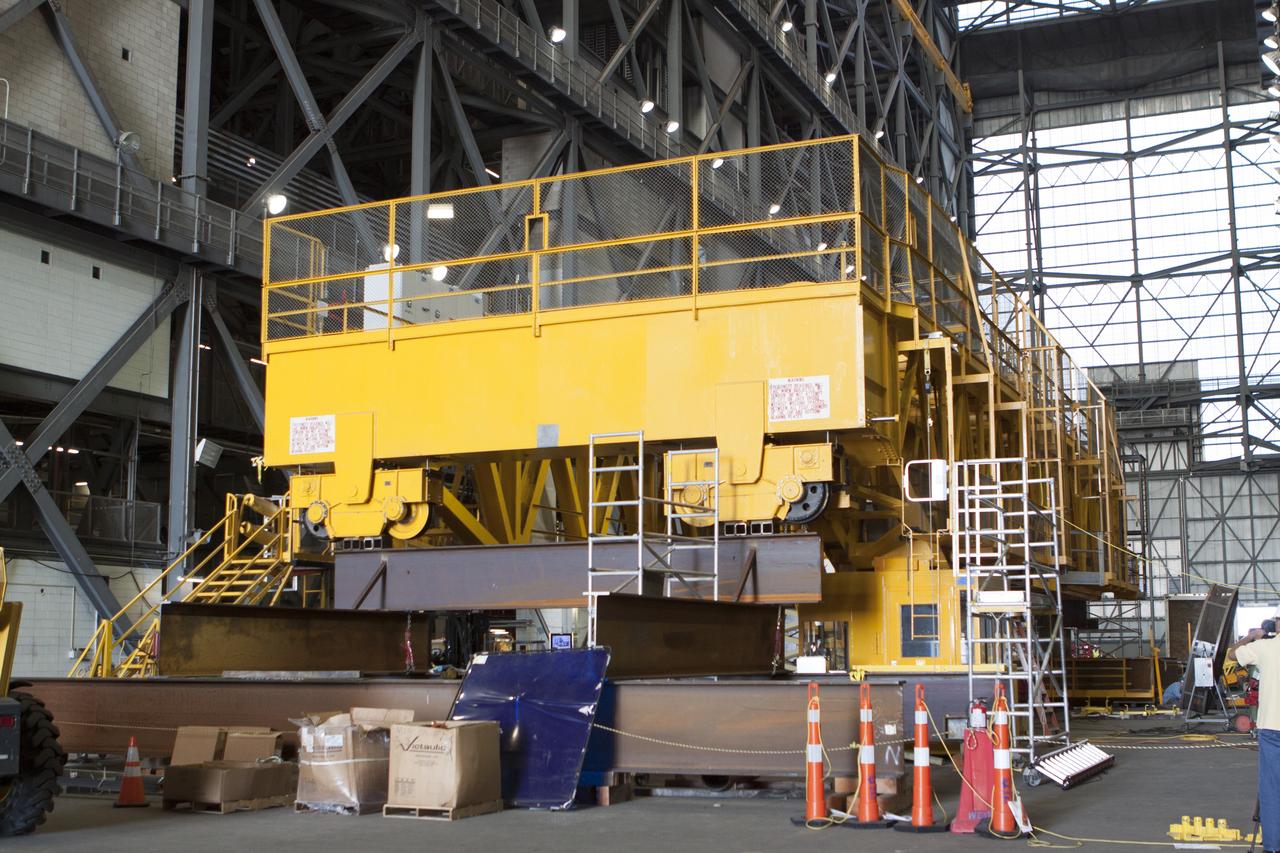
Upgrades and modifications continue on the 175-ton crane on the ground floor of the transfer aisle inside the Vehicle Assembly Building at NASA's Kennedy Space Center in Florida. The crane's 45-year-old controls are being upgraded to improve reliability, precision and safety. The Ground Systems Development and Operations Program is overseeing upgrades and modifications to the crane so that it can support lifting needs for NASA and other exploration vehicles, including the agency's Space Launch System and Orion spacecraft.
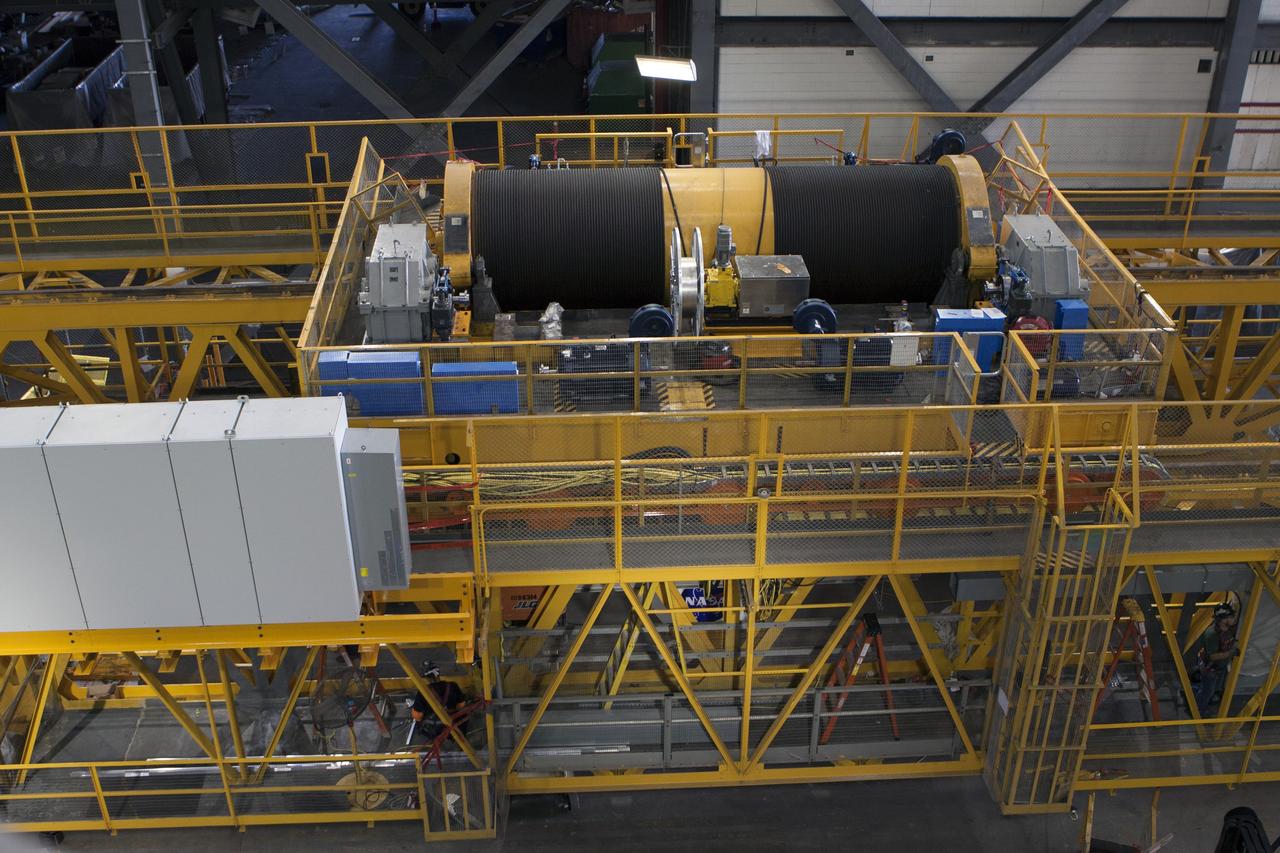
CAPE CANAVERAL, Fla. – A view from above inside the Vehicle Assembly Building at NASA's Kennedy Space Center in Florida, shows the 175-ton crane on the ground floor of the transfer aisle. The crane's 45-year-old controls are being upgraded to improve reliability, precision and safety. The Ground Systems Development and Operations Program is overseeing upgrades and modifications to the crane so that it can support lifting needs for NASA and other exploration vehicles, including the agency's Space Launch System and Orion spacecraft. Photo credit: NASA/Kim Shiflett
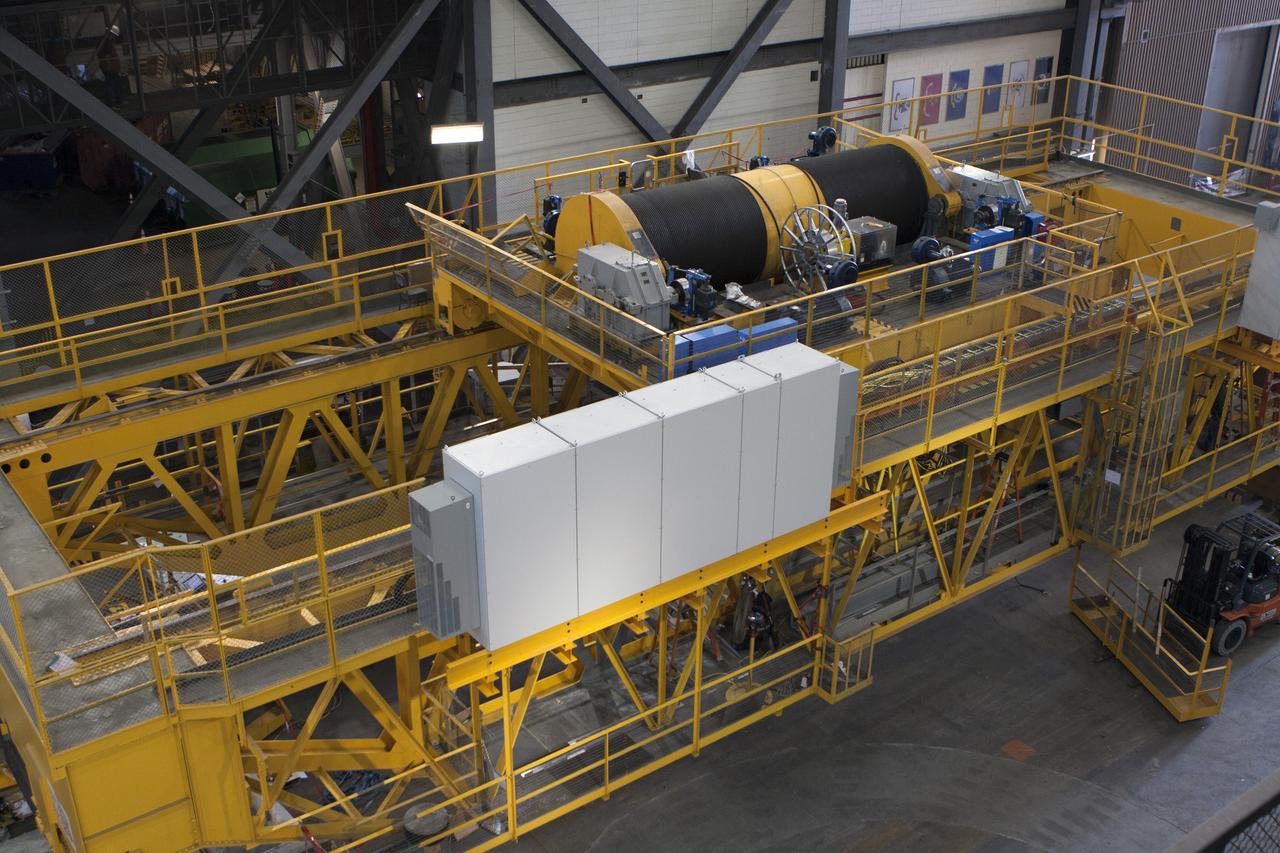
CAPE CANAVERAL, Fla. – A view from above inside the Vehicle Assembly Building at NASA's Kennedy Space Center in Florida, shows the 175-ton crane on the ground floor of the transfer aisle. The crane's 45-year-old controls are being upgraded to improve reliability, precision and safety. The Ground Systems Development and Operations Program is overseeing upgrades and modifications to the crane so that it can support lifting needs for NASA and other exploration vehicles, including the agency's Space Launch System and Orion spacecraft. Photo credit: NASA/Kim Shiflett
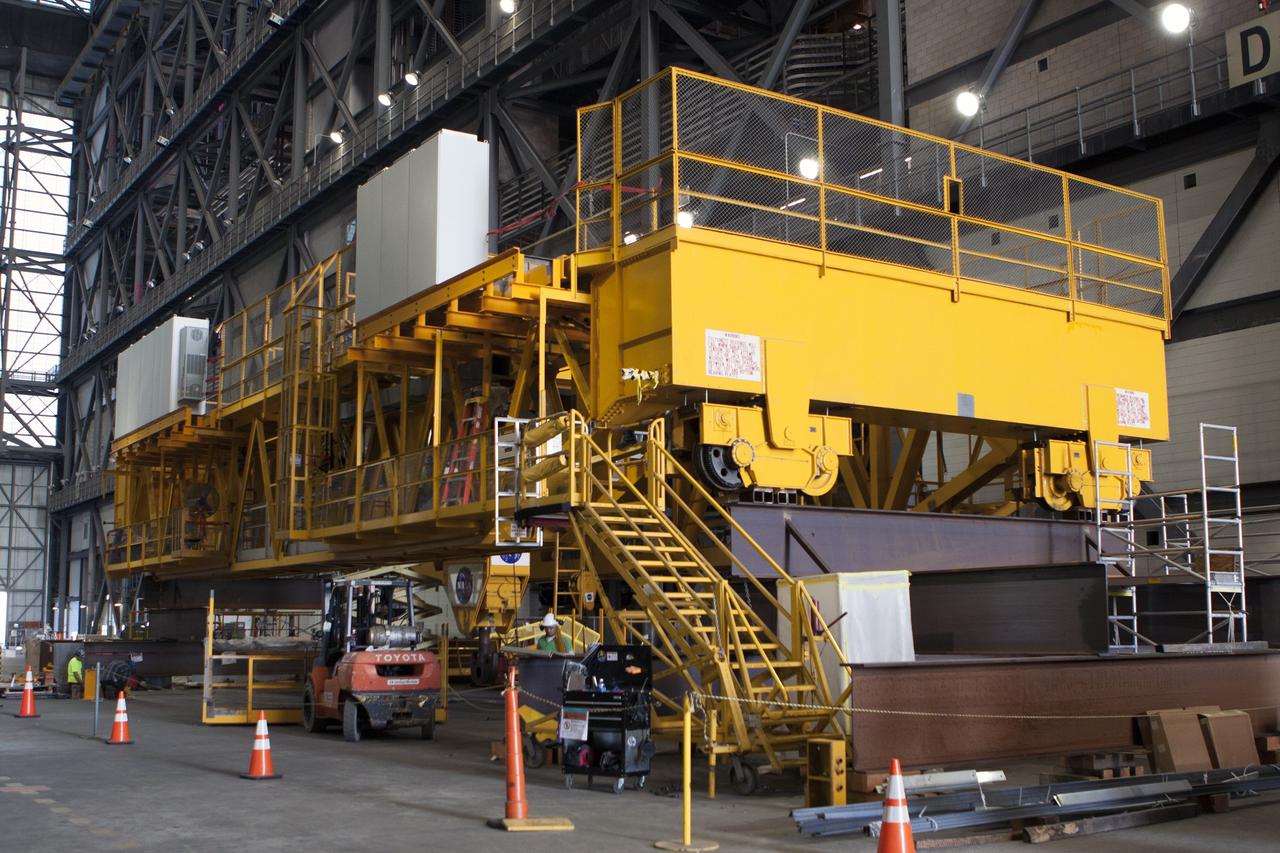
CAPE CANAVERAL, Fla. – Inside the Vehicle Assembly Building at NASA's Kennedy Space Center in Florida, refurbishment and upgrades to the 175-ton crane are under way on the ground floor of the transfer aisle. The crane's 45-year-old controls are being upgraded to improve reliability, precision and safety. The Ground Systems Development and Operations Program is overseeing upgrades and modifications to the crane so that it can support lifting needs for NASA and other exploration vehicles, including the agency's Space Launch System and Orion spacecraft. Photo credit: NASA/Kim Shiflett
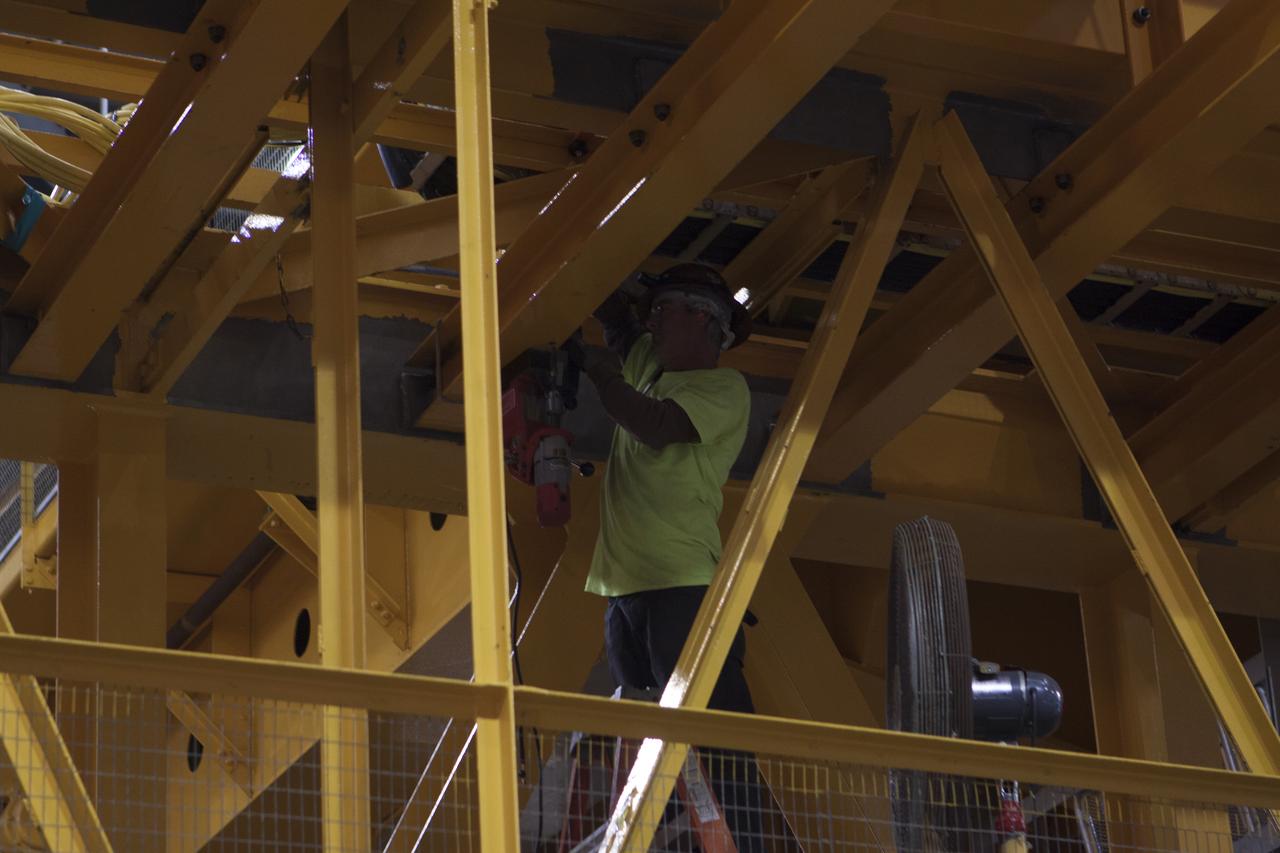
Inside the Vehicle Assembly Building at NASA's Kennedy Space Center in Florida, a construction worker continues with refurbishment and upgrades to the 175-ton crane on the ground floor of the transfer aisle. The crane's 45-year-old controls are being upgraded to improve reliability, precision and safety. The Ground Systems Development and Operations Program is overseeing upgrades and modifications to the crane so that it can support lifting needs for NASA and other exploration vehicles, including the agency's Space Launch System and Orion spacecraft.
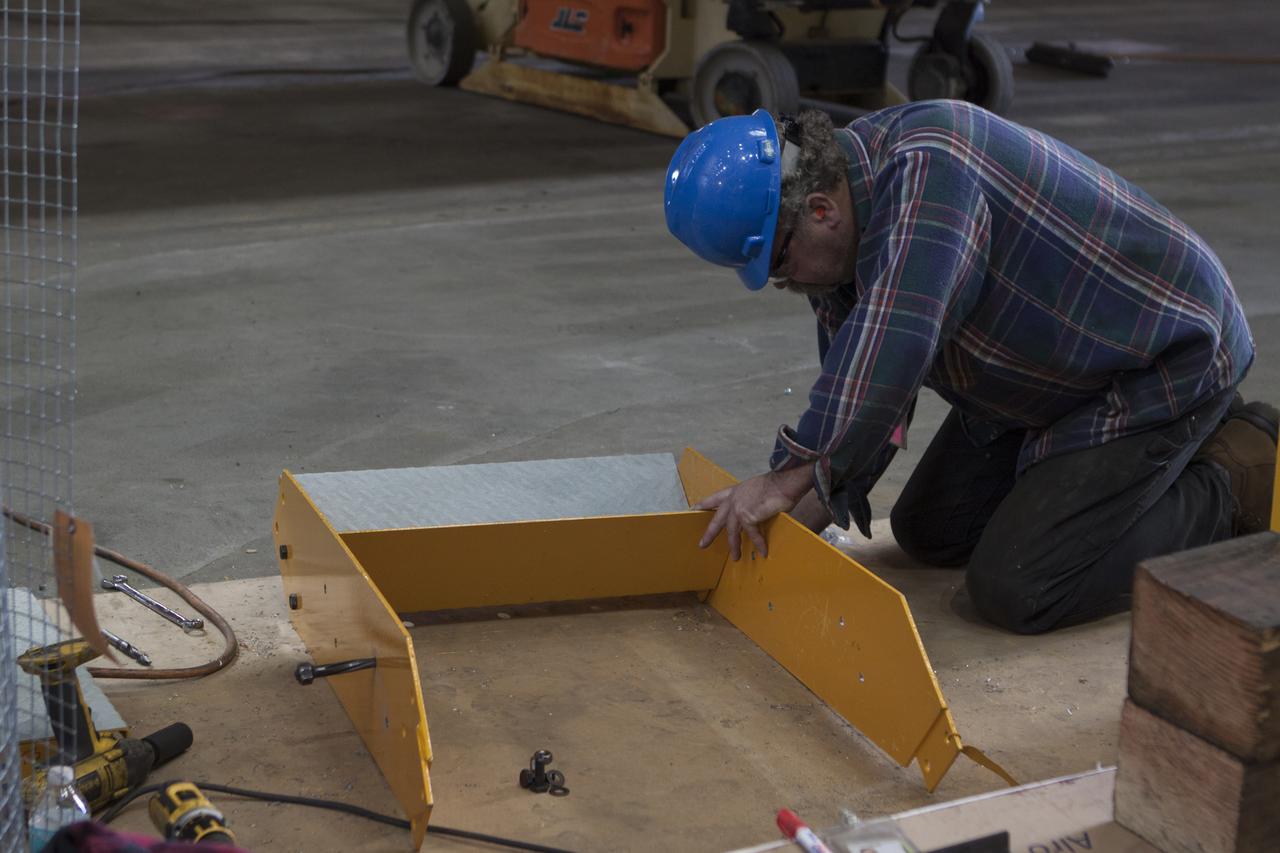
Inside the Vehicle Assembly Building at NASA's Kennedy Space Center in Florida, a construction worker continues with refurbishment and upgrades to parts of the 175-ton crane on the ground floor of the transfer aisle. The crane's 45-year-old controls are being upgraded to improve reliability, precision and safety. The Ground Systems Development and Operations Program is overseeing upgrades and modifications to the crane so that it can support lifting needs for NASA and other exploration vehicles, including the agency's Space Launch System and Orion spacecraft.
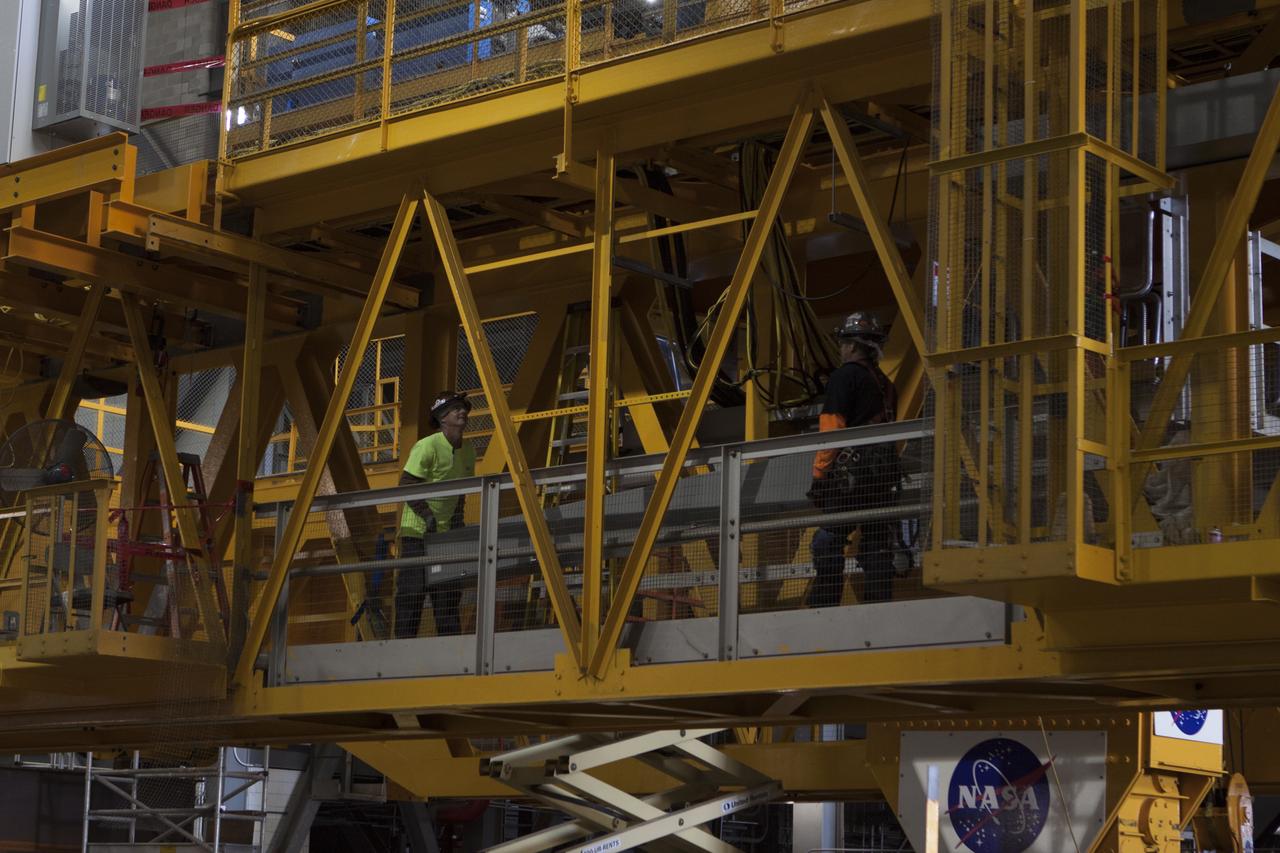
Inside the Vehicle Assembly Building at NASA's Kennedy Space Center in Florida, construction workers continue with refurbishment and upgrades to the 175-ton crane on the ground floor of the transfer aisle. The crane's 45-year-old controls are being upgraded to improve reliability, precision and safety. The Ground Systems Development and Operations Program is overseeing upgrades and modifications to the crane so that it can support lifting needs for NASA and other exploration vehicles, including the agency's Space Launch System and Orion spacecraft.
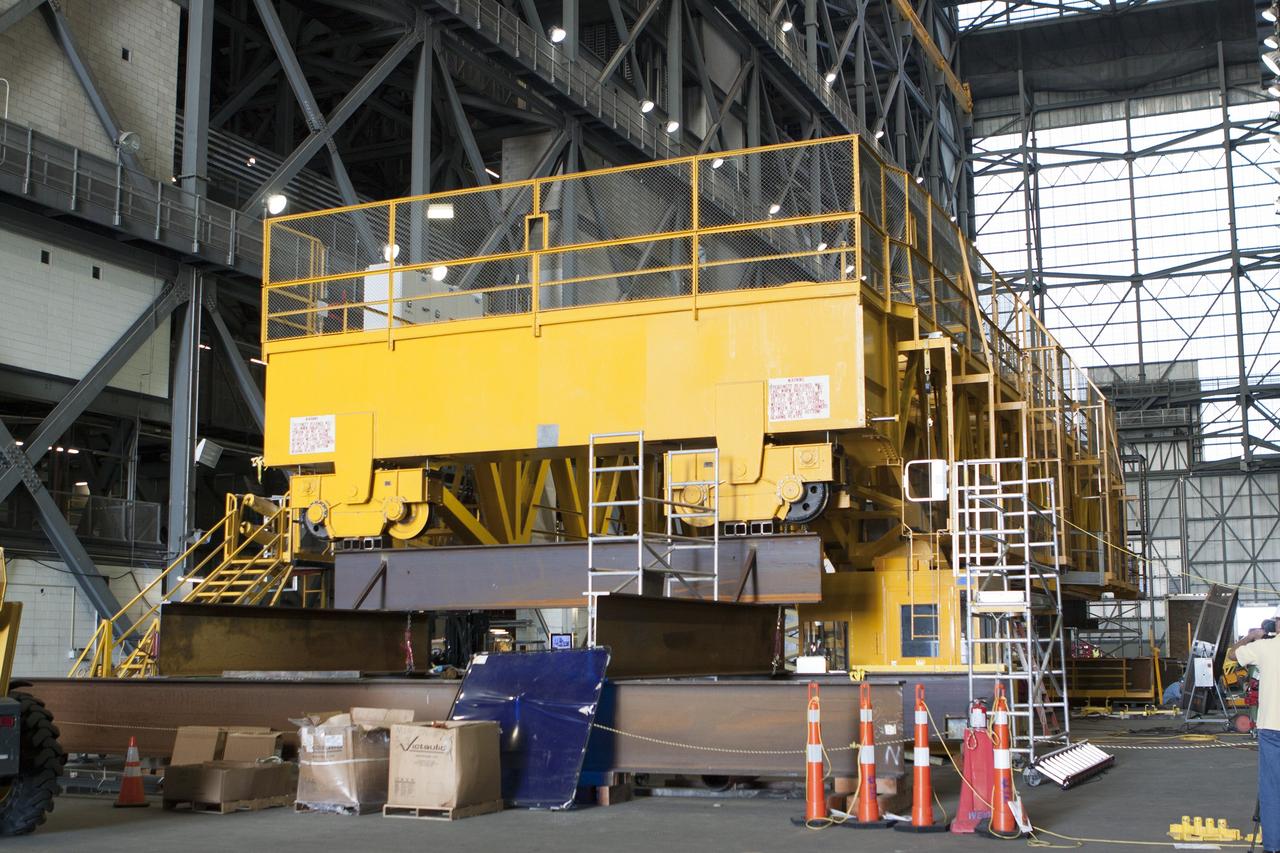
CAPE CANAVERAL, Fla. – Upgrades and modifications continue on the 175-ton crane on the ground floor of the transfer aisle inside the Vehicle Assembly Building at NASA's Kennedy Space Center in Florida. The crane's 45-year-old controls are being upgraded to improve reliability, precision and safety. The Ground Systems Development and Operations Program is overseeing upgrades and modifications to the crane so that it can support lifting needs for NASA and other exploration vehicles, including the agency's Space Launch System and Orion spacecraft. Photo credit: NASA/Kim Shiflett
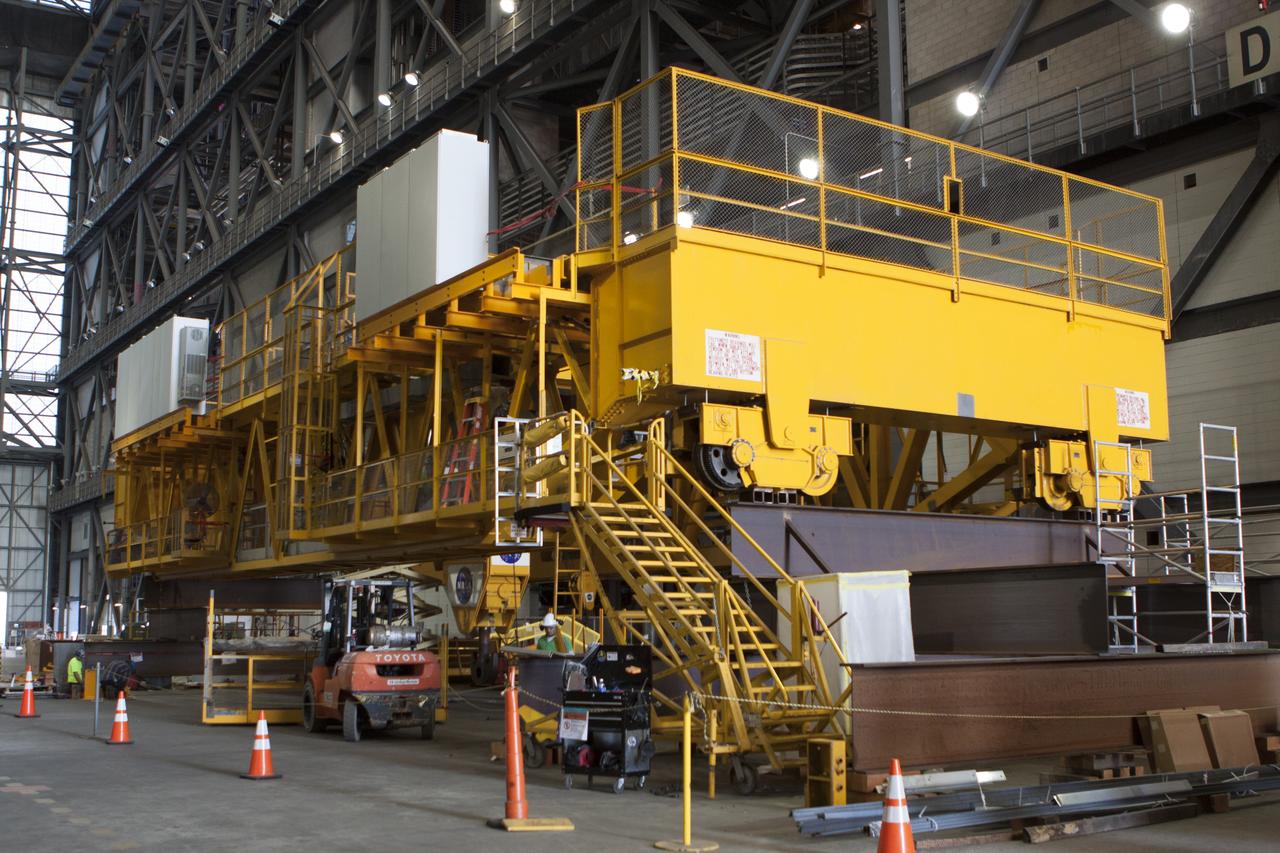
Inside the Vehicle Assembly Building at NASA's Kennedy Space Center in Florida, refurbishment and upgrades to the 175-ton crane are under way on the ground floor of the transfer aisle. The crane's 45-year-old controls are being upgraded to improve reliability, precision and safety. The Ground Systems Development and Operations Program is overseeing upgrades and modifications to the crane so that it can support lifting needs for NASA and other exploration vehicles, including the agency's Space Launch System and Orion spacecraft.
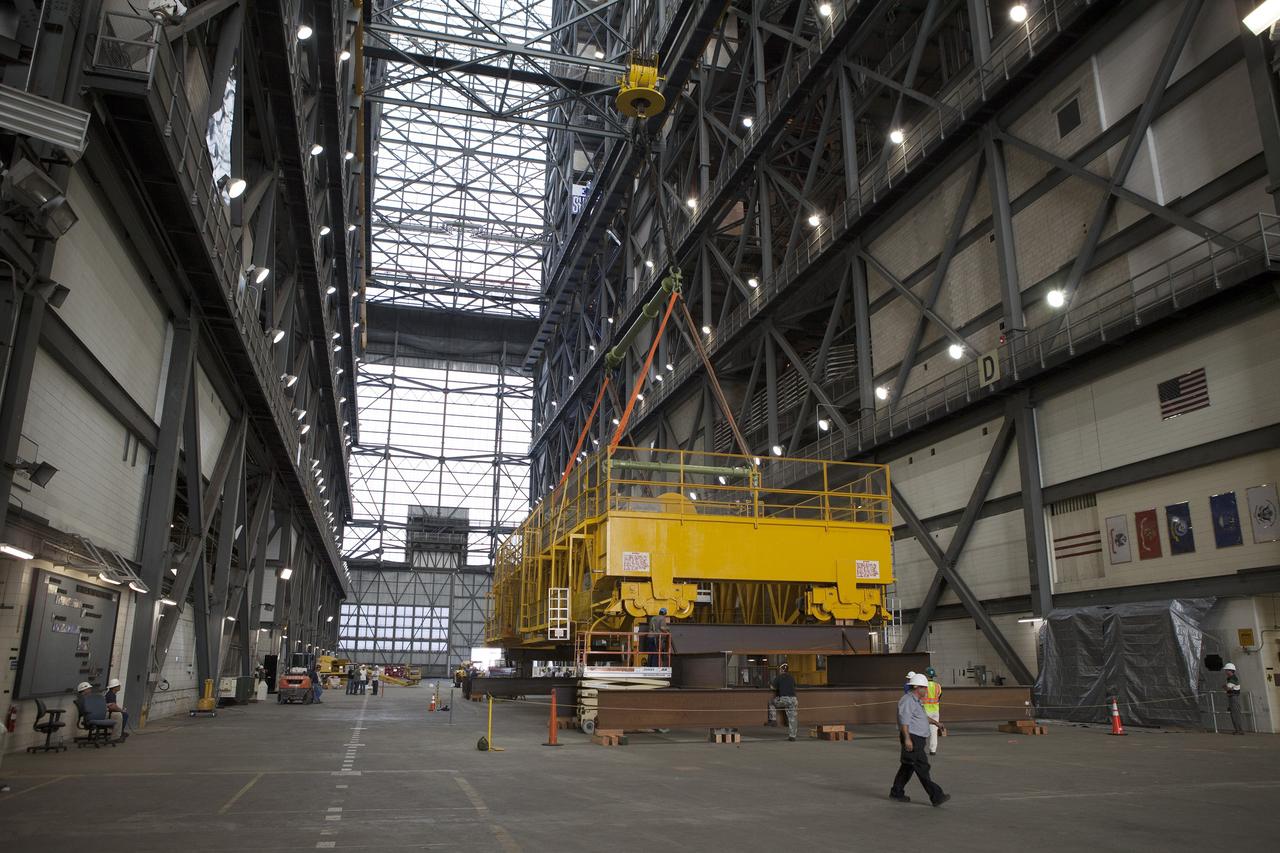
CAPE CANAVERAL, Fla. – Inside the Vehicle Assembly Building, or VAB, at NASA's Kennedy Space Center in Florida, the 175-ton crane has been lowered by crane onto steel stands on the transfer aisle floor. The crane was lowered from Level 16. Upgrades to the crane's 45-year-old controls will be performed in order to improve reliability, precision and safety. The Ground Systems Development and Operations Program is overseeing upgrades and modifications to the VAB. The crane will be upgraded so that it can support lifting needs for NASA and other exploration vehicles, including the agency's Space Launch System and Orion spacecraft. Photo credit: NASA/Daniel Casper
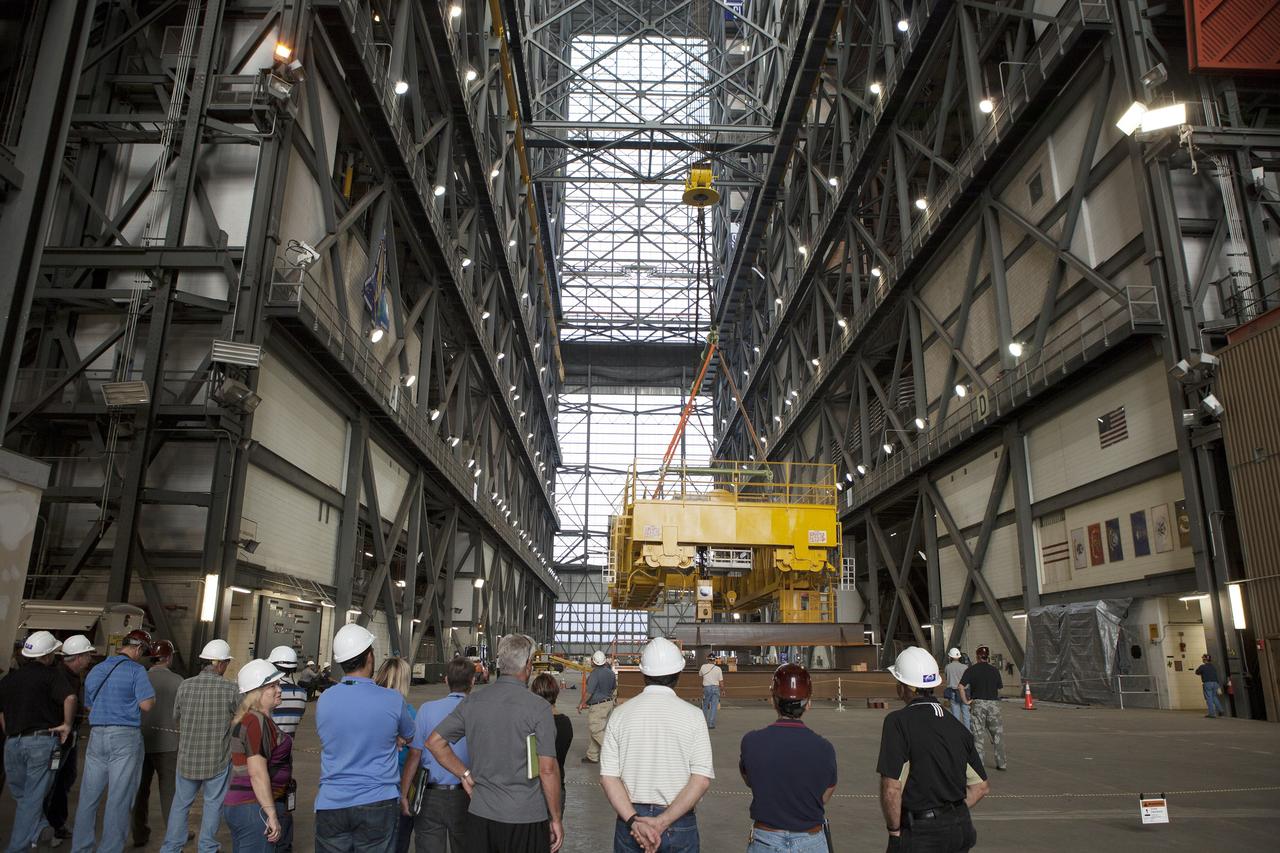
CAPE CANAVERAL, Fla. – Inside the Vehicle Assembly Building, or VAB, at NASA's Kennedy Space Center in Florida, NASA, contractor and construction workers watch as a crane lowers the 175-ton crane toward the floor of the transfer aisle. The crane was turned to make it easier to lower it from Level 16. Upgrades to the crane's 45-year-old controls will be performed in order to improve reliability, precision and safety. The Ground Systems Development and Operations Program is overseeing upgrades and modifications to the VAB. The crane will be upgraded so that it can support lifting needs for NASA and other exploration vehicles, including the agency's Space Launch System and Orion spacecraft. Photo credit: NASA/Daniel Casper
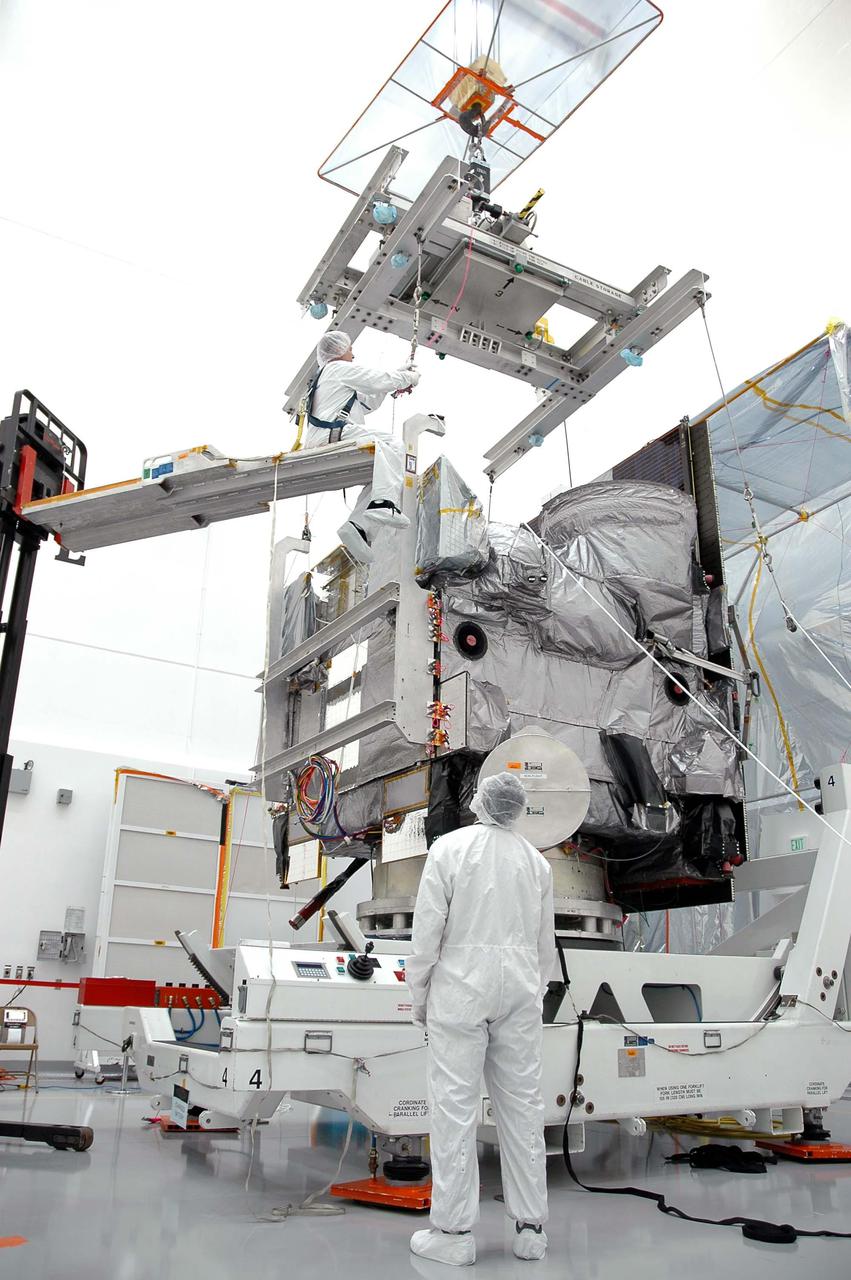
KENNEDY SPACE CENTER, FLA. - At Astrotech in Titusville, Fla., a Boeing technician on a lift above the GOES-N satellite completes attachment of the overhead crane. The crane will lift the satellite from the rotation stand and move it to a work stand. The crane is moving the satellite to a work stand. Since its arrival on March 11, the satellite has been undergoing final testing by Boeing Satellite Systems of the imaging system, instrumentation, communications and power systems. Geostationary Operational Environmental Satellites (GOES) are sponsored by NASA’s Goddard Space Flight Center and the National Oceanic and Atmospheric Administration. GOES-N is targeted to launch May 4 onboard a Boeing expendable launch vehicle Delta IV (4,2) with a 3-burn second stage operation.
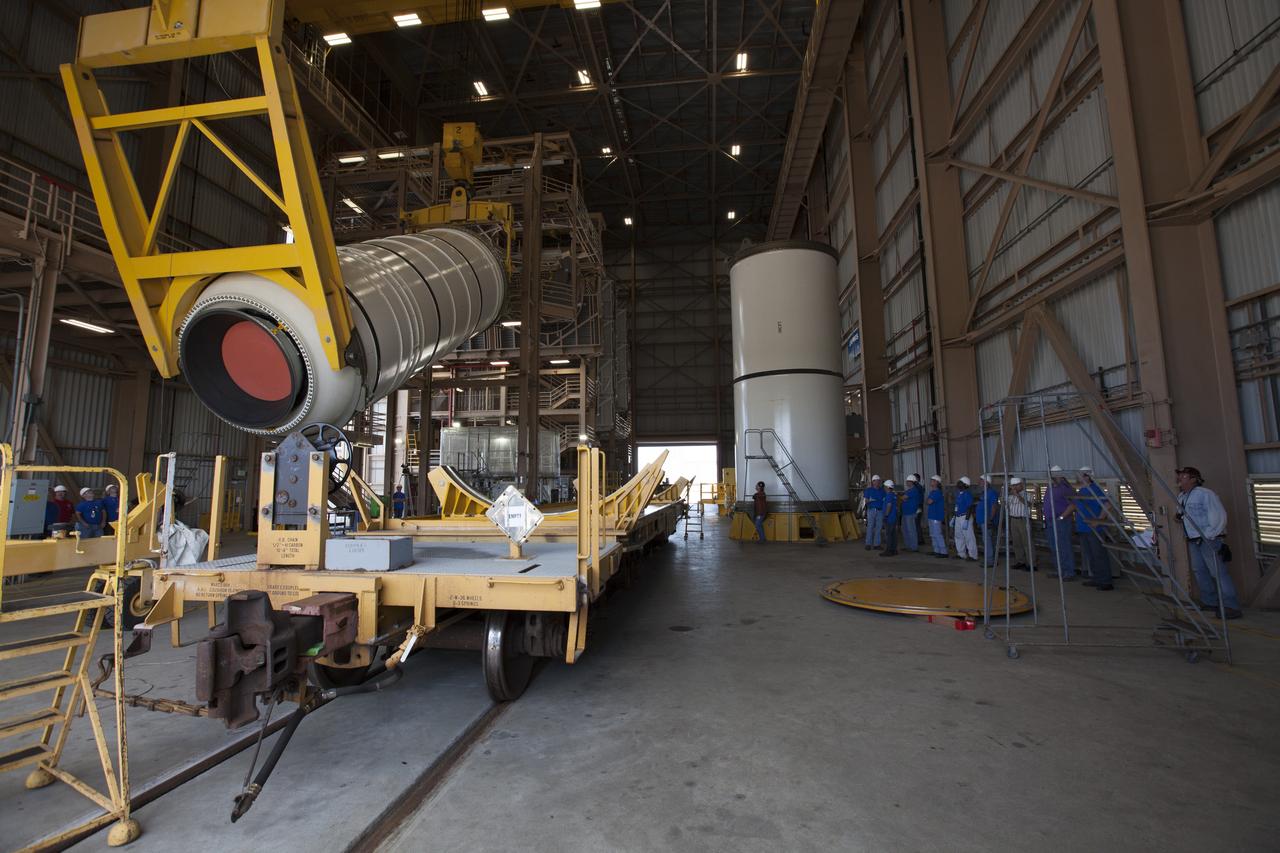
During a media tour of the Rotation, Processing and Surge Facility (RPSF) at NASA’s Kennedy Space Center in Florida, two cranes are used to lift one of two pathfinders, or test versions, of solid rocket booster segments for NASA’s Space Launch System rocket. At far right, the first pathfinder booster has been lifted into the vertical position and secured on a test stand. The Ground Systems Development and Operations Program and Jacobs Engineering, on the Test and Operations Support Contract, will prepare the booster segments, which are inert, for a series of lifts, moves and stacking operations to prepare for Exploration Mission-1, deep-space missions and the journey to Mars.
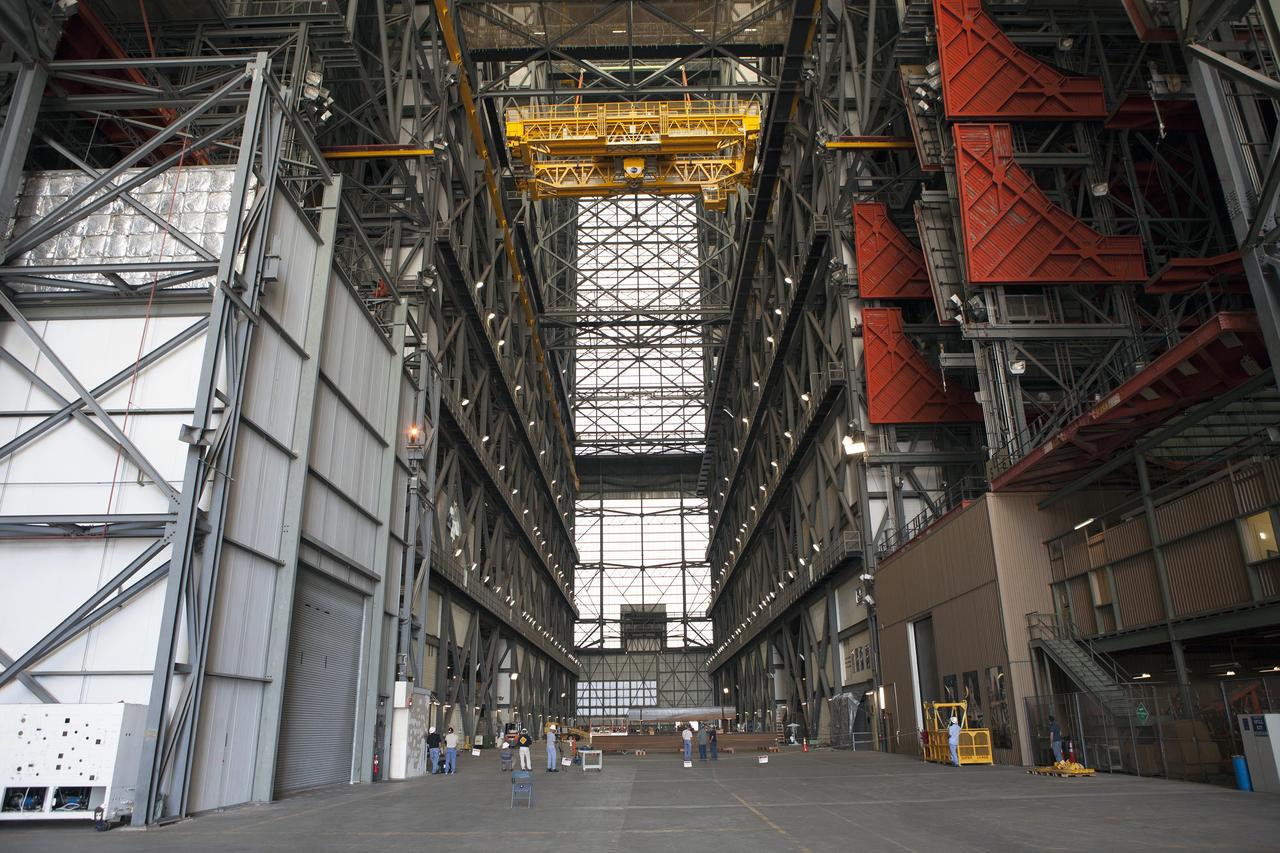
CAPE CANAVERAL, Fla. – Inside the Vehicle Assembly Building, or VAB, at NASA's Kennedy Space Center in Florida, a crane is being used to lower the 175-ton crane from Level 16 down to the transfer aisle floor. Upgrades to the crane's 45-year-old controls will be performed in order to improve reliability, precision and safety. The Ground Systems Development and Operations Program is overseeing upgrades and modifications to the VAB. The crane will be upgraded so that it can support lifting needs for NASA and other exploration vehicles, including the agency's Space Launch System and Orion spacecraft. Photo credit: NASA/Daniel Casper
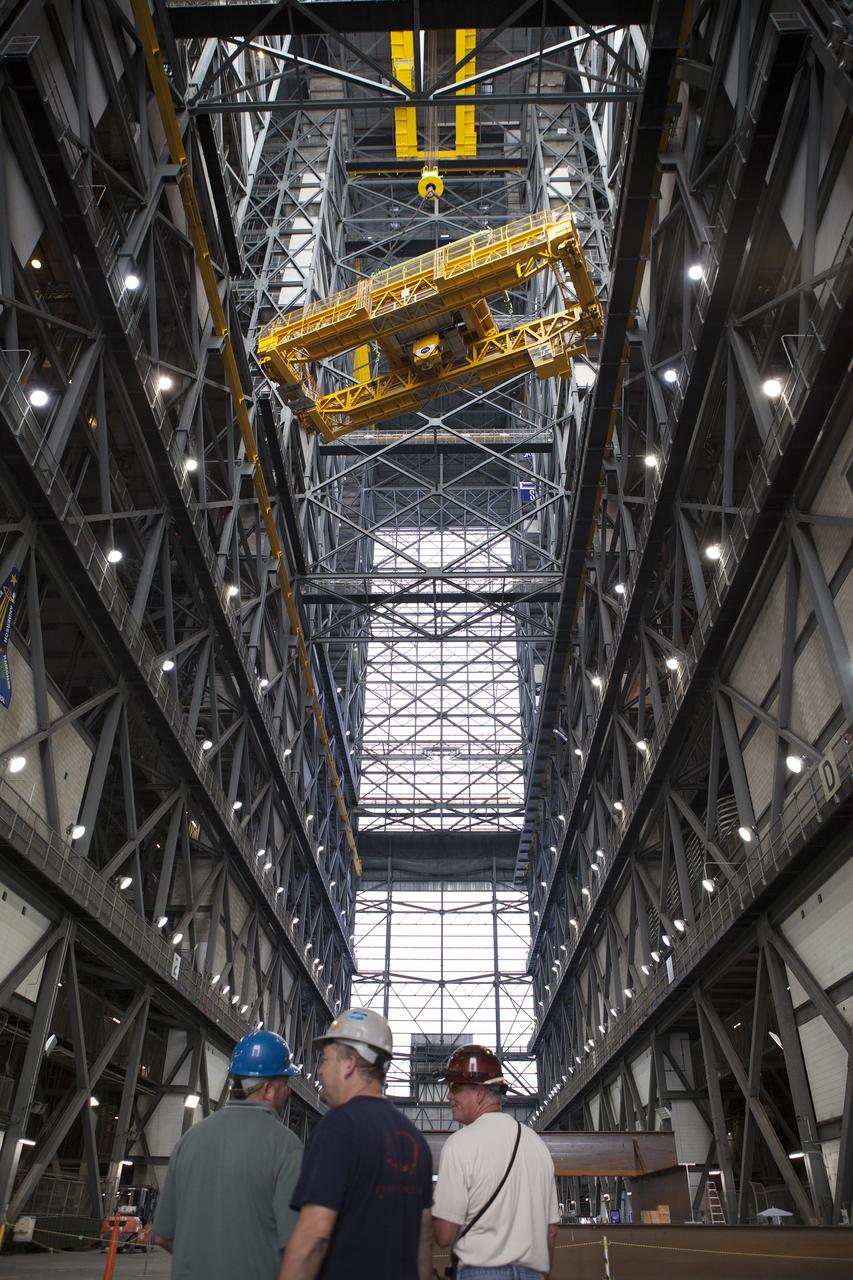
CAPE CANAVERAL, Fla. – Inside the Vehicle Assembly Building, or VAB, at NASA's Kennedy Space Center in Florida, the 175-ton crane is being turned as it is lowered by crane from Level 16 down to the transfer aisle floor. Upgrades to the crane's 45-year-old controls will be performed in order to improve reliability, precision and safety. The Ground Systems Development and Operations Program is overseeing upgrades and modifications to the VAB. The crane will be upgraded so that it can support lifting needs for NASA and other exploration vehicles, including the agency's Space Launch System and Orion spacecraft. Photo credit: NASA/Daniel Casper
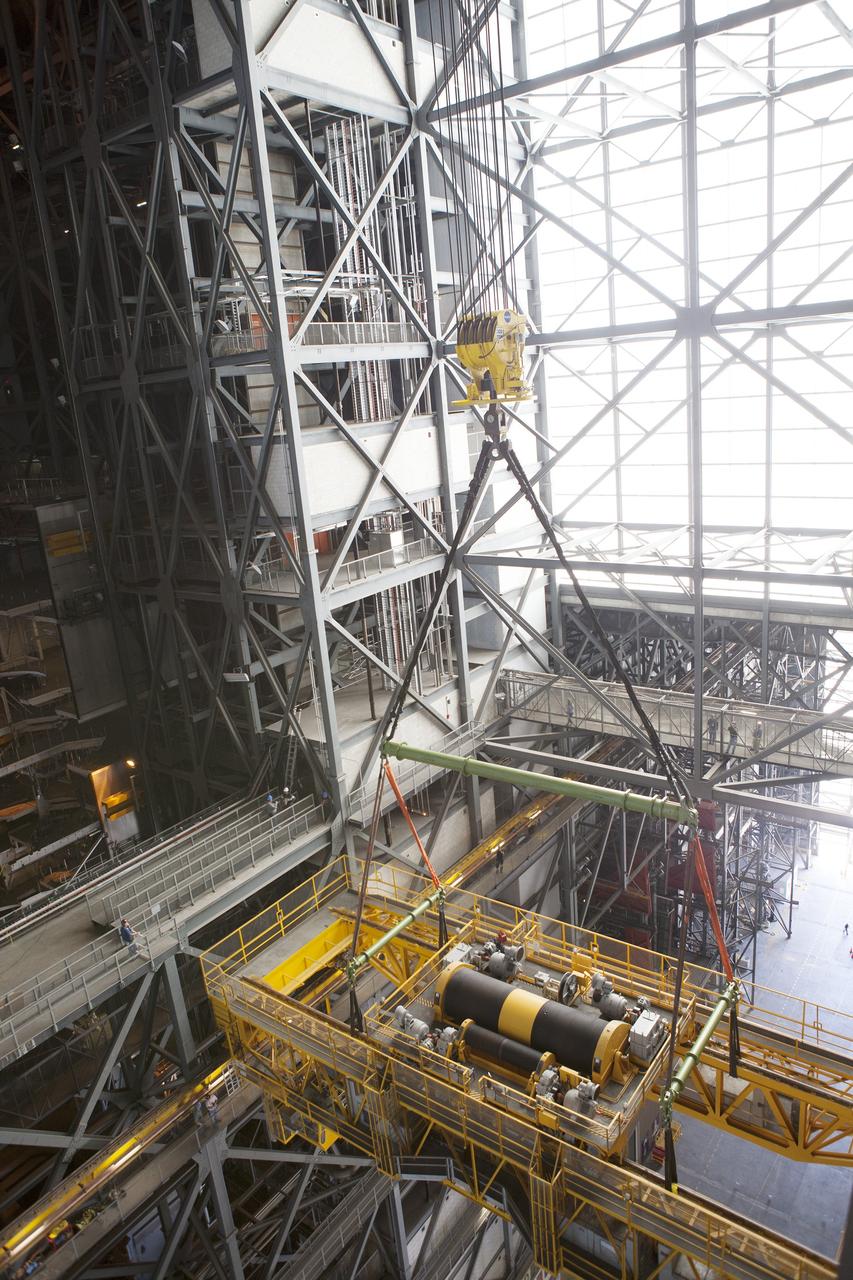
CAPE CANAVERAL, Fla. – Inside the Vehicle Assembly Building, or VAB, at NASA's Kennedy Space Center in Florida, a view from above shows a crane being used to lower the 175-ton crane. The crane is being lowered from Level 16 down to the transfer aisle floor to perform upgrades to its 45-year-old controls in order to improve reliability, precision and safety. The Ground Systems Development and Operations Program is overseeing upgrades and modifications to the VAB. The crane will be upgraded so that it can support lifting needs for NASA and other exploration vehicles, including the agency's Space Launch System and Orion spacecraft. Photo credit: NASA/Daniel Casper
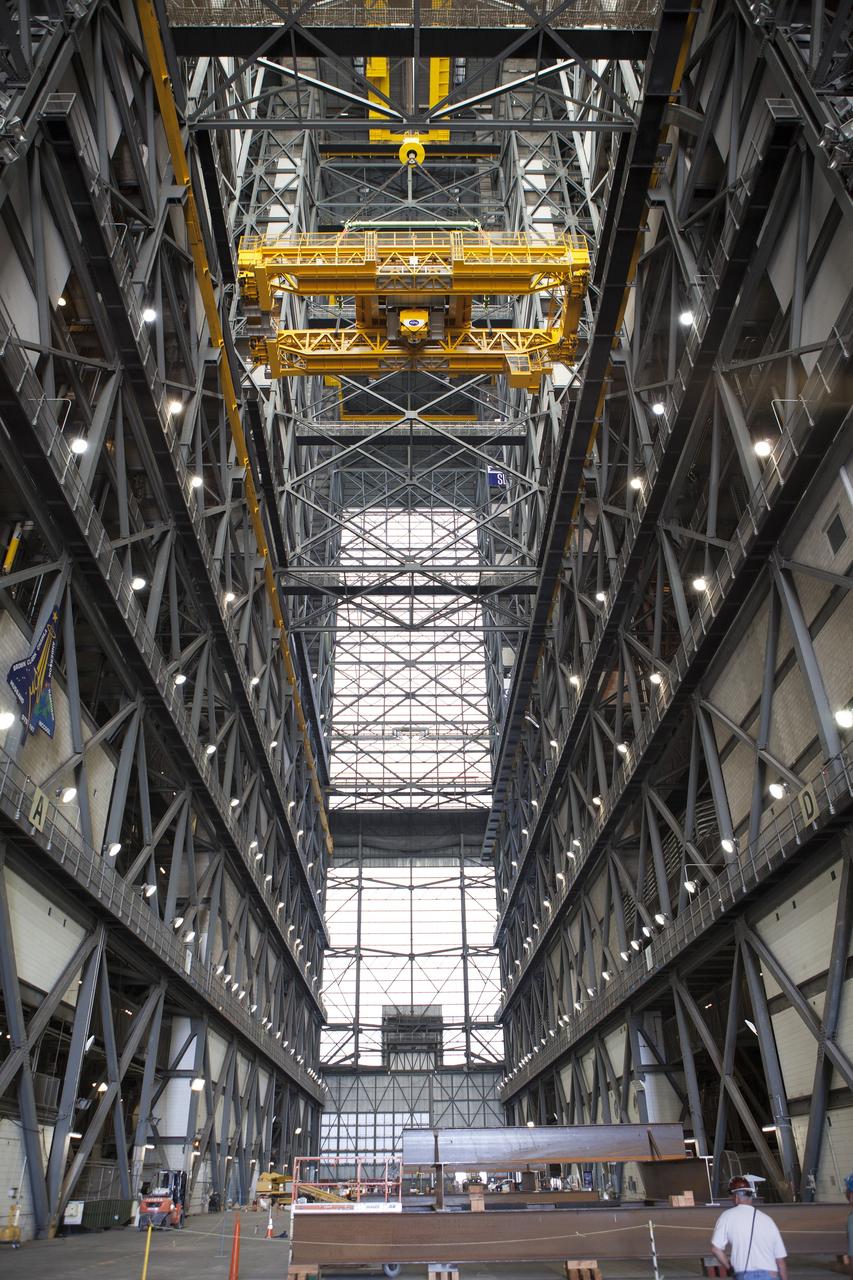
CAPE CANAVERAL, Fla. – Inside the Vehicle Assembly Building, or VAB, at NASA's Kennedy Space Center in Florida, a crane is being used to lower the 175-ton crane from Level 16 down to the transfer aisle floor. Upgrades to the crane's 45-year-old controls will be performed in order to improve reliability, precision and safety. The Ground Systems Development and Operations Program is overseeing upgrades and modifications to the VAB. The crane will be upgraded so that it can support lifting needs for NASA and other exploration vehicles, including the agency's Space Launch System and Orion spacecraft. Photo credit: NASA/Daniel Casper
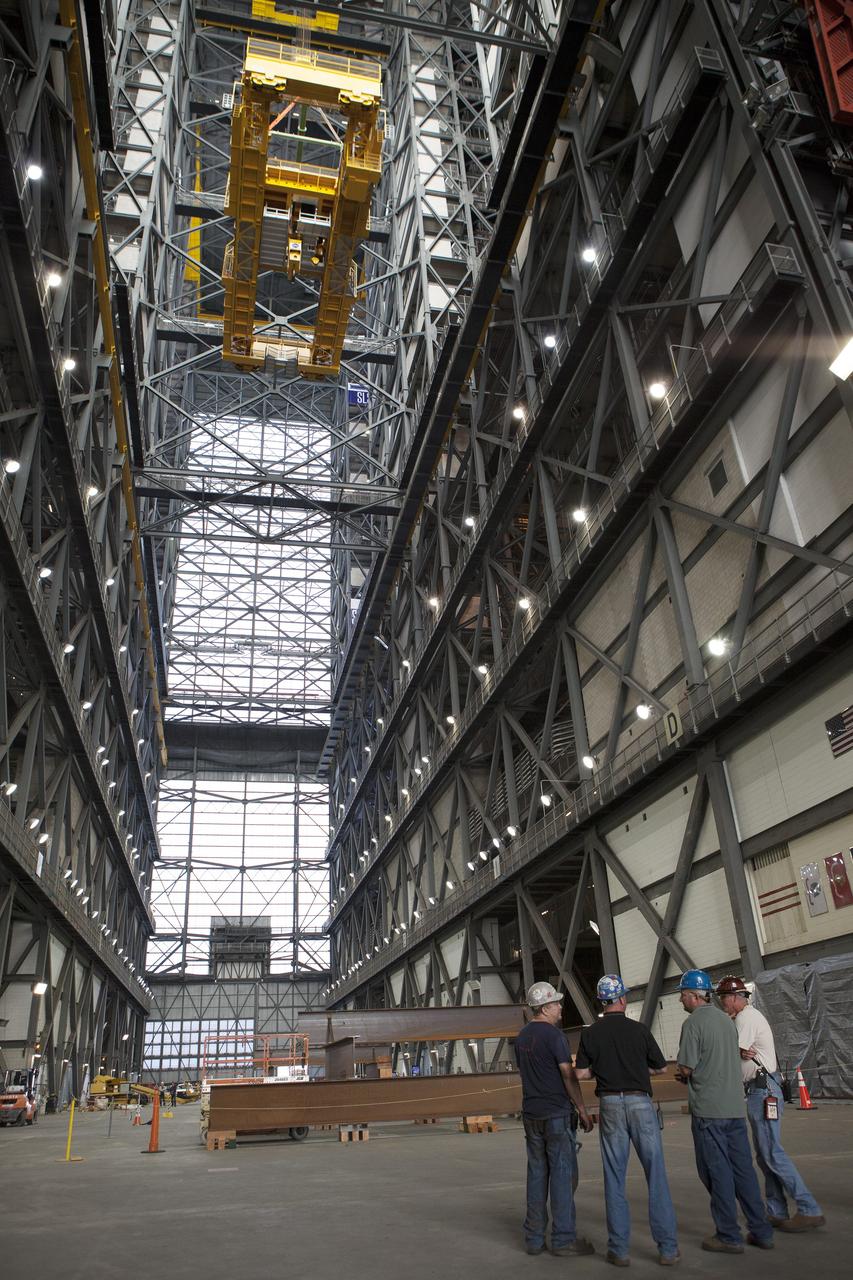
CAPE CANAVERAL, Fla. – Inside the Vehicle Assembly Building, or VAB, at NASA's Kennedy Space Center in Florida, the 175-ton crane has been turned as it is lowered by crane from Level 16 down to the transfer aisle floor. Upgrades to the crane's 45-year-old controls will be performed in order to improve reliability, precision and safety. The Ground Systems Development and Operations Program is overseeing upgrades and modifications to the VAB. The crane will be upgraded so that it can support lifting needs for NASA and other exploration vehicles, including the agency's Space Launch System and Orion spacecraft. Photo credit: NASA/Daniel Casper
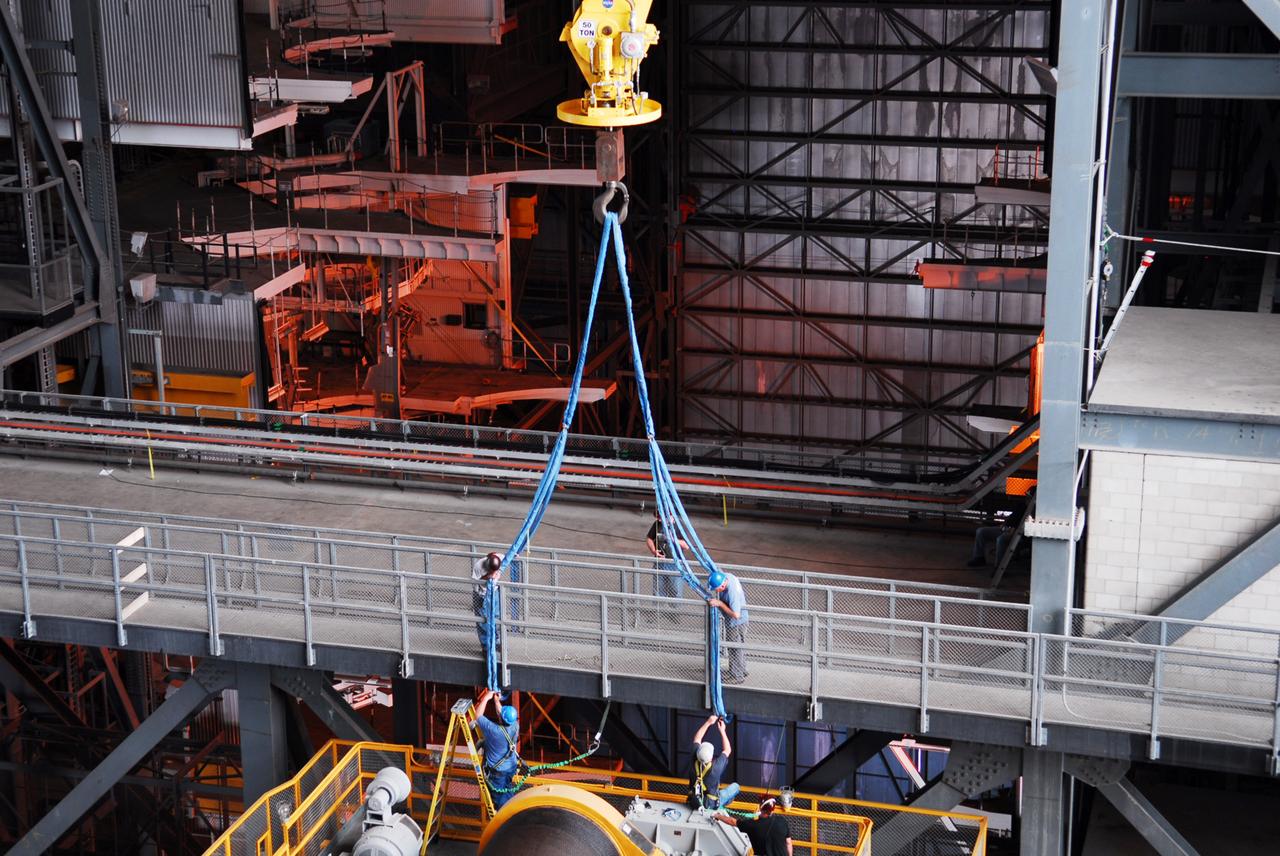
CAPE CANAVERAL, Fla. – Inside the Vehicle Assembly Building, or VAB, at NASA's Kennedy Space Center in Florida, workers have secured a crane to a portion of the catwalk on the east side of Level 16. The catwalk will be removed to allow room for the removal of the 175-ton crane that is situated above the transfer aisle. The crane will be lowered to the floor to perform upgrades to its 45-year-old controls in order to improve reliability, precision and safety. The Ground Systems Development and Operations Program is overseeing upgrades and modifications to the VAB. The crane will be upgraded so that it can support lifting needs for NASA and other exploration vehicles, including the agency's Space Launch System and Orion spacecraft. Photo credit: NASA/Jim Grossmann
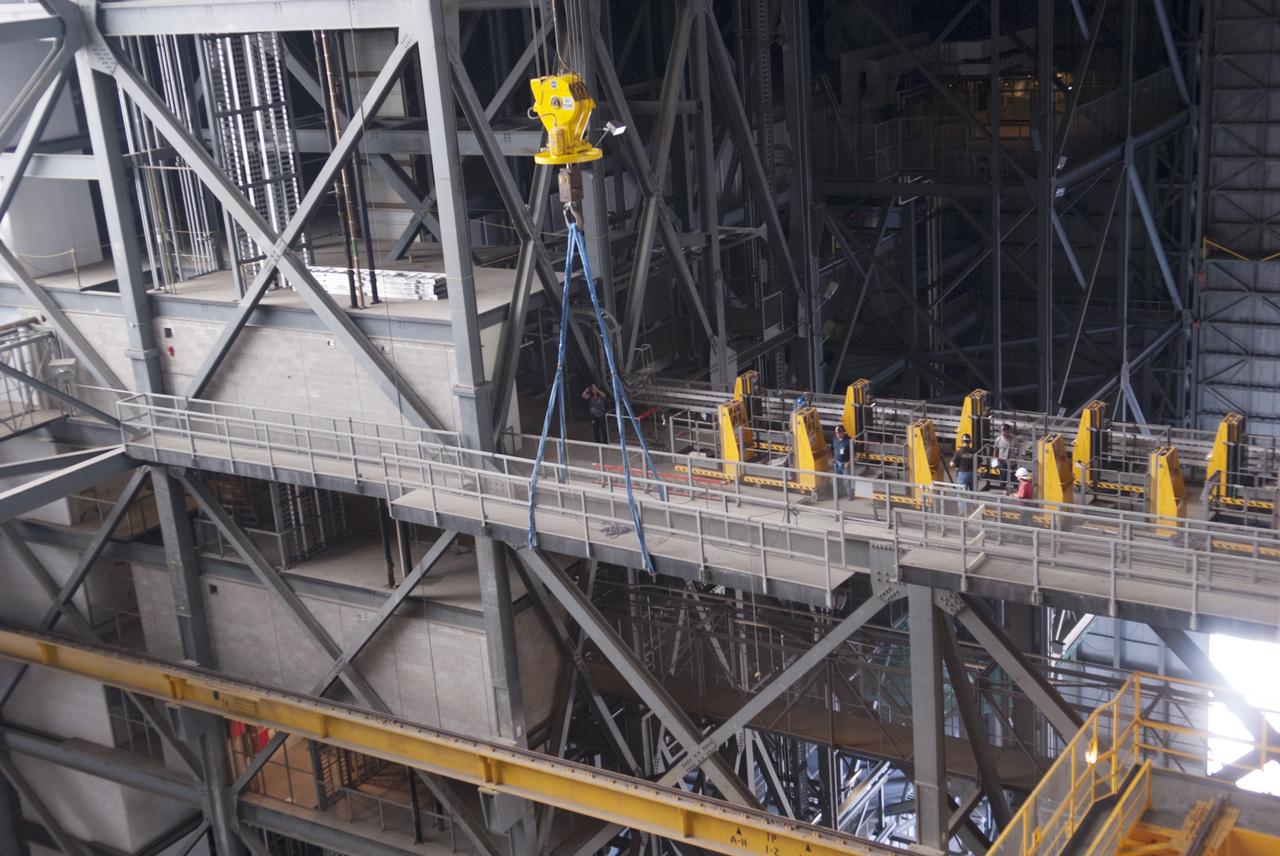
CAPE CANAVERAL, Fla. – Inside the Vehicle Assembly Building, or VAB, at NASA's Kennedy Space Center in Florida, a crane is used to remove a portion of the catwalk on the west side of Level 16. The catwalk is being removed to allow room for the removal of the 175-ton crane that is situated above the transfer aisle. The crane will be lowered to the floor to perform upgrades to its 45-year-old controls in order to improve reliability, precision and safety. The Ground Systems Development and Operations Program is overseeing upgrades and modifications to the VAB. The crane will be upgraded so that it can support lifting needs for NASA and other exploration vehicles, including the agency's Space Launch System and Orion spacecraft. Photo credit: NASA/Jim Grossmann
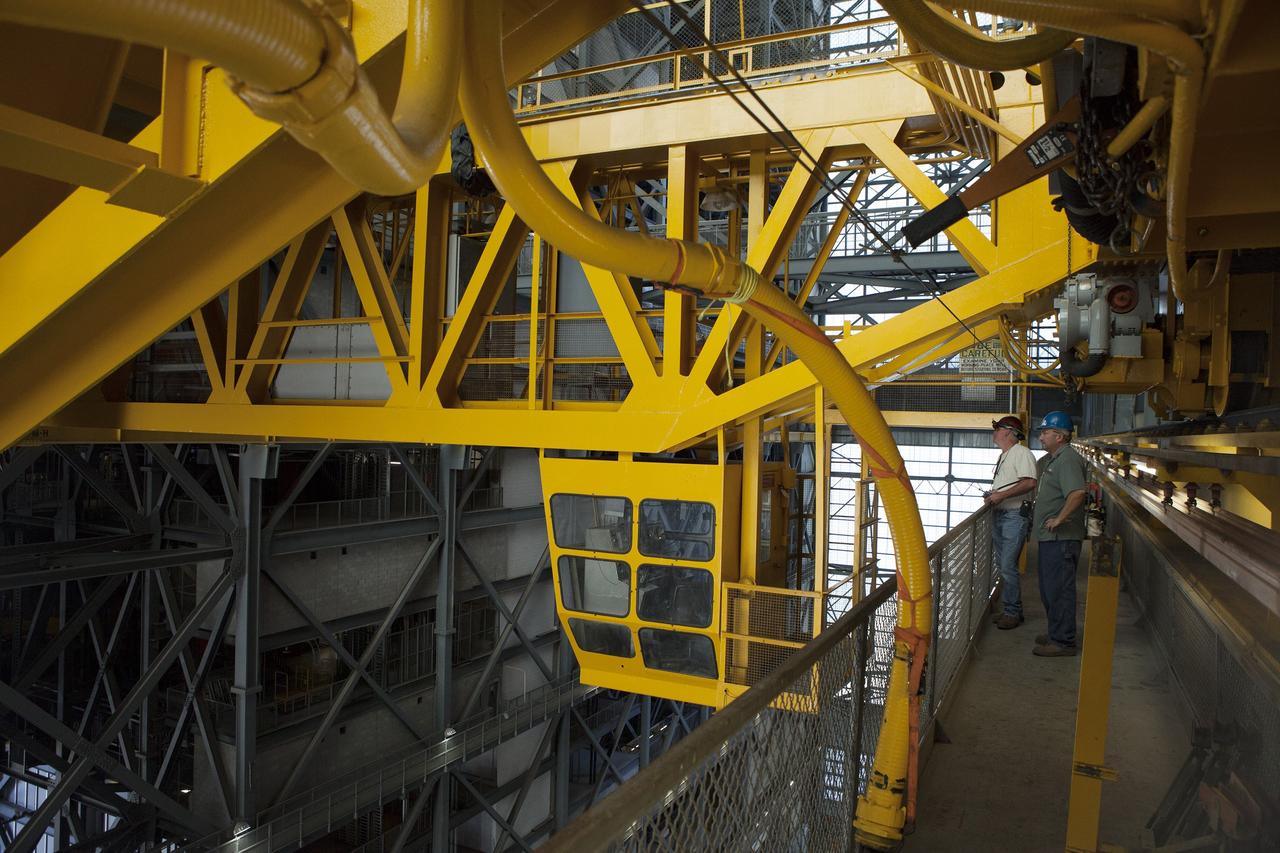
CAPE CANAVERAL, Fla. – Inside the Vehicle Assembly Building, or VAB, at NASA's Kennedy Space Center in Florida, preparations are underway to lower the 175-ton crane. In view is the cab that is used to control the crane. The crane is being lowered from Level 16 down to the floor of the transfer aisle to perform upgrades to its 45-year-old controls in order to improve reliability, precision and safety. The Ground Systems Development and Operations Program is overseeing upgrades and modifications to the VAB. The crane will be upgraded so that it can support lifting needs for NASA and other exploration vehicles, including the agency's Space Launch System and Orion spacecraft. Photo credit: NASA/Daniel Casper
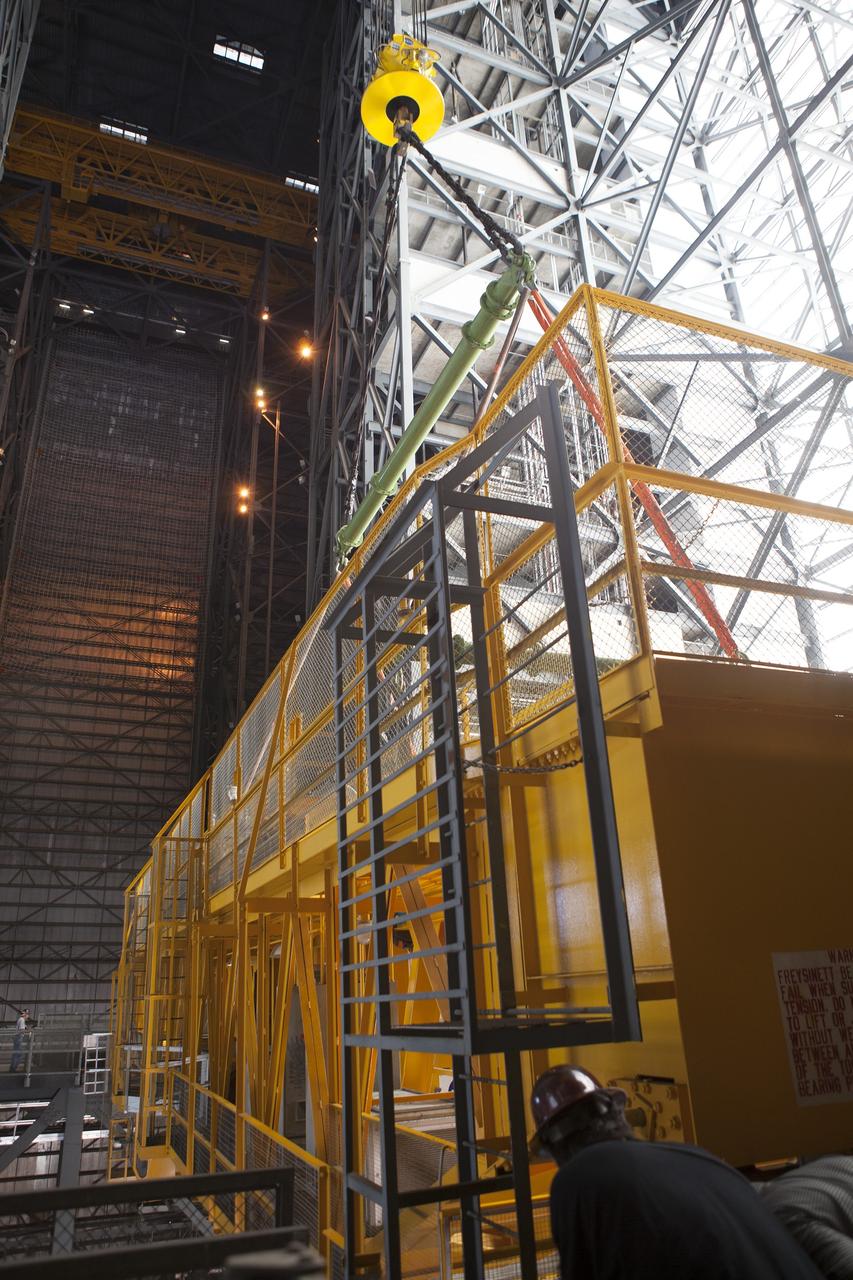
CAPE CANAVERAL, Fla. – Inside the Vehicle Assembly Building, or VAB, at NASA's Kennedy Space Center in Florida, a crane is being used to lower the 175-ton crane from Level 16 down to the transfer aisle floor. Upgrades to the crane's 45-year-old controls will be performed in order to improve reliability, precision and safety. The Ground Systems Development and Operations Program is overseeing upgrades and modifications to the VAB. The crane will be upgraded so that it can support lifting needs for NASA and other exploration vehicles, including the agency's Space Launch System and Orion spacecraft. Photo credit: NASA/Daniel Casper
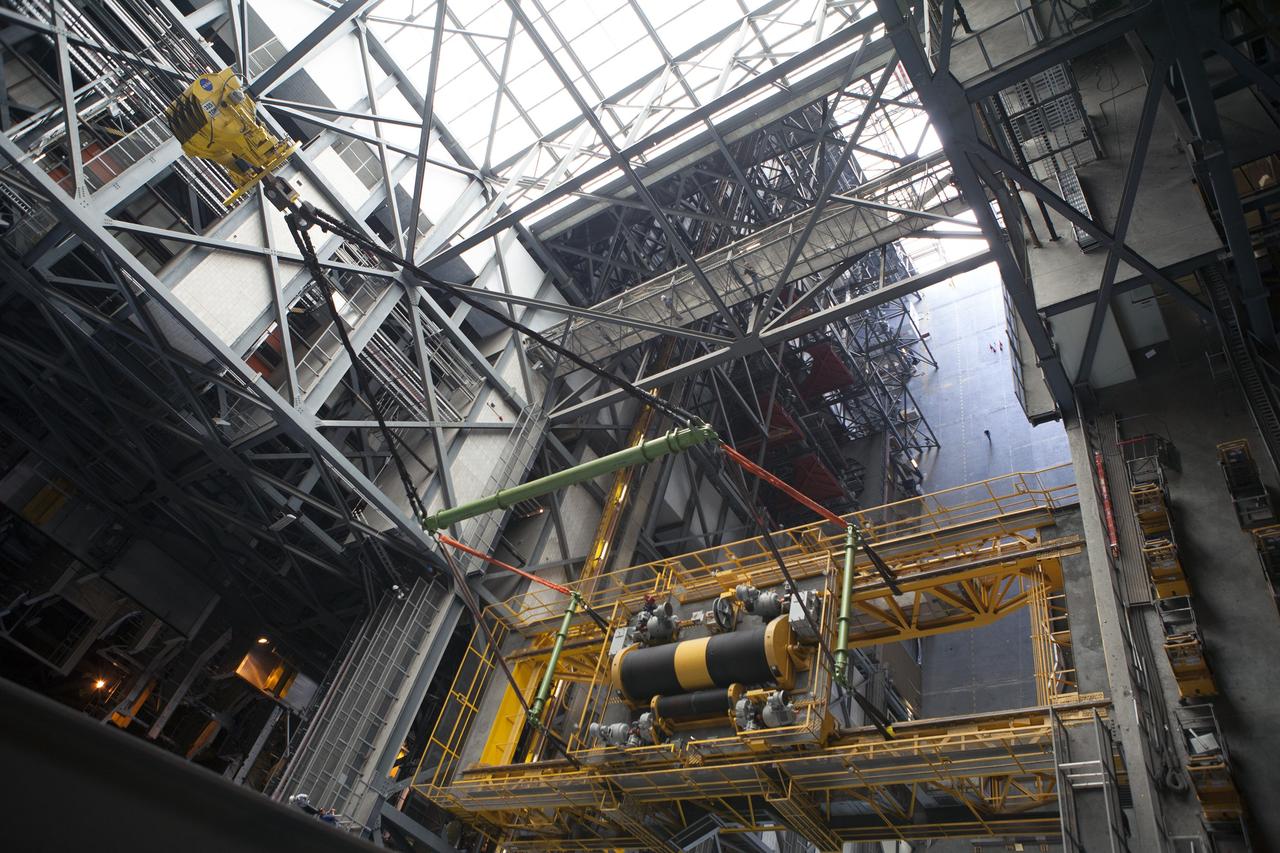
CAPE CANAVERAL, Fla. – Inside the Vehicle Assembly Building, or VAB, at NASA's Kennedy Space Center in Florida, a view from above shows a crane being used to lower the 175-ton crane. The crane is being lowered from Level 16 down to the transfer aisle floor to perform upgrades to its 45-year-old controls in order to improve reliability, precision and safety. The Ground Systems Development and Operations Program is overseeing upgrades and modifications to the VAB. The crane will be upgraded so that it can support lifting needs for NASA and other exploration vehicles, including the agency's Space Launch System and Orion spacecraft. Photo credit: NASA/Daniel Casper
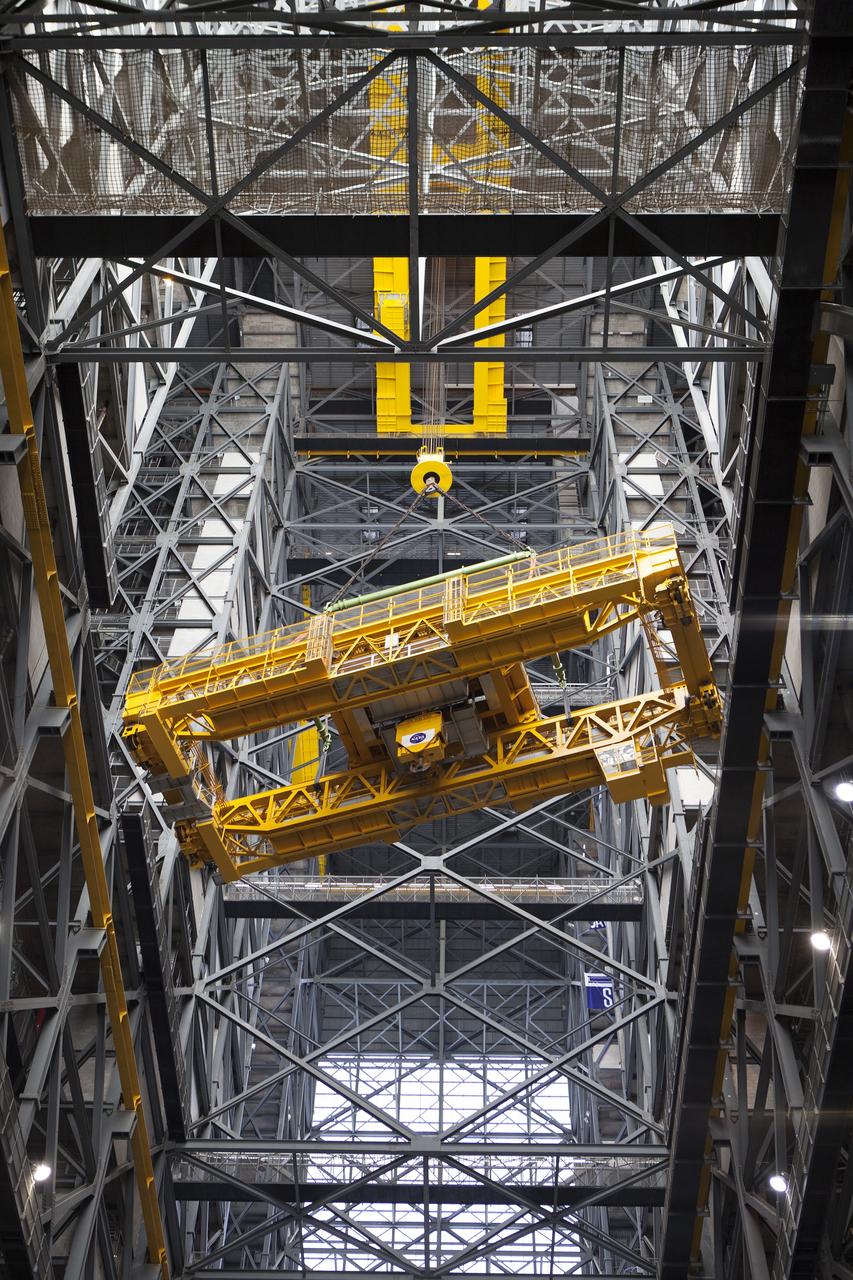
CAPE CANAVERAL, Fla. – Inside the Vehicle Assembly Building, or VAB, at NASA's Kennedy Space Center in Florida, the 175-ton crane is being turned as it is lowered by crane from Level 16 down to the transfer aisle floor. Upgrades to the crane's 45-year-old controls will be performed in order to improve reliability, precision and safety. The Ground Systems Development and Operations Program is overseeing upgrades and modifications to the VAB. The crane will be upgraded so that it can support lifting needs for NASA and other exploration vehicles, including the agency's Space Launch System and Orion spacecraft. Photo credit: NASA/Daniel Casper
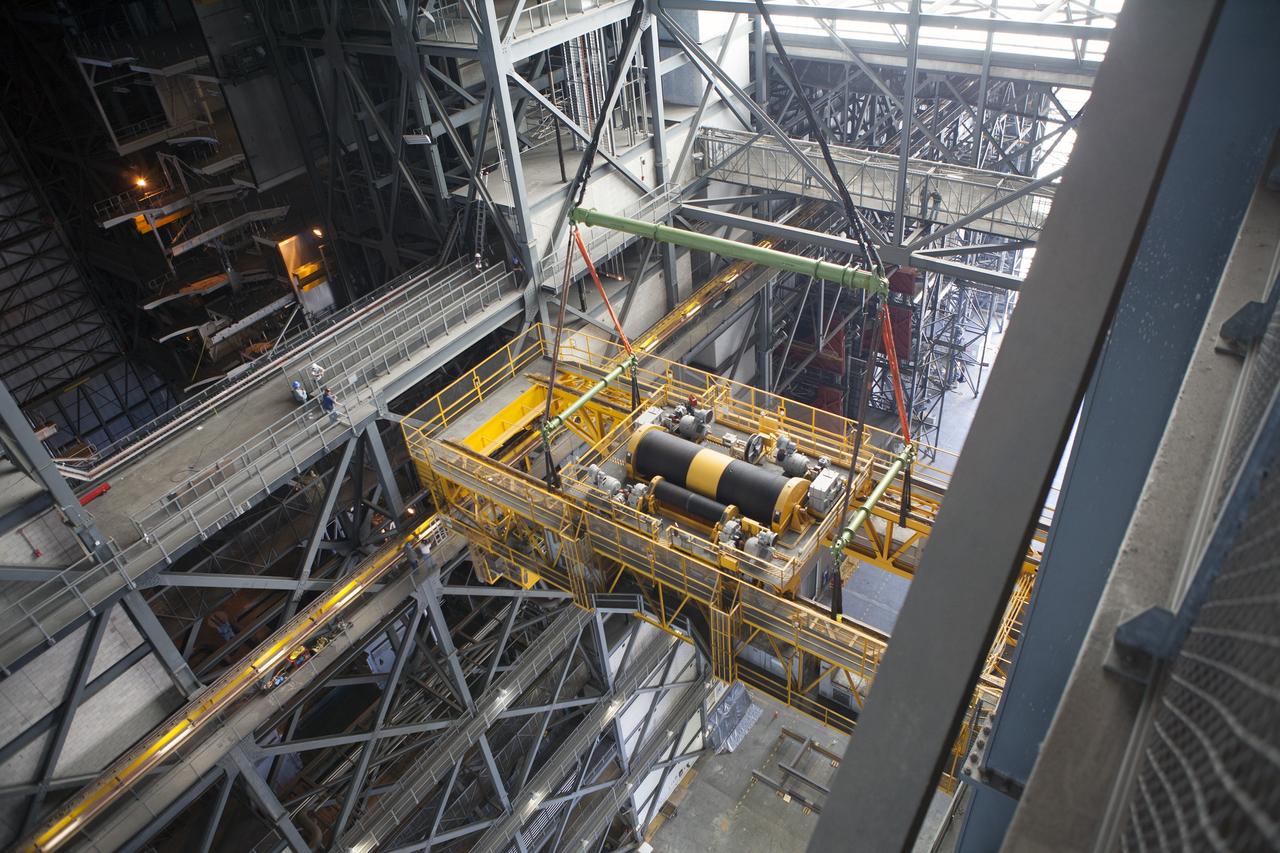
CAPE CANAVERAL, Fla. – Inside the Vehicle Assembly Building, or VAB, at NASA's Kennedy Space Center in Florida, a view from above shows a crane being used to lower the 175-ton crane. The crane is being lowered from Level 16 down to the transfer aisle floor to perform upgrades to its 45-year-old controls in order to improve reliability, precision and safety. The Ground Systems Development and Operations Program is overseeing upgrades and modifications to the VAB. The crane will be upgraded so that it can support lifting needs for NASA and other exploration vehicles, including the agency's Space Launch System and Orion spacecraft. Photo credit: NASA/Daniel Casper
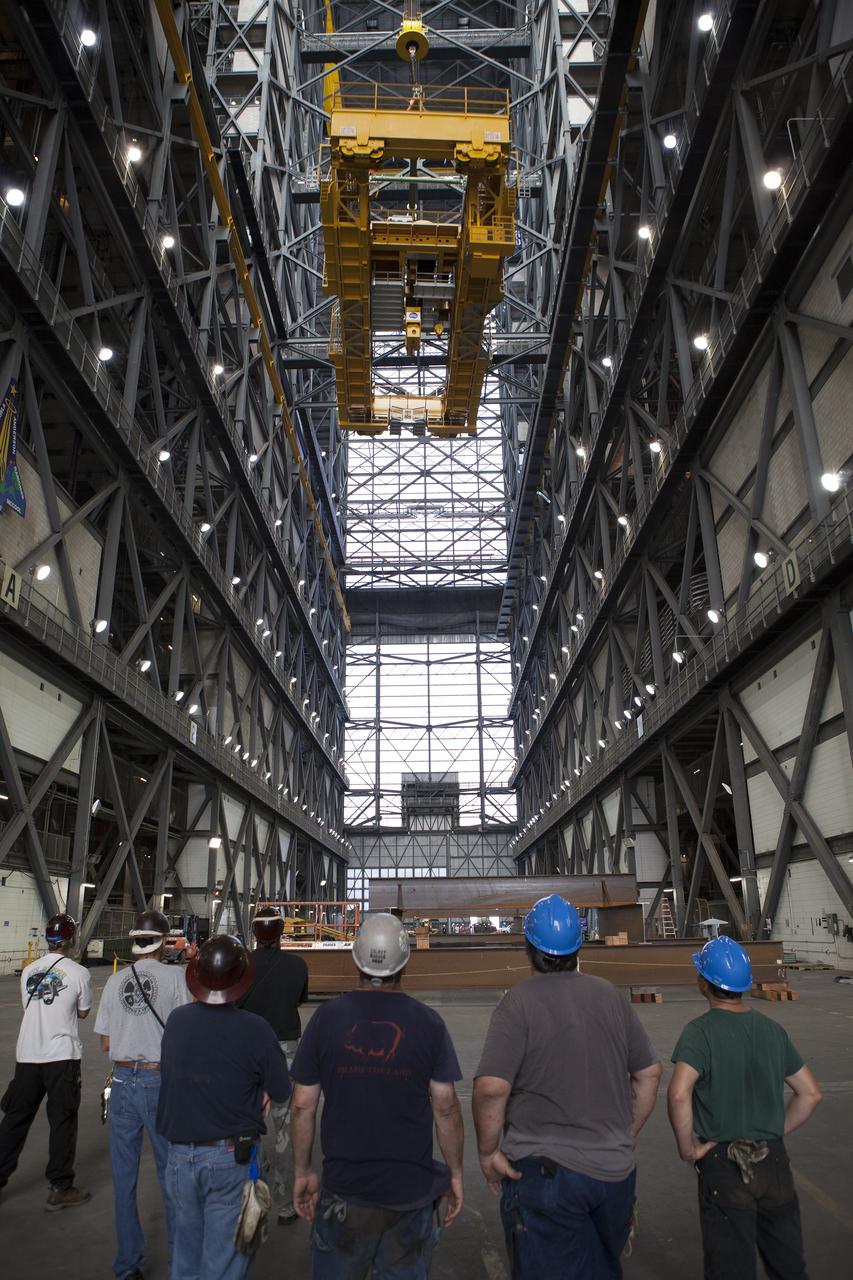
CAPE CANAVERAL, Fla. – Inside the Vehicle Assembly Building, or VAB, at NASA's Kennedy Space Center in Florida, construction workers watch as the 175-ton crane is lowered by crane from Level 16 down to the transfer aisle floor. Upgrades to the crane's 45-year-old controls will be performed in order to improve reliability, precision and safety. The Ground Systems Development and Operations Program is overseeing upgrades and modifications to the VAB. The crane will be upgraded so that it can support lifting needs for NASA and other exploration vehicles, including the agency's Space Launch System and Orion spacecraft. Photo credit: NASA/Daniel Casper
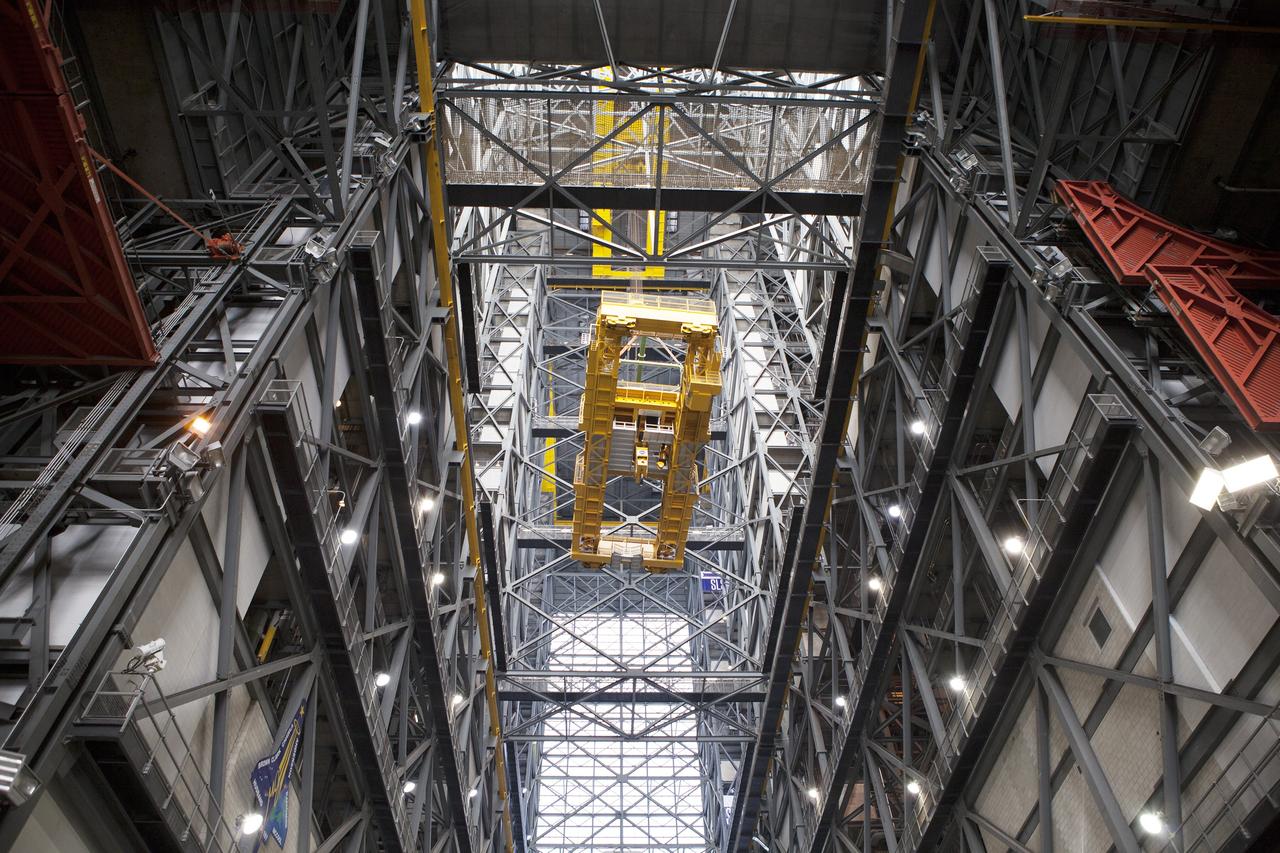
CAPE CANAVERAL, Fla. – Inside the Vehicle Assembly Building, or VAB, at NASA's Kennedy Space Center in Florida, the 175-ton crane has been turned as it is lowered by crane from Level 16 down to the transfer aisle floor. Upgrades to the crane's 45-year-old controls will be performed in order to improve reliability, precision and safety. The Ground Systems Development and Operations Program is overseeing upgrades and modifications to the VAB. The crane will be upgraded so that it can support lifting needs for NASA and other exploration vehicles, including the agency's Space Launch System and Orion spacecraft. Photo credit: NASA/Daniel Casper
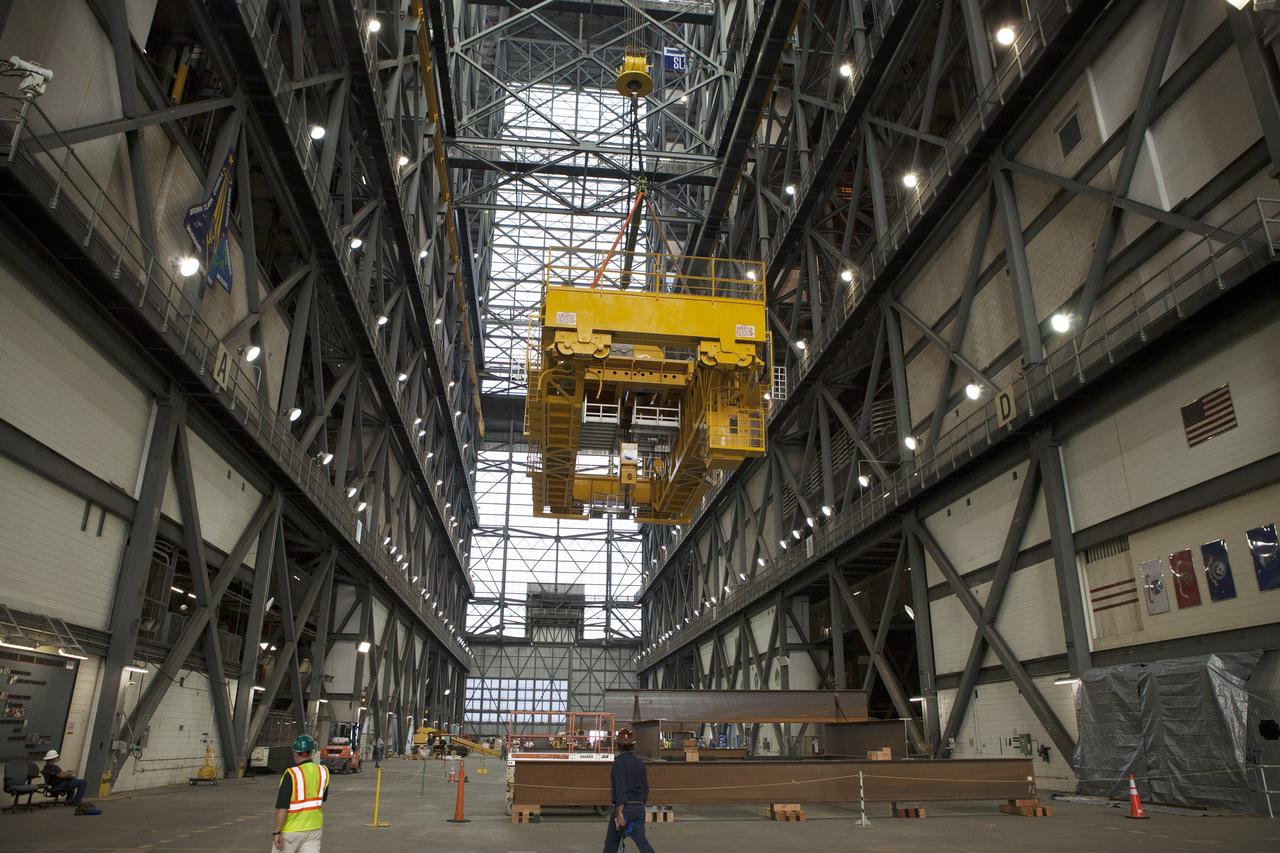
CAPE CANAVERAL, Fla. – Inside the Vehicle Assembly Building, or VAB, at NASA's Kennedy Space Center in Florida, the 175-ton crane is lowered closer to the transfer aisle floor. The crane was turned to make it easier to lower it from Level 16. Upgrades to the crane's 45-year-old controls will be performed in order to improve reliability, precision and safety. The Ground Systems Development and Operations Program is overseeing upgrades and modifications to the VAB. The crane will be upgraded so that it can support lifting needs for NASA and other exploration vehicles, including the agency's Space Launch System and Orion spacecraft. Photo credit: NASA/Daniel Casper
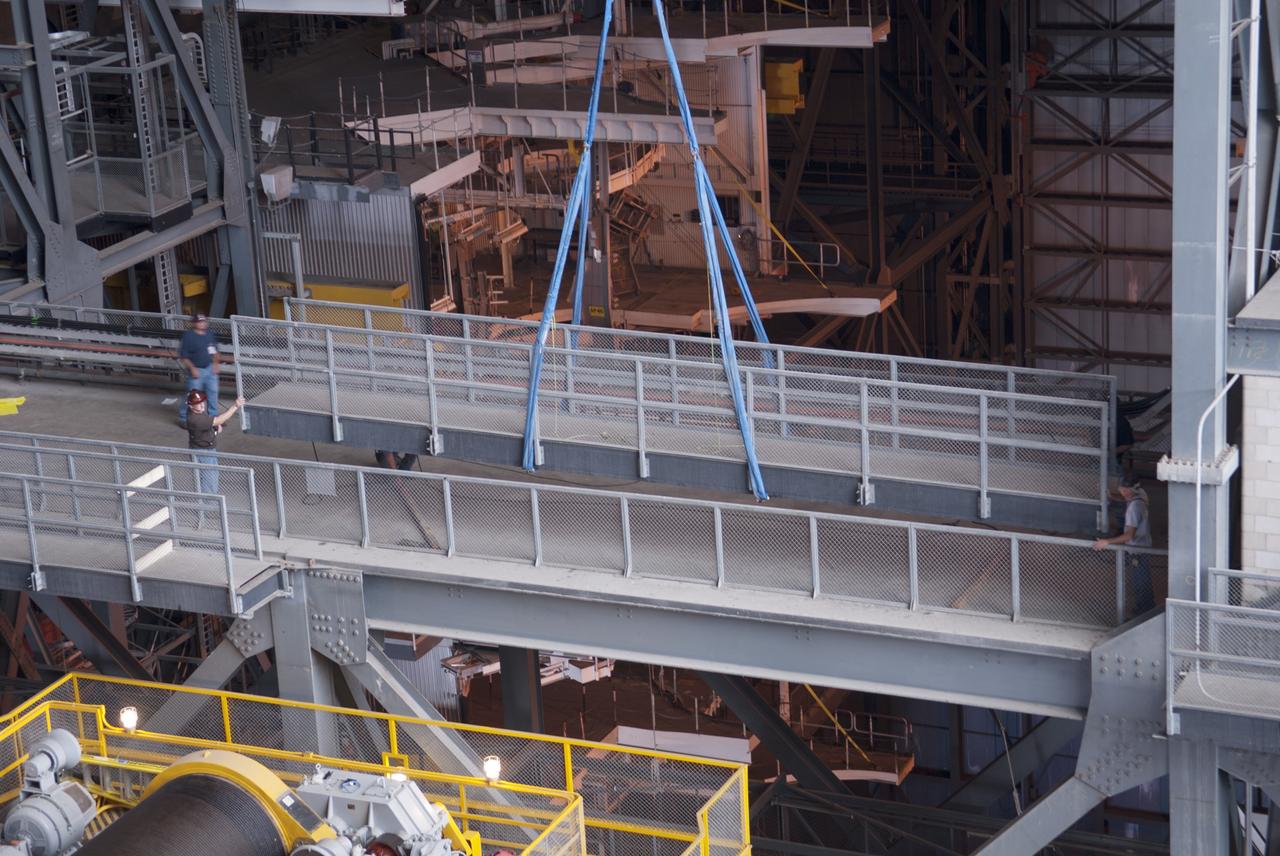
CAPE CANAVERAL, Fla. – Inside the Vehicle Assembly Building, or VAB, at NASA's Kennedy Space Center in Florida, workers monitor the progress as a crane lifts up a portion of the catwalk on the east side of Level 16. The catwalk is being removed to allow room for the removal of the 175-ton crane that is situated above the transfer aisle. The crane will be lowered to the floor to perform upgrades to its 45-year-old controls in order to improve reliability, precision and safety. The Ground Systems Development and Operations Program is overseeing upgrades and modifications to the VAB. The crane will be upgraded so that it can support lifting needs for NASA and other exploration vehicles, including the agency's Space Launch System and Orion spacecraft. Photo credit: NASA/Jim Grossmann
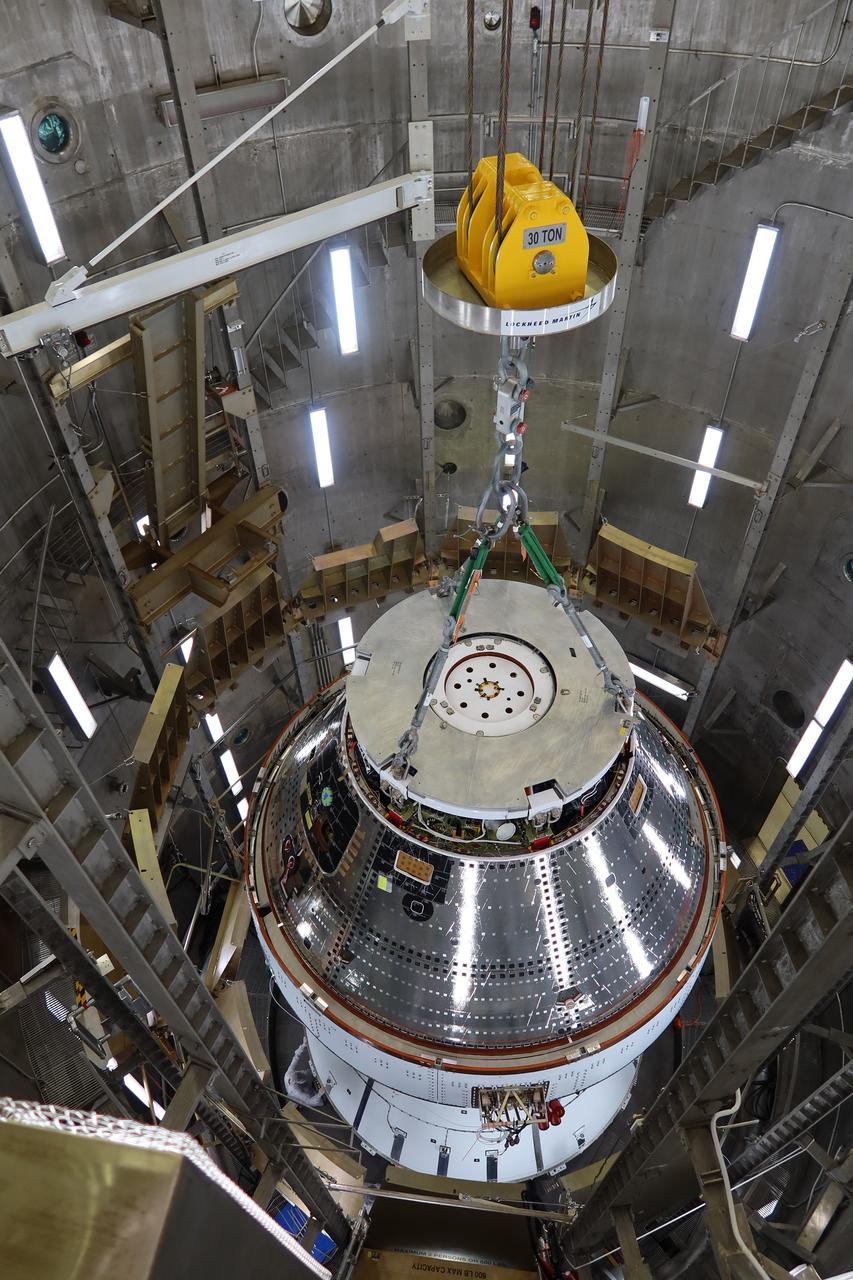
A team wearing bunny suits inside the Operations and Checkout Building at NASA's Kennedy Space Center in Florida on Saturday, April 27, 2024 prepare the Artemis II Orion spacecraft to be lifted by a 30 ton crane out of a vacuum chamber following a series of electromagnetic compatibility and interference testing.

A team wearing bunny suits inside the Operations and Checkout Building at NASA's Kennedy Space Center in Florida on Saturday, April 27, 2024 prepare the Artemis II Orion spacecraft to be lifted by a 30 ton crane out of a vacuum chamber following a series of electromagnetic compatibility and interference testing.
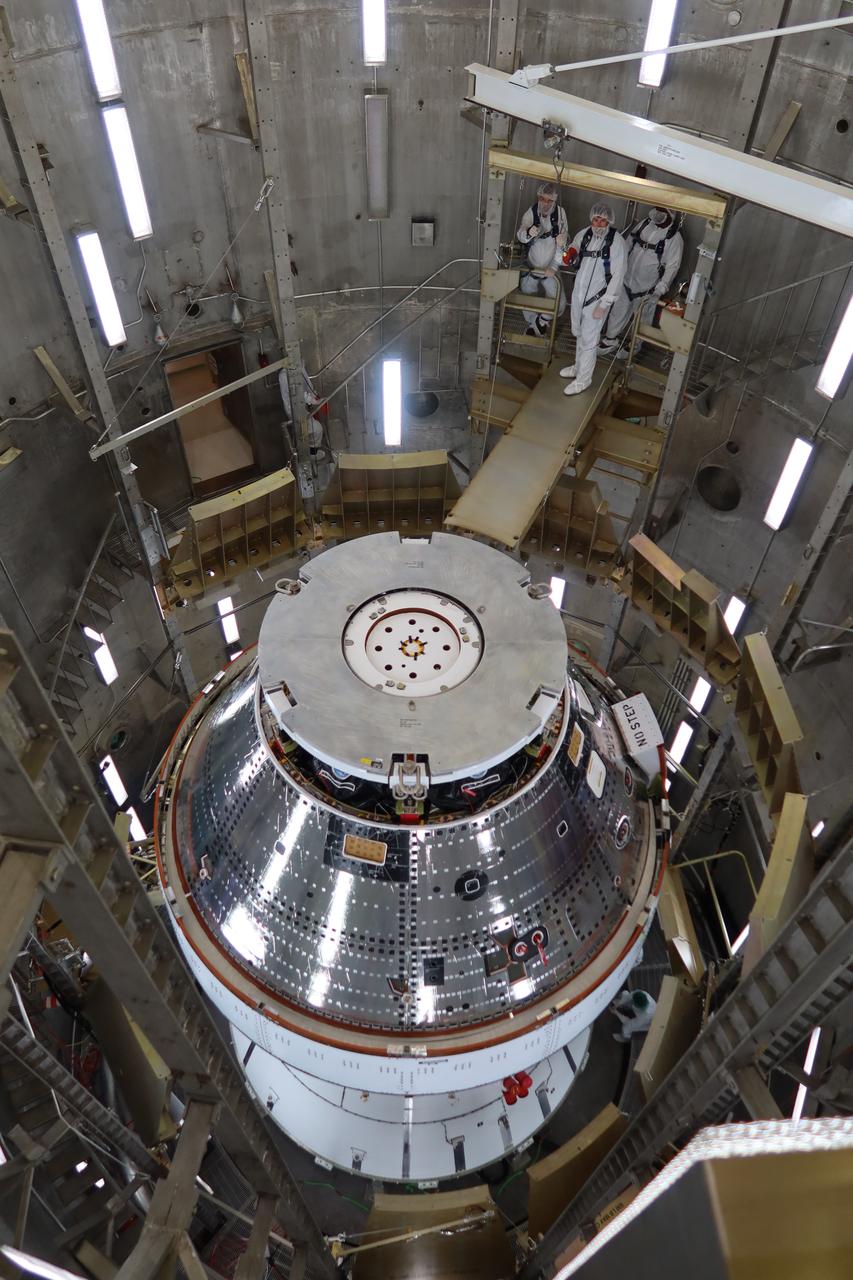
A team wearing bunny suits inside the Operations and Checkout Building at NASA's Kennedy Space Center in Florida on Saturday, April 27, 2024 prepare the Artemis II Orion spacecraft to be lifted by a 30 ton crane out of a vacuum chamber following a series of electromagnetic compatibility and interference testing.
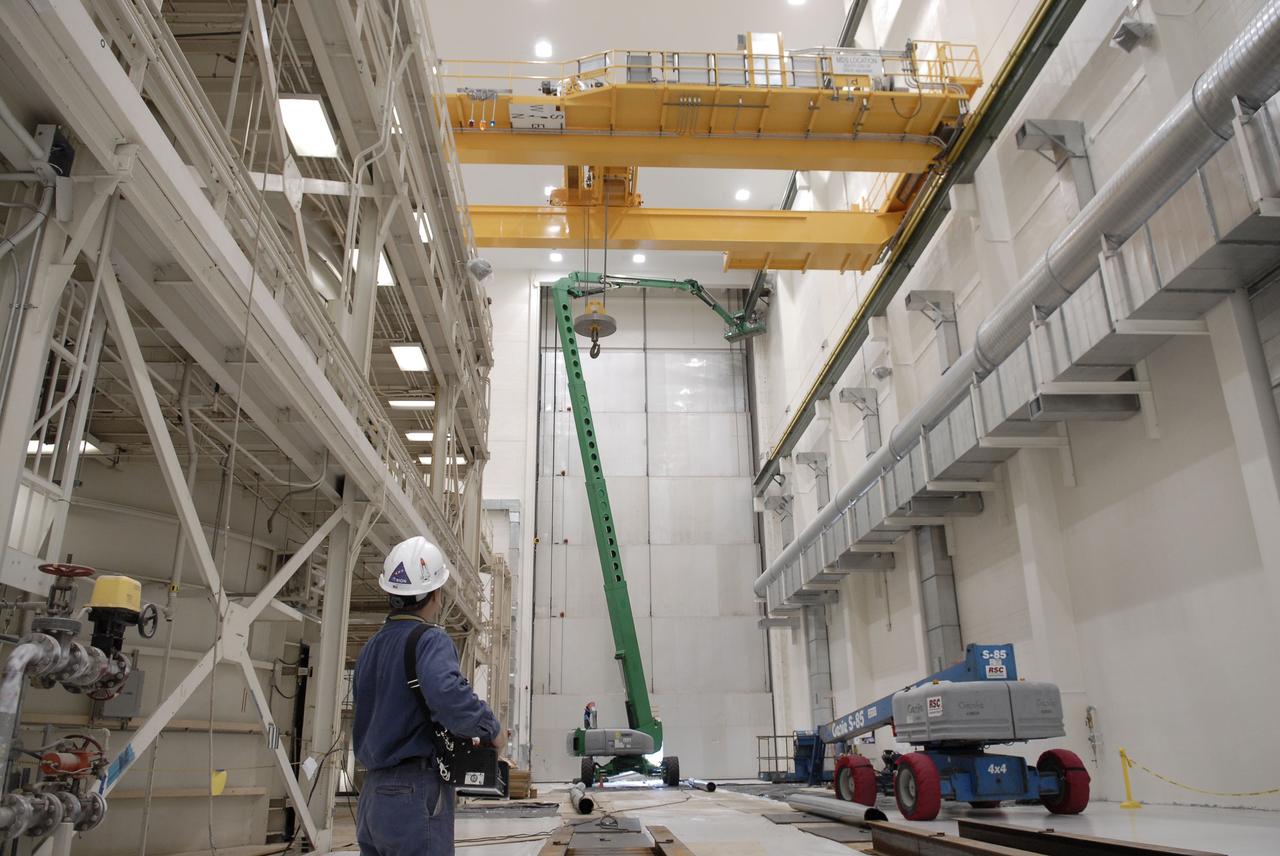
CAPE CANAVERAL, Fla. – Motion of the segments of a new crane is tested inside the Operations and Checkout Building at NASA's Kennedy Space Center in Florida. The new O&C low-bay crane is a 25-ton overhead bridge crane built for Lockheed Martin and Space Florida by American Crane and Equipment Corporation in Douglasville, Pa. The crane has a bridge span of 78’-2” and a hook height of 48’-10”. The crane will be used for lifting and moving flight hardware, fixtures and equipment in support of the Orion spacecraft manufacturing. Part of NASA's Constellation Program, the Orion spacecraft will return humans to the moon and prepare for future voyages to Mars and other destinations in our solar system. Photo credit: NASA/Kim Shiflett
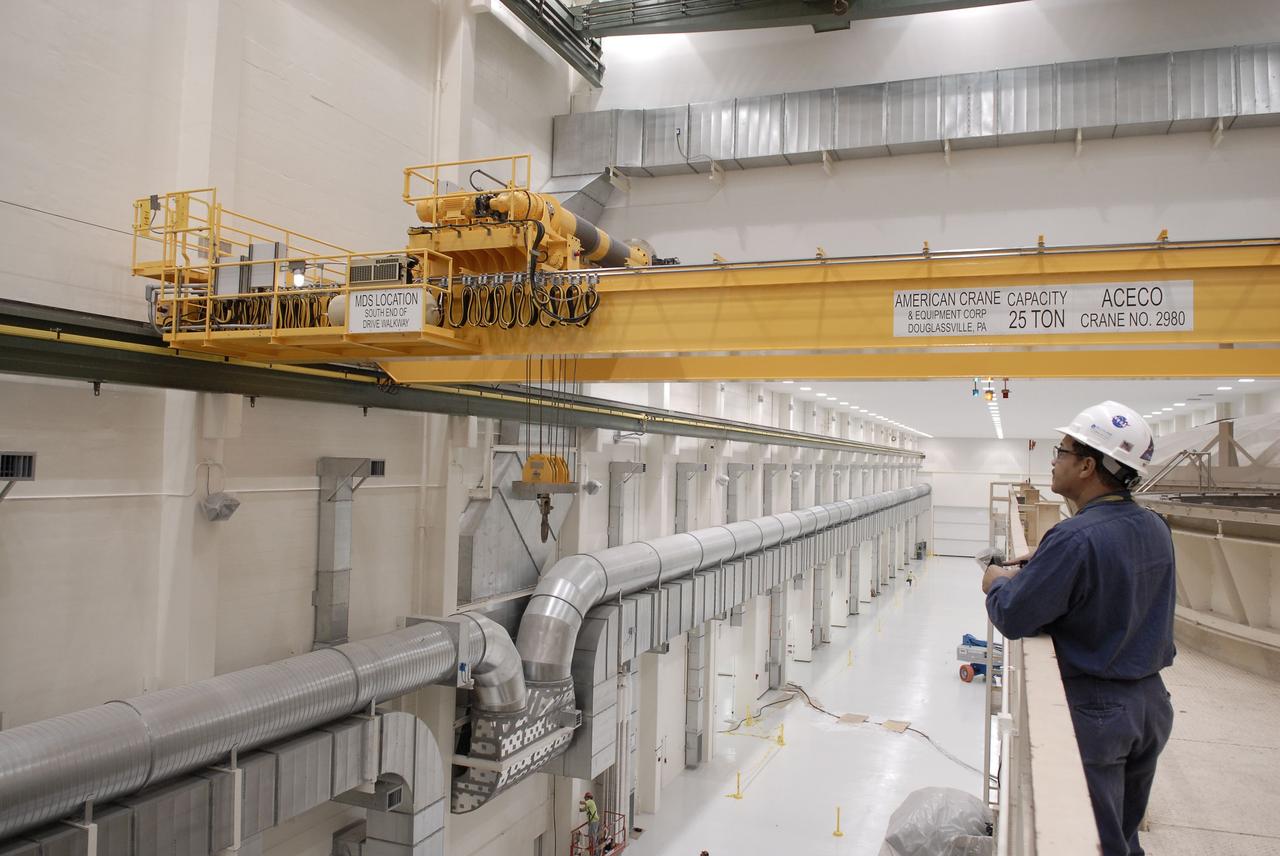
CAPE CANAVERAL, Fla. – Motion of the segments of a new crane is tested inside the Operations and Checkout Building at NASA's Kennedy Space Center in Florida. The new O&C low-bay crane is a 25-ton overhead bridge crane built for Lockheed Martin and Space Florida by American Crane and Equipment Corporation in Douglasville, Pa. The crane has a bridge span of 78’-2” and a hook height of 48’-10”. The crane will be used for lifting and moving flight hardware, fixtures and equipment in support of the Orion spacecraft manufacturing. Part of NASA's Constellation Program, the Orion spacecraft will return humans to the moon and prepare for future voyages to Mars and other destinations in our solar system. Photo credit: NASA/Kim Shiflett
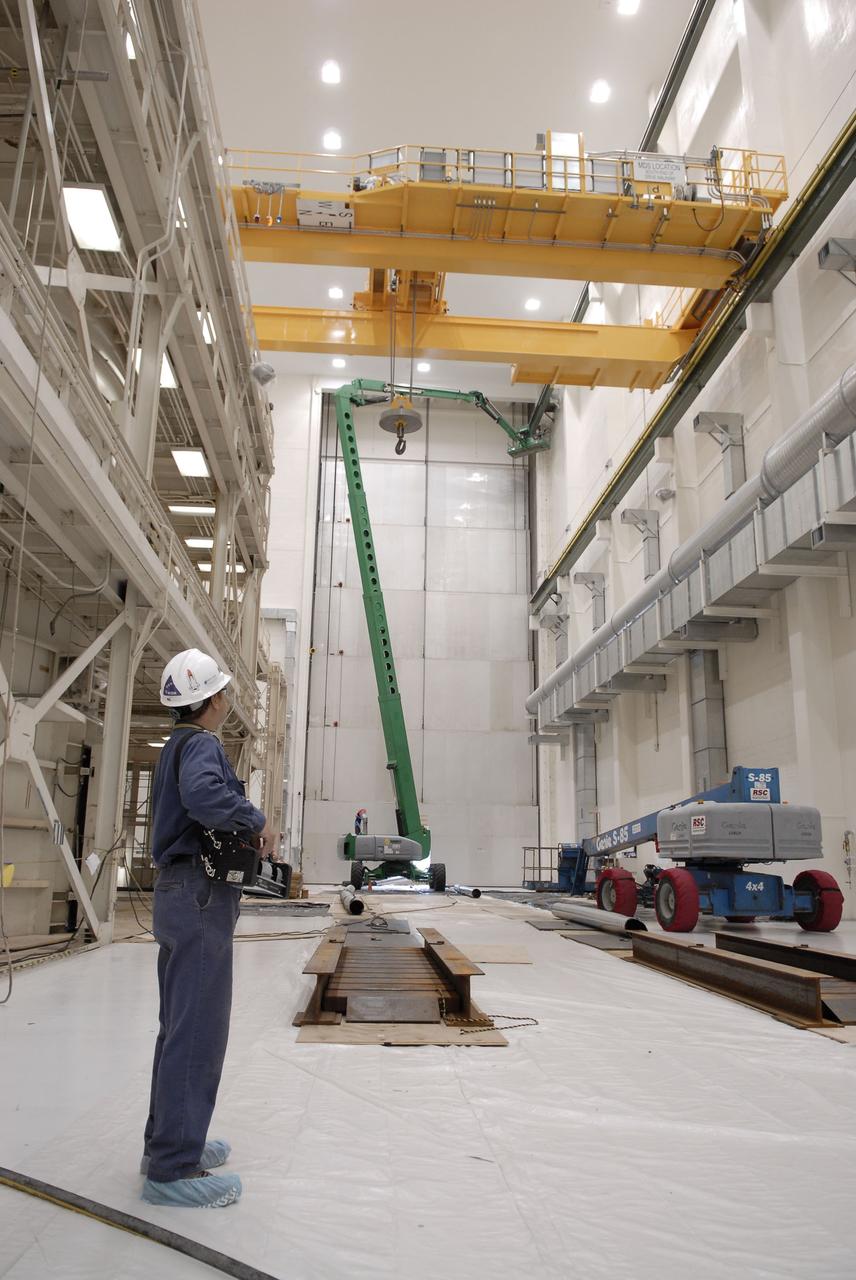
CAPE CANAVERAL, Fla. – Movement of the hook from a new crane are is tested inside the Operations and Checkout Building at NASA's Kennedy Space Center in Florida. The new O&C low-bay crane is a 25-ton overhead bridge crane built for Lockheed Martin and Space Florida by American Crane and Equipment Corporation in Douglasville, Pa. The crane has a bridge span of 78’-2” and a hook height of 48’-10”. The crane will be used for lifting and moving flight hardware, fixtures and equipment in support of the Orion spacecraft manufacturing. Part of NASA's Constellation Program, the Orion spacecraft will return humans to the moon and prepare for future voyages to Mars and other destinations in our solar system. Photo credit: NASA/Kim Shiflett
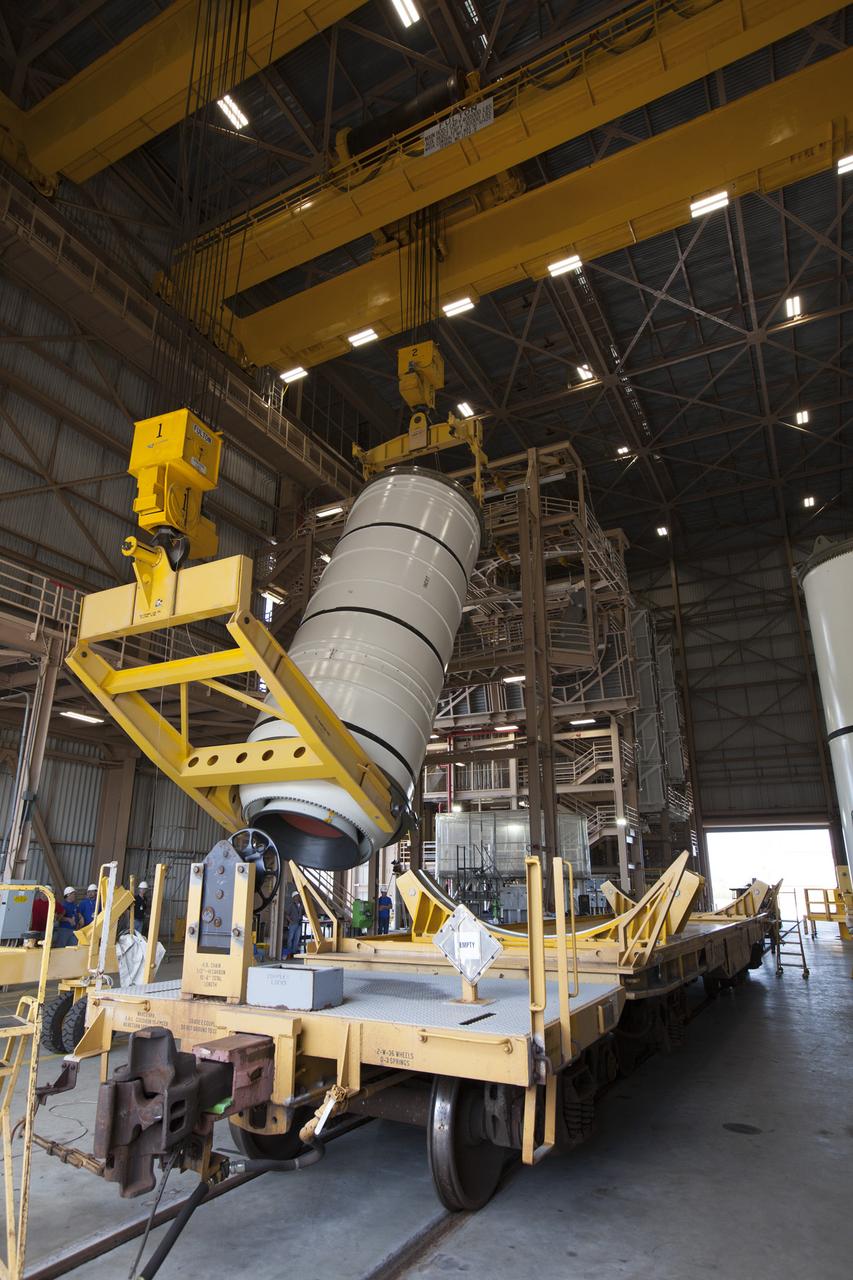
During a media tour of the Rotation, Processing and Surge Facility (RPSF) at NASA’s Kennedy Space Center in Florida, two cranes are used to lift one of two pathfinders, or test versions, of solid rocket booster segments for NASA’s Space Launch System rocket into the vertical position. The pathfinder booster segment will be moved to the other end of the RPSF and secured on a test stand. The Ground Systems Development and Operations Program and Jacobs Engineering, on the Test and Operations Support Contract, will prepare the booster segments, which are inert, for a series of lifts, moves and stacking operations to prepare for Exploration Mission-1, deep-space missions and the journey to Mars.
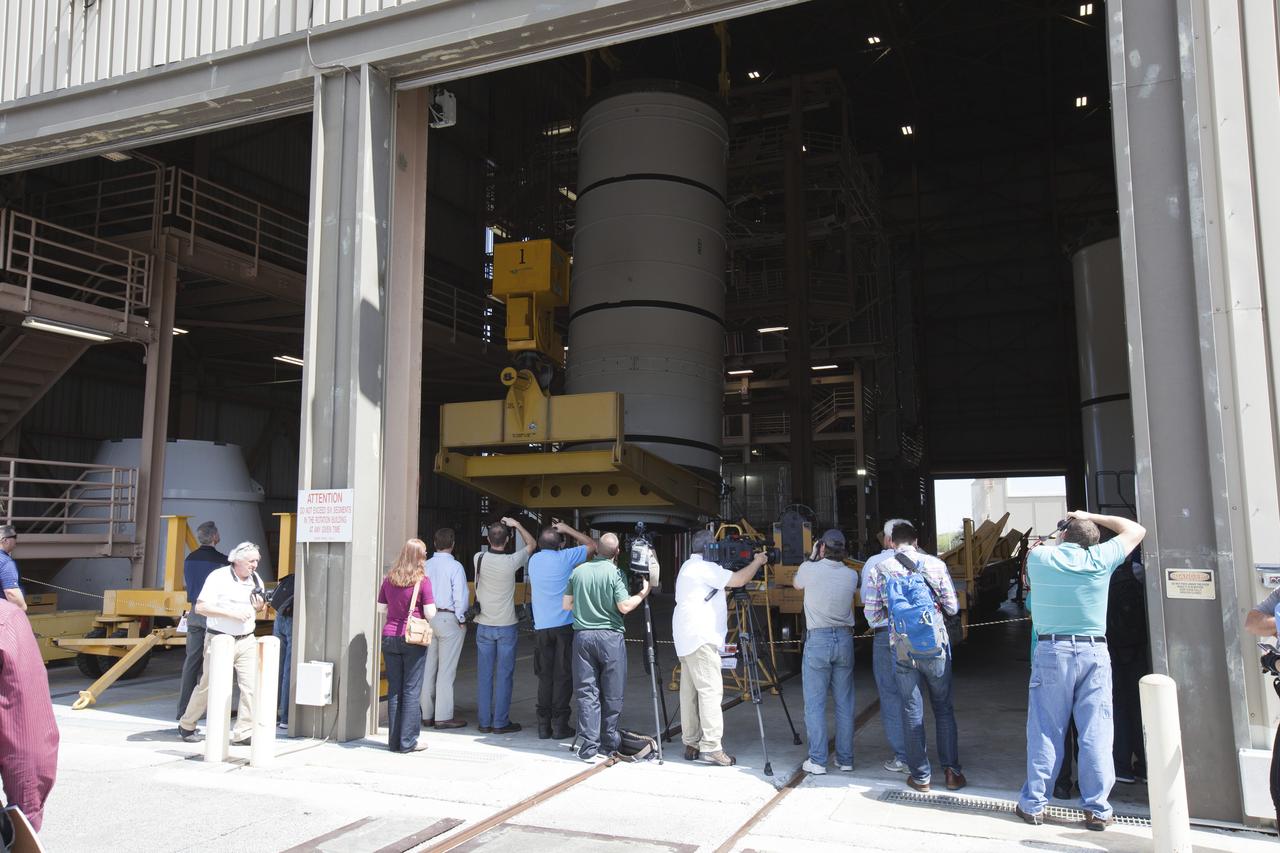
Members of the news media watch as two cranes are used to lift one of two pathfinders, or test versions, of solid rocket booster segments for NASA’s Space Launch System (SLS) rocket into the vertical position inside the Rotation, Processing and Surge Facility at NASA’s Kennedy Space Center in Florida. The pathfinder booster segment will be moved to the other end of the RPSF and secured on a test stand. The Ground Systems Development and Operations Program and Jacobs Engineering, on the Test and Operations Support Contract, will prepare the booster segments, which are inert, for a series of lifts, moves and stacking operations to prepare for Exploration Mission-1, deep-space missions and the journey to Mars.
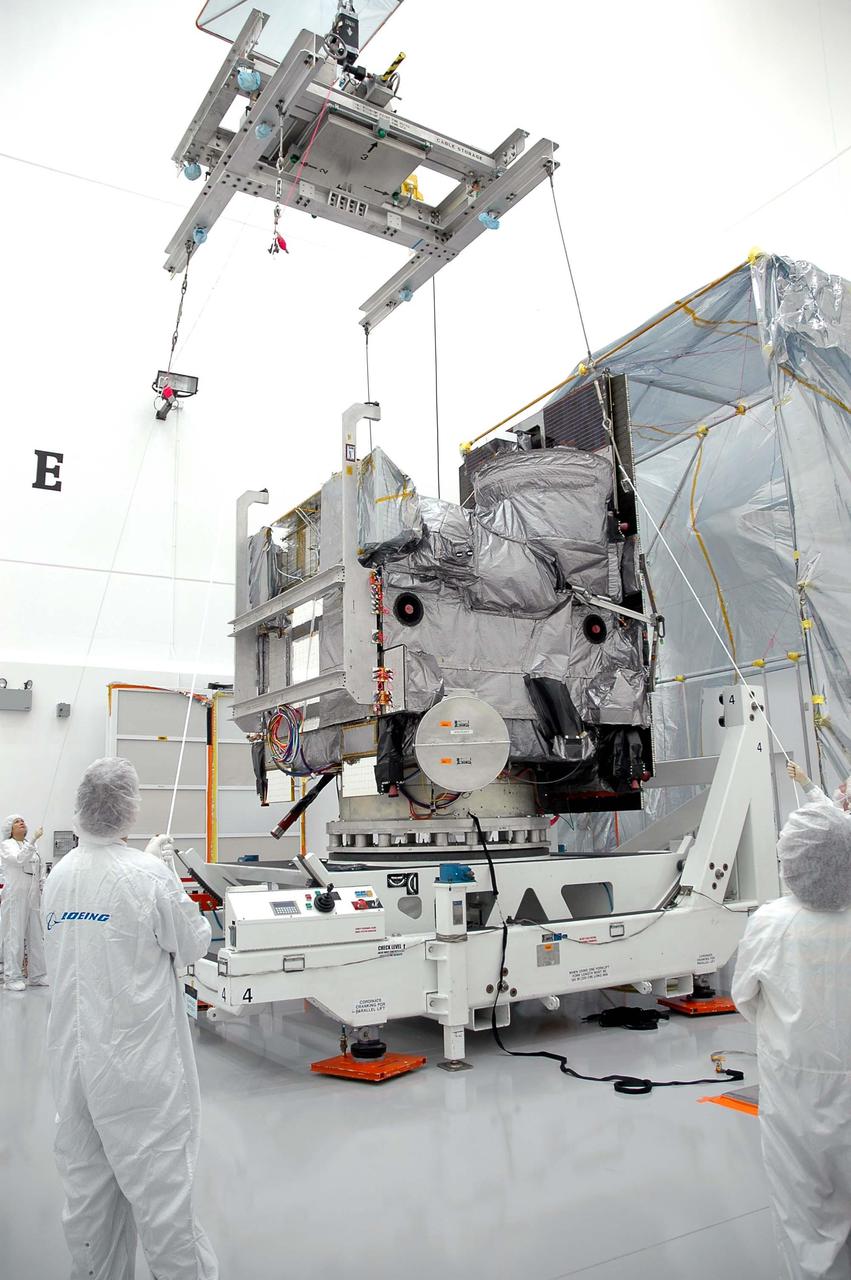
KENNEDY SPACE CENTER, FLA. - At Astrotech in Titusville, Fla., an overhead crane is moved into place above the GOES-N satellite, which is on a rotation stand. The crane will lift the satellite from the rotation stand and move it to a work stand. Since its arrival on March 11, the satellite has been undergoing final testing by Boeing Satellite Systems of the imaging system, instrumentation, communications and power systems. Geostationary Operational Environmental Satellites (GOES) are sponsored by NASA’s Goddard Space Flight Center and the National Oceanic and Atmospheric Administration. GOES-N is targeted to launch May 4 onboard a Boeing expendable launch vehicle Delta IV (4,2) with a 3-burn second stage operation.
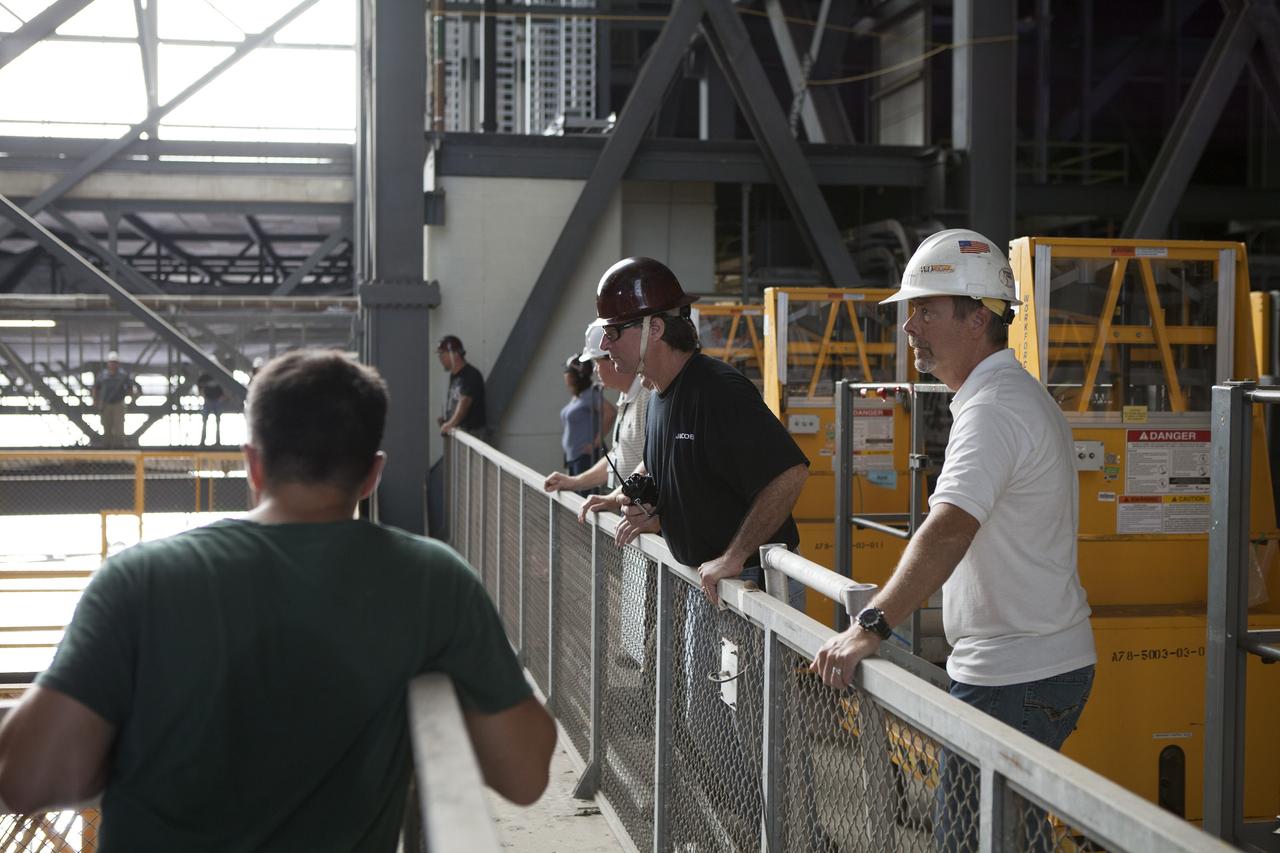
CAPE CANAVERAL, Fla. – Inside the Vehicle Assembly Building, or VAB, at NASA's Kennedy Space Center in Florida, NASA and contractor workers monitor the progress as the 175-ton crane is being lowered from Level 16 down to the transfer aisle floor. Upgrades to the crane's 45-year-old controls will be performed in order to improve reliability, precision and safety. The Ground Systems Development and Operations Program is overseeing upgrades and modifications to the VAB. The crane will be upgraded so that it can support lifting needs for NASA and other exploration vehicles, including the agency's Space Launch System and Orion spacecraft. Photo credit: NASA/Daniel Casper
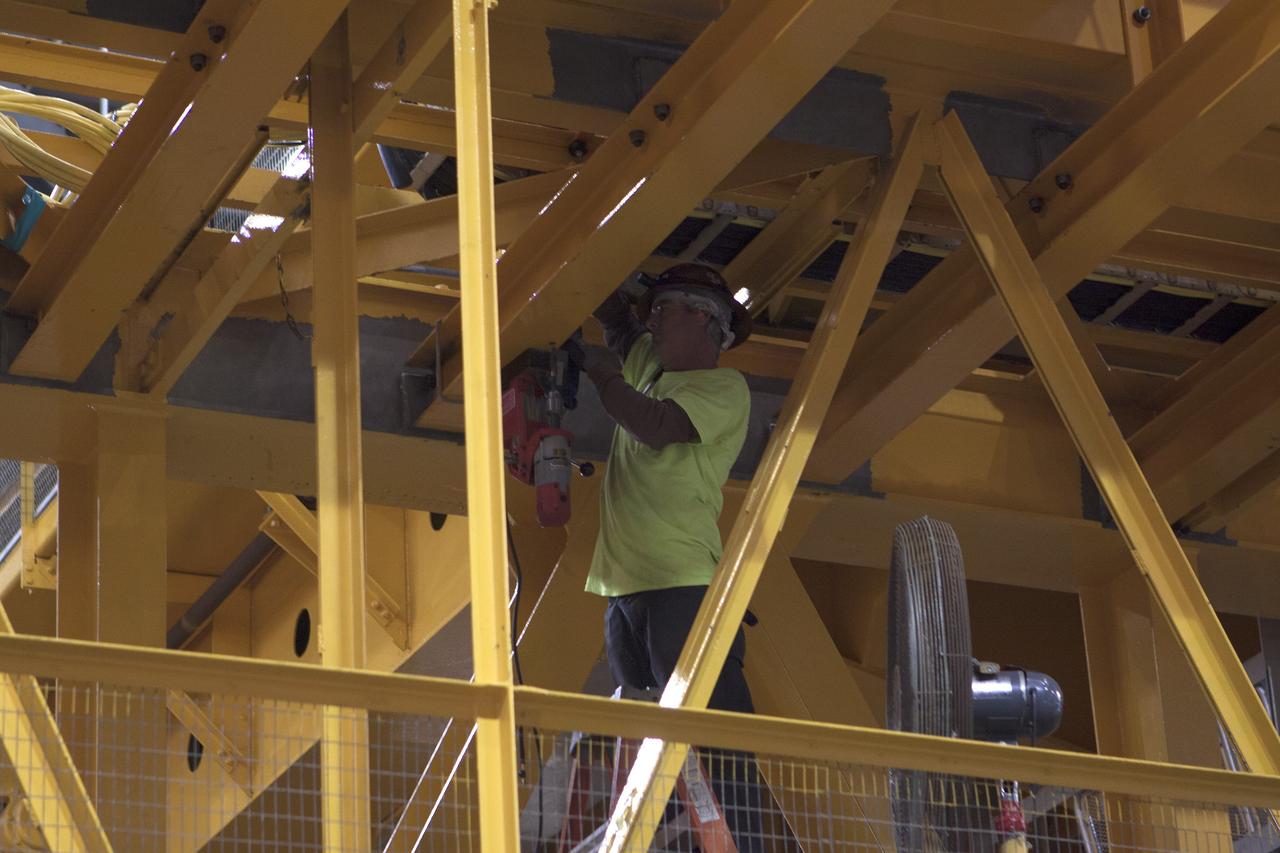
CAPE CANAVERAL, Fla. – Inside the Vehicle Assembly Building at NASA's Kennedy Space Center in Florida, a construction worker continues with refurbishment and upgrades to the 175-ton crane on the ground floor of the transfer aisle. The crane's 45-year-old controls are being upgraded to improve reliability, precision and safety. The Ground Systems Development and Operations Program is overseeing upgrades and modifications to the crane so that it can support lifting needs for NASA and other exploration vehicles, including the agency's Space Launch System and Orion spacecraft. Photo credit: NASA/Kim Shiflett

CAPE CANAVERAL, Fla. – Inside the Vehicle Assembly Building, or VAB, at NASA's Kennedy Space Center in Florida, the 175-ton crane is being lowered from Level 16 down to the transfer aisle floor. Upgrades to the crane's 45-year-old controls will be performed in order to improve reliability, precision and safety. The Ground Systems Development and Operations Program is overseeing upgrades and modifications to the VAB. The crane will be upgraded so that it can support lifting needs for NASA and other exploration vehicles, including the agency's Space Launch System and Orion spacecraft. Photo credit: NASA/Daniel Casper
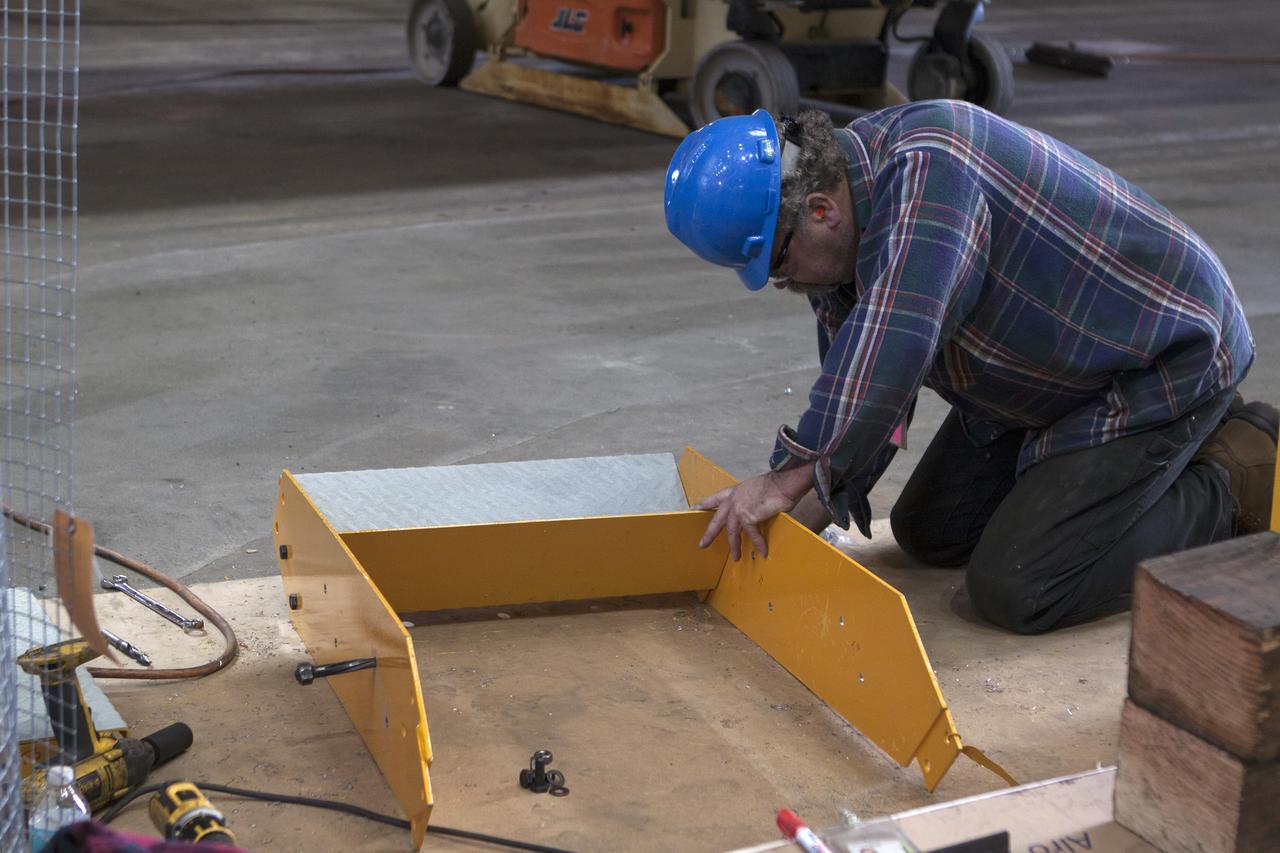
CAPE CANAVERAL, Fla. – Inside the Vehicle Assembly Building at NASA's Kennedy Space Center in Florida, a construction worker continues with refurbishment and upgrades to parts of the 175-ton crane on the ground floor of the transfer aisle. The crane's 45-year-old controls are being upgraded to improve reliability, precision and safety. The Ground Systems Development and Operations Program is overseeing upgrades and modifications to the crane so that it can support lifting needs for NASA and other exploration vehicles, including the agency's Space Launch System and Orion spacecraft. Photo credit: NASA/Kim Shiflett
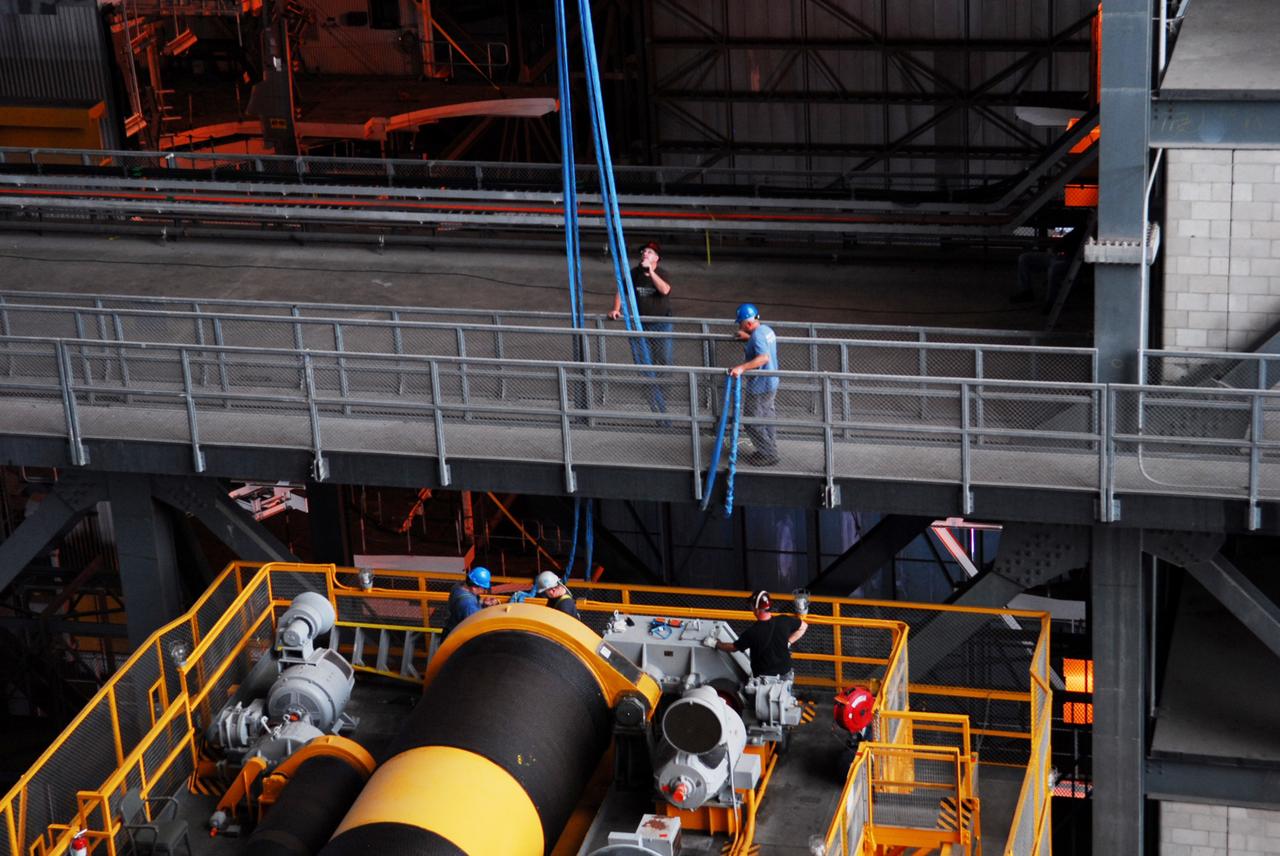
CAPE CANAVERAL, Fla. – Inside the Vehicle Assembly Building, or VAB, at NASA's Kennedy Space Center in Florida, preparations are underway to remove a portion of the catwalk on the east side of Level 16 to allow room for the removal of the 175-ton crane that is situated above the transfer aisle. The crane will be lowered to the floor to perform upgrades to its 45-year-old controls in order to improve reliability, precision and safety. The Ground Systems Development and Operations Program is overseeing upgrades and modifications to the VAB. The crane will be upgraded so that it can support lifting needs for NASA and other exploration vehicles, including the agency's Space Launch System and Orion spacecraft. Photo credit: NASA/Jim Grossmann
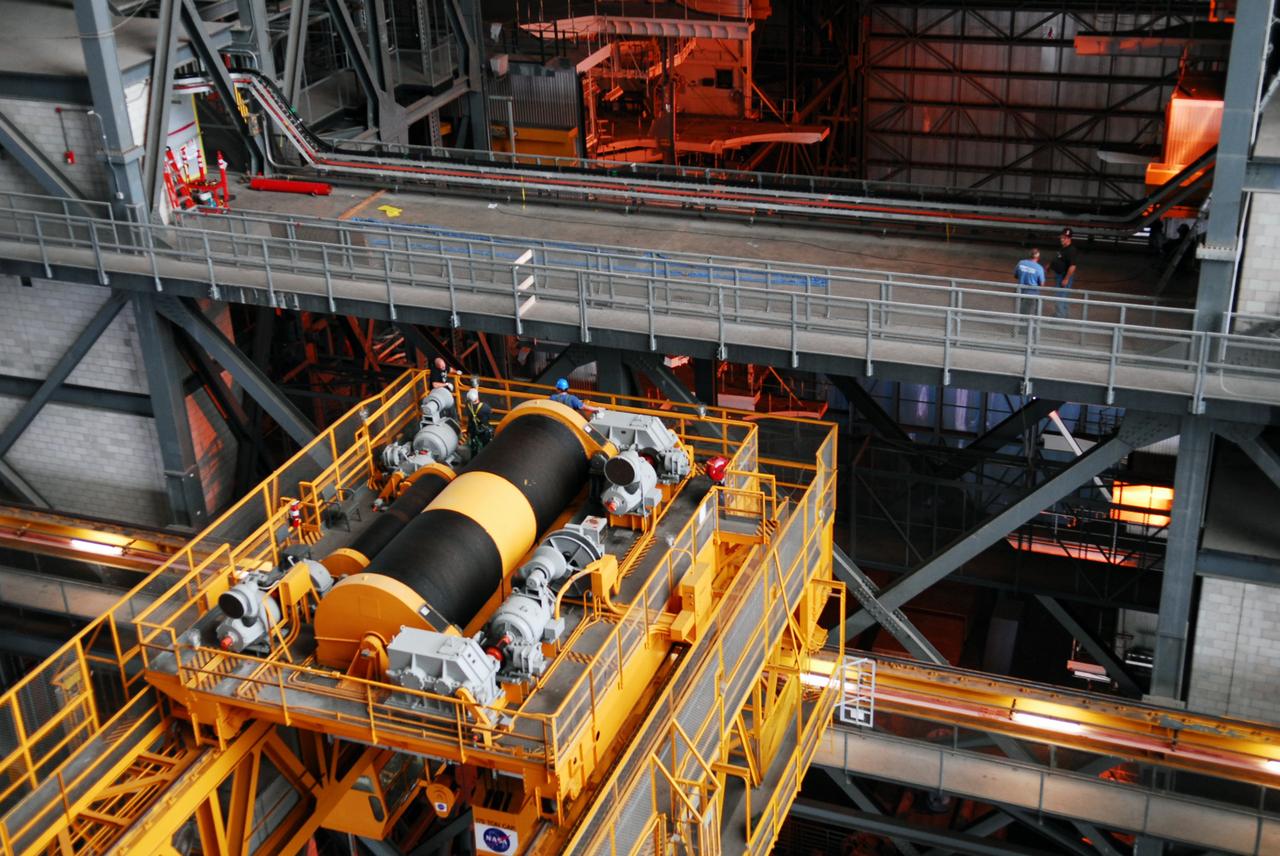
CAPE CANAVERAL, Fla. – Inside the Vehicle Assembly Building, or VAB, at NASA's Kennedy Space Center in Florida, preparations are underway to remove a portion of the catwalk on the east side of Level 16 to allow room for the removal of the 175-ton crane that is situated above the transfer aisle. The crane will be lowered to the floor to perform upgrades to its 45-year-old controls in order to improve reliability, precision and safety. The Ground Systems Development and Operations Program is overseeing upgrades and modifications to the VAB. The crane will be upgraded so that it can support lifting needs for NASA and other exploration vehicles, including the agency's Space Launch System and Orion spacecraft. Photo credit: NASA/Jim Grossmann
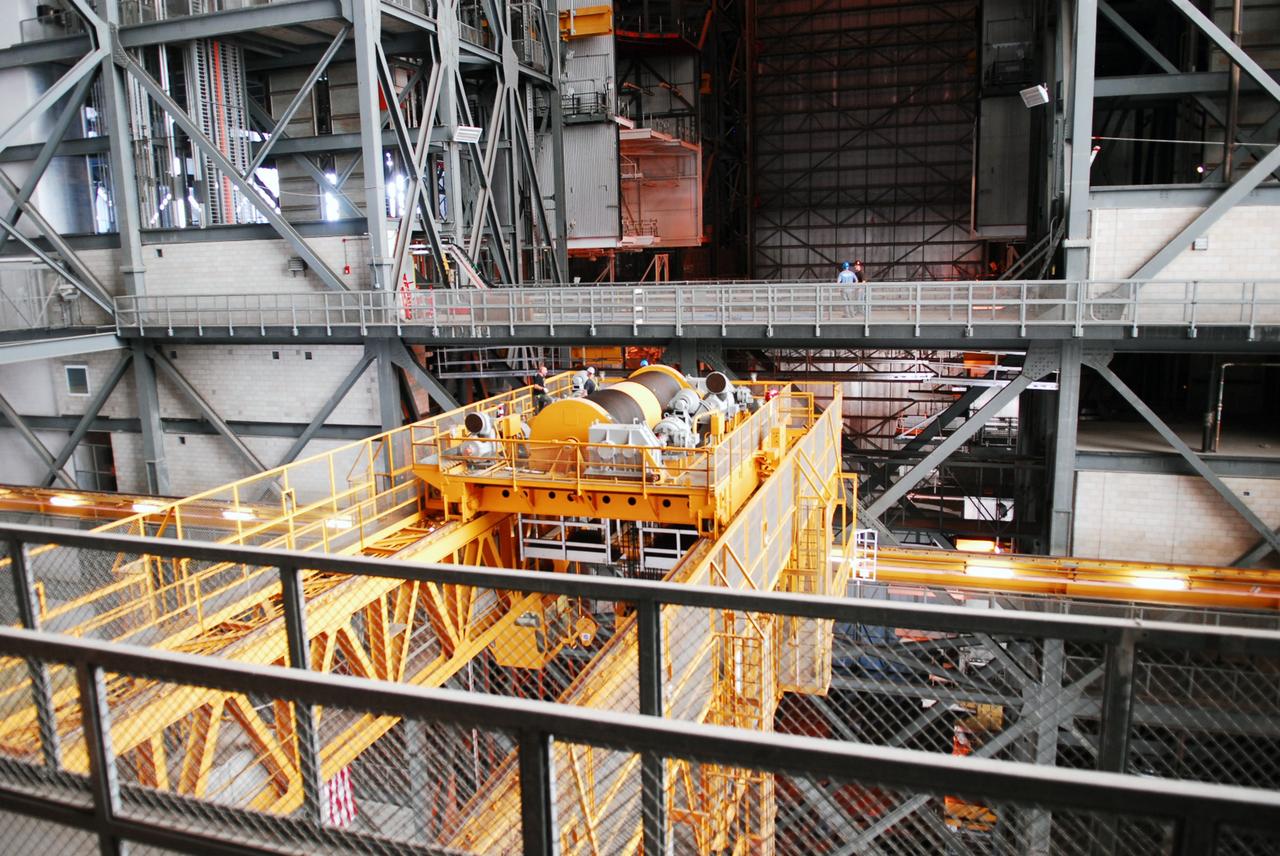
CAPE CANAVERAL, Fla. – Inside the Vehicle Assembly Building, or VAB, at NASA's Kennedy Space Center in Florida, preparations are underway to remove a portion of the catwalk on the east side of Level 16 to allow room for the removal of the 175-ton crane that is situated above the transfer aisle. The crane will be lowered to the floor to perform upgrades to its 45-year-old controls in order to improve reliability, precision and safety. The Ground Systems Development and Operations Program is overseeing upgrades and modifications to the VAB. The crane will be upgraded so that it can support lifting needs for NASA and other exploration vehicles, including the agency's Space Launch System and Orion spacecraft. Photo credit: NASA/Jim Grossmann
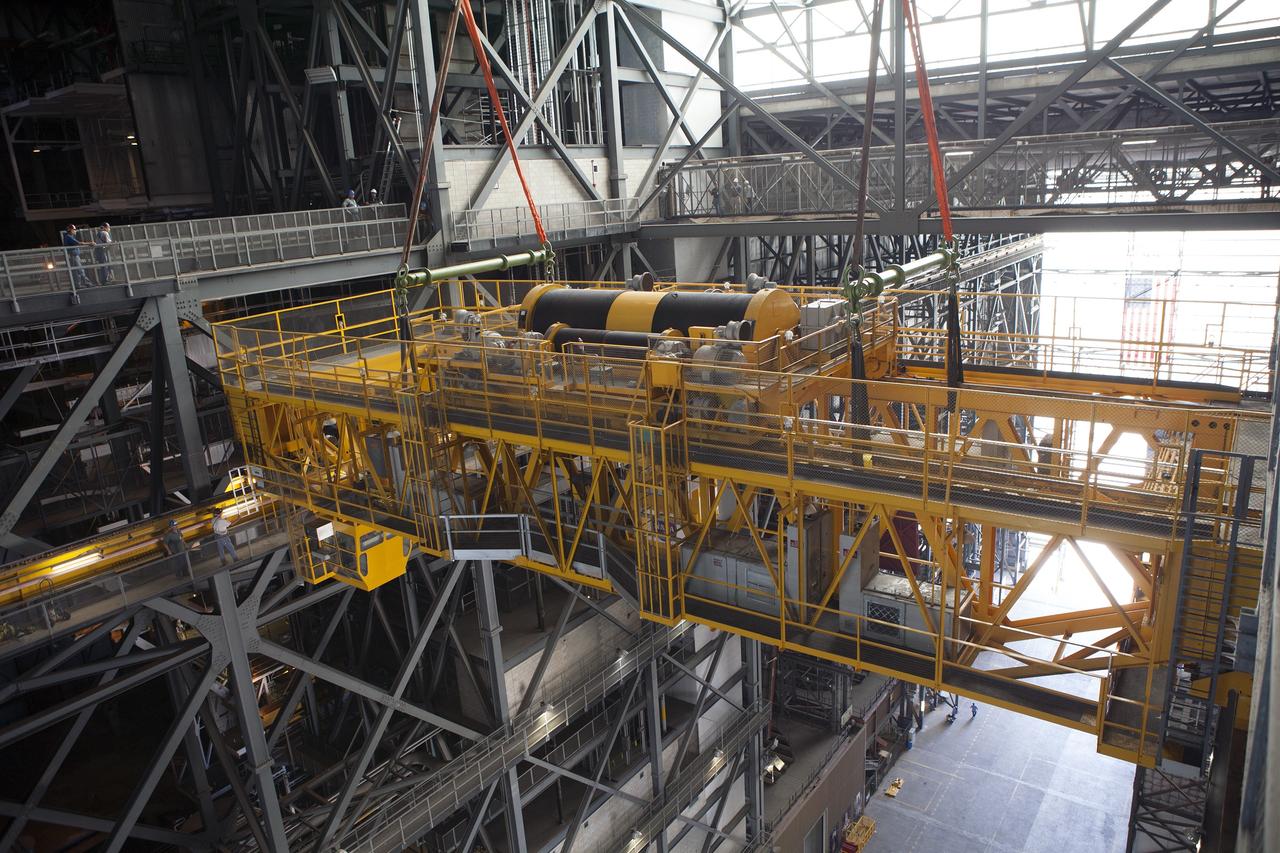
CAPE CANAVERAL, Fla. – Inside the Vehicle Assembly Building, or VAB, at NASA's Kennedy Space Center in Florida, the 175-ton crane is being lowered from Level 16 down to the transfer aisle floor. Upgrades to the crane's 45-year-old controls will be performed in order to improve reliability, precision and safety. The Ground Systems Development and Operations Program is overseeing upgrades and modifications to the VAB. The crane will be upgraded so that it can support lifting needs for NASA and other exploration vehicles, including the agency's Space Launch System and Orion spacecraft. Photo credit: NASA/Daniel Casper
CAPE CANAVERAL, Fla. – Inside the Vehicle Assembly Building, or VAB, at NASA's Kennedy Space Center in Florida, preparations are underway to lower the 175-ton crane. The crane is being lowered from Level 16 down to the floor of the transfer aisle to perform upgrades to its 45-year-old controls in order to improve reliability, precision and safety. The Ground Systems Development and Operations Program is overseeing upgrades and modifications to the VAB. The crane will be upgraded so that it can support lifting needs for NASA and other exploration vehicles, including the agency's Space Launch System and Orion spacecraft. Photo credit: NASA/Daniel Casper
CAPE CANAVERAL, Fla. – Inside the Vehicle Assembly Building, or VAB, at NASA's Kennedy Space Center in Florida, preparations are underway to remove a portion of the catwalk on the west side of Level 16. The catwalk is being removed to allow room for the removal of the 175-ton crane that is situated above the transfer aisle. The crane will be lowered to the floor to perform upgrades to its 45-year-old controls in order to improve reliability, precision and safety. The Ground Systems Development and Operations Program is overseeing upgrades and modifications to the VAB. The crane will be upgraded so that it can support lifting needs for NASA and other exploration vehicles, including the agency's Space Launch System and Orion spacecraft. Photo credit: NASA/Jim Grossmann
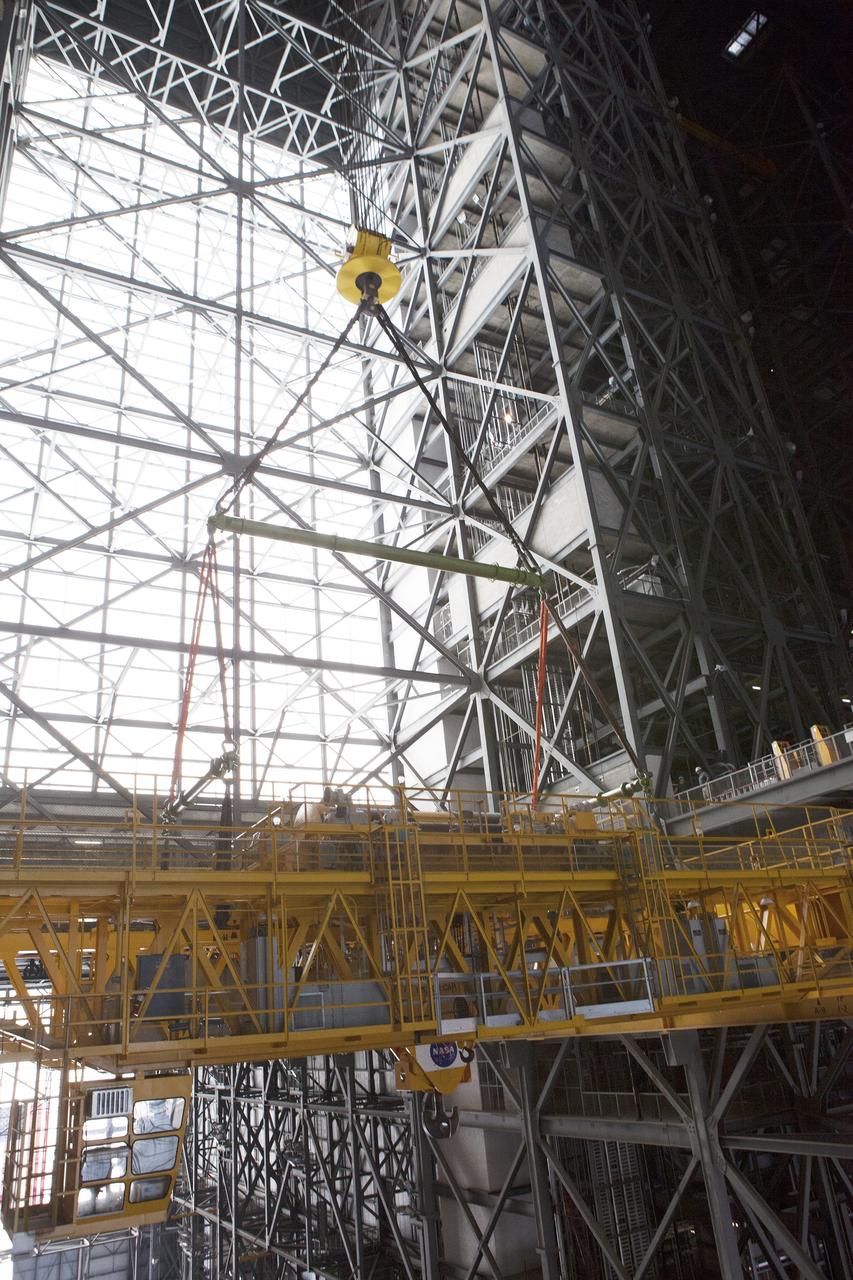
CAPE CANAVERAL, Fla. – Inside the Vehicle Assembly Building, or VAB, at NASA's Kennedy Space Center in Florida, preparations are underway to lower the 175-ton crane. The crane is being lowered from Level 16 down to the floor of the transfer aisle to perform upgrades to its 45-year-old controls in order to improve reliability, precision and safety. The Ground Systems Development and Operations Program is overseeing upgrades and modifications to the VAB. The crane will be upgraded so that it can support lifting needs for NASA and other exploration vehicles, including the agency's Space Launch System and Orion spacecraft. Photo credit: NASA/Daniel Casper
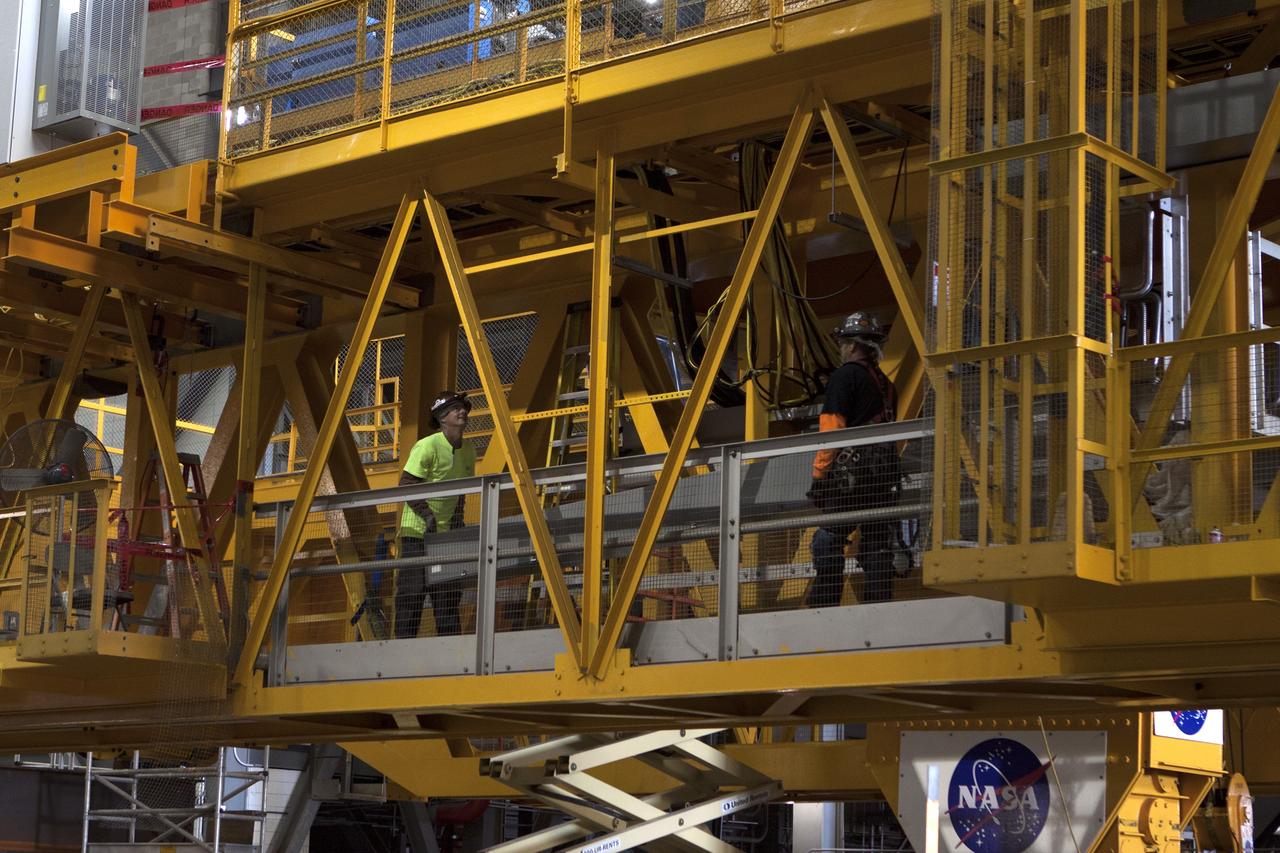
CAPE CANAVERAL, Fla. – Inside the Vehicle Assembly Building at NASA's Kennedy Space Center in Florida, construction workers continue with refurbishment and upgrades to the 175-ton crane on the ground floor of the transfer aisle. The crane's 45-year-old controls are being upgraded to improve reliability, precision and safety. The Ground Systems Development and Operations Program is overseeing upgrades and modifications to the crane so that it can support lifting needs for NASA and other exploration vehicles, including the agency's Space Launch System and Orion spacecraft. Photo credit: NASA/Kim Shiflett
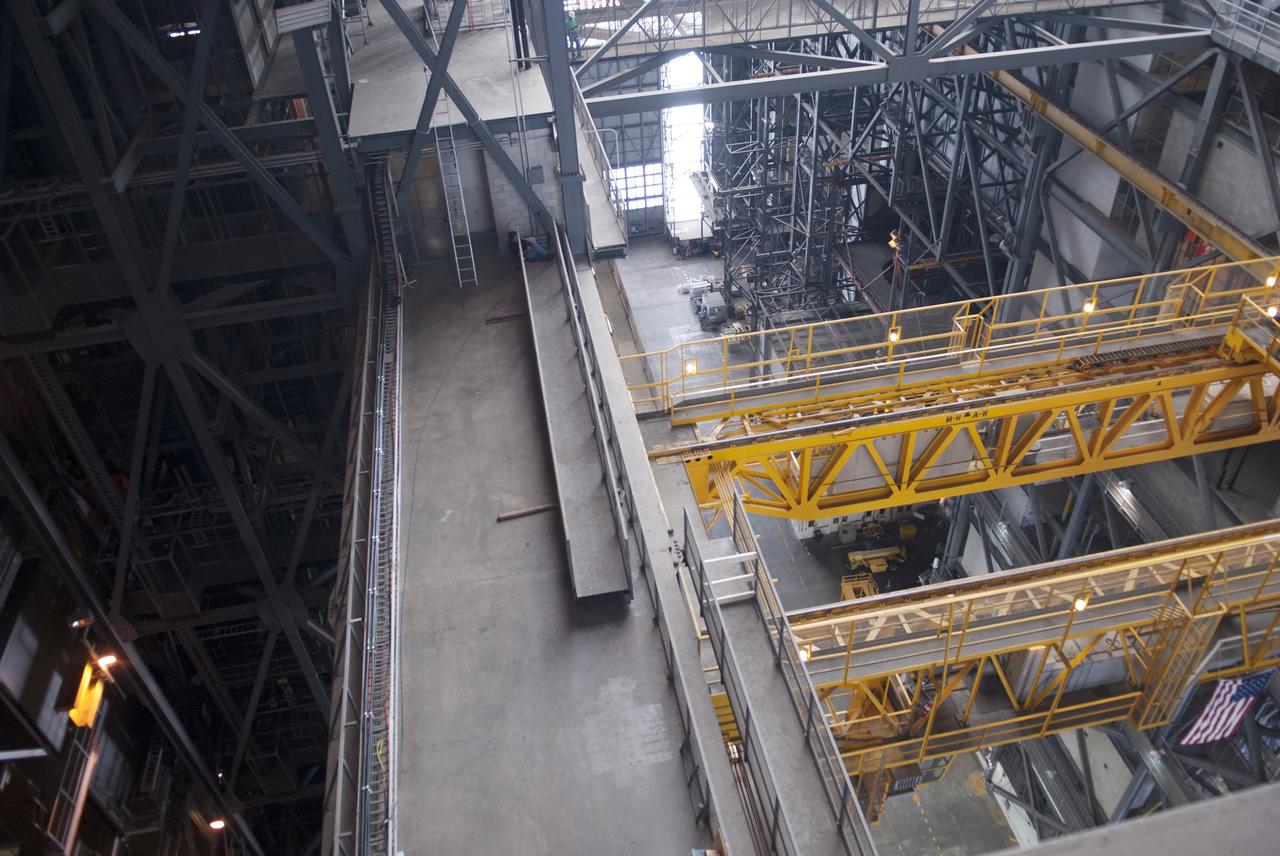
CAPE CANAVERAL, Fla. – Inside the Vehicle Assembly Building, or VAB, at NASA's Kennedy Space Center in Florida, a portion of the catwalk on the east side of Level 16 has been removed to allow room for the removal of the 175-ton crane that is situated above the transfer aisle. The crane will be lowered to the floor to perform upgrades to its 45-year-old controls in order to improve reliability, precision and safety. The Ground Systems Development and Operations Program is overseeing upgrades and modifications to the VAB. The crane will be upgraded so that it can support lifting needs for NASA and other exploration vehicles, including the agency's Space Launch System and Orion spacecraft. Photo credit: NASA/Jim Grossmann
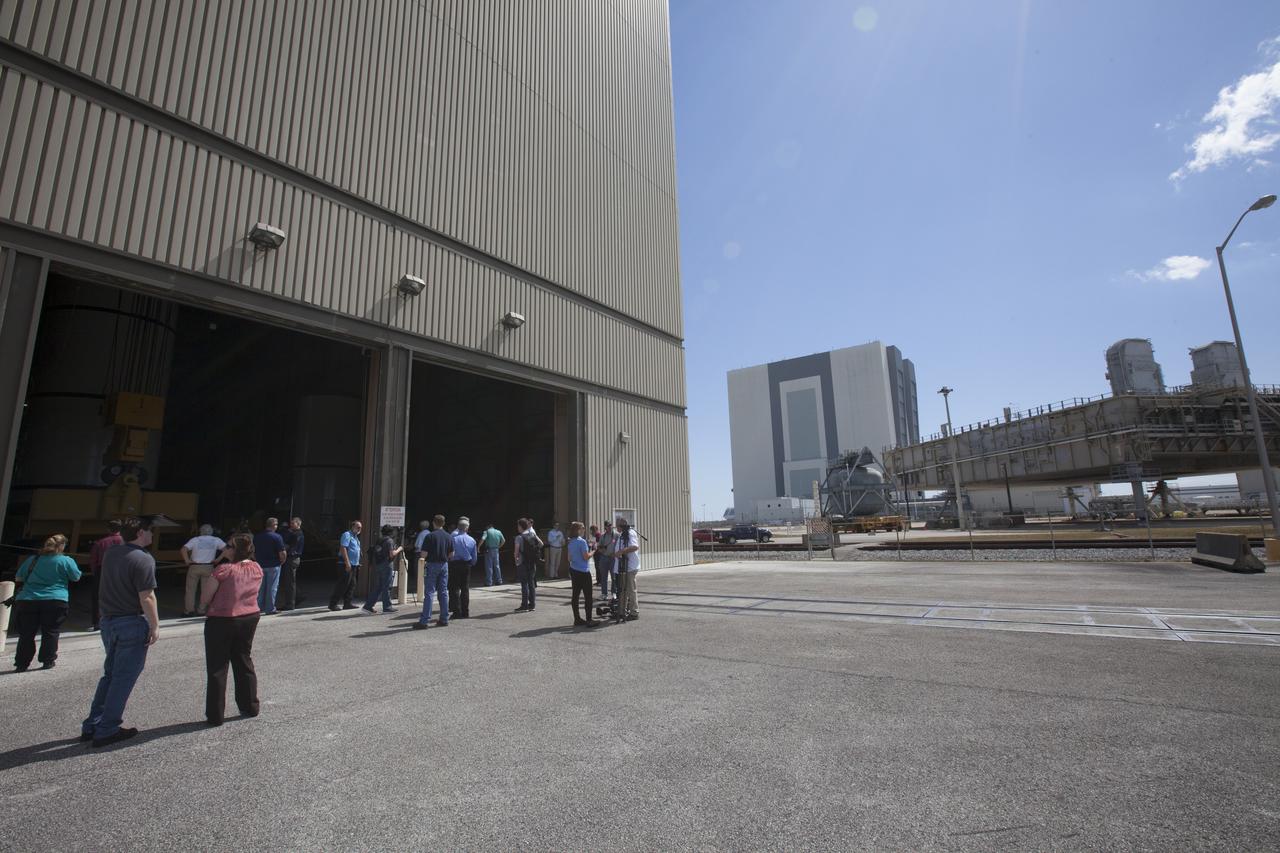
Members of the news media watch as a crane is used to move one of two pathfinders, or test versions, of solid rocket booster segments for NASA’s Space Launch System rocket to a test stand in the Rotation, Processing and Surge Facility at NASA’s Kennedy Space Center in Florida. Inside the RPSF, the Ground Systems Development and Operations Program and Jacobs Engineering, on the Test and Operations Support Contract, will prepare the booster segments, which are inert, for a series of lifts, moves and stacking operations to prepare for Exploration Mission-1, deep-space missions and the journey to Mars.
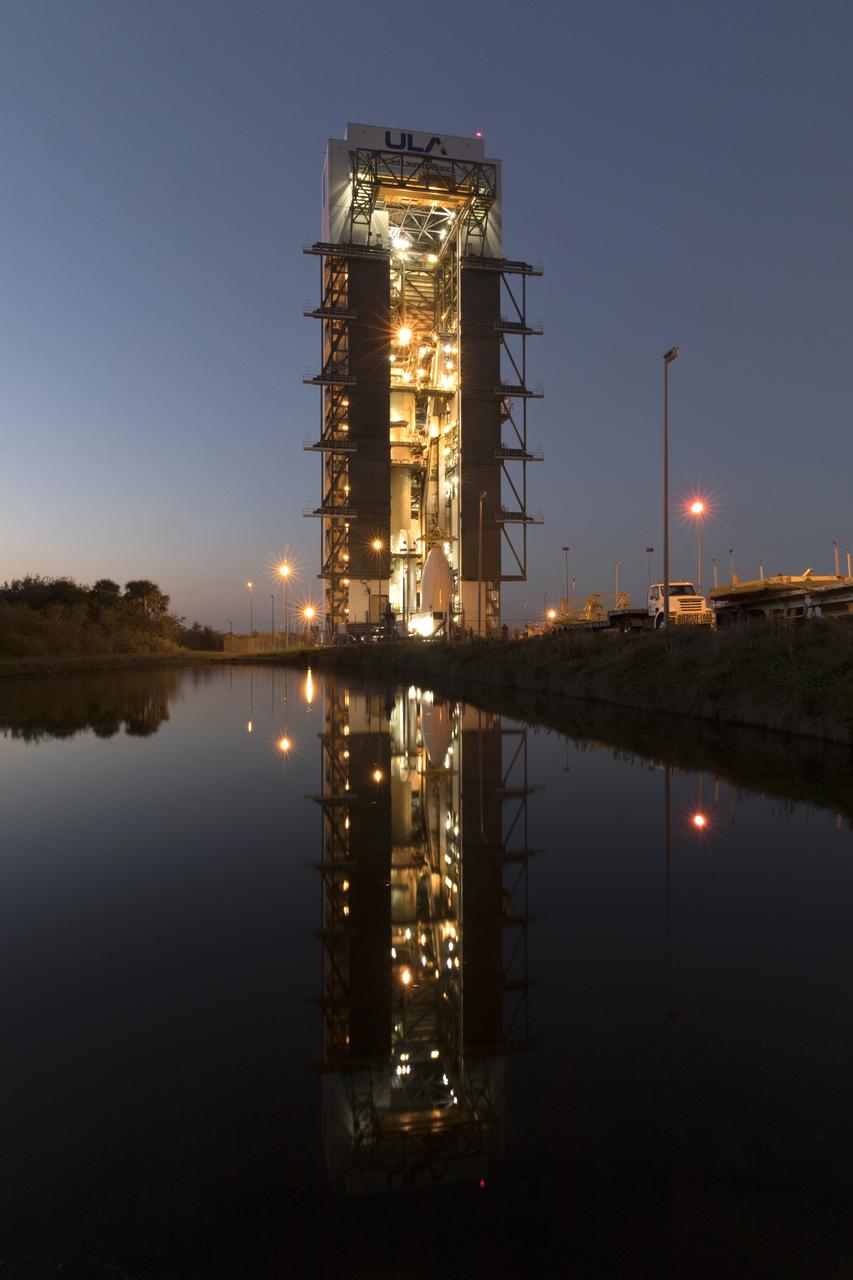
The United Launch Alliance (ULA) Vertical Integration Facility (VIF) is reflected in the water at Space Launch Complex 41 at Cape Canaveral Air Force Station in Florida, as a crane begins to lift the payload fairing containing NOAA's Geostationary Operational Environmental Satellite-S (GOES-S). The fairing will be lifted and mated to the ULA Atlas V rocket. GOES-S is the second in a series of four advanced geostationary weather satellites. The satellite is slated to launch aboard the ULA Atlas V on March 1.
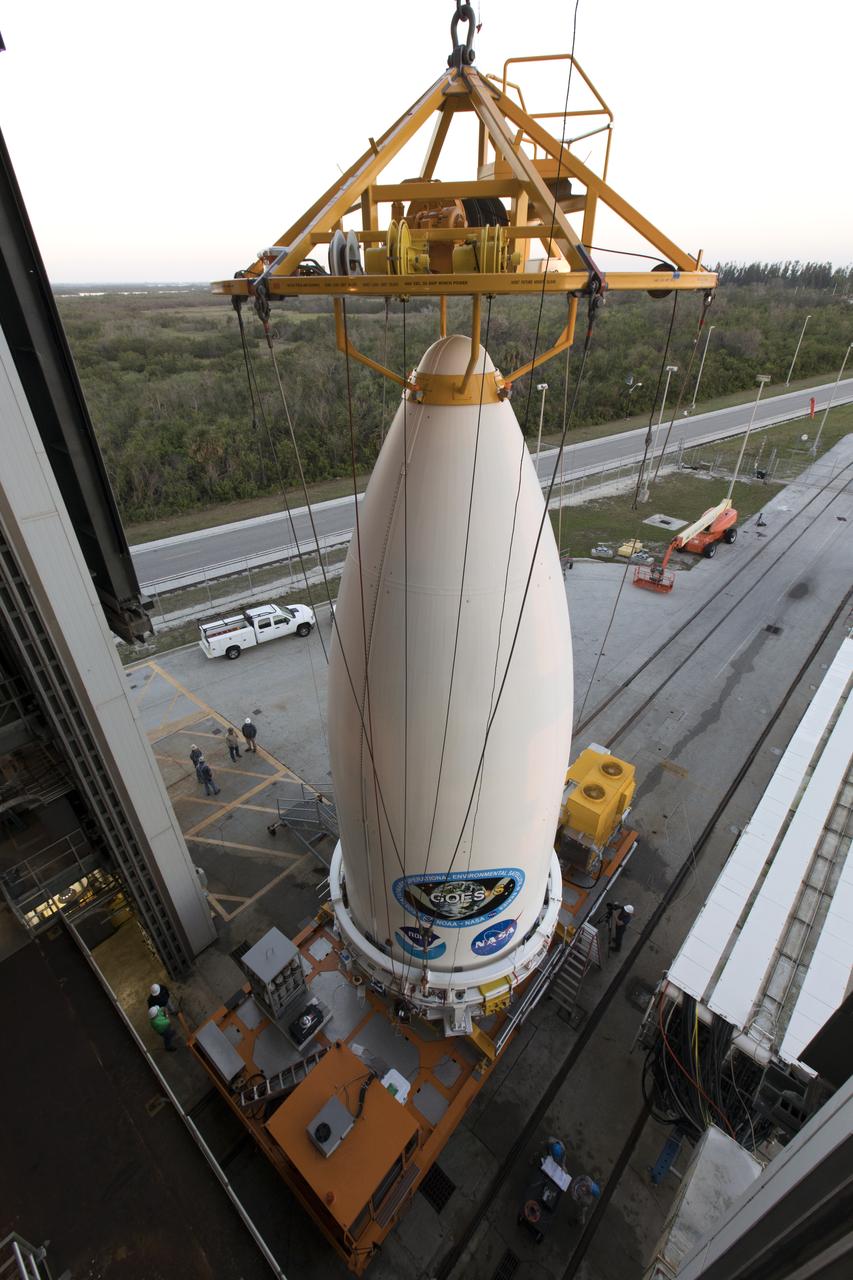
A view from above shows a crane attached to the payload fairing containing NOAA's Geostationary Operational Environmental Satellite-S (GOES-S). The fairing will be lifted and moved into the Vertical Integration Facility at Space Launch Complex 41 at Cape Canaveral Air Force Station in Florida. The fairing will be lifted and mated to the ULA Atlas V rocket. GOES-S is the second in a series of four advanced geostationary weather satellites. The satellite is slated to launch aboard the ULA Atlas V on March 1.
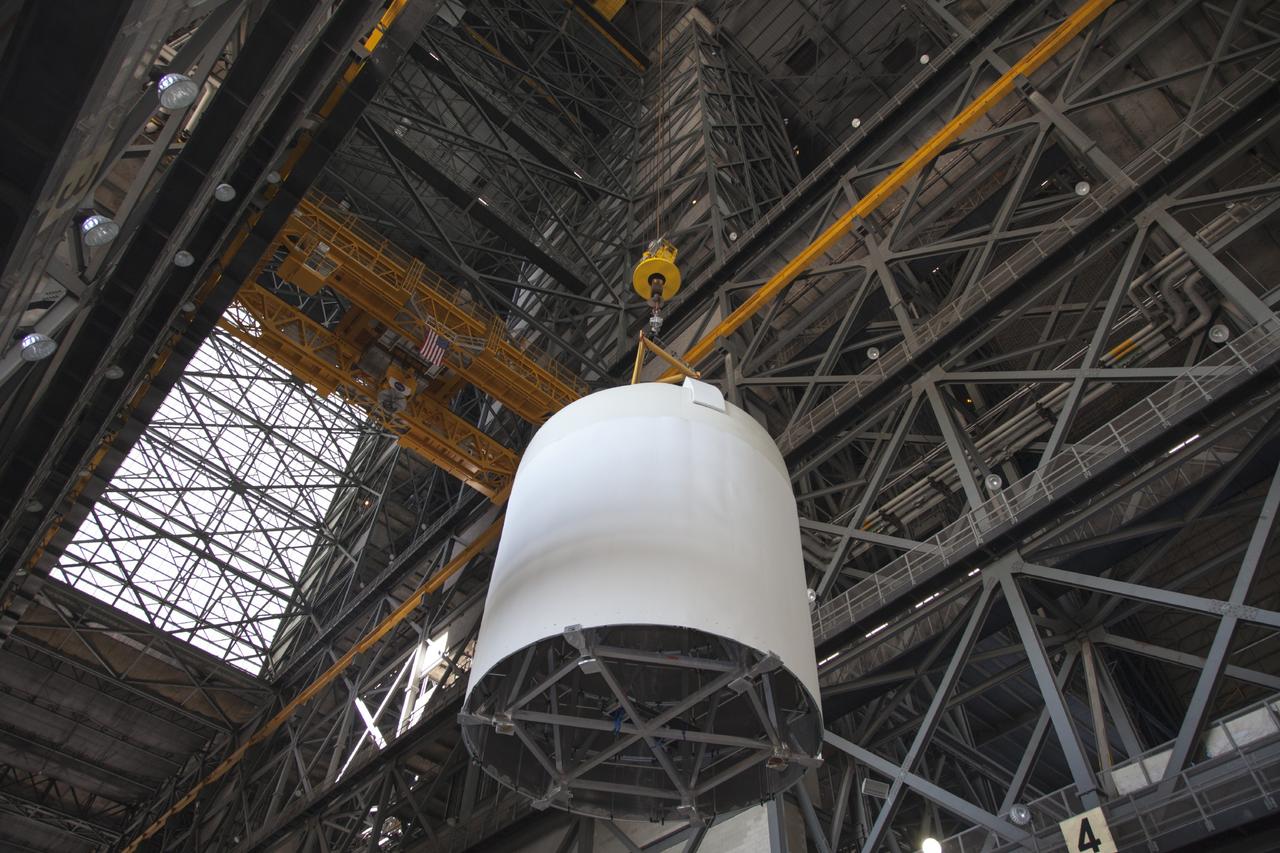
CAPE CANAVERAL, Fla. -- In the transfer aisle of the Vehicle Assembly Building at NASA’s Kennedy Space Center in Florida, a crane operator lifts a full-size mock-up of the Orion spacecraft high in the air for transfer to High Bay 4. Crane operators and technicians practice stacking and de-stacking operations in order to keep processing procedures and skills current for the Ground Systems Development and Operations Program. Orion is the exploration spacecraft designed to carry crews to space beyond low Earth orbit. It will provide emergency abort capability, sustain the crew during the space travel and provide safe re-entry from deep space return velocities. Orion’s first unpiloted test flight is scheduled to launch in 2014 atop a Delta IV rocket. A second uncrewed flight test is scheduled for 2017 on NASA’s Space Launch System rocket. For more information, visit http://www.nasa.gov/orion. Photo credit: NASA/Dan Casper
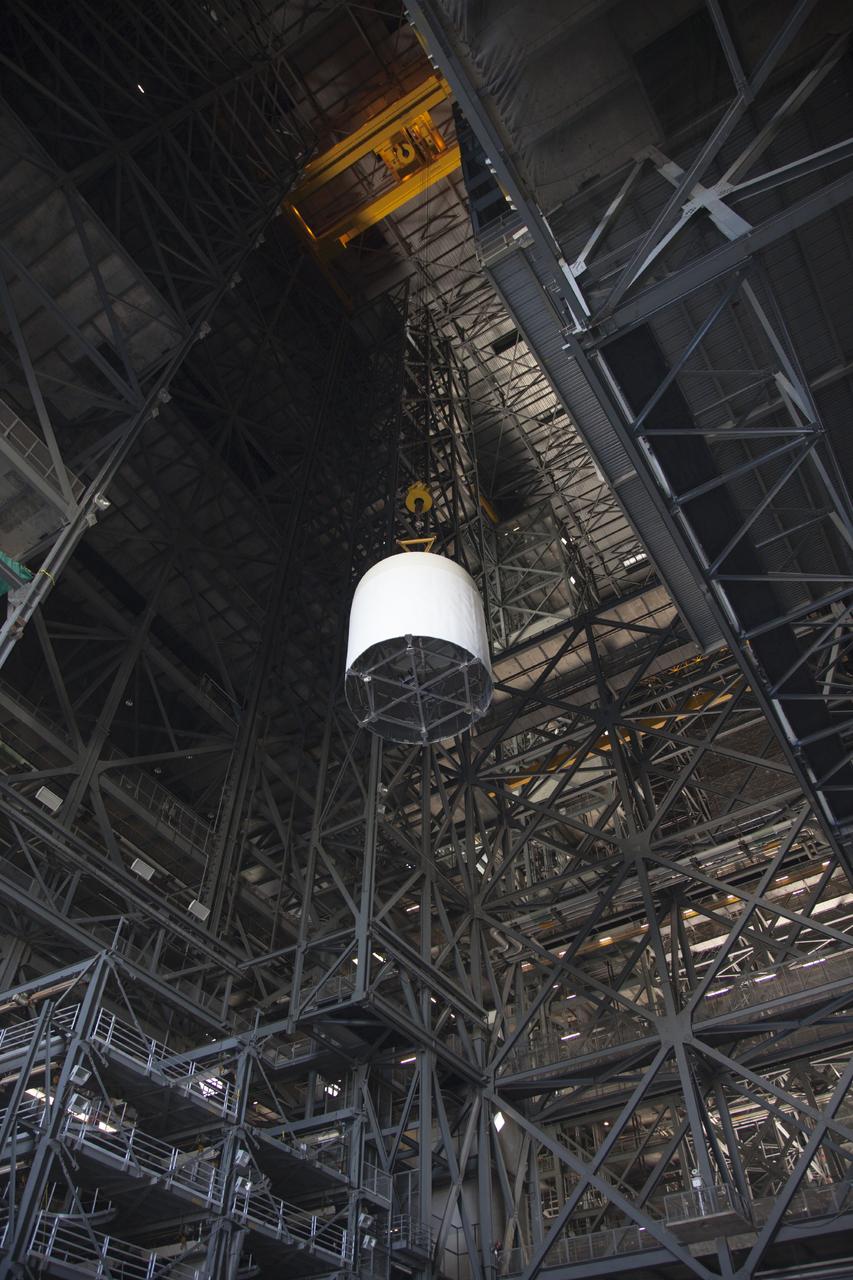
CAPE CANAVERAL, Fla. -- In the transfer aisle of the Vehicle Assembly Building at NASA’s Kennedy Space Center in Florida, a crane operator lifts a full-size mock-up of the Orion spacecraft high in the air for transfer to High Bay 4. Crane operators and technicians practice stacking and de-stacking operations in order to keep processing procedures and skills current for the Ground Systems Development and Operations Program. Orion is the exploration spacecraft designed to carry crews to space beyond low Earth orbit. It will provide emergency abort capability, sustain the crew during the space travel and provide safe re-entry from deep space return velocities. Orion’s first unpiloted test flight is scheduled to launch in 2014 atop a Delta IV rocket. A second uncrewed flight test is scheduled for 2017 on NASA’s Space Launch System rocket. For more information, visit http://www.nasa.gov/orion. Photo credit: NASA/Dan Casper
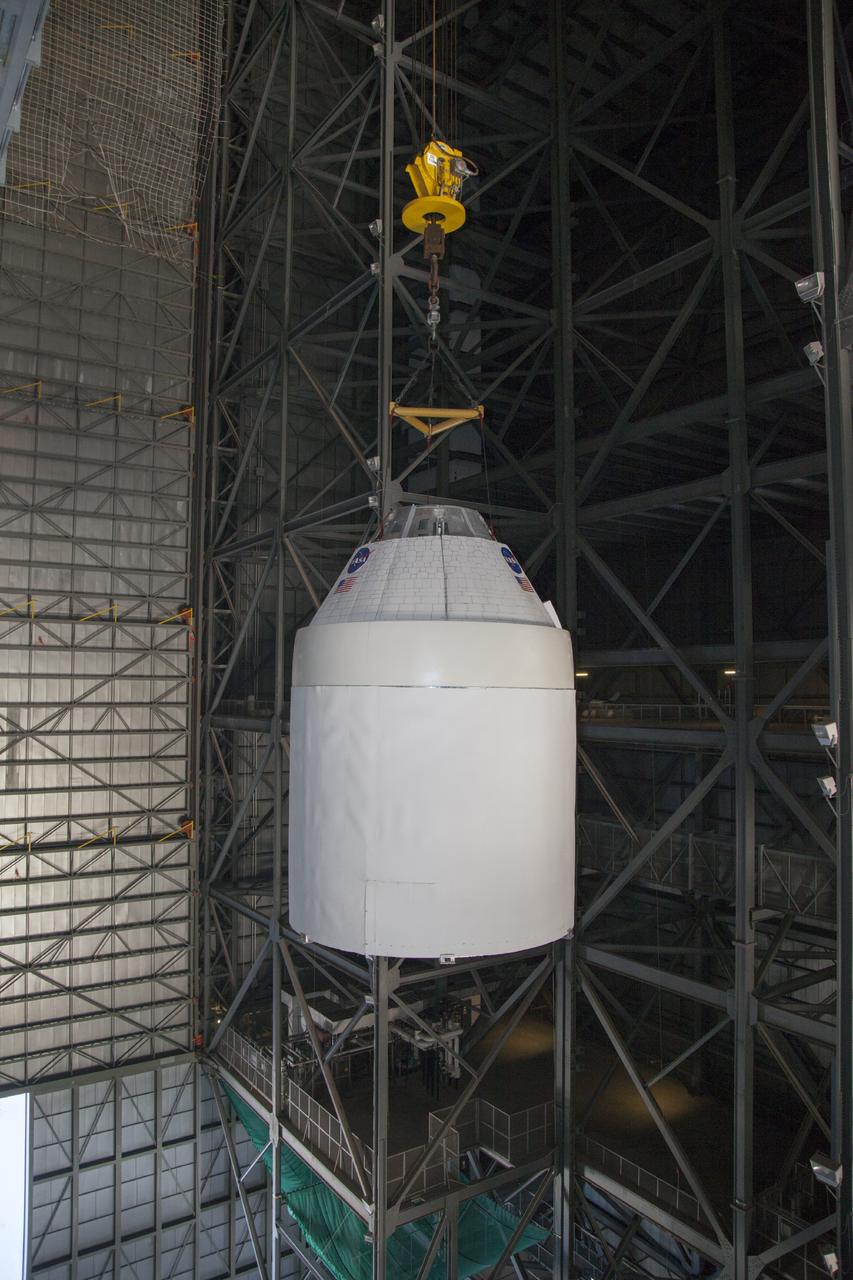
CAPE CANAVERAL, Fla. -- In the transfer aisle of the Vehicle Assembly Building at NASA’s Kennedy Space Center in Florida, a crane operator lifts a full-size mock-up of the Orion spacecraft high in the air for transfer to High Bay 4. Crane operators and technicians practice stacking and de-stacking operations in order to keep processing procedures and skills current for the Ground Systems Development and Operations Program. Orion is the exploration spacecraft designed to carry crews to space beyond low Earth orbit. It will provide emergency abort capability, sustain the crew during the space travel and provide safe re-entry from deep space return velocities. Orion’s first unpiloted test flight is scheduled to launch in 2014 atop a Delta IV rocket. A second uncrewed flight test is scheduled for 2017 on NASA’s Space Launch System rocket. For more information, visit http://www.nasa.gov/orion. Photo credit: NASA/Dan Casper

CAPE CANAVERAL, Fla. -- In the transfer aisle of the Vehicle Assembly Building at NASA’s Kennedy Space Center in Florida, a crane operator lifts a full-size mock-up of the Orion spacecraft high in the air for transfer to High Bay 4. Crane operators and technicians practice stacking and de-stacking operations in order to keep processing procedures and skills current for the Ground Systems Development and Operations Program. Orion is the exploration spacecraft designed to carry crews to space beyond low Earth orbit. It will provide emergency abort capability, sustain the crew during the space travel and provide safe re-entry from deep space return velocities. Orion’s first unpiloted test flight is scheduled to launch in 2014 atop a Delta IV rocket. A second uncrewed flight test is scheduled for 2017 on NASA’s Space Launch System rocket. For more information, visit http://www.nasa.gov/orion. Photo credit: NASA/Dan Casper
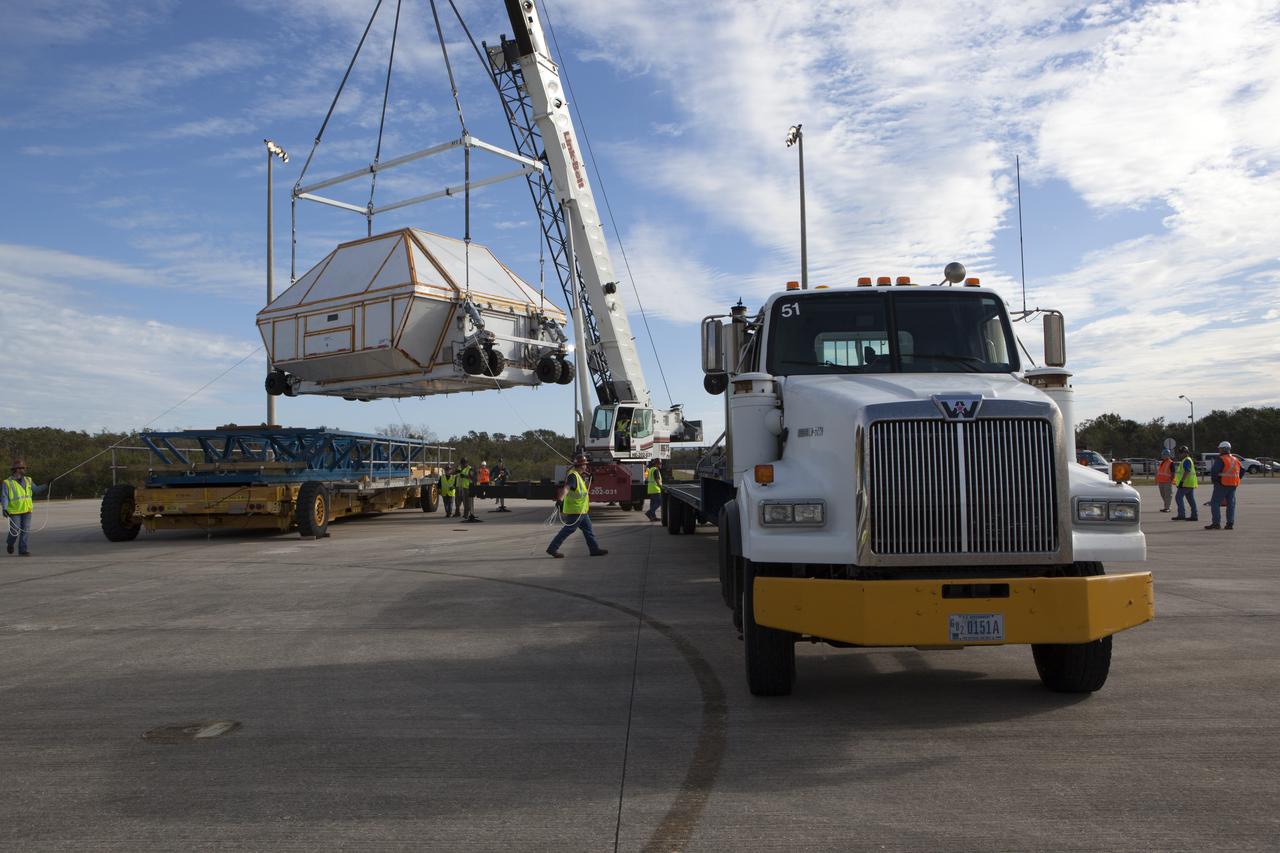
After arriving at the Shuttle Landing Facility operated by Space Florida at NASA's Kennedy Space Center in Florida, the agency's Super Guppy aircraft was opened and the container holding the Orion crew module structural test article (STA) was offloaded. A crane has lifted the container for placement on a transporter. The test article will be moved to the Neil Armstrong Operations and Checkout Building high bay for further testing. The Orion spacecraft will launch atop NASA’s Space Launch System rocket on EM-1, its first deep space mission, in late 2018.
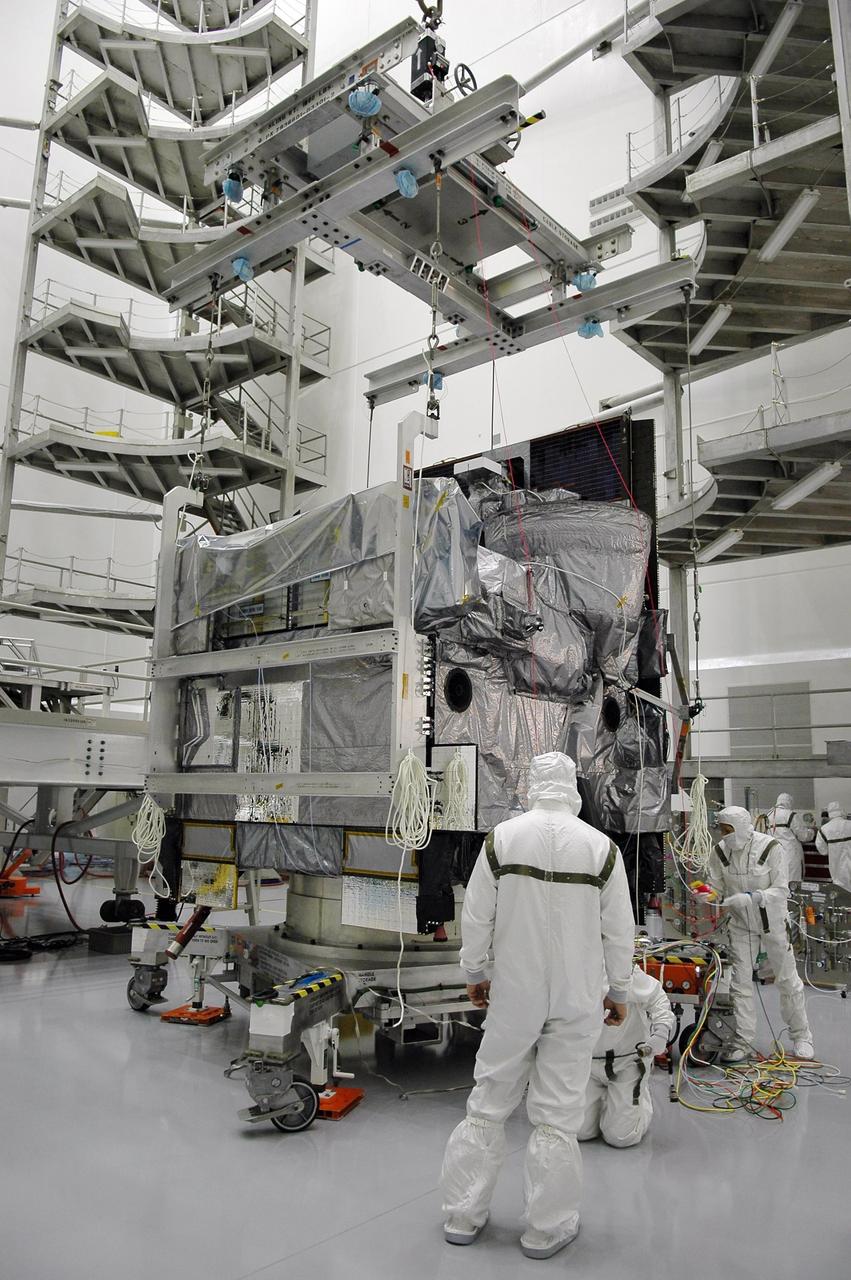
KENNEDY SPACE CENTER, FLA. - Inside a high bay at Astrotech Space Operations in Titusville, Fla., the GOES-N spacecraft is attached to an overhead crane. The spacecraft will be lifted and moved for mating with its payload adapter. GOES-N is the latest in a series of Geostationary Operational Environmental Satellites for NOAA and NASA providing continuous monitoring necessary for intensive data analysis. It will be launched May 18 on a Boeing Delta IV rocket from Cape Canaveral Air Force Station in Florida. Photo credit: NASA/Kim Shiflett
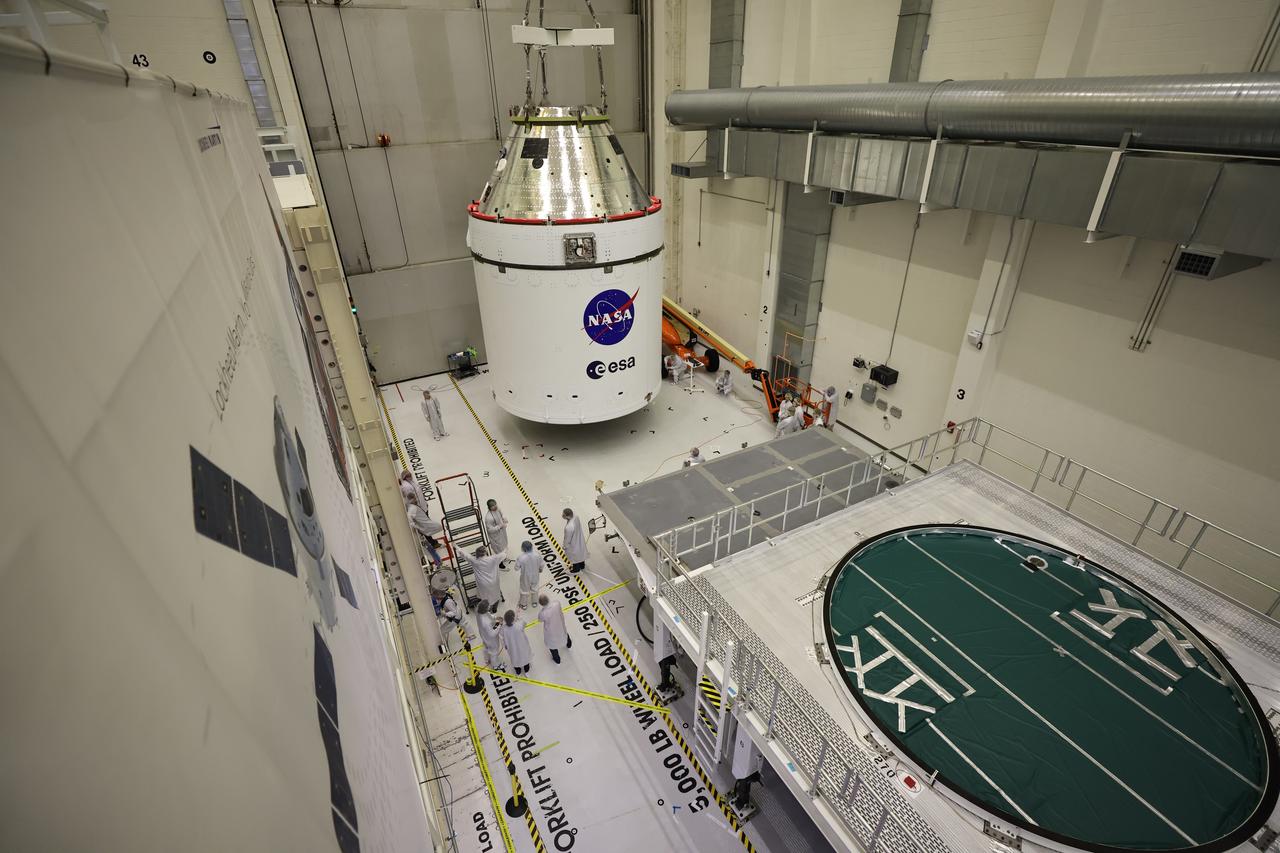
Crews use a massive crane to lift NASA’s Artemis II Orion spacecraft onto the agency’s KAMAG transporter inside the Neil A. Armstrong Operations and Checkout Building at Kennedy Space Center in Florida on Thursday, May 1, 2025. The spacecraft will be transported to the Multi-Payload Processing Facility to undergo fueling and processing for prelaunch operations. The Artemis II test flight is the first crewed flight under NASA’s Artemis campaign and is another step toward missions on the lunar surface and helping the agency prepare for future human missions to Mars.
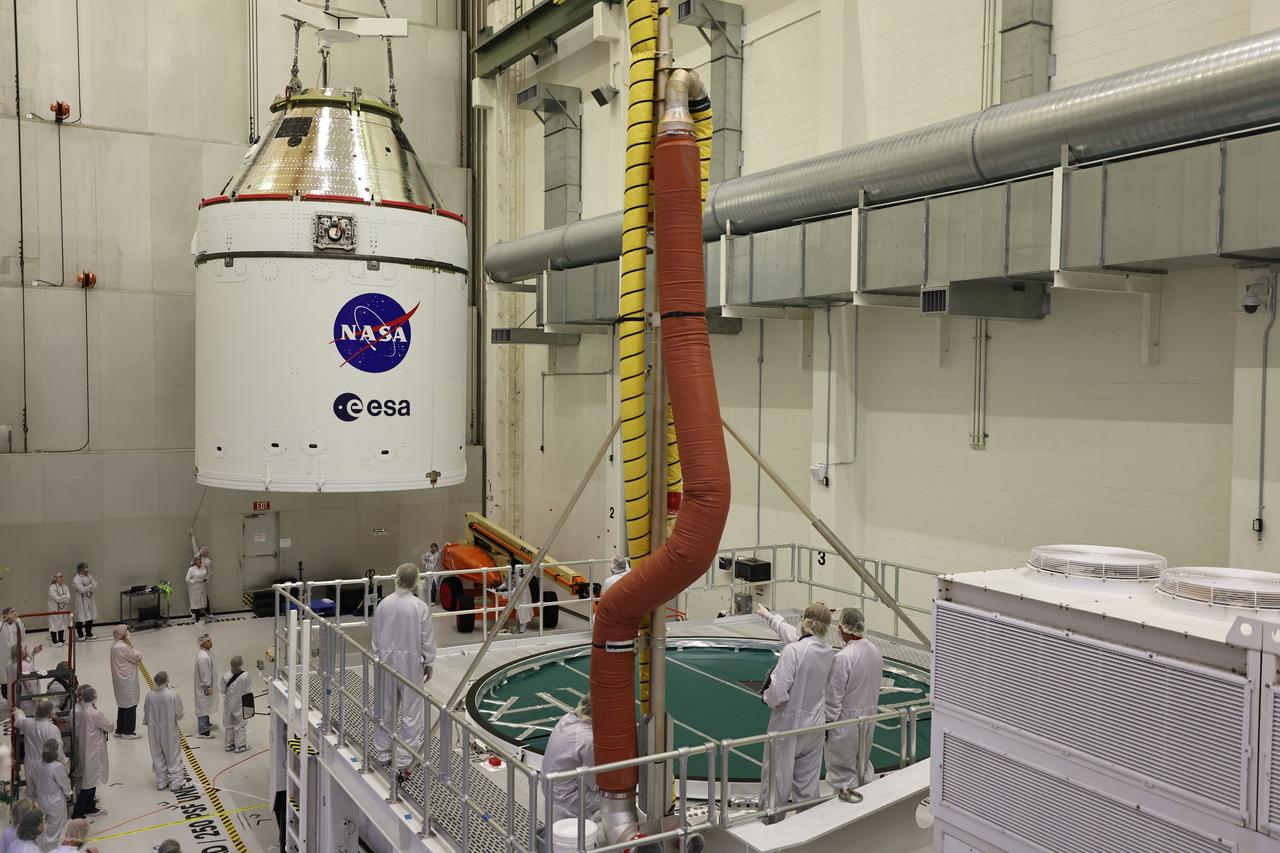
Crews use a massive crane to lift NASA’s Artemis II Orion spacecraft onto the agency’s KAMAG transporter inside the Neil A. Armstrong Operations and Checkout Building at Kennedy Space Center in Florida on Thursday, May 1, 2025. The spacecraft will be transported to the Multi-Payload Processing Facility to undergo fueling and processing for prelaunch operations. The Artemis II test flight is the first crewed flight under NASA’s Artemis campaign and is another step toward missions on the lunar surface and helping the agency prepare for future human missions to Mars.

Crane operators and ground support personnel practice lifting and stacking mock-ups of solid rocket booster (SRB) segments in High Bay 4 inside the Vehicle Assembly Building at NASA’s Kennedy Space Center in Florida. The training will help workers prepare for SRB stacking operations for the agency's Space Launch System SLS) rocket. The SLS will launch the Orion spacecraft on its first integrated flight, Exploration Mission-1.
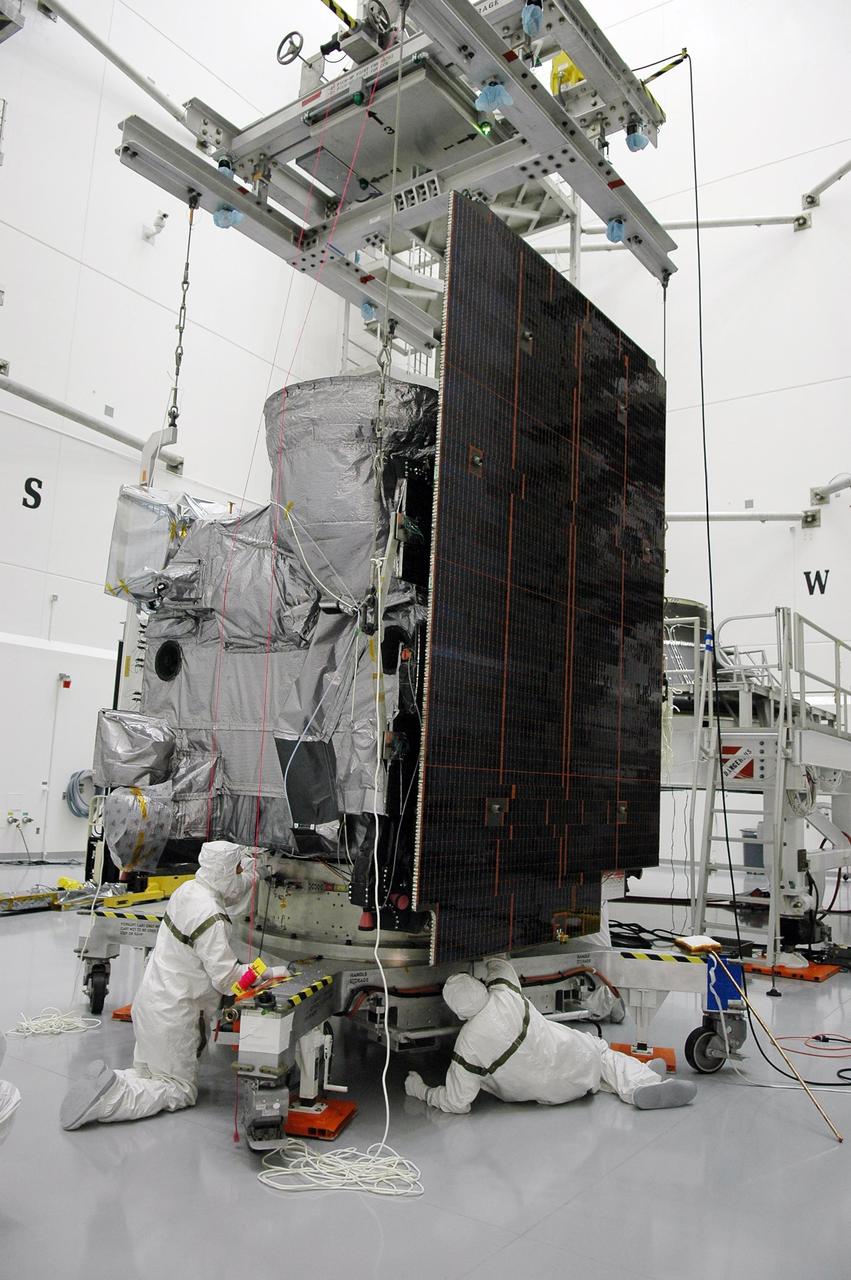
KENNEDY SPACE CENTER, FLA. - Inside a high bay at Astrotech Space Operations in Titusville, Fla., the GOES-N spacecraft, workers secure the lines to an overhead crane. The spacecraft will be lifted and moved for mating with its payload adapter. GOES-N is the latest in a series of Geostationary Operational Environmental Satellites for NOAA and NASA providing continuous monitoring necessary for intensive data analysis. It will be launched May 18 on a Boeing Delta IV rocket from Cape Canaveral Air Force Station in Florida. Photo credit: NASA/Kim Shiflett
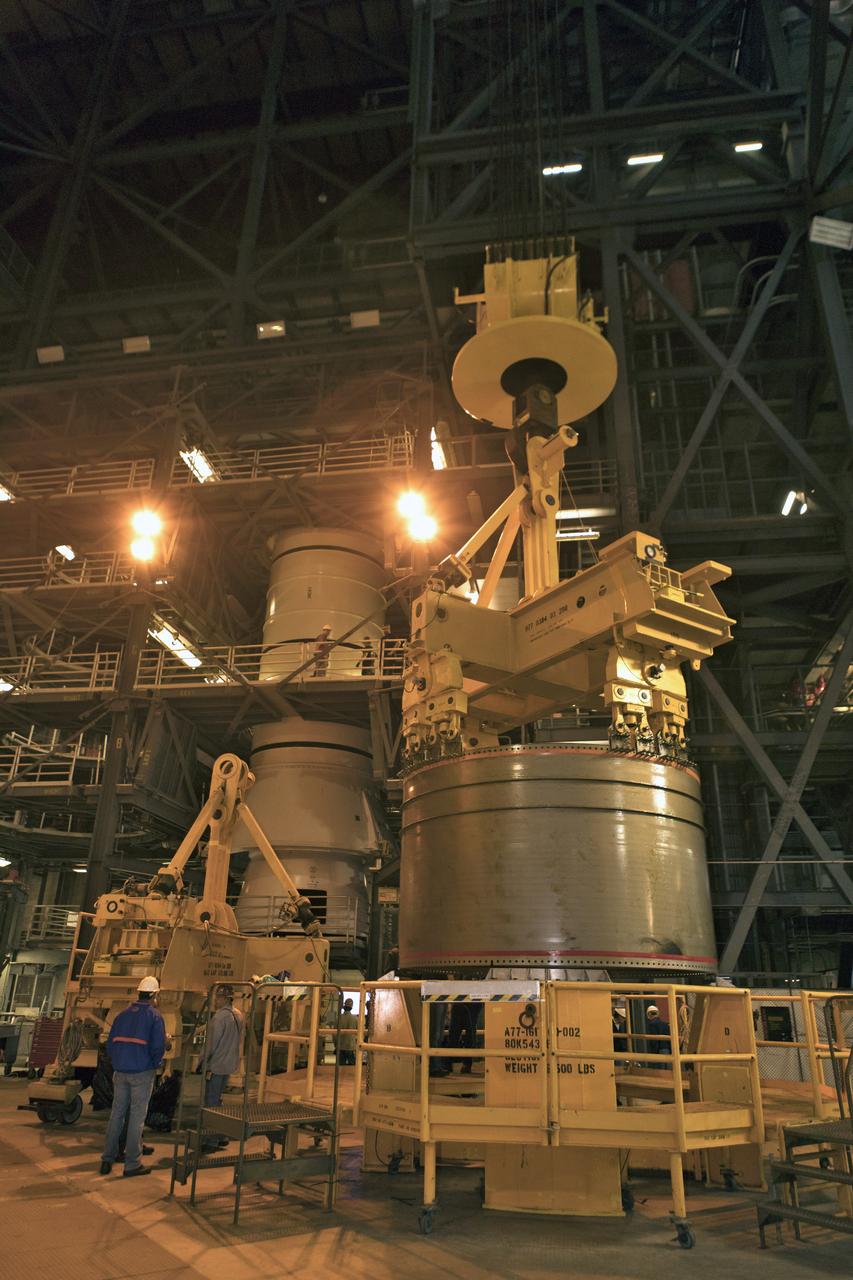
Crane operators and ground support personnel practice lifting and stacking mock-ups of solid rocket booster (SRB) segments in High Bay 4 inside the Vehicle Assembly Building at NASA’s Kennedy Space Center in Florida. The training will help workers prepare for SRB stacking operations for the agency's Space Launch System SLS) rocket. The SLS will launch the Orion spacecraft on its first integrated flight, Exploration Mission-1.
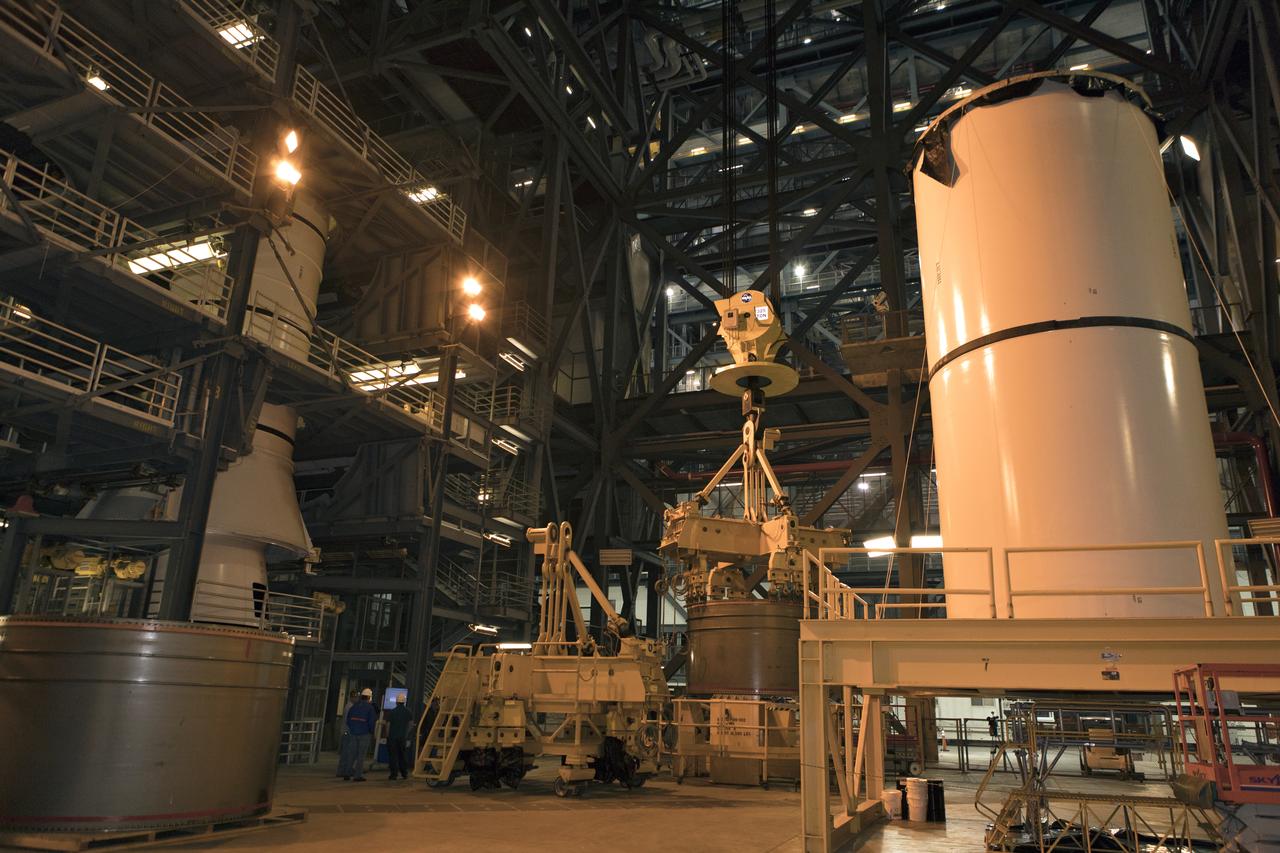
Crane operators and ground support personnel practice lifting and stacking mock-ups of solid rocket booster (SRB) segments in High Bay 4 inside the Vehicle Assembly Building at NASA’s Kennedy Space Center in Florida. The training will help workers prepare for SRB stacking operations for the agency's Space Launch System SLS) rocket. The SLS will launch the Orion spacecraft on its first integrated flight, Exploration Mission-1.
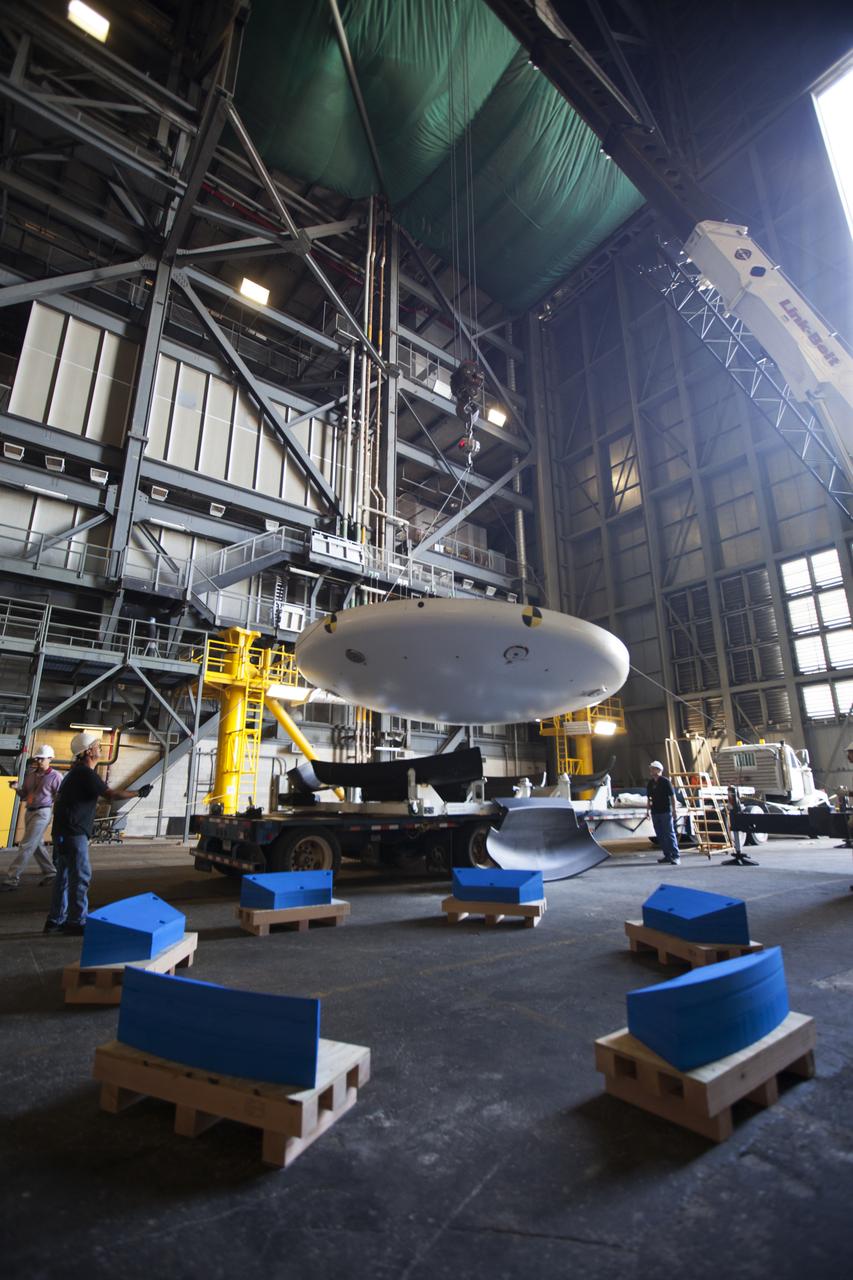
Inside High Bay 2 in the Vehicle Assembly Building (VAB) at NASA's Kennedy Space Center in Florida, a crane lifts the Orion heat shield from Exploration Flight Test-1 up off its transporter. It will be lowered onto foam blocks. The heat shield is being transferred from the Orion Program to the Ground Systems Development and Operations Program, Landing and Recovery Operations. In the VAB, the heat shield will be integrated with the Orion ground test article and used for future underway recovery testing.

Crane operators and ground support personnel practice lifting and stacking mock-ups of solid rocket booster (SRB) segments in High Bay 4 inside the Vehicle Assembly Building at NASA’s Kennedy Space Center in Florida. The training will help workers prepare for SRB stacking operations for the agency's Space Launch System SLS) rocket. The SLS will launch the Orion spacecraft on its first integrated flight, Exploration Mission-1.
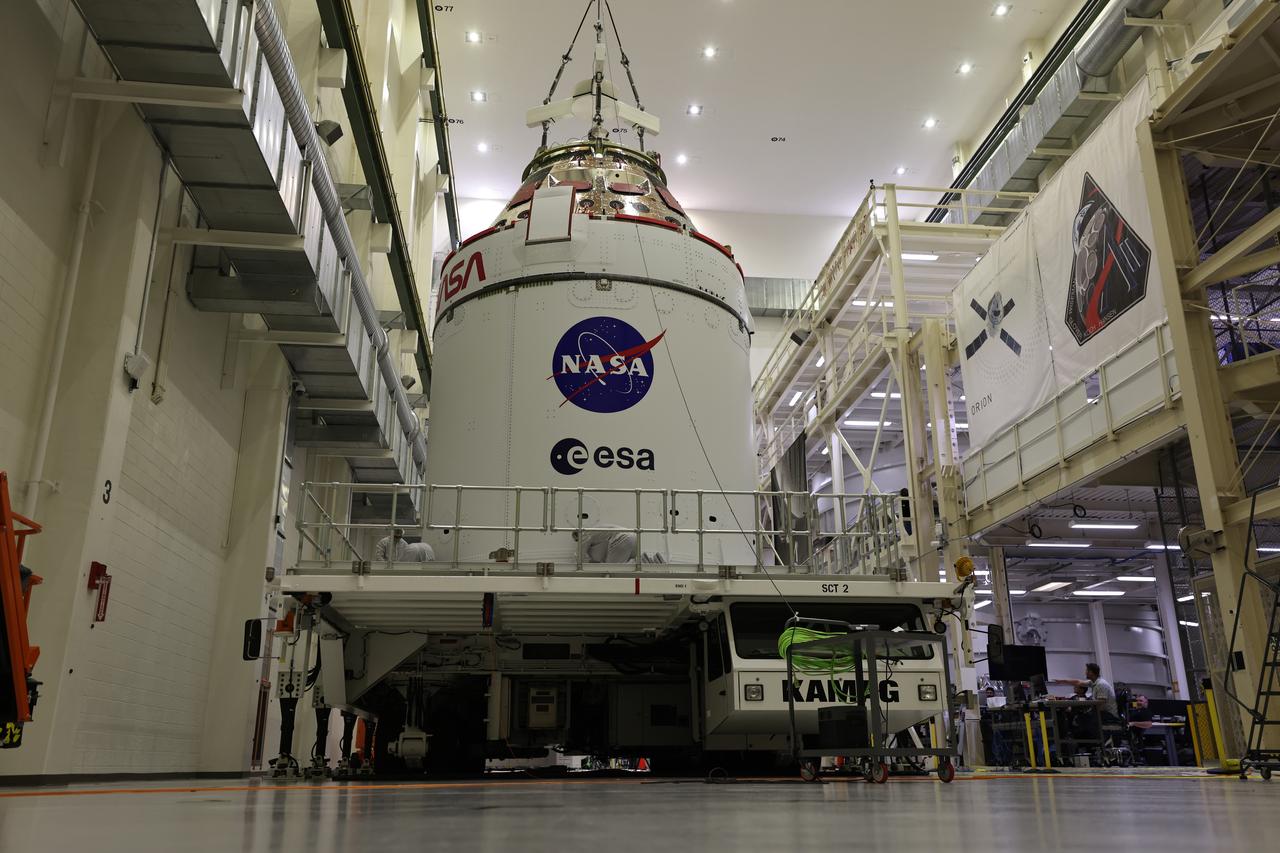
Crews use a massive crane to lift NASA’s Artemis II Orion spacecraft onto the agency’s KAMAG transporter inside the Neil A. Armstrong Operations and Checkout Building at Kennedy Space Center in Florida on Thursday, May 1, 2025. The spacecraft will be transported to the Multi-Payload Processing Facility to undergo fueling and processing for prelaunch operations. The Artemis II test flight is the first crewed flight under NASA’s Artemis campaign and is another step toward missions on the lunar surface and helping the agency prepare for future human missions to Mars.
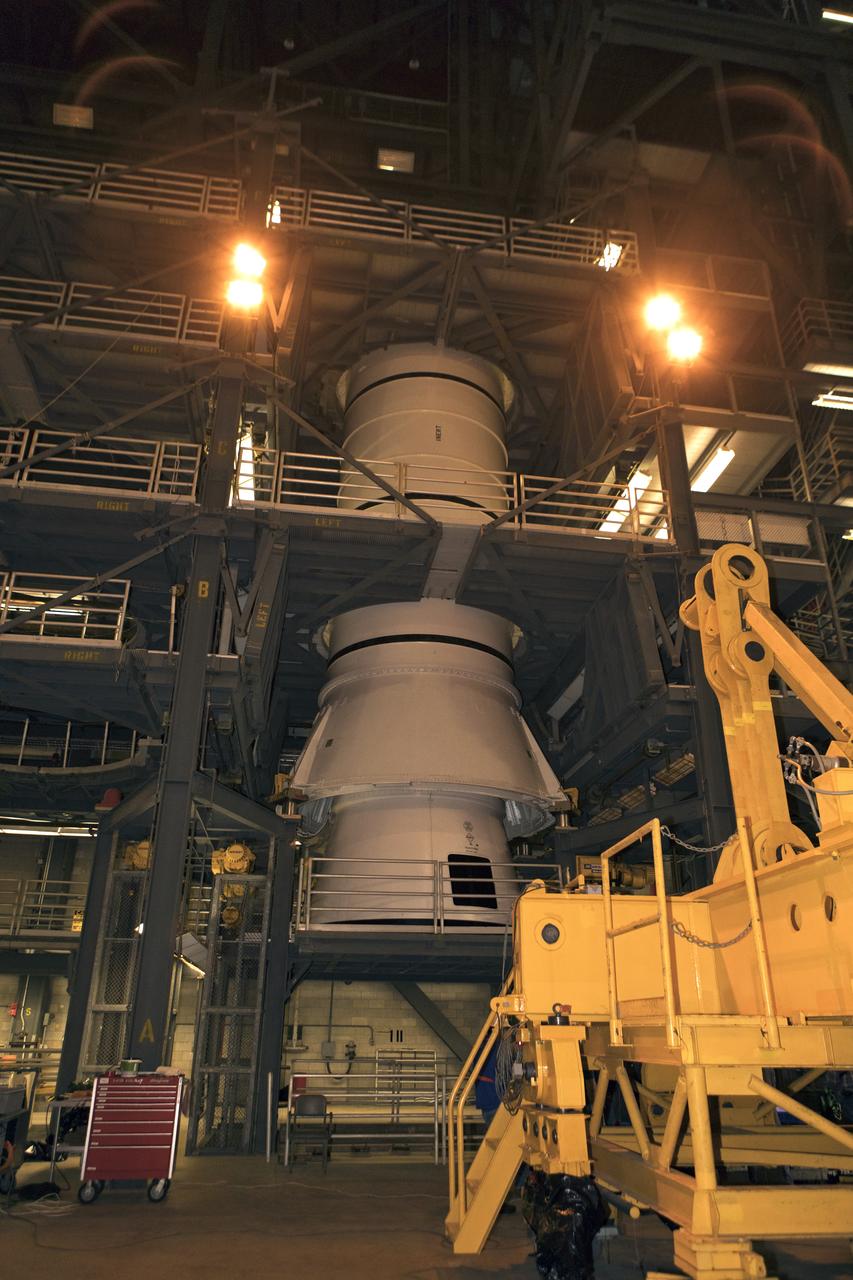
Crane operators and ground support personnel practice lifting and stacking mock-ups of solid rocket booster (SRB) segments in High Bay 4 inside the Vehicle Assembly Building at NASA’s Kennedy Space Center in Florida. The training will help workers prepare for SRB stacking operations for the agency's Space Launch System SLS) rocket. The SLS will launch the Orion spacecraft on its first integrated flight, Exploration Mission-1.
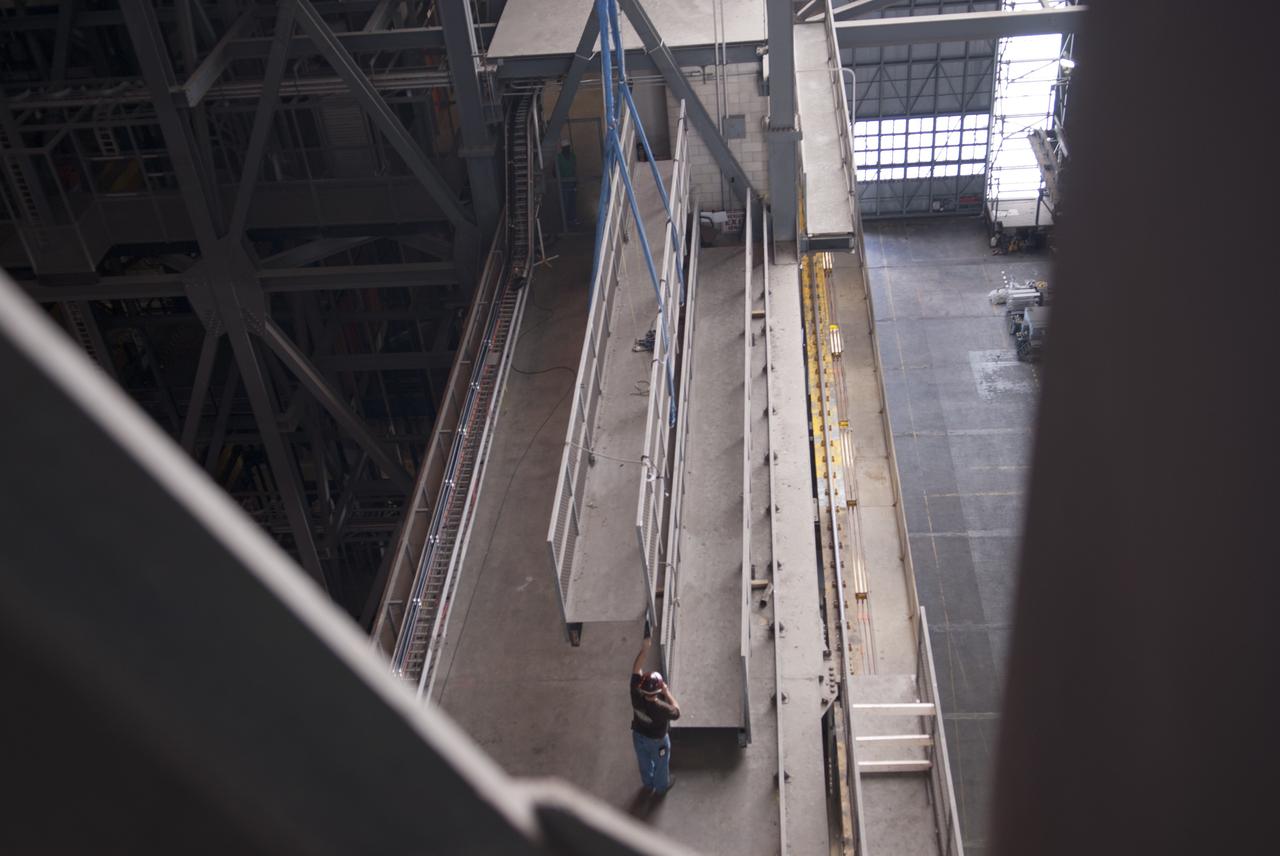
CAPE CANAVERAL, Fla. – Inside the Vehicle Assembly Building, or VAB, at NASA's Kennedy Space Center in Florida, portions of the catwalks on the east and west sides of Level 16 have been removed by crane and are being placed on the east side for storage. The catwalks were removed to allow room for the removal of the 175-ton crane that is situated above the transfer aisle. The crane will be lowered to the floor to perform upgrades to its 45-year-old controls in order to improve reliability, precision and safety. The Ground Systems Development and Operations Program is overseeing upgrades and modifications to the VAB. The crane will be upgraded so that it can support lifting needs for NASA and other exploration vehicles, including the agency's Space Launch System and Orion spacecraft. Photo credit: NASA/Jim Grossmann
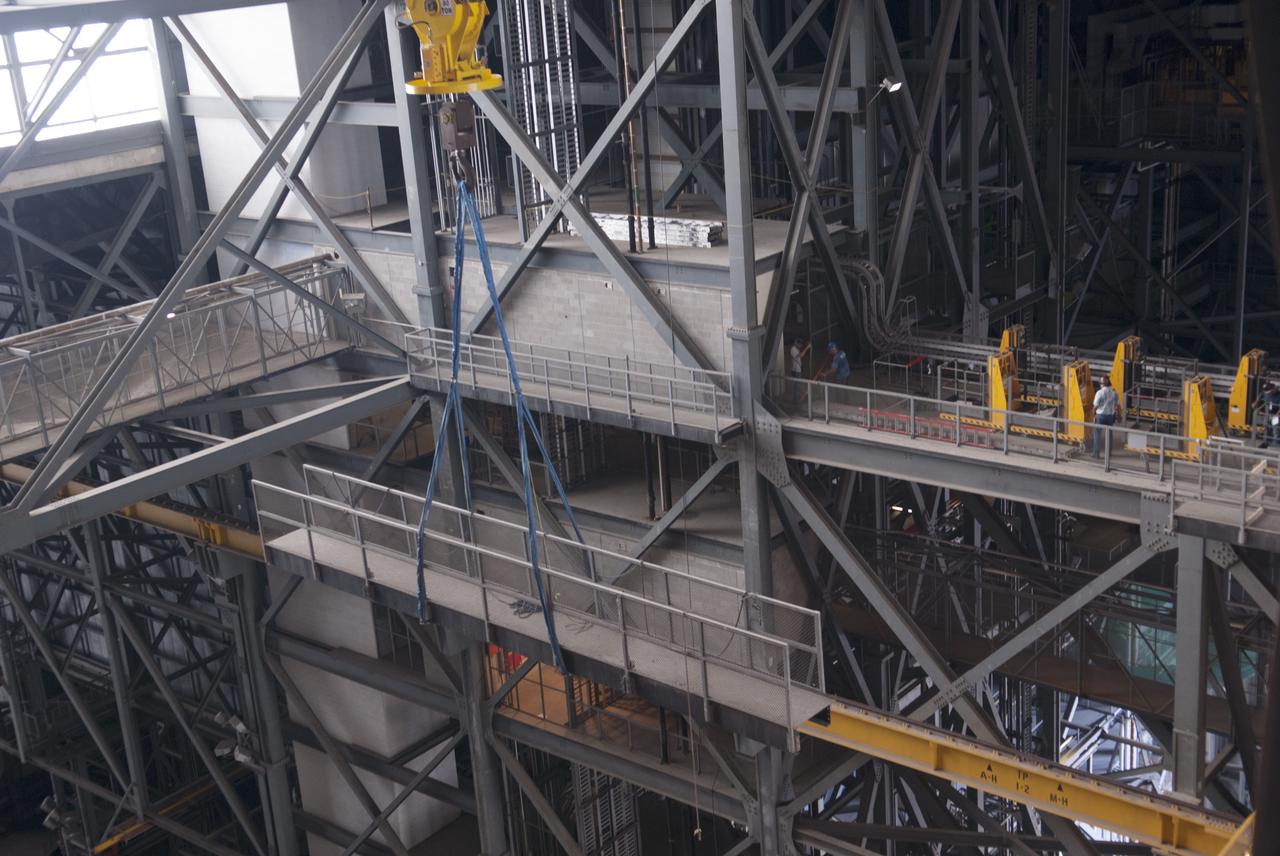
CAPE CANAVERAL, Fla. – Inside the Vehicle Assembly Building, or VAB, at NASA's Kennedy Space Center in Florida, a portion of the catwalk on the west side of Level 16 has been removed by crane and is being moved over the east side for storage. The catwalk was removed to allow room for the removal of the 175-ton crane that is situated above the transfer aisle. The crane will be lowered to the floor to perform upgrades to its 45-year-old controls in order to improve reliability, precision and safety. The Ground Systems Development and Operations Program is overseeing upgrades and modifications to the VAB. The crane will be upgraded so that it can support lifting needs for NASA and other exploration vehicles, including the agency's Space Launch System and Orion spacecraft. Photo credit: NASA/Jim Grossmann
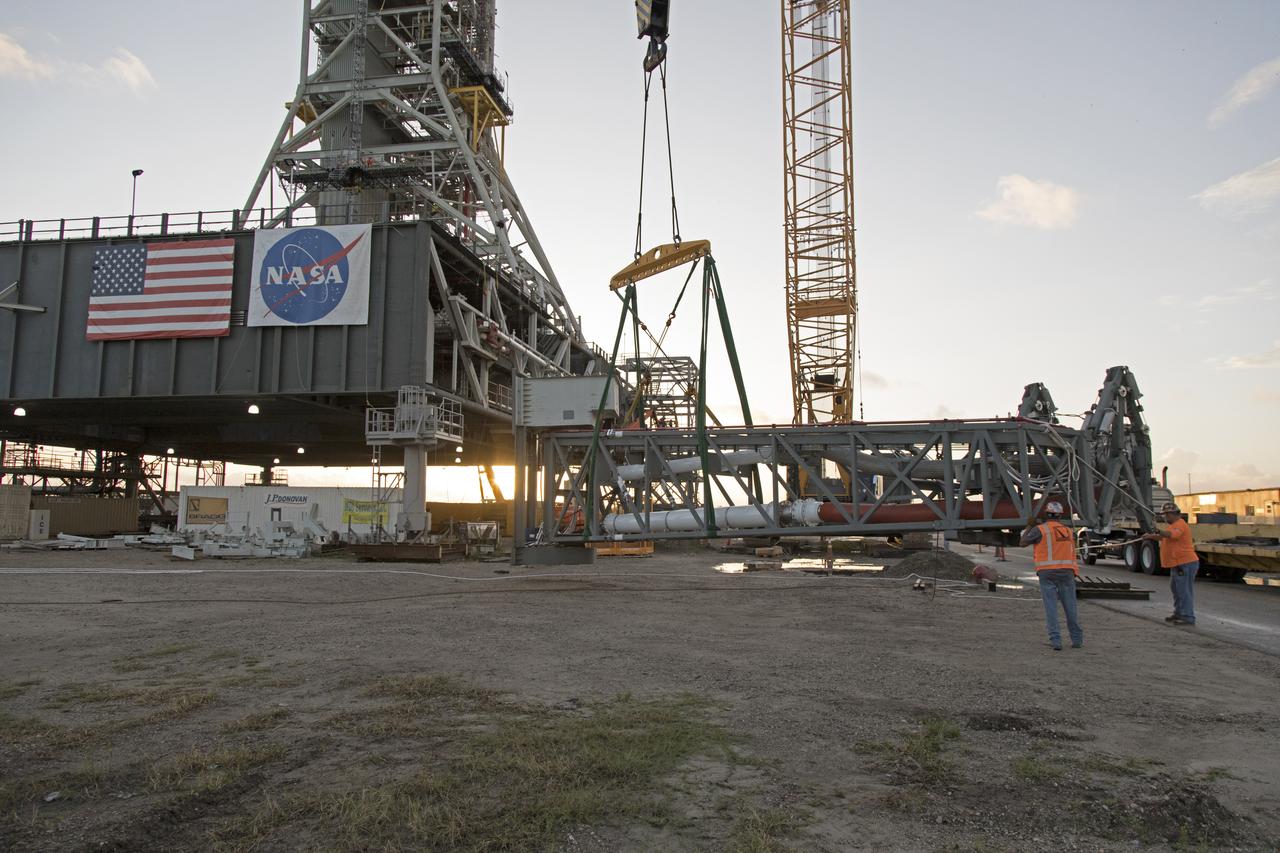
A heavy-lift crane has been attached to the Core Stage Inter-tank Umbilical (CSITU) to lift it up from a flatbed truck near the Vehicle Assembly Building at NASA's Kennedy Space Center in Florida. The CSITU will be lifted up to about the 140-foot level of the mobile launcher (ML) tower for a fit check of the attachment hardware. It will be lowered down and installed permanently on the ML at a later date. The CSITU is a swing-arm umbilical that will connect to the Space Launch System core stage inter-tank. It will provide conditioned air, pressurized gases and power and data connection to the core stage. The Ground Systems Development and Operations Program is overseeing installation of the umbilicals.
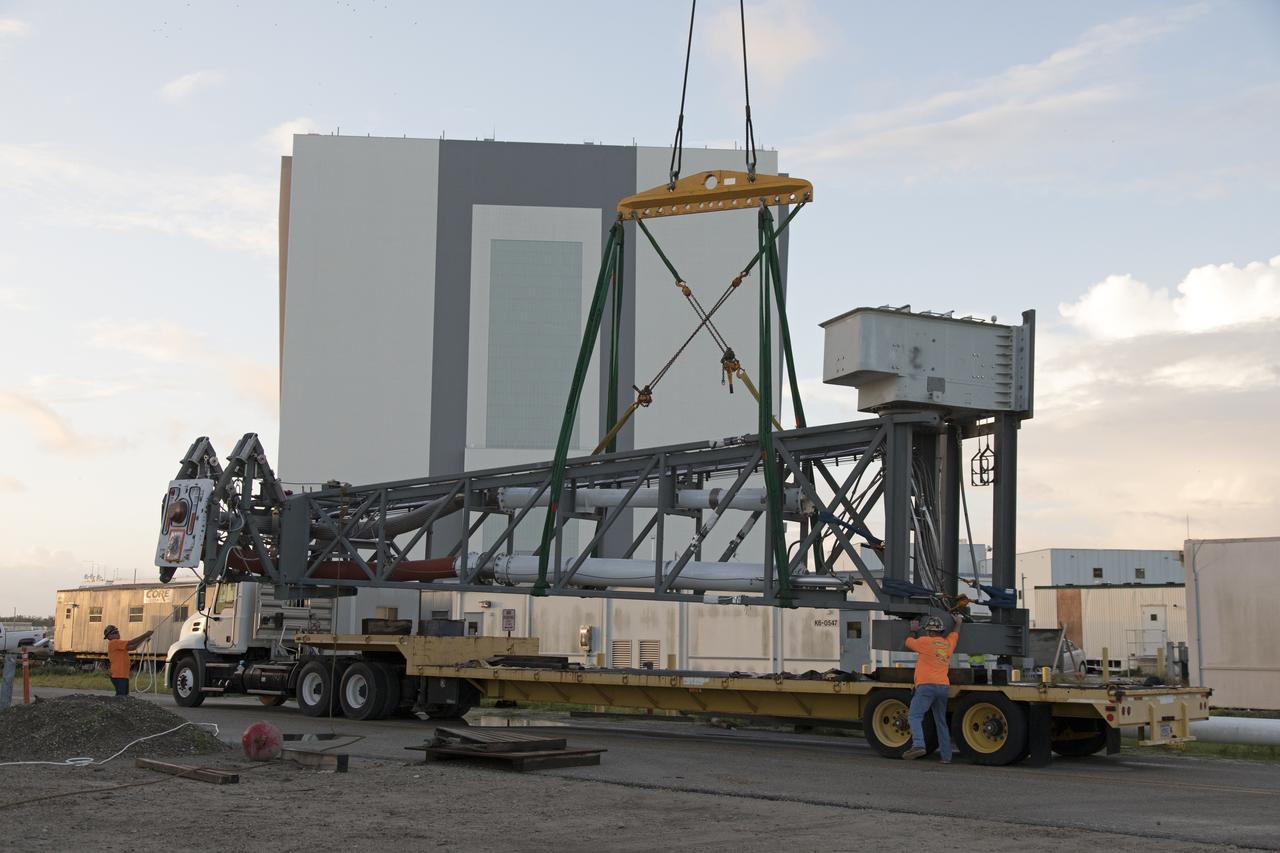
A heavy-lift crane has been attached to the Core Stage Inter-tank Umbilical (CSITU) to lift it up from a flatbed truck near the Vehicle Assembly Building at NASA's Kennedy Space Center in Florida. The CSITU will be lifted up to about the 140-foot level of the mobile launcher (ML) tower for a fit check of the attachment hardware. It will be lowered down and installed permanently on the ML at a later date. The CSITU is a swing-arm umbilical that will connect to the Space Launch System core stage inter-tank. It will provide conditioned air, pressurized gases and power and data connection to the core stage. The Ground Systems Development and Operations Program is overseeing installation of the umbilicals.

CAPE CANAVERAL, Fla. -- In the transfer aisle of the Vehicle Assembly Building at NASA’s Kennedy Space Center in Florida, technicians attach a crane to a full-size mock-up of the Orion spacecraft to prepare it to be lifted into High Bay 4. Crane operators and technicians practice stacking and de-stacking operations in order to keep processing procedures and skills current for the Ground Systems Development and Operations Program. Orion is the exploration spacecraft designed to carry crews to space beyond low Earth orbit. It will provide emergency abort capability, sustain the crew during the space travel and provide safe re-entry from deep space return velocities. Orion’s first unpiloted test flight is scheduled to launch in 2014 atop a Delta IV rocket. A second uncrewed flight test is scheduled for 2017 on NASA’s Space Launch System rocket. For more information, visit http://www.nasa.gov/orion. Photo credit: NASA/Dan Casper
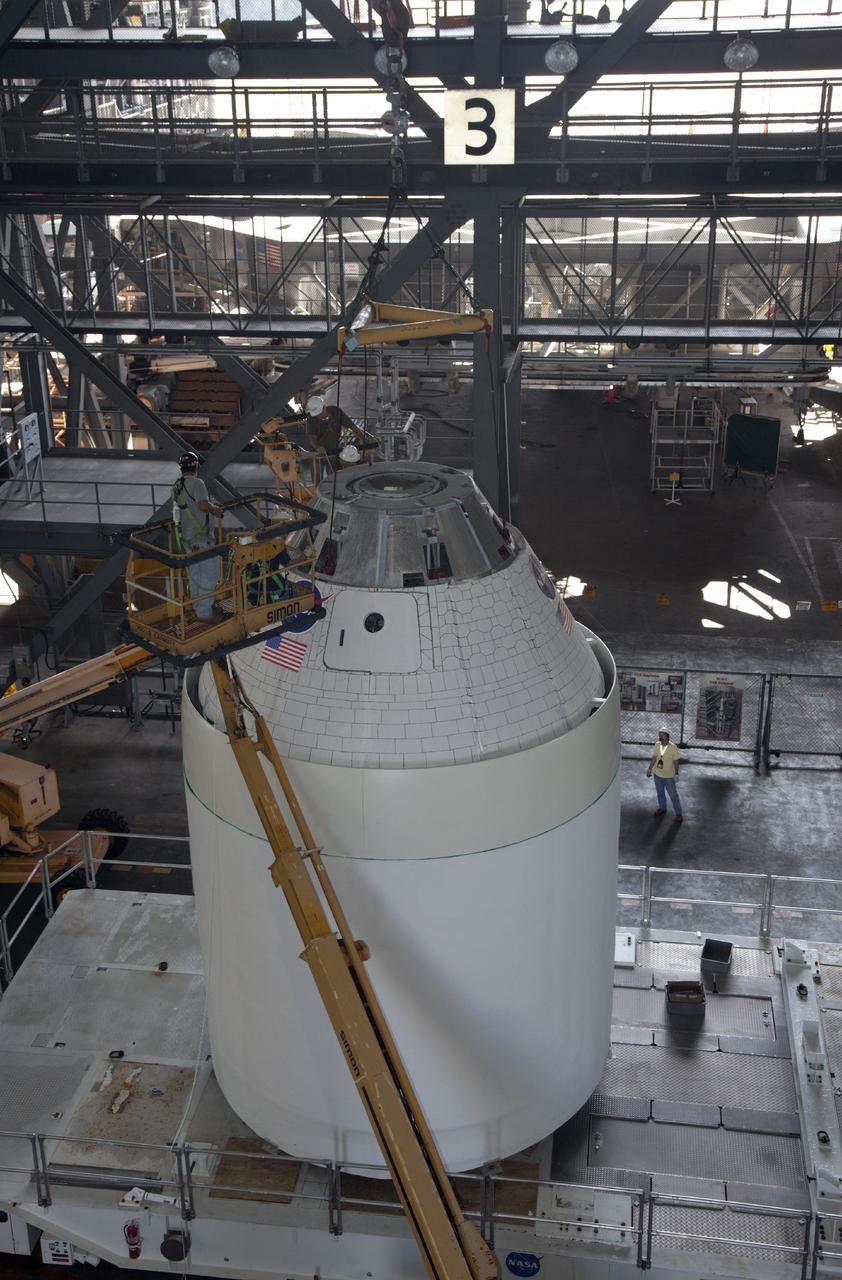
CAPE CANAVERAL, Fla. --In the transfer aisle of the Vehicle Assembly Building at NASA’s Kennedy Space Center in Florida, technicians attach a crane to a full-size mock-up of the Orion spacecraft to prepare it to be lifted into High Bay 4. Crane operators and technicians practice stacking and de-stacking operations in order to keep processing procedures and skills current for the Ground Systems Development and Operations Program. Orion is the exploration spacecraft designed to carry crews to space beyond low Earth orbit. It will provide emergency abort capability, sustain the crew during the space travel and provide safe re-entry from deep space return velocities. Orion’s first unpiloted test flight is scheduled to launch in 2014 atop a Delta IV rocket. A second uncrewed flight test is scheduled for 2017 on NASA’s Space Launch System rocket. For more information, visit http://www.nasa.gov/orion. Photo credit: NASA/Dan Casper
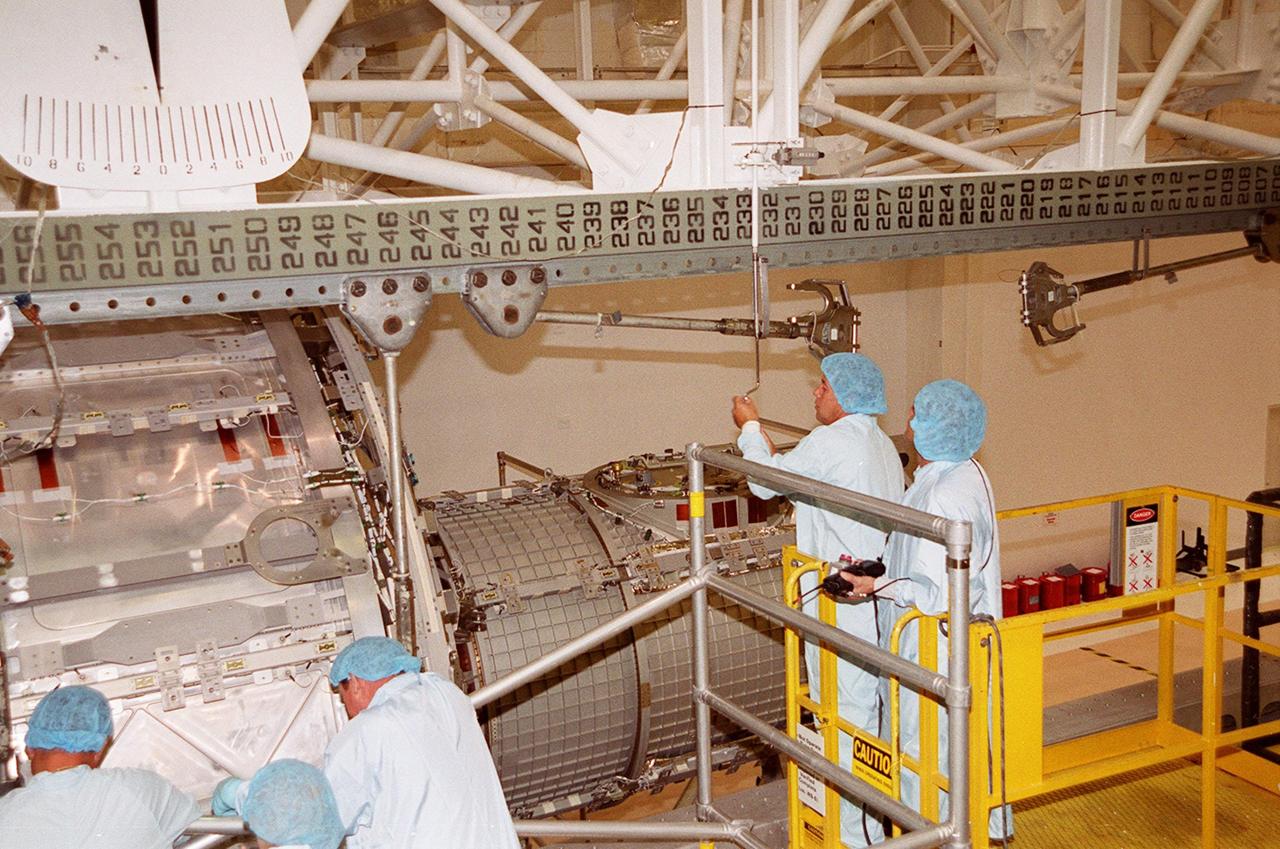
KENNEDY SPACE CENTER, FLA. -- A worker in the Operations and Checkout Building attaches the overhead crane to the Joint Airlock Module while another worker controls movement of the crane. The module will be lifted and placed in the payload canister for transfer to the Space Station Processing Facility. There the module will undergo more preflight processing for the STS-104 mission scheduled for launch aboard Space Shuttle Atlantis May 17, 2001. The Joint Airlock Module is the gateway from which crew members aboard the International Space Station will enter and exit the 470-ton orbiting research facility
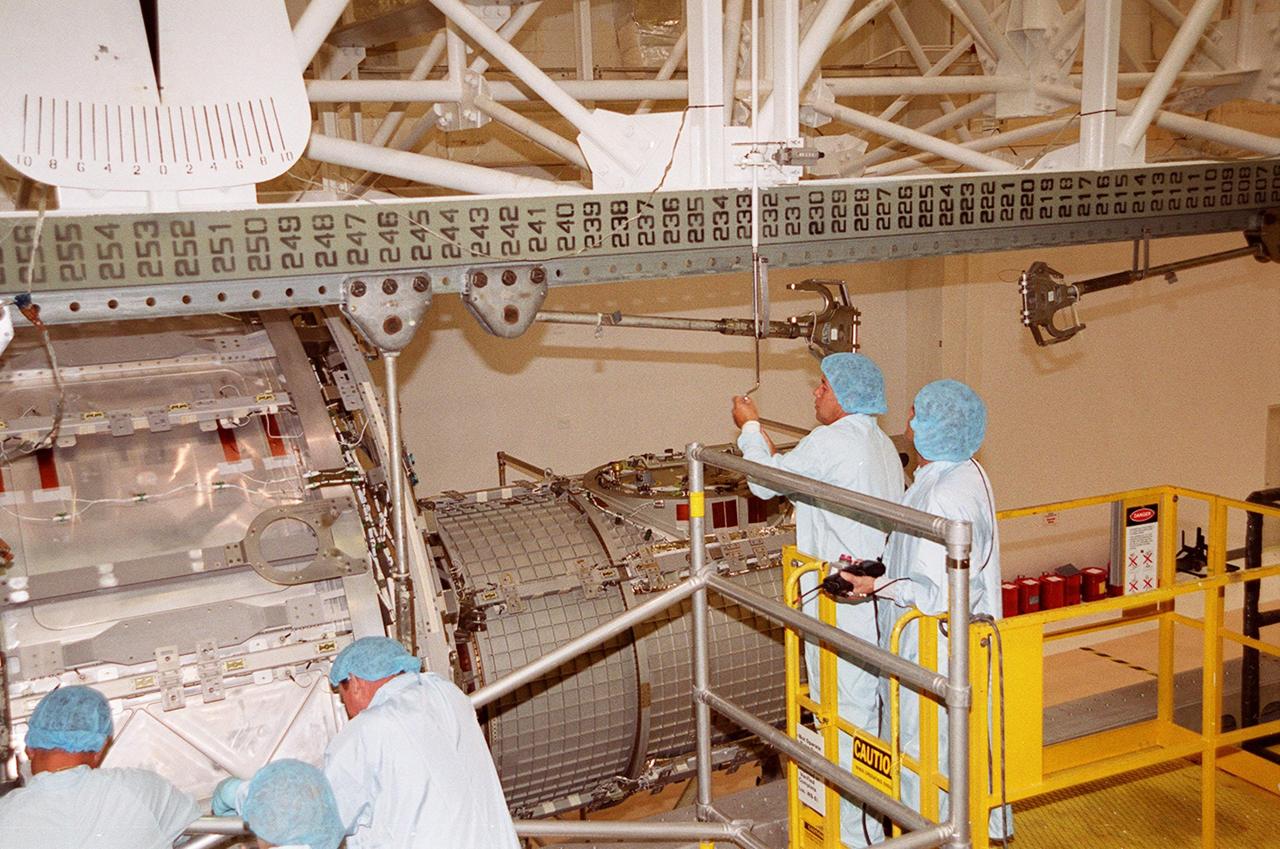
KENNEDY SPACE CENTER, FLA. -- A worker in the Operations and Checkout Building attaches the overhead crane to the Joint Airlock Module while another worker controls movement of the crane. The module will be lifted and placed in the payload canister for transfer to the Space Station Processing Facility. There the module will undergo more preflight processing for the STS-104 mission scheduled for launch aboard Space Shuttle Atlantis May 17, 2001. The Joint Airlock Module is the gateway from which crew members aboard the International Space Station will enter and exit the 470-ton orbiting research facility
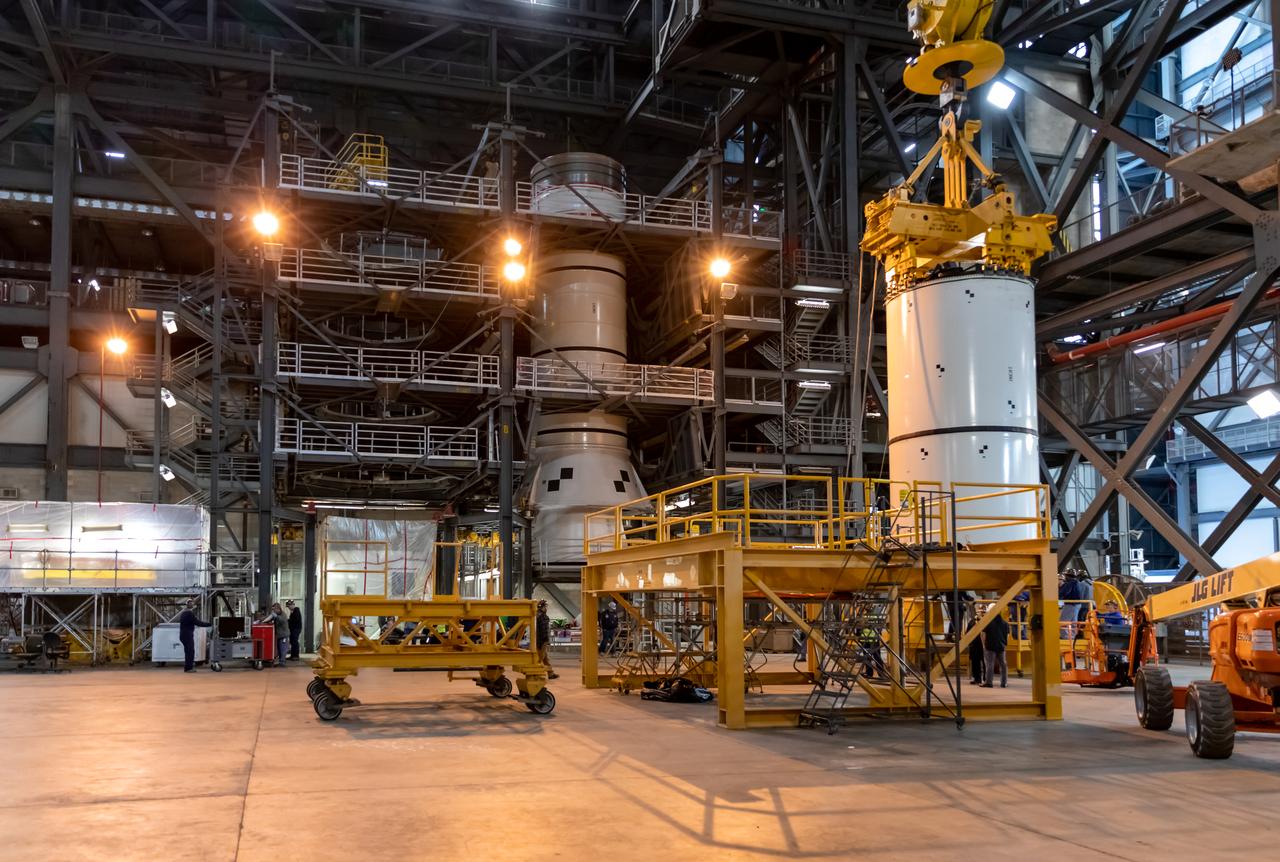
In High Bay 4 of the Vehicle Assembly Building at NASA’s Kennedy Space Center in Florida, a crane is used to lift Space Launch System (SLS) solid rocket booster pathfinder segments and move them to be added atop other booster pathfinder segments during a training exercise on Jan. 8, 2020. A team of engineers with Exploration Ground Systems and crane operators and technicians with contractor Jacobs are practicing lifting, moving and stacking maneuvers, using important ground support equipment to train employees and certify all the equipment works properly. The booster pathfinders are inert, full-scale replicas of the actual booster hardware that will be attached to the SLS rocket for Artemis missions. The five-segment, 17-story-tall twin boosters will provide 3.6 million pounds of thrust each at liftoff to help launch Orion on Artemis I, its first uncrewed mission beyond the Moon.