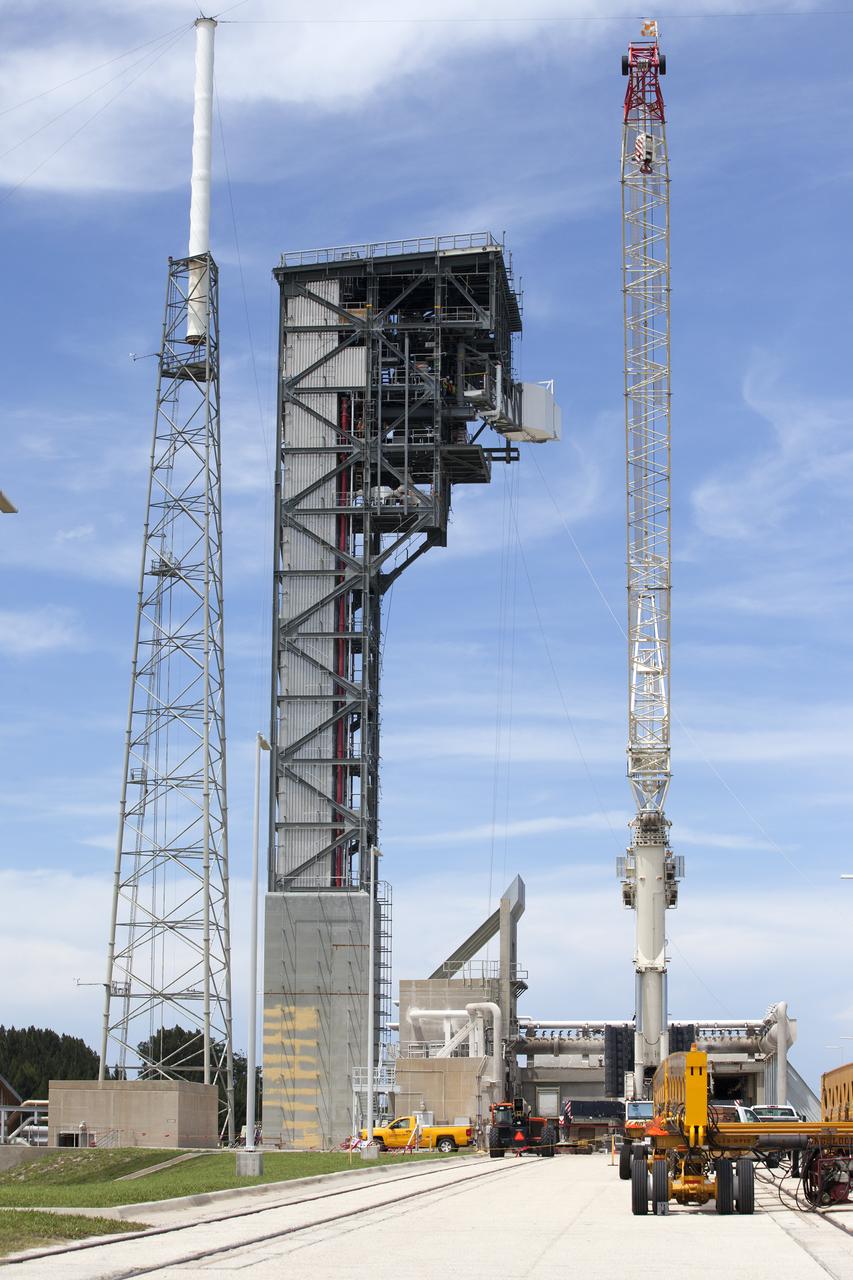
The Crew Access Arm and White Room for Boeing's CST-100 Starliner are attached to the Crew Access Tower at Cape Canaveral Air Force Station’s Space Launch Complex 41. The arm will serve as the connection that astronauts will walk through prior to boarding the Starliner spacecraft when stacked atop a United Launch Alliance Atlas V rocket. This installation completes the major construction of the first new Crew Access Tower to be built at the Cape since the Apollo era. Under a Commercial Crew Transportation Capability contract with NASA, Boeing’s Starliner system will be certified by NASA's Commercial Crew Program to fly crews to and from the International Space Station.
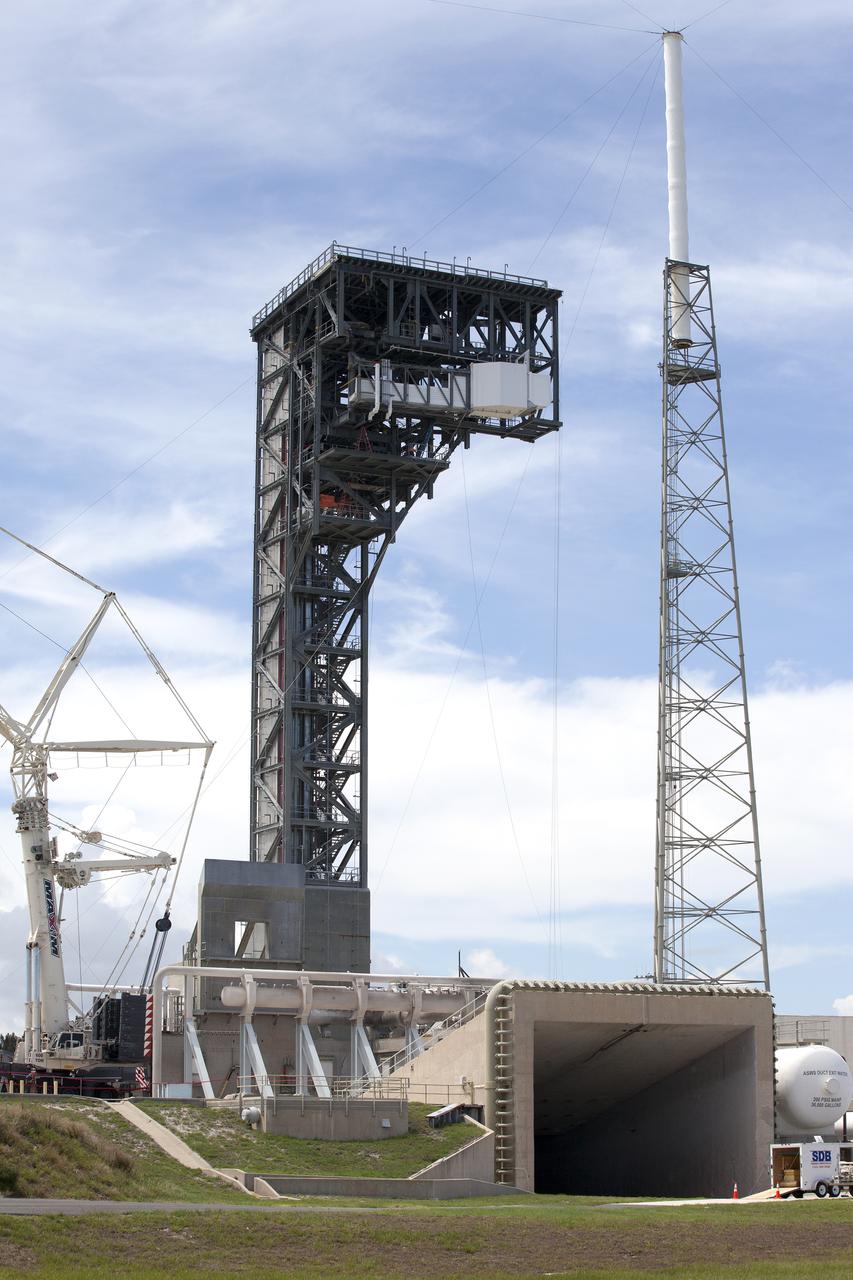
The Crew Access Arm and White Room for Boeing's CST-100 Starliner are attached to the Crew Access Tower at Cape Canaveral Air Force Station’s Space Launch Complex 41. The arm will serve as the connection that astronauts will walk through prior to boarding the Starliner spacecraft when stacked atop a United Launch Alliance Atlas V rocket. This installation completes the major construction of the first new Crew Access Tower to be built at the Cape since the Apollo era. Under a Commercial Crew Transportation Capability contract with NASA, Boeing’s Starliner system will be certified by NASA's Commercial Crew Program to fly crews to and from the International Space Station.
The Orion crew access arm is secured in a storage location at NASA's Kennedy Space Center in Florida. The access arm will be prepared for its move to the mobile launcher (ML) tower near the Vehicle Assembly Building at the center. The crew access arm will be installed at about the 274-foot level on the tower. It will rotate from its retracted position and interface with the Orion crew hatch location to provide entry to the Orion crew module. The Ground Systems Development and Operations Program is overseeing installation of umbilicals and launch accessories on the ML tower.
The Orion crew access arm is secured in a storage location at NASA's Kennedy Space Center in Florida. The access arm will be prepared for its move to the mobile launcher (ML) tower near the Vehicle Assembly Building at the center. The crew access arm will be installed at about the 274-foot level on the tower. It will rotate from its retracted position and interface with the Orion crew hatch location to provide entry to the Orion crew module. The Ground Systems Development and Operations Program is overseeing installation of umbilicals and launch accessories on the ML tower.

A heavy-load transport truck carries the Orion crew access arm along the NASA Causeway east toward State Road 3 at NASA's Kennedy Space Center in Florida. The access arm will be moved to the mobile launcher (ML) near the Vehicle Assembly Building at the center. The crew access arm will be installed at about the 274-foot level on the mobile launcher tower. It will rotate from its retracted position and interface with the Orion crew hatch location to provide entry to the Orion crew module. The Ground Systems Development and Operations Program is overseeing installation of umbilicals and launch accessories on the ML tower to prepare for Exploration Mission-1.
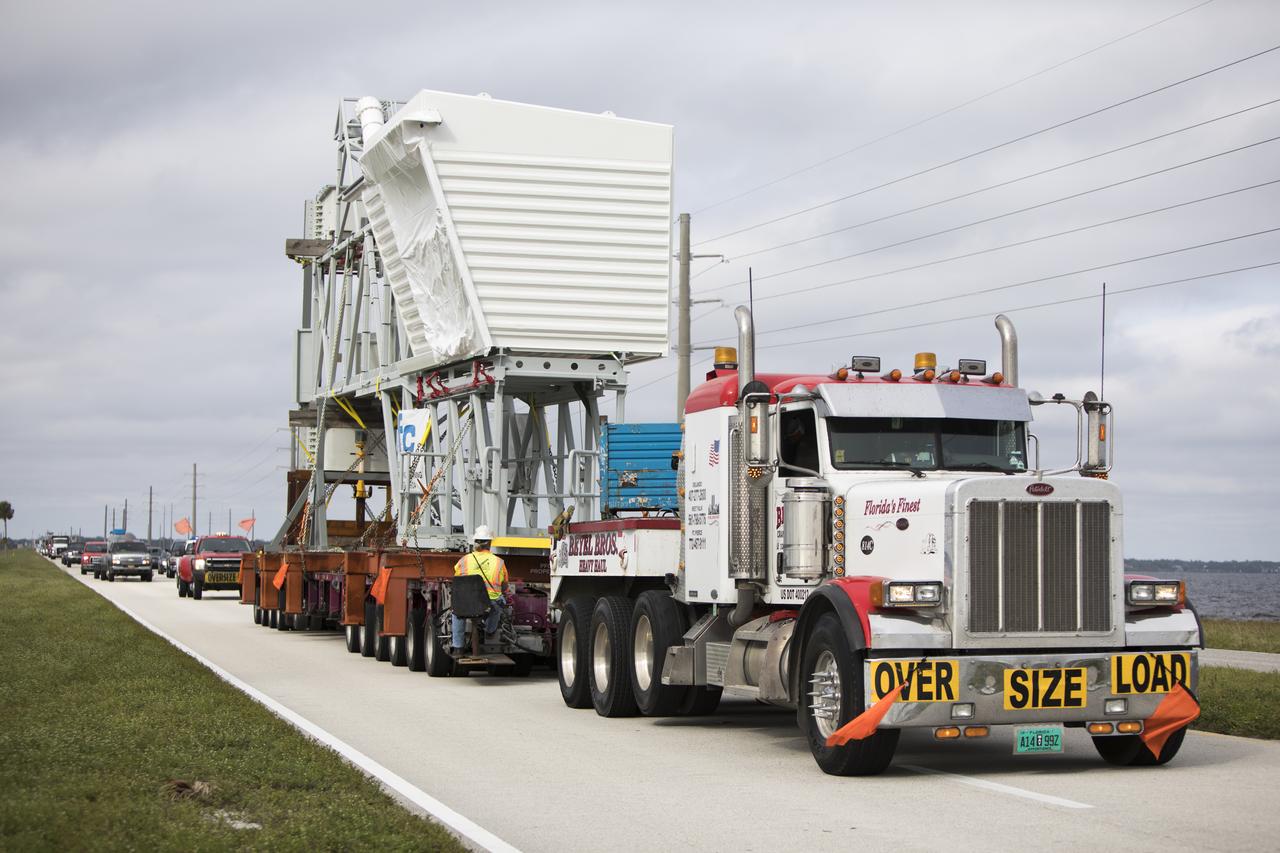
A heavy-load transport truck carries the Orion crew access arm along the NASA Causeway east toward State Road 3 at NASA's Kennedy Space Center in Florida. The access arm will be moved to the mobile launcher (ML) near the Vehicle Assembly Building at the center. The crew access arm will be installed at about the 274-foot level on the tower. It will rotate from its retracted position and interface with the Orion crew hatch location to provide entry to the Orion crew module. The Ground Systems Development and Operations Program is overseeing installation of umbilicals and launch accessories on the ML tower to prepare for Exploration Mission-1.
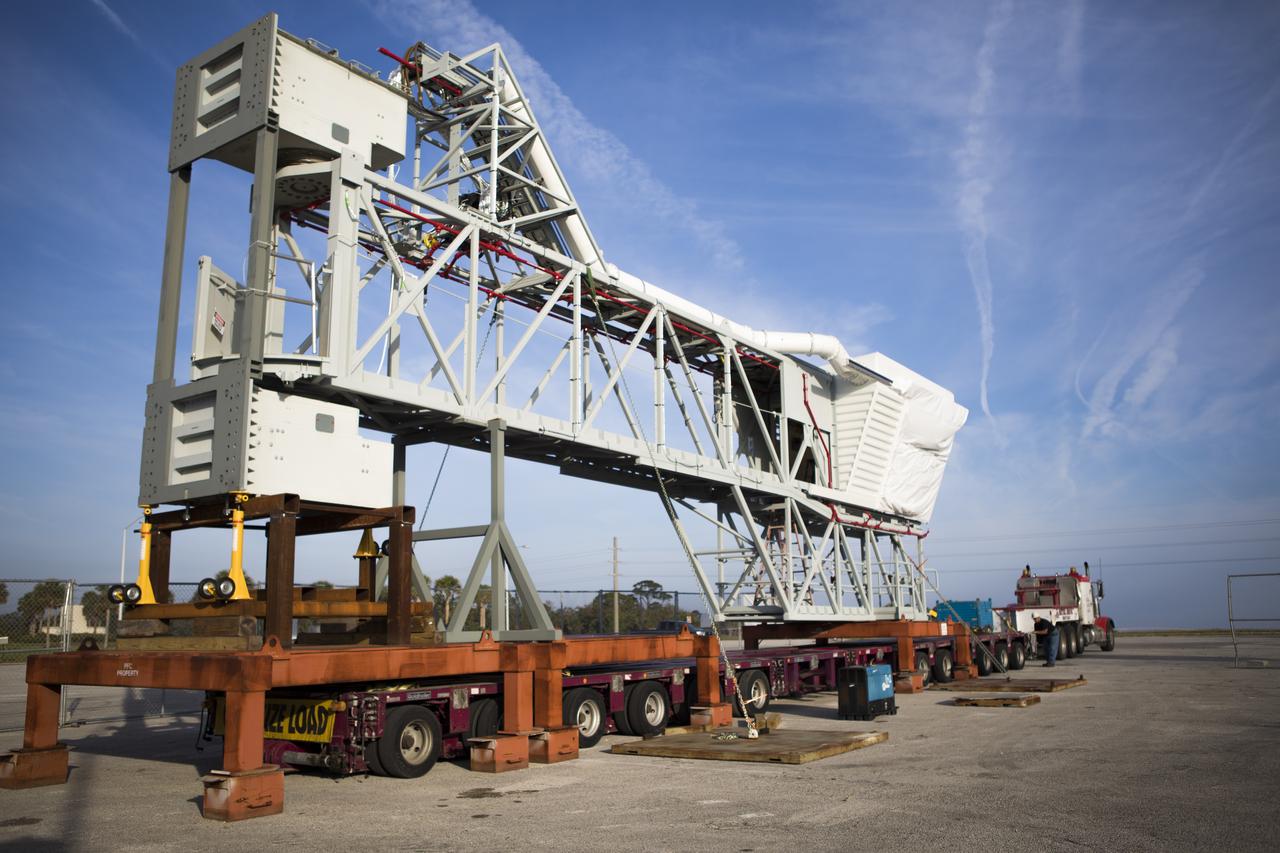
The Orion crew access arm, secured on a stand, is being prepared for its move from a storage location at NASA's Kennedy Space Center in Florida, to the mobile launcher (ML) tower near the Vehicle Assembly Building at the center. The crew access arm will be installed at about the 274-foot level on the tower. It will rotate from its retracted position and interface with the Orion crew hatch location to provide entry to the Orion crew module. The Ground Systems Development and Operations Program is overseeing installation of umbilicals and launch accessories on the ML tower.
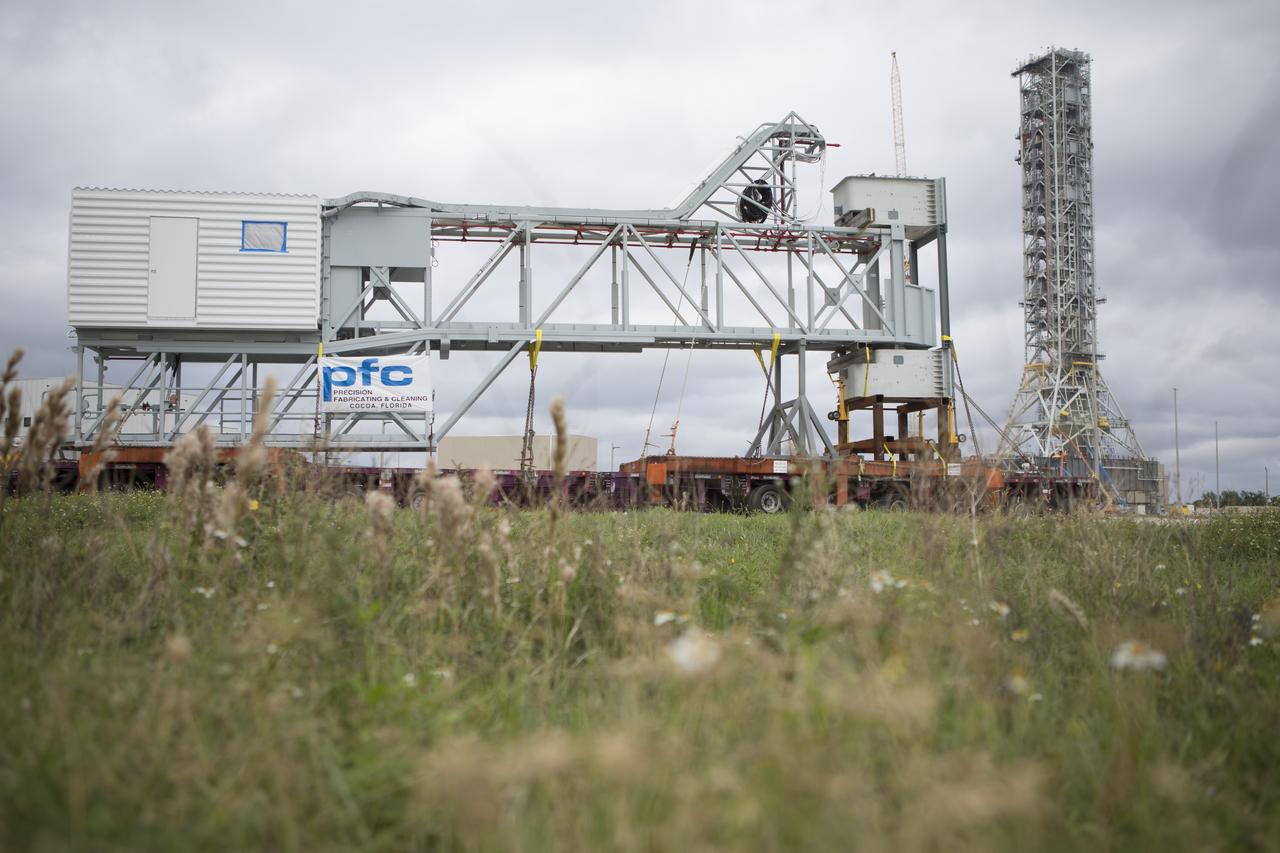
A heavy-load transport truck carrying the Orion crew access arm nears the mobile launcher (ML) at NASA's Kennedy Space Center in Florida. The crew access arm will be installed at about the 274-foot level on the mobile launcher tower. It will rotate from its retracted position and interface with the Orion crew hatch location to provide entry to the Orion crew module. The Ground Systems Development and Operations Program is overseeing installation of umbilicals and launch accessories on the ML tower to prepare for Exploration Mission-1.
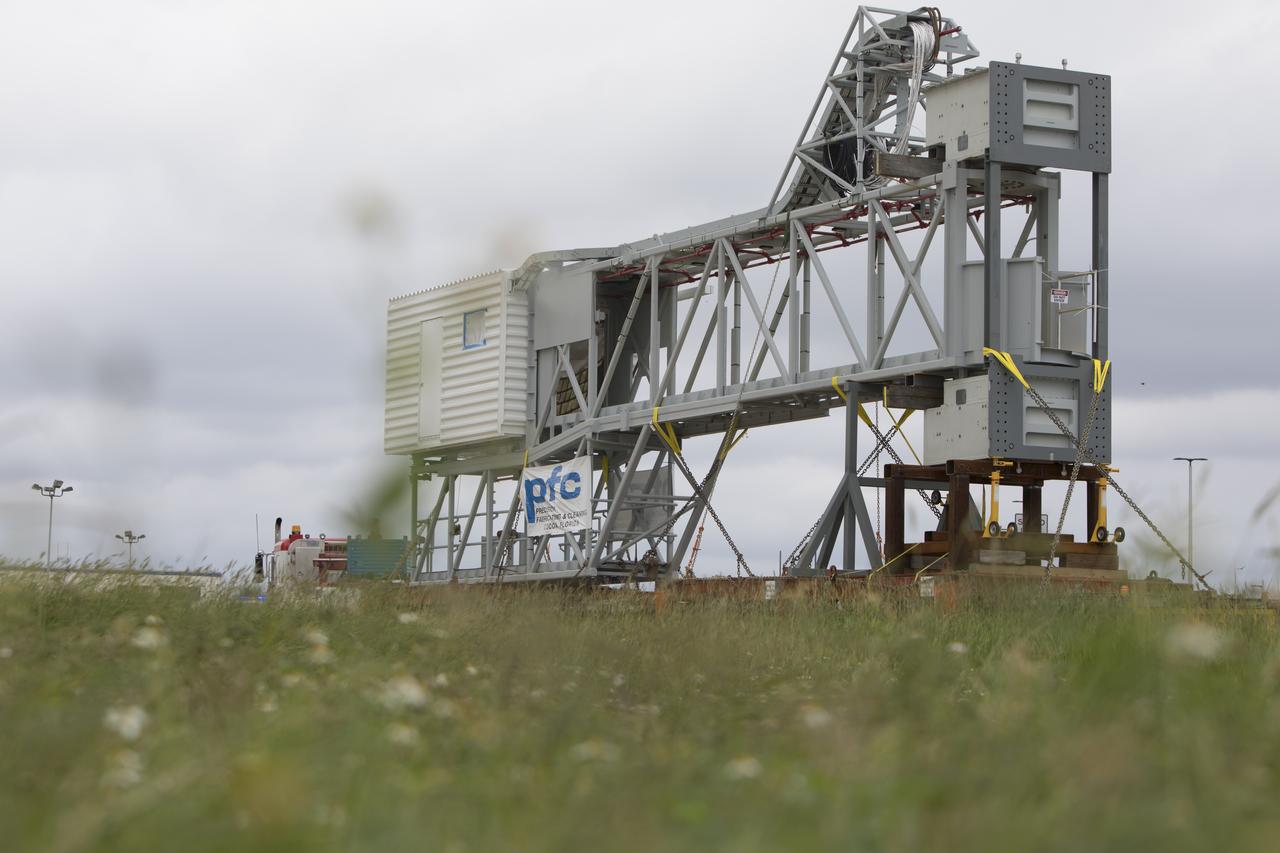
A heavy-load transport truck carrying the Orion crew access arm makes its way toward the mobile launcher (ML) at NASA's Kennedy Space Center in Florida. The crew access arm will be installed at about the 274-foot level on the mobile launcher tower. It will rotate from its retracted position and interface with the Orion crew hatch location to provide entry to the Orion crew module. The Ground Systems Development and Operations Program is overseeing installation of umbilicals and launch accessories on the ML tower to prepare for Exploration Mission-1.
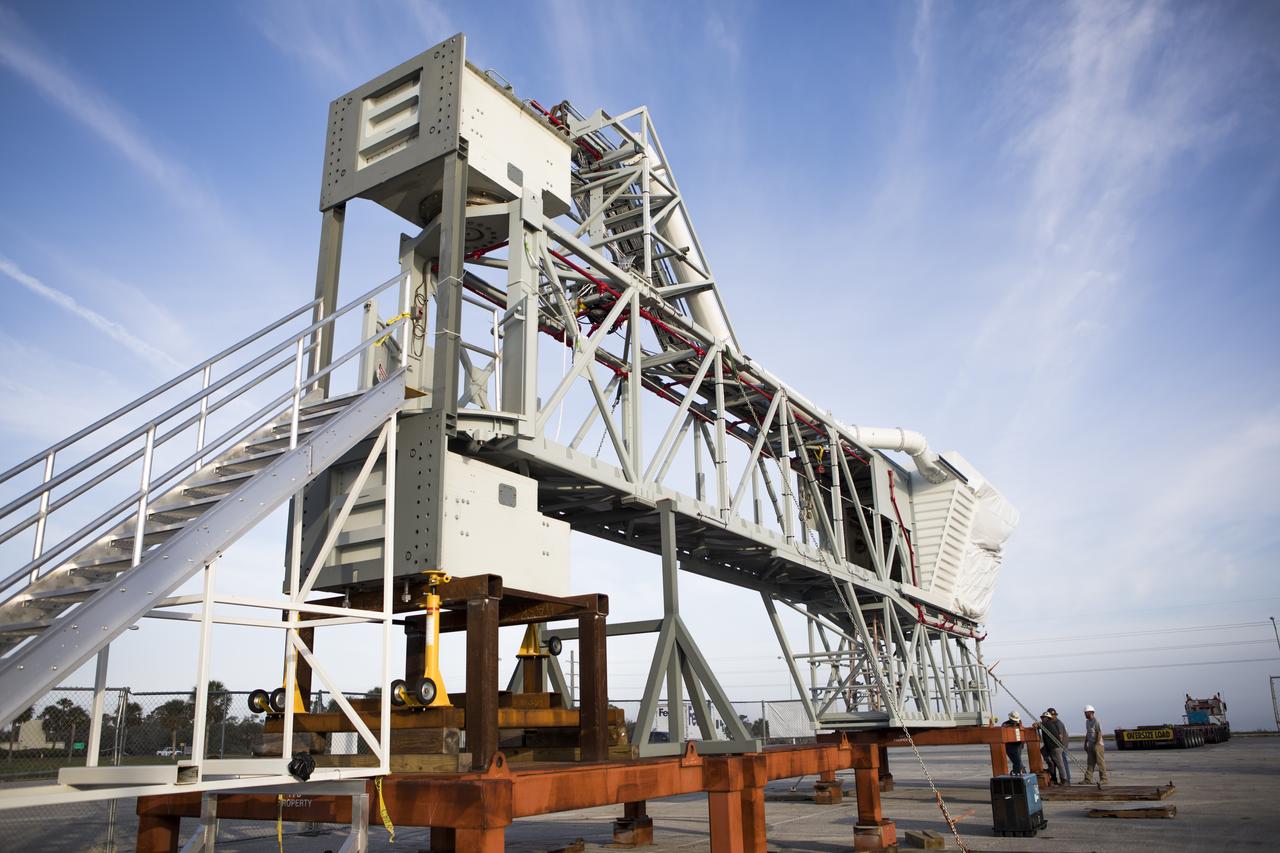
The Orion crew access arm, secured on a stand, is being prepared for its move from a storage location at NASA's Kennedy Space Center in Florida, to the mobile launcher (ML) tower near the Vehicle Assembly Building at the center. The crew access arm will be installed at about the 274-foot level on the tower. It will rotate from its retracted position and interface with the Orion crew hatch location to provide entry to the Orion crew module. The Ground Systems Development and Operations Program is overseeing installation of umbilicals and launch accessories on the ML tower.
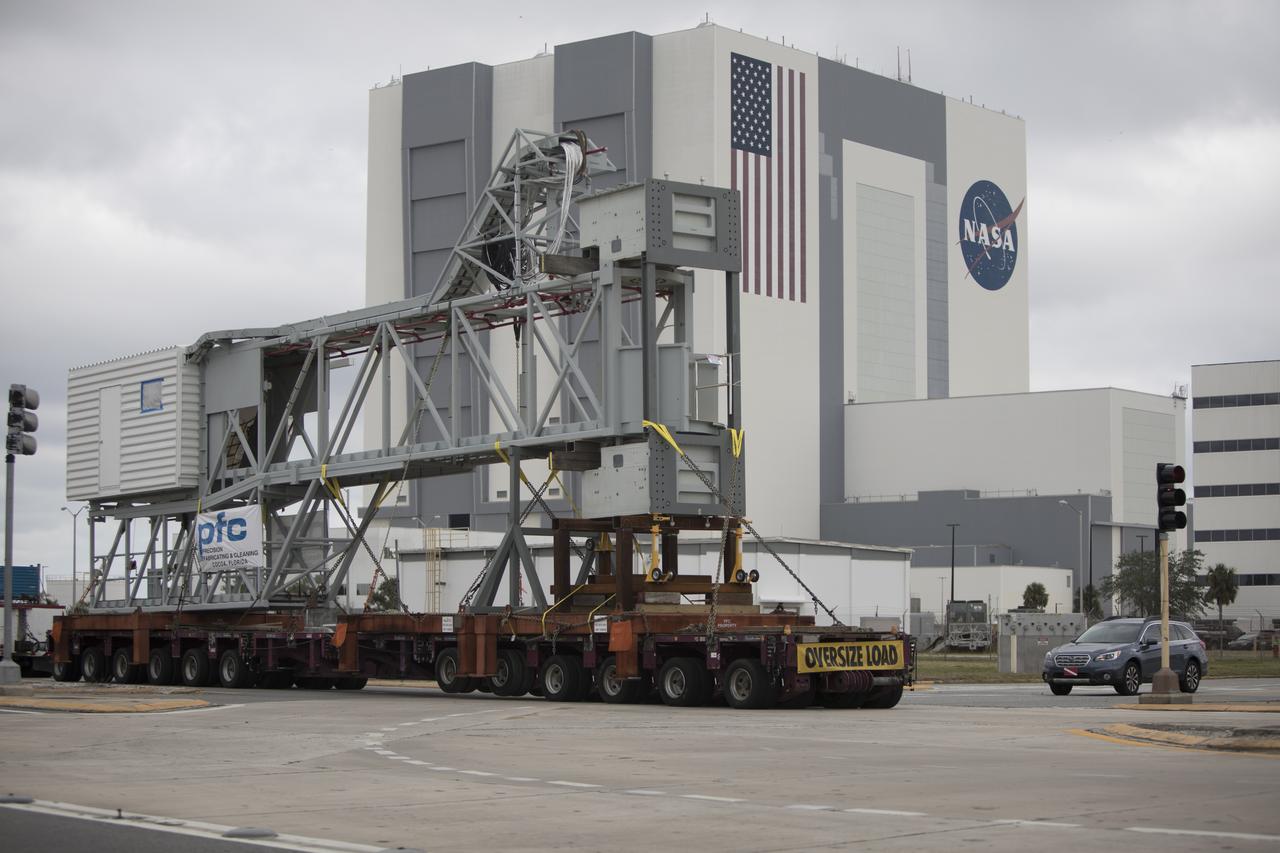
A heavy-load transport truck carrying the Orion crew access arm passes the Vehicle Assembly Building on its way to the mobile launcher at NASA's Kennedy Space Center in Florida. The access arm will be installed at about the 274-foot level on the mobile launcher tower. It will rotate from its retracted position and interface with the Orion crew hatch location to provide entry to the Orion crew module. The Ground Systems Development and Operations Program is overseeing installation of umbilicals and launch accessories on the ML tower to prepare for Exploration Mission-1.
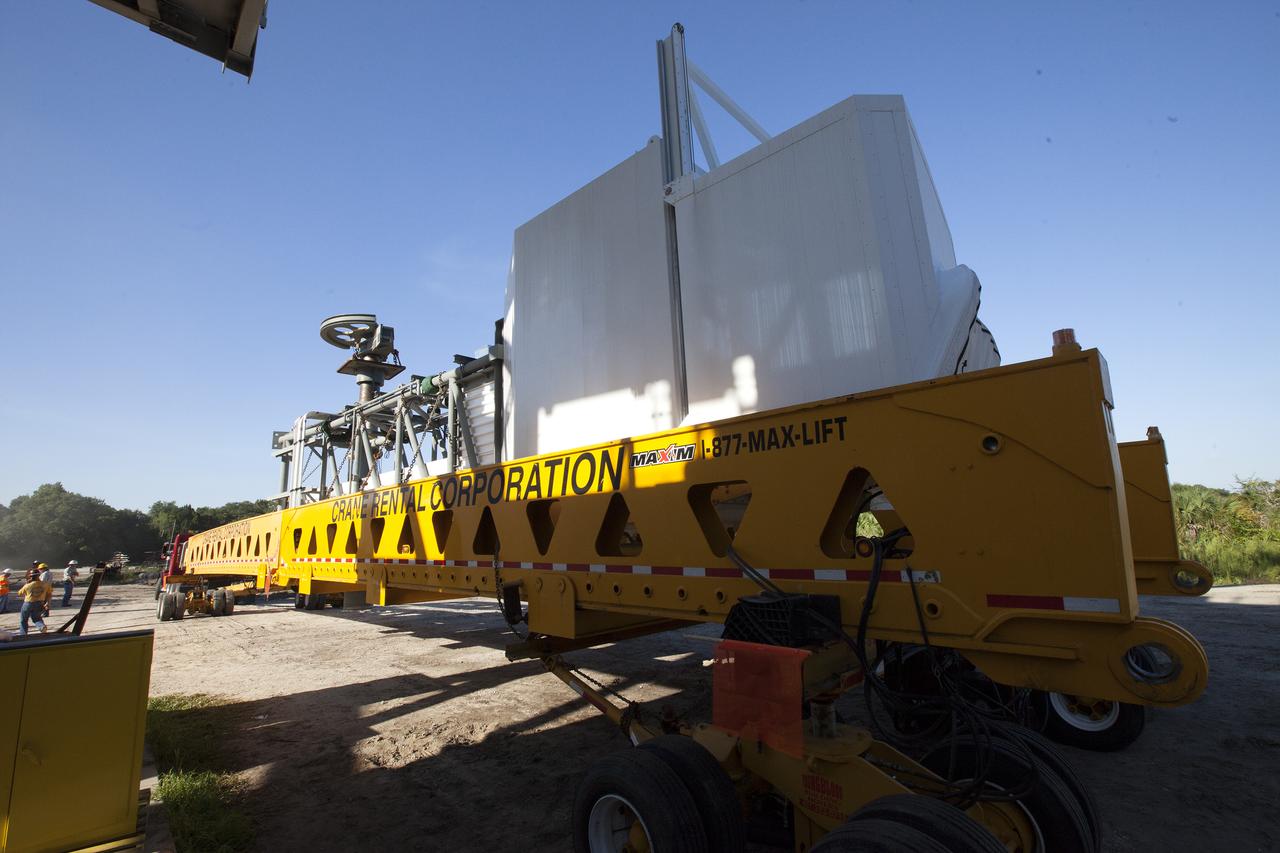
A heavy-lift transport truck, carrying the Crew Access Arm for Space Launch Complex 41, departs from Oak Hill, Florida, and heads to NASA’s Kennedy Space Center in Florida. The arm will be installed on the Complex 41 Crew Access Tower at Cape Canaveral Air Force Station. It will be used as a bridge by astronauts to board Boeing's CST-100 Starliner spacecraft as it stands on the launch pad atop a United Launch Alliance Atlas V rocket.
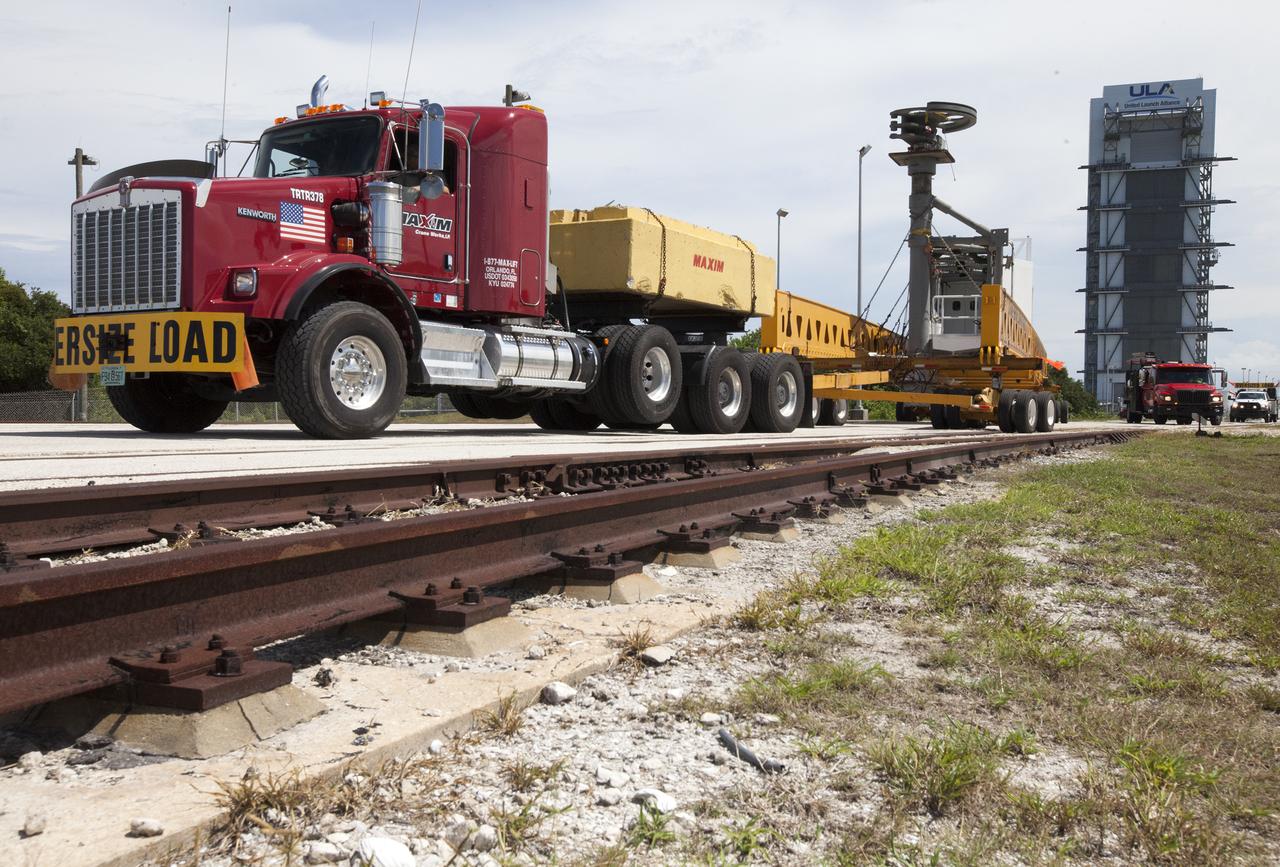
A heavy-lift transport truck, carrying the Crew Access Arm for Space Launch Complex 41, backs up toward Complex 41 at Cape Canaveral Air Force Station in Florida. The arm will be installed on the Complex 41 Crew Access Tower. It will be used as a bridge by astronauts to board Boeing's CST-100 Starliner spacecraft as it stands on the launch pad atop a United Launch Alliance Atlas V rocket.
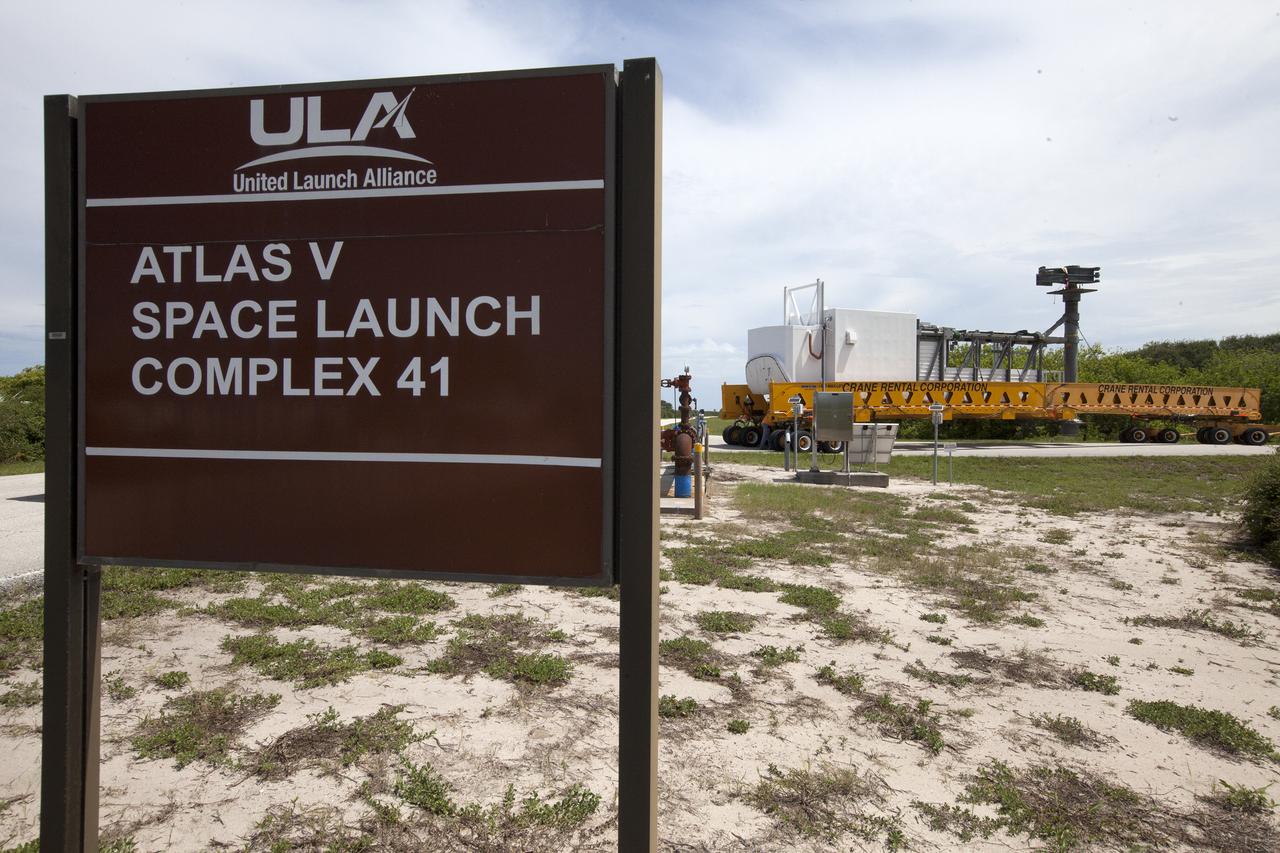
A heavy-lift transport truck, carrying the Crew Access Arm for Space Launch Complex 41, travels along the road toward Complex 41 at Cape Canaveral Air Force Station in Florida. The arm will be installed on the Complex 41 Crew Access Tower. It will be used as a bridge by astronauts to board Boeing's CST-100 Starliner spacecraft as it stands on the launch pad atop a United Launch Alliance Atlas V rocket.
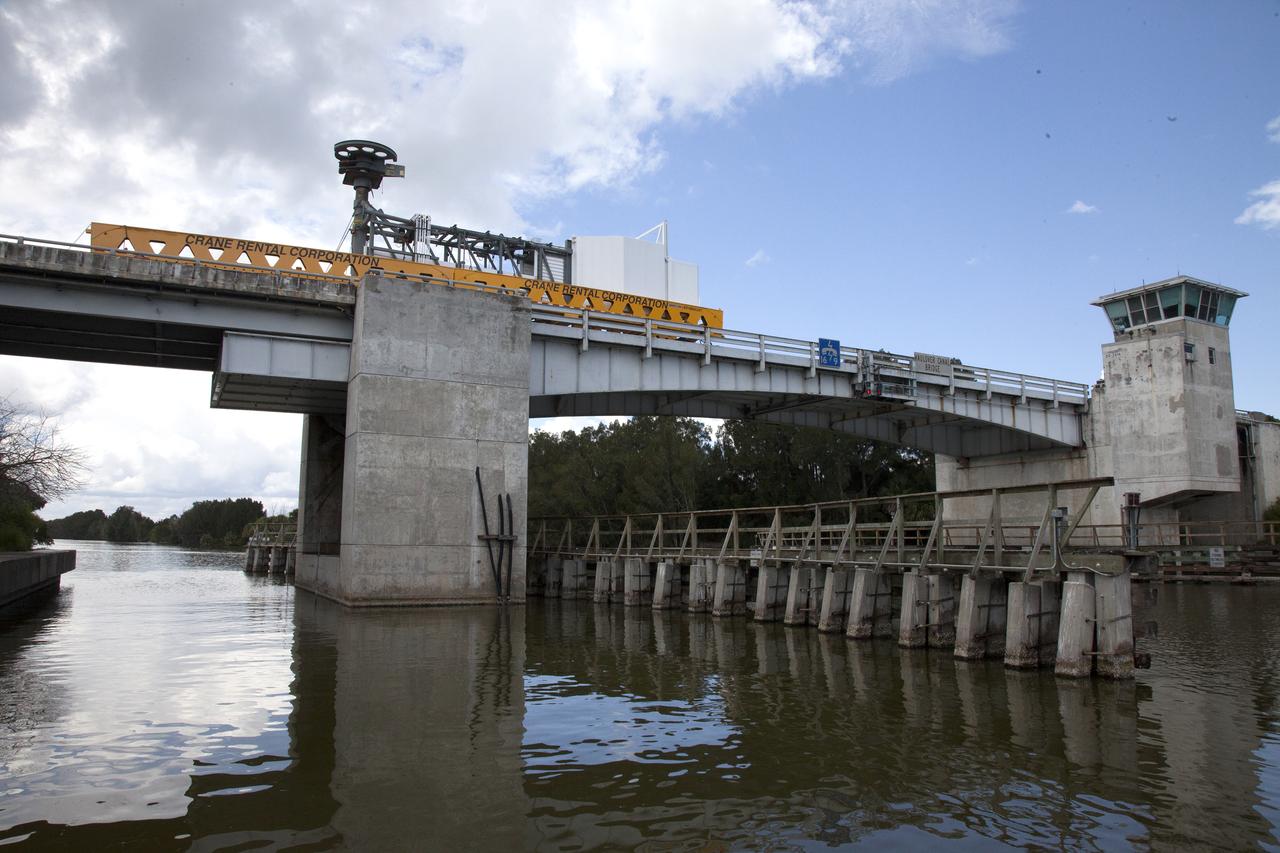
A heavy-lift transport truck, carrying the Crew Access Arm for Space Launch Complex 41, crosses the Haulover Canal Bridge on its way to the entrance of NASA’s Kennedy Space Center in Florida. The arm will be installed on the Complex 41 Crew Access Tower at Cape Canaveral Air Force Station. It will be used as a bridge by astronauts to board Boeing's CST-100 Starliner spacecraft as it stands on the launch pad atop a United Launch Alliance Atlas V rocket.
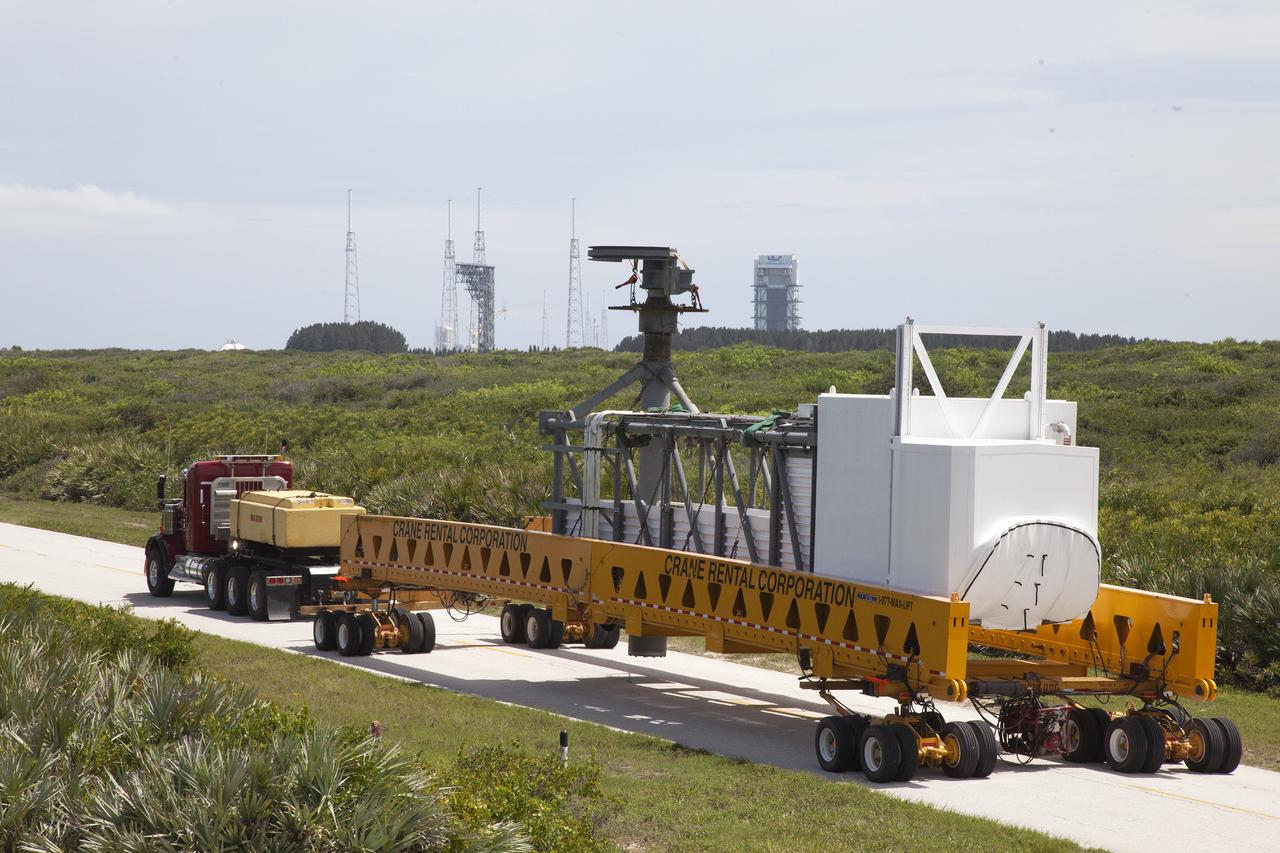
A heavy-lift transport truck, carrying the Crew Access Arm for Space Launch Complex 41, travels along the road toward Complex 41 at Cape Canaveral Air Force Station in Florida. The arm will be installed on the Complex 41 Crew Access Tower. It will be used as a bridge by astronauts to board Boeing's CST-100 Starliner spacecraft as it stands on the launch pad atop a United Launch Alliance Atlas V rocket.
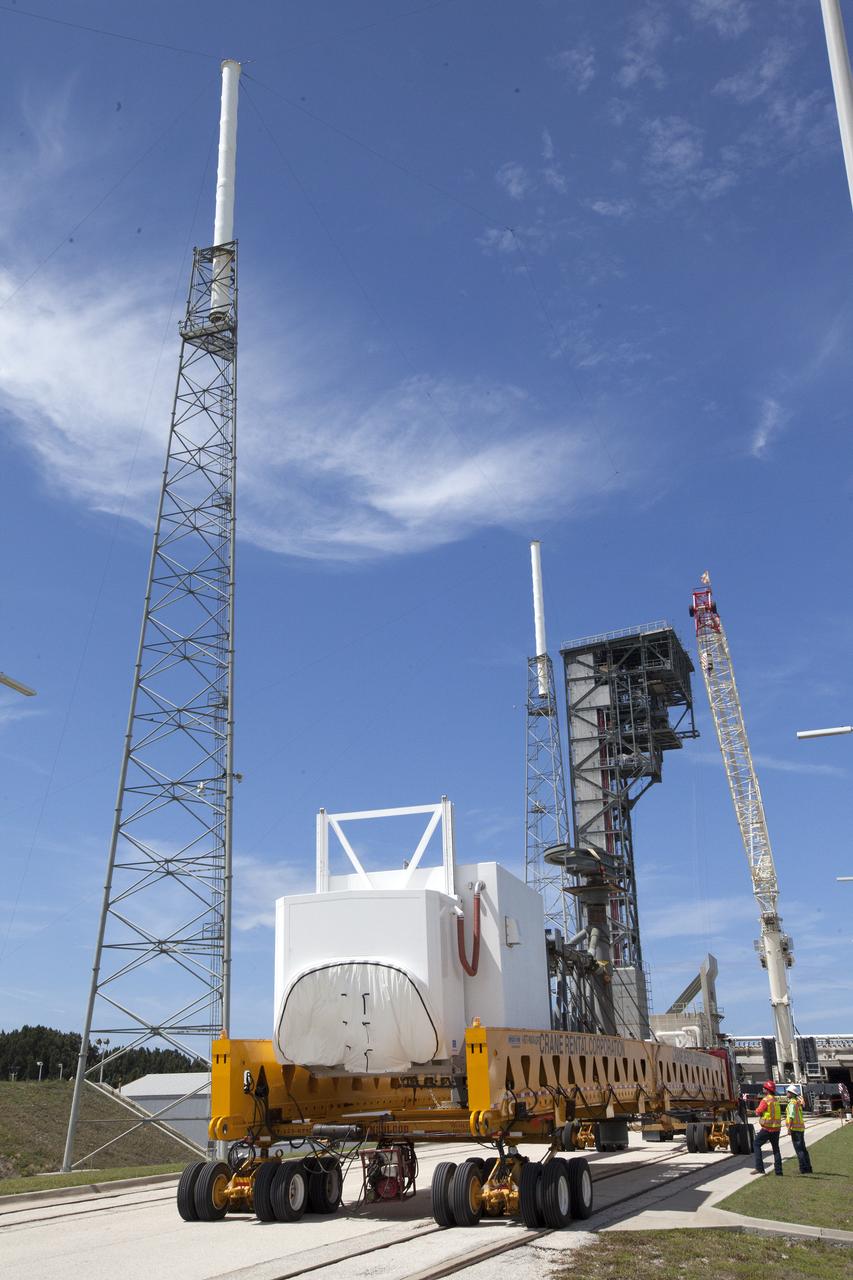
A heavy-lift transport truck, carrying the Crew Access Arm for Space Launch Complex 41, backs up toward Complex 41 at Cape Canaveral Air Force Station in Florida. The arm will be installed on the Complex 41 Crew Access Tower. It will be used as a bridge by astronauts to board Boeing's CST-100 Starliner spacecraft as it stands on the launch pad atop a United Launch Alliance Atlas V rocket.
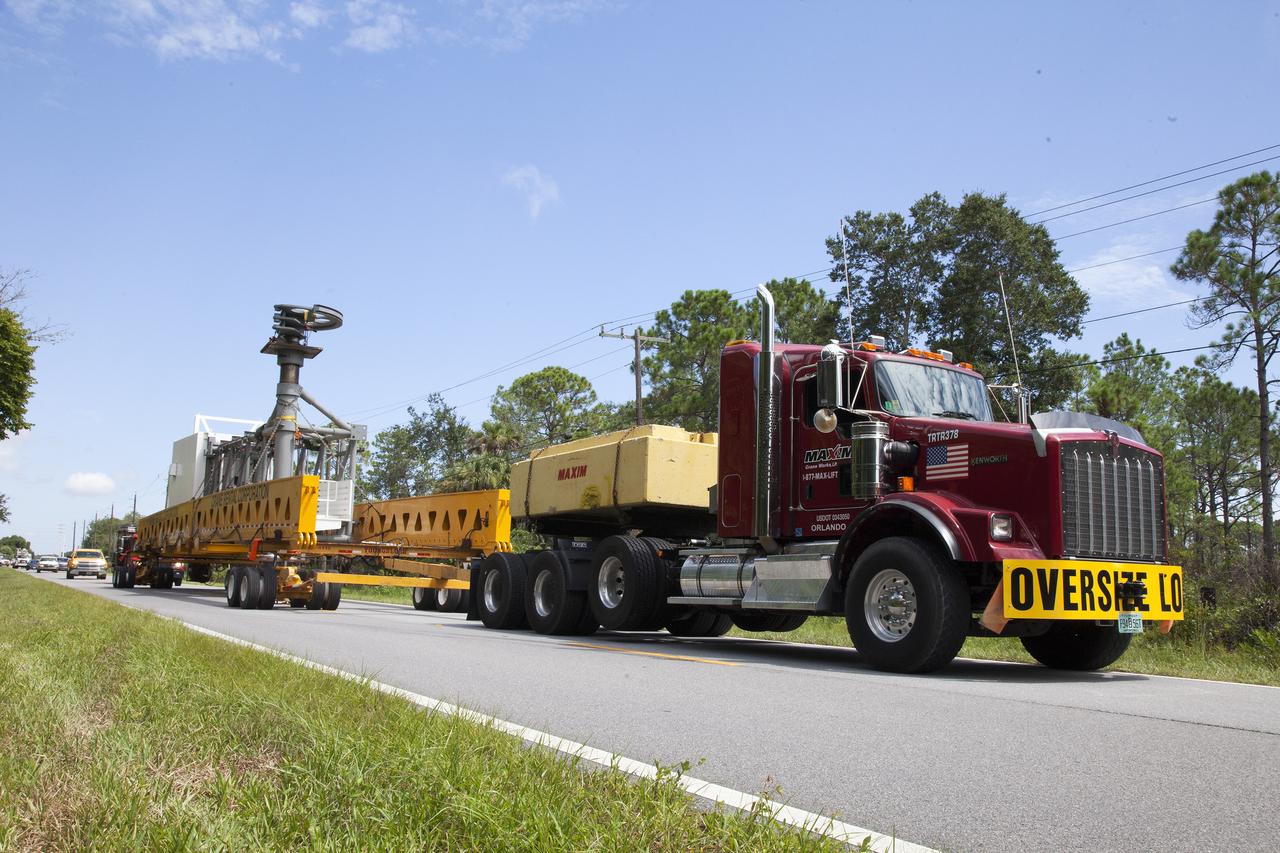
A heavy-lift transport truck, carrying the Crew Access Arm for Space Launch Complex 41, departs from Oak Hill, Florida, and heads to NASA’s Kennedy Space Center in Florida. The arm will be installed on the Complex 41 Crew Access Tower at Cape Canaveral Air Force Station. It will be used as a bridge by astronauts to board Boeing's CST-100 Starliner spacecraft as it stands on the launch pad atop a United Launch Alliance Atlas V rocket.
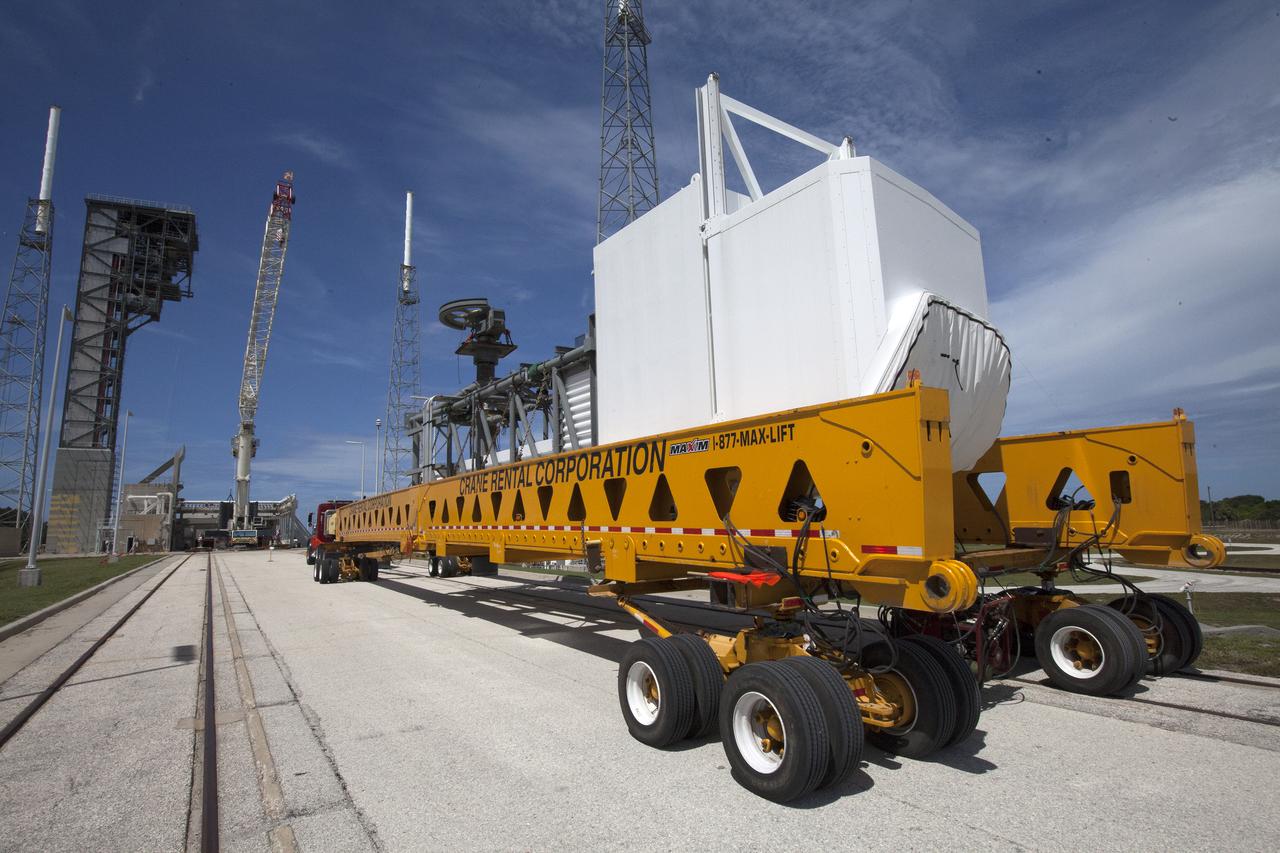
A heavy-lift transport truck, carrying the Crew Access Arm for Space Launch Complex 41, arrives at Complex 41 at Cape Canaveral Air Force Station in Florida. The arm will be installed on the Complex 41 Crew Access Tower. It will be used as a bridge by astronauts to board Boeing's CST-100 Starliner spacecraft as it stands on the launch pad atop a United Launch Alliance Atlas V rocket.
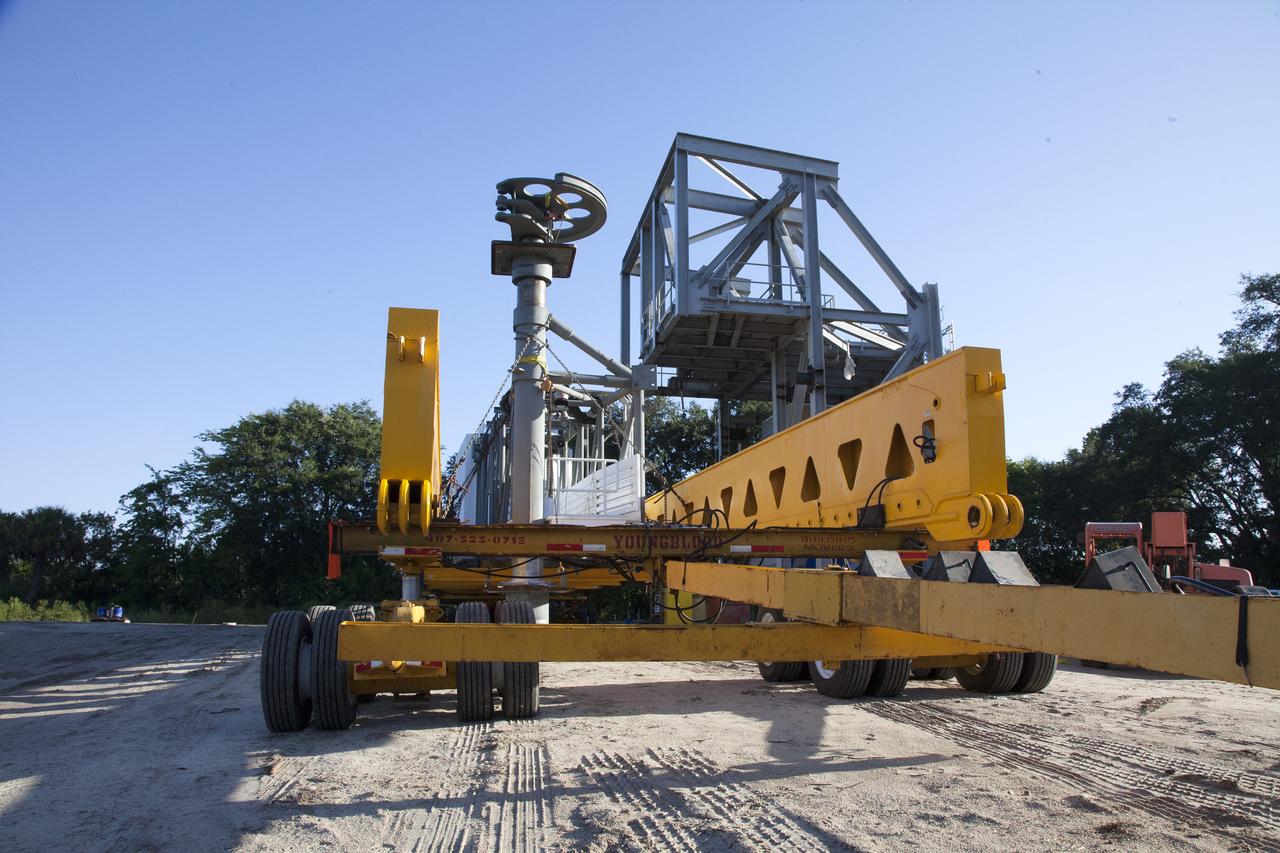
A heavy-lift transport truck, carrying the Crew Access Arm for Space Launch Complex 41, departs from Oak Hill, Florida, and heads to NASA’s Kennedy Space Center in Florida. The arm will be installed on the Complex 41 Crew Access Tower at Cape Canaveral Air Force Station. It will be used as a bridge by astronauts to board Boeing's CST-100 Starliner spacecraft as it stands on the launch pad atop a United Launch Alliance Atlas V rocket.
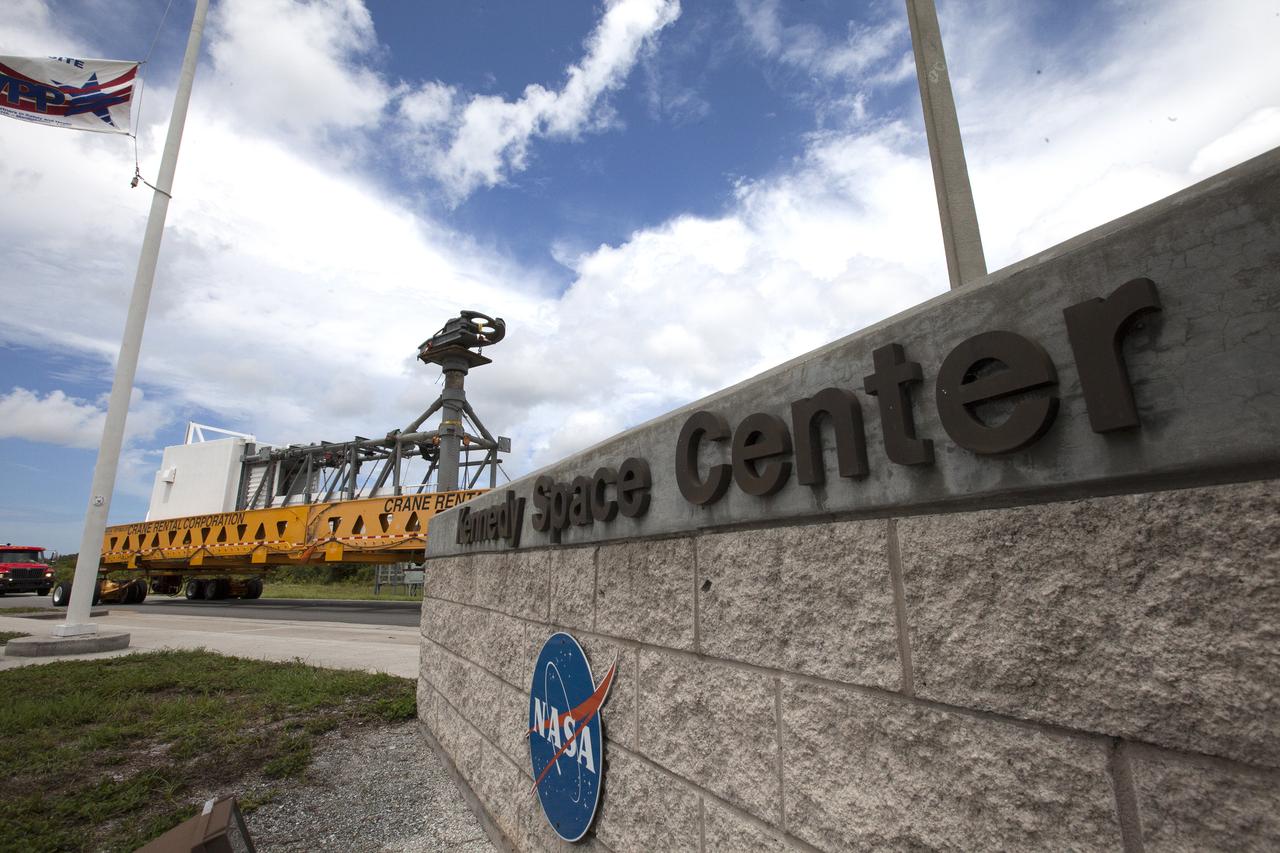
A heavy-lift transport truck, carrying the Crew Access Arm for Space Launch Complex 41, passes through the entrance to NASA’s Kennedy Space Center in Florida. The arm will be installed on the Complex 41 Crew Access Tower at Cape Canaveral Air Force Station. It will be used as a bridge by astronauts to board Boeing's CST-100 Starliner spacecraft as it stands on the launch pad atop a United Launch Alliance Atlas V rocket.
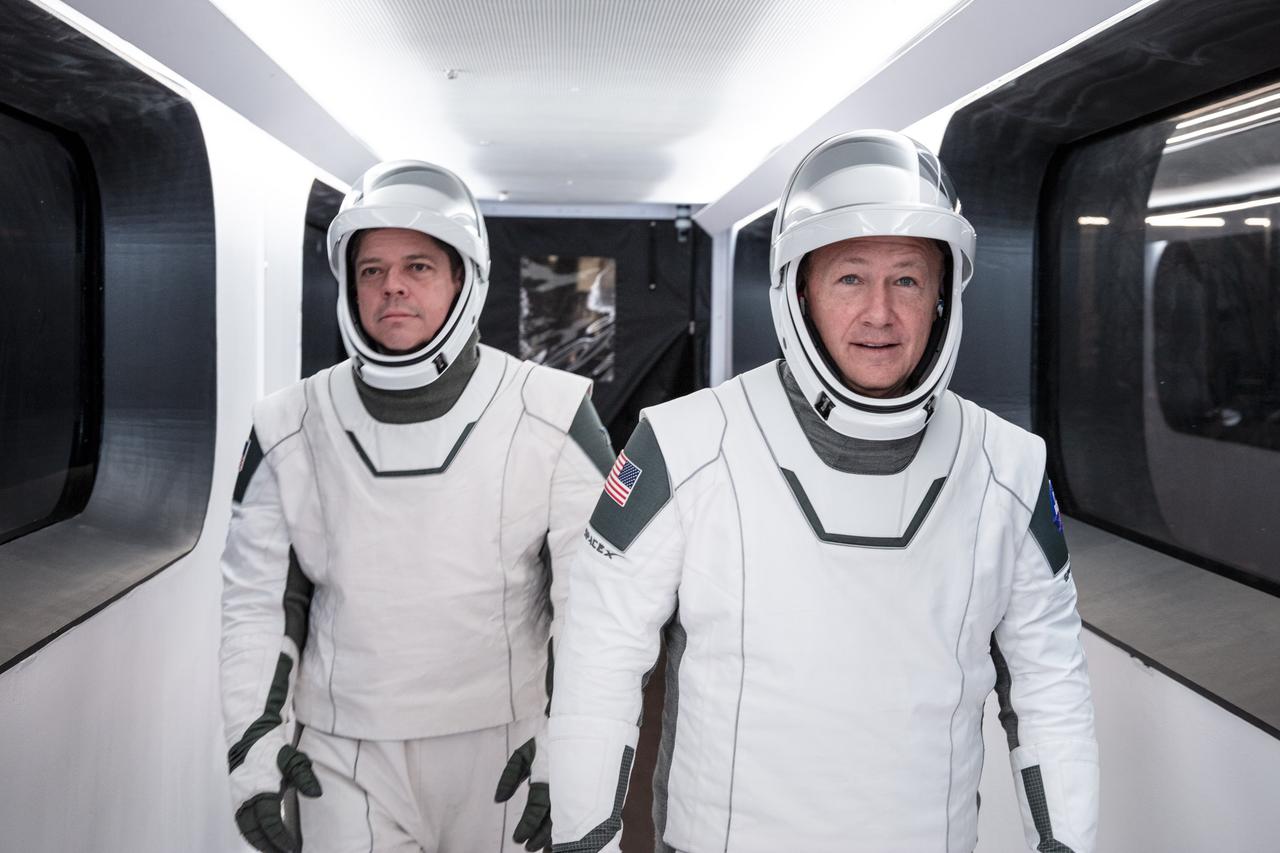
NASA astronauts Bob Behnken, left, and Doug Hurley, wearing SpaceX spacesuits, walk through the Crew Access Arm connecting the launch tower to the SpaceX Crew Dragon spacecraft during a dress rehearsal at NASA’s Kennedy Space Center in Florida on Jan. 17, 2020. A SpaceX Falcon 9 rocket and Crew Dragon spacecraft stand on the launch pad at Launch Complex 39A ahead of the company’s uncrewed In-Flight Abort Test. The flight test will demonstrate the spacecraft’s escape capabilities in preparation for crewed flights to the International Space Station as part of the agency’s Commercial Crew Program. Behnken and Hurley are slated to fly on the company’s first crewed mission, Demo-2.
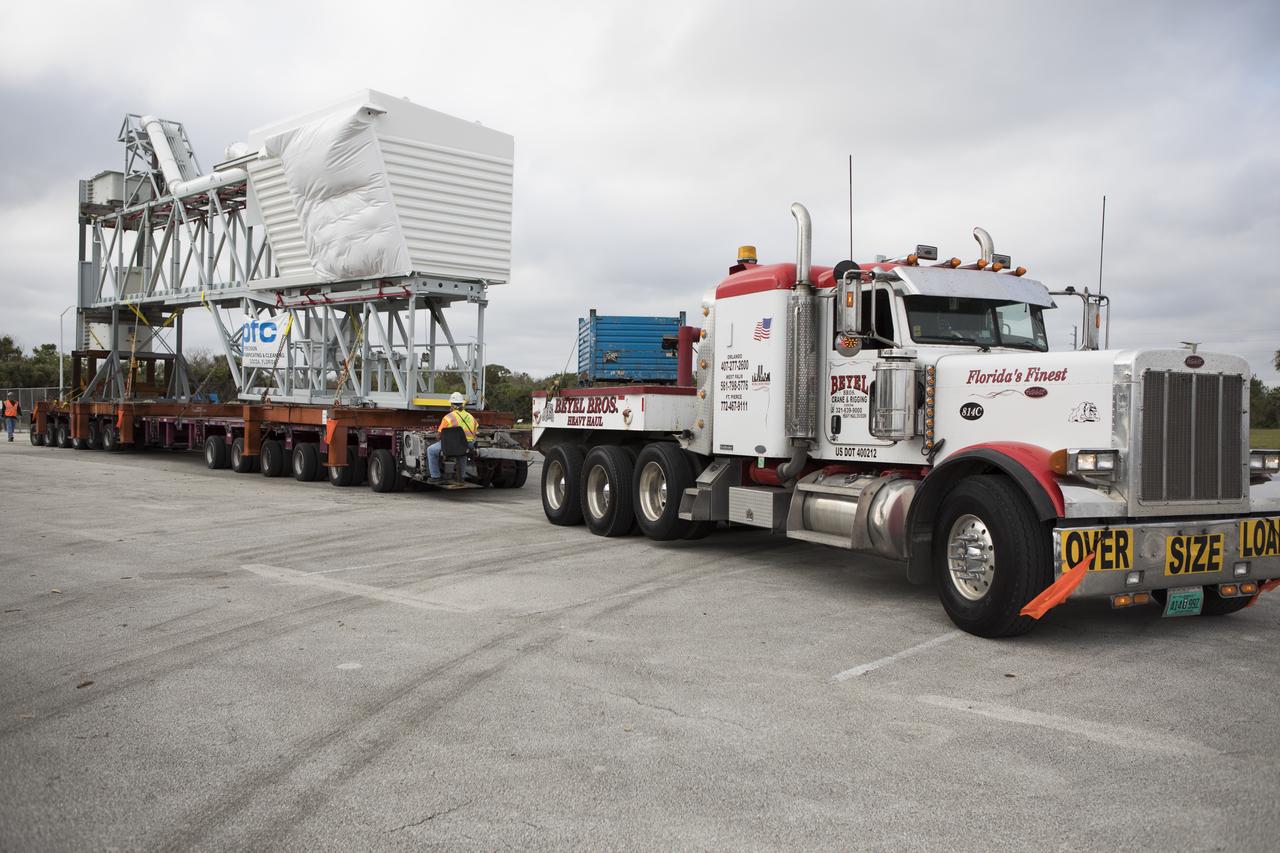
The Orion crew access arm is secured on a flatbed transporter for its move from a storage location at NASA's Kennedy Space Center in Florida to the mobile launcher (ML) tower near the Vehicle Assembly Building at the center. The crew access arm will be installed at about the 274-foot level on the mobile launcher tower. It will rotate from its retracted position and interface with the Orion crew hatch location to provide entry to the Orion crew module. The Ground Systems Development and Operations Program is overseeing installation of umbilicals and launch accessories on the ML tower to prepare for Exploration Mission-1.
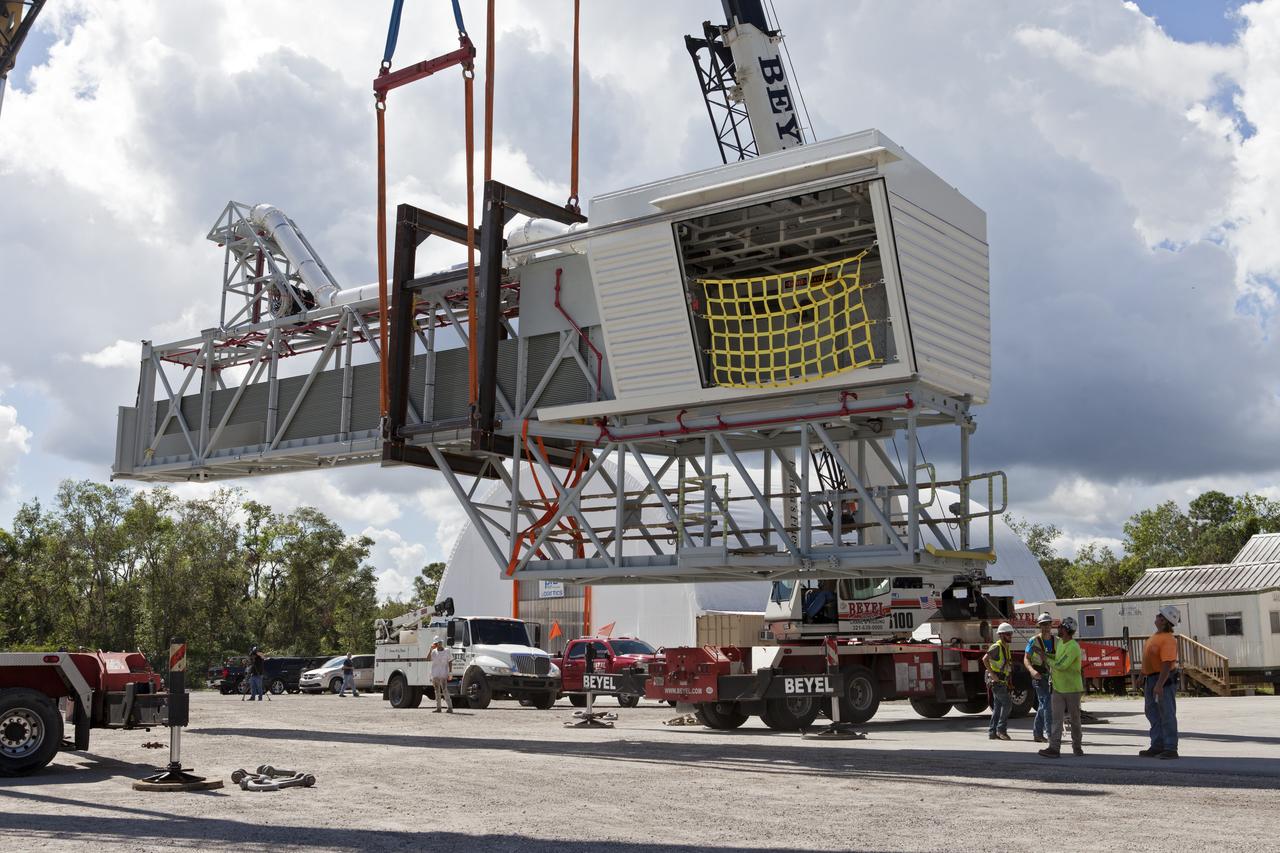
Two heavy-lift cranes are being used to move the Orion crew access arm and lower it onto a flatbed truck at Precision Fabricating and Cleaning in Cocoa, Florida. The crew access arm will be transported to a storage location near NASA's Kennedy Space Center in Florida. Later this month, the arm will be transported to the mobile launcher (ML) tower at the center. The crew access arm will be located at about the 274-foot level on the tower. It will rotate from its retracted position and interface with the Orion crew hatch location to provide entry to the Orion crew module. The Ground Systems Development and Operations Program is overseeing installation of umbilicals and launch accessories on the ML tower.
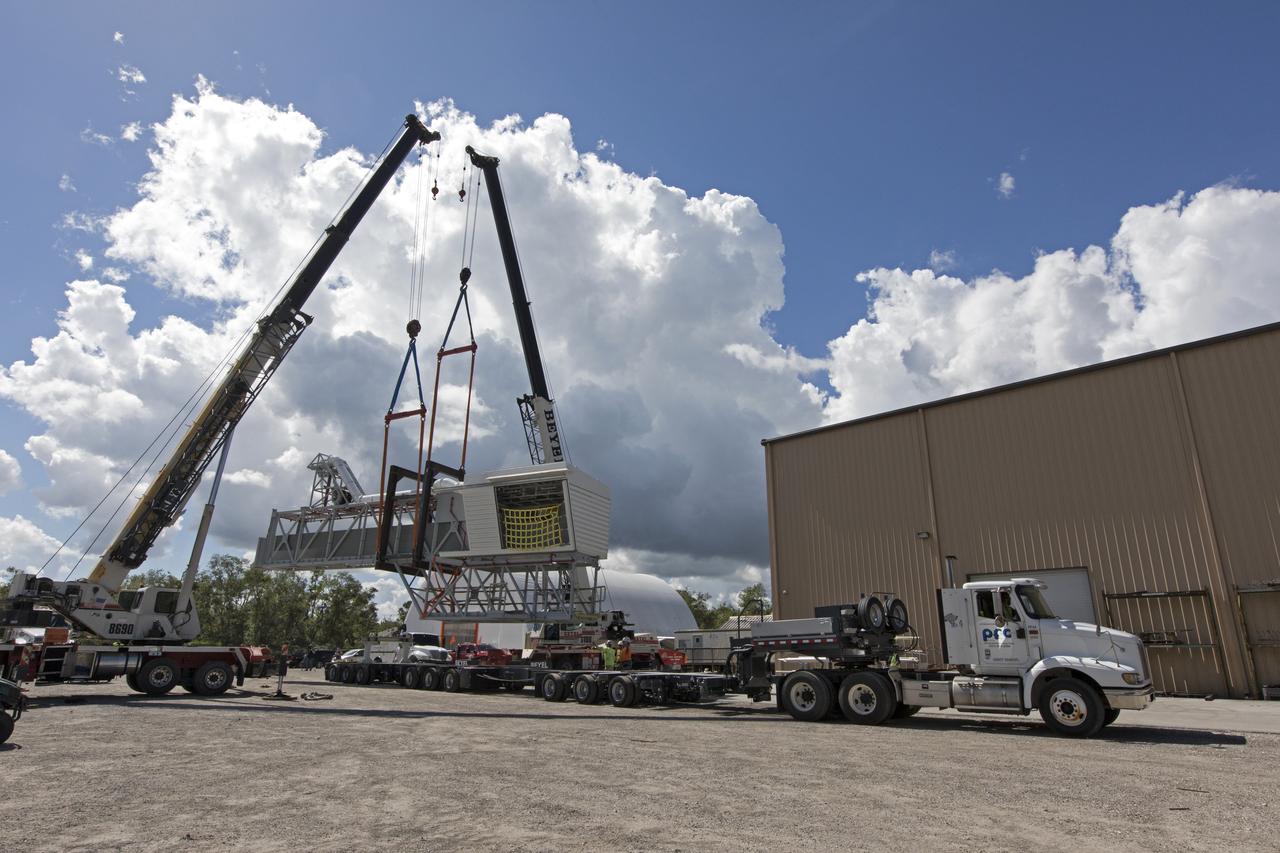
Two heavy-lift cranes are being used to lower the Orion crew access arm onto a flatbed truck at Precision Fabricating and Cleaning in Cocoa, Florida. The crew access arm will be transported to a storage location near NASA's Kennedy Space Center in Florida. Later this month, the arm will be transported to the mobile launcher (ML) tower at the center. The crew access arm will be located at about the 274-foot level on the tower. It will rotate from its retracted position and interface with the Orion crew hatch location to provide entry to the Orion crew module. The Ground Systems Development and Operations Program is overseeing installation of umbilicals and launch accessories on the ML tower.
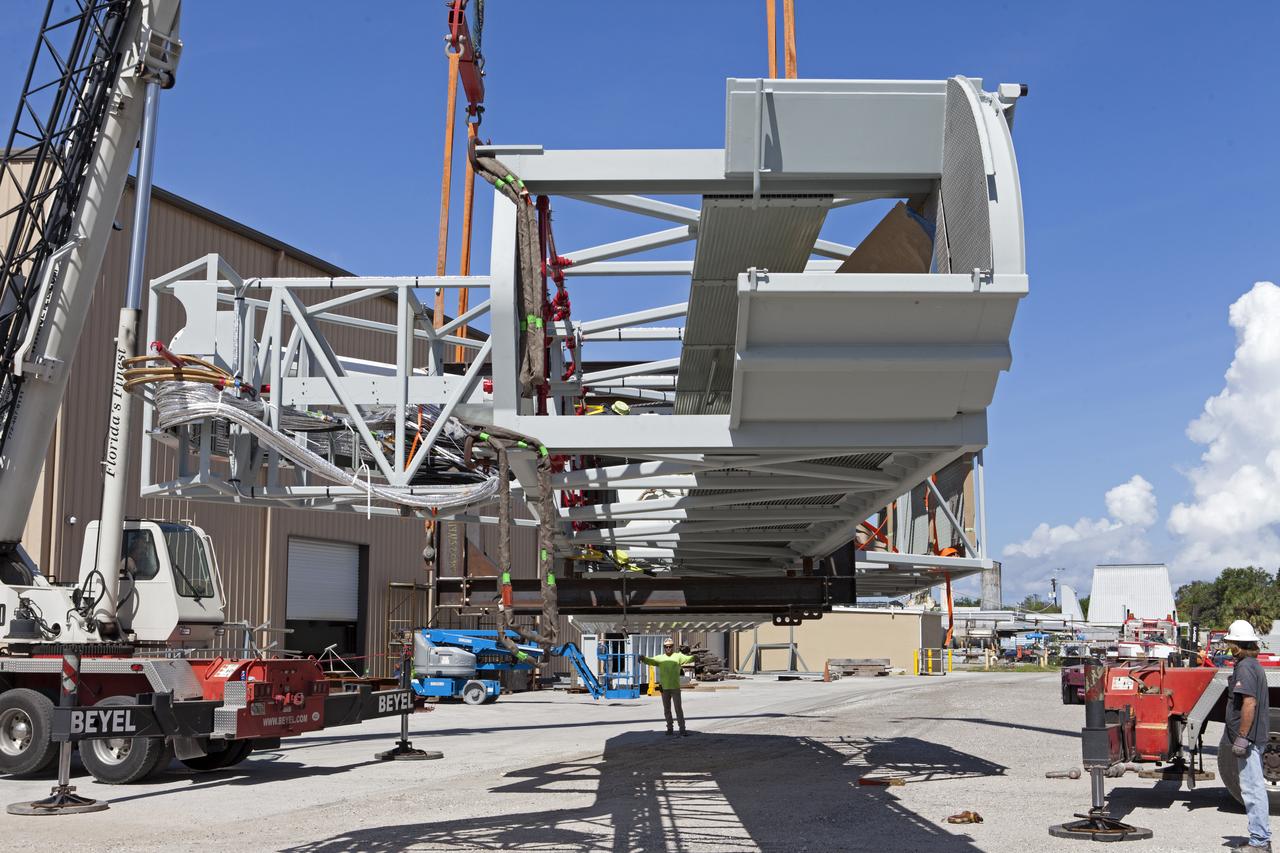
The Orion crew access arm is being moved by crane onto a flatbed truck at Precision Fabricating and Cleaning in Cocoa, Florida. The crew access arm will be transported to a storage location near NASA's Kennedy Space Center in Florida. Later this month, the arm will be transported to the mobile launcher (ML) tower at the center. The crew access arm will be located at about the 274-foot level on the tower. It will rotate from its retracted position and interface with the Orion crew hatch location to provide entry to the Orion crew module. The Ground Systems Development and Operations Program is overseeing installation of umbilicals and launch accessories on the ML tower.
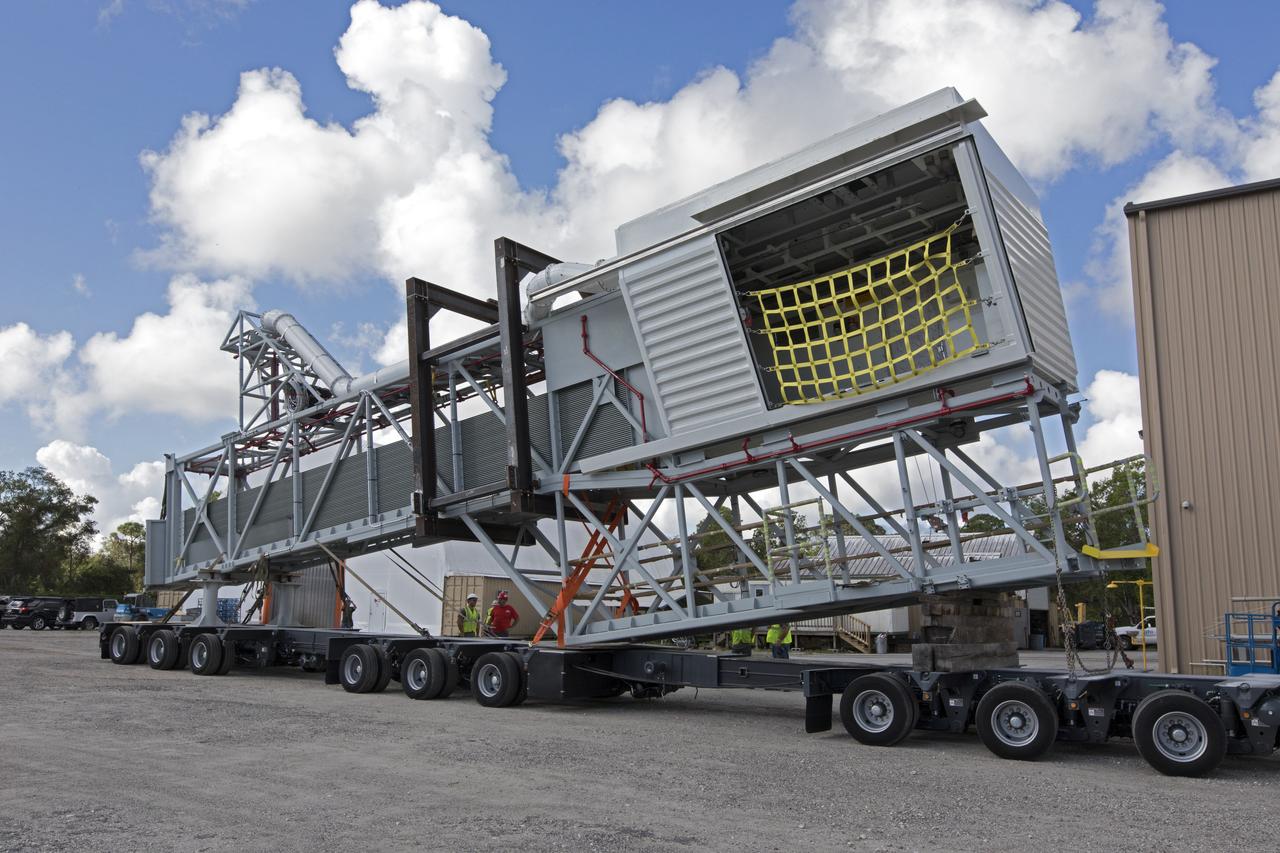
The Orion crew access arm is secured on a flatbed truck at Precision Fabricating and Cleaning in Cocoa, Florida. The crew access arm will be transported to a storage location near NASA's Kennedy Space Center in Florida. Later this month, the arm will be transported to the mobile launcher (ML) tower at the center. The crew access arm will be located at about the 274-foot level on the tower. It will rotate from its retracted position and interface with the Orion crew hatch location to provide entry to the Orion crew module. The Ground Systems Development and Operations Program is overseeing installation of umbilicals and launch accessories on the ML tower.
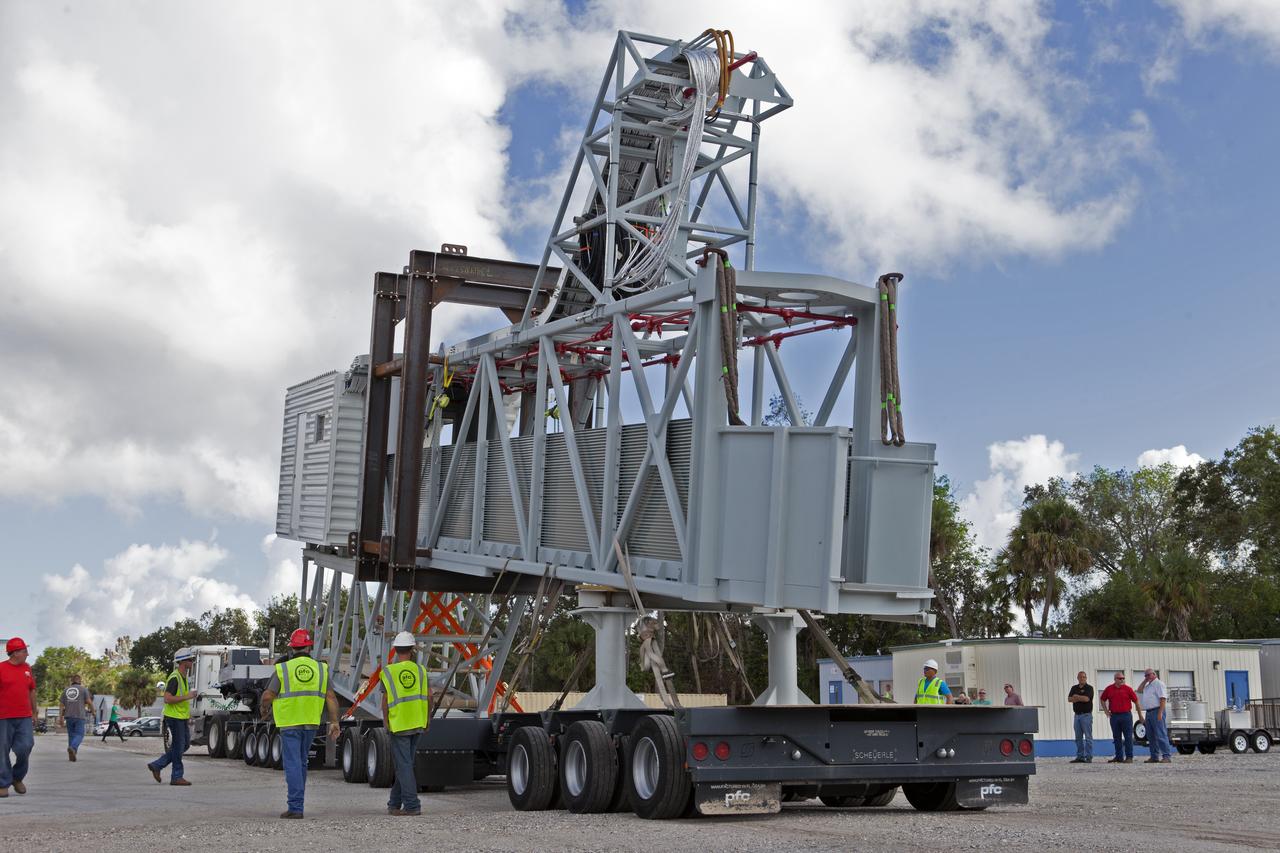
The Orion crew access arm is being secured onto a flatbed truck at Precision Fabricating and Cleaning in Cocoa, Florida. The crew access arm will be transported to a storage location near NASA's Kennedy Space Center in Florida. Later this month, the arm will be transported to the mobile launcher (ML) tower at the center. The crew access arm will be located at about the 274-foot level on the tower. It will rotate from its retracted position and interface with the Orion crew hatch location to provide entry to the Orion crew module. The Ground Systems Development and Operations Program is overseeing installation of umbilicals and launch accessories on the ML tower.
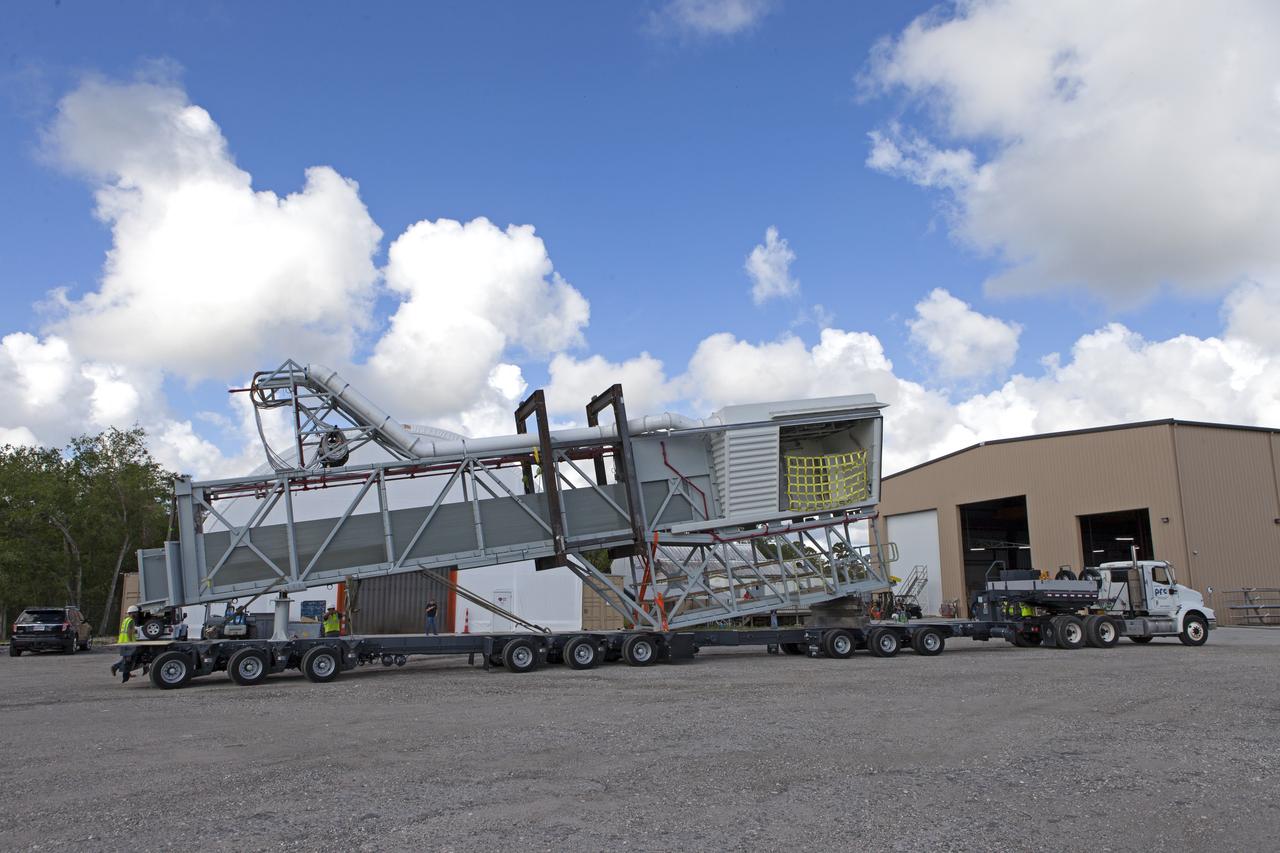
The Orion crew access arm is being secured on a flatbed truck at Precision Fabricating and Cleaning in Cocoa, Florida. The crew access arm will be transported to a storage location near NASA's Kennedy Space Center in Florida. Later this month, the arm will be transported to the mobile launcher (ML) tower at the center. The crew access arm will be located at about the 274-foot level on the tower. It will rotate from its retracted position and interface with the Orion crew hatch location to provide entry to the Orion crew module. The Ground Systems Development and Operations Program is overseeing installation of umbilicals and launch accessories on the ML tower.
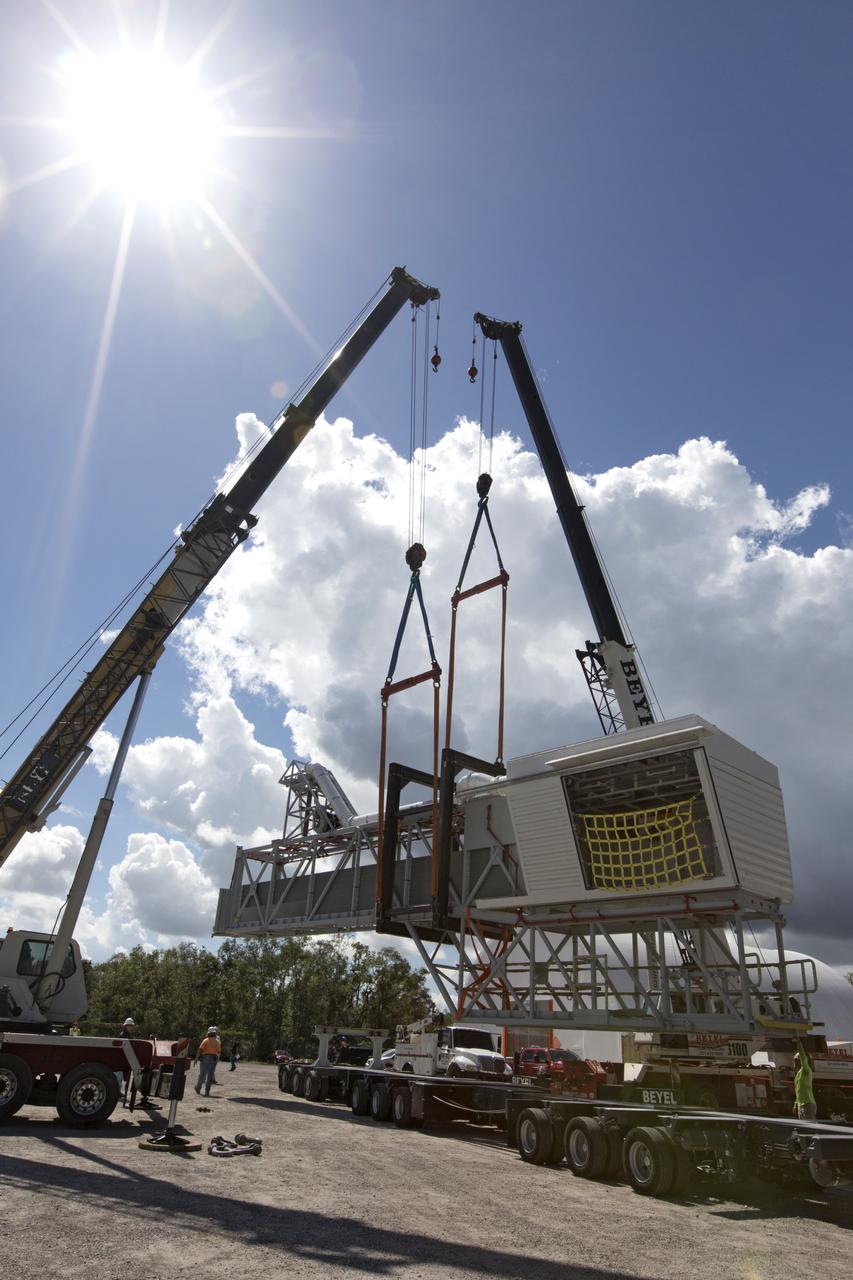
Two heavy-lift cranes are used to lower the Orion crew access arm onto a flatbed truck at Precision Fabricating and Cleaning in Cocoa, Florida. The crew access arm will be transported to a storage location near NASA's Kennedy Space Center in Florida. Later this month, the arm will be transported to the mobile launcher (ML) tower at the center. The crew access arm will be located at about the 274-foot level on the tower. It will rotate from its retracted position and interface with the Orion crew hatch location to provide entry to the Orion crew module. The Ground Systems Development and Operations Program is overseeing installation of umbilicals and launch accessories on the ML tower.
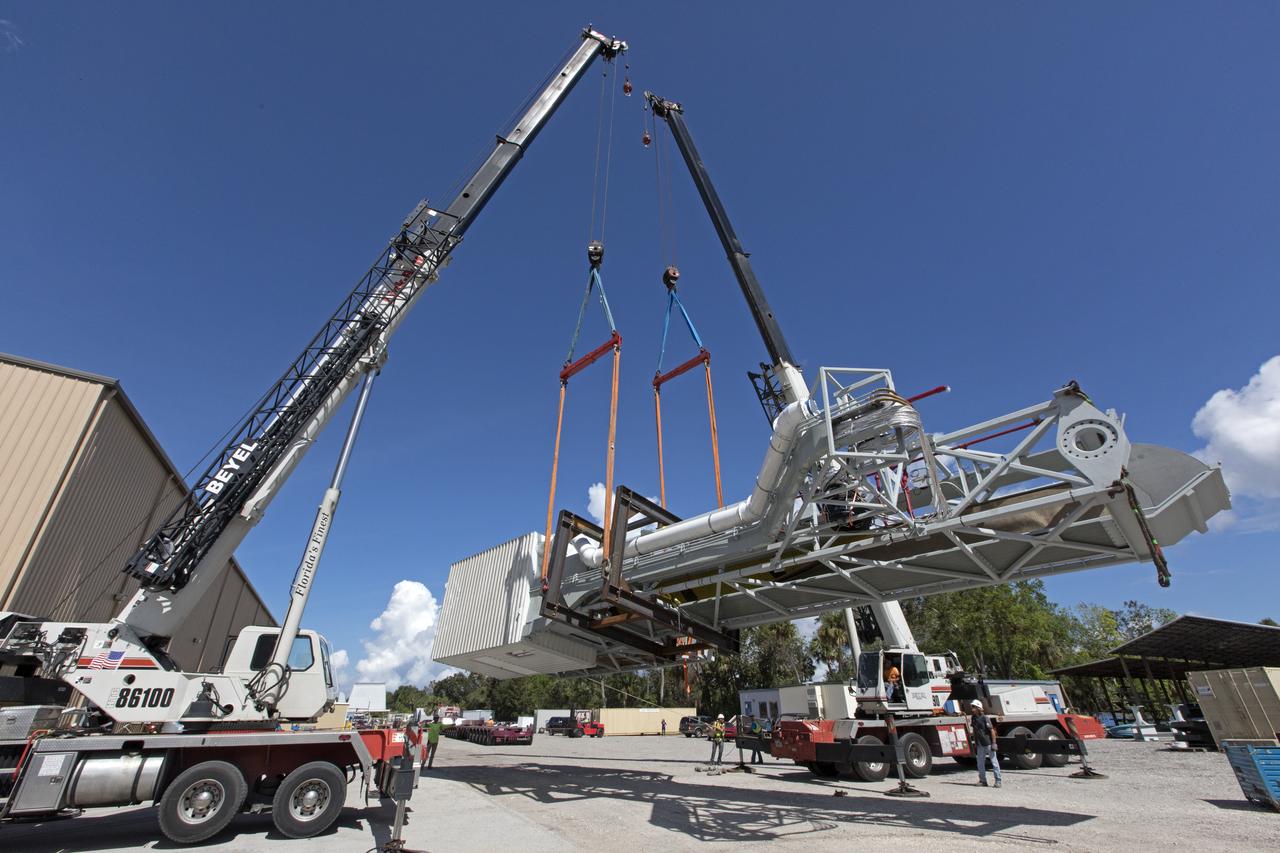
Two heavy-lift cranes are being used to move the Orion crew access arm and lower it onto a flatbed truck at Precision Fabricating and Cleaning in Cocoa, Florida. The crew access arm will be transported to a storage location near NASA's Kennedy Space Center in Florida. Later this month, the arm will be transported to the mobile launcher (ML) tower at the center. The crew access arm will be located at about the 274-foot level on the tower. It will rotate from its retracted position and interface with the Orion crew hatch location to provide entry to the Orion crew module. The Ground Systems Development and Operations Program is overseeing installation of umbilicals and launch accessories on the ML tower.
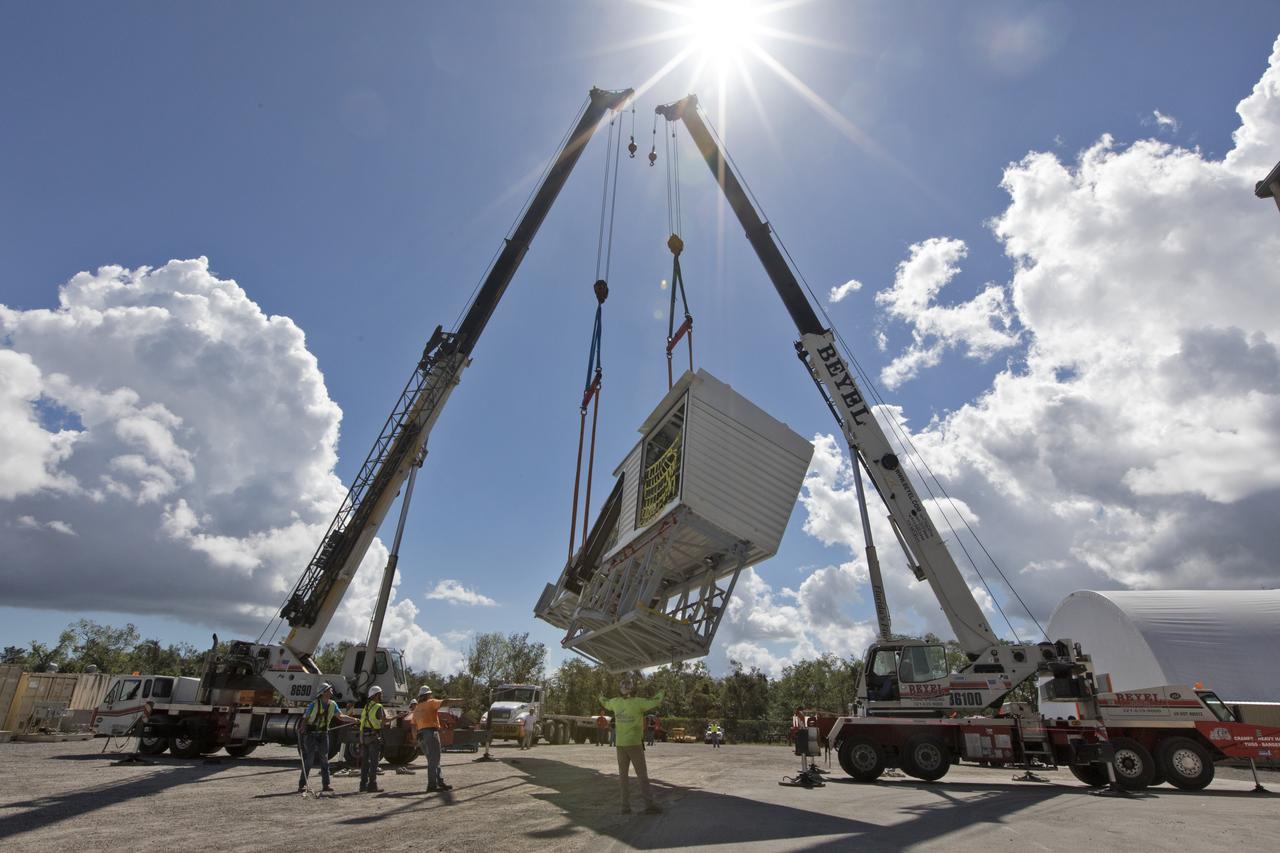
Two heavy-lift cranes are being used to move the Orion crew access arm and lower it onto a flatbed truck at Precision Fabricating and Cleaning in Cocoa, Florida. The crew access arm will be transported to a storage location near NASA's Kennedy Space Center in Florida. Later this month, the arm will be transported to the mobile launcher (ML) tower at the center. The crew access arm will be located at about the 274-foot level on the tower. It will rotate from its retracted position and interface with the Orion crew hatch location to provide entry to the Orion crew module. The Ground Systems Development and Operations Program is overseeing installation of umbilicals and launch accessories on the ML tower.
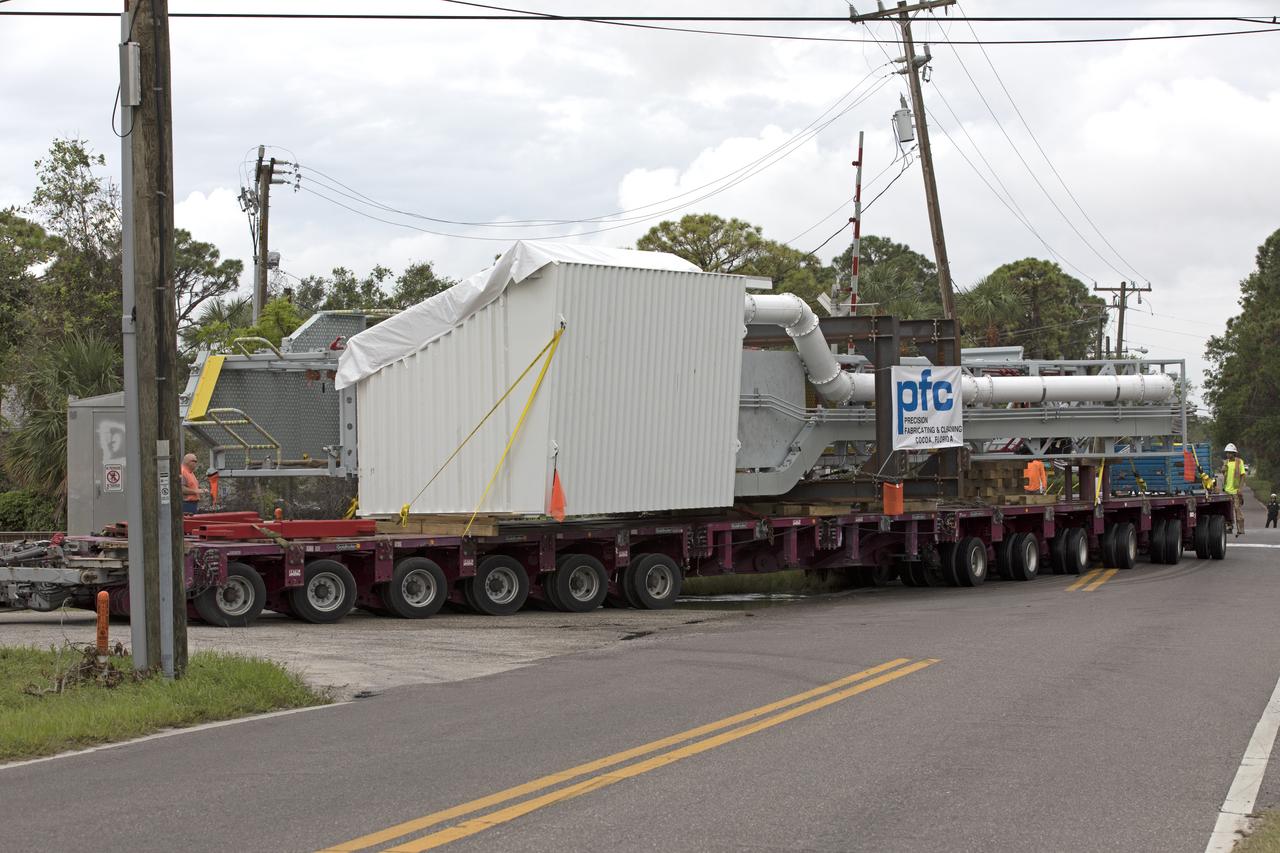
The Orion crew access arm departs Precision Fabricating and Cleaning in Cocoa, Florida, atop a flatbed truck. The access arm will be transported to a storage location at NASA's Kennedy Space Center in Florida. Later this month, the arm will be transported to the mobile launcher (ML) tower at the center. The crew access arm will be located at about the 274-foot level on the tower. It will rotate from its retracted position and interface with the Orion crew hatch location to provide entry to the Orion crew module. The Ground Systems Development and Operations Program is overseeing installation of umbilicals and launch accessories on the ML tower.
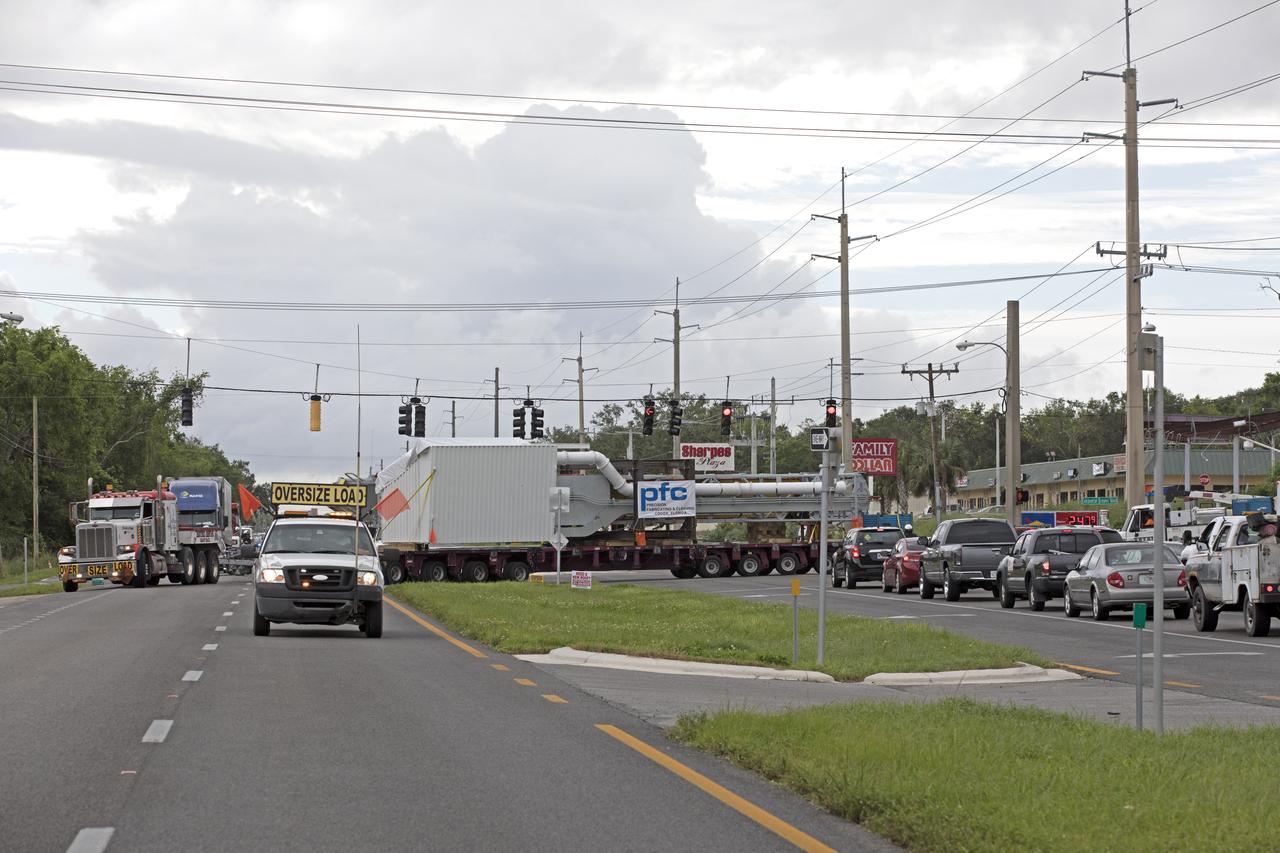
A flatbed truck with the Orion crew access arm secured atop travels along a road in Cocoa, Florida, after departing Precision Fabricating and Cleaning. The access arm will be transported to a storage location at NASA's Kennedy Space Center in Florida. Later this month, the arm will be transported to the mobile launcher (ML) tower at the center. The crew access arm will be located at about the 274-foot level on the tower. It will rotate from its retracted position and interface with the Orion crew hatch location to provide entry to the Orion crew module. The Ground Systems Development and Operations Program is overseeing installation of umbilicals and launch accessories on the ML tower.
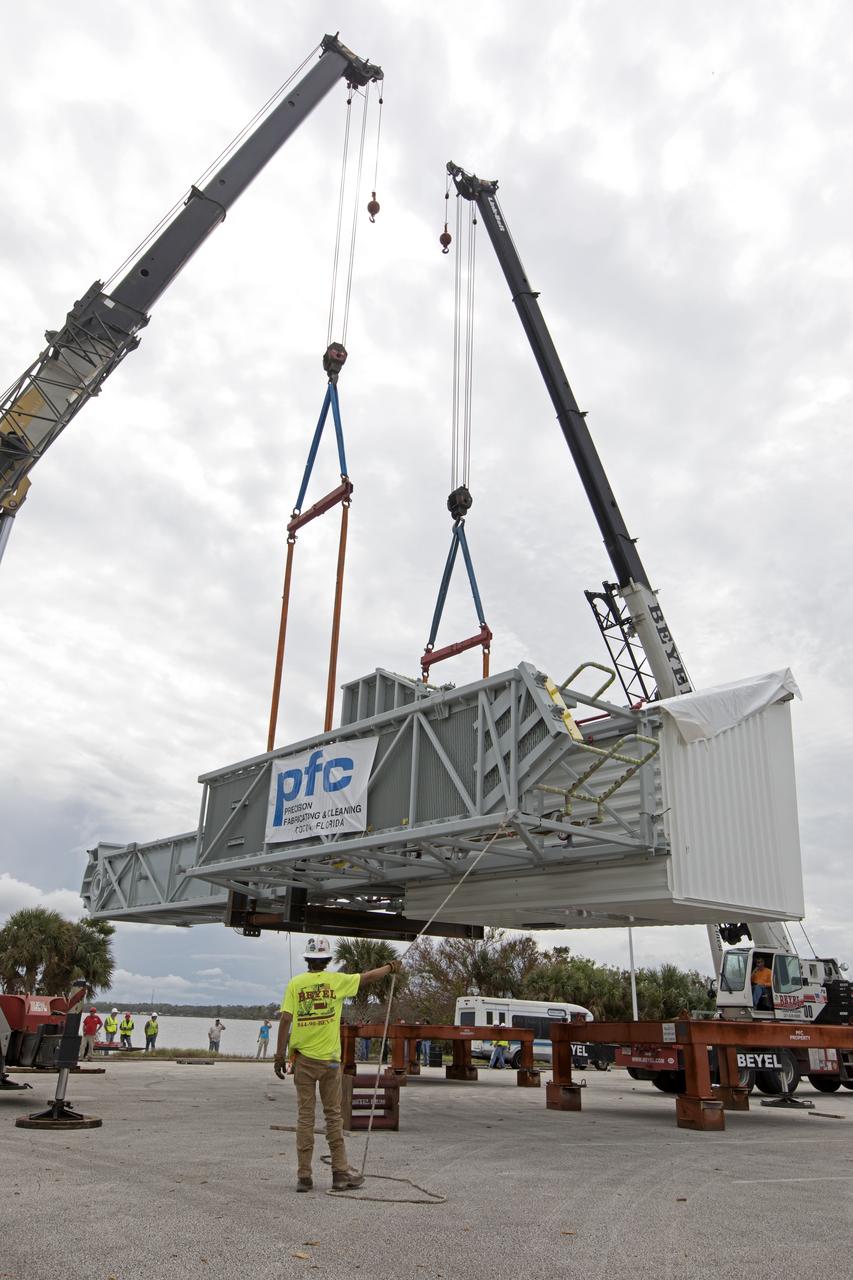
Two heavy-lift cranes are used to lower the Orion crew access arm onto a work stand in a storage location at NASA's Kennedy Space Center in Florida. The access arm was transported from Precision Fabricating and Cleaning in Cocoa, Florida. Later this month, the arm will be transported to the mobile launcher (ML) tower at the center. The crew access arm will be located at about the 274-foot level on the tower. It will rotate from its retracted position and interface with the Orion crew hatch location to provide entry to the Orion crew module. The Ground Systems Development and Operations Program is overseeing installation of umbilicals and launch accessories on the ML tower.

Two heavy-lift cranes lower the Orion crew access arm onto a work stand in a storage location at NASA's Kennedy Space Center in Florida. The access arm was transported from Precision Fabricating and Cleaning in Cocoa, Florida. Later this month, the arm will be transported to the mobile launcher (ML) tower at the center. The crew access arm will be located at about the 274-foot level on the tower. It will rotate from its retracted position and interface with the Orion crew hatch location to provide entry to the Orion crew module. The Ground Systems Development and Operations Program is overseeing installation of umbilicals and launch accessories on the ML tower.
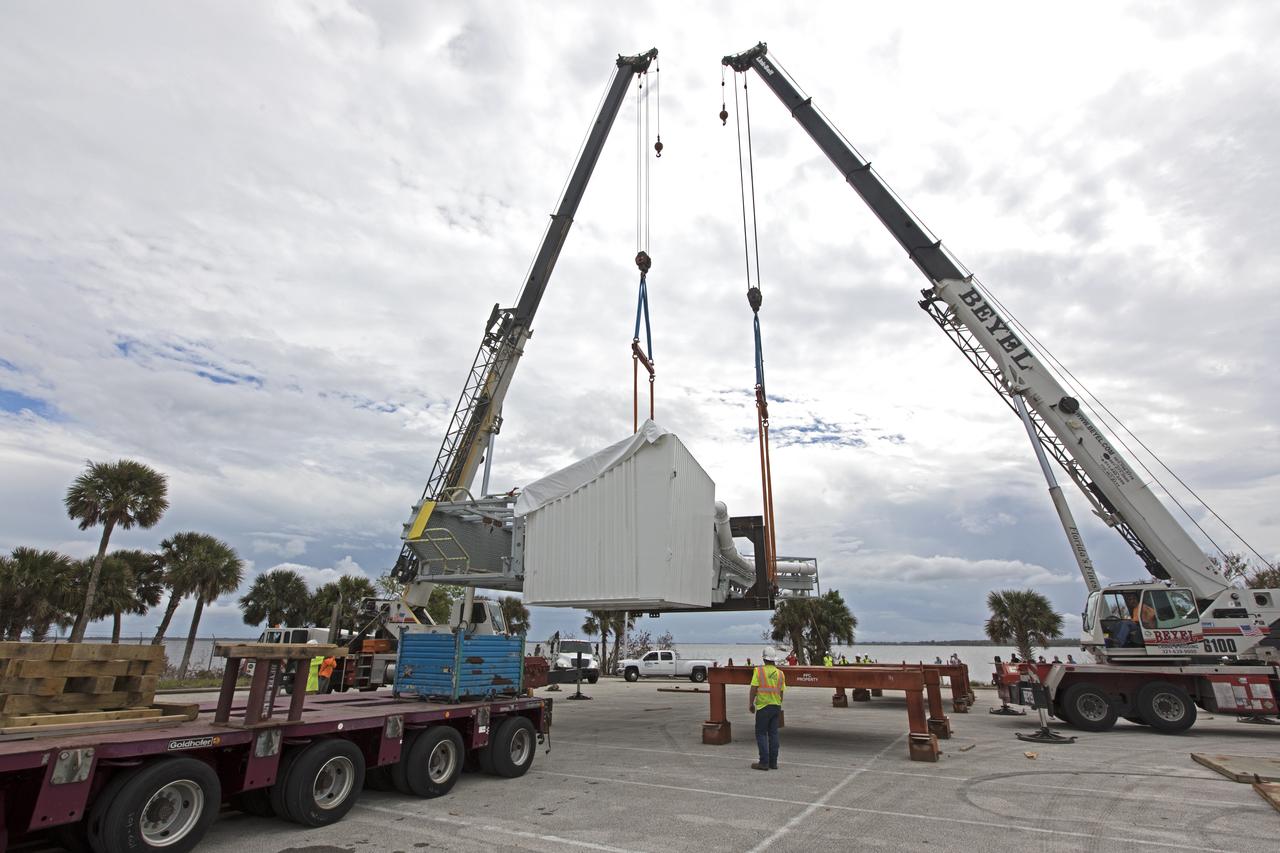
Two heavy-lift cranes are used to lift the Orion crew access arm up from a flatbed truck in a storage location at NASA's Kennedy Space Center in Florida. The access arm was transported from Precision Fabricating and Cleaning in Cocoa, Florida. Later this month, the arm will be transported to the mobile launcher (ML) tower at the center. The crew access arm will be located at about the 274-foot level on the tower. It will rotate from its retracted position and interface with the Orion crew hatch location to provide entry to the Orion crew module. The Ground Systems Development and Operations Program is overseeing installation of umbilicals and launch accessories on the ML tower.
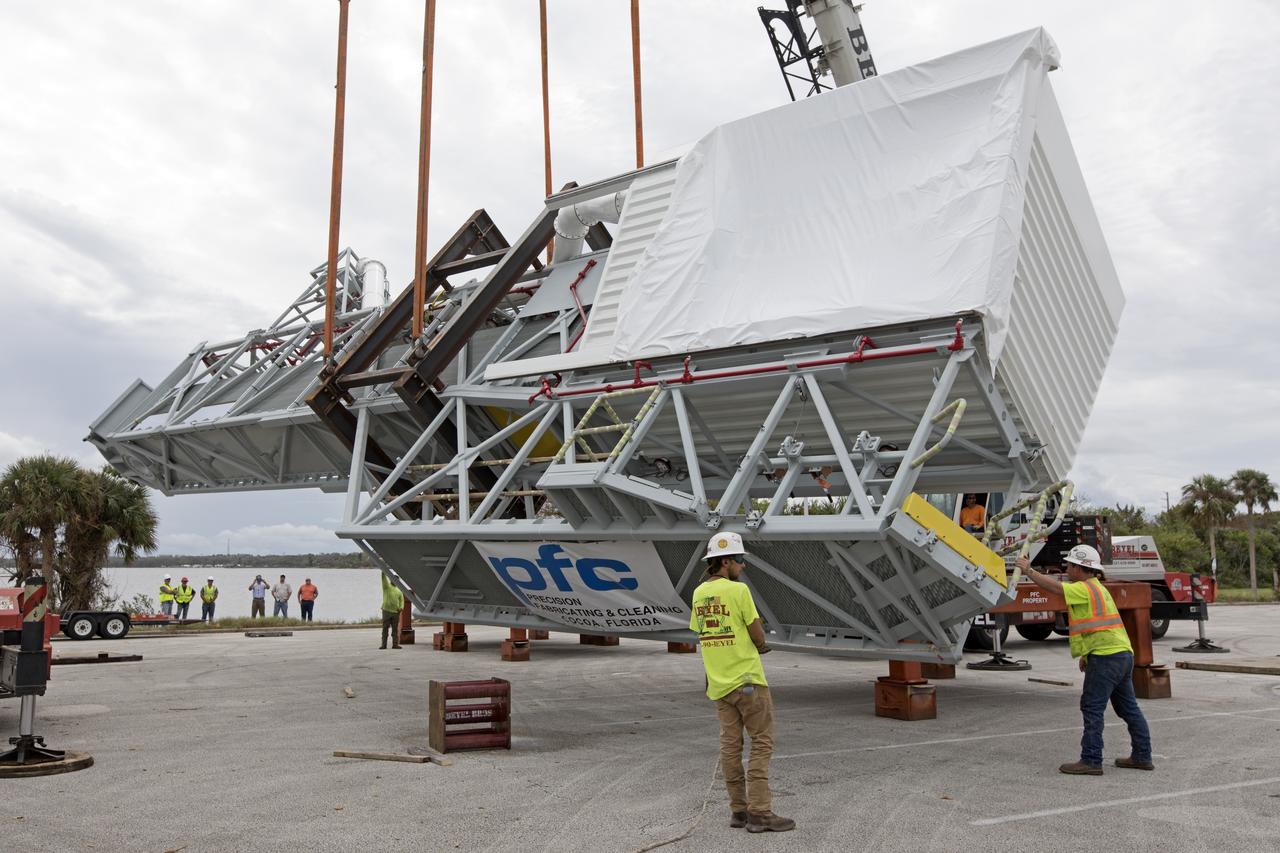
Two heavy-lift cranes are used to tilt and lower the Orion crew access arm onto a work stand in a storage location at NASA's Kennedy Space Center in Florida. The access arm was transported from Precision Fabricating and Cleaning in Cocoa, Florida. Later this month, the arm will be transported to the mobile launcher (ML) tower at the center. The crew access arm will be located at about the 274-foot level on the tower. It will rotate from its retracted position and interface with the Orion crew hatch location to provide entry to the Orion crew module. The Ground Systems Development and Operations Program is overseeing installation of umbilicals and launch accessories on the ML tower.
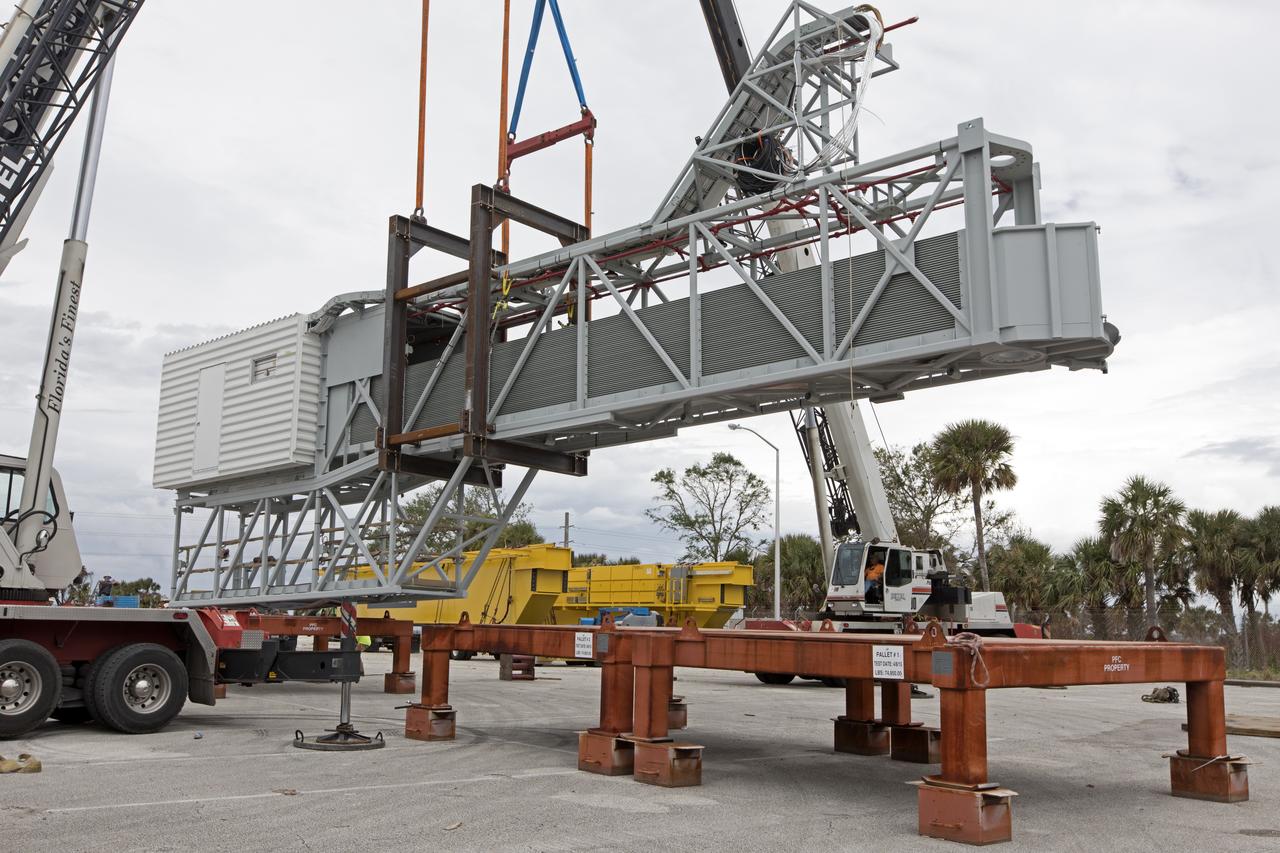
Two heavy-lift cranes are used to lower the Orion crew access arm onto a work stand in a storage location at NASA's Kennedy Space Center in Florida. The access arm was transported from Precision Fabricating and Cleaning in Cocoa, Florida. Later this month, the arm will be transported to the mobile launcher (ML) tower at the center. The crew access arm will be located at about the 274-foot level on the tower. It will rotate from its retracted position and interface with the Orion crew hatch location to provide entry to the Orion crew module. The Ground Systems Development and Operations Program is overseeing installation of umbilicals and launch accessories on the ML tower.
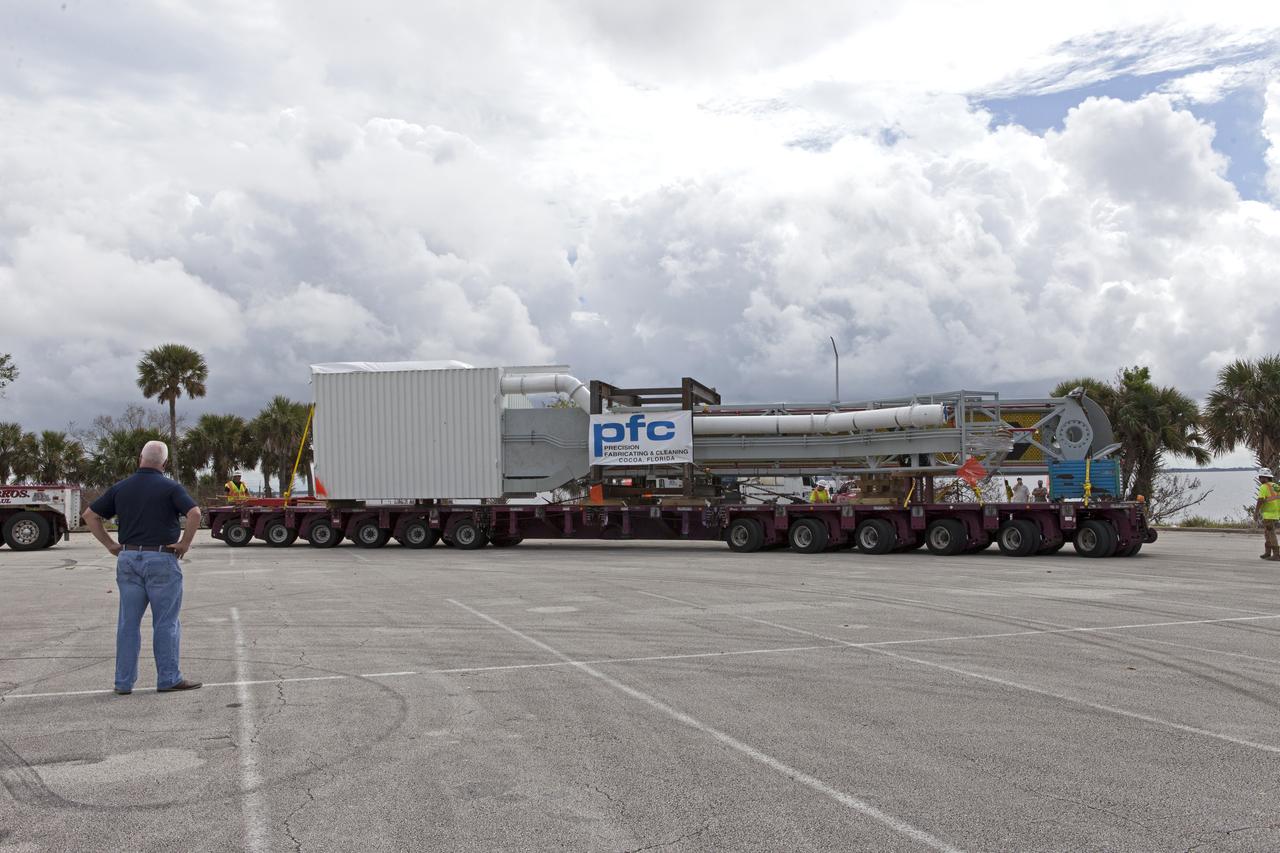
A flatbed truck with the Orion crew access arm secured atop arrives in a storage location at NASA's Kennedy Space Center in Florida. The access arm was transported from Precision Fabricating and Cleaning in Cocoa, Florida. Later this month, the arm will be transported to the mobile launcher (ML) tower at the center. The crew access arm will be located at about the 274-foot level on the tower. It will rotate from its retracted position and interface with the Orion crew hatch location to provide entry to the Orion crew module. The Ground Systems Development and Operations Program is overseeing installation of umbilicals and launch accessories on the ML tower.
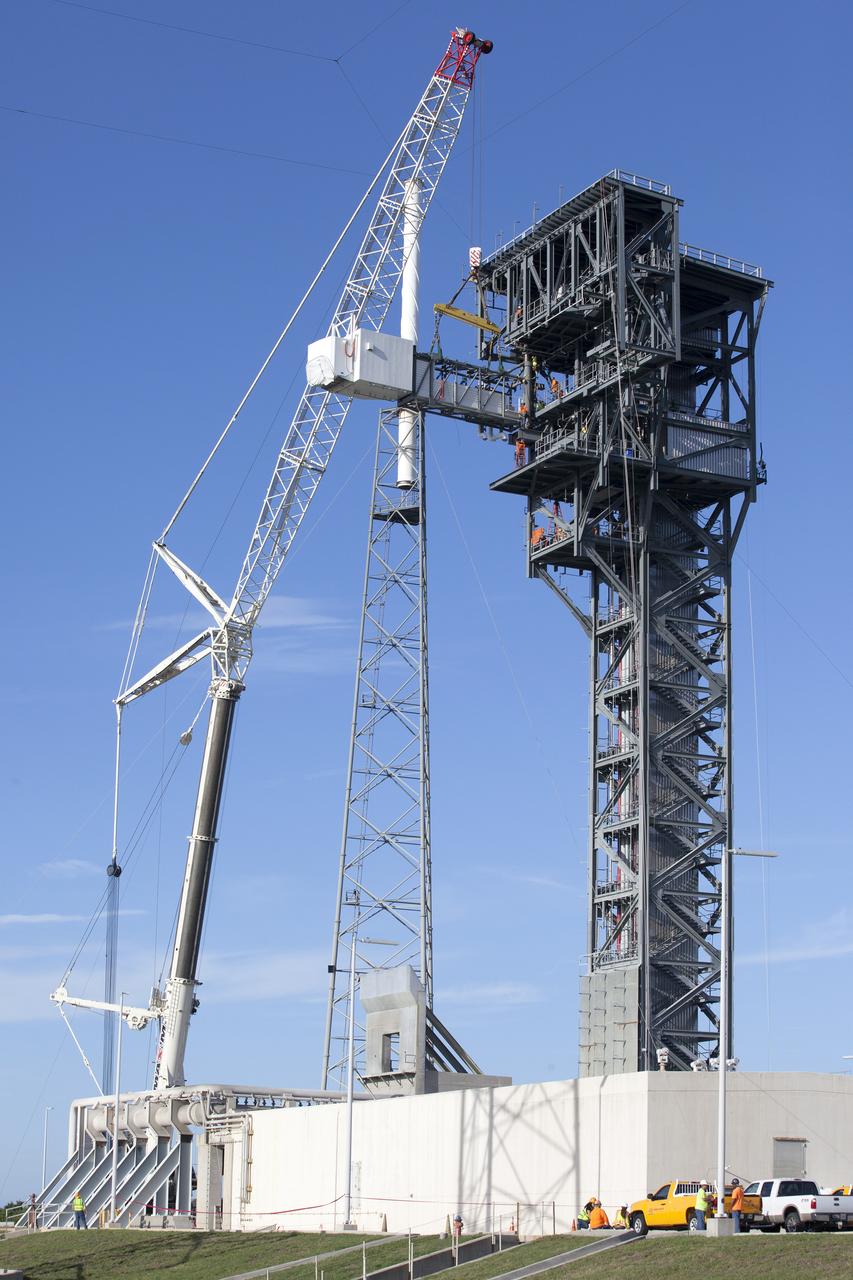
The Crew Access Arm and White Room for Boeing's CST-100 Starliner are attached to the Crew Access Tower at Cape Canaveral Air Force Station’s Space Launch Complex 41. The arm will serve as the connection that astronauts will walk through prior to boarding the spacecraft when stacked atop a United Launch Alliance Atlas V rocket. The installation completes the major construction of the first new Crew Access Tower to be built at the Cape since the Apollo era. Under a Commercial Crew Transportation Capability (CCtCap) contract with NASA, Boeing’s Starliner system will be certified by NASA's Commercial Crew Program to fly crews to and from the International Space Station.
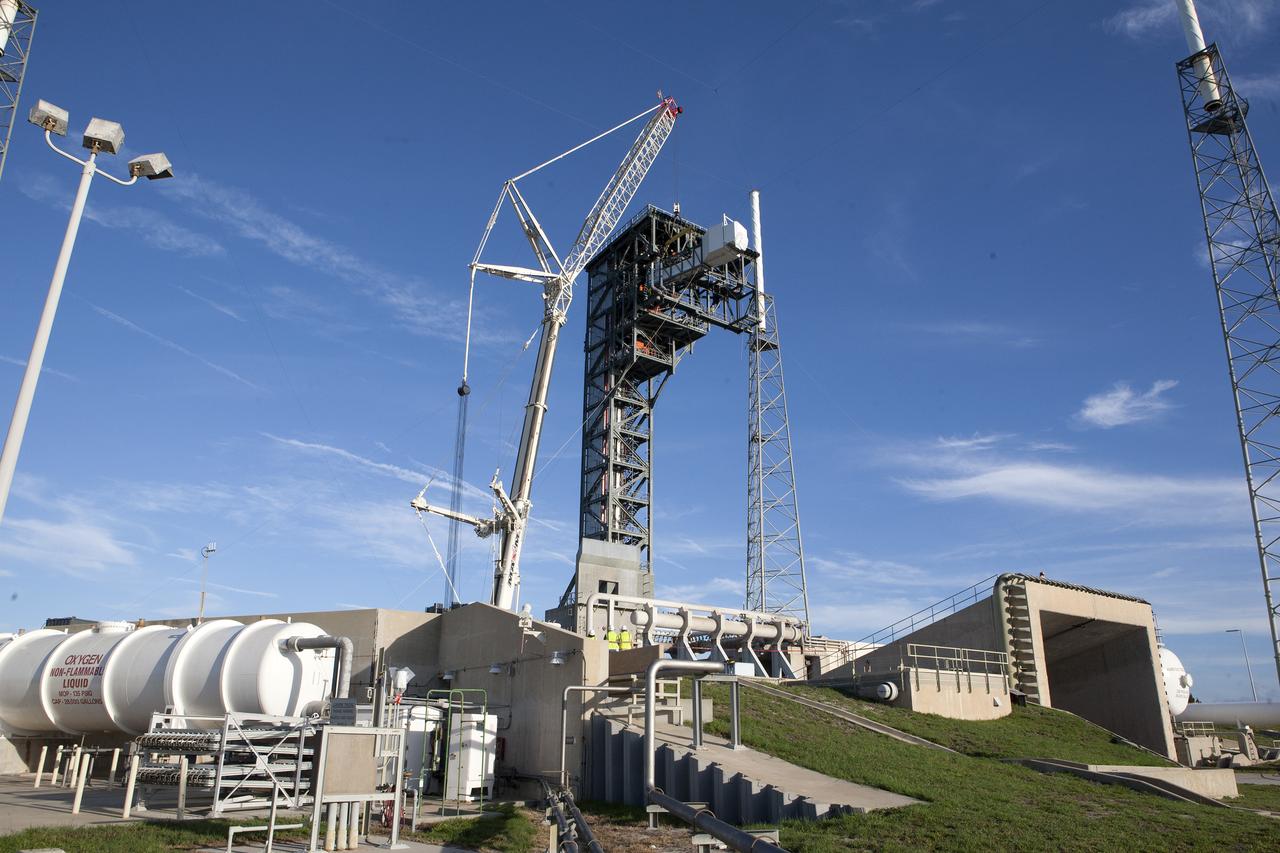
The Crew Access Arm and White Room for Boeing's CST-100 Starliner are attached to the Crew Access Tower at Cape Canaveral Air Force Station’s Space Launch Complex 41. The arm will serve as the connection that astronauts will walk through prior to boarding the Starliner spacecraft when stacked atop a United Launch Alliance Atlas V rocket. This installation completes the major construction of the first new Crew Access Tower to be built at the Cape since the Apollo era. Under a Commercial Crew Transportation Capability (CCtCap) contract with NASA, Boeing’s Starliner system will be certified by NASA's Commercial Crew Program to fly crews to and from the International Space Station.

Photos of the Emergency Evacuation Water Test at the CCP Crew Access Arm in Oak Hill, for Boeing/ULA.
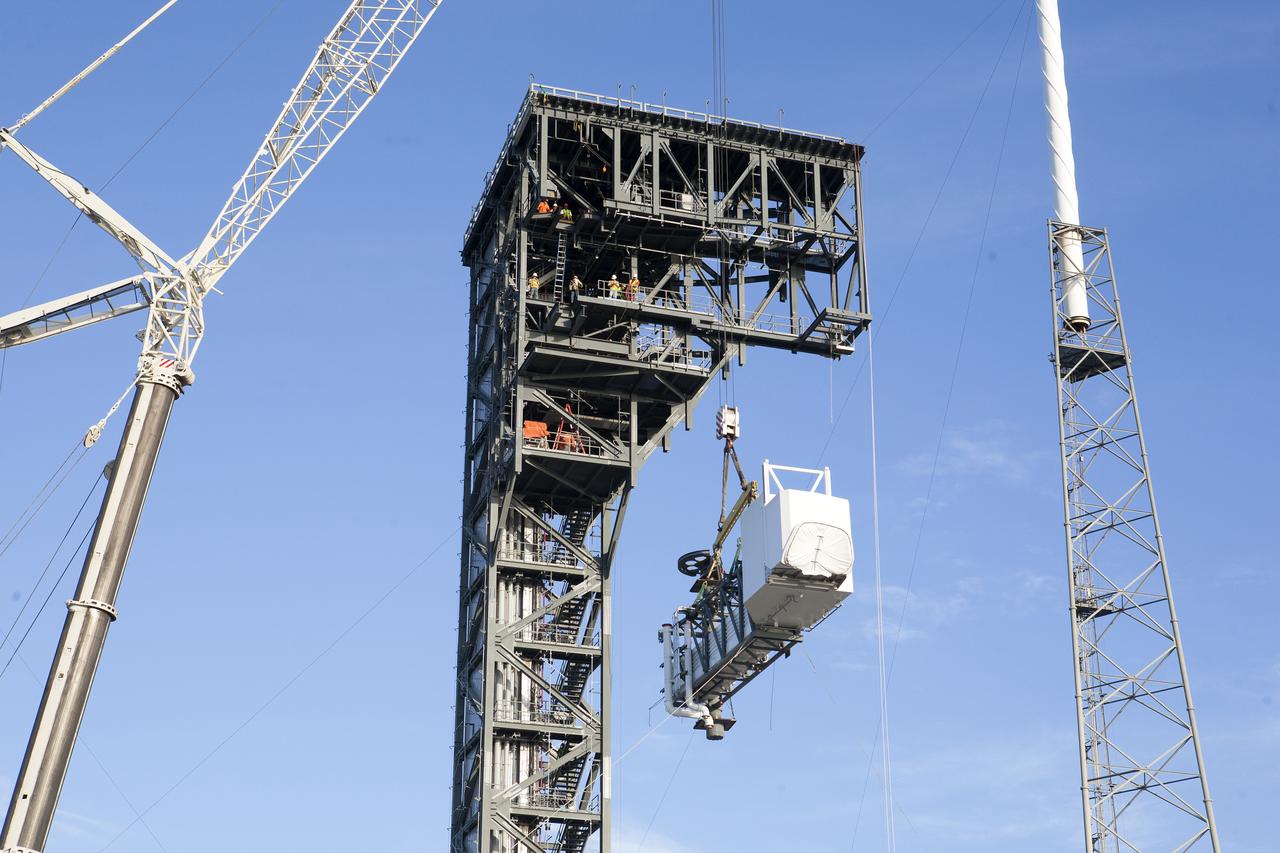
A crane lifts the Crew Access Arm and White Room for Boeing's CST-100 Starliner spacecraft to be attached to the Crew Access Tower at Cape Canaveral Air Force Station’s Space Launch Complex 41. When attached to the 200-foot tall Crew Access Tower, the arm will serve as the connection that astronauts will walk through prior to boarding the Starliner spacecraft when stacked atop a United Launch Alliance Atlas V rocket. This installation completes the major construction of the first new Crew Access Tower to be built at the Cape since the Apollo era. Under a Commercial Crew Transportation Capability (CCtCap) contract with NASA, Boeing’s Starliner system will be certified by NASA's Commercial Crew Program to fly crews to and from the International Space Station.
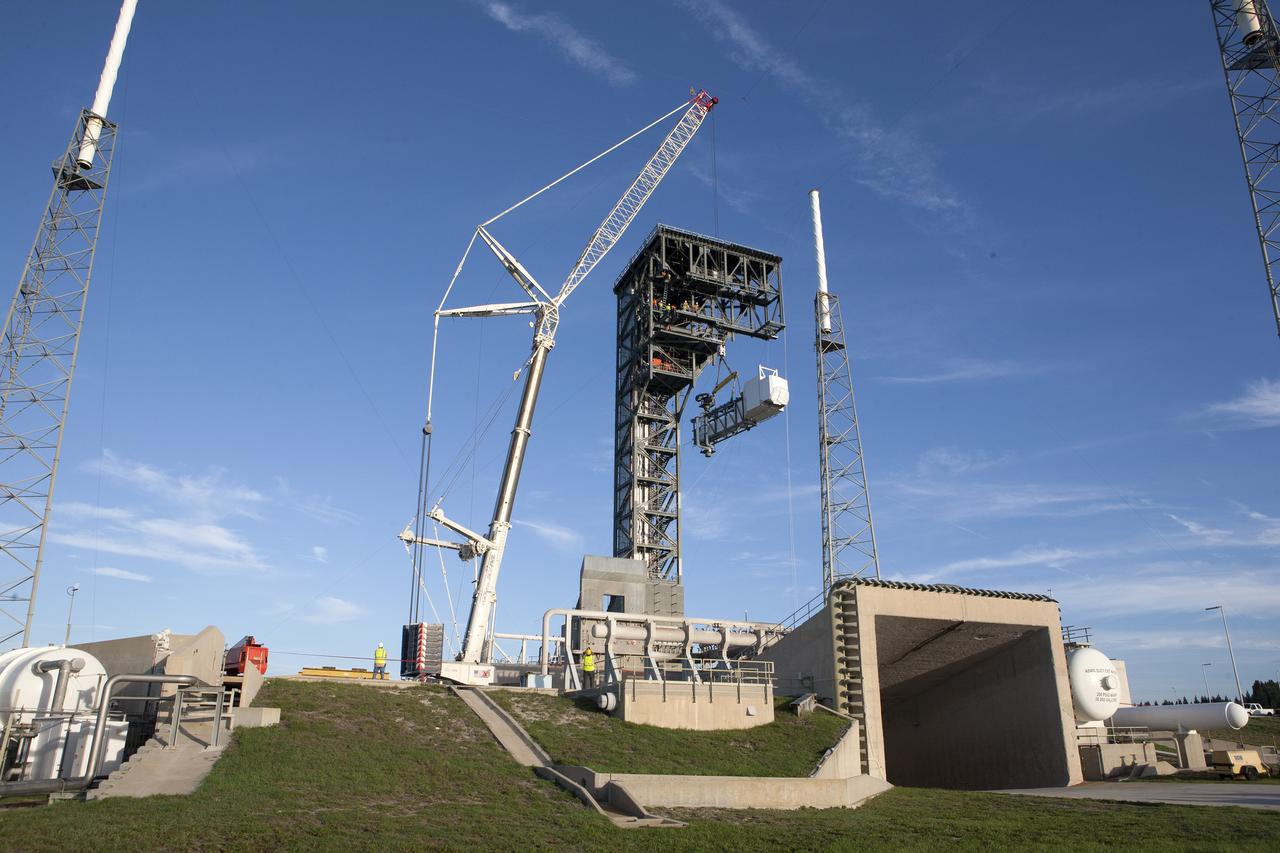
A crane lifts the Crew Access Arm and White Room for Boeing's CST-100 Starliner spacecraft to be attached to the Crew Access Tower at Cape Canaveral Air Force Station’s Space Launch Complex 41. When attached to the 200-foot tall Crew Access Tower, the arm will serve as the connection that astronauts will walk through prior to boarding the Starliner spacecraft when stacked atop a United Launch Alliance Atlas V rocket. This installation completes the major construction of the first new Crew Access Tower to be built at the Cape since the Apollo era. Under a Commercial Crew Transportation Capability (CCtCap) contract with NASA, Boeing’s Starliner system will be certified by NASA's Commercial Crew Program to fly crews to and from the International Space Station.
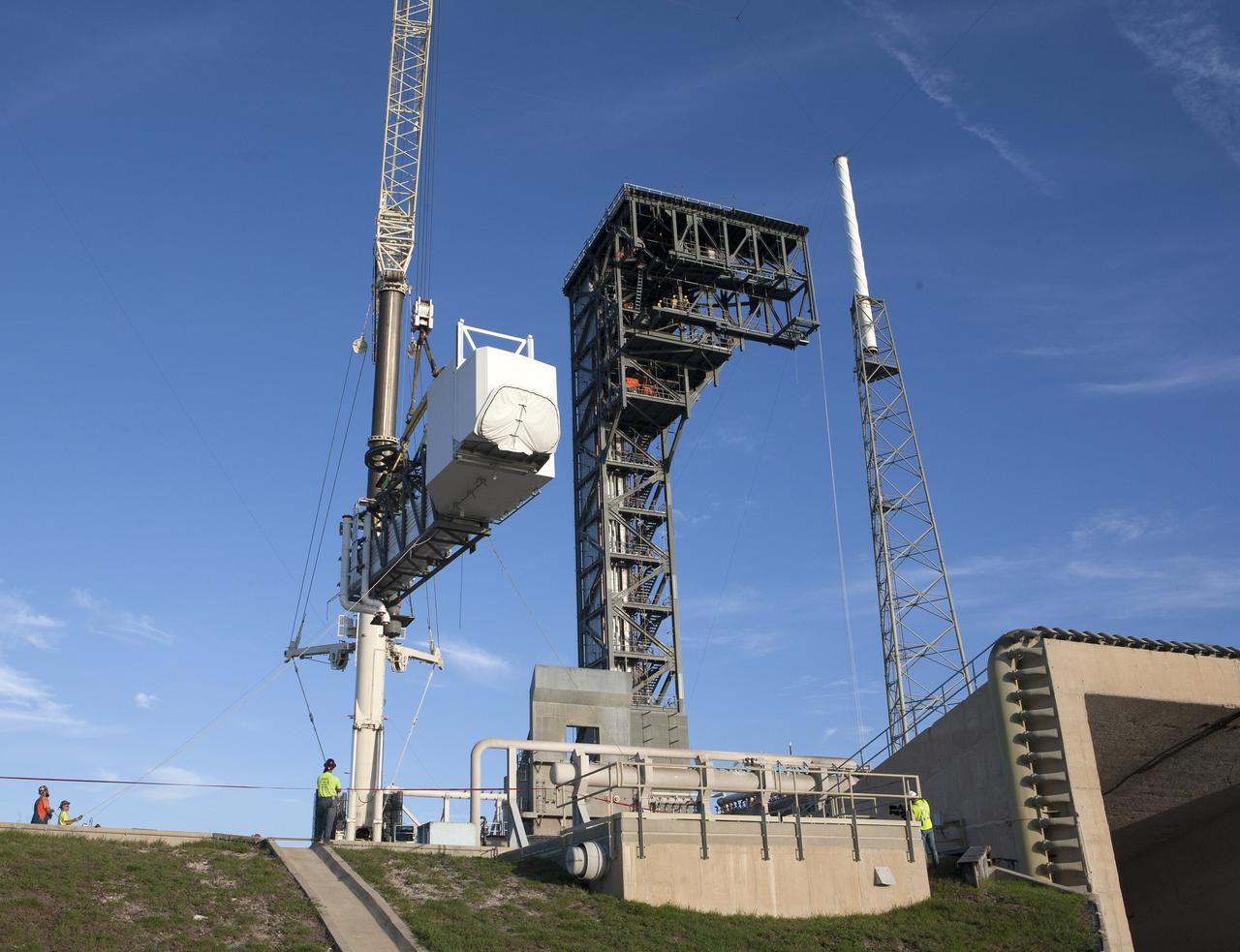
A crane lifts the Crew Access Arm and White Room for Boeing's CST-100 Starliner spacecraft to be attached to the Crew Access Tower at Cape Canaveral Air Force Station’s Space Launch Complex 41. When attached to the 200-foot tall Crew Access Tower, the arm will serve as the connection that astronauts will walk through prior to boarding the Starliner spacecraft when stacked atop a United Launch Alliance Atlas V rocket. This installation completes the major construction of the first new Crew Access Tower to be built at the Cape since the Apollo era. Under a Commercial Crew Transportation Capability (CCtCap) contract with NASA, Boeing’s Starliner system will be certified by NASA's Commercial Crew Program to fly crews to and from the International Space Station.
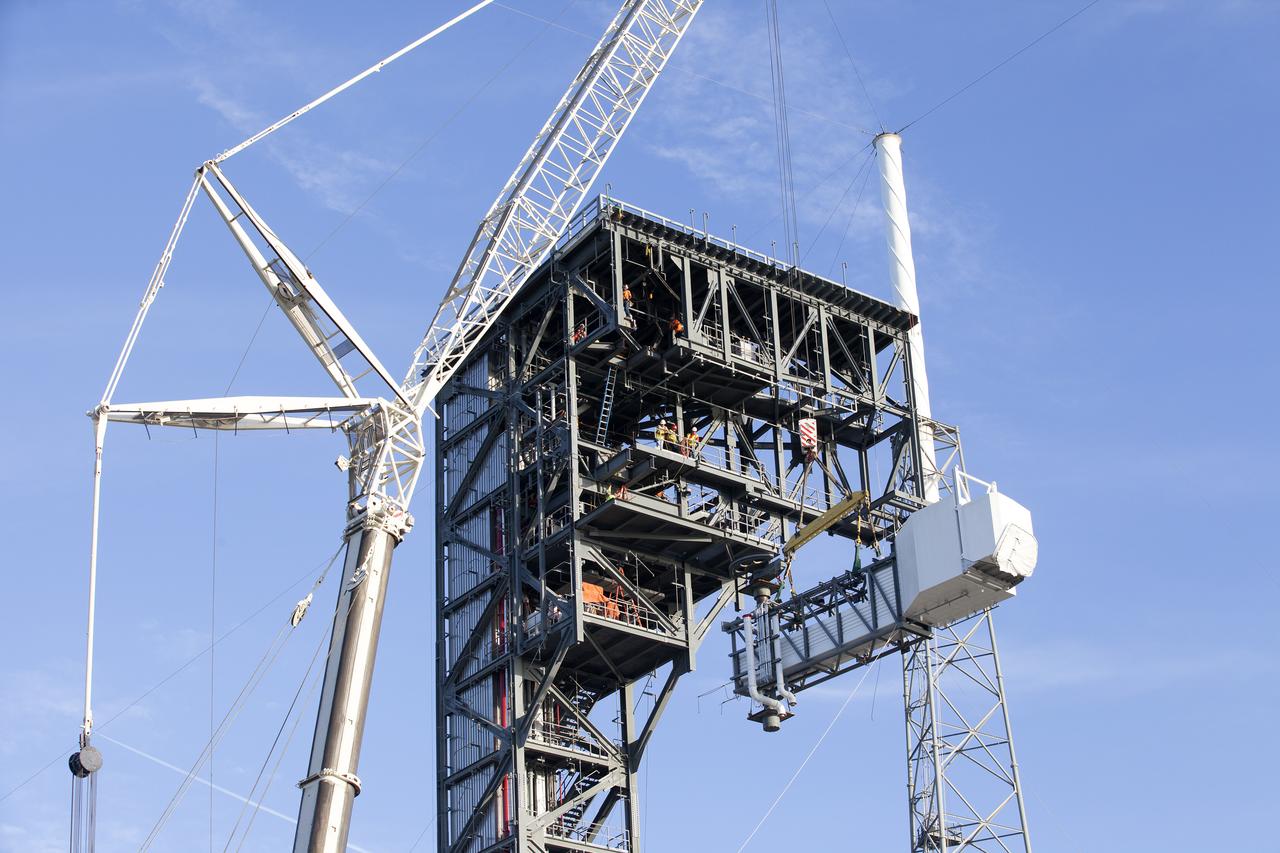
A crane lifts the Crew Access Arm and White Room for Boeing's CST-100 Starliner spacecraft to be attached to the Crew Access Tower at Cape Canaveral Air Force Station’s Space Launch Complex 41. When attached to the 200-foot tall Crew Access Tower, the arm will serve as the connection that astronauts will walk through prior to boarding the Starliner spacecraft when stacked atop a United Launch Alliance Atlas V rocket. The installation completes the major construction of the first new Crew Access Tower to be built at the Cape since the Apollo era. Under a Commercial Crew Transportation Capability (CCtCap) contract with NASA, Boeing’s Starliner system will be certified by NASA's Commercial Crew Program to fly crews to and from the International Space Station.
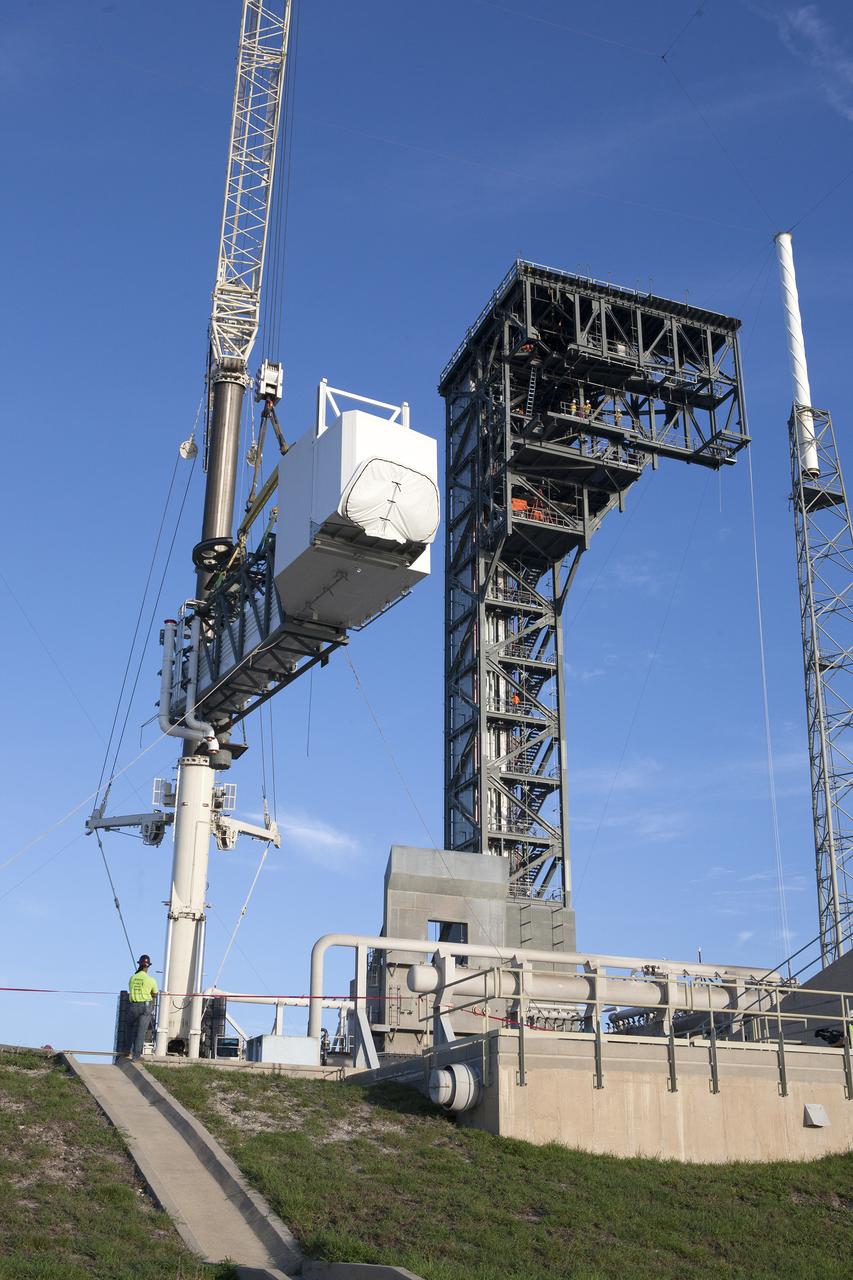
A crane lifts the Crew Access Arm and White Room for Boeing's CST-100 Starliner spacecraft to be attached to the Crew Access Tower at Cape Canaveral Air Force Station’s Space Launch Complex 41. When attached to the 200-foot tall Crew Access Tower, the arm will serve as the connection that astronauts will walk through prior to boarding the Starliner spacecraft when stacked atop a United Launch Alliance Atlas V rocket. This installation completes the major construction of the first new Crew Access Tower to be built at the Cape since the Apollo era. Under a Commercial Crew Transportation Capability (CCtCap) contract with NASA, Boeing’s Starliner system will be certified by NASA's Commercial Crew Program to fly crews to and from the International Space Station.
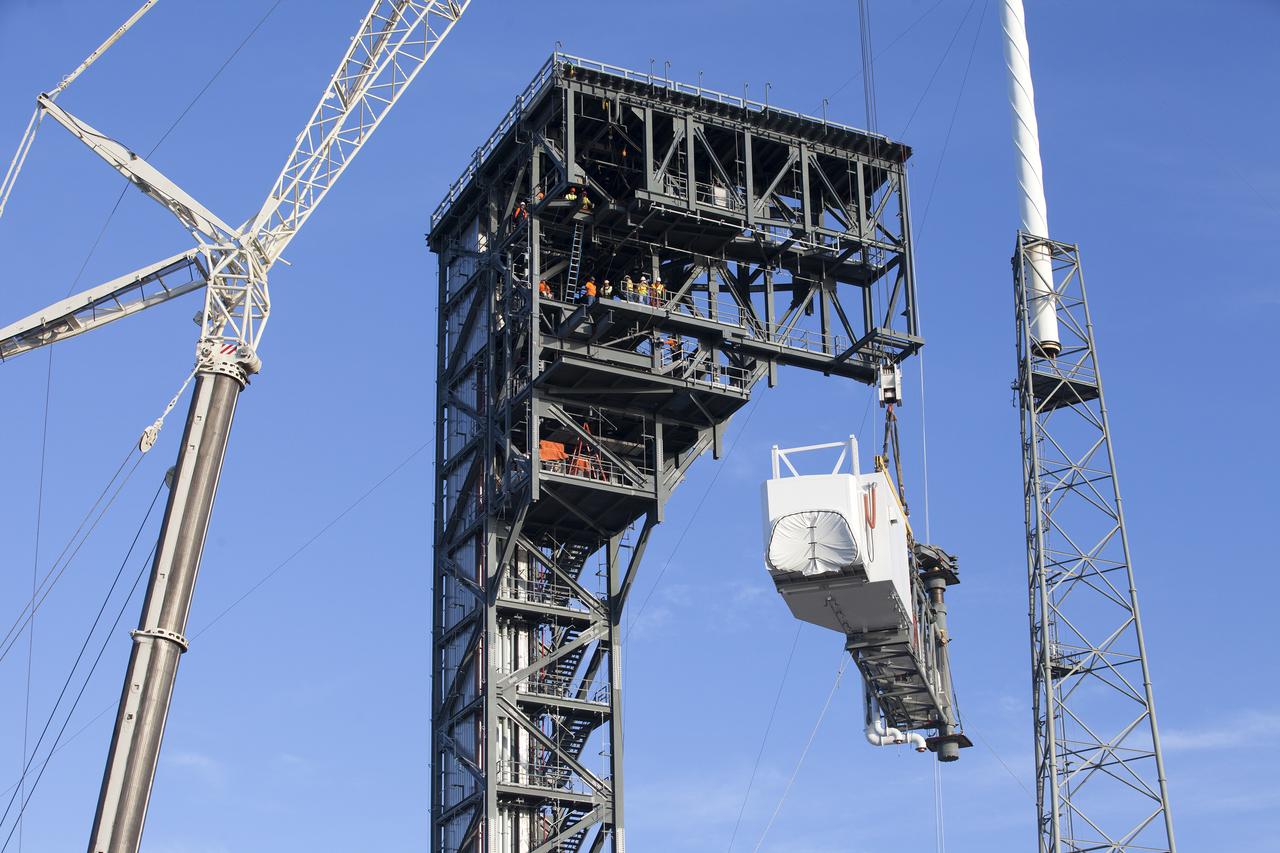
A crane lifts the Crew Access Arm and White Room for Boeing's CST-100 Starliner spacecraft to be attached to the Crew Access Tower at Cape Canaveral Air Force Station’s Space Launch Complex 41. When attached to the 200-foot tall Crew Access Tower, the arm will serve as the connection that astronauts will walk through prior to boarding the Starliner spacecraft when stacked atop a United Launch Alliance Atlas V rocket. This installation completes the major construction of the first new Crew Access Tower to be built at the Cape since the Apollo era. Under a Commercial Crew Transportation Capability (CCtCap) contract with NASA, Boeing’s Starliner system will be certified by NASA's Commercial Crew Program to fly crews to and from the International Space Station.
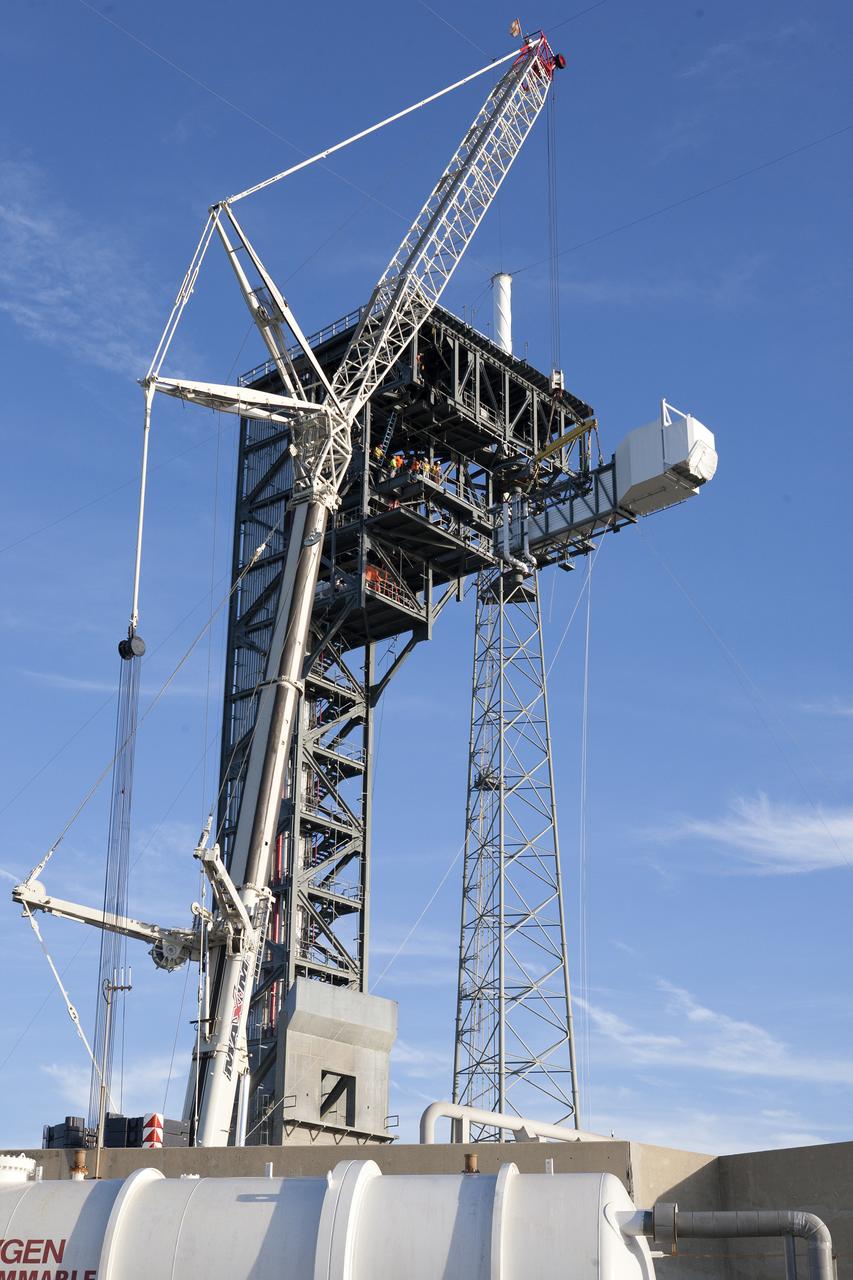
A crane lifts the Crew Access Arm and White Room for Boeing's CST-100 Starliner spacecraft to be attached to the Crew Access Tower at Cape Canaveral Air Force Station’s Space Launch Complex 41. When attached to the 200-foot tall Crew Access Tower, the arm will serve as the connection that astronauts will walk through prior to boarding the Starliner spacecraft when stacked atop a United Launch Alliance Atlas V rocket. This installation completes the major construction of the first new Crew Access Tower to be built at the Cape since the Apollo era. Under a Commercial Crew Transportation Capability (CCtCap) contract with NASA, Boeing’s Starliner system will be certified by NASA's Commercial Crew Program to fly crews to and from the International Space Station.
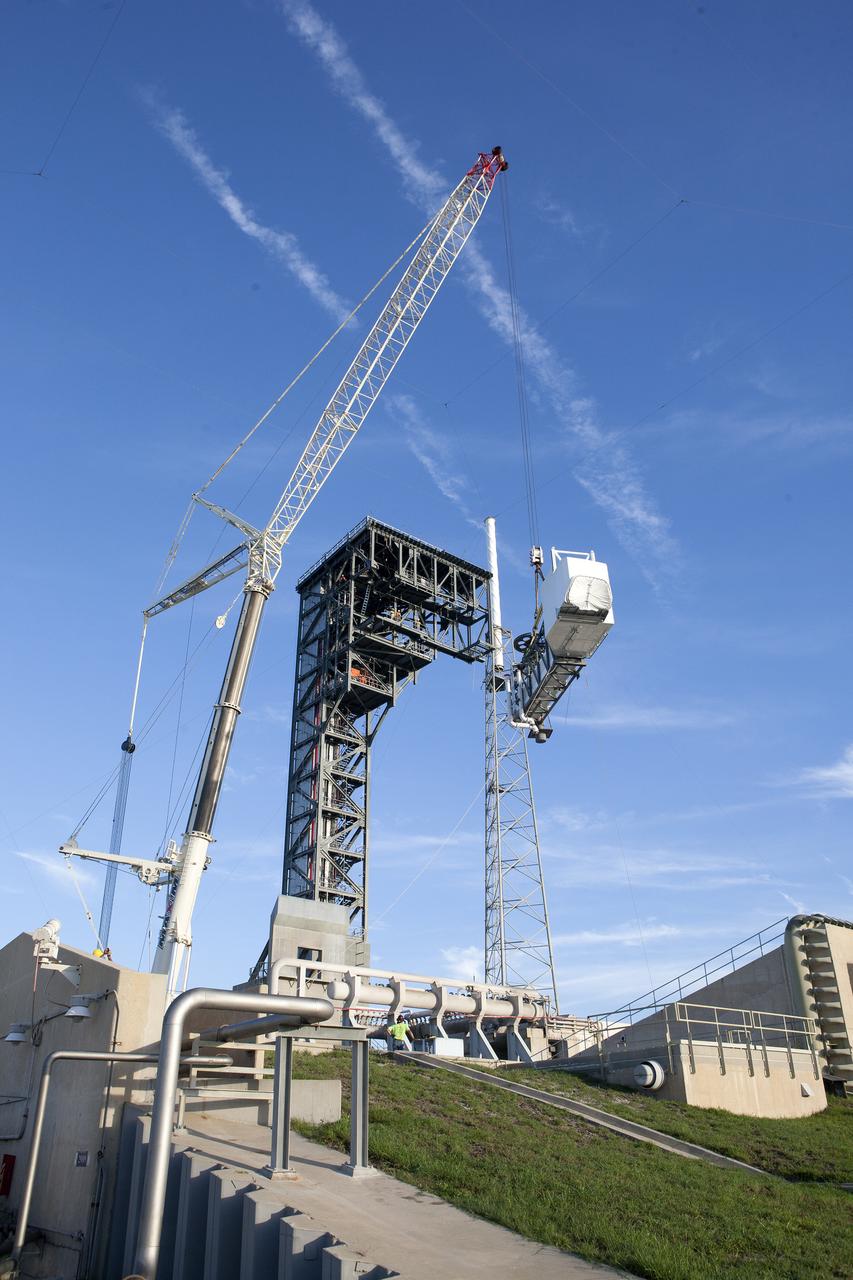
A crane lifts the Crew Access Arm and White Room for Boeing's CST-100 Starliner spacecraft to be attached to the Crew Access Tower at Cape Canaveral Air Force Station’s Space Launch Complex 41. When attached to the 200-foot tall Crew Access Tower, the arm will serve as the connection that astronauts will walk through prior to boarding the Starliner spacecraft when stacked atop a United Launch Alliance Atlas V rocket. This installation completes the major construction of the first new Crew Access Tower to be built at the Cape since the Apollo era. Under a Commercial Crew Transportation Capability (CCtCap) contract with NASA, Boeing’s Starliner system will be certified by NASA's Commercial Crew Program to fly crews to and from the International Space Station.
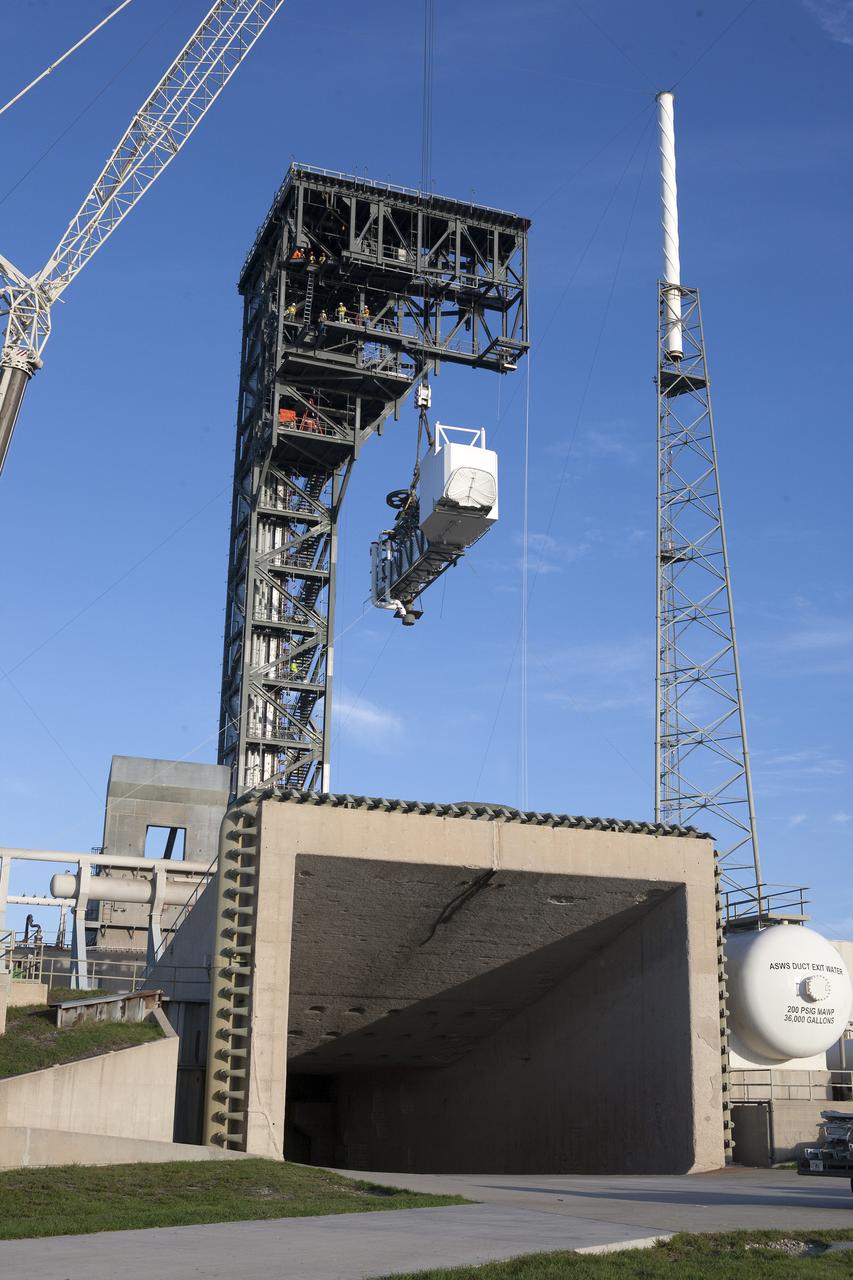
A crane lifts the Crew Access Arm and White Room for Boeing's CST-100 Starliner spacecraft to be attached to the Crew Access Tower at Cape Canaveral Air Force Station’s Space Launch Complex 41. When attached to the 200-foot tall Crew Access Tower, the arm will serve as the connection that astronauts will walk through prior to boarding the Starliner spacecraft when stacked atop a United Launch Alliance Atlas V rocket. This installation completes the major construction of the first new Crew Access Tower to be built at the Cape since the Apollo era. Under a Commercial Crew Transportation Capability (CCtCap) contract with NASA, Boeing’s Starliner system will be certified by NASA's Commercial Crew Program to fly crews to and from the International Space Station.
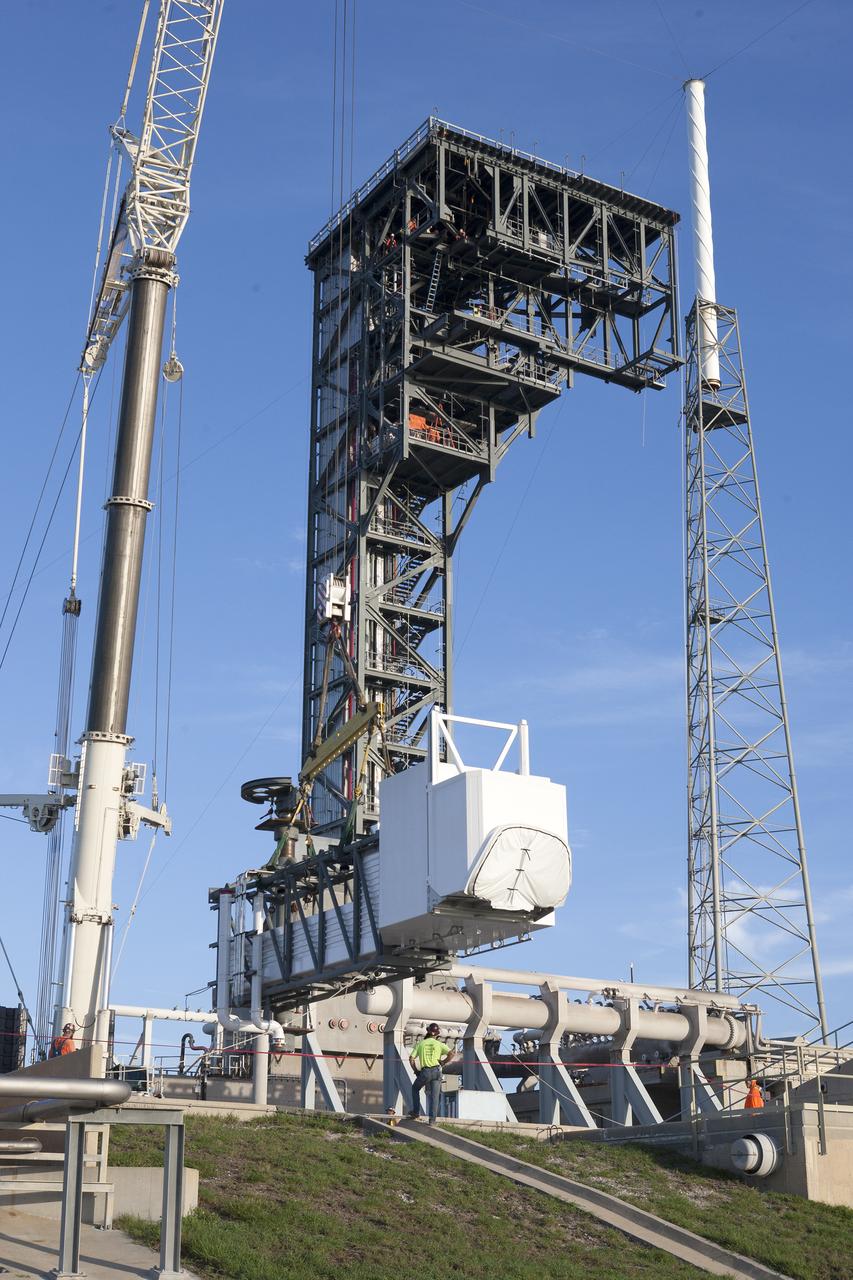
A crane lifts the Crew Access Arm and White Room for Boeing's CST-100 Starliner spacecraft to be attached to the Crew Access Tower at Cape Canaveral Air Force Station’s Space Launch Complex 41. When attached to the 200-foot tall Crew Access Tower, the arm will serve as the connection that astronauts will walk through prior to boarding the Starliner spacecraft when stacked atop a United Launch Alliance Atlas V rocket. This installation completes the major construction of the first new Crew Access Tower to be built at the Cape since the Apollo era. Under a Commercial Crew Transportation Capability (CCtCap) contract with NASA, Boeing’s Starliner system will be certified by NASA's Commercial Crew Program to fly crews to and from the International Space Station.
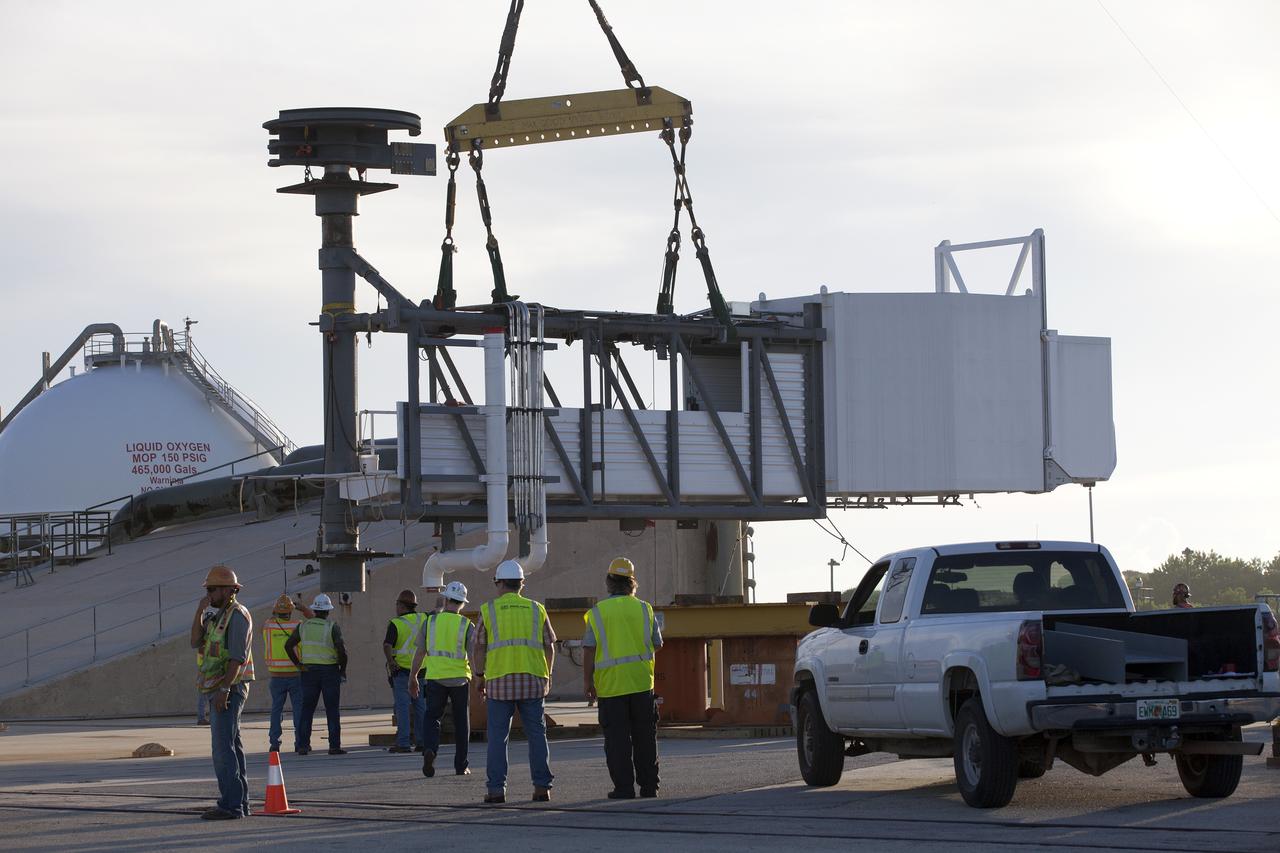
A crane is attached to the Crew Access Arm and White Room for Boeing's CST-100 Starliner spacecraft to be attached to the Crew Access Tower at Cape Canaveral Air Force Station’s Space Launch Complex 41. When attached to the 200-foot tall Crew Access Tower, the arm will serve as the connection that astronauts will walk through prior to boarding the Starliner spacecraft when stacked atop a United Launch Alliance Atlas V rocket. This installation completes the major construction of the first new Crew Access Tower to be built at the Cape since the Apollo era. Under a Commercial Crew Transportation Capability (CCtCap) contract with NASA, Boeing’s Starliner system will be certified by NASA's Commercial Crew Program to fly crews to and from the International Space Station.
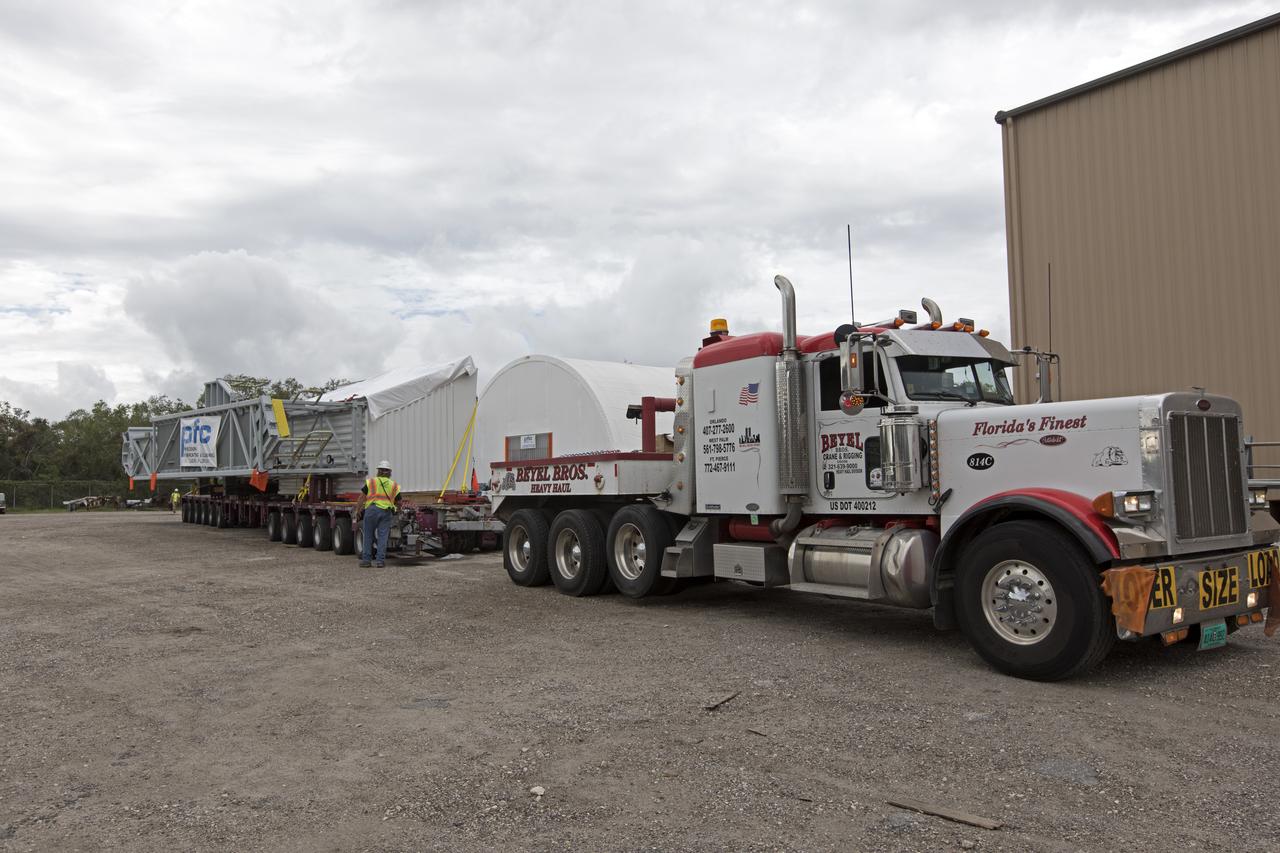
The Orion crew access arm is secured on a flatbed truck at Precision Fabricating and Cleaning in Cocoa, Florida and ready to be transported to a storage location at NASA's Kennedy Space Center in Florida. Later this month, the arm will be transported to the mobile launcher (ML) tower at the center. The crew access arm will be located at about the 274-foot level on the tower. It will rotate from its retracted position and interface with the Orion crew hatch location to provide entry to the Orion crew module. The Ground Systems Development and Operations Program is overseeing installation of umbilicals and launch accessories on the ML tower.
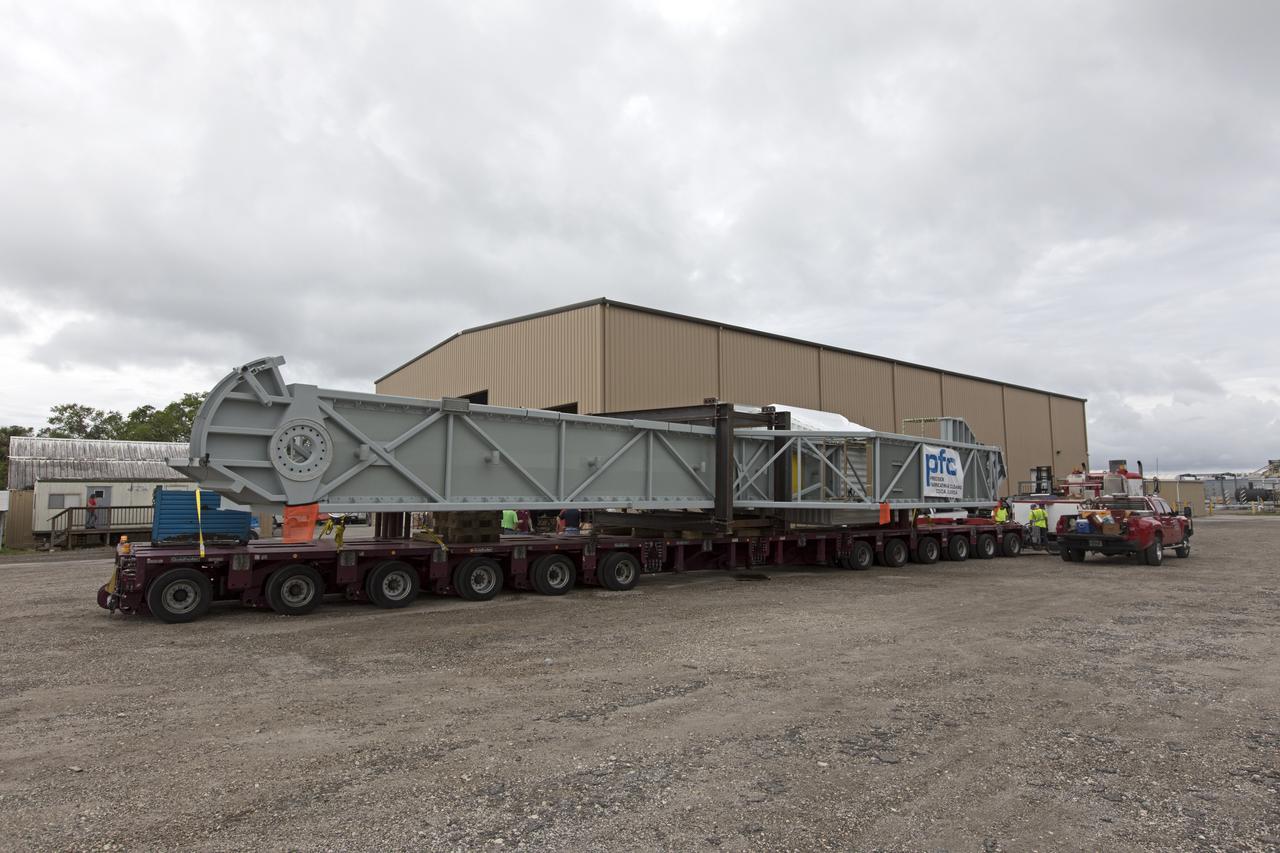
The Orion crew access arm is secured on a flatbed truck at Precision Fabricating and Cleaning in Cocoa, Florida and ready to be transported to a storage location at NASA's Kennedy Space Center in Florida. Later this month, the arm will be transported to the mobile launcher (ML) tower at the center. The crew access arm will be located at about the 274-foot level on the tower. It will rotate from its retracted position and interface with the Orion crew hatch location to provide entry to the Orion crew module. The Ground Systems Development and Operations Program is overseeing installation of umbilicals and launch accessories on the ML tower.
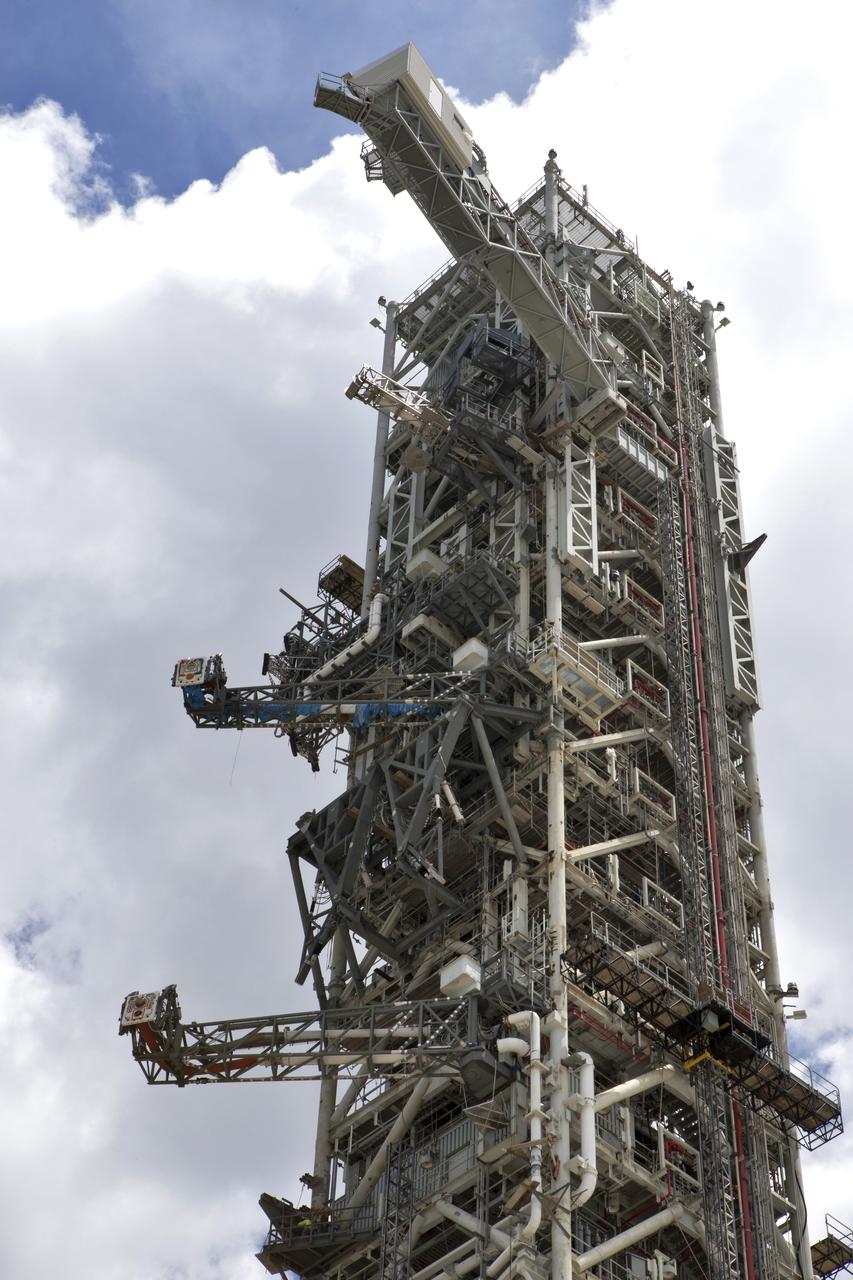
A swing test of the Orion crew access arm, topmost umbilical, is in progress on the mobile launcher at NASA's Kennedy Space Center in Florida, on Aug. 21, 2018. The crew access arm is located at about the 274-foot level on the mobile launcher tower. It will rotate from its retracted position and interface with the Orion crew hatch location to provide entry to the Orion crew module. Exploration Ground Systems extended all of the launch umbilicals on the ML tower to test their functionality before the mobile launcher, atop crawler-transporter 2, is moved to Launch Pad 39B and the Vehicle Assembly Building.
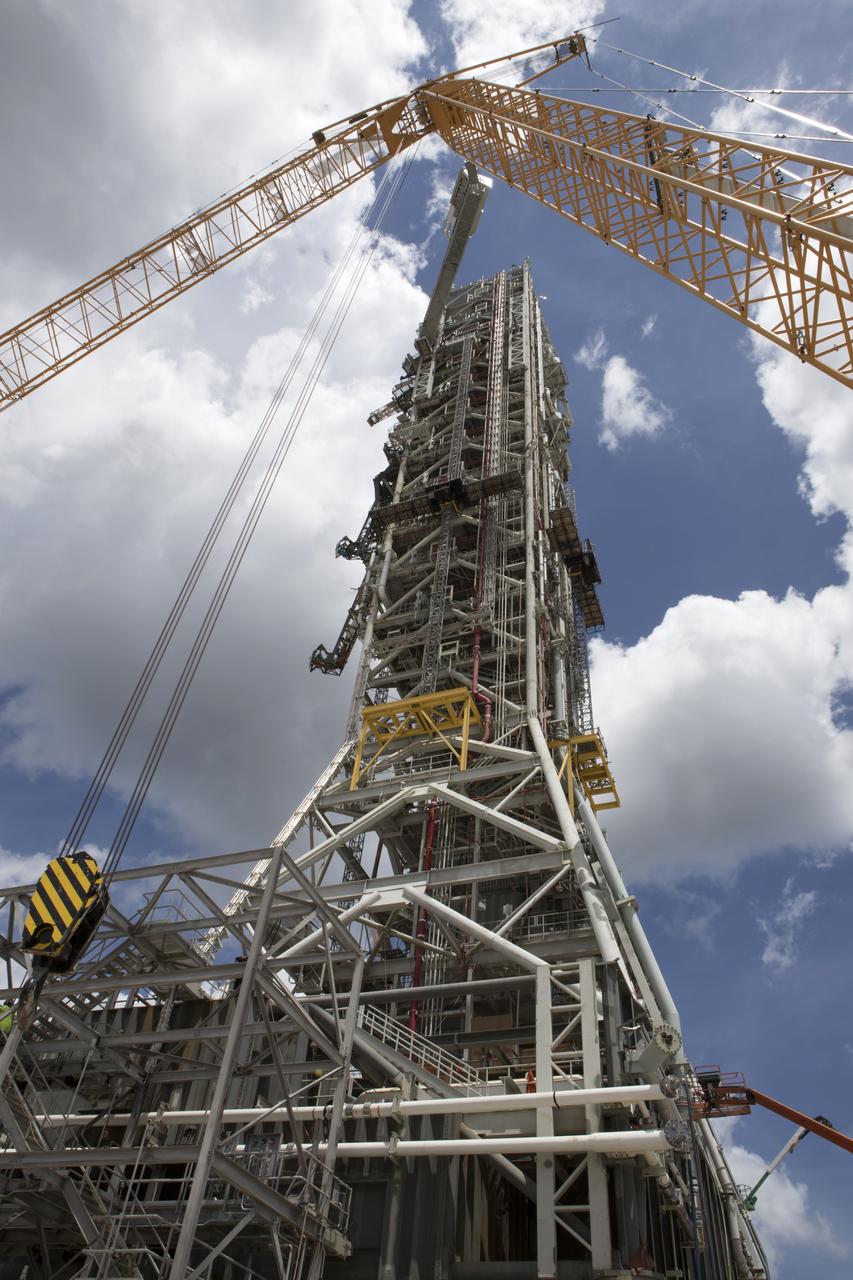
A swing test of the Orion crew access arm, topmost umbilical, is in progress on the mobile launcher at NASA's Kennedy Space Center in Florida, on Aug. 21, 2018. The crew access arm is located at about the 274-foot level on the mobile launcher tower. It will rotate from its retracted position and interface with the Orion crew hatch location to provide entry to the Orion crew module. Exploration Ground Systems extended all of the launch umbilicals on the ML tower to test their functionality before the mobile launcher, atop crawler-transporter 2, is moved to Launch Pad 39B and the Vehicle Assembly Building.
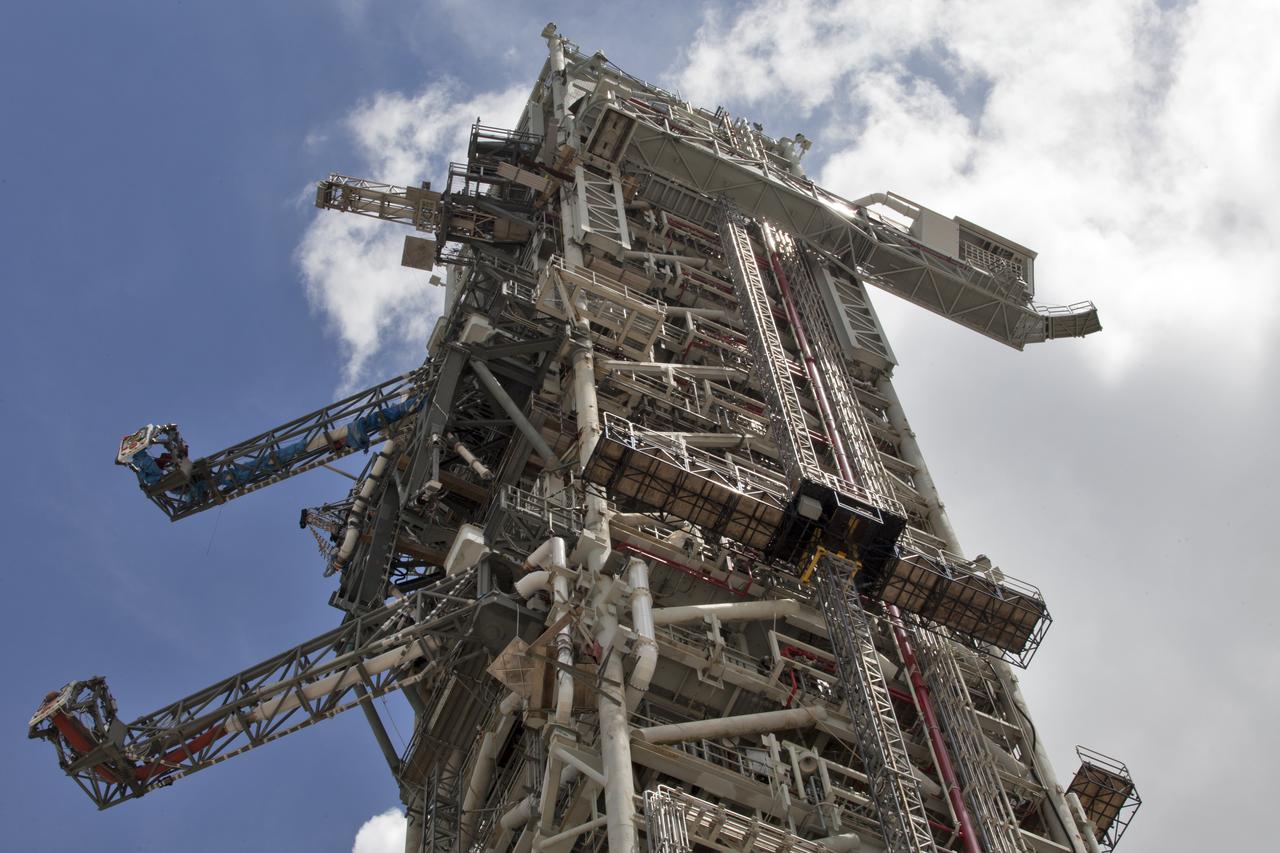
A swing test of the Orion crew access arm, top right, begins on the mobile launcher at NASA's Kennedy Space Center in Florida, on Aug. 21, 2018. The crew access arm is located at about the 274-foot level on the mobile launcher tower. It will rotate from its retracted position and interface with the Orion crew hatch location to provide entry to the Orion crew module. Exploration Ground Systems extended all of the launch umbilicals on the ML tower to test their functionality before the mobile launcher, atop crawler-transporter 2, is moved to Launch Pad 39B and the Vehicle Assembly Building.
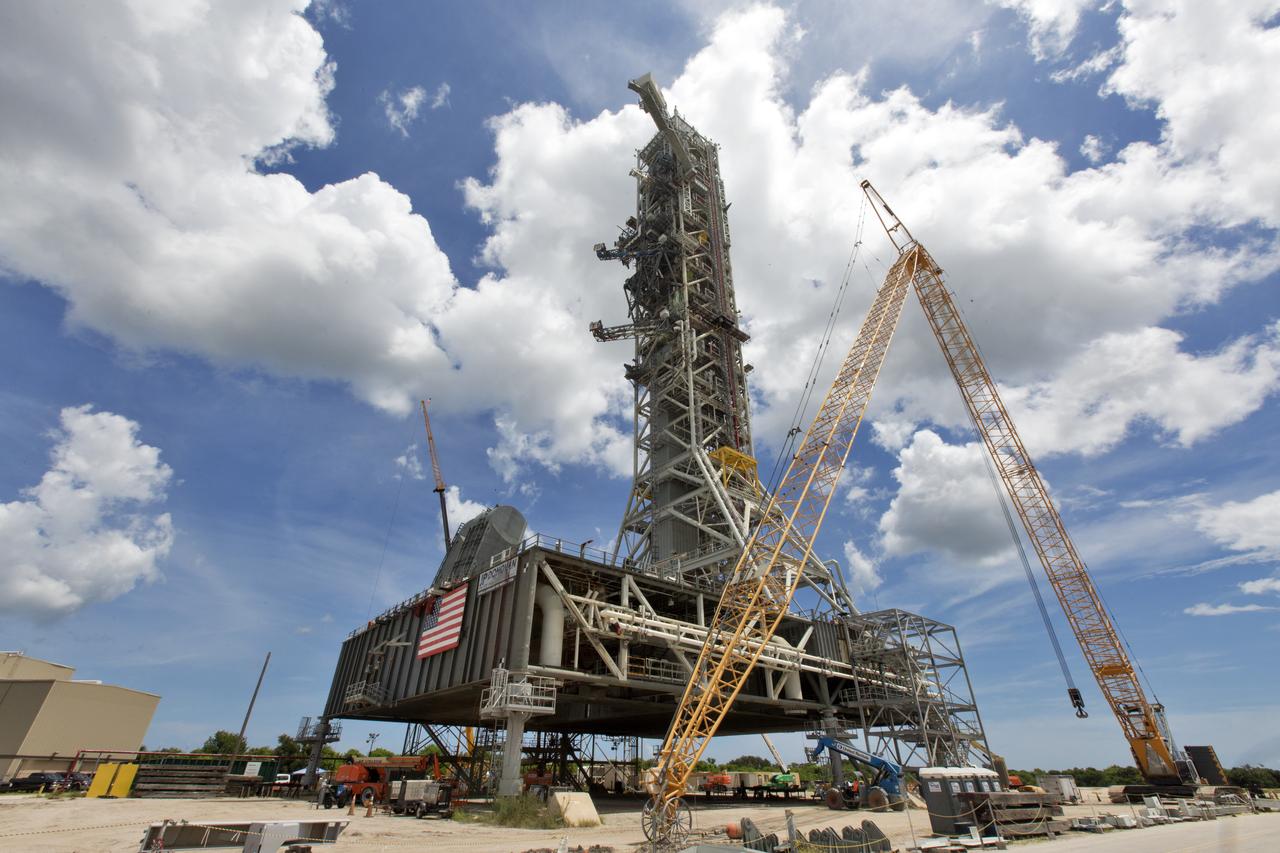
A swing test of the Orion crew access arm, topmost umbilical, is in progress on the mobile launcher at NASA's Kennedy Space Center in Florida, on Aug. 21, 2018. The crew access arm is located at about the 274-foot level on the mobile launcher tower. It will rotate from its retracted position and interface with the Orion crew hatch location to provide entry to the Orion crew module. Exploration Ground Systems extended all of the launch umbilicals on the ML tower to test their functionality before the mobile launcher, atop crawler-transporter 2, is moved to Launch Pad 39B and the Vehicle Assembly Building.
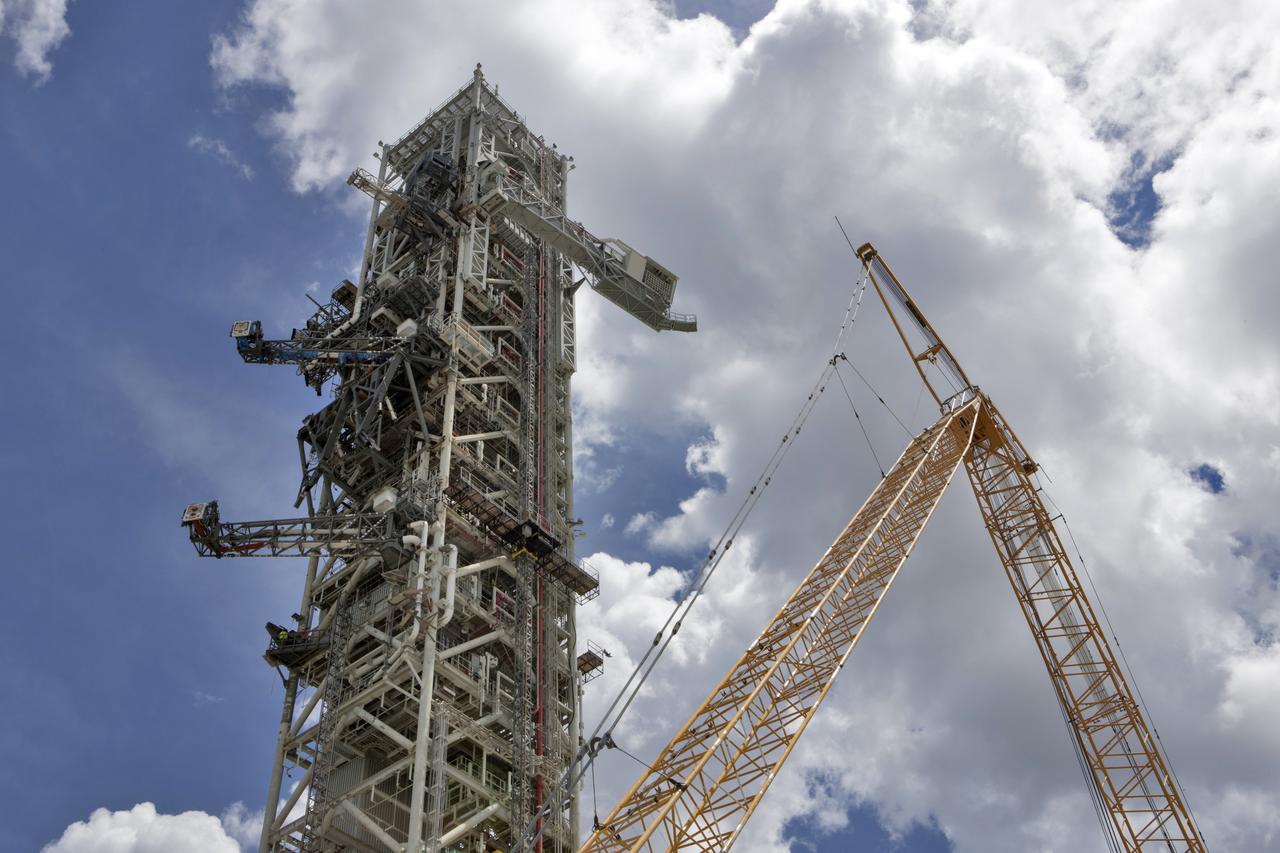
A swing test of the Orion crew access arm, top right, is in progress on the mobile launcher at NASA's Kennedy Space Center in Florida, on Aug. 21, 2018. The crew access arm is located at about the 274-foot level on the mobile launcher tower. It will rotate from its retracted position and interface with the Orion crew hatch location to provide entry to the Orion crew module. Exploration Ground Systems extended all of the launch umbilicals on the ML tower to test their functionality before the mobile launcher, atop crawler-transporter 2, is moved to Launch Pad 39B and the Vehicle Assembly Building.
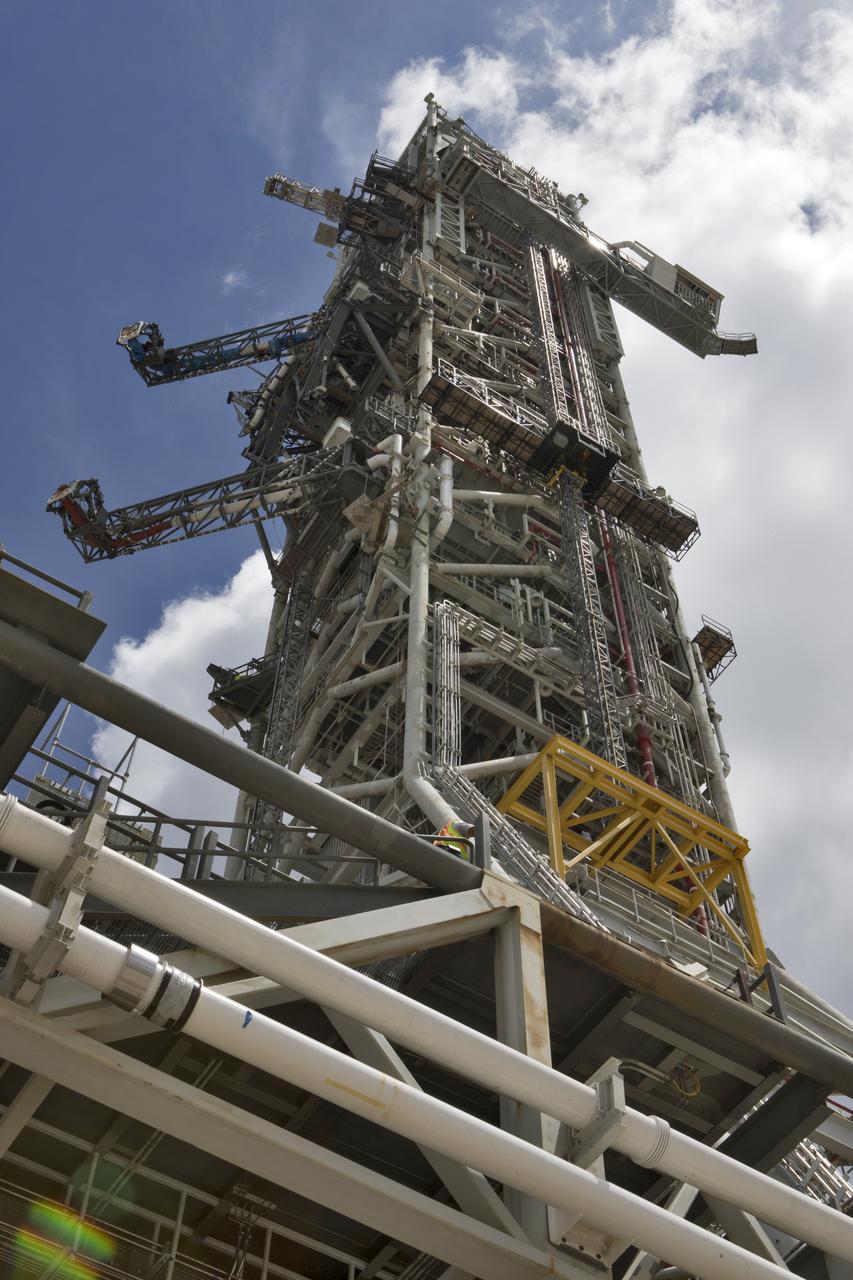
A swing test of the Orion crew access arm, top right, is in progress on the mobile launcher at NASA's Kennedy Space Center in Florida, on Aug. 21, 2018. The crew access arm is located at about the 274-foot level on the mobile launcher tower. It will rotate from its retracted position and interface with the Orion crew hatch location to provide entry to the Orion crew module. Exploration Ground Systems extended all of the launch umbilicals on the ML tower to test their functionality before the mobile launcher, atop crawler-transporter 2, is moved to Launch Pad 39B and the Vehicle Assembly Building.
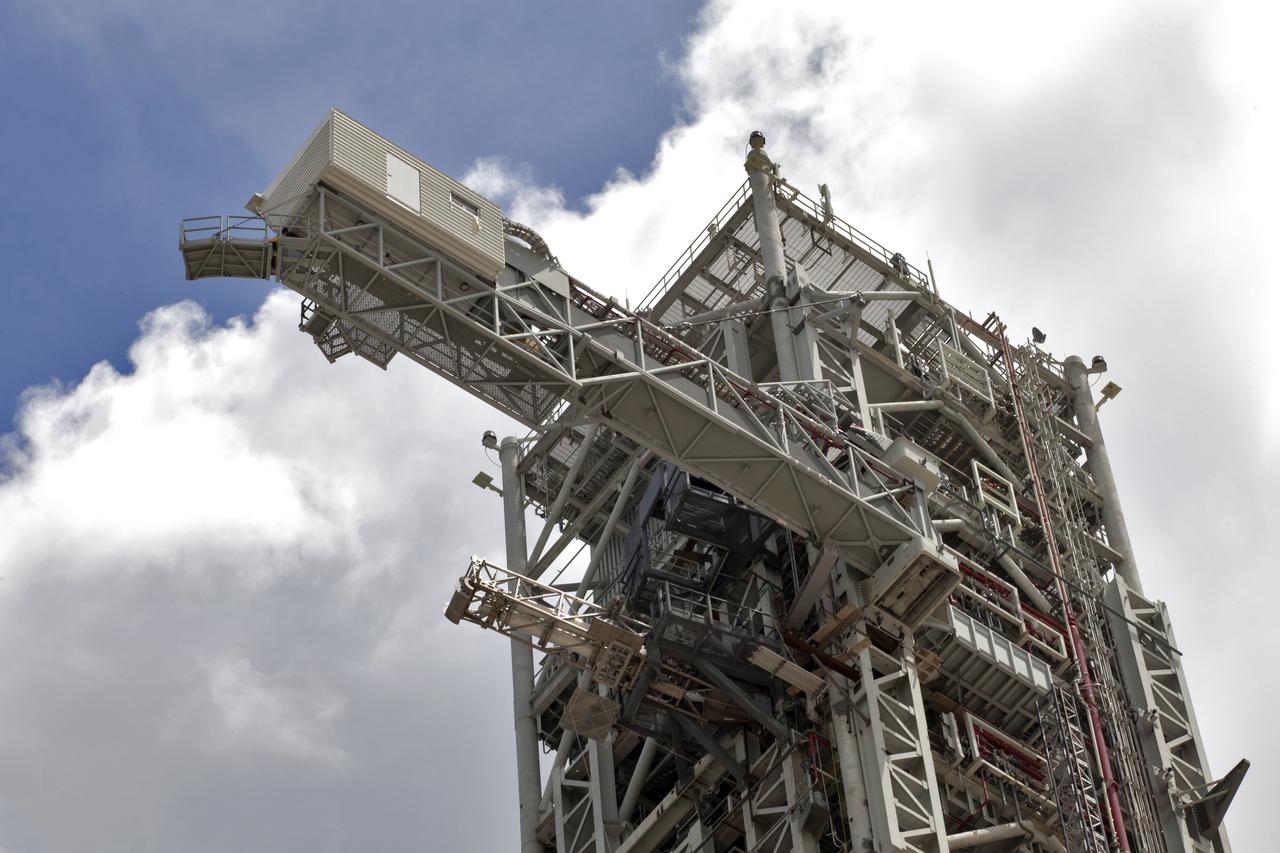
A swing test of the Orion crew access arm is in progress on the mobile launcher at NASA's Kennedy Space Center in Florida, on Aug. 21, 2018. The crew access arm is located at about the 274-foot level on the mobile launcher tower. It will rotate from its retracted position and interface with the Orion crew hatch location to provide entry to the Orion crew module. Exploration Ground Systems extended all of the launch umbilicals on the ML tower to test their functionality before the mobile launcher, atop crawler-transporter 2, is moved to Launch Pad 39B and the Vehicle Assembly Building.
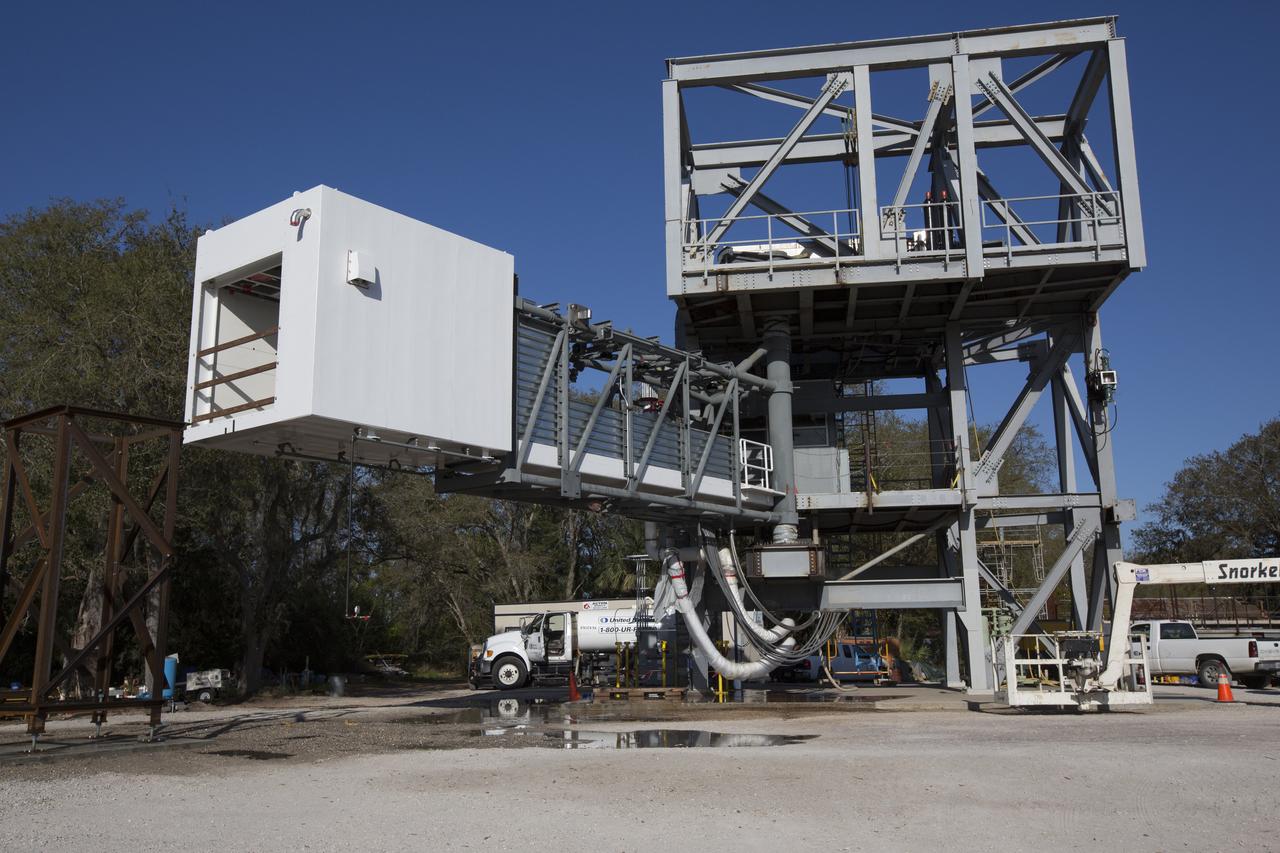
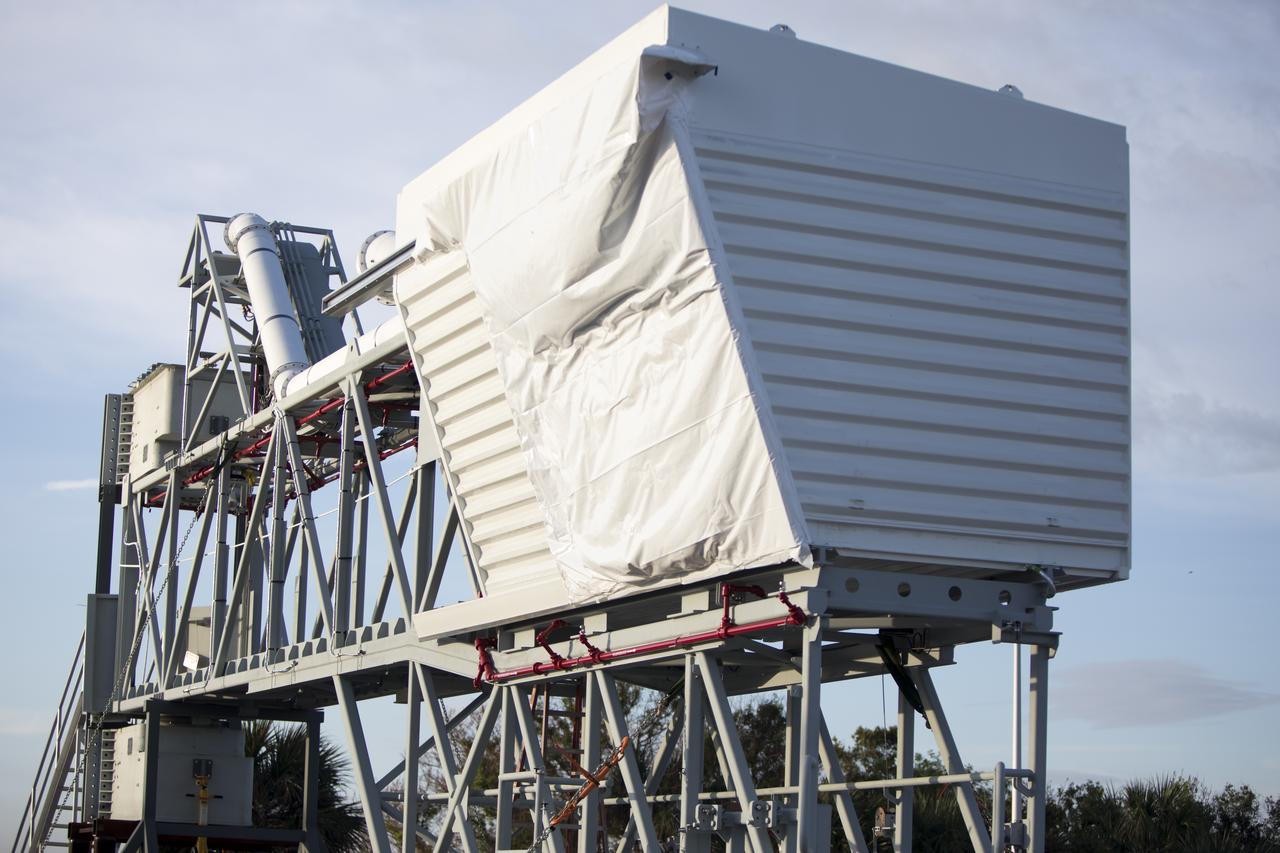
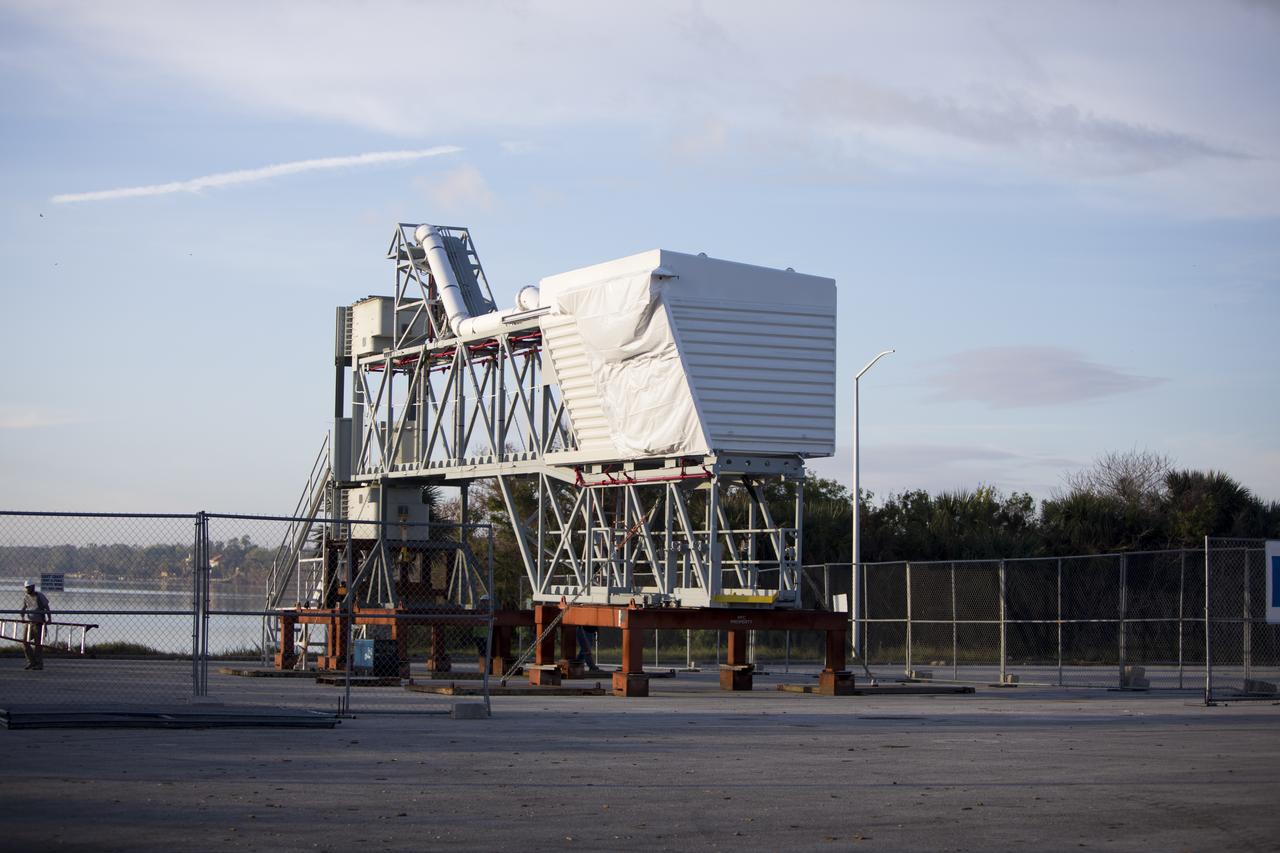
The Crew Access Arm is seen following a water deluge systems test March 23 at a construction yard near NASA's Kennedy Space Center in Florida. The arm is being tested before being installed on Space Launch Complex 41 Crew Access Tower later this year. It will be used as a bridge by astronauts to board Boeing's CST-100 Starliner spacecraft as it stands on the launch pad atop a United Launch Alliance Atlas V rocket.
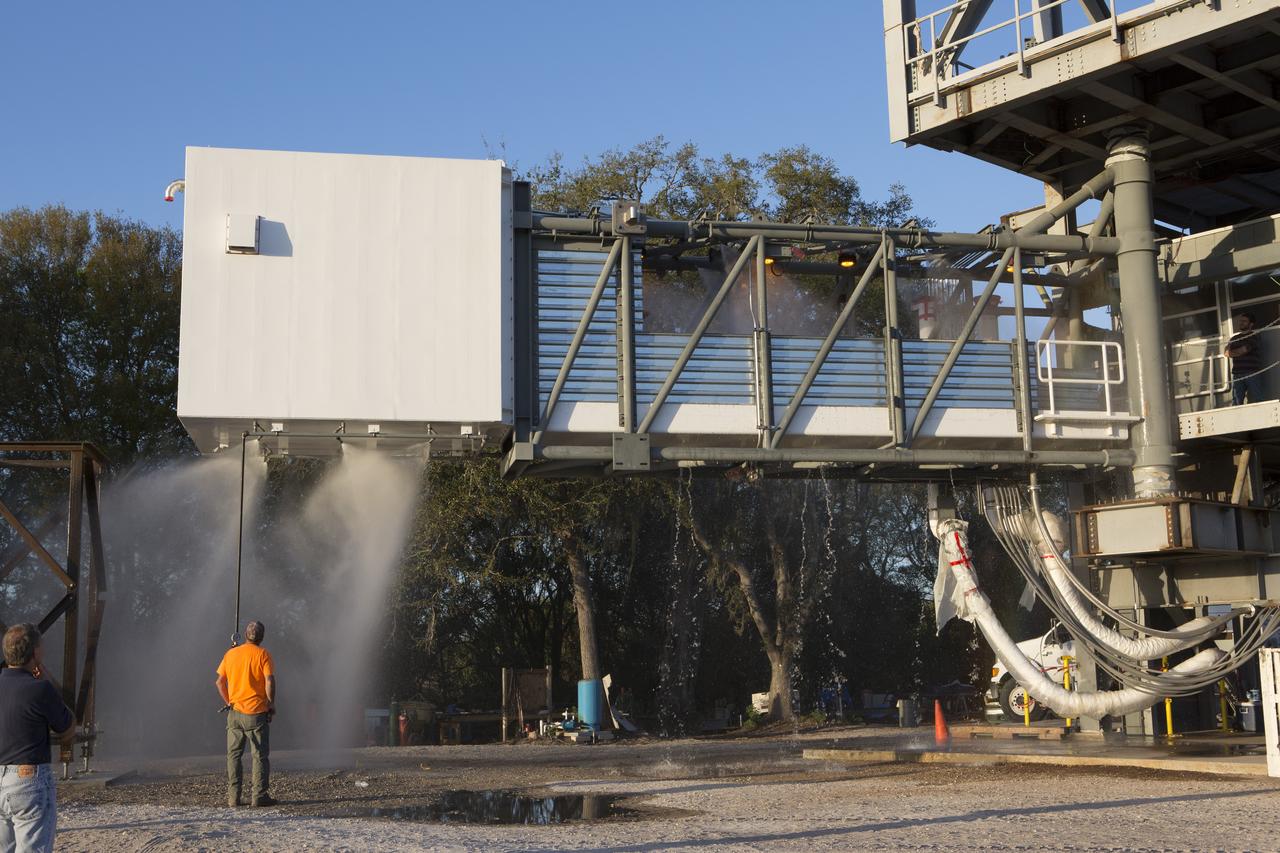
Water sprays on the Crew Access Arm during a deluge systems test March 23 at a construction yard near NASA's Kennedy Space Center in Florida. The arm is being tested before being installed on Space Launch Complex 41 Crew Access Tower later this year. It will be used as a bridge by astronauts to board Boeing's CST-100 Starliner spacecraft as it stands on the launch pad atop a United Launch Alliance Atlas V rocket.

The walkway portion of the Crew Access Arm is seen prior to a deluge systems test March 23 at a construction yard near NASA's Kennedy Space Center in Florida. The arm is being tested before being installed on Space Launch Complex 41 Crew Access Tower later this year. It will be used as a bridge by astronauts to board Boeing's CST-100 Starliner spacecraft as it stands on the launch pad atop a United Launch Alliance Atlas V rocket.
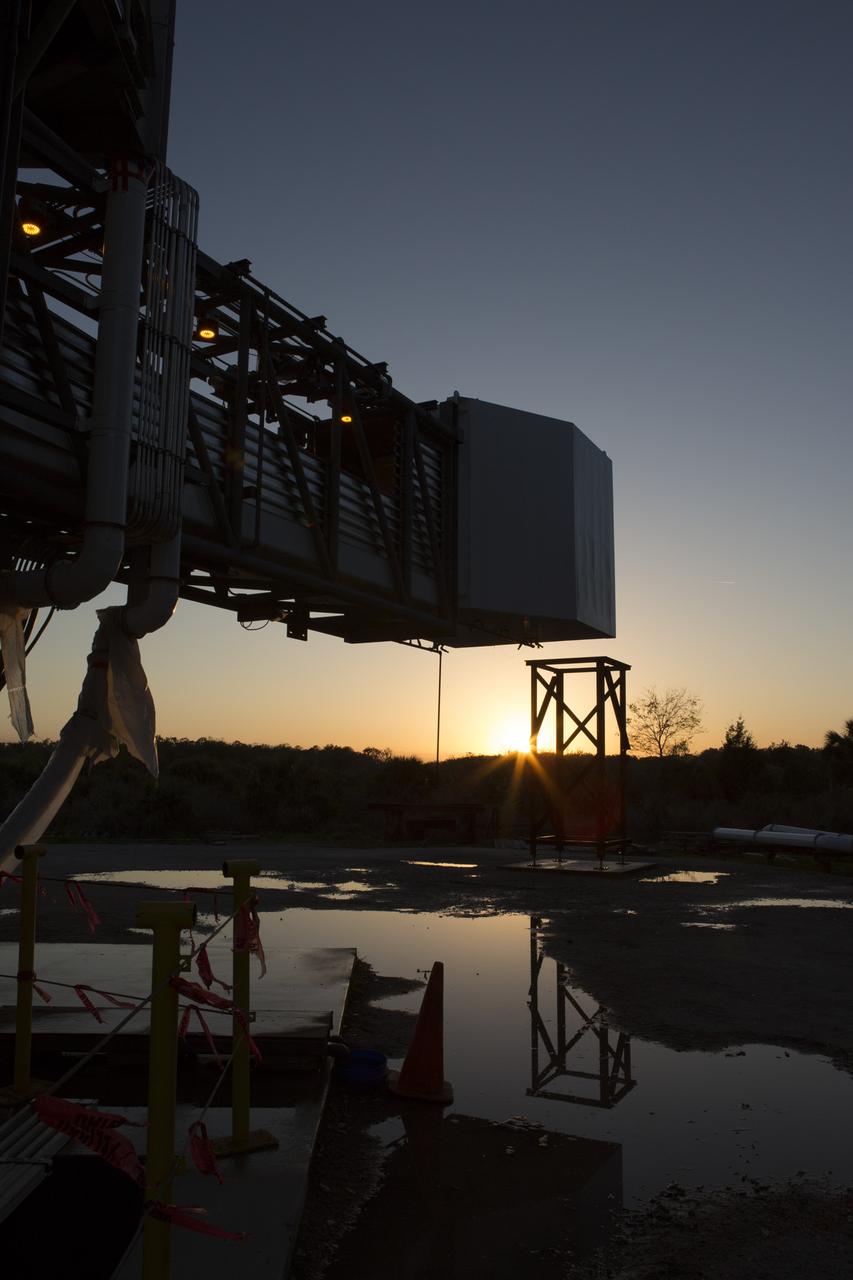
The Crew Access Arm is seen following a water deluge systems test March 23 at a construction yard near NASA's Kennedy Space Center in Florida. The arm is being tested before being installed on Space Launch Complex 41 Crew Access Tower later this year. It will be used as a bridge by astronauts to board Boeing's CST-100 Starliner spacecraft as it stands on the launch pad atop a United Launch Alliance Atlas V rocket.
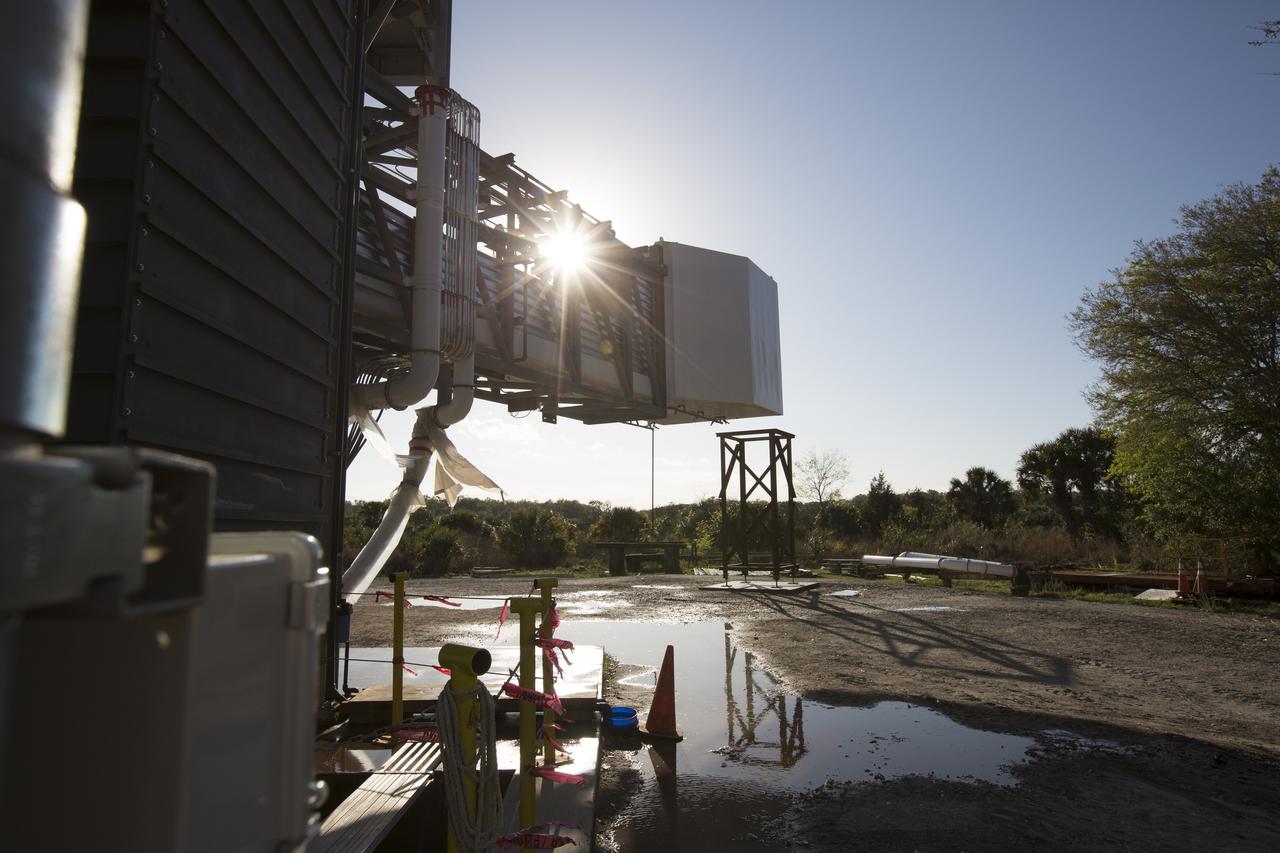
The Crew Access Arm is seen following a water deluge systems test March 23 at a construction yard near NASA's Kennedy Space Center in Florida. The arm is being tested before being installed on Space Launch Complex 41 Crew Access Tower later this year. It will be used as a bridge by astronauts to board Boeing's CST-100 Starliner spacecraft as it stands on the launch pad atop a United Launch Alliance Atlas V rocket.

Water sprays on the Crew Access Arm during a deluge systems test March 23 at a construction yard near NASA's Kennedy Space Center in Florida. The arm is being tested before being installed on Space Launch Complex 41 Crew Access Tower later this year. It will be used as a bridge by astronauts to board Boeing's CST-100 Starliner spacecraft as it stands on the launch pad atop a United Launch Alliance Atlas V rocket.
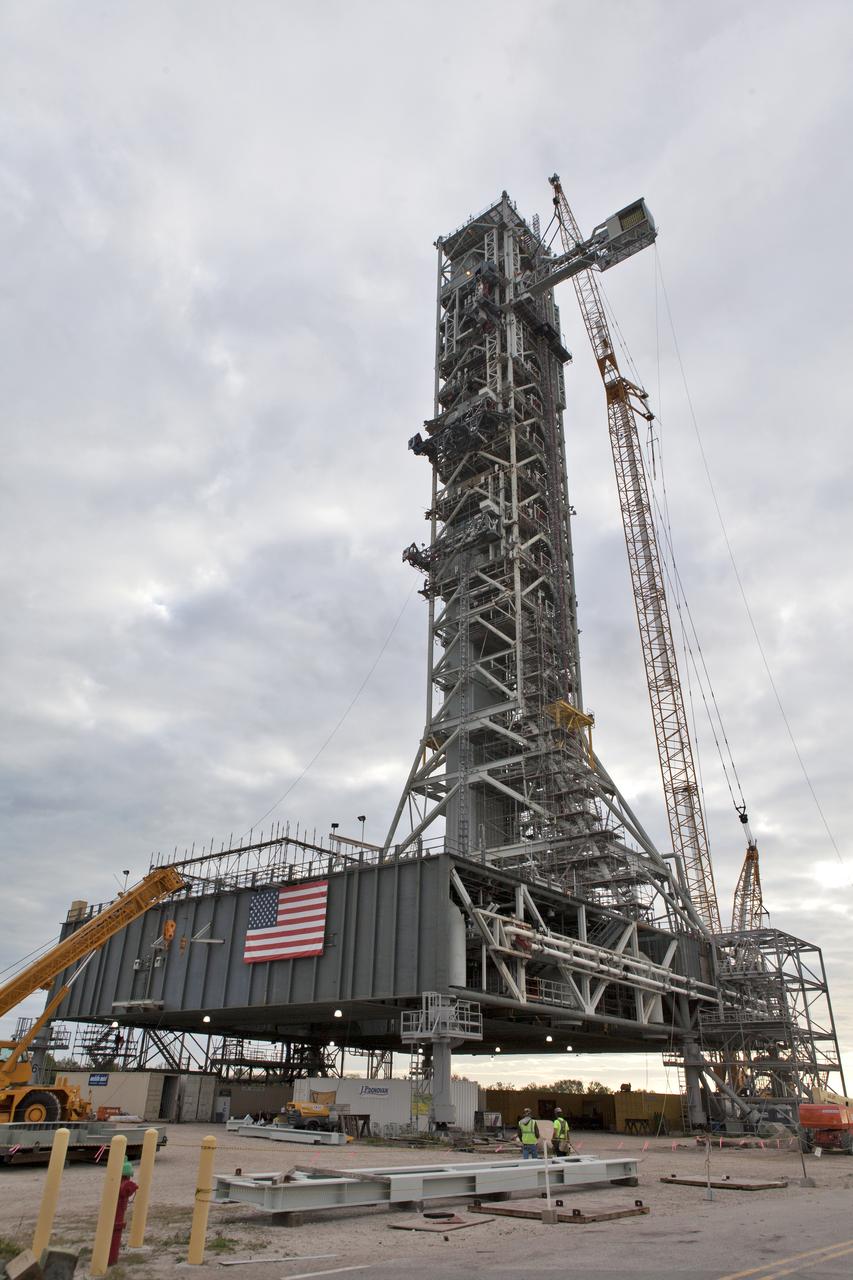
At NASA's Kennedy Space Center in Florida, a crane positions the Orion crew access arm (CAA) so it can be attached to the mobile launcher (ML). The arm will be installed at about the 274-foot level on the ML tower. NASA's Exploration Ground Systems organization has been overseeing installation of umbilicals and other launch accessories on the 380-foot-tall ML in preparation for stacking the first launch of the Space launch System (SLS), rocket with an Orion spacecraft. The CAA is designed to rotate from its retracted position and line up with Orion's crew hatch providing entry for astronauts and technicians.
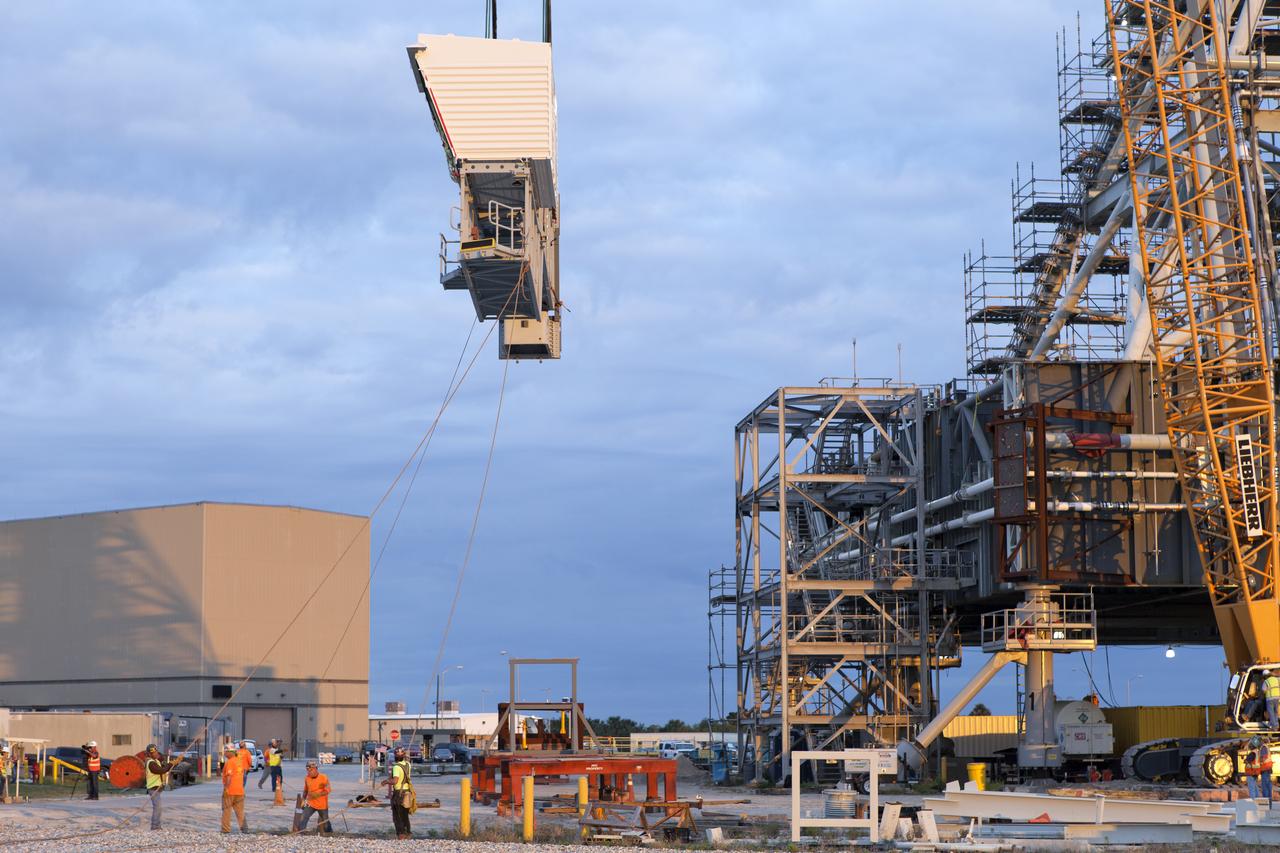
At NASA's Kennedy Space Center in Florida, a crane lifts the Orion crew access arm (CAA) so it can be attached to the mobile launcher (ML). The arm will be installed at about the 274-foot level on the ML tower. NASA's Exploration Ground Systems organization has been overseeing installation of umbilicals and other launch accessories on the 380-foot-tall ML in preparation for stacking the first launch of the Space launch System (SLS), rocket with an Orion spacecraft. The CAA is designed to rotate from its retracted position and line up with Orion's crew hatch providing entry for astronauts and technicians.
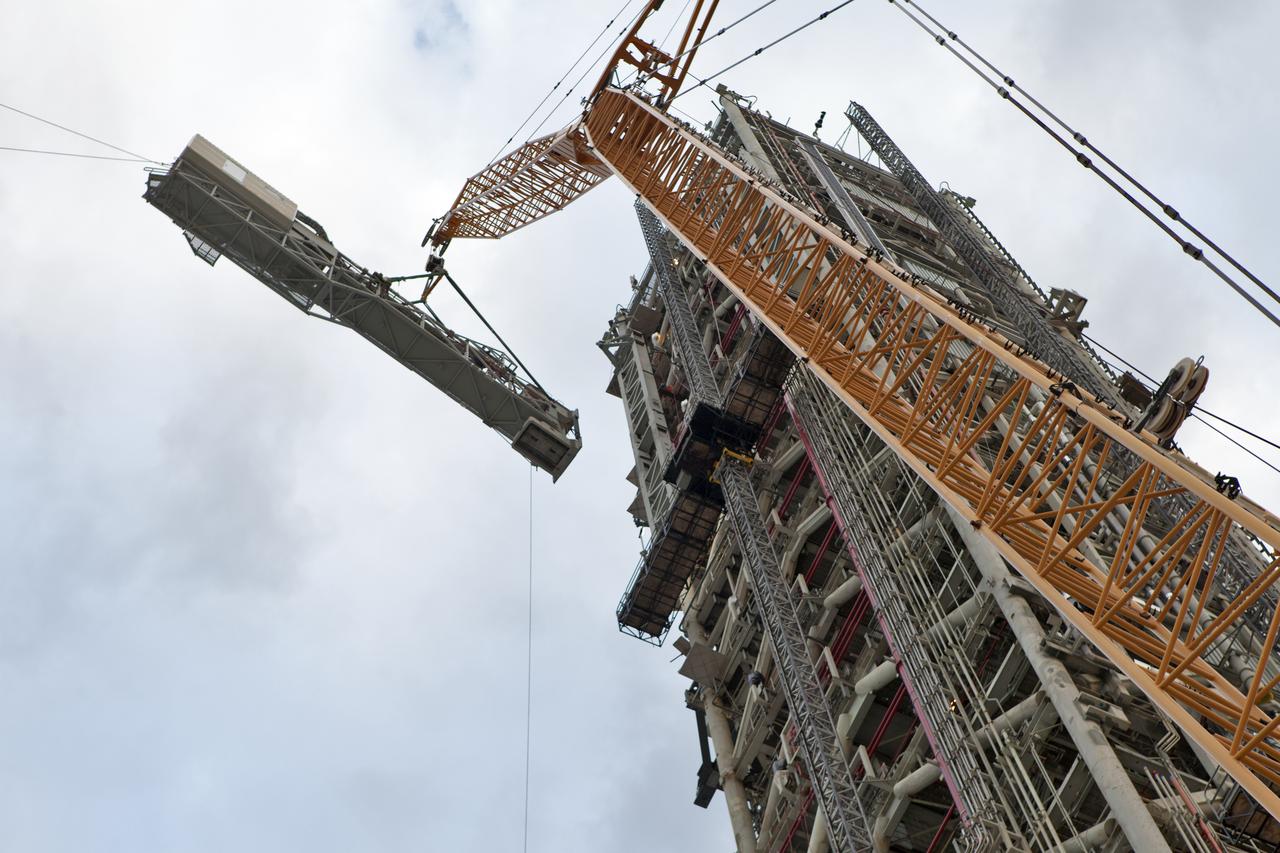
At NASA's Kennedy Space Center in Florida, a crane lifts the Orion crew access arm (CAA) so it can be attached to the mobile launcher (ML). The arm will be installed at about the 274-foot level on the ML tower. NASA's Exploration Ground Systems organization has been overseeing installation of umbilicals and other launch accessories on the 380-foot-tall ML in preparation for stacking the first launch of the Space launch System (SLS), rocket with an Orion spacecraft. The CAA is designed to rotate from its retracted position and line up with Orion's crew hatch providing entry for astronauts and technicians.
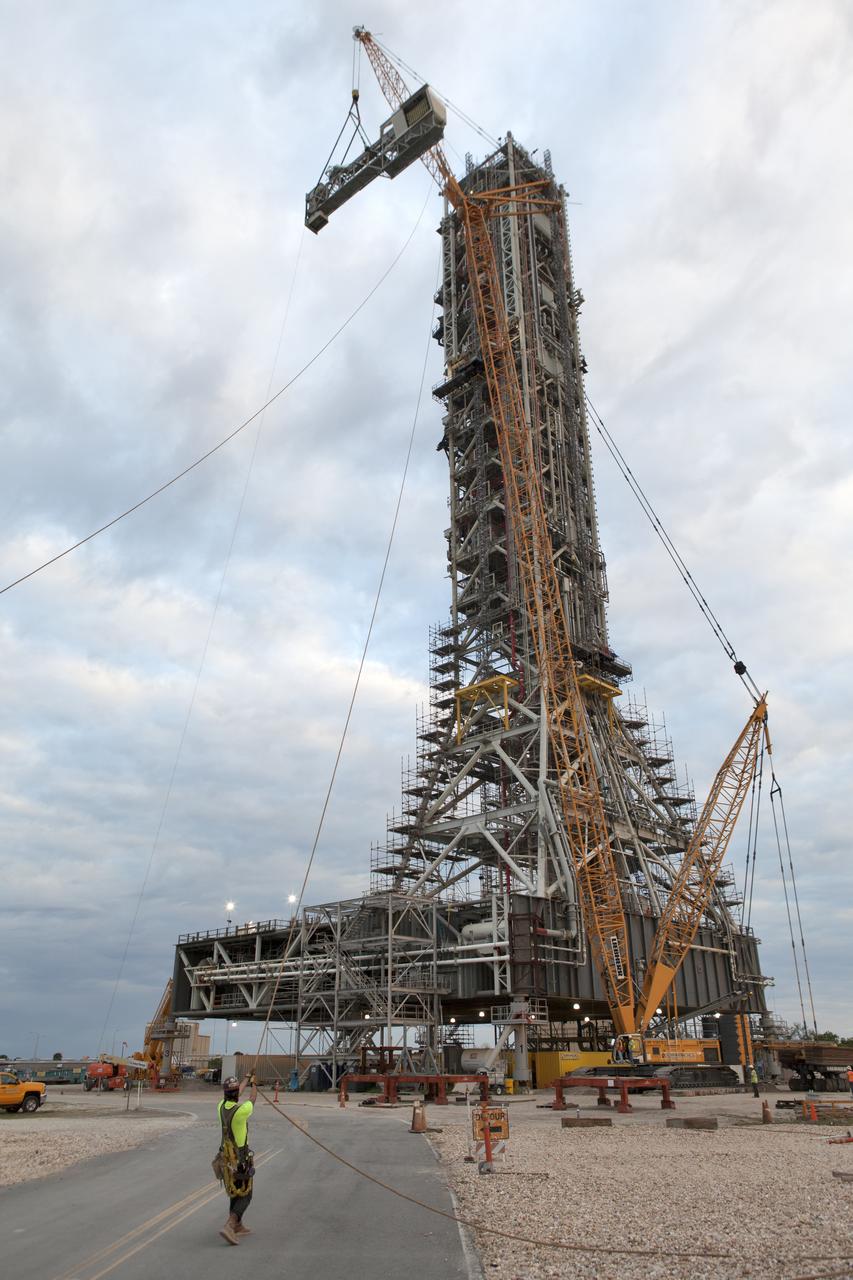
At NASA's Kennedy Space Center in Florida, a crane lifts the Orion crew access arm (CAA) so it can be attached to the mobile launcher (ML). The arm will be installed at about the 274-foot level on the ML tower. NASA's Exploration Ground Systems organization has been overseeing installation of umbilicals and other launch accessories on the 380-foot-tall ML in preparation for stacking the first launch of the Space launch System (SLS), rocket with an Orion spacecraft. The CAA is designed to rotate from its retracted position and line up with Orion's crew hatch providing entry for astronauts and technicians.
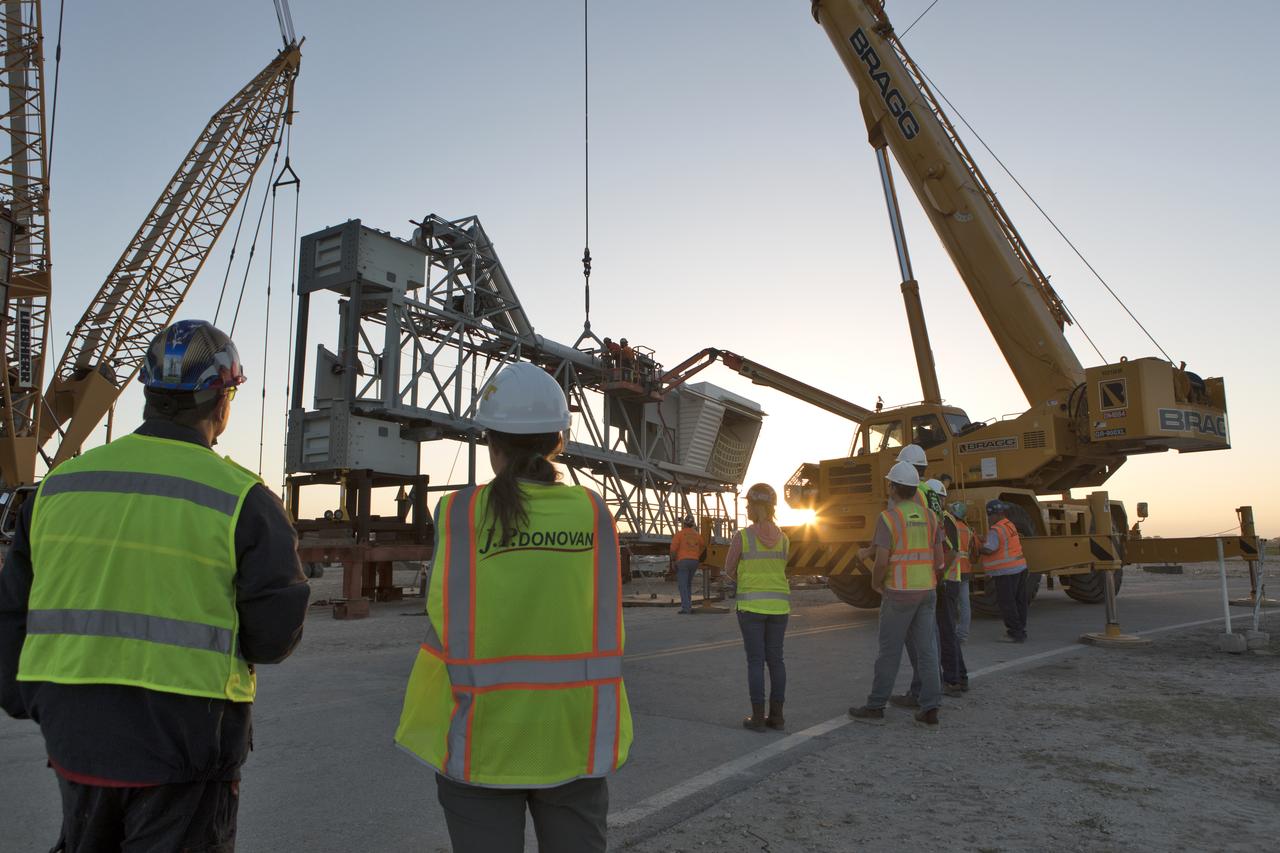
Under the watchful eye of technicians and engineers, a crane is prepared to lift the Orion crew access arm (CAA) so it can be attached to the mobile launcher (ML) at NASA's Kennedy Space Center in Florida. The arm will be installed at about the 274-foot level on the ML tower. NASA's Exploration Ground Systems organization has been overseeing installation of umbilicals and other launch accessories on the 380-foot-tall ML in preparation for stacking the first launch of the Space launch System, or SLS, rocket with an Orion spacecraft. The CAA is designed to rotate from its retracted position and line up with Orion's crew hatch providing entry for astronauts and technicians.
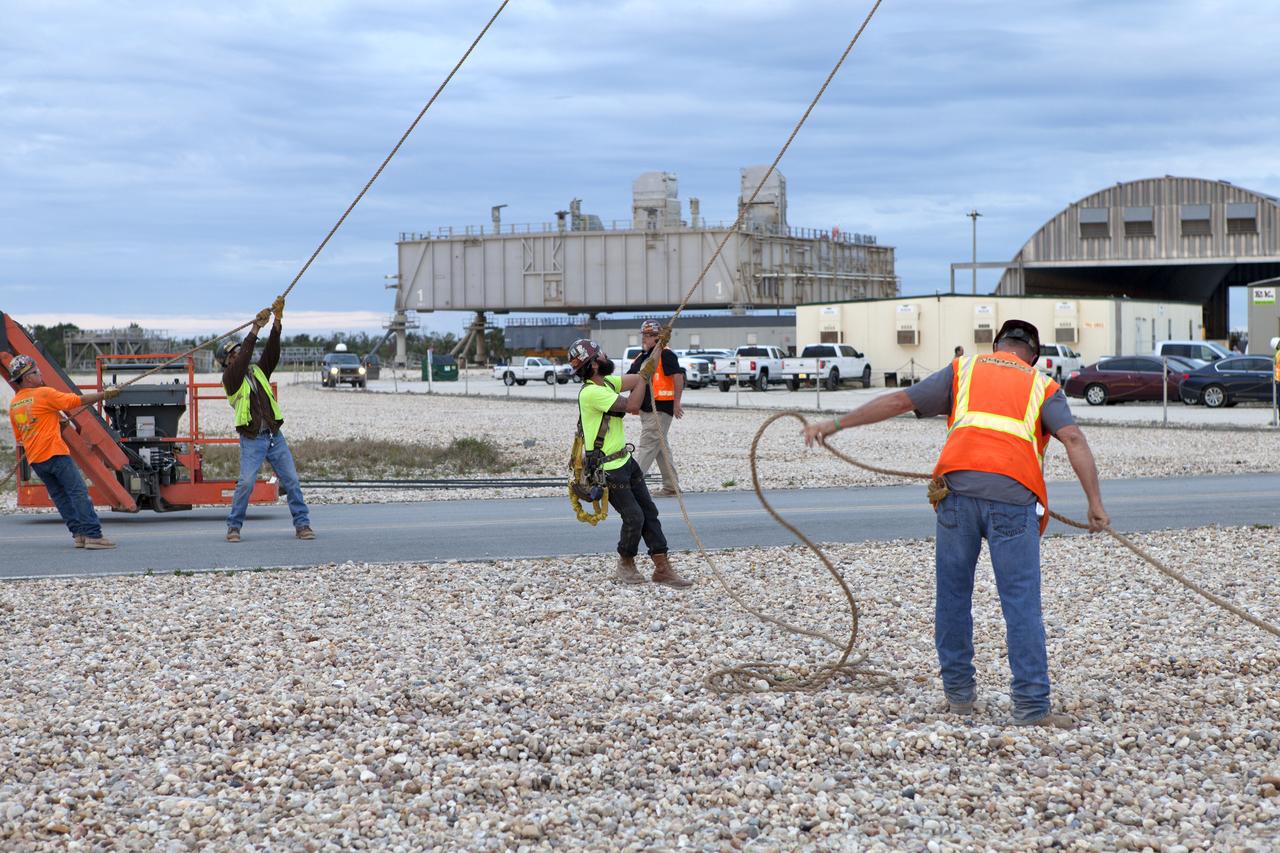
At NASA's Kennedy Space Center in Florida, technicians assist as a crane lifts the Orion crew access arm (CAA) so it can be attached to the mobile launcher (ML). The arm will be installed at about the 274-foot level on the ML tower. NASA's Exploration Ground Systems organization has been overseeing installation of umbilicals and other launch accessories on the 380-foot-tall ML in preparation for stacking the first launch of the Space launch System (SLS), rocket with an Orion spacecraft. The CAA is designed to rotate from its retracted position and line up with Orion's crew hatch providing entry for astronauts and technicians.
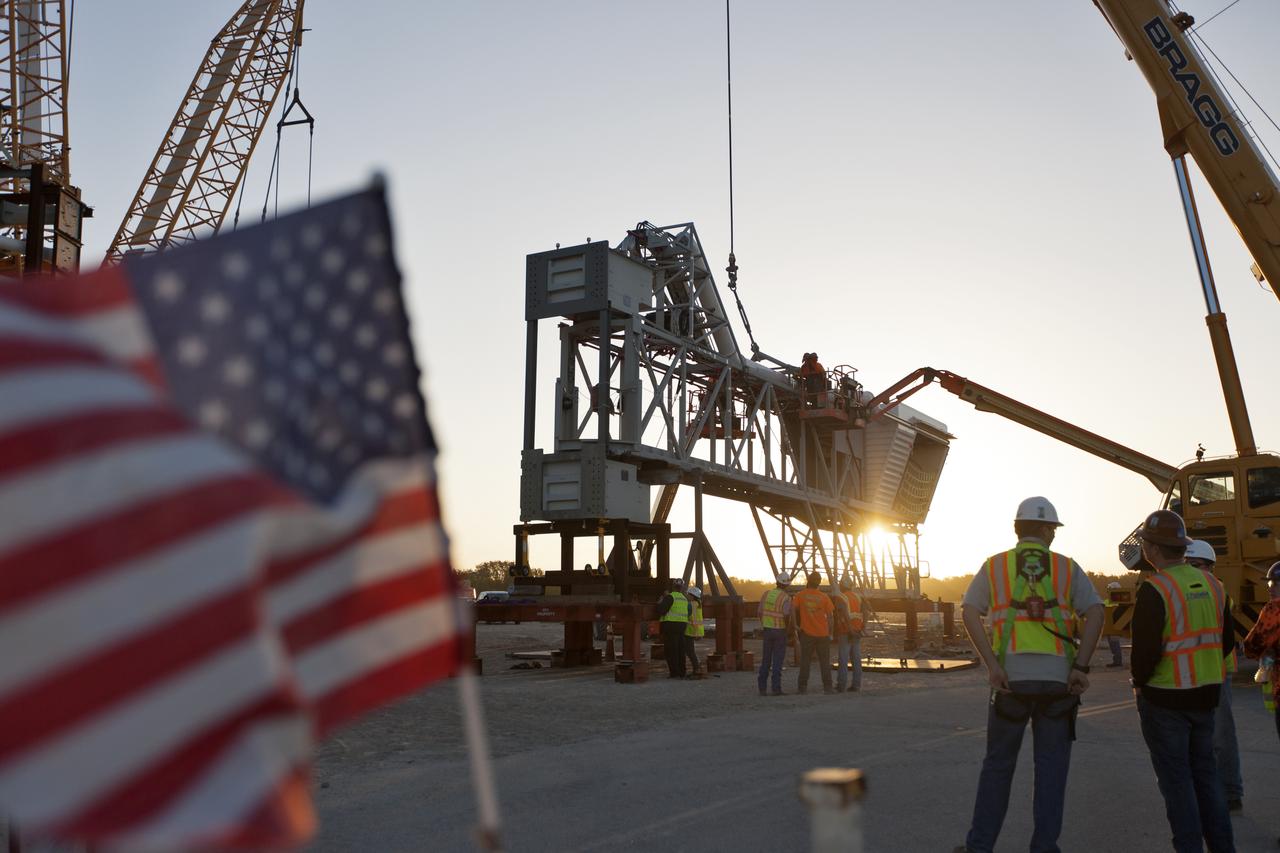
Under the watchful eye of technicians and engineers, a crane is prepared to lift the Orion crew access arm (CAA) so it can be attached to the mobile launcher (ML) at NASA's Kennedy Space Center in Florida. The arm will be installed at about the 274-foot level on the ML tower. NASA's Exploration Ground Systems organization has been overseeing installation of umbilicals and other launch accessories on the 380-foot-tall ML in preparation for stacking the first launch of the Space launch System, or SLS, rocket with an Orion spacecraft. The CAA is designed to rotate from its retracted position and line up with Orion's crew hatch providing entry for astronauts and technicians.
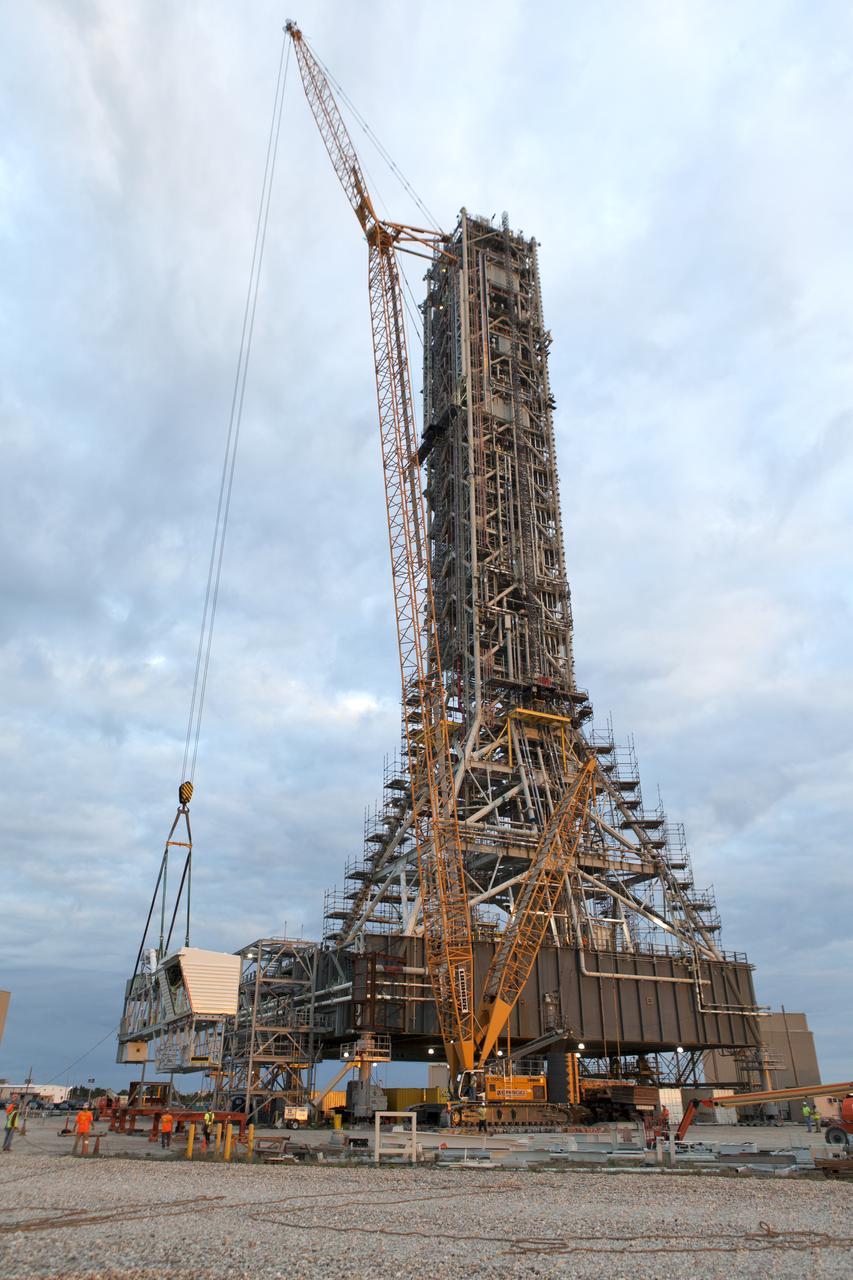
At NASA's Kennedy Space Center in Florida, a crane begins lifting the Orion crew access arm (CAA) so it can be attached to the mobile launcher (ML). The arm will be installed at about the 274-foot level on the ML tower. NASA's Exploration Ground Systems organization has been overseeing installation of umbilicals and other launch accessories on the 380-foot-tall ML in preparation for stacking the first launch of the Space launch System (SLS), rocket with an Orion spacecraft. The CAA is designed to rotate from its retracted position and line up with Orion's crew hatch providing entry for astronauts and technicians.
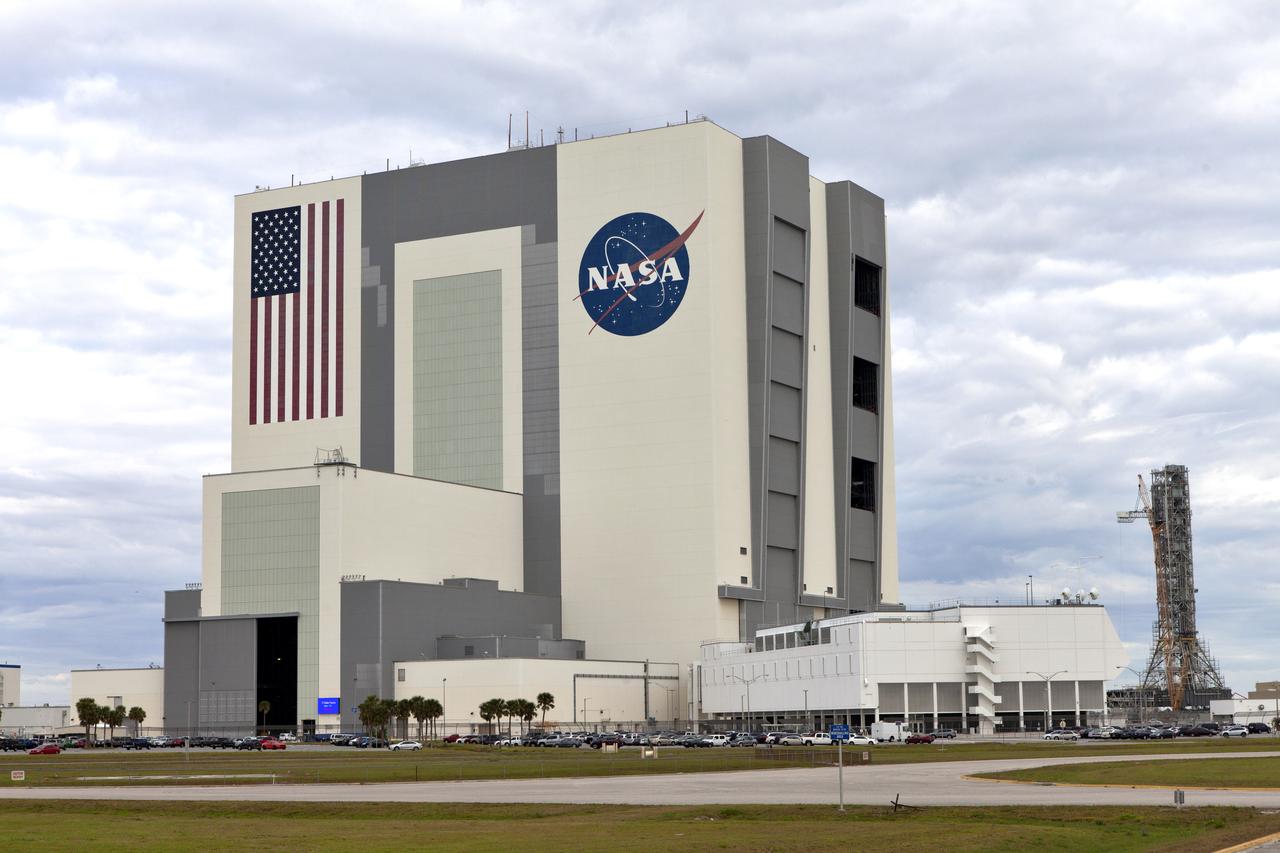
Seen to the right of the iconic Vehicle Assembly Building at NASA's Kennedy Space Center in Florida, a crane positions the Orion crew access arm (CAA) so it can be attached to the mobile launcher (ML). The arm will be installed at about the 274-foot level on the ML tower. NASA's Exploration Ground Systems organization has been overseeing installation of umbilicals and other launch accessories on the 380-foot-tall ML in preparation for stacking the first launch of the Space launch System (SLS), rocket with an Orion spacecraft. The CAA is designed to rotate from its retracted position and line up with Orion's crew hatch providing entry for astronauts and technicians.
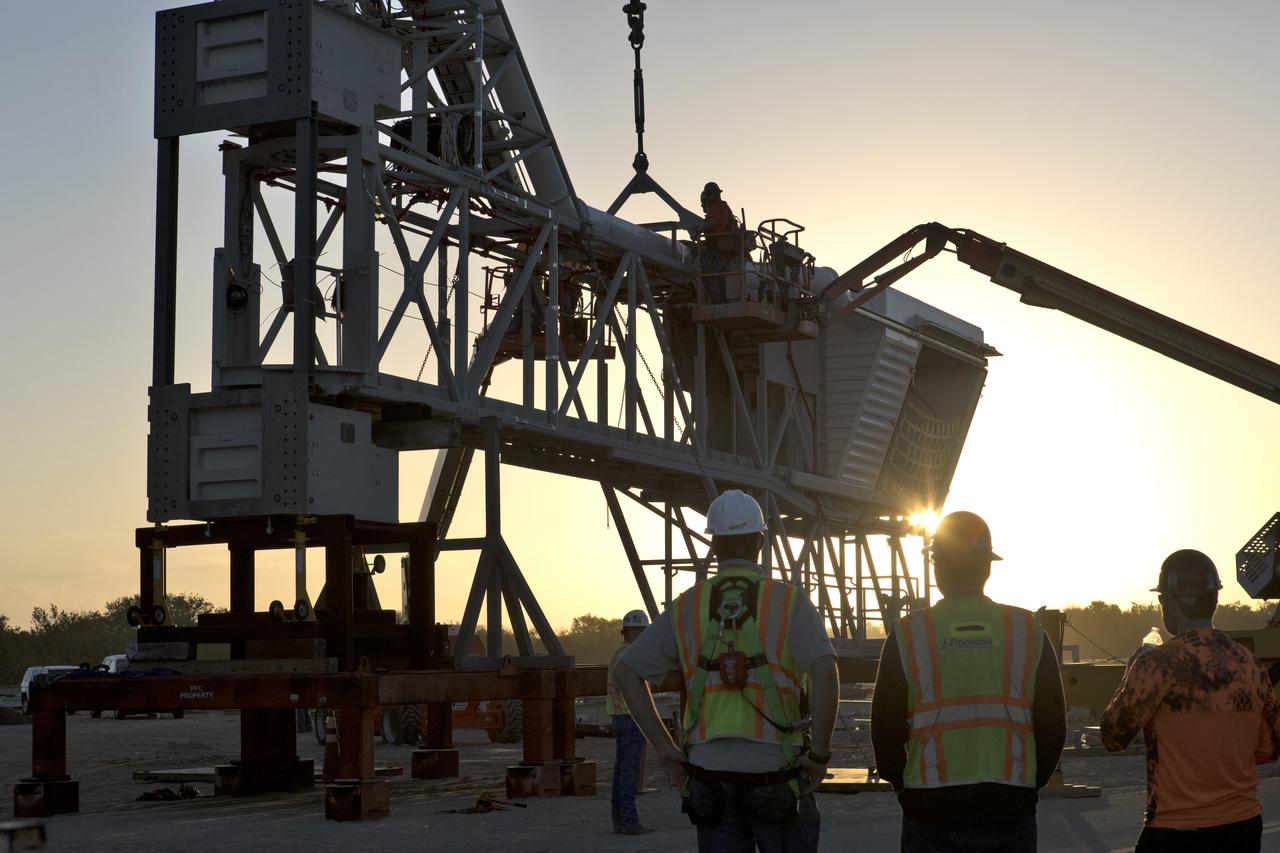
Under the watchful eye of technicians and engineers, a crane is prepared to lift the Orion crew access arm (CAA) so it can be attached to the mobile launcher (ML) at NASA's Kennedy Space Center in Florida. The arm will be installed at about the 274-foot level on the ML tower. NASA's Exploration Ground Systems organization has been overseeing installation of umbilicals and other launch accessories on the 380-foot-tall ML in preparation for stacking the first launch of the Space launch System, or SLS, rocket with an Orion spacecraft. The CAA is designed to rotate from its retracted position and line up with Orion's crew hatch providing entry for astronauts and technicians.
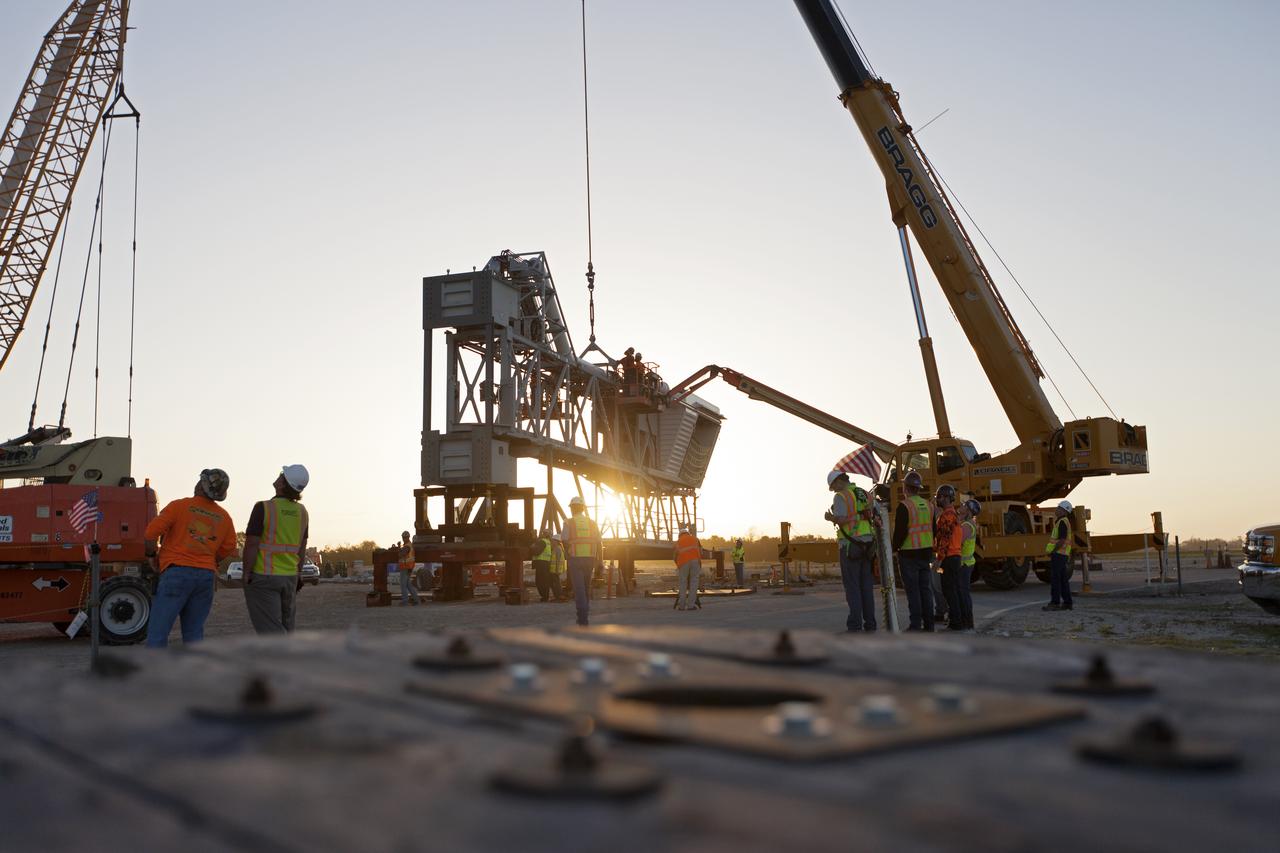
At NASA's Kennedy Space Center in Florida, a crane is prepared to lift the Orion crew access arm (CAA) so it can be attached to the mobile launcher (ML). The arm will be installed at about the 274-foot level on the ML tower. NASA's Exploration Ground Systems organization has been overseeing installation of umbilicals and other launch accessories on the 380-foot-tall ML in preparation for stacking the first launch of the Space launch System, or SLS, rocket with an Orion spacecraft. The CAA is designed to rotate from its retracted position and line up with Orion's crew hatch providing entry for astronauts and technicians.
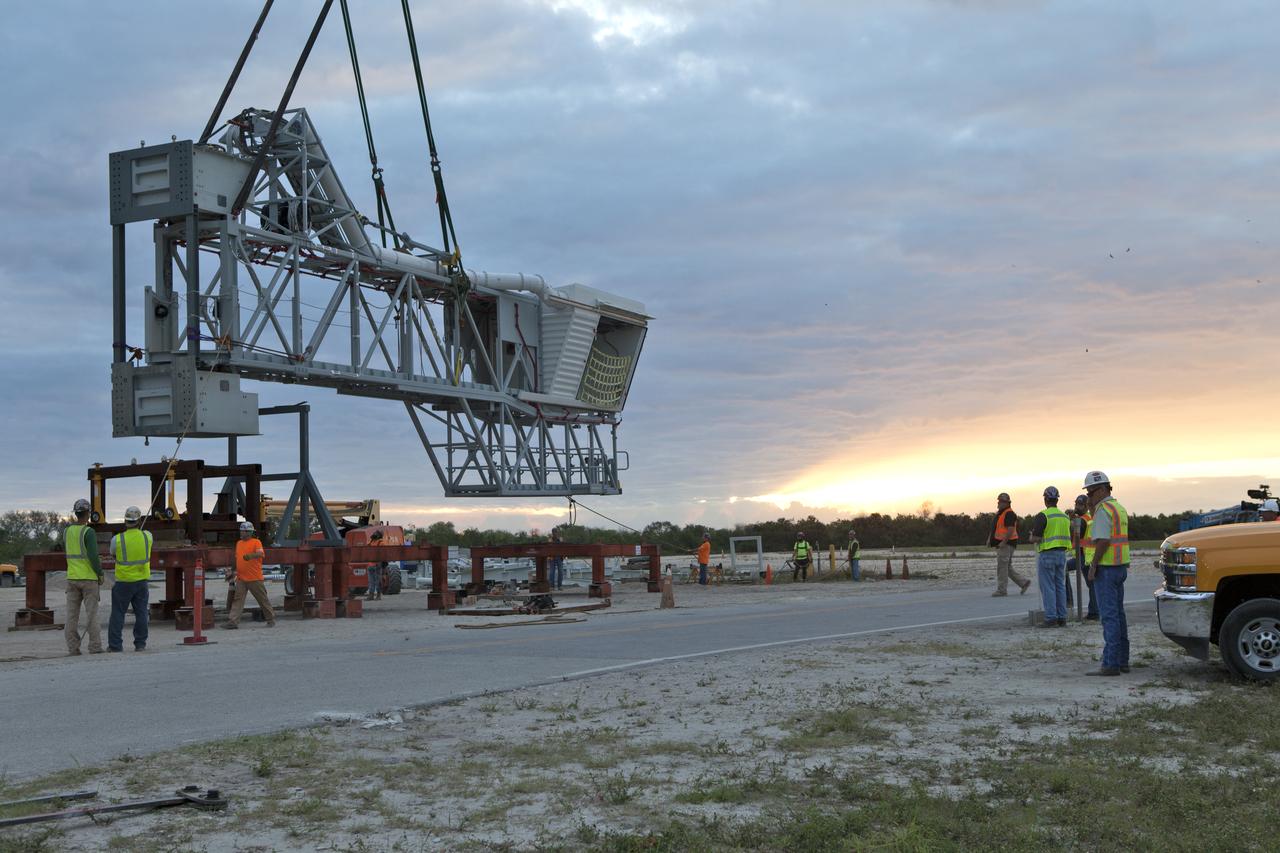
Under the watchful eye of technicians and engineers, a crane begins lifting the Orion crew access arm (CAA) so it can be attached to the mobile launcher (ML) at NASA's Kennedy Space Center in Florida. The arm will be installed at about the 274-foot level on the ML tower. NASA's Exploration Ground Systems organization has been overseeing installation of umbilicals and other launch accessories on the 380-foot-tall ML in preparation for stacking the first launch of the Space launch System (SLS), rocket with an Orion spacecraft. The CAA is designed to rotate from its retracted position and line up with Orion's crew hatch providing entry for astronauts and technicians.
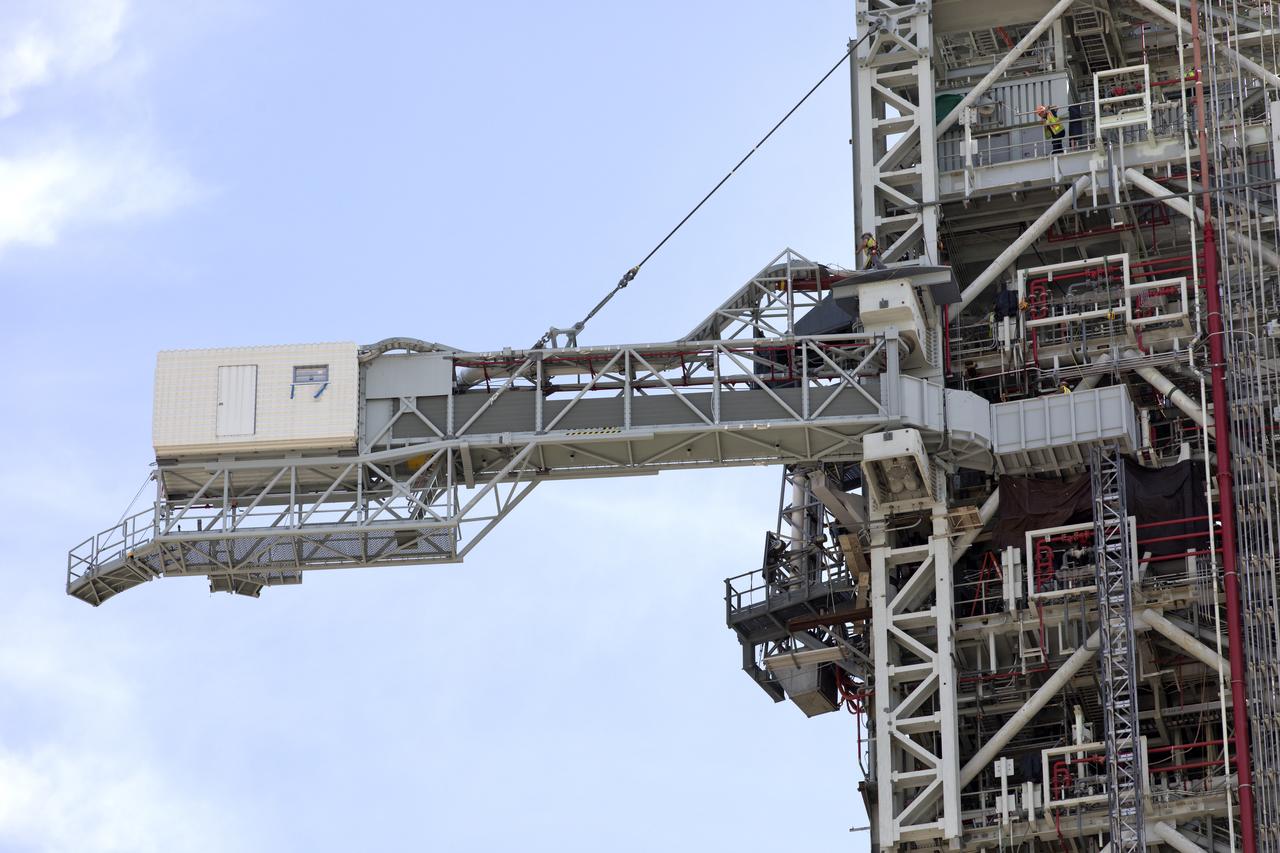
Technicians and engineers with Exploration Ground Systems at the NASA's Kennedy Space Center in Florida recently tested the Crew Access Arm (CAA) that was added on the mobile launcher being prepared to support the agency’s Orion spacecraft and Space Launch System rocket. The crucial test confirmed the functionality and integrity of the CAA. The CAA is designed to rotate from its retracted position and line up with Orion's crew hatch. The arm will provide entry and emergency egress for astronauts and technicians into and out of the Orion spacecraft.
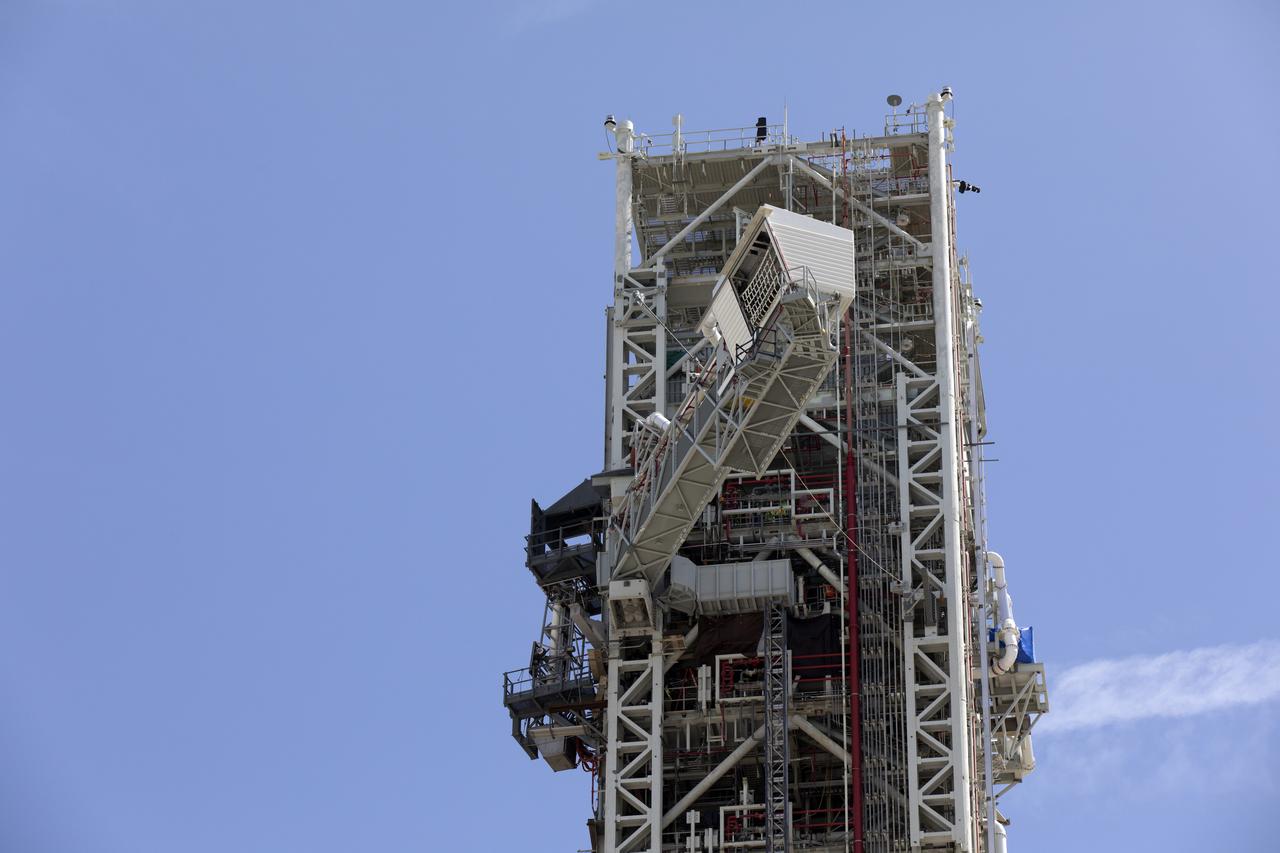
Technicians and engineers with Exploration Ground Systems at the NASA's Kennedy Space Center in Florida recently tested the Crew Access Arm (CAA) that was added on the mobile launcher being prepared to support the agency’s Orion spacecraft and Space Launch System rocket. The crucial test confirmed the functionality and integrity of the CAA. The CAA is designed to rotate from its retracted position and line up with Orion's crew hatch. The arm will provide entry and emergency egress for astronauts and technicians into and out of the Orion spacecraft.
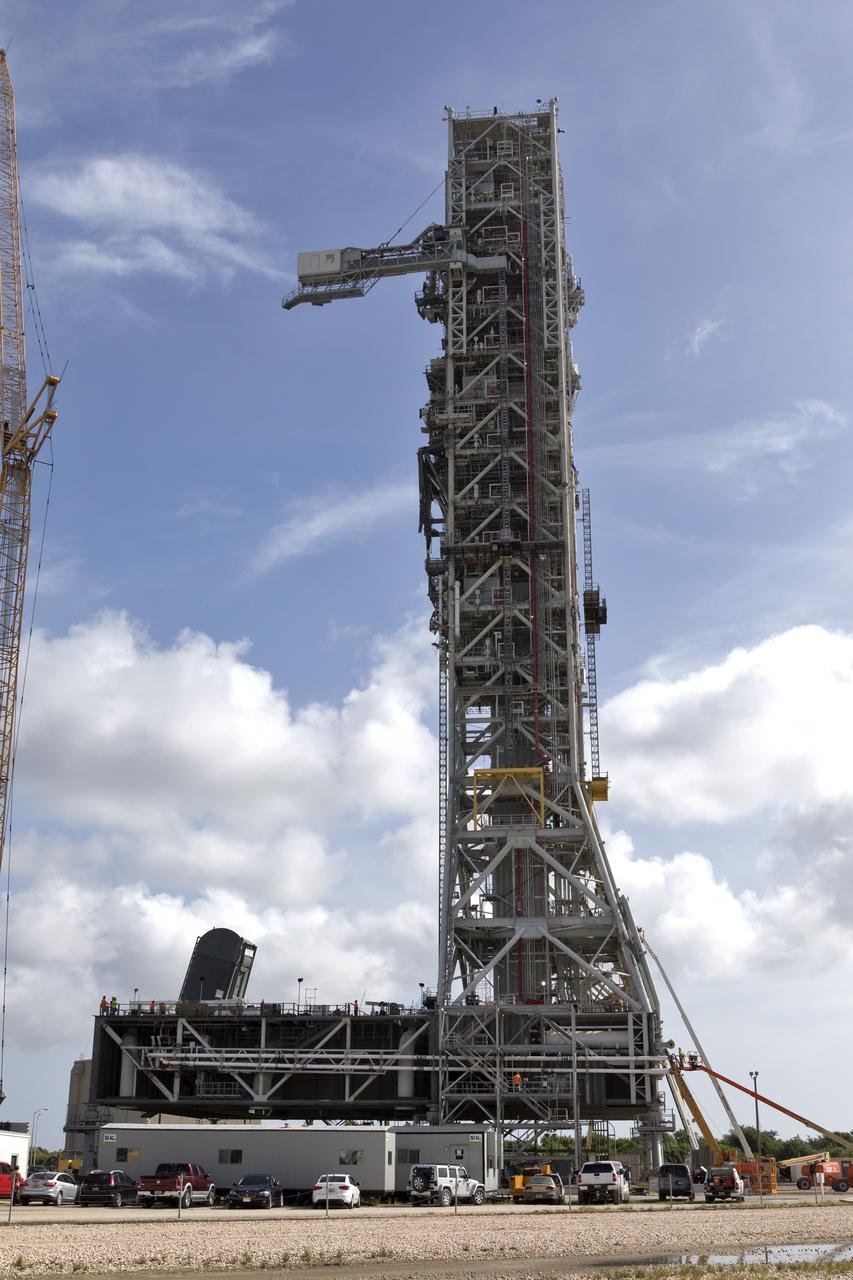
Technicians and engineers with Exploration Ground Systems at the NASA's Kennedy Space Center in Florida recently tested the Crew Access Arm (CAA) that was added on the mobile launcher being prepared to support the agency’s Orion spacecraft and Space Launch System rocket. The crucial test confirmed the functionality and integrity of the CAA. The CAA is designed to rotate from its retracted position and line up with Orion's crew hatch. The arm will provide entry and emergency egress for astronauts and technicians into and out of the Orion spacecraft.
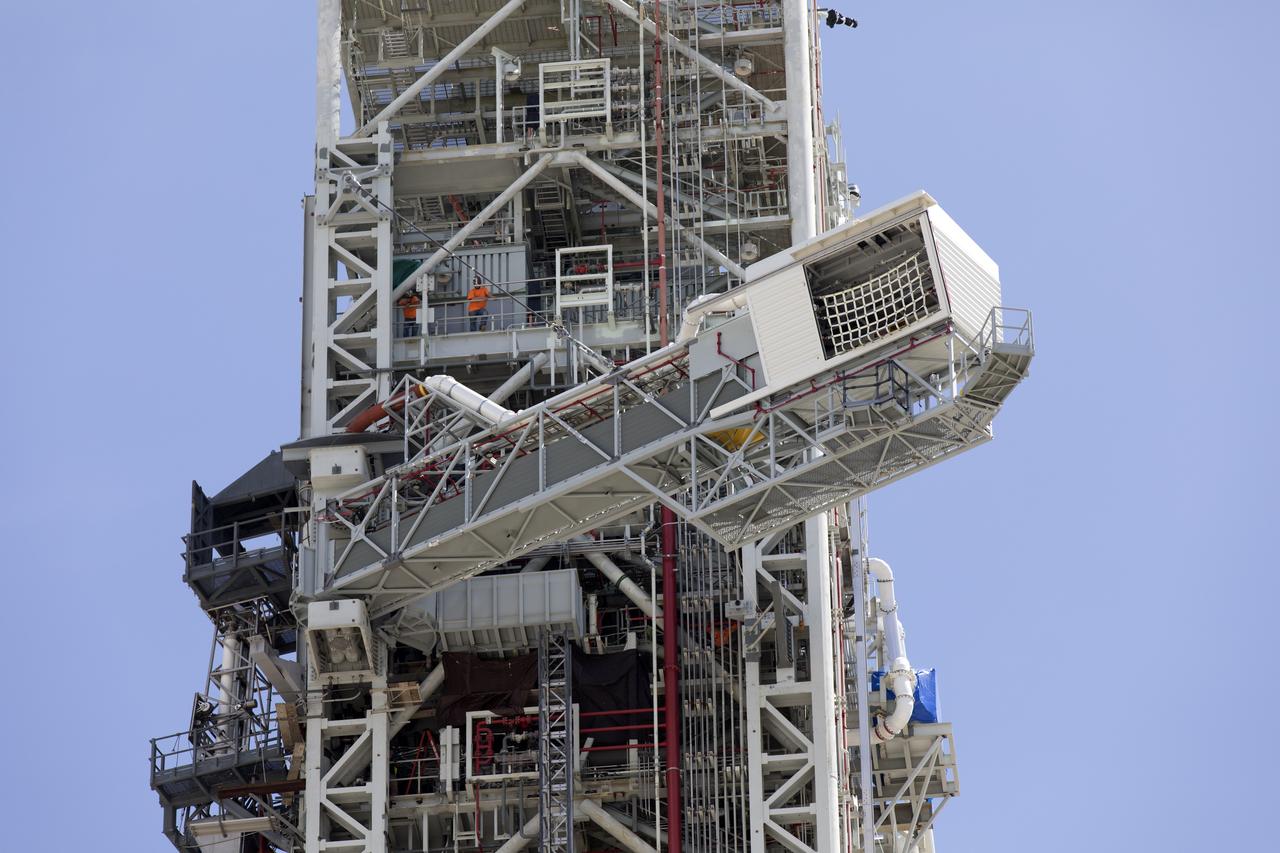
Technicians and engineers with Exploration Ground Systems at the NASA's Kennedy Space Center in Florida recently tested the Crew Access Arm (CAA) that was added on the mobile launcher being prepared to support the agency’s Orion spacecraft and Space Launch System rocket. The crucial test confirmed the functionality and integrity of the CAA. The CAA is designed to rotate from its retracted position and line up with Orion's crew hatch. The arm will provide entry and emergency egress for astronauts and technicians into and out of the Orion spacecraft.
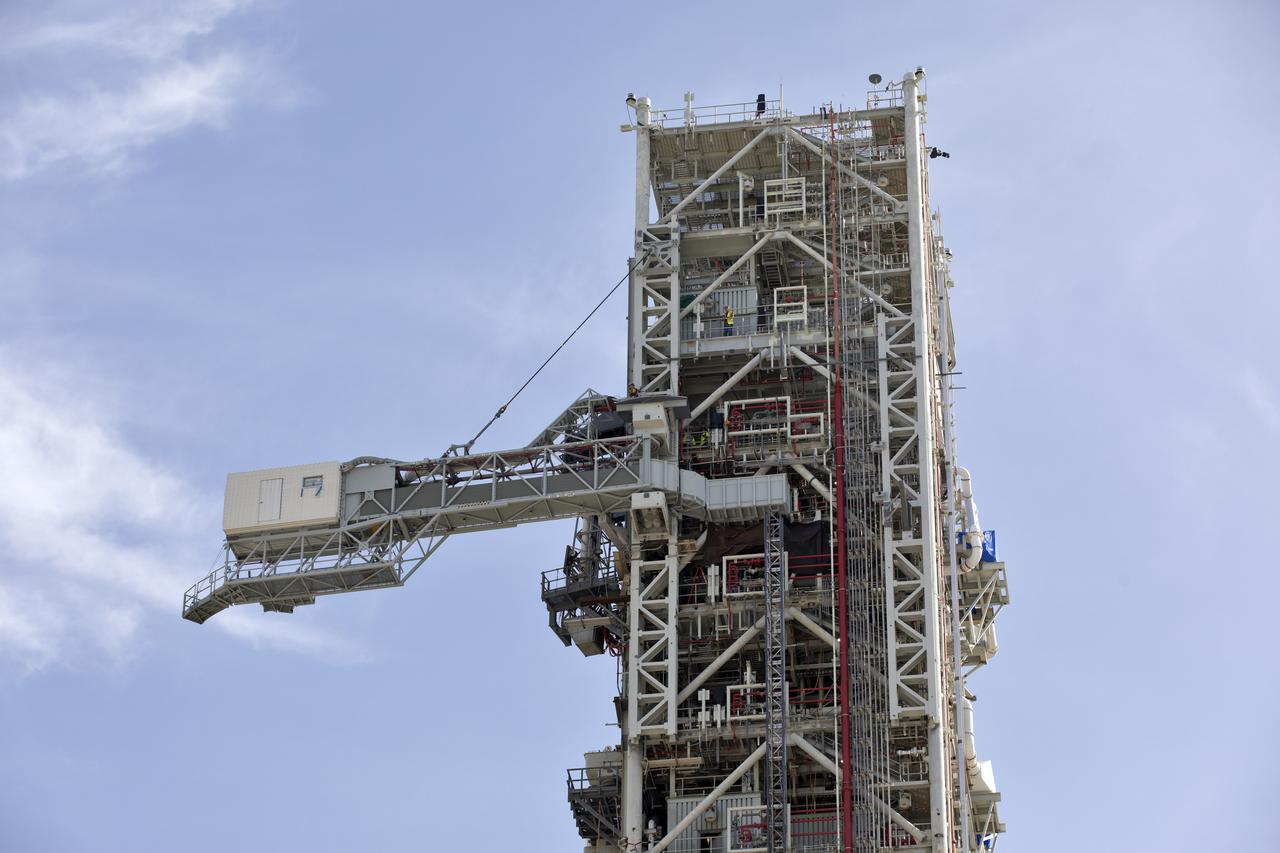
Technicians and engineers with Exploration Ground Systems at the NASA's Kennedy Space Center in Florida recently tested the Crew Access Arm (CAA) that was added on the mobile launcher being prepared to support the agency’s Orion spacecraft and Space Launch System rocket. The crucial test confirmed the functionality and integrity of the CAA. The CAA is designed to rotate from its retracted position and line up with Orion's crew hatch. The arm will provide entry and emergency egress for astronauts and technicians into and out of the Orion spacecraft.
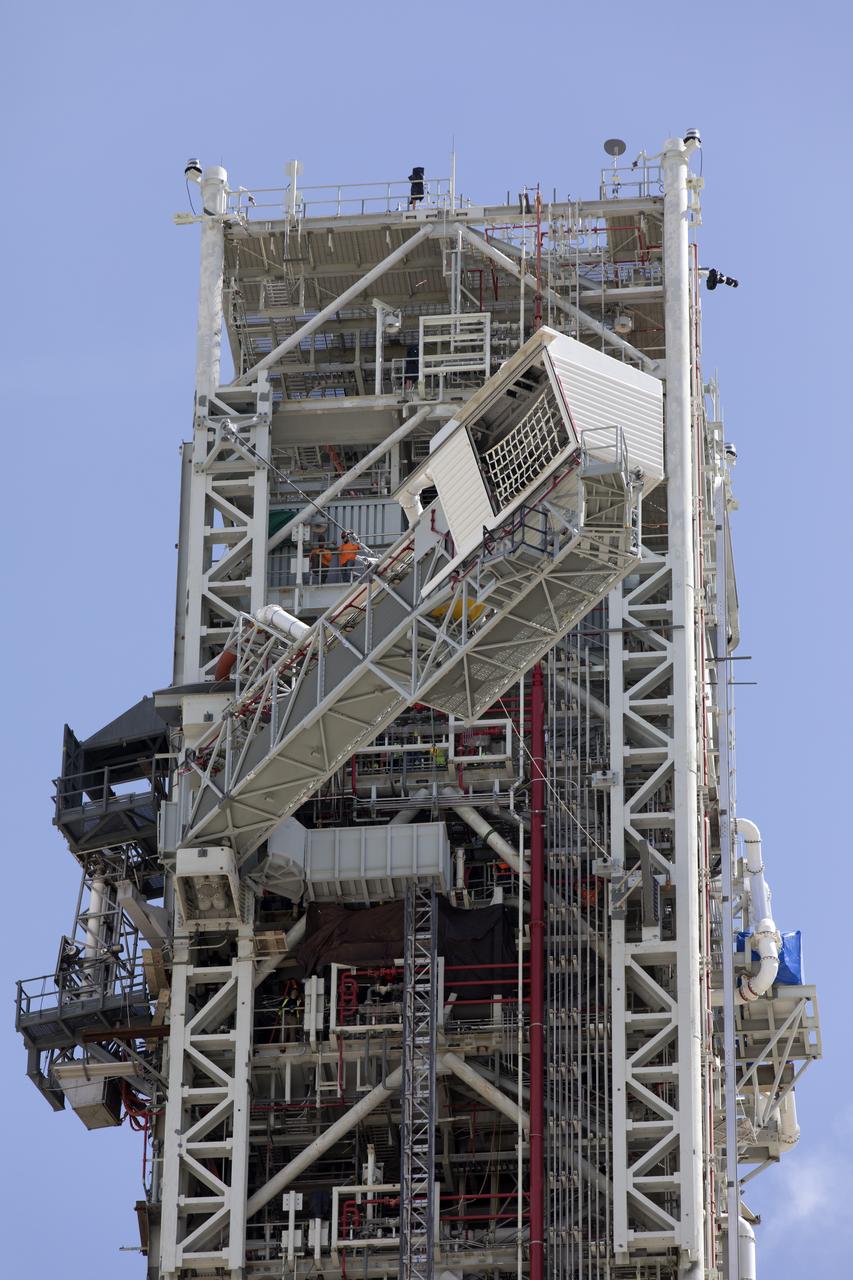
Technicians and engineers with Exploration Ground Systems at the NASA's Kennedy Space Center in Florida recently tested the Crew Access Arm (CAA) that was added on the mobile launcher being prepared to support the agency’s Orion spacecraft and Space Launch System rocket. The crucial test confirmed the functionality and integrity of the CAA. The CAA is designed to rotate from its retracted position and line up with Orion's crew hatch. The arm will provide entry and emergency egress for astronauts and technicians into and out of the Orion spacecraft.
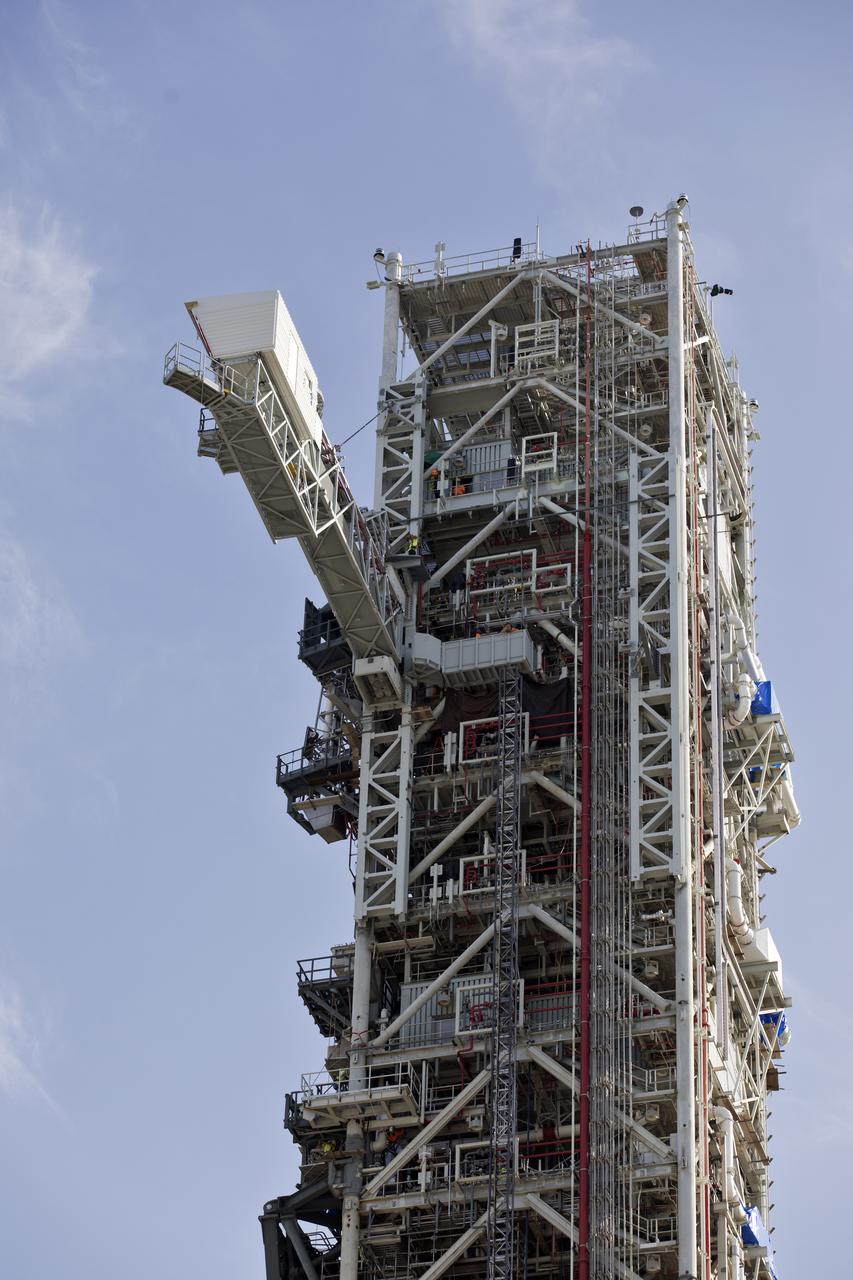
Technicians and engineers with Exploration Ground Systems at the NASA's Kennedy Space Center in Florida recently tested the Crew Access Arm (CAA) that was added on the mobile launcher being prepared to support the agency’s Orion spacecraft and Space Launch System rocket. The crucial test confirmed the functionality and integrity of the CAA. The CAA is designed to rotate from its retracted position and line up with Orion's crew hatch. The arm will provide entry and emergency egress for astronauts and technicians into and out of the Orion spacecraft.
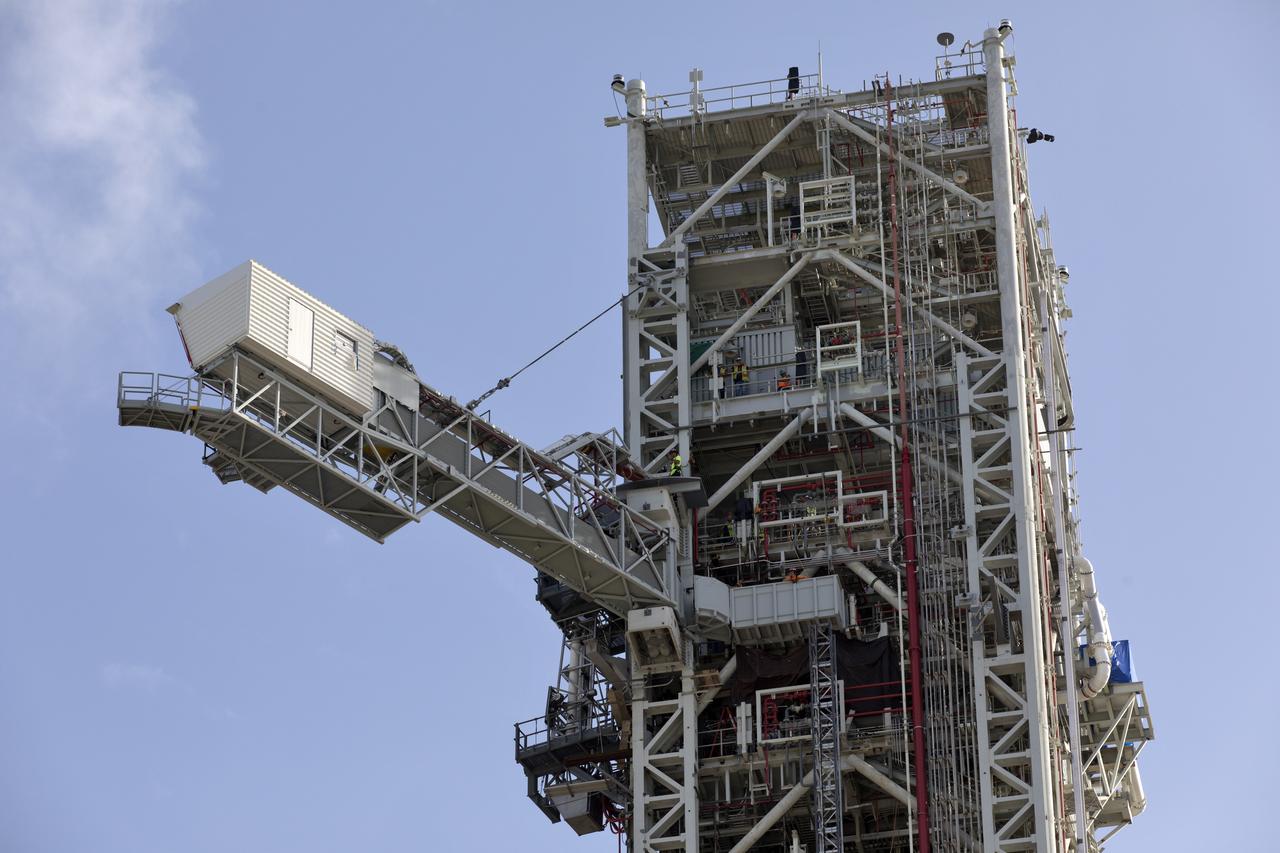
Technicians and engineers with Exploration Ground Systems at the NASA's Kennedy Space Center in Florida recently tested the Crew Access Arm (CAA) that was added on the mobile launcher being prepared to support the agency’s Orion spacecraft and Space Launch System rocket. The crucial test confirmed the functionality and integrity of the CAA. The CAA is designed to rotate from its retracted position and line up with Orion's crew hatch. The arm will provide entry and emergency egress for astronauts and technicians into and out of the Orion spacecraft.
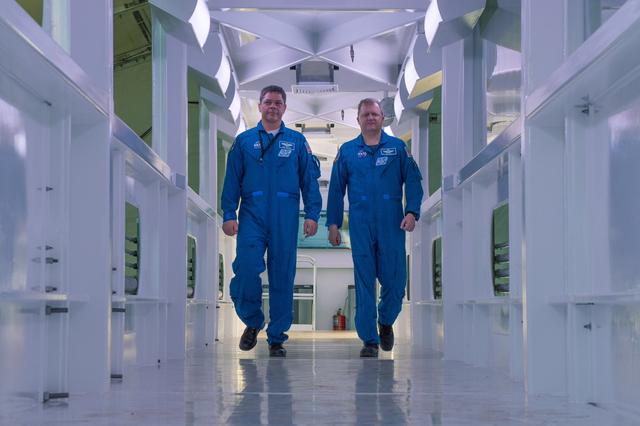
Astronauts Bob Behnken, left, and Eric Boe walk down the Crew Access Arm being built by SpaceX for Launch Complex 39A at NASA’s Kennedy Space Center in Florida. The access arm will be installed on the launch pad, providing a bridge between the launch tower it’s the Fixed Service Structure, as noted below, and SpaceX’s Dragon 2 spacecraft for astronauts flying to the International Space Station on the company’s Falcon 9 rocket as part of NASA’s Commercial Crew Program. The access arm is being readied for installation in early 2018. It will be installed 70 feet higher than the former space shuttle access arm on the launch pad’s Fixed Service Structure. SpaceX continues to modify the historic launch site from its former space shuttle days, removing more than 500,000 pounds of steel from the pad structure, including the Rotating Service Structure that was once used for accessing the payload bay of the shuttle. SpaceX also is using the modernized site to launch commercial payloads, as well as cargo resupply missions to and from the International Space Station for NASA. The first SpaceX launch from the historic Apollo and space shuttle site was this past February. NASA’s Commercial Crew Program is working with private companies, Boeing and SpaceX, with a goal of once again flying people to and from the International Space Station, launching from the United States.
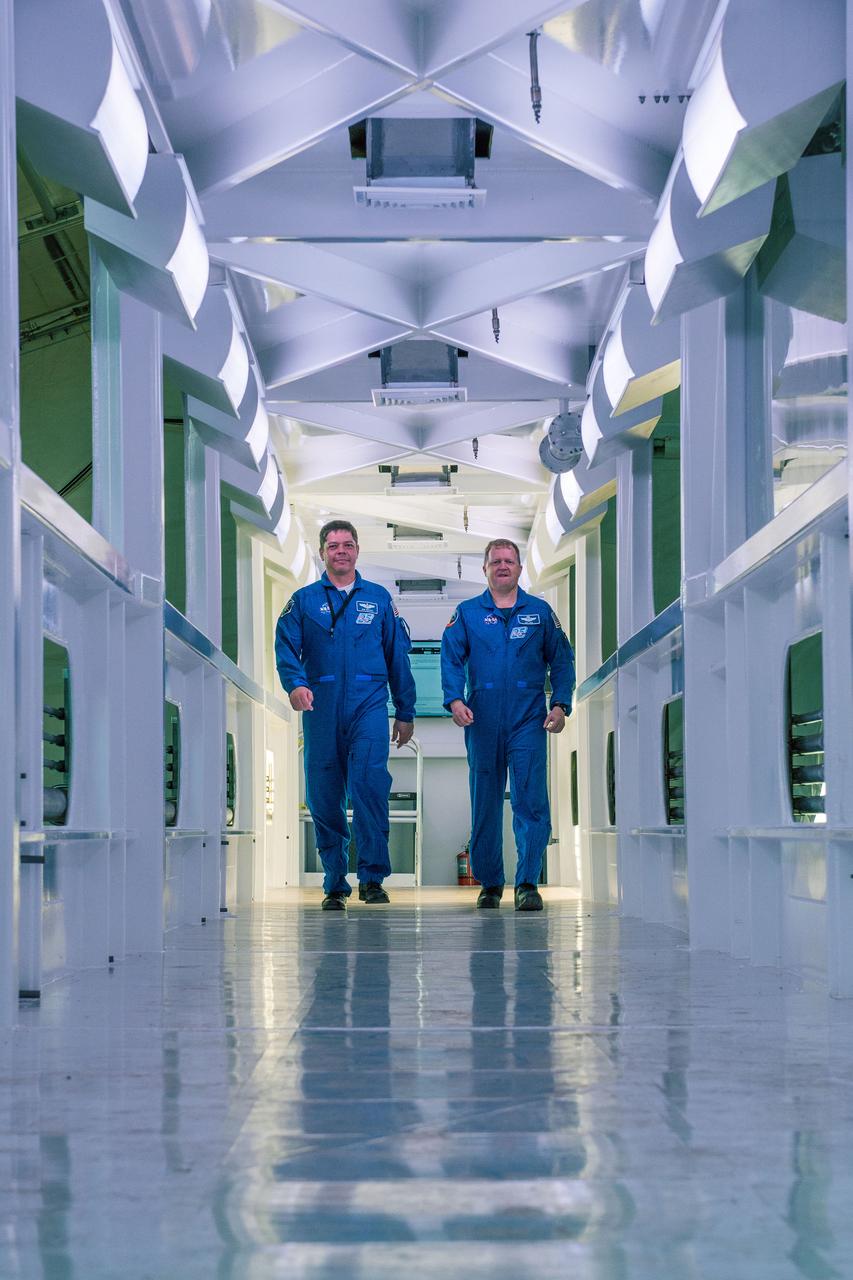
Astronauts Bob Behnken, left, and Eric Boe walk down the Crew Access Arm being built by SpaceX for Launch Complex 39A at NASA’s Kennedy Space Center in Florida. The access arm will be installed on the launch pad, providing a bridge between the launch tower it’s the Fixed Service Structure, as noted below, and SpaceX’s Dragon 2 spacecraft for astronauts flying to the International Space Station on the company’s Falcon 9 rocket as part of NASA’s Commercial Crew Program. The access arm is being readied for installation in early 2018. It will be installed 70 feet higher than the former space shuttle access arm on the launch pad’s Fixed Service Structure. SpaceX continues to modify the historic launch site from its former space shuttle days, removing more than 500,000 pounds of steel from the pad structure, including the Rotating Service Structure that was once used for accessing the payload bay of the shuttle. SpaceX also is using the modernized site to launch commercial payloads, as well as cargo resupply missions to and from the International Space Station for NASA. The first SpaceX launch from the historic Apollo and space shuttle site was this past February. NASA’s Commercial Crew Program is working with private companies, Boeing and SpaceX, with a goal of once again flying people to and from the International Space Station, launching from the United States.
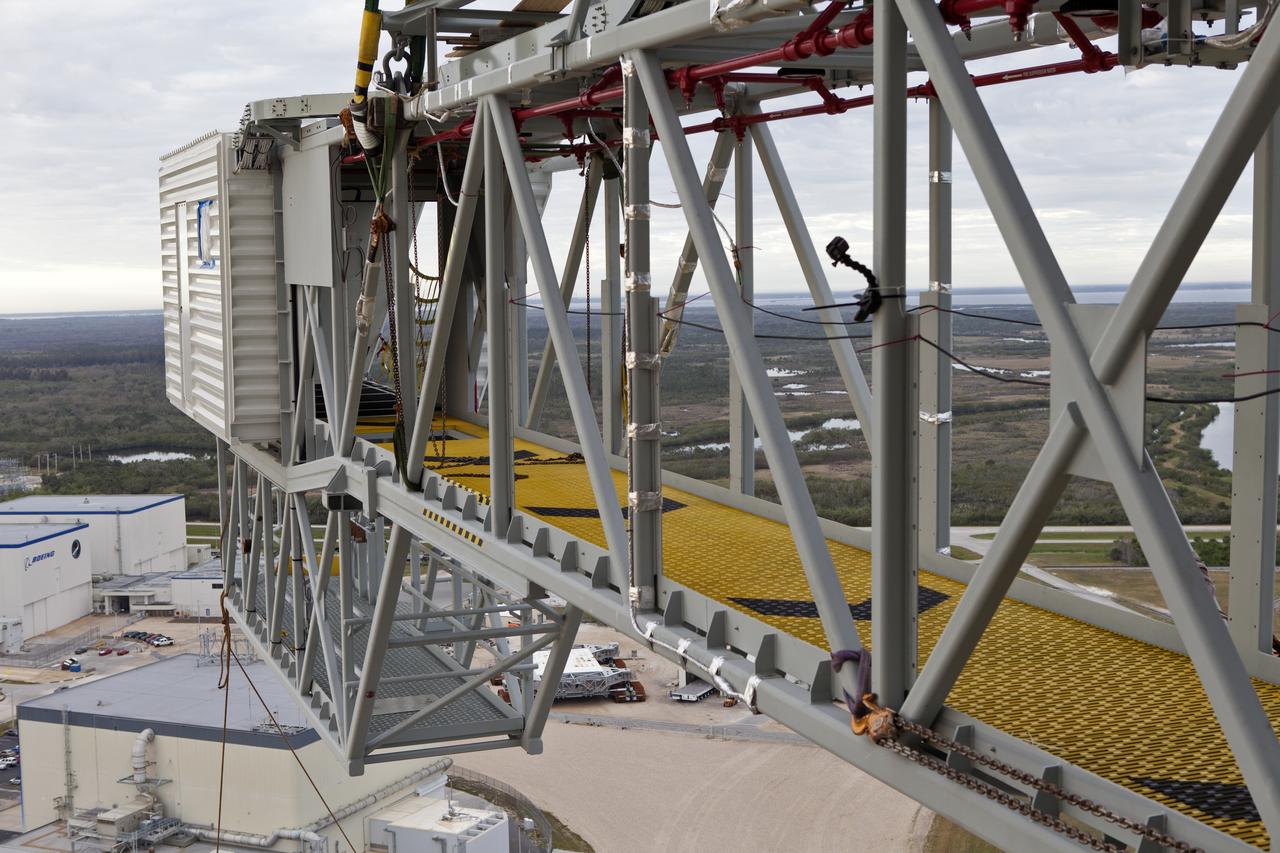
Viewed from the 274-foot level mobile launcher (ML), the Orion crew access arm (CAA) is beign installed on the tower. The CAA will support the Space launch System (SLS) rocket at NASA's Kennedy Space Center in Florida. NASA's Exploration Ground Systems organization has been overseeing installation of umbilicals and other launch accessories on the 380-foot-tall ML in preparation for stacking the first launch of the Space launch System, or SLS, rocket with an Orion spacecraft. The CAA is designed to rotate from its retracted position and line up with Orion's crew hatch providing entry for astronauts and technicians.
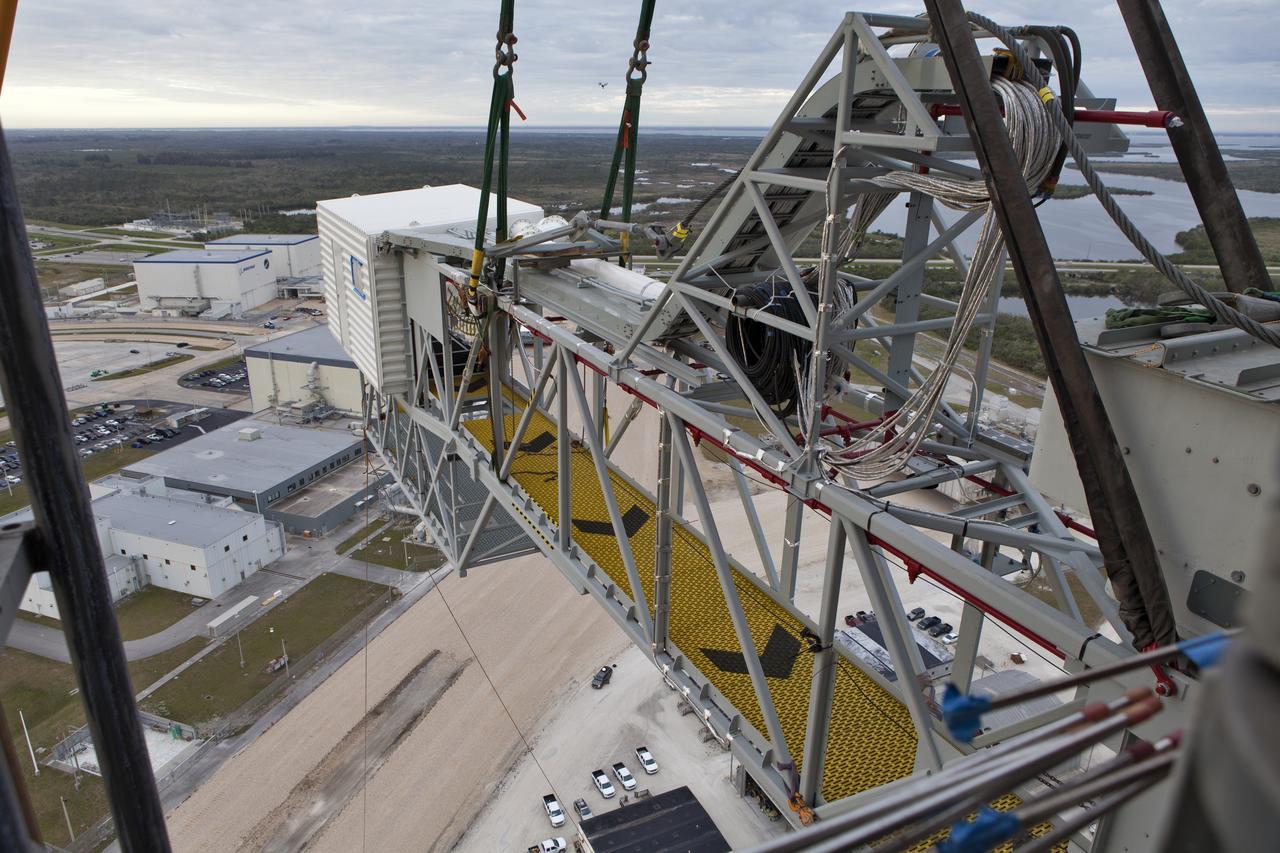
Viewed from the 274-foot level mobile launcher (ML), a crane positions the Orion crew access arm (CAA) so it can be attached to the tower that will support the Space launch System (SLS) rocket at NASA's Kennedy Space Center in Florida. NASA's Exploration Ground Systems organization has been overseeing installation of umbilicals and other launch accessories on the 380-foot-tall ML in preparation for stacking the first launch of the SLS, rocket with an Orion spacecraft. The CAA is designed to rotate from its retracted position and line up with Orion's crew hatch providing entry for astronauts and technicians.
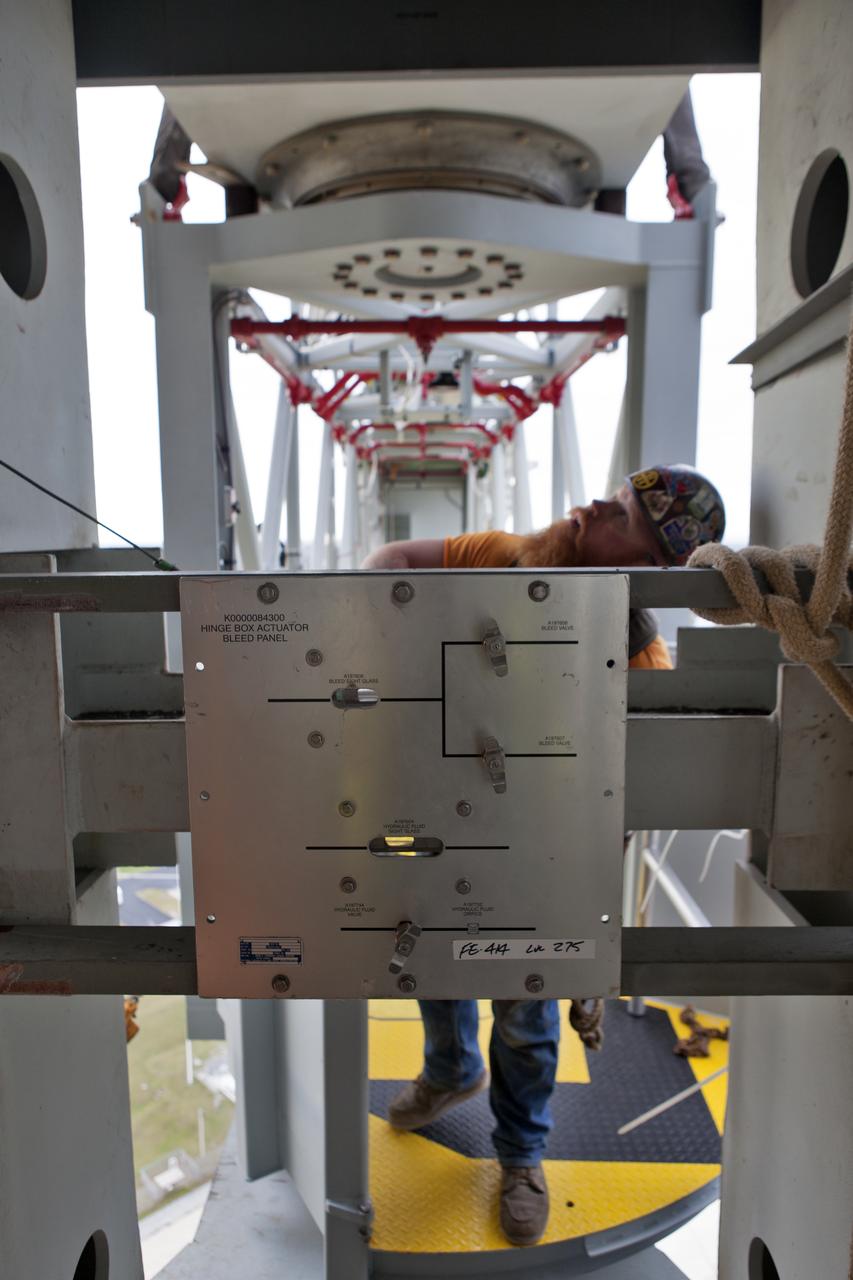
With a control panel visible in the foreground, a technician begins installation of the Orion crew access arm (CAA) to the mobile launcher (ML) tower at NASA's Kennedy Space Center in Florida. NASA's Exploration Ground Systems organization has been overseeing installation of umbilicals and other launch accessories on the 380-foot-tall ML in preparation for stacking the first launch of the Space launch System, or SLS, rocket with an Orion spacecraft. The CAA is designed to rotate from its retracted position and line up with Orion's crew hatch providing entry for astronauts and technicians.
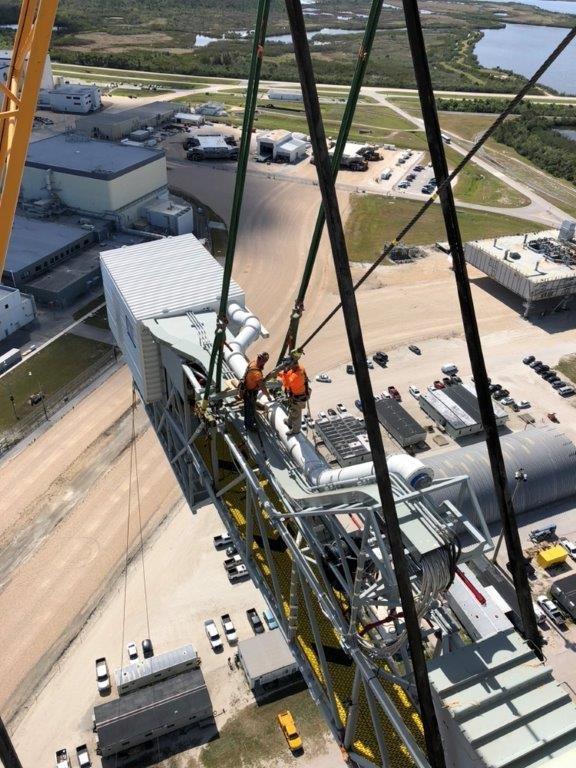
Viewed from the 274-foot level mobile launcher (ML), technicians help install the Orion crew access arm (CAA) to the tower at NASA's Kennedy Space Center in Florida. NASA's Exploration Ground Systems organization has been overseeing installation of umbilicals and other launch accessories on the 380-foot-tall ML in preparation for stacking the first launch of the Space launch System (SLS), rocket with an Orion spacecraft. The CAA is designed to rotate from its retracted position and line up with Orion's crew hatch providing entry for astronauts and technicians.
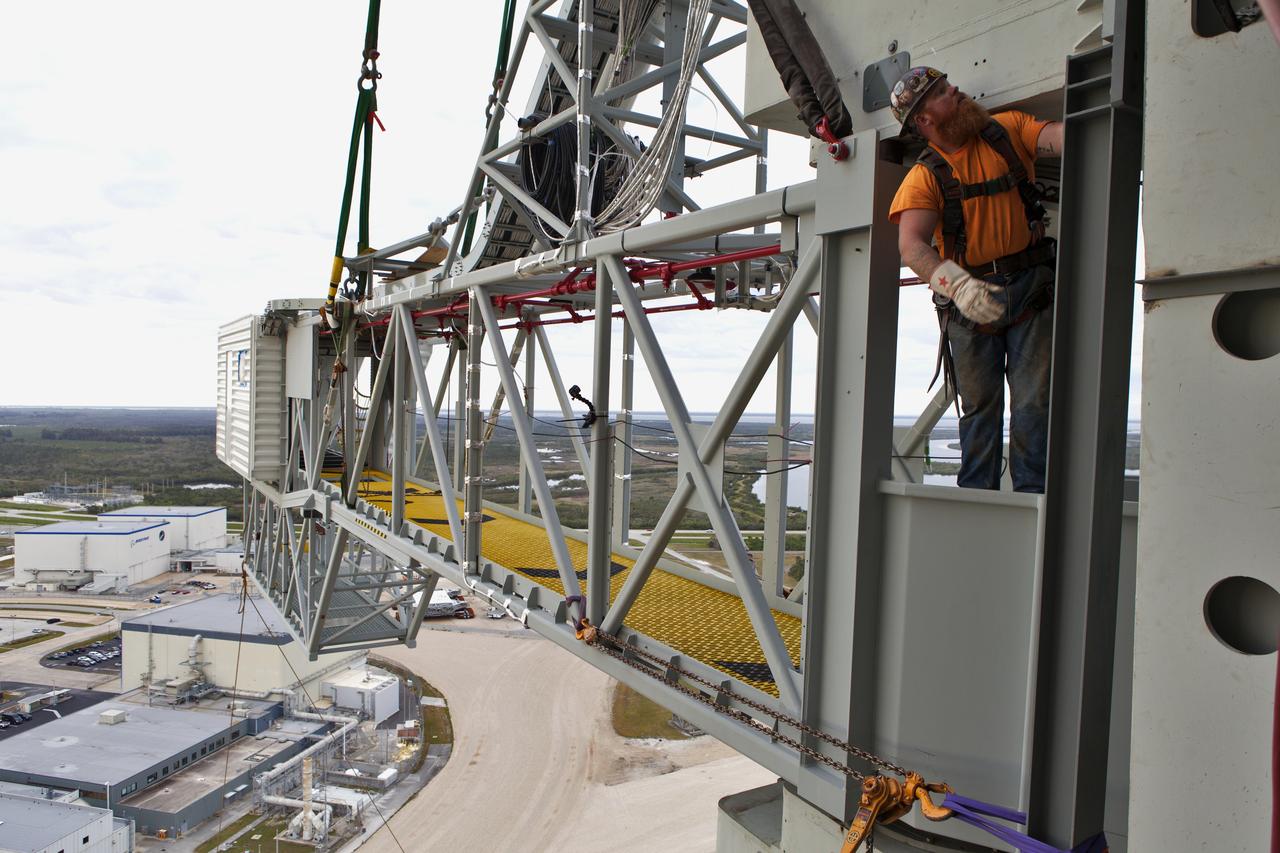
Viewed from the 274-foot level mobile launcher (ML), a technician begins installation of the Orion crew access arm (CAA) to the tower. The CAA will support the Space launch System (SLS) rocket at NASA's Kennedy Space Center in Florida. NASA's Exploration Ground Systems organization has been overseeing installation of umbilicals and other launch accessories on the 380-foot-tall ML in preparation for stacking the first launch of the Space launch System, or SLS, rocket with an Orion spacecraft. The CAA is designed to rotate from its retracted position and line up with Orion's crew hatch providing entry for astronauts and technicians.

Seen here is a 360 degree view of the inside of Orion’s crew module, showcasing some of the payloads flying on the agency’s Artemis I mission. NASA’s Space Launch System rocket and Orion spacecraft lifted off from Kennedy Space Center’s Launch Pad 39B in Florida at 1:47 a.m. EST on Nov. 16, 2022. The first in a series of increasingly complex missions, Artemis I will provide a foundation for human deep space exploration and demonstrate our commitment and capability to extend human presence to the Moon and beyond. The primary goal of Artemis I is to thoroughly test the integrated systems before crewed missions by operating the spacecraft in a deep space environment, testing Orion's heat shield, and recovering the crew module after reentry, descent, and splashdown.
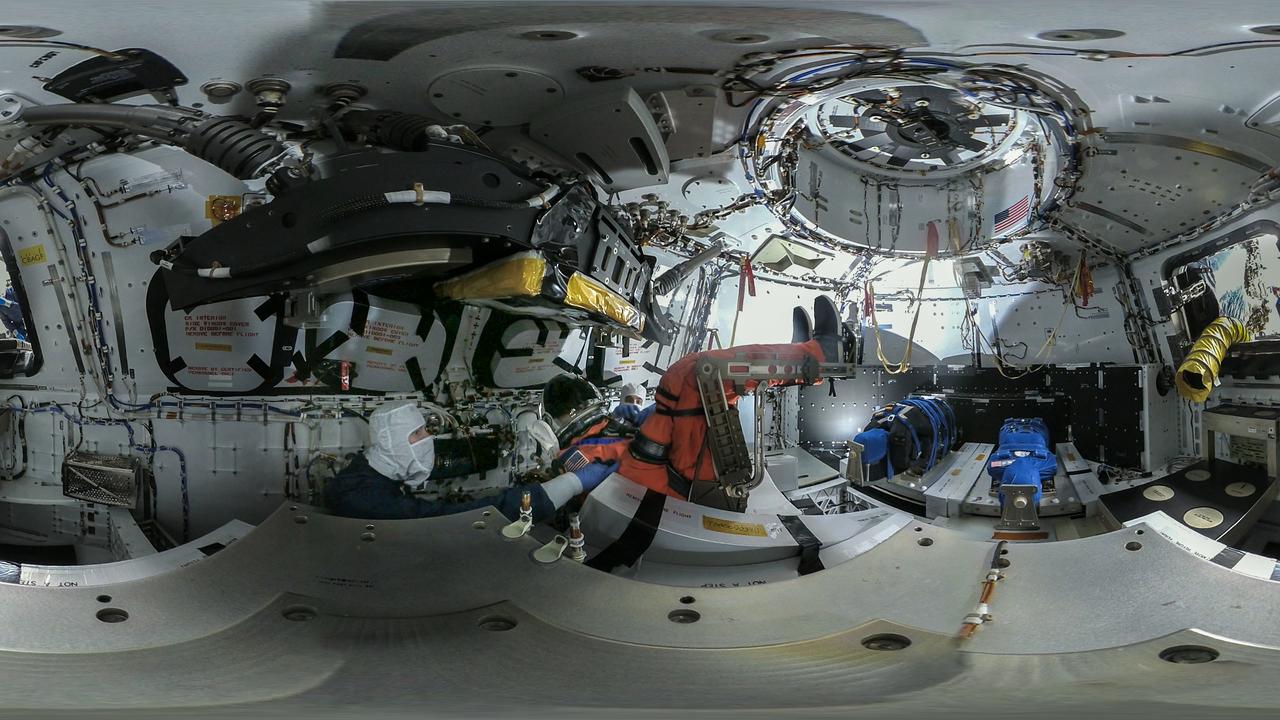
Seen here is a 360 degree view of the inside of Orion’s crew module, showcasing some of the payloads flying on the agency’s Artemis I mission. NASA’s Space Launch System rocket and Orion spacecraft lifted off from Kennedy Space Center’s Launch Pad 39B in Florida at 1:47 a.m. EST on Nov. 16, 2022. The first in a series of increasingly complex missions, Artemis I will provide a foundation for human deep space exploration and demonstrate our commitment and capability to extend human presence to the Moon and beyond. The primary goal of Artemis I is to thoroughly test the integrated systems before crewed missions by operating the spacecraft in a deep space environment, testing Orion's heat shield, and recovering the crew module after reentry, descent, and splashdown.
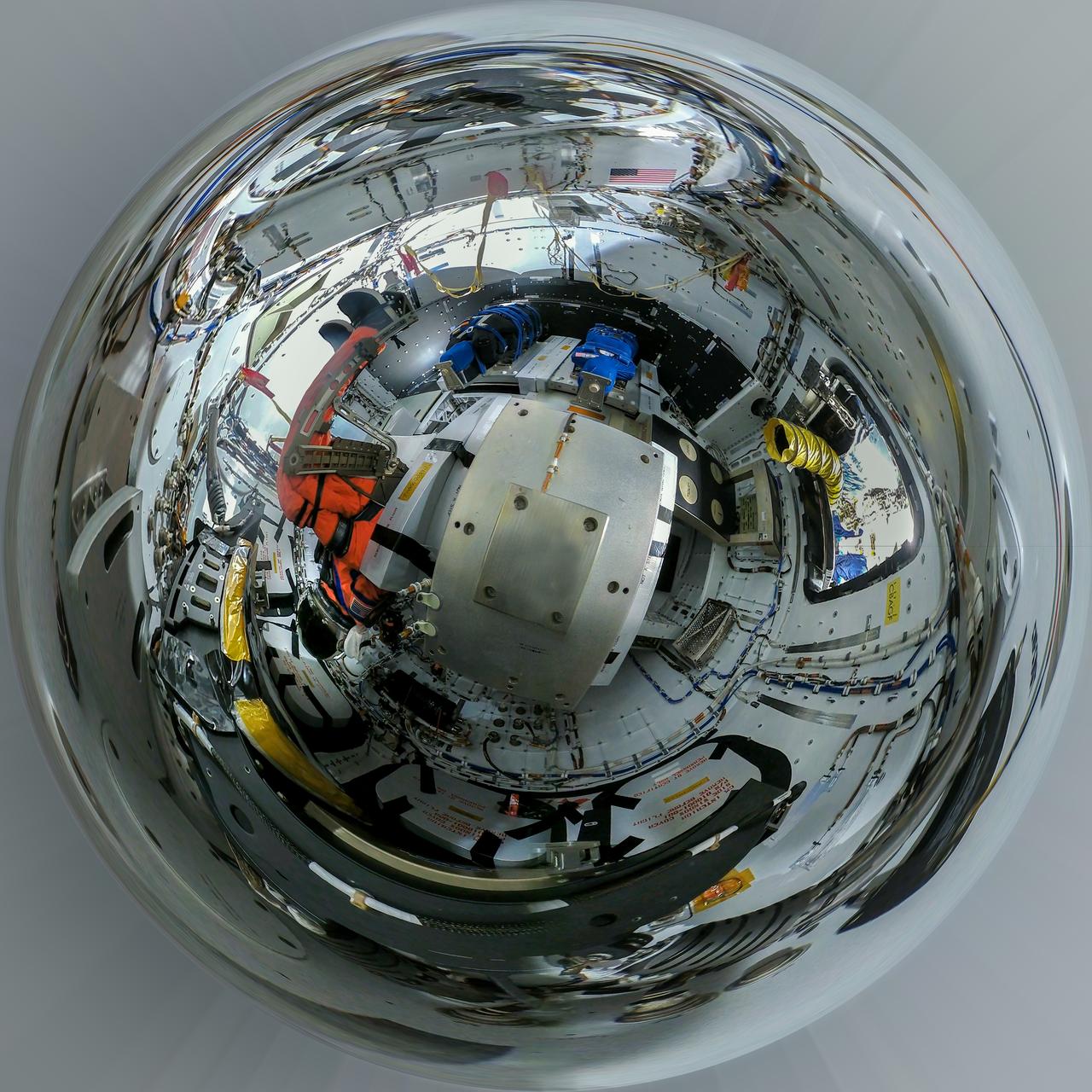
Seen here is a 360 degree view of the inside of Orion’s crew module, showcasing some of the payloads flying on the agency’s Artemis I mission. NASA’s Space Launch System rocket and Orion spacecraft lifted off from Kennedy Space Center’s Launch Pad 39B in Florida at 1:47 a.m. EST on Nov. 16, 2022. The first in a series of increasingly complex missions, Artemis I will provide a foundation for human deep space exploration and demonstrate our commitment and capability to extend human presence to the Moon and beyond. The primary goal of Artemis I is to thoroughly test the integrated systems before crewed missions by operating the spacecraft in a deep space environment, testing Orion's heat shield, and recovering the crew module after reentry, descent, and splashdown.
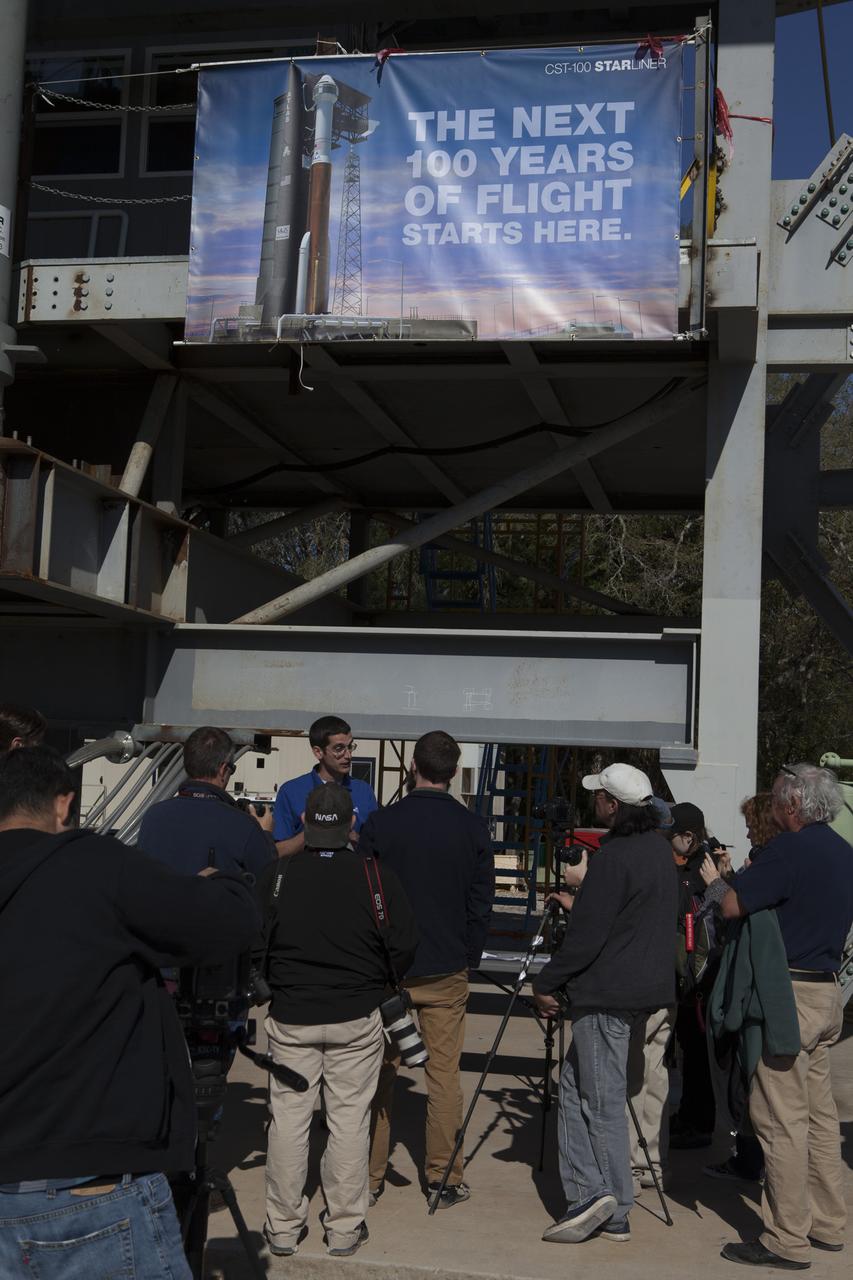
Steve Hirst, Launch Operations Group for United Launch Alliance, speaks to news media about the Crew Access Arm under construction at a yard near NASA's Kennedy Space Center in Florida. The arm and white room are being built to bridge the space between the Crew Access Tower and the hatch to Boeing's CST-100 Starliner spacecraft as it stands atop a ULA Atlas V rocket at Space Launch Complex 41 before flight. Partnering with NASA's Commercial Crew Program, Boeing is one of two companies building a new, privately owned and operated space system to carry astronauts to the International Space Station.