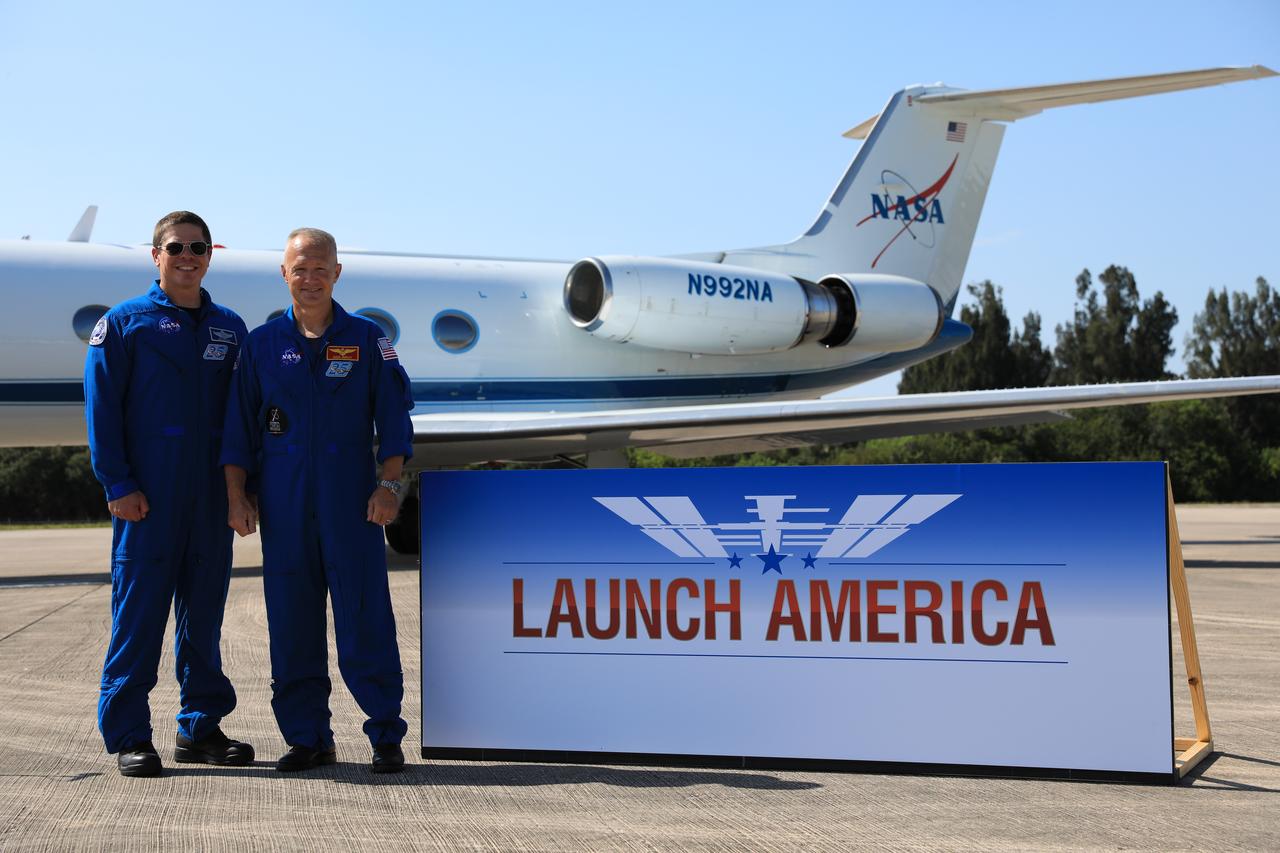
From left, Demo-2 crew members Robert Behnken and Douglas Hurley pose for a photo after speaking to members of the media on May 20, 2020, at the Launch and Landing Facility runway following the crew’s arrival to the Florida spaceport. Under NASA’s Commercial Crew Program, Behnken and Hurley will be the first astronauts launching to the International Space Station from U.S. soil since the end of the Space Shuttle Program in 2011. Liftoff of the SpaceX Falcon 9 rocket and Crew Dragon spacecraft is scheduled for 4:33 p.m. on May 27 from Kennedy’s Launch Complex 39A.
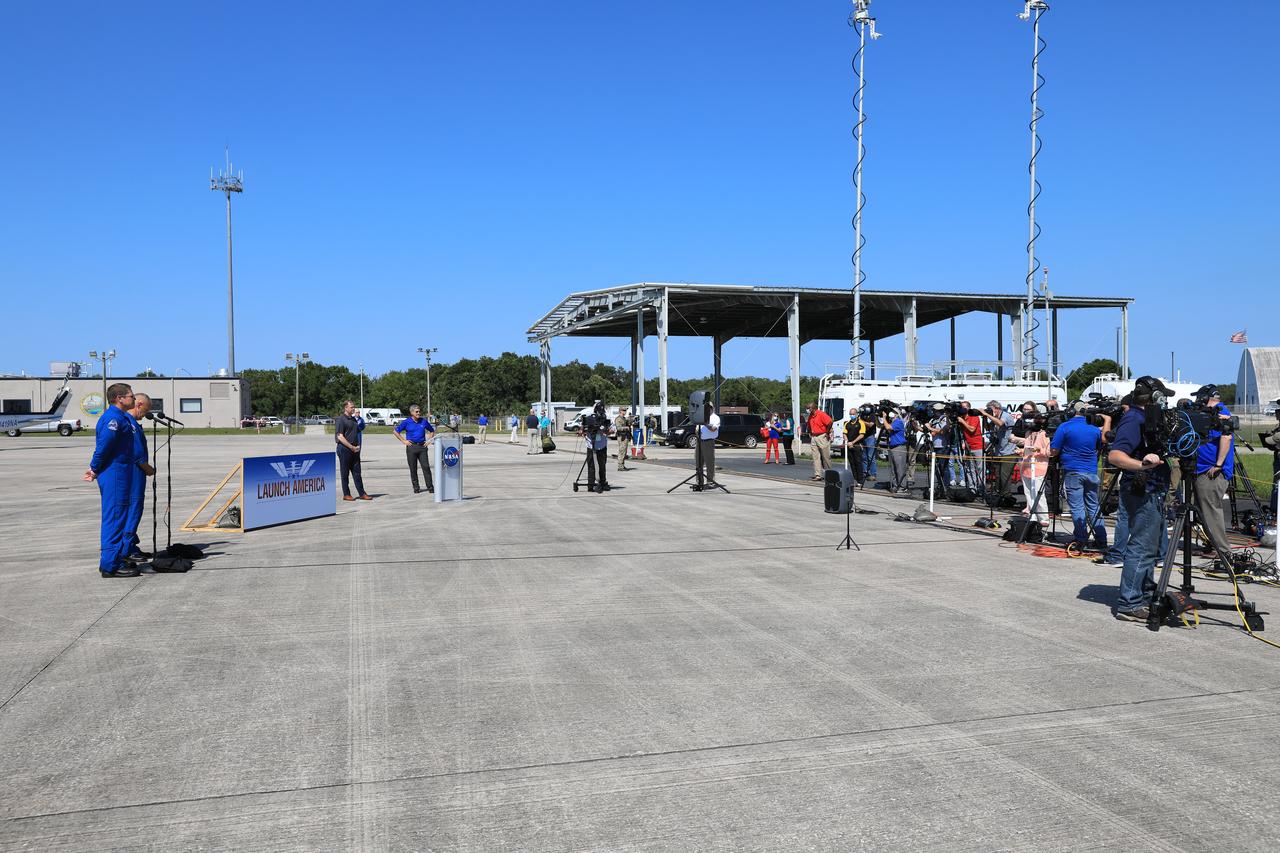
From left, Demo-2 crew members Robert Behnken and Douglas Hurley, NASA Administrator Jim Bridenstine and Kennedy Space Center Director Bob Cabana speak to members of the media on May 20, 2020, at the Launch and Landing Facility runway following the crew’s arrival to the Florida spaceport. Under NASA’s Commercial Crew Program, Behnken and Hurley will be the first astronauts launching to the International Space Station from U.S. soil since the end of the Space Shuttle Program in 2011. Liftoff of the SpaceX Falcon 9 rocket and Crew Dragon spacecraft is scheduled for 4:33 p.m. on May 27 from Kennedy’s Launch Complex 39A.
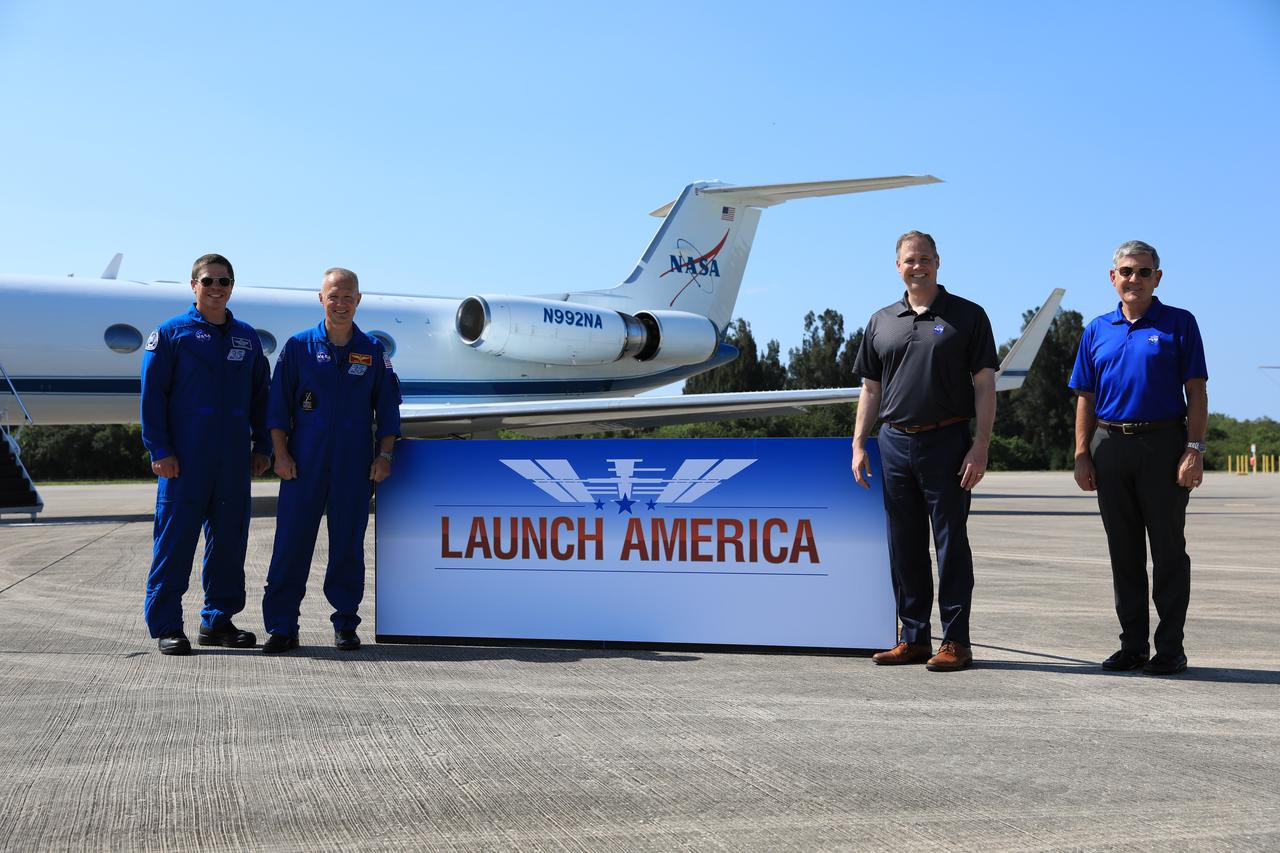
From left, Demo-2 crew members Robert Behnken and Douglas Hurley, NASA Administrator Jim Bridenstine and Kennedy Space Center Director Bob Cabana pose for a photo after speaking to members of the media on May 20, 2020, at the Launch and Landing Facility runway following the crew’s arrival to the Florida spaceport. Under NASA’s Commercial Crew Program, Behnken and Hurley will be the first astronauts launching to the International Space Station from U.S. soil since the end of the Space Shuttle Program in 2011. Liftoff of the SpaceX Falcon 9 rocket and Crew Dragon spacecraft is scheduled for 4:33 p.m. on May 27 from Kennedy’s Launch Complex 39A.
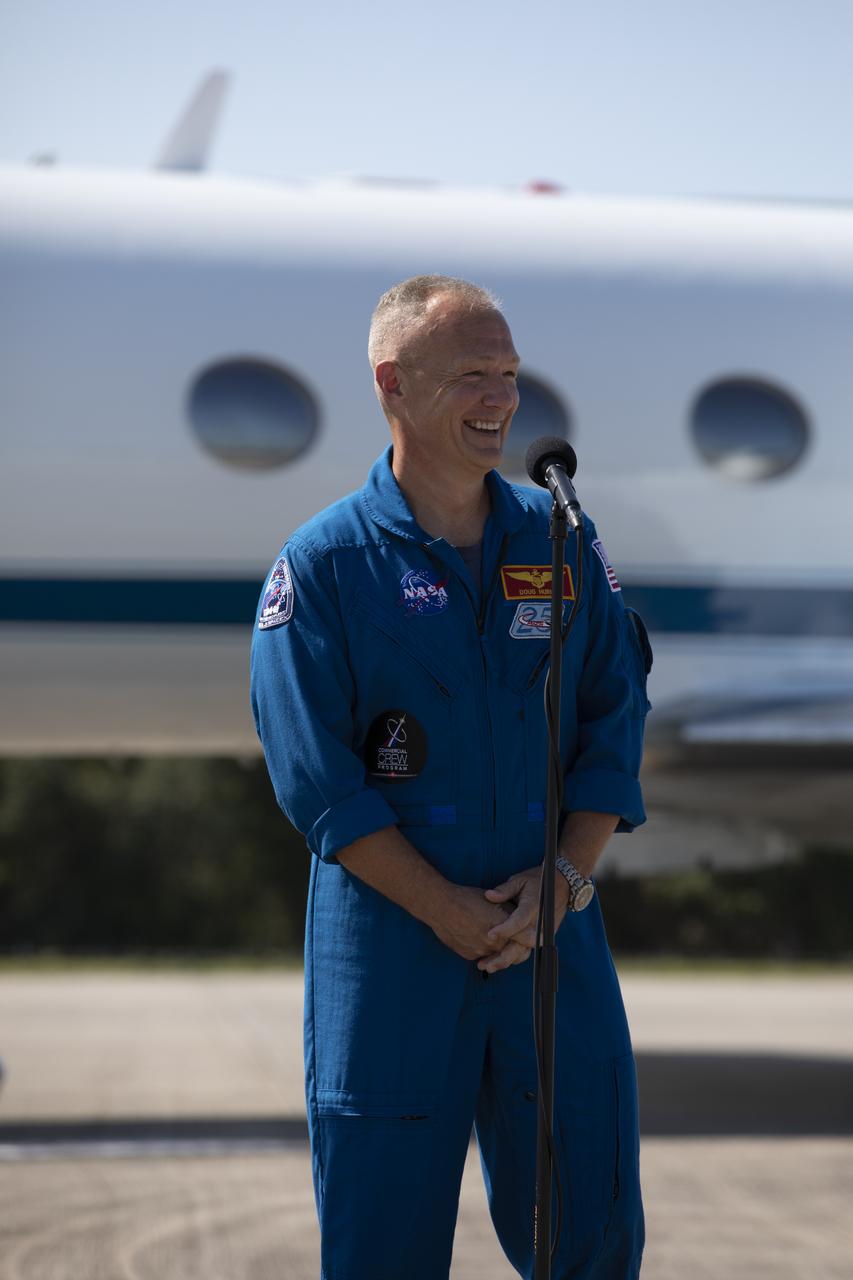
Demo-2 crew member Douglas Hurley speaks to members of the media at the Launch and Landing Facility runway at the agency’s Kennedy Space Center in Florida on May 20, 2020, following his arrival from Houston, Texas. Under the agency’s Commercial Crew Program, Hurley and crewmate Robert Behnken will be the first astronauts to launch to the International Space Station from U.S. soil since the end of the Space Shuttle Program in 2011. Liftoff of the SpaceX Falcon 9 rocket and Crew Dragon spacecraft is scheduled for 4:33 p.m. on May 27 from Kennedy’s Launch Complex 39A.
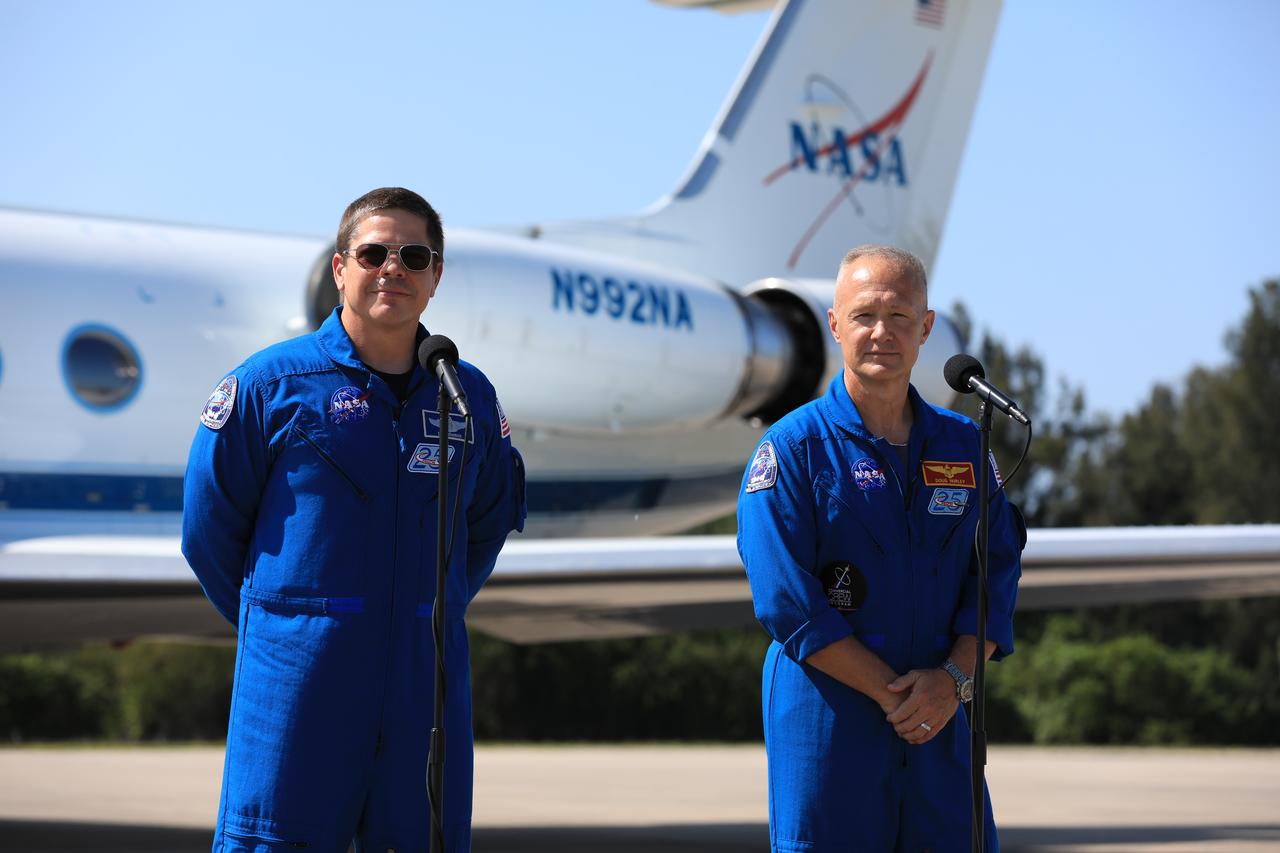
Demo-2 crew members Robert Behnken (left) and Douglas Hurley speak to members of the media at the Launch and Landing Facility runway following their arrival to NASA’s Kennedy Space Center in Florida from Houston, Texas. Under NASA’s Commercial Crew Program, Behnken and Hurley will be the first astronauts launching to the International Space Station from U.S. soil since the end of the Space Shuttle Program in 2011. Liftoff of the SpaceX Falcon 9 rocket and Crew Dragon spacecraft is scheduled for 4:33 p.m. on May 27 from Kennedy’s Launch Complex 39A.
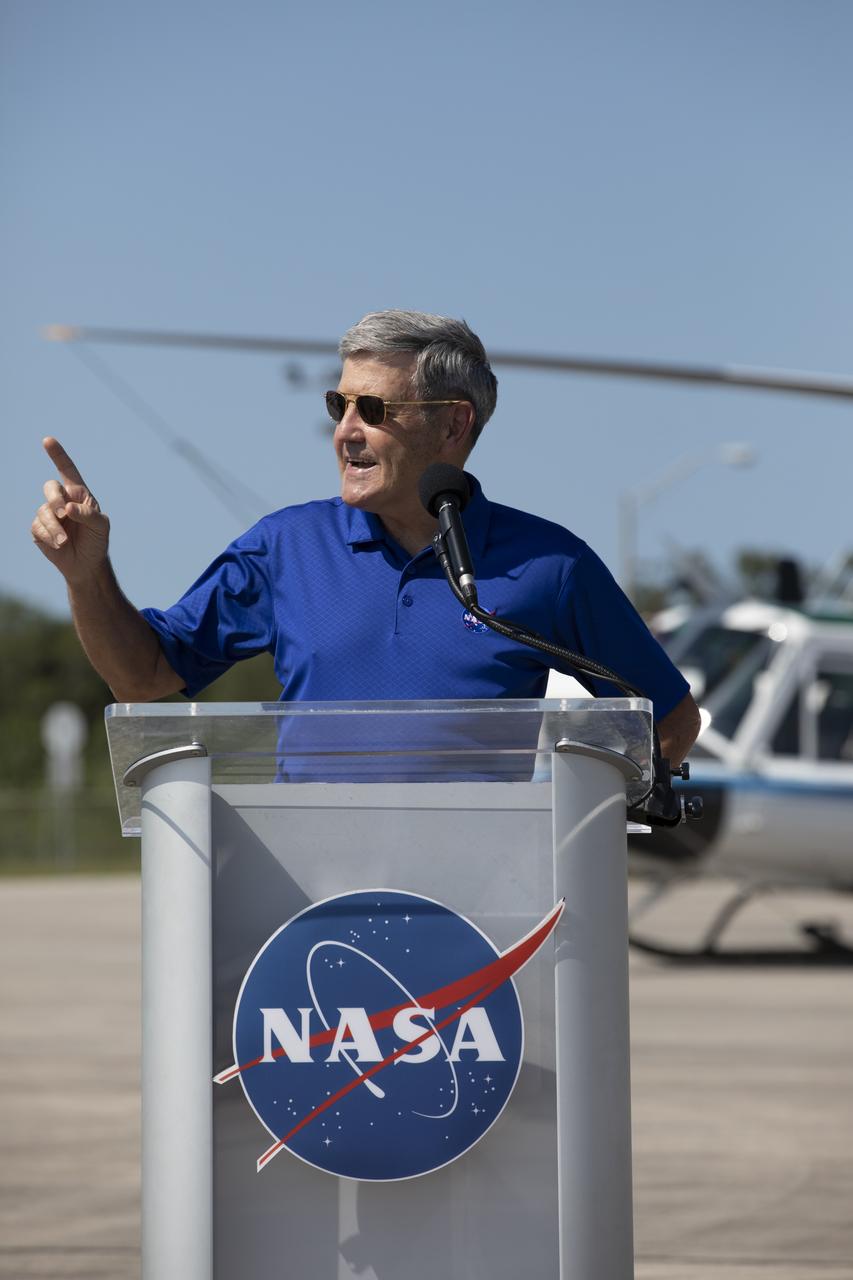
Kennedy Space Center Director Bob Cabana speaks to members of the media at the Launch and Landing Facility runway at the Florida spaceport on May 20, 2020, following Demo-2 crew members Robert Behnken and Douglas Hurley’s arrival from Houston, Texas. Under the agency’s Commercial Crew Program, Behnken and Hurley will be the first astronauts to launch to the International Space Station from U.S. soil since the end of the Space Shuttle Program in 2011. Liftoff of the SpaceX Falcon 9 rocket and Crew Dragon spacecraft is scheduled for 4:33 p.m. on May 27 from Kennedy’s Launch Complex 39A.
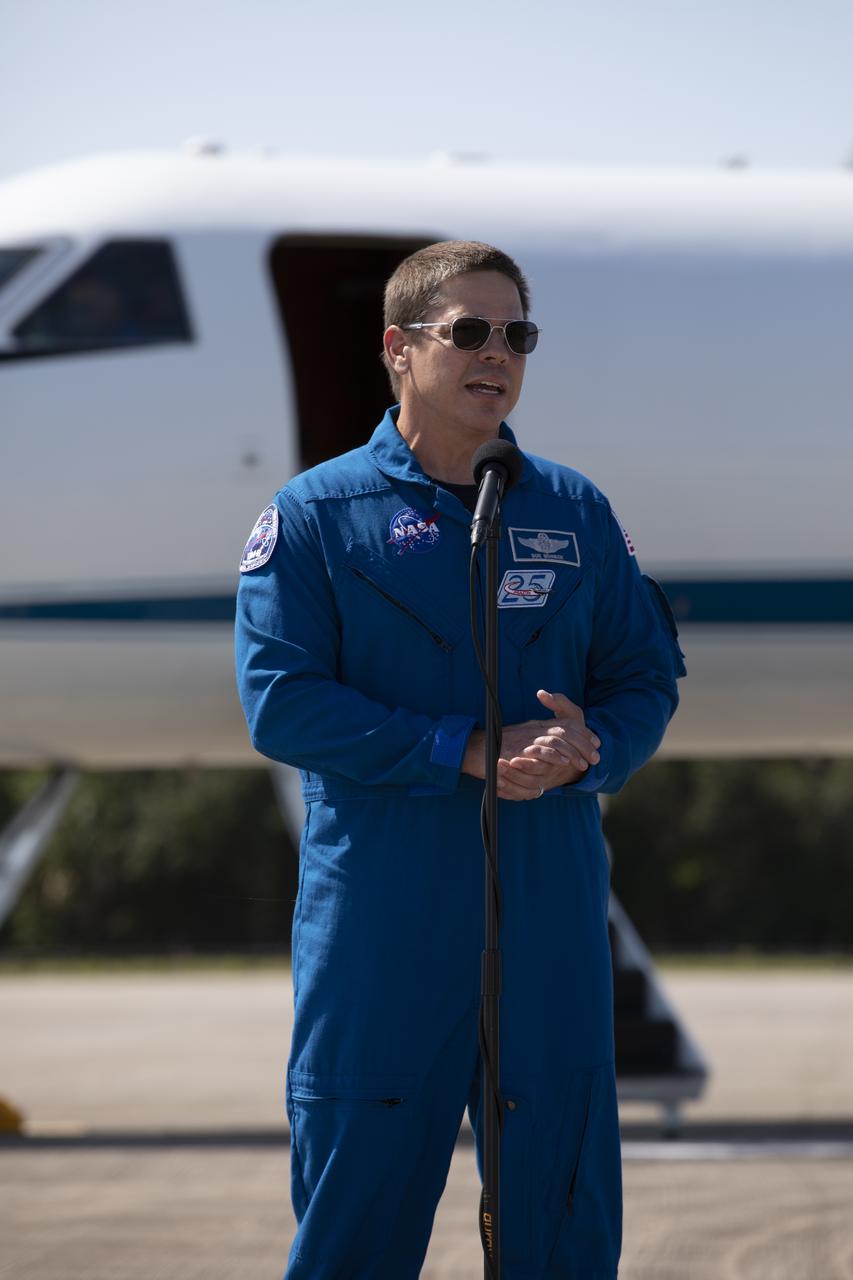
Demo-2 crew member Robert Behnken speaks to members of the media at the Launch and Landing Facility runway at the agency’s Kennedy Space Center in Florida on May 20, 2020, following his arrival from Houston, Texas. Under the agency’s Commercial Crew Program, Behnken and crewmate Douglas Hurley will be the first astronauts to launch to the International Space Station from U.S. soil since the end of the Space Shuttle Program in 2011. Liftoff of the SpaceX Falcon 9 rocket and Crew Dragon spacecraft is scheduled for 4:33 p.m. on May 27 from Kennedy’s Launch Complex 39A.
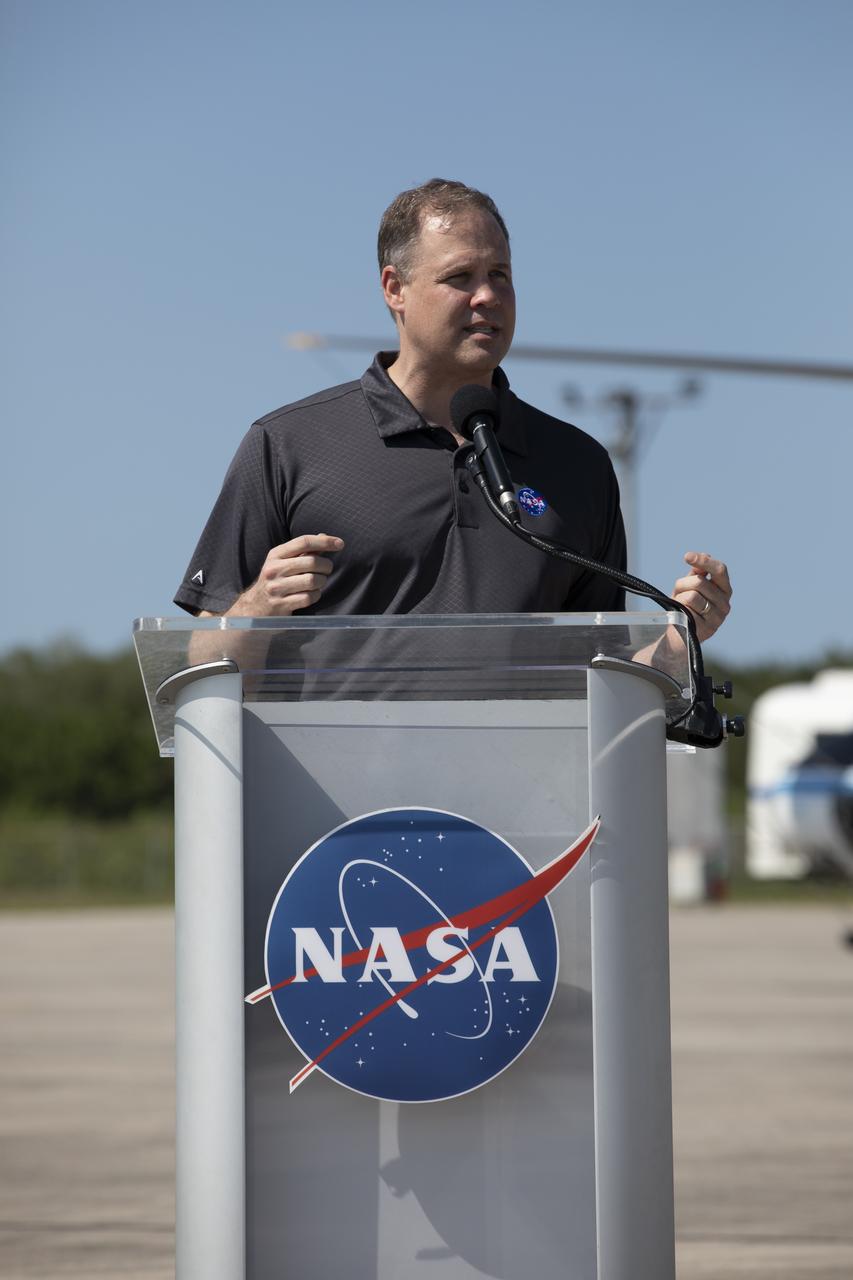
NASA Administrator Jim Bridenstine speaks to members of the media at the Launch and Landing Facility runway at the agency’s Kennedy Space Center in Florida on May 20, 2020, following Demo-2 crew members Robert Behnken and Douglas Hurley’s arrival from Houston, Texas. Under the agency’s Commercial Crew Program, Behnken and Hurley will be the first astronauts to launch to the International Space Station from U.S. soil since the end of the Space Shuttle Program in 2011. Liftoff of the SpaceX Falcon 9 rocket and Crew Dragon spacecraft is scheduled for 4:33 p.m. on May 27 from Kennedy’s Launch Complex 39A.
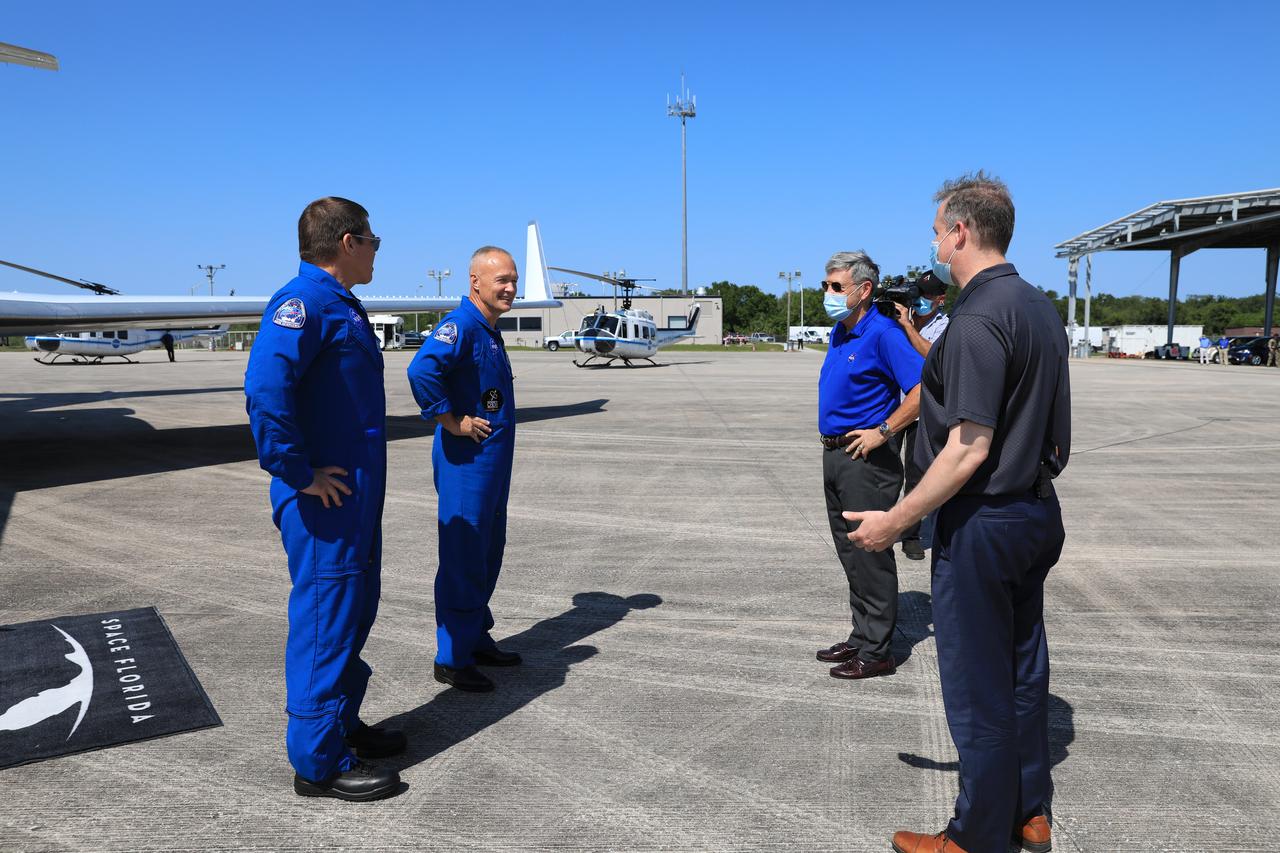
Demo-2 crew members Robert Behnken (far left) and Douglas Hurley are greeted by NASA Administrator Jim Bridenstine (far right) Kennedy Space Center Director Bob Cabana at the Launch and Landing Facility runway following their arrival to the Florida spaceport from Houston, Texas. Under NASA’s Commercial Crew Program, Behnken and Hurley will be the first astronauts launching to the International Space Station from U.S. soil since the end of the Space Shuttle Program in 2011. Liftoff of the SpaceX Falcon 9 rocket and Crew Dragon spacecraft is scheduled for 4:33 p.m. on May 27 from Kennedy’s Launch Complex 39A.
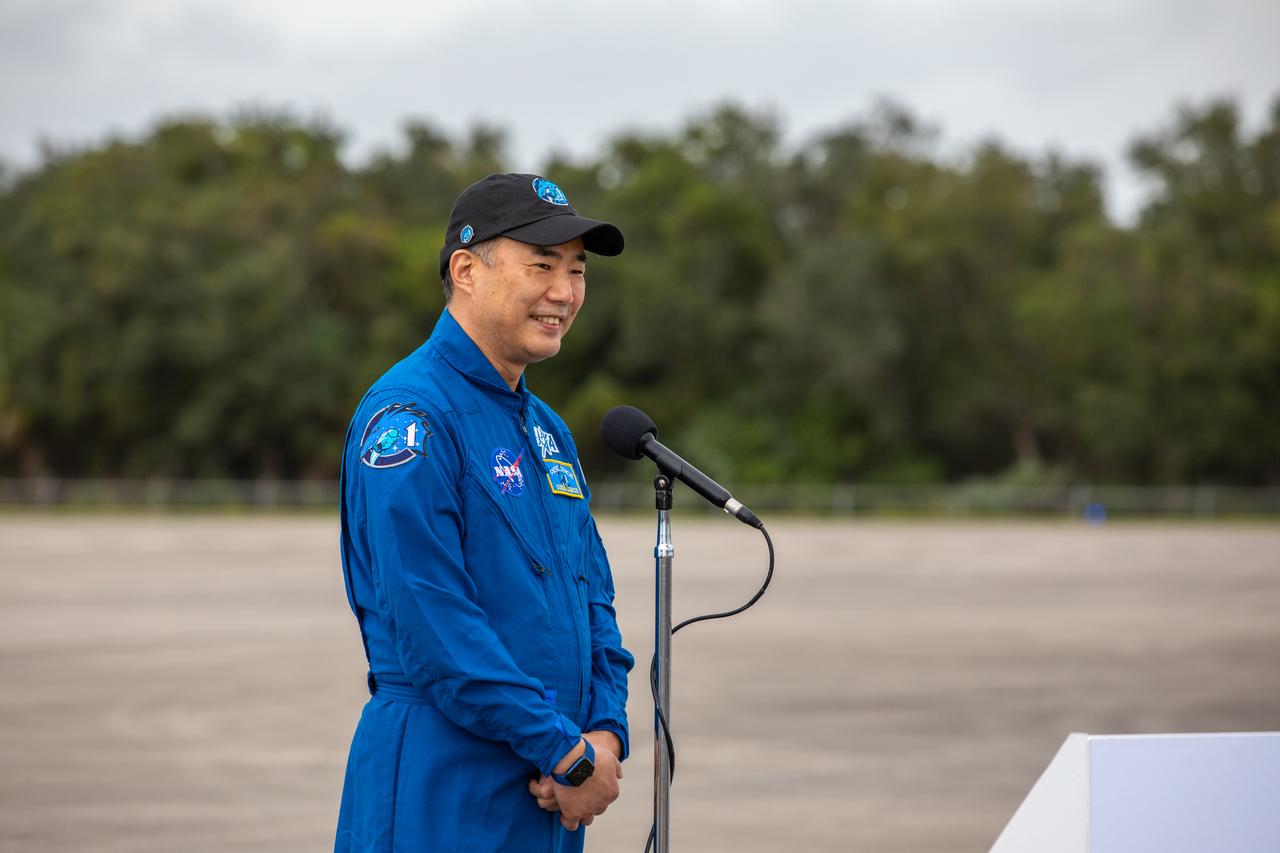
JAXA astronaut Soichi Noguchi, mission specialist, speaks to members of the media during a crew arrival event for NASA’s SpaceX Crew-1 mission at the Launch and Landing Facility at the agency’s Kennedy Space Center in Florida on Nov. 8, 2020. Crew-1 is the first crew rotation mission of a U.S. commercial spacecraft with astronauts to the International Space Station as part of NASA’s Commercial Crew Program. The SpaceX Crew Dragon spacecraft, named Resilience, will launch atop a Falcon 9 rocket from Kennedy’s Launch Complex 39A.
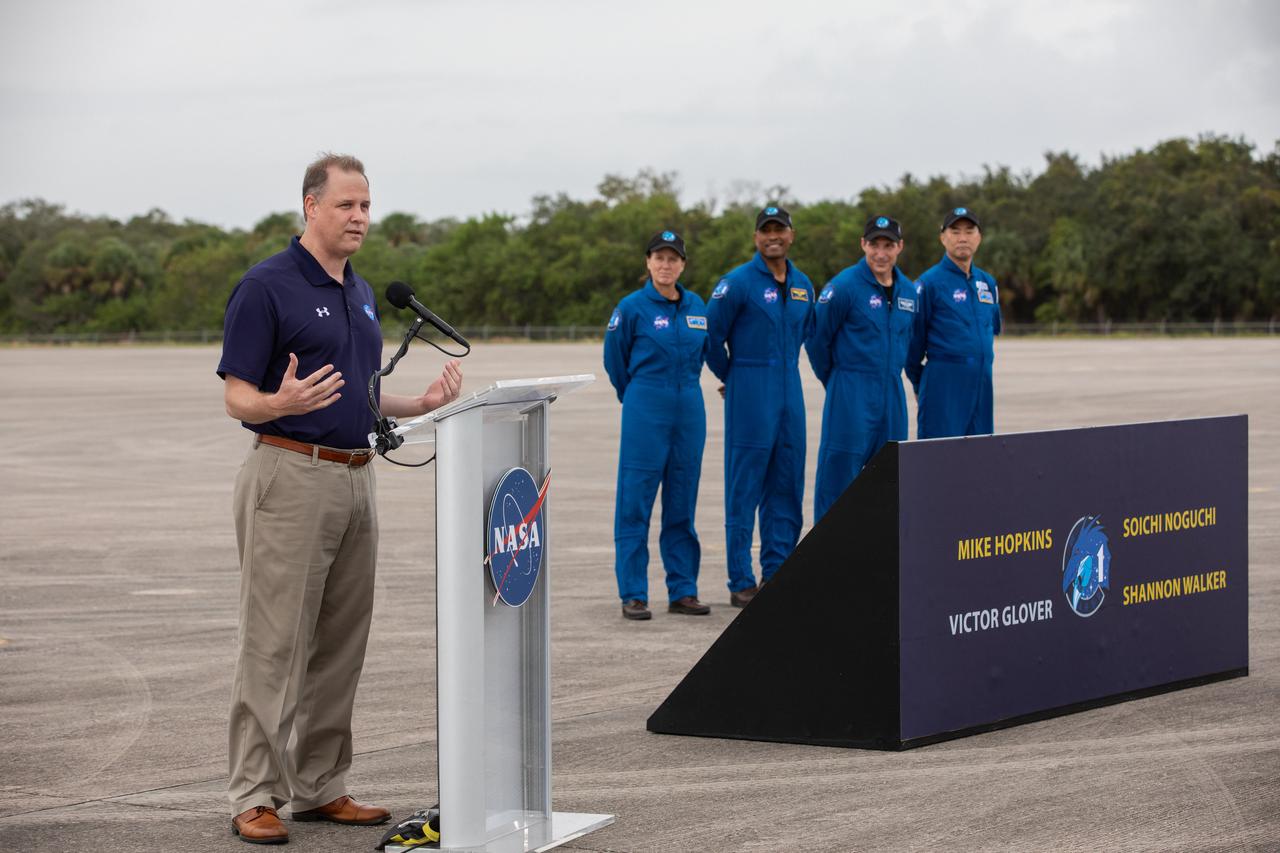
NASA Administrator Jim Bridenstine speaks to members of the media during a crew arrival event for NASA’s SpaceX Crew-1 mission at the Launch and Landing Facility at the agency’s Kennedy Space Center in Florida on Nov. 8, 2020. Crew-1 is the first crew rotation mission of a U.S. commercial spacecraft with astronauts to the International Space Station as part of NASA’s Commercial Crew Program. The SpaceX Crew Dragon spacecraft, named Resilience, will launch atop a Falcon 9 rocket from Kennedy’s Launch Complex 39A.
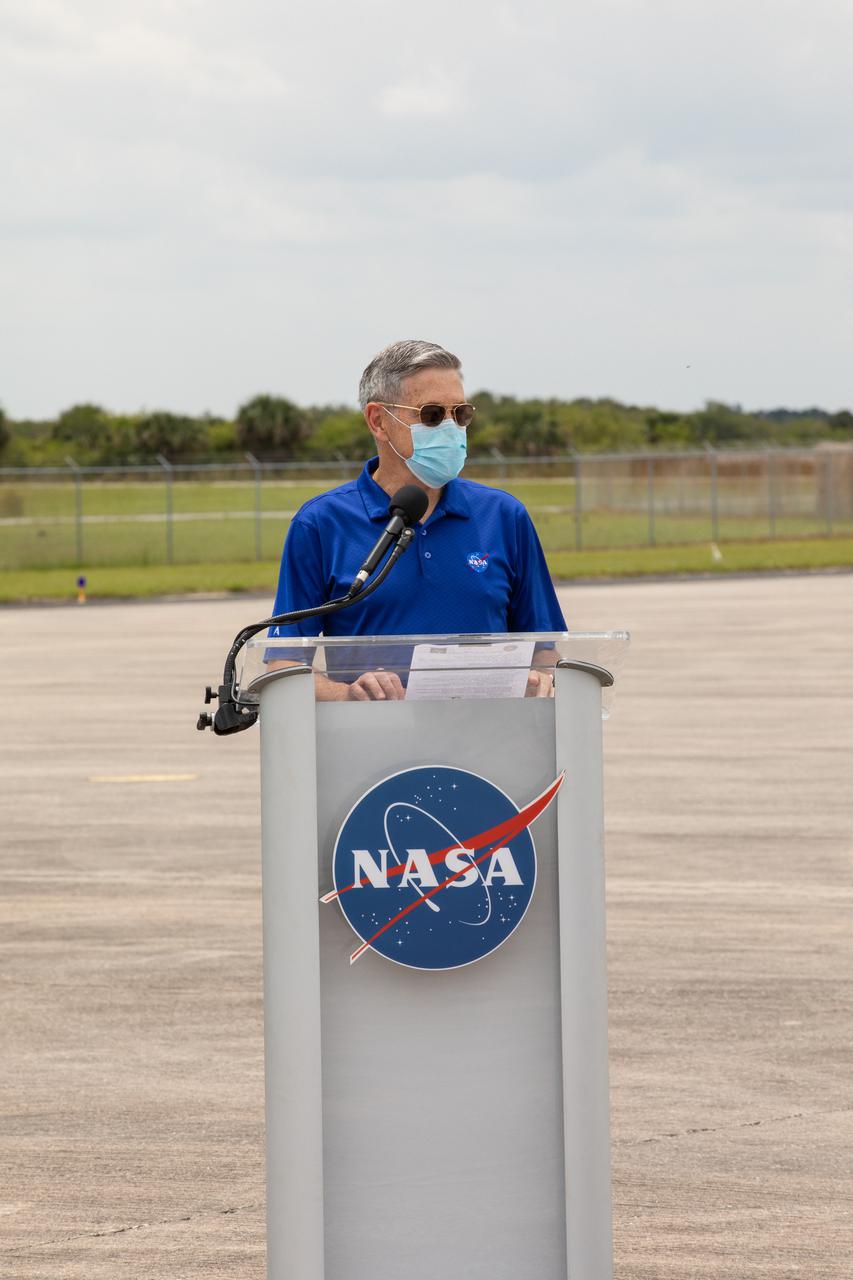
Kennedy Space Center Director Bob Cabana speaks during NASA’s SpaceX Crew-2 arrival media event held at the Florida spaceport on April 16, 2021. NASA astronauts Shane Kimbrough and Megan McArthur, JAXA astronaut Akihiko Hoshide, and ESA astronaut Thomas Pesquet, who arrived at Kennedy just minutes before the media event, will fly to the International Space Station on NASA’s SpaceX Crew-2 mission. Liftoff is targeted for Thursday, April 22, at 6:11 a.m. EDT.
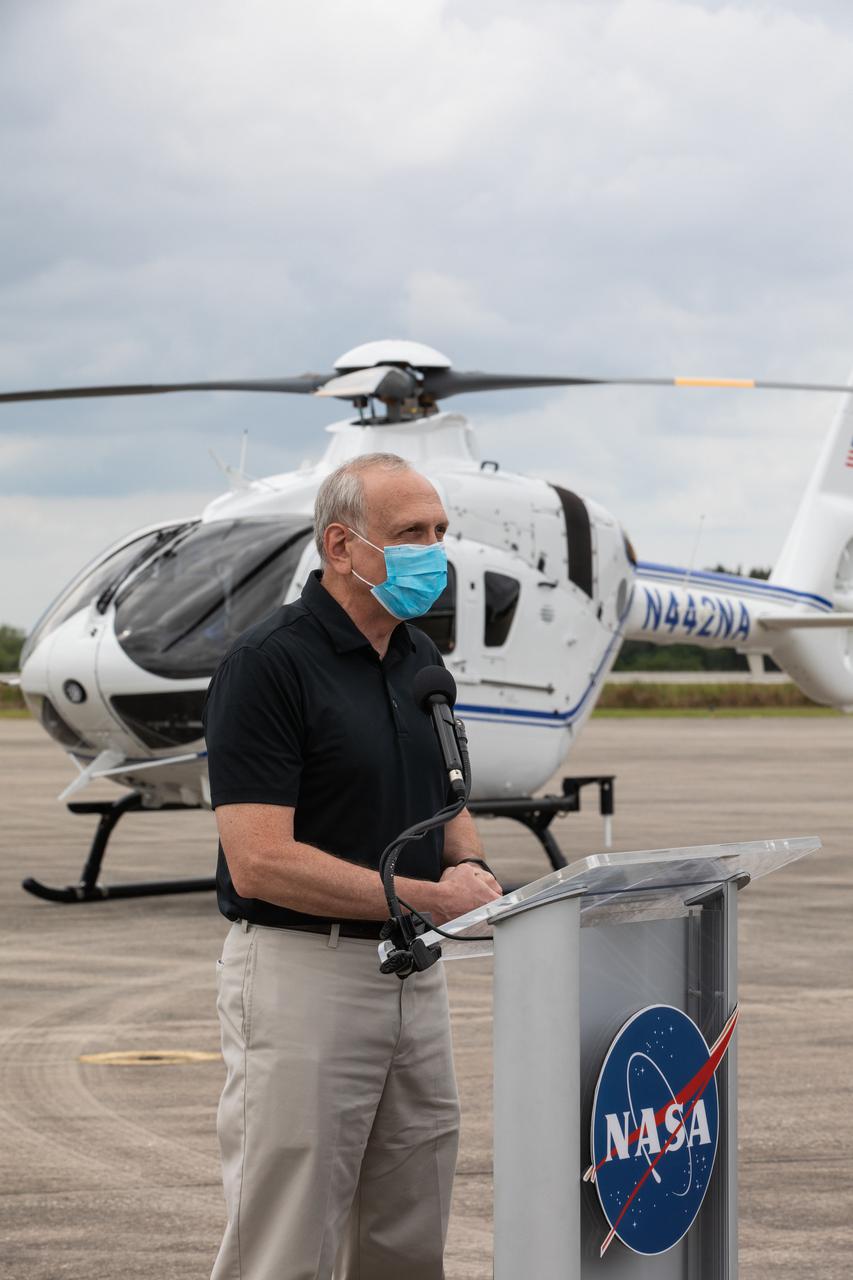
Acting NASA Administrator Steve Jurczyk speaks during NASA’s SpaceX Crew-2 arrival media event held at Kennedy Space Center in Florida on April 16, 2021. NASA astronauts Shane Kimbrough and Megan McArthur, JAXA astronaut Akihiko Hoshide, and ESA astronaut Thomas Pesquet, who arrived at Kennedy just minutes before the media event, will fly to the International Space Station on NASA’s SpaceX Crew-2 mission. Liftoff is targeted for Thursday, April 22, at 6:11 a.m. EDT.
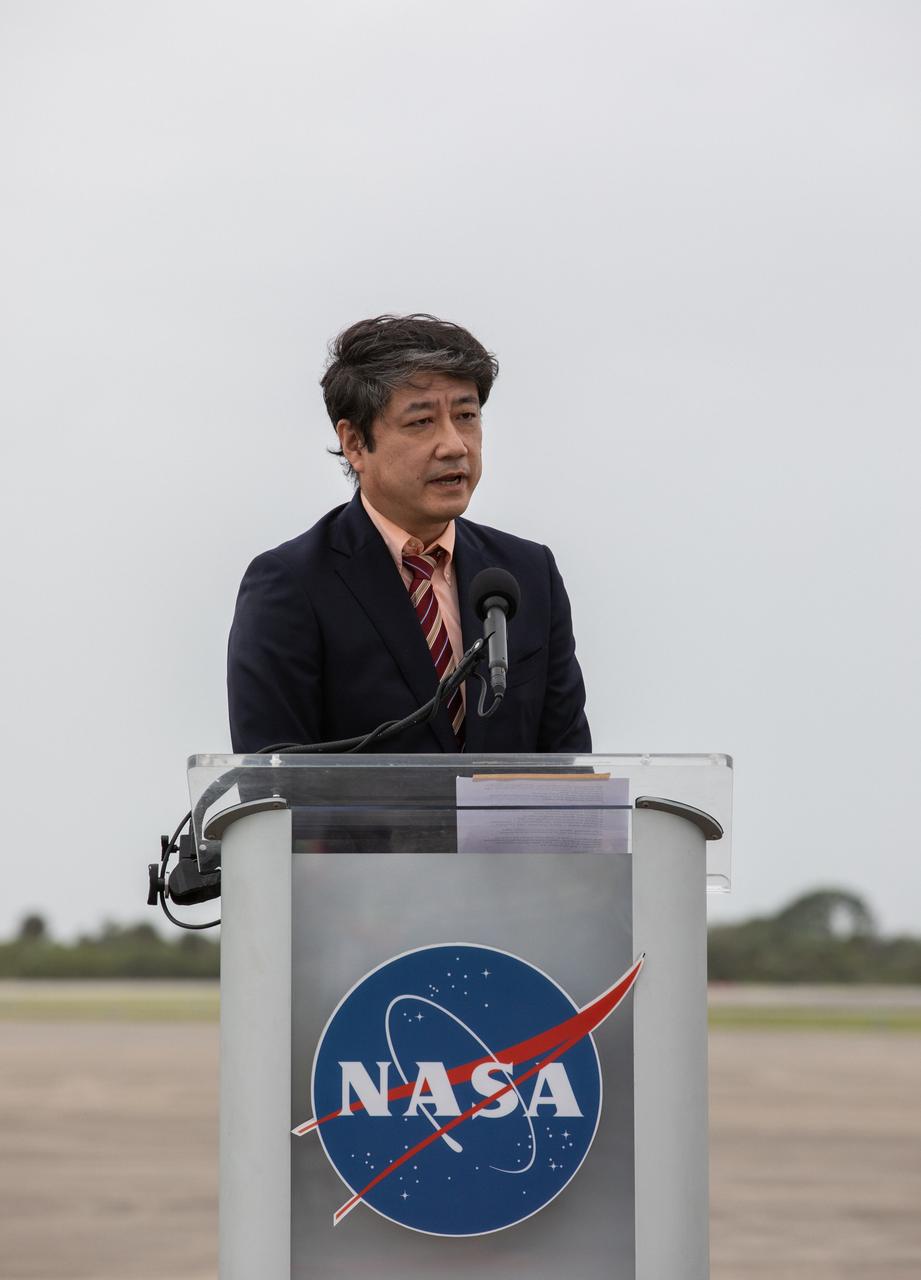
Junichi Sakai, manager, International Space Station Program, JAXA, speaks to members of the media during a crew arrival event for NASA’s SpaceX Crew-1 mission at the Launch and Landing Facility at the agency’s Kennedy Space Center in Florida on Nov. 8, 2020. Crew-1 is the first crew rotation mission of a U.S. commercial spacecraft with astronauts to the International Space Station as part of NASA’s Commercial Crew Program. The SpaceX Crew Dragon spacecraft, named Resilience, will launch atop a Falcon 9 rocket from Kennedy’s Launch Complex 39A.

A crew arrival media event for NASA’s SpaceX Crew-1 mission is held Nov. 8, 2020, at the Launch and Landing Facility at the agency’s Kennedy Space Center in Florida. Speaking to the media is NASA astronaut Michael Hopkins, spacecraft commander. Behind him are NASA astronaut Shannon Walker, mission specialist; NASA astronaut Victor Glover, pilot; and JAXA astronaut Soichi Noguchi, mission specialist. Crew-1 is the first crew rotation mission of a U.S. commercial spacecraft with astronauts to the International Space Station as part of NASA’s Commercial Crew Program. The SpaceX Crew Dragon spacecraft, named Resilience, will launch atop a Falcon 9 rocket from Kennedy’s Launch Complex 39A.
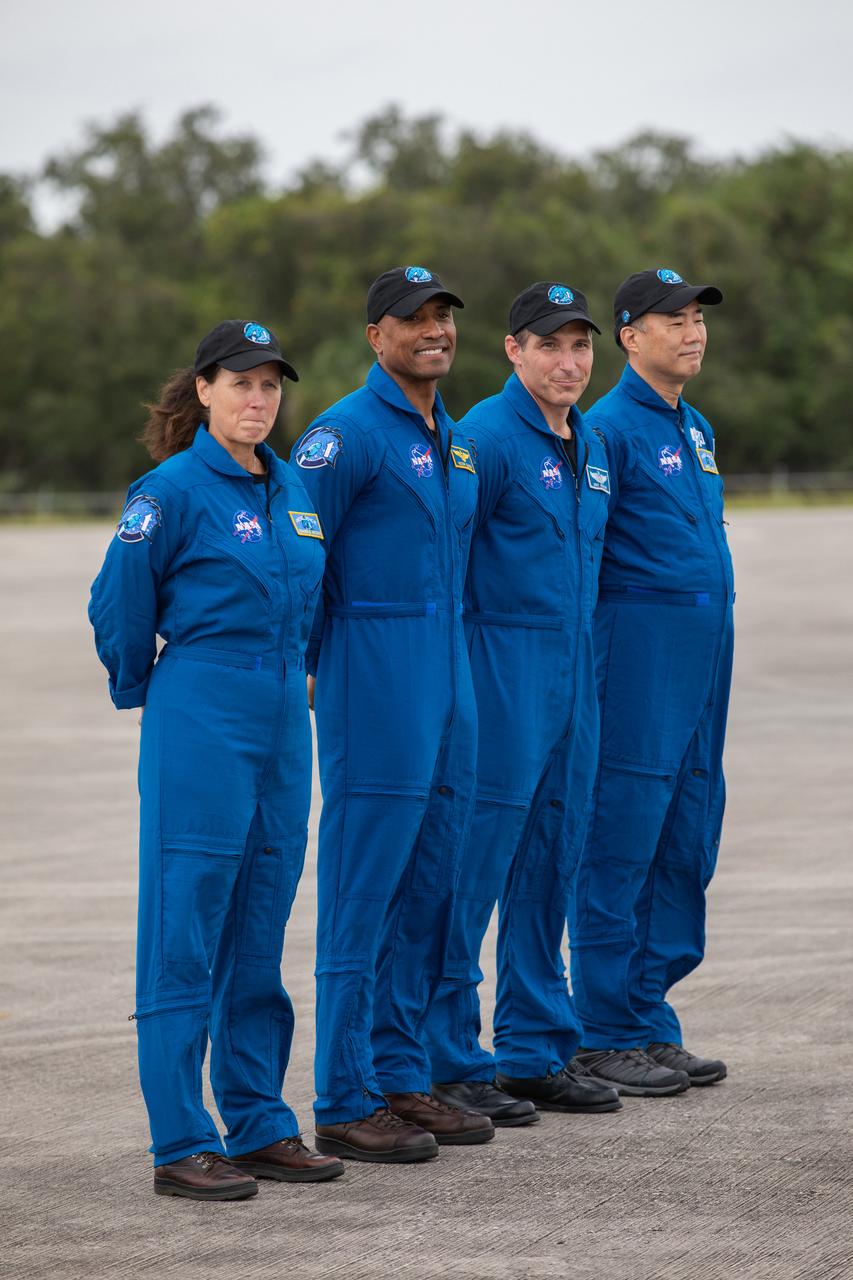
A crew arrival media event for NASA’s SpaceX Crew-1 mission is held Nov. 8, 2020, at the Launch and Landing Facility at the agency’s Kennedy Space Center in Florida. From left are NASA astronaut Shannon Walker, mission specialist; NASA astronaut Victor Glover, pilot; NASA astronaut Michael Hopkins, spacecraft commander; and JAXA astronaut Soichi Noguchi, mission specialist. Crew-1 is the first crew rotation mission of a U.S. commercial spacecraft with astronauts to the International Space Station as part of NASA’s Commercial Crew Program. The SpaceX Crew Dragon spacecraft, named Resilience, will launch atop a Falcon 9 rocket from Kennedy’s Launch Complex 39A.
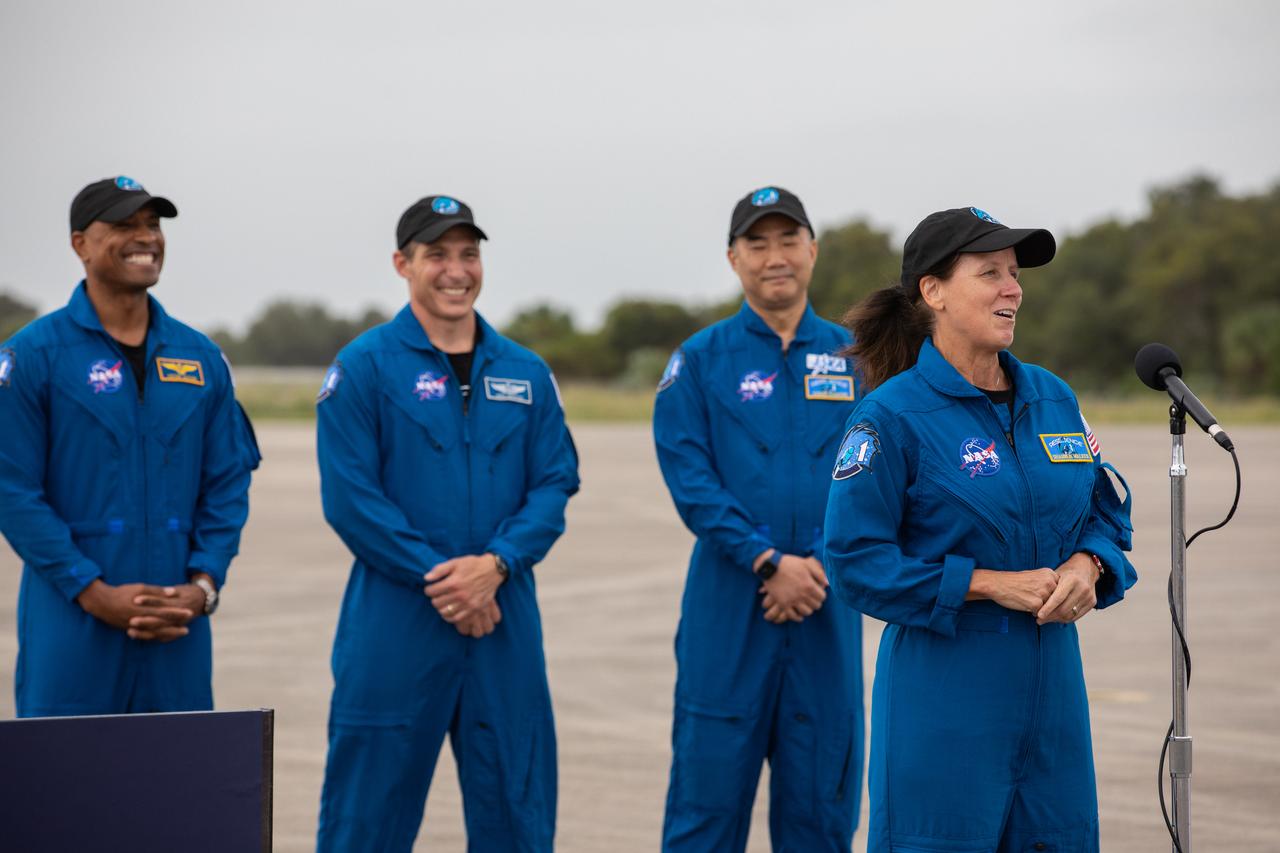
A crew arrival media event for NASA’s SpaceX Crew-1 mission is held Nov. 8, 2020, at the Launch and Landing Facility at the agency’s Kennedy Space Center in Florida. Speaking to the media is NASA astronaut Shannon Walker. Behind her are Victor Glover, pilot; NASA astronaut Michael Hopkins, spacecraft commander; and JAXA astronaut Soichi Noguchi, mission specialist. Crew-1 is the first crew rotation mission of a U.S. commercial spacecraft with astronauts to the International Space Station as part of NASA’s Commercial Crew Program. The SpaceX Crew Dragon spacecraft, named Resilience, will launch atop a Falcon 9 rocket from Kennedy’s Launch Complex 39A.
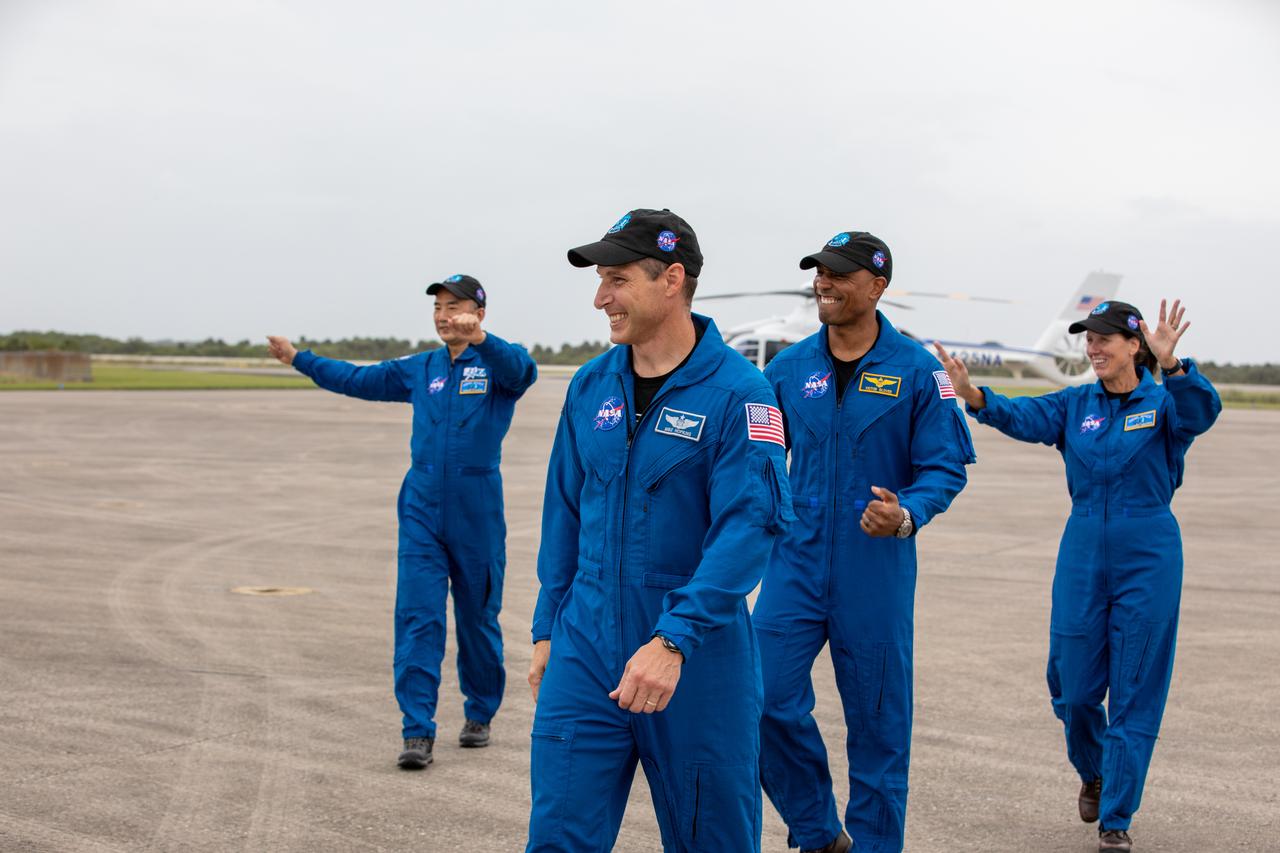
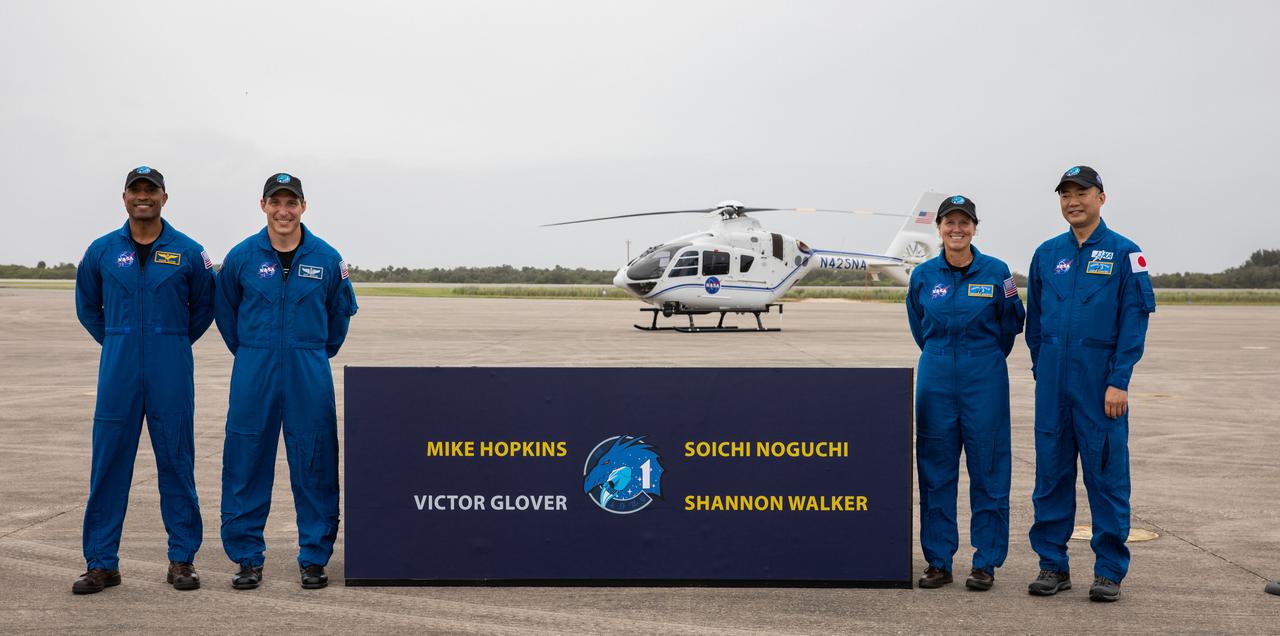
The astronauts for NASA’s SpaceX Crew-1 mission arrive at the Launch and Landing Facility at the agency’s Kennedy Space Center in Florida for a media event on Nov. 8, 2020. From left are, JAXA astronaut Soichi Noguchi, mission specialist; NASA astronaut Michael Hopkins, spacecraft commander; NASA astronaut Victor Glover, pilot; and NASA astronaut Shannon Walker, mission specialist. Crew-1 is the first crew rotation mission of a U.S. commercial spacecraft with astronauts to the International Space Station as part of NASA’s Commercial Crew Program. The SpaceX Crew Dragon spacecraft, named Resilience, will launch atop a Falcon 9 rocket from Kennedy’s Launch Complex 39A.
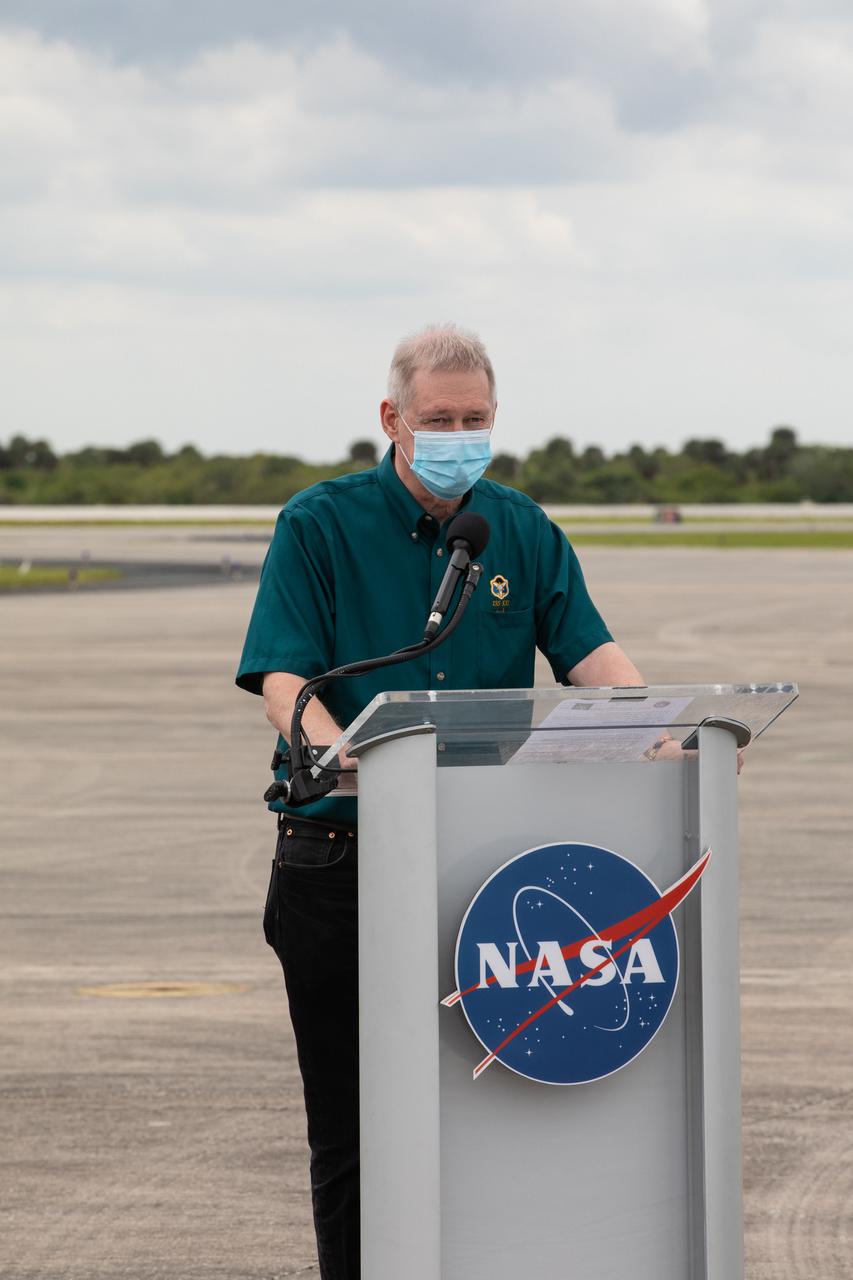
Frank de Winne, manager, International Space Station Program, ESA, speaks during NASA’s SpaceX Crew-2 arrival media event held at Kennedy Space Center in Florida on April 16, 2021. NASA astronauts Shane Kimbrough and Megan McArthur, JAXA astronaut Akihiko Hoshide, and ESA astronaut Thomas Pesquet, who arrived at Kennedy just minutes before the media event, will fly to the space station on NASA’s SpaceX Crew-2 mission. Liftoff is targeted for Thursday, April 22, at 6:11 a.m. EDT.
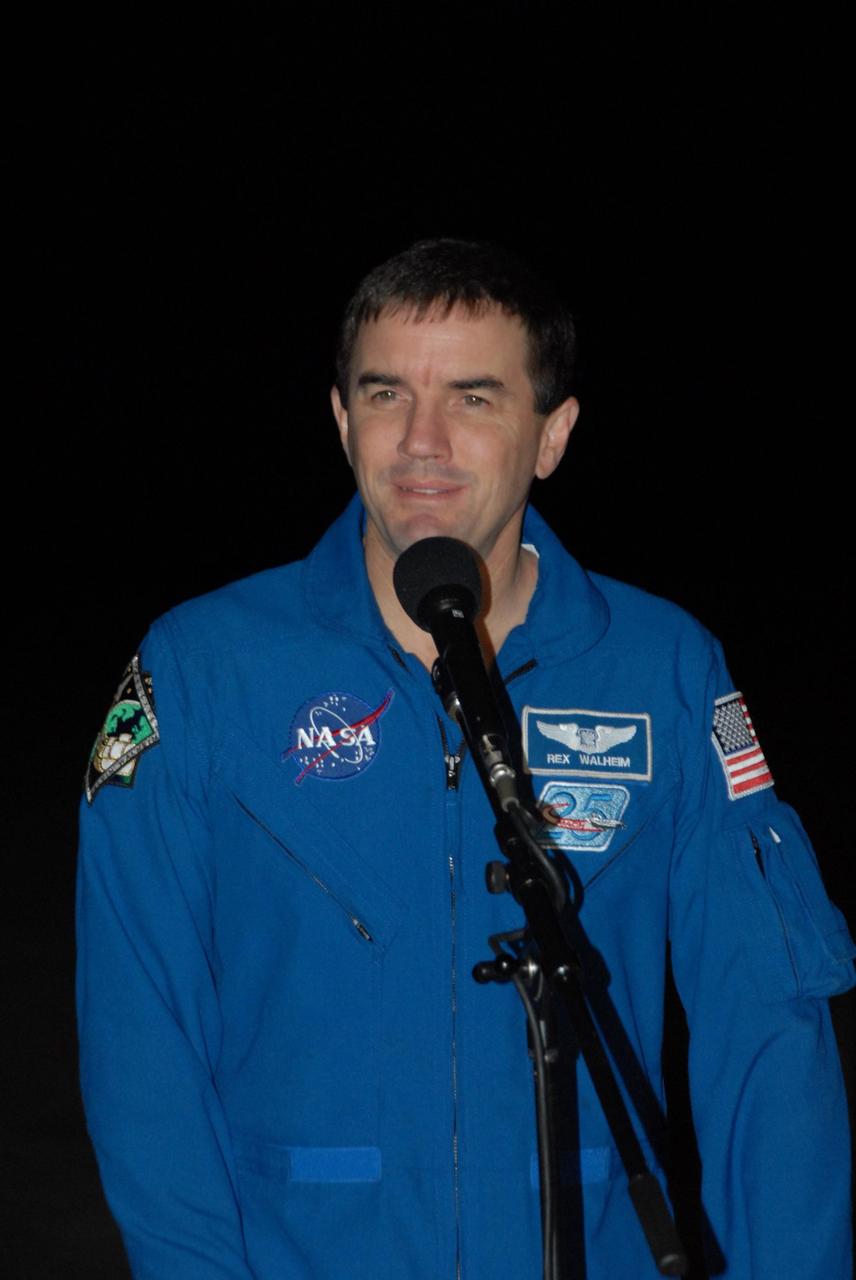
KENNEDY SPACE CENTER, FLA. -- Space shuttle Atlantis STS-122 Mission Specialist Rex Walheim talks to the media at Kennedy Space Center's Shuttle Landing Facility following his arrival to participate in three days of terminal countdown demonstration test, or TCDT, activities. The TCDT provides astronauts and ground crews with equipment familiarization, emergency egress training and a simulated launch countdown. On mission STS-122, Atlantis will deliver the Columbus module to the International Space Station. The European Space Agency's largest single contribution to the station, Columbus is a multifunctional, pressurized laboratory that will be permanently attached to U.S. Node 2, called Harmony. The laboratory will expand the research facilities aboard the station, providing crew members and scientists from around the world the ability to conduct a variety of experiments in the physical, materials and life sciences. Photo credit: NASA/George Shelton
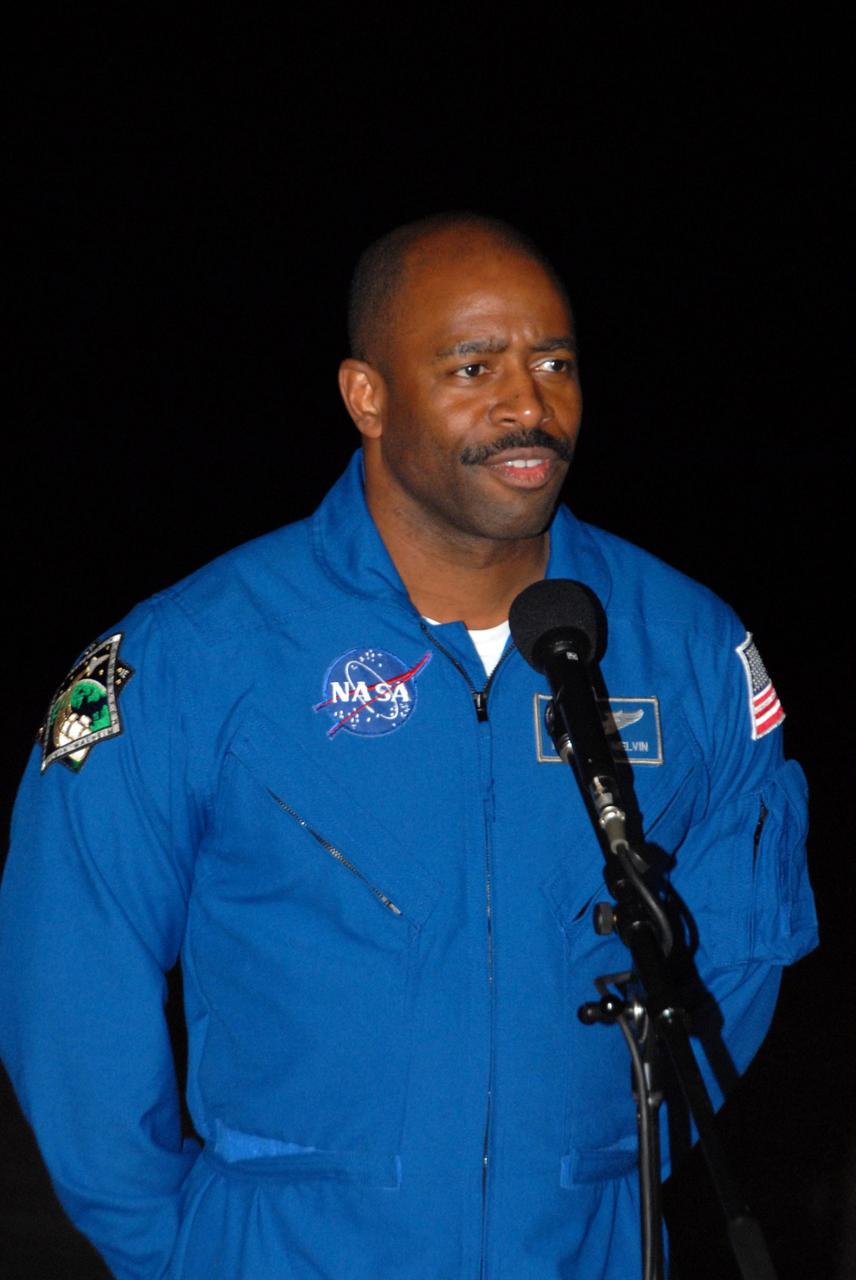
KENNEDY SPACE CENTER, FLA. -- Space shuttle Atlantis STS-122 Mission Specialist Leland Melvin talks to the media at Kennedy Space Center's Shuttle Landing Facility following his arrival to participate in three days of terminal countdown demonstration test, or TCDT, activities. The TCDT provides astronauts and ground crews with equipment familiarization, emergency egress training and a simulated launch countdown. On mission STS-122, Atlantis will deliver the Columbus module to the International Space Station. The European Space Agency's largest single contribution to the station, Columbus is a multifunctional, pressurized laboratory that will be permanently attached to U.S. Node 2, called Harmony. The laboratory will expand the research facilities aboard the station, providing crew members and scientists from around the world the ability to conduct a variety of experiments in the physical, materials and life sciences. Photo credit: NASA/George Shelton
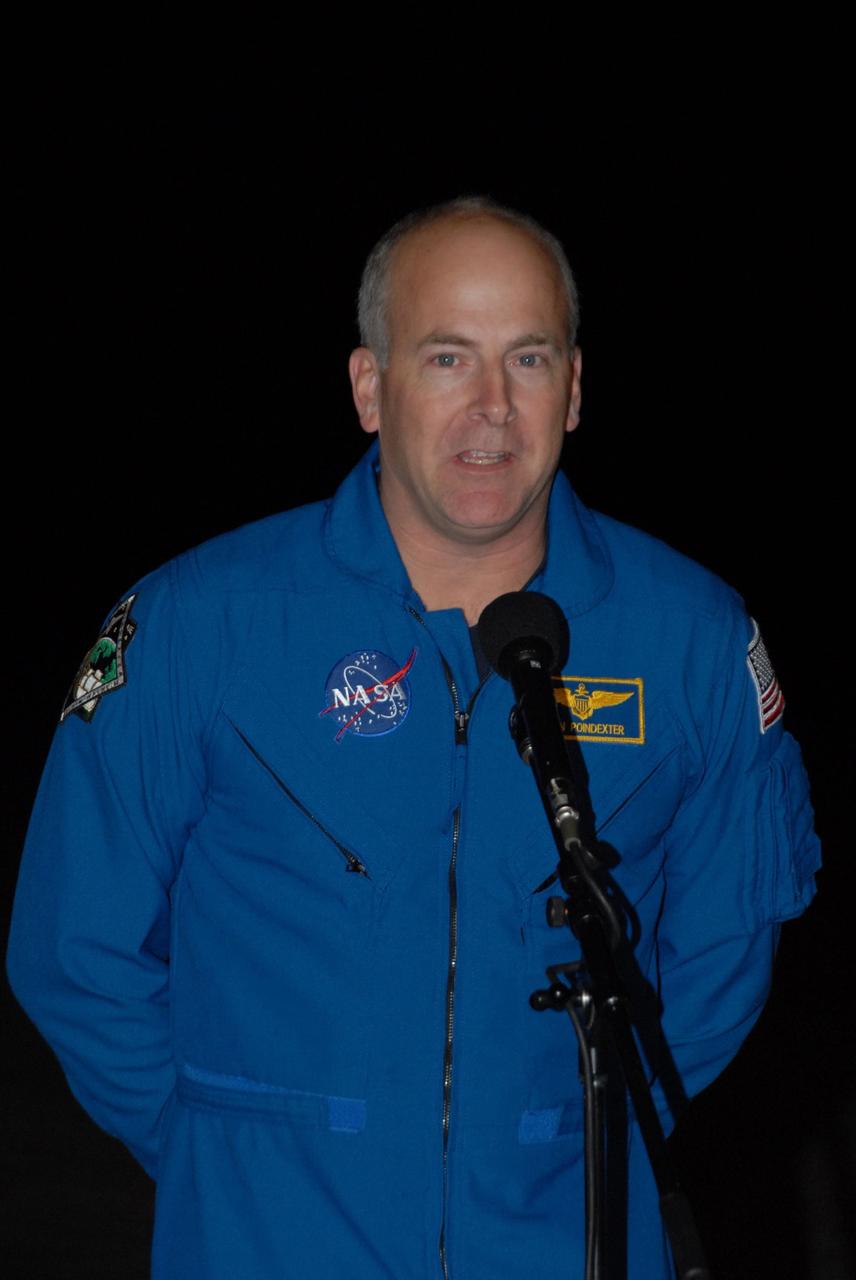
KENNEDY SPACE CENTER, FLA. -- Space shuttle Atlantis STS-122 Pilot Alan Poindexter talks to the media at Kennedy Space Center's Shuttle Landing Facility following his arrival to participate in three days of terminal countdown demonstration test, or TCDT, activities. The TCDT provides astronauts and ground crews with equipment familiarization, emergency egress training and a simulated launch countdown. On mission STS-122, Atlantis will deliver the Columbus module to the International Space Station. The European Space Agency's largest single contribution to the station, Columbus is a multifunctional, pressurized laboratory that will be permanently attached to U.S. Node 2, called Harmony. The laboratory will expand the research facilities aboard the station, providing crew members and scientists from around the world the ability to conduct a variety of experiments in the physical, materials and life sciences. Photo credit: NASA/George Shelton
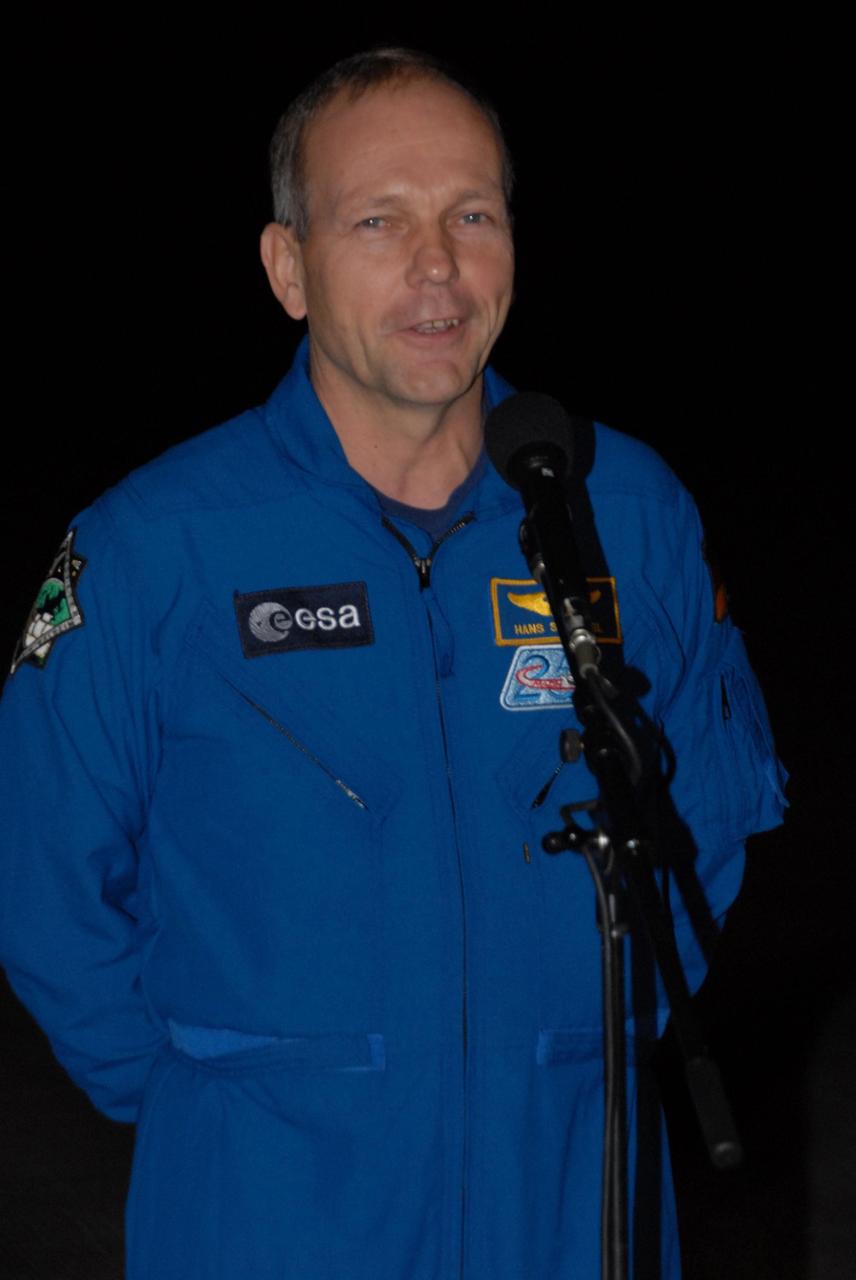
KENNEDY SPACE CENTER, FLA. -- Space shuttle Atlantis STS-122 Mission Specialist Hans Schlegel, of the European Space Agency, talks to the media at Kennedy Space Center's Shuttle Landing Facility following his arrival to participate in three days of terminal countdown demonstration test, or TCDT, activities. The TCDT provides astronauts and ground crews with equipment familiarization, emergency egress training and a simulated launch countdown. On mission STS-122, Atlantis will deliver the Columbus module to the International Space Station. The European Space Agency's largest single contribution to the station, Columbus is a multifunctional, pressurized laboratory that will be permanently attached to U.S. Node 2, called Harmony. The laboratory will expand the research facilities aboard the station, providing crew members and scientists from around the world the ability to conduct a variety of experiments in the physical, materials and life sciences. Photo credit: NASA/George Shelton
A crew arrival media event for NASA’s SpaceX Crew-1 mission is held Nov. 8, 2020, at the Launch and Landing Facility at the agency’s Kennedy Space Center in Florida. Posing for a photograph after speaking to the media, from left are, NASA astronaut Victor Glover, pilot; NASA astronaut Michael Hopkins, spacecraft commander; NASA astronaut Shannon Walker, mission specialist; and JAXA astronaut Soichi Noguchi, mission specialist. Crew-1 is the first crew rotation mission of a U.S. commercial spacecraft with astronauts to the International Space Station as part of NASA’s Commercial Crew Program. The SpaceX Crew Dragon spacecraft, named Resilience, will launch atop a Falcon 9 rocket from Kennedy’s Launch Complex 39A.
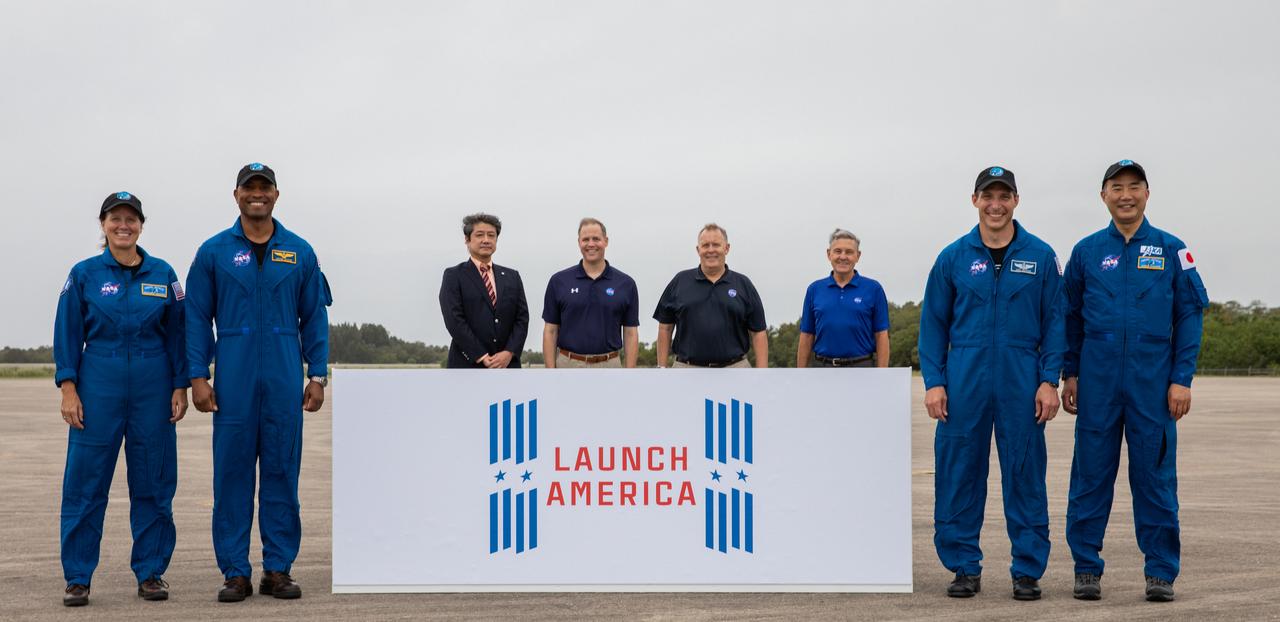
A crew arrival media event for NASA’s SpaceX Crew-1 mission is held Nov. 8, 2020, at the Launch and Landing Facility at the agency’s Kennedy Space Center in Florida. From left NASA astronaut Shannon Walker, mission specialist; NASA astronaut Victor Glover, pilot; Junichi Sakai, manager, International Space Station Program, JAXA; NASA Administrator Jim Bridenstine; NASA Deputy Administrator Jim Morhard; Bob Cabana, director, Kennedy Space Center; NASA astronaut Michael Hopkins, spacecraft commander; and JAXA astronaut Soichi Noguchi, mission specialist, pose for a photograph after speaking to members of the media. Crew-1 is the first crew rotation mission of a U.S. commercial spacecraft with astronauts to the International Space Station as part of NASA’s Commercial Crew Program. The SpaceX Crew Dragon spacecraft, named Resilience, will launch atop a Falcon 9 rocket from Kennedy’s Launch Complex 39A.
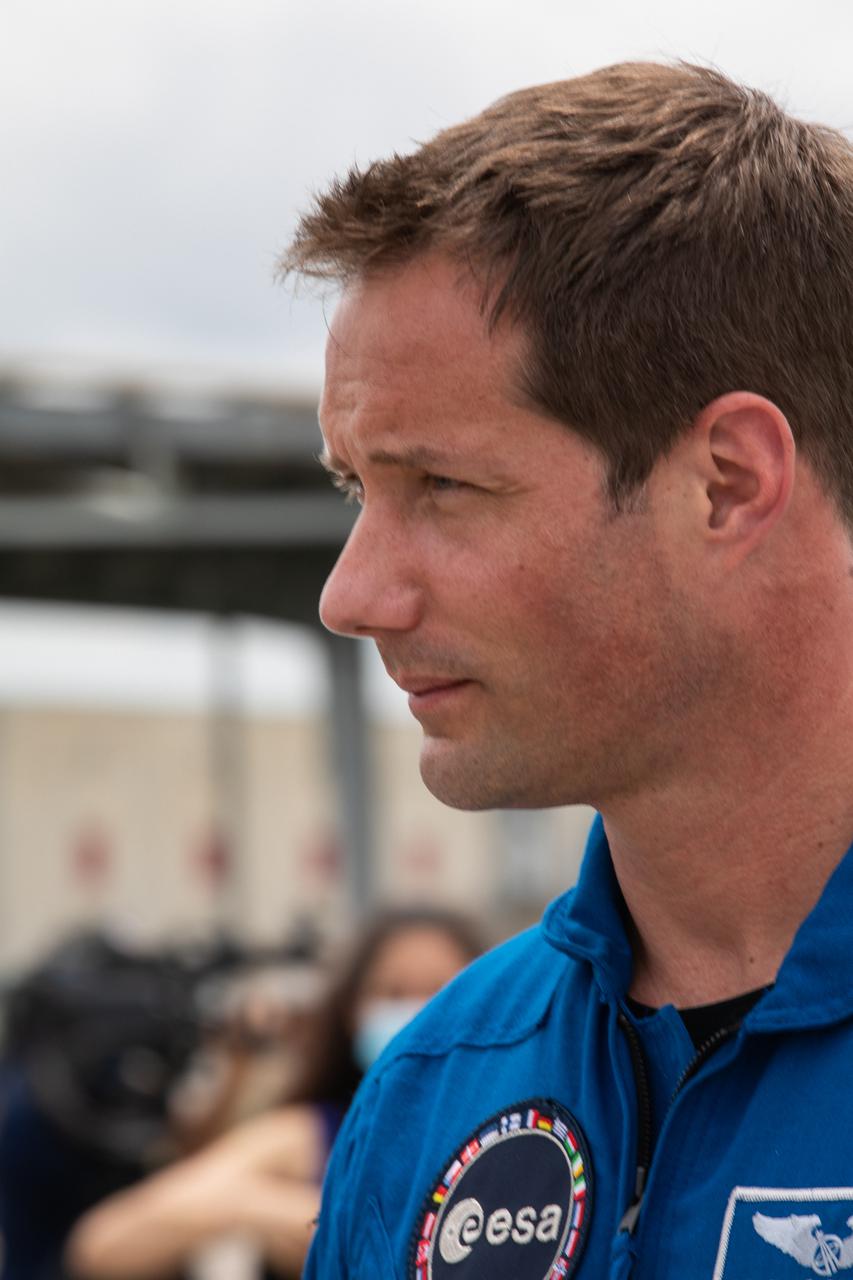
ESA astronaut Thomas Pesquet looks on during the SpaceX Crew-2 arrival media event held at Kennedy Space Center in Florida on April 16, 2021. Pesquet is part of NASA’s SpaceX Crew-2 crew, which includes NASA astronauts Megan McArthur and Shane Kimbrough, along with Akihilo Hoshide of JAXA. The astronauts will fly to the space station on NASA’s SpaceX Crew-2 mission. Liftoff is targeted for Thursday, April 22, at 6:11 a.m. EDT.
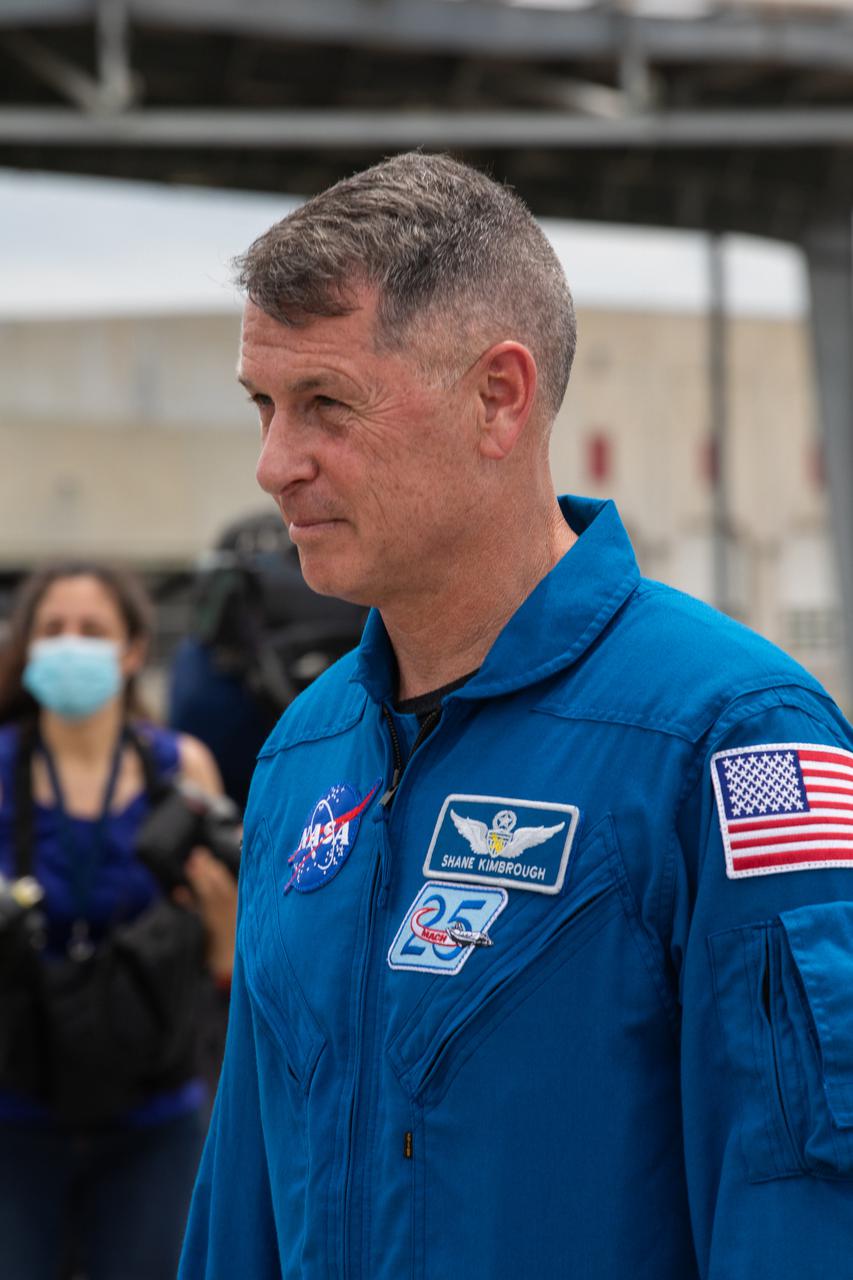
NASA astronaut Shane Kimbrough looks on during the SpaceX Crew-2 arrival media event held at Kennedy Space Center in Florida on April 16, 2021. Kimbrough is part of NASA’s SpaceX Crew-2 crew, which includes fellow NASA astronaut Megan McArthur, along with Akihilo Hoshide of JAXA and Thomas Pesquet of ESA. The astronauts will fly to the space station on NASA’s SpaceX Crew-2 mission. Liftoff is targeted for Thursday, April 22, at 6:11 a.m. EDT.
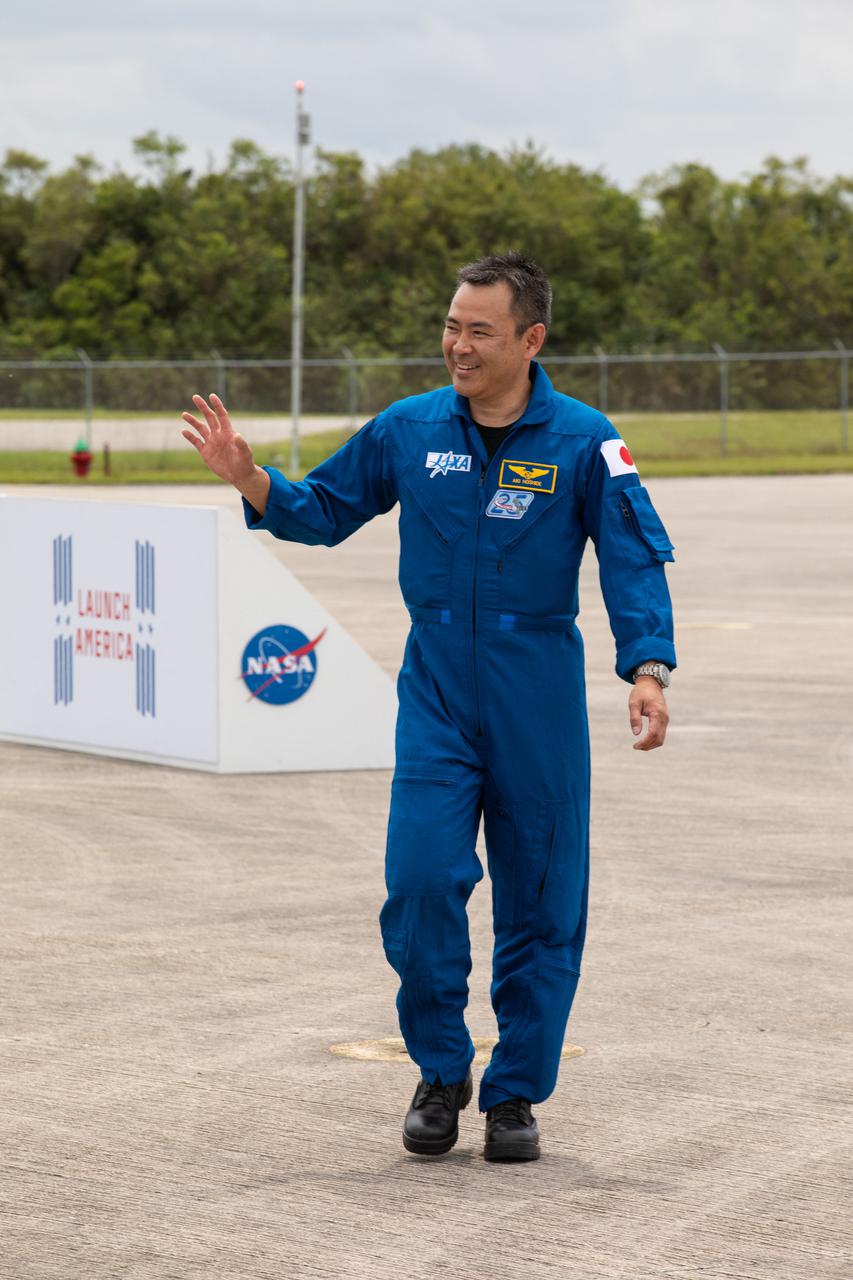
JAXA astronaut Akihilo Hoshide smiles and waves during the SpaceX Crew-2 arrival media event held at Kennedy Space Center in Florida on April 16, 2021. Hoshide is part of NASA’s SpaceX Crew-2 crew, which includes NASA astronauts Megan McArthur and Shane Kimbrough, along with ESA astronaut Thomas Pesquet. The astronauts will fly to the space station on NASA’s SpaceX Crew-2 mission. Liftoff is targeted for Thursday, April 22, at 6:11 a.m. EDT.
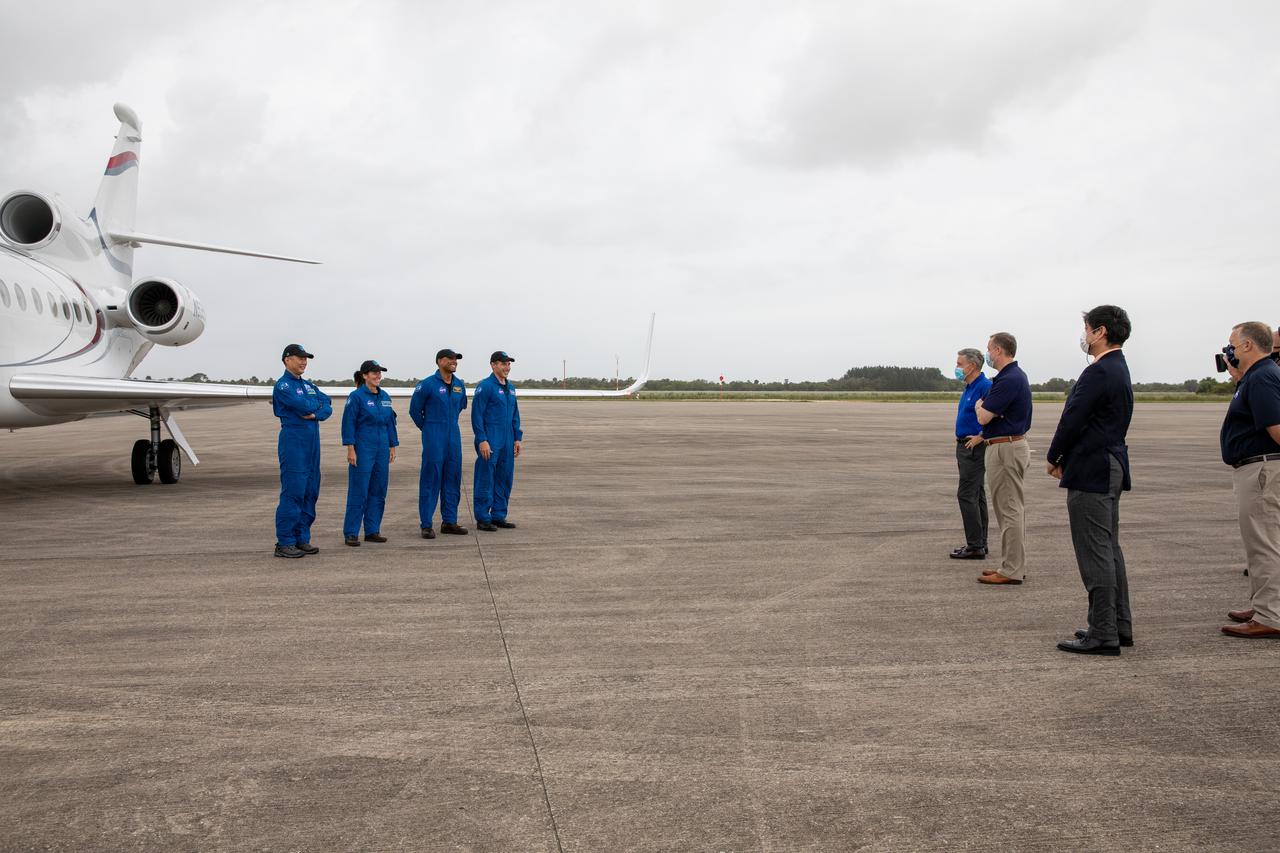
The astronauts for NASA’s SpaceX Crew-1 mission arrive at the Launch and Landing Facility at the agency’s Kennedy Space Center in Florida on Nov. 8, 2020, and are greeted by NASA and JAXA leadership. From left are, JAXA astronaut Soichi Noguchi, mission specialist; NASA astronaut Shannon Walker, mission specialist; NASA astronaut Victor Glover, pilot; and NASA astronaut Michael Hopkins, spacecraft commander. At right, from left are Bob Cabana, director, Kennedy Space Center; NASA Administrator Jim Bridenstine; Junichi Sakai, manager, International Space Station Program, JAXA; and NASA Deputy Administrator Jim Morhard. Crew-1 is the first crew rotation mission of a U.S. commercial spacecraft with astronauts to the International Space Station as part of NASA’s Commercial Crew Program. The SpaceX Crew Dragon spacecraft, named Resilience, will launch atop a Falcon 9 rocket from Kennedy’s Launch Complex 39A.
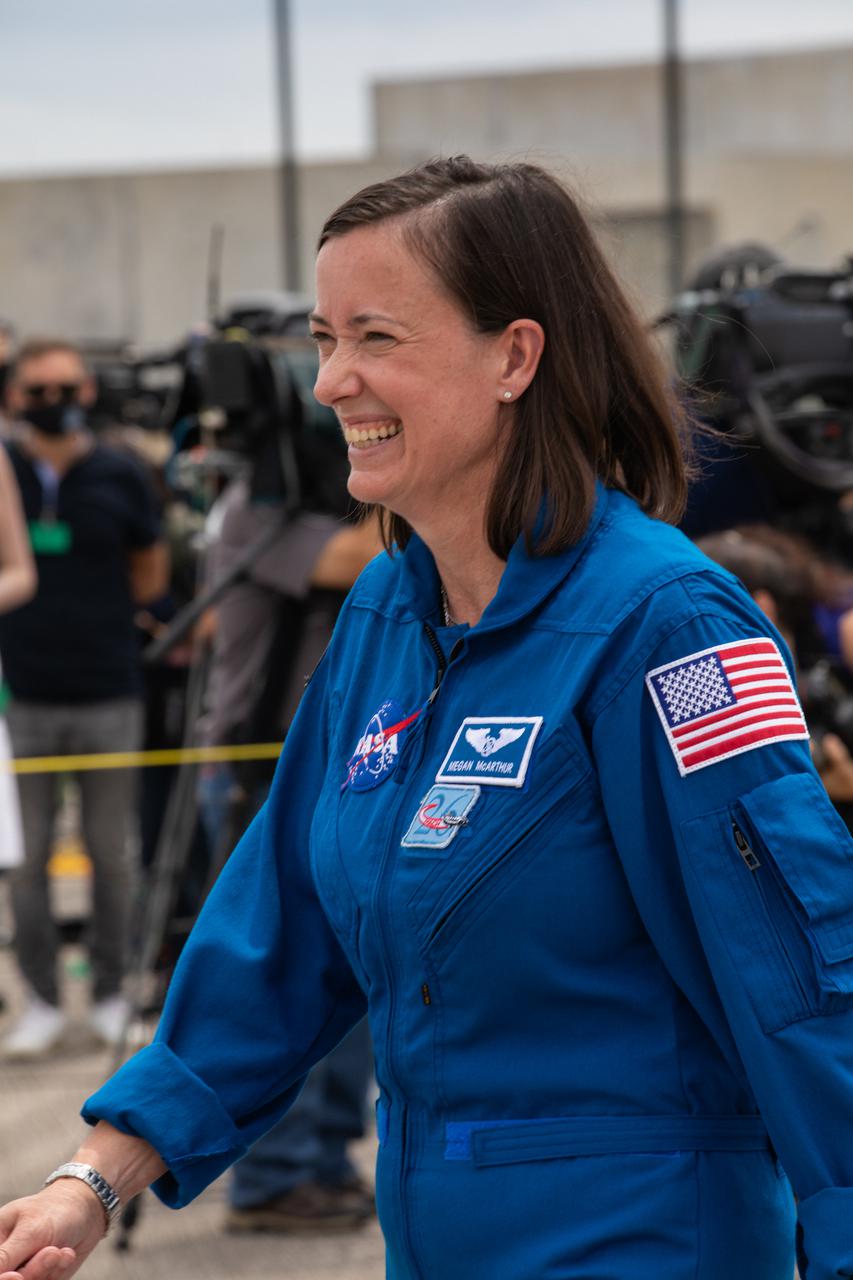
NASA astronaut Megan McArthur smiles after arriving at Kennedy Space Center in Florida on April 16, 2021. McArthur is part of NASA’s SpaceX Crew-2 crew, which includes fellow NASA astronaut Shane Kimbrough, along with Akihilo Hoshide of JAXA and Thomas Pesquet of ESA. The astronauts will fly to the space station on NASA’s SpaceX Crew-2 mission. Liftoff is targeted for Thursday, April 22, at 6:11 a.m. EDT.
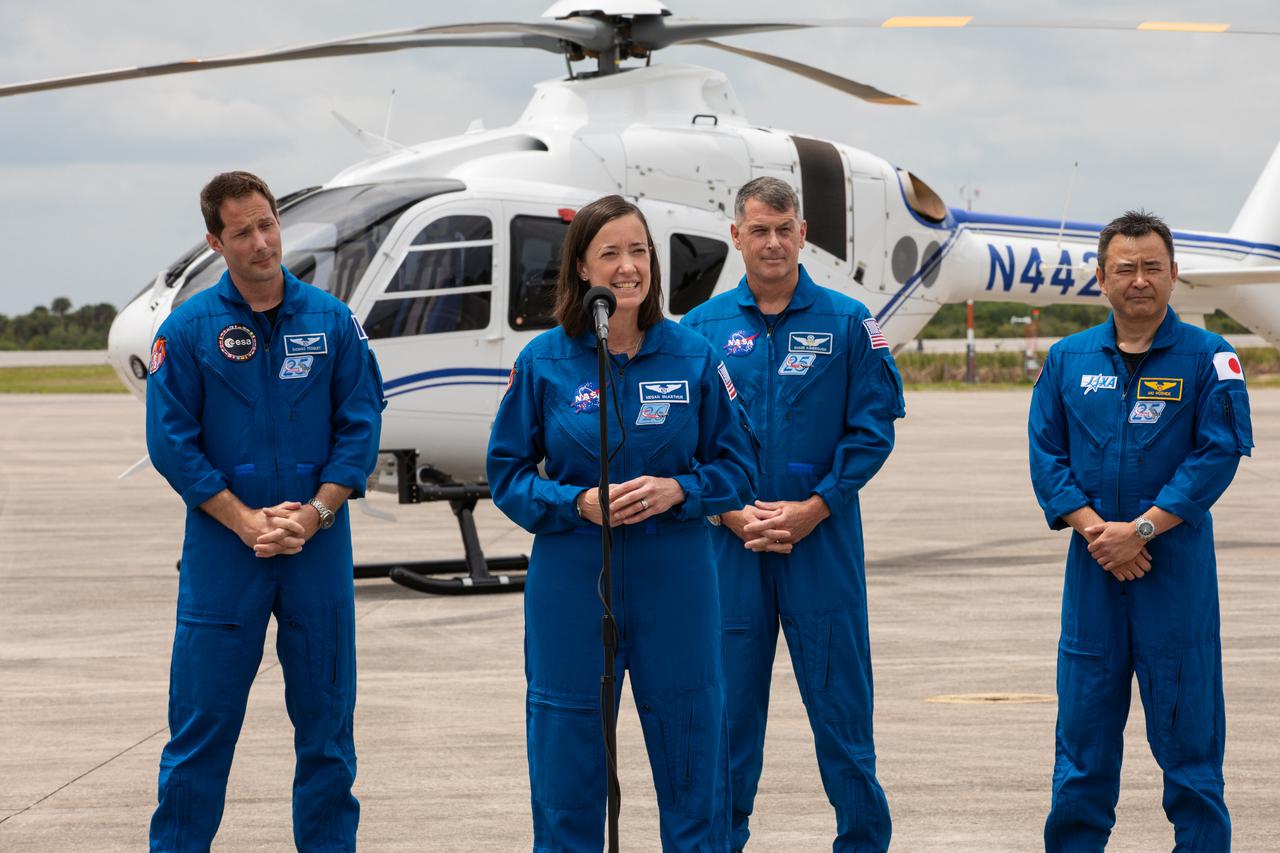
From left to right, Crew-2 mission astronauts Thomas Pesquet (ESA), Megan McArthur (NASA), Shane Kimbrough (NASA) and Akihiko Hoshide (JAXA) attend NASA’s SpaceX Crew-2 arrival media event held at Kennedy Space Center in Florida on April 16, 2021. The astronauts are set to launch on SpaceX’s Falcon 9 rocket and Crew Dragon spacecraft on the second crew rotation mission to the International Space Station as part of NASA’s Commercial Crew Program. Liftoff is targeted for 6:11 a.m. on Earth Day, Thursday, April 22, from Launch Complex 39A at Kennedy.
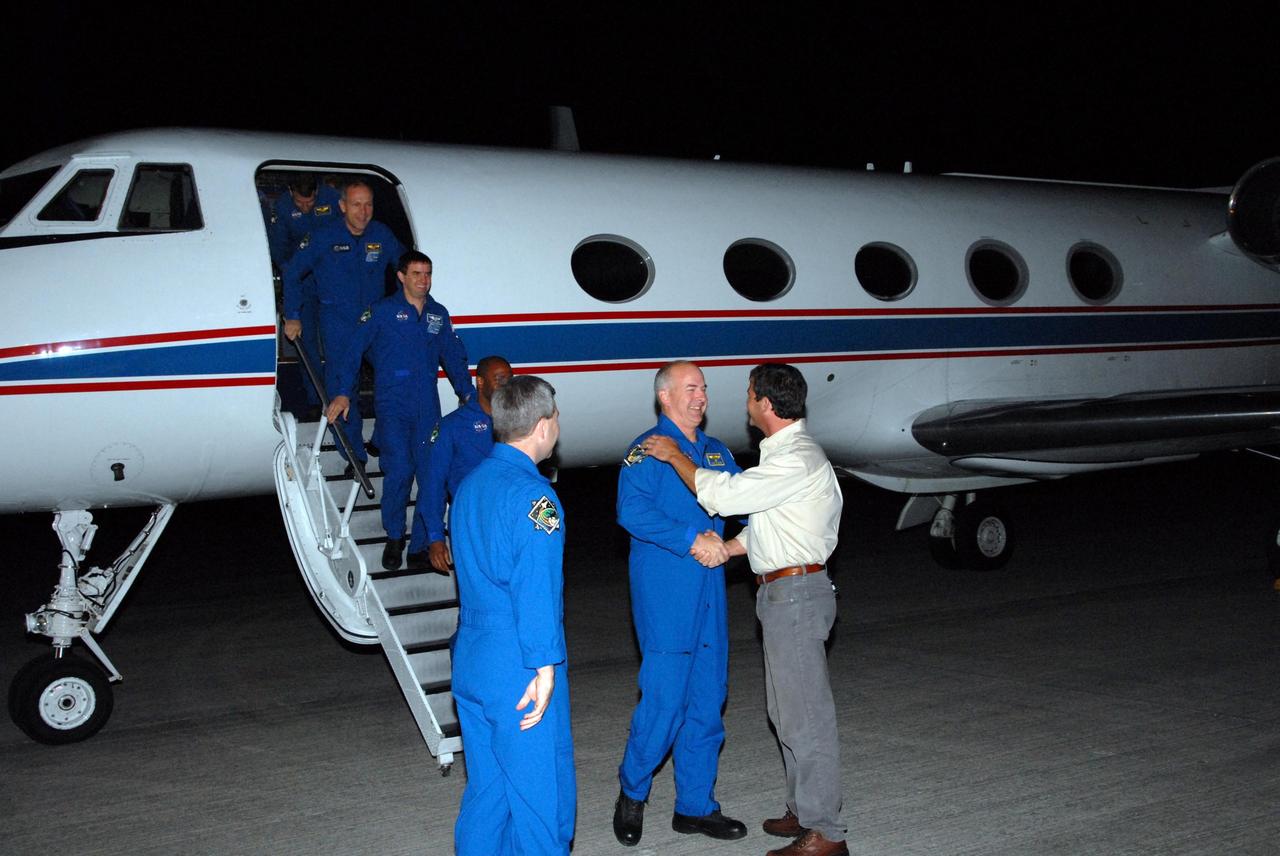
KENNEDY SPACE CENTER, FLA. -- The astronauts assigned to the space shuttle Atlantis STS-122 crew arrive at Kennedy Space Center's Shuttle Landing Facility aboard a Gulfstream shuttle training aircraft to participate in three days of terminal countdown demonstration test, or TCDT, activities. STS-122 Launch Director Doug Lyons greets Pilot Alan Poindexter as Commander Steve Frick looks on. Disembarking are Mission Specialists Leland Melvin, Rex Walheim, Hans Schlegel of the European Space Agency and Stanley Love. The TCDT provides astronauts and ground crews with equipment familiarization, emergency egress training and a simulated launch countdown. On mission STS-122, Atlantis will deliver the Columbus module to the International Space Station. The European Space Agency's largest single contribution to the station, Columbus is a multifunctional, pressurized laboratory that will be permanently attached to U.S. Node 2, called Harmony. The laboratory will expand the research facilities aboard the station, providing crew members and scientists from around the world the ability to conduct a variety of experiments in the physical, materials and life sciences. Photo credit: NASA/George Shelton
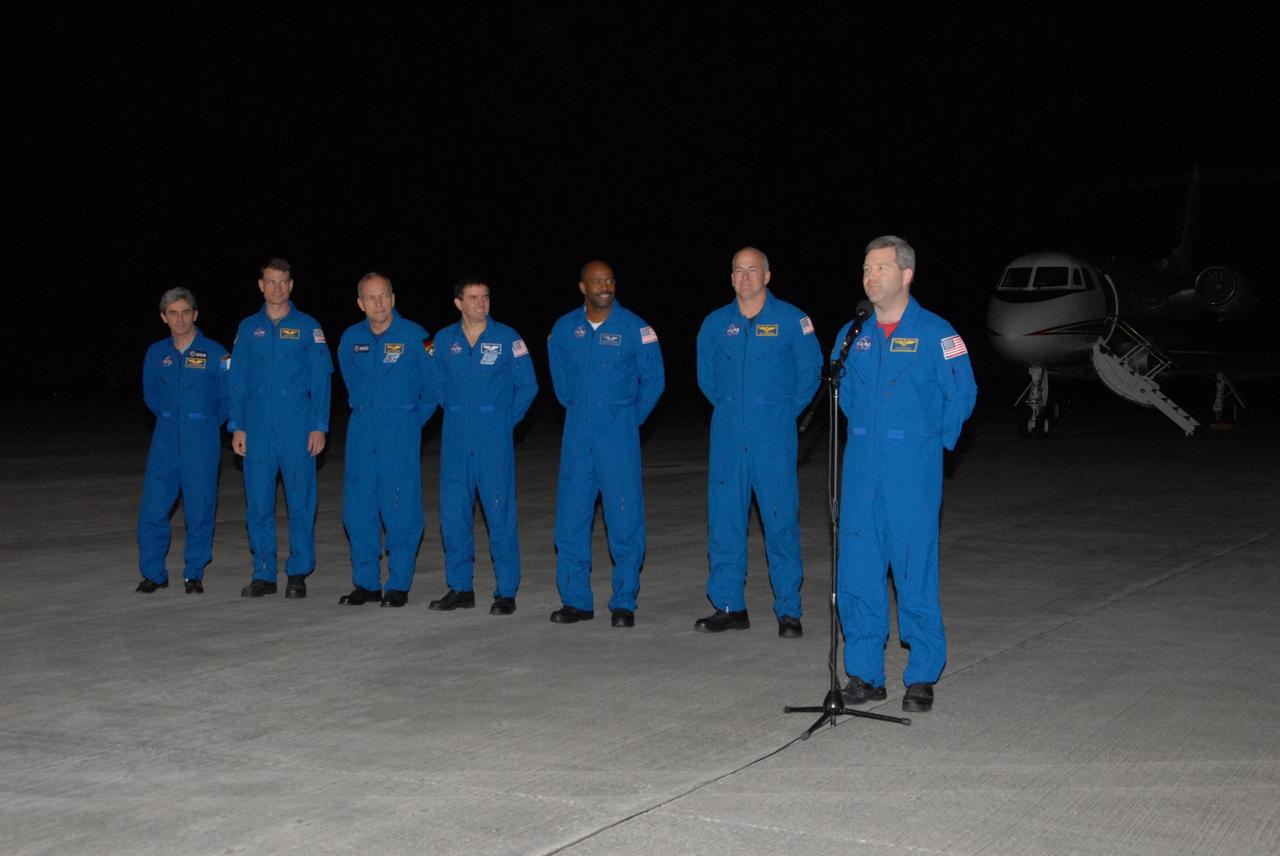
KENNEDY SPACE CENTER, FLA. -- Space shuttle Atlantis STS-122 Commander Steve Frick, at the microphone, addresses the media at Kennedy Space Center's Shuttle Landing Facility following his arrival to participate in three days of terminal countdown demonstration test, or TCDT, activities. Other STS-122 crew members are, from left, Mission Specialist Leopold Eyharts, a European Space Agency astronaut who will remain on the International Space Station as a flight engineer for Expedition 16; Mission Specialists Stanley Love, Hans Schlegel of the European Space Agency, Rex Walheim and Leland Melvin; and Pilot Alan Poindexter. The TCDT provides astronauts and ground crews with equipment familiarization, emergency egress training and a simulated launch countdown. On mission STS-122, Atlantis will deliver the Columbus module to the International Space Station. The European Space Agency's largest single contribution to the station, Columbus is a multifunctional, pressurized laboratory that will be permanently attached to U.S. Node 2, called Harmony. The laboratory will expand the research facilities aboard the station, providing crew members and scientists from around the world the ability to conduct a variety of experiments in the physical, materials and life sciences. Photo credit: NASA/George Shelton
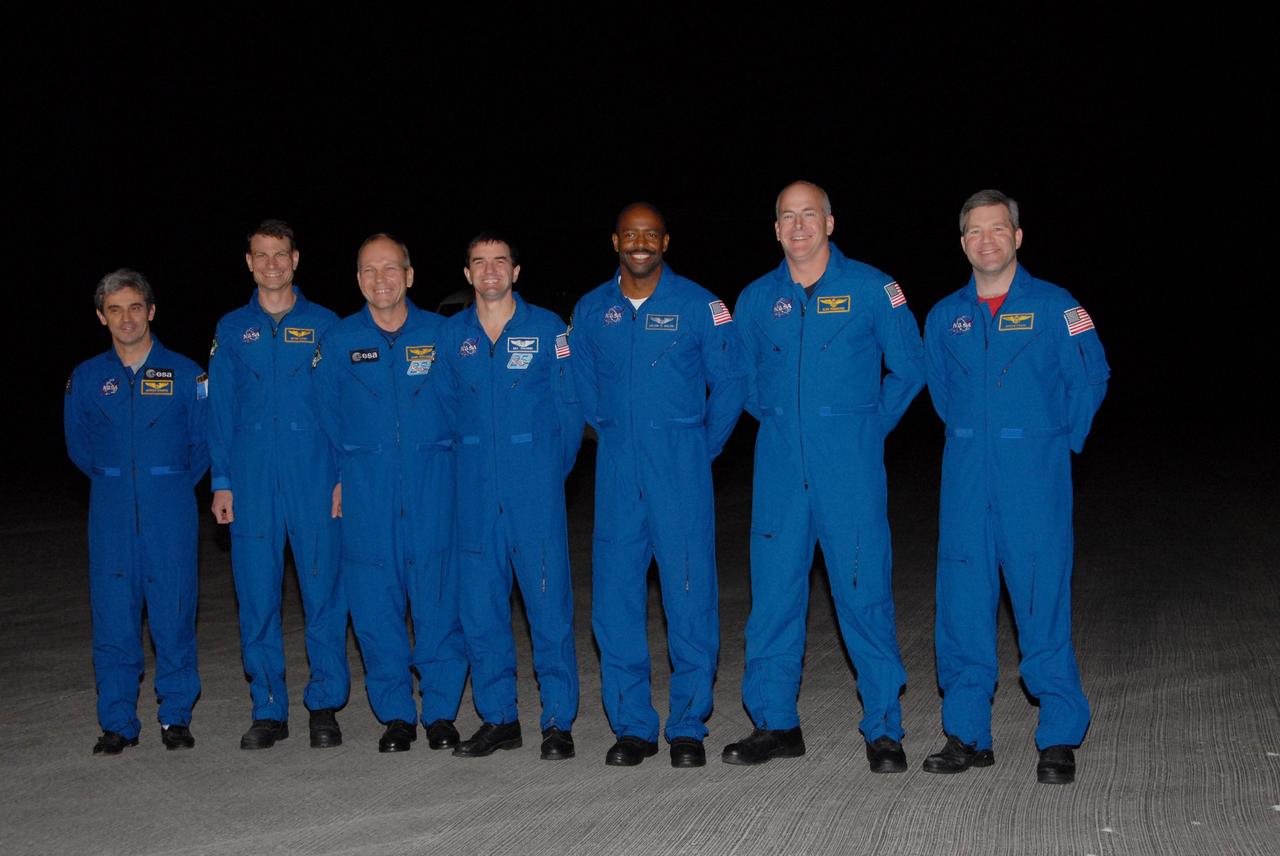
KENNEDY SPACE CENTER, FLA. -- The astronauts assigned to the space shuttle Atlantis STS-122 crew arrive at Kennedy Space Center's Shuttle Landing Facility aboard a Gulfstream shuttle training aircraft to participate in three days of terminal countdown demonstration test, or TCDT, activities. From left are Mission Specialist Leopold Eyharts, a European Space Agency astronaut who will remain on the International Space Station as a flight engineer for Expedition 16; Mission Specialists Stanley Love, Hans Schlegel of the European Space Agency, Rex Walheim and Leland Melvin; Pilot Alan Poindexter; and Commander Steve Frick. The TCDT provides astronauts and ground crews with equipment familiarization, emergency egress training and a simulated launch countdown. On mission STS-122, Atlantis will deliver the Columbus module to the International Space Station. The European Space Agency's largest single contribution to the station, Columbus is a multifunctional, pressurized laboratory that will be permanently attached to U.S. Node 2, called Harmony. The laboratory will expand the research facilities aboard the station, providing crew members and scientists from around the world the ability to conduct a variety of experiments in the physical, materials and life sciences. Photo credit: NASA/George Shelton
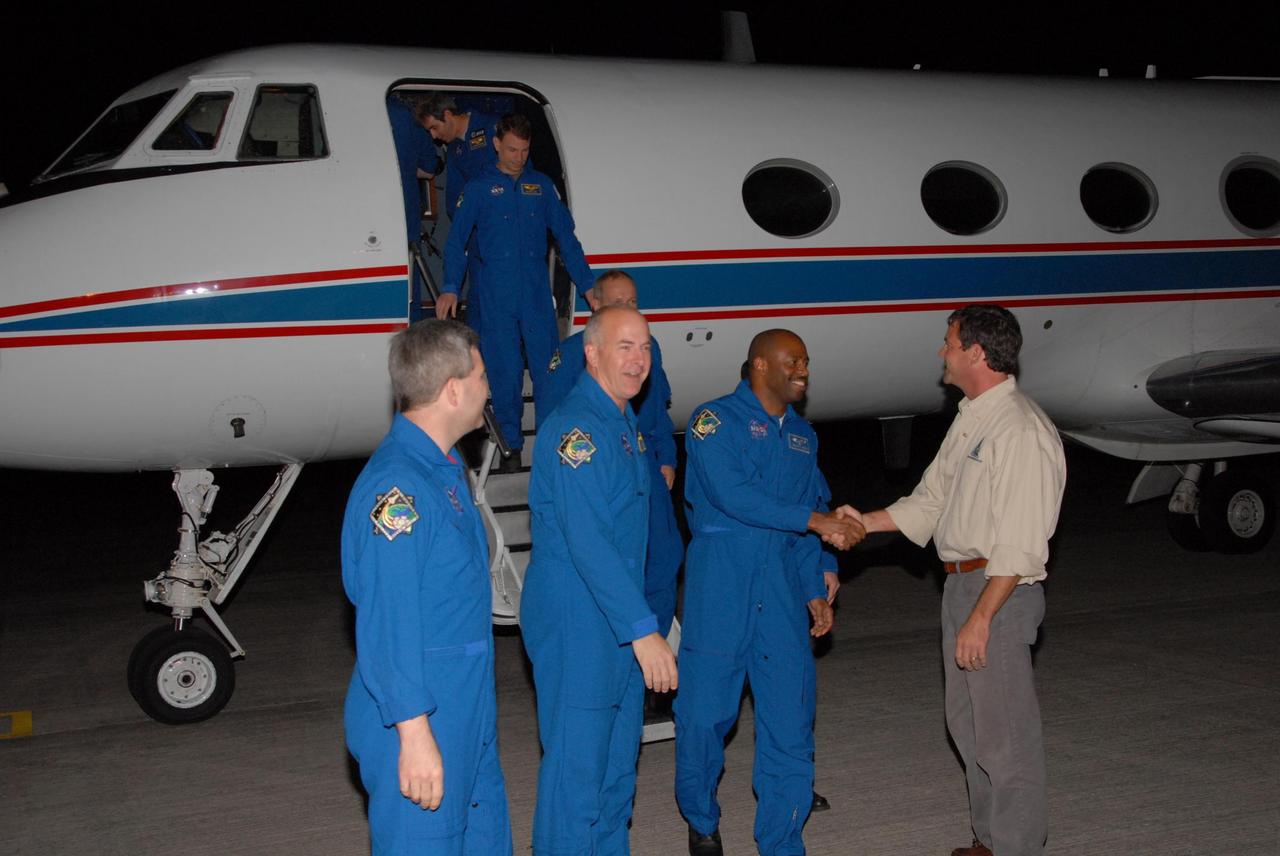
KENNEDY SPACE CENTER, FLA. -- The astronauts assigned to the space shuttle Atlantis STS-122 crew arrive at Kennedy Space Center's Shuttle Landing Facility aboard a Gulfstream shuttle training aircraft to participate in three days of terminal countdown demonstration test, or TCDT, activities. STS-122 Launch Director Doug Lyons greets Mission Specialist Leland Melvin as Commander Steve Frick and Pilot Alan Poindexter look on. Disembarking are Mission Specialists Hans Schlegel of the European Space Agency, Stanley Love and Leopold Eyharts, a European Space Agency astronaut who will remain on the International Space Station as a flight engineer for Expedition 16. The TCDT provides astronauts and ground crews with equipment familiarization, emergency egress training and a simulated launch countdown. On mission STS-122, Atlantis will deliver the Columbus module to the International Space Station. The European Space Agency's largest single contribution to the station, Columbus is a multifunctional, pressurized laboratory that will be permanently attached to U.S. Node 2, called Harmony. The laboratory will expand the research facilities aboard the station, providing crew members and scientists from around the world the ability to conduct a variety of experiments in the physical, materials and life sciences. Photo credit: NASA/George Shelton
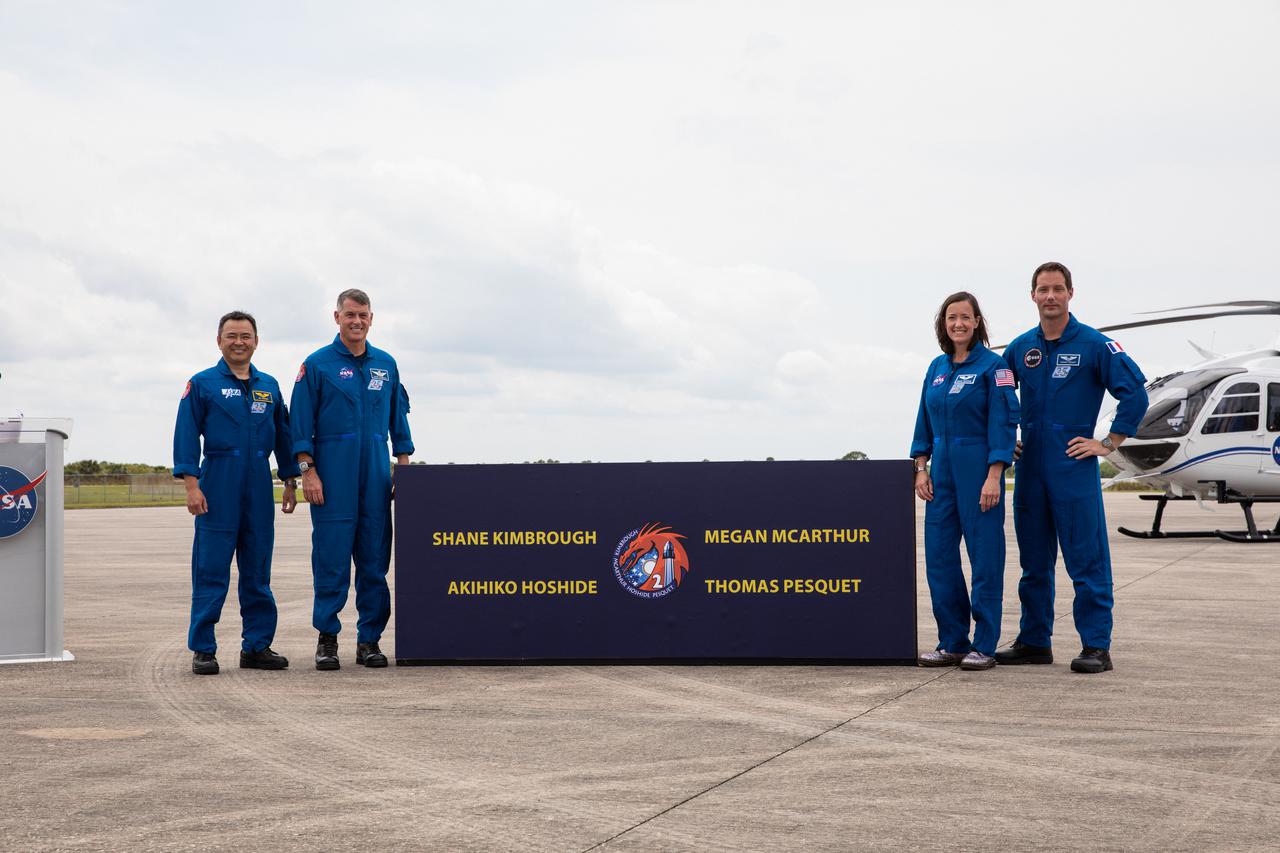
From left to right, Crew-2 mission astronauts Akihiko Hoshide (JAXA), Shane Kimbrough (NASA), Megan McArthur (NASA), and Thomas Pesquet (ESA), arrive at Kennedy Space Center’s Launch and Landing Facility on April 16, 2021. The astronauts departed by plane from Ellington Field near the agency’s Johnson Space Center in Houston, making the short flight and touching down at Kennedy. The Crew-2 mission is set to lift off from Kennedy’s Launch Complex 39A on April 22, at 6:11 a.m. EDT.
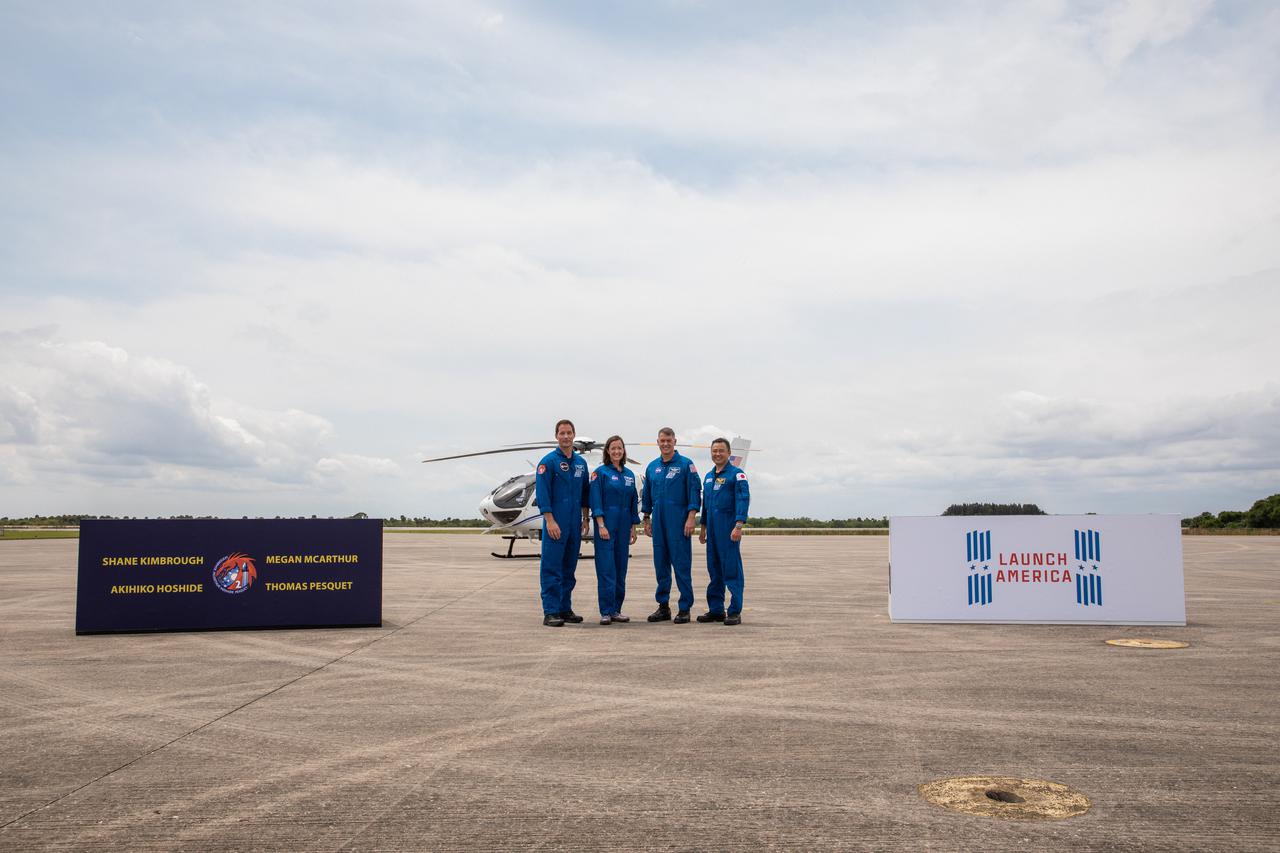
From left to right, Crew-2 mission astronauts Thomas Pesquet (ESA), Megan McArthur (NASA), Shane Kimbrough (NASA), and Akihiko Hoshide (JAXA), arrive at Kennedy Space Center’s Launch and Landing Facility on April 16, 2021. The astronauts departed by plane from Ellington Field near the agency’s Johnson Space Center in Houston, making the short flight and touching down at Kennedy. The Crew-2 mission is set to lift off from Kennedy’s Launch Complex 39A on April 22, at 6:11 a.m. EDT.
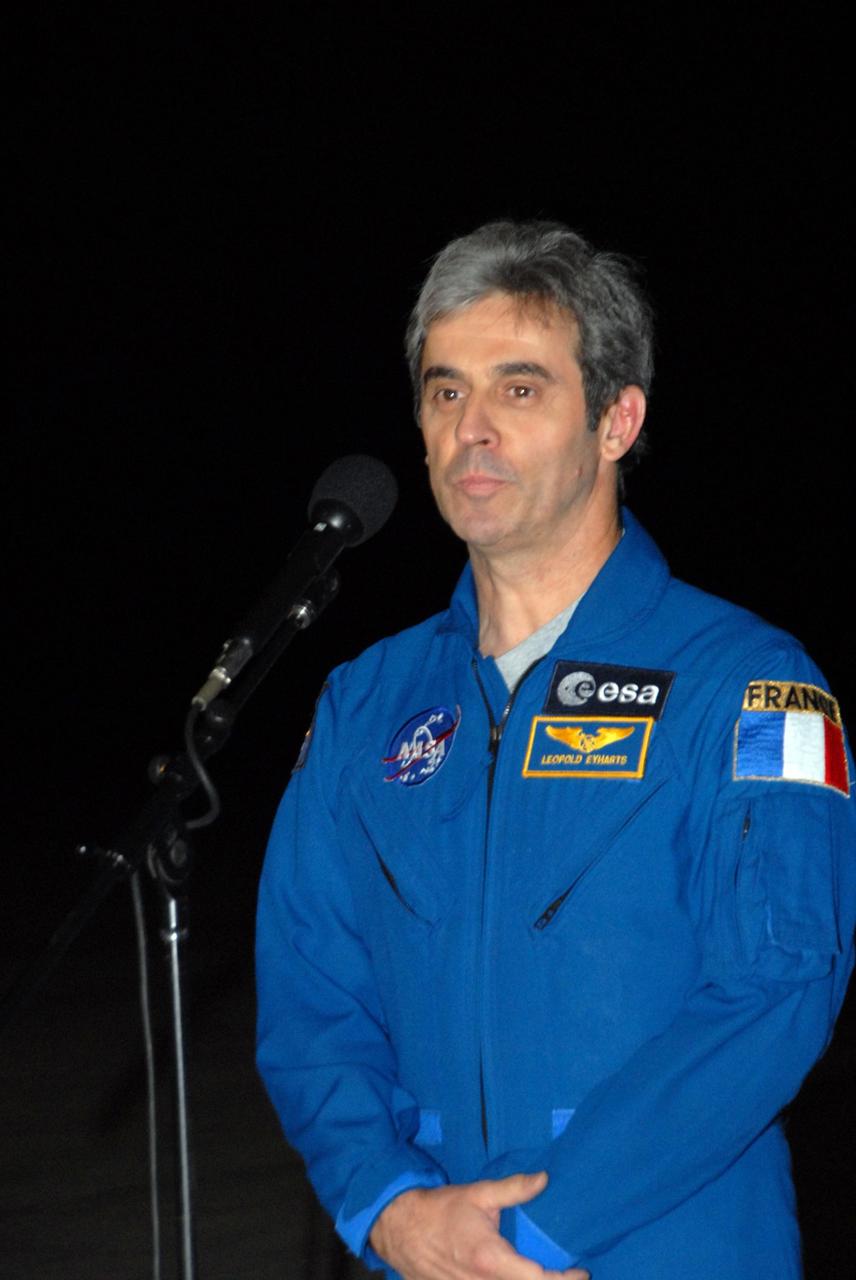
KENNEDY SPACE CENTER, FLA. -- Space shuttle Atlantis STS-122 Mission Specialist Leopold Eyharts, of the European Space Agency, talks to the media at Kennedy Space Center's Shuttle Landing Facility following his arrival to participate in three days of terminal countdown demonstration test, or TCDT, activities. Eyharts will remain on the International Space Station as a flight engineer for Expedition 16 following the STS-122 mission. The TCDT provides astronauts and ground crews with equipment familiarization, emergency egress training and a simulated launch countdown. On mission STS-122, Atlantis will deliver the Columbus module to the International Space Station. The European Space Agency's largest single contribution to the station, Columbus is a multifunctional, pressurized laboratory that will be permanently attached to U.S. Node 2, called Harmony. The laboratory will expand the research facilities aboard the station, providing crew members and scientists from around the world the ability to conduct a variety of experiments in the physical, materials and life sciences. Photo credit: NASA/George Shelton
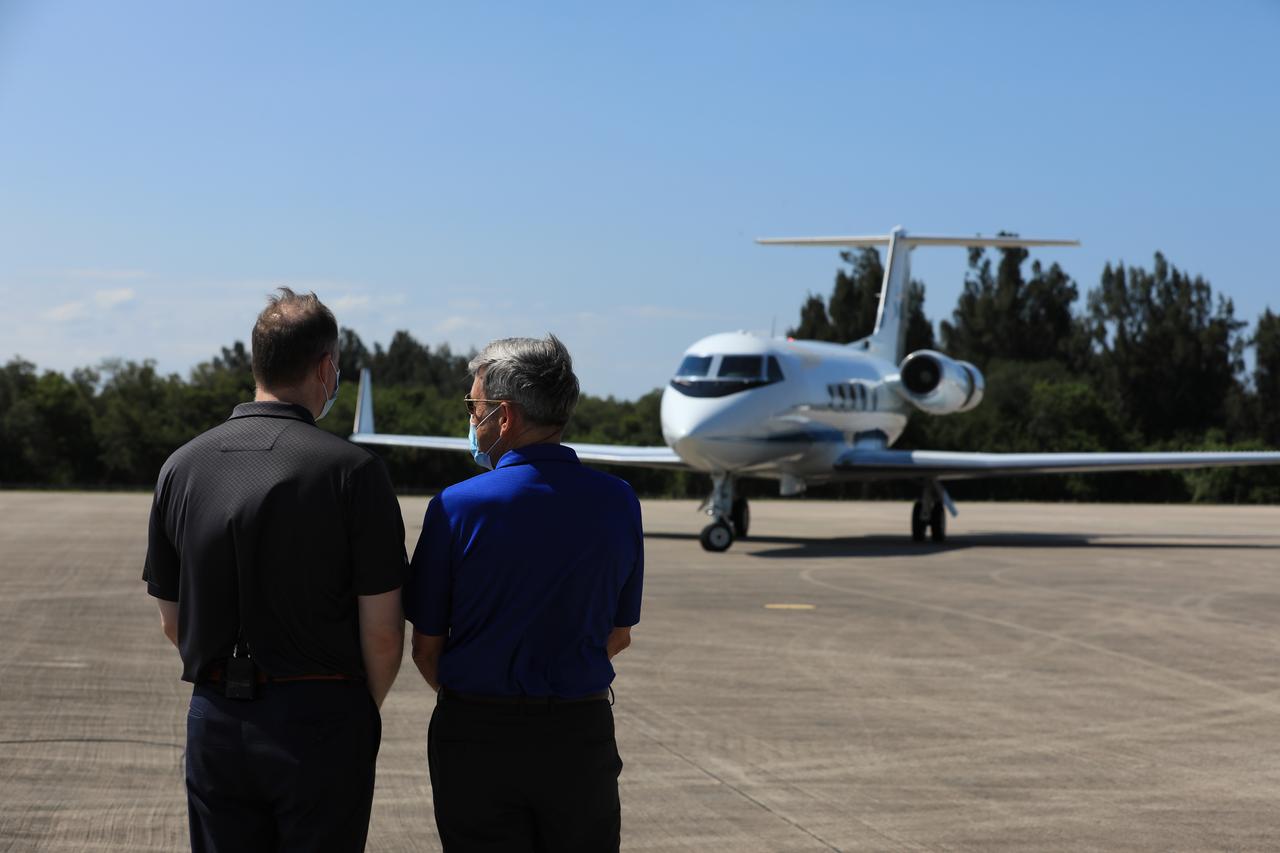
NASA Administrator Jim Bridenstine (left) and Kennedy Space Center Director Bob Cabana watch as the Gulfstream jet, carrying NASA astronauts Robert Behnken and Douglas Hurley, who will fly on the agency’s SpaceX Demo-2 mission to the International Space Station, lands at the Launch and Landing Facility runway at the Florida spaceport on May 20, 2020. Under NASA’s Commercial Crew Program, Behnken and Hurley will be the first astronauts to launch to the orbiting laboratory from U.S. soil since the end of the Space Shuttle Program in 2011. Liftoff of the SpaceX Falcon 9 rocket and Crew Dragon spacecraft is scheduled for 4:33 p.m. on May 27 from Kennedy’s Launch Complex 39A.

NASA astronaut Douglas Hurley exits the Gulfstream jet that carried him from Houston, Texas, to the Launch and Landing Facility runway at NASA’s Kennedy Space Center in Florida on May 20, 2020, ahead of the agency’s SpaceX Demo-2 mission. Under NASA’s Commercial Crew Program, Hurley and crewmate Robert Behnken will be the first astronauts to launch to the International Space Station from U.S. soil since the end of the Space Shuttle Program in 2011. Liftoff of the SpaceX Falcon 9 rocket and Crew Dragon spacecraft is scheduled for 4:33 p.m. on May 27 from Kennedy’s Launch Complex 39A.
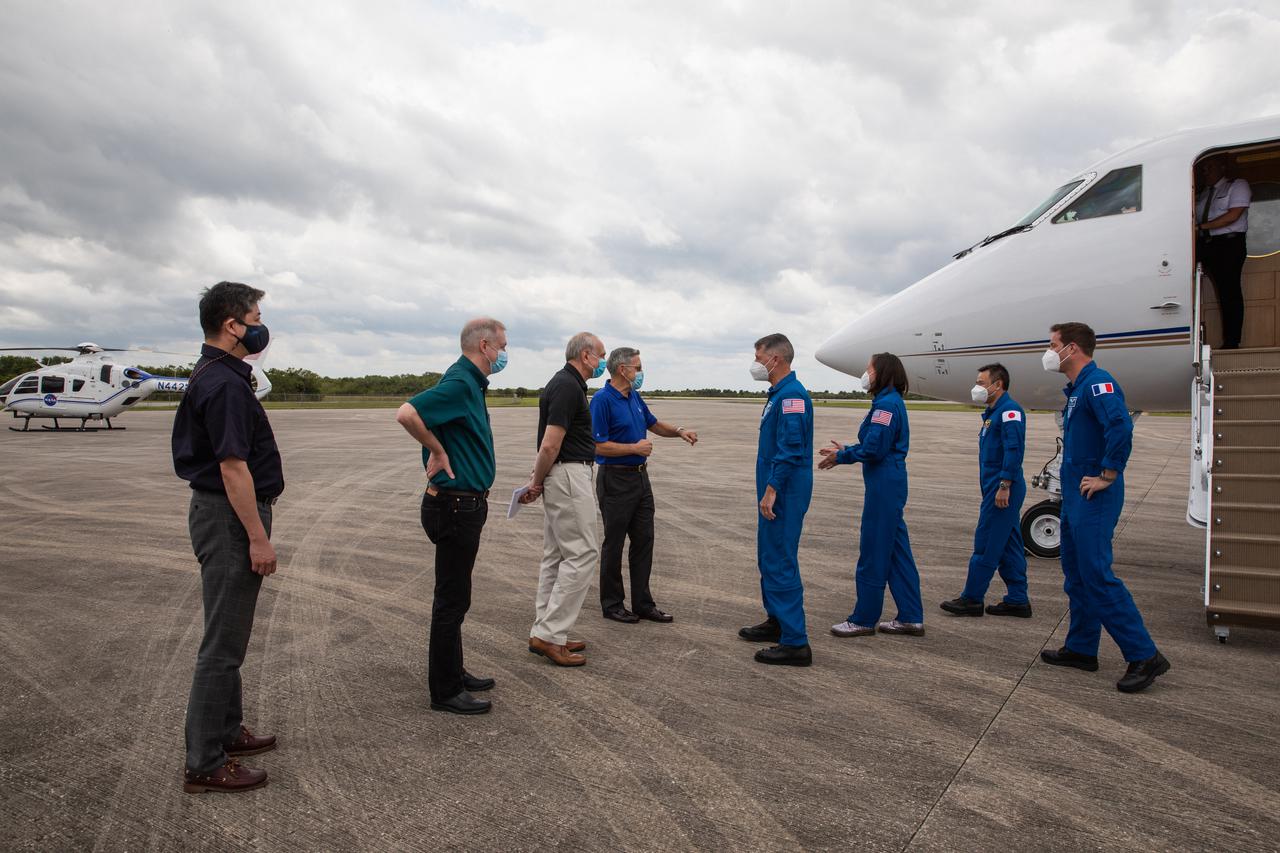
From left to right, Crew-2 mission astronauts Shane Kimbrough (NASA), Megan McArthur (NASA), Akihiko Hoshide (JAXA), and Thomas Pesquet (ESA), arrive at Kennedy Space Center’s Launch and Landing Facility on April 16, 2021. There to greet the astronauts, from left to right, are: Junichi Sakai, manager, International Space Station Program, JAXA; Frank de Winne, manager, International Space Station Program, ESA; Steve Jurczyk, acting administrator, NASA; and Bob Cabana, Director, Kennedy. The Crew-2 mission is set to lift off from Kennedy’s Launch Complex 39A on April 22, at 6:11 a.m. EDT.
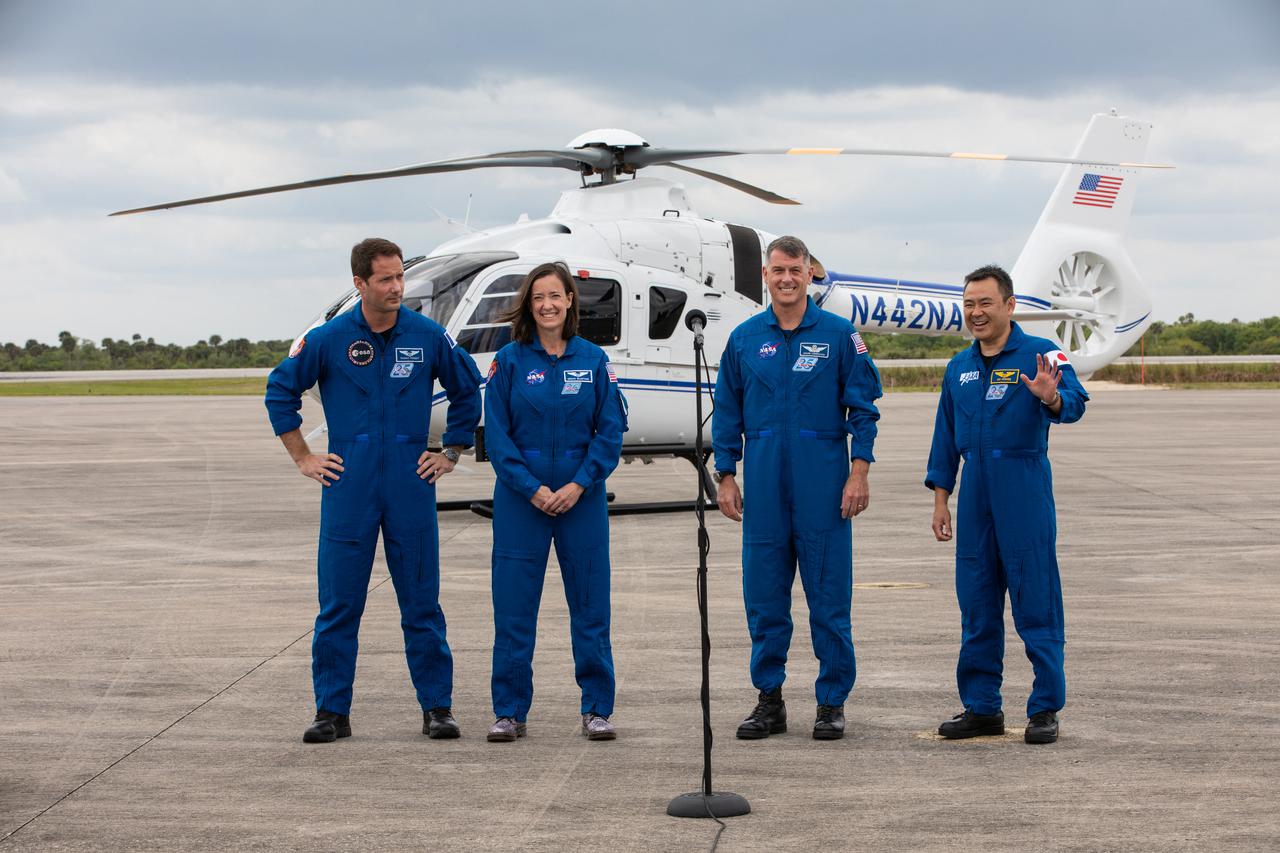
From left to right, Crew-2 mission astronauts Thomas Pesquet (ESA), Megan McArthur (NASA), Shane Kimbrough (NASA) and Akihiko Hoshide (JAXA), arrive at NASA’s Kennedy Space Center in Florida on April 16, 2021. The astronauts departed by plane from Ellington Field near the agency’s Johnson Space Center in Houston, making the short flight and touching down at Kennedy’s Launch and Landing Facility. The astronauts are set to launch on SpaceX’s Falcon 9 rocket and Crew Dragon spacecraft on the second crew rotation mission to the International Space Station as part of NASA’s Commercial Crew Program. Liftoff is targeted for 6:11 a.m. on Earth Day, Thursday, April 22, from Launch Complex 39A at Kennedy.
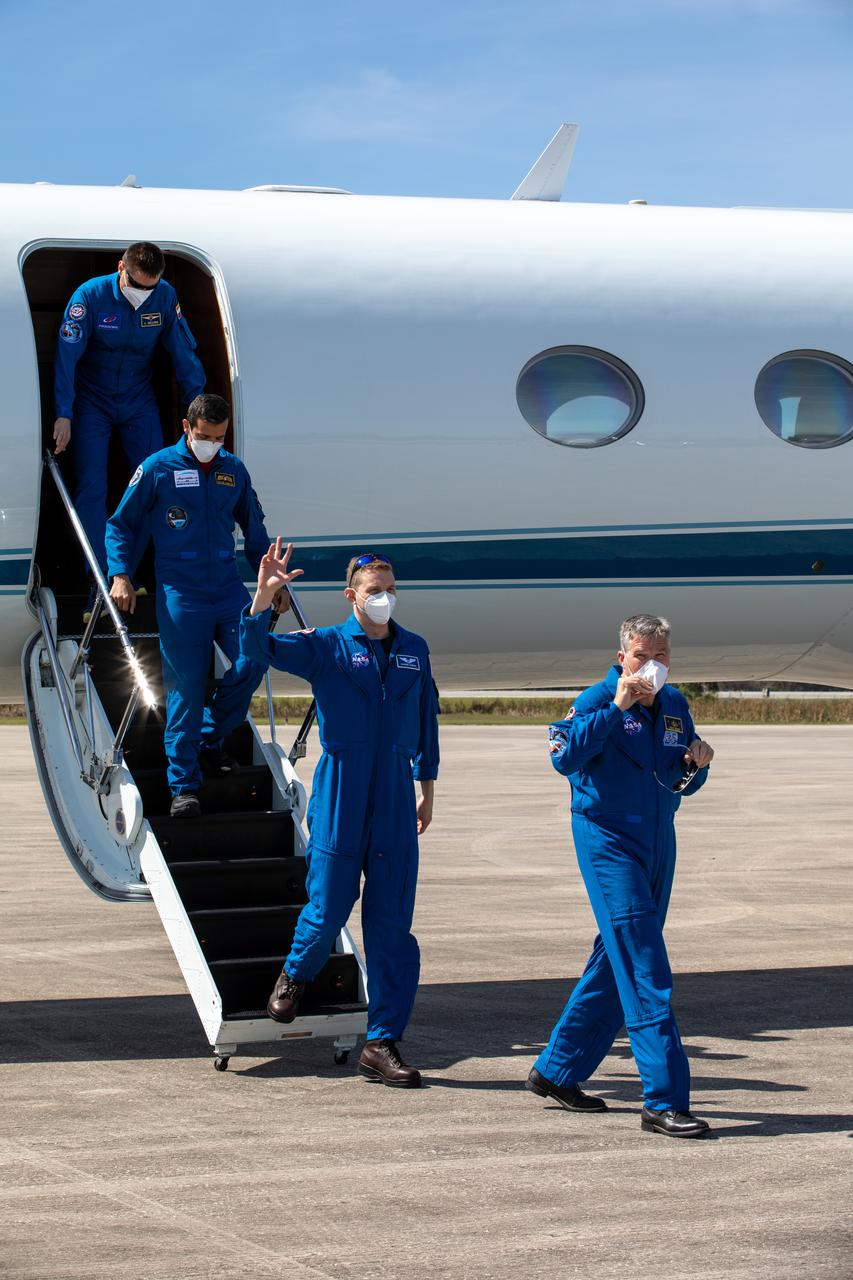
Crew members for NASA’s SpaceX Crew-6 mission to the International Space Station arrive at Kennedy Space Center’s Launch and Landing Facility in Florida on Feb. 21, 2023. From the front are NASA astronauts Stephen Bowen and Warren “Woody” Hoburg, UAE (United Arab Emirates) astronaut Sultan Alneyadi, and Roscosmos cosmonaut Andrey Fedyaev. The crew will head to the center’s Astronaut Crew Quarters as they await launch aboard the Crew Dragon on a SpaceX Falcon 9 rocket. Launch is targeted for no earlier than Feb. 26 at 2:07 a.m. EST. Crew-6 is the sixth crew rotation mission with SpaceX to the station, and the seventh flight of Dragon with people as part of the agency’s Commercial Crew Program.
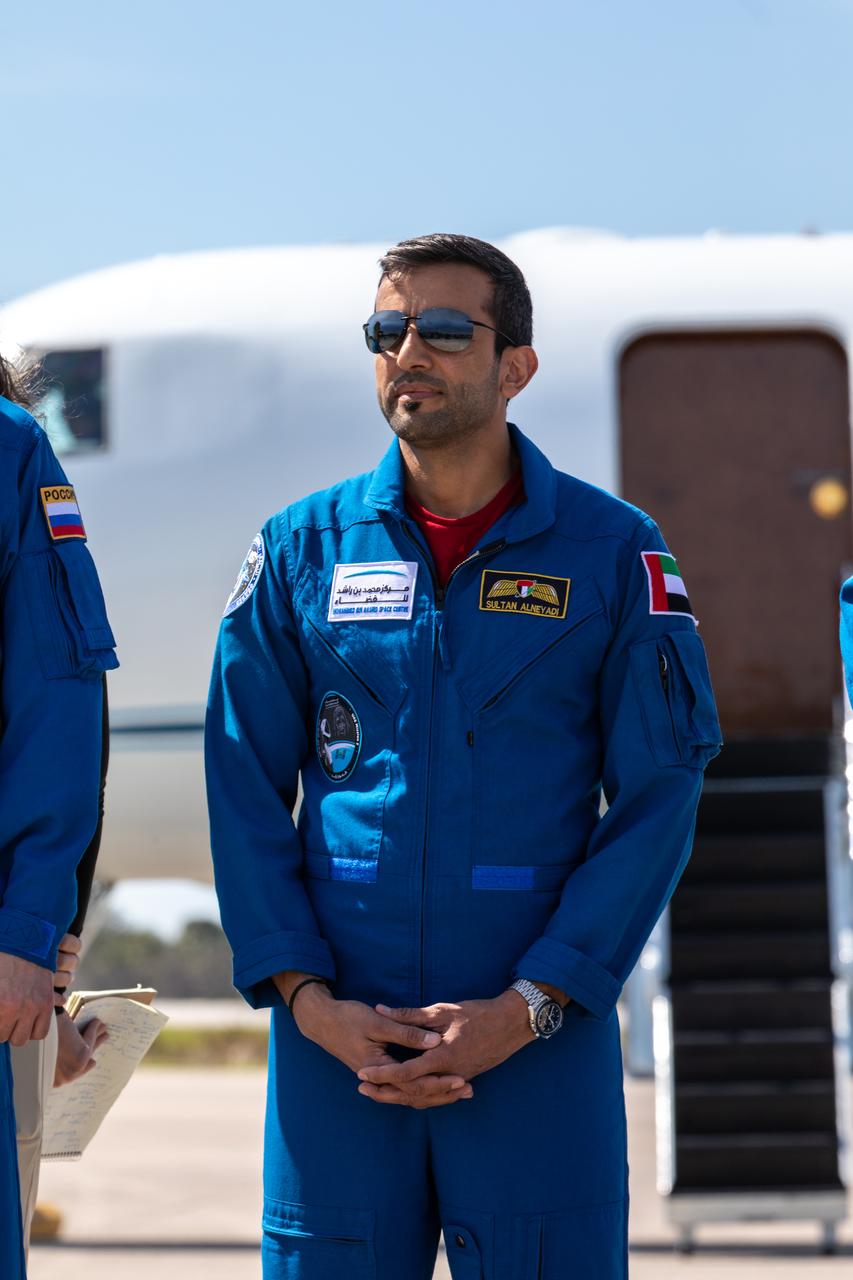
UAE (United Arab Emirates) astronaut Sultan Alneyadi speaks to members of the news media during crew arrival for NASA’s SpaceX Crew-6 mission at Kennedy Space Center’s Launch and Landing Facility in Florida on Feb. 21, 2023. Alneyadi, along with NASA astronauts Stephen Bowen and Warren “Woody” Hoburg, and Roscosmos cosmonaut Andrey Fedyaev will launch to the International Space Station aboard the Crew Dragon on a SpaceX Falcon 9. Launch is targeted for no earlier than Feb. 26 at 2:07 a.m. EST from Launch Complex 39A. Crew-6 is the sixth crew rotation mission with SpaceX to the station, and the seventh flight of Dragon with people as part of the agency’s Commercial Crew Program.
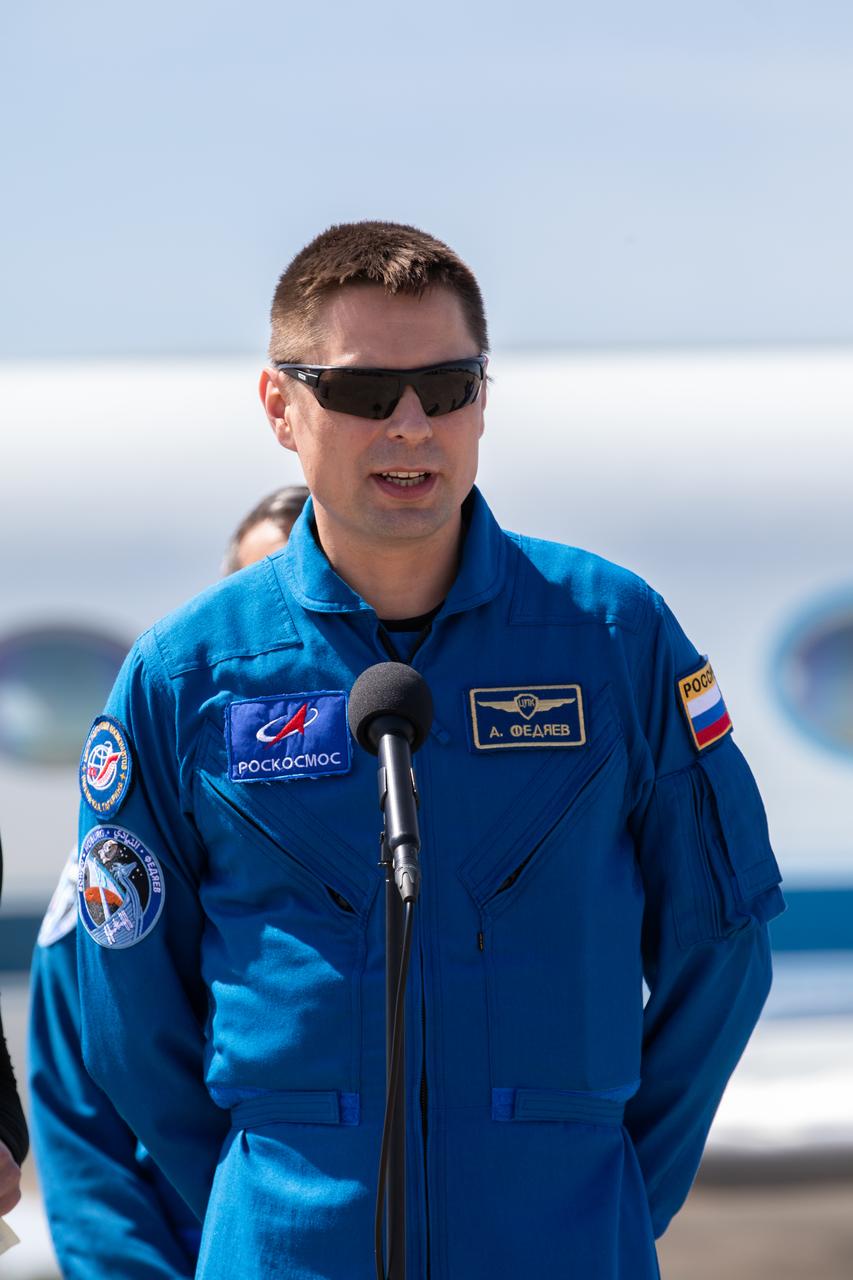
Roscosmos cosmonaut Andrey Fedyaev speaks to members of the news media during crew arrival for NASA’s SpaceX Crew-6 mission at Kennedy Space Center’s Launch and Landing Facility in Florida on Feb. 21, 2023. Fedyaev, along with NASA astronauts Stephen Bowen and Warren “Woody” Hoburg, and UAE (United Arab Emirates) astronaut Sultan Alneyadi will launch to the International Space Station aboard the Crew Dragon on a SpaceX Falcon 9. Launch is targeted for no earlier than Feb. 26 at 2:07 a.m. EST from Launch Complex 39A. Crew-6 is the sixth crew rotation mission with SpaceX to the station, and the seventh flight of Dragon with people as part of the agency’s Commercial Crew Program.
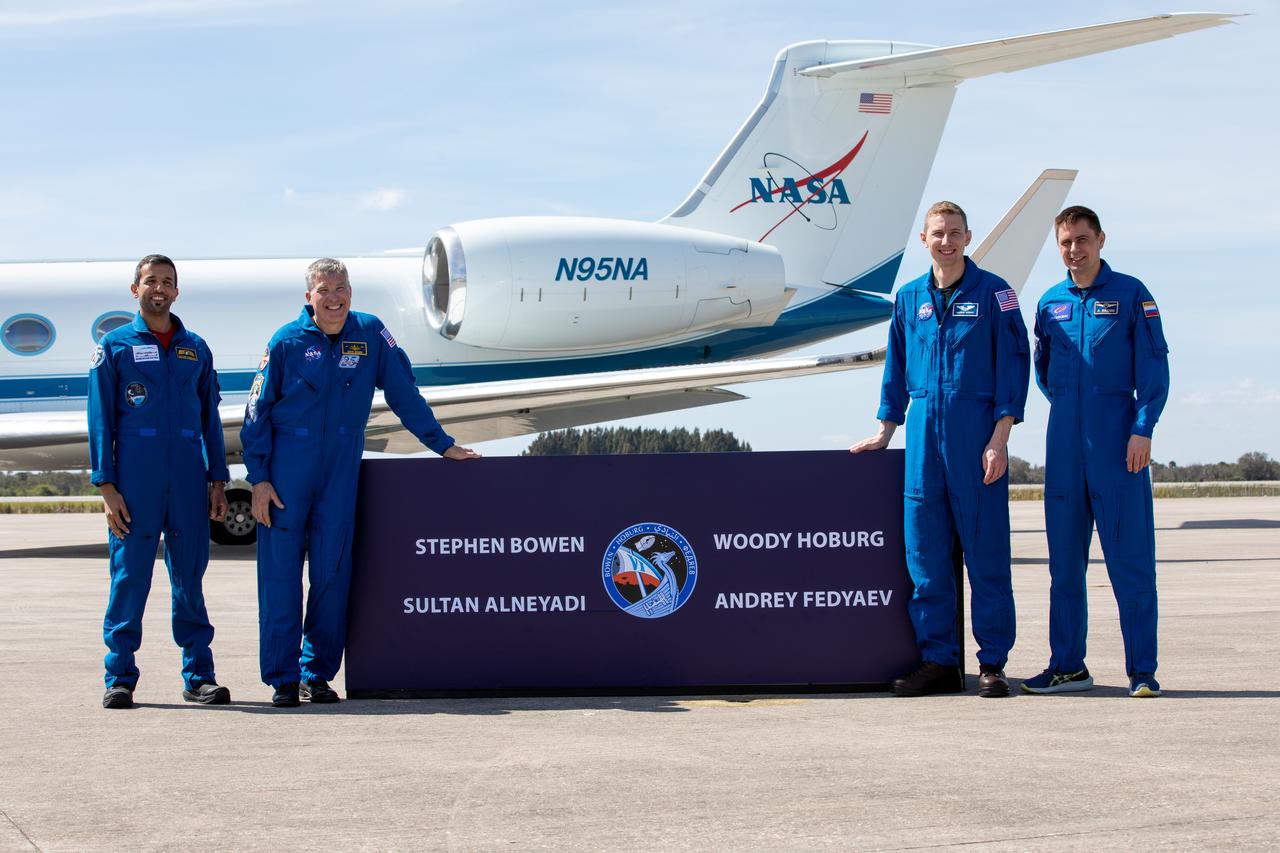
SpaceX Crew-6 astronauts pause for a photograph after arriving at Kennedy Space Center’s Launch and Landing Facility in Florida on Feb. 21, 2023. From left are UAE (United Arab Emirates) astronaut Sultan Alneyadi, NASA astronauts Stephen Bowen and Warren “Woody” Hoburg, and Roscosmos cosmonaut Andrey Fedyaev. The crew will launch to the International Space Station aboard the Crew Dragon on a SpaceX Falcon 9. Launch is targeted for no earlier than Feb. 26 at 2:07 a.m. EST from Launch Complex 39A. Crew-6 is the sixth crew rotation mission with SpaceX to the station, and the seventh flight of Dragon with people as part of the agency’s Commercial Crew Program.

SpaceX Crew-6 astronauts pause for a photograph after arriving at Kennedy Space Center’s Launch and Landing Facility in Florida on Feb. 21, 2023. From left are Roscosmos cosmonaut Andrey Fedyaev, UAE (United Arab Emirates) astronaut Sultan Alneyadi, and NASA astronauts Warren “Woody” Hoburg and Stephen Bowen. The crew will launch to the International Space Station aboard the Crew Dragon on a SpaceX Falcon 9. Launch is targeted for Feb. 26 at 2:07 a.m. EST from Launch Complex 39A. Crew-6 is the sixth crew rotation mission with SpaceX to the station, and the seventh flight of Dragon with people as part of the agency’s Commercial Crew Program.
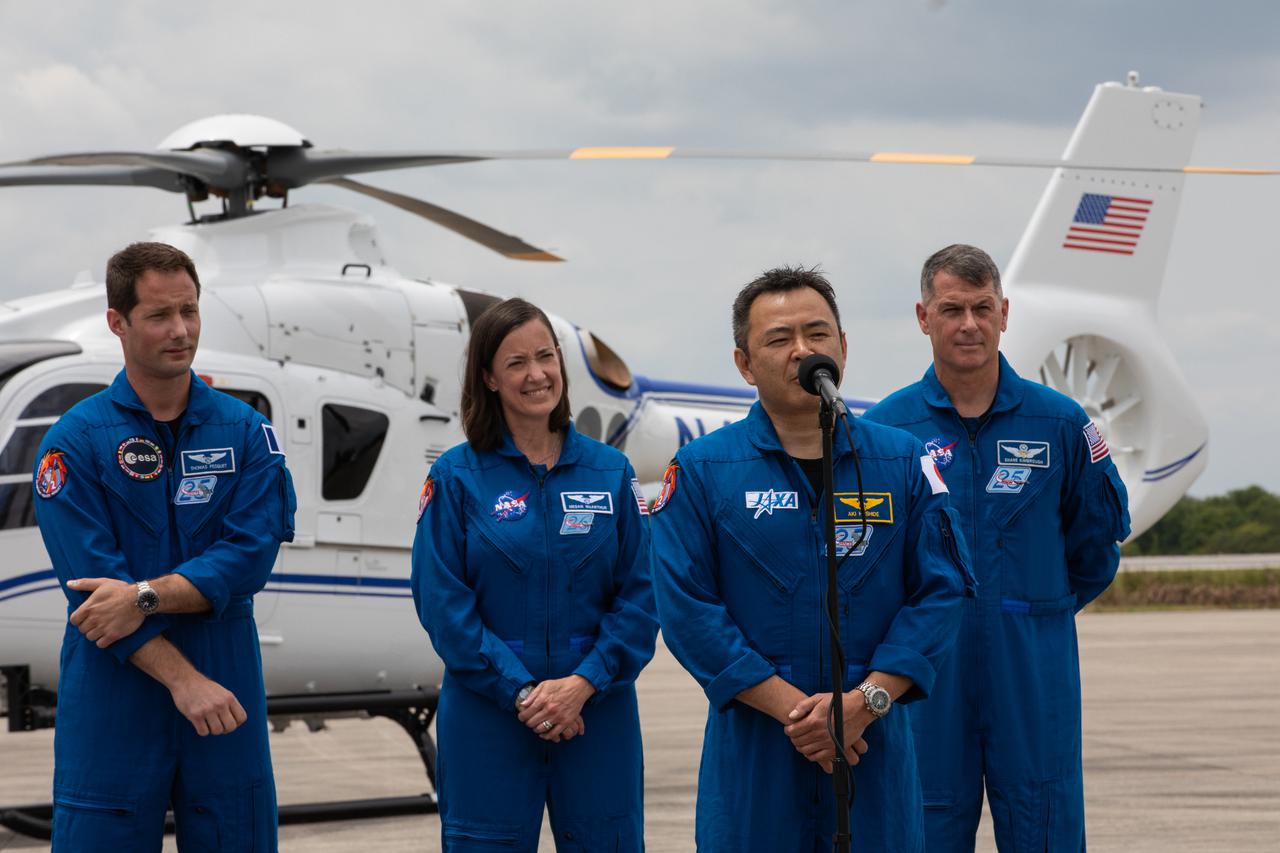
Representatives from NASA participate in a media event at the agency’s Kennedy Space Center in Florida on Friday, April 16, 2021, upon the arrival of NASA astronauts Shane Kimbrough and Megan McArthur – who will serve as the mission’s spacecraft commander and pilot, respectively – along with JAXA (Japan Aerospace Exploration Agency) astronaut Akihiko Hoshide and ESA (European Space Agency) astronaut Thomas Pesquet, who will serve as mission specialists in advance of NASA’s SpaceX Crew-2 mission to the International Space Station as part of NASA’s Commercial Crew Program. Participants include: NASA Acting Administrator Steve Jurzczyk; Bob Cabana, director, Kennedy Space Center; Junichi Sakai, manager, International Space Station Program, JAXA; Frank de Winne, manager, International Space Station Program, ESA,; NASA astronaut Shane Kimbrough, spacecraft commander; NASA astronaut Megan McArtur, pilot; JAXA astronaut Akihiko Hoshide, mission specialist and ESA astronaut Thomas Pesquet, mission specialist. Launch is currently targeted for 6:11 a.m. ET Thursday, April 22. The SpaceX Crew Dragon spacecraft, name Endeavour by the Crew-2 astronauts, will launch on a Falcon 9 rocket from historic Launch Complex 39A at NASA’s Kennedy Space Center in Florida.
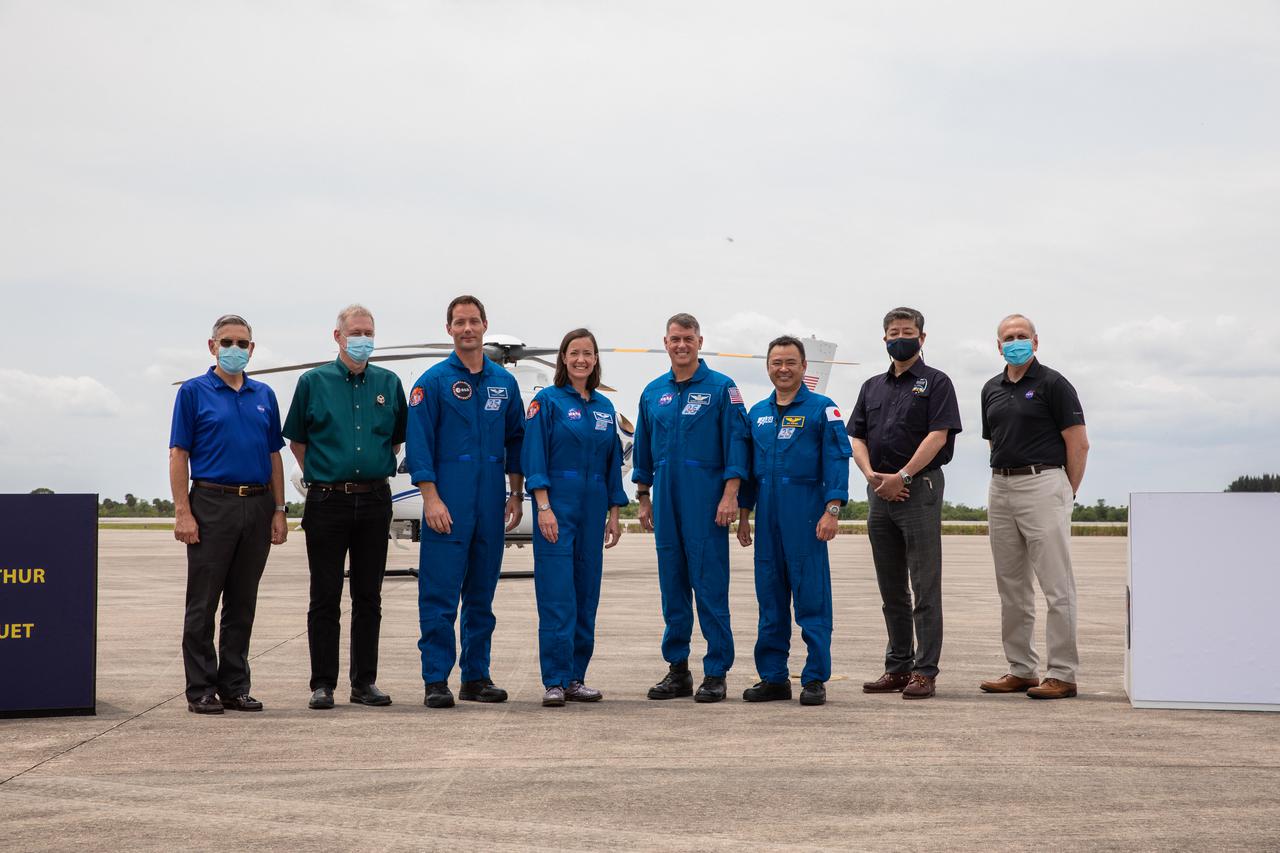
Representatives from NASA participate in a media event at the agency’s Kennedy Space Center in Florida on Friday, April 16, 2021, upon the arrival of NASA astronauts Shane Kimbrough and Megan McArthur – who will serve as the mission’s spacecraft commander and pilot, respectively – along with JAXA (Japan Aerospace Exploration Agency) astronaut Akihiko Hoshide and ESA (European Space Agency) astronaut Thomas Pesquet, who will serve as mission specialists in advance of NASA’s SpaceX Crew-2 mission to the International Space Station as part of NASA’s Commercial Crew Program. Participants include: NASA Acting Administrator Steve Jurzczyk; Bob Cabana, director, Kennedy Space Center; Junichi Sakai, manager, International Space Station Program, JAXA; Frank de Winne, manager, International Space Station Program, ESA,; NASA astronaut Shane Kimbrough, spacecraft commander; NASA astronaut Megan McArtur, pilot; JAXA astronaut Akihiko Hoshide, mission specialist and ESA astronaut Thomas Pesquet, mission specialist. Launch is currently targeted for 6:11 a.m. ET Thursday, April 22. The SpaceX Crew Dragon spacecraft, name Endeavour by the Crew-2 astronauts, will launch on a Falcon 9 rocket from historic Launch Complex 39A at NASA’s Kennedy Space Center in Florida.
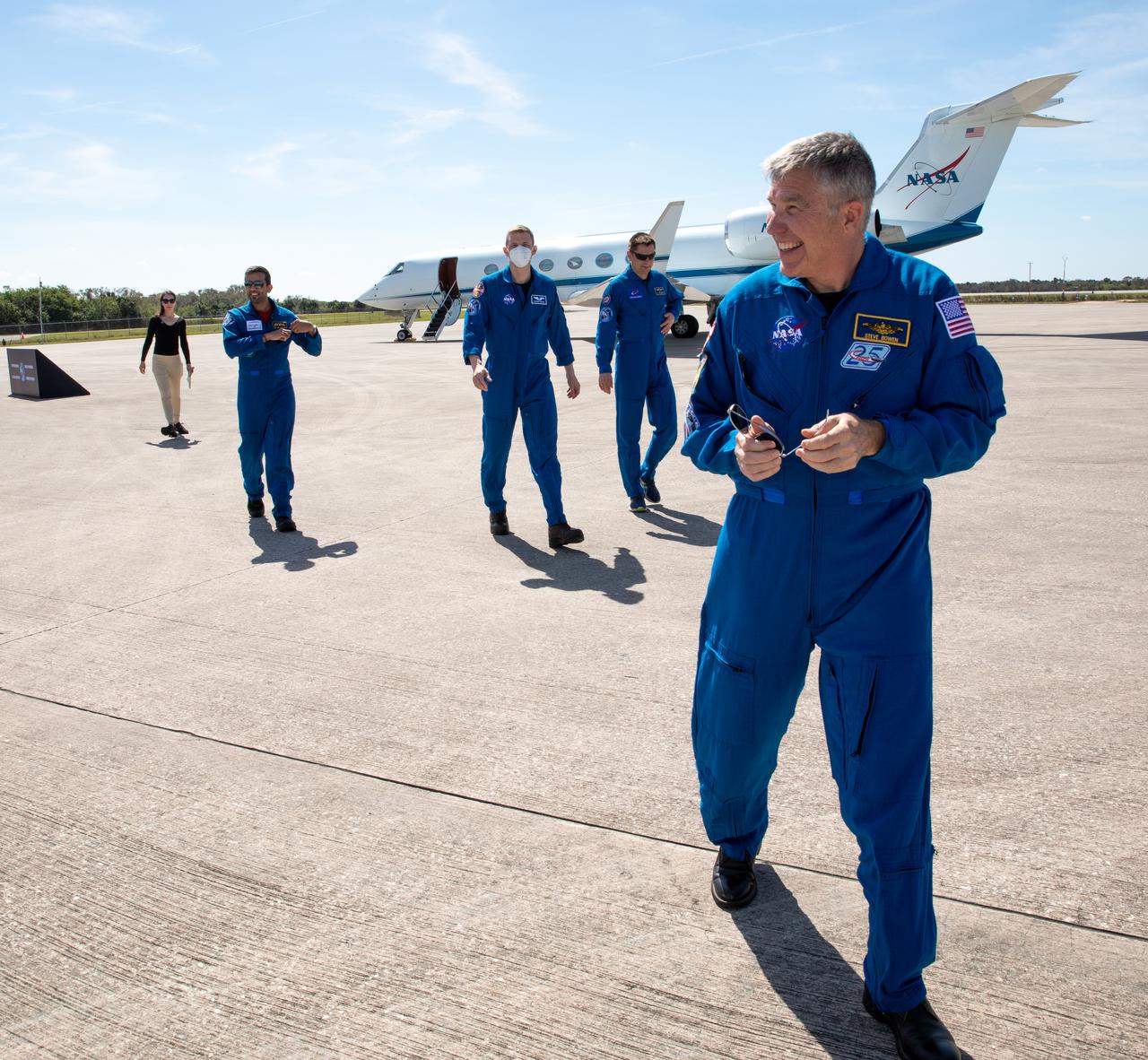
Crew members for NASA’s SpaceX Crew-6 mission to the International Space Station arrive at Kennedy Space Center’s Launch and Landing Facility in Florida on Feb. 21, 2023. In front is NASA astronaut Stephen Bowen, and behind him from left are UAE (United Arab Emirates) astronaut Sultan Alneyadi, NASA astronaut Warren “Woody” Hoburg, and Roscosmos cosmonaut Andrey Fedyaev. The crew will head to the center’s Astronaut Crew Quarters as they await launch aboard the Crew Dragon on a SpaceX Falcon 9 rocket. Launch is targeted for no earlier than Feb. 26 at 2:07 a.m. EST. Crew-6 is the sixth crew rotation mission with SpaceX to the station, and the seventh flight of Dragon with people as part of the agency’s Commercial Crew Program.
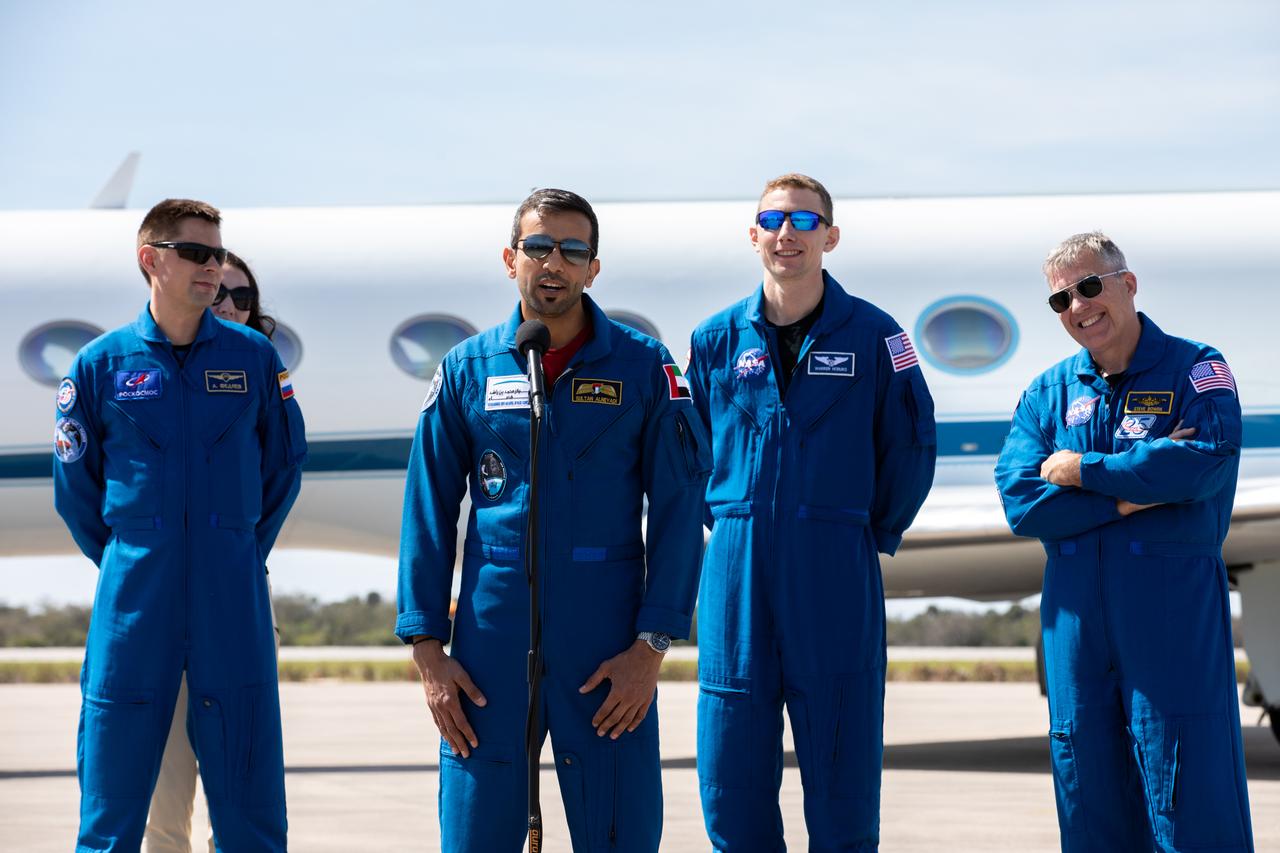
UAE (United Arab Emirates) astronaut Sultan Alneyadi speaks to members of the news media during crew arrival for NASA’s SpaceX Crew-6 mission at Kennedy Space Center’s Launch and Landing Facility in Florida on Feb. 21, 2023. Behind him, from left, are Roscosmos cosmonaut Andrey Fedyaev Alneyadi and NASA astronauts Warren “Woody” Hoburg and Stephen Bowen. The crew will launch to the International Space Station aboard the Crew Dragon on a SpaceX Falcon 9 no earlier than Feb. 26 at 2:07 a.m. EST from Launch Complex 39A. Crew-6 is the sixth crew rotation mission with SpaceX to the station, and the seventh flight of Dragon with people as part of the agency’s Commercial Crew Program.
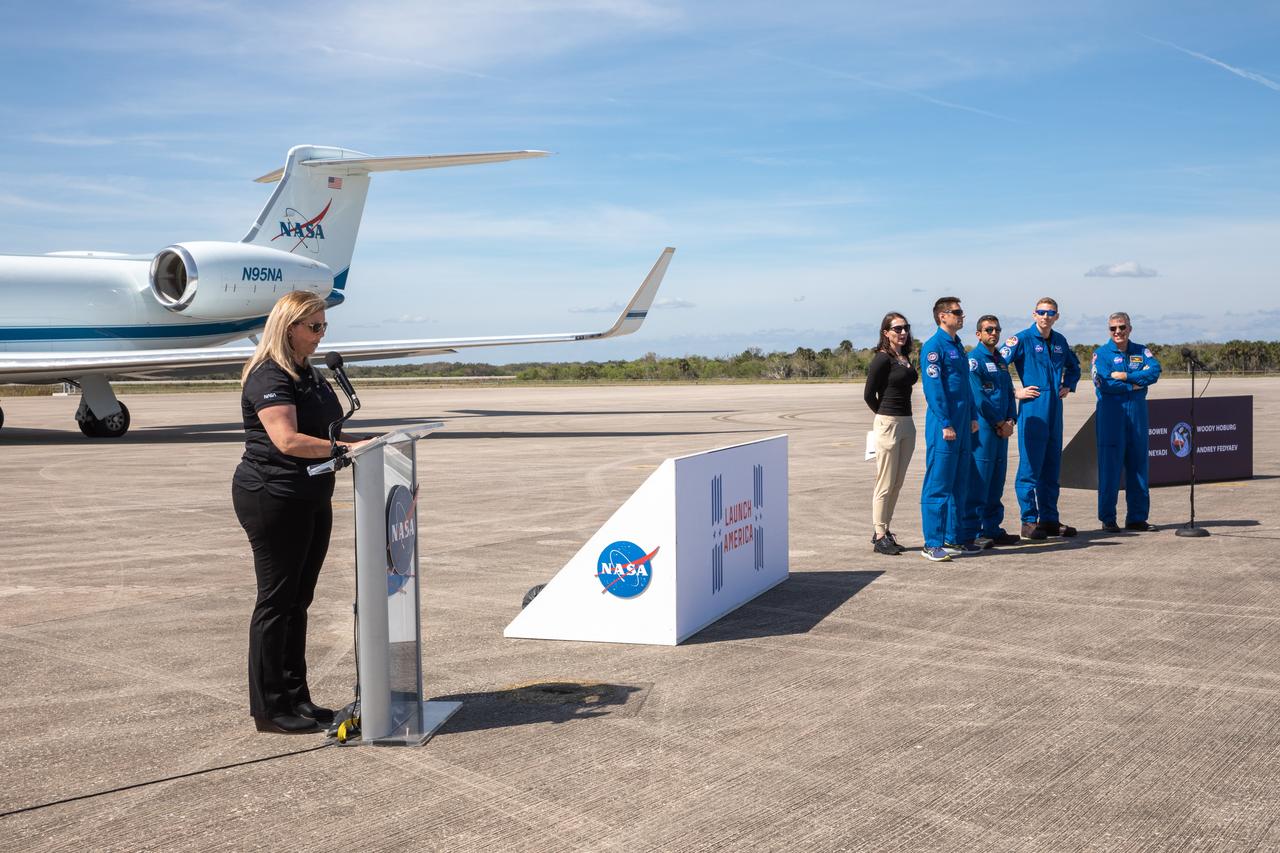
Dana Hutcherson, deputy manager, NASA’s Commercial Crew Program speaks to members of the news media during crew arrival for NASA’s SpaceX Crew-6 mission at Kennedy’s Launch and Landing Facility in Florida on Feb. 21, 2023. NASA astronauts Stephen Bowen and Warren “Woody” Hoburg, UAE (United Arab Emirates) astronaut Sultan Alneyadi, and Roscosmos cosmonaut Andrey Fedyaev will launch to the International Space Station aboard the Crew Dragon on a SpaceX Falcon 9. Launch is targeted for no earlier than Feb. 26 at 2:07 a.m. EST from Launch Complex 39A. Crew-6 is the sixth crew rotation mission with SpaceX to the station, and the seventh flight of Dragon with people as part of the agency’s Commercial Crew Program.
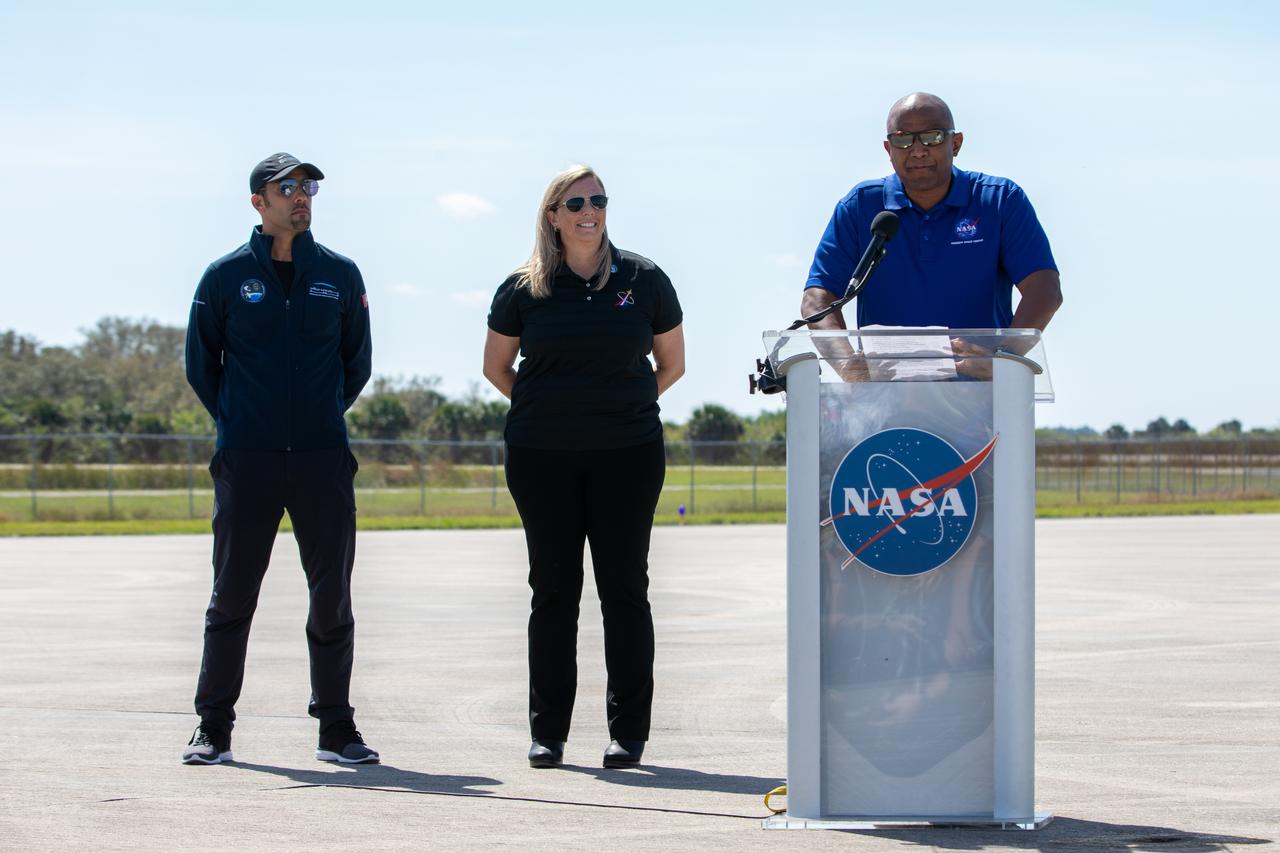
Kennedy Space Center Deputy Director Kelvin Manning speaks to members of the news media during crew arrival for NASA’s SpaceX Crew-6 mission at Kennedy’s Launch and Landing Facility in Florida on Feb. 21, 2023. Behind him, from left, are Salem AlMarri, director general, Mohammed Bin Rashid Space Centre, and Dana Hutcherson, deputy manager, NASA’s Commercial Crew Program. NASA astronauts Stephen Bowen and Warren “Woody” Hoburg, UAE (United Arab Emirates) astronaut Sultan Alneyadi, and Roscosmos cosmonaut Andrey Fedyaev will launch to the International Space Station aboard the Crew Dragon on a SpaceX Falcon 9. Launch is targeted for no earlier than Feb. 26 at 2:07 a.m. EST from Launch Complex 39A. Crew-6 is the sixth crew rotation mission with SpaceX to the station, and the seventh flight of Dragon with people as part of the agency’s Commercial Crew Program.
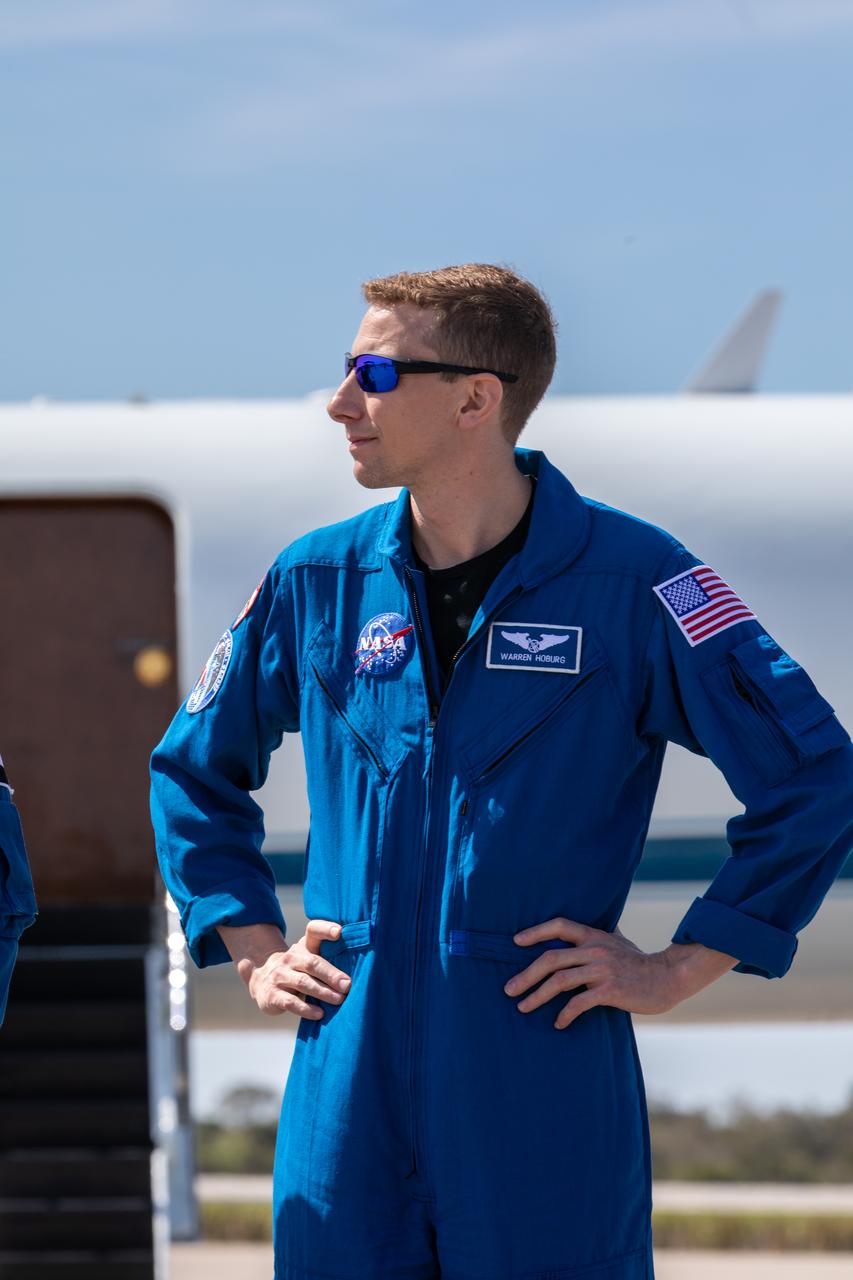
NASA astronaut Warren “Woody” Hoburg speaks to members of the news media during crew arrival for NASA’s SpaceX Crew-6 mission at Kennedy Space Center’s Launch and Landing Facility in Florida on Feb. 21, 2023. Hoburg, along with NASA astronaut Stephen Bowen, UAE (United Arab Emirates) astronaut Sultan Alneyadi, and Roscosmos cosmonaut Andrey Fedyaev will launch to the International Space Station aboard the Crew Dragon on a SpaceX Falcon 9. Launch is targeted for no earlier than Feb. 26 at 2:07 a.m. EST from Launch Complex 39A. Crew-6 is the sixth crew rotation mission with SpaceX to the station, and the seventh flight of Dragon with people as part of the agency’s Commercial Crew Program.
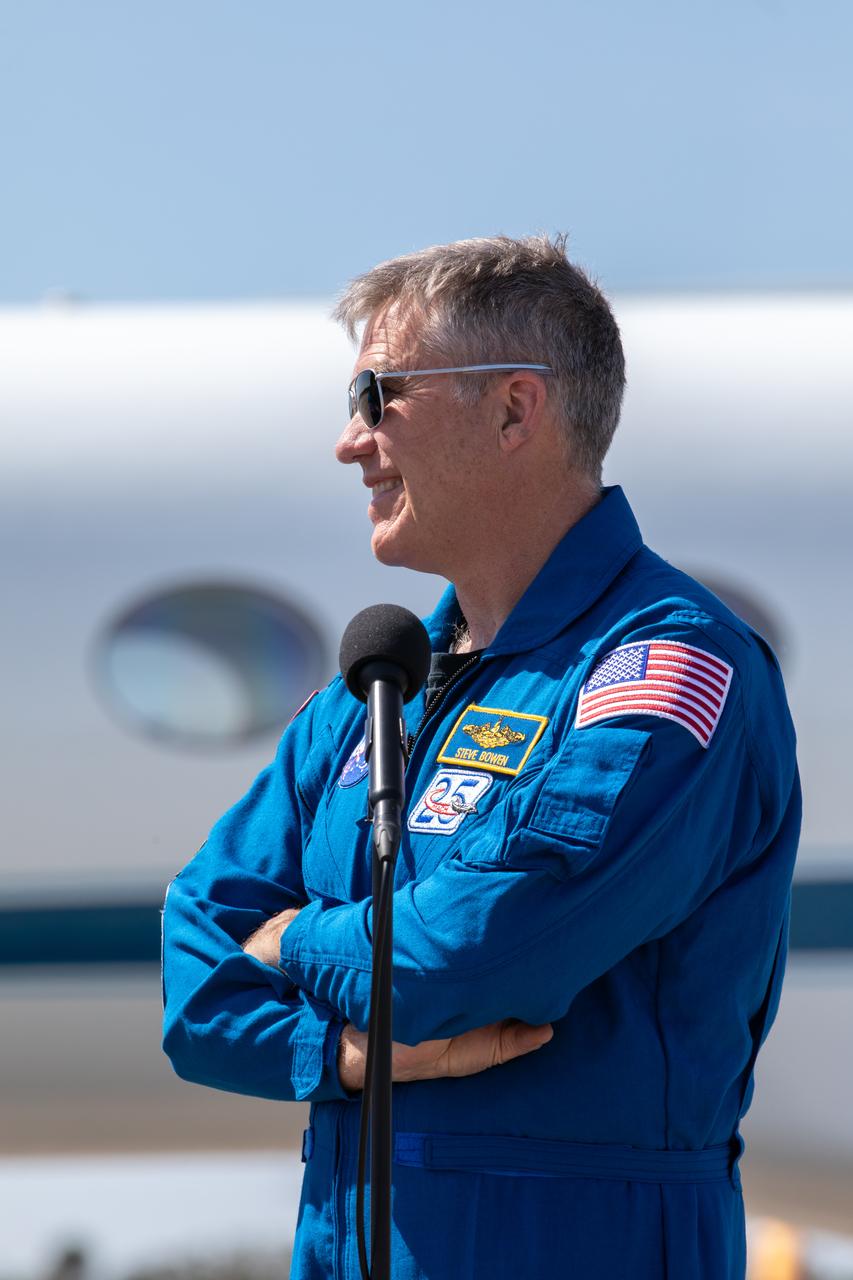
NASA astronaut Stephen Bowen speaks to members of the news media during crew arrival for NASA’s SpaceX Crew-6 mission at Kennedy Space Center’s Launch and Landing Facility in Florida on Feb. 21, 2023. Bowen, along with NASA astronaut Warren “Woody” Hoburg, UAE (United Arab Emirates) astronaut Sultan Alneyadi, and Roscosmos cosmonaut Andrey Fedyaev will launch to the International Space Station aboard the Crew Dragon on a SpaceX Falcon 9. Launch is targeted for no earlier than Feb. 26 at 2:07 a.m. EST from Launch Complex 39A. Crew-6 is the sixth crew rotation mission with SpaceX to the station, and the seventh flight of Dragon with people as part of the agency’s Commercial Crew Program.
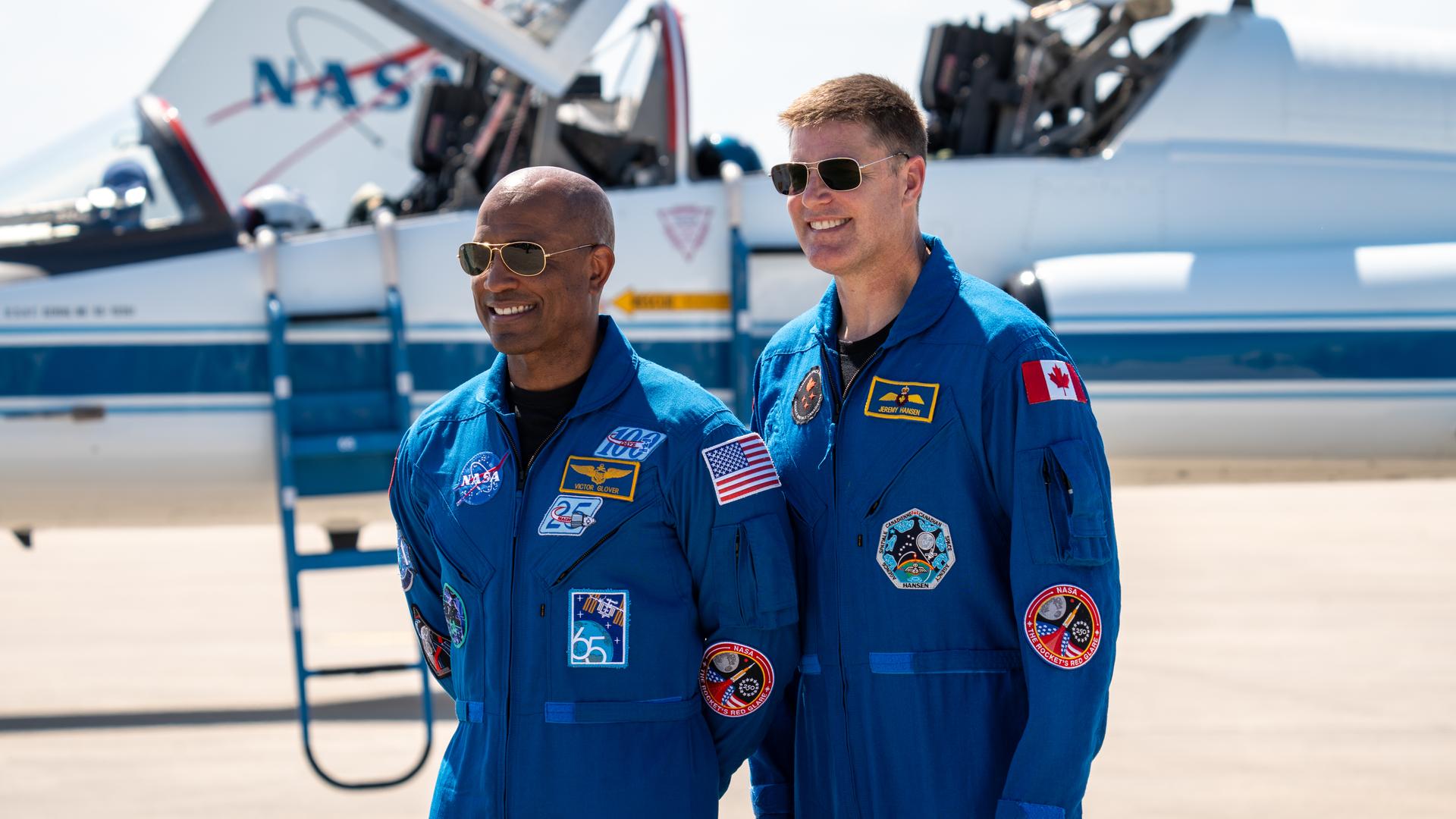
DESCRIPTION: These images show the moments shortly after the arrival of the Artemis II crew to NASA’s Kennedy Space Center on March 27, 2026 ahead of the launch. The four astronauts, Victor Glover, Reid Wiseman, Christina Koch, and Jeremy Hansen, arrived on a T38, which can be seen behind them. They took turns speaking to the crowd as they also announced the zero-gravity indicator they would be taking with them on their journey.
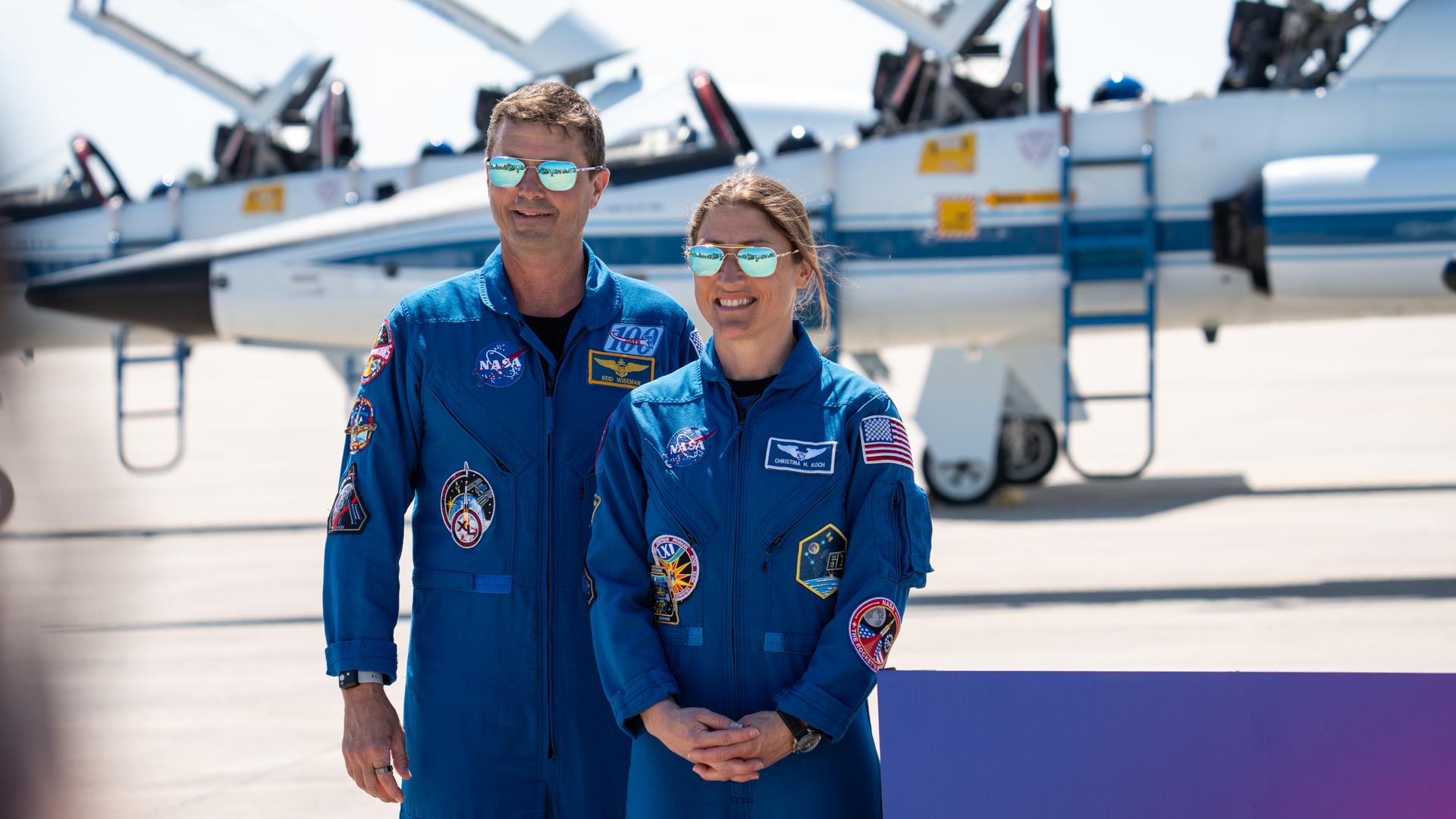
These images show the moments shortly after the arrival of the Artemis II crew to NASA’s Kennedy Space Center on March 27, 2026 ahead of the launch. The four astronauts, Victor Glover, Reid Wiseman, Christina Koch, and Jeremy Hansen, arrived on a T38, which can be seen behind them. They took turns speaking to the crowd as they also announced the zero-gravity indicator they would be taking with them on their journey.
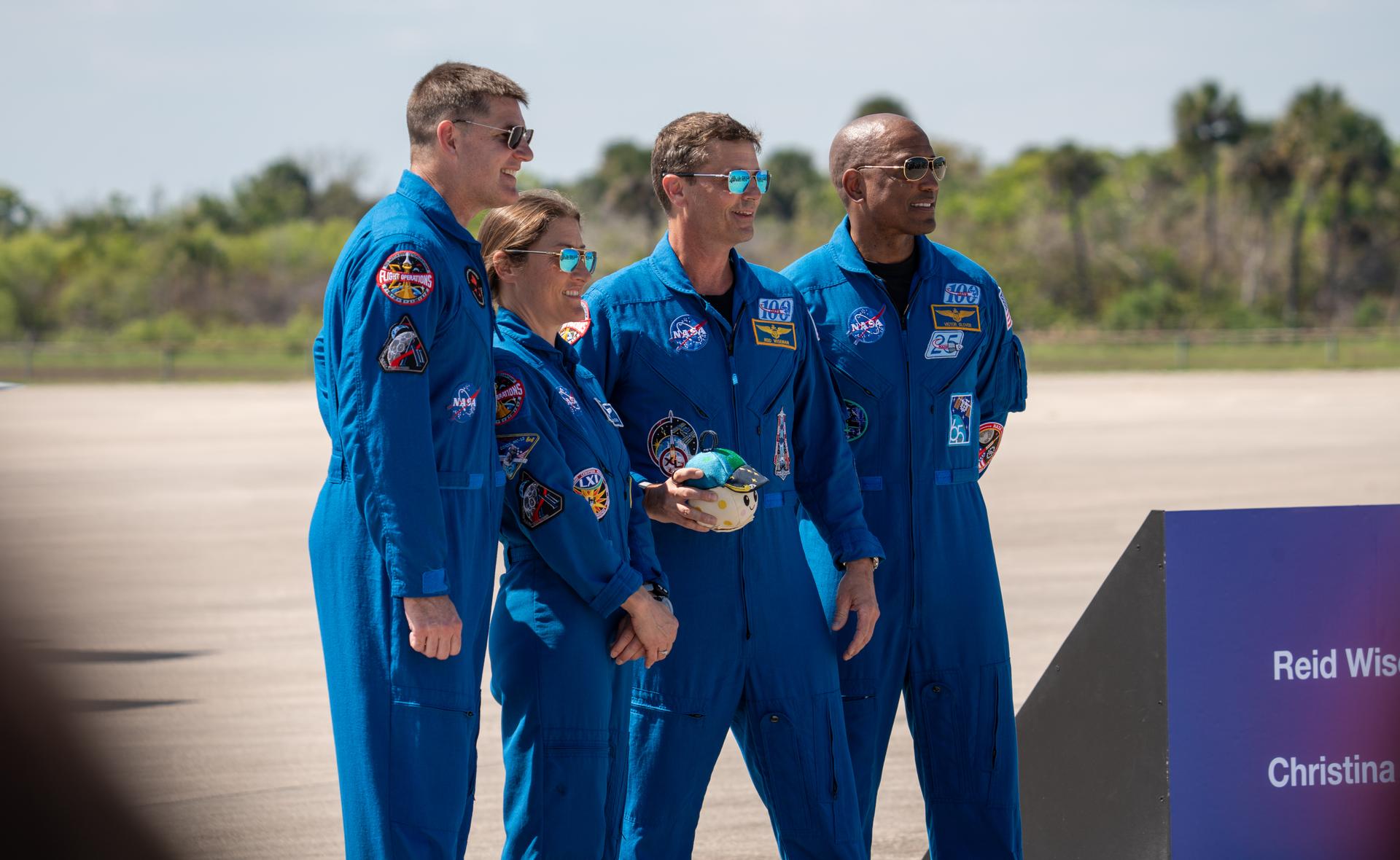
These images show the moments shortly after the arrival of the Artemis II crew to NASA’s Kennedy Space Center on March 27, 2026 ahead of the launch. The four astronauts, Victor Glover, Reid Wiseman, Christina Koch, and Jeremy Hansen, arrived on a T38, which can be seen behind them. They took turns speaking to the crowd as they also announced the zero-gravity indicator they would be taking with them on their journey.
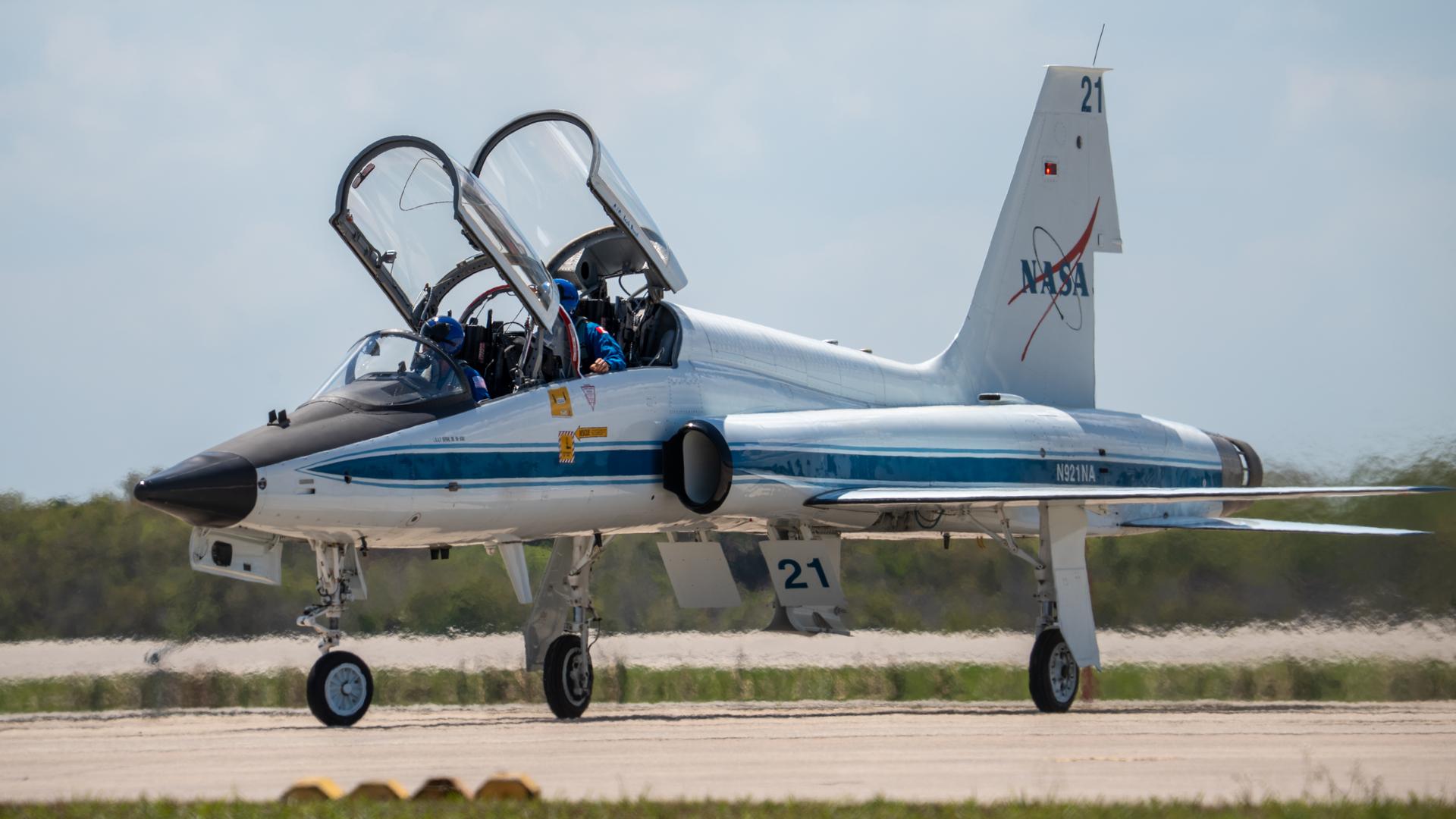
These images show the moments shortly after the arrival of the Artemis II crew to NASA’s Kennedy Space Center on March 27, 2026 ahead of the launch. The four astronauts, Victor Glover, Reid Wiseman, Christina Koch, and Jeremy Hansen, arrived on a T38, which can be seen behind them. They took turns speaking to the crowd as they also announced the zero-gravity indicator they would be taking with them on their journey.
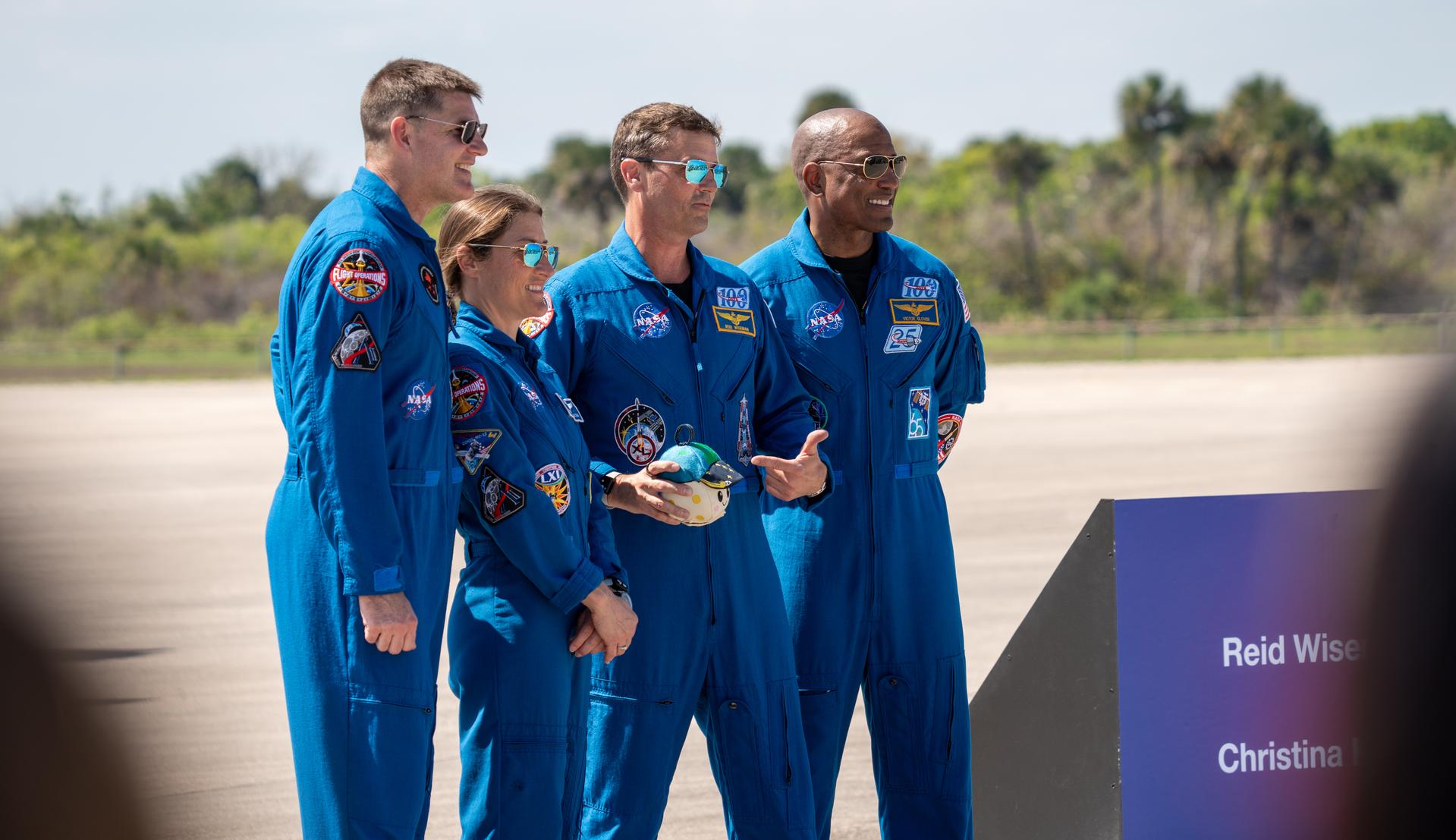
These images show the moments shortly after the arrival of the Artemis II crew to NASA’s Kennedy Space Center on March 27, 2026 ahead of the launch. The four astronauts, Victor Glover, Reid Wiseman, Christina Koch, and Jeremy Hansen, arrived on a T38, which can be seen behind them. They took turns speaking to the crowd as they also announced the zero-gravity indicator they would be taking with them on their journey.
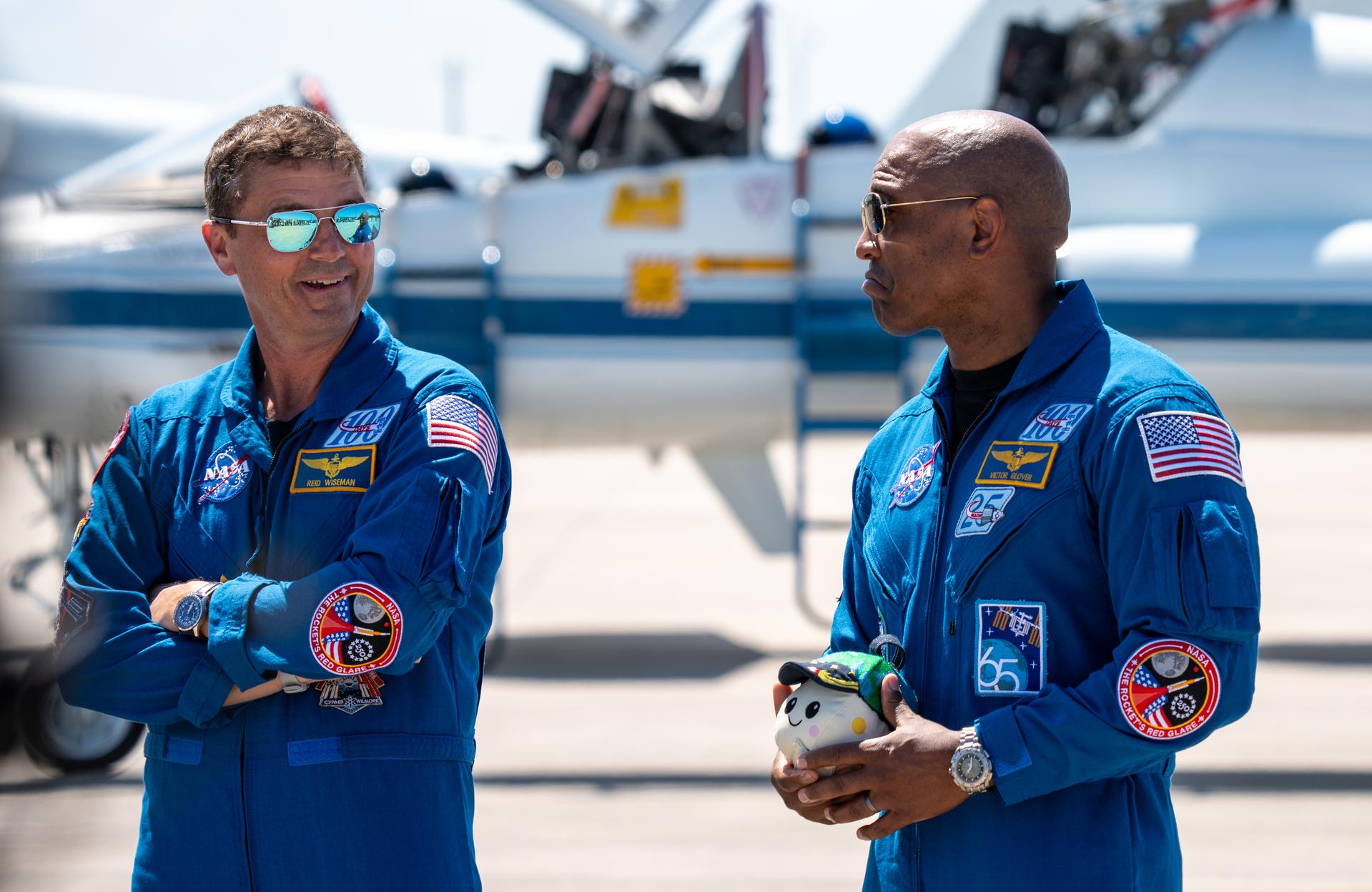
These images show the moments shortly after the arrival of the Artemis II crew to NASA’s Kennedy Space Center on March 27, 2026 ahead of the launch. The four astronauts, Victor Glover, Reid Wiseman, Christina Koch, and Jeremy Hansen, arrived on a T38, which can be seen behind them. They took turns speaking to the crowd as they also announced the zero-gravity indicator they would be taking with them on their journey.
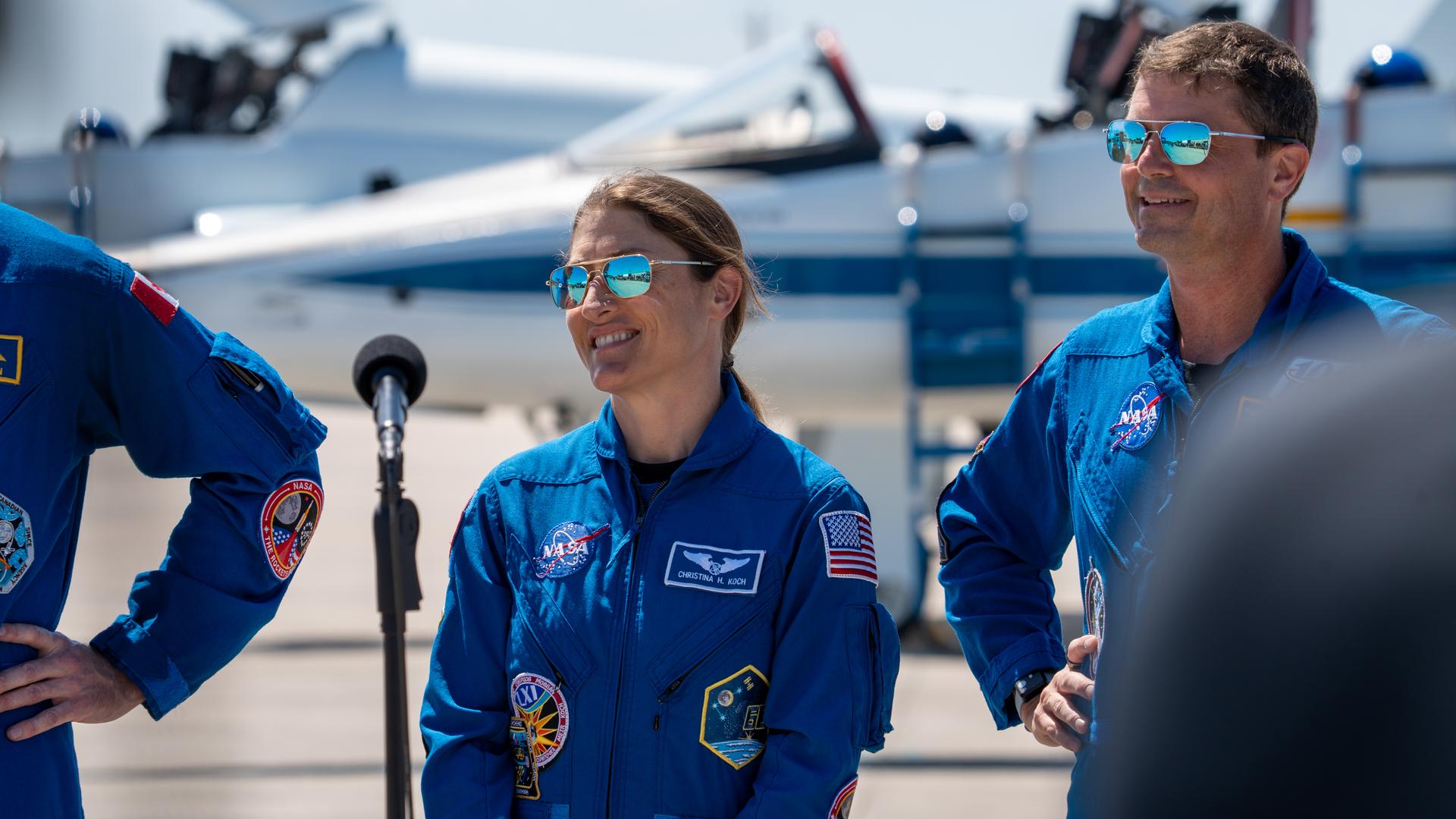
These images show the moments shortly after the arrival of the Artemis II crew to NASA’s Kennedy Space Center on March 27, 2026 ahead of the launch. The four astronauts, Victor Glover, Reid Wiseman, Christina Koch, and Jeremy Hansen, arrived on a T38, which can be seen behind them. They took turns speaking to the crowd as they also announced the zero-gravity indicator they would be taking with them on their journey.
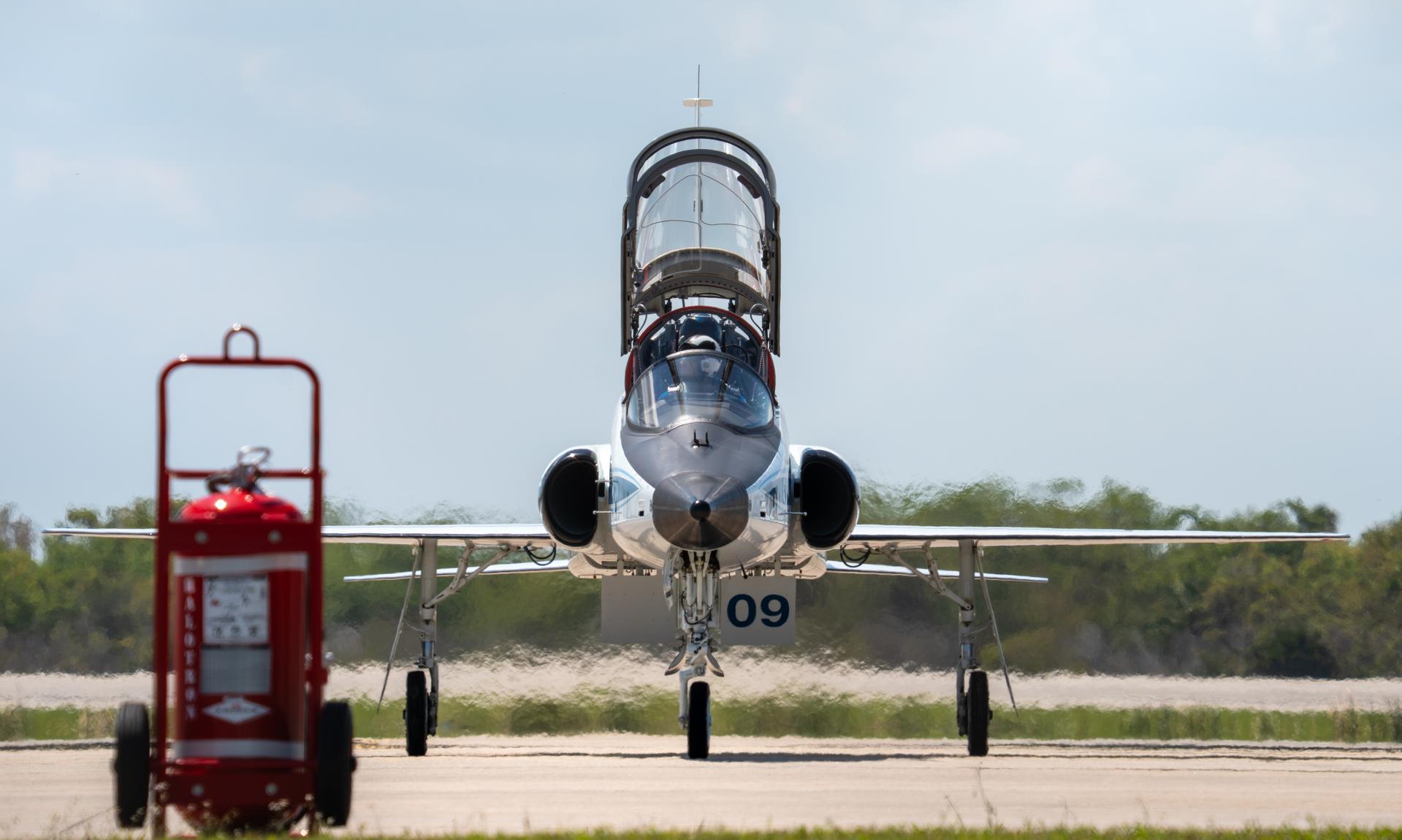
These images show the moments shortly after the arrival of the Artemis II crew to NASA’s Kennedy Space Center on March 27, 2026 ahead of the launch. The four astronauts, Victor Glover, Reid Wiseman, Christina Koch, and Jeremy Hansen, arrived on a T38, which can be seen behind them. They took turns speaking to the crowd as they also announced the zero-gravity indicator they would be taking with them on their journey.
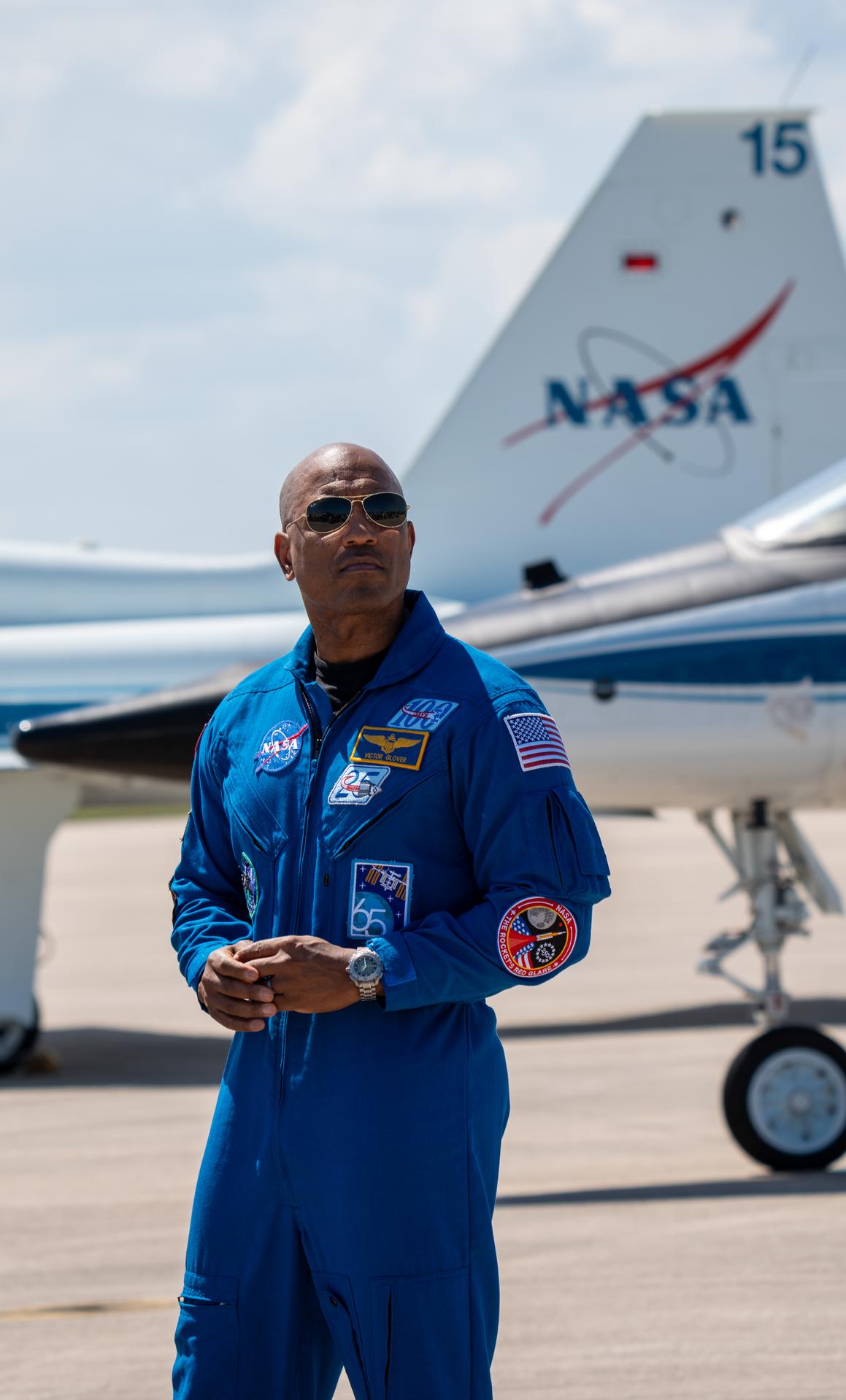
These images show the moments shortly after the arrival of the Artemis II crew to NASA’s Kennedy Space Center on March 27, 2026 ahead of the launch. The four astronauts, Victor Glover, Reid Wiseman, Christina Koch, and Jeremy Hansen, arrived on a T38, which can be seen behind them. They took turns speaking to the crowd as they also announced the zero-gravity indicator they would be taking with them on their journey.
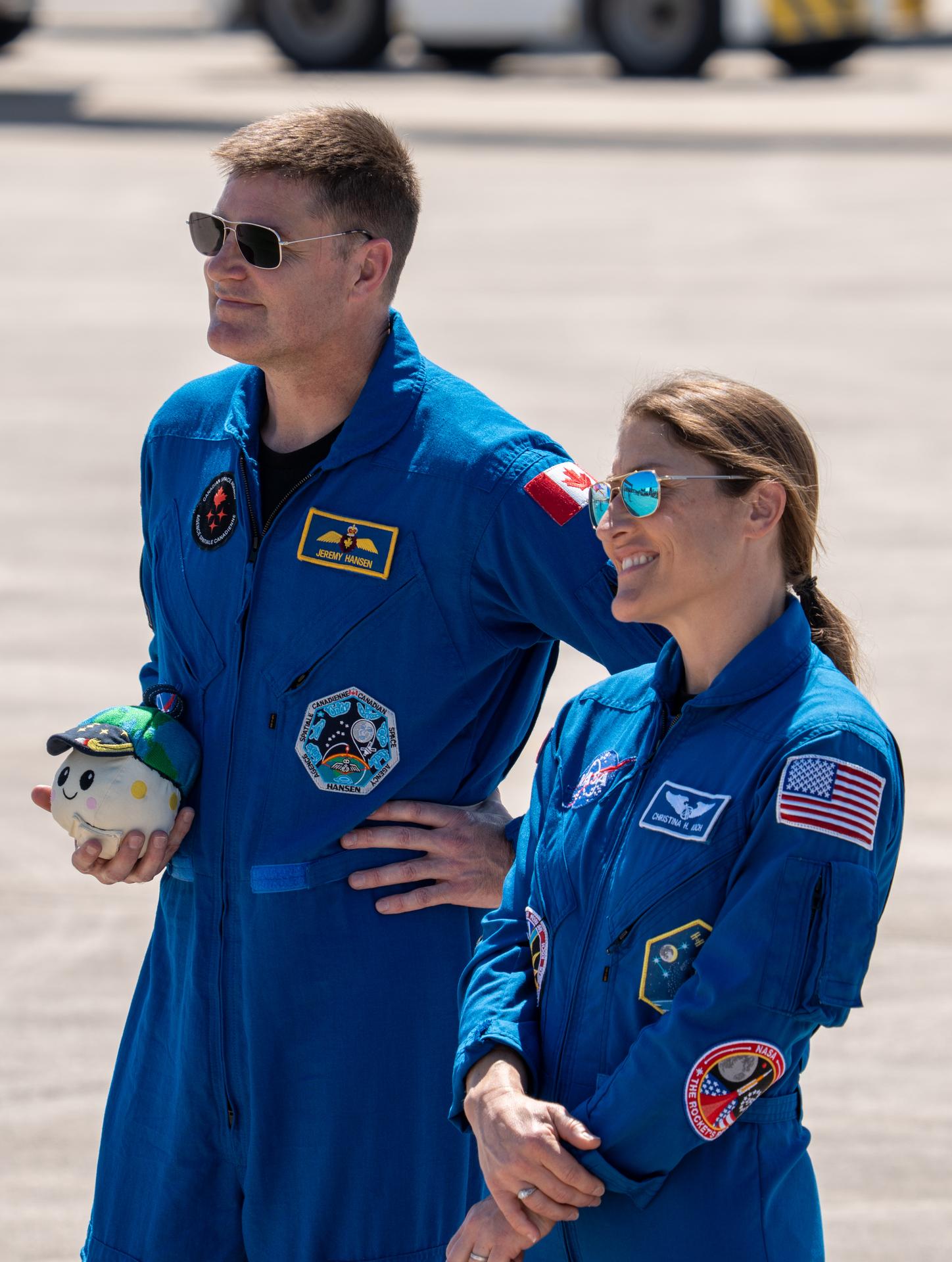
These images show the moments shortly after the arrival of the Artemis II crew to NASA’s Kennedy Space Center on March 27, 2026 ahead of the launch. The four astronauts, Victor Glover, Reid Wiseman, Christina Koch, and Jeremy Hansen, arrived on a T38, which can be seen behind them. They took turns speaking to the crowd as they also announced the zero-gravity indicator they would be taking with them on their journey.
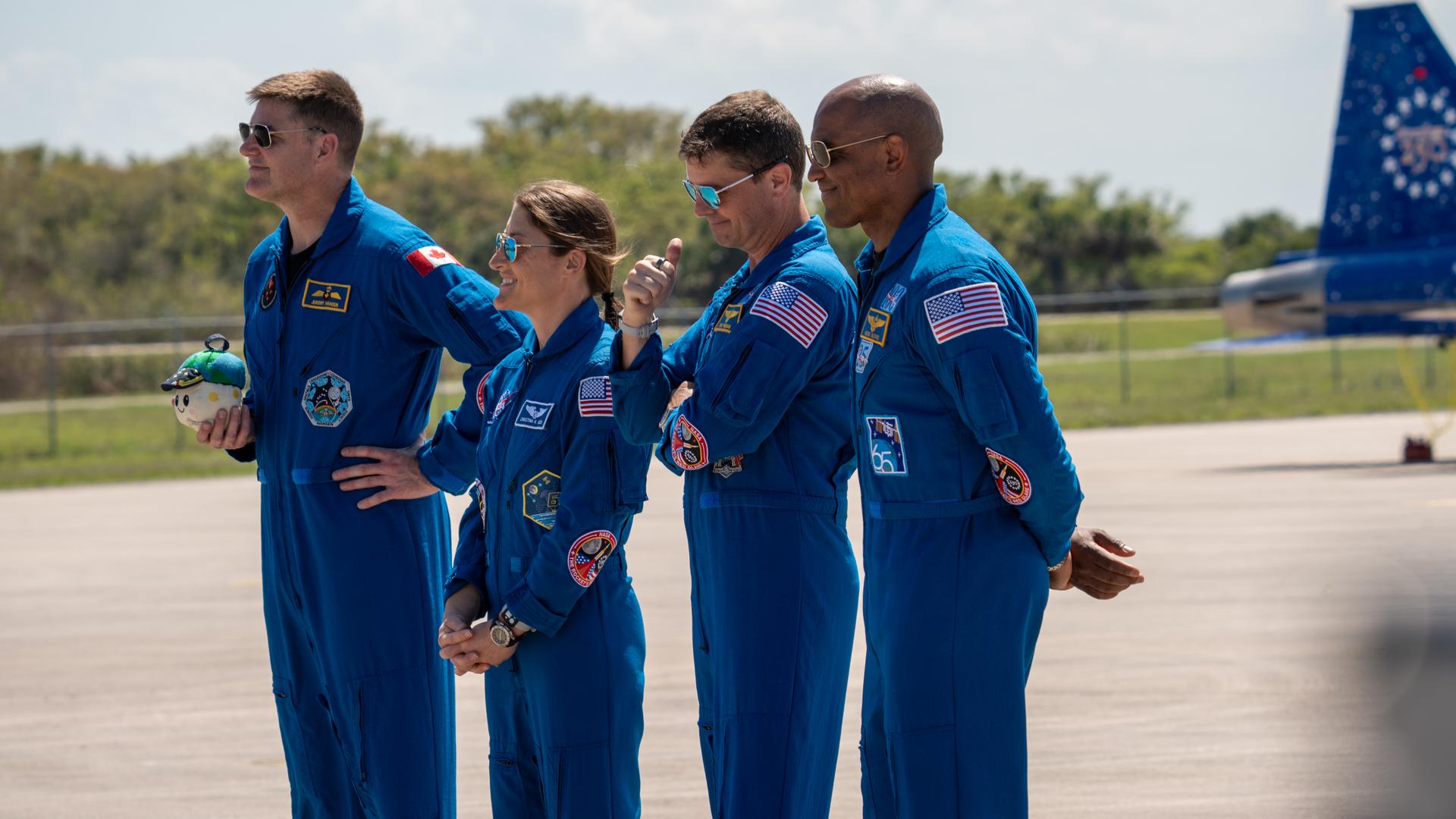
These images show the moments shortly after the arrival of the Artemis II crew to NASA’s Kennedy Space Center on March 27, 2026 ahead of the launch. The four astronauts, Victor Glover, Reid Wiseman, Christina Koch, and Jeremy Hansen, arrived on a T38, which can be seen behind them. They took turns speaking to the crowd as they also announced the zero-gravity indicator they would be taking with them on their journey.
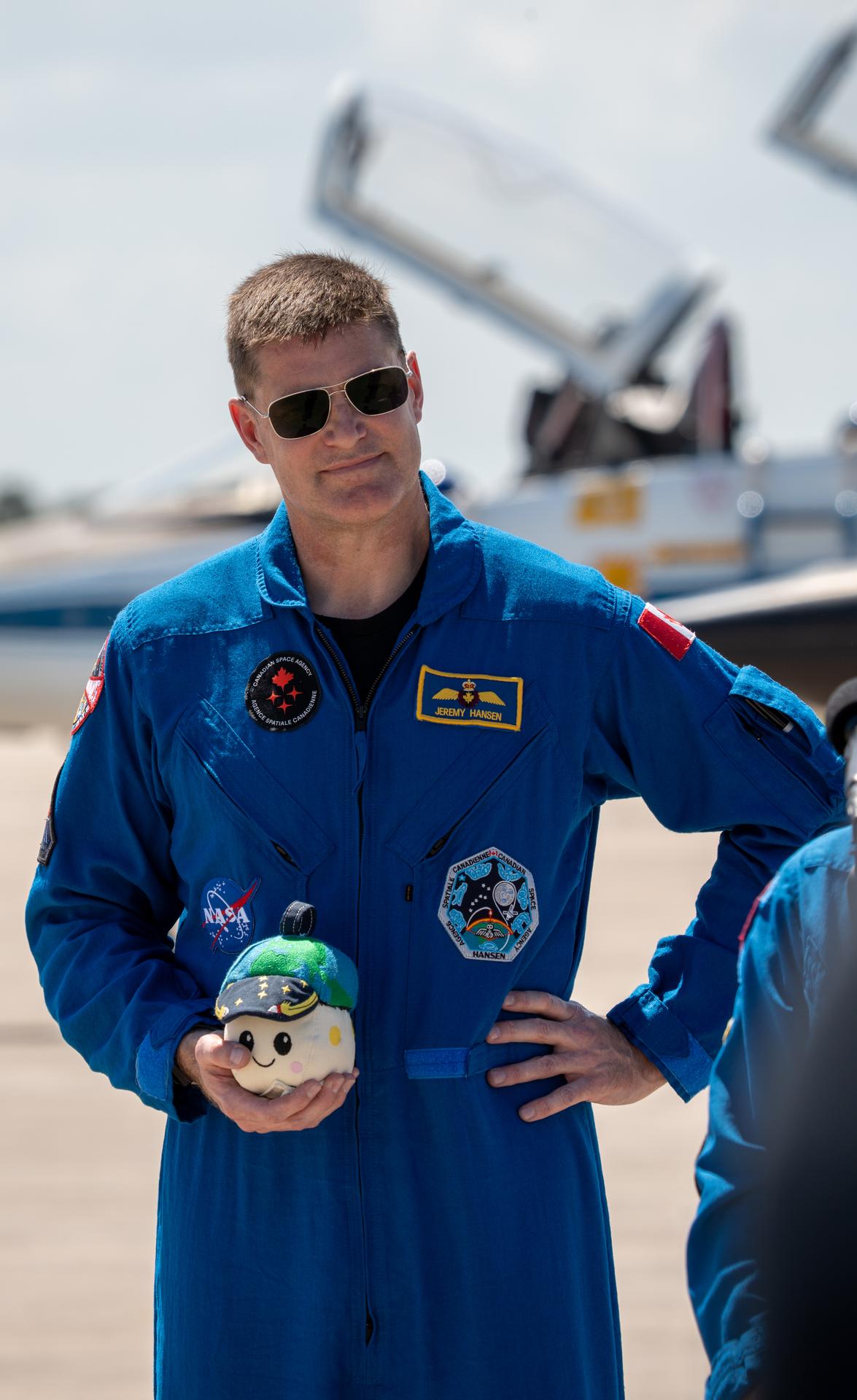
These images show the moments shortly after the arrival of the Artemis II crew to NASA’s Kennedy Space Center on March 27, 2026 ahead of the launch. The four astronauts, Victor Glover, Reid Wiseman, Christina Koch, and Jeremy Hansen, arrived on a T38, which can be seen behind them. They took turns speaking to the crowd as they also announced the zero-gravity indicator they would be taking with them on their journey.
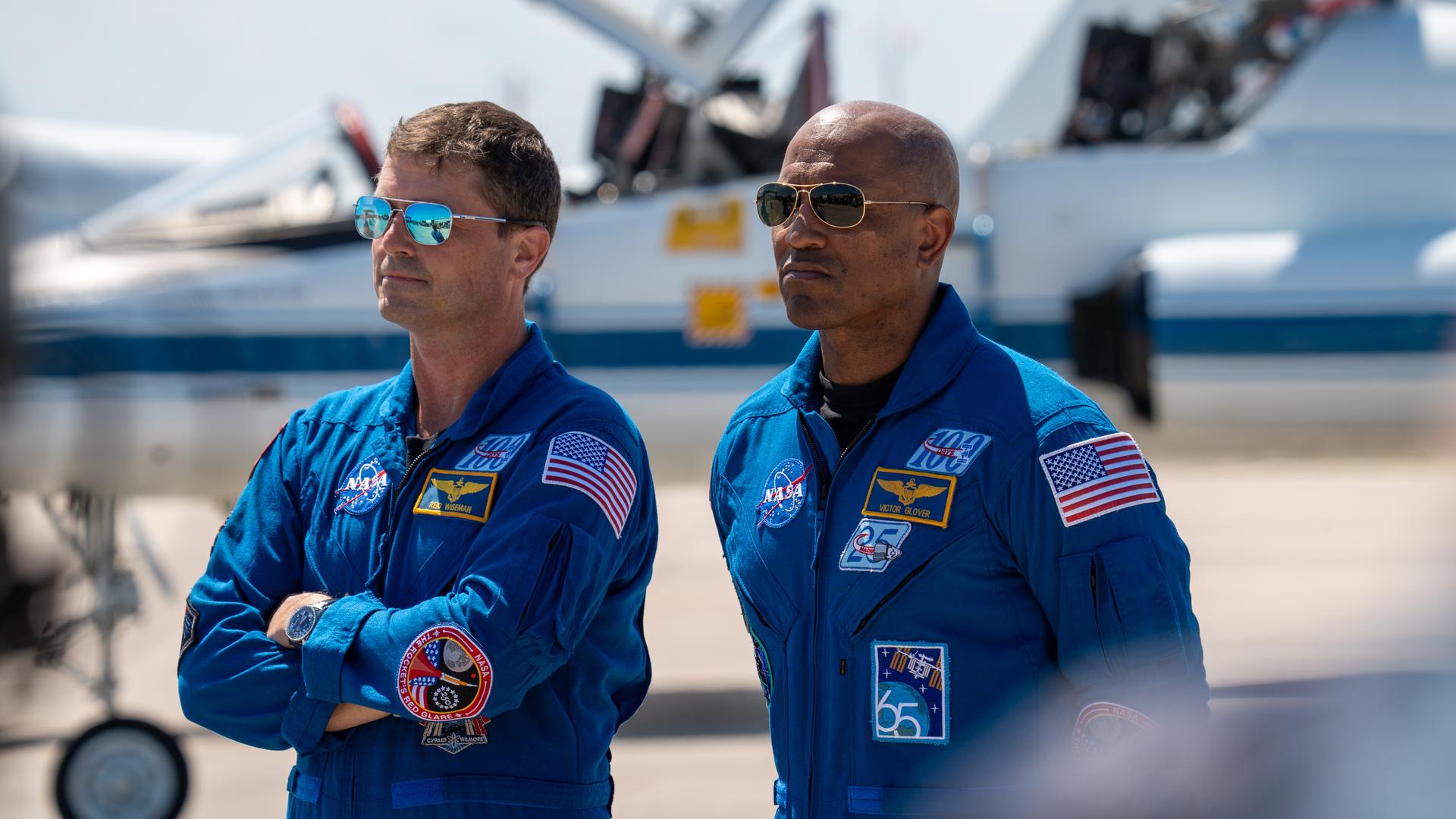
These images show the moments shortly after the arrival of the Artemis II crew to NASA’s Kennedy Space Center on March 27, 2026 ahead of the launch. The four astronauts, Victor Glover, Reid Wiseman, Christina Koch, and Jeremy Hansen, arrived on a T38, which can be seen behind them. They took turns speaking to the crowd as they also announced the zero-gravity indicator they would be taking with them on their journey.
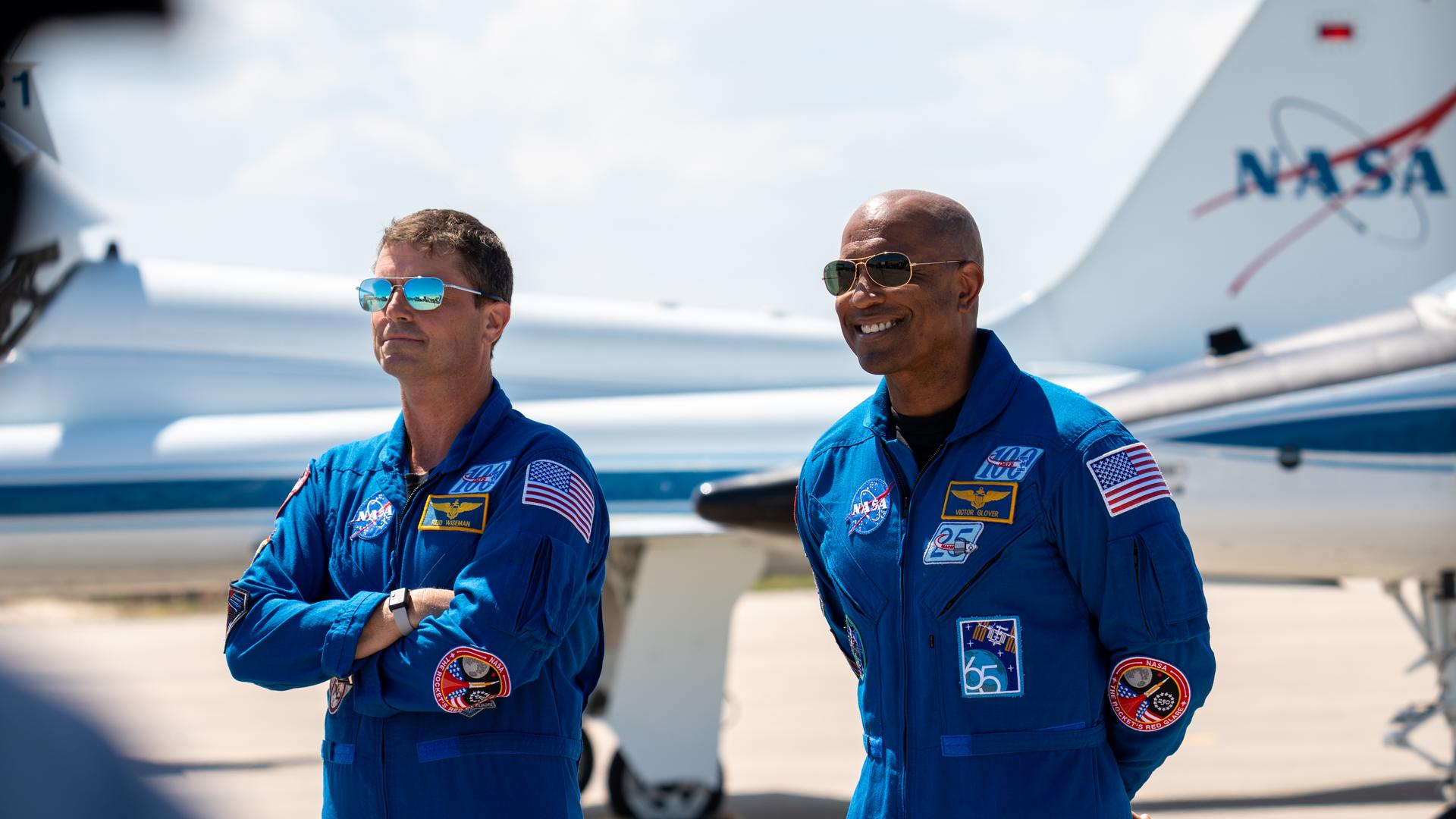
These images show the moments shortly after the arrival of the Artemis II crew to NASA’s Kennedy Space Center on March 27, 2026 ahead of the launch. The four astronauts, Victor Glover, Reid Wiseman, Christina Koch, and Jeremy Hansen, arrived on a T38, which can be seen behind them. They took turns speaking to the crowd as they also announced the zero-gravity indicator they would be taking with them on their journey.
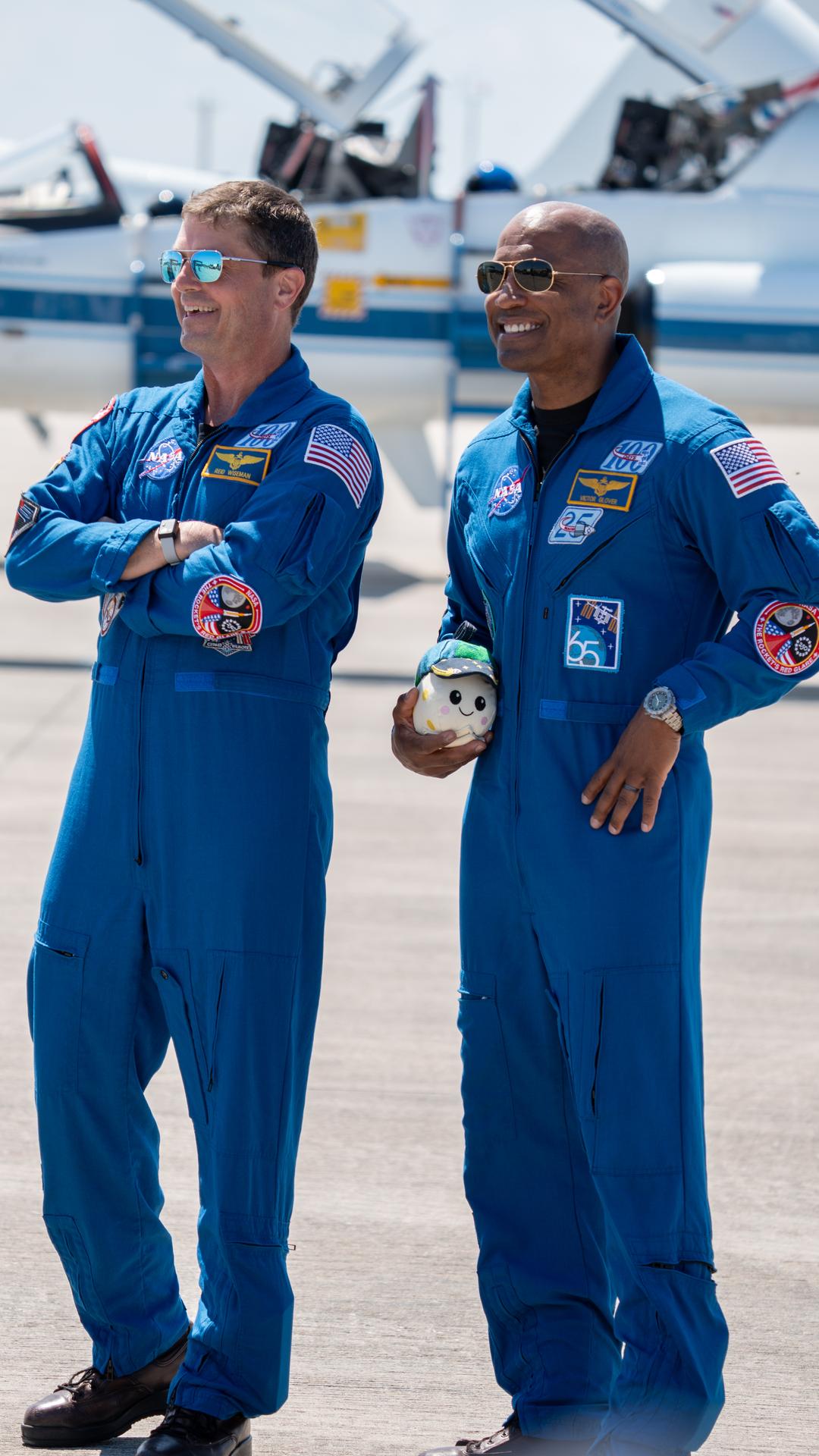
These images show the moments shortly after the arrival of the Artemis II crew to NASA’s Kennedy Space Center on March 27, 2026 ahead of the launch. The four astronauts, Victor Glover, Reid Wiseman, Christina Koch, and Jeremy Hansen, arrived on a T38, which can be seen behind them. They took turns speaking to the crowd as they also announced the zero-gravity indicator they would be taking with them on their journey.
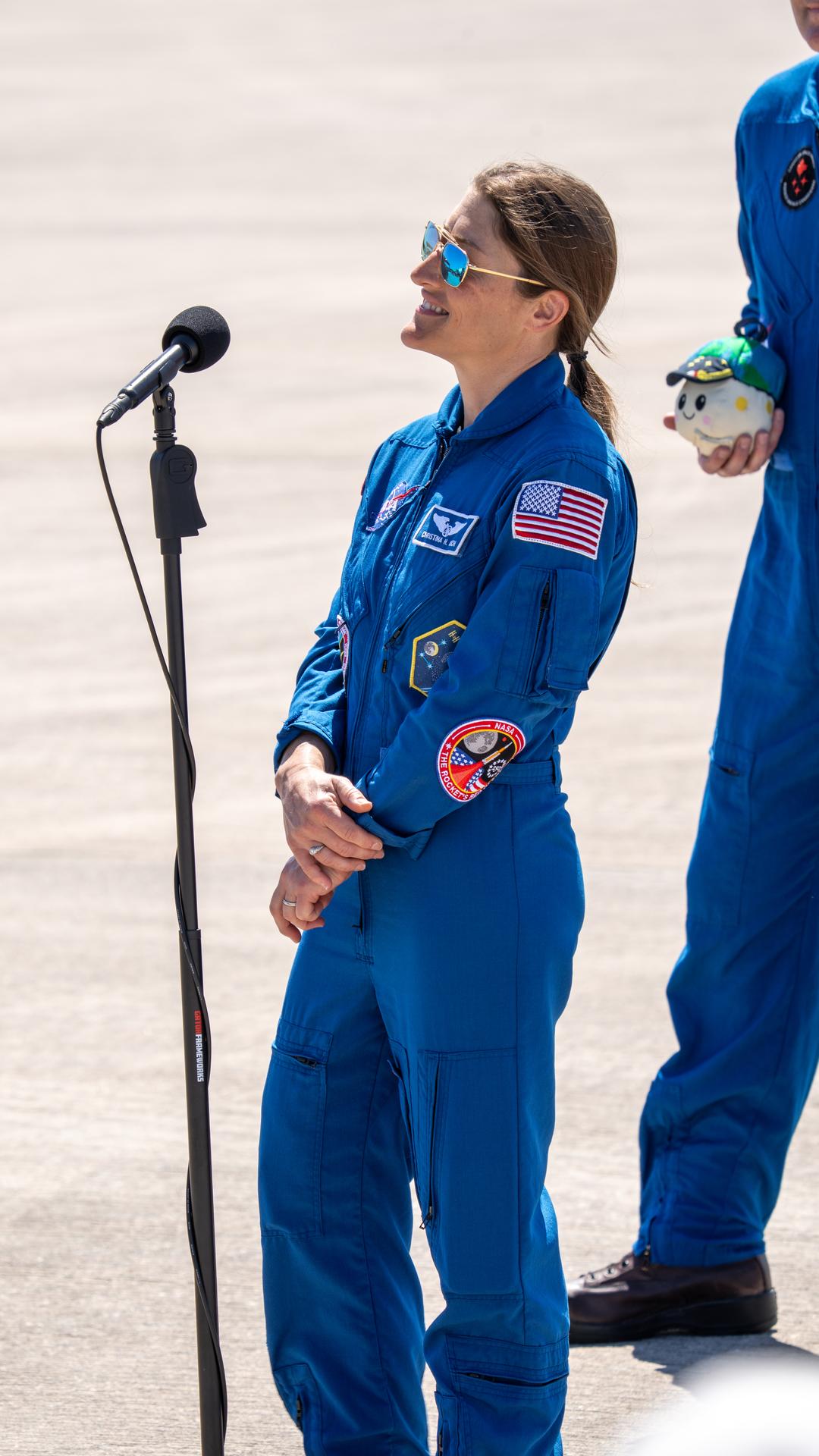
These images show the moments shortly after the arrival of the Artemis II crew to NASA’s Kennedy Space Center on March 27, 2026 ahead of the launch. The four astronauts, Victor Glover, Reid Wiseman, Christina Koch, and Jeremy Hansen, arrived on a T38, which can be seen behind them. They took turns speaking to the crowd as they also announced the zero-gravity indicator they would be taking with them on their journey.
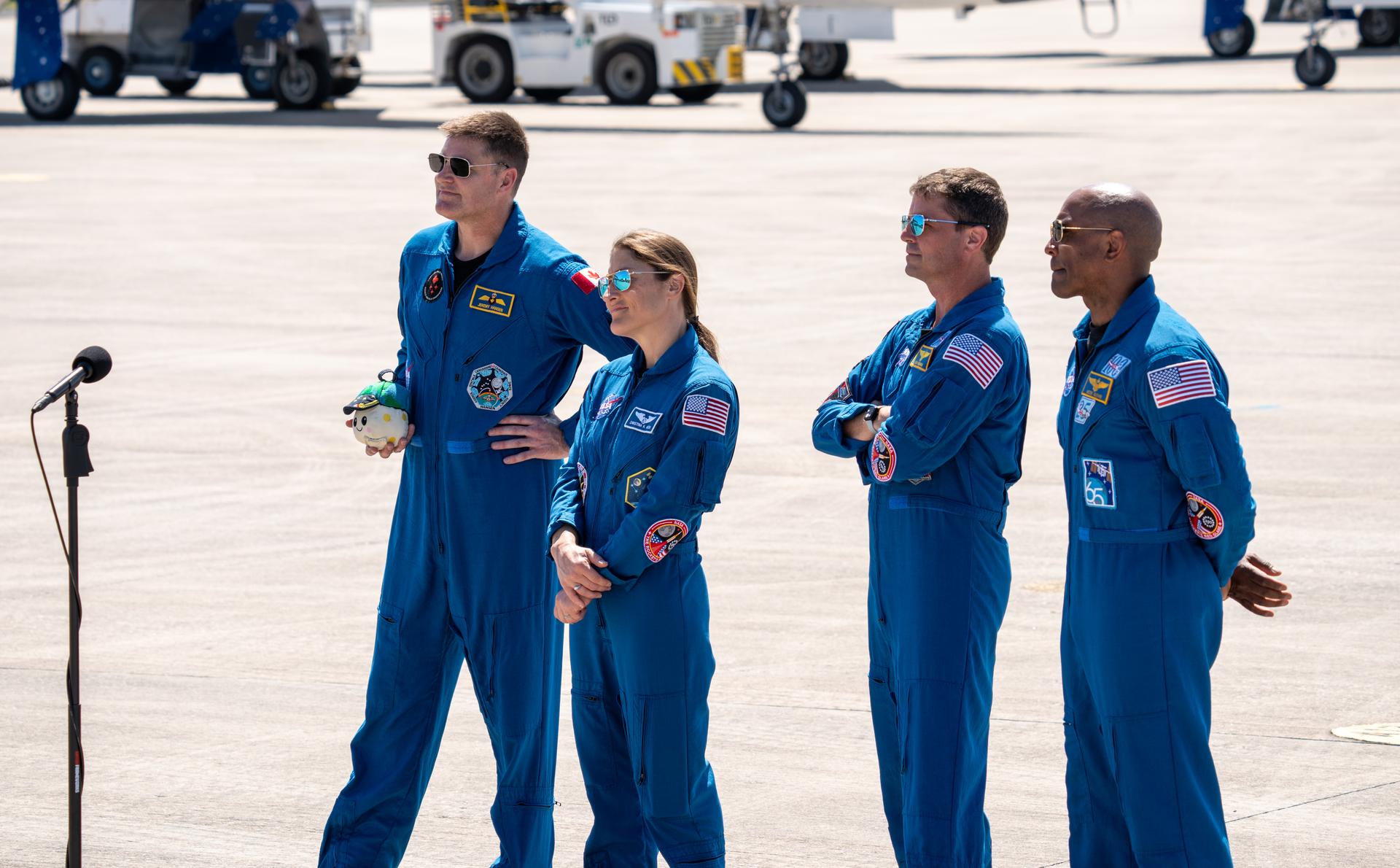
These images show the moments shortly after the arrival of the Artemis II crew to NASA’s Kennedy Space Center on March 27, 2026 ahead of the launch. The four astronauts, Victor Glover, Reid Wiseman, Christina Koch, and Jeremy Hansen, arrived on a T38, which can be seen behind them. They took turns speaking to the crowd as they also announced the zero-gravity indicator they would be taking with them on their journey.
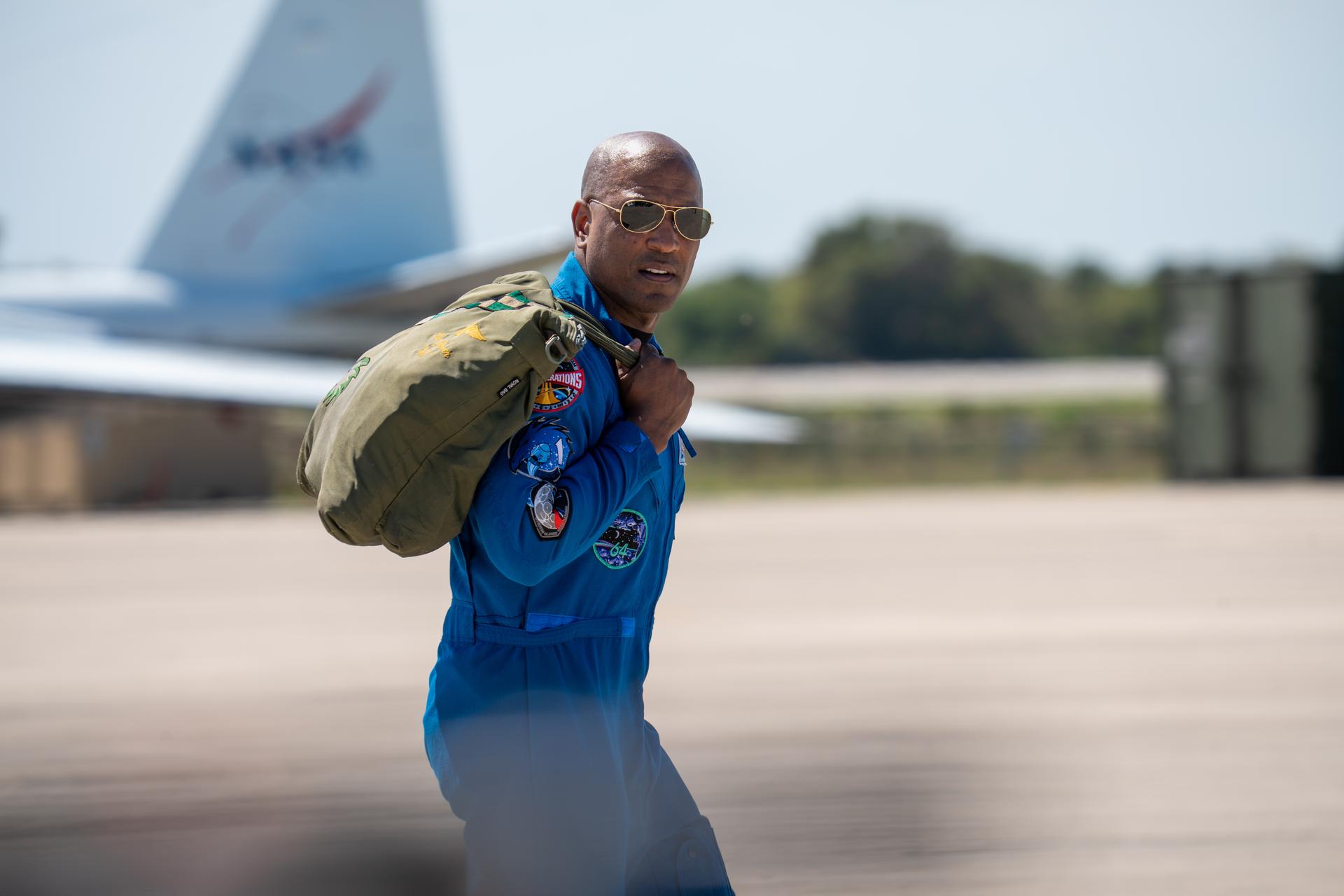
These images show the moments shortly after the arrival of the Artemis II crew to NASA’s Kennedy Space Center on March 27, 2026 ahead of the launch. The four astronauts, Victor Glover, Reid Wiseman, Christina Koch, and Jeremy Hansen, arrived on a T38, which can be seen behind them. They took turns speaking to the crowd as they also announced the zero-gravity indicator they would be taking with them on their journey.
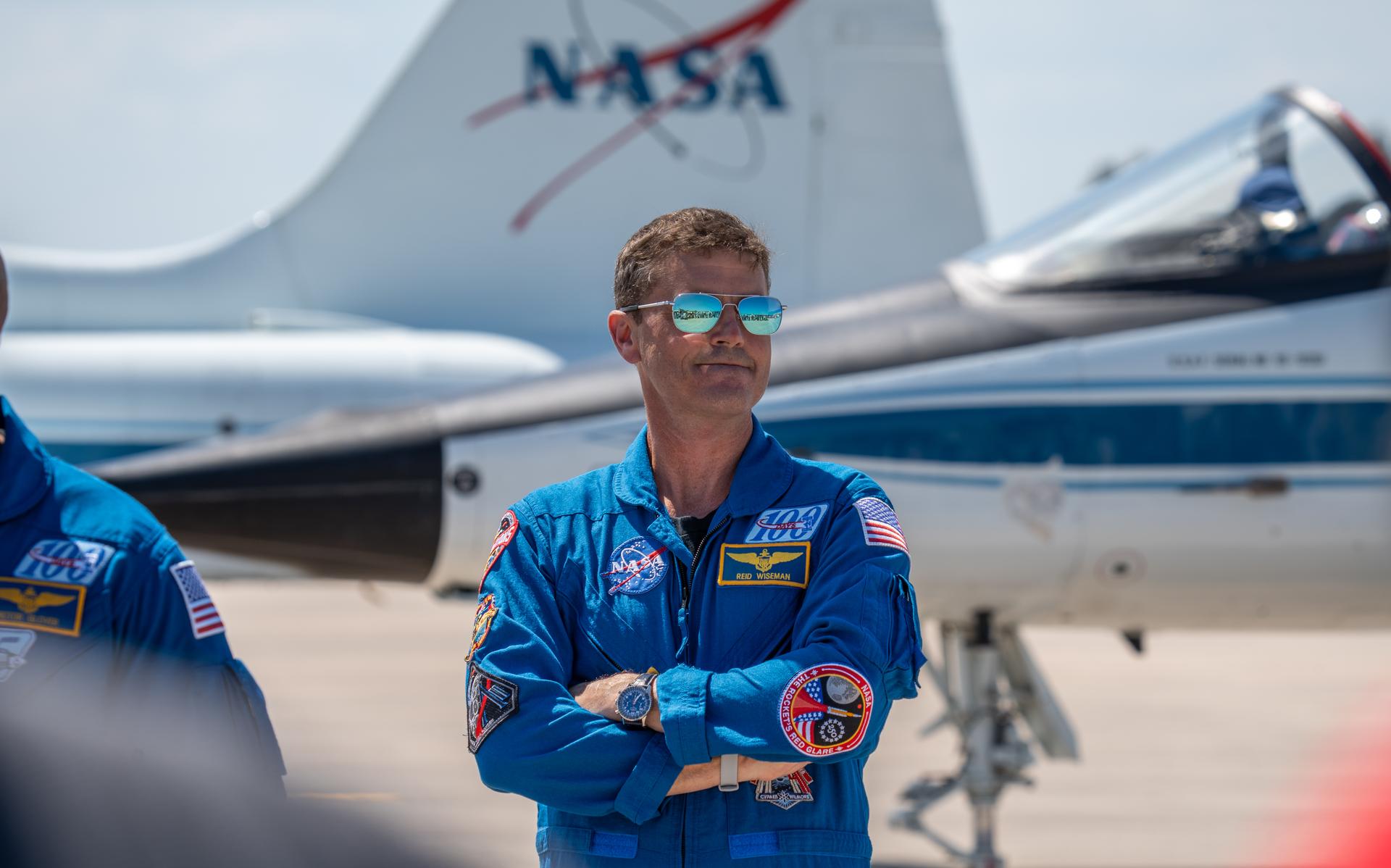
These images show the moments shortly after the arrival of the Artemis II crew to NASA’s Kennedy Space Center on March 27, 2026 ahead of the launch. The four astronauts, Victor Glover, Reid Wiseman, Christina Koch, and Jeremy Hansen, arrived on a T38, which can be seen behind them. They took turns speaking to the crowd as they also announced the zero-gravity indicator they would be taking with them on their journey.
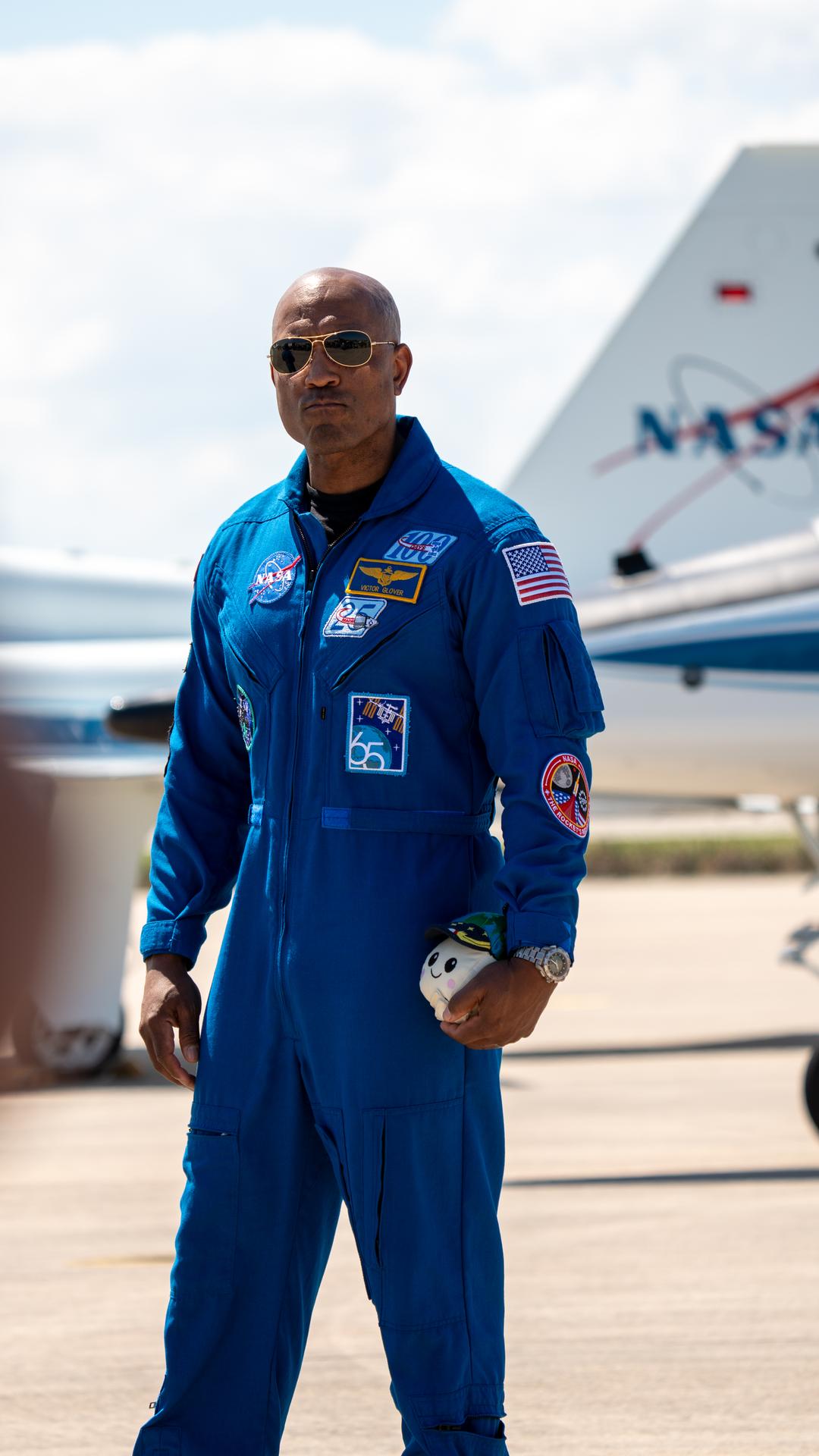
These images show the moments shortly after the arrival of the Artemis II crew to NASA’s Kennedy Space Center on March 27, 2026 ahead of the launch. The four astronauts, Victor Glover, Reid Wiseman, Christina Koch, and Jeremy Hansen, arrived on a T38, which can be seen behind them. They took turns speaking to the crowd as they also announced the zero-gravity indicator they would be taking with them on their journey.
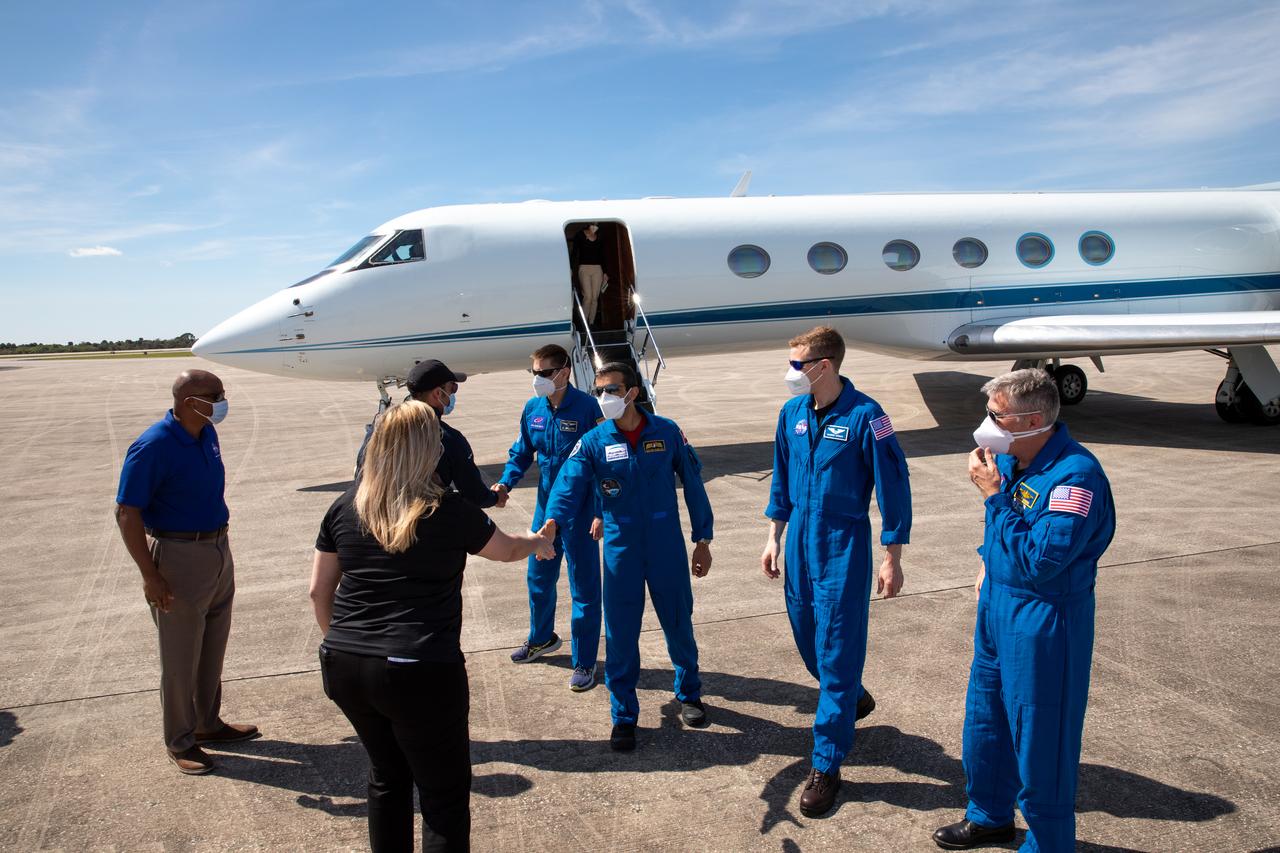
Kennedy Space Center Deputy Director Kelvin Manning, Dana Hutcherson, deputy manager, NASA’s Commercial Crew Program, and Salem AlMarri, director general, Mohammed Bin Rashid Space Centre, greet the crew members of NASA’s SpaceX Crew-6 mission after their arrival at the center’s Launch and Landing Facility in Florida on Feb. 21, 2023. From left are Manning, Hutcherson, AlMarri, Roscosmos cosmonaut Andrey Fedyaev, UAE (United Arab Emirates) astronaut Sultan Alneyadi, and NASA astronauts Warren “Woody” Hoburg and Stephen Bowen. Crew-6 will launch aboard the Crew Dragon on a SpaceX Falcon 9 rocket. Launch is targeted for no earlier than Feb. 26 at 2:07 a.m. EST.
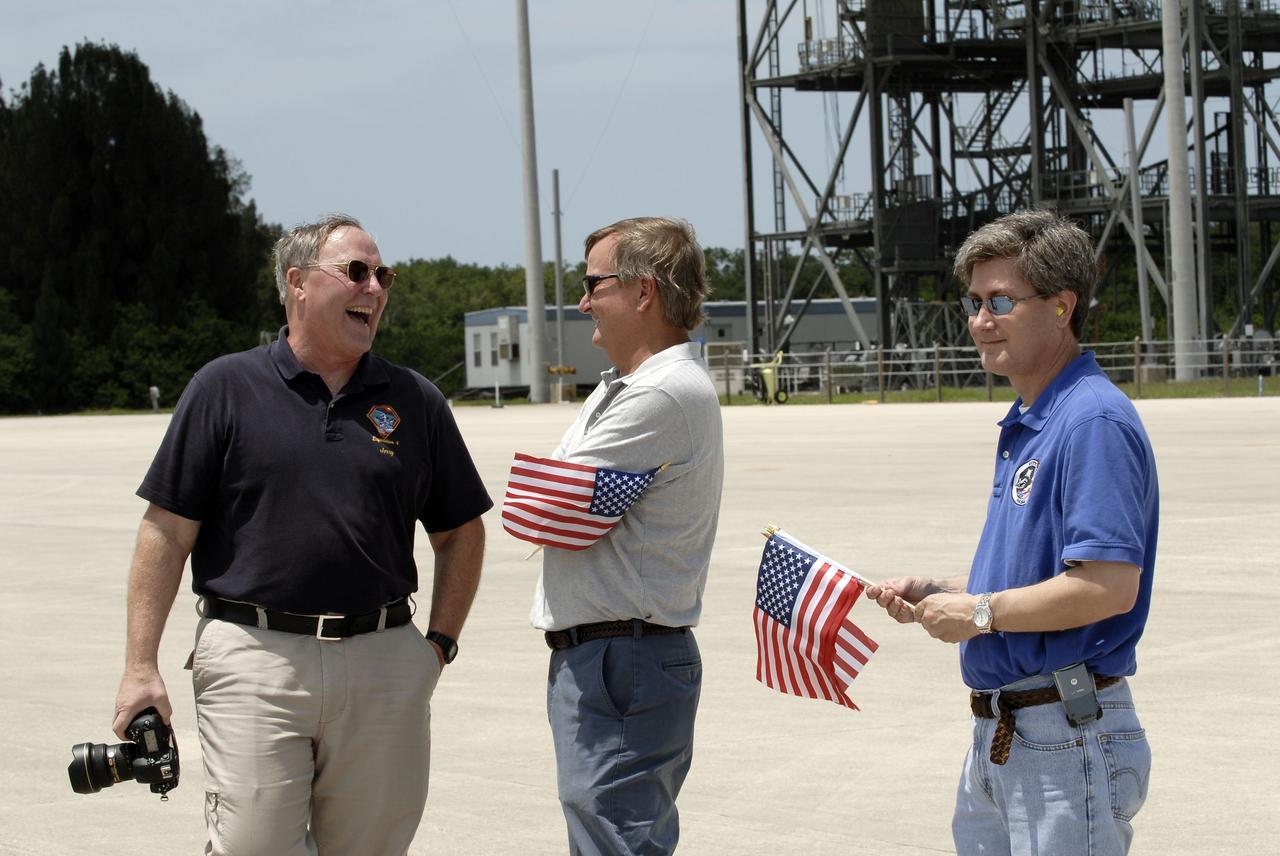
CAPE CANAVERAL, Fla. -- Jerry Ross, chief of the Vehicle Integration Test Office and former NASA astronaut, Shuttle Launch Director Mike Leinbach and James Branson with the Vehicle Integration Test Office await the arrival of the STS-135 crew members at the Shuttle Landing Facility at NASA's Kennedy Space Center in Florida. The STS-135 astronauts arrived at Kennedy about 2:30 p.m. EDT on July 4 for final preparations for space shuttle Atlantis' STS-135 mission to the International Space Station. Atlantis is scheduled to lift off on July 8 to deliver the Raffaello multi-purpose logistics module packed with supplies and spare parts to the station. The STS-135 mission also will fly a system to investigate the potential for robotically refueling existing satellites and return a failed ammonia pump module to help NASA better understand the failure mechanism and improve pump designs for future systems. STS-135 will be the 33rd flight of Atlantis, the 37th shuttle mission to the space station, and the 135th and final mission of NASA's Space Shuttle Program. For more information visit, www.nasa.gov/mission_pages/shuttle/shuttlemissions/sts135/index.html. Photo credit: NASA/Kim Shiflett
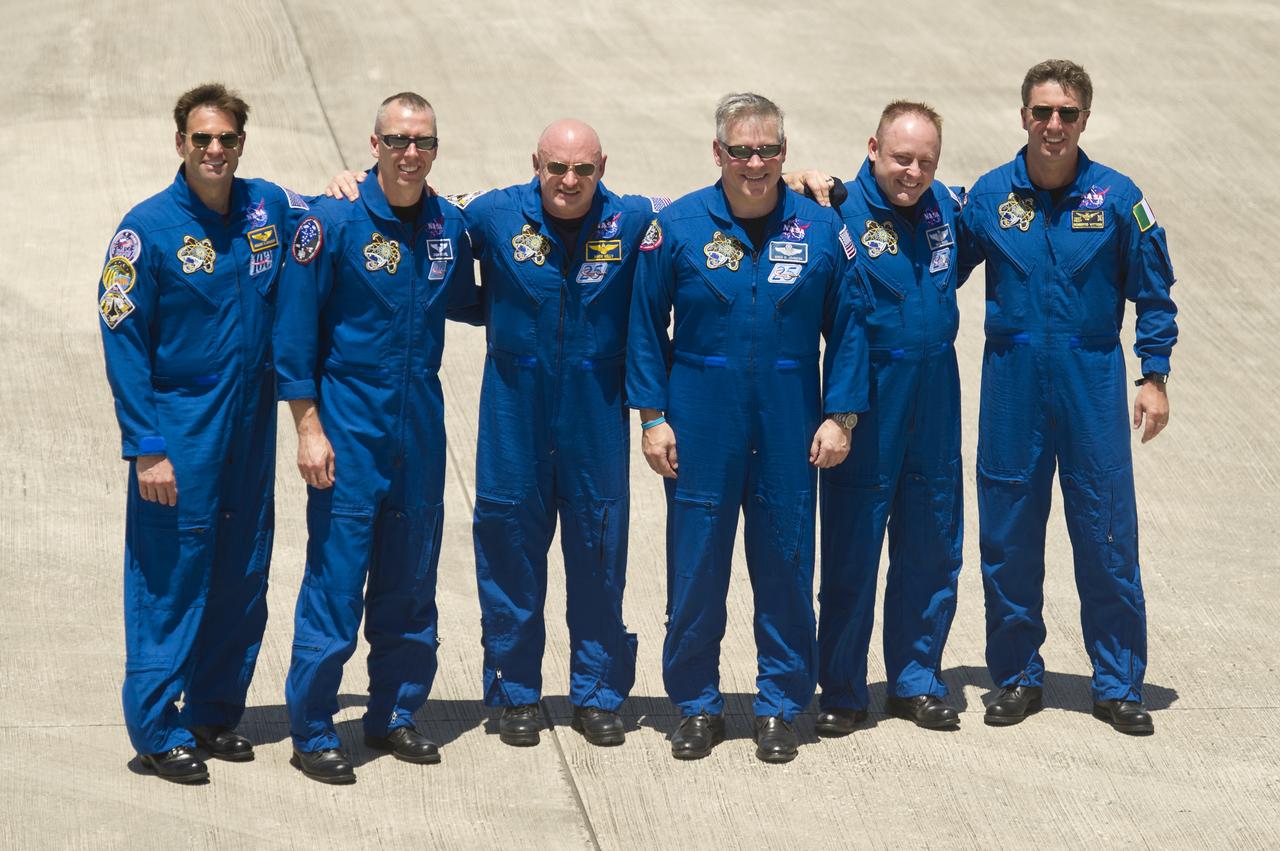
STS-134 Commander Mark Kelly, center, along with his crew pose for a photograph following their arrival to Kennedy Space Center, Tuesday, April 26, 2011, in Cape Canaveral, Fla. From left are Mission Specialists Greg Chamitoff, Andrew Feustel, Kelly, Pilot Greg H. Johnson, Mission Specialist Mike Fincke and European Space Agency astronaut Roberto Vittori. The six astronauts for space shuttle Endeavour's STS-134 mission to the International Space Station arrived at Kennedy's Shuttle Landing Facility (SLF) in T-38 jets early Tuesday afternoon. Photo Credit: (NASA/Bill Ingalls)
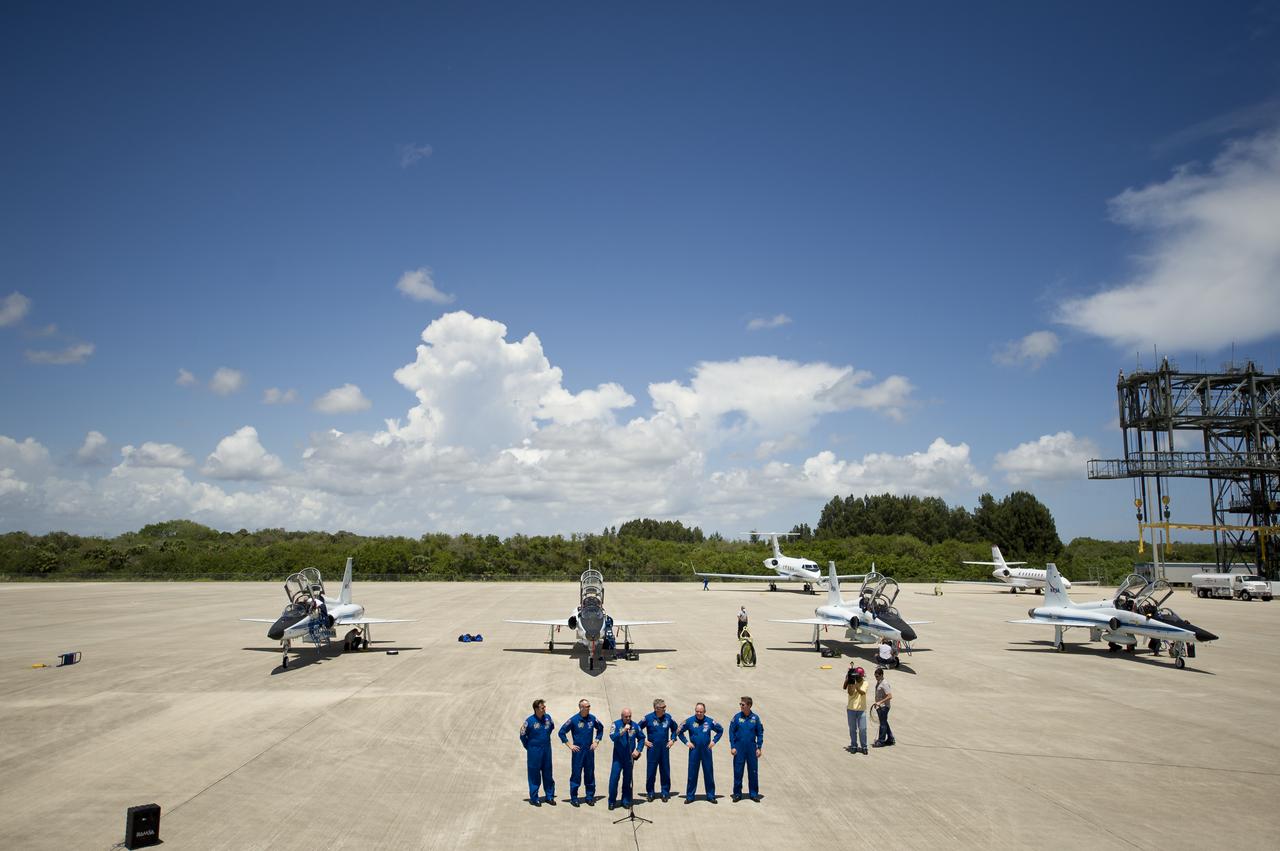
STS-134 Commander Mark Kelly, center, along with his crew speaks to the media following their arrival to Kennedy Space Center, Tuesday, April 26, 2011, in Cape Canaveral, Fla. From left are Mission Specialists Greg Chamitoff, Andrew Feustel, Kelly, Pilot Greg H. Johnson, Mission Specialist Mike Fincke and European Space Agency astronaut Roberto Vittori. The six astronauts for space shuttle Endeavour's STS-134 mission to the International Space Station arrived at Kennedy's Shuttle Landing Facility (SLF) in T-38 jets early Tuesday afternoon. Photo Credit: (NASA/Bill Ingalls)
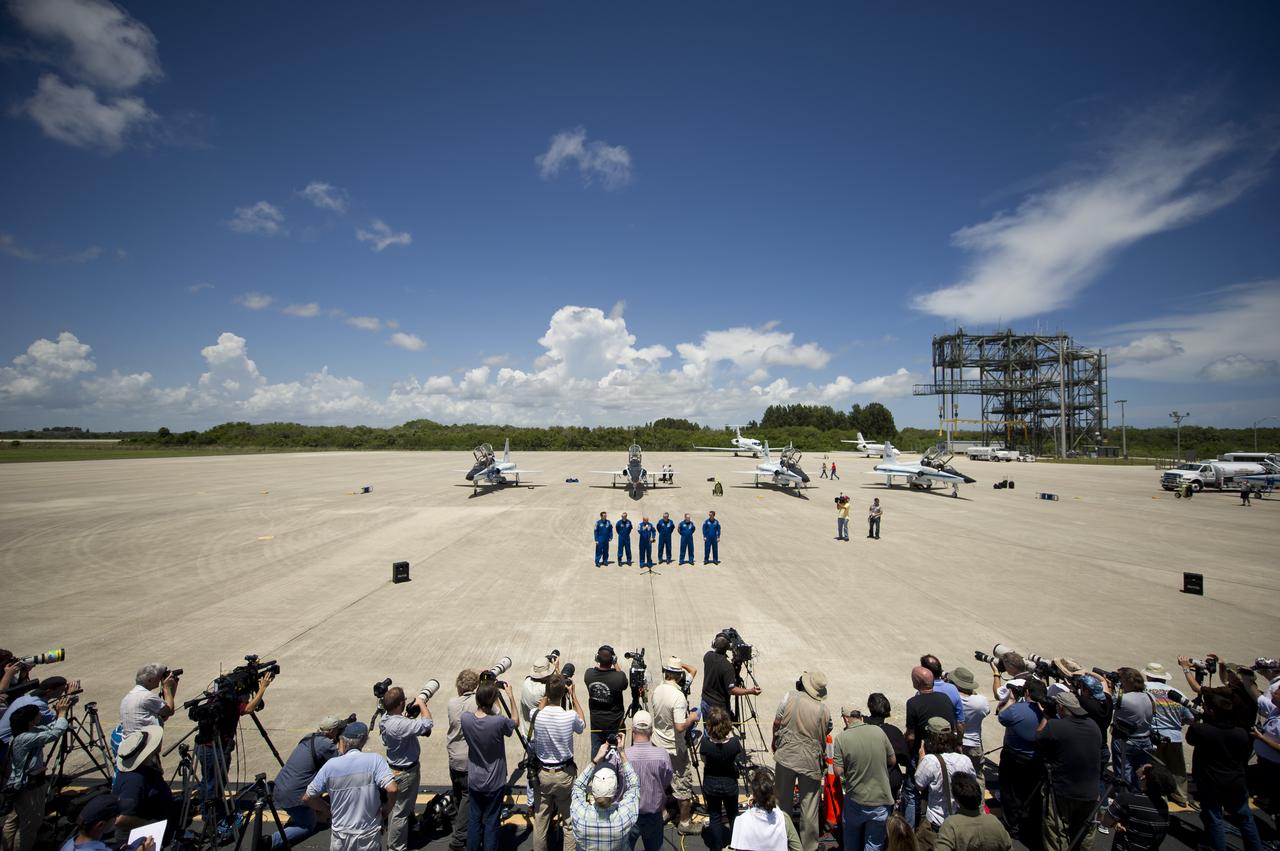
STS-134 Commander Mark Kelly, center, along with his crew speaks to the media following their arrival to Kennedy Space Center, Tuesday, April 26, 2011, in Cape Canaveral, Fla. From left are Mission Specialists Greg Chamitoff, Andrew Feustel, Kelly, Pilot Greg H. Johnson, Mission Specialist Mike Fincke and European Space Agency astronaut Roberto Vittori. The six astronauts for space shuttle Endeavour's STS-134 mission to the International Space Station arrived at Kennedy's Shuttle Landing Facility (SLF) in T-38 jets early Tuesday afternoon. Photo Credit: (NASA/Bill Ingalls)
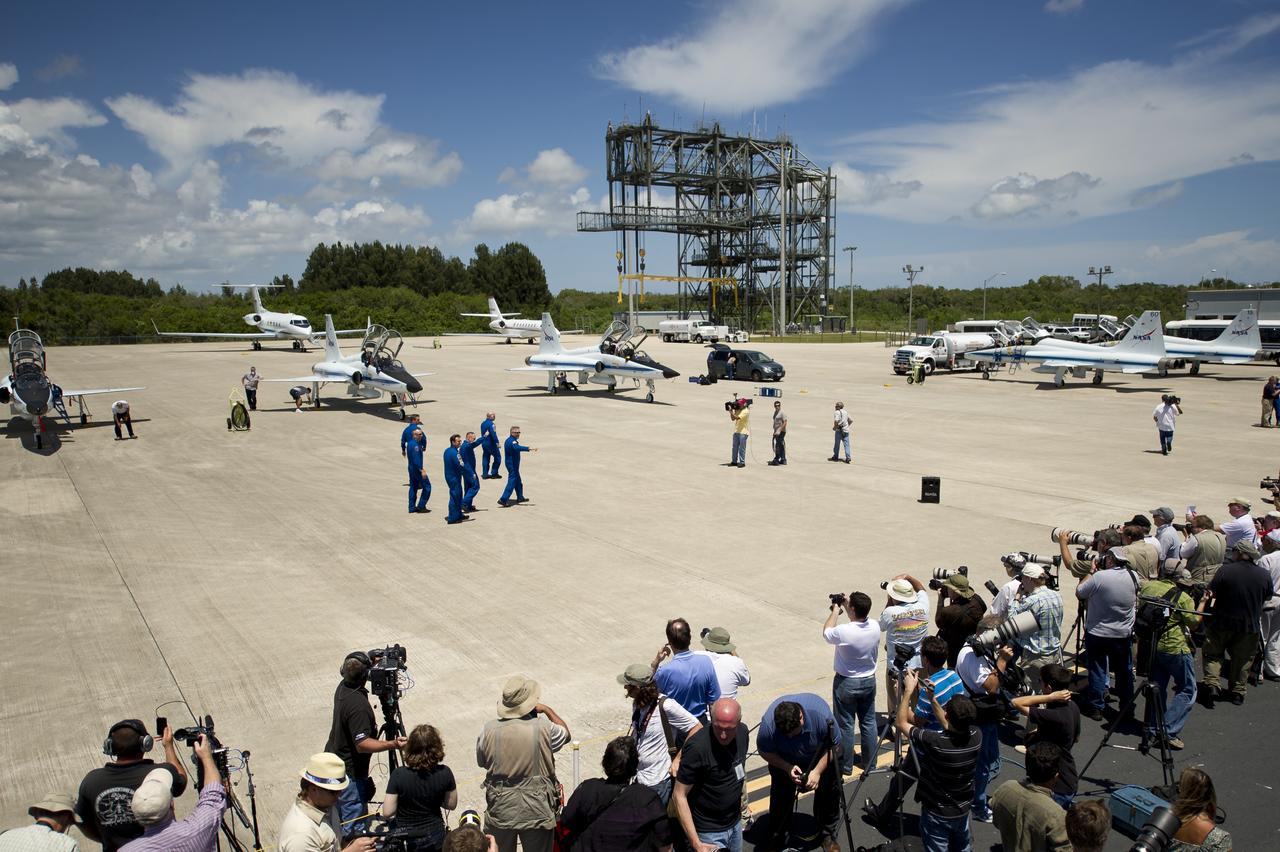
STS-134 crew members, Commander Mark Kelly, Mission Specialists Greg Chamitoff, Andrew Feustel, Pilot Greg H. Johnson, Mission Specialist Mike Fincke and European Space Agency astronaut Roberto Vittori wave following their arrival to Kennedy Space Center, Tuesday, April 26, 2011, in Cape Canaveral, Fla. The six astronauts for space shuttle Endeavour's STS-134 mission to the International Space Station arrived at Kennedy's Shuttle Landing Facility (SLF) in T-38 jets early Tuesday afternoon. Photo Credit: (NASA/Bill Ingalls)
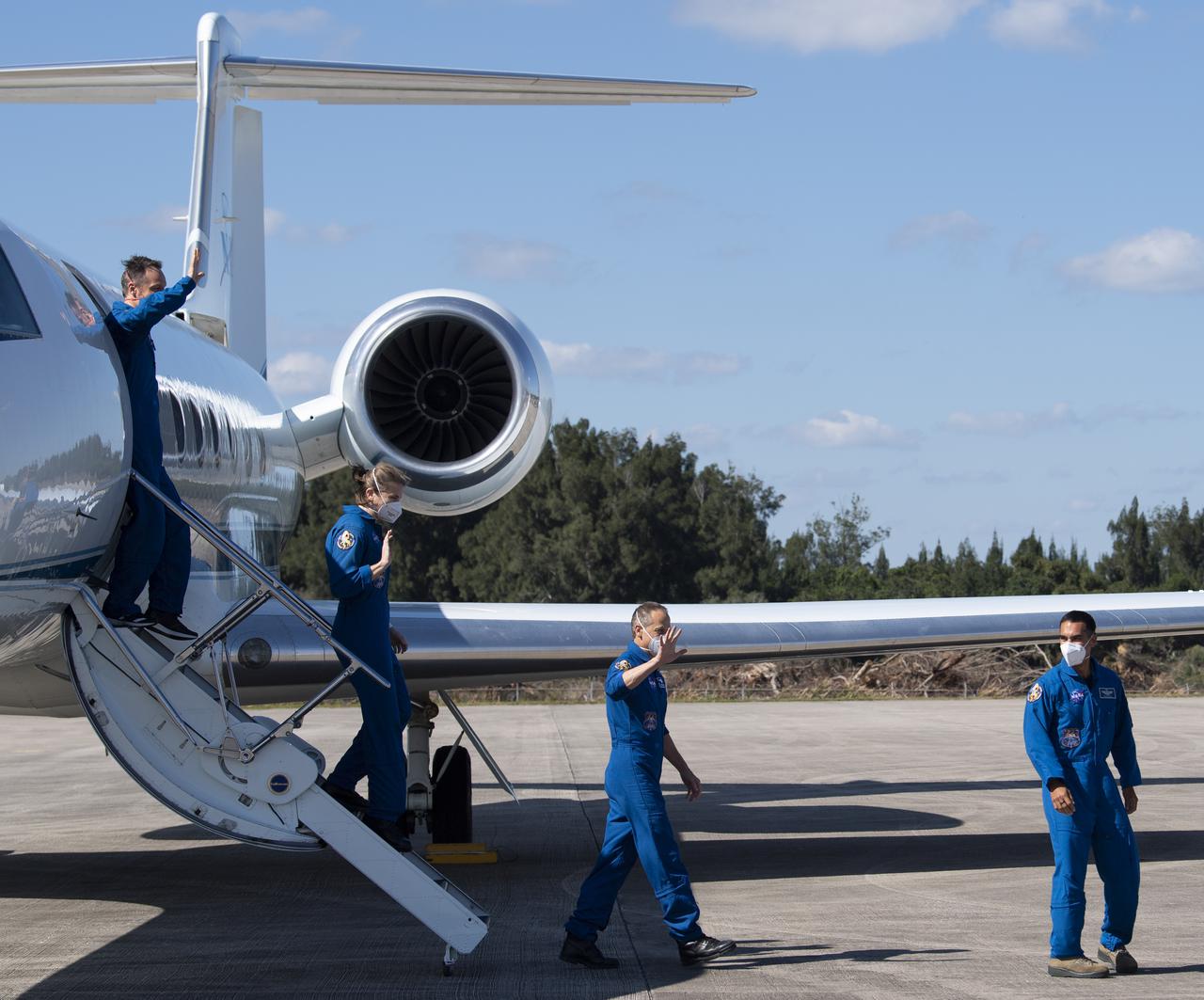
NASA astronauts Raja Chari, right, Tom Marshburn, second from right, Kayla Barron, second from left, and ESA (European Space Agency) astronaut Matthias Maurer, left, are seen as they arrive from Houston at the Launch and Landing Facility at NASA’s Kennedy Space Center ahead of SpaceX’s Crew-3 mission, Tuesday, Oct. 26, 2021, in Florida. NASA’s SpaceX Crew-3 mission is the third crew rotation mission of the SpaceX Crew Dragon spacecraft and Falcon 9 rocket to the International Space Station as part of the agency’s Commercial Crew Program. Chari, Marshburn, Barron, Maurer are scheduled to launch at Oct. 31 at 2:21 a.m. ET, from Launch Complex 39A at the Kennedy Space Center. Photo Credit: (NASA/Joel Kowsky)
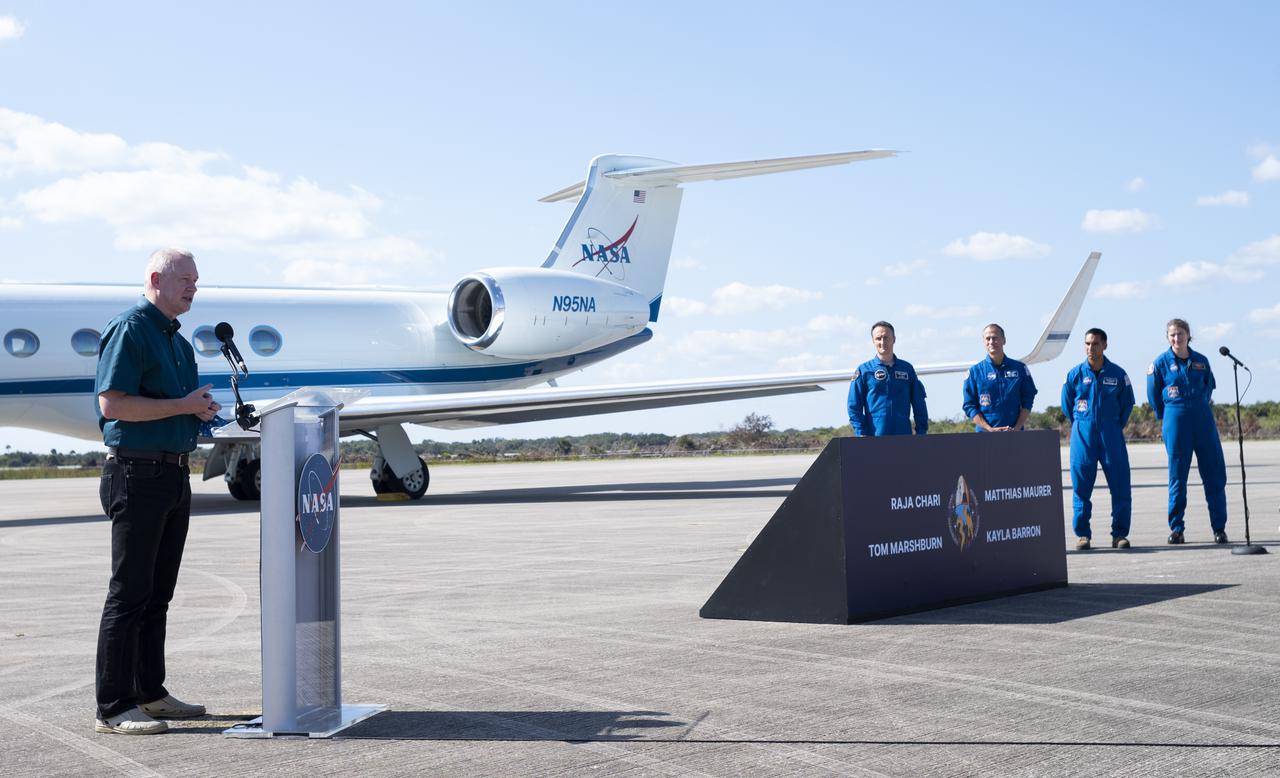
Frank de Winne, manager of the International Space Station Program for ESA (European Space Agency), speaks to members of the media at the arrival of NASA astronauts Raja Chari, Tom Marshburn, Kayla Barron, and ESA (European Space Agency) astronaut Matthias Maurer at the Launch and Landing Facility at NASA’s Kennedy Space Center ahead of SpaceX’s Crew-3 mission, Tuesday, Oct. 26, 2021, in Florida. NASA’s SpaceX Crew-3 mission is the third crew rotation mission of the SpaceX Crew Dragon spacecraft and Falcon 9 rocket to the International Space Station as part of the agency’s Commercial Crew Program. Chari, Marshburn, Barron, Maurer are scheduled to launch at Oct. 31 at 2:21 a.m. ET, from Launch Complex 39A at the Kennedy Space Center. Photo Credit: (NASA/Joel Kowsky)
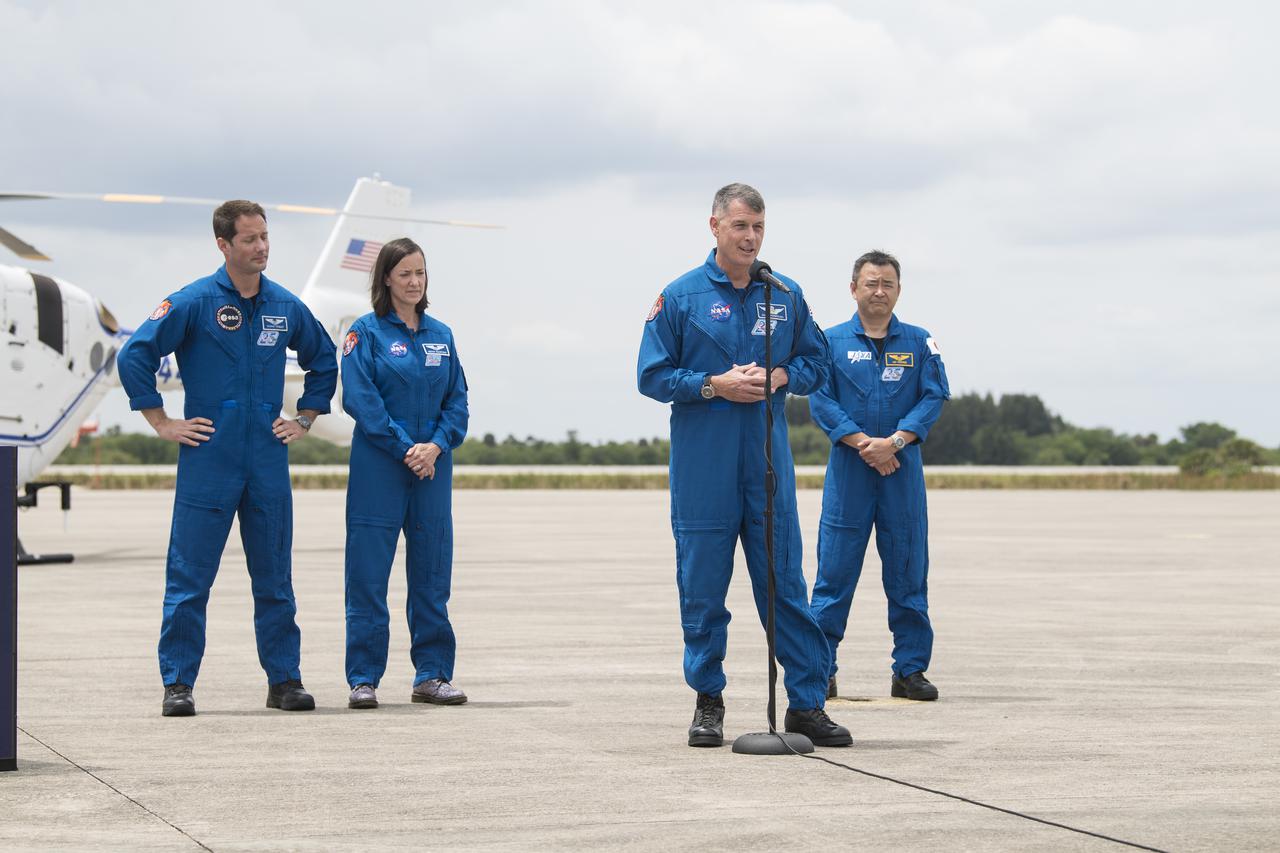
NASA astronaut Shane Kimbrough answers a question while crew mates ESA (European Space Agency) astronaut Thomas Pesquet, left, NASA astronaut Megan McArthur, center, and Japan Aerospace Exploration Agency (JAXA) astronaut Akihiko Hoshide, right, look on, after arriving at the Launch and Landing Facility at NASA’s Kennedy Space Center ahead of SpaceX’s Crew-2 mission, Friday, April 16, 2021, in Florida. NASA’s SpaceX Crew-2 mission is the second operational mission of the SpaceX Crew Dragon spacecraft and Falcon 9 rocket to the International Space Station as part of the agency’s Commercial Crew Program. Kimbrough, McArthur, Pesquet, and Hoshide are scheduled to launch at 6:11 a.m. ET on Thursday, April 22, from Launch Complex 39A at the Kennedy Space Center. Photo Credit: (NASA/Aubrey Gemignani)
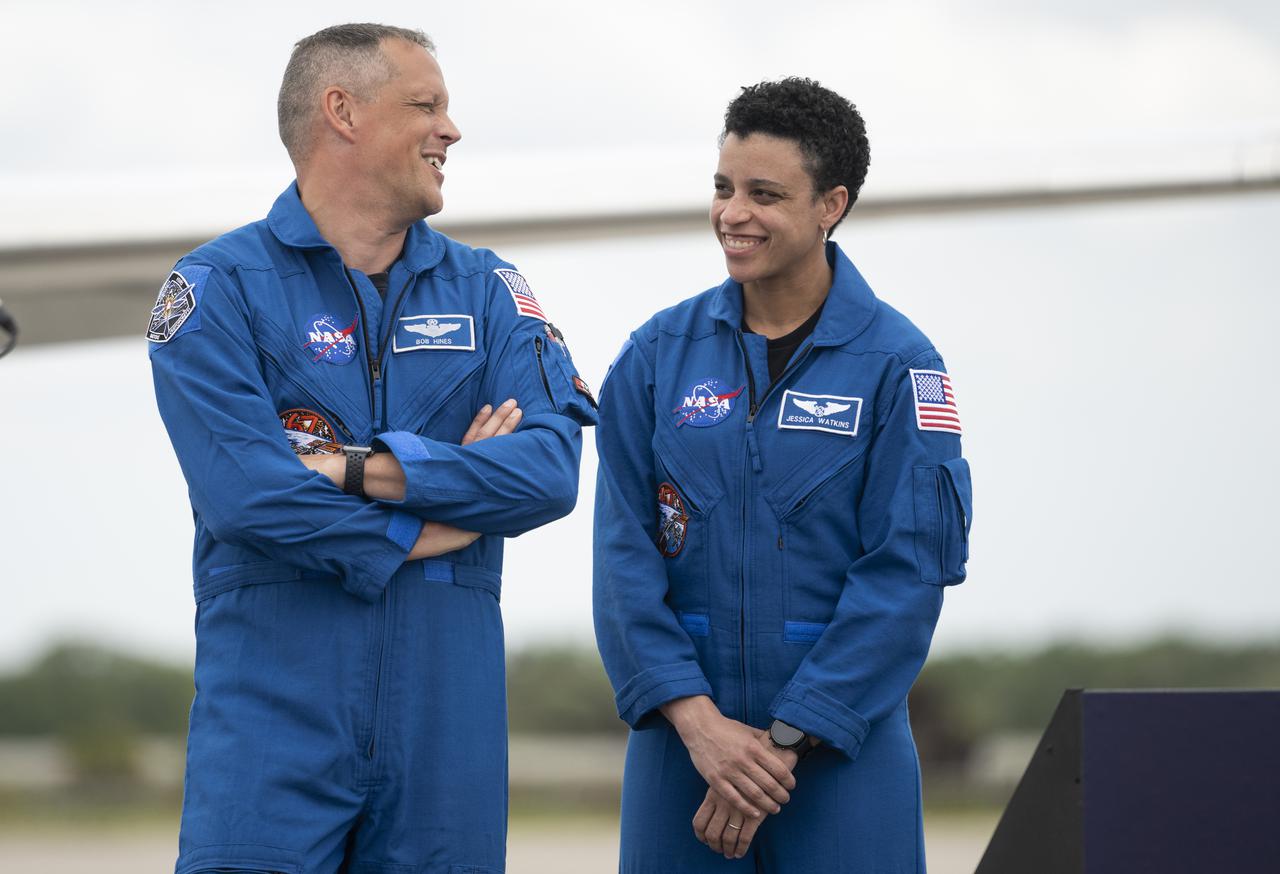
NASA astronauts Robert Hines, left, and Jessica Watkins, right, are seen after arriving at the Launch and Landing Facility at NASA’s Kennedy Space Center with fellow crewmates NASA astronaut Kjell Lindgren and ESA (European Space Agency) astronaut Samantha Cristoforetti ahead of SpaceX’s Crew-4 mission, Monday, April 18, 2022, in Florida. NASA’s SpaceX Crew-4 mission is the fourth crew rotation mission of the SpaceX Crew Dragon spacecraft and Falcon 9 rocket to the International Space Station as part of the agency’s Commercial Crew Program. Lindgren, Hines, Watkins, and Cristoforetti are scheduled to launch at April 23 at 5:26 a.m. EDT, from Launch Complex 39A at the Kennedy Space Center. Photo Credit: (NASA/Joel Kowsky)
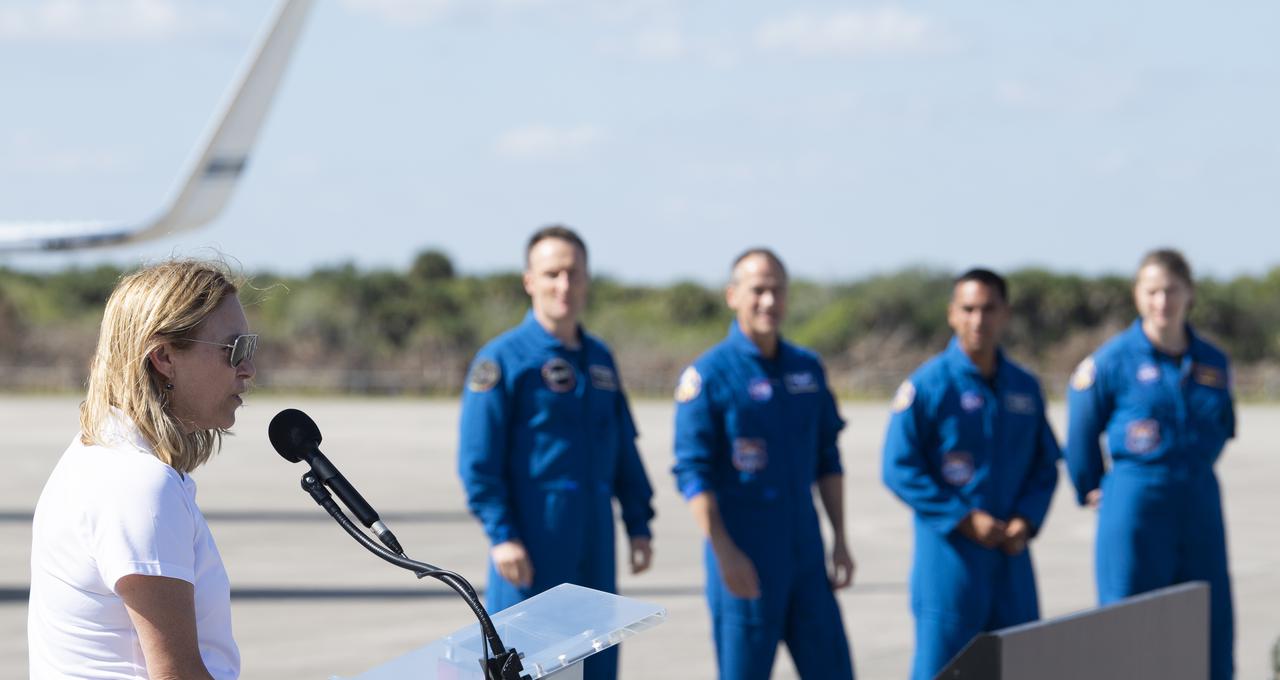
Kennedy Space Center director Janet Petro, left, speaks to members of the media at the arrival of NASA astronauts Raja Chari, Tom Marshburn, Kayla Barron, and ESA (European Space Agency) astronaut Matthias Maurer, at the Launch and Landing Facility at NASA’s Kennedy Space Center ahead of SpaceX’s Crew-3 mission, Tuesday, Oct. 26, 2021, in Florida. NASA’s SpaceX Crew-3 mission is the third crew rotation mission of the SpaceX Crew Dragon spacecraft and Falcon 9 rocket to the International Space Station as part of the agency’s Commercial Crew Program. Chari, Marshburn, Barron, Maurer are scheduled to launch at Oct. 31 at 2:21 a.m. ET, from Launch Complex 39A at the Kennedy Space Center. Photo Credit: (NASA/Joel Kowsky)
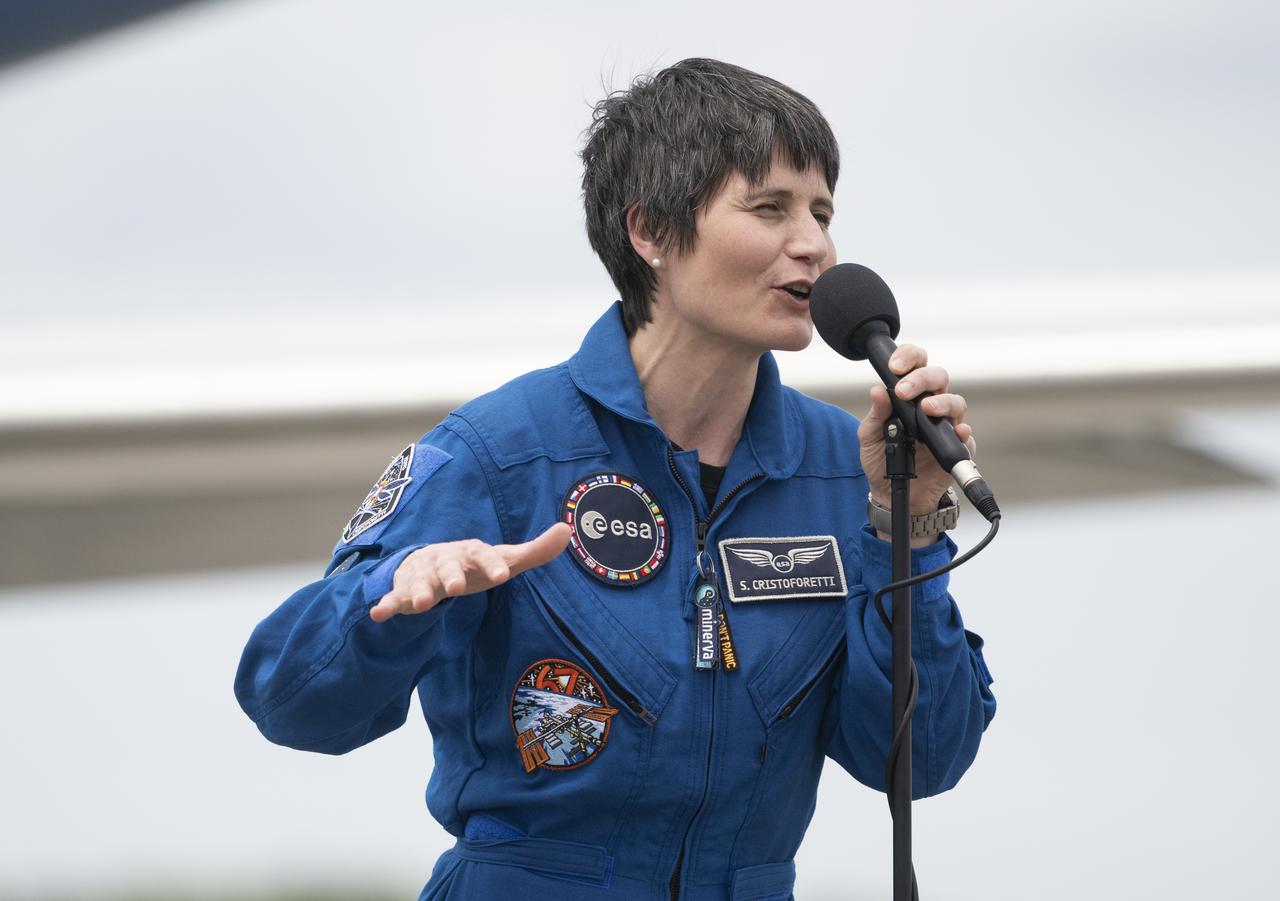
ESA (European Space Agency) astronaut Samantha Cristoforetti speaks to members of the media after arriving at the Launch and Landing Facility at NASA’s Kennedy Space Center with fellow crewmates NASA astronauts Kjell Lindgren, Robert Hines, and Jessica Watkins ahead of SpaceX’s Crew-4 mission, Monday, April 18, 2022, in Florida. NASA’s SpaceX Crew-4 mission is the fourth crew rotation mission of the SpaceX Crew Dragon spacecraft and Falcon 9 rocket to the International Space Station as part of the agency’s Commercial Crew Program. Lindgren, Hines, Watkins, and Cristoforetti are scheduled to launch at April 23 at 5:26 a.m. EDT, from Launch Complex 39A at the Kennedy Space Center. Photo Credit: (NASA/Joel Kowsky)
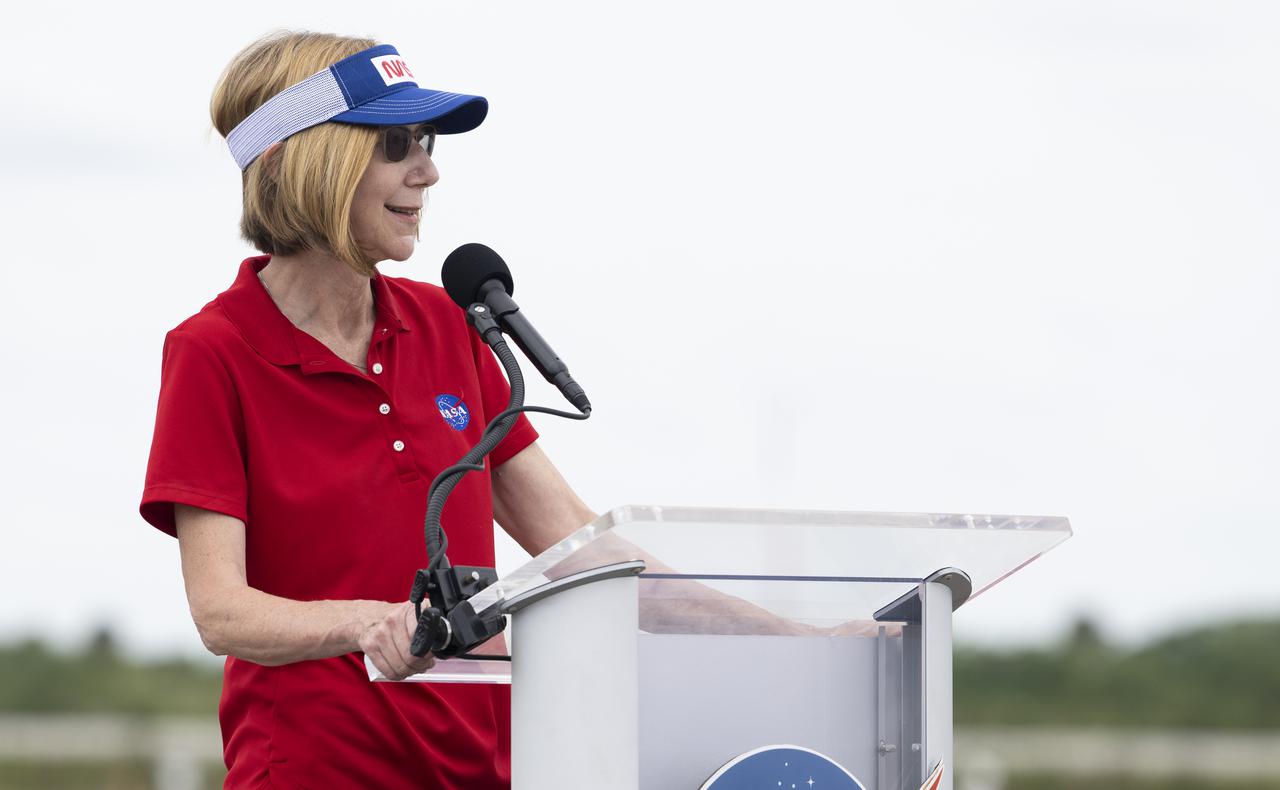
Kathy Lueders, associate administrator for NASA's Space Operations Mission Directorate, speaks to members of the media after the arrival of NASA astronauts Kjell Lindgren, Robert Hines, Jessica Watkins, and ESA (European Space Agency) astronaut Samantha Cristoforetti at the Launch and Landing Facility at NASA’s Kennedy Space Center ahead of SpaceX’s Crew-4 mission, Monday, April 18, 2022, in Florida. NASA’s SpaceX Crew-4 mission is the fourth crew rotation mission of the SpaceX Crew Dragon spacecraft and Falcon 9 rocket to the International Space Station as part of the agency’s Commercial Crew Program. Lindgren, Hines, Watkins, and Cristoforetti are scheduled to launch at April 23 at 5:26 a.m. EDT, from Launch Complex 39A at the Kennedy Space Center. Photo Credit: (NASA/Joel Kowsky)
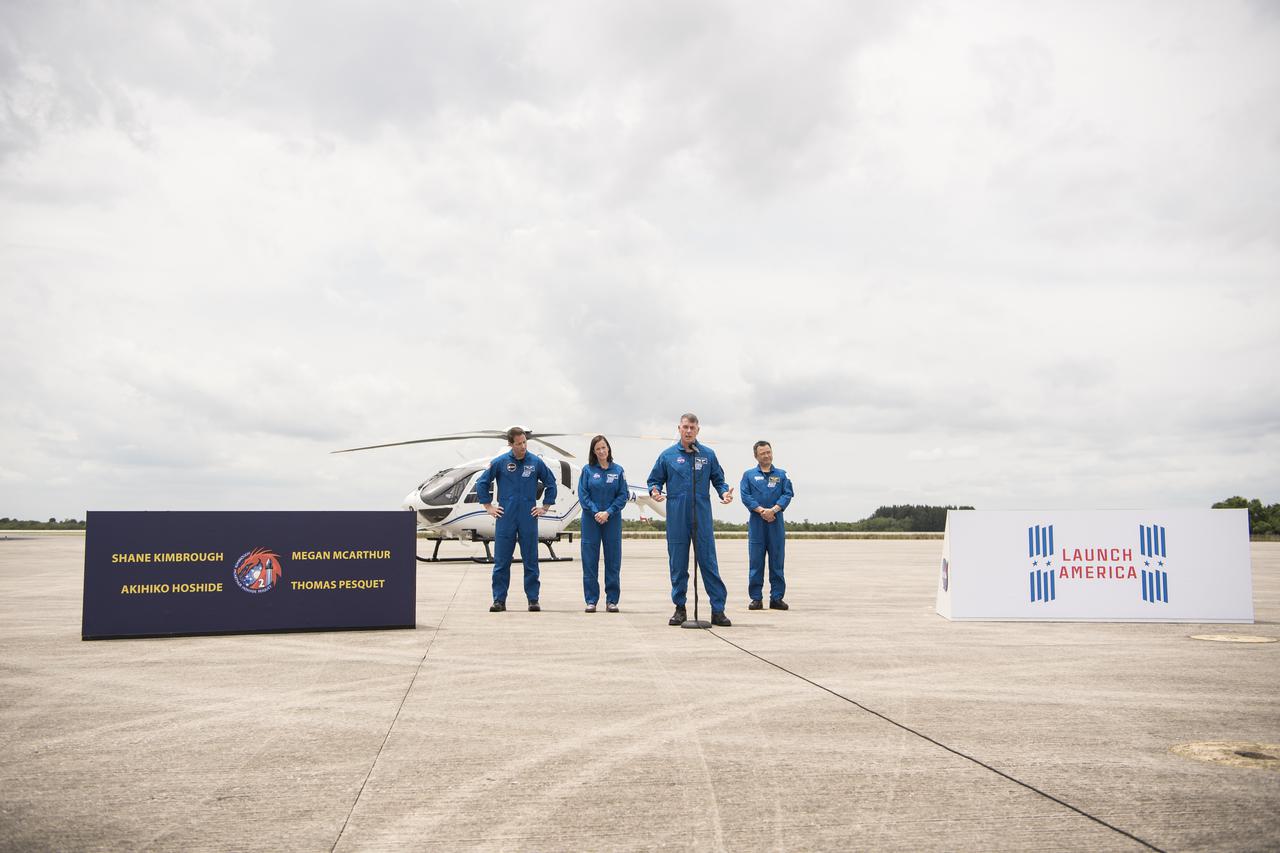
NASA astronaut Shane Kimbrough answers a question from media after he and his crew mates, ESA (European Space Agency) astronaut Thomas Pesquet, left, NASA astronaut Megan McArthur, second from left, and Japan Aerospace Exploration Agency (JAXA) astronaut Akihiko Hoshide, right, arrived at the Launch and Landing Facility at NASA’s Kennedy Space Center ahead of SpaceX’s Crew-2 mission, Friday, April 16, 2021, in Florida. NASA’s SpaceX Crew-2 mission is the second operational mission of the SpaceX Crew Dragon spacecraft and Falcon 9 rocket to the International Space Station as part of the agency’s Commercial Crew Program. Kimbrough, McArthur, Pesquet, and Hoshide are scheduled to launch at 6:11 a.m. ET on Thursday, April 22, from Launch Complex 39A at the Kennedy Space Center. Photo Credit: (NASA/Aubrey Gemignani)
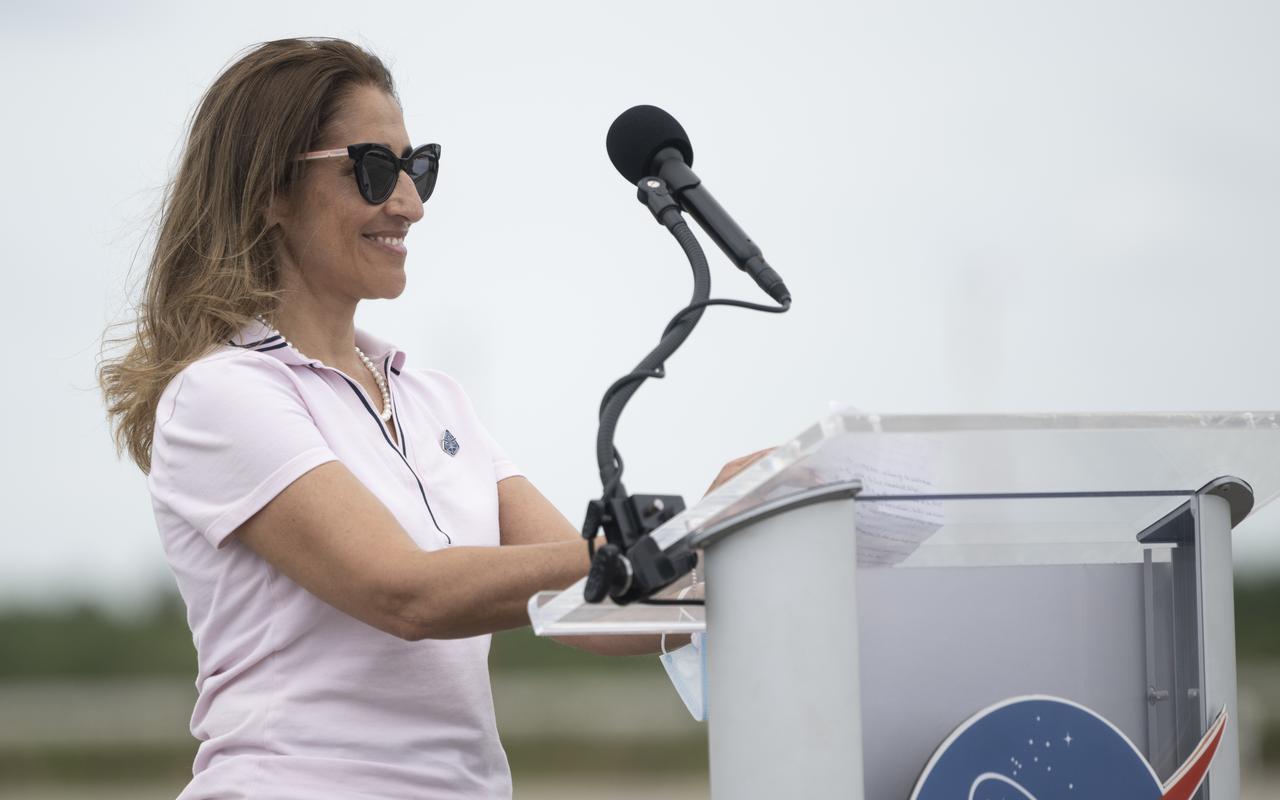
Barbara Nucera, ESA (European Space Agency) Houston Team Leader, speaks to members of the media after the arrival of NASA astronauts Kjell Lindgren, Robert Hines, Jessica Watkins, and ESA (European Space Agency) astronaut Samantha Cristoforetti at the Launch and Landing Facility at NASA’s Kennedy Space Center ahead of SpaceX’s Crew-4 mission, Monday, April 18, 2022, in Florida. NASA’s SpaceX Crew-4 mission is the fourth crew rotation mission of the SpaceX Crew Dragon spacecraft and Falcon 9 rocket to the International Space Station as part of the agency’s Commercial Crew Program. Lindgren, Hines, Watkins, and Cristoforetti are scheduled to launch at April 23 at 5:26 a.m. EDT, from Launch Complex 39A at the Kennedy Space Center. Photo Credit: (NASA/Joel Kowsky)
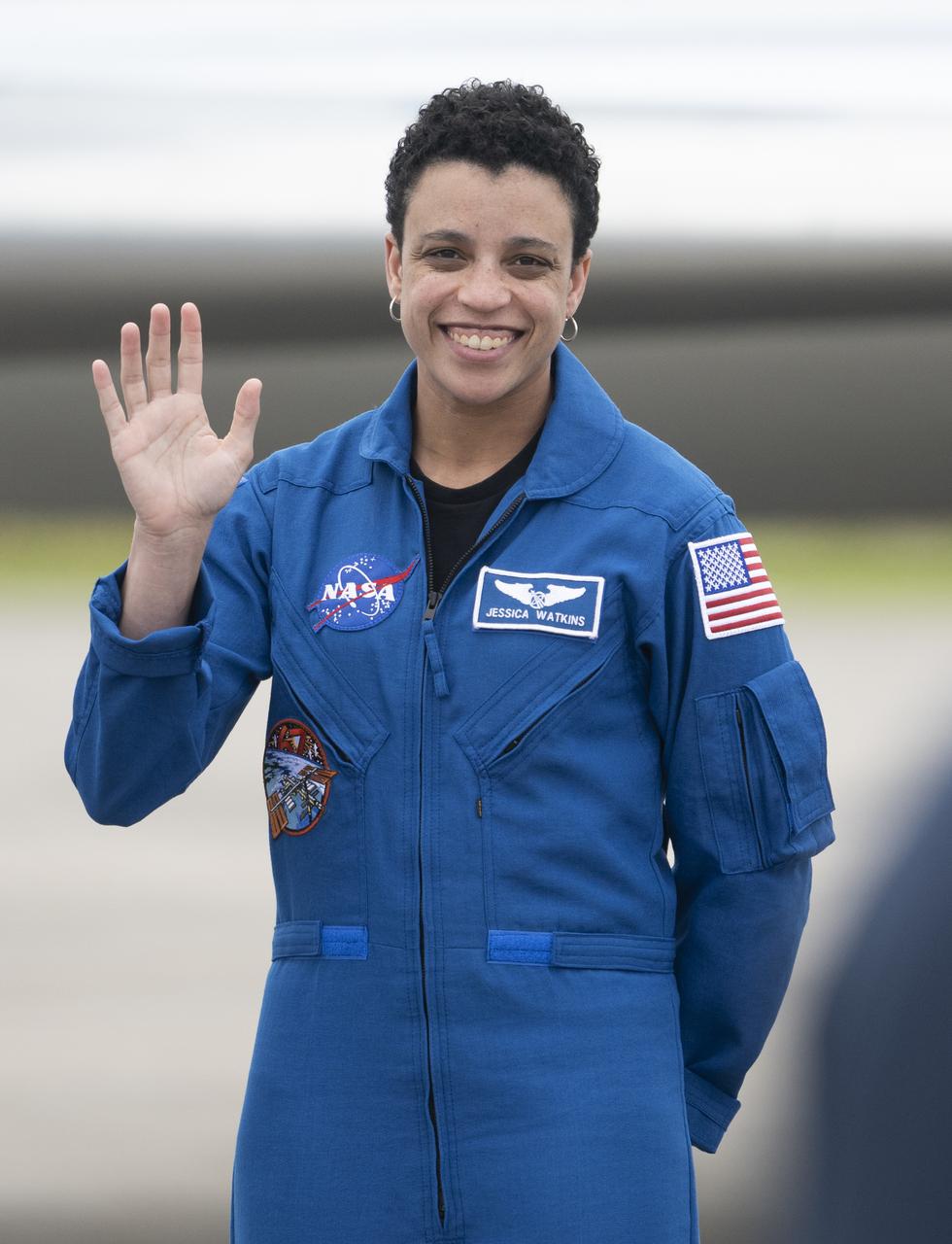
NASA astronaut Jessica Watkins is seen after arriving at the Launch and Landing Facility with fellow crewmates NASA astronauts Kjell Lindgren, Robert Hines, and ESA (European Space Agency) astronaut Samantha Cristoforetti at NASA’s Kennedy Space Center ahead of SpaceX’s Crew-4 mission, Monday, April 18, 2022, in Florida. NASA’s SpaceX Crew-4 mission is the fourth crew rotation mission of the SpaceX Crew Dragon spacecraft and Falcon 9 rocket to the International Space Station as part of the agency’s Commercial Crew Program. Lindgren, Hines, Watkins, and Cristoforetti are scheduled to launch at April 23 at 5:26 a.m. EDT, from Launch Complex 39A at the Kennedy Space Center. Photo Credit: (NASA/Joel Kowsky)
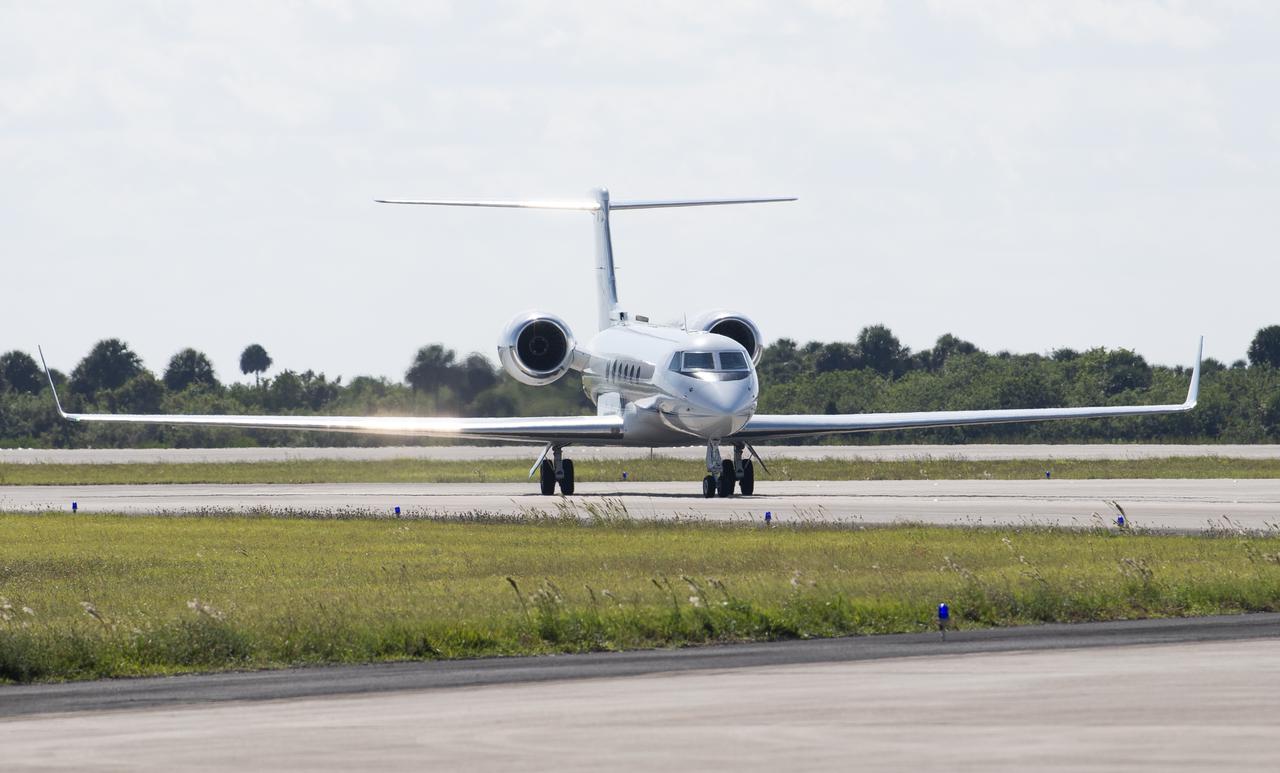
The aircraft carrying NASA astronauts Raja Chari, Tom Marshburn, Kayla Barron, and ESA (European Space Agency) astronaut Matthias Maurer is seen as it arrives from Houston at the Launch and Landing Facility at NASA’s Kennedy Space Center ahead of SpaceX’s Crew-3 mission, Tuesday, Oct. 26, 2021, in Florida. NASA’s SpaceX Crew-3 mission is the third crew rotation mission of the SpaceX Crew Dragon spacecraft and Falcon 9 rocket to the International Space Station as part of the agency’s Commercial Crew Program. Chari, Marshburn, Barron, Maurer are scheduled to launch at Oct. 31 at 2:21 a.m. ET, from Launch Complex 39A at the Kennedy Space Center. Photo Credit: (NASA/Joel Kowsky)
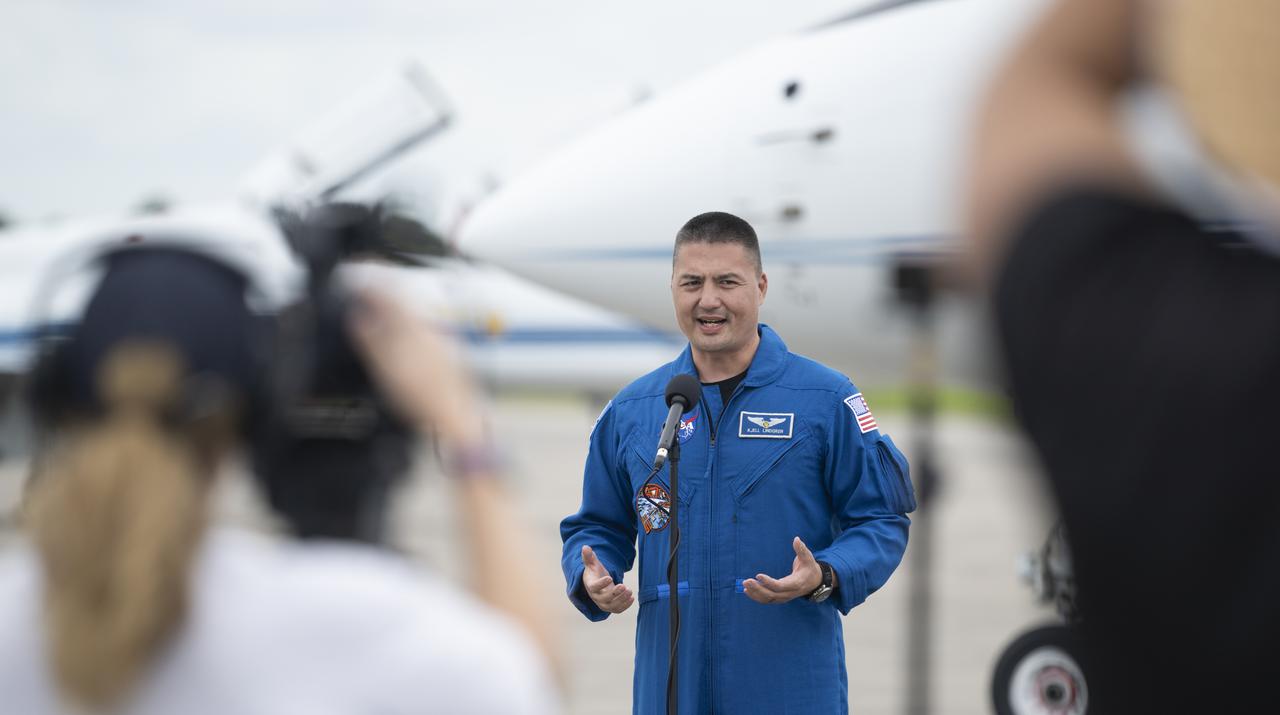
NASA astronaut Kjell Lindgren speaks to members of the media after arriving with fellow crewmates NASA astronauts Jessica Watkins, Robert Hines, and ESA (European Space Agency) astronaut Samantha Cristoforetti at the Launch and Landing Facility at NASA’s Kennedy Space Center ahead of SpaceX’s Crew-4 mission, Monday, April 18, 2022, in Florida. NASA’s SpaceX Crew-4 mission is the fourth crew rotation mission of the SpaceX Crew Dragon spacecraft and Falcon 9 rocket to the International Space Station as part of the agency’s Commercial Crew Program. Lindgren, Hines, Watkins, and Cristoforetti are scheduled to launch at April 23 at 5:26 a.m. EDT, from Launch Complex 39A at the Kennedy Space Center. Photo Credit: (NASA/Joel Kowsky)
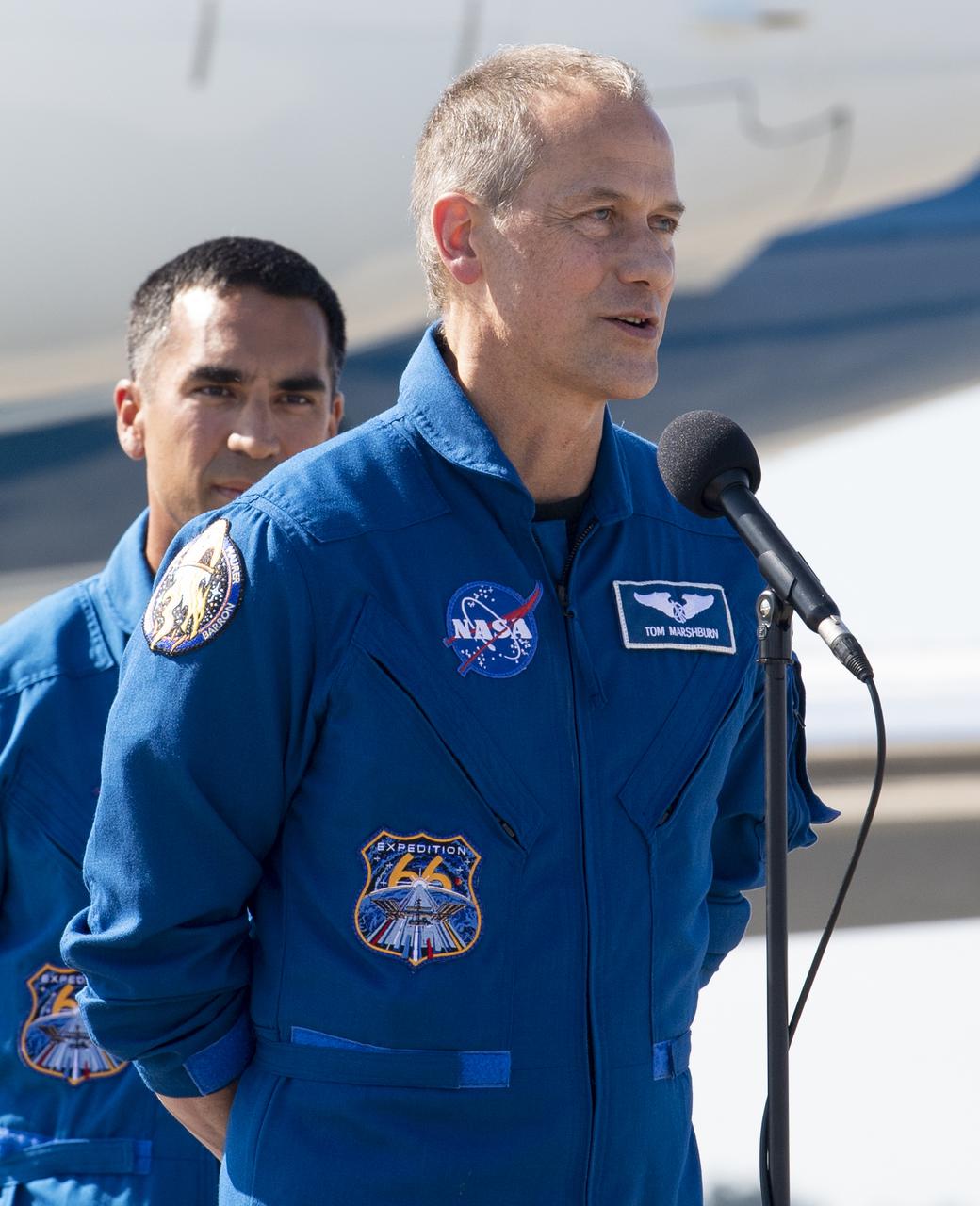
NASA astronaut Tom Marshburn speaks to members of the media after arriving from Houston at the Launch and Landing Facility at NASA’s Kennedy Space Center with fellow NASA astronauts Kayla Barron and Raja Chari, and ESA (European Space Agency) astronaut Matthias Maurer ahead of SpaceX’s Crew-3 mission, Tuesday, Oct. 26, 2021, in Florida. NASA’s SpaceX Crew-3 mission is the third crew rotation mission of the SpaceX Crew Dragon spacecraft and Falcon 9 rocket to the International Space Station as part of the agency’s Commercial Crew Program. Chari, Marshburn, Barron, Maurer are scheduled to launch at Oct. 31 at 2:21 a.m. ET, from Launch Complex 39A at the Kennedy Space Center. Photo Credit: (NASA/Joel Kowsky)
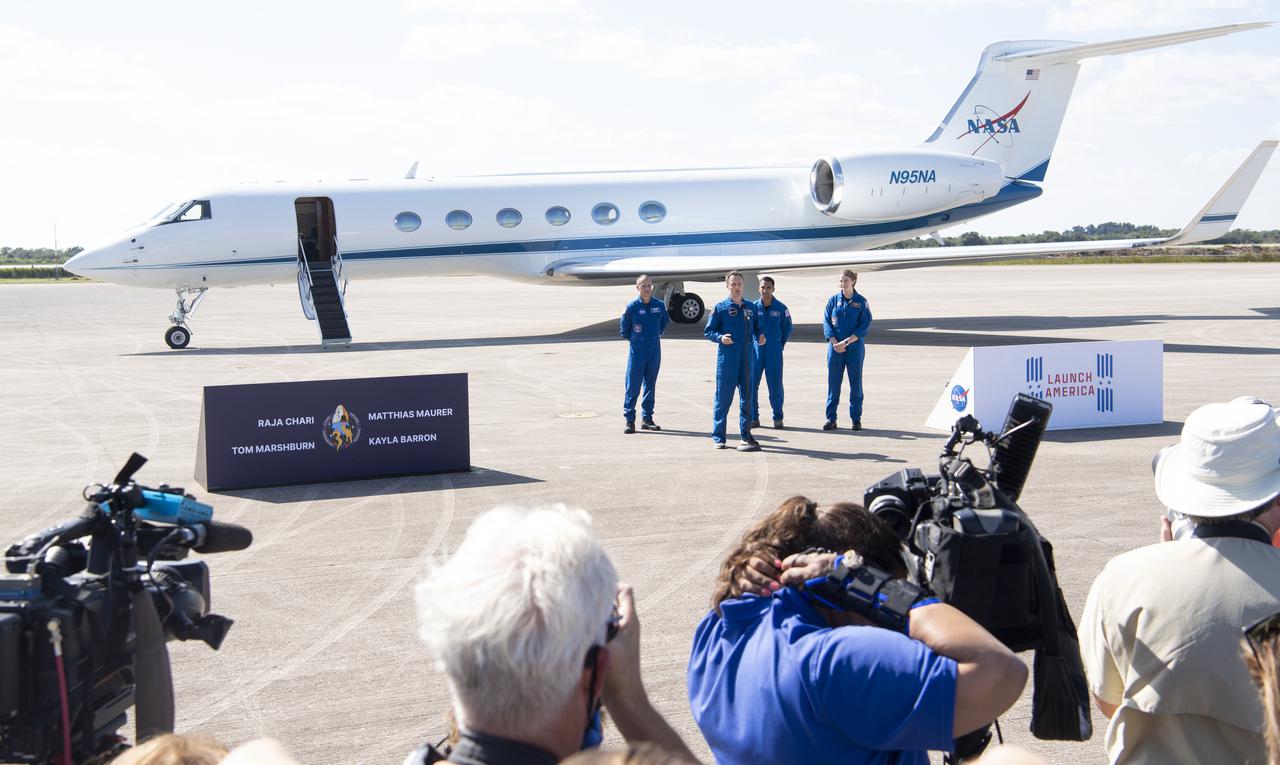
ESA (European Space Agency) astronaut Matthias Maurer, second from left, speaks to members of the media after arriving from Houston at the Launch and Landing Facility at NASA’s Kennedy Space Center with NASA’s astronauts Tom Marshburn, Raja Chari, and Kayla Barron ahead of SpaceX’s Crew-3 mission, Tuesday, Oct. 26, 2021, in Florida. NASA’s SpaceX Crew-3 mission is the third crew rotation mission of the SpaceX Crew Dragon spacecraft and Falcon 9 rocket to the International Space Station as part of the agency’s Commercial Crew Program. Chari, Marshburn, Barron, Maurer are scheduled to launch at Oct. 31 at 2:21 a.m. ET, from Launch Complex 39A at the Kennedy Space Center. Photo Credit: (NASA/Joel Kowsky)
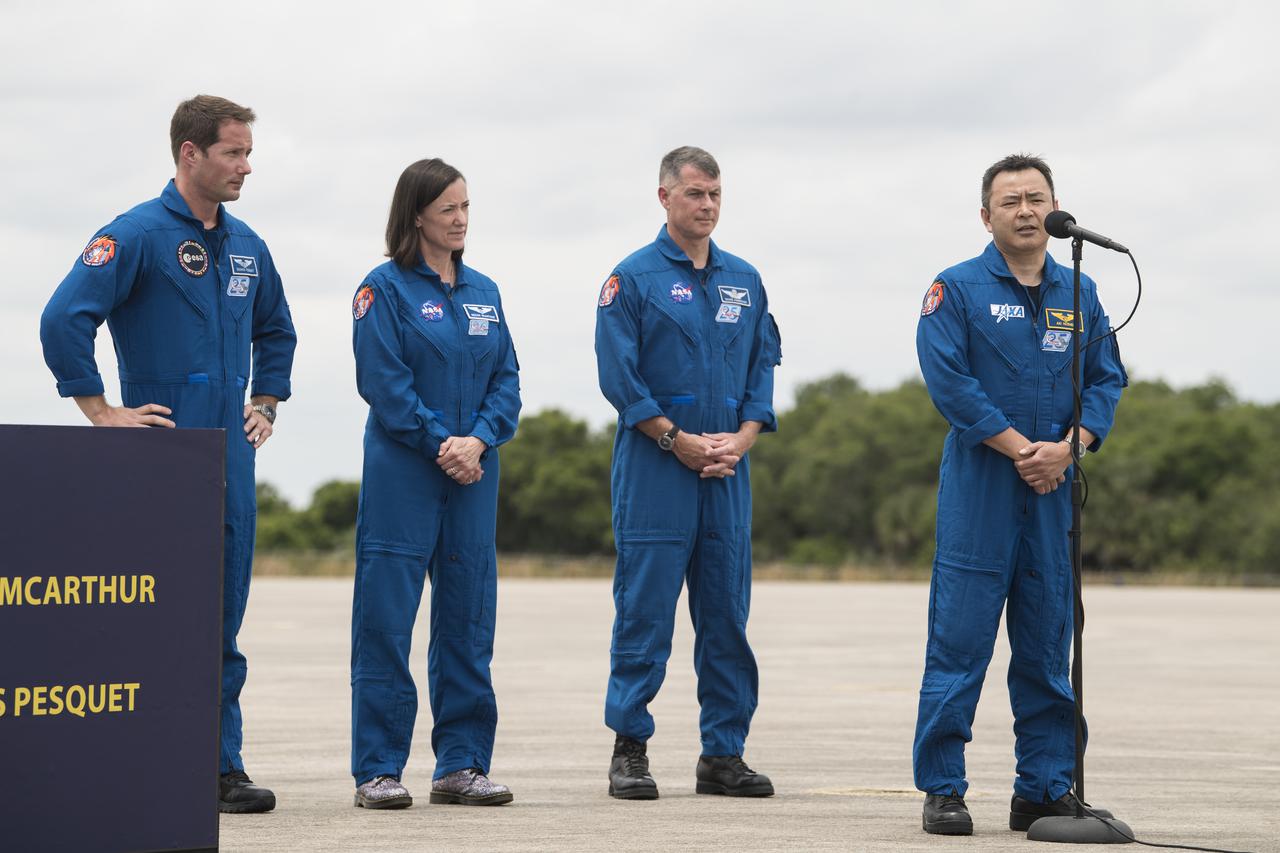
Japan Aerospace Exploration Agency (JAXA) astronaut Akihiko Hoshide answers a question from media after he and his crew mates, ESA (European Space Agency) astronaut Thomas Pesquet, left, NASA astronaut Megan McArthur, center, and NASA astronaut Shane Kimbrough, right, arrived at the Launch and Landing Facility at NASA’s Kennedy Space Center ahead of SpaceX’s Crew-2 mission, Friday, April 16, 2021, in Florida. NASA’s SpaceX Crew-2 mission is the second operational mission of the SpaceX Crew Dragon spacecraft and Falcon 9 rocket to the International Space Station as part of the agency’s Commercial Crew Program. Kimbrough, McArthur, Pesquet, and Hoshide are scheduled to launch at 6:11 a.m. ET on Thursday, April 22, from Launch Complex 39A at the Kennedy Space Center. Photo Credit: (NASA/Aubrey Gemignani)
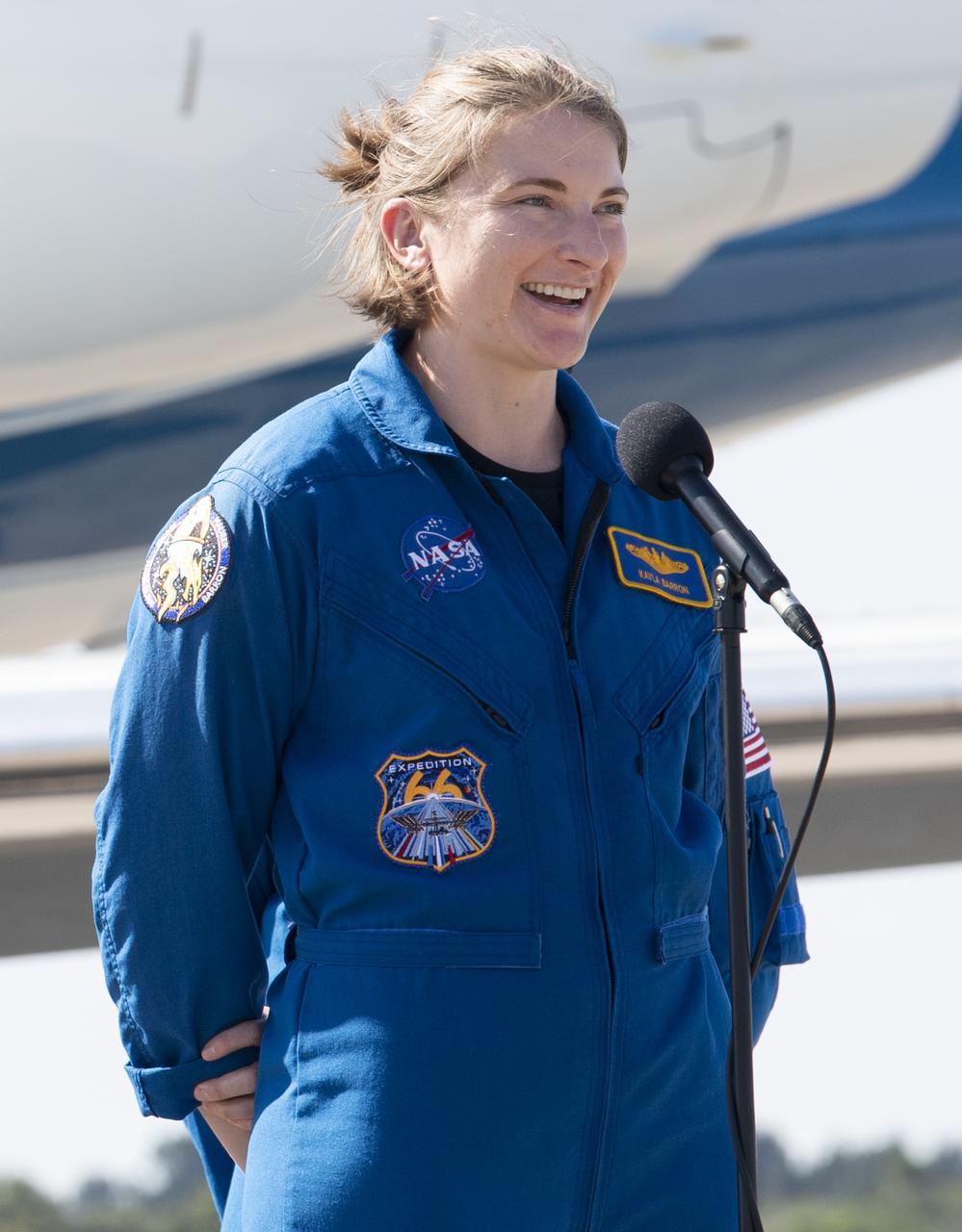
NASA astronauts Kayla Barron speaks to members of the media after arriving from Houston at the Launch and Landing Facility at NASA’s Kennedy Space Center with fellow NASA astronauts Raja Chari and Tom Marshburn and ESA (European Space Agency) astronaut Matthias Maurer ahead of SpaceX’s Crew-3 mission, Tuesday, Oct. 26, 2021, in Florida. NASA’s SpaceX Crew-3 mission is the third crew rotation mission of the SpaceX Crew Dragon spacecraft and Falcon 9 rocket to the International Space Station as part of the agency’s Commercial Crew Program. Chari, Marshburn, Barron, Maurer are scheduled to launch at Oct. 31 at 2:21 a.m. ET, from Launch Complex 39A at the Kennedy Space Center. Photo Credit: (NASA/Joel Kowsky)
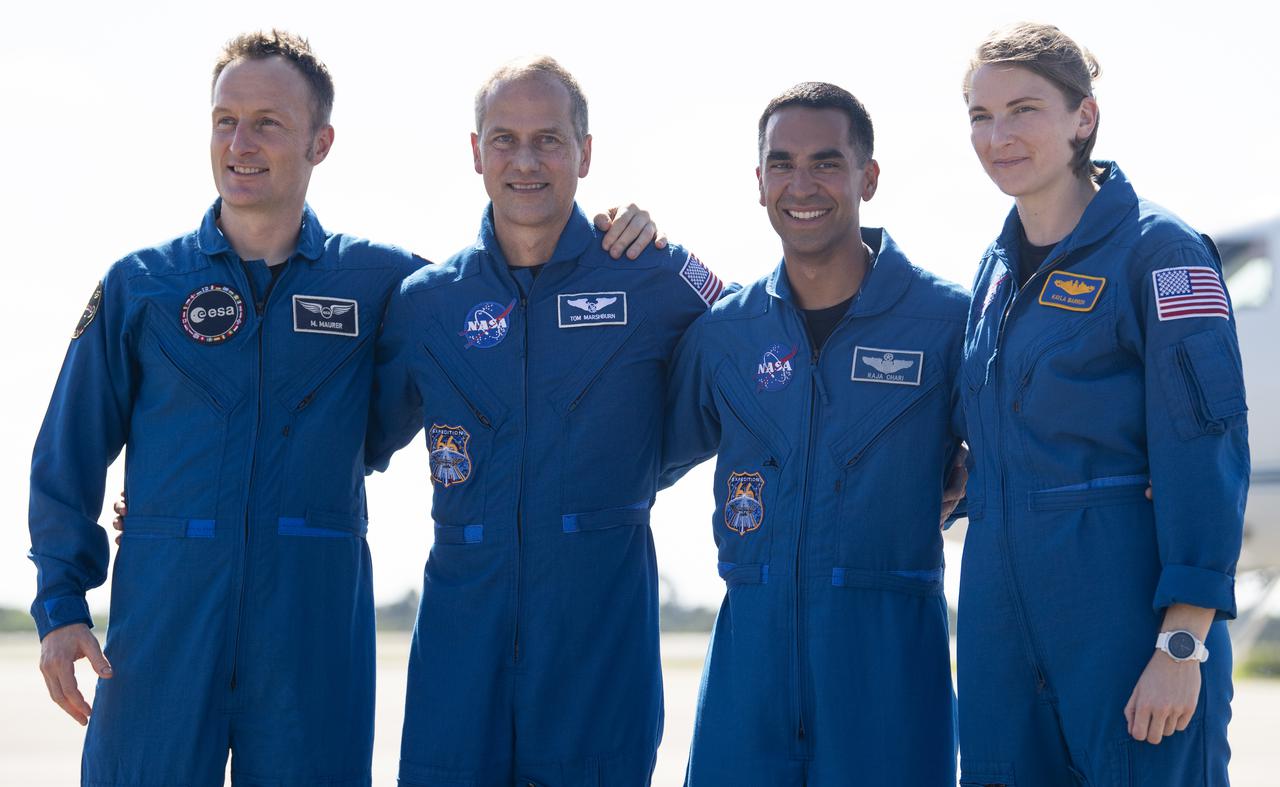
ESA (European Space Agency) astronaut Matthias Maurer, left, and NASA astronauts Tom Marshburn, second from left, Raja Chari, second from right, and Kayla Barron, right, pose for a picture after answering questions from members of the media following their arrival at the Launch and Landing Facility at NASA’s Kennedy Space Center ahead of SpaceX’s Crew-3 mission, Tuesday, Oct. 26, 2021, in Florida. NASA’s SpaceX Crew-3 mission is the third crew rotation mission of the SpaceX Crew Dragon spacecraft and Falcon 9 rocket to the International Space Station as part of the agency’s Commercial Crew Program. Chari, Marshburn, Barron, Maurer are scheduled to launch at Oct. 31 at 2:21 a.m. ET, from Launch Complex 39A at the Kennedy Space Center. Photo Credit: (NASA/Joel Kowsky)
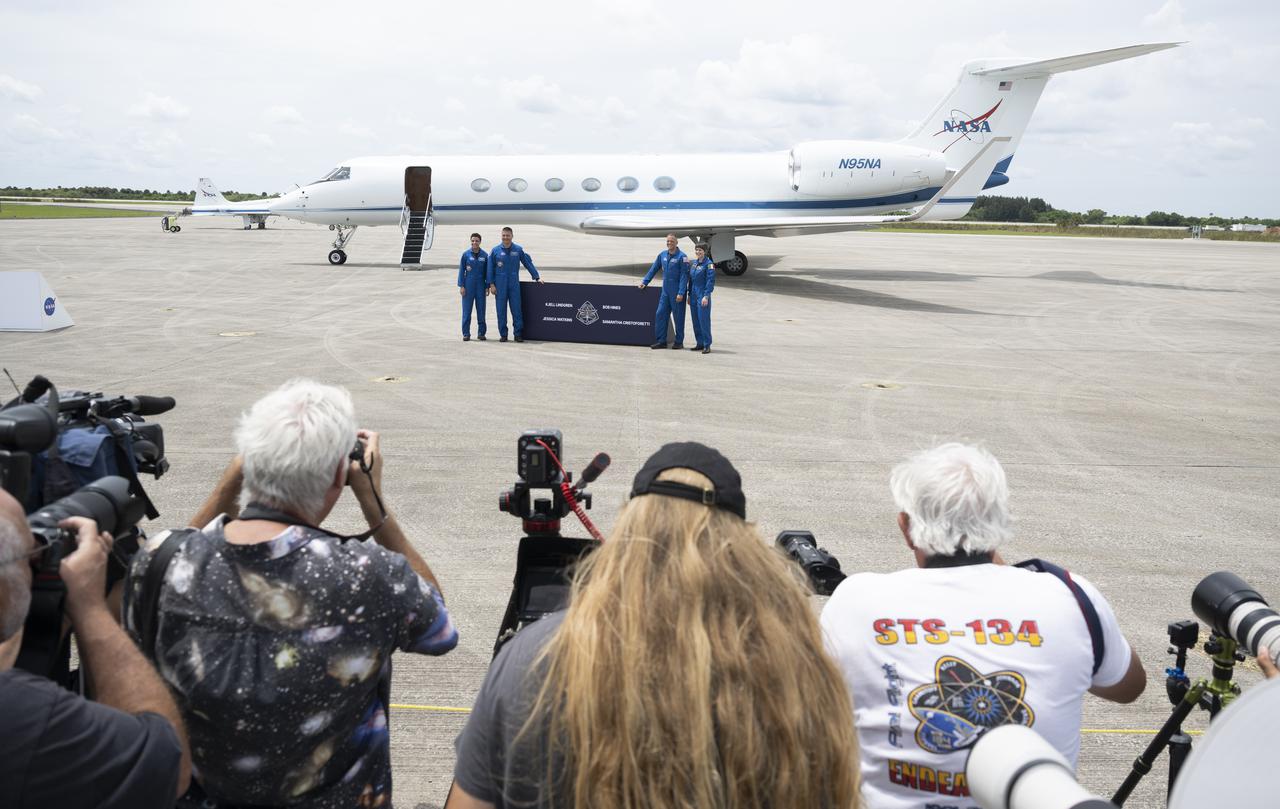
NASA astronauts Jessica Watkins, left, Kjell Lindgren, second from left, Robert Hines, second from right, and ESA (European Space Agency) astronaut Samantha Cristoforetti, right, pose for a picture after speaking to members of the media following their arrival at the Launch and Landing Facility at NASA’s Kennedy Space Center ahead of SpaceX’s Crew-4 mission, Monday, April 18, 2022, in Florida. NASA’s SpaceX Crew-4 mission is the fourth crew rotation mission of the SpaceX Crew Dragon spacecraft and Falcon 9 rocket to the International Space Station as part of the agency’s Commercial Crew Program. Lindgren, Hines, Watkins, and Cristoforetti are scheduled to launch at April 23 at 5:26 a.m. EDT, from Launch Complex 39A at the Kennedy Space Center. Photo Credit: (NASA/Joel Kowsky)
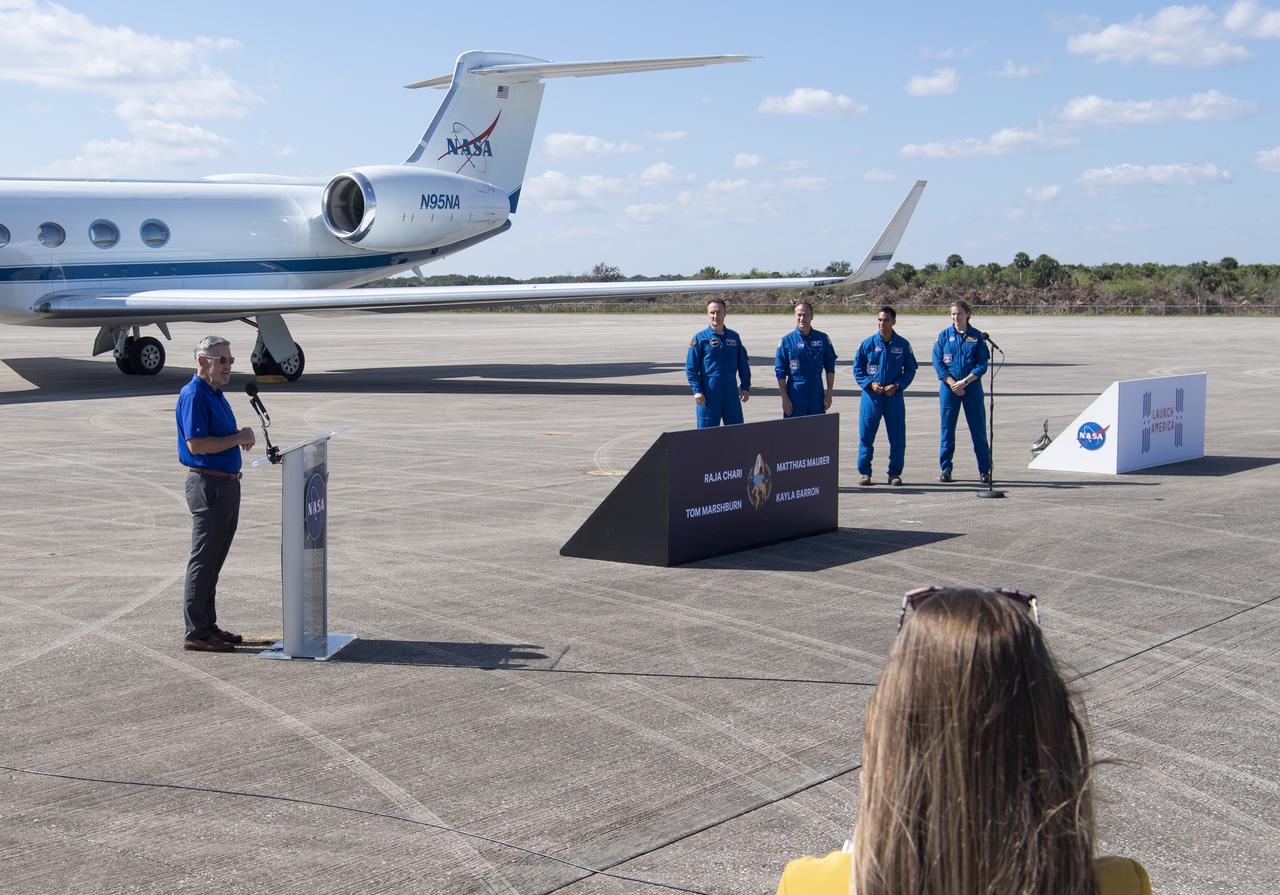
NASA Associate Administrator Bob Cabana speaks to members of the media at the arrival of NASA astronauts Raja Chari, Tom Marshburn, Kayla Barron, and ESA (European Space Agency) astronaut Matthias Maurer at the Launch and Landing Facility at NASA’s Kennedy Space Center ahead of SpaceX’s Crew-3 mission, Tuesday, Oct. 26, 2021, in Florida. NASA’s SpaceX Crew-3 mission is the third crew rotation mission of the SpaceX Crew Dragon spacecraft and Falcon 9 rocket to the International Space Station as part of the agency’s Commercial Crew Program. Chari, Marshburn, Barron, Maurer are scheduled to launch at Oct. 31 at 2:21 a.m. ET, from Launch Complex 39A at the Kennedy Space Center. Photo Credit: (NASA/Joel Kowsky)