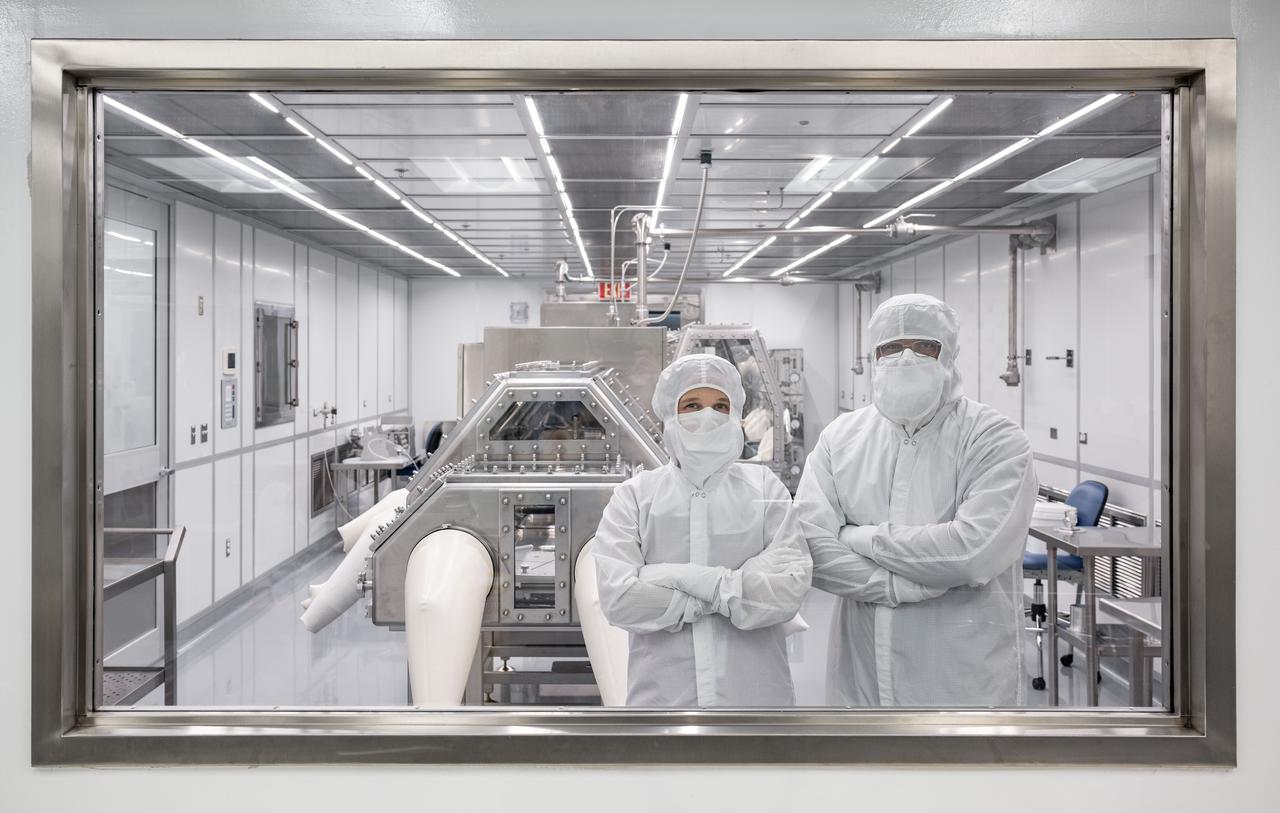
OSIRIS-REx curator Nicole Lunning, left, and deputy curator Christopher Snead stand inside the OSIRIS-REx cleanroom at NASA's Johnson Space Center in Houston. Immediately behind them is the Touch-and-Go Sample Acquisition Mechanism (TAGSAM) head glovebox in which the Astromaterials Research and Exploration (ARES) curation engineers and astromaterials processors carefully disassembled the TAGSAM head to collect the asteroid material from within. Credit: NASA/James Blair
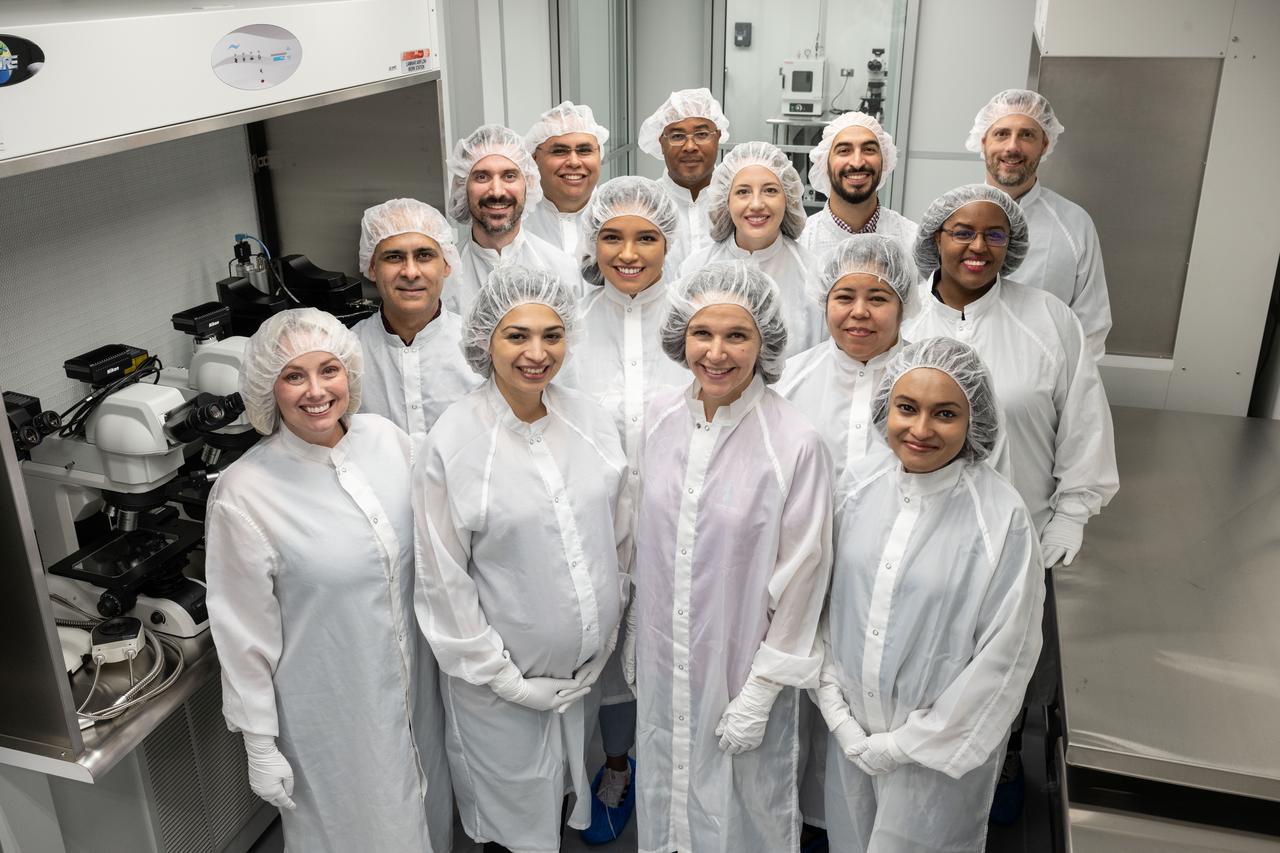
The OSIRIS-REx curation integrated processing and engineering team in the H2-OREx Staging area just outside the pristine OSIRIS-REx laboratory. Left-to-right and front-to-back: Rachel Funk, Carla Gonzalez, Nicole Lunning, Jannatul Ferdous, Neftali Hernandez, Mari Montoya, Melissa Rodriguez, Curtis Calva, Julia Plummer, Kimberly Allums-Spencer, Gabriel Lugo, Christopher Snead, Sal Martinez, and Wayland Connelly.
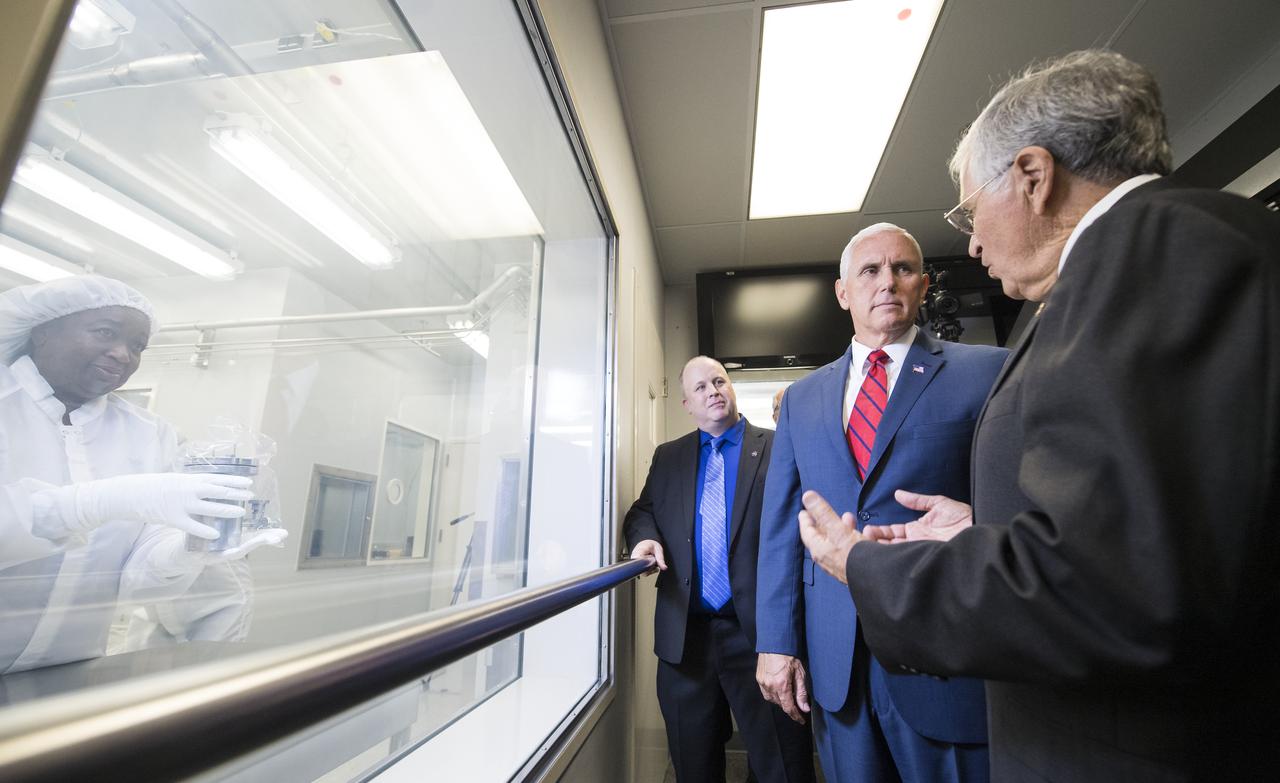
Vice President Mike Pence, center, views Sample 15014, which was collected during Apollo 15 with NASA's Apollo Sample Curator Ryan Zeigler, left, and Apollo 17 astronaut and geologist Dr. Harrison Schmitt, right, in Lunar Curation Laboratory at NASA's Johnson Space Center, Thursday, Aug. 23, 2018 in Houston, Texas. Sample 15014 is one of nine samples out of the 2,196 collected during the Apollo missions that was sealed inside its container on the Moon and still containes gasses from the Moon. Photo Credit: (NASA/Joel Kowsky)
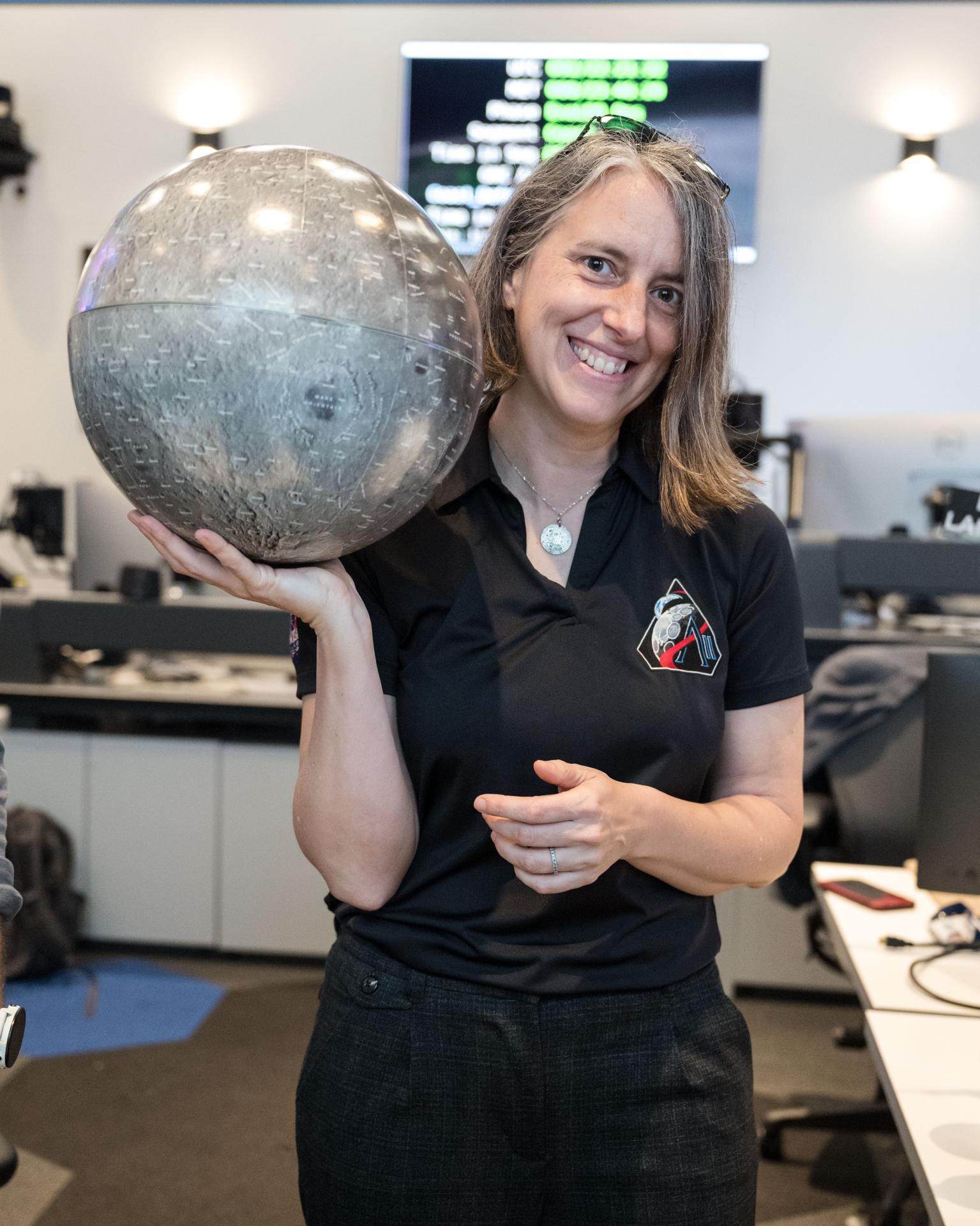
Artemis curation lead, Juliane Gross, holds a lunar globe in the Science Evaluation Room (SER) in Mission Control at Johnson Space Center in Houston. The SER supports lunar science and planetary observations for the Artemis science officer in the mission’s main flight control room. Built specifically for Artemis missions with these science priorities in mind, the SER is equipped to support rapid data interpretation, collaborative analysis, real-time decision making, and seamless coordination between the science and operations teams. Credits: NASA/Luna Posadas Nava
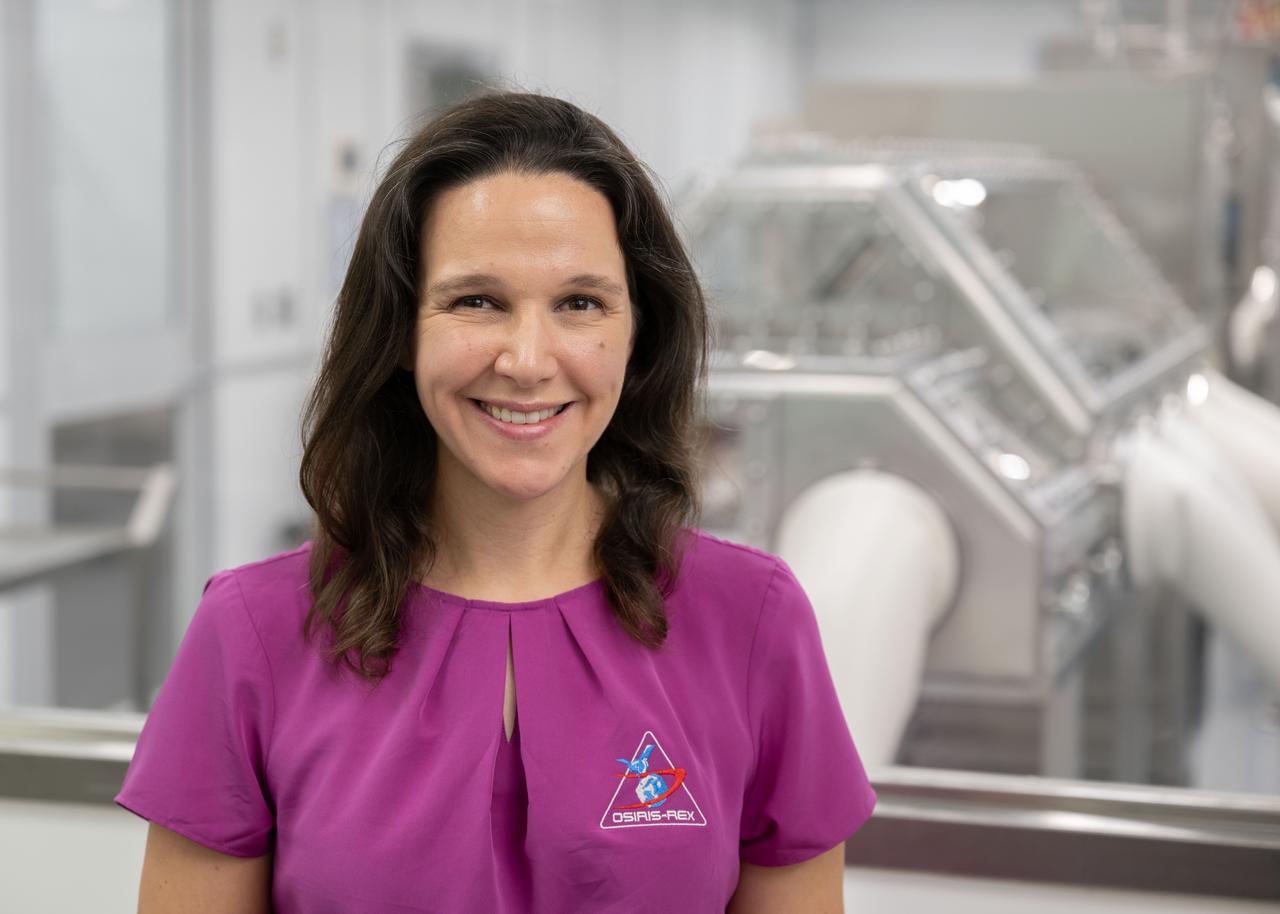
Portrait of Nicole Lunning, OSIRIS-REx sample curator within the Astromaterials Research and Exploration Science (ARES) division of NASA Johnson Space Center. Lunning is seen in front of the OSIRIS-REx cleanroom at Johnson. NASA’s OSIRIS-REx, the first U.S. mission to collect a sample from an asteroid, delivered rocks and dust from asteroid Bennu to Earth on Sept. 24, 2023.
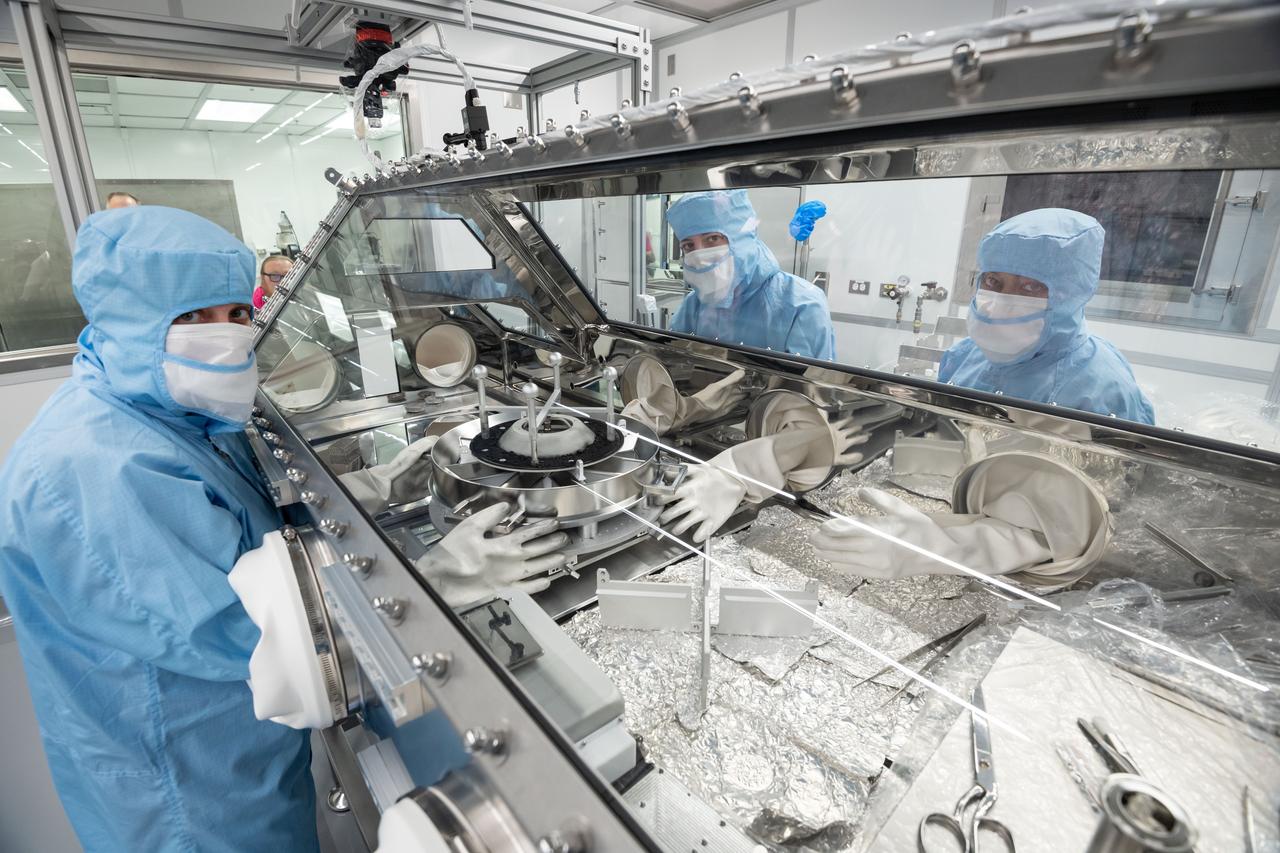
jsc2024e008542 - Curation team members from the Astromaterials Research and Exploration Science (ARES) division at NASA’s Johnson Space Center in Houston perform a pour maneuver to distribute the remaining asteroid sample material from the OSIRIS-REx Touch-and-Go Sample Acquisition Mechanism (TAGSAM) head into sample containers. From left, astromaterials processors Rachel Funk, top right, Julia Plummer, bottom right, Jannatul Ferdous.
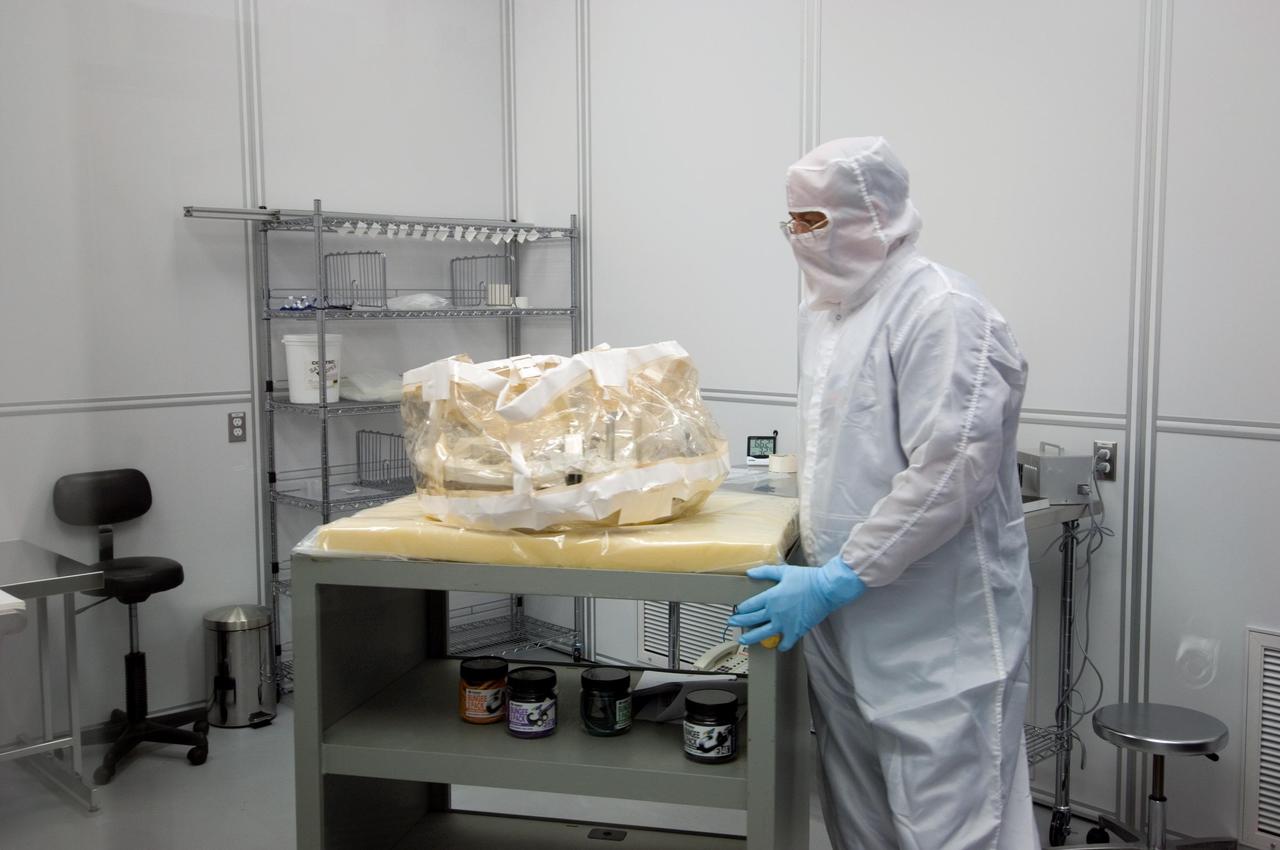
Inside Space Exposed Hardware Lab a member of the JSC Curation Team with NASA Stardust canister in lab.
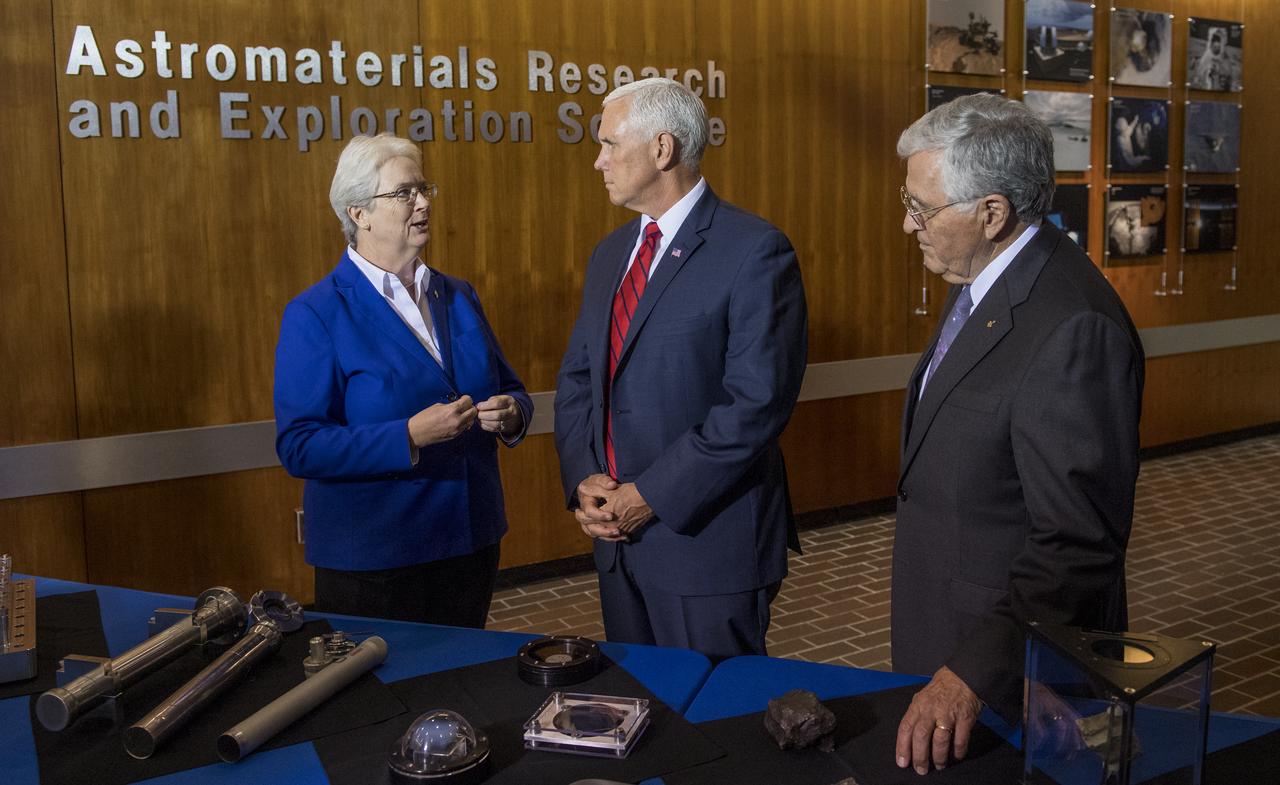
Acting director of the Exploration Integration and Science Directorate and Chief Scientist at NASA's Johnson Space Center Dr. Eileen Stansbery, right, is seen with Vice President Mike Pence and Apollo 17 astronaut and geologist Dr. Harrison Schmitt in the Astromaterials Curation Laboratory at NASA's Johnson Space Center, Thursday, Aug. 23, 2018 in Houston, Texas. Photo Credit: (NASA/Joel Kowsky)
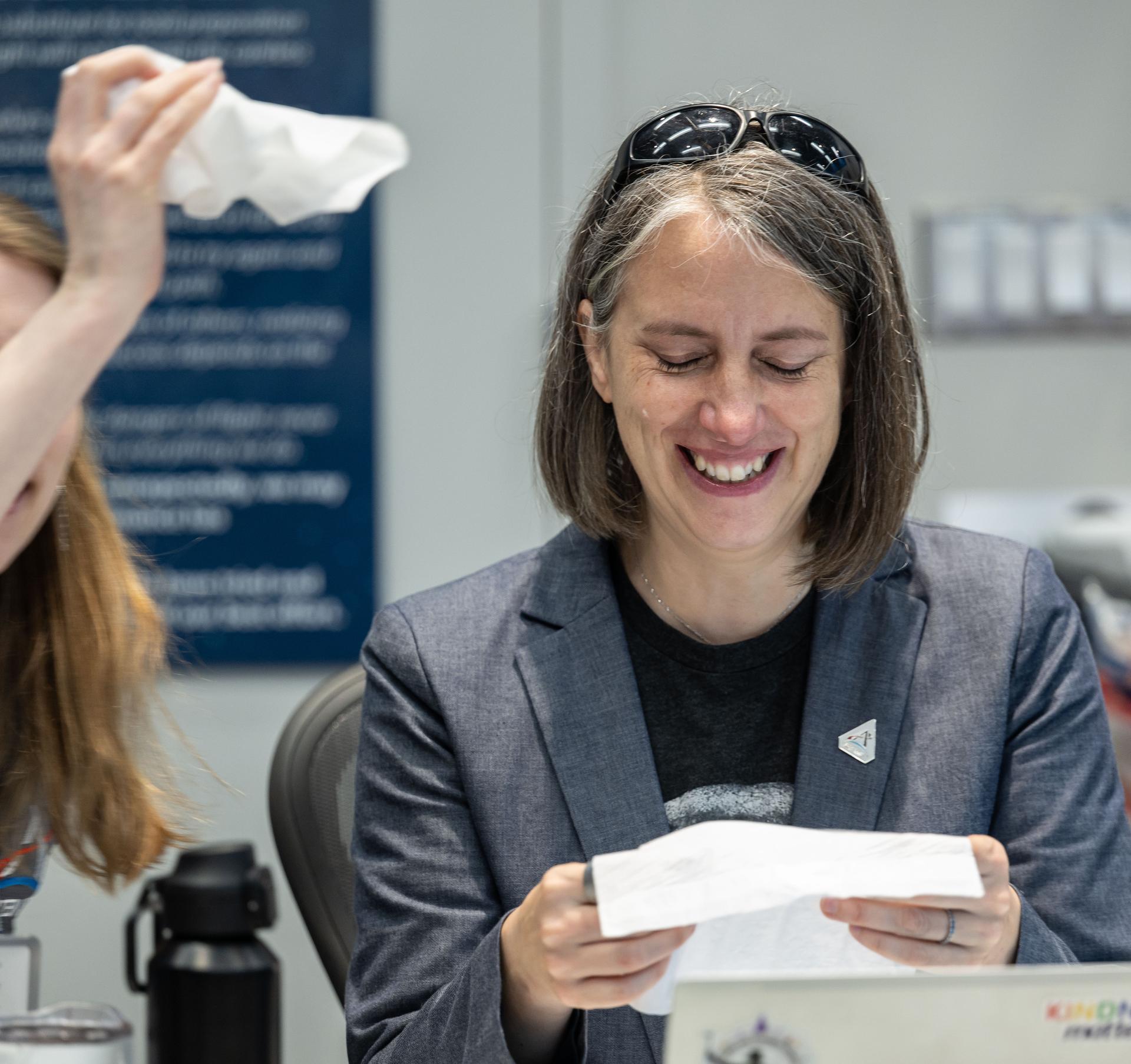
Artemis curation lead, Juliane Gross, reacts to the astronauts' verbal observations of the Moon during their flyby on April 6, 2026. Along with other members of the Artemis II lunar science team, Gross helped train the Artemis II crew in geology both in the classroom and in the field. The team also built the lunar targeting plan that, like an International Space Station spacewalk plan, provides strong, detailed observation guidance, plus flexibility for the crew to make decisions based on what they’re seeing and experiencing in real time. The science team had many moments of celebration during the lunar flyby as the astronauts took images of the Moon and provided verbal descriptions of what they were seeing. This type of information reveals the geologic history of an area and will be critical to collect when future Artemis astronauts explore the Moon's surface. Credits: NASA/Luna Posadas Nava
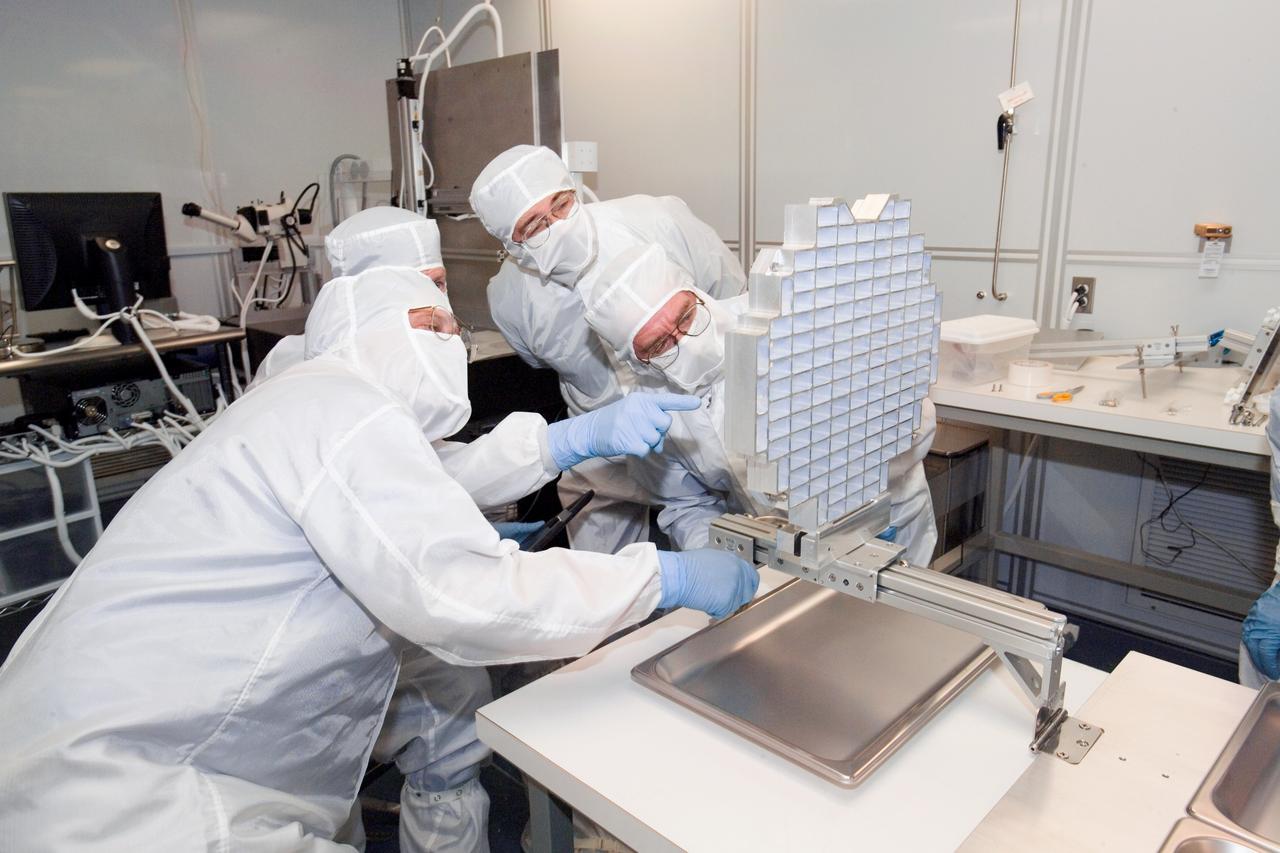
Stardust Photo documentation of Stardust Sample Return and Tray Separation at bldg 31, Stardust laboratory at JSC. The JSC Curation Team begins work with sample containers.
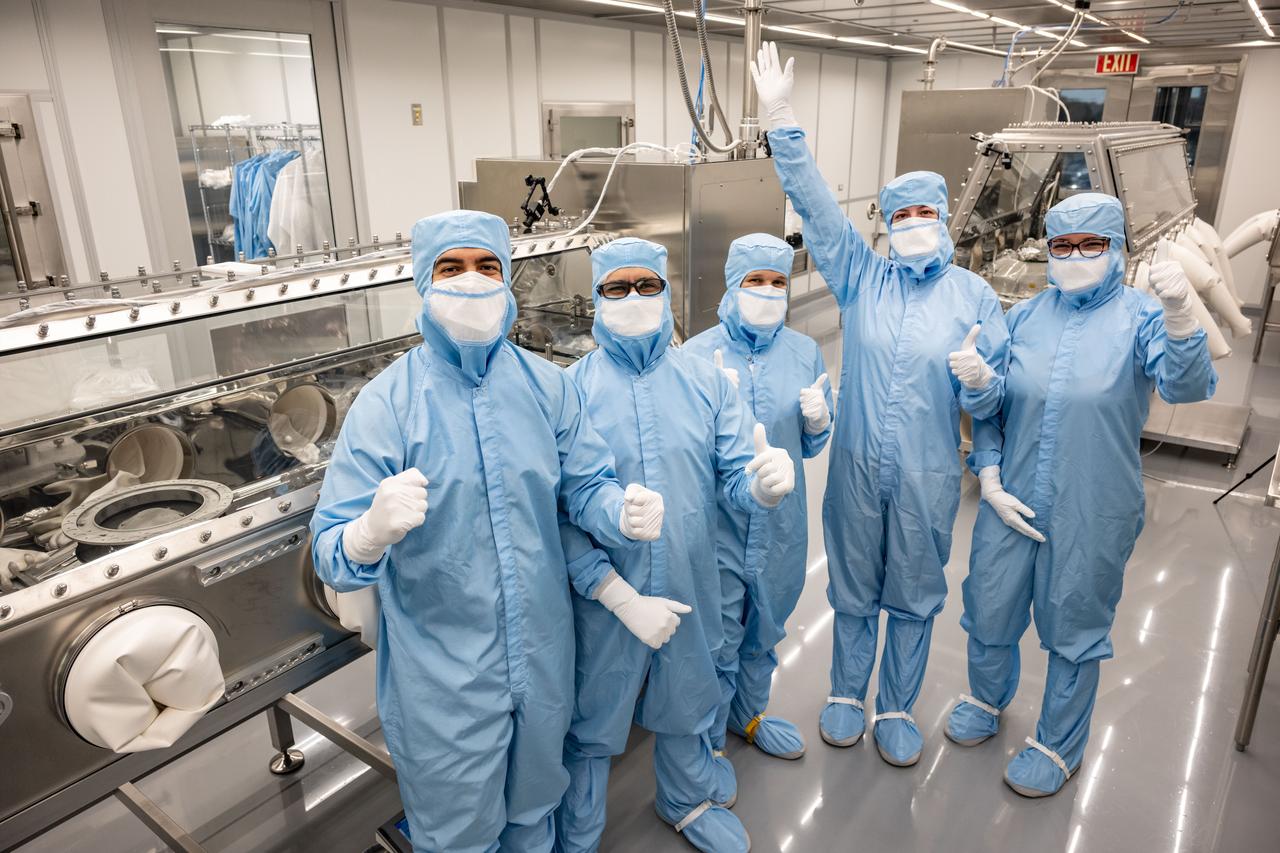
OSIRIS REx curation team attempting to remove the two stuck fasteners that are currently prohibiting the complete opening of the TAGSAM head. Photo Date: January 10, 2024. Location: Bldg. 31 - 2nd Floor - OSIRIS-REx lab. Photographer: Robert Markowitz
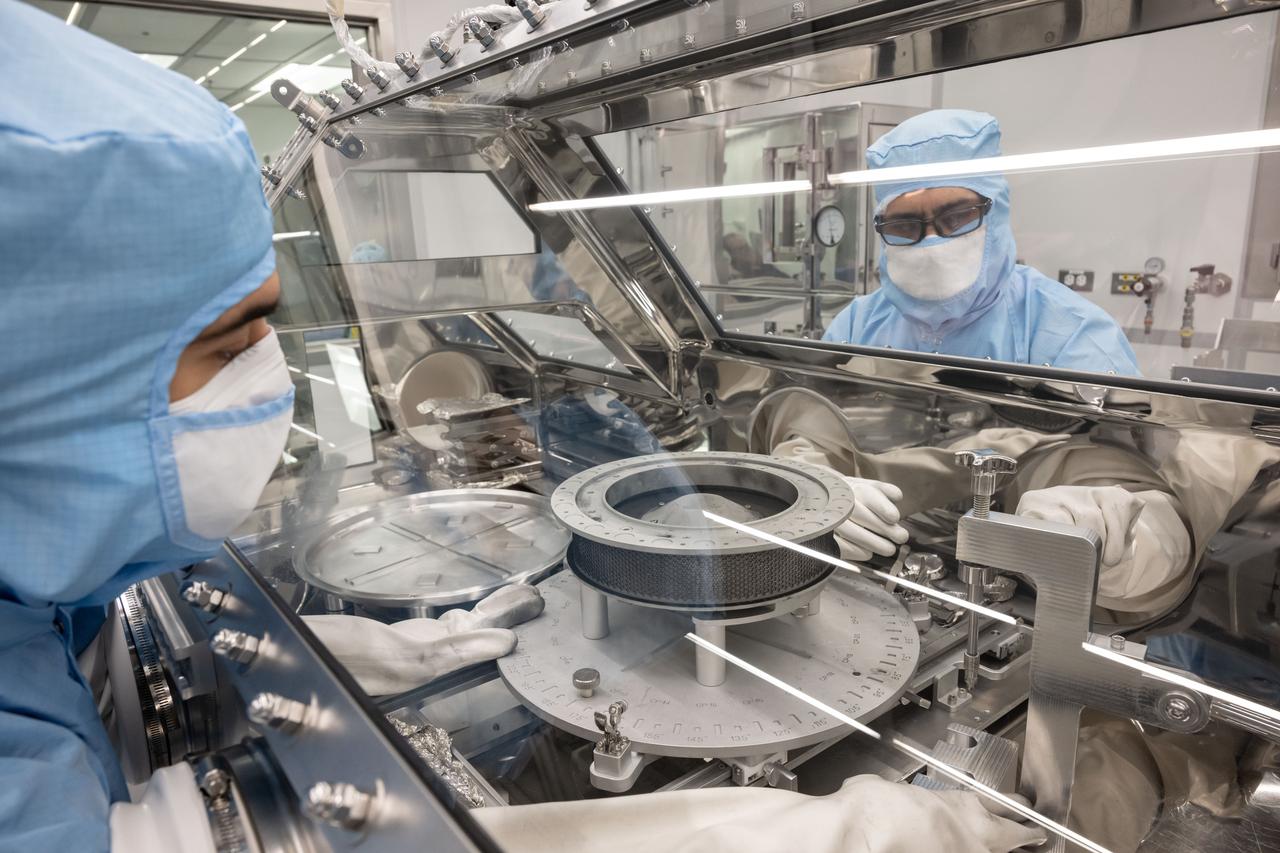
OSIRIS REx curation team attempting to remove the two stuck fasteners that are currently prohibiting the complete opening of the TAGSAM head. Photo Date: January 10, 2024. Location: Bldg. 31 - 2nd Floor - OSIRIS-REx lab. Photographer: Robert Markowitz
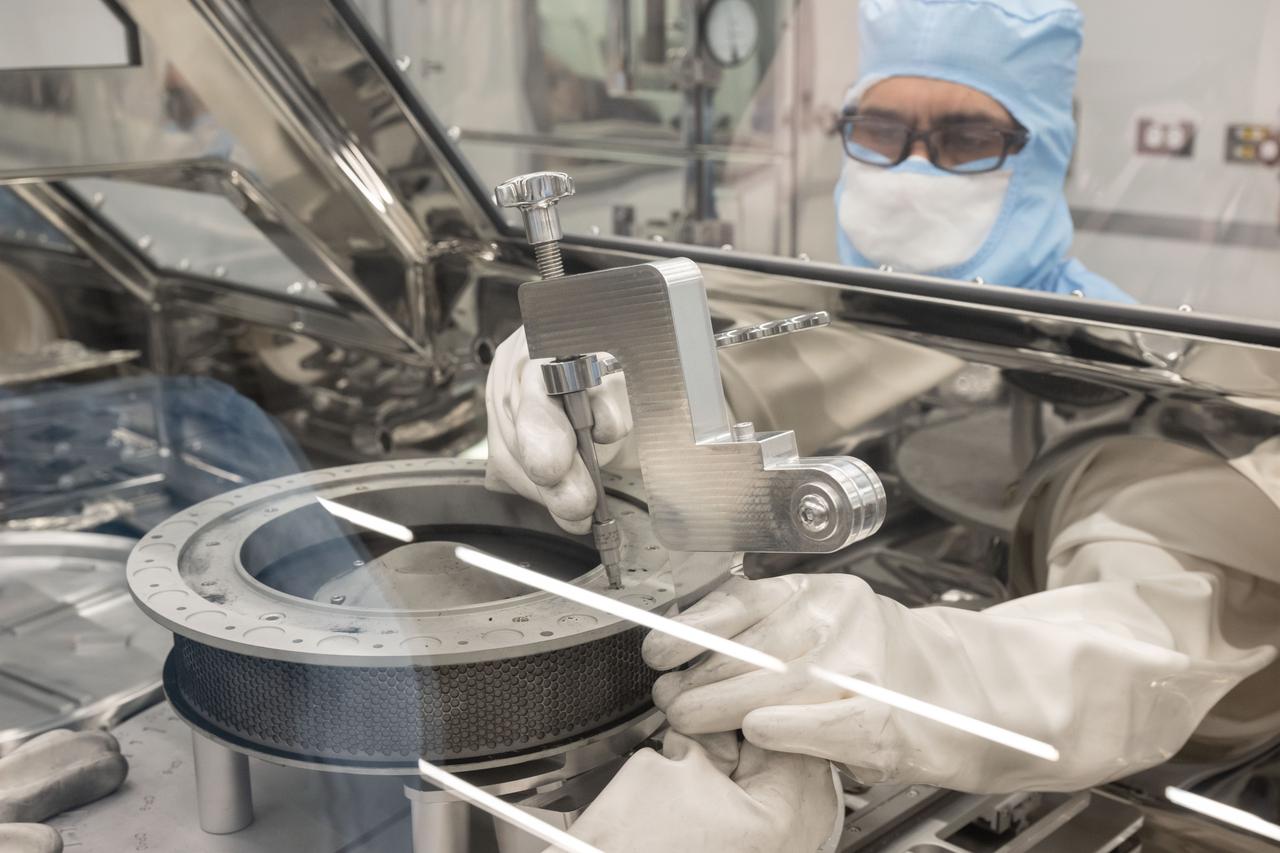
OSIRIS REx curation team attempting to remove the two stuck fasteners that are currently prohibiting the complete opening of the TAGSAM head. Photo Date: January 10, 2024. Location: Bldg. 31 - 2nd Floor - OSIRIS-REx lab. Photographer: Robert Markowitz
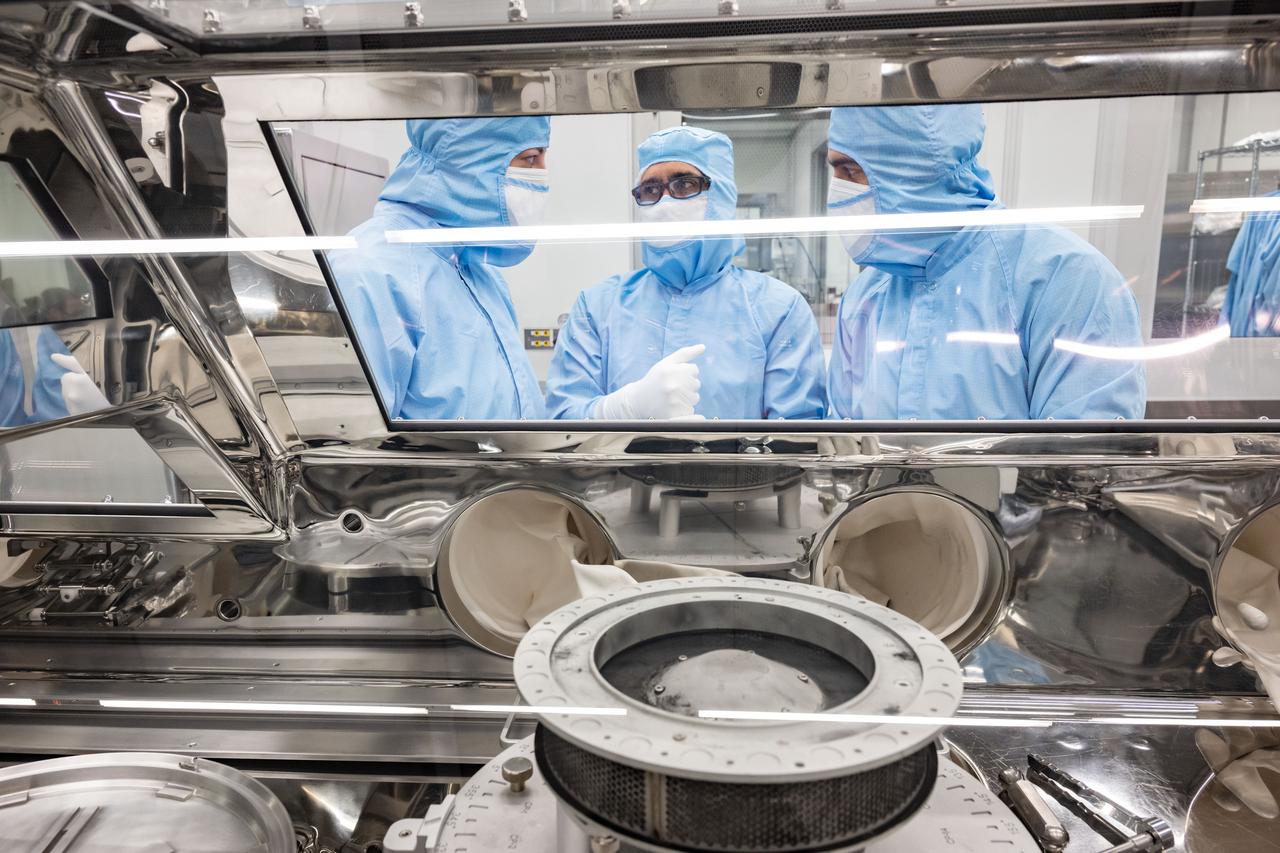
OSIRIS REx curation team attempting to remove the two stuck fasteners that are currently prohibiting the complete opening of the TAGSAM head. Photo Date: January 10, 2024. Location: Bldg. 31 - 2nd Floor - OSIRIS-REx lab. Photographer: Robert Markowitz
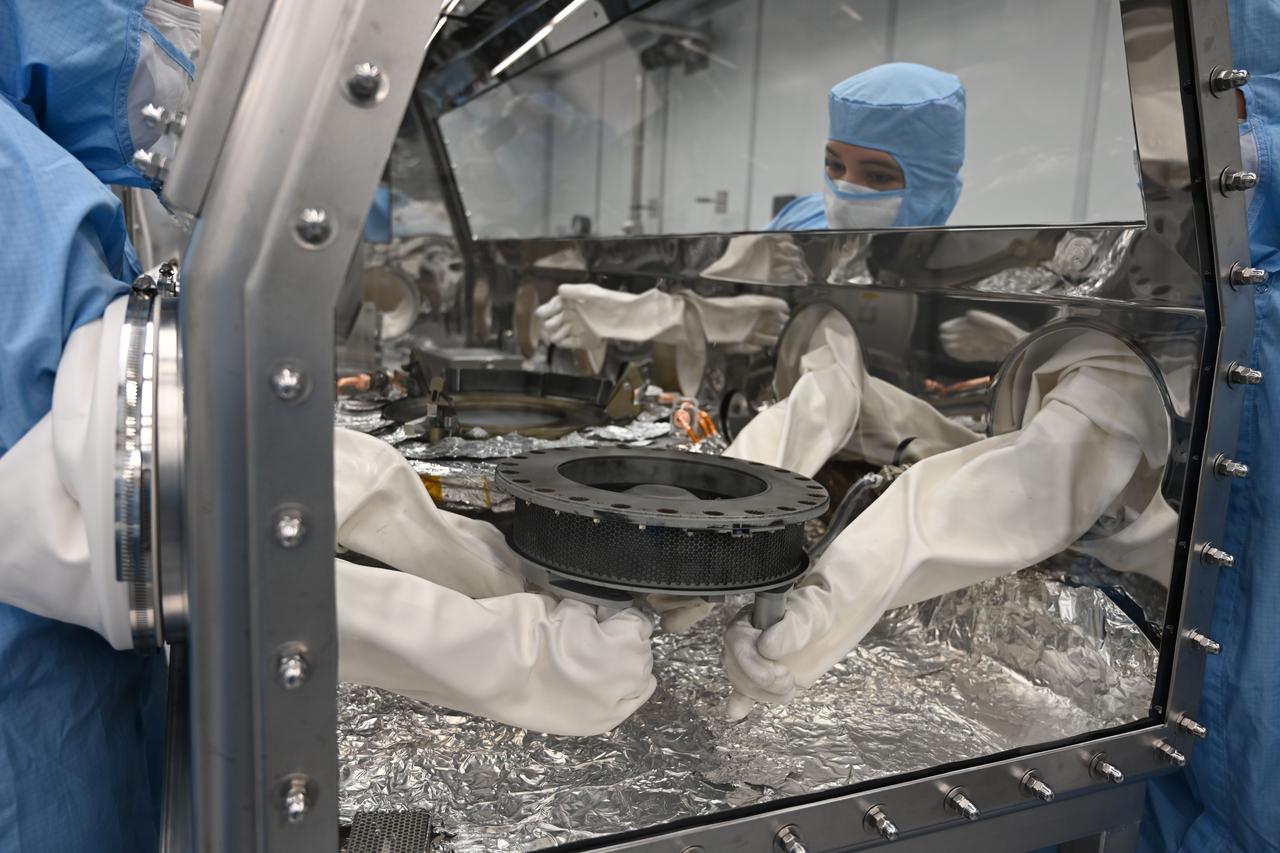
Astromaterials processor Mari Montoya and OSIRIS-REx curation team members set the TAGSAM (Touch and Go Sample Acquisition Mechanism) down in the canister glovebox after removing it from the canister base and flipping it over. Credit: NASA/ Kimberly Allums
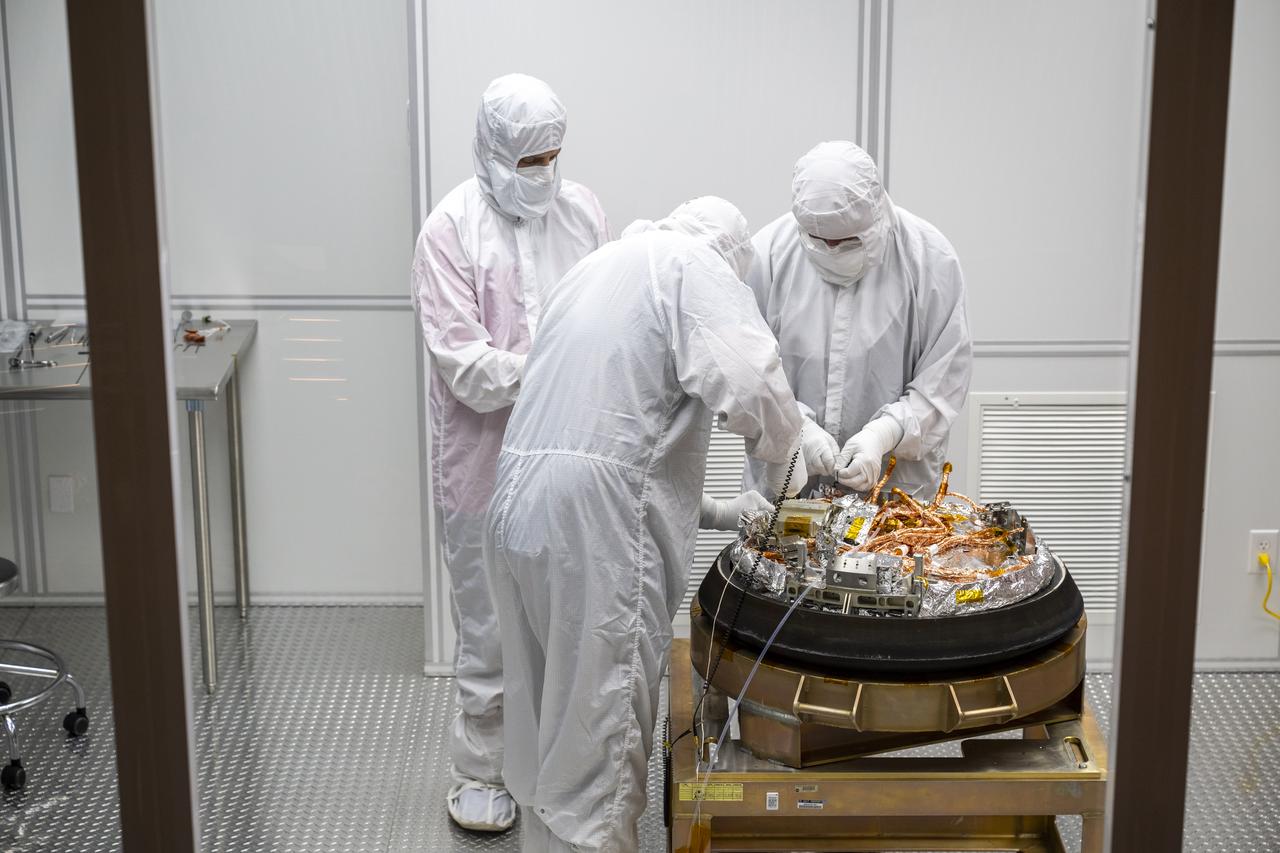
Curation teams process the sample return capsule from NASA’s OSIRIS-REx mission in a cleanroom, Sunday, Sept. 24, 2023, at the Department of Defense's Utah Test and Training Range. The sample was collected from the asteroid Bennu in October 2020 by NASA’s OSIRIS-REx spacecraft. Photo Credit: (NASA/Keegan Barber)
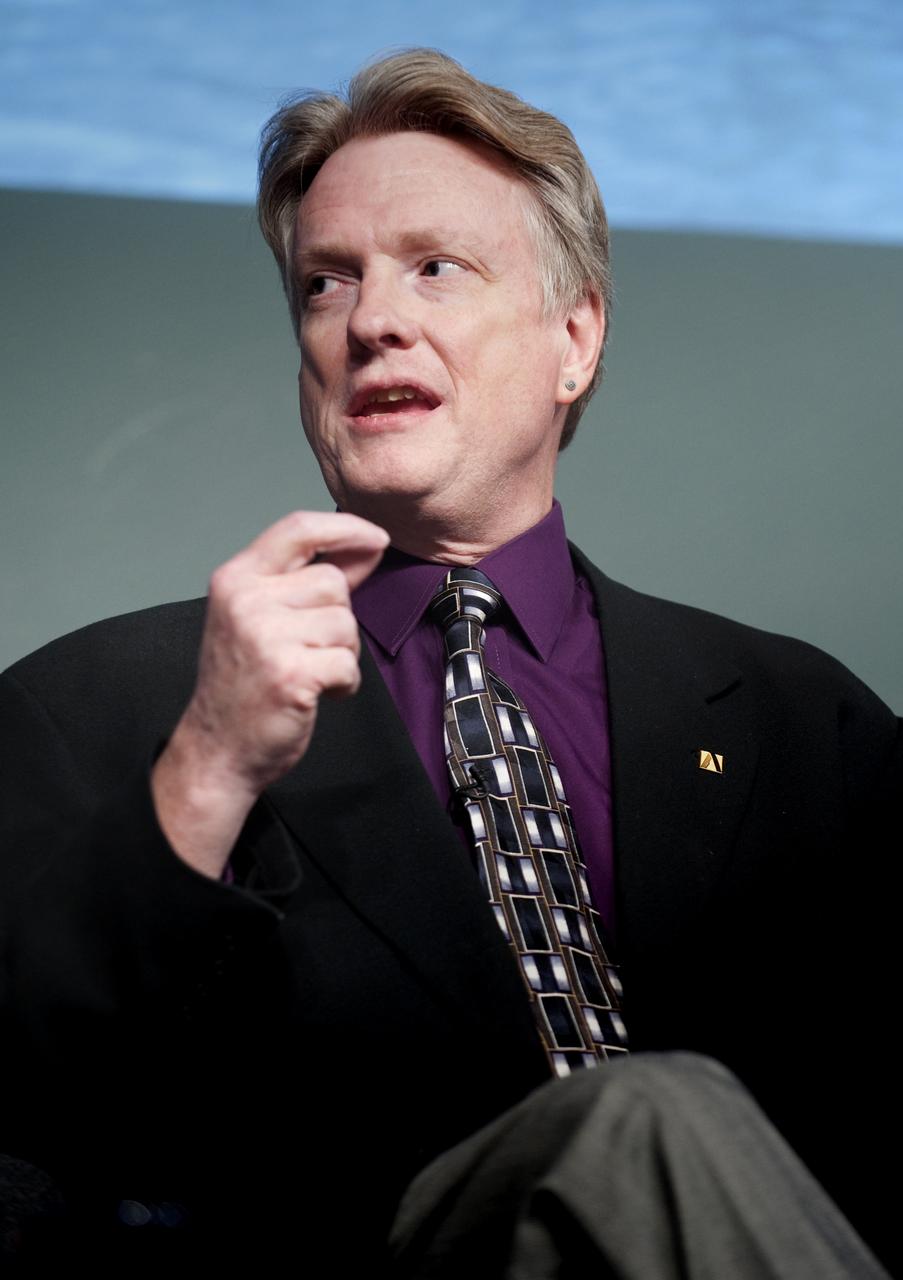
Roger Launius, senior curator in space history at the National Air and Space Museum makes a point during an Apollo History and Legacy roundtable discussion, Thursday, July 16, 2009, at NASA Headquarters in Washington. Photo Credit: (NASA/Paul E. Alers)
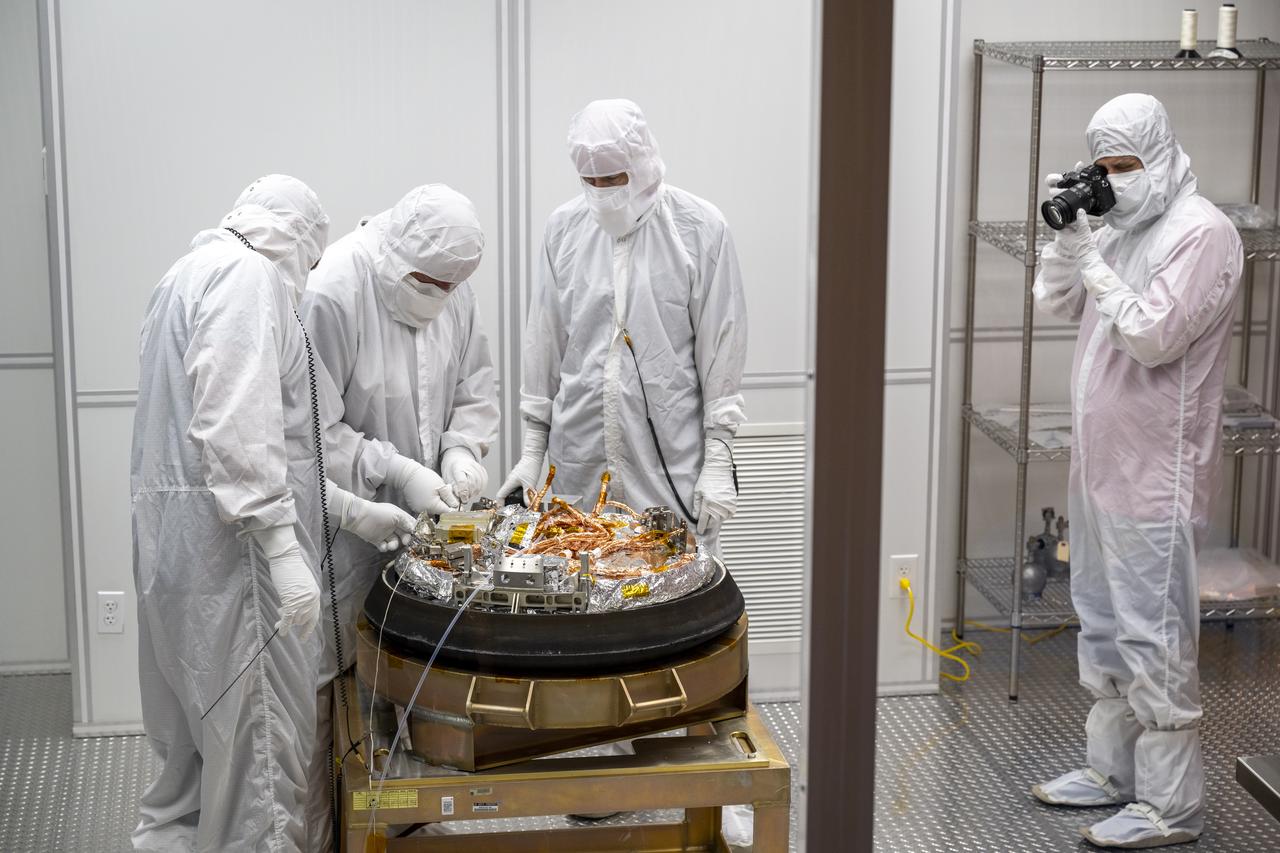
Curation teams process the sample return capsule from NASA’s OSIRIS-REx mission in a cleanroom, Sunday, Sept. 24, 2023, at the Department of Defense's Utah Test and Training Range. The sample was collected from the asteroid Bennu in October 2020 by NASA’s OSIRIS-REx spacecraft. Photo Credit: (NASA/Keegan Barber)
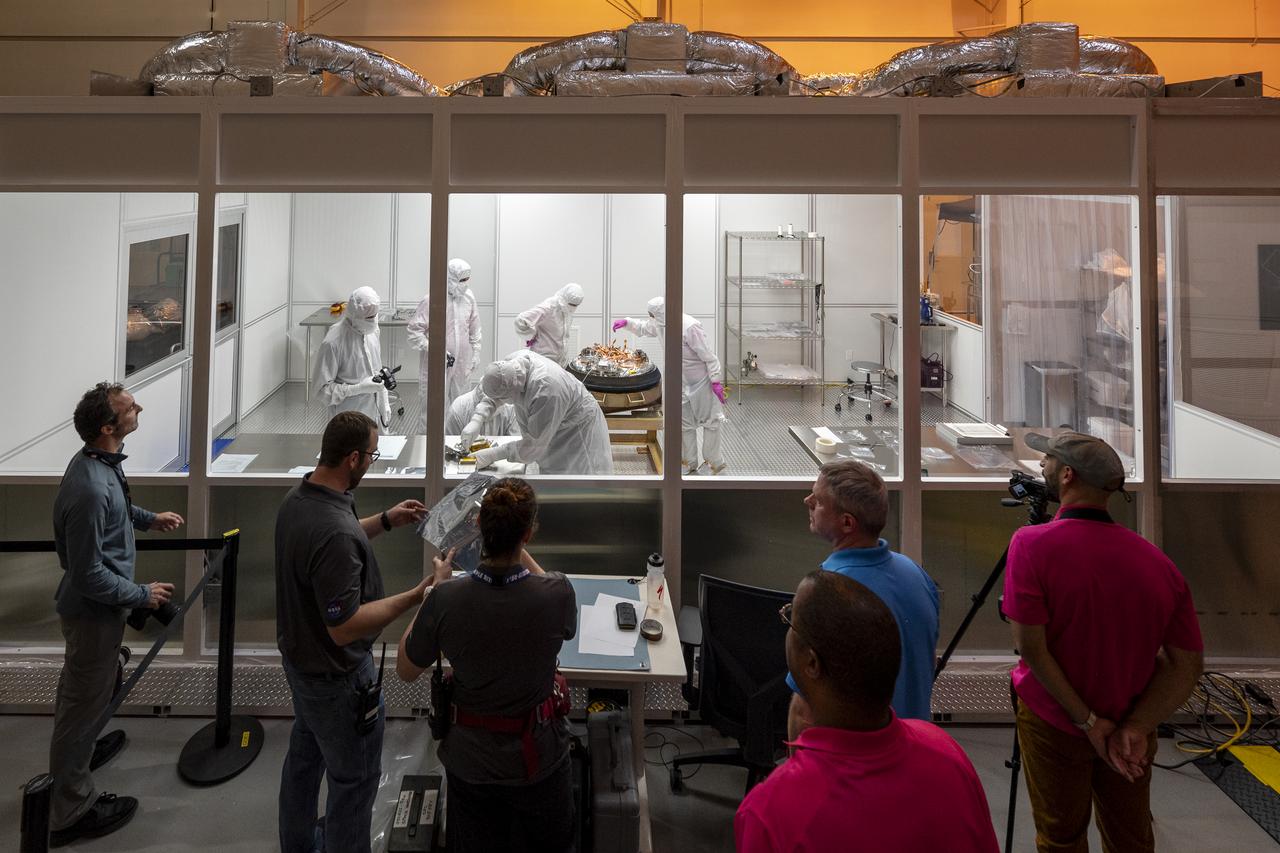
Curation teams process the sample return capsule from NASA’s OSIRIS-REx mission in a cleanroom, Sunday, Sept. 24, 2023, at the Department of Defense's Utah Test and Training Range. The sample was collected from the asteroid Bennu in October 2020 by NASA’s OSIRIS-REx spacecraft. Photo Credit: (NASA/Keegan Barber)
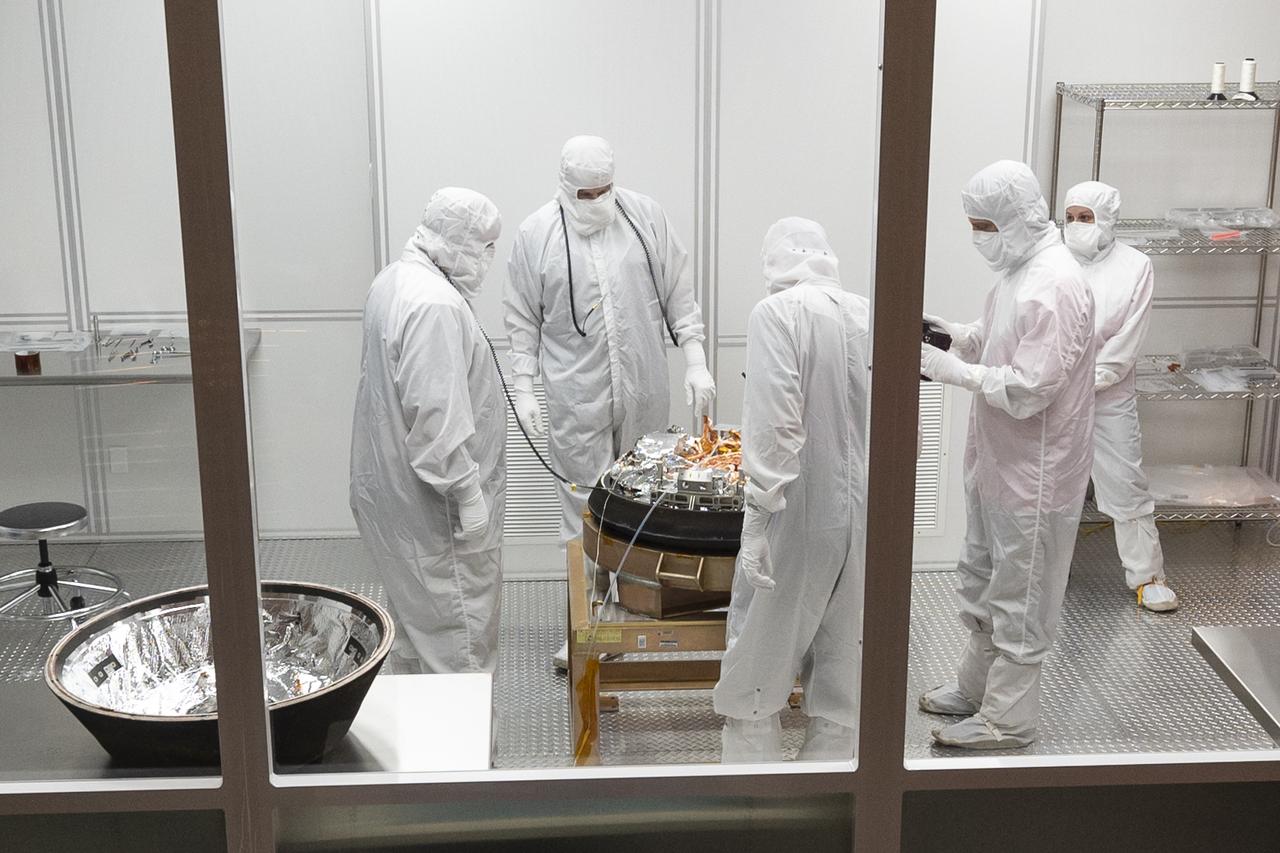
Curation teams process the sample return capsule from NASA’s OSIRIS-REx mission in a cleanroom, Sunday, Sept. 24, 2023, at the Department of Defense's Utah Test and Training Range. The sample was collected from the asteroid Bennu in October 2020 by NASA’s OSIRIS-REx spacecraft. Photo Credit: (NASA/Keegan Barber)
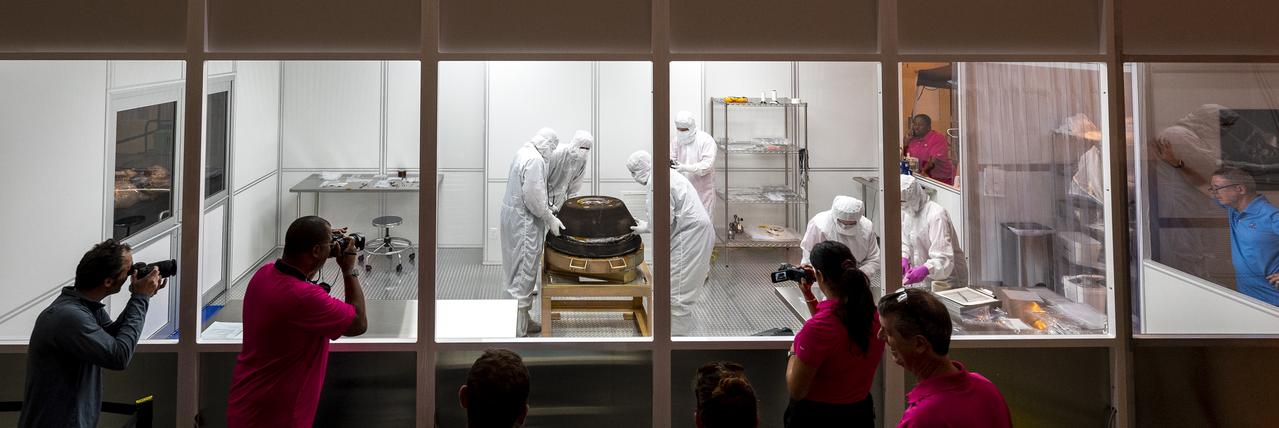
Curation teams process the sample return capsule from NASA’s OSIRIS-REx mission in a cleanroom, Sunday, Sept. 24, 2023, at the Department of Defense's Utah Test and Training Range. The sample was collected from the asteroid Bennu in October 2020 by NASA’s OSIRIS-REx spacecraft. Photo Credit: (NASA/Keegan Barber)
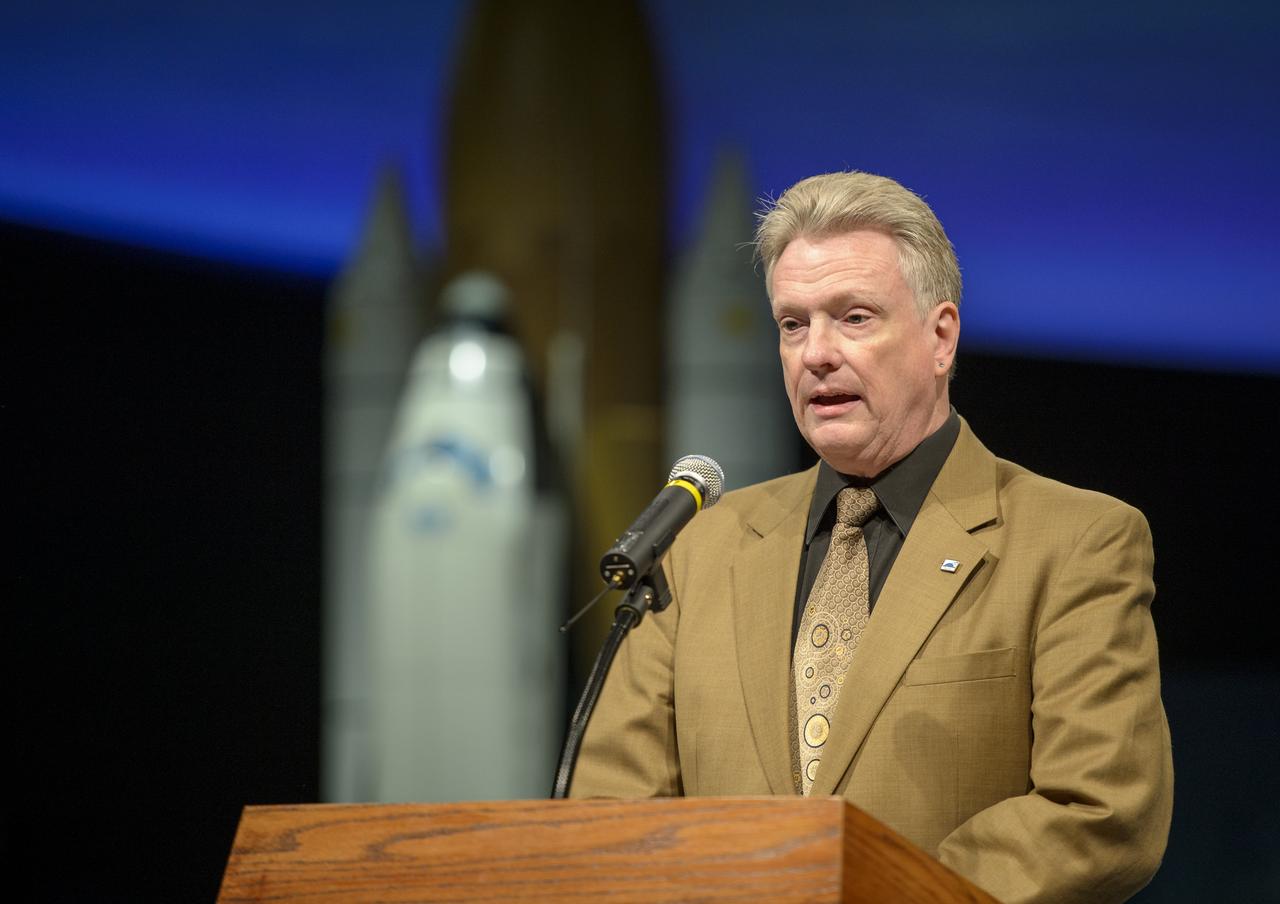
Smithsonian Institution's National Air and Space Museum Senior Curator in the Division of Space History Dr. Roger Launious begins a program titled "Sally Ride: How Her Historic Space Mission Opened Doors for Women in Science" held on Friday, May 17, 2013 at the Museum in Washington. Photo Credit: (NASA/Bill Ingalls)

This artist's concept shows Mars Sample Return Earth Entry System. The vehicle would bring curated Martian samples collected by NASA's Perseverance Rover on the final leg of their journey from Mars to Earth. The illustration shows the Earth Entry System, a capsule about 4 feet (1.25 meters) in diameter, on its final approach to Earth, after being ejected from the Earth Return Orbiter. Once in Earth's atmosphere, it would take the vehicle about six minutes to land at the U.S. Air Force's Utah Test and Training Range in west-central Utah. Velocity at time of touchdown for the parachute-less capsule is expected to be about 90 mph (40 meters per second). The Earth Entry System is part of the multi-mission Mars Sample Return program being planned by NASA and ESA (European Space Agency). https://photojournal.jpl.nasa.gov/catalog/PIA25986
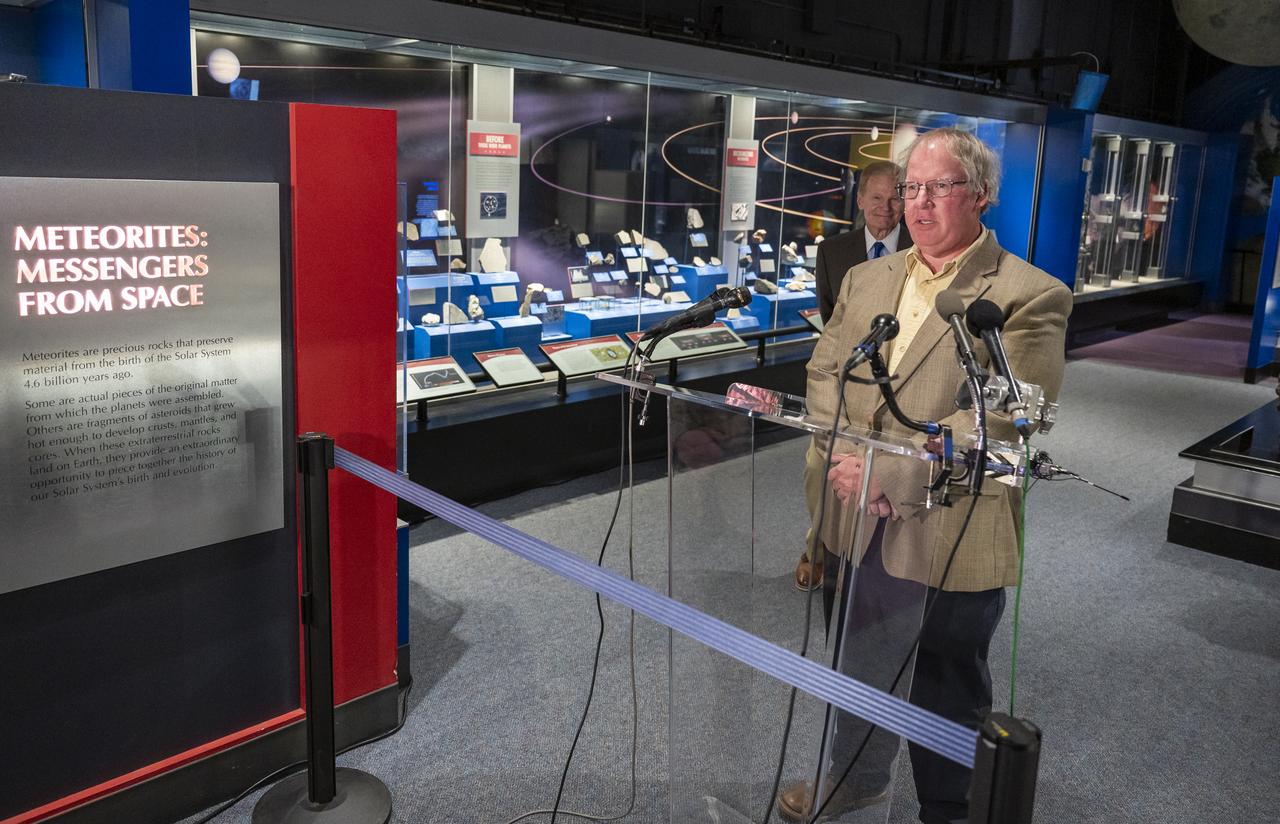
National Museum of Natural History curator of meteorites Tim McCoy delivers remarks during an event to unveil the first public display of a sample from asteroid Bennu, Friday, Nov. 3, 2023, at the Smithsonian’s National Museum of Natural History in Washington. The sample was collected from the carbon rich near Earth asteroid Bennu in October 2020 by NASA’s OSIRIS-REx spacecraft. Photo Credit: (NASA/Keegan Barber)
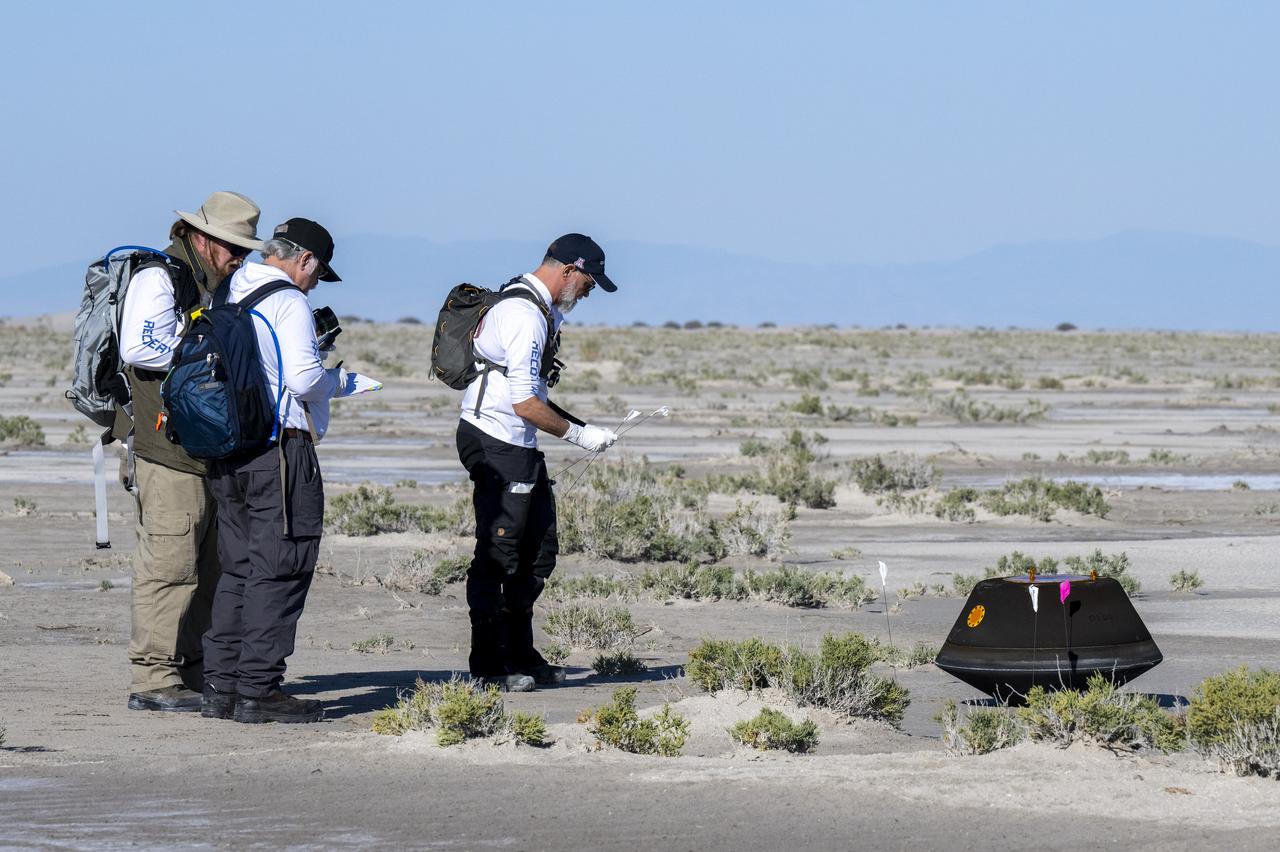
From left to right, NASA Astromatierals Curator Francis McCubbin, NASA Sample Return Capsule Science Lead Scott Sandford, and University of Arizona OSIRIS-REx Principal Investigator Dante Lauretta, collect science data, Sunday, Sept. 24, 2023, shortly after the sample return capsule from NASA’s OSIRIS-REx mission landed at the Department of Defense's Utah Test and Training Range. The sample was collected from the asteroid Bennu in October 2020 by NASA’s OSIRIS-REx spacecraft. Photo Credit: (NASA/Keegan Barber)
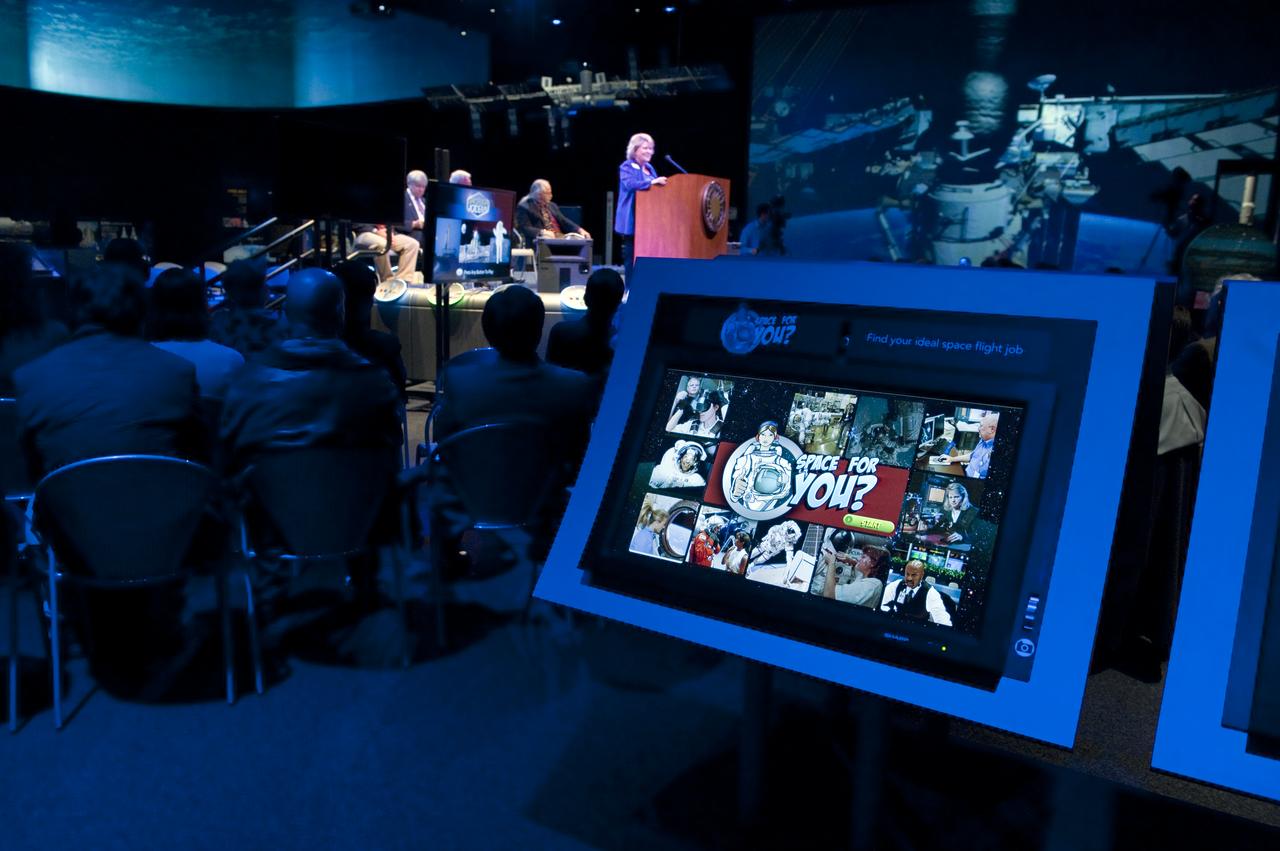
Dr. Valerie Neal, a curator at the Smithsonian's National Air and Space Museum, speaks during a press briefing at the new "Moving Beyond Earth," exhibition at the museum in Washingon, Wednesday, Nov. 18, 2009. Moving Beyond Earth is an immersive exhibition that places visitors “in orbit” in the shuttle and space-station era to explore recent human spaceflight and future possibilities. Photo Credit: (NASA/Paul E. Alers)
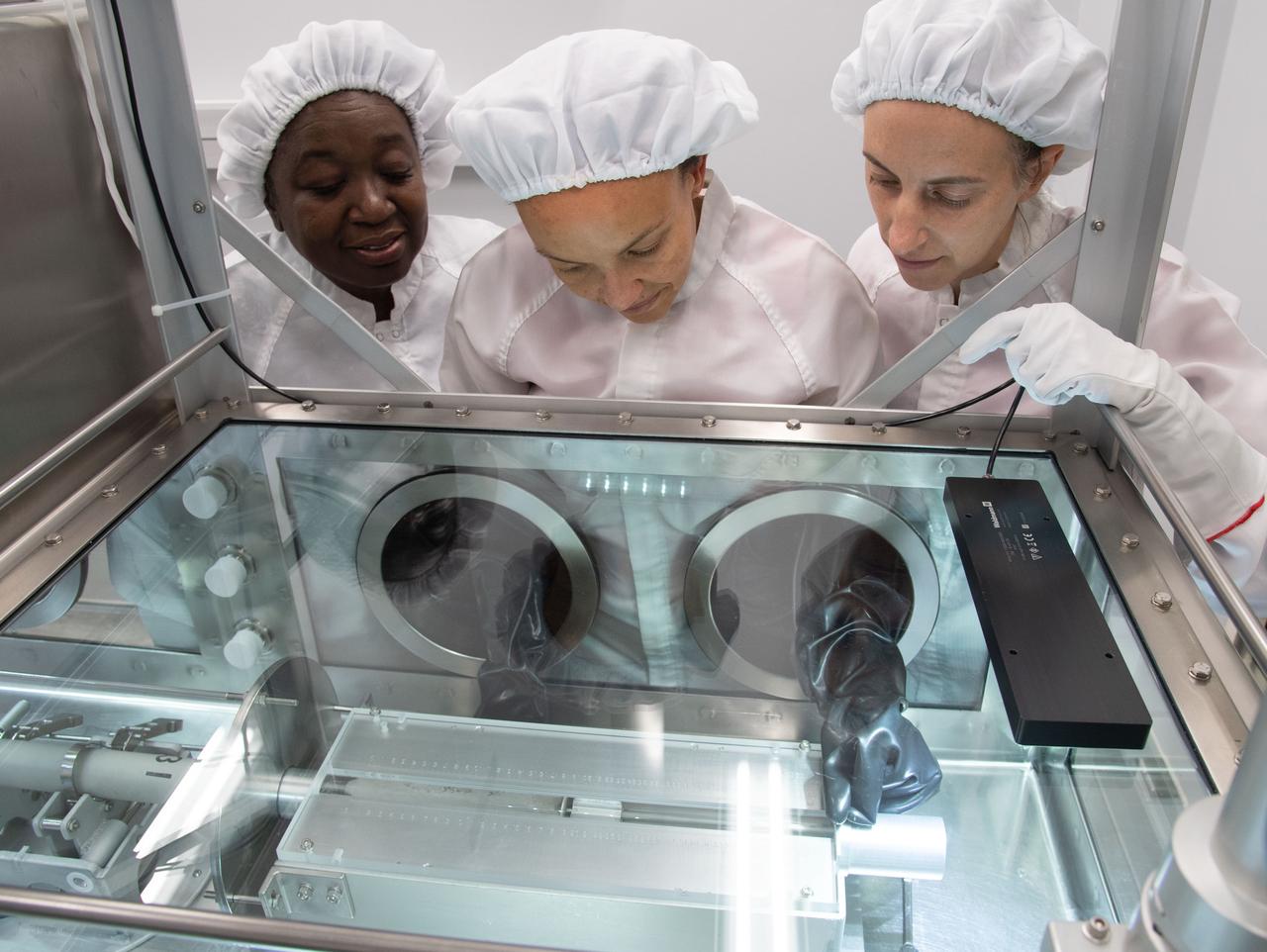
jsc2019e063626 (Nov. 5, 2019) --- (From left) Andria Mosie, Charis Krysher and Juliane Gross, lunar sample curators, extruding sample 73002 from its container in a glove box at NASA's Johnson Space Center. The extrusion, which occurred Nov. 5, 2019 at Johnson Space Center in Houston, was done as part of NASA’s Apollo Next-Generation Sample Analysis initiative.

Artemis Curation Lead Julianne Gross, left, and Brett Denevi, Artemis III Geology Team principal investigator for NASA’s Science Mission Directorate, work in the Science Evaluation Room (SER) during the JETT 5 field test. JETT 5 was a week-long field test in the lunar-like landscape of San Francisco Volcanic Field near Flagstaff, Arizona while a team of flight controllers and scientists at Johnson monitor and guide their activities. Credit: NASA/Helen Arase Vargas
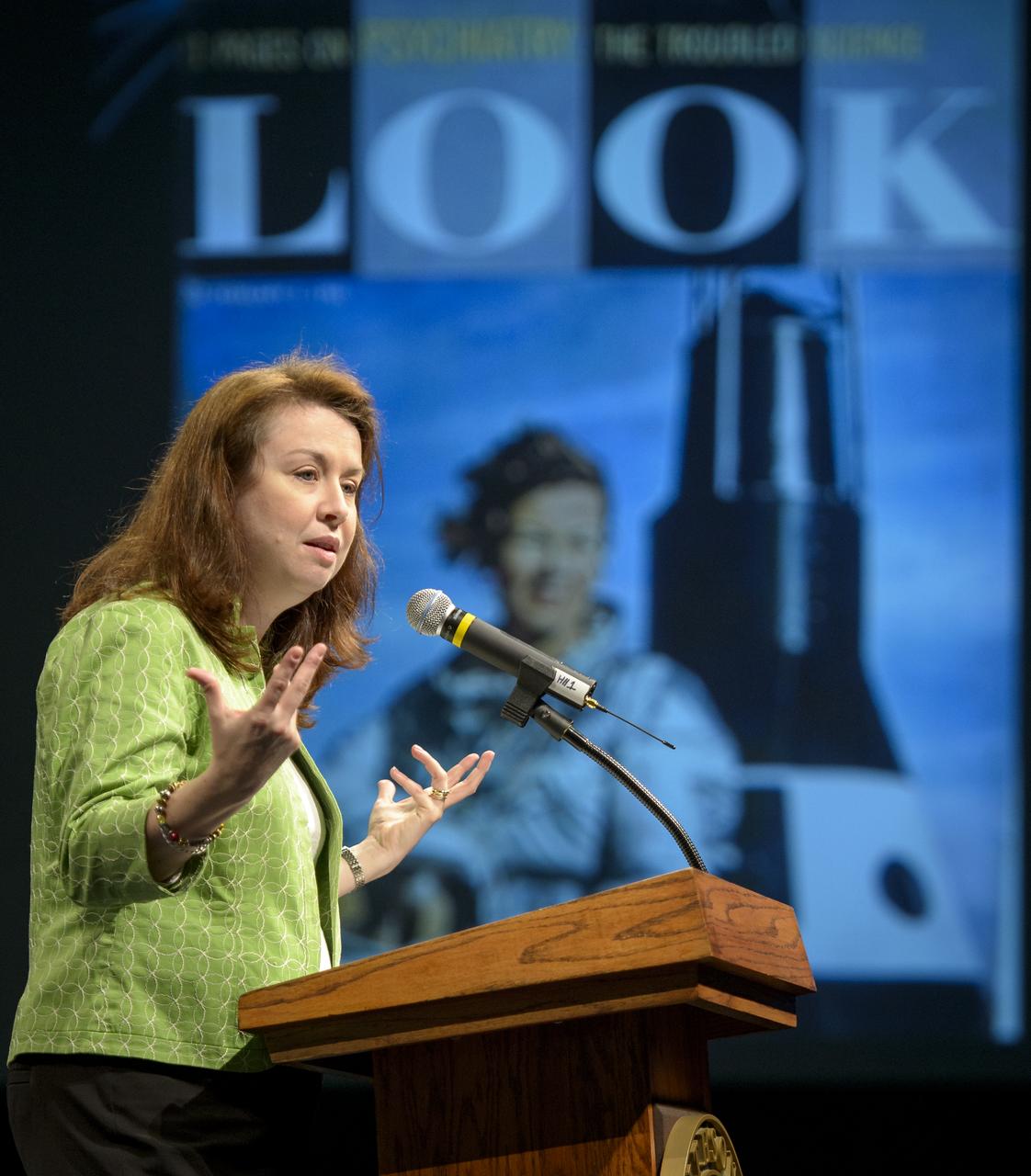
Margaret Weitekamp, space history curator, National Air and Space Museum, talks about the history of women in space during a program titled "Sally Ride: How Her Historic Space Mission Opened Doors for Women in Science" held on Friday, May 17, 2013 at the National Air and Space Museum in Washington. Photo Credit: (NASA/Bill Ingalls)
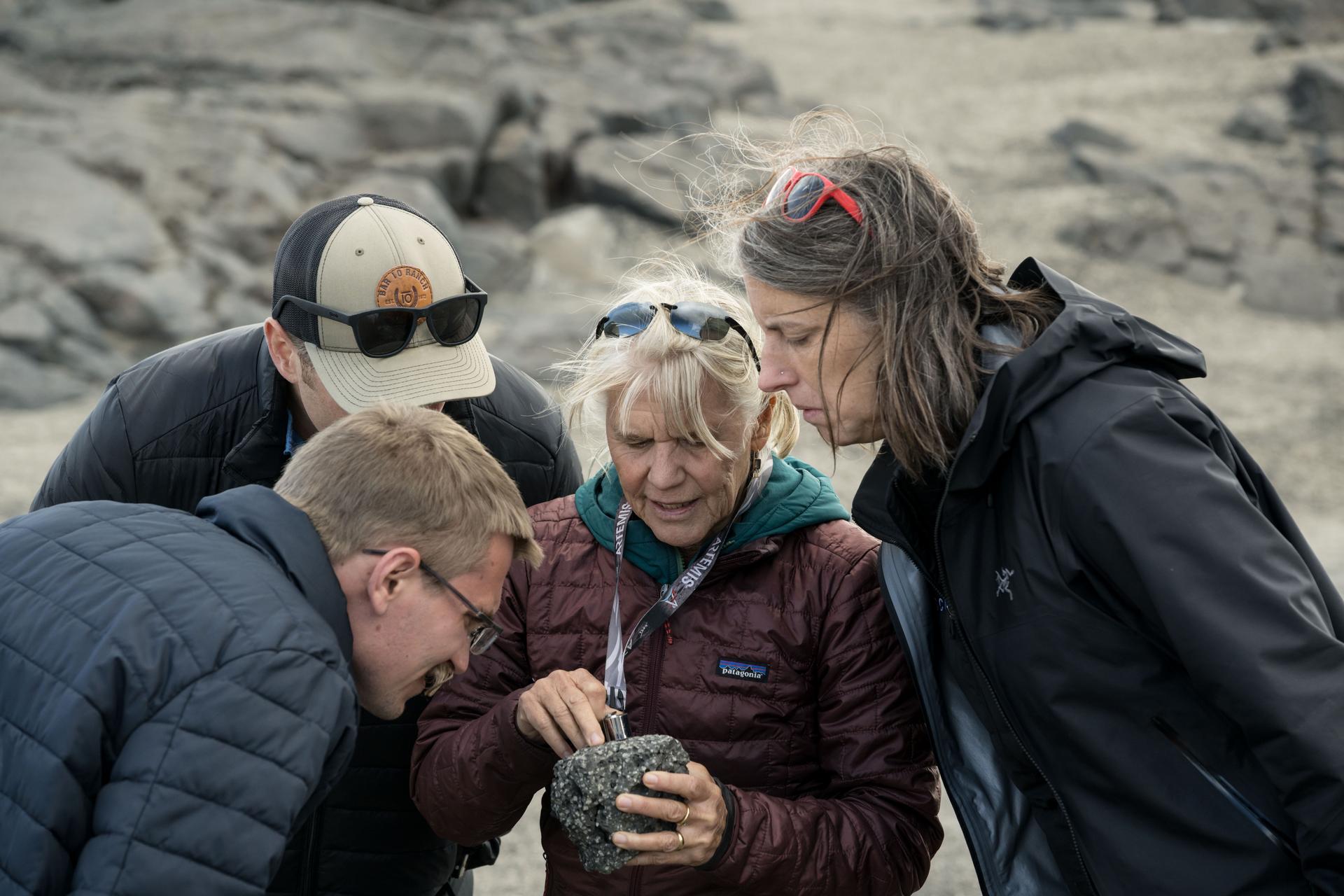
From left, Bryce Prescott, NASA astronaut candidate Cameron Jones, Artemis geology training lead Cindy Evans, and Artemis curation lead Juliane Gross, examine a rock during a geology field training in Iceland. Iceland serves as a lunar stand-in for training astronauts and mission support teams in preparation for lunar surface science missions. Credit: NASA/James Blair
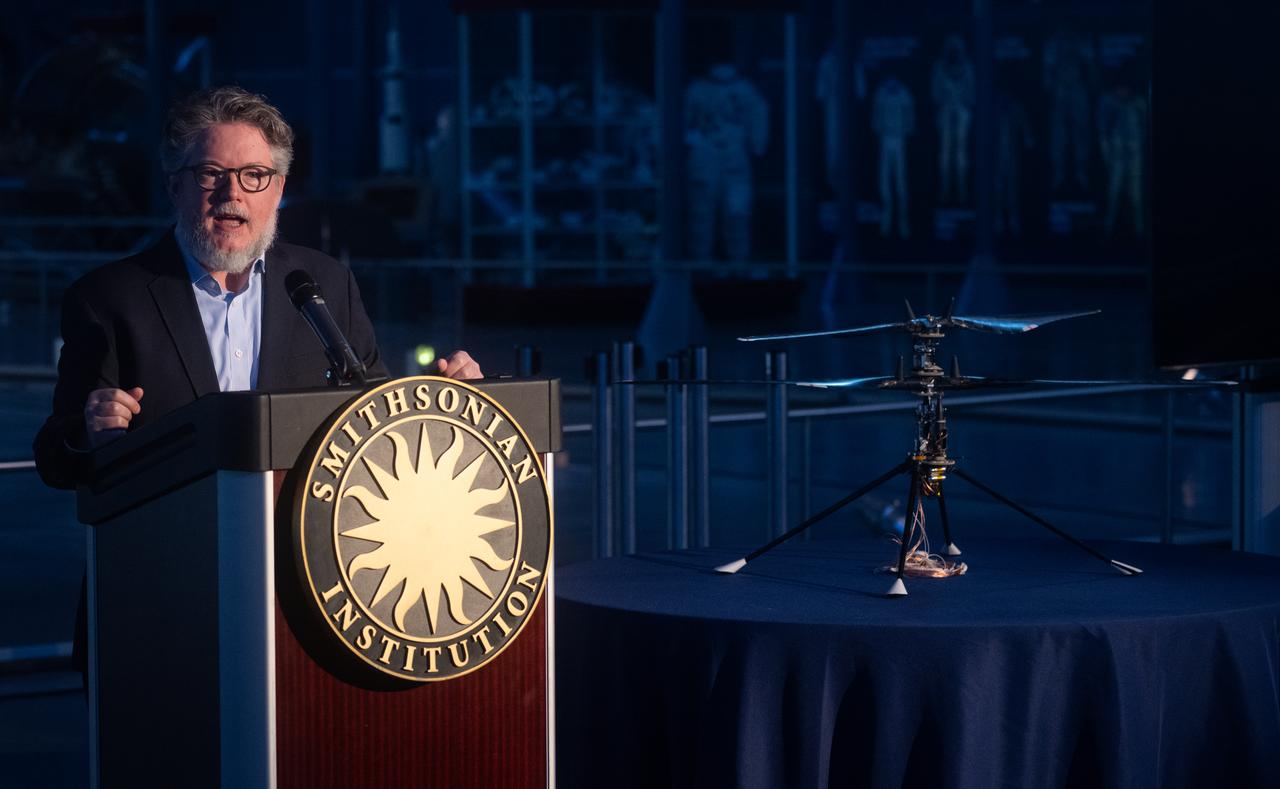
Matt Shindell, space history curator at the National Air and Space Museum speaks at an event marking NASA’s donation of the aerial prototype of the Ingenuity Mars Helicopter, Friday, Dec. 15, 2023, at the Smithsonian National Air and Space Museum’s Steve F. Udvar-Hazy Center in Chantilly, Va. The aerial prototype of the Ingenuity Mars Helicopter, which was the first to demonstrate it was possible to fly in a simulated Mars environment at NASA’s Jet Propulsion Laboratory (JPL), was donated to the museum on Friday. Photo Credit: (NASA/Joel Kowsky)
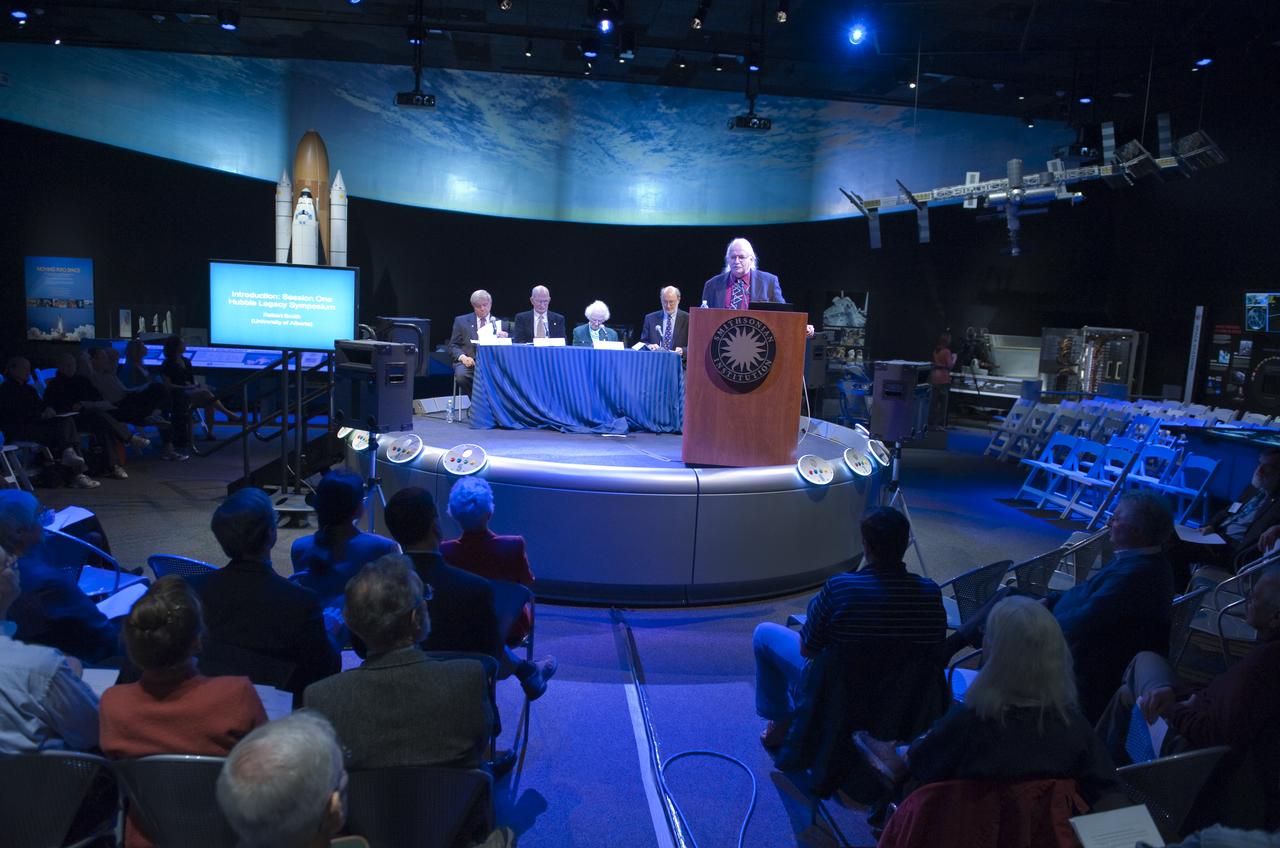
David DeVorkin, Senior Curator, Collection: Astronomy and space sciences speaks during a press briefing at the new "Moving Beyond Earth," exhibition at the National Air and Space Museum in Washingon, Wednesday, Nov. 18, 2009. Moving Beyond Earth is an immersive exhibition that places visitors “in orbit” in the shuttle and space-station era to explore recent human spaceflight and future possibilities. Photo Credit: (NASA/Paul E. Alers)
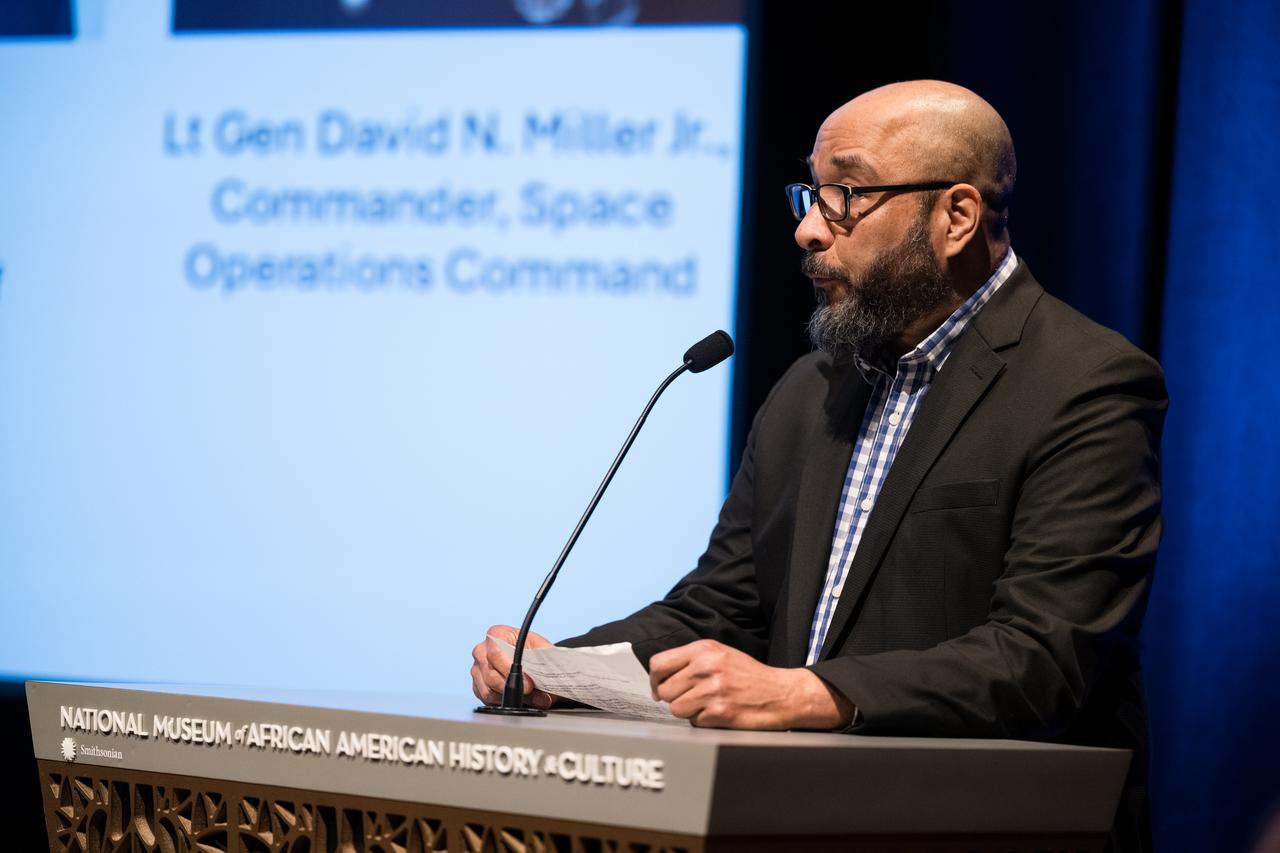
Dr. Kevin Strait, curator of history, National Museum of African American History and Culture (NMAAHC), speaks at an event to commemorate Black Space Week (BSW) 2024 titled, "Beyond the Color Lines From Science Fiction to Science Fact," in the Oprah Winfrey Theater at the Smithsonian National Museum of African American History and Culture, Monday, June 17, 2024 in Washington. Photo Credit: (NASA/Aubrey Gemignani)
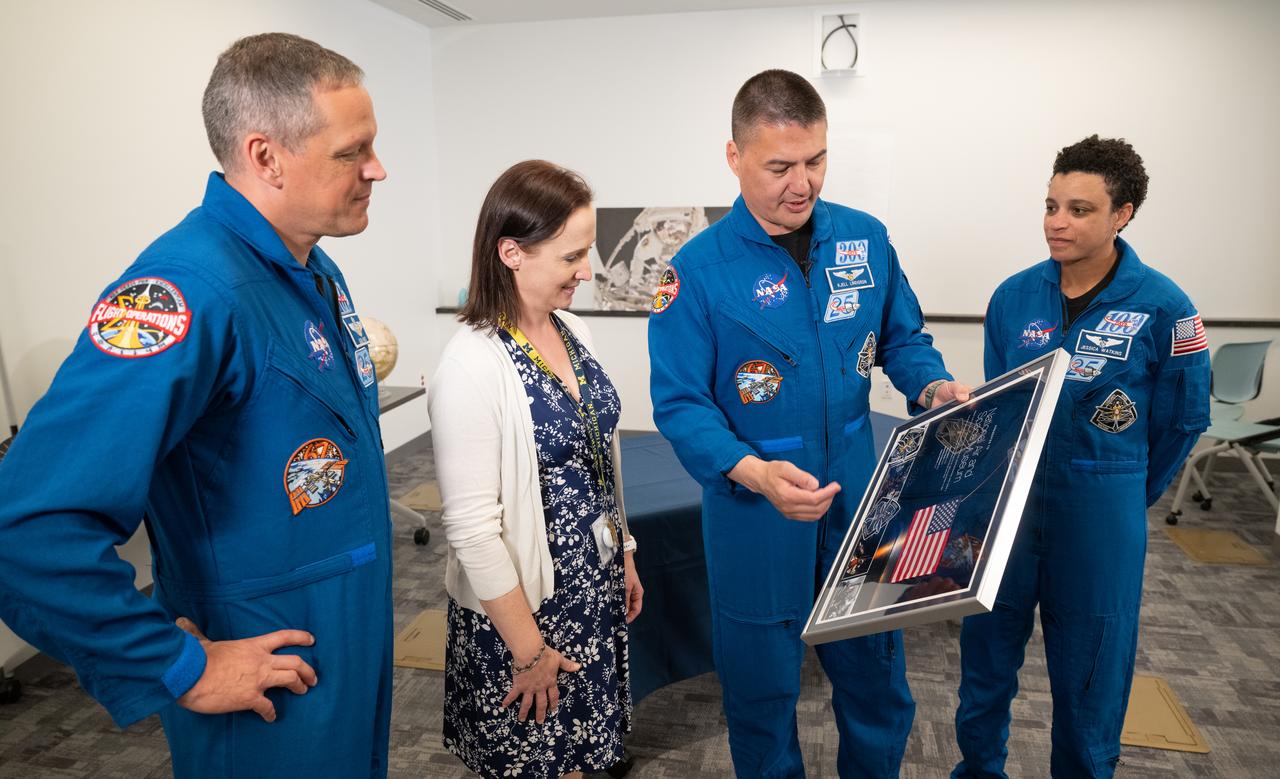
NASA astronaut Kjell Lindgren, center, along with fellow astronauts Robert Hines, left, and Jessica Watkins, right, present Smithsonian National Air and Space Museum curator Jennifer Levasseur with a montage from their mission to the International Space Station, Tuesday, March 28, 2023 at the Smithsonian’s National Air and Space Museum in Washington. Lindgren, Hines, and Watkins spent 170 days in space as part of Expeditions 67 and 68 aboard the International Space Station. Photo Credit: (NASA/Joel Kowsky)
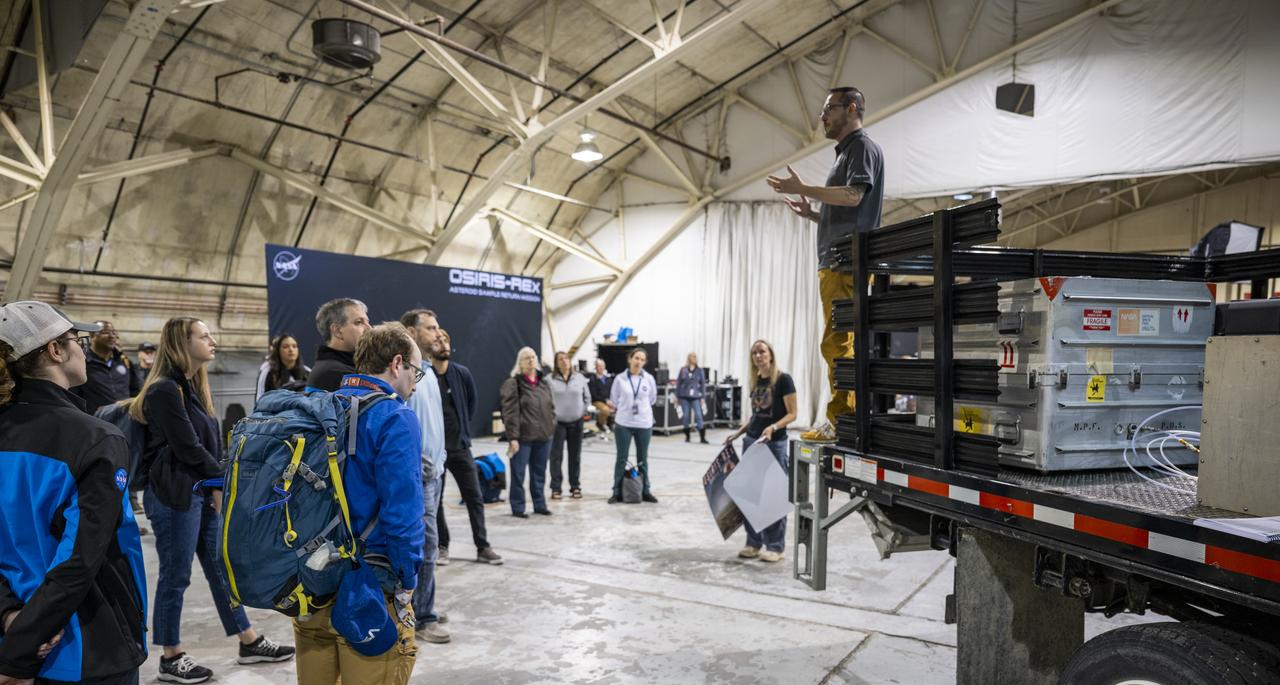
Lockheed Martin OSIRIS-REx Sample Return Capsule Ground Recovery Lead Richard Witherspoon, top right, delivers remarks to recovery and curation teams prior to loading a container with the science canister from NASA’s OSIRIS-REx mission onto a C-17 Globemaster aircraft, Monday, Sept. 25, 2023, at the Department of Defense's Utah Test and Training Range. The sample was collected from the asteroid Bennu in October 2020 by NASA’s OSIRIS-REx spacecraft. Photo Credit: (NASA/Keegan Barber)
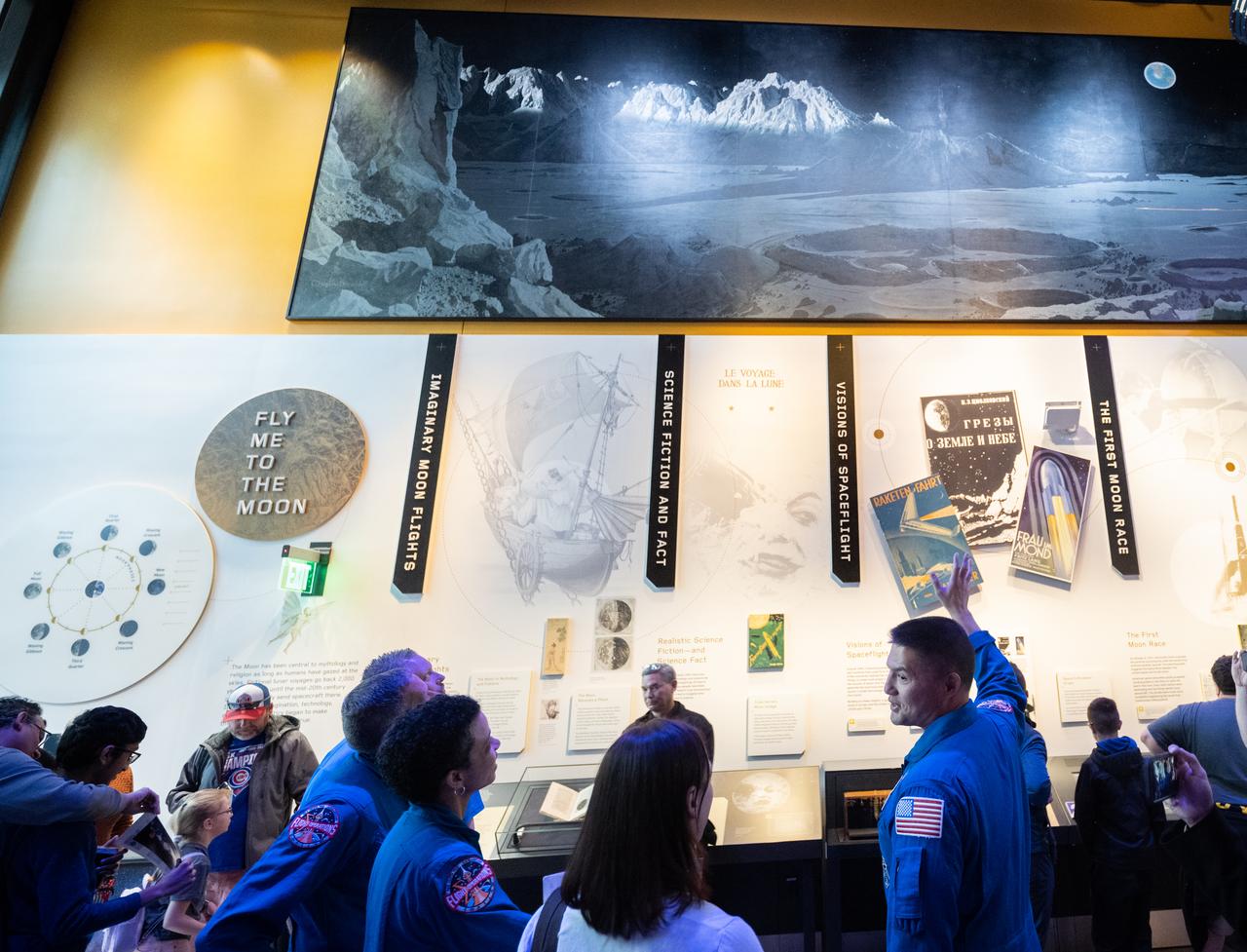
NASA astronauts Kjell Lindgren, Robert Hines, and Jessica Watkins are seen with Smithsonian National Air and Space Museum curator Jennifer Levasseur as they view the Destination Moon exhibit during a tour, Tuesday, March 28, 2023 at the Smithsonian’s National Air and Space Museum in Washington. Lindgren, Hines, and Watkins spent 170 days in space as part of Expeditions 67 and 68 aboard the International Space Station. Photo Credit: (NASA/Joel Kowsky)
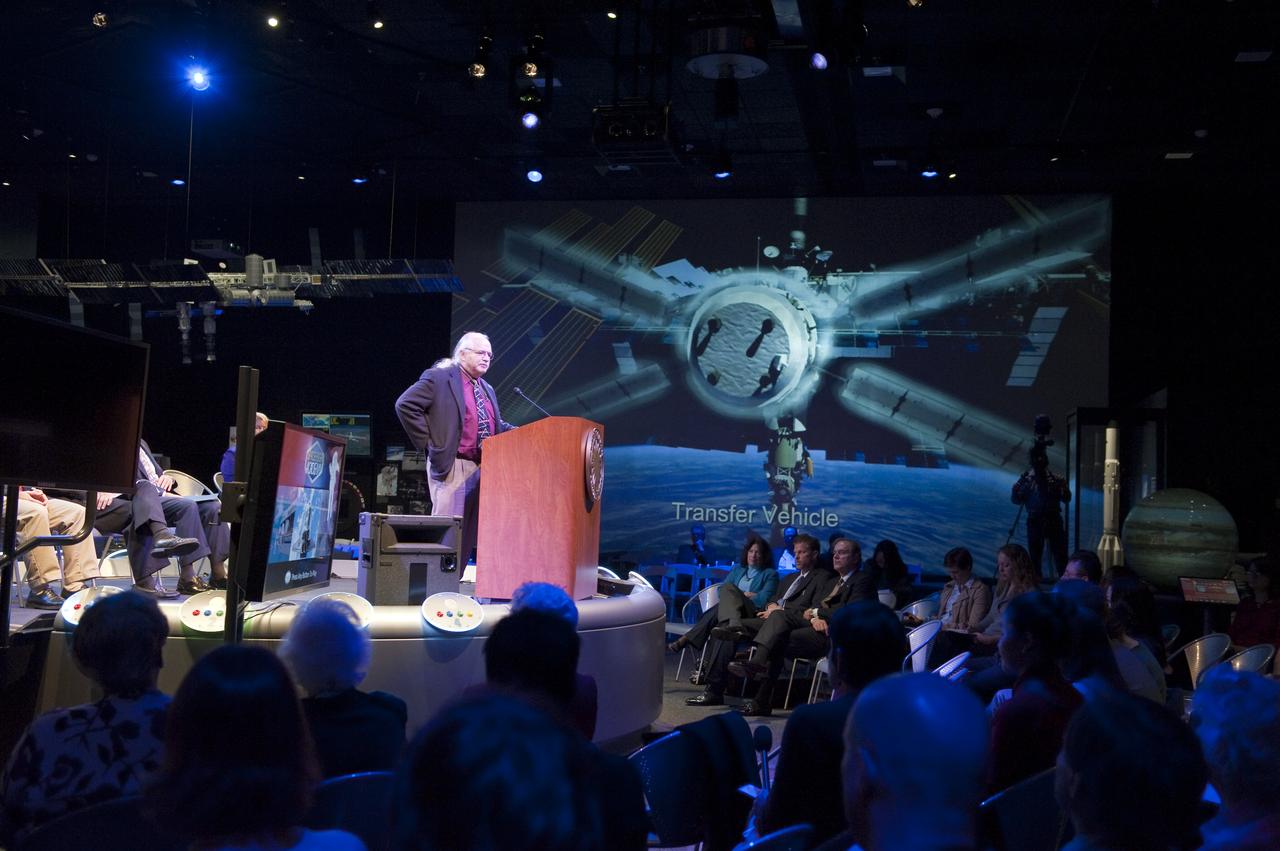
David H. DeVorkin, Senior Curator, Astronomy and the Space Sciences Division of Space History, at the Smithsonian's National Air and Space Museum, speaks during a press briefing at the new "Moving Beyond Earth," exhibition at the museum in Washingon, Wednesday, Nov. 18, 2009. Moving Beyond Earth is an immersive exhibition that places visitors "in orbit" in the shuttle and space-station era to explore recent human spaceflight and future possibilities. Photo Credit: (NASA/Paul E. Alers)
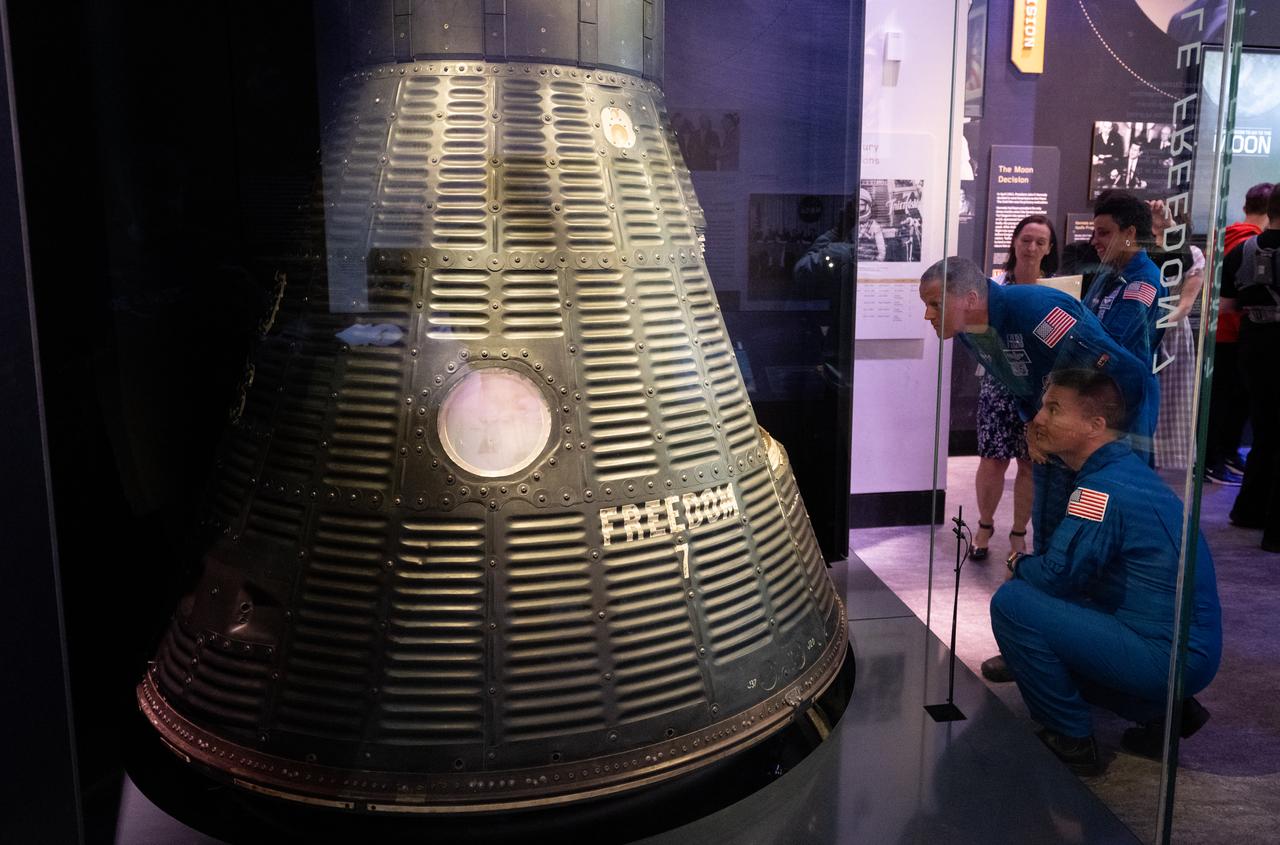
NASA astronauts Kjell Lindgren, Robert Hines, and Jessica Watkins and Smithsonian National Air and Space Museum curator Jennifer Levasseur are seen as they view the Freedom 7 Mercury capsule in the Destination Moon exhibit during a tour, Tuesday, March 28, 2023 at the Smithsonian’s National Air and Space Museum in Washington. Lindgren, Hines, and Watkins spent 170 days in space as part of Expeditions 67 and 68 aboard the International Space Station. Photo Credit: (NASA/Joel Kowsky)
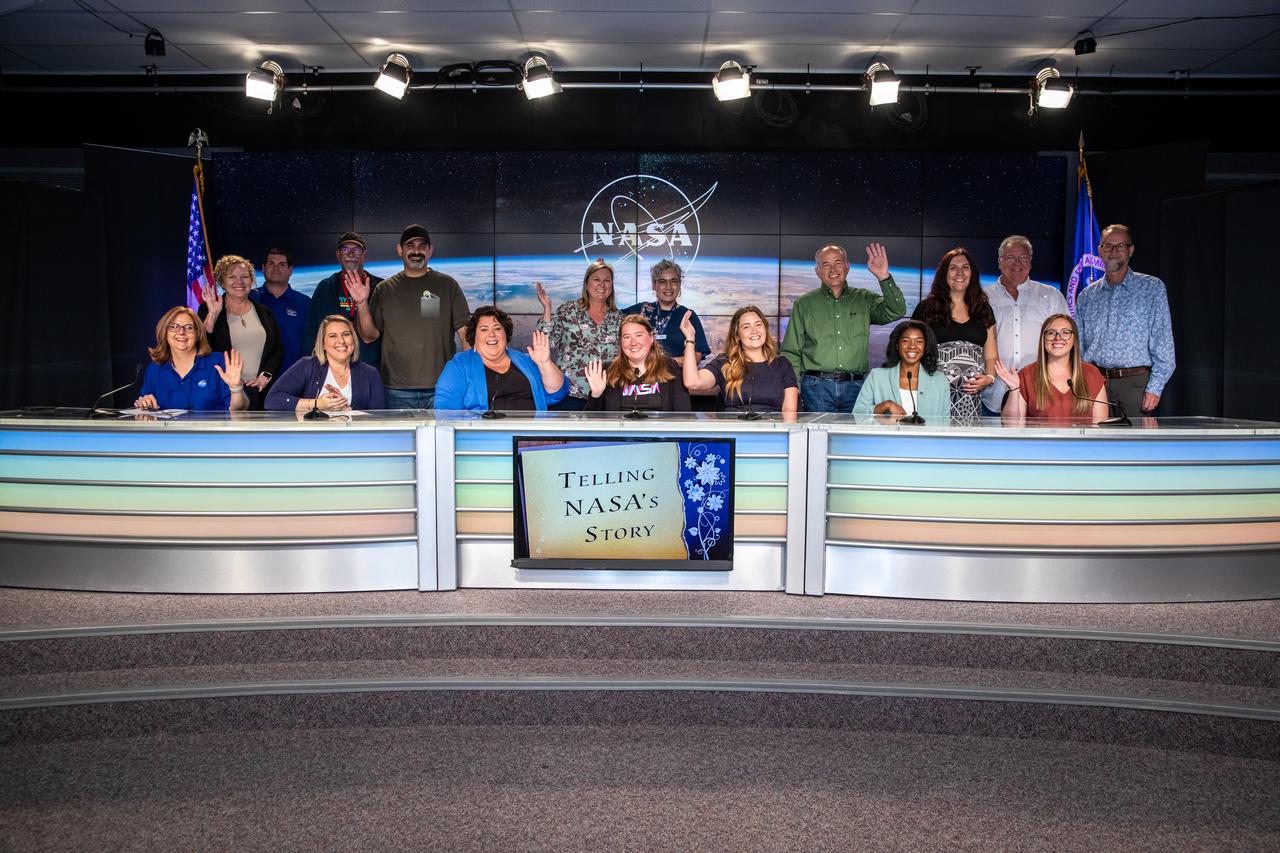
Employees who work at NASA’s Kennedy Space Center Press Site are photographed inside the News Auditorium at the Florida spaceport on March 23, 2023, following a panel discussion held to commemorate Women’s History Month. The event, titled “Celebrating the Women Who Tell Our Stories,” included women who typically work behind the scenes sharing what goes into conceiving, creating, and curating NASA stories. Panelists included Kennedy’s news chief, members of the broadcast team, public affairs specialists, a video producer, and a writer.
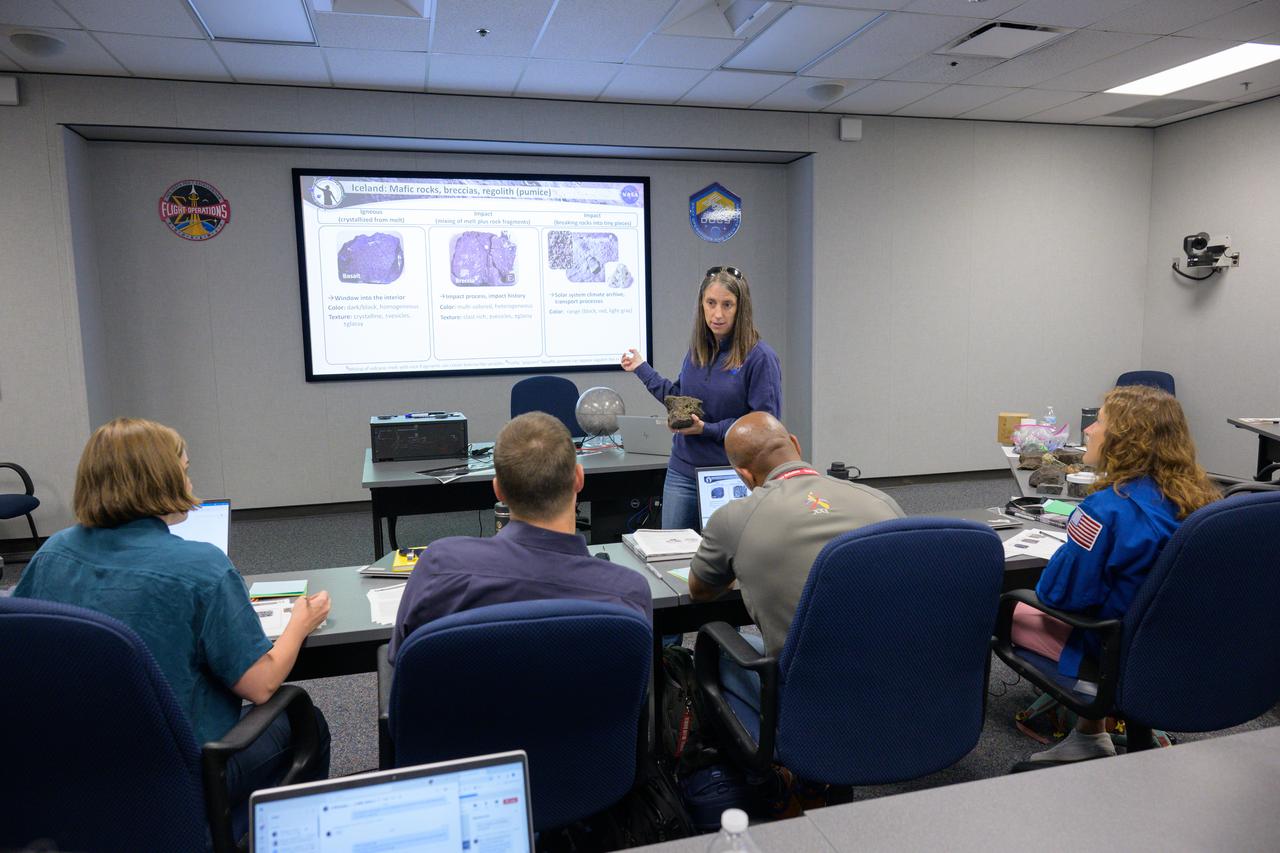
jsc2024e040812 (June 7, 2024) --- Juliane Gross, curation lead for the Artemis Internal Science Team, leads a geology lesson for the Artemis II crew at NASA's Johnson Space Center in Houston. Artemis II crew members pictured are, from left, Canadian Space Agency (CSA) astronauts Jenni Gibbons and Jeremey Hansen, along with NASA astronauts Victor Glover, and Christina Koch.
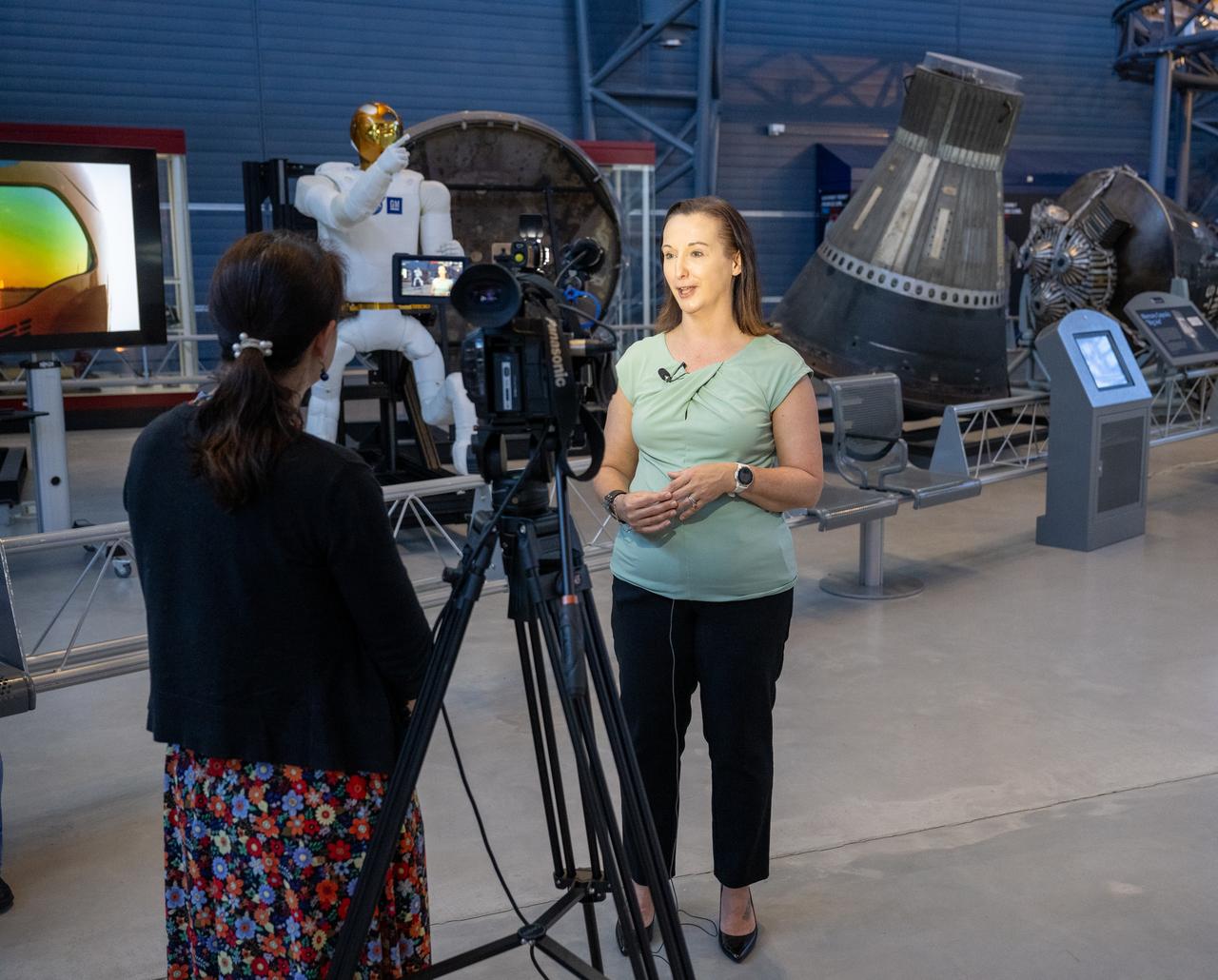
Space history curator Jennifer Levasseur participates in a media opportunity at the Smithsonian National Air and Space Museum’s Steve F. Udvar-Hazy Center Thursday, Oct. 24, 2024, in Chantilly, Va. Robonaut 2, the first humanoid robot to fly to space, is displayed publicly for the first time near the space shuttle Discovery. Photo Credit: (NASA/Keegan Barber)
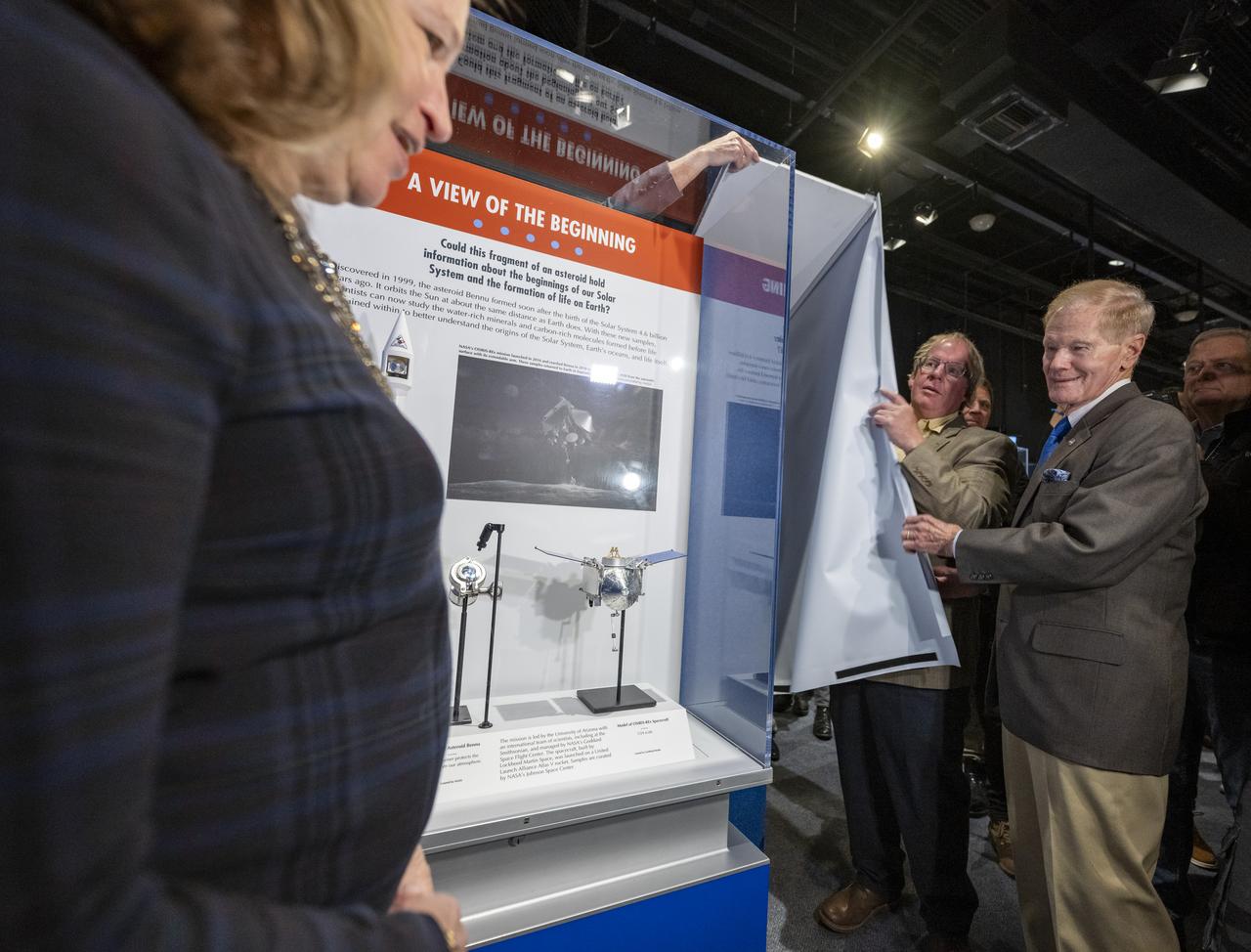
From left to right, Smithsonian Under Secretary for Science and Research Ellen Stofan, National Museum of Natural History curator of meteorites Tim McCoy, and NASA Administrator Bill Nelson unveil the first public display of a sample from asteroid Bennu, Friday, Nov. 3, 2023, at the Smithsonian’s National Museum of Natural History in Washington. The sample was collected from the carbon rich near Earth asteroid Bennu in October 2020 by NASA’s OSIRIS-REx spacecraft. Photo Credit: (NASA/Keegan Barber)
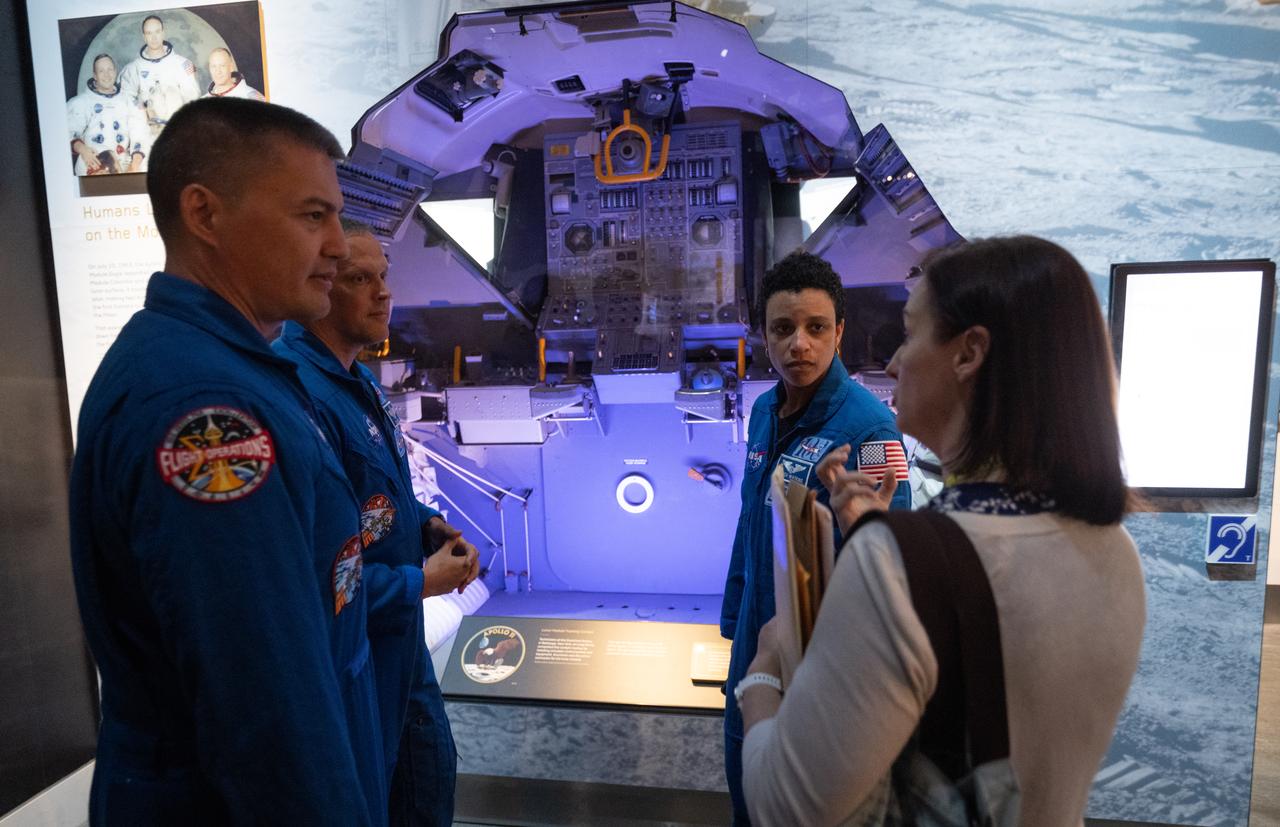
NASA astronauts Kjell Lindgren, Robert Hines, and Jessica Watkins talk with Smithsonian National Air and Space Museum curator Jennifer Levasseur in front of the Apollo Lunar Module simulator in the Destination Moon exhibit during a tour, Tuesday, March 28, 2023 at the Smithsonian’s National Air and Space Museum in Washington. Lindgren, Hines, and Watkins spent 170 days in space as part of Expeditions 67 and 68 aboard the International Space Station. Photo Credit: (NASA/Joel Kowsky)
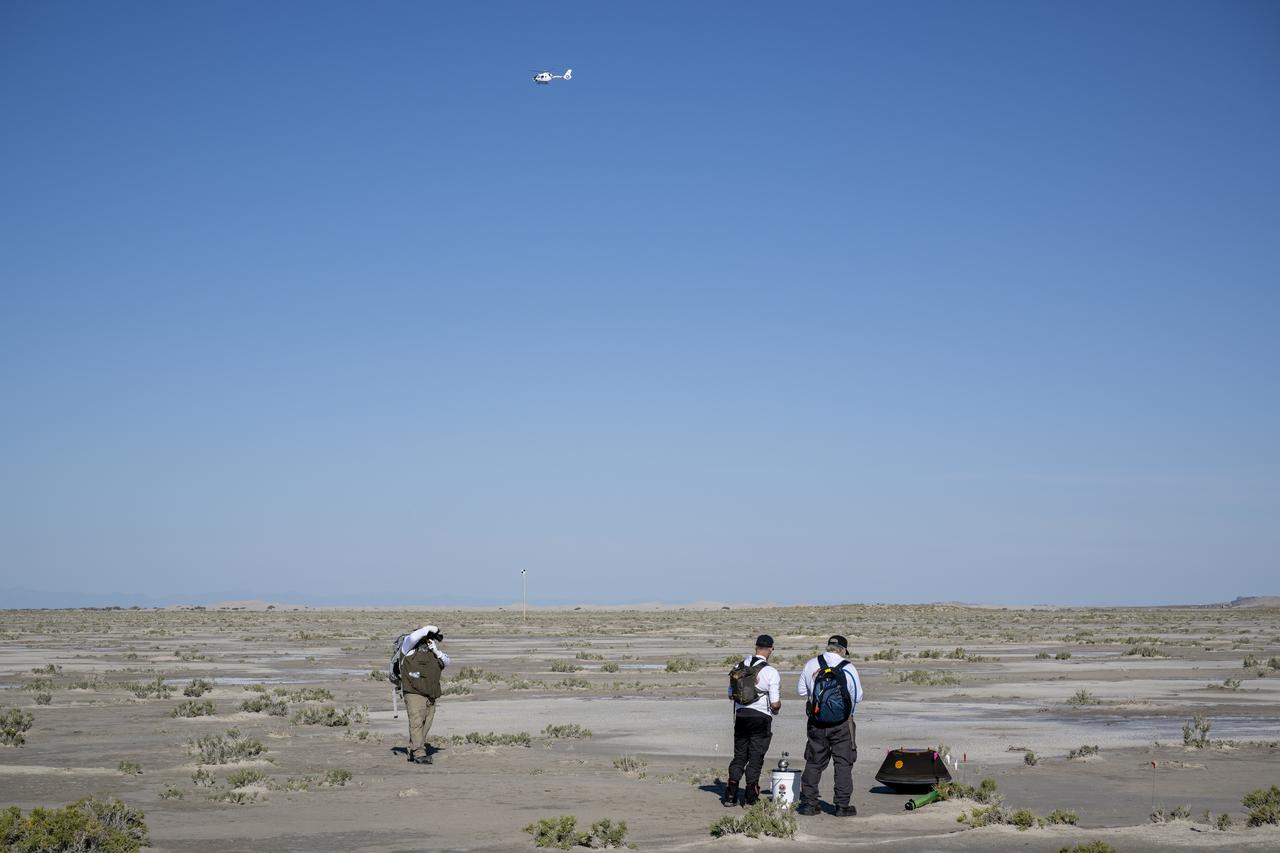
From left to right, NASA Astromaterials Curator Francis McCubbin, University of Arizona OSIRIS-REx Principal Investigator Dante Lauretta, and NASA Sample Return Capsule Science Lead Scott Sandford collect science data, Sunday, Sept. 24, 2023, shortly after the sample return capsule from NASA’s OSIRIS-REx mission landed at the Department of Defense's Utah Test and Training Range. The sample was collected from the asteroid Bennu in October 2020 by NASA’s OSIRIS-REx spacecraft. Photo Credit: (NASA/Keegan Barber)
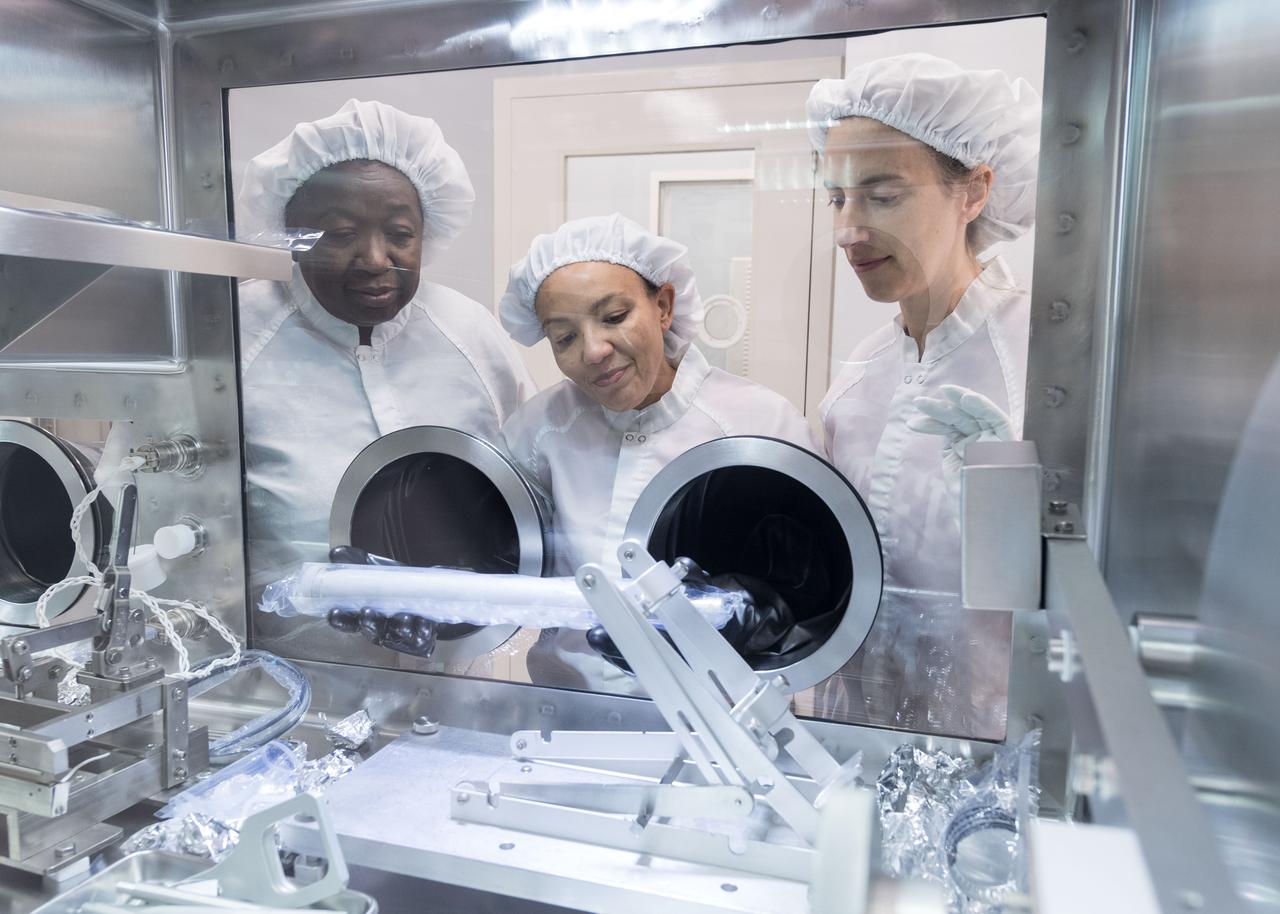
jsc2019e063585 (Nov. 5, 2019) --- (From left) Andria Mosie, Charis Krysher and Juliane Gross, lunar sample curators, positioning the Apollo 17 drive tube prior to removing from its teflon bag and extruding sample 73002 at NASA's Johnson Space Center. The extrusion, which occurred Nov. 5, 2019 at Johnson Space Center in Houston, was done as part of NASA’s Apollo Next-Generation Sample Analysis initiative
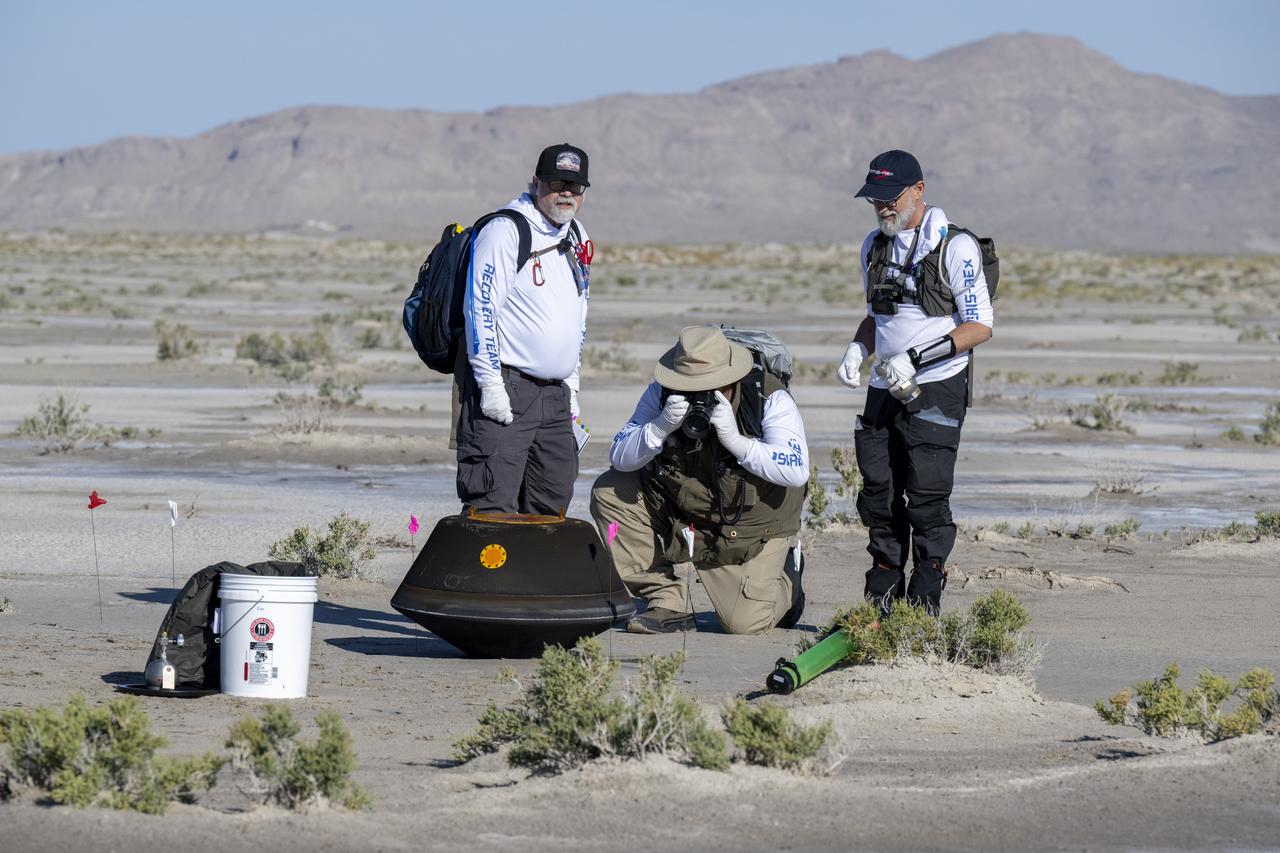
From left to right, NASA Sample Return Capsule Science Lead Scott Sandford, NASA Astromaterials Curator Francis McCubbin, and University of Arizona OSIRIS-REx Principal Investigator Dante Lauretta, collect science data, Sunday, Sept. 24, 2023, shortly after the sample return capsule from NASA’s OSIRIS-REx mission landed at the Department of Defense's Utah Test and Training Range. The sample was collected from the asteroid Bennu in October 2020 by NASA’s OSIRIS-REx spacecraft. Photo Credit: (NASA/Keegan Barber)
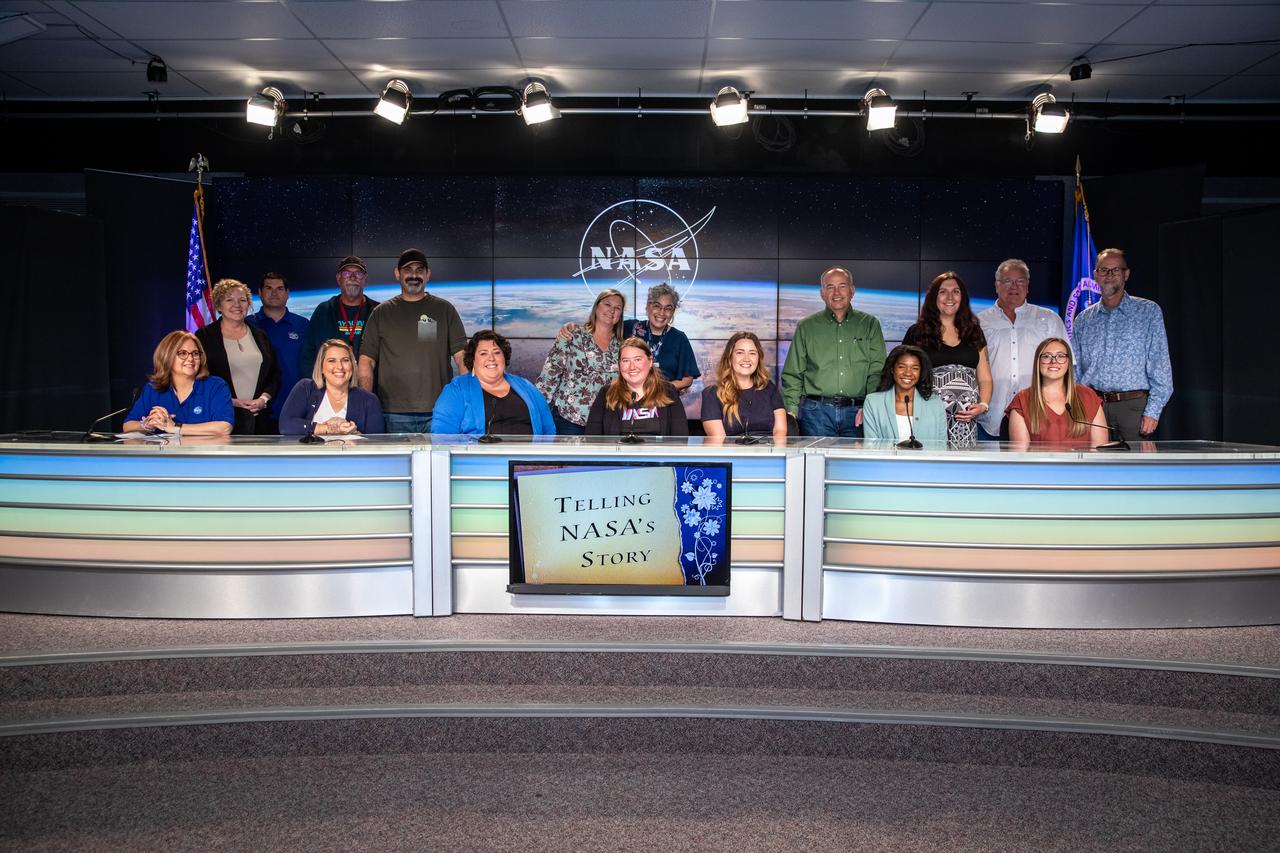
Employees who work at NASA’s Kennedy Space Center Press Site are photographed inside the News Auditorium at the Florida spaceport on March 23, 2023, following a panel discussion held to commemorate Women’s History Month. The event, titled “Celebrating the Women Who Tell Our Stories,” included women who typically work behind the scenes sharing what goes into conceiving, creating, and curating NASA stories. Panelists included Kennedy’s news chief, members of the broadcast team, public affairs specialists, a video producer, and a writer.
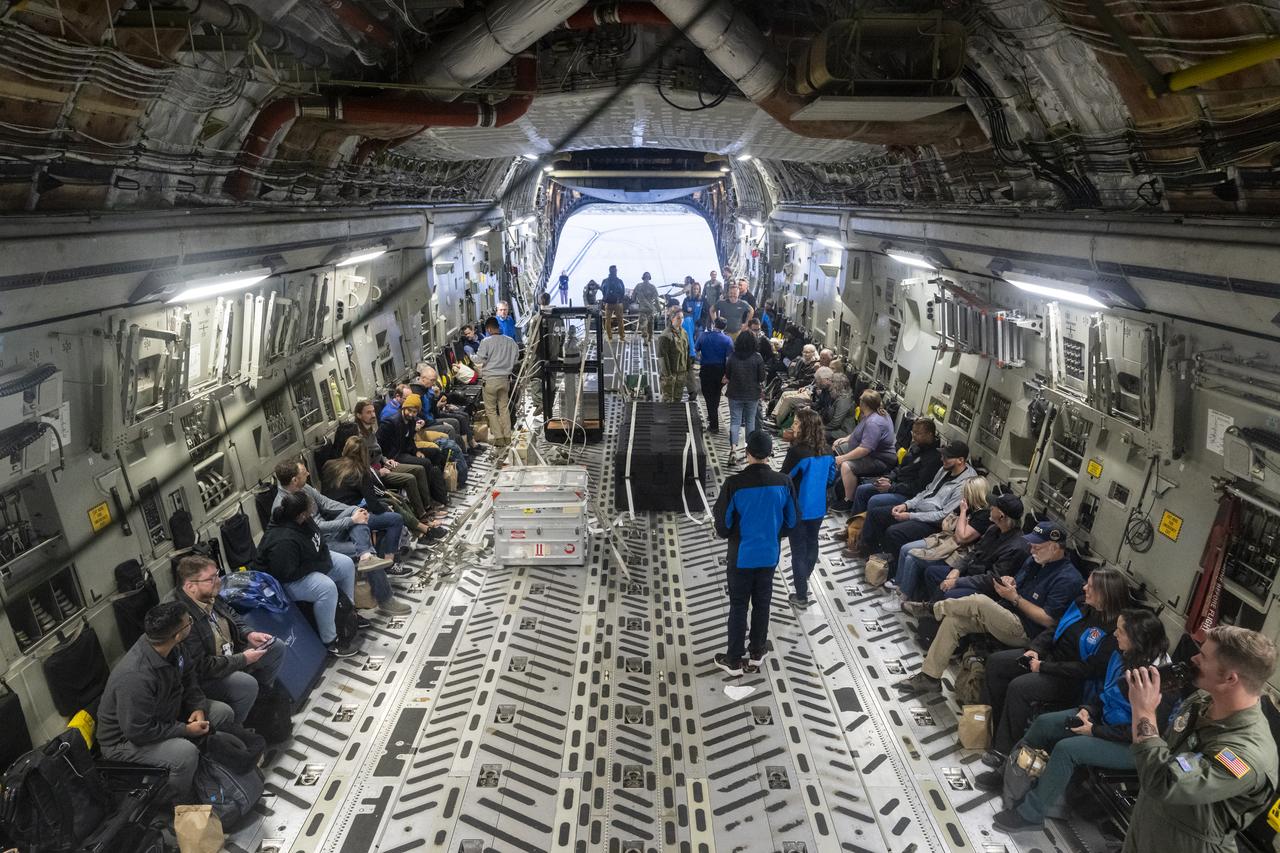
Recovery and curation teams join a container with the science canister from NASA’s OSIRIS-REx mission aboard a C-17 Globemaster aircraft, Monday, Sept. 25, 2023, at the Department of Defense's Utah Test and Training Range. The sample was collected from the asteroid Bennu in October 2020 by NASA’s OSIRIS-REx spacecraft. Photo Credit: (NASA/Keegan Barber)
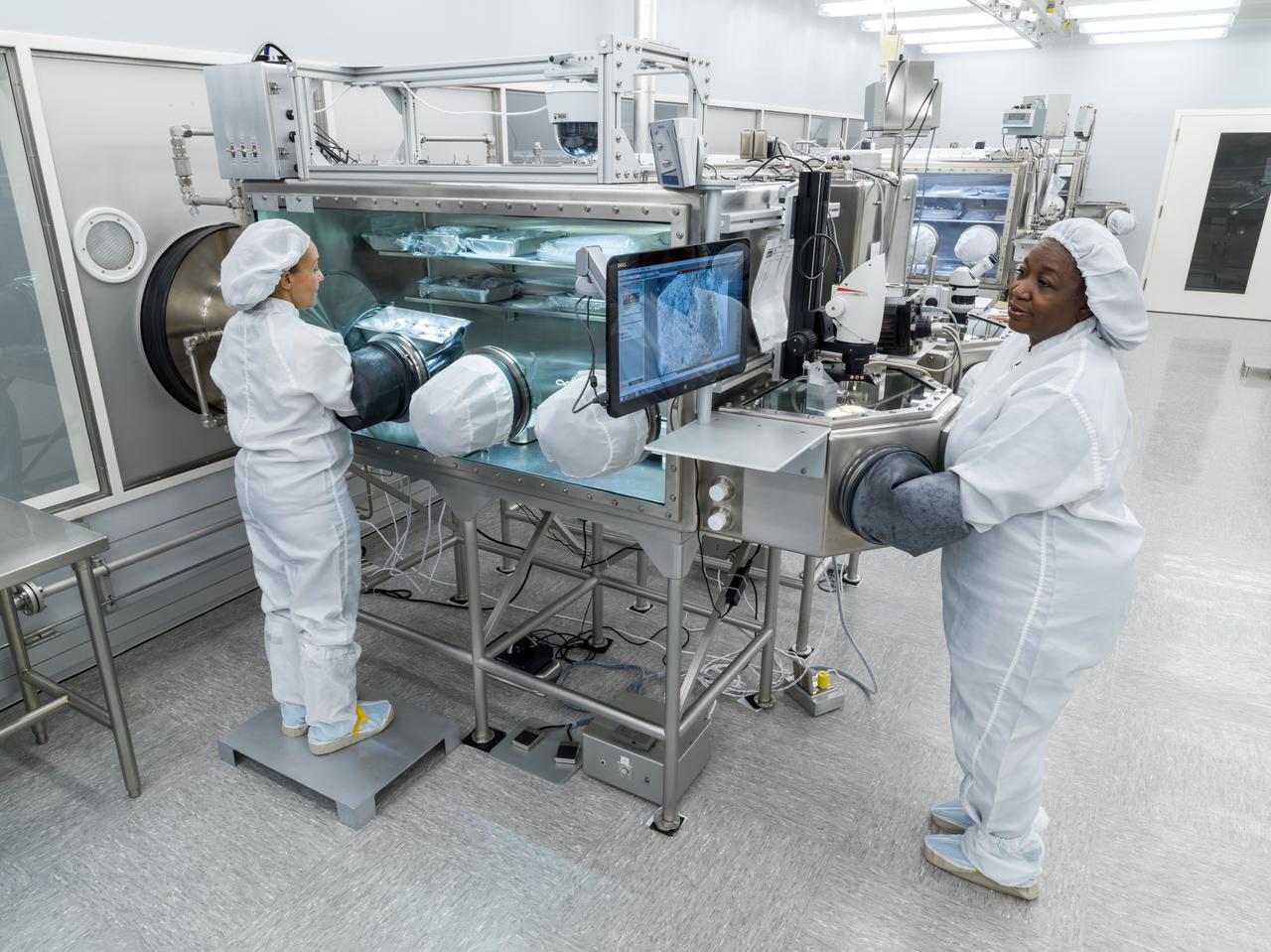
jsc2019e023774 --- Lunar sample processors work in the Lunar Lab at NASA's Johnson Space Center in Houston.
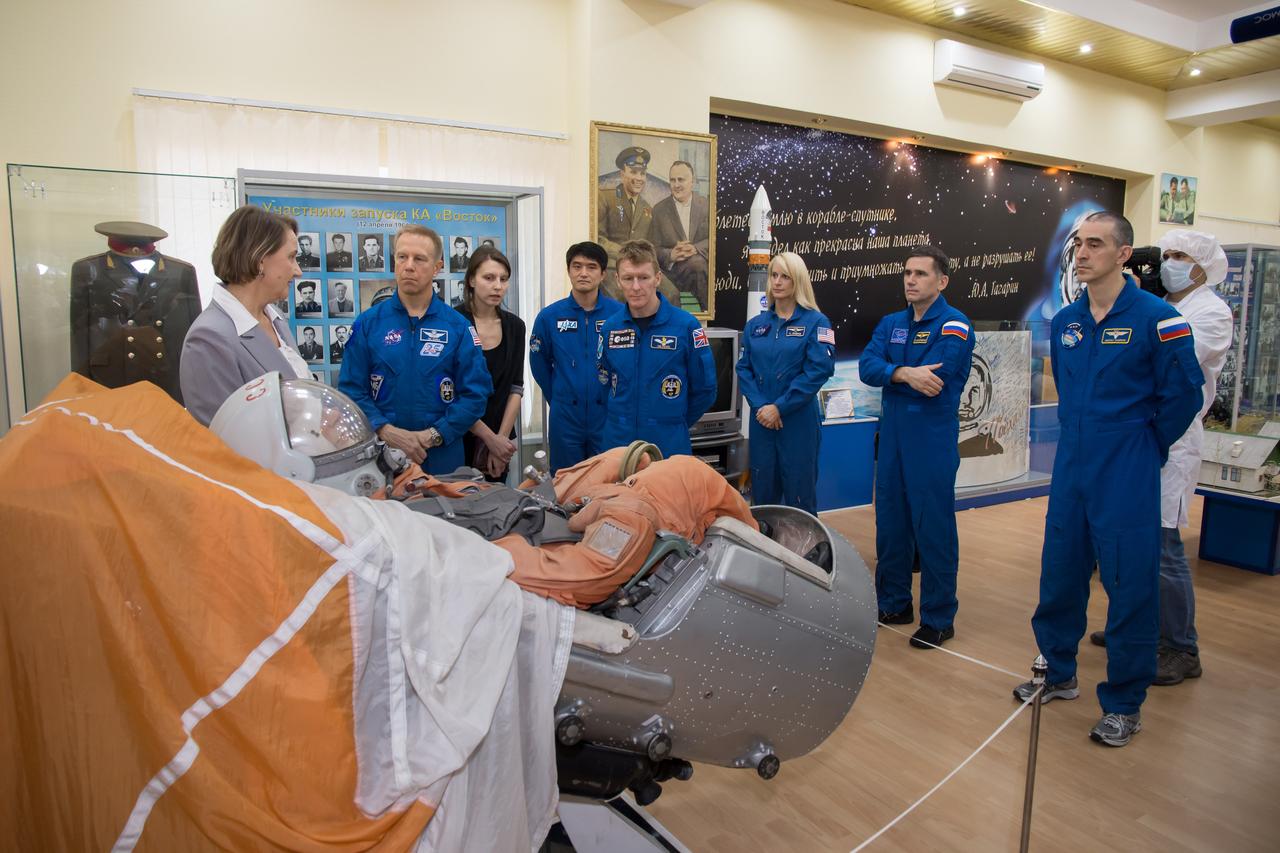
During a break from training, the Expedition 46-47 prime and backup crewmembers toured the Korolev Museum at the Baikonur Cosmodrome in Kazakhstan Dec. 10 and listened to museum curators discuss past Russian space memorabilia. From left to right are prime crewmember Tim Kopra of NASA, backup crewmember Takuya Onishi of the Japan Aerospace Exploration Agency, prime crewmember Tim Peake of the European Space Agency, backup crewmember Kate Rubins of NASA, prime crewmember Yuri Malenchenko of the Russian Federal Space Agency (Roscosmos) and backup crewmember Anatoly Ivanishin of Roscosmos. Kopra, Peake and Malenchenko will launch Dec. 15 on the Soyuz TMA-19M spacecraft for a six-month mission on the International Space Station. NASA/Victor Zelentsov
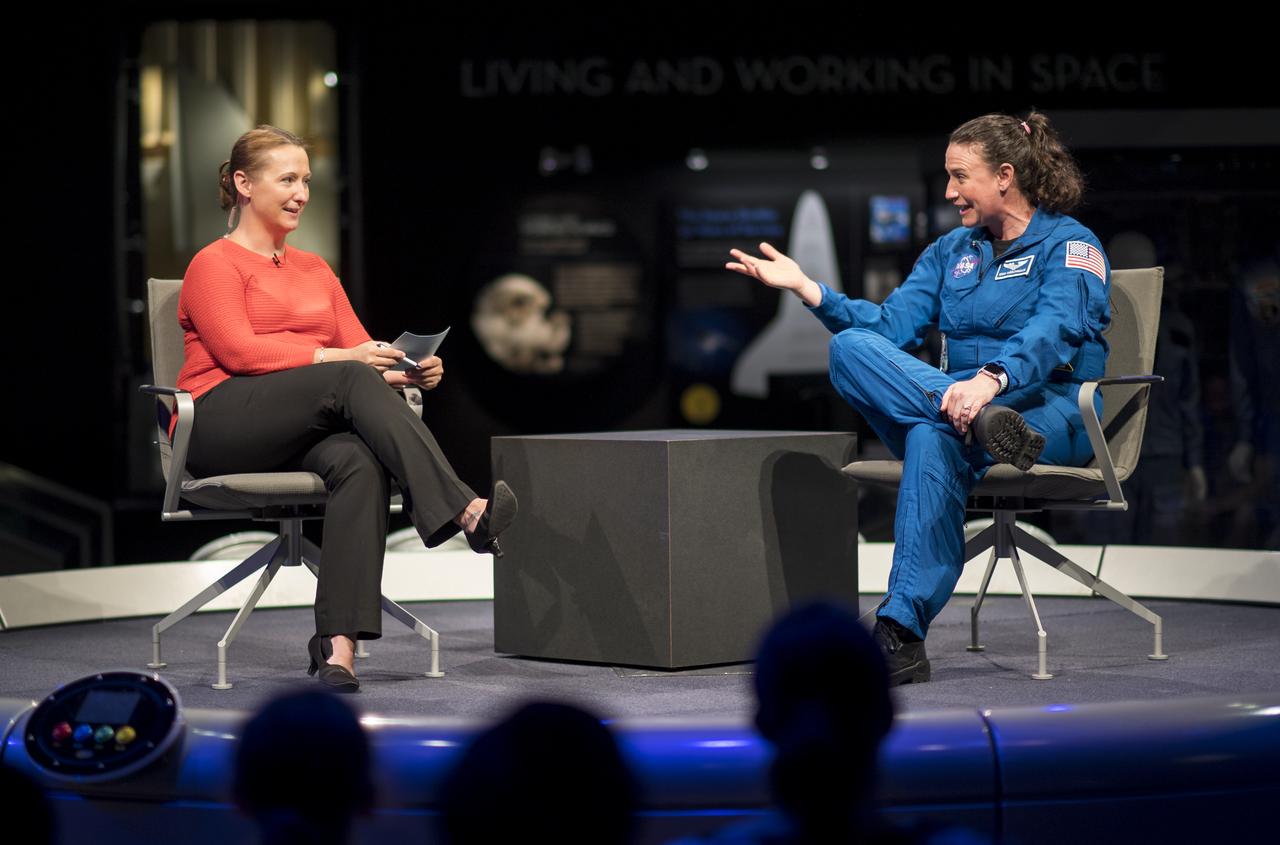
Smithsonian National Air and Space Museum curator Jennifer Levasseu speaks with NASA astronaut Serena Auñón-Chancellor about her time onboard the International Space Station during "What's New in Aerospace" Friday, June 14, 2019 the Smithsonian's National Air and Space Museum in Washington, DC. Auñón-Chancellor spent 197 days living and working onboard the orbital laboratory as part of Expeditions 56 and 57, contributing to hundreds of experiments in biology, biotechnology, physical science, and Earth science while there. She began her career at NASA as a flight surgeon before being selected as an astronaut in 2009. Photo Credit: (NASA/Joel Kowsky)
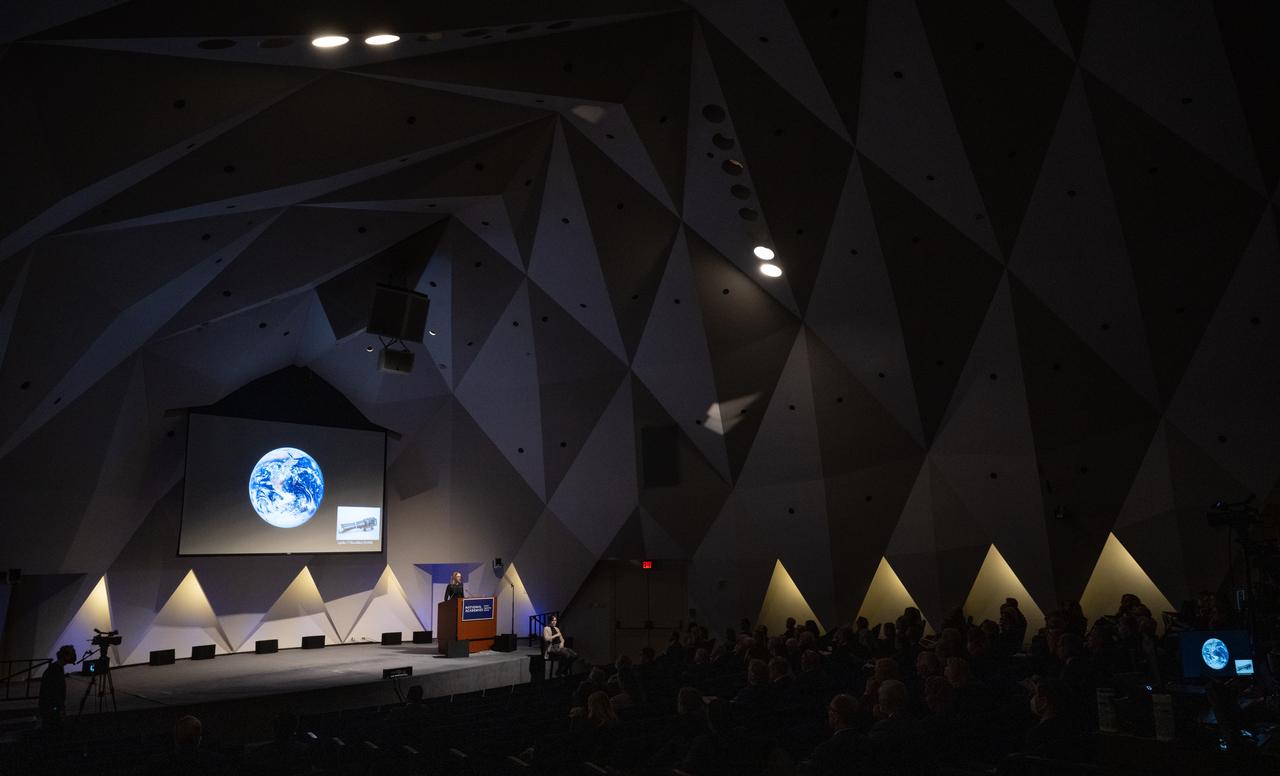
Teasel Muir-Harmony, curator of the Apollo collection at the Smithsonian National Air and Space Museum, speaks during an event celebrating the 50th anniversary of the Apollo 17 mission, Wednesday, Dec. 14, 2022, at the National Academies of Science in Washington. The three-astronaut crew of Apollo 17 - commander Eugene Cernan, lunar module pilot Harrison Schmitt, and command module pilot Ronald Evans, embarked on the last mission of the Apollo program to land humans on the Moon in December of 1972. Cernan and Schmitt spent three days on the lunar surface collecting samples and performing scientific experiments before lifting off from the Taurus-Littrow Valley on December 14, 1972. Photo Credit: (NASA/Joel Kowsky)
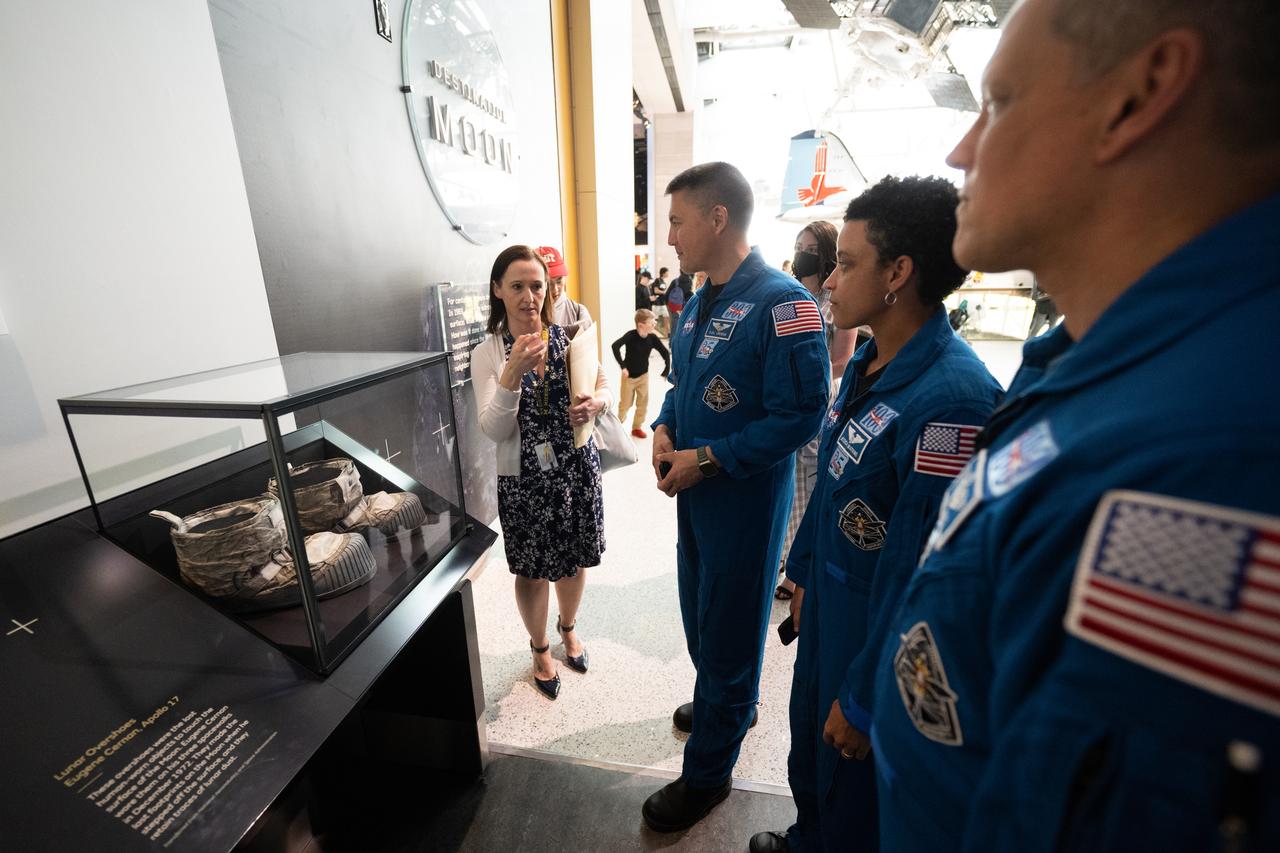
Smithsonian National Air and Space Museum curator Jennifer Levasseur, left, speaks with NASA astronauts Kjell Lindgren, Jessica Watkins, and Robert Hines as they view the lunar overshoes worn by Apollo 17 astronaut Eugene Cernan on the final lunar landing of the Apollo Program in the Destination Moon exhibit during a tour, Tuesday, March 28, 2023 at the Smithsonian’s National Air and Space Museum in Washington. Lindgren, Hines, and Watkins spent 170 days in space as part of Expeditions 67 and 68 aboard the International Space Station. Photo Credit: (NASA/Joel Kowsky)
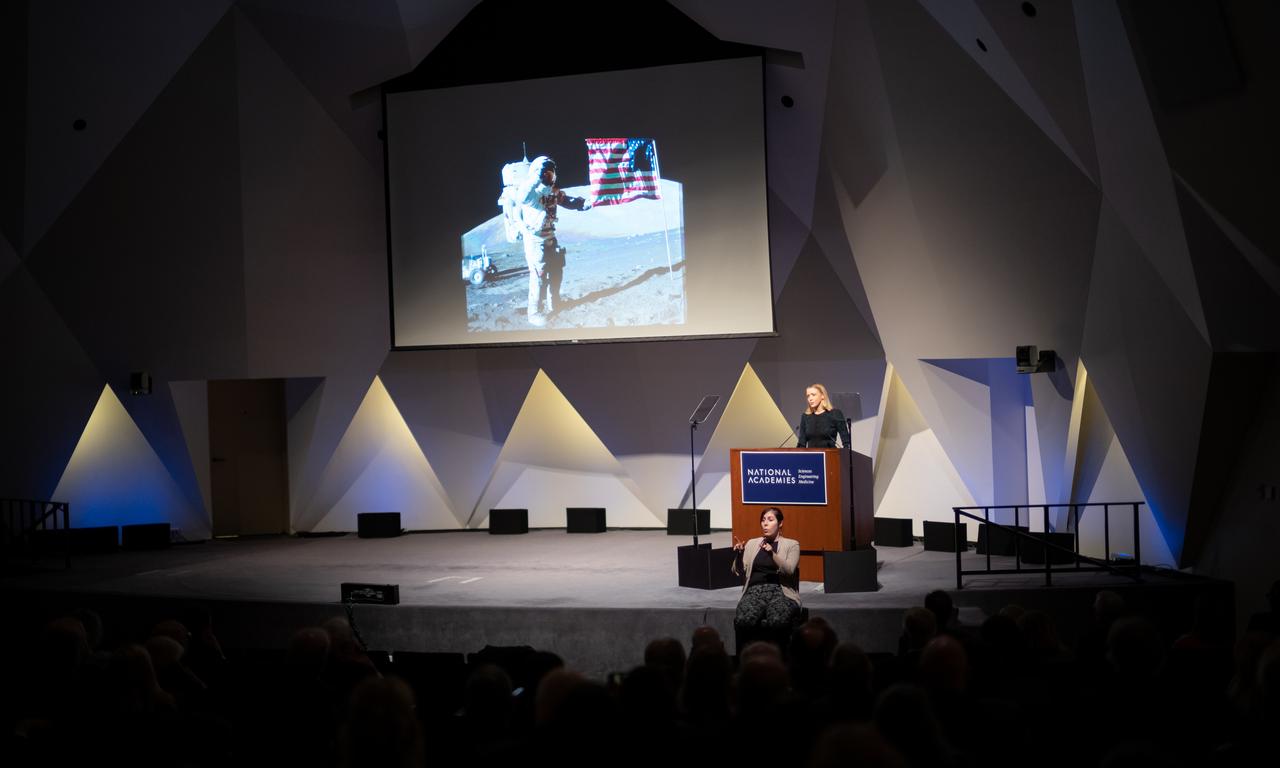
Teasel Muir-Harmony, curator of the Apollo collection at the Smithsonian National Air and Space Museum speaks during an event celebrating the 50th anniversary of the Apollo 17 mission, Wednesday, Dec. 14, 2022, at the National Academies of Science in Washington. The three-astronaut crew of Apollo 17 - commander Eugene Cernan, lunar module pilot Harrison Schmitt, and command module pilot Ronald Evans, embarked on the last mission of the Apollo program to land humans on the Moon in December of 1972. Cernan and Schmitt spent three days on the lunar surface collecting samples and performing scientific experiments before lifting off from the Taurus-Littrow Valley on December 14, 1972. Photo Credit: (NASA/Joel Kowsky)
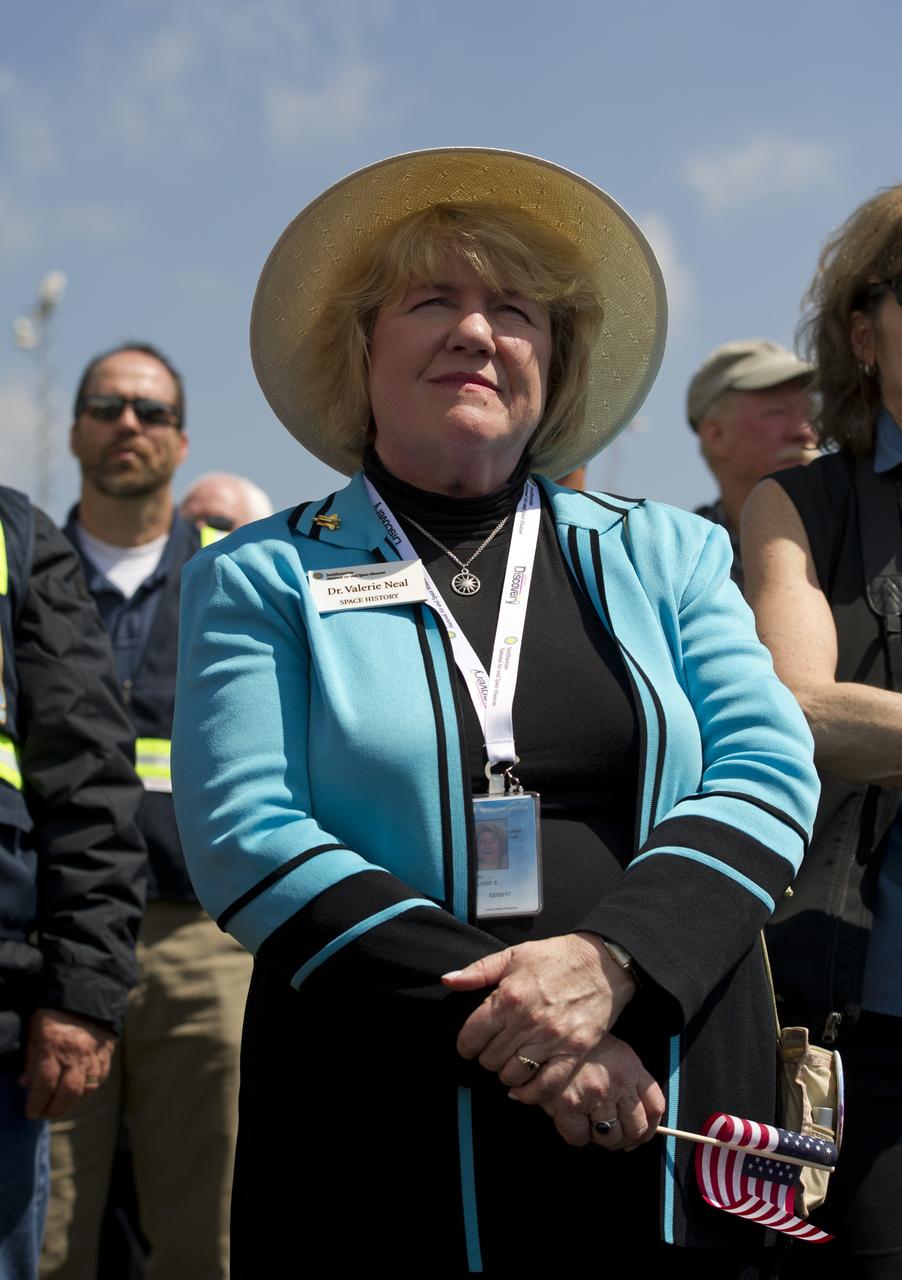
Dr. Valerie Neal, curator for the shuttle program in the Space History office at the National Air and Space Museum, attends the transfer ceremony for space shuttle Discovery, Thursday, April 19, 2012, at the Smithsonian's Steven F. Udvar-Hazy Center in Chantilly, Va. Discovery, the first orbiter retired from NASA’s shuttle fleet, which completed 39 missions, spent 365 days in space, orbited the Earth 5,830 times, and traveled 148,221,675 miles will take the place of Enterprise at the center to commemorate past achievements in space and to educate and inspire future generations of explorers at the center. Photo Credit: (NASA/Carla Cioffi)
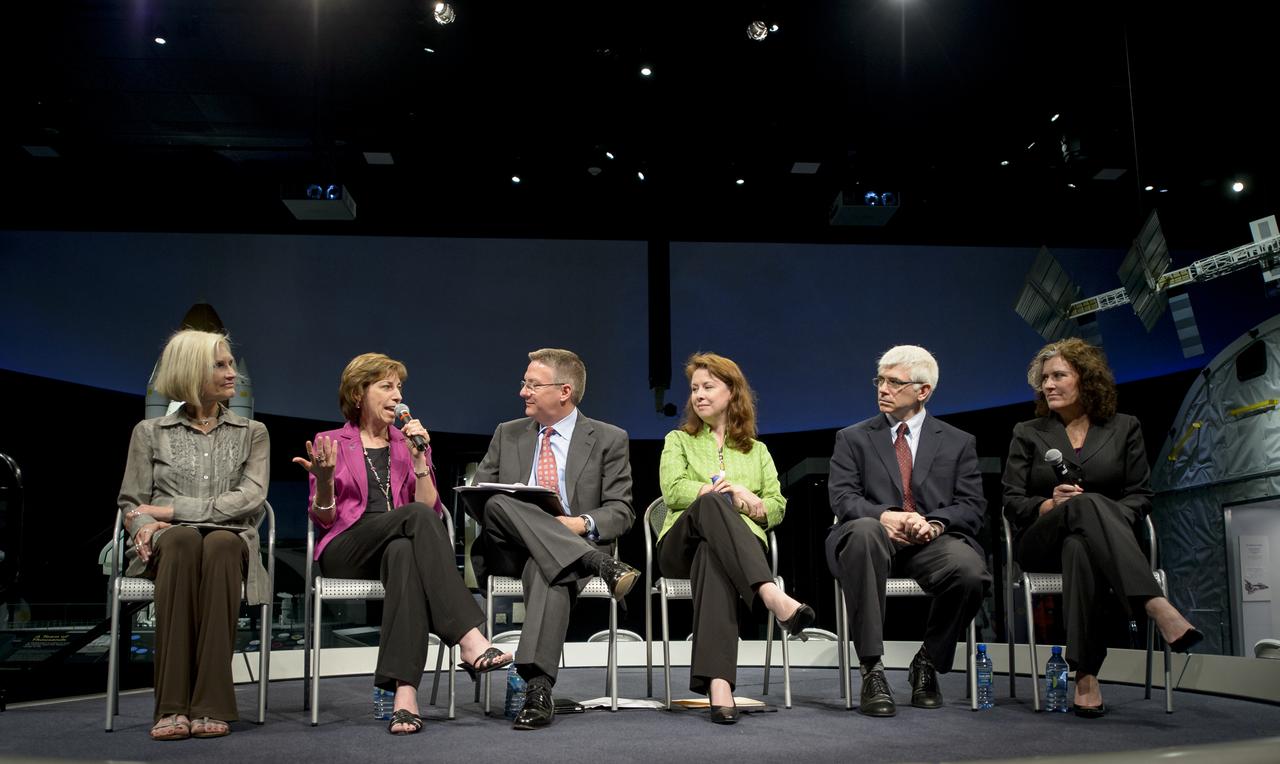
Panel discussion participants, from left, Linda Billings, research professor, Media and Public Affairs, The George Washington University, Ellen Ochoa, director, NASA Johnson Space Center, Tom Costello, NBC News and moderator for the event, Margaret Weitekamp, space history curator, National Air and Space Museum, Dan Vergano, science writer for USA Today, and Rene McCormick, director of standards and quality, National Math and Science Initiative, are seen during a program titled "Sally Ride: How Her Historic Space Mission Opened Doors for Women in Science" held on Friday, May 17, 2013 at the National Air and Space Museum in Washington. Photo Credit: (NASA/Bill Ingalls)
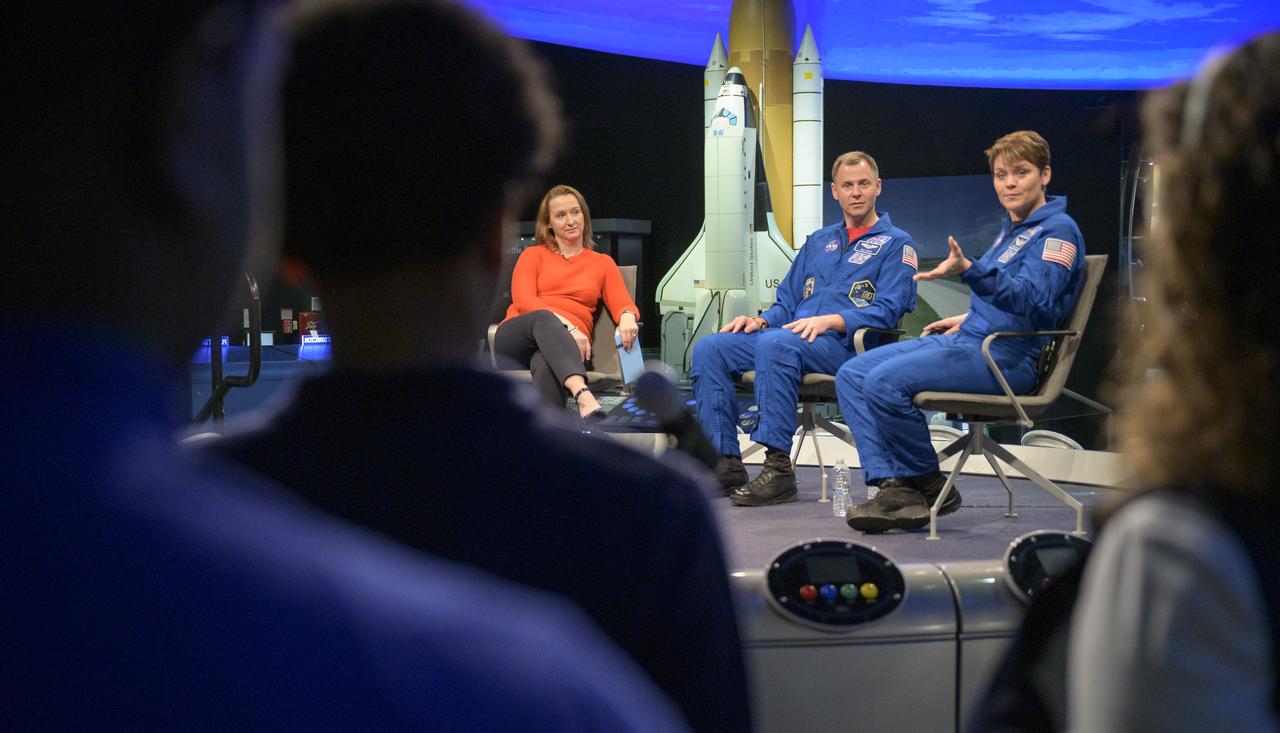
NASA astronauts Nick Hague and Anne McClain talk about their experiences onboard the International Space Station with Smithsonian National Air and Space Museum curator Jennifer Levasseu, Tuesday, Jan. 14, 2020, at the Smithsonian National Air and Space Museum in Washington. Hague most recently spent 203 days living and working onboard the International Space Station as part of Expeditions 59 and 60. McClain most recently spent 204 days living and working onboard the International Space Station as part of Expeditions 58 and 59. Photo Credit: (NASA/Bill Ingalls)
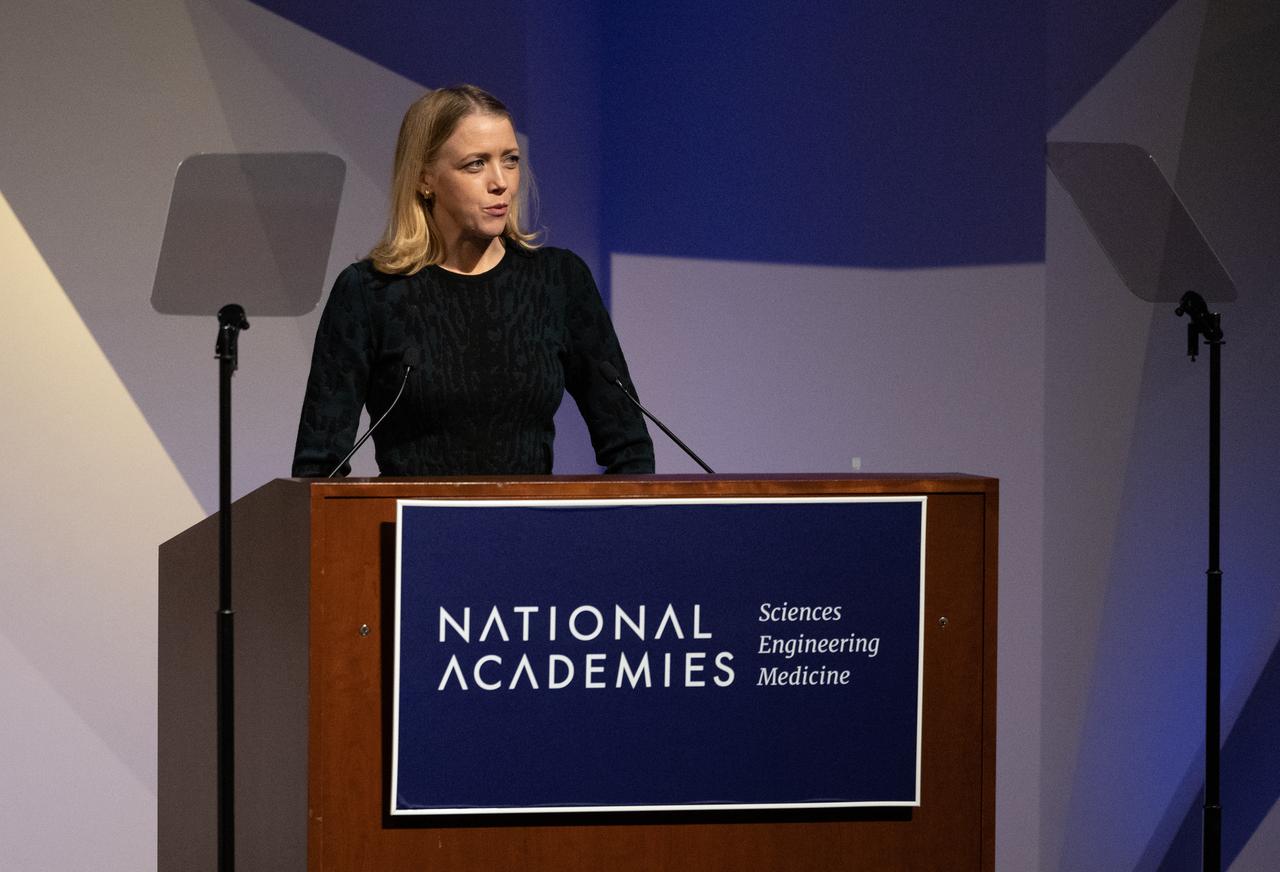
Teasel Muir-Harmony, curator of the Apollo collection at the Smithsonian National Air and Space Museum, speaks during an event celebrating the 50th anniversary of the Apollo 17 mission, Wednesday, Dec. 14, 2022, at the National Academies of Science in Washington. The three-astronaut crew of Apollo 17 - commander Eugene Cernan, lunar module pilot Harrison Schmitt, and command module pilot Ronald Evans, embarked on the last mission of the Apollo program to land humans on the Moon in December of 1972. Cernan and Schmitt spent three days on the lunar surface collecting samples and performing scientific experiments before lifting off from the Taurus-Littrow Valley on December 14, 1972. Photo Credit: (NASA/Joel Kowsky)
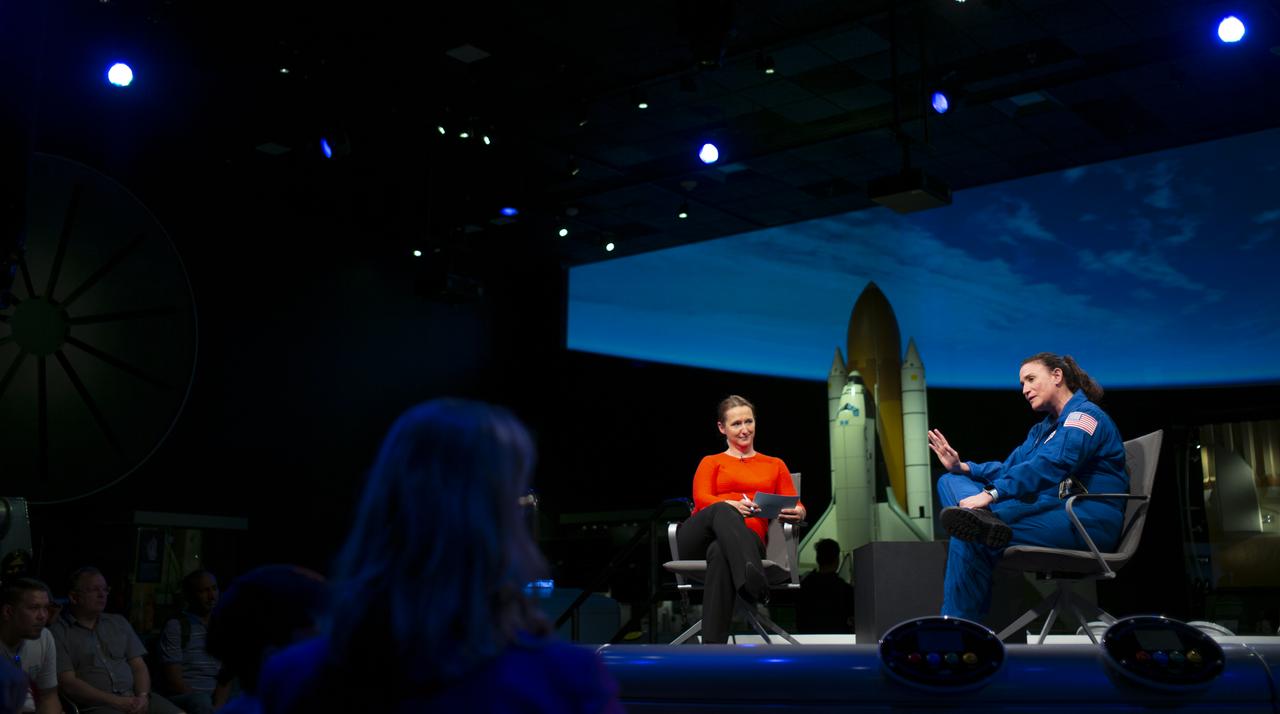
Smithsonian National Air and Space Museum curator Jennifer Levasseu speaks with NASA astronaut Serena Auñón-Chancellor about her time onboard the International Space Station during "What's New in Aerospace" Friday, June 14, 2019 the Smithsonian's National Air and Space Museum in Washington, DC. Auñón-Chancellor spent 197 days living and working onboard the orbital laboratory as part of Expeditions 56 and 57, contributing to hundreds of experiments in biology, biotechnology, physical science, and Earth science while there. She began her career at NASA as a flight surgeon before being selected as an astronaut in 2009. Photo Credit: (NASA/Joel Kowsky)
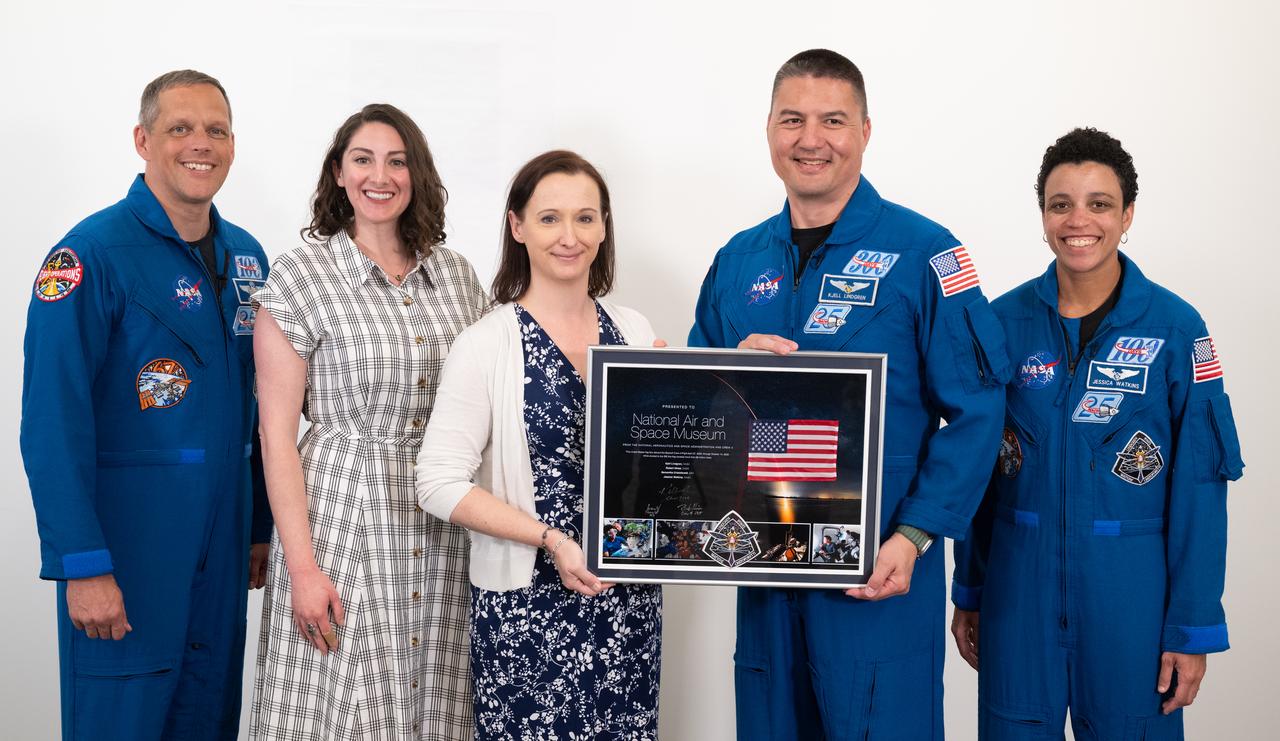
NASA astronauts Robert Hines, left, Kjell Lindgren, second from right, and Jessica Watkins, right, pose for a picture with Smithsonian National Air and Space Museum curators Emily Margolis, second from left and Jennifer Levasseur, center, after presenting a montage from their mission to the International Space Station, Tuesday, March 28, 2023 at the Smithsonian’s National Air and Space Museum in Washington. Lindgren, Hines, and Watkins spent 170 days in space as part of Expeditions 67 and 68 aboard the International Space Station. Photo Credit: (NASA/Joel Kowsky)
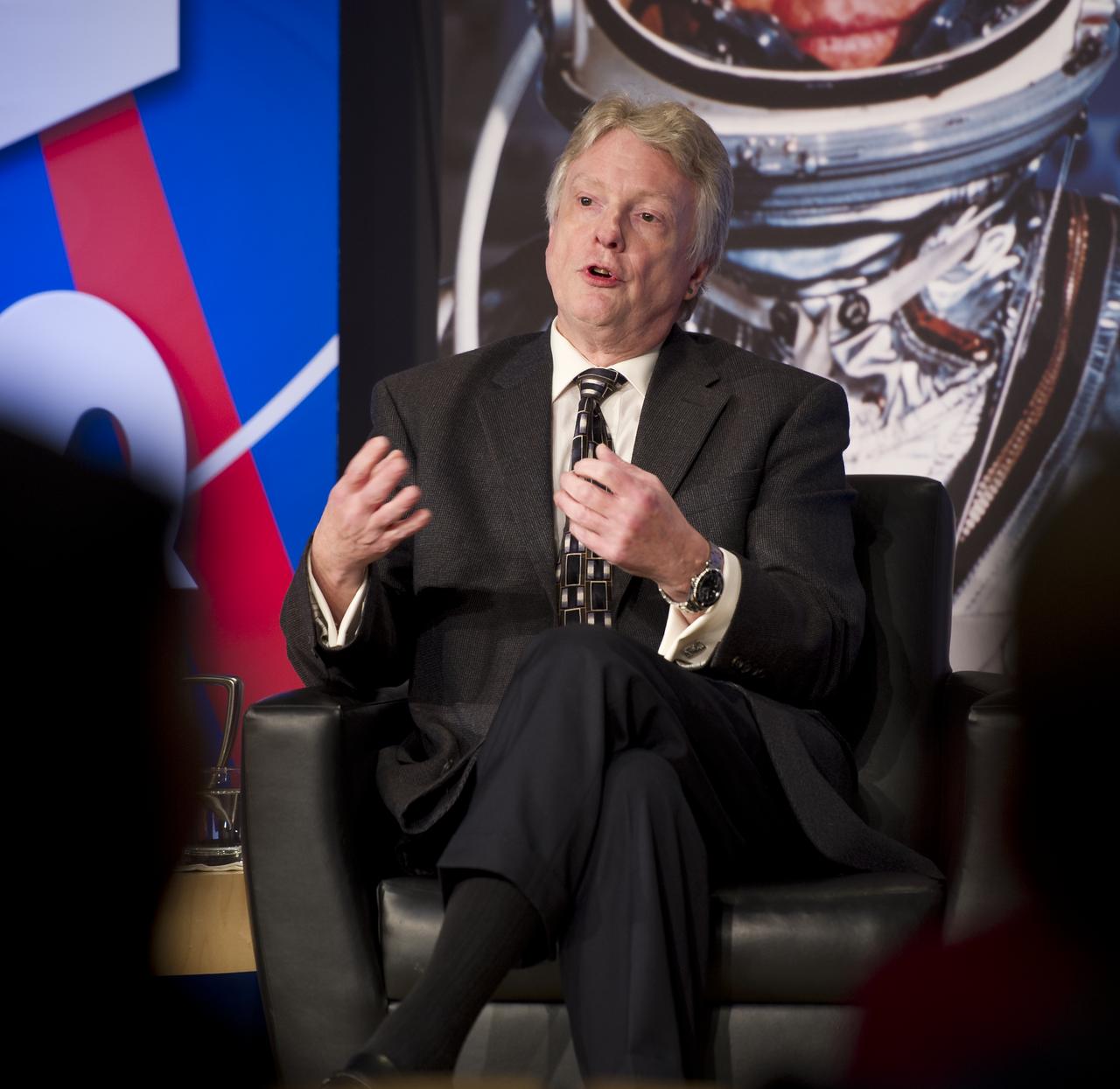
Roger Launius, senior curator, Smithsonian Institution National Air and Space Museum, talks during the NASA Future Forum panel titled "Shifting Roles for Public, Private, and International Players in Space" at The Ohio State University on Tuesday, Feb. 21, 2012 in Columbus, Ohio. The NASA Future Forum features panel discussions on the importance of education to our nation's future in space, the benefit of commercialized space technology to our economy and lives here on Earth, and the shifting roles for the public, commercial and international communities in space. Photo Credit: (NASA/Bill Ingalls)
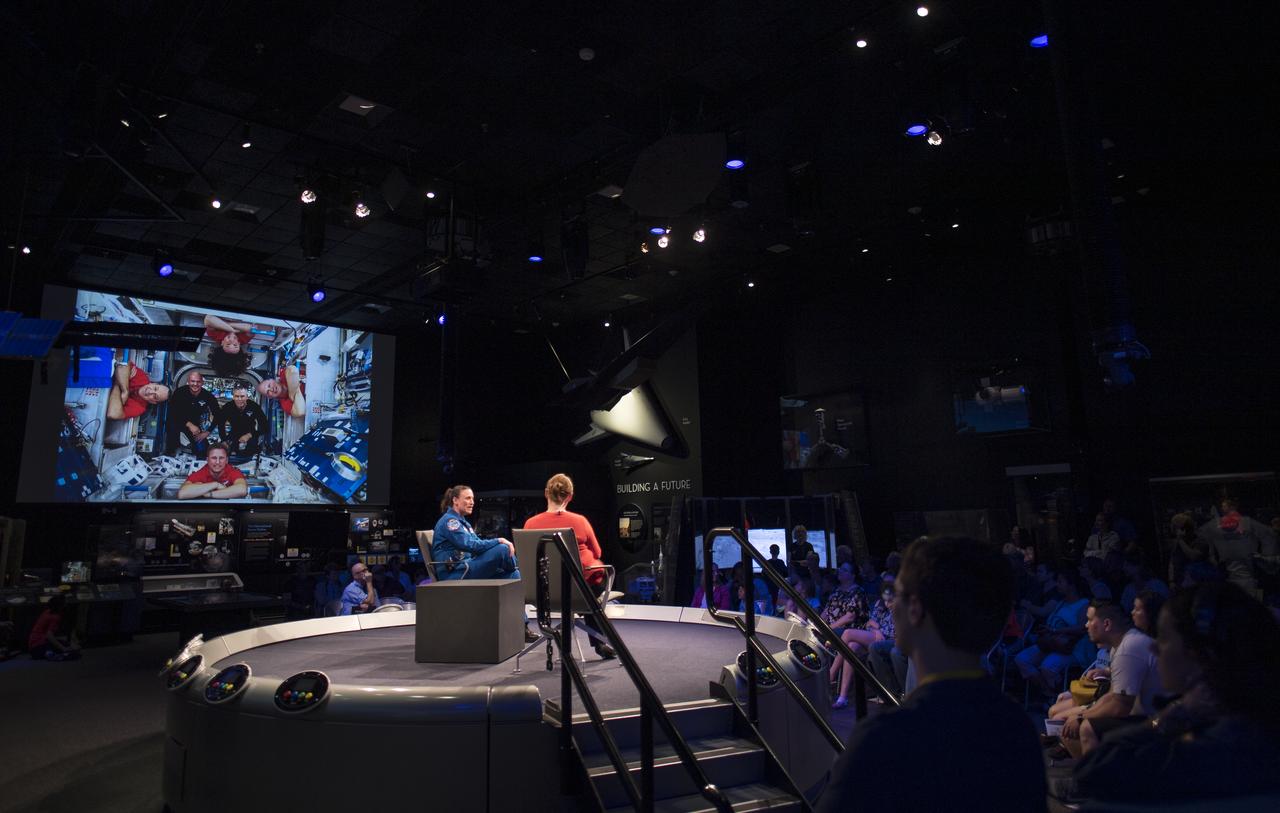
Smithsonian National Air and Space Museum curator Jennifer Levasseu speaks with NASA astronaut Serena Auñón-Chancellor about her time onboard the International Space Station during "What's New in Aerospace" Friday, June 14, 2019 the Smithsonian's National Air and Space Museum in Washington, DC. Auñón-Chancellor spent 197 days living and working onboard the orbital laboratory as part of Expeditions 56 and 57, contributing to hundreds of experiments in biology, biotechnology, physical science, and Earth science while there. She began her career at NASA as a flight surgeon before being selected as an astronaut in 2009. Photo Credit: (NASA/Joel Kowsky)
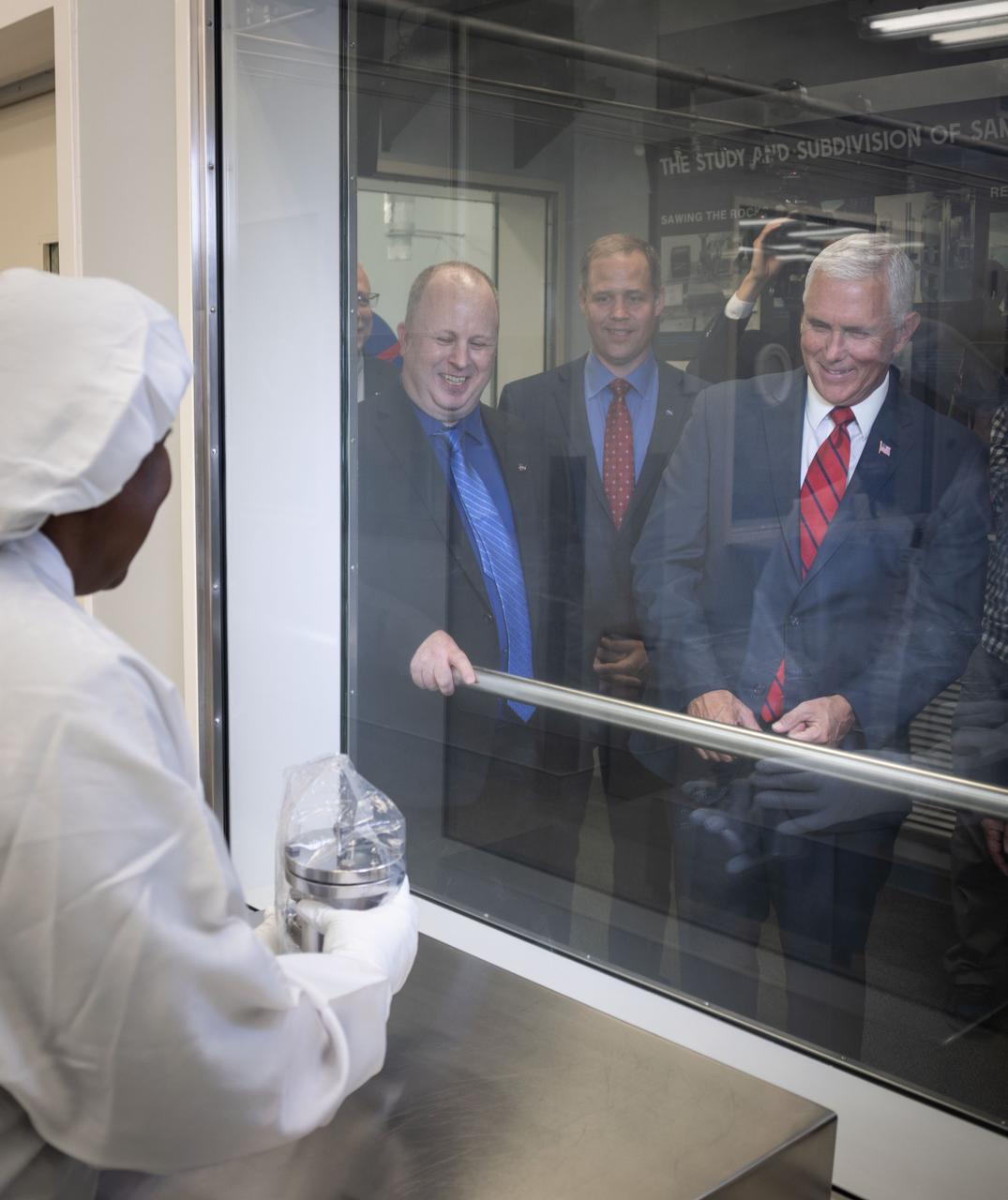
jsc2018e076655 (Aug. 23, 2018) --- Vice President Mike Pence visited NASA’s Johnson Space Center in Houston on Aug. 23, 2018, to discuss the future of space exploration and other elements of human spaceflight. During his trip to the Johnson Space Center, the Vice President also toured the laboratory housing the moon rocks retrieved during the Apollo program’s lunar missions and extraterrestrial samples from other uncrewed sample return missions. Apollo Lunar Sample Principle Scientist Andrea Mosie held a lunar sample up for inspection by the Vice President, who was joined in the viewing room behind protective glass by Apollo Lunar Sample Curator Ryan Ziegler.
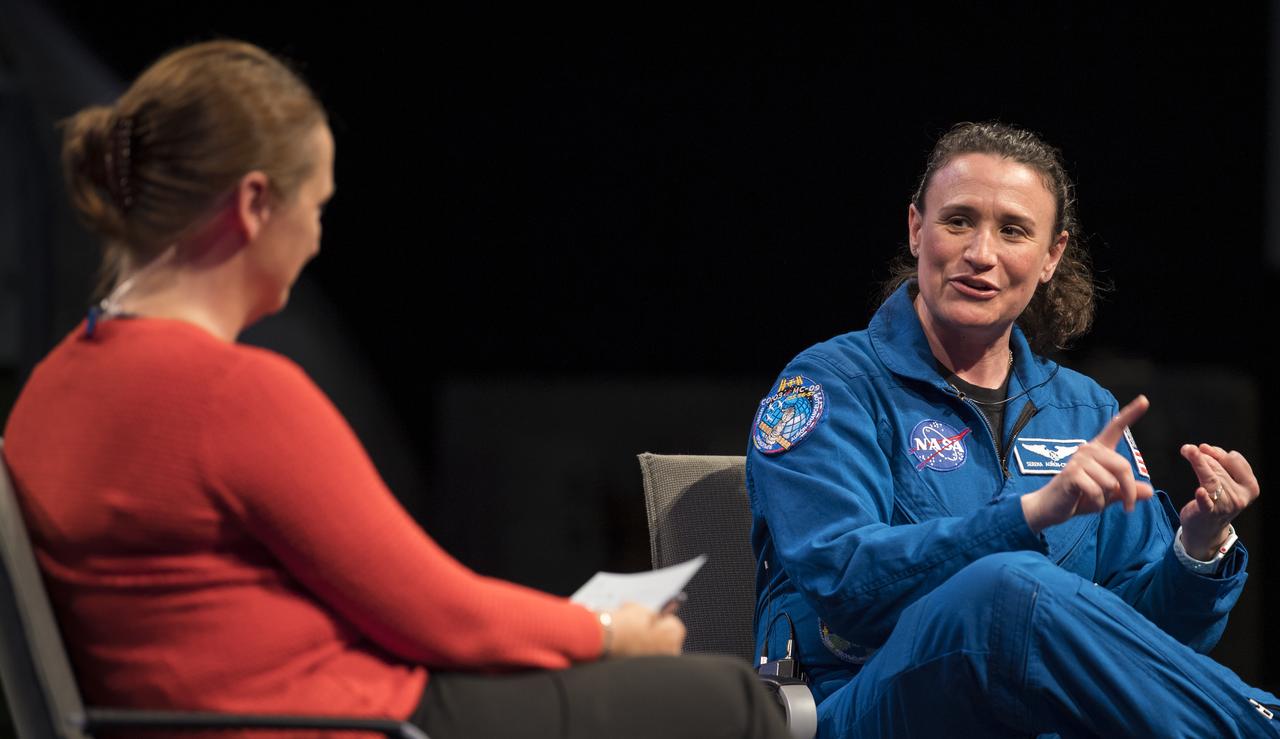
Smithsonian National Air and Space Museum curator Jennifer Levasseu speaks with NASA astronaut Serena Auñón-Chancellor about her time onboard the International Space Station during "What's New in Aerospace" Friday, June 14, 2019 the Smithsonian's National Air and Space Museum in Washington, DC. Auñón-Chancellor spent 197 days living and working onboard the orbital laboratory as part of Expeditions 56 and 57, contributing to hundreds of experiments in biology, biotechnology, physical science, and Earth science while there. She began her career at NASA as a flight surgeon before being selected as an astronaut in 2009. Photo Credit: (NASA/Joel Kowsky)

Smithsonian National Air and Space Museum curator Jennifer Levasseu speaks with NASA astronaut Serena Auñón-Chancellor about her time onboard the International Space Station during "What's New in Aerospace" Friday, June 14, 2019 the Smithsonian's National Air and Space Museum in Washington, DC. Auñón-Chancellor spent 197 days living and working onboard the orbital laboratory as part of Expeditions 56 and 57, contributing to hundreds of experiments in biology, biotechnology, physical science, and Earth science while there. She began her career at NASA as a flight surgeon before being selected as an astronaut in 2009. Photo Credit: (NASA/Joel Kowsky)
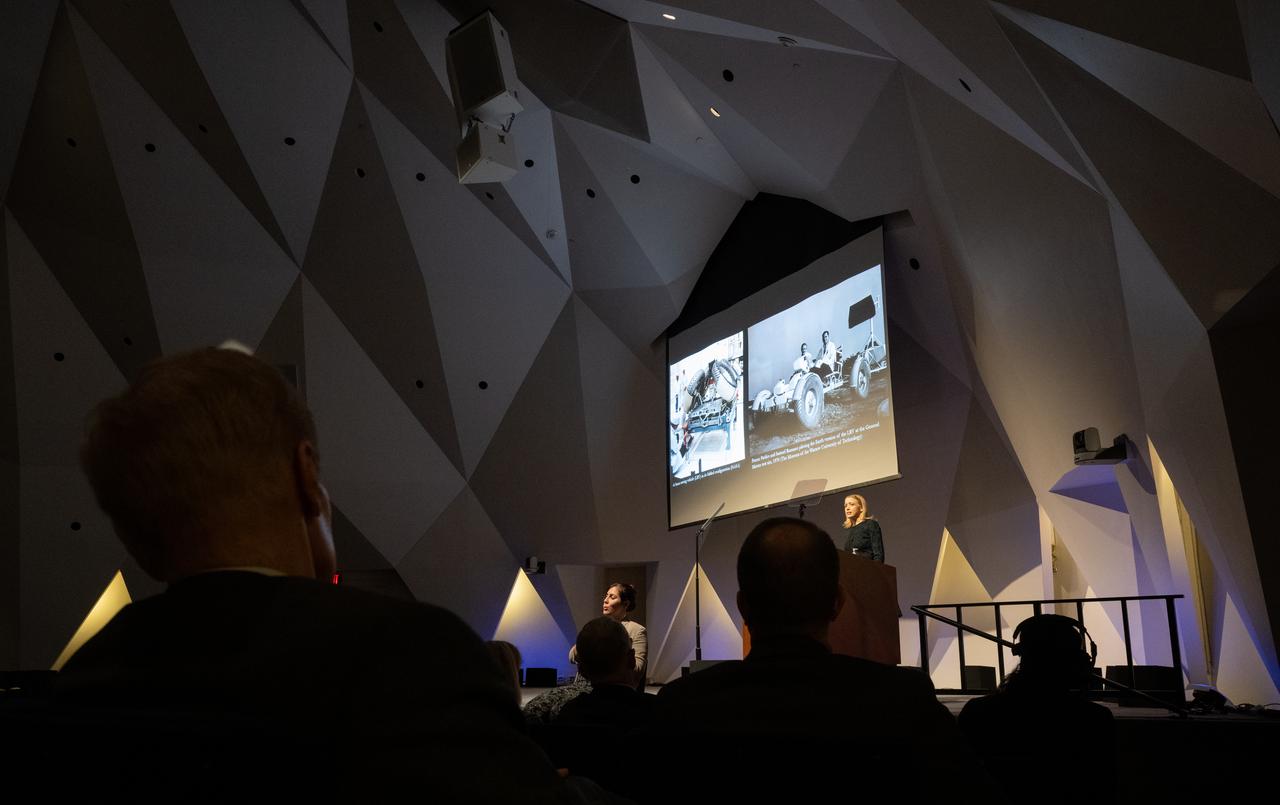
Teasel Muir-Harmony, curator of the Apollo collection at the Smithsonian National Air and Space Museum, speaks during an event celebrating the 50th anniversary of the Apollo 17 mission, Wednesday, Dec. 14, 2022, at the National Academies of Science in Washington. The three-astronaut crew of Apollo 17 - commander Eugene Cernan, lunar module pilot Harrison Schmitt, and command module pilot Ronald Evans, embarked on the last mission of the Apollo program to land humans on the Moon in December of 1972. Cernan and Schmitt spent three days on the lunar surface collecting samples and performing scientific experiments before lifting off from the Taurus-Littrow Valley on December 14, 1972. Photo Credit: (NASA/Joel Kowsky)
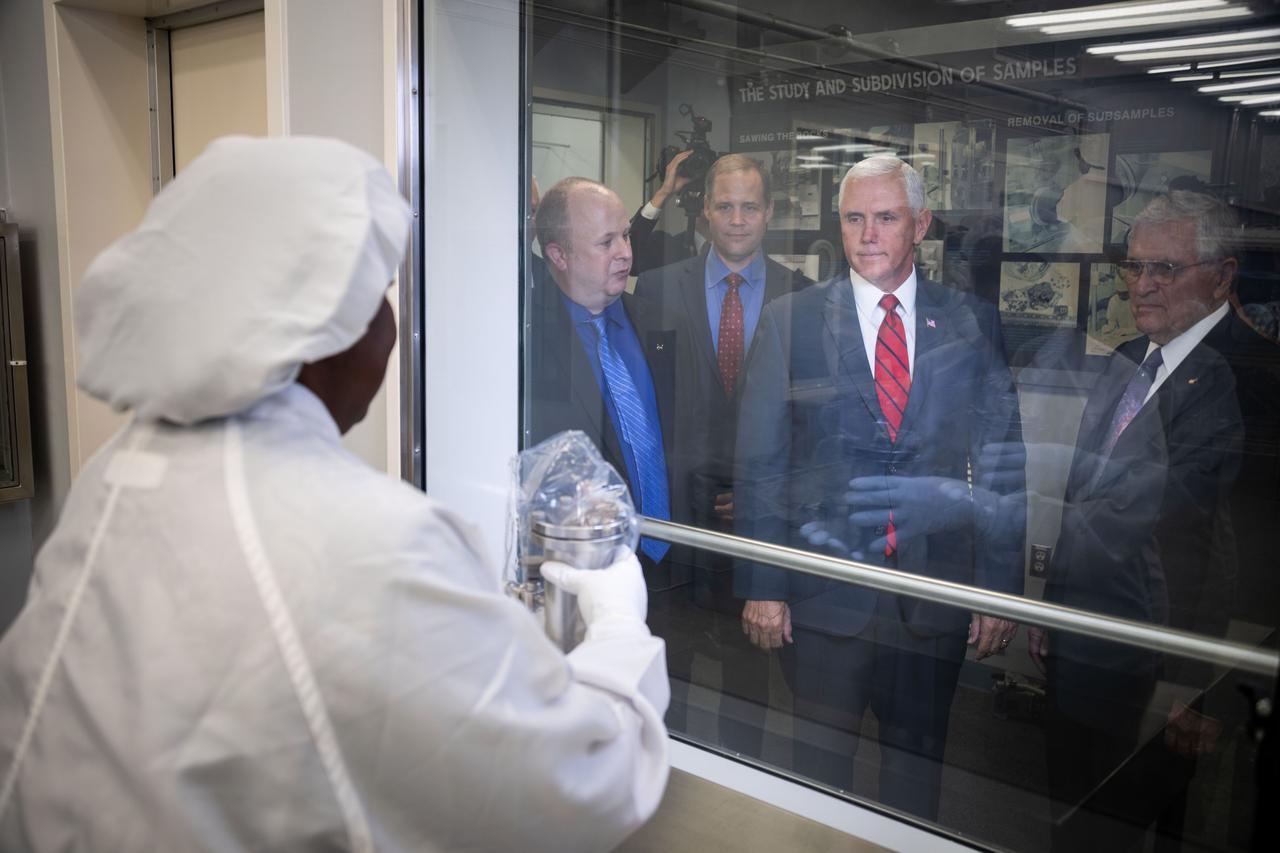
jsc2018e076652 (Aug. 23, 2018) --- Vice President Mike Pence visited NASA’s Johnson Space Center in Houston on Aug. 23, 2018, to discuss the future of space exploration and other elements of human spaceflight. During his trip to the Johnson Space Center, the Vice President also toured the laboratory housing the moon rocks retrieved during the Apollo program’s lunar missions and extraterrestrial samples from other uncrewed sample return missions. Apollo Lunar Sample Principle Scientist Andrea Mosie held a lunar sample up for inspection by the Vice President, who was joined in the viewing room behind protective glass by Apollo Lunar Sample Curator Ryan Ziegler.
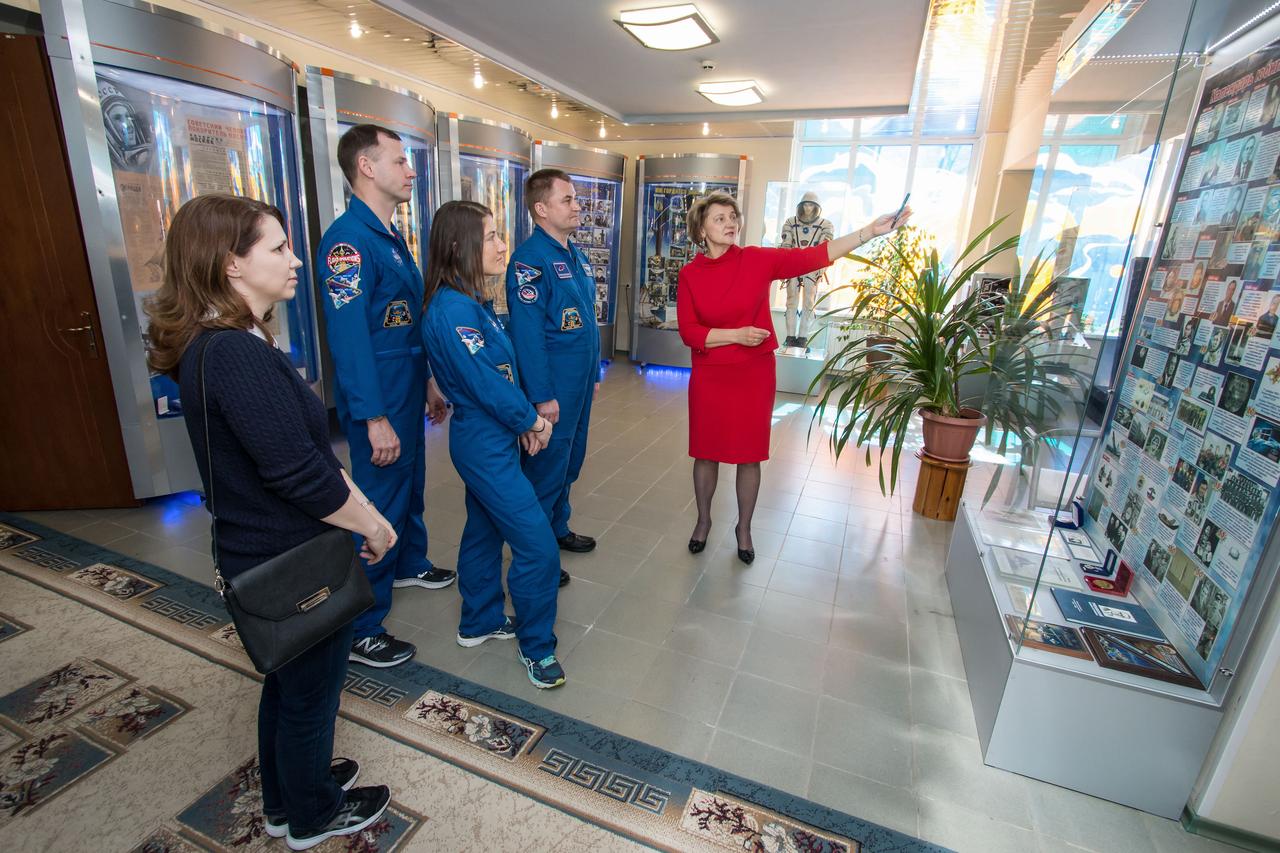
jsc2019e013417 - At the Baikonur Cosmodrome Museum in Kazakhstan, Expedition 59 crewmembers Nick Hague of NASA (second from left), Christina Koch of NASA (third from left) and Alexey Ovchinin of Roscosmos (second from right) receive a tutorial from a curator on famous artifacts housed in the museum March 10 as part of traditional pre-launch activities. Koch, Hague and Ovchinin will launch March 14, U.S. time, in the Soyuz MS-12 spacecraft from the Baikonur Cosmodrome for a six-and-a-half month mission on the International Space Station...NASA/Victor Zelentsov.
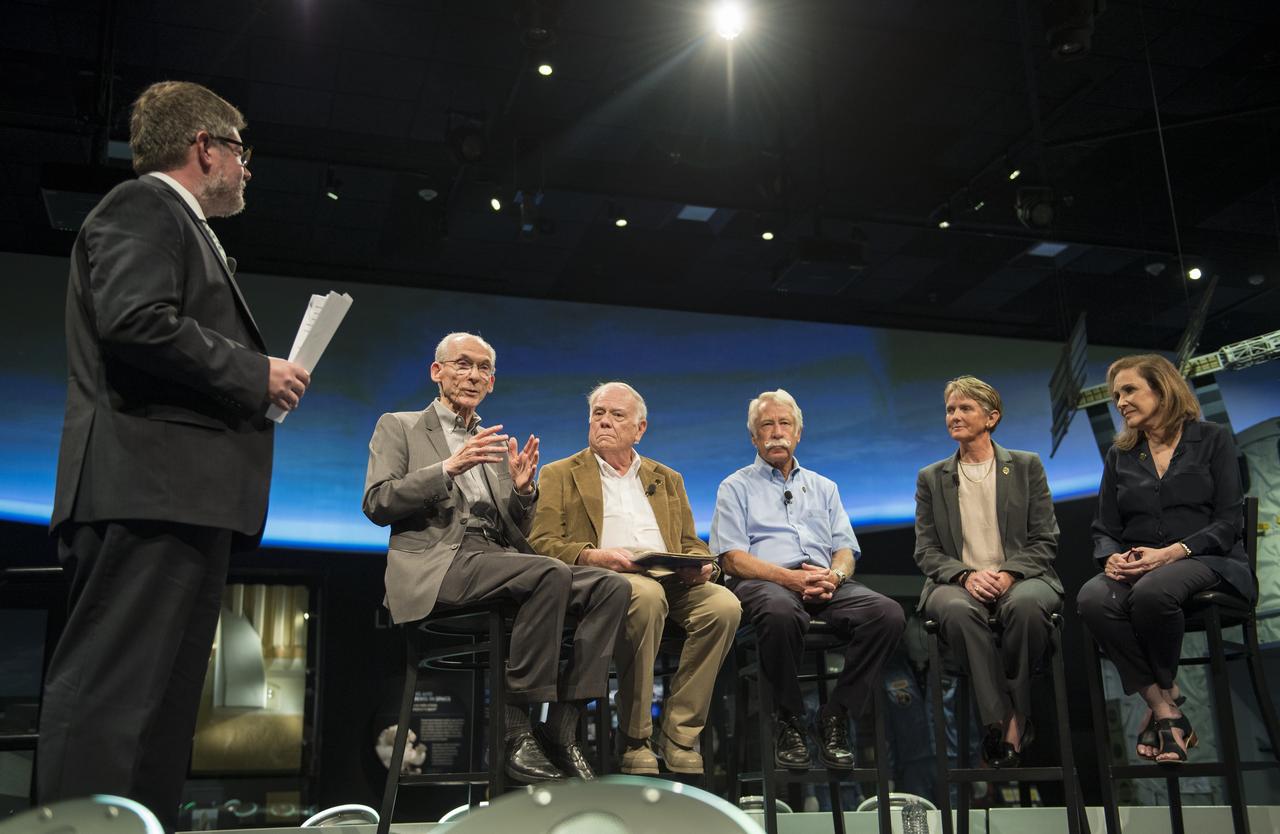
Matthew Shindell, curator, Smithsonian National Air and Space Museum (NASM), far left, moderates a panel including, from left to right, Ed Stone, Voyager project scientist; Gary Flandro, Voyager mission grand tour creator; Alan Cummings, Voyager researcher; Suzy Dodd, Voyager project manager, NASA's Jet Propulsion Laboratory; and Ann Druyan, writer/producer, Golden Record Visionary during a celebration of the 40th Anniversary of the launch of the Voyager 1 and 2 missions, Tuesday, September 5, 2017 at NASM in Washington. Voyager 1 was launched September 5, 1977, with a mission to study Jupiter and Saturn, but now the twin Voyager spacecrafts are on a journey into interstellar space to search for the heliopause, a region never reached by any other spacecraft. Photo Credit: (NASA/Aubrey Gemignani)
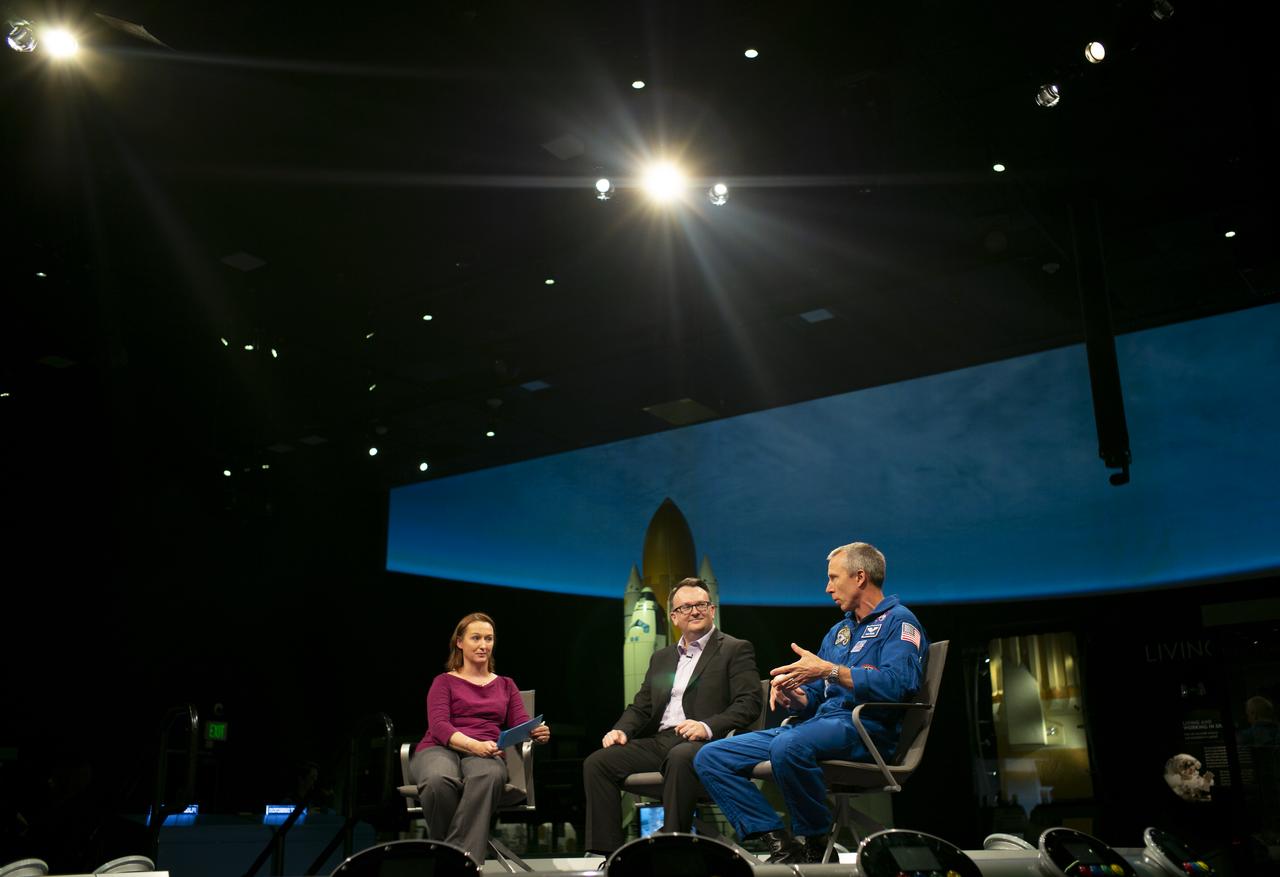
Smithsonian National Air and Space Museum curators Jennifer Levasseur, left, and Jeremy Kinney, center, speak with NASA astronaut Drew Feustel about his experiences on two space shuttle missions, STS-125 and STS-134, and a long duration mission onboard the International Space Station during “What’s New in Aerospace,” Thursday, May 9, 2019 at the Smithsonian’s National Air and Space Museum in Washington, DC. Feustel most recently spent 197 days living and working onboard the International Space Station as part of Expedition 55 and as commander of Expedition 56. Feustel ventured outside the space station on three spacewalks, moving him up to second among U.S. spacewalkers with a cumulative time of 61 hours 48 minutes over nine spacewalks. Photo Credit: (NASA/Joel Kowsky)
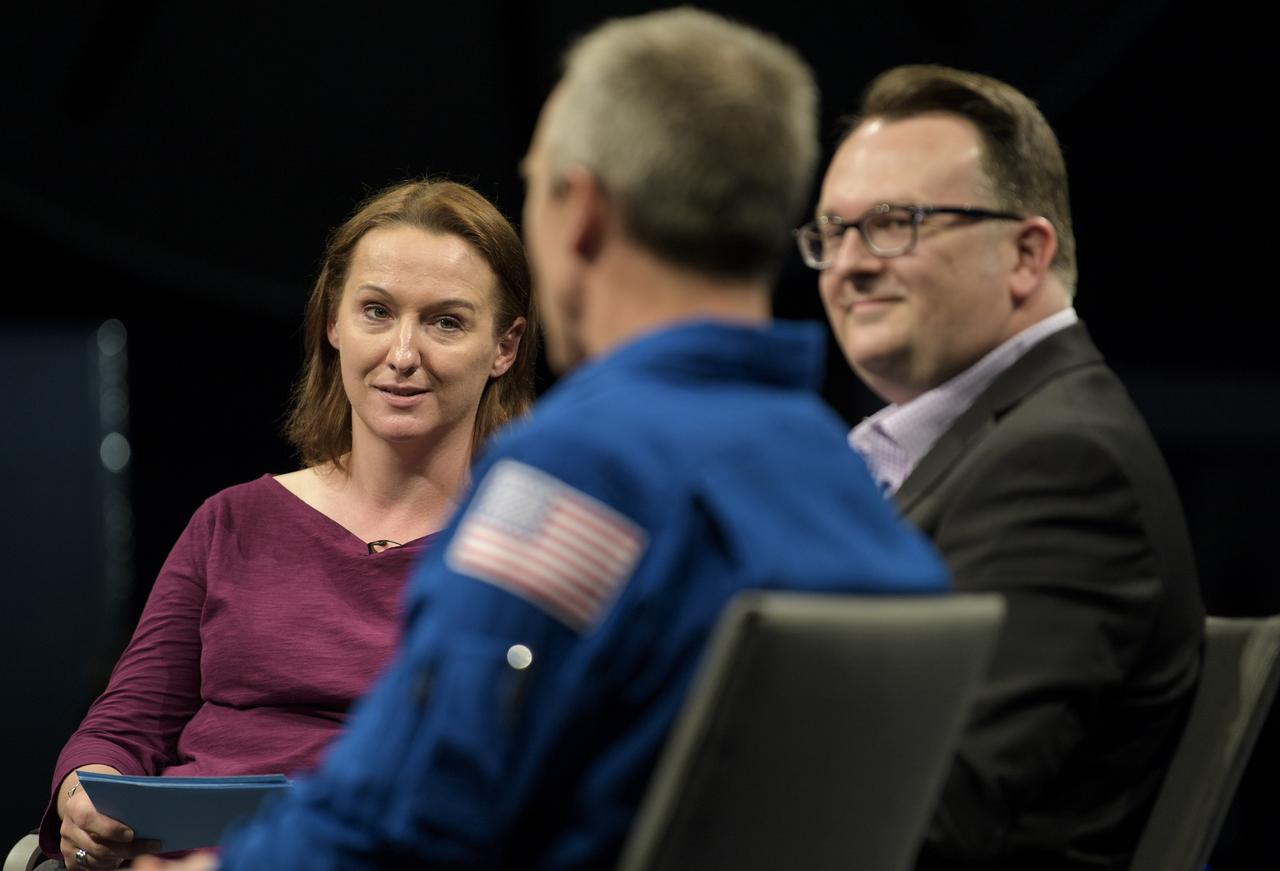
Smithsonian National Air and Space Museum curators Jennifer Levasseur, left, and Jeremy Kinney, center, speak with NASA astronaut Drew Feustel about his experiences on two space shuttle missions, STS-125 and STS-134, and a long duration mission onboard the International Space Station during “What’s New in Aerospace,” Thursday, May 9, 2019 at the Smithsonian’s National Air and Space Museum in Washington, DC. Feustel most recently spent 197 days living and working onboard the International Space Station as part of Expedition 55 and as commander of Expedition 56. Feustel ventured outside the space station on three spacewalks, moving him up to second among U.S. spacewalkers with a cumulative time of 61 hours 48 minutes over nine spacewalks. Photo Credit: (NASA/Joel Kowsky)
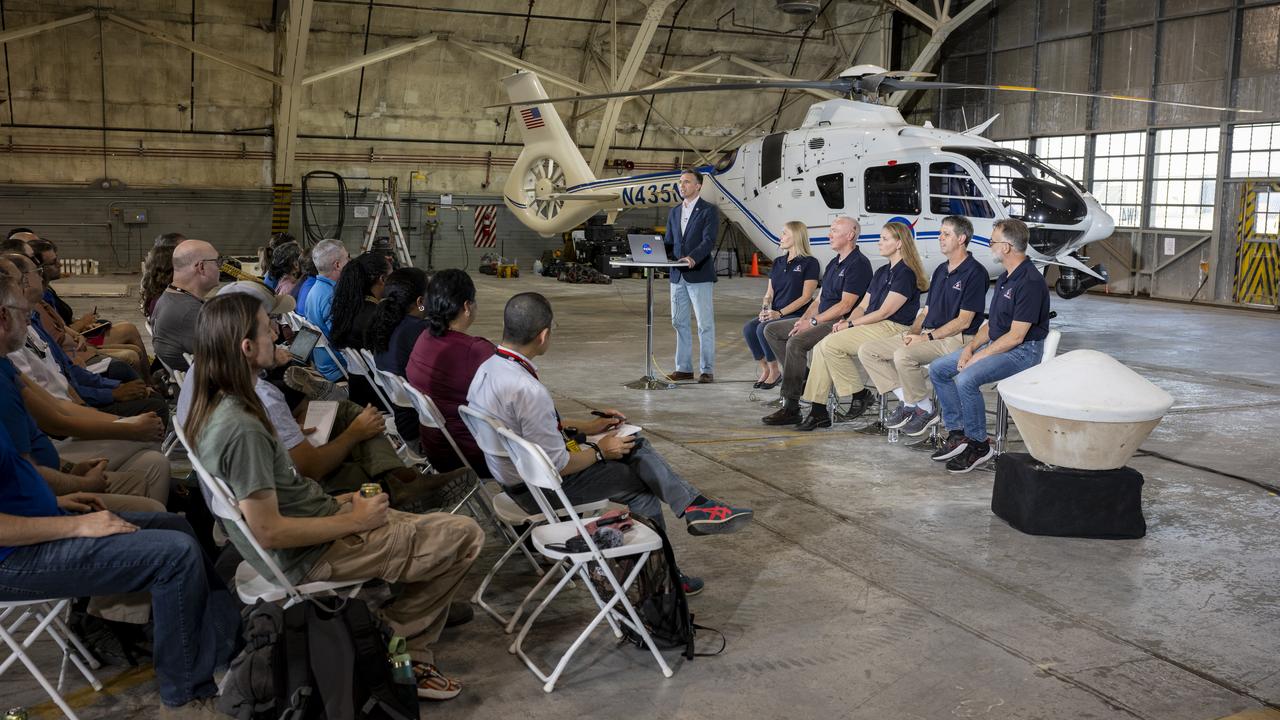
NASA Office of Communications Deputy Chief Patrick Lynch, left, introduces, from left to right, NASA Program Executive Melissa Morris, NASA Project Manager Rich Burns, Lockheed Martin Program Manager Sandy Freund, OSIRIS-REx Deputy Curation Lead Kevin Righter, and University of Arizona OSIRIS-REx Principal Investigator Dante Lauretta, during an OSIRIS-REx sample return press conference, Wednesday, Aug. 30, 2023, at the Department of Defense's Utah Test and Training Range. The sample was collected from the asteroid Bennu in October 2020 by NASA’s OSIRIS-REx spacecraft and will return to Earth on September 24th, landing under parachute at the Utah Test and Training Range. Photo Credit: (NASA/Keegan Barber)
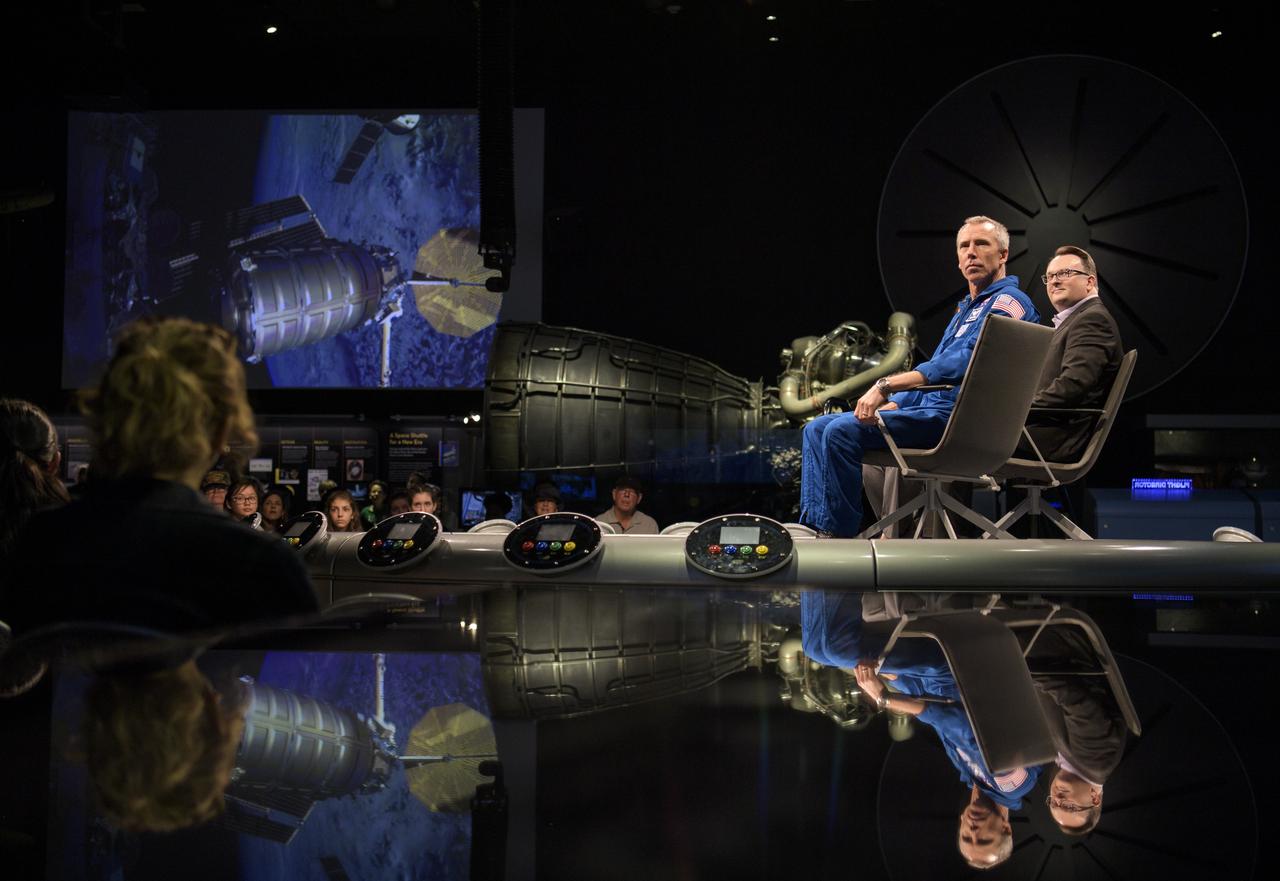
Smithsonian National Air and Space Museum curator Jeremy Kinney, right, and NASA astronaut Drew Feustel, left, are seen as a short video about Feustel’s mission to the International Space Station is shown during “What’s New in Aerospace,” Thursday, May 9, 2019 at the Smithsonian’s National Air and Space Museum in Washington, DC. Feustel most recently spent 197 days living and working onboard the International Space Station as part of Expedition 55 and as commander of Expedition 56. Feustel ventured outside the space station on three spacewalks, moving him up to second among U.S. spacewalkers with a cumulative time of 61 hours 48 minutes over nine spacewalks. Photo Credit: (NASA/Joel Kowsky)
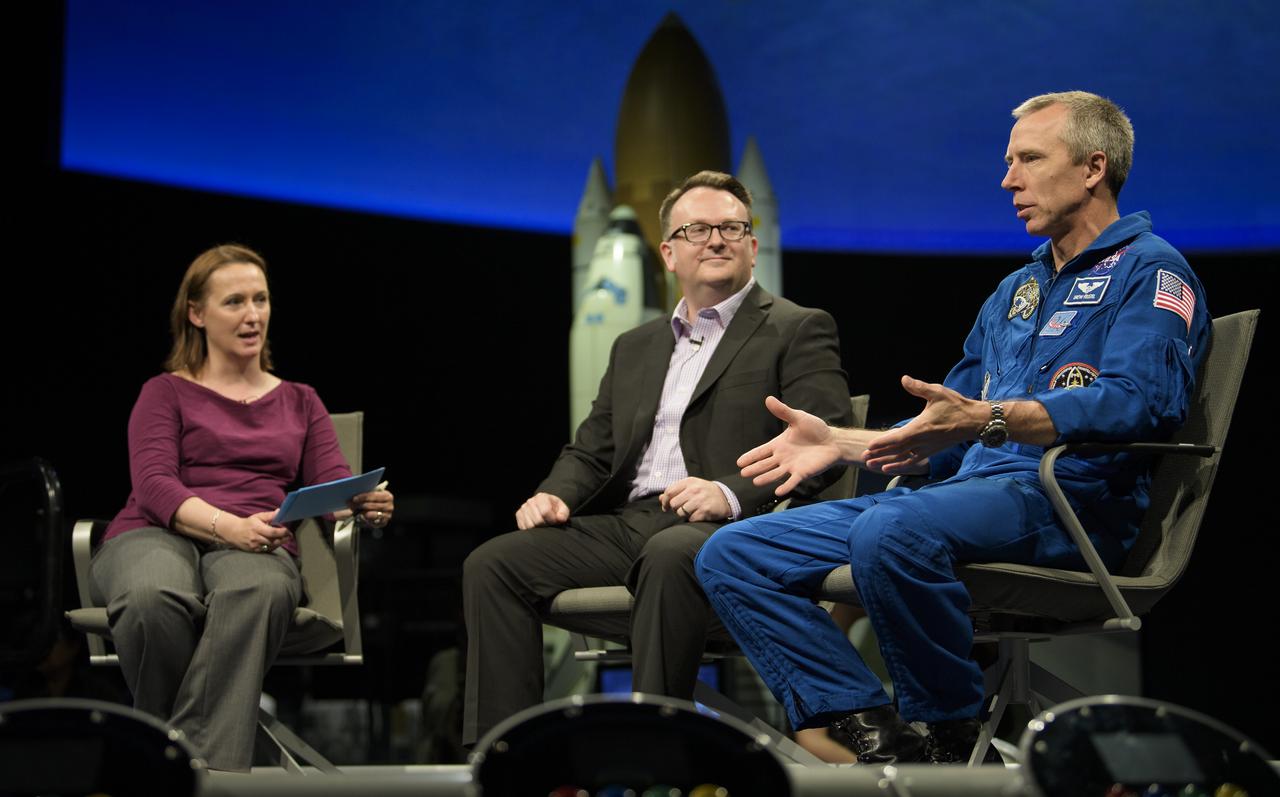
Smithsonian National Air and Space Museum curators Jennifer Levasseur, left, and Jeremy Kinney, center, speak with NASA astronaut Drew Feustel about his experiences on two space shuttle missions, STS-125 and STS-134, and a long duration mission onboard the International Space Station during “What’s New in Aerospace,” Thursday, May 9, 2019 at the Smithsonian’s National Air and Space Museum in Washington, DC. Feustel most recently spent 197 days living and working onboard the International Space Station as part of Expedition 55 and as commander of Expedition 56. Feustel ventured outside the space station on three spacewalks, moving him up to second among U.S. spacewalkers with a cumulative time of 61 hours 48 minutes over nine spacewalks. Photo Credit: (NASA/Joel Kowsky)
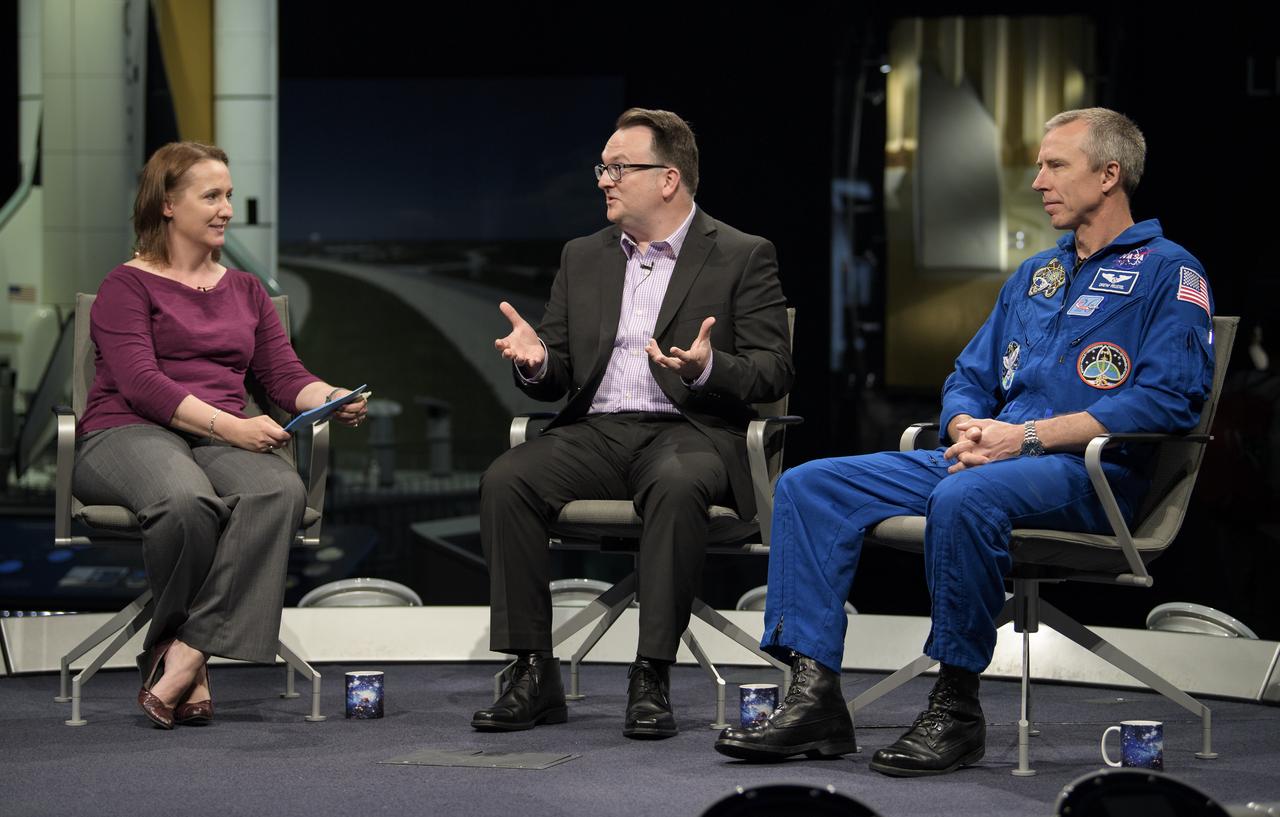
Smithsonian National Air and Space Museum curators Jennifer Levasseur, left, and Jeremy Kinney, center, speak with NASA astronaut Drew Feustel about his experiences on two space shuttle missions, STS-125 and STS-134, and a long duration mission onboard the International Space Station during “What’s New in Aerospace,” Thursday, May 9, 2019 at the Smithsonian’s National Air and Space Museum in Washington, DC. Feustel most recently spent 197 days living and working onboard the International Space Station as part of Expedition 55 and as commander of Expedition 56. Feustel ventured outside the space station on three spacewalks, moving him up to second among U.S. spacewalkers with a cumulative time of 61 hours 48 minutes over nine spacewalks. Photo Credit: (NASA/Joel Kowsky)
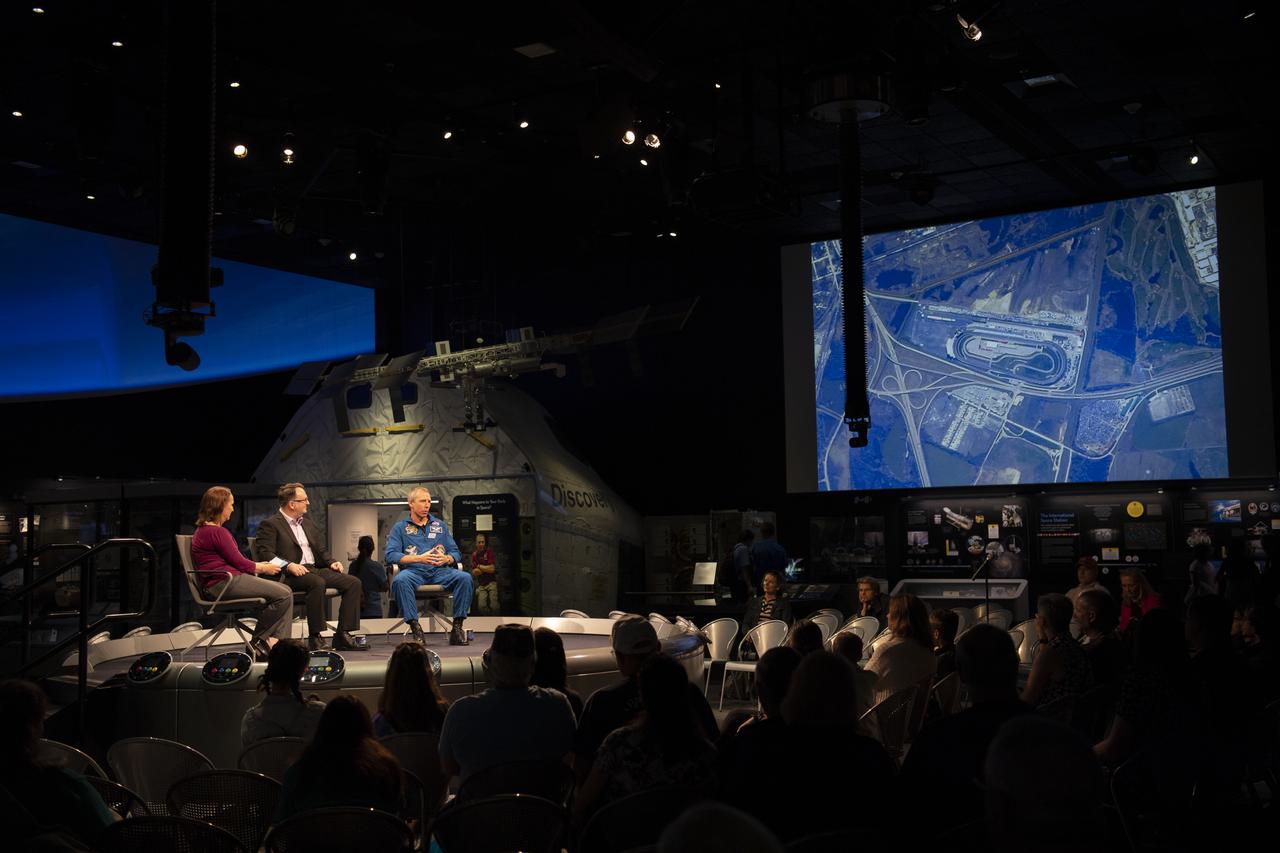
Smithsonian National Air and Space Museum curators Jennifer Levasseur, left, and Jeremy Kinney, center, speak with NASA astronaut Drew Feustel about photographing racetracks around the world during his time onboard the International Space Station during “What’s New in Aerospace,” Thursday, May 9, 2019 at the Smithsonian’s National Air and Space Museum in Washington, DC. Feustel most recently spent 197 days living and working onboard the International Space Station as part of Expedition 55 and as commander of Expedition 56. Feustel ventured outside the space station on three spacewalks, moving him up to second among U.S. spacewalkers with a cumulative time of 61 hours 48 minutes over nine spacewalks. Photo Credit: (NASA/Joel Kowsky)
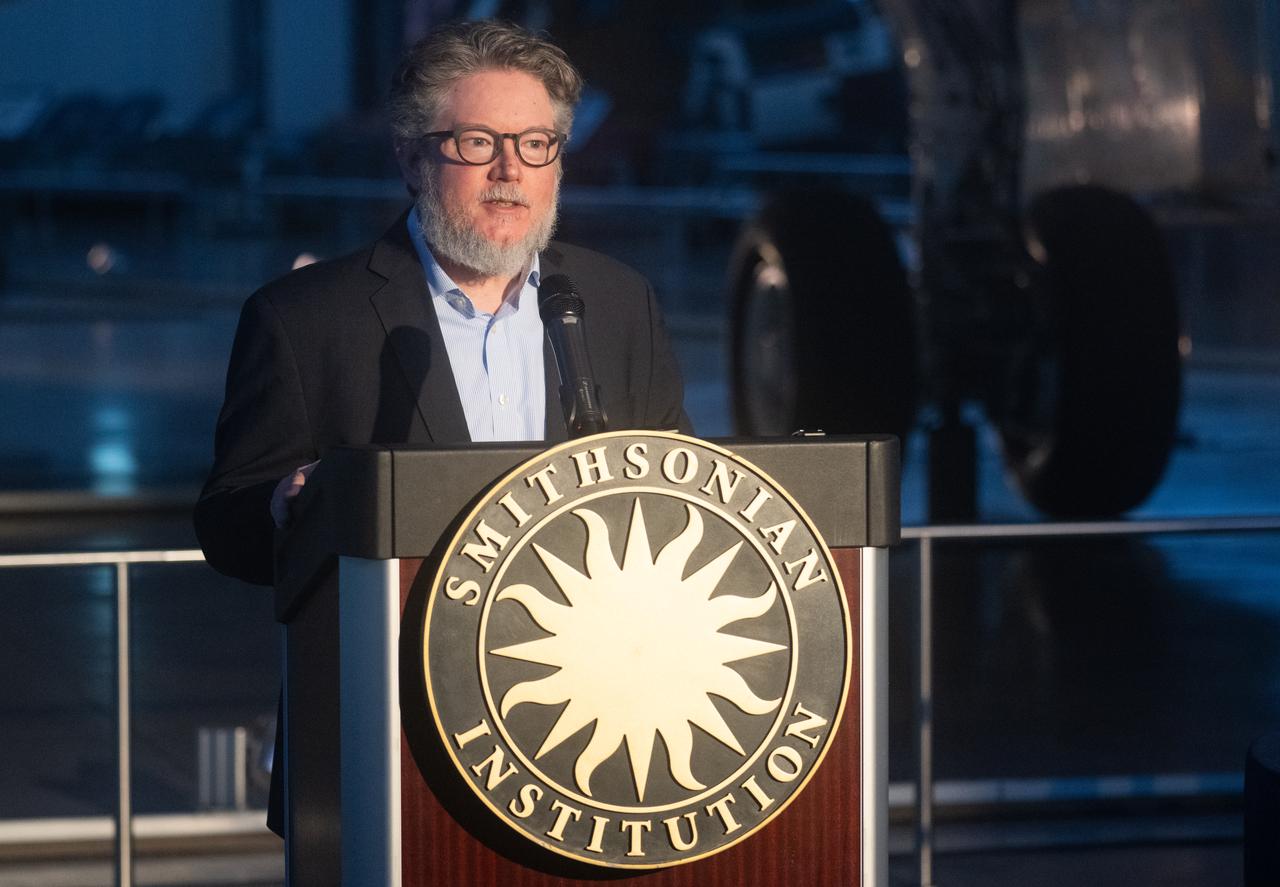
Matt Shindell, space history curator at the National Air and Space Museum speaks at an event marking NASA’s donation of the aerial prototype of the Ingenuity Mars Helicopter, Friday, Dec. 15, 2023, at the Smithsonian National Air and Space Museum’s Steve F. Udvar-Hazy Center in Chantilly, Va. The aerial prototype of the Ingenuity Mars Helicopter, which was the first to demonstrate it was possible to fly in a simulated Mars environment at NASA’s Jet Propulsion Laboratory (JPL), was donated to the museum on Friday. Photo Credit: (NASA/Joel Kowsky)The aerial prototype of the Ingenuity Mars Helicopter is seen at the Smithsonian National Air and Space Museum’s Steve F. Udvar-Hazy Center, Friday, Dec. 15, 2023, in Chantilly, Va. The prototype, which demonstrated it was possible to fly in a simulated Mars environment at NASA’s Jet Propulsion Laboratory (JPL), was donated Photo Credit: (NASA/Joel Kowsky)
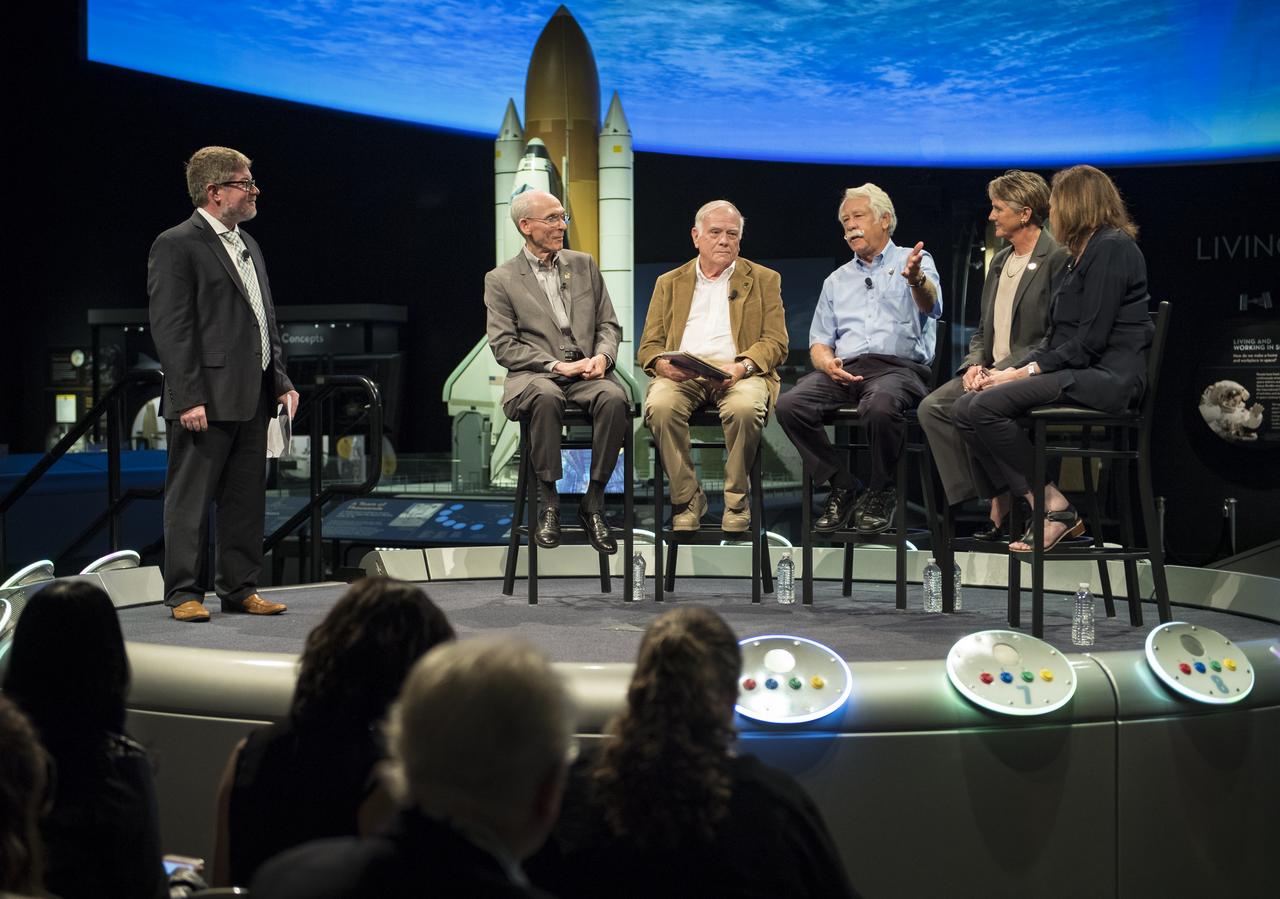
Matthew Shindell, curator, Smithsonian National Air and Space Museum (NASM), far left, moderates a panel including, from left to right, Ed Stone, Voyager project scientist; Gary Flandro, Voyager mission grand tour creator; Alan Cummings, Voyager researcher; Suzy Dodd, Voyager project manager, NASA's Jet Propulsion Laboratory; and Ann Druyan, writer/producer, Golden Record Visionary during a celebration of the 40th Anniversary of the launch of the Voyager 1 and 2 missions, Tuesday, September 5, 2017 at NASM in Washington. Voyager 1 was launched September 5, 1977, with a mission to study Jupiter and Saturn, but now the twin Voyager spacecrafts are on a journey into interstellar space to search for the heliopause, a region never reached by any other spacecraft. Photo Credit: (NASA/Aubrey Gemignani)
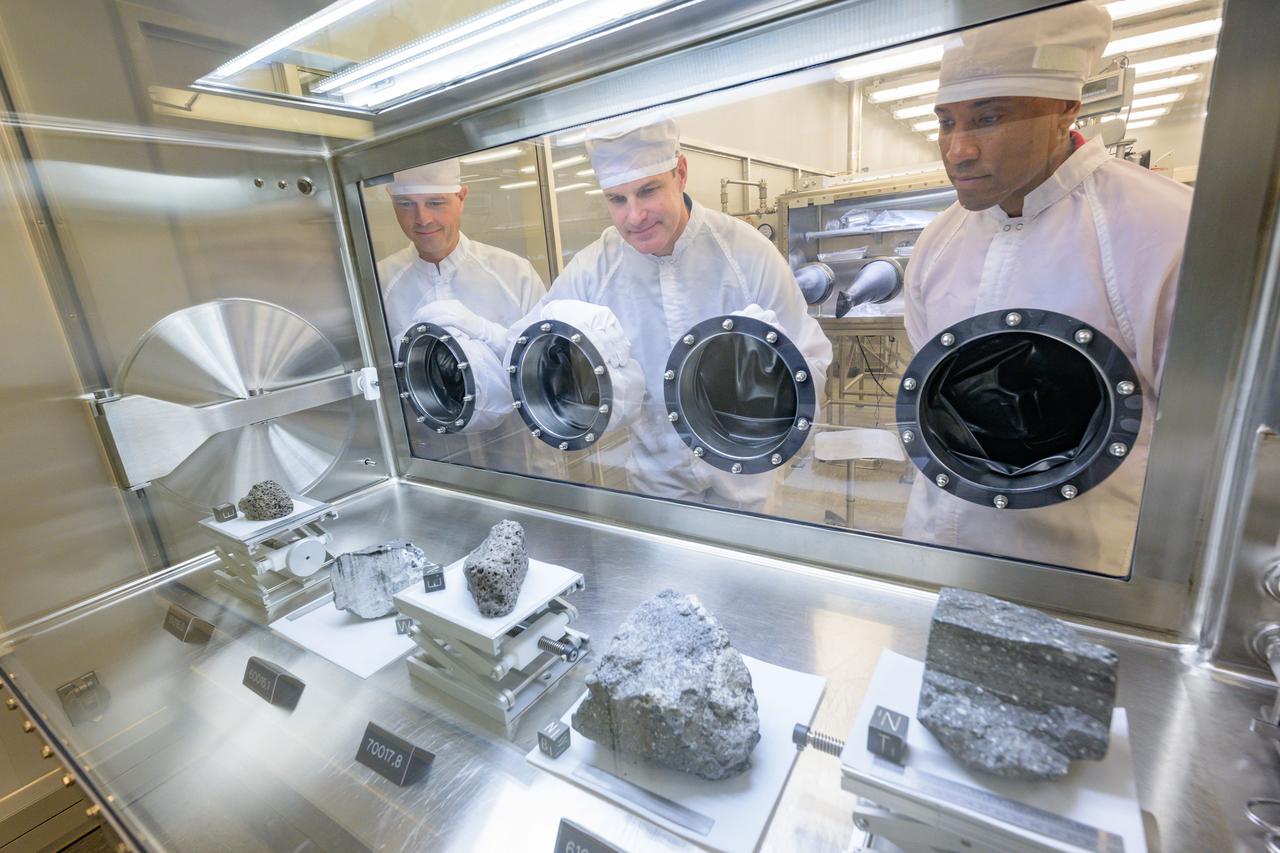
Three Artemis II crew members participate in lunar fundamentals training in the lunar lab at NASA's Johnson Space Center in Houston. Left to right: Reid Wiseman, Jeremy Hansen, Victor Glover. Photo Date: May 9, 2023. Location: Johnson Space Center Building 31 - Lunar Lab. Photographer: NASA?Robert Markowitz
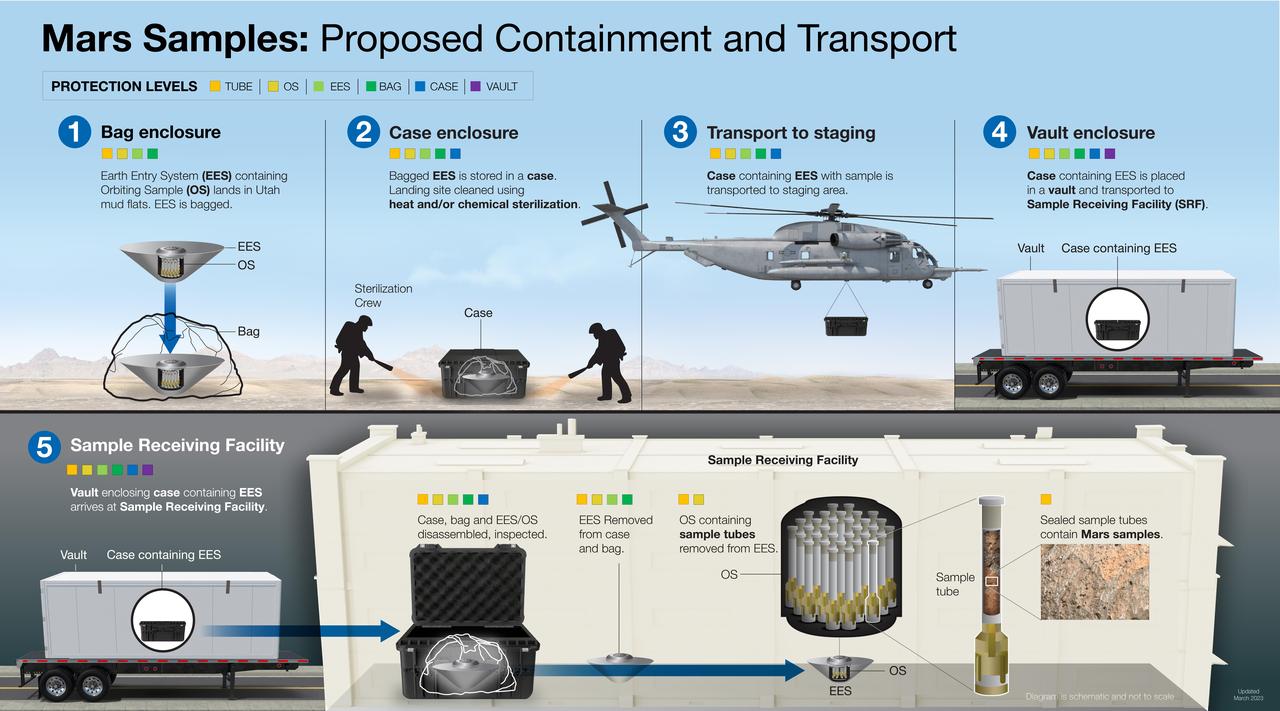
This illustration shows the proposed process for safely recovering, containing, and transporting Mars samples gathered by NASA's Perseverance Mars rover after they are returned to Earth as part of the joint NASA/ESA (European Space Agency) Mars Sample Return Campaign. The process of carefully containing and handling the samples would begin long before they arrive on Earth. Every phase of the Mars Sample Return campaign from collection and sealing to launch, transfer, and landing has been developed with a "safety first" approach. Sample handling and curation experts would be involved in planning for the round trip at each phase of the campaign. After its journey back to Earth from Mars on the ESA-provided Earth Return Orbiter, the capsule containing the samples would land at the Utah Test and Training Range in west-central Utah. NASA would securely transport the capsule and its contents to a Sample Return Facility at a location to be determined. Once at the facility, the samples would undergo a rigorous process to assess whether they are safe for release for detailed analysis by scientists from around the world. https://photojournal.jpl.nasa.gov/catalog/PIA25857

The mural was created to celebrate the achievements of Wilbur and Orville Wright and to commemorate a century of powered flight. Central to the composition is the 1903 Wright Flyer. "On Dec. 17, 1903, the Wright brothers inaugurated the aerial age with their successful first flights of a heavier-than-air flying machine at Kitty Hawk, N.C. This airplane, known as the Wright Flyer, sometimes referred to as the Kitty Hawk Flyer, was the product of a sophisticated four-year program of research and development conducted by Wilbur and Orville Wright beginning in 1899. During the Wrights' design and construction of their experimental aircraft, they also pioneered many of the basic tenets and techniques of modern aeronautical engineering, such as the use of a wind tunnel and flight testing as design tools. Their seminal accomplishment encompassed not only the breakthrough first flight of an airplane, but also the equally important achievement of establishing the foundation of aeronautical engineering." Dr. Peter Jakab, Curator of Aviation, National Air and Space Museum, Smithsonian Institution "Celebrating One Hundred Years of Powered Flight, 1903-2003", documents many significant achievements in aeronautics and space flight from the dawn of powered flight to the present. Historic aircraft and spacecraft serve as the backdrop, highlighting six figures representing the human element that made these milestones possible. These figures stand, symbolically supported by the words of Wilbur Wright, "It is my belief that flight is possible…" The quote was taken from a letter written to his father on September 3rd, 1900, announcing Wilbur's intention to make "some experiments with a flying machine" at Kitty Hawk, North Carolina. "This year, Bob is helping us commemorate the Centennial of Flight with a beautiful mural slated for placement in our Dryden Flight Research Center that documents the history of flight from the Wright Flyer to the International Space Station. We should

A top-down view of the OSIRIS-REx Touch-and-Go-Sample-Acquisition-Mechanism (TAGSAM) head with the lid removed, revealing the remainder of the asteroid sample inside. Erika Blumenfeld, creative lead for the Advanced Imaging and Visualization of Astromaterials (AIVA) and Joe Aebersold, project management lead, captured this picture using manual high-resolution precision photography and a semi-automated focus stacking procedure. The result is an image that can be zoomed in on to show extreme detail of the sample. The remaining sample material includes dust and rocks up to about .4 in (one cm) in size. Credit: NASA/Erika Blumenfeld & Joseph Aebersold
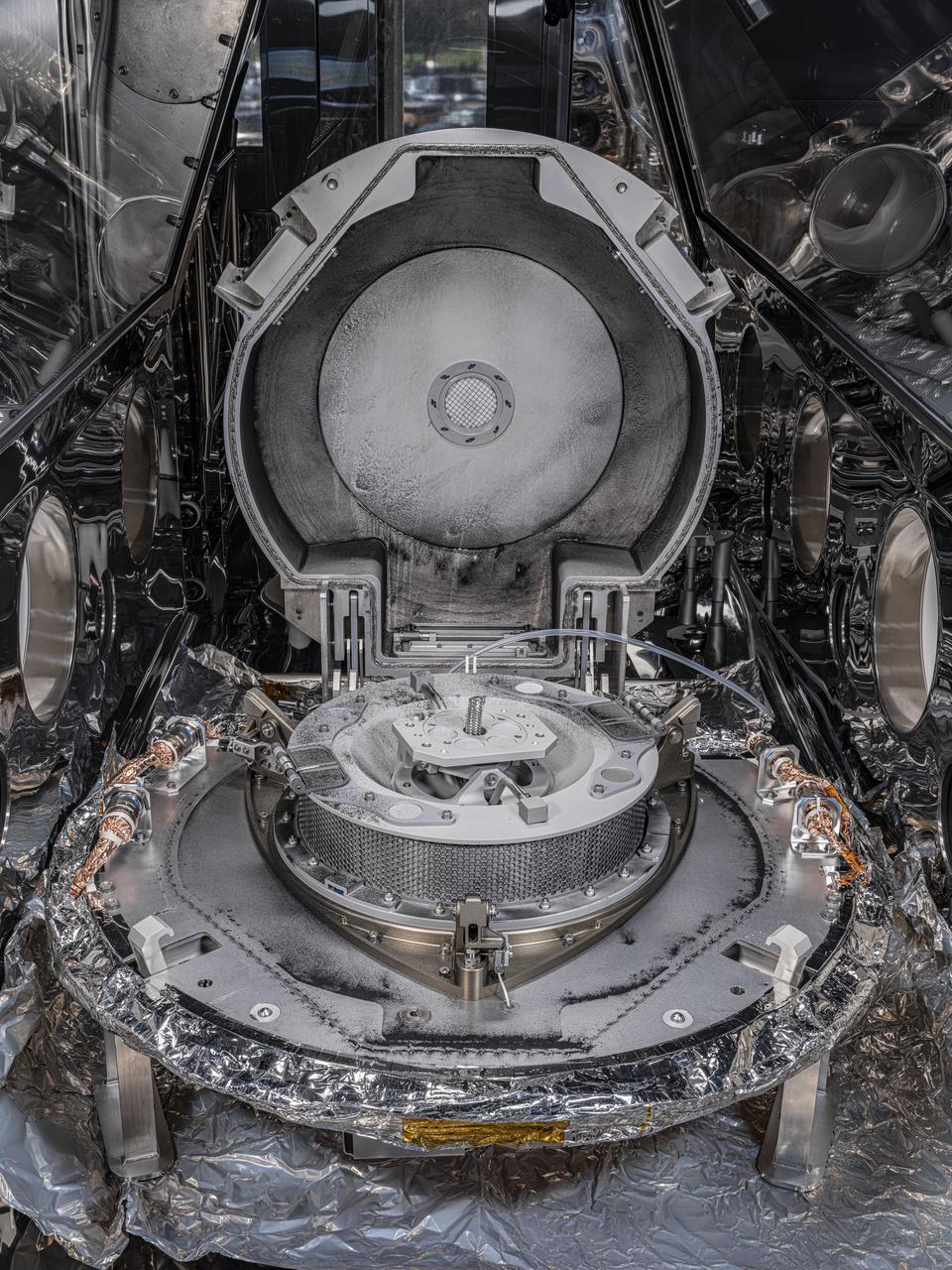
A view of the OSIRIS-REx sample canister with the lid removed, revealing the Touch and Go Sample Acquisition Mechanism (TAGSAM) inside. When astromaterials processors removed the canister lid, they discovered a coating of fine asteroid dust and sand-sized particles covering the inside of the lid and on the top of the avionics deck. The round portion in the center of the lower part of the canister is the TAGSAM that was used to collect pristine material from asteroid Bennu in 2020. The spacecraft delivered the sample return capsule to Earth on Sept. 24, 2023. OSIRIS-REx is the first U.S. mission to collect a sample from an asteroid. Scientists hope the Bennu sample will reveal whether asteroids that collided with Earth billions of years ago thereby delivered water and other ingredients for life to our planet. Credits: Photo credit: NASA/Erika Blumenfeld & Joseph Aebersold Image Capture: Created using manual high-resolution precision photography and semi-automated focus stacking procedure.
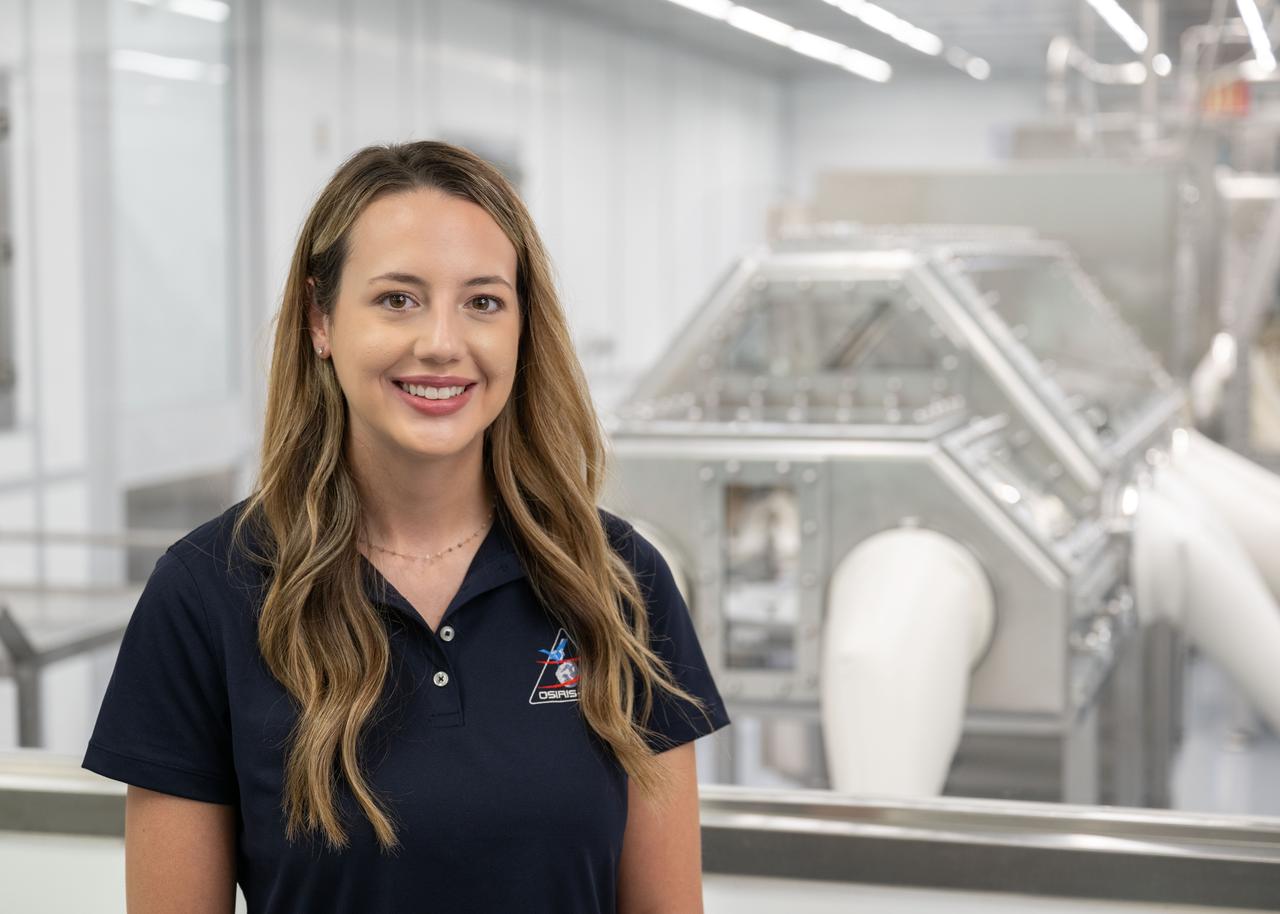
Portrait of Julia Plummer, OSIRIS-REx astromaterials processor from the Astromaterials Research and Exploration Science (ARES) division at NASA's Johnson Space Center in Houston. Plummer is seen in front of the OSIRIS-REx cleanroom at Johnson. Credit: NASA/James Blair
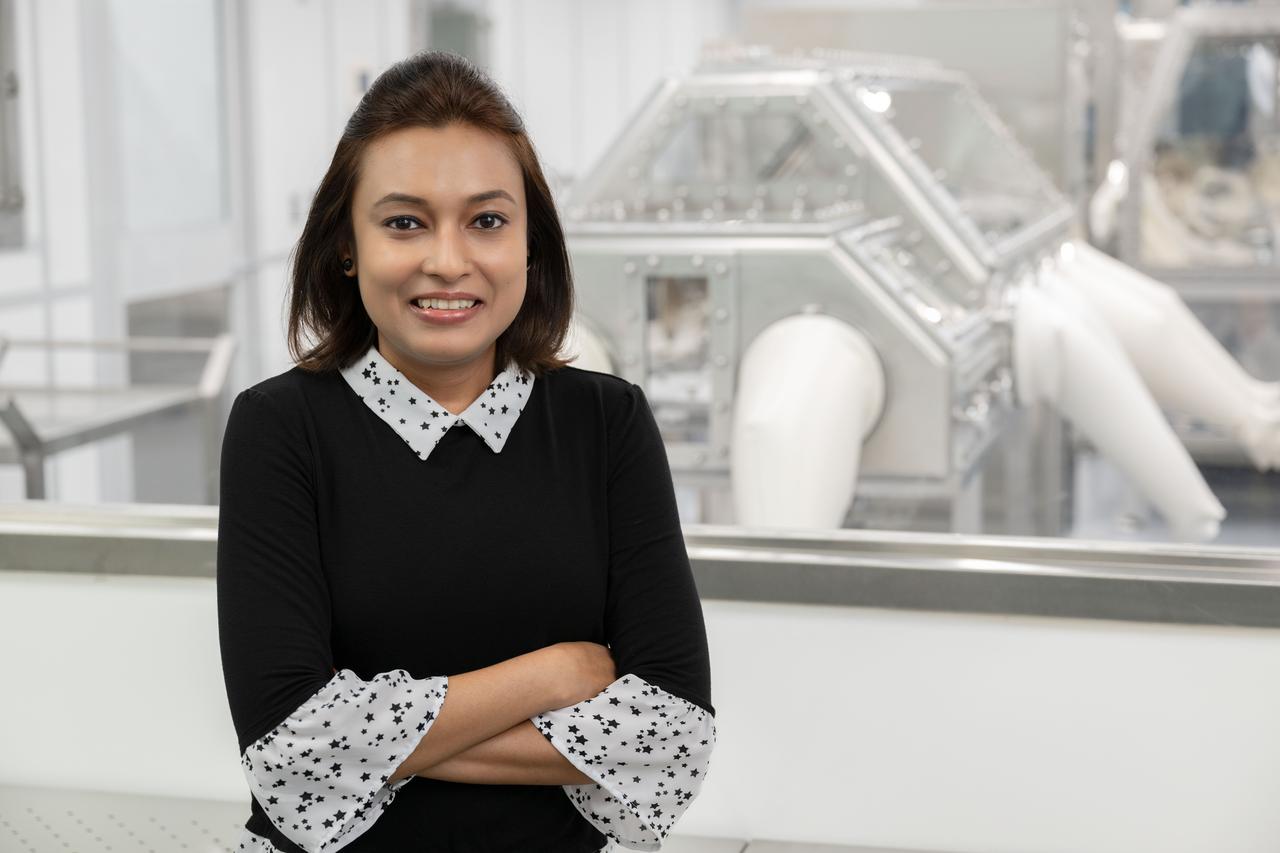
Portrait of Jannatul Ferdous, OSIRIS-REx astromaterials processor from the Astromaterials Research and Exploration Science (ARES) division at NASA's Johnson Space Center in Houston. Ferdous is seen in front of the OSIRIS-REx cleanroom at Johnson. Credit: NASA/James Blair
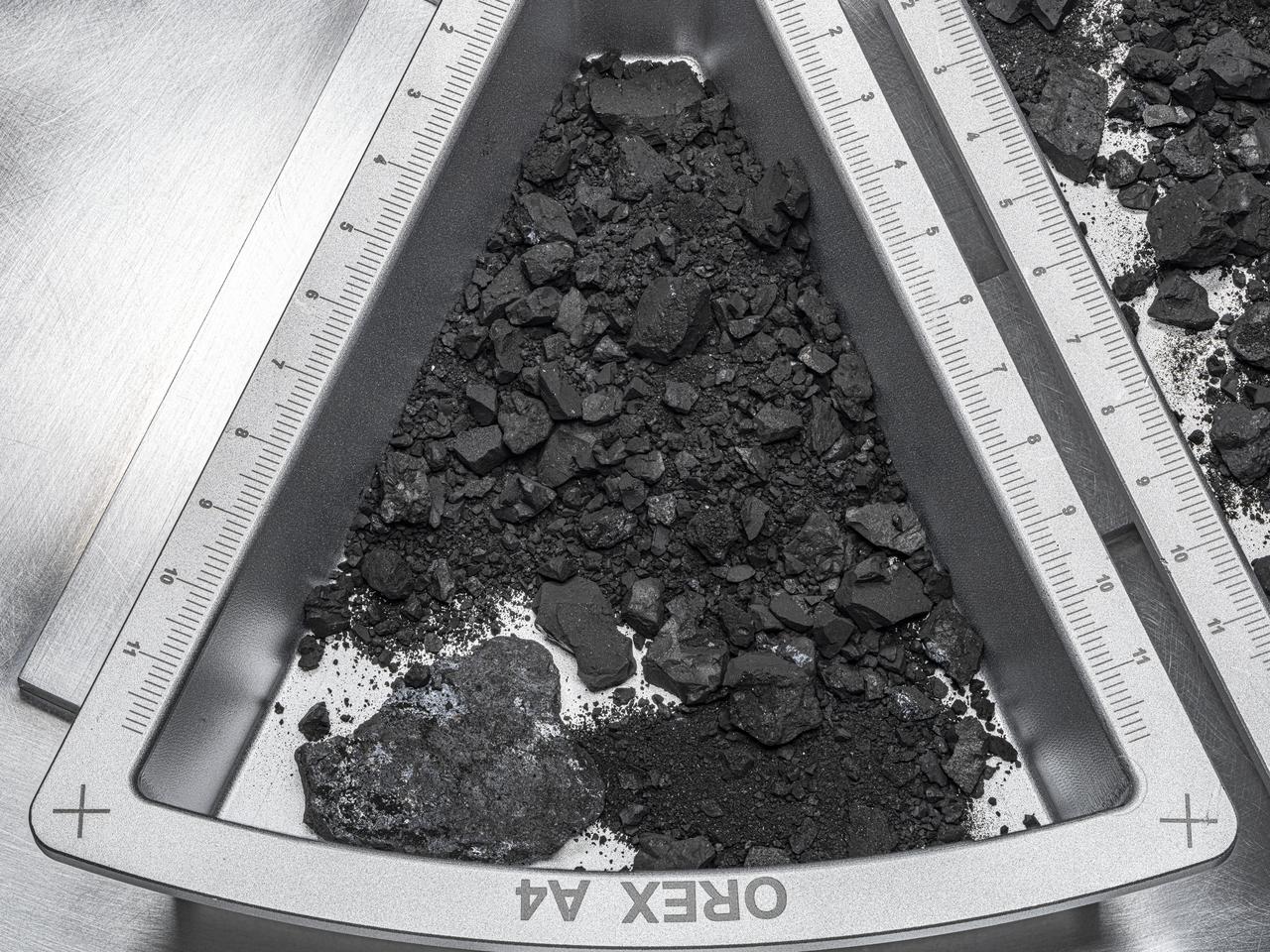
A top-down view of one of the containers holding rocks and dust from asteroid Bennu, with hardware scale marked in centimeters. Erika Blumenfeld, creative lead for the Advanced Imaging and Visualization of Astromaterials (AIVA) and Joe Aebersold, AIVA project management lead, captured this picture using manual high-resolution precision photography and a semi-automated focus stacking procedure. The result is a sample image that can be zoomed in on to show extreme detail. Credit: NASA/Erika Blumenfeld and Joseph Aebersold
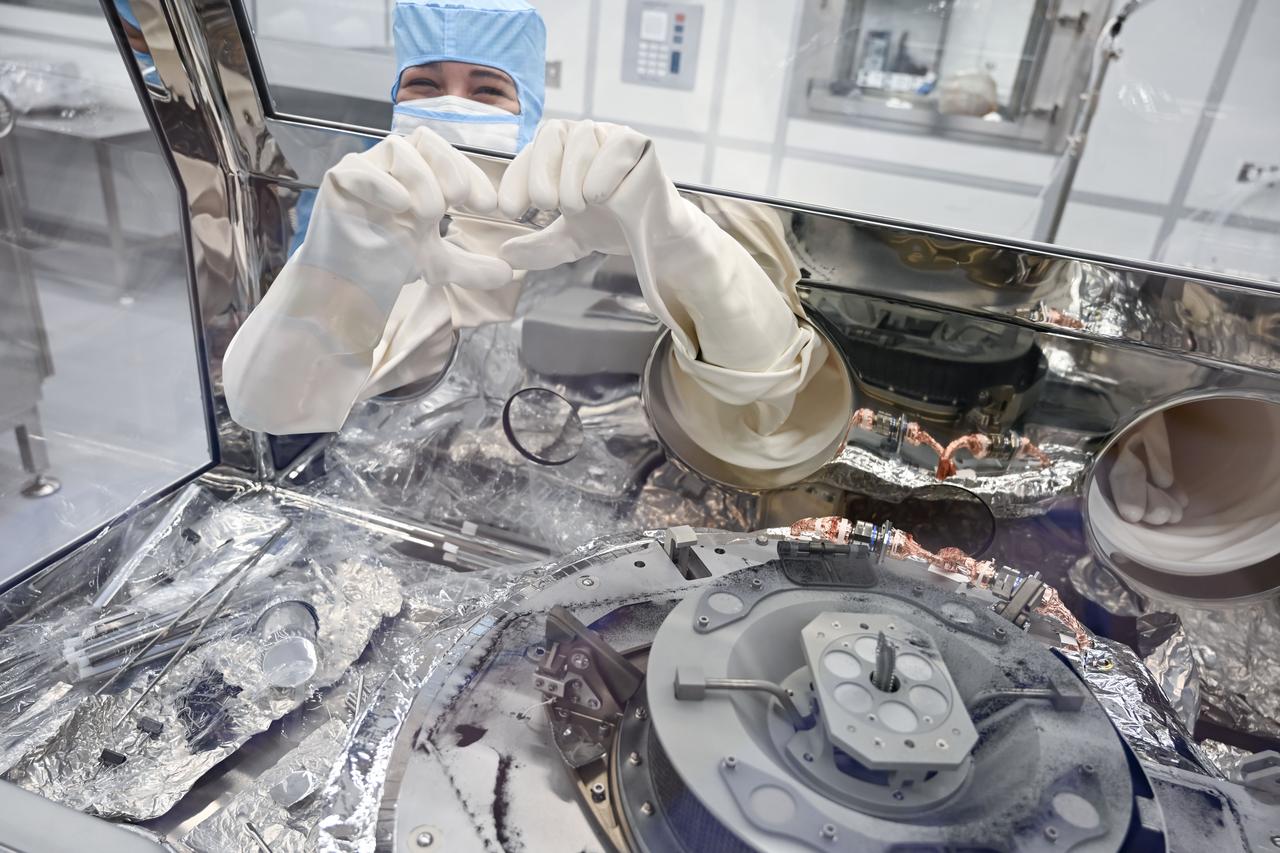
Astromaterials processor Mari Montoya shows a hand heart while working in the OSIRIS-REx canister glovebox at NASA’s Johnson Space Center in Houston. Montoya was sweeping asteroid material on the avionics deck of the OSIRIS-REx canister and was so deep in concentration that she didn’t realize the dust had formed the shape of a heart until her teammate on the other side of the glovebox pointed it out.
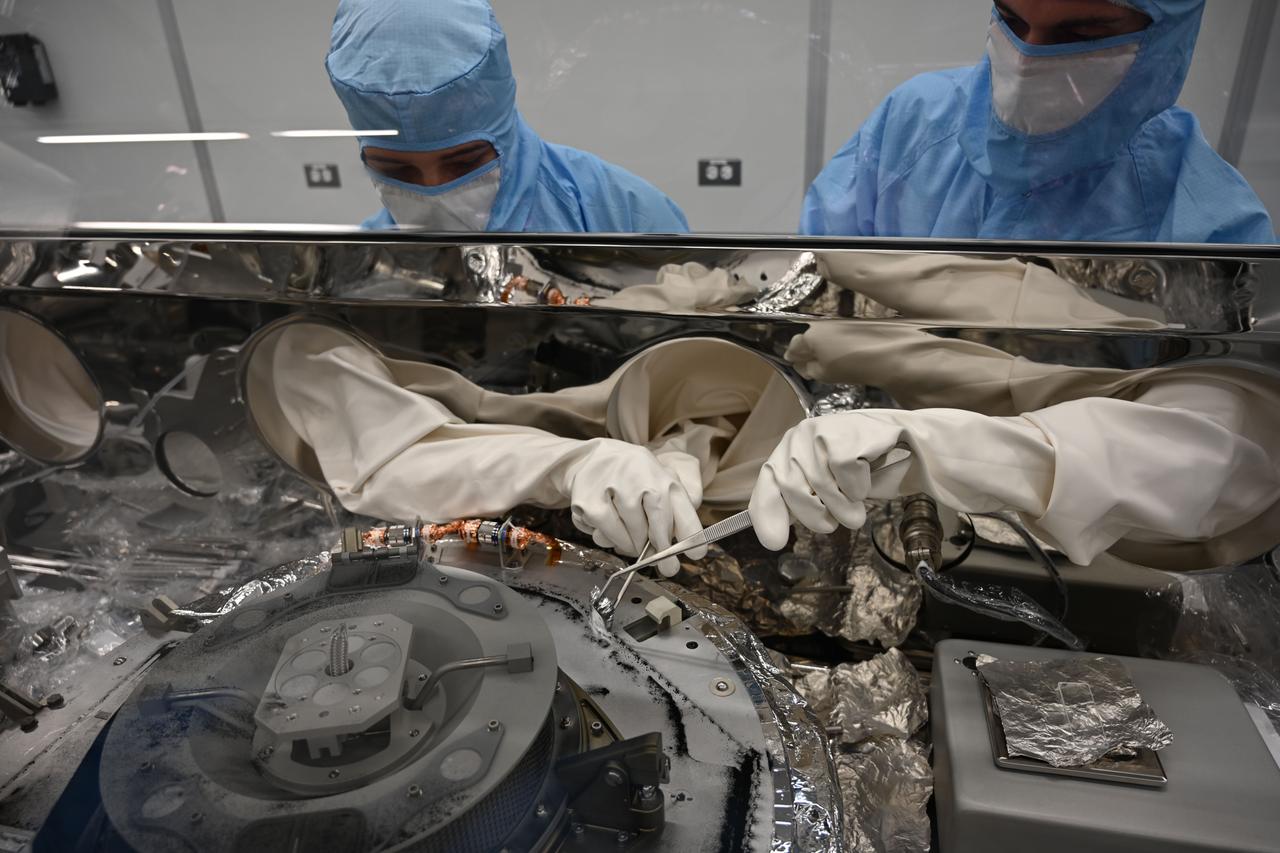
Astromaterials processors Mari Montoya, left, and Curtis Calva, right, use tools to collect asteroid particles from the base of the OSIRIS-REx science canister. Credit: NASA
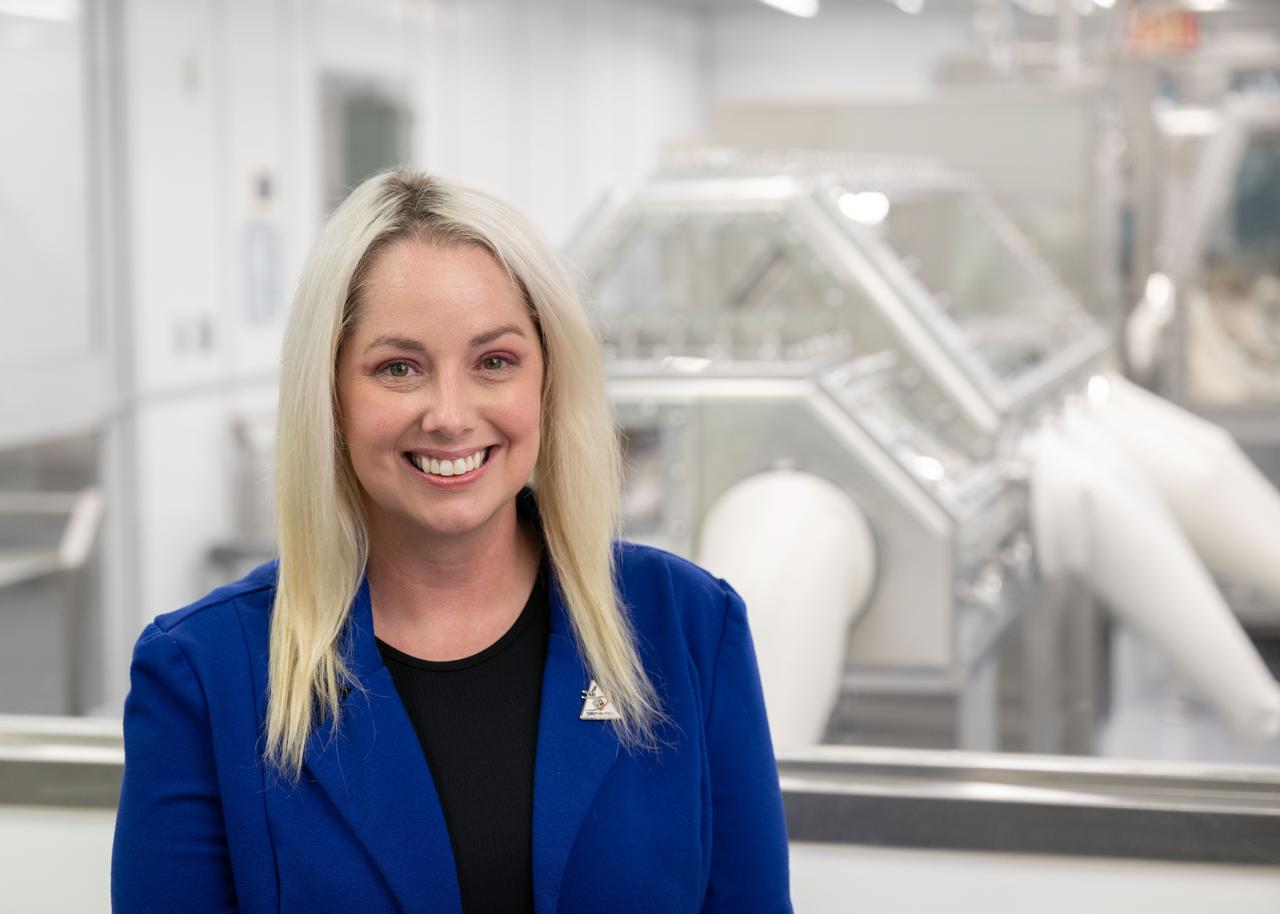
Portrait of Rachel Funk, OSIRIS-REx astromaterials processor from the Astromaterials Research and Exploration Science (ARES) division at NASA's Johnson Space Center in Houston. Funk is seen in front of the OSIRIS-REx cleanroom at Johnson. Credit: NASA/James Blair
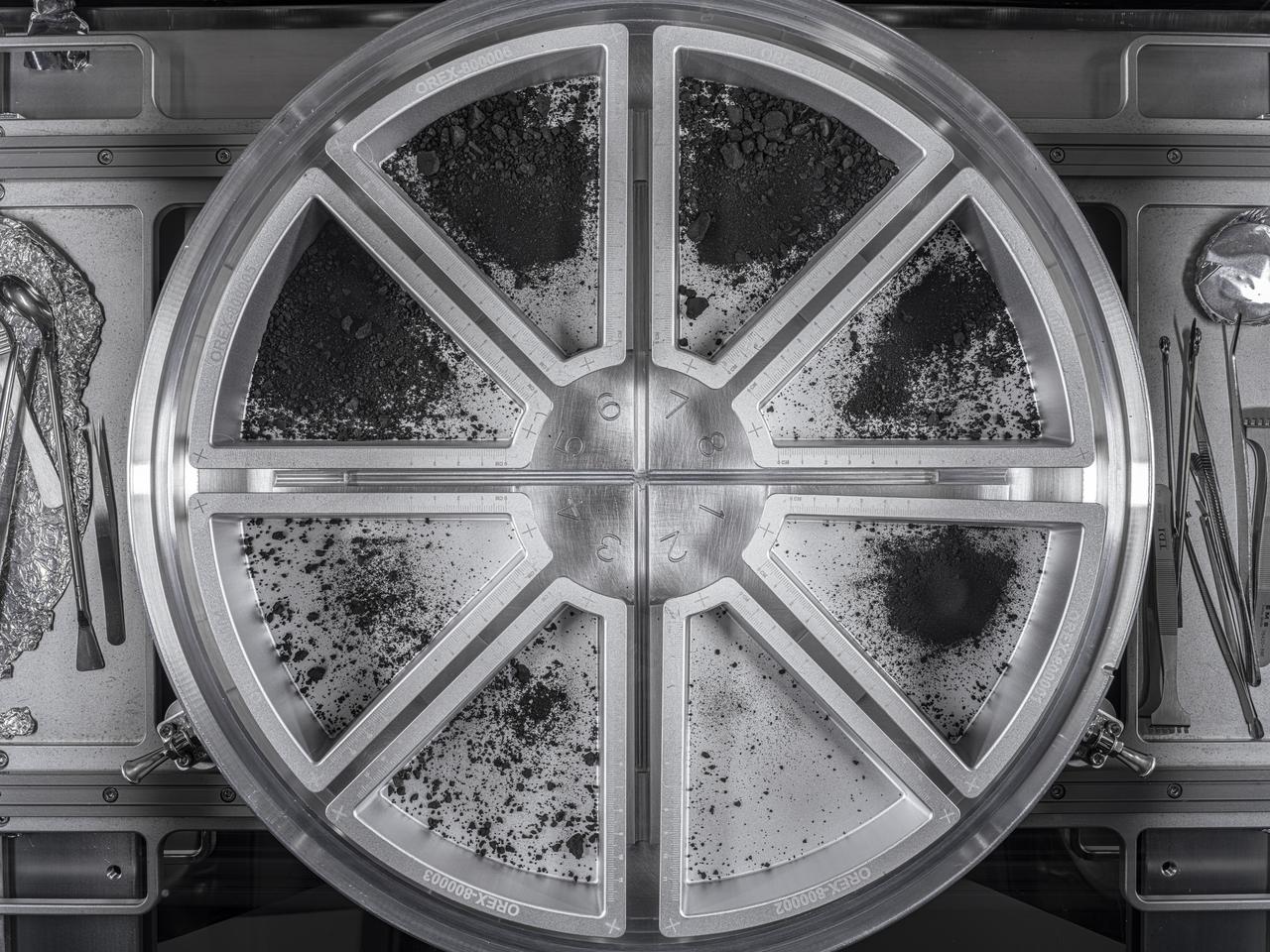
A view of eight sample trays containing the final material from asteroid Bennu. The dust and rocks were poured into the trays from the top plate of the Touch-and-Go Sample Acquisition Mechanism (TAGSAM) head. 51.2 grams were collected from this pour, bringing the final mass of asteroid sample to 121.6 grams. Credit: NASA/Erika Blumenfeld & Joseph Aebersold
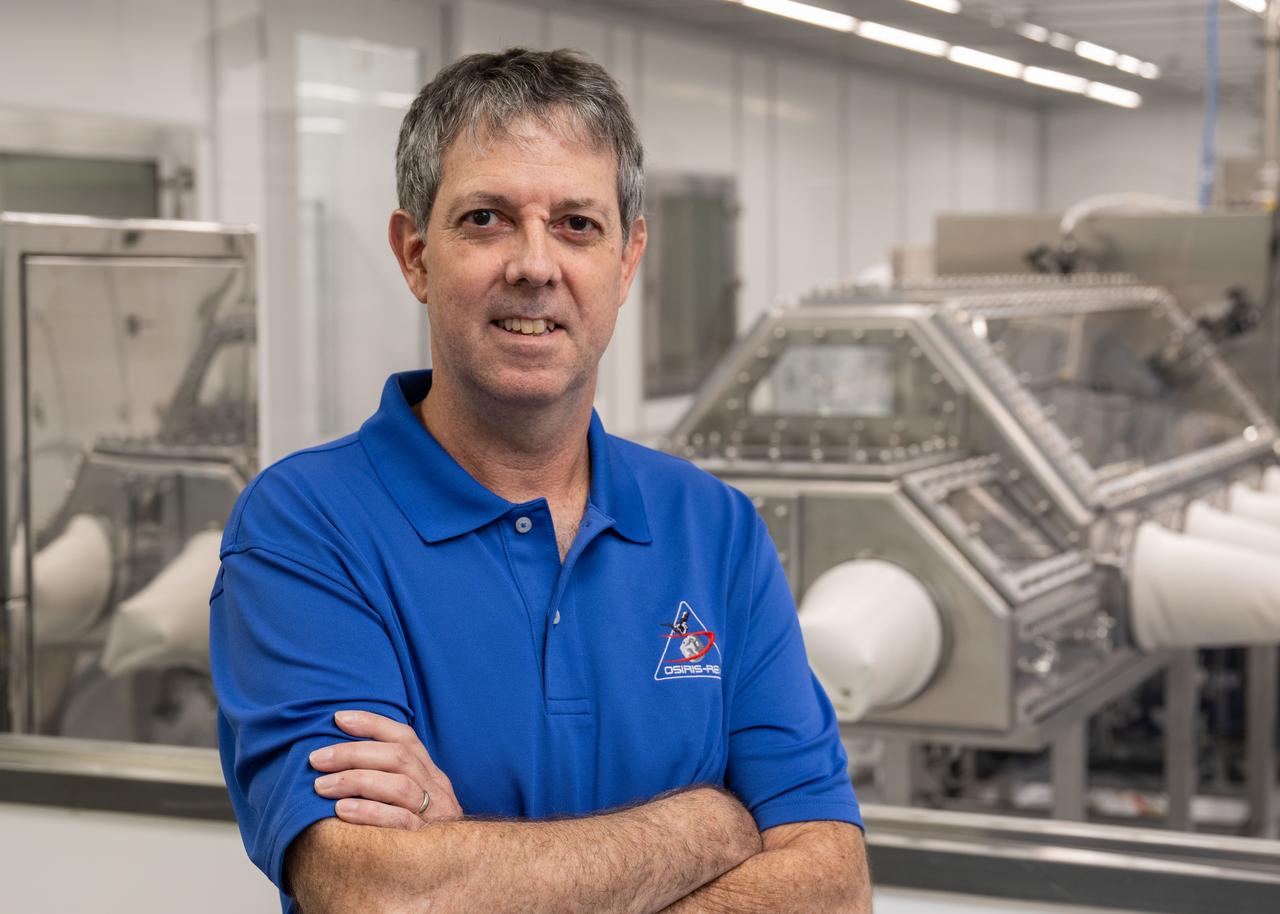
Date: 09-07-2023 Location: Bldg 31, OSIRIS-REx Lab Subject: OSIRIS-REx Portraits, Kevin Righter Photographer: James Blair

A view of the TAGSAM (Touch and Go Sample Acquisition Mechanism) from above, showing the Mylar flap with a pile of asteroid material resting on it. This image was created using manual high-resolution precision photography and semi-automated focus stacking procedure. Created using manual high-resolution precision photography and semi-automated focus stacking procedure. Credit: NASA/Erika Blumenfeld & Joseph Aebersold
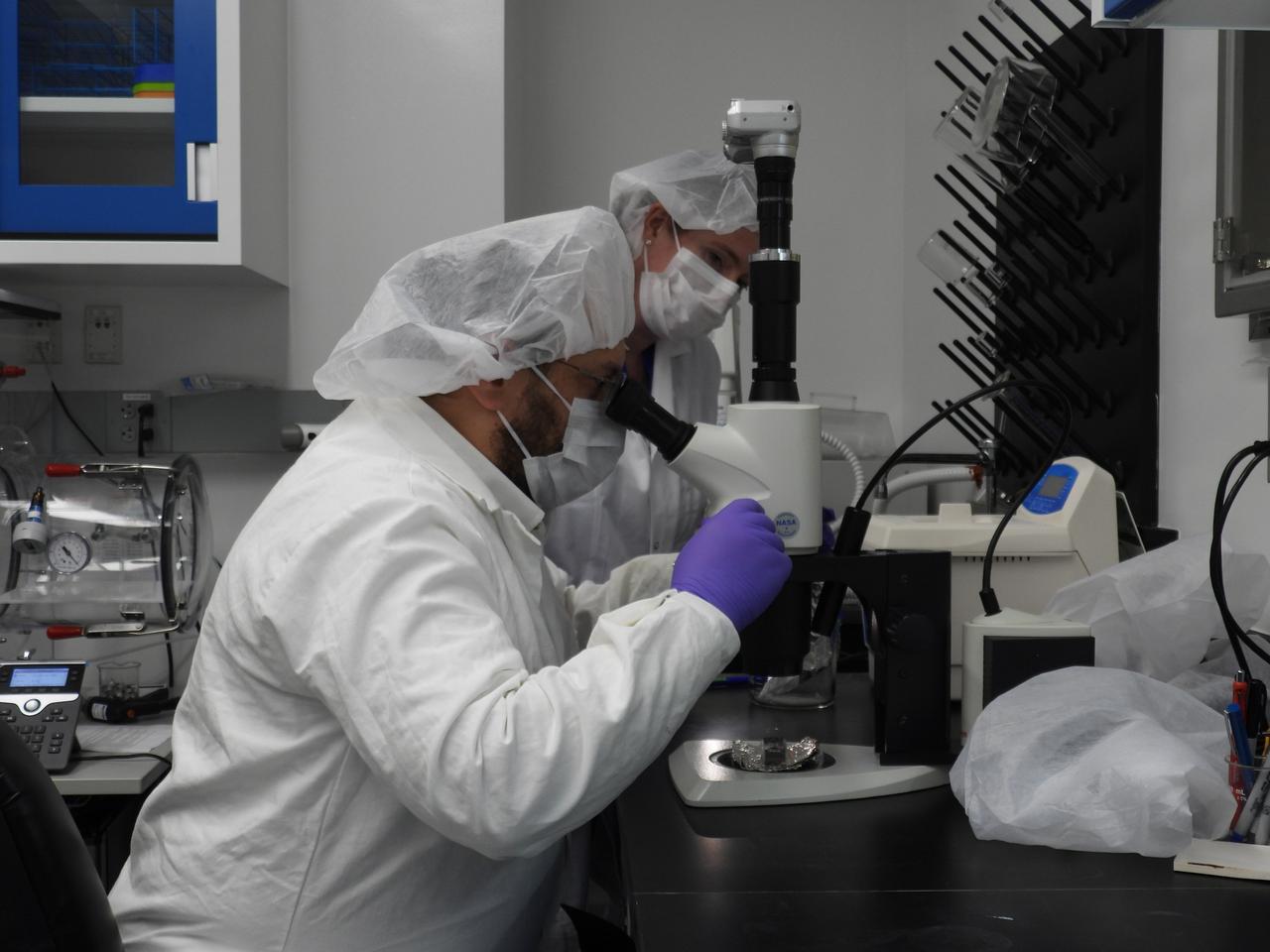
Jason Dworkin, project scientist for NASA's OSIRIS-REx (Origins, Spectral Interpretation, Resource Identification, and Security – Regolith Explorer) mission, examines a portion of the asteroid Bennu sample delivered to Earth in a laboratory at the agency's Goddard Space Flight Center in Greenbelt, Maryland.
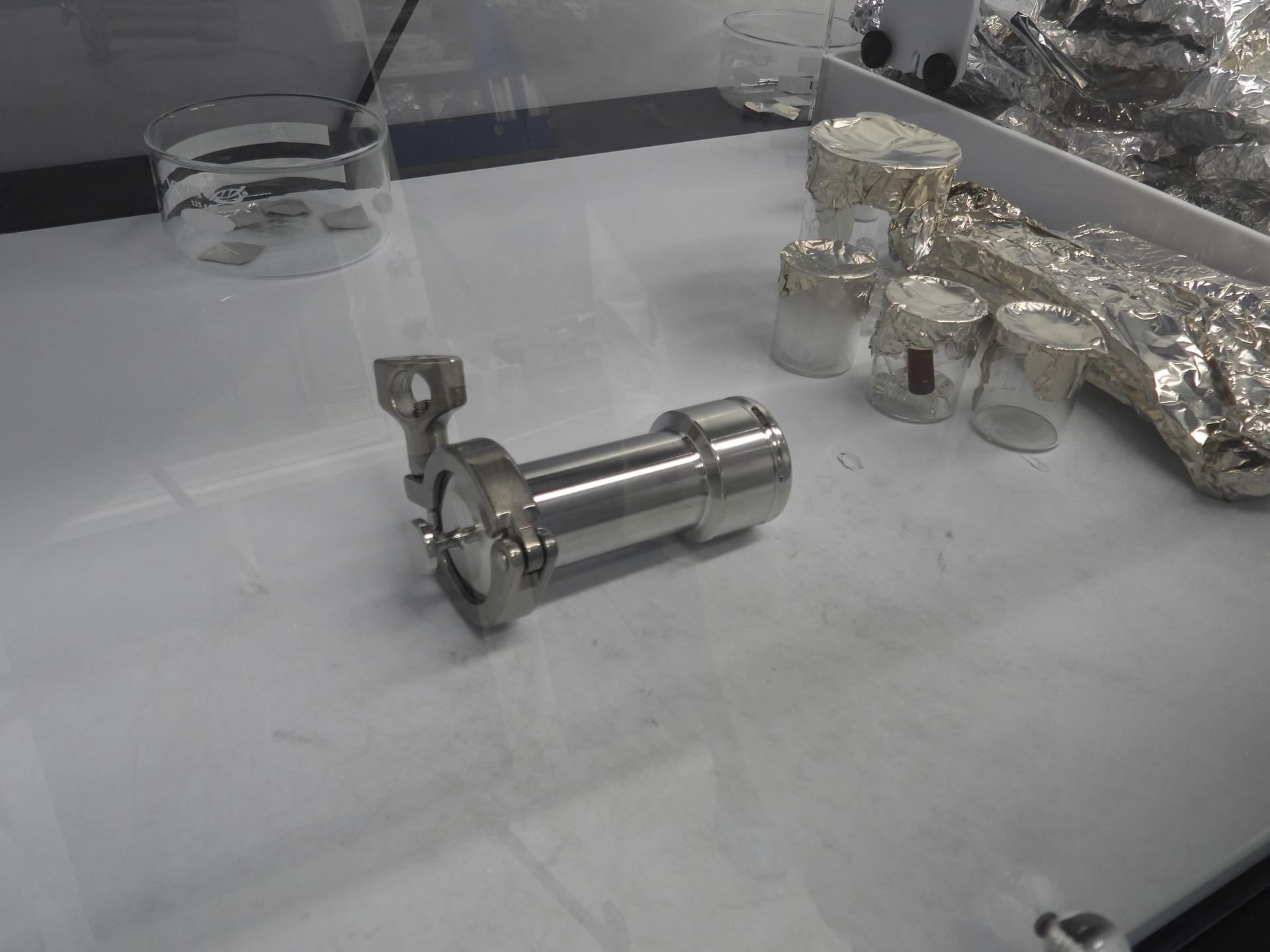
Photographed inside a laboratory at NASA's Goddard Space Flight Center in Greenbelt, Maryland, this cannister contains a portion of the asteroid Bennu sample delivered to Earth by the agency's OSIRIS-REx (Origins, Spectral Interpretation, Resource Identification, and Security – Regolith Explorer) mission.
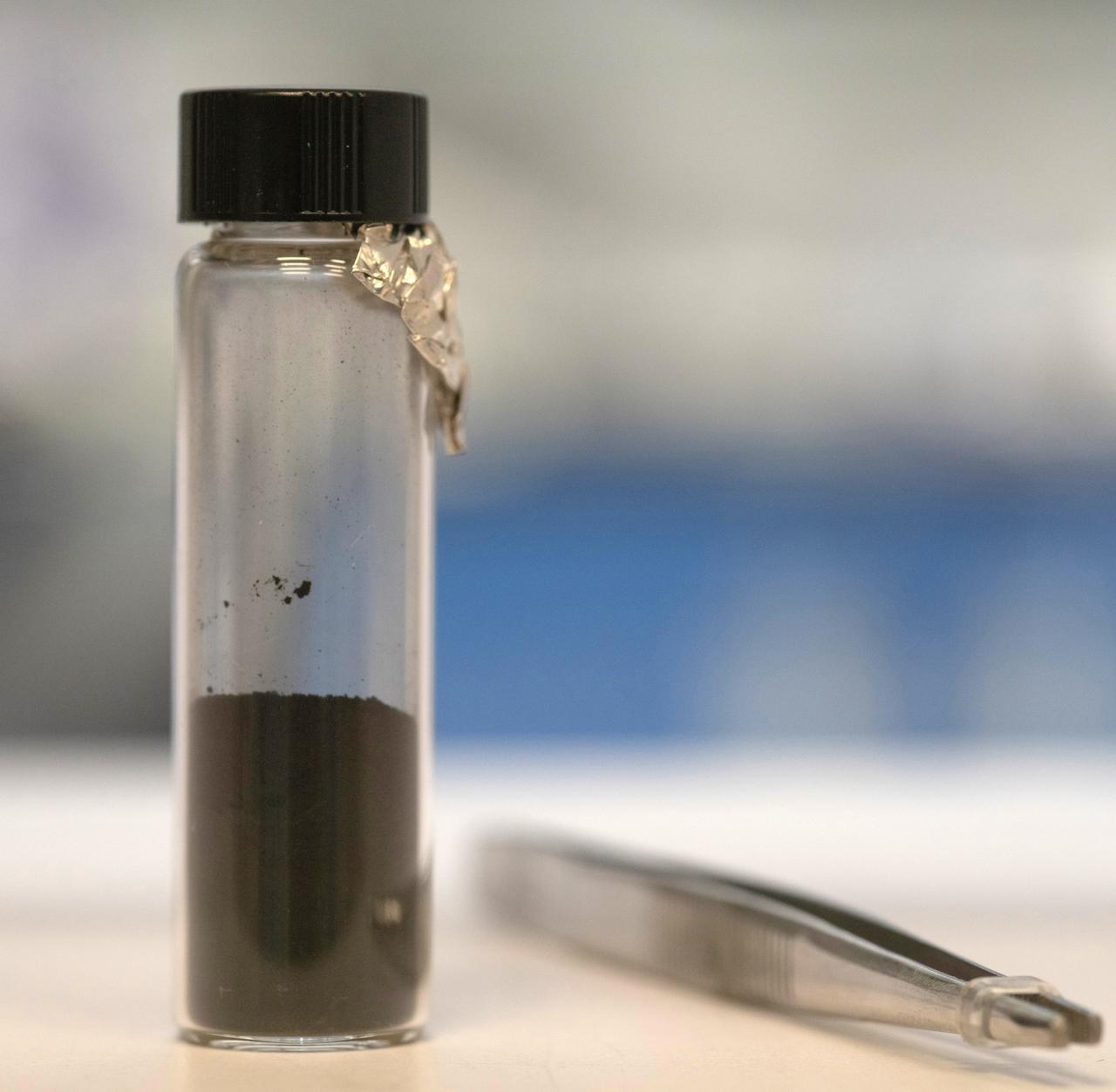
Photographed inside a laboratory at NASA's Goddard Space Flight Center in Greenbetl, Maryland, this vial contains a portion of the asteroid Bennu sample delivered to Earth by the agency's OSIRIS-REx (Origins, Spectral Interpretation, Resource Identification, and Security – Regolith Explorer) mission.
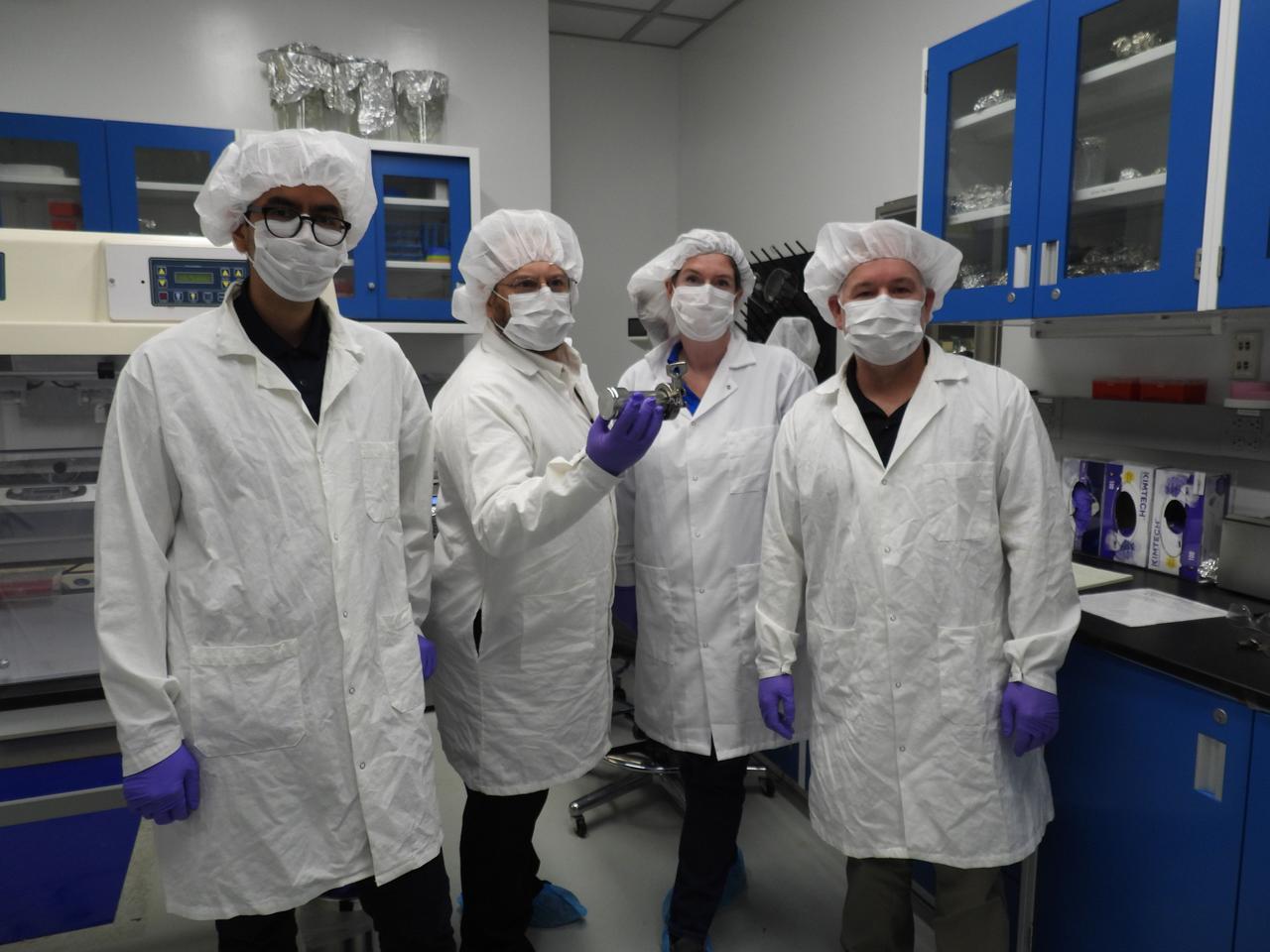
Researchers at NASA's Goddard Space Flight Center in Greenbelt, Maryland, pose with a cannister that contains a portion of the asteroid Bennu sample delivered to Earth by the agency's OSIRIS-REx (Origins, Spectral Interpretation, Resource Identification, and Security – Regolith Explorer) mission. From left to right: Angel Mojarro, organic geochemist; Jason Dworkin, OSIRIS-REX project scientist; Hannah McLain, astrobiologist; and Danny Glavin, senior sample scientist.
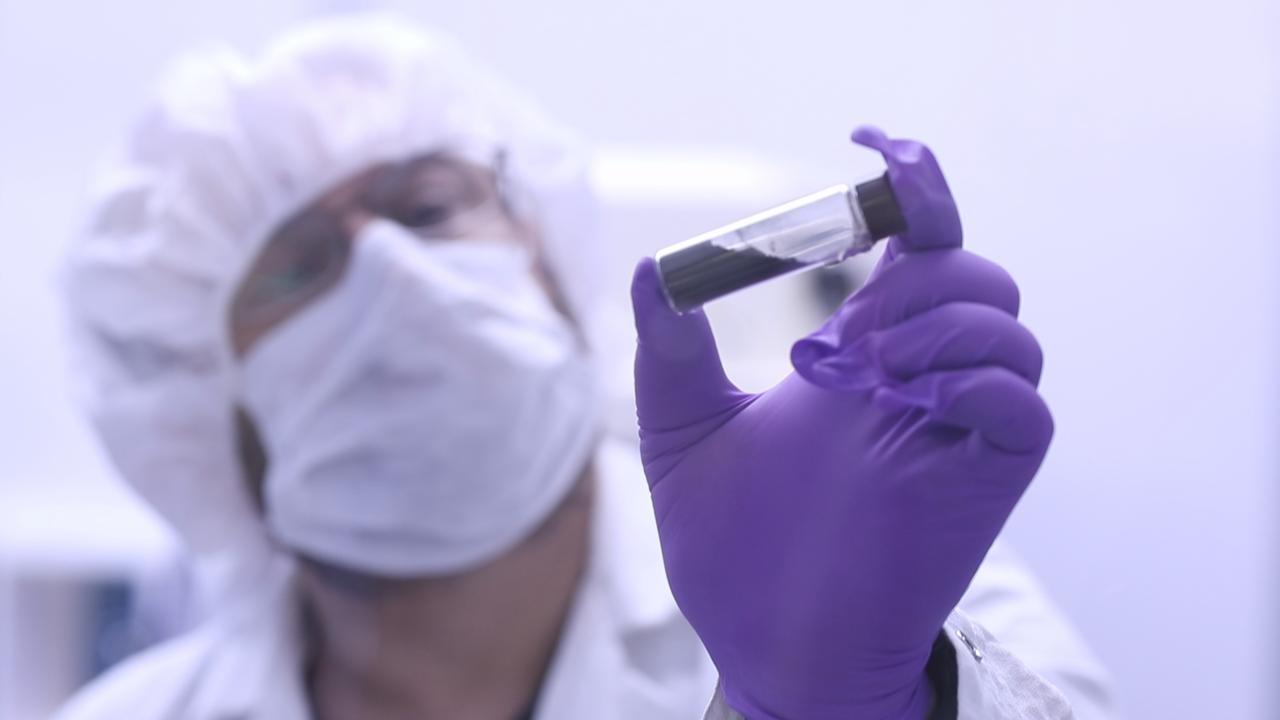
In this video frame, Jason Dworkin holds up a vial that contains part of the sample from asteroid Bennu delivered to Earth by NASA's OSIRIS-REx (Origins, Spectral Interpretation, Resource Identification, and Security – Regolith Explorer) mission in 2023. Dworkin is the mission's project scientist at NASA's Goddard Space Flight Center in Greenbelt, Maryland.
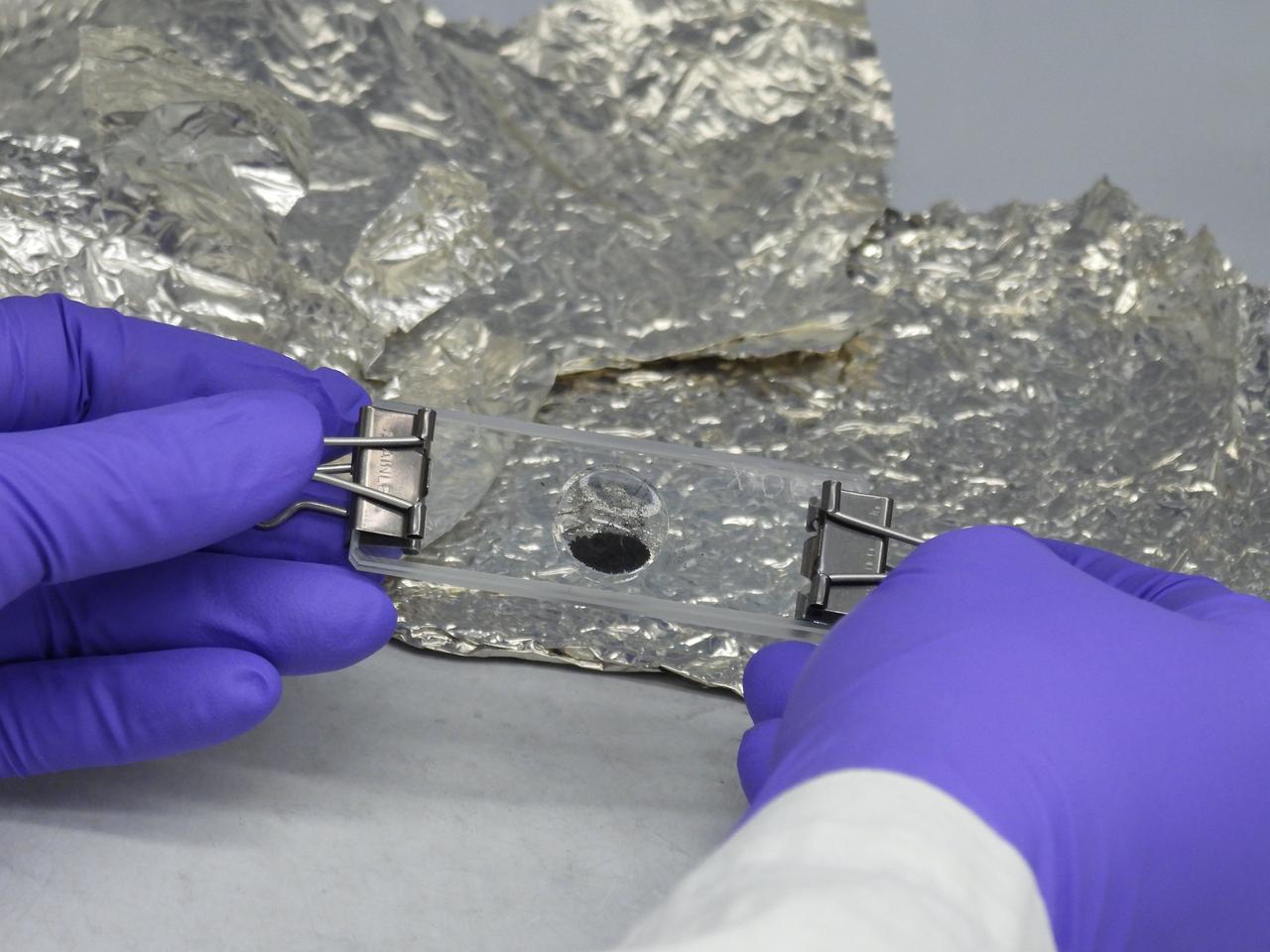
A portion of the asteroid Bennu sample delivered to Earth by NASA's OSIRIS-REx (Origins, Spectral Interpretation, Resource Identification, and Security – Regolith Explorer) mission, set into a microscope slide at the agency's Goddard Space Flight Center in Greenbelt, Maryland.