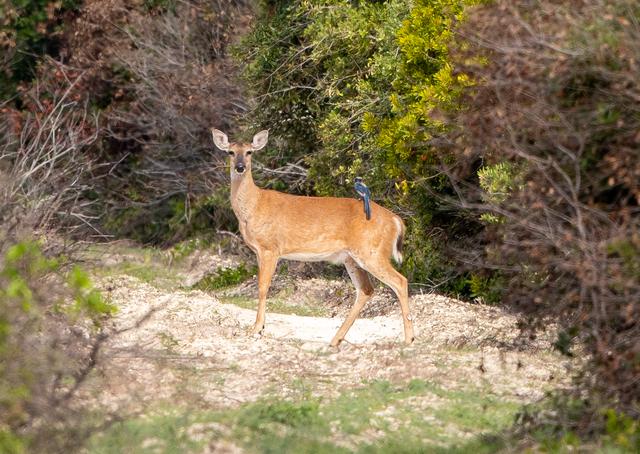
A Florida Scrub-Jay perches on the back of a white-tailed deer in the woods at NASA’s Kennedy Space Center in Florida on June 15, 2021. The Florida Scrub-Jay is one of the species of scrub-jay native to North America. The center shares a border with the Merritt Island National Wildlife Refuge. More than 330 native and migratory bird species, along with 25 mammal, 117 fish, and 65 amphibian and reptile species call Kennedy and the wildlife refuge home.
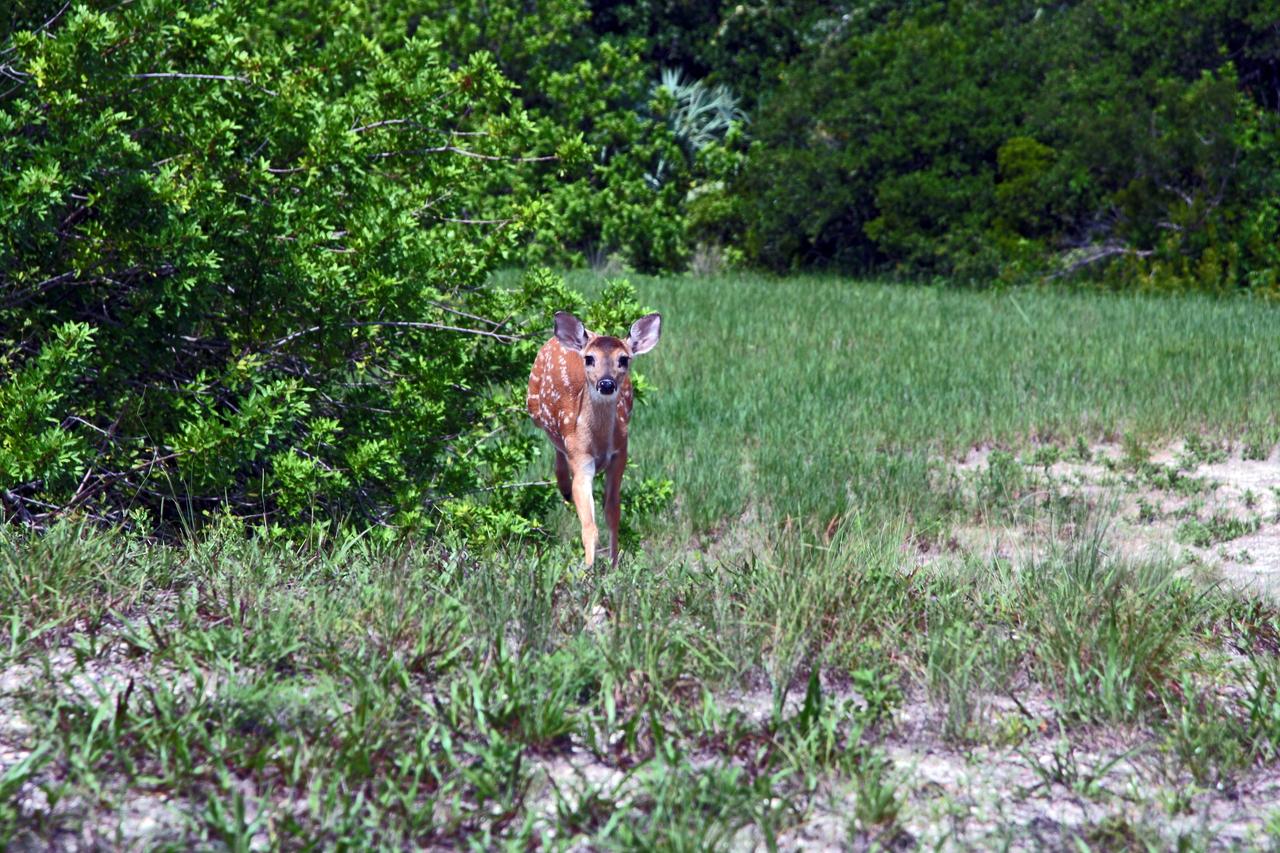
CAPE CANAVERAL, Fla. – A young white-tailed deer is spotted in the brush near Launch Complex 14 at Cape Canaveral Air Force Station, Fla., adjacent to NASA's Kennedy Space Center. White-tailed deer are found in forest edge habitats statewide. They feed primarily on twigs and leaves. Their diet also includes acorns, fruits and mushrooms. Kennedy shares a boundary with the Merritt Island National Wildlife Refuge, which encompasses 92,000 acres that are a habitat for more than 330 species of birds, 25 mammals, 117 fishes and 65 amphibians and reptiles. Photo credit: NASA/Dimitri Gerondidakis
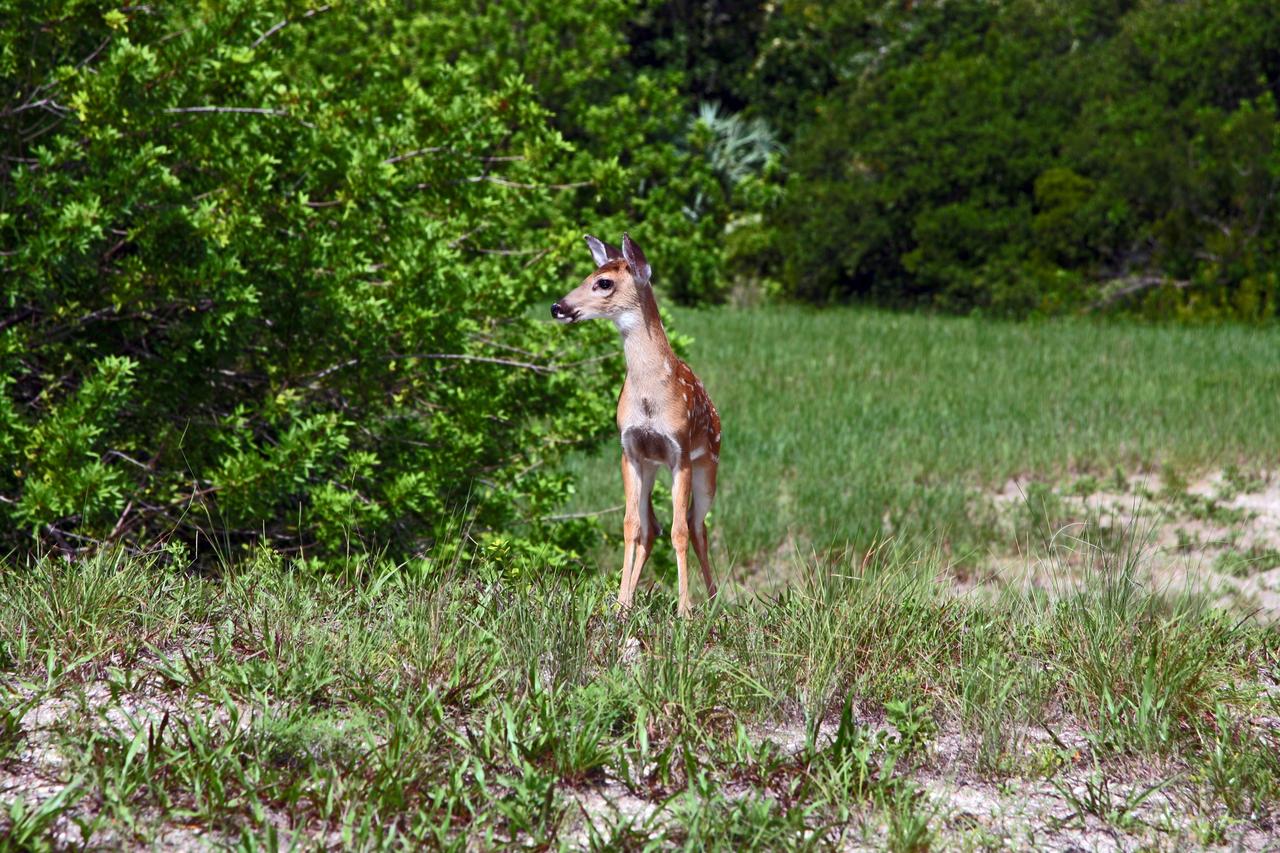
CAPE CANAVERAL, Fla. – A young white-tailed deer is spotted in the brush near Launch Complex 14 at Cape Canaveral Air Force Station, Fla., adjacent to NASA's Kennedy Space Center. White-tailed deer are found in forest edge habitats statewide. They feed primarily on twigs and leaves. Their diet also includes acorns, fruits and mushrooms. Kennedy shares a boundary with the Merritt Island National Wildlife Refuge, which encompasses 92,000 acres that are a habitat for more than 330 species of birds, 25 mammals, 117 fishes and 65 amphibians and reptiles. Photo credit: NASA/Dimitri Gerondidakis
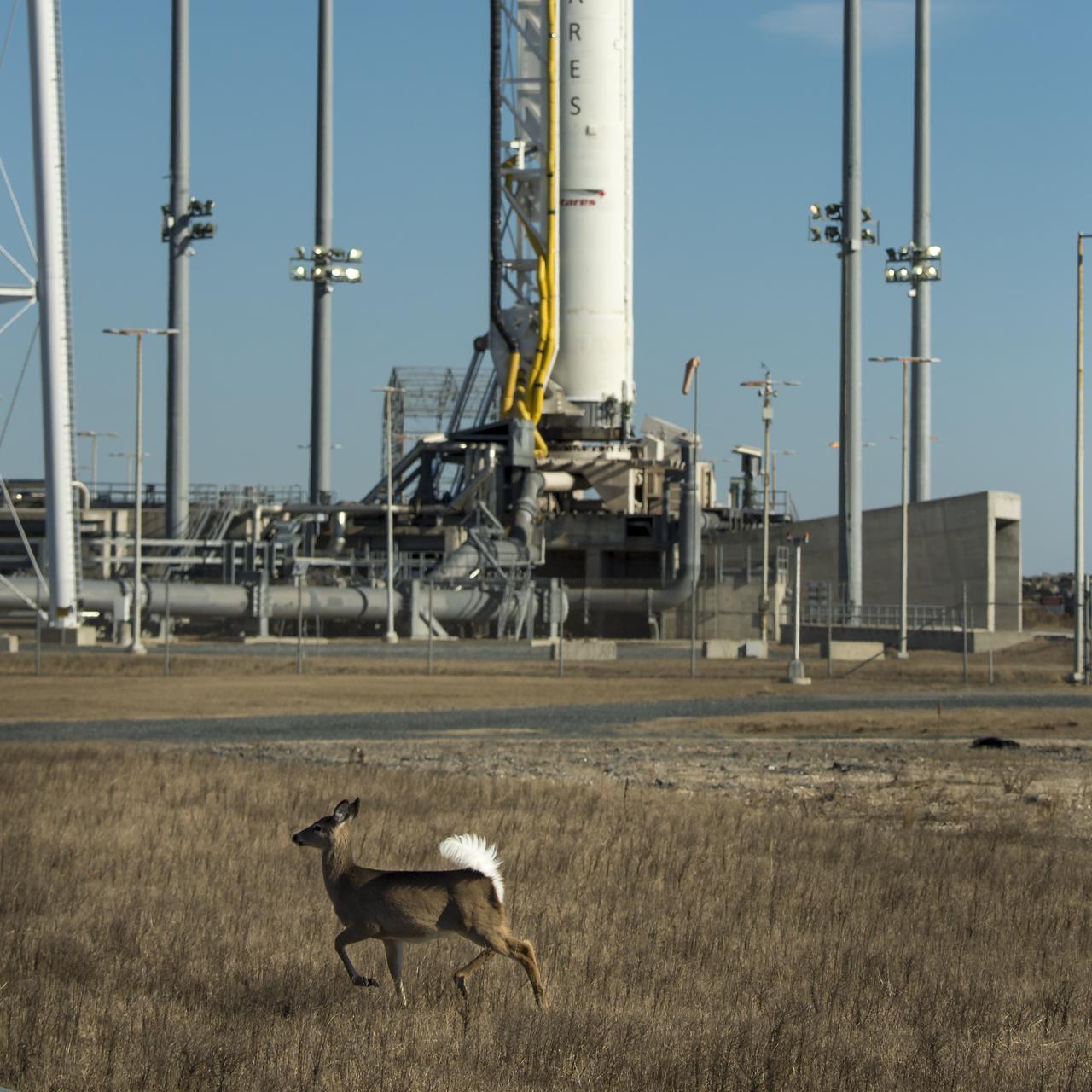
White-tailed deer graze near the Orbital Sciences Corporation Antares rocket, launch Pad-0A, at NASA's Wallops Flight Facility, Wednesday, January 8, 2014, Wallops Island, VA. Photo Credit: (NASA/Bill Ingalls)
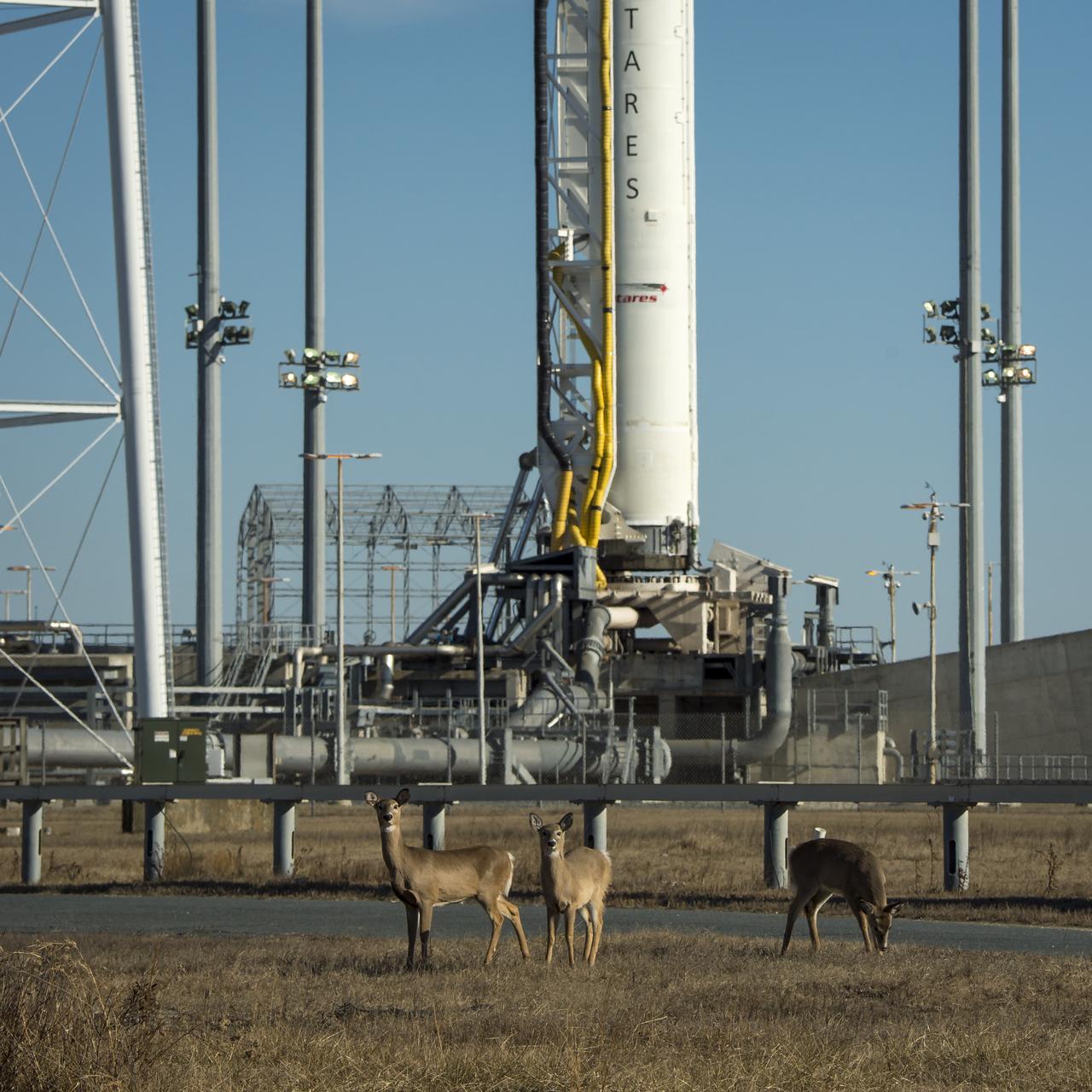
White-tailed deer graze near the Orbital Sciences Corporation Antares rocket, launch Pad-0A, at NASA's Wallops Flight Facility, Wednesday, January 8, 2014, Wallops Island, VA. Photo Credit: (NASA/Bill Ingalls)

iss074e0623368 (May 30, 2026) --- The Red Deer River runs through central Alberta, Canada, where the landscape transitions from rugged valleys to open prairie and supports a variety of agricultural and livestock activities. The International Space Station was orbiting 261 miles above North America at the time of this photograph. Credit: NASA/Chris Williams
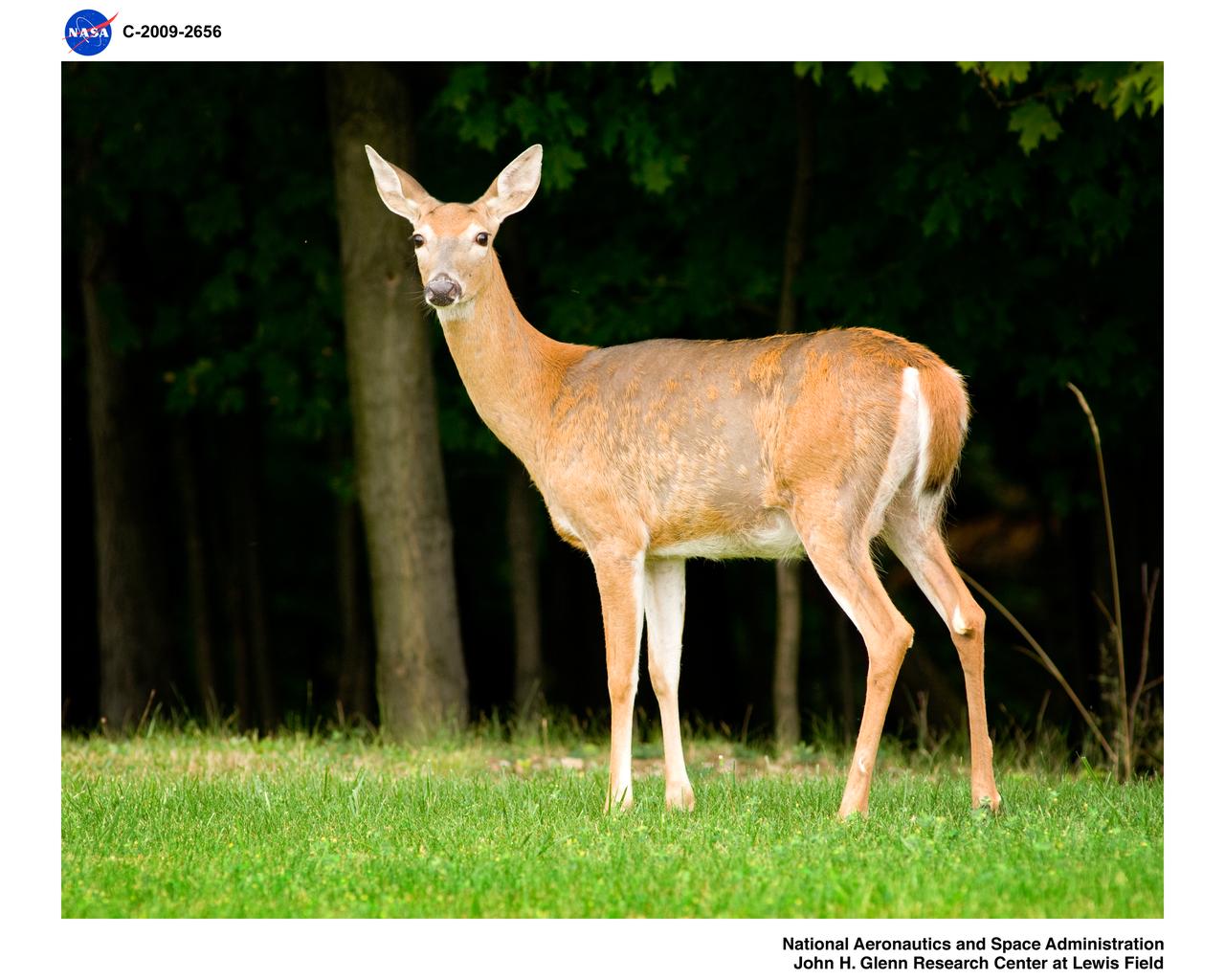
Deer in West Area, Glenn Research Center at Lewis Field
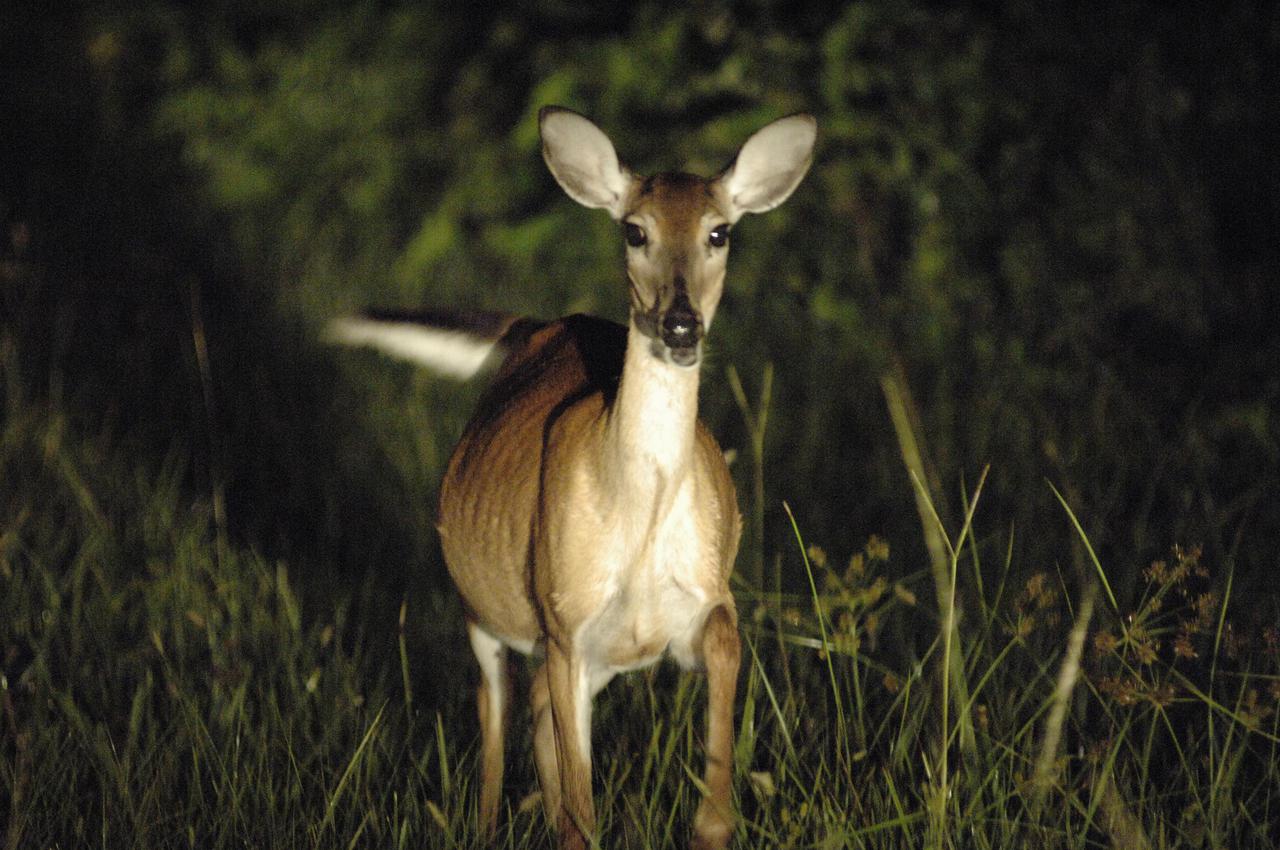
KENNEDY SPACE CENTER, FLA. - In the pre-dawn hours, a pregnant white-tailed deer is watchful as she browses for food on the west end of NASA Kennedy Space Center’s Shuttle Landing Facility. The deer would have had an enviable position to watch the landing of Space Shuttle Discovery if the landing had not been postponed. White-tailed deer are found in forest edge habitats statewide. Their color ranges from gray- to russet-brown with a white neck, chest, underside and underneath the tail. The deer stand 55 inches to 80 inches high, have large ears, a large tail and long slender legs. They feed primarily on twigs and leaves. Their diet also includes acorns, fruits and mushrooms. Most browsing is done at night or on overcast days.
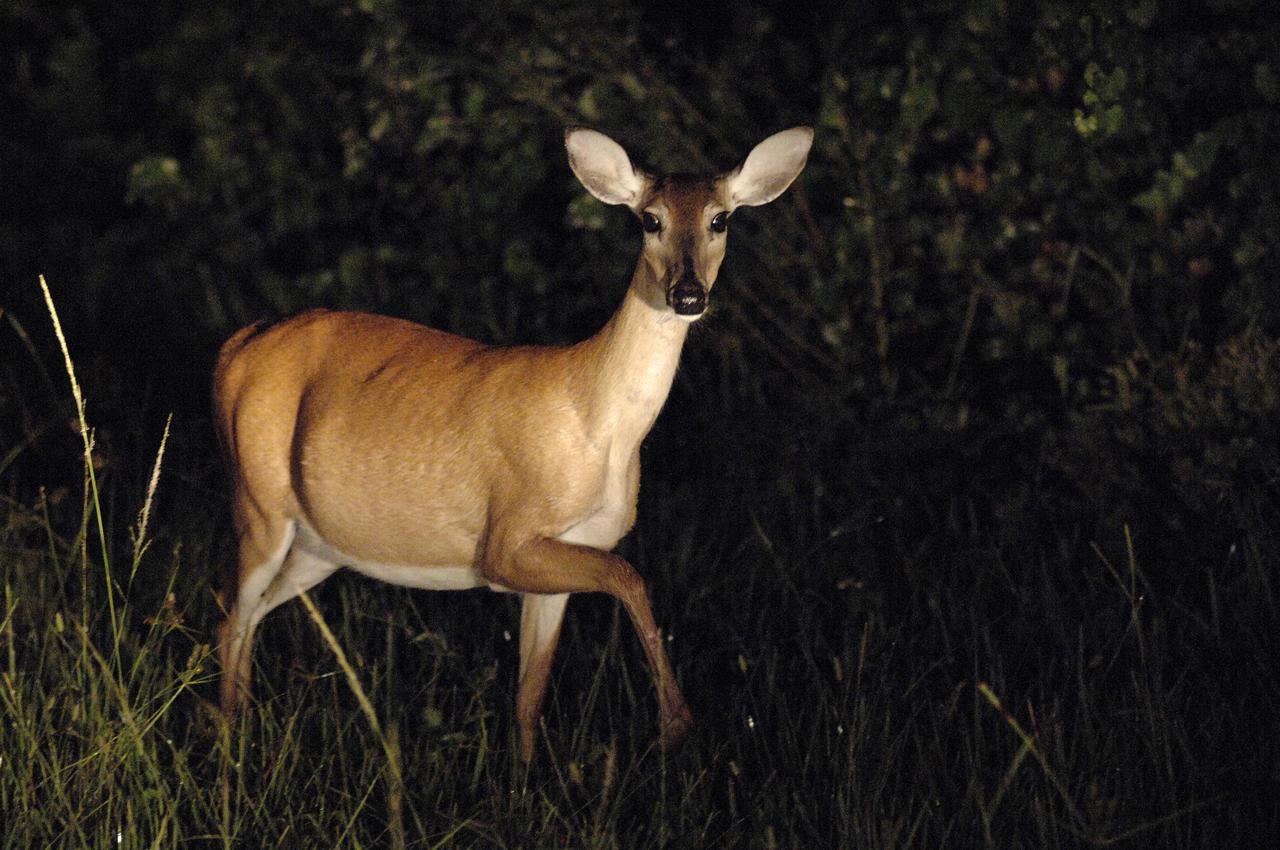
KENNEDY SPACE CENTER, FLA. - In the pre-dawn hours, a pregnant white-tailed deer is watchful as she browses for food on the west end of NASA Kennedy Space Center’s Shuttle Landing Facility. The deer would have had an enviable position to watch the landing of Space Shuttle Discovery if the landing had not been postponed. White-tailed deer are found in forest edge habitats statewide. Their color ranges from gray- to russet-brown with a white neck, chest, underside and underneath the tail. The deer stand 55 inches to 80 inches high, have large ears, a large tail and long slender legs. They feed primarily on twigs and leaves. Their diet also includes acorns, fruits and mushrooms. Most browsing is done at night or on overcast days.
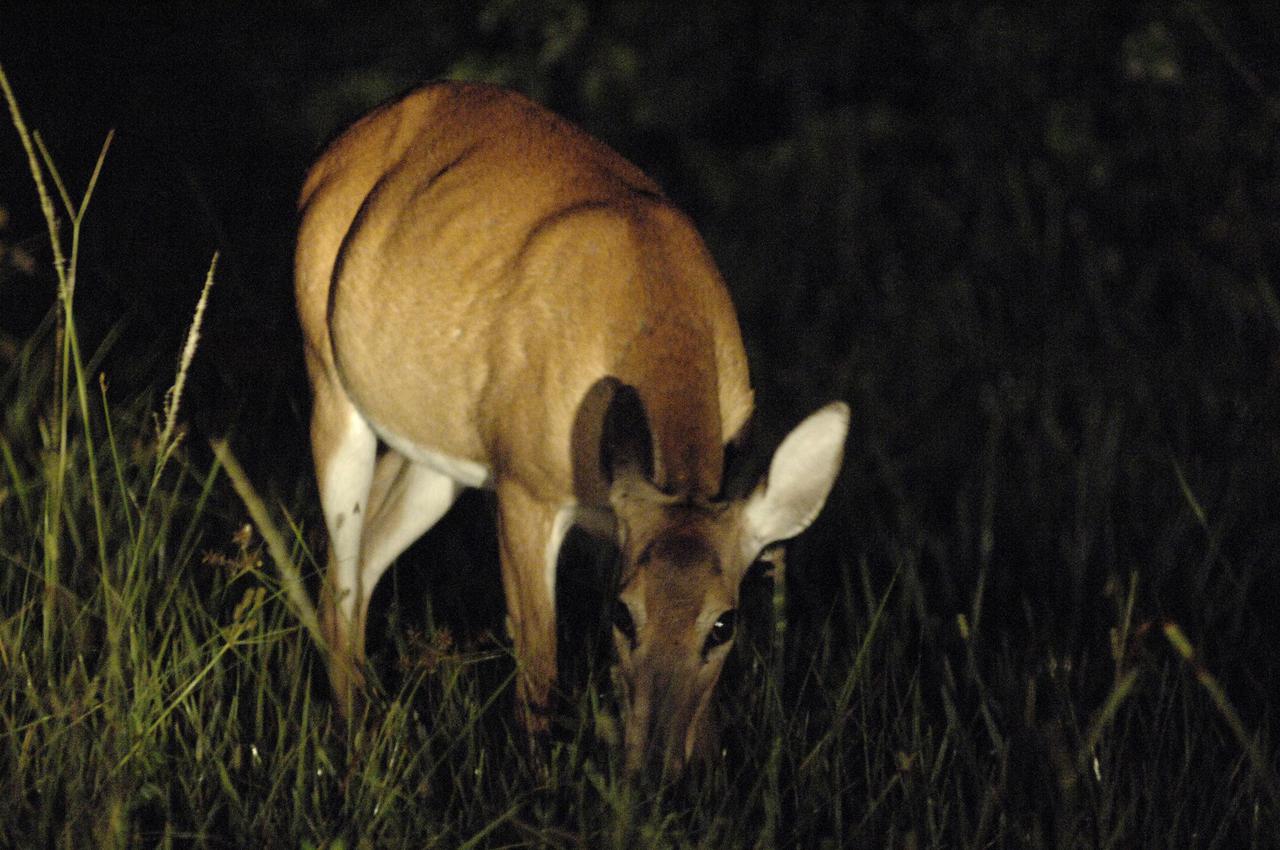
KENNEDY SPACE CENTER, FLA. - In the pre-dawn hours, a pregnant white-tailed deer browses for food on the west end of NASA Kennedy Space Center’s Shuttle Landing Facility. The deer would have had an enviable position to watch the landing of Space Shuttle Discovery if the landing had not been postponed. White-tailed deer are found in forest edge habitats statewide. Their color ranges from gray- to russet-brown with a white neck, chest, underside and underneath the tail. The deer stand 55 inches to 80 inches high, have large ears, a large tail and long slender legs. They feed primarily on twigs and leaves. Their diet also includes acorns, fruits and mushrooms. Most browsing is done at night or on overcast days.
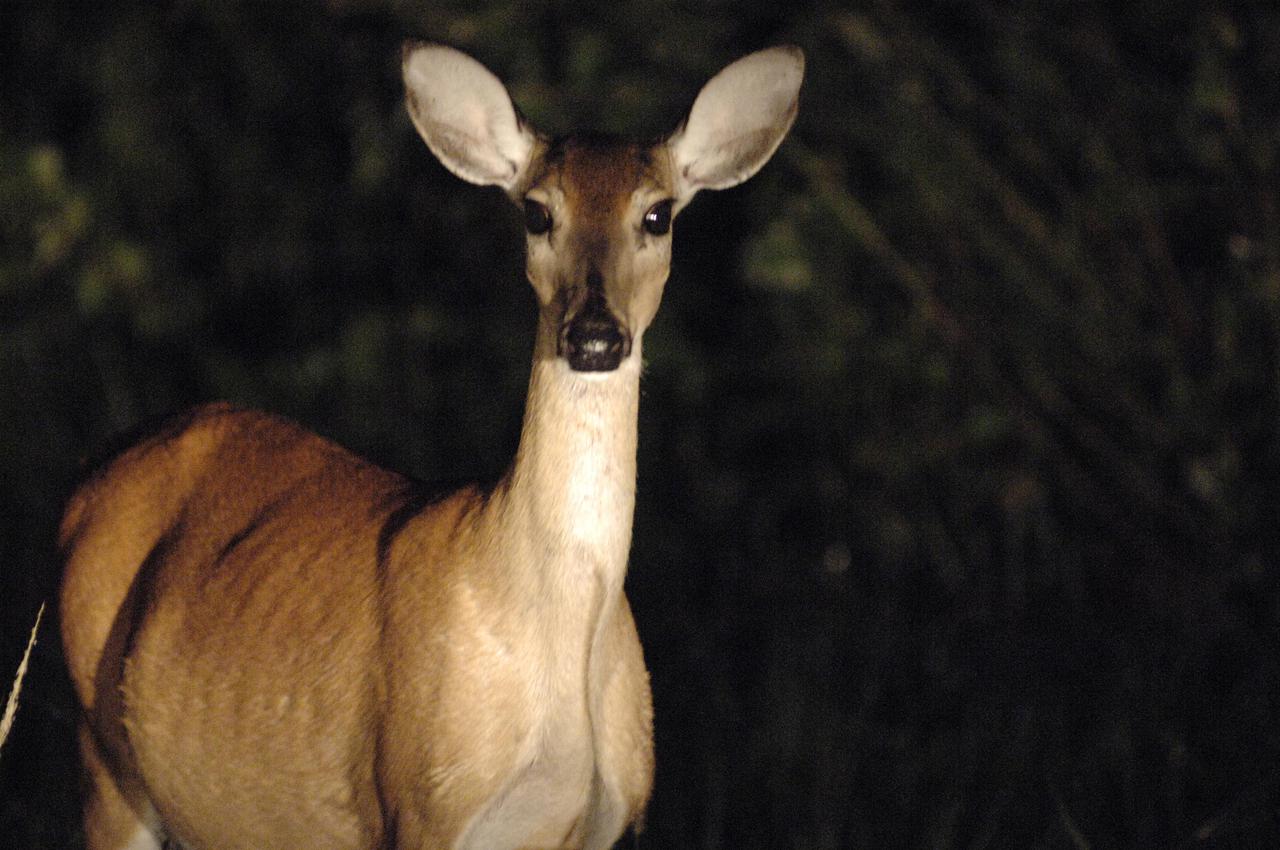
KENNEDY SPACE CENTER, FLA. - In the pre-dawn hours, a pregnant white-tailed deer is watchful as she browses for food on the west end of NASA Kennedy Space Center’s Shuttle Landing Facility. The deer would have had an enviable position to watch the landing of Space Shuttle Discovery if the landing had not been postponed. White-tailed deer are found in forest edge habitats statewide. Their color ranges from gray- to russet-brown with a white neck, chest, underside and underneath the tail. The deer stand 55 inches to 80 inches high, have large ears, a large tail and long slender legs. They feed primarily on twigs and leaves. Their diet also includes acorns, fruits and mushrooms. Most browsing is done at night or on overcast days.

iss074e0437897 (April 6, 2026) --- The western portion of Lake Balkhash in Kazakhstan is freshwater, fed predominantly by the Ili River and bordered by woodlands that support a wide range of wildlife, including migratory birds, fish, deer, and ongoing efforts to reintroduce the Caspian tiger. The eastern portion of Lake Balkhash (not pictured) is more saline due to its greater depth, arid climate, and the narrow Uzynaral Strait, which limits the inflow of freshwater between the two basins. The International Space Station was orbiting 267 miles above Kazakhstan at the time of this photograph. Credit: NASA
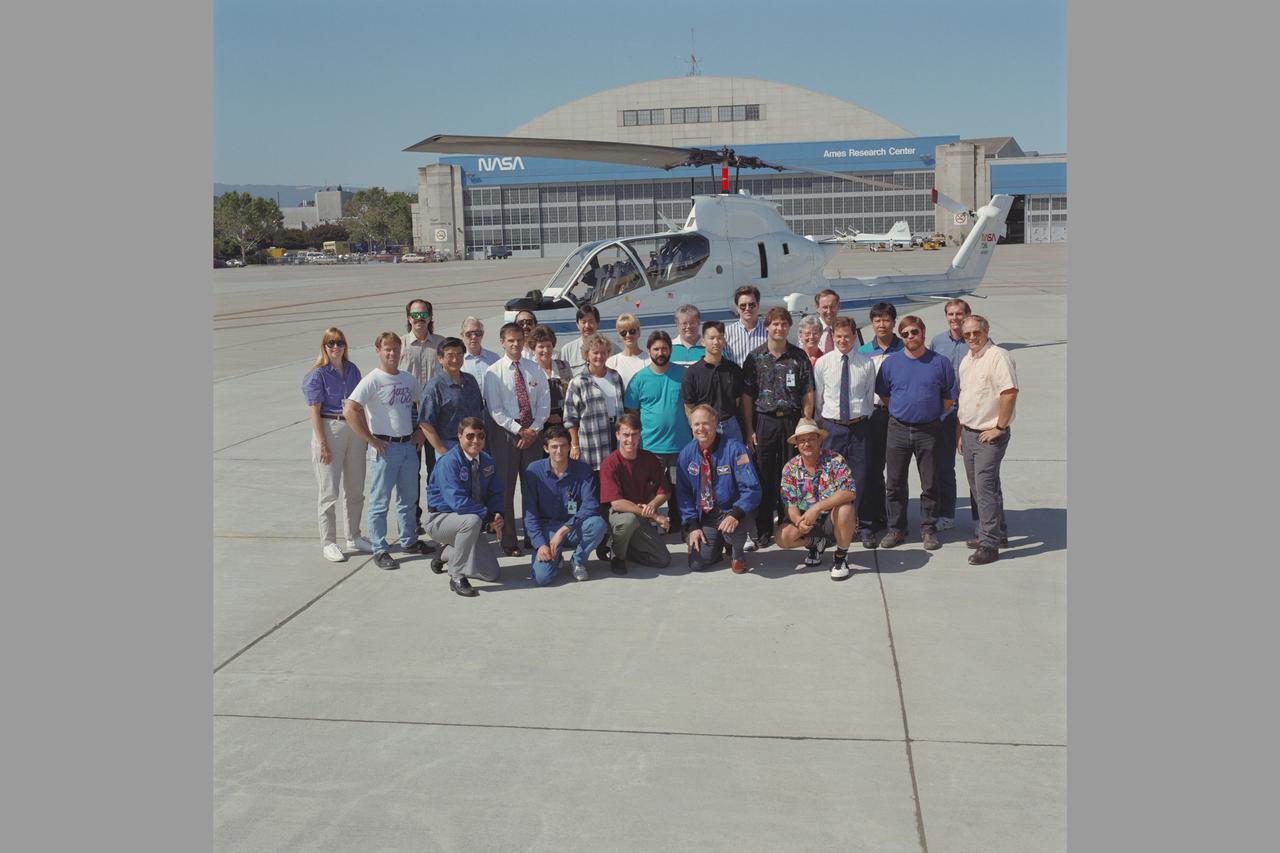
FIELD OF VIEW OVERLAP STUDY PROJECT TEST ON FLIGHT LINE WITH NASA 736 COBRA (USA 70-15979). FLITE Cobra Research Team Personnel - Front row, L-R: Tom Reynolds, Nick Pirot, Sean Hogan, Loran Haworth, John Browning. Middle row, L-R: Dr. Mary Kaiser, John Spooner, Richard Lee, Montoe Deering, Sue Laurie, Paul Aristo, Alan Lee, Zsolt Halmos, Zoltan Szoboszlay, John Denman, Lee Mountz. Back row, L-R: Dr. Dave Foyle, Millard Edgerton, Ron Fong, Gertrude 'Trude' Schlaich, Gary Leong, Linda Blyskal, Brian Hookland, Steve Timmons, Fran Kaster, Wendel Stephens, Alex Macalma, Dana Marcell. Fig. 141 NASA SP Flight Research at Ames: 57 Years of Development and Validation of Aeronautical Technology
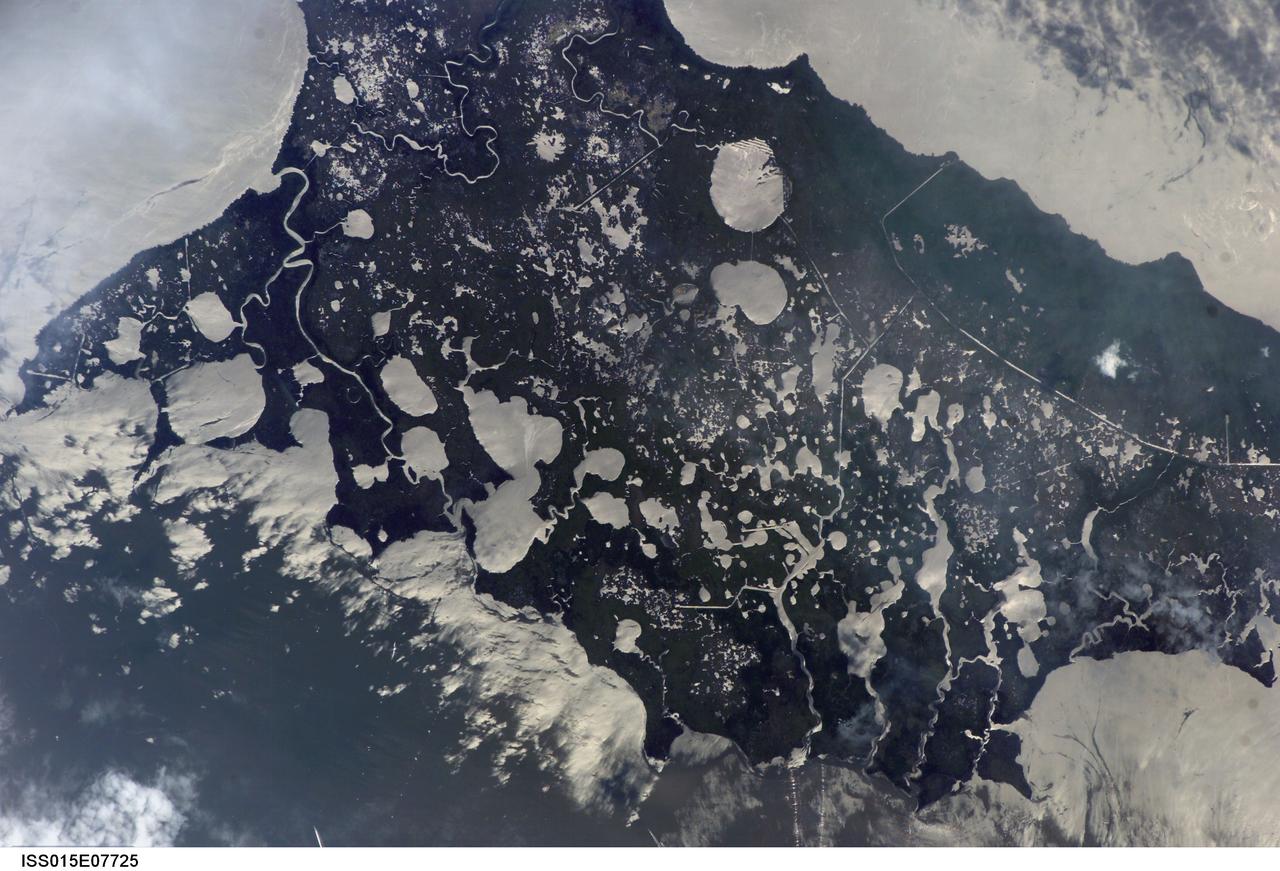
ISS015-E-07725 (11 May 2007) --- Marsh Island, Louisiana is featured in this image photographed by an Expedition 15 crewmember on the International Space Station. Marsh Island, located along the southwestern coastline of Louisiana, is a remnant of an abandoned lobe of the Mississippi River Delta formed approximately 5000-7500 years before the present day, according to scientists. It is composed primarily of organic-rich muds and brackish marsh vegetation (some peat -- semiconsolidated plant and organic matter -- is also present). The intricate lake, pond and stream network of the island is highlighted in this image by silver-gray sunglint -- light reflected off of water surfaces directly back to the crewmember on the space station. Sunglint also illuminates water surfaces in the adjacent Gulf of Mexico and West Cote Blanche Bay -- variations in intensity of reflectance in these water bodies is due to surface roughness (often related to wind-driven waves or currents) and the presence of surfactants that can change the surface properties of the water. Marsh Island is a popular fishing, shrimping and birding location. The island has experienced significant loss of vegetation and land area -- nearly 3,000 hectares (7,000 acres) - due to erosion, with a corresponding loss of habitat for local and migratory birds, shrimp, alligators and deer. While Marsh Island is uninhabited, it has been the focus of intensive development for management of erosion, such as revegetation of deteriorated marsh areas. Leveed canals (straight silver-gray water features) help drain areas for above-surface revegetation, while sill dams help stabilize water levels and foster regrowth of important subsurface vegetation such as widgeongrass.