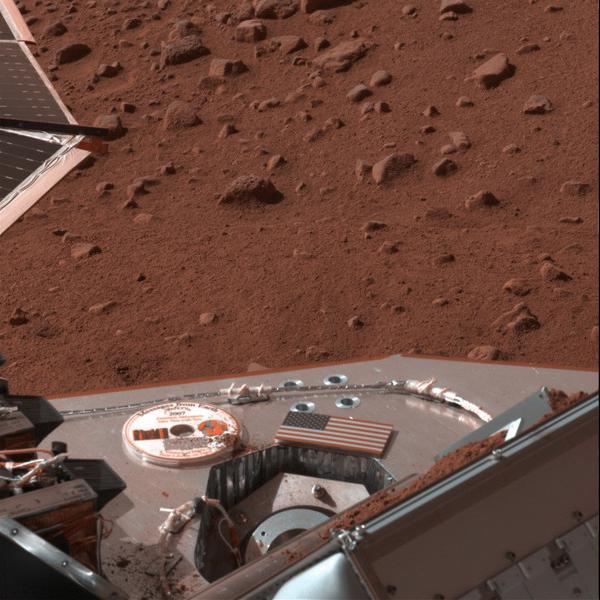
Soil Delivery to Phoenix Oven
Delivery to the Wet Chemistry Laboratory
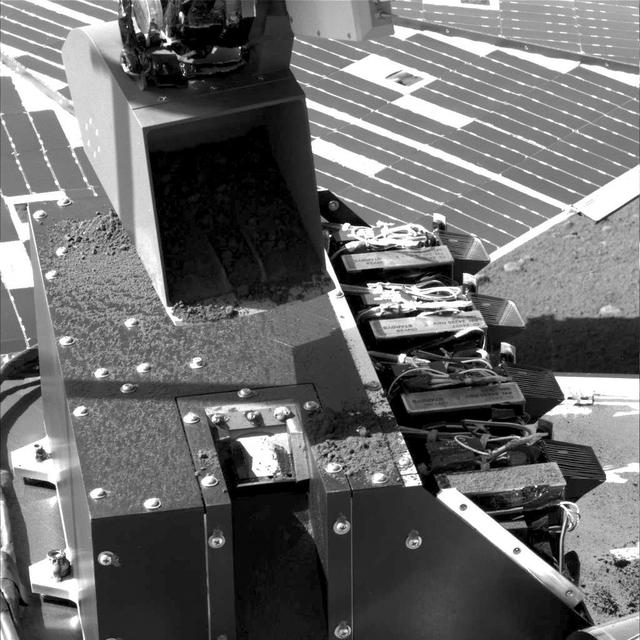
First Sample Delivery to Mars Microscope
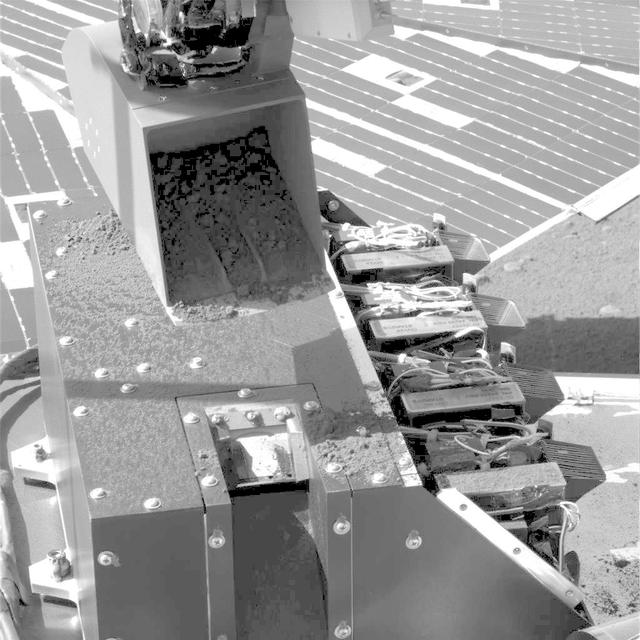
First Sample Delivery to Mars Microscope
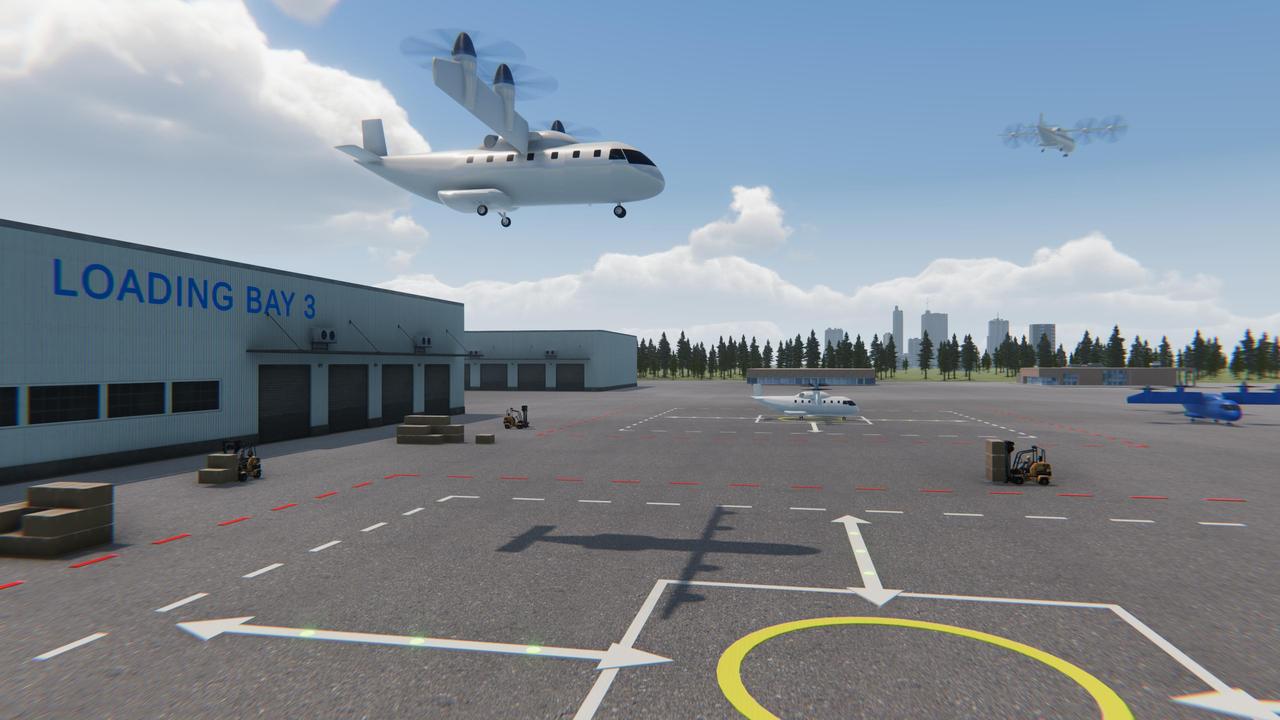
NASA is uniquely qualified to help revolutionize the Advanced Air Mobility cargo transportation industry by finding solutions for faster and cleaner modes of moving packages, using both large cargo delivery aircraft and small package delivery drones like seen in this concept image.
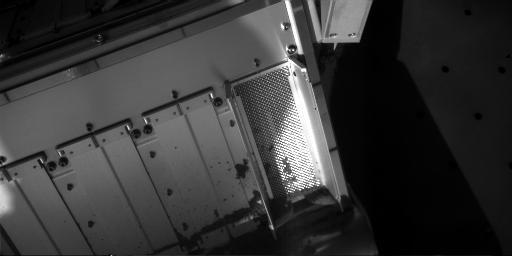
After Sample-Delivery Attempt, Sol 62
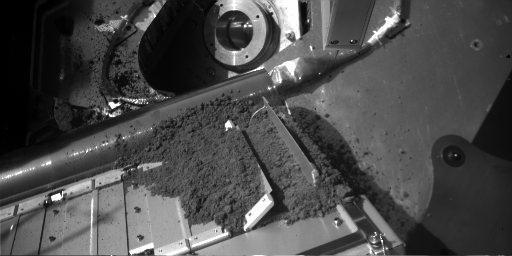
Martian Soil Delivery to Analytical Instrument on Phoenix
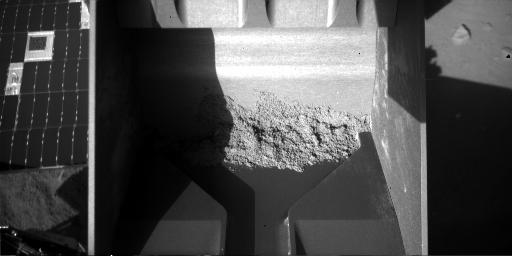
Soil Still in Scoop After Sample-Delivery Attempt
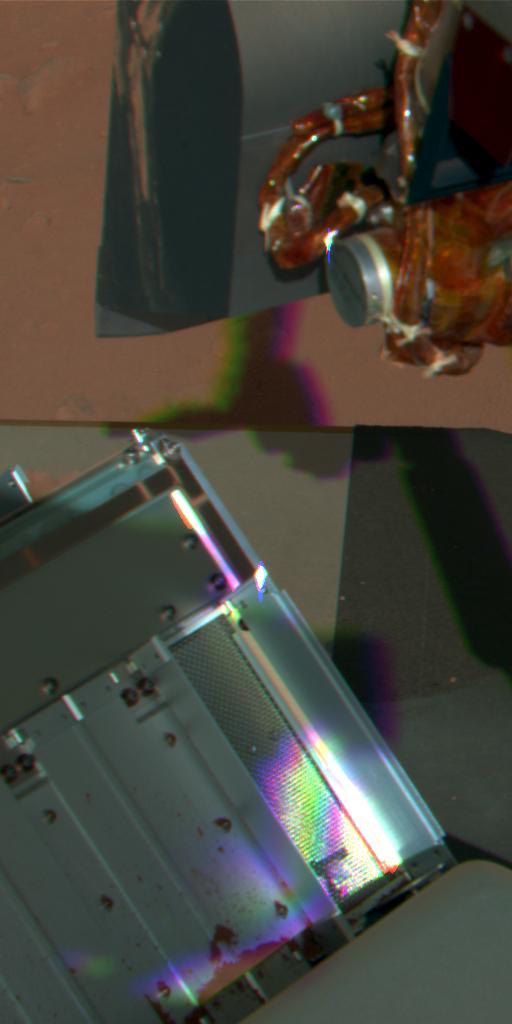
After Attempted Sample Delivery on Sol 60, False Color
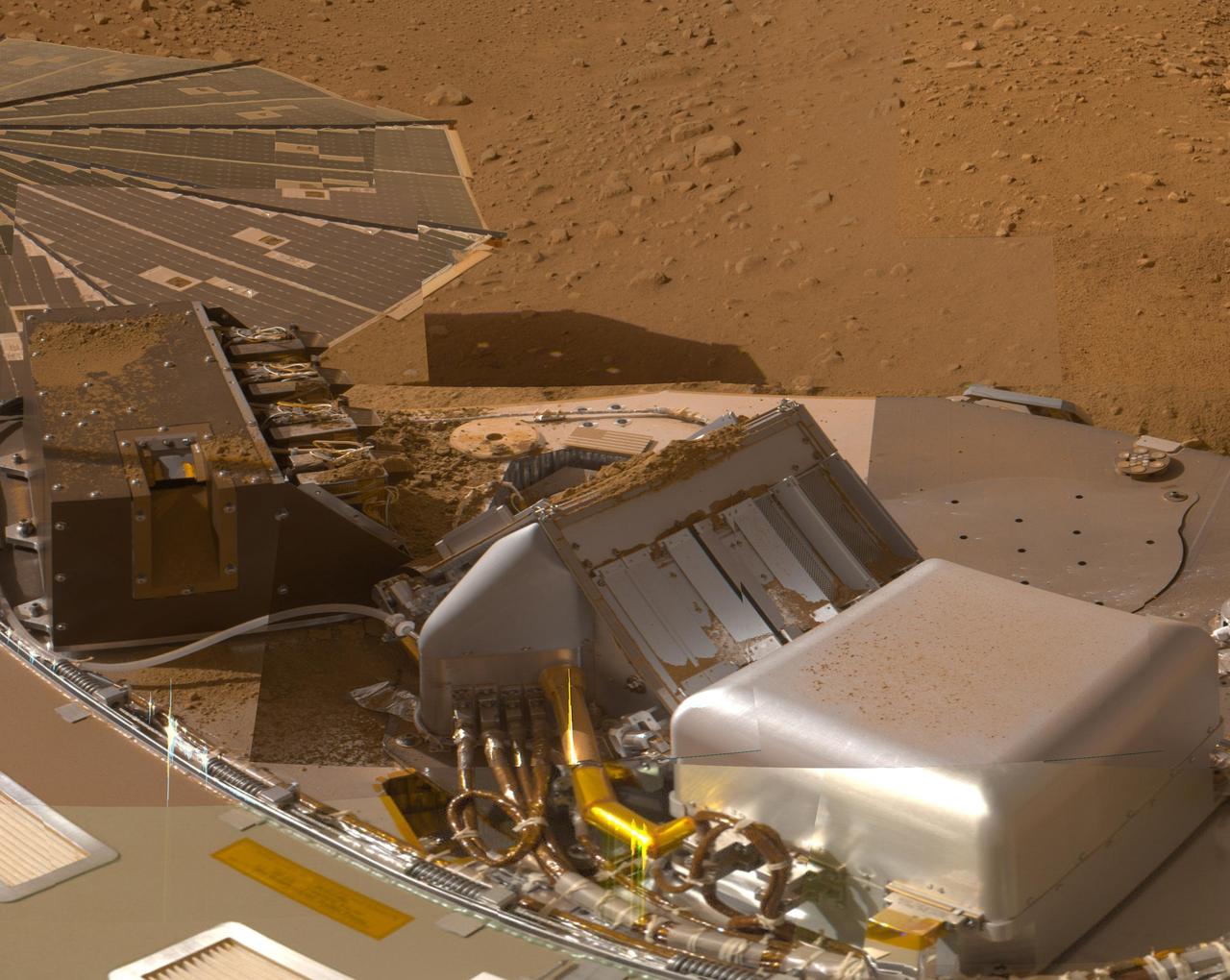
This mosaic of images from the Surface Stereo Imager camera on NASA Phoenix Mars Lander shows a portion of the spacecraft deck after deliveries of several Martian soil samples to instruments on the deck.
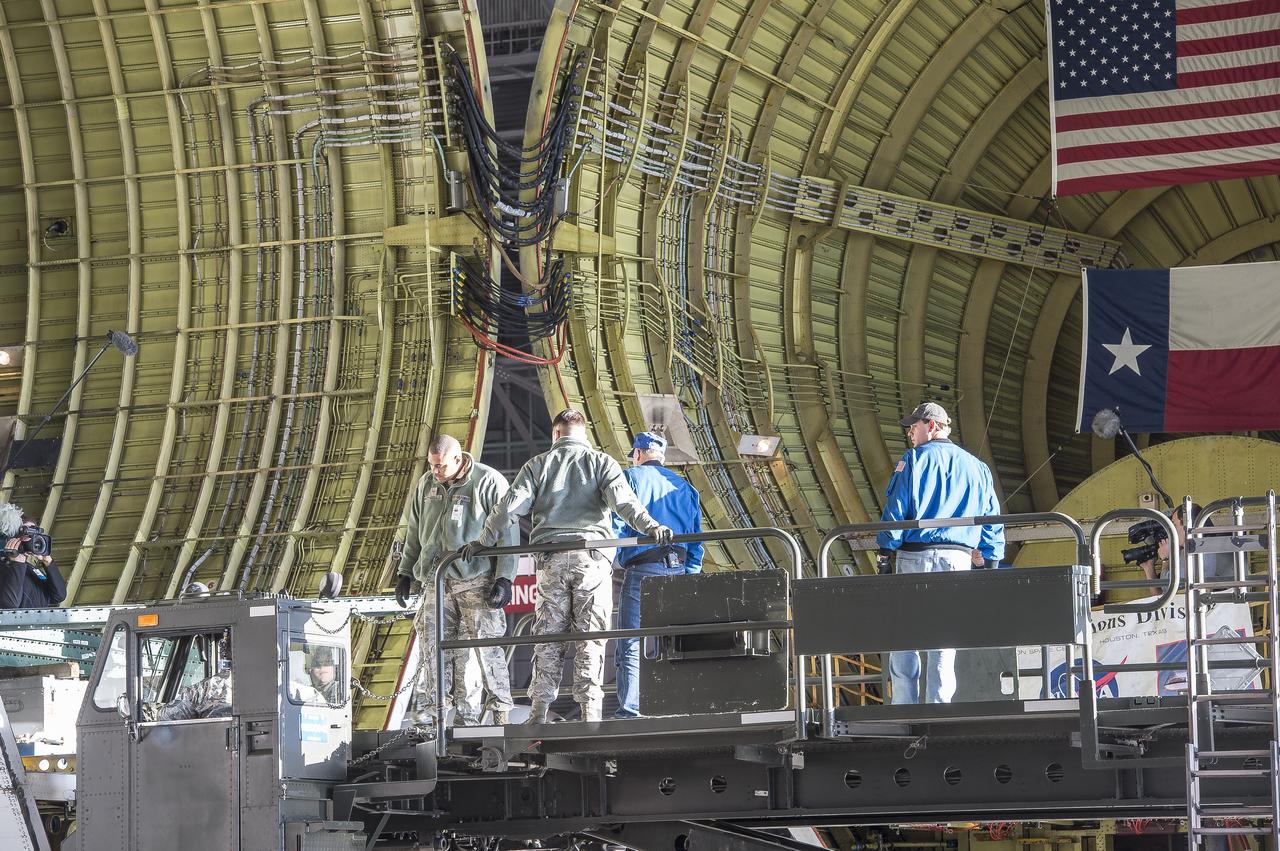
Super Guppy arrival and (MBB) Multi-Bay Box Delivery ; Super Guppy arrival and MBB Delivery: super Guppy arrival at NASA Langley hangar, and unloading of (MBB) multi-bay box, transport of MBB to COLTS and move into building 1256.
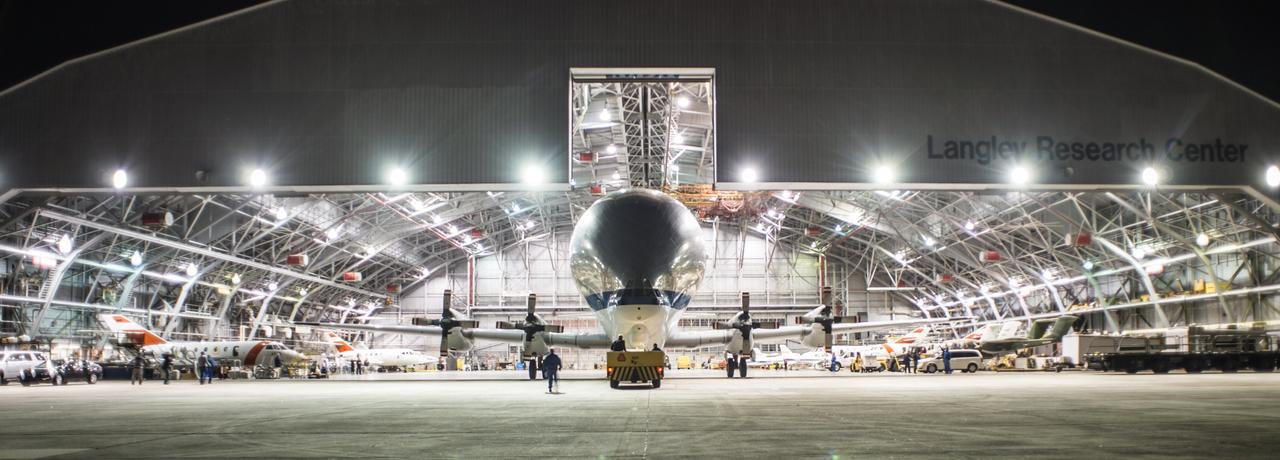
Super Guppy arrival and (MBB) Multi-Bay Box Delivery ; Super Guppy arrival and MBB Delivery: super Guppy arrival at NASA Langley hangar, and unloading of (MBB) multi-bay box, transport of MBB to COLTS and move into building 1256.
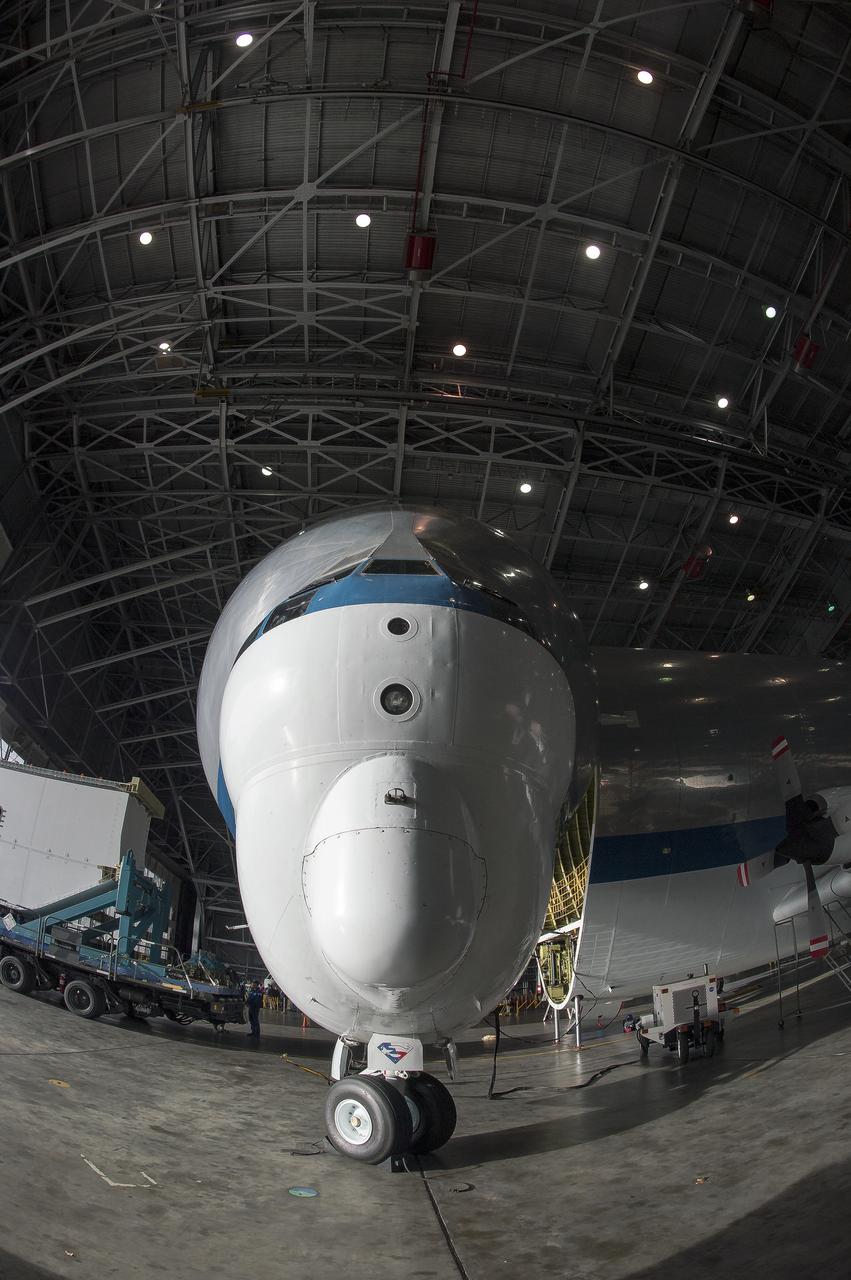
Super Guppy arrival and (MBB) Multi-Bay Box Delivery ; Super Guppy arrival and MBB Delivery: super Guppy arrival at NASA Langley hangar, and unloading of (MBB) multi-bay box, transport of MBB to COLTS and move into building 1256.
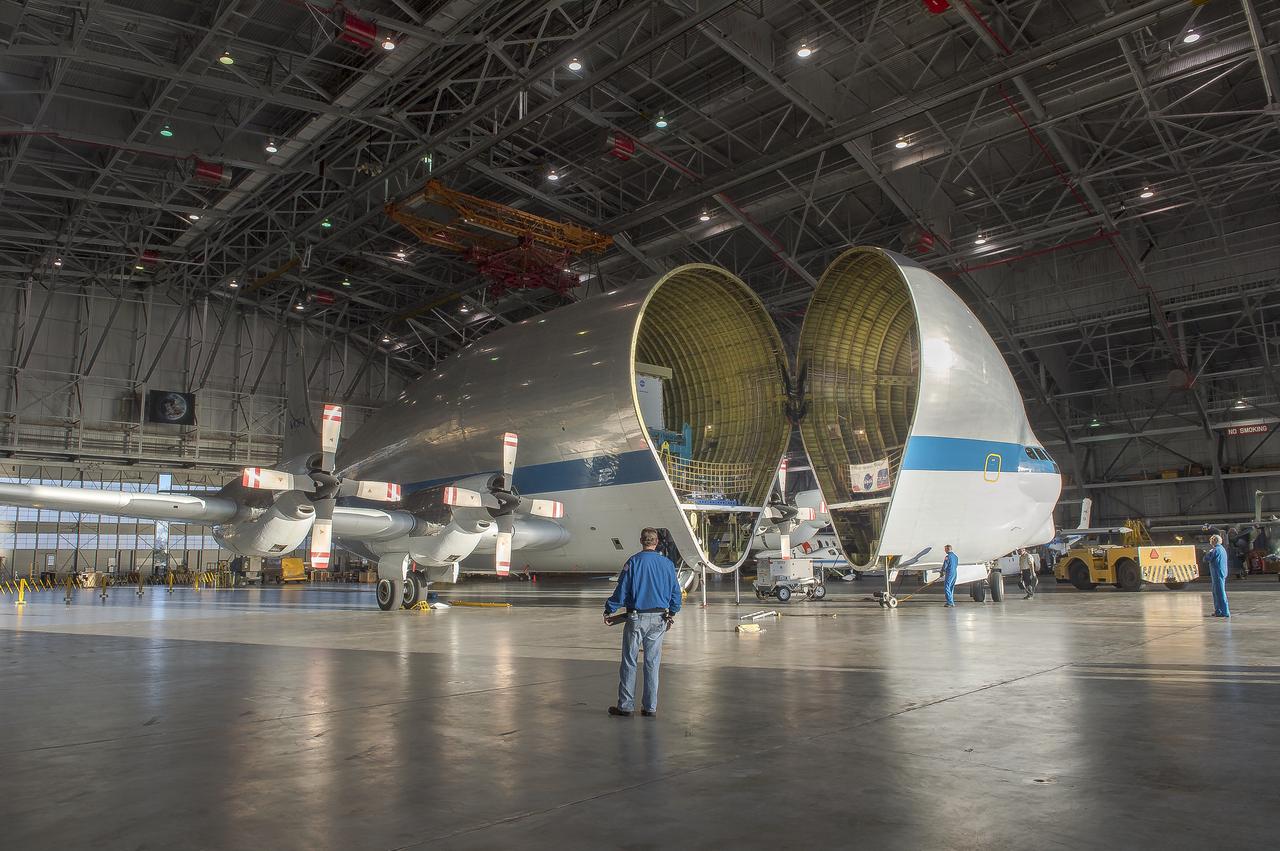
Super Guppy arrival and (MBB) Multi-Bay Box Delivery ; Super Guppy arrival and MBB Delivery: super Guppy arrival at NASA Langley hangar, and unloading of (MBB) multi-bay box, transport of MBB to COLTS and move into building 1256.
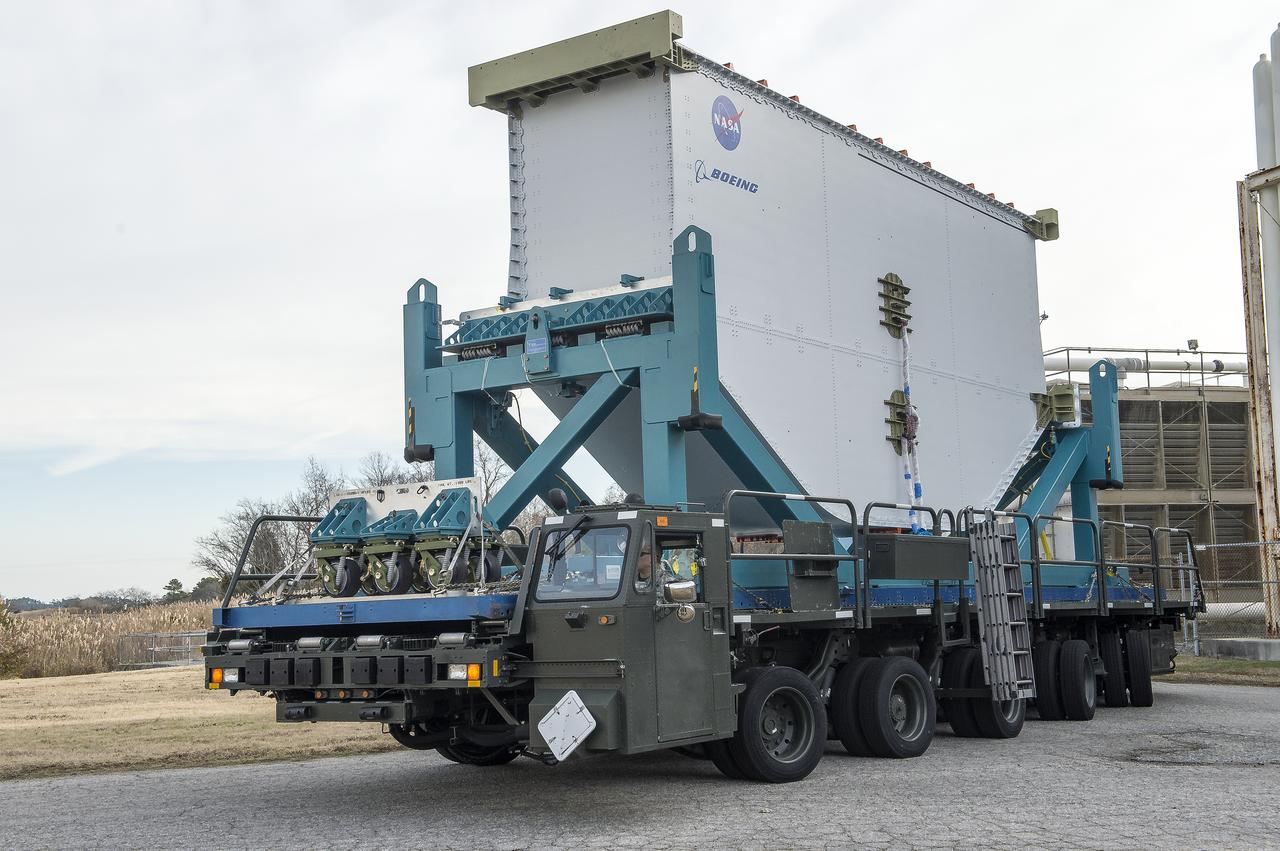
Super Guppy arrival and (MBB) Multi-Bay Box Delivery ; Super Guppy arrival and MBB Delivery: super Guppy arrival at NASA Langley hangar, and unloading of (MBB) multi-bay box, transport of MBB to COLTS and move into building 1256.
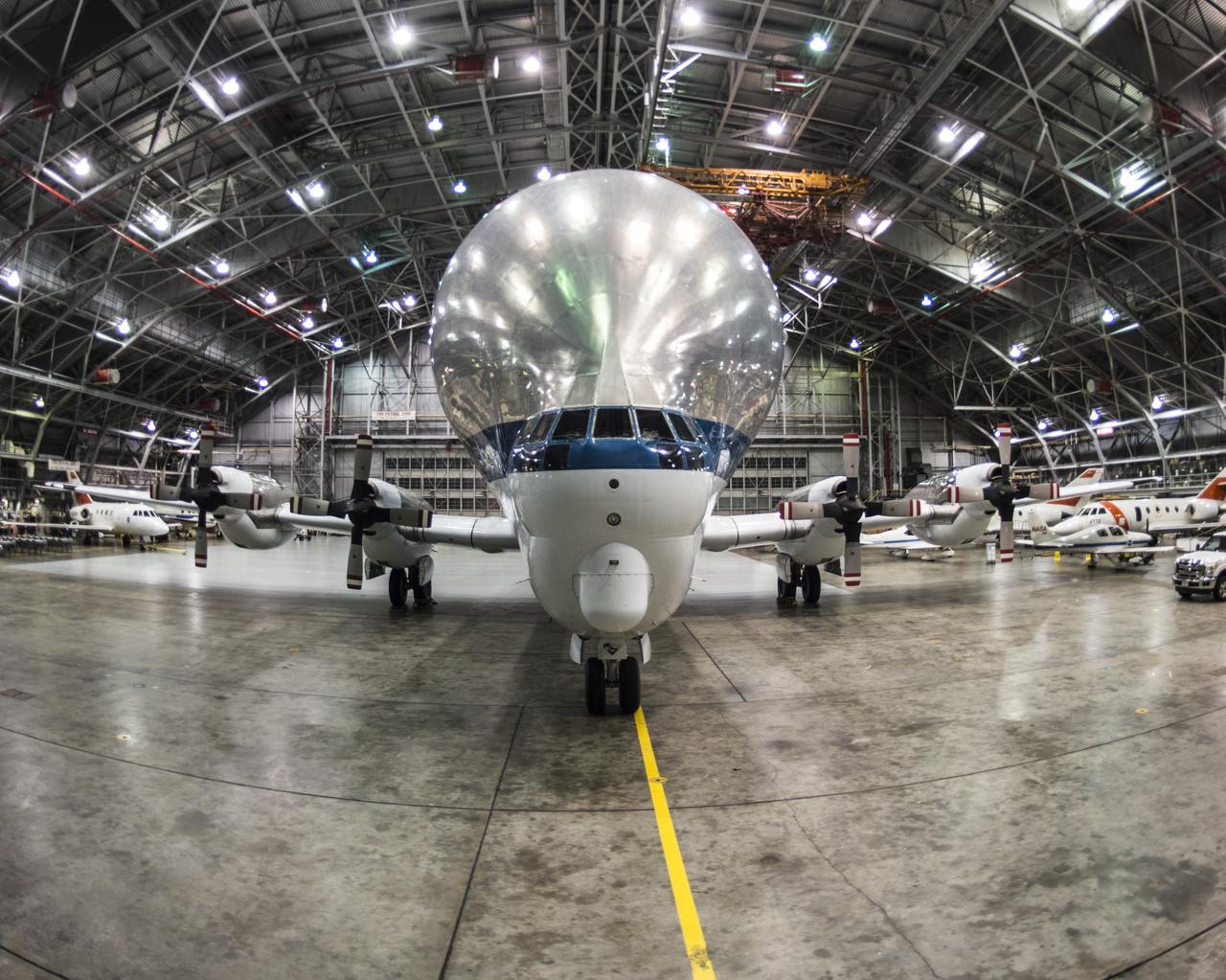
Super Guppy arrival and (MBB) Multi-Bay Box Delivery ; Super Guppy arrival and MBB Delivery: super Guppy arrival at NASA Langley hangar, and unloading of (MBB) multi-bay box, transport of MBB to COLTS and move into building 1256.
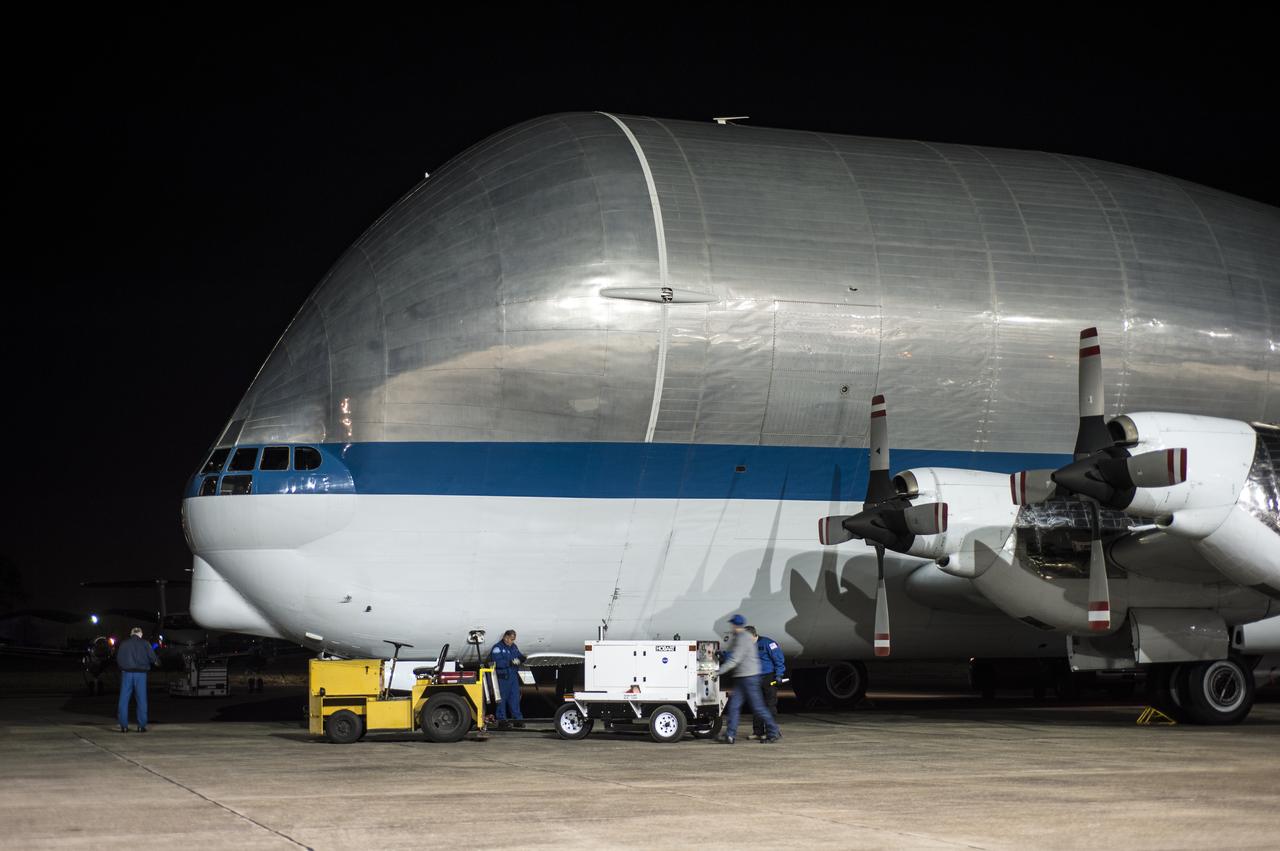
Super Guppy arrival and (MBB) Multi-Bay Box Delivery ; Super Guppy arrival and MBB Delivery: super Guppy arrival at NASA Langley hangar, and unloading of (MBB) multi-bay box, transport of MBB to COLTS and move into building 1256.
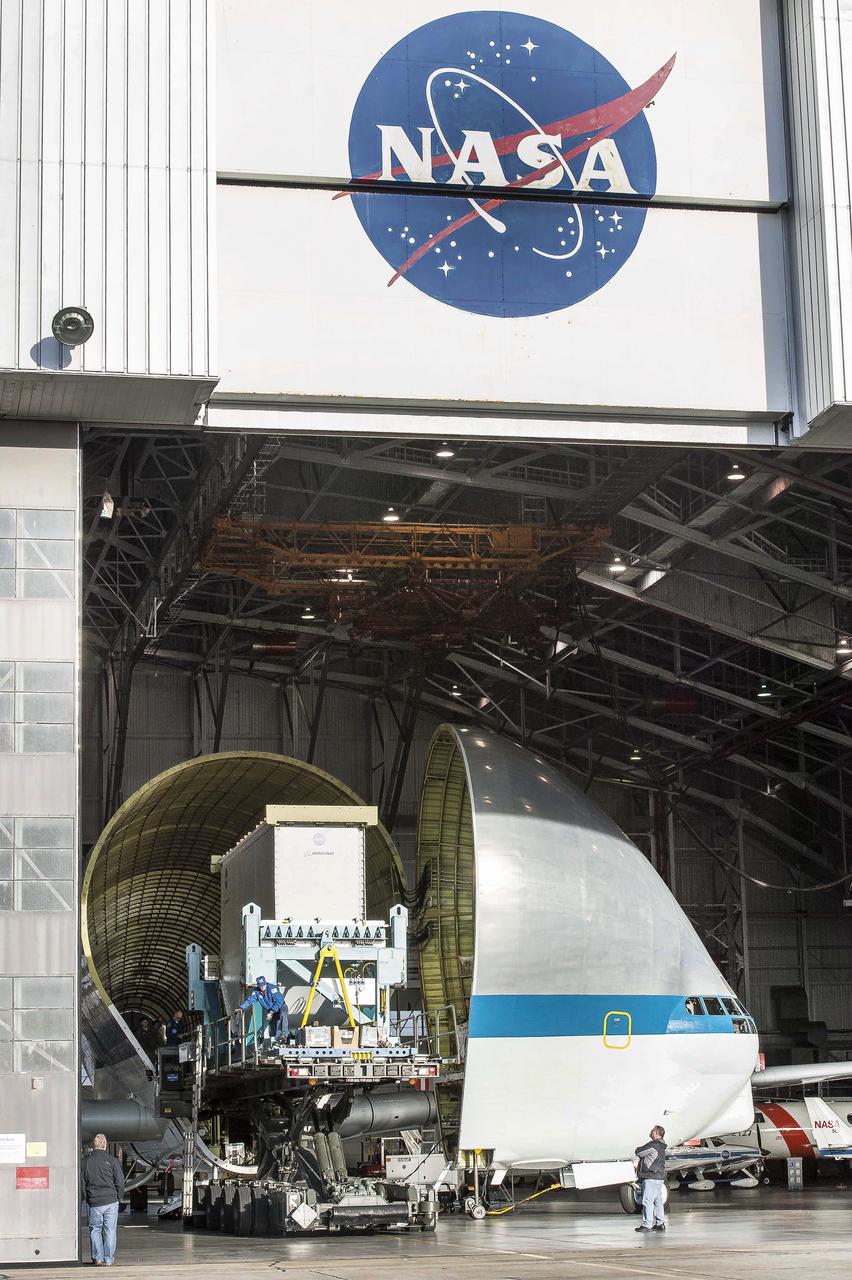
Super Guppy arrival and (MBB) Multi-Bay Box Delivery ; Super Guppy arrival and MBB Delivery: super Guppy arrival at NASA Langley hangar, and unloading of (MBB) multi-bay box, transport of MBB to COLTS and move into building 1256.
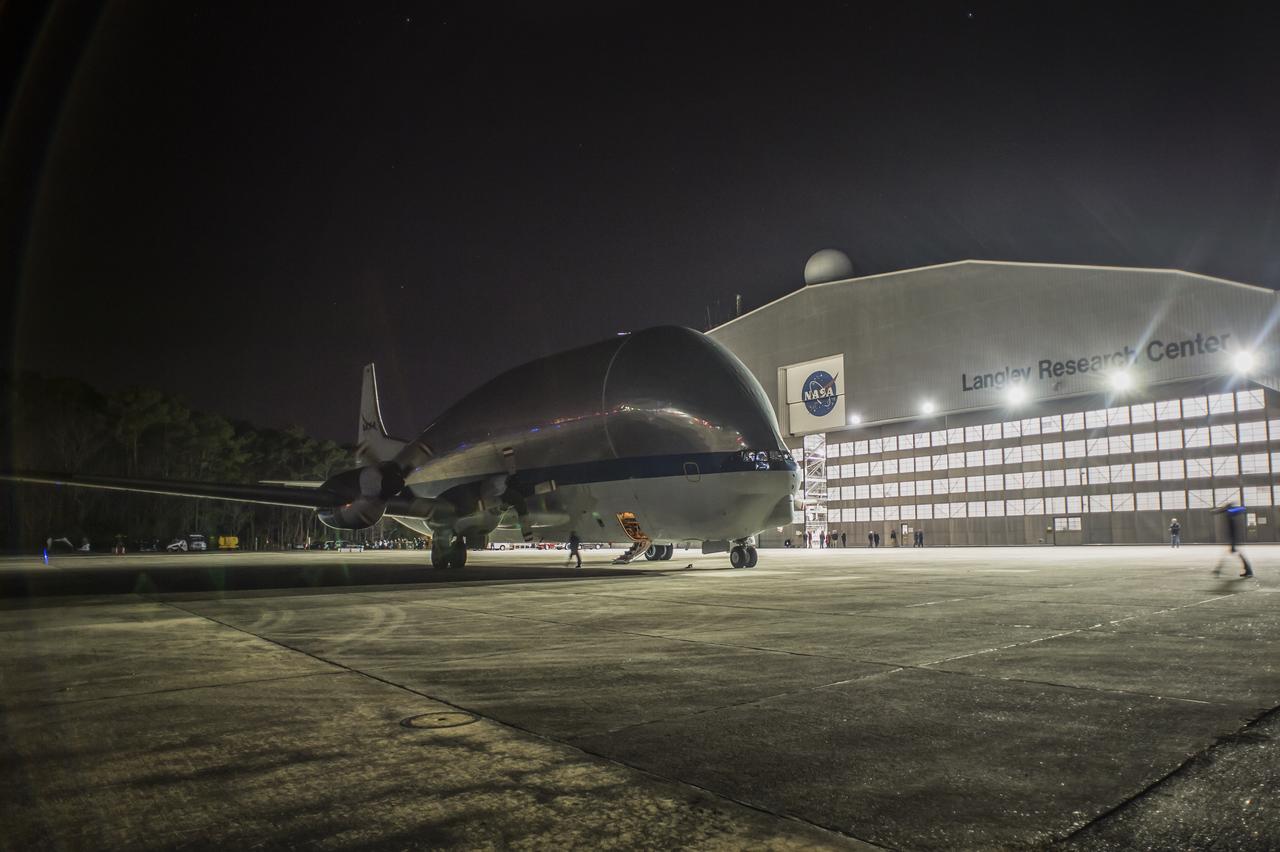
Super Guppy arrival and (MBB) Multi-Bay Box Delivery ; Super Guppy arrival and MBB Delivery: super Guppy arrival at NASA Langley hangar, and unloading of (MBB) multi-bay box, transport of MBB to COLTS and move into building 1256.
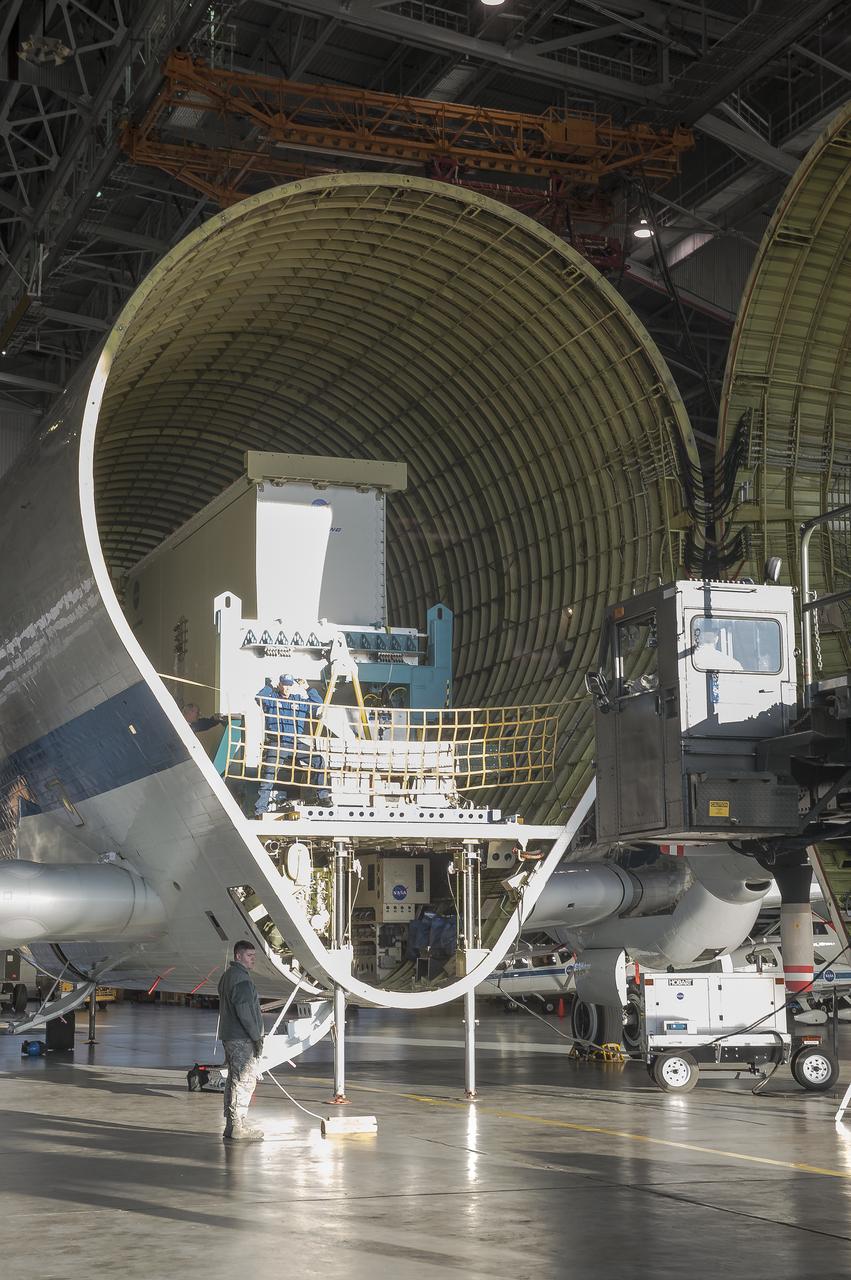
Super Guppy arrival and (MBB) Multi-Bay Box Delivery ; Super Guppy arrival and MBB Delivery: super Guppy arrival at NASA Langley hangar, and unloading of (MBB) multi-bay box, transport of MBB to COLTS and move into building 1256.
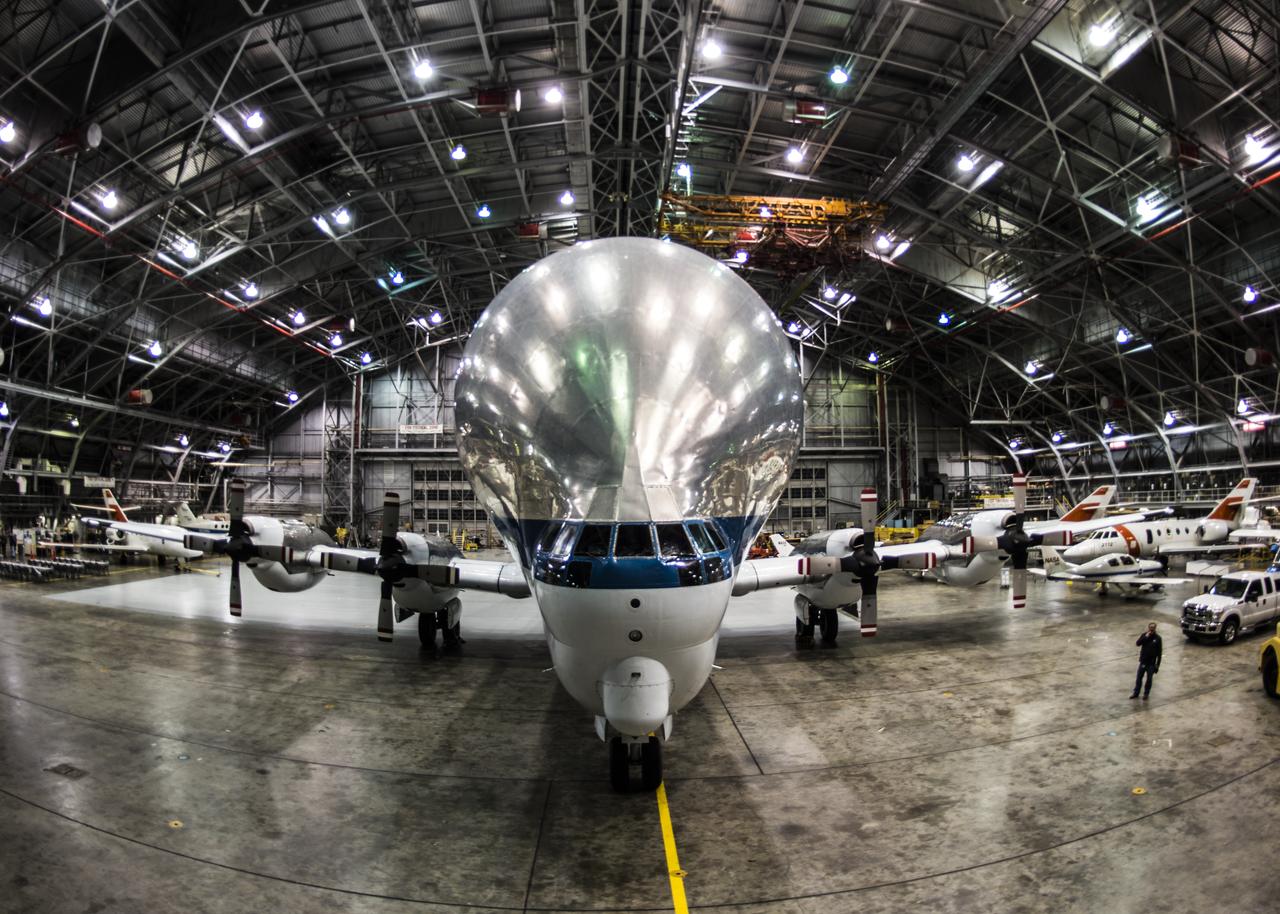
Super Guppy arrival and (MBB) Multi-Bay Box Delivery ; Super Guppy arrival and MBB Delivery: super Guppy arrival at NASA Langley hangar, and unloading of (MBB) multi-bay box, transport of MBB to COLTS and move into building 1256.
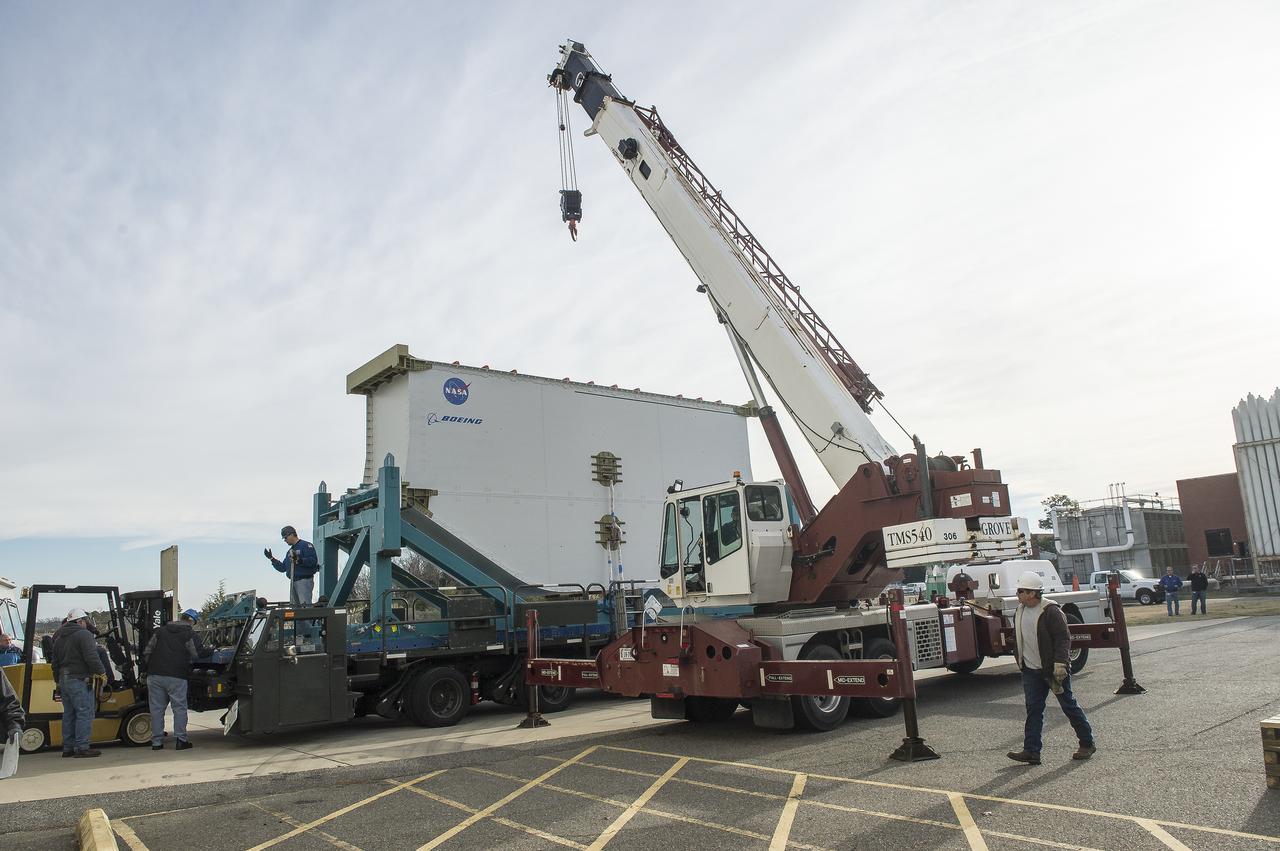
Super Guppy arrival and (MBB) Multi-Bay Box Delivery ; Super Guppy arrival and MBB Delivery: super Guppy arrival at NASA Langley hangar, and unloading of (MBB) multi-bay box, transport of MBB to COLTS and move into building 1256.
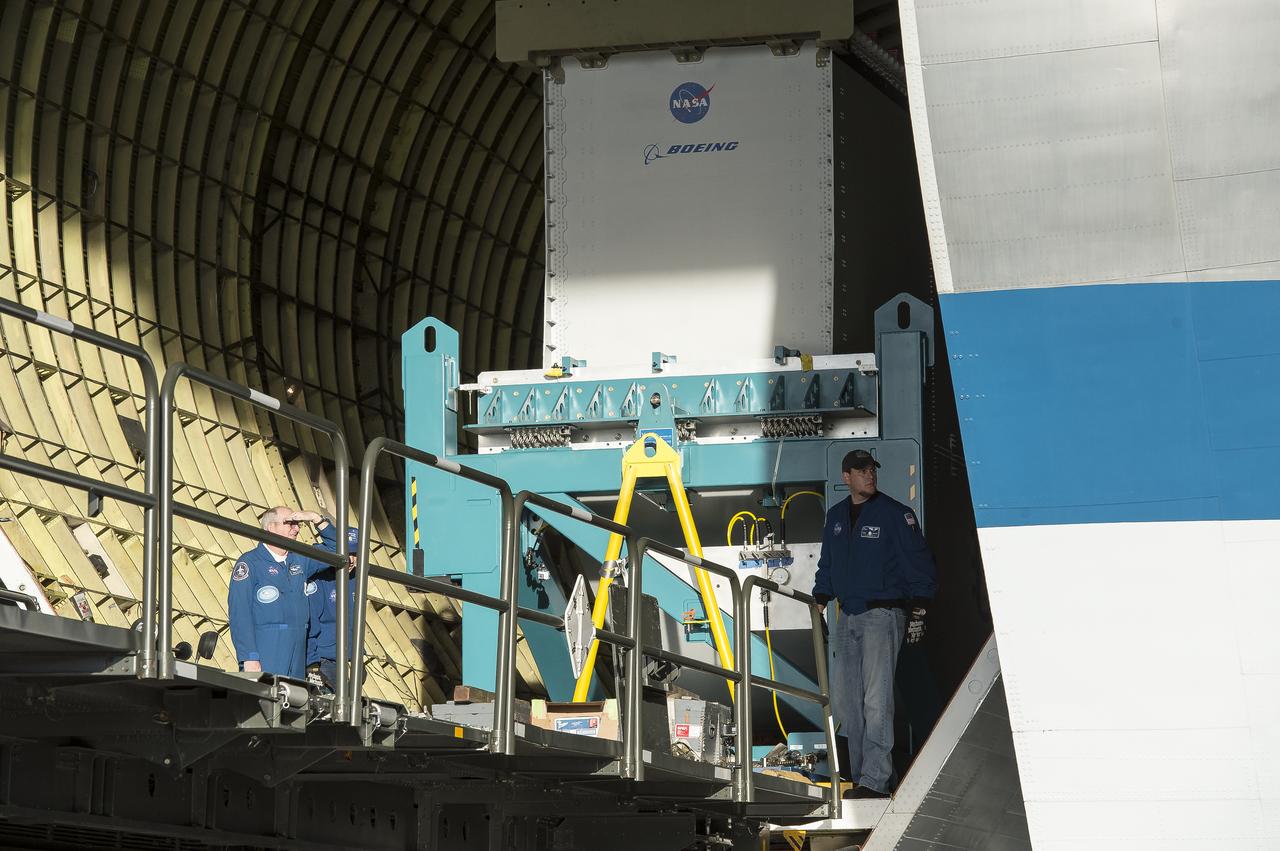
Super Guppy arrival and (MBB) Multi-Bay Box Delivery ; Super Guppy arrival and MBB Delivery: super Guppy arrival at NASA Langley hangar, and unloading of (MBB) multi-bay box, transport of MBB to COLTS and move into building 1256.
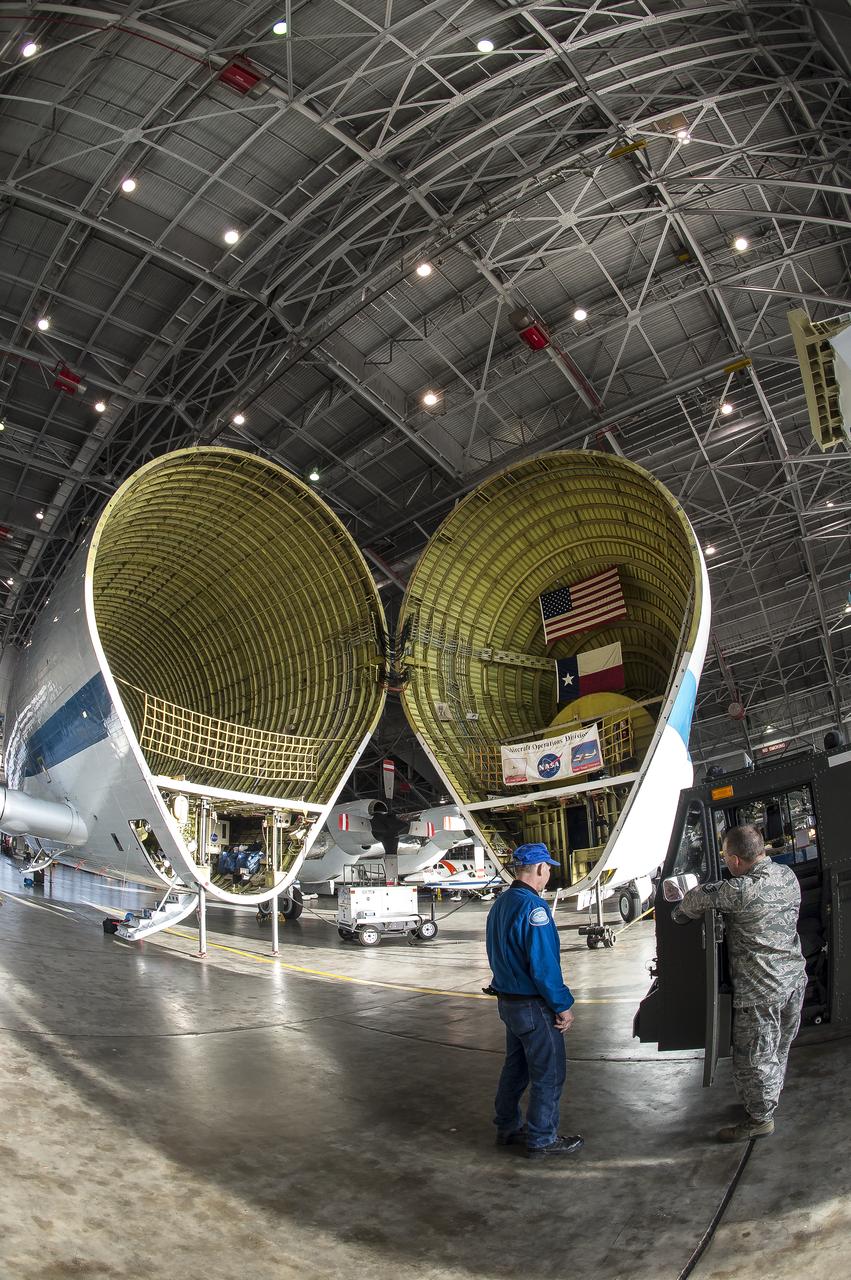
Super Guppy arrival and (MBB) Multi-Bay Box Delivery ; Super Guppy arrival and MBB Delivery: super Guppy arrival at NASA Langley hangar, and unloading of (MBB) multi-bay box, transport of MBB to COLTS and move into building 1256.
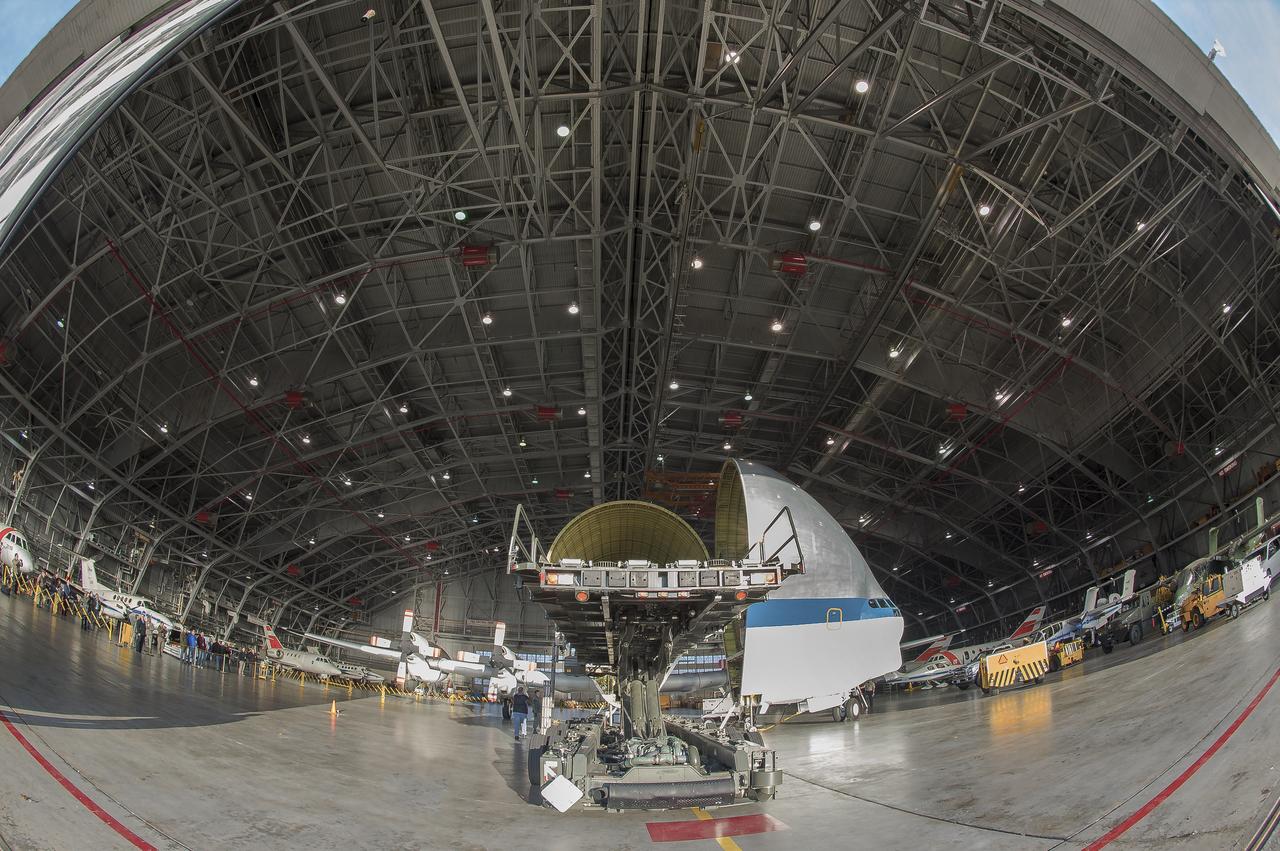
Super Guppy arrival and (MBB) Multi-Bay Box Delivery ; Super Guppy arrival and MBB Delivery: super Guppy arrival at NASA Langley hangar, and unloading of (MBB) multi-bay box, transport of MBB to COLTS and move into building 1256.
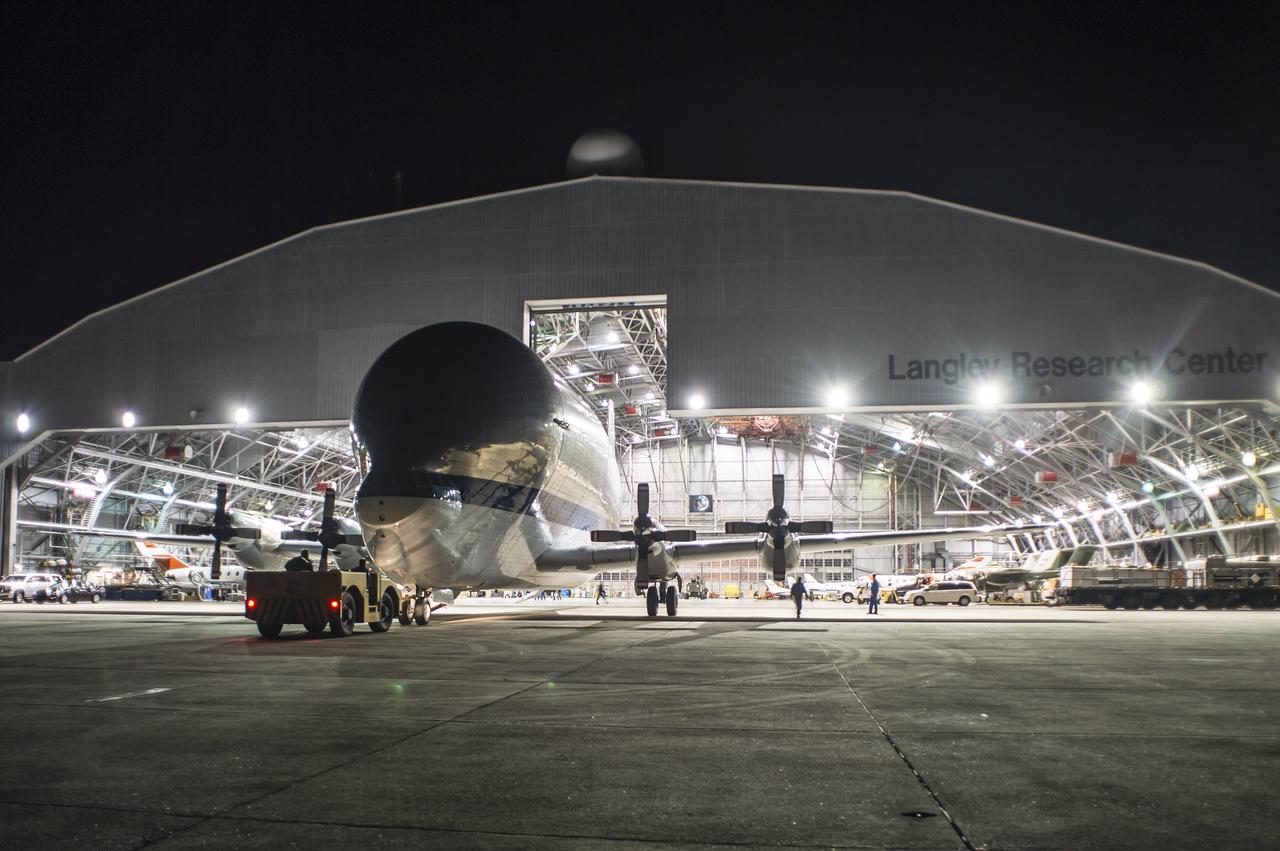
Super Guppy arrival and (MBB) Multi-Bay Box Delivery ; Super Guppy arrival and MBB Delivery: super Guppy arrival at NASA Langley hangar, and unloading of (MBB) multi-bay box, transport of MBB to COLTS and move into building 1256.
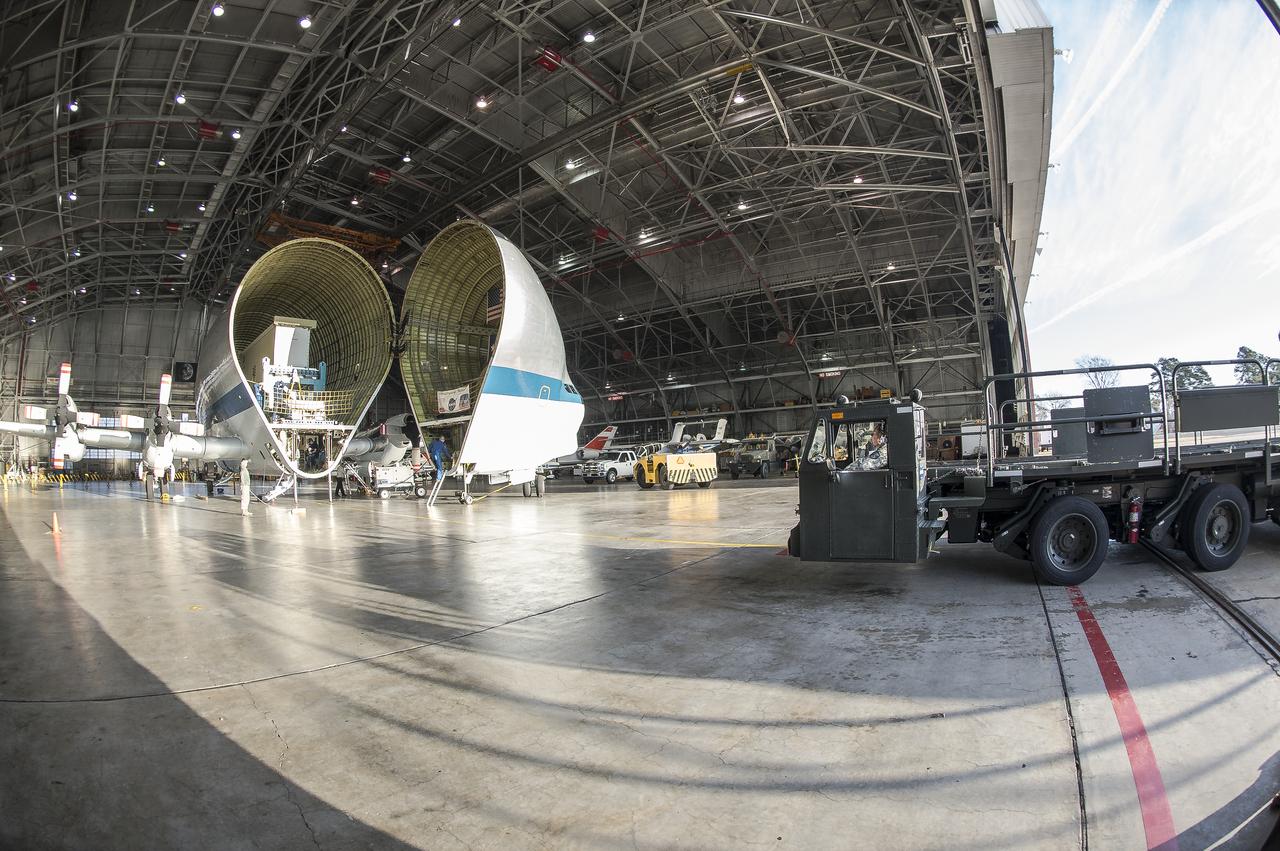
Super Guppy arrival and (MBB) Multi-Bay Box Delivery ; Super Guppy arrival and MBB Delivery: super Guppy arrival at NASA Langley hangar, and unloading of (MBB) multi-bay box, transport of MBB to COLTS and move into building 1256.
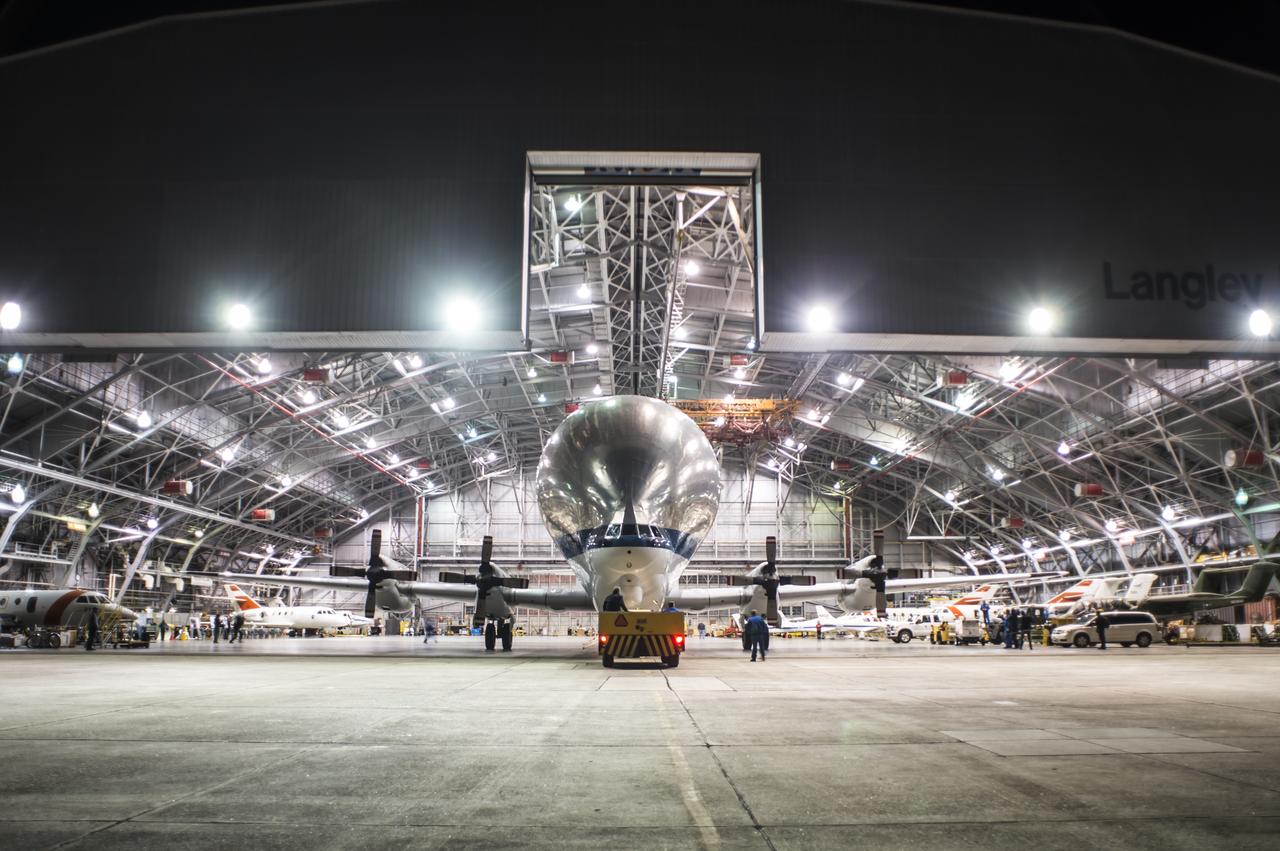
Super Guppy arrival and (MBB) Multi-Bay Box Delivery ; Super Guppy arrival and MBB Delivery: super Guppy arrival at NASA Langley hangar, and unloading of (MBB) multi-bay box, transport of MBB to COLTS and move into building 1256.
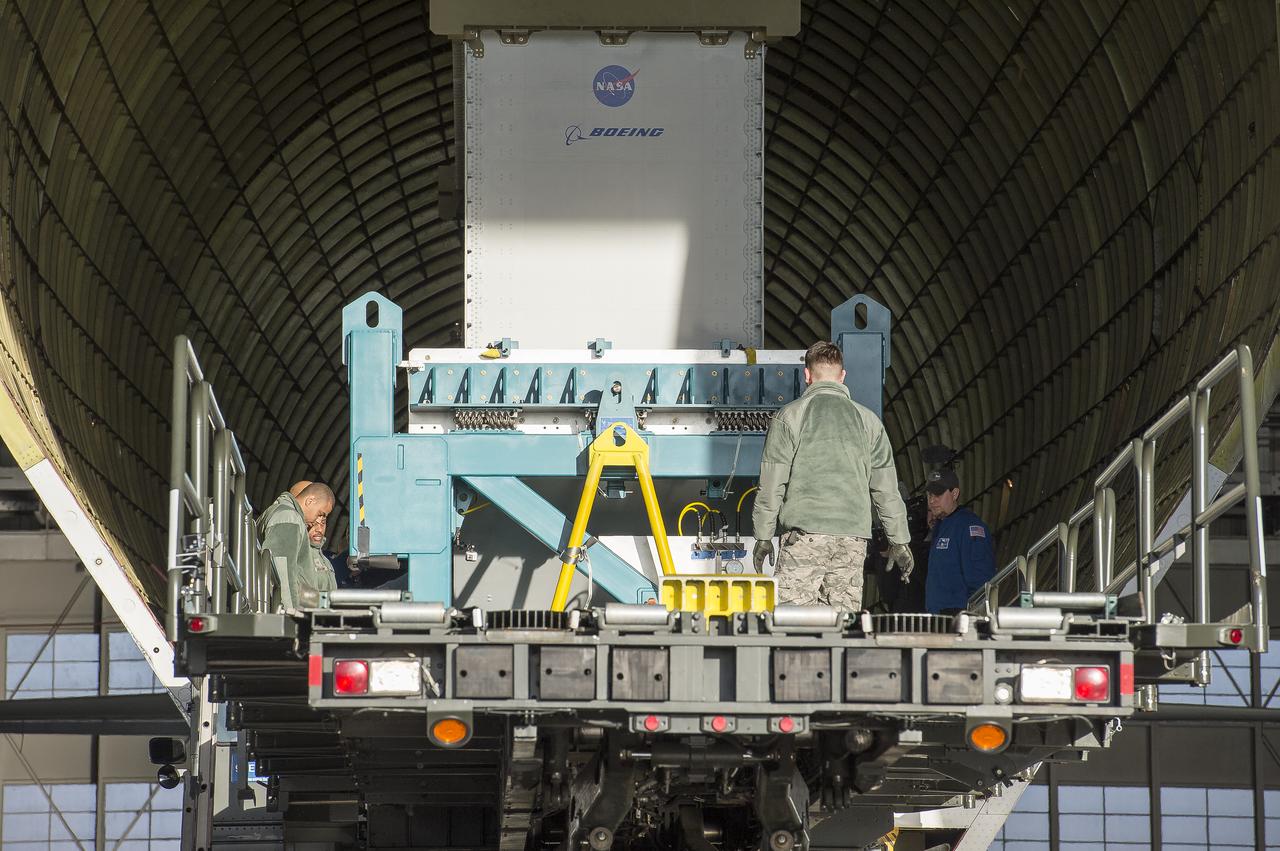
Super Guppy arrival and (MBB) Multi-Bay Box Delivery ; Super Guppy arrival and MBB Delivery: super Guppy arrival at NASA Langley hangar, and unloading of (MBB) multi-bay box, transport of MBB to COLTS and move into building 1256.
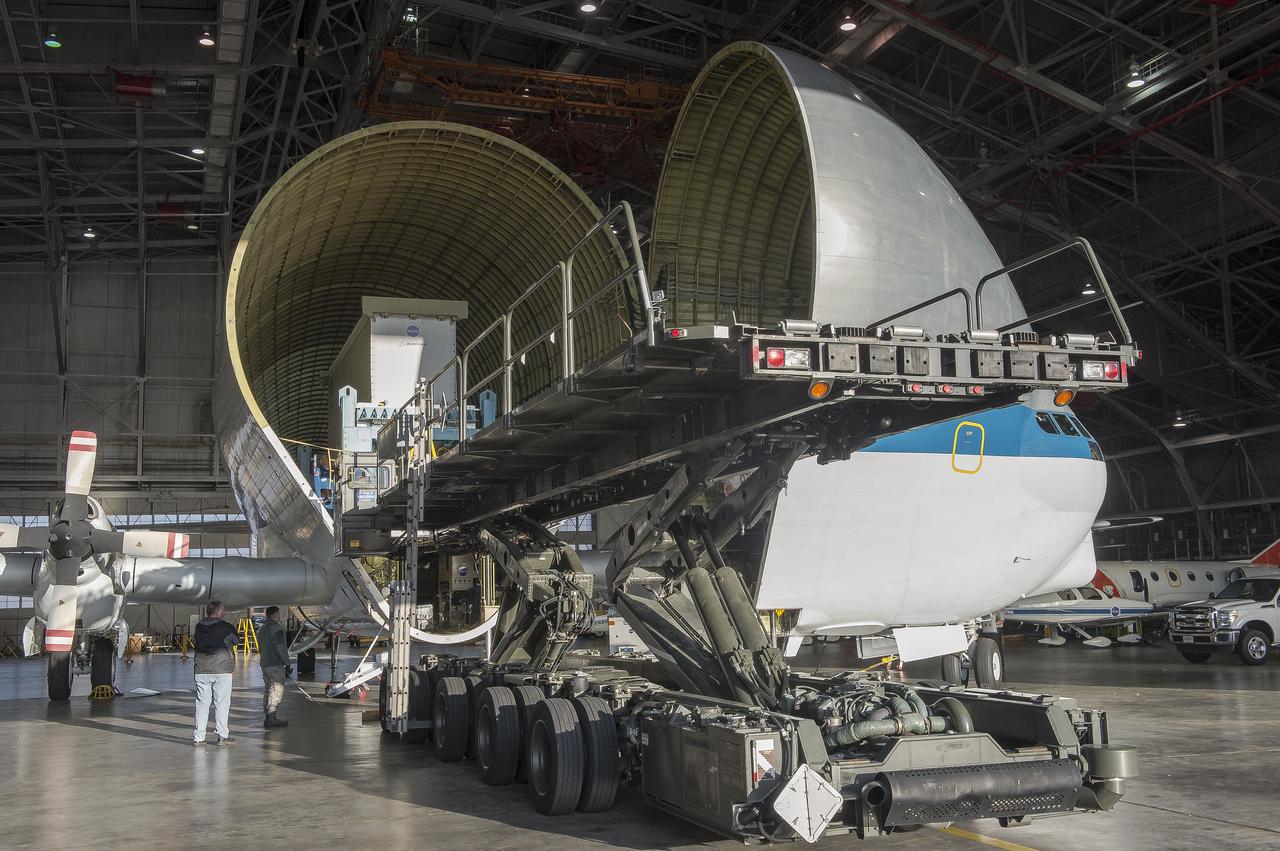
Super Guppy arrival and (MBB) Multi-Bay Box Delivery ; Super Guppy arrival and MBB Delivery: super Guppy arrival at NASA Langley hangar, and unloading of (MBB) multi-bay box, transport of MBB to COLTS and move into building 1256.
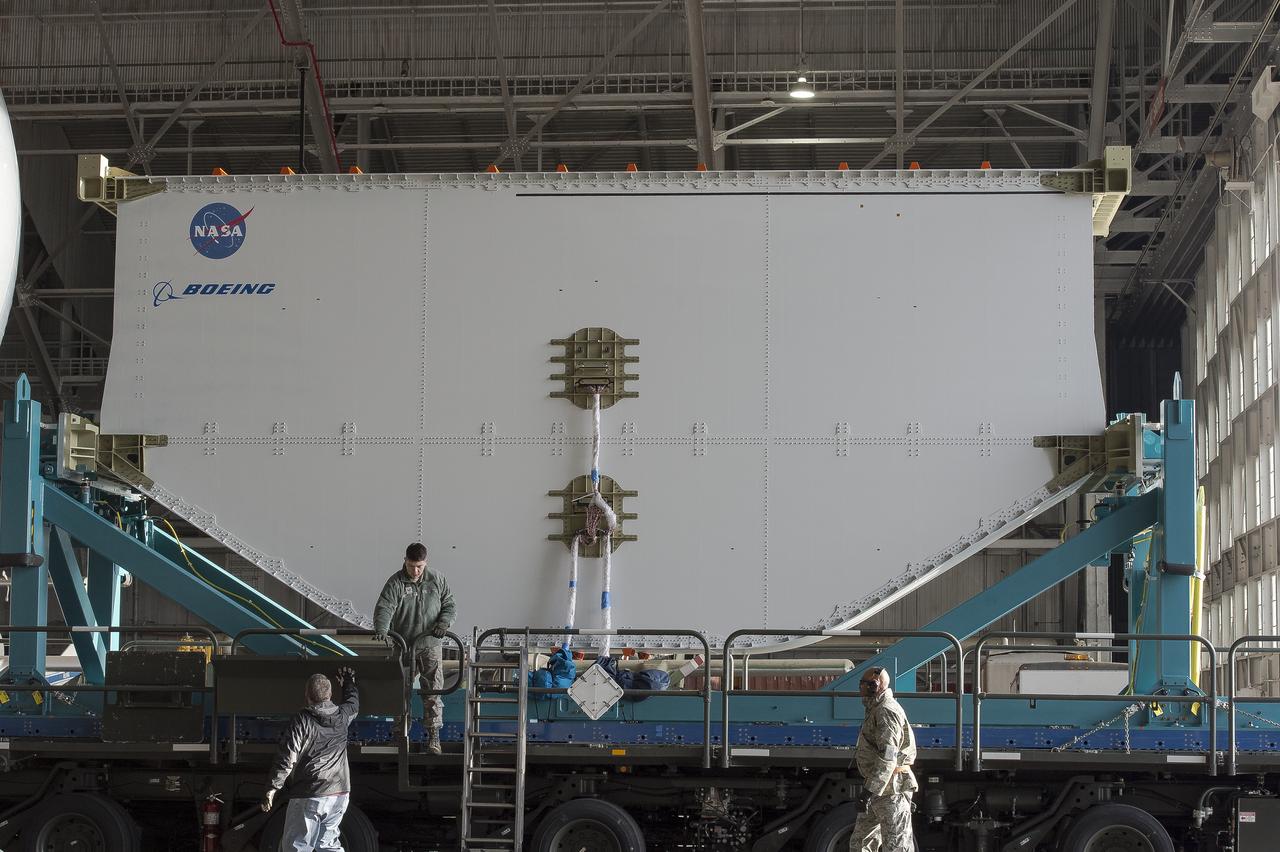
Super Guppy arrival and (MBB) Multi-Bay Box Delivery ; Super Guppy arrival and MBB Delivery: super Guppy arrival at NASA Langley hangar, and unloading of (MBB) multi-bay box, transport of MBB to COLTS and move into building 1256.
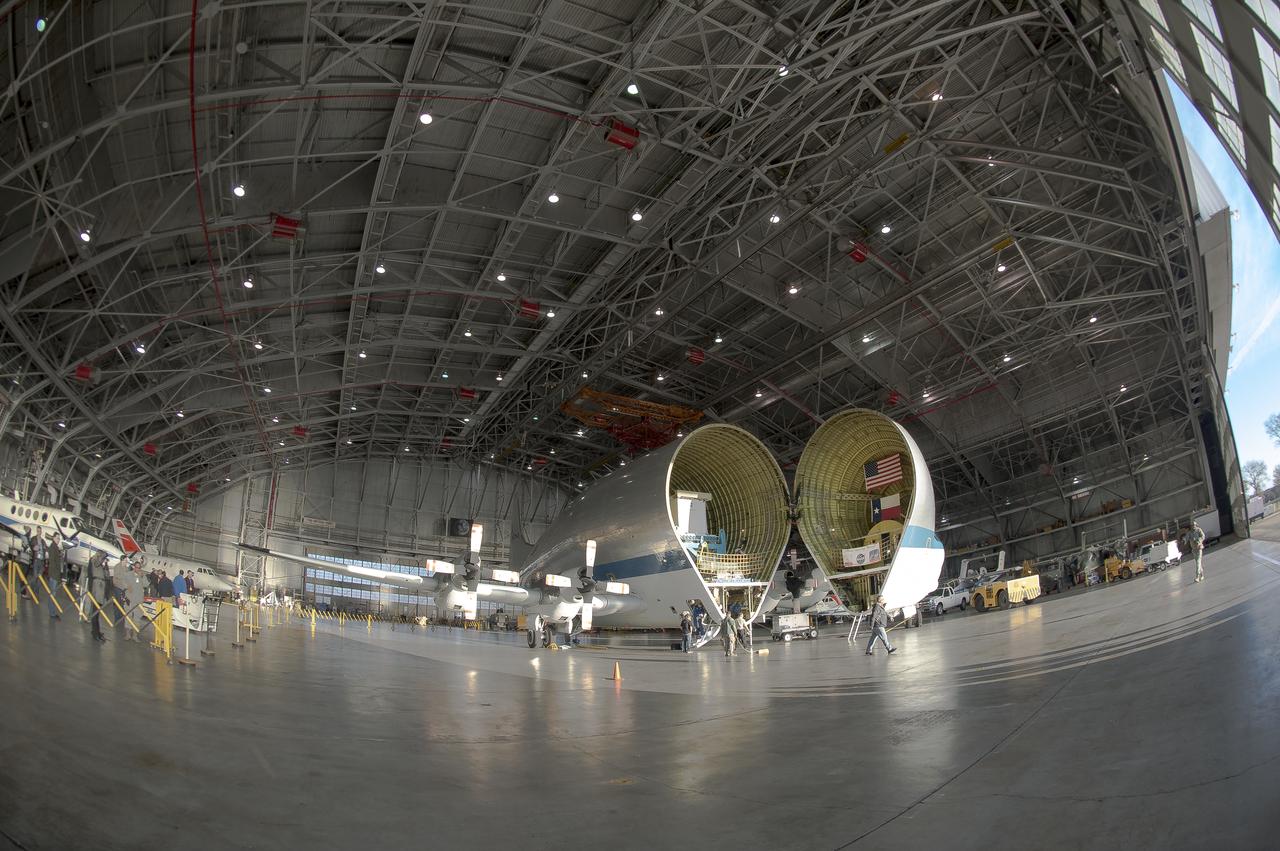
Super Guppy arrival and (MBB) Multi-Bay Box Delivery ; Super Guppy arrival and MBB Delivery: super Guppy arrival at NASA Langley hangar, and unloading of (MBB) multi-bay box, transport of MBB to COLTS and move into building 1256.
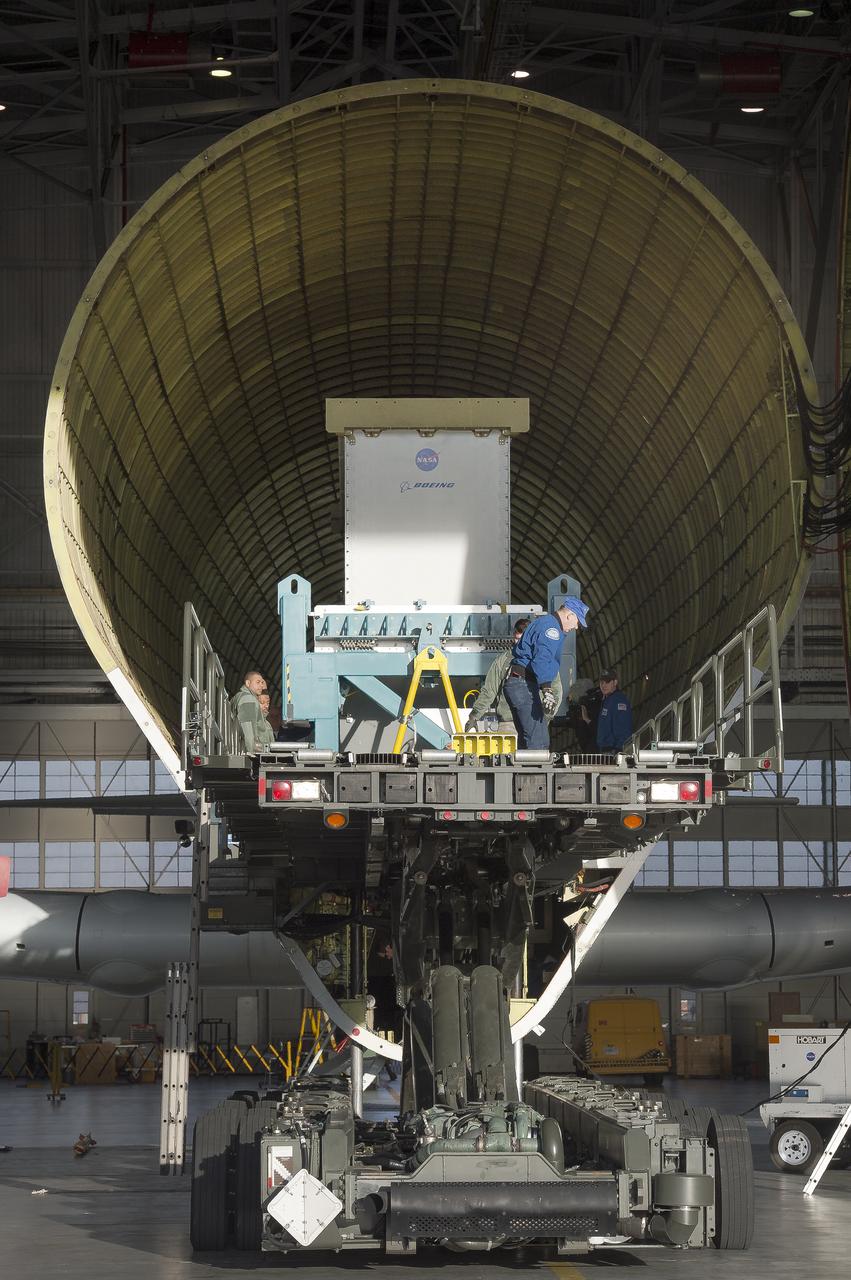
Super Guppy arrival and (MBB) Multi-Bay Box Delivery ; Super Guppy arrival and MBB Delivery: super Guppy arrival at NASA Langley hangar, and unloading of (MBB) multi-bay box, transport of MBB to COLTS and move into building 1256.
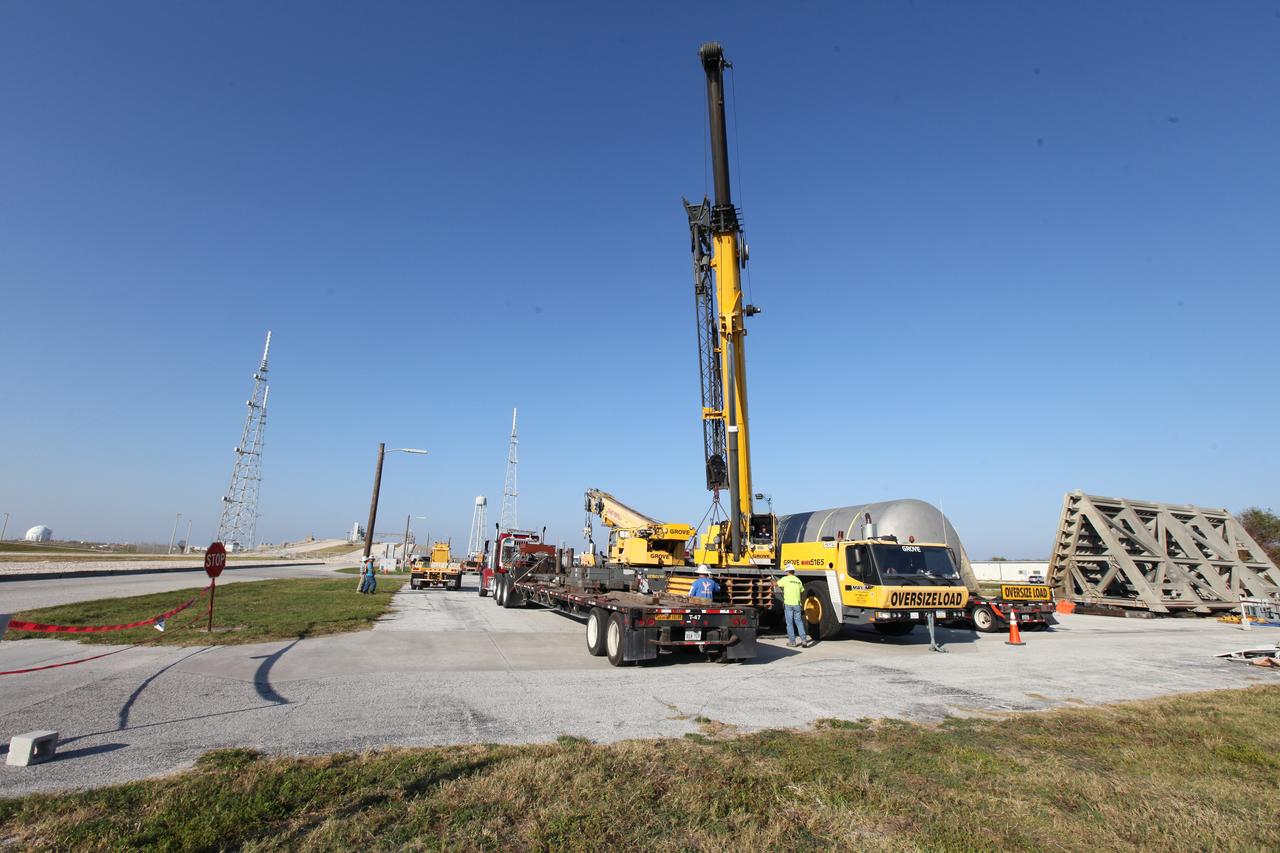
A new liquid hydrogen separator tank arrives at NASA's Kennedy Space Center in Florida. A crane will be used to lift and rotate the tank for delivery to Launch Pad 39B. The new separator/storage tank will be added to the pad's existing hydrogen vent system to assure gaseous hydrogen is delivered downstream to the flare stack. The 60,000 gallon tank was built by INOXCVA, in Baytown, Texas, a subcontractor of Precision Mechanical Inc. in Cocoa Florida. The new tank will support all future launches from the pad.
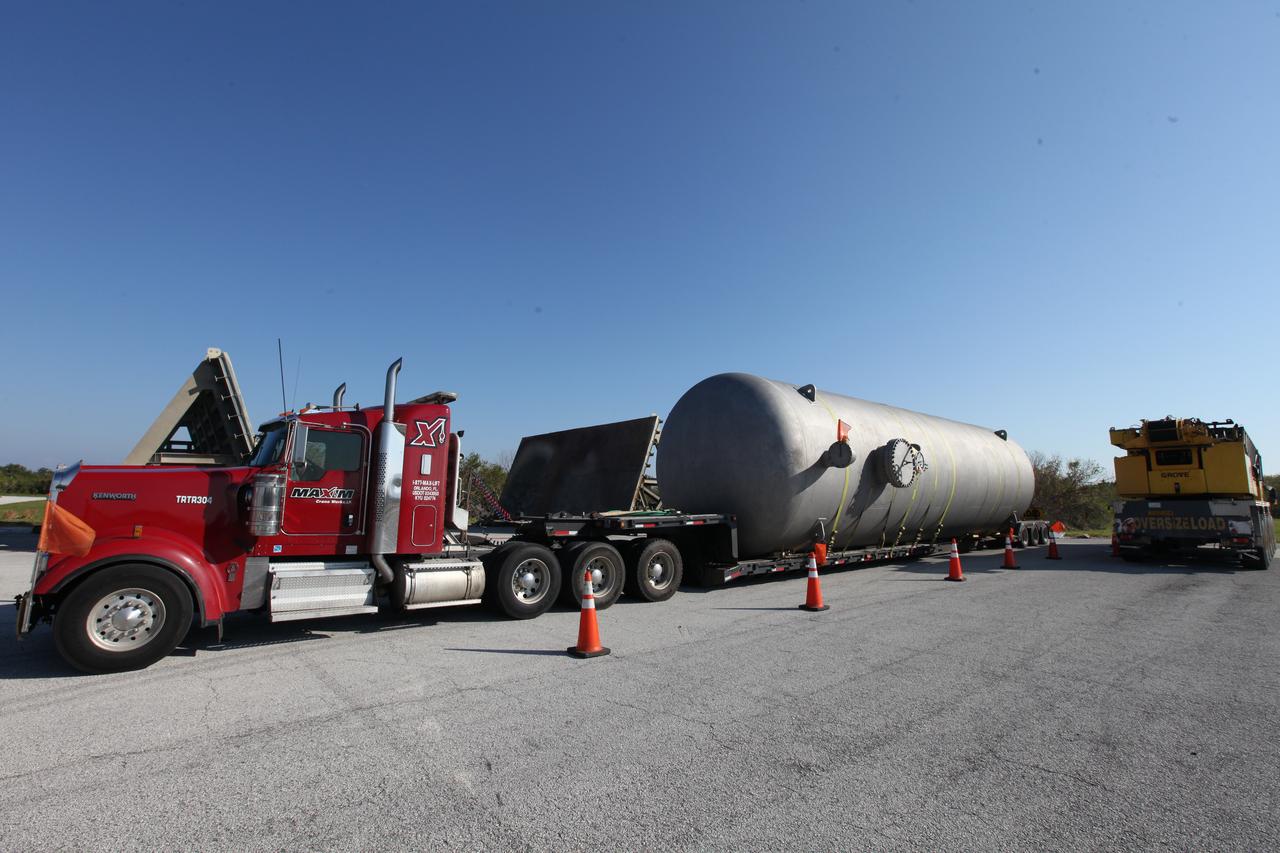
A new liquid hydrogen separator tank arrives at NASA's Kennedy Space Center in Florida. The tank will be lifted and rotated for delivery to Launch Pad 39B. The new separator/storage tank will be added to the pad's existing hydrogen vent system to assure gaseous hydrogen is delivered downstream to the flare stack. The 60,000 gallon tank was built by INOXCVA, in Baytown, Texas, a subcontractor of Precision Mechanical Inc. in Cocoa Florida. The new tank will support all future launches from the pad.
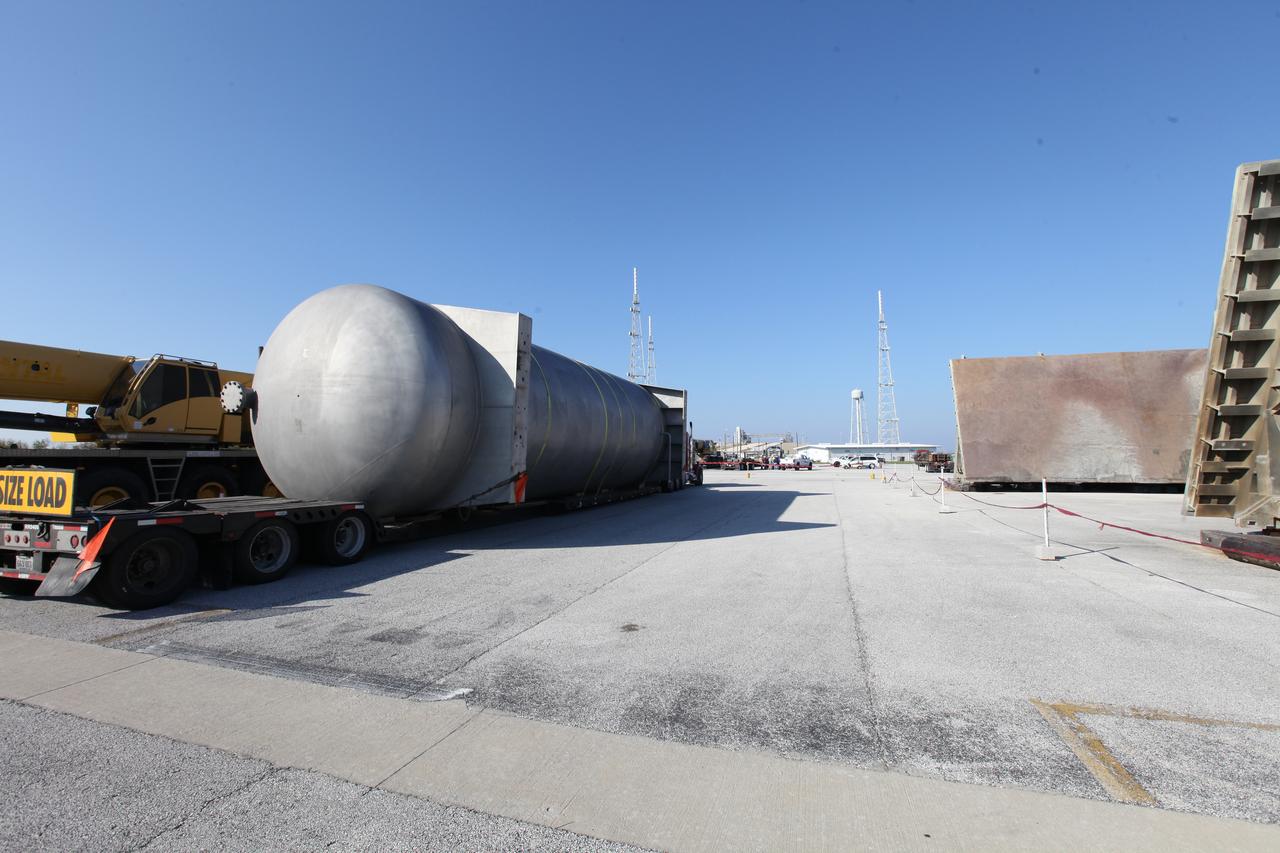
A new liquid hydrogen separator tank arrives at NASA's Kennedy Space Center in Florida. The tank will be lifted and rotated for delivery to Launch Pad 39B. The new separator/storage tank will be added to the pad's existing hydrogen vent system to assure gaseous hydrogen is delivered downstream to the flare stack. The 60,000 gallon tank was built by INOXCVA, in Baytown, Texas, a subcontractor of Precision Mechanical Inc. in Cocoa Florida. The new tank will support all future launches from the pad.
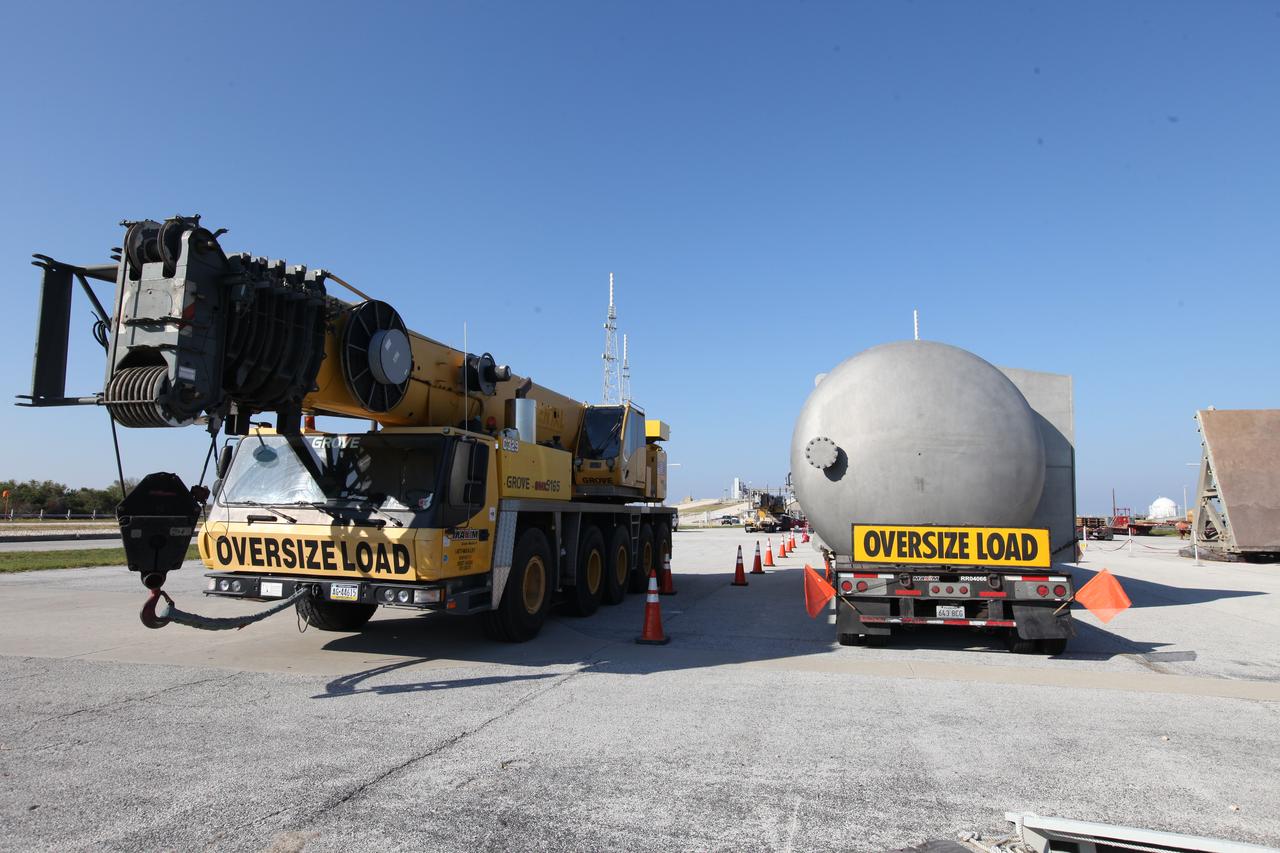
A new liquid hydrogen separator tank arrives at NASA's Kennedy Space Center in Florida. A crane will be used to lift and rotate the tank for delivery to Launch Pad 39B. The new separator/storage tank will be added to the pad's existing hydrogen vent system to assure gaseous hydrogen is delivered downstream to the flare stack. The 60,000 gallon tank was built by INOXCVA, in Baytown, Texas, a subcontractor of Precision Mechanical Inc. in Cocoa Florida. The new tank will support all future launches from the pad.
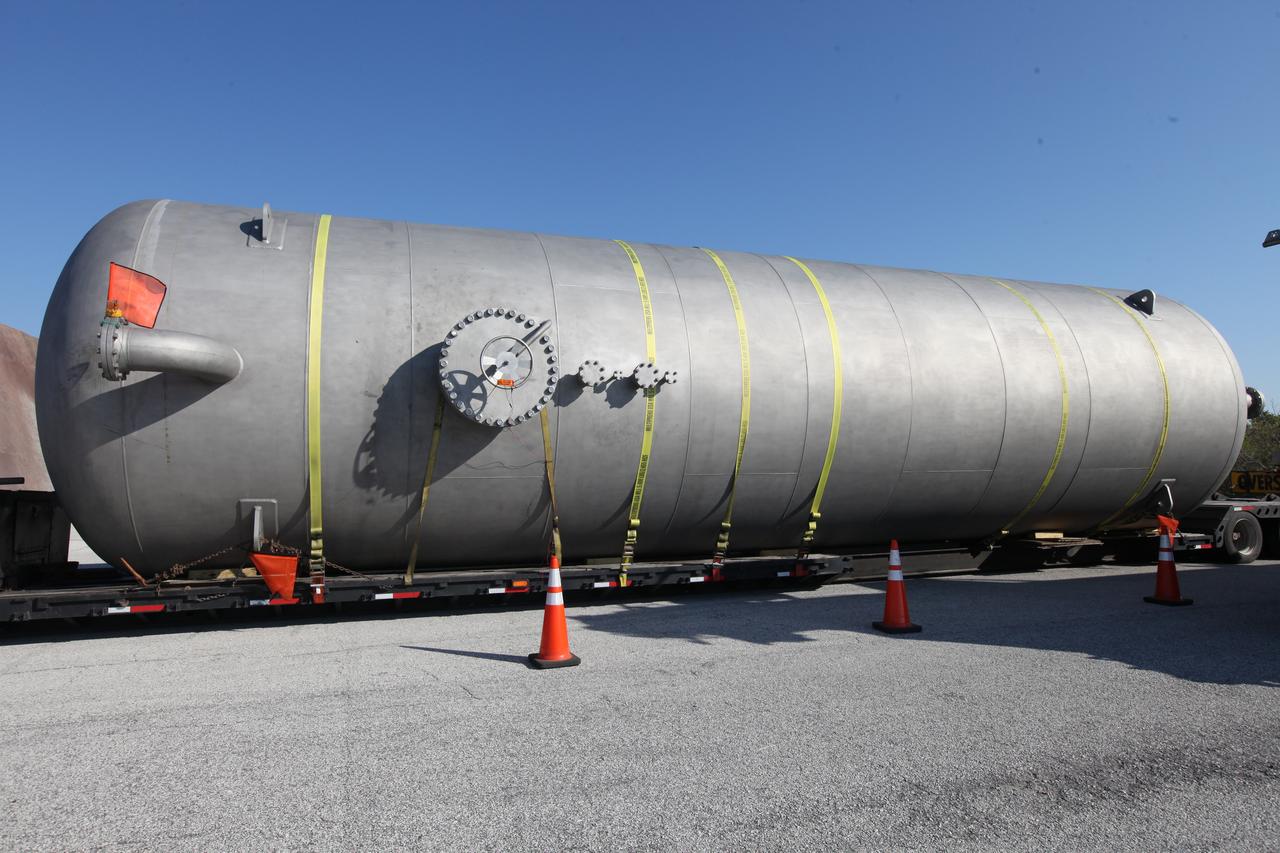
A new liquid hydrogen separator tank arrives at NASA's Kennedy Space Center in Florida. The tank will be lifted and rotated for delivery to Launch Pad 39B. The new separator/storage tank will be added to the pad's existing hydrogen vent system to assure gaseous hydrogen is delivered downstream to the flare stack. The 60,000 gallon tank was built by INOXCVA, in Baytown, Texas, a subcontractor of Precision Mechanical Inc. in Cocoa Florida. The new tank will support all future launches from the pad.
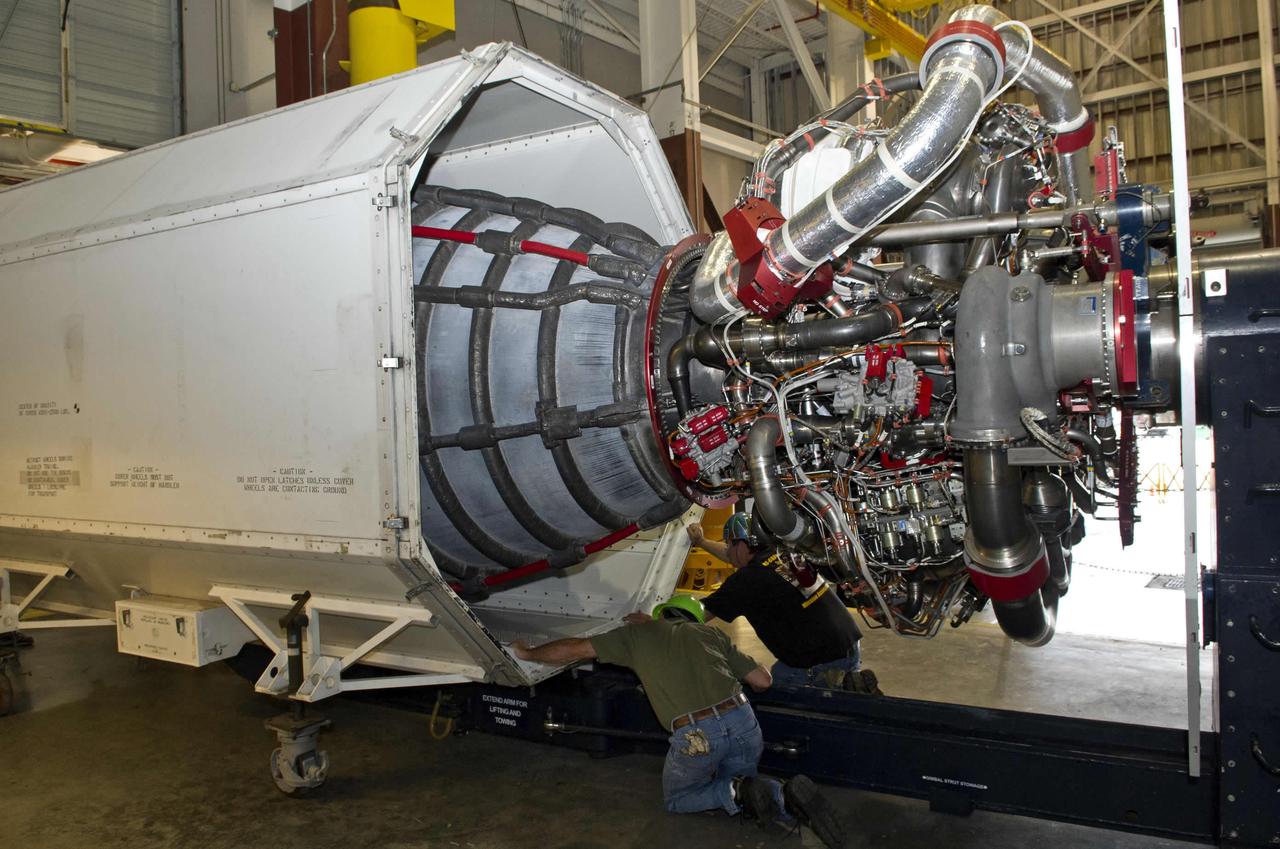
Employees unload a RS25D rocket engine at NASA's John C. Stennis Space Center on Jan. 17. The engine - and 14 others - will be stored at the facility for future testing and use on NASA's new Space Launch System (SLS). The SLS is a new heavy-lift launch vehicle that will expand human presence beyond low-Earth orbit and enable new missions of exploration across the solar system. NASA's Marshall Space Flight Center in Huntsville, Ala., is leading the design and development of the Space Launch System for NASA, including the engine testing program. Delivery of the 15 RS-25 engines will continue throughout the next few months
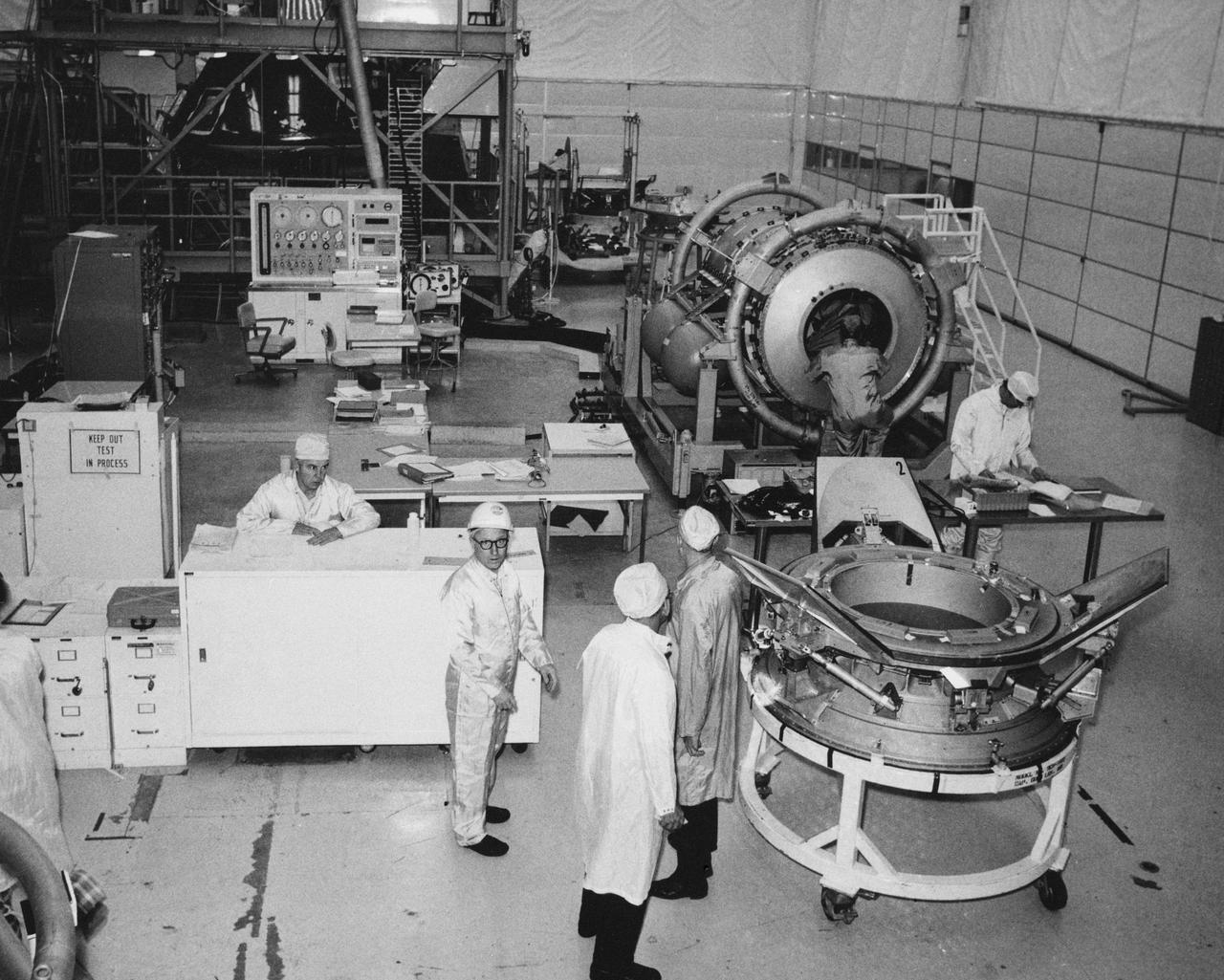
S74-28295 (September 1974) --- American-built hardware for the joint U.S.-USSR Apollo-Soyuz Test Project mission undergoes pre-delivery preparations in the giant clean room at Rockwell International Corporation?s Space Division at Downey, California. The U.S. portion of the ASTP docking system is in the right foreground. In the right background is the cylindrical-shaped docking module, which is designed to link the Apollo and Soyuz spacecraft when they dock in Earth orbit next summer. In the left background is the Apollo Command Module which they will carry the three American astronauts into Earth orbit. Photo credit: NASA
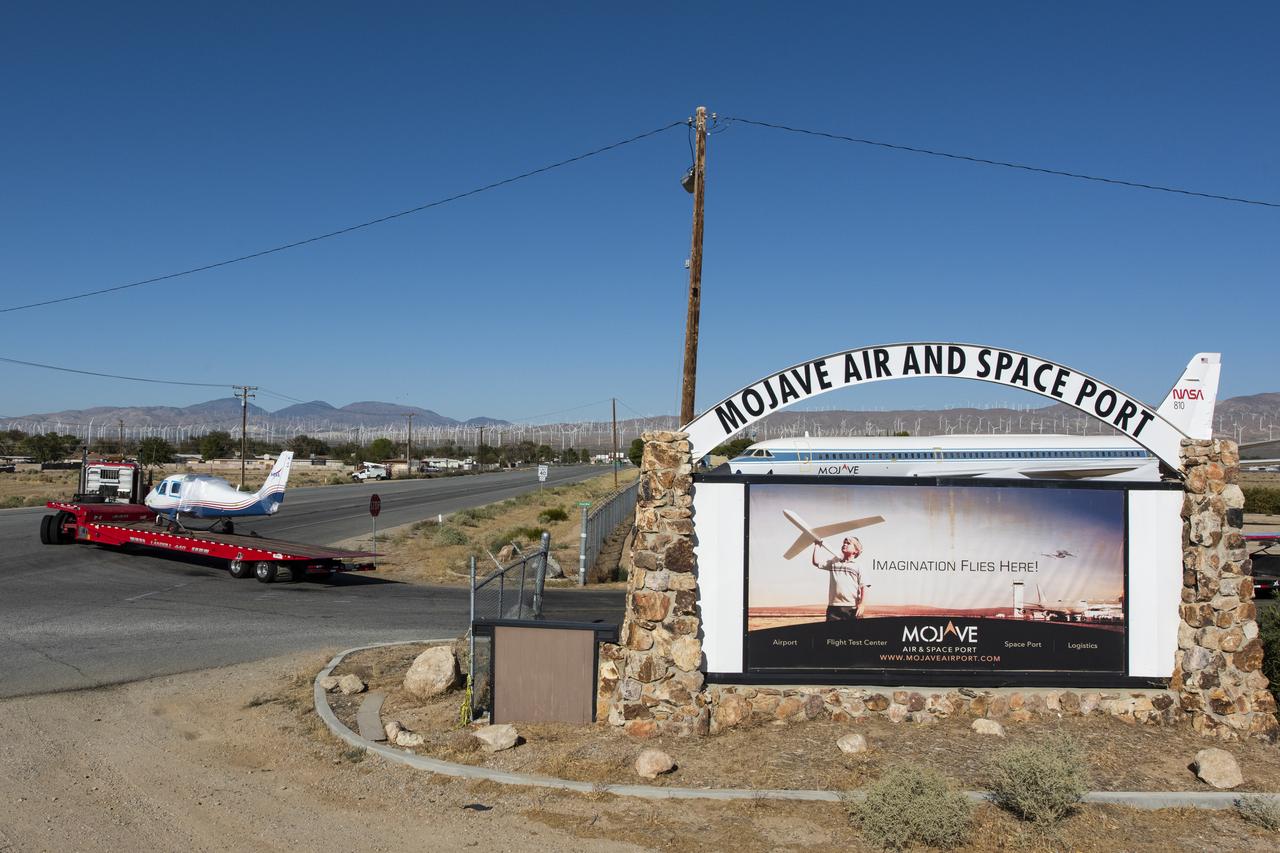
NASA’s all-electric X-57 Maxwell, in its Mod II configuration, departs Scaled Composites’ facility at Mojave Air and Space Port, en route to NASA’s Armstrong Flight Research Center in Edwards, California for delivery. The aircraft, shipped as two parts – the fuselage and the wing – was delivered to NASA Armstrong’s Research Aircraft Integration Facility, where it will be reintegrated to begin ground tests, to be followed by taxi tests, and eventually, flight tests. X-57’s Mod II configuration, the first of three primary modifications for the project, involves testing of the aircraft’s cruise electric propulsion system. The goal of the X-57 project is to share the aircraft’s electric-propulsion-focused design and airworthiness process with regulators, to advance certification approaches for distributed electric propulsion in general aviation.
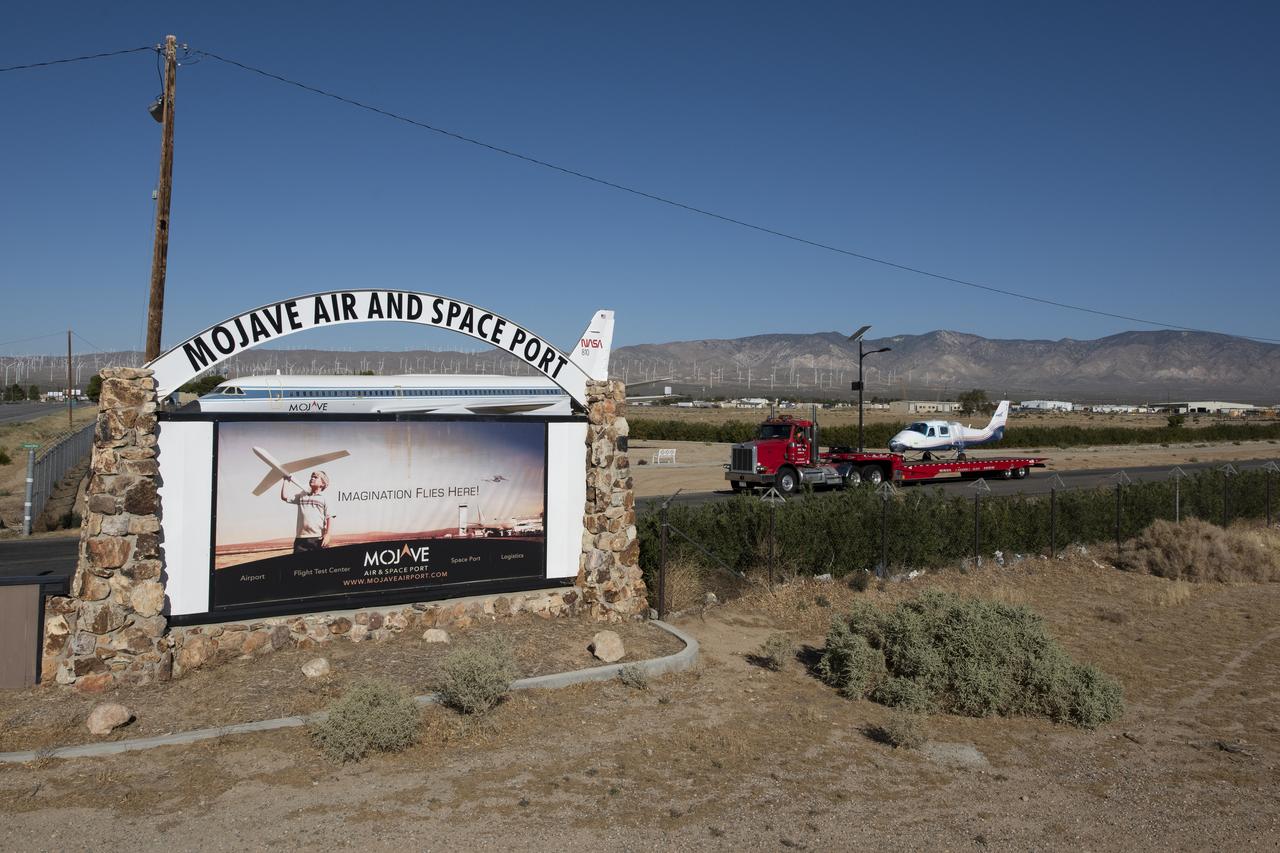
NASA’s all-electric X-57 Maxwell, in its Mod II configuration, departs Scaled Composites’ facility at Mojave Air and Space Port, en route to NASA’s Armstrong Flight Research Center in Edwards, California for delivery. The aircraft, shipped as two parts – the fuselage and the wing – was delivered to NASA Armstrong’s Research Aircraft Integration Facility, where it will be reintegrated to begin ground tests, to be followed by taxi tests, and eventually, flight tests. X-57’s Mod II configuration, the first of three primary modifications for the project, involves testing of the aircraft’s cruise electric propulsion system. The goal of the X-57 project is to share the aircraft’s electric-propulsion-focused design and airworthiness process with regulators, to advance certification approaches for distributed electric propulsion in general aviation.

NASA's all-electric X-57 Maxwell, in its Mod II configuration, departs Scaled Composites' facility at Mojave Air and Space Port, en route to NASA's Armstrong Flight Research Center in Edwards, California for delivery. The aircraft, shipped as two parts - the fuselage and the wing - was delivered to NASA Armstrong's Research Aircraft Integration Facility, where it will be reintegrated to begin ground tests, to be followed by taxi tests, and eventually, flight tests. X-57's Mod II configuration, the first of three primary modifications for the project, involves testing of the aircraft's cruise electric propulsion system. The goal of the X-57 project is to share the aircraft's electric-propulsion-focused design and airworthiness process with regulators, to advance certification approaches for distributed electric propulsion in general aviation.
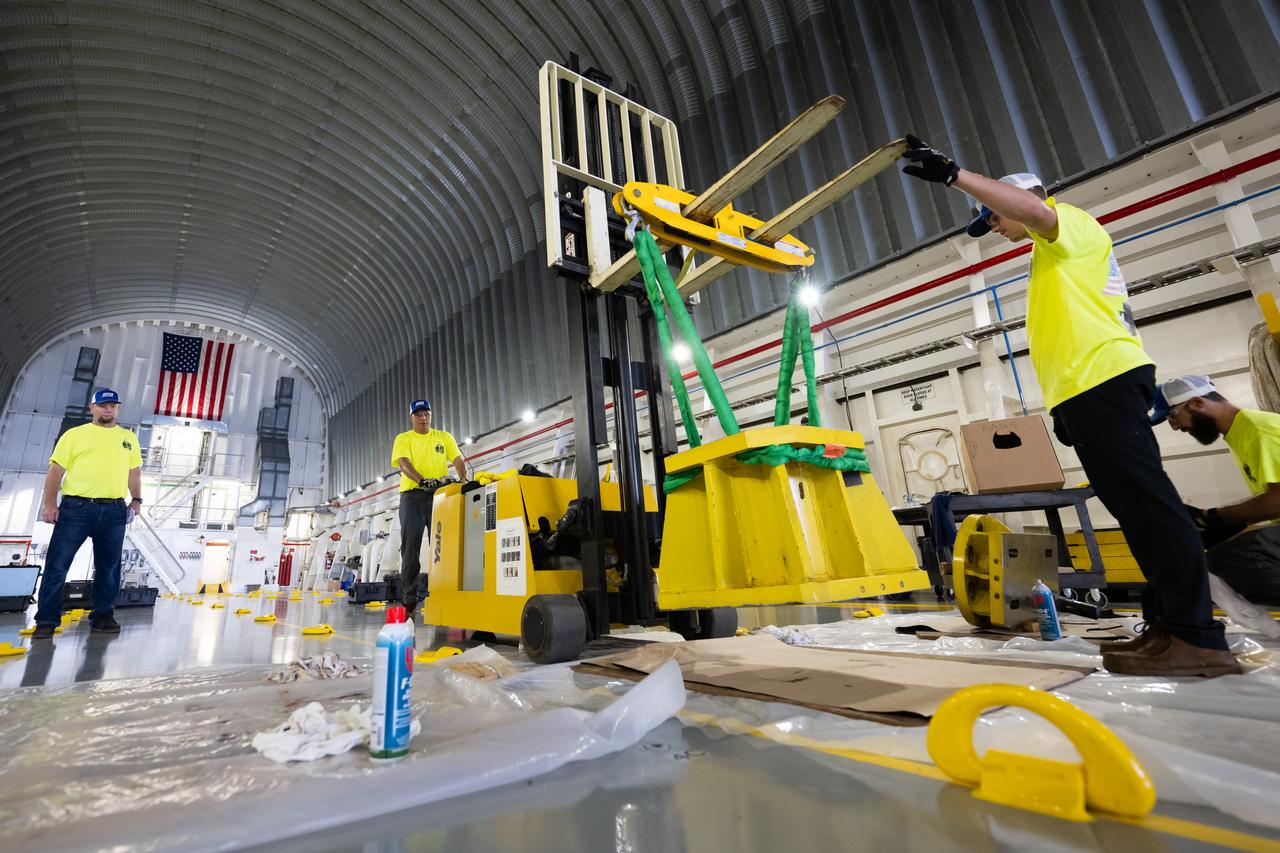
These photos show how team members installed pedestals aboard NASA’s Pegasus barge to hold and secure the massive core stage of NASA’s SLS (Space Launch System) rocket, indicating the barge and its crew are nearly ready for the barge’s first delivery to support the Artemis II test flight around the Moon. The barge will ferry the fully assembled core stage on a 900-mile journey from the agency’s Michoud Assembly Facility in New Orleans to its Kennedy Space Center in Florida. The Pegasus crew began installing the pedestals July 10. Pegasus is maintained at NASA Michoud. The SLS core stage is fully manufactured at Michoud. NASA is working to land the first woman, first person of color, and its first international partner astronaut on the Moon under Artemis. SLS is part of NASA’s backbone for deep space exploration, along with the Orion spacecraft, supporting ground systems, advanced spacesuits and rovers, the Gateway in orbit around the Moon, and commercial human landing systems. SLS is the only rocket that can send Orion, astronauts, and supplies to the Moon in a single launch.
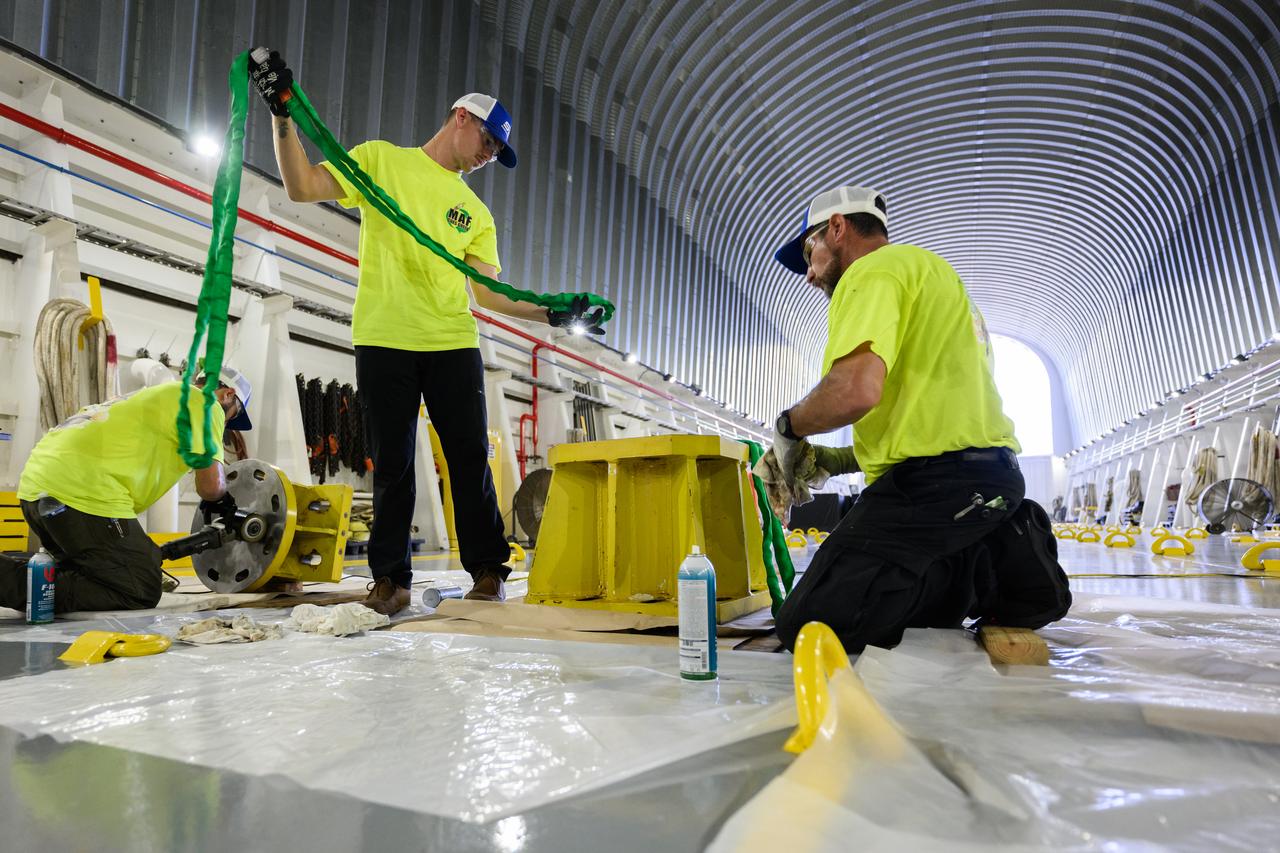
These photos show how team members installed pedestals aboard NASA’s Pegasus barge to hold and secure the massive core stage of NASA’s SLS (Space Launch System) rocket, indicating the barge and its crew are nearly ready for the barge’s first delivery to support the Artemis II test flight around the Moon. The barge will ferry the fully assembled core stage on a 900-mile journey from the agency’s Michoud Assembly Facility in New Orleans to its Kennedy Space Center in Florida. The Pegasus crew began installing the pedestals July 10. Pegasus is maintained at NASA Michoud. The SLS core stage is fully manufactured at Michoud. NASA is working to land the first woman, first person of color, and its first international partner astronaut on the Moon under Artemis. SLS is part of NASA’s backbone for deep space exploration, along with the Orion spacecraft, supporting ground systems, advanced spacesuits and rovers, the Gateway in orbit around the Moon, and commercial human landing systems. SLS is the only rocket that can send Orion, astronauts, and supplies to the Moon in a single launch.
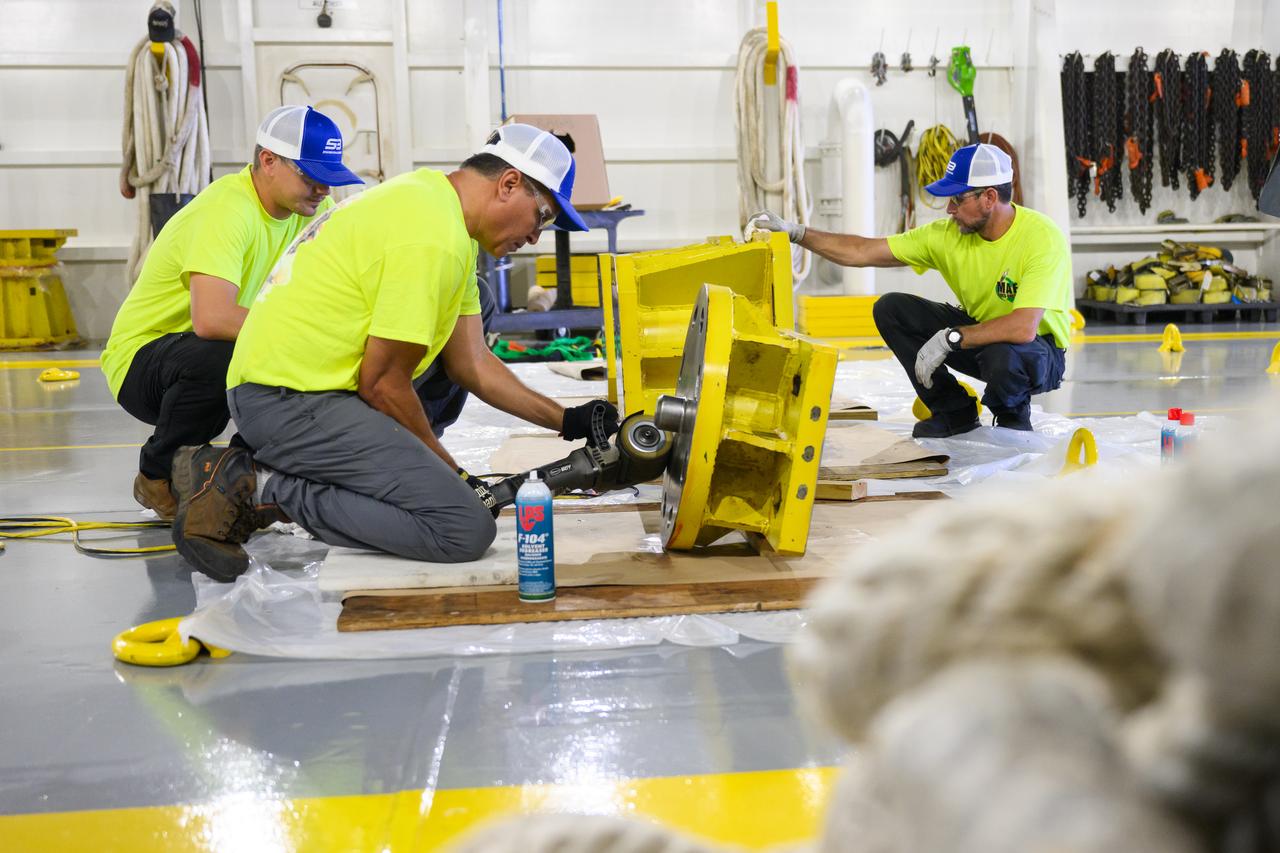
These photos show how team members installed pedestals aboard NASA’s Pegasus barge to hold and secure the massive core stage of NASA’s SLS (Space Launch System) rocket, indicating the barge and its crew are nearly ready for the barge’s first delivery to support the Artemis II test flight around the Moon. The barge will ferry the fully assembled core stage on a 900-mile journey from the agency’s Michoud Assembly Facility in New Orleans to its Kennedy Space Center in Florida. The Pegasus crew began installing the pedestals July 10. Pegasus is maintained at NASA Michoud. The SLS core stage is fully manufactured at Michoud. NASA is working to land the first woman, first person of color, and its first international partner astronaut on the Moon under Artemis. SLS is part of NASA’s backbone for deep space exploration, along with the Orion spacecraft, supporting ground systems, advanced spacesuits and rovers, the Gateway in orbit around the Moon, and commercial human landing systems. SLS is the only rocket that can send Orion, astronauts, and supplies to the Moon in a single launch.
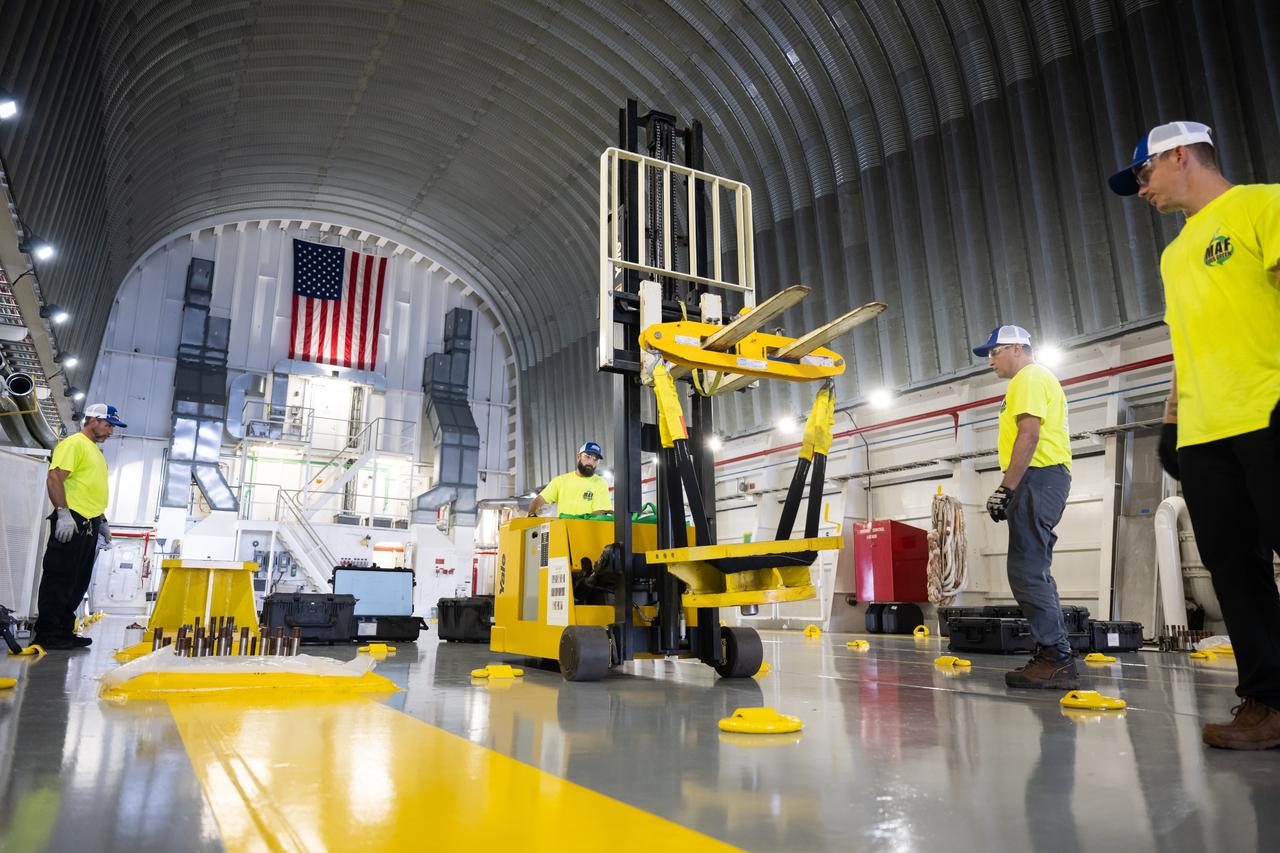
These photos show how team members installed pedestals aboard NASA’s Pegasus barge to hold and secure the massive core stage of NASA’s SLS (Space Launch System) rocket, indicating the barge and its crew are nearly ready for the barge’s first delivery to support the Artemis II test flight around the Moon. The barge will ferry the fully assembled core stage on a 900-mile journey from the agency’s Michoud Assembly Facility in New Orleans to its Kennedy Space Center in Florida. The Pegasus crew began installing the pedestals July 10. Pegasus is maintained at NASA Michoud. The SLS core stage is fully manufactured at Michoud. NASA is working to land the first woman, first person of color, and its first international partner astronaut on the Moon under Artemis. SLS is part of NASA’s backbone for deep space exploration, along with the Orion spacecraft, supporting ground systems, advanced spacesuits and rovers, the Gateway in orbit around the Moon, and commercial human landing systems. SLS is the only rocket that can send Orion, astronauts, and supplies to the Moon in a single launch.
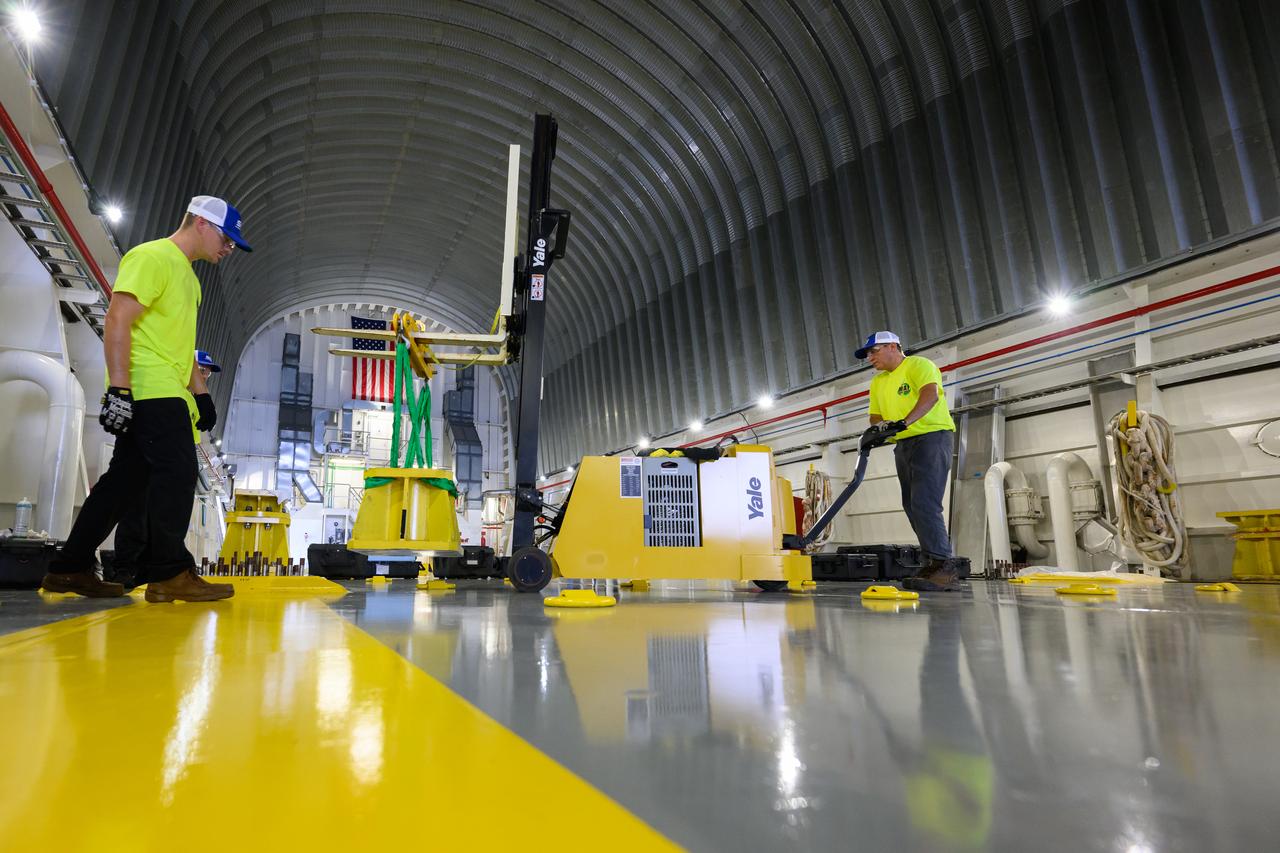
These photos show how team members installed pedestals aboard NASA’s Pegasus barge to hold and secure the massive core stage of NASA’s SLS (Space Launch System) rocket, indicating the barge and its crew are nearly ready for the barge’s first delivery to support the Artemis II test flight around the Moon. The barge will ferry the fully assembled core stage on a 900-mile journey from the agency’s Michoud Assembly Facility in New Orleans to its Kennedy Space Center in Florida. The Pegasus crew began installing the pedestals July 10. Pegasus is maintained at NASA Michoud. The SLS core stage is fully manufactured at Michoud. NASA is working to land the first woman, first person of color, and its first international partner astronaut on the Moon under Artemis. SLS is part of NASA’s backbone for deep space exploration, along with the Orion spacecraft, supporting ground systems, advanced spacesuits and rovers, the Gateway in orbit around the Moon, and commercial human landing systems. SLS is the only rocket that can send Orion, astronauts, and supplies to the Moon in a single launch.
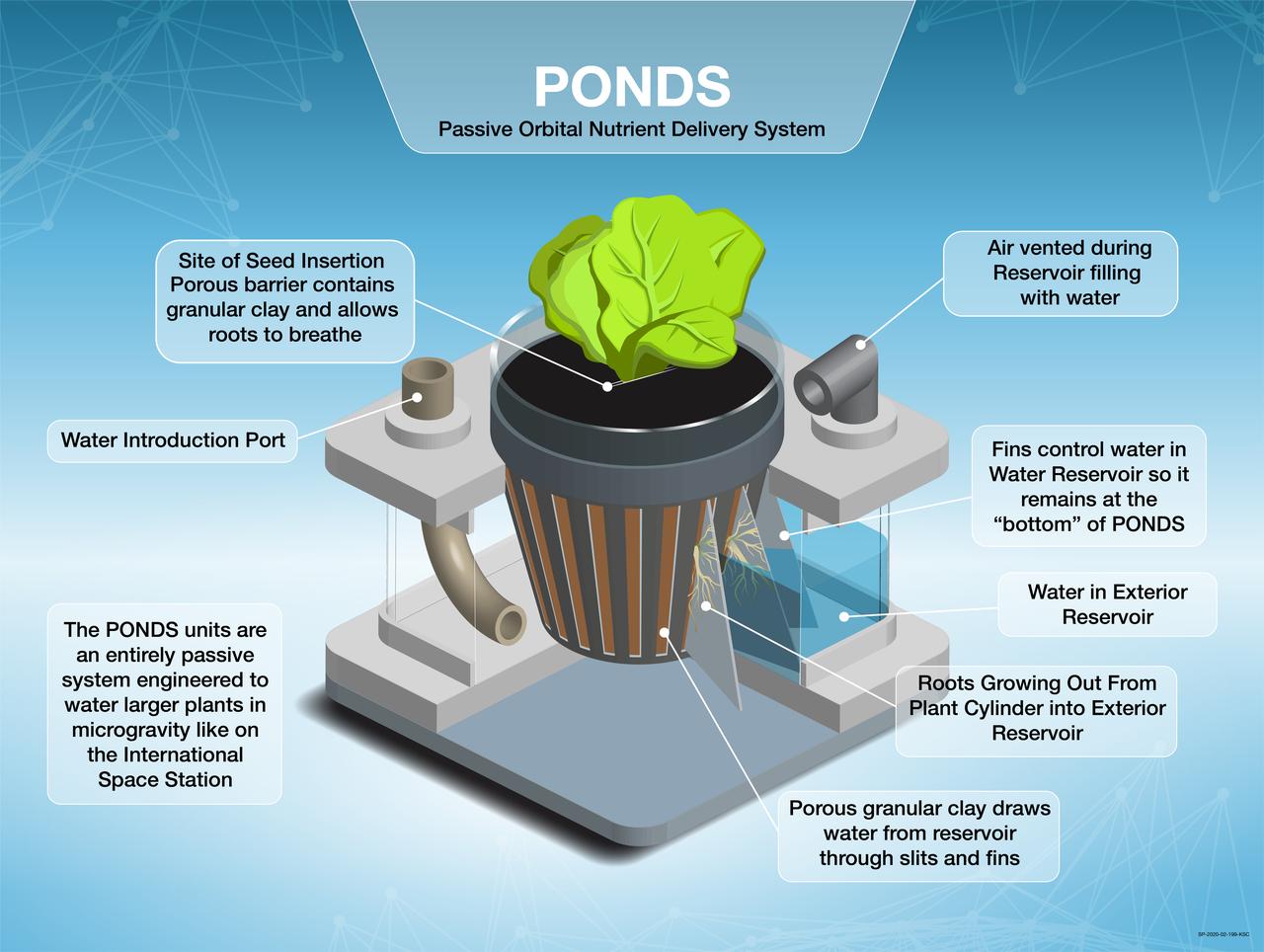
Infographic illustrating the Passive Orbital Nutrient Delivery System (PONDS) plant growth unit. The PONDS units are an entirely passive system – meaning no electricity, no pumps and no moving parts – and the basic concept involves using a free-standing reservoir of water that plants can draw from when needed, cutting down on time astronauts would spend watering plants during the growth interval.
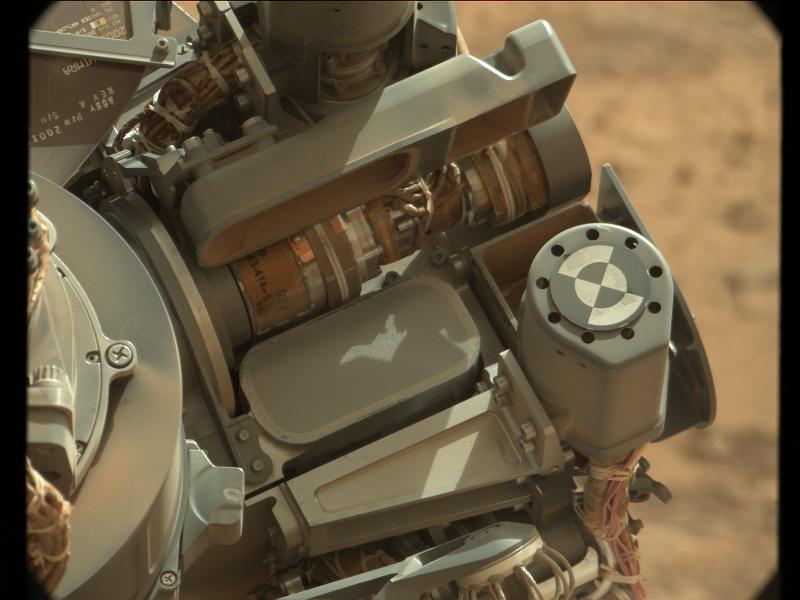
This image shows the location of the 150-micrometer sieve screen on NASA Mars rover Curiosity, a device used to remove larger particles from samples before delivery to science instruments.
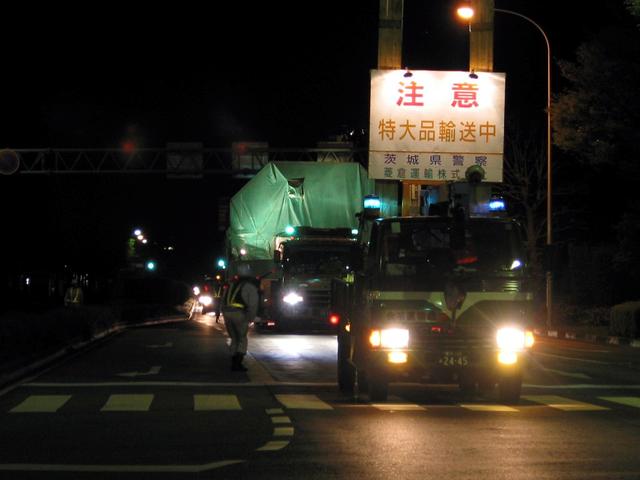
JSC2003-E-34751 (22 April 2003) --- A convoy transports the Kibo Pressurized Module, Japan's primary contribution to the International Space Station, from the National Space Development Agency of Japan's Tsukuba Space Center to be loaded onto a barge bound for Yokohama Harbor, where it was loaded on a container ship bound for Port Canaveral, Florida. Kibo is planned to arrive at the Kennedy Space Center for module integration tests with Node 2 and pre-launch processing in early June. Photo Credit: NASA
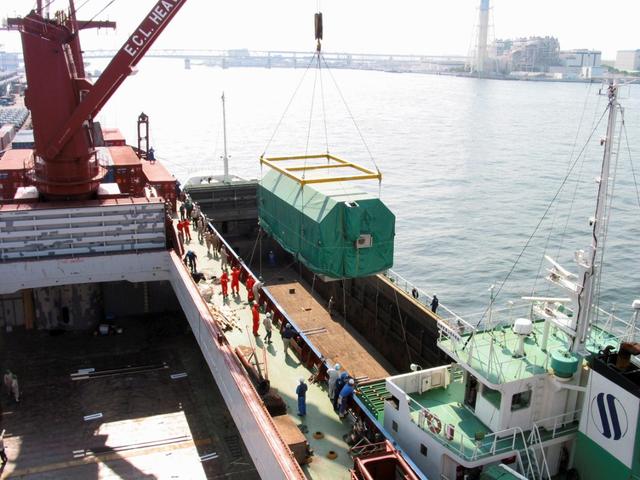
JSC2003-E-34748 (2 May 2003) --- The Pressurized Module of the Japanese Experiment Module (JEM), Kibo, Japan's primary contribution to the International Space Station, is transferred from a barge to a container transport ship at Yokohama Harbor, Yokohama, Japan. The Kibo module, built by the National Space Development Agency of Japan (NASDA), is expected to arrive at the Kennedy Space Center for integration tests with Node 2 and pre-launch processing in early June. Photo Credit: NASA
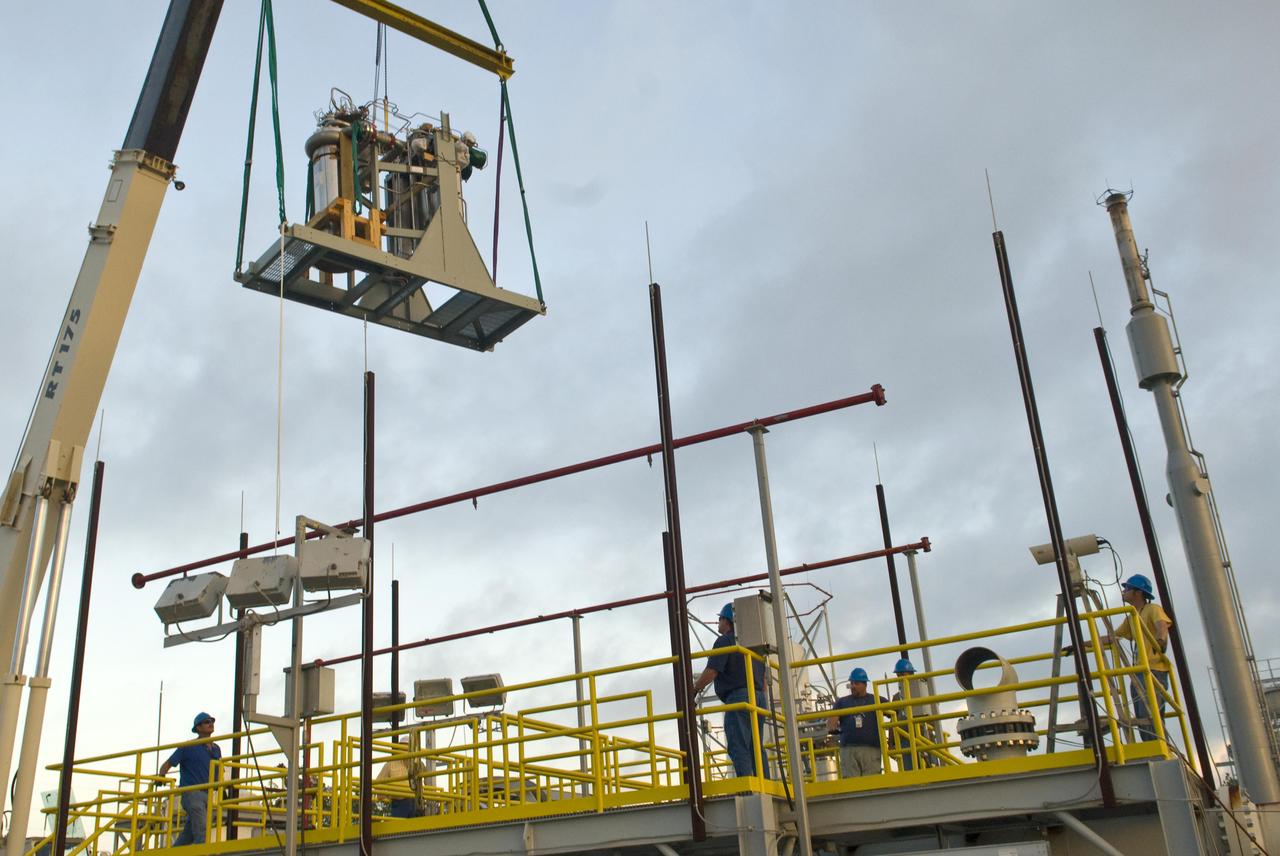
The first of nine chemical steam generator (CSG) units that will be used on the A-3 Test Stand is hoisted into place at the E-2 Test Stand at John C. Stennis Space Center on Oct. 24, 2010. The unit was installed at the E-2 stand for verification and validation testing before it is moved to the A-3 stand. Steam generated by the nine CSG units that will be installed on the A-3 stand will create a vacuum that allows Stennis operators to test next-generation rocket engines at simulated altitudes up to 100,000 feet.
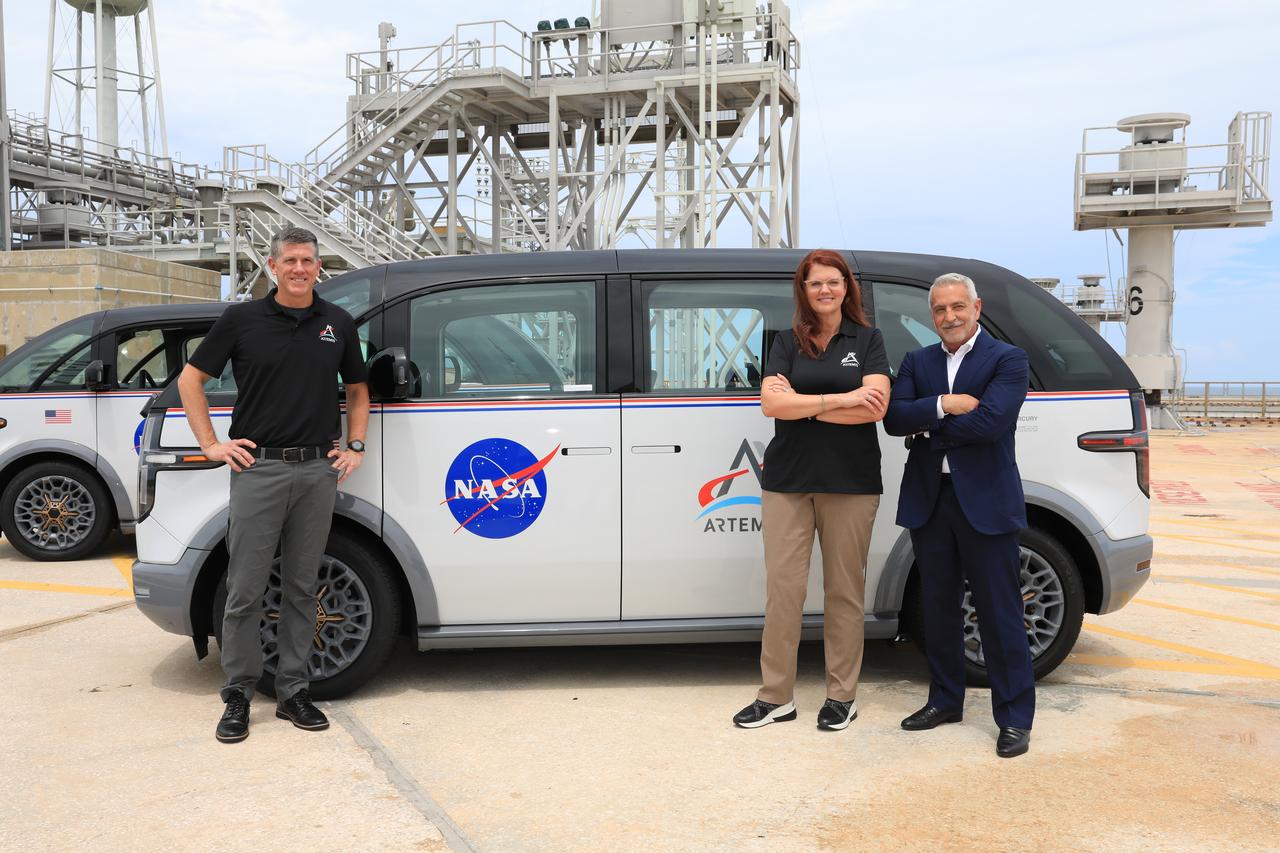
Three specially designed, fully electric, environmentally friendly crew transportation vehicles for Artemis missions arrived at NASA’s Kennedy Space Center in Florida on July 11, 2023. One of the zero-emission vehicles is shown here at Launch Pad 39B. From left are Jeremy Graeber, Artemis assistant launch director; Charlie Blackwell-Thompson, Artemis launch director; and Tony Aquila, chairman and CEO, Canoo Technologies Inc.. The fleet, which will carry astronauts to Launch Complex 39B for Artemis missions, was delivered by the manufacturer, Canoo Technologies Inc. of Torrance, California.
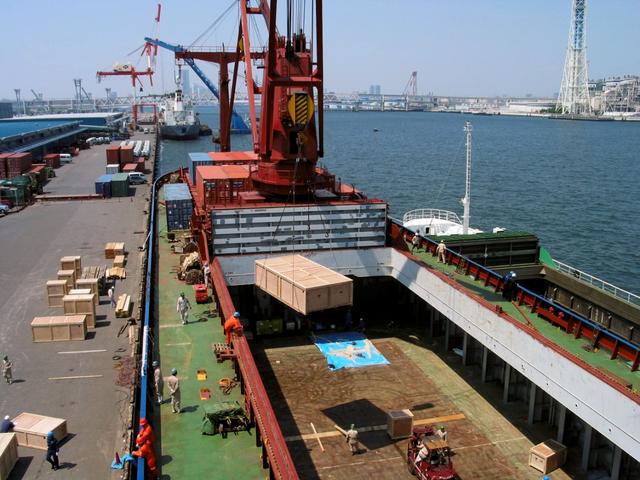
JSC2003-E-34747 (2 May 2003) --- A crate containing Ground Support Equipment for the Pressurized Module of the Japanese Experiment Module (JEM), Kibo, is lowered into a container transport ship. Kibo is expected to arrive at the Kennedy Space Center in early June where it will be prepared for module integration tests with Node 2 and then prepared for launch to the International Space Station aboard the space shuttle. Photo Credit: NASA

With the Vehicle Assembly Building in the background, the three specially designed, fully electric, environmentally friendly crew transportation vehicles for Artemis missions arrived at NASA’s Kennedy Space Center in Florida on July 11, 2023. The zero-emission vehicles, which will carry astronauts to Launch Complex 39B for Artemis missions, were delivered by the manufacturer, Canoo Technologies Inc. of Torrance, California.
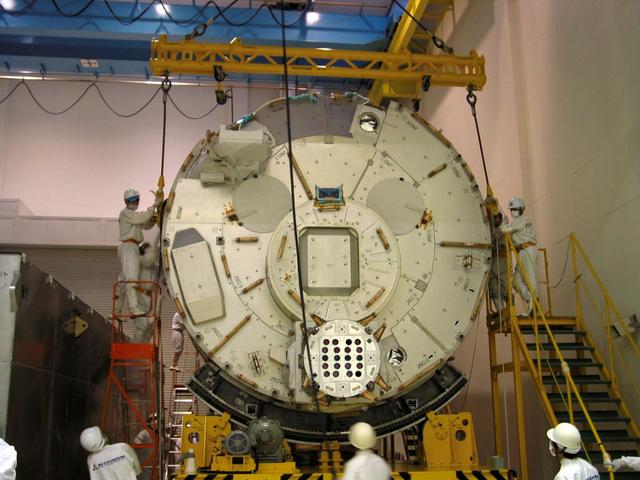
JSC2003-E-34755 (16 April 2003) --- Workers at Japan's Tsukuba Space Center are shown preparing the Japanese Experiment Module (JEM), Kibo, for lifting and packaging into an environmentally controlled shipping container for its transportation to Yokohama Harbor, where it was loaded on a container ship bound for Port Canaveral, Florida. The Kibo Pressurized Module, built by the National Space Development Agency of Japan (NASDA), is expected to arrive at the Kennedy Space Center for module integration tests with Node 2 and pre-launch processing in early June. Photo Credit: NASA
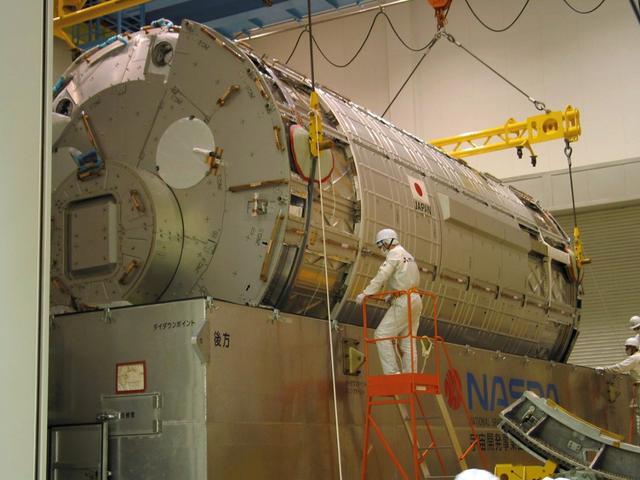
JSC2003-E-34758 (16 April 2003) --- The Kibo Japanese Experiment Module's (JEM) Pressurized Module, a science laboratory bound for the International Space Station, is lowered into a shipping crate, in preparation for shipment to the Kennedy Space Center where it will be prepared for launch aboard the Space Shuttle. A container transport ship carrying Kibo left Yokohama Harbor, Japan, May 2, 2003, bound for Port Canaveral, Florida, where it is expected to arrive in early June. It will then be transported to KSC's Space Station Processing Facility.
JSC2003-E-34750 (2 May 2003) --- A container transport ship carrying is shown departing Yokohama Harbor, Yokohama, Japan, bound for the Port Canaveral, Florida. The Kibo Pressurized Module, built by National Space Development Agency (NASDA), is expected to arrive at the Kennedy Space Center for module integration tests with Node 2 and pre-launch processing in early June. Photo Credit: NASA
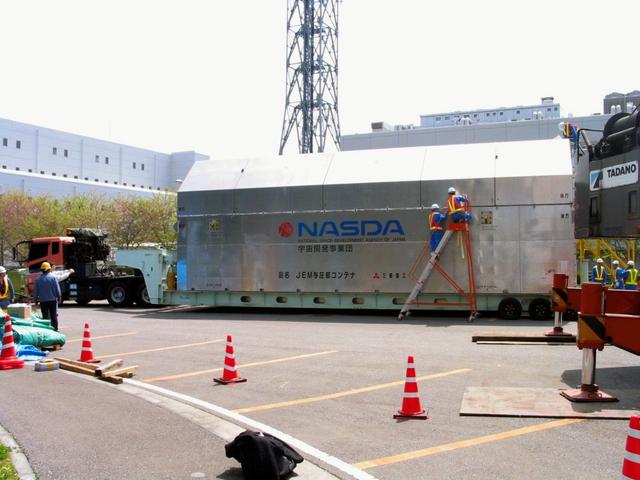
JSC2003-E-33-E-34759 (16 April 2003) --- A shipping container carrying the Japanese Experiment Module (JEM), Kibo,, Japan's primary contribution to the International Space Station, is prepared for departure from the National Space Development Agency of Japan's Tsukuba Space Center to be loaded onto a barge bound for Yokohama Harbor, where it was transferred to a container ship bound for Port Canaveral, Florida. The Kibo laboratory module is planned to arrive at the Kennedy Space Center for module integration tests with Node 2 and pre-launch processing in early June. Photo Credit: NASA
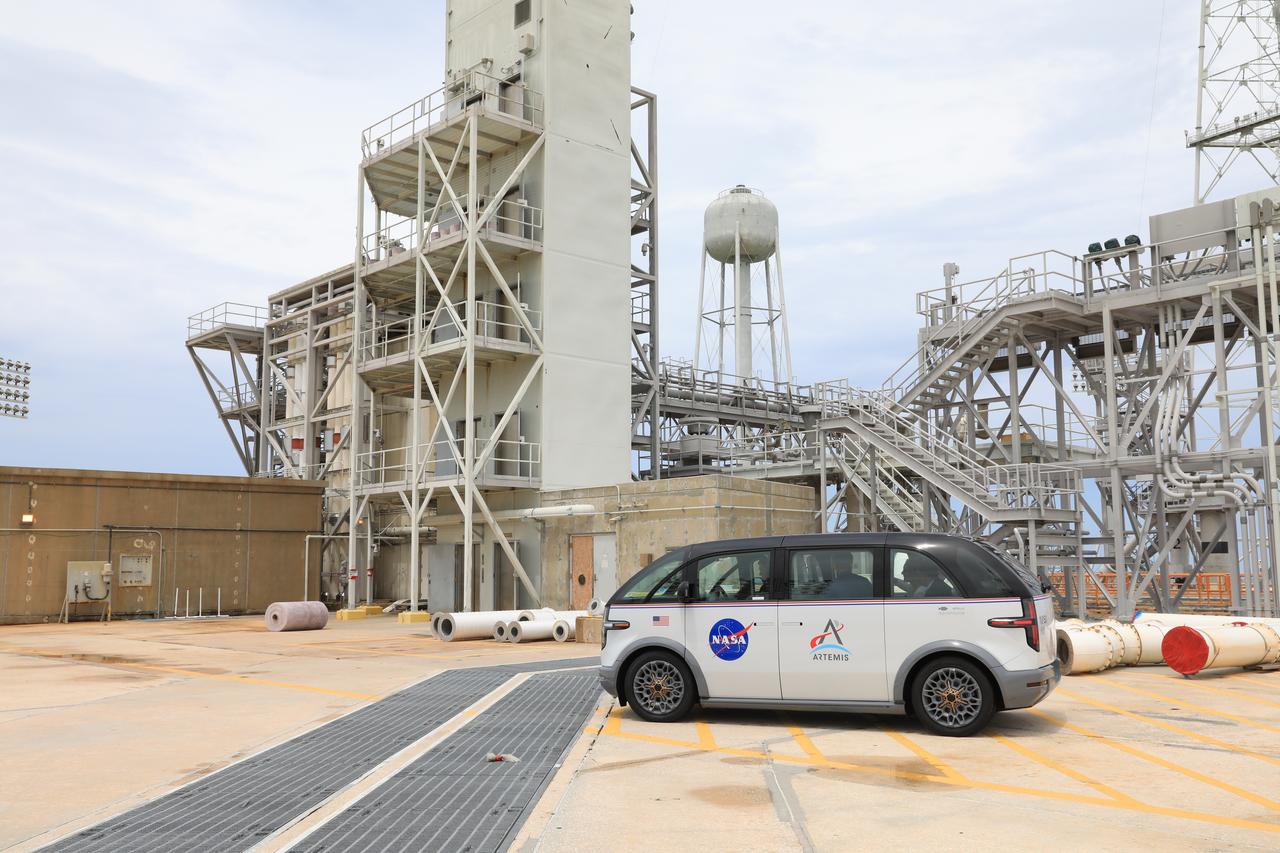
Three specially designed, fully electric, environmentally friendly crew transportation vehicles for Artemis missions arrived at NASA’s Kennedy Space Center in Florida on July 11, 2023. One of the zero-emission vehicles is shown here at Launch Pad 39B. The fleet, which will carry astronauts to Launch Complex 39B for Artemis missions, was delivered by the manufacturer, Canoo Technologies Inc. of Torrance, California.
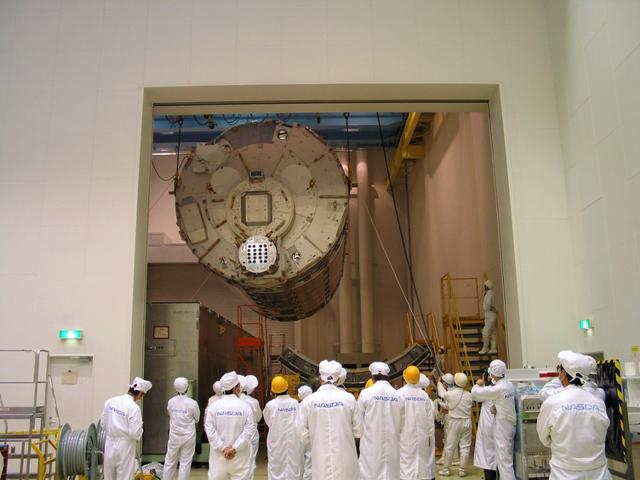
JSC2003-E-34757 (16 April 2003) --- The Kibo Japanese Experiment Module's (JEM) Pressurized Module, a science laboratory bound for the International Space Station, is lowered into an environmentally controlled shipping container, in preparation for shipment to the Kennedy Space Center where it will be prepared for launch aboard the Space Shuttle. A container transport ship carrying Kibo left Yokohama Harbor, Japan, May 2, 2003, bound for Port Canaveral, Florida. The Kibo laboratory, built by the National Space Development Agency of Japan (NASDA), is expected to arrive at the Kennedy Space Center for module integration tests with Node 2 and pre-launch processing in early June. Photo Credit: NASA
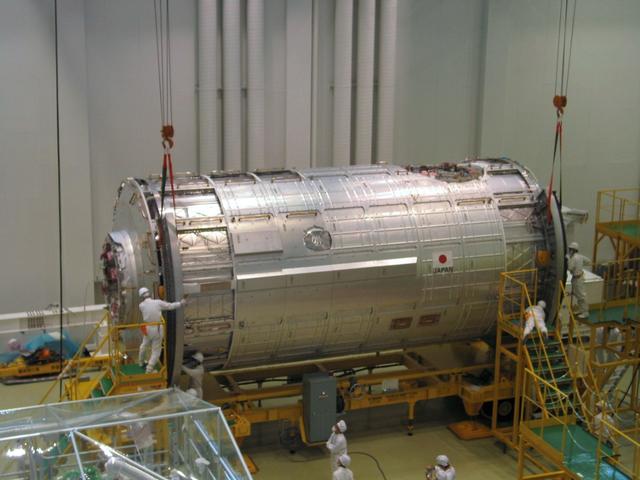
JSC2003-E-34752 (16 April 2003) --- Workers at Japan's Tsukuba Space Center are shown removing support structures from the Pressurized Module of the Japanese Experiment Module (JEM), Kibo, before it was packaged into an environmentally controlled shipping container and loaded onto a barge bound for Yokohama Harbor, where it was then loaded on a container ship bound for Port Canaveral, Florida. The Kibo module, built by the National Space Development Agency of Japan (NASDA), is expected to arrive at the Kennedy Space Center for module integration tests with Node 2 and pre-launch processing in early June. Photo Credit: NASA

John C. Stennis Space Center employees complete installation of a chemical steam generator (CSG) unit at the site's E-2 Test Stand. On Oct. 24, 2010. The unit will undergo verification and validation testing on the E-2 stand before it is moved to the A-3 Test Stand under construction at Stennis. Each CSG unit includes three modules. Steam generated by the nine CSG units that will be installed on the A-3 stand will create a vacuum that allows Stennis operators to test next-generation rocket engines at simulated altitudes up to 100,000 feet.
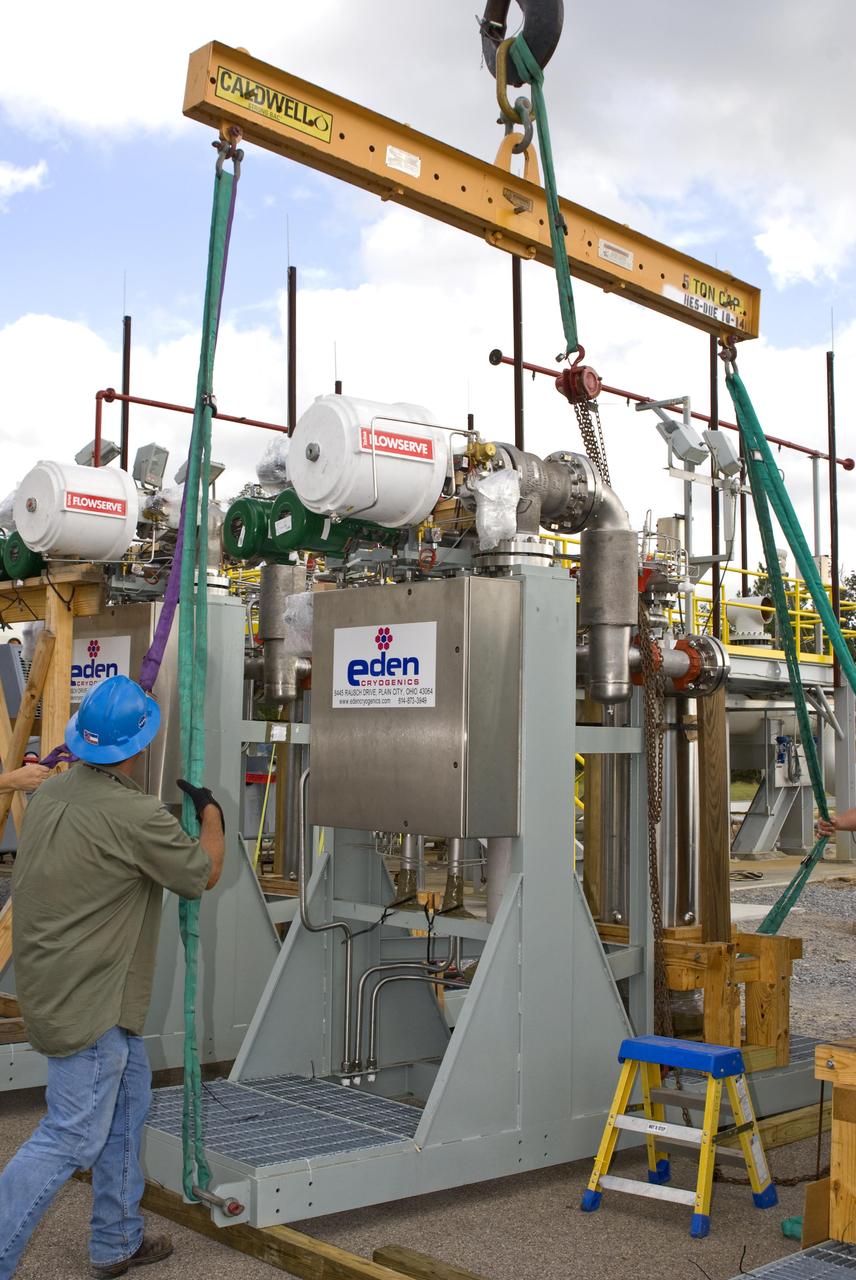
The first of nine chemical steam generator (CSG) units that will be used on the A-3 Test Stand is prepared for installation Oct. 24, 2010, at John C. Stennis Space Center. The unit was installed at the E-2 Test Stand for verification and validation testing before it is moved to the A-3 stand. Steam generated by the nine CSG units that will be installed on the A-3 stand will create a vacuum that allows Stennis operators to test next-generation rocket engines at simulated altitudes up to 100,000 feet.
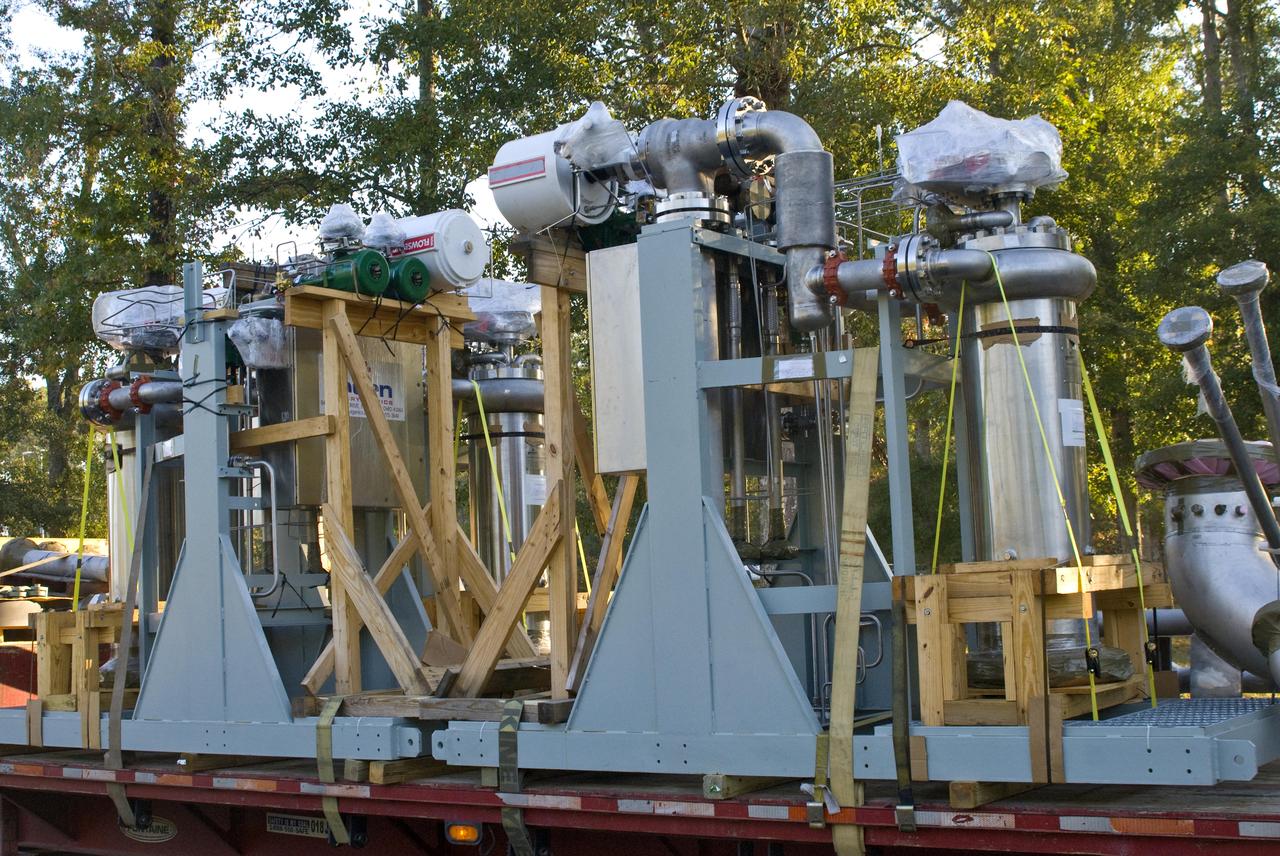
The first of nine chemical steam generator (CSG) units that will be used on the A-3 Test Stand arrived at John. C. Stennis Space Center on Oct. 22, 2010. The unit was installed at the E-2 Test Stand for verification and validation testing before it is moved to the A-3 stand. Steam generated by the nine CSG units that will be installed on the A-3 stand will create a vacuum that allows Stennis operators to test next-generation rocket engines at simulated altitudes up to 100,000 feet.
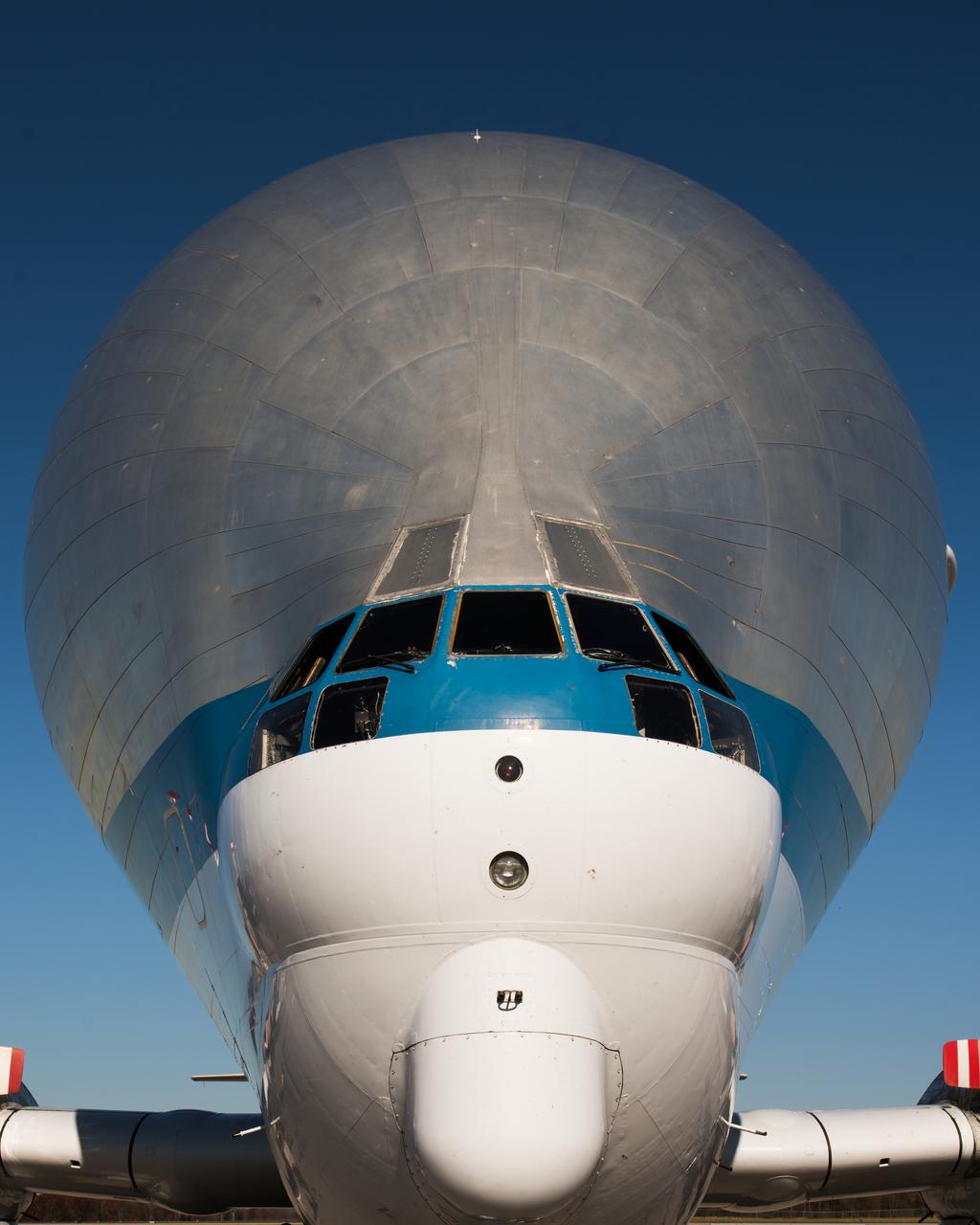
Front view of NASA’s Super Guppy aircraft after it touched down at Mansfield’s Lahm Airport in November, 2015. The crew delivered the crew module adaptor for Orion’s testing at NASA's Plum Brook Station next year.
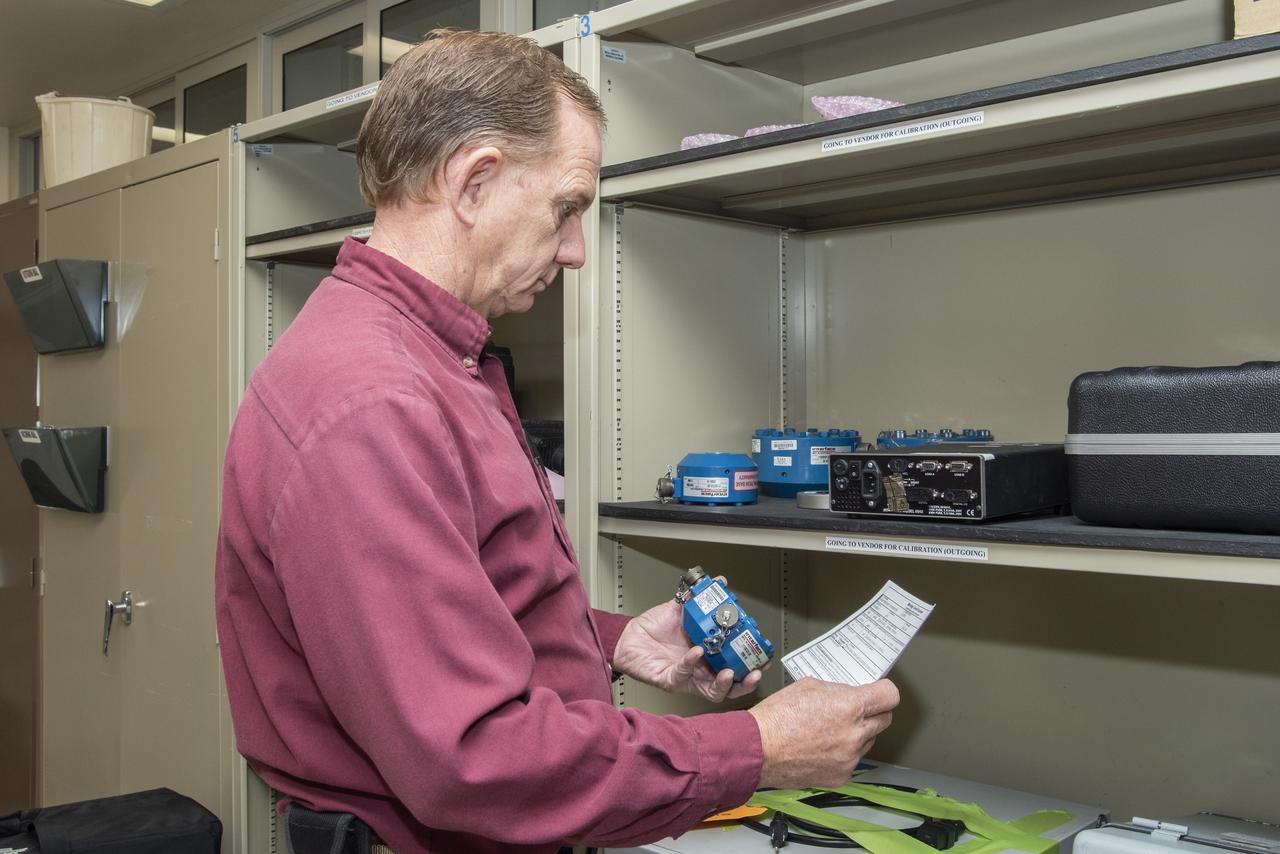
James Kelly, who is responsible for pickup and delivery of items to and from NASA Armstrong's Calibration Laboratory, checks the numbers of a part before he puts it on the delivery vehicle for transport back to a customer.
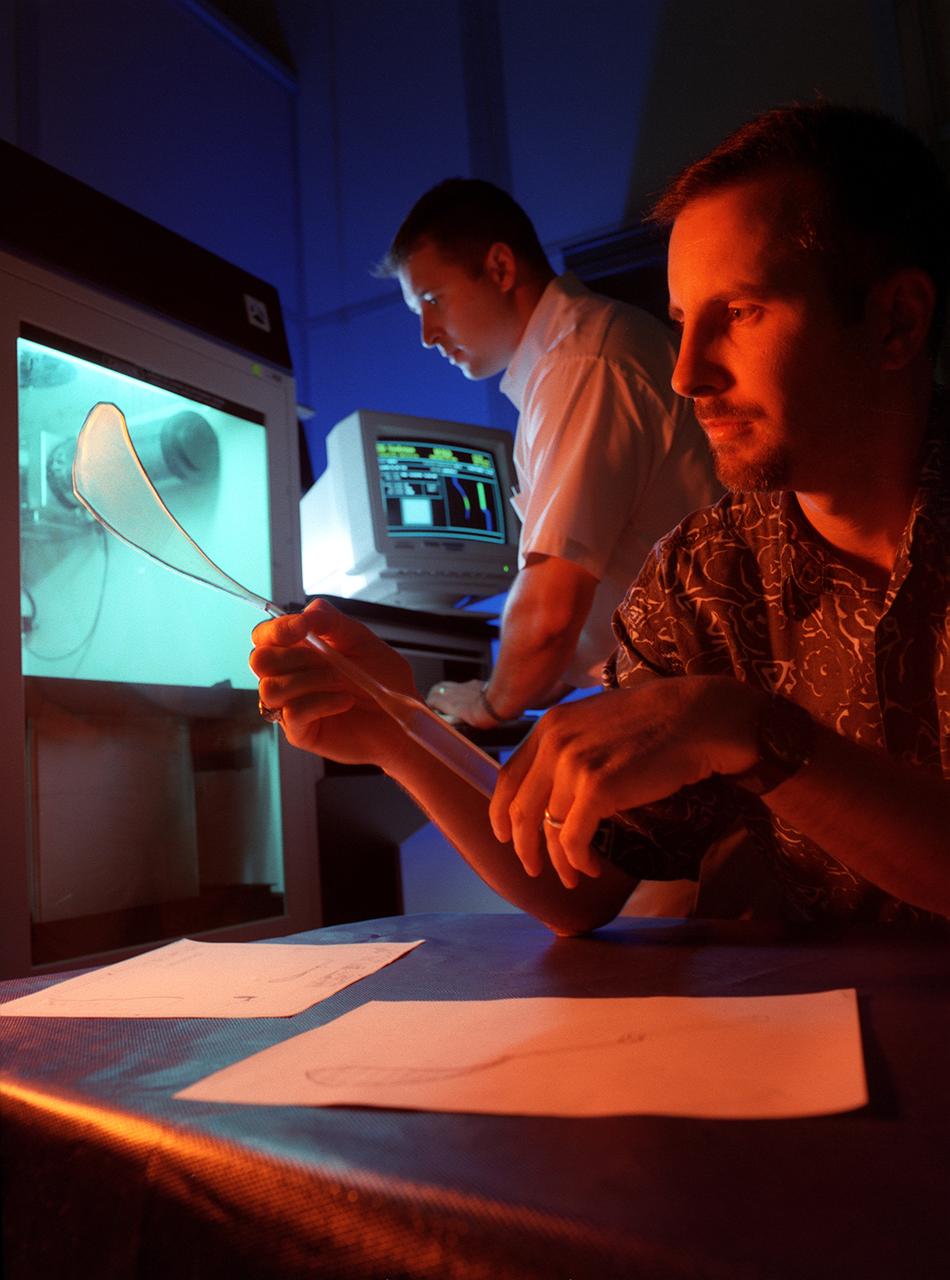
Marshall inventors Seth Lawson and Stanley Smeltzer display a pair of obstetrical forceps they designed. The forceps, made from composite space-age materials, measure the force applied during instrument-assisted delivery. The new forceps will help medical students get a feel for instrument-assisted deliveries before entering practice.
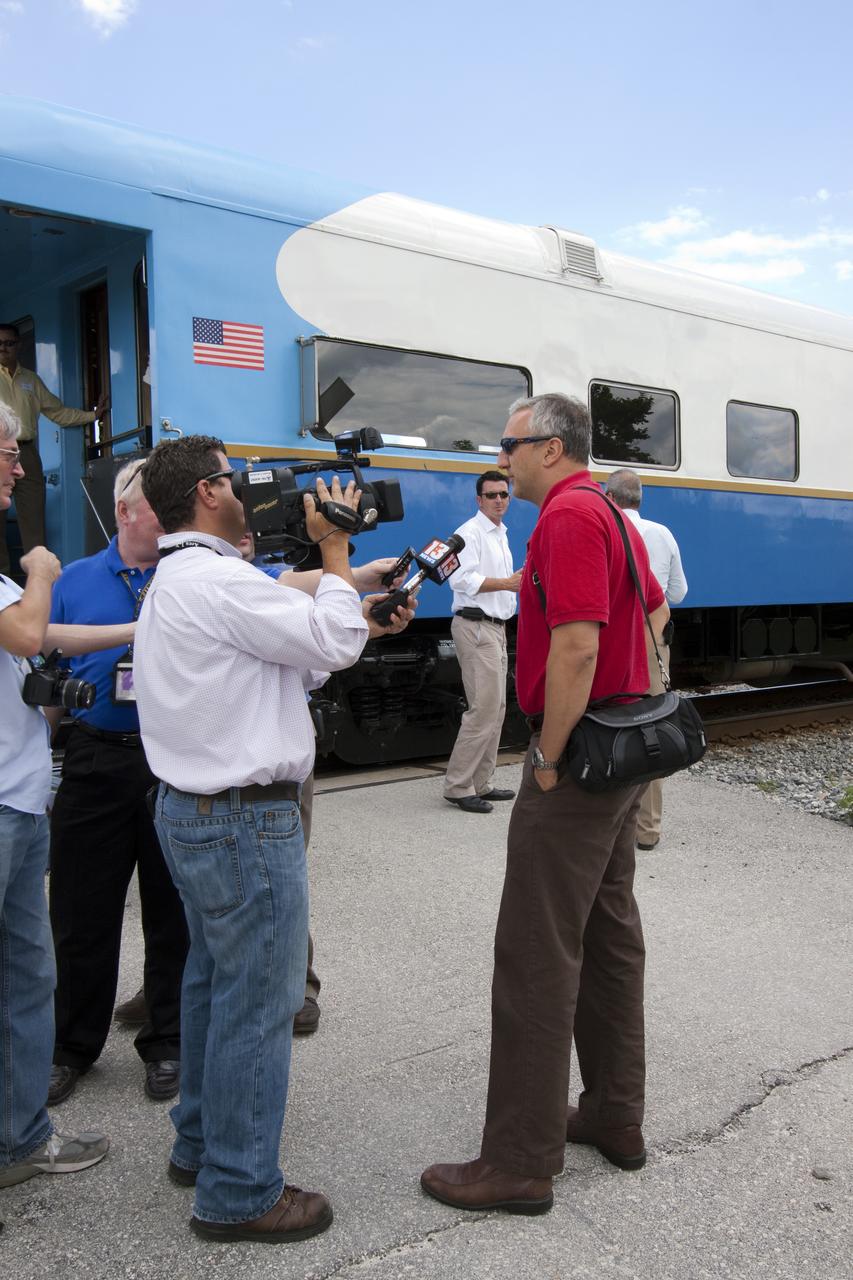
STS-335 LAUNCH ON NEED - SRB DELIVERY AT JJ YARD
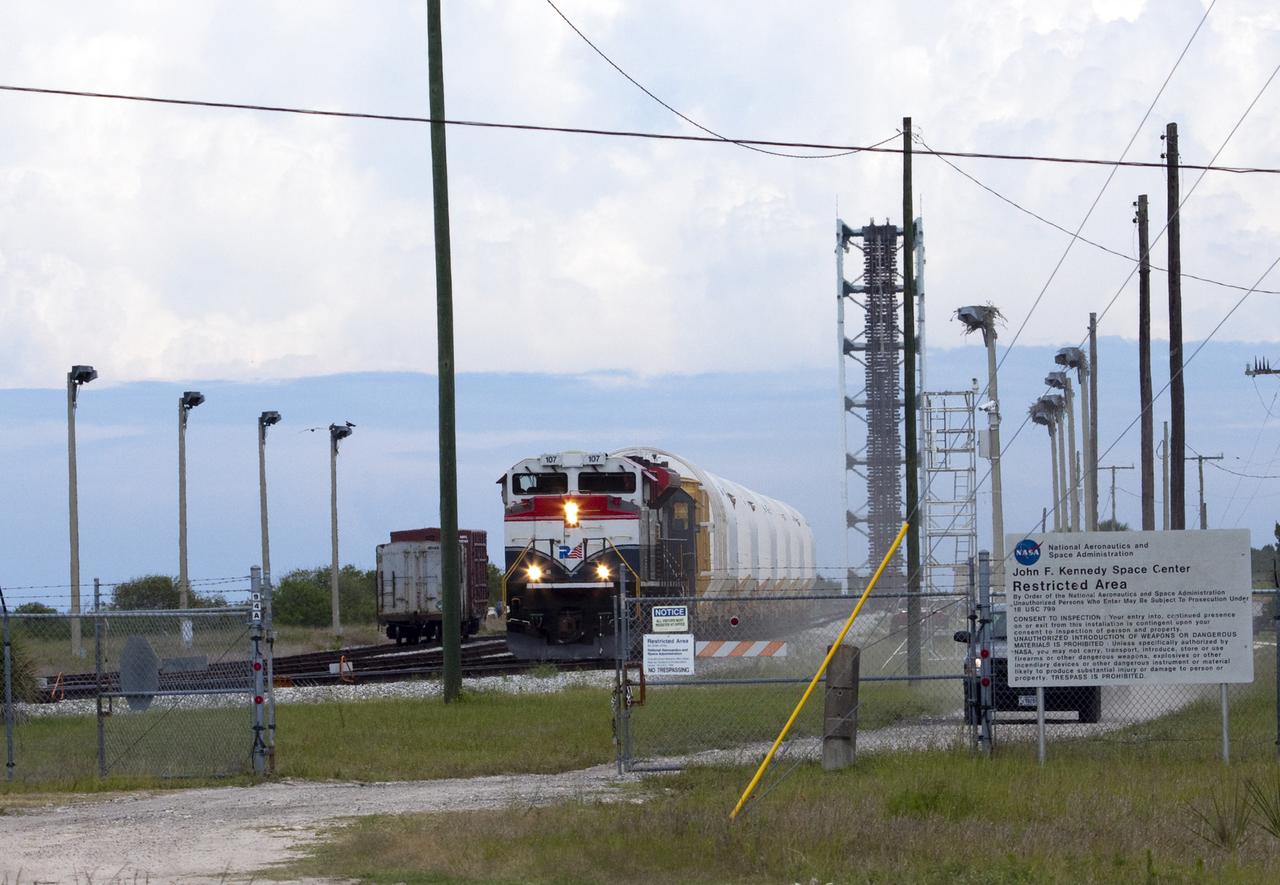
STS-335 LAUNCH ON NEED - SRB DELIVERY AT JJ YARD
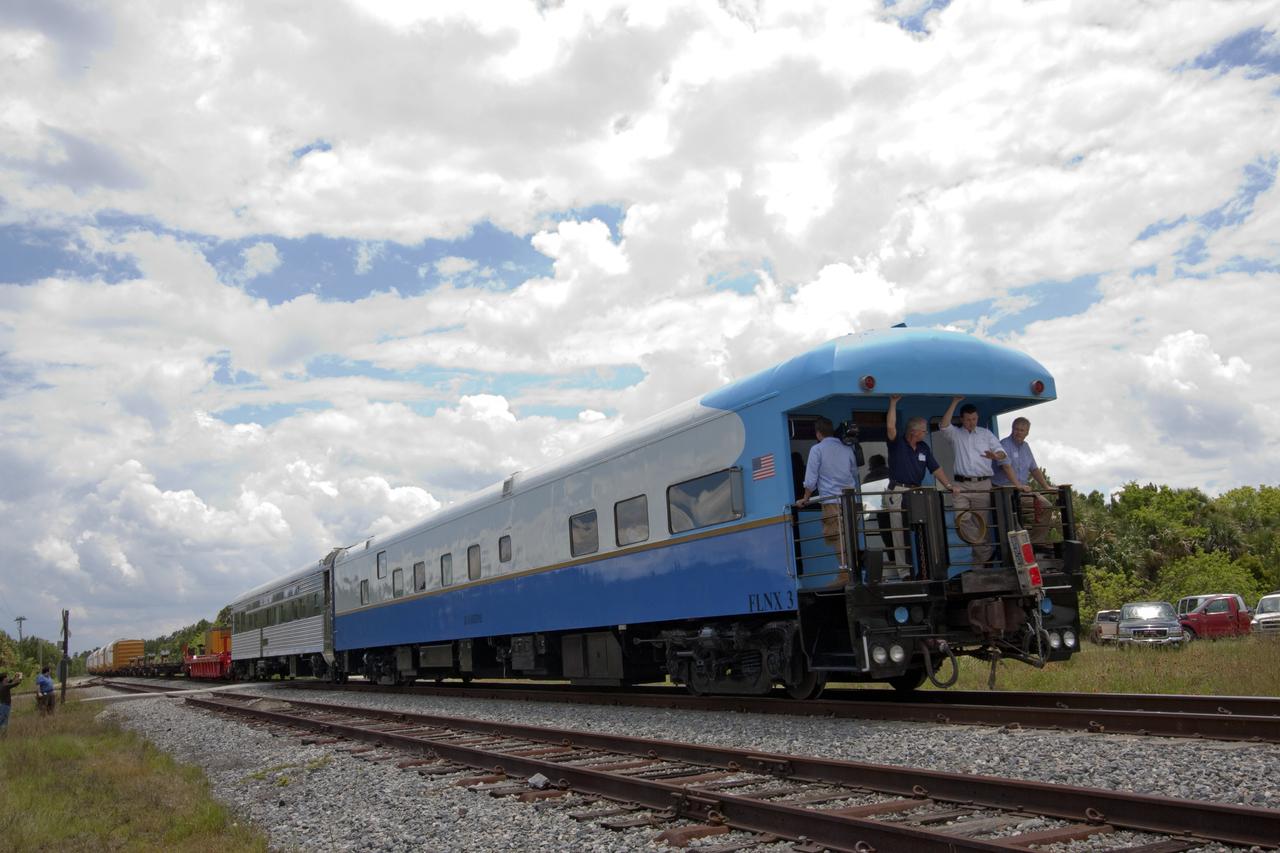
STS-335 LAUNCH ON NEED - SRB DELIVERY AT JJ YARD
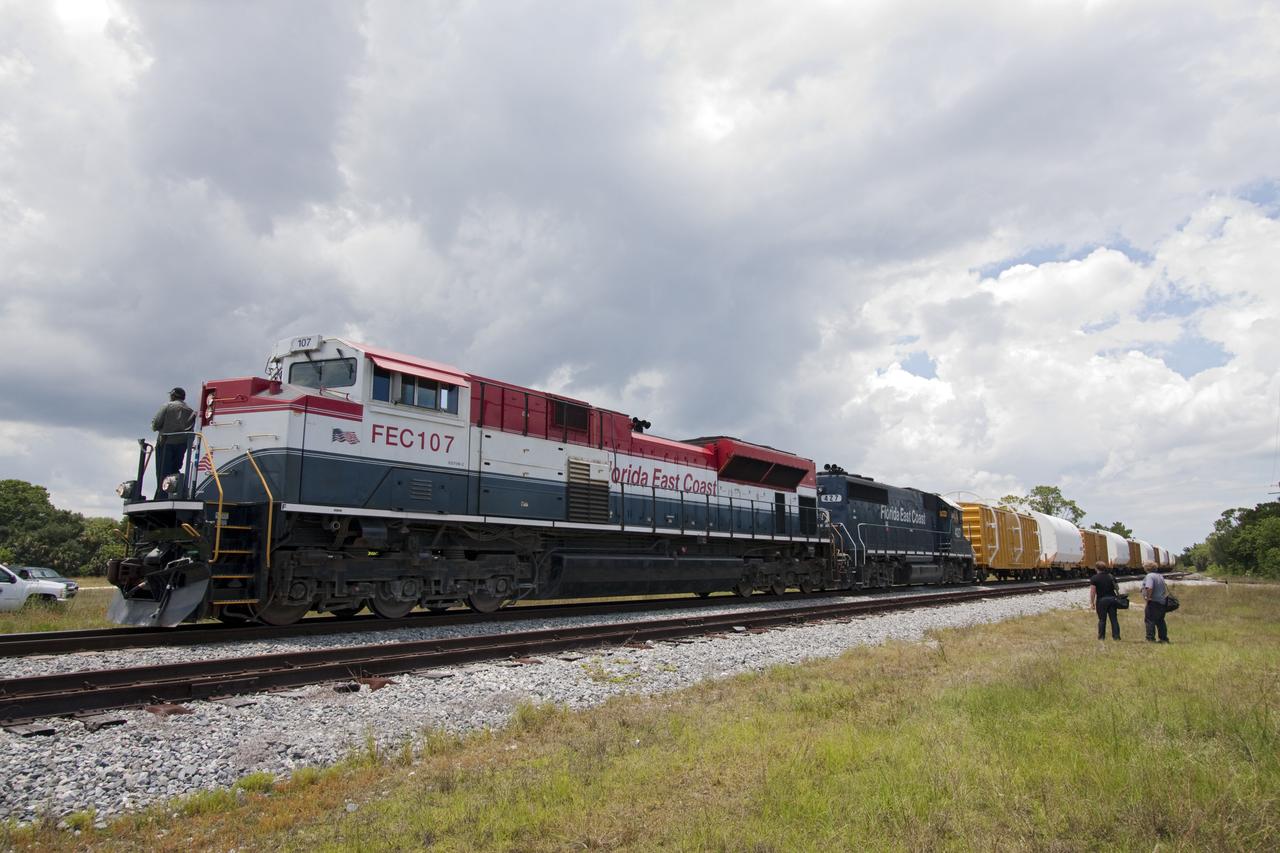
STS-335 LAUNCH ON NEED - SRB DELIVERY AT JJ YARD
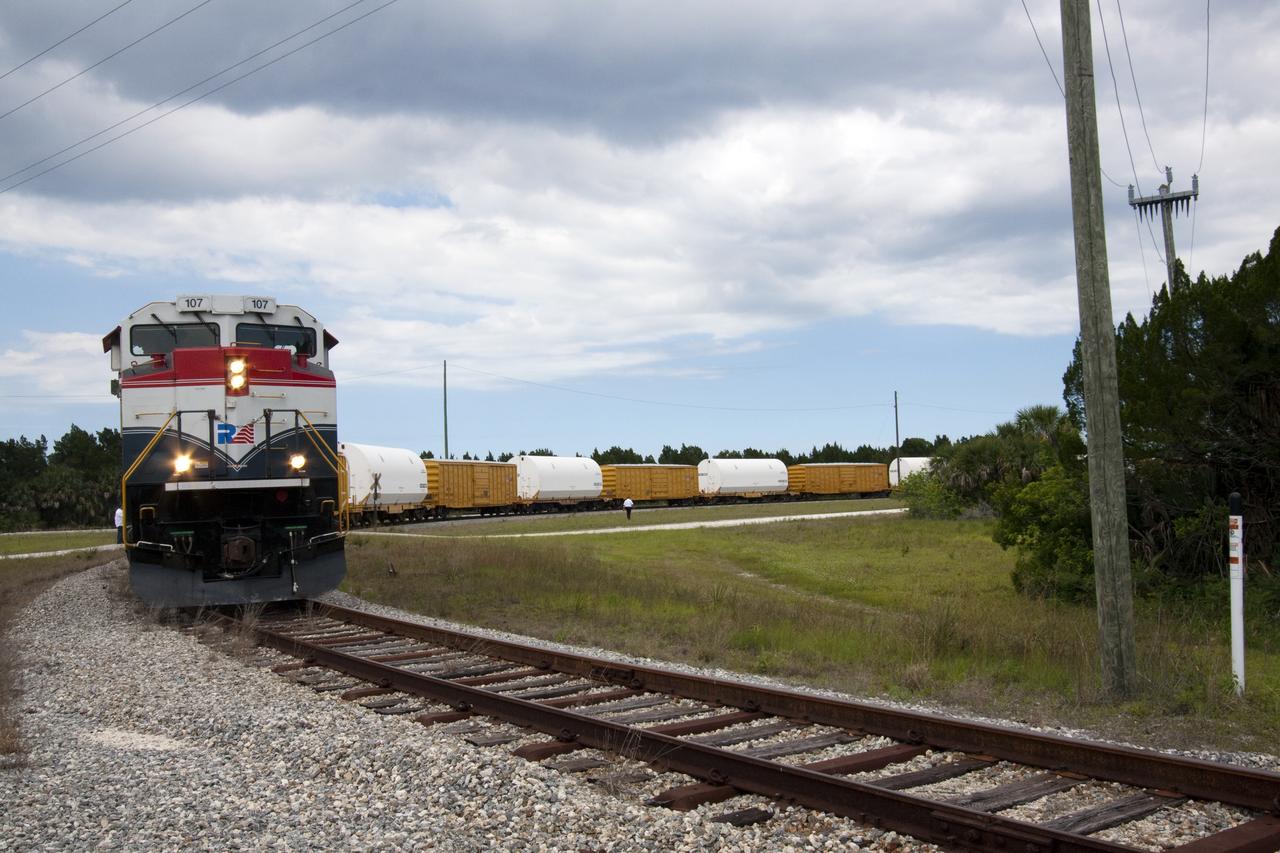
STS-335 LAUNCH ON NEED - SRB DELIVERY AT JJ YARD
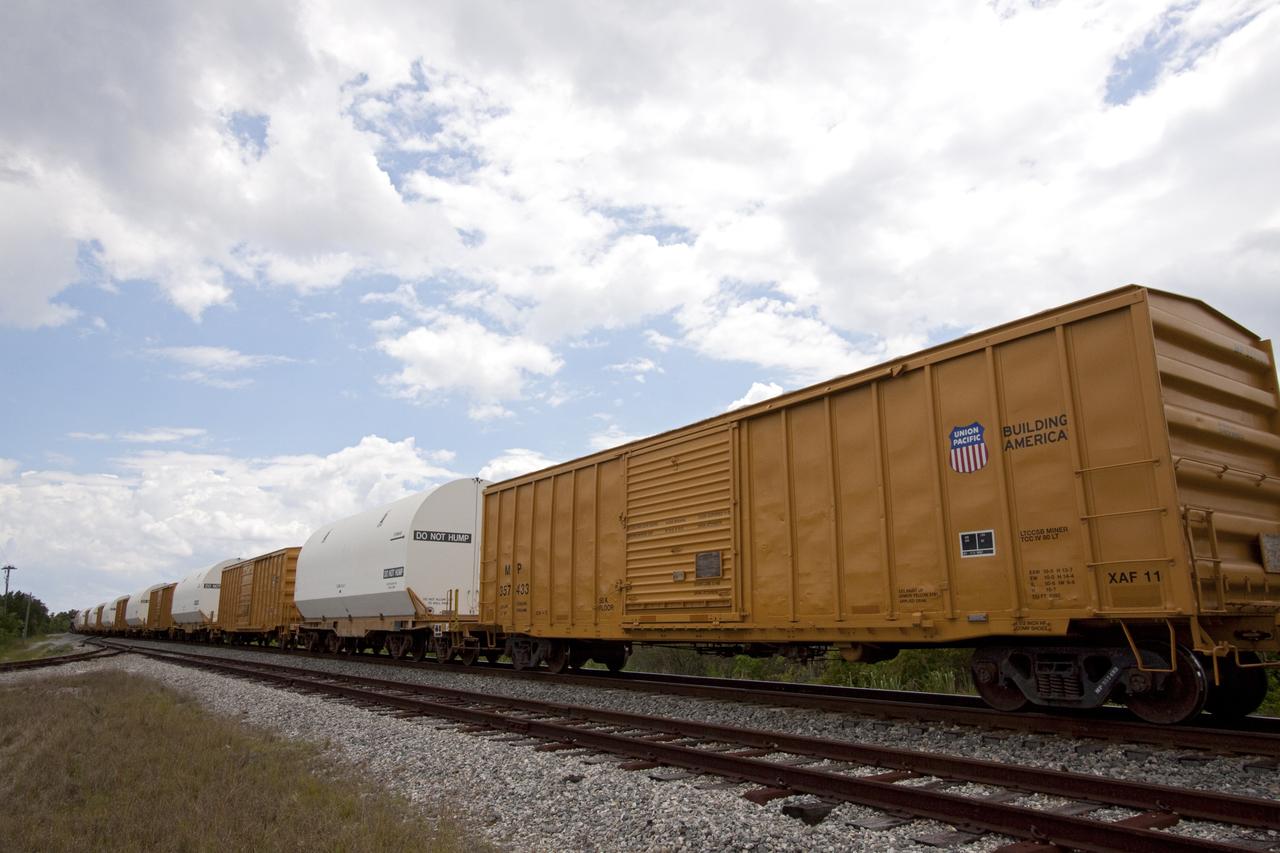
STS-335 LAUNCH ON NEED - SRB DELIVERY AT JJ YARD
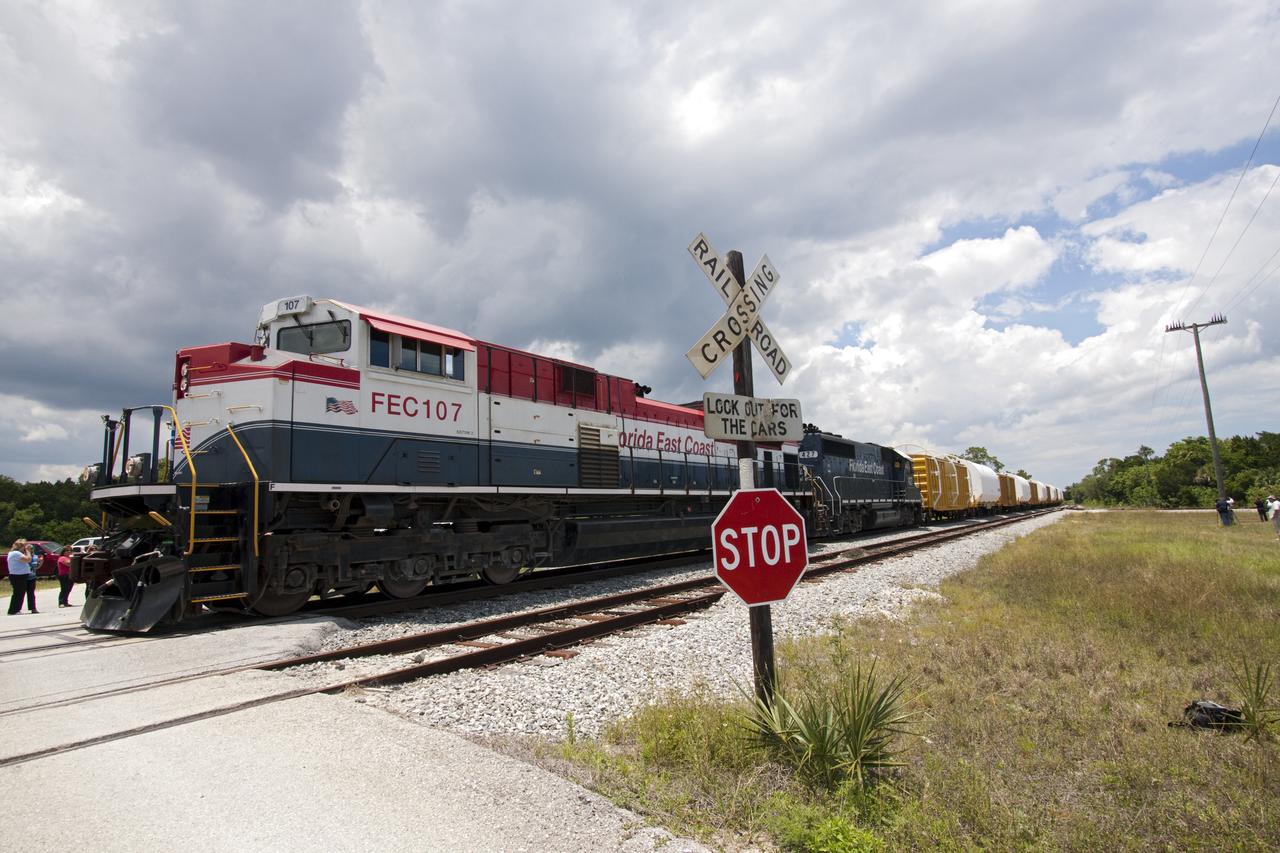
STS-335 LAUNCH ON NEED - SRB DELIVERY AT JJ YARD
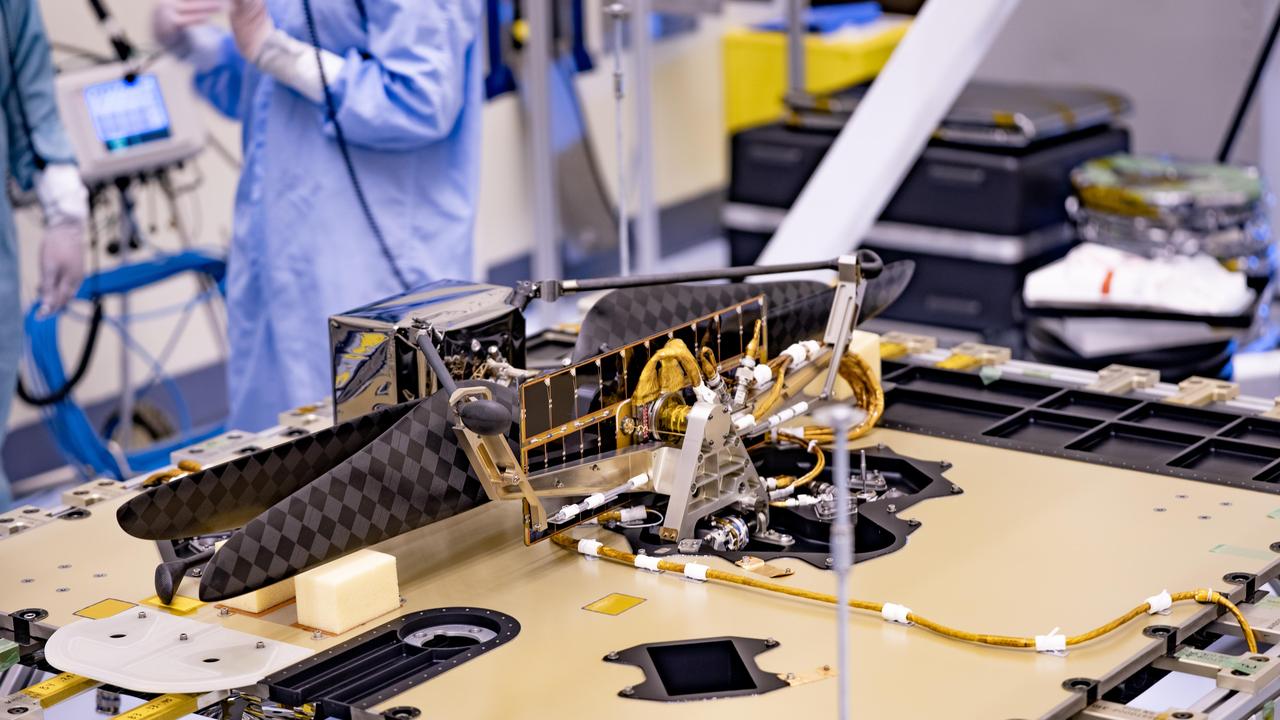
The Mars Helicopter and its Mars Helicopter Delivery System were attached to the Perseverance Mars rover at Kennedy Space Center on April 6, 2020. A shell (not pictured) will protect the helicopter during the rover's descent to the surface of Jezero Crater on Feb. 18, 2021. The helicopter will be deployed about two-and-a-half months after Perseverance lands. https://photojournal.jpl.nasa.gov/catalog/PIA23823
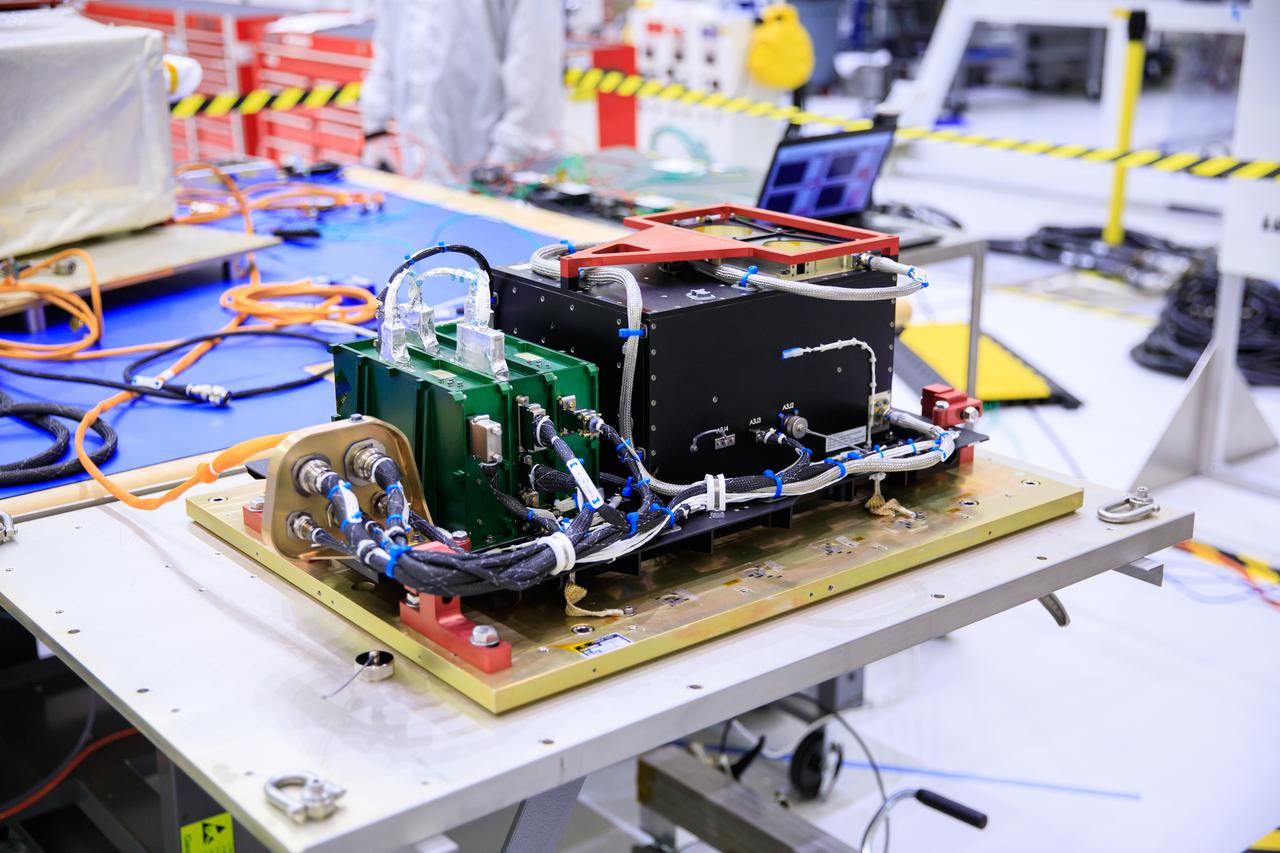
A close-up view of one of the parts of the Optical Communications System for the Artemis II mission inside the Neil Armstrong Operations and Checkout Building high bay on June 2, 2023. Optical communications is the latest space communications technology that is able to provide data rates as much as a hundred times higher than current systems. This will allow astronauts to send and receive ultra-high-definition video from the surface of the Moon or other planets such as Mars. Artemis II will be the first Artemis mission flying crew aboard Orion.
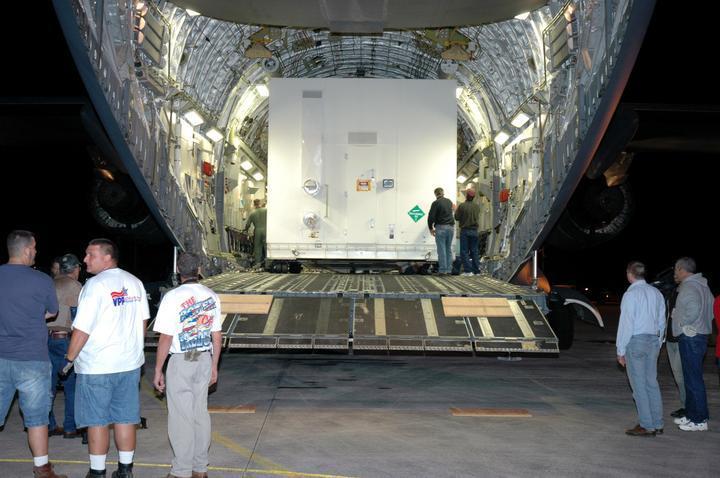
NASA Mars Reconnaissance Orbiter was delivered in two large containers from Lockheed Martin to Cape Canaveral on an Air Force C-17 cargo plane.
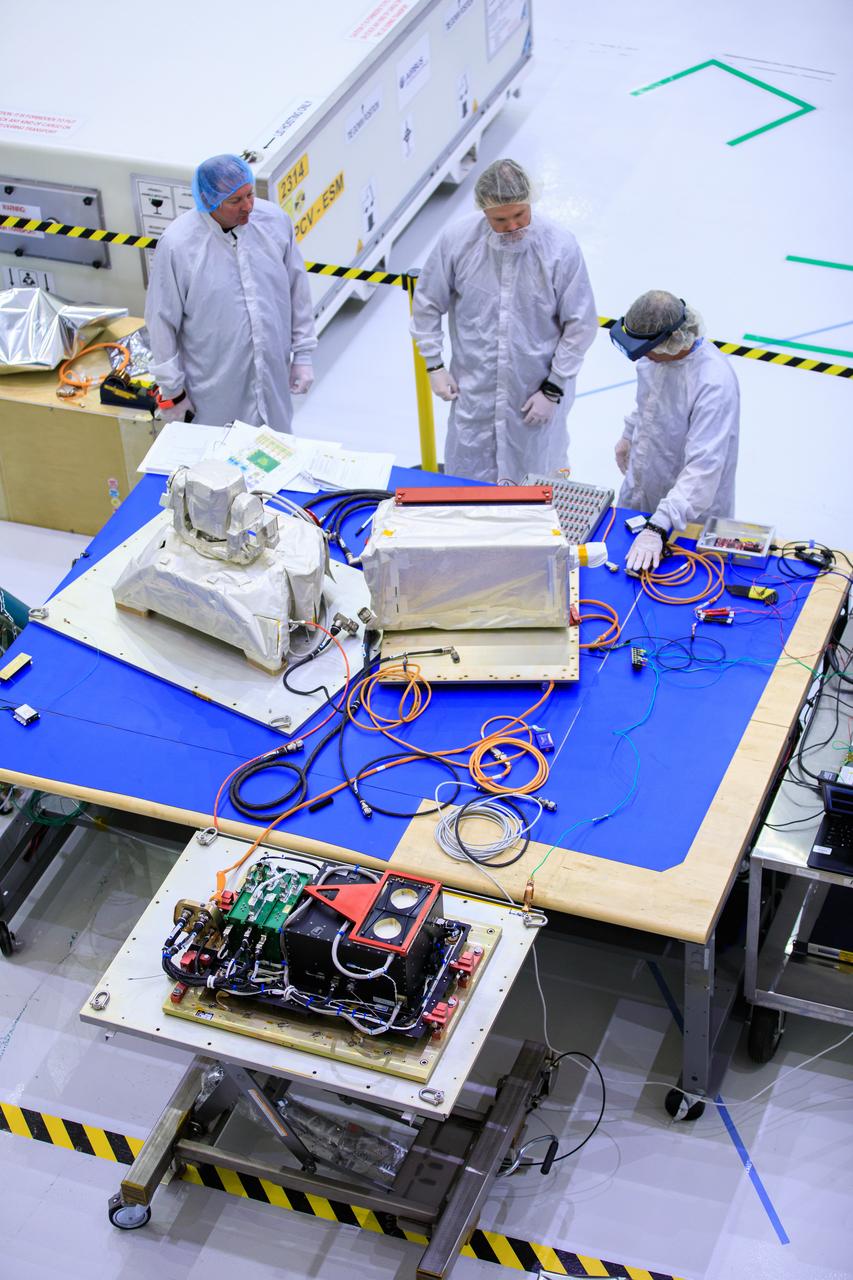
Inside the high bay of the Neil Armstrong Operations and Checkout Building at NASA’s Kennedy Space Center in Florida, technicians assemble on the Optical Communications System for the Artemis II mission on June 2, 2023. Optical communications is the latest space communications technology that is able to provide data rates as much as a hundred times higher than current systems. This will allow astronauts to send and receive ultra-high-definition video from the surface of the Moon or other planets such as Mars. Artemis II will be the first Artemis mission flying crew aboard Orion.
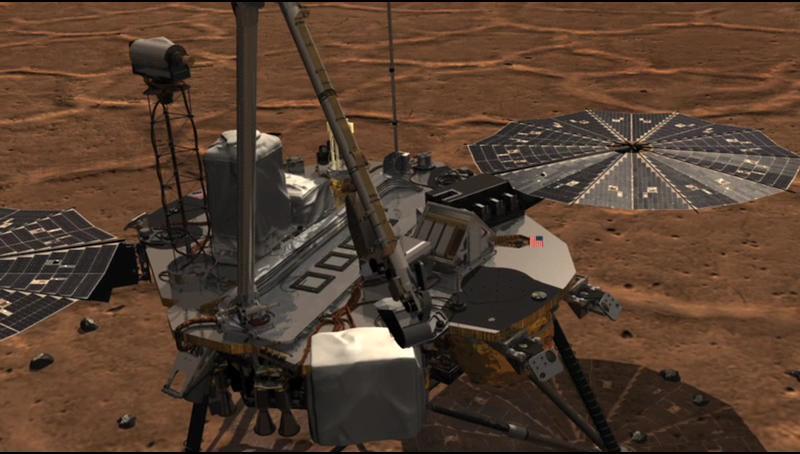
This image shows NASA Phoenix Lander Robotic Arm scoop delivering a sample to the Thermal and Evolved-Gas Analyzer TEGA and how samples are analyzed within the instrument.
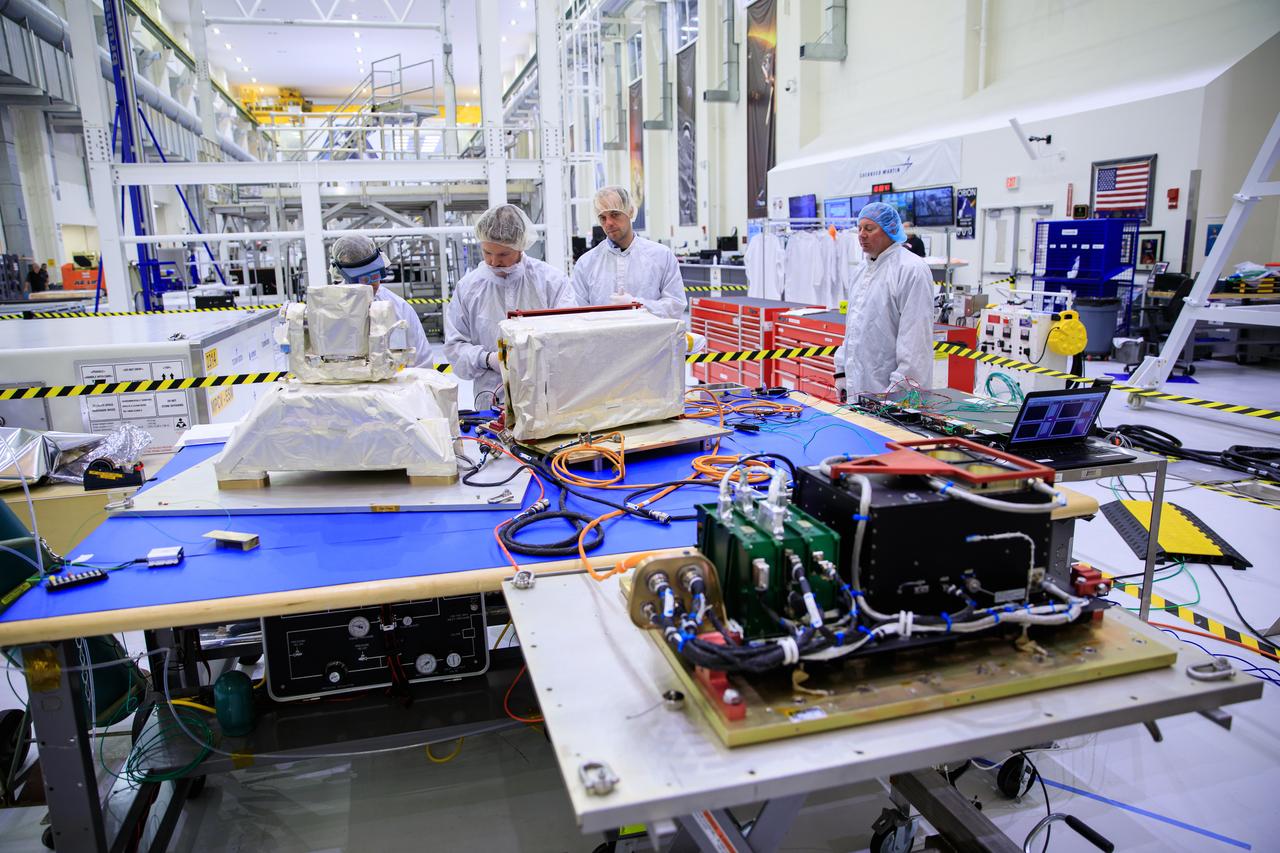
Inside the high bay of the Neil Armstrong Operations and Checkout Building at NASA’s Kennedy Space Center in Florida, technicians assemble on the Optical Communications System for the Artemis II mission on June 2, 2023. Optical communications is the latest space communications technology that is able to provide data rates as much as a hundred times higher than current systems. This will allow astronauts to send and receive ultra-high-definition video from the surface of the Moon or other planets such as Mars. Artemis II will be the first Artemis mission flying crew aboard Orion.

Inside the high bay of the Neil Armstrong Operations and Checkout Building at NASA’s Kennedy Space Center in Florida, technicians assemble on the Optical Communications System for the Artemis II mission on June 2, 2023. Optical communications is the latest space communications technology that is able to provide data rates as much as a hundred times higher than current systems. This will allow astronauts to send and receive ultra-high-definition video from the surface of the Moon or other planets such as Mars. Artemis II will be the first Artemis mission flying crew aboard Orion.
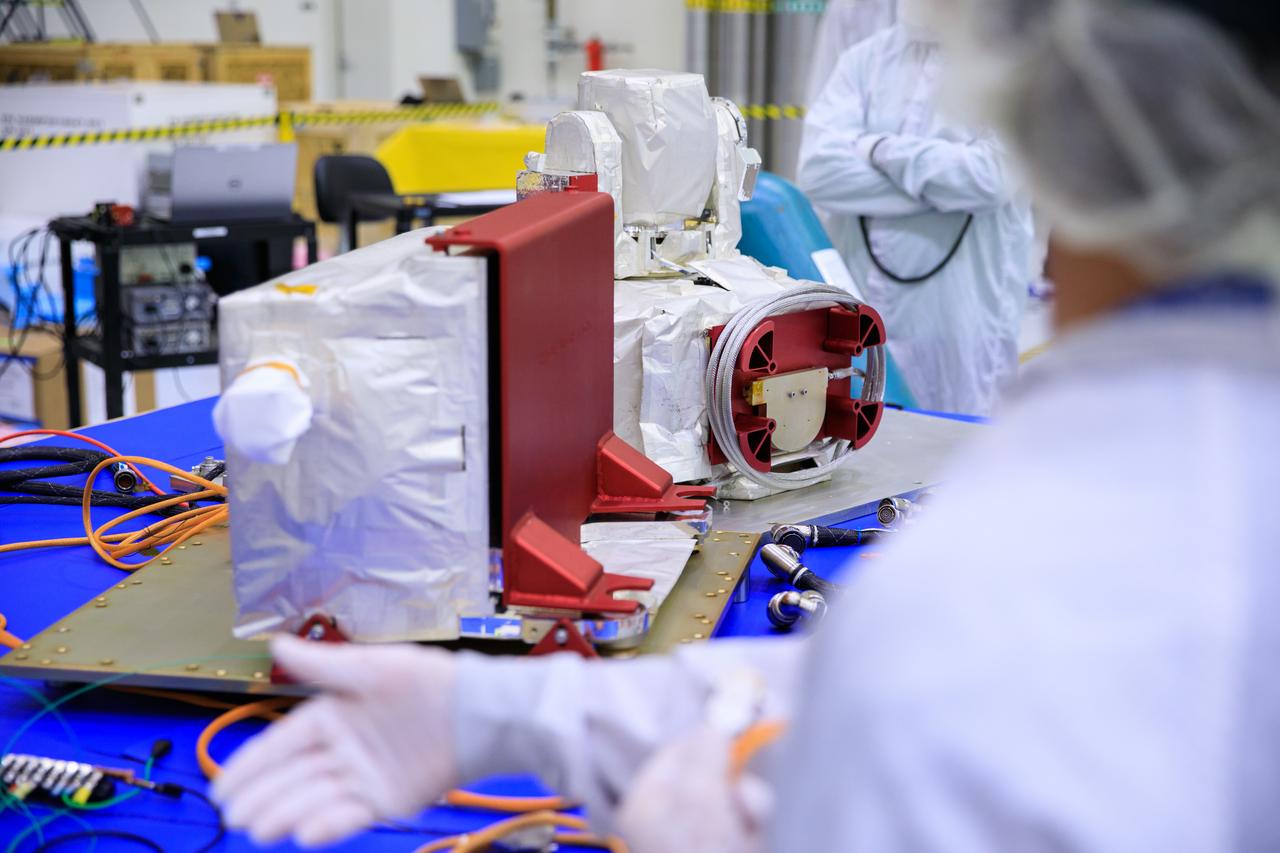
Inside the high bay of the Neil Armstrong Operations and Checkout Building at NASA’s Kennedy Space Center in Florida, technicians assemble on the Optical Communications System for the Artemis II mission on June 2, 2023. Optical communications is the latest space communications technology that is able to provide data rates as much as a hundred times higher than current systems. This will allow astronauts to send and receive ultra-high-definition video from the surface of the Moon or other planets such as Mars. Artemis II will be the first Artemis mission flying crew aboard Orion.

Inside the high bay of the Neil Armstrong Operations and Checkout Building at NASA’s Kennedy Space Center in Florida, technicians assemble on the Optical Communications System for the Artemis II mission on June 2, 2023. Optical communications is the latest space communications technology that is able to provide data rates as much as a hundred times higher than current systems. This will allow astronauts to send and receive ultra-high-definition video from the surface of the Moon or other planets such as Mars. Artemis II will be the first Artemis mission flying crew aboard Orion.

This frame from an animation shows NASA Phoenix Lander Robotic Arm scoop delivering a sample to the Thermal and Evolved-Gas Analyzer TEGA and how samples are analyzed within the instrument.
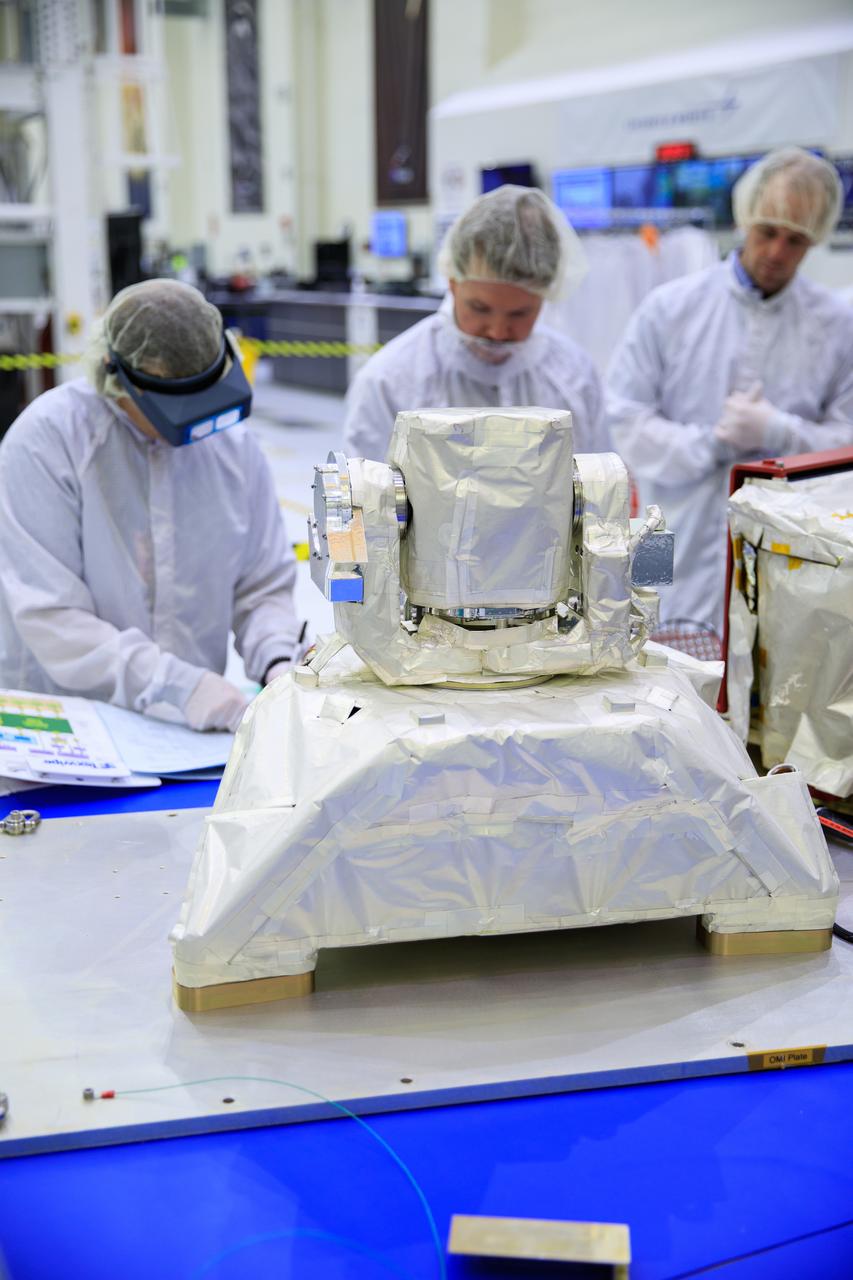
Inside the high bay of the Neil Armstrong Operations and Checkout Building at NASA’s Kennedy Space Center in Florida, technicians work on the Optical Communications System for the Artemis II mission on June 2, 2023. Optical communications is the latest space communications technology that is able to provide data rates as much as a hundred times higher than current systems. This will allow astronauts to send and receive ultra-high-definition video from the surface of the Moon or other planets such as Mars. Artemis II will be the first Artemis mission flying crew aboard Orion.
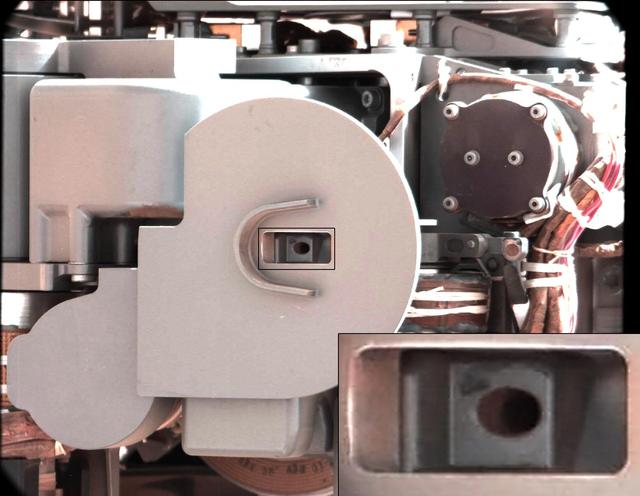
This image from NASA Curiosity rover just after discarding a soil sample as part of its first decontamination exercise. A small amount of remnant material is visible inside the delivery tube, which is magnified in the blow-up at lower right.

Advanced Manufacturing, Inc., Low Impact Docking System (LIDS) Equipment Delivery and Installation by Crane

Advanced Manufacturing, Inc., Low Impact Docking System (LIDS) Equipment Delivery and Installation by Crane
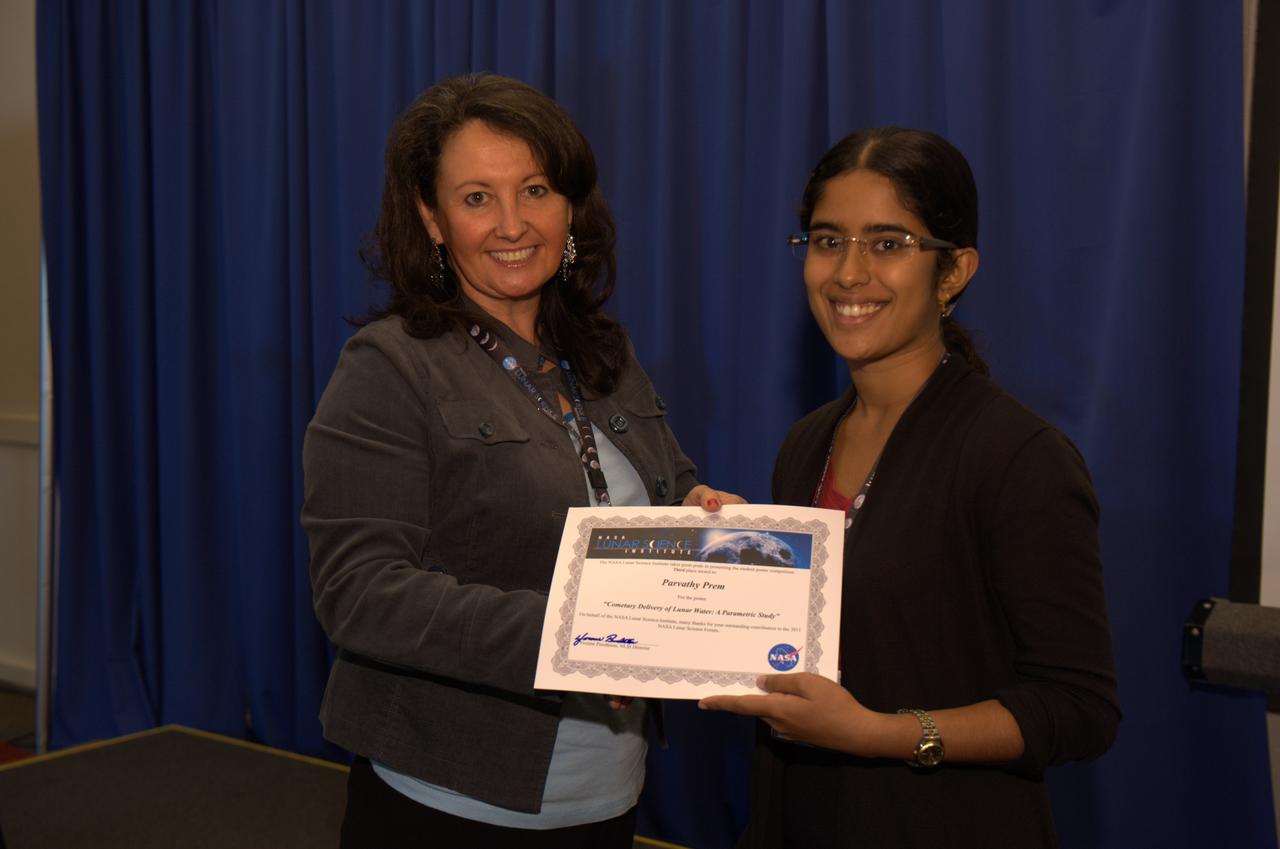
Lunar Science Forum Student Poster competition Third Place award to Parvathy Prem for the poster 'Cometary Delivery of Lunar Water: A Parametric Study'
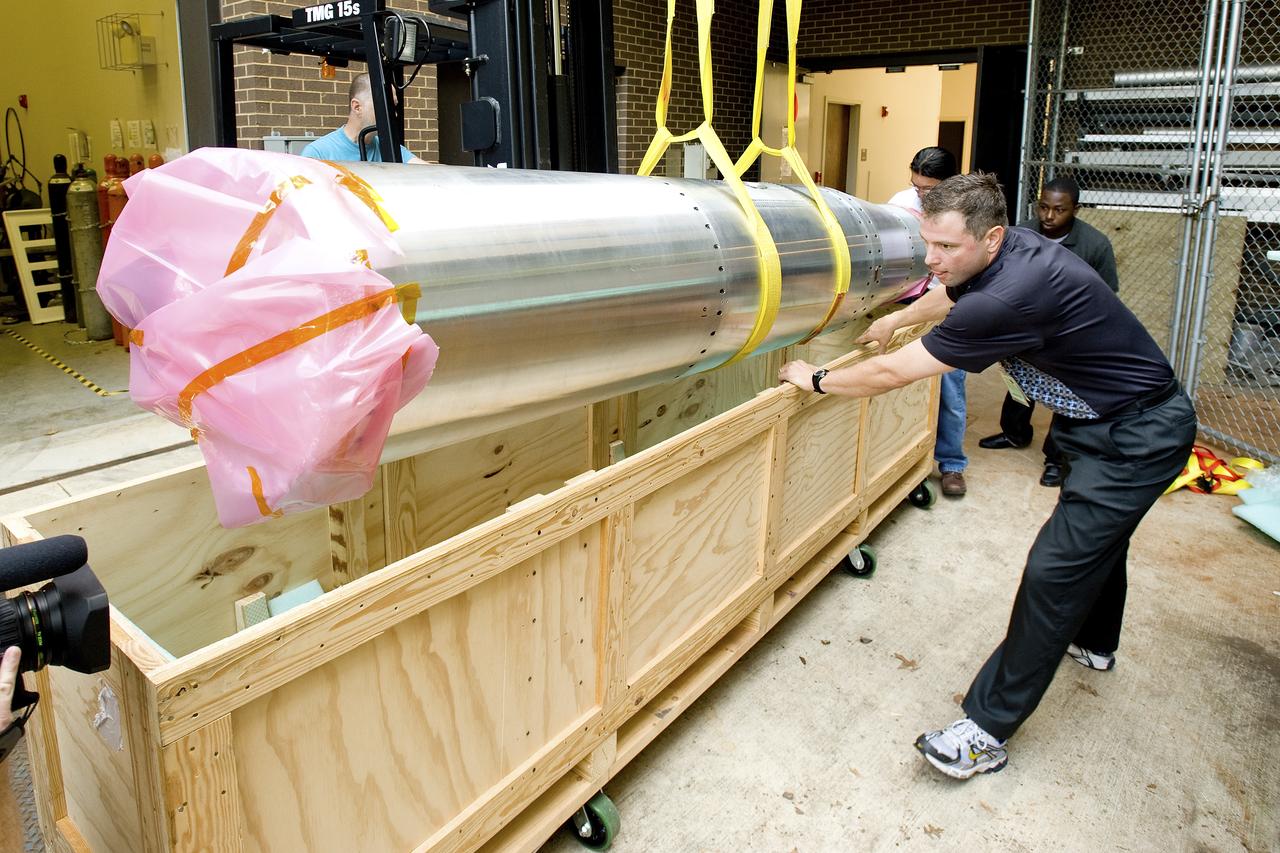
DR. JONATHAN CIRTAIN WATCHES AS SUMI IS LOADED INTO ITS SHIPPING CRATE FOR DELIVERY TO WHITE SAND MISSILE RANGE. SUMI IS TARGETED FOR LAUNCH JUNE 8, 2010
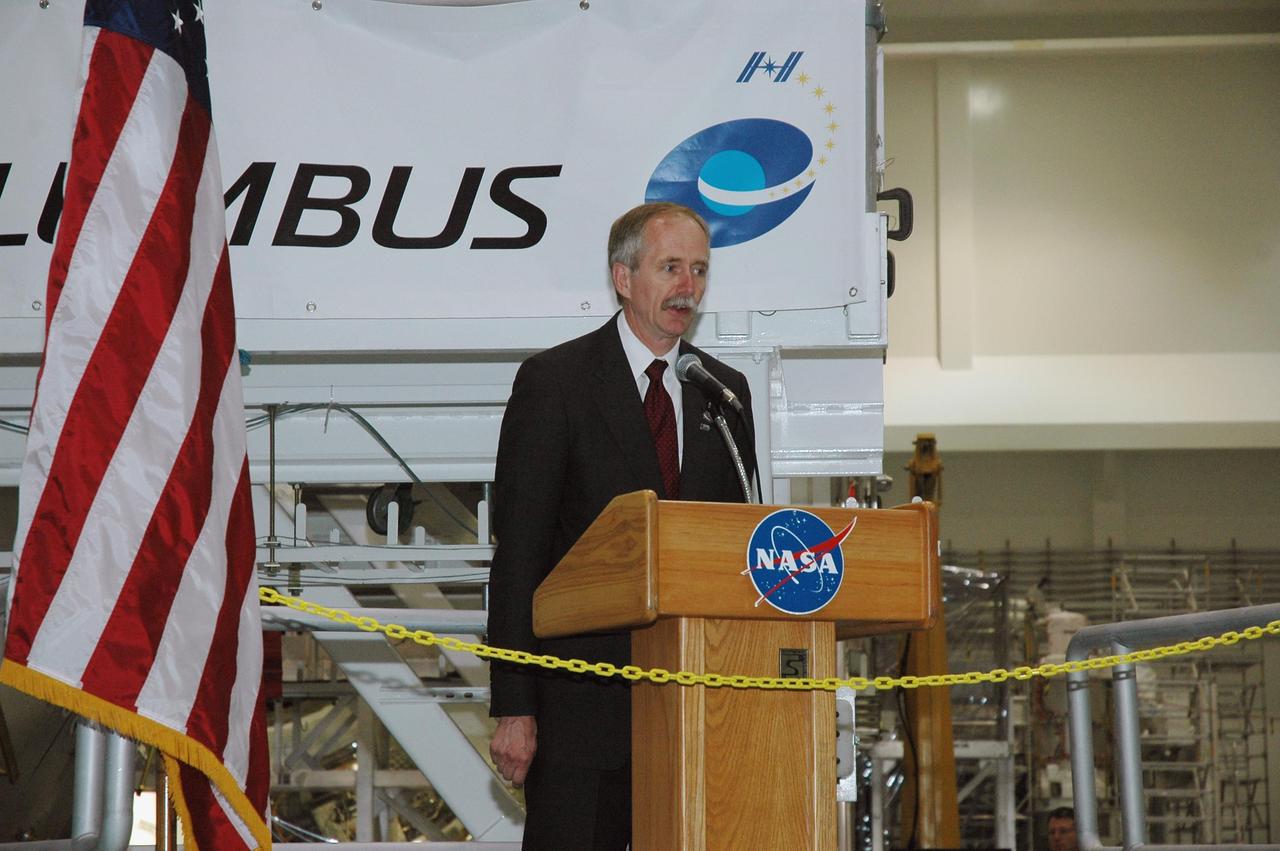
KENNEDY SPACE CENTER, FLA. - William Gerstenmaier, NASA associate administrator for Space Operations, welcomes the delivery of the European Space Agency's Columbus module at a ceremony in the Space Station Processing Facility. Columbus is the European Space Agency's research laboratory for the International Space Station. The module will be prepared in the SSPF for delivery to the space station on a future space shuttle mission. Columbus will expand the research facilities of the station and provide researchers with the ability to conduct numerous experiments in the life, physical and materials sciences. Photo credit: NASA/Amanda Diller
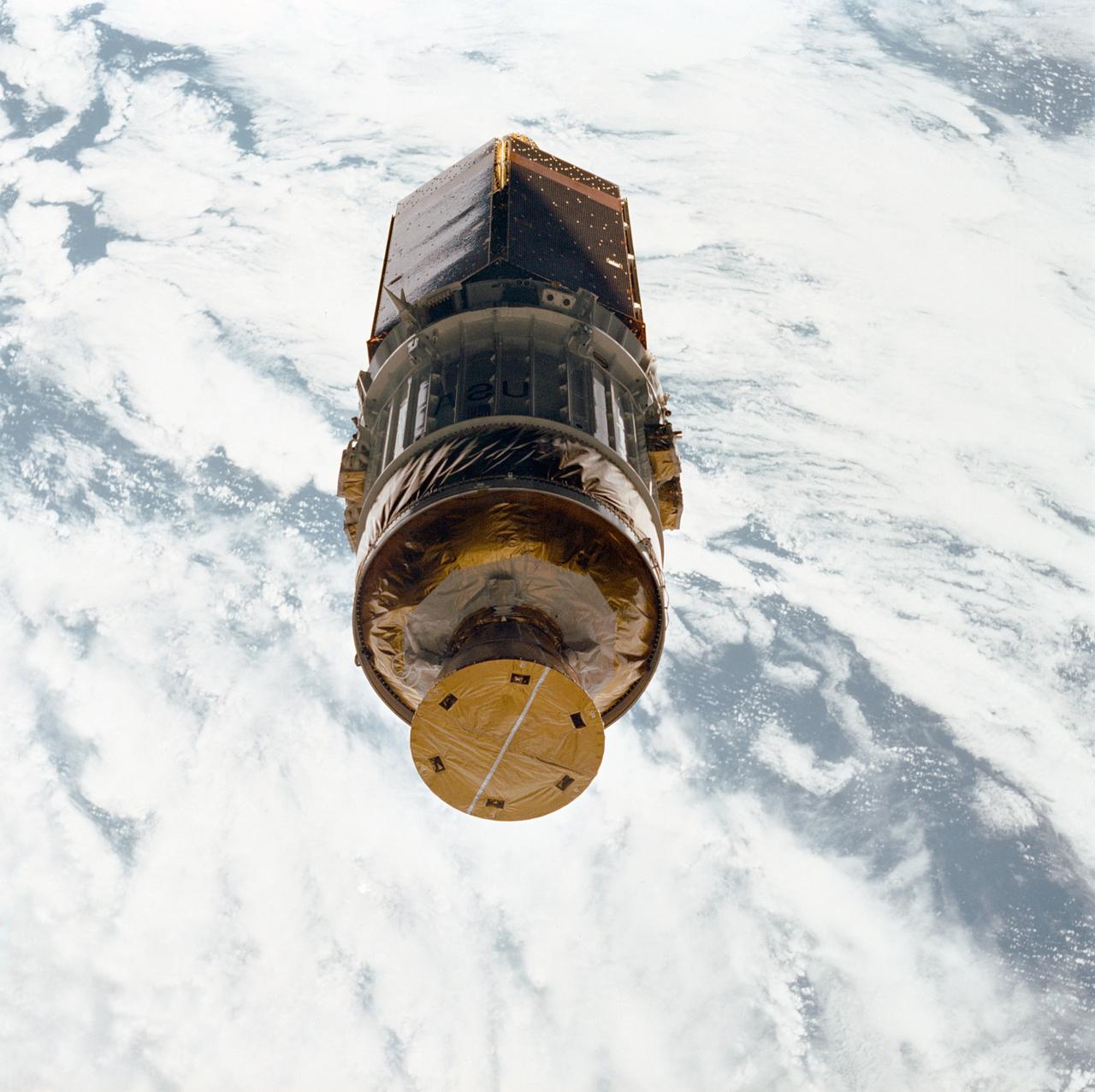
STS026-31-071 (3 Oct 1988) --- After deployment from Discovery, Orbiter Vehicle (OV) 103, the inertial upper stage (IUS) with the tracking and data relay satellite C (TDRS-C) drifts above the cloud-covered Earth surface. TDRS-C, in stowed configuration (solar array panels visible), is mounted atop the IUS with the interstage and solid rocket motor and nozzle seen in the foreground.
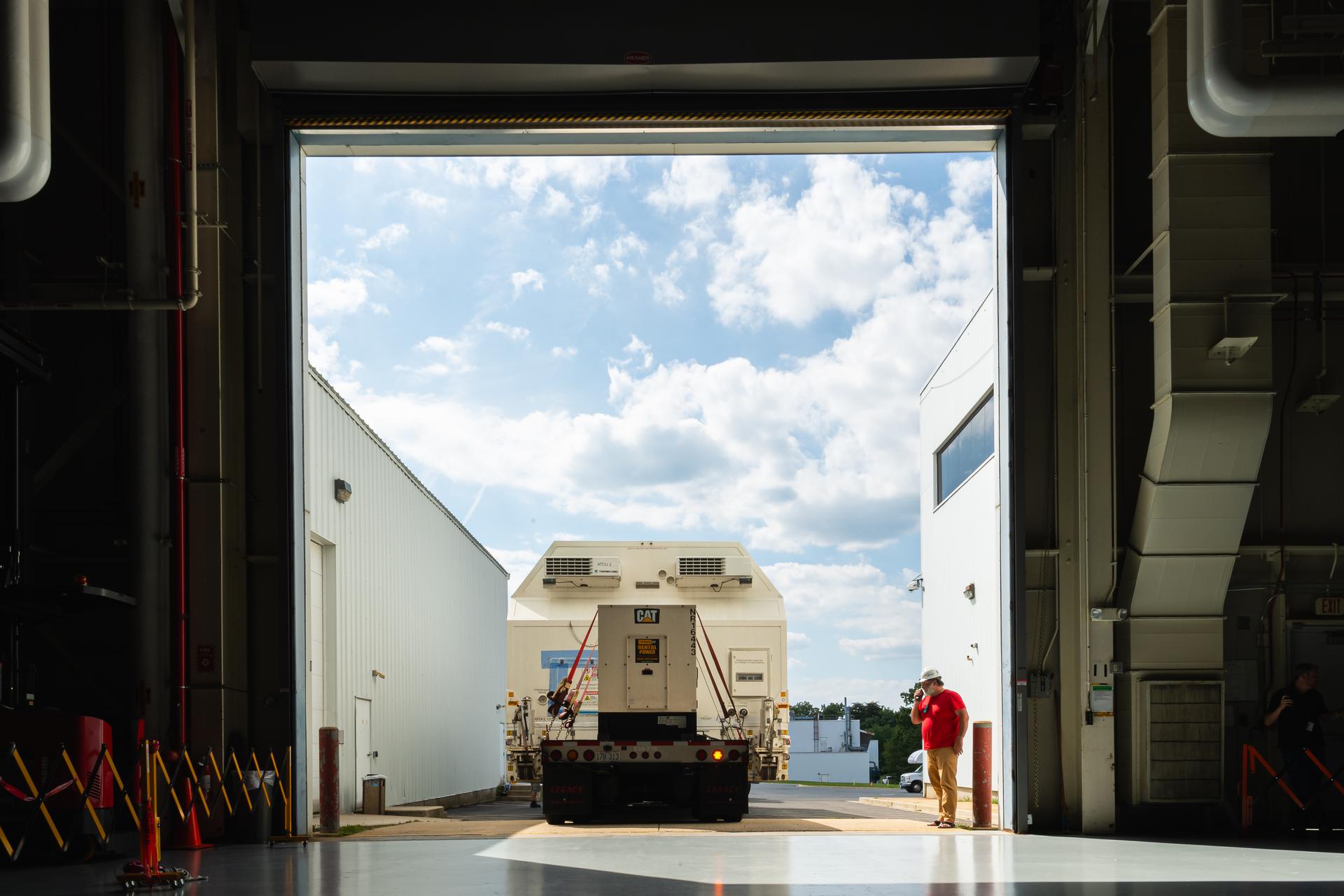
OSAM-1 Spacecraft bus arrives at Goddard Space Flight Center, Greenbelt Md., Sept 20, 2023. The spacecraft was shipped from Palo Alto, Calif. This photo has been reviewed by OSAM1 project management and the Export Control Office and is released for public view. NASA/Mike Guinto
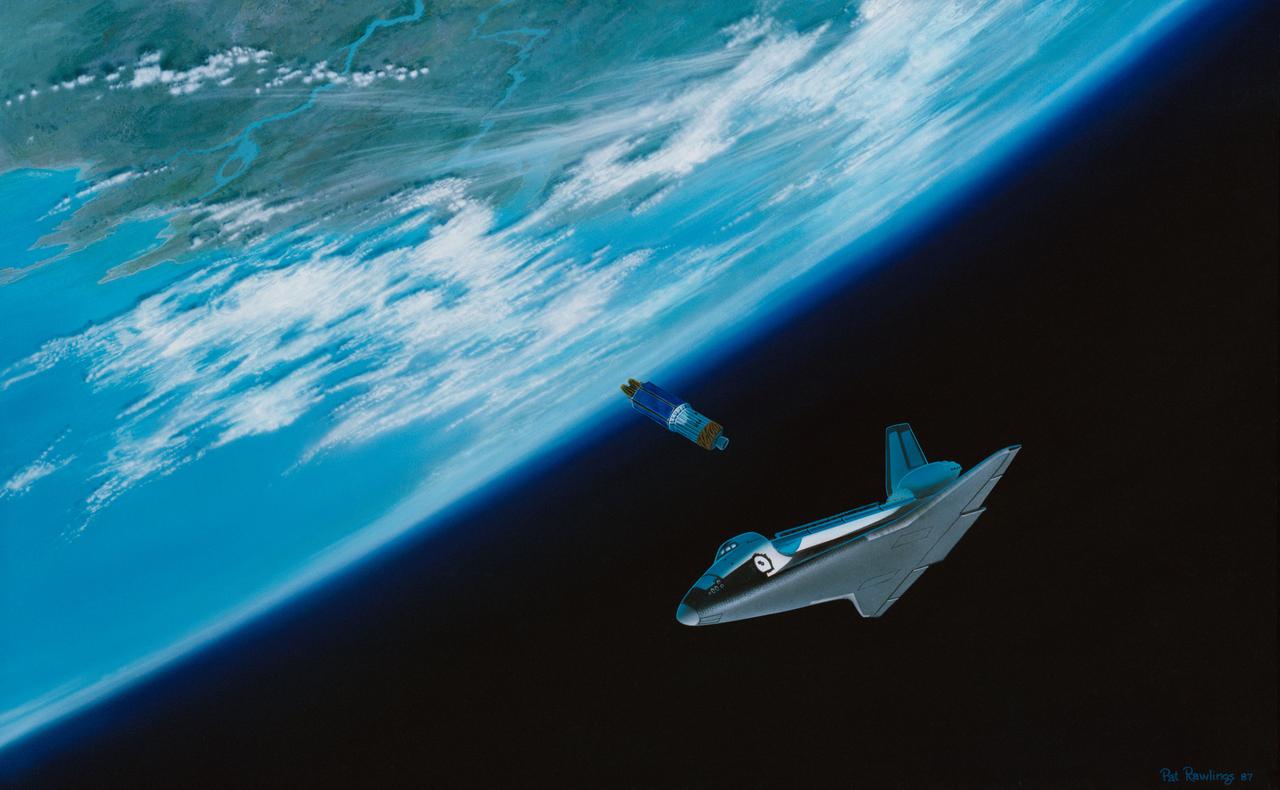
STS-26 Discovery, Orbiter Vehicle (OV) 103, artwork depicts tracking and data relay satellite C (TDRS-C) deployment. OV-103 orbits above Earth in bottom-to-sun attitude, moments after TDRS-C's release into space. TDRS-C is seen just below open payload bay (PLB). Artwork was done by Pat Rawlings of Eagle Engineering.
STS030-71-052 (4 May 1989) --- In the early evening hours of the Space Shuttle Atlantis' first day in space for the four-day mission, the Magellan spacecraft begins its long journey to the planet Venus for an extensive radar mapping mission. The scene was photographed through Atlantis' aft flight deck windows with a handheld 70mm camera.
STS030-71-063 (4 May 1989) --- This scene is one of two released by NASA showing the process of solar array panel deployment on the Magellan spacecraft. Panels are not fully extended in this frame. The spacecraft had earlier been released by the STS-30 crewmembers to begin its long journey to the planet Venus for an extensive radar mapping mission. The frame was photographed through Atlantis? aft flight deck windows with a handheld 70mm camera. The complementary photograph is STS030-71-070.
STS030-71-053 (4 May 1989) --- In the early evening hours of Space Shuttle Atlantis’ first day in space for the four-day STS-30 mission, the Magellan spacecraft is released into space to begin its long journey to the planet Venus for an extensive radar mapping mission. The scene was photographed through Atlantis’ aft flight deck windows with a handheld 70mm camera.
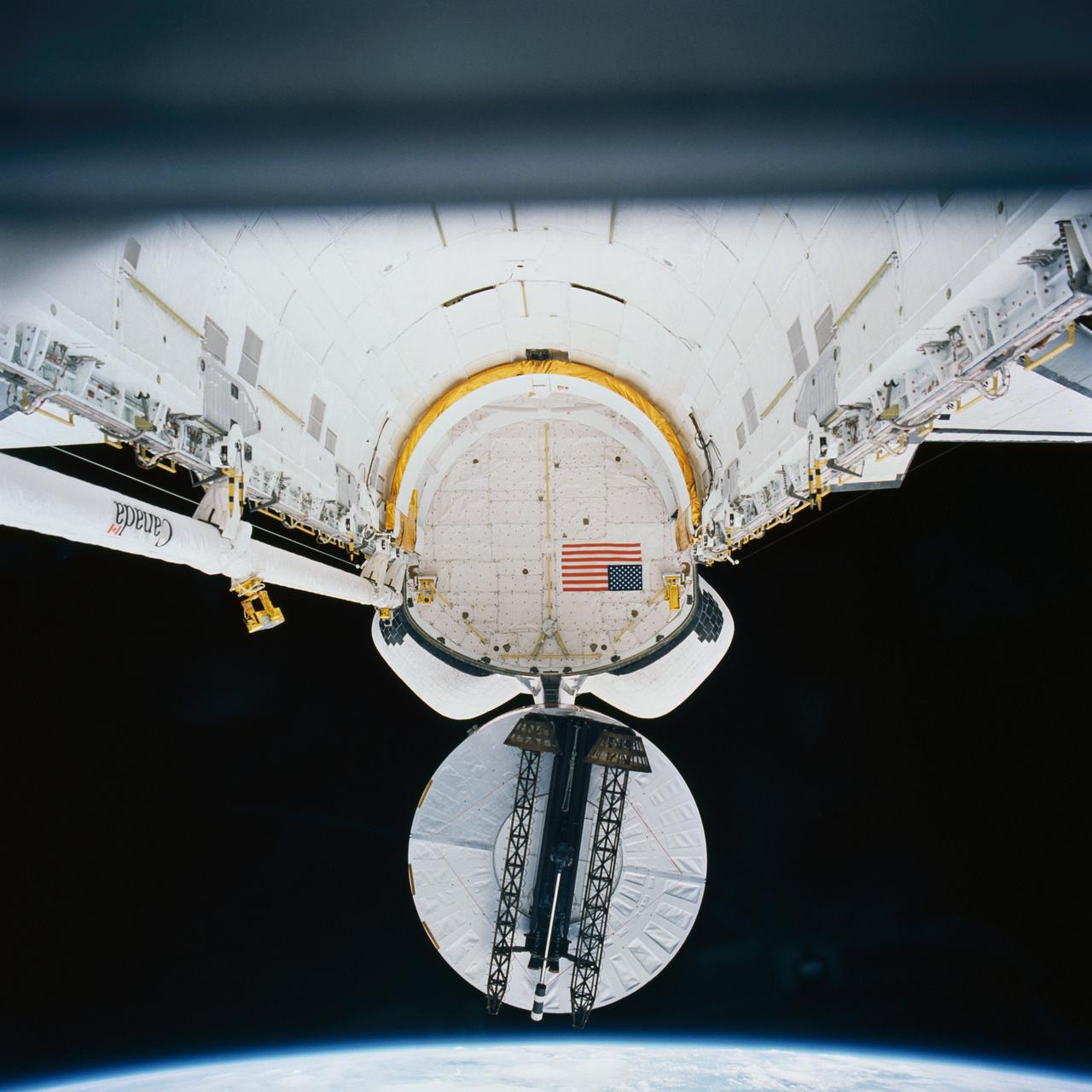
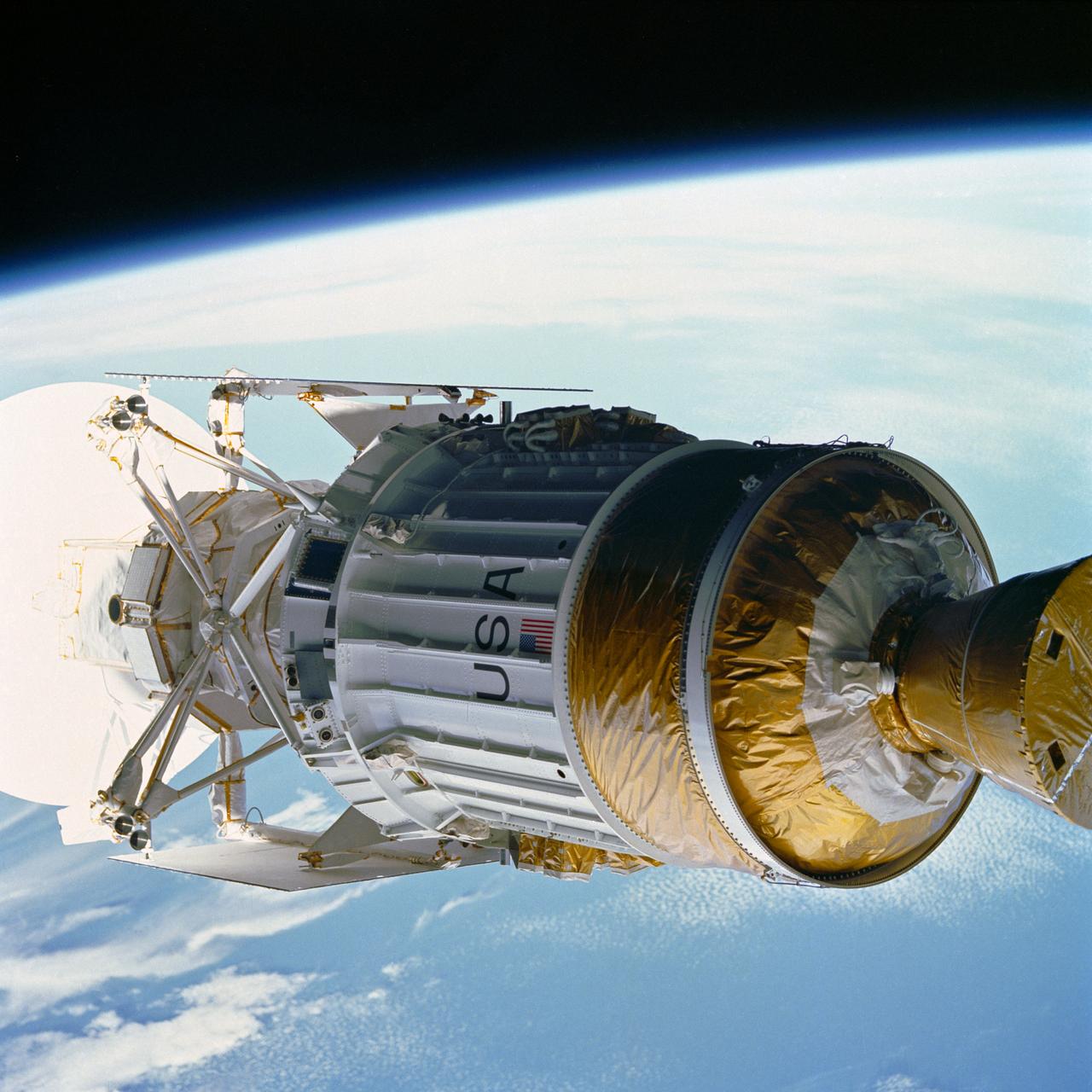
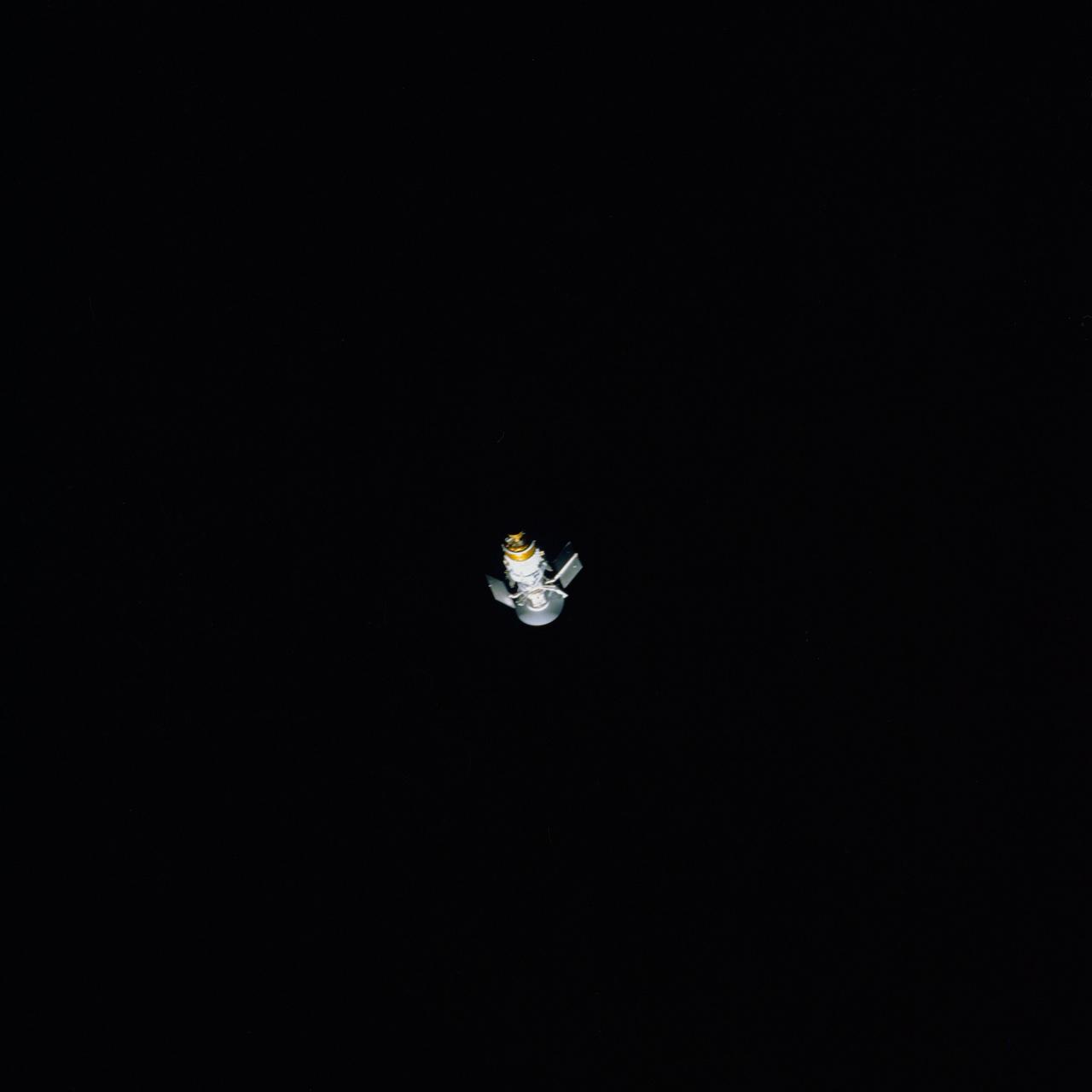
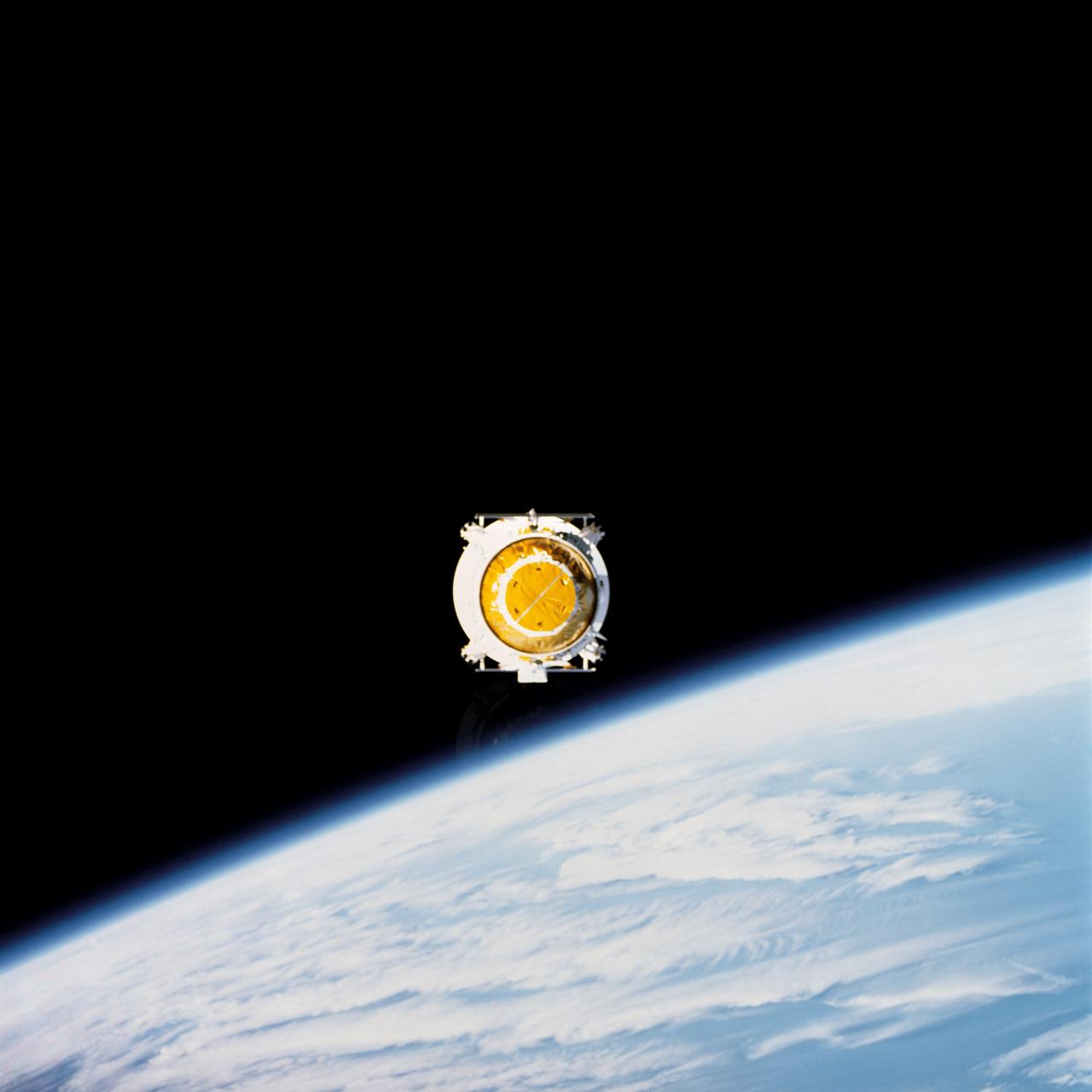
STS032-87-030 (10 Jan 1990) --- The Syncom IV-5 communications satellite leaves the cargo bay of Columbia, as crewmembers aboard the record-setting Space Shuttle successfully complete the first of two major tasks for STS-32. Two days later, the five astronauts successfully captured the Long Duration Exposure Facility (LDEF). The Syncom satellite, also called Leasat, is to be leased to the U.S. Navy by Hughes Aircraft Co. The crew went on to spend 11 days aboard Columbia before a successful landing at Edwards Air Force Base.