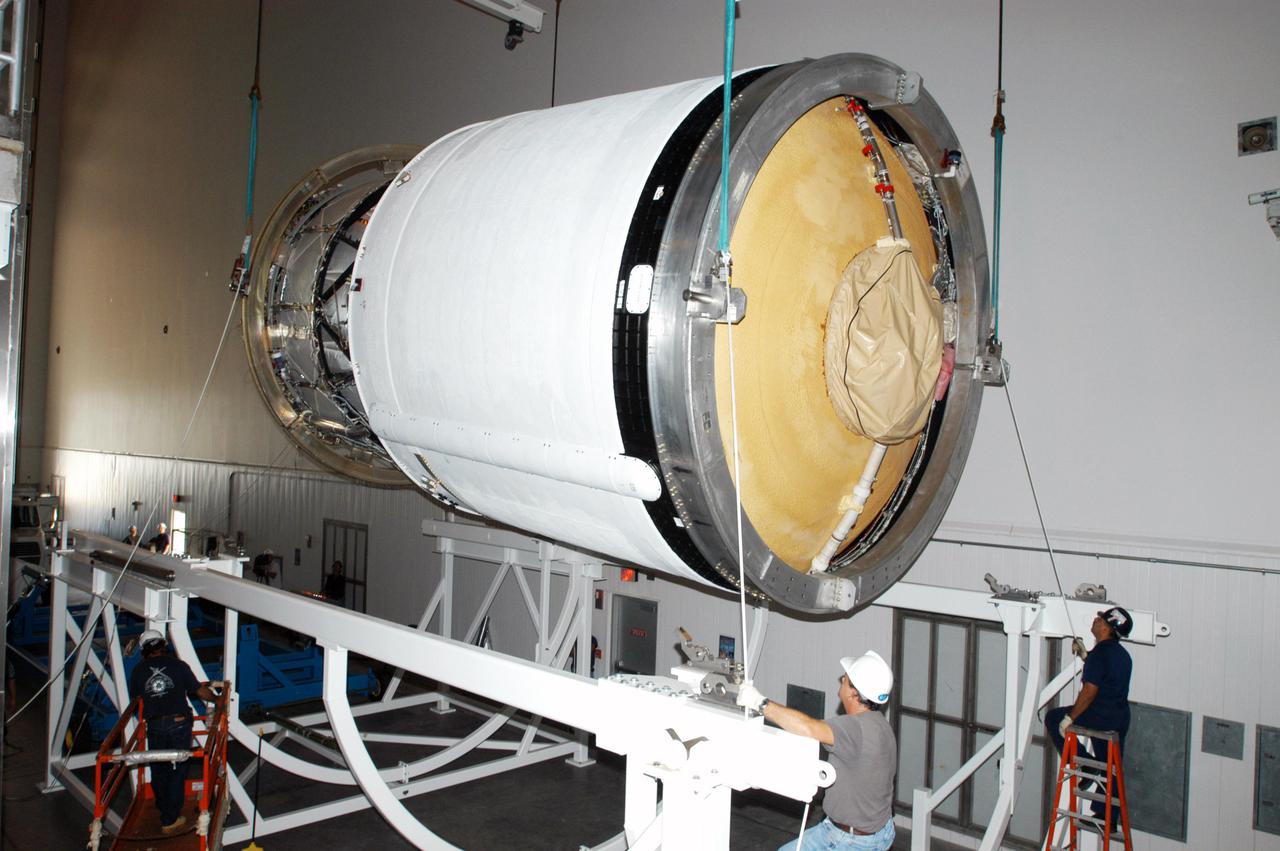
KENNEDY SPACE CENTER, FLA. - In the Boeing Delta Operations Center, workers carefully lower second stage of a Boeing Delta IV launch vehicle, suspended by a crane, onto a work stand. The Delta IV rocket will be used for the 2005 launching of the GOES-N weather satellite for NASA and NOAA (National Oceanic and Atmospheric Administration). The first in a series of three advanced weather satellites including GOES-O and GOES-P, the GOES-N will provide continuous monitoring necessary for intensive data analysis. It will provide a constant vigil for the atmospheric “triggers” of severe weather conditions such as tornadoes, flash floods, hail storms and hurricanes. When these conditions develop, GOES-N will be able to monitor storm development and track their movements.
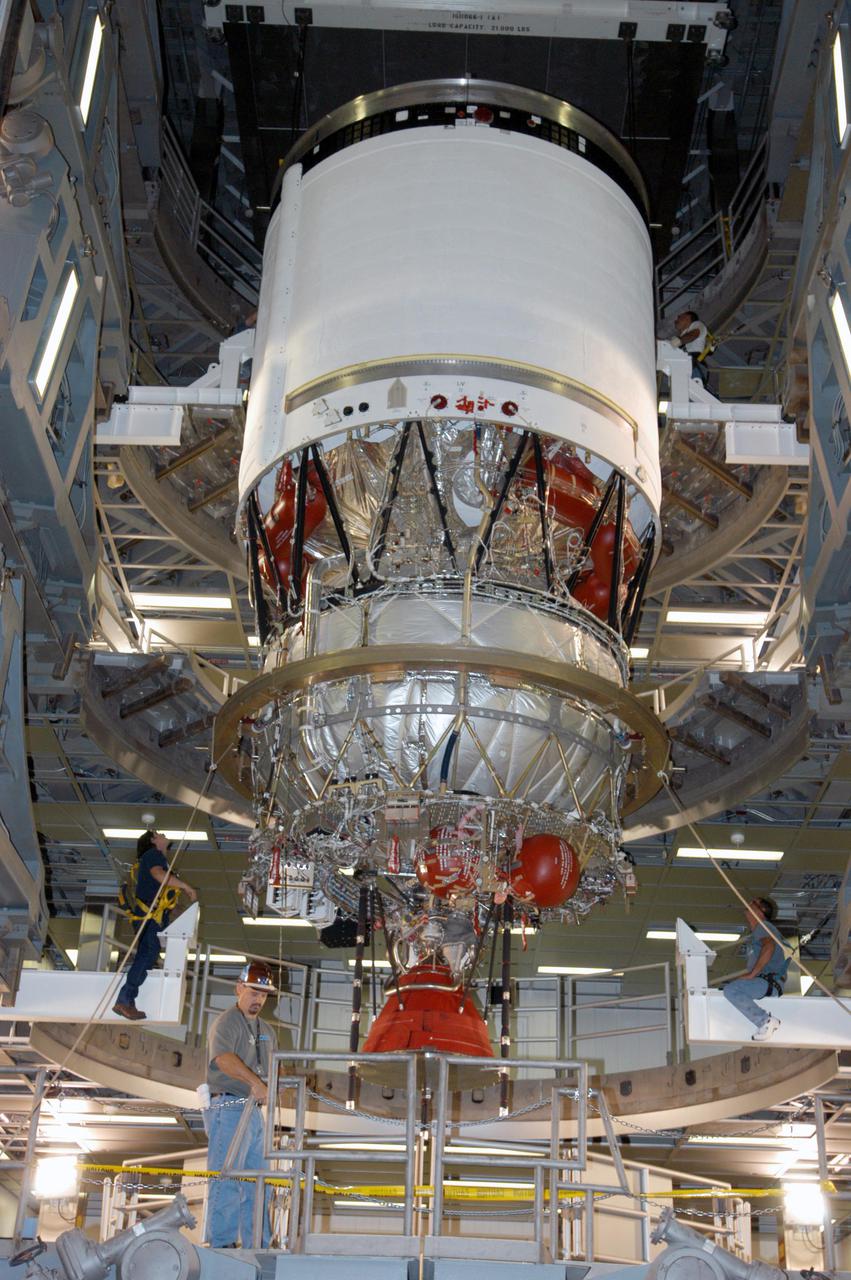
KENNEDY SPACE CENTER, FLA. - At the Boeing Delta Operations Center, the Delta IV second stage is lowered onto a test stand. Nozzles will be installed and a deployment test will follow. The Delta IV rocket will be used for the 2005 launching of the GOES-N weather satellite for NASA and NOAA (National Oceanic and Atmospheric Administration). The first in a series of three advanced weather satellites including GOES-O and GOES-P, the GOES-N will provide continuous monitoring necessary for intensive data analysis. It will provide a constant vigil for the atmospheric “triggers” of severe weather conditions such as tornadoes, flash floods, hail storms and hurricanes. When these conditions develop, GOES-N will be able to monitor storm development and track their movements.
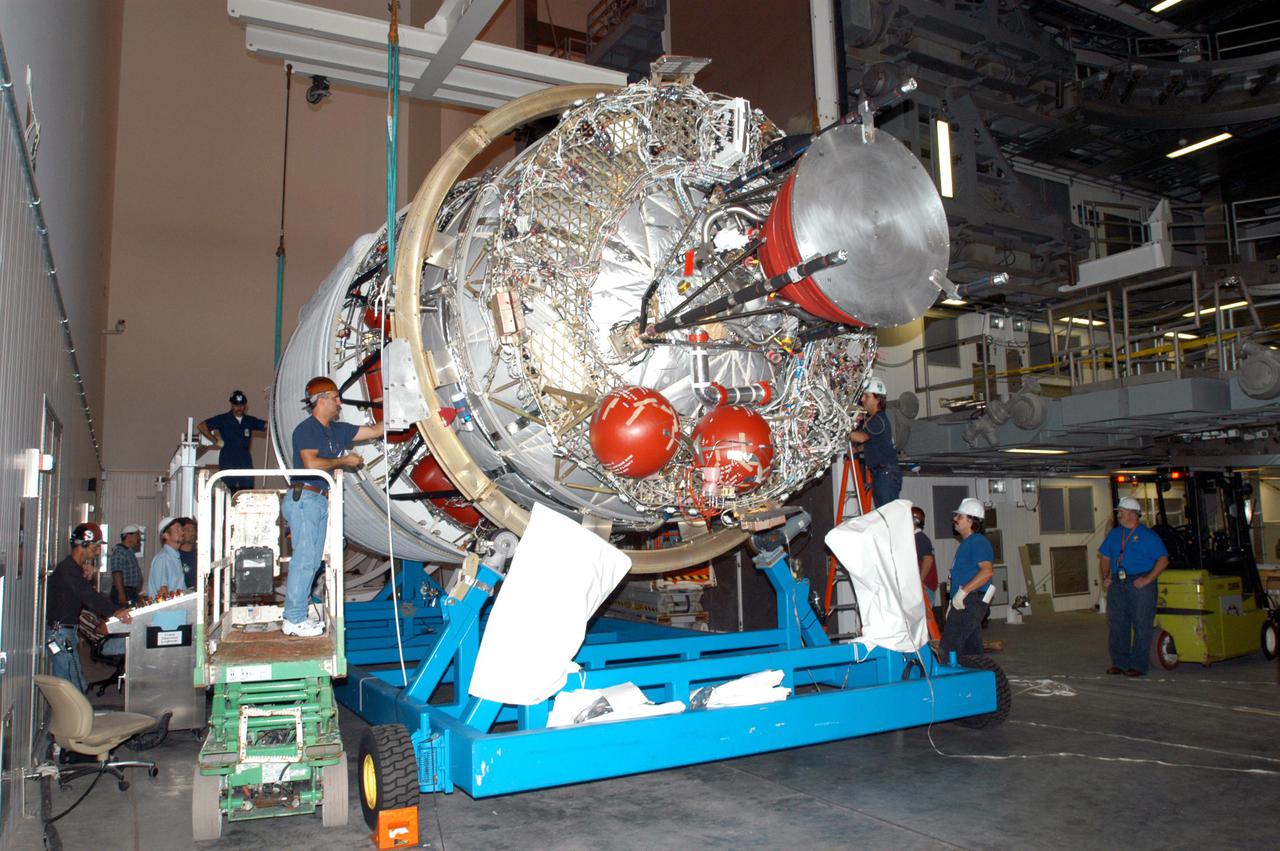
KENNEDY SPACE CENTER, FLA. - At the Boeing Delta Operations Center, workers prepare the second stage of a Boeing Delta IV launch vehicle for transfer from its transporter to a work stand. The Delta IV rocket will be used for the 2005 launching of the GOES-N weather satellite for NASA and NOAA (National Oceanic and Atmospheric Administration). The first in a series of three advanced weather satellites including GOES-O and GOES-P, the GOES-N will provide continuous monitoring necessary for intensive data analysis. It will provide a constant vigil for the atmospheric “triggers” of severe weather conditions such as tornadoes, flash floods, hail storms and hurricanes. When these conditions develop, GOES-N will be able to monitor storm development and track their movements.
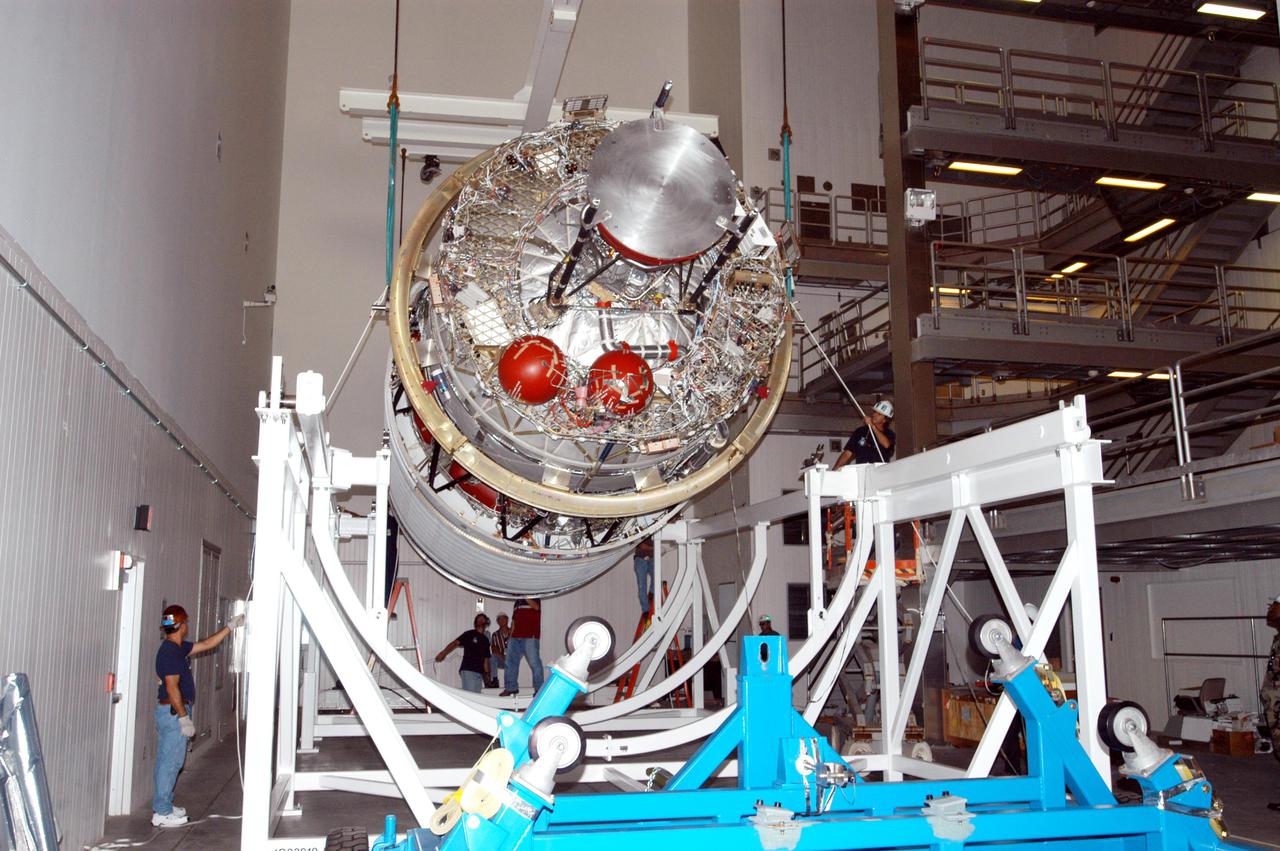
KENNEDY SPACE CENTER, FLA. - In the Boeing Delta Operations Center, the second stage of a Boeing Delta IV launch vehicle is lowered onto a work stand. The Delta IV rocket will be used for the 2005 launching of the GOES-N weather satellite for NASA and NOAA (National Oceanic and Atmospheric Administration). The first in a series of three advanced weather satellites including GOES-O and GOES-P, the GOES-N will provide continuous monitoring necessary for intensive data analysis. It will provide a constant vigil for the atmospheric “triggers” of severe weather conditions such as tornadoes, flash floods, hail storms and hurricanes. When these conditions develop, GOES-N will be able to monitor storm development and track their movements.
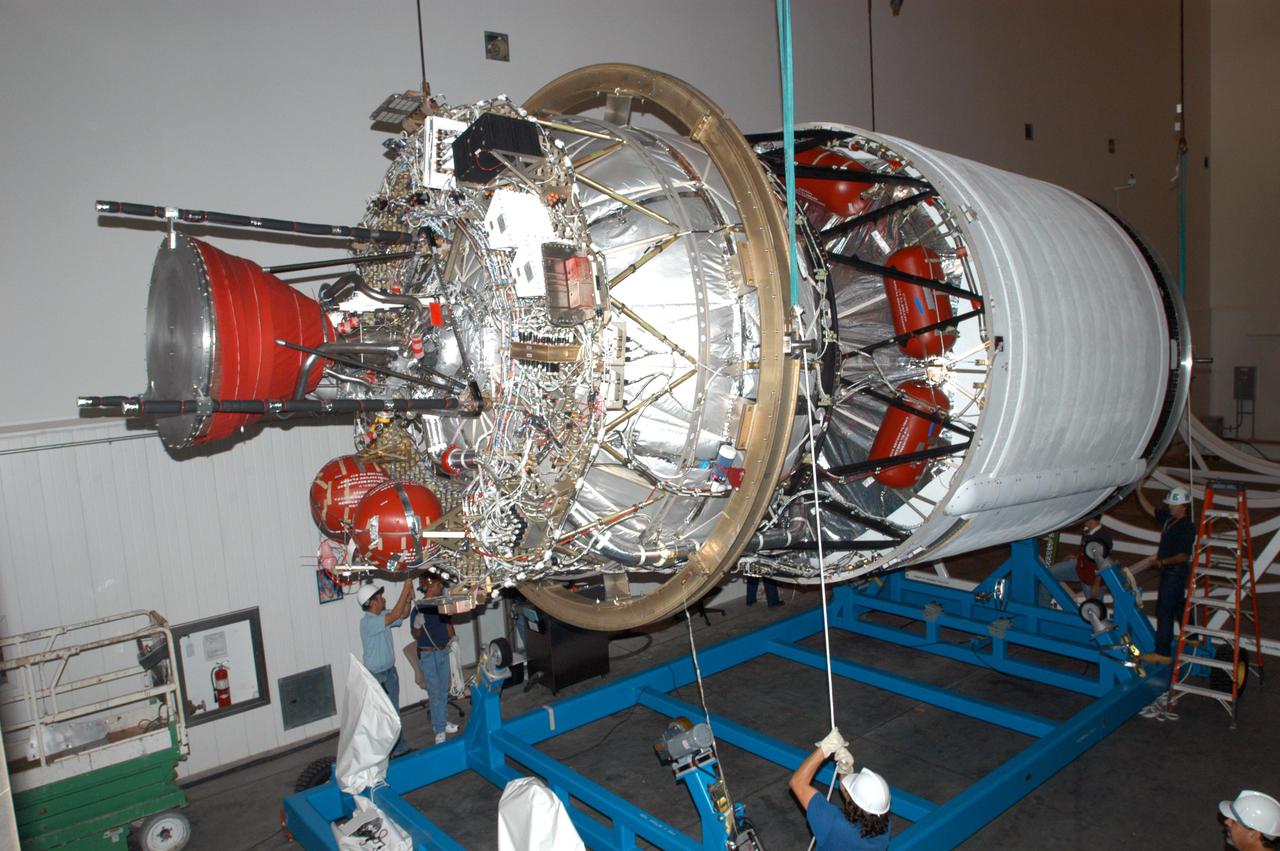
KENNEDY SPACE CENTER, FLA. - At the Boeing Delta Operations Center, the second stage of a Boeing Delta IV launch vehicle is lifted off its transporter for transfer to a work stand. The Delta IV rocket will be used for the 2005 launching of the GOES-N weather satellite for NASA and NOAA (National Oceanic and Atmospheric Administration). The first in a series of three advanced weather satellites including GOES-O and GOES-P, the GOES-N will provide continuous monitoring necessary for intensive data analysis. It will provide a constant vigil for the atmospheric “triggers” of severe weather conditions such as tornadoes, flash floods, hail storms and hurricanes. When these conditions develop, GOES-N will be able to monitor storm development and track their movements.
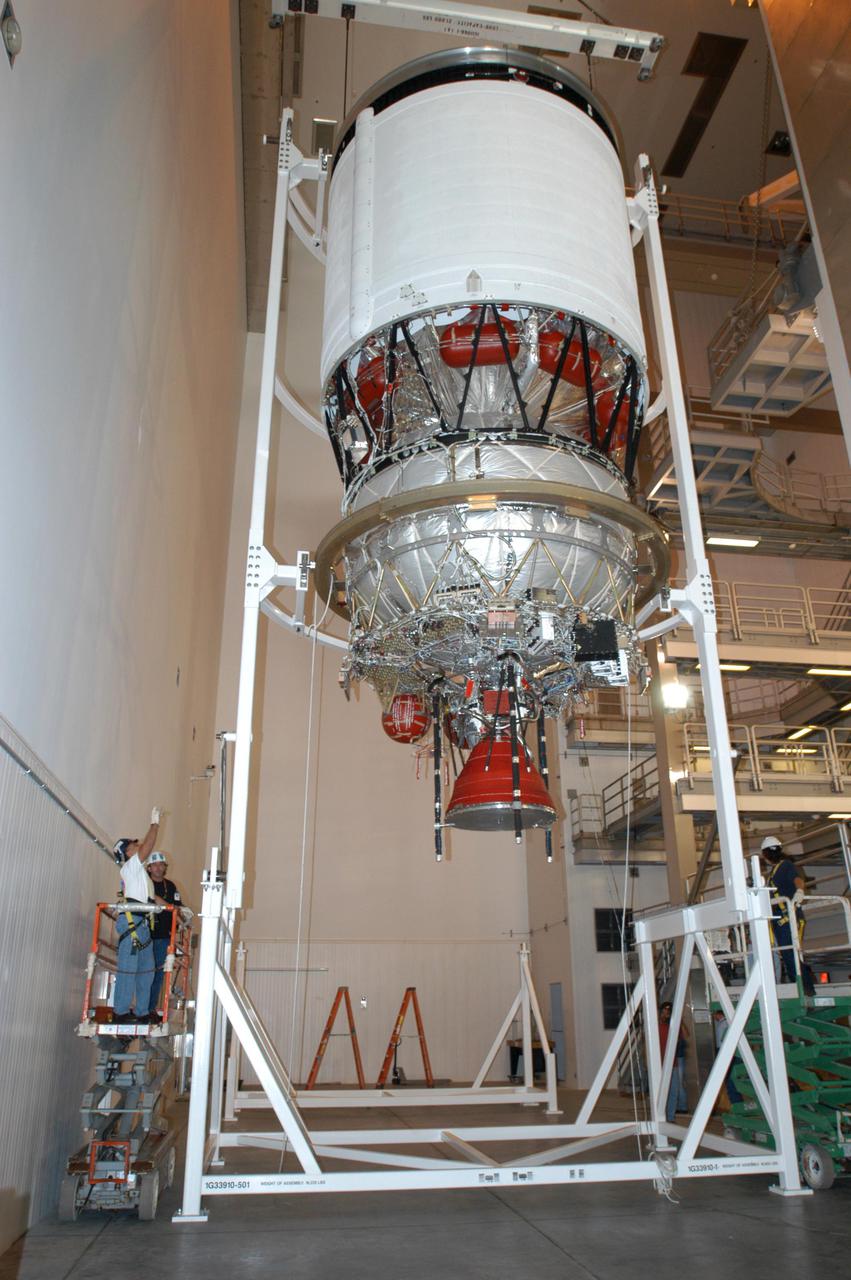
KENNEDY SPACE CENTER, FLA. - At the Boeing Delta Operations Center, the Delta IV second stage is rotated to a vertical position so that the nozzles can be installed. A deployment test will follow. The Delta IV rocket will be used for the 2005 launching of the GOES-N weather satellite for NASA and NOAA (National Oceanic and Atmospheric Administration). The first in a series of three advanced weather satellites including GOES-O and GOES-P, the GOES-N will provide continuous monitoring necessary for intensive data analysis. It will provide a constant vigil for the atmospheric “triggers” of severe weather conditions such as tornadoes, flash floods, hail storms and hurricanes. When these conditions develop, GOES-N will be able to monitor storm development and track their movements.
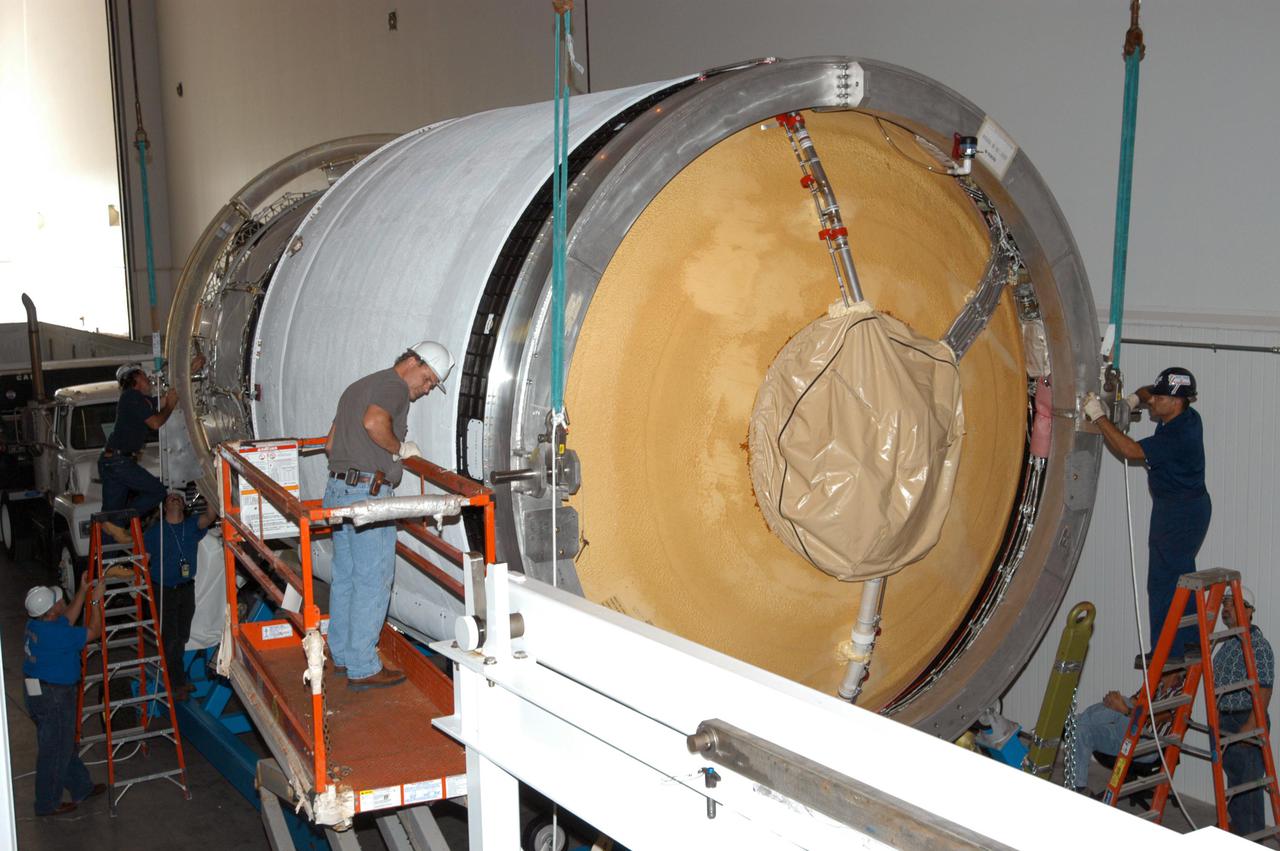
KENNEDY SPACE CENTER, FLA. - At the Boeing Delta Operations Center, workers attach a crane to the second stage of a Boeing Delta IV launch vehicle for transfer from its transporter to a work stand. The Delta IV rocket will be used for the 2005 launching of the GOES-N weather satellite for NASA and NOAA (National Oceanic and Atmospheric Administration). The first in a series of three advanced weather satellites including GOES-O and GOES-P, the GOES-N will provide continuous monitoring necessary for intensive data analysis. It will provide a constant vigil for the atmospheric “triggers” of severe weather conditions such as tornadoes, flash floods, hail storms and hurricanes. When these conditions develop, GOES-N will be able to monitor storm development and track their movements.
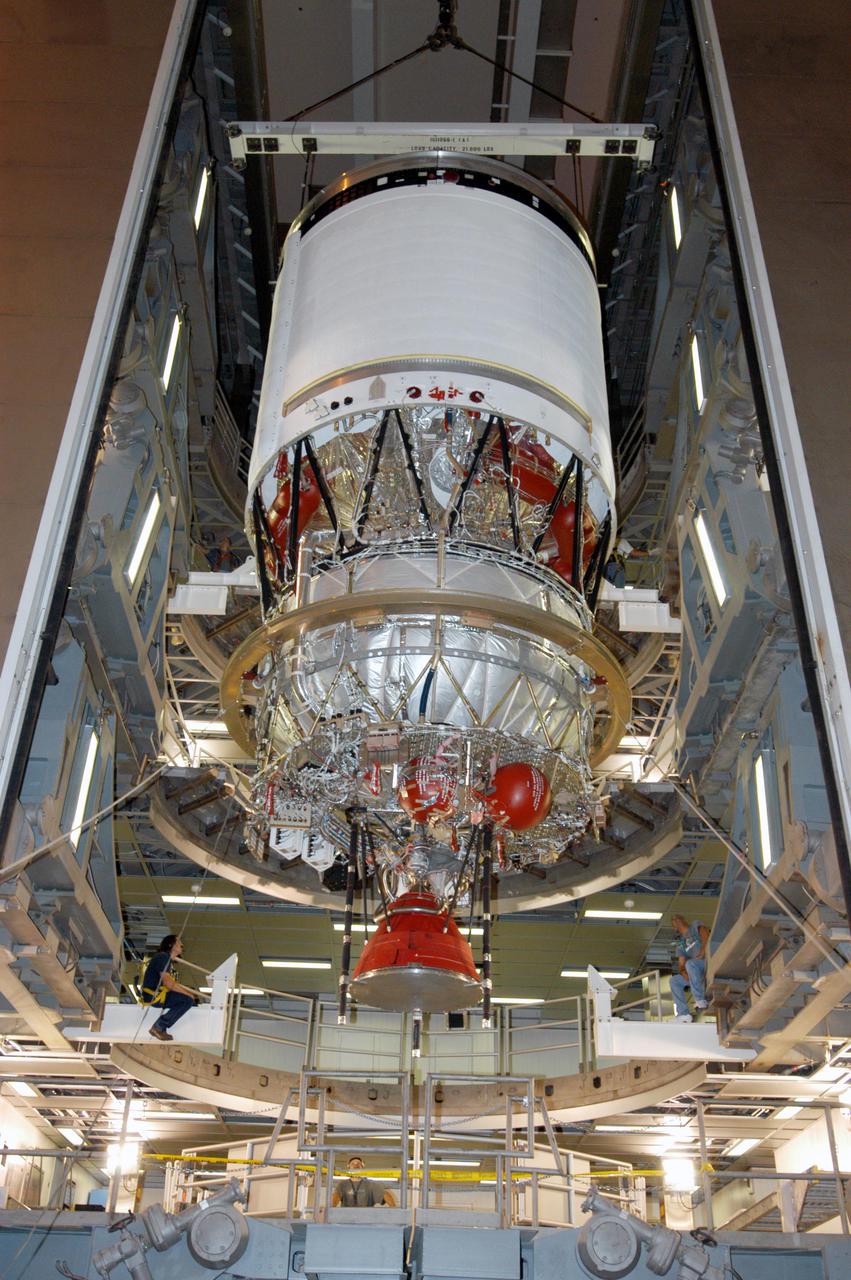
KENNEDY SPACE CENTER, FLA. - At the Boeing Delta Operations Center, the Delta IV second stage is moved to a test stand. Nozzles will be installed and a deployment test will follow. The Delta IV rocket will be used for the 2005 launching of the GOES-N weather satellite for NASA and NOAA (National Oceanic and Atmospheric Administration). The first in a series of three advanced weather satellites including GOES-O and GOES-P, the GOES-N will provide continuous monitoring necessary for intensive data analysis. It will provide a constant vigil for the atmospheric “triggers” of severe weather conditions such as tornadoes, flash floods, hail storms and hurricanes. When these conditions develop, GOES-N will be able to monitor storm development and track their movements.
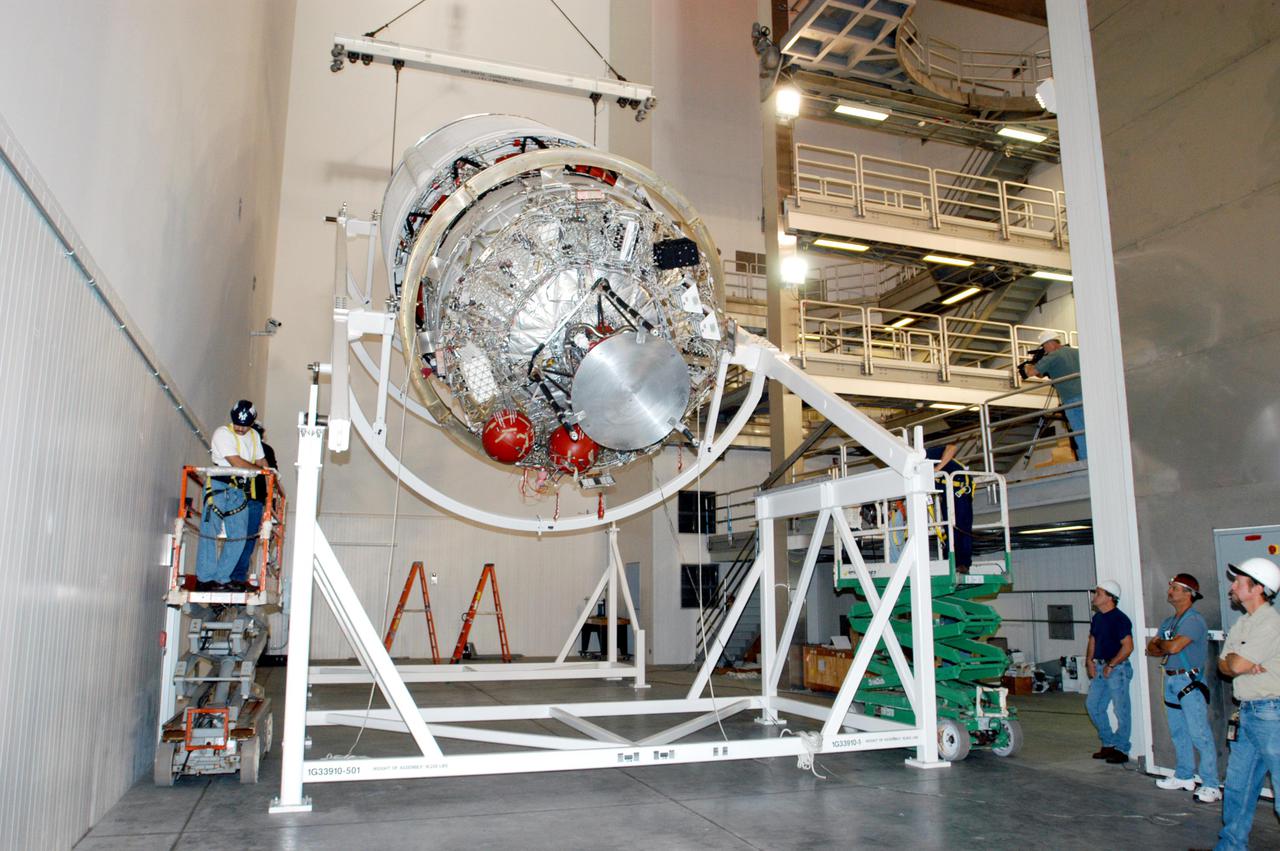
KENNEDY SPACE CENTER, FLA. - At the Boeing Delta Operations Center, the Delta IV second stage is lowered onto a rotation stand so that the nozzles can be installed. A deployment test will follow. The Delta IV rocket will be used for the 2005 launching of the GOES-N weather satellite for NASA and NOAA (National Oceanic and Atmospheric Administration). The first in a series of three advanced weather satellites including GOES-O and GOES-P, the GOES-N will provide continuous monitoring necessary for intensive data analysis. It will provide a constant vigil for the atmospheric “triggers” of severe weather conditions such as tornadoes, flash floods, hail storms and hurricanes. When these conditions develop, GOES-N will be able to monitor storm development and track their movements.
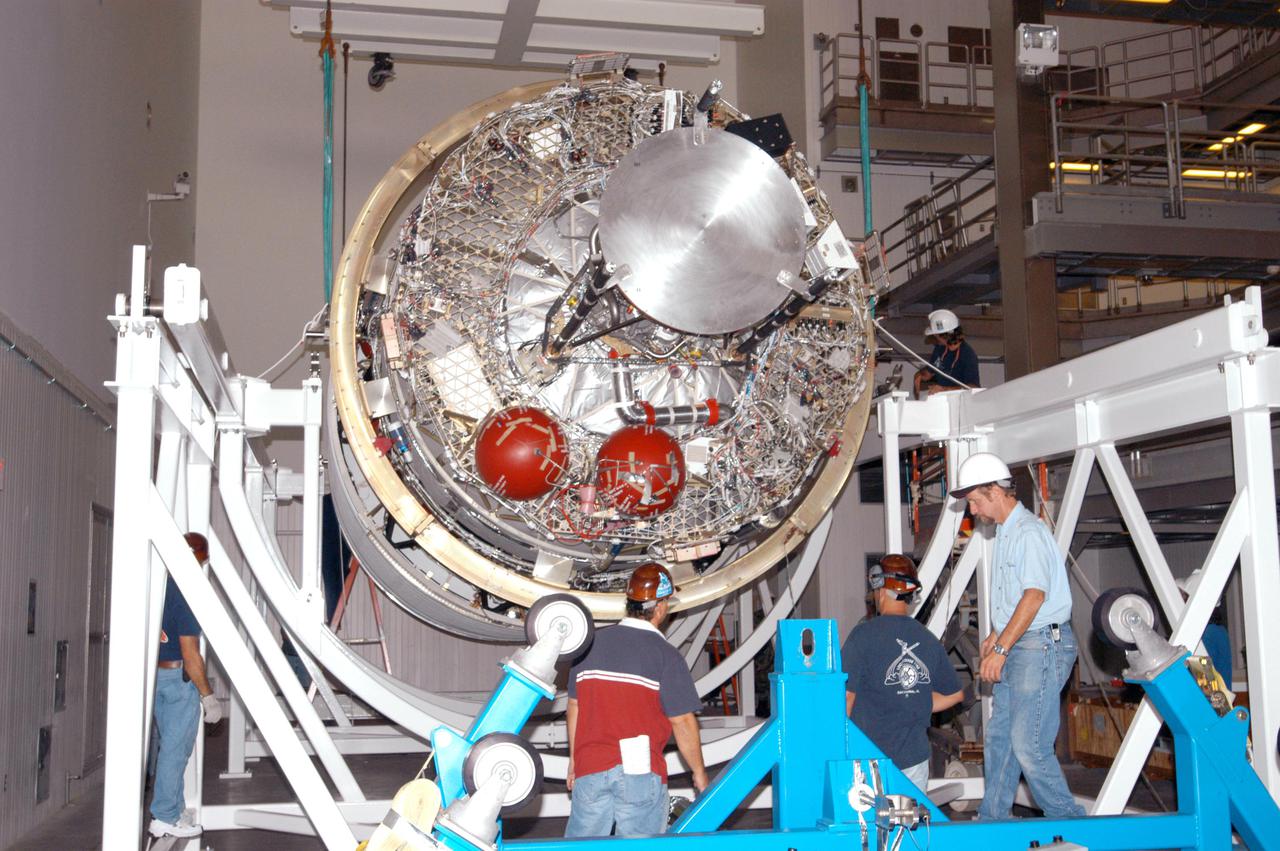
KENNEDY SPACE CENTER, FLA. - In the Boeing Delta Operations Center, the second stage of a Boeing Delta IV launch vehicle is lowered onto a work stand. The Delta IV rocket will be used for the 2005 launching of the GOES-N weather satellite for NASA and NOAA (National Oceanic and Atmospheric Administration). The first in a series of three advanced weather satellites including GOES-O and GOES-P, the GOES-N will provide continuous monitoring necessary for intensive data analysis. It will provide a constant vigil for the atmospheric “triggers” of severe weather conditions such as tornadoes, flash floods, hail storms and hurricanes. When these conditions develop, GOES-N will be able to monitor storm development and track their movements.
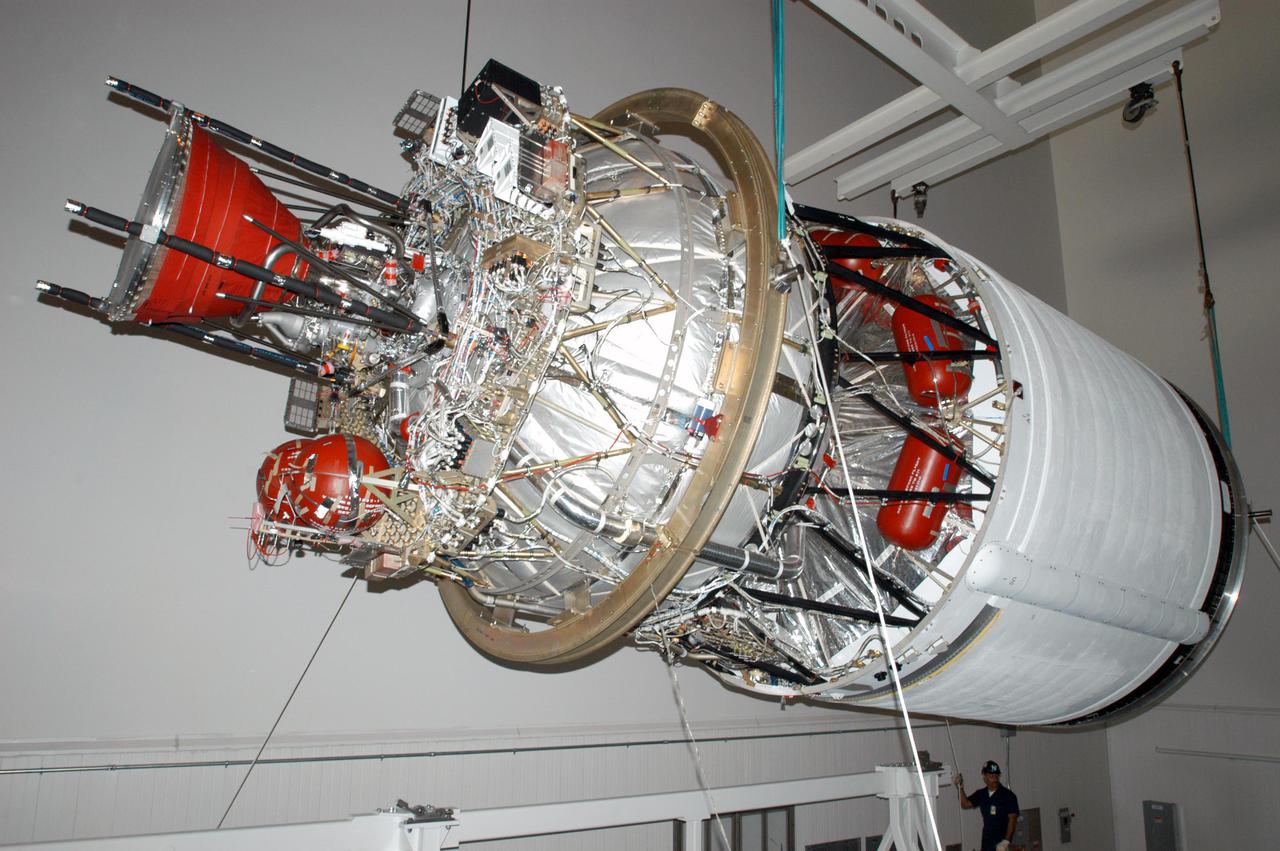
KENNEDY SPACE CENTER, FLA. - At the Boeing Delta Operations Center, the suspended second stage of a Boeing Delta IV launch vehicle is moved toward a work stand. The Delta IV rocket will be used for the 2005 launching of the GOES-N weather satellite for NASA and NOAA (National Oceanic and Atmospheric Administration). The first in a series of three advanced weather satellites including GOES-O and GOES-P, the GOES-N will provide continuous monitoring necessary for intensive data analysis. It will provide a constant vigil for the atmospheric “triggers” of severe weather conditions such as tornadoes, flash floods, hail storms and hurricanes. When these conditions develop, GOES-N will be able to monitor storm development and track their movements.
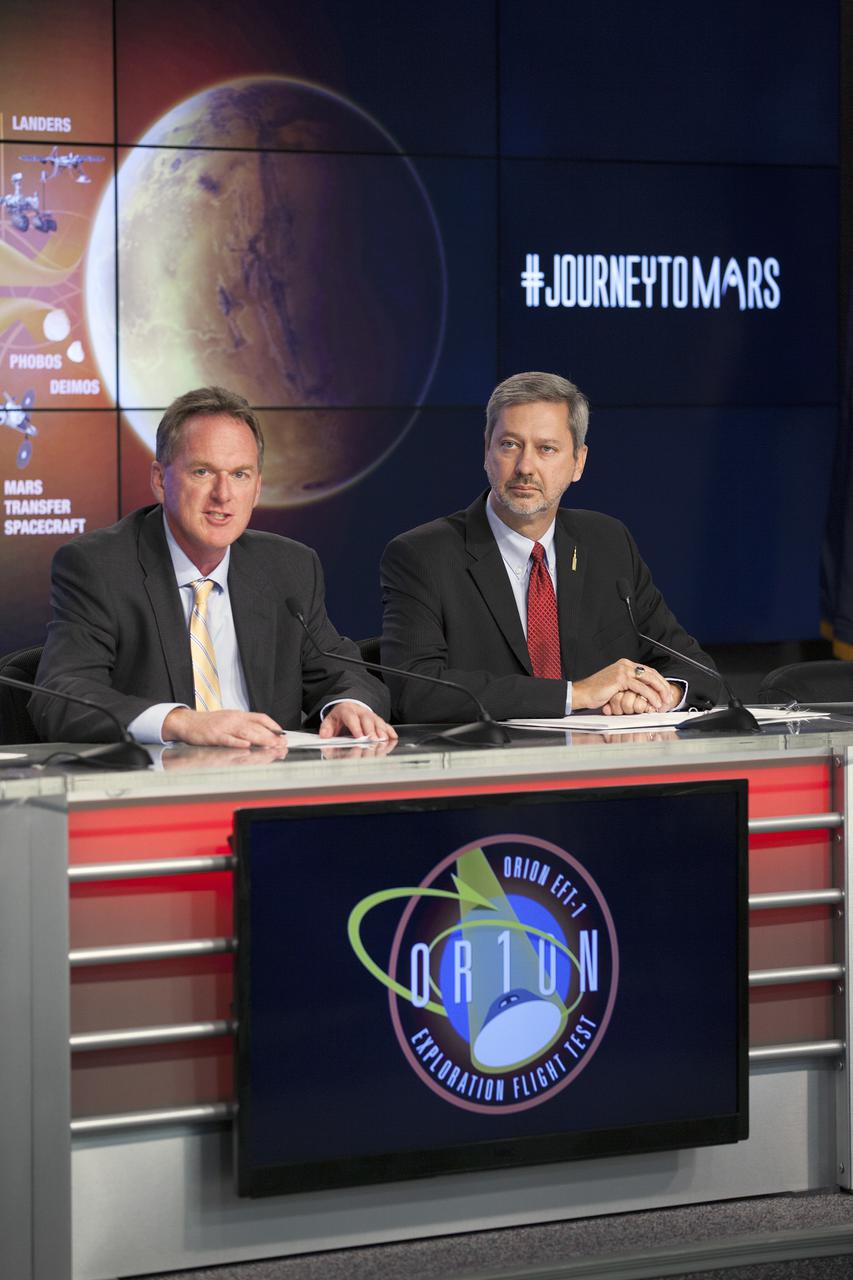
CAPE CANAVERAL, Fla. – At NASA's Kennedy Space Center in Florida, Mike Bolger, program manager of Ground Systems Development and Operations Program, and Chris Crumbly, manager of Space Launch System Spacecraft_Payload Integration and Evolution, were among several agency leaders who spoke to members of the news media about how the first fight of the new Orion spacecraft is a first step in NASA's plans to send humans to Mars. Orion is the exploration spacecraft designed to carry astronauts to destinations not yet explored by humans, including an asteroid and Mars. It will have emergency abort capability, sustain the crew during space travel and provide safe re-entry from deep space return velocities. The first unpiloted flight test of Orion is scheduled to launch Dec. 4, 2014 atop a United Launch Alliance Delta IV Heavy rocket, and in 2018 on NASA’s Space Launch System rocket. For more information, visit www.nasa.gov_orion Photo credit: NASA_Kim Shiflett
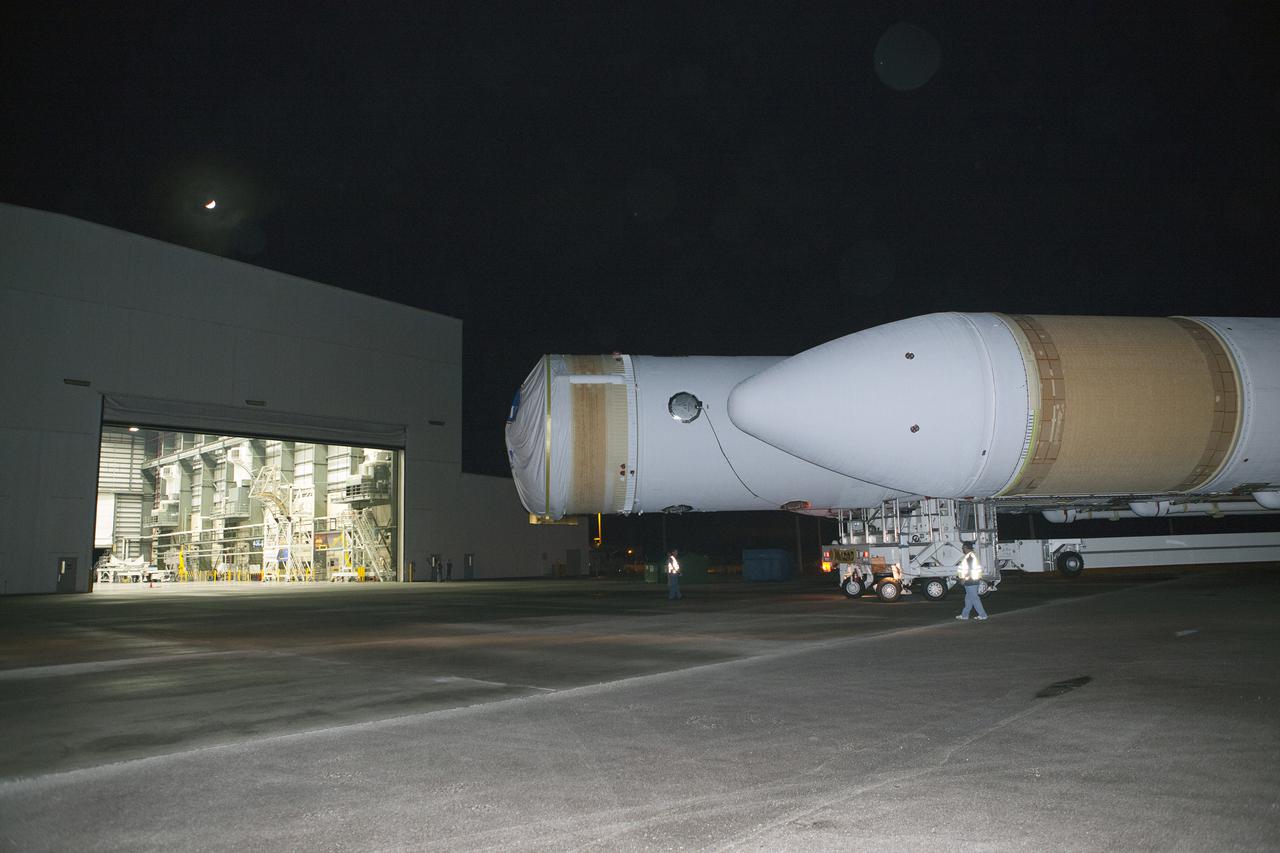
CAPE CANAVERAL, Fla. – The United Launch Alliance Delta IV Heavy rocket exits the Horizontal Integration Facility at Space Launch Complex 37 at Cape Canaveral Air Force Station in Florida. The rocket is secured on the Elevated Platform Transporter for the trip to the pad. The Delta IV Heavy will launch Orion on Exploration Flight Test-1. During its first flight test, Orion will travel farther into space than any human spacecraft has gone in more than 40 years. The data gathered during the flight will influence design decisions, validate existing computer models and innovative new approaches to space systems development, as well as reduce overall mission risks and costs for later Orion flights. Liftoff of Orion on the first flight test is planned for December 2014. Photo credit: NASA_Dimitri Gerondidakis