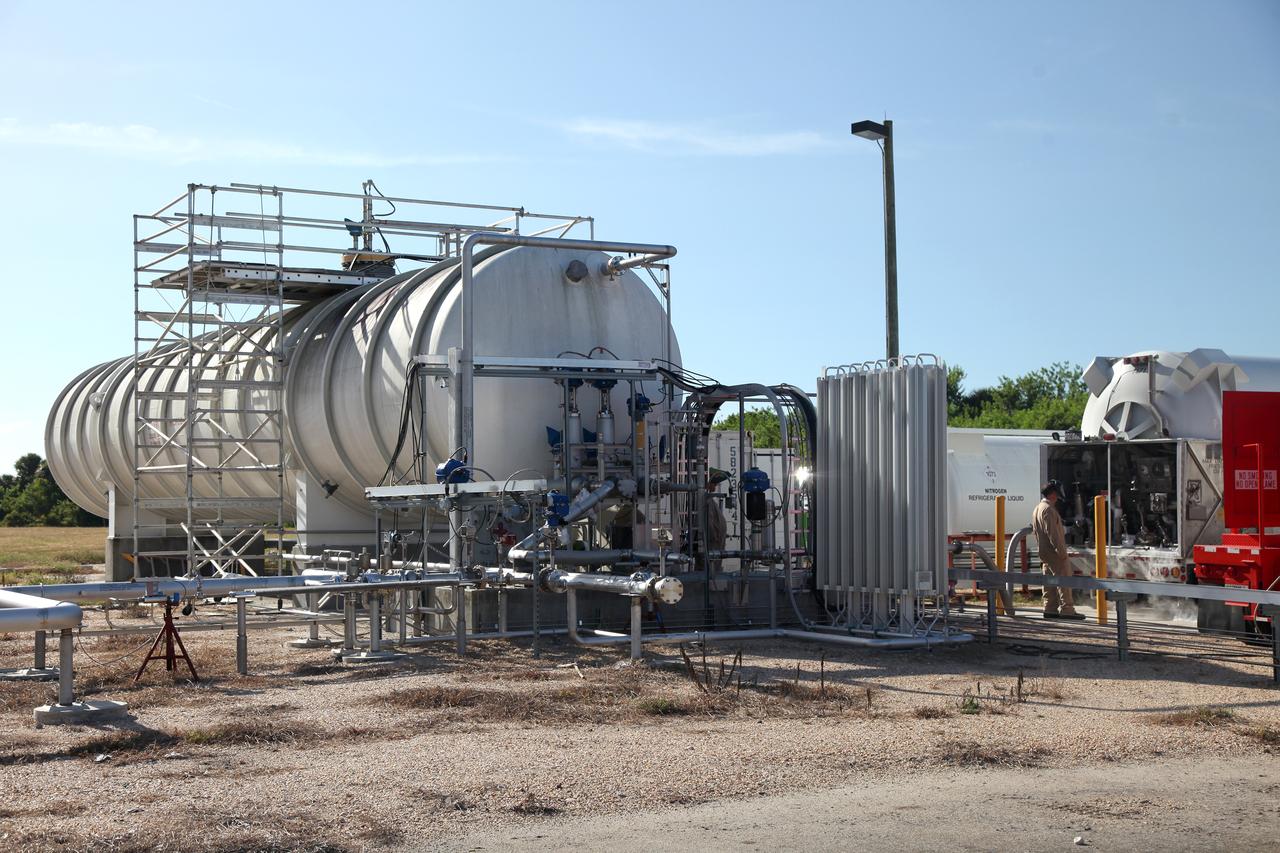
Engineers complete a test of the Ground Operations Demo Unit for liquid hydrogen at NASA's Kennedy Space Center in Florida. The system includes a 33,000 gallon liquid hydrogen storage tank with an internal cold heat exchanger supplied from a cryogenic refrigerator. The primary goal of the testing is to achieve a liquid hydrogen zero boil-off capability. The system was designed, installed and tested by a team of civil servants and contractors from the center's Cryogenic Test Laboratory, with support from engineers at NASA's Glenn Research Center in Cleveland and Stennis Space Center in Mississippi. It may be applicable for use by the Ground Systems Development and Operations Program at Launch Pad 39B.
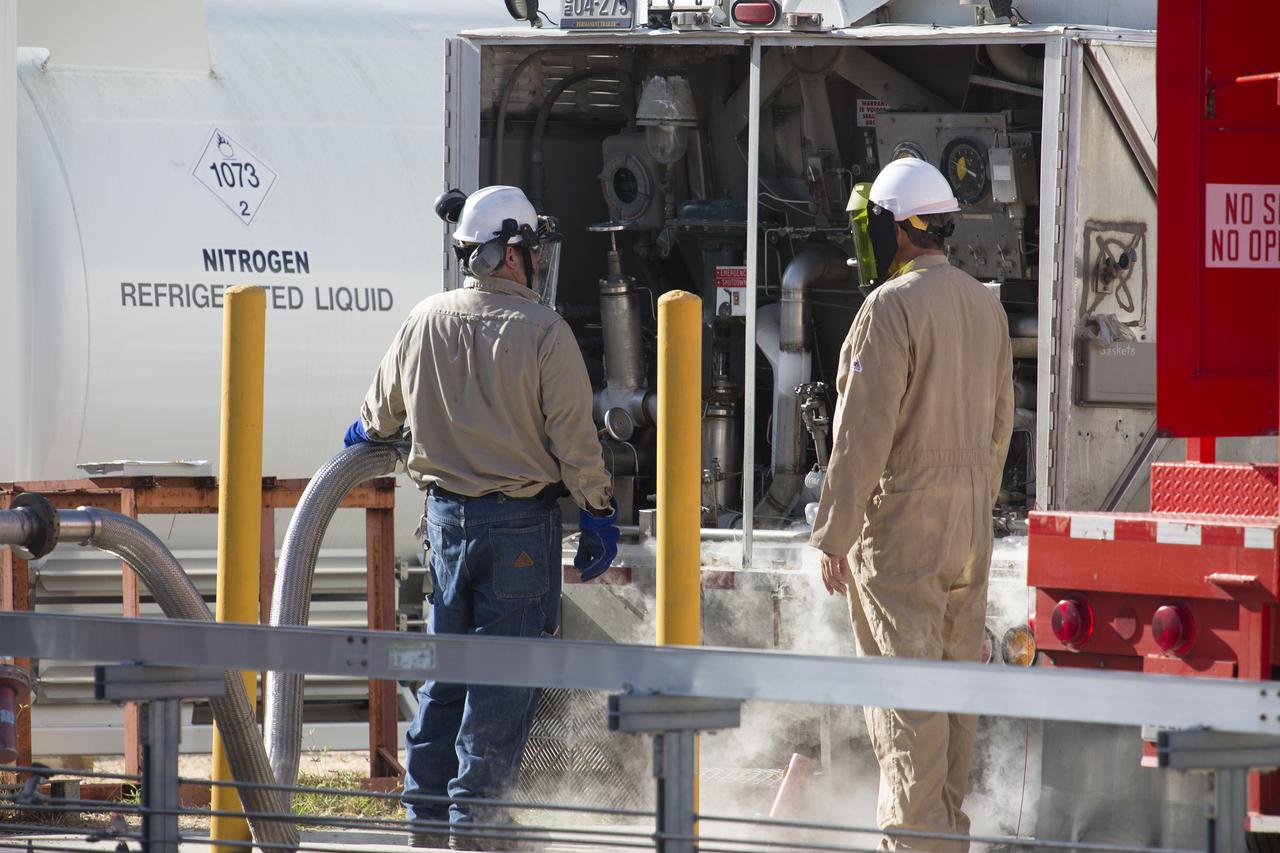
Technicians with Praxair pressurize the hydrogen trailer before offloading liquid hydrogen during a test of the Ground Operations Demo Unit for liquid hydrogen at NASA's Kennedy Space Center in Florida. The system includes a 33,000 gallon liquid hydrogen storage tank with an internal cold heat exchanger supplied from a cryogenic refrigerator. The primary goal of the testing is to achieve a liquid hydrogen zero boil-off capability. The system was designed, installed and tested by a team of civil servants and contractors from the center's Cryogenic Test Laboratory, with support from engineers at NASA's Glenn Research Center in Cleveland and Stennis Space Center in Mississippi. It may be applicable for use by the Ground Systems Development and Operations Program at Launch Pad 39B.
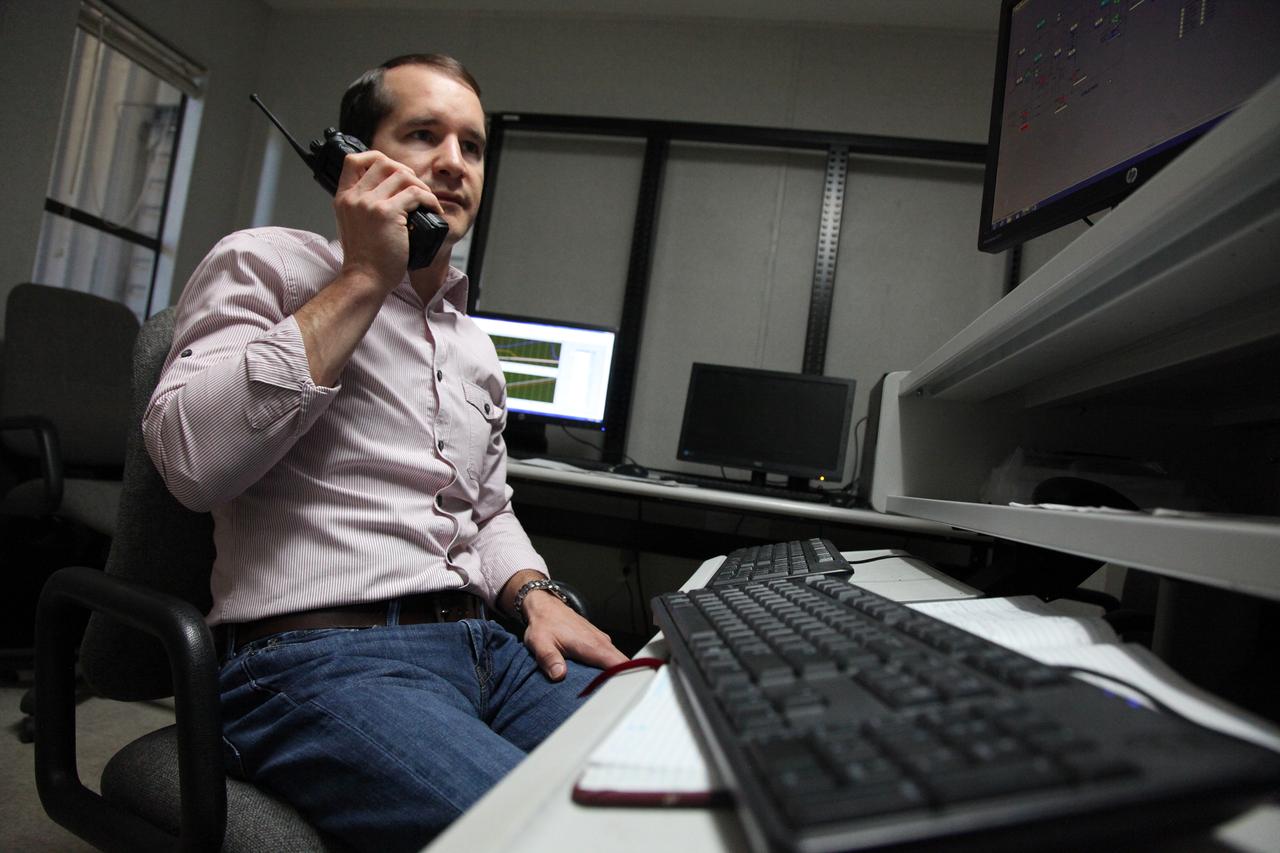
Inside a control building at NASA's Kennedy Space Center in Florida, Adam Swinger, cryogenic research engineer in the Exploration Research and Technology Directorate, communicates with team members during a test of the Ground Operations Demo Unit for liquid hydrogen. The system includes a 33,000 gallon liquid hydrogen storage tank with an internal cold heat exchanger supplied from a cryogenic refrigerator. The primary goal of the testing is to achieve a liquid hydrogen zero boil-off capability. The system was designed, installed and tested by a team of civil servants and contractors from the center's Cryogenic Test Laboratory, with support from engineers at NASA's Glenn Research Center in Cleveland and Stennis Space Center in Mississippi. It may be applicable for use by the Ground Systems Development and Operations Program at Launch Pad 39B.
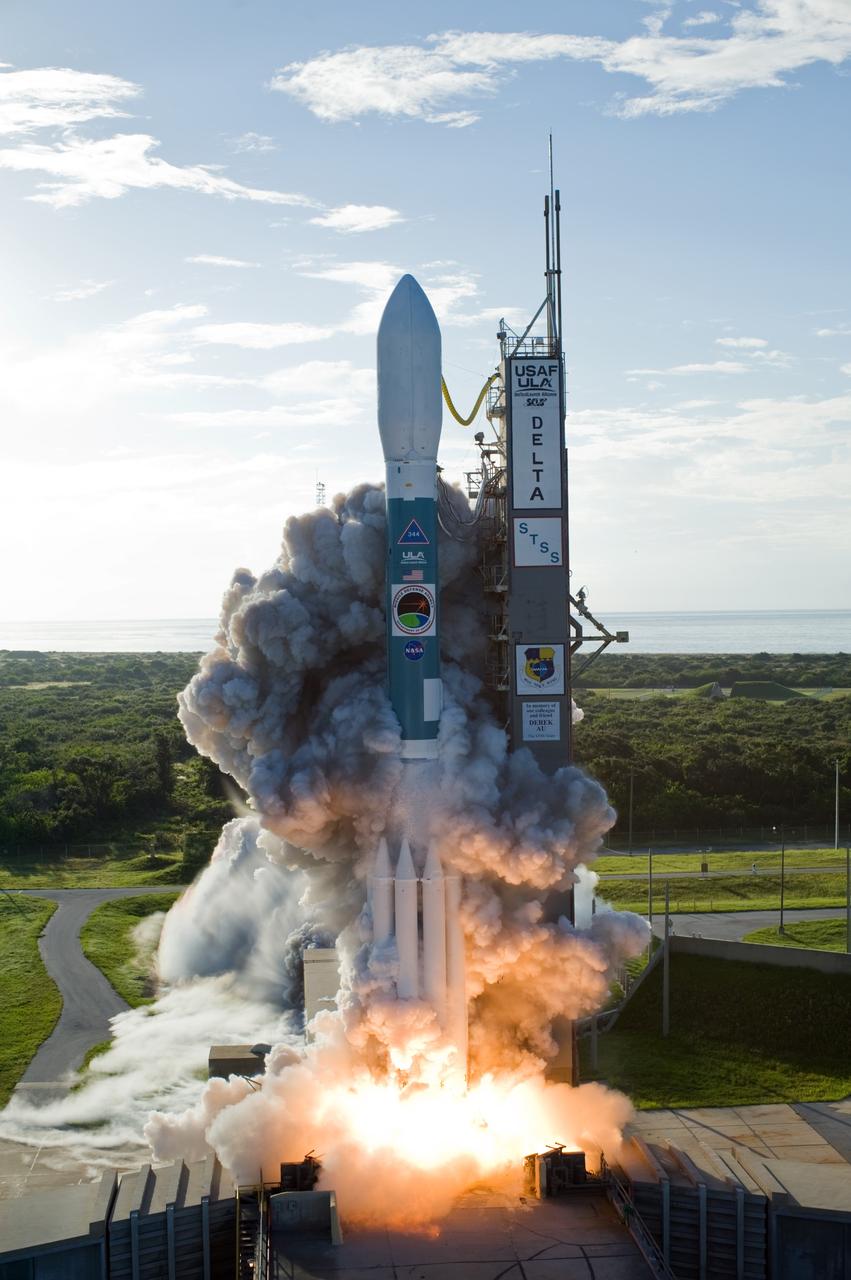
CAPE CANAVERAL, Fla. – Smoke billows around the United Launch Alliance Delta II rocket as it launches into space carrying the Space Tracking and Surveillance System - Demonstrator, or STSS-Demo, spacecraft. STSS-Demo was launched at 8:20:22 a.m. EDT by NASA for the U.S. Missile Defense Agency. The STSS-Demo is a space-based sensor component of a layered Ballistic Missile Defense System designed for the overall mission of detecting, tracking and discriminating ballistic missiles. Photo credit: NASA/Regina Mitchell-Tom Farrar
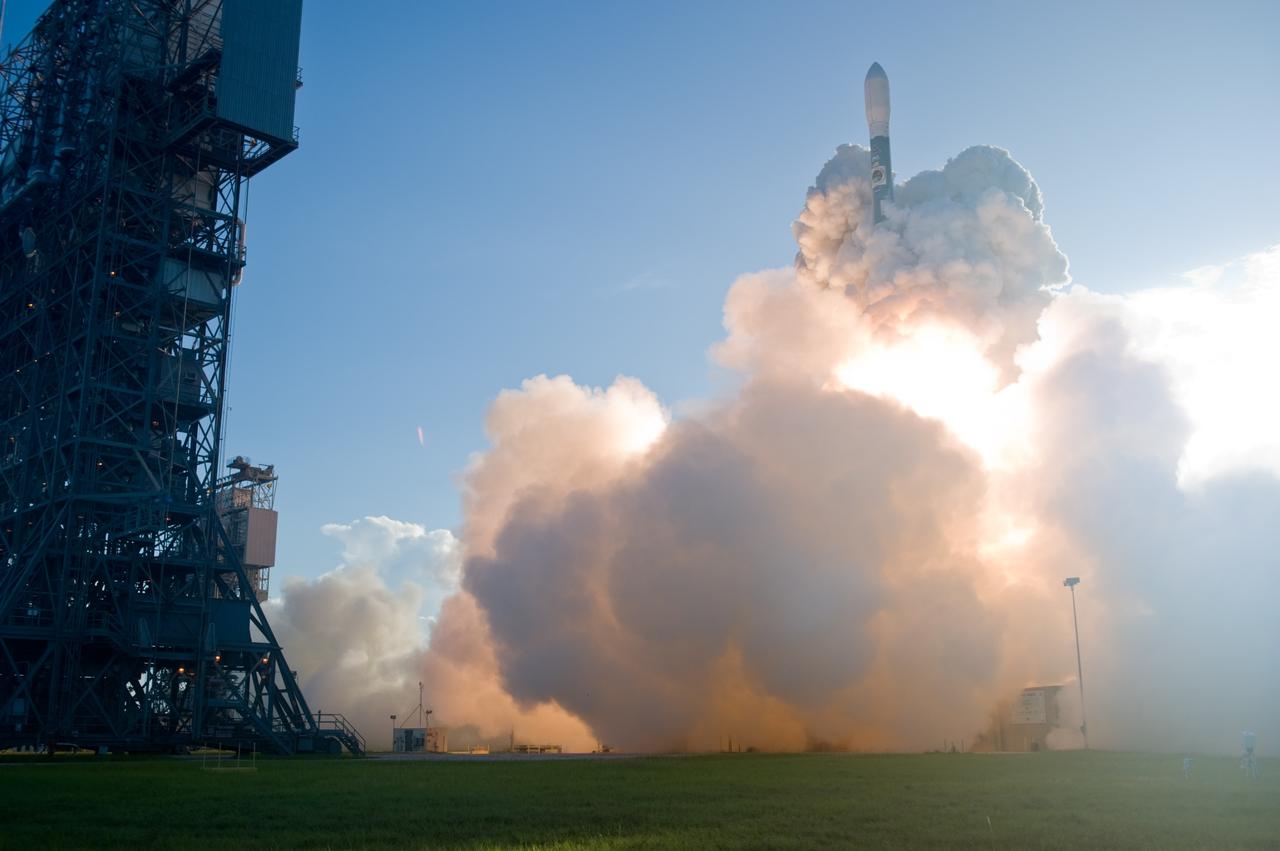
CAPE CANAVERAL, Fla. – The United Launch Alliance Delta II rocket with Space Tracking and Surveillance System - Demonstrator, or STSS-Demo, spacecraft emerges from a blanket of smoke after liftoff from Launch Pad 17-B at Cape Canaveral Air Force Station. STSS-Demo was launched at 8:20:22 a.m. EDT by NASA for the Missile Defense System. The STSS-Demo is a space-based sensor component of a layered Ballistic Missile Defense System designed for the overall mission of detecting, tracking and discriminating ballistic missiles. Photo credit: NASA/Tony Gray-Tim Powers
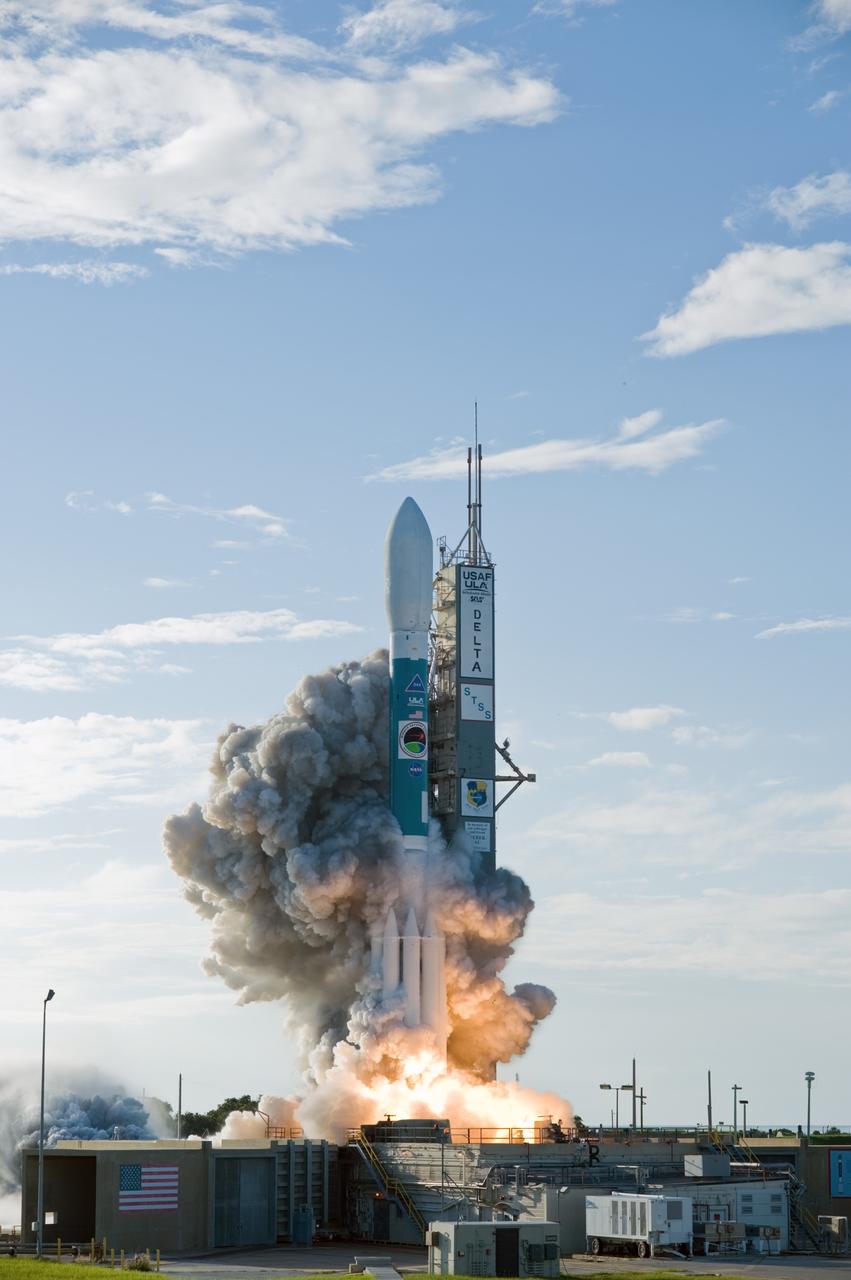
CAPE CANAVERAL, Fla. – The United Launch Alliance Delta II rocket with Space Tracking and Surveillance System - Demonstrator, or STSS-Demo, spacecraft leaps from Launch Pad 17-B at Cape Canaveral Air Force Station amid clouds of smoke. STSS-Demo was launched at 8:20:22 a.m. EDT by NASA for the U.S. Missile Defense Agency. The STSS-Demo is a space-based sensor component of a layered Ballistic Missile Defense System designed for the overall mission of detecting, tracking and discriminating ballistic missiles. STSS is capable of tracking objects after boost phase and provides trajectory information to other sensors. Photo credit: NASA/Sandra Joseph- Kevin O'Connell
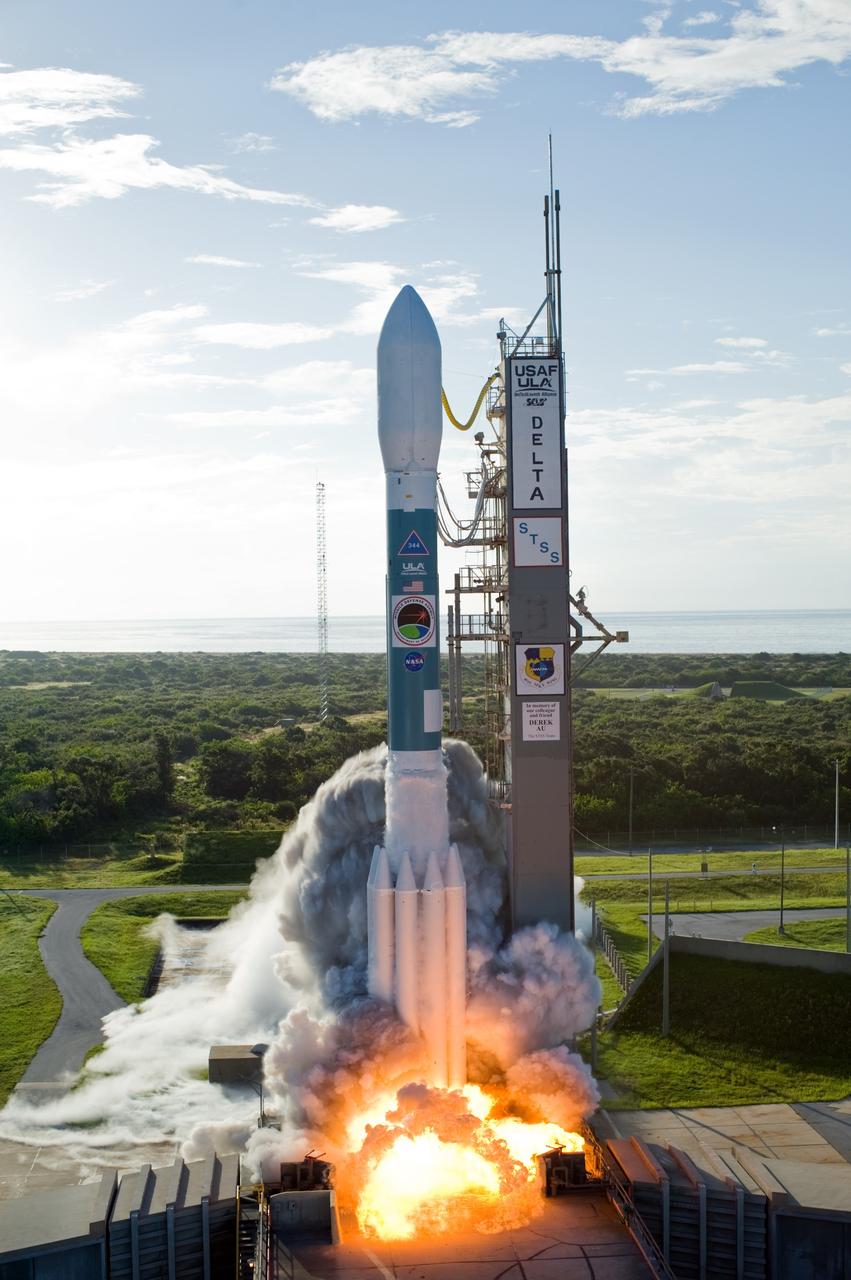
CAPE CANAVERAL, Fla. – Fire erupts across Launch Pad 17-B at Cape Canaveral Air Force Station as the United Launch Alliance Delta II rocket lifts off with the Space Tracking and Surveillance System - Demonstrator, or STSS-Demo, spacecraft. STSS-Demo was launched at 8:20:22 a.m. EDT by NASA for the U.S. Missile Defense Agency. The STSS-Demo is a space-based sensor component of a layered Ballistic Missile Defense System designed for the overall mission of detecting, tracking and discriminating ballistic missiles. Photo credit: NASA/Regina Mitchell-Tom Farrar

CAPE CANAVERAL, Fla. –The United Launch Alliance Delta II rocket with Space Tracking and Surveillance System - Demonstrator, or STSS-Demo, spacecraft leaps from Launch Pad 17-B at Cape Canaveral Air Force Station amid clouds of smoke. STSS-Demo was launched at 8:20:22 a.m. EDT by NASA for the U.S. Missile Defense Agency. The STSS-Demo is a space-based sensor component of a layered Ballistic Missile Defense System designed for the overall mission of detecting, tracking and discriminating ballistic missiles. STSS is capable of tracking objects after boost phase and provides trajectory information to other sensors. Photo credit: NASA/Tony Gray-Tim Powers
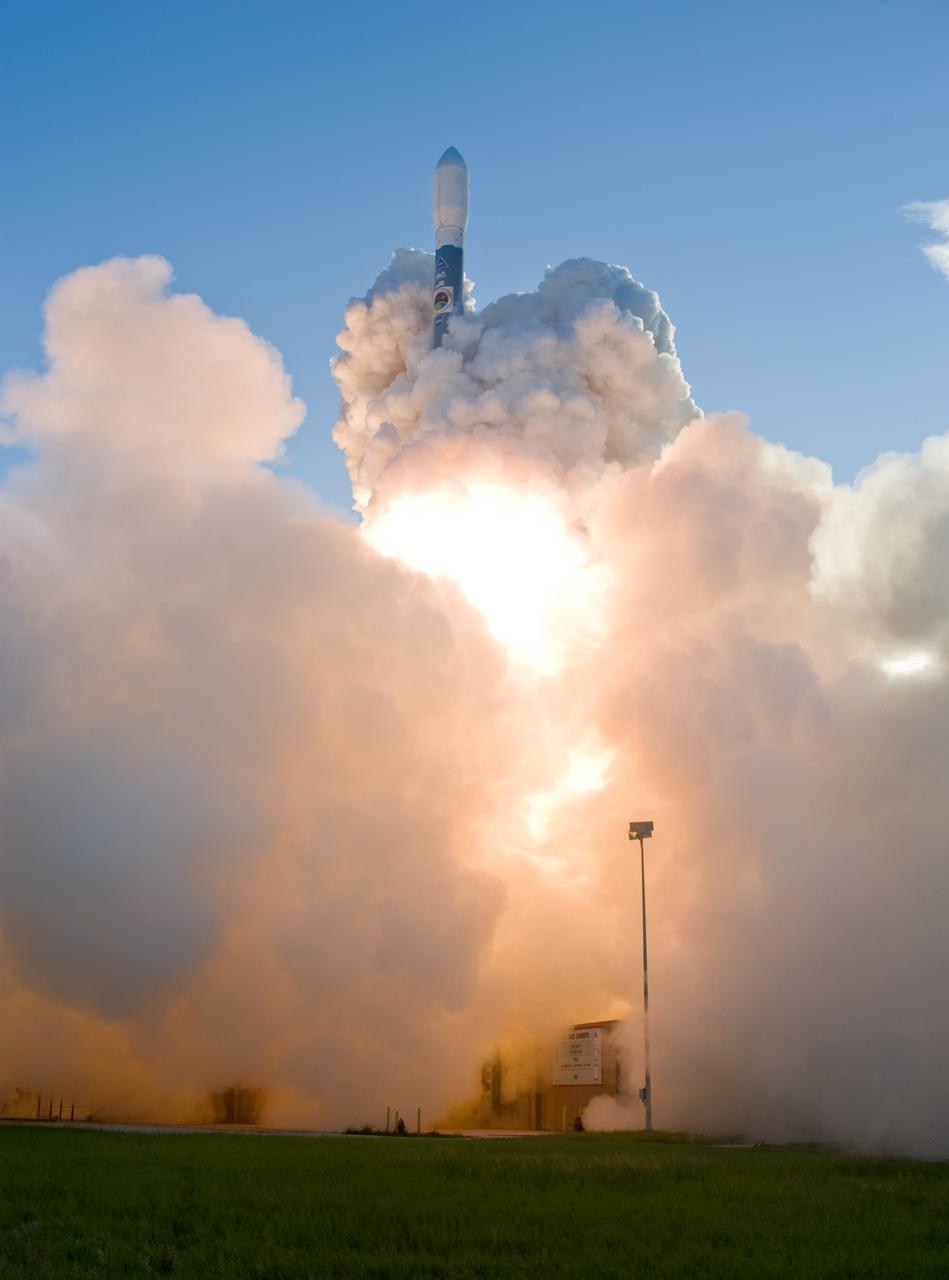
CAPE CANAVERAL, Fla. – The United Launch Alliance Delta II rocket with Space Tracking and Surveillance System - Demonstrator, or STSS-Demo, spacecraft emerges from a blanket of smoke after liftoff from Launch Pad 17-B at Cape Canaveral Air Force Station. STSS-Demo was launched at 8:20:22 a.m. EDT by NASA for the U.S. Missile Defense Agency. The STSS-Demo is a space-based sensor component of a layered Ballistic Missile Defense System designed for the overall mission of detecting, tracking and discriminating ballistic missiles. Photo credit: NASA/Tony Gray-Tim Powers
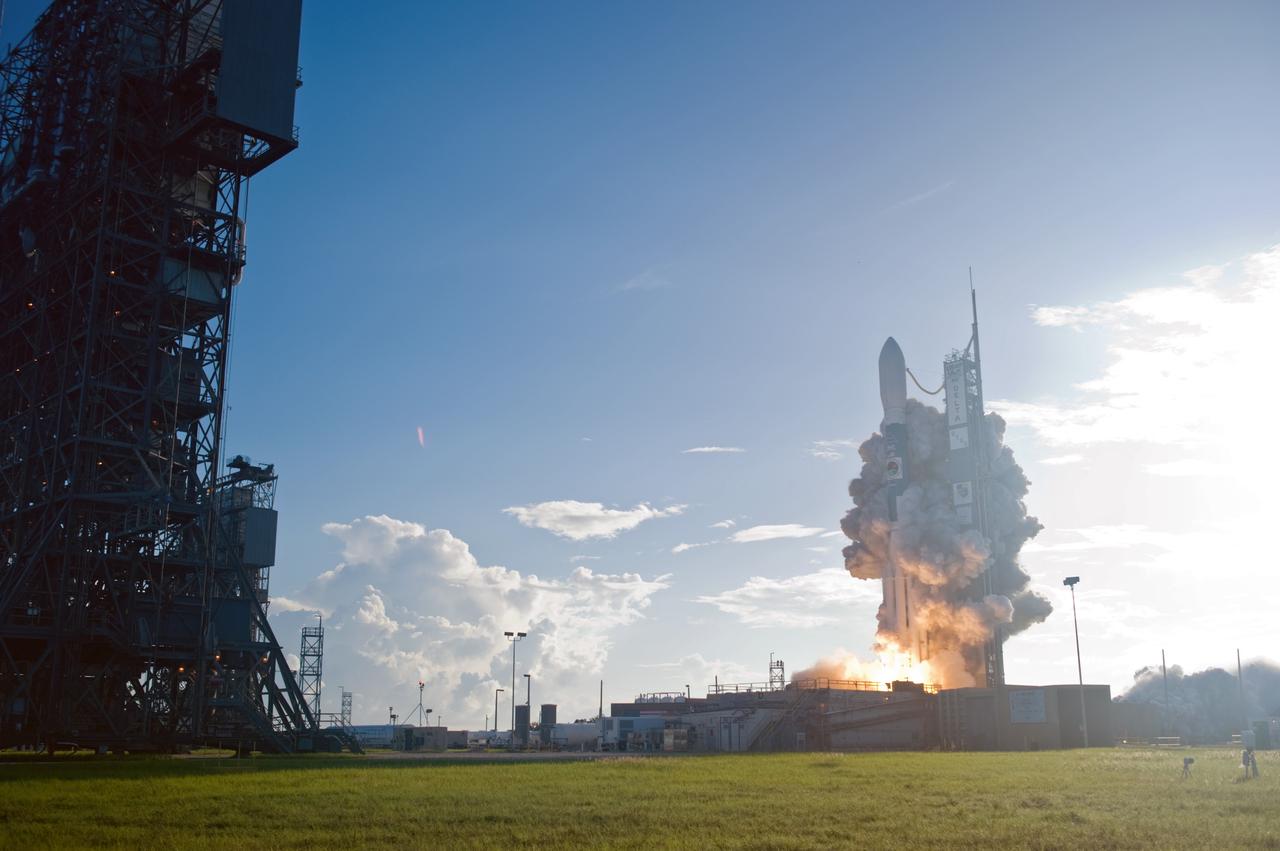
CAPE CANAVERAL, Fla. – The United Launch Alliance Delta II rocket with Space Tracking and Surveillance System - Demonstrator, or STSS-Demo, spacecraft leaps from Launch Pad 17-B at Cape Canaveral Air Force Station amid clouds of smoke. STSS-Demo was launched at 8:20:22 a.m. EDT by NASA for the U.S. Missile Defense Agency. The STSS-Demo is a space-based sensor component of a layered Ballistic Missile Defense System designed for the overall mission of detecting, tracking and discriminating ballistic missiles. Photo credit: NASA/Tony Gray-Tim Powers

CAPE CANAVERAL, Fla. – The United Launch Alliance Delta II rocket with Space Tracking and Surveillance System - Demonstrator, or STSS-Demo, spacecraft leaps through a mantle of smoke as it lifts off from Launch Pad 17-B at Cape Canaveral Air Force Station. STSS-Demo was launched at 8:20:22 a.m. EDT by NASA for the U.S. Missile Defense Agency. The STSS-Demo is a space-based sensor component of a layered Ballistic Missile Defense System designed for the overall mission of detecting, tracking and discriminating ballistic missiles. Photo credit: NASA/Regina Mitchell-Tom Farrar
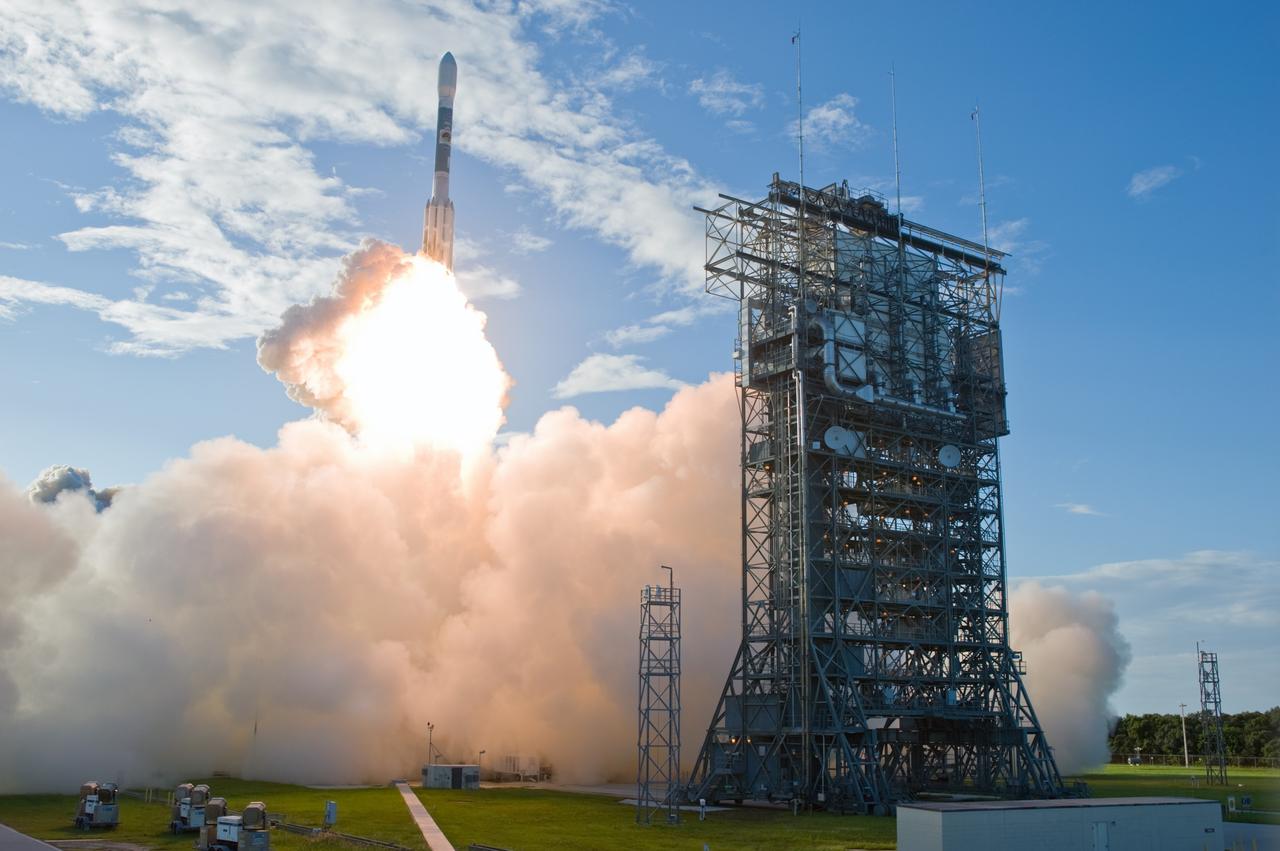
CAPE CANAVERAL, Fla. – The United Launch Alliance Delta II rocket carrying the Space Tracking and Surveillance System - Demonstrator, or STSS-Demo, spacecraft leaps into the sky from Launch Pad 17-B at Cape Canaveral Air Force Station. STSS-Demo was launched at 8:20:22 a.m. EDT by NASA for the U.S. Missile Defense Agency. The STSS-Demo is a space-based sensor component of a layered Ballistic Missile Defense System designed for the overall mission of detecting, tracking and discriminating ballistic missiles. STSS is capable of tracking objects after boost phase and provides trajectory information to other sensors. Photo credit: NASA/Sandra Joseph- Kevin O'Connell
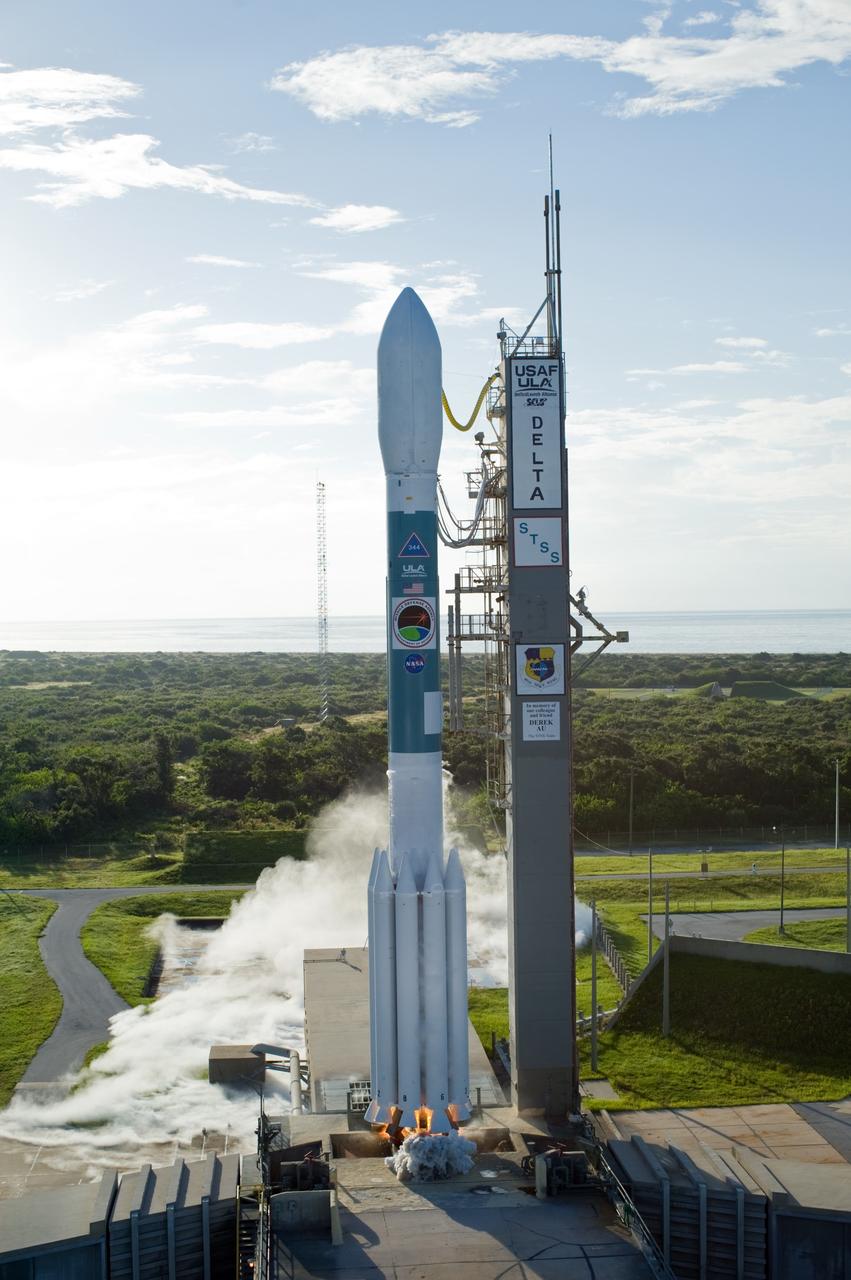
CAPE CANAVERAL, Fla. – The United Launch Alliance Delta II rocket with Space Tracking and Surveillance System - Demonstrator, or STSS-Demo, spacecraft leaps through a mantle of smoke as it lifts off from Launch Pad 17-B at Cape Canaveral Air Force Station. STSS-Demo was launched at 8:20:22 a.m. EDT by NASA for the U.S. Missile Defense Agency. The STSS-Demo is a space-based sensor component of a layered Ballistic Missile Defense System designed for the overall mission of detecting, tracking and discriminating ballistic missiles. Photo credit: NASA/Regina Mitchell-Tom Farrar
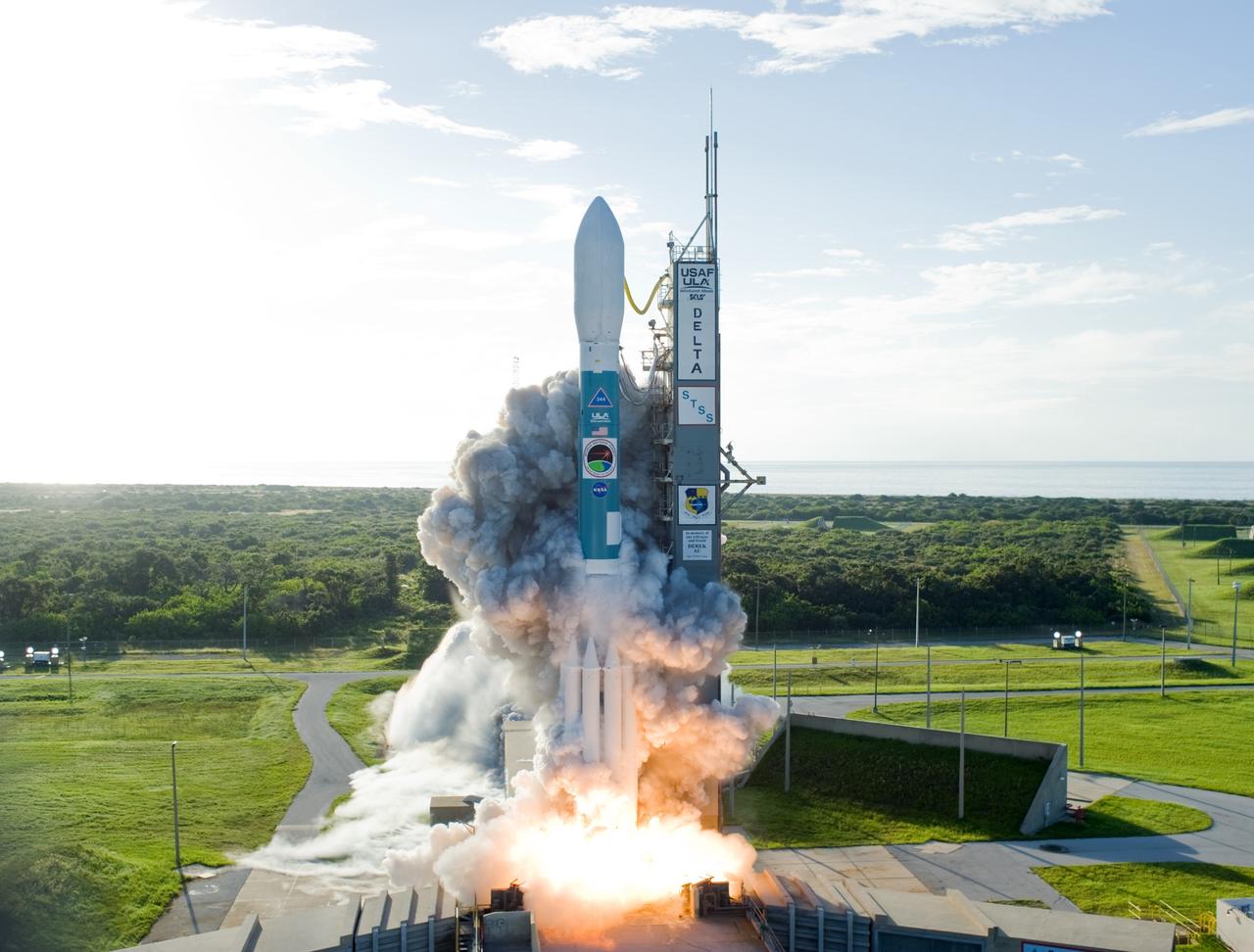
CAPE CANAVERAL, Fla. – The United Launch Alliance Delta II rocket with Space Tracking and Surveillance System - Demonstrator, or STSS-Demo, spacecraft leaps from Launch Pad 17-B at Cape Canaveral Air Force Station amid clouds of smoke. STSS-Demo was launched at 8:20:22 a.m. EDT by NASA for the U.S. Missile Defense Agency. The STSS-Demo is a space-based sensor component of a layered Ballistic Missile Defense System designed for the overall mission of detecting, tracking and discriminating ballistic missiles. Photo credit: NASA/Regina Mitchell-Tom Farrar
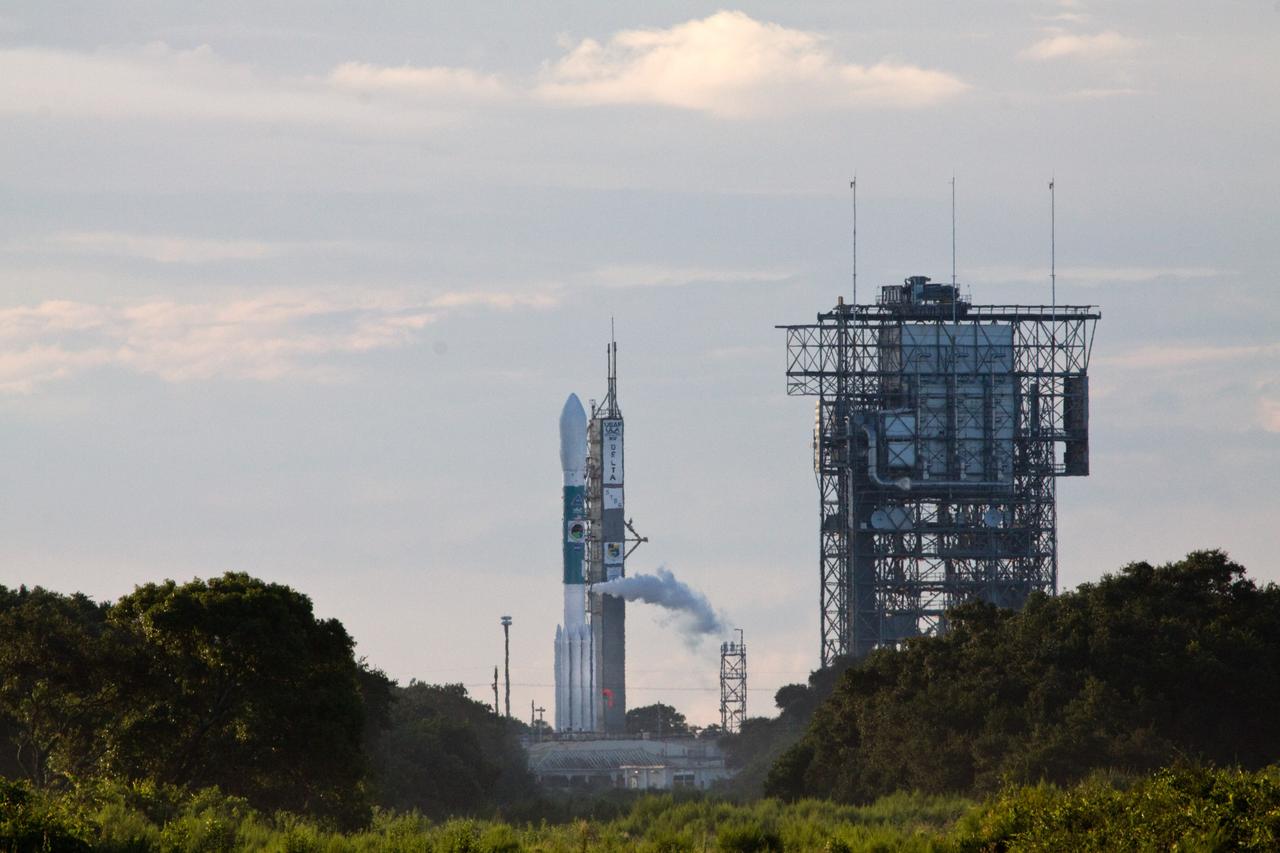
CAPE CANAVERAL, Fla. – Under a cloud-streaked sky, the Space Tracking and Surveillance System – Demonstrator, or STSS-Demo, waits through the countdown to liftoff Launch Pad 17-B at Cape Canaveral Air Force Station aboard a United Launch Alliance Delta II rocket. STSS-Demo is being launched by NASA for the U.S. Missile Defense Agency. Liftoff is at 8:20 a.m. EDT. The STSS-Demo is a space-based sensor component of a layered Ballistic Missile Defense System designed for the overall mission of detecting, tracking and discriminating ballistic missiles. STSS is capable of tracking objects after boost phase and provides trajectory information to other sensors. Photo credit: NASA/Jack Pfaller
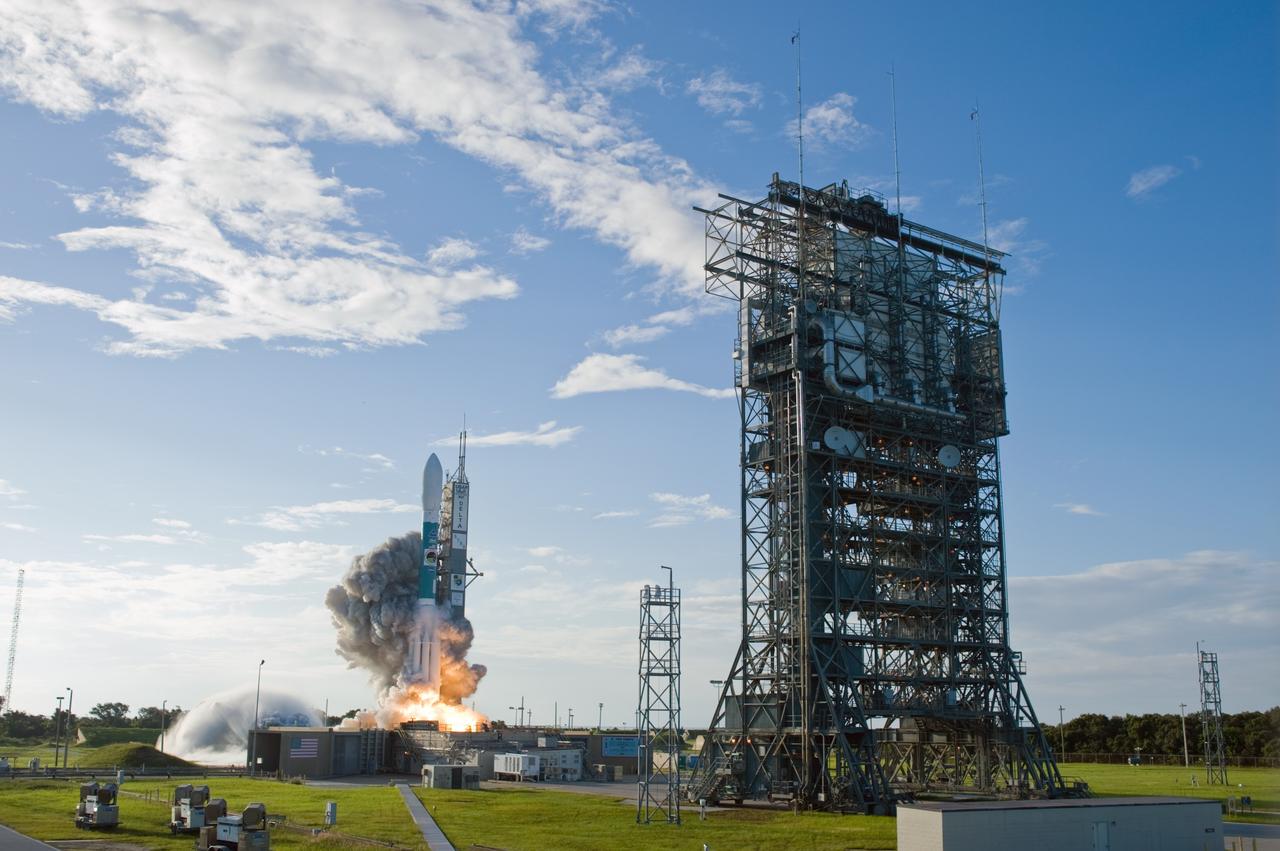
CAPE CANAVERAL, Fla. – Water at left is seen flooding Launch Pad 17-B at Cape Canaveral Air Force Station as the United Launch Alliance Delta II rocket carrying the Space Tracking and Surveillance System - Demonstrator, or STSS-Demo, spacecraft lifts off. STSS-Demo was launched at 8:20:22 a.m. EDT by NASA for the U.S. Missile Defense Agency. The STSS-Demo is a space-based sensor component of a layered Ballistic Missile Defense System designed for the overall mission of detecting, tracking and discriminating ballistic missiles. STSS is capable of tracking objects after boost phase and provides trajectory information to other sensors. Photo credit: NASA/Sandra Joseph- Kevin O'Connell
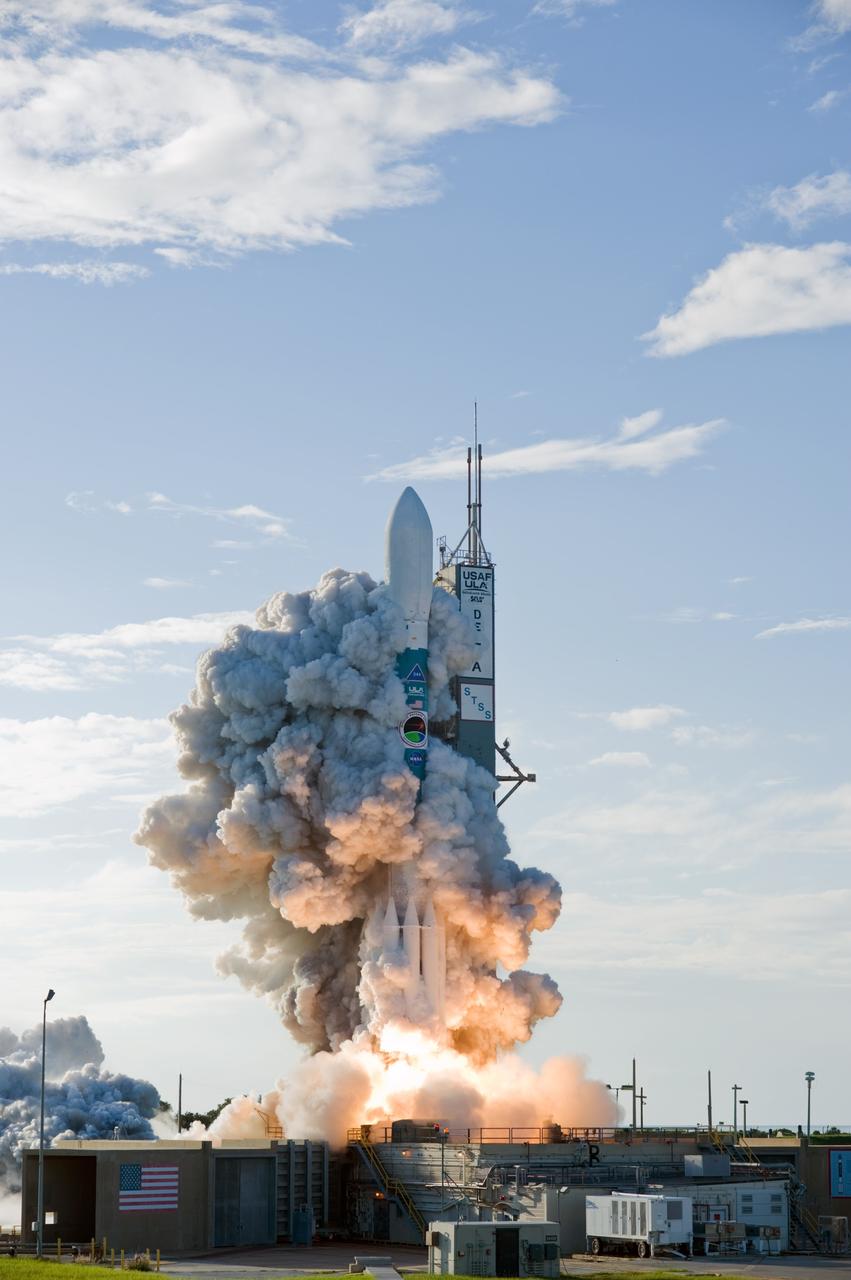
CAPE CANAVERAL, Fla. – The United Launch Alliance Delta II rocket with Space Tracking and Surveillance System - Demonstrator, or STSS-Demo, spacecraft leaps through a mantle of smoke as it lifts off from Launch Pad 17-B at Cape Canaveral Air Force Station. STSS-Demo was launched at 8:20:22 a.m. EDT by NASA for the U.S. Missile Defense Agency. The STSS-Demo is a space-based sensor component of a layered Ballistic Missile Defense System designed for the overall mission of detecting, tracking and discriminating ballistic missiles. STSS is capable of tracking objects after boost phase and provides trajectory information to other sensors. Photo credit: NASA/Sandra Joseph- Kevin O'Connell
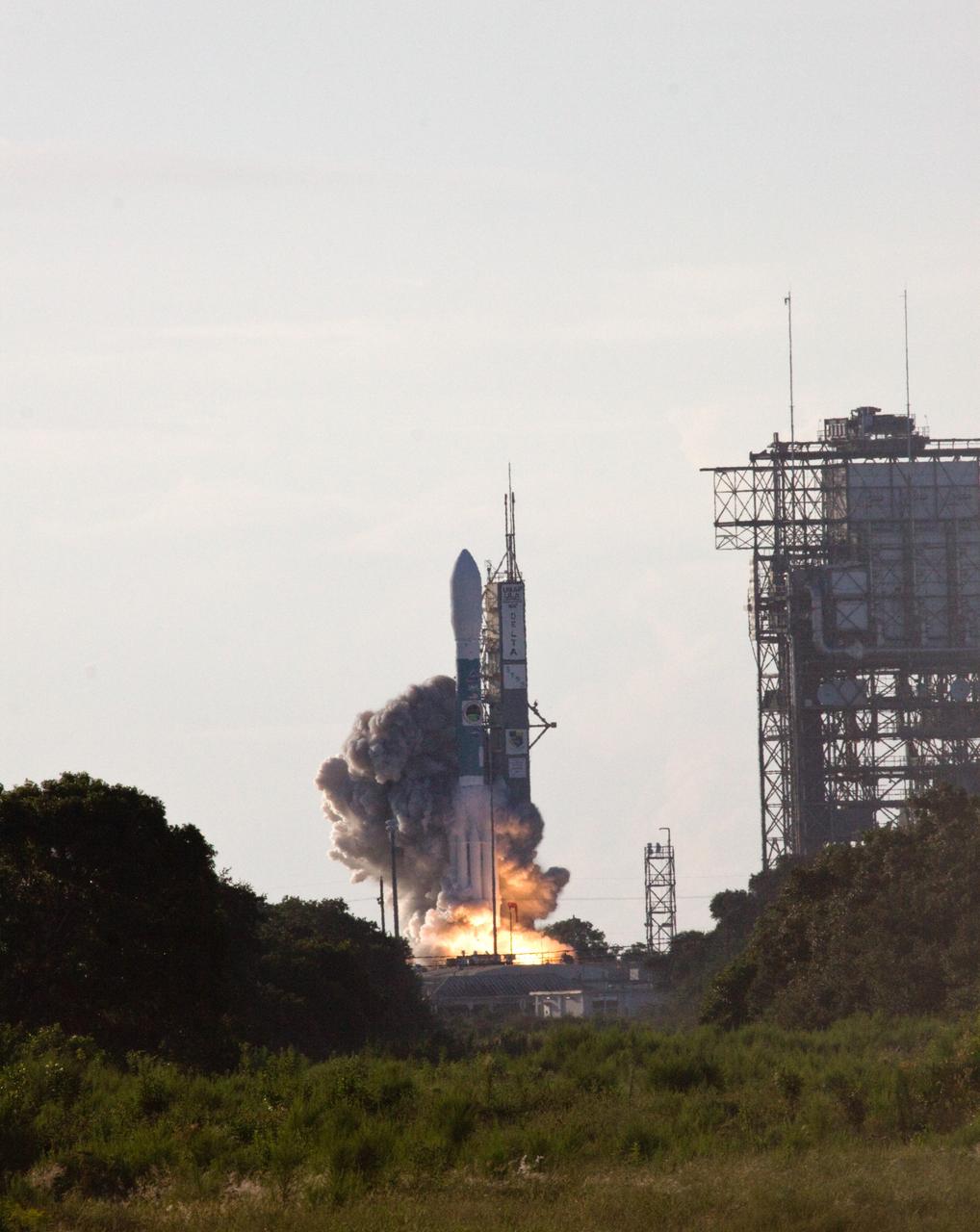
CAPE CANAVERAL, Fla. – Under a cloud-streaked sky, the Space Tracking and Surveillance System – Demonstrator, or STSS-Demo, waits through the countdown to liftoff Launch Pad 17-B at Cape Canaveral Air Force Station aboard a United Launch Alliance Delta II rocket. STSS-Demo is being launched by NASA for the U.S. Missile Defense Agency. Liftoff was at 8:20:22 a.m. EDT. The STSS-Demo is a space-based sensor component of a layered Ballistic Missile Defense System designed for the overall mission of detecting, tracking and discriminating ballistic missiles. STSS is capable of tracking objects after boost phase and provides trajectory information to other sensors. Photo credit: NASA/Jack Pfaller
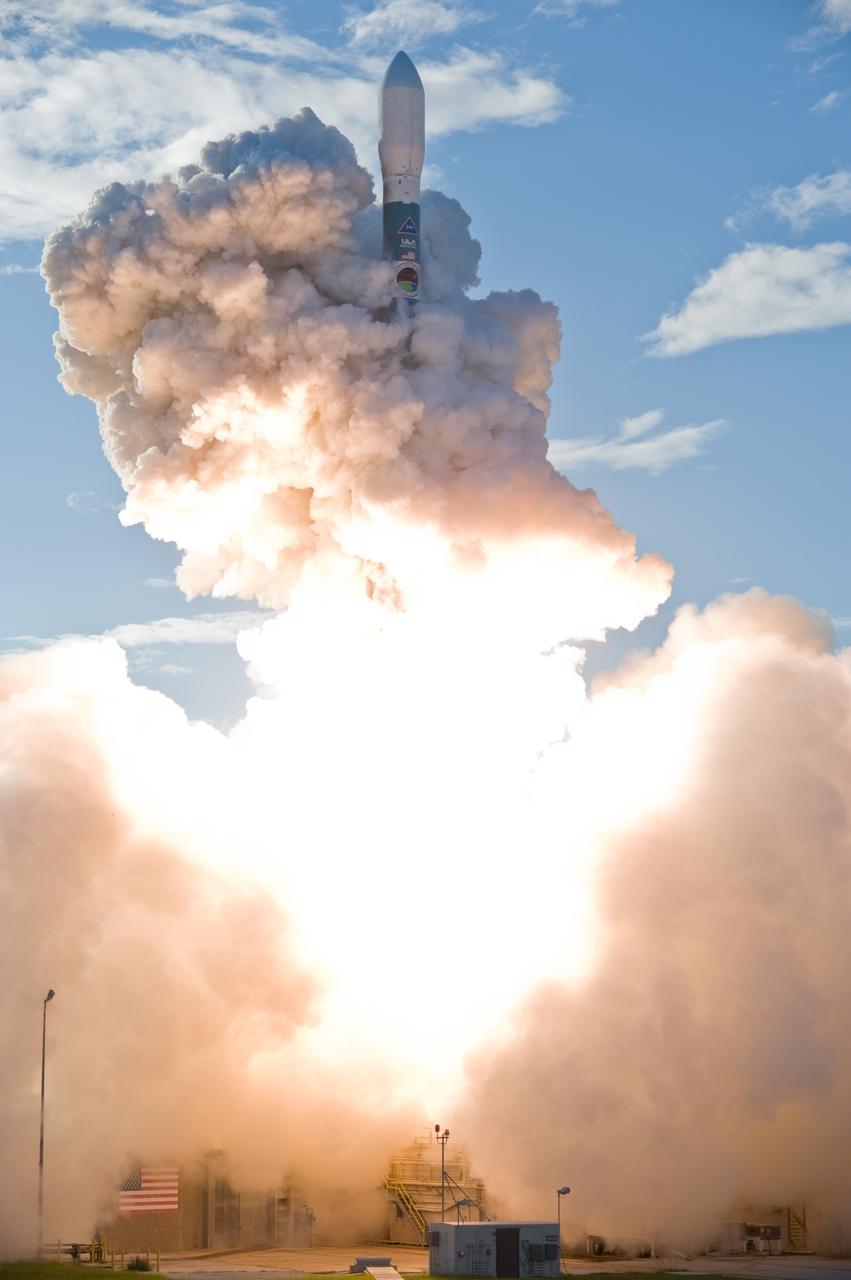
CAPE CANAVERAL, Fla. – The United Launch Alliance Delta II rocket carrying the Space Tracking and Surveillance System - Demonstrator, or STSS-Demo, spacecraft rises from a mantle of smoke as it lifts off from Launch Pad 17-B at Cape Canaveral Air Force Station. STSS-Demo was launched at 8:20:22 a.m. EDT by NASA for the U.S. Missile Defense Agency. The STSS-Demo is a space-based sensor component of a layered Ballistic Missile Defense System designed for the overall mission of detecting, tracking and discriminating ballistic missiles. STSS is capable of tracking objects after boost phase and provides trajectory information to other sensors. Photo credit: NASA/Sandra Joseph- Kevin O'Connell
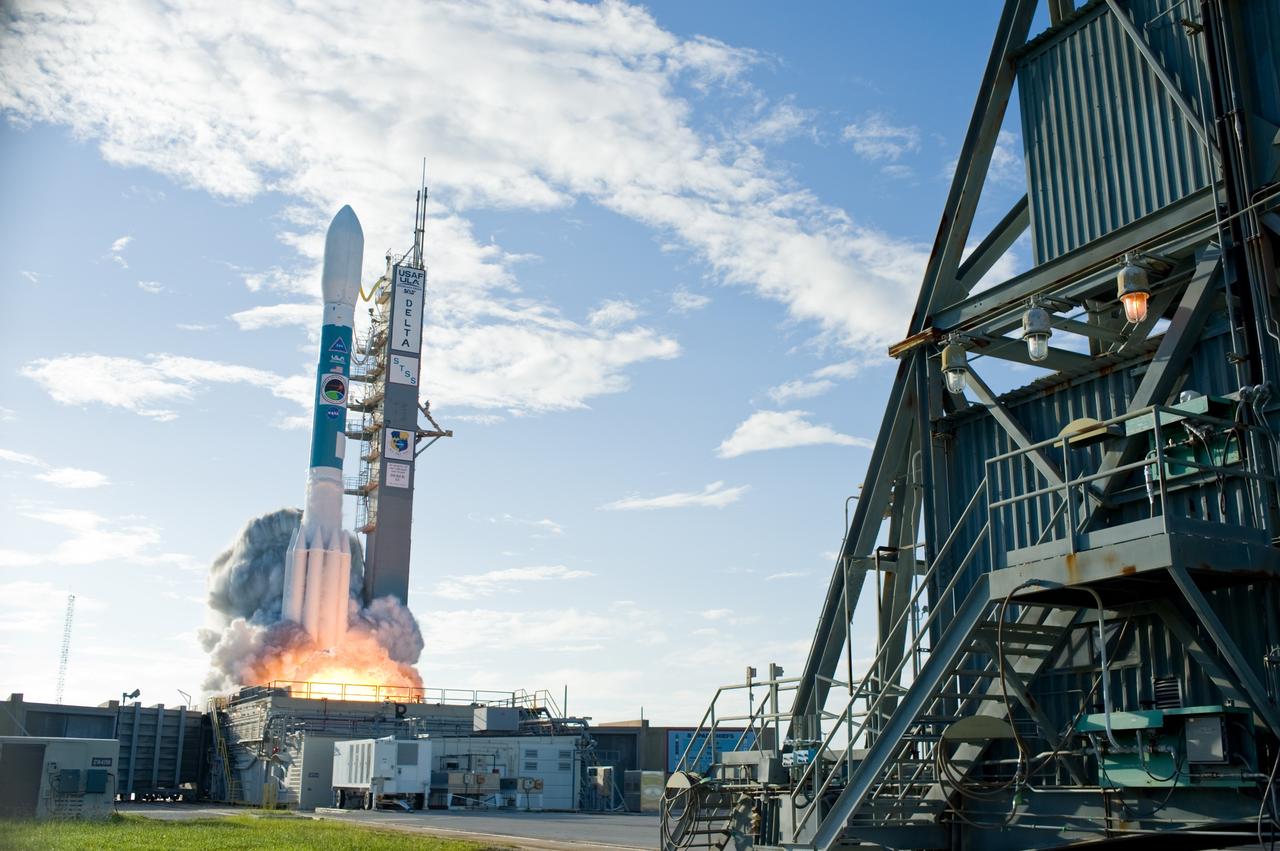
CAPE CANAVERAL, Fla. – The Space Tracking and Surveillance System - Demonstrator, or STSS-Demo, spacecraft lifts off through a cloud of smoke from Launch Pad 17-B at Cape Canaveral Air Force Station aboard a United Launch Alliance Delta II rocket. It was launched by NASA for the U.S. Missile Defense Agency. Launch was at 8:20:22 a.m. EDT. The STSS-Demo is a space-based sensor component of a layered Ballistic Missile Defense System designed for the overall mission of detecting, tracking and discriminating ballistic missiles. Photo credit: NASA/Regina Mitchell-Tom Farrar

CAPE CANAVERAL, Fla. – From Hangar AE at Cape Canaveral Air Force Station in Florida, Garrett Lee Skrobot, who is NASA's mission manager for the Space Tracking and Surveillance System – Demonstrator, oversees the launch. The STSS-Demo spacecraft launched at 8:20:22 a.m. EDT aboard a United Launch Alliance Delta II rocket. It was launched by NASA for the U.S. Missile Defense Agency. The STSS-Demo is a space-based sensor component of a layered Ballistic Missile Defense System designed for the overall mission of detecting, tracking and discriminating ballistic missiles. Photo credit: NASA/Kim Shiflett

CAPE CANAVERAL, Fla. – The United Launch Alliance Delta II rocket with Space Tracking and Surveillance System - Demonstrator, or STSS-Demo, spacecraft aboard races into the sky leaving a trail of fire and smoke after liftoff from Launch Pad 17-B at Cape Canaveral Air Force Station. It was launched by NASA for the U.S. Missile Defense Agency at 8:20:22 a.m. EDT. The STSS-Demo is a space-based sensor component of a layered Ballistic Missile Defense System designed for the overall mission of detecting, tracking and discriminating ballistic missiles. STSS is capable of tracking objects after boost phase and provides trajectory information to other sensors. Photo credit: NASA/Alan Ault

CAPE CANAVERAL, Fla. – The Space Tracking and Surveillance System - Demonstrator, or STSS-Demo, spacecraft lifts off through a cloud of smoke from Launch Pad 17-B at Cape Canaveral Air Force Station aboard a United Launch Alliance Delta II rocket. It was launched by NASA for the U.S. Missile Defense Agency. Launch was at 8:20:22 a.m. EDT. The STSS-Demo is a space-based sensor component of a layered Ballistic Missile Defense System designed for the overall mission of detecting, tracking and discriminating ballistic missiles. STSS is capable of tracking objects after boost phase and provides trajectory information to other sensors. Photo credit: NASA/Jack Pfaller
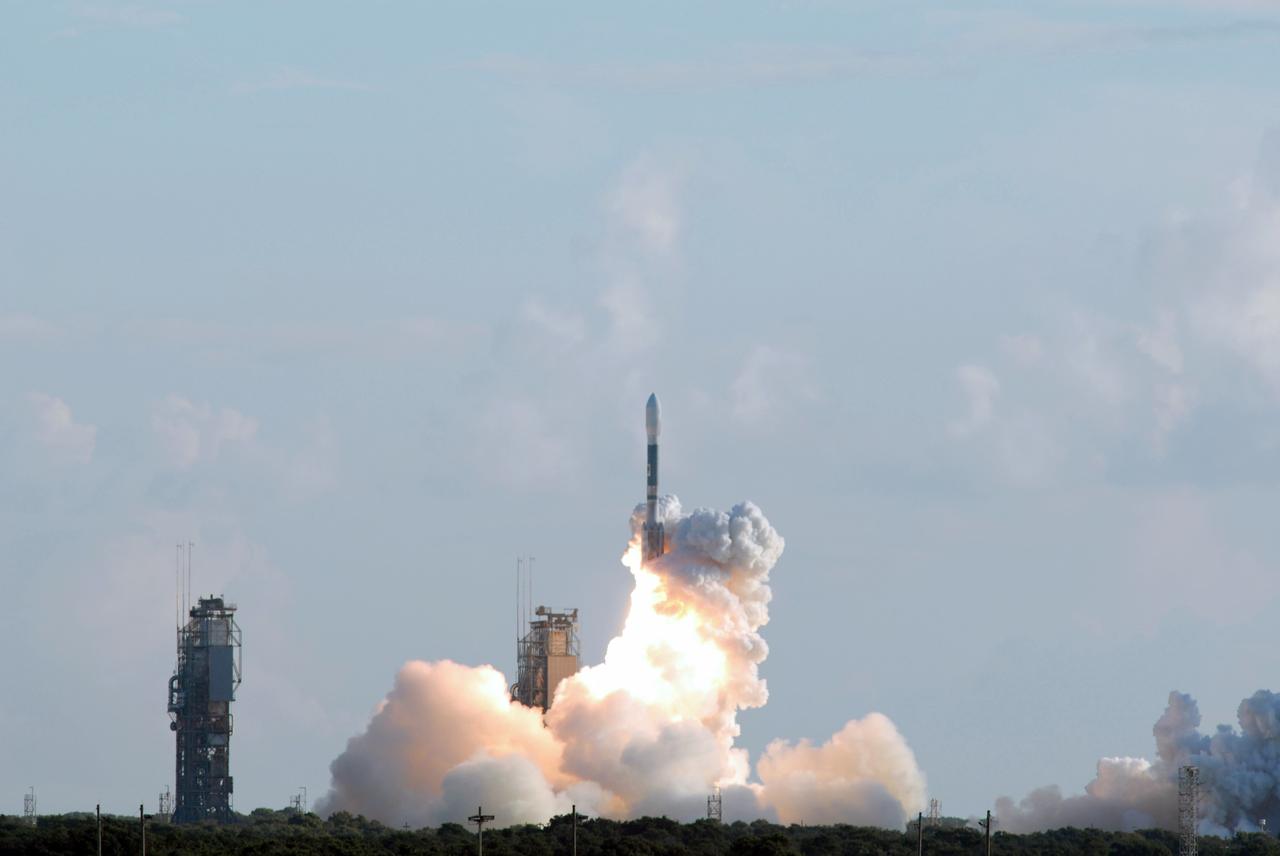
CAPE CANAVERAL, Fla. – The Space Tracking and Surveillance System - Demonstrator, or STSS-Demo, spacecraft lifts off through a cloud of smoke from Launch Pad 17-B at Cape Canaveral Air Force Station aboard a United Launch Alliance Delta II rocket. It was launched by NASA for the U.S. Missile Defense Agency. Launch was at 8:20:22 a.m. EDT. The STSS-Demo is a space-based sensor component of a layered Ballistic Missile Defense System designed for the overall mission of detecting, tracking and discriminating ballistic missiles. STSS is capable of tracking objects after boost phase and provides trajectory information to other sensors. Photo credit: NASA/Alan Ault
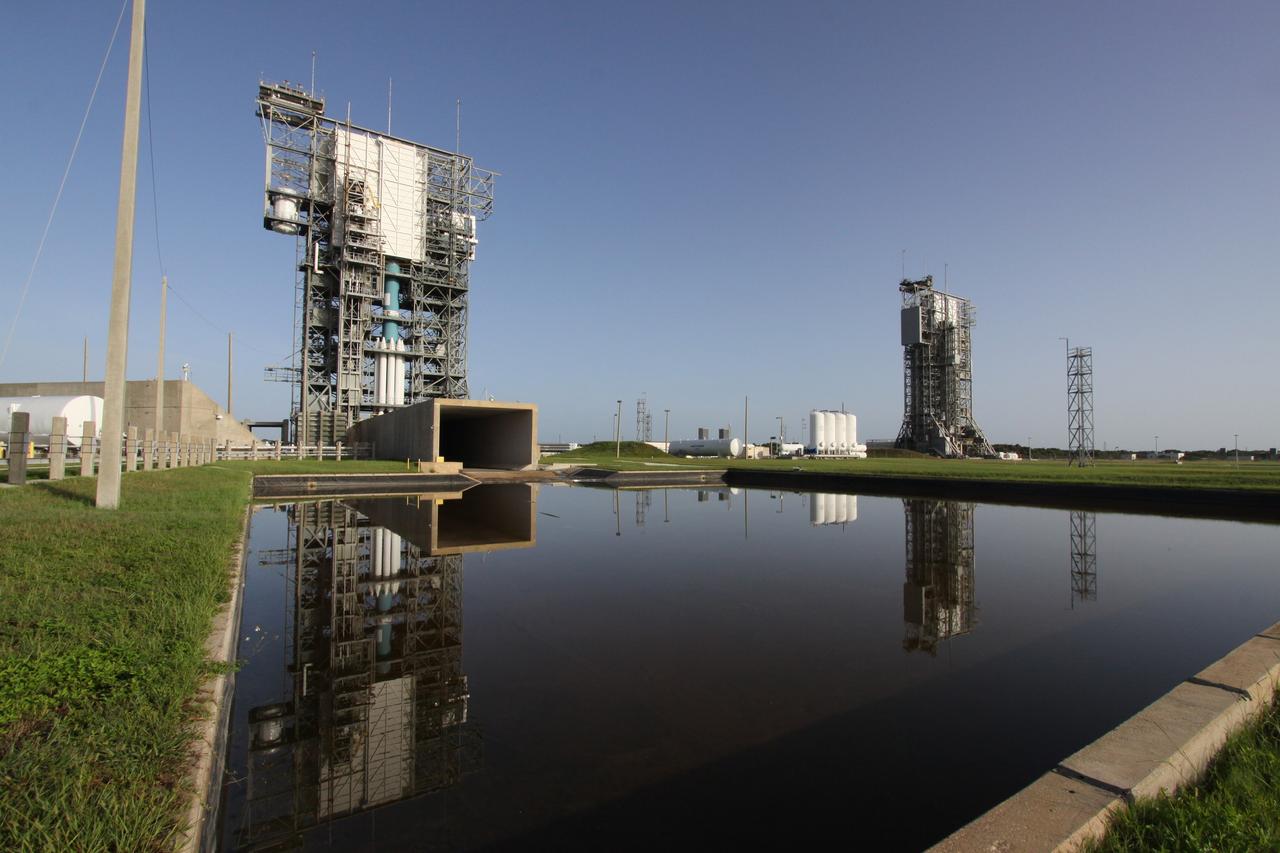
CAPE CANAVERAL, Fla. – The enclosed Space Tracking and Surveillance System – Demonstrators, or STSS-Demo, spacecraft is being lifted into the mobile service tower on Cape Canaveral Air Force Station's Launch Pad 17-B. The United Launch Alliance Delta II launch vehicle is already in place in the tower. The STSS Demo is a space-based sensor component of a layered Ballistic Missile Defense System designed for the overall mission of detecting, tracking and discriminating ballistic missiles. STSS is capable of tracking objects after boost phase and provides trajectory information to other sensors. It will be launched by NASA for the Missile Defense Agency between 8 and 8:58 a.m. EDT Sept. 18. Approved for Public Release 09-MDA-04886 (10 SEPT 09) Photo credit: NASA/Jack Pfaller
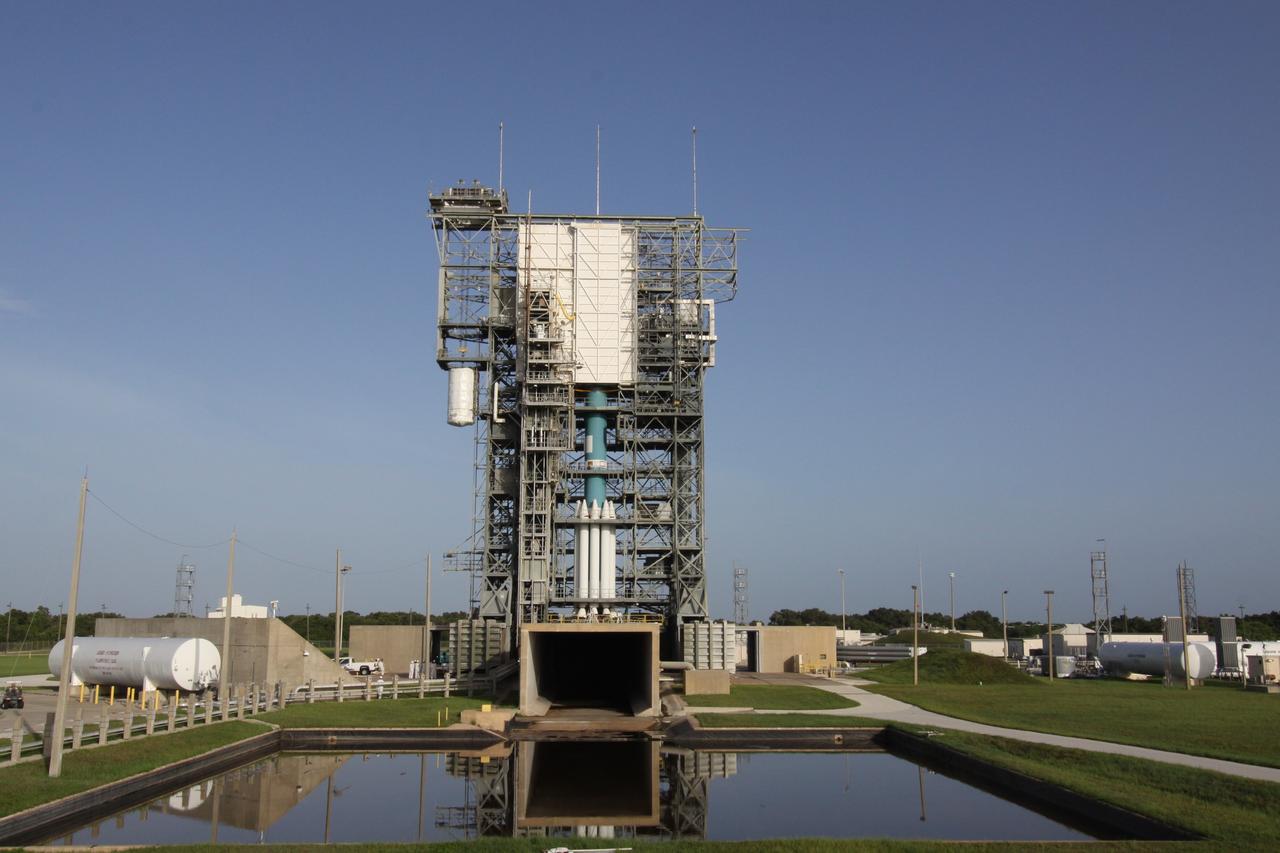
CAPE CANAVERAL, Fla. – The enclosed Space Tracking and Surveillance System – Demonstrators, or STSS-Demo, spacecraft is being lifted into the mobile service tower on Cape Canaveral Air Force Station's Launch Pad 17-B. The United Launch Alliance Delta II launch vehicle is already in place in the tower. The STSS Demo is a space-based sensor component of a layered Ballistic Missile Defense System designed for the overall mission of detecting, tracking and discriminating ballistic missiles. STSS is capable of tracking objects after boost phase and provides trajectory information to other sensors. It will be launched by NASA for the Missile Defense Agency between 8 and 8:58 a.m. EDT Sept. 18. Approved for Public Release 09-MDA-04886 (10 SEPT 09) Photo credit: NASA/Jack Pfaller
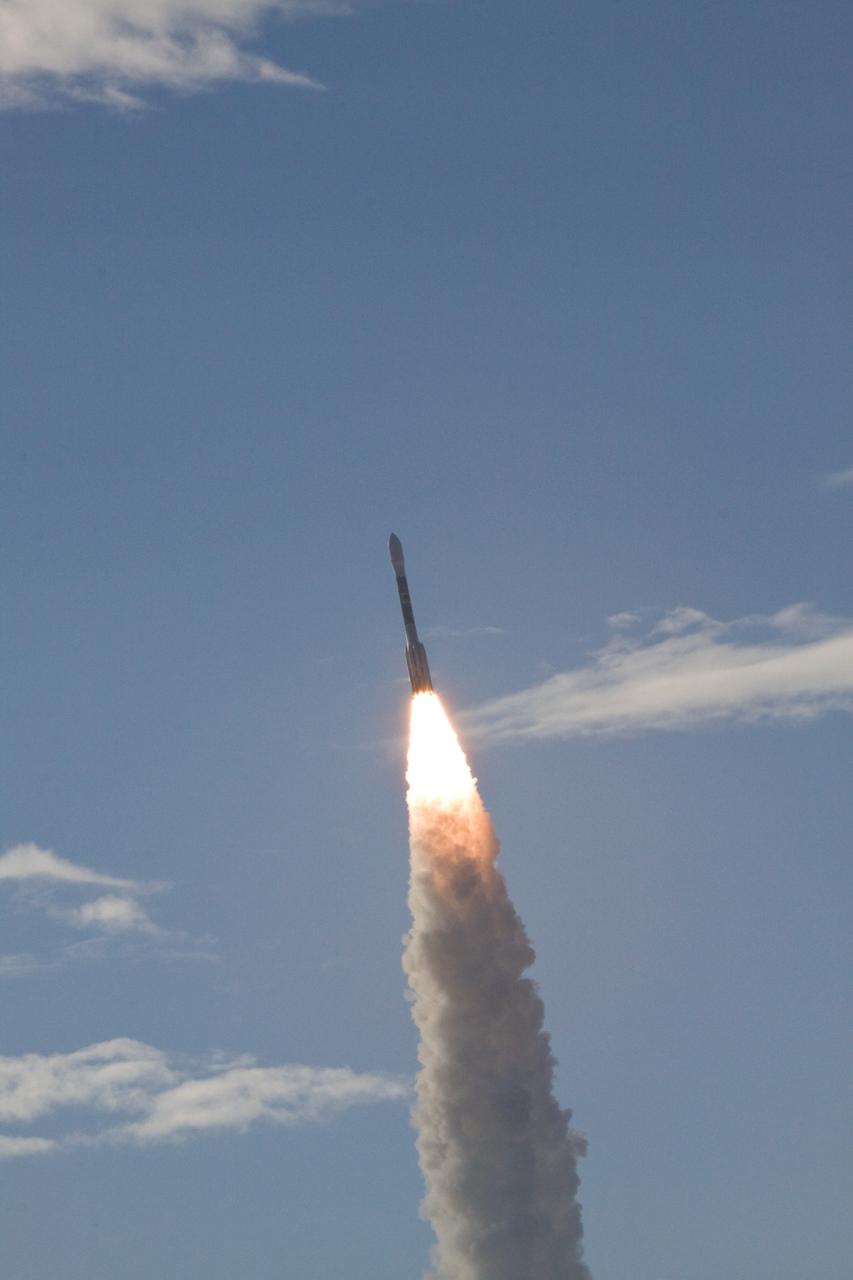
CAPE CANAVERAL, Fla. – The United Launch Alliance Delta II rocket with Space Tracking and Surveillance System - Demonstrator, or STSS-Demo, spacecraft aboard races into the sky leaving a trail of fire and smoke after liftoff from Launch Pad 17-B at Cape Canaveral Air Force Station. It was launched by NASA for the U.S. Missile Defense Agency. Launch was at 8:20:22 a.m. EDT. The STSS-Demo is a space-based sensor component of a layered Ballistic Missile Defense System designed for the overall mission of detecting, tracking and discriminating ballistic missiles. STSS is capable of tracking objects after boost phase and provides trajectory information to other sensors. Photo credit: NASA/Jack Pfaller

In this illustration, a SpaceX Crew Dragon spacecraft is shown in low-Earth orbit. NASA is partnering with Boeing and SpaceX to build a new generation of human-rated spacecraft capable of taking astronauts to the International Space Station and expanding research opportunities in orbit. SpaceX's upcoming Demo-1 flight test is part of NASA’s Commercial Crew Transportation Capability contract with the goal of returning human spaceflight launch capabilities to the United States.
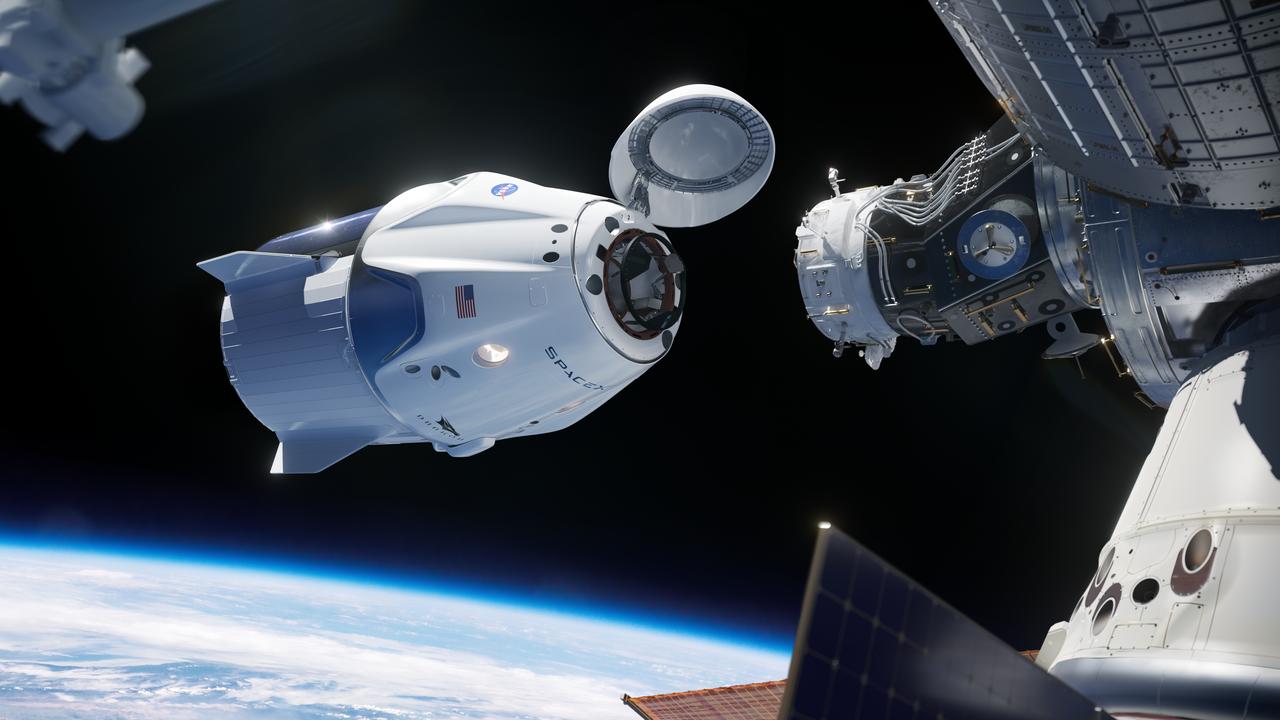
In this illustration, a SpaceX Crew Dragon spacecraft approaches the International Space Station for docking. NASA is partnering with Boeing and SpaceX to build a new generation of human-rated spacecraft capable of taking astronauts to the station and expanding research opportunities in orbit. SpaceX's upcoming Demo-1 flight test is part of NASA’s Commercial Crew Transportation Capability contract with the goal of returning human spaceflight launch capabilities to the United States.
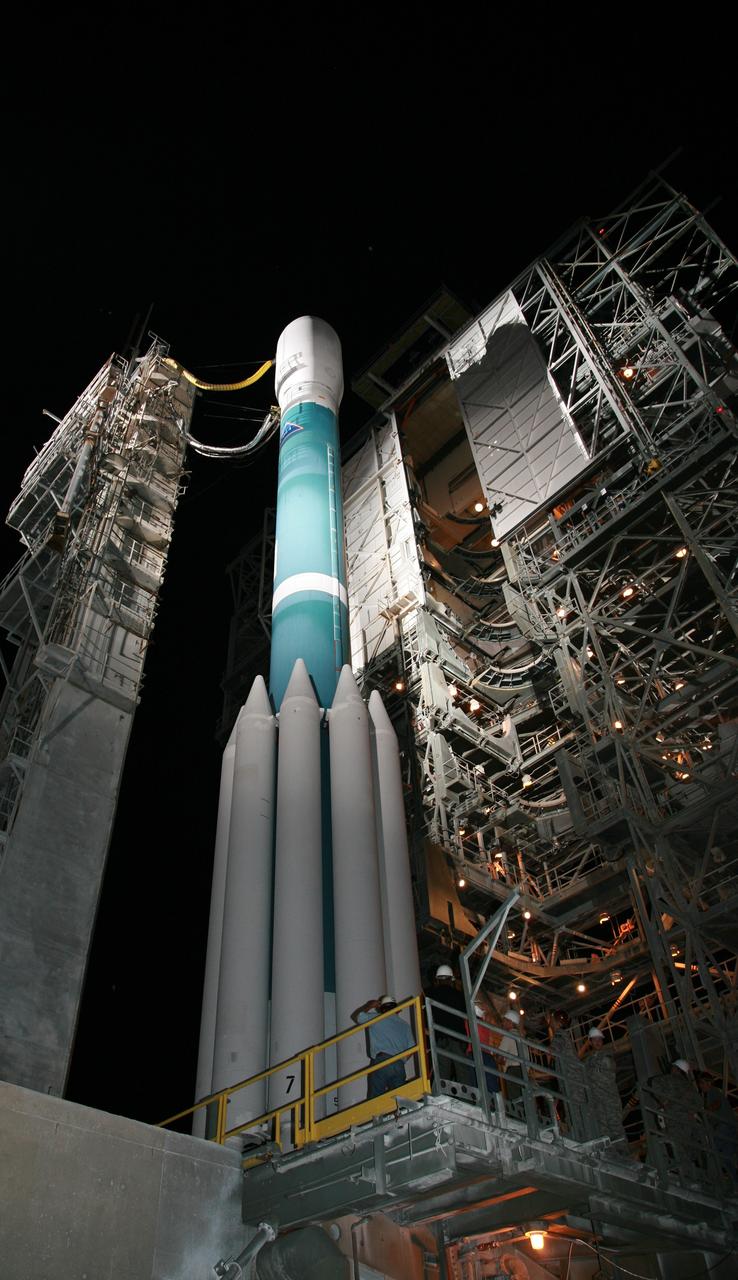
CAPE CANAVERAL, Fla. – The mobile service tower on Launch Pad 17-B at Cape Canaveral Air Force Station rolls back to reveal the United Launch Alliance Delta II rocket that will launch the Space Tracking and Surveillance System - Demonstrator into orbit. It is being launched by NASA for the Missile Defense System. The hour-long launch window opens at 8 a.m. EDT today. The STSS Demo is a space-based sensor component of a layered Ballistic Missile Defense System designed for the overall mission of detecting, tracking and discriminating ballistic missiles. STSS is capable of tracking objects after boost phase and provides trajectory information to other sensors. Photo credit: NASA/Dimitri Gerondidakis
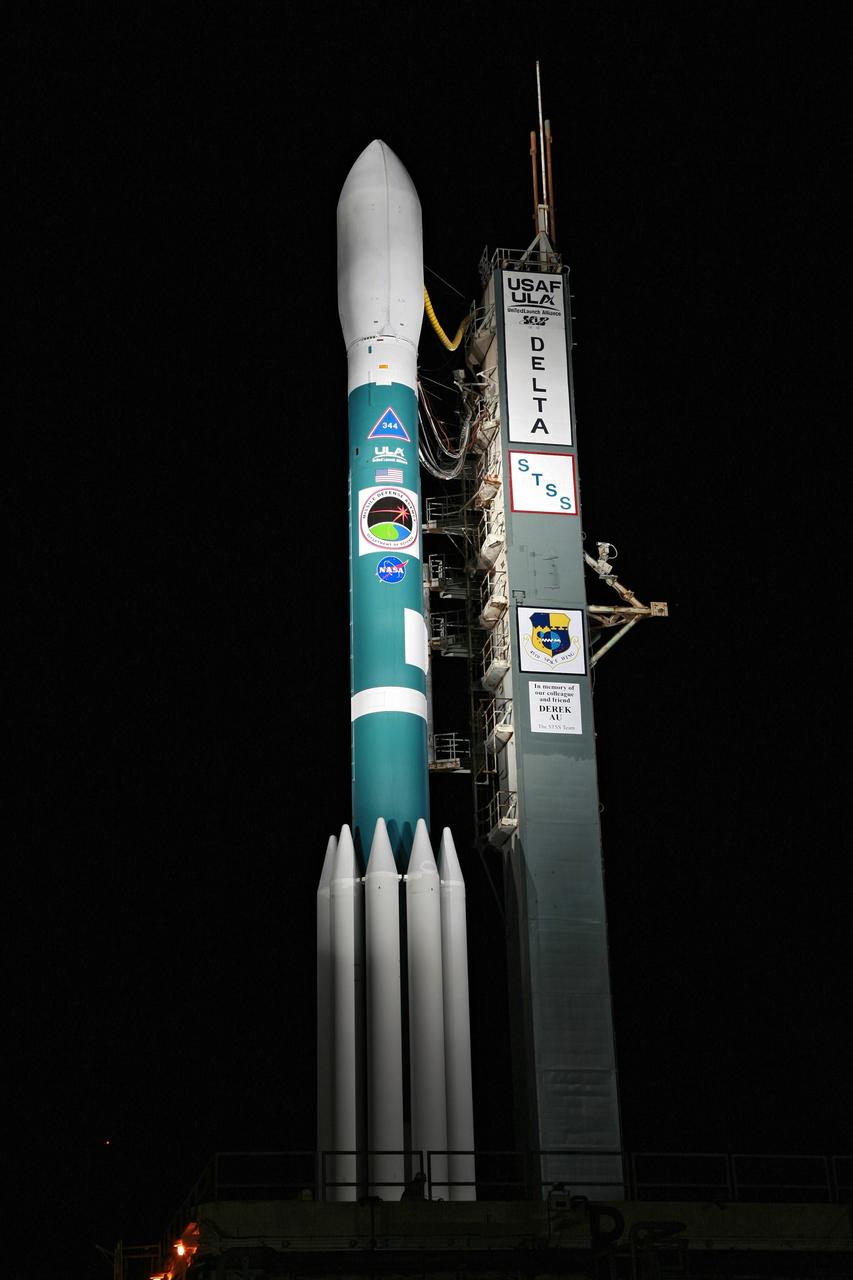
CAPE CANAVERAL, Fla. – The mobile service tower on Launch Pad 17-B at Cape Canaveral Air Force Station has been rolled back to reveal the United Launch Alliance Delta II rocket ready to launch the Space Tracking and Surveillance System - Demonstrator into orbit. It is being launched by NASA for the Missile Defense System. The hour-long launch window opens at 8 a.m. EDT today. The STSS Demo is a space-based sensor component of a layered Ballistic Missile Defense System designed for the overall mission of detecting, tracking and discriminating ballistic missiles. STSS is capable of tracking objects after boost phase and provides trajectory information to other sensors. Photo credit: NASA/Dimitri Gerondidakis

CAPE CANAVERAL, Fla. – The mobile service tower on Launch Pad 17-B at Cape Canaveral Air Force Station has been rolled back as the countdown proceeds to launch of the United Launch Alliance Delta II rocket with the Space Tracking and Surveillance System - Demonstrator spacecraft aboard. It is being launched by NASA for the Missile Defense System. The hour-long launch window opens at 8 a.m. EDT today. The STSS Demo is a space-based sensor component of a layered Ballistic Missile Defense System designed for the overall mission of detecting, tracking and discriminating ballistic missiles. STSS is capable of tracking objects after boost phase and provides trajectory information to other sensors. Photo credit: NASA/Dimitri Gerondidakis
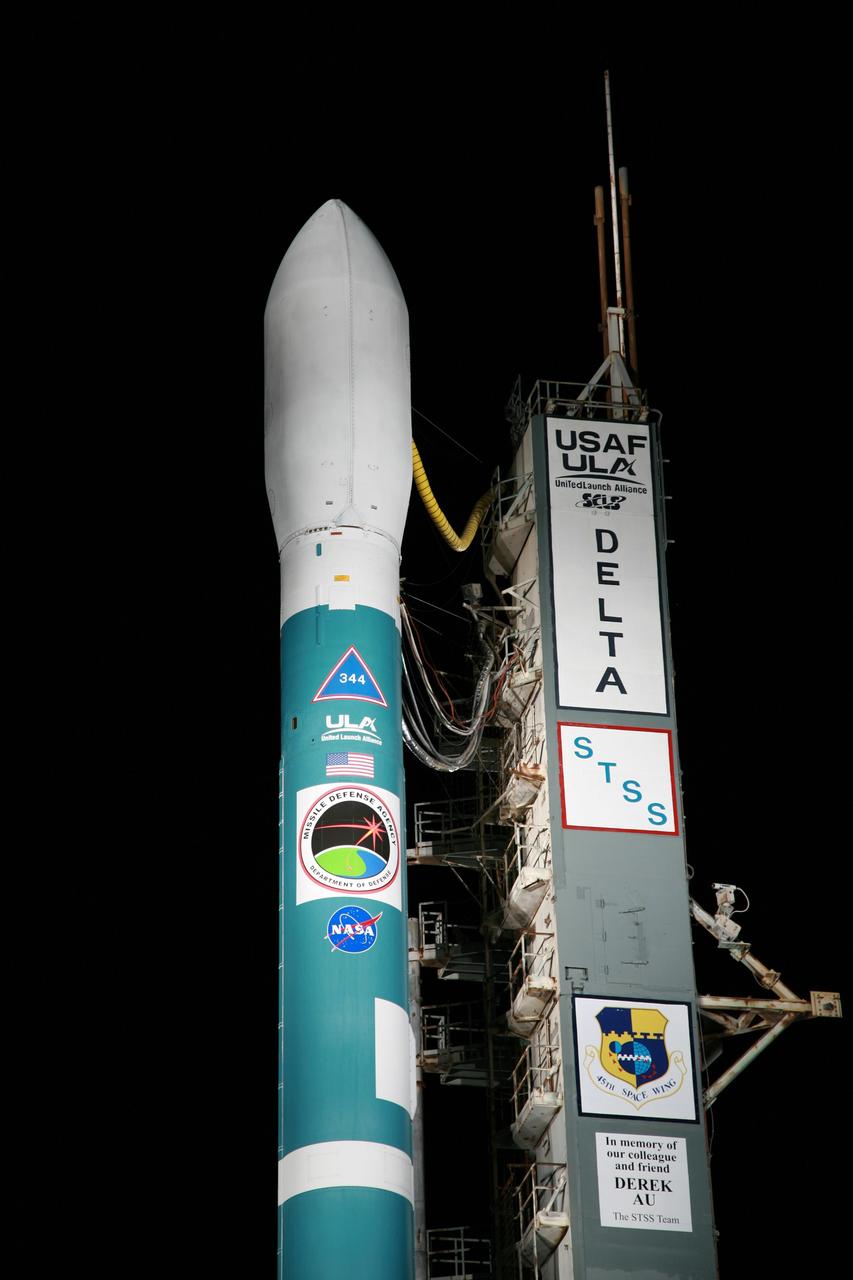
CAPE CANAVERAL, Fla. – The mobile service tower on Launch Pad 17-B at Cape Canaveral Air Force Station has been rolled back to reveal the United Launch Alliance Delta II rocket that will launch the Space Tracking and Surveillance System - Demonstrator into orbit. It is being launched by NASA for the Missile Defense System. The hour-long launch window opens at 8 a.m. EDT today. The STSS Demo is a space-based sensor component of a layered Ballistic Missile Defense System designed for the overall mission of detecting, tracking and discriminating ballistic missiles. STSS is capable of tracking objects after boost phase and provides trajectory information to other sensors. Photo credit: NASA/Dimitri Gerondidakis
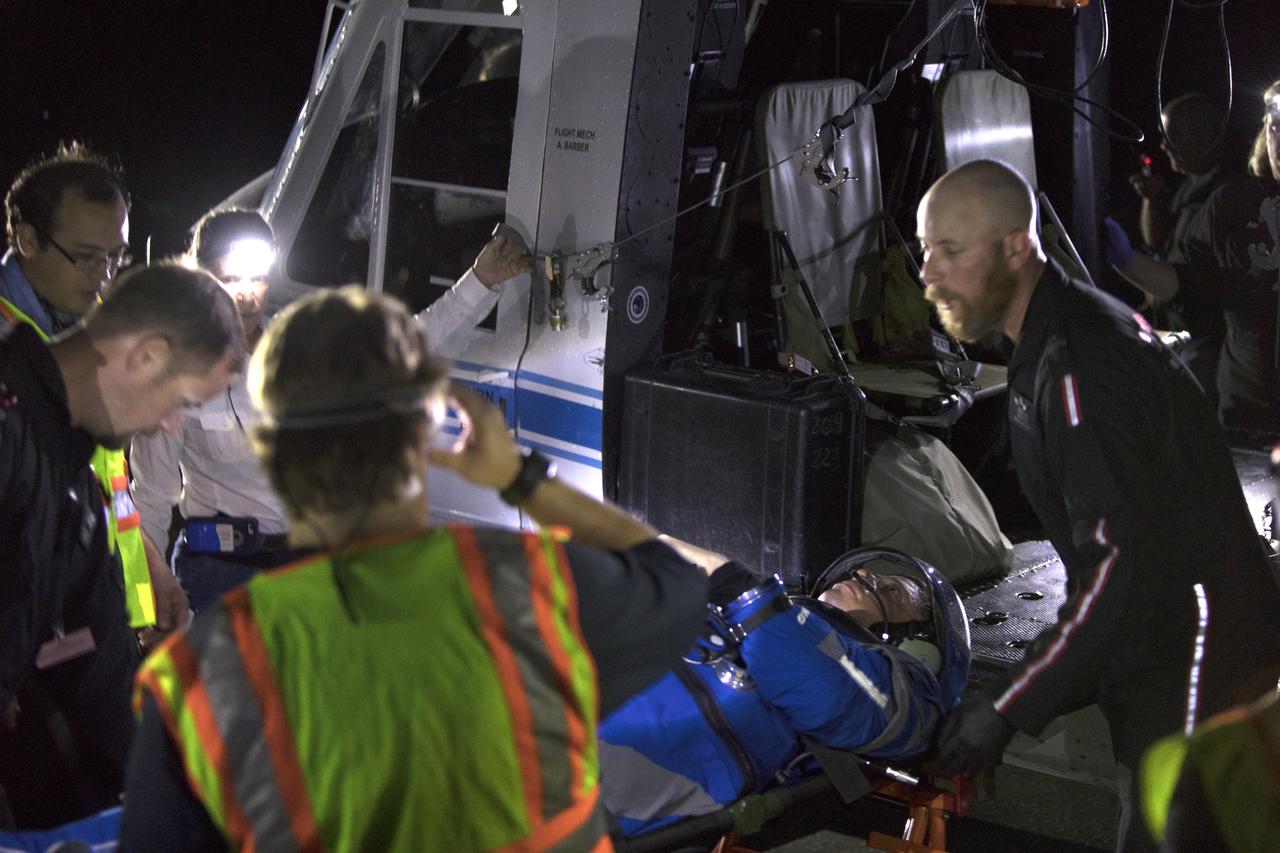
A Commercial Crew astronaut participates in a Boeing/United Launch Alliance emergency egress system demonstration at Cape Canaveral Air Force Station’s Launch Complex 41 in Florida on June 19, 2018. The system features seats attached to slide wires which would carry astronauts and ground crew more than 1,300 feet away from the crew access tower in the unlikely event of an emergency prior to liftoff.
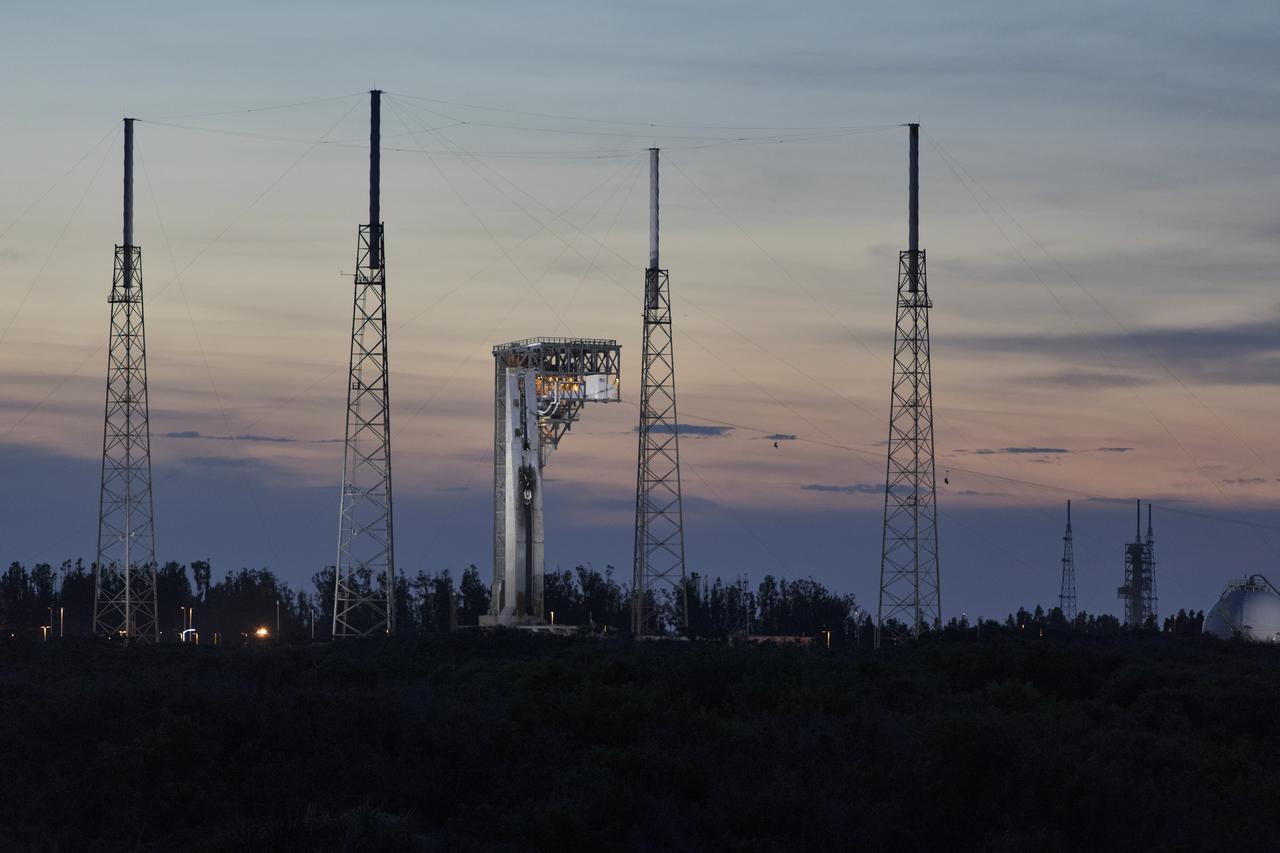
Commercial Crew astronauts participate in a Boeing/United Launch Alliance (ULA) emergency egress system demonstration at Cape Canaveral Air Force Station’s Launch Complex 41 in Florida on June 19, 2018. The emergency egress system will allow for a safe evacuation in the unlikely event of an emergency on the launch pad on launch day. It can carry up to 20 people more than 1,300 feet away from the crew access tower and the launch vehicle. The Boeing CST-100 Starliner will launch on a ULA Atlas V rocket, carrying astronauts to the International Space Station.
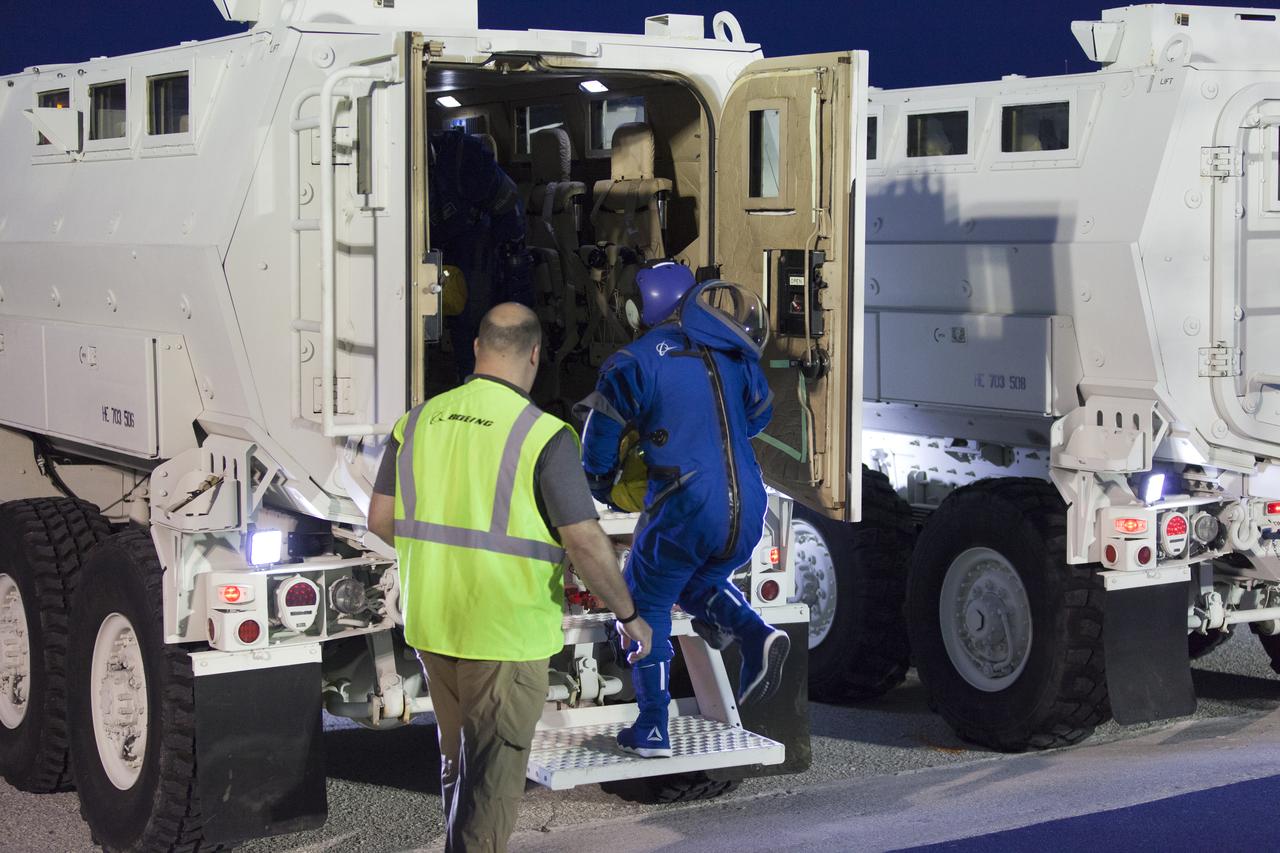
An astronaut heads into a mine-resistant ambush protected vehicle, or MRAP, during a Boeing/United Launch Alliance emergency egress system demonstration at Cape Canaveral Air Force Station’s Launch Complex 41 in Florida on June 19, 2018. NASA’s MRAPs offer a mobile bunker for astronauts and ground crews, should they need to escape from the launch pad quickly in an emergency.
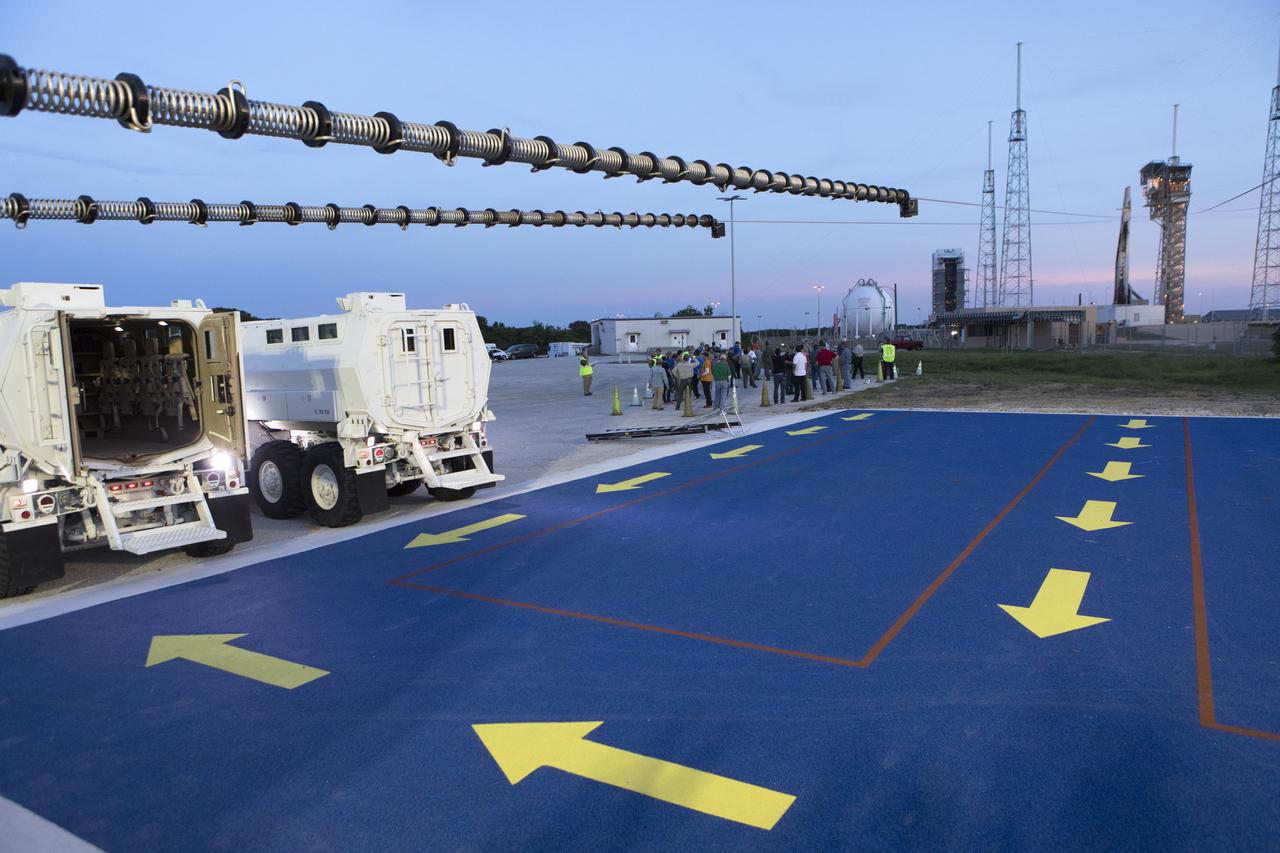
Two mine-resistant ambush protected vehicles, or MRAPs, sit ready to receive astronauts and ground crews during a Boeing/United Launch Alliance emergency egress system demonstration at Cape Canaveral Air Force Station’s Launch Complex 41 in Florida on June 19, 2018. The emergency egress system will provide an escape route in the unlikely event of an emergency on the launch pad on launch day.
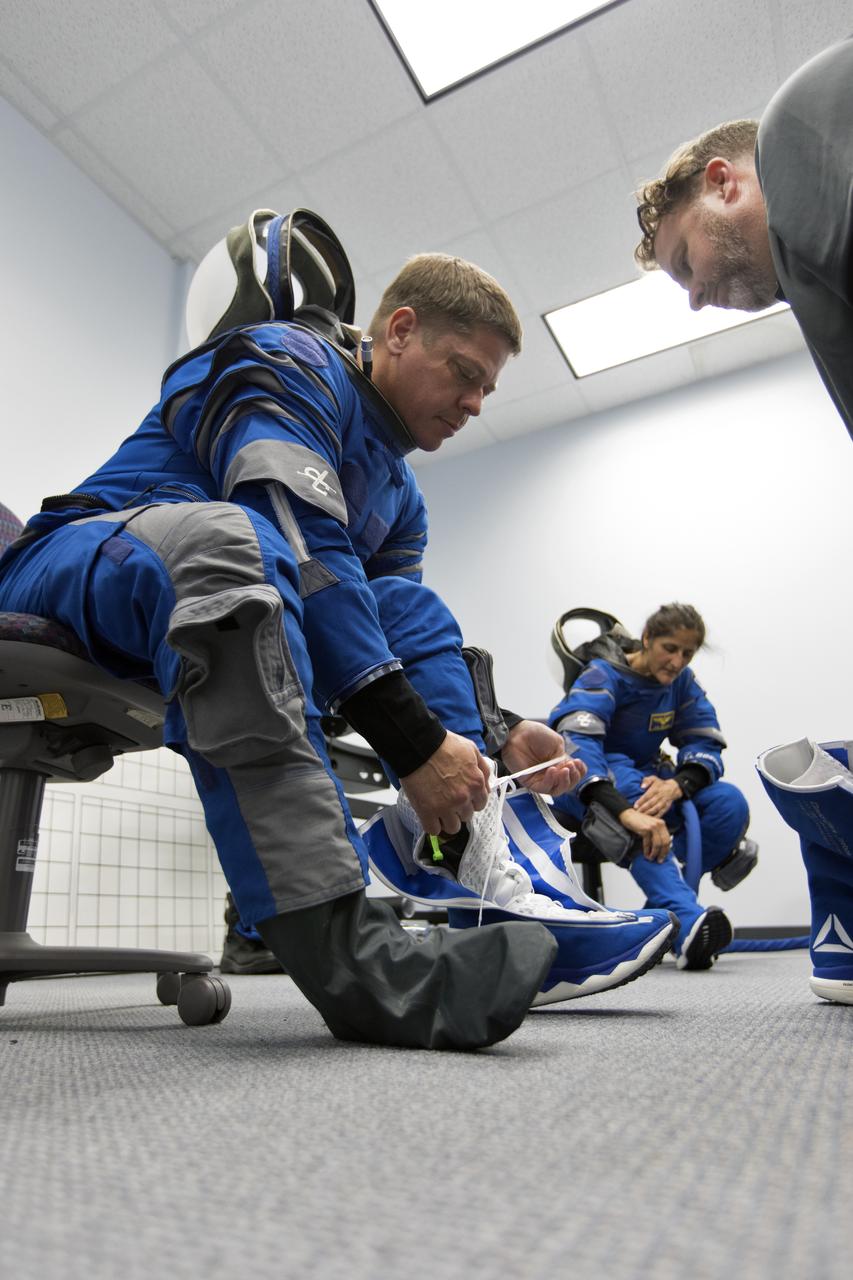
NASA astronauts Bob Behnken and Suni Williams get suited up for a Boeing/United Launch Alliance emergency egress system demonstration at Cape Canaveral Air Force Station’s Launch Complex 41 in Florida on June 19, 2018. Behnken and other astronauts tested the system, which is designed to evacuate them safely in the unlikely event of an emergency on the launch pad on launch day. The Boeing CST-100 Starliner will launch on a ULA Atlas V rocket, carrying astronauts to the International Space Station.
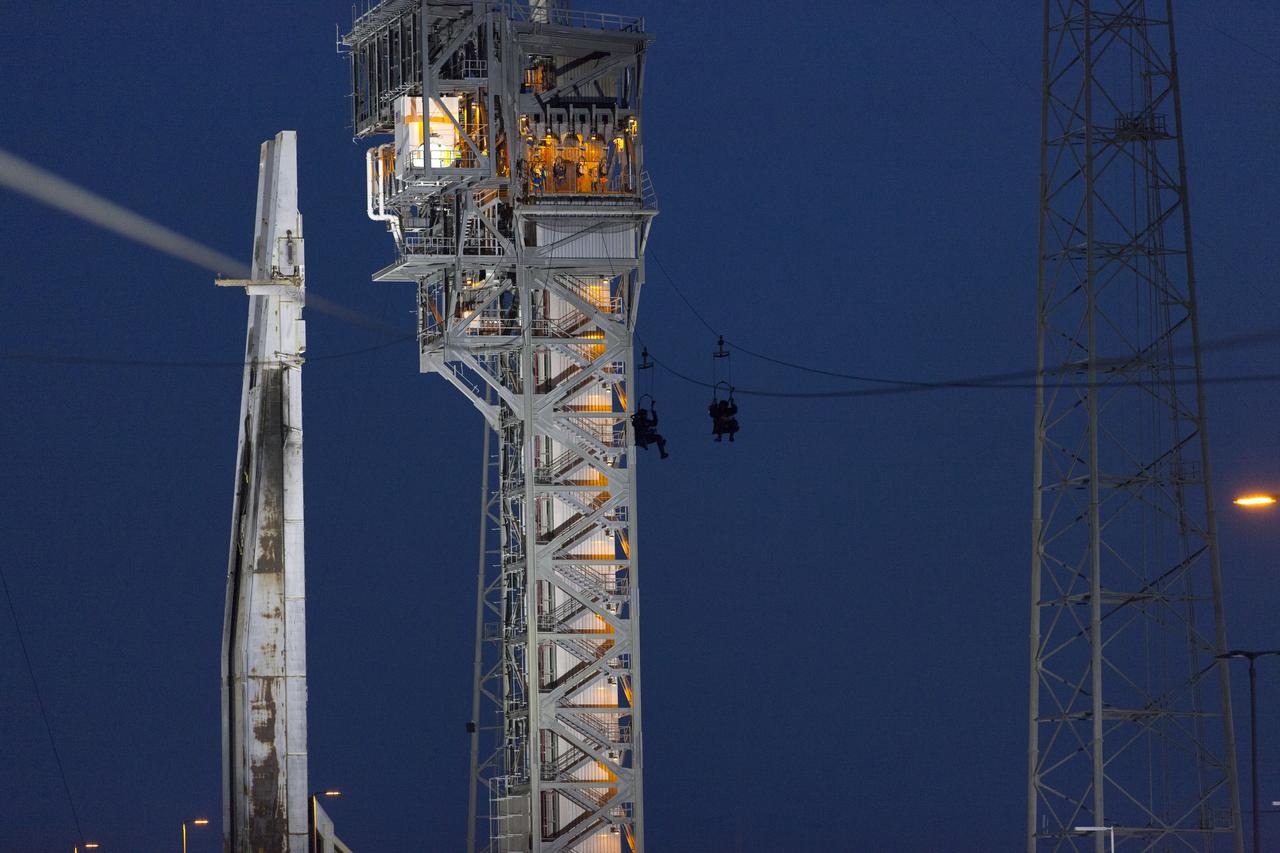
Commercial Crew astronauts participate in a Boeing/United Launch Alliance (ULA) emergency egress system demonstration at Cape Canaveral Air Force Station’s Launch Complex 41 in Florida on June 19, 2018. The emergency egress system features folding seats attached to slide wires. In the unlikely event of an emergency prior to liftoff on launch day, each person on the Crew Access Tower would get his or her own seat and slide more than 1,300 feet to a safe area.
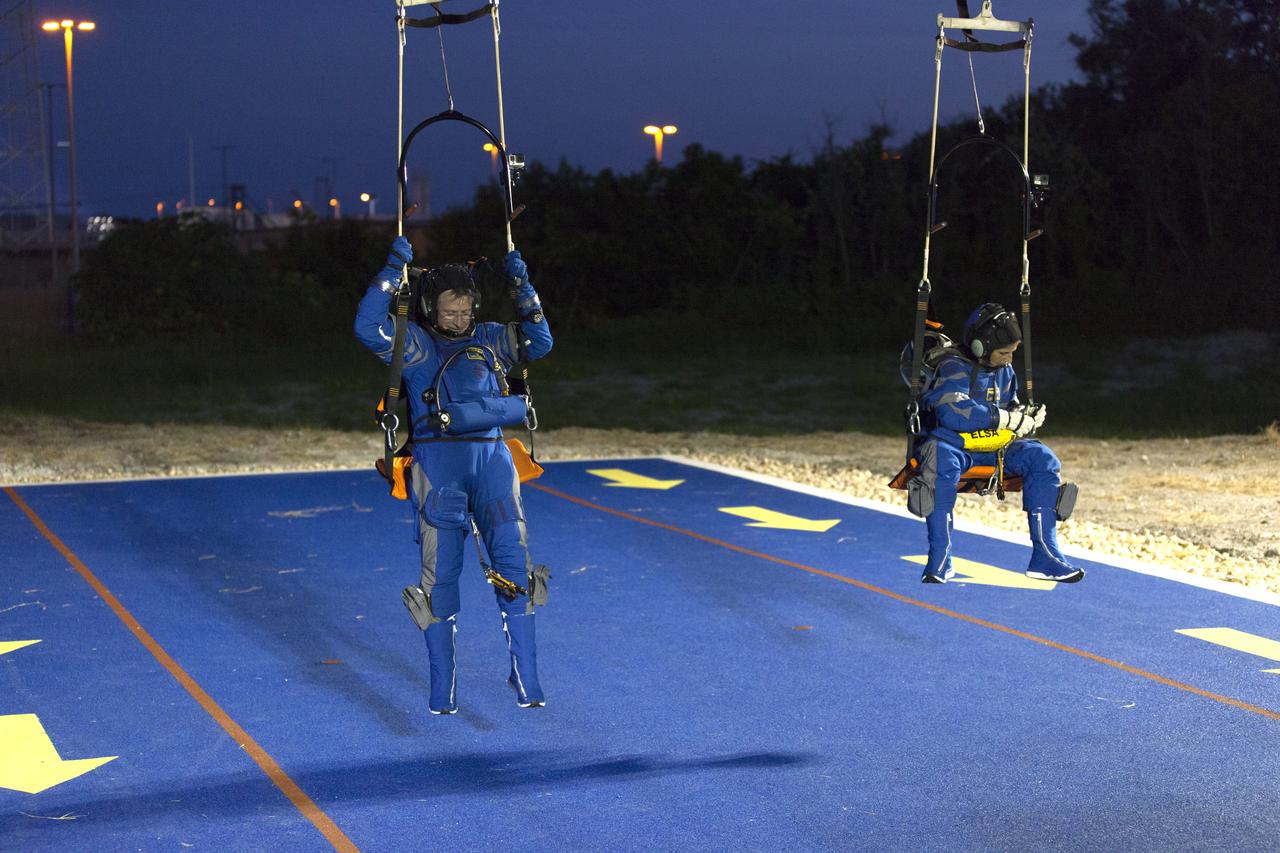
Astronauts participate in a Boeing/United Launch Alliance emergency egress system demonstration at Cape Canaveral Air Force Station’s Launch Complex 41 in Florida on June 19, 2018. The system features seats attached to slide wires which would carry astronauts and ground crew more than 1,300 feet away from the crew access tower in the unlikely event of an emergency prior to liftoff on launch day.
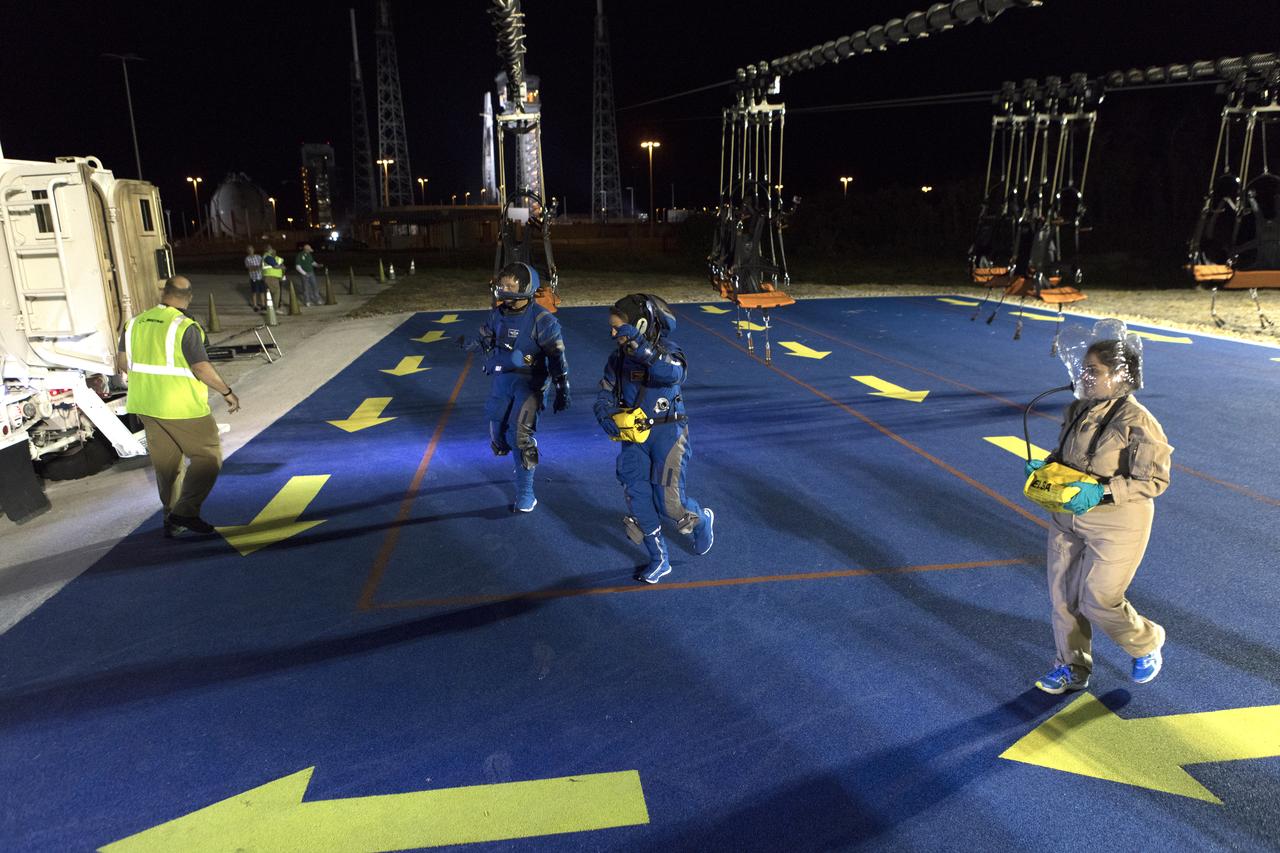
Astronauts participate in a Boeing/United Launch Alliance (ULA) emergency egress system demonstration at Cape Canaveral Air Force Station’s Launch Complex 41 in Florida on June 19, 2018. The system is designed to safely evacuate astronauts and ground crews in the unlikely event of an emergency on the launch pad on launch day. The Boeing CST-100 Starliner will launch on a ULA Atlas V rocket, carrying astronauts to the International Space Station.
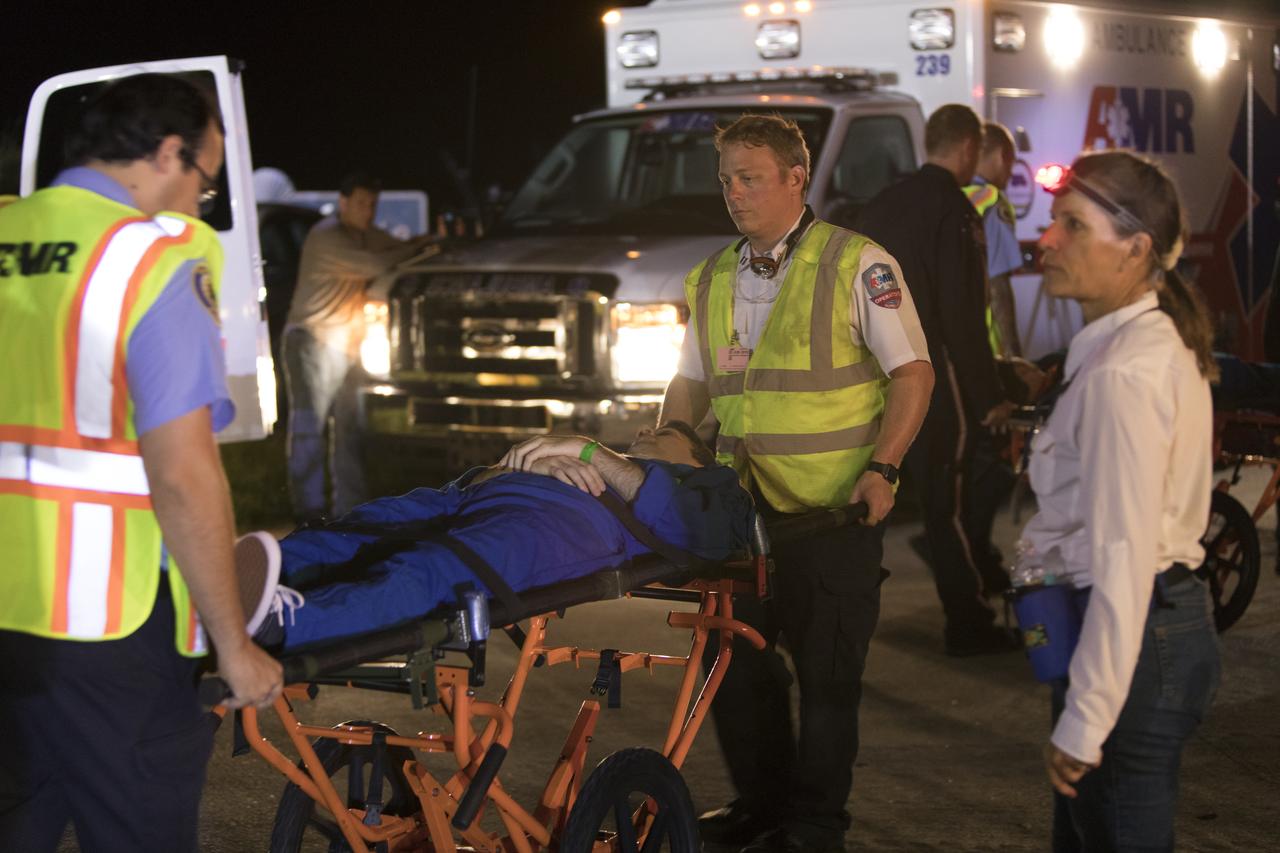
Boeing and United Launch Alliance (ULA) conducted an emergency egress system demonstration with Commercial Crew astronauts at Cape Canaveral Air Force Station’s Launch Complex 41 in Florida on June 19, 2018. The Boeing CST-100 Starliner will launch on a ULA Atlas V rocket, carrying astronauts to the International Space Station. The emergency egress system will allow for a safe evacuation in the unlikely event of an emergency on the launch pad.
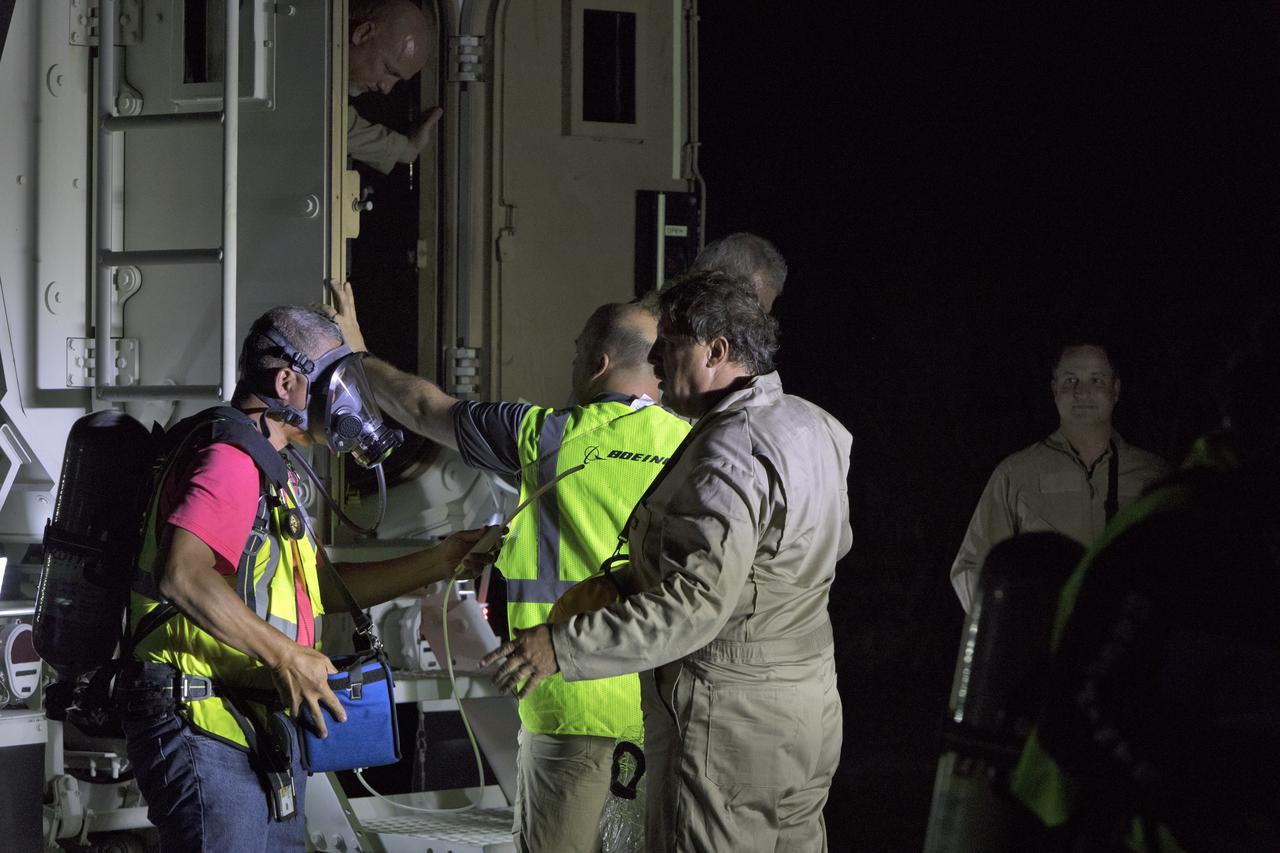
Boeing and United Launch Alliance (ULA) conducted an emergency egress system demonstration at Cape Canaveral Air Force Station’s Launch Complex 41 in Florida on June 19, 2018. The emergency egress system will allow for a safe evacuation in the unlikely event of an emergency on the launch pad on launch day. The Boeing CST-100 Starliner will launch on a ULA Atlas V rocket, carrying astronauts to the International Space Station.
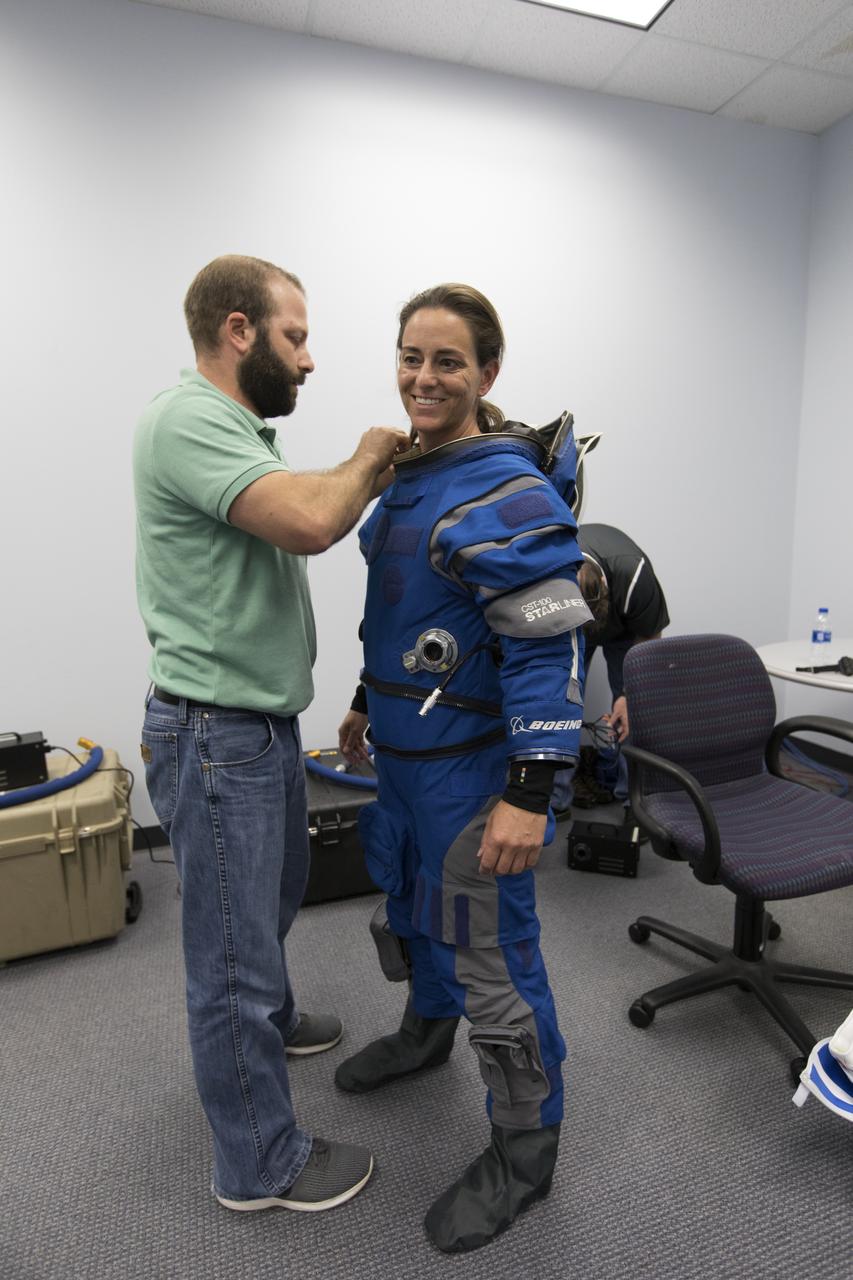
Astronaut Nicole Mann gets suited up for a Boeing/United Launch Alliance emergency egress system demonstration at Cape Canaveral Air Force Station’s Launch Complex 41 in Florida on June 19, 2018. The emergency egress system will allow for a safe evacuation in the unlikely event of an emergency on the launch pad on launch day. It can carry up to 20 people more than 1,300 feet away from the crew access tower and the launch vehicle.
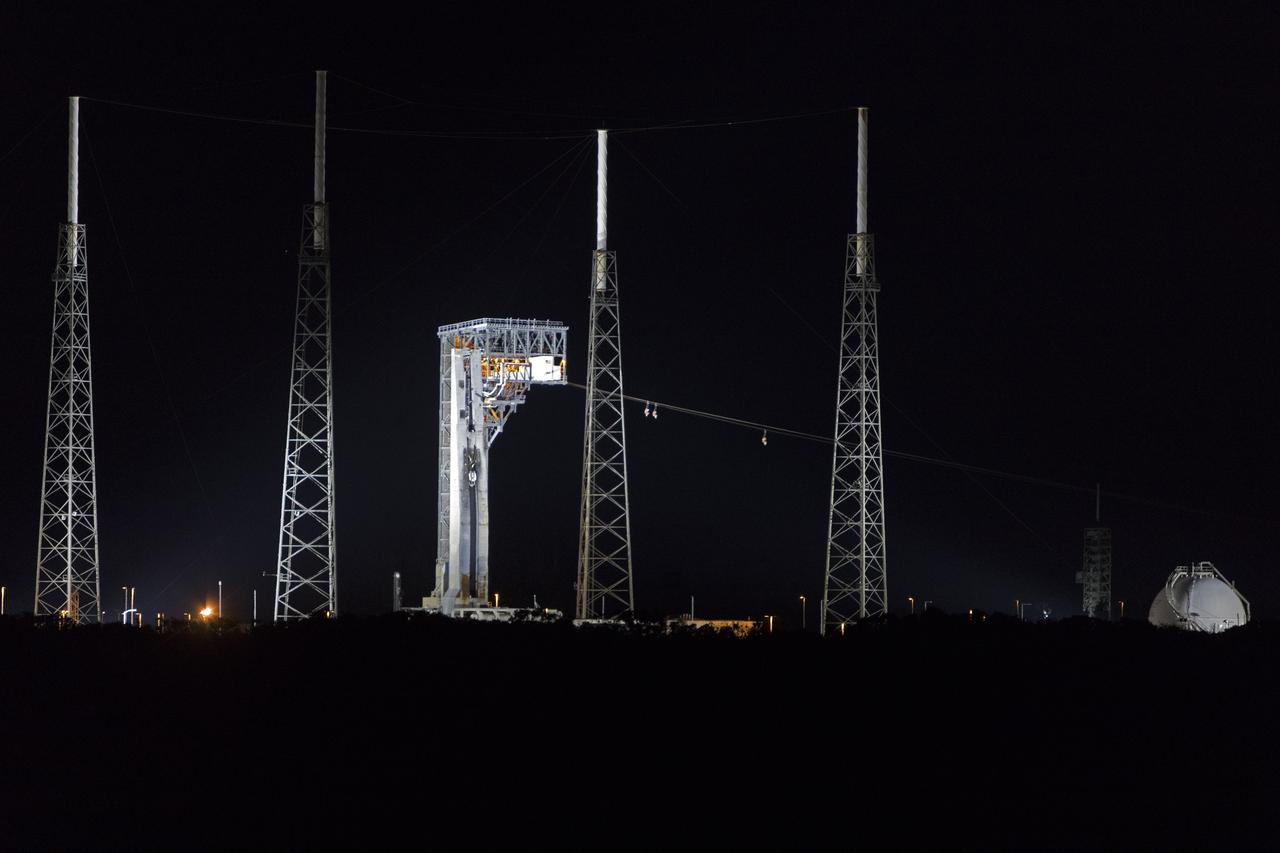
Commercial Crew astronauts test out the Boeing/United Launch Alliance (ULA) emergency egress system on June 19, 2018, at Cape Canaveral Air Force Station’s Launch Complex 41 in Florida. The emergency egress system provides an escape route in the unlikely event of an emergency prior to liftoff on launch day. It will be in place when Boeing’s CST-100 Starliner, launched aboard a ULA Atlas V rocket, carries astronauts to the International Space Station.

Astronaut Suni Williams gets suited up in preparation for the Boeing/United Launch Alliance emergency egress system demonstration at Cape Canaveral Air Force Station’s Launch Complex 41 in Florida on June 19, 2018. The emergency egress system features seats that attach to slide wires. It can carry astronauts and ground crew more than 1,300 feet away from the crew access tower and the launch vehicle in the unlikely event of an emergency before liftoff.
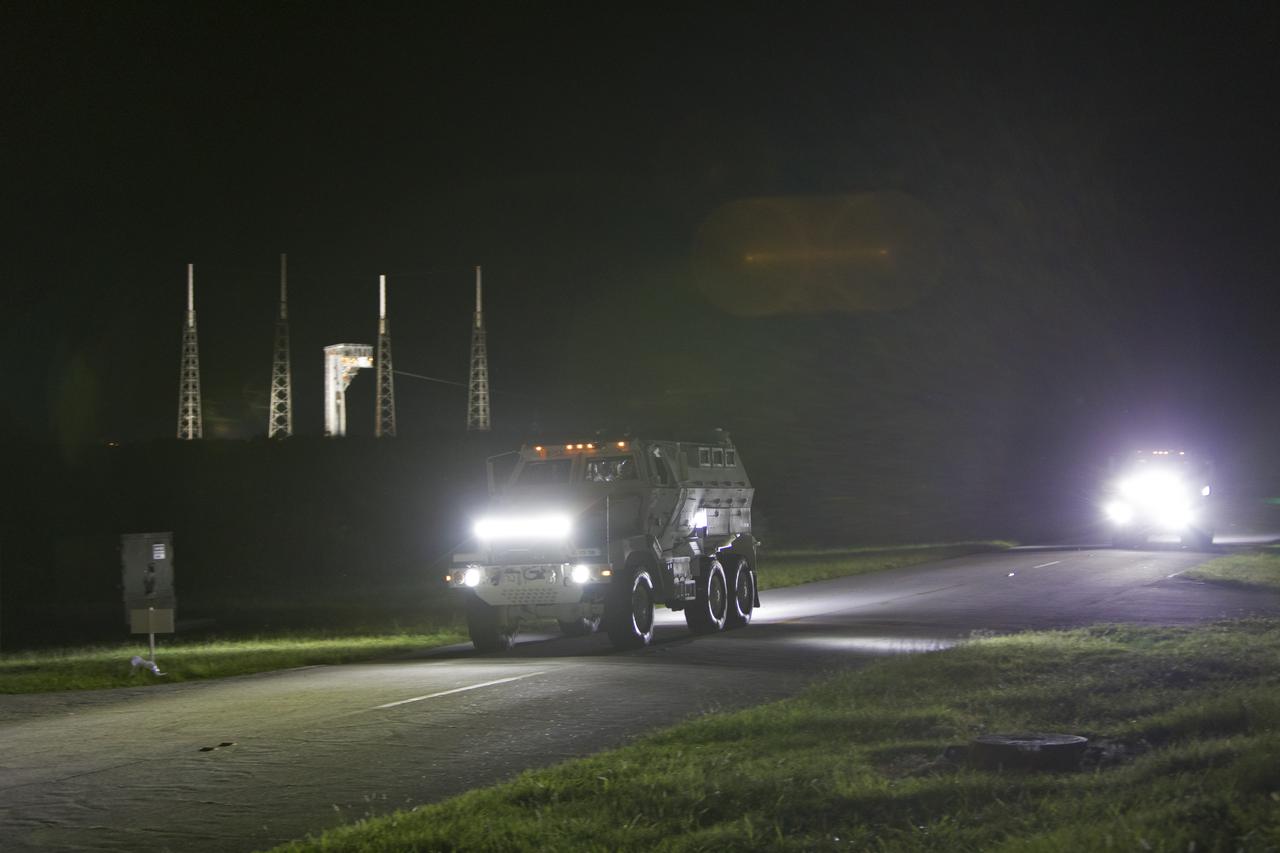
Originally designed for military applications, NASA’s mine-resistant ambush protected vehicles, or MRAPs, will be used in the unlikely event of an emergency at the launch pad prior to liftoff. The vehicles, seen here during a Boeing/United Launch Alliance emergency egress system demonstration at Cape Canaveral Air Force Station’s Launch Complex 41 in Florida on June 19, 2018, offer a mobile bunker for astronauts and ground crews, should they need to get away from the launch pad quickly in an emergency.

Chris Ferguson, Boeing’s Director of Crew and Mission Operations for their Commercial Crew Program, is helped into his suit in preparation for a Boeing/United Launch Alliance emergency egress system demonstration on June 19, 2018. A veteran of three space shuttle missions, he commanded Atlantis in STS-135, the final mission of the Space Shuttle Program. The demonstration was held at Launch Complex 41 at Cape Canaveral Air Force Station in Florida. The emergency egress system provides an escape route in the unlikely event of an emergency on the launch pad on launch day.