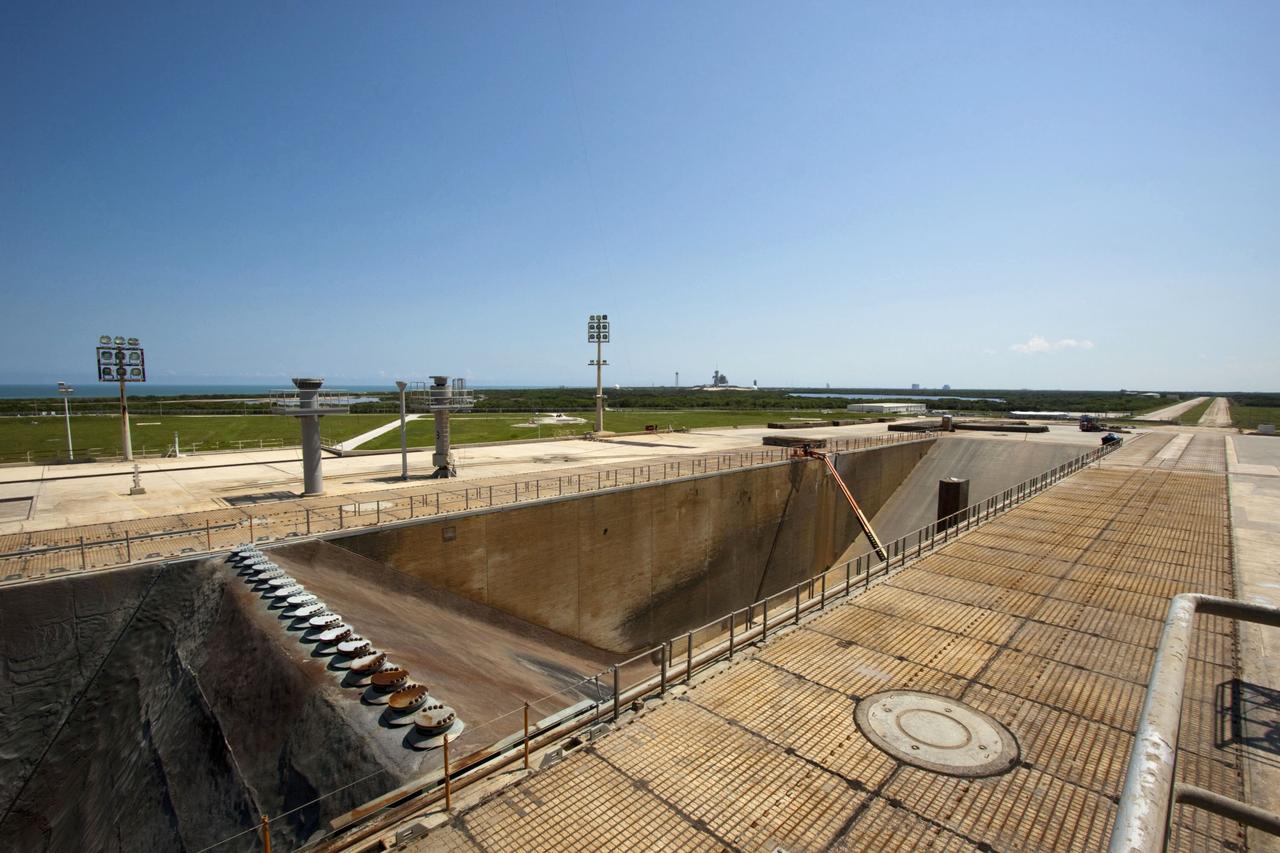
CAPE CANAVERAL, Fla. – The deconstruction of Launch Pad 39B at NASA’s Kennedy Space Center in Florida is complete. Still remaining is the flame trench. Launch Pad 39A can be seen in the distance. In 2009, the structure at the pad was no longer needed for NASA's Space Shuttle Program, so it is being restructured for future use. The new design will feature a "clean pad" for rockets to come with their own launcher, making it more versatile for a number of vehicles. For information on NASA's future plans, visit http://www.nasa.gov/exploration. Photo credit: NASA/Jim Grossmann
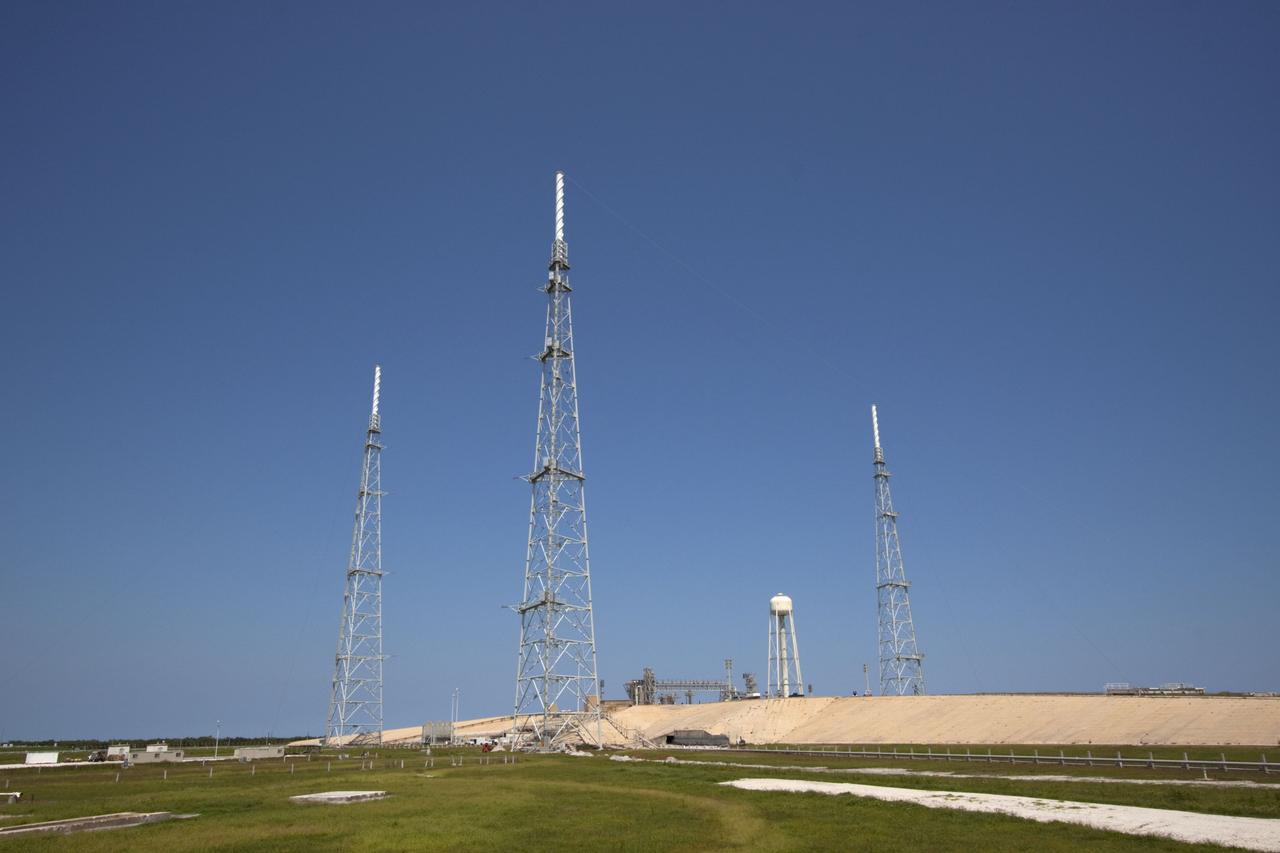
CAPE CANAVERAL, Fla. – The deconstruction of Launch Pad 39B at NASA’s Kennedy Space Center in Florida is complete. Still remaining and standing over the remnants of the fixed service structure are the three 600-foot-tall lightning protection towers and the water tower used for sound suppression. In 2009, the structure at the pad was no longer needed for NASA's Space Shuttle Program, so it is being restructured for future use. The new design will feature a "clean pad" for rockets to come with their own launcher, making it more versatile for a number of vehicles. For information on NASA's future plans, visit http://www.nasa.gov/exploration. Photo credit: NASA/Jim Grossmann
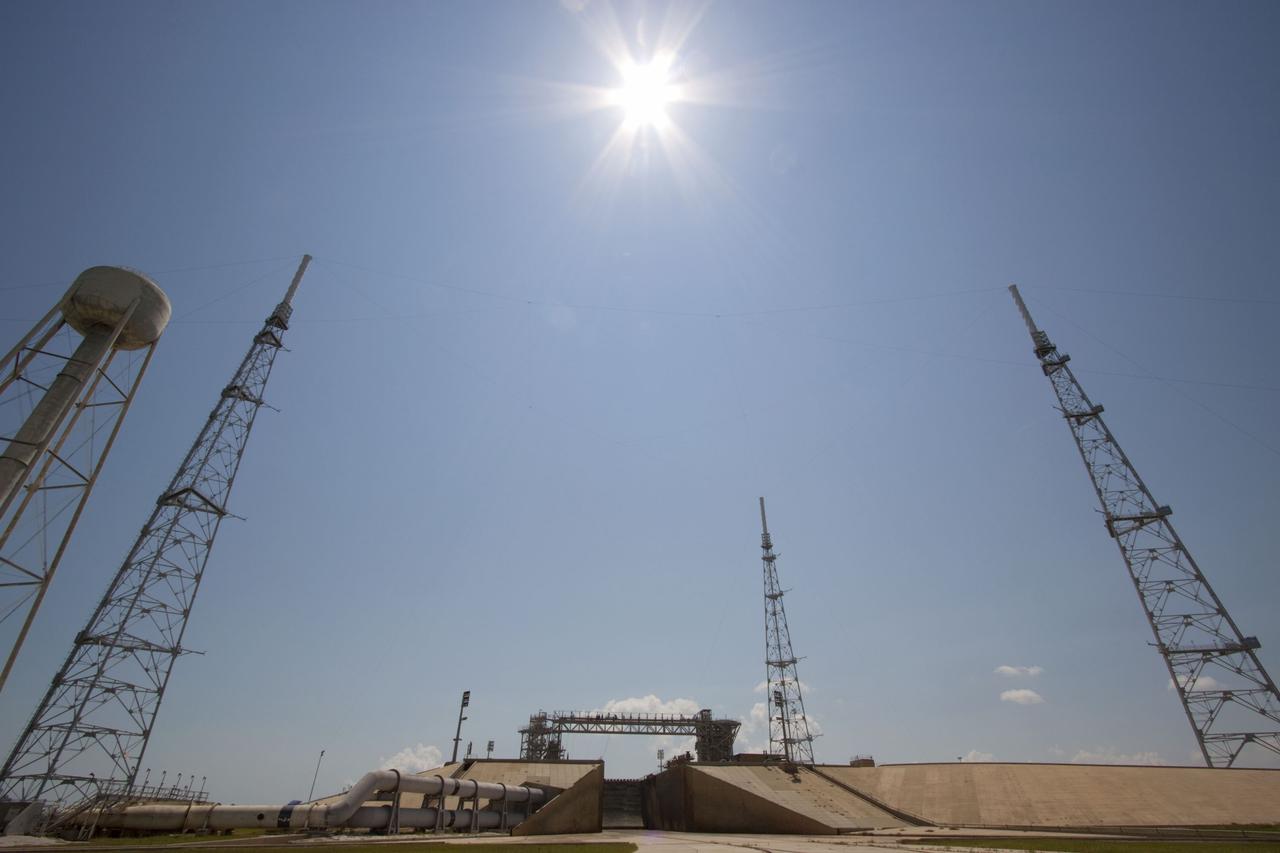
CAPE CANAVERAL, Fla. – The deconstruction of Launch Pad 39B at NASA’s Kennedy Space Center in Florida is complete. Still remaining and standing over the remnants of the fixed service structure are the 600-foot-tall lightning protection towers and the water tower used for sound suppression. In 2009, the structure at the pad was no longer needed for NASA's Space Shuttle Program, so it is being restructured for future use. The new design will feature a "clean pad" for rockets to come with their own launcher, making it more versatile for a number of vehicles. For information on NASA's future plans, visit http://www.nasa.gov/exploration. Photo credit: NASA/Jim Grossmann
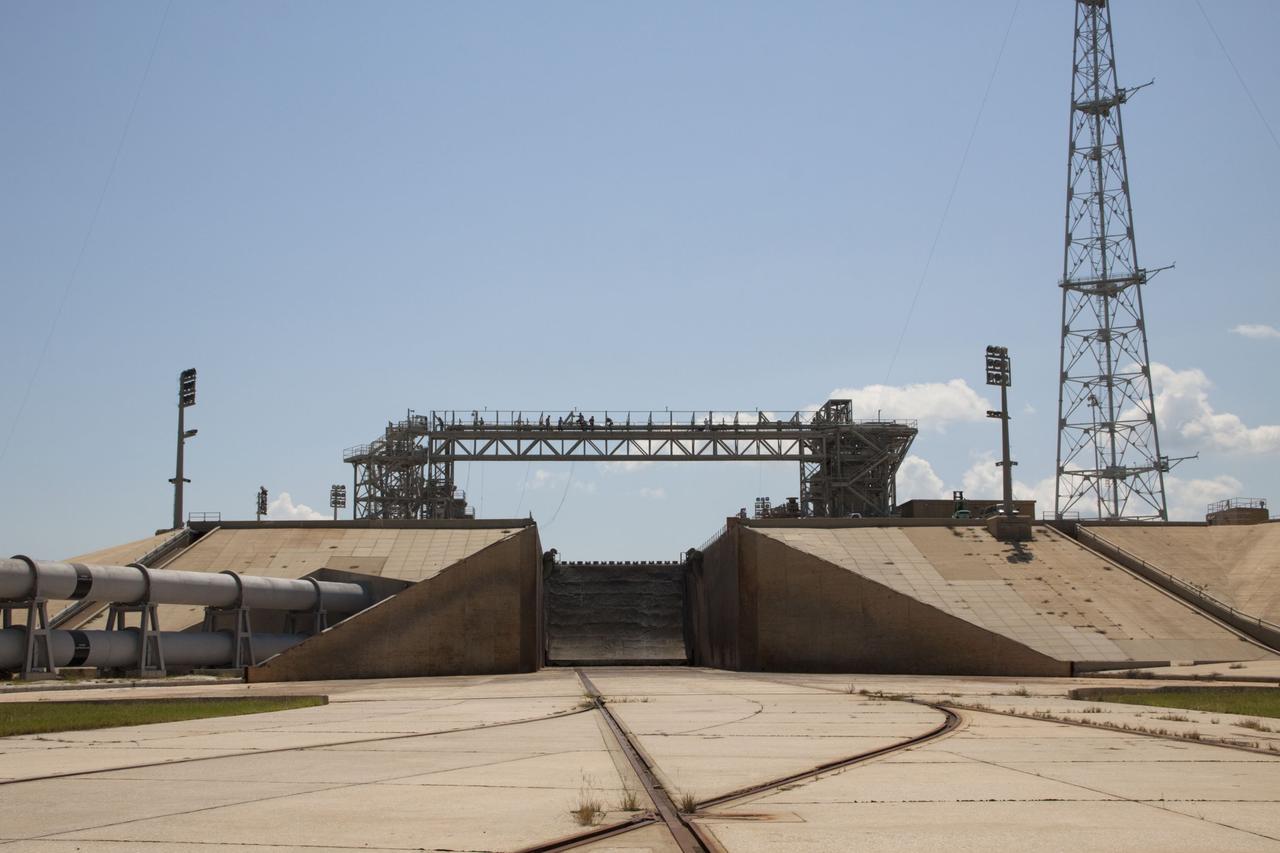
CAPE CANAVERAL, Fla. – The deconstruction of Launch Pad 39B at NASA’s Kennedy Space Center in Florida is complete. Only remnants of the fixed service structure remain standing over the flame trench. In 2009, the structure at the pad was no longer needed for NASA's Space Shuttle Program, so it is being restructured for future use. The new design will feature a "clean pad" for rockets to come with their own launcher, making it more versatile for a number of vehicles. For information on NASA's future plans, visit http://www.nasa.gov/exploration. Photo credit: NASA/Jim Grossmann

CAPE CANAVERAL, Fla. – The deconstruction of Launch Pad 39B at NASA’s Kennedy Space Center in Florida is complete. Only remnants of the fixed service structure remain standing over the flame trench. In 2009, the structure at the pad was no longer needed for NASA's Space Shuttle Program, so it is being restructured for future use. The new design will feature a "clean pad" for rockets to come with their own launcher, making it more versatile for a number of vehicles. For information on NASA's future plans, visit http://www.nasa.gov/exploration. Photo credit: NASA/Jim Grossmann
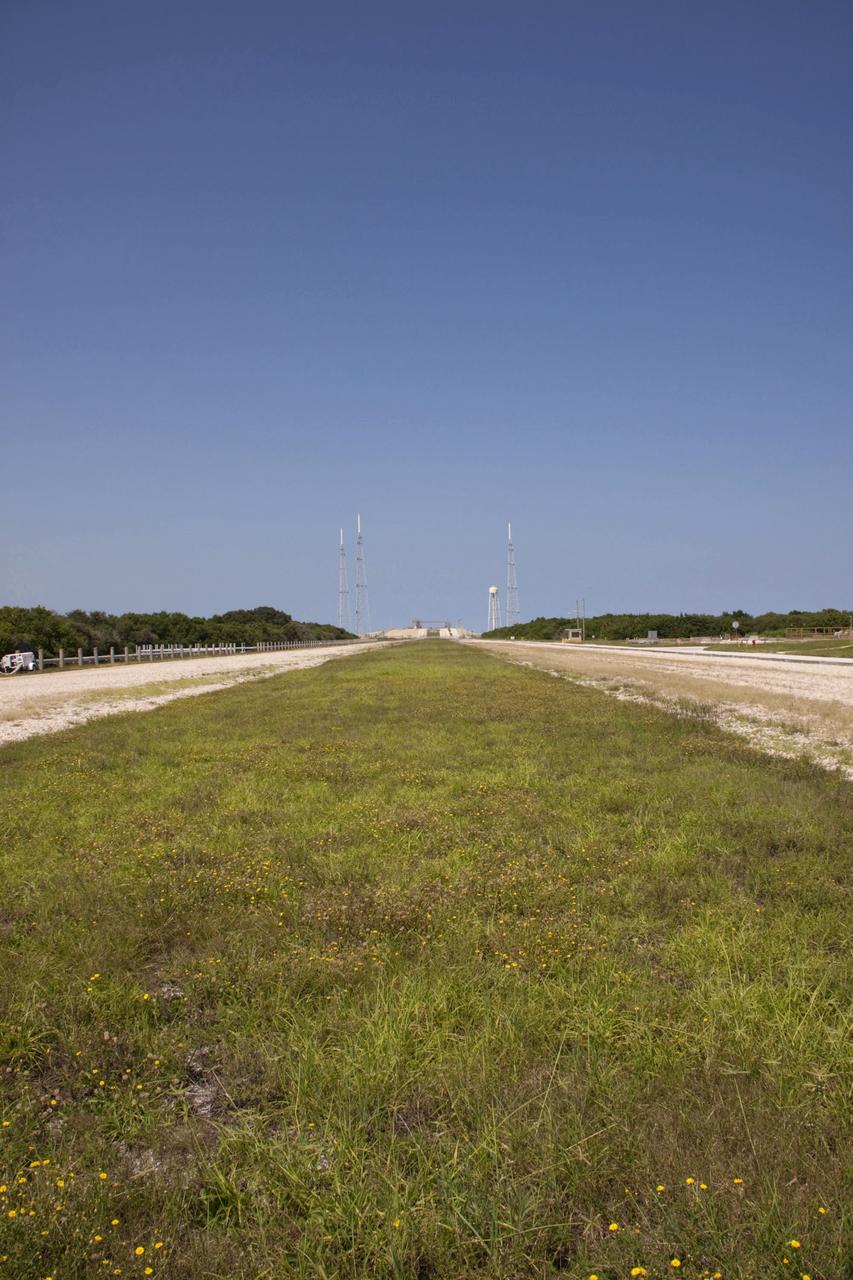
CAPE CANAVERAL, Fla. – The deconstruction of Launch Pad 39B at NASA’s Kennedy Space Center in Florida is complete. With a view from the two-track crawlerway, the three 600-foot-tall lightning protection towers and the water tower used for sound suppression stand over the remnants of the fixed service structure. In 2009, the structure at the pad was no longer needed for NASA's Space Shuttle Program, so it is being restructured for future use. The new design will feature a "clean pad" for rockets to come with their own launcher, making it more versatile for a number of vehicles. For information on NASA's future plans, visit http://www.nasa.gov/exploration. Photo credit: NASA/Jim Grossmann
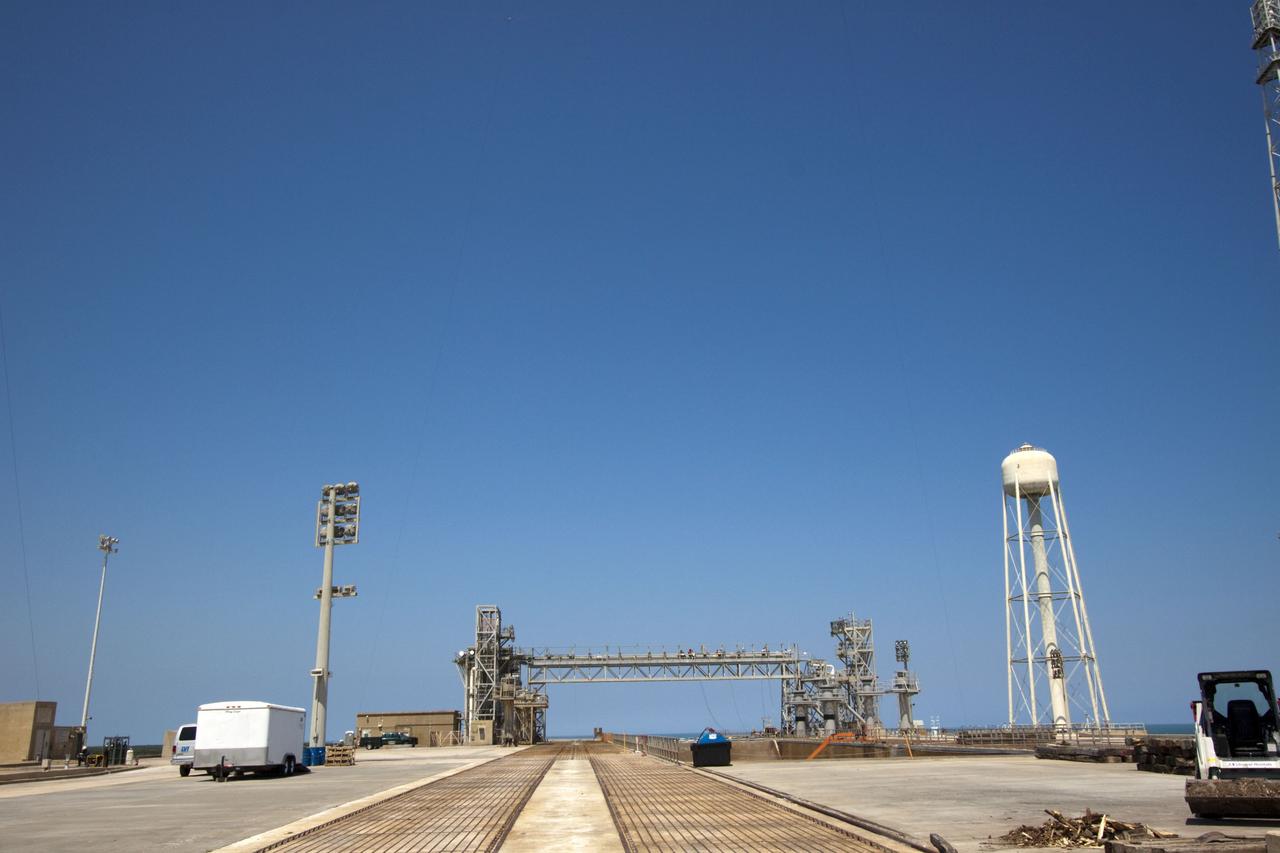
CAPE CANAVERAL, Fla. – The deconstruction of Launch Pad 39B at NASA’s Kennedy Space Center in Florida is complete. Still remaining are remnants of the fixed service structure and the water tower used for sound suppression. In 2009, the structure at the pad was no longer needed for NASA's Space Shuttle Program, so it is being restructured for future use. The new design will feature a "clean pad" for rockets to come with their own launcher, making it more versatile for a number of vehicles. For information on NASA's future plans, visit http://www.nasa.gov/exploration. Photo credit: NASA/Jim Grossmann
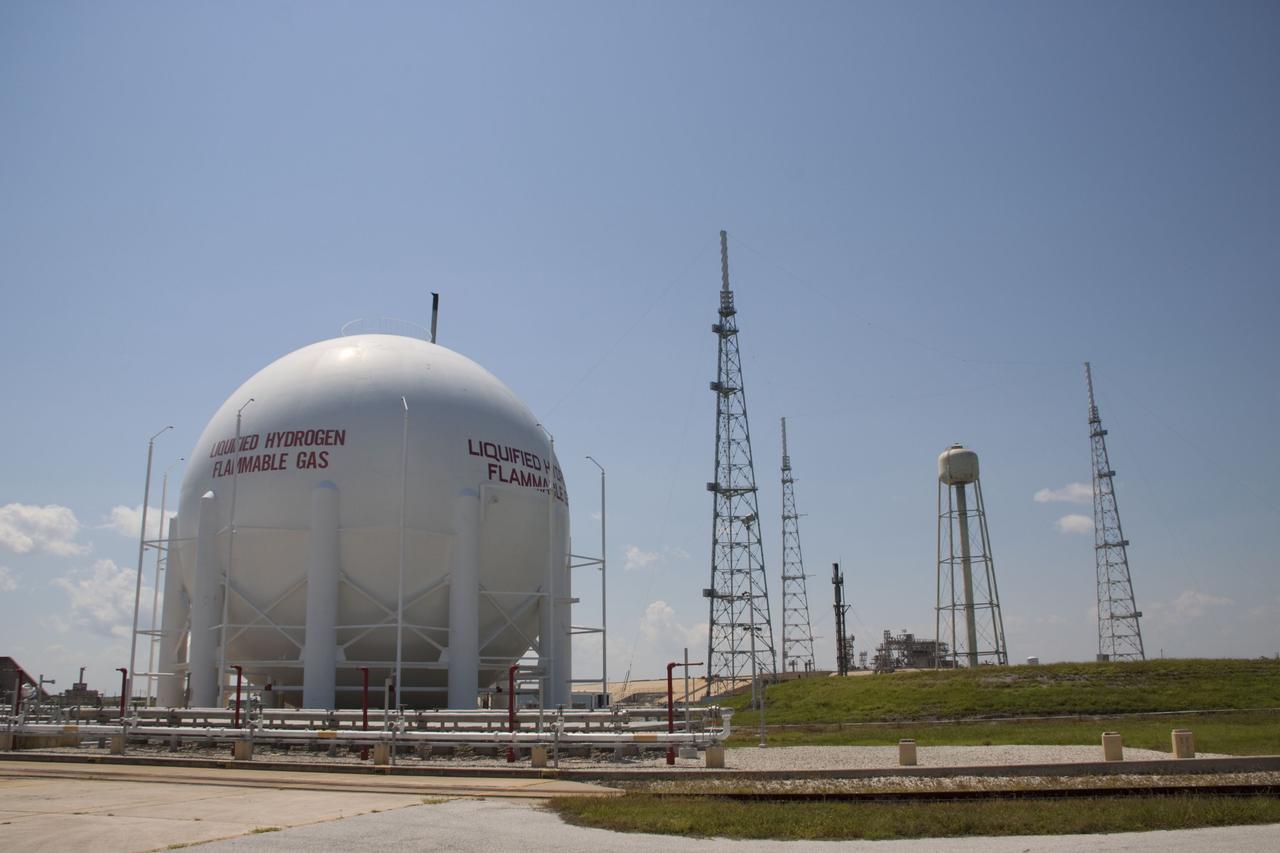
CAPE CANAVERAL, Fla. – The deconstruction of Launch Pad 39B at NASA’s Kennedy Space Center in Florida is complete. Still remaining and standing over the remnants of the fixed service structure are the 600-foot-tall lightning protection towers and the water tower used for sound suppression. In 2009, the structure at the pad was no longer needed for NASA's Space Shuttle Program, so it is being restructured for future use. The new design will feature a "clean pad" for rockets to come with their own launcher, making it more versatile for a number of vehicles. For information on NASA's future plans, visit http://www.nasa.gov/exploration. Photo credit: NASA/Jim Grossmann
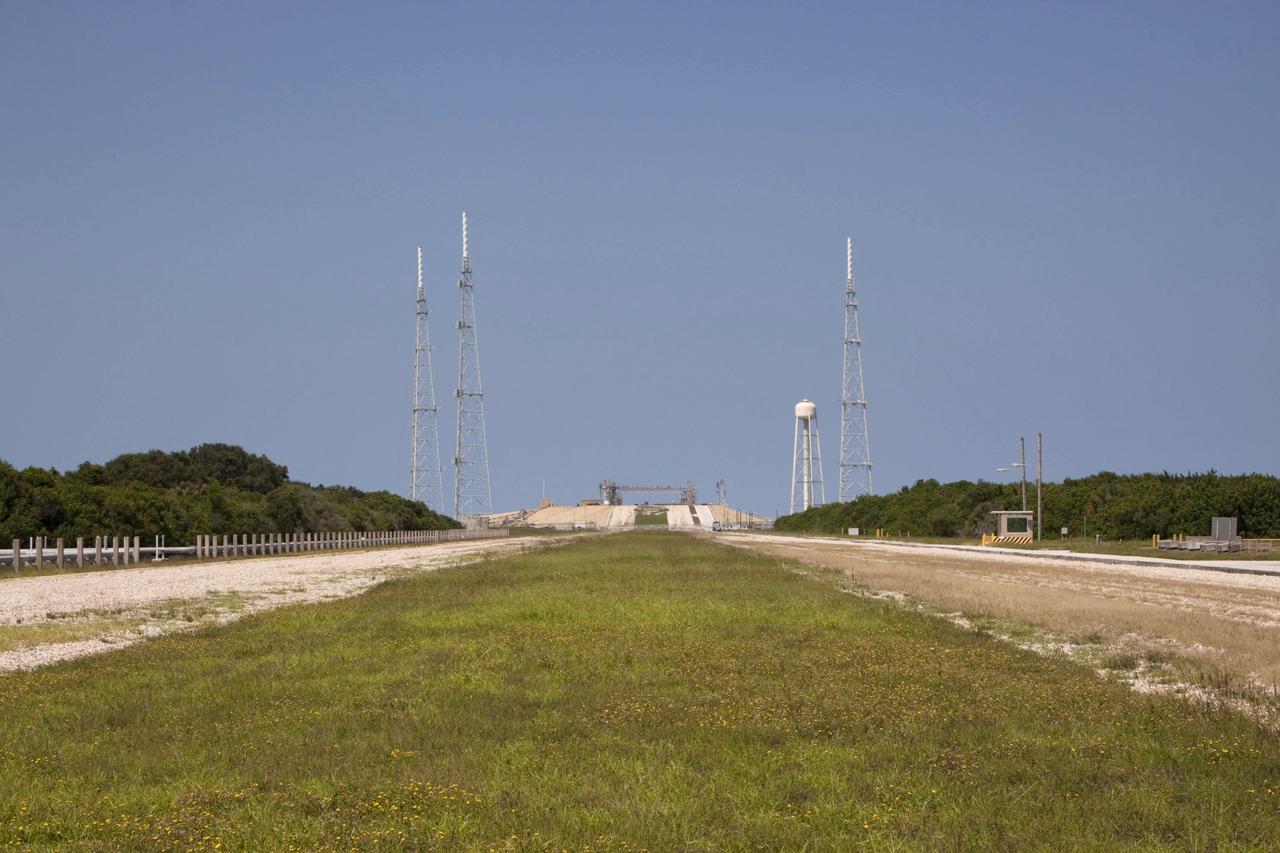
CAPE CANAVERAL, Fla. – The deconstruction of Launch Pad 39B at NASA’s Kennedy Space Center in Florida is complete. With a view from the two-track crawlerway, the three 600-foot-tall lightning protection towers and the water tower used for sound suppression stand over the remnants of the fixed service structure. In 2009, the structure at the pad was no longer needed for NASA's Space Shuttle Program, so it is being restructured for future use. The new design will feature a "clean pad" for rockets to come with their own launcher, making it more versatile for a number of vehicles. For information on NASA's future plans, visit http://www.nasa.gov/exploration. Photo credit: NASA/Jim Grossmann
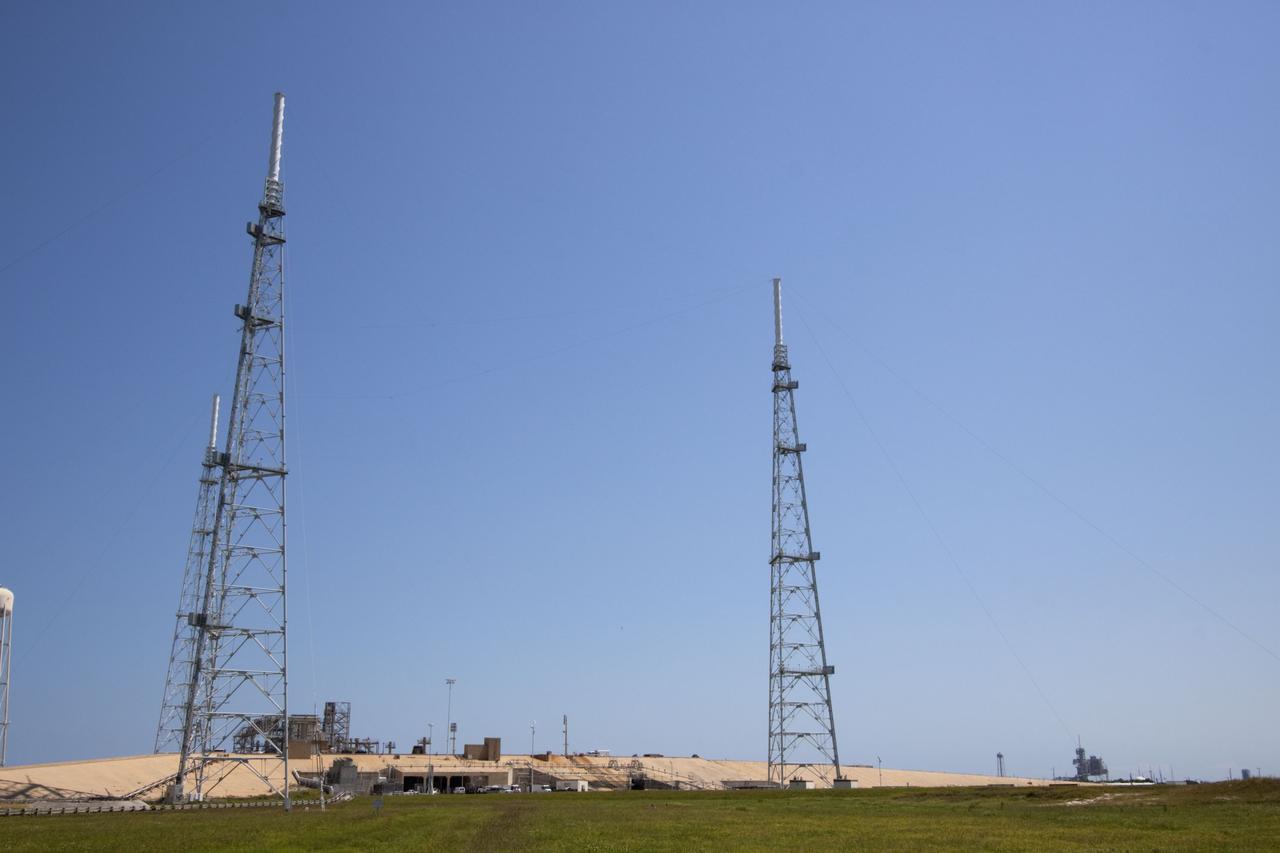
CAPE CANAVERAL, Fla. – The deconstruction of Launch Pad 39B at NASA’s Kennedy Space Center in Florida is complete. Still remaining and standing over the remnants of the fixed service structure are the 600-foot-tall lightning protection towers. In 2009, the structure at the pad was no longer needed for NASA's Space Shuttle Program, so it is being restructured for future use. The new design will feature a "clean pad" for rockets to come with their own launcher, making it more versatile for a number of vehicles. For information on NASA's future plans, visit http://www.nasa.gov/exploration. Photo credit: NASA/Jim Grossmann
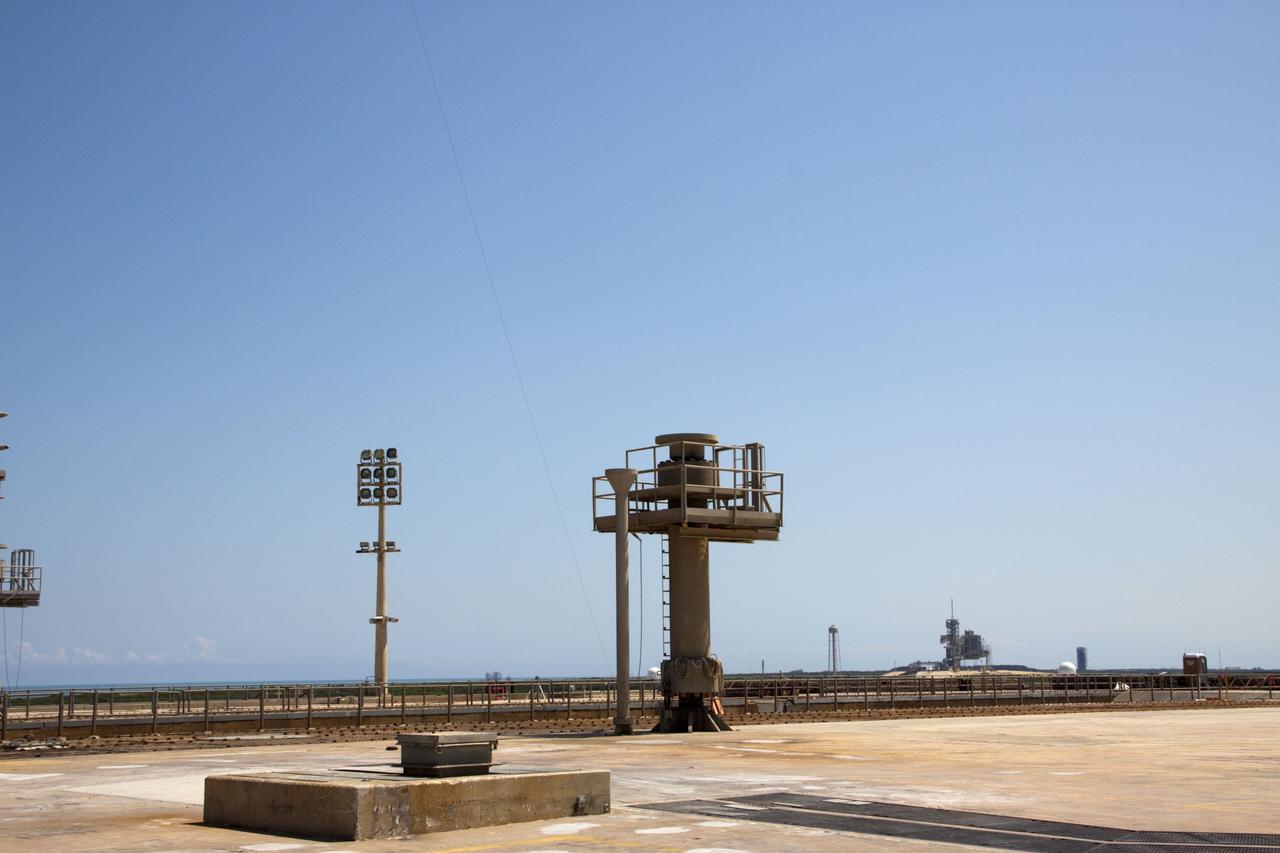
CAPE CANAVERAL, Fla. – The deconstruction of Launch Pad 39B at NASA’s Kennedy Space Center in Florida is complete. A pedestal remains standing at the pad where a distant view of Launch Pad 39A can be seen. In 2009, the structure at the pad was no longer needed for NASA's Space Shuttle Program, so it is being restructured for future use. The new design will feature a "clean pad" for rockets to come with their own launcher, making it more versatile for a number of vehicles. For information on NASA's future plans, visit http://www.nasa.gov/exploration. Photo credit: NASA/Jim Grossmann
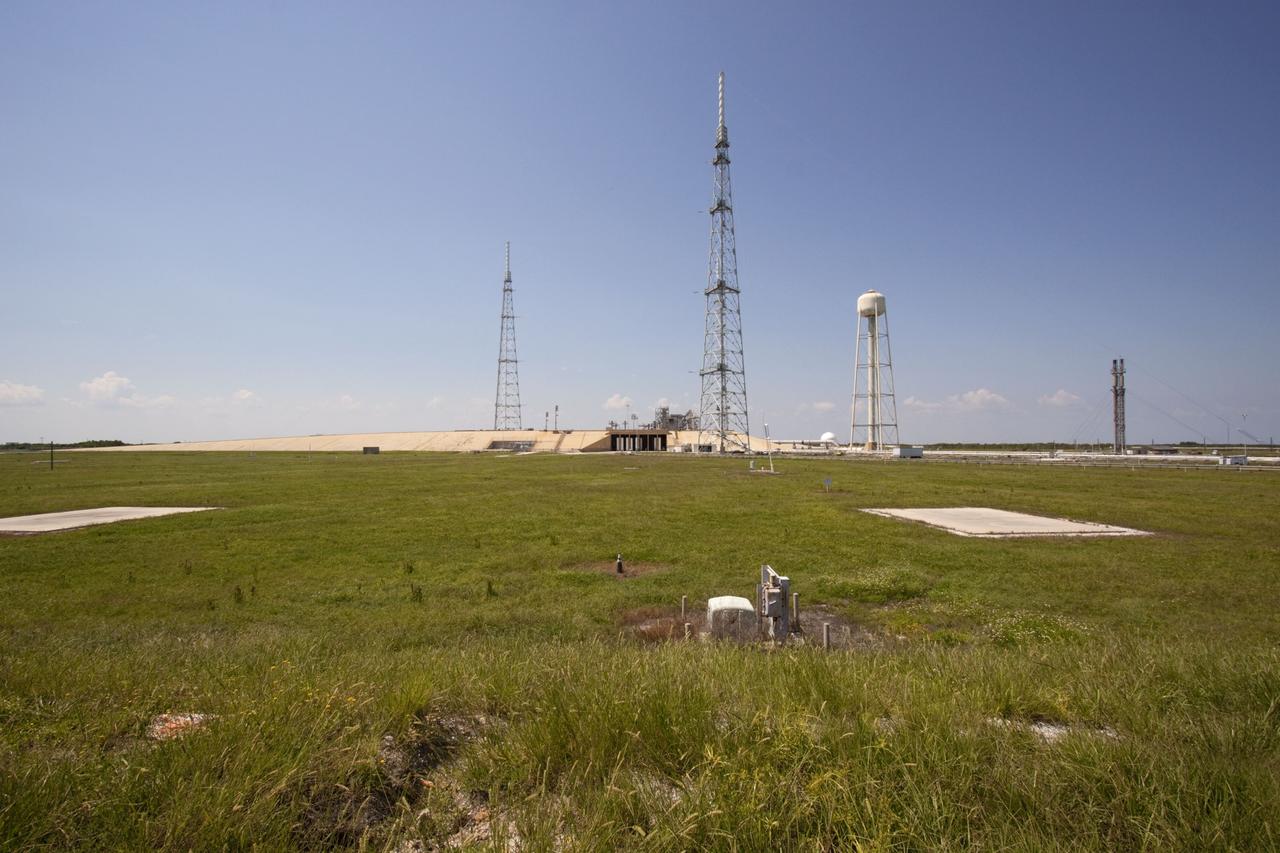
CAPE CANAVERAL, Fla. – The deconstruction of Launch Pad 39B at NASA’s Kennedy Space Center in Florida is complete. Still remaining and standing over the remnants of the fixed service structure are the 600-foot-tall lightning protection towers and the water tower used for sound suppression. In 2009, the structure at the pad was no longer needed for NASA's Space Shuttle Program, so it is being restructured for future use. The new design will feature a "clean pad" for rockets to come with their own launcher, making it more versatile for a number of vehicles. For information on NASA's future plans, visit http://www.nasa.gov/exploration. Photo credit: NASA/Jim Grossmann
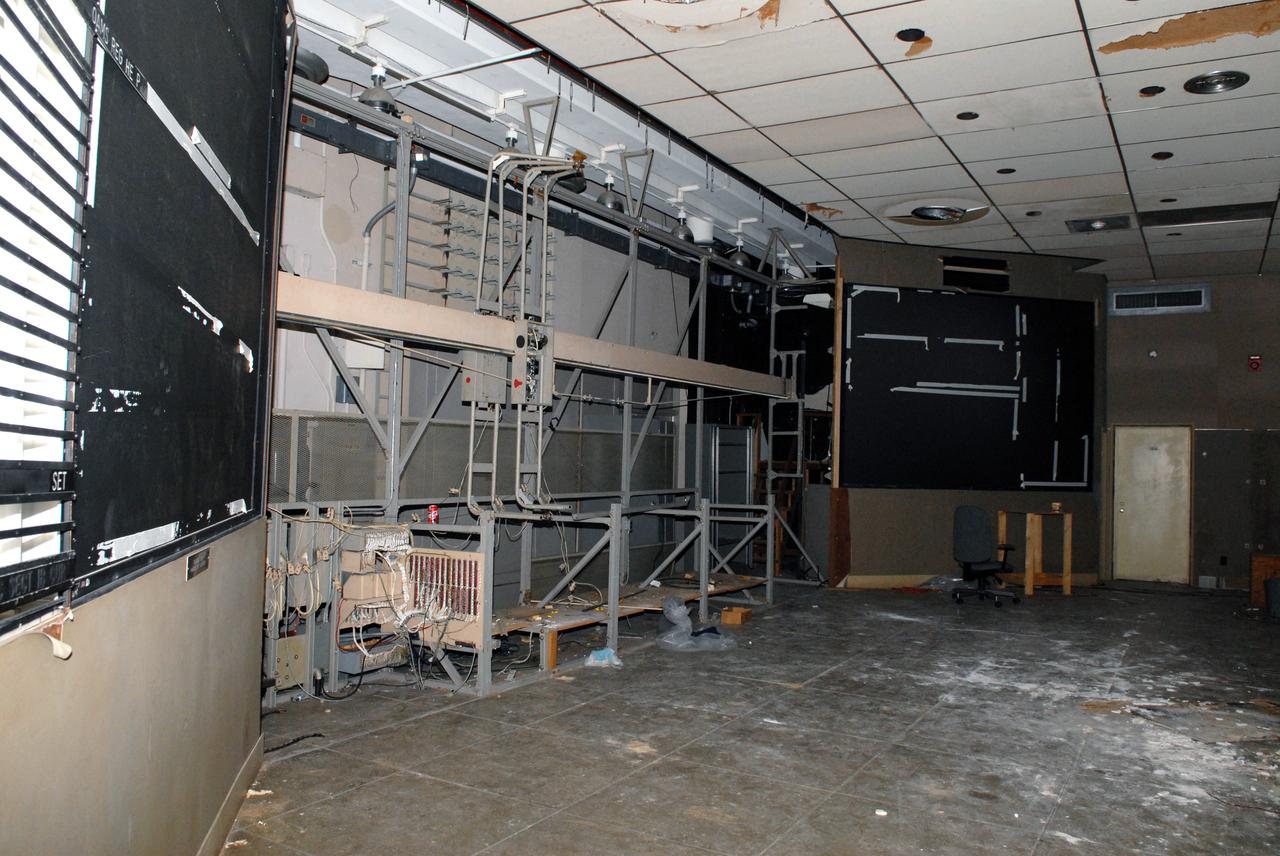
CAPE CANAVERAL, Fla. – Rooms are being dismantled in the 50-year-old Mission Control Center on the Cape Canaveral Air Force Station in Florida. Out of use for many years, and with no valid operational or other use for the facility, NASA plans to demolish the site. The facility once controlled all manned Mercury space flights and the first two unmanned Gemini flights from May 1961-1963. It provided launch, orbital, re-entry and landing control for the flights. That function was later transferred to NASA's Johnson Space Center in Houston. Photo credit: NASA/Jack Pfaller
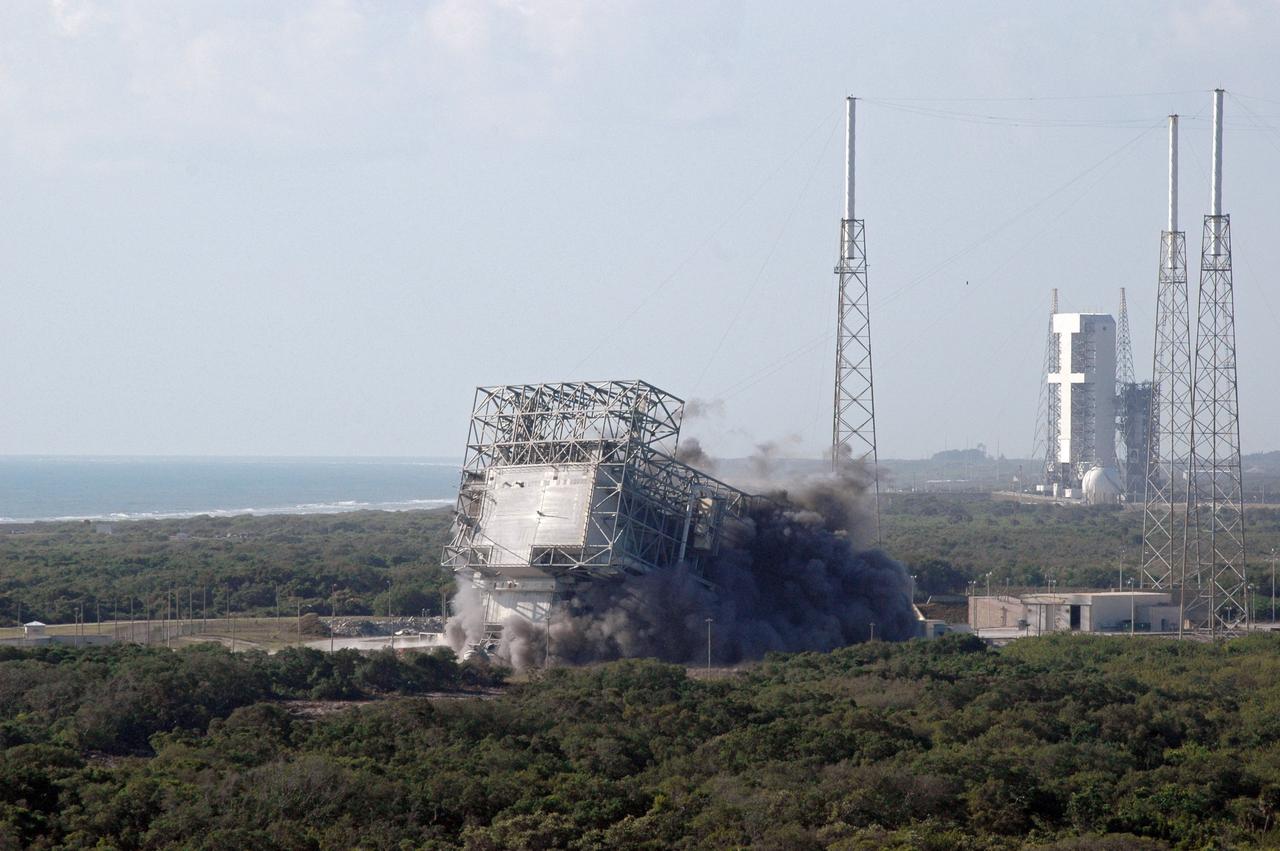
CAPE CANAVERAL, Fla. – The mobile service tower, or gantry, at Space Launch Complex 40 on Cape Canaveral Air Force Station falls to the ground after the base was demolished. The tall lightning towers around it will remain. This mammoth structure, with its cavernous clean room, was used for the final spacecraft launch preparations for NASA’s Cassini spacecraft, currently orbiting Saturn. The launch occurred on Oct. 15, 1997, aboard an Air Force Titan IV-Centaur rocket. The facilities at the pad are being dismantled to make room for the construction of launch pad access and servicing facilities for the new Falcon rockets to be launched by Space Exploration Technologies, known as SpaceX. Photo credit: NASA/Cory Huston
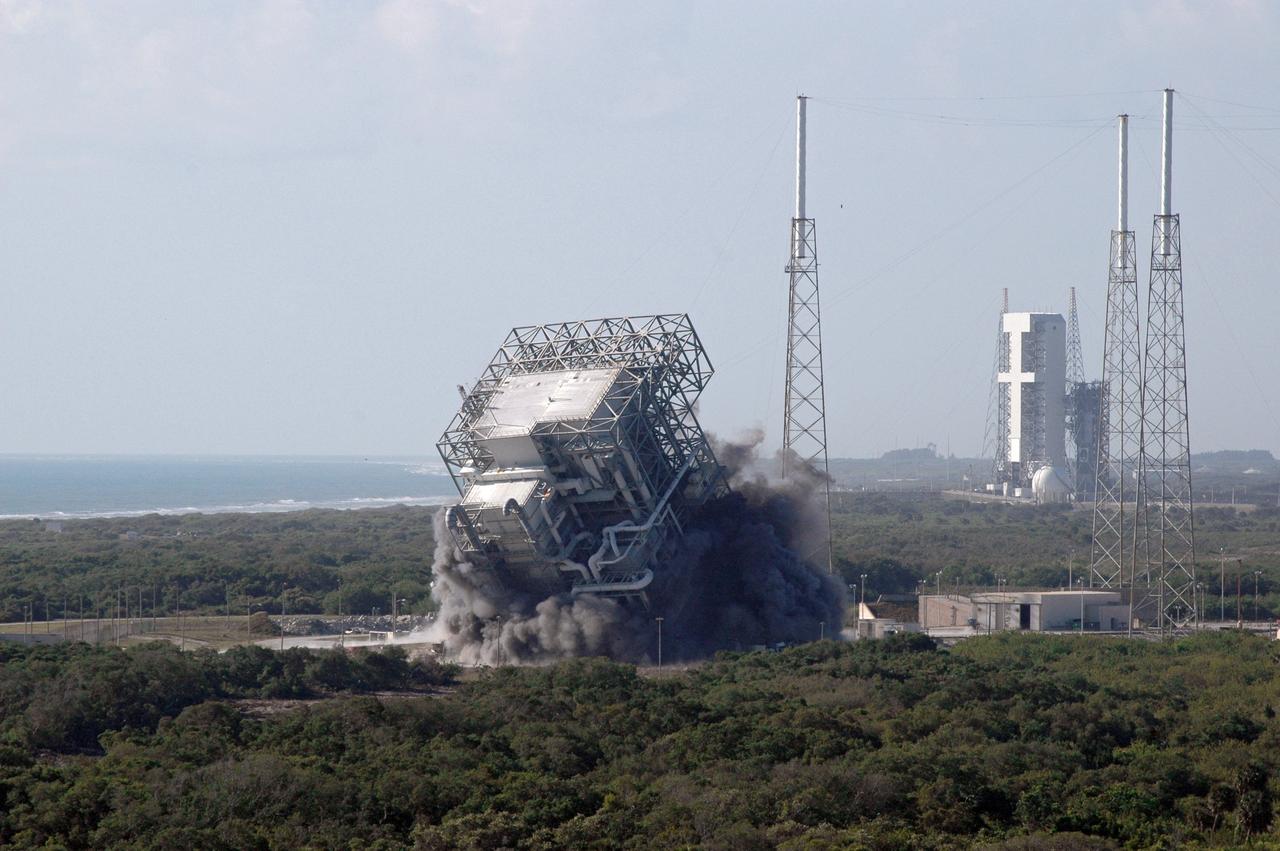
CAPE CANAVERAL, Fla. – The upper part of the mobile service tower, or gantry, at Space Launch Complex 40 on Cape Canaveral Air Force Station falls to the ground after the base was demolished. The tall lightning towers around it will remain. This mammoth structure, with its cavernous clean room, was used for the final spacecraft launch preparations for NASA’s Cassini spacecraft, currently orbiting Saturn. The launch occurred on Oct. 15, 1997, aboard an Air Force Titan IV-Centaur rocket. The facilities at the pad are being dismantled to make room for the construction of launch pad access and servicing facilities for the new Falcon rockets to be launched by Space Exploration Technologies, known as SpaceX. Photo credit: NASA/Cory Huston