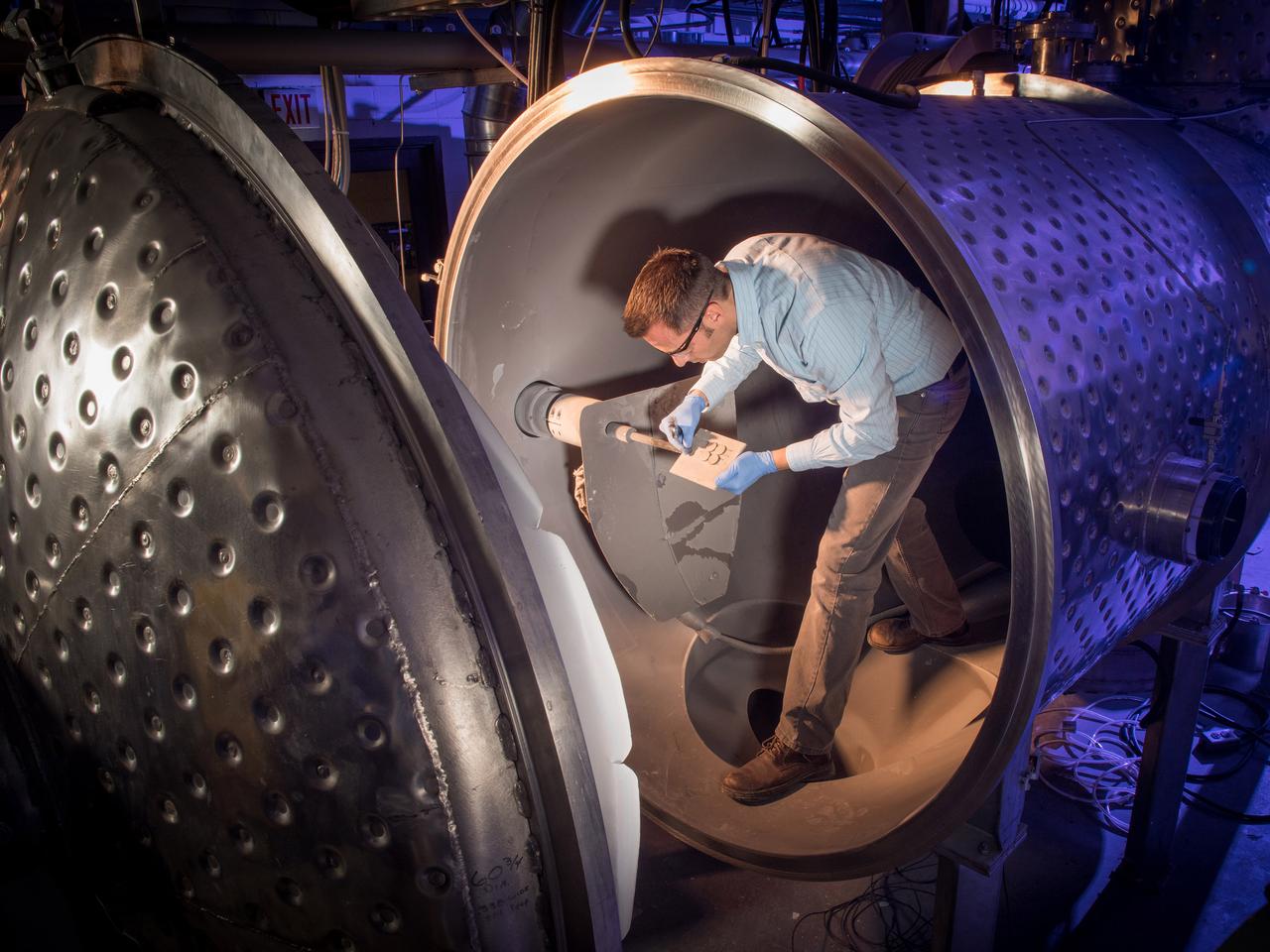
The Plasma Spray-Physical Vapor Deposition (PS-PVD) Rig at NASA Glenn Research Center. The rig helps develop coatings for next-generation aircraft turbine components and create more efficient engines.
Vapor Deposition Rig
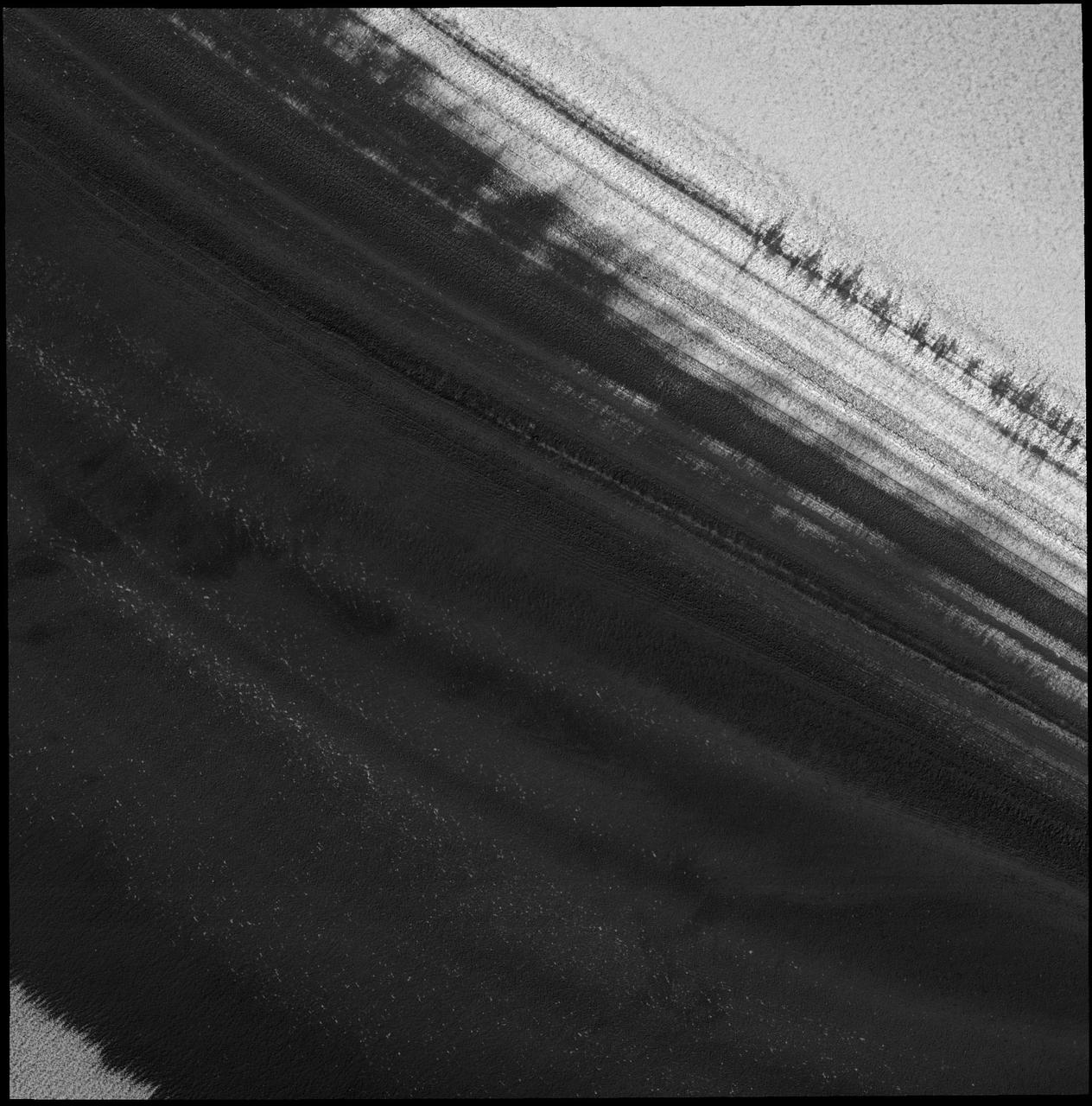
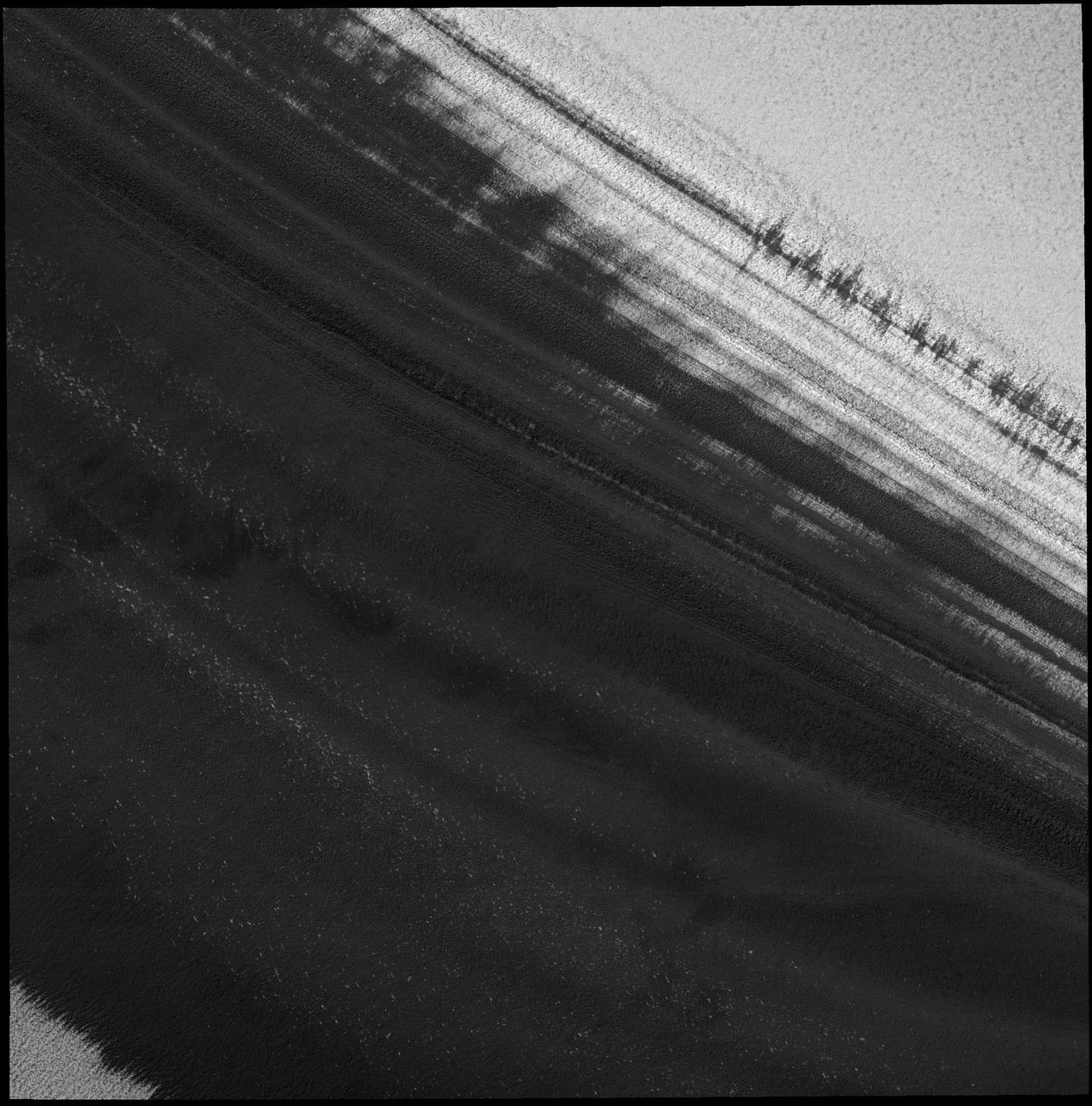
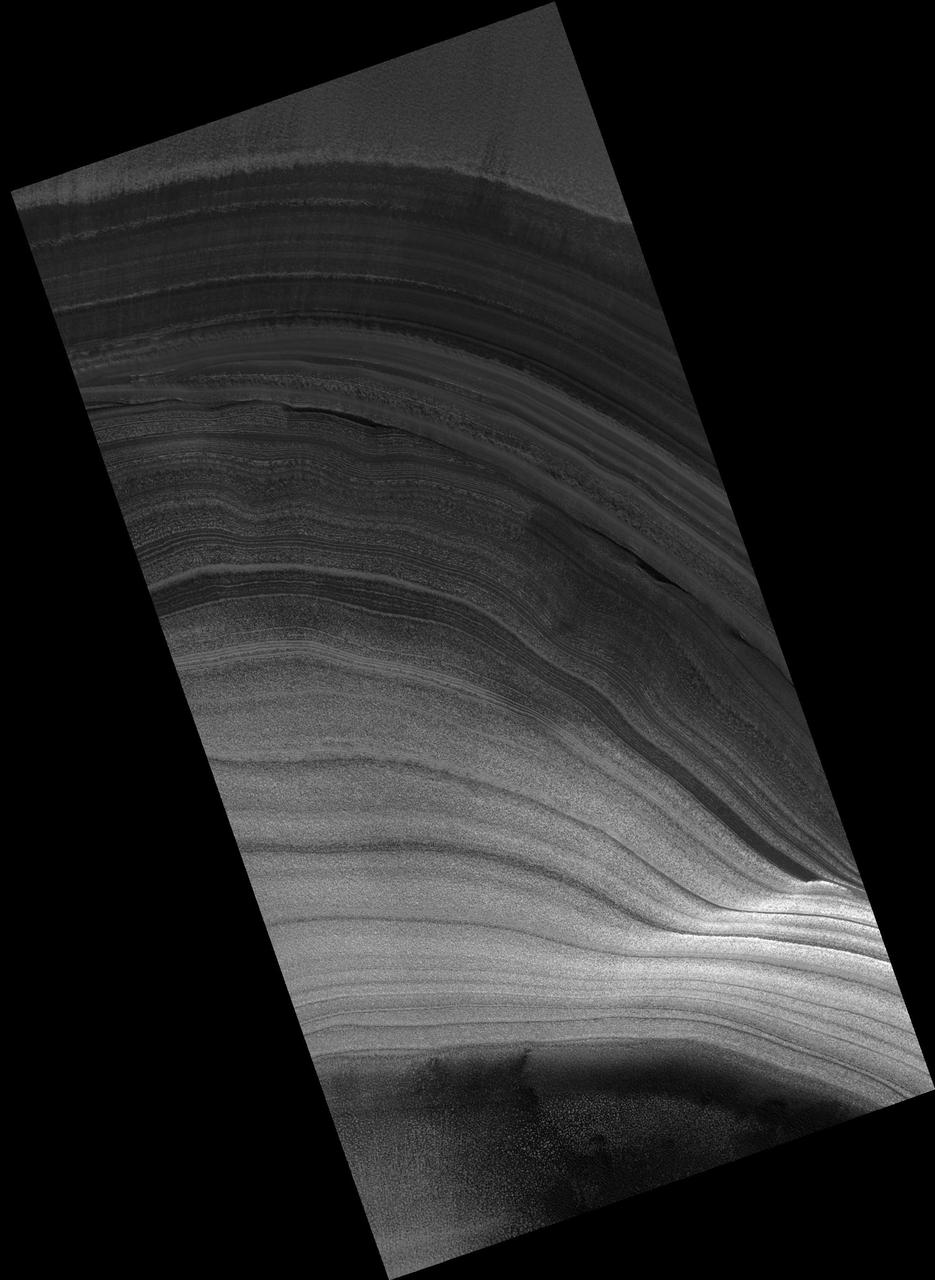
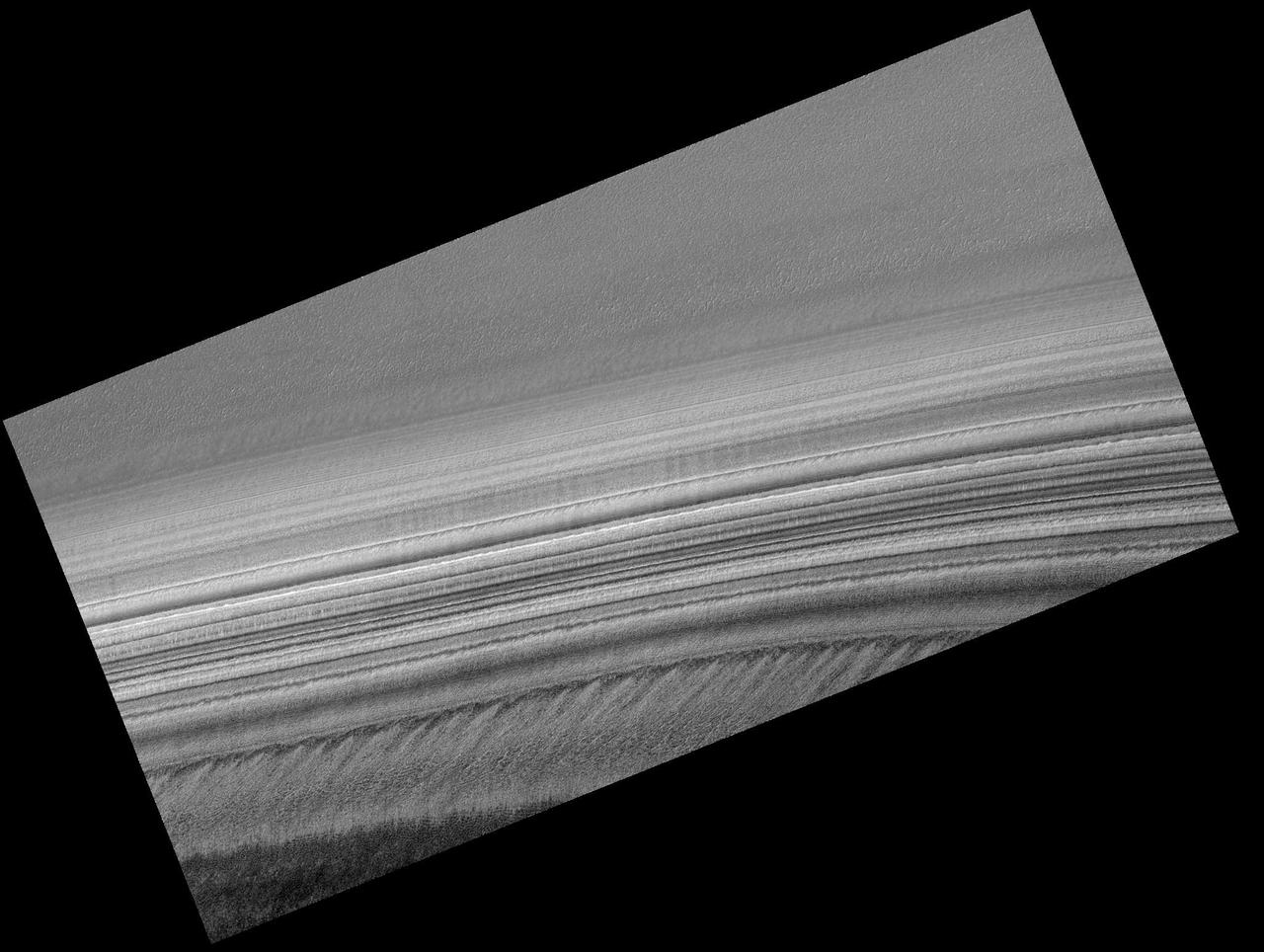
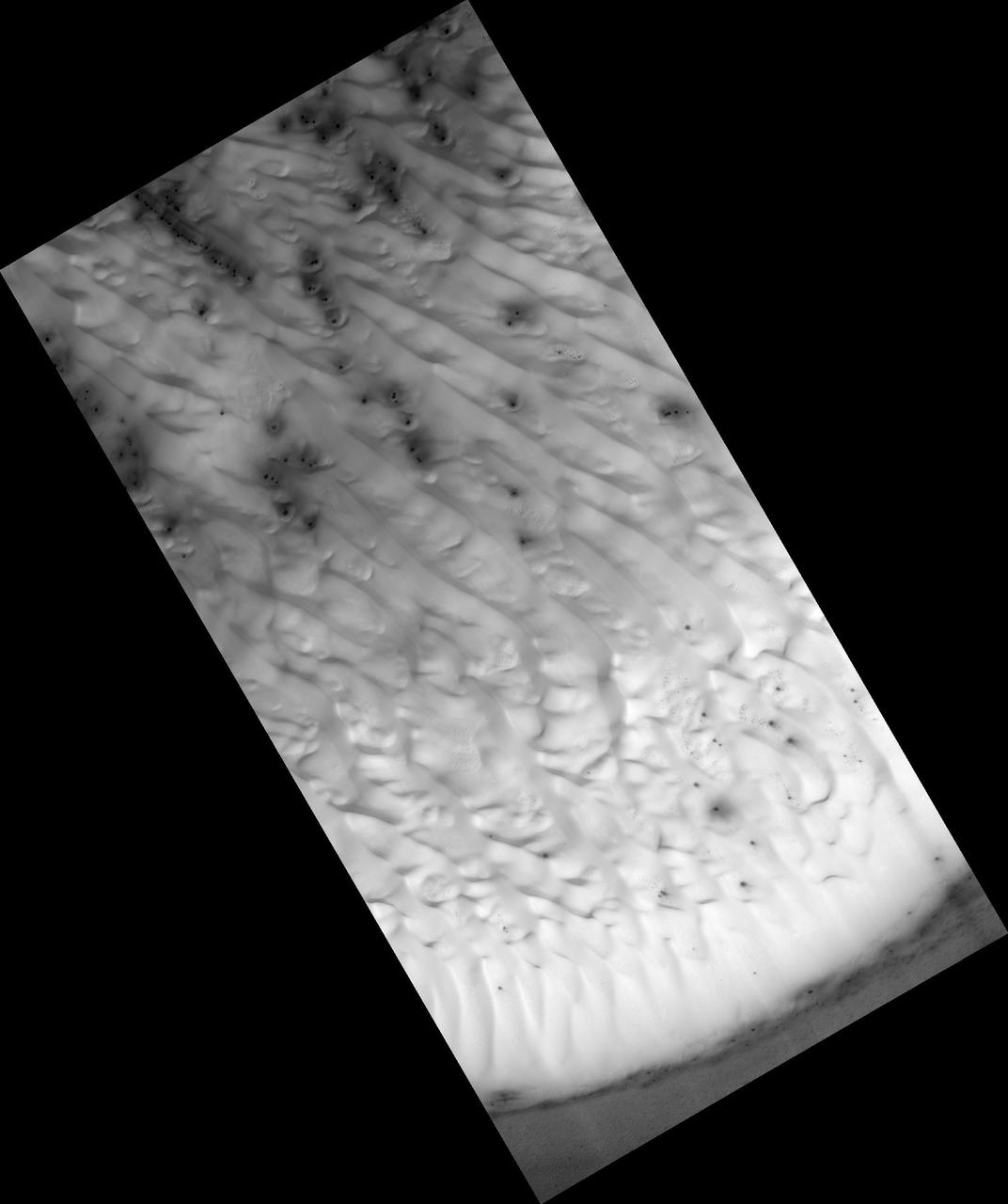
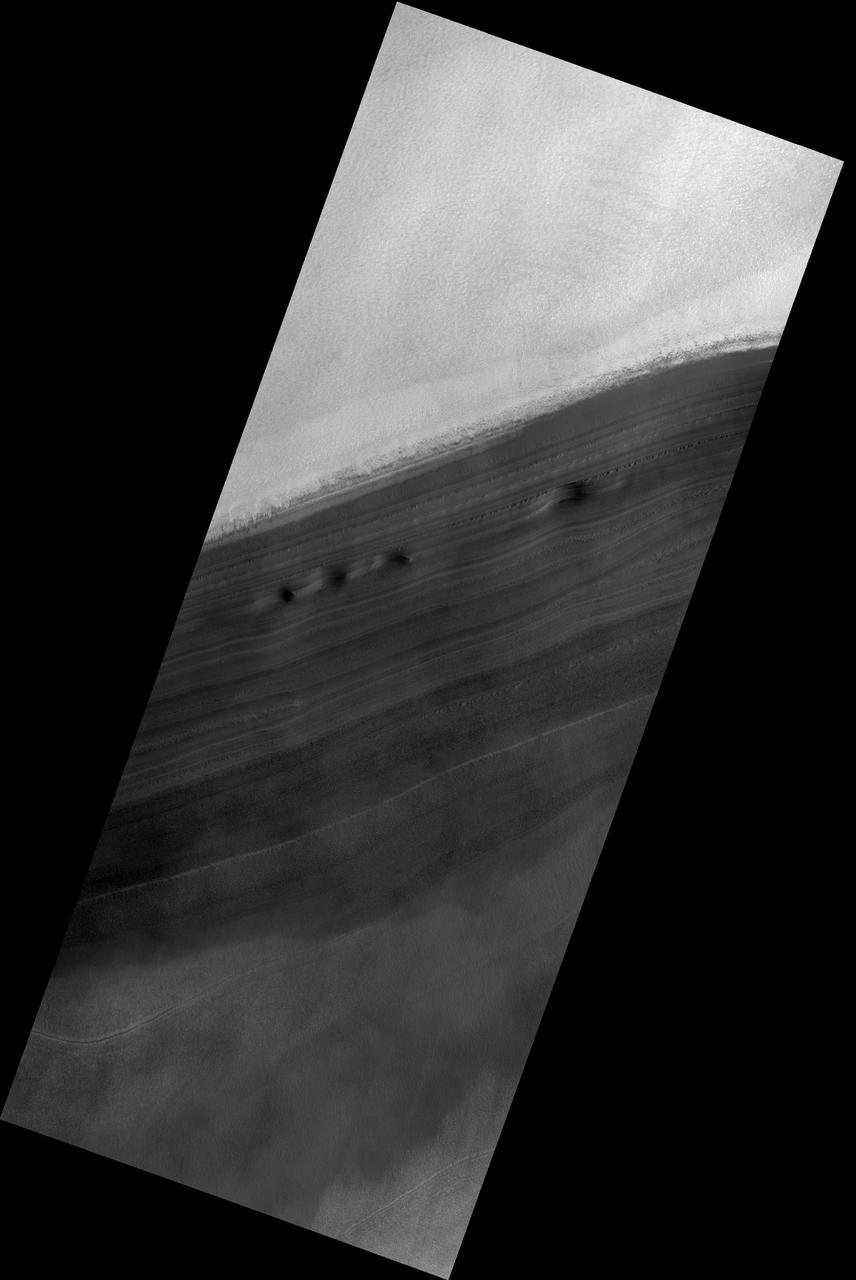
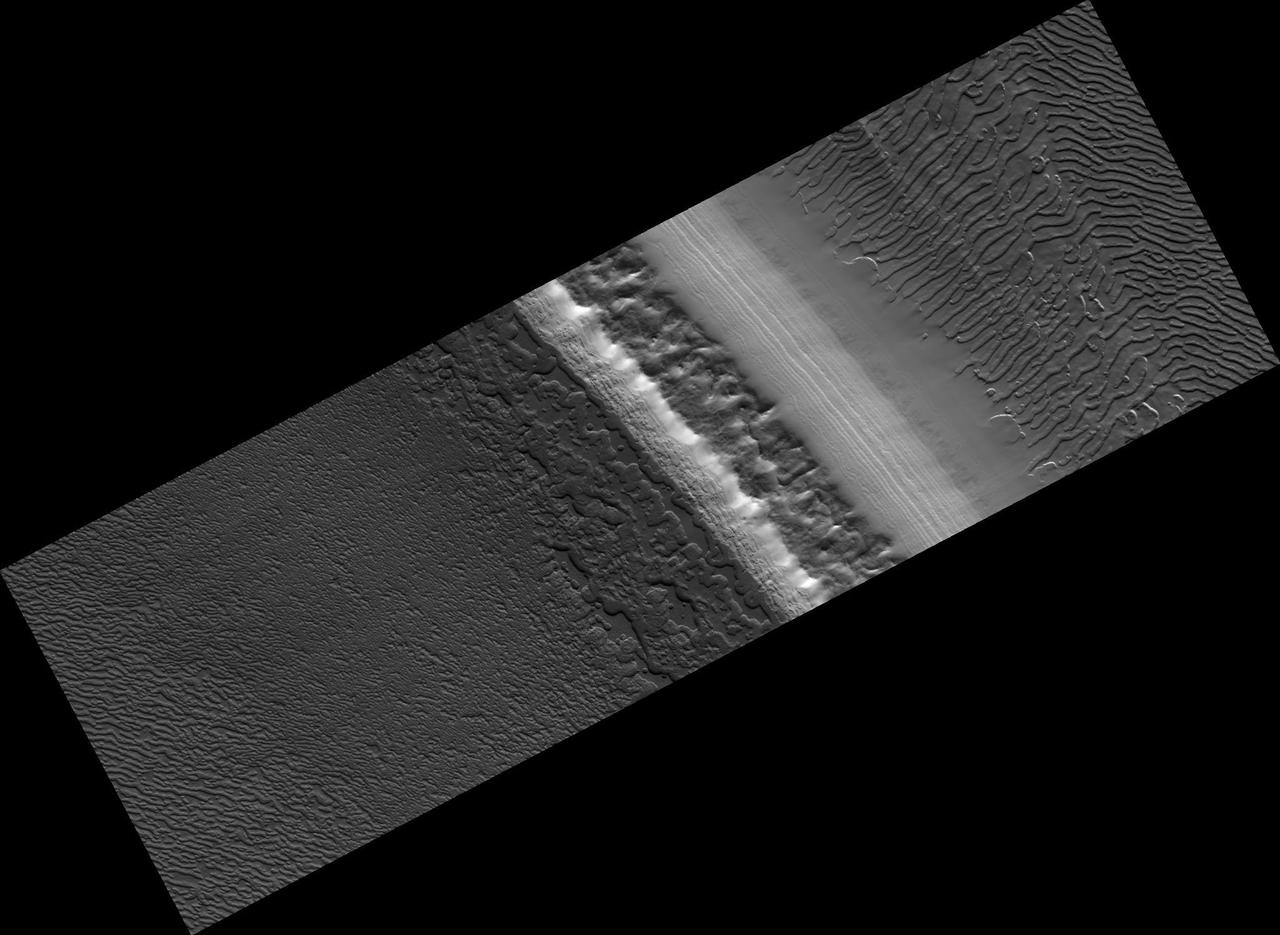
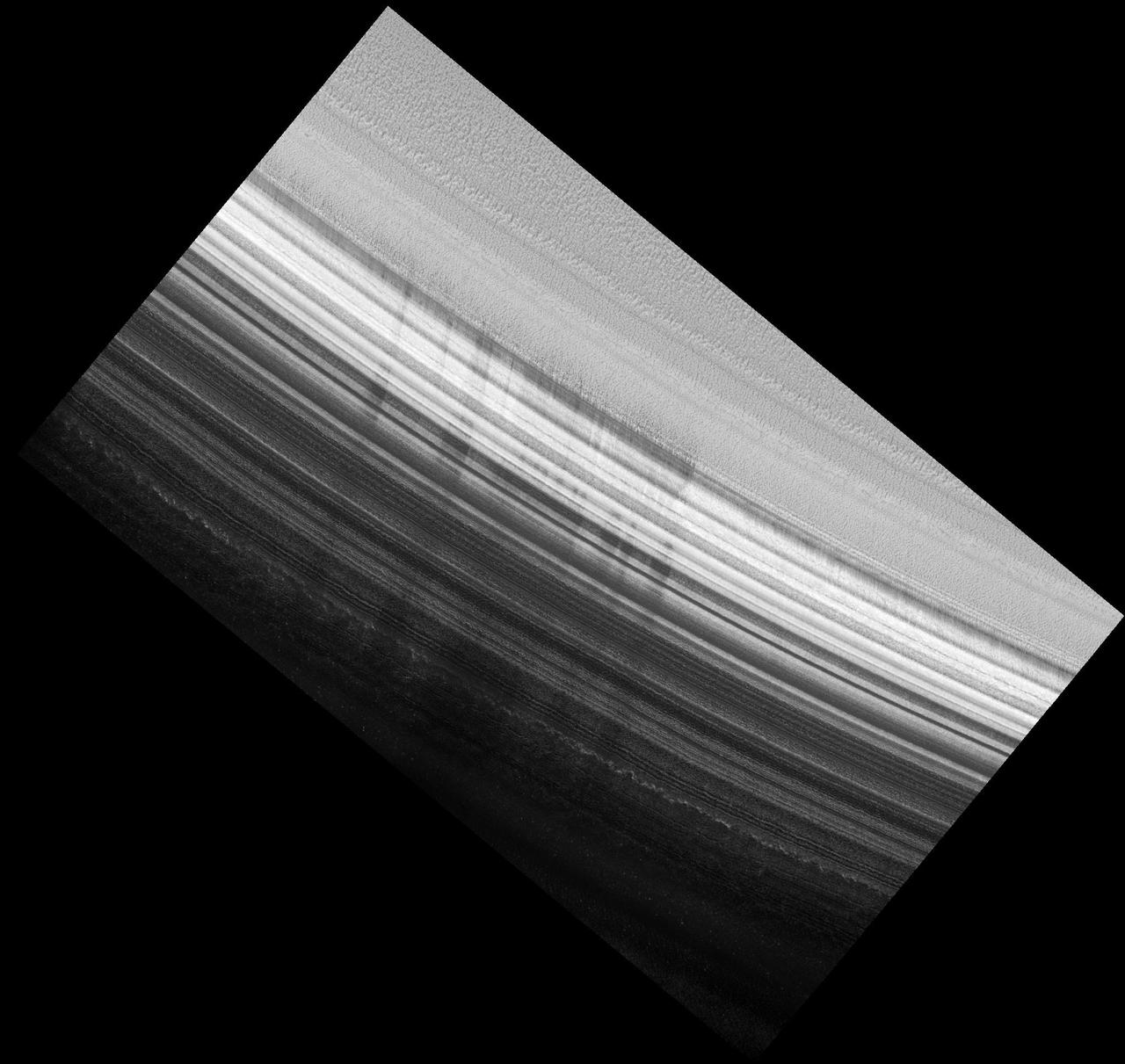
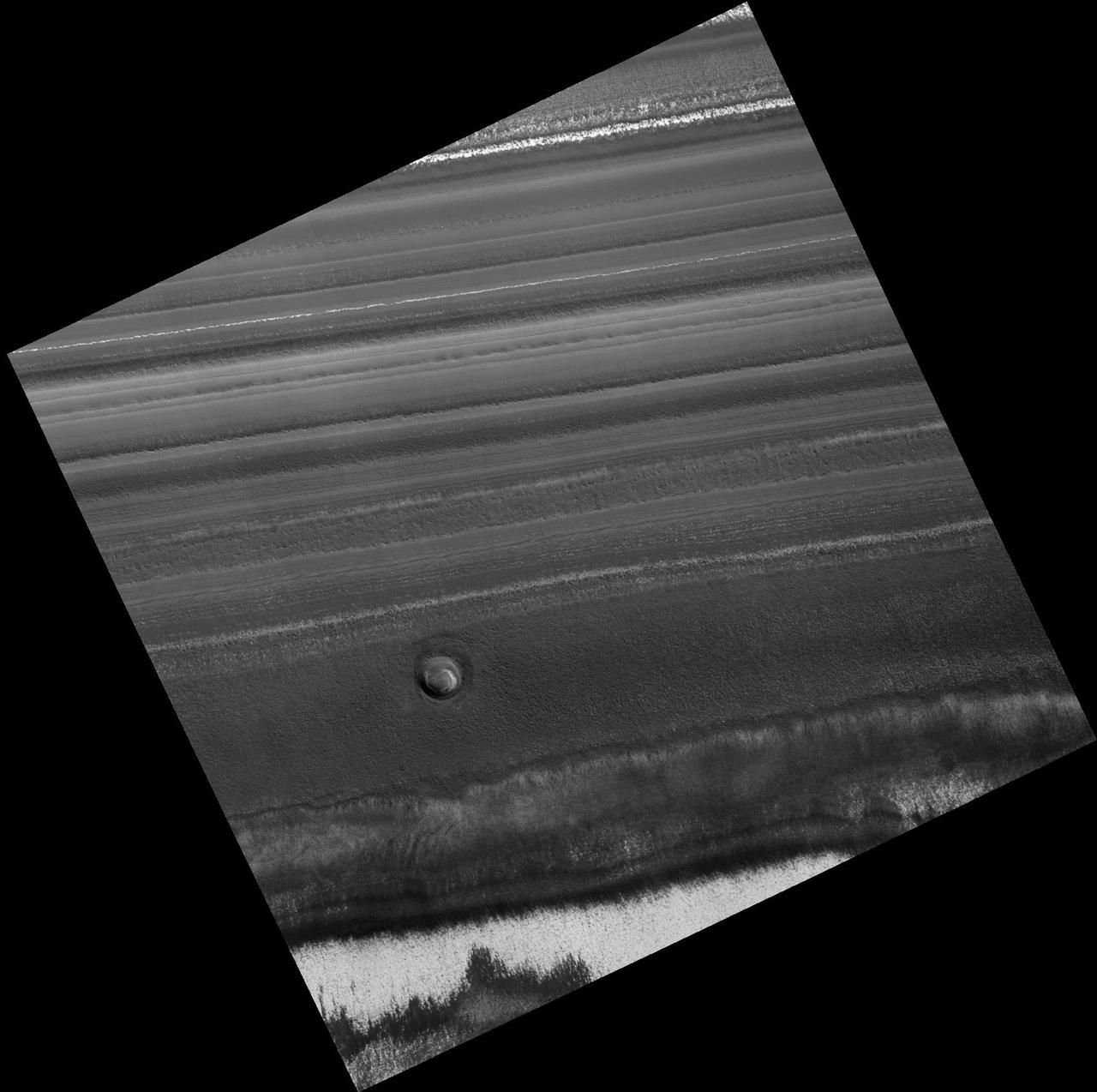
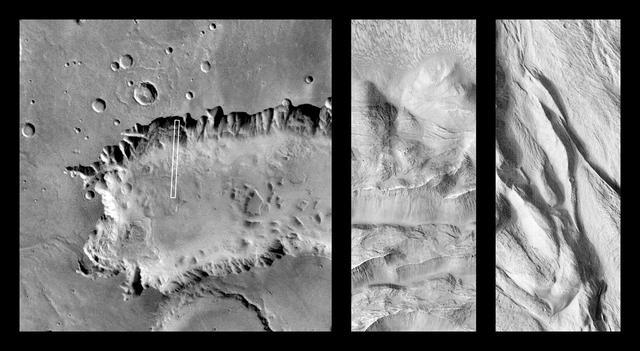
Exposure of Polar Layered Deposits
Layered Deposits in Terby
Deposits in Electris Region
Layered Deposits in Aureum Chaos
Exposure of Polar Layered Deposits
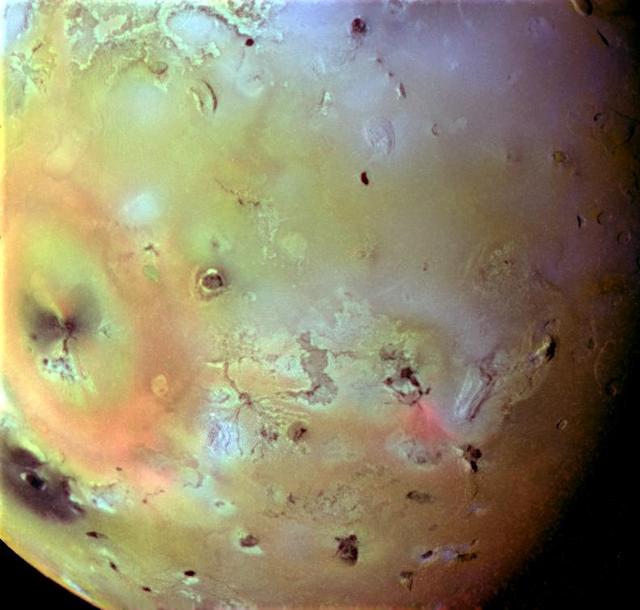
Pele Plume Deposit on Io
Layered Deposits in Ritchey Crater
Exposure of Polar Layered Deposits
Deposits in Electris Region
Central Deposits in Pasteur Crater
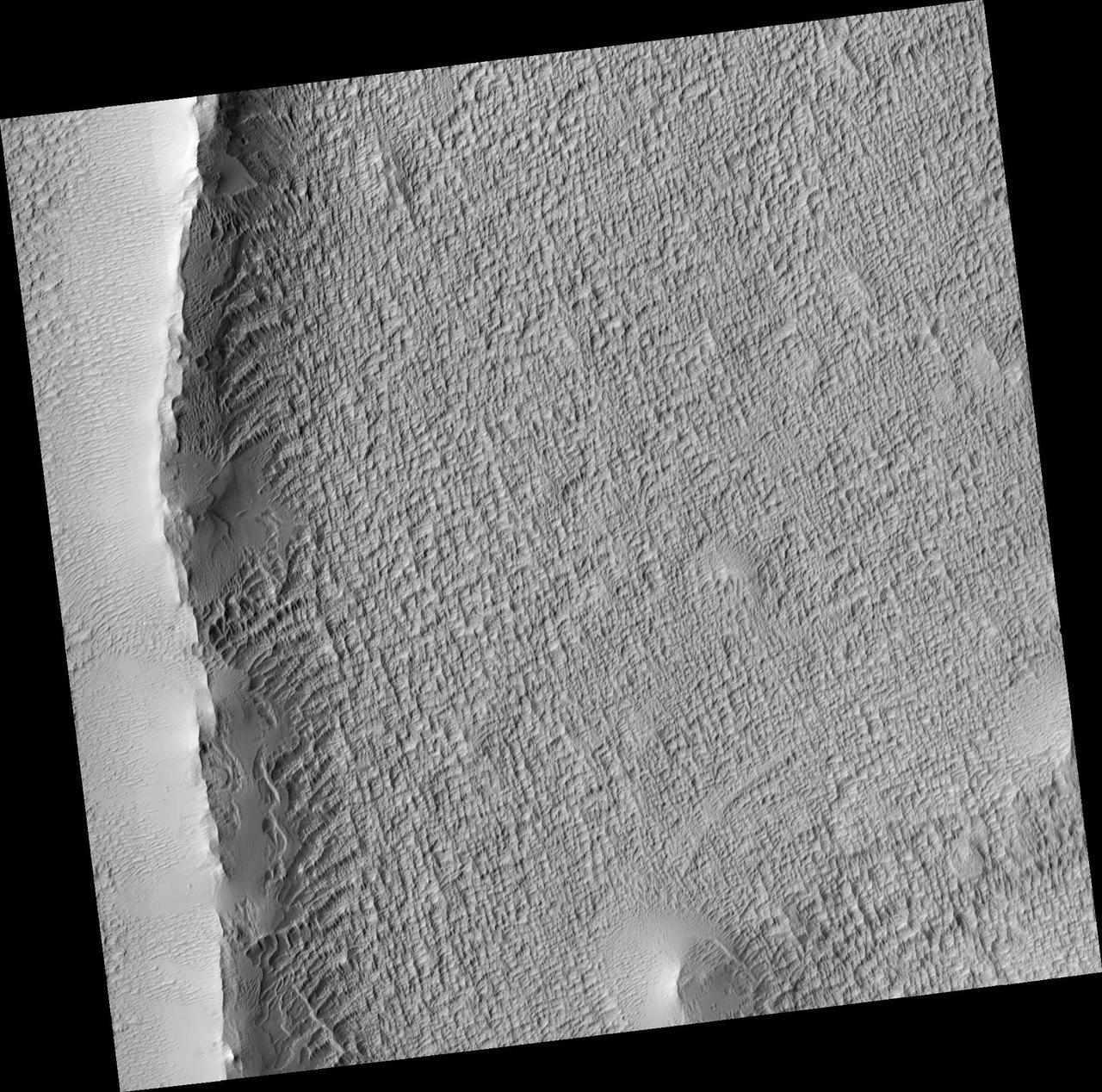
Fluidized Crater Ejecta Deposit
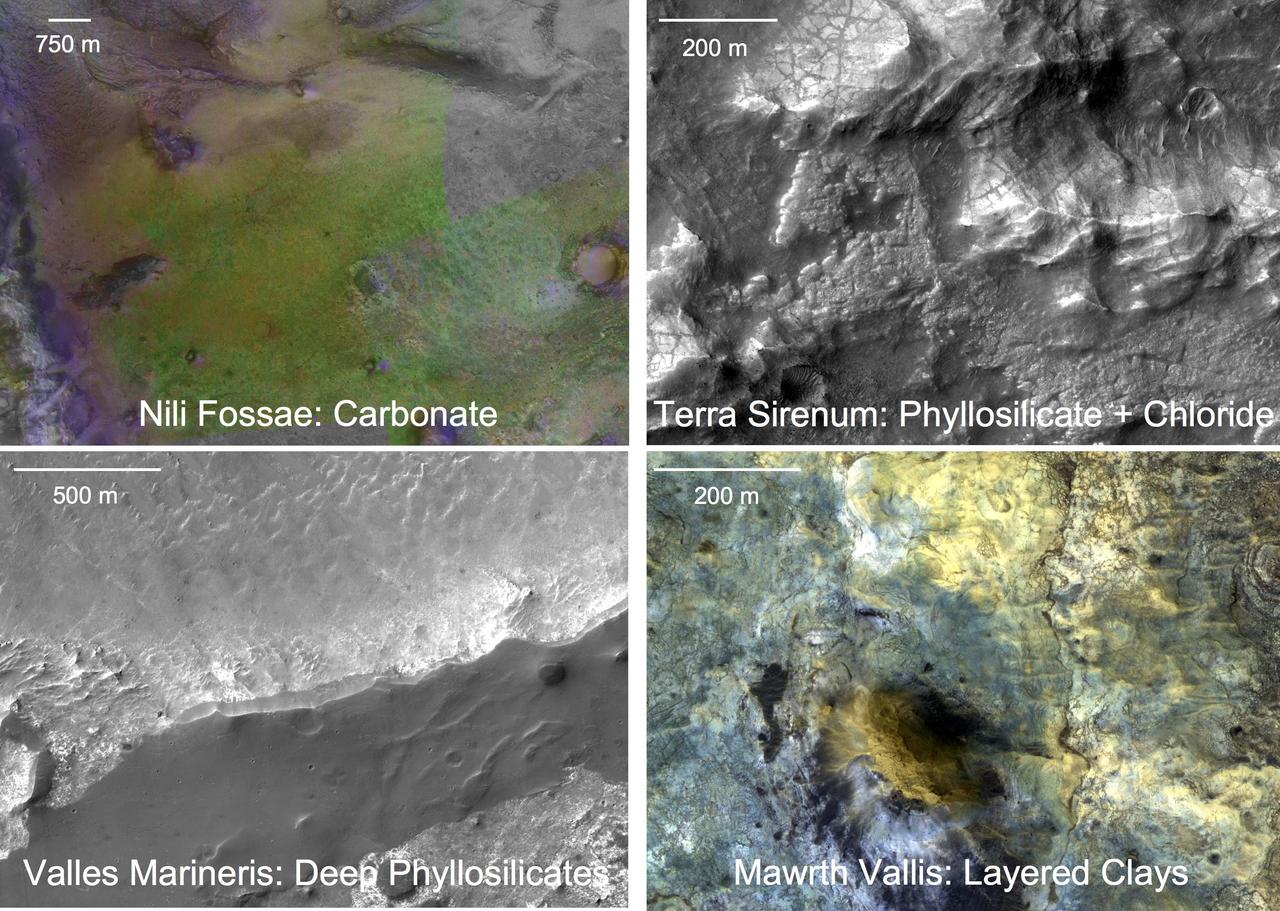
Mawrth Vallis Layered Deposits
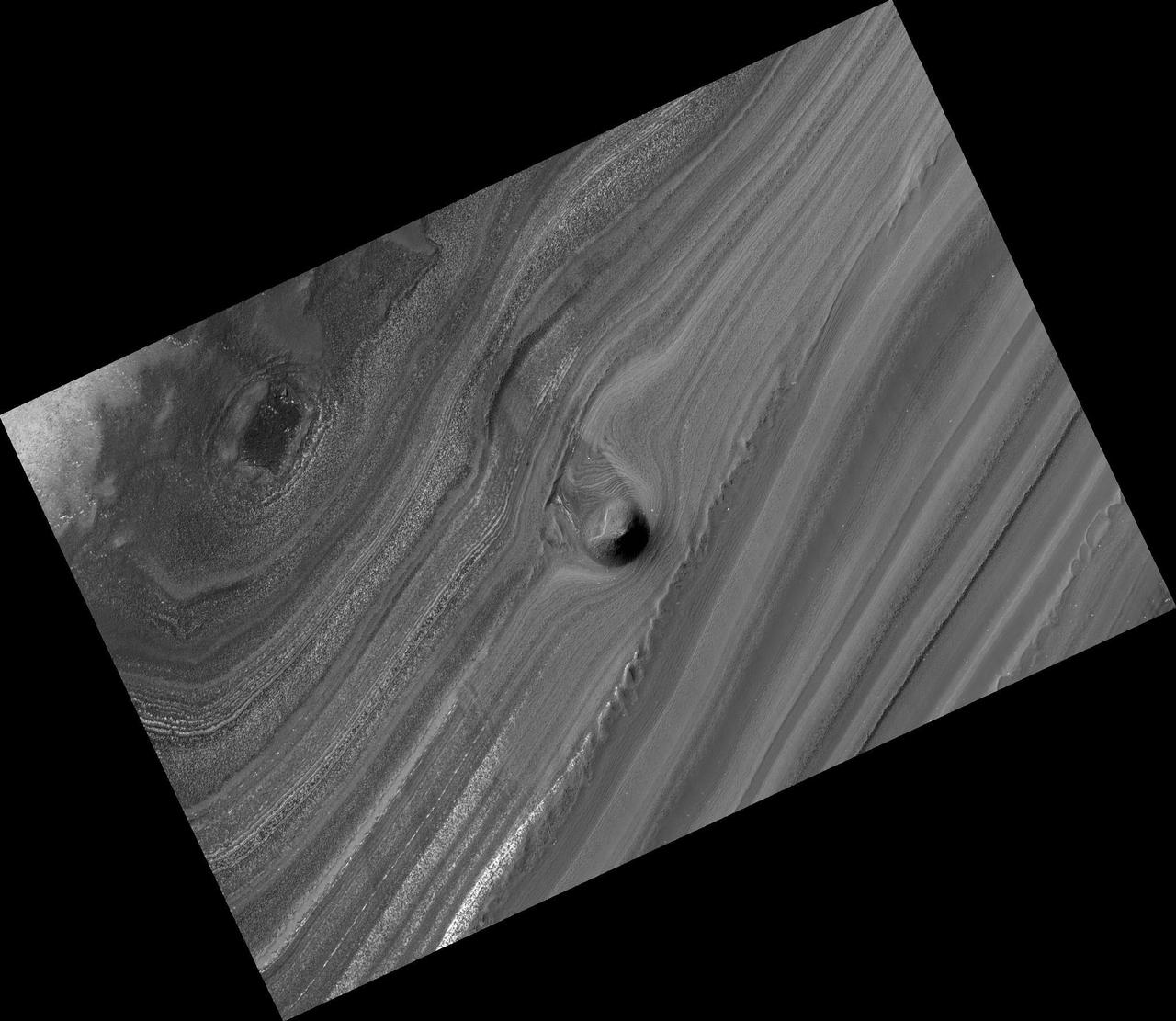
 North Polar Layered Deposits
North Polar Layered Deposits
Exposure of Polar Layered Deposits
Deposition + Erosion = Textures
Exposure of Polar Layered Deposits
South Polar Layered Deposits
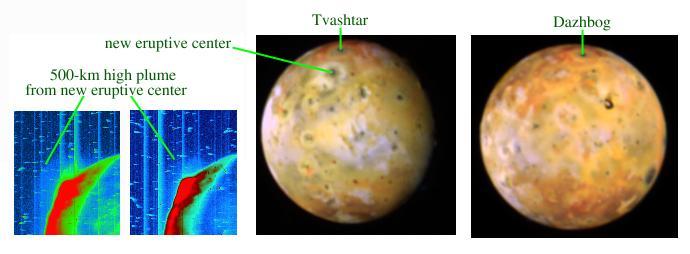
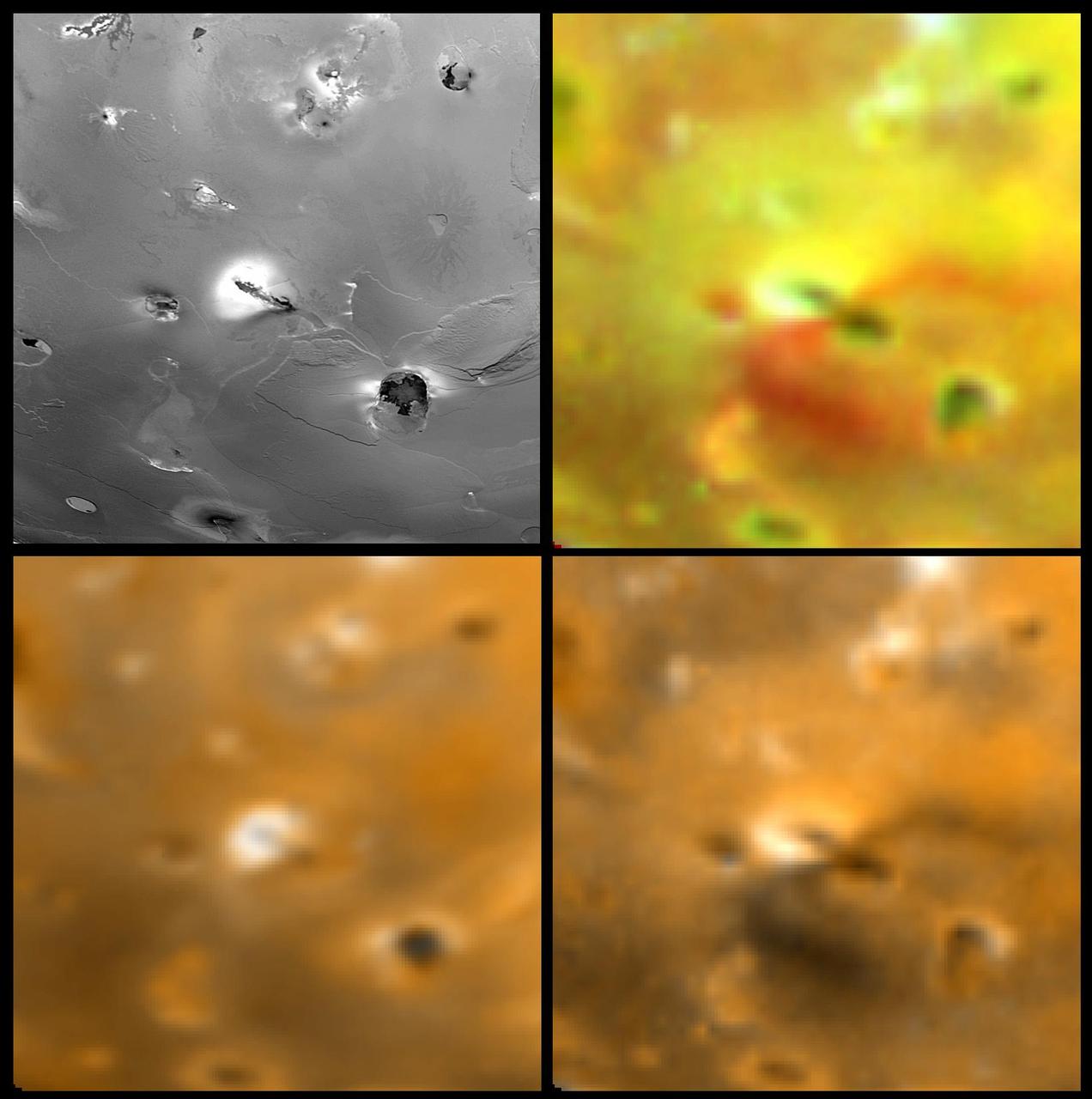
Io Surface Deposits and Volcano  http://photojournal.jpl.nasa.gov/catalog/PIA00361
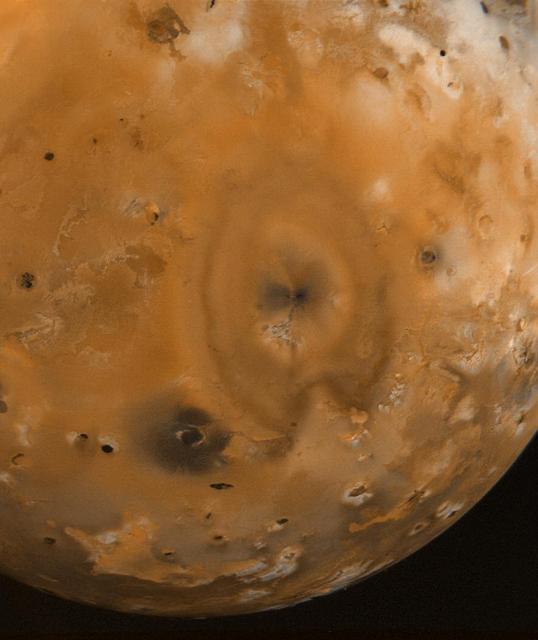
Io Surface Deposits and Volcano
Craters on South Polar Layered Deposits
Mars South Polar Layered Deposits
Io Surface Deposits and Volcanic Craters
A Look at Craters Hosting Polar Deposits
Mars South Polar Layered Deposits
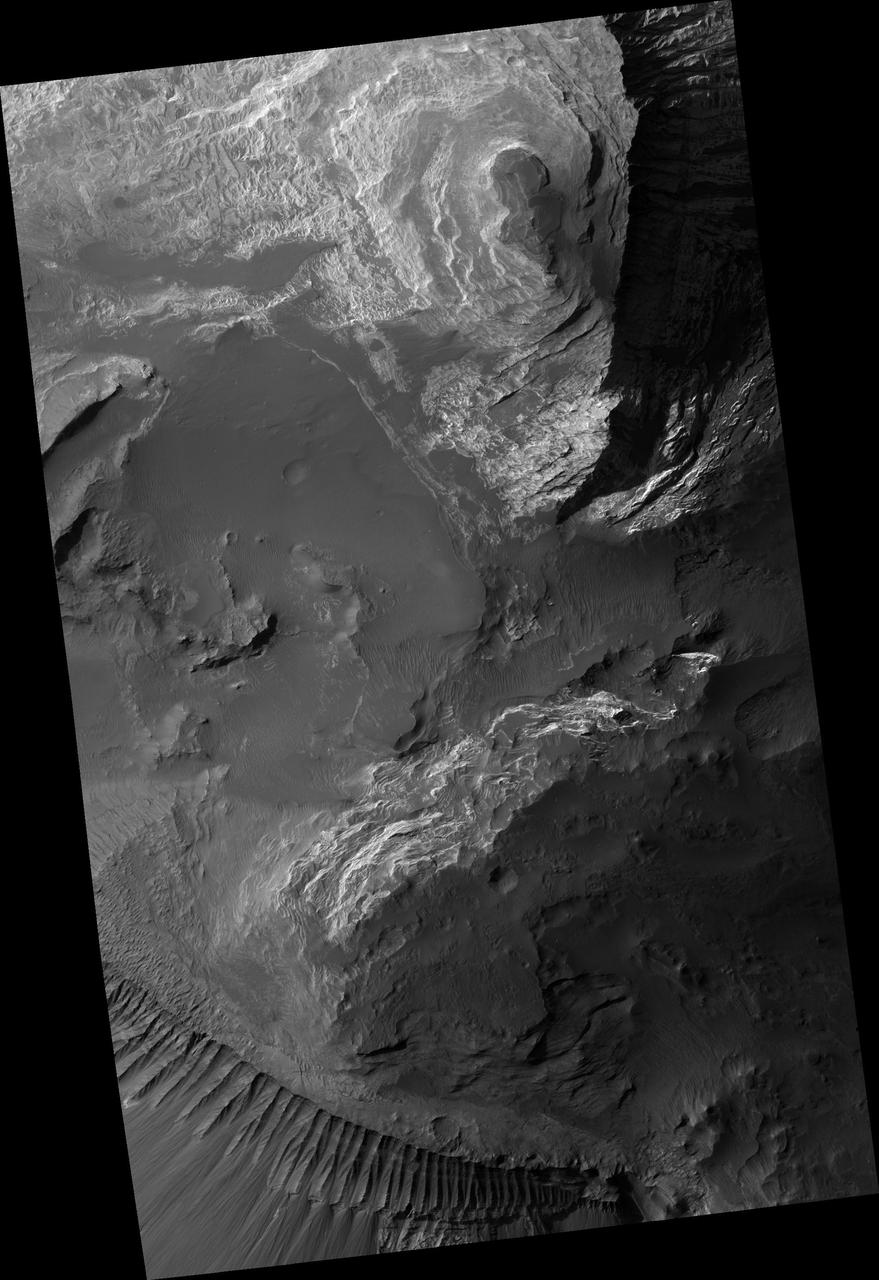
Light Layered Deposits in Valles Marineris
Layers of the South Polar Layered Deposits
Schiaparelli Crater Rim and Interior Deposits
Northern Plume and Plume Deposits on Io
Exposure of North Polar Layered Deposits
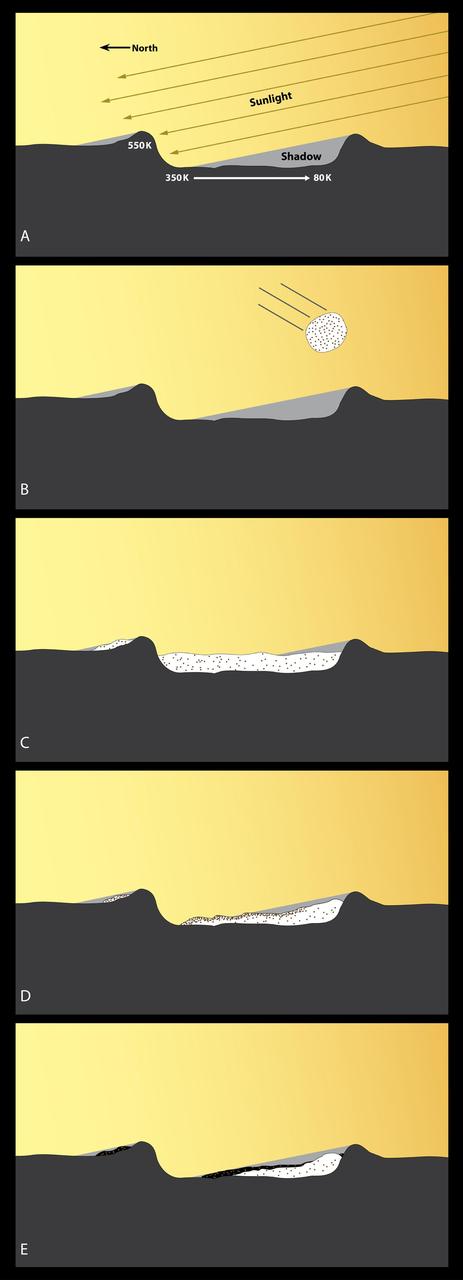
Model of Polar Ice Deposit Formation
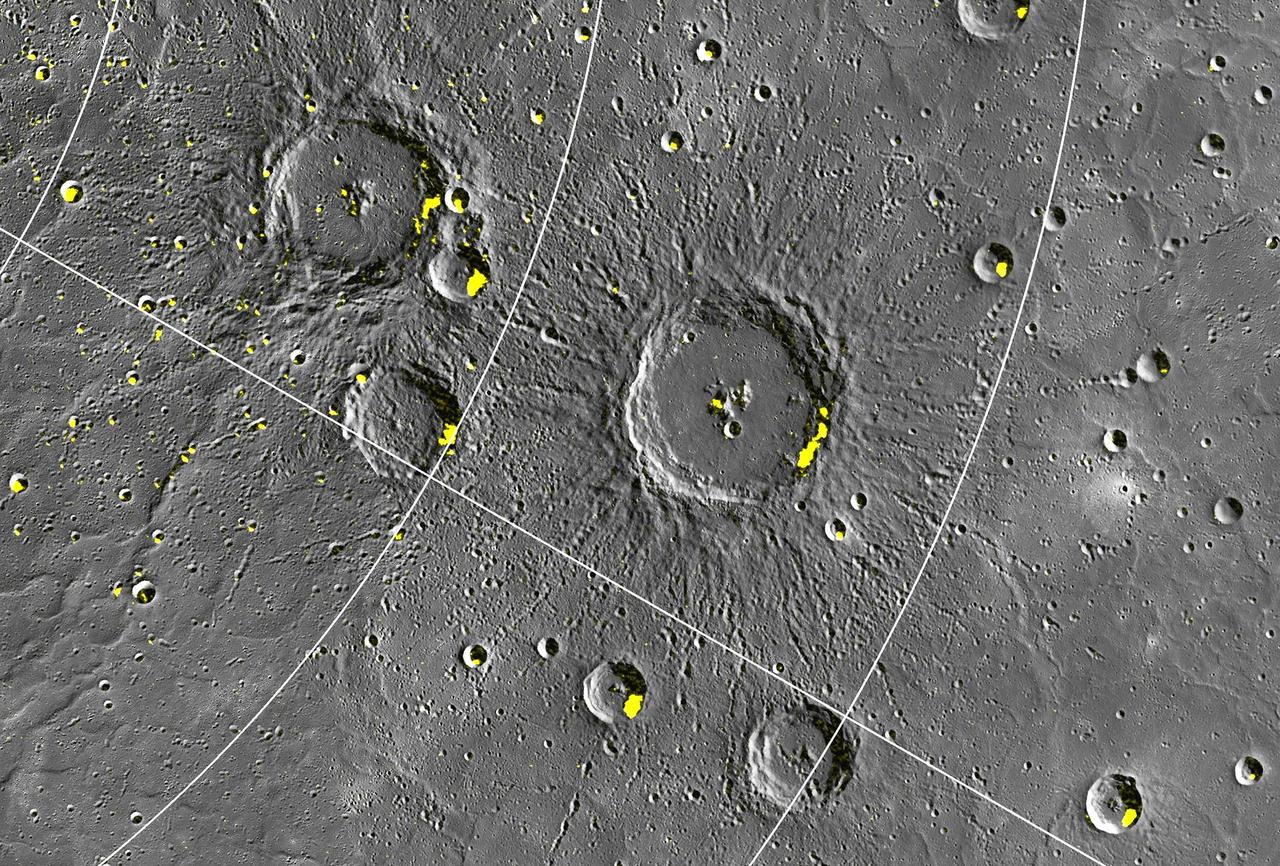
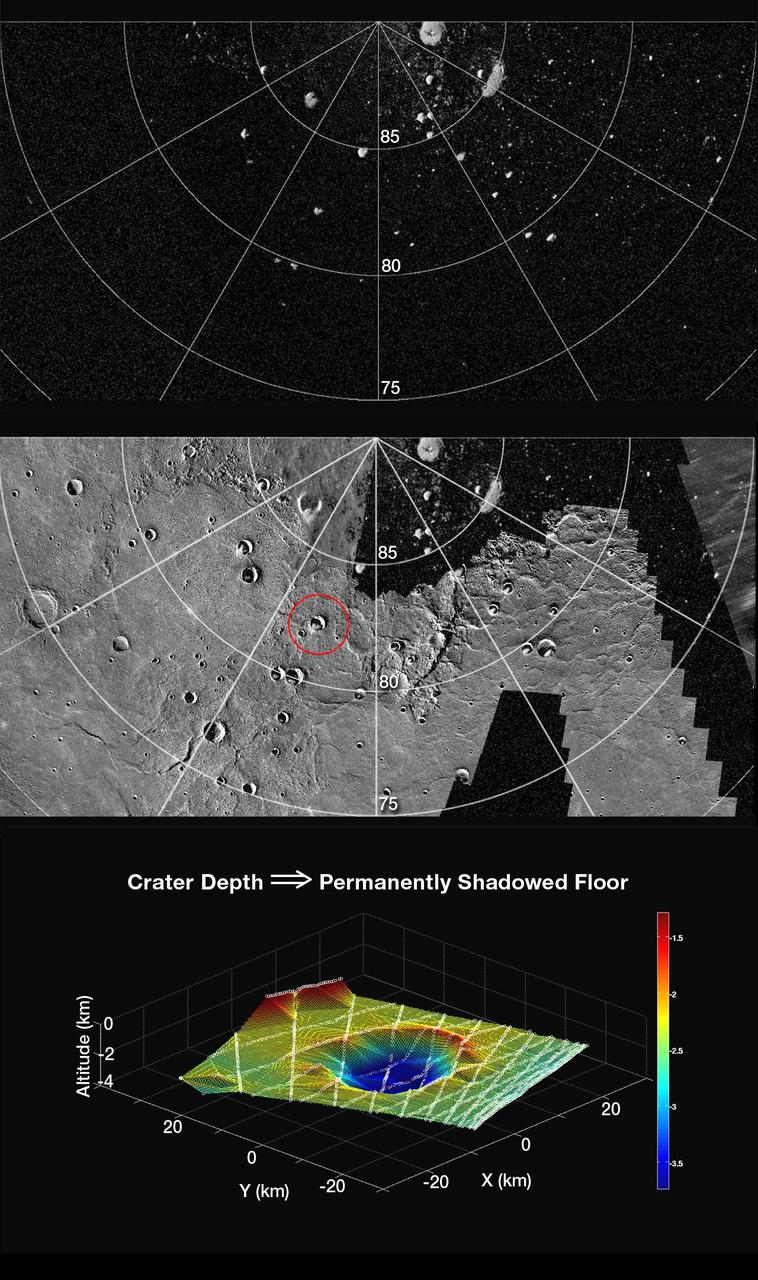
Radar Bright Deposits and Persistent Shadows
Unusual Volcanic Pyroclastic Deposits on Io
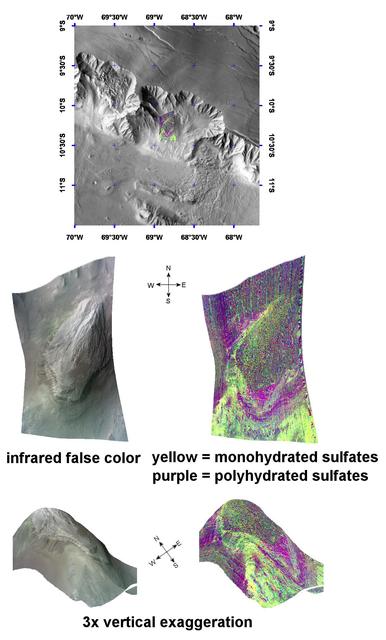
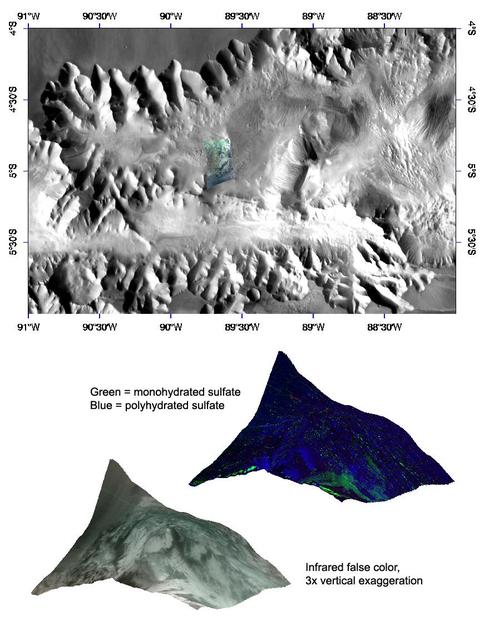
Complex Sulfate Deposits in Coprates Chasma
Layering in North Polar Layered Deposits
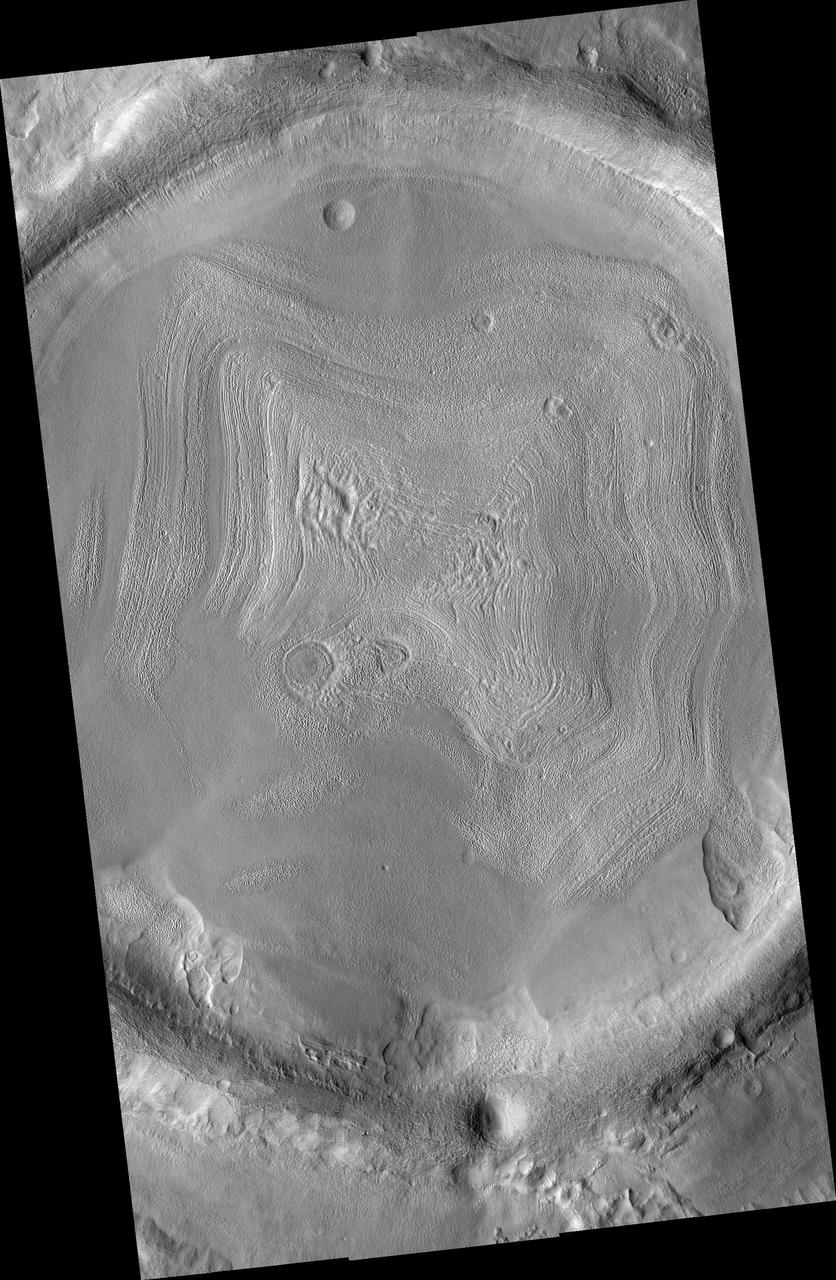
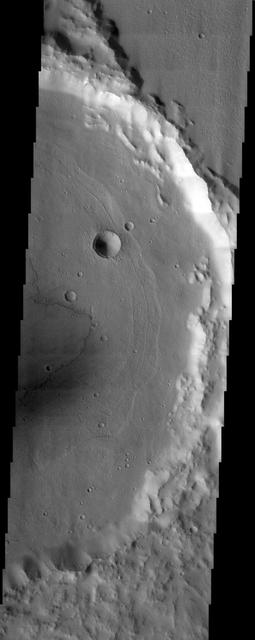
Impact Crater Filled With Layered Deposits
Interior Layered Deposits in Juventae Chasma
North Polar Layered Deposits in Summer
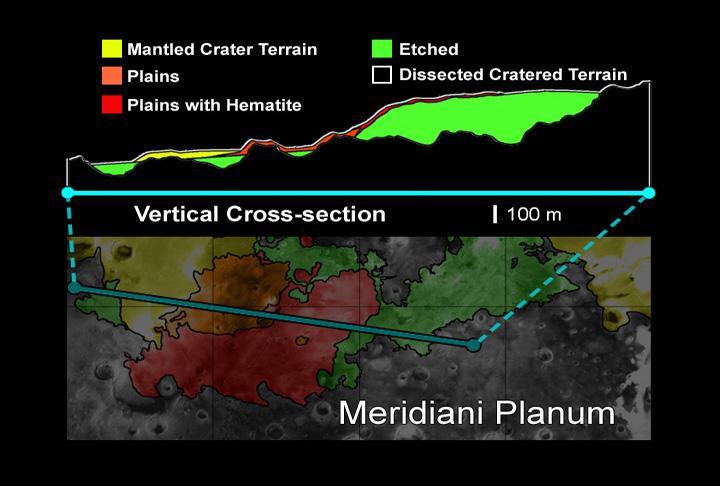
Hematite Deposits at Opportunity Landing Site
Mound of South Polar Layered Deposits
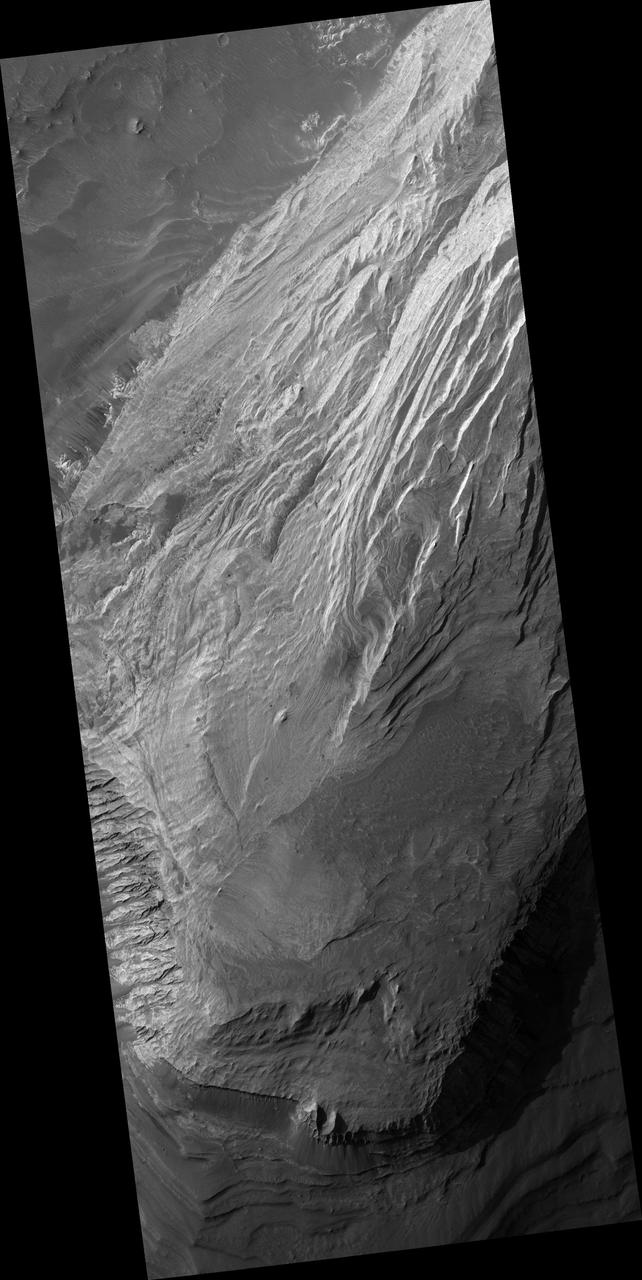
This image shows a small portion of the layered deposits found in Melas  Chasma
Layered Deposit
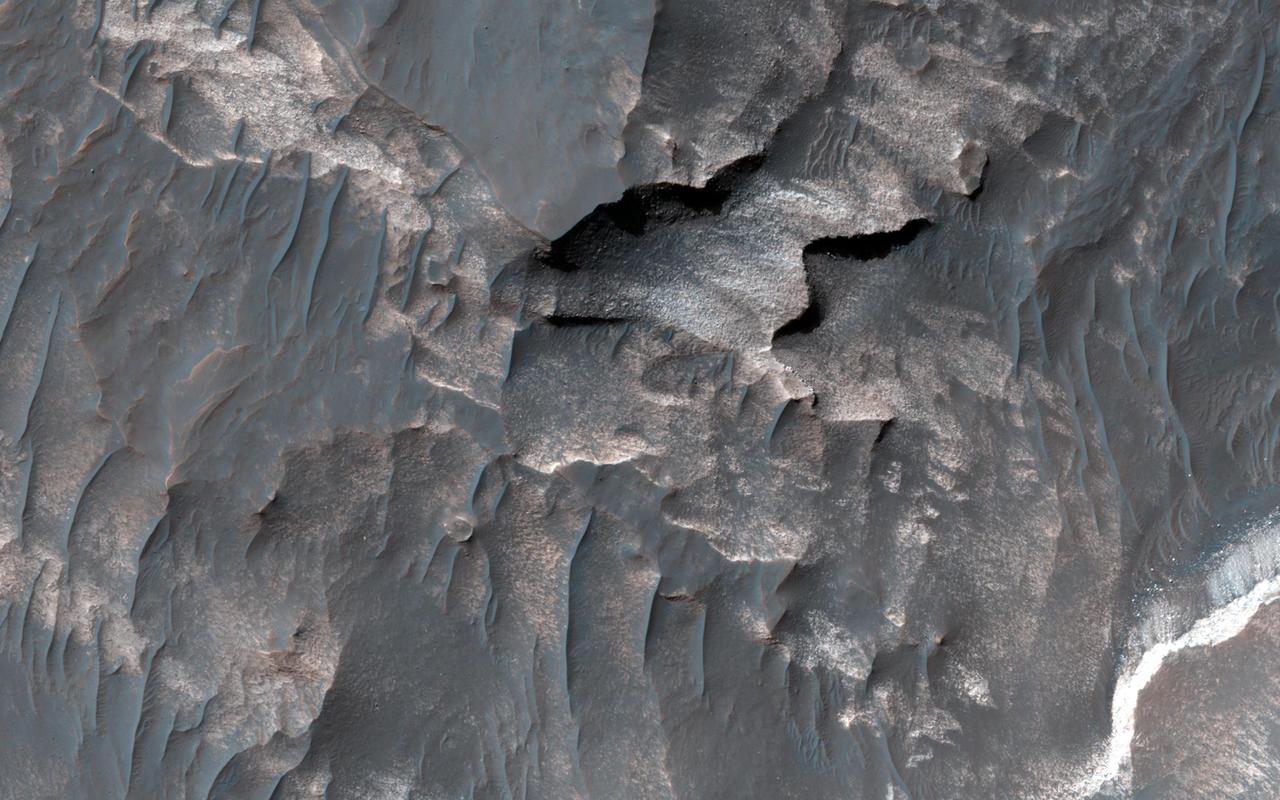
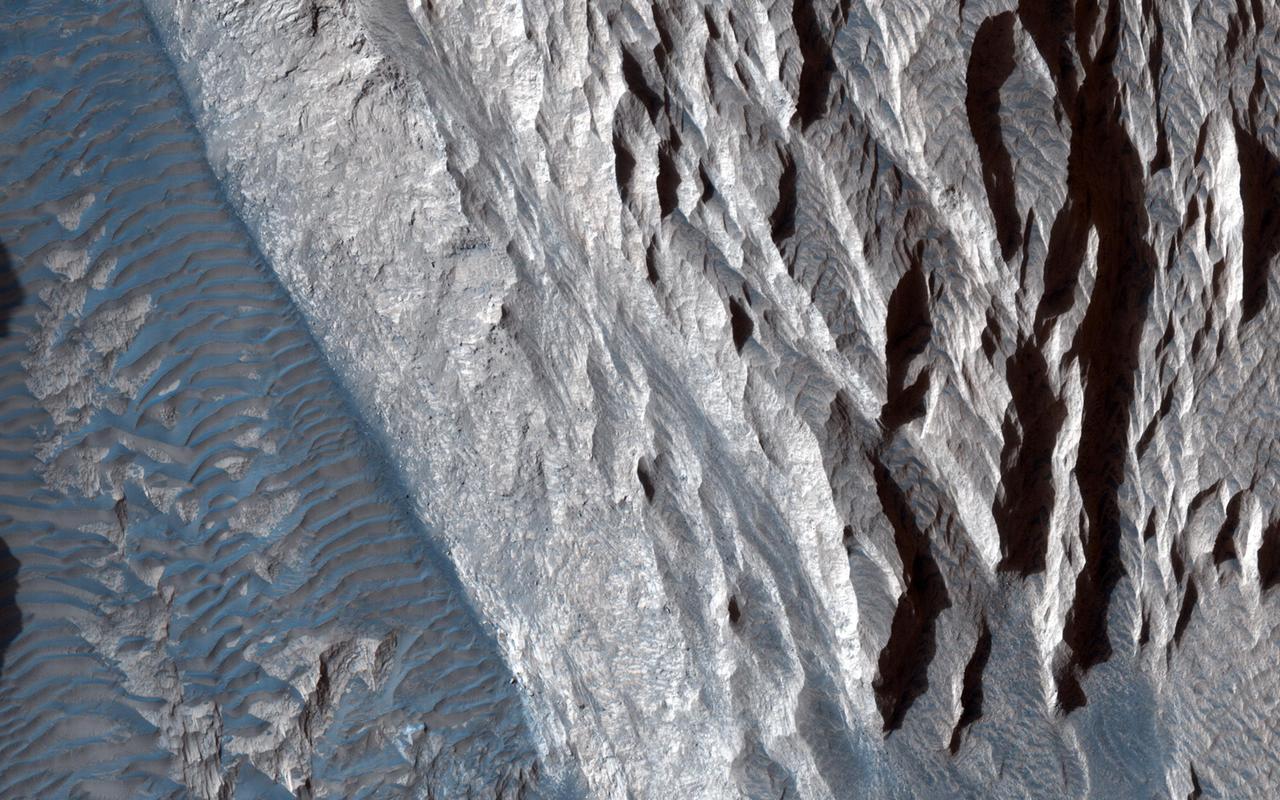
Sedimentary deposits are common within Valles Marineris.  Most larger chasmata contain kilometer-thick light-toned layered deposits composed of sulfates. However, some of the chasmata, like Ius Chasma shown in this image from NASA Mars Reconnaissance Orbiter, lack these deposits or have much thinner deposits.  The light-toned deposits in Ius Chasma are observed both along the floor and inner wallrock materials. Some of the light-toned deposits appear to post-date formation of the chasma floor, whereas other deposits appear to lie beneath wallrock materials, indicating they are older. By examining the stratigraphy using digital terrain models and 3D images, it should be possible to decipher the relative ages of the different geologic units. CRISM data may also provide insight into the mineralogy, which will tell scientists about the aqueous conditions that emplaced the light-toned deposits.  http://photojournal.jpl.nasa.gov/catalog/PIA19855
Sedimentary Deposits within Ius Chasma
The layered and wind eroded deposits occur on the  floor of Chandor Chasma
Canyon Floor Deposits
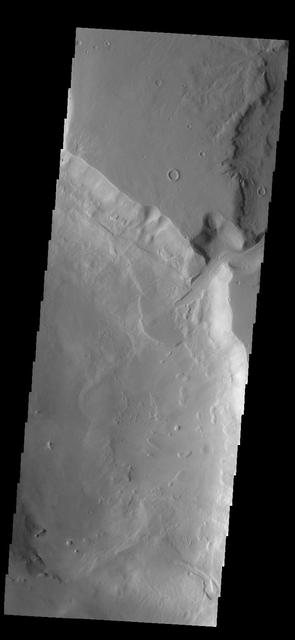
This image captured by NASA 2001 Mars Odyssey spacecraft shows several small landslide deposits in Noctis Labyrinthus.
Landslide Deposits
A delta deposit is located where a channel enters Ismenius Cavus in this image captured by NASA 2001 Mars Odyssey spacecraft.
Delta Deposit
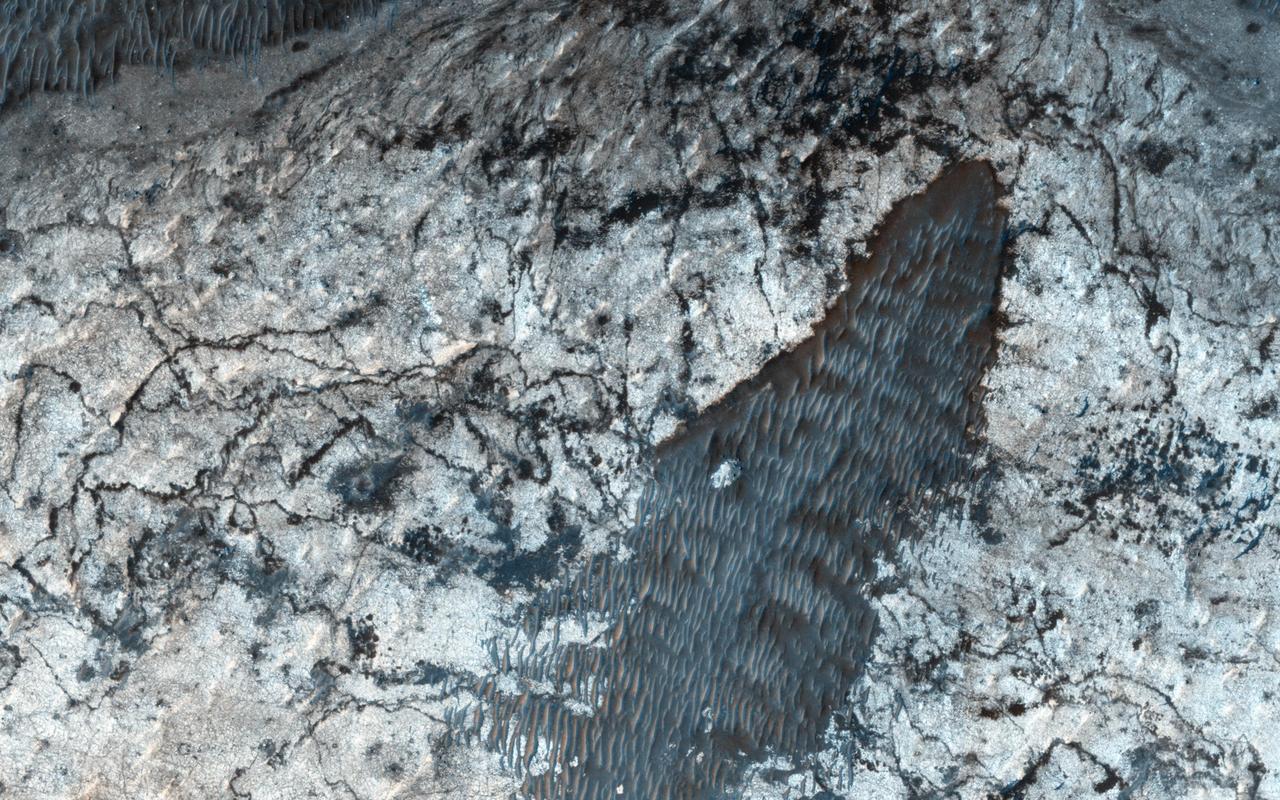
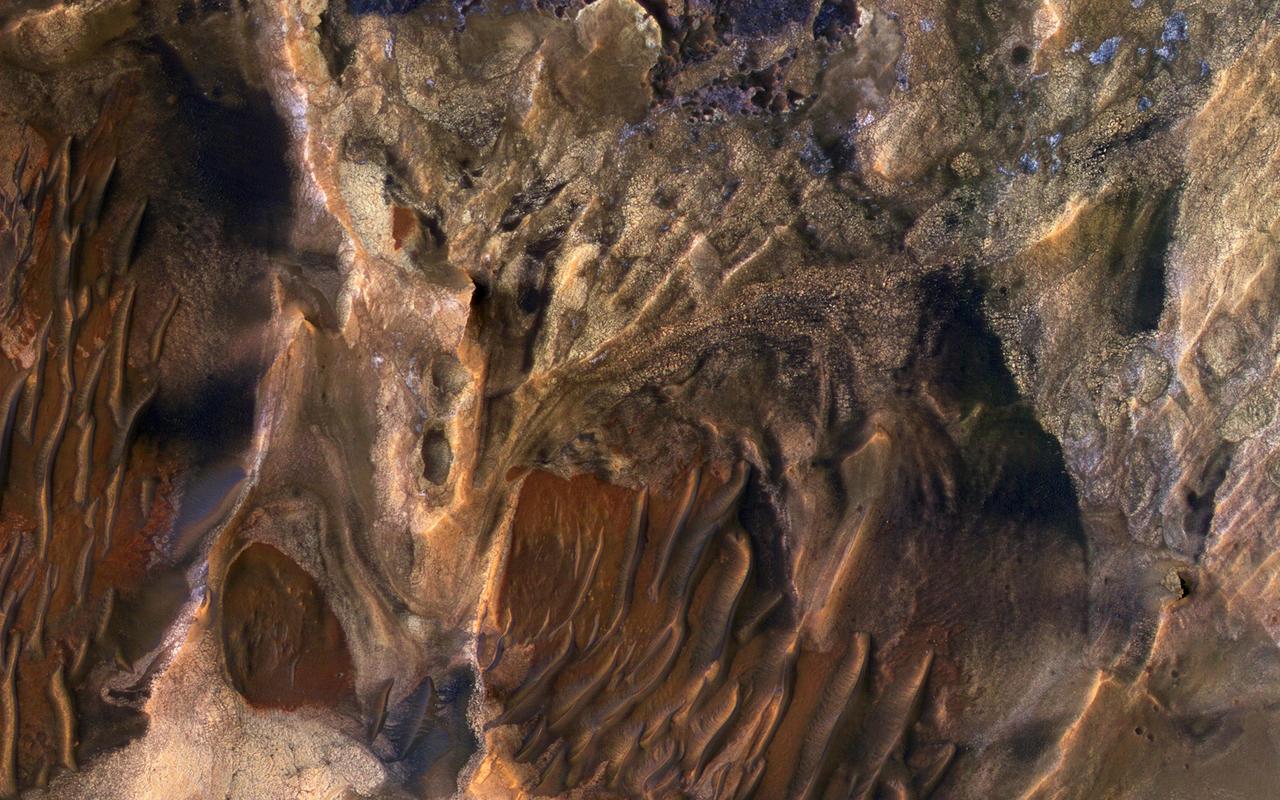
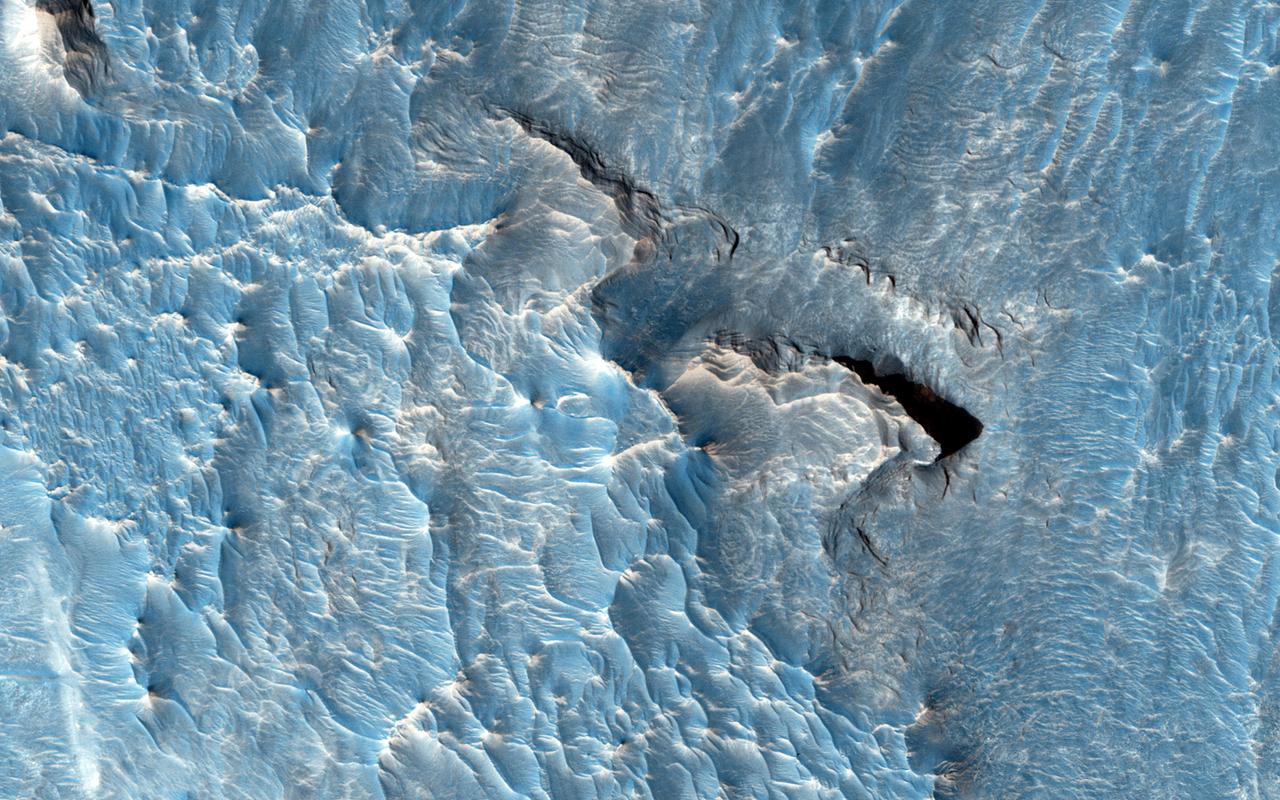
This scene captured by NASA Mars Reconnaissance Orbiter includes chaotic deposits with a wide range of colors. The deposits are distinctive with both unique colors and small-scale textures such as fracture patterns.  These are probably sedimentary rocks, transported and deposited in water or air. The original layers may have been jumbled in a landslide. Dark or reddish sand dunes cover some of the bedrock.  http://photojournal.jpl.nasa.gov/catalog/PIA19860
Diverse Deposits in Melas Chasma
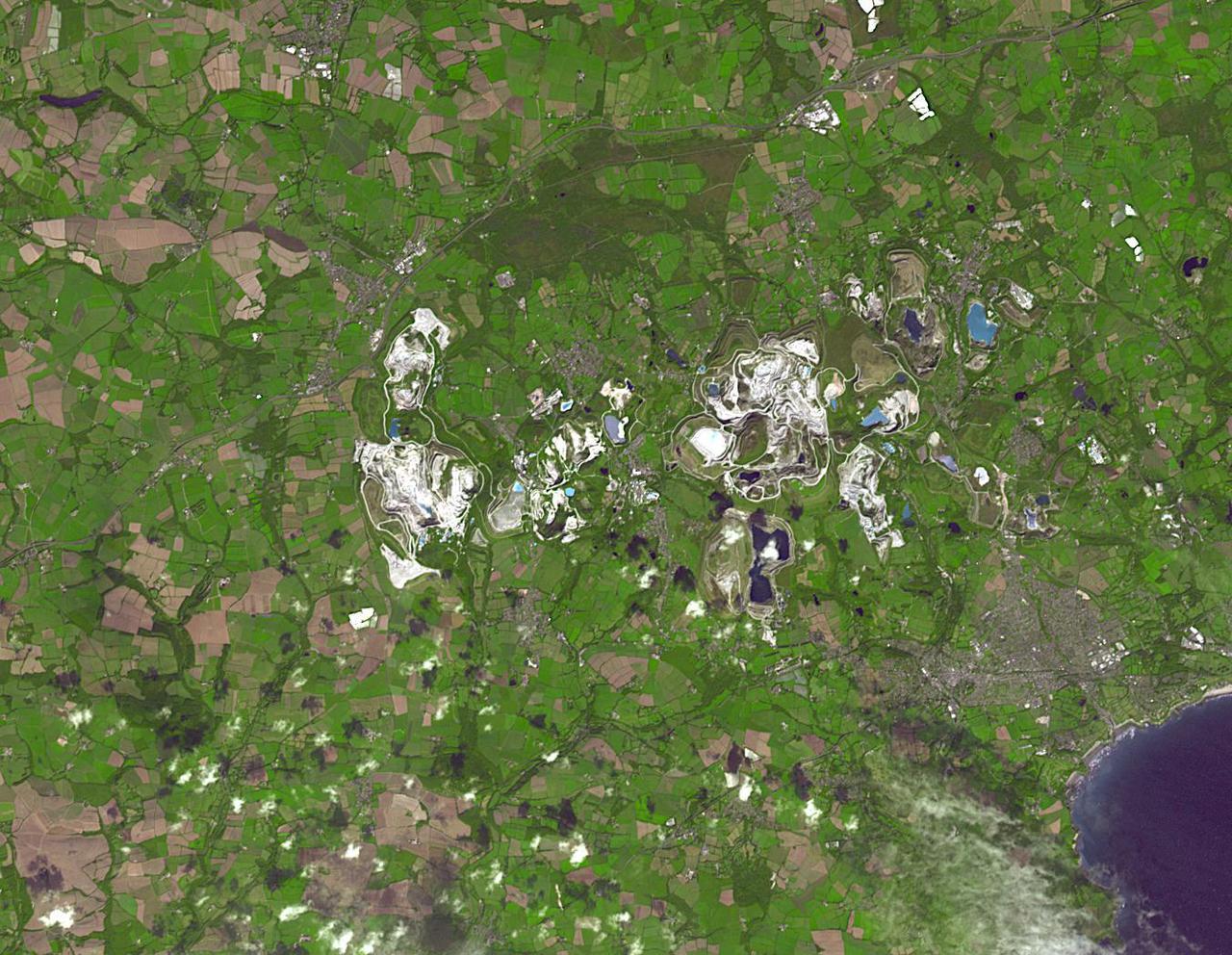
The British porcelain industry began with the discovery of china clay (kaolinite) at Tregonning Hill, Cornwall, in 1745. By the early 19th century, the St Austell deposits were the largest in the world. By 1910, Cornwall was producing fifty percent of the world's china clay. Today, the St Austell deposits have largely been abandoned in favor of other deposits, mainly in Brazil. The image was acquired September 10, 2014, covers an area of 15.7 by 20.3 km, and is located at 50.4 degrees north, 4.9 degrees west.  https://photojournal.jpl.nasa.gov/catalog/PIA24865
St Austell Deposits, Cornwall
Unusual Mound in North Polar Layered Deposits
Radial Ridge in Deposit Near Pavonis Mons
Close-up of Craters Hosting Radar-bright Deposits
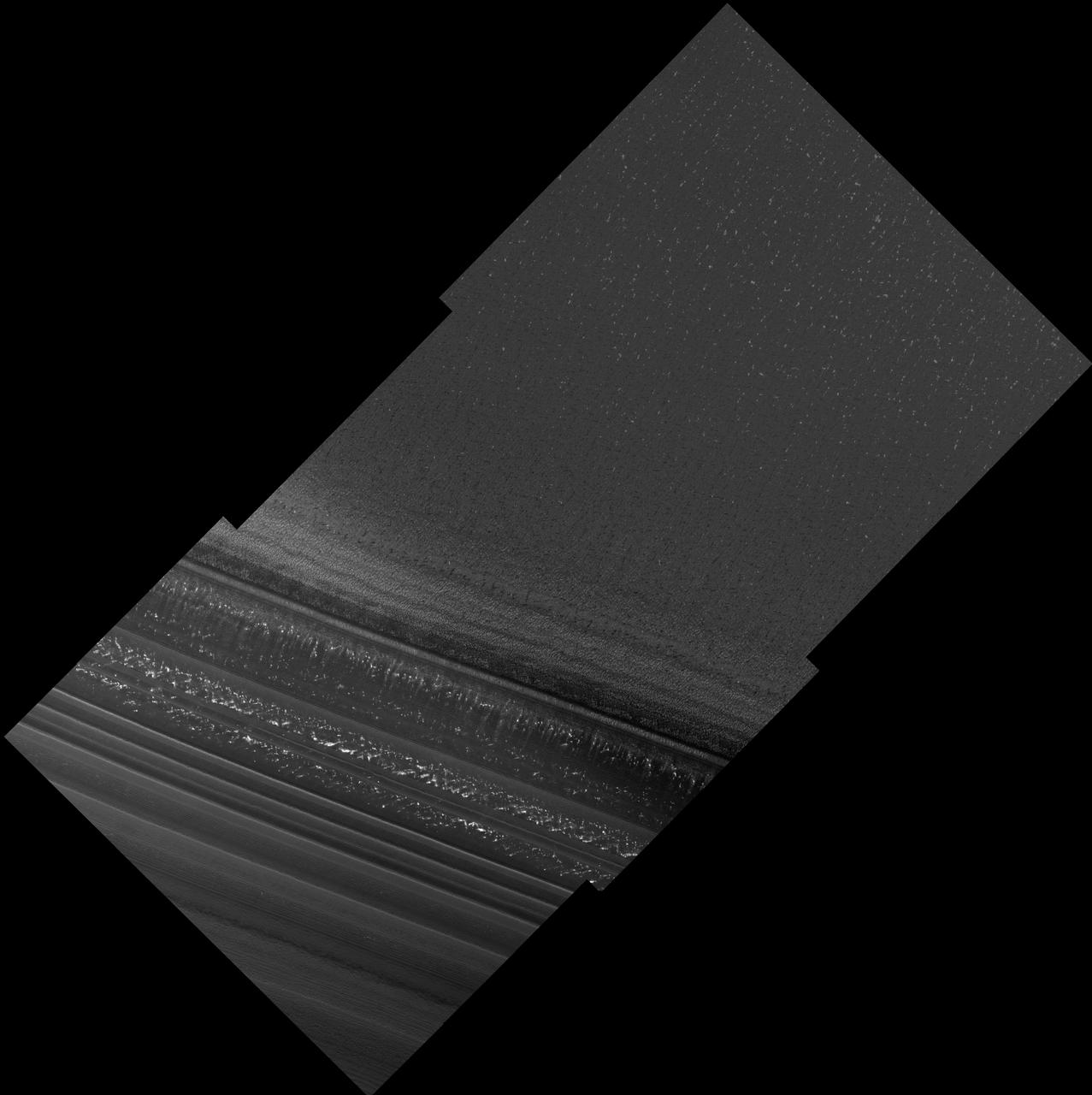
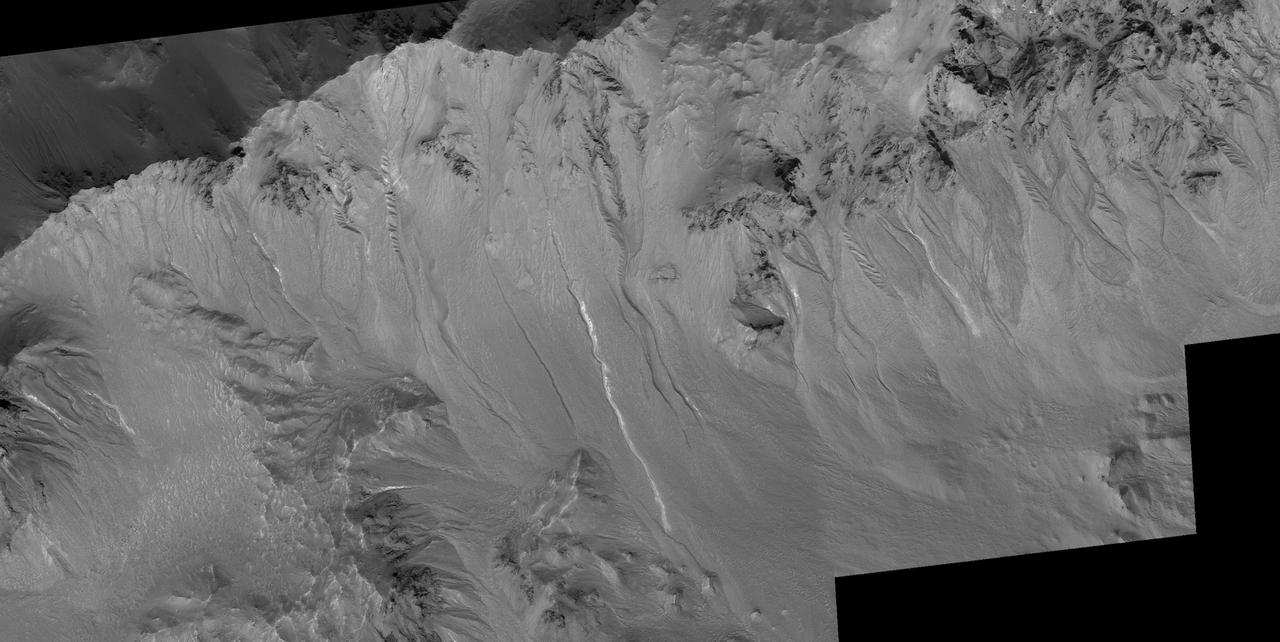
North Polar Layered Deposits Exposed Wall
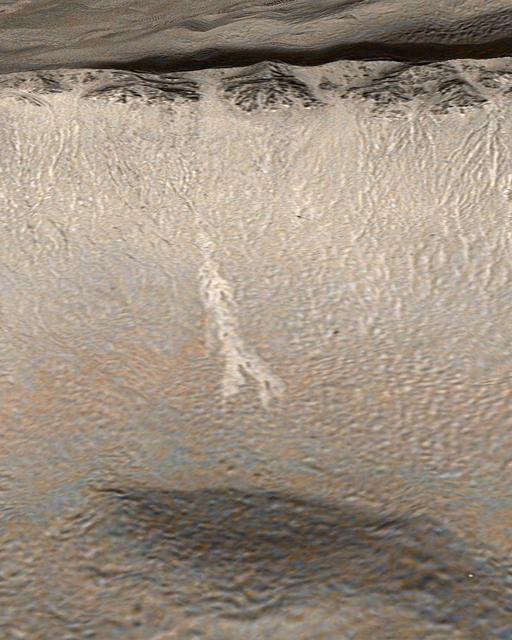
Other Martian Gullies with Light-Toned Deposits
Fresh Crater in North Polar Layered Deposit
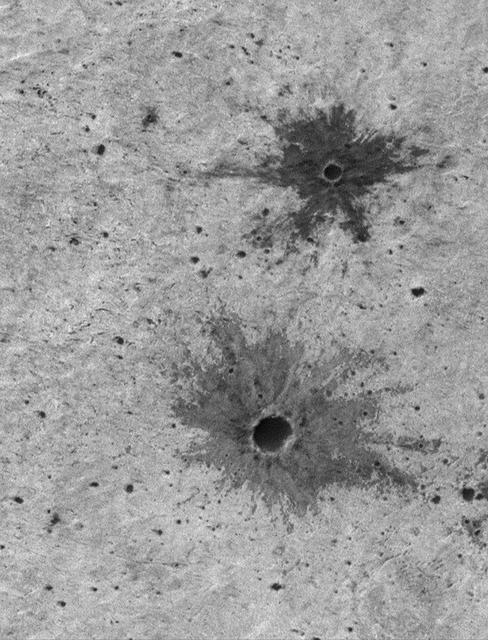
Small Impact Craters with Dark Ejecta Deposits
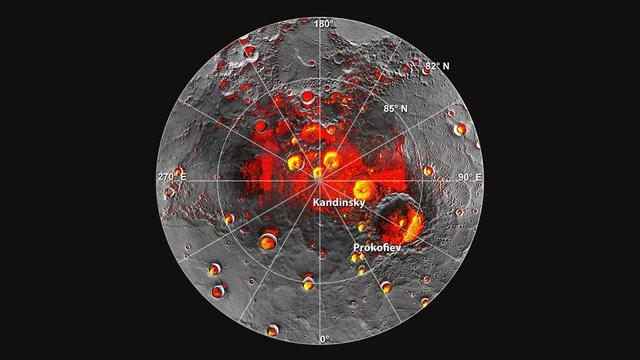
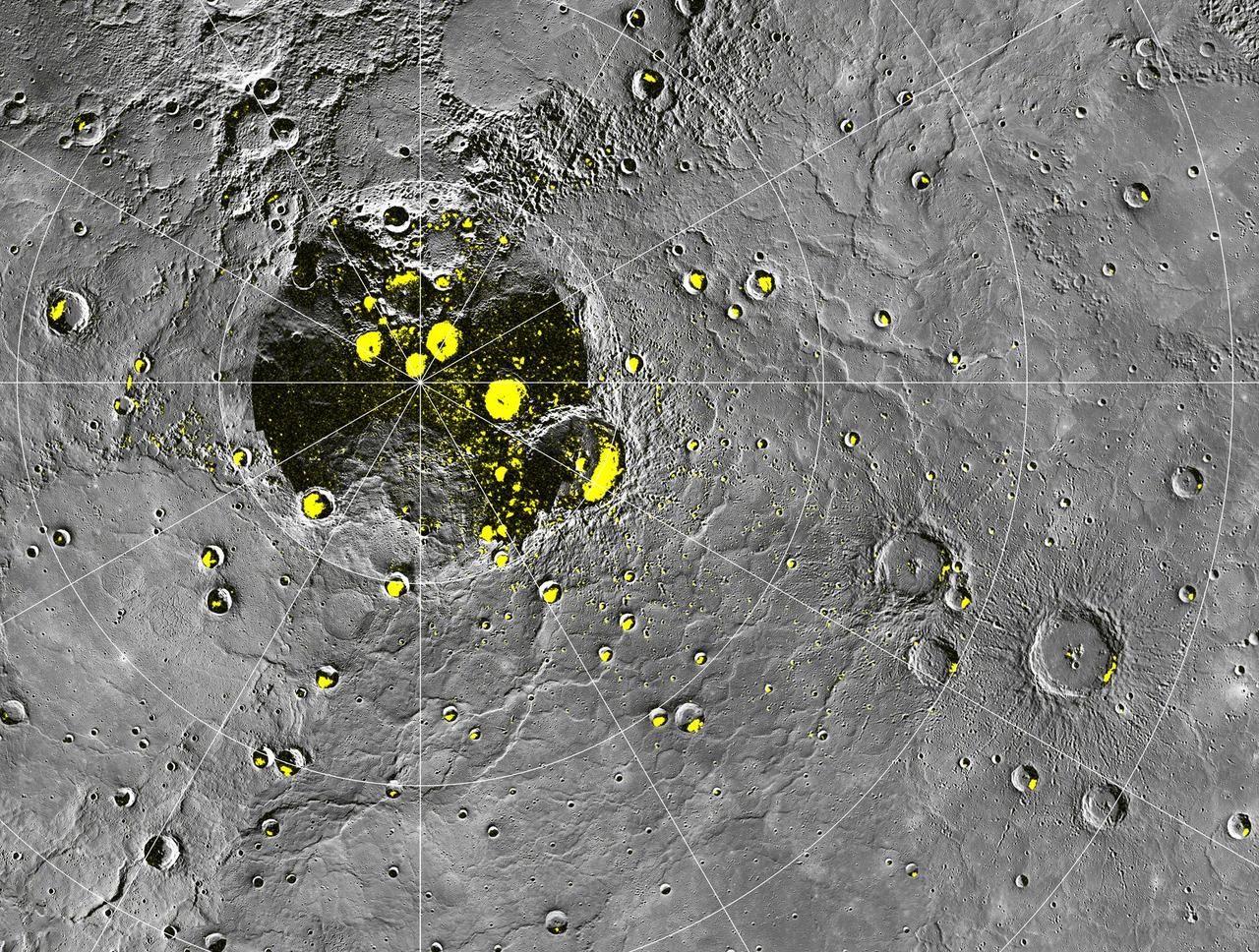
Radar-bright Deposits near Mercury North Pole
Concentric Crater Floor Deposits in Daedalia Planum
Chloride Salt Deposit in Southern Highlands of Mars
Radar Bright Deposits in Mercury Polar Craters
South Polar Layered Deposits and Residual Cap
Fine Layered Deposits Near Capri Mensa
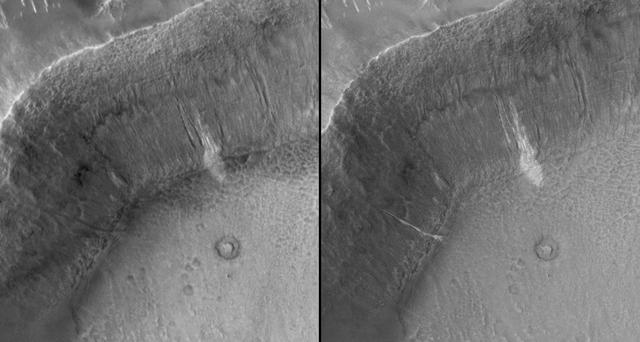
New Gully Deposit in a Crater in Terra Sirenum
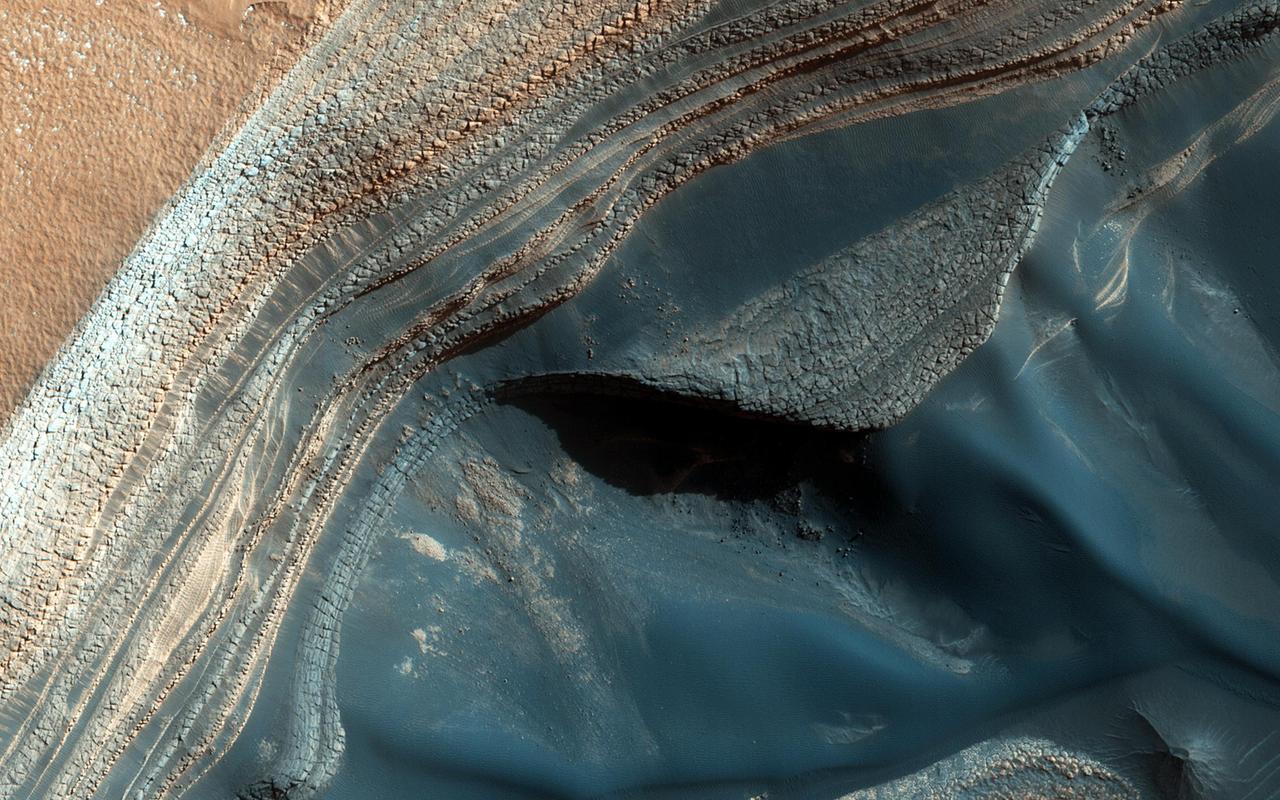
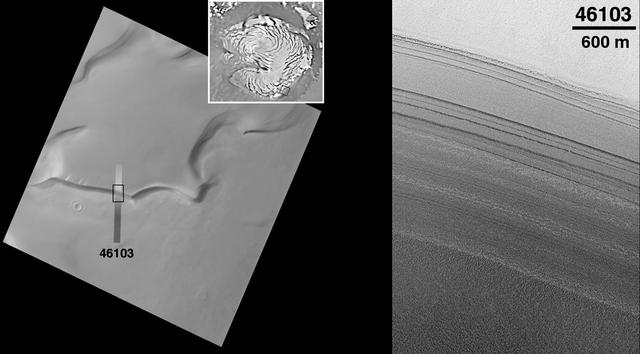
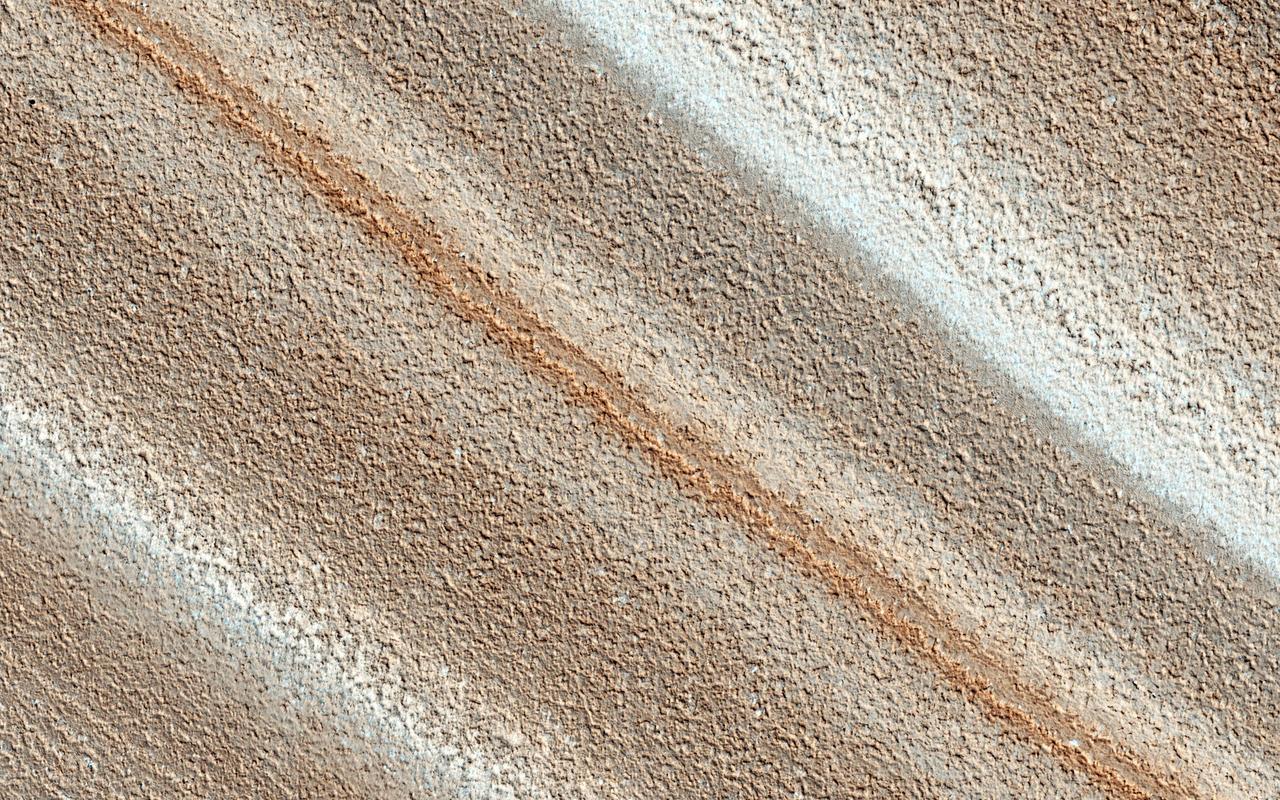
The North Polar layered deposits NPLD are a stack of layers of ice and dust at the North Pole of Mars. The layers are thought to have been deposited over millions of years. This image is from NASA Mars Reconnaissance Orbiter.
Blockfall on the North Polar Layered Deposits
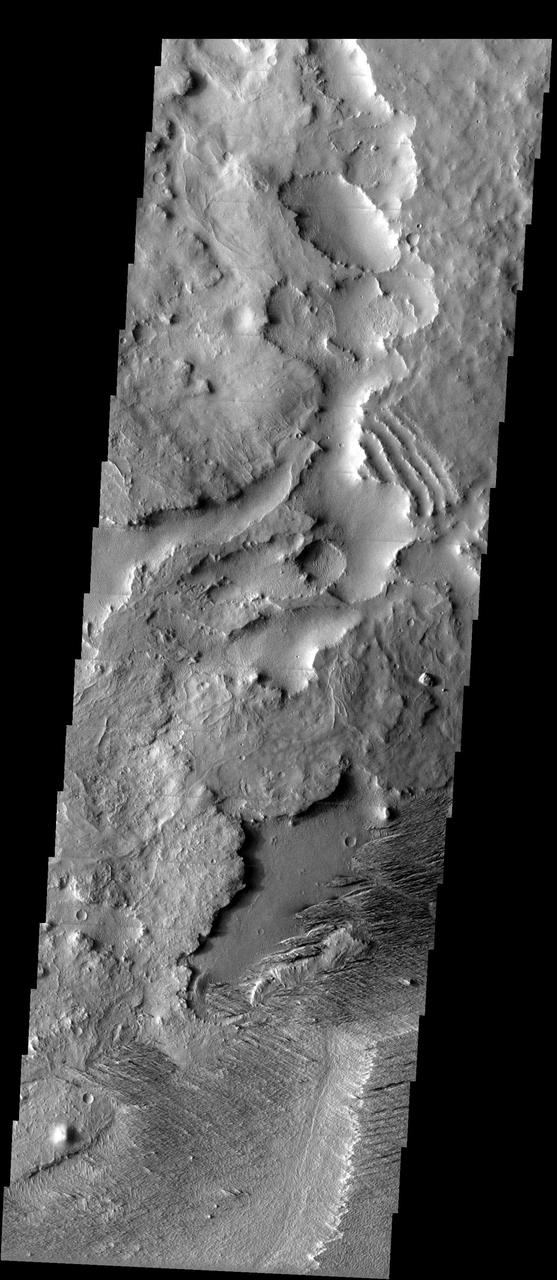
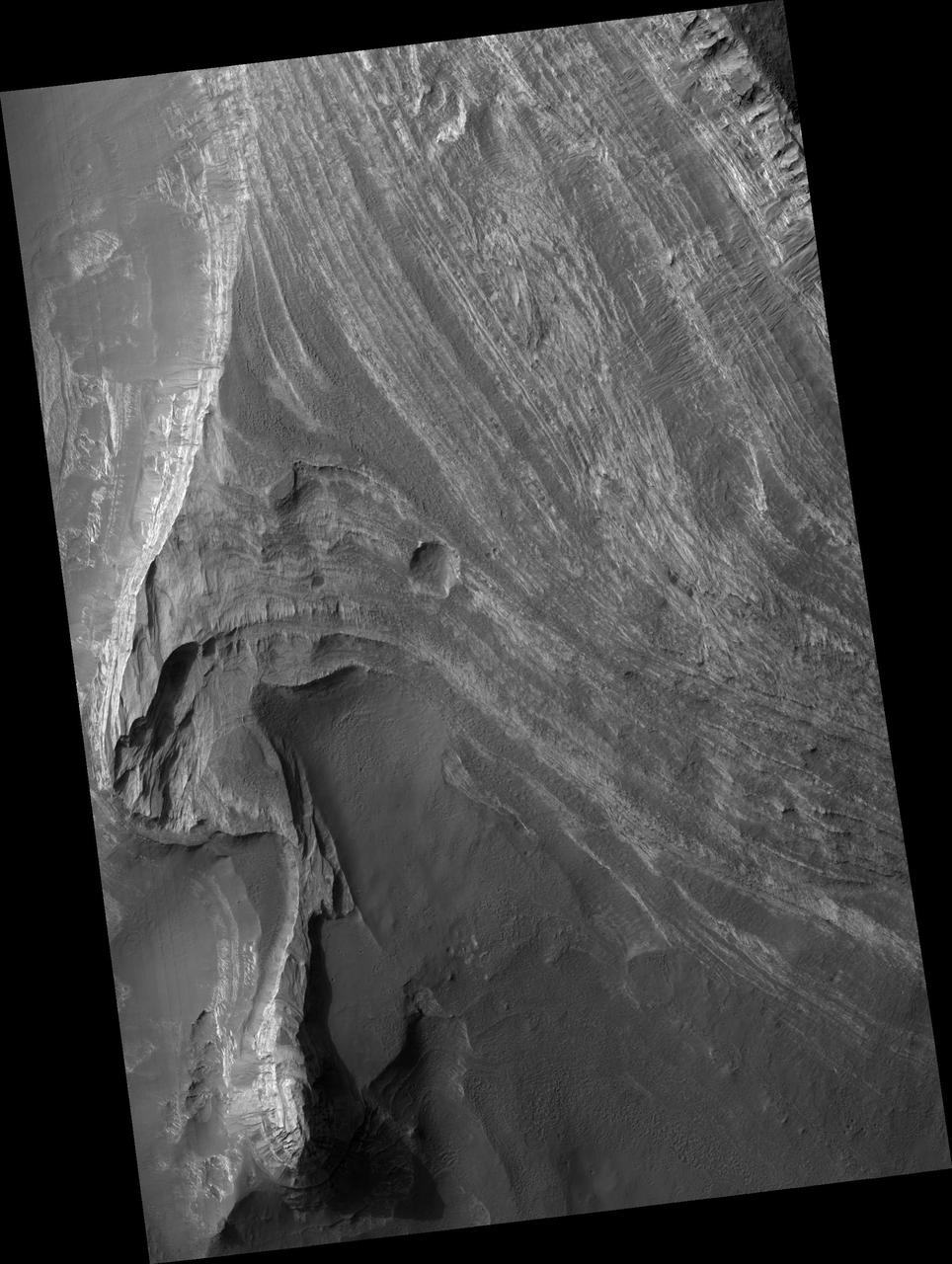
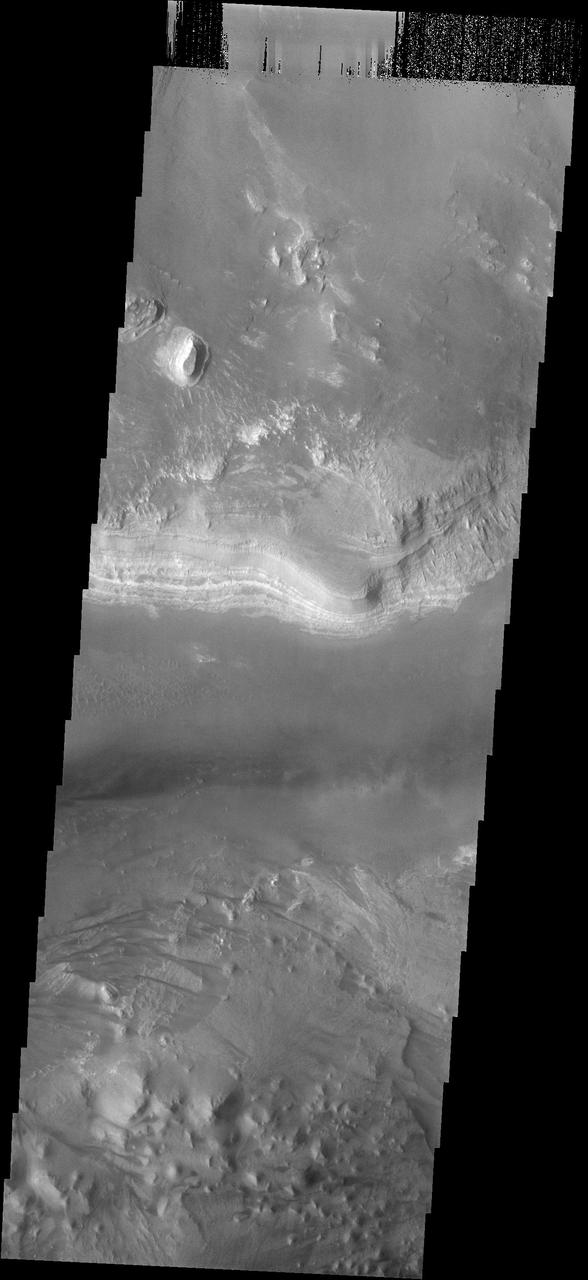
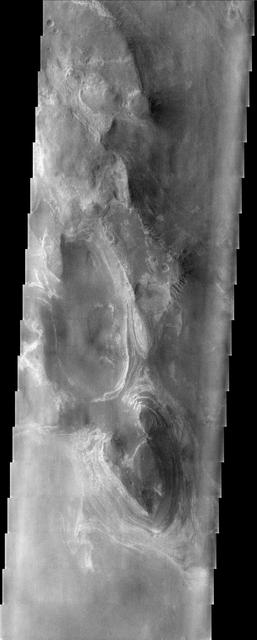
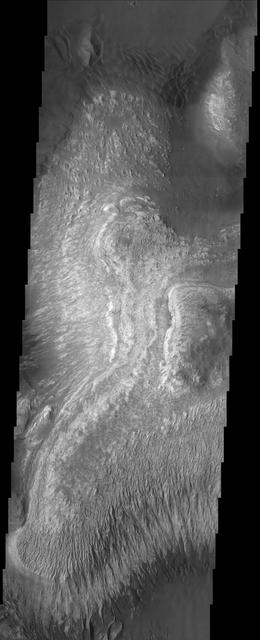
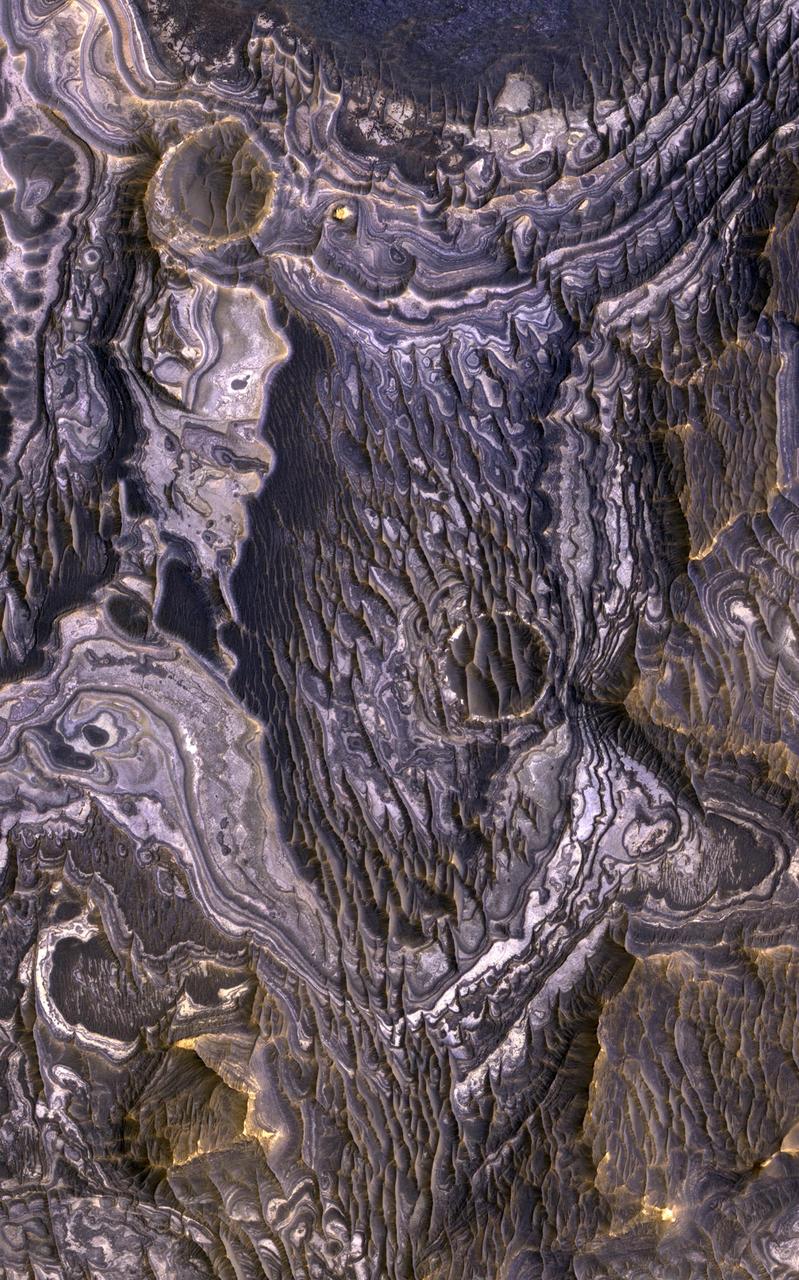
The layered deposits in this Valles Marineris canyon imaged by NASA Mars Odyssey spacecraft are heavily eroded by the wind into an impressive array of yardangs and swirling patterns of layers. The origin of the deposits remains a mystery.
Layered Deposits in Western Candor Chasma
This image shows a delta deposit where a tributary channel enters Ismenius Cavus in Mamers Valles as seen by NASA 2001 Mars Odyssey spacecraft.
Delta Deposit
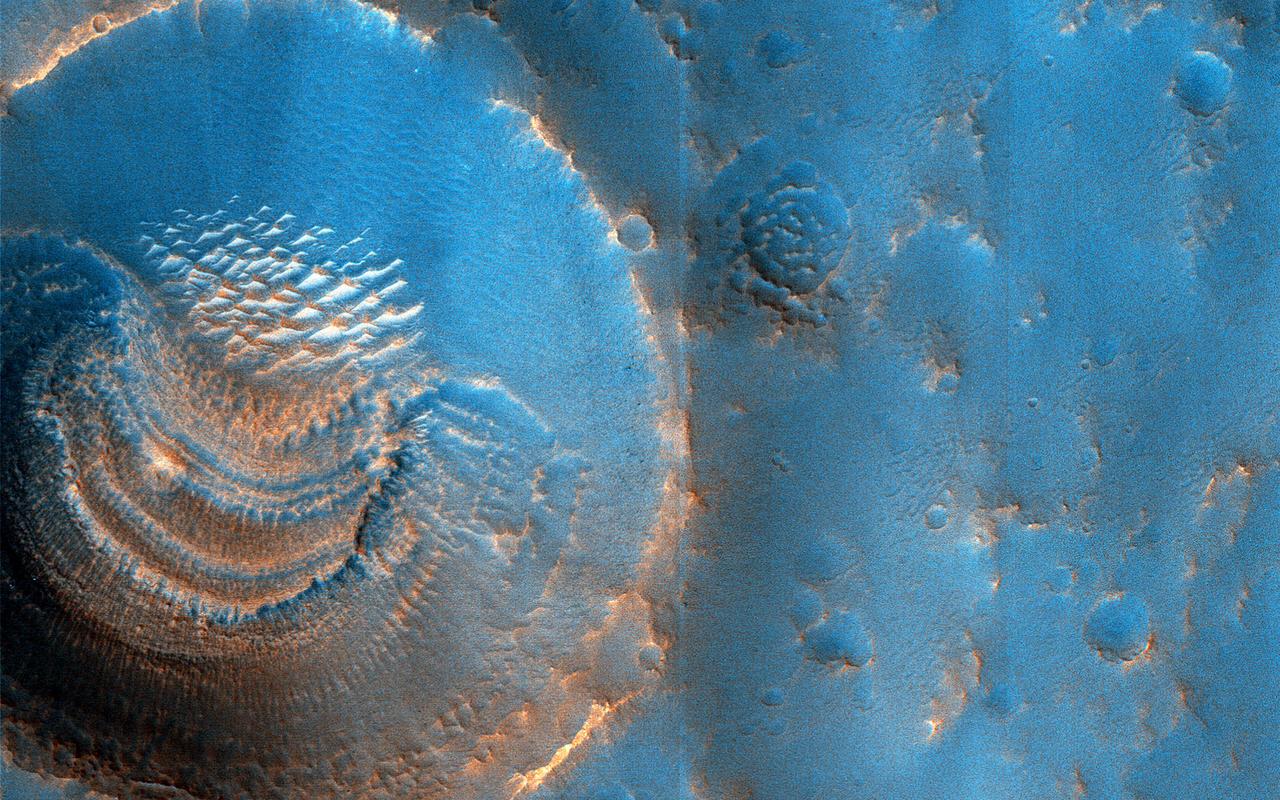
HiRISE images often raise more questions than answers. For example, this image of the northern plains of Arabia Terra shows craters that contain curious deposits with mysterious shapes and distribution.  The deposits are found only in craters larger than 600 meters in diameter and are absent from craters measuring 450 meters and less. The deposits are located on the south sides of the craters but not in the north (although the cutout shows a crater that also has windblown deposits in the north). The deposits have horizontal laminations that could be layers or terraces. The deposits also have radial striations formed by small bright ridges.  We suspect that these features formed by sublimation of ice-rich material. The terraces might represent different epochs of sublimation. Perhaps the larger craters penetrated to a water table between 45 and 60 meters below the surface and were flooded after formation.  https://photojournal.jpl.nasa.gov/catalog/PIA25703
Mysterious Crater Deposits
Like many of the craters in the Oxia Palus region of Mars, Trouvelot Crater, shown in this NASA Mars Odyssey image, hosts an eroded, light-toned, sedimentary deposit on its floor. Compared with the much larger example in Becquerel Crater to the NE, the Trouvelot deposit has been so eroded by the scouring action of dark, wind-blown sand that very little of it remains. Tiny outliers of bright material separated from the main mass attest to the once, more really extensive coverage by the deposit. A similar observation can be made for White Rock, the best known example of a bright, crater interior deposit. The origin of the sediments in these deposits remains enigmatic but they are likely the result of fallout from ash or dust carried by the thin martian atmosphere.  http://photojournal.jpl.nasa.gov/catalog/PIA04017
Trouvelot Crater Deposit
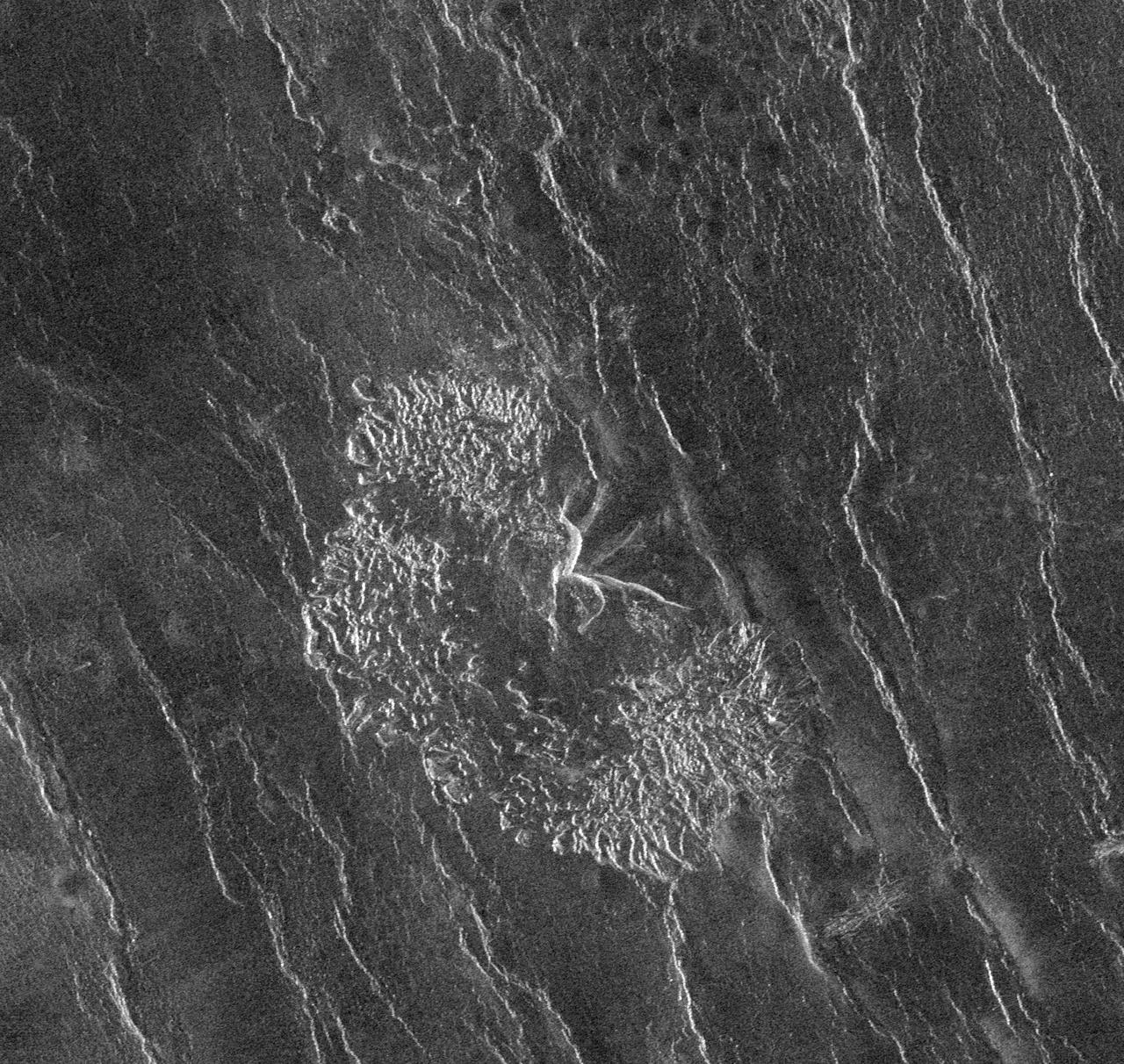
NASA Magellan spacecraft has observed remnant landslide deposits apparently resulting from the collapse of volcanic structures.  http://photojournal.jpl.nasa.gov/catalog/PIA00263
Venus - Landslide Deposits
In this image, NASA's Mars Reconnaissance Orbiter (MRO) observes an impact crater with associated bright deposits that at first glance give the appearance of seasonal frost or ice accumulations. MRO has an onboard spectrometer called CRISM that can distinguish between ices and other minerals. Unfortunately, there is currently no coverage of this particular spot. However, it can be deduced through several lines of evidence that this is, in fact, not ice.  Just like Earth, Mars experiences seasons that change as the planet orbits the Sun. Seasonal changes are most apparent at the higher latitudes. As these regions in each hemisphere enter their respective summer seasons, the Sun rises higher in the Martian sky causing frost and ice to sublimate, and illuminate more features across the landscape. As the high latitudes of each hemisphere move toward their respective winters, the days (called "sols") grow shorter and the sun hangs low on the horizon, giving rise to prolonged periods of cold, darkness, and frost accumulation.  First, it should be noted that at the time this image was taken, the Southern hemisphere is at the end of the summer season, so any frost or ice deposits have long since sublimated away. Second, numerous HiRISE images of seasonal targets show that ice accumulates on pole-facing slopes. The deposits in question are situated on a slope that faces the equator, and would not accumulate deposits of frost. Thus, it can be concluded that these exposures are light-toned mineral deposits.  https://photojournal.jpl.nasa.gov/catalog/PIA21766
"Elementary, My Dear Deposit..."
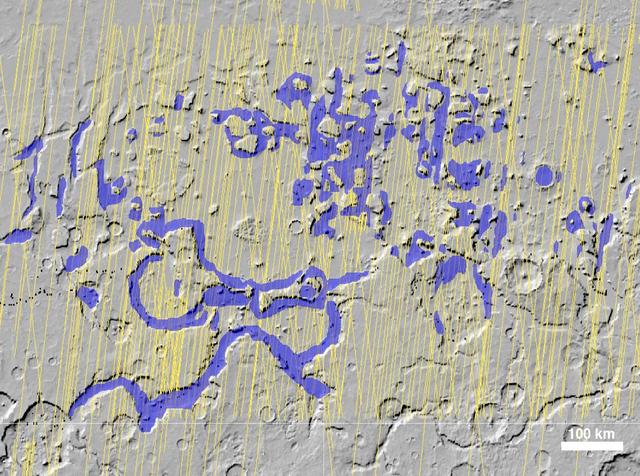
NASA Mars Reconnaissance Orbiter has detected widespread deposits of glacial ice in the mid-latitudes of Mars. This map of a region known as Deuteronilus Mensae, in the northern hemisphere, shows locations of the detected ice deposits in blue.
Glacial Ice Deposits in Mid-Latitudes of Mars
The finely layered deposit in Becquerel crater, seen in the center of this NASA Mars Odyssey image, is slowly being eroded away by the action of windblown sand.
Becquerel Crater Deposit
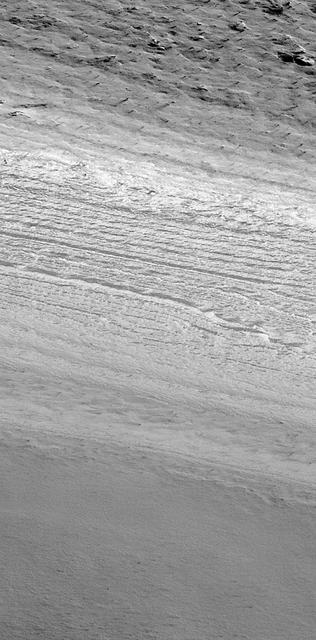
Polar layered deposits slopes are quite extensive and partially surround the South polar residual cap as seen in this image from NASA Mars Reconnaissance Orbiter.
Polar Layered Deposit Slopes
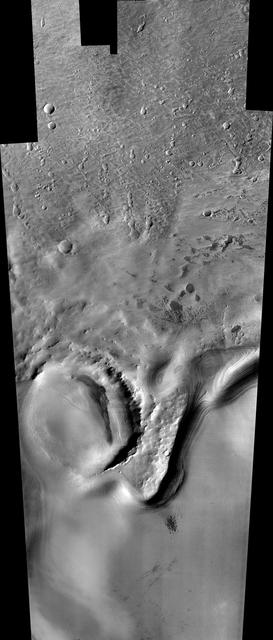
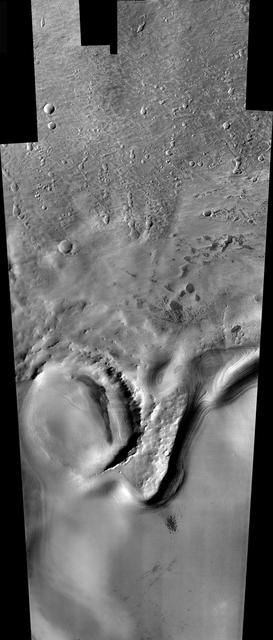
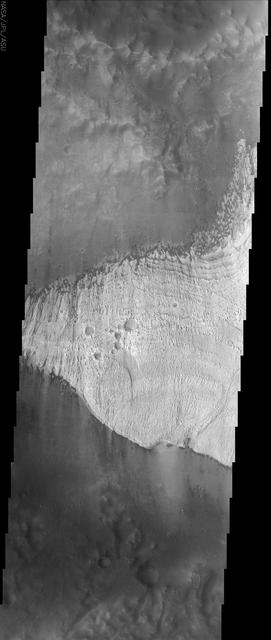
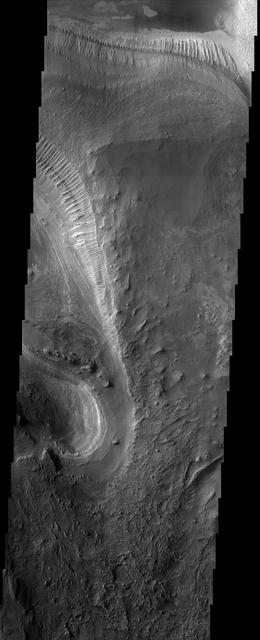
This somewhat cloudy image from NASA Mars Odyssey spacecraft shows a stunning example of layered deposits in Terby crater, just north of the Hellas impact basin.
Layered Deposits in Terby Crater
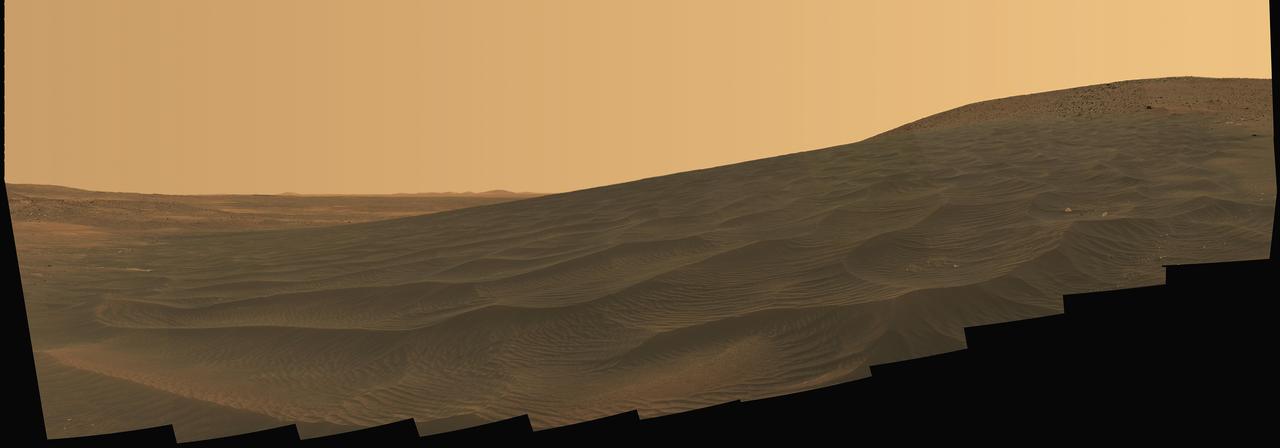
NASA Mars Exploration Rover Spirit welcomed the beginning of 2006 on Earth by taking this striking panorama of intricately rippled sand deposits in Gusev Crater on Mars.
Intricately Rippled Sand Deposits
Part of the vast pyroclastic deposit located on the Aristarchus plateau is visible in this image taken by NASA Lunar Reconnaissance Orbiter.
Aristarchus Plateau 2: Pyroclastic Deposit
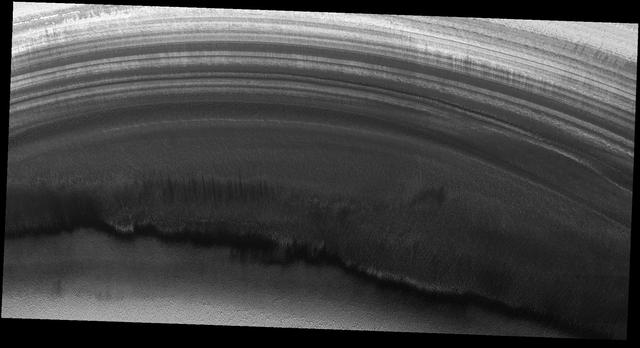
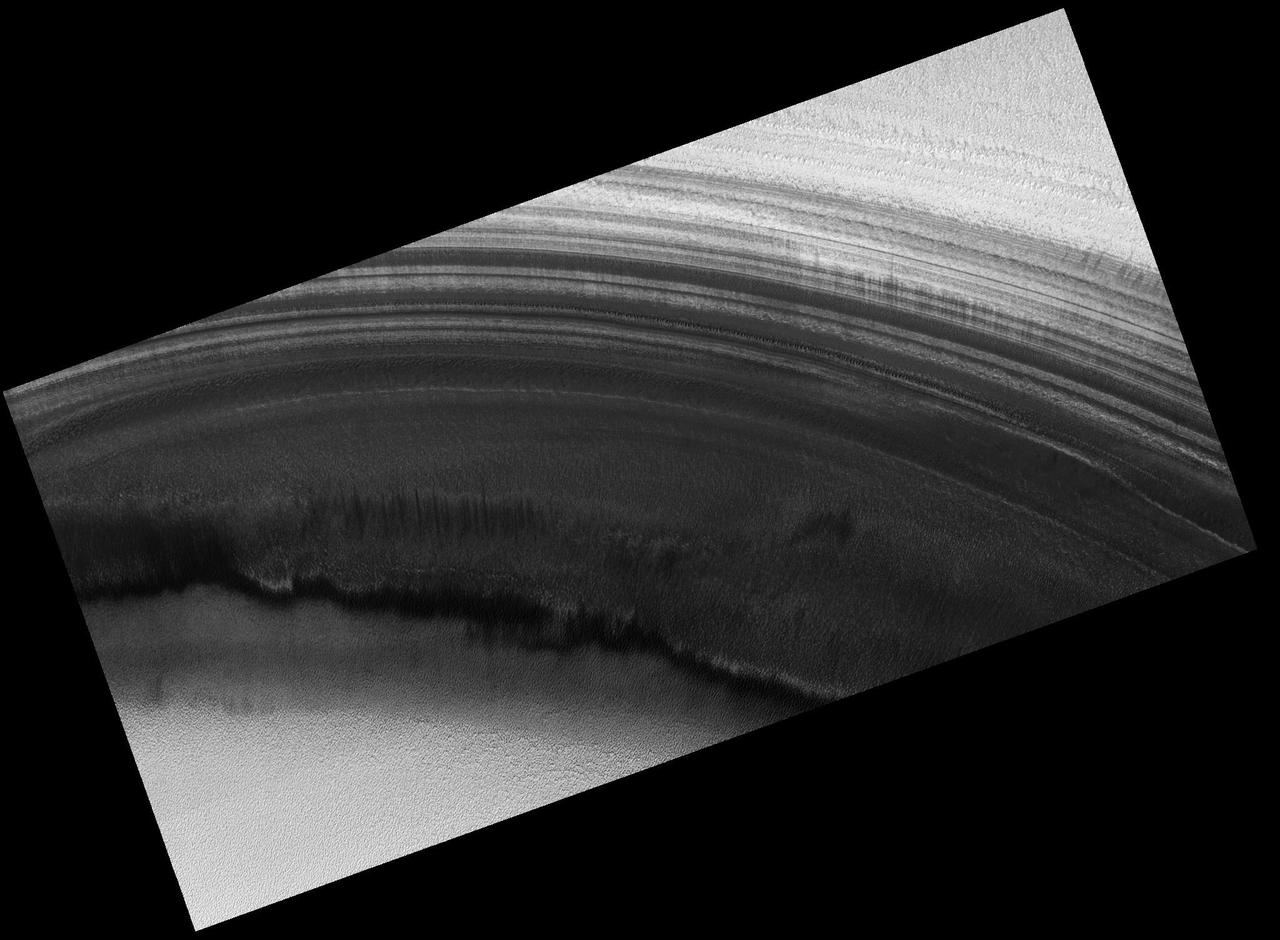
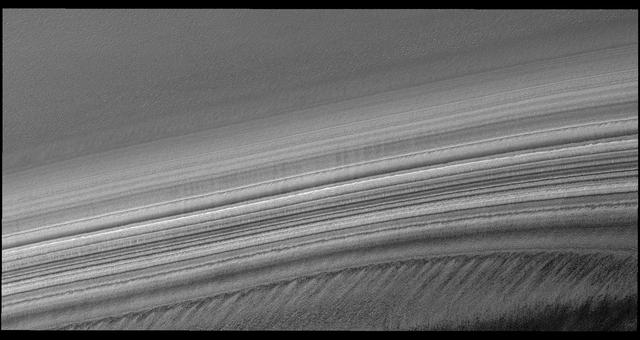
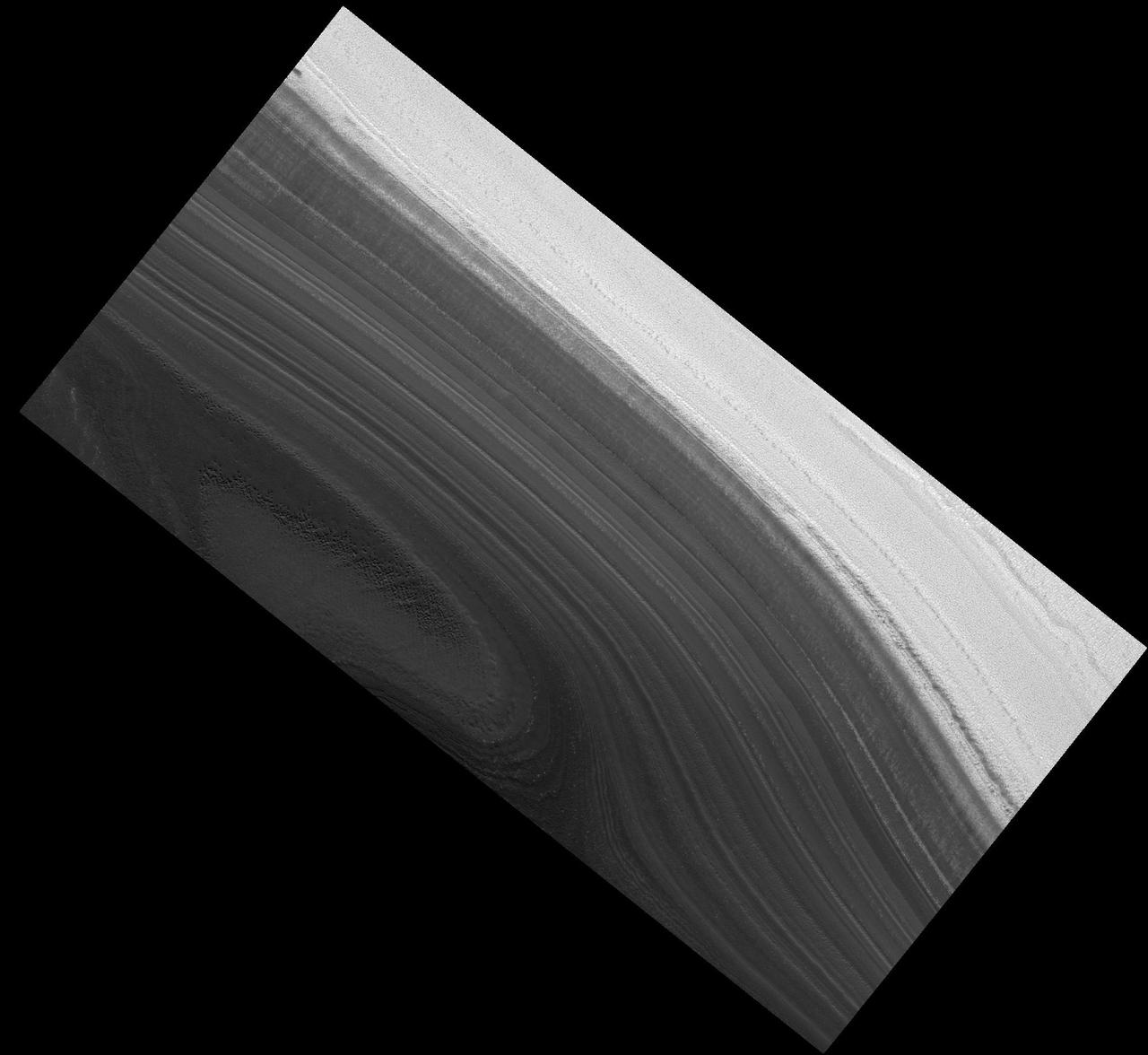
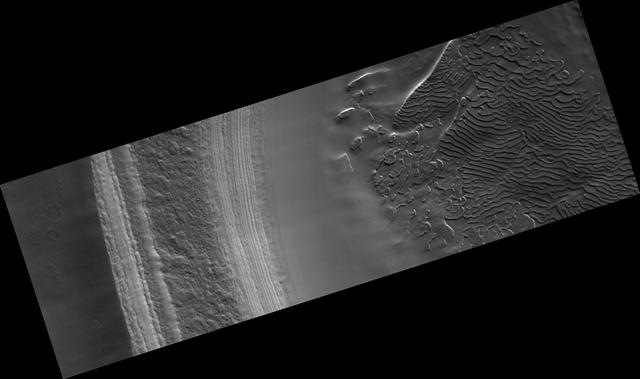
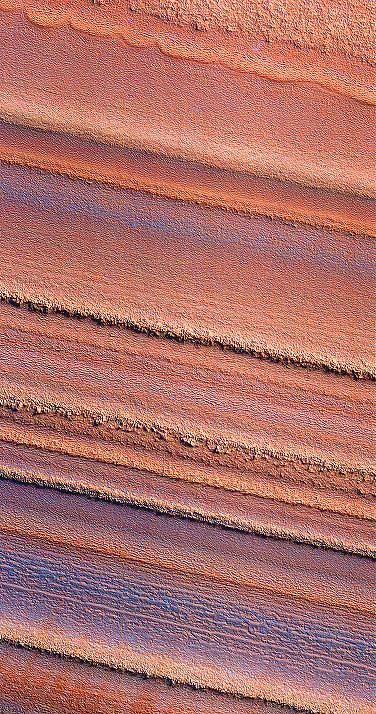
This image shows the edge of the Martian South Polar layered deposit. The stack of fine layering is highlighted by the rays of the polar sun.  These layers show the pervasive red coloring of Mars which have built up over the ages. While this is a polar deposit, no ice or frost is visible on these layers, as they face the sun. However, if you look beyond the rim of the layered slope at the 'top' of the deposit, you can see that red rock and dust are covered with frost, as well as small radial channels that are evidence of polar spider networks.  http://photojournal.jpl.nasa.gov/catalog/PIA21105
On the Edge of the South Pole Layered Deposit
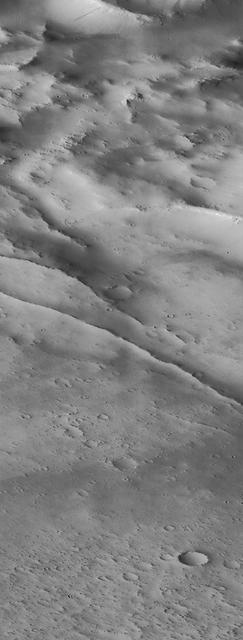
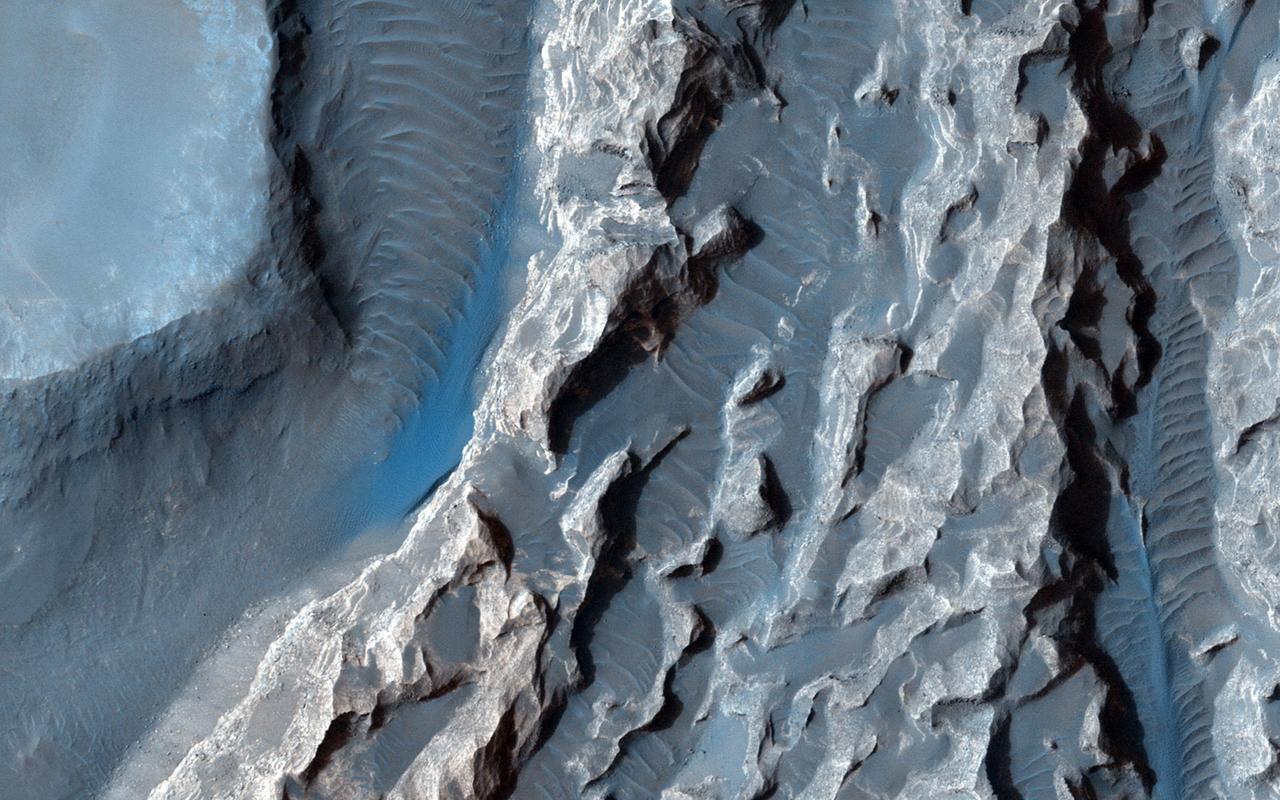
It has been known since the 1970s when the Viking orbiters took pictures of Mars that there are large (i.e., several kilometers-thick) mounds of light-toned deposits within the central portion of Valles Marineris. More recent higher resolution images of Mars, including this image of Melas Chasma, show that the wall rocks of Valles Mariners also contain similar, albeit thinner, light-toned deposits.  Spectral data from the CRISM instrument indicate that the larger mounds are composed of sulfates. Some of the wall rock deposits are also made up of sulfates, but others contain clays or mixtures of several kinds of hydrated materials, suggesting that multiple aqueous processes, perhaps at different times within Valles Marineris, formed the variety of deposits we now observe.  http://photojournal.jpl.nasa.gov/catalog/PIA21102
Deposits along the Northern Wall of Melas Chasma
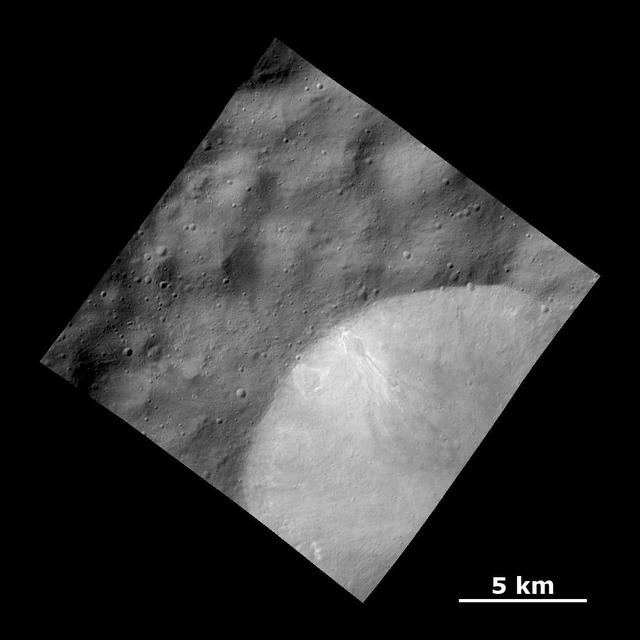
This image from NASA Dawn spacecraft shows a relatively fresh crater with bright deposits exposed in the crater wall that streak downslope on the giant asteroid Vesta.
Bright Material Deposits in Crater Wall
These layered deposits are located on the floor of a large canyon called Ganges Chasma which is a part of the Valles Marineris in this image captured by NASA 2001 Mars Odyssey spacecraft.
Layered Deposits on the floor of Ganges Chasma
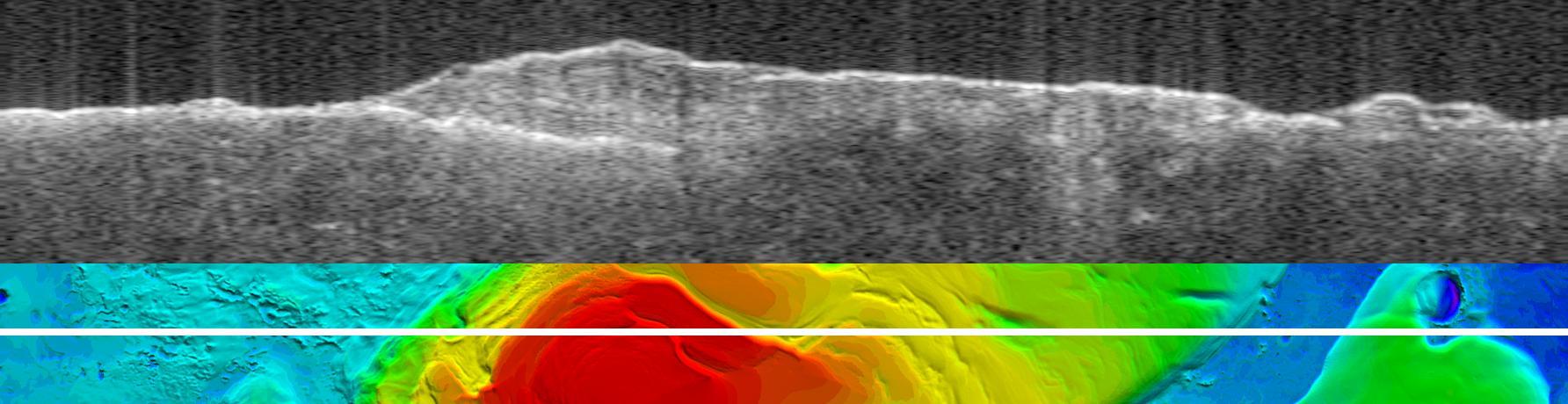
Radargram of Mars North Polar Layered Deposits with Topographic Map
Detailed View of Cliff-face in the North Polar Layered Deposits
Complex Floor Deposits Within Western Ganges Chasma, Valles Marineris
Interior Layered Deposits in Tithonium Chasma Reveal Diverse Compositions
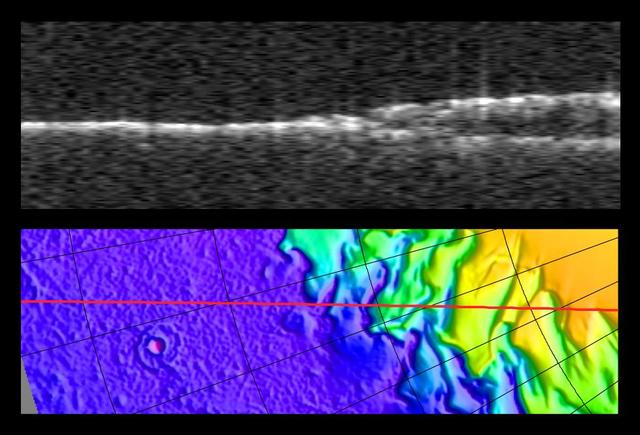
Bright Lower Echo in Radargram of South Polar Layered Deposits
Four Types of Deposits From Wet Conditions on Early Mars
Schiaparelli Crater Rim and Interior Deposits - High Resolution Image
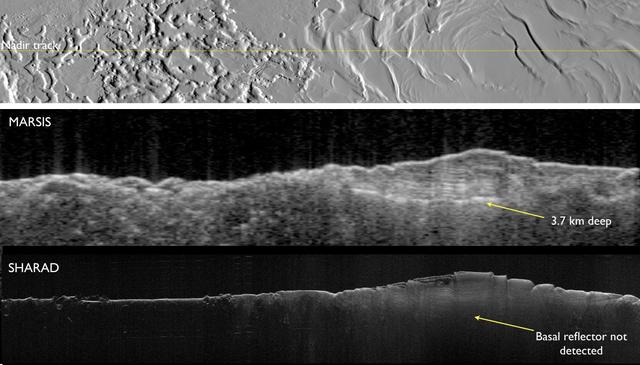
Two Radar Sounders Examine South Polar Layered Deposits on Mars
Layered Ice Deposits near North Pole of Mars False Color
Erosion of the interior layered deposits of Melas Chasma, part of the huge Valles Marineris canyon system, has produced cliffs with examples of spur and gulley morphology and exposures of finely layered sediments, as seen in this NASA Mars Odyssey image.
Melas Chasma Deposits
The North Polar layered deposits provide a record of recent climate changes on Mars as seen by NASA Mars Reconnaissance Orbiter spacecraft. Color variations between layers are due to differences in composition of the dust.
Colorful Polar Layered Deposits
NASA Mars Reconnaissance Orbiter shows light-toned deposits along Coprates Chasma slopes.
Light-Toned Deposits along Coprates Chasma Slopes
Ice-rich mantling deposits accumulate from the atmosphere in the Martian mid-latitudes in cycles during periods of high obliquity (axial tilt), as recently as several million years ago.  These deposits accumulate over cycles in layers, and here in the southern mid-latitudes, where the deposits have mostly eroded away due to warmer temperatures, small patches of the remnant layered deposits can still be observed.  The map is projected here at a scale of 25 centimeters (9.8 inches) per pixel. [The original image scale is 29.5 centimeters (11.6 inches) per pixel (with 1 x 1 binning); objects on the order of 89 centimeters (35 inches) across are resolved.] North is up.  http://photojournal.jpl.nasa.gov/catalog/PIA21462
Layered Mantling Deposits in the Northern Mid-Latitudes
The objective of this observation from NASA Mars Reconnaissance Orbiter is to examine a light-toned deposit in a region of what is called "chaotic terrain."   There are indications of layers in the image. Some shapes suggest erosion by a fluid moving north and south. The top of the light-toned deposit appears rough, in contrast to the smoothness of its surroundings.   http://photojournal.jpl.nasa.gov/catalog/PIA19844
A Light Toned Deposit in Aureum Chaos
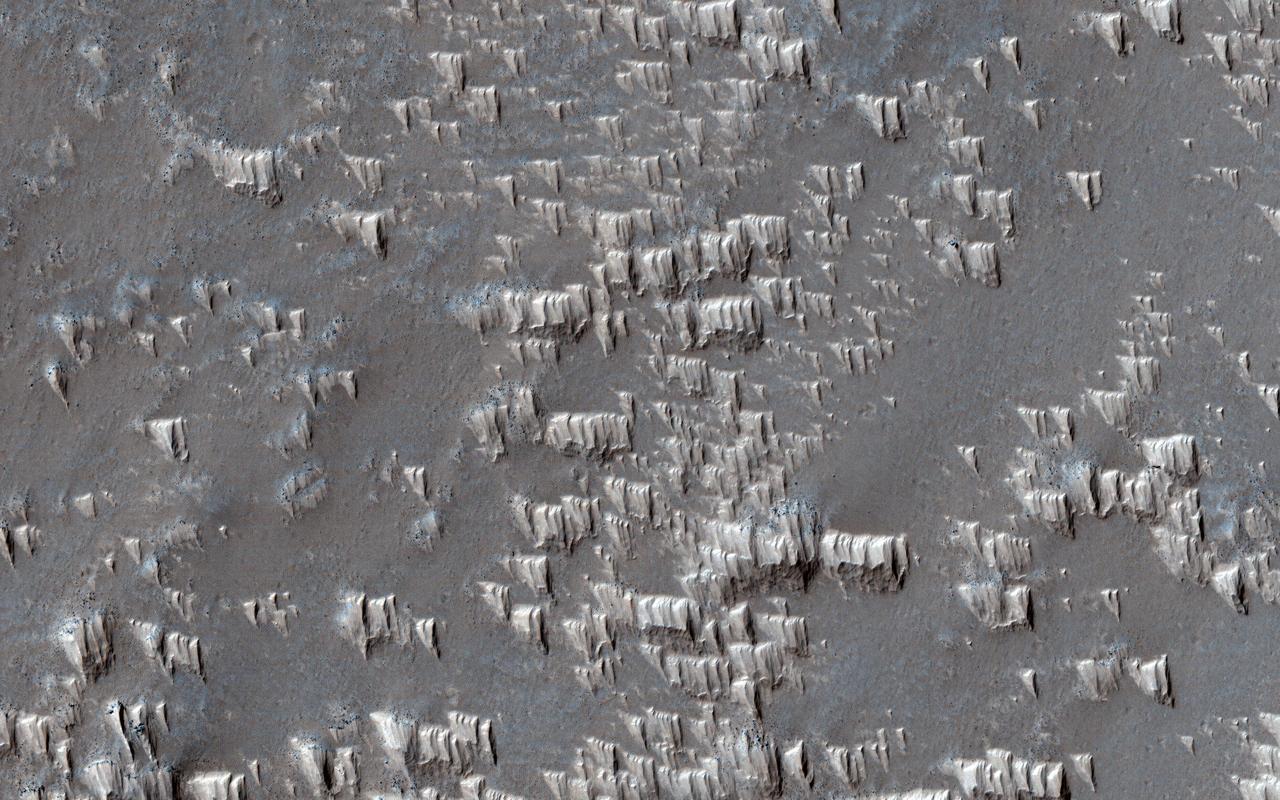
Wind-blown deposits known as transverse aeolian ridges (TARs) are frequently visible in images of the Martian tropics. They are bright ripples with heights of 2.6 meters and spacing that averages 47 meters. The TARs generally appear inactive and eroded, sometimes cratered or littered with boulders from nearby impacts and avalanches.  In Syria Planum, unusual bright deposits might be accumulations of dust blown from higher to lower elevations by nighttime slope winds, reaching speeds of up to 50 meters per second. These dust deposits resemble TARs in height and spacing but with a distinct shape from other TARs. A close up view shows that the deposits form pyramidal features with steep faces on the upwind sides (wind is blowing from the top of the picture) and tapered slopes in the downwind direction. Ridges form where the "pyramids" line up together, and the spacing of the ridges appears to be controlled by the length of the "pyramids."  These observations suggest that TARs elsewhere on Mars may have formed in a similar fashion, perhaps millions of years ago when the atmosphere was more active. They also may be forming in Syria Planum today.  https://photojournal.jpl.nasa.gov/catalog/PIA23529
Pristine Dust Deposits in Syria Planum
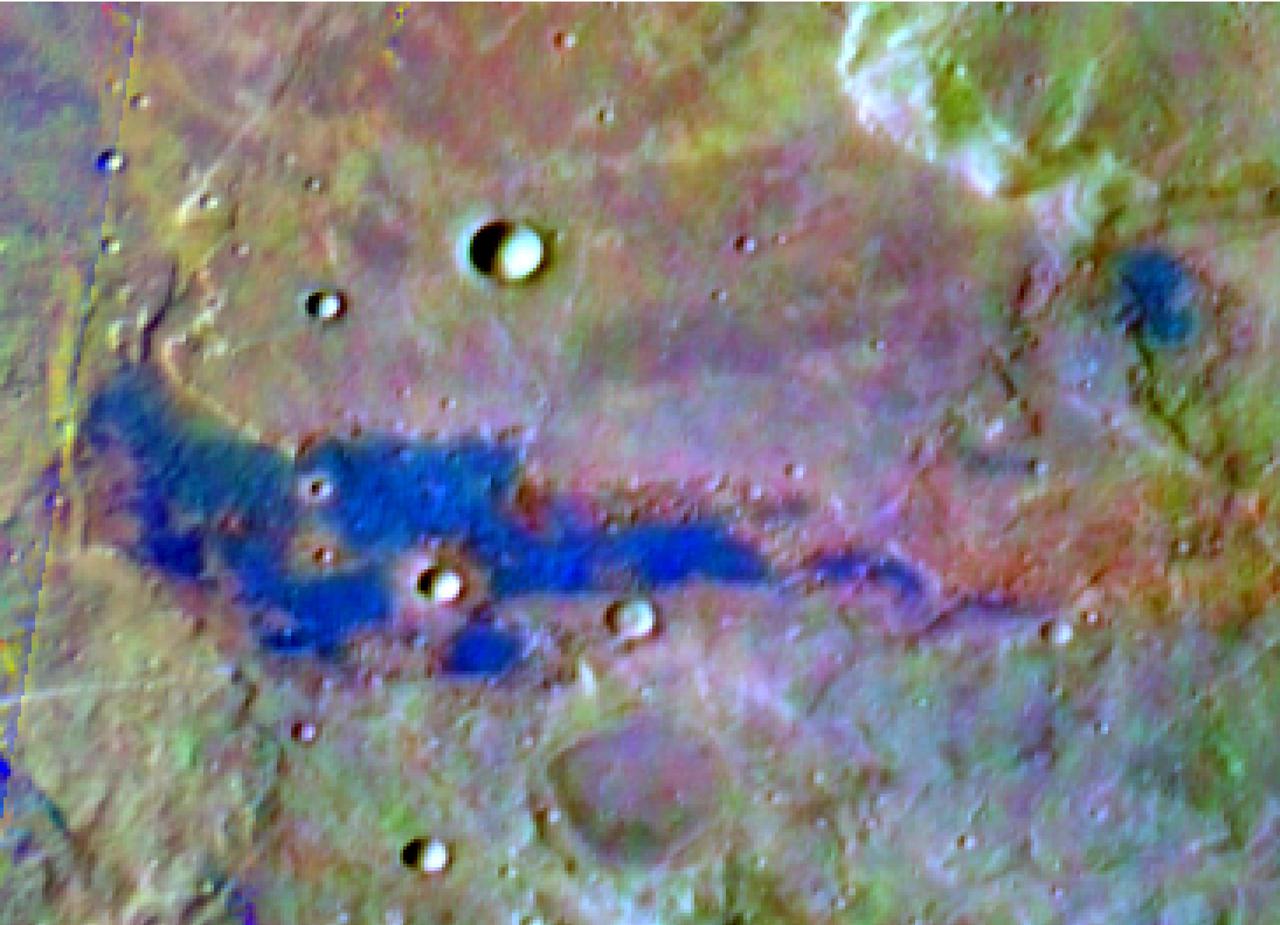
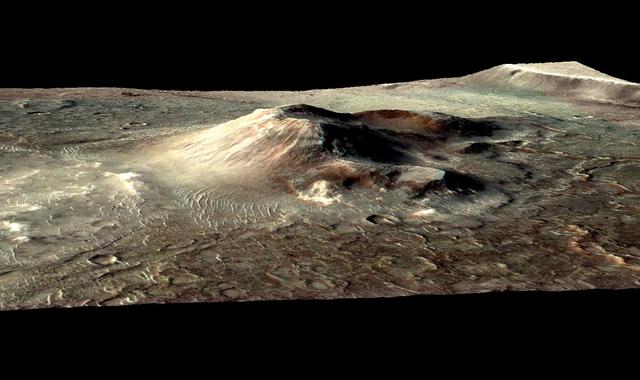
This false color image from NASA Mars Reconnaissance Orbiter indicates that the volcanic cone in the Nili Patera caldera on Mars has hydrothermal mineral deposits on the southern flanks and nearby terrains.
Mars Volcanic Cone with Hydrothermal Deposits
The objective of this observation from NASA Mars Reconnaissance Orbiter is to examine a light-toned deposit in a region of what is called chaotic terrain at the base of the Valles Marineris canyon system.
A Light Toned Deposit in Arsinoes Chaos
This map shows the thickness of the south polar layered deposits of Mars, an ice-rich geologic unit that was probed by the Mars Advanced Radar for Subsurface and Ionospheric Sounding MARSIS
Thickness of Mars South Polar Layered Deposits
This view, taken by NASA Mars Reconnaissance Orbiter, shows color variations in bright layered deposits on a plateau near Juventae Chasma in the Valles Marineris region of Mars.
Bright Layered Deposits with Clues of Acidic Water
Two Martian southern mid-latitude craters have new light-toned deposit that formed in gully settings during the course of the Mars Global Surveyor mission.
New Gully Deposit in a Crater in the Centauri Montes Region
This observation from NASA Mars Reconnaissance Orbiter shows one of the first close HiRISE views of the enigmatic Valles Marineris interior layered deposits.
Sandstone Cliffs and Hematite Lag Deposits of Ophir Mensa