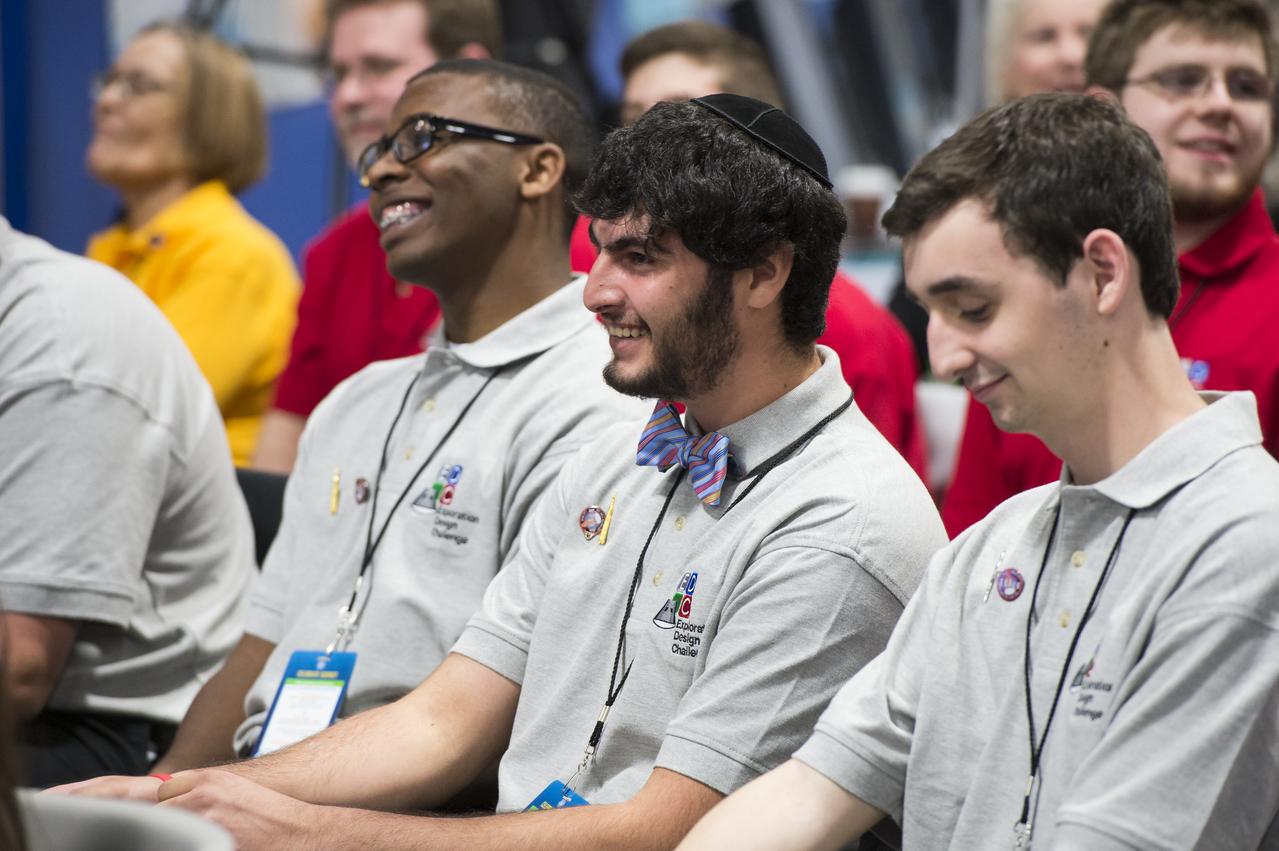
Team Lore listens in the audience as NASA Administrator Charles Bolden speaks at the event to announce the winner of the Exploration Design Challenge. Team Lore was one of the semi-finalists in the challenge. The goal of the Exploration Design Challenge is for students to research and design ways to protect astronauts from space radiation. The winner of the challenge was announced on April 25, 2014 at the USA Science and Engineering Festival at the Washington Convention Center in Washington, DC. Photo Credit: (NASA/Aubrey Gemignani)
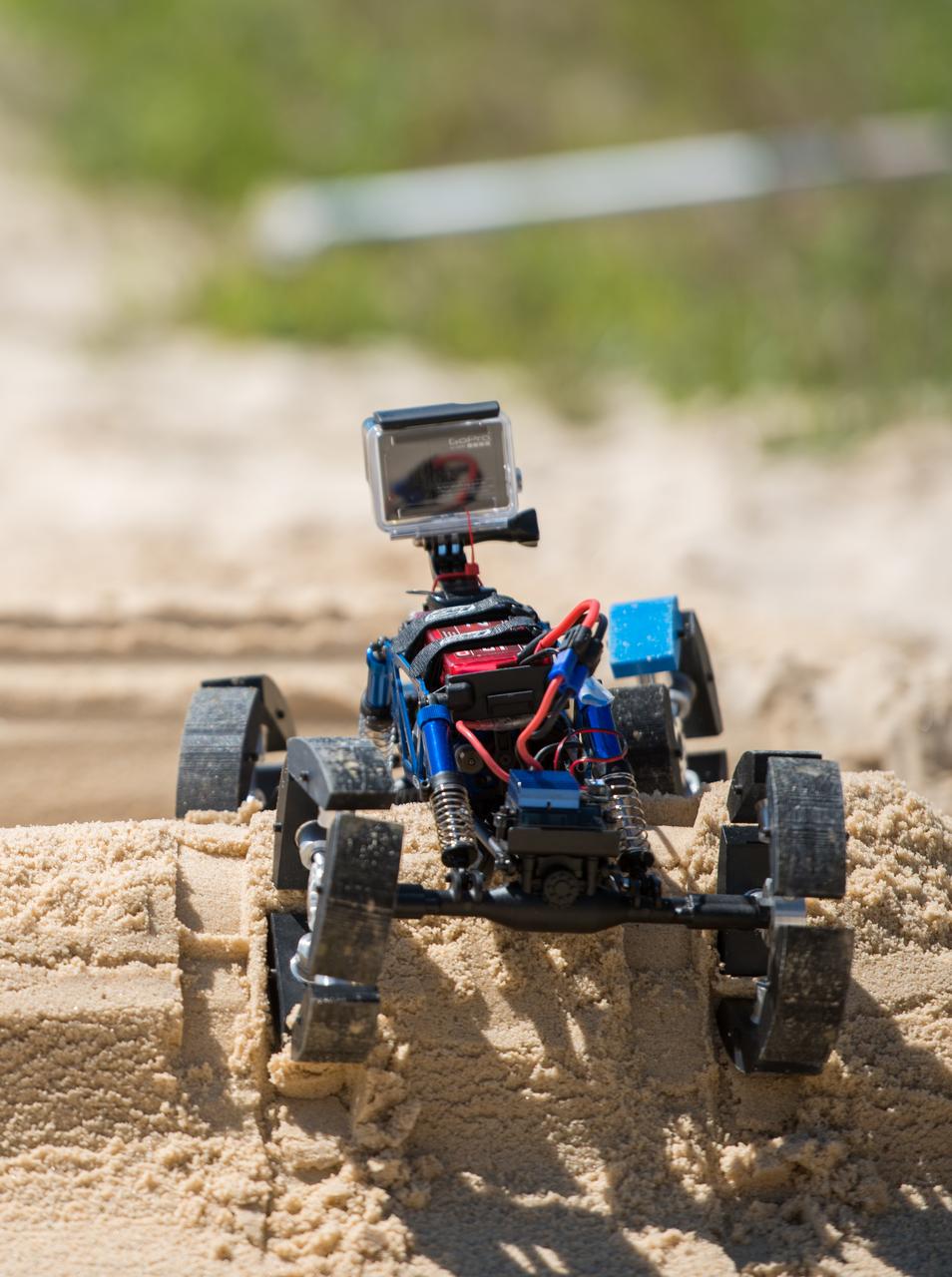
Toledo, Bowser and Scott High School Students, Mars and Moon Wheel, Engineering Design Project, Hardware Test on the Dunes
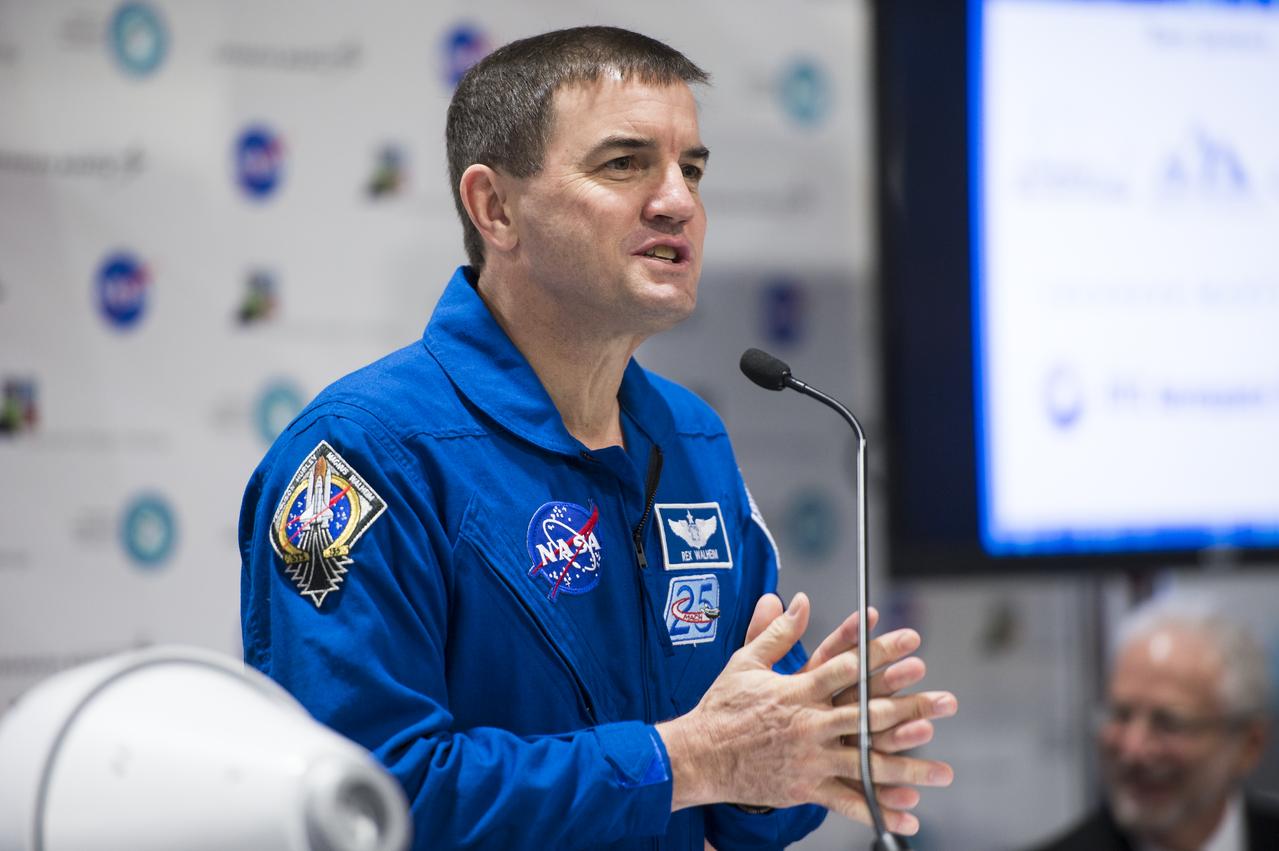
Astronaut Rex Walheim spoke at the USA Science and Engineering Festival on April 25, 2014. The event was held to announce the winner of the Exploration Design Challenge. The goal of the Exploration Design Challenge was for students to research and design ways to protect astronauts from space radiation.The winning team's design will be built and flown aboard the Orion/EFT-1. The USA Science and Engineering Festival takes place at the Washington Convention Center in Washington, DC on April 26 and 27, 2014. Photo Credit: (NASA/Aubrey Gemignani)
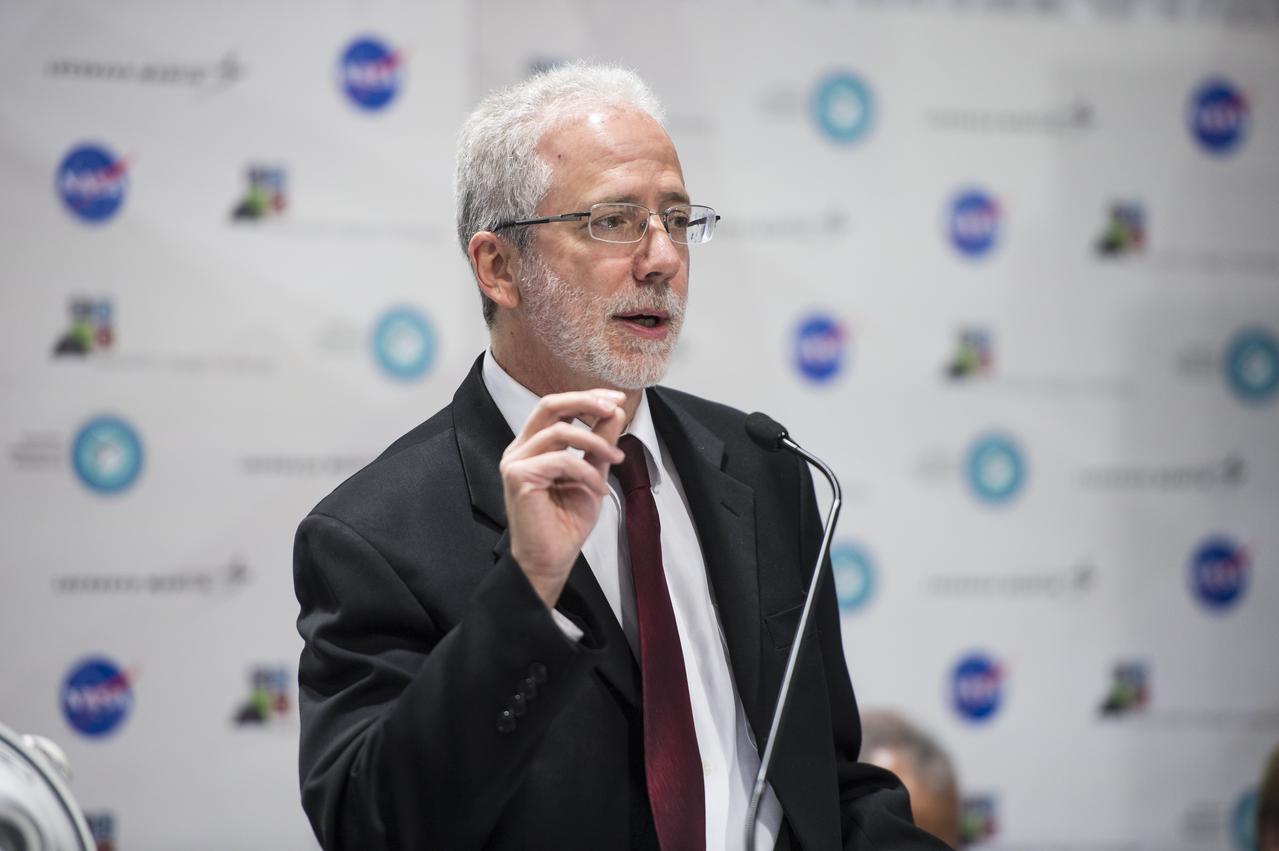
Mark Geyer, Orion Program Manager, spoke at the USA Science and Engineering Festival on April 25, 2014. The event was held to announce the winner of the Exploration Design Challenge. The goal of the Exploration Design Challenge was for students to research and design ways to protect astronauts from space radiation.The winning team's design will be built and flown aboard the Orion/EFT-1. The USA Science and Engineering Festival takes place at the Washington Convention Center in Washington, DC on April 26 and 27, 2014. Photo Credit: (NASA/Aubrey Gemignani)
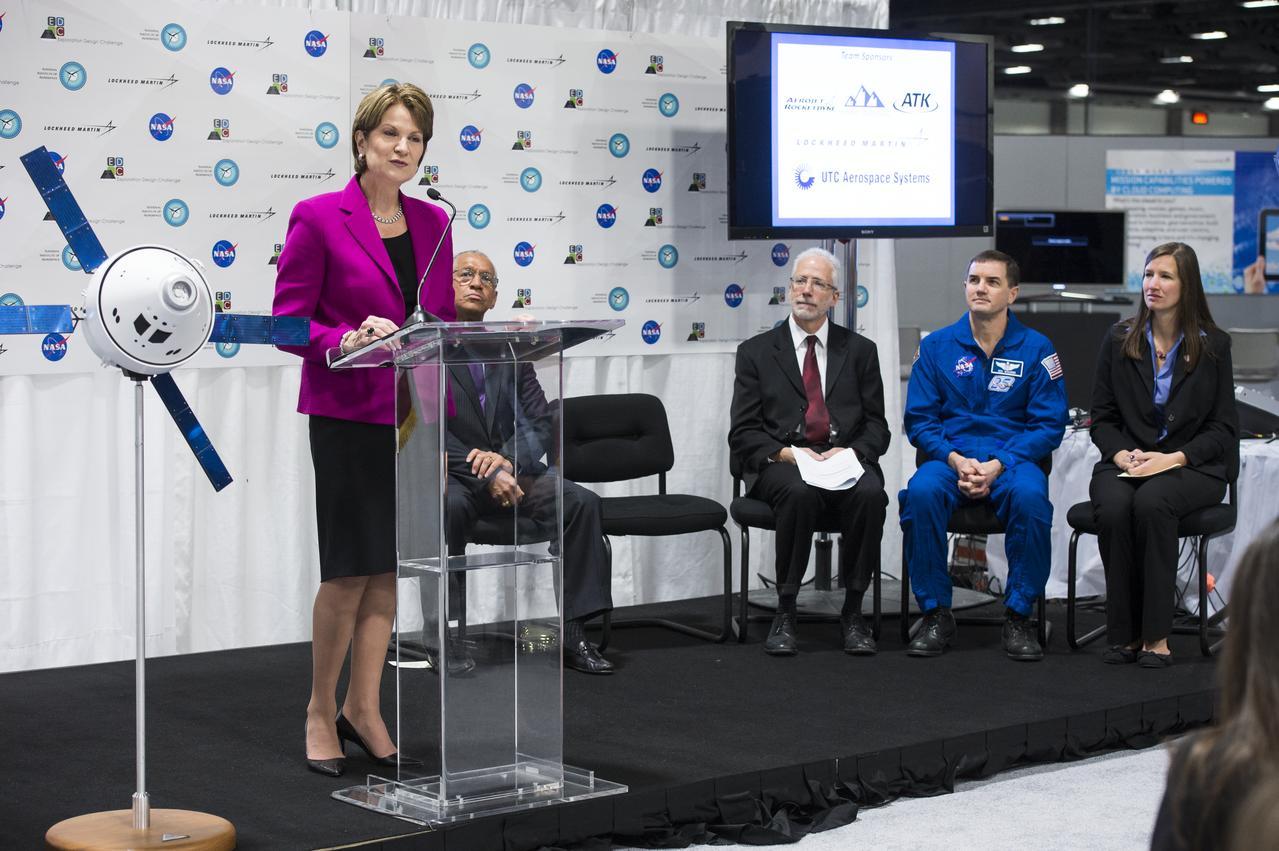
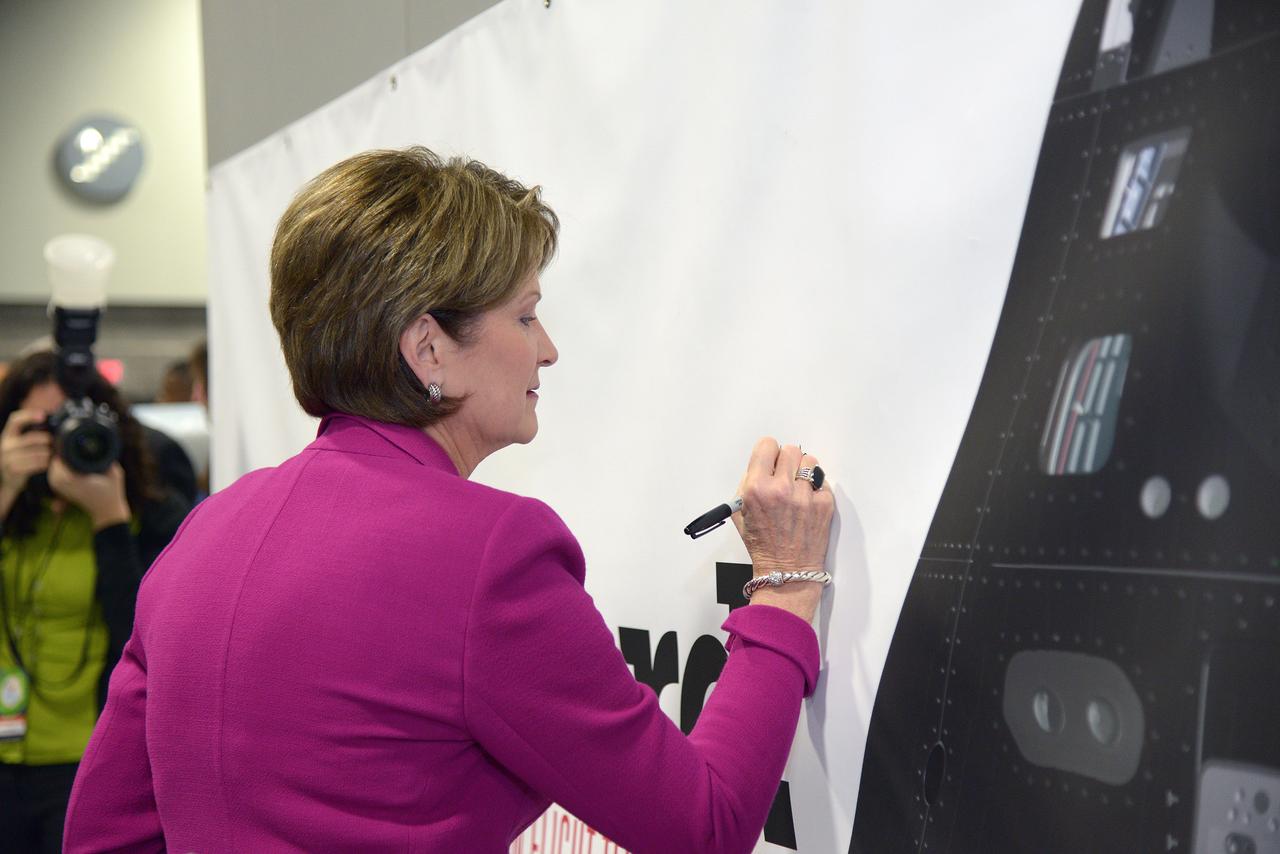
Lockheed Martin CEO Marillyn Hewson spoke at the Orion exhibit at the USA Science and Engineering Festival on April 25, 2014. The event was held to announce the winner of the Exploration Design Challenge. The goal of the Exploration Design Challenge was for students to research and design ways to protect astronauts from space radiation.The USA Science and Engineering Festival is taking place at the Washington Convention Center in Washington, DC on April 26 and 27, 2014. Photo Credit: (NASA/Aubrey Gemignani)
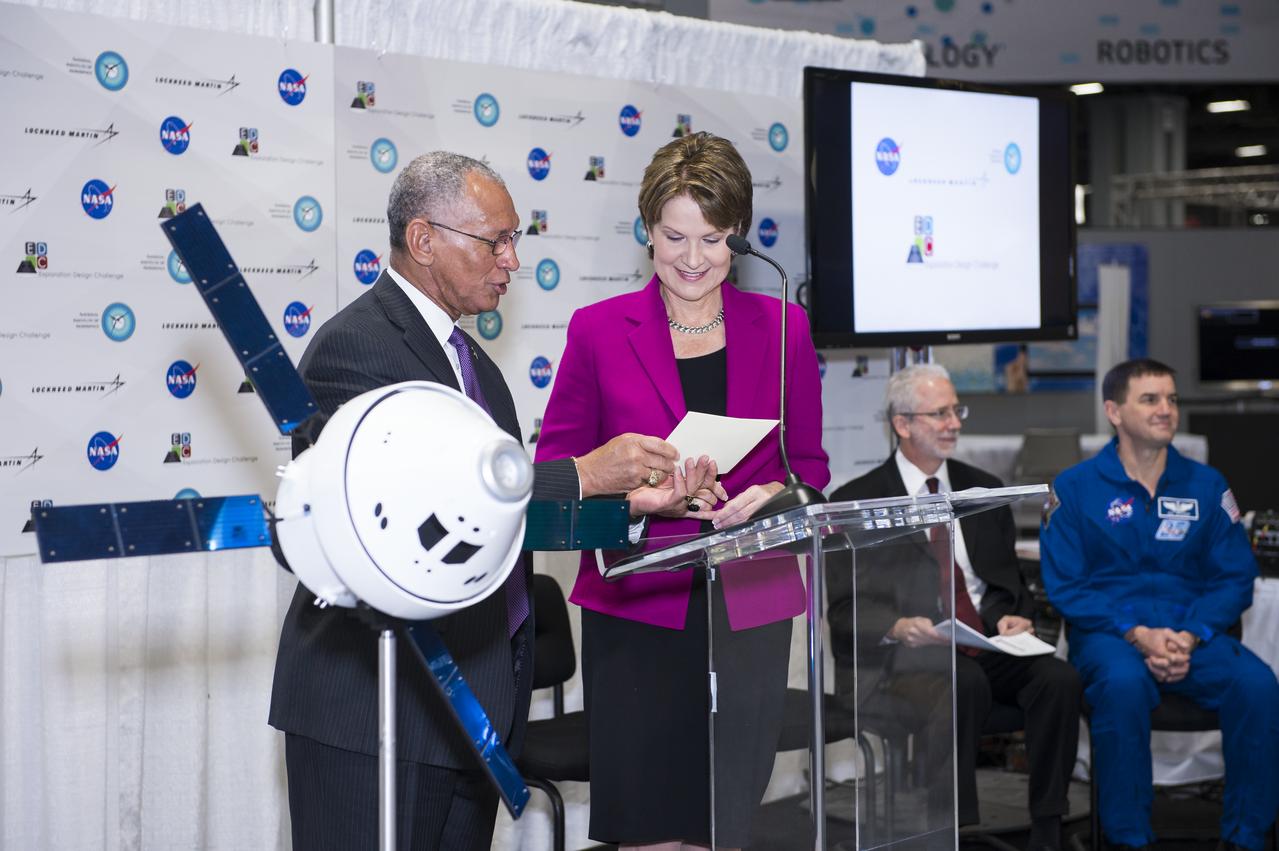
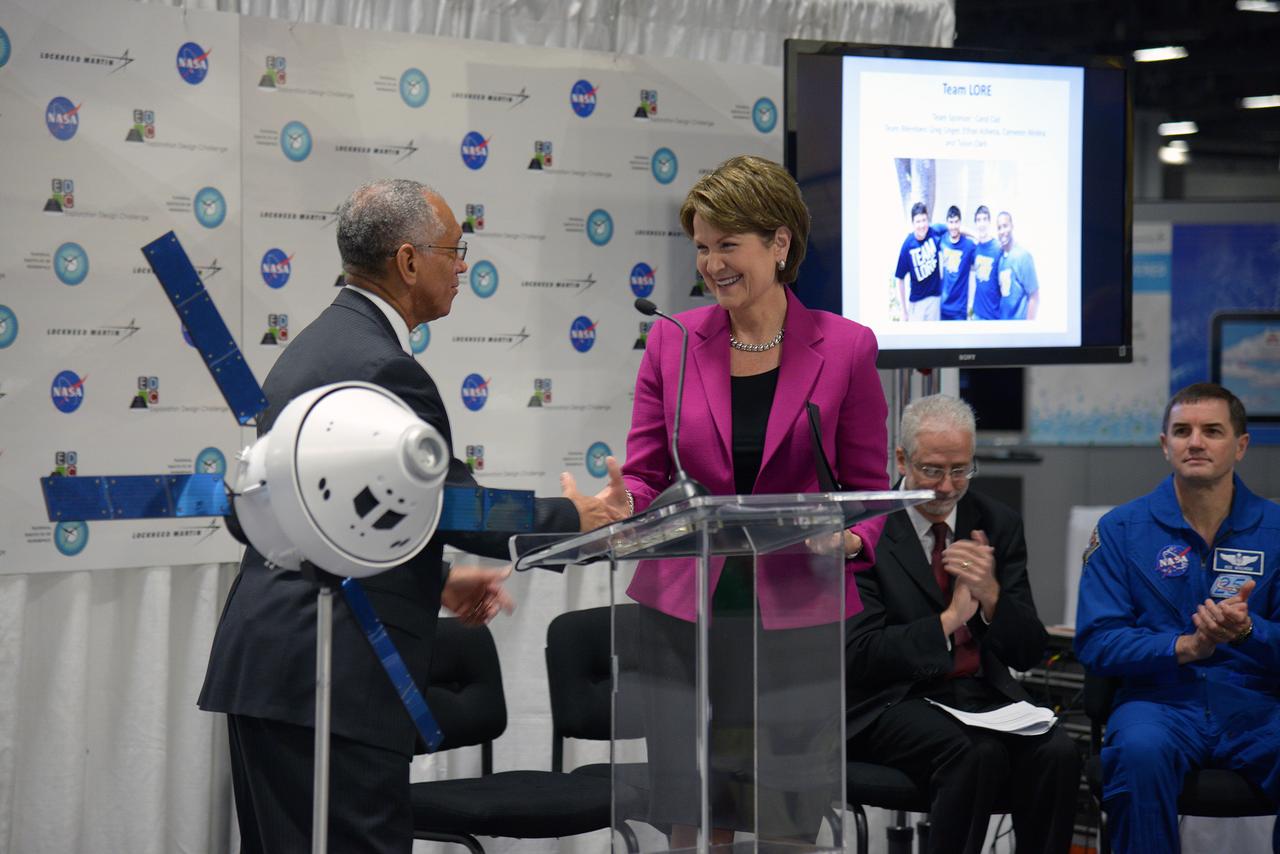
NASA Administrator, Charles Bolden and Lockheed Martin CEO, Marillyn Hewson announce the winner of the Exploration Design Challenge at the USA Science and Engineering Festival on April 25, 2014. The goal of the Exploration Design Challenge was for students to research and design ways to protect astronauts from space radiation.The USA Science and Engineering Festival is taking place at the Washington Convention Center in Washington, DC on April 26 and 27, 2014. Photo Credit: (NASA/Aubrey Gemignani)
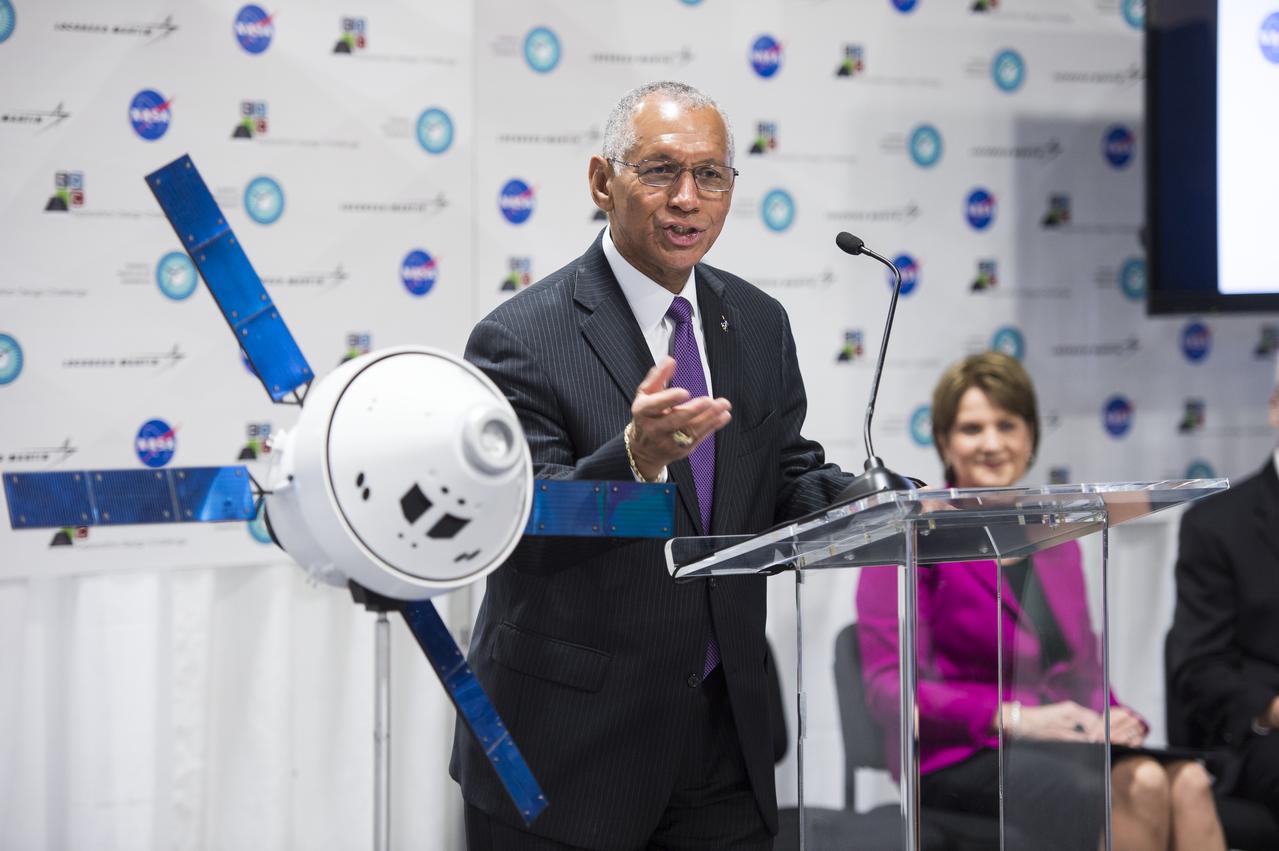
NASA Administrator Charles Bolden spoke at the Orion exhibit at the USA Science and Engineering Festival on April 25, 2014. The event was held to announce the winner of the Exploration Design Challenge. The goal of the Exploration Design Challenge was for students to research and design ways to protect astronauts from space radiation.The USA Science and Engineering Festival is taking place at the Washington Convention Center in Washington, DC on April 26 and 27, 2014. Photo Credit: (NASA/Aubrey Gemignani)
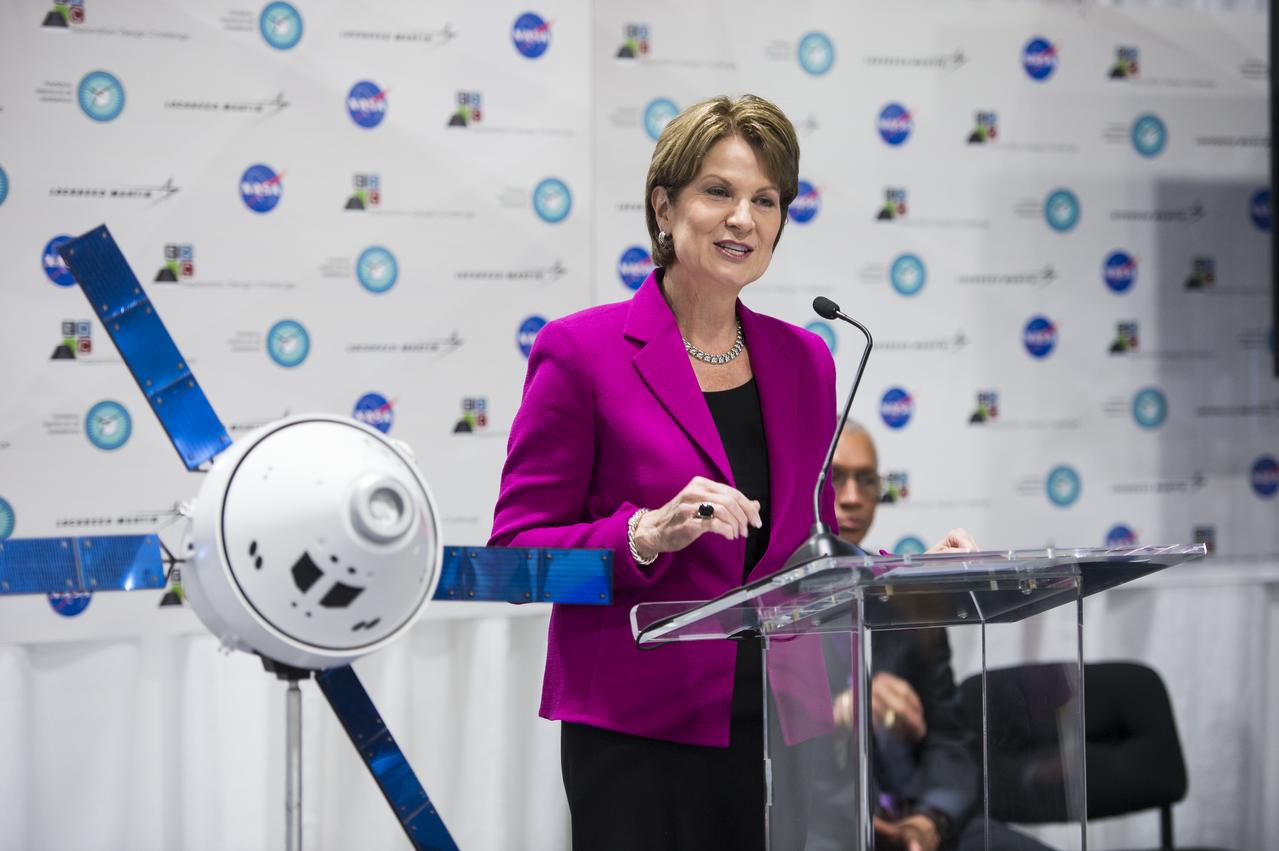
Lockheed Martin CEO Marillyn Hewson spoke at the Orion exhibit at the USA Science and Engineering Festival on April 25, 2014. The event was held to announce the winner of the Exploration Design Challenge. The goal of the Exploration Design Challenge was for students to research and design ways to protect astronauts from space radiation.The USA Science and Engineering Festival is taking place at the Washington Convention Center in Washington, DC on April 26 and 27, 2014. Photo Credit: (NASA/Aubrey Gemignani)

NASA Administrator Charles Bolden spoke at the Orion exhibit at the USA Science and Engineering Festival on April 25, 2014. The event was held to announce the winner of the Exploration Design Challenge. The goal of the Exploration Design Challenge was for students to research and design ways to protect astronauts from space radiation.The USA Science and Engineering Festival is taking place at the Washington Convention Center in Washington, DC on April 26 and 27, 2014. Photo Credit: (NASA/Aubrey Gemignani)
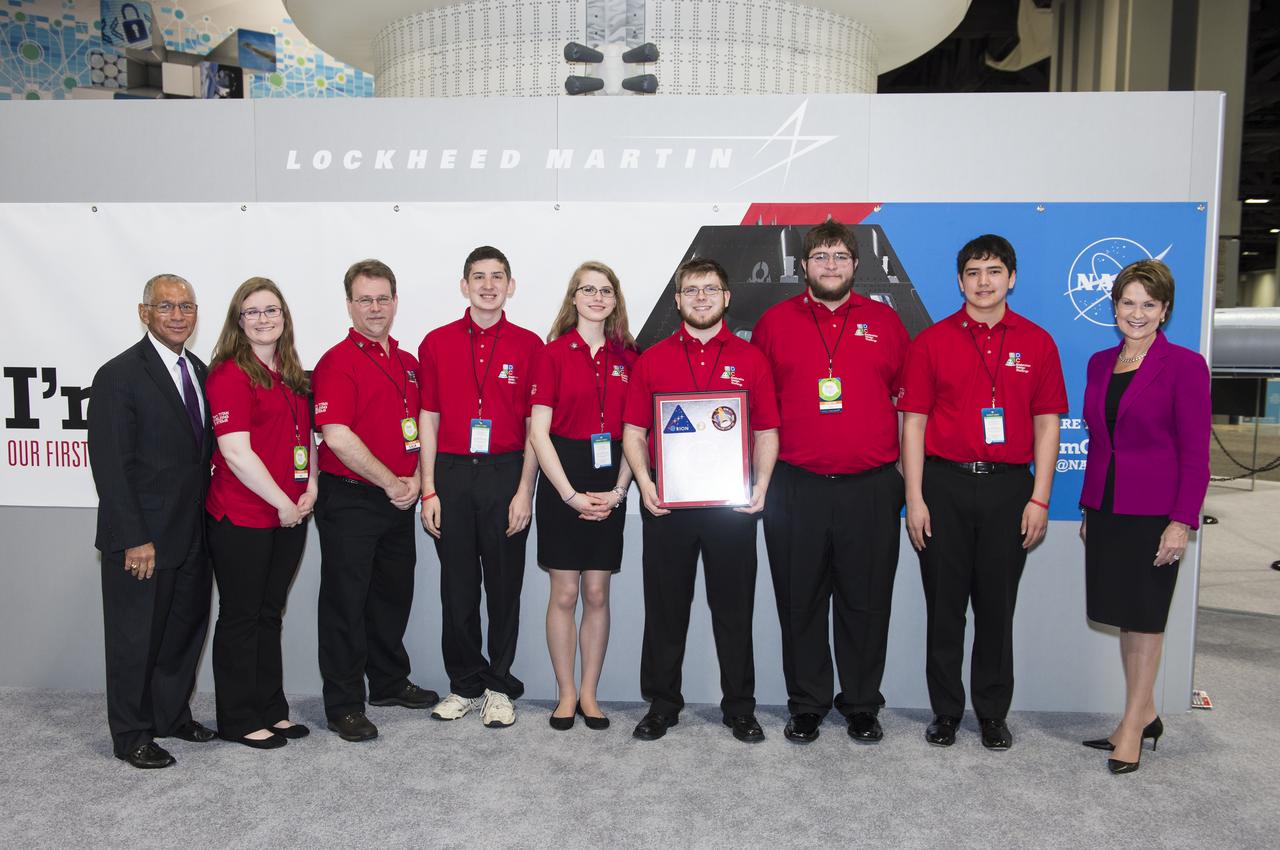
Team Titan Shielding Systems poses with NASA Administrator Charles Bolden and Lockheed Martin CEO, Marillyn Hewson. Team Titan Shielding Systems was one of the semi-finalists in the Exploration Design Challenge. The goal of the Exploration Design Challenge is for students to research and design ways to protect astronauts from space radiation. The winner of the challenge was announced on April 25, 2014 at the USA Science and Engineering Festival at the Washington Convention Center in Washington, DC. Photo Credit: (NASA/Aubrey Gemignani)
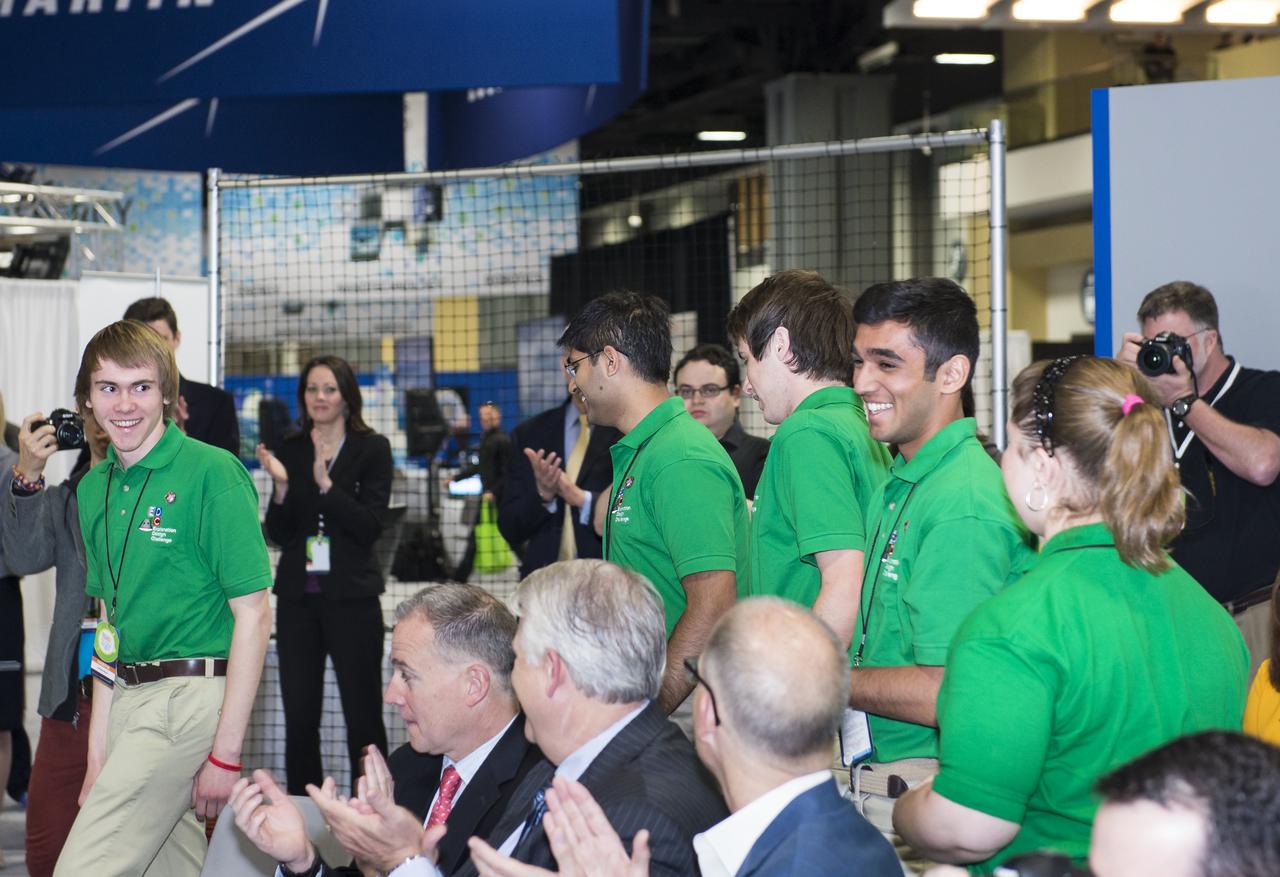
After announcing that Team ARES won the Exploration Design Challenge, NASA Administrator, Charles Bolden and CEO, Marillyn Hewson invite the team up to the stage to receive their award. The goal of the Exploration Design Challenge was for students to research and design ways to protect astronauts from space radiation.Team ARES's design will be built and flown aboard the Orion/EFT-1. The USA Science and Engineering Festival is taking place at the Washington Convention Center in Washington, DC on April 26 and 27, 2014. Photo Credit: (NASA/Aubrey Gemignani)
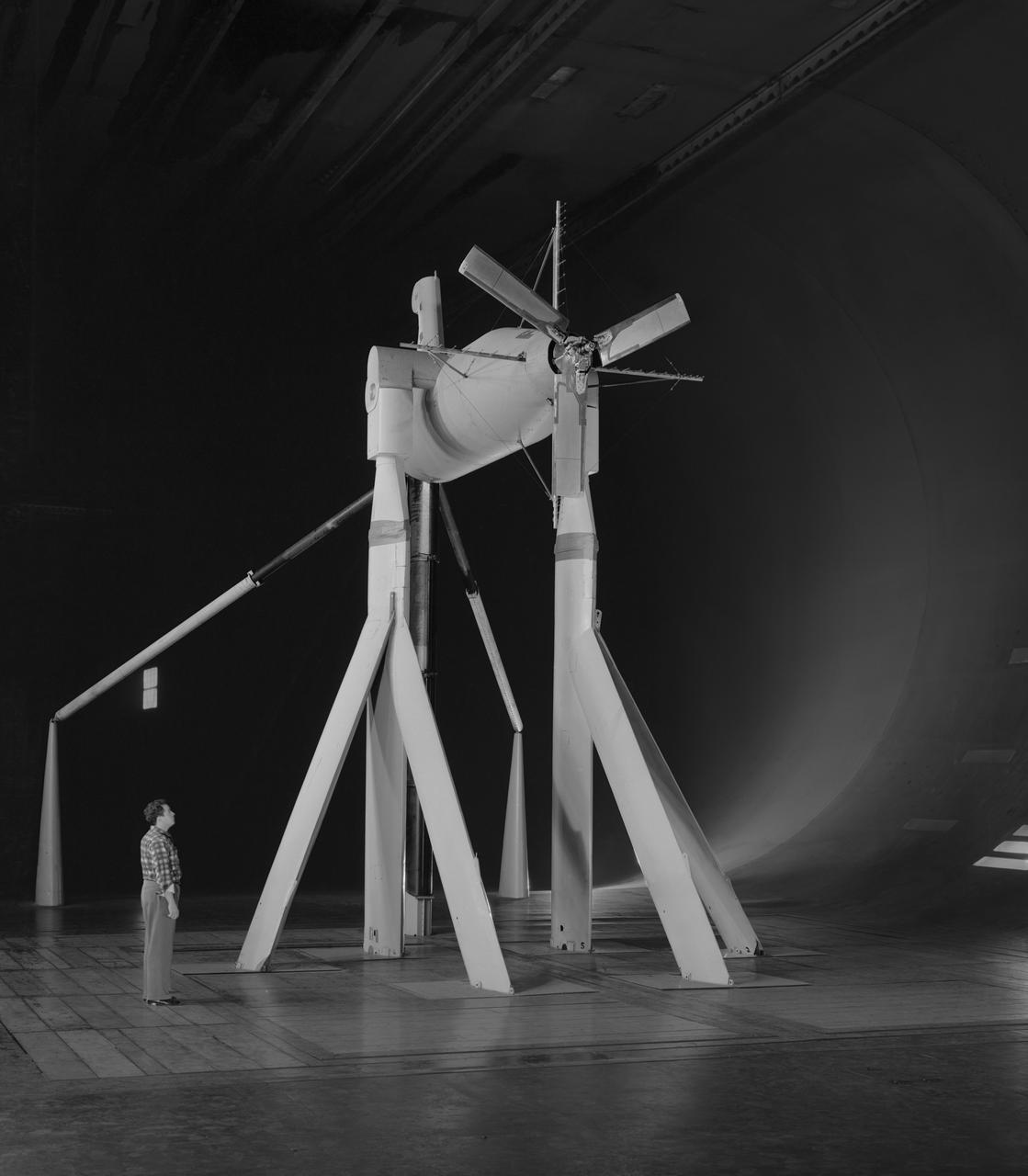
Investigation of cambered propeller design for VTOL/STOL airplane. 3/4 front view of complete configuration, 0 deg.
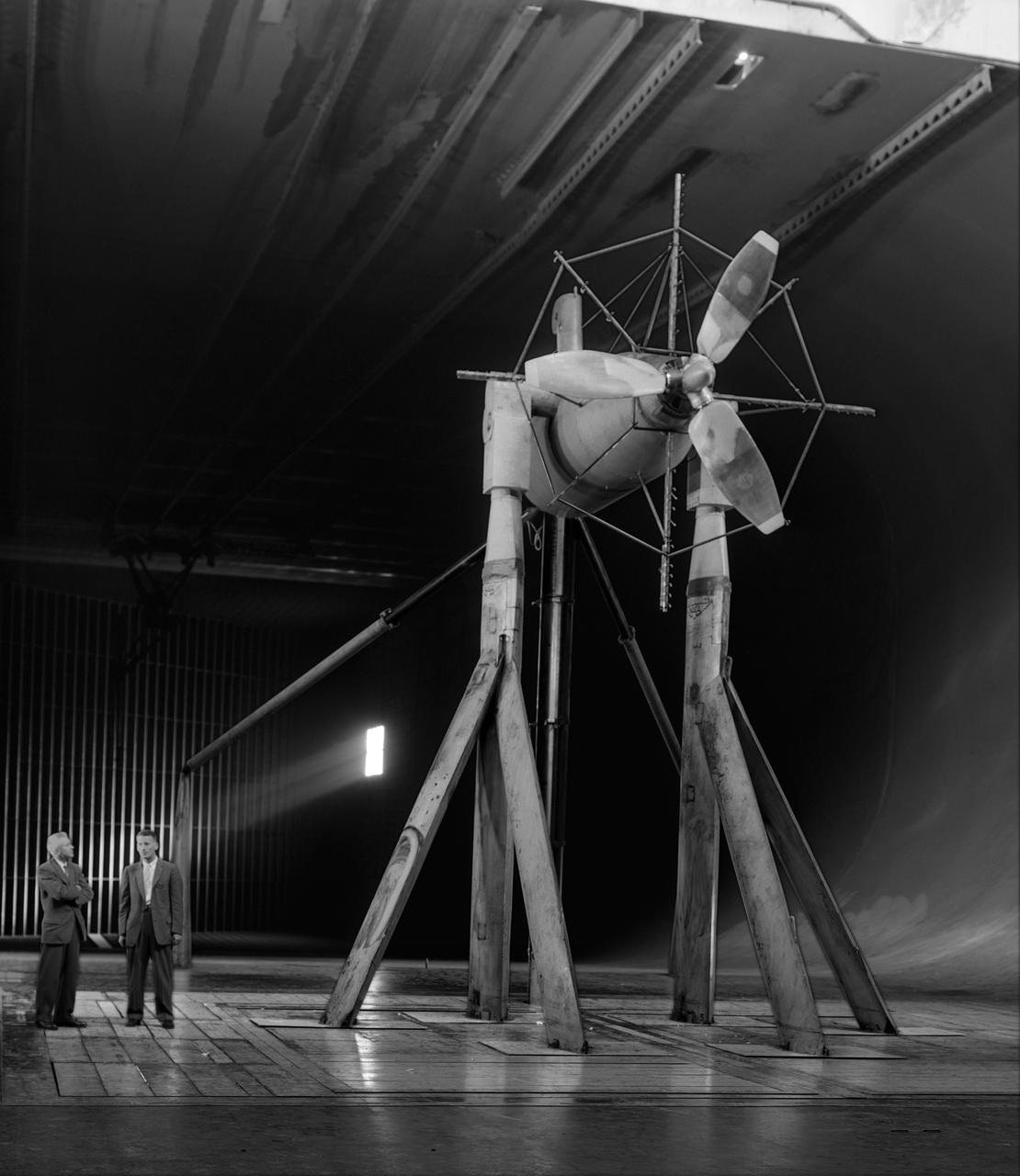
Investigation of cambered propeller design for VTOL/STOL airplane. 3/4 front view of Curtis VTOL propeller.
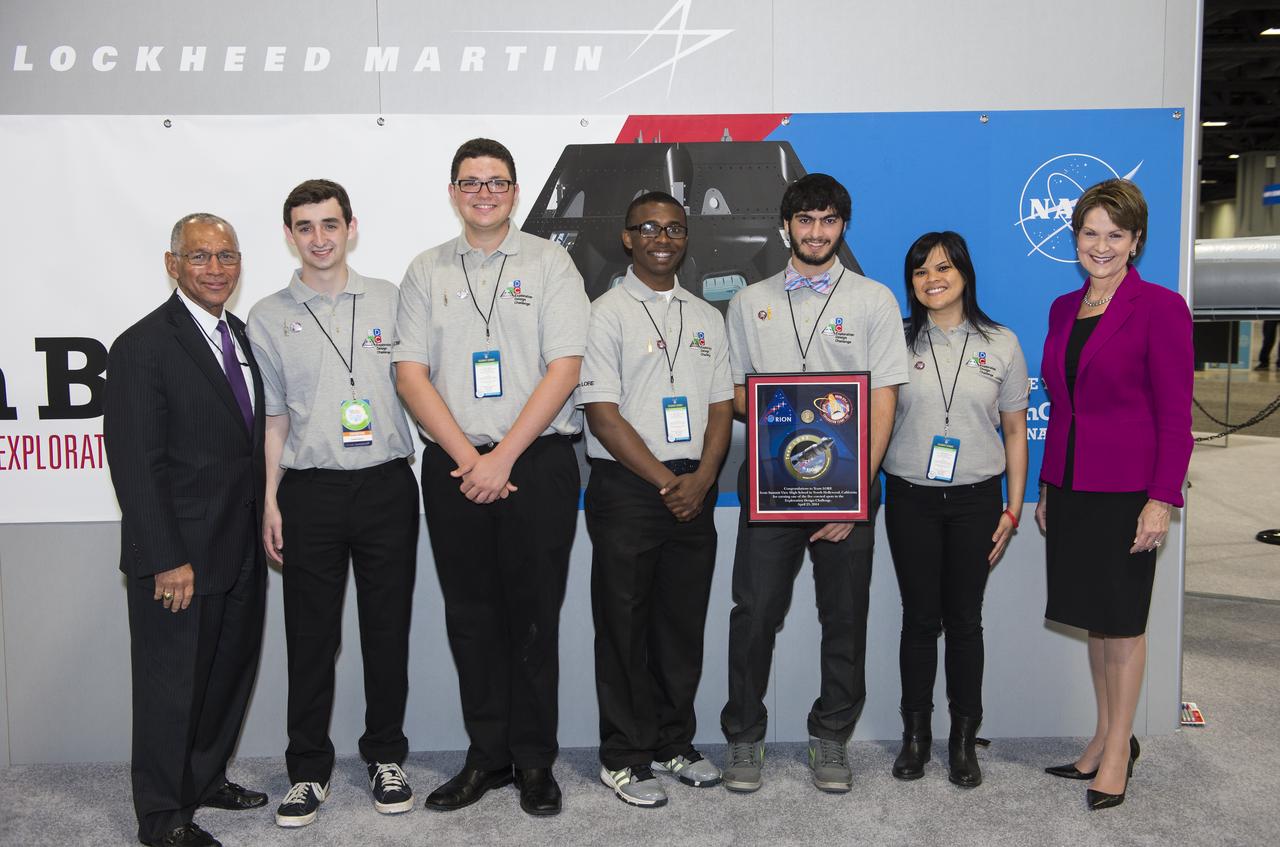
Team Lore poses with NASA Administrator Charles Bolden and Lockheed Martin CEO, Marillyn Hewson. Team Lore was one of the semi-finalists in the Exploration Design Challenge. The goal of the Exploration Design Challenge is for students to research and design ways to protect astronauts from space radiation. The winner of the challenge was announced on April 25, 2014 at the USA Science and Engineering Festival at the Washington Convention Center in Washington, DC. Photo Credit: (NASA/Aubrey Gemignani)
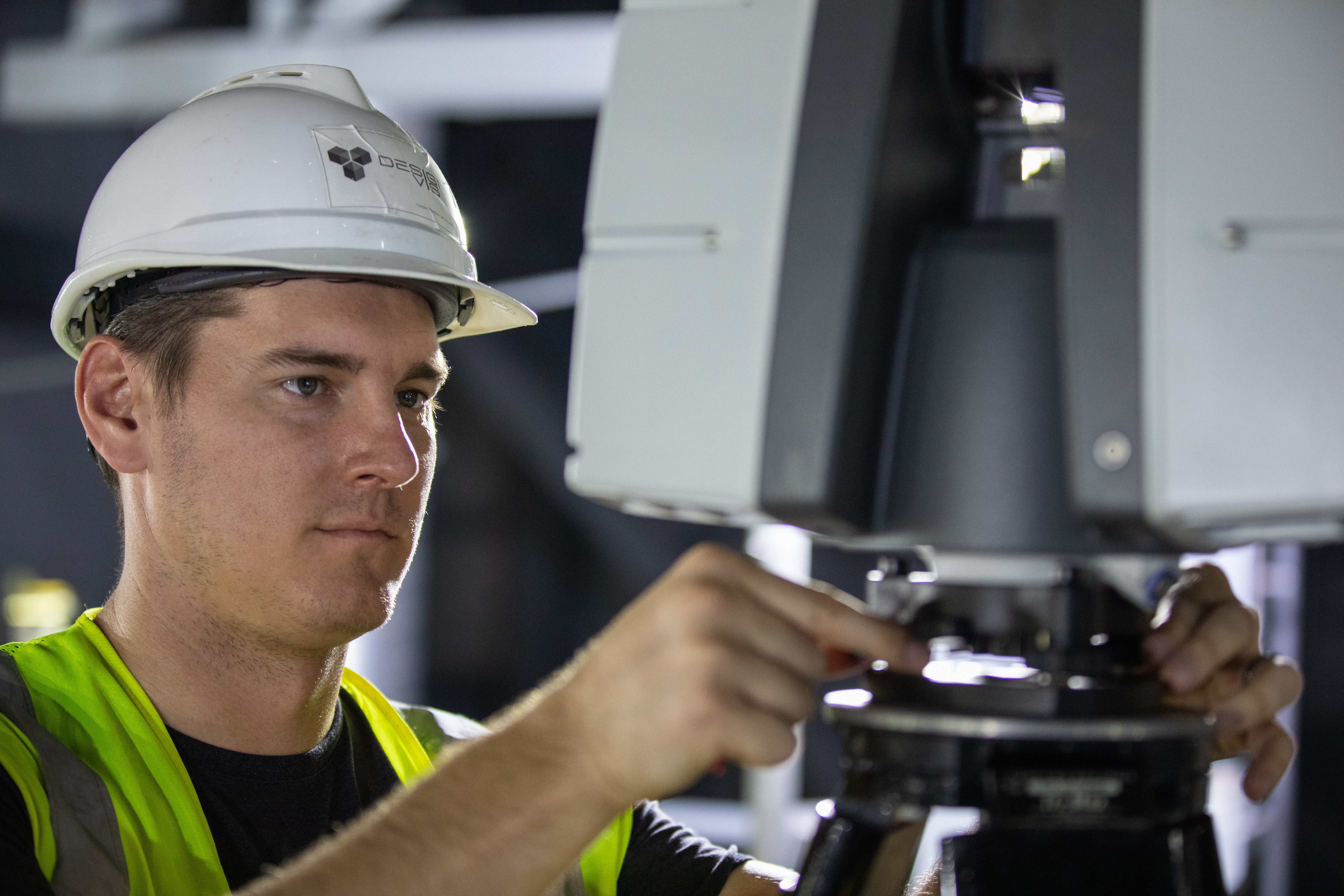
An engineer adjusts equipment from the Design Visualization Lab set up inside High Bay 3 of the Vehicle Assembly Building at NASA’s Kennedy Space Center on Oct. 14, 2020. The equipment will be used to do 3-D modeling of the mobile launcher that will carry the Space Launch System and Orion spacecraft to Launch Complex 39B for the Artemis I mission. Artemis I will test the Orion spacecraft and SLS as an integrated system ahead of crewed flights to the Moon. Under the Artemis program, NASA will land the first woman and the next man on the Moon in 2024.
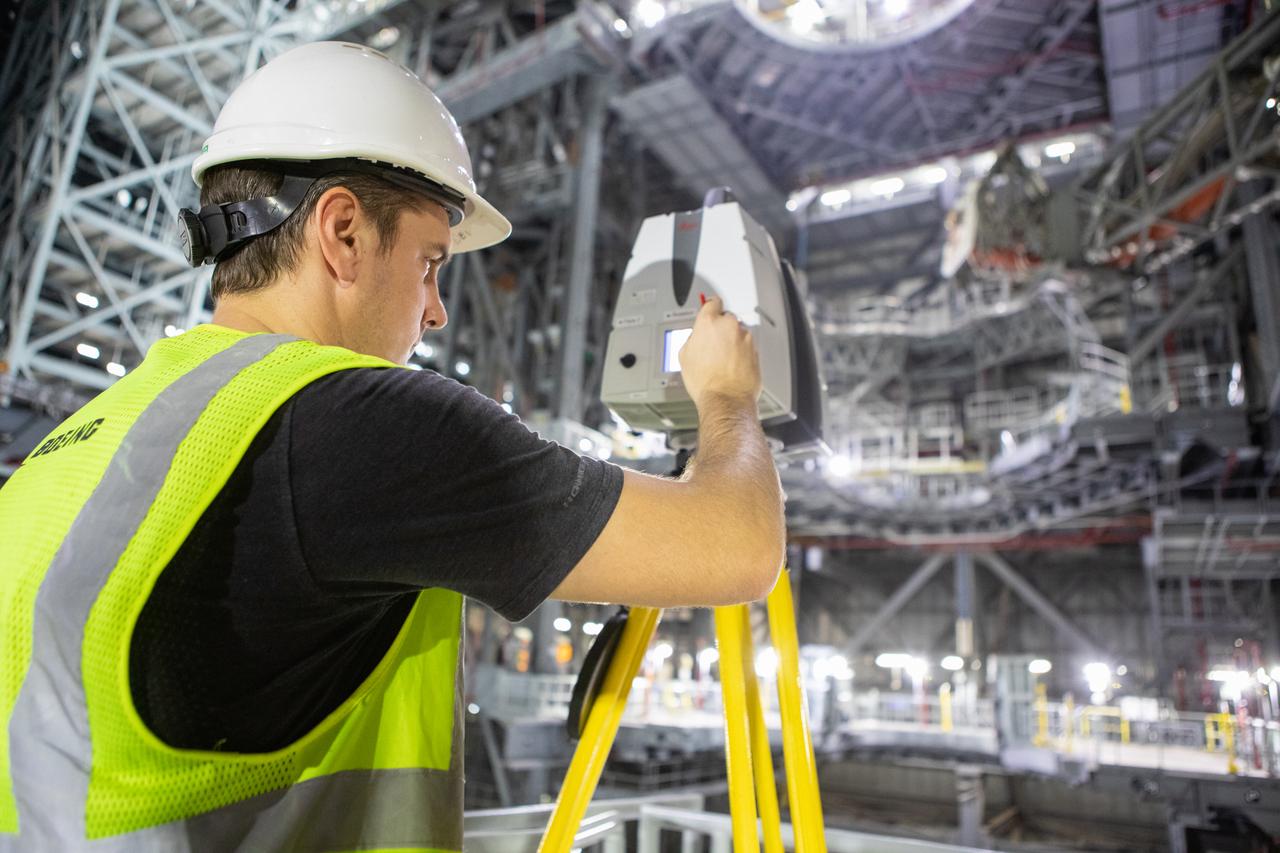
An engineer sets up equipment from the Design Visualization Lab inside High Bay 3 of the Vehicle Assembly Building at NASA’s Kennedy Space Center on Oct. 14, 2020. The equipment will be used to do 3-D modeling of the mobile launcher that will carry the Space Launch System and Orion spacecraft to Launch Complex 39B for the Artemis I mission. Artemis I will test the Orion spacecraft and SLS as an integrated system ahead of crewed flights to the Moon. Under the Artemis program, NASA will land the first woman and the next man on the Moon in 2024.
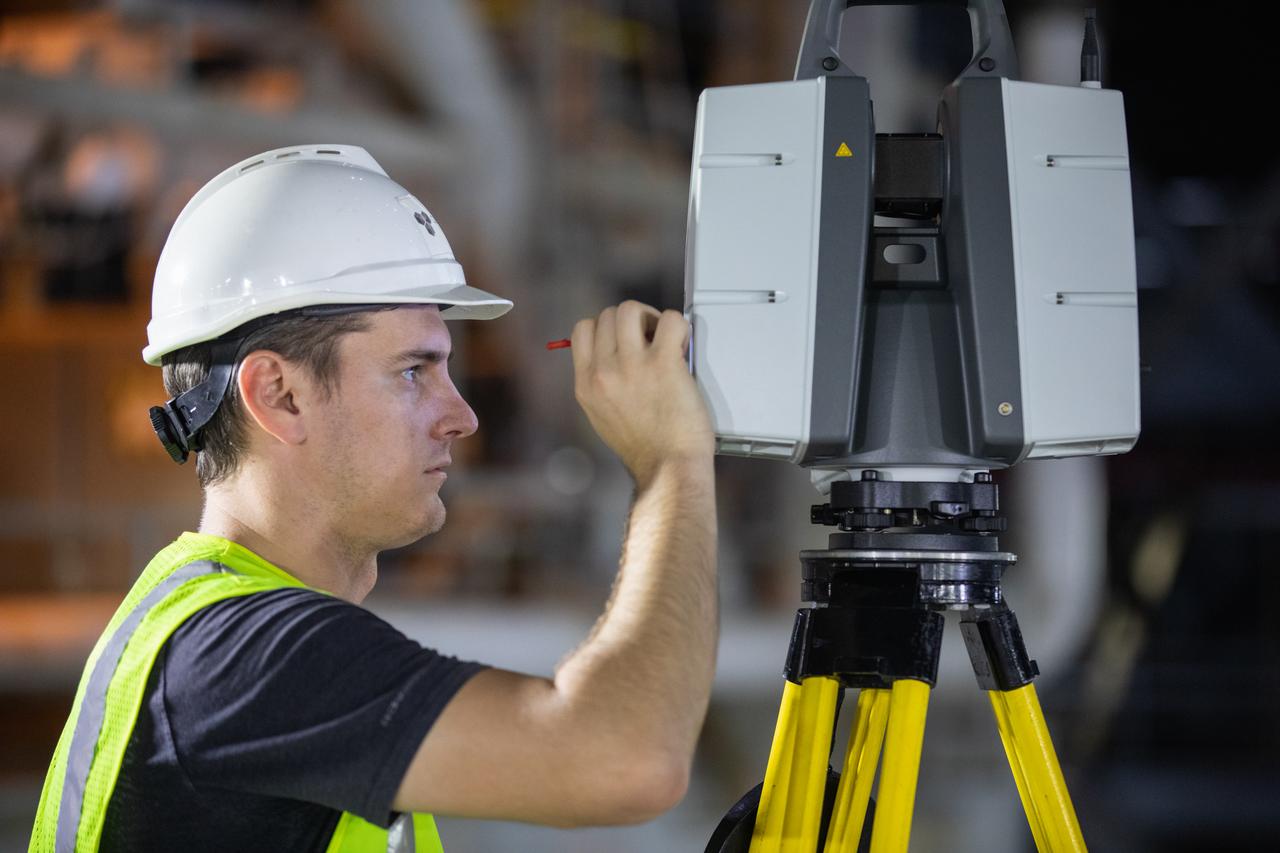
An engineer adjusts equipment from the Design Visualization Lab set up inside High Bay 3 of the Vehicle Assembly Building at NASA’s Kennedy Space Center on Oct. 14, 2020. The equipment will be used to do 3-D modeling of the mobile launcher that will carry the Space Launch System and Orion spacecraft to Launch Complex 39B for the Artemis I mission. Artemis I will test the Orion spacecraft and SLS as an integrated system ahead of crewed flights to the Moon. Under the Artemis program, NASA will land the first woman and the next man on the Moon in 2024.
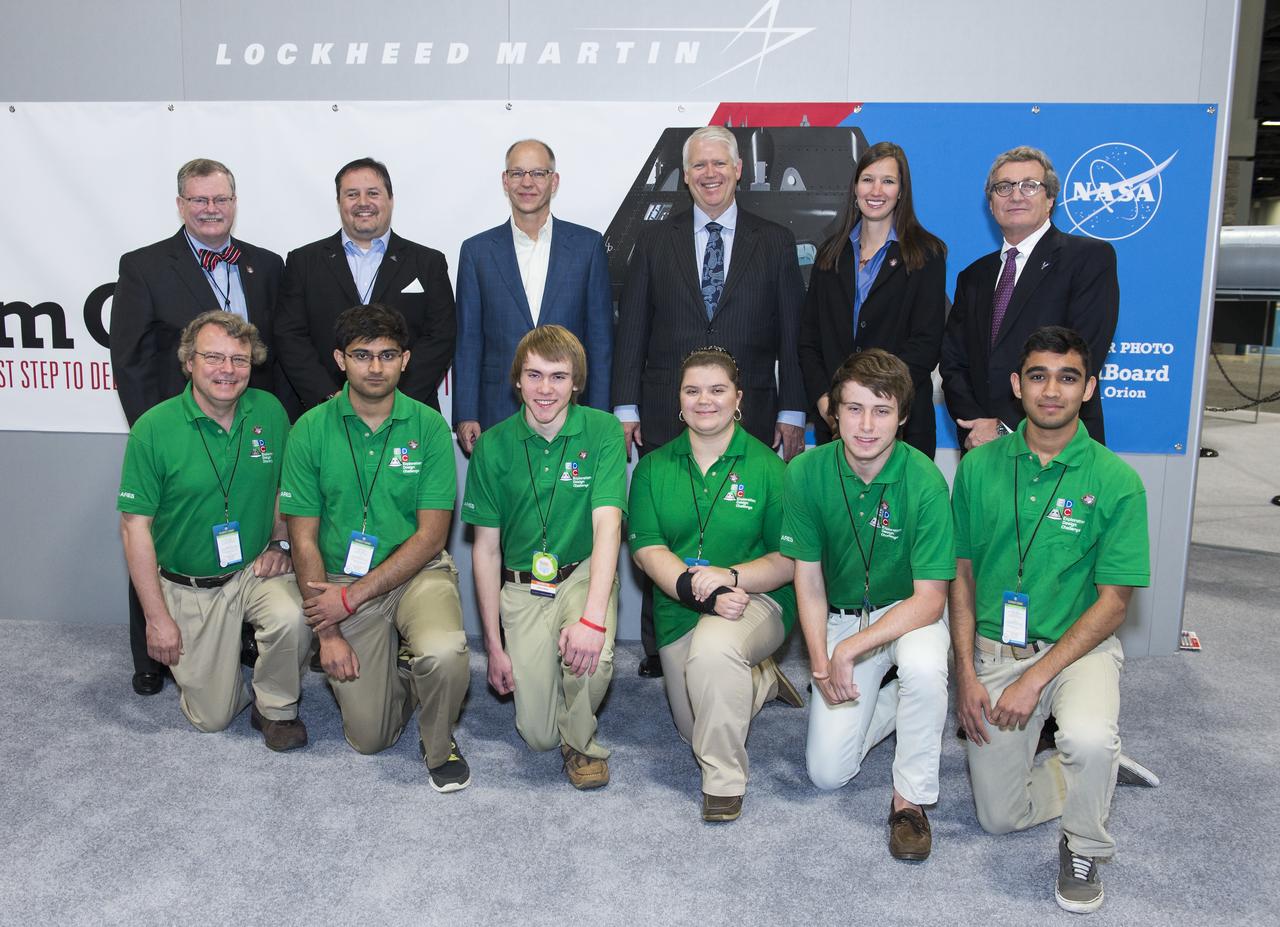
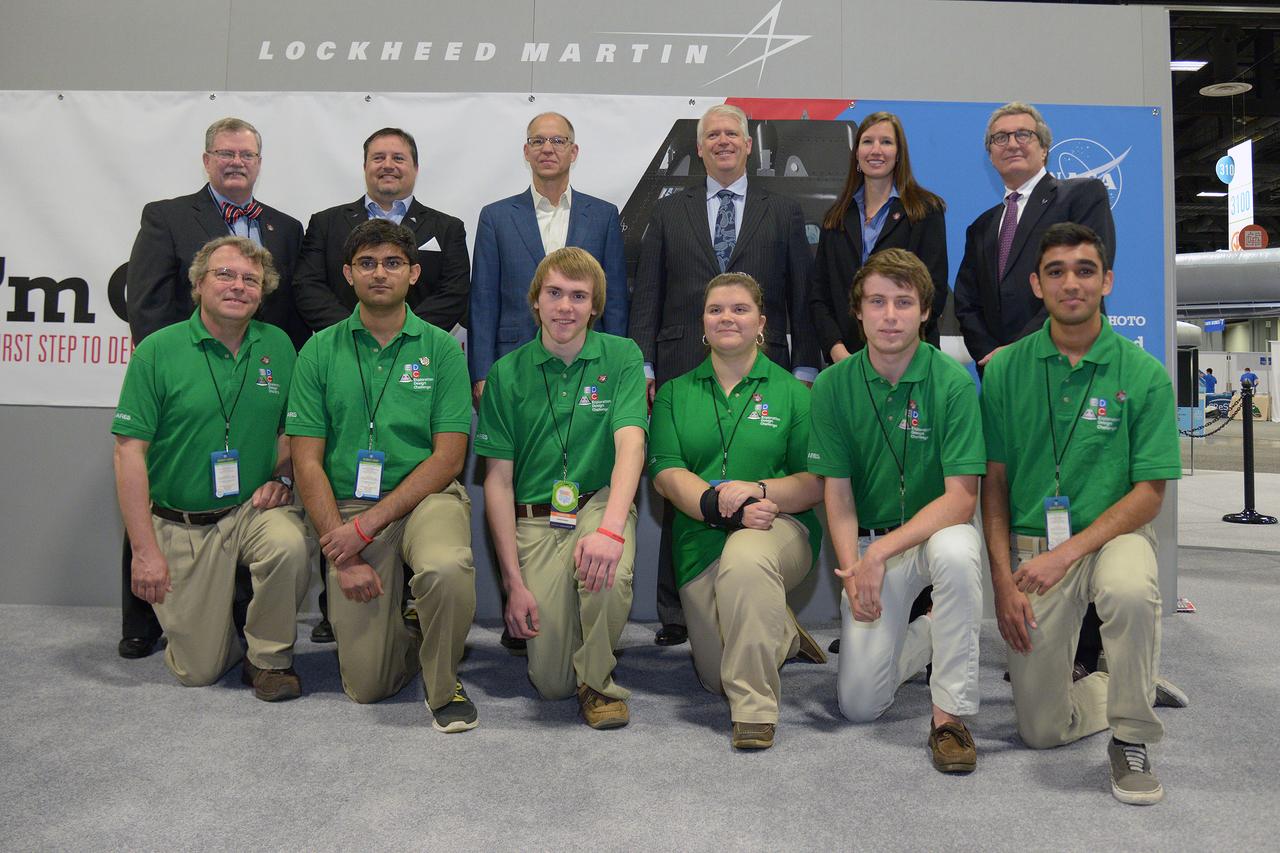
Sponsors of Team ARES pose for a group photo with the winning high school team in the Exploration Design Challenge. Team ARES from the Governors School for Science and Technology in Hampton, Va. won the challenge with their radiation shield design, which will be built and flown aboard the Orion/EFT-1. The award was announced at the USA Science and Engineering Festival on April 25, 2014 at the Washington Convention Center. Photo Credit: (NASA/Aubrey Gemignani)
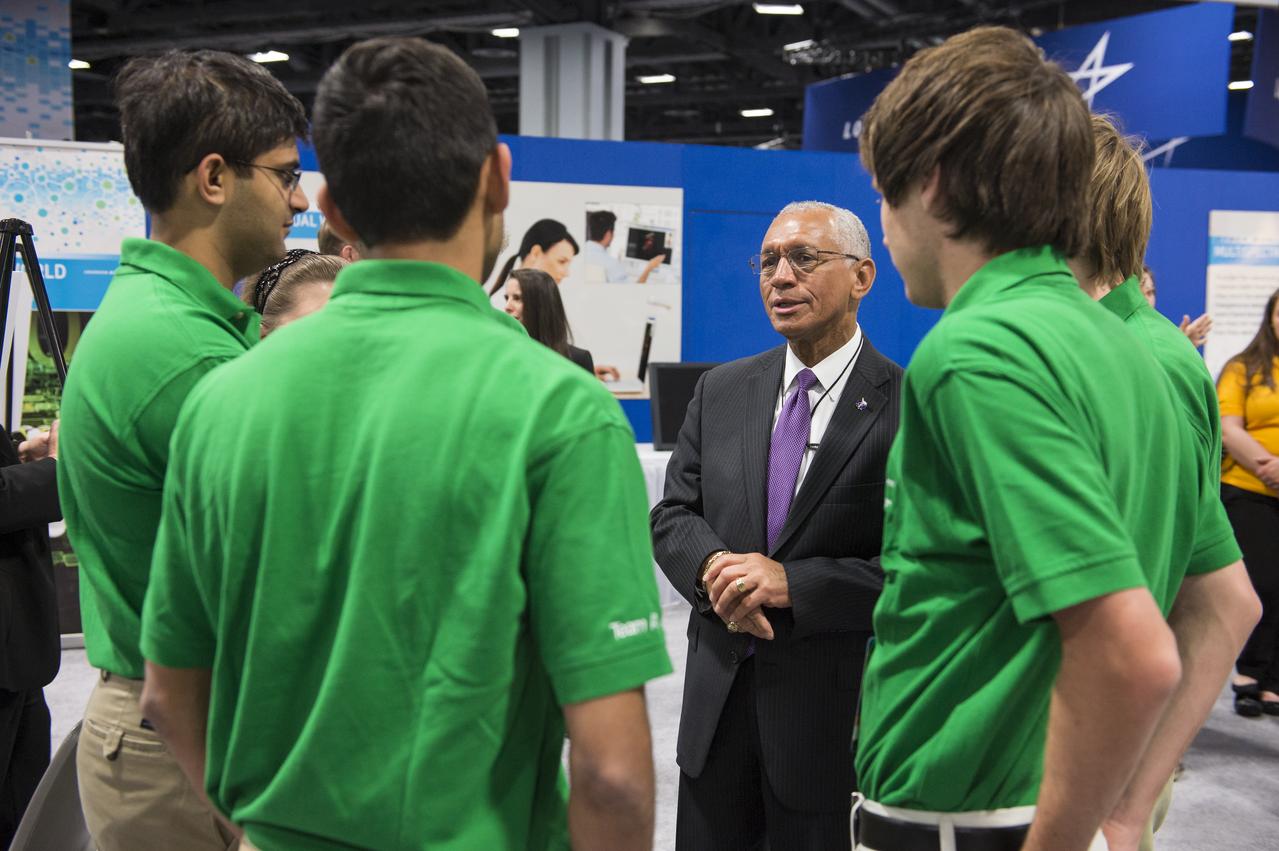
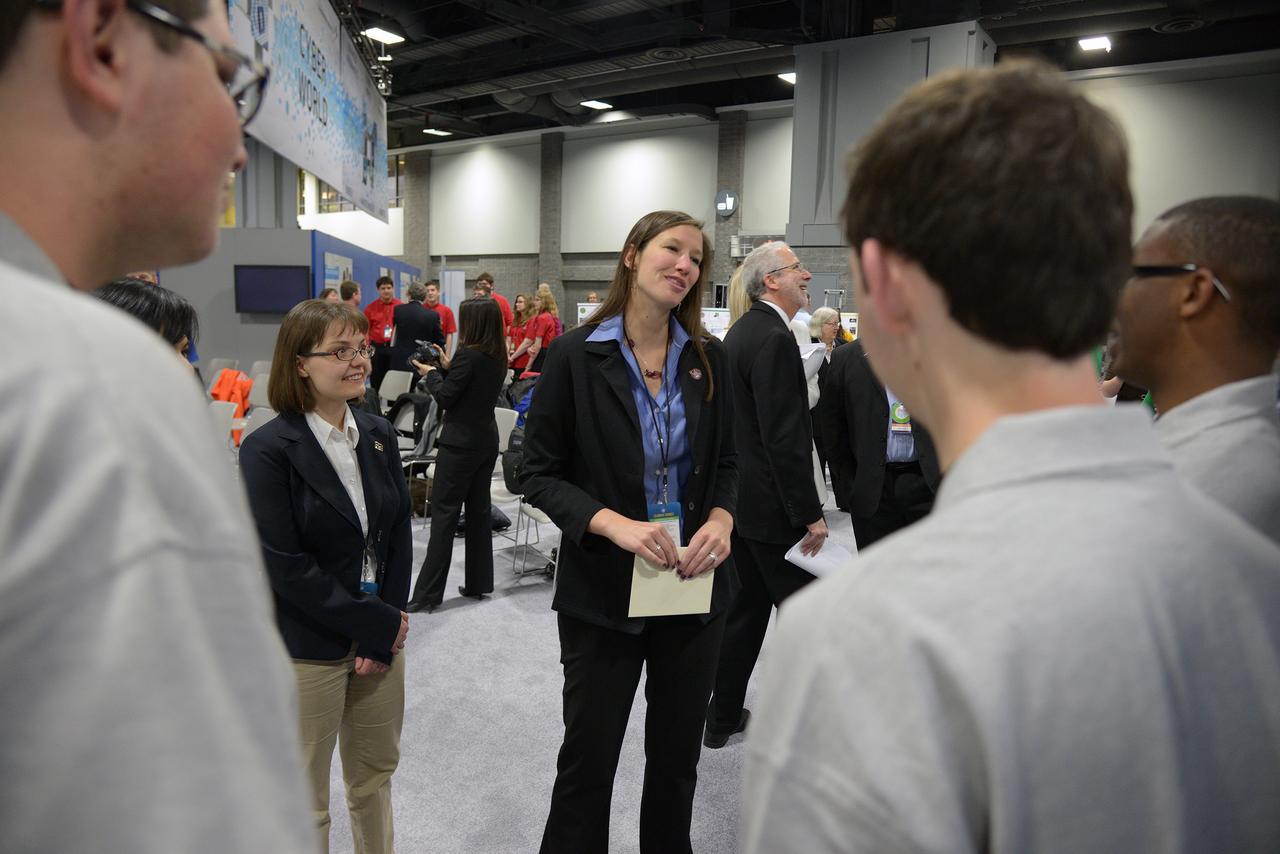
NASA’s Administrator, Charles Bolden speaks with the winning high school team in the Exploration Design Challenge prior to the award ceremony. Team ARES from the Governors School for Science and Technology in Hampton, Va. won the challenge with their radiation shield design, which will be built and flown aboard the Orion/EFT-1. The award was announced at the USA Science and Engineering Festival on April 25, 2014 at the Washington Convention Center. Photo Credit: (NASA/Aubrey Gemignani)
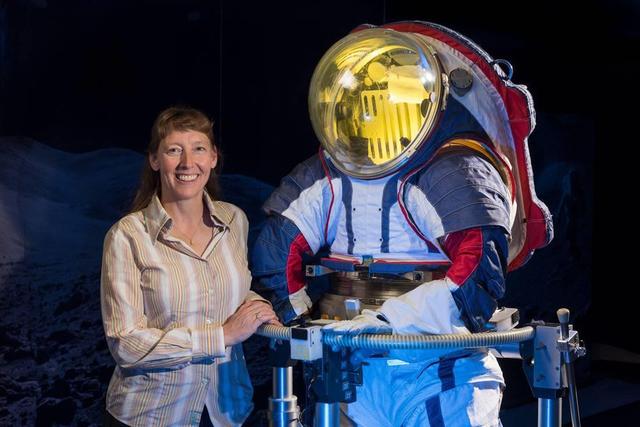
Advanced spacesuit designer Amy Ross of the NASA's Johnson Space Center stands with the Z-2, a prototype spacesuit. https://photojournal.jpl.nasa.gov/catalog/PIA23978
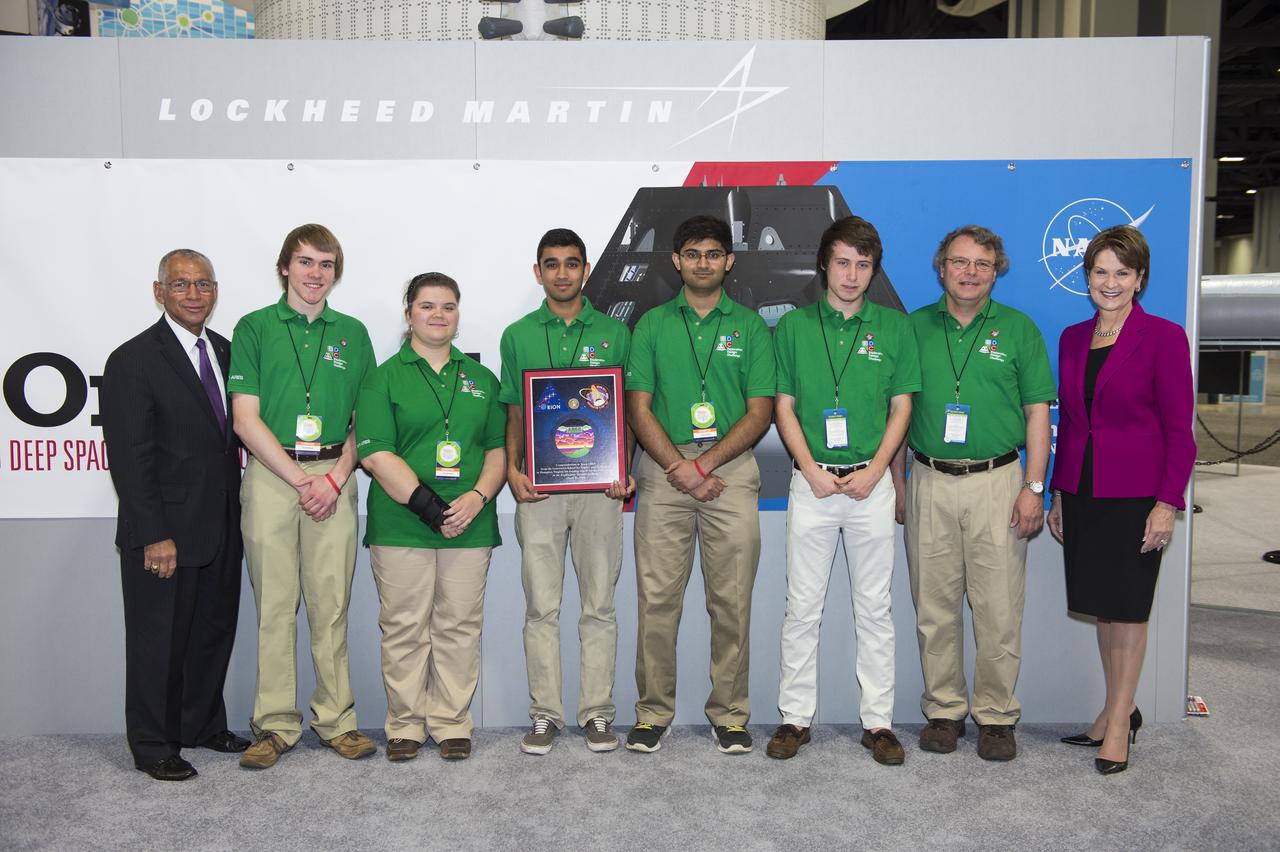
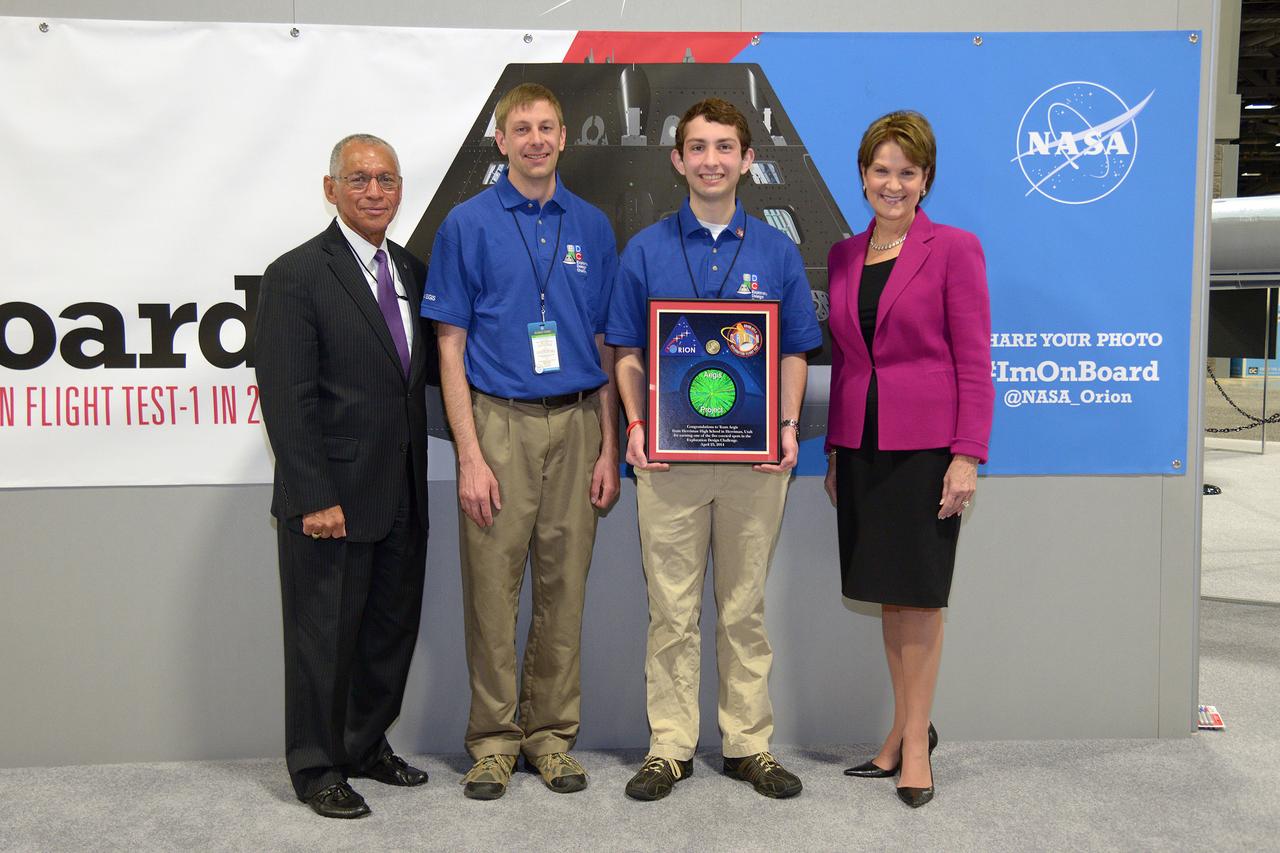
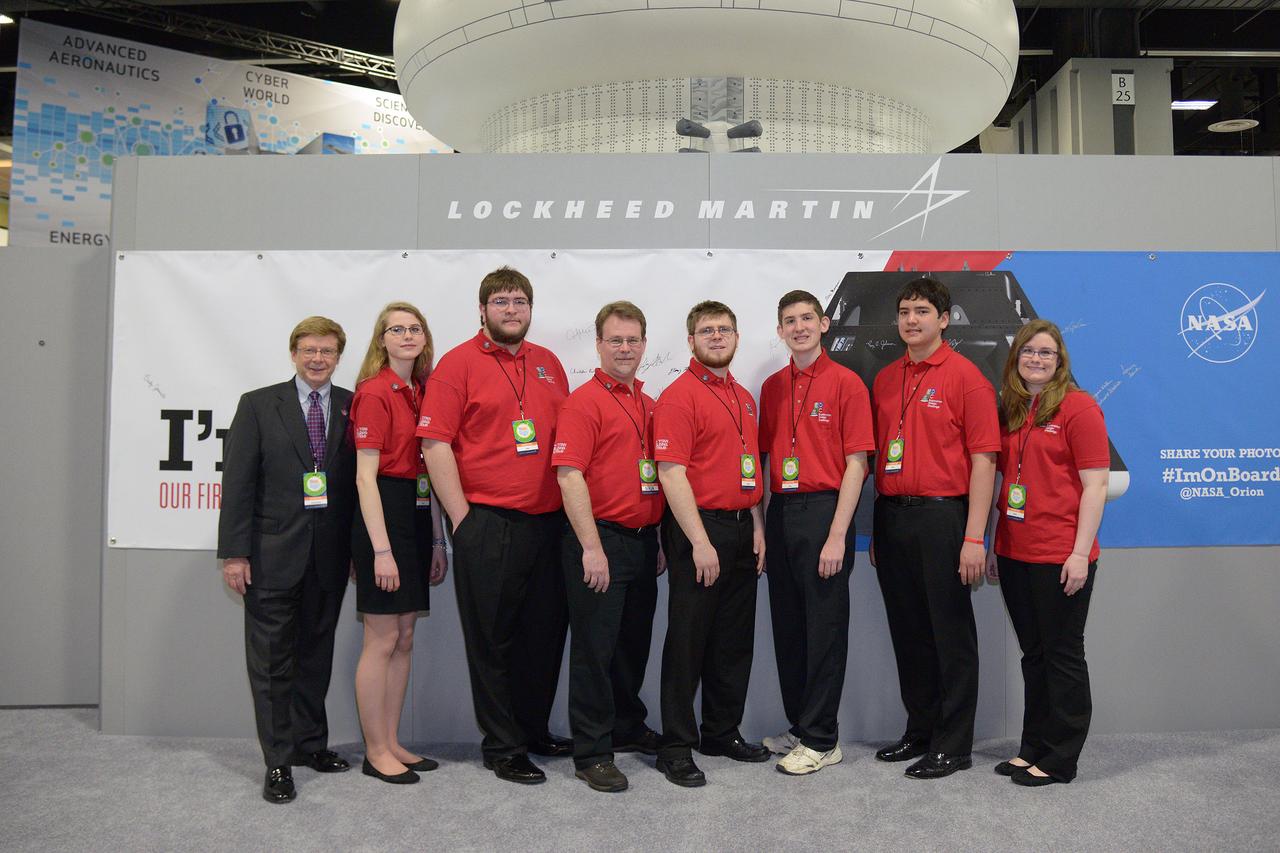
Team ARES poses with NASA Administrator Charles Bolden and Lockheed Martin CEO, Marillyn Hewson. Team ARES was the winner of the Exploration Design Challenge. The goal of the Exploration Design Challenge is for students to research and design ways to protect astronauts from space radiation. The winning team was announced on April 25, 2014 at the USA Science and Engineering Festival at the Washington Convention Center in Washington, DC. Photo Credit: (NASA/Aubrey Gemignani)
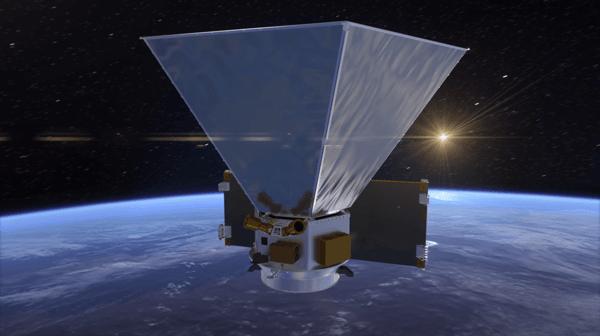
NASA's SPHEREx mission will study the universe's early expansion, the history of galaxies, and the composition of planetary systems. This animation shows the preliminary design for the spacecraft, including hexagonal sun shields that will help keep the instruments cool. Movie available at https://photojournal.jpl.nasa.gov/catalog/PIA23869
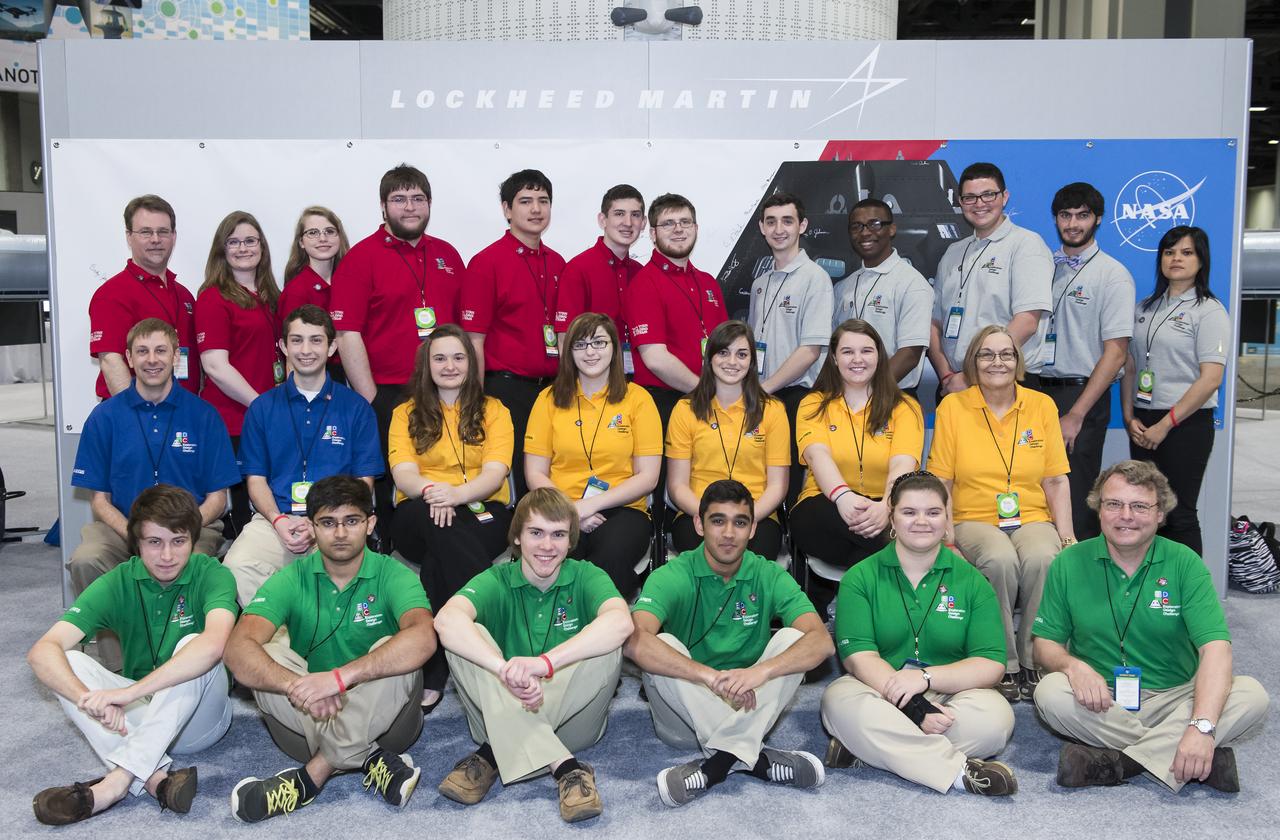
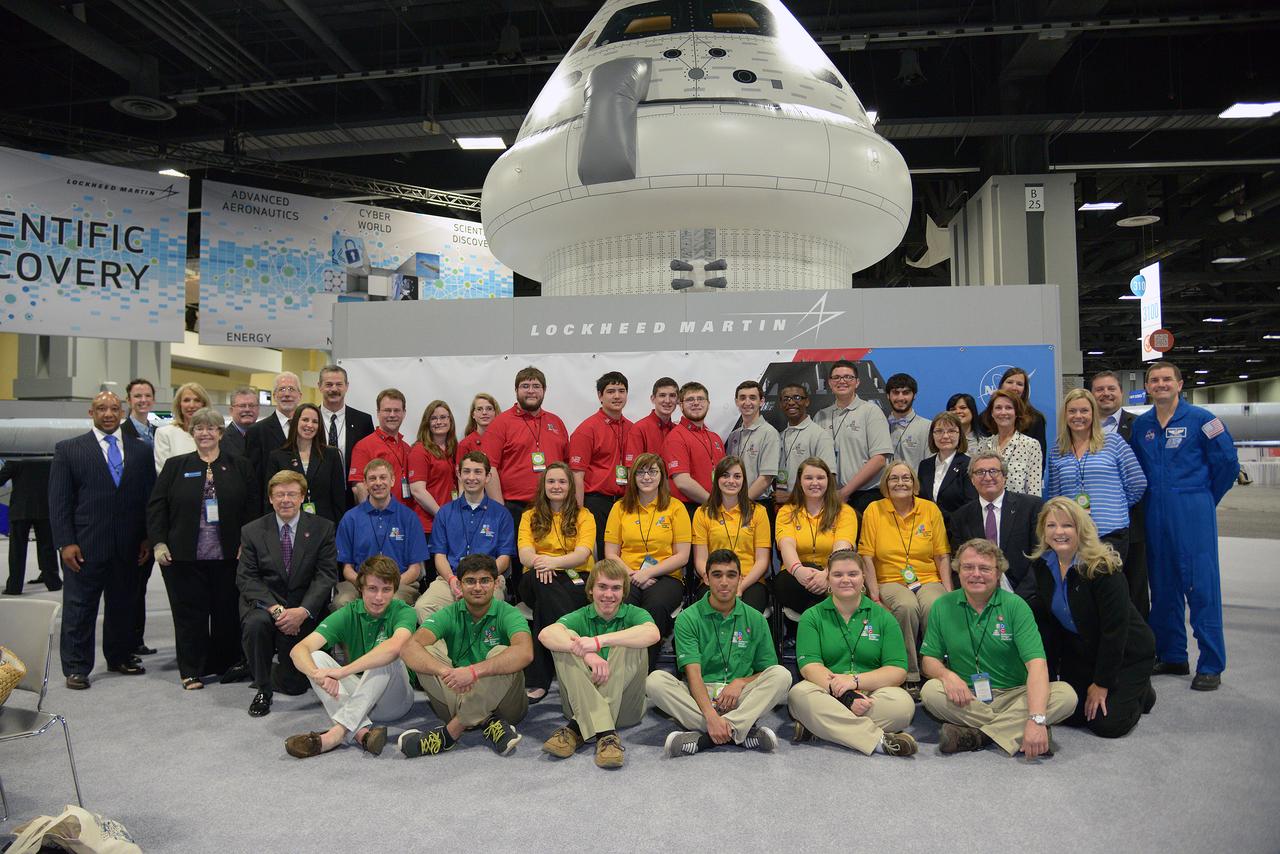
Pictured are all Semi-finalist teams in the Exploration Design Challenge. NASA Administrator, Charles Bolden and Lockheed Martin CEO, Marillyn Hewson announced the winner of the Exploration Design Challenge at the USA Science and Engineering Festival on April 25, 2014. The goal of the challenge was for students to research and design ways to protect astronauts from space radiation. The winning team's design will be built and flown aboard the Orion/EFT-1. The USA Science and Engineering Festival is taking place at the Washington Convention Center in Washington, DC on April 26 and 27, 2014. Photo Credit: (NASA/Aubrey Gemignani)
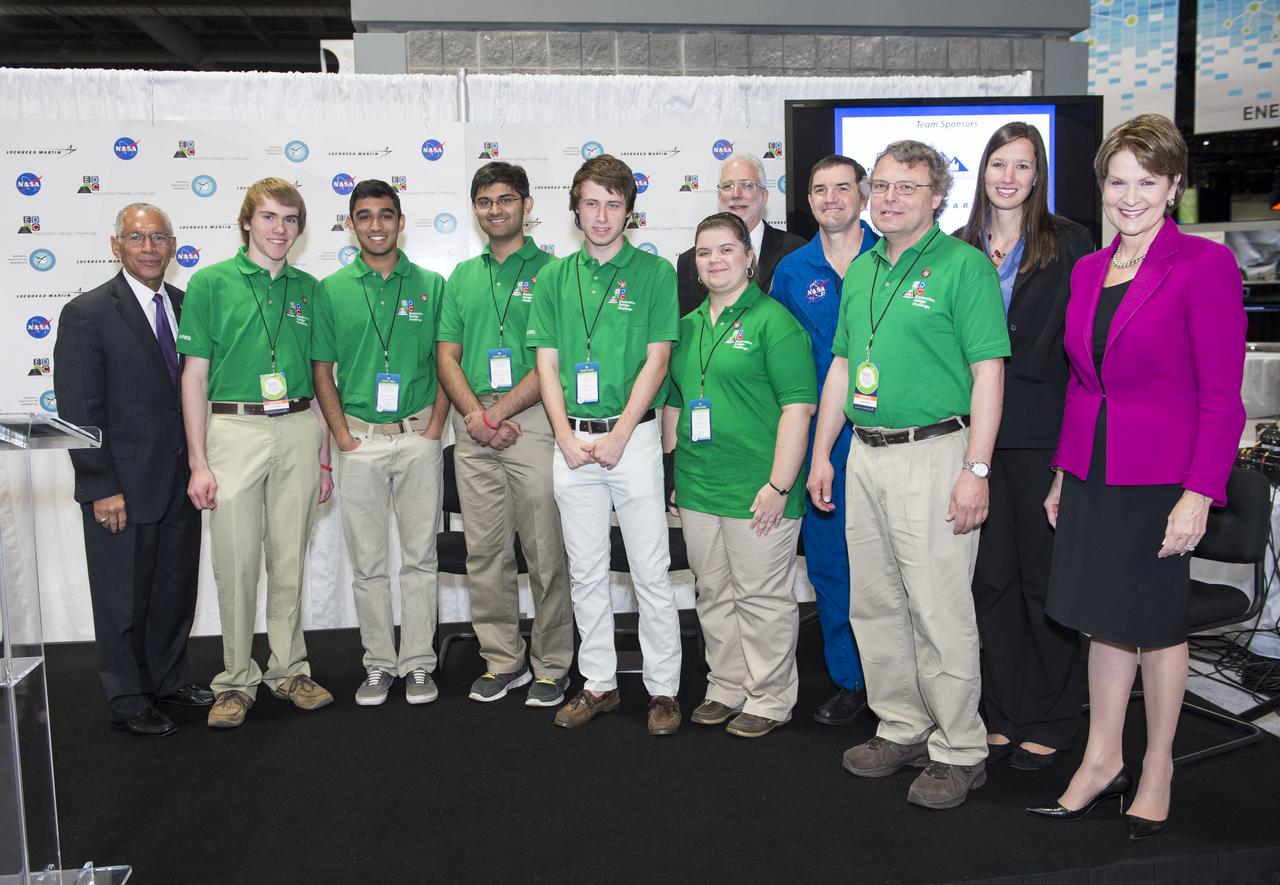
NASA’s Administrator, Charles Bolden (left), President/CEO of Lockheed Martin, Marillyn Hewson (right), and astronaut Rex Walheim (back row) pose for a group photo with the winning high school team in the Exploration Design Challenge. Team ARES from the Governors School for Science and Technology in Hampton, Va. won the challenge with their radiation shield design, which will be built and flown aboard the Orion/EFT-1. The award was announced at the USA Science and Engineering Festival on April 25, 2014 at the Washington Convention Center. Photo Credit: (NASA/Aubrey Gemignani)
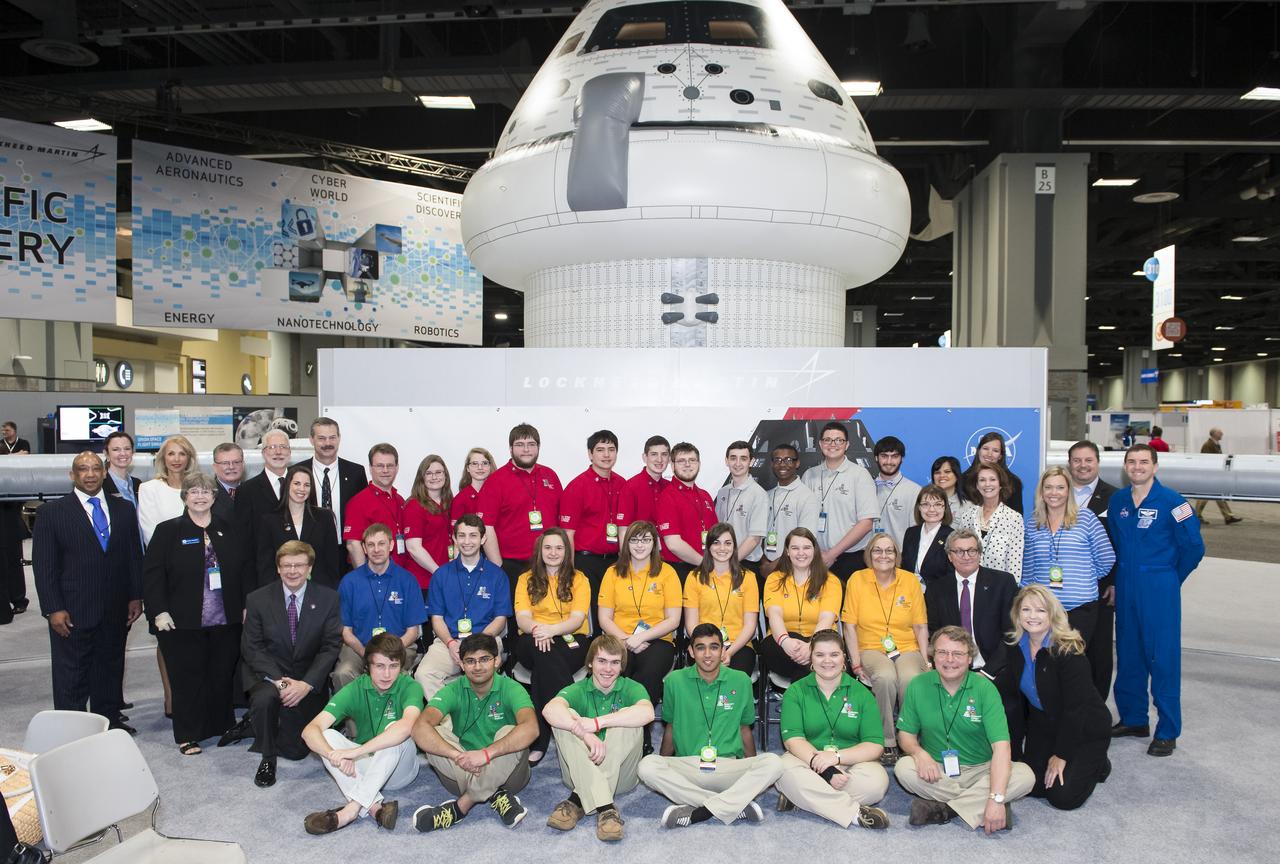
Sponsors of all of the semi-finalist teams in the Exploration Design Challenge pose for a group photo with the teams. Team ARES from the Governors School for Science and Technology in Hampton, Va. won the challenge with their radiation shield design, which will be built and flown aboard the Orion/EFT-1. The award was announced at the USA Science and Engineering Festival on April 25, 2014 at the Washington Convention Center. Photo Credit: (NASA/Aubrey Gemignani)
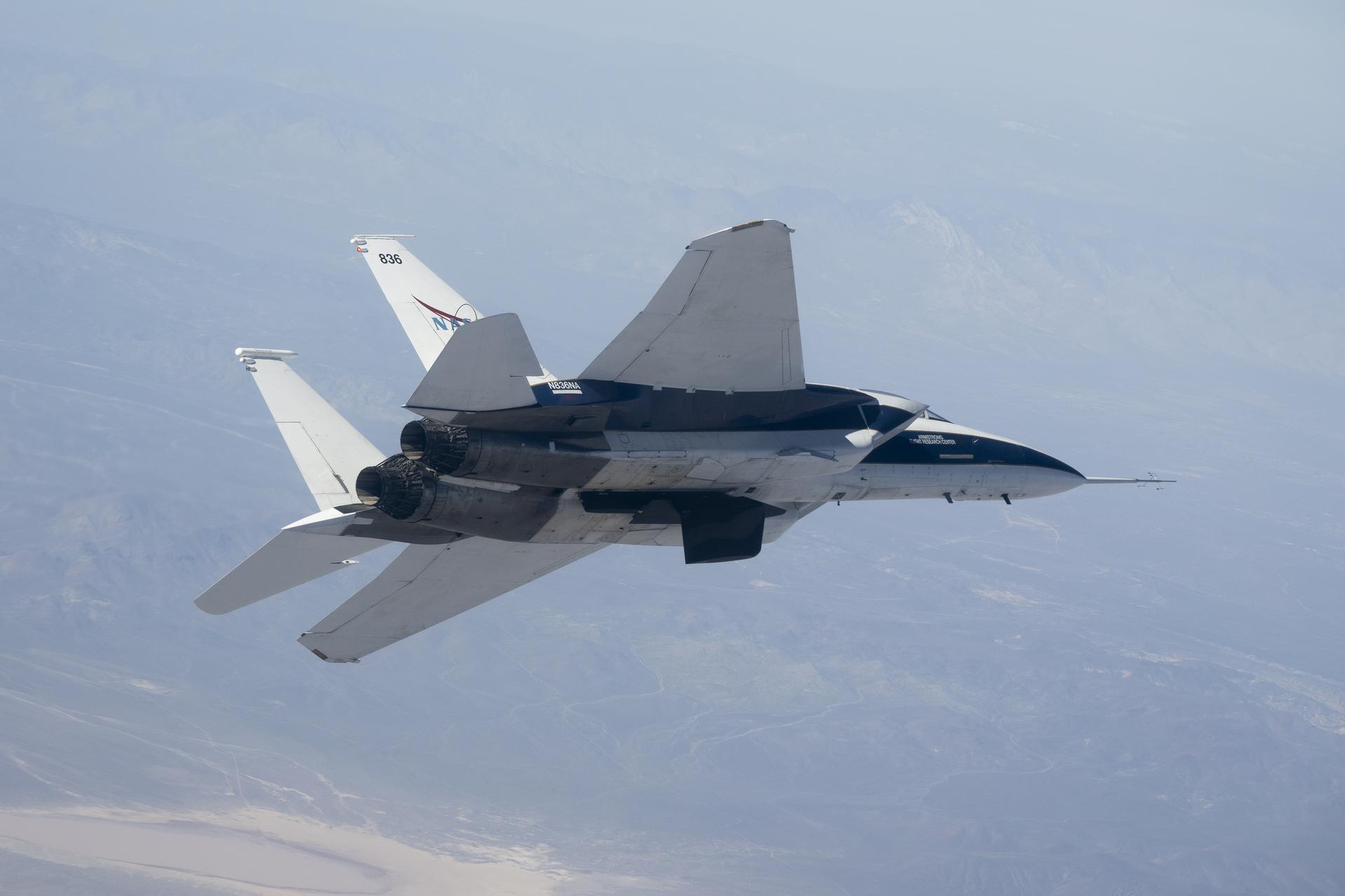
NASA’s Crossflow Attenuated Natural Laminar Flow (CATNLF) scale-model wing flies on a NASA F-15 research jet during a test flight from NASA’s Armstrong Flight Research Center in Edwards, California. The CATNLF technology is designed to maintain smooth airflow, known as laminar flow. NASA will continue flight tests to collect data that validates the CATNLF design and its potential to improve laminar flow, reducing drag and lowering fuel costs for future commercial aircraft.
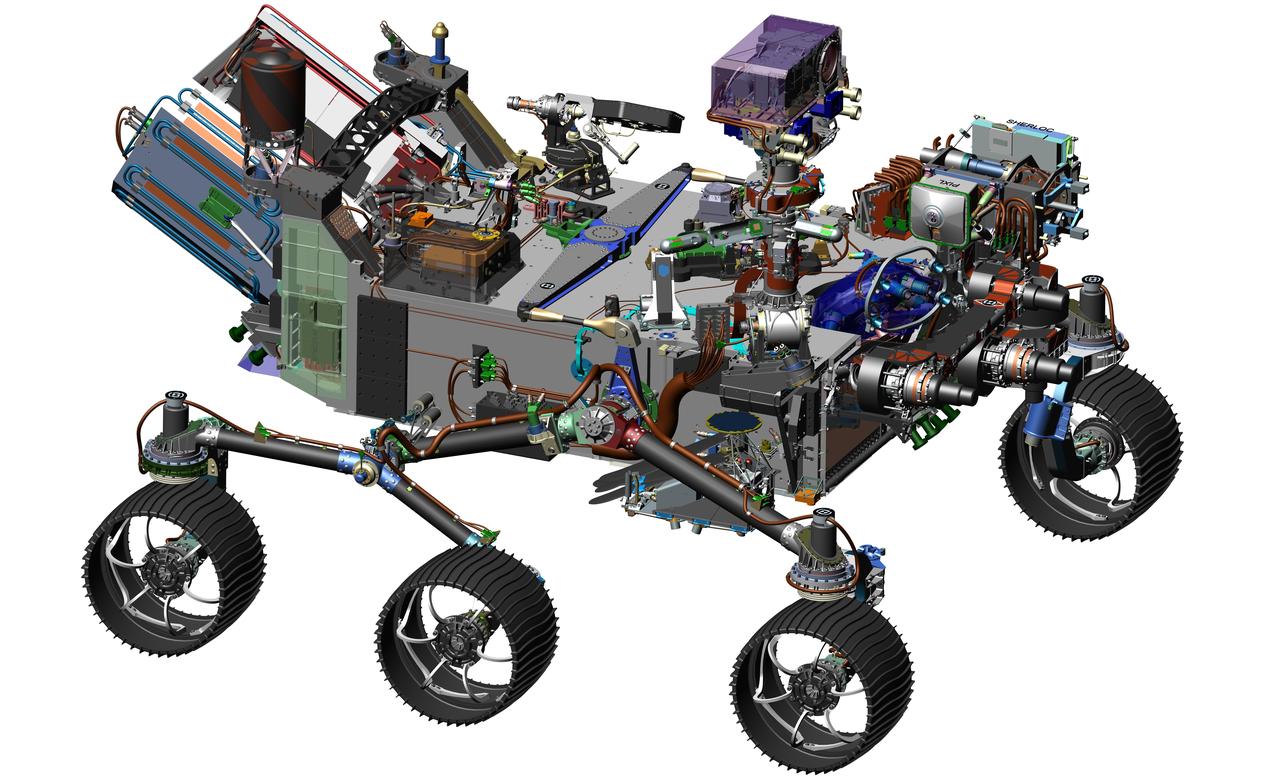
NASA's 2020 Mars rover mission will go to a region of Mars thought to have offered favorable conditions long ago for microbial life, and the rover will search for signs of past life there. It will also collect and cache samples for potential return to Earth, for many types of laboratory analysis. As a pioneering step toward how humans on Mars will use the Red Planet's natural resources, the rover will extract oxygen from the Martian atmosphere. This 2016 image comes from computer-assisted-design work on the 2020 rover. The design leverages many successful features of NASA's Curiosity rover, which landed on Mars in 2012, but it adds new science instruments and a sampling system to carry out the new goals for the mission. http://photojournal.jpl.nasa.gov/catalog/PIA20759
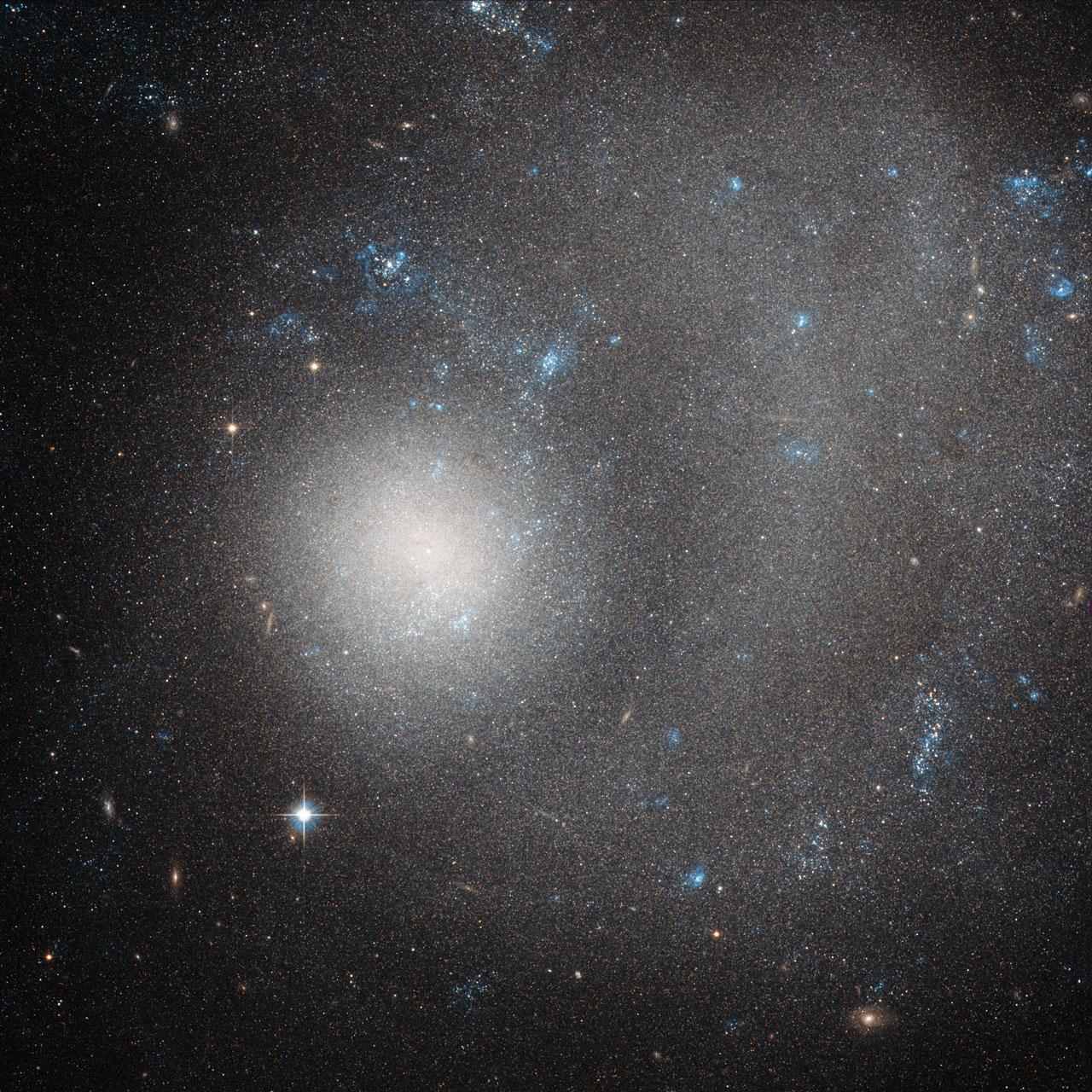
The subject of this Hubble image is NGC 5474, a dwarf galaxy located 21 million light-years away in the constellation of Ursa Major (The Great Bear). This beautiful image was taken with Hubble's Advanced Camera for Surveys (ACS). The term "dwarf galaxy" may sound diminutive, but don't let that fool you — NGC 5474 contains several billion stars! However, when compared to the Milky Way with its hundreds of billions of stars, NGC 5474 does indeed seem relatively small. NGC 5474 itself is part of the Messier 101 Group. The brightest galaxy within this group is the well-known spiral Pinwheel Galaxy (also known as Messier 101). This galaxy's prominent, well-defined arms classify it as a "grand design galaxy," along with other spirals Messier 81 and Messier 74. Also within this group are Messier 101's galactic neighbors. It is possible that gravitational interactions with these companion galaxies have had some influence on providing Messier 101 with its striking shape. Similar interactions with Messier 101 may have caused the distortions visible in NGC 5474. Both the Messier 101 Group and our own Local Group reside within the Virgo Supercluster, making NGC 5474 something of a neighbor in galactic terms. Credit: ESA/NASA <b><a href="http://www.nasa.gov/audience/formedia/features/MP_Photo_Guidelines.html" rel="nofollow">NASA image use policy.</a></b> <b><a href="http://www.nasa.gov/centers/goddard/home/index.html" rel="nofollow">NASA Goddard Space Flight Center</a></b> enables NASA’s mission through four scientific endeavors: Earth Science, Heliophysics, Solar System Exploration, and Astrophysics. Goddard plays a leading role in NASA’s accomplishments by contributing compelling scientific knowledge to advance the Agency’s mission. <b>Follow us on <a href="http://twitter.com/NASAGoddardPix" rel="nofollow">Twitter</a></b> <b>Like us on <a href="http://www.facebook.com/pages/Greenbelt-MD/NASA-Goddard/395013845897?ref=tsd" rel="nofollow">Facebook</a></b> <b>Find us on <a href="http://instagram.com/nasagoddard?vm=grid" rel="nofollow">Instagram</a></b>
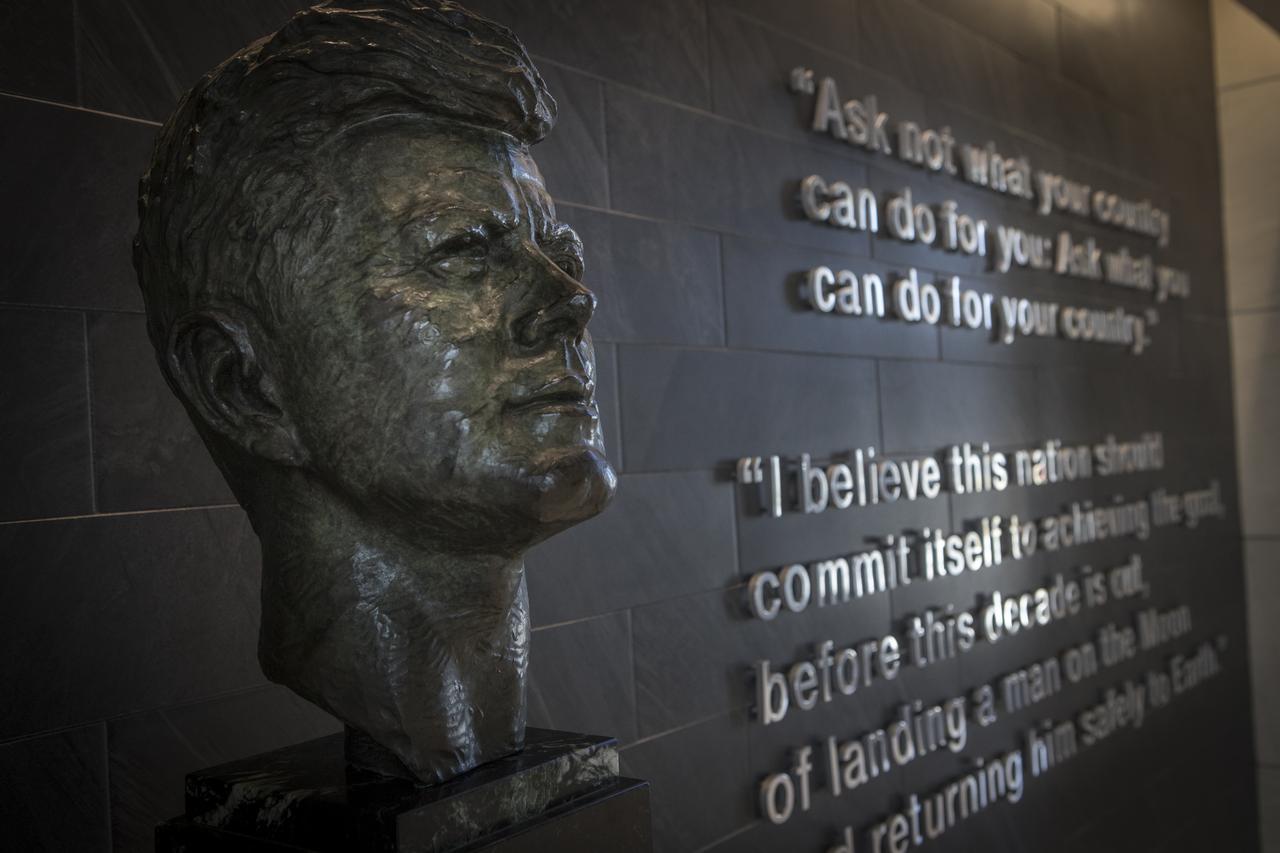
A view of some of the design elements in the lobby of the new headquarters building on April 3, 2019, at NASA’s Kennedy Space Center in Florida. The newly constructed facility anchors the multi-user spaceport’s Central Campus. More than 500 civil service and contractor employees will be based in the 200,000-square-foot building. The facility earned the U.S. Green Building Council’s Leadership in Energy and Environmental Design (LEED) Gold designation. Features include LED lighting throughout, along with occupancy sensors to turn off unneeded lights; windows, screens and shades designed to maximize natural light; chilled beam HVAC technology reducing the need for ductwork, and more.
The winner of the high school portion of the Exploration Design Challenge is announced at the USA Science and Engineering Festival in Washington on April 25, 2014. Part of Batch image transfer from Flickr.
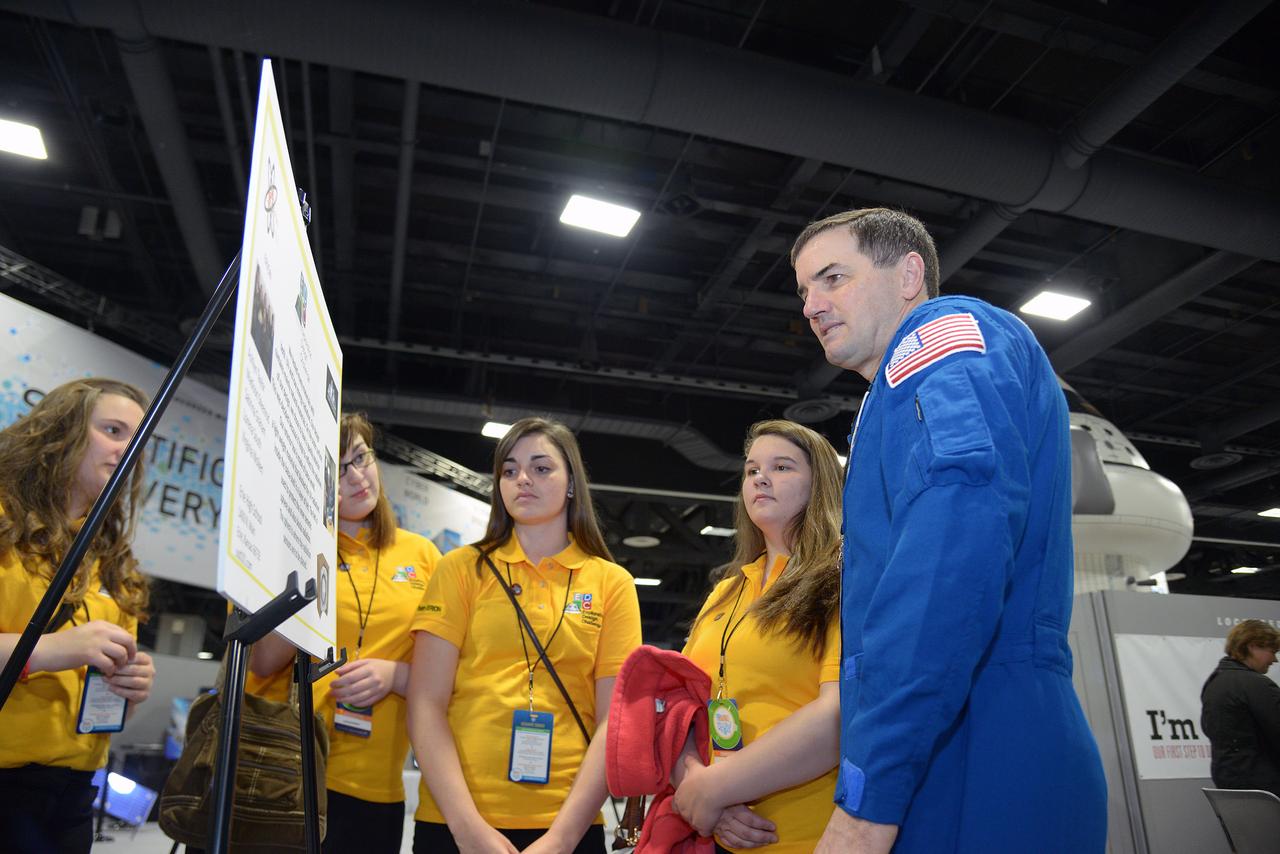
The winner of the high school portion of the Exploration Design Challenge is announced at the USA Science and Engineering Festival in Washington on April 25, 2014. Astronaut Rex Walheim is photographed with students. Part of Batch image transfer from Flickr.
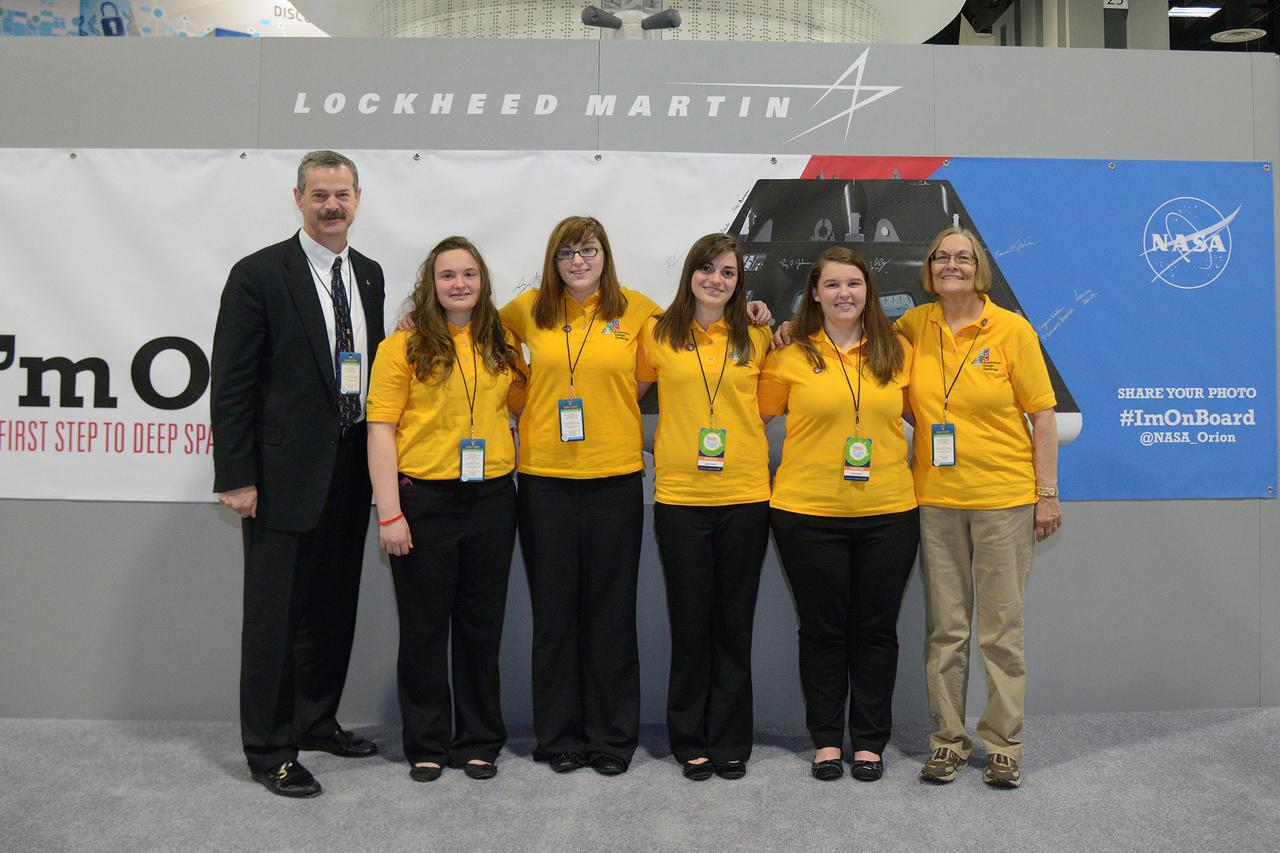
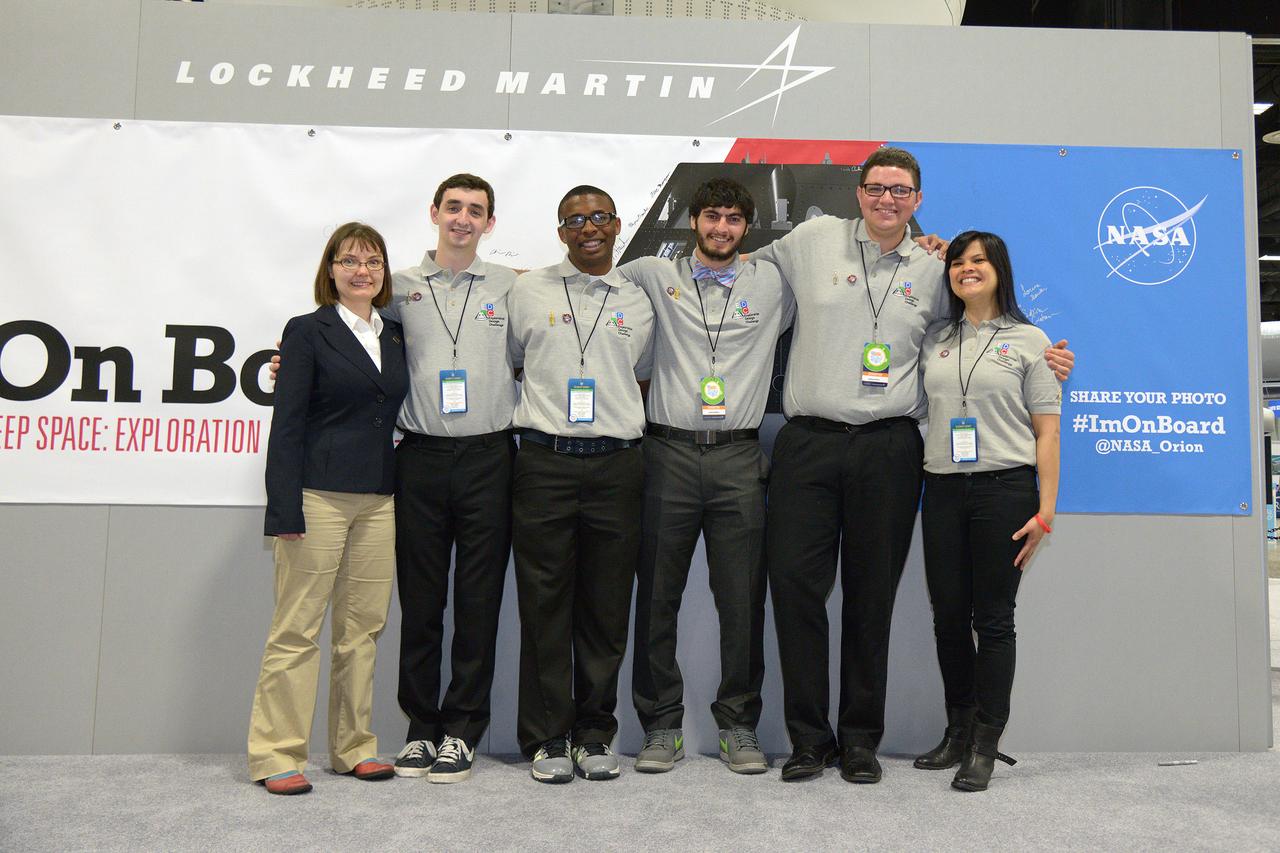
The winner of the high school portion of the Exploration Design Challenge is announced at the USA Science and Engineering Festival in Washington on April 25, 2014. Group photo of students. Part of Batch image transfer from Flickr.
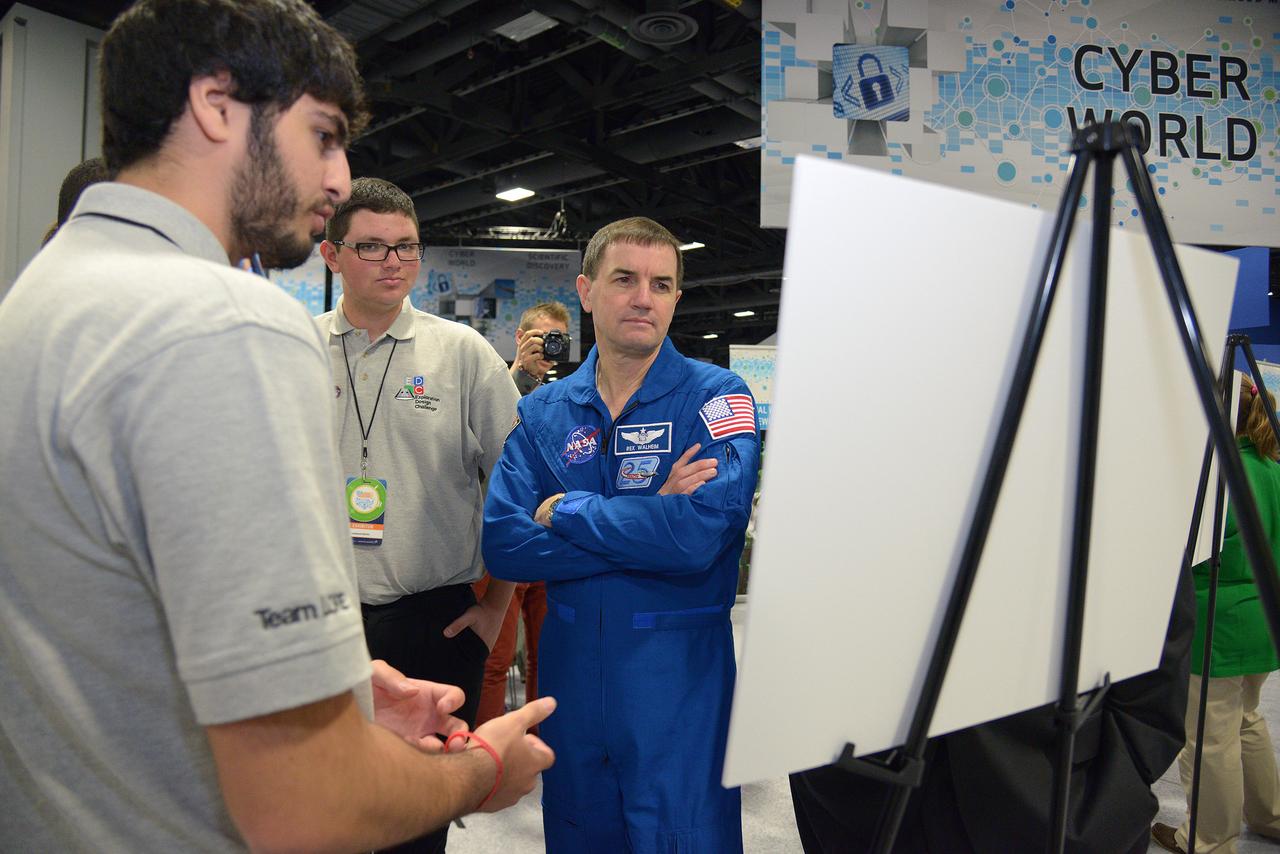
The winner of the high school portion of the Exploration Design Challenge is announced at the USA Science and Engineering Festival in Washington on April 25, 2014. Astronaut Rex Walheim speaks to students. Part of Batch image transfer from Flickr.
The winner of the high school portion of the Exploration Design Challenge is announced at the USA Science and Engineering Festival in Washington on April 25, 2014. Part of Batch image transfer from Flickr.
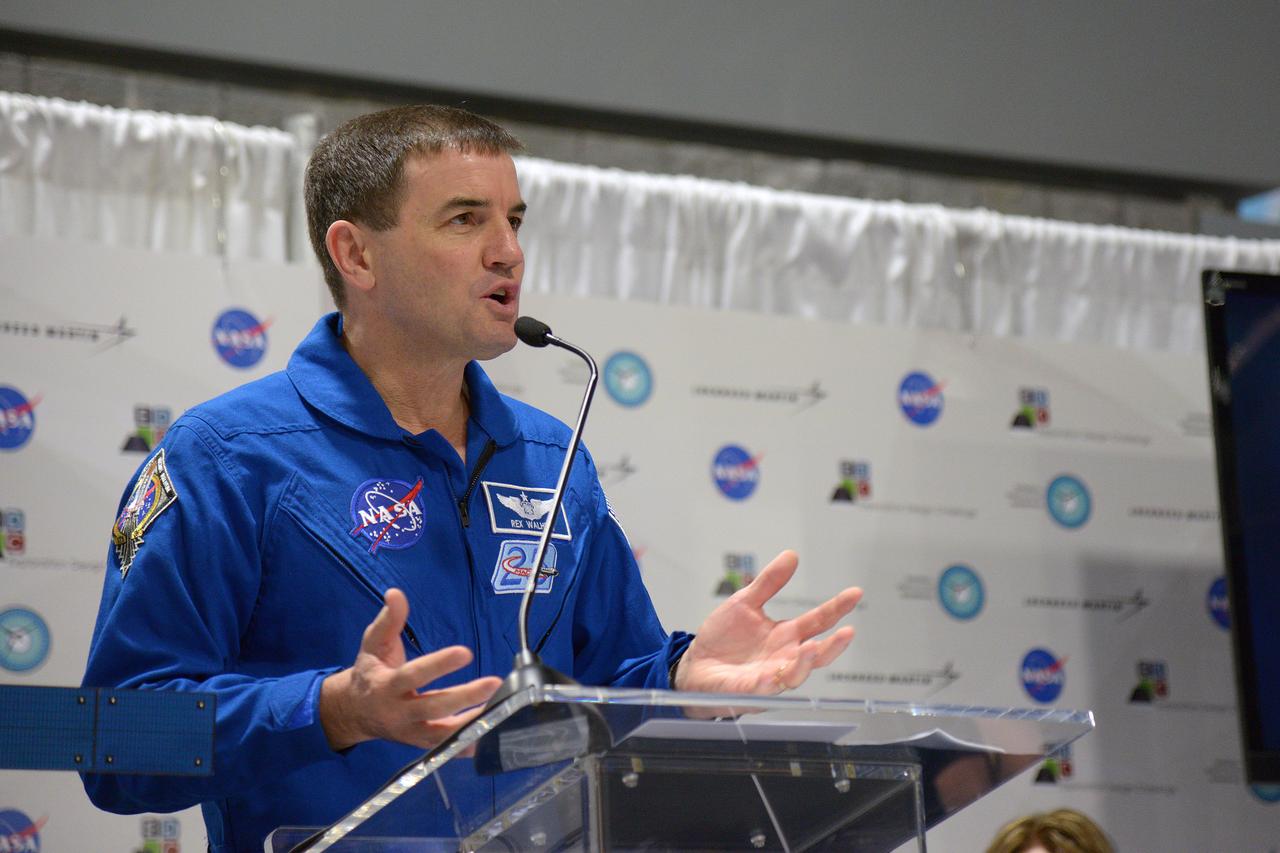
The winner of the high school portion of the Exploration Design Challenge is announced at the USA Science and Engineering Festival in Washington on April 25, 2014. Astronaut Rex Walheim speaks from podium. Part of Batch image transfer from Flickr.
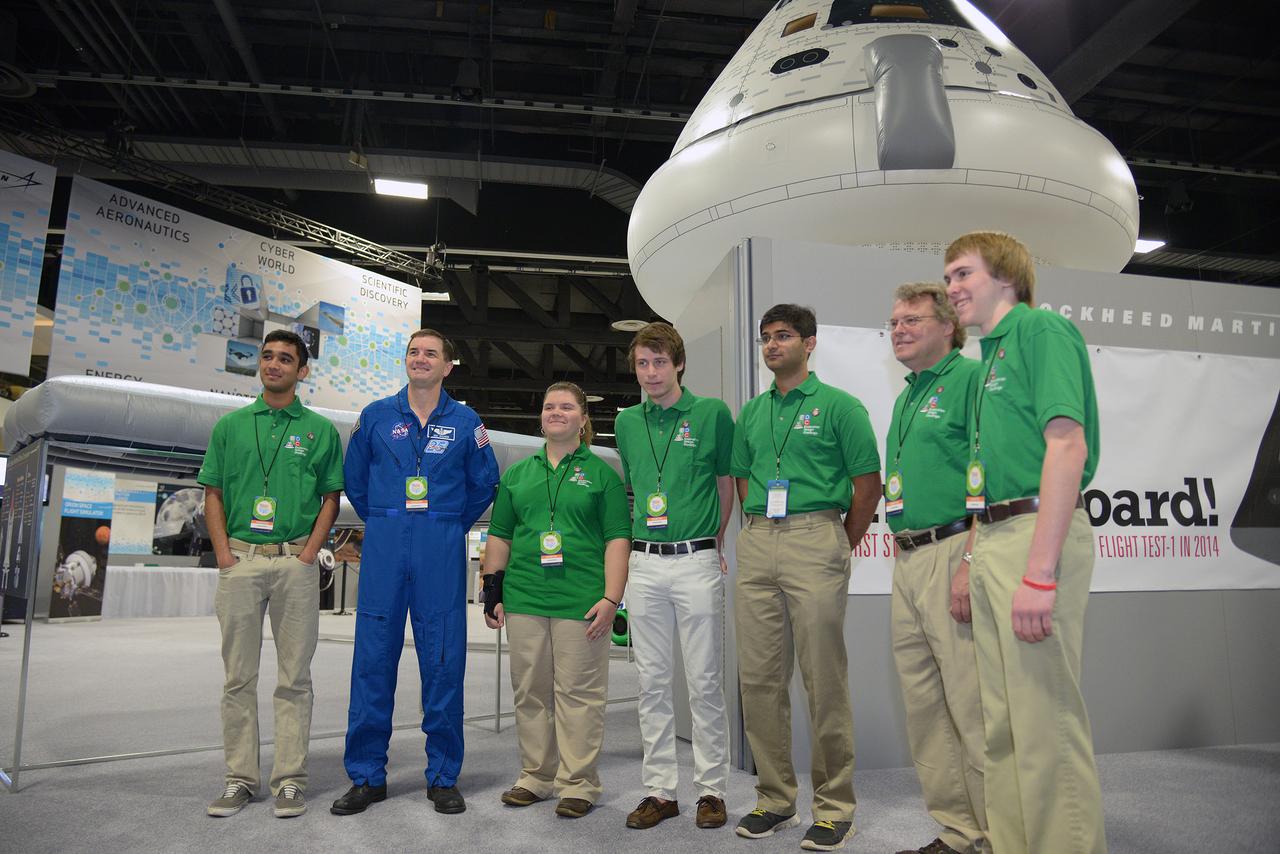
The winner of the high school portion of the Exploration Design Challenge is announced at the USA Science and Engineering Festival in Washington on April 25, 2014. Astronaut Rex Walheim poses for photo with students. Part of Batch image transfer from Flickr.
The winner of the high school portion of the Exploration Design Challenge is announced at the USA Science and Engineering Festival in Washington on April 25, 2014. Group photo of students. Part of Batch image transfer from Flickr.
The winner of the high school portion of the Exploration Design Challenge is announced at the USA Science and Engineering Festival in Washington on April 25, 2014. Group photo of students. Part of Batch image transfer from Flickr.
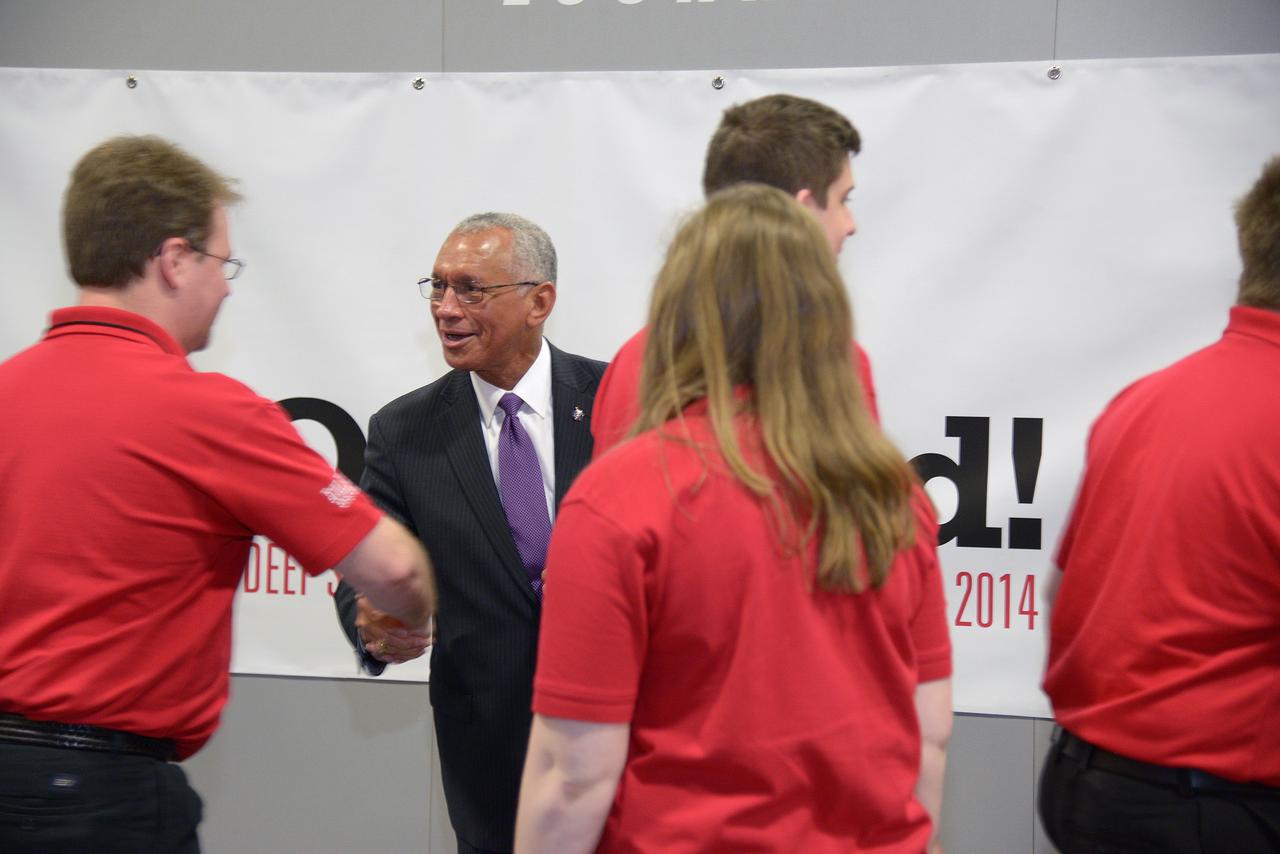
The winner of the high school portion of the Exploration Design Challenge is announced at the USA Science and Engineering Festival in Washington on April 25, 2014. ASA Director Charles Bolden congratulates students. Part of Batch image transfer from Flickr.
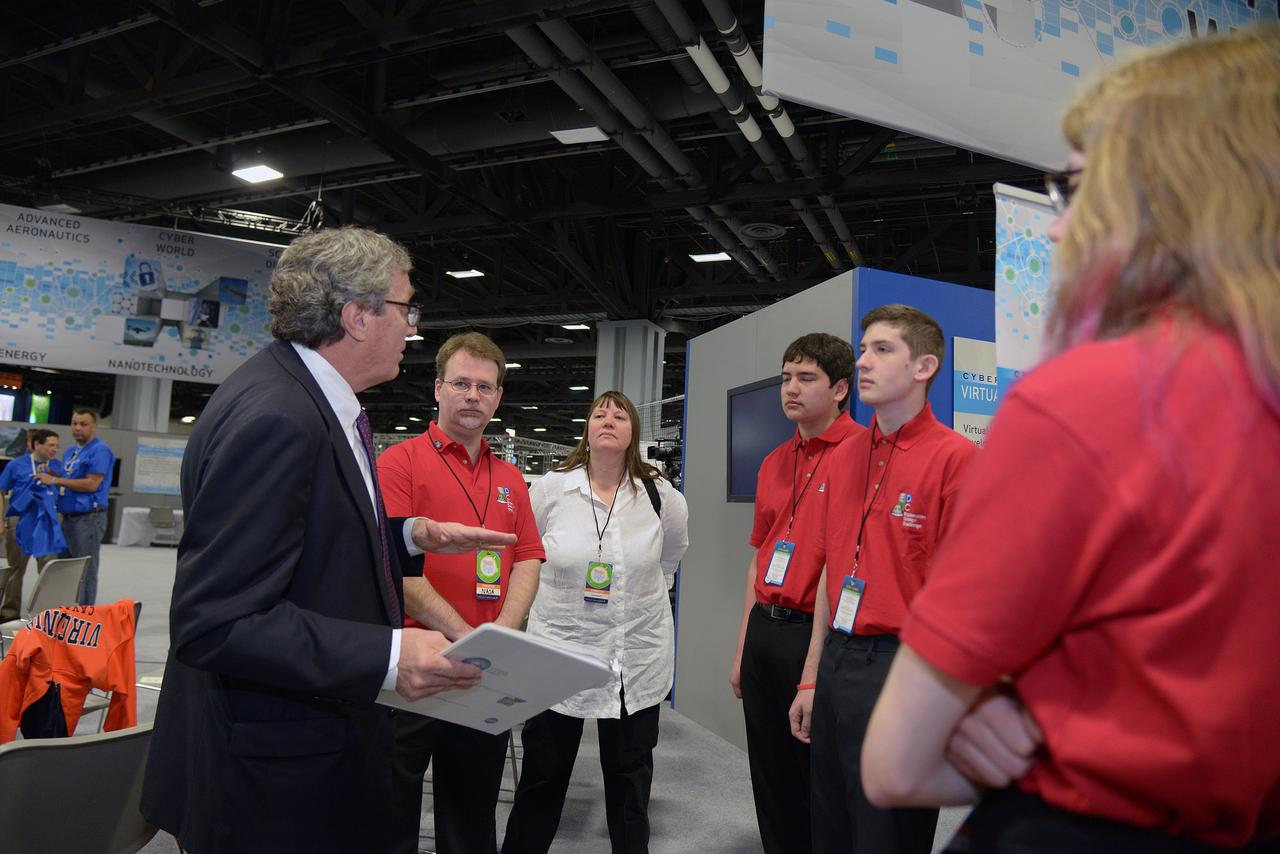
The winner of the high school portion of the Exploration Design Challenge is announced at the USA Science and Engineering Festival in Washington on April 25, 2014. Part of Batch image transfer from Flickr.
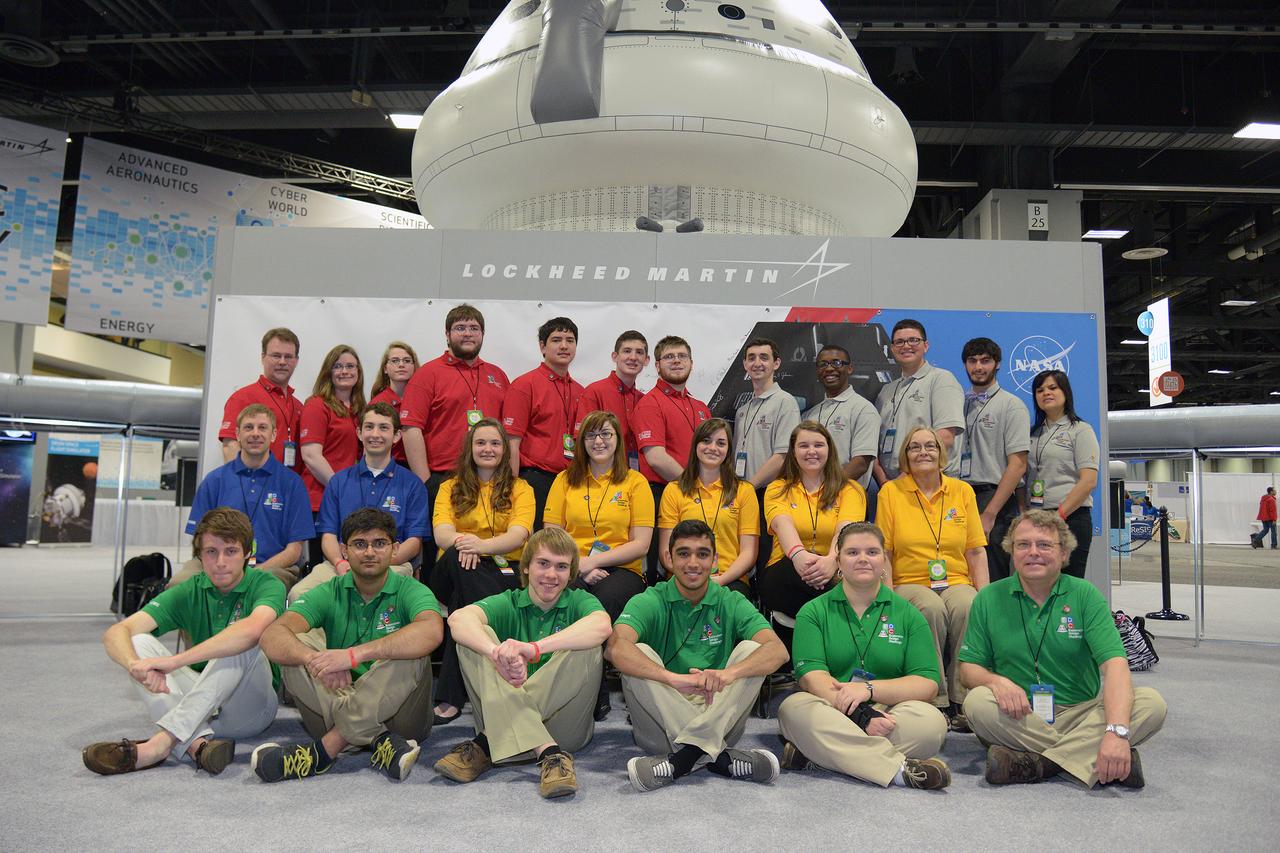
The winner of the high school portion of the Exploration Design Challenge is announced at the USA Science and Engineering Festival in Washington on April 25, 2014. Group shot of students. Part of Batch image transfer from Flickr.
The winner of the high school portion of the Exploration Design Challenge is announced at the USA Science and Engineering Festival in Washington on April 25, 2014. Part of Batch image transfer from Flickr.
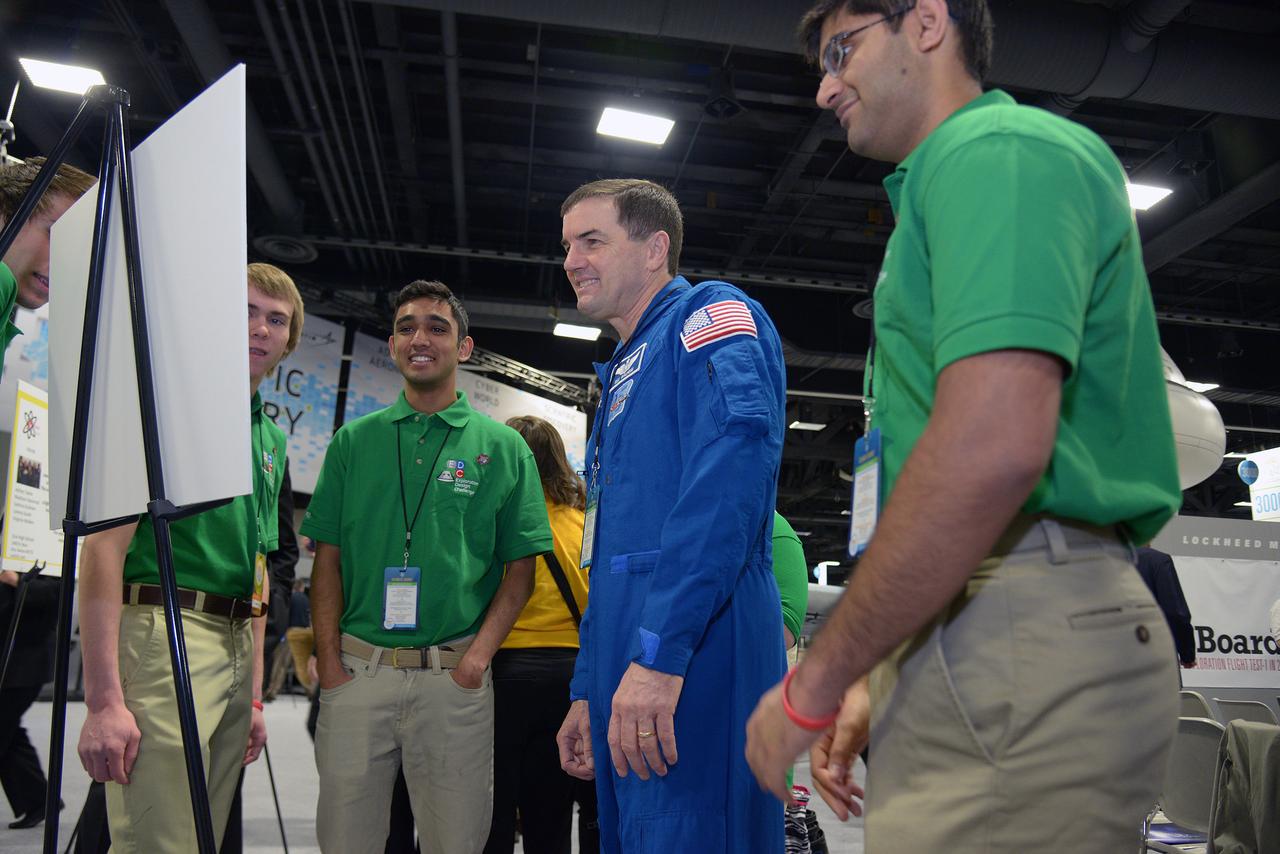
The winner of the high school portion of the Exploration Design Challenge is announced at the USA Science and Engineering Festival in Washington on April 25, 2014. Astronaut Rex Walheim talks with students. Part of Batch image transfer from Flickr.
The winner of the high school portion of the Exploration Design Challenge is announced at the USA Science and Engineering Festival in Washington on April 25, 2014. Part of Batch image transfer from Flickr.
The winner of the high school portion of the Exploration Design Challenge is announced at the USA Science and Engineering Festival in Washington on April 25, 2014. Group photo of students. Part of Batch image transfer from Flickr.
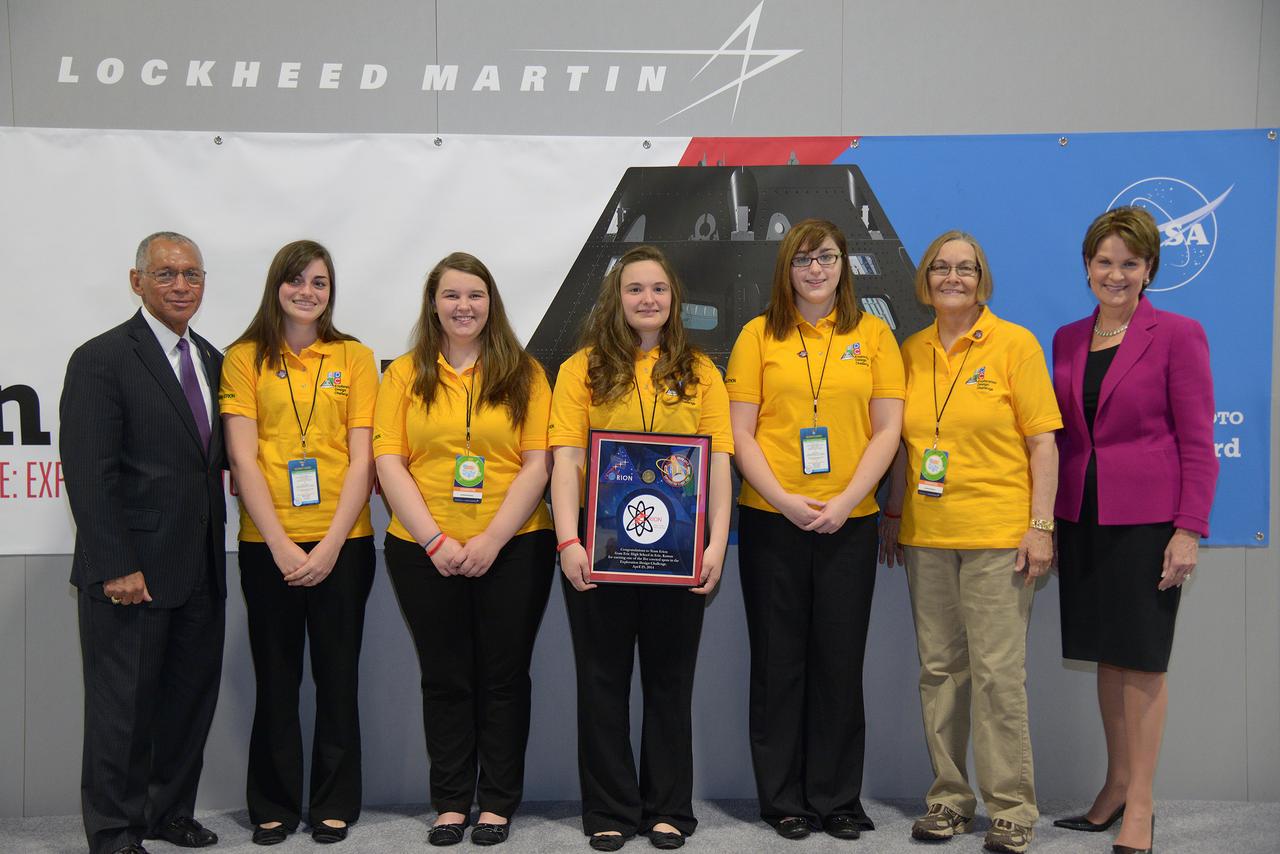
The winner of the high school portion of the Exploration Design Challenge is announced at the USA Science and Engineering Festival in Washington on April 25, 2014. Group photo of students. Part of Batch image transfer from Flickr.
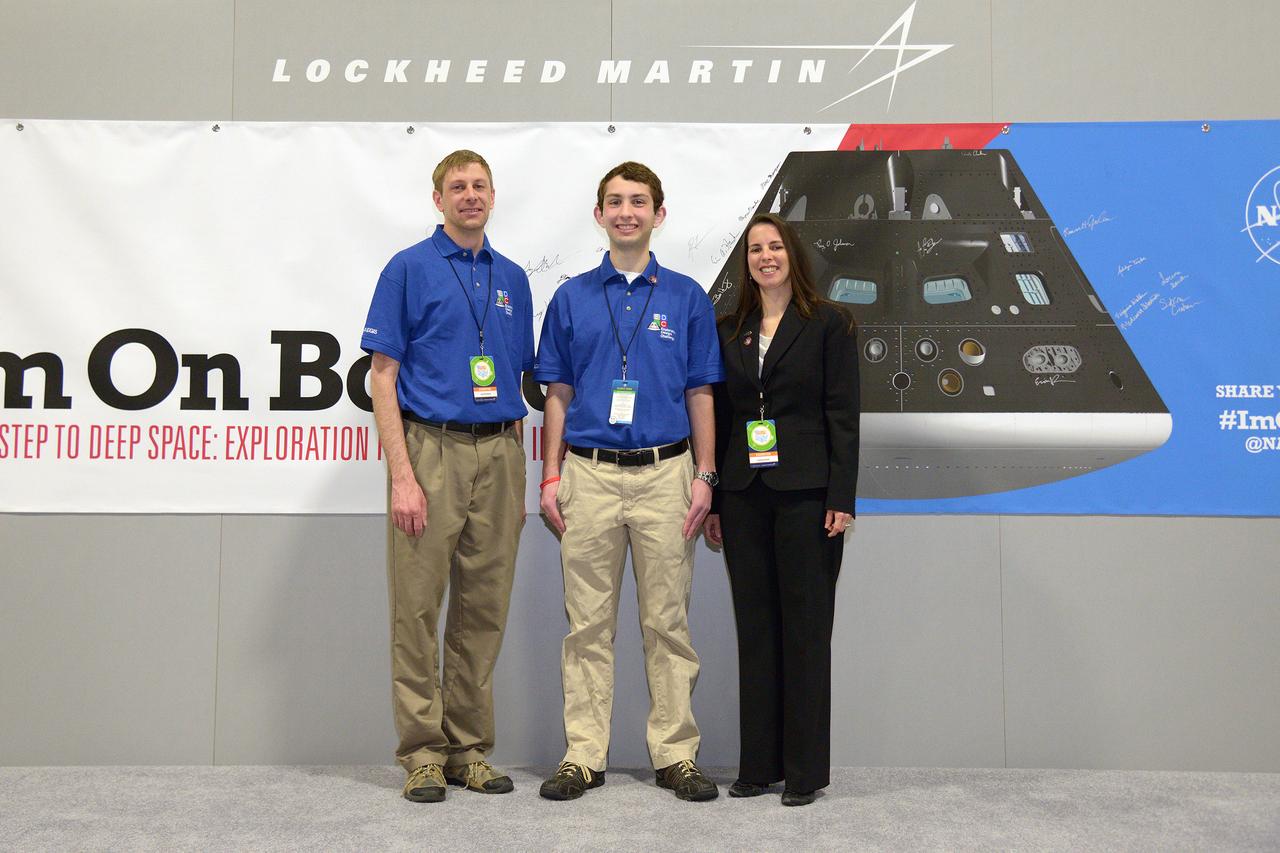
The winner of the high school portion of the Exploration Design Challenge is announced at the USA Science and Engineering Festival in Washington on April 25, 2014. Part of Batch image transfer from Flickr.
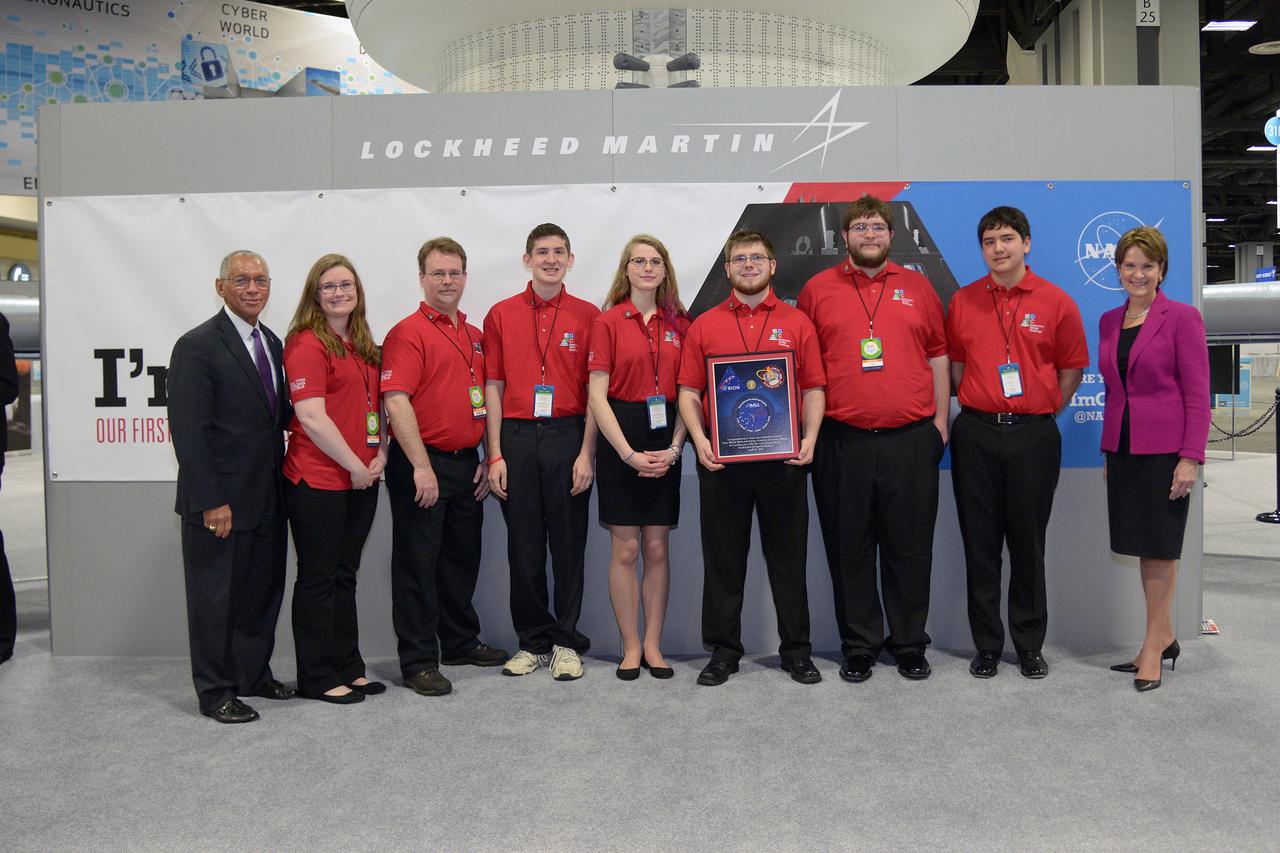
The winner of the high school portion of the Exploration Design Challenge is announced at the USA Science and Engineering Festival in Washington on April 25, 2014. Part of Batch image transfer from Flickr.
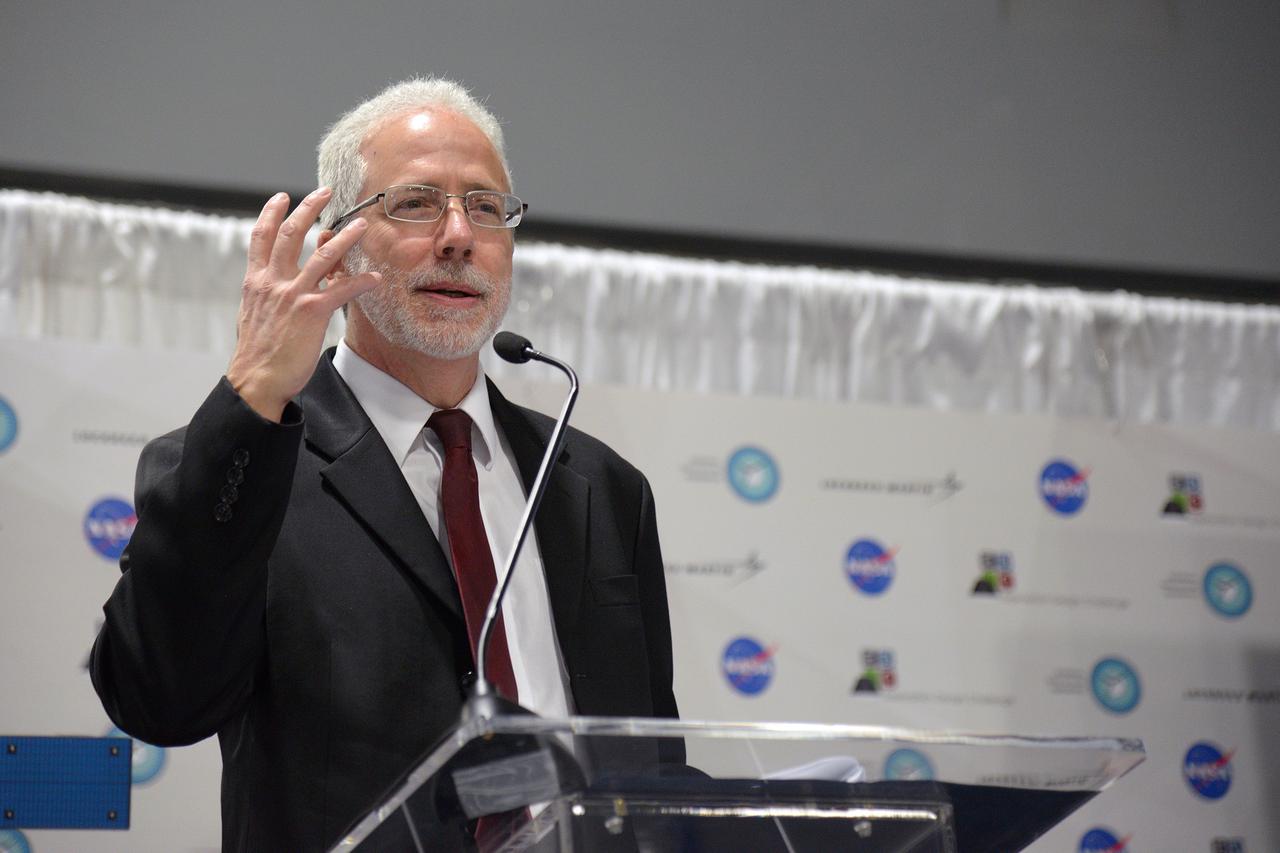
The winner of the high school portion of the Exploration Design Challenge is announced at the USA Science and Engineering Festival in Washington on April 25, 2014. Orion Program Manager Mark Geyer at podium. Part of Batch image transfer from Flickr.
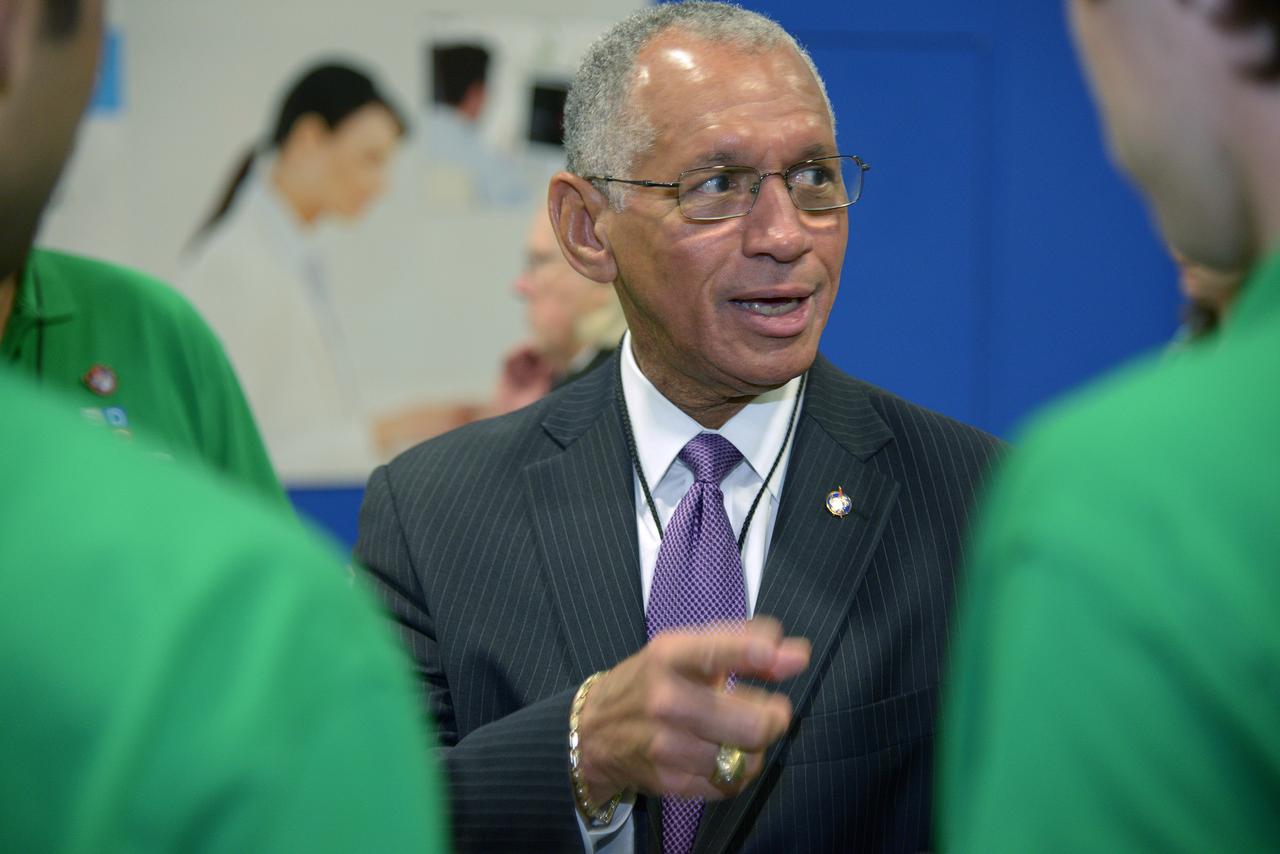
The winner of the high school portion of the Exploration Design Challenge is announced at the USA Science and Engineering Festival in Washington on April 25, 2014. NASA Administrator Charles Bolden is photographed at event. Part of Batch image transfer from Flickr.
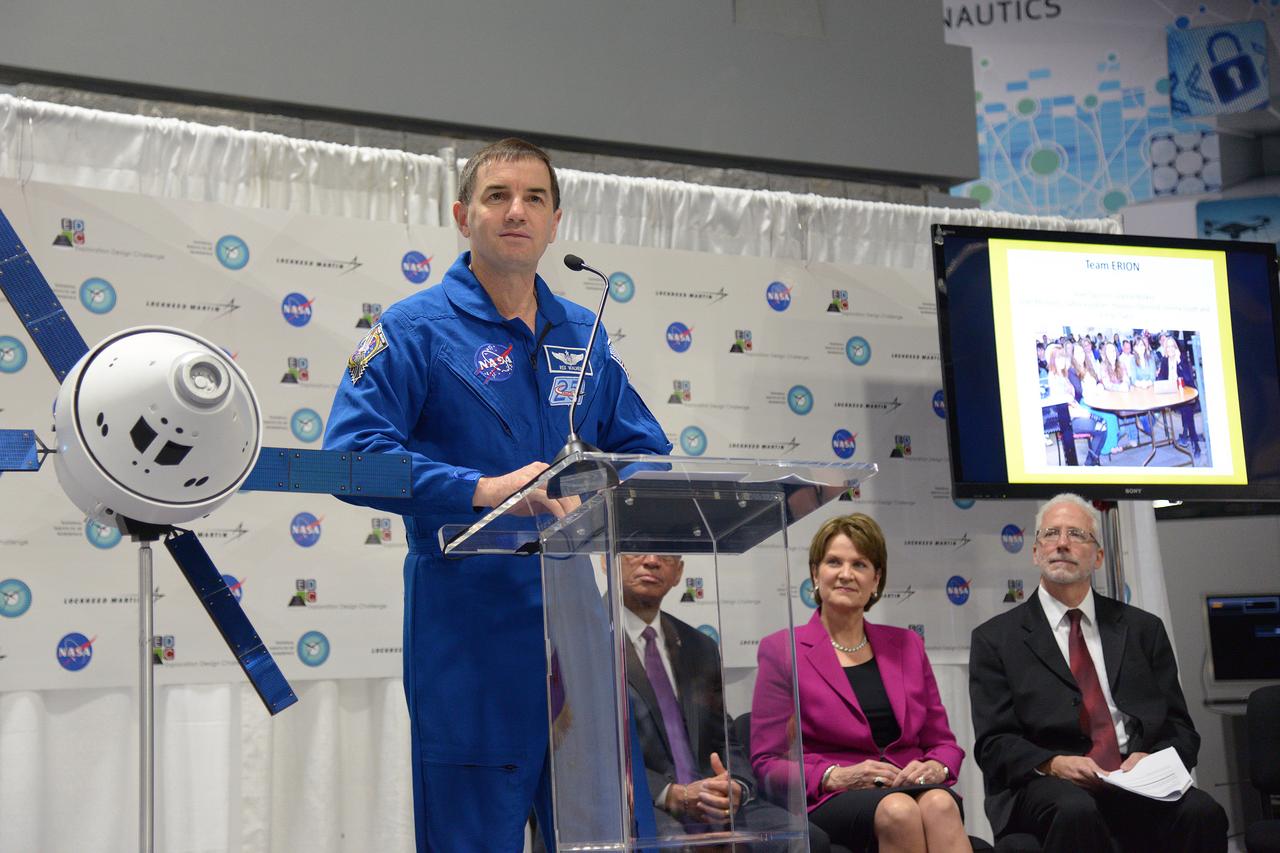
The winner of the high school portion of the Exploration Design Challenge is announced at the USA Science and Engineering Festival in Washington on April 25, 2014. Astronaut Rex Walheim speaks from podium. Part of Batch image transfer from Flickr.
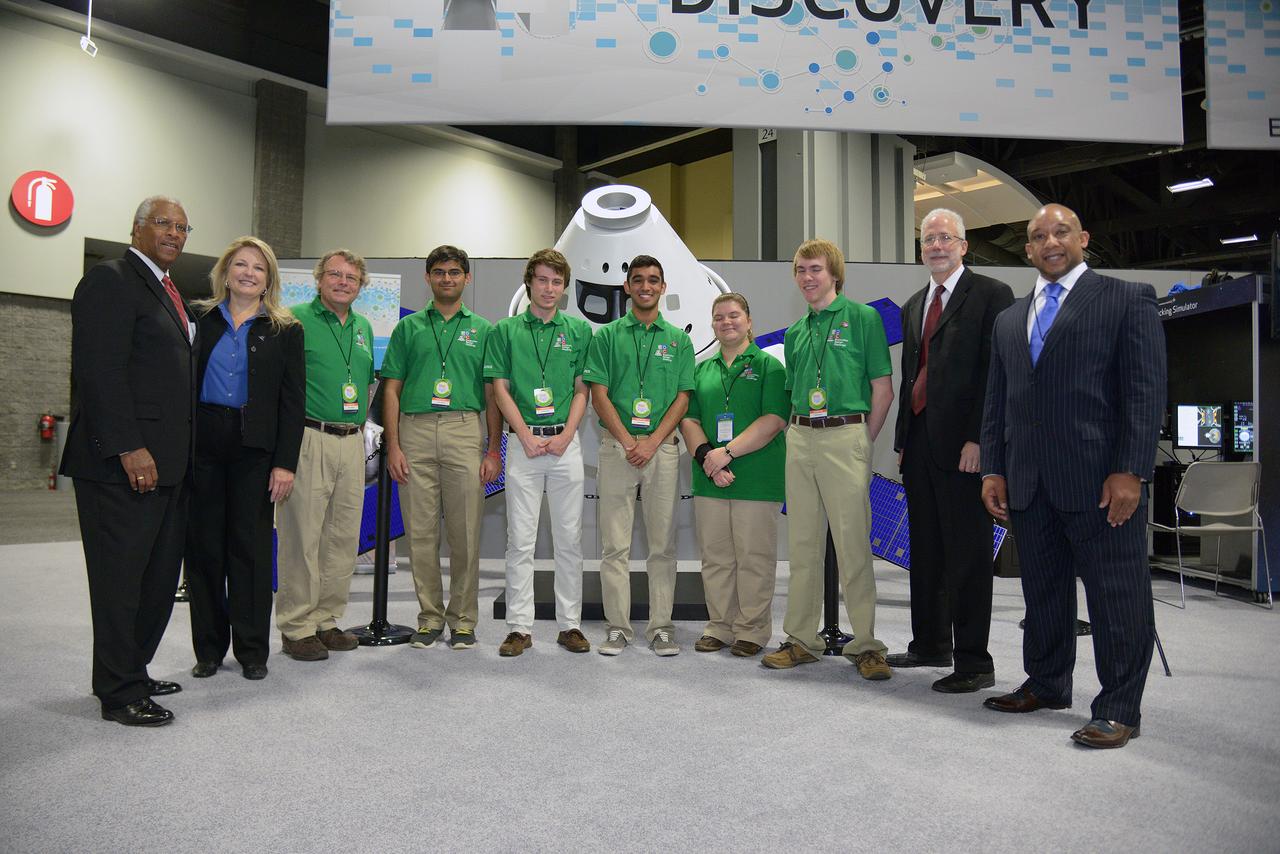
The winner of the high school portion of the Exploration Design Challenge is announced at the USA Science and Engineering Festival in Washington on April 25, 2014. Part of Batch image transfer from Flickr.
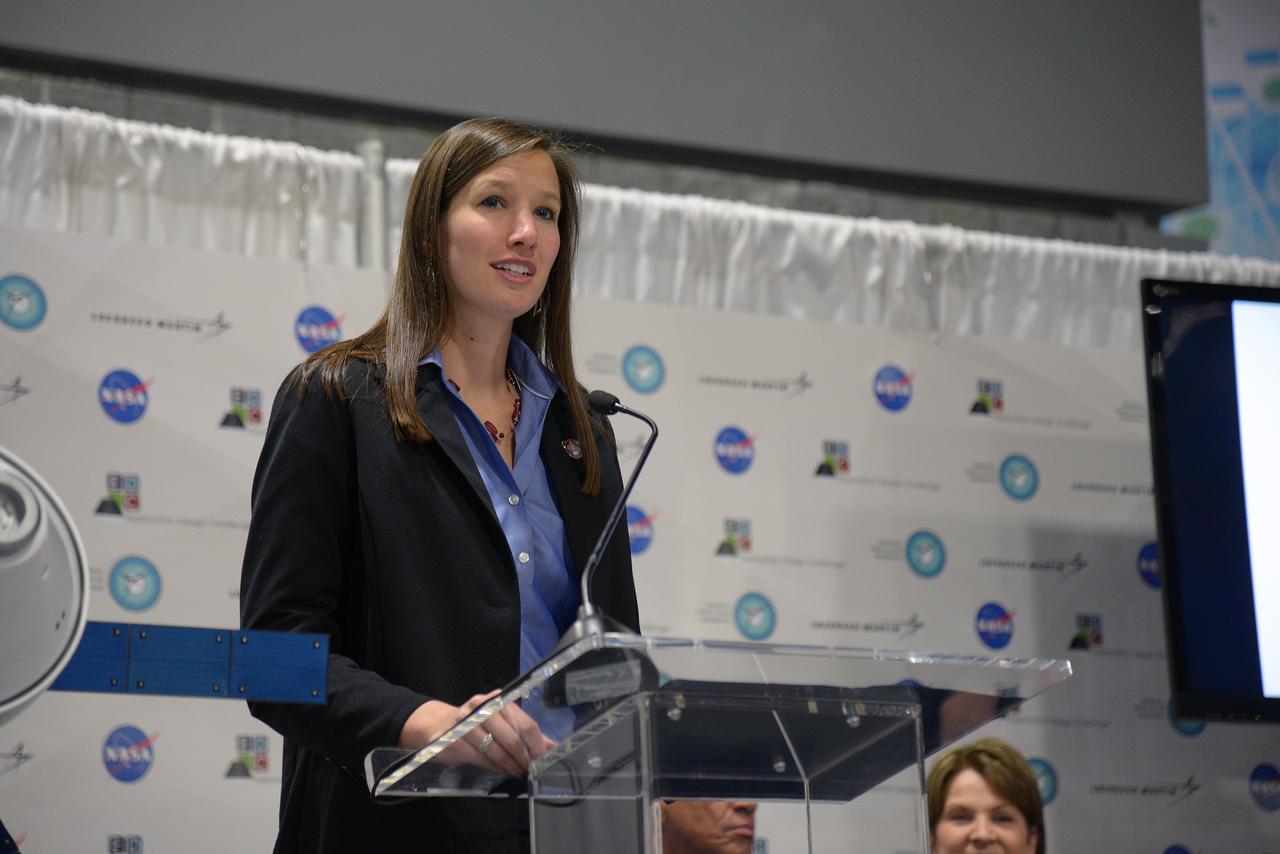
The winner of the high school portion of the Exploration Design Challenge is announced at the USA Science and Engineering Festival in Washington on April 25, 2014. Part of Batch image transfer from Flickr.
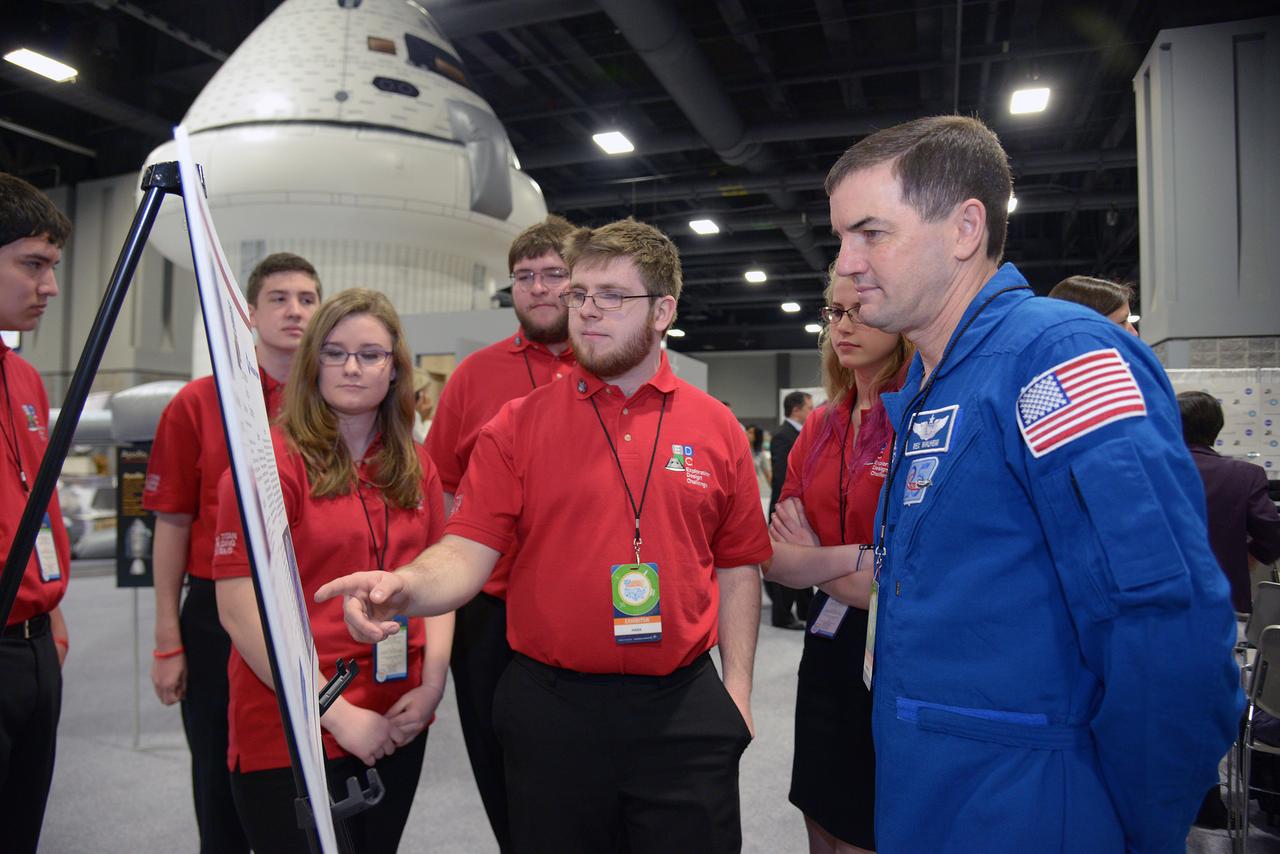
The winner of the high school portion of the Exploration Design Challenge is announced at the USA Science and Engineering Festival in Washington on April 25, 2014. Astronaut Rex Walheim speaks to students. Part of Batch image transfer from Flickr.
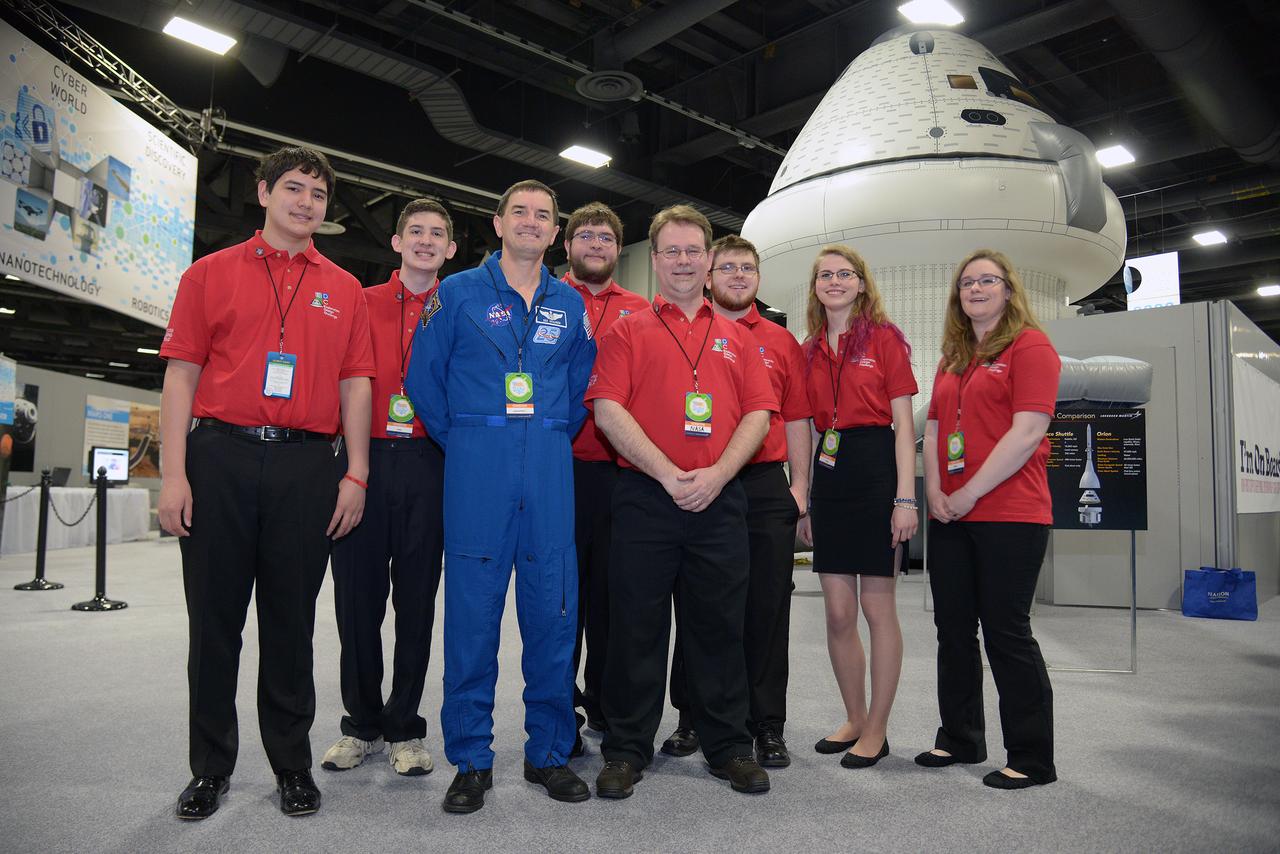
The winner of the high school portion of the Exploration Design Challenge is announced at the USA Science and Engineering Festival in Washington on April 25, 2014. Astronaut Rex Walheim poses for photo with students. Part of Batch image transfer from Flickr.
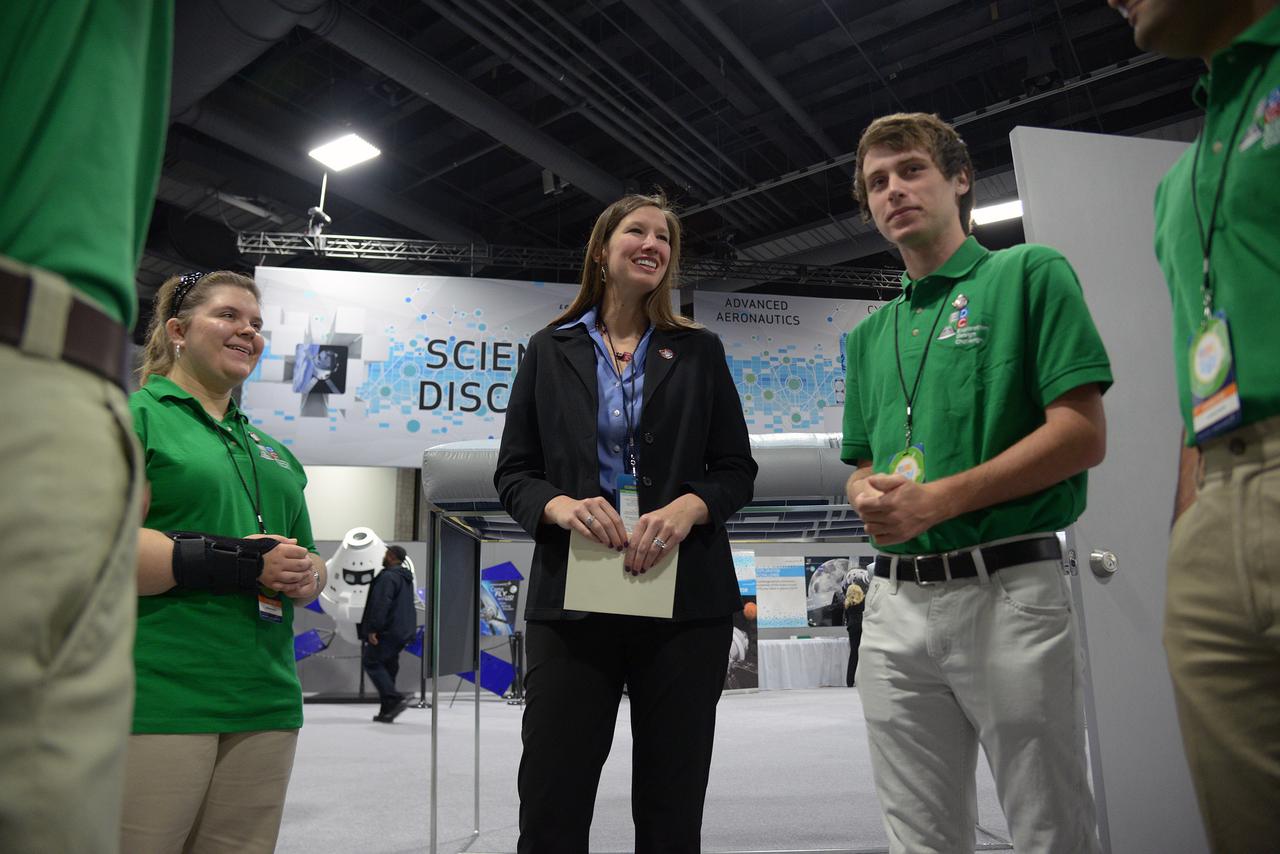
The winner of the high school portion of the Exploration Design Challenge is announced at the USA Science and Engineering Festival in Washington on April 25, 2014. Part of Batch image transfer from Flickr.
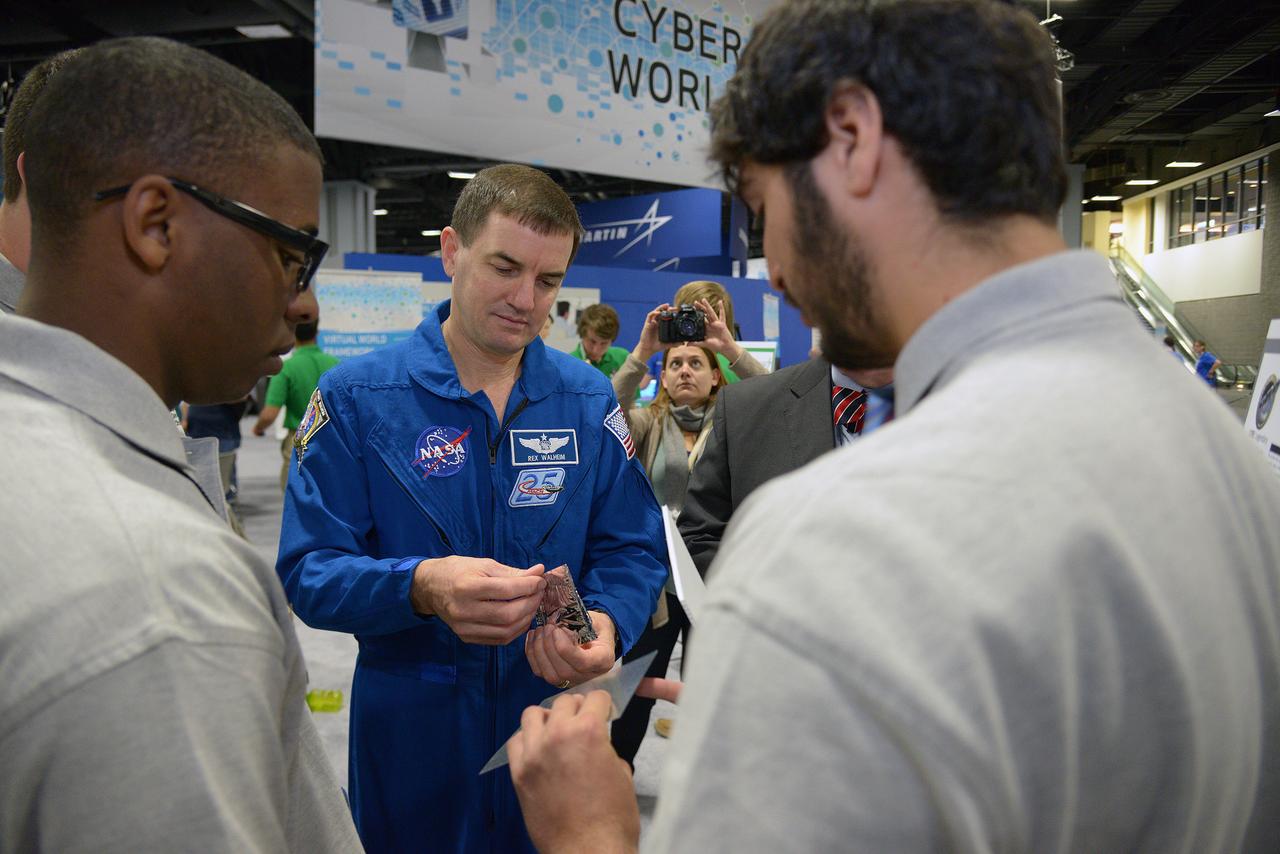
The winner of the high school portion of the Exploration Design Challenge is announced at the USA Science and Engineering Festival in Washington on April 25, 2014. Astronaut Rex Walheim talks with students. Part of Batch image transfer from Flickr.
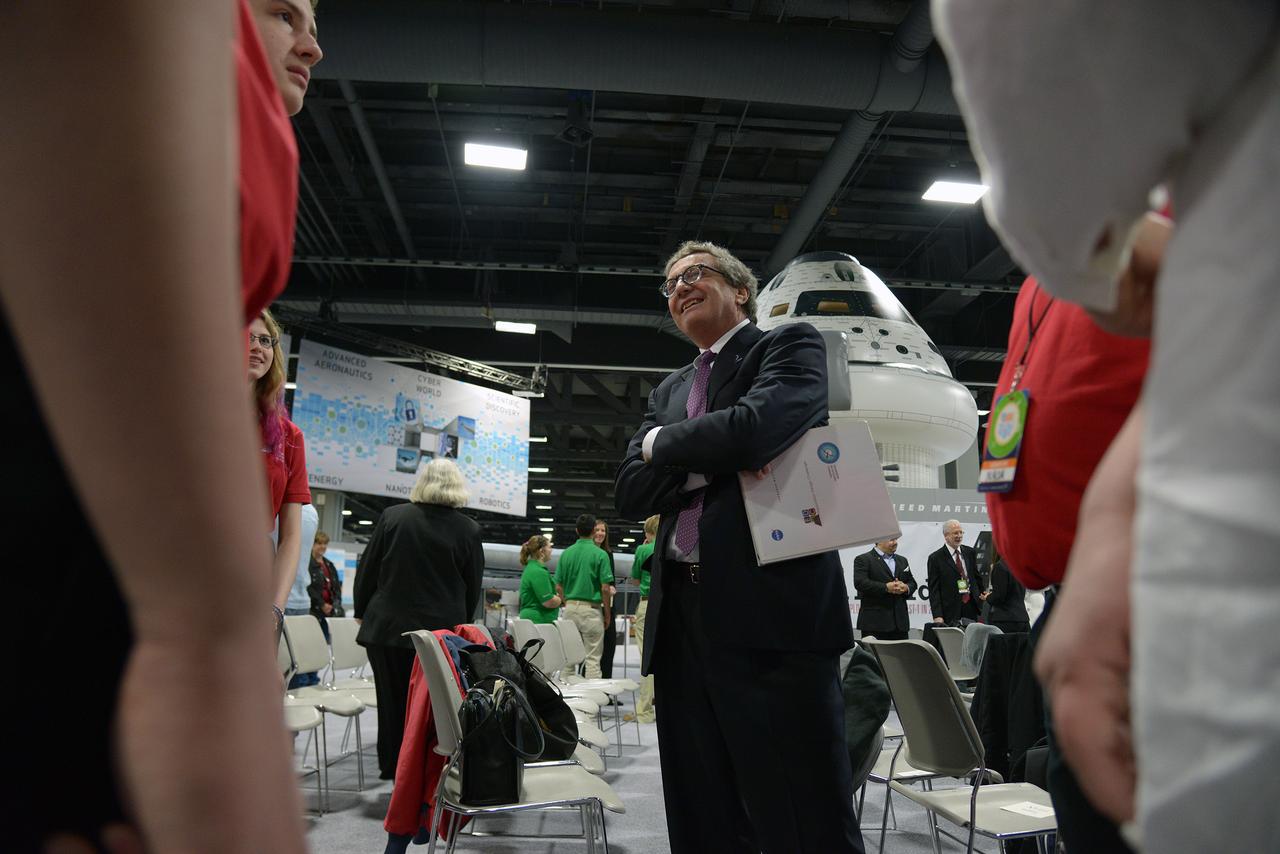
The winner of the high school portion of the Exploration Design Challenge is announced at the USA Science and Engineering Festival in Washington on April 25, 2014. Part of Batch image transfer from Flickr.
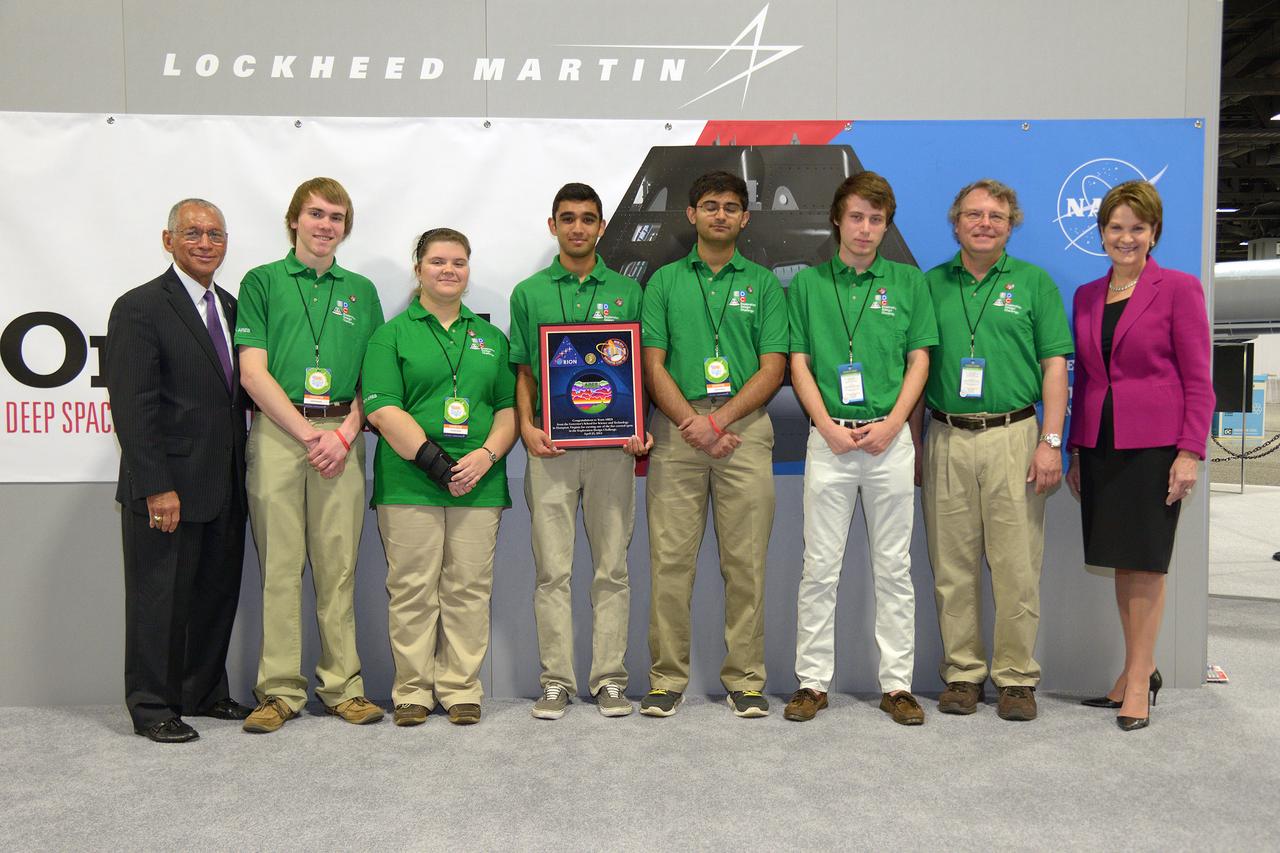
The winner of the high school portion of the Exploration Design Challenge is announced at the USA Science and Engineering Festival in Washington on April 25, 2014. Group photo of students. Part of Batch image transfer from Flickr.
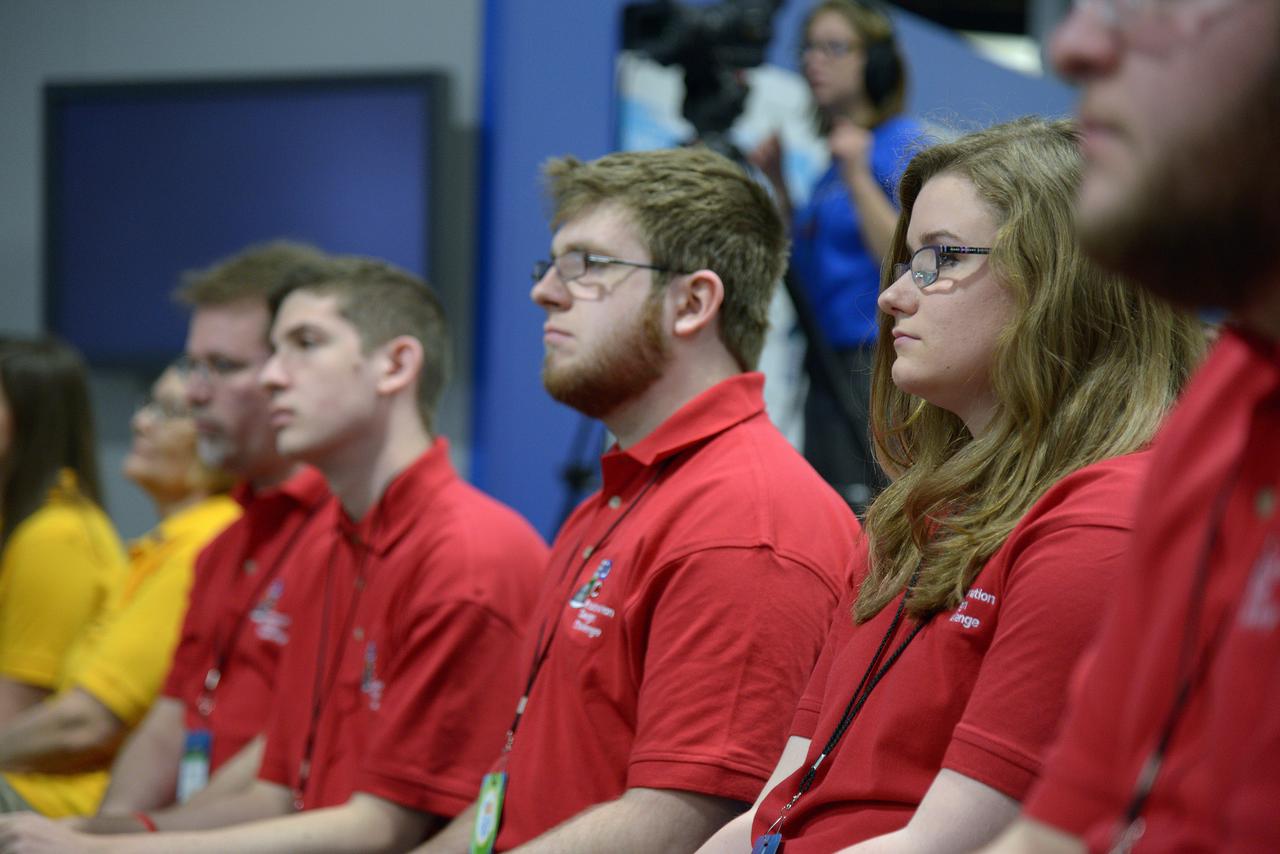
The winner of the high school portion of the Exploration Design Challenge is announced at the USA Science and Engineering Festival in Washington on April 25, 2014. Group photo of students. Part of Batch image transfer from Flickr.
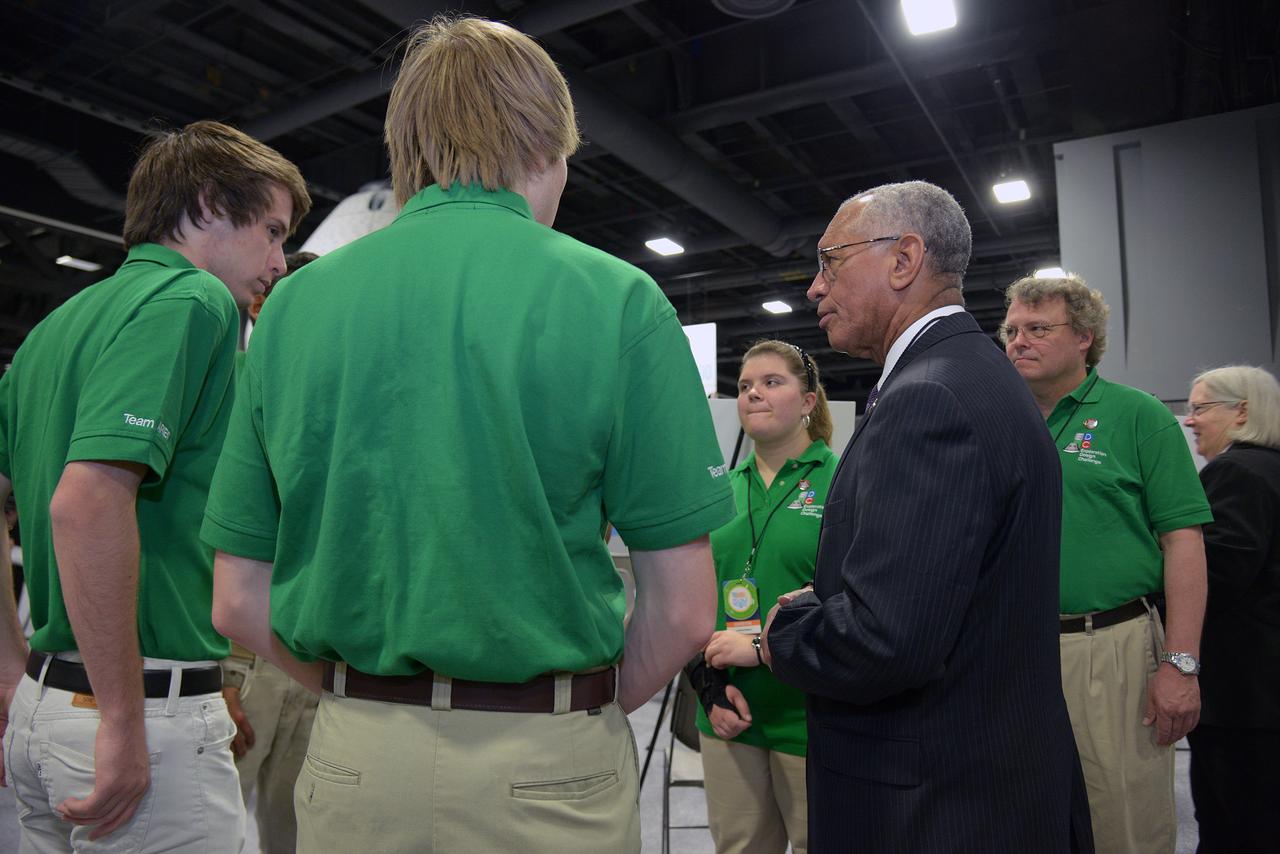
The winner of the high school portion of the Exploration Design Challenge is announced at the USA Science and Engineering Festival in Washington on April 25, 2014. NASA Director Charles Bolden speaks to students. Part of Batch image transfer from Flickr.
The winner of the high school portion of the Exploration Design Challenge is announced at the USA Science and Engineering Festival in Washington on April 25, 2014. Part of Batch image transfer from Flickr.
The winner of the high school portion of the Exploration Design Challenge is announced at the USA Science and Engineering Festival in Washington on April 25, 2014. Part of Batch image transfer from Flickr.
The winner of the high school portion of the Exploration Design Challenge is announced at the USA Science and Engineering Festival in Washington on April 25, 2014. NASA Director Charles Bolden at podium. Part of Batch image transfer from Flickr.
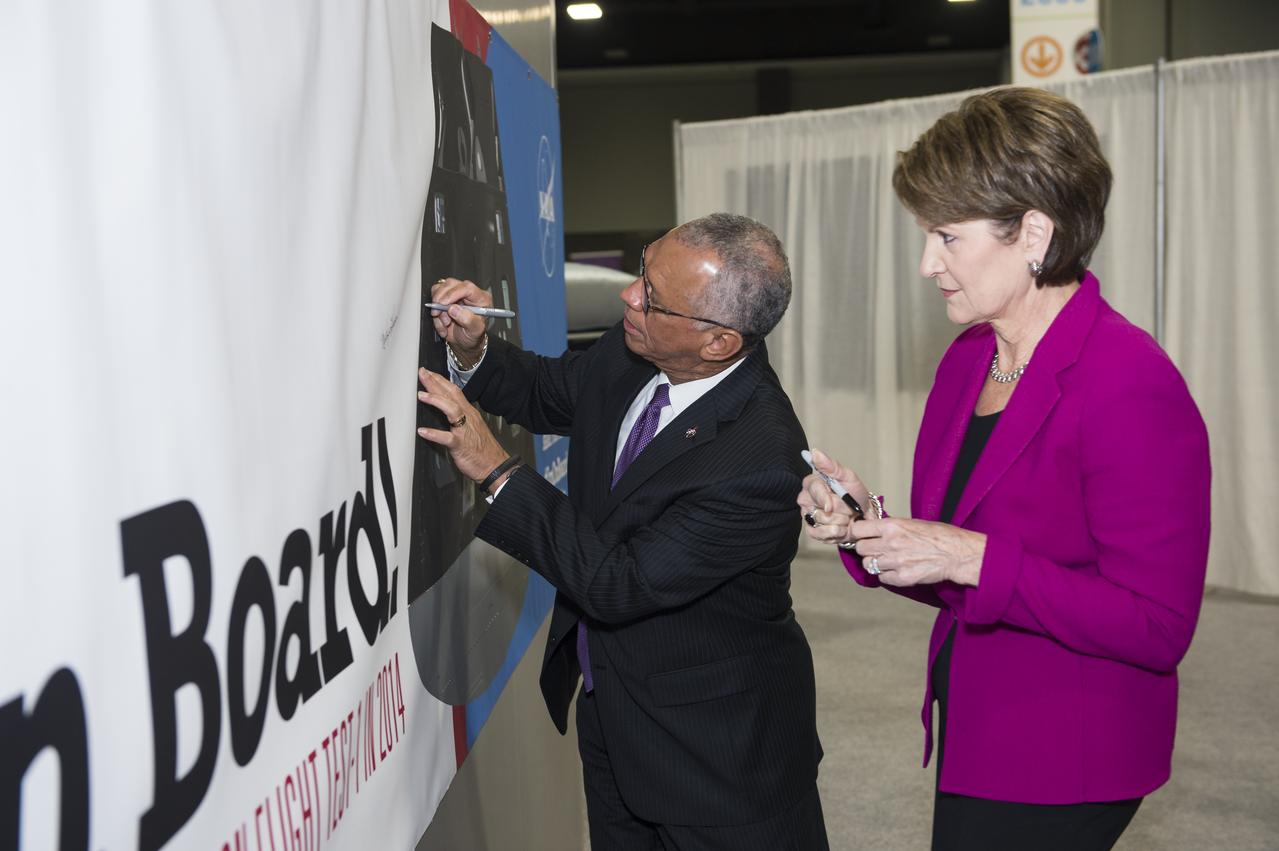
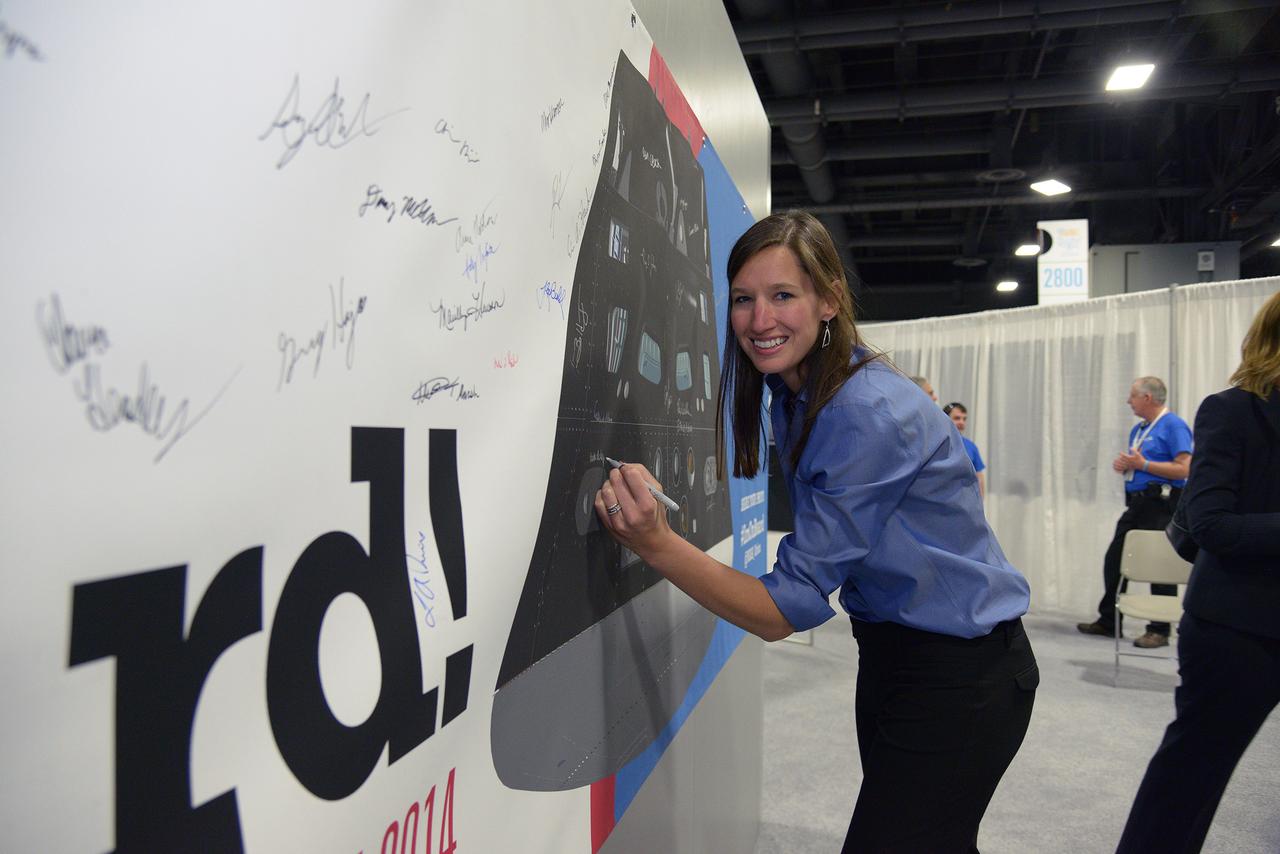
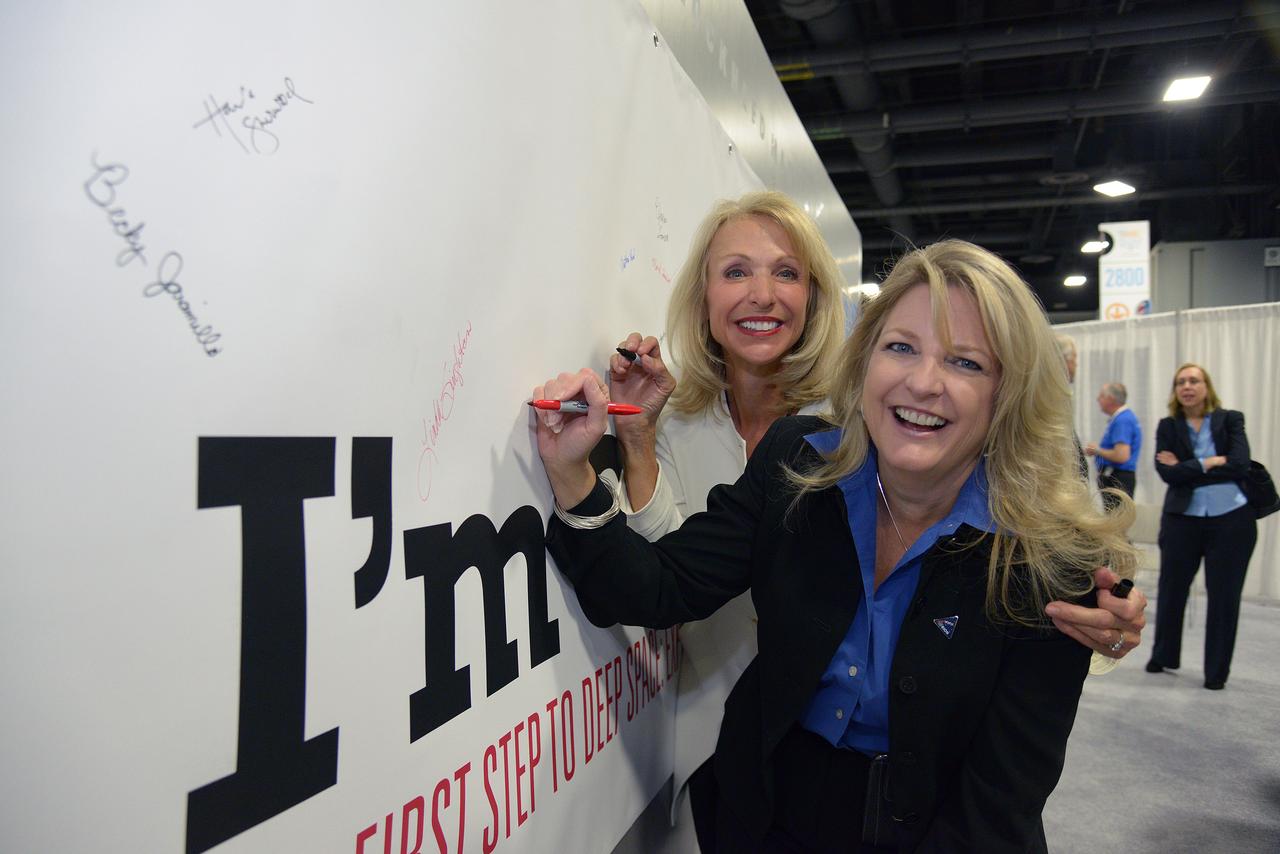
NASA Administrator Charles Bolden and Lockheed Martin CEO Marillyn Hewson sign the poster at the Orion exhibit at the USA Science and Engineering Festival on April 25, 2014. The USA Science and Engineering Festival takes place April 26-27, 2014 at the Washington Convention Center in Washington, DC. Photo Credit: (NASA/Aubrey Gemignani)
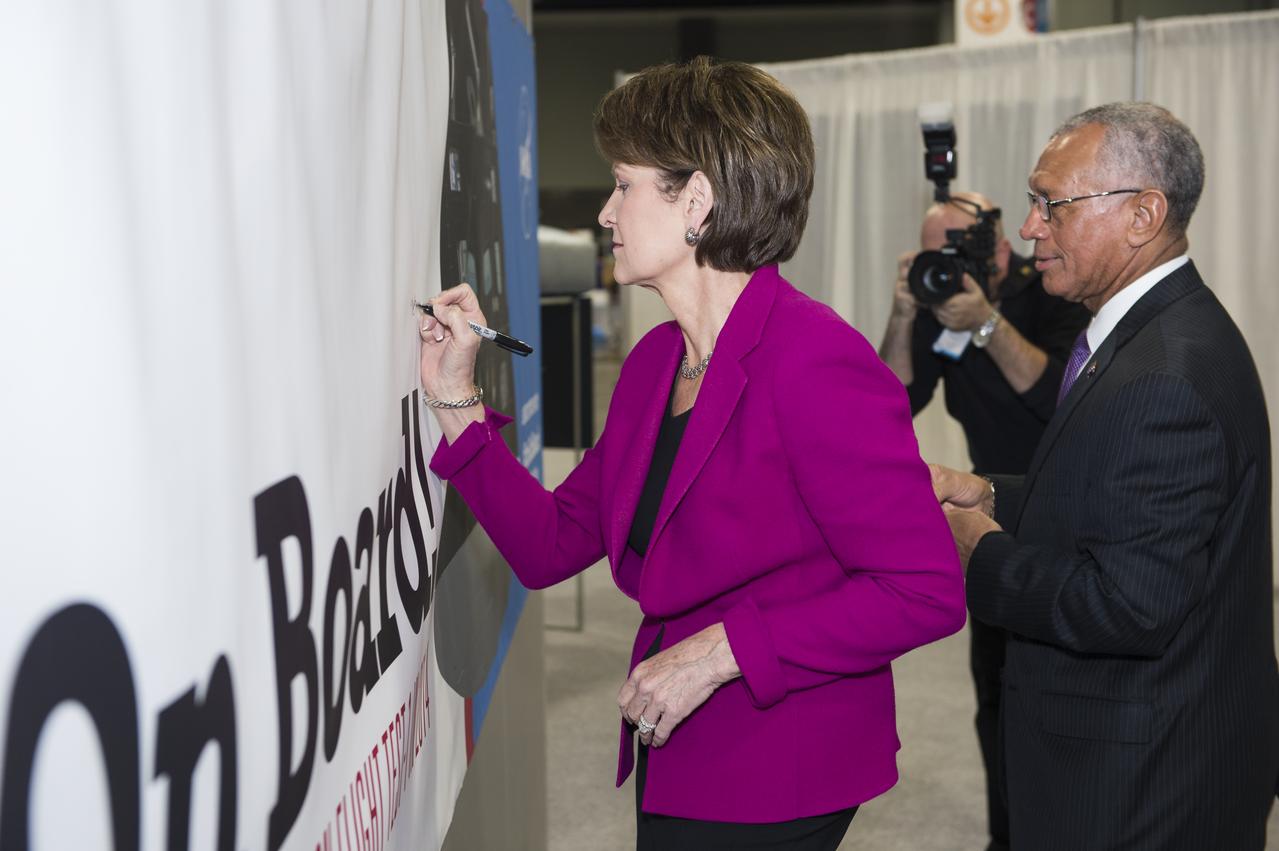
NASA Administrator Charles Bolden and Lockheed Martin CEO Marillyn Hewson sign the poster at the Orion exhibit at the USA Science and Engineering Festival on April 25, 2014. The USA Science and Engineering Festival takes place April 26-27, 2014 at the Washington Convention Center in Washington, DC. Photo Credit: (NASA/Aubrey Gemignani)
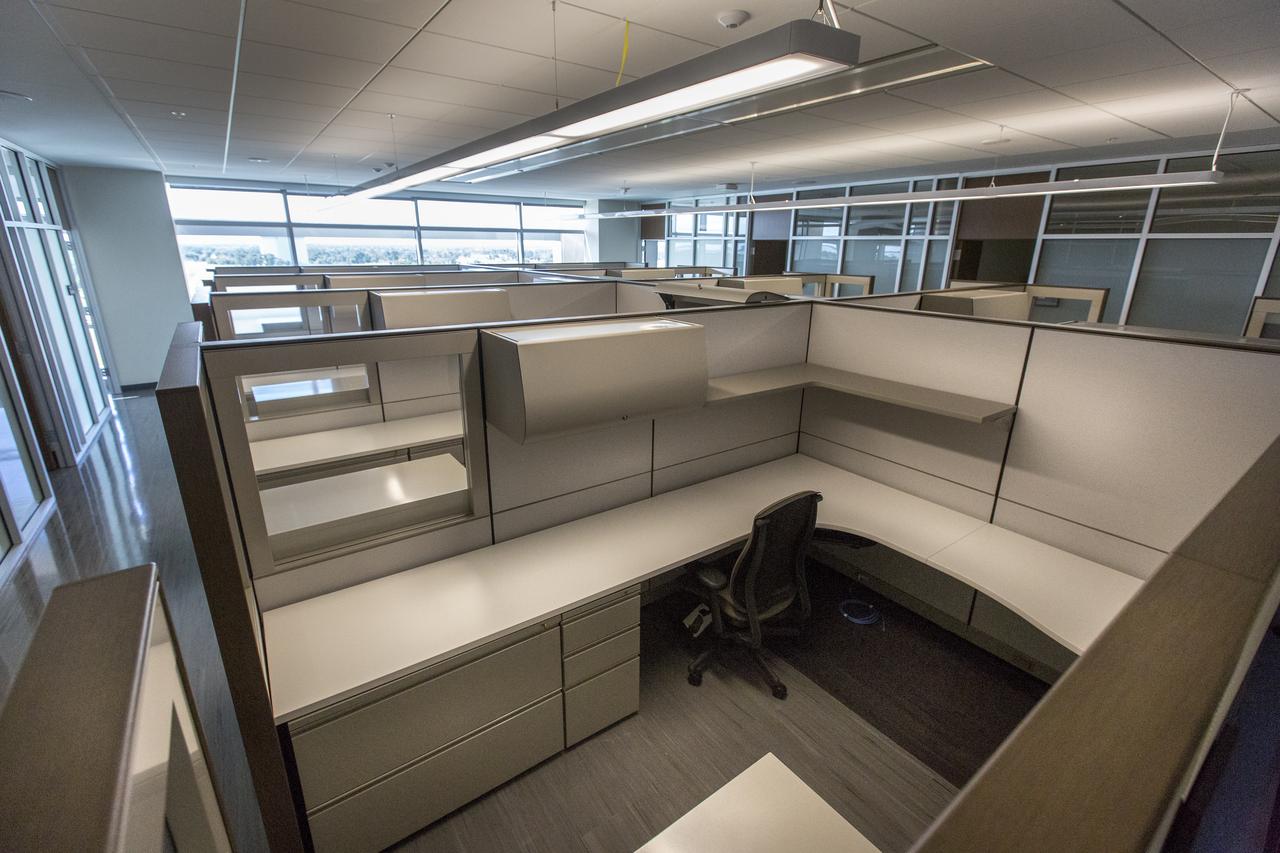
A view of some of the work stations in the new headquarters building on April 3, 2019, at NASA’s Kennedy Space Center in Florida. The newly constructed facility anchors the multi-user spaceport’s Central Campus. More than 500 civil service and contractor employees will be based in the 200,000-square-foot building. The facility earned the U.S. Green Building Council’s Leadership in Energy and Environmental Design (LEED) Gold designation. Features include LED lighting throughout, along with occupancy sensors to turn off unneeded lights; windows, screens and shades designed to maximize natural light; chilled beam HVAC technology reducing the need for ductwork, and more.
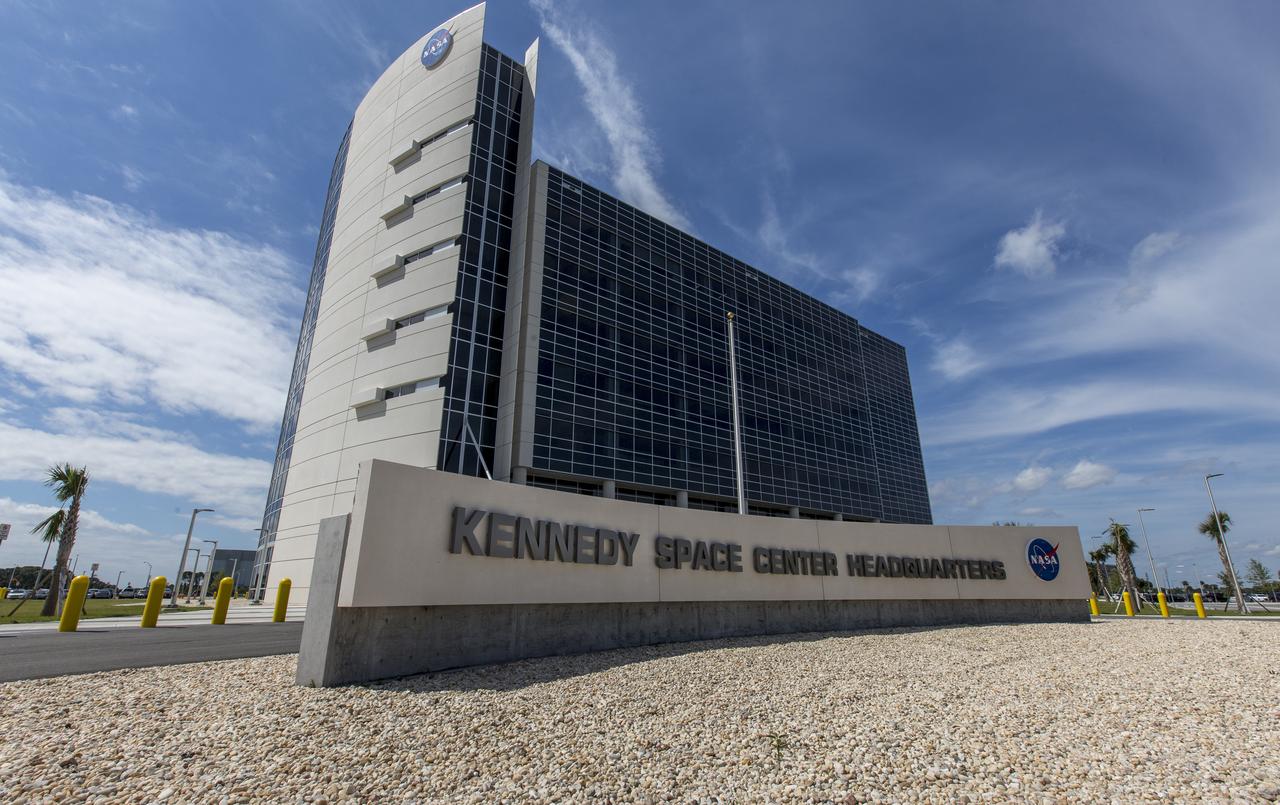
A view of the front of the new headquarters building on April 3, 2019, at NASA’s Kennedy Space Center in Florida. The newly constructed facility anchors the multi-user spaceport’s Central Campus. More than 500 civil service and contractor employees will be based in the 200,000-square-foot building. The facility earned the U.S. Green Building Council’s Leadership in Energy and Environmental Design (LEED) Gold designation. Features include LED lighting throughout, along with occupancy sensors to turn off unneeded lights; windows, screens and shades designed to maximize natural light; chilled beam HVAC technology reducing the need for ductwork, and more.
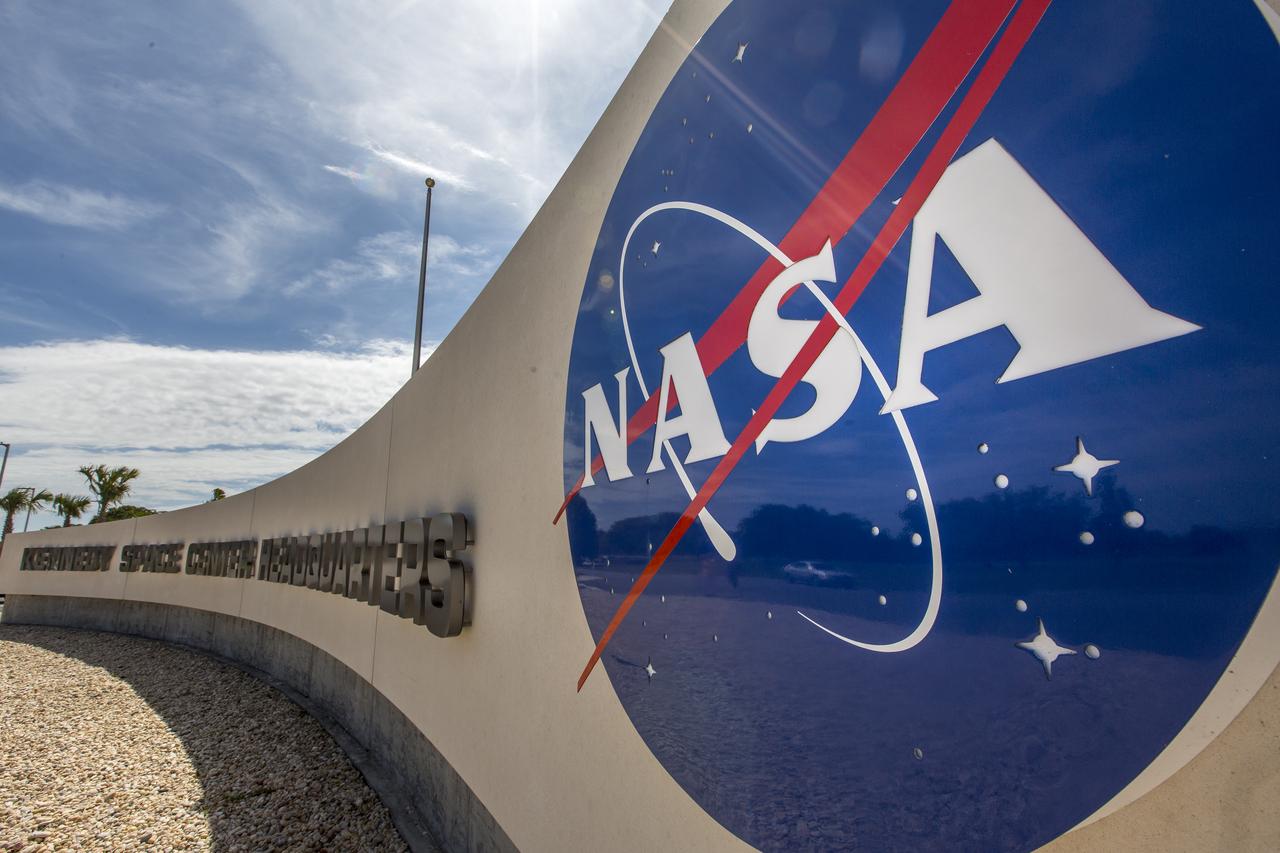
A close-up view the NASA insignia in front of the entrance to the new headquarters building on April 3, 2019, at NASA’s Kennedy Space Center in Florida. The newly constructed facility anchors the multi-user spaceport’s Central Campus. More than 500 civil service and contractor employees will be based in the 200,000-square-foot building. The facility earned the U.S. Green Building Council’s Leadership in Energy and Environmental Design (LEED) Gold designation. Features include LED lighting throughout, along with occupancy sensors to turn off unneeded lights; windows, screens and shades designed to maximize natural light; chilled beam HVAC technology reducing the need for ductwork, and more.
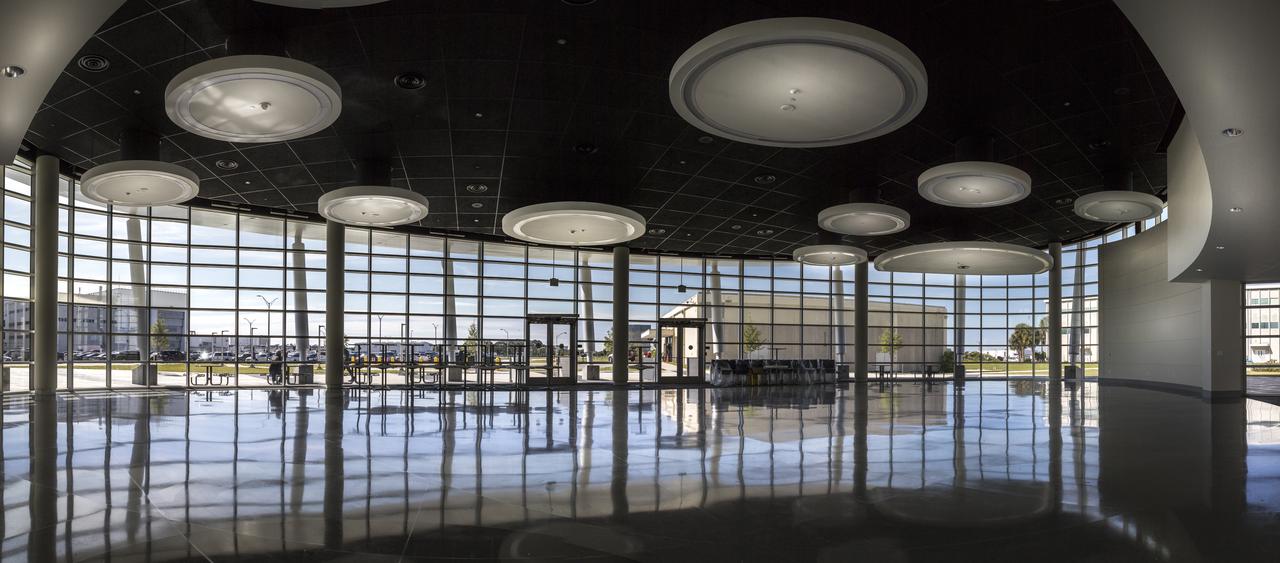
A view of the cafeteria area inside the new headquarters building on April 3, 2019, at NASA’s Kennedy Space Center in Florida. The newly constructed facility anchors the multi-user spaceport’s Central Campus. More than 500 civil service and contractor employees will be based in the 200,000-square-foot building. The facility earned the U.S. Green Building Council’s Leadership in Energy and Environmental Design (LEED) Gold designation. Features include LED lighting throughout, along with occupancy sensors to turn off unneeded lights; windows, screens and shades designed to maximize natural light; chilled beam HVAC technology reducing the need for ductwork, and more.
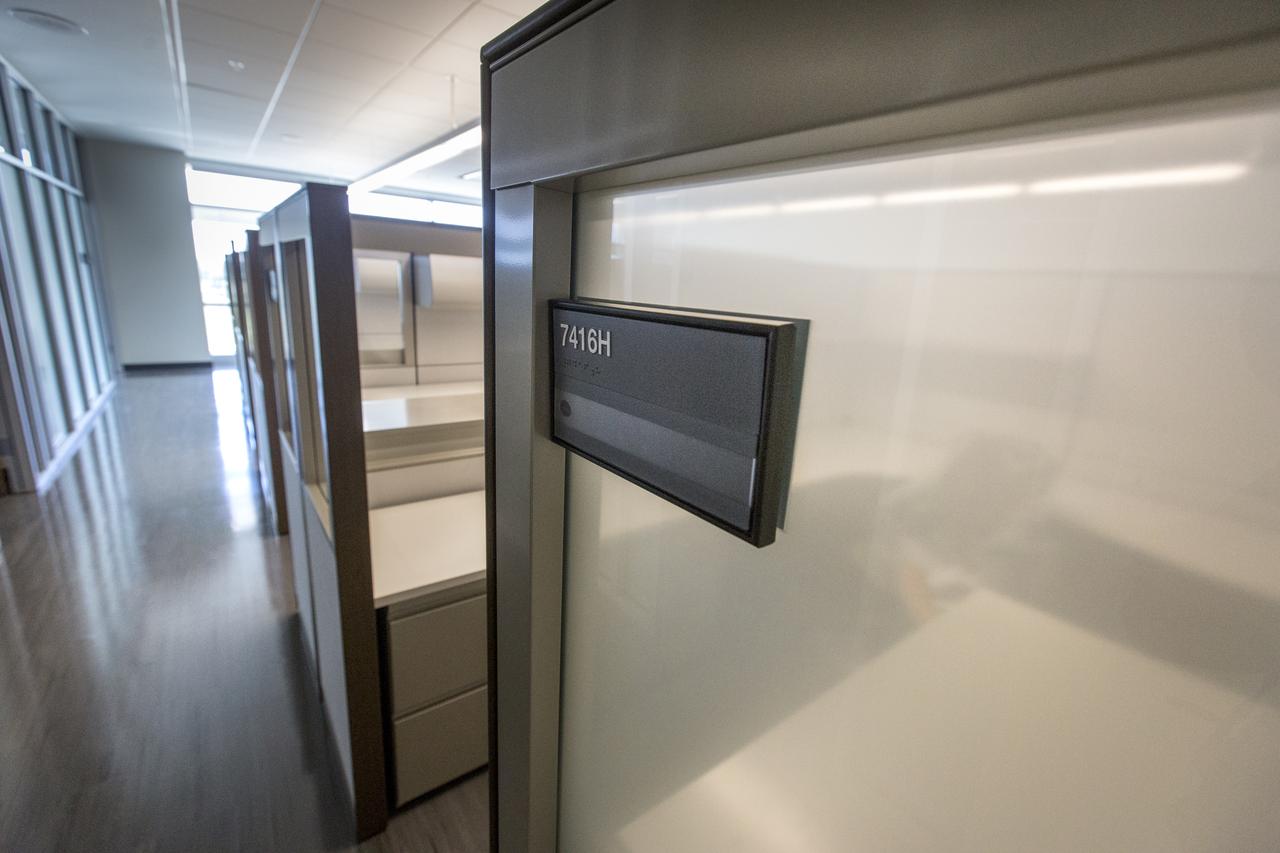
A view of some of the work stations and the entryway to the Center Director’s suite on the seventh floor in the new headquarters building on April 3, 2019, at NASA’s Kennedy Space Center in Florida. The newly constructed facility anchors the multi-user spaceport’s Central Campus. More than 500 civil service and contractor employees will be based in the 200,000-square-foot building. The facility earned the U.S. Green Building Council’s Leadership in Energy and Environmental Design (LEED) Gold designation. Features include LED lighting throughout, along with occupancy sensors to turn off unneeded lights; windows, screens and shades designed to maximize natural light; chilled beam HVAC technology reducing the need for ductwork, and more.
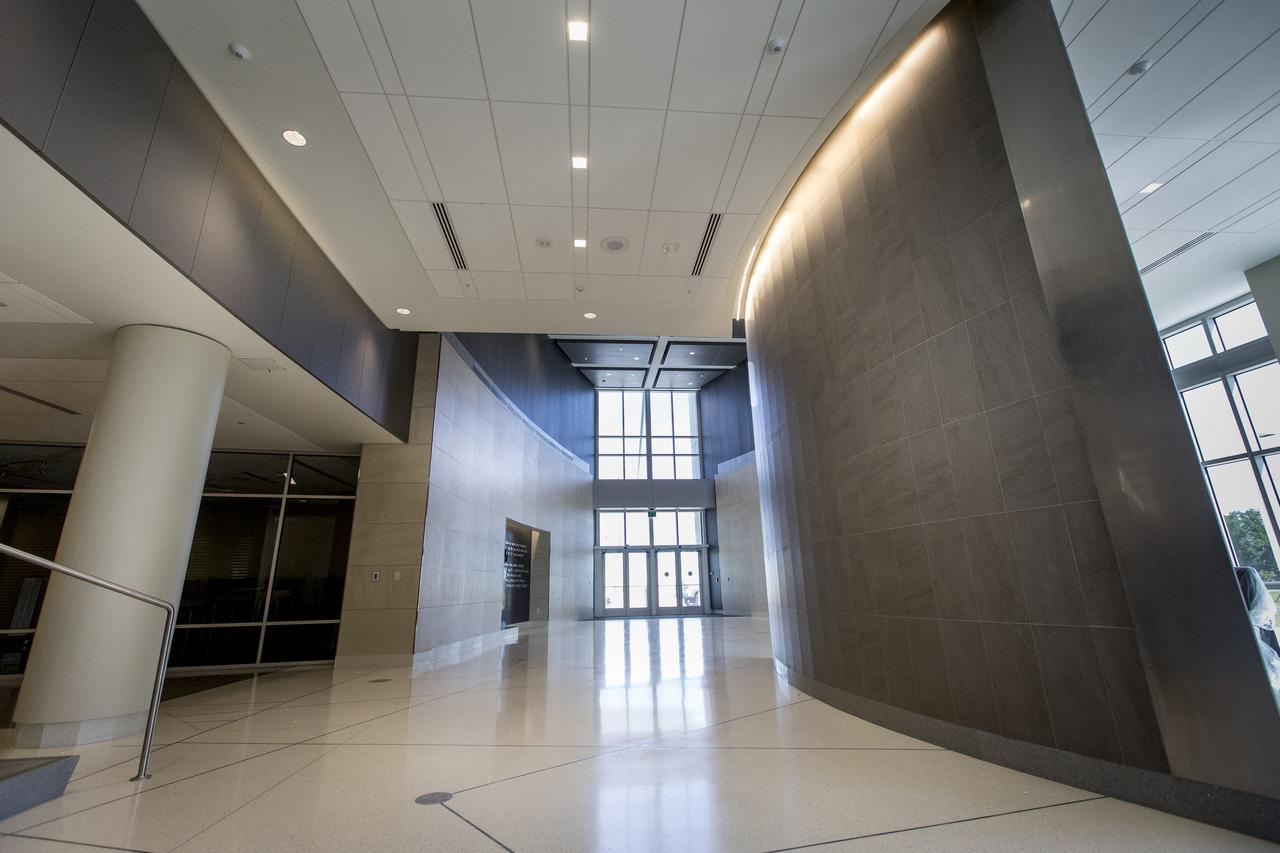
A view of the entranceway and lobby in the new headquarters building on April 3, 2019, at NASA’s Kennedy Space Center in Florida. The newly constructed facility anchors the multi-user spaceport’s Central Campus. More than 500 civil service and contractor employees will be based in the 200,000-square-foot building. The facility earned the U.S. Green Building Council’s Leadership in Energy and Environmental Design (LEED) Gold designation. Features include LED lighting throughout, along with occupancy sensors to turn off unneeded lights; windows, screens and shades designed to maximize natural light; chilled beam HVAC technology reducing the need for ductwork, and more.
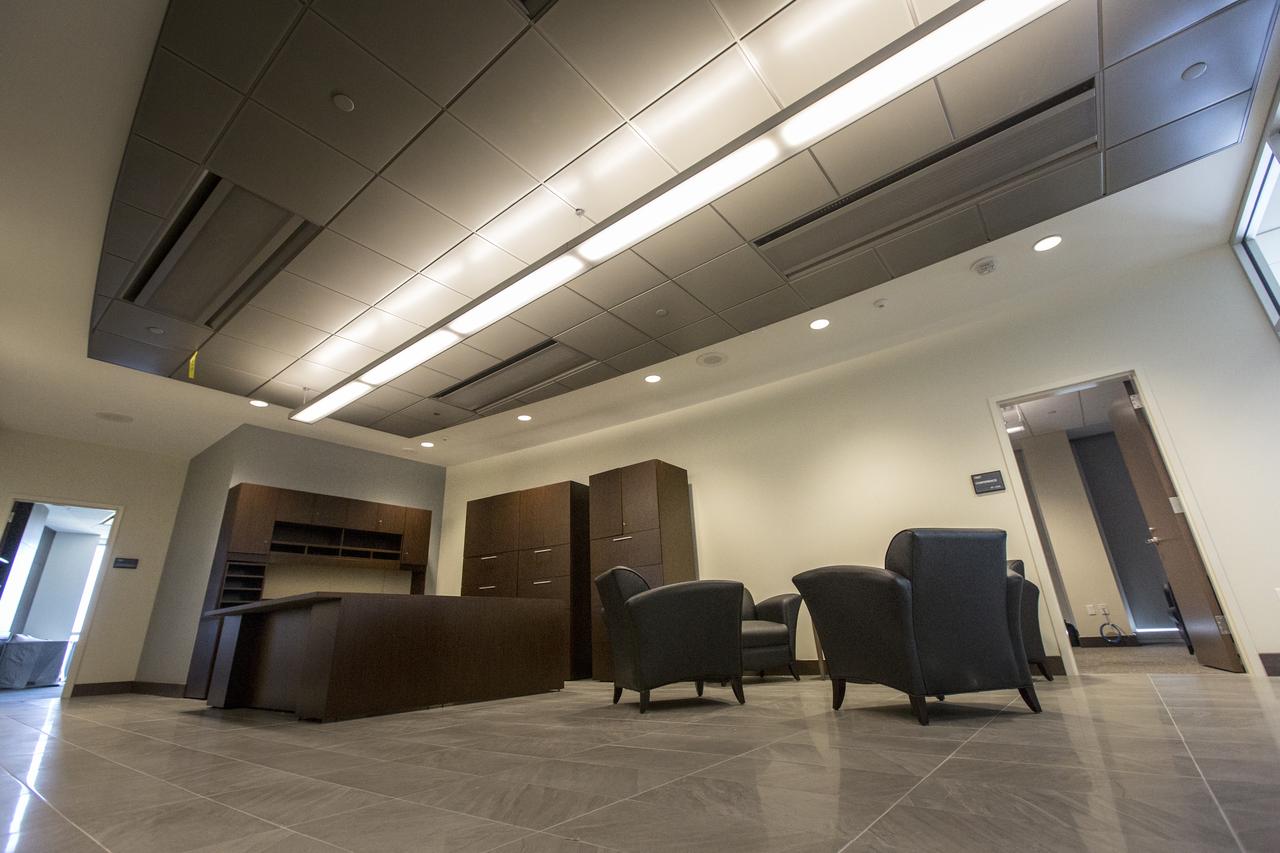
A view of the Kennedy Space Center director’s office suite on the seventh floor of the new headquarters building on April 3, 2019, at NASA’s Kennedy Space Center in Florida. The newly constructed facility anchors the multi-user spaceport’s Central Campus. More than 500 civil service and contractor employees will be based in the 200,000-square-foot building. The facility earned the U.S. Green Building Council’s Leadership in Energy and Environmental Design (LEED) Gold designation. Features include LED lighting throughout, along with occupancy sensors to turn off unneeded lights; windows, screens and shades designed to maximize natural light; chilled beam HVAC technology reducing the need for ductwork, and more.
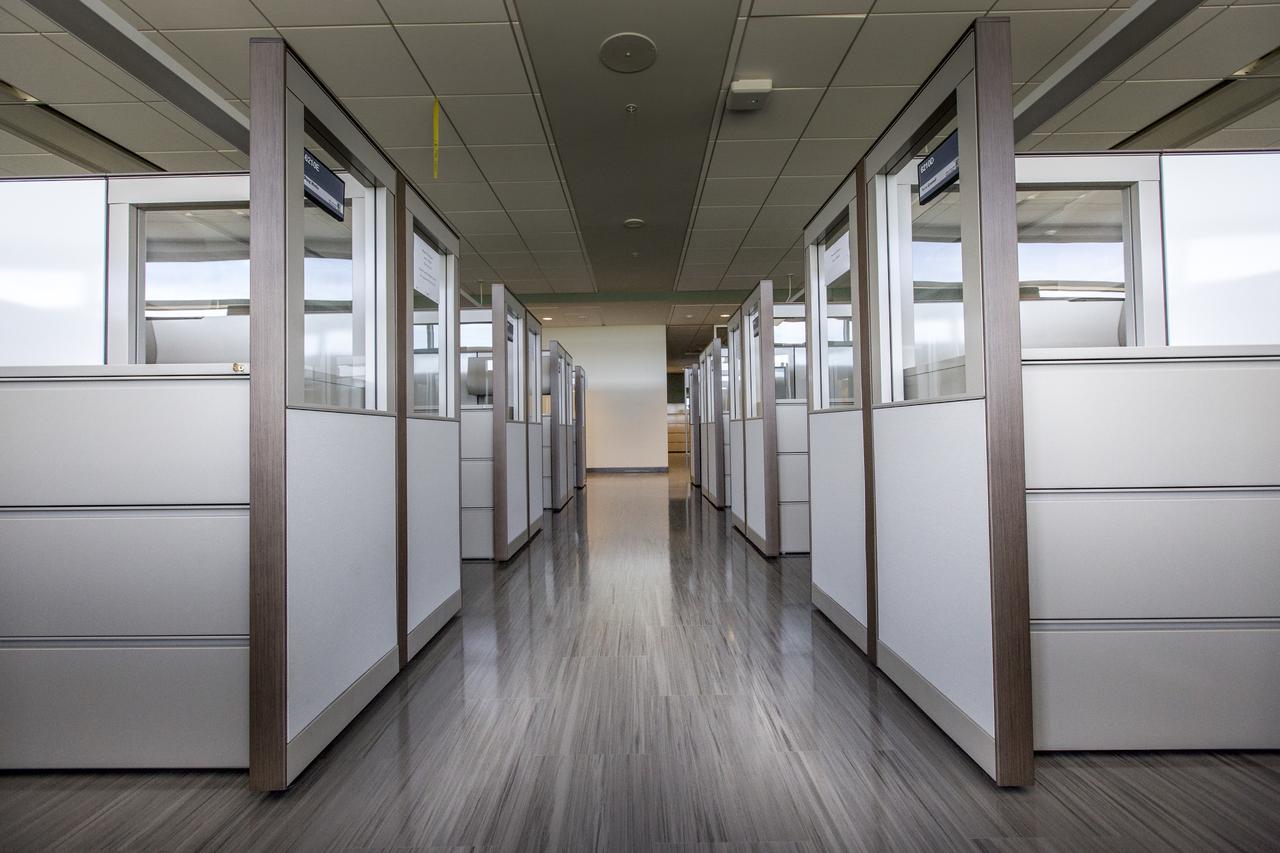
A view of some of the work stations in the new headquarters building on April 3, 2019, at NASA’s Kennedy Space Center in Florida. The newly constructed facility anchors the multi-user spaceport’s Central Campus. More than 500 civil service and contractor employees will be based in the 200,000-square-foot building. The facility earned the U.S. Green Building Council’s Leadership in Energy and Environmental Design (LEED) Gold designation. Features include LED lighting throughout, along with occupancy sensors to turn off unneeded lights; windows, screens and shades designed to maximize natural light; chilled beam HVAC technology reducing the need for ductwork, and more.
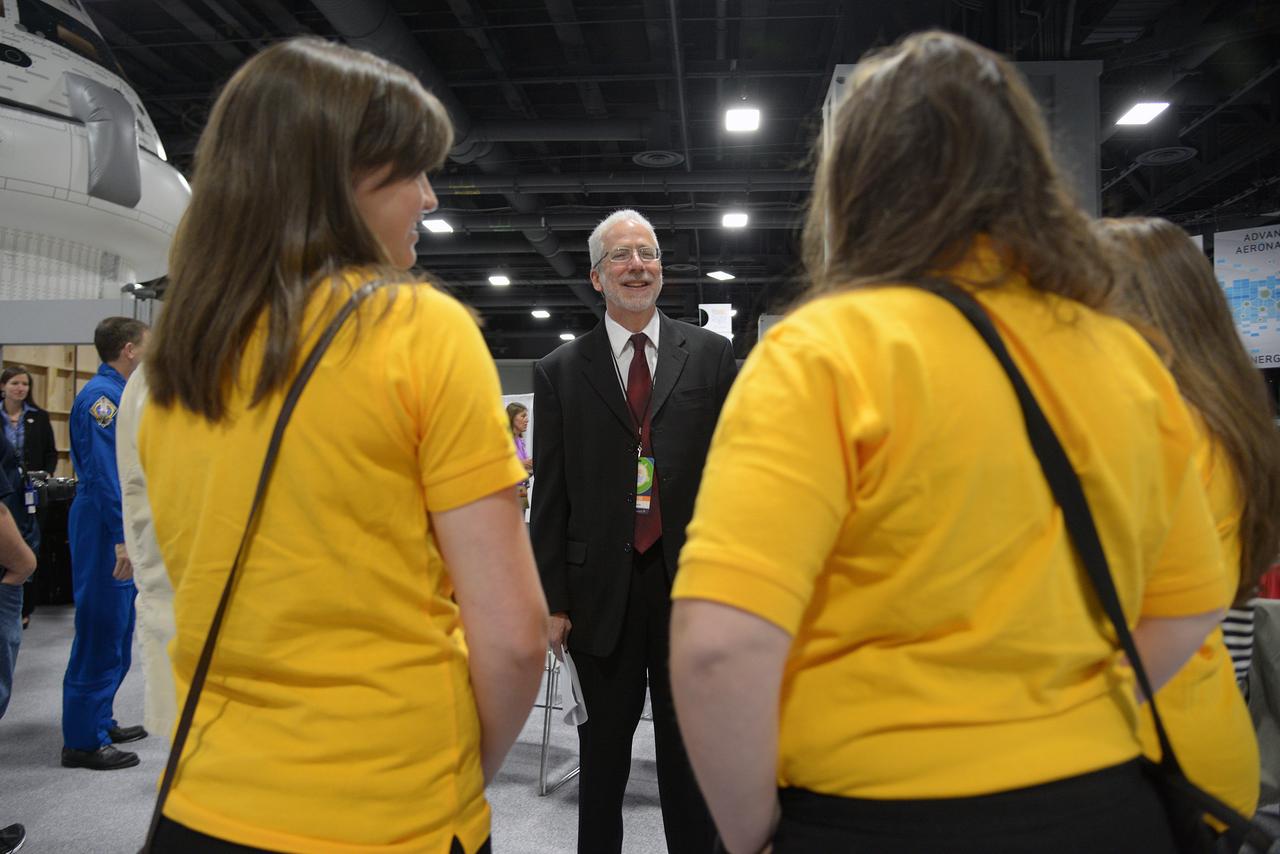
The winner of the high school portion of the Exploration Design Challenge is announced at the USA Science and Engineering Festival in Washington on April 25, 2014. Orion Program Manager Mark Geyer speaks to students. Part of Batch image transfer from Flickr.
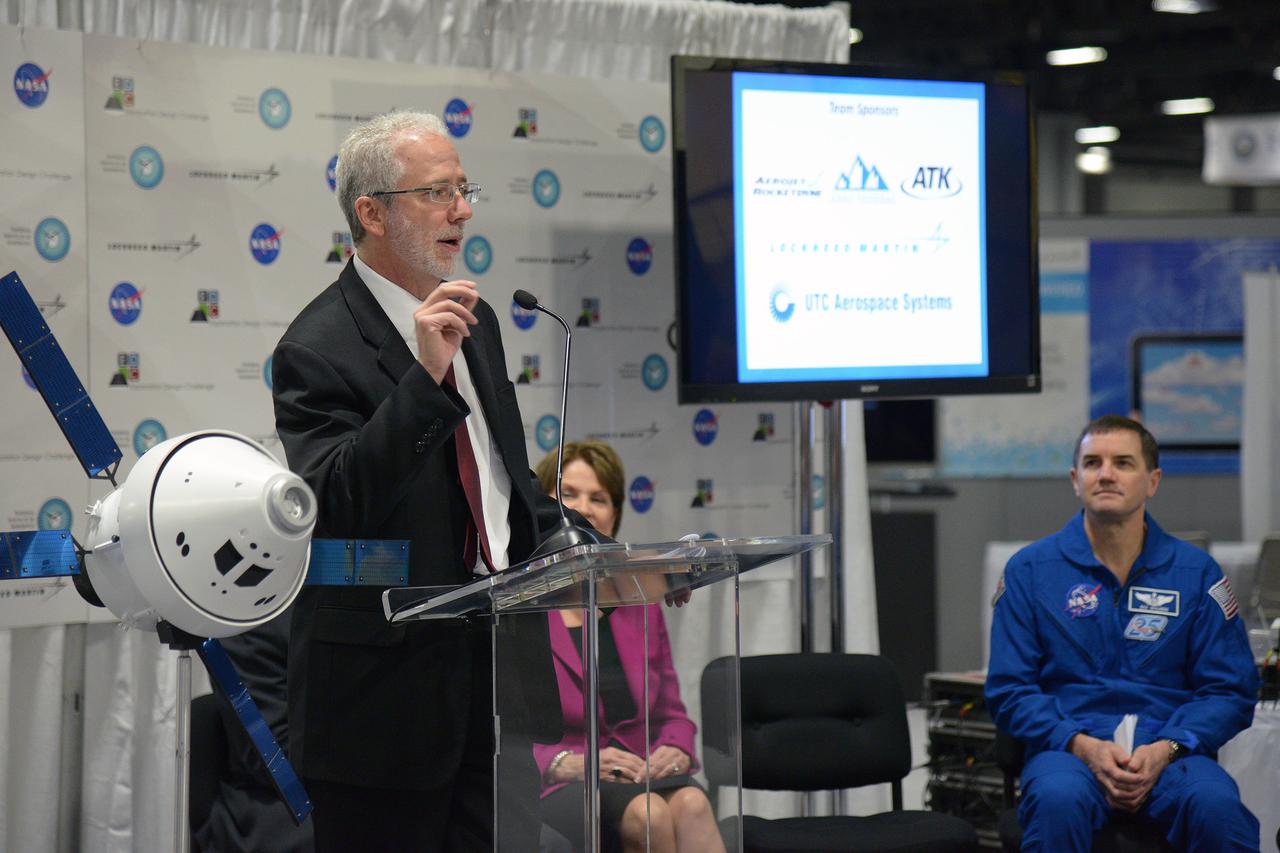
The winner of the high school portion of the Exploration Design Challenge is announced at the USA Science and Engineering Festival in Washington on April 25, 2014. Orion Program Manager Mark Geyer speaks from podium. Part of Batch image transfer from Flickr.
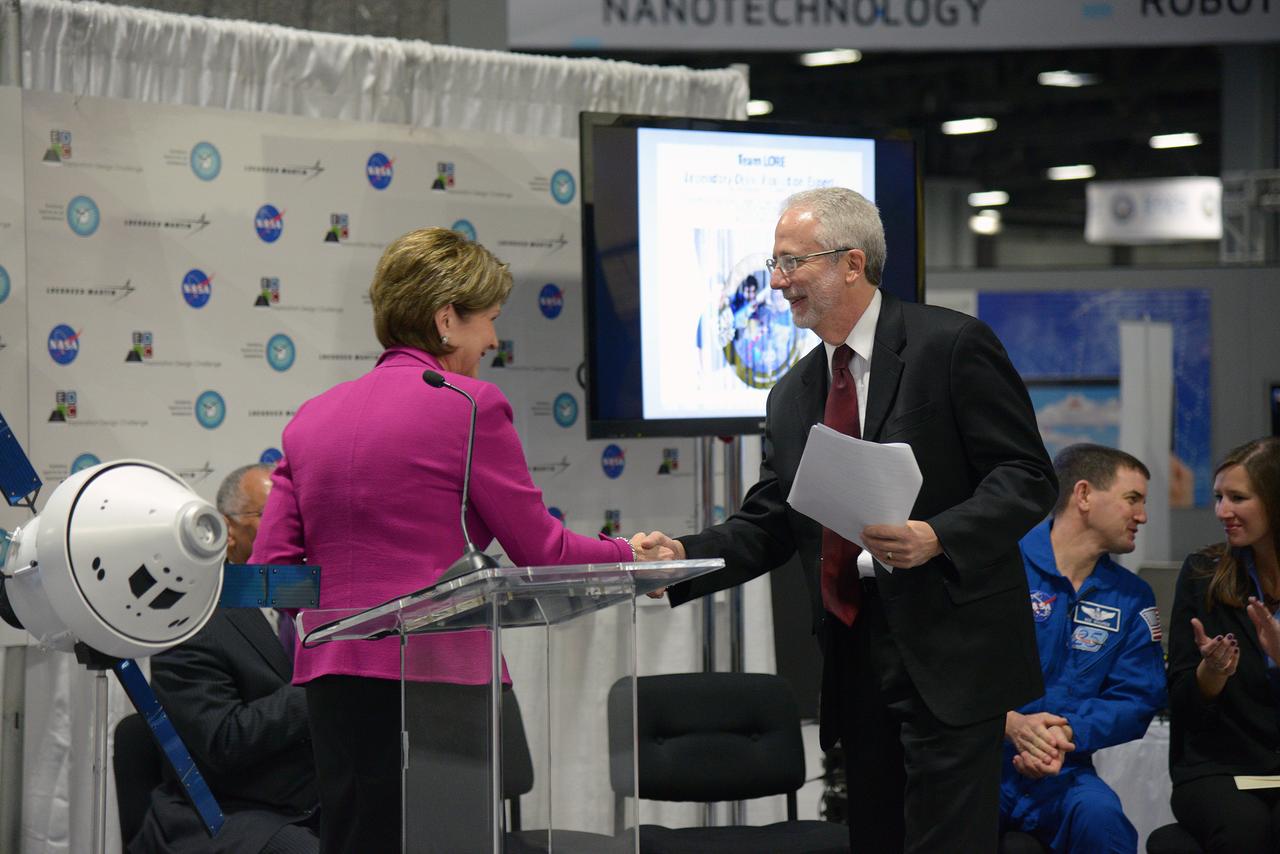
The winner of the high school portion of the Exploration Design Challenge is announced at the USA Science and Engineering Festival in Washington on April 25, 2014. Orion Program Manager Mark Geyer presents award. Part of Batch image transfer from Flickr.
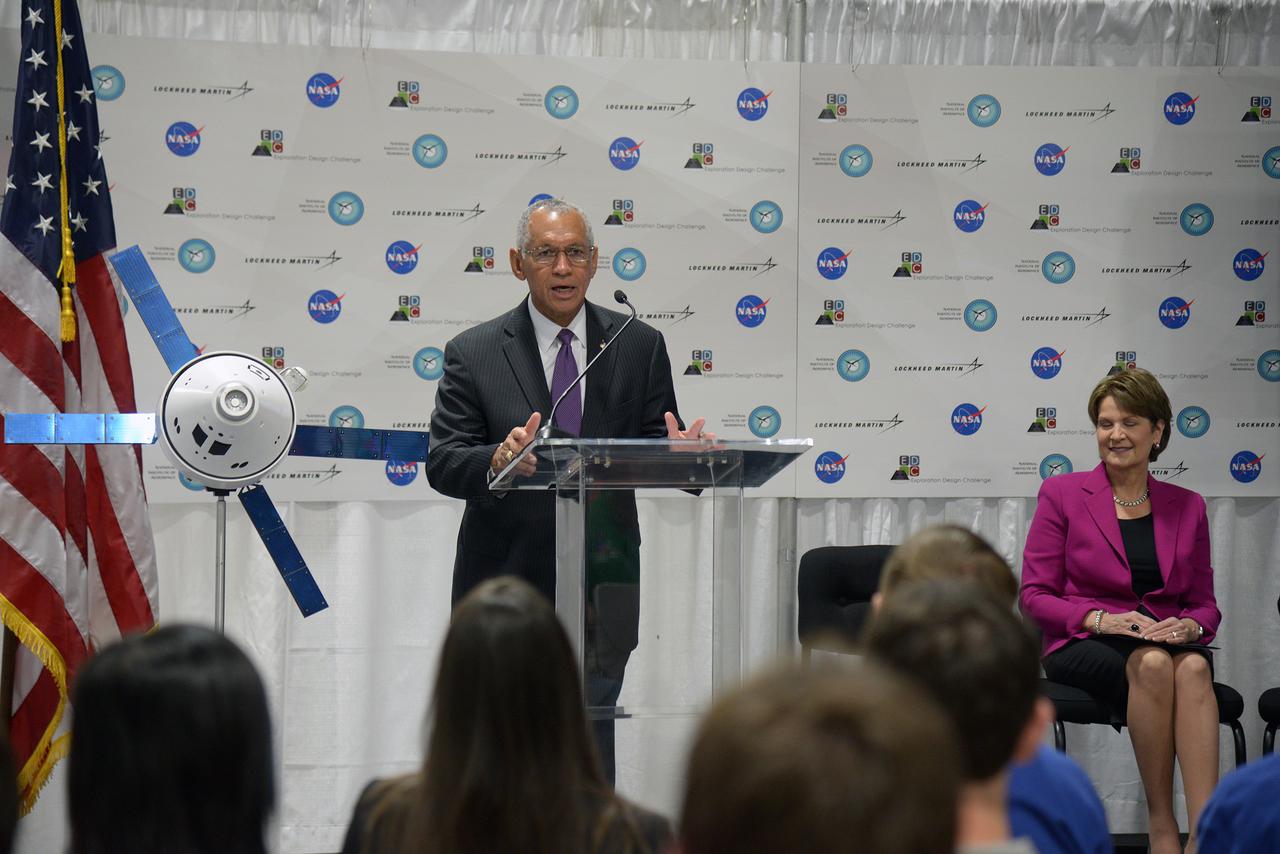
The winner of the high school portion of the Exploration Design Challenge is announced at the USA Science and Engineering Festival in Washington on April 25, 2014. NASA Director Charles Bolden speaks from podium. Part of Batch image transfer from Flickr.
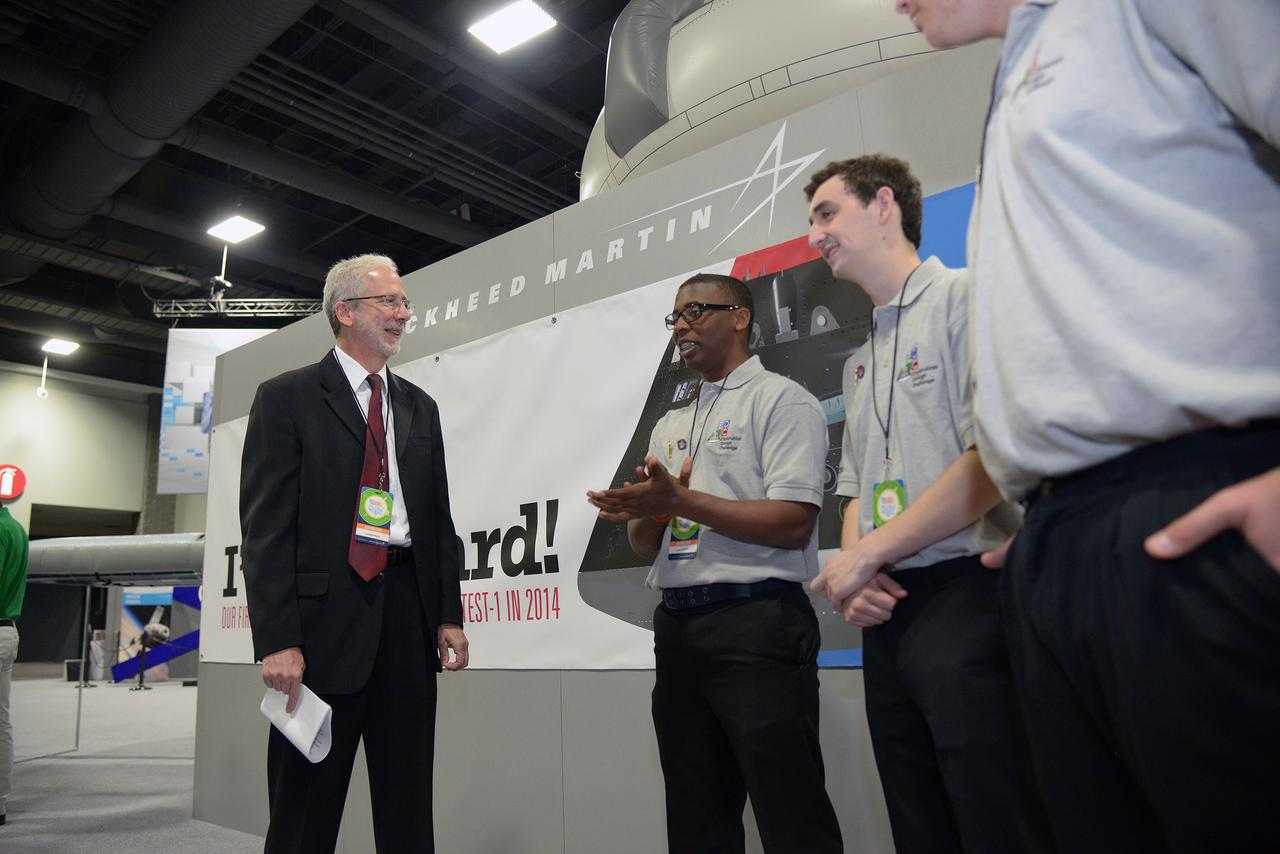
The winner of the high school portion of the Exploration Design Challenge is announced at the USA Science and Engineering Festival in Washington on April 25, 2014. Orion Program Manager Mark Geyer speaks to students. Part of Batch image transfer from Flickr.
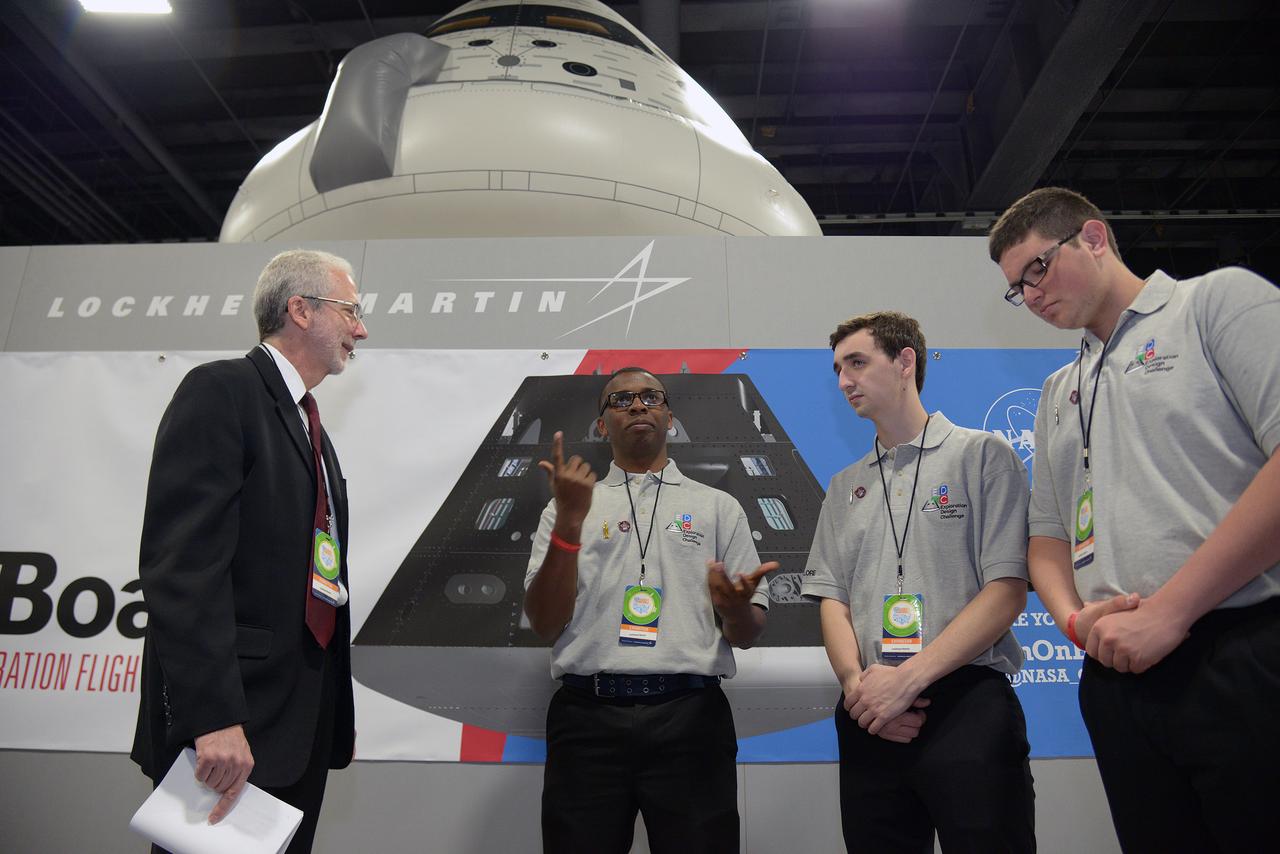
The winner of the high school portion of the Exploration Design Challenge is announced at the USA Science and Engineering Festival in Washington on April 25, 2014. Orion Program Manager Mark Geyer speaks to students. Part of Batch image transfer from Flickr.
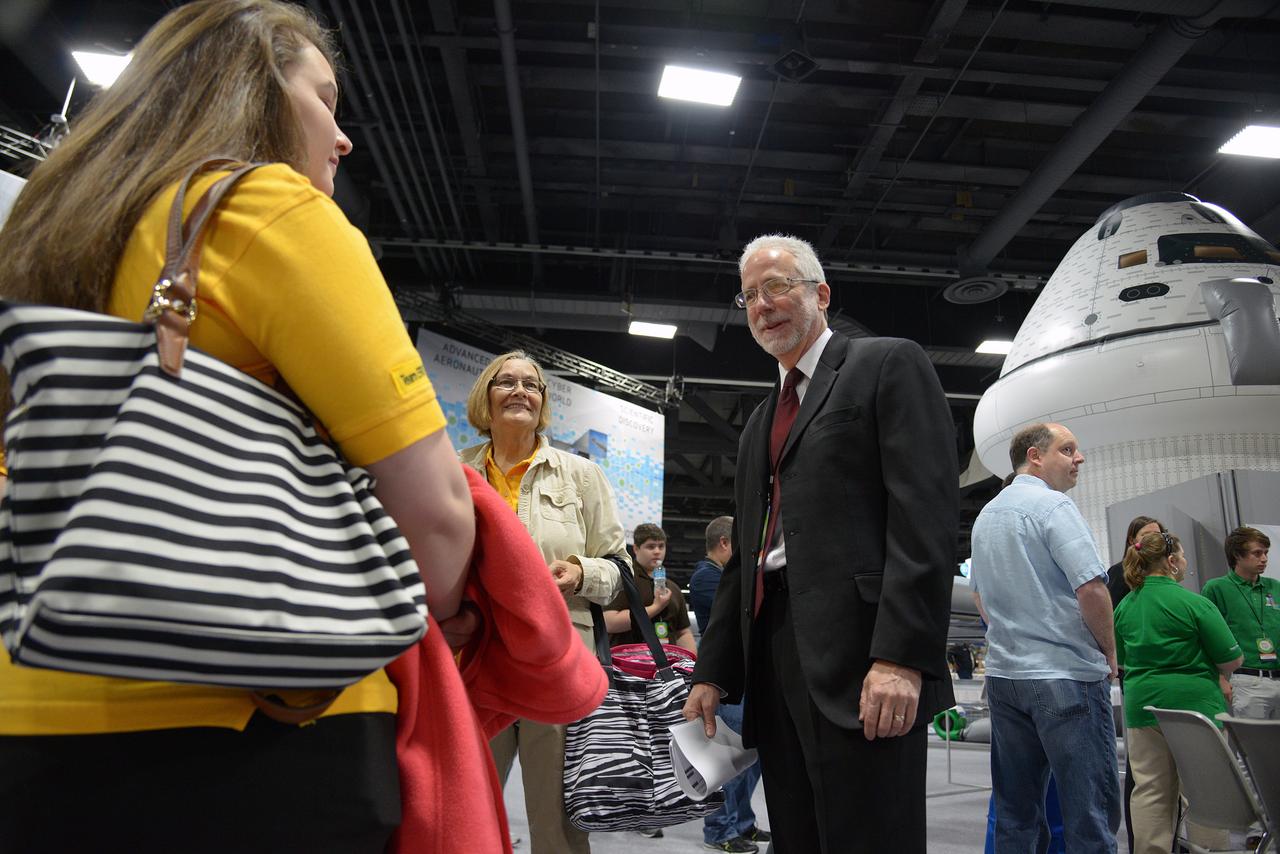
The winner of the high school portion of the Exploration Design Challenge is announced at the USA Science and Engineering Festival in Washington on April 25, 2014. Orion Program Manager Mark Geyer speaks to students. Part of Batch image transfer from Flickr.
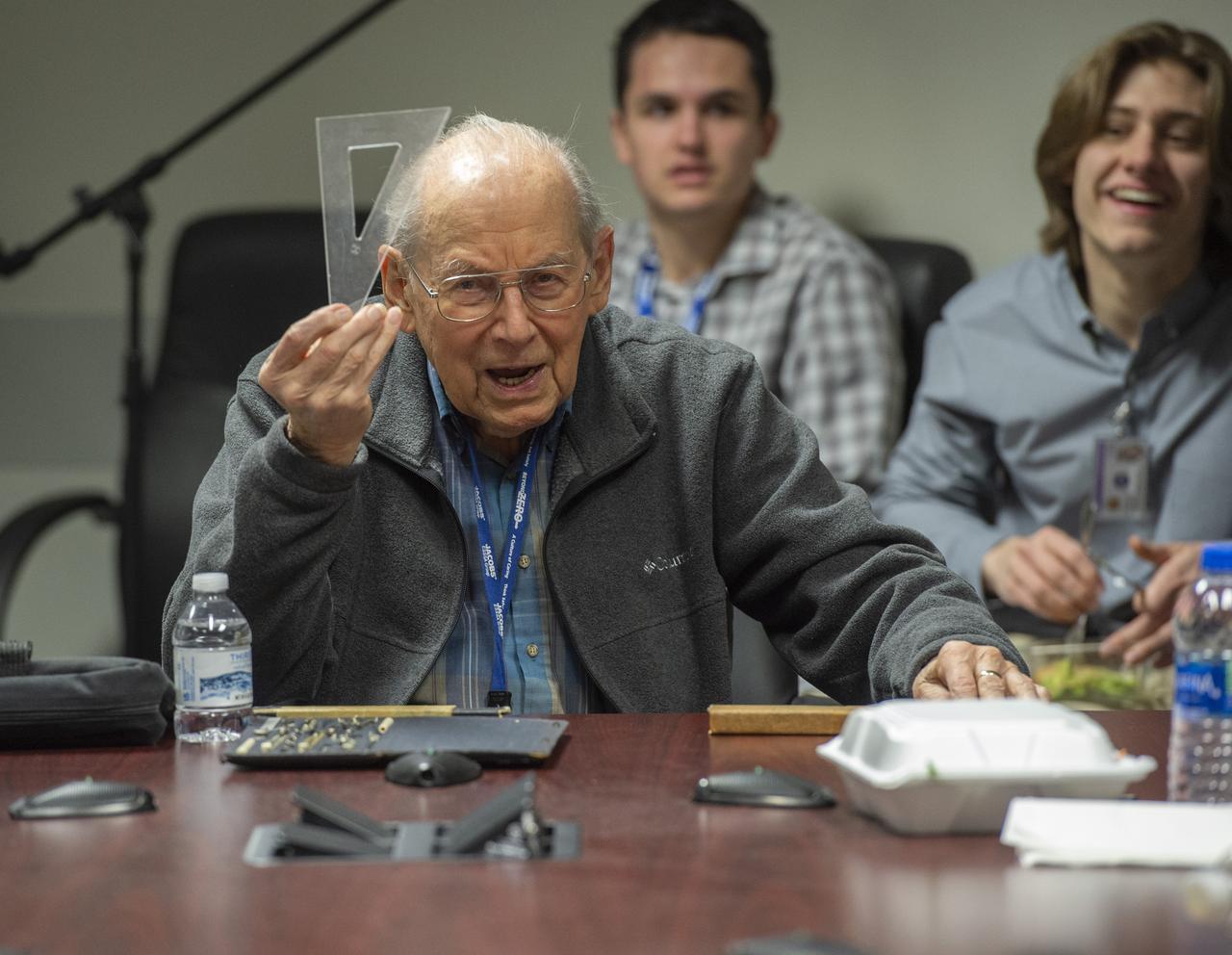
Retired Marshall engineer Erich Engler demonstrates antiquated calculation and design tools used in Apollo days.
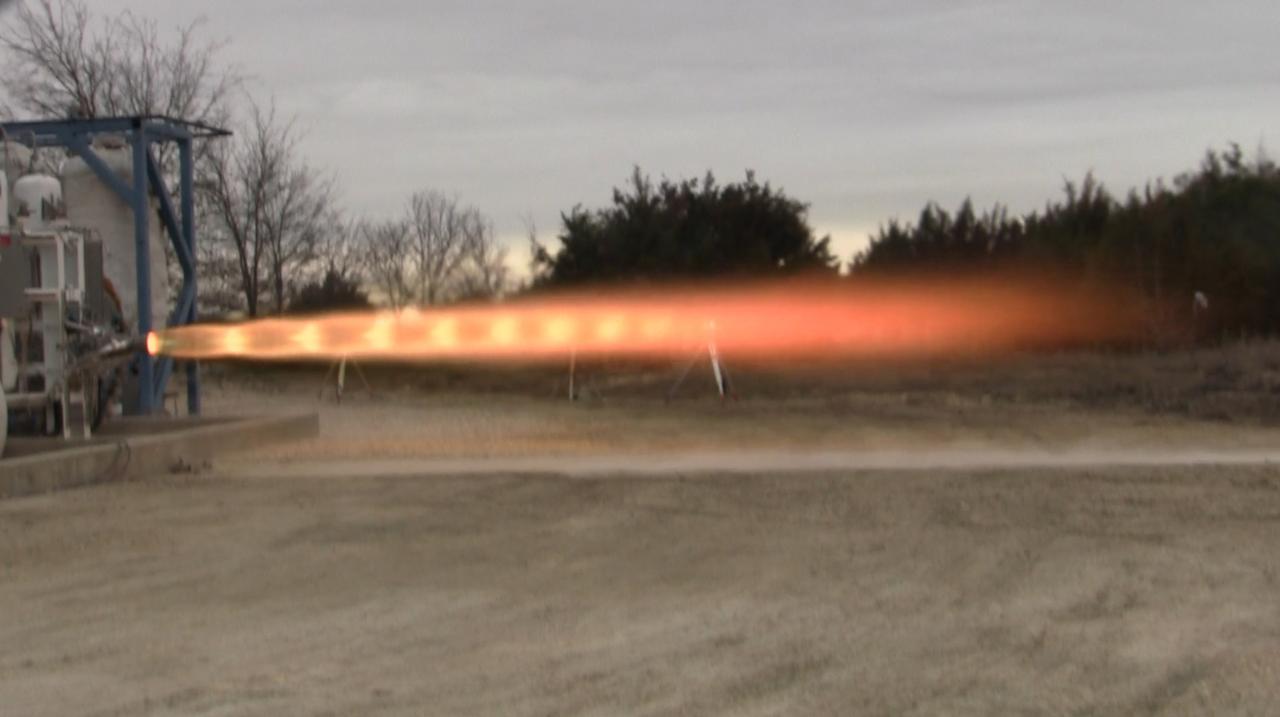
MCGREGOR, Texas -- Space Exploration Technologies (SpaceX) completes a full-duration, full-thrust firing of its new SuperDraco engine prototype at the company’s Rocket Development Facility in McGregor, Texas. The firing was in preparation for the ninth milestone to be completed under SpaceX's funded Space Act Agreement (SAA) with NASA's Commercial Crew Program (CCP). SpaceX is working with CCP during Commercial Crew Development Round 2 (CCDev2) in order to mature the design and development of its Dragon spacecraft with the overall goal of accelerating a United States-led capability to the International Space Station. Eight SuperDracos would be built into the sidewalls of the Dragon capsule to carry astronauts to safety should an emergency occur during launch or ascent. The goal of CCP is to drive down the cost of space travel as well as open up space to more people than ever before by balancing industry’s own innovative capabilities with NASA's 50 years of human spaceflight experience. Six other aerospace companies also are maturing launch vehicle and spacecraft designs under CCDev2, including Alliant Techsystems Inc. (ATK), Blue Origin, The Boeing Co., Excalibur Almaz Inc., Sierra Nevada Corp. and United Launch Alliance (ULA). For more information, visit www.nasa.gov/commercialcrew
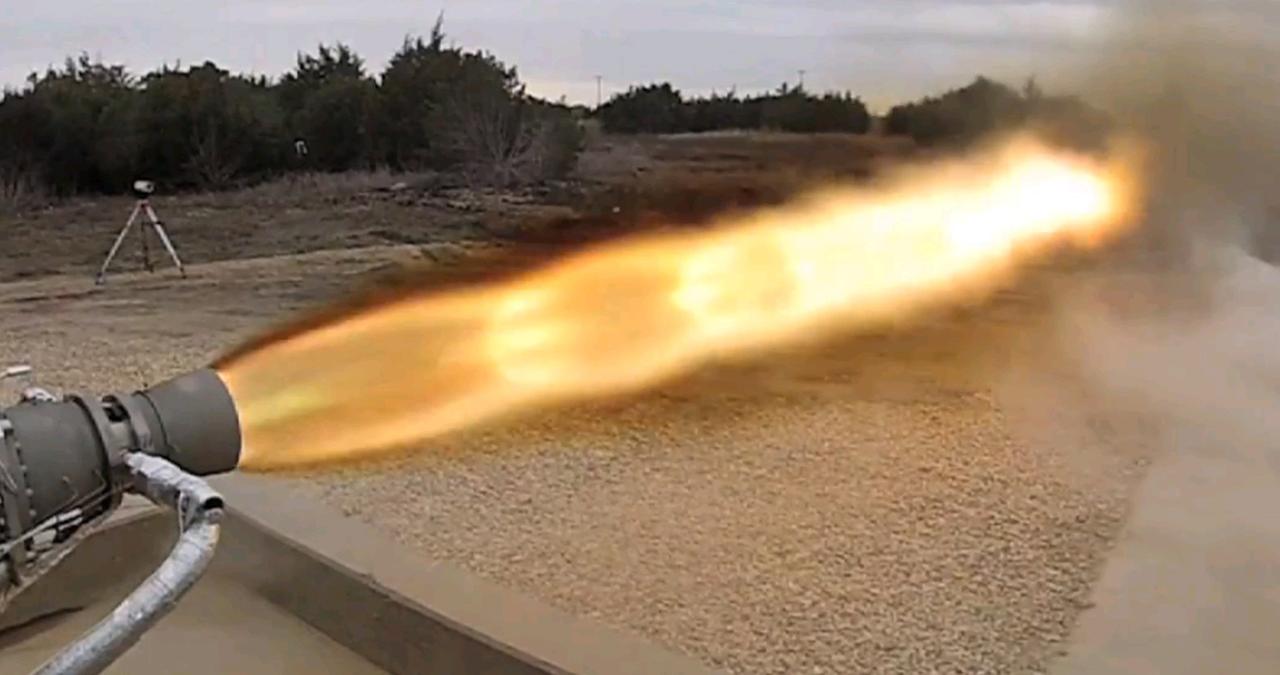
MCGREGOR, Texas -- Space Exploration Technologies (SpaceX) completes a full-duration, full-thrust firing of its new SuperDraco engine prototype at the company’s Rocket Development Facility in McGregor, Texas. The firing was in preparation for the ninth milestone to be completed under SpaceX's funded Space Act Agreement (SAA) with NASA's Commercial Crew Program (CCP). SpaceX is working with CCP during Commercial Crew Development Round 2 (CCDev2) in order to mature the design and development of its Dragon spacecraft with the overall goal of accelerating a United States-led capability to the International Space Station. Eight SuperDracos would be built into the sidewalls of the Dragon capsule to carry astronauts to safety should an emergency occur during launch or ascent. The goal of CCP is to drive down the cost of space travel as well as open up space to more people than ever before by balancing industry’s own innovative capabilities with NASA's 50 years of human spaceflight experience. Six other aerospace companies also are maturing launch vehicle and spacecraft designs under CCDev2, including Alliant Techsystems Inc. (ATK), Blue Origin, The Boeing Co., Excalibur Almaz Inc., Sierra Nevada Corp. and United Launch Alliance (ULA). For more information, visit www.nasa.gov/commercialcrew
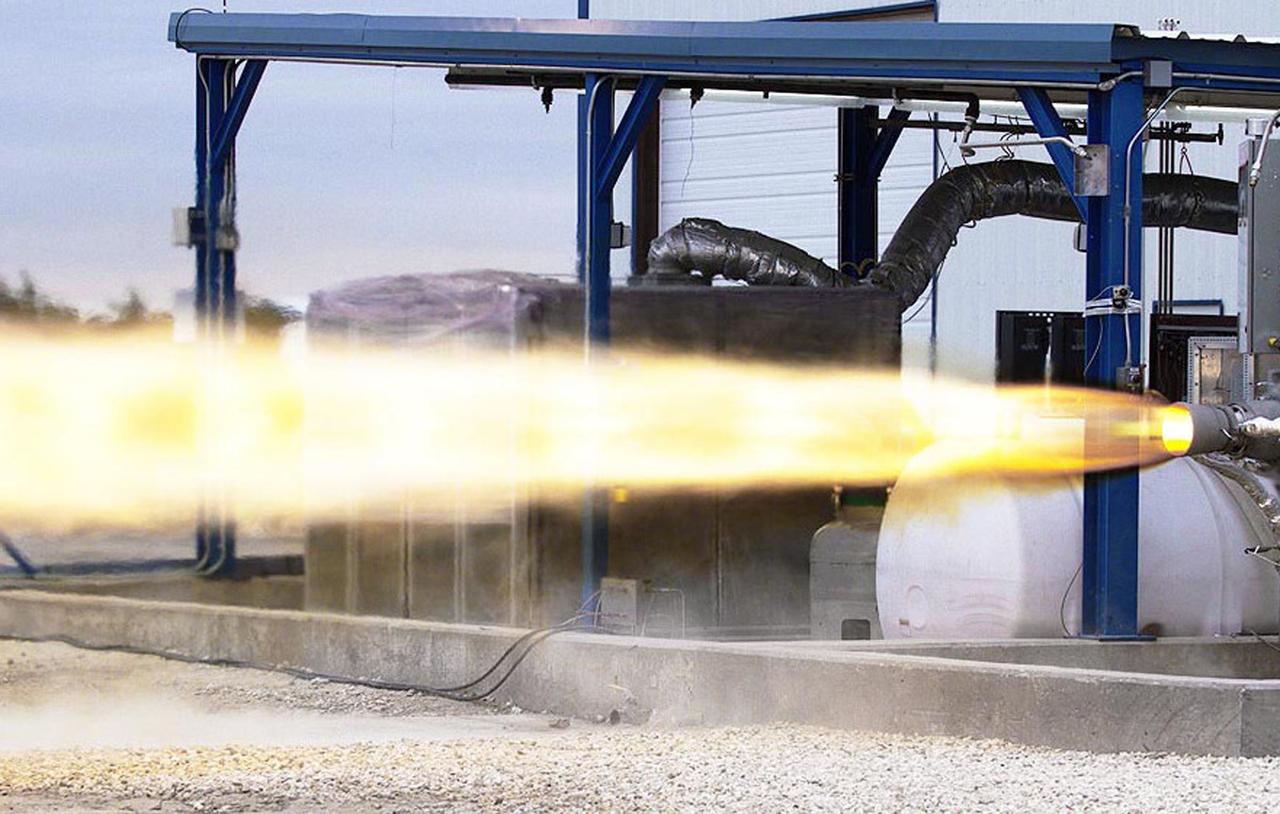
MCGREGOR, Texas -- Space Exploration Technologies (SpaceX) completes a full-duration, full-thrust firing of its new SuperDraco engine prototype at the company’s Rocket Development Facility in McGregor, Texas. The firing was in preparation for the ninth milestone to be completed under SpaceX's funded Space Act Agreement (SAA) with NASA's Commercial Crew Program (CCP). SpaceX is working with CCP during Commercial Crew Development Round 2 (CCDev2) in order to mature the design and development of its Dragon spacecraft with the overall goal of accelerating a United States-led capability to the International Space Station. Eight SuperDracos would be built into the sidewalls of the Dragon capsule to carry astronauts to safety should an emergency occur during launch or ascent. The goal of CCP is to drive down the cost of space travel as well as open up space to more people than ever before by balancing industry’s own innovative capabilities with NASA's 50 years of human spaceflight experience. Six other aerospace companies also are maturing launch vehicle and spacecraft designs under CCDev2, including Alliant Techsystems Inc. (ATK), Blue Origin, The Boeing Co., Excalibur Almaz Inc., Sierra Nevada Corp. and United Launch Alliance (ULA). For more information, visit www.nasa.gov/commercialcrew
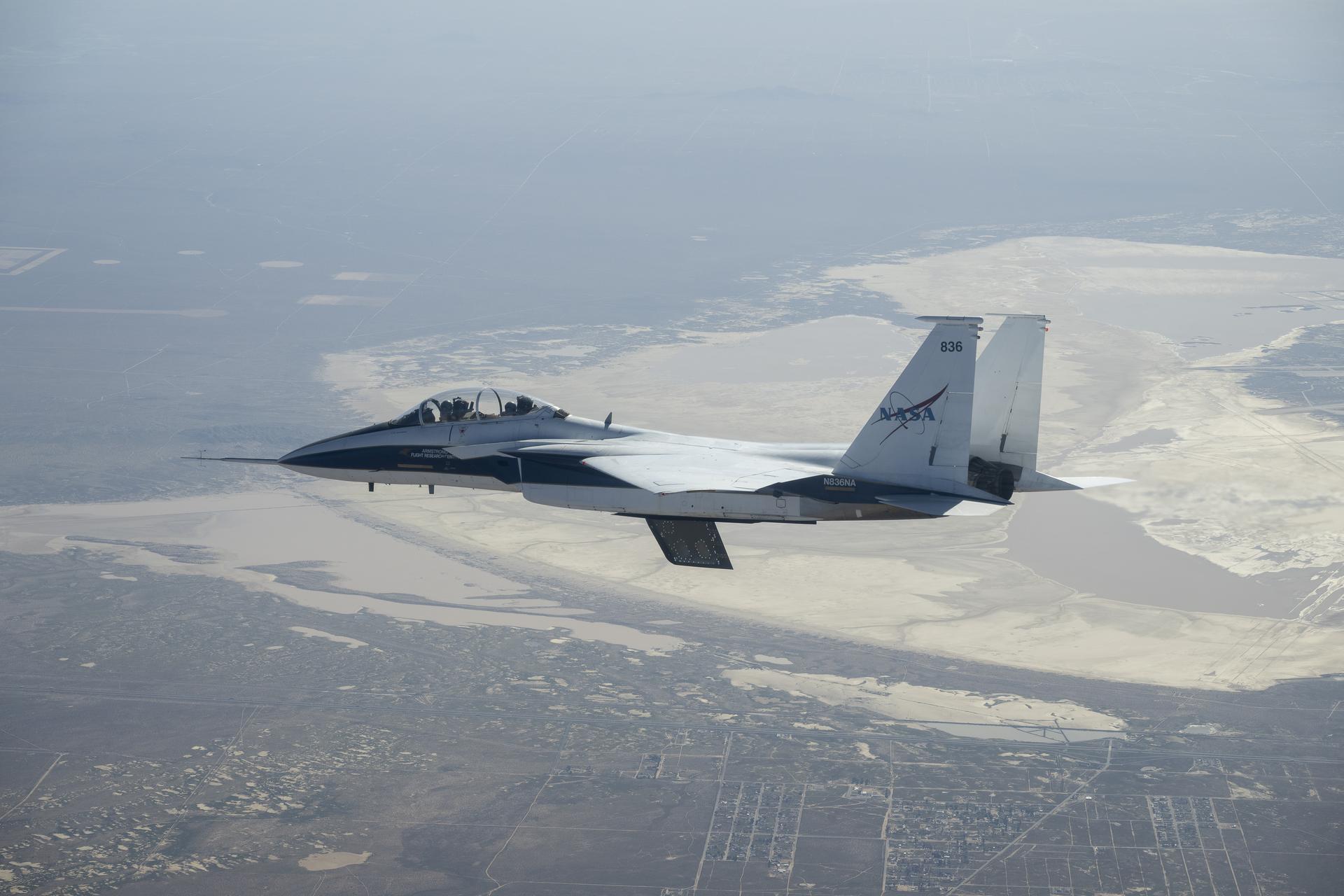
NASA’s Crossflow Attenuated Natural Laminar Flow (CATNLF) scale-model wing flies for the first time on a NASA F-15 research jet during a test flight from NASA’s Armstrong Flight Research Center in Edwards, California. The 75-minute flight confirmed the aircraft could maneuver safely with the approximately 3-foot-tall test article mounted beneath it. NASA will continue flight tests to collect data that validates the CATNLF design and its potential to improve laminar flow, reducing drag and lowering fuel costs for future commercial aircraft.
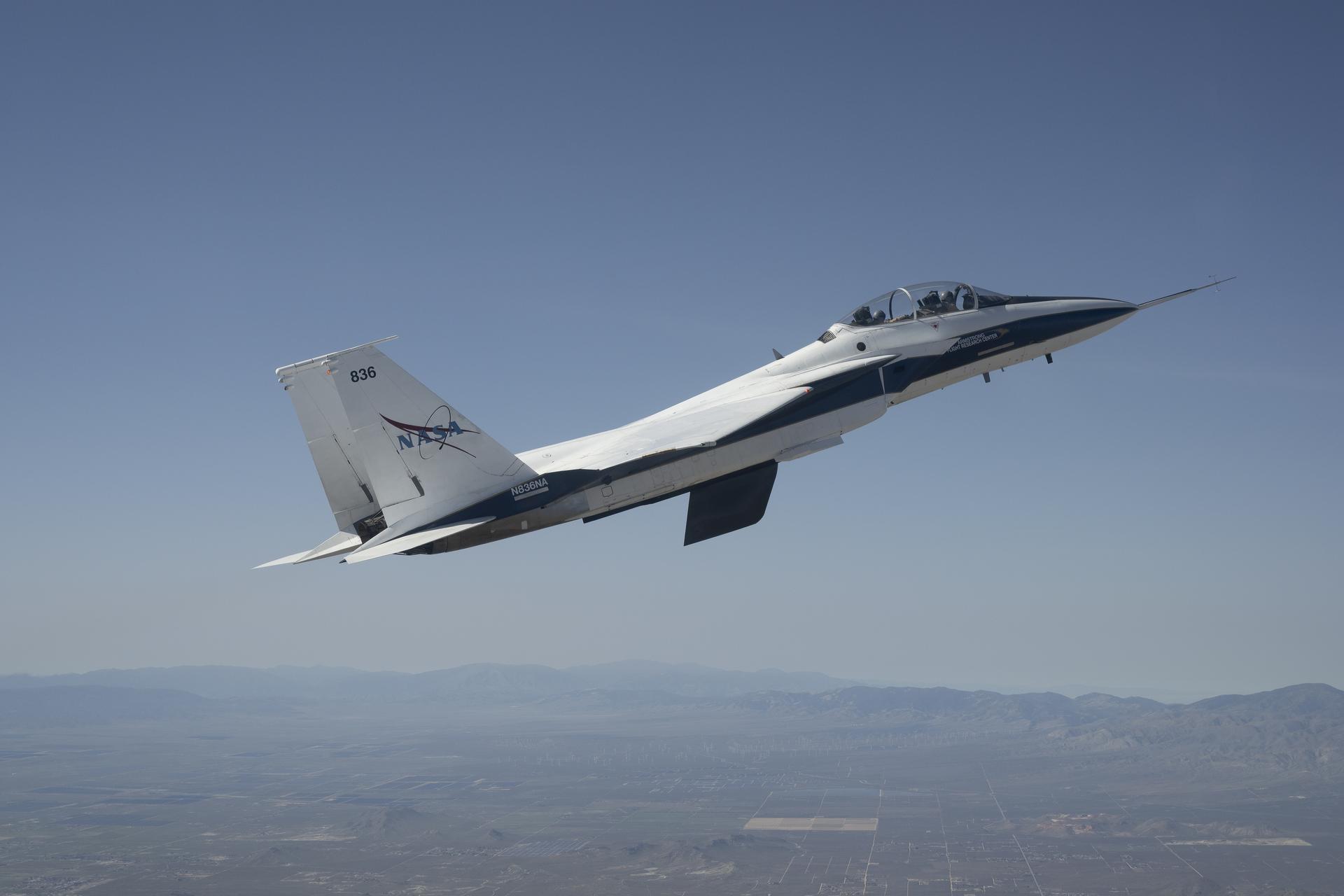
NASA’s Crossflow Attenuated Natural Laminar Flow (CATNLF) scale-model wing flies for the first time on a NASA F-15 research jet during a test flight from NASA’s Armstrong Flight Research Center in Edwards, California. The 75-minute flight confirmed the aircraft could maneuver safely with the approximately 3-foot-tall test article mounted beneath it. NASA will continue flight tests to collect data that validates the CATNLF design and its potential to improve laminar flow, reducing drag and lowering fuel costs for future commercial aircraft.
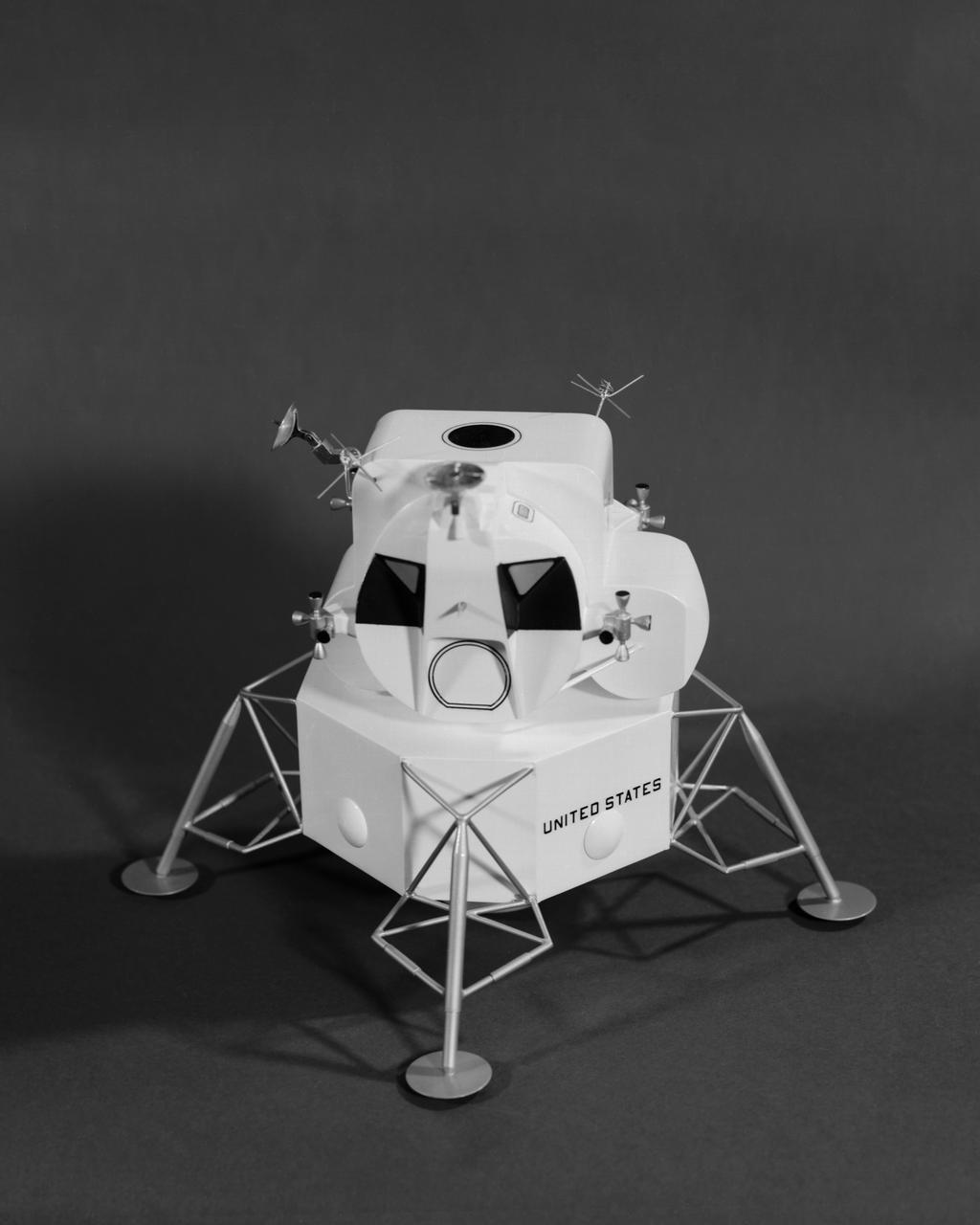
The lunar module design underwent gradual evolution from the first configuration proposed by Grumman in 1962. This model is the 1964 version. Langley had the task of building a simulator for the astronauts to practice lunar landings. The configuration of the initial vehicle used with the Lunar Landing Research Facility (LLRF) was changed in 1967 to more accurately reflect the standing position of the astronauts, cockpit arrangement, instrumentation, controls and field of view.
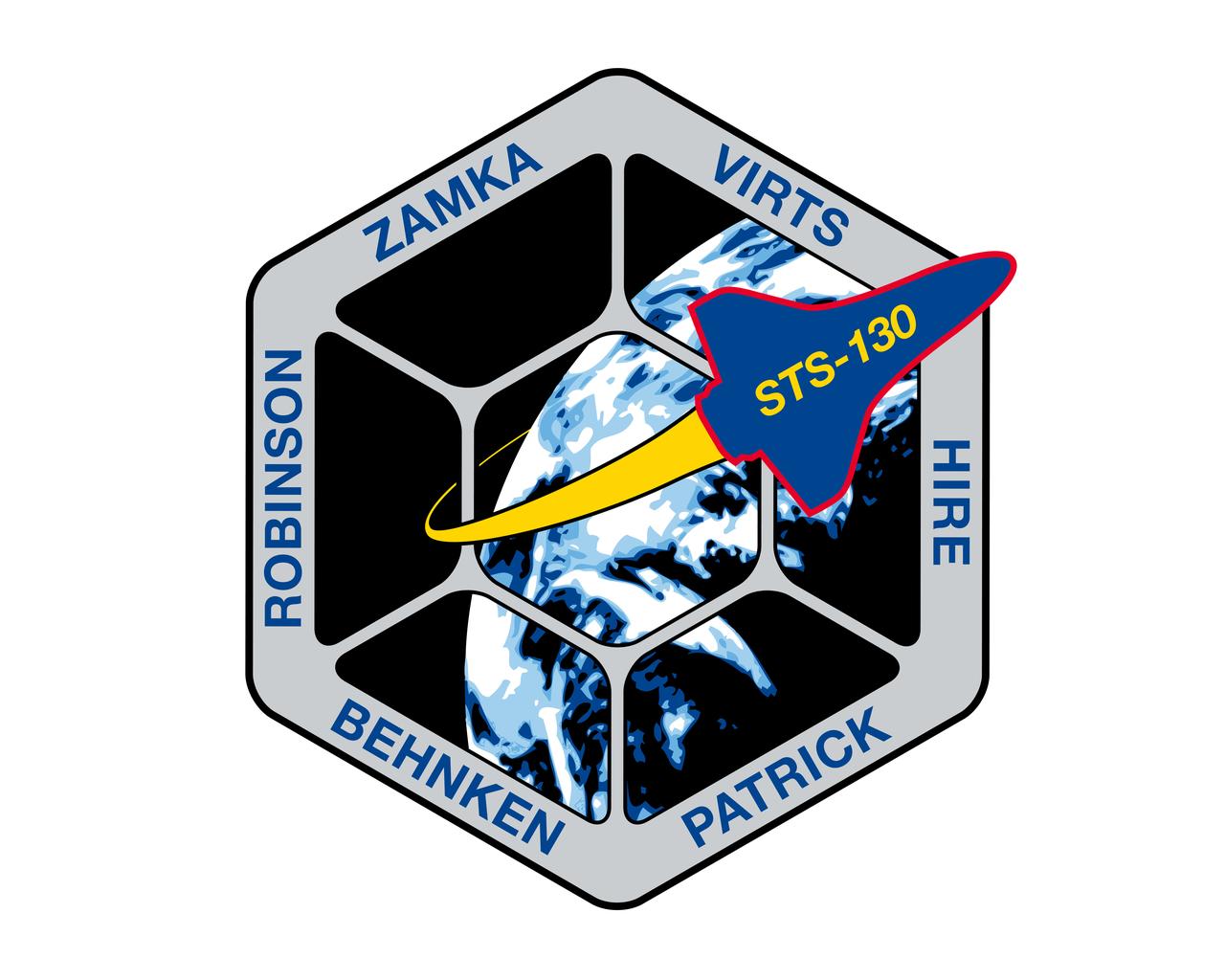
STS130-S-001 (September 2009) --- The STS-130 patch was designed by the crew to reflect both the objectives of the mission and its place in the history of human spaceflight. The main goal of the mission is to deliver Node 3 and the Cupola to the International Space Station (ISS). Node 3, named ?Tranquility,? will contain life support systems enabling continued human presence in orbit aboard the ISS. The shape of the patch represents the Cupola, which is the windowed robotics viewing station, from which astronauts will have the opportunity not only to monitor a variety of ISS operations, but also to study our home planet. The image of Earth depicted in the patch is the first photograph of Earth taken from the moon by Lunar Orbiter I on Aug. 23, 1966. As both a past and a future destination for explorers from planet Earth, the moon is thus represented symbolically in the STS-130 patch. The space shuttle Endeavour is pictured approaching the ISS, symbolizing the space shuttle's role as the prime construction vehicle for the ISS. The NASA insignia design for space shuttle flights is reserved for use by the astronauts and for other official use as the NASA Administrator may authorize. Public availability has been approved only in the forms of illustrations by the various news media. When and if there is any change in this policy, which is not anticipated, the change will be publicly announced. Photo credit: NASA
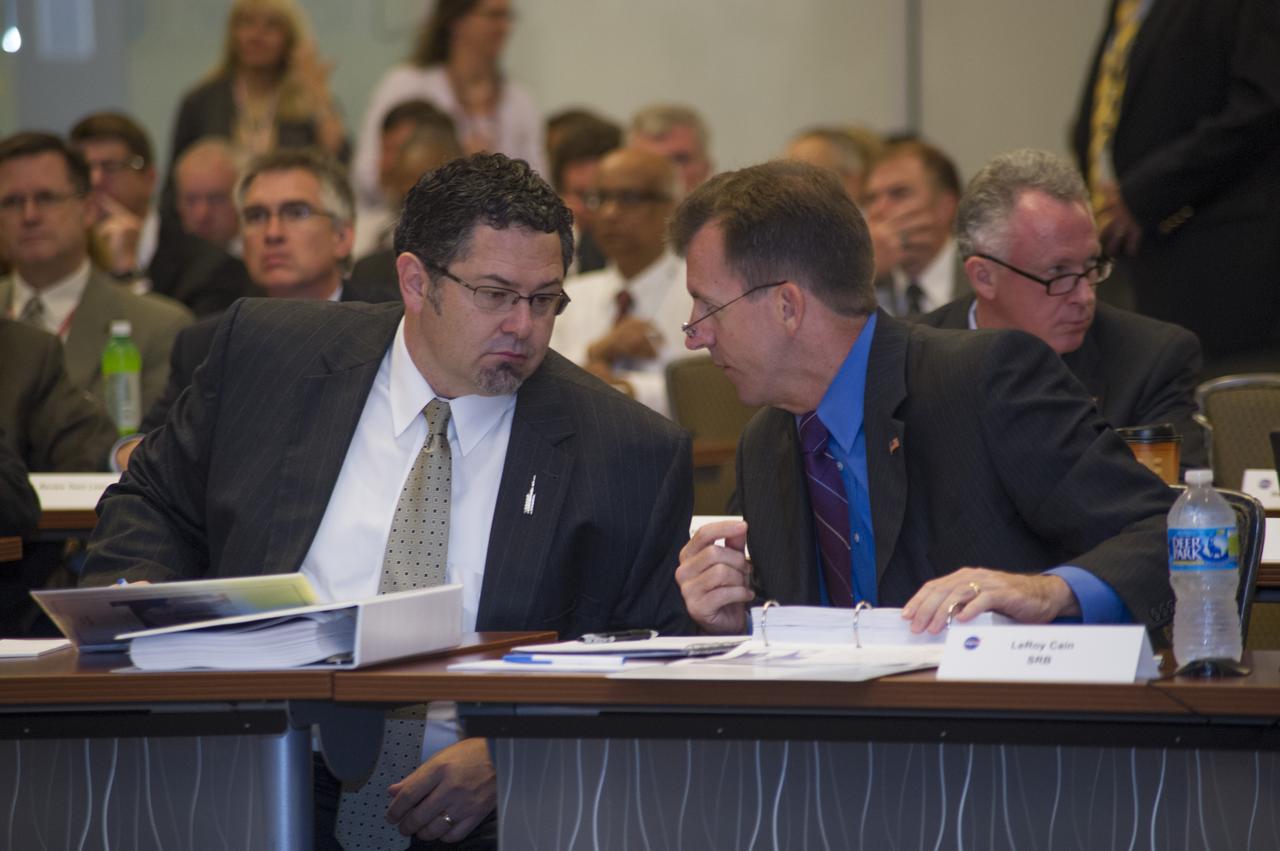
TODD MAY, LEFT, MANAGER OF THE SLS PROGRAM AT THE MARSHALL CENTER, DISCUSSES THE ROCKET'S SPECIFICATIONS WITH LEROY CAIN, WHO HEADS THE INDEPENDENT STANDING REVIEW BOARD FOR SLS, DURING THE SLS PROGRAM'S PRELIMINARY DESIGN REVIEW. THE REVIEW KICKED OFF JUNE 18-19
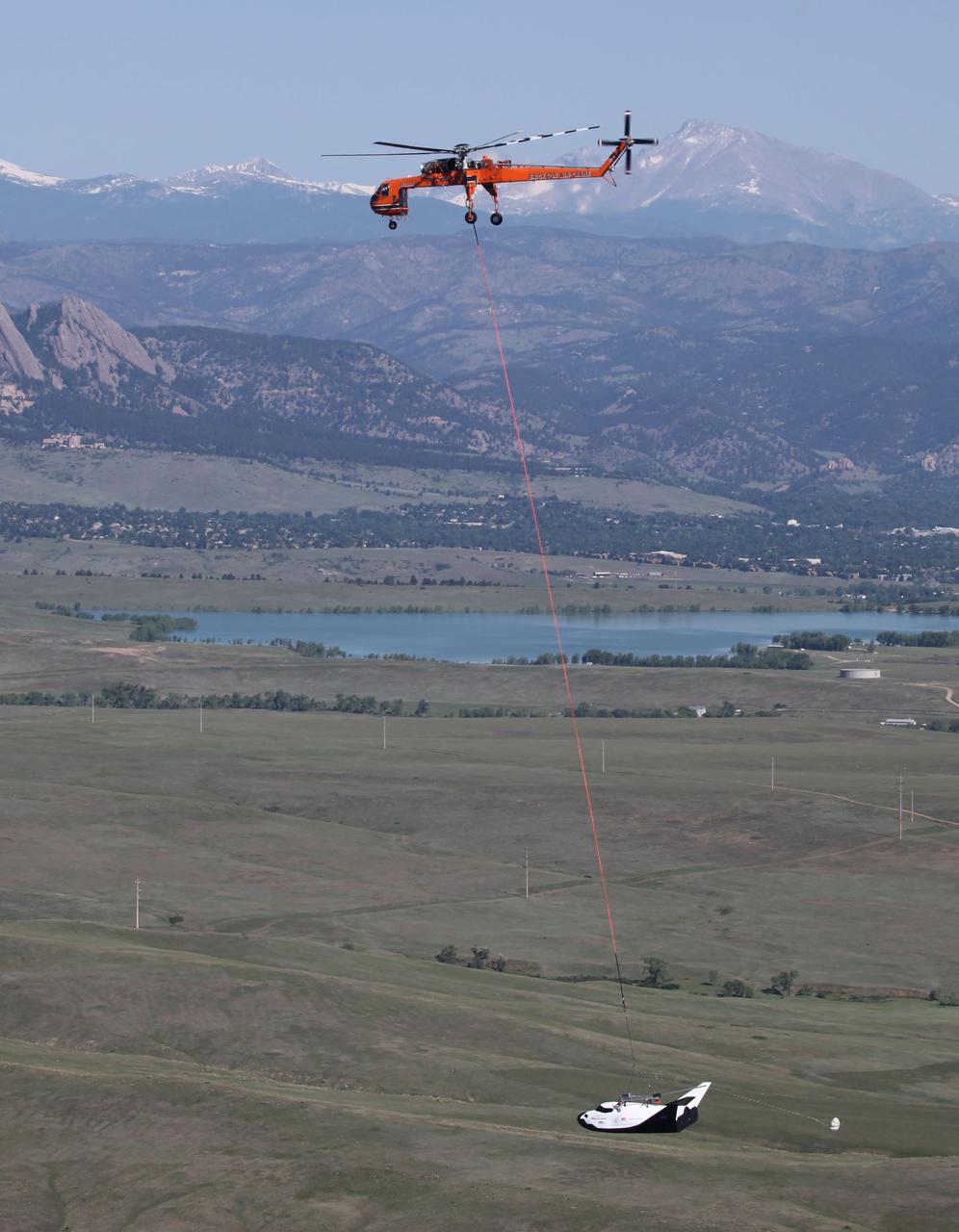
LOUISVILLE, Colo. – An Erickson Air-Crane helicopter lifts Sierra Nevada Corporation Space Systems’ Dream Chaser full-scale test vehicle to verify proper aerodynamic flight performance near the Rocky Mountain Metropolitan Airport in Jefferson County, Colo. This captive-carry test is one of several milestones the company is meeting during its partnership with NASA’s Commercial Crew Program CCP. Data from this test will provide SNC an early opportunity to evaluate and prove hardware, facilities and ground operations in preparation for approach and landing tests scheduled for later this year. In 2011, NASA selected Sierra Nevada during Commercial Crew Development Round 2 CCDev2) activities to mature the design and development of a crew transportation system with the overall goal of accelerating a United States-led capability to the International Space Station. The goal of CCP is to drive down the cost of space travel as well as open up space to more people than ever before by balancing industry’s own innovative capabilities with NASA's 50 years of human spaceflight experience. Six other aerospace companies also are maturing launch vehicle and spacecraft designs under CCDev2, including Alliant Techsystems Inc. ATK, The Boeing Co., Excalibur Almaz Inc., Blue Origin, Space Exploration Technologies SpaceX, and United Launch Alliance ULA. For more information, visit www.nasa.gov/commercialcrew. Image credit: Sierra Nevada Corp.
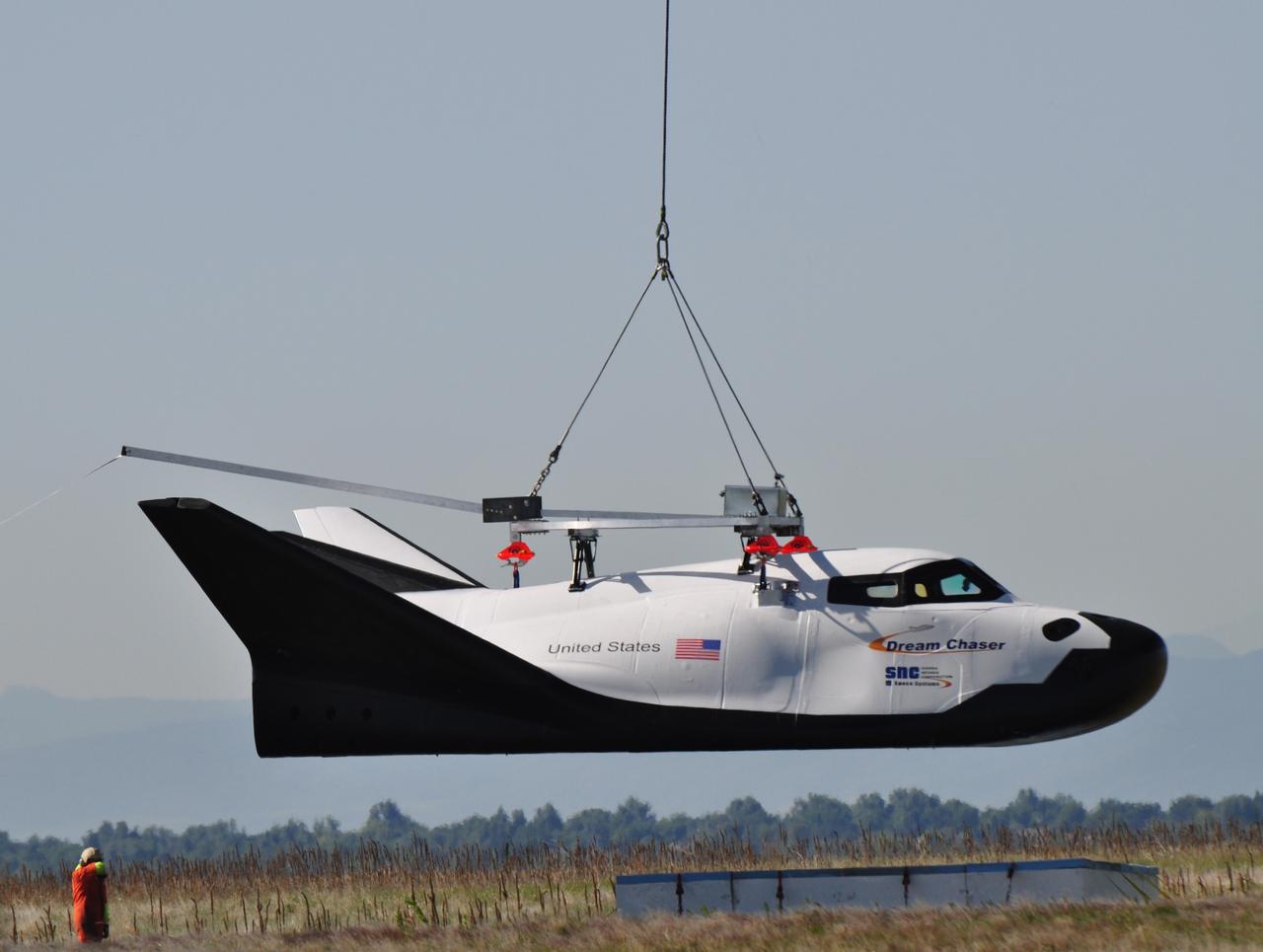
LOUISVILLE, Colo. – Sierra Nevada Corporation Space Systems’ Dream Chaser full-scale test vehicle is lifted by an Erickson Air-Crane helicopter to verify proper aerodynamic flight performance near the Rocky Mountain Metropolitan Airport in Jefferson County, Colo. This captive-carry test is one of several milestones the company is meeting during its partnership with NASA’s Commercial Crew Program CCP. Data from this test will provide SNC an early opportunity to evaluate and prove hardware, facilities and ground operations in preparation for approach and landing tests scheduled for later this year. In 2011, NASA selected Sierra Nevada during Commercial Crew Development Round 2 CCDev2) activities to mature the design and development of a crew transportation system with the overall goal of accelerating a United States-led capability to the International Space Station. The goal of CCP is to drive down the cost of space travel as well as open up space to more people than ever before by balancing industry’s own innovative capabilities with NASA's 50 years of human spaceflight experience. Six other aerospace companies also are maturing launch vehicle and spacecraft designs under CCDev2, including Alliant Techsystems Inc. ATK, The Boeing Co., Excalibur Almaz Inc., Blue Origin, Space Exploration Technologies SpaceX, and United Launch Alliance ULA. For more information, visit www.nasa.gov/commercialcrew. Image credit: Sierra Nevada Corp.
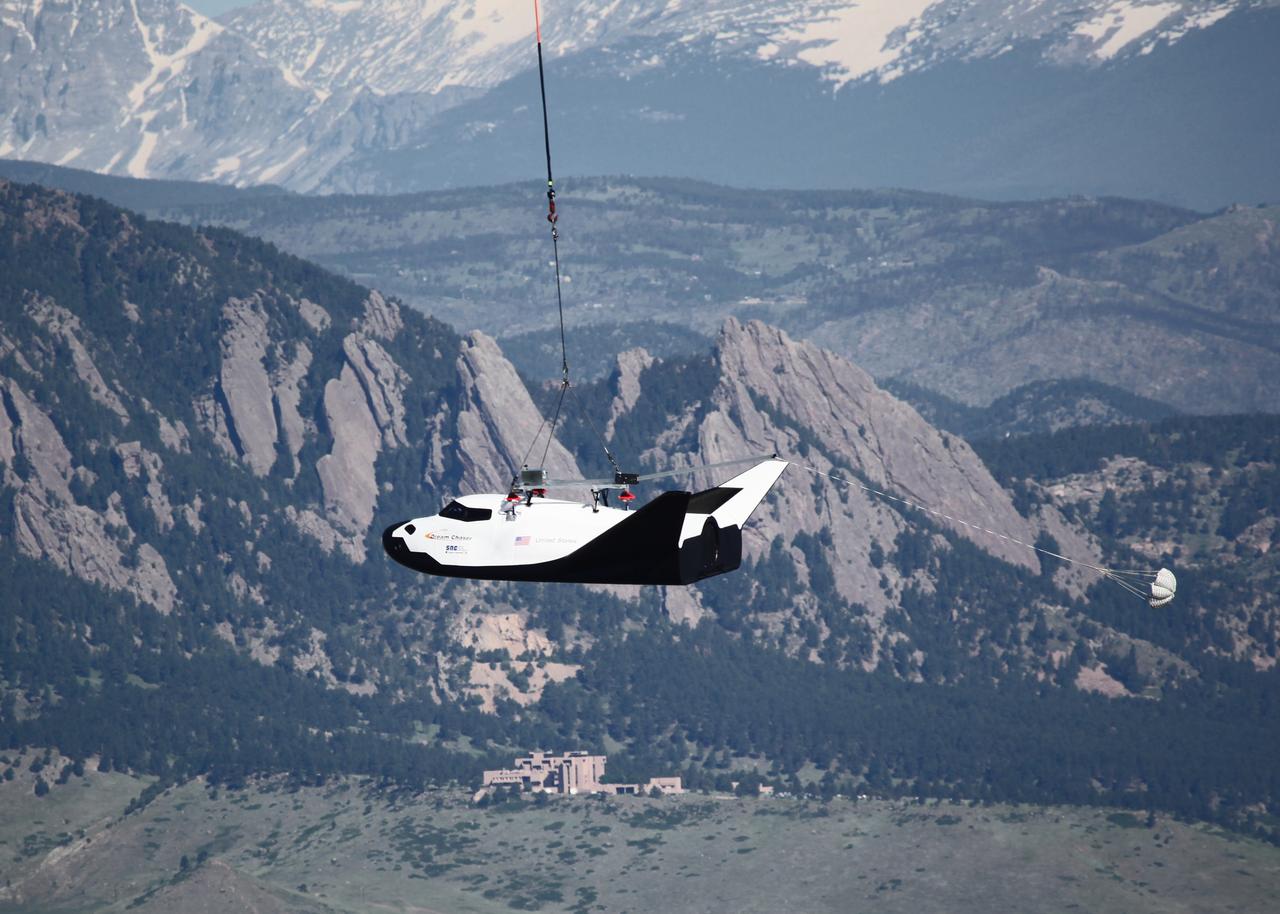
LOUISVILLE, Colo. – Sierra Nevada Corporation Space Systems’ Dream Chaser full-scale test vehicle is lifted by an Erickson Air-Crane helicopter to verify proper aerodynamic flight performance near the Rocky Mountain Metropolitan Airport in Jefferson County, Colo. This captive-carry test is one of several milestones the company is meeting during its partnership with NASA’s Commercial Crew Program CCP. Data from this test will provide SNC an early opportunity to evaluate and prove hardware, facilities and ground operations in preparation for approach and landing tests scheduled for later this year. In 2011, NASA selected Sierra Nevada during Commercial Crew Development Round 2 CCDev2) activities to mature the design and development of a crew transportation system with the overall goal of accelerating a United States-led capability to the International Space Station. The goal of CCP is to drive down the cost of space travel as well as open up space to more people than ever before by balancing industry’s own innovative capabilities with NASA's 50 years of human spaceflight experience. Six other aerospace companies also are maturing launch vehicle and spacecraft designs under CCDev2, including Alliant Techsystems Inc. ATK, The Boeing Co., Excalibur Almaz Inc., Blue Origin, Space Exploration Technologies SpaceX, and United Launch Alliance ULA. For more information, visit www.nasa.gov/commercialcrew. Image credit: Sierra Nevada Corp.
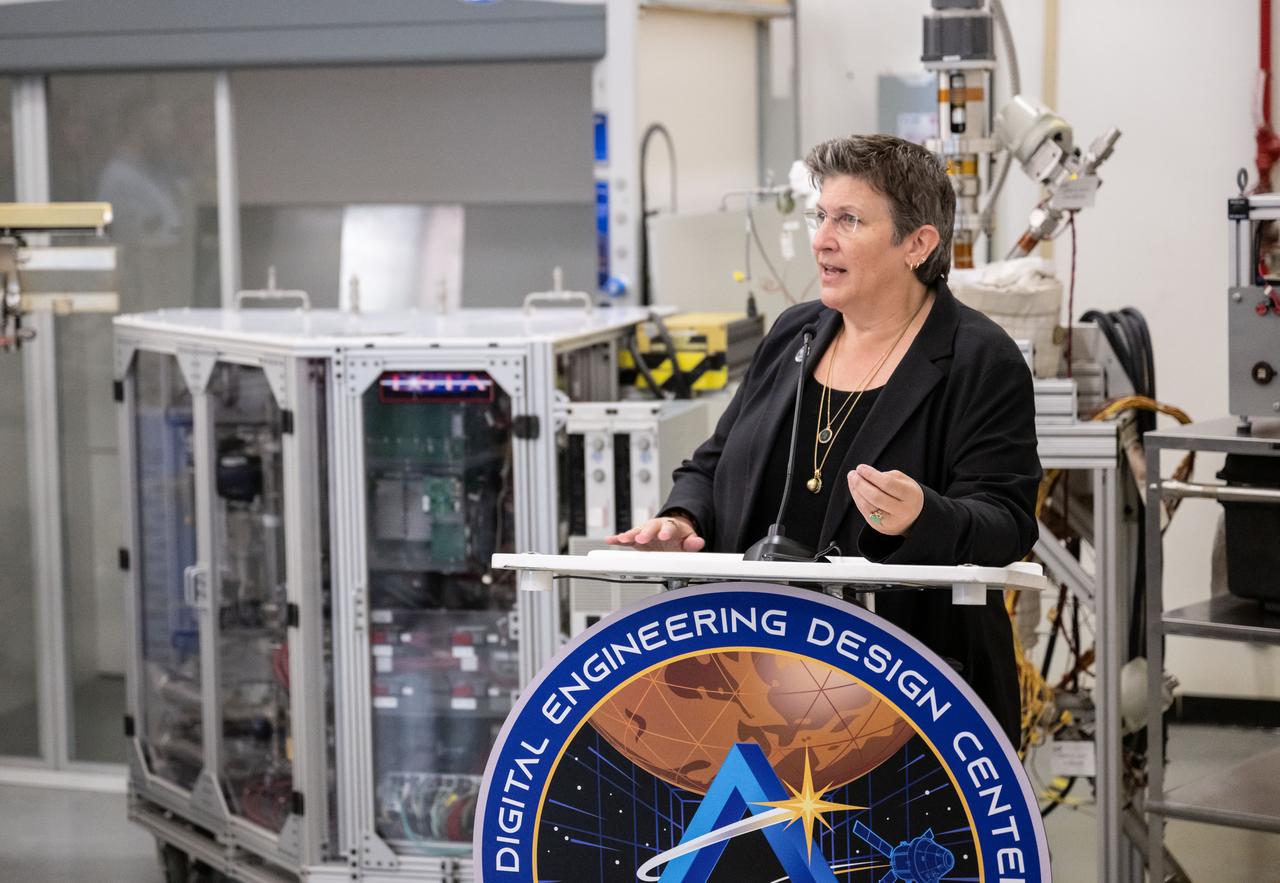
Date: 06-01-2023 Location: Bldg 360 Subject: University of Texas - El Paso (UTEP) Ribbon Cutting Ceremony for the Digital Engineering Design Center in Building 360 Lab Photographer: James Blair
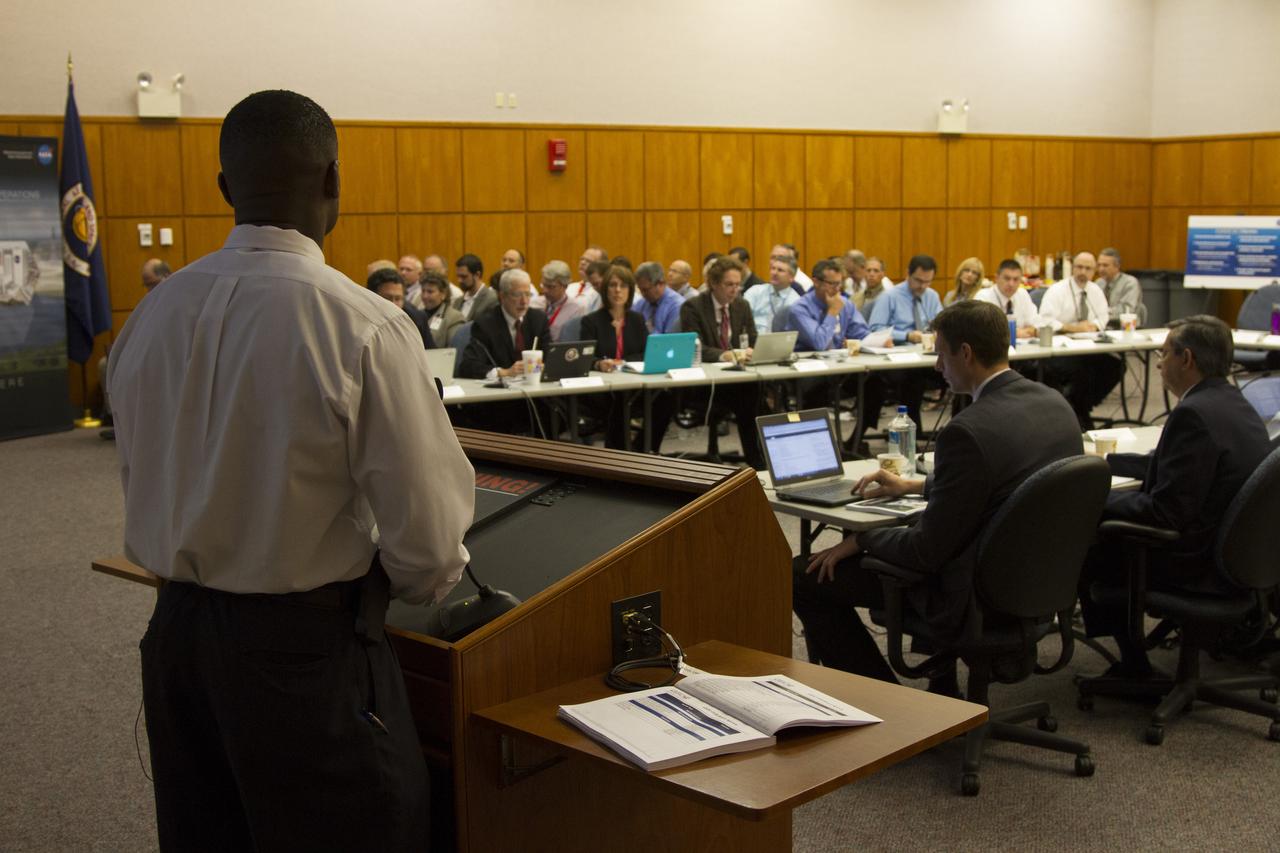
CAPE CANAVERAL, Fla. – The Ground Systems Development and Operations, or GSDO, Program completed its preliminary design review which allows development of the ground systems to proceed to detailed design. Representatives from NASA, its contractor partners and experts from across the aerospace industry met in the Mission Briefing Room inside the Operations and Checkout Building at NASA’s Kennedy Space Center in Florida to conclude the initial design and technology development phase. Completion of this review has validated that the baseline architecture is sound and aligns with the agency's exploration objectives. NASA is developing the Space Launch System and Orion spacecraft to provide an entirely new capability for human exploration beyond low-Earth orbit, with the flexibility to launch spacecraft for crew and cargo missions, including to an asteroid and Mars. Orion’s first unpiloted test flight is scheduled to launch later this year atop a Delta IV rocket. A second uncrewed flight test is scheduled for fiscal year 2018 on the Space Launch System rocket. For more information, visit http://www.nasa.gov/orion. Photo credit: NASA/Cory Huston
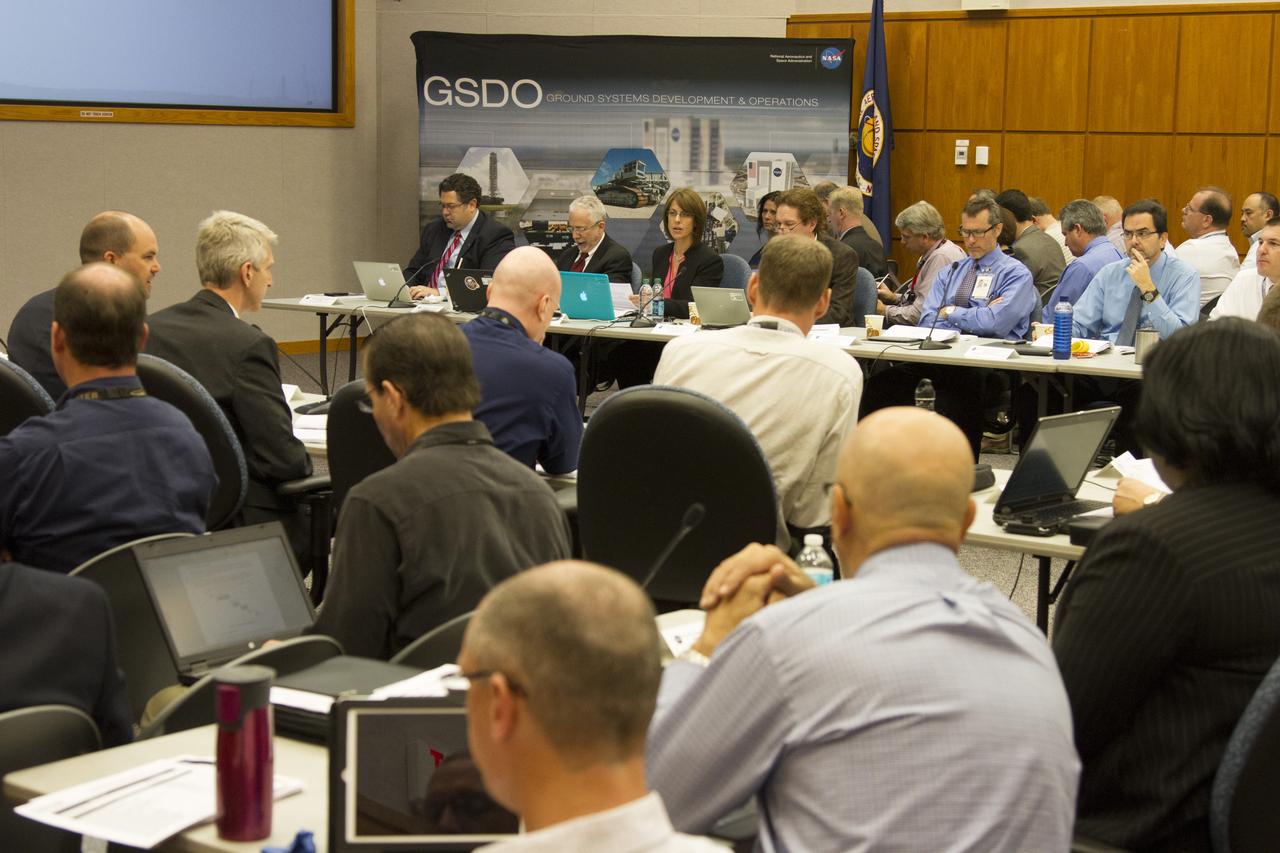
CAPE CANAVERAL, Fla. – The Ground Systems Development and Operations, or GSDO, Program completed its preliminary design review which allows development of the ground systems to proceed to detailed design. Representatives from NASA, its contractor partners and experts from across the aerospace industry met in the Mission Briefing Room inside the Operations and Checkout Building at NASA’s Kennedy Space Center in Florida to conclude the initial design and technology development phase. Completion of this review has validated that the baseline architecture is sound and aligns with the agency's exploration objectives. NASA is developing the Space Launch System and Orion spacecraft to provide an entirely new capability for human exploration beyond low-Earth orbit, with the flexibility to launch spacecraft for crew and cargo missions, including to an asteroid and Mars. Orion’s first unpiloted test flight is scheduled to launch later this year atop a Delta IV rocket. A second uncrewed flight test is scheduled for fiscal year 2018 on the Space Launch System rocket. For more information, visit http://www.nasa.gov/orion. Photo credit: NASA/Cory Huston
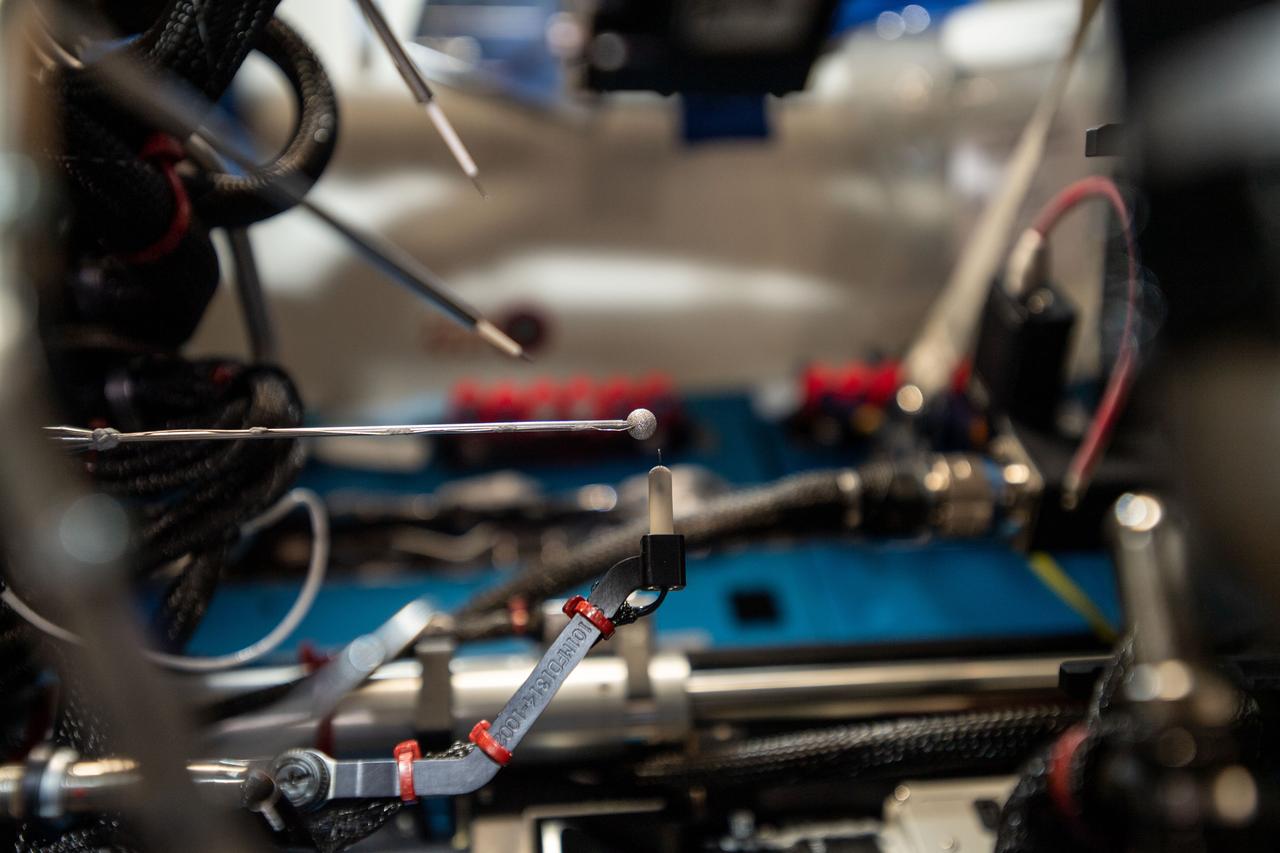
iss059e103188 (6/14/2019) --- Photo documentation taken aboard the International Space Station (ISS) during the Fluids and Combustion Facility (FCF) Combustion Integration Rack (CIR) / Advanced Combustion via Microgravity Experiments (ACME) / Flame Design hardware replacement.
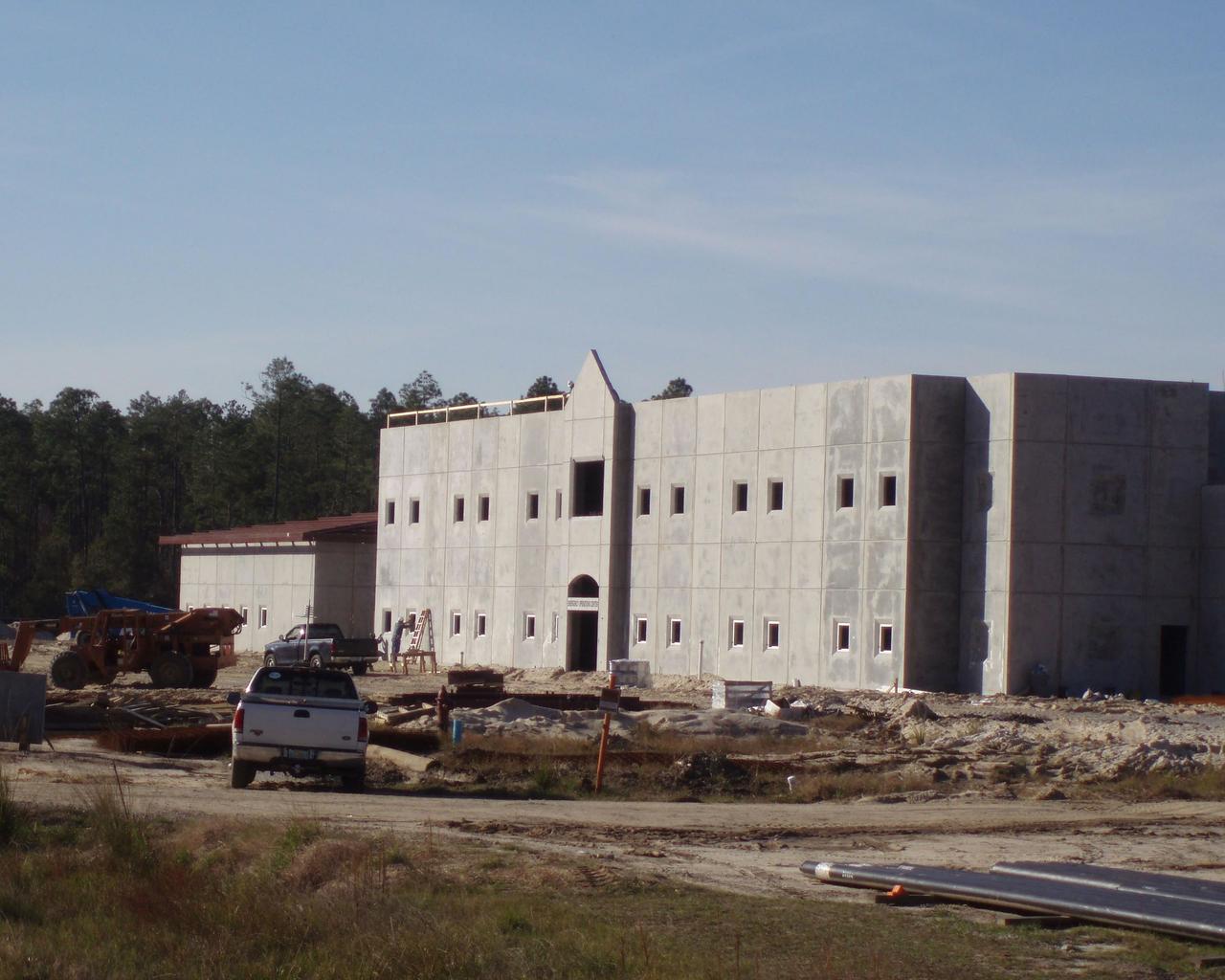
Work on Stennis Space Center's new Emergency Operations Center is progressing on schedule, according to Robert Perkins, construction manager with Jacobs Technology. At the turn of the New Year, construction contractors had completed the pervious paving for the north and west parking lots. Part of the facility's `green' design, pervious paving allows water to pass through and be absorbed directly into the ground below, preventing erosion from runoff. Through January, workers concentrated on installing the roof, sprinkler piping and overhead cable trays for electrical and communication lines. The next step will be interior work, erecting wallboard and installing electrical equipment. Perkins said NASA seeks to earn a Silver LEED (Leadership in Energy and Environmental Design) Rating for the project's environmentally-friendly and sustainable design, construction and operation. The facility has a projected completion date of February 2009.
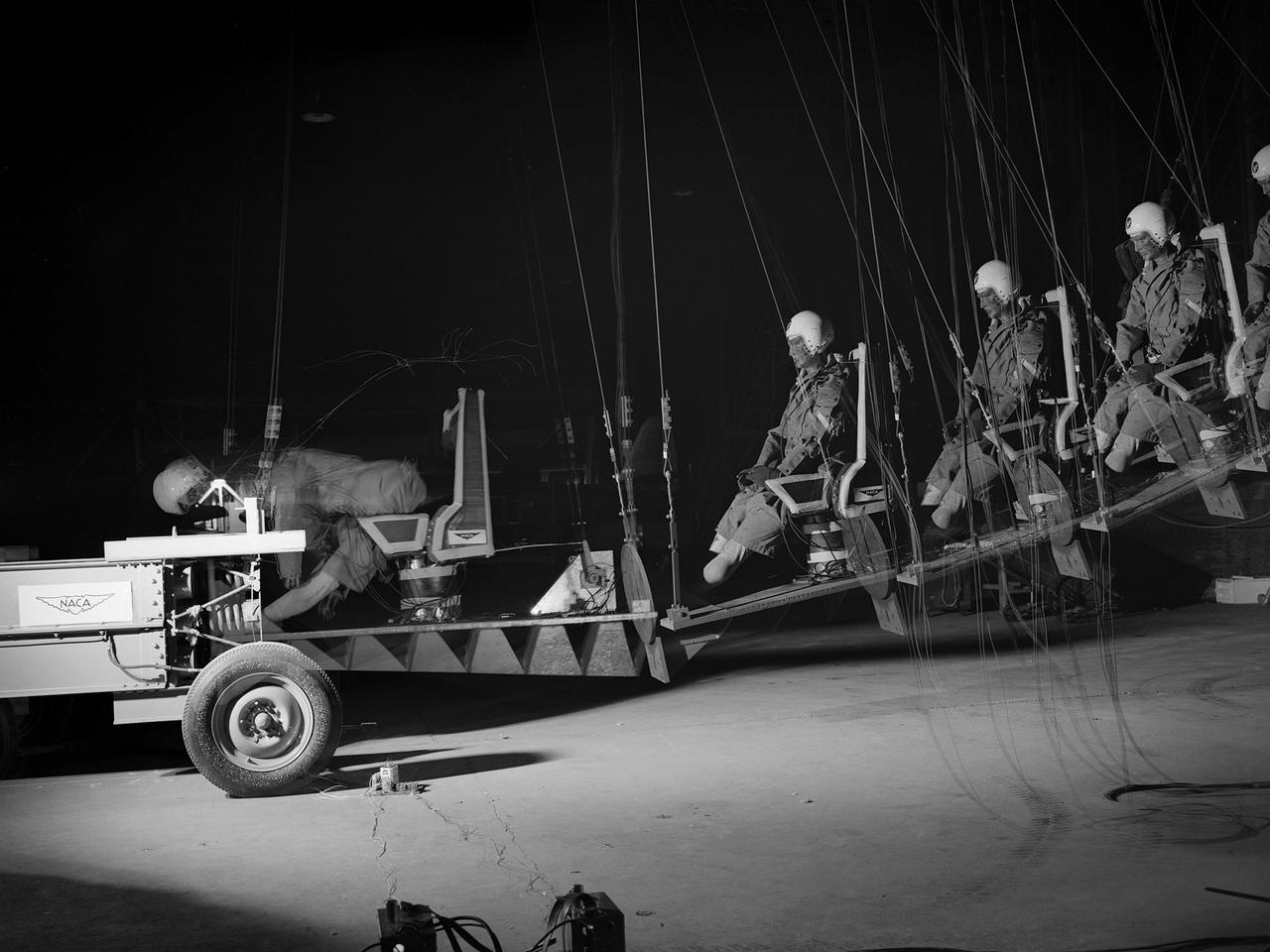
This time-lapse photograph shows the test of a pilot seat and restraint designed by researchers at the National Advisory Committee for Aeronautics (NACA) Lewis Flight Propulsion Laboratory. The laboratory had undertaken a multi-year investigation into the causes and preventative measures for fires resulting from low altitude aircraft crashes. The program was expanded in the mid-1950s to include the study of crash impact on passengers, new types of types of seat restraints, and better seat designs. The impact program began by purposely wrecking surplus transport Fairchild C-82 Packet and Piper Cub aircraft into barricades at the end of a test runway. Instrumented dummies and cameras were installed in the pilot and passenger areas. After determining the different loads experienced during a crash and the effects on the passengers, the NACA researchers began designing new types of seats and restraints. The result was an elastic seat that flexed upon impact, absorbing 75 percent of the loads before it slowly recoiled. This photograph shows the seats mounted on a pendulum with a large spring behind the platform to provide the jolt that mimicked the forces of a crash. The seat was constructed without any potentially damaging metal parts and included rubber-like material, an inflated back and arms, and a seat cushion. After the pendulum tests, the researchers compared the flexible seats to the rigid seats during a crash of a transport aircraft. They found the passengers in the rigid seats received 66 percent higher g-forces than the NACA-designed seats.
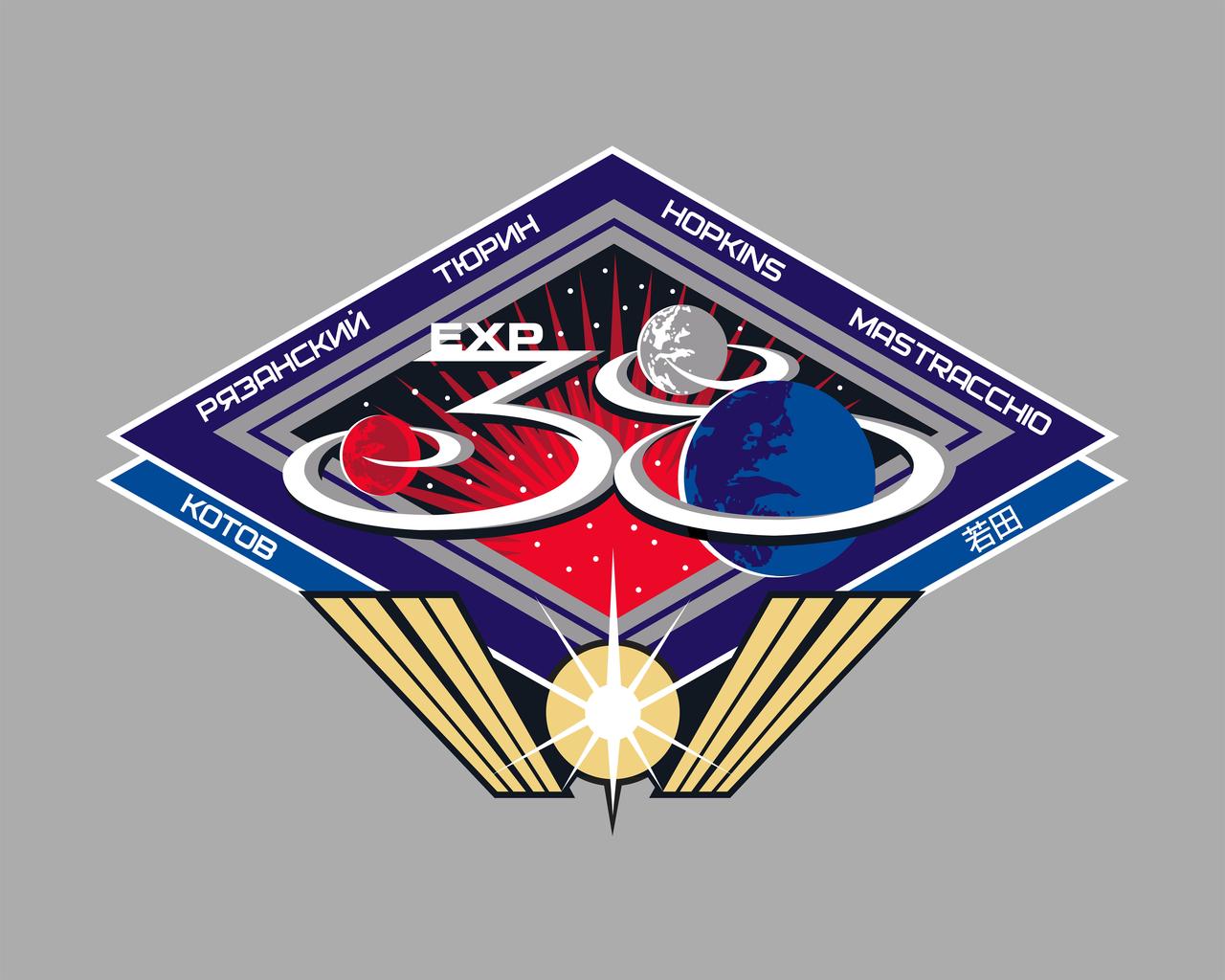
ISS038-S-001 (April 2013) --- As the International Space Station (ISS) has become a stepping stone to future space exploration, the Expedition 38 mission patch design paints a visual roadmap of exploration beyond low Earth orbit, most prominently represented by the design?s flowing Expedition 38 mission numbers that wrap around Earth, the moon and Mars. Just as the sun is a guiding light in the galaxy, the ISS illuminates the bottom of the design as it is a shining beacon of the advancement of science, knowledge, and technology carried out aboard the Space Station. To visually capture the idea of the ISS being a foundation for infinite discovery, the space station?s iconic solar arrays span upwards, providing the number 38 and its exploration roadmap a symbolic pedestal to rest on. Finally, the overall use of red, white, and blue in the design acknowledges the flags of the countries of origin for Expedition 38?s crew ? the United States, Russia, and Japan. The NASA insignia design for space shuttle flights is reserved for use by the astronauts and for other official use as the NASA Administrator may authorize. Public availability has been approved only in the forms of illustrations by the various news media. When and if there is any change in this policy, which is not anticipated, the change will be publicly announced. Photo credit: NASA