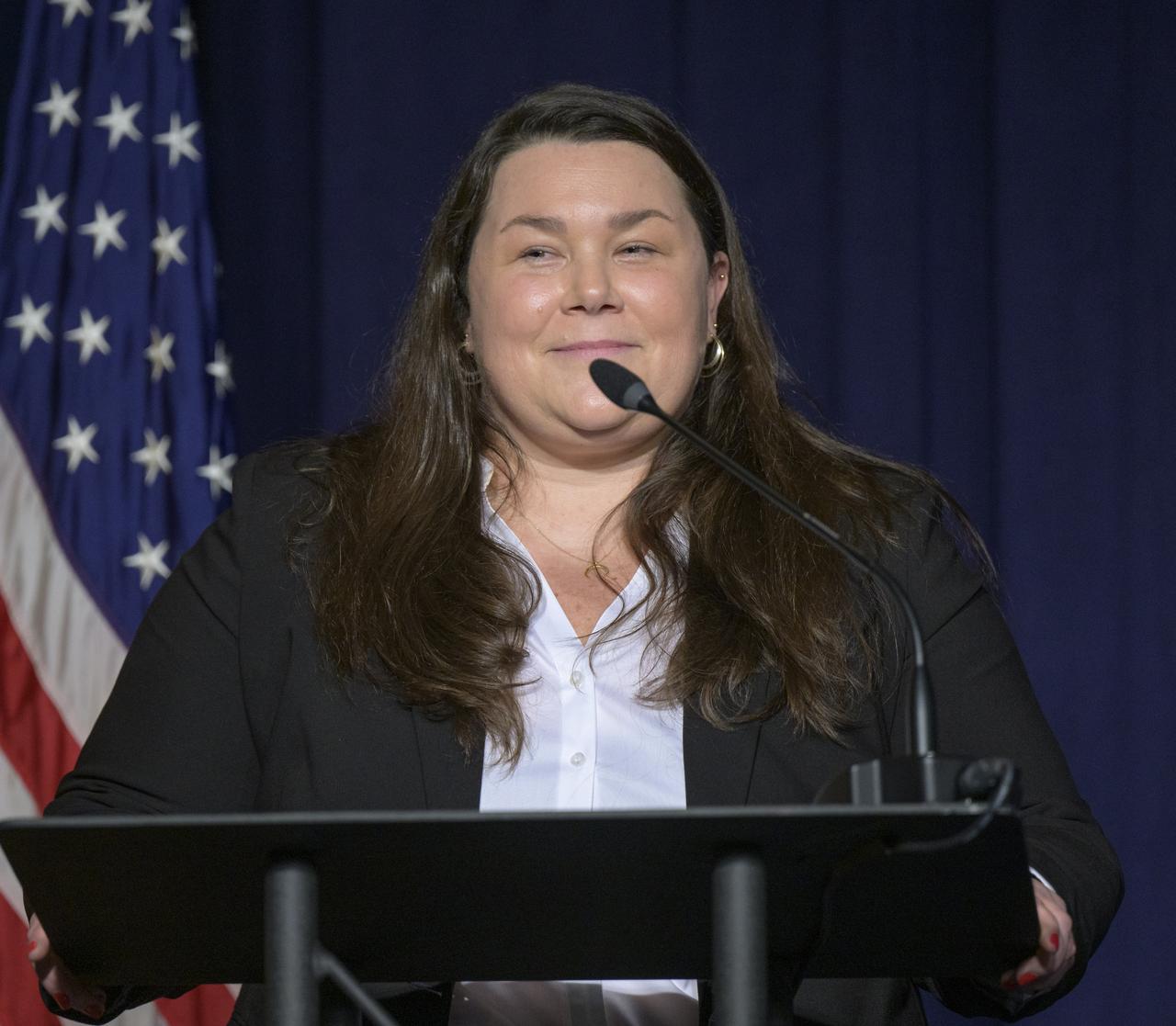
NASA Disasters Program Manager Shanna McClain delivers remarks during an event launching a new Disaster Response Coordination System that will provide communities and organizations around the world with access to science and data to aid disaster response, Thursday, June 13, 2024, at the NASA Headquarters Mary W. Jackson Building in Washington. Photo Credit: (NASA/Bill Ingalls)
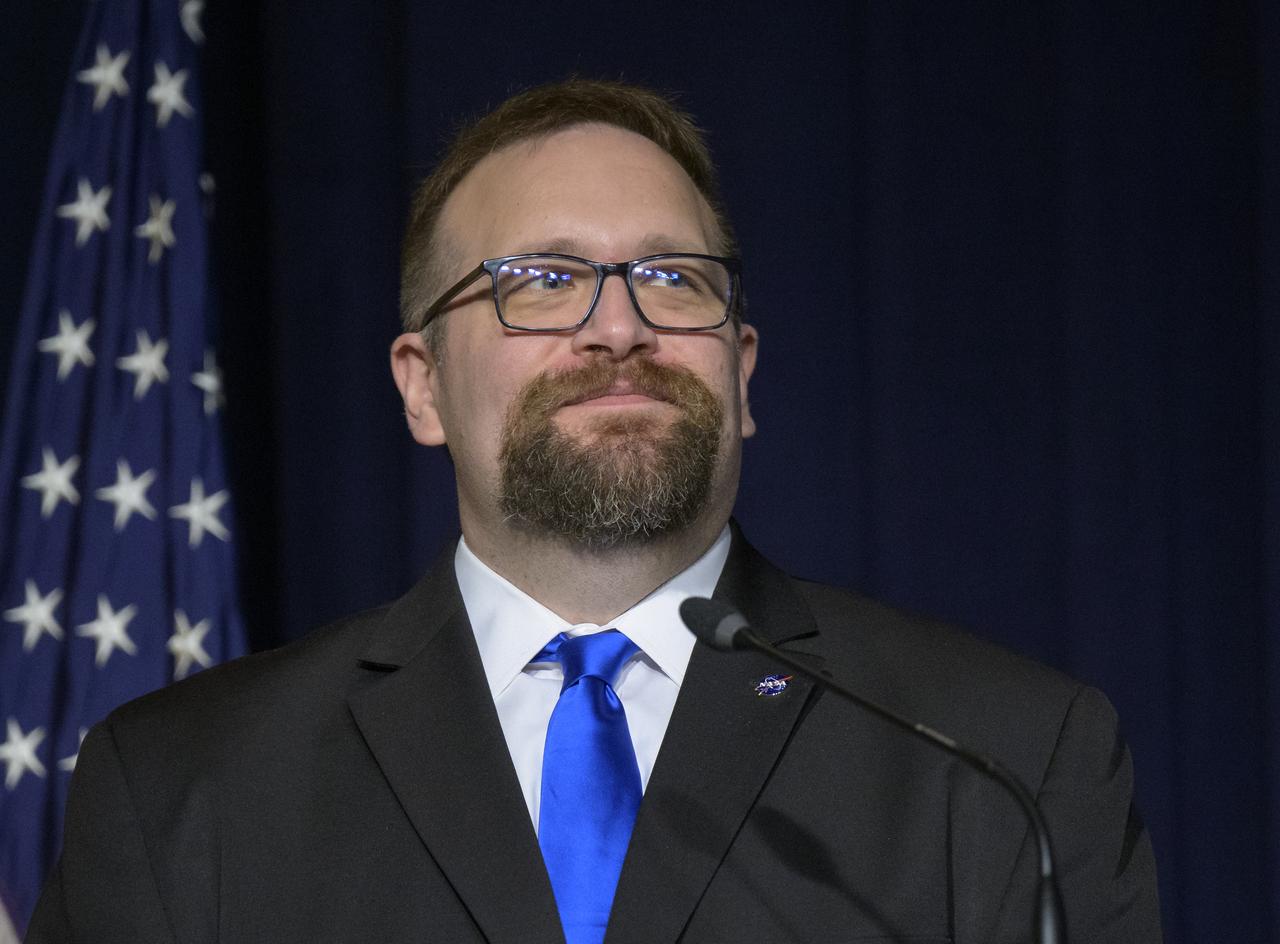
NASA Disaster Response Coordination System Manager Joshua Barnes delivers remarks during an event launching a new Disaster Response Coordination System that will provide communities and organizations around the world with access to science and data to aid disaster response, Thursday, June 13, 2024, at the NASA Headquarters Mary W. Jackson Building in Washington. Photo Credit: (NASA/Bill Ingalls)
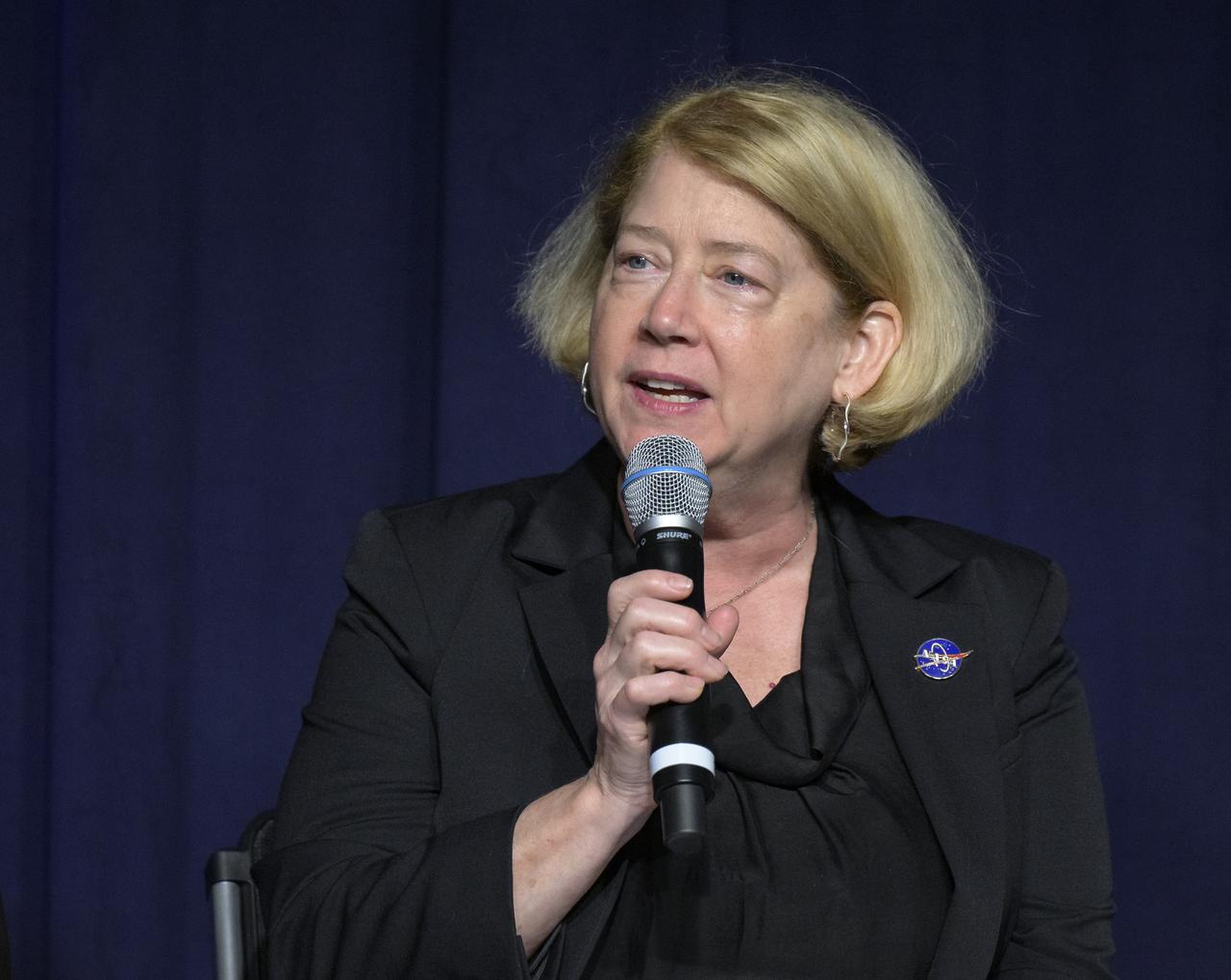
NASA Deputy Administrator Pam Melroy delivers remarks during an event launching a new Disaster Response Coordination System that will provide communities and organizations around the world with access to science and data to aid disaster response, Thursday, June 13, 2024, at the NASA Headquarters Mary W. Jackson Building in Washington. Photo Credit: (NASA/Bill Ingalls)
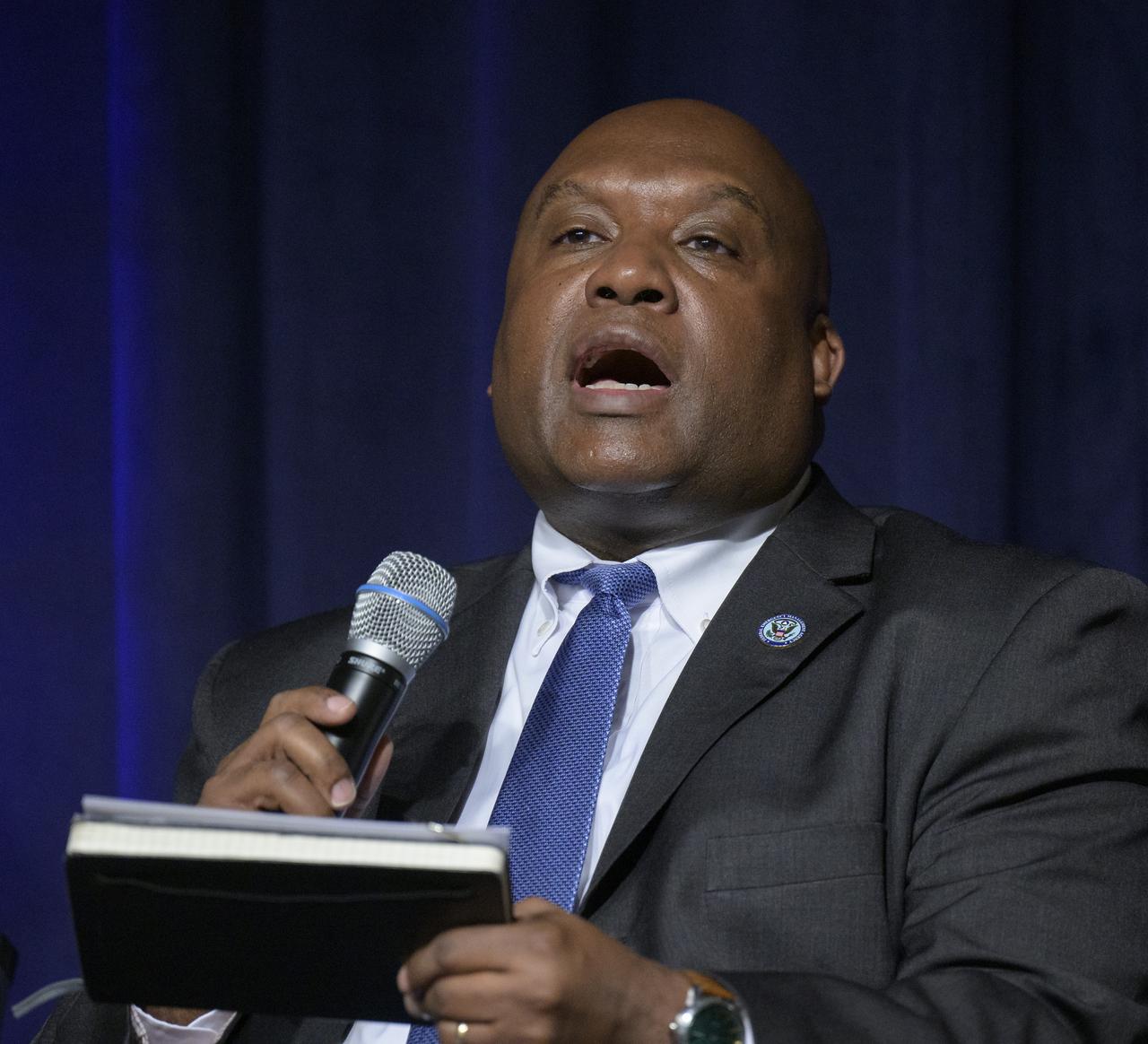
Federal Emergency Management Agency Deputy Administrator Erik Hooks delivers remarks during an event launching a new Disaster Response Coordination System that will provide communities and organizations around the world with access to science and data to aid disaster response, Thursday, June 13, 2024, at the NASA Headquarters Mary W. Jackson Building in Washington. Photo Credit: (NASA/Bill Ingalls)

NASA Langley Research Center Director Clayton Turner delivers remarks during an event launching a new Disaster Response Coordination System that will provide communities and organizations around the world with access to science and data to aid disaster response, Thursday, June 13, 2024, at the NASA Headquarters Mary W. Jackson Building in Washington. Photo Credit: (NASA/Bill Ingalls)
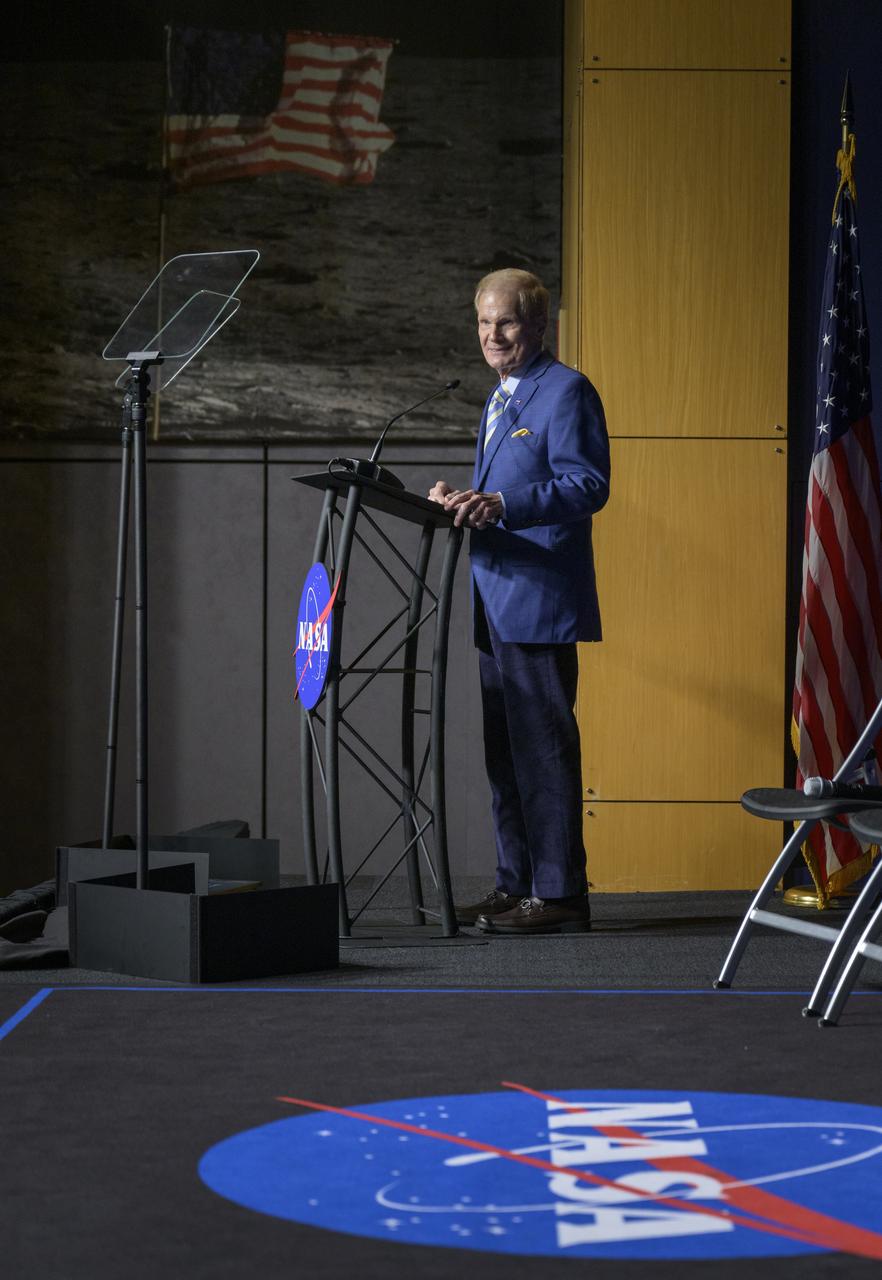
NASA Administrator Bill Nelson delivers remarks during an event launching a new Disaster Response Coordination System that will provide communities and organizations around the world with access to science and data to aid disaster response, Thursday, June 13, 2024, at the NASA Headquarters Mary W. Jackson Building in Washington. Photo Credit: (NASA/Bill Ingalls)
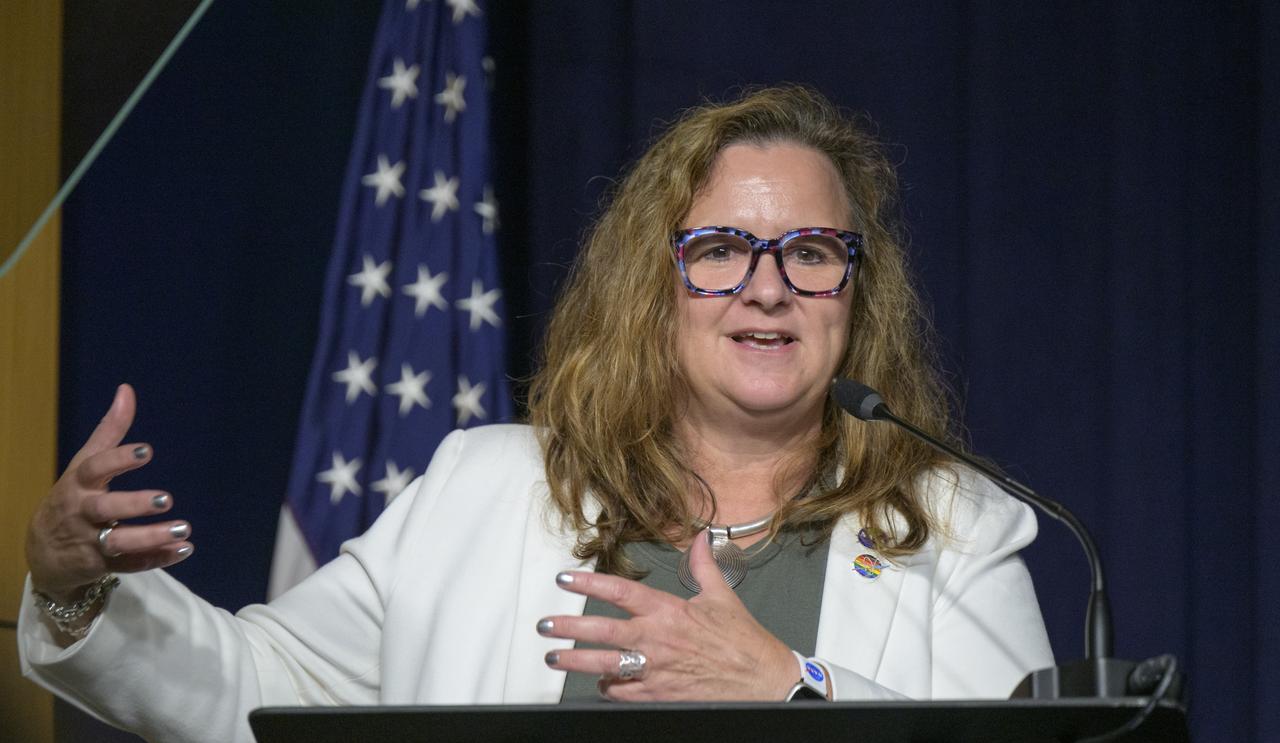
NASA Earth Science Director Karen St. Germain delivers remarks during an event launching a new Disaster Response Coordination System that will provide communities and organizations around the world with access to science and data to aid disaster response, Thursday, June 13, 2024, at the NASA Headquarters Mary W. Jackson Building in Washington. Photo Credit: (NASA/Bill Ingalls)
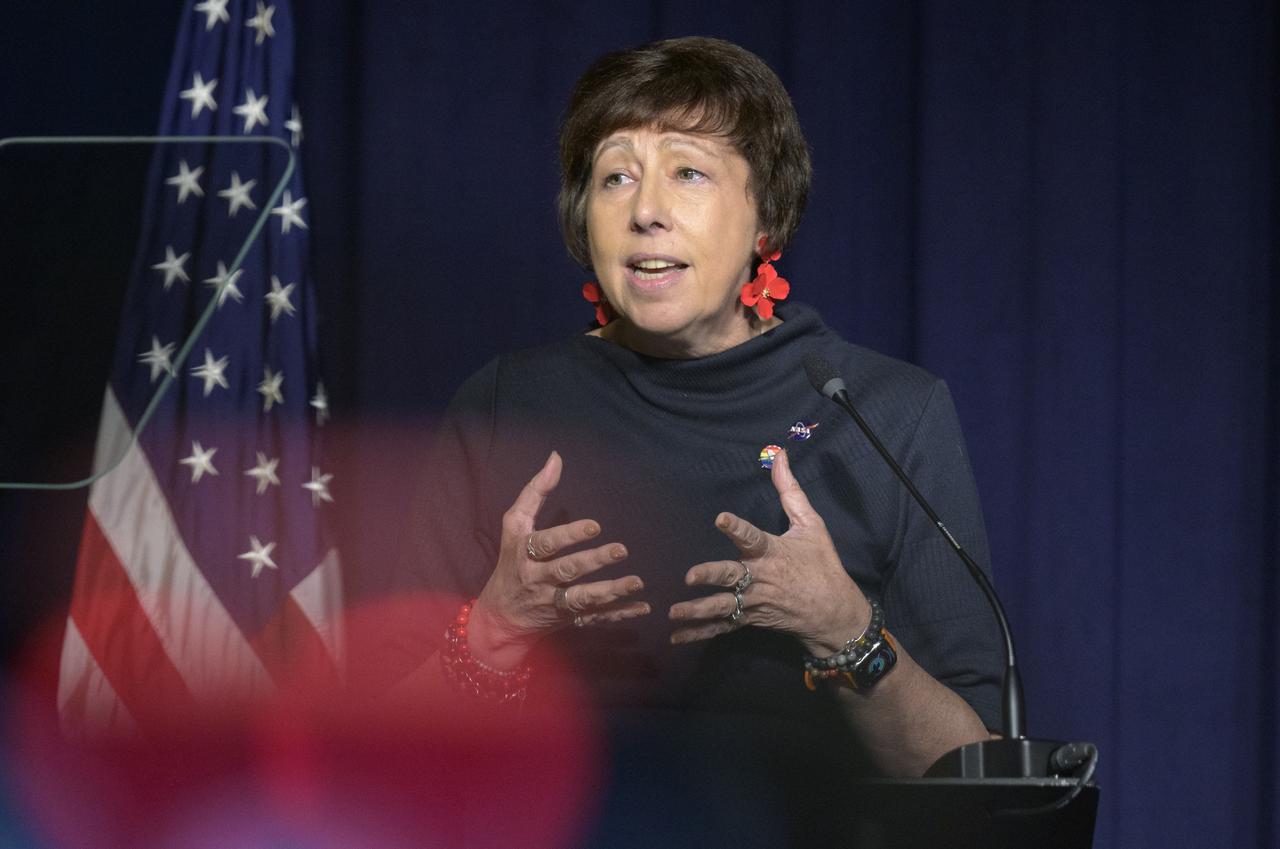
NASA Associate Administrator, Science Mission Directorate, Dr. Nicky Fox delivers remarks during an event launching a new Disaster Response Coordination System that will provide communities and organizations around the world with access to science and data to aid disaster response, Thursday, June 13, 2024, at the NASA Headquarters Mary W. Jackson Building in Washington. Photo Credit: (NASA/Bill Ingalls)
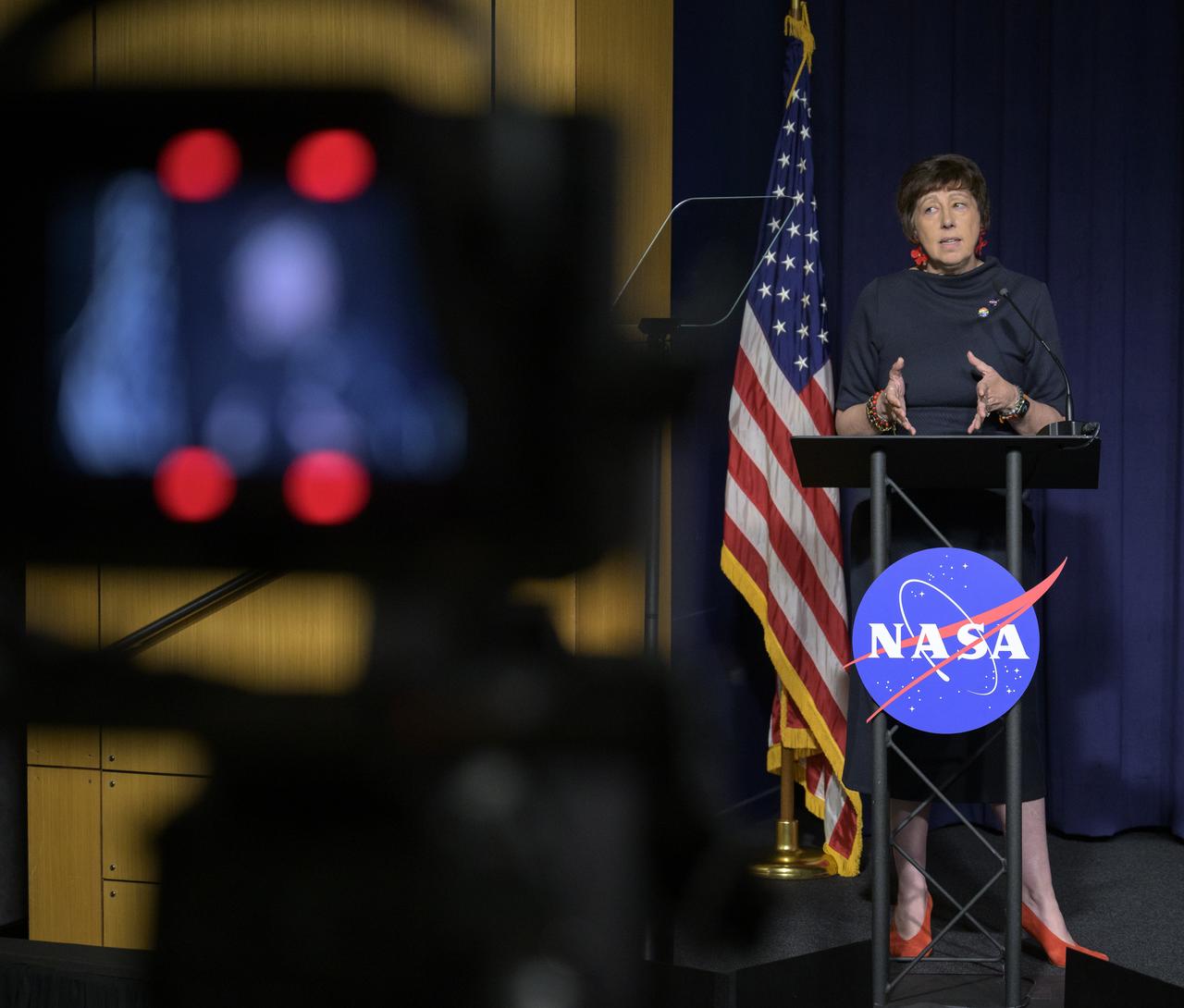
NASA Associate Administrator, Science Mission Directorate, Dr. Nicky Fox delivers remarks during an event launching a new Disaster Response Coordination System that will provide communities and organizations around the world with access to science and data to aid disaster response, Thursday, June 13, 2024, at the NASA Headquarters Mary W. Jackson Building in Washington. Photo Credit: (NASA/Bill Ingalls)
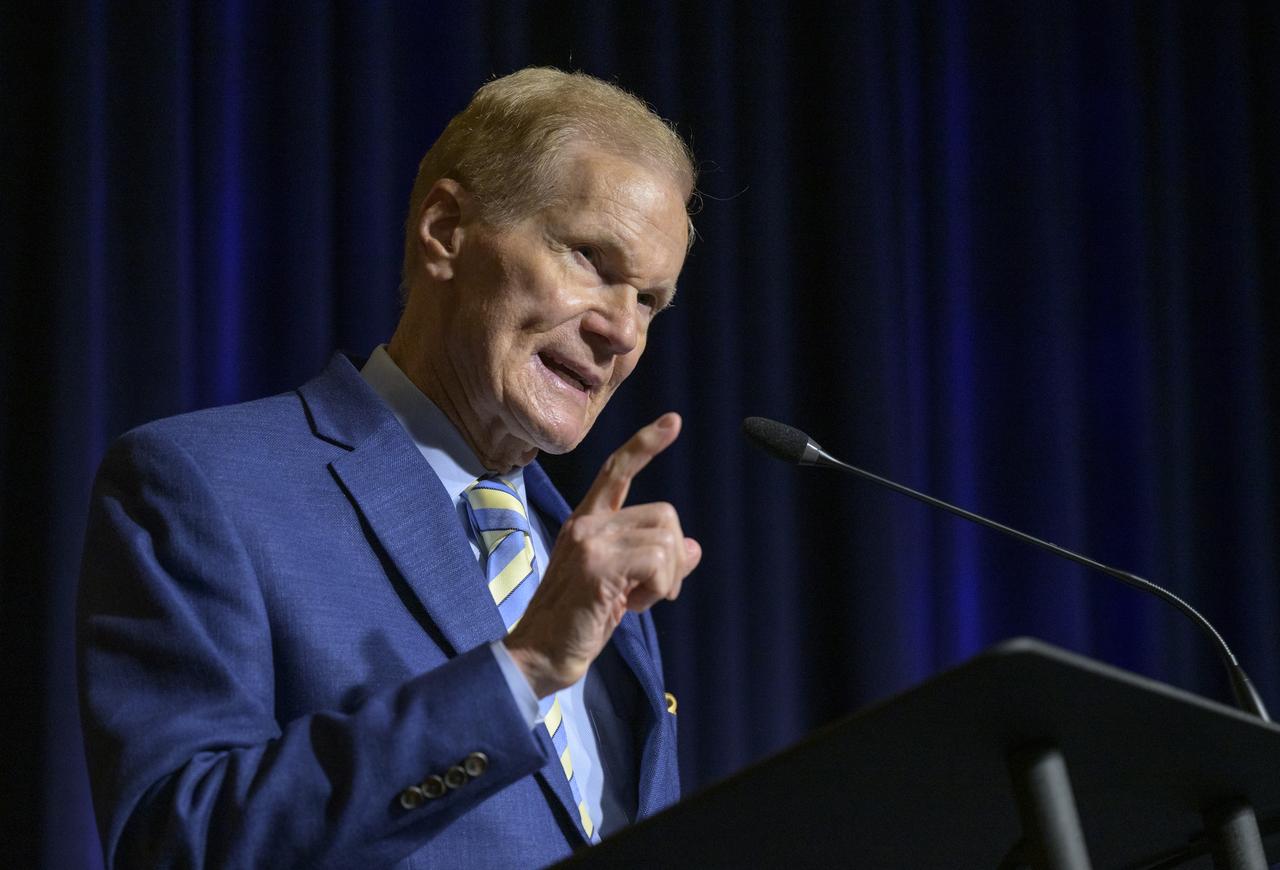
NASA Administrator Bill Nelson delivers remarks during an event launching a new Disaster Response Coordination System that will provide communities and organizations around the world with access to science and data to aid disaster response, Thursday, June 13, 2024, at the NASA Headquarters Mary W. Jackson Building in Washington. Photo Credit: (NASA/Bill Ingalls)
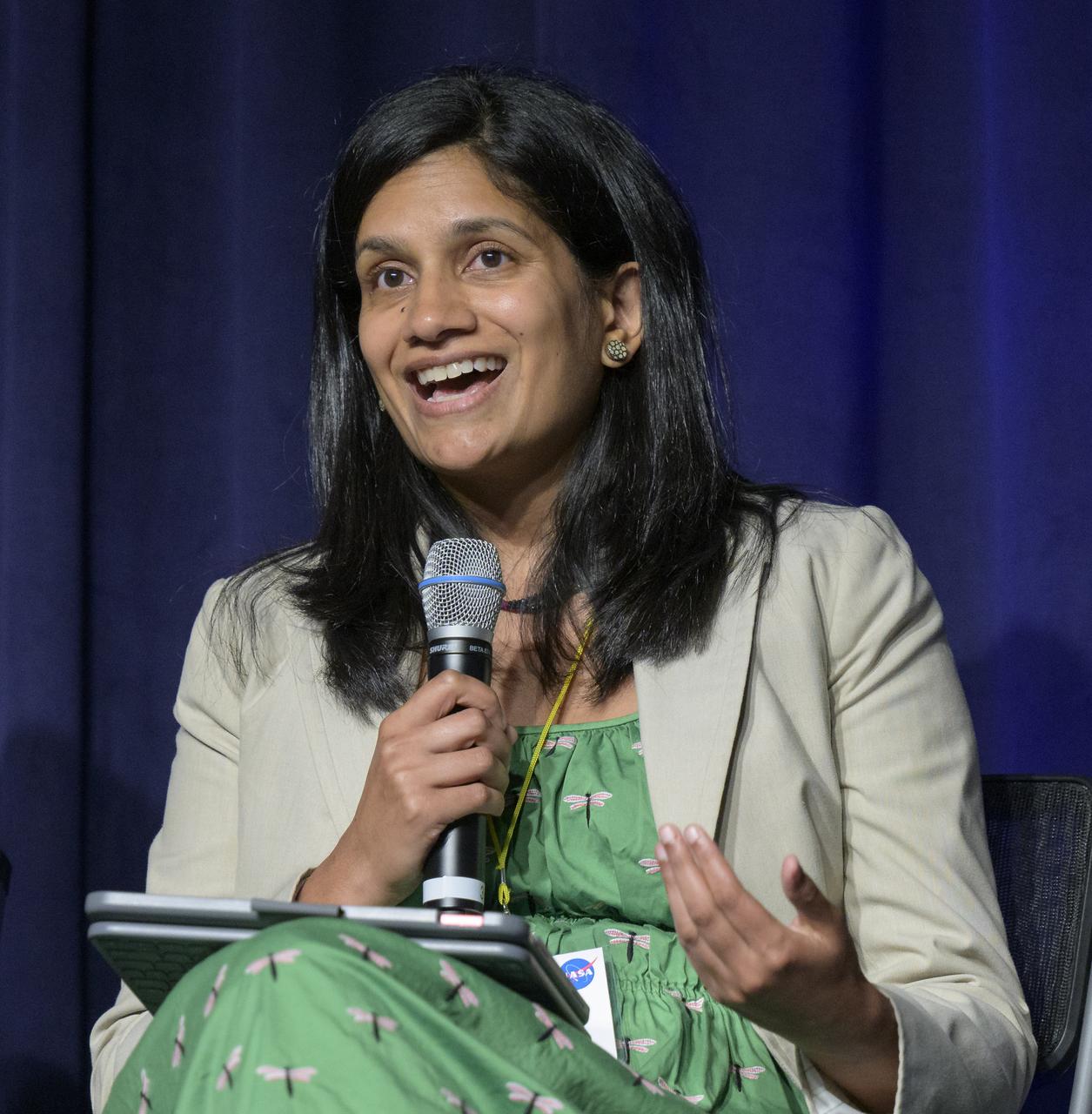
National Oceanic and Atmospheric Administration Deputy Administrator Jainey Bavishi delivers remarks during an event launching a new Disaster Response Coordination System that will provide communities and organizations around the world with access to science and data to aid disaster response, Thursday, June 13, 2024, at the NASA Headquarters Mary W. Jackson Building in Washington. Photo Credit: (NASA/Bill Ingalls)

USAID Deputy Assistant to the Administrator for Bureau for Humanitarian Assistance Dianna Darsney de Salcedo delivers remarks during an event launching a new Disaster Response Coordination System that will provide communities and organizations around the world with access to science and data to aid disaster response, Thursday, June 13, 2024, at the NASA Headquarters Mary W. Jackson Building in Washington. Photo Credit: (NASA/Bill Ingalls)

U.S. Geological Survey Associate Director of Natural Hazards Mission Area Michael Grimm delivers remarks during an event launching a new Disaster Response Coordination System that will provide communities and organizations around the world with access to science and data to aid disaster response, Thursday, June 13, 2024, at the NASA Headquarters Mary W. Jackson Building in Washington. Photo Credit: (NASA/Bill Ingalls)
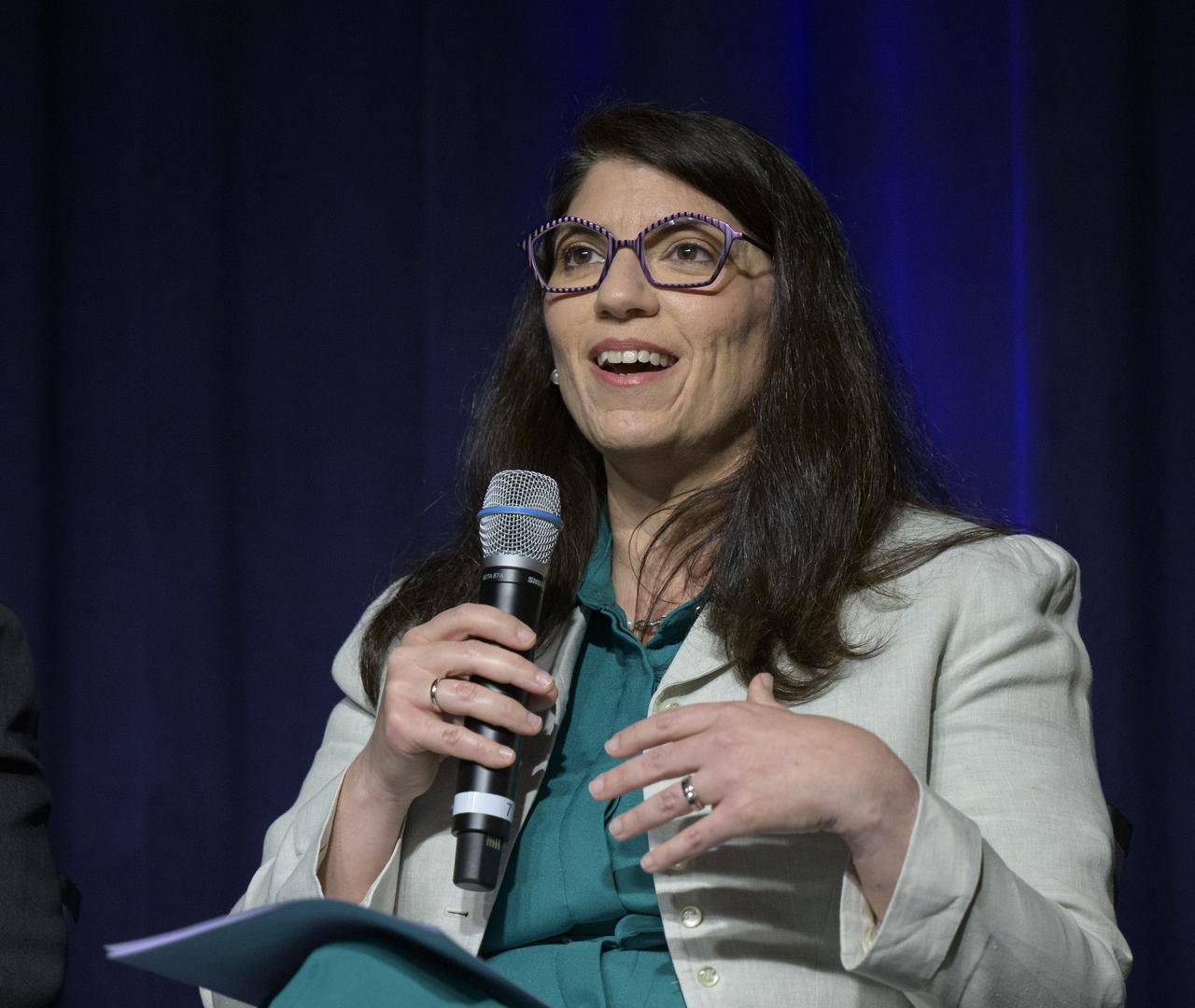
National Institute of Standards and Technology Senior Scientist Judith Mitrani-Reiser delivers remarks during an event launching a new Disaster Response Coordination System that will provide communities and organizations around the world with access to science and data to aid disaster response, Thursday, June 13, 2024, at the NASA Headquarters Mary W. Jackson Building in Washington. Photo Credit: (NASA/Bill Ingalls)

NASA Disasters Program Manager Shanna McClain, left, NASA Deputy Administrator Pam Melroy, National Oceanic and Atmospheric Administration Deputy Administrator Jainey Bavishi, U.S. Geological Survey Associate Director of Natural Hazards Mission Area Michael Grimm, USAID Deputy Assistant to the Administrator for Bureau for Humanitarian Assistance Dianna Darsney de Salcedo, Federal Emergency Management Agency Deputy Administrator Erik Hooks, and National Institute of Standards and Technology Senior Scientist Judith Mitrani-Reiser, right, participate in event launching a new Disaster Response Coordination System that will provide communities and organizations around the world with access to science and data to aid disaster response, Thursday, June 13, 2024, at the NASA Headquarters Mary W. Jackson Building in Washington. Photo Credit: (NASA/Bill Ingalls)

NASA Disasters Program Manager Shanna McClain, left, NASA Deputy Administrator Pam Melroy, National Oceanic and Atmospheric Administration Deputy Administrator Jainey Bavishi, U.S. Geological Survey Associate Director of Natural Hazards Mission Area Michael Grimm, USAID Deputy Assistant to the Administrator for Bureau for Humanitarian Assistance Dianna Darsney de Salcedo, Federal Emergency Management Agency Deputy Administrator Erik Hooks, and National Institute of Standards and Technology Senior Scientist Judith Mitrani-Reiser, right, participate in event launching a new Disaster Response Coordination System that will provide communities and organizations around the world with access to science and data to aid disaster response, Thursday, June 13, 2024, at the NASA Headquarters Mary W. Jackson Building in Washington. Photo Credit: (NASA/Bill Ingalls)

NASA Disasters Program Manager Shanna McClain, left, NASA Deputy Administrator Pam Melroy, National Oceanic and Atmospheric Administration Deputy Administrator Jainey Bavishi, U.S. Geological Survey Associate Director of Natural Hazards Mission Area Michael Grimm, USAID Deputy Assistant to the Administrator for Bureau for Humanitarian Assistance Dianna Darsney de Salcedo, Federal Emergency Management Agency Deputy Administrator Erik Hooks, and National Institute of Standards and Technology Senior Scientist Judith Mitrani-Reiser, right, participate in event launching a new Disaster Response Coordination System that will provide communities and organizations around the world with access to science and data to aid disaster response, Thursday, June 13, 2024, at the NASA Headquarters Mary W. Jackson Building in Washington. Photo Credit: (NASA/Bill Ingalls)
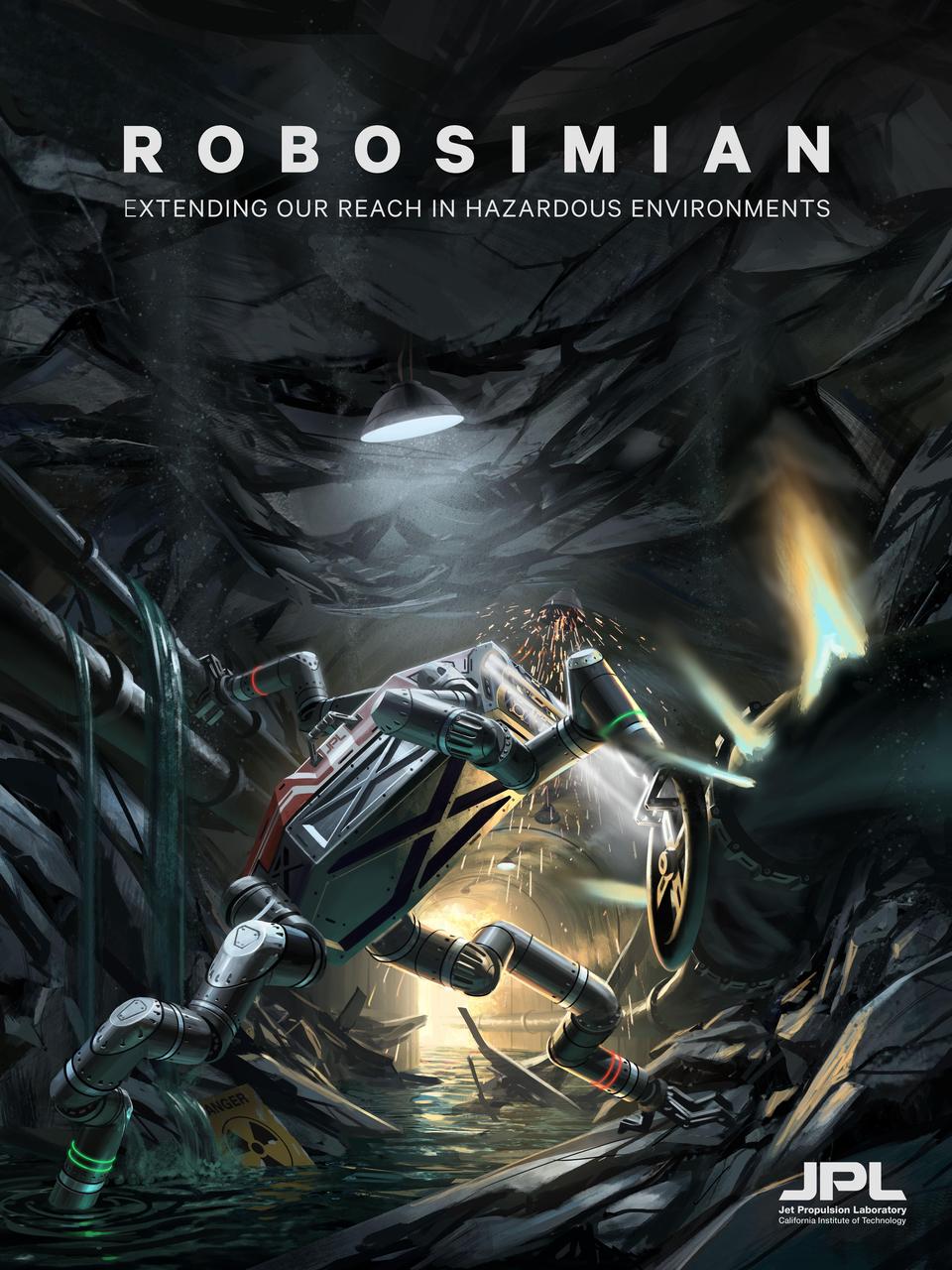
This artist's concept shows RoboSimian, a robot intended to assist with disaster relief and mitigation. RoboSimian is an ape-like robot that moves around on four limbs. It was designed and built at the Jet Propulsion Laboratory in Pasadena, California. It will compete in the 2015 DARPA Robotics Challenge Finals. To get the robot in shape for the contest, researchers at JPL are collaborating with partners at University of California, Santa Barbara, and the California Institute of Technology. http://photojournal.jpl.nasa.gov/catalog/PIA19313
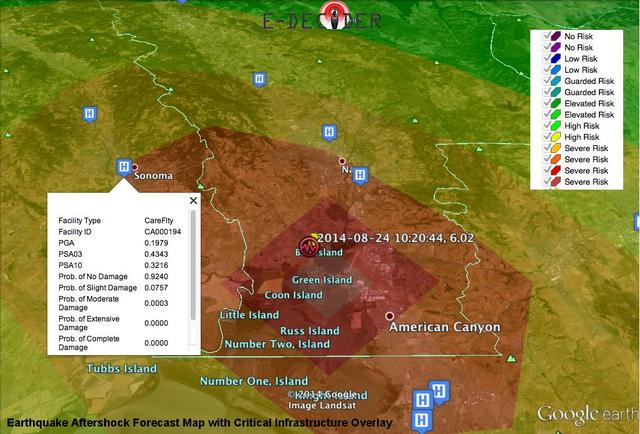
A NASA-funded disaster decision support system, provided a number of rapid response map data products to decision makers at the California Earthquake Clearinghouse following its activation for the Aug. 24, 2014 magnitude 6.0 earthquake in Napa, California
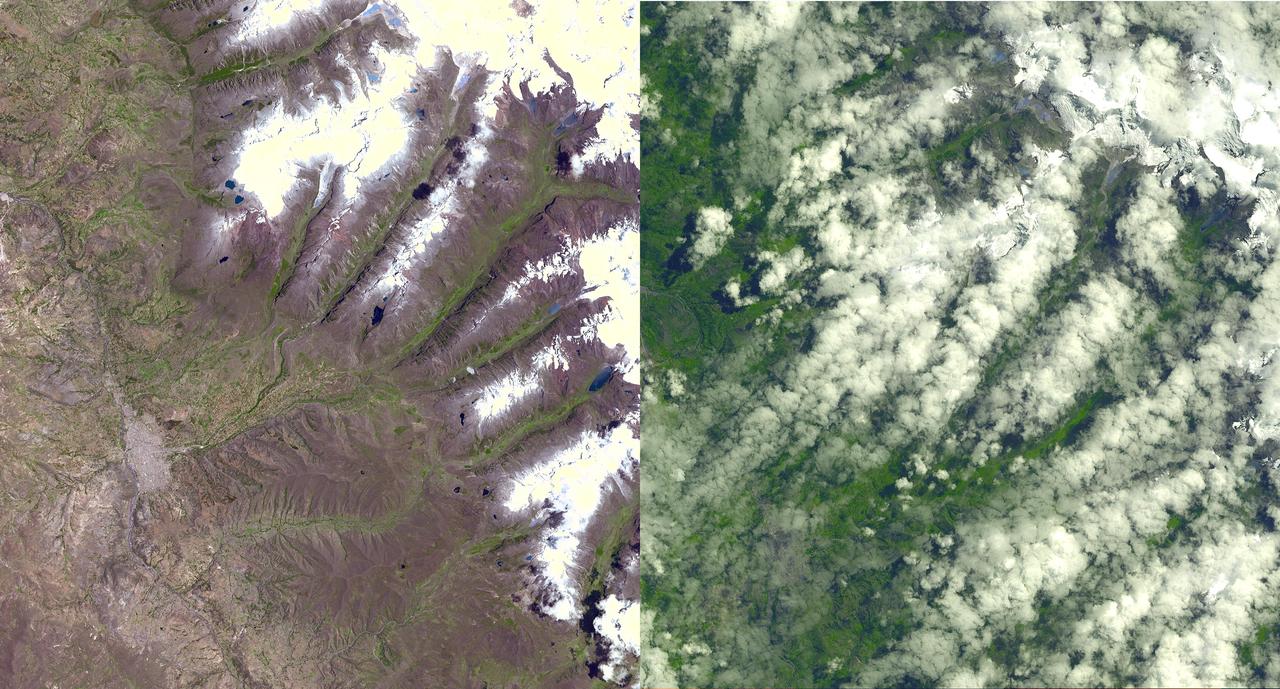
An Earth-monitoring instrument aboard NASA's Terra satellite is keeping a close eye on a potential glacial disaster in the making in Peru's spectacular, snow-capped Cordillera Blanca (White Mountains), the highest range of the Peruvian Andes. Data from NASA's Advanced Spaceborne Thermal Emission and Reflection Radiometer (Aster) is assisting Peruvian government officials and geologists in monitoring a glacier that feeds Lake Palcacocha, located high above the city of Huaraz, 270 kilometers (168 miles) north of Lima. An ominous crack has developed in the glacier. Should the large glacier chunk break off and fall into the lake, the ensuing flood could hurtle down the Cojup Valley into the Rio Santa Valley below, reaching Huaraz, population 60,000, in less than 15 minutes. "Glacial natural hazards like the one in Huaraz are an increasing threat to people in many parts of the world," said Dr. Michael Abrams, associate Aster team leader at NASA's Jet Propulsion Laboratory, Pasadena, Calif. "Remote sensing instruments like Aster can serve a vital role in mountain hazard management and disaster mapping by providing rapid access to data, even in regions not easily accessible by humans. Aster's unique vantage point from space gives scientists another tool with which to see early signs of potential glacial flood-burst events and to monitor changes in glacial behavior over time. In Huaraz, Peruvian authorities and scientists will incorporate Aster data along with data from ground-based monitoring techniques to better assess current conditions and take steps necessary to reduce risks to human lives and property." Comparison images of the area are available at: http://asterweb.jpl.nasa.gov . Huaraz can be seen in the images' left-center, with Lake Palcacocha in the images' upper right corners at the head of a valley, below the snow and glacier cap. The left image was acquired on November 5, 2001; the right on April 8, 2003. Glacial flood-bursts, known by Peruvians as "aluviones," occur periodically when water is released abruptly from a previously ice-dammed lake alongside, within, or above a glacier. The release can be caused by various triggering events. These flood-bursts typically arrive with little or no warning, carrying liquid mud, large rock boulders and blocks of ice. The Rio Santa Valley is no stranger to such disasters. Since 1702, floods caused by glaciological conditions have repeatedly caused death and destruction in the region. One particularly devastating event in 1941 destroyed approximately one-third of Huaraz, killing an estimated 5,000 to 7,000 people. Since then, the Peruvian government has emphasized control of the water level in Lake Palcacocha and other lakes in the region that pose similar threats. The efforts appear to have worked; since 1972, no destructive floods resulting from the breakout of glacial lakes have occurred. Nevertheless, officials are still monitoring the current situation closely. http://photojournal.jpl.nasa.gov/catalog/PIA03899
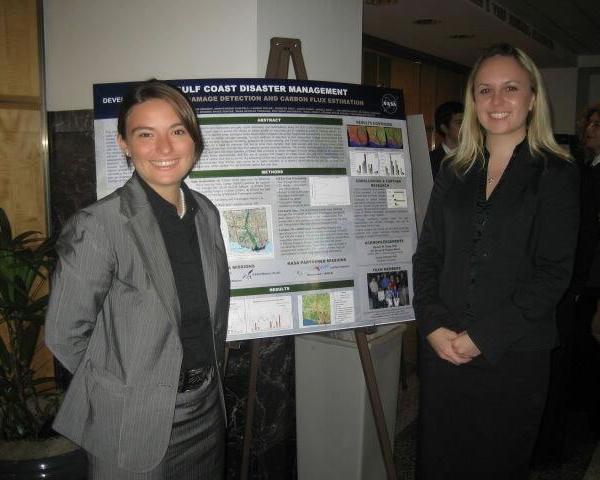
DEVELOP students from Stennis Space Center traveled to NASA's Headquarters in Washington, D.C., to make a presentation on Gulf Coast disaster management. The team included Madeline Brozen (left) and Lauren Childs. They were joined by team member Matthew Batina (not pictured).
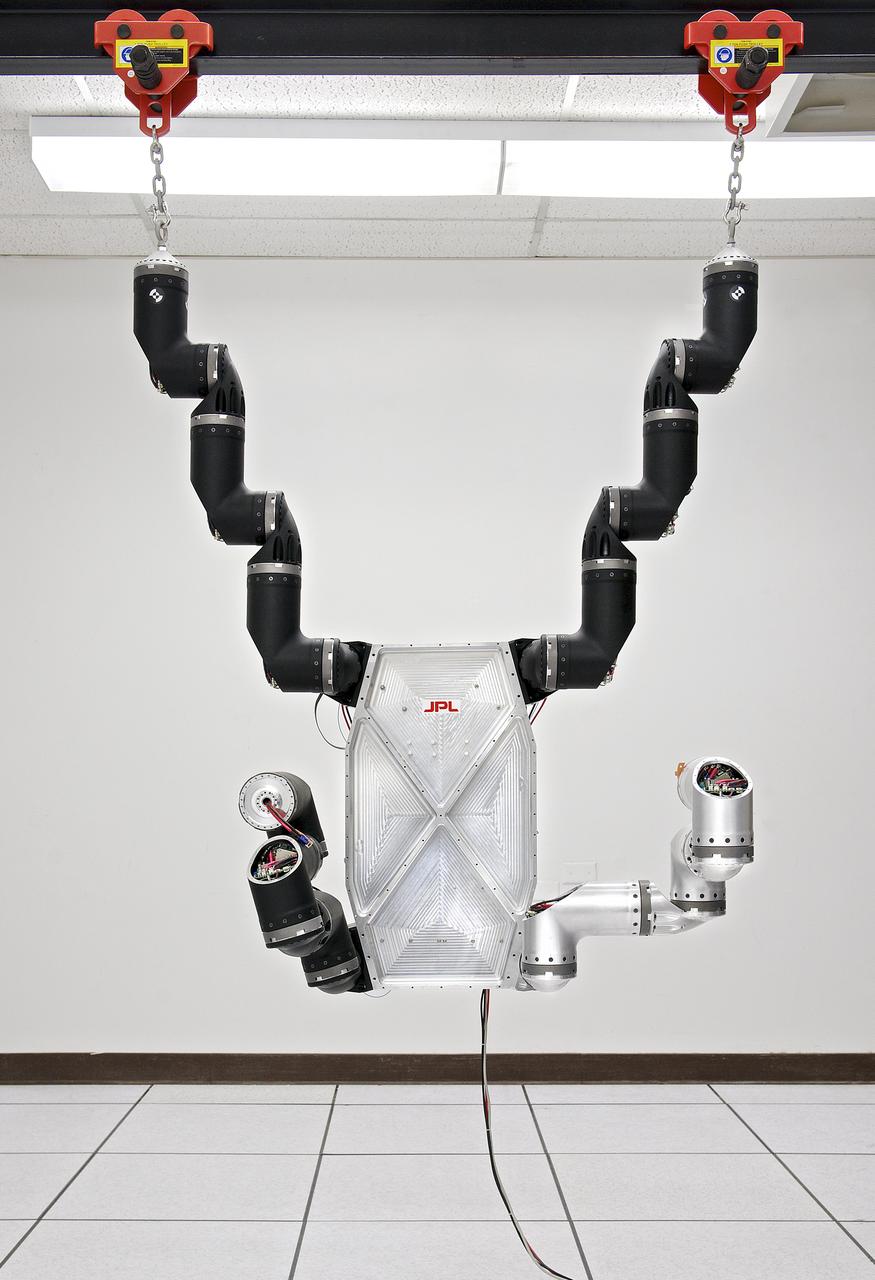
This photograph shows RoboSimian, a disaster-relief and -mitigation robot, under construction in a lab at NASA Jet Propulsion Laboratory, Pasadena, Calif.
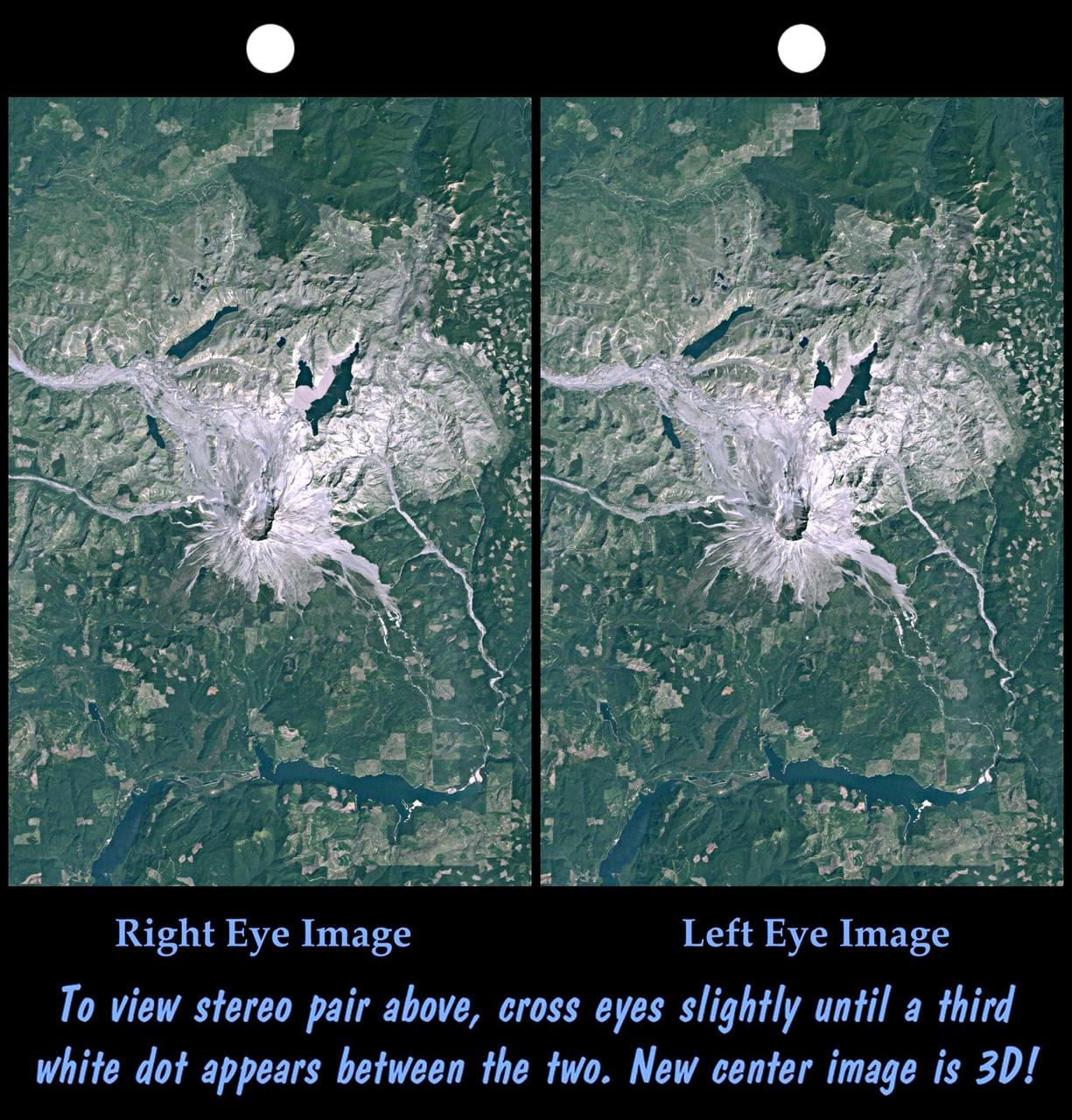
On May 18, 1980, Mount St. Helens catastrophically erupted, causing the worst volcanic disaster in the recorded history of the United States.
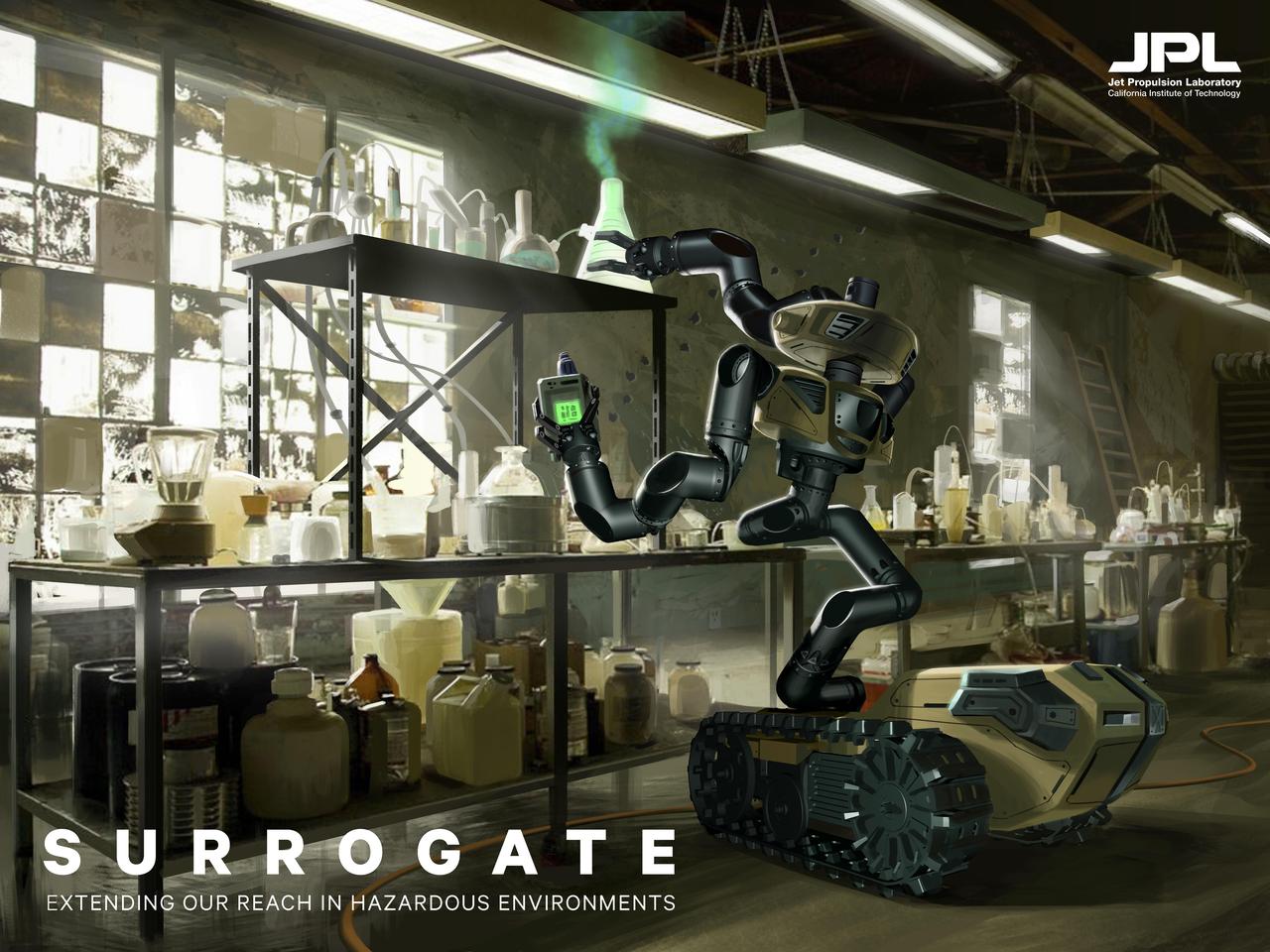
This artist's concept shows Surrogate, a robot that could one day assist in disasters or hazardous situations such as a dangerous chemical laboratory. Surrogate was designed and built at the Jet Propulsion Laboratory in Pasadena, California. Its components came from RoboSimian, another JPL-built robot designed for disaster relief and mitigation (see PIA19313). Surrogate rolls on a track rather than moving on its limbs. http://photojournal.jpl.nasa.gov/catalog/PIA19314
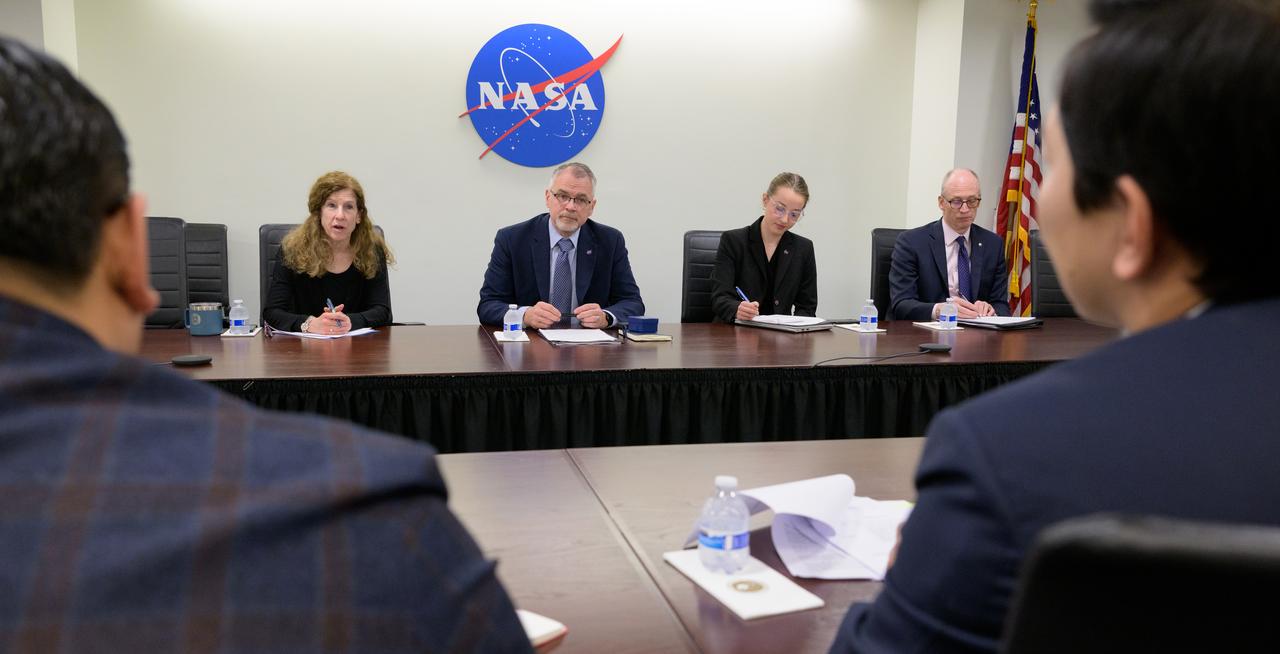
Associate Administrator Jim Free, 2nd from left, talks with Mongolian Minister of Digital Development and Communications Nyam-Osor Uchral during a meeting to discuss Mongolia’s National Space Strategy planning and methods for natural disasters monitoring and prevention, Friday, Jan. 26, 2024, at the NASA Headquarters Mary W. Jackson Building in Washington. Photo Credit: (NASA/Bill Ingalls)

Associate Administrator Jim Free, left, and Mongolian Minister of Digital Development and Communications Nyam-Osor Uchral, shake hands ahead of a meeting to discuss Mongolia’s National Space Strategy planning and methods for natural disasters monitoring and prevention, Friday, Jan. 26, 2024, at the NASA Headquarters Mary W. Jackson Building in Washington. Photo Credit: (NASA/Bill Ingalls)

Associate Administrator Jim Free, talks with Mongolian Minister of Digital Development and Communications Nyam-Osor Uchral during a meeting to discuss Mongolia’s National Space Strategy planning and methods for natural disasters monitoring and prevention, Friday, Jan. 26, 2024, at the NASA Headquarters Mary W. Jackson Building in Washington. Photo Credit: (NASA/Bill Ingalls)

Mongolian Minister of Digital Development and Communications Nyam-Osor Uchral, left, and Mongolian ambassador to the U.S., Batbayar Ulziidelger, talk with Associate Administrator Jim Free, during a meeting where Mongolia’s National Space Strategy planning and methods for natural disasters monitoring and prevention were discussed, Friday, Jan. 26, 2024, at the NASA Headquarters Mary W. Jackson Building in Washington. Photo Credit: (NASA/Bill Ingalls)

Associate Administrator Jim Free, 2nd from left, talks with Mongolian Minister of Digital Development and Communications Nyam-Osor Uchral during a meeting to discuss Mongolia’s National Space Strategy planning and methods for natural disasters monitoring and prevention, Friday, Jan. 26, 2024, at the NASA Headquarters Mary W. Jackson Building in Washington. Photo Credit: (NASA/Bill Ingalls)
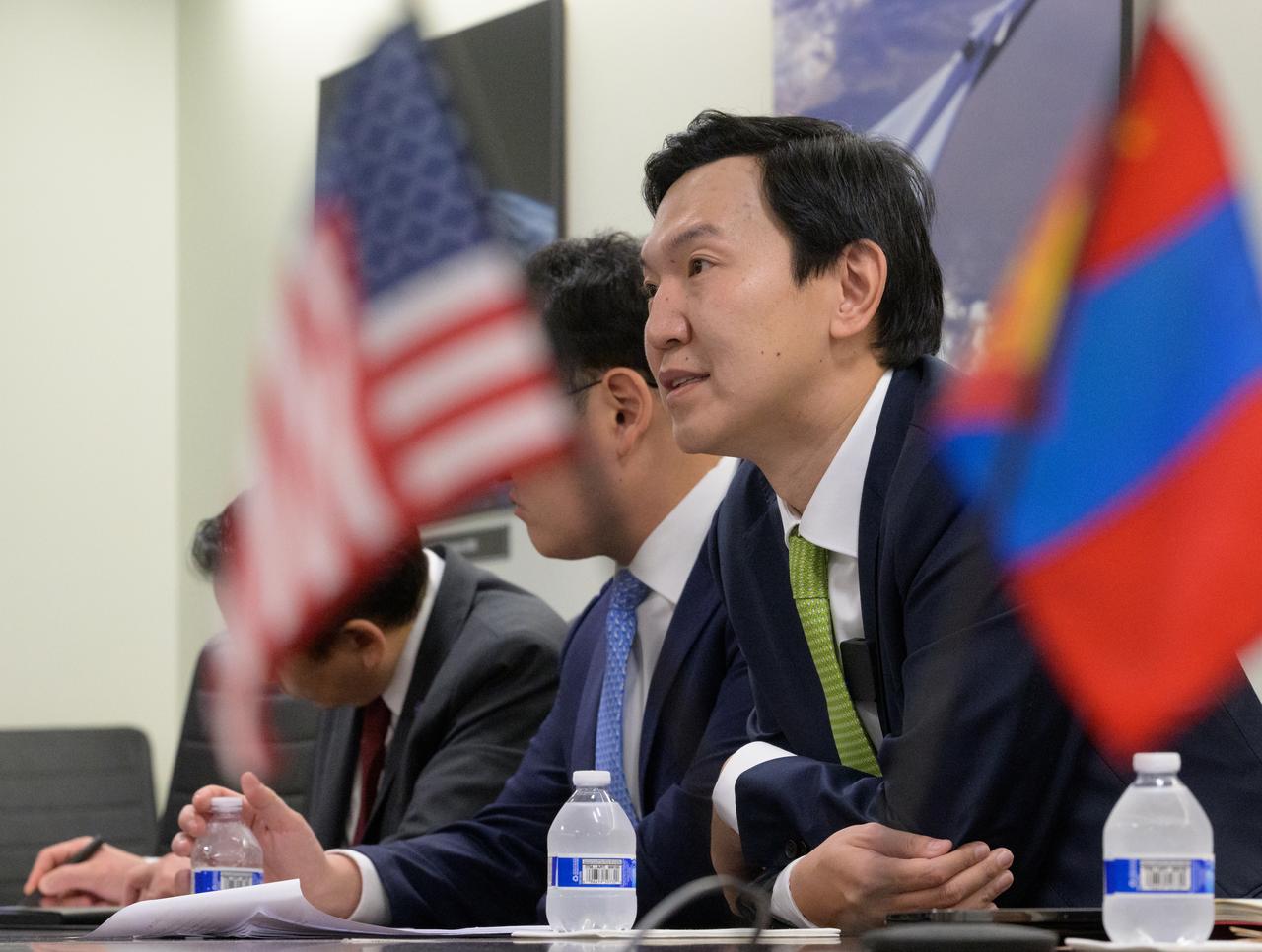
Mongolian Minister of Digital Development and Communications Nyam-Osor Uchral, talks with Associate Administrator Jim Free, during a meeting where the two discussed Mongolia’s National Space Strategy planning and methods for natural disasters monitoring and prevention, Friday, Jan. 26, 2024, at the NASA Headquarters Mary W. Jackson Building in Washington. Photo Credit: (NASA/Bill Ingalls)

NASA Associate Administrator for International and Interagency Relations, Karen Feldstein, listens to Mongolian Minister of Digital Development and Communications Nyam-Osor Uchral, during a meeting to discuss Mongolia’s National Space Strategy planning and methods for natural disasters monitoring and prevention, Friday, Jan. 26, 2024, at the NASA Headquarters Mary W. Jackson Building in Washington. Photo Credit: (NASA/Bill Ingalls)
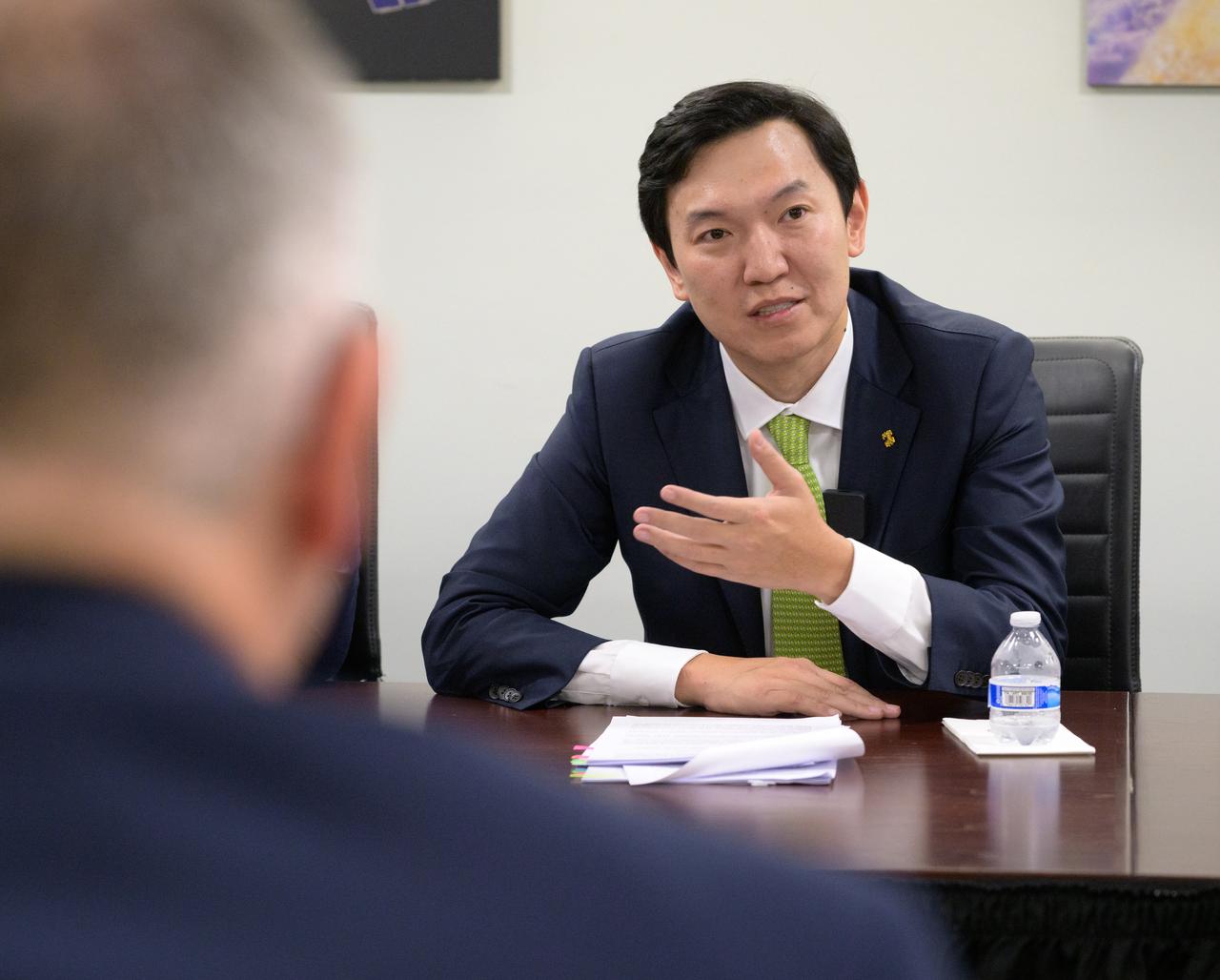
Mongolian Minister of Digital Development and Communications Nyam-Osor Uchral, talks with Associate Administrator Jim Free, during a meeting where the two discussed Mongolia’s National Space Strategy planning and methods for natural disasters monitoring and prevention, Friday, Jan. 26, 2024, at the NASA Headquarters Mary W. Jackson Building in Washington. Photo Credit: (NASA/Bill Ingalls)
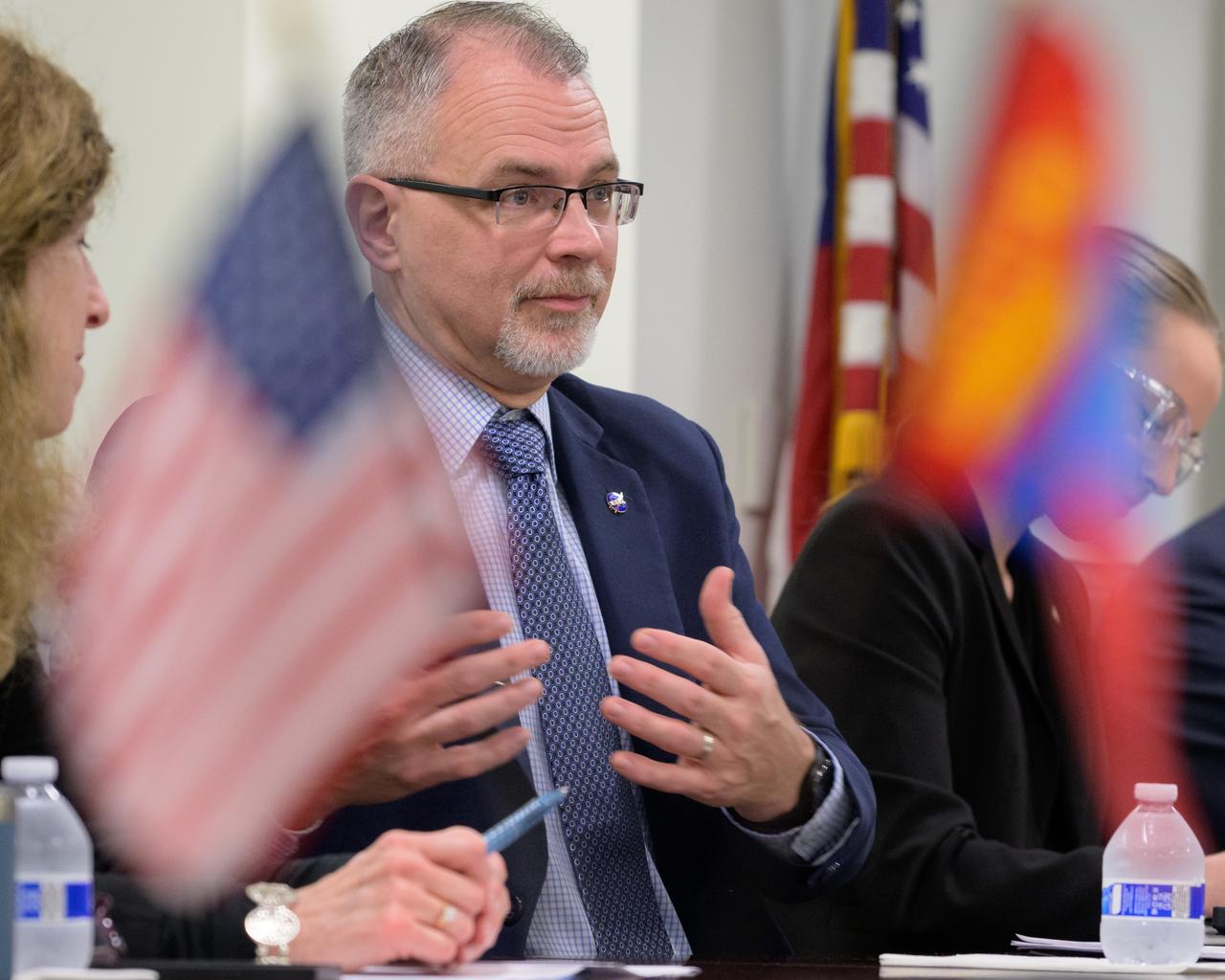
Associate Administrator Jim Free, talks with Mongolian Minister of Digital Development and Communications Nyam-Osor Uchral during a meeting to discuss Mongolia’s National Space Strategy planning and methods for natural disasters monitoring and prevention, Friday, Jan. 26, 2024, at the NASA Headquarters Mary W. Jackson Building in Washington. Photo Credit: (NASA/Bill Ingalls)
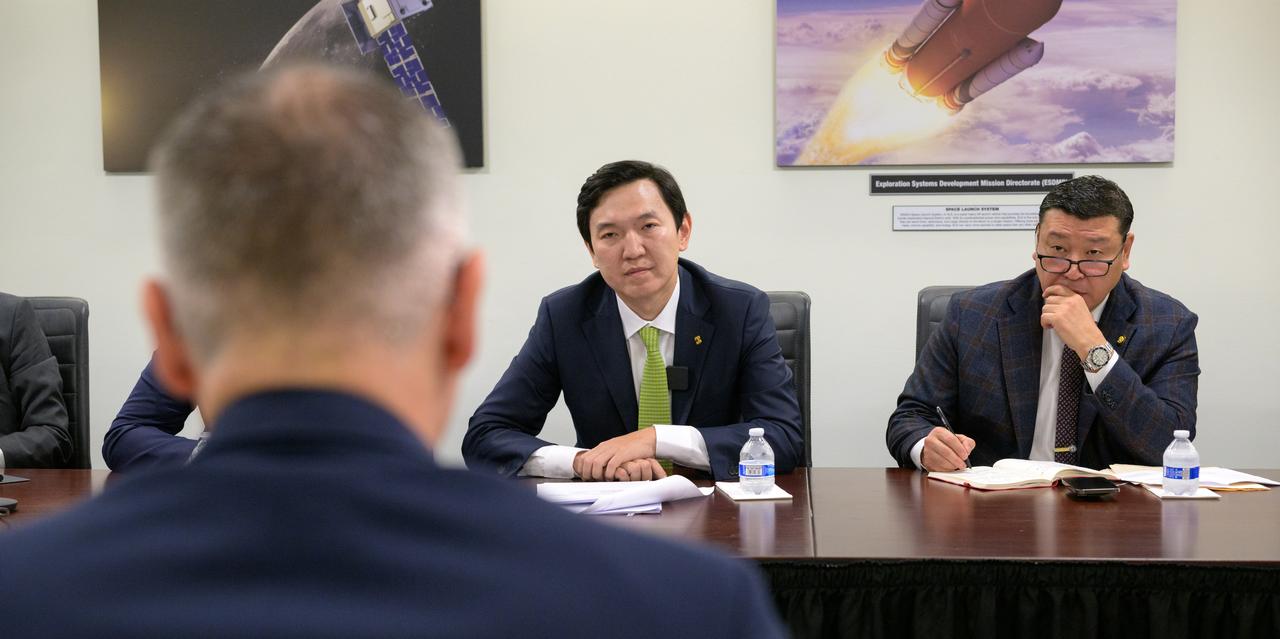
Mongolian Minister of Digital Development and Communications Nyam-Osor Uchral, left, and Mongolian ambassador to the U.S., Batbayar Ulziidelger, talk with Associate Administrator Jim Free, during a meeting where Mongolia’s National Space Strategy planning and methods for natural disasters monitoring and prevention were discussed, Friday, Jan. 26, 2024, at the NASA Headquarters Mary W. Jackson Building in Washington. Photo Credit: (NASA/Bill Ingalls)

Associate Administrator Jim Free, talks with Mongolian Minister of Digital Development and Communications Nyam-Osor Uchral during a meeting to discuss Mongolia’s National Space Strategy planning and methods for natural disasters monitoring and prevention, Friday, Jan. 26, 2024, at the NASA Headquarters Mary W. Jackson Building in Washington. Photo Credit: (NASA/Bill Ingalls)

Associate Administrator Jim Free, 3rd from right, and the Mongolian Minister of Digital Development and Communications Nyam-Osor Uchral, 3rd from left, meet to discuss Mongolia’s National Space Strategy planning and methods for natural disasters monitoring and prevention, Friday, Jan. 26, 2024, at the NASA Headquarters Mary W. Jackson Building in Washington. Photo Credit: (NASA/Bill Ingalls)
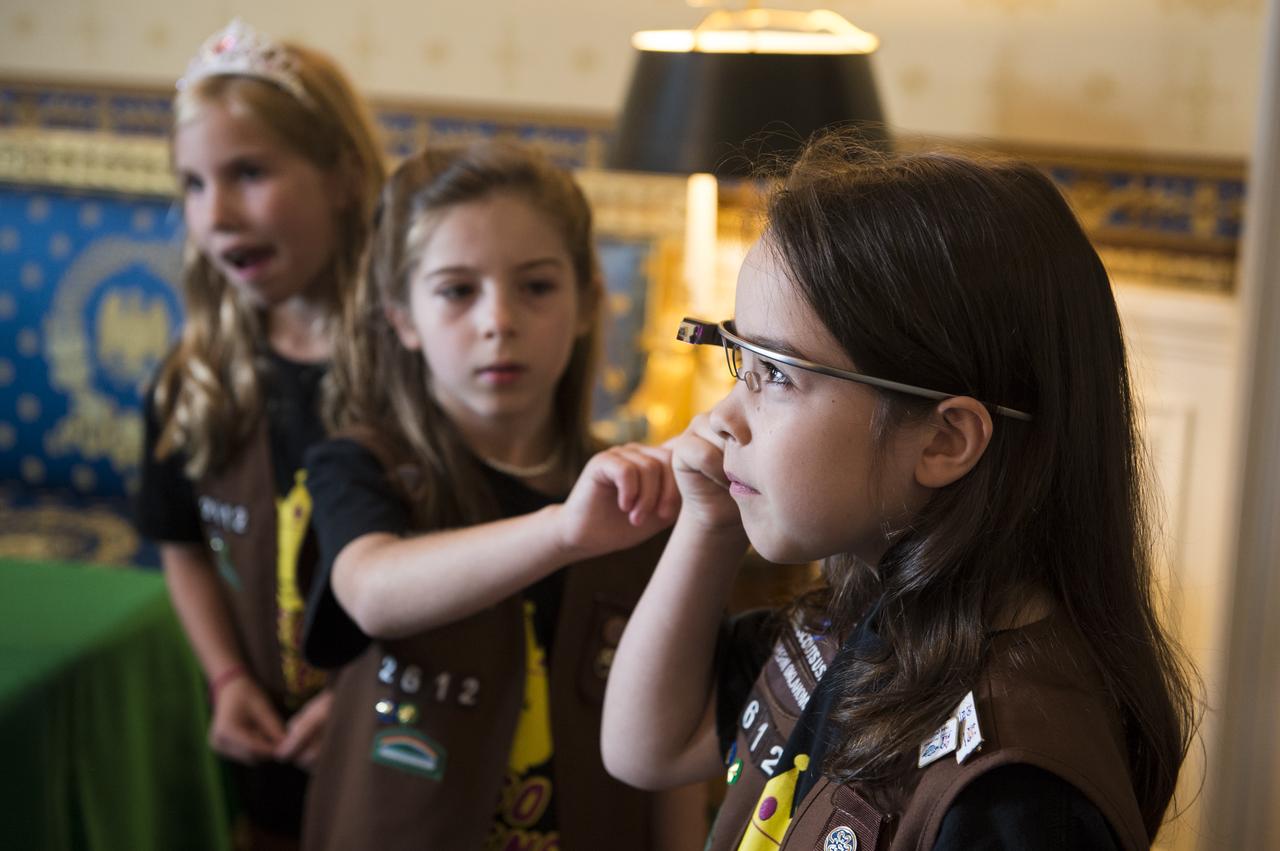
Girl Scout troop 2612 members from Tulsa, OK take photos of one another with Google Glass at the White House Science Fair Tuesday, May 27, 2014. Avery Dodson, 6; Natalie Hurley, 8; Miriam Schaffer, 8; Claire Winton, 8; and Lucy Claire Sharp, 8 participated in the Junior FIRST Lego League's Disaster Blaster Challenge, which invites elementary-school-aged students from across the country to explore how simple machines, engineering, and math can help solve problems posed by natural disasters. The girls invented the "Flood Proof Bridge" and built a model mechanizing the bridge using motors and developing a computer program to automatically retract the bridge when flood conditions are detected. The fourth White House Science Fair was held at the White House and included 100 students from more than 30 different states who competed in science, technology, engineering, and math (STEM) competitions. (Photo Credit: NASA/Aubrey Gemignani)
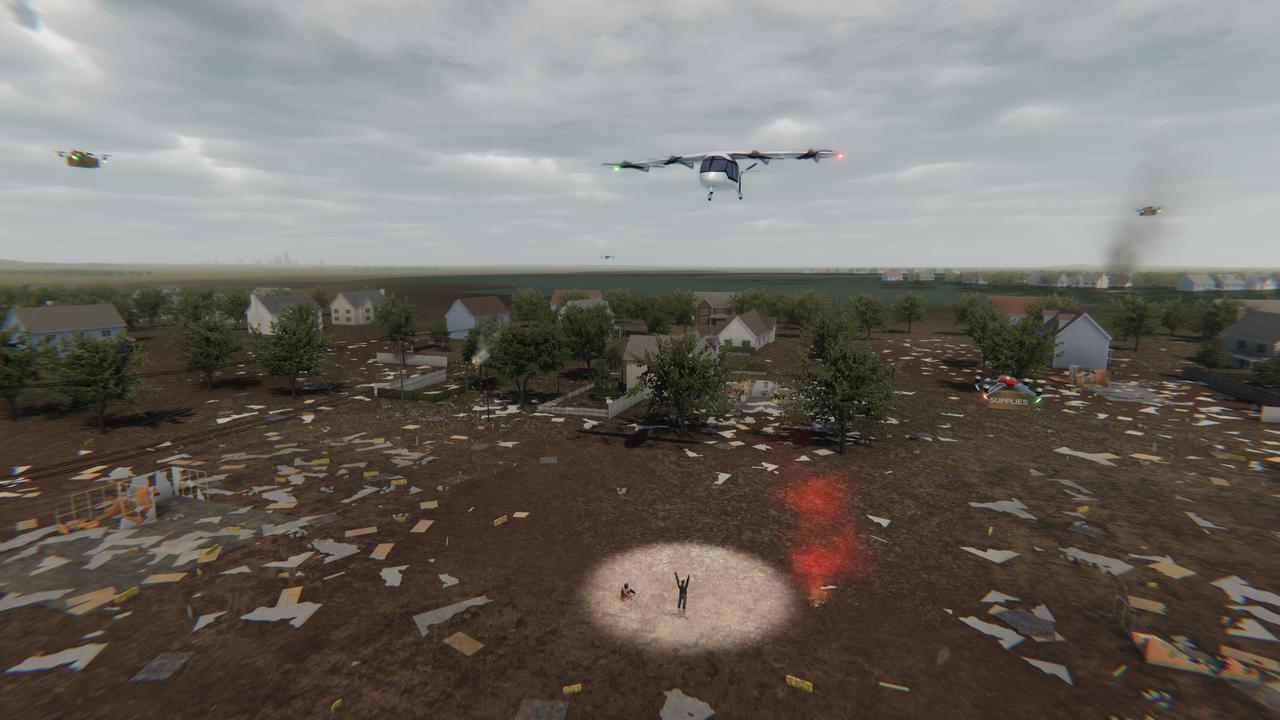
Several projects under NASA's Advanced Air Mobility or AAM mission are working on different elements to help make AAM a reality in emergency operations. This concept graphic shows how a future AAM vehicle could aid in disaster response.
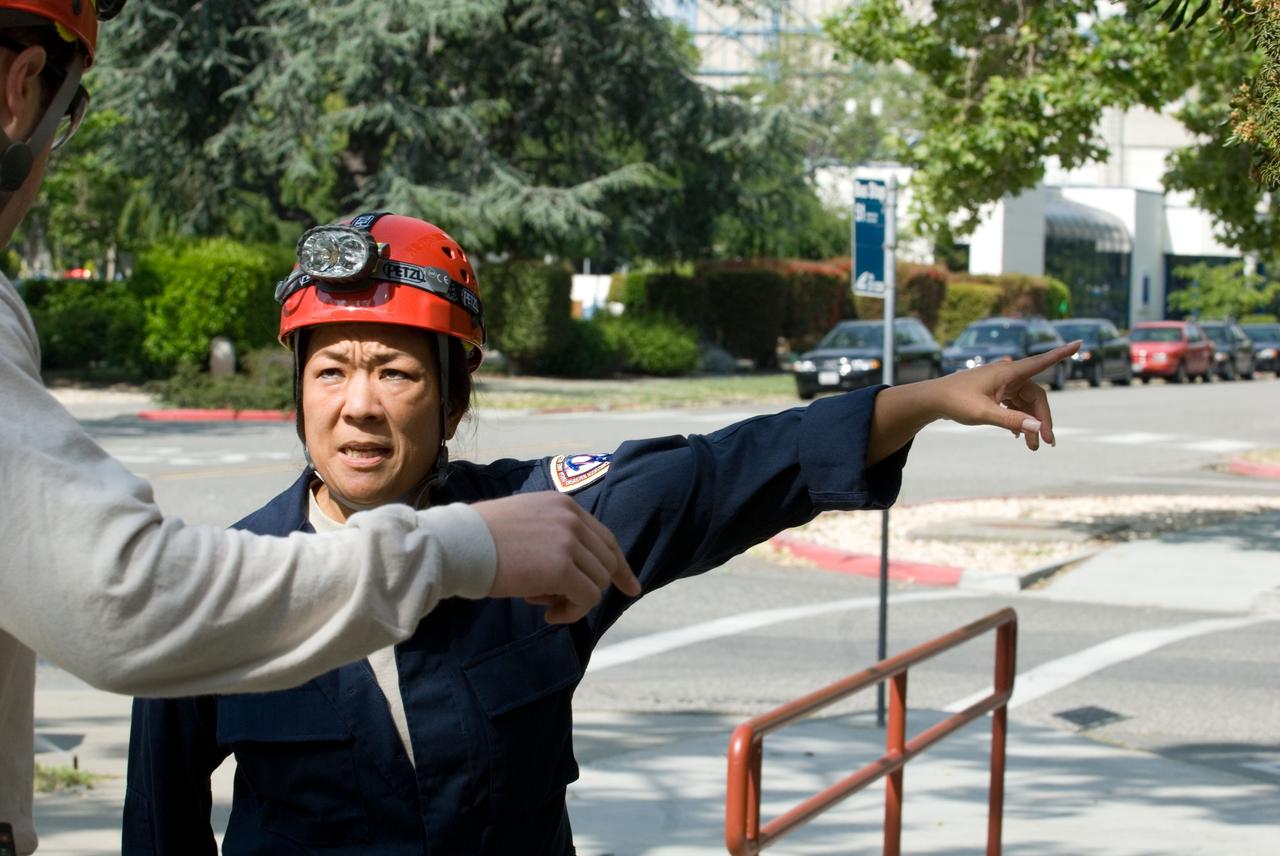
Disaster preparedness; 'The Great Worden Quake of 2007' Ames Research Center resident staff participate in responding to a simulated disaster, followed by a picnic in front of bldg N-200. Ames DART rescue teams - Deb Feng
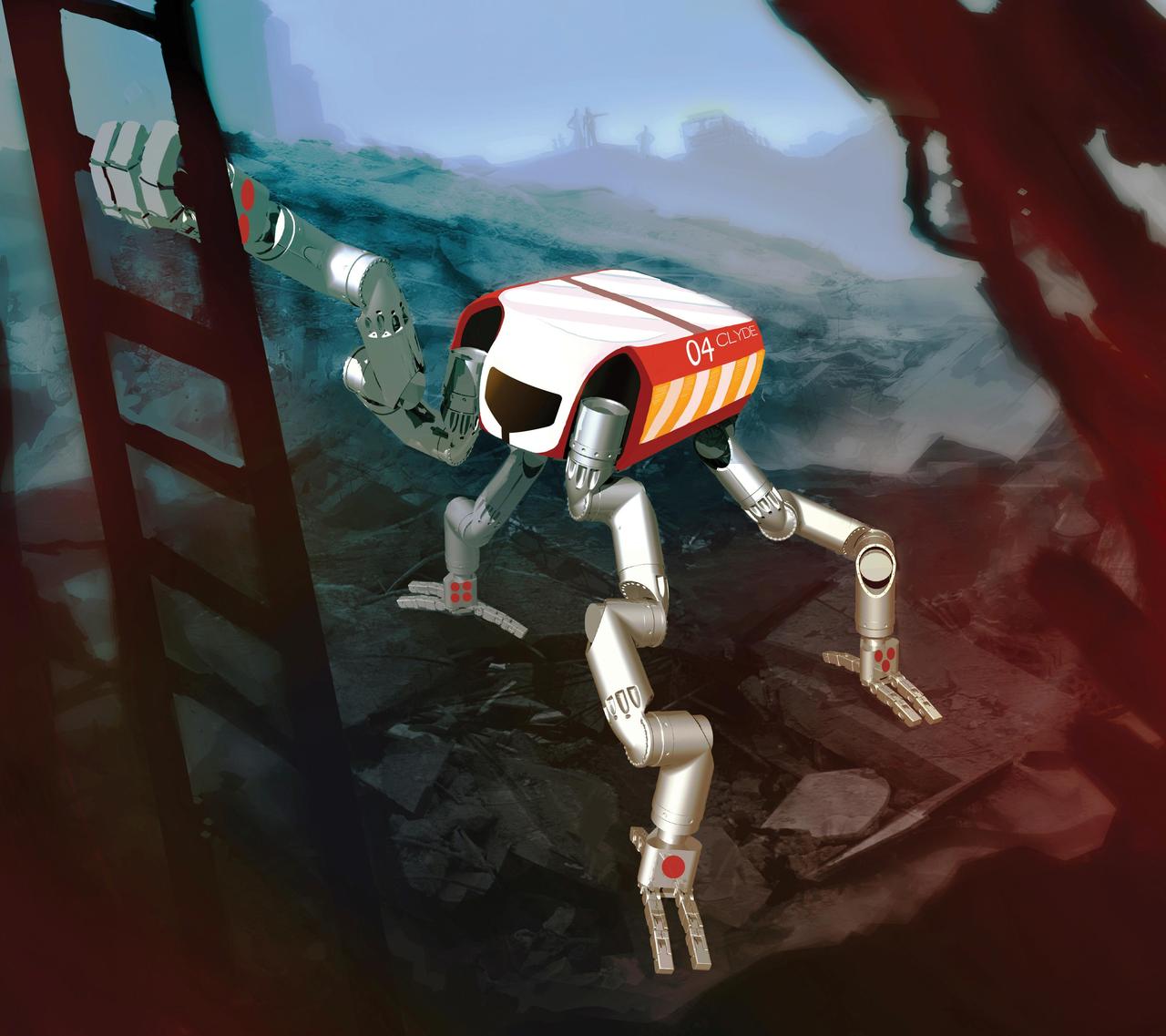
This artist concept depicts RoboSimian, a disaster-relief and -mitigation robot, grasping the rung of a ladder. RoboSimian is an ape-like robot designed and built at NASA Jet Propulsion Laboratory, Pasadena, Calif.
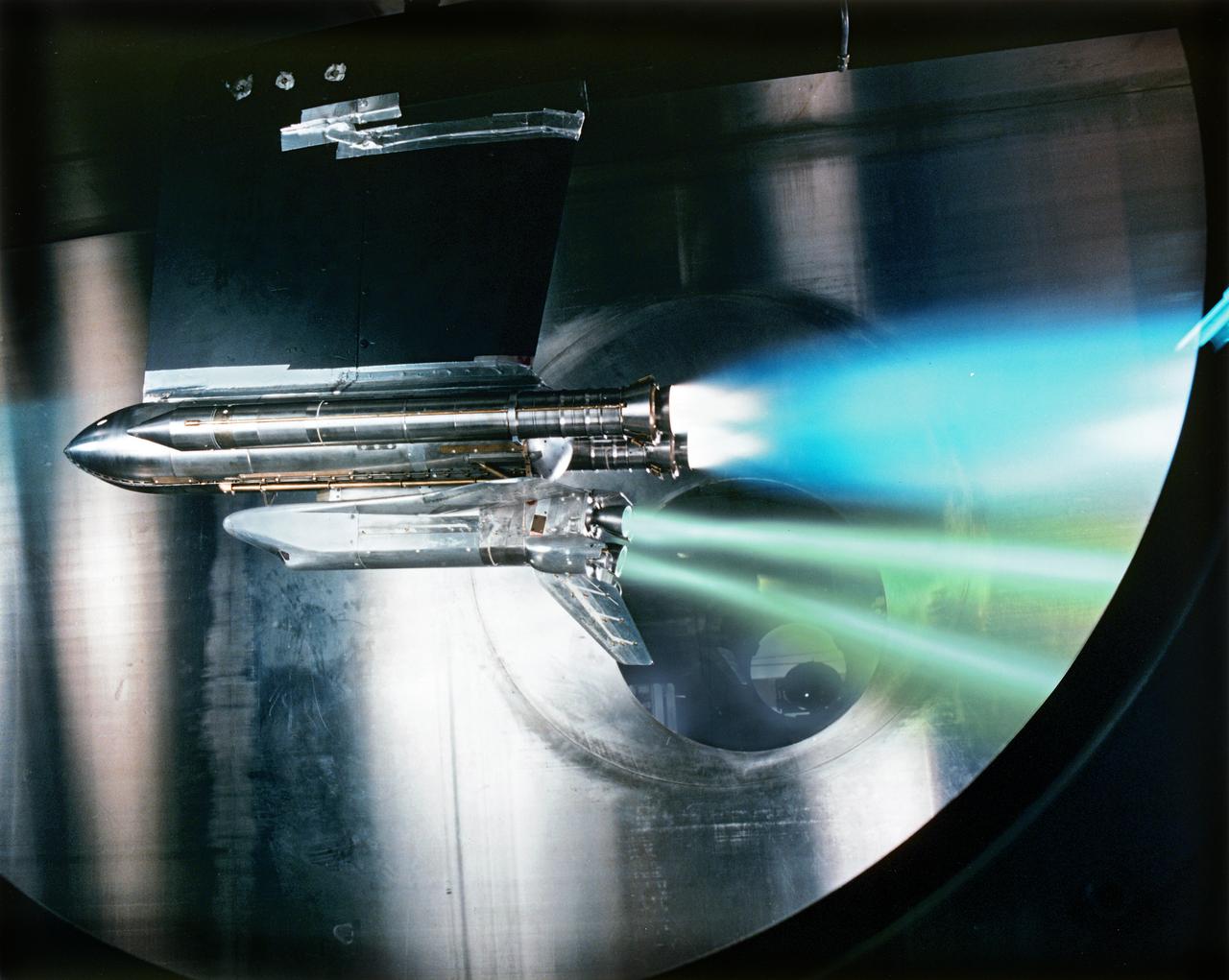
SHUTTLE ENGINE OUT TEST done after the Space Shuttle Challenger disaster. This was part of the investigation after the Challenger accident
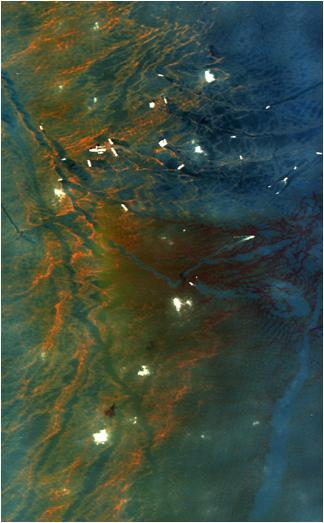
This image from NASA Airborne Visible/Infrared Imaging Spectrometer instrument AVIRIS was collected on May 17, 2010, over the site of the Deepwater Horizon BP oil spill disaster. In the image, crude oil on the surface appears orange to brown.
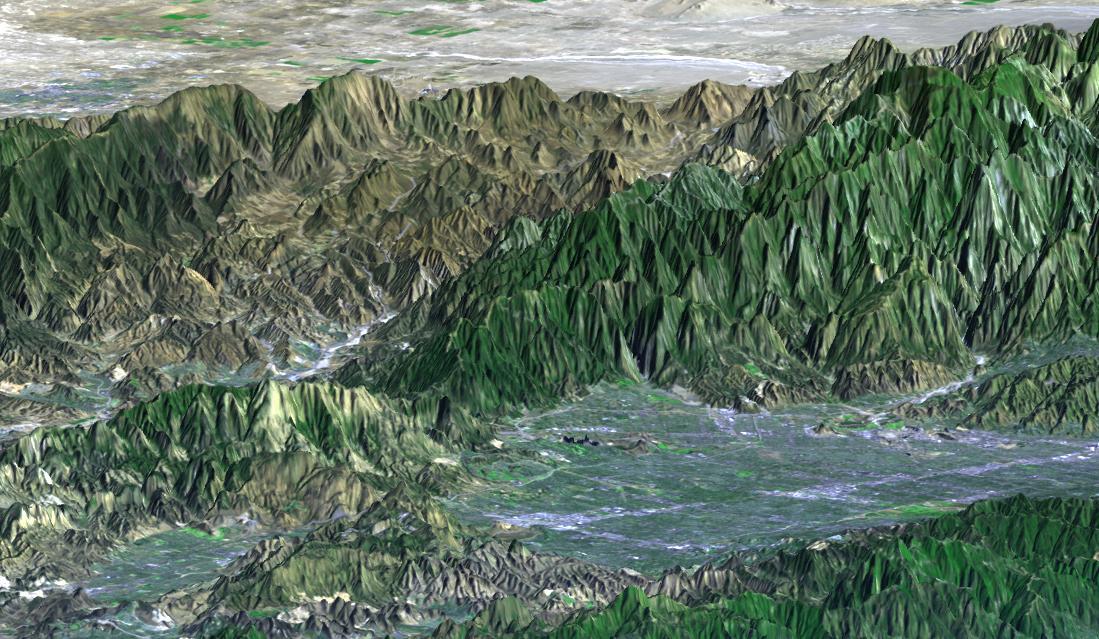
The San Fernando Valley lower right of center is part of Los Angeles and includes well over one million people. Two major disasters have occurred here in the last few decades: the 1971 Sylmar earthquake and the 1994 Northridge earthquake.

iss071e666237 (Sept. 17, 2024) --- NASA astronaut Don Pettit was able to capture a photo of a recent fire in La Porte, Texas yesterday. Our NASA Astronauts have the ability to observe natural disasters from a vantage point of 250 miles above Earth. The imagery and data provided from the International Space Station can provide benefits to regions that experience unexpected events such as fires, floods, hurricanes, earthquakes, and more. This information is valuable when monitoring disasters on Earth in real time.

NASA astronaut Don Pettit was able to capture a photo of a recent fire in La Porte, Texas yesterday. Our NASA Astronauts have the ability to observe natural disasters from a vantage point of 250 miles above Earth. The imagery and data provided from the International Space Station can provide benefits to regions that experience unexpected events such as fires, floods, hurricanes, earthquakes, and more. This information is valuable when monitoring disasters on Earth in real time.

iss071e666253 (Sept. 17, 2024) --- NASA astronaut Don Pettit was able to capture a photo of a recent fire in La Porte, Texas yesterday. Our NASA Astronauts have the ability to observe natural disasters from a vantage point of 250 miles above Earth. The imagery and data provided from the International Space Station can provide benefits to regions that experience unexpected events such as fires, floods, hurricanes, earthquakes, and more. This information is valuable when monitoring disasters on Earth in real time.
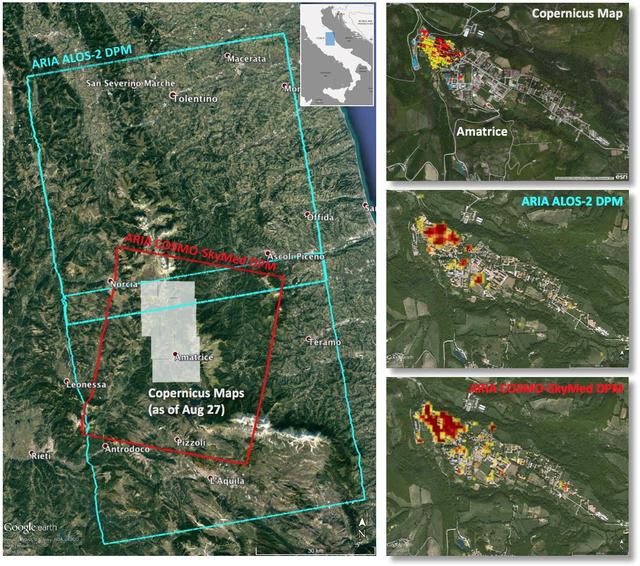
Italy earthquake. The quake has caused significant damage in the historic town of Amatrice. To assist in the disaster response efforts, scientists at NASA's Jet Propulsion Laboratory, Pasadena, California, and the California Institute of Technology in Pasadena, in collaboration with the Italian Space Agency (ASI), generated this image of the earthquake's hardest-hit region. The 40-by-75 mile (65-by-120 kilometer) Damage Proxy Map (DPM) was derived from two consecutive frames of the Japan Aerospace Exploration Agency's (JAXA's) L-band interferometric synthetic aperture radar (InSAR) data from the ALOS-2 satellite (cyan rectangles), and the 25-by-31 mile (40-by-50 kilometer) DPM was derived from InSAR data from the Agenzia Spaciale Italiana's (ASI's) X-band COSMO-SkyMed satellite (red rectangle). Both DPMs cover the historic town of Amatrice, revealing severe damage in the western side of the town (right panels). The time span of the data for the change is Jan. 27, 2016 to Aug. 24, 2016 for ALOS-2 and Aug. 20, 2016 to Aug. 28, 2016 for COSMO-SkyMed. Each pixel in the damage proxy map is about 100 feet (30 meters) across. The SAR data were processed by the Advanced Rapid Imaging and Analysis (ARIA) team at JPL and Caltech. The technique uses a prototype algorithm to rapidly detect surface changes caused by natural or human-produced damage. The assessment technique is most sensitive to destruction of the built environment. When the radar images areas with little to no destruction, its image pixels are transparent. Increased opacity of the radar image pixels reflects damage, with areas in red reflecting the heaviest damage to cities and towns. The color variations from yellow to red indicate increasingly more significant ground surface change. Preliminary validation was done by comparing the DPMs to a damage assessment map produced by the Copernicus Emergency Management Service, which is based on visual inspection of before and after high-resolution aerial imagery -- the extent indicated with gray boxes in the left panel. http://photojournal.jpl.nasa.gov/catalog/PIA20897
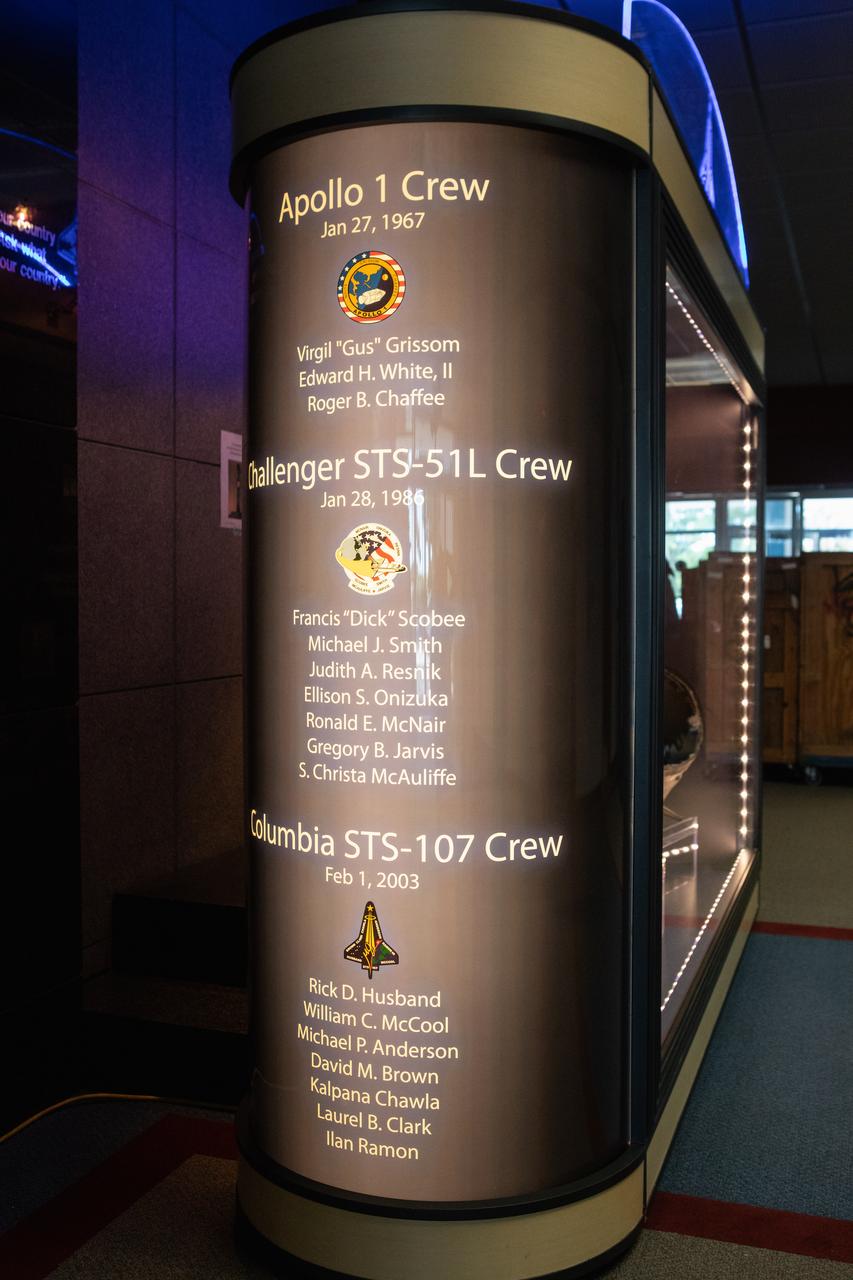
A display of artifacts featuring nine items recovered from the STS-107 tragedy that occurred Feb. 1, 2003, is shown in the old Headquarters Building at Kennedy Space Center. The powerful exhibit can now be viewed in the lobby of the Florida spaceport’s new Central Campus Building until June 10. The exhibit is part of the space shuttle Columbia national tour, which will make its way to all 10 NASA centers throughout the country.
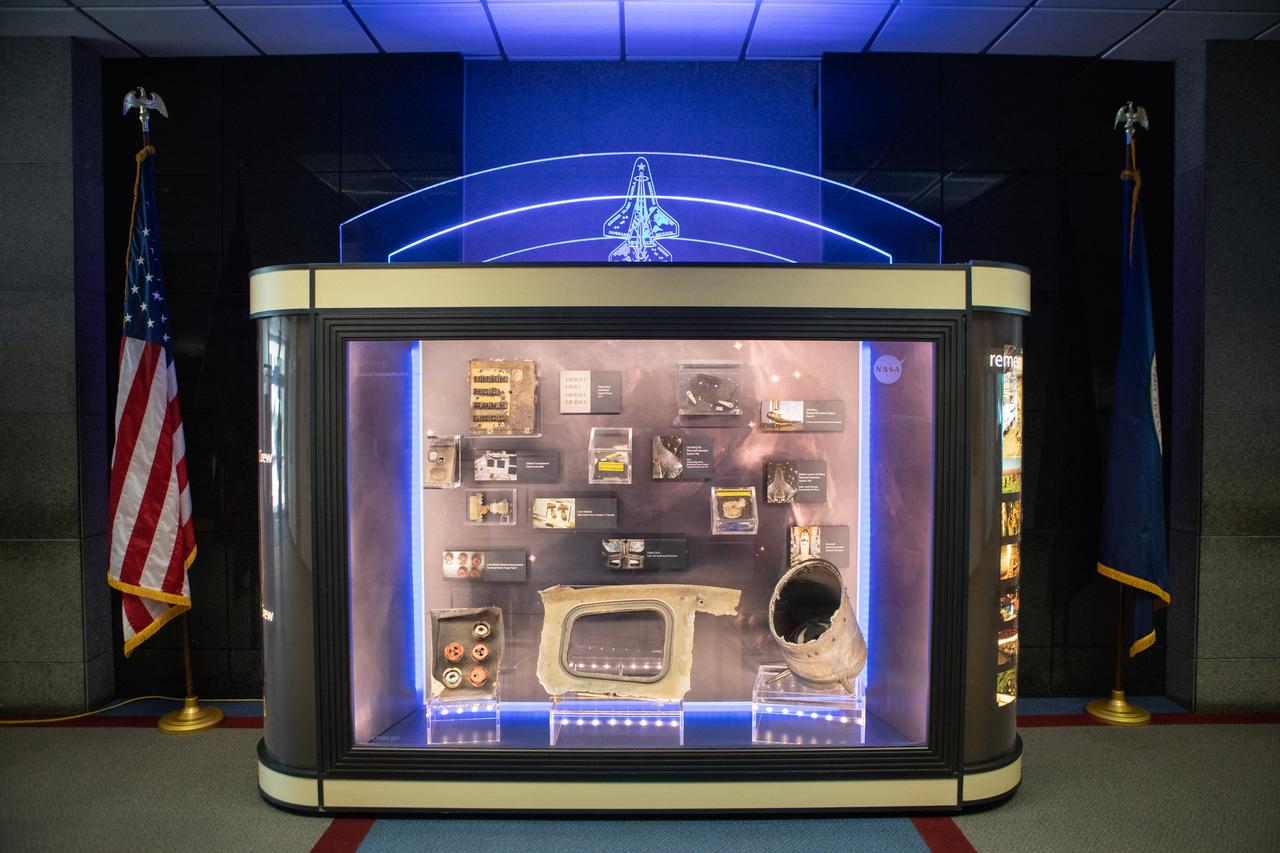
A display of artifacts featuring nine items recovered from the STS-107 tragedy that occurred Feb. 1, 2003, is shown in the old Headquarters Building at Kennedy Space Center. The powerful exhibit can now be viewed in the lobby of the Florida spaceport’s new Central Campus Building until June 10. The exhibit is part of the space shuttle Columbia national tour, which will make its way to all 10 NASA centers throughout the country.
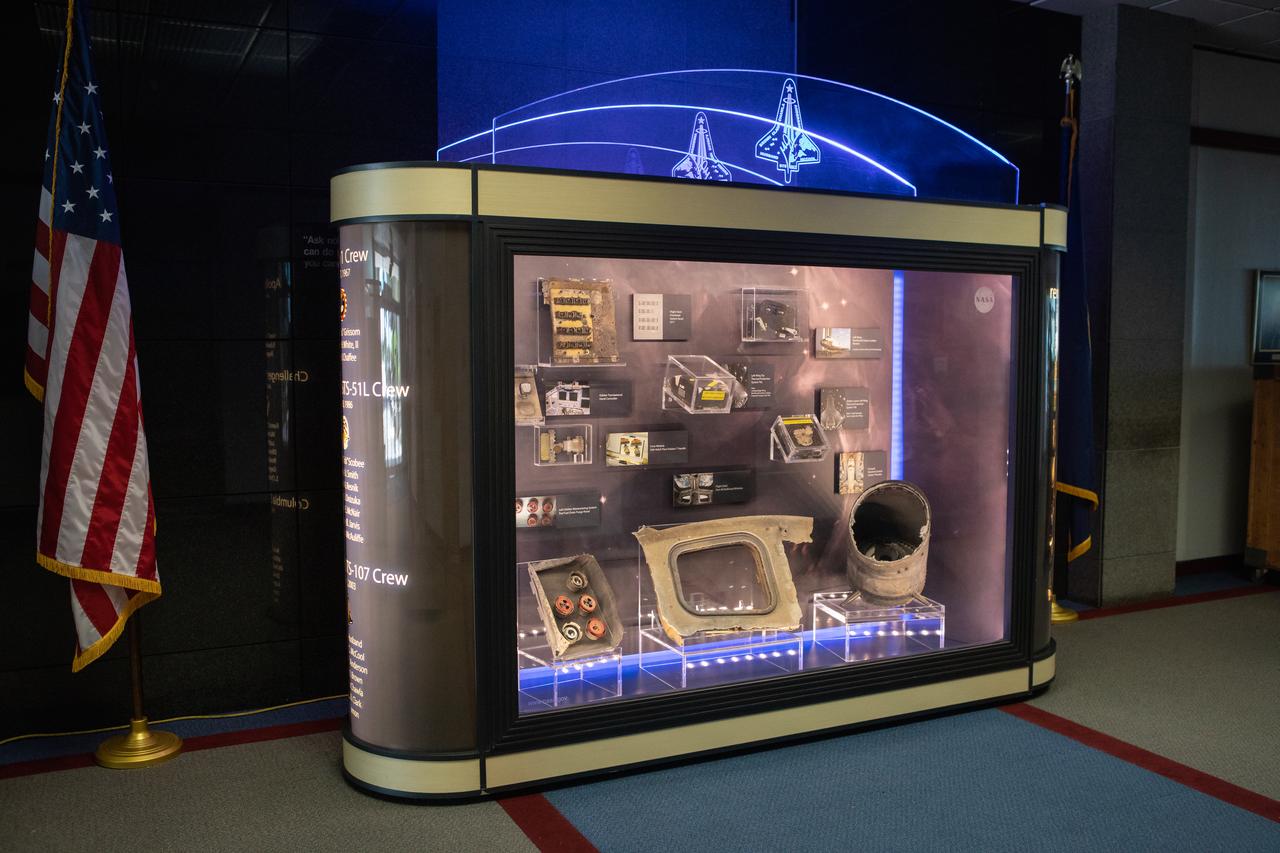
A display of artifacts featuring nine items recovered from the STS-107 tragedy that occurred Feb. 1, 2003, is shown in the old Headquarters Building at Kennedy Space Center. The powerful exhibit can now be viewed in the lobby of the Florida spaceport’s new Central Campus Building until June 10. The exhibit is part of the space shuttle Columbia national tour, which will make its way to all 10 NASA centers throughout the country.
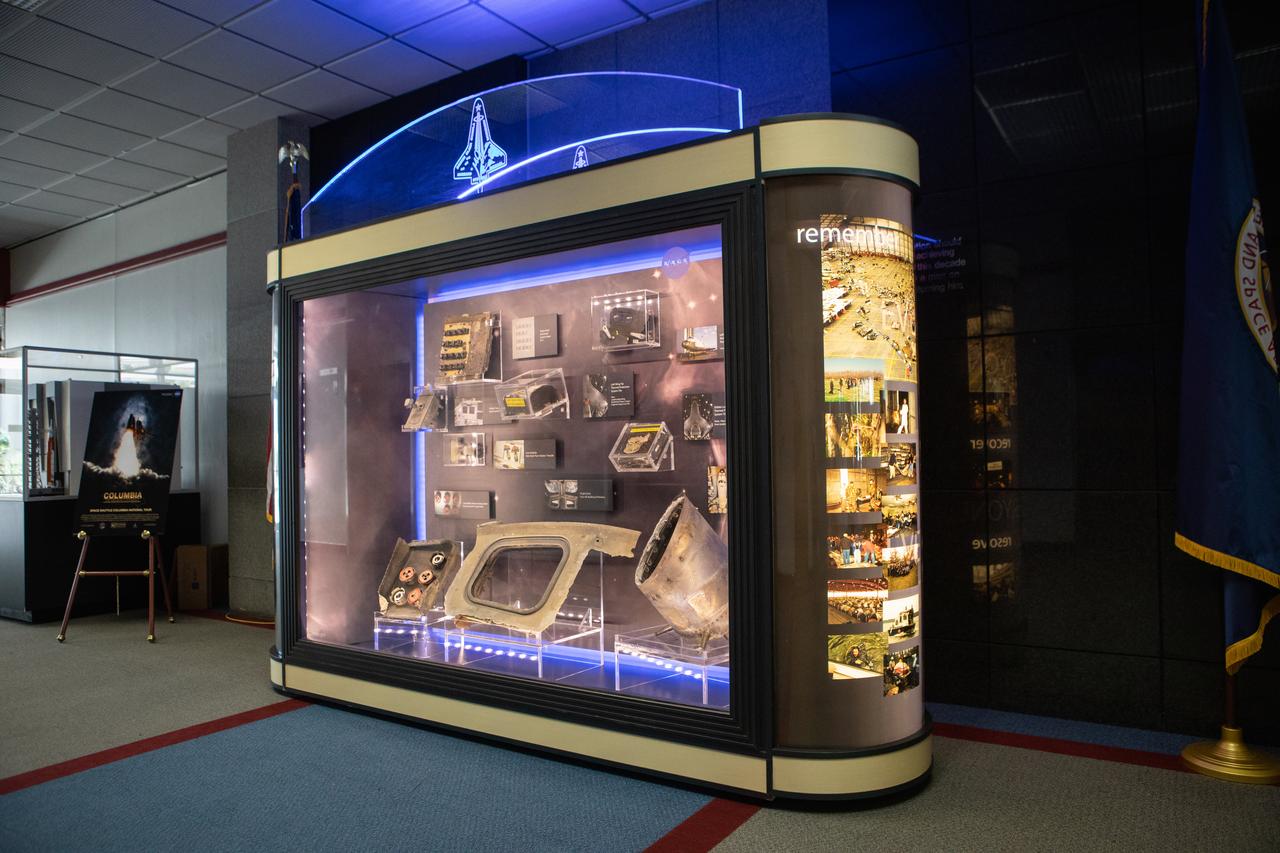
A display of artifacts featuring nine items recovered from the STS-107 tragedy that occurred Feb. 1, 2003, is shown in the old Headquarters Building at Kennedy Space Center. The powerful exhibit can now be viewed in the lobby of the Florida spaceport’s new Central Campus Building until June 10. The exhibit is part of the space shuttle Columbia national tour, which will make its way to all 10 NASA centers throughout the country.
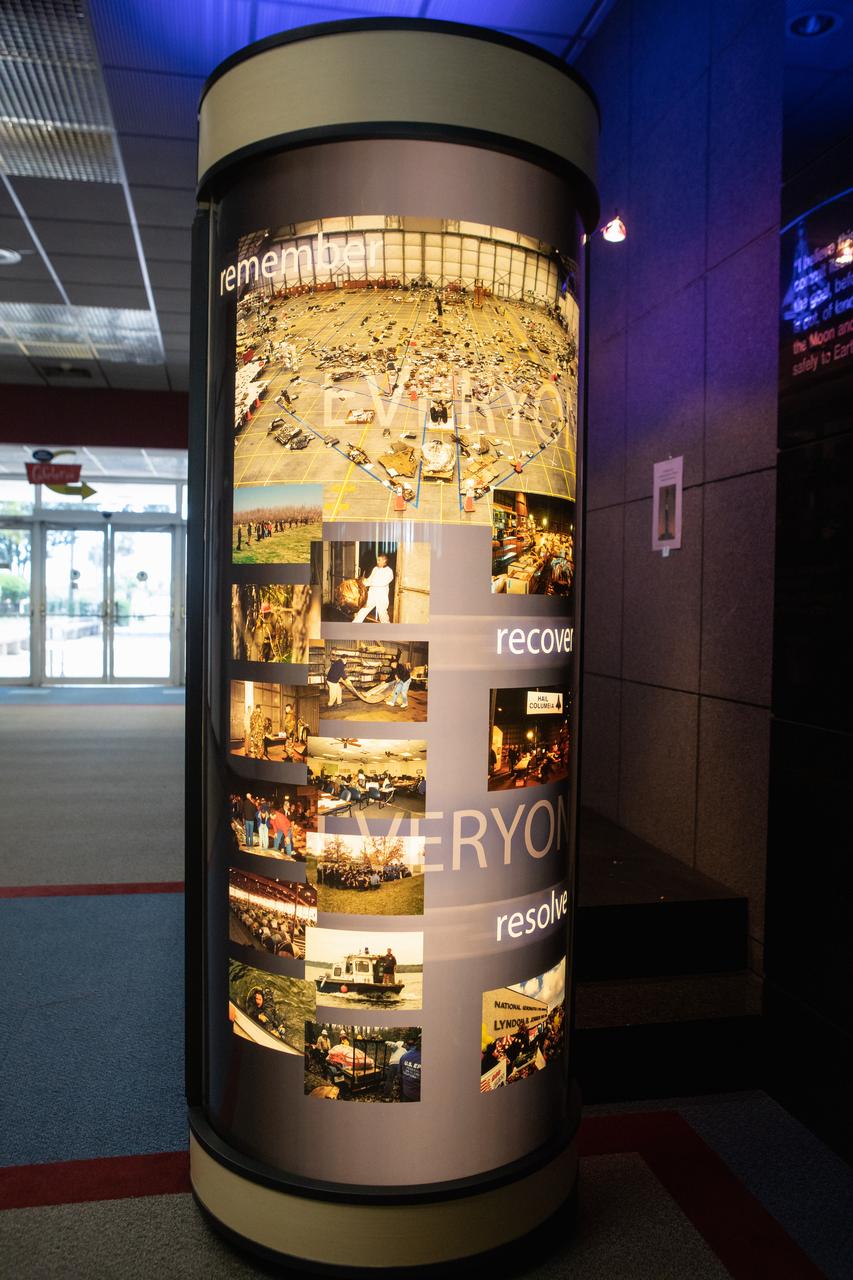
A display of artifacts featuring nine items recovered from the STS-107 tragedy that occurred Feb. 1, 2003, is shown in the old Headquarters Building at Kennedy Space Center. The powerful exhibit can now be viewed in the lobby of the Florida spaceport’s new Central Campus Building until June 10. The exhibit is part of the space shuttle Columbia national tour, which will make its way to all 10 NASA centers throughout the country.
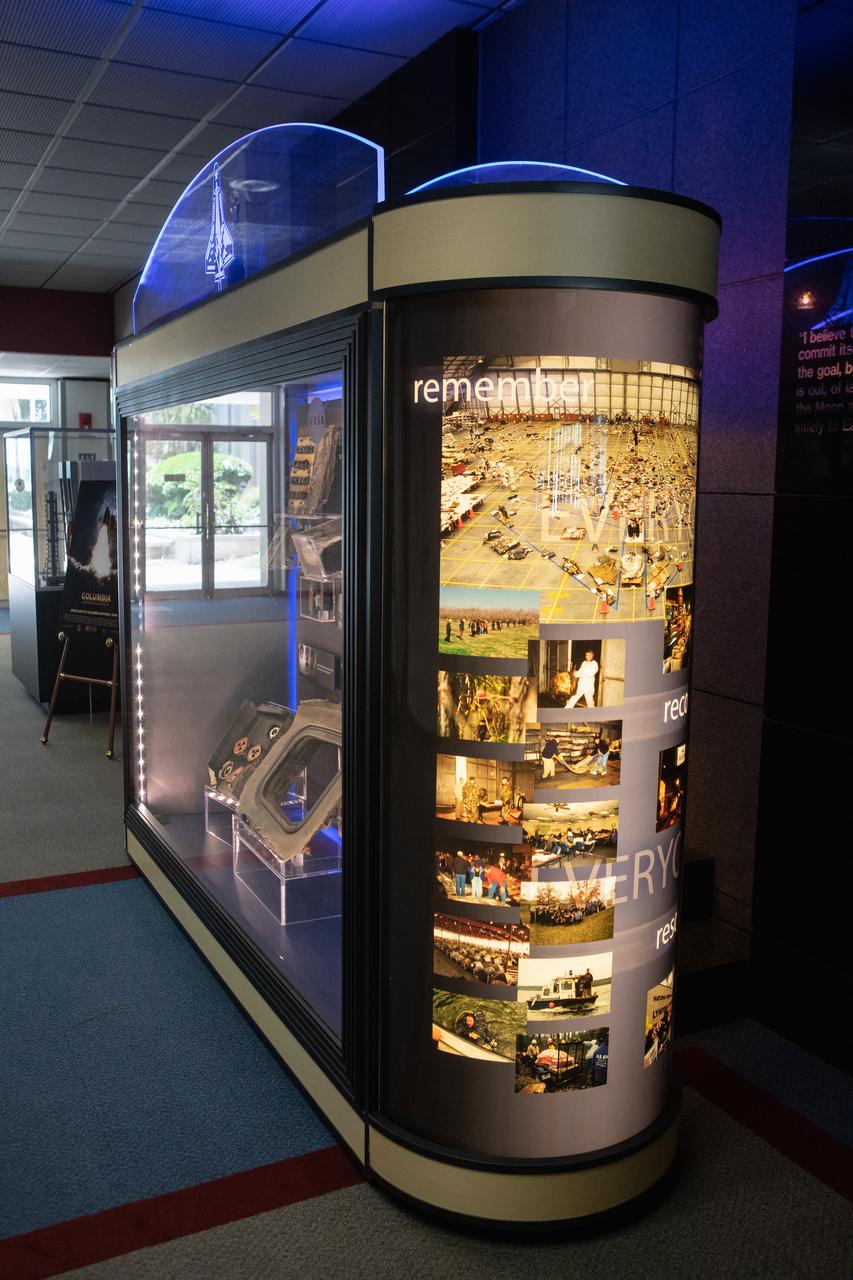
A display of artifacts featuring nine items recovered from the STS-107 tragedy that occurred Feb. 1, 2003, is shown in the old Headquarters Building at Kennedy Space Center. The powerful exhibit can now be viewed in the lobby of the Florida spaceport’s new Central Campus Building until June 10. The exhibit is part of the space shuttle Columbia national tour, which will make its way to all 10 NASA centers throughout the country.
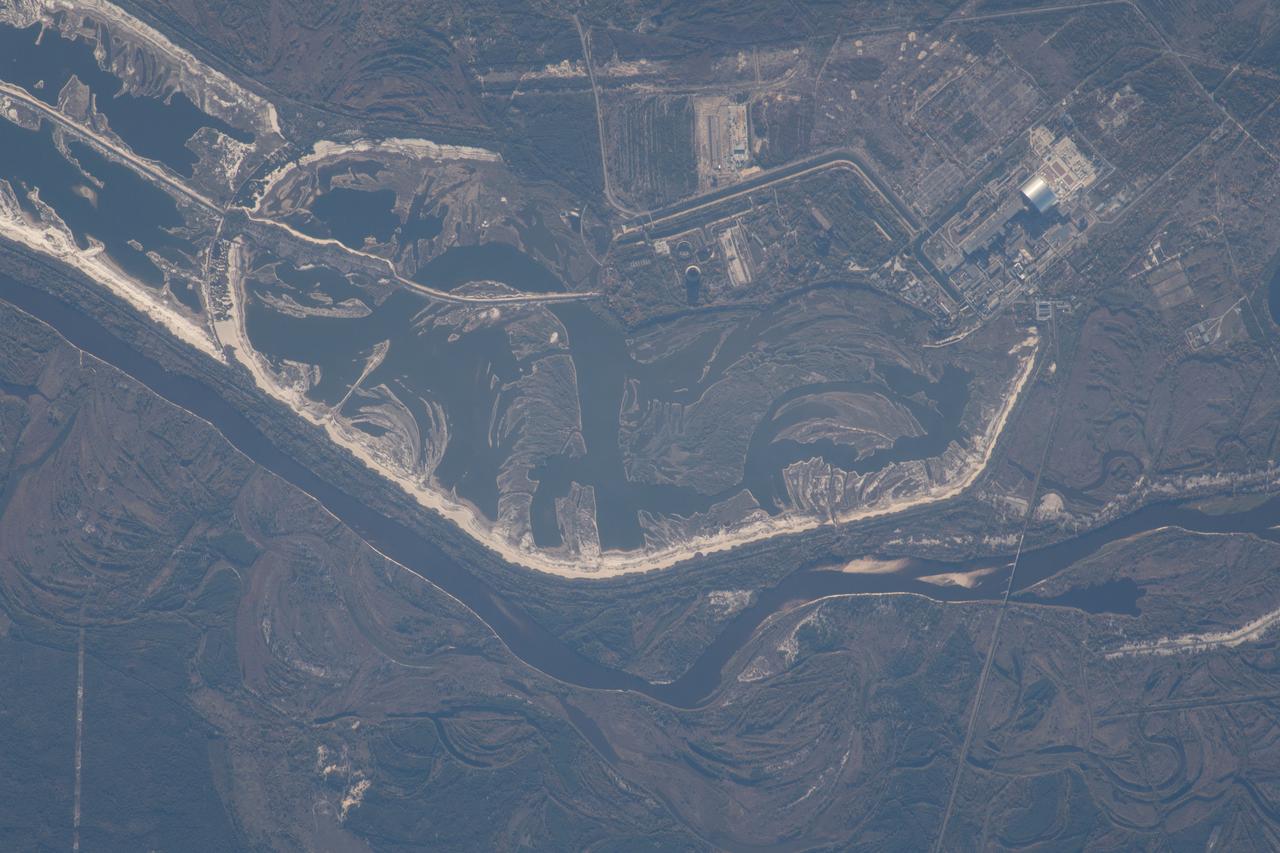
iss057e051419 (Oct. 14, 2018) --- The Chernobyl Nuclear Power Plant on the Pripyat River in northern Ukraine was pictured as the International Space Station orbited 257 miles above Eastern Europe. Across the Ukrainian border in Belarus, the Polesie State Radioecological Reserve was created to enclose territory most affected by radioactive fallout from the Chernobyl disaster.
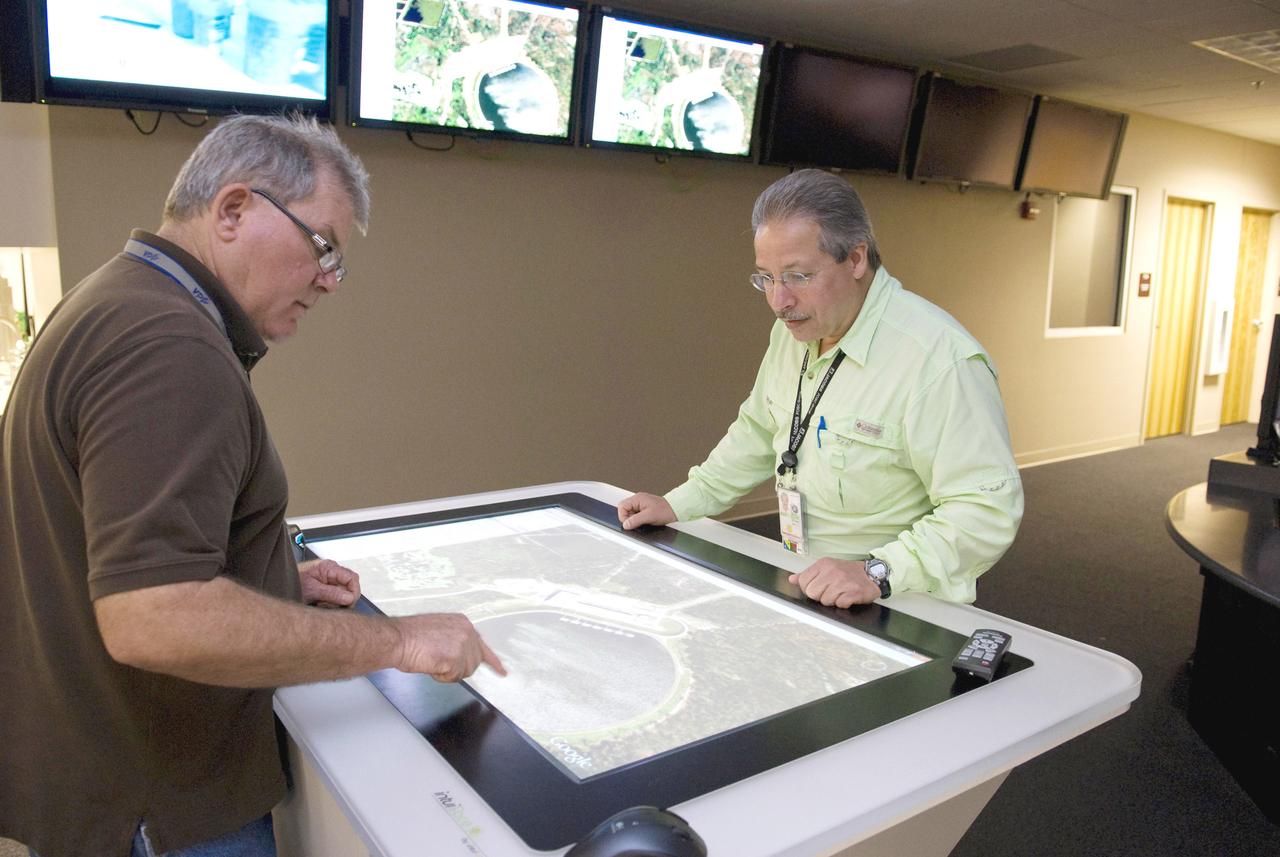
Stennis Space Center employees Mike McKinion (left), with Erica Lane Enterprises, and Luke Scianna, with the Jacobs Facility Operating Services Contract, monitor the facility and surrounding area on the 'all-hazards network' known as HazNet. The HazNet system at Stennis was developed by a local Mississippi company to help facilitate coordinated response during emergency and disaster situations. The system was installed in the new Emergency Operations Center built at Stennis before being implemented throughout NASA. HazNet was designed by NVision Solutions Inc. of Bay St. Louis, Miss., through NASA's Innovative Partnerships Program. In addition to being used at Stennis, it has been installed at other Gulf Coast communities to help coordinate response during emergencies and such natural disasters as hurricanes.
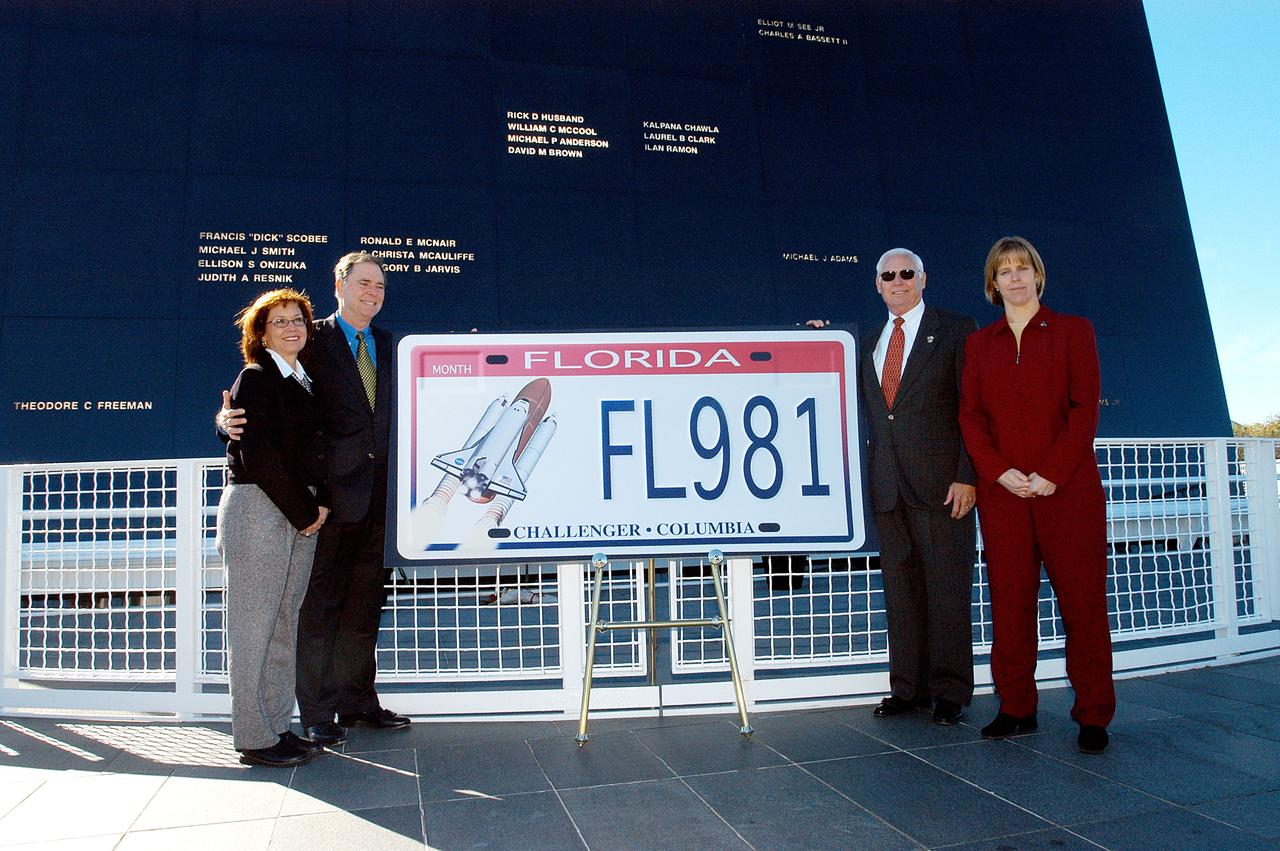
KENNEDY SPACE CENTER, FLA. - The new Florida license plate honoring the fallen astronauts of Challenger and Columbia is unveiled at the KSC Visitor Complex, in front of the Space Memorial Mirror. Participants in the dedication included (from left) Susan Berry, a teacher from Mila Elementary School in Brevard County; Sen. Bill Posey; Florida Rep. Ralph Poppell; and Kirstie McCool Chadwick, sister of William “Willie” J. McCool, who was the pilot on mission STS-107 that ended in disaster Feb. 1, 2003. The Space Mirror, 42-1/2 feet high by 50 feet wide, illuminates the names of the fallen astronauts cut through the monument’s black granite surface.
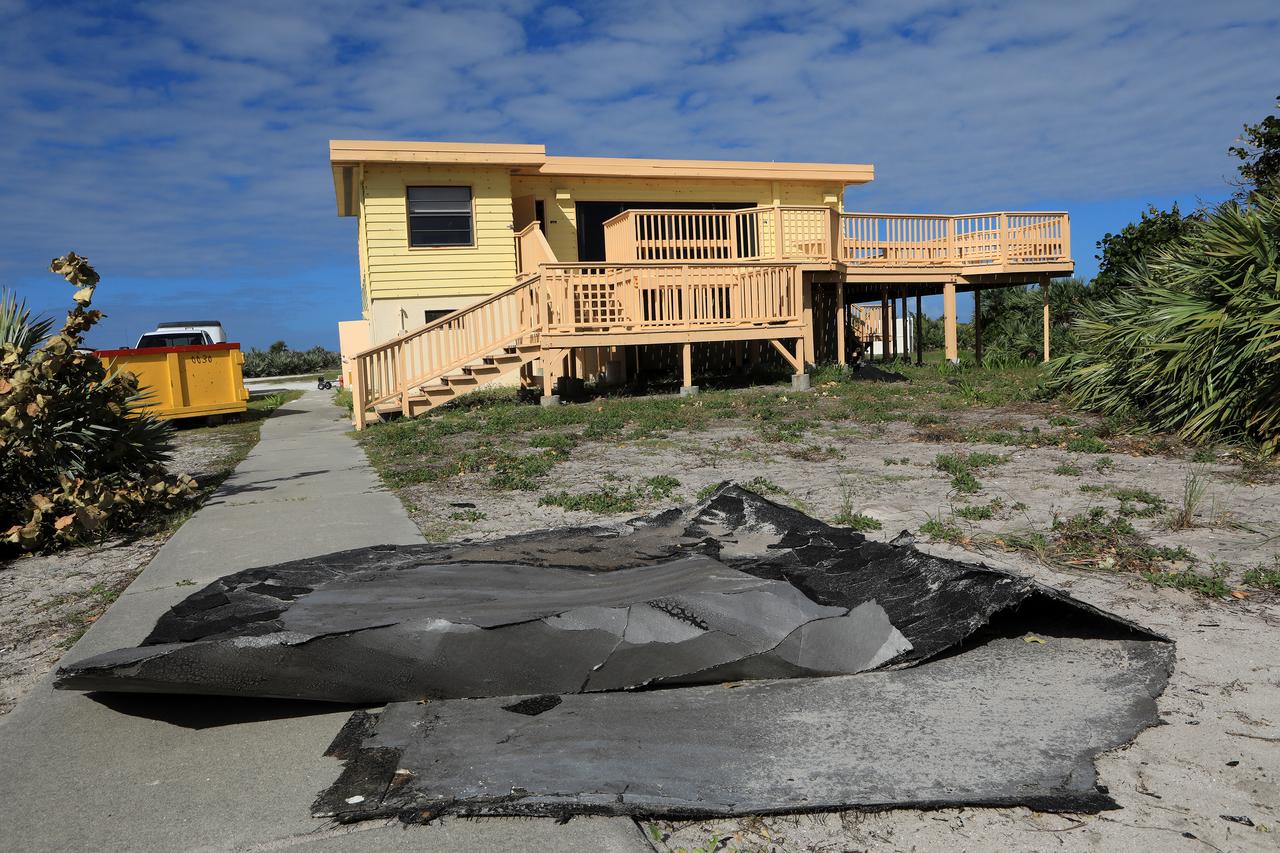
Roofing materials, blown loose by Hurricane Matthew, lie on the ground behind the Beach House at NASA’s Kennedy Space Center in Florida. Members of the Disaster Assessment and Recovery Team (DART) are working on repairs to the facility following Hurricane Matthew, which passed to the east of Kennedy on Oct. 6 and 7, 2016. The center received some isolated roof damage, damaged support buildings, a few downed power lines, and limited water intrusion. Beach erosion also occurred, although the storm surge was less than expected.
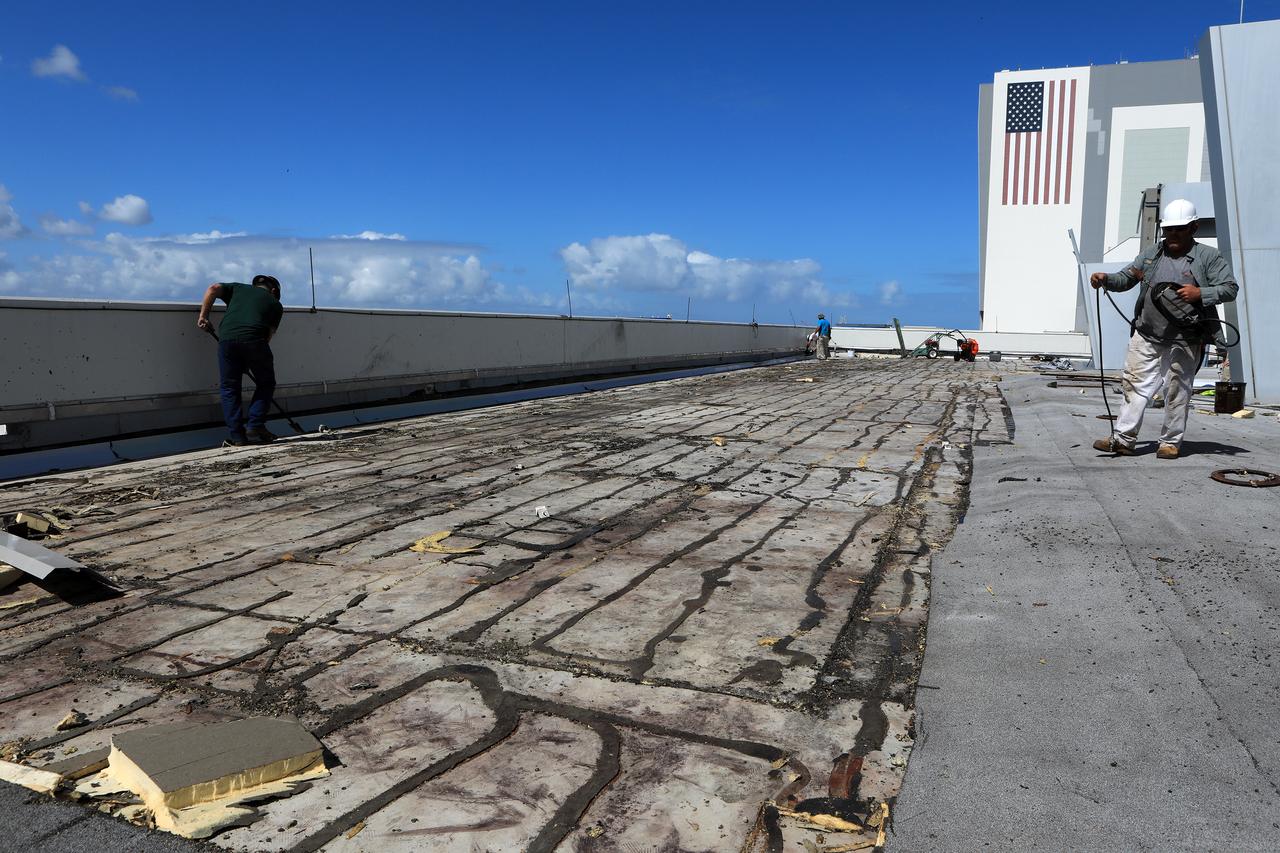
Members of the Disaster Assessment and Recovery Team (DART) repair a section of roof atop the Operations Support Building II at NASA’s Kennedy Space Center in Florida. The effort is part of the spaceport’s ongoing recovery from Hurricane Matthew, which passed to the east of Kennedy on Oct. 6 and 7, 2016. The center received some isolated roof damage, damaged support buildings, a few downed power lines, and limited water intrusion. Beach erosion also occurred, although the storm surge was less than expected.
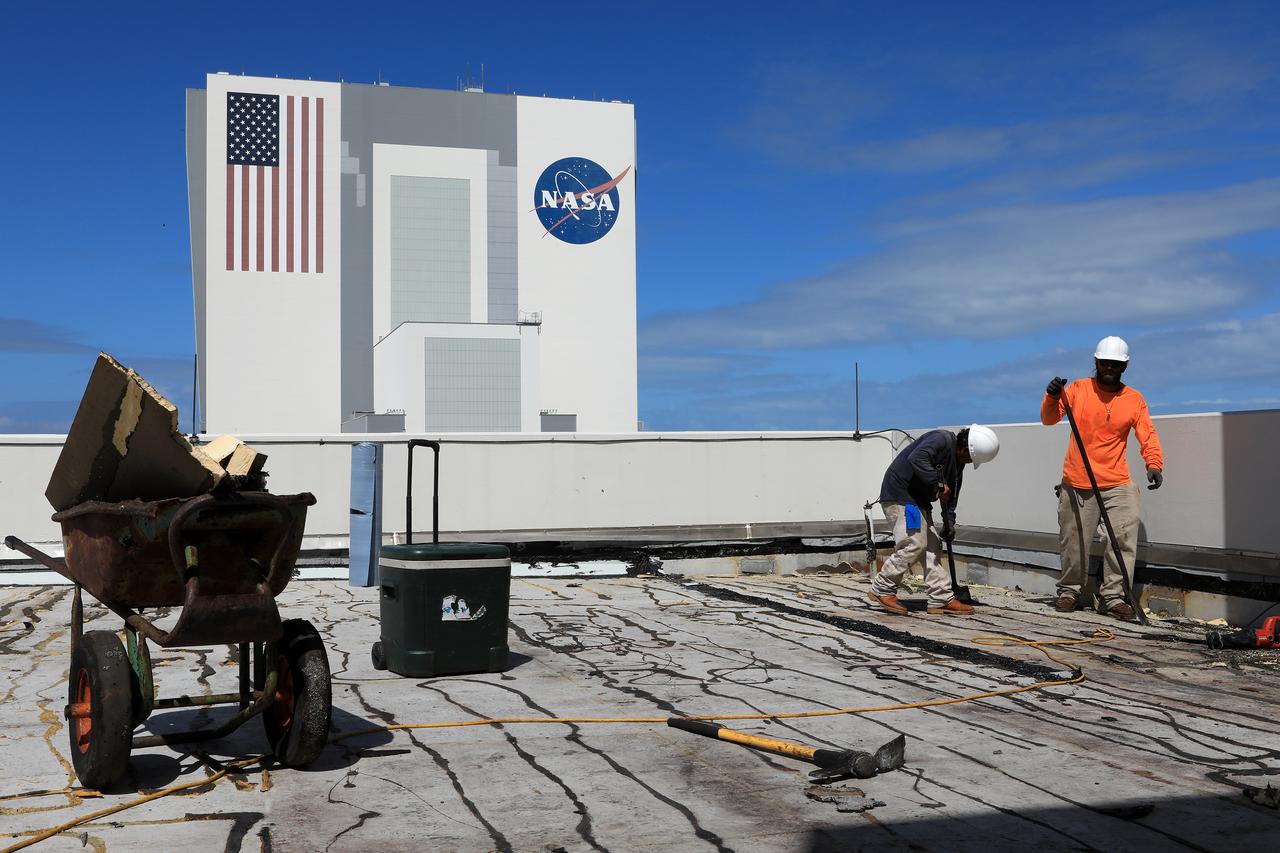
Members of the Disaster Assessment and Recovery Team (DART) repair a section of roof atop the Operations Support Building II at NASA’s Kennedy Space Center in Florida. The effort is part of the spaceport’s ongoing recovery from Hurricane Matthew, which passed to the east of Kennedy on Oct. 6 and 7, 2016. The center received some isolated roof damage, damaged support buildings, a few downed power lines, and limited water intrusion. Beach erosion also occurred, although the storm surge was less than expected.
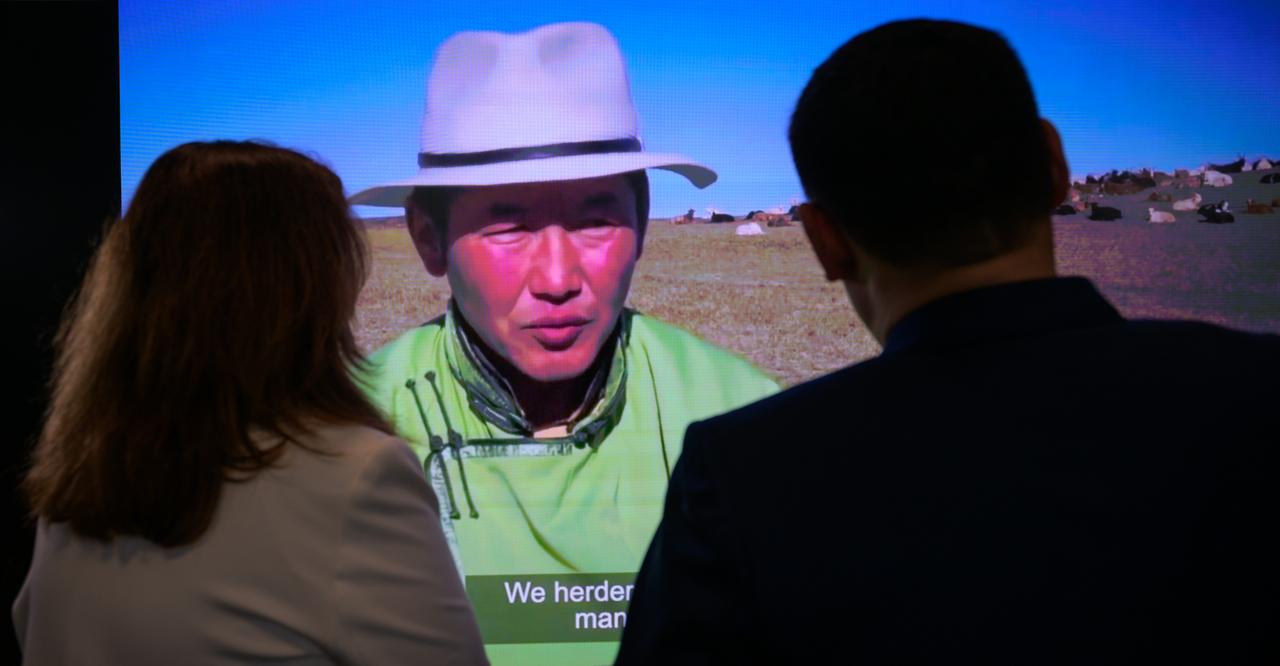
NASA Earth Science Division Director Karen St. Germain, left, talks with Prime Minister Oyun-Erdene Luvsannamsrai of Mongolia, as they tour NASA’s Earth Information Center, Friday, Aug. 4, 2023, at the NASA Headquarters Mary W. Jackson Building in Washington. The Earth Information Center is a new immersive experience that combines live data sets with cutting-edge data visualization to show NASA data can improve lives in the face of disasters, environmental challenges, and our changing world. Photo Credit: (NASA/Bill Ingalls)
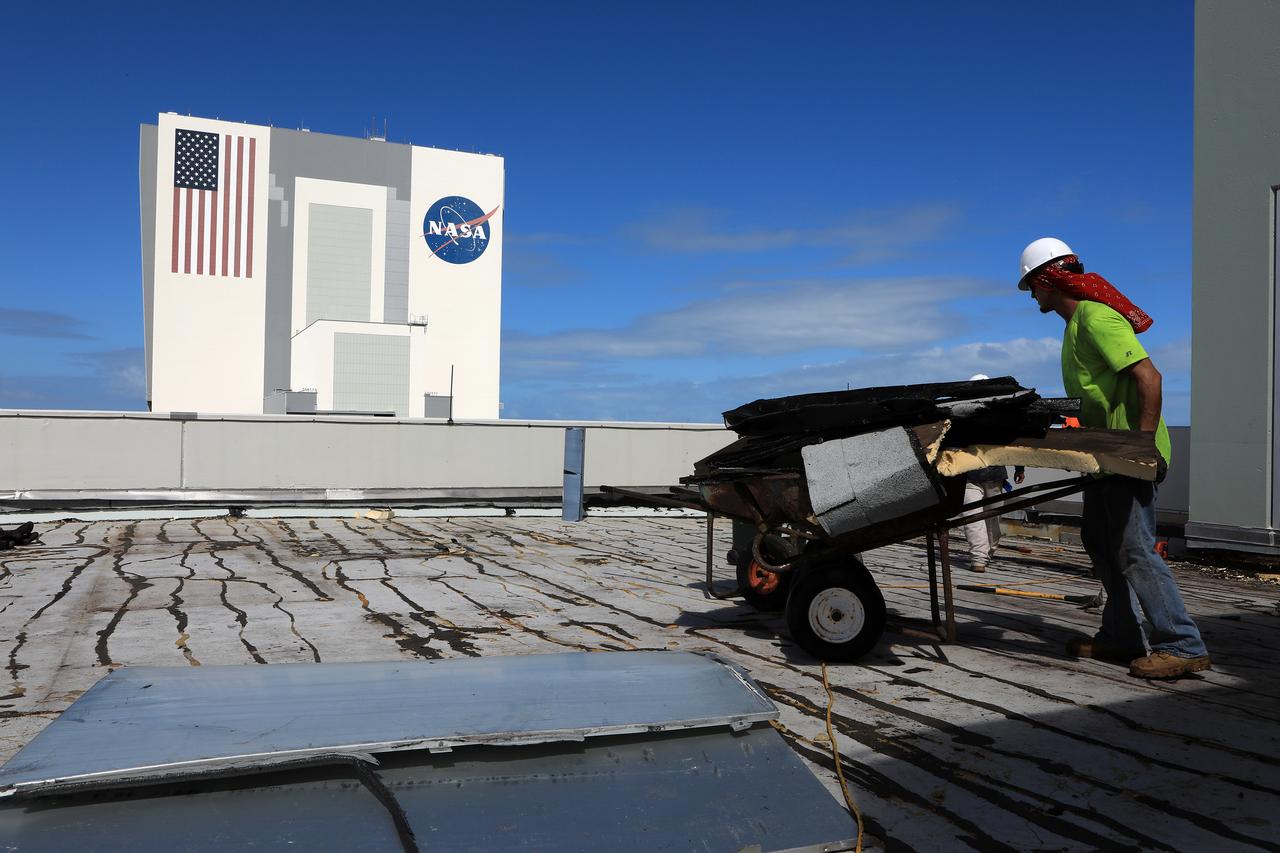
Members of the Disaster Assessment and Recovery Team (DART) repair a section of roof atop the Operations Support Building II at NASA’s Kennedy Space Center in Florida. The effort is part of the spaceport’s ongoing recovery from Hurricane Matthew, which passed to the east of Kennedy on Oct. 6 and 7, 2016. The center received some isolated roof damage, damaged support buildings, a few downed power lines, and limited water intrusion. Beach erosion also occurred, although the storm surge was less than expected.

NASA Administrator Bill Nelson meets with USAID Administrator Samantha Power and staff prior to signing a NASA-USAID Memorandum of Understanding (MoU) Friday, Nov. 4, 2022, at the Mary W. Jackson NASA Headquarters building in Washington. The MoU will enhance and expand the Agencies’ longstanding partnership that promotes science and technology solutions to address international development challenges in areas such as global health, climate change, food security, disaster mitigation and response, biodiversity conservation, and environmental management for sustainable development. Photo Credit: (NASA/Keegan Barber)
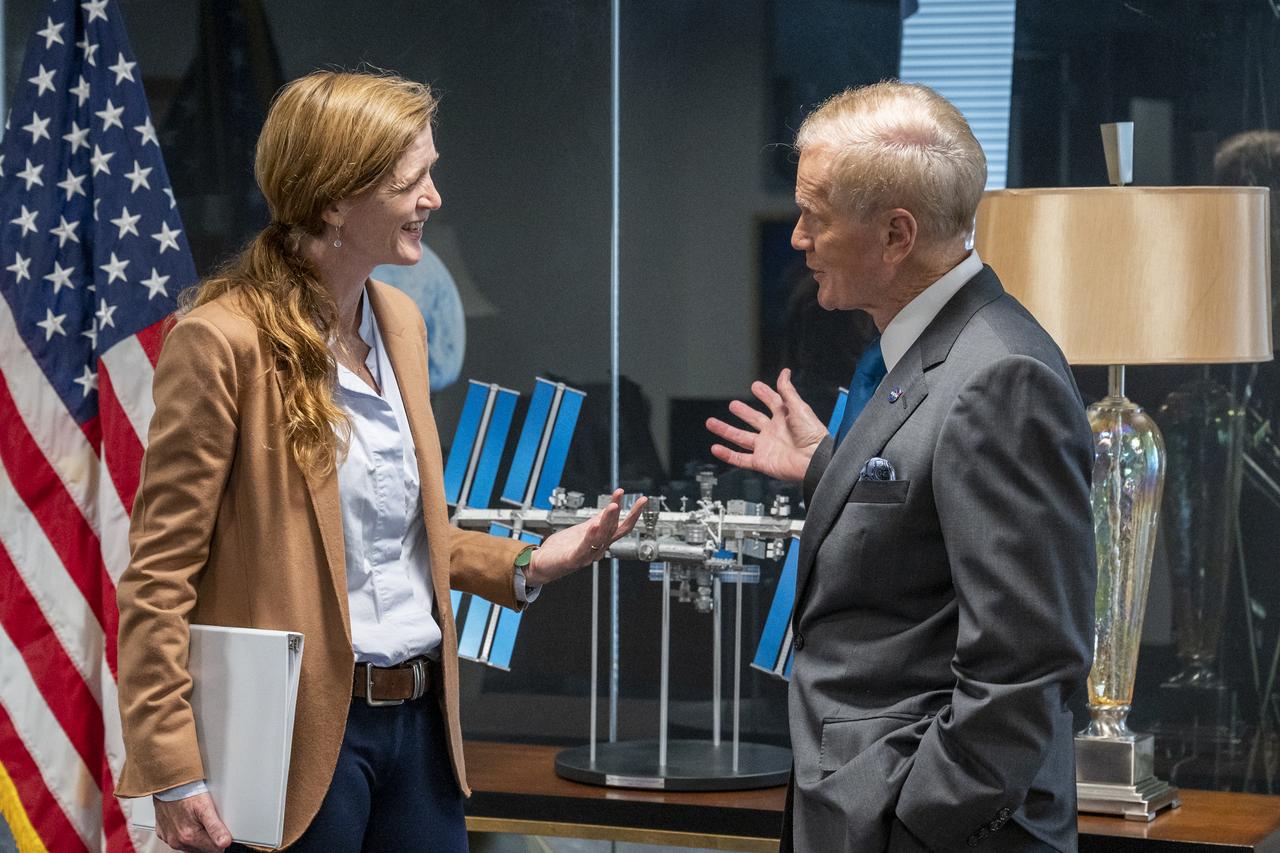
NASA Administrator Bill Nelson meets with USAID Administrator Samantha Power and staff prior to signing a NASA-USAID Memorandum of Understanding (MoU) Friday, Nov. 4, 2022, at the Mary W. Jackson NASA Headquarters building in Washington. The MoU will enhance and expand the Agencies’ longstanding partnership that promotes science and technology solutions to address international development challenges in areas such as global health, climate change, food security, disaster mitigation and response, biodiversity conservation, and environmental management for sustainable development. Photo Credit: (NASA/Keegan Barber)
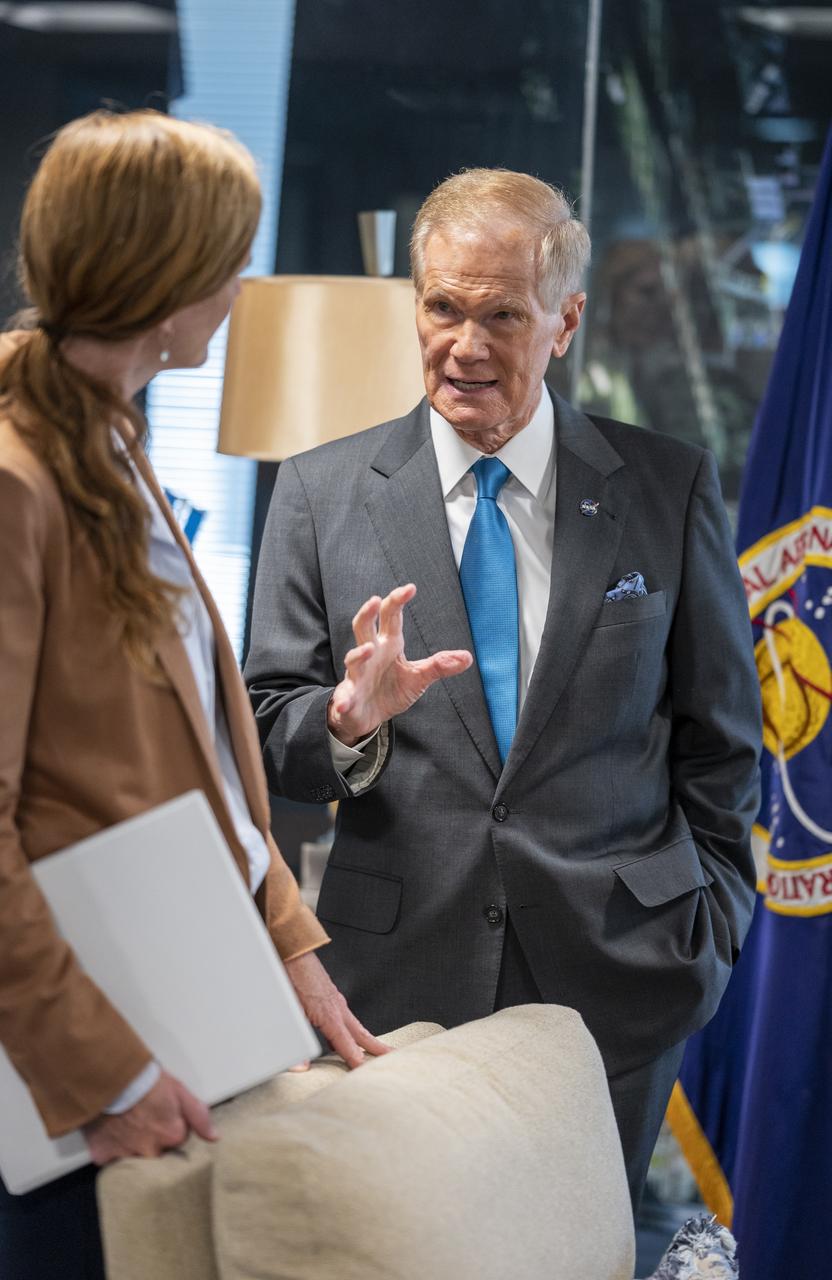
NASA Administrator Bill Nelson meets with USAID Administrator Samantha Power and staff prior to signing a NASA-USAID Memorandum of Understanding (MoU) Friday, Nov. 4, 2022, at the Mary W. Jackson NASA Headquarters building in Washington. The MoU will enhance and expand the Agencies’ longstanding partnership that promotes science and technology solutions to address international development challenges in areas such as global health, climate change, food security, disaster mitigation and response, biodiversity conservation, and environmental management for sustainable development. Photo Credit: (NASA/Keegan Barber)
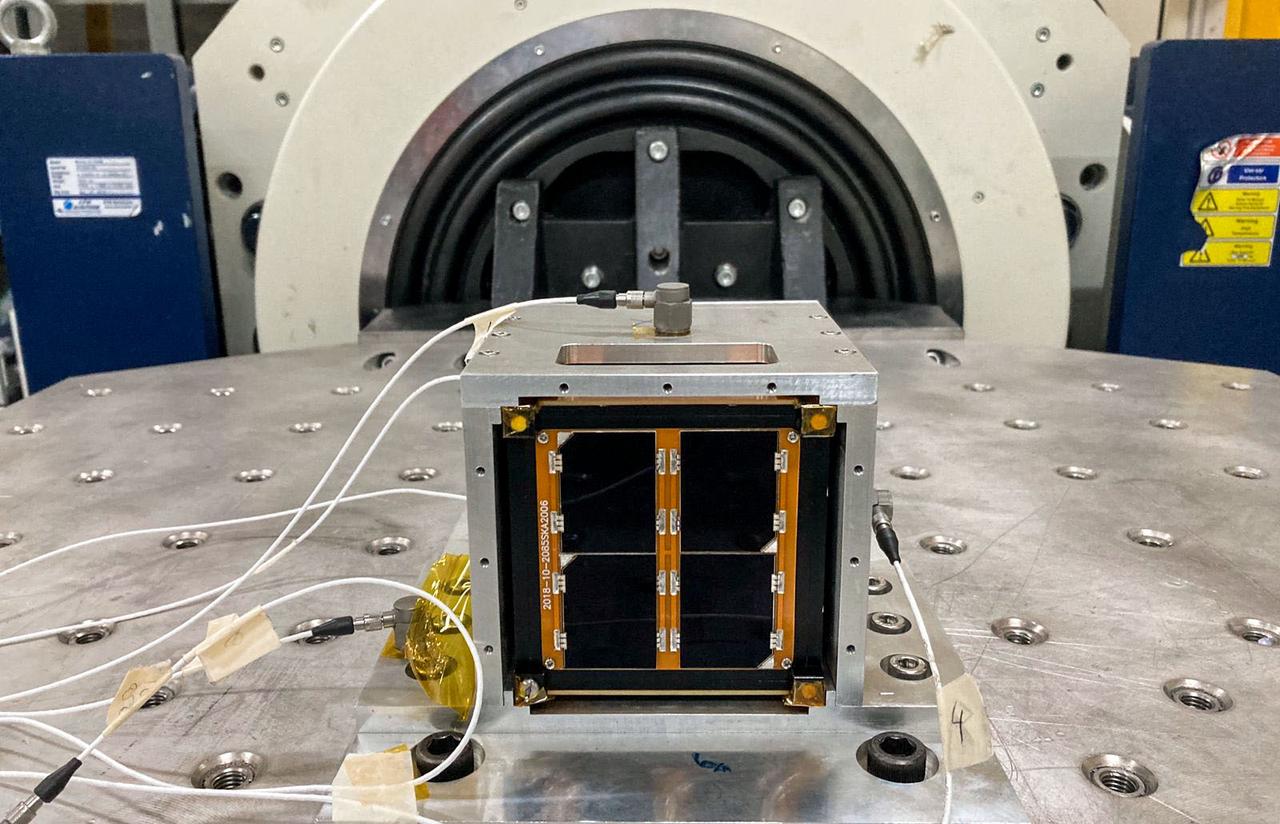
jsc2022e068265 (3/1/2022) --- A preflight view of the Surya Satellite-1 (SS-1) during Vibration Testing. The Surya Satellite-1 (SS-1) is the first Indonesian nanosatellite developed by university students at Surya University. SS-1 tests a satellite telecommunication system to serve amateur radio stations, and serves as a proof of concept of sensoric information transfer in rural areas for disaster mitigation application. Image Courtesy of The SS-1 Team.
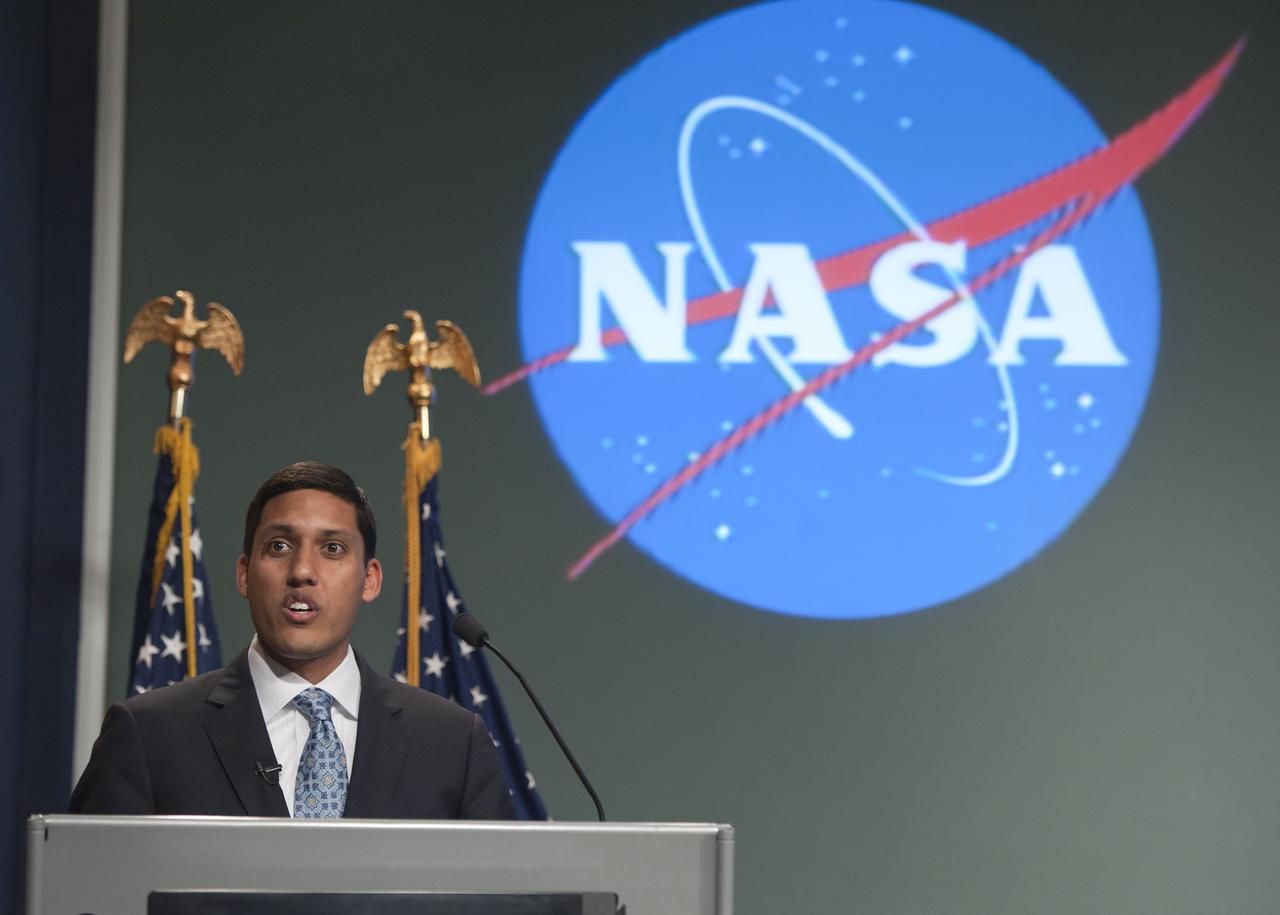
USAID Administrator Rajiv Shahspeaks prior to signing a five-year memorandum of understanding with NASA, Monday, April 25, 2011, at NASA Headquarters in Washington. The agreement formalizes ongoing agency collaborations that use Earth science data to address developmental challenges, and to assist in disaster mitigation and humanitarian responses. The agreement also encourages NASA and USAID to apply geospatial technologies to solve development challenges affecting the United States and developing countries. Photo Credit: (NASA/Paul E. Alers)
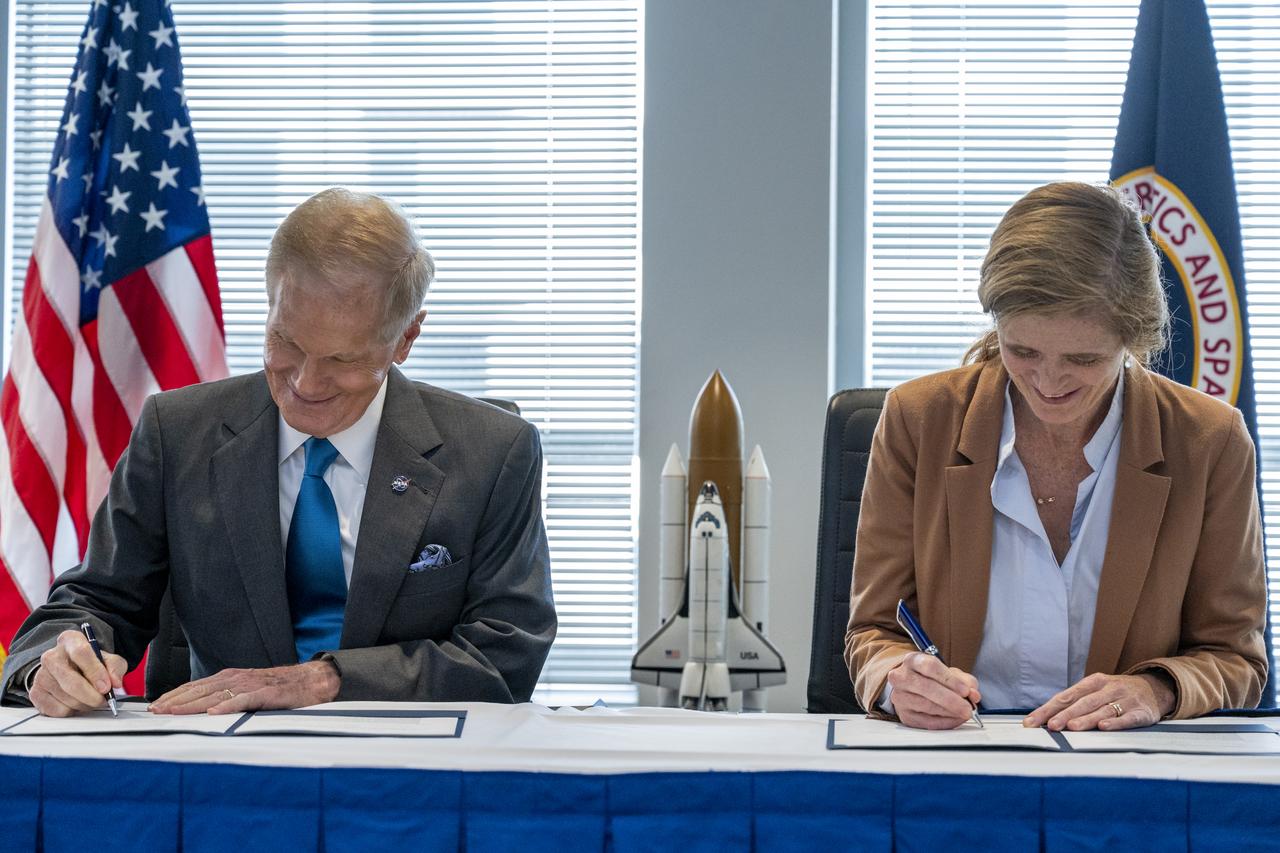
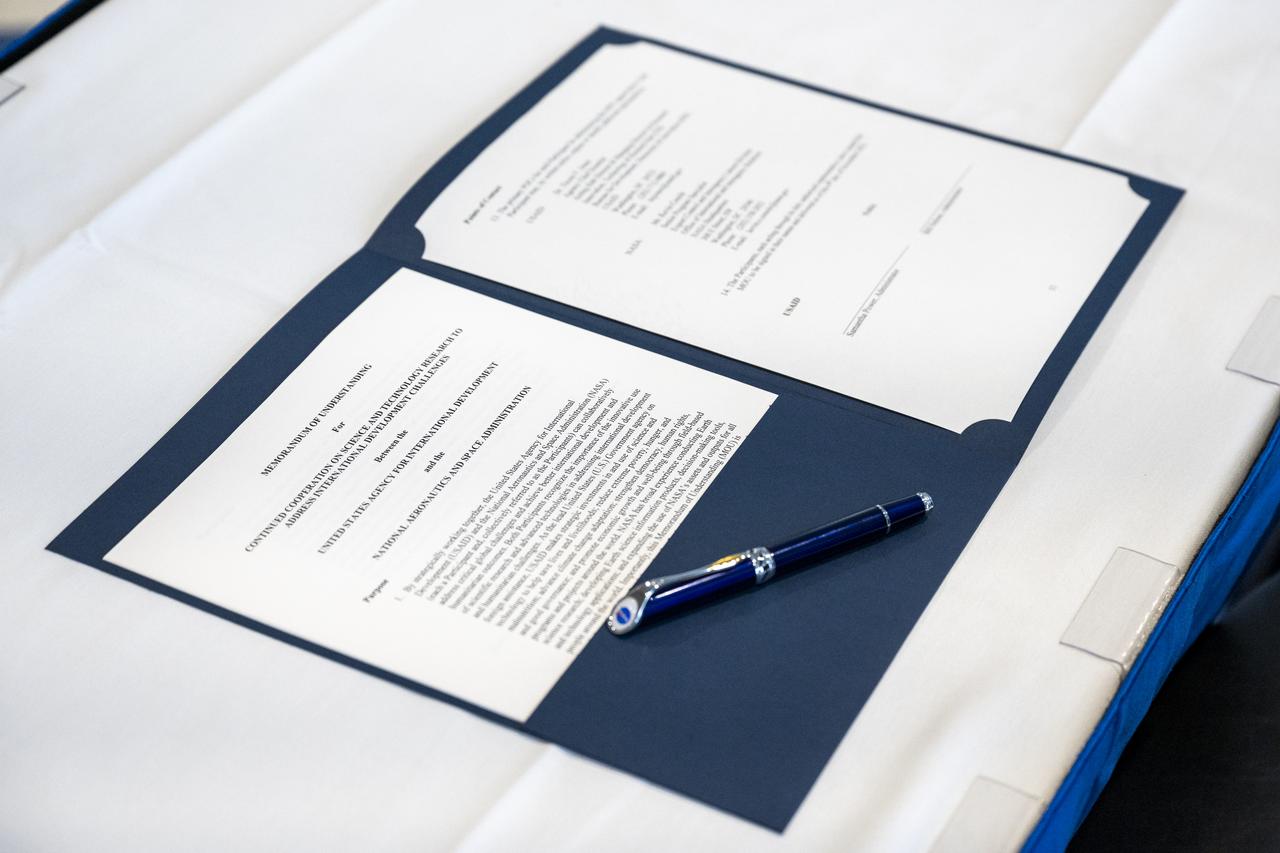
NASA Administrator Bill Nelson and USAID Administrator Samantha Power participate in a NASA-USAID Memorandum of Understanding (MoU) signing ceremony Friday, Nov. 4, 2022, at the Mary W. Jackson NASA Headquarters building in Washington. The MoU will enhance and expand the Agencies’ longstanding partnership that promotes science and technology solutions to address international development challenges in areas such as global health, climate change, food security, disaster mitigation and response, biodiversity conservation, and environmental management for sustainable development. Photo Credit: (NASA/Keegan Barber)

jsc2022e068261 (11/1/2021) --- The Surya Satellite-1 and its developer team after Vibration Testing, shown left to right: Afiq, Roberto, Setra, Suhan, Hery, Zulfa. The Surya Satellite-1 (SS-1) is the first Indonesian nanosatellite developed by university students at Surya University. SS-1 tests a satellite telecommunication system to serve amateur radio stations, and serves as a proof of concept of sensoric information transfer in rural areas for disaster mitigation application. Image Courtesy of The SS-1 Team.
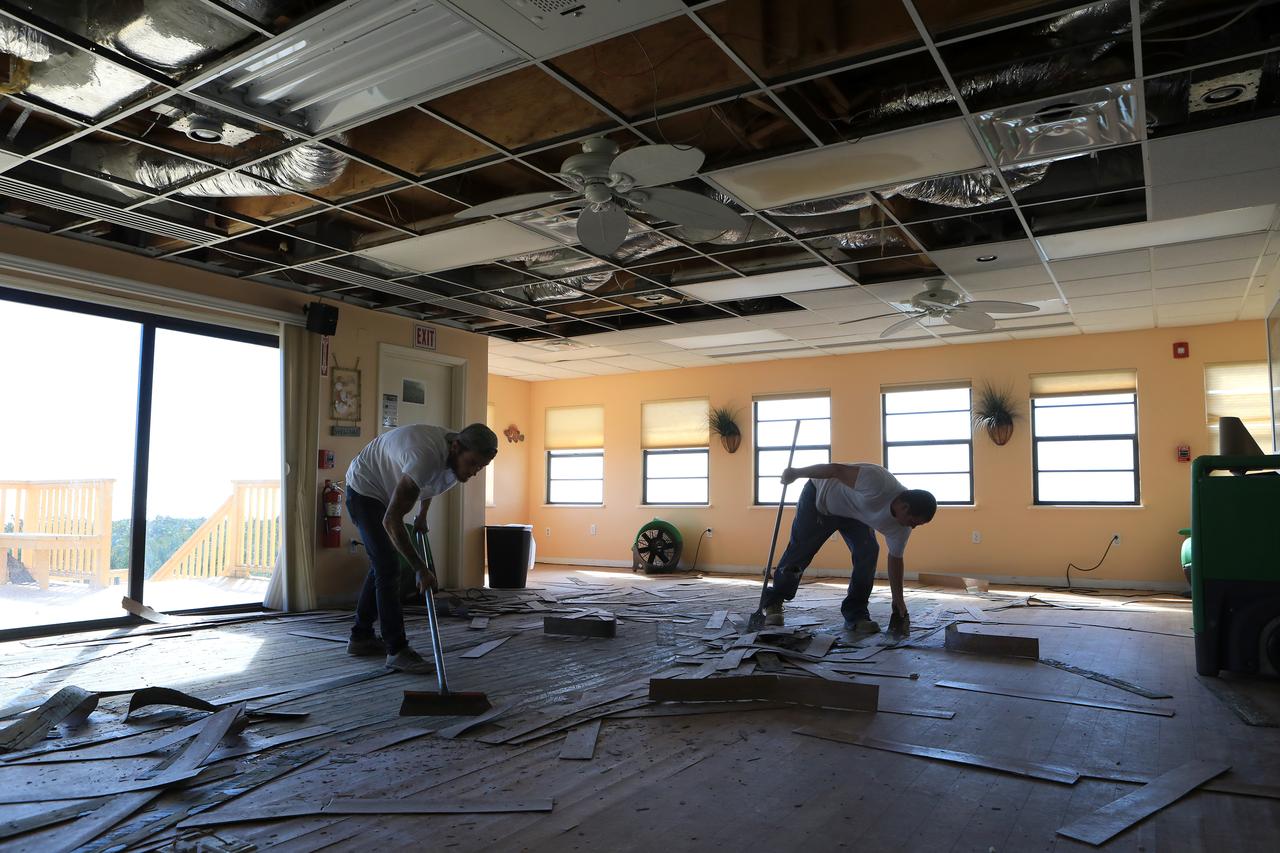
Members of the Disaster Assessment and Recovery Team (DART) work on flooring repairs to the Beach House at NASA’s Kennedy Space Center in Florida. The effort is part of the spaceport’s ongoing recovery from Hurricane Matthew, which passed to the east of Kennedy on Oct. 6 and 7, 2016. The center received some isolated roof damage, damaged support buildings, a few downed power lines, and limited water intrusion. Beach erosion also occurred, although the storm surge was less than expected.
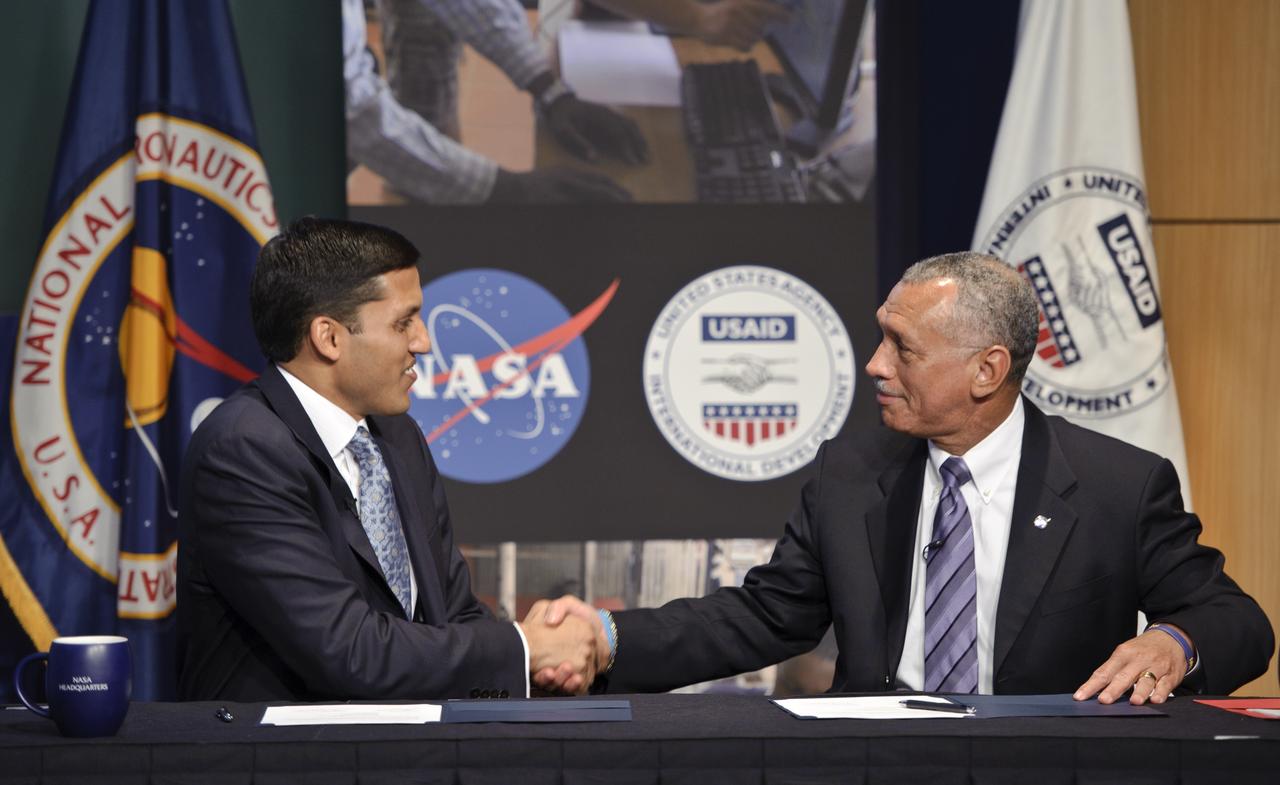
USAID Administrator Rajiv Shah, left, and NASA Administrator Charles Bolden shake hands after signing a five-year memorandum of understanding, Monday, April 25, 2011, at NASA Headquarters in Washington. The agreement formalizes ongoing agency collaborations that use Earth science data to address developmental challenges, and to assist in disaster mitigation and humanitarian responses. The agreement also encourages NASA and USAID to apply geospatial technologies to solve development challenges affecting the United States and developing countries. Photo Credit: (NASA/Paul E. Alers)
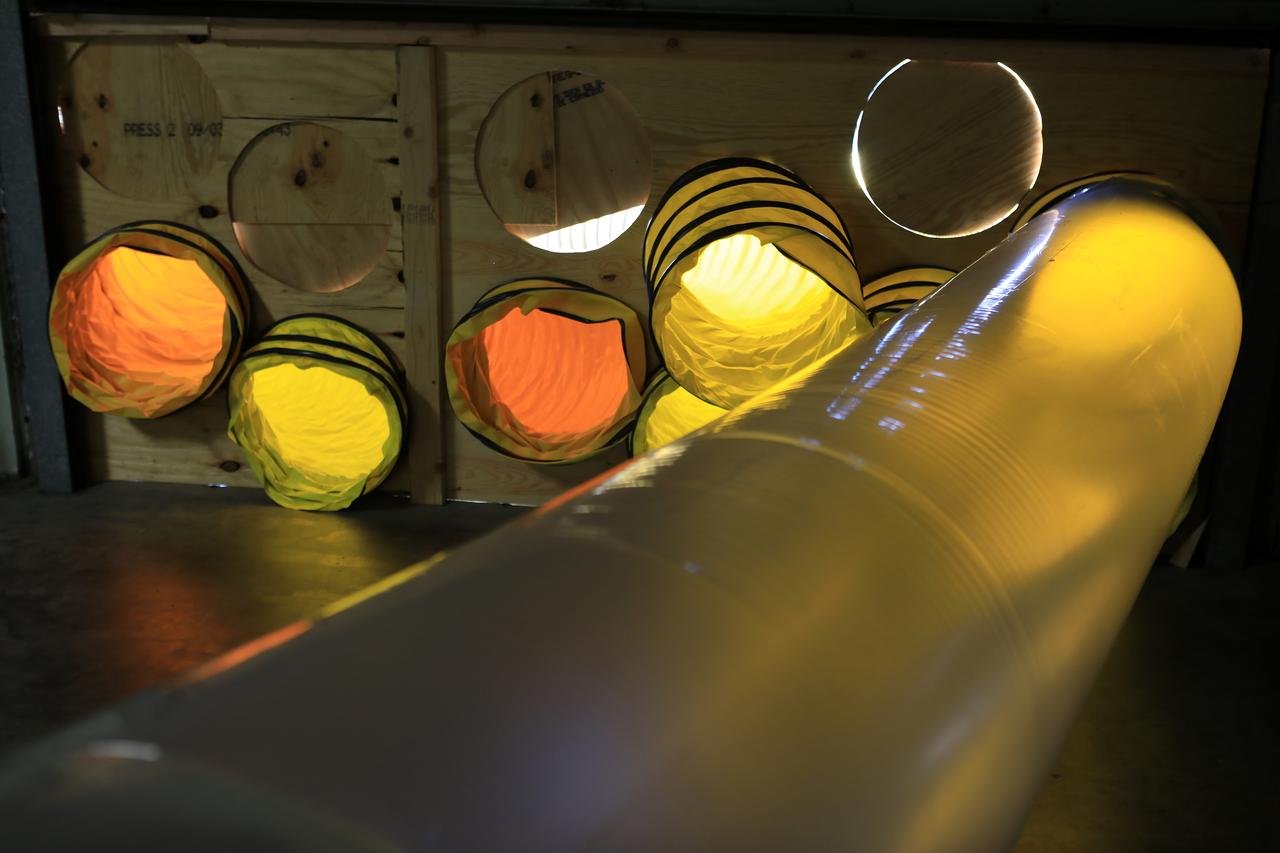
Tubing provides ventilation through boarded-up windows on the Operations Support Building II at NASA’s Kennedy Space Center in Florida. Members of the Disaster Assessment and Recovery Team (DART) are working on repairs to the facility following Hurricane Matthew, which passed to the east of Kennedy on Oct. 6 and 7, 2016. The center received some isolated roof damage, damaged support buildings, a few downed power lines, and limited water intrusion. Beach erosion also occurred, although the storm surge was less than expected.
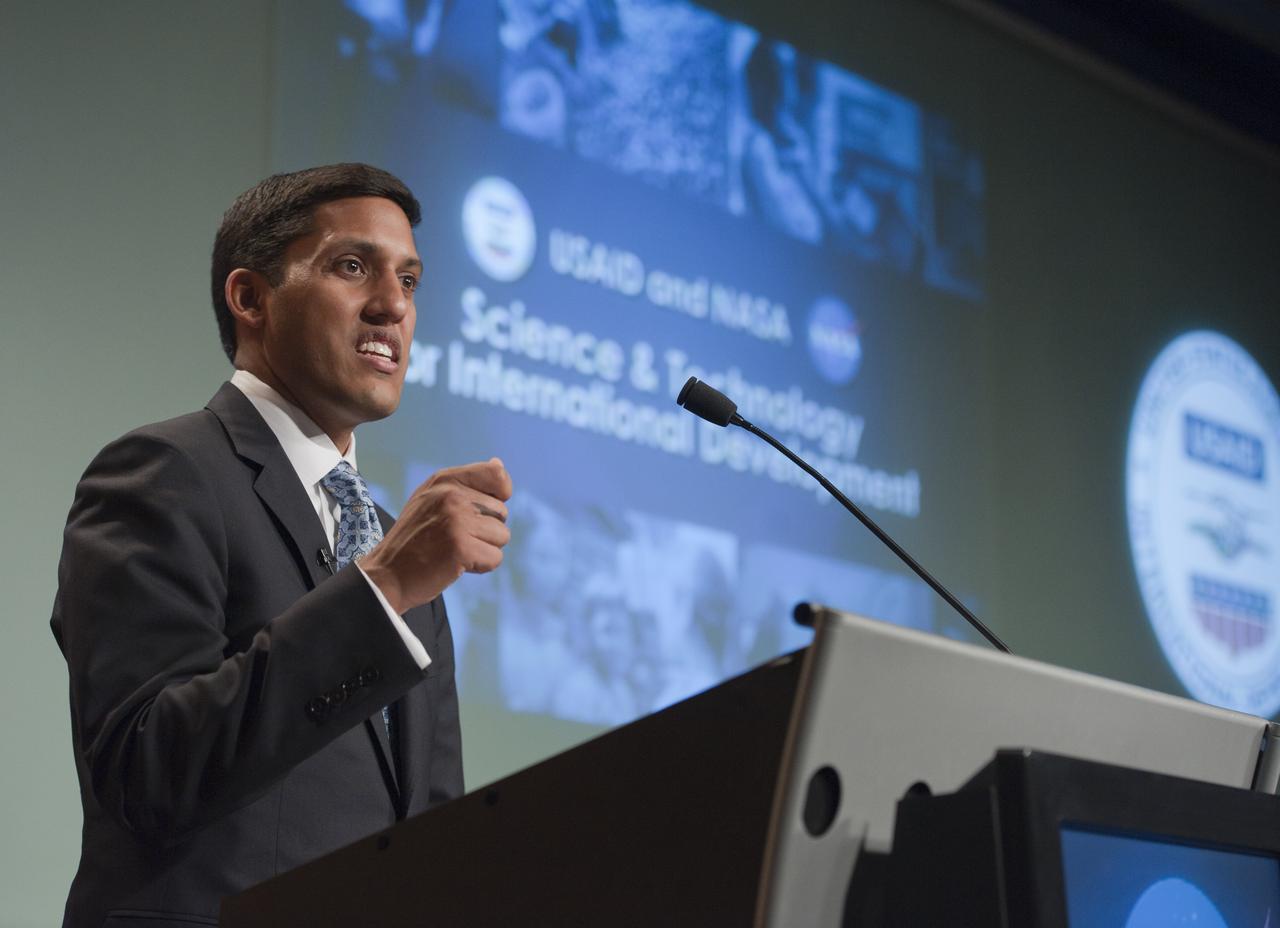
USAID Administrator Rajiv Shah speaks prior to signing a five-year memorandum of understanding with NASA, Monday, April 25, 2011, at NASA Headquarters in Washington. The agreement formalizes ongoing agency collaborations that use Earth science data to address developmental challenges, and to assist in disaster mitigation and humanitarian responses. The agreement also encourages NASA and USAID to apply geospatial technologies to solve development challenges affecting the United States and developing countries. Photo Credit: (NASA/Paul E. Alers)
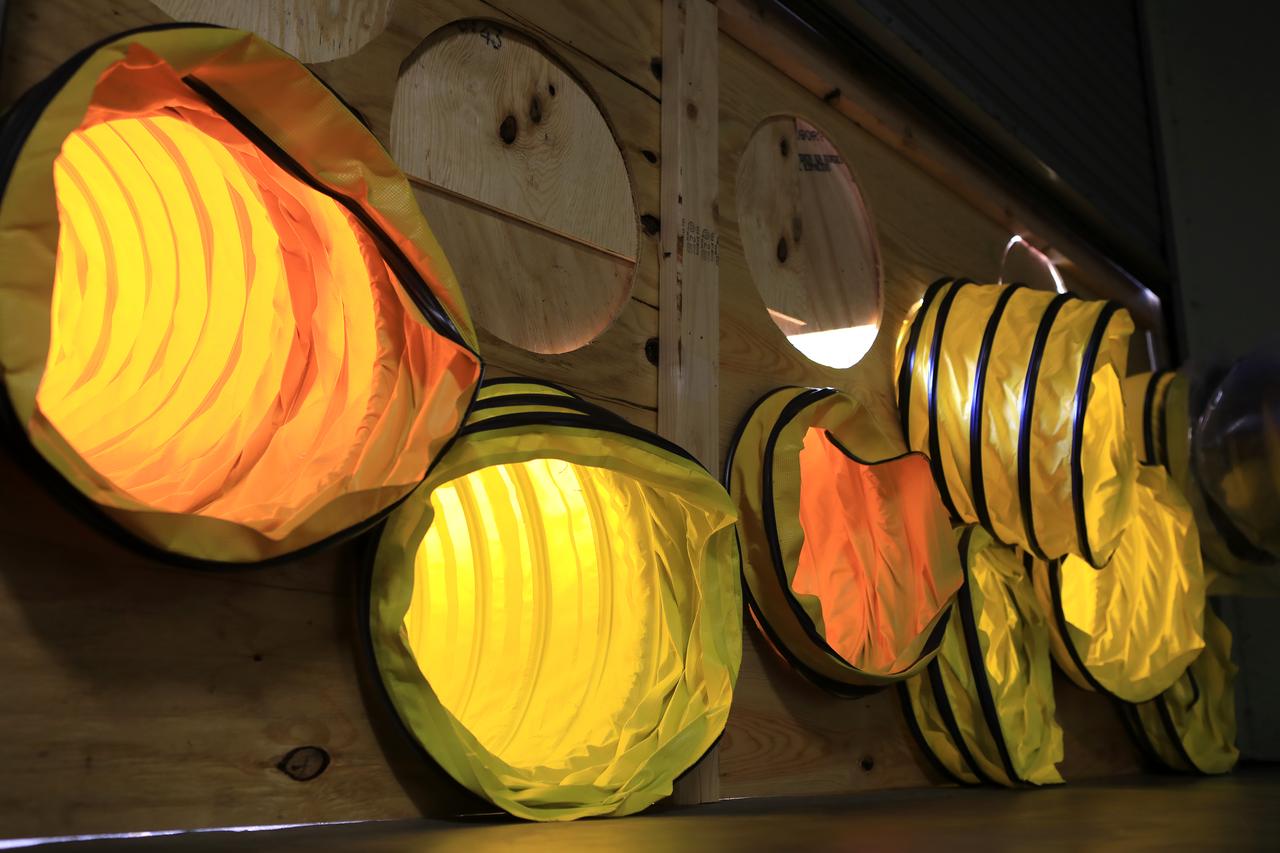
Tubing provides ventilation through boarded-up windows on the Operations Support Building II at NASA’s Kennedy Space Center in Florida. Members of the Disaster Assessment and Recovery Team (DART) are working on repairs to the facility following Hurricane Matthew, which passed to the east of Kennedy on Oct. 6 and 7, 2016. The center received some isolated roof damage, damaged support buildings, a few downed power lines, and limited water intrusion. Beach erosion also occurred, although the storm surge was less than expected.
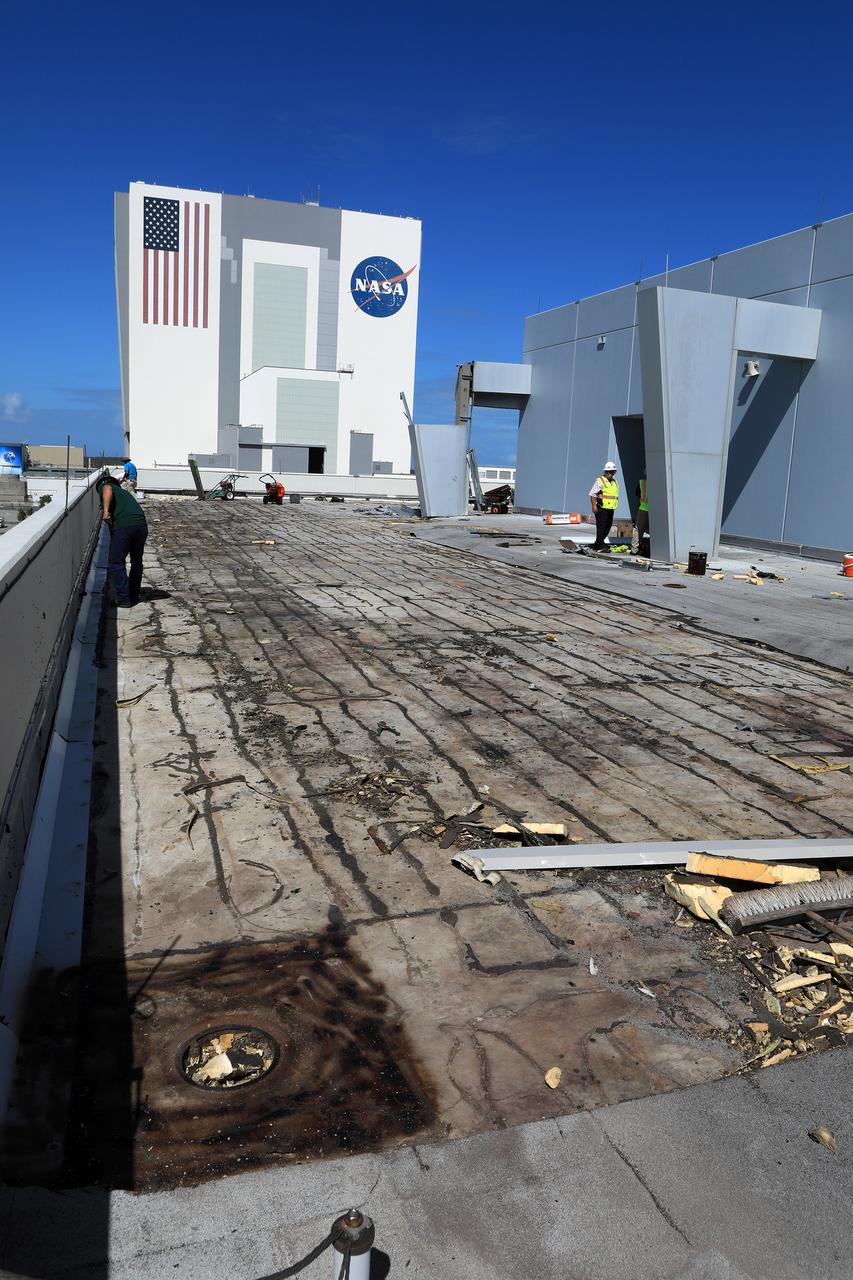
Members of the Disaster Assessment and Recovery Team (DART) repair a section of roof atop the Operations Support Building II at NASA’s Kennedy Space Center in Florida. The effort is part of the spaceport’s ongoing recovery from Hurricane Matthew, which passed to the east of Kennedy on Oct. 6 and 7, 2016. The center received some isolated roof damage, damaged support buildings, a few downed power lines, and limited water intrusion. Beach erosion also occurred, although the storm surge was less than expected.
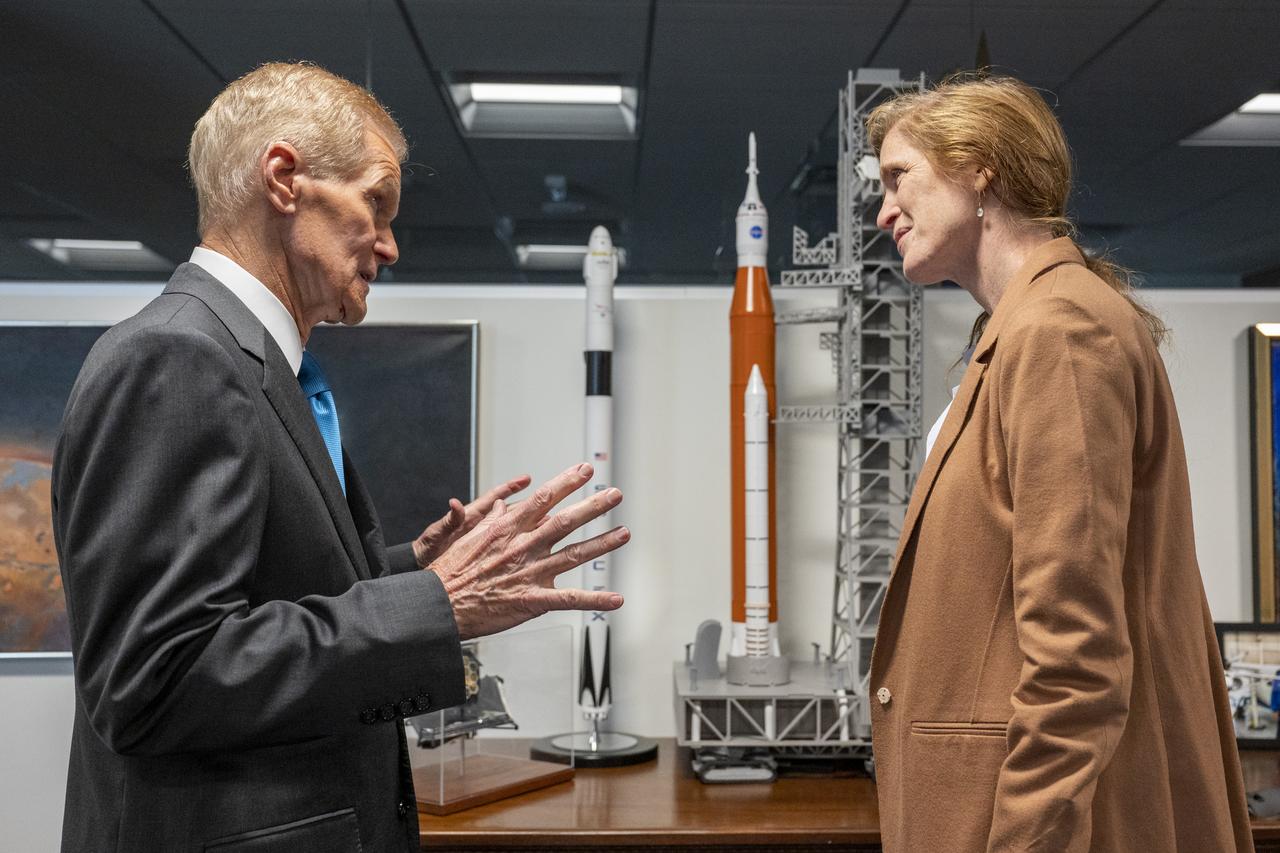
NASA Administrator Bill Nelson meets with USAID Administrator Samantha Power and staff prior to signing a NASA-USAID Memorandum of Understanding (MoU) Friday, Nov. 4, 2022, at the Mary W. Jackson NASA Headquarters building in Washington. The MoU will enhance and expand the Agencies’ longstanding partnership that promotes science and technology solutions to address international development challenges in areas such as global health, climate change, food security, disaster mitigation and response, biodiversity conservation, and environmental management for sustainable development. Photo Credit: (NASA/Keegan Barber)
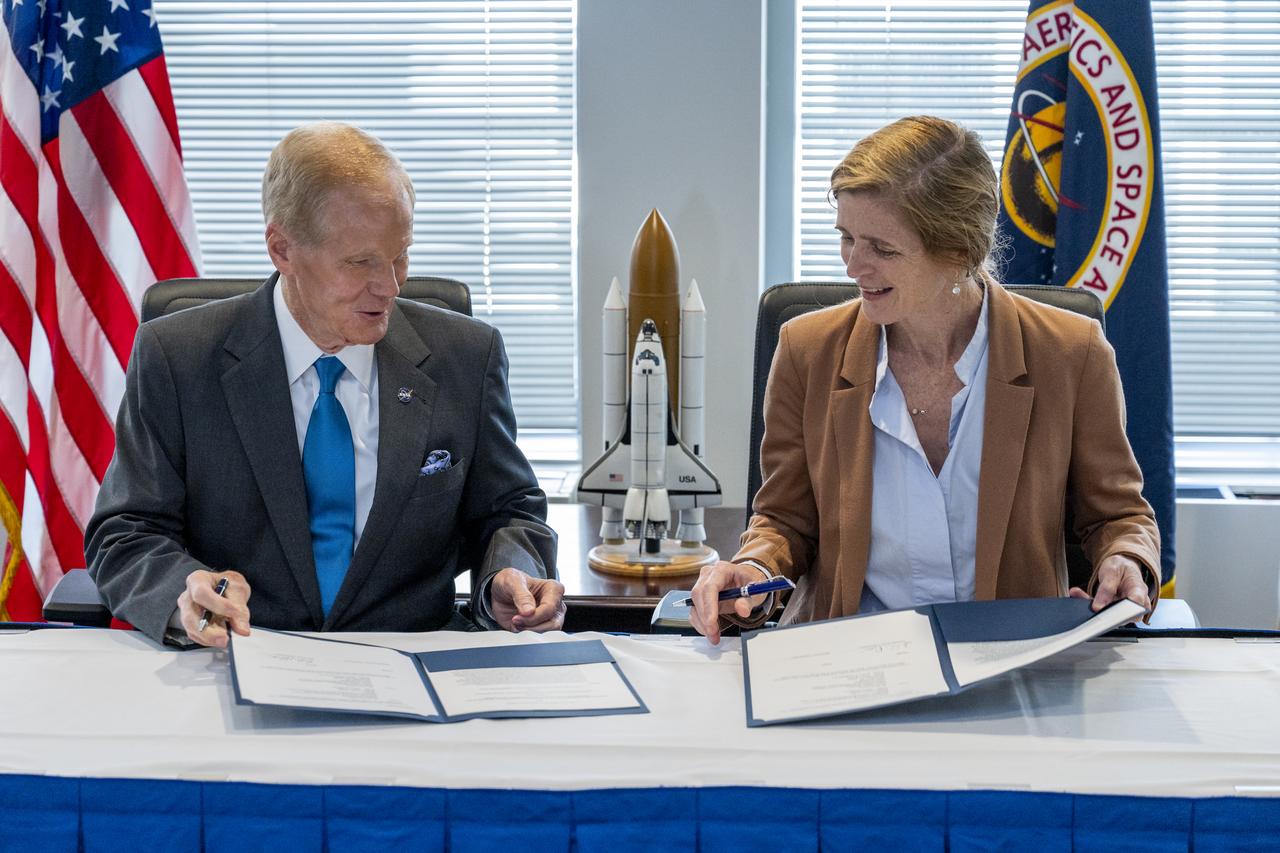
NASA Administrator Bill Nelson and USAID Administrator Samantha Power participate in a NASA-USAID Memorandum of Understanding (MoU) signing ceremony Friday, Nov. 4, 2022, at the Mary W. Jackson NASA Headquarters building in Washington. The MoU will enhance and expand the Agencies’ longstanding partnership that promotes science and technology solutions to address international development challenges in areas such as global health, climate change, food security, disaster mitigation and response, biodiversity conservation, and environmental management for sustainable development. Photo Credit: (NASA/Keegan Barber)
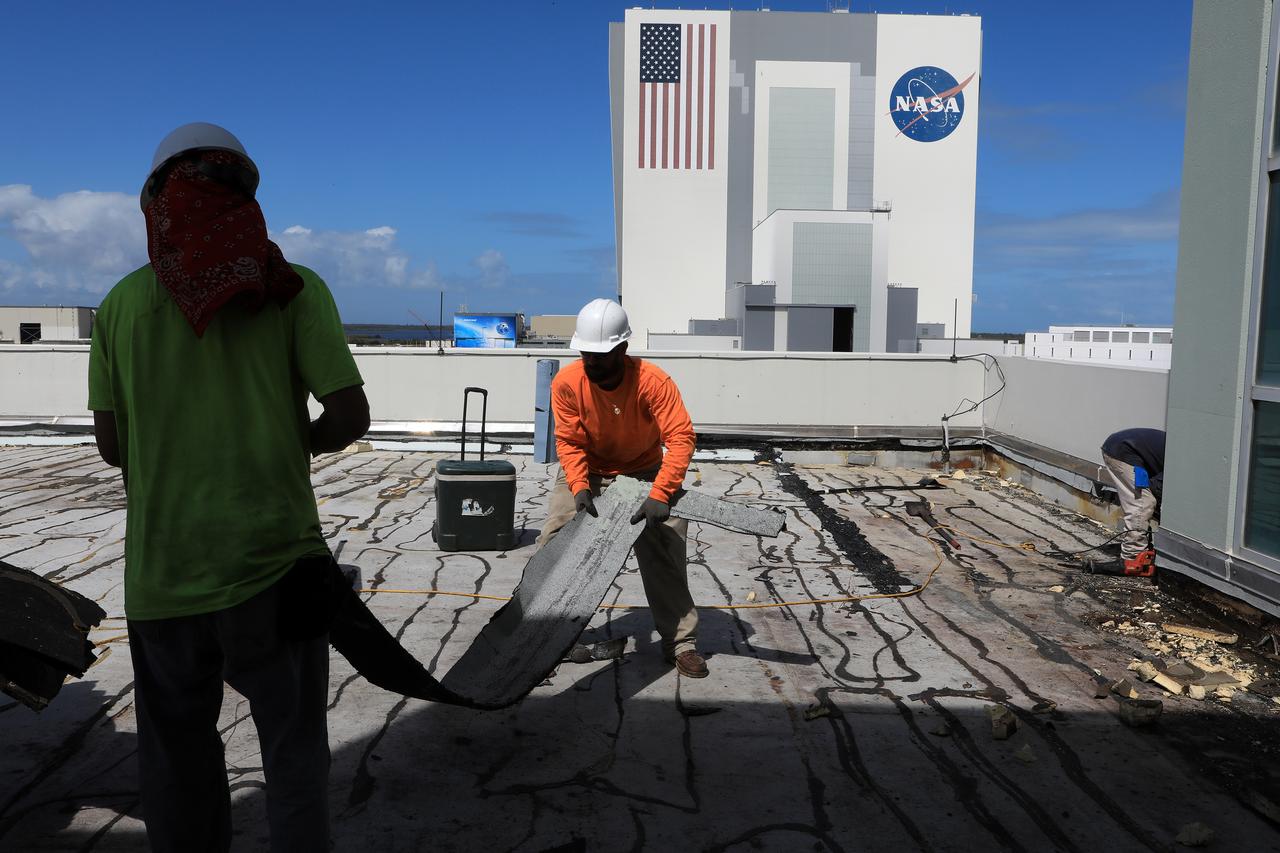
Members of the Disaster Assessment and Recovery Team (DART) repair a section of roof atop the Operations Support Building II at NASA’s Kennedy Space Center in Florida. The effort is part of the spaceport’s ongoing recovery from Hurricane Matthew, which passed to the east of Kennedy on Oct. 6 and 7, 2016. The center received some isolated roof damage, damaged support buildings, a few downed power lines, and limited water intrusion. Beach erosion also occurred, although the storm surge was less than expected.
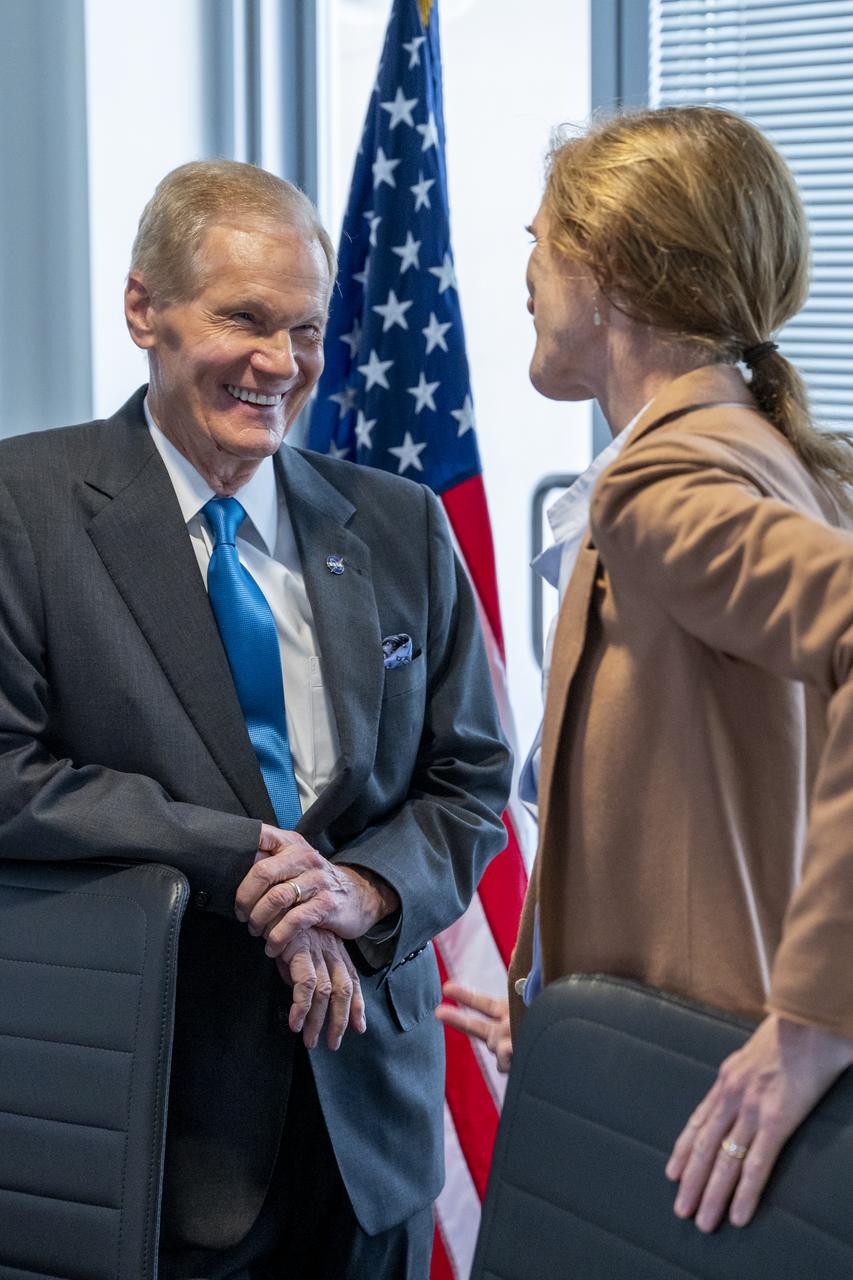
NASA Administrator Bill Nelson meets with USAID Administrator Samantha Power and staff prior to signing a NASA-USAID Memorandum of Understanding (MoU) Friday, Nov. 4, 2022, at the Mary W. Jackson NASA Headquarters building in Washington. The MoU will enhance and expand the Agencies’ longstanding partnership that promotes science and technology solutions to address international development challenges in areas such as global health, climate change, food security, disaster mitigation and response, biodiversity conservation, and environmental management for sustainable development. Photo Credit: (NASA/Keegan Barber)
NASA Administrator Bill Nelson meets with USAID Administrator Samantha Power and staff prior to signing a NASA-USAID Memorandum of Understanding (MoU) Friday, Nov. 4, 2022, at the Mary W. Jackson NASA Headquarters building in Washington. The MoU will enhance and expand the Agencies’ longstanding partnership that promotes science and technology solutions to address international development challenges in areas such as global health, climate change, food security, disaster mitigation and response, biodiversity conservation, and environmental management for sustainable development. Photo Credit: (NASA/Keegan Barber)
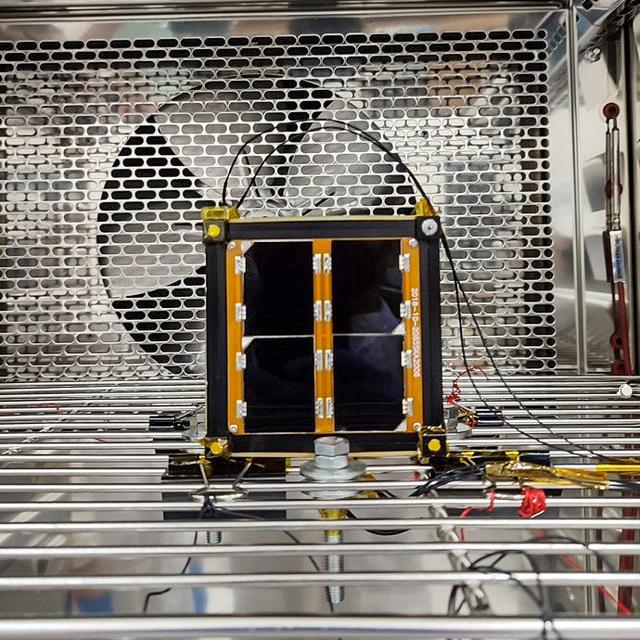
jsc2022e068264 (12/1/2021) --- A preflight view of the Surya Satellite-1 (SS-1) during Thermal Testing. The Surya Satellite-1 (SS-1) is the first Indonesian nanosatellite developed by university students at Surya University. SS-1 tests a satellite telecommunication system to serve amateur radio stations, and serves as a proof of concept of sensoric information transfer in rural areas for disaster mitigation application. Image Courtesy of The SS-1 Team.
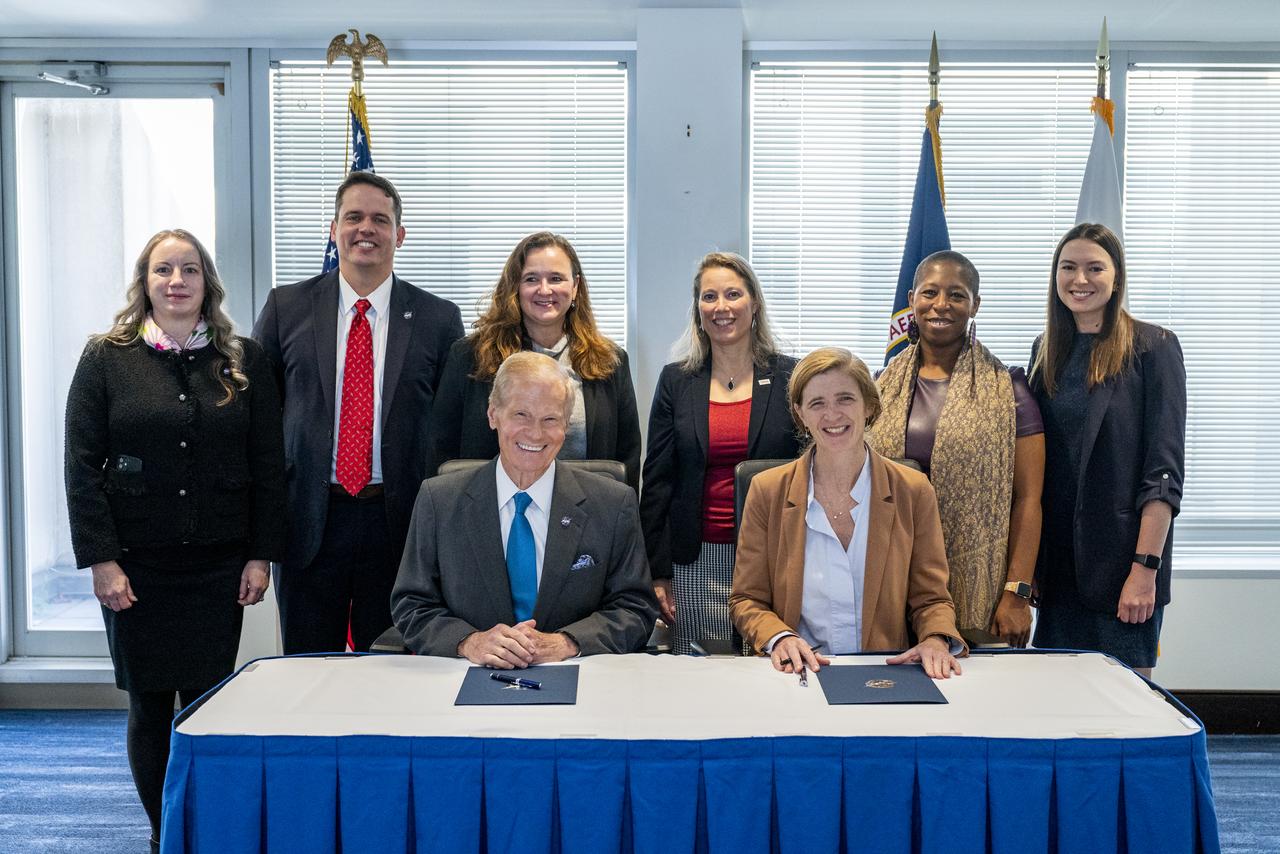
NASA Administrator Bill Nelson and USAID Administrator Samantha Power participate in a NASA-USAID Memorandum of Understanding (MoU) signing ceremony Friday, Nov. 4, 2022, at the Mary W. Jackson NASA Headquarters building in Washington. The MoU will enhance and expand the Agencies’ longstanding partnership that promotes science and technology solutions to address international development challenges in areas such as global health, climate change, food security, disaster mitigation and response, biodiversity conservation, and environmental management for sustainable development. Photo Credit: (NASA/Keegan Barber)
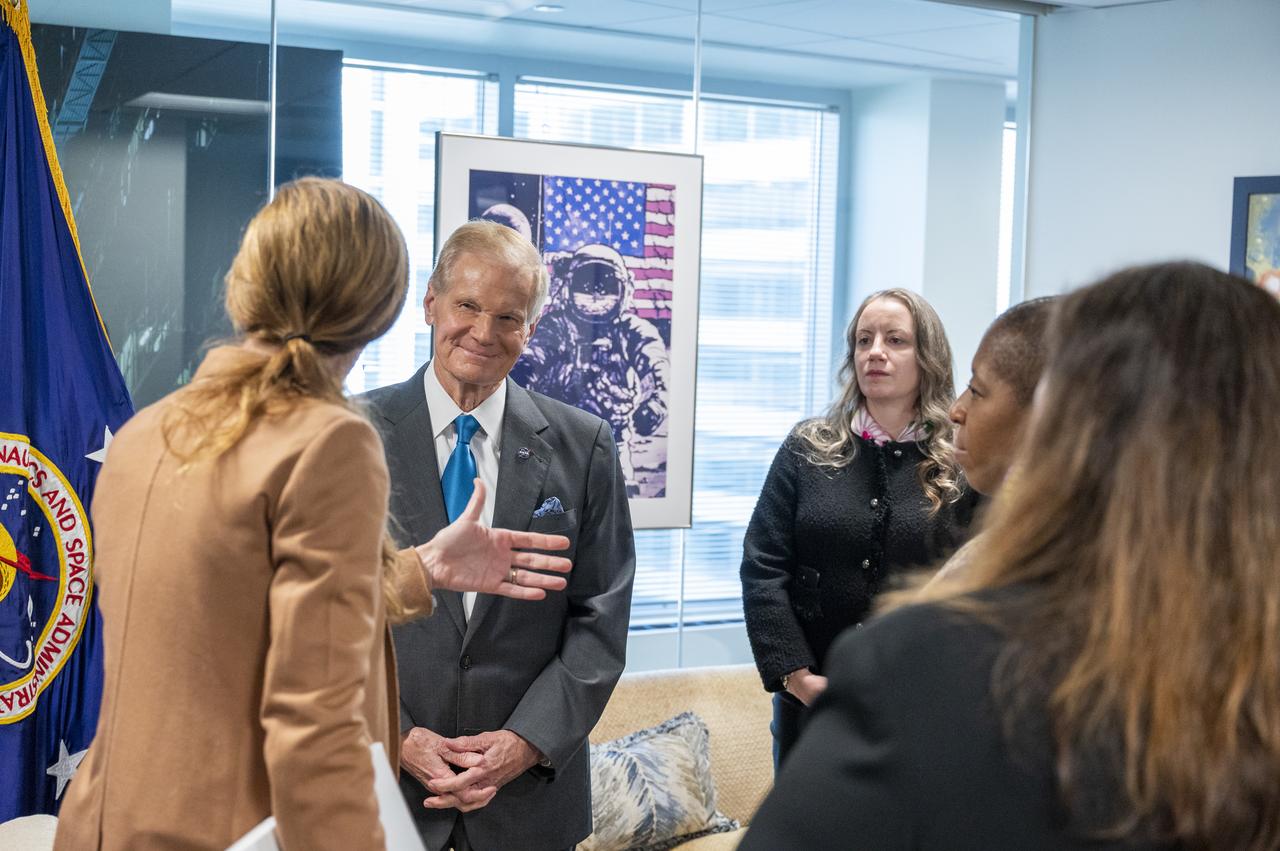
NASA Administrator Bill Nelson meets with USAID Administrator Samantha Power and staff prior to signing a NASA-USAID Memorandum of Understanding (MoU) Friday, Nov. 4, 2022, at the Mary W. Jackson NASA Headquarters building in Washington. The MoU will enhance and expand the Agencies’ longstanding partnership that promotes science and technology solutions to address international development challenges in areas such as global health, climate change, food security, disaster mitigation and response, biodiversity conservation, and environmental management for sustainable development. Photo Credit: (NASA/Keegan Barber)

Members of the Disaster Assessment and Recovery Team (DART) repair a section of roof atop the Operations Support Building II at NASA’s Kennedy Space Center in Florida. The effort is part of the spaceport’s ongoing recovery from Hurricane Matthew, which passed to the east of Kennedy on Oct. 6 and 7, 2016. The center received some isolated roof damage, damaged support buildings, a few downed power lines, and limited water intrusion. Beach erosion also occurred, although the storm surge was less than expected.
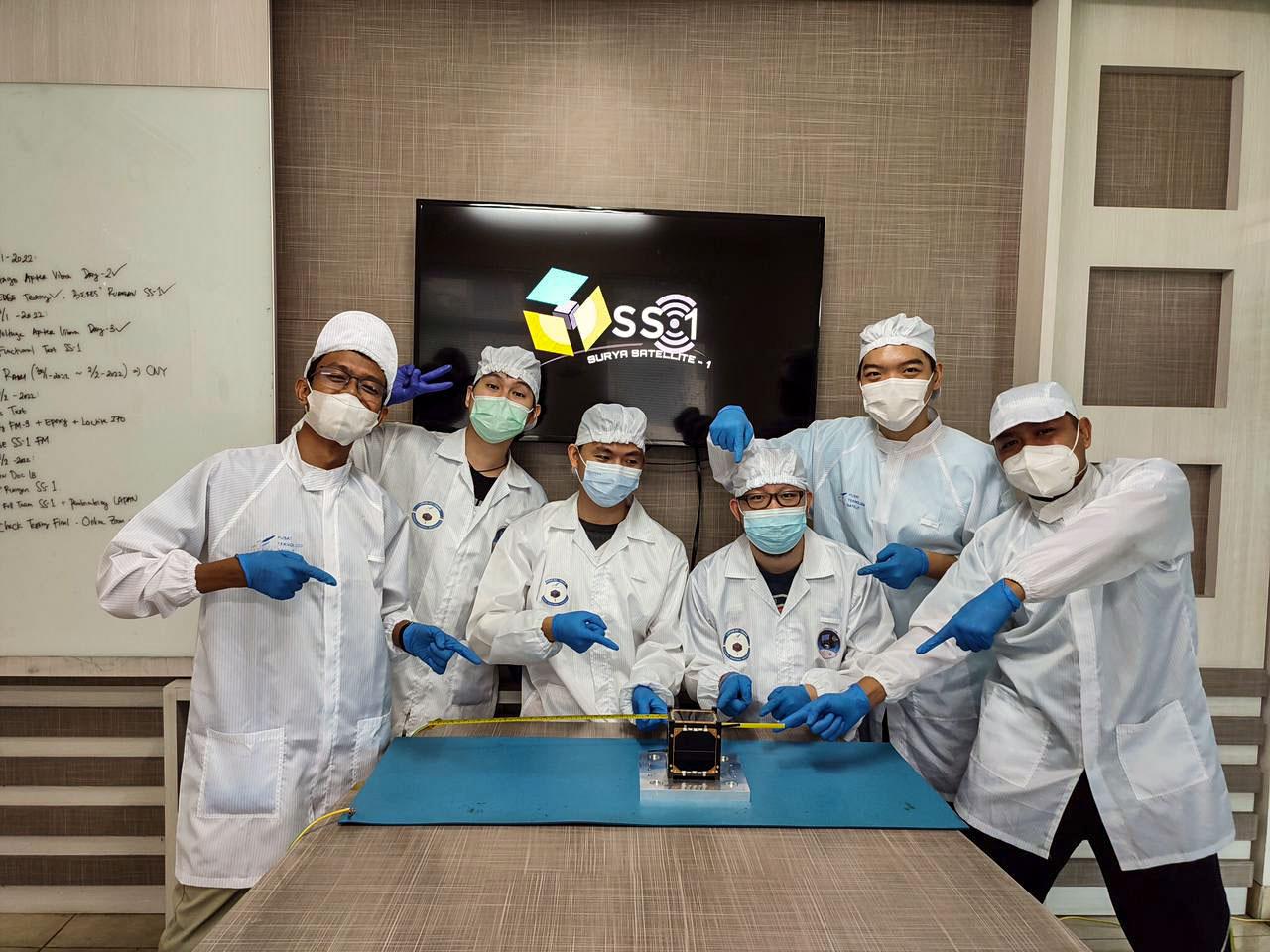
jsc2022e068260 (11/1/2021) --- The Surya Satellite-1 and its Developer Team After Deployment Testing, shown left to right: Zulfa, Hery, Setra, Roberto, Suhan, Afiq. The Surya Satellite-1 (SS-1) is the first Indonesian nanosatellite developed by university students at Surya University. SS-1 tests a satellite telecommunication system to serve amateur radio stations, and serves as a proof of concept of sensoric information transfer in rural areas for disaster mitigation application. Image Courtesy of The SS-1 Team.
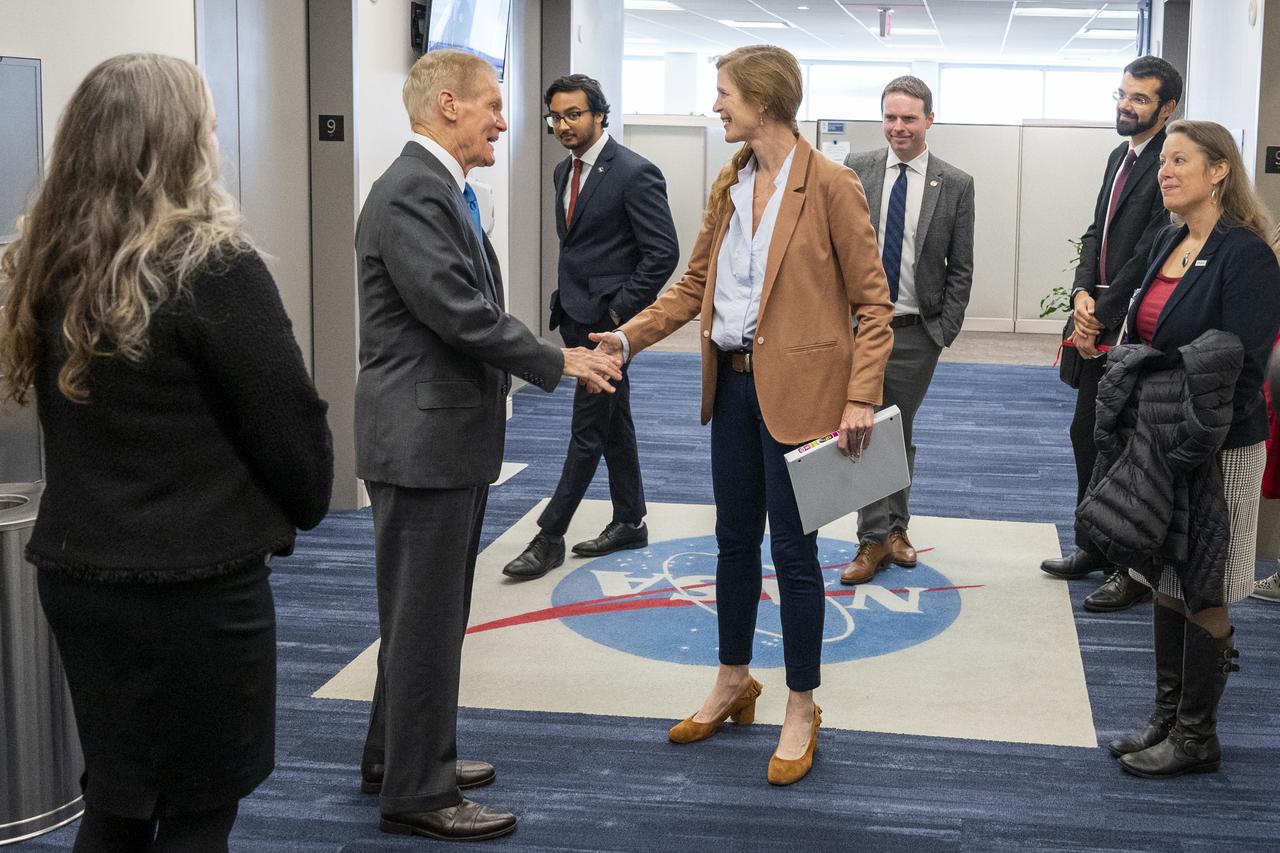
NASA Administrator Bill Nelson meets with USAID Administrator Samantha Power and staff prior to signing a NASA-USAID Memorandum of Understanding (MoU) Friday, Nov. 4, 2022, at the Mary W. Jackson NASA Headquarters building in Washington. The MoU will enhance and expand the Agencies’ longstanding partnership that promotes science and technology solutions to address international development challenges in areas such as global health, climate change, food security, disaster mitigation and response, biodiversity conservation, and environmental management for sustainable development. Photo Credit: (NASA/Keegan Barber)
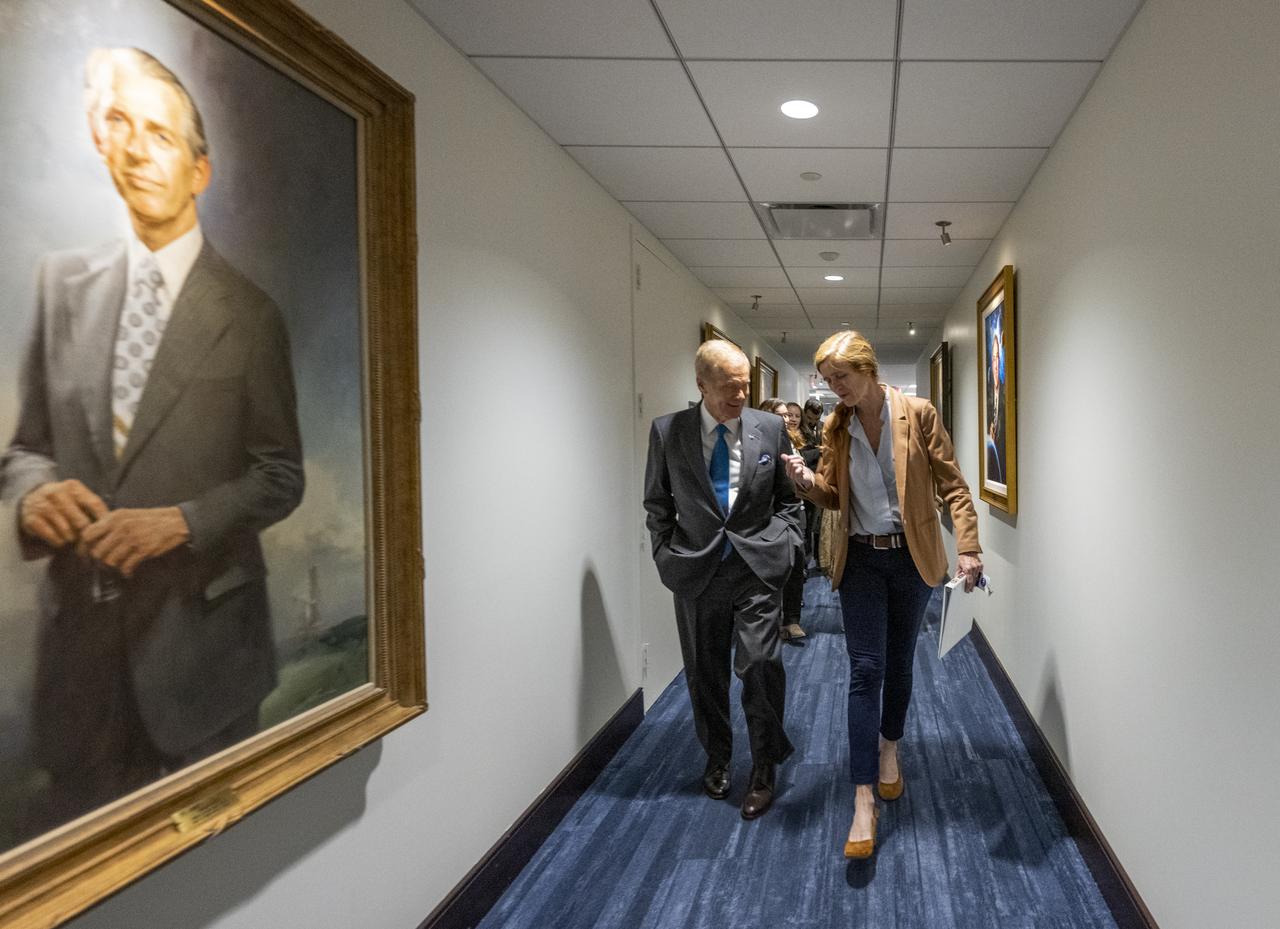
NASA Administrator Bill Nelson meets with USAID Administrator Samantha Power and staff prior to signing a NASA-USAID Memorandum of Understanding (MoU) Friday, Nov. 4, 2022, at the Mary W. Jackson NASA Headquarters building in Washington. The MoU will enhance and expand the Agencies’ longstanding partnership that promotes science and technology solutions to address international development challenges in areas such as global health, climate change, food security, disaster mitigation and response, biodiversity conservation, and environmental management for sustainable development. Photo Credit: (NASA/Keegan Barber)
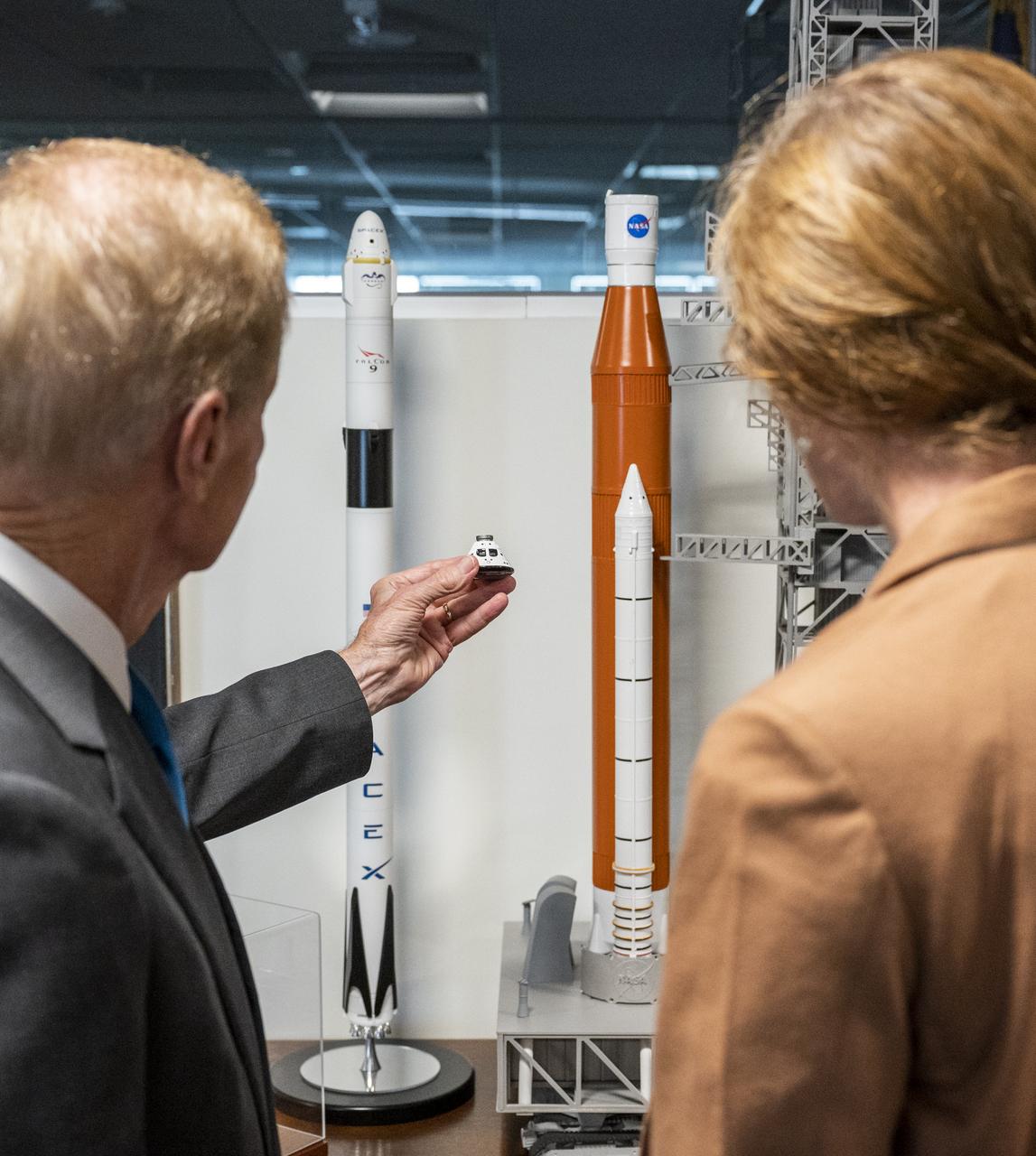
NASA Administrator Bill Nelson meets with USAID Administrator Samantha Power and staff prior to signing a NASA-USAID Memorandum of Understanding (MoU) Friday, Nov. 4, 2022, at the Mary W. Jackson NASA Headquarters building in Washington. The MoU will enhance and expand the Agencies’ longstanding partnership that promotes science and technology solutions to address international development challenges in areas such as global health, climate change, food security, disaster mitigation and response, biodiversity conservation, and environmental management for sustainable development. Photo Credit: (NASA/Keegan Barber)
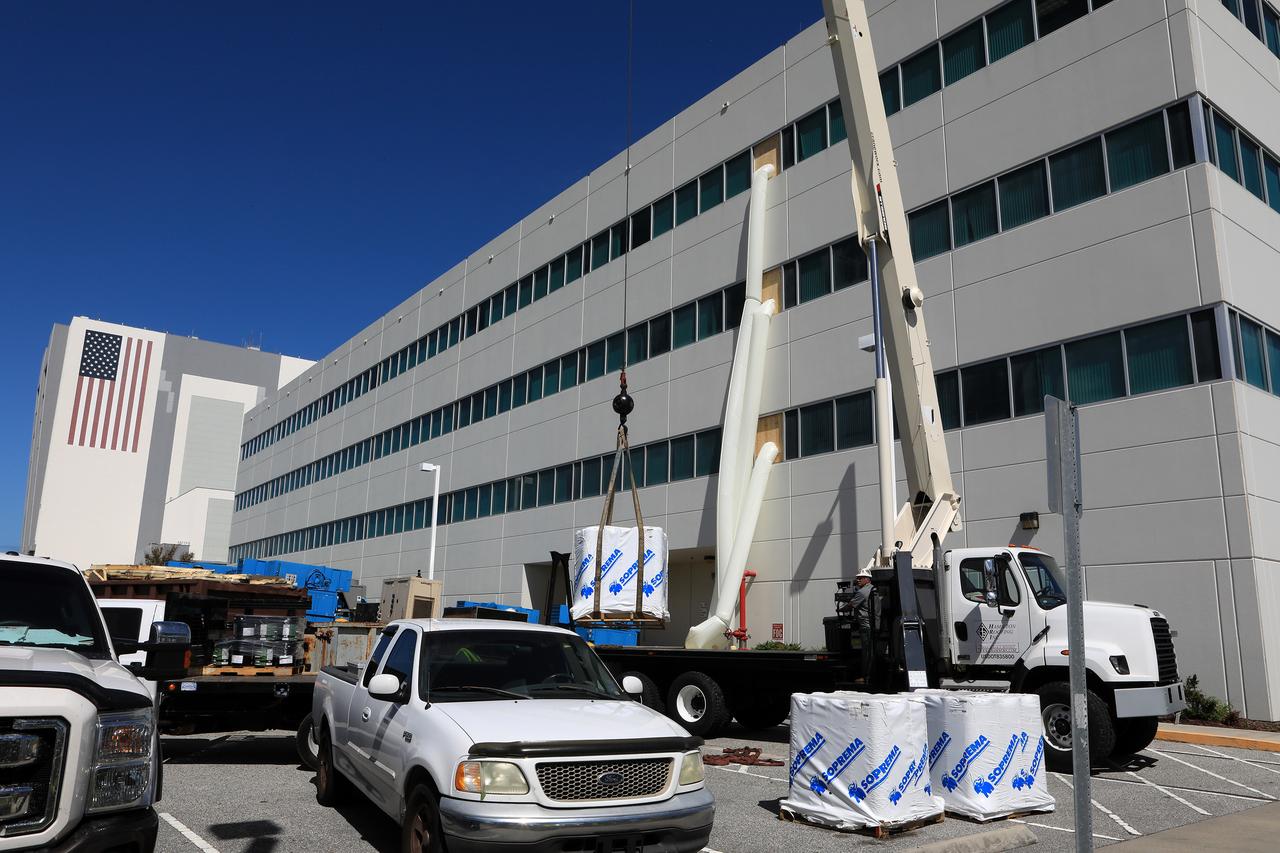
Members of the Disaster Assessment and Recovery Team (DART) work on repairs to the Operations Support Building II at NASA’s Kennedy Space Center in Florida. The effort is part of the spaceport’s ongoing recovery from Hurricane Matthew, which passed to the east of Kennedy on Oct. 6 and 7, 2016. The center received some isolated roof damage, damaged support buildings, a few downed power lines, and limited water intrusion. Beach erosion also occurred, although the storm surge was less than expected.
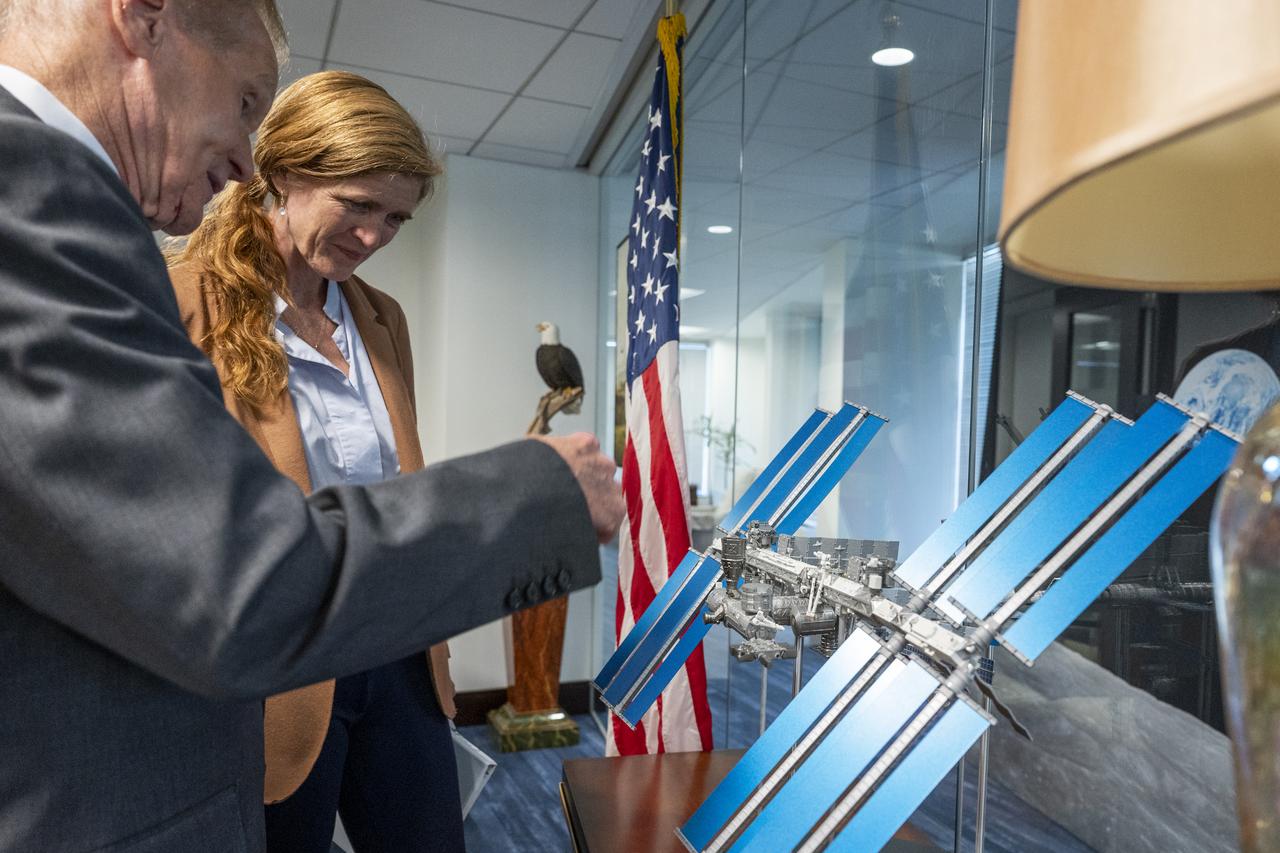
NASA Administrator Bill Nelson meets with USAID Administrator Samantha Power and staff prior to signing a NASA-USAID Memorandum of Understanding (MoU) Friday, Nov. 4, 2022, at the Mary W. Jackson NASA Headquarters building in Washington. The MoU will enhance and expand the Agencies’ longstanding partnership that promotes science and technology solutions to address international development challenges in areas such as global health, climate change, food security, disaster mitigation and response, biodiversity conservation, and environmental management for sustainable development. Photo Credit: (NASA/Keegan Barber)
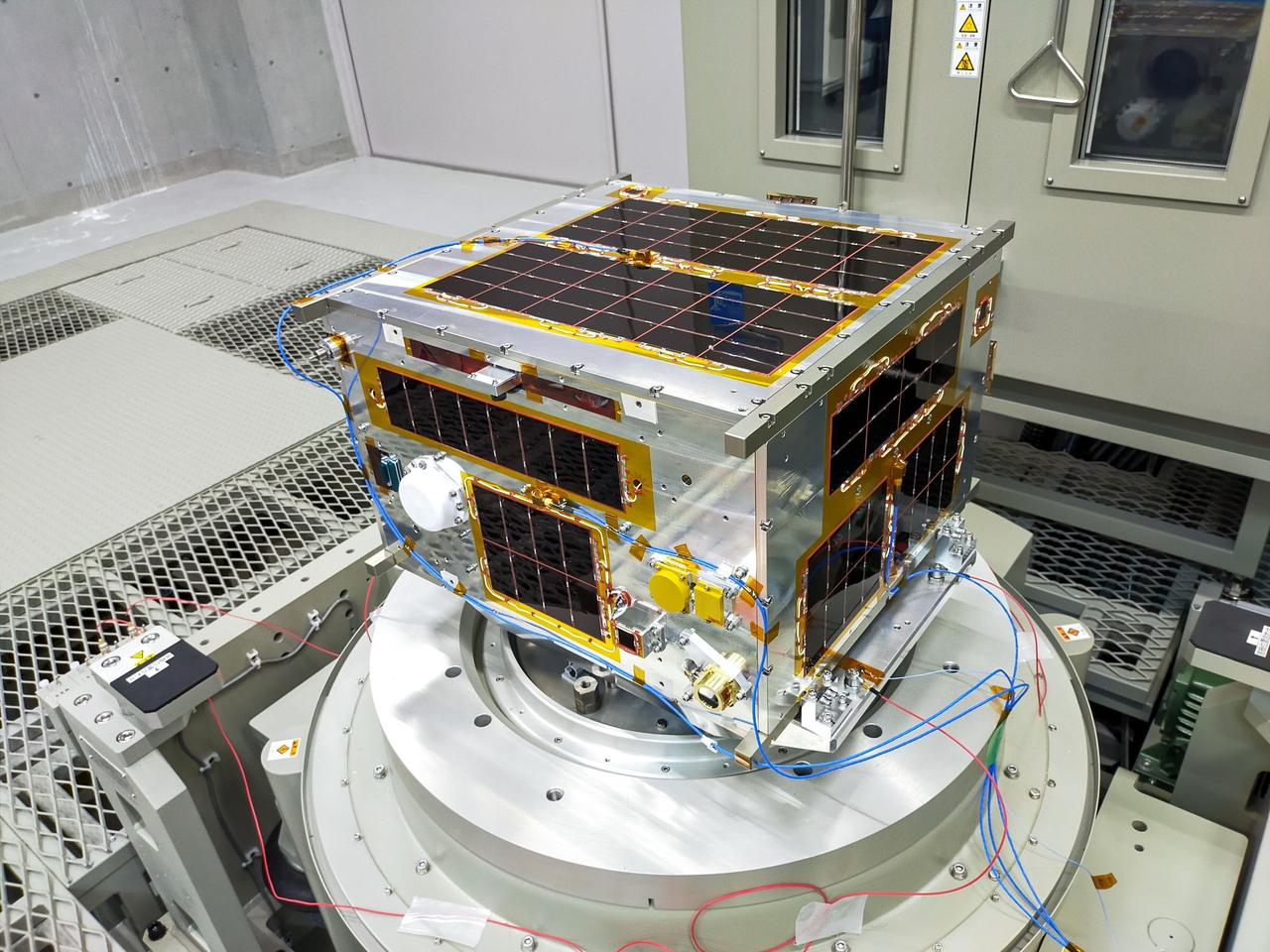
jsc2020e049614 (8/7/2020) --- A preflight view of the MMSAT-1 flight unit. MMSAT-1 is Myanmar’s first 50 kg-class MicroSat, that deploys during the JEM Small Satellite Orbital Deployer-M2 (J-SSOD-M2) micro-satellite deployment mission. The satellite mission aims to help provide information to implement more efficient and systematic agricultural practices in Myanmar and monitor natural disasters through the provision of satellite imagery. Photo courtesy of: TohokuHokkaido University
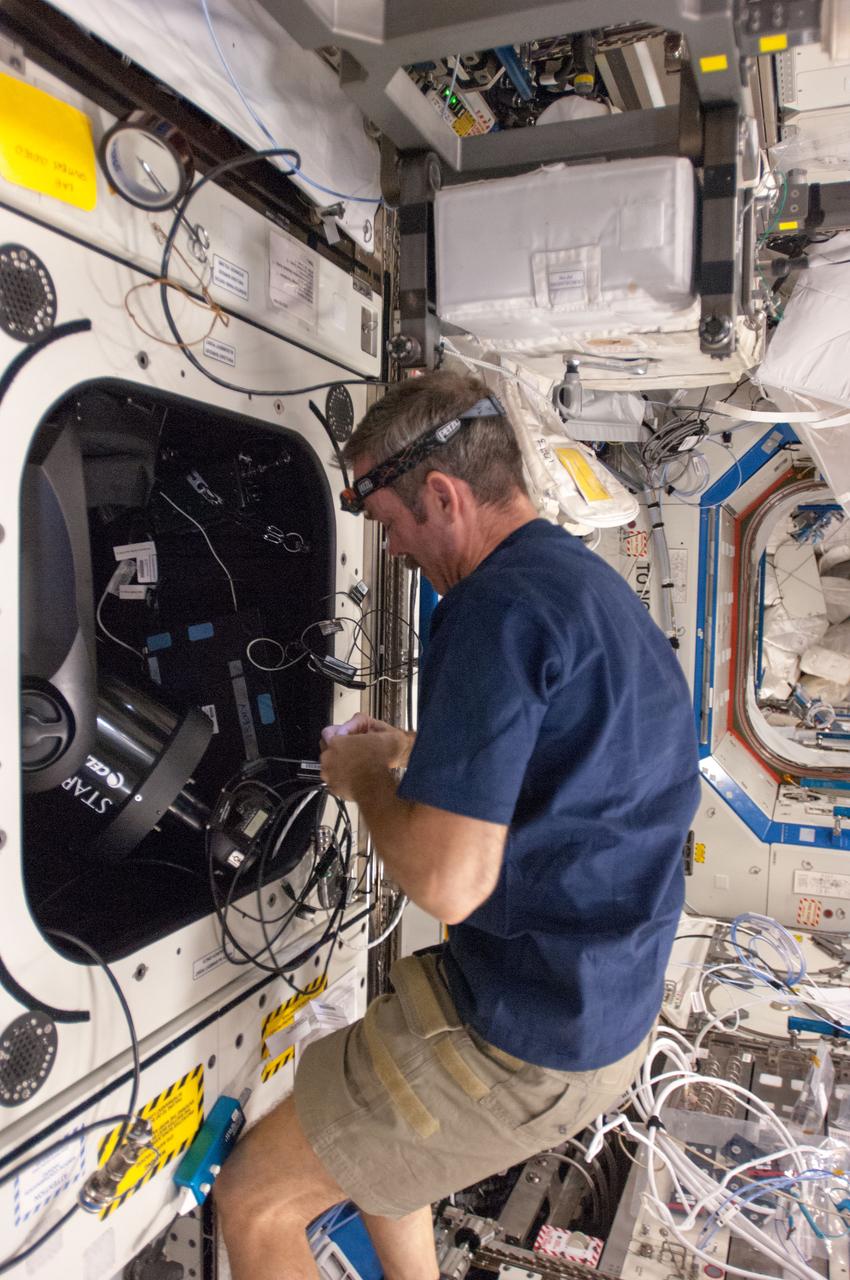
ISS034-E-029975 (15 Jan. 2013) --- Canadian Space Agency astronaut Chris Hadfield, Expedition 34 flight engineer, sets up the ISS SERVIR Environmental Research and Visualization System (ISERV) in the Destiny laboratory of the International Space Station. ISERV is a fully automated image data acquisition system that flies aboard the space station and deploys in the Window Observational Research Facility (WORF) rack within Destiny. The study is expected to provide useful images for use in disaster monitoring and assessment and environmental decision making.
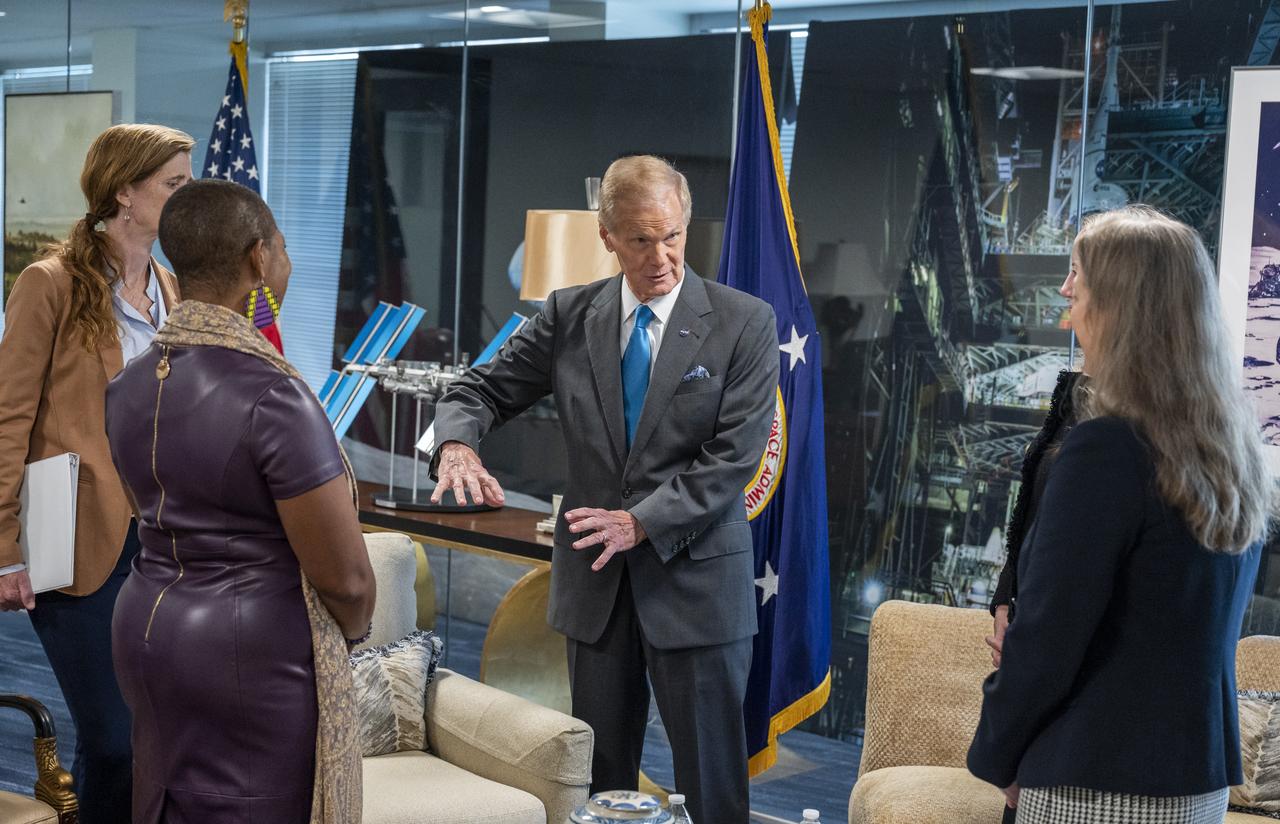
NASA Administrator Bill Nelson meets with USAID Administrator Samantha Power and staff prior to signing a NASA-USAID Memorandum of Understanding (MoU) Friday, Nov. 4, 2022, at the Mary W. Jackson NASA Headquarters building in Washington. The MoU will enhance and expand the Agencies’ longstanding partnership that promotes science and technology solutions to address international development challenges in areas such as global health, climate change, food security, disaster mitigation and response, biodiversity conservation, and environmental management for sustainable development. Photo Credit: (NASA/Keegan Barber)
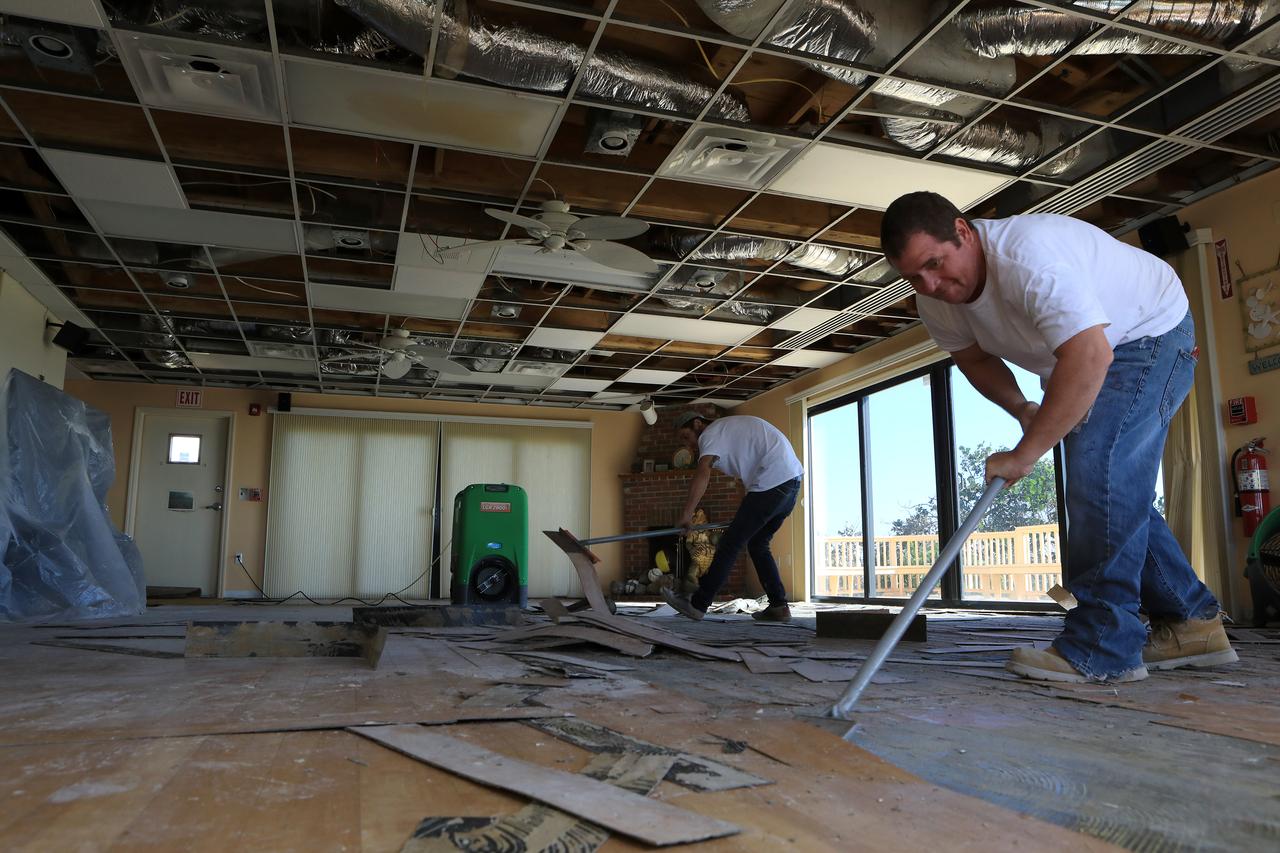
Members of the Disaster Assessment and Recovery Team (DART) work on flooring repairs to the Beach House at NASA’s Kennedy Space Center in Florida. The effort is part of the spaceport’s ongoing recovery from Hurricane Matthew, which passed to the east of Kennedy on Oct. 6 and 7, 2016. The center received some isolated roof damage, damaged support buildings, a few downed power lines, and limited water intrusion. Beach erosion also occurred, although the storm surge was less than expected.
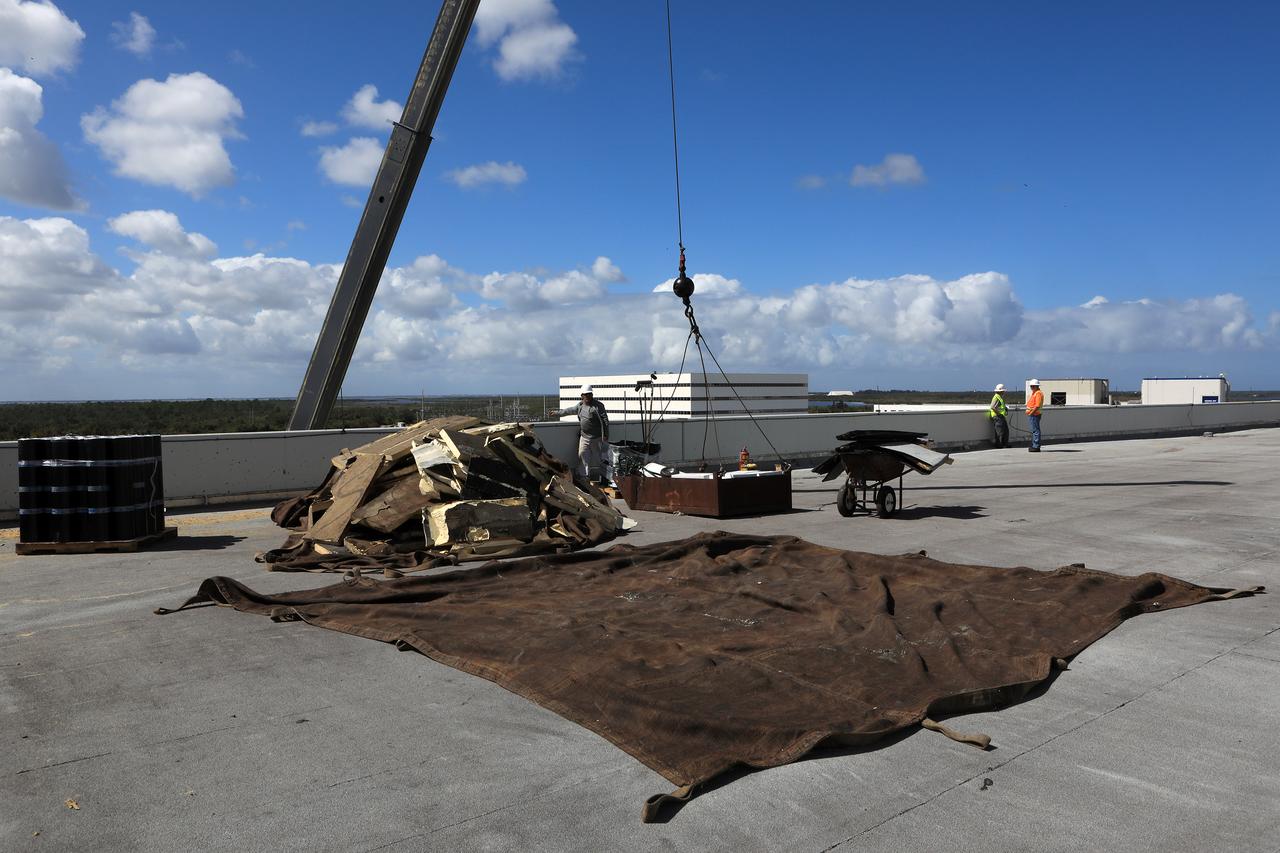
Members of the Disaster Assessment and Recovery Team (DART) repair a section of roof atop the Operations Support Building II at NASA’s Kennedy Space Center in Florida. The effort is part of the spaceport’s ongoing recovery from Hurricane Matthew, which passed to the east of Kennedy on Oct. 6 and 7, 2016. The center received some isolated roof damage, damaged support buildings, a few downed power lines, and limited water intrusion. Beach erosion also occurred, although the storm surge was less than expected.
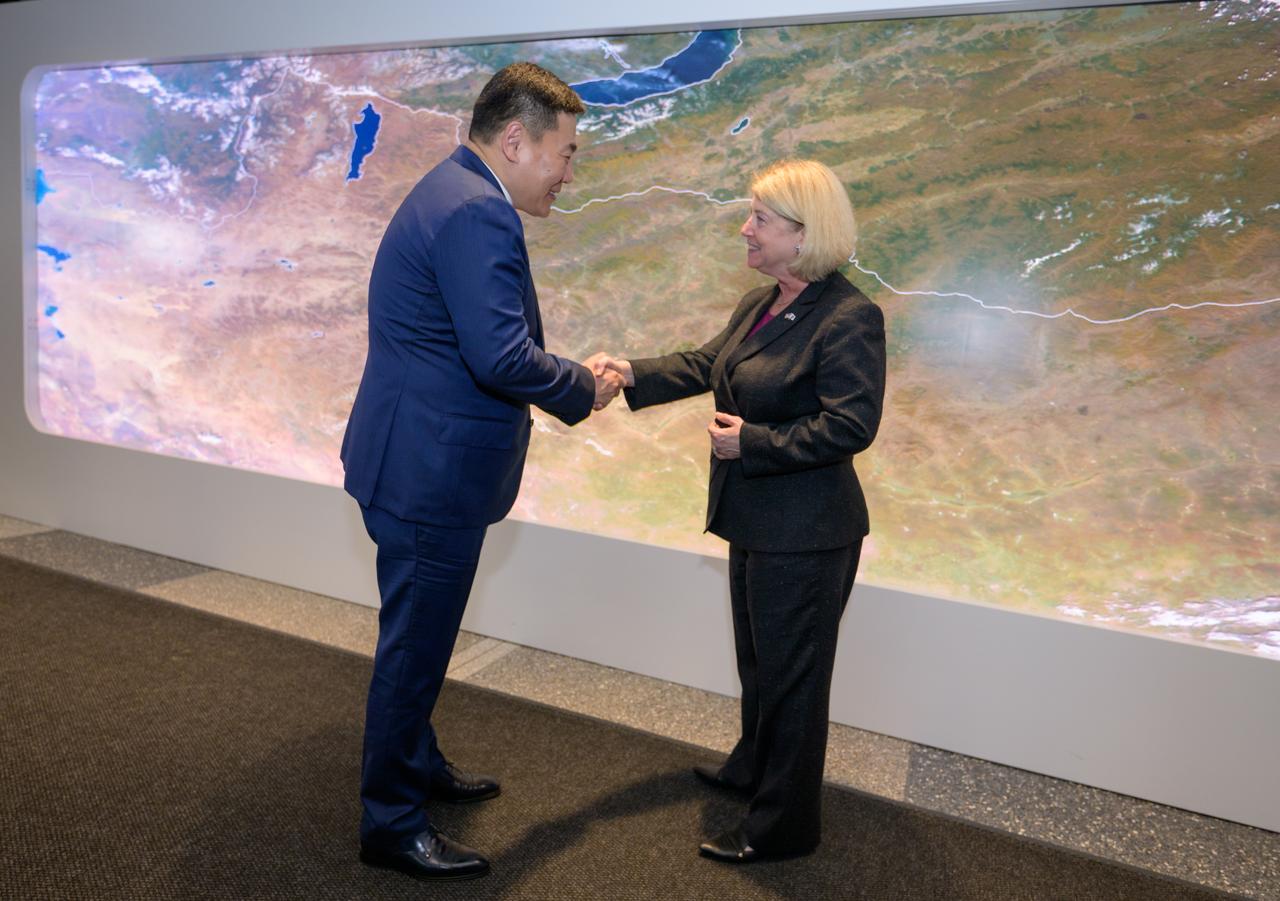
Prime Minister Oyun-Erdene Luvsannamsrai of Mongolia, left, and NASA Deputy Administrator Pam Melroy shake hands at the conclusion of meeting and touring NASA’s Earth Information Center, Friday, Aug. 4, 2023, at the NASA Headquarters Mary W. Jackson Building in Washington. The Earth Information Center is a new immersive experience that combines live data sets with cutting-edge data visualization to show NASA data can improve lives in the face of disasters, environmental challenges, and our changing world. Photo Credit: (NASA/Bill Ingalls)
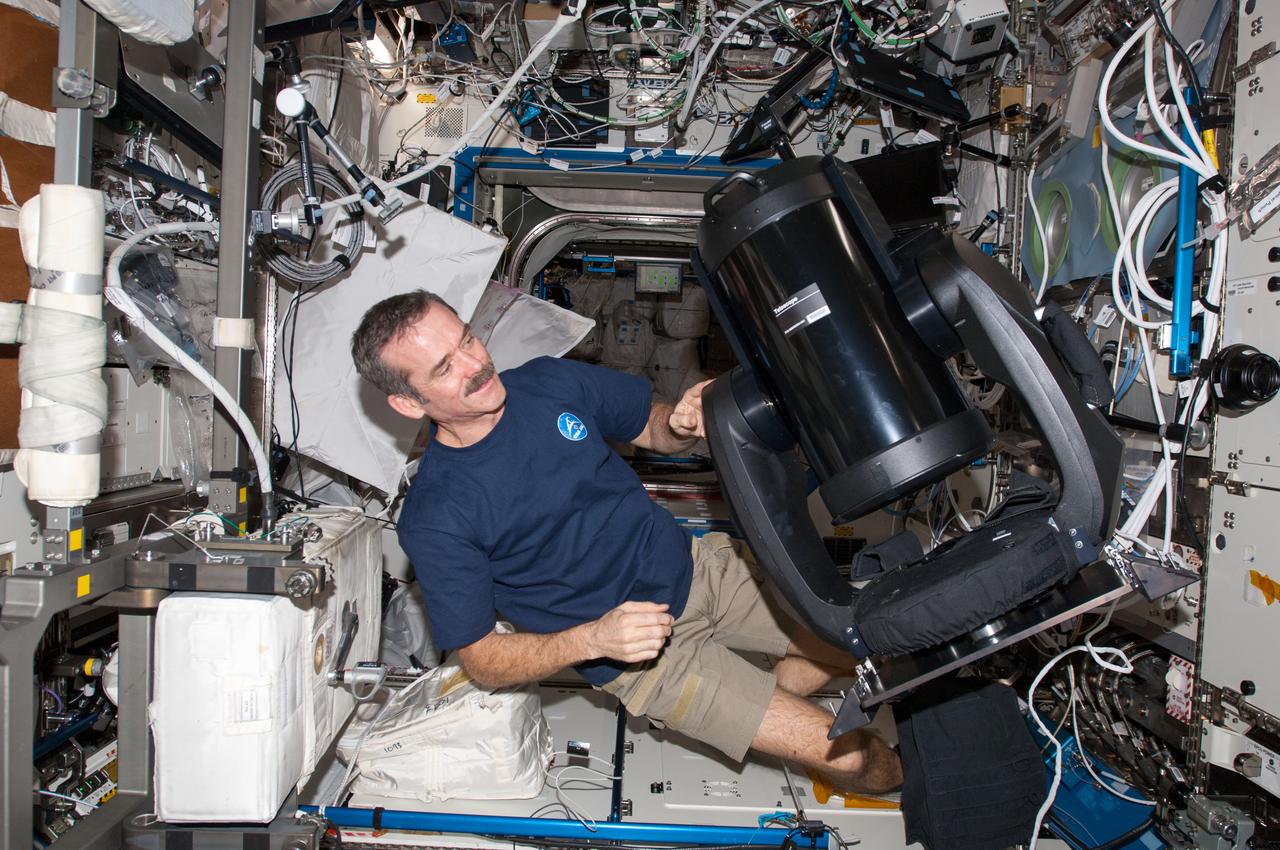
ISS034-E-029961 (15 Jan. 2013) --- Canadian Space Agency astronaut Chris Hadfield, Expedition 34 flight engineer, prepares to set up the ISS SERVIR Environmental Research and Visualization System (ISERV) in the Destiny laboratory of the International Space Station. ISERV is a fully automated image data acquisition system that flies aboard the space station and deploys in the Window Observational Research Facility (WORF) rack within Destiny. The study is expected to provide useful images for use in disaster monitoring and assessment and environmental decision making.
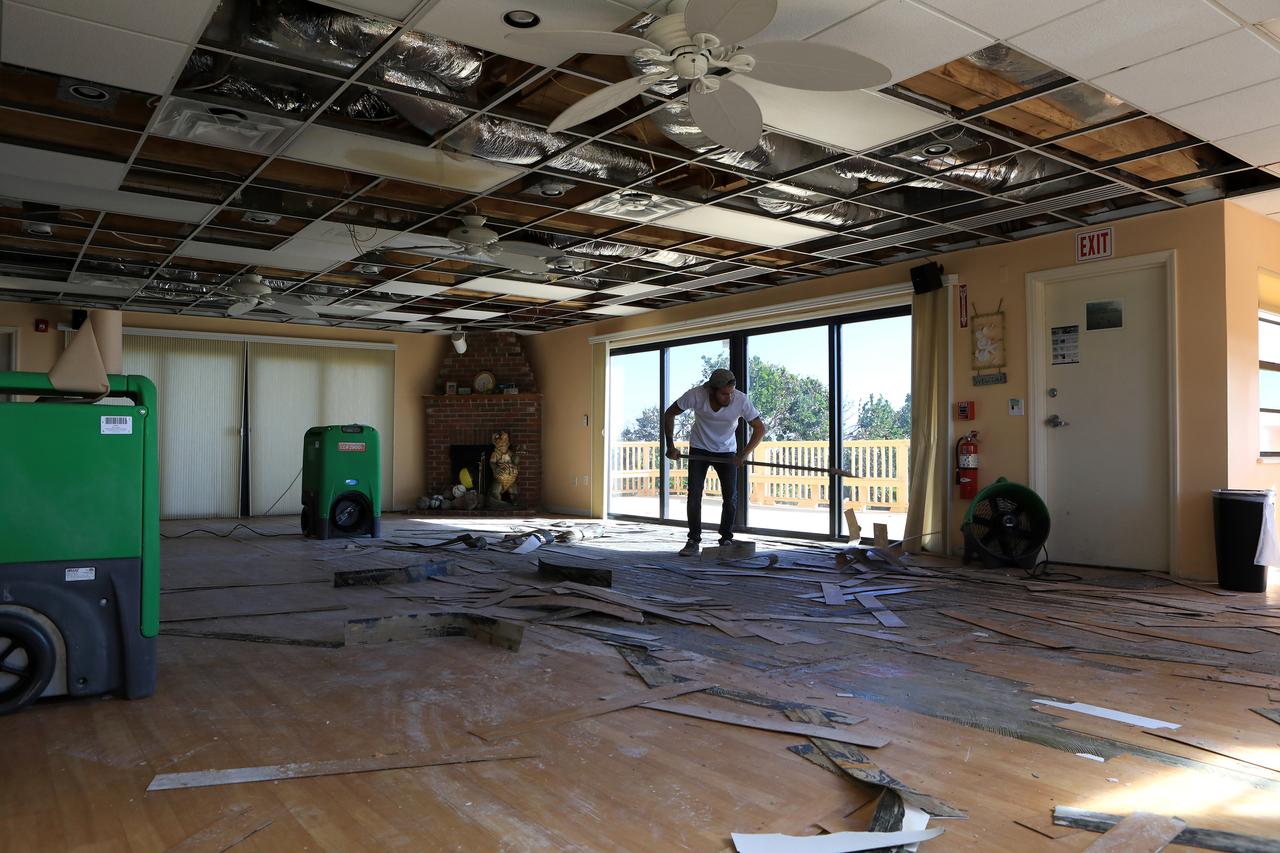
Members of the Disaster Assessment and Recovery Team (DART) work on flooring repairs to the Beach House at NASA’s Kennedy Space Center in Florida. The effort is part of the spaceport’s ongoing recovery from Hurricane Matthew, which passed to the east of Kennedy on Oct. 6 and 7, 2016. The center received some isolated roof damage, damaged support buildings, a few downed power lines, and limited water intrusion. Beach erosion also occurred, although the storm surge was less than expected.
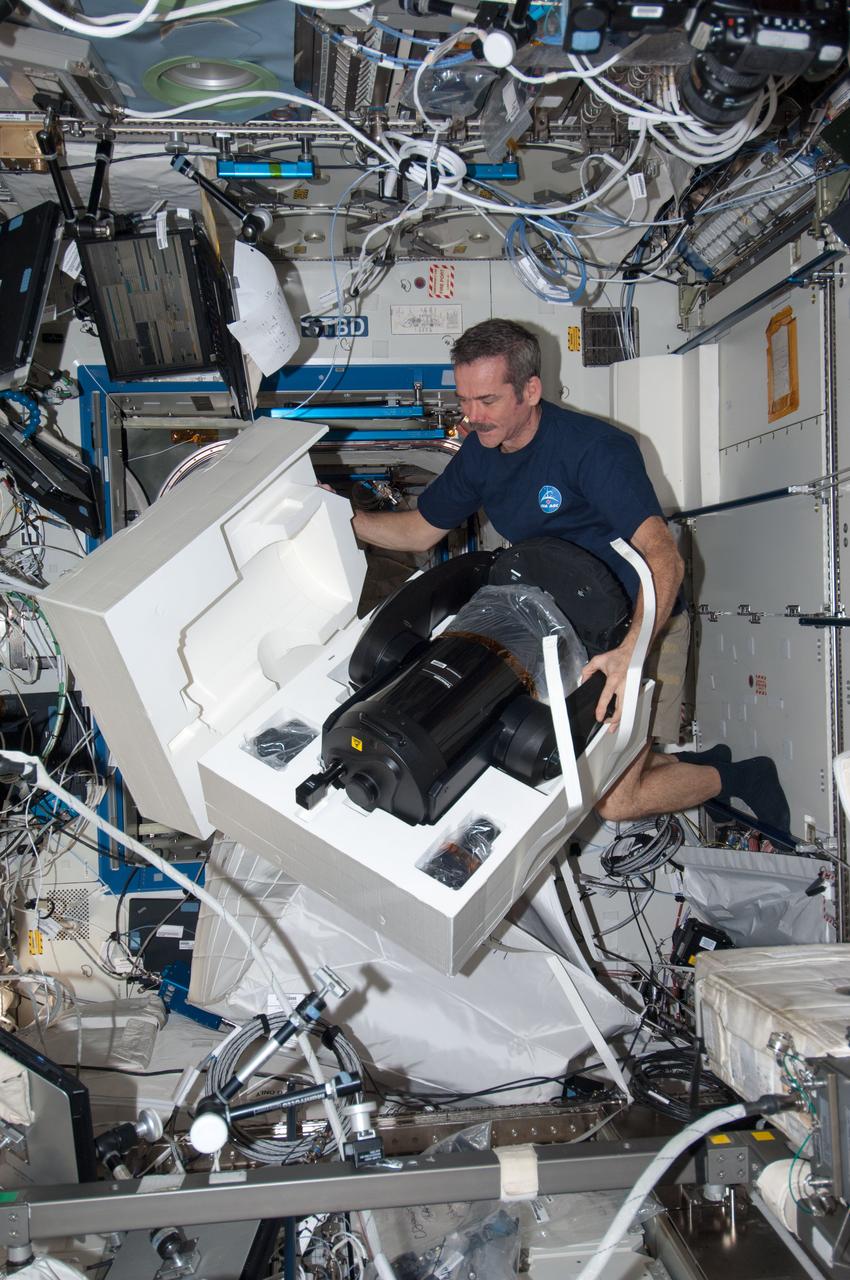
ISS034-E-029914 (15 Jan. 2013) --- Canadian Space Agency astronaut Chris Hadfield, Expedition 34 flight engineer, prepares to set up the ISS SERVIR Environmental Research and Visualization System (ISERV) in the Destiny laboratory of the International Space Station. ISERV is a fully automated image data acquisition system that flies aboard the space station and deploys in the Window Observational Research Facility (WORF) rack within Destiny. The study is expected to provide useful images for use in disaster monitoring and assessment and environmental decision making.
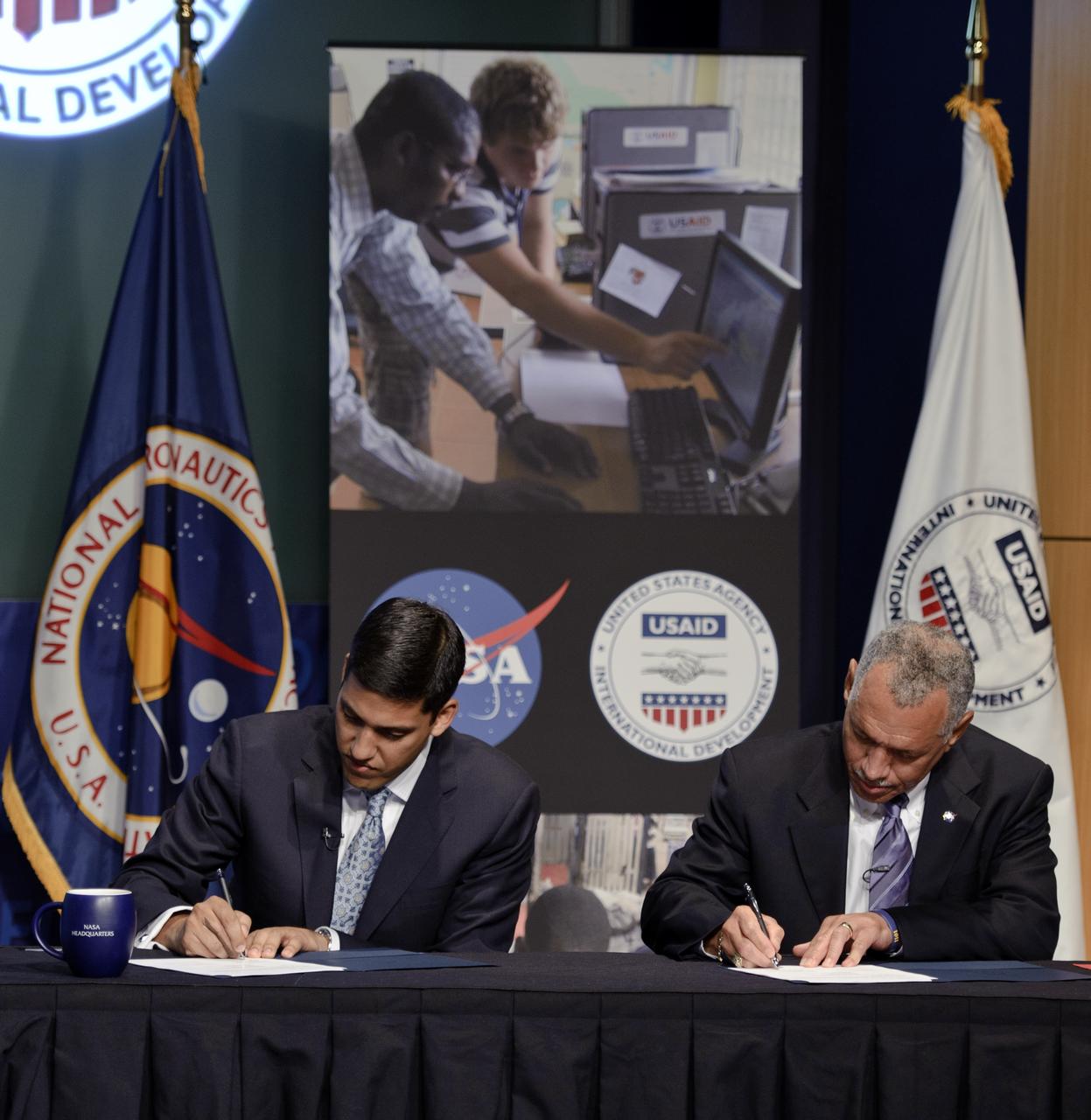
USAID Administrator Rajiv Shah, left, and NASA Administrator Charles Bolden sign a five-year memorandum of understanding, Monday, April 25, 2011, at NASA Headquarters in Washington. The agreement formalizes ongoing agency collaborations that use Earth science data to address developmental challenges, and to assist in disaster mitigation and humanitarian responses. The agreement also encourages NASA and USAID to apply geospatial technologies to solve development challenges affecting the United States and developing countries. Photo Credit: (NASA/Paul E. Alers)
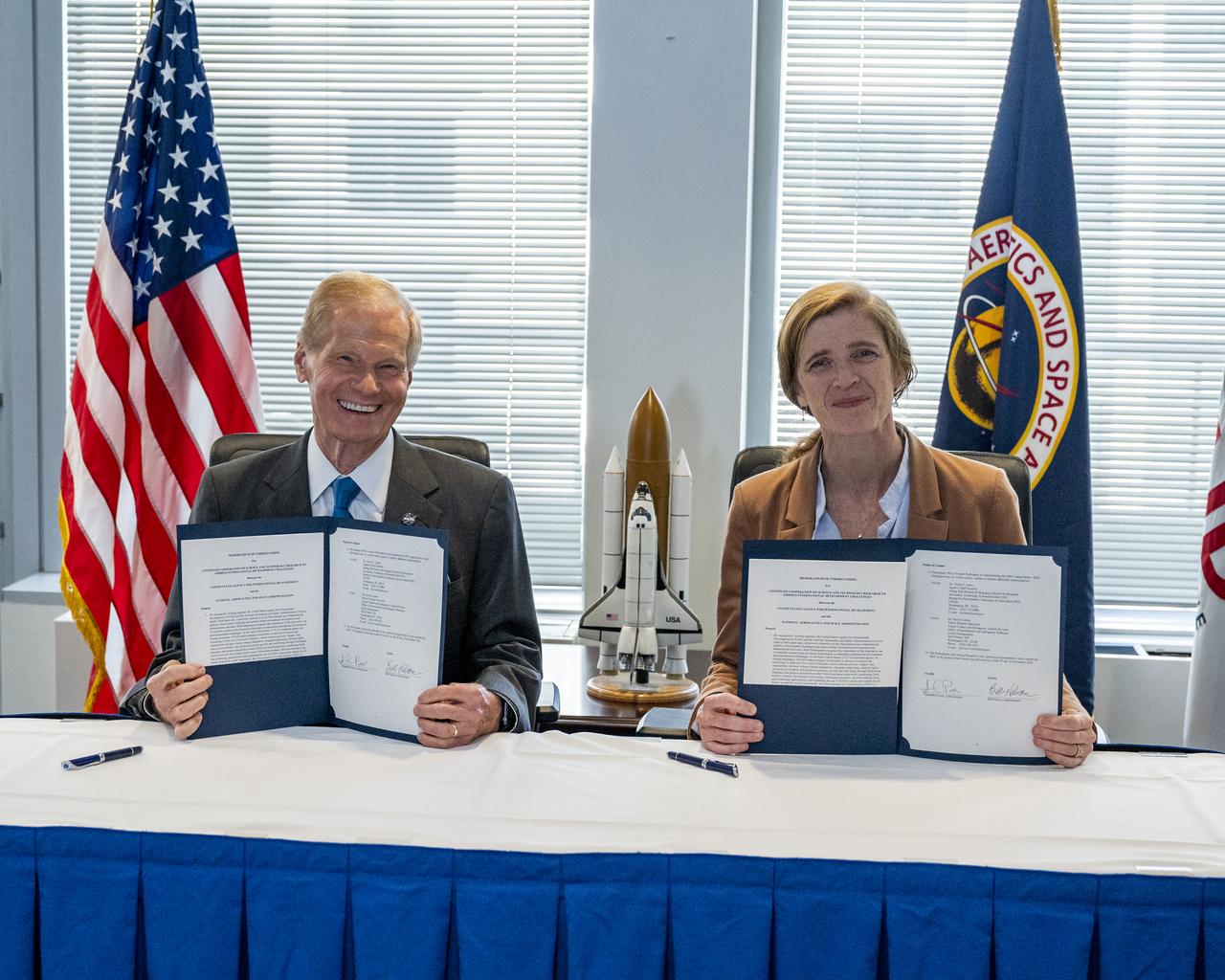
NASA Administrator Bill Nelson and USAID Administrator Samantha Power participate in a NASA-USAID Memorandum of Understanding (MoU) signing ceremony Friday, Nov. 4, 2022, at the Mary W. Jackson NASA Headquarters building in Washington. The MoU will enhance and expand the Agencies’ longstanding partnership that promotes science and technology solutions to address international development challenges in areas such as global health, climate change, food security, disaster mitigation and response, biodiversity conservation, and environmental management for sustainable development. Photo Credit: (NASA/Keegan Barber)