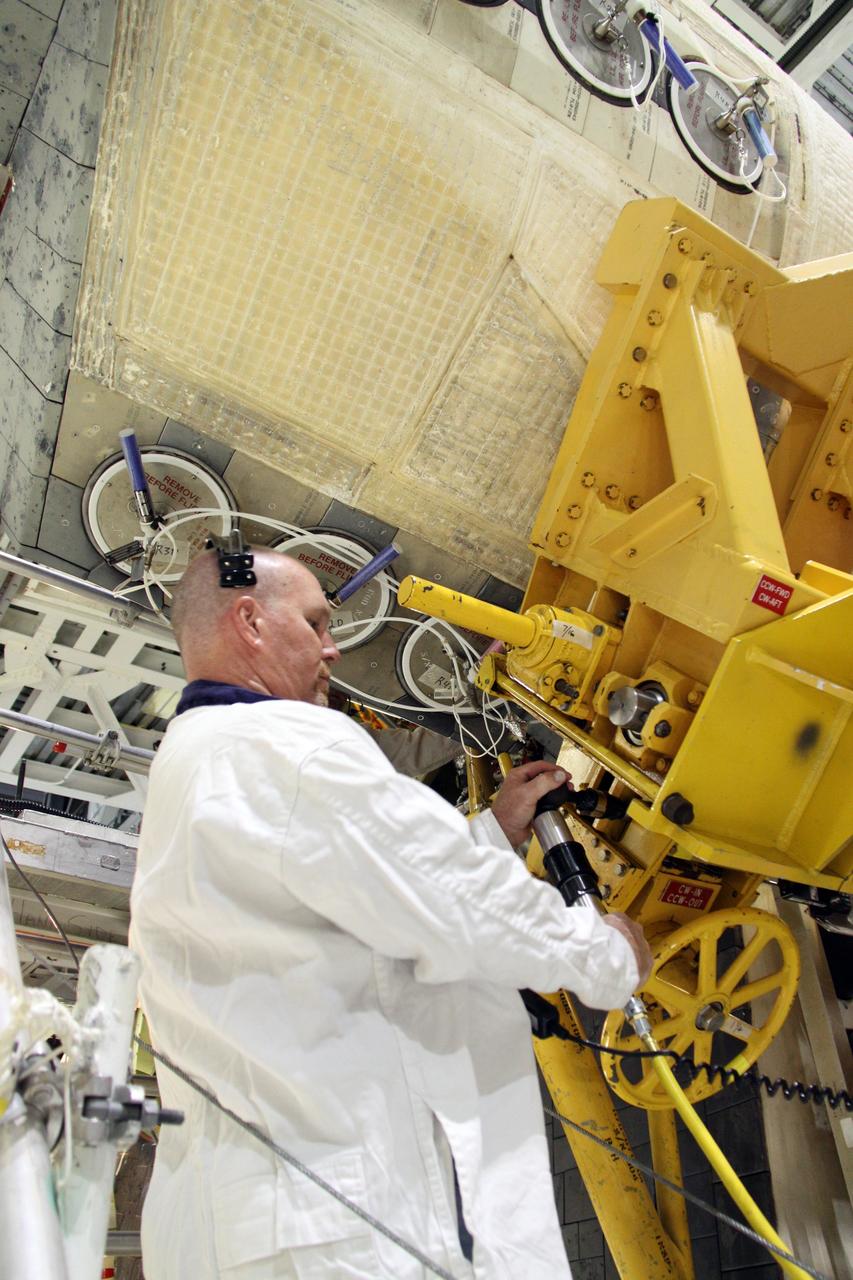
CAPE CANAVERAL, Fla. - In Orbiter Processing Facility-2 at NASA's Kennedy Space Center in Florida, workers use a crane to grapple shuttle Discovery's right-hand orbital maneuvering system, or OMS, pod for removal. It then will be transported to the Hypergol Maintenance Facility. The removal is part of Discovery's transition and retirement processing. Work performed on Discovery is expected to help rocket designers build next-generation spacecraft and prepare the shuttle for future public display. Photo credit: NASA/Troy Cryder
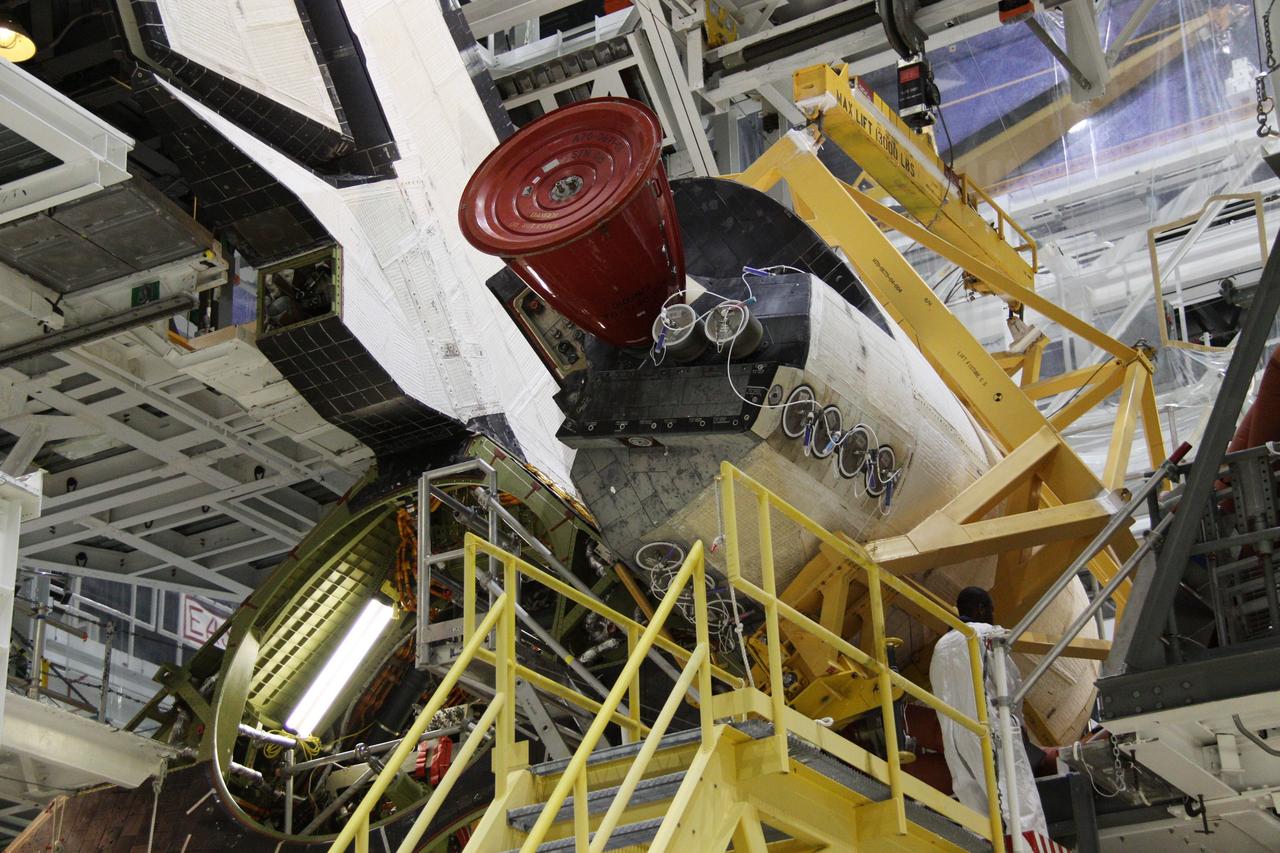
CAPE CANAVERAL, Fla. - In Orbiter Processing Facility-2 at NASA's Kennedy Space Center in Florida, workers use a crane to grapple shuttle Discovery's right-hand orbital maneuvering system, or OMS, pod for removal. It then will be transported to the Hypergol Maintenance Facility. The removal is part of Discovery's transition and retirement processing. Work performed on Discovery is expected to help rocket designers build next-generation spacecraft and prepare the shuttle for future public display. Photo credit: NASA/Troy Cryder
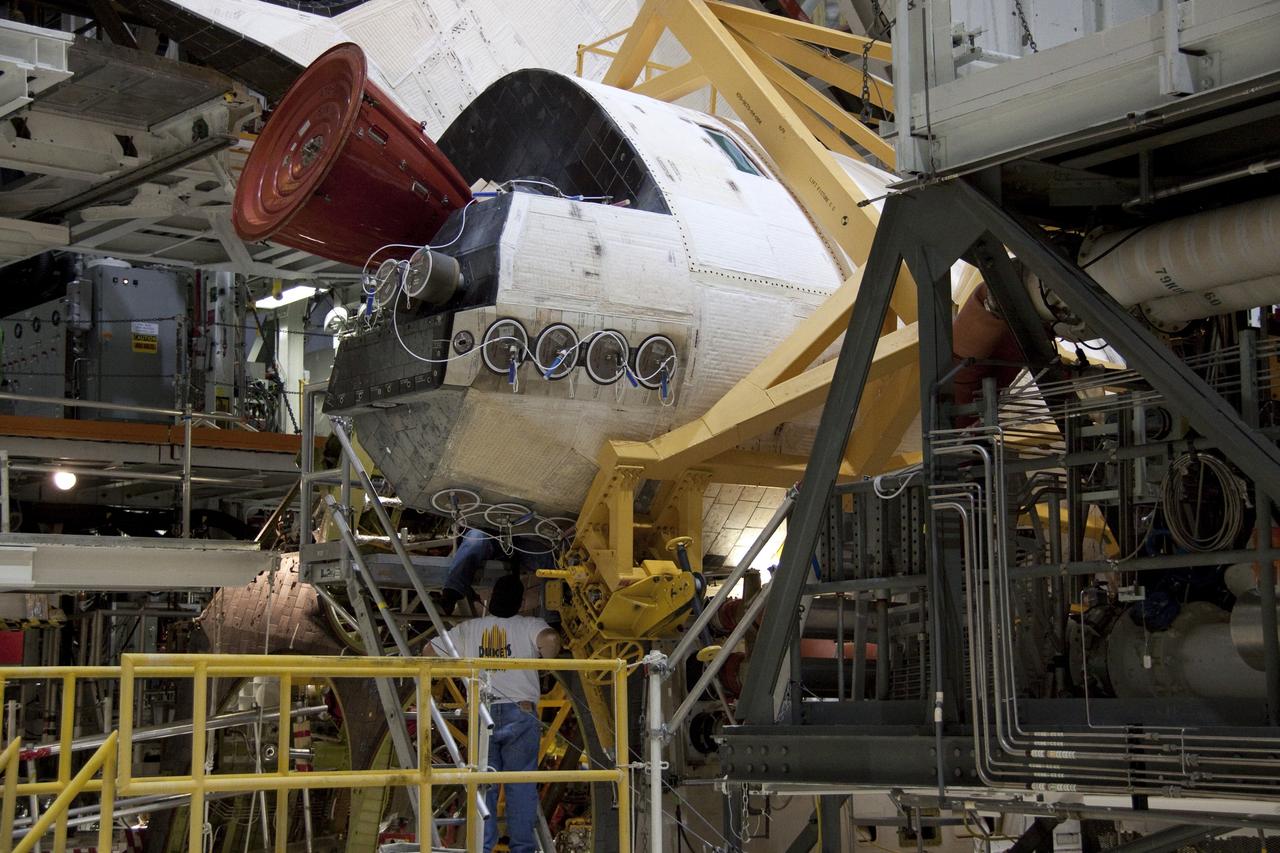
CAPE CANAVERAL, Fla. -- In Orbiter Processing Facility-2 at NASA's Kennedy Space Center in Florida, workers remove shuttle Discovery's right-hand orbital maneuvering system, or OMS, pod. The removal is part of Discovery's transition and retirement processing. Work performed on Discovery is expected to help rocket designers build next-generation spacecraft and prepare the shuttle for future public display. Photo credit: NASA/Troy Cryder
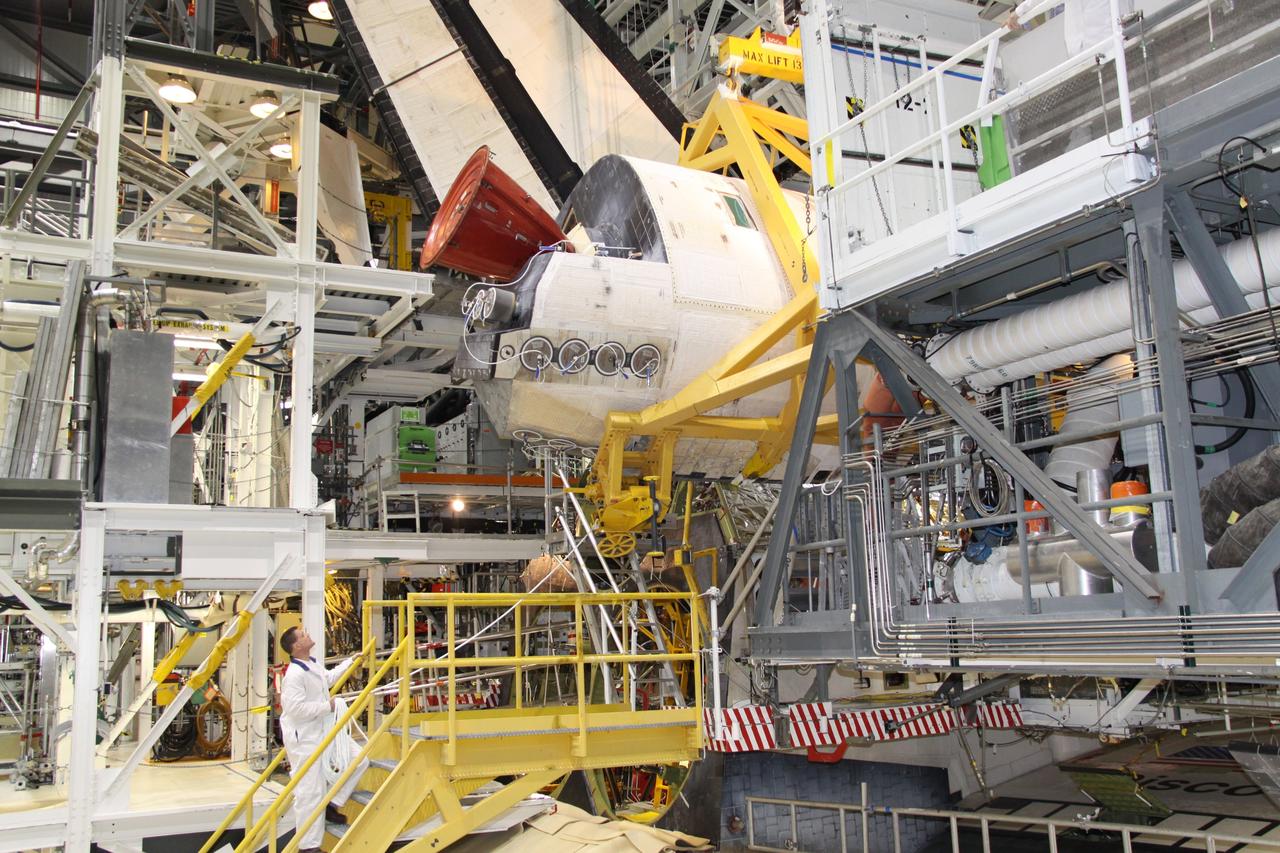
CAPE CANAVERAL, Fla. - In Orbiter Processing Facility-2 at NASA's Kennedy Space Center in Florida, workers use a crane to grapple shuttle Discovery's right-hand orbital maneuvering system, or OMS, pod for removal. It then will be transported to the Hypergol Maintenance Facility. The removal is part of Discovery's transition and retirement processing. Work performed on Discovery is expected to help rocket designers build next-generation spacecraft and prepare the shuttle for future public display. Photo credit: NASA/Jack Pfaller
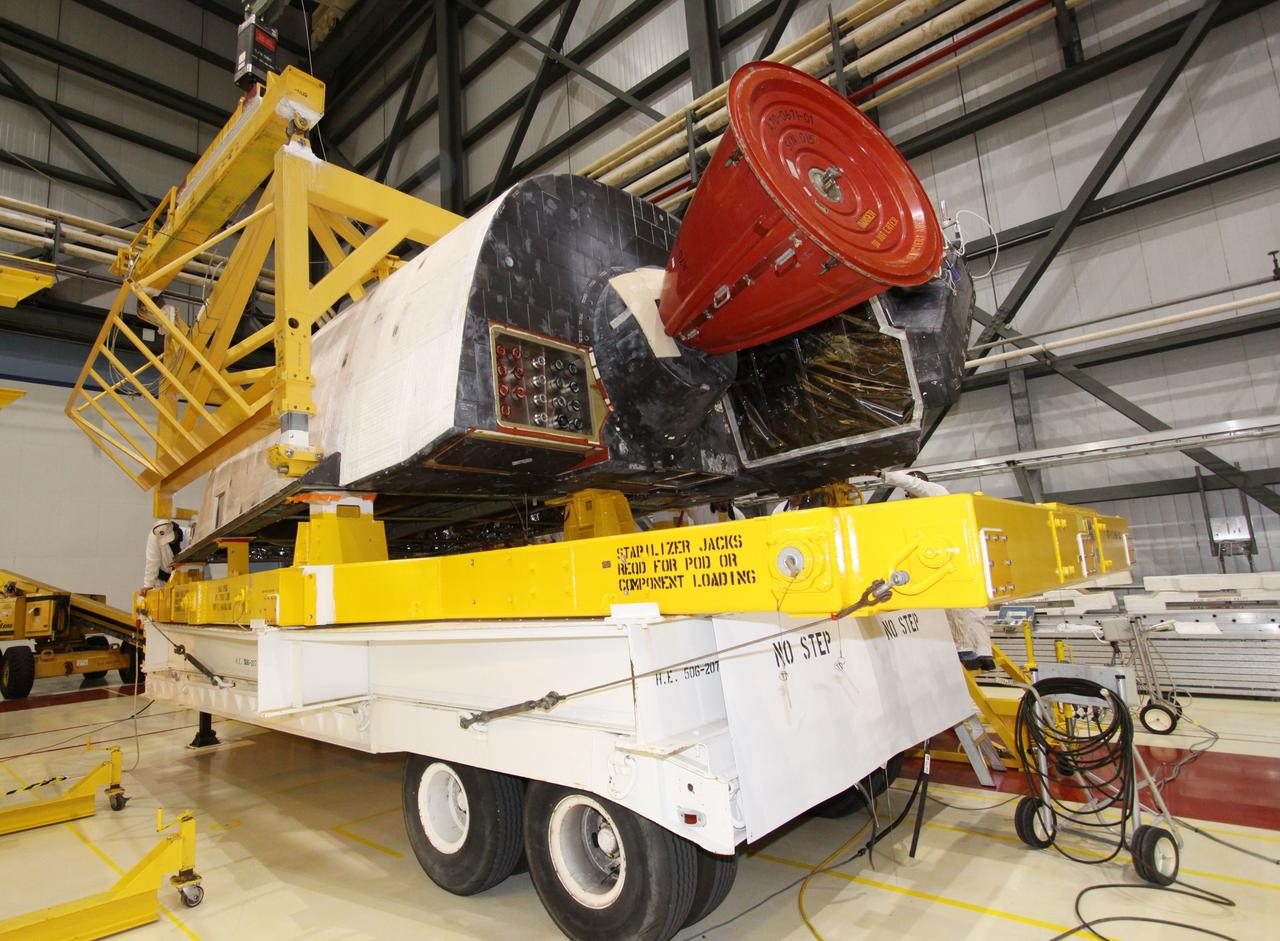
CAPE CANAVERAL, Fla. -- In Orbiter Processing Facility-2 at NASA's Kennedy Space Center in Florida, an overhead crane lowered shuttle Discovery's right-hand orbital maneuvering system, or OMS, pod onto a transporter. It then will be moved to the Hypergol Maintenance Facility. The removal is part of Discovery's transition and retirement processing. Work performed on Discovery is expected to help rocket designers build next-generation spacecraft and prepare the shuttle for future public display. Photo credit: NASA/Jack Pfaller
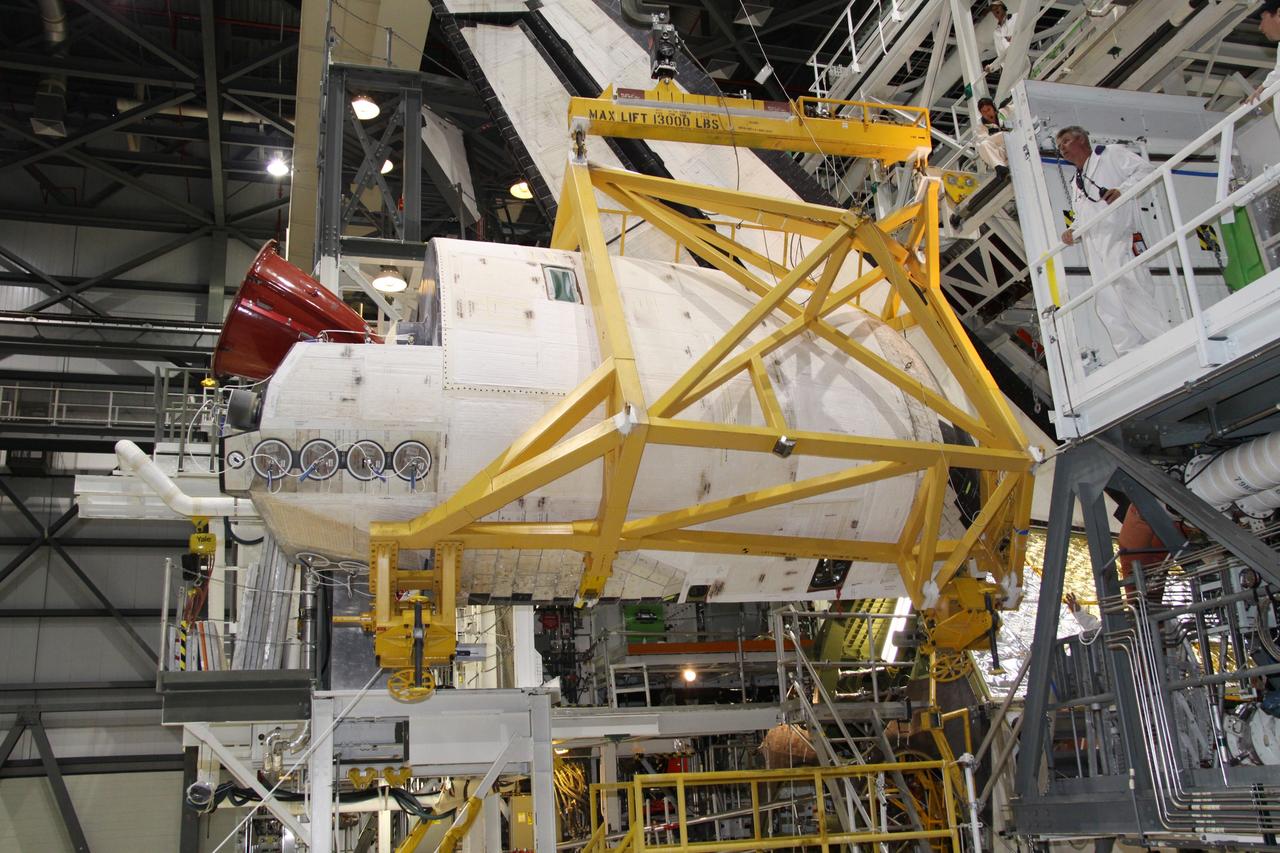
CAPE CANAVERAL, Fla. - In Orbiter Processing Facility-2 at NASA's Kennedy Space Center in Florida, workers use a crane to grapple shuttle Discovery's right-hand orbital maneuvering system, or OMS, pod for removal. It then will be transported to the Hypergol Maintenance Facility. The removal is part of Discovery's transition and retirement processing. Work performed on Discovery is expected to help rocket designers build next-generation spacecraft and prepare the shuttle for future public display. Photo credit: NASA/Jack Pfaller
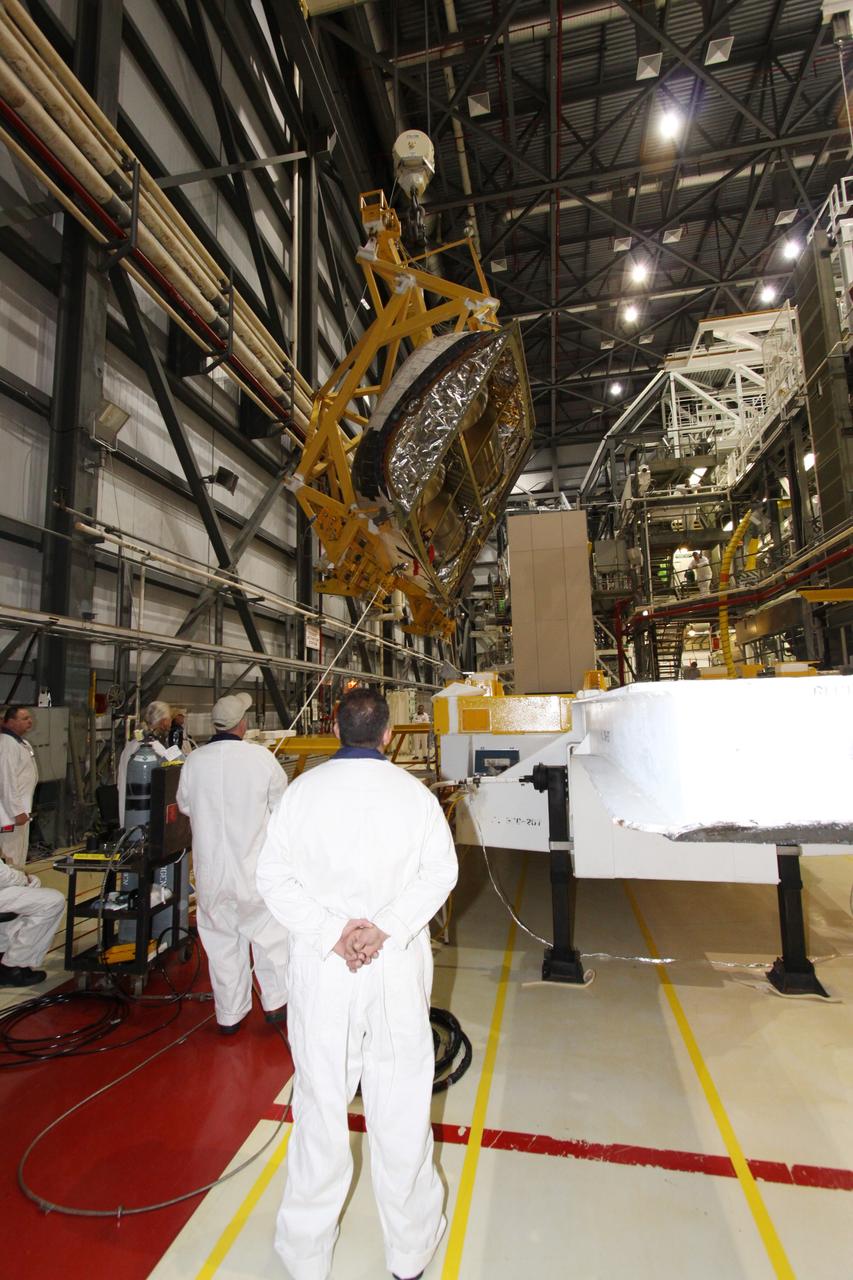
CAPE CANAVERAL, Fla. -- In Orbiter Processing Facility-2 at NASA's Kennedy Space Center in Florida, workers monitor an overhead crane as it lowers shuttle Discovery's right-hand orbital maneuvering system, or OMS, pod toward a transporter. It then will be moved to the Hypergol Maintenance Facility. The removal is part of Discovery's transition and retirement processing. Work performed on Discovery is expected to help rocket designers build next-generation spacecraft and prepare the shuttle for future public display. Photo credit: NASA/Jack Pfaller
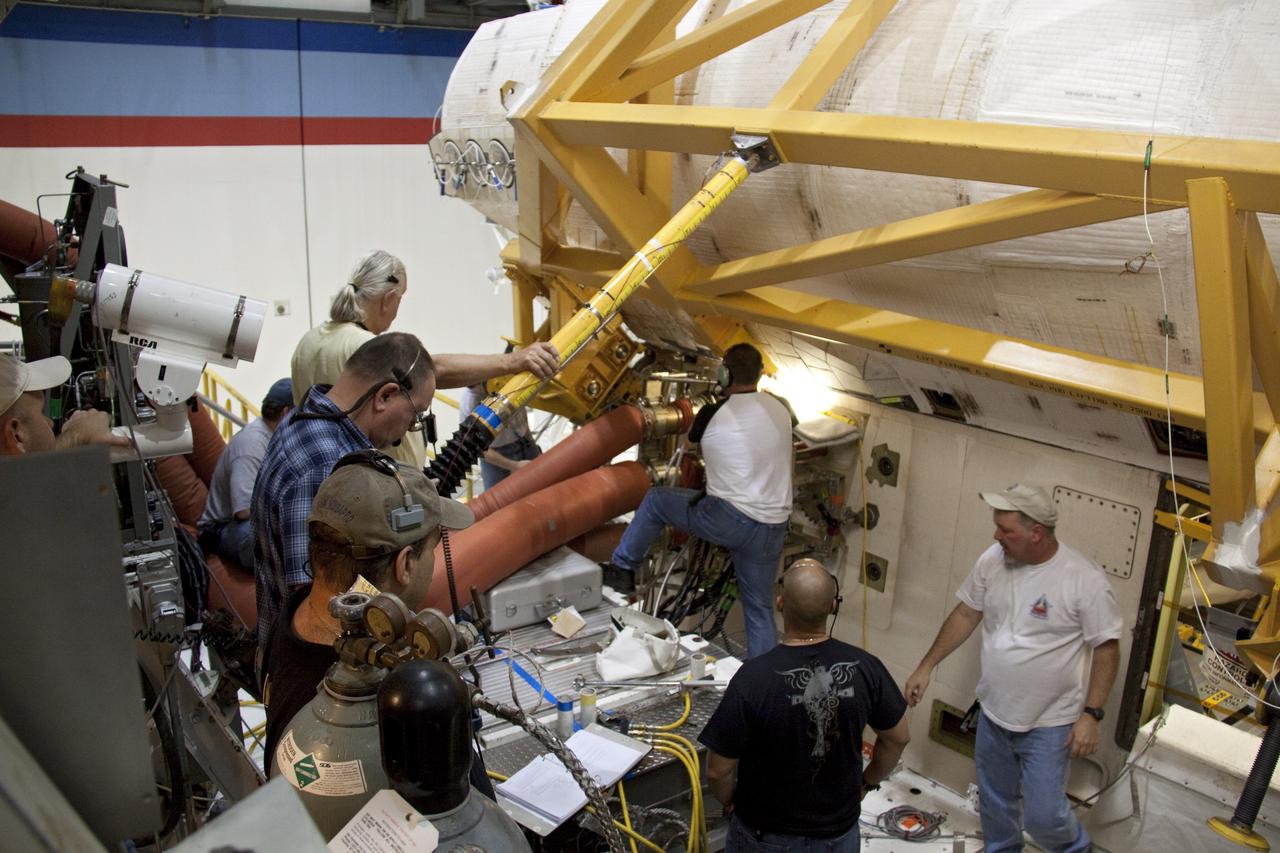
CAPE CANAVERAL, Fla. - In Orbiter Processing Facility-2 at NASA's Kennedy Space Center in Florida, workers prepare to remove shuttle Discovery's right-hand orbital maneuvering system, or OMS, pod. The removal is part of Discovery's transition and retirement processing. Work performed on Discovery is expected to help rocket designers build next-generation spacecraft and prepare the shuttle for future public display. Photo credit: NASA/Troy Cryder
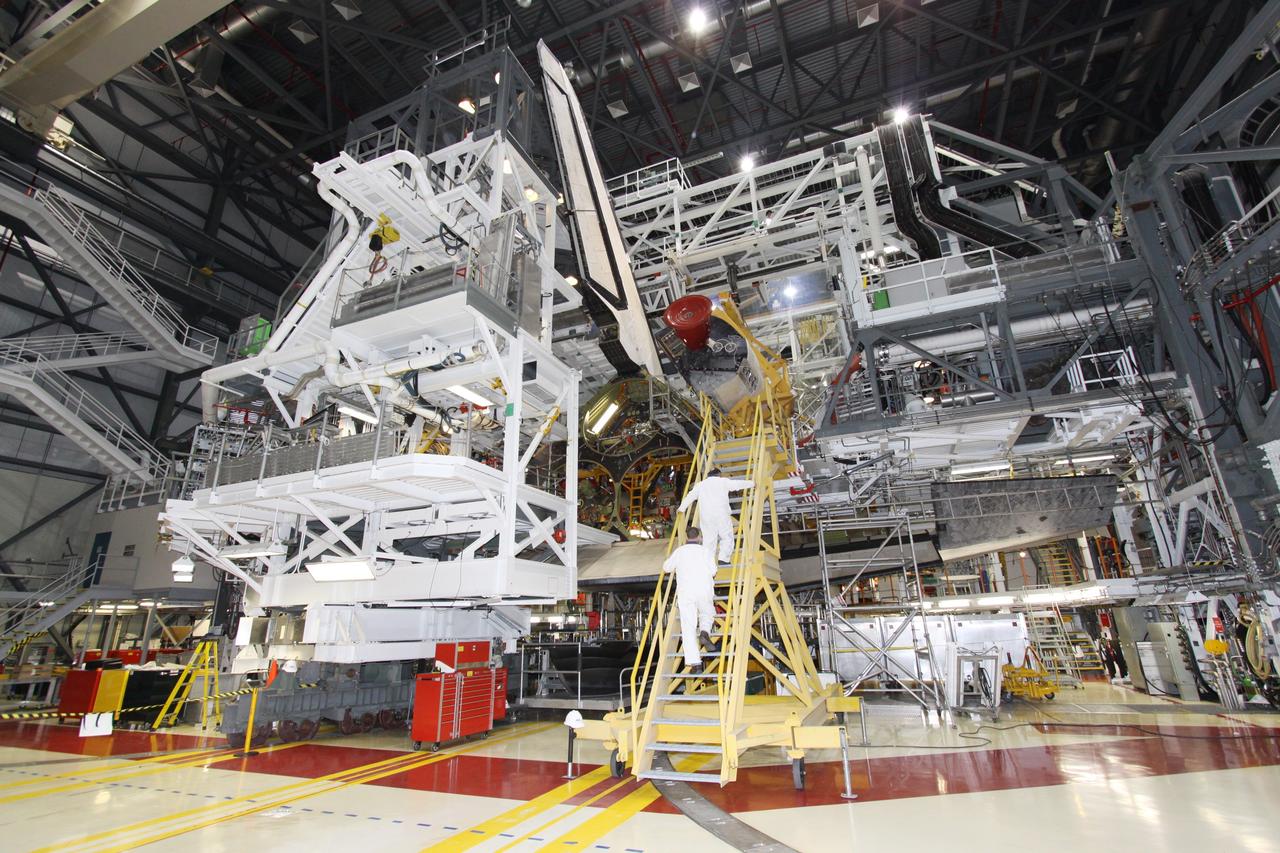
CAPE CANAVERAL, Fla. - In Orbiter Processing Facility-2 at NASA's Kennedy Space Center in Florida, workers climb up to the level where a crane is being used to grapple shuttle Discovery's right-hand orbital maneuvering system, or OMS, pod for removal. It then will be transported to the Hypergol Maintenance Facility. The removal is part of Discovery's transition and retirement processing. Work performed on Discovery is expected to help rocket designers build next-generation spacecraft and prepare the shuttle for future public display. Photo credit: NASA/Jack Pfaller
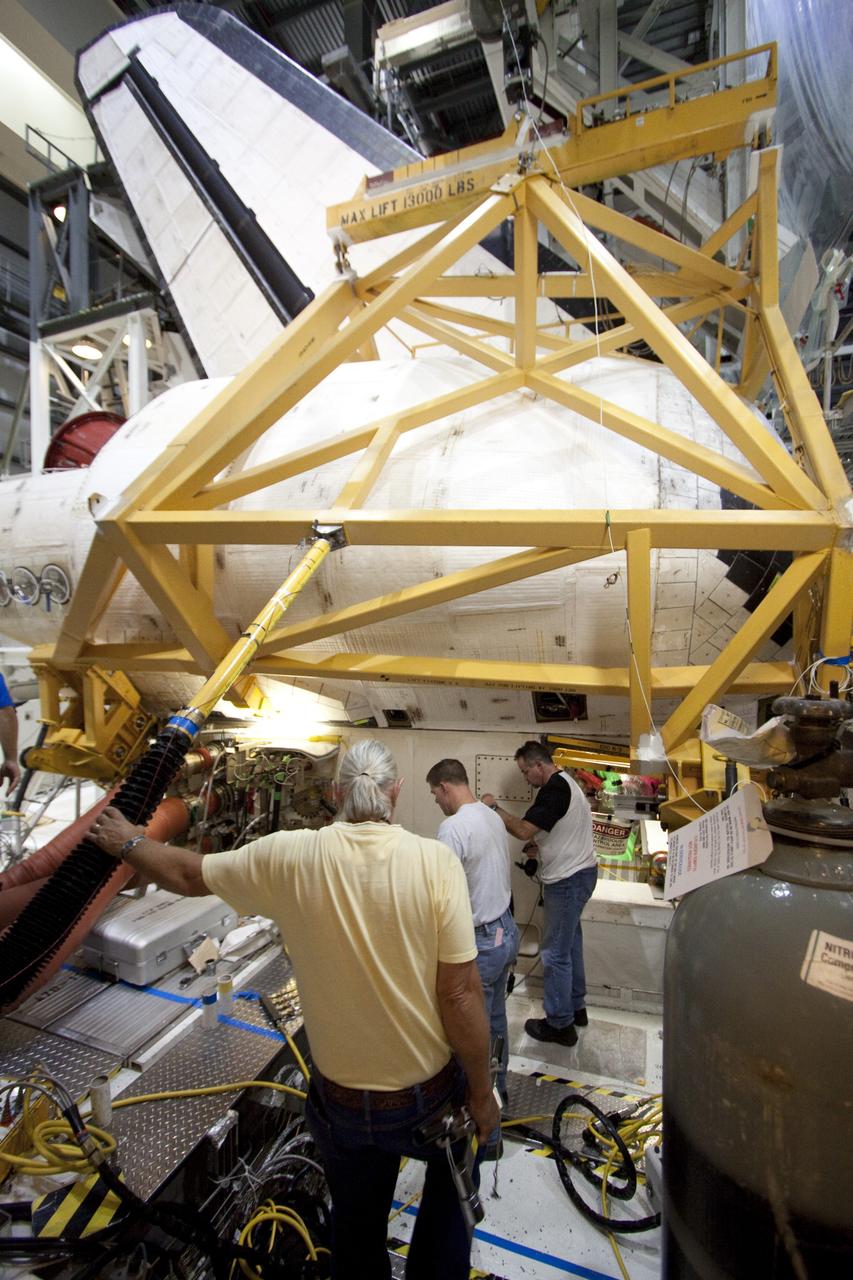
CAPE CANAVERAL, Fla. - In Orbiter Processing Facility-2 at NASA's Kennedy Space Center in Florida, workers prepare to remove shuttle Discovery's right-hand orbital maneuvering system, or OMS, pod. The removal is part of Discovery's transition and retirement processing. Work performed on Discovery is expected to help rocket designers build next-generation spacecraft and prepare the shuttle for future public display. Photo credit: NASA/Troy Cryder
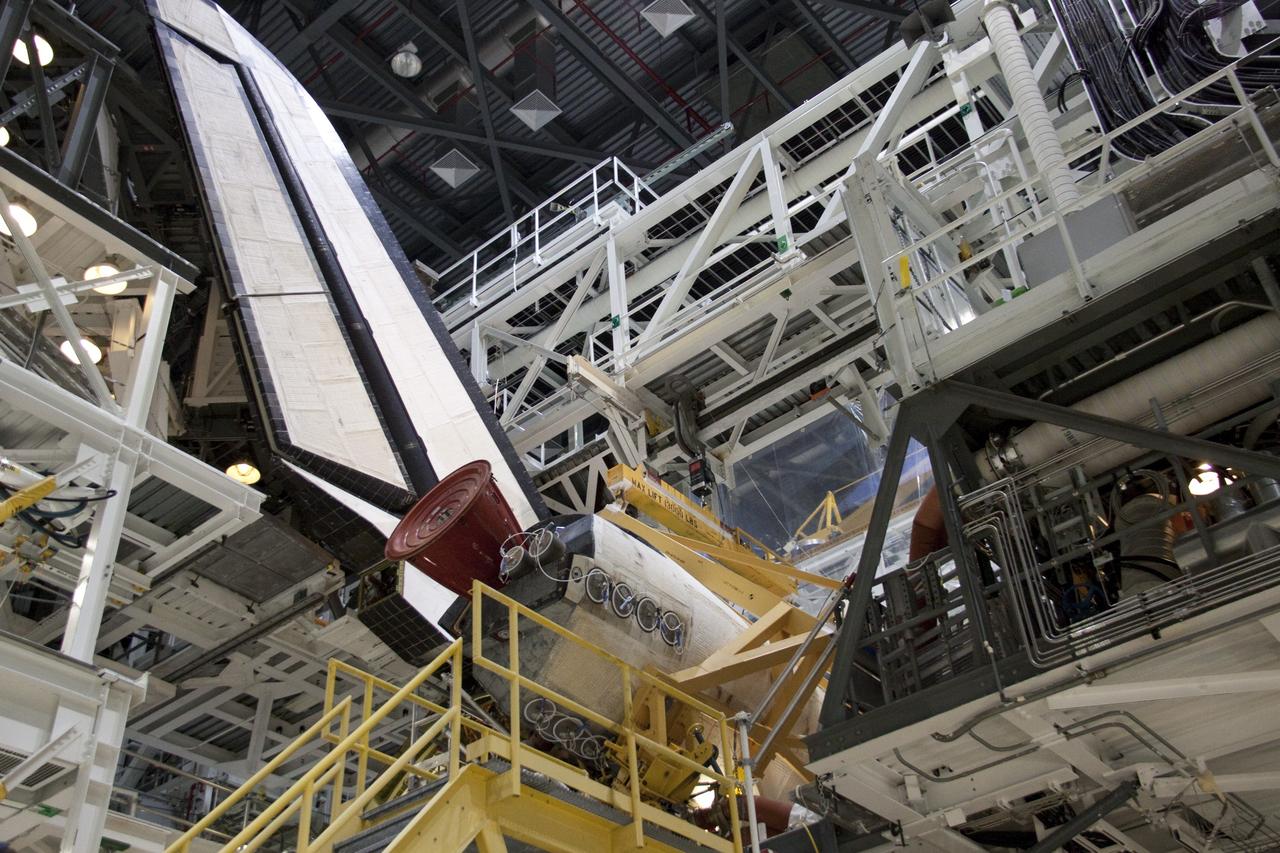
CAPE CANAVERAL, Fla. -- In Orbiter Processing Facility-2 at NASA's Kennedy Space Center in Florida, workers remove shuttle Discovery's right-hand orbital maneuvering system, or OMS, pod. The removal is part of Discovery's transition and retirement processing. Work performed on Discovery is expected to help rocket designers build next-generation spacecraft and prepare the shuttle for future public display. Photo credit: NASA/Troy Cryder
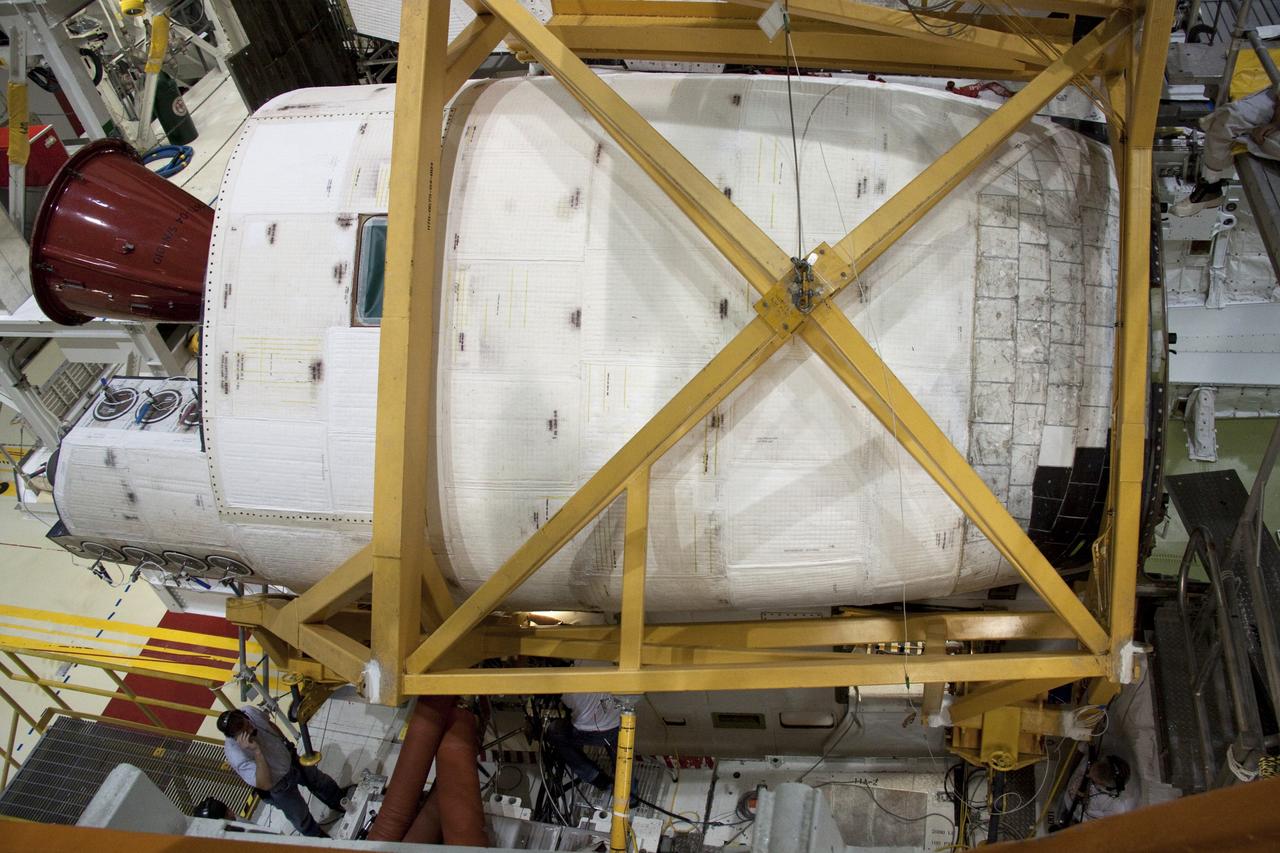
CAPE CANAVERAL, Fla. - In Orbiter Processing Facility-2 at NASA's Kennedy Space Center in Florida, workers prepare to remove shuttle Discovery's right-hand orbital maneuvering system, or OMS, pod. The removal is part of Discovery's transition and retirement processing. Work performed on Discovery is expected to help rocket designers build next-generation spacecraft and prepare the shuttle for future public display. Photo credit: NASA/Troy Cryder
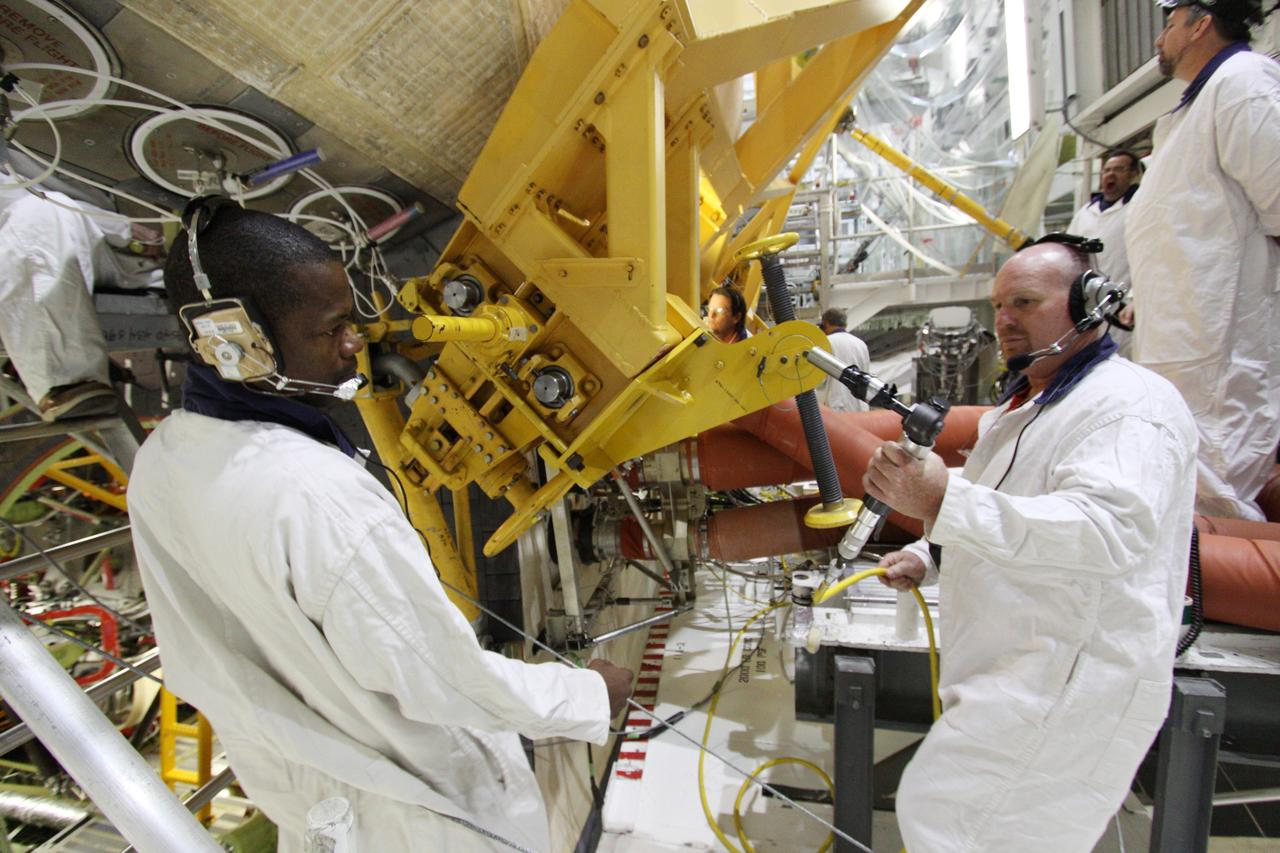
CAPE CANAVERAL, Fla. - In Orbiter Processing Facility-2 at NASA's Kennedy Space Center in Florida, workers use a crane to grapple shuttle Discovery's right-hand orbital maneuvering system, or OMS, pod for removal. It then will be transported to the Hypergol Maintenance Facility. The removal is part of Discovery's transition and retirement processing. Work performed on Discovery is expected to help rocket designers build next-generation spacecraft and prepare the shuttle for future public display. Photo credit: NASA/Troy Cryder
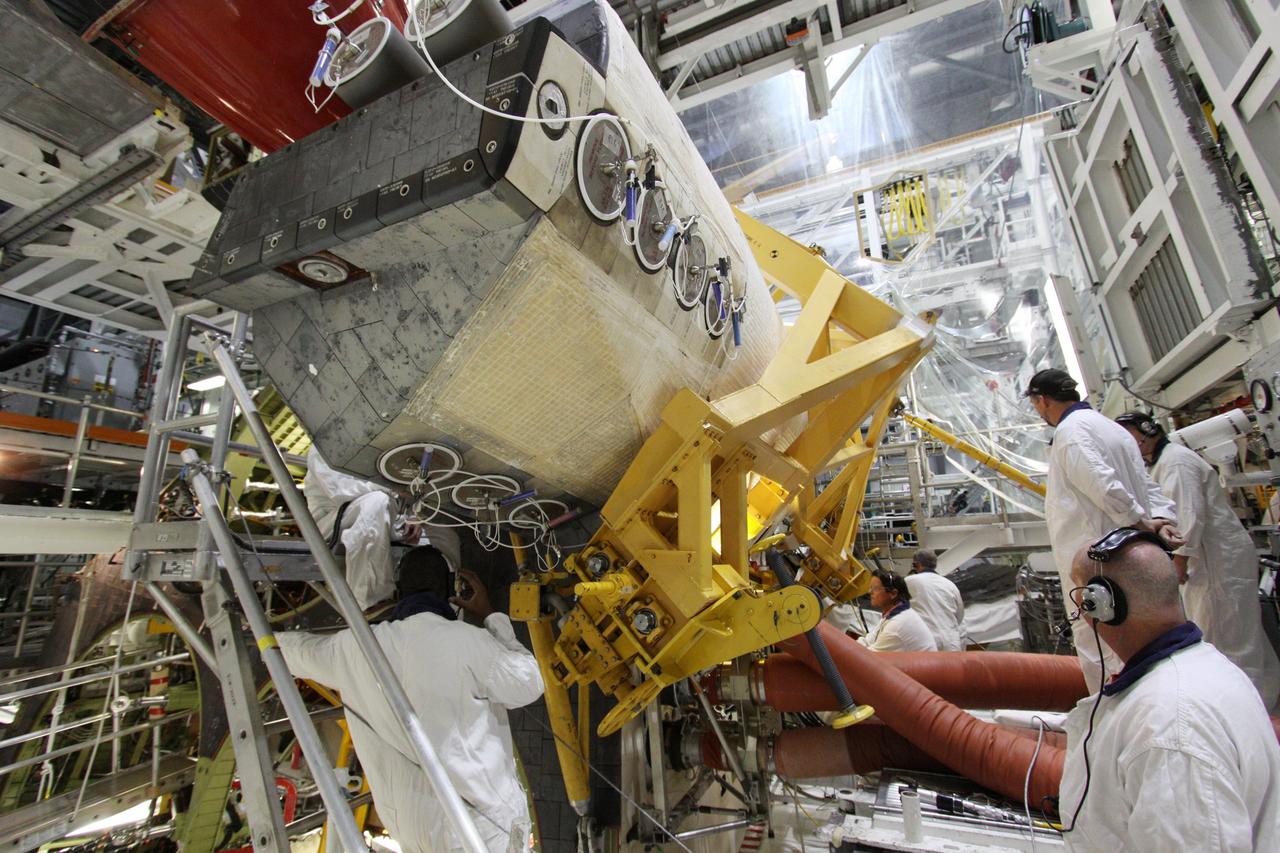
CAPE CANAVERAL, Fla. - In Orbiter Processing Facility-2 at NASA's Kennedy Space Center in Florida, workers use a crane to grapple shuttle Discovery's right-hand orbital maneuvering system, or OMS, pod for removal. It then will be transported to the Hypergol Maintenance Facility. The removal is part of Discovery's transition and retirement processing. Work performed on Discovery is expected to help rocket designers build next-generation spacecraft and prepare the shuttle for future public display. Photo credit: NASA/Troy Cryder
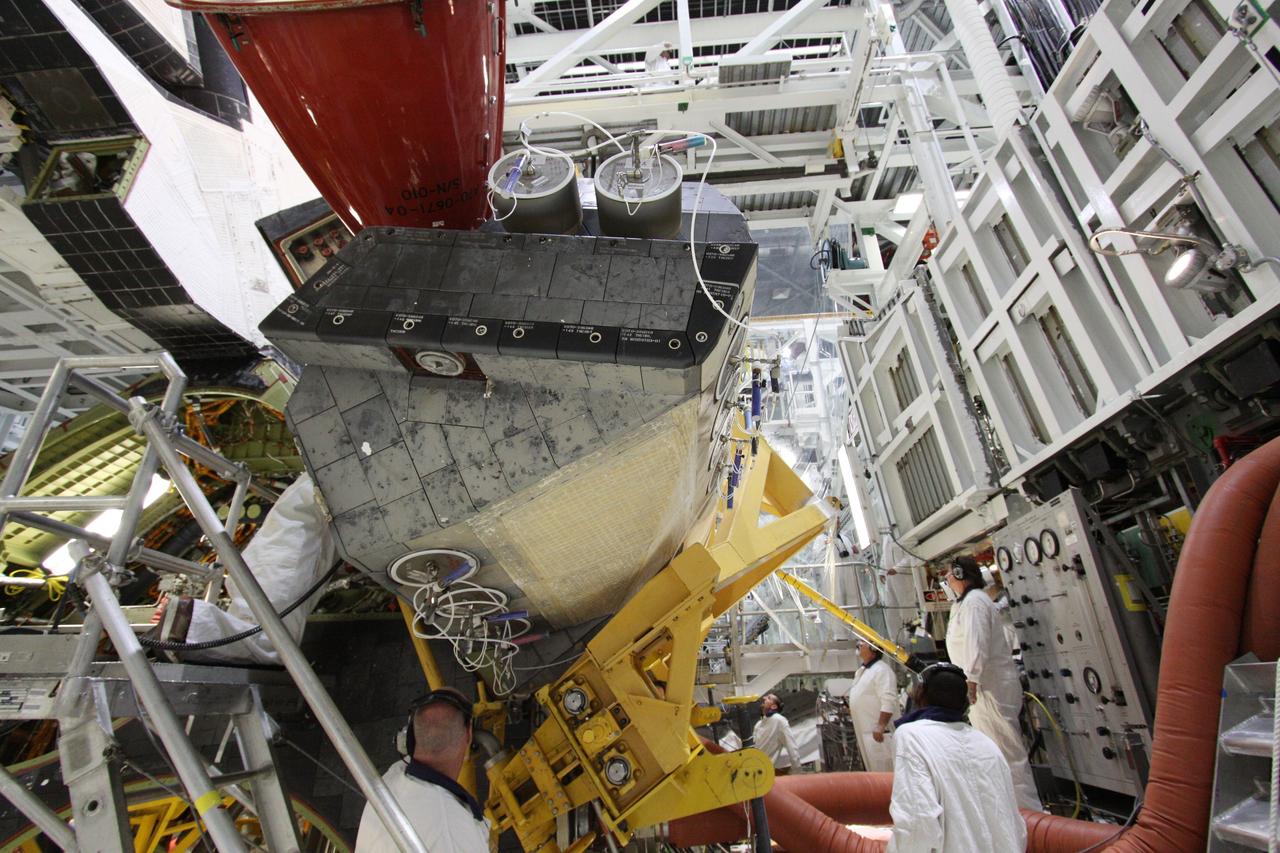
CAPE CANAVERAL, Fla. - In Orbiter Processing Facility-2 at NASA's Kennedy Space Center in Florida, workers use a crane to grapple shuttle Discovery's right-hand orbital maneuvering system, or OMS, pod for removal. It then will be transported to the Hypergol Maintenance Facility. The removal is part of Discovery's transition and retirement processing. Work performed on Discovery is expected to help rocket designers build next-generation spacecraft and prepare the shuttle for future public display. Photo credit: NASA/Troy Cryder
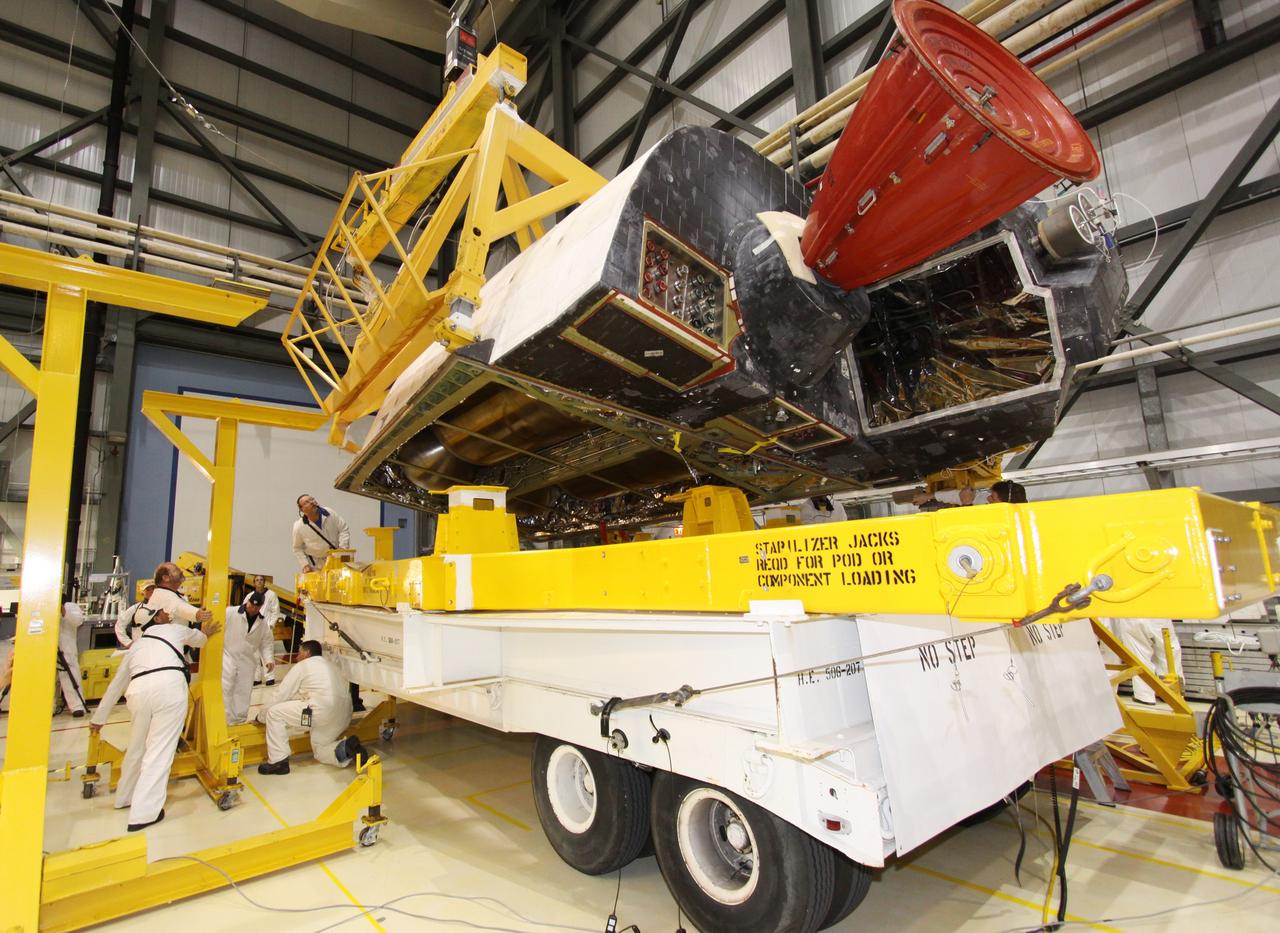
CAPE CANAVERAL, Fla. -- In Orbiter Processing Facility-2 at NASA's Kennedy Space Center in Florida, workers monitor an overhead crane as it lowers shuttle Discovery's right-hand orbital maneuvering system, or OMS, pod toward a transporter. It then will be moved to the Hypergol Maintenance Facility. The removal is part of Discovery's transition and retirement processing. Work performed on Discovery is expected to help rocket designers build next-generation spacecraft and prepare the shuttle for future public display. Photo credit: NASA/Jack Pfaller
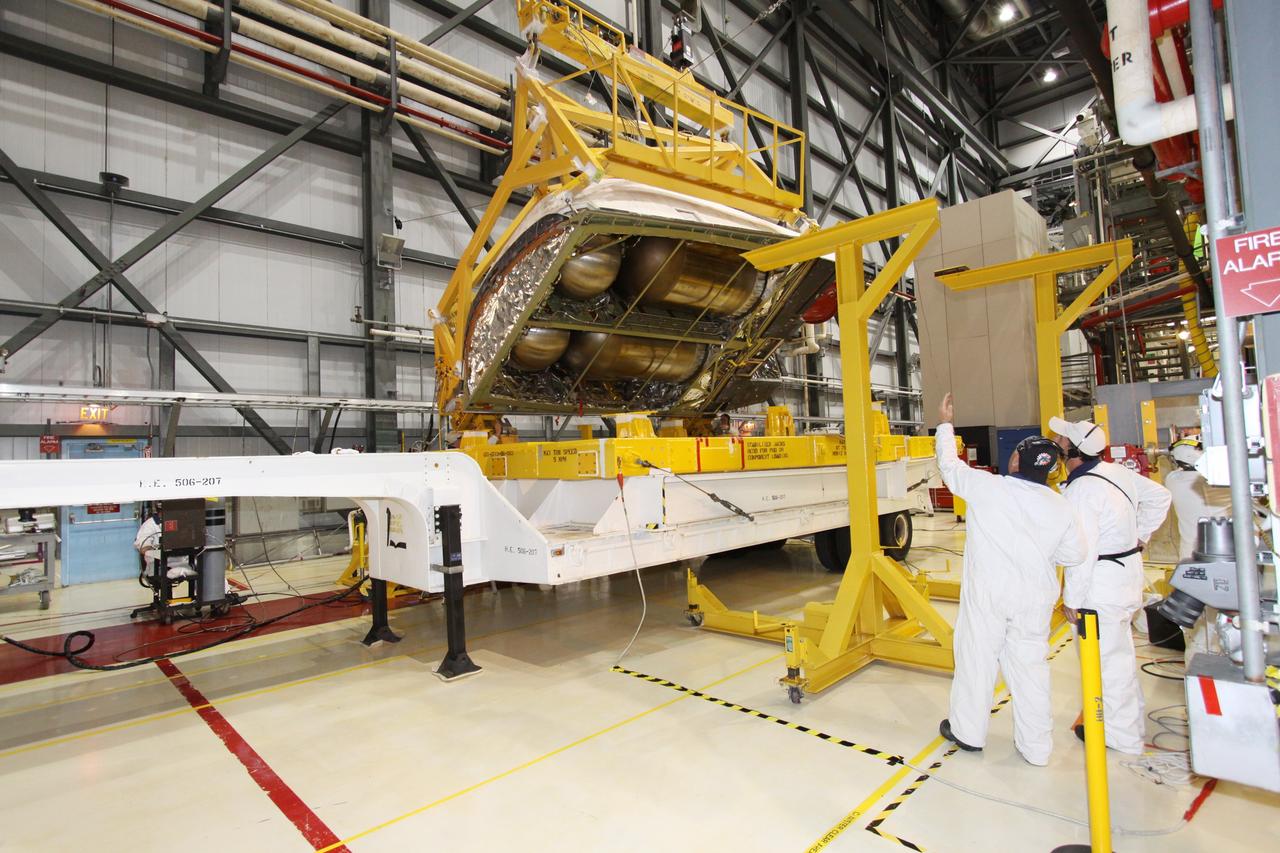
CAPE CANAVERAL, Fla. -- In Orbiter Processing Facility-2 at NASA's Kennedy Space Center in Florida, workers monitor an overhead crane as it lowers shuttle Discovery's right-hand orbital maneuvering system, or OMS, pod toward a transporter. It then will be moved to the Hypergol Maintenance Facility. The removal is part of Discovery's transition and retirement processing. Work performed on Discovery is expected to help rocket designers build next-generation spacecraft and prepare the shuttle for future public display. Photo credit: NASA/Jack Pfaller
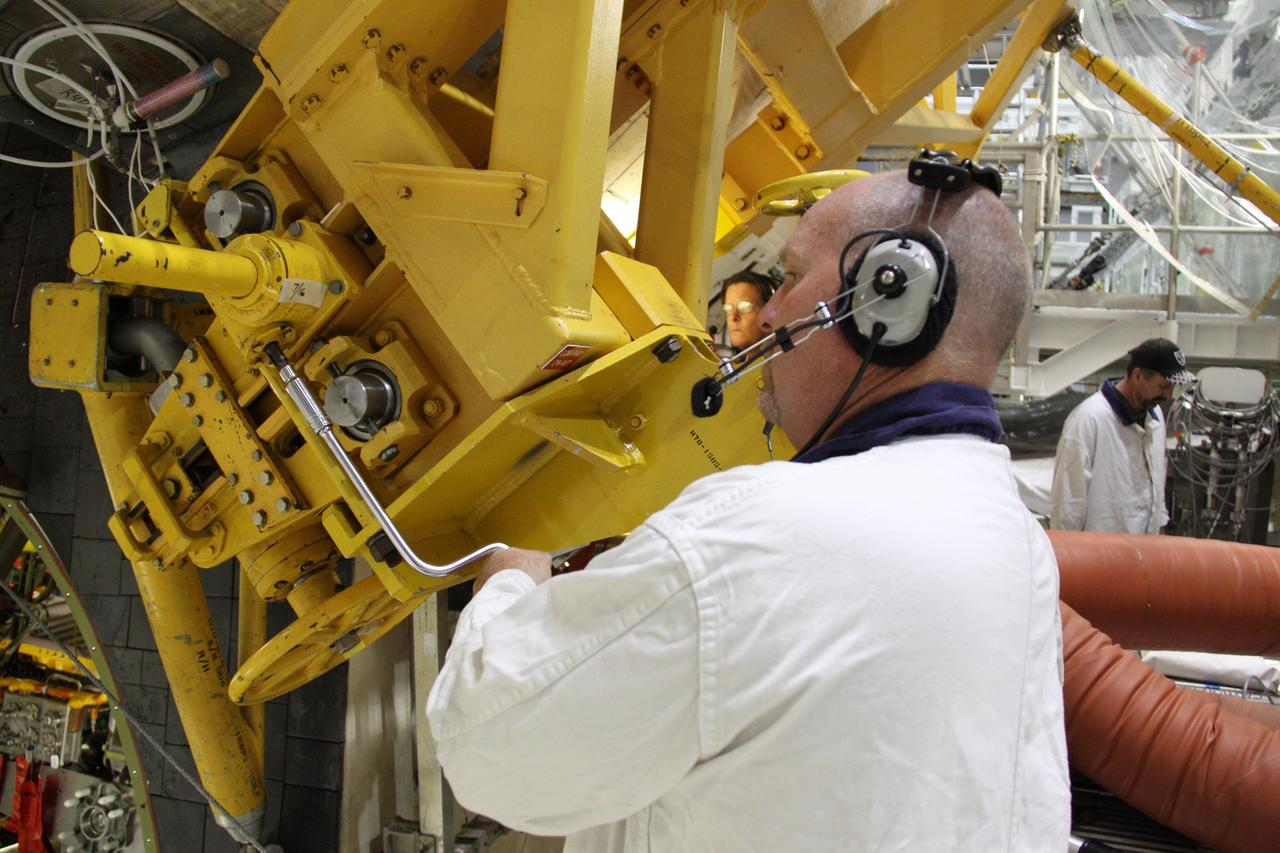
CAPE CANAVERAL, Fla. - In Orbiter Processing Facility-2 at NASA's Kennedy Space Center in Florida, workers use a crane to grapple shuttle Discovery's right-hand orbital maneuvering system, or OMS, pod for removal. It then will be transported to the Hypergol Maintenance Facility. The removal is part of Discovery's transition and retirement processing. Work performed on Discovery is expected to help rocket designers build next-generation spacecraft and prepare the shuttle for future public display. Photo credit: NASA/Troy Cryder
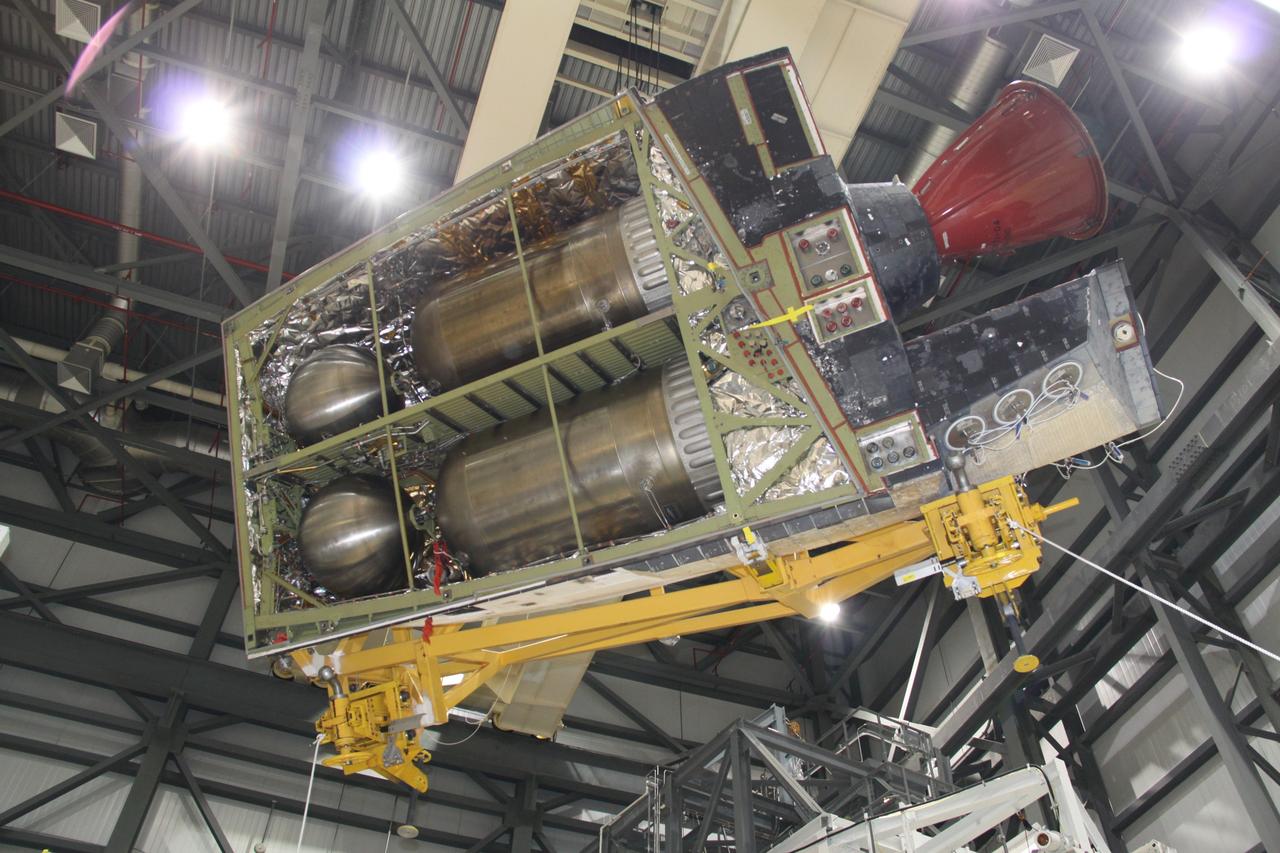
CAPE CANAVERAL, Fla. -- In Orbiter Processing Facility-2 at NASA's Kennedy Space Center in Florida, an overhead crane removes shuttle Discovery's right-hand orbital maneuvering system, or OMS, pod. It then will be transported to the Hypergol Maintenance Facility. The removal is part of Discovery's transition and retirement processing. Work performed on Discovery is expected to help rocket designers build next-generation spacecraft and prepare the shuttle for future public display. Photo credit: NASA/Jack Pfaller
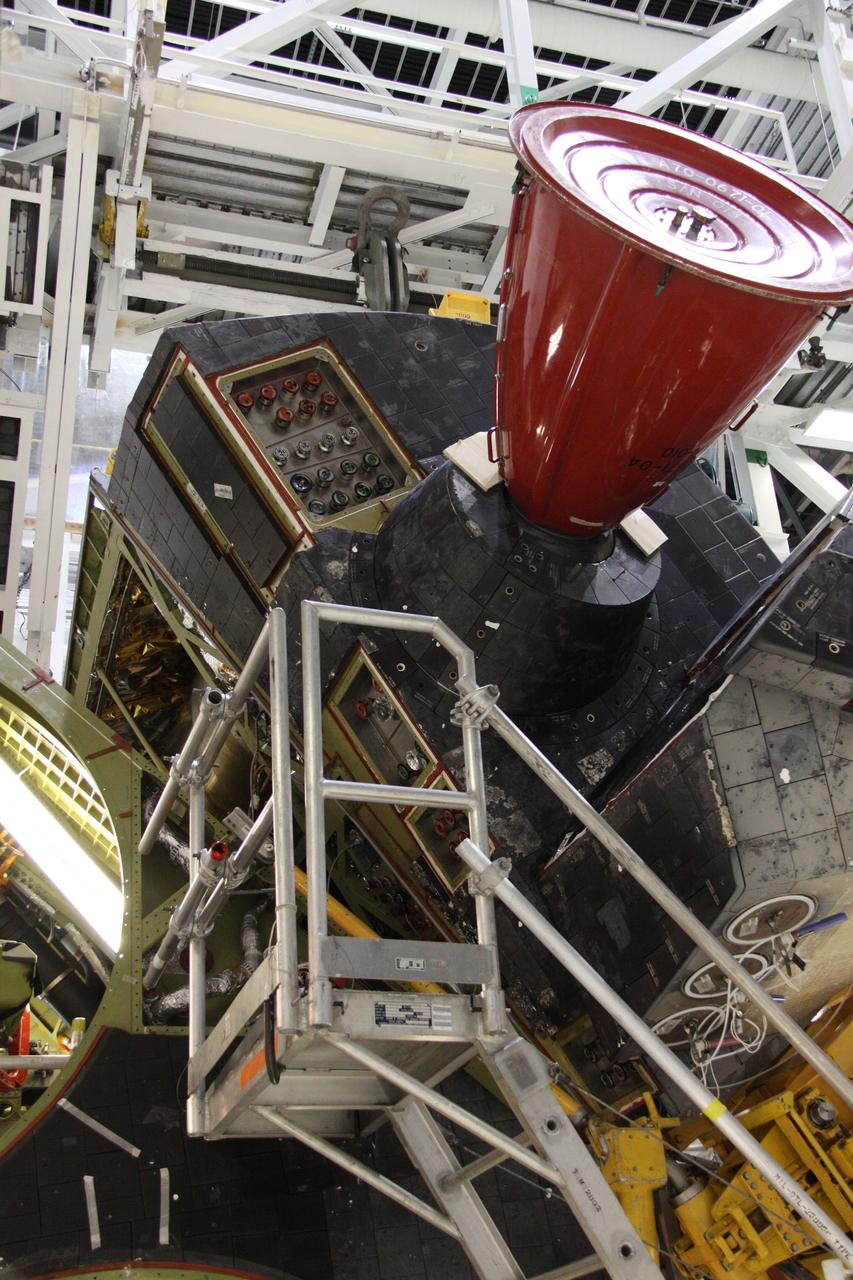
CAPE CANAVERAL, Fla. -- In Orbiter Processing Facility-2 at NASA's Kennedy Space Center in Florida, workers use a crane to remove shuttle Discovery's right-hand orbital maneuvering system, or OMS, pod. It then will be transported to the Hypergol Maintenance Facility. The removal is part of Discovery's transition and retirement processing. Work performed on Discovery is expected to help rocket designers build next-generation spacecraft and prepare the shuttle for future public display. Photo credit: NASA/Troy Cryder
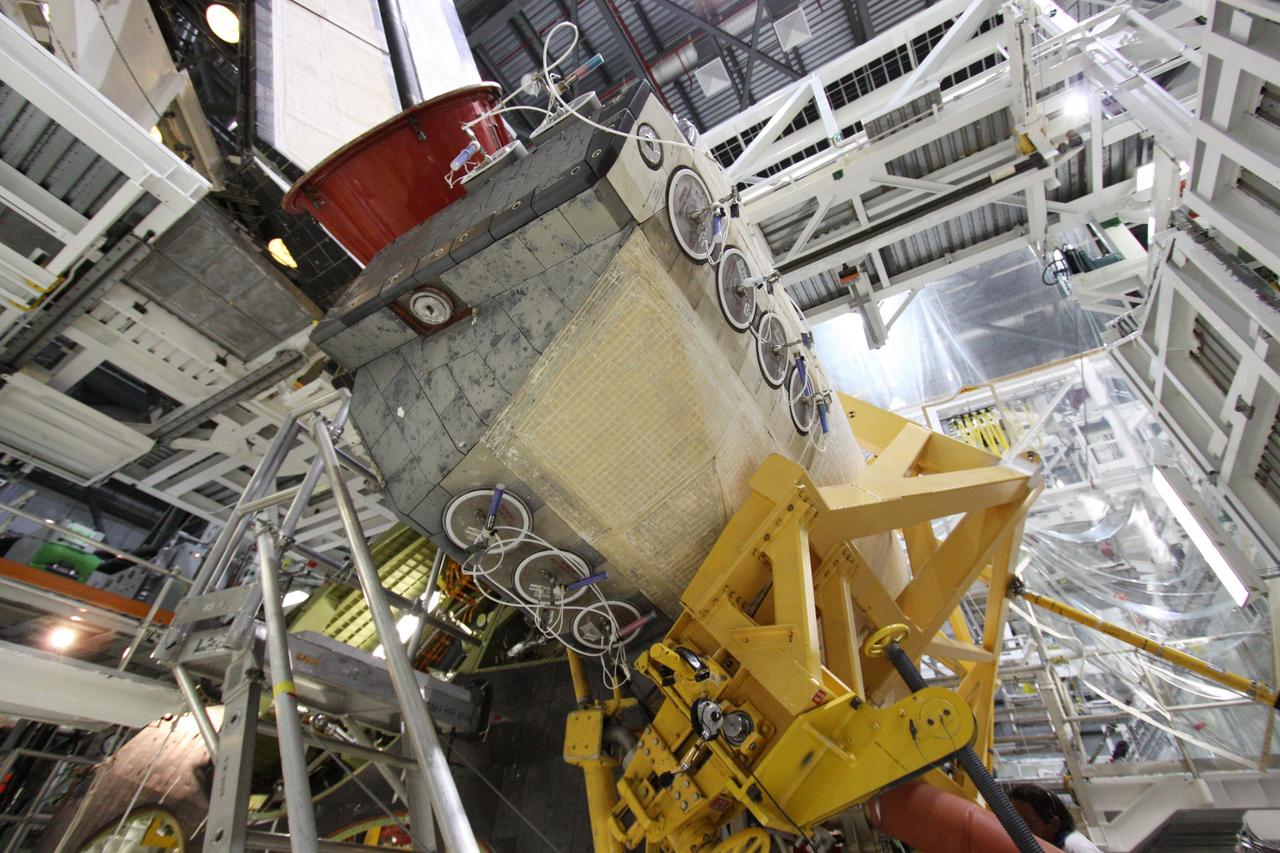
CAPE CANAVERAL, Fla. - In Orbiter Processing Facility-2 at NASA's Kennedy Space Center in Florida, workers use a crane to grapple shuttle Discovery's right-hand orbital maneuvering system, or OMS, pod for removal. It then will be transported to the Hypergol Maintenance Facility. The removal is part of Discovery's transition and retirement processing. Work performed on Discovery is expected to help rocket designers build next-generation spacecraft and prepare the shuttle for future public display. Photo credit: NASA/Troy Cryder
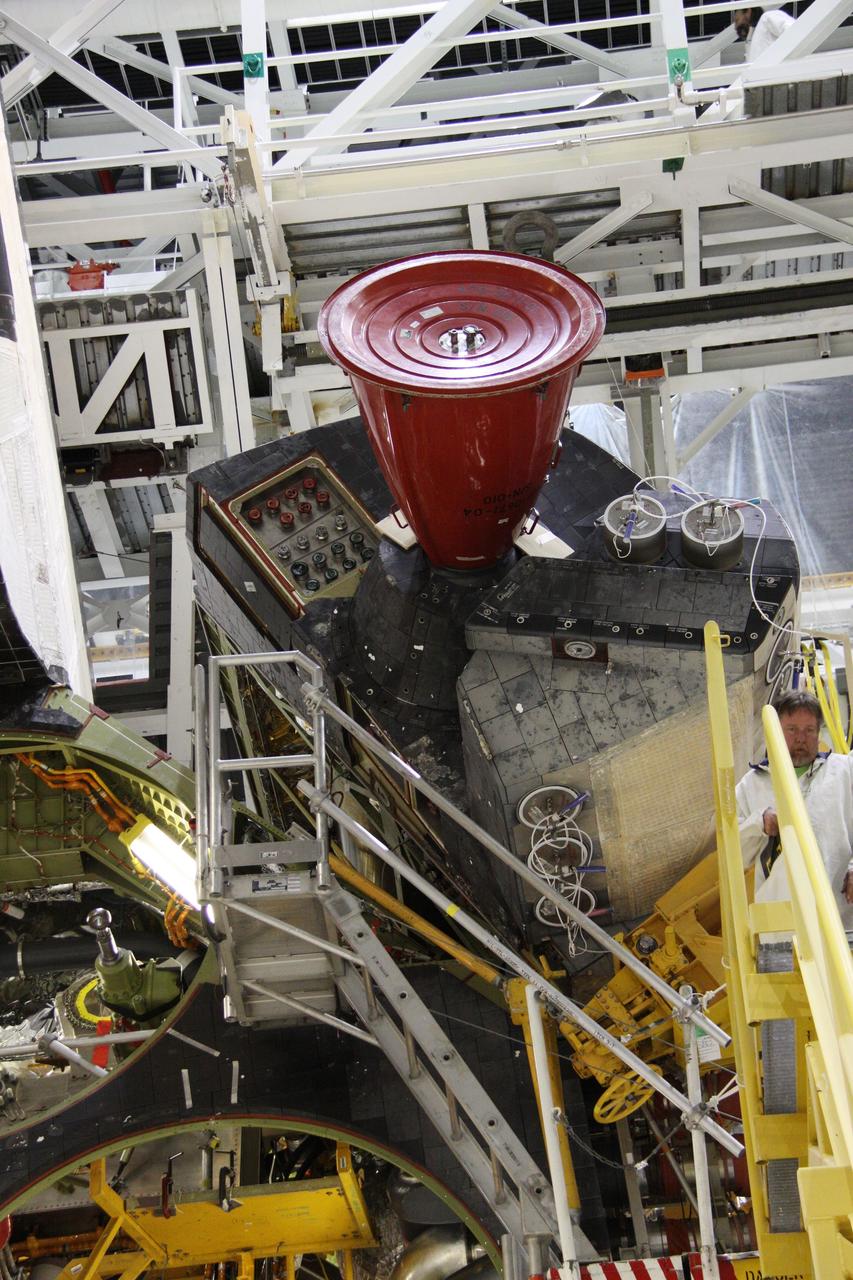
CAPE CANAVERAL, Fla. - In Orbiter Processing Facility-2 at NASA's Kennedy Space Center in Florida, workers use a crane to grapple shuttle Discovery's right-hand orbital maneuvering system, or OMS, pod for removal. It then will be transported to the Hypergol Maintenance Facility. The removal is part of Discovery's transition and retirement processing. Work performed on Discovery is expected to help rocket designers build next-generation spacecraft and prepare the shuttle for future public display. Photo credit: NASA/Troy Cryder
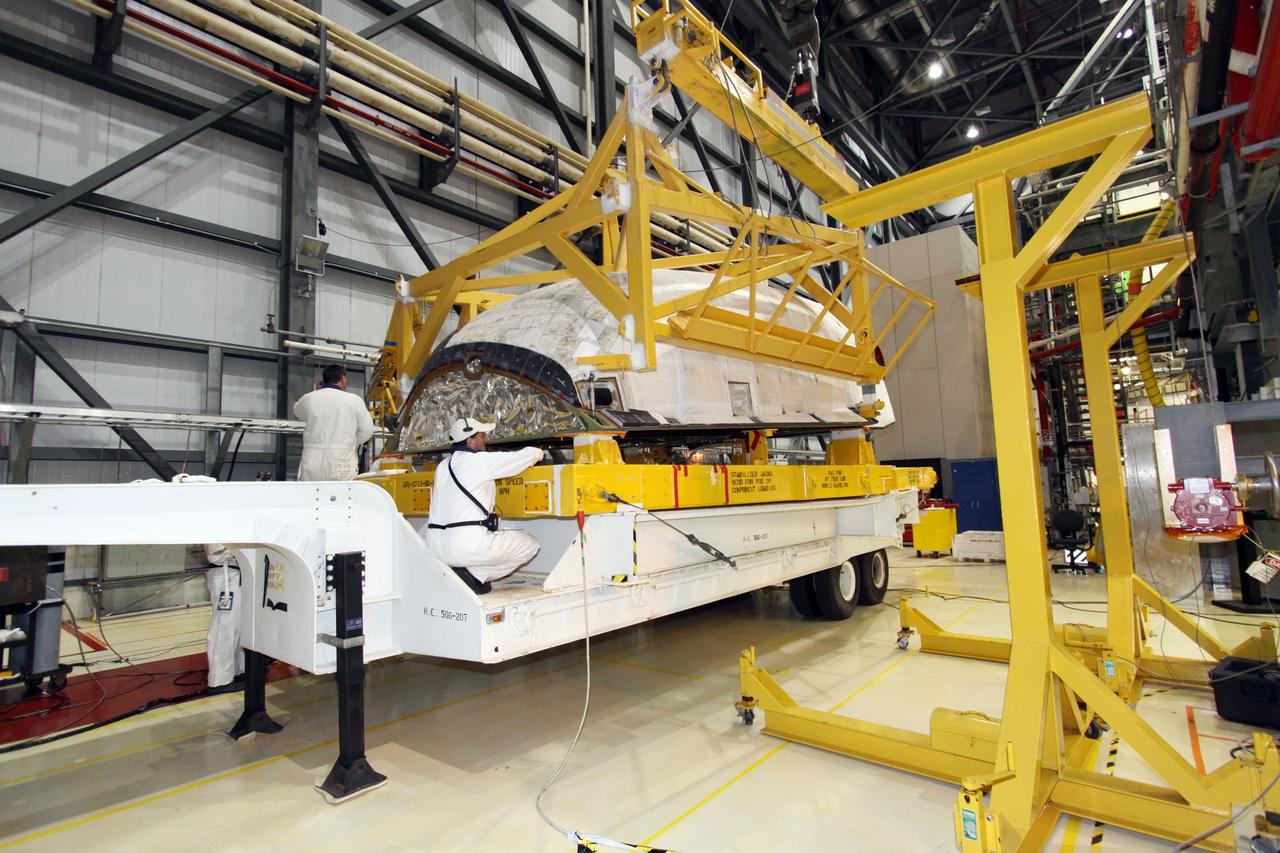
CAPE CANAVERAL, Fla. -- In Orbiter Processing Facility-2 at NASA's Kennedy Space Center in Florida, workers position shuttle Discovery's right-hand orbital maneuvering system, or OMS, pod onto a transporter. It then will be moved to the Hypergol Maintenance Facility. The removal is part of Discovery's transition and retirement processing. Work performed on Discovery is expected to help rocket designers build next-generation spacecraft and prepare the shuttle for future public display. Photo credit: NASA/Jack Pfaller
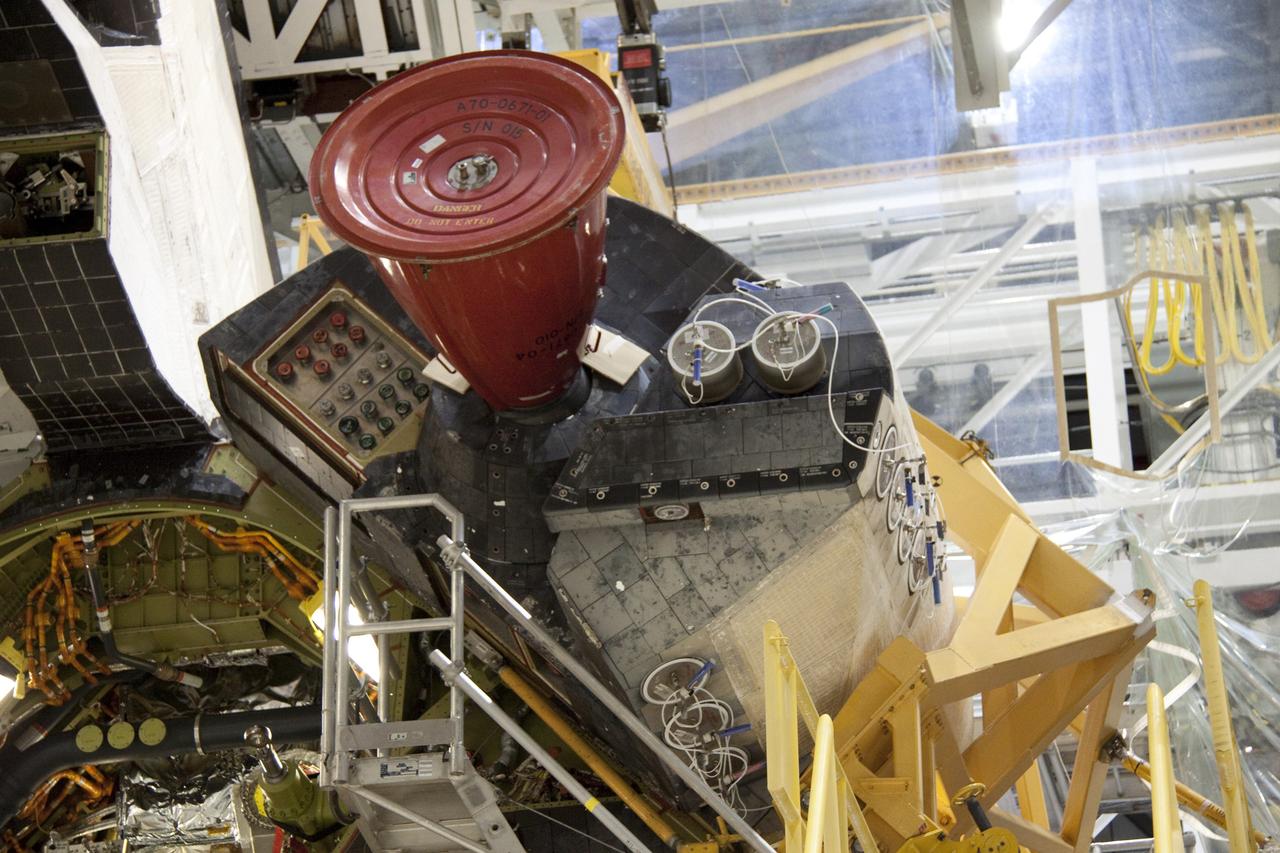
CAPE CANAVERAL, Fla. -- In Orbiter Processing Facility-2 at NASA's Kennedy Space Center in Florida, workers remove shuttle Discovery's right-hand orbital maneuvering system, or OMS, pod. The removal is part of Discovery's transition and retirement processing. Work performed on Discovery is expected to help rocket designers build next-generation spacecraft and prepare the shuttle for future public display. Photo credit: NASA/Troy Cryder
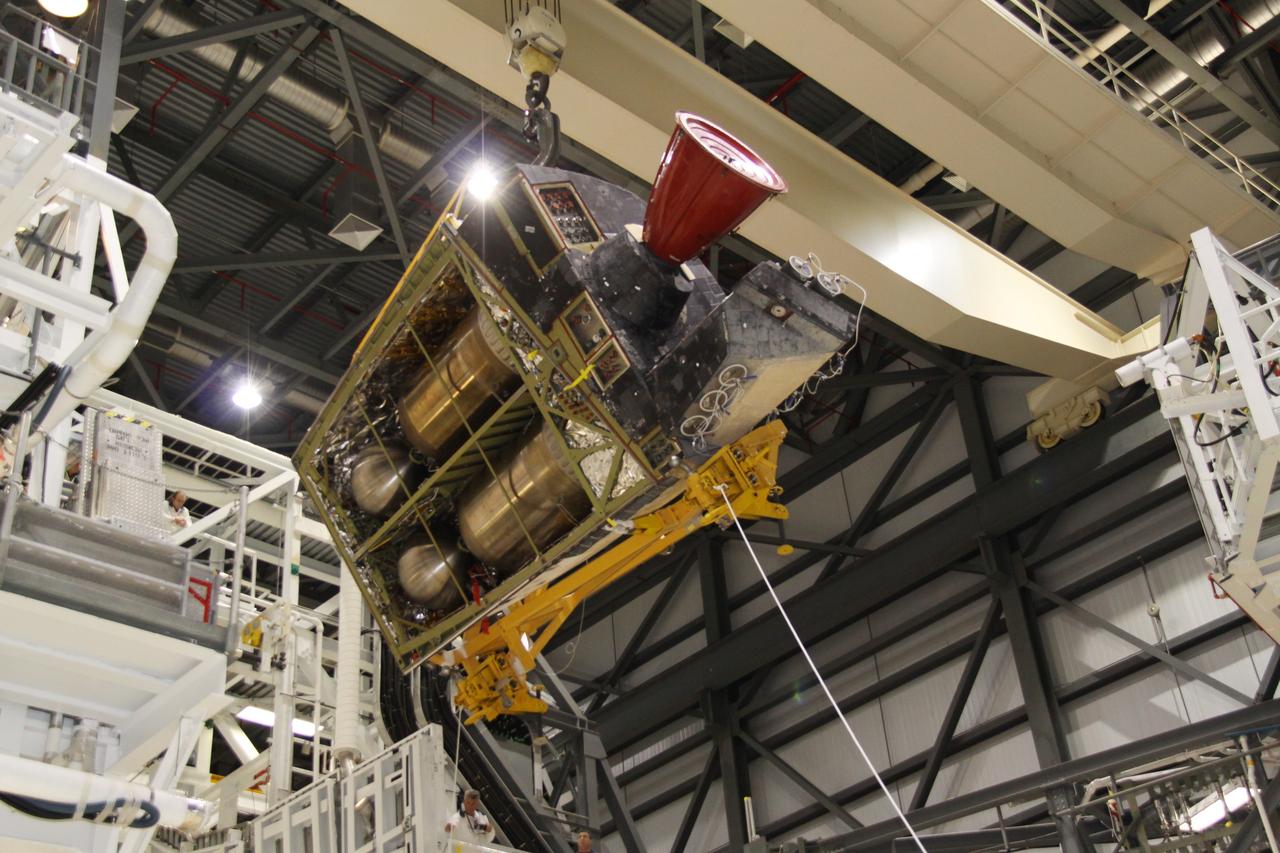
CAPE CANAVERAL, Fla. -- In Orbiter Processing Facility-2 at NASA's Kennedy Space Center in Florida, an overhead crane removes shuttle Discovery's right-hand orbital maneuvering system, or OMS, pod. It then will be transported to the Hypergol Maintenance Facility. The removal is part of Discovery's transition and retirement processing. Work performed on Discovery is expected to help rocket designers build next-generation spacecraft and prepare the shuttle for future public display. Photo credit: NASA/Jack Pfaller
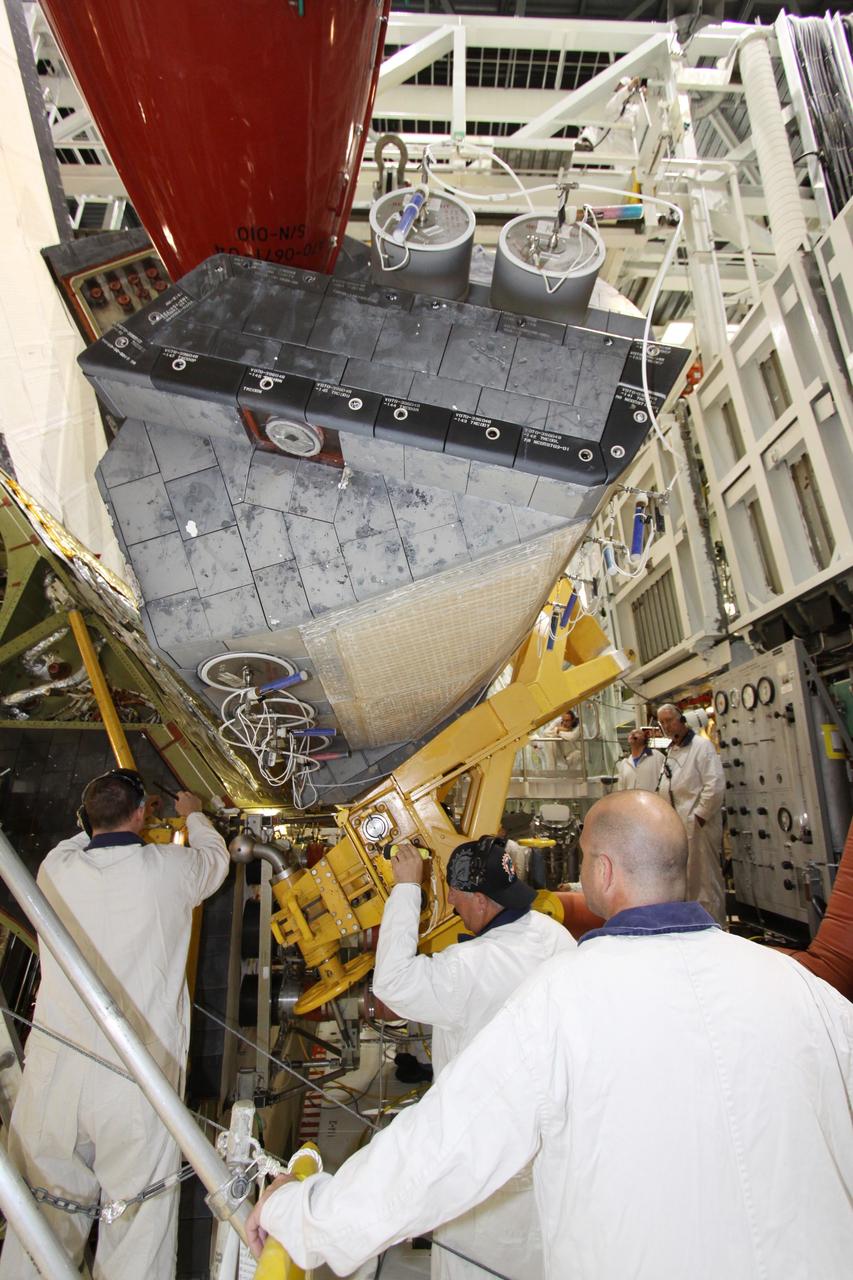
CAPE CANAVERAL, Fla. - In Orbiter Processing Facility-2 at NASA's Kennedy Space Center in Florida, workers use a crane to grapple shuttle Discovery's right-hand orbital maneuvering system, or OMS, pod for removal. It then will be transported to the Hypergol Maintenance Facility. The removal is part of Discovery's transition and retirement processing. Work performed on Discovery is expected to help rocket designers build next-generation spacecraft and prepare the shuttle for future public display. Photo credit: NASA/Jack Pfaller
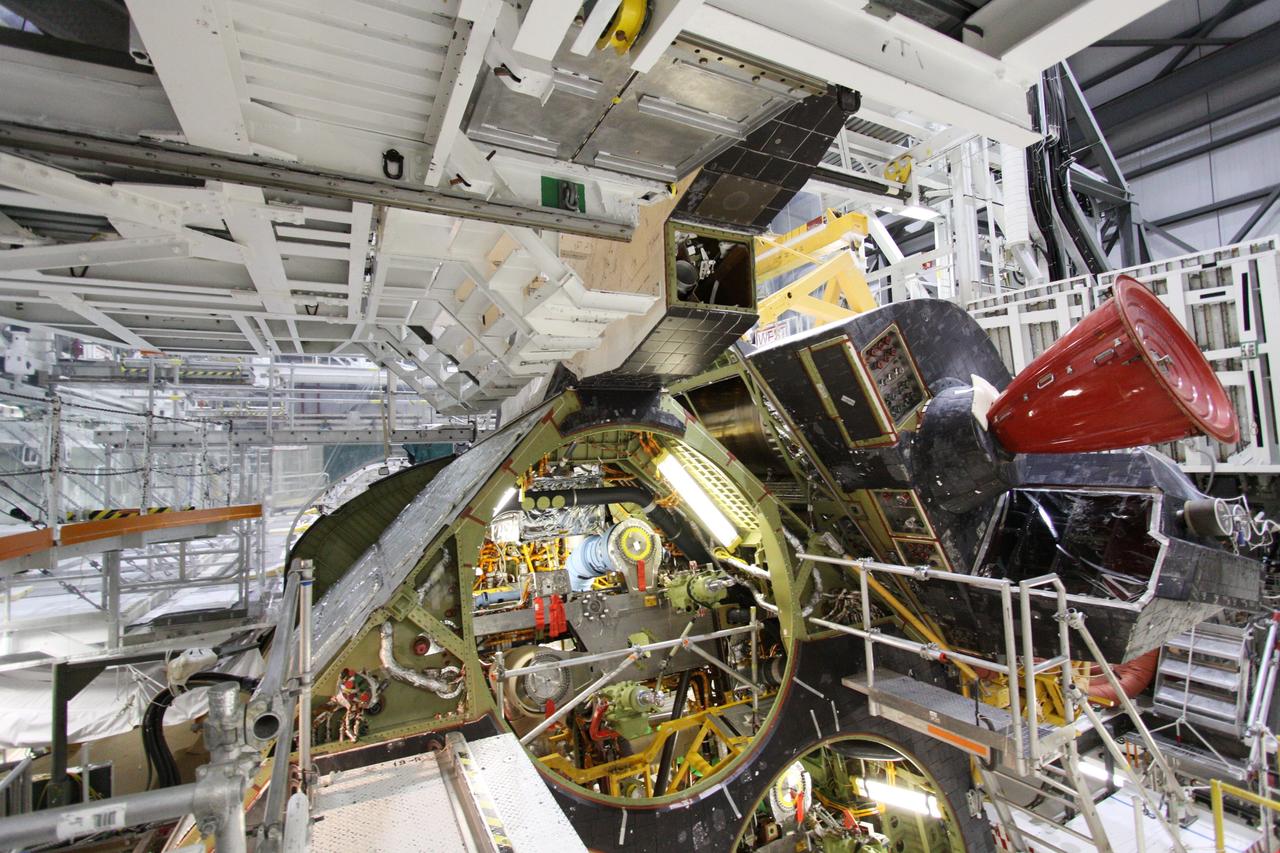
CAPE CANAVERAL, Fla. -- In Orbiter Processing Facility-2 at NASA's Kennedy Space Center in Florida, workers use a crane to remove shuttle Discovery's right-hand orbital maneuvering system, or OMS, pod. It then will be transported to the Hypergol Maintenance Facility. The removal is part of Discovery's transition and retirement processing. Work performed on Discovery is expected to help rocket designers build next-generation spacecraft and prepare the shuttle for future public display. Photo credit: NASA/Troy Cryder
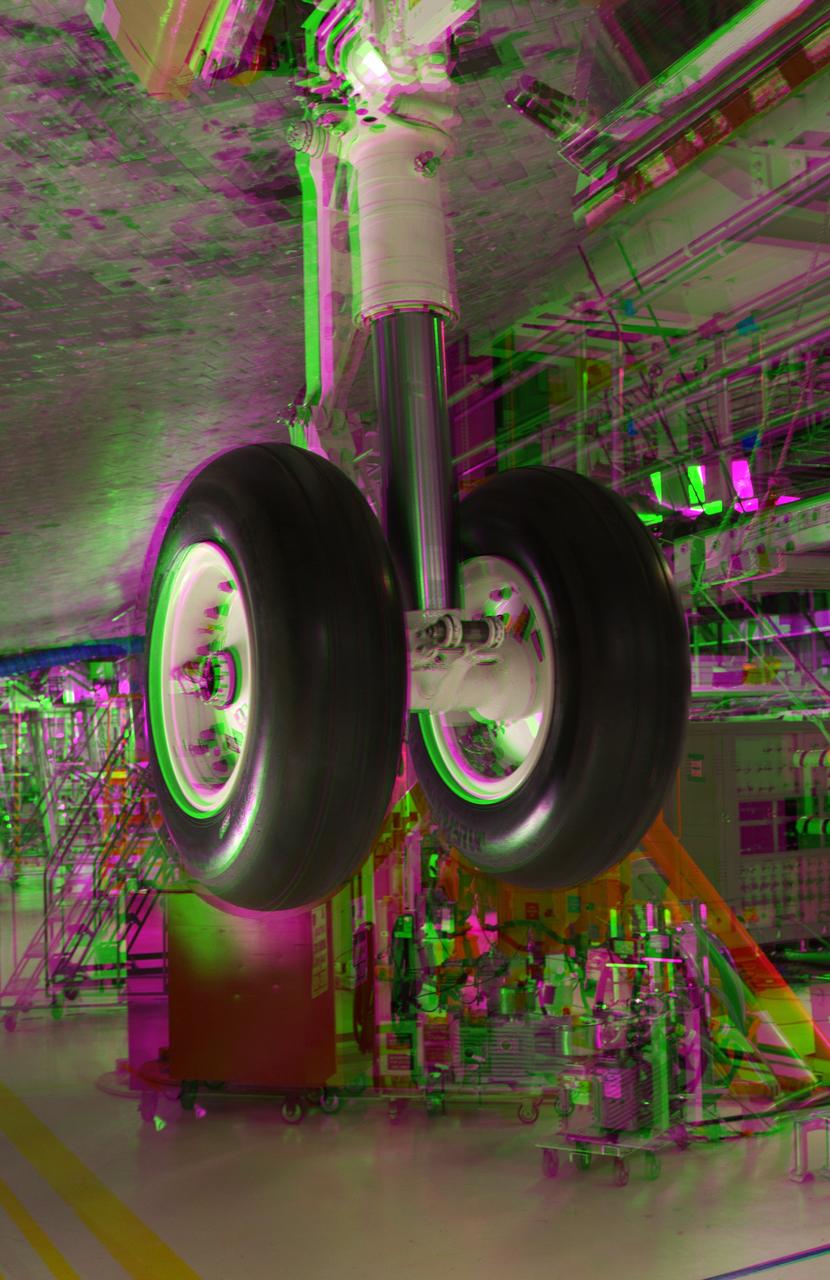
CAPE CANAVERAL, Fla. -- This 3-D image was taken in Orbiter Processing Facility-2 at NASA's Kennedy Space Center in Florida, after crews installed the final tire on space shuttle Discovery. This is part of the spacecraft's transition and retirement processing and work performed on Discovery is expected to help rocket designers build next-generation spacecraft and prepare the shuttle for future public display. To view this image, use green and magenta 3-D glasses. Photo credit: NASA/Frankie Martin
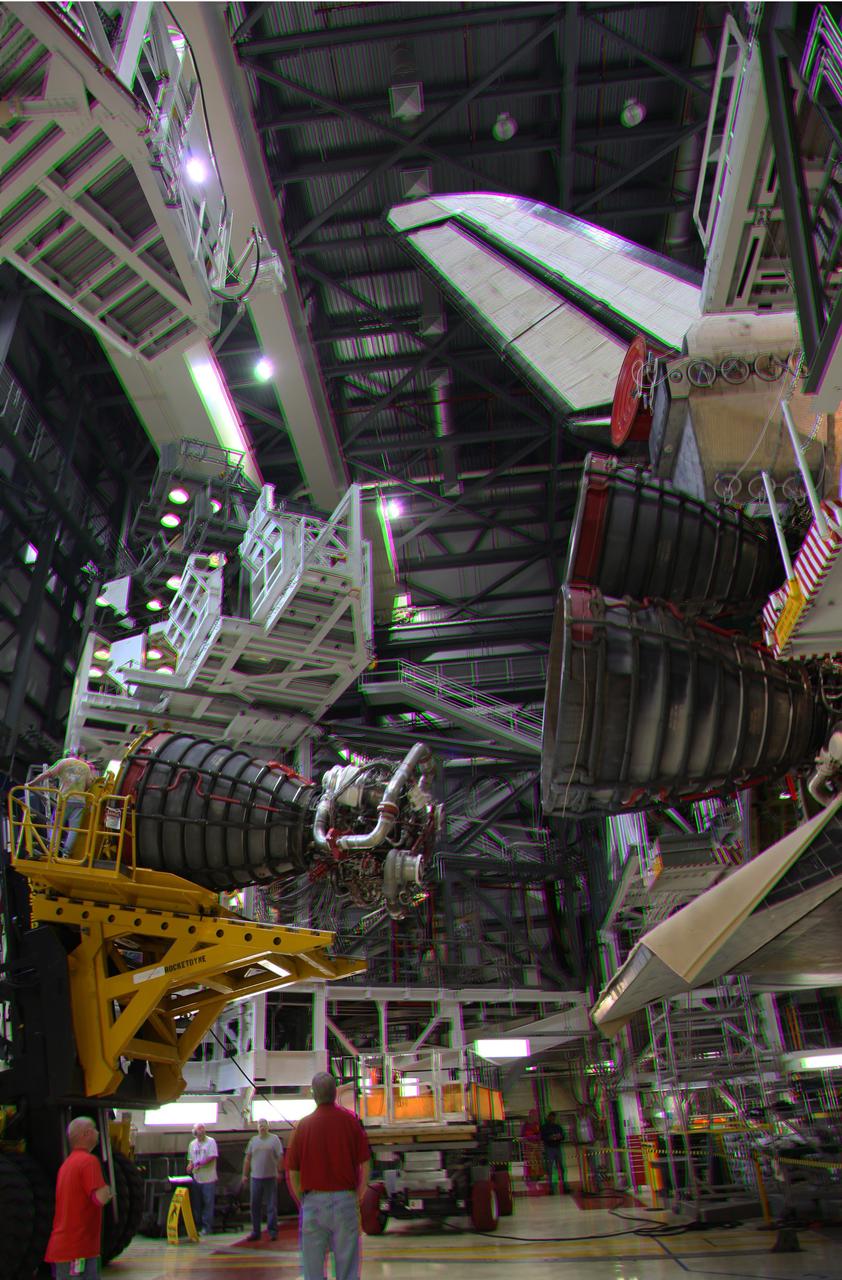
CAPE CANAVERAL, Fla. -- This is a 3-D image of crews in Orbiter Processing Facility-2 at NASA's Kennedy Space Center in Florida using a Hyster forklift to lower one of space shuttle Discovery's main engines after removal for cleaning and inspection. This is part of the spacecraft's transition and retirement processing and work performed on Discovery is expected to help rocket designers build next-generation spacecraft and prepare the shuttle for future public display. To view this image, use green and magenta 3-D glasses. Photo credit: NASA/Frankie Martin
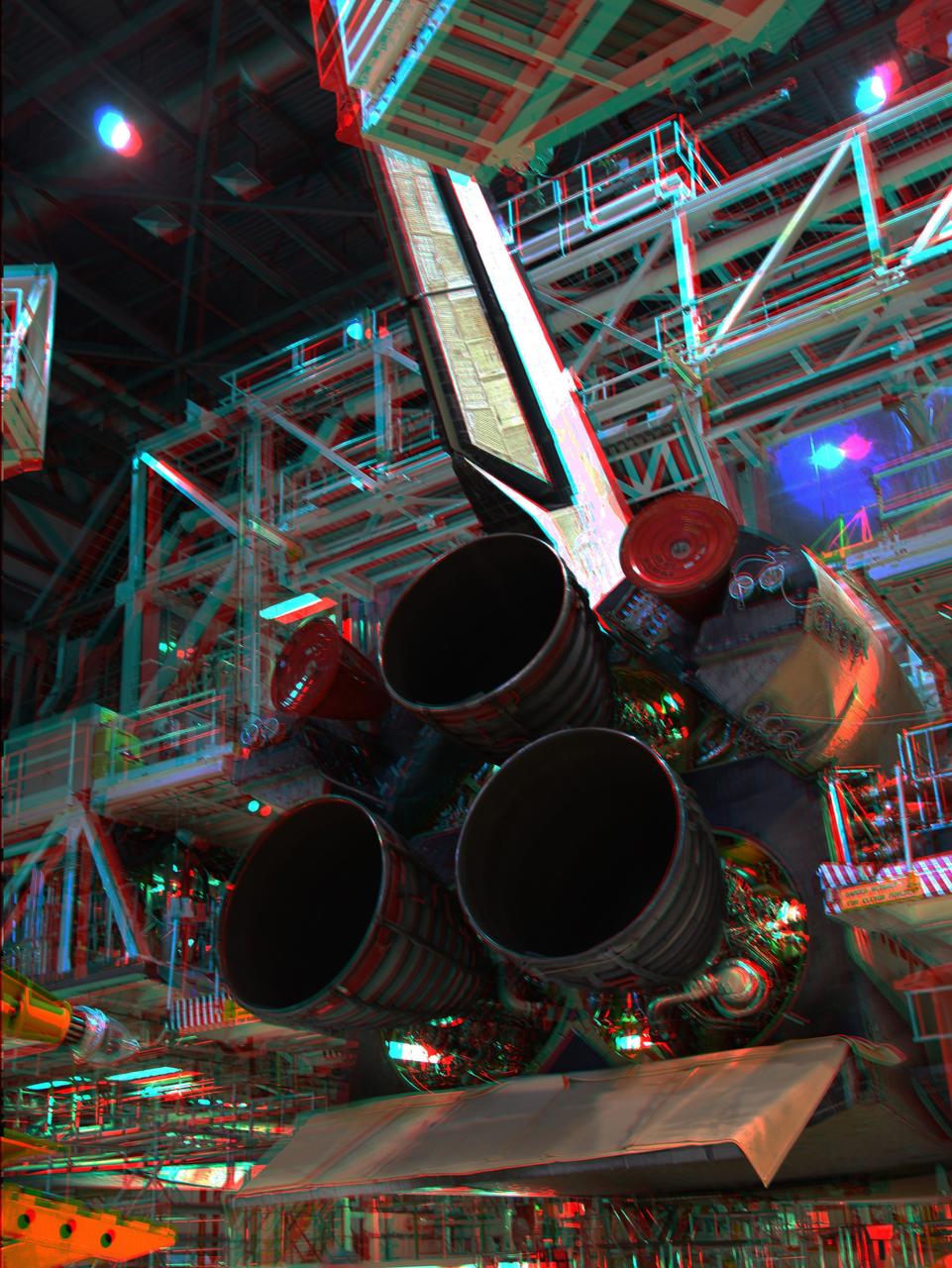
CAPE CANAVERAL, Fla. -- In Orbiter Processing Facility-2 at NASA's Kennedy Space Center in Florida, this 3-D image shows space shuttle Discovery's main engines before removeal for cleaning and inspection. The work is part of the spacecraft's transition and retirement processing and is expected to help rocket designers build next-generation spacecraft and prepare the shuttle for future public display. To view this image, use green and magenta 3-D glasses. Photo credit: NASA/Frankie Martin
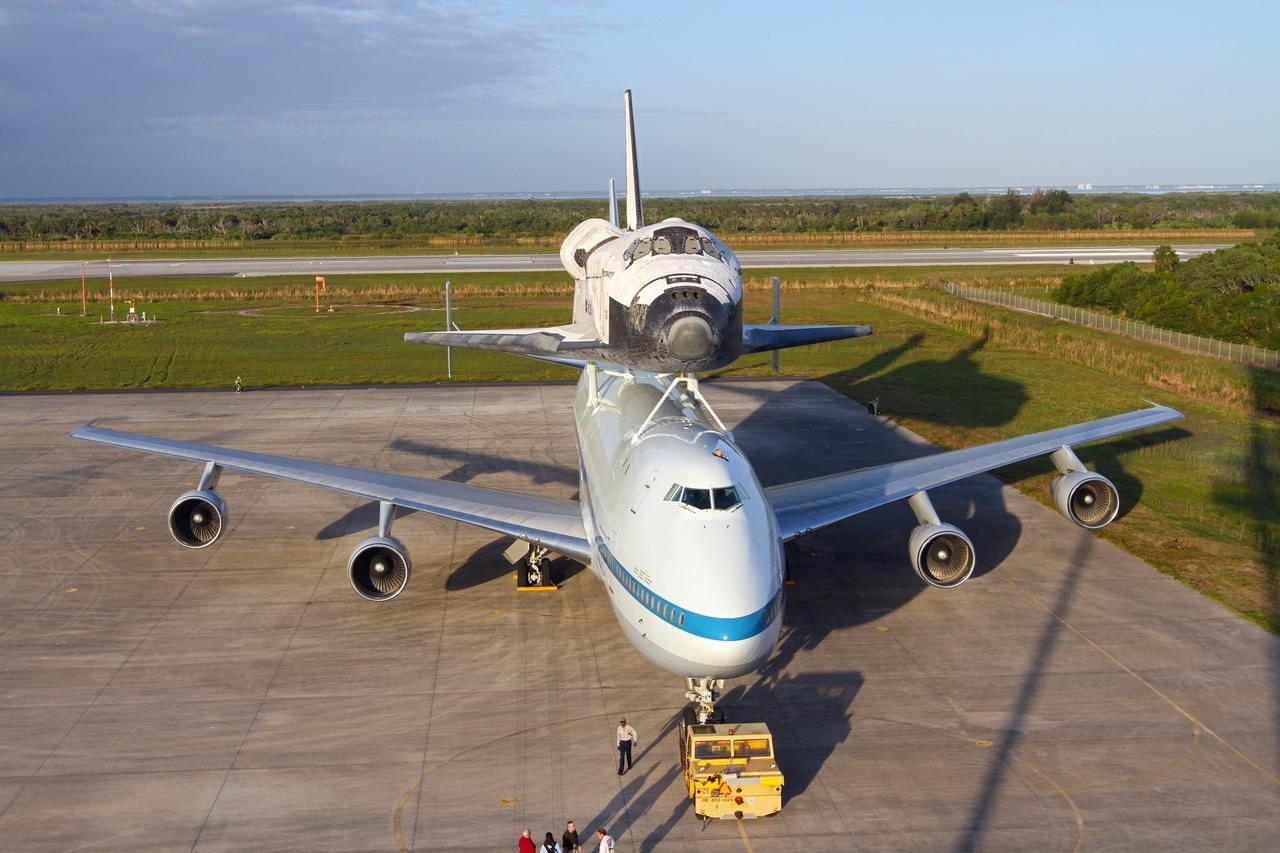
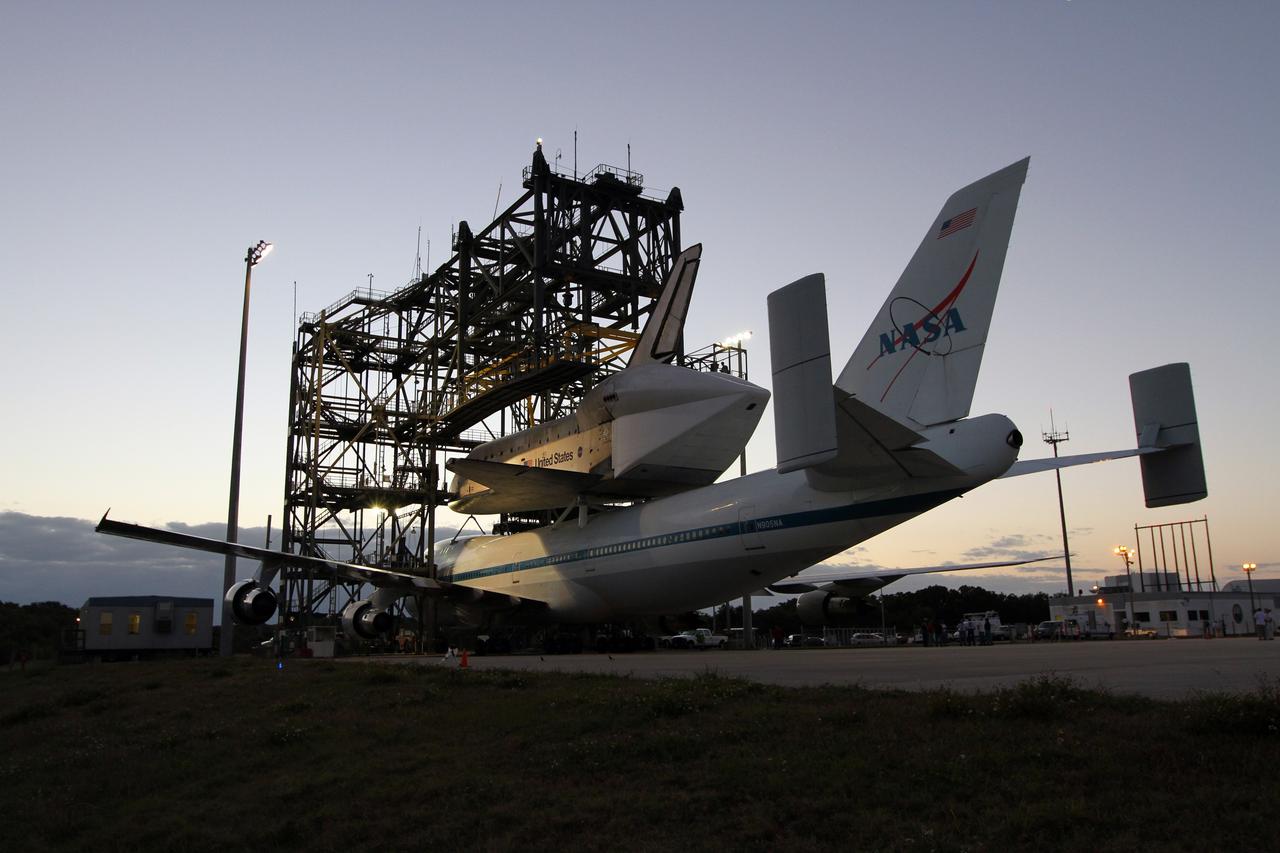
CAPE CANAVERAL, Fla. – The Shuttle Carrier Aircraft carrying space shuttle Discovery is on the ramp of the Shuttle Landing Facility at NASA’s Kennedy Space Center in Florida. Earlier, the duo backed out of the mate-demate device. Known as the MDD, the device is a large gantry-like steel structure used to hoist a shuttle off the ground and position it onto the back of the aircraft, or SCA. The SCA is a Boeing 747 jet that was originally manufactured for commercial use and modified by NASA to transport the shuttles between destinations on Earth. This SCA, designated NASA 905, is assigned to the remaining ferry missions, delivering the shuttles to their permanent public display sites. NASA 905 is scheduled to ferry Discovery to the Washington Dulles International Airport in Virginia on April 17, after which the shuttle will be placed on display in the Smithsonian's National Air and Space Museum Steven F. Udvar-Hazy Center. For more information on the SCA, visit http://www.nasa.gov/centers/dryden/news/FactSheets/FS-013-DFRC.html. For more information on shuttle transition and retirement activities, visit http://www.nasa.gov/transition. Photo credit: NASA/Kim Shiflett
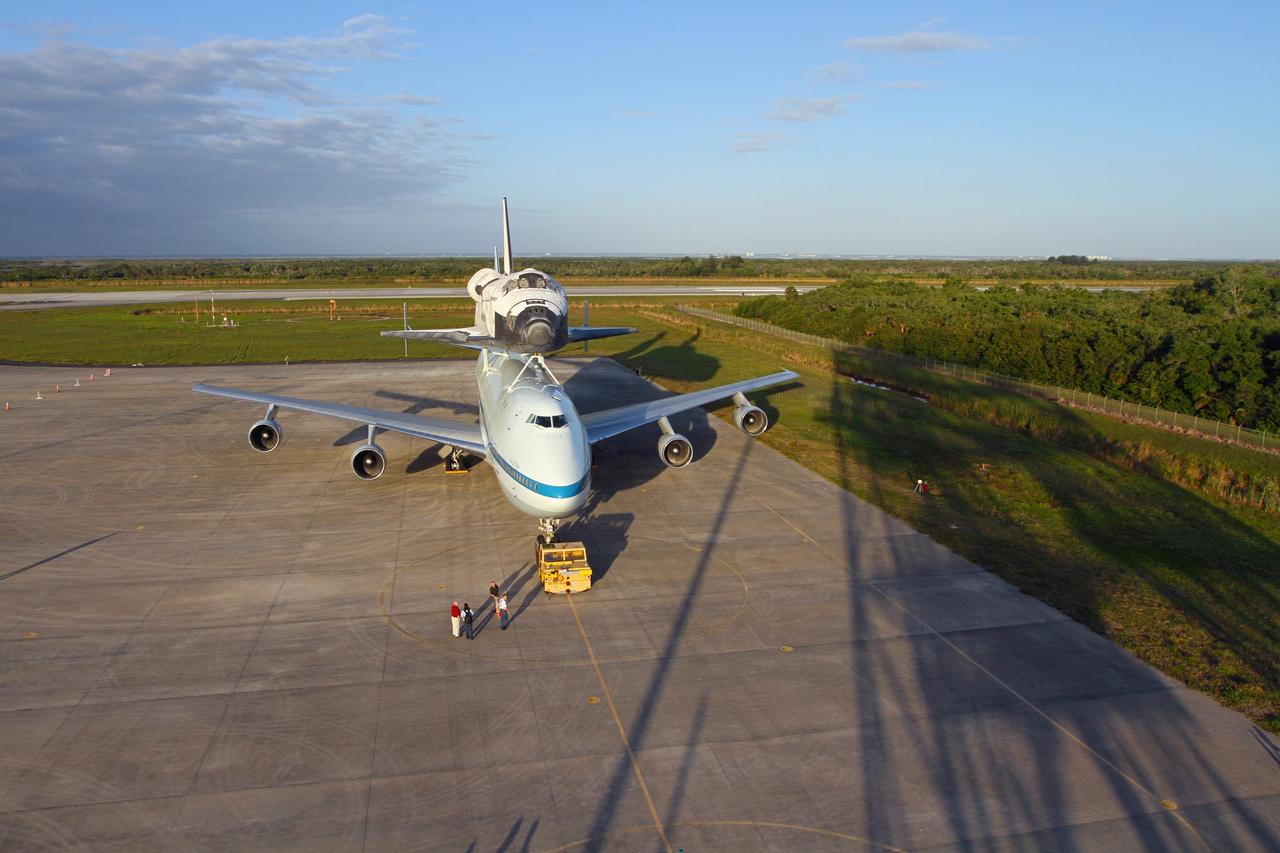
CAPE CANAVERAL, Fla. – The Shuttle Carrier Aircraft carrying space shuttle Discovery is on the ramp of the Shuttle Landing Facility at NASA’s Kennedy Space Center in Florida. Earlier, the duo backed out of the mate-demate device. Known as the MDD, the device is a large gantry-like steel structure used to hoist a shuttle off the ground and position it onto the back of the aircraft, or SCA. The SCA is a Boeing 747 jet that was originally manufactured for commercial use and modified by NASA to transport the shuttles between destinations on Earth. This SCA, designated NASA 905, is assigned to the remaining ferry missions, delivering the shuttles to their permanent public display sites. NASA 905 is scheduled to ferry Discovery to the Washington Dulles International Airport in Virginia on April 17, after which the shuttle will be placed on display in the Smithsonian's National Air and Space Museum Steven F. Udvar-Hazy Center. For more information on the SCA, visit http://www.nasa.gov/centers/dryden/news/FactSheets/FS-013-DFRC.html. For more information on shuttle transition and retirement activities, visit http://www.nasa.gov/transition. Photo credit: NASA/Kim Shiflett
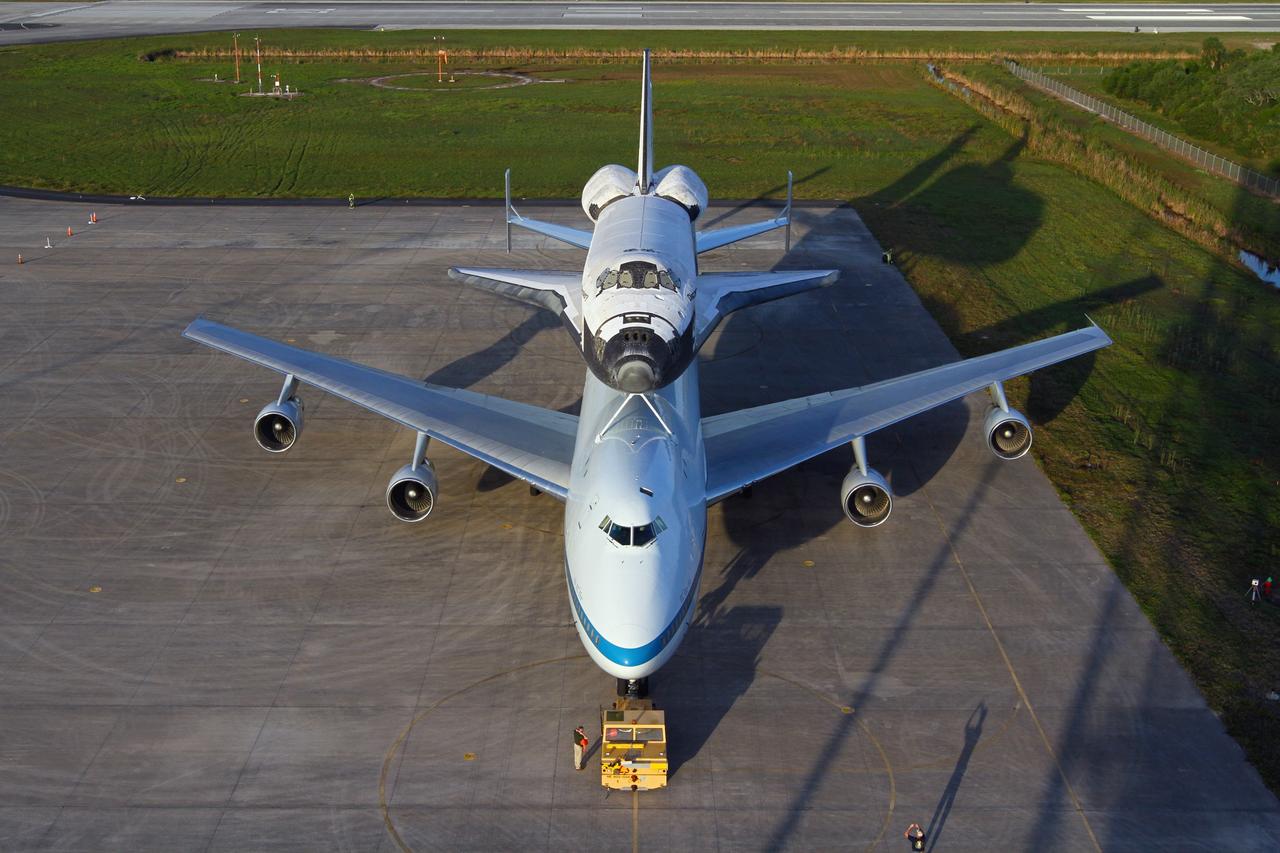
CAPE CANAVERAL, Fla. – As the sun rises, preparations are under way for the Shuttle Carrier Aircraft carrying space shuttle Discovery to back out of the Shuttle Landing Facility's mate-demate device at NASA’s Kennedy Space Center in Florida. The device, known as the MDD, is a large gantry-like steel structure used to hoist a shuttle off the ground and position it onto the back of the aircraft, or SCA. The SCA is a Boeing 747 jet that was originally manufactured for commercial use and modified by NASA to transport the shuttles between destinations on Earth. This SCA, designated NASA 905, is assigned to the remaining ferry missions, delivering the shuttles to their permanent public display sites. NASA 905 is scheduled to ferry Discovery to the Washington Dulles International Airport in Virginia on April 17, after which the shuttle will be placed on display in the Smithsonian's National Air and Space Museum Steven F. Udvar-Hazy Center. For more information on the SCA, visit http://www.nasa.gov/centers/dryden/news/FactSheets/FS-013-DFRC.html. For more information on shuttle transition and retirement activities, visit http://www.nasa.gov/transition. Photo credit: NASA/Kim Shiflett
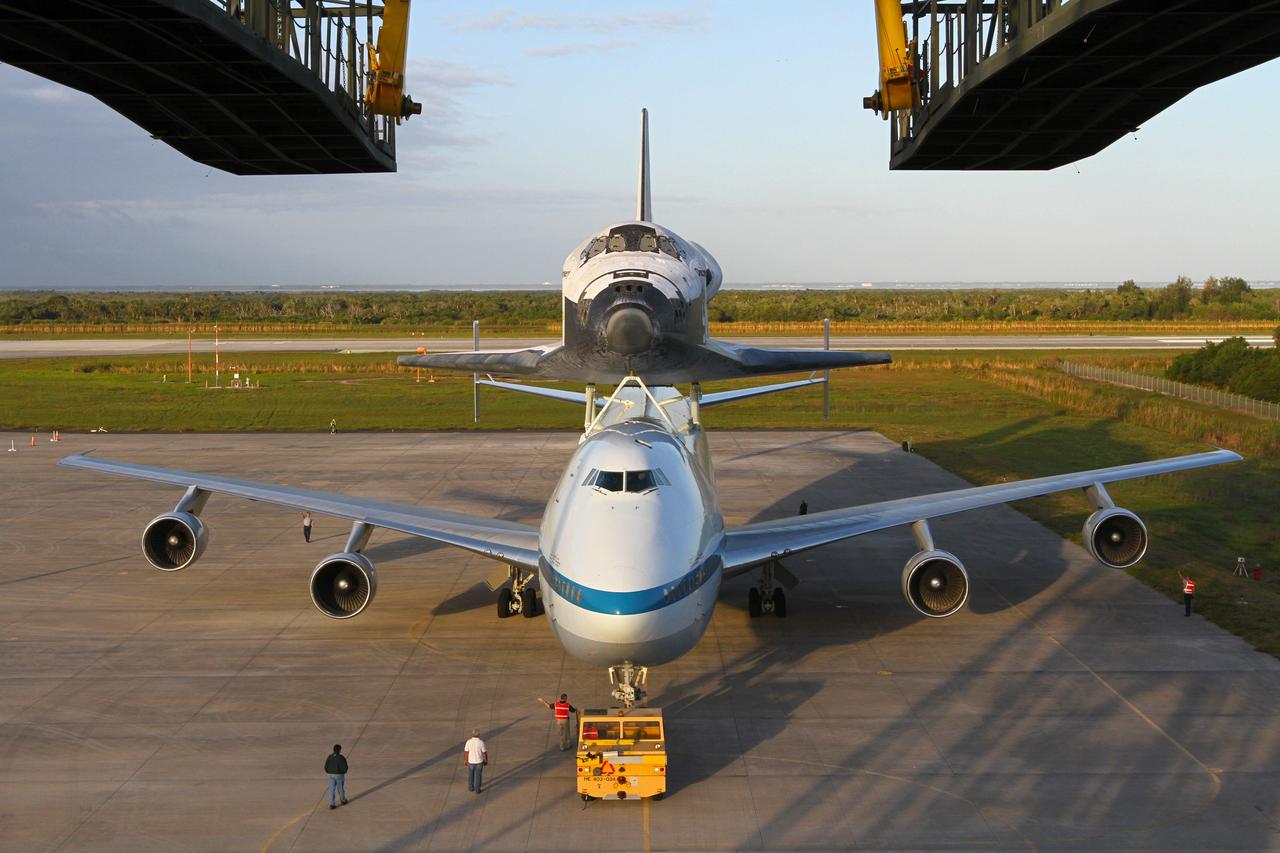
CAPE CANAVERAL, Fla. – The Shuttle Carrier Aircraft carrying space shuttle Discovery backs out of the Shuttle Landing Facility's mate-demate device at NASA’s Kennedy Space Center in Florida. The device, known as the MDD, is a large gantry-like steel structure used to hoist a shuttle off the ground and position it onto the back of the aircraft, or SCA. The SCA is a Boeing 747 jet that was originally manufactured for commercial use and modified by NASA to transport the shuttles between destinations on Earth. This SCA, designated NASA 905, is assigned to the remaining ferry missions, delivering the shuttles to their permanent public display sites. NASA 905 is scheduled to ferry Discovery to the Washington Dulles International Airport in Virginia on April 17, after which the shuttle will be placed on display in the Smithsonian's National Air and Space Museum Steven F. Udvar-Hazy Center. For more information on the SCA, visit http://www.nasa.gov/centers/dryden/news/FactSheets/FS-013-DFRC.html. For more information on shuttle transition and retirement activities, visit http://www.nasa.gov/transition. Photo credit: NASA/Kim Shiflett

CAPE CANAVERAL, Fla. – As the sun rises, the tails ends of the Shuttle Carrier Aircraft and space shuttle Discovery are illuminated under the Shuttle Landing Facility's mate-demate device at NASA’s Kennedy Space Center in Florida. Preparations are under way to back the vehicles out of the device, known as the MDD, which is a large gantry-like steel structure used to hoist a shuttle off the ground and position it onto the back of the aircraft, or SCA. The SCA is a Boeing 747 jet that was originally manufactured for commercial use and modified by NASA to transport the shuttles between destinations on Earth. This SCA, designated NASA 905, is assigned to the remaining ferry missions, delivering the shuttles to their permanent public display sites. NASA 905 is scheduled to ferry Discovery to the Washington Dulles International Airport in Virginia on April 17, after which the shuttle will be placed on display in the Smithsonian's National Air and Space Museum Steven F. Udvar-Hazy Center. For more information on the SCA, visit http://www.nasa.gov/centers/dryden/news/FactSheets/FS-013-DFRC.html. For more information on shuttle transition and retirement activities, visit http://www.nasa.gov/transition. Photo credit: NASA/Kim Shiflett
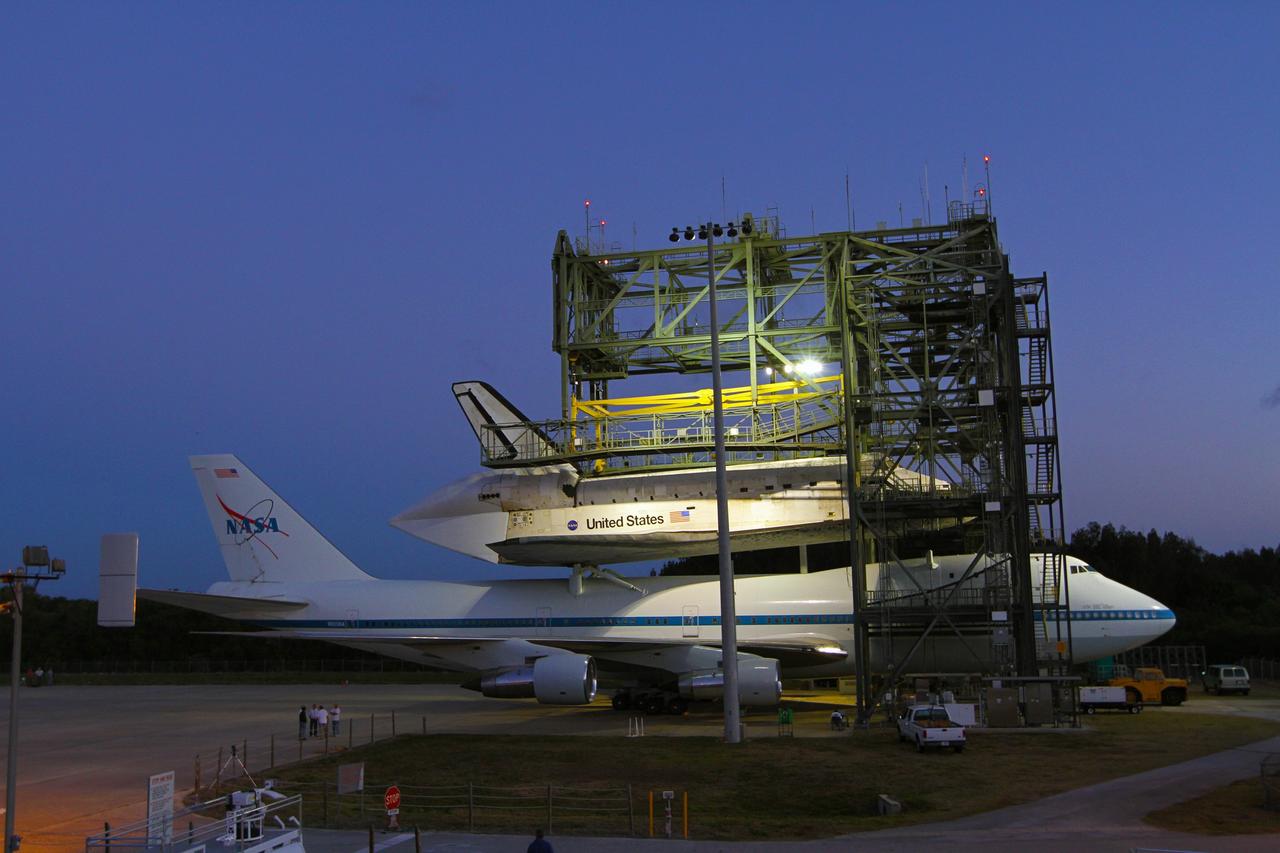
CAPE CANAVERAL, Fla. – Preparations are under way just before sunrise for the Shuttle Carrier Aircraft carrying space shuttle Discovery to back out of the Shuttle Landing Facility's mate-demate device at NASA’s Kennedy Space Center in Florida. The device, known as the MDD, is a large gantry-like steel structure used to hoist a shuttle off the ground and position it onto the back of the aircraft, or SCA. The SCA is a Boeing 747 jet that was originally manufactured for commercial use and modified by NASA to transport the shuttles between destinations on Earth. This SCA, designated NASA 905, is assigned to the remaining ferry missions, delivering the shuttles to their permanent public display sites. NASA 905 is scheduled to ferry Discovery to the Washington Dulles International Airport in Virginia on April 17, after which the shuttle will be placed on display in the Smithsonian's National Air and Space Museum Steven F. Udvar-Hazy Center. For more information on the SCA, visit http://www.nasa.gov/centers/dryden/news/FactSheets/FS-013-DFRC.html. For more information on shuttle transition and retirement activities, visit http://www.nasa.gov/transition. Photo credit: NASA/Kim Shiflett
CAPE CANAVERAL, Fla. – The Shuttle Carrier Aircraft carrying space shuttle Discovery is on the ramp of the Shuttle Landing Facility at NASA’s Kennedy Space Center in Florida. Earlier, the duo backed out of the mate-demate device. Known as the MDD, the device is a large gantry-like steel structure used to hoist a shuttle off the ground and position it onto the back of the aircraft, or SCA. The SCA is a Boeing 747 jet that was originally manufactured for commercial use and modified by NASA to transport the shuttles between destinations on Earth. This SCA, designated NASA 905, is assigned to the remaining ferry missions, delivering the shuttles to their permanent public display sites. NASA 905 is scheduled to ferry Discovery to the Washington Dulles International Airport in Virginia on April 17, after which the shuttle will be placed on display in the Smithsonian's National Air and Space Museum Steven F. Udvar-Hazy Center. For more information on the SCA, visit http://www.nasa.gov/centers/dryden/news/FactSheets/FS-013-DFRC.html. For more information on shuttle transition and retirement activities, visit http://www.nasa.gov/transition. Photo credit: NASA/Kim Shiflett

CAPE CANAVERAL, Fla. – The Shuttle Carrier Aircraft carrying space shuttle Discovery backs out of the Shuttle Landing Facility's mate-demate device at NASA’s Kennedy Space Center in Florida. The device, known as the MDD, is a large gantry-like steel structure used to hoist a shuttle off the ground and position it onto the back of the aircraft, or SCA. The SCA is a Boeing 747 jet that was originally manufactured for commercial use and modified by NASA to transport the shuttles between destinations on Earth. This SCA, designated NASA 905, is assigned to the remaining ferry missions, delivering the shuttles to their permanent public display sites. NASA 905 is scheduled to ferry Discovery to the Washington Dulles International Airport in Virginia on April 17, after which the shuttle will be placed on display in the Smithsonian's National Air and Space Museum Steven F. Udvar-Hazy Center. For more information on the SCA, visit http://www.nasa.gov/centers/dryden/news/FactSheets/FS-013-DFRC.html. For more information on shuttle transition and retirement activities, visit http://www.nasa.gov/transition. Photo credit: NASA/Kim Shiflett
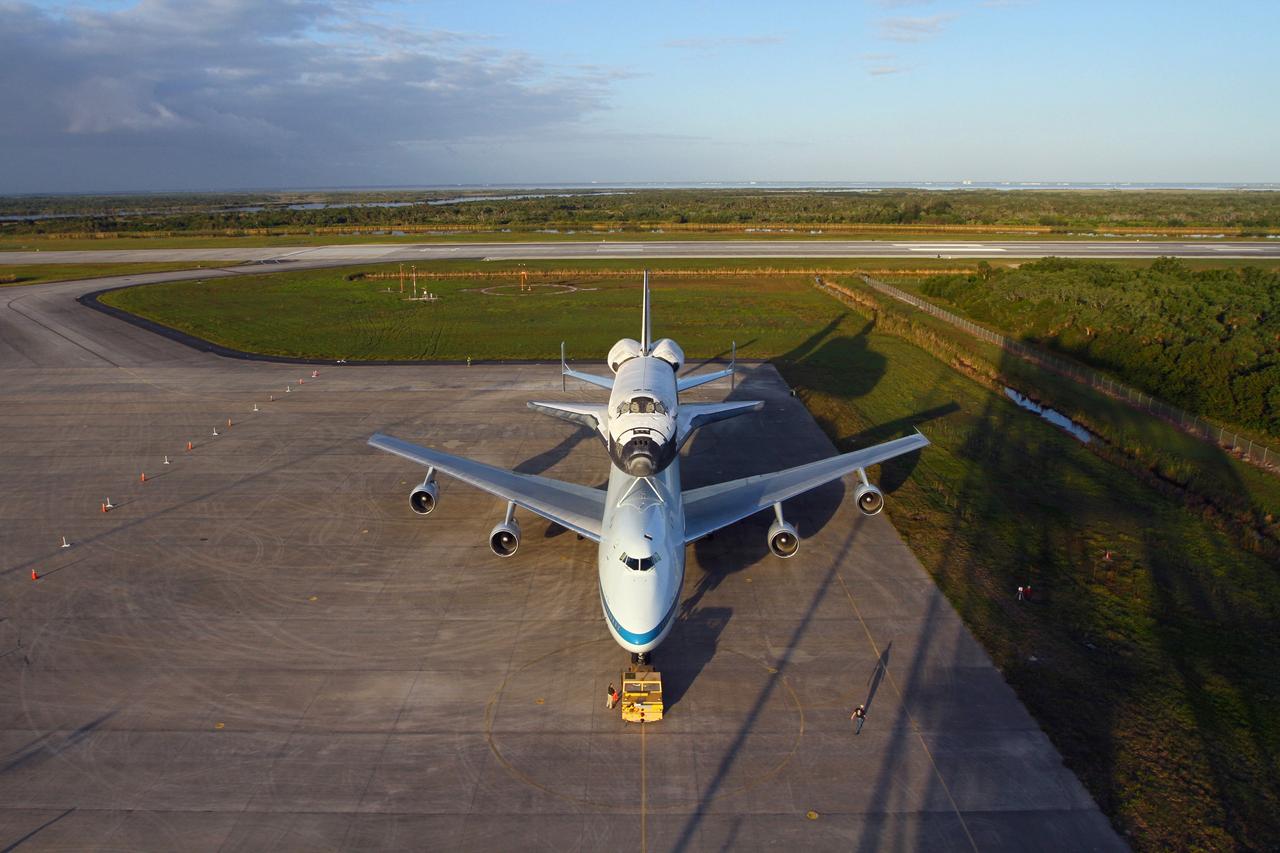
CAPE CANAVERAL, Fla. – The Shuttle Carrier Aircraft carrying space shuttle Discovery is on the ramp of the Shuttle Landing Facility at NASA’s Kennedy Space Center in Florida. Earlier, the duo backed out of the mate-demate device. Known as the MDD, the device is a large gantry-like steel structure used to hoist a shuttle off the ground and position it onto the back of the aircraft, or SCA. The SCA is a Boeing 747 jet that was originally manufactured for commercial use and modified by NASA to transport the shuttles between destinations on Earth. This SCA, designated NASA 905, is assigned to the remaining ferry missions, delivering the shuttles to their permanent public display sites. NASA 905 is scheduled to ferry Discovery to the Washington Dulles International Airport in Virginia on April 17, after which the shuttle will be placed on display in the Smithsonian's National Air and Space Museum Steven F. Udvar-Hazy Center. For more information on the SCA, visit http://www.nasa.gov/centers/dryden/news/FactSheets/FS-013-DFRC.html. For more information on shuttle transition and retirement activities, visit http://www.nasa.gov/transition. Photo credit: NASA/Kim Shiflett
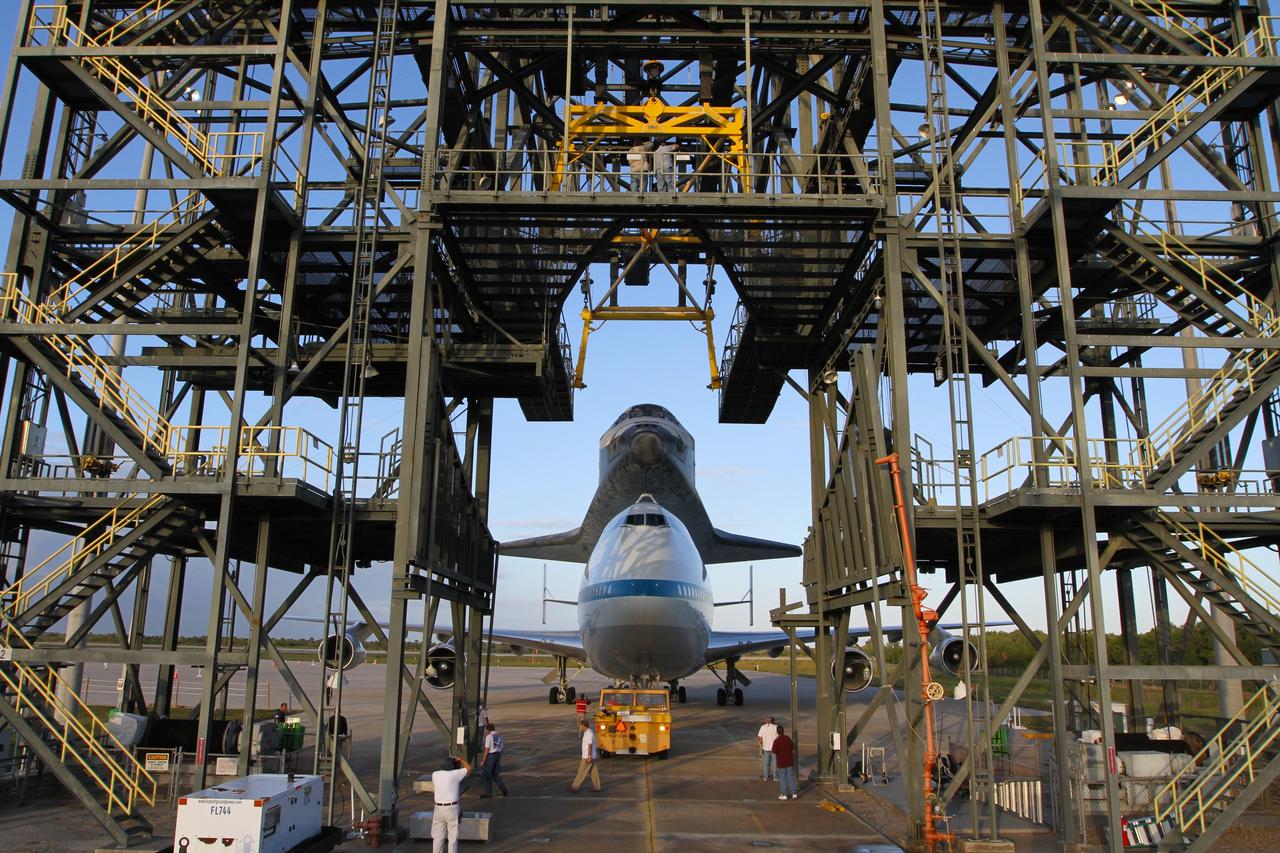
CAPE CANAVERAL, Fla. – The Shuttle Carrier Aircraft carrying space shuttle Discovery backs out of the Shuttle Landing Facility's mate-demate device at NASA’s Kennedy Space Center in Florida. The device, known as the MDD, is a large gantry-like steel structure used to hoist a shuttle off the ground and position it onto the back of the aircraft, or SCA. The SCA is a Boeing 747 jet that was originally manufactured for commercial use and modified by NASA to transport the shuttles between destinations on Earth. This SCA, designated NASA 905, is assigned to the remaining ferry missions, delivering the shuttles to their permanent public display sites. NASA 905 is scheduled to ferry Discovery to the Washington Dulles International Airport in Virginia on April 17, after which the shuttle will be placed on display in the Smithsonian's National Air and Space Museum Steven F. Udvar-Hazy Center. For more information on the SCA, visit http://www.nasa.gov/centers/dryden/news/FactSheets/FS-013-DFRC.html. For more information on shuttle transition and retirement activities, visit http://www.nasa.gov/transition. Photo credit: NASA/Kim Shiflett
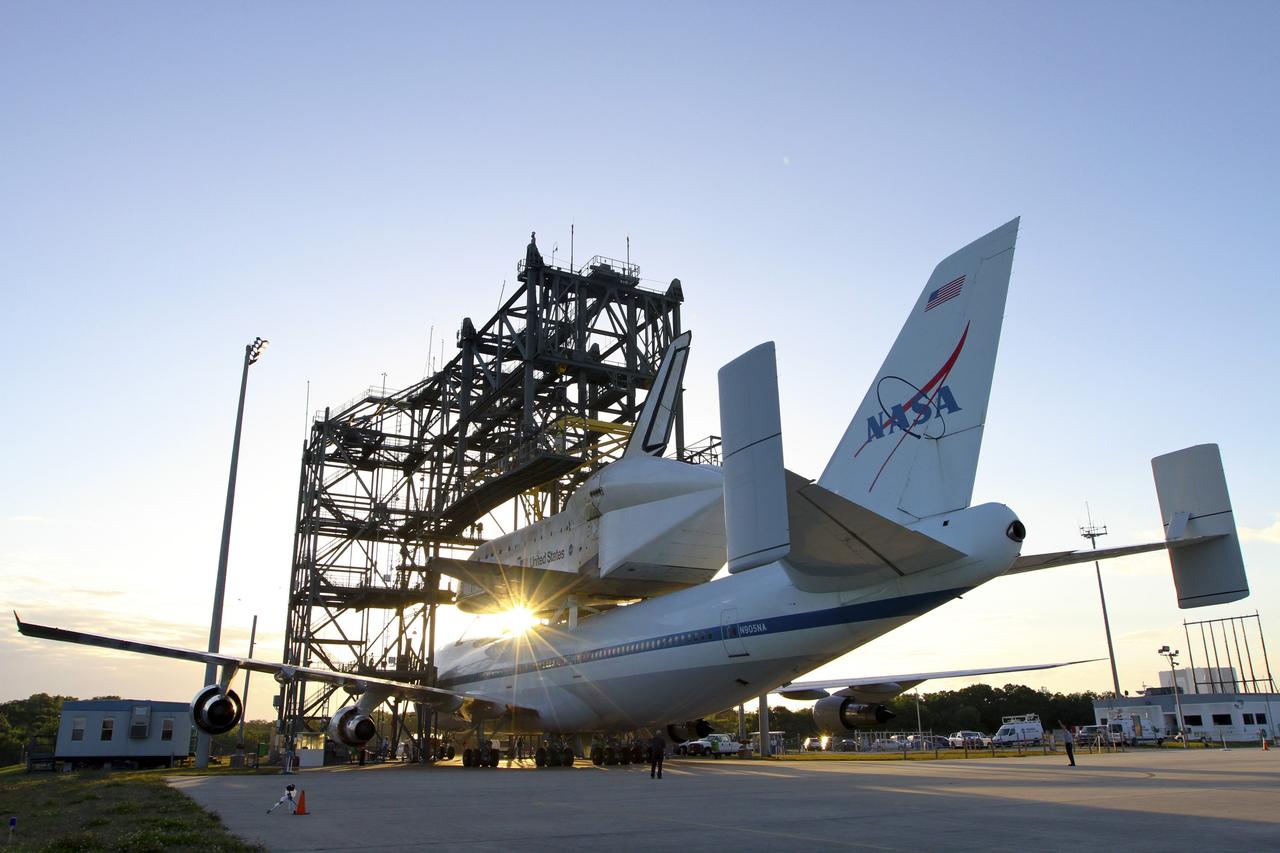
CAPE CANAVERAL, Fla. – The Shuttle Carrier Aircraft carrying space shuttle Discovery backs out of the Shuttle Landing Facility's mate-demate device at NASA’s Kennedy Space Center in Florida. The device, known as the MDD, is a large gantry-like steel structure used to hoist a shuttle off the ground and position it onto the back of the aircraft, or SCA. The SCA is a Boeing 747 jet that was originally manufactured for commercial use and modified by NASA to transport the shuttles between destinations on Earth. This SCA, designated NASA 905, is assigned to the remaining ferry missions, delivering the shuttles to their permanent public display sites. NASA 905 is scheduled to ferry Discovery to the Washington Dulles International Airport in Virginia on April 17, after which the shuttle will be placed on display in the Smithsonian's National Air and Space Museum Steven F. Udvar-Hazy Center. For more information on the SCA, visit http://www.nasa.gov/centers/dryden/news/FactSheets/FS-013-DFRC.html. For more information on shuttle transition and retirement activities, visit http://www.nasa.gov/transition. Photo credit: NASA/Kim Shiflett
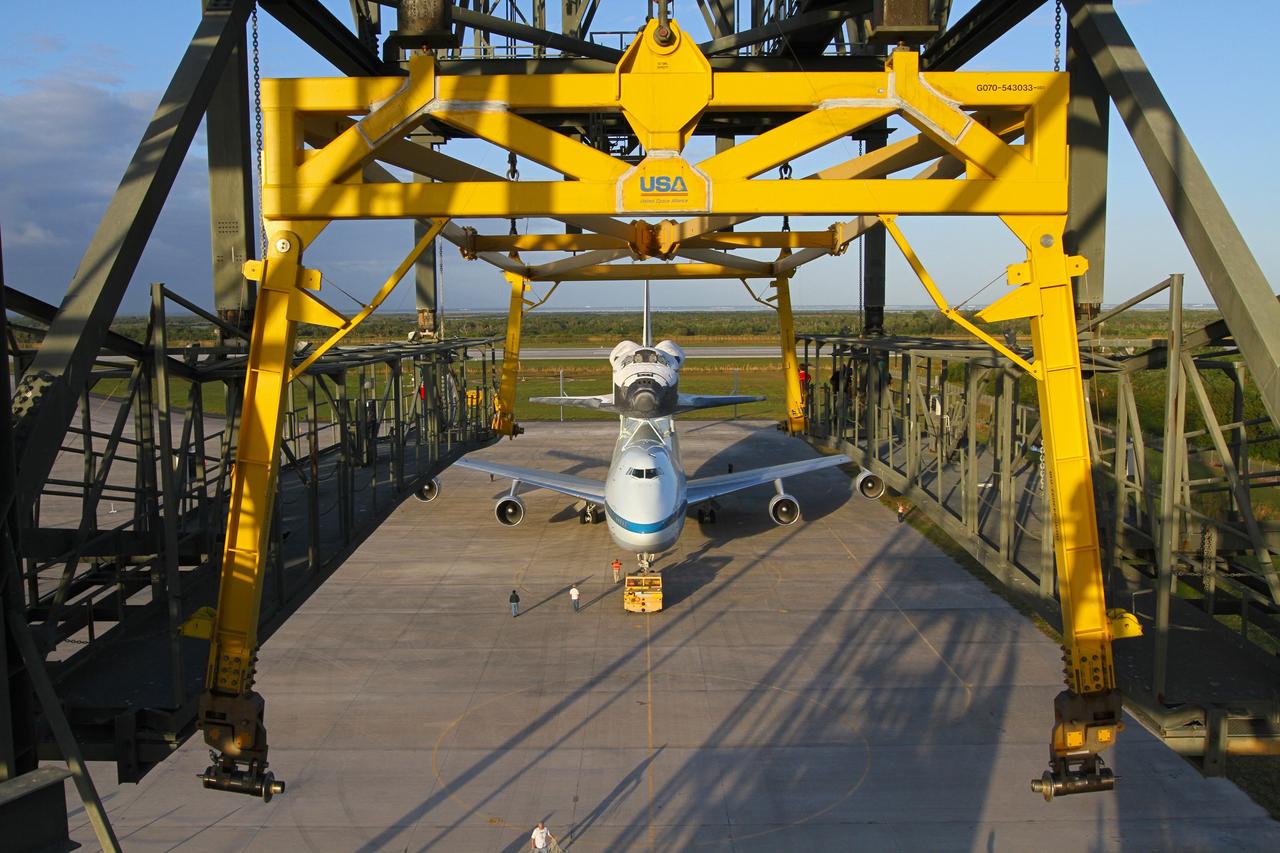
CAPE CANAVERAL, Fla. – The Shuttle Carrier Aircraft carrying space shuttle Discovery backs out of the Shuttle Landing Facility's mate-demate device at NASA’s Kennedy Space Center in Florida. The device, known as the MDD, is a large gantry-like steel structure used to hoist a shuttle off the ground and position it onto the back of the aircraft, or SCA. The SCA is a Boeing 747 jet that was originally manufactured for commercial use and modified by NASA to transport the shuttles between destinations on Earth. This SCA, designated NASA 905, is assigned to the remaining ferry missions, delivering the shuttles to their permanent public display sites. NASA 905 is scheduled to ferry Discovery to the Washington Dulles International Airport in Virginia on April 17, after which the shuttle will be placed on display in the Smithsonian's National Air and Space Museum Steven F. Udvar-Hazy Center. For more information on the SCA, visit http://www.nasa.gov/centers/dryden/news/FactSheets/FS-013-DFRC.html. For more information on shuttle transition and retirement activities, visit http://www.nasa.gov/transition. Photo credit: NASA/Kim Shiflett

CAPE CANAVERAL, Fla. – Preparations are under way for the Shuttle Carrier Aircraft carrying space shuttle Discovery to back out of the Shuttle Landing Facility's mate-demate device at NASA’s Kennedy Space Center in Florida. The device, known as the MDD, is a large gantry-like steel structure used to hoist a shuttle off the ground and position it onto the back of the aircraft, or SCA. The SCA is a Boeing 747 jet that was originally manufactured for commercial use and modified by NASA to transport the shuttles between destinations on Earth. This SCA, designated NASA 905, is assigned to the remaining ferry missions, delivering the shuttles to their permanent public display sites. NASA 905 is scheduled to ferry Discovery to the Washington Dulles International Airport in Virginia on April 17, after which the shuttle will be placed on display in the Smithsonian's National Air and Space Museum Steven F. Udvar-Hazy Center. For more information on the SCA, visit http://www.nasa.gov/centers/dryden/news/FactSheets/FS-013-DFRC.html. For more information on shuttle transition and retirement activities, visit http://www.nasa.gov/transition. Photo credit: NASA/Kim Shiflett

CAPE CANAVERAL, Fla. – As the sun rises, preparations are under way for the Shuttle Carrier Aircraft carrying space shuttle Discovery to back out of the Shuttle Landing Facility's mate-demate device at NASA’s Kennedy Space Center in Florida. The device, known as the MDD, is a large gantry-like steel structure used to hoist a shuttle off the ground and position it onto the back of the aircraft, or SCA. The SCA is a Boeing 747 jet that was originally manufactured for commercial use and modified by NASA to transport the shuttles between destinations on Earth. This SCA, designated NASA 905, is assigned to the remaining ferry missions, delivering the shuttles to their permanent public display sites. NASA 905 is scheduled to ferry Discovery to the Washington Dulles International Airport in Virginia on April 17, after which the shuttle will be placed on display in the Smithsonian's National Air and Space Museum Steven F. Udvar-Hazy Center. For more information on the SCA, visit http://www.nasa.gov/centers/dryden/news/FactSheets/FS-013-DFRC.html. For more information on shuttle transition and retirement activities, visit http://www.nasa.gov/transition. Photo credit: NASA/Kim Shiflett
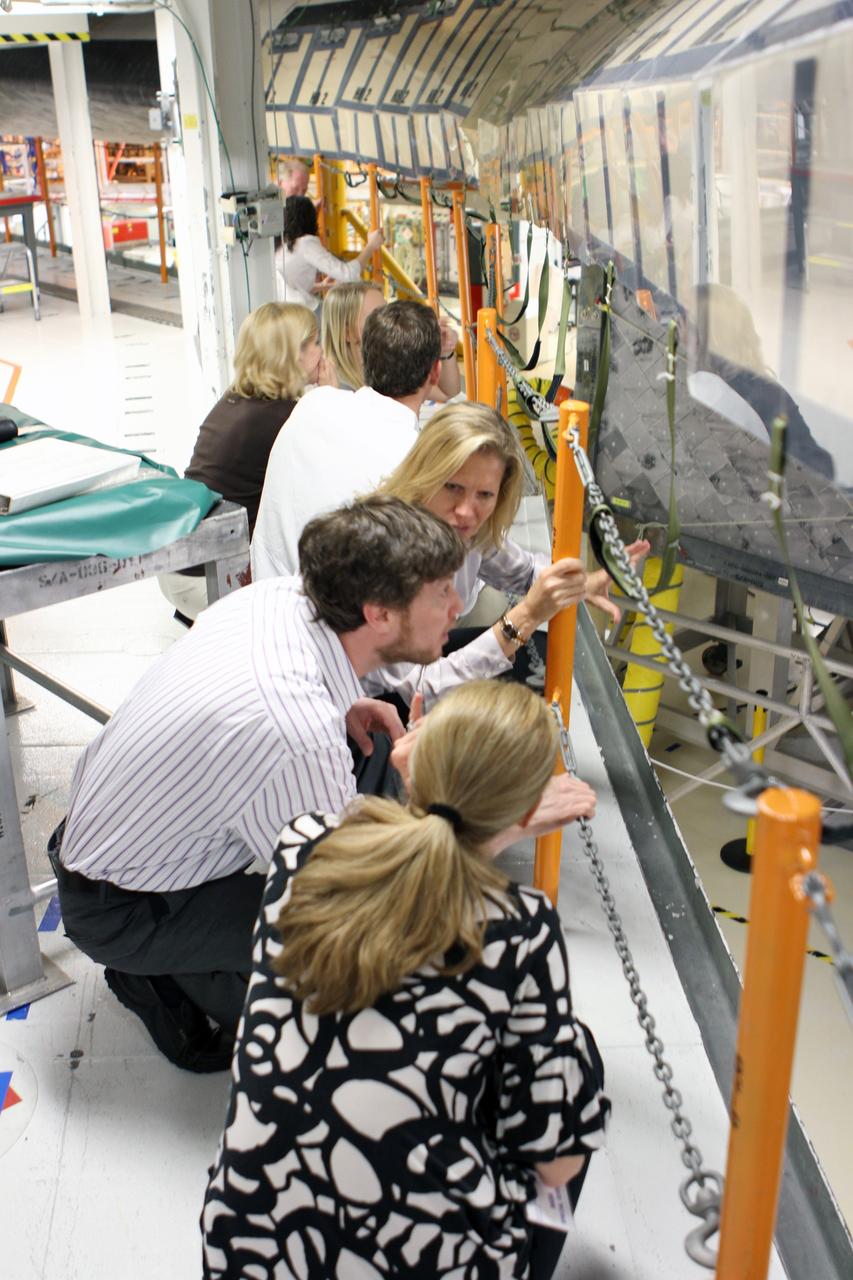
CAPE CANAVERAL, Fla. -- NASA's Stephanie Stilson (facing camera), flow director for space shuttle Discovery, discusses Discovery's thermal protection system with members of a visiting team from the Smithsonian's National Air and Space Museum in Orbiter Processing Facility-2 at NASA's Kennedy Space Center. NASA Administrator Charles Bolden announced April 12 the facilities where all four shuttle orbiters will be permanently displayed at the conclusion of the Space Shuttle Program. Shuttle Enterprise, the first orbiter built, will move from the Smithsonian's National Air and Space Museum Steven F. Udvar-Hazy Center in Virginia to the Intrepid Sea, Air & Space Museum in New York. The Udvar-Hazy Center will become the new home for shuttle Discovery, which retired in March after completing its 39th mission. Shuttle Endeavour, which is preparing for its final flight at the end of the month, will go to the California Science Center in Los Angeles. Atlantis, which will fly the last planned shuttle mission in June, will be displayed at the Kennedy Space Center Visitor Complex in Florida. Photo credit: NASA/Cory Huston

CAPE CANAVERAL, Fla. -- Members of a visiting team from the Smithsonian's National Air and Space Museum discuss the application of the space shuttle's thermal protection system tile with shuttle technicians in Orbiter Processing Facility-2 at NASA's Kennedy Space Center. NASA Administrator Charles Bolden announced April 12 the facilities where all four shuttle orbiters will be permanently displayed at the conclusion of the Space Shuttle Program. Shuttle Enterprise, the first orbiter built, will move from the Smithsonian's National Air and Space Museum Steven F. Udvar-Hazy Center in Virginia to the Intrepid Sea, Air & Space Museum in New York. The Udvar-Hazy Center will become the new home for shuttle Discovery, which retired in March after completing its 39th mission. Shuttle Endeavour, which is preparing for its final flight at the end of the month, will go to the California Science Center in Los Angeles. Atlantis, which will fly the last planned shuttle mission in June, will be displayed at the Kennedy Space Center Visitor Complex in Florida. Photo credit: NASA/Cory Huston
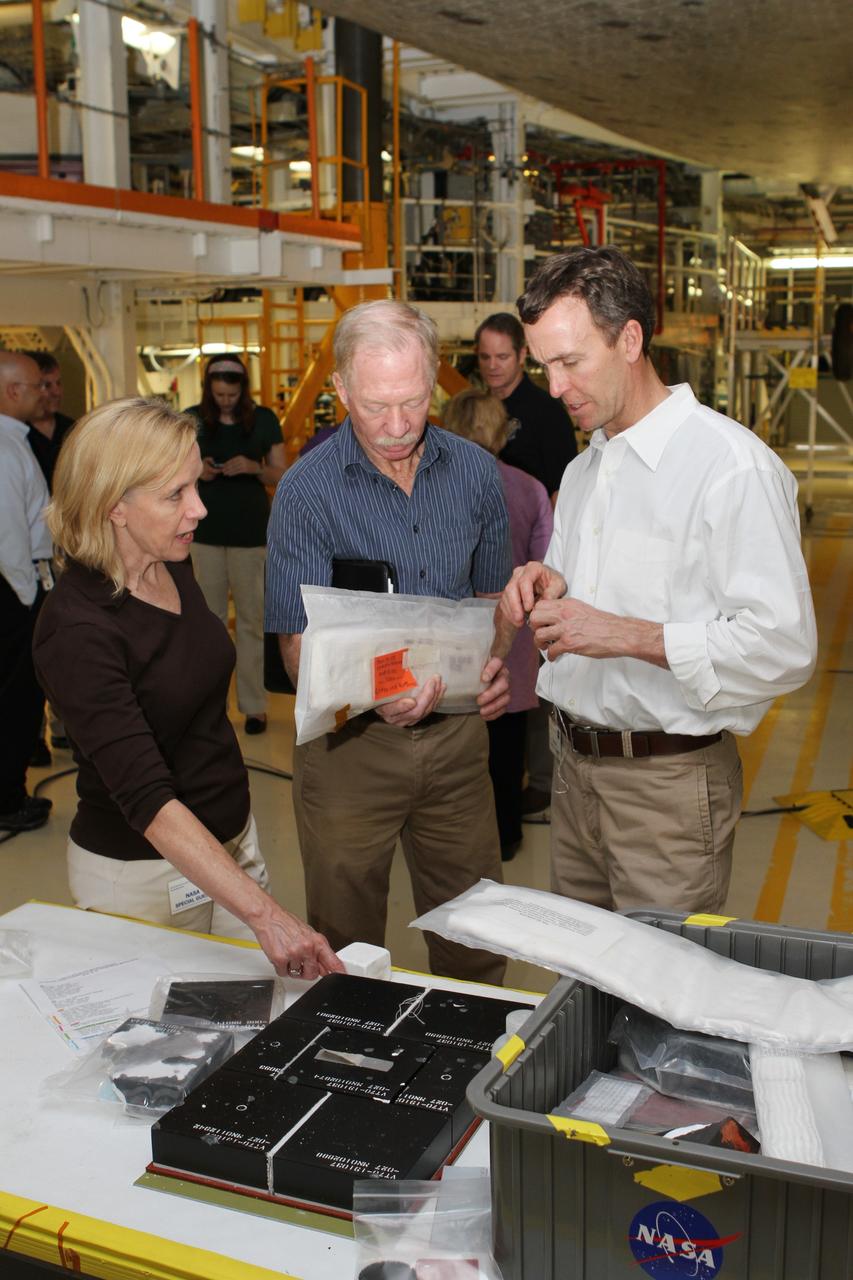
CAPE CANAVERAL, Fla. -- Members of a visiting team from the Smithsonian's National Air and Space Museum examine the space shuttle's thermal protection system tile as they stand beneath shuttle Discovery in Orbiter Processing Facility-2 at NASA's Kennedy Space Center. NASA Administrator Charles Bolden announced April 12 the facilities where all four shuttle orbiters will be permanently displayed at the conclusion of the Space Shuttle Program. Shuttle Enterprise, the first orbiter built, will move from the Smithsonian's National Air and Space Museum Steven F. Udvar-Hazy Center in Virginia to the Intrepid Sea, Air & Space Museum in New York. The Udvar-Hazy Center will become the new home for shuttle Discovery, which retired in March after completing its 39th mission. Shuttle Endeavour, which is preparing for its final flight at the end of the month, will go to the California Science Center in Los Angeles. Atlantis, which will fly the last planned shuttle mission in June, will be displayed at the Kennedy Space Center Visitor Complex in Florida. Photo credit: NASA/Cory Huston

CAPE CANAVERAL, Fla. -- Members of a visiting team from the Smithsonian's National Air and Space Museum inspect the aft-end of space shuttle Discovery in Orbiter Processing Facility-2 at NASA's Kennedy Space Center. NASA Administrator Charles Bolden announced April 12 the facilities where all four shuttle orbiters will be permanently displayed at the conclusion of the Space Shuttle Program. Shuttle Enterprise, the first orbiter built, will move from the Smithsonian's National Air and Space Museum Steven F. Udvar-Hazy Center in Virginia to the Intrepid Sea, Air & Space Museum in New York. The Udvar-Hazy Center will become the new home for shuttle Discovery, which retired in March after completing its 39th mission. Shuttle Endeavour, which is preparing for its final flight at the end of the month, will go to the California Science Center in Los Angeles. Atlantis, which will fly the last planned shuttle mission in June, will be displayed at the Kennedy Space Center Visitor Complex in Florida. Photo credit: NASA/Cory Huston
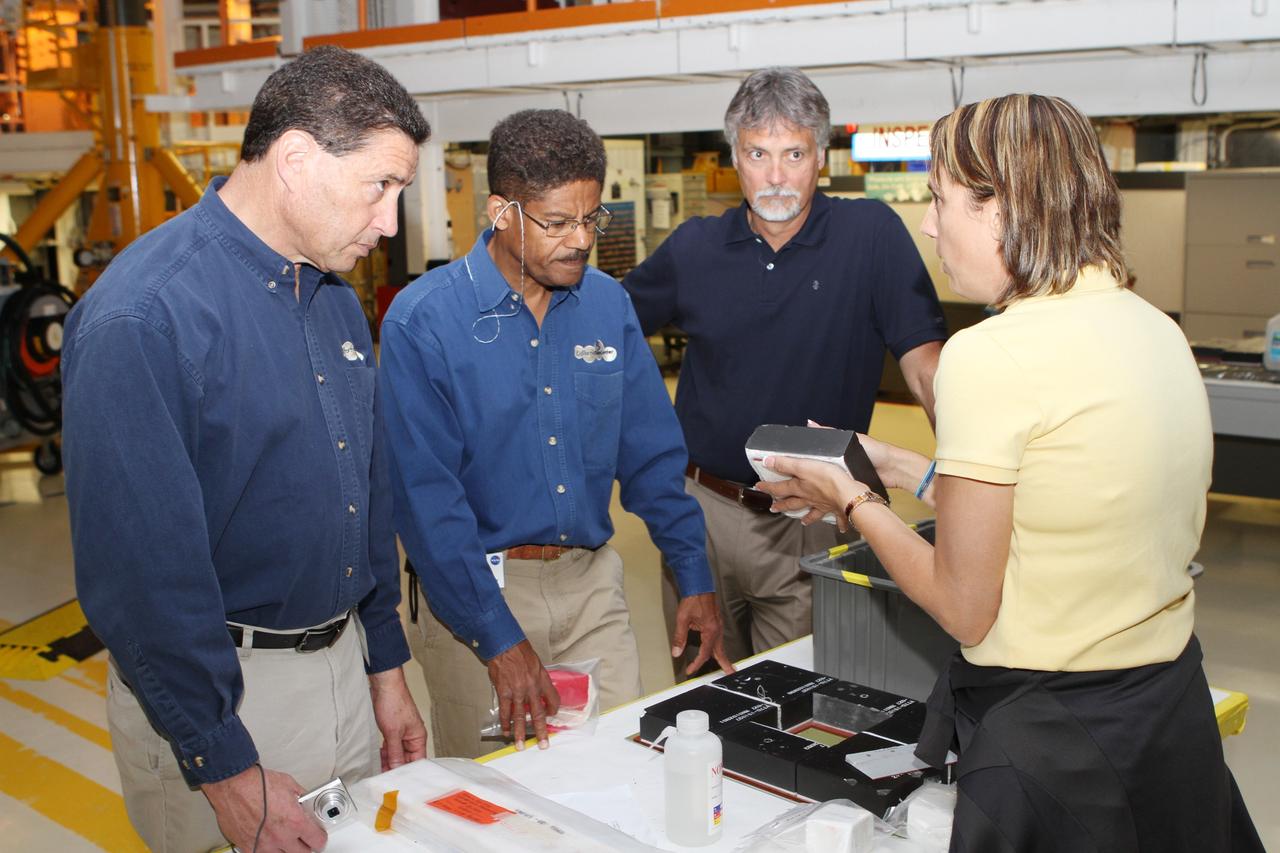
CAPE CANAVERAL, Fla. -- Members of a visiting team from the Smithsonian's National Air and Space Museum receive a briefing on the application of the space shuttle's thermal protection system tile in Orbiter Processing Facility-2 at NASA's Kennedy Space Center. NASA Administrator Charles Bolden announced April 12 the facilities where all four shuttle orbiters will be permanently displayed at the conclusion of the Space Shuttle Program. Shuttle Enterprise, the first orbiter built, will move from the Smithsonian's National Air and Space Museum Steven F. Udvar-Hazy Center in Virginia to the Intrepid Sea, Air & Space Museum in New York. The Udvar-Hazy Center will become the new home for shuttle Discovery, which retired in March after completing its 39th mission. Shuttle Endeavour, which is preparing for its final flight at the end of the month, will go to the California Science Center in Los Angeles. Atlantis, which will fly the last planned shuttle mission in June, will be displayed at the Kennedy Space Center Visitor Complex in Florida. Photo credit: NASA/Cory Huston

CAPE CANAVERAL, Fla. – At the Shuttle Landing Facility at NASA’s Kennedy Space Center in Florida, media representatives interview space shuttle managers following the arrival of space shuttle Discovery. Behind the rope with their backs to the camera are, from left, Bart Pannullo, NASA Transition and Retirement vehicle manager at Kennedy Dorothy Rasco, manager for Space Shuttle Program Transition and Retirement at NASA’s Johnson Space Center Stephanie Stilson, NASA flow director for Orbiter Transition and Retirement at Kennedy and Kevin Templin, transition manager for the Space Shuttle Program at Johnson. Discovery will be hoisted onto a Shuttle Carrier Aircraft, or SCA, with the aid of the mate-demate device at the landing facility. The SCA, a modified Boeing 747 jet airliner, is scheduled to ferry Discovery to the Washington Dulles International Airport in Virginia on April 17, after which the shuttle will be placed on permanent public display in the Smithsonian's National Air and Space Museum Steven F. Udvar-Hazy Center. For more information on shuttle transition and retirement activities, visit http://www.nasa.gov/transition. Photo credit: NASA/Kim Shiflett
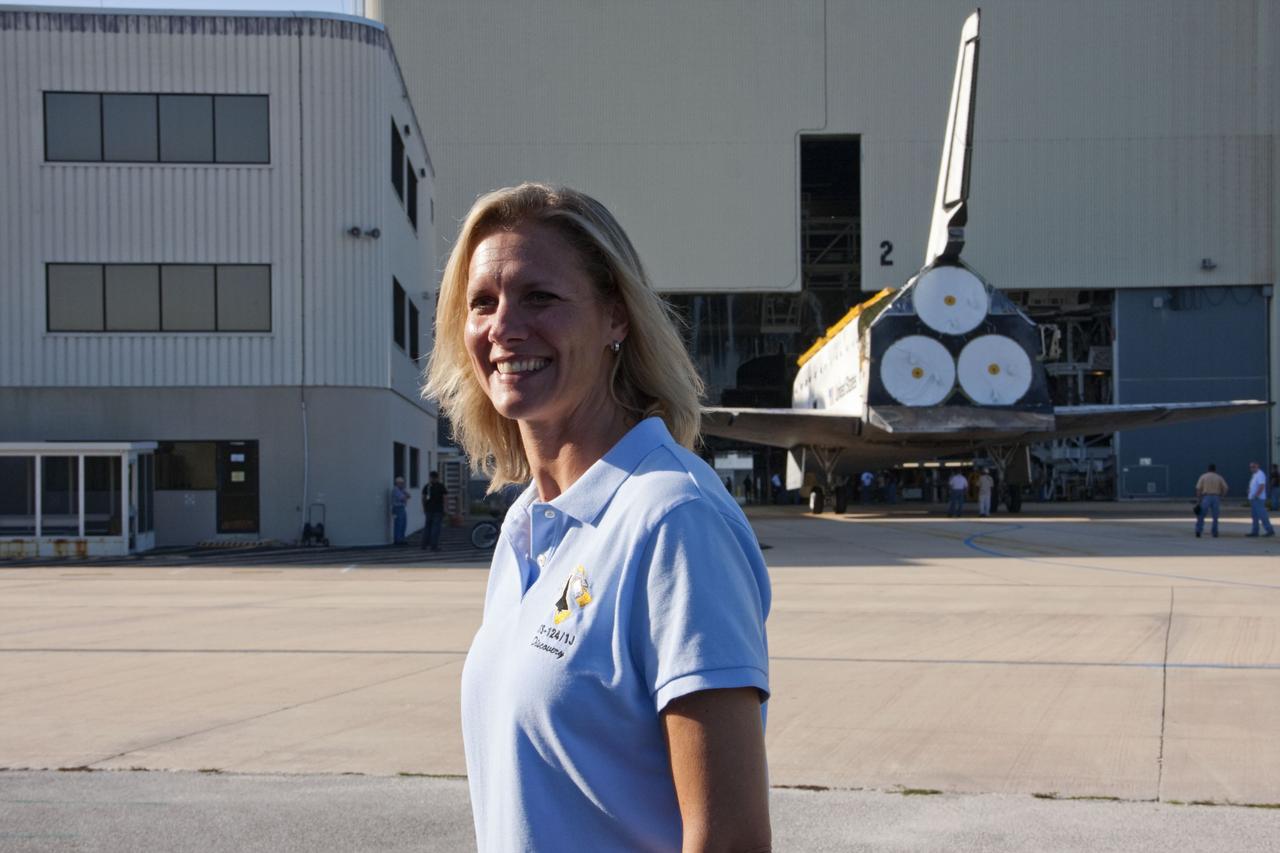
CAPE CANAVERAL, Fla. -- Outside Orbiter Processing Facility-2, or OPF-2, at NASA's Kennedy Space Center in Florida, Stephanie Stilson, Transition and Retirement orbiter flow director, answers questions from the media during the move of space shuttle Discovery to the Vehicle Assembly Building, or VAB. Discovery will be stored inside the VAB for approximately one month while shuttle Atlantis undergoes processing in OPF-2 following its final mission, STS-135. Discovery flew its 39th and final mission, STS-133, in February and March 2011, and currently is being prepared for public display at the Smithsonian's National Air and Space Museum Steven F. Udvar-Hazy Center in Virginia. For more information about Discovery's Transition and Retirement, visit www.nasa.gov/mission_pages/shuttle/launch/discovery_rss_collection_archive_1.html. Photo credit: NASA/Ken Thornsley
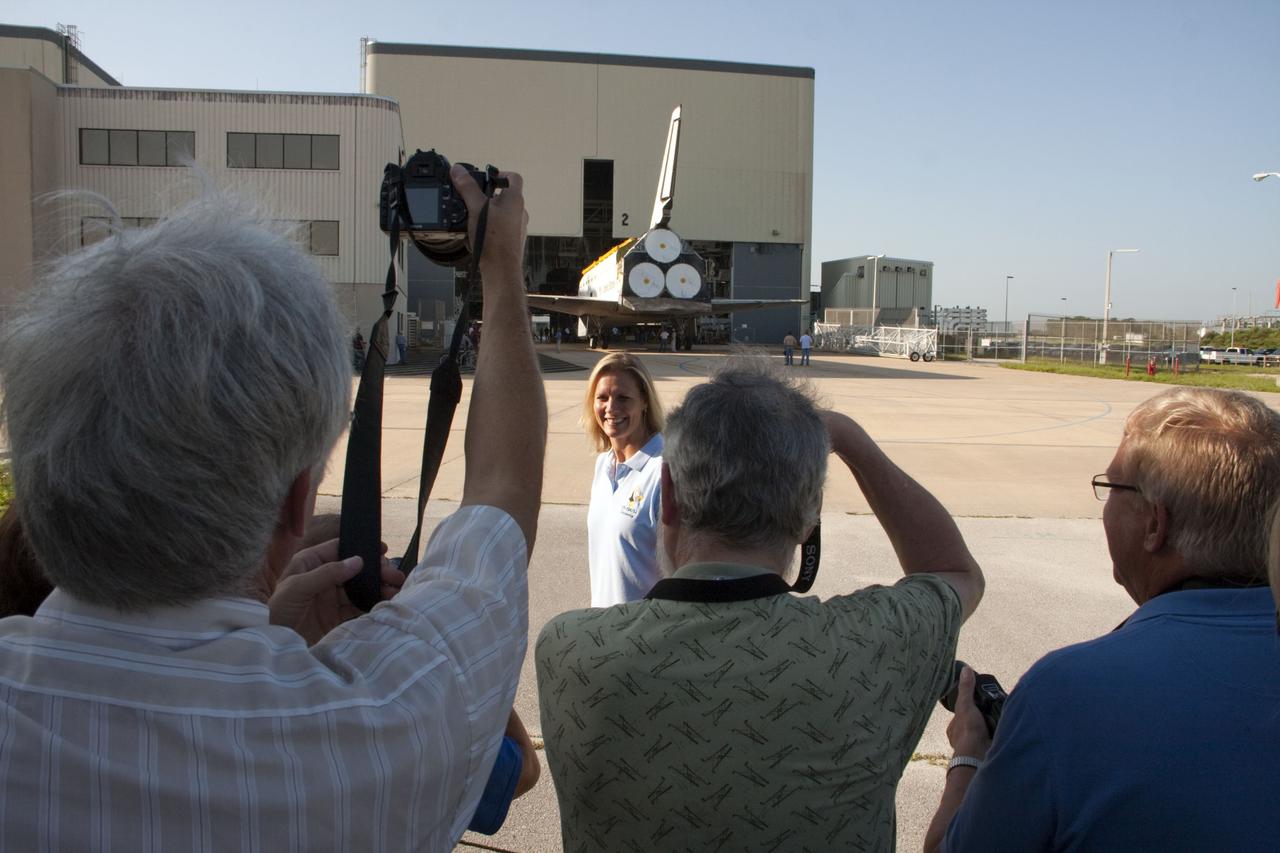
CAPE CANAVERAL, Fla. -- Outside Orbiter Processing Facility-2, or OPF-2, at NASA's Kennedy Space Center in Florida, media on hand to cover the move of space shuttle Discovery to the Vehicle Assembly Building, or VAB, are given the opportunity to interview Stephanie Stilson, Transition and Retirement orbiter flow director. Discovery will be stored inside the VAB for approximately one month while shuttle Atlantis undergoes processing in OPF-2 following its final mission, STS-135. Discovery flew its 39th and final mission, STS-133, in February and March 2011, and currently is being prepared for public display at the Smithsonian's National Air and Space Museum Steven F. Udvar-Hazy Center in Virginia. For more information about Discovery's Transition and Retirement, visit www.nasa.gov/mission_pages/shuttle/launch/discovery_rss_collection_archive_1.html. Photo credit: NASA/Ken Thornsley
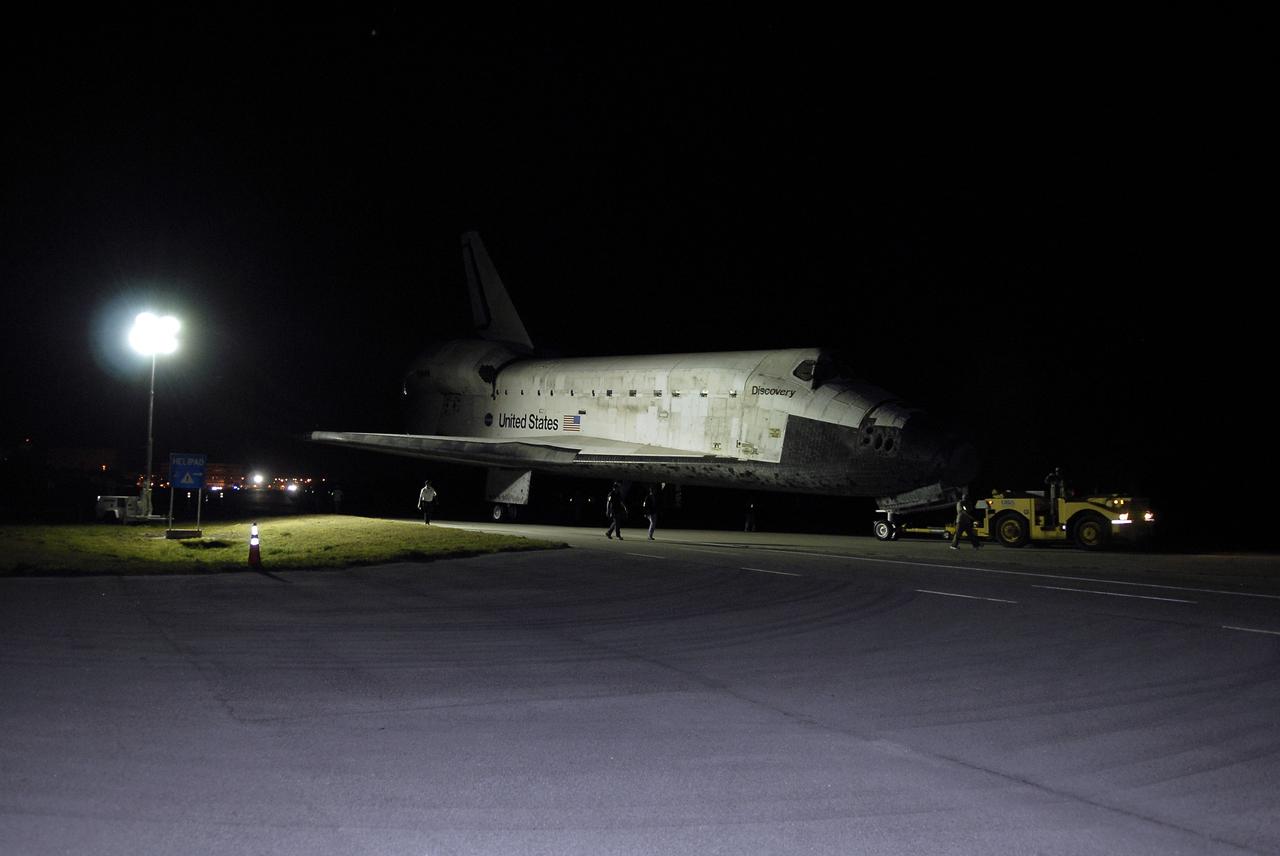
CAPE CANAVERAL, Fla. – Space shuttle Discovery is towed along the access road to the Shuttle Landing Facility, or SLF, at NASA’s Kennedy Space Center in Florida. At the SLF, Discovery will be hoisted onto a Shuttle Carrier Aircraft, or SCA, with the aid of a mate-demate device. The SCA, a modified Boeing 747 jet airliner, is scheduled to ferry Discovery to the Washington Dulles International Airport in Virginia on April 17, after which the shuttle will be placed on permanent public display in the Smithsonian's National Air and Space Museum Steven F. Udvar-Hazy Center. For more information on shuttle transition and retirement activities, visit http://www.nasa.gov/transition. Photo credit: NASA/Tim Jacobs
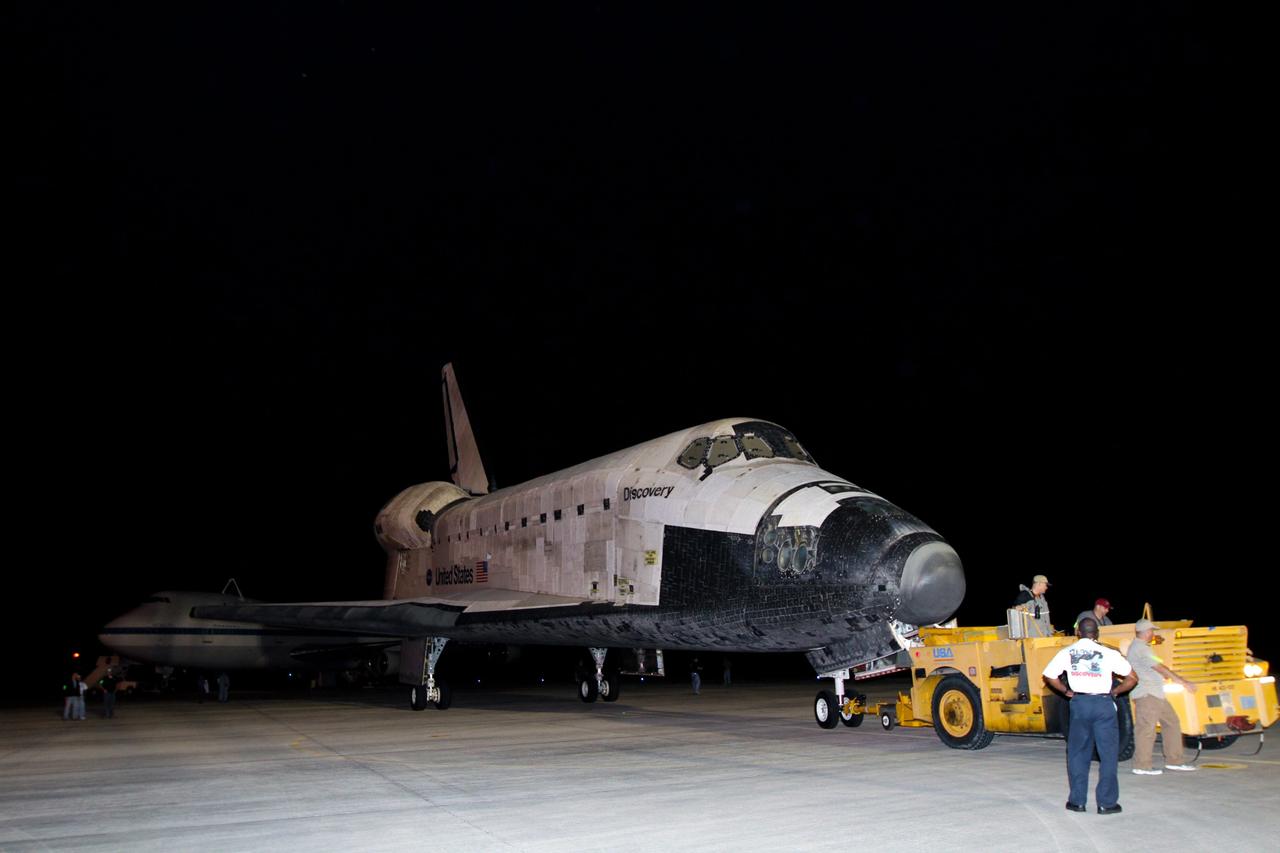
CAPE CANAVERAL, Fla. – Space shuttle Discovery is towed to the Shuttle Landing Facility, or SLF, at NASA’s Kennedy Space Center in Florida. At the SLF, Discovery will be hoisted onto the back of the Shuttle Carrier Aircraft, or SCA, in the background, with the aid of a mate-demate device. The SCA, a modified Boeing 747 jet airliner, is scheduled to ferry Discovery to the Washington Dulles International Airport in Virginia on April 17, after which the shuttle will be placed on permanent public display in the Smithsonian's National Air and Space Museum Steven F. Udvar-Hazy Center. For more information on shuttle transition and retirement activities, visit http://www.nasa.gov/transition. Photo credit: NASA/Kim Shiflett
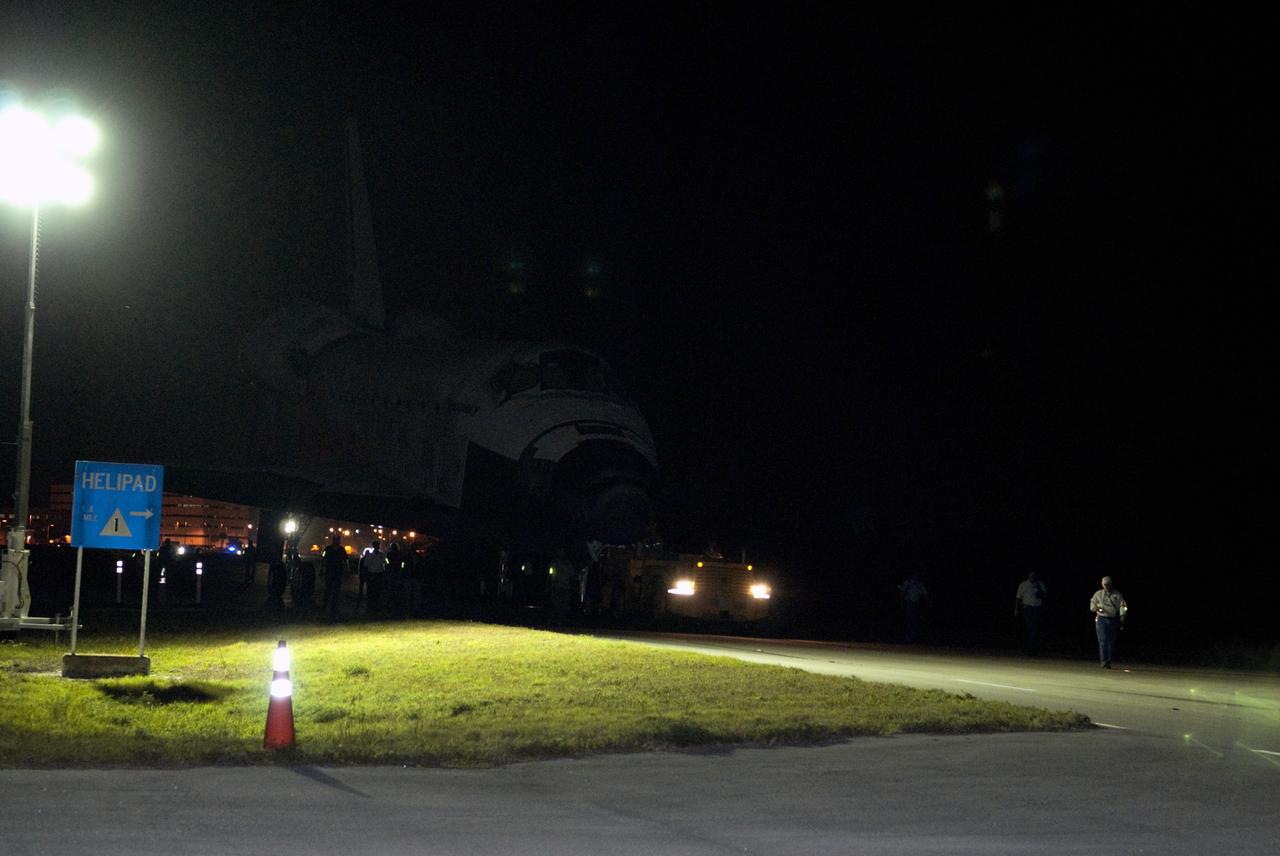
CAPE CANAVERAL, Fla. – A team of aerospace workers accompanies space shuttle Discovery along the towway to the Shuttle Landing Facility, or SLF, at NASA’s Kennedy Space Center in Florida. At the SLF, Discovery will be hoisted onto a Shuttle Carrier Aircraft, or SCA, with the aid of a mate-demate device. The SCA, a modified Boeing 747 jet airliner, is scheduled to ferry Discovery to the Washington Dulles International Airport in Virginia on April 17, after which the shuttle will be placed on permanent public display in the Smithsonian's National Air and Space Museum Steven F. Udvar-Hazy Center. For more information on shuttle transition and retirement activities, visit http://www.nasa.gov/transition. Photo credit: NASA/Tim Jacobs
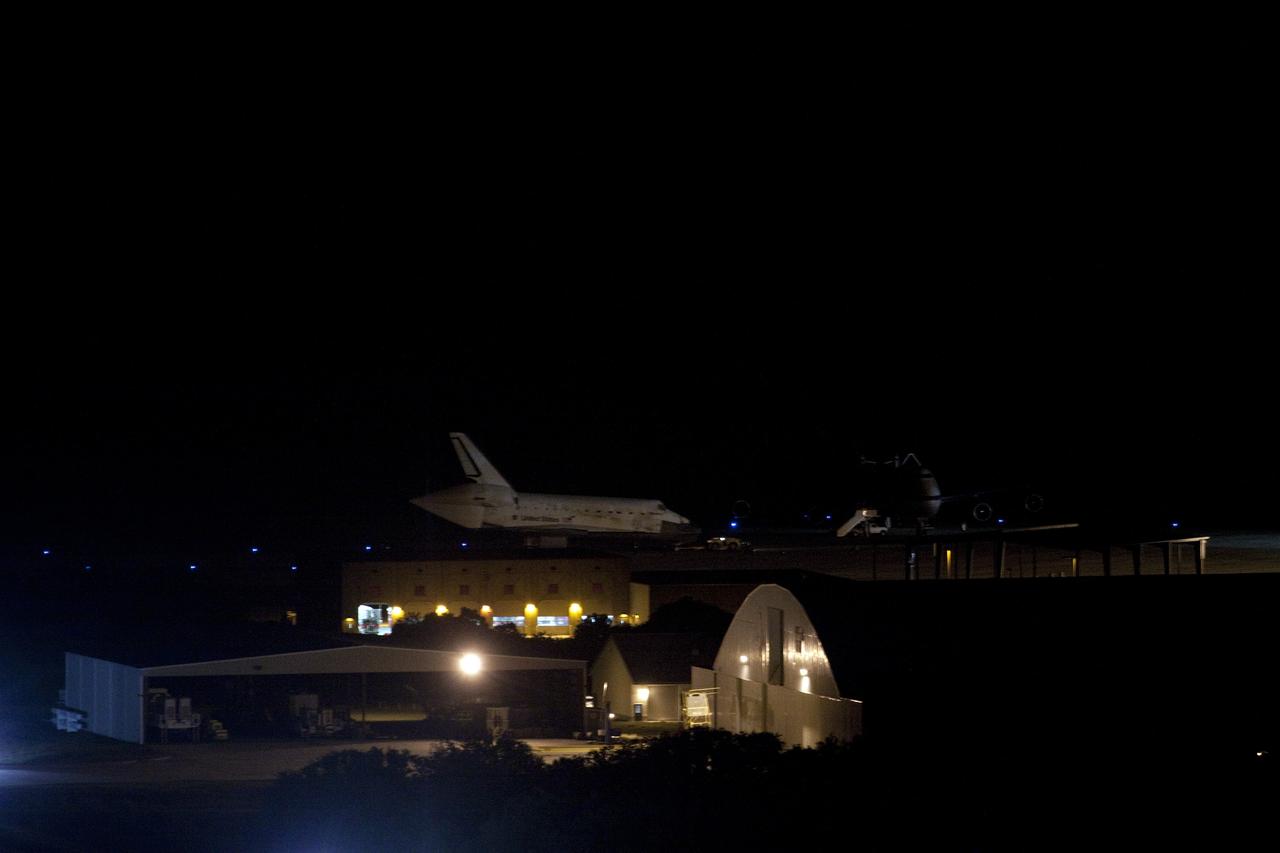
CAPE CANAVERAL, Fla. – At the Shuttle Landing Facility, or SLF, at NASA’s Kennedy Space Center in Florida, space shuttle Discovery rolls past the Shuttle Carrier Aircraft with which it will be mated. Discovery will be hoisted onto the SCA with the aid of a mate-demate device. The SCA, a modified Boeing 747 jet airliner, is scheduled to ferry Discovery to the Washington Dulles International Airport in Virginia on April 17, after which the shuttle will be placed on permanent public display in the Smithsonian's National Air and Space Museum Steven F. Udvar-Hazy Center. For more information on shuttle transition and retirement activities, visit http://www.nasa.gov/transition. Photo credit: NASA/Jim Grossmann
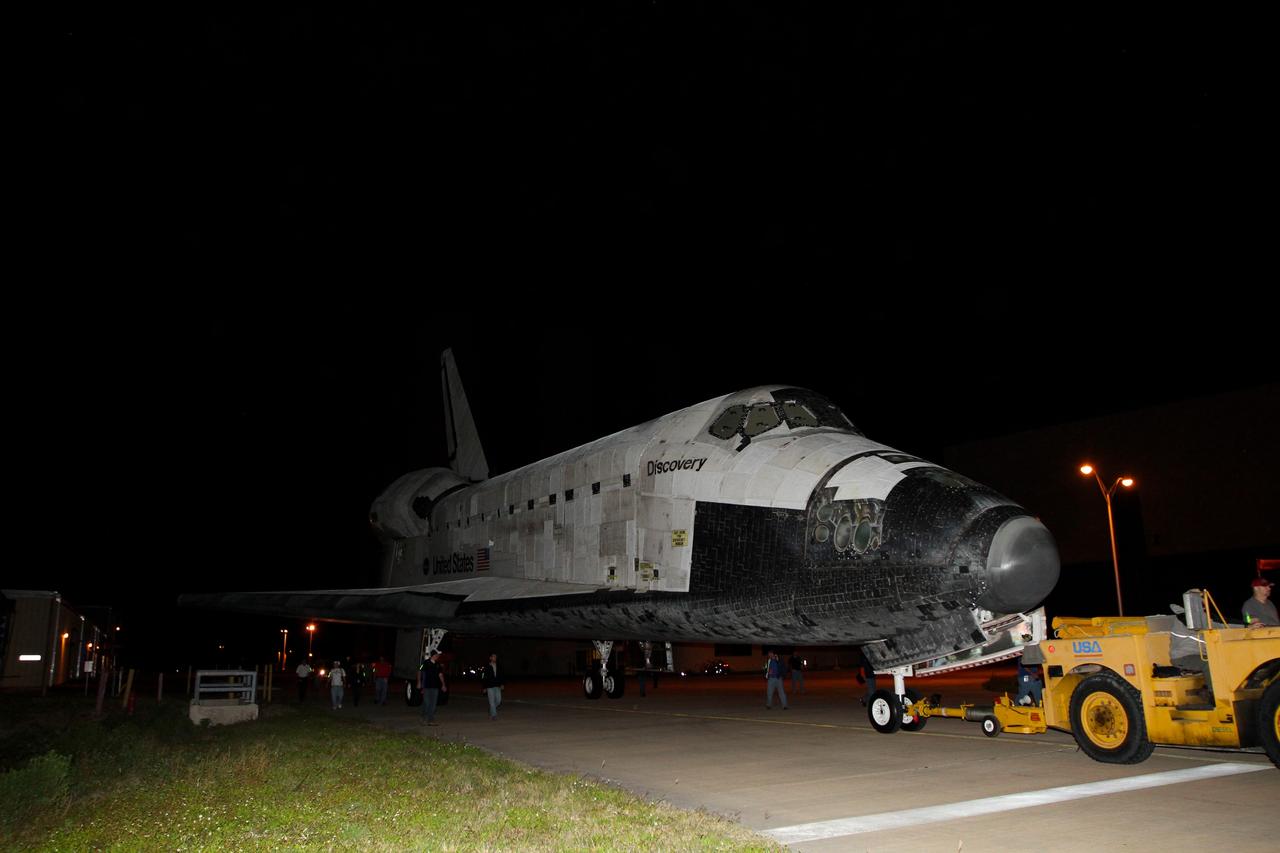
CAPE CANAVERAL, Fla. – Space shuttle Discovery makes its way from the Launch Complex 39 area to the Shuttle Landing Facility or SLF, at NASA’s Kennedy Space Center in Florida. At the SLF, Discovery will be hoisted onto a Shuttle Carrier Aircraft, or SCA, with the aid of a mate-demate device. The SCA, a modified Boeing 747 jet airliner, is scheduled to ferry Discovery to the Washington Dulles International Airport in Virginia on April 17, after which the shuttle will be placed on permanent public display in the Smithsonian's National Air and Space Museum Steven F. Udvar-Hazy Center. For more information on shuttle transition and retirement activities, visit http://www.nasa.gov/transition. Photo credit: NASA/Kim Shiflett
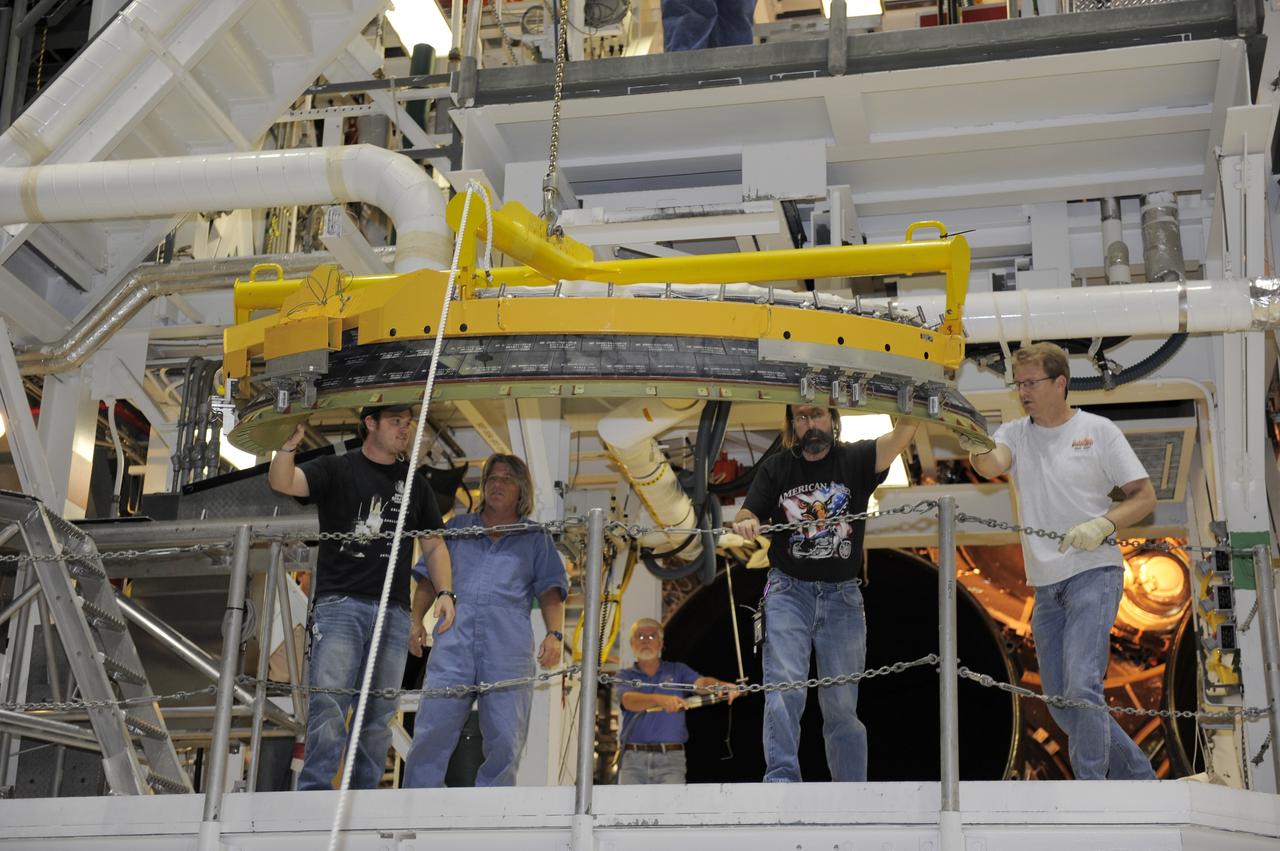
CAPE CANAVERAL, Fla. - Crews in Orbiter Processing Facility-2 at NASA's Kennedy Space Center in Florida remove space shuttle Discovery's right-hand inner heat shield from engine No. 1. The removal is part of Discovery's transition and retirement processing. Work performed on Discovery is expected to help rocket designers build next-generation spacecraft and prepare the shuttle for future public display.Photo credit: NASA/Kim Shiflett
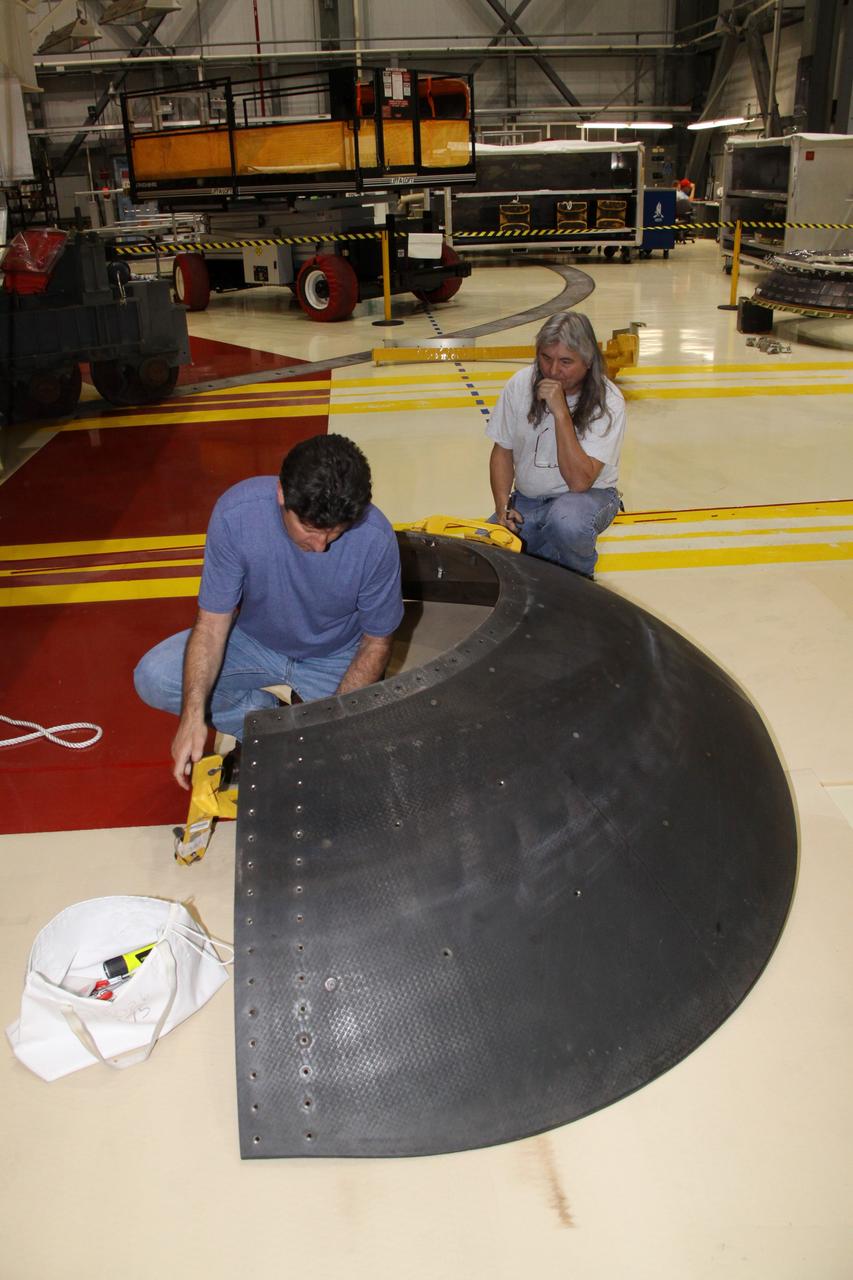
CAPE CANAVERAL, Fla. - Crews in Orbiter Processing Facility-2 at NASA's Kennedy Space Center in Florida remove space shuttle Discovery's right-hand inner heat shield from engine No. 1. The removal is part of Discovery's transition and retirement processing. Work performed on Discovery is expected to help rocket designers build next-generation spacecraft and prepare the shuttle for future public display.Photo credit: NASA/Jack Pfaller
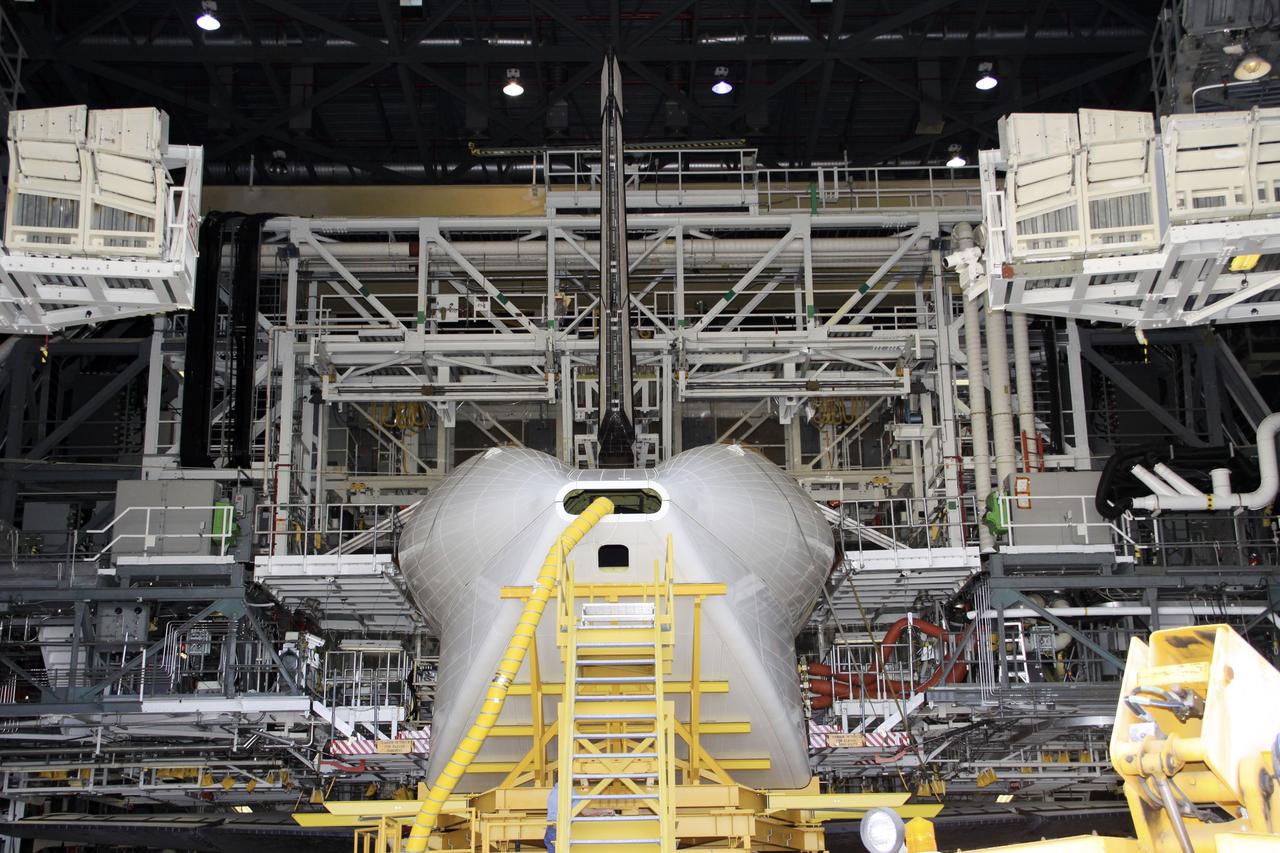
CAPE CANAVERAL, Fla. -- Inside Orbiter Processing Facility-1 at NASA’s Kennedy Space Center in Florida, the tail cone is installed around space shuttle Discovery’s three replica shuttle main engines for protection. The work is part of the Space Shuttle Program’s transition and retirement processing of shuttle Discovery. Discovery is being prepared for display at the Smithsonian’s National Air and Space Museum, Steven F. Udvar-Hazy Center in Chantilly, Va. For more information, visit http://www.nasa.gov/shuttle. Photo credit: NASA/Jim Grossmann
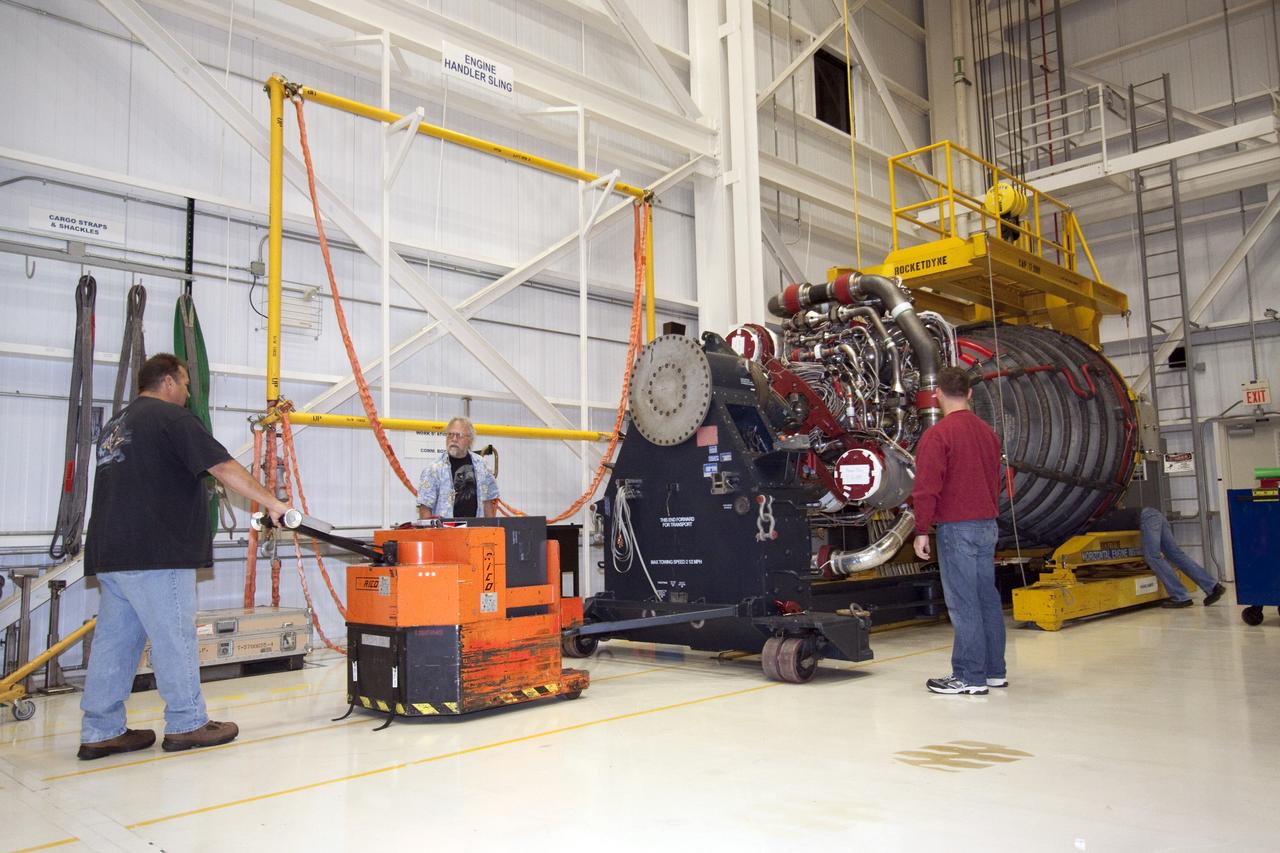
CAPE CANAVERAL, Fla. - Space shuttle main engine No. 2, which was removed from shuttle Discovery, will undergo routine inspections on a work stand in the Space Shuttle Main Engine Processing Facility at NASA's Kennedy Space Center in Florida. The removal was part of Discovery's transition and retirement processing. Work performed on Discovery is expected to help rocket designers build next-generation spacecraft and prepare the shuttle for future public display. Photo credit: NASA/Jack Pfaller
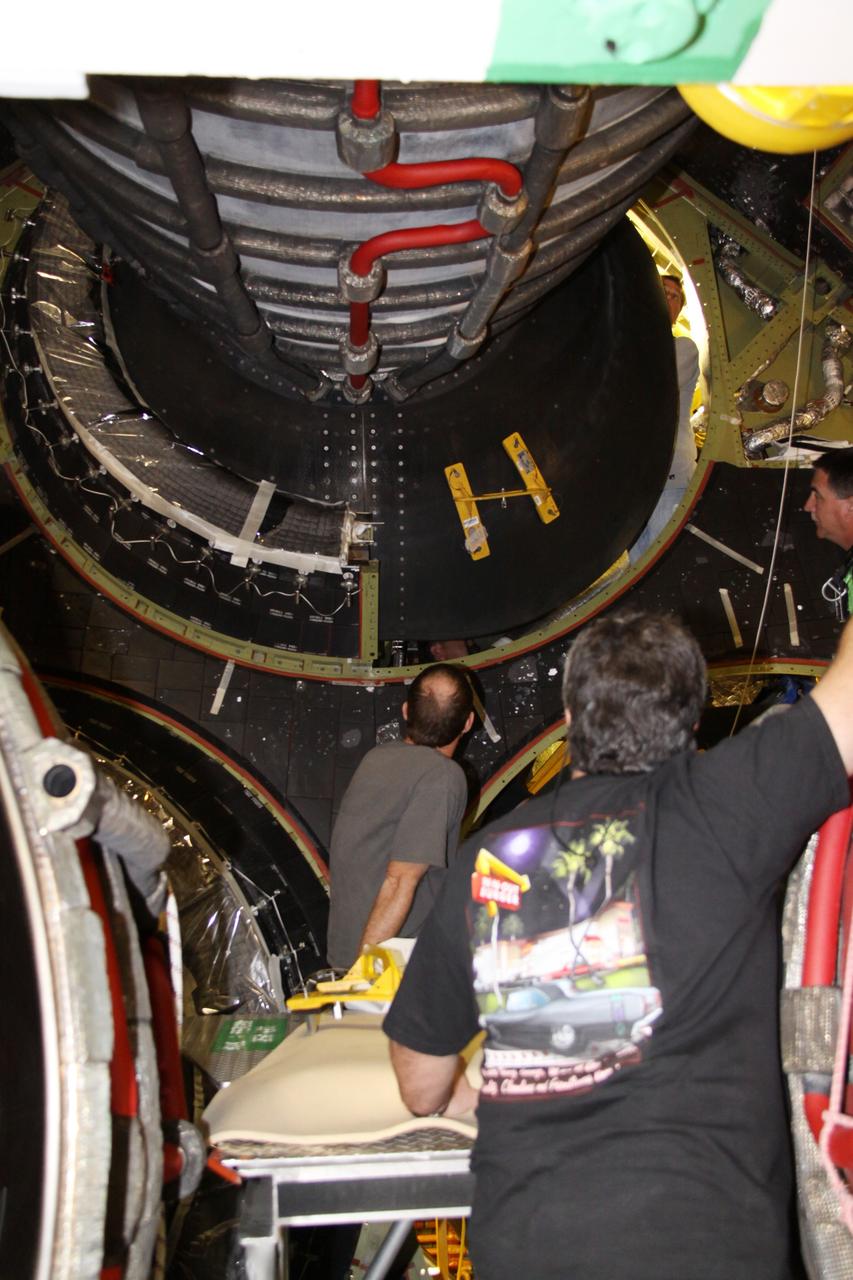
CAPE CANAVERAL, Fla. - Crews in Orbiter Processing Facility-2 at NASA's Kennedy Space Center in Florida remove space shuttle Discovery's right-hand inner heat shield from engine No. 1. The removal is part of Discovery's transition and retirement processing. Work performed on Discovery is expected to help rocket designers build next-generation spacecraft and prepare the shuttle for future public display.Photo credit: NASA/Jack Pfaller
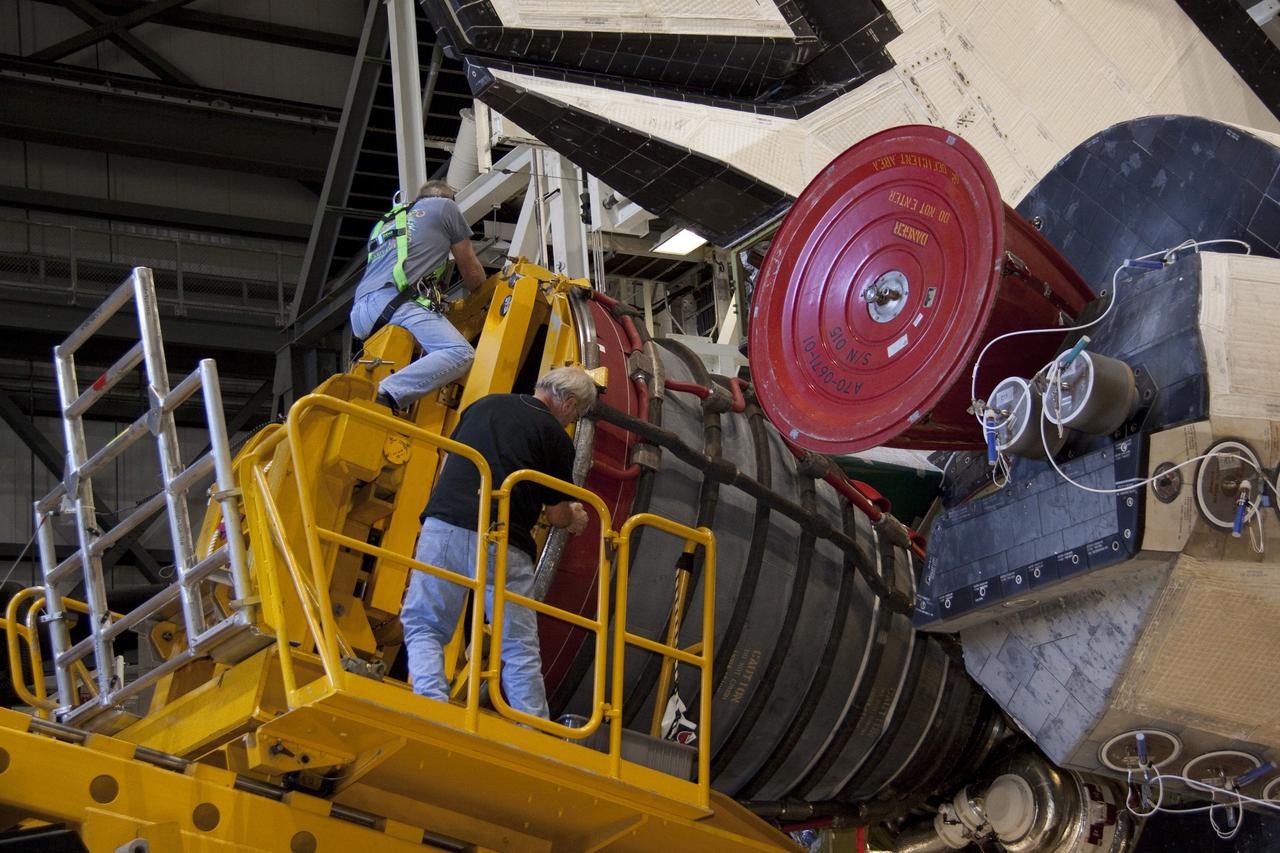
CAPE CANAVERAL, Fla. - Technicians carefully remove main engine No. 1 from space shuttle Discovery using a specially designed engine installer, called a Hyster forklift. The work is taking place in Orbiter Processing Facility-2 at NASA's Kennedy Space Center in Florida. The removal is part of Discovery's transition and retirement processing. Work performed on Discovery is expected to help rocket designers build next-generation spacecraft and prepare the shuttle for future public display. Photo credit: NASA/Jack Pfaller
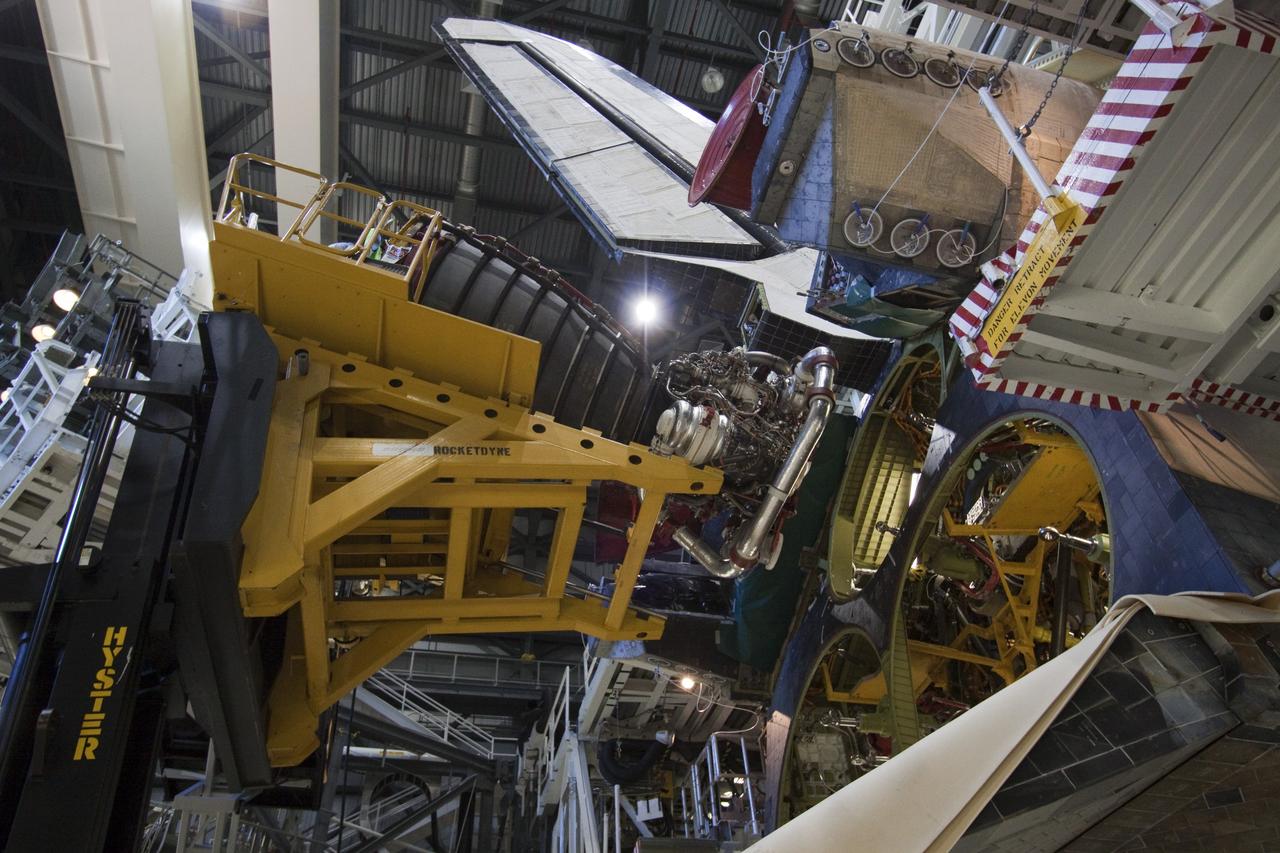
CAPE CANAVERAL, Fla. - Technicians complete the removal of main engine No. 1 from space shuttle Discovery using a specially designed engine installer, called a Hyster forklift. The work is taking place in Orbiter Processing Facility-2 at NASA's Kennedy Space Center in Florida. The removal is part of Discovery's transition and retirement processing. Work performed on Discovery is expected to help rocket designers build next-generation spacecraft and prepare the shuttle for future public display. Photo credit: NASA/Jack Pfaller
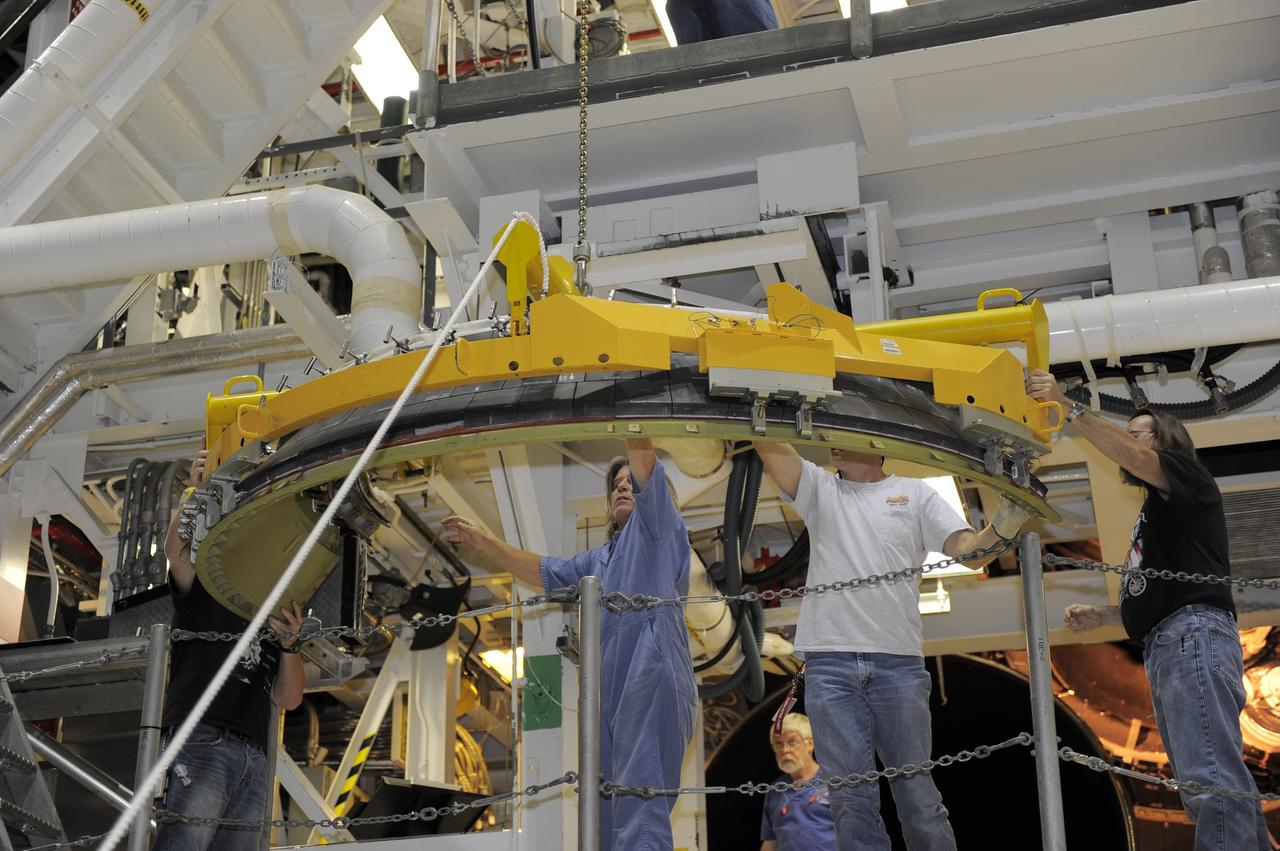
CAPE CANAVERAL, Fla. - Crews in Orbiter Processing Facility-2 at NASA's Kennedy Space Center in Florida remove space shuttle Discovery's right-hand inner heat shield from engine No. 1. The removal is part of Discovery's transition and retirement processing. Work performed on Discovery is expected to help rocket designers build next-generation spacecraft and prepare the shuttle for future public display.Photo credit: NASA/Kim Shiflett
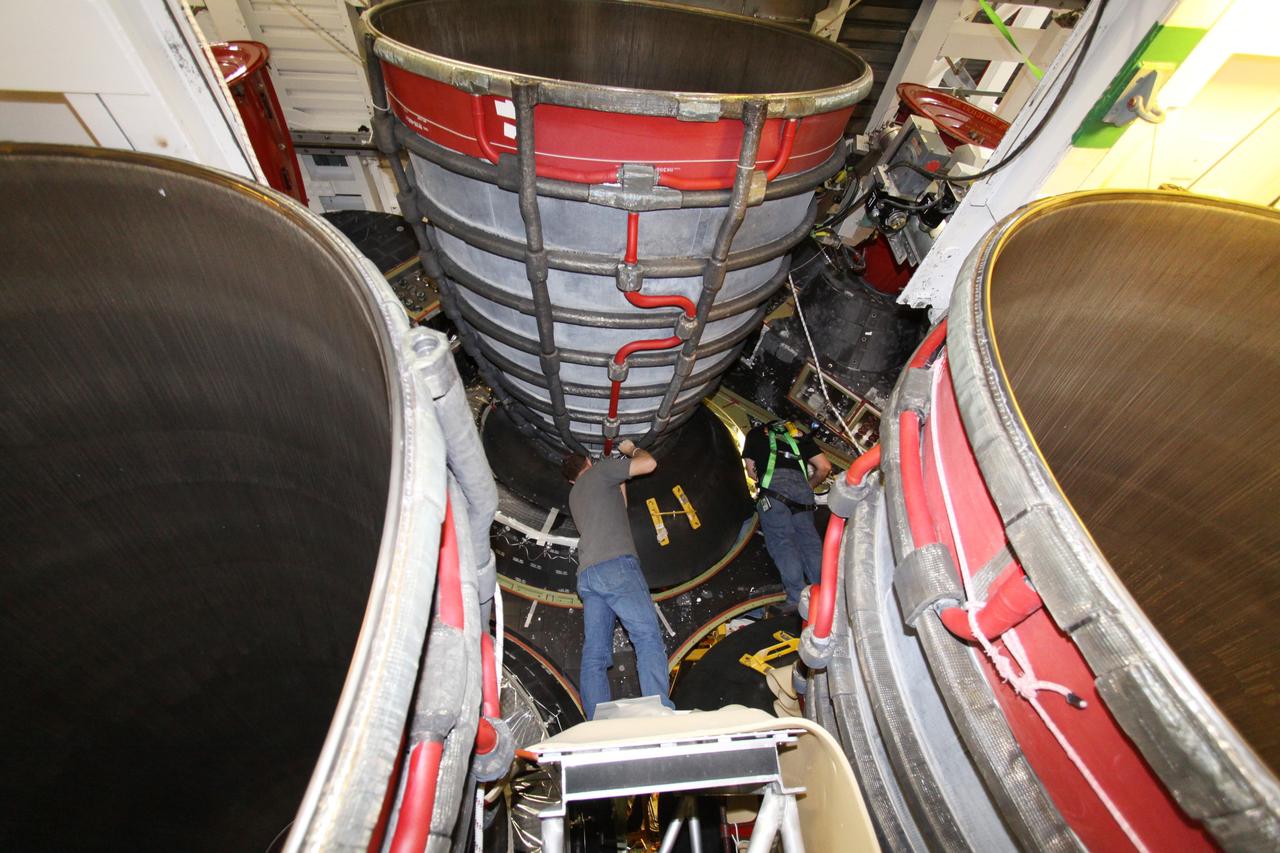
CAPE CANAVERAL, Fla. - Crews in Orbiter Processing Facility-2 at NASA's Kennedy Space Center in Florida remove space shuttle Discovery's right-hand inner heat shield from engine No. 1. The removal is part of Discovery's transition and retirement processing. Work performed on Discovery is expected to help rocket designers build next-generation spacecraft and prepare the shuttle for future public display.Photo credit: NASA/Jack Pfaller
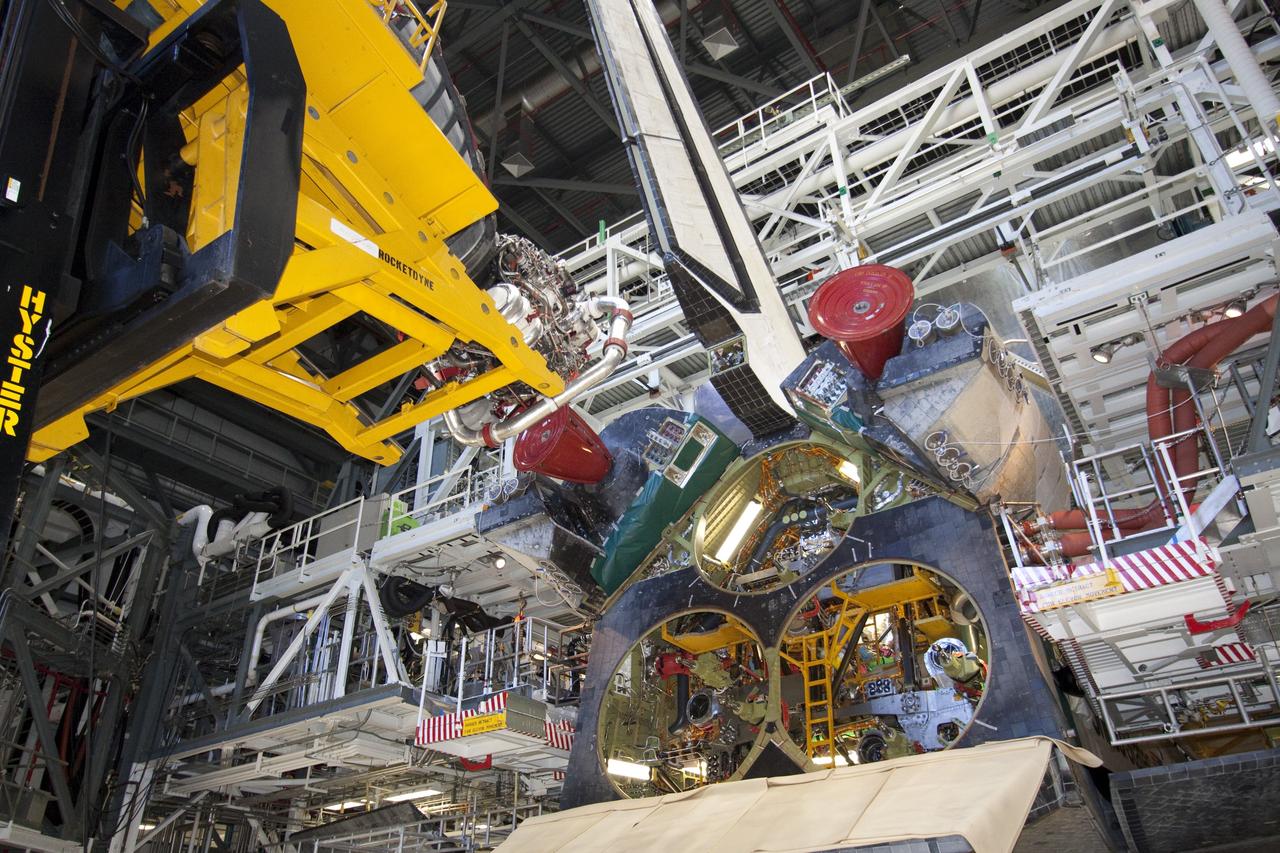
CAPE CANAVERAL, Fla. - Technicians complete the removal of main engine No. 1 from space shuttle Discovery using a specially designed engine installer, called a Hyster forklift. The work is taking place in Orbiter Processing Facility-2 at NASA's Kennedy Space Center in Florida. The removal is part of Discovery's transition and retirement processing. Work performed on Discovery is expected to help rocket designers build next-generation spacecraft and prepare the shuttle for future public display. Photo credit: NASA/Jack Pfaller
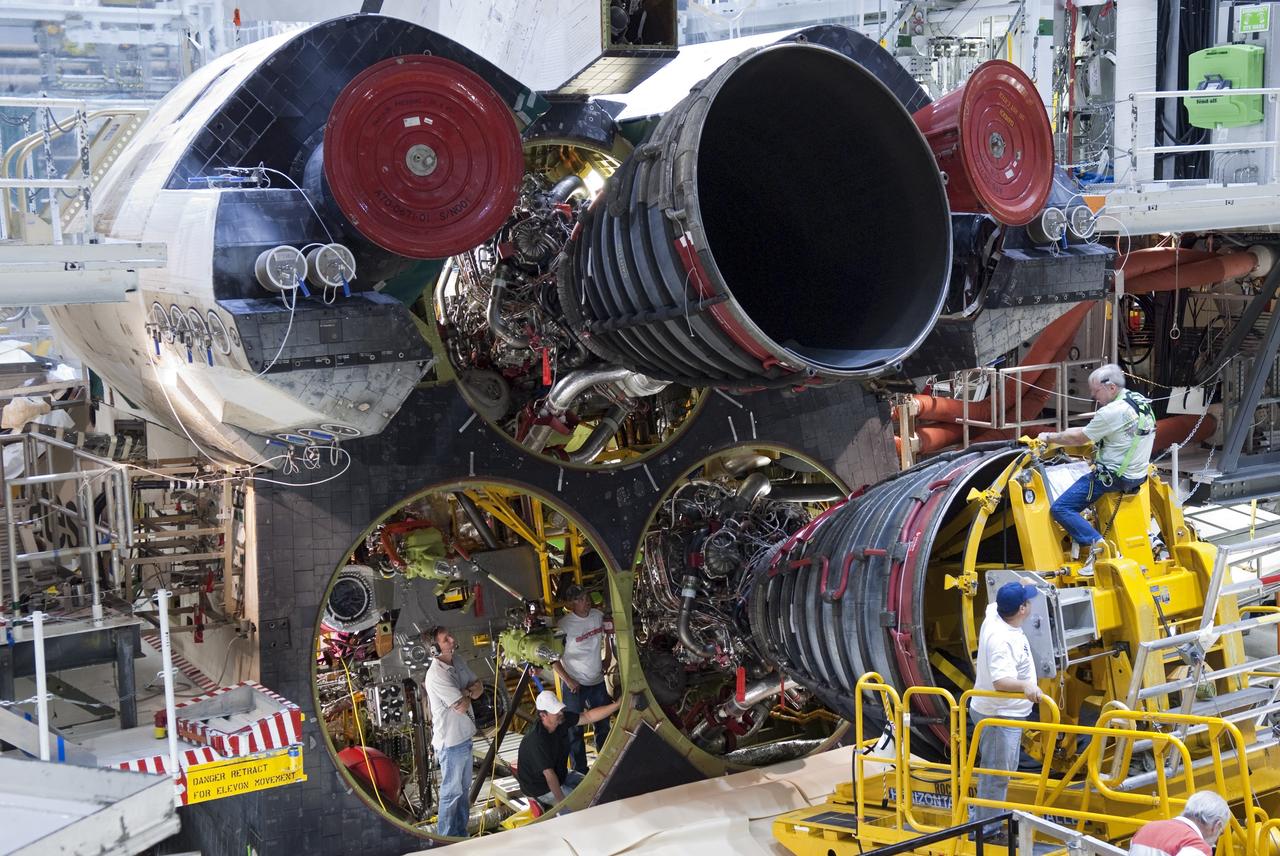
CAPE CANAVERAL, Fla. - Technicians carefully remove main engine No. 3 from space shuttle Discovery using a specially designed engine installer, called a Hyster forklift. The work is taking place in Orbiter Processing Facility-2 at NASA's Kennedy Space Center in Florida. The removal is part of Discovery's transition and retirement processing. Work performed on Discovery is expected to help rocket designers build next-generation spacecraft and prepare the shuttle for future public display. NASA/Jim Grossmann
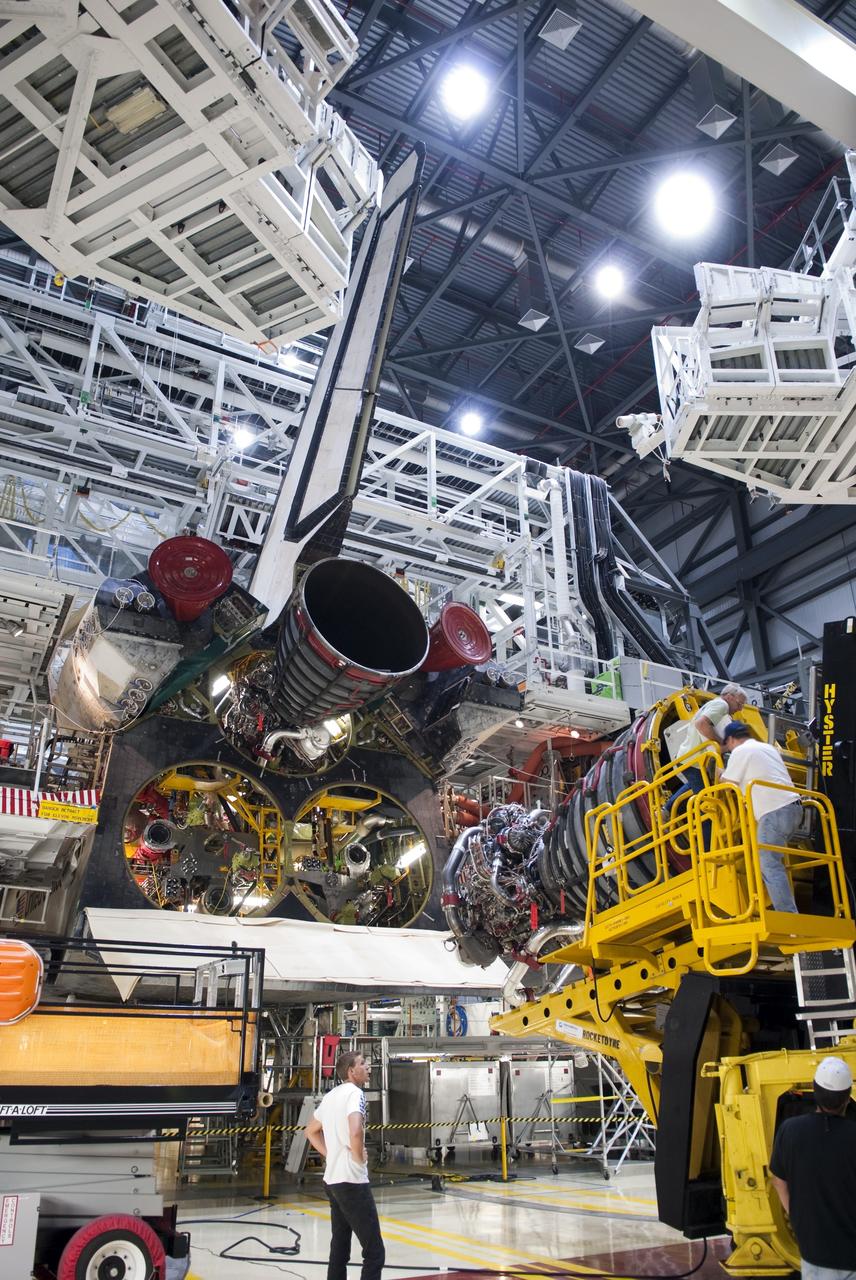
CAPE CANAVERAL, Fla. - Technicians complete the removal of main engine No. 3 from space shuttle Discovery using a specially designed engine installer, called a Hyster forklift. The work is taking place in Orbiter Processing Facility-2 at NASA's Kennedy Space Center in Florida. The removal is part of Discovery's transition and retirement processing. Work performed on Discovery is expected to help rocket designers build next-generation spacecraft and prepare the shuttle for future public display. NASA/Jim Grossmann
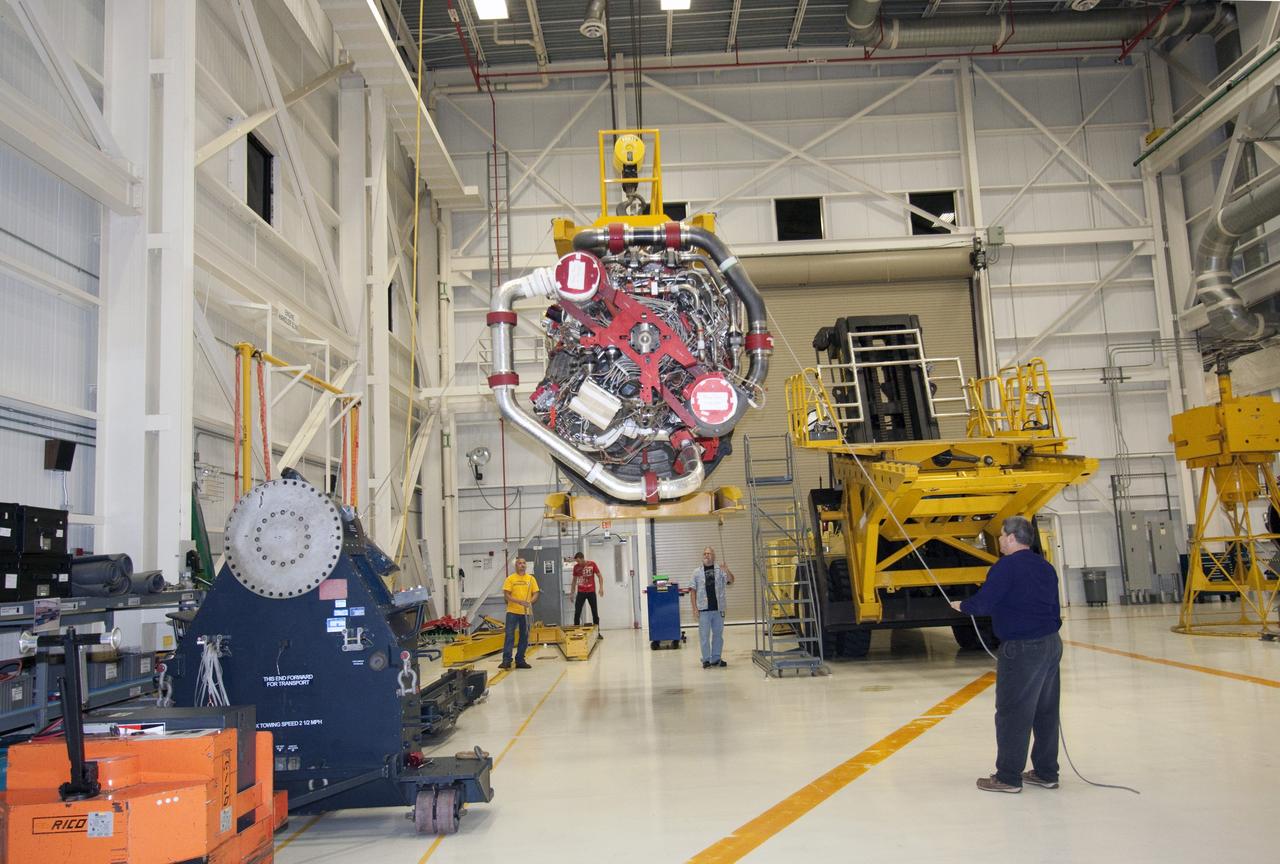
CAPE CANAVERAL, Fla. - Space shuttle main engine No. 2, which was removed from shuttle Discovery, is moved to a work stand for routine inspections in the Space Shuttle Main Engine Processing Facility at NASA's Kennedy Space Center in Florida. The removal was part of Discovery's transition and retirement processing. Work performed on Discovery is expected to help rocket designers build next-generation spacecraft and prepare the shuttle for future public display. Photo credit: NASA/Jack Pfaller
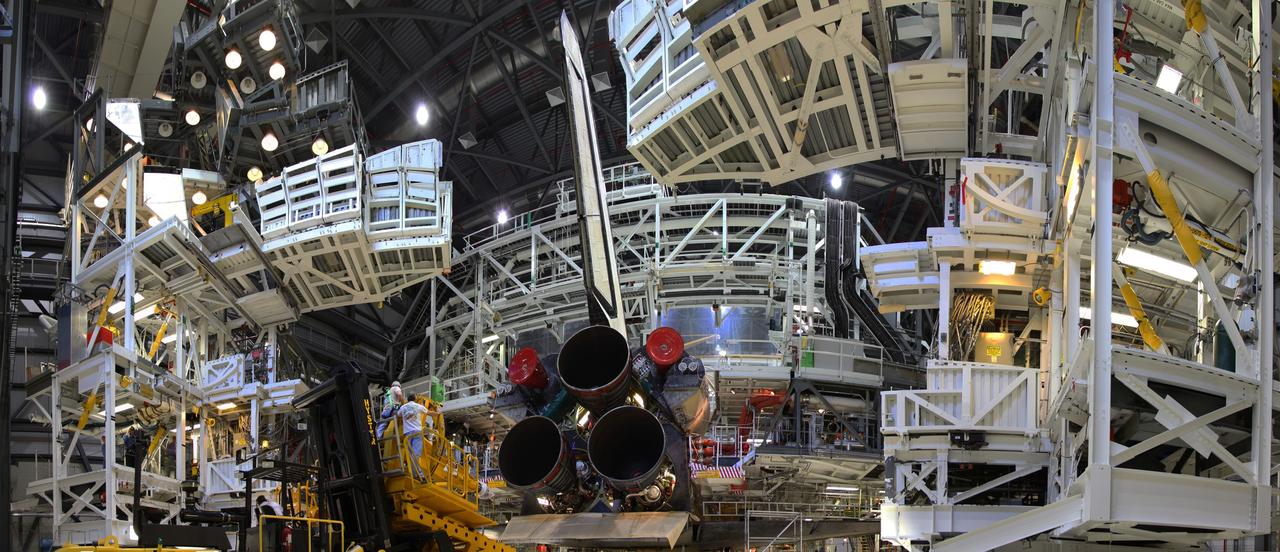
CAPE CANAVERAL, Fla. - A panoramic photo shows space shuttle Discovery during the main engine removal phase in Orbiter Processing Facility-2 at NASA's Kennedy Space Center in Florida. The removal is part of Discovery's transition and retirement processing. Work performed on Discovery is expected to help rocket designers build next-generation spacecraft and prepare the shuttle for future public display. NASA/Frankie Martin
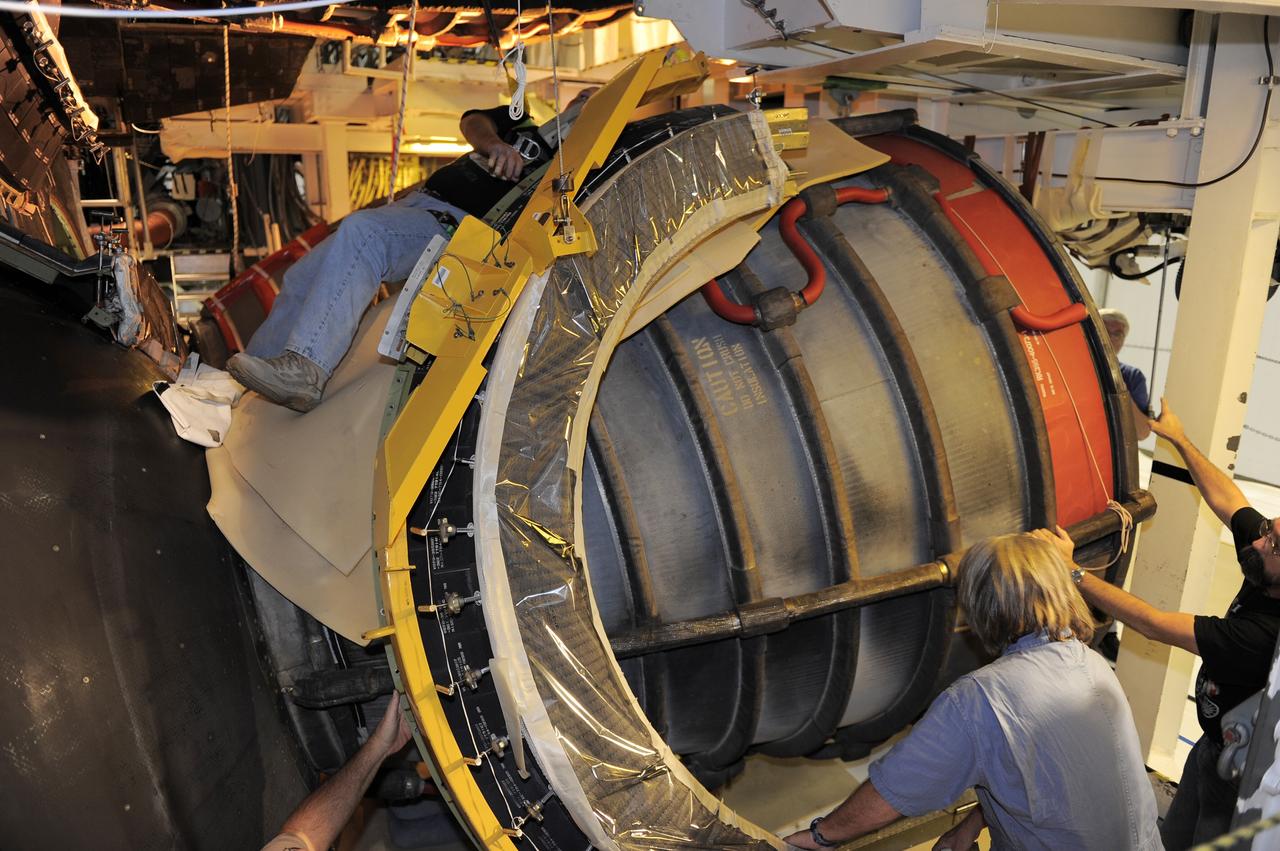
CAPE CANAVERAL, Fla. - Crews in Orbiter Processing Facility-2 at NASA's Kennedy Space Center in Florida remove space shuttle Discovery's right-hand inner heat shield from engine No. 1. The removal is part of Discovery's transition and retirement processing. Work performed on Discovery is expected to help rocket designers build next-generation spacecraft and prepare the shuttle for future public display.Photo credit: NASA/Kim Shiflett
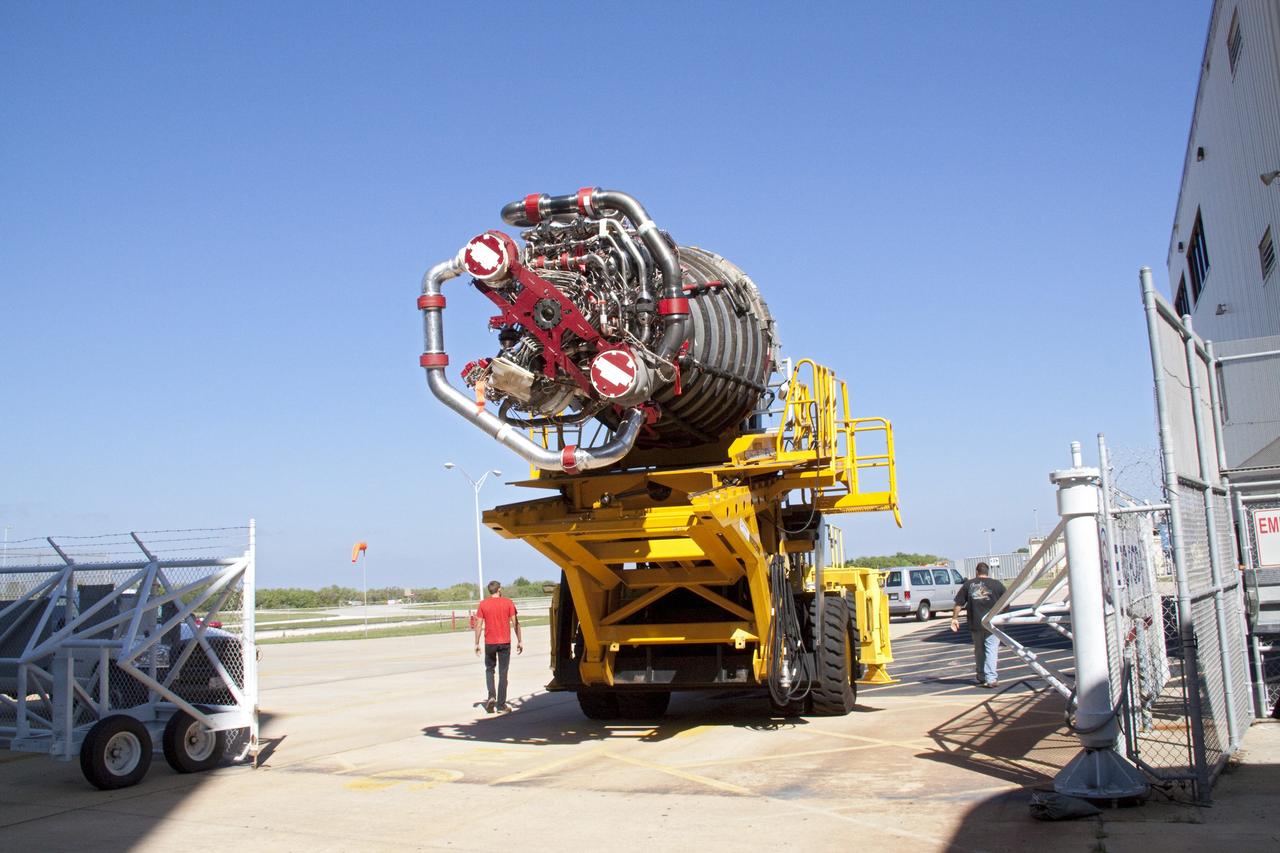
CAPE CANAVERAL, Fla. - Technicians complete the removal of main engine No. 1 from space shuttle Discovery using a specially designed engine installer, called a Hyster forklift. The work is taking place in Orbiter Processing Facility-2 at NASA's Kennedy Space Center in Florida. The removal is part of Discovery's transition and retirement processing. Work performed on Discovery is expected to help rocket designers build next-generation spacecraft and prepare the shuttle for future public display. Photo credit: NASA/Jack Pfaller
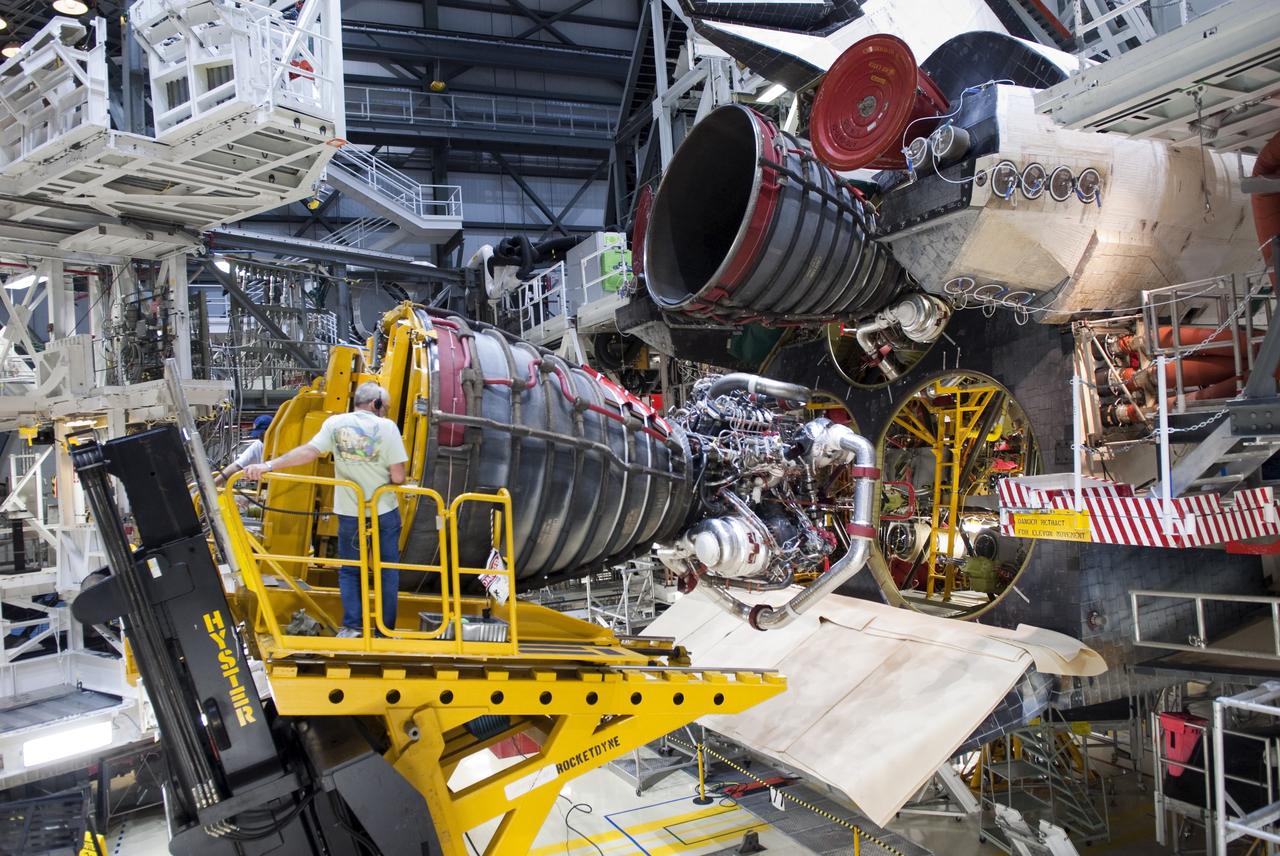
CAPE CANAVERAL, Fla. - Technicians complete the removal of main engine No. 3 from space shuttle Discovery using a specially designed engine installer, called a Hyster forklift. The work is taking place in Orbiter Processing Facility-2 at NASA's Kennedy Space Center in Florida. The removal is part of Discovery's transition and retirement processing. Work performed on Discovery is expected to help rocket designers build next-generation spacecraft and prepare the shuttle for future public display. NASA/Jim Grossmann
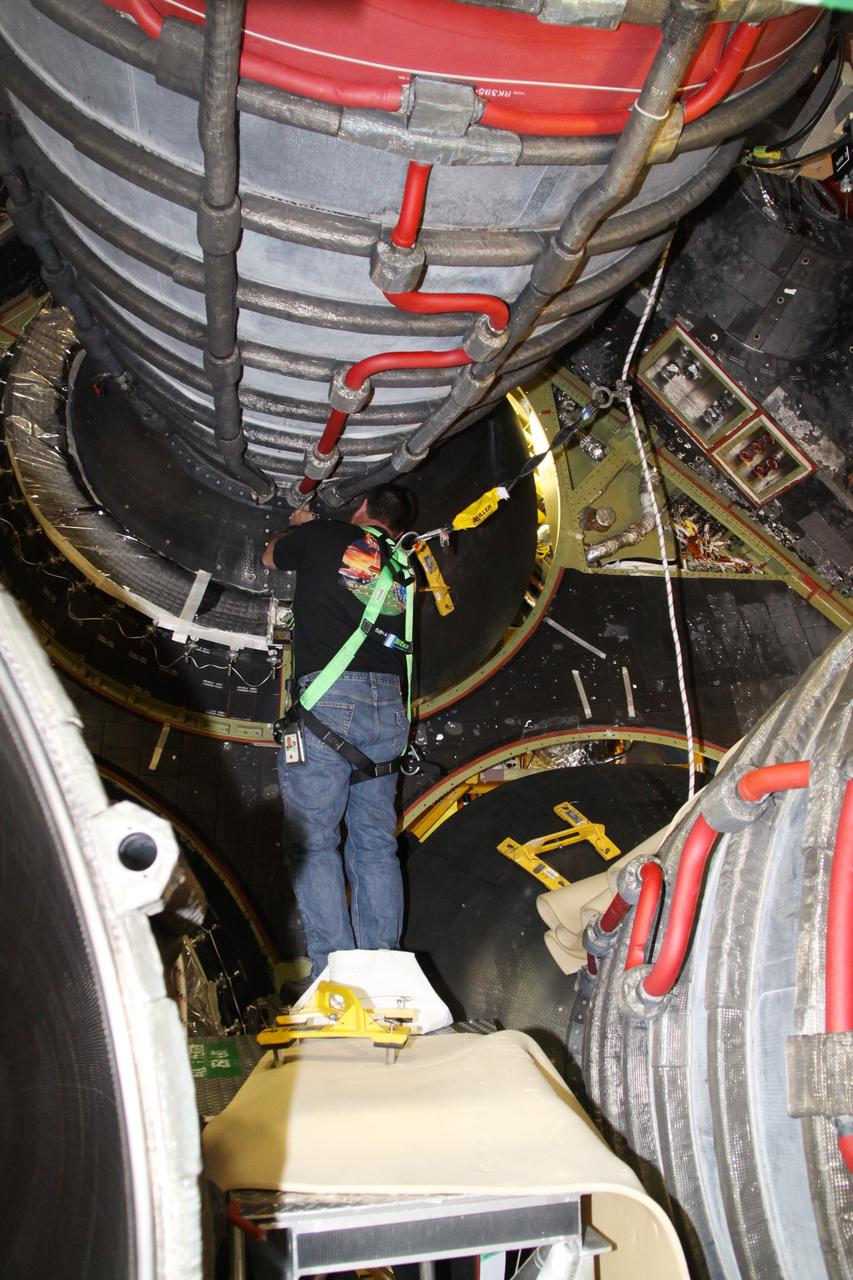
CAPE CANAVERAL, Fla. - Crews in Orbiter Processing Facility-2 at NASA's Kennedy Space Center in Florida remove space shuttle Discovery's right-hand inner heat shield from engine No. 1. The removal is part of Discovery's transition and retirement processing. Work performed on Discovery is expected to help rocket designers build next-generation spacecraft and prepare the shuttle for future public display.Photo credit: NASA/Jack Pfaller
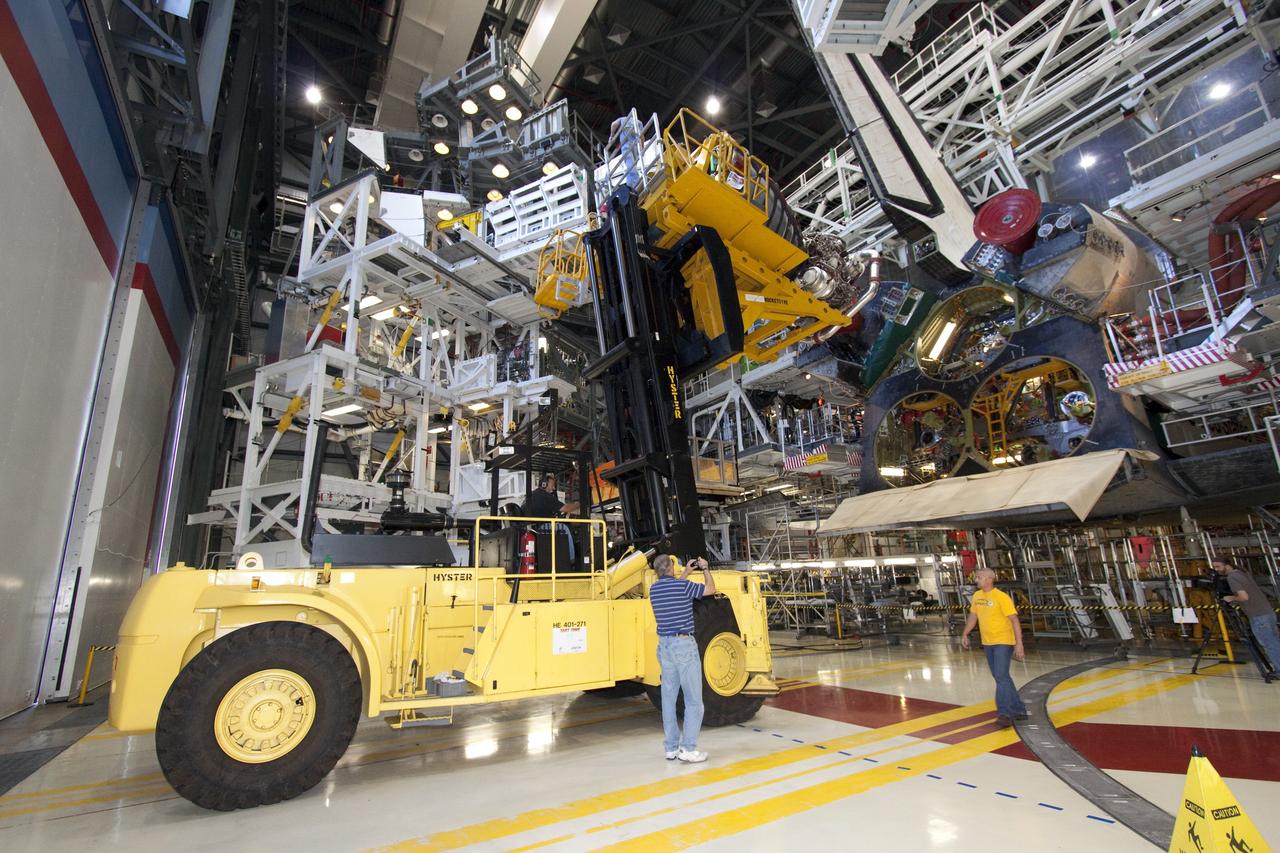
CAPE CANAVERAL, Fla. - Technicians complete the removal of main engine No. 1 from space shuttle Discovery using a specially designed engine installer, called a Hyster forklift. The work is taking place in Orbiter Processing Facility-2 at NASA's Kennedy Space Center in Florida. The removal is part of Discovery's transition and retirement processing. Work performed on Discovery is expected to help rocket designers build next-generation spacecraft and prepare the shuttle for future public display. Photo credit: NASA/Jack Pfaller
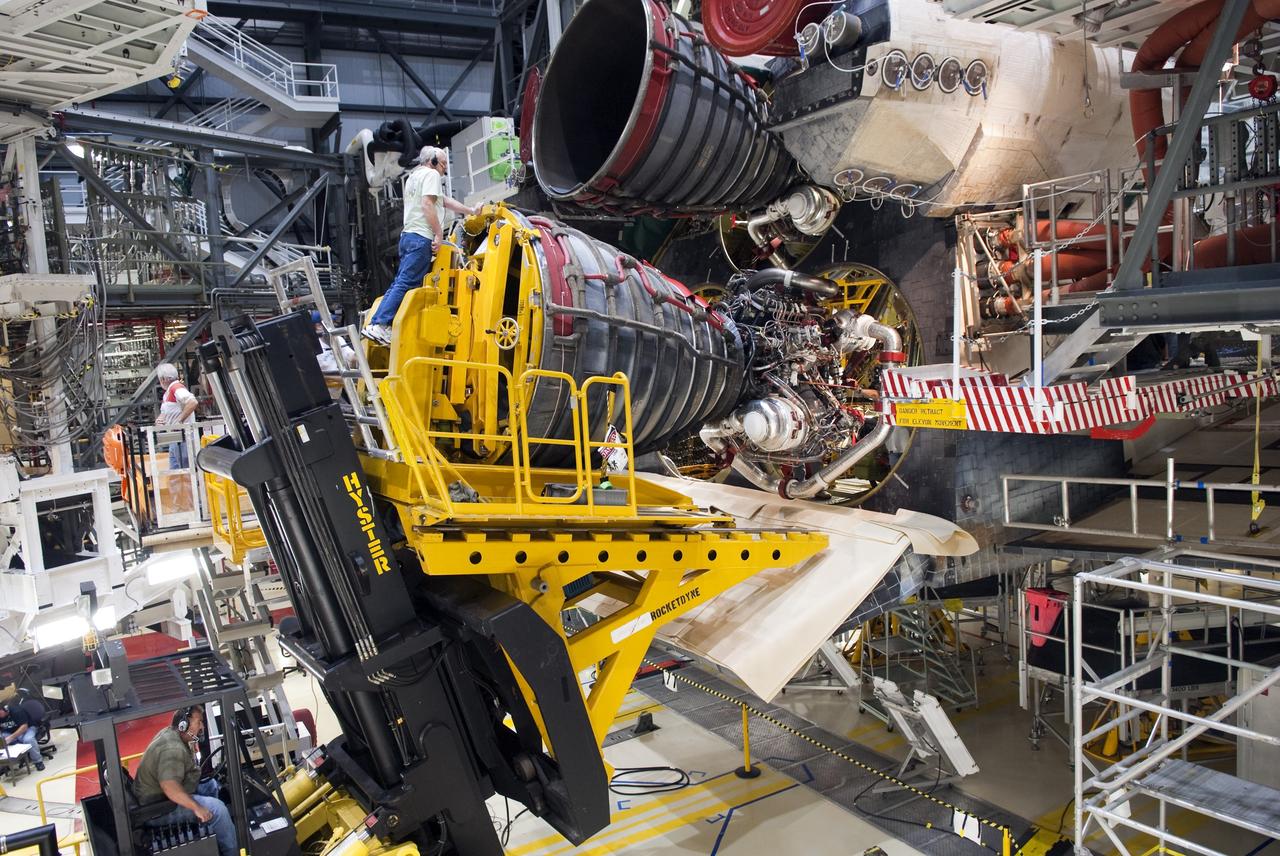
CAPE CANAVERAL, Fla. - Technicians carefully remove main engine No. 3 from space shuttle Discovery using a specially designed engine installer, called a Hyster forklift. The work is taking place in Orbiter Processing Facility-2 at NASA's Kennedy Space Center in Florida. The removal is part of Discovery's transition and retirement processing. Work performed on Discovery is expected to help rocket designers build next-generation spacecraft and prepare the shuttle for future public display. NASA/Jim Grossmann
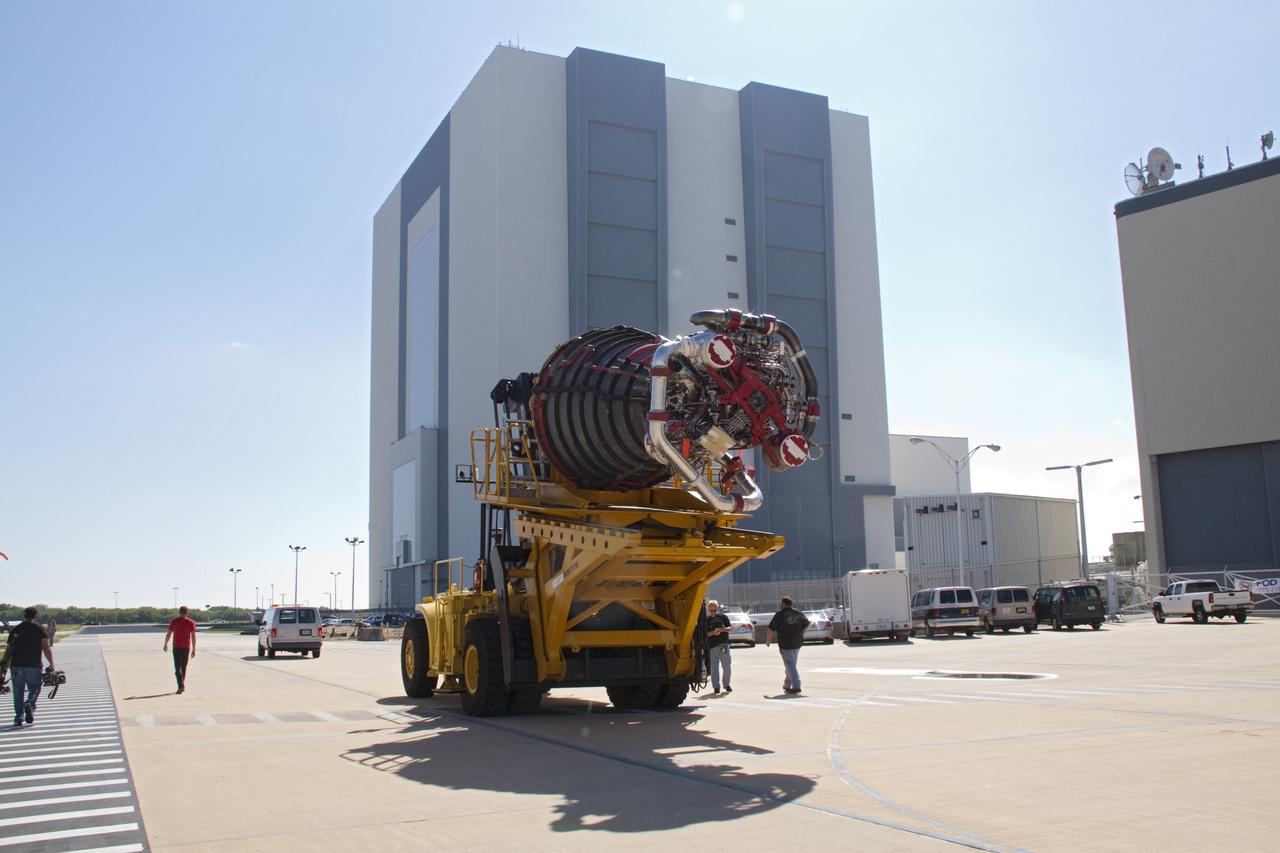
CAPE CANAVERAL, Fla. - Main engine No. 1, which was removed from space shuttle Discovery, is transported from Orbiter Processing Facility-2 to the Space Shuttle Main Engine Processing Facility at NASA's Kennedy Space Center in Florida. The removal was part of Discovery's transition and retirement processing. Work performed on Discovery is expected to help rocket designers build next-generation spacecraft and prepare the shuttle for future public display. Photo credit: NASA/Jack Pfaller
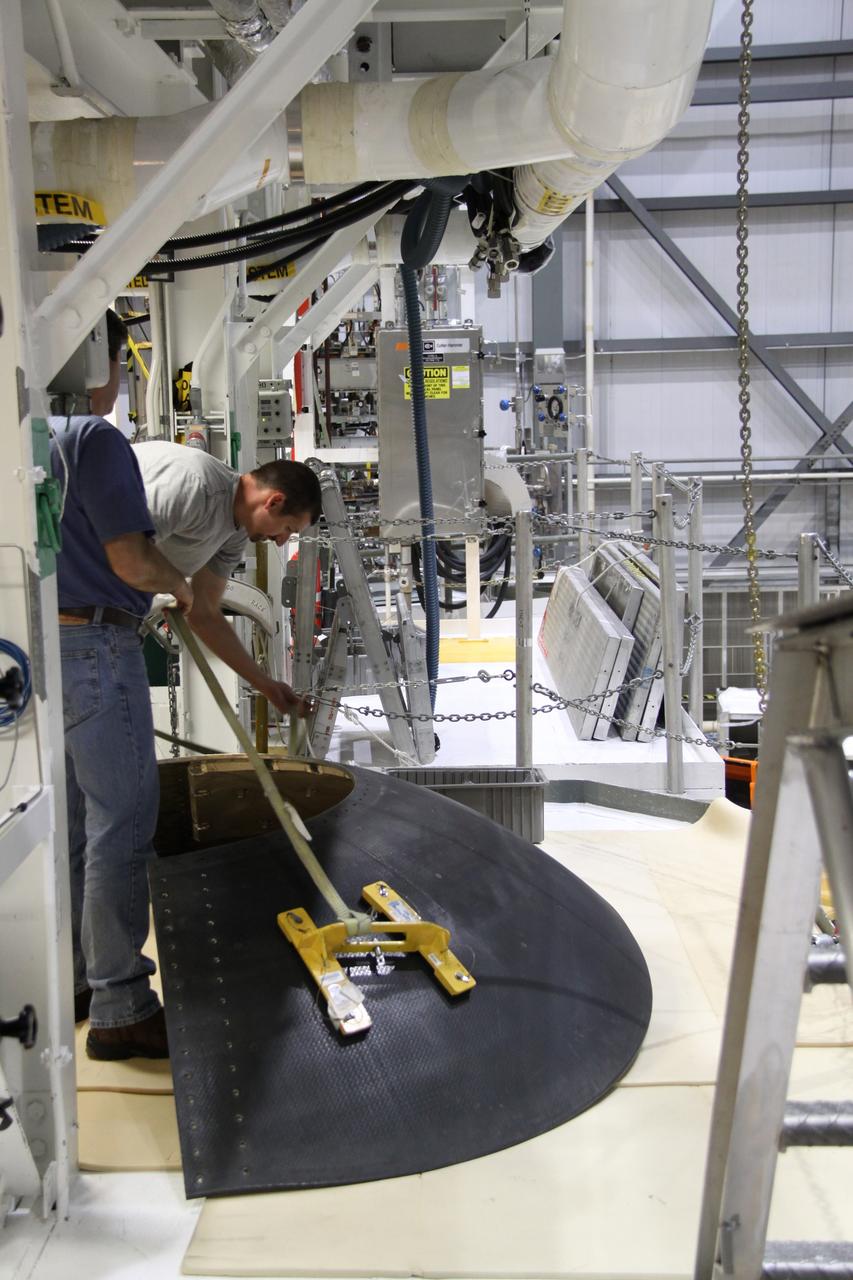
CAPE CANAVERAL, Fla. - Crews in Orbiter Processing Facility-2 at NASA's Kennedy Space Center in Florida remove space shuttle Discovery's right-hand inner heat shield from engine No. 1. The removal is part of Discovery's transition and retirement processing. Work performed on Discovery is expected to help rocket designers build next-generation spacecraft and prepare the shuttle for future public display.Photo credit: NASA/Jack Pfaller
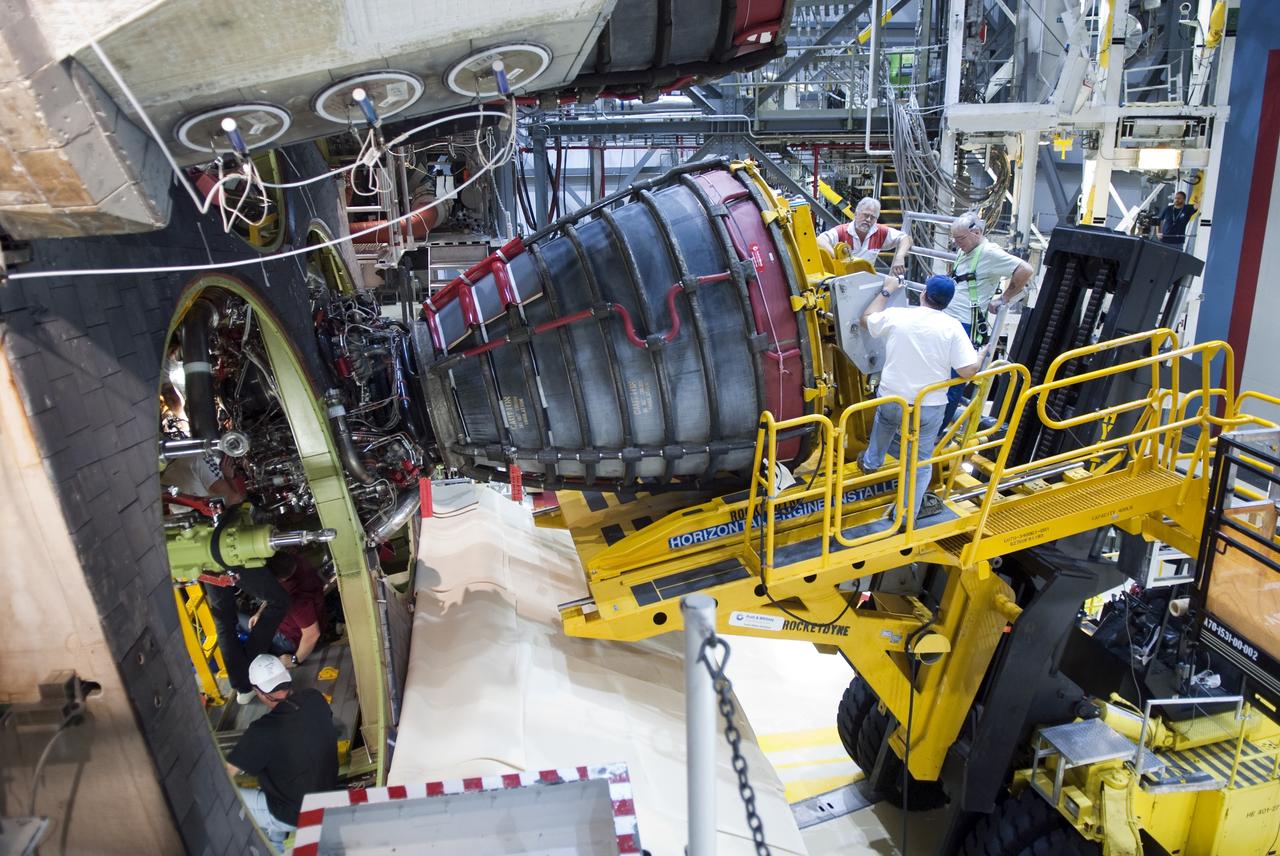
CAPE CANAVERAL, Fla. - Technicians carefully remove main engine No. 3 from space shuttle Discovery using a specially designed engine installer, called a Hyster forklift. The work is taking place in Orbiter Processing Facility-2 at NASA's Kennedy Space Center in Florida. The removal is part of Discovery's transition and retirement processing. Work performed on Discovery is expected to help rocket designers build next-generation spacecraft and prepare the shuttle for future public display. NASA/Jim Grossmann
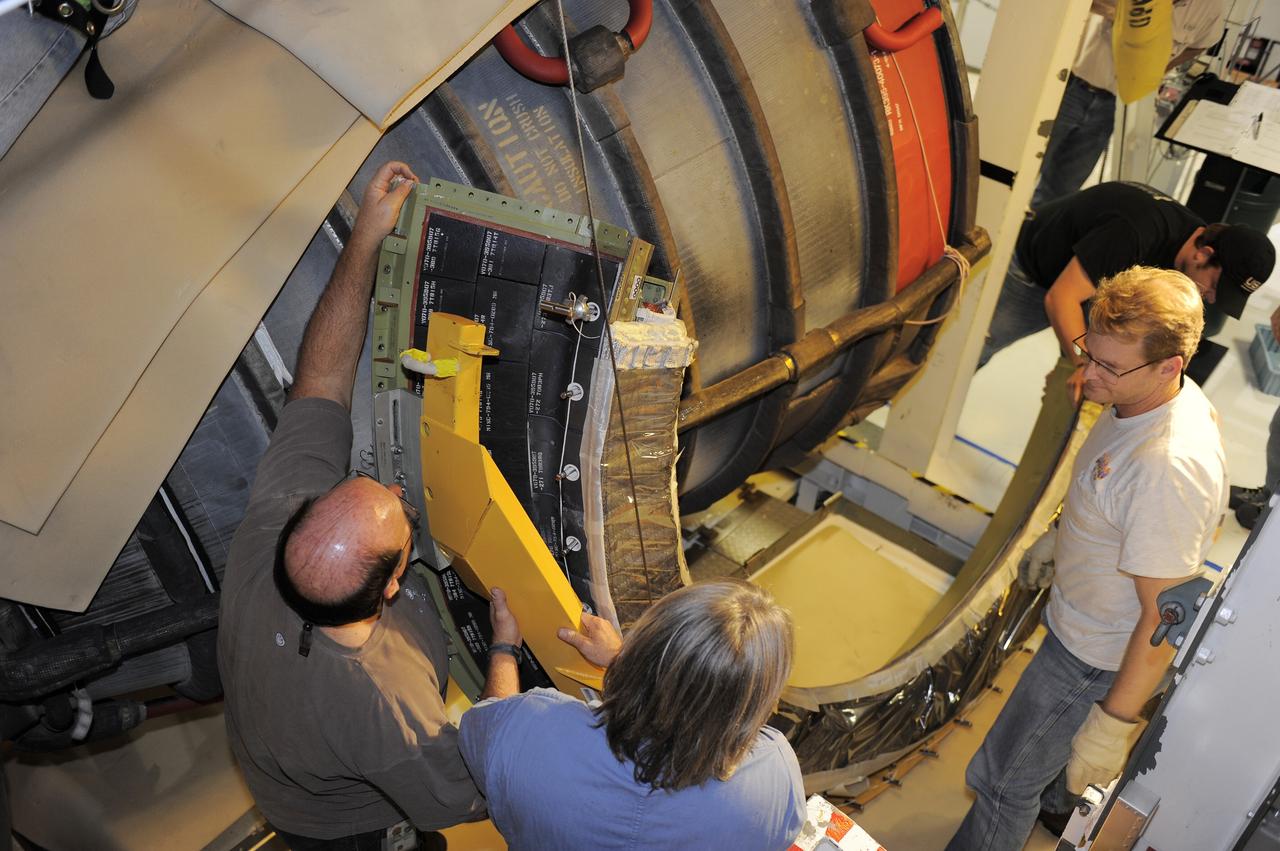
CAPE CANAVERAL, Fla. - Crews in Orbiter Processing Facility-2 at NASA's Kennedy Space Center in Florida remove space shuttle Discovery's right-hand inner heat shield from engine No. 1. The removal is part of Discovery's transition and retirement processing. Work performed on Discovery is expected to help rocket designers build next-generation spacecraft and prepare the shuttle for future public display.Photo credit: NASA/Kim Shiflett
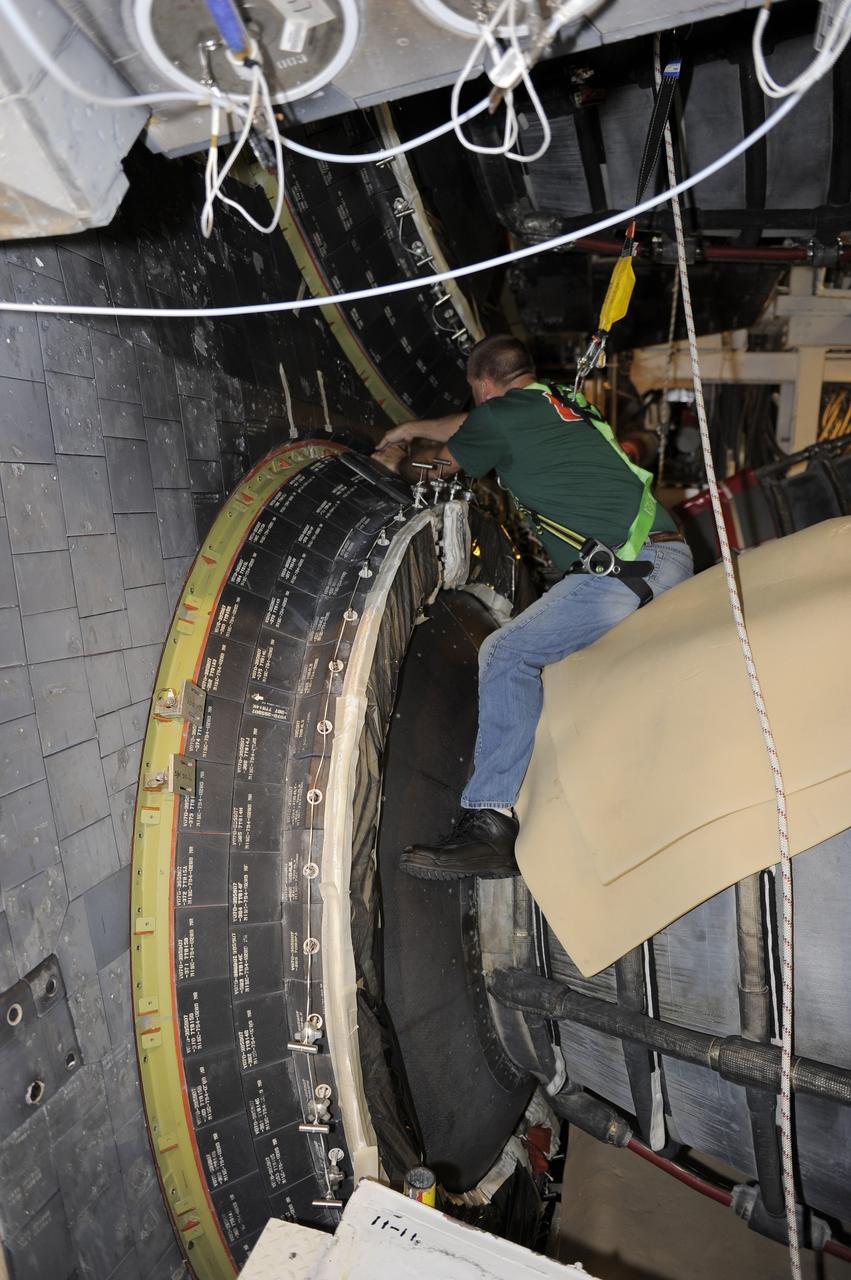
CAPE CANAVERAL, Fla. - Crews in Orbiter Processing Facility-2 at NASA's Kennedy Space Center in Florida remove space shuttle Discovery's right-hand inner heat shield from engine No. 1. The removal is part of Discovery's transition and retirement processing. Work performed on Discovery is expected to help rocket designers build next-generation spacecraft and prepare the shuttle for future public display.Photo credit: NASA/Kim Shiflett
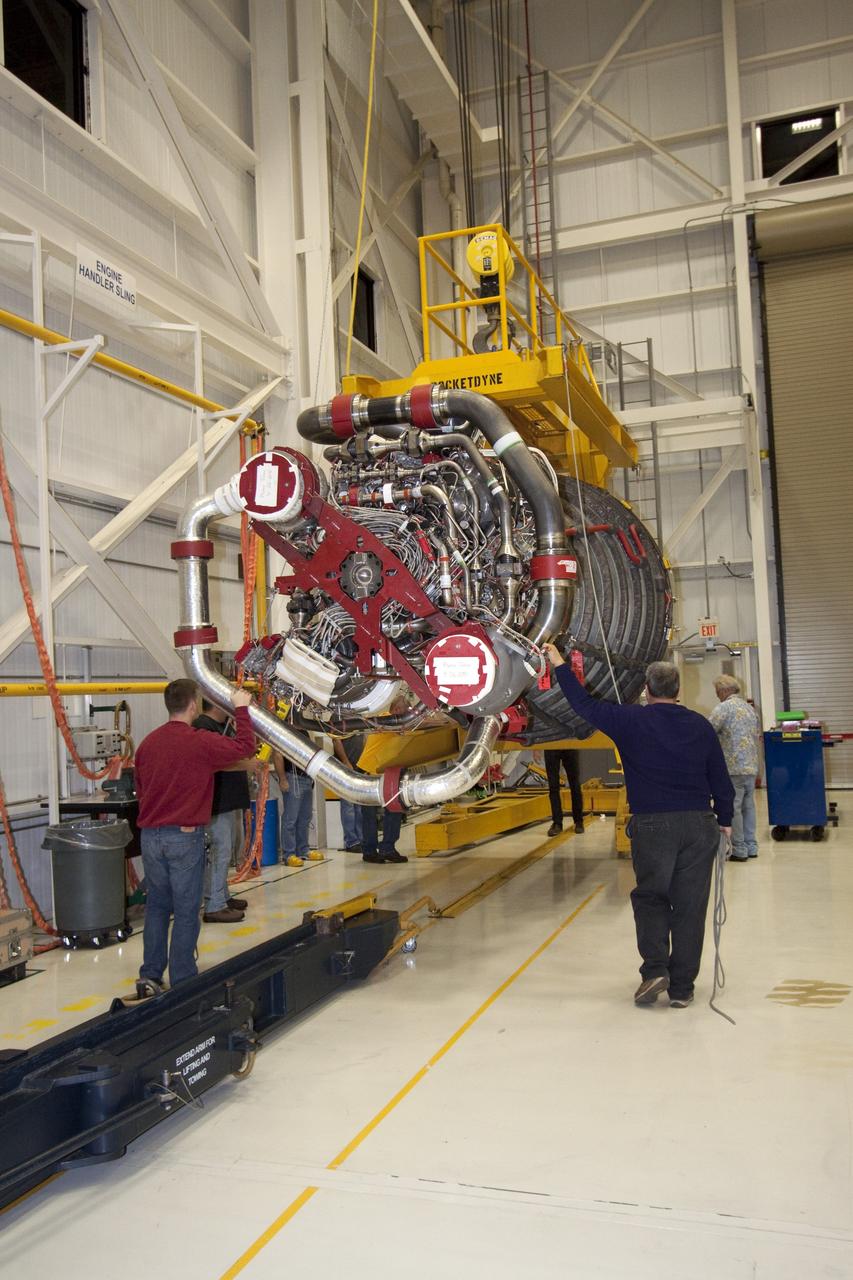
CAPE CANAVERAL, Fla. - Space shuttle main engine No. 2, which was removed from shuttle Discovery, is moved to a work stand for routine inspections in the Space Shuttle Main Engine Processing Facility at NASA's Kennedy Space Center in Florida. The removal was part of Discovery's transition and retirement processing. Work performed on Discovery is expected to help rocket designers build next-generation spacecraft and prepare the shuttle for future public display. Photo credit: NASA/Jack Pfaller
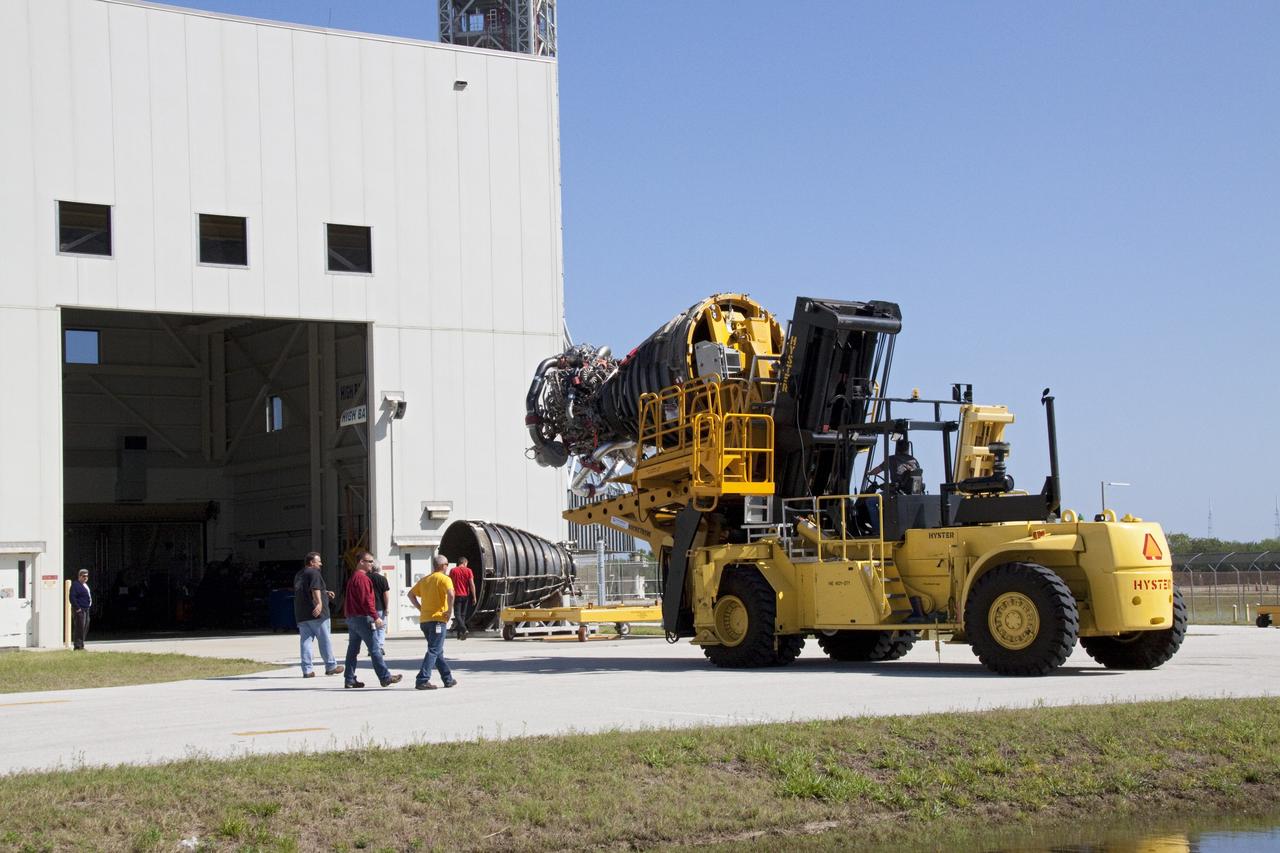
CAPE CANAVERAL, Fla. - Main engine No. 1, which was removed from space shuttle Discovery, is transported from Orbiter Processing Facility-2 to the Space Shuttle Main Engine Processing Facility at NASA's Kennedy Space Center in Florida. The removal was part of Discovery's transition and retirement processing. Work performed on Discovery is expected to help rocket designers build next-generation spacecraft and prepare the shuttle for future public display. Photo credit: NASA/Jack Pfaller
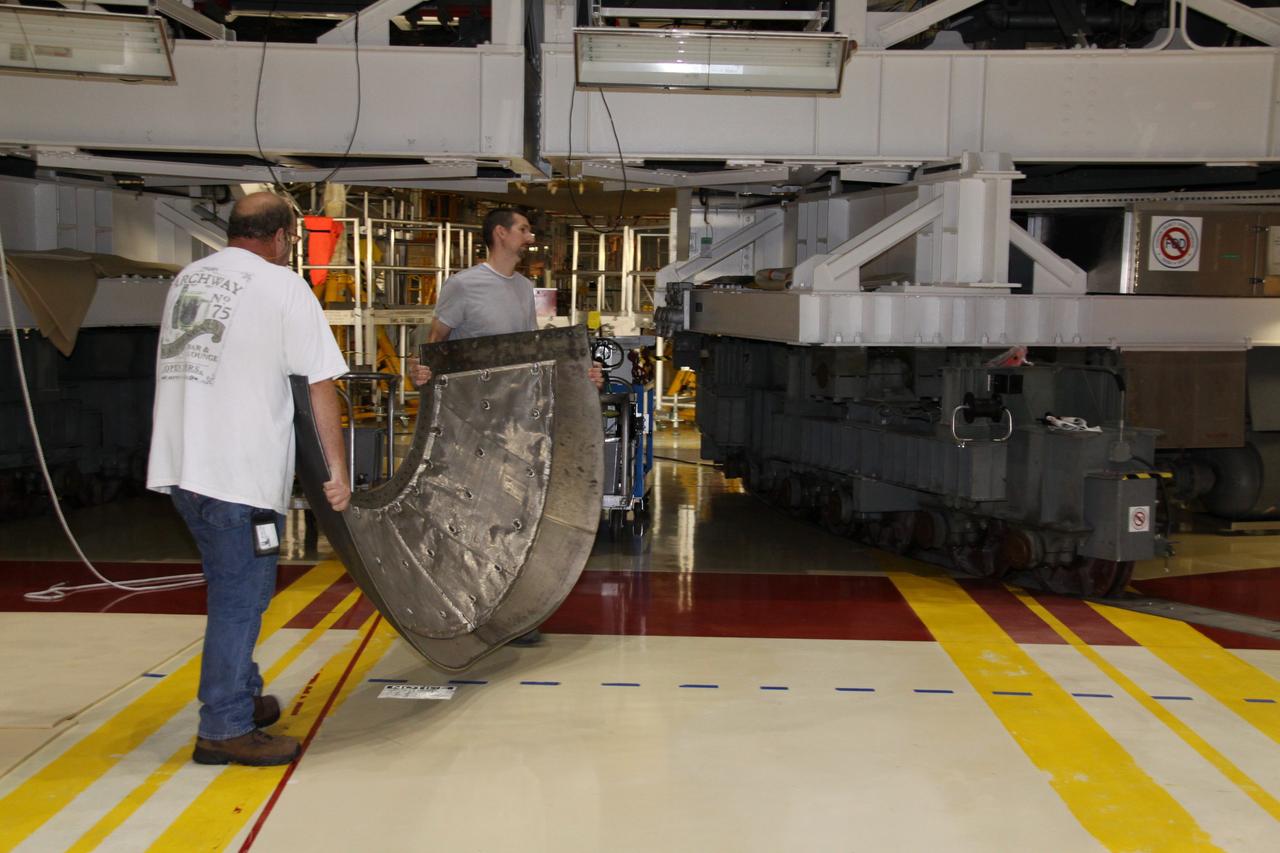
CAPE CANAVERAL, Fla. - Crews in Orbiter Processing Facility-2 at NASA's Kennedy Space Center in Florida remove space shuttle Discovery's right-hand inner heat shield from engine No. 1. The removal is part of Discovery's transition and retirement processing. Work performed on Discovery is expected to help rocket designers build next-generation spacecraft and prepare the shuttle for future public display.Photo credit: NASA/Jack Pfaller
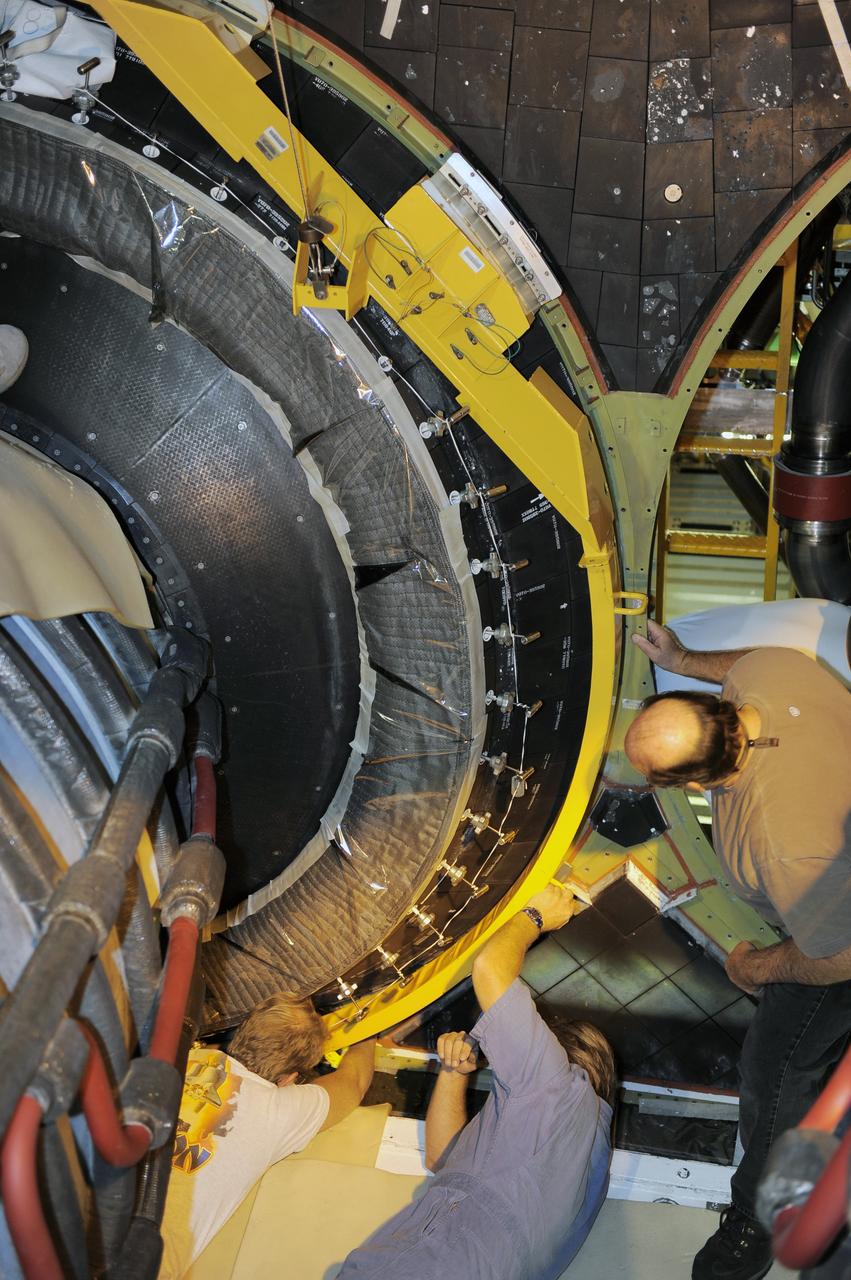
CAPE CANAVERAL, Fla. - Crews in Orbiter Processing Facility-2 at NASA's Kennedy Space Center in Florida remove space shuttle Discovery's right-hand inner heat shield from engine No. 1. The removal is part of Discovery's transition and retirement processing. Work performed on Discovery is expected to help rocket designers build next-generation spacecraft and prepare the shuttle for future public display.Photo credit: NASA/Kim Shiflett
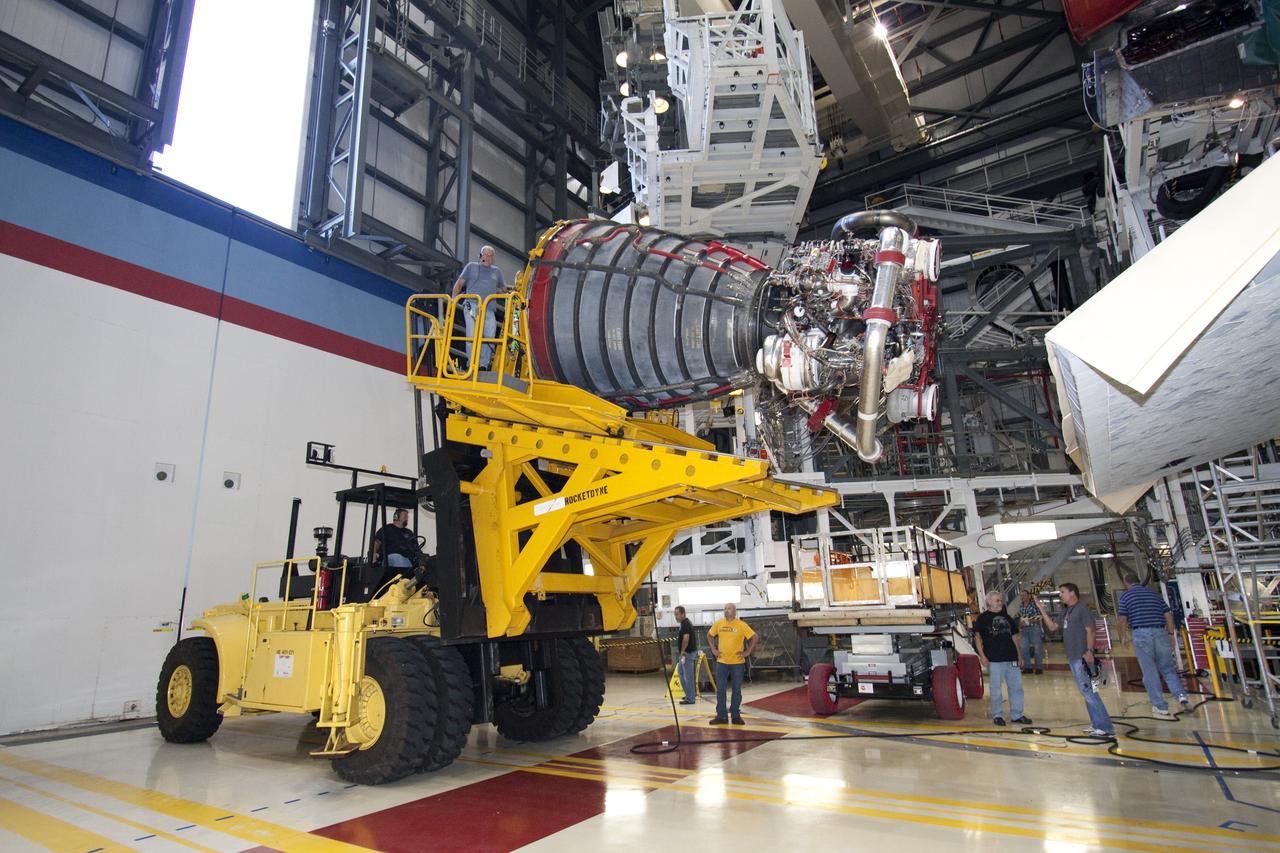
CAPE CANAVERAL, Fla. - Technicians complete the removal of main engine No. 1 from space shuttle Discovery using a specially designed engine installer, called a Hyster forklift. The work is taking place in Orbiter Processing Facility-2 at NASA's Kennedy Space Center in Florida. The removal is part of Discovery's transition and retirement processing. Work performed on Discovery is expected to help rocket designers build next-generation spacecraft and prepare the shuttle for future public display. Photo credit: NASA/Jack Pfaller
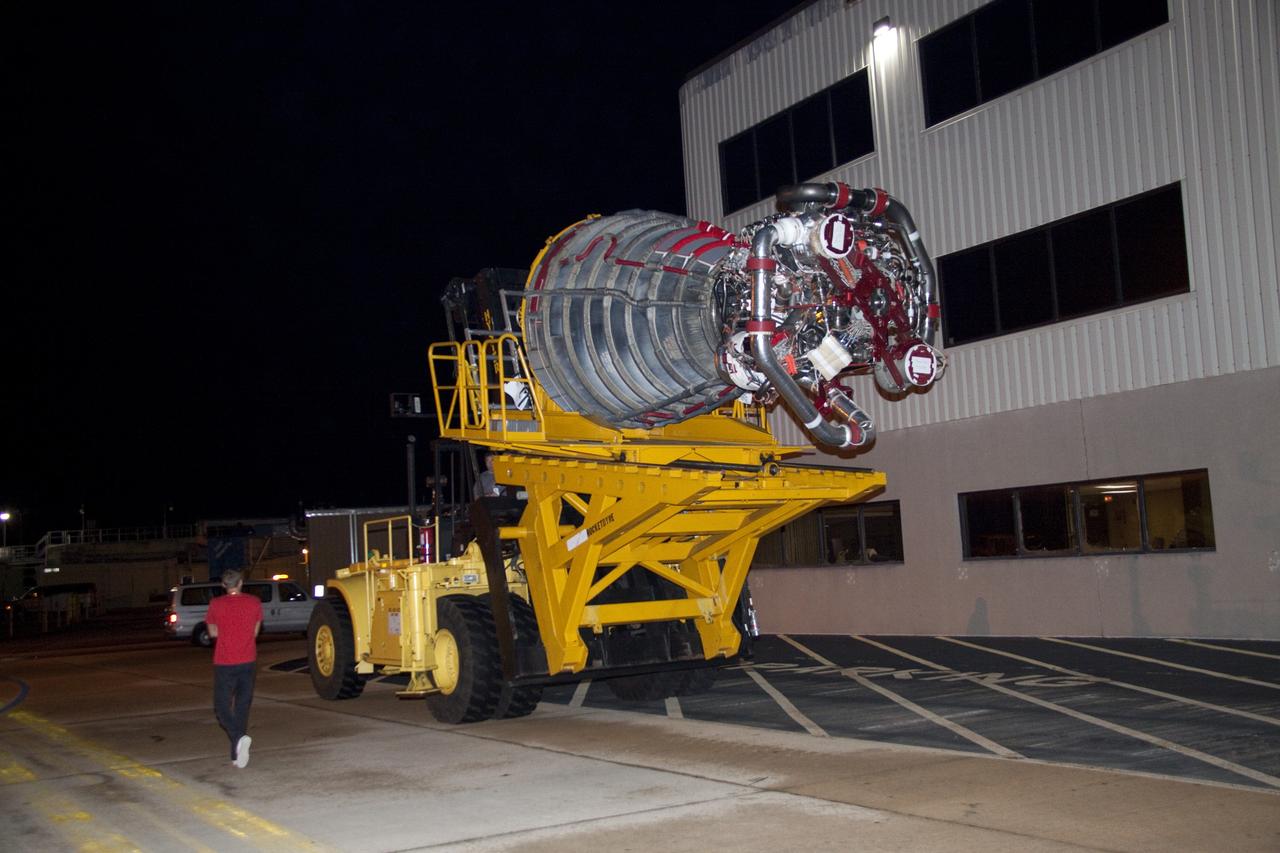
CAPE CANAVERAL, Fla. - Space shuttle main engine No. 2, which was removed from shuttle Discovery, is transported from Orbiter Processing Facility-2 to the Space Shuttle Main Engine Processing Facility at NASA's Kennedy Space Center in Florida. The removal was part of Discovery's transition and retirement processing. Work performed on Discovery is expected to help rocket designers build next-generation spacecraft and prepare the shuttle for future public display. Photo credit: NASA/Jack Pfaller
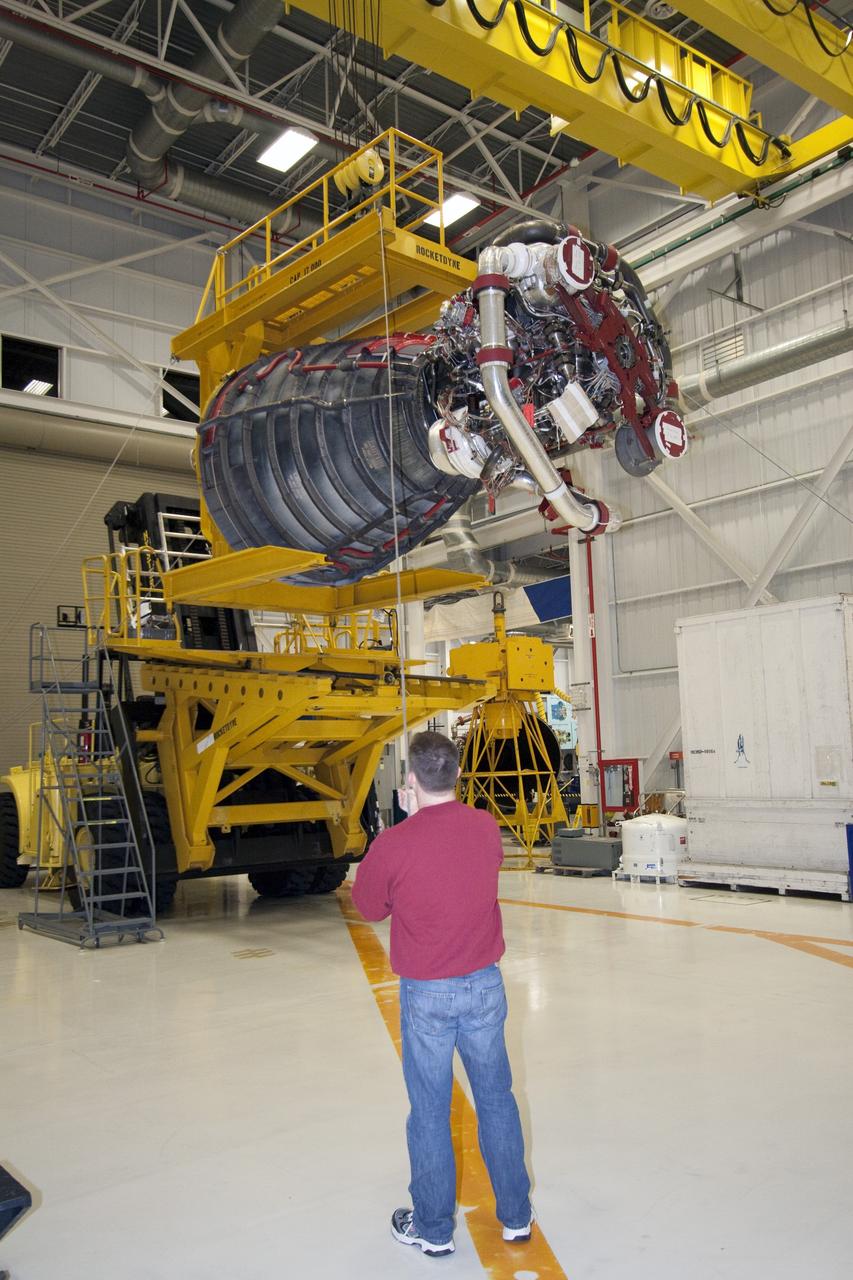
CAPE CANAVERAL, Fla. - Space shuttle main engine No. 2, which was removed from shuttle Discovery, is moved to a work stand for routine inspections in the Space Shuttle Main Engine Processing Facility at NASA's Kennedy Space Center in Florida. The removal was part of Discovery's transition and retirement processing. Work performed on Discovery is expected to help rocket designers build next-generation spacecraft and prepare the shuttle for future public display. Photo credit: NASA/Jack Pfaller
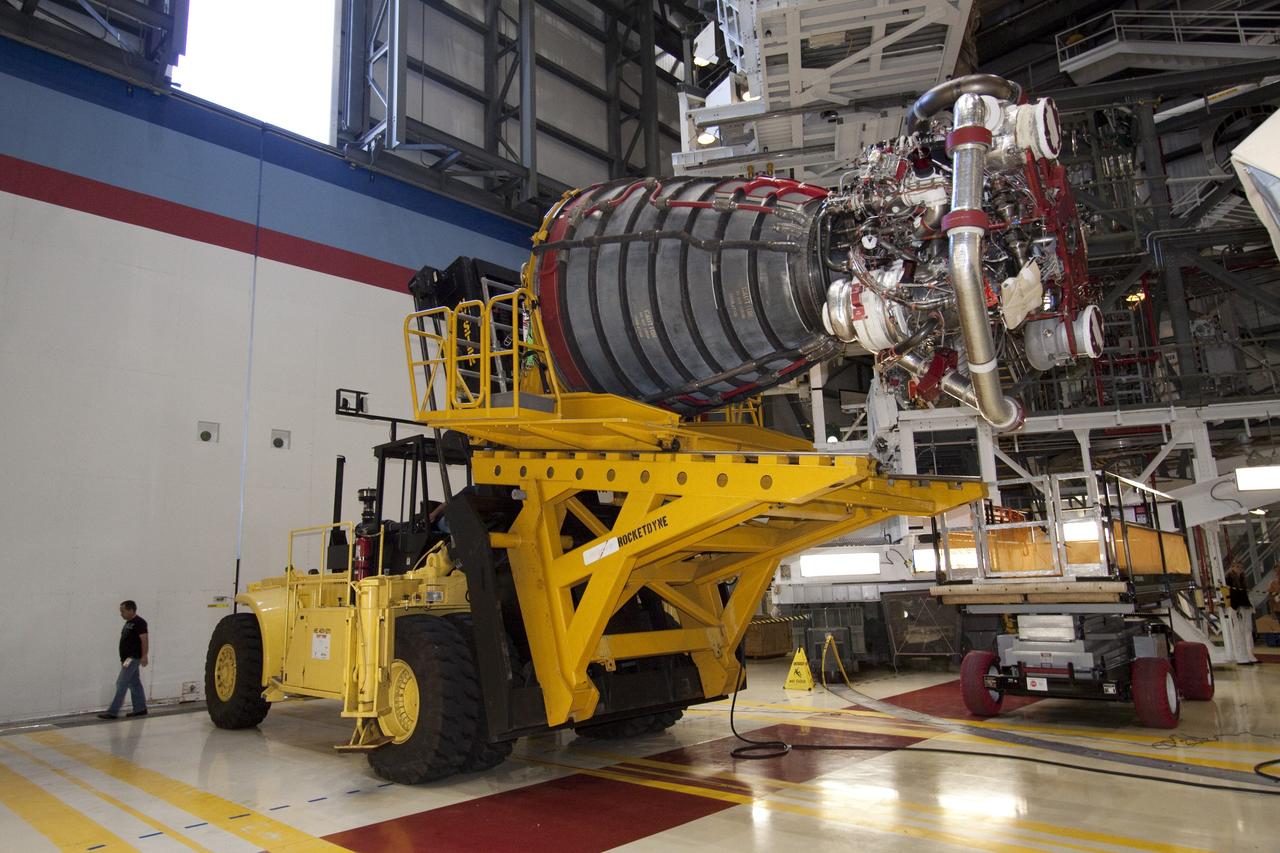
CAPE CANAVERAL, Fla. - Technicians complete the removal of main engine No. 1 from space shuttle Discovery using a specially designed engine installer, called a Hyster forklift. The work is taking place in Orbiter Processing Facility-2 at NASA's Kennedy Space Center in Florida. The removal is part of Discovery's transition and retirement processing. Work performed on Discovery is expected to help rocket designers build next-generation spacecraft and prepare the shuttle for future public display. Photo credit: NASA/Jack Pfaller
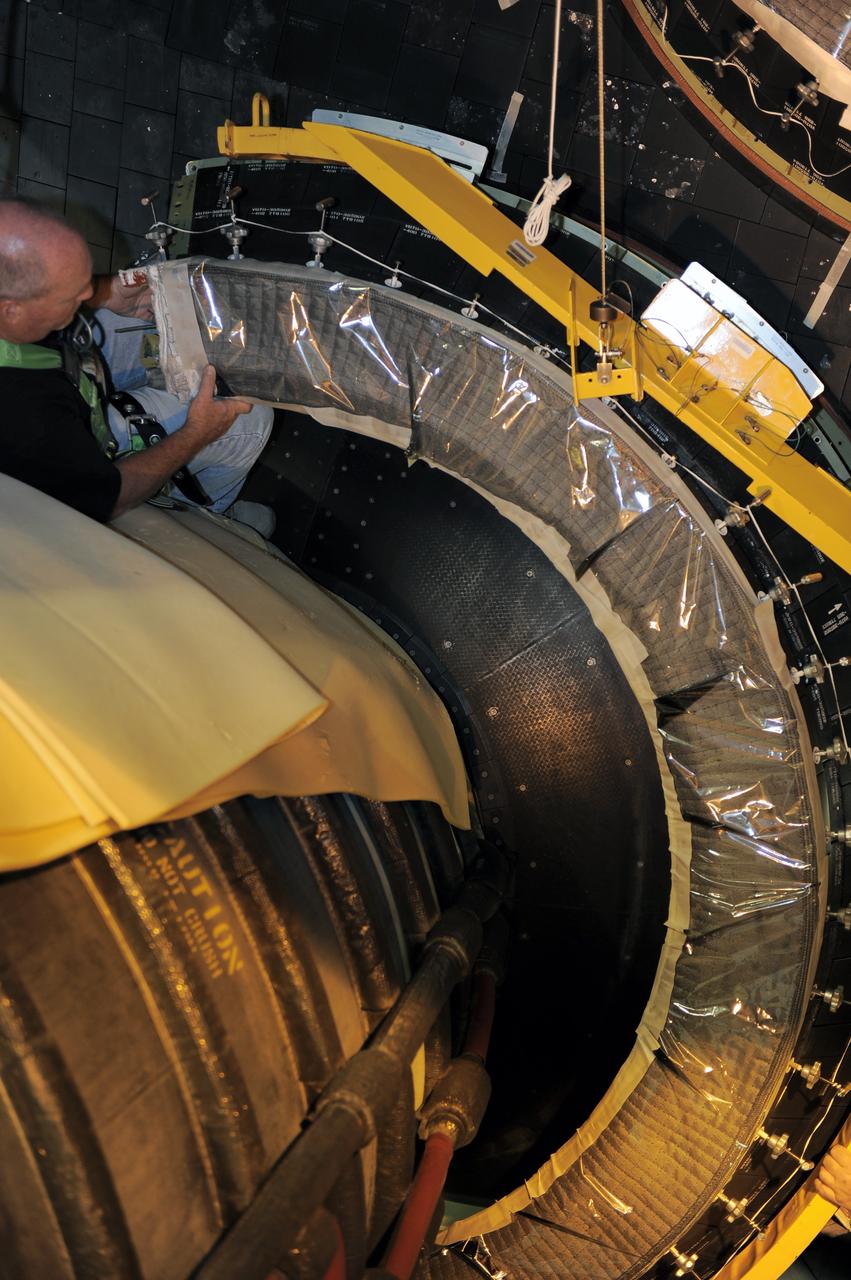
CAPE CANAVERAL, Fla. - Crews in Orbiter Processing Facility-2 at NASA's Kennedy Space Center in Florida remove space shuttle Discovery's right-hand inner heat shield from engine No. 1. The removal is part of Discovery's transition and retirement processing. Work performed on Discovery is expected to help rocket designers build next-generation spacecraft and prepare the shuttle for future public display.Photo credit: NASA/Kim Shiflett
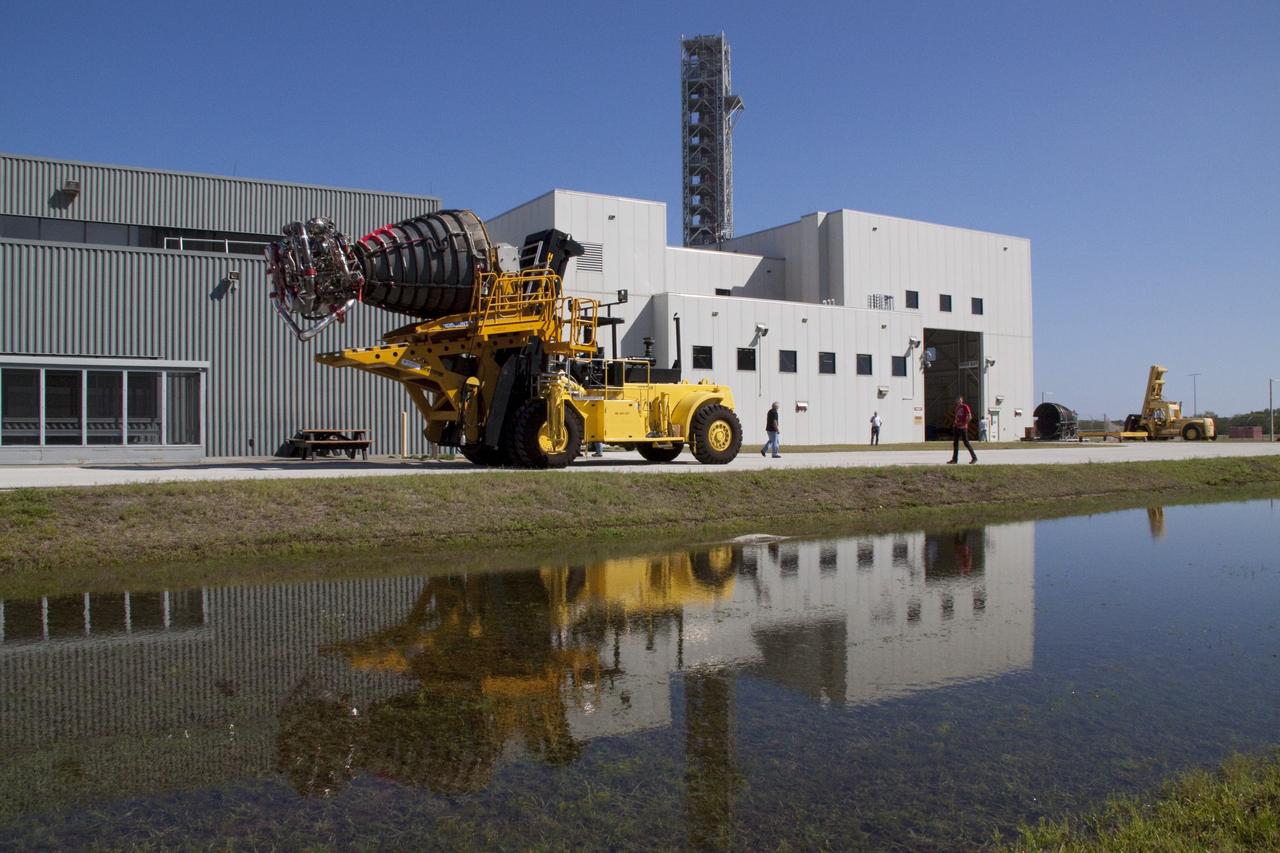
CAPE CANAVERAL, Fla. - Main engine No. 1, which was removed from space shuttle Discovery, is transported from Orbiter Processing Facility-2 to the Space Shuttle Main Engine Processing Facility at NASA's Kennedy Space Center in Florida. The removal was part of Discovery's transition and retirement processing. Work performed on Discovery is expected to help rocket designers build next-generation spacecraft and prepare the shuttle for future public display. Photo credit: NASA/Jack Pfaller
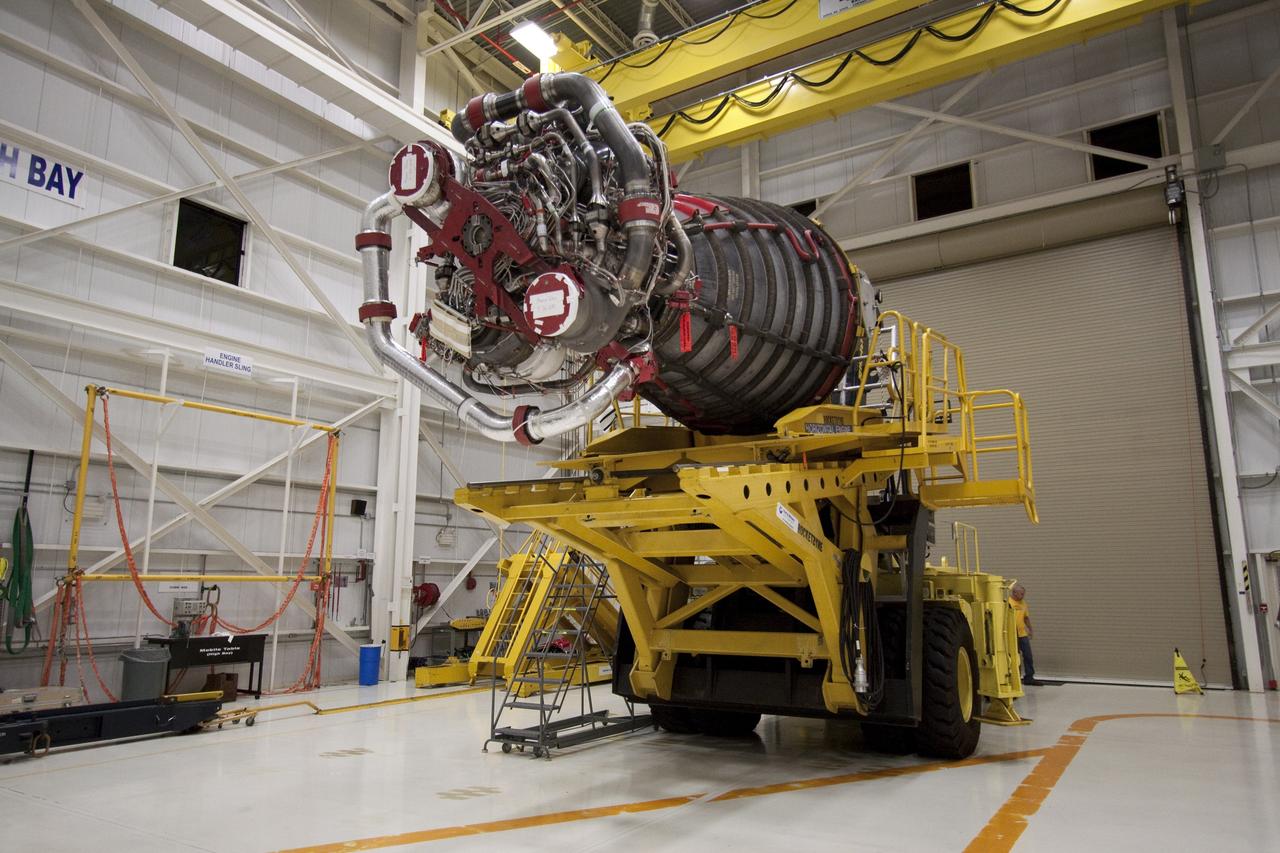
CAPE CANAVERAL, Fla. - Space shuttle main engine No. 2, which was removed from shuttle Discovery, will undergo standard inspections in the Space Shuttle Main Engine Processing Facility at NASA's Kennedy Space Center in Florida. The removal was part of Discovery's transition and retirement processing. Work performed on Discovery is expected to help rocket designers build next-generation spacecraft and prepare the shuttle for future public display. Photo credit: NASA/Jack Pfaller
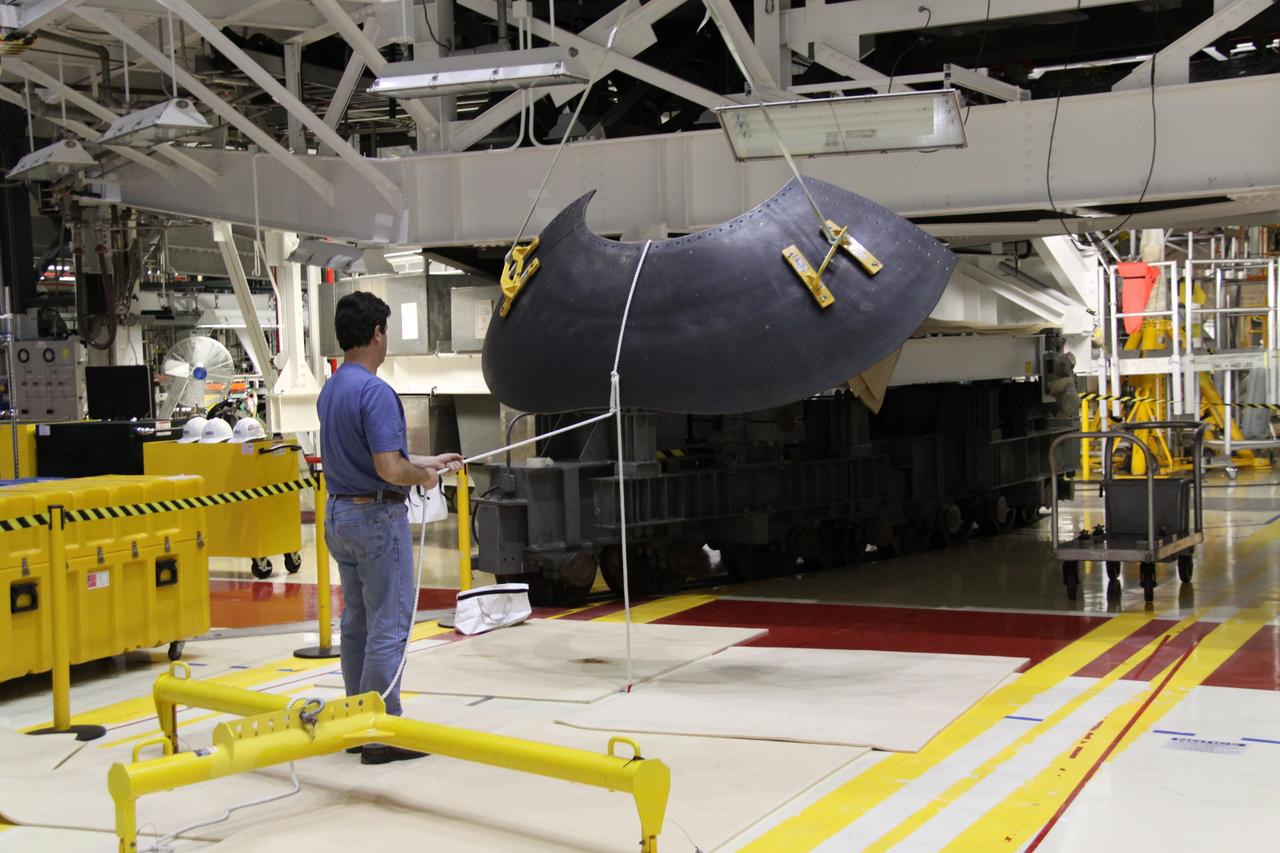
CAPE CANAVERAL, Fla. - Crews in Orbiter Processing Facility-2 at NASA's Kennedy Space Center in Florida remove space shuttle Discovery's right-hand inner heat shield from engine No. 1. The removal is part of Discovery's transition and retirement processing. Work performed on Discovery is expected to help rocket designers build next-generation spacecraft and prepare the shuttle for future public display.Photo credit: NASA/Jack Pfaller
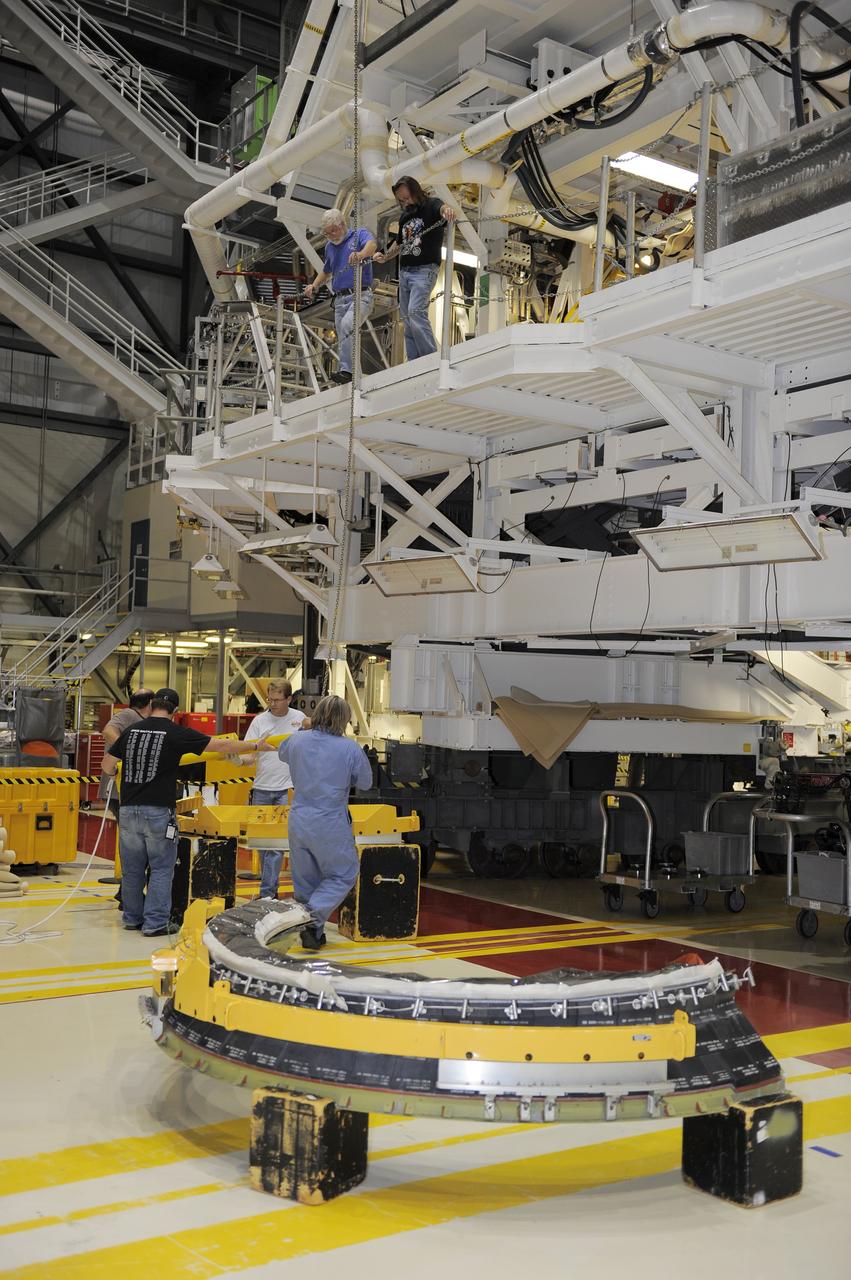
CAPE CANAVERAL, Fla. - Crews in Orbiter Processing Facility-2 at NASA's Kennedy Space Center in Florida remove space shuttle Discovery's right-hand inner heat shield from engine No. 1. The removal is part of Discovery's transition and retirement processing. Work performed on Discovery is expected to help rocket designers build next-generation spacecraft and prepare the shuttle for future public display.Photo credit: NASA/Kim Shiflett
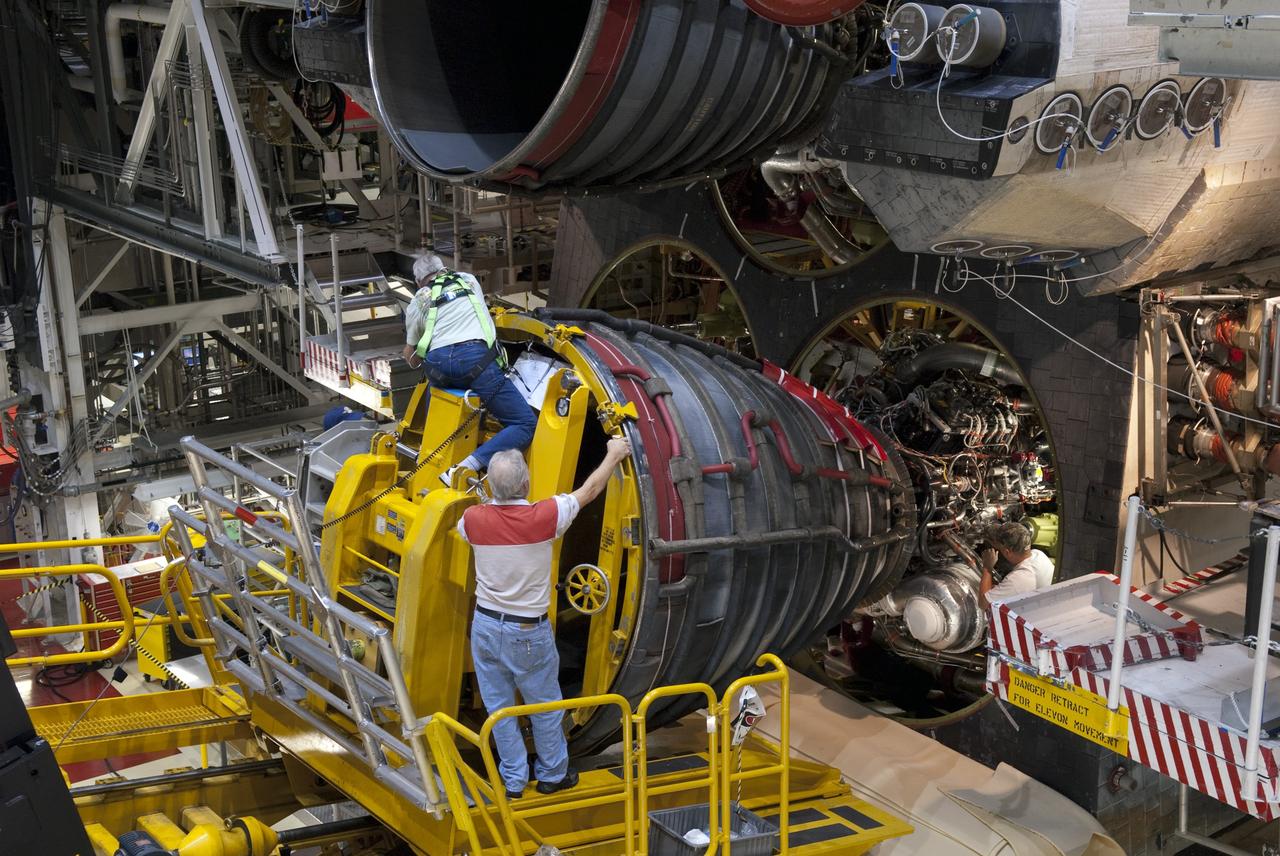
CAPE CANAVERAL, Fla. - Technicians carefully remove main engine No. 3 from space shuttle Discovery using a specially designed engine installer, called a Hyster forklift. The work is taking place in Orbiter Processing Facility-2 at NASA's Kennedy Space Center in Florida. The removal is part of Discovery's transition and retirement processing. Work performed on Discovery is expected to help rocket designers build next-generation spacecraft and prepare the shuttle for future public display. NASA/Jim Grossmann
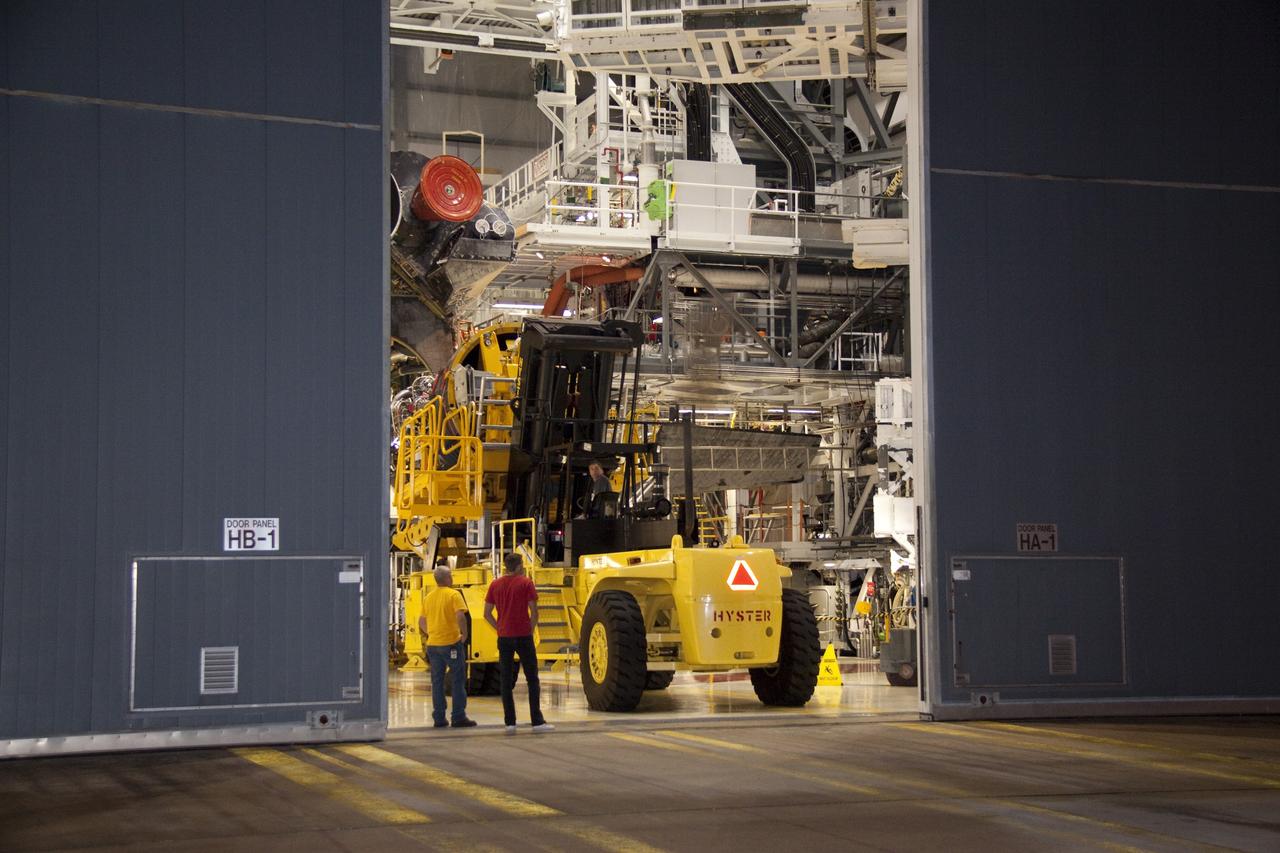
CAPE CANAVERAL, Fla. - Space shuttle main engine No. 2, which was removed from shuttle Discovery, will be transported from Orbiter Processing Facility-2 to the Space Shuttle Main Engine Processing Facility at NASA's Kennedy Space Center in Florida. The removal was part of Discovery's transition and retirement processing. Work performed on Discovery is expected to help rocket designers build next-generation spacecraft and prepare the shuttle for future public display. Photo credit: NASA/Jack Pfaller
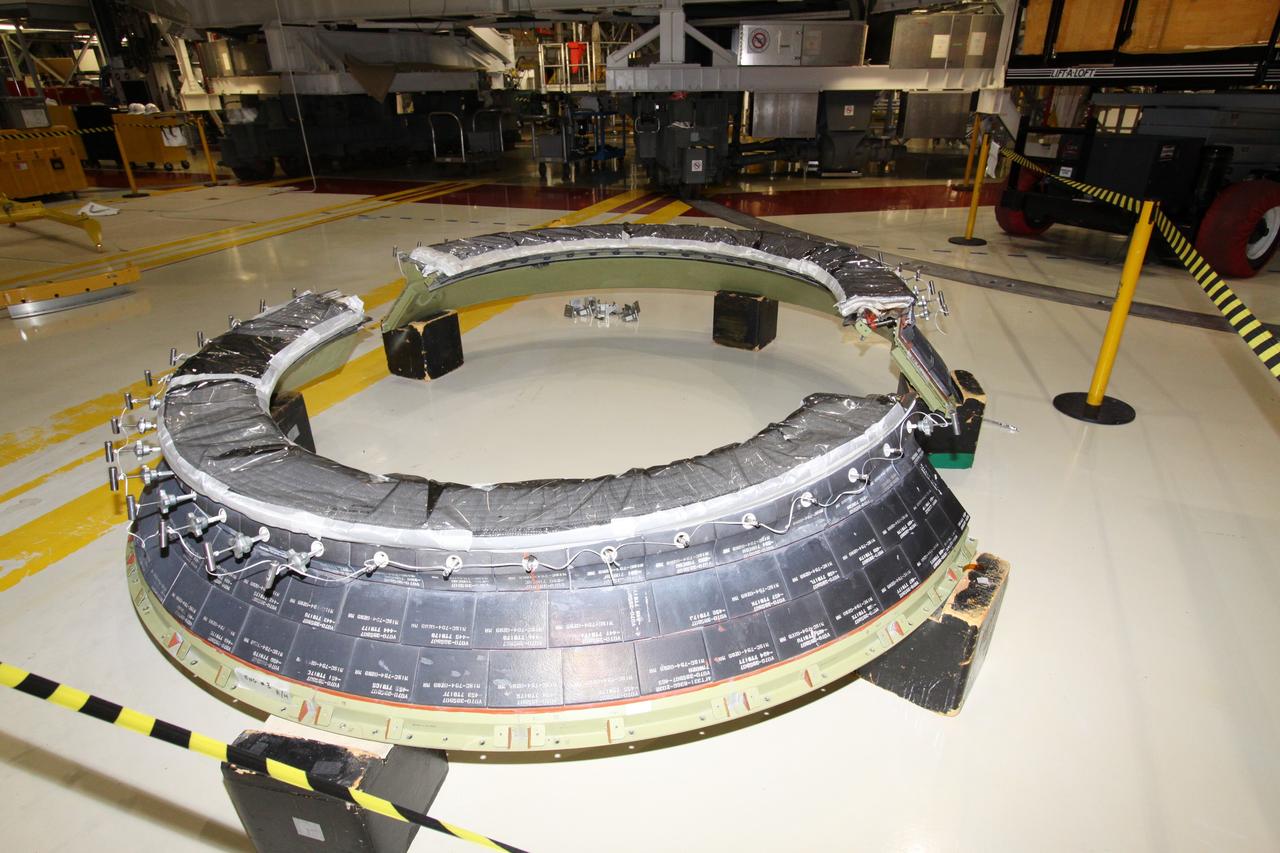
CAPE CANAVERAL, Fla. - Crews in Orbiter Processing Facility-2 at NASA's Kennedy Space Center in Florida remove space shuttle Discovery's right-hand inner heat shield from engine No. 1. The removal is part of Discovery's transition and retirement processing. Work performed on Discovery is expected to help rocket designers build next-generation spacecraft and prepare the shuttle for future public display.Photo credit: NASA/Jack Pfaller

CAPE CANAVERAL, Fla. - Crews in Orbiter Processing Facility-2 at NASA's Kennedy Space Center in Florida remove space shuttle Discovery's right-hand inner heat shield from engine No. 1. The removal is part of Discovery's transition and retirement processing. Work performed on Discovery is expected to help rocket designers build next-generation spacecraft and prepare the shuttle for future public display.Photo credit: NASA/Jack Pfaller
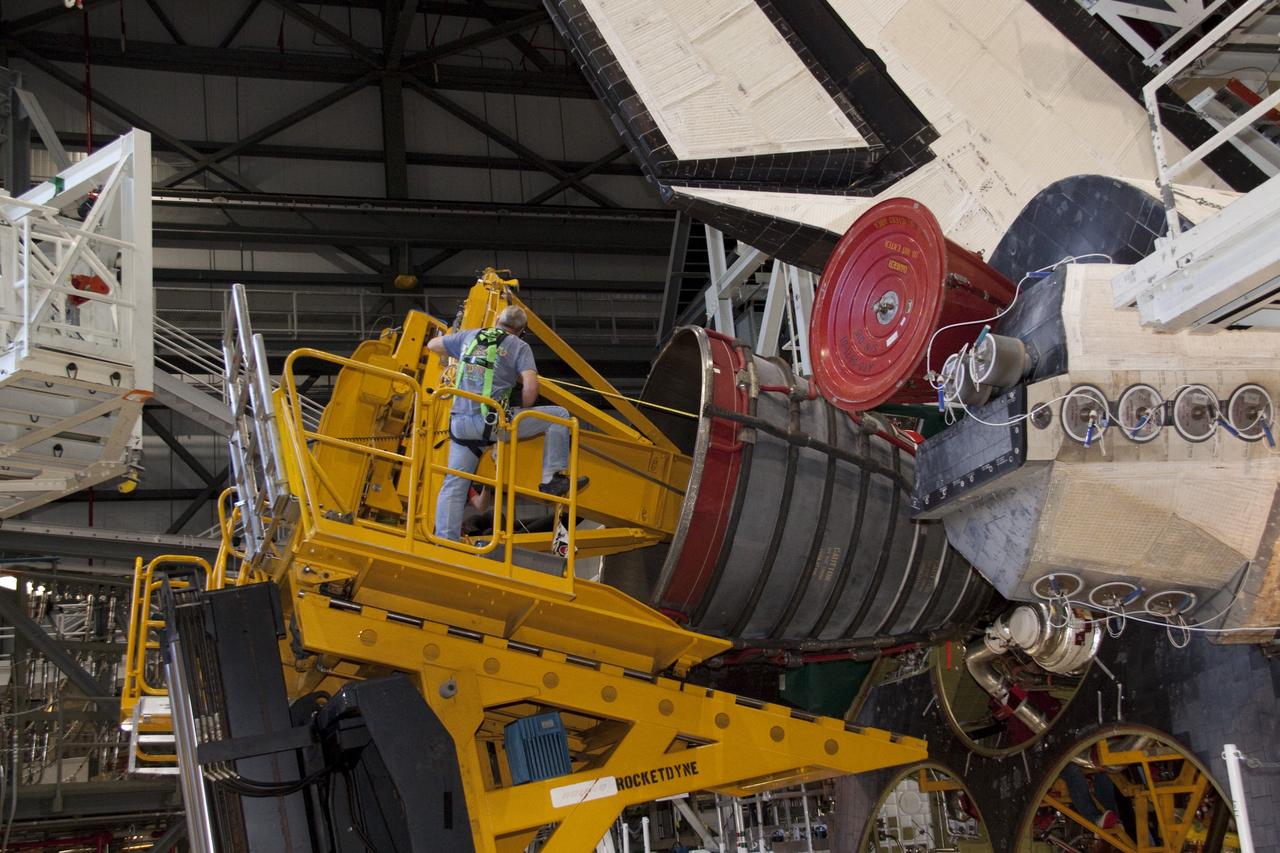
CAPE CANAVERAL, Fla. - Technicians carefully remove main engine No. 1 from space shuttle Discovery using a specially designed engine installer, called a Hyster forklift. The work is taking place in Orbiter Processing Facility-2 at NASA's Kennedy Space Center in Florida. The removal is part of Discovery's transition and retirement processing. Work performed on Discovery is expected to help rocket designers build next-generation spacecraft and prepare the shuttle for future public display. Photo credit: NASA/Jack Pfaller