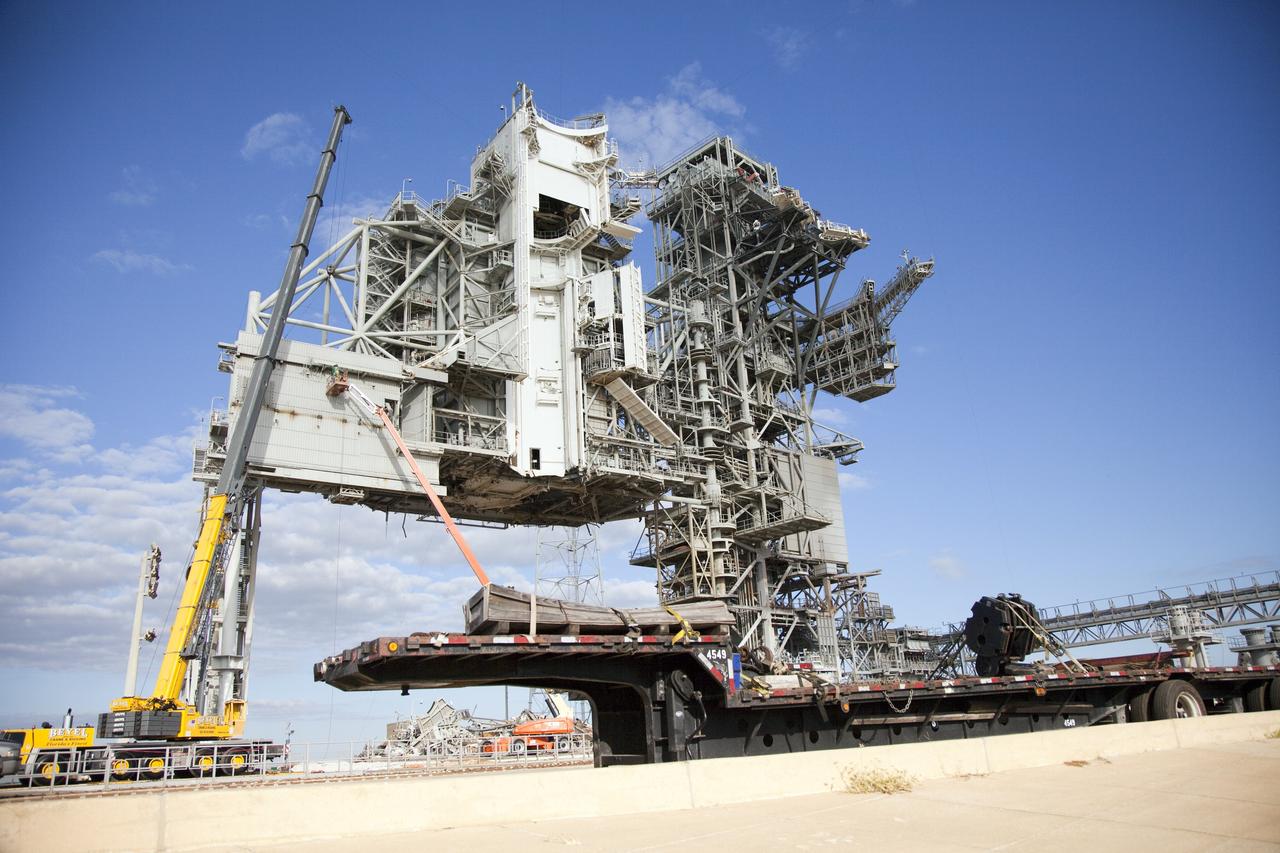
CAPE CANAVERAL, Fla. -- At NASA's Kennedy Space Center in Florida, the rotating service structure (RSS) on Launch Pad 39B is being dismantled. Starting in 2009, the structure at the pad was no longer needed for NASA's Space Shuttle Program, so it is being restructured for future use. The new design will feature a "clean pad" for rockets to come with their own launcher, making it more versatile for a number of vehicles. For information on NASA's future plans, visit www.nasa.gov. Photo credit: NASA/Frankie Martin
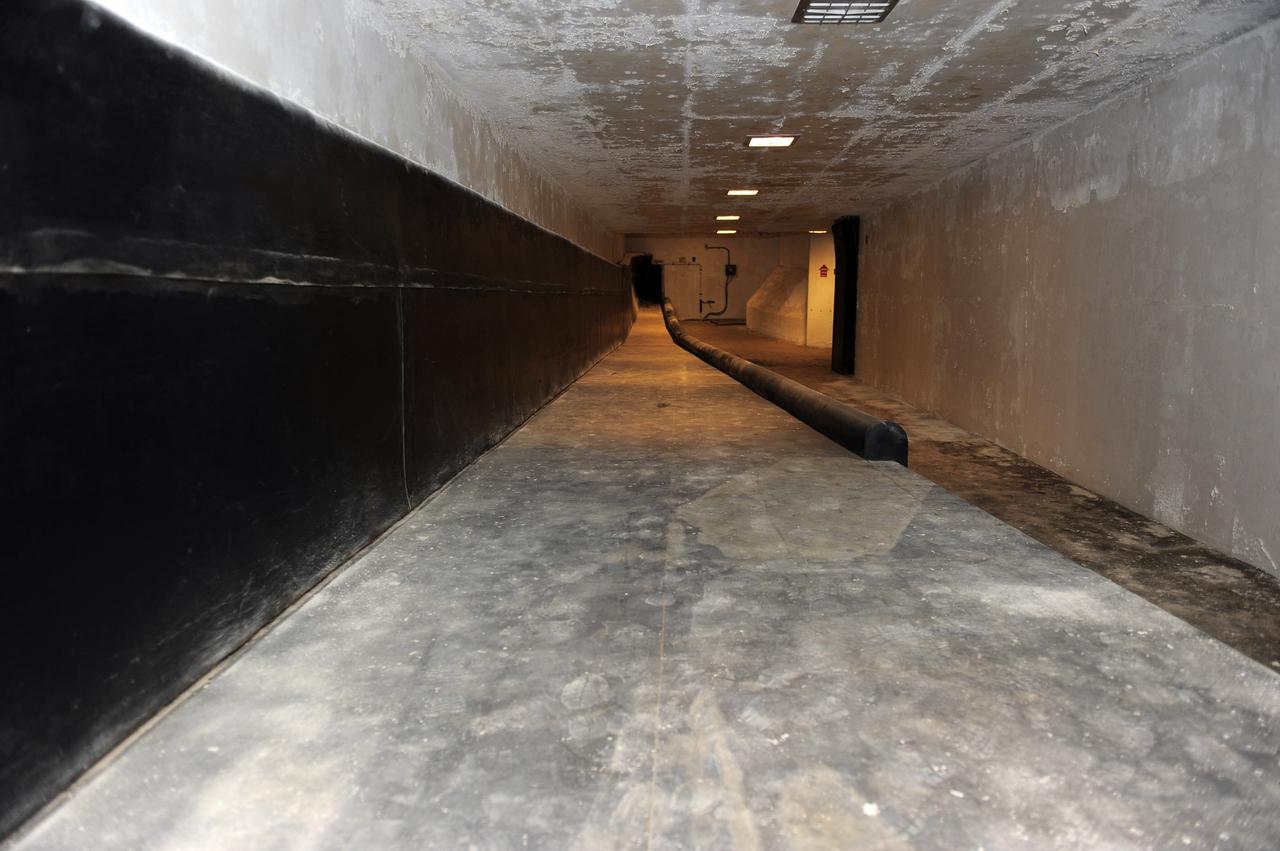
CAPE CANAVERAL, Fla. -- A tunnel beneath Launch Pad 39B at NASA's Kennedy Space Center in Florida leads to the blast-resistant "rubber room." The room is a steel dome floating on rubber isolators and was used as an escape route during the Apollo Program in case of an emergency. It has since been abandoned by astronauts, but throughout the years nature found its way inside, including raccoons, snakes, birds and even a bobcat and opossum. Starting in 2009, the structure above the room on the pad was no longer needed for NASA's Space Shuttle Program, so it is being restructured for future use. The new design will feature a "clean pad" for rockets to come with their own launcher, making it more versatile for a number of vehicles. For information on NASA's future plans, visit www.nasa.gov. Photo credit: NASA/Kim Shiflett
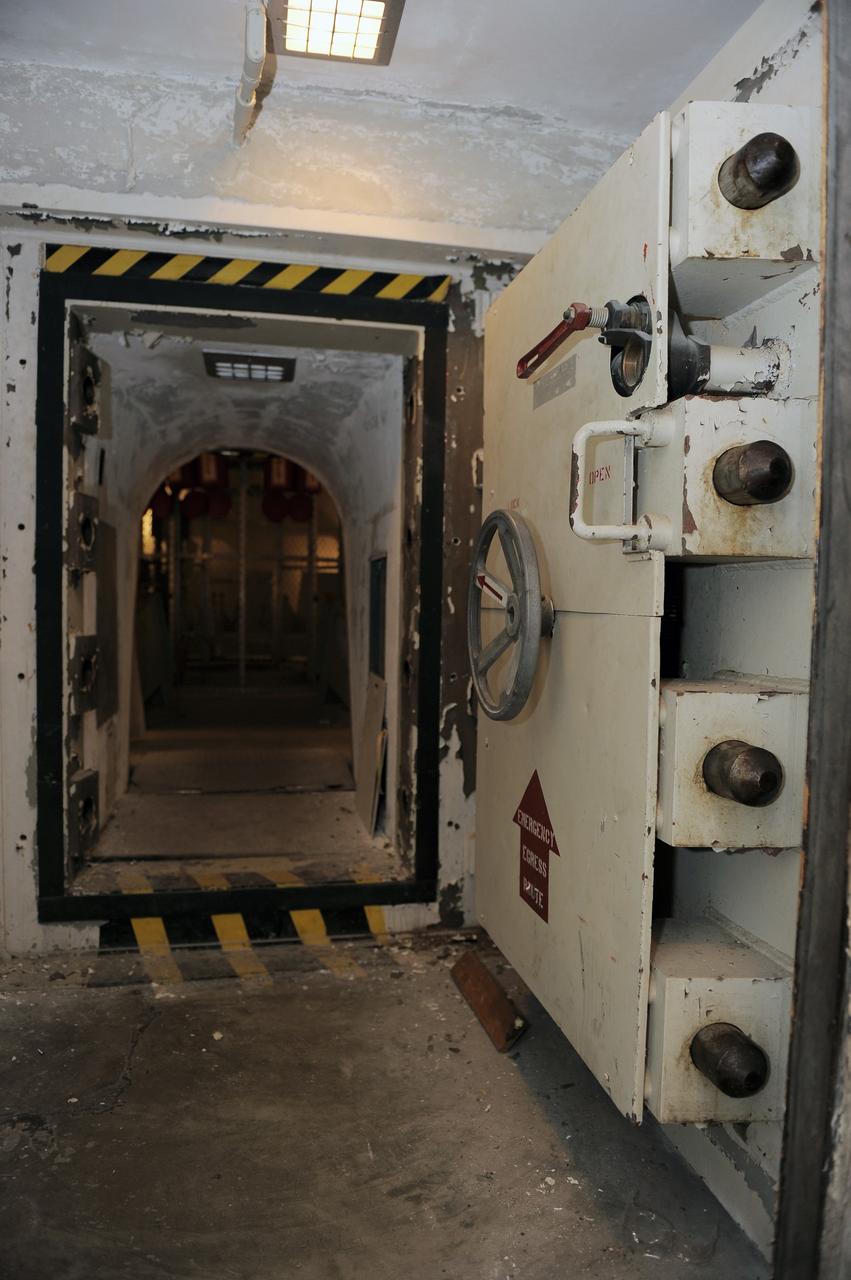
CAPE CANAVERAL, Fla. -- A steel door, similar to a bank vault door, leads to the blast-resistant "rubber room" beneath Launch Pad 39B at NASA's Kennedy Space Center. The room is a steel dome floating on rubber isolators and was used as an escape route during the Apollo Program in case of an emergency. It has since been abandoned by astronauts, but throughout the years nature found its way inside, including raccoons, snakes, birds and even a bobcat and opossum. Starting in 2009, the structure above the room on the pad was no longer needed for NASA's Space Shuttle Program, so it is being restructured for future use. The new design will feature a "clean pad" for rockets to come with their own launcher, making it more versatile for a number of vehicles. For information on NASA's future plans, visit www.nasa.gov. Photo credit: NASA/Kim Shiflett
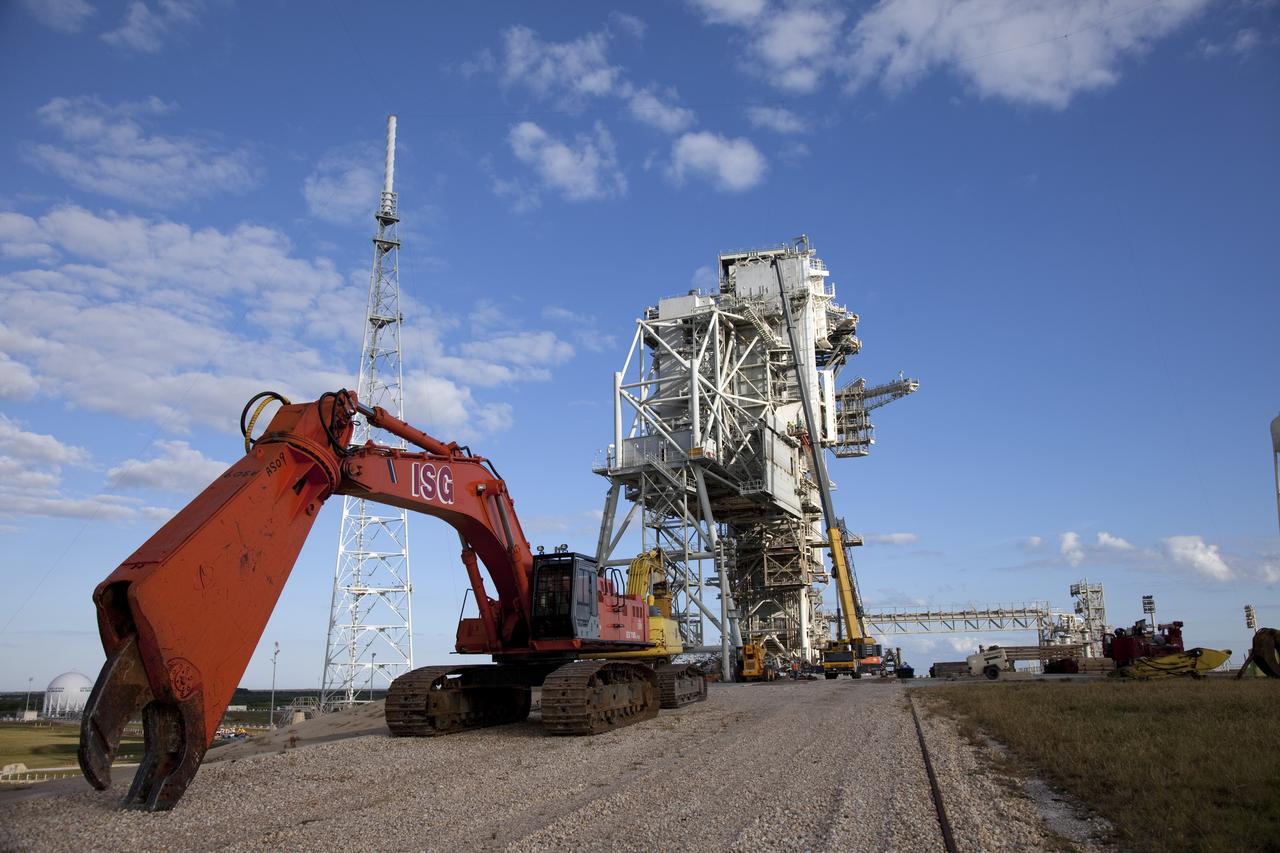
CAPE CANAVERAL, Fla. -- At NASA's Kennedy Space Center in Florida, the rotating service structure (RSS) on Launch Pad 39B is being dismantled. Starting in 2009, the structure at the pad was no longer needed for NASA's Space Shuttle Program, so it is being restructured for future use. The new design will feature a "clean pad" for rockets to come with their own launcher, making it more versatile for a number of vehicles. The new lightning protection system, left, will remain. For information on NASA's future plans, visit www.nasa.gov. Photo credit: NASA/Frankie Martin
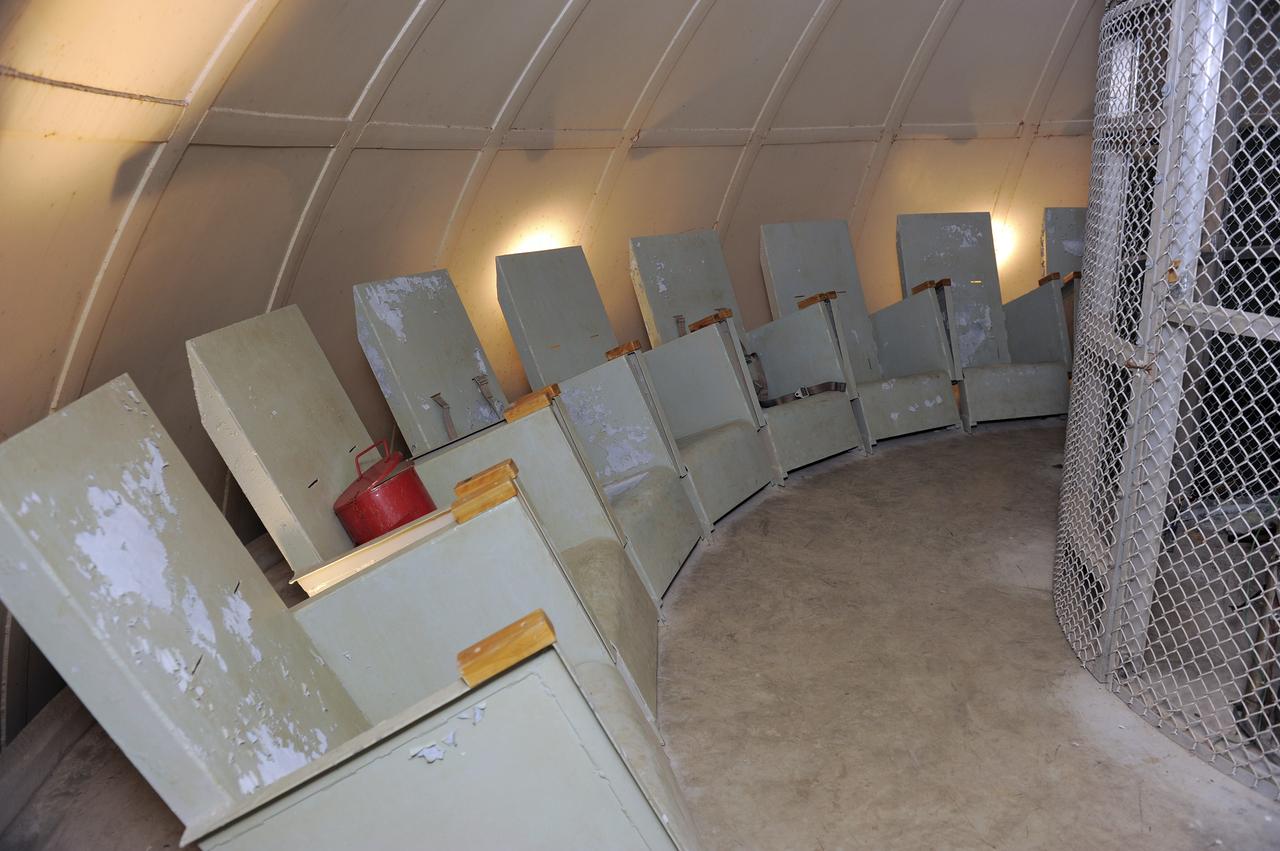
CAPE CANAVERAL, Fla. -- Twenty contour chairs line the blast-resistant "rubber room" beneath Launch Pad 39B at NASA's Kennedy Space Center in Florida. The room is a steel dome floating on rubber isolators and was used as an escape route during the Apollo Program in case of an emergency. It has since been abandoned by astronauts, but throughout the years nature found its way inside, including raccoons, snakes, birds and even a bobcat and opossum. Starting in 2009, the structure above the room on the pad was no longer needed for NASA's Space Shuttle Program, so it is being restructured for future use. The new design will feature a "clean pad" for rockets to come with their own launcher, making it more versatile for a number of vehicles. For information on NASA's future plans, visit www.nasa.gov. Photo credit: NASA/Kim Shiflett
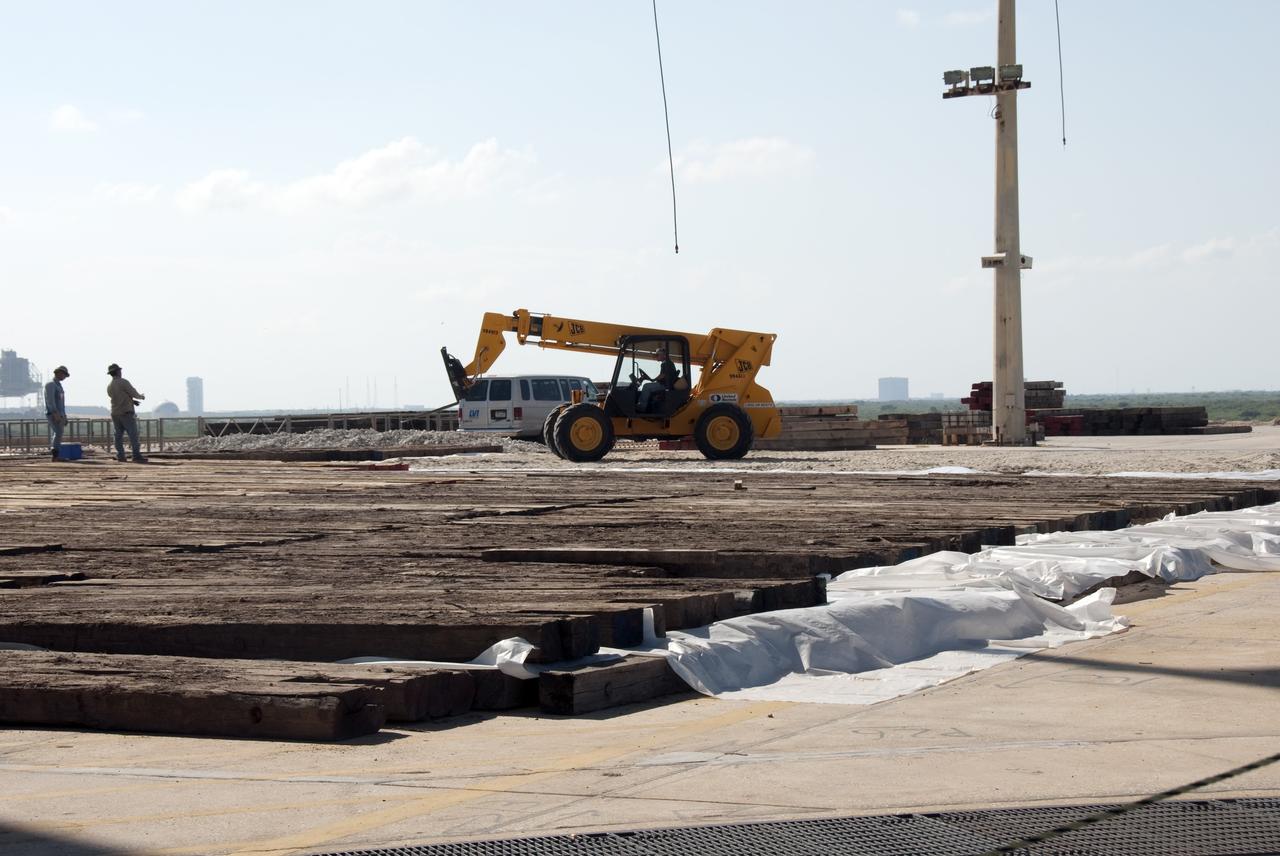
CAPE CANAVERAL, Fla. -- At NASA's Kennedy Space Center in Florida, construction crews lay large wooden mats on top of sand and reinforcing steel to protect the concrete under the rotating service structure (RSS) of Launch Pad 39B during deconstruction. Starting in 2009, the structure at Pad B was no longer needed for NASA's Space Shuttle Program, so it is being restructured for future use. The new design will feature a "clean pad" for rockets to come with their own launcher, making it more versatile for a number of vehicles. For information on NASA's future plans, visit www.nasa.gov. Photo credit: NASA/Jim Grossmann
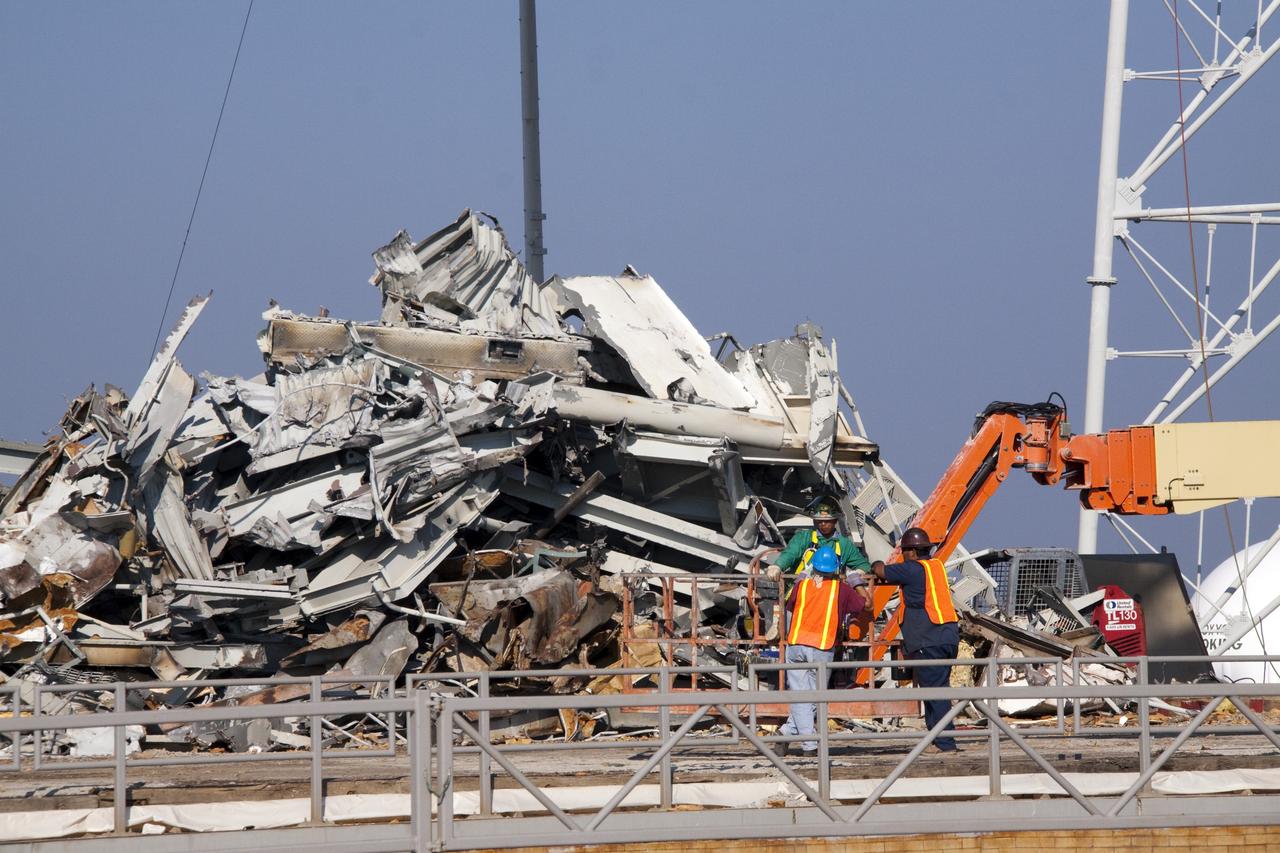
CAPE CANAVERAL, Fla. -- Rubble begins to build as the rotating service structure (RSS) on Launch Pad 39B is dismantled at NASA's Kennedy Space Center in Florida. Starting in 2009, the structure at the pad was no longer needed for NASA's Space Shuttle Program, so it is being restructured for future use. The new design will feature a "clean pad" for rockets to come with their own launcher, making it more versatile for a number of vehicles. For information on NASA's future plans, visit www.nasa.gov. Photo credit: NASA/Jack Pfaller
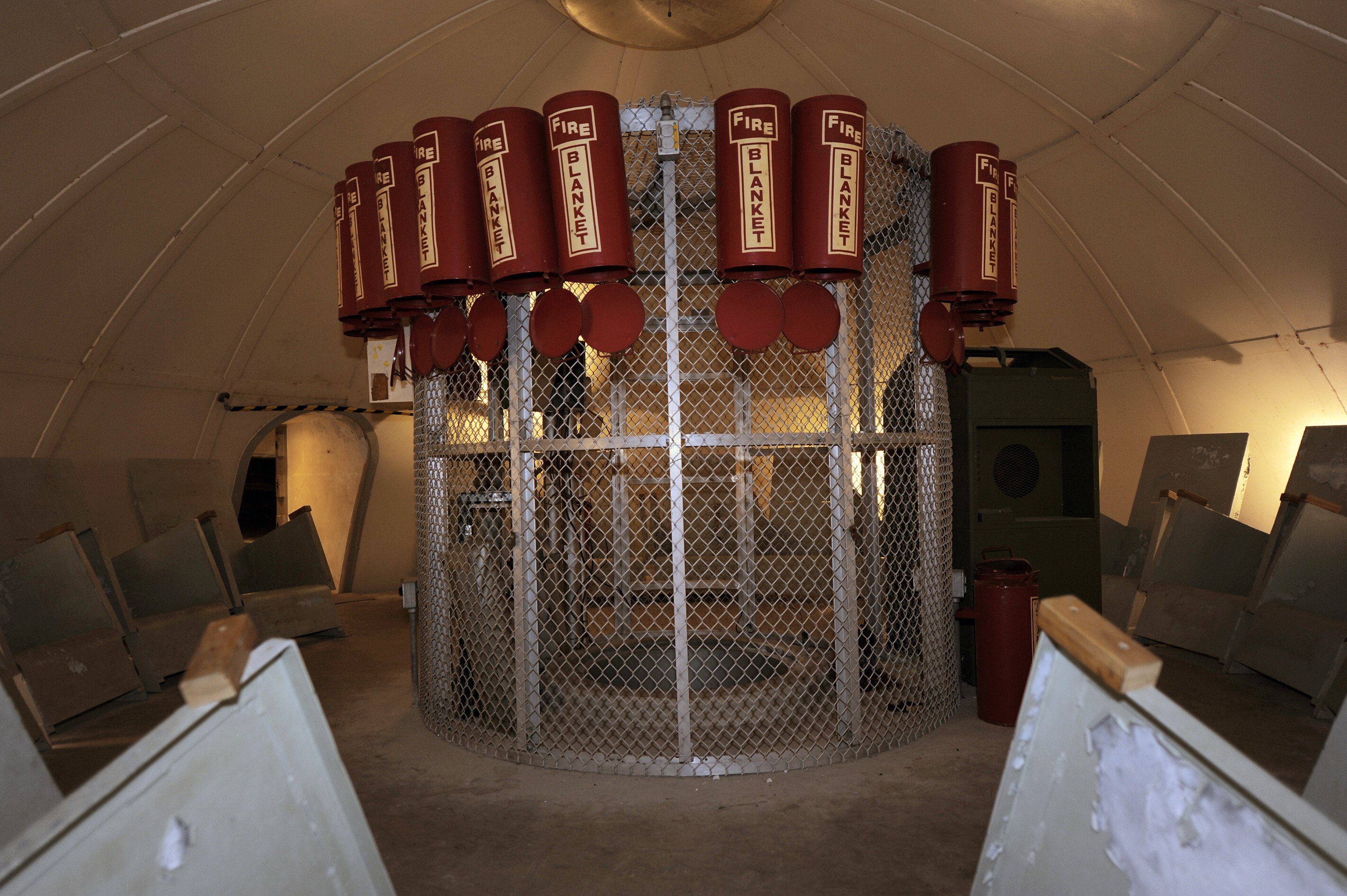
CAPE CANAVERAL, Fla. -- Empty fire blanket holders are at the center of the blast-resistant "rubber room" beneath Launch Pad 39B at NASA's Kennedy Space Center in Florida. The room is a steel dome floating on rubber isolators and was used as an escape route during the Apollo Program in case of an emergency. It has since been abandoned by astronauts, but throughout the years nature found its way inside, including raccoons, snakes, birds and even a bobcat and opossum. Starting in 2009, the structure above the room on the pad was no longer needed for NASA's Space Shuttle Program, so it is being restructured for future use. The new design will feature a "clean pad" for rockets to come with their own launcher, making it more versatile for a number of vehicles. For information on NASA's future plans, visit www.nasa.gov. Photo credit: NASA/Kim Shiflett
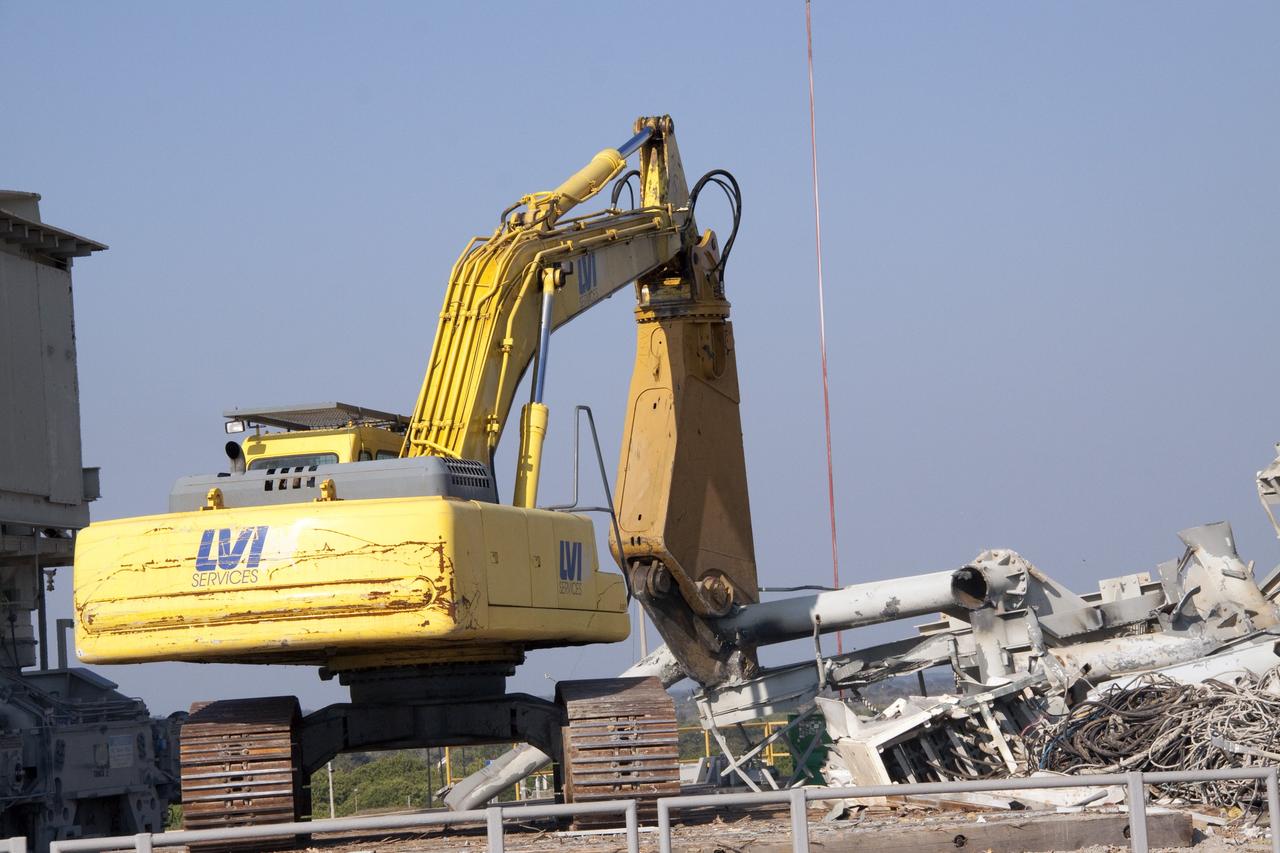
CAPE CANAVERAL, Fla. -- Rubble begins to build as the rotating service structure (RSS) on Launch Pad 39B is dismantled at NASA's Kennedy Space Center in Florida. Starting in 2009, the structure at the pad was no longer needed for NASA's Space Shuttle Program, so it is being restructured for future use. The new design will feature a "clean pad" for rockets to come with their own launcher, making it more versatile for a number of vehicles. For information on NASA's future plans, visit www.nasa.gov. Photo credit: NASA/Jack Pfaller
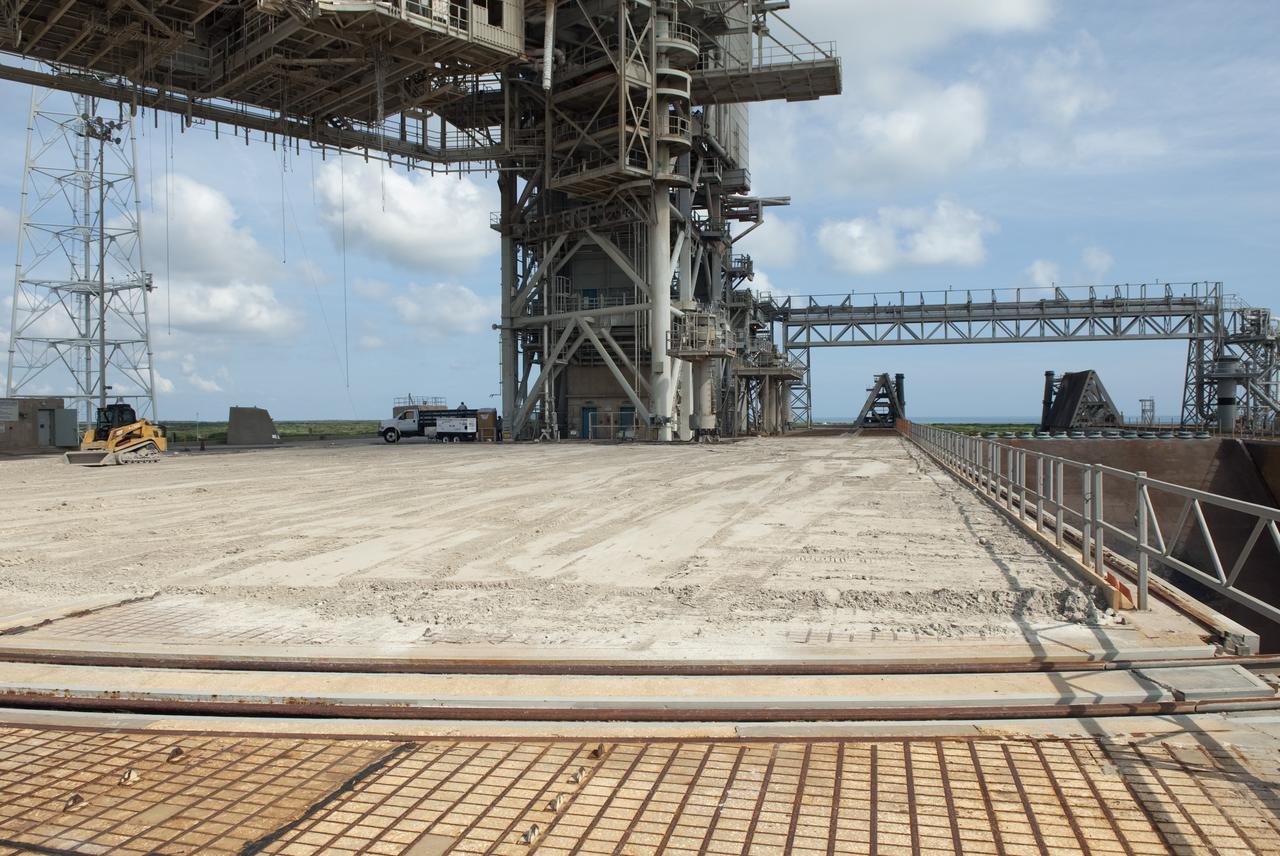
CAPE CANAVERAL, Fla. -- At NASA's Kennedy Space Center in Florida, construction crews lay sand, reinforcing steel and large wooden mats under the rotating service structure (RSS) of Launch Pad 39B to protect the structure's concrete from falling debris during deconstruction. Starting in 2009, the structure at the pad was no longer needed for NASA's Space Shuttle Program, so it is being restructured for future use. The new design will feature a "clean pad" for rockets to come with their own launcher, making it more versatile for a number of vehicles. For information on NASA's future plans, visit www.nasa.gov. Photo credit: NASA/Jim Grossmann
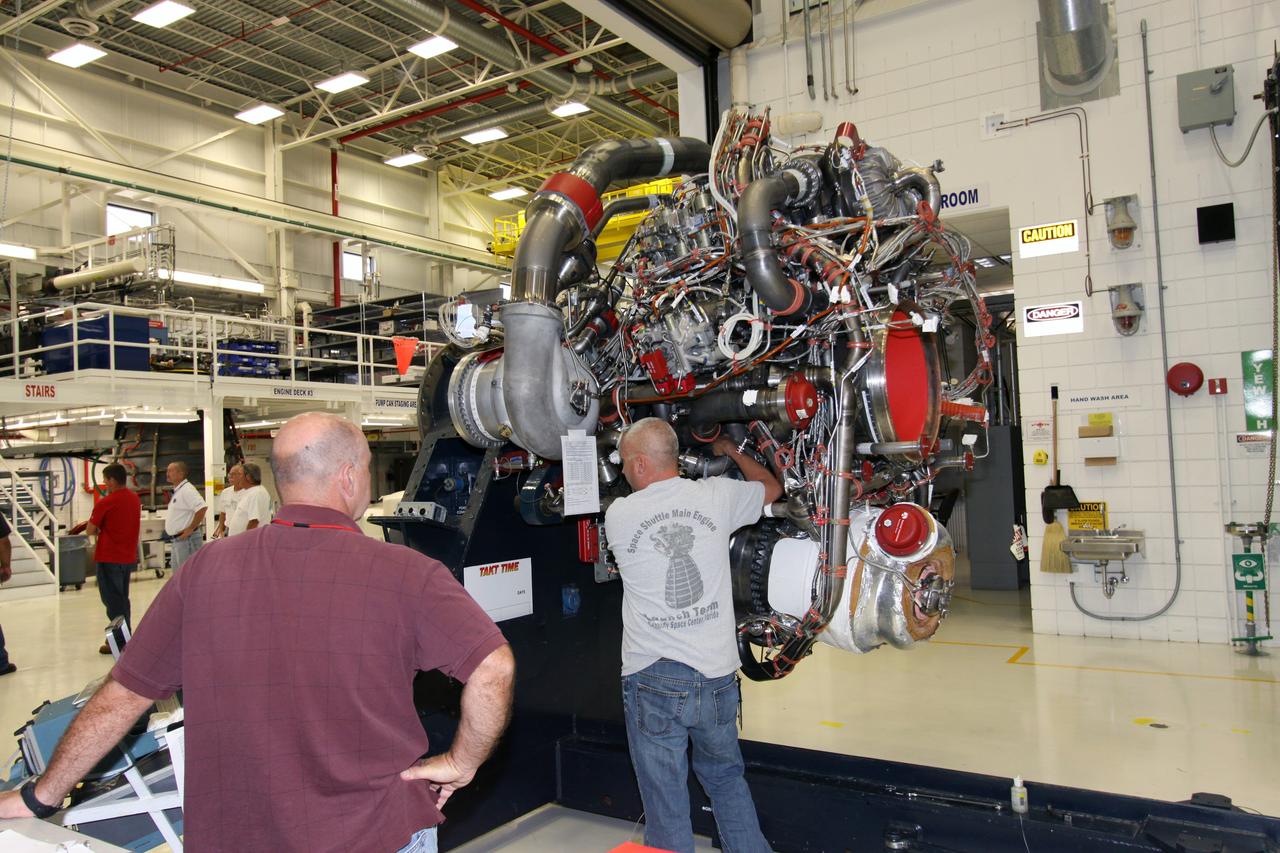
CAPE CANAVERAL, Fla. -- In the Space Shuttle Main Engine Processing Facility at NASA's Kennedy Space Center in Florida, one of six space shuttle main engines is prepared for the STS-134 and STS-335 missions. Postflight inspections and maintenance of each engine are conducted in the facility between shuttle missions by Pratt & Whitney Rocketdyne aerospace technicians. Three main engines are clustered at the aft end of the shuttle and have a combined thrust of more than 1.2 million pounds. Each engine utilizes liquid hydrogen for fuel and liquid oxygen as oxidizer and operates during the entire eight-and-a-half minute ride to orbit. Space shuttle Endeavour's STS-134 mission is the final planned mission of the Space Shuttle Program and will deliver the Alpha Magnetic Spectrometer, as well as critical spare components, to the International Space Station next year. Shuttle Atlantis will be prepared for STS-335, which is the planned "launch on need," or potential rescue mission, for Endeavour's STS-134 mission. For information, visit www.nasa.gov/shuttle. Photo credit: NASA/Jack Pfaller
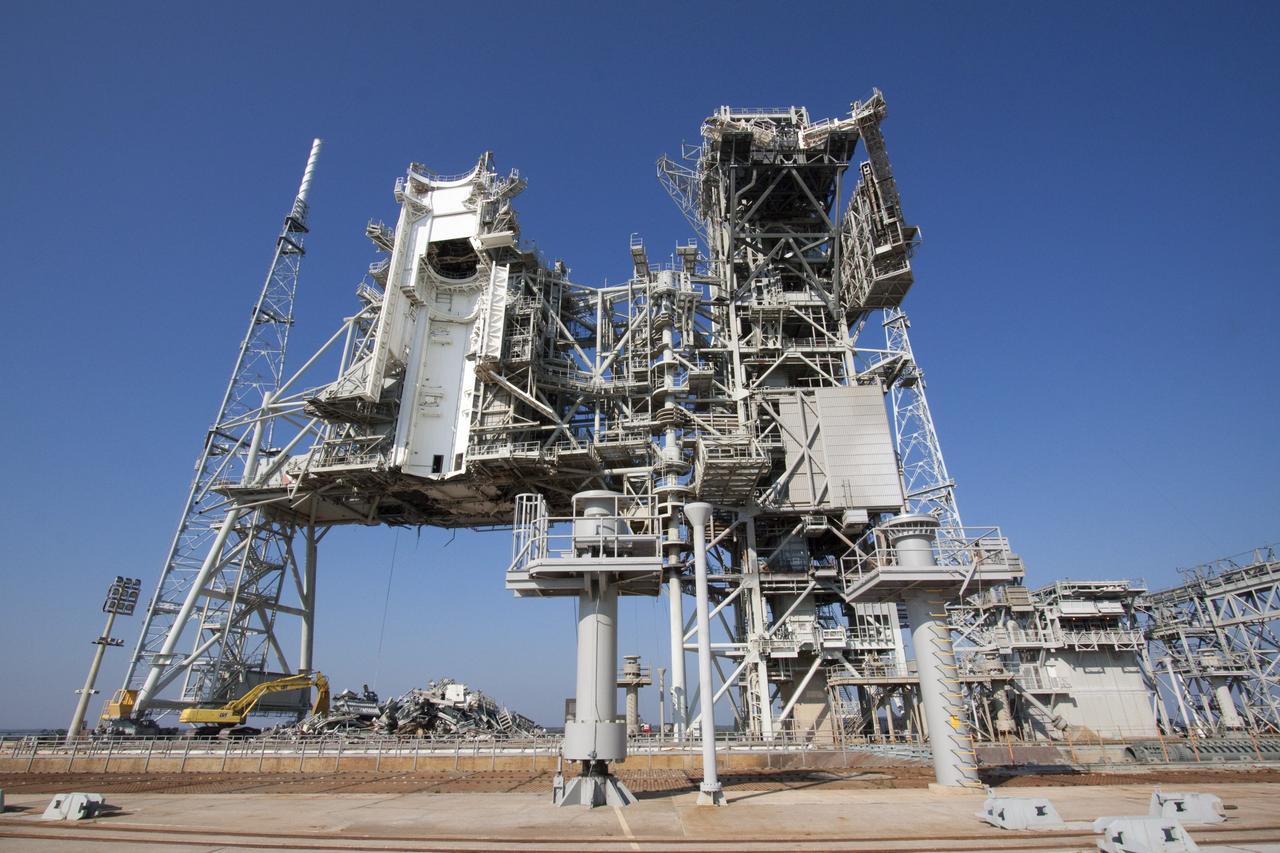
CAPE CANAVERAL, Fla. -- Rubble begins to build as the rotating service structure (RSS) on Launch Pad 39B is dismantled at NASA's Kennedy Space Center in Florida. Starting in 2009, the structure at the pad was no longer needed for NASA's Space Shuttle Program, so it is being restructured for future use. The new design will feature a "clean pad" for rockets to come with their own launcher, making it more versatile for a number of vehicles. For information on NASA's future plans, visit www.nasa.gov. Photo credit: NASA/Jack Pfaller
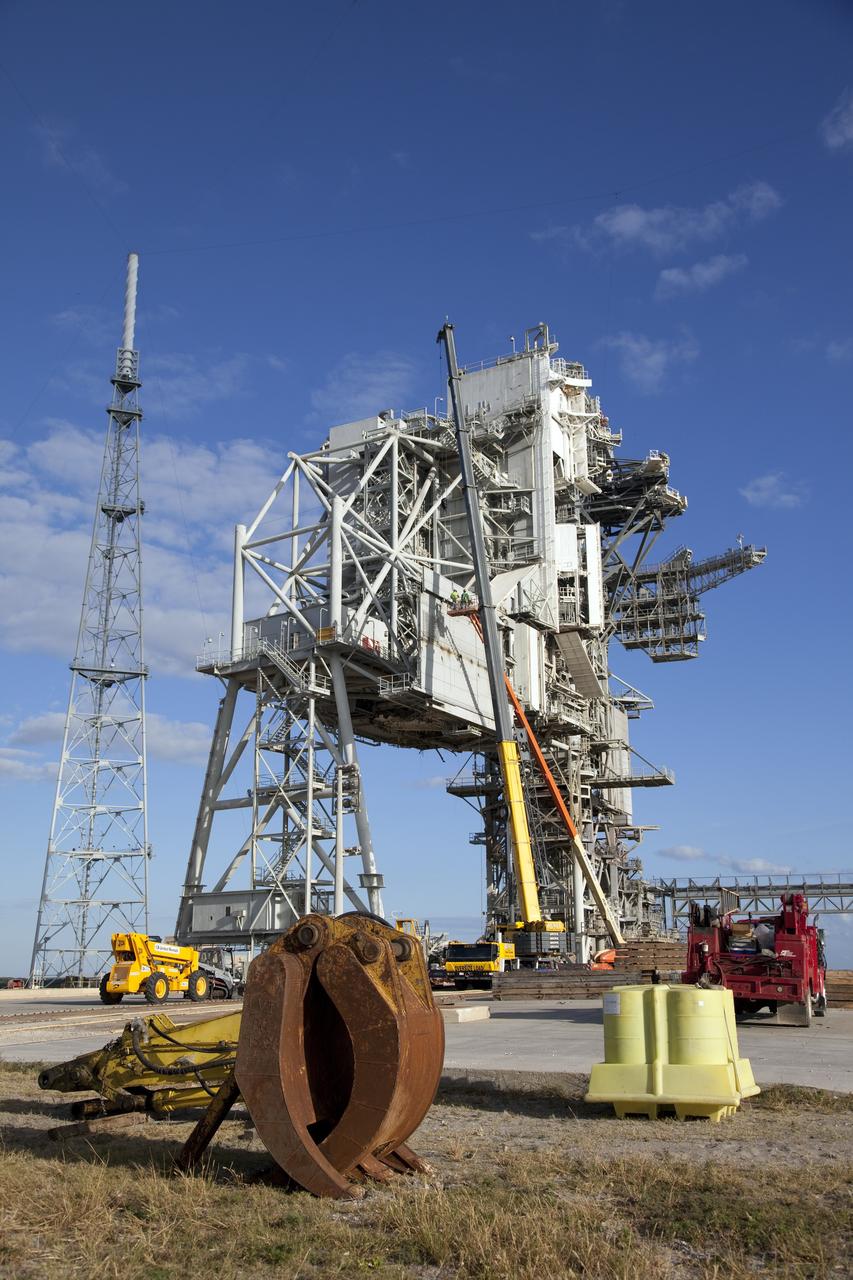
CAPE CANAVERAL, Fla. -- At NASA's Kennedy Space Center in Florida, the rotating service structure (RSS) on Launch Pad 39B is being dismantled. Starting in 2009, the structure at the pad was no longer needed for NASA's Space Shuttle Program, so it is being restructured for future use. The new design will feature a "clean pad" for rockets to come with their own launcher, making it more versatile for a number of vehicles. The new lightning protection system, left, will remain. For information on NASA's future plans, visit www.nasa.gov. Photo credit: NASA/Frankie Martin
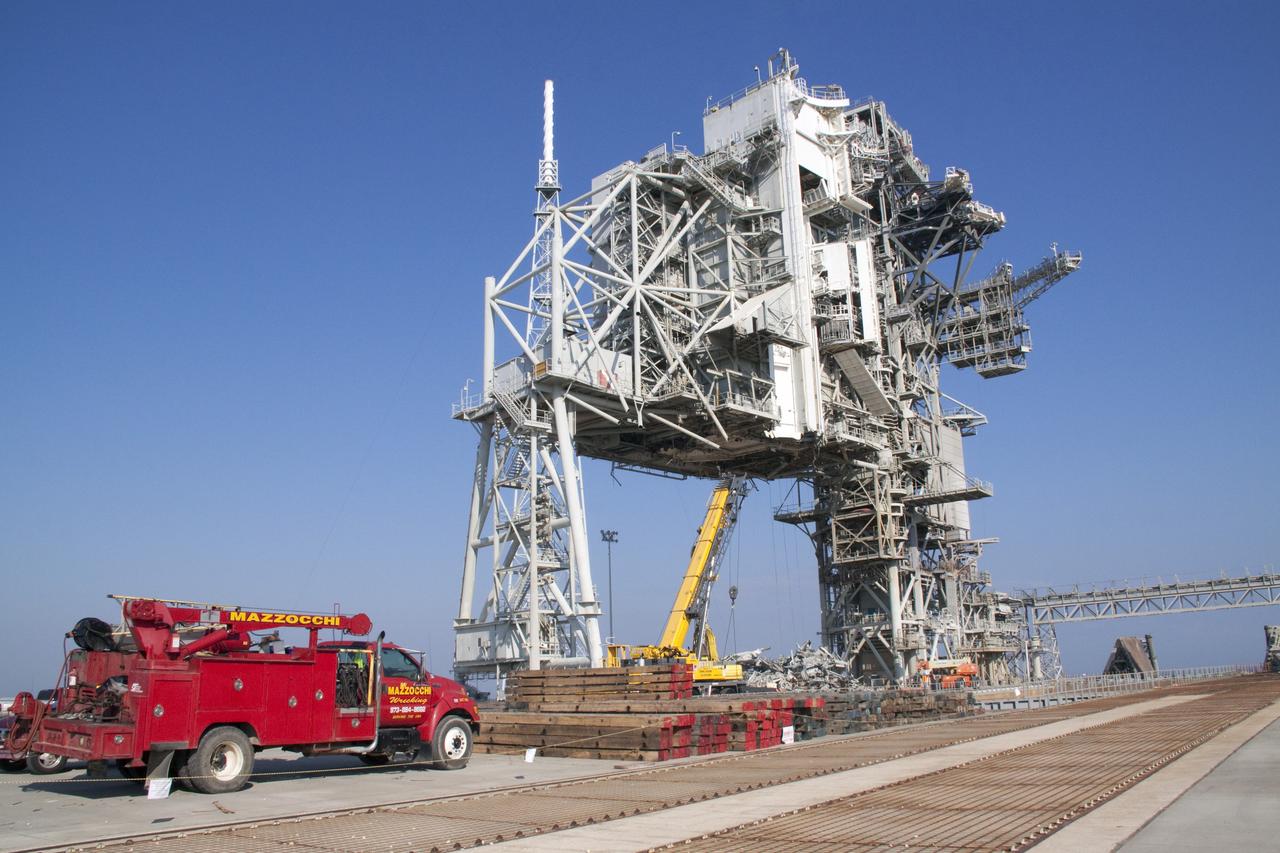
CAPE CANAVERAL, Fla. -- At NASA's Kennedy Space Center in Florida, the rotating service structure (RSS) on Launch Pad 39B is being dismantled. Starting in 2009, the structure at the pad was no longer needed for NASA's Space Shuttle Program, so it is being restructured for future use. The new design will feature a "clean pad" for rockets to come with their own launcher, making it more versatile for a number of vehicles. For information on NASA's future plans, visit www.nasa.gov. Photo credit: NASA/Jack Pfaller
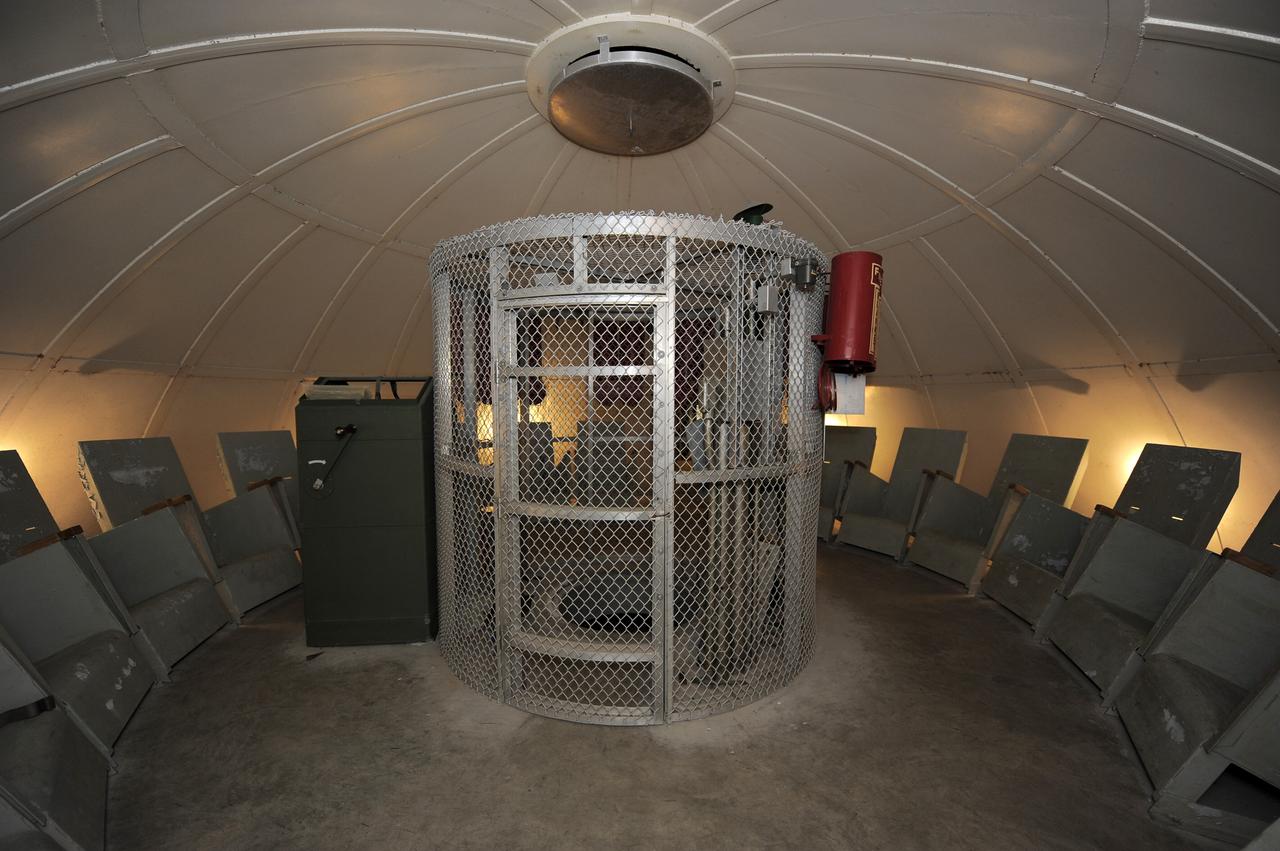
CAPE CANAVERAL, Fla. -- Empty fire blanket holders and 20 contour chairs remain in the blast-resistant "rubber room" beneath Launch Pad 39B at NASA's Kennedy Space Center in Florida. The room is a steel dome floating on rubber isolators and was used as an escape route during the Apollo Program in case of an emergency. It has since been abandoned by astronauts, but throughout the years nature found its way inside, including raccoons, snakes, birds and even a bobcat and opossum. Starting in 2009, the structure above the room on the pad was no longer needed for NASA's Space Shuttle Program, so it is being restructured for future use. The new design will feature a "clean pad" for rockets to come with their own launcher, making it more versatile for a number of vehicles. For information on NASA's future plans, visit www.nasa.gov. Photo credit: NASA/Kim Shiflett
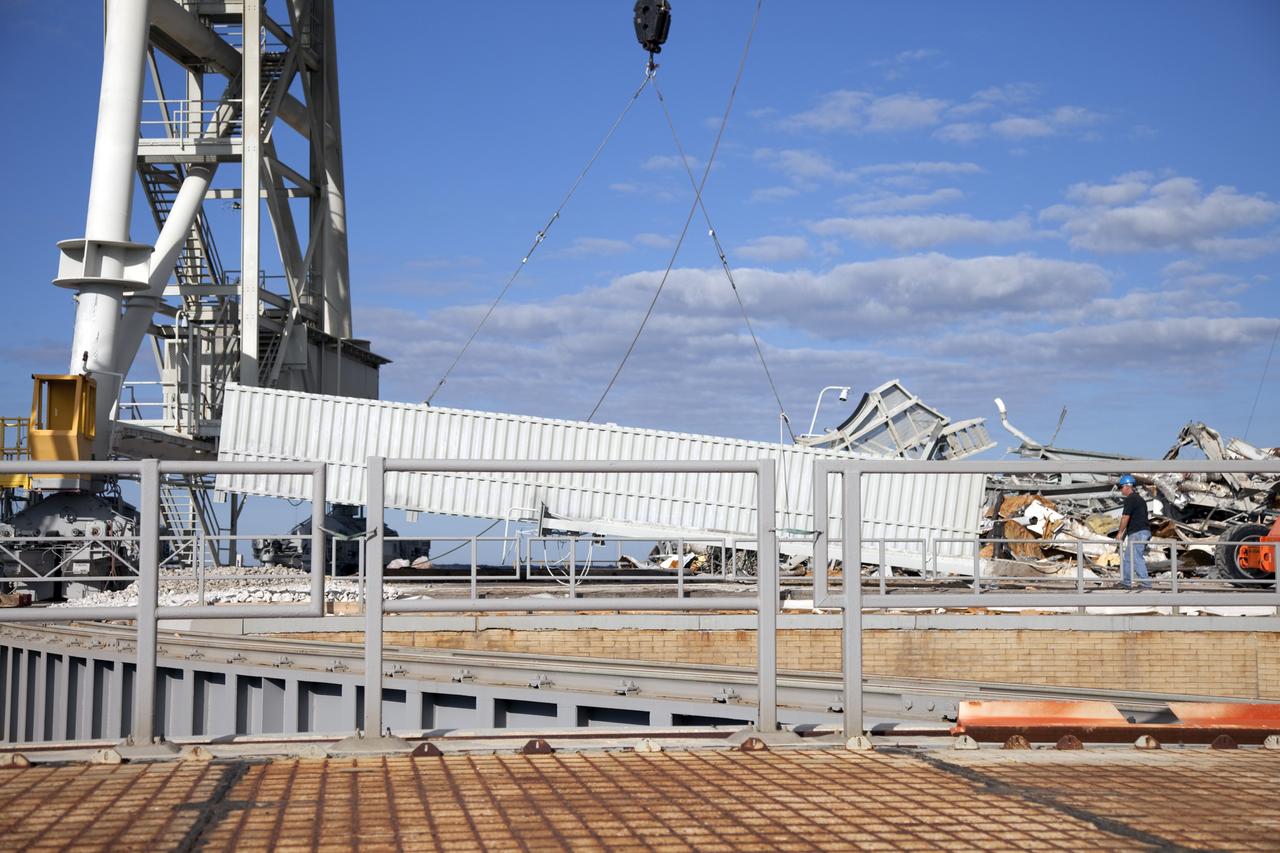
CAPE CANAVERAL, Fla. -- At NASA's Kennedy Space Center in Florida, the rotating service structure (RSS) on Launch Pad 39B is being dismantled. Starting in 2009, the structure at the pad was no longer needed for NASA's Space Shuttle Program, so it is being restructured for future use. The new design will feature a "clean pad" for rockets to come with their own launcher, making it more versatile for a number of vehicles. For information on NASA's future plans, visit www.nasa.gov. Photo credit: NASA/Frankie Martin

CAPE CANAVERAL, Fla. -- At NASA's Kennedy Space Center in Florida, construction crews lay large wooden mats on top of sand and reinforcing steel to protect the concrete under the rotating service structure (RSS) of Launch Pad 39B during deconstruction. In the background, space shuttle Discovery stands tall on Launch Pad 39A, awaiting its STS-133 mission to the International Space Station. Starting in 2009, the structure at Pad B was no longer needed for NASA's Space Shuttle Program, so it is being restructured for future use. The new design will feature a "clean pad" for rockets to come with their own launcher, making it more versatile for a number of vehicles. For information on NASA's future plans, visit www.nasa.gov. Photo credit: NASA/Jim Grossmann
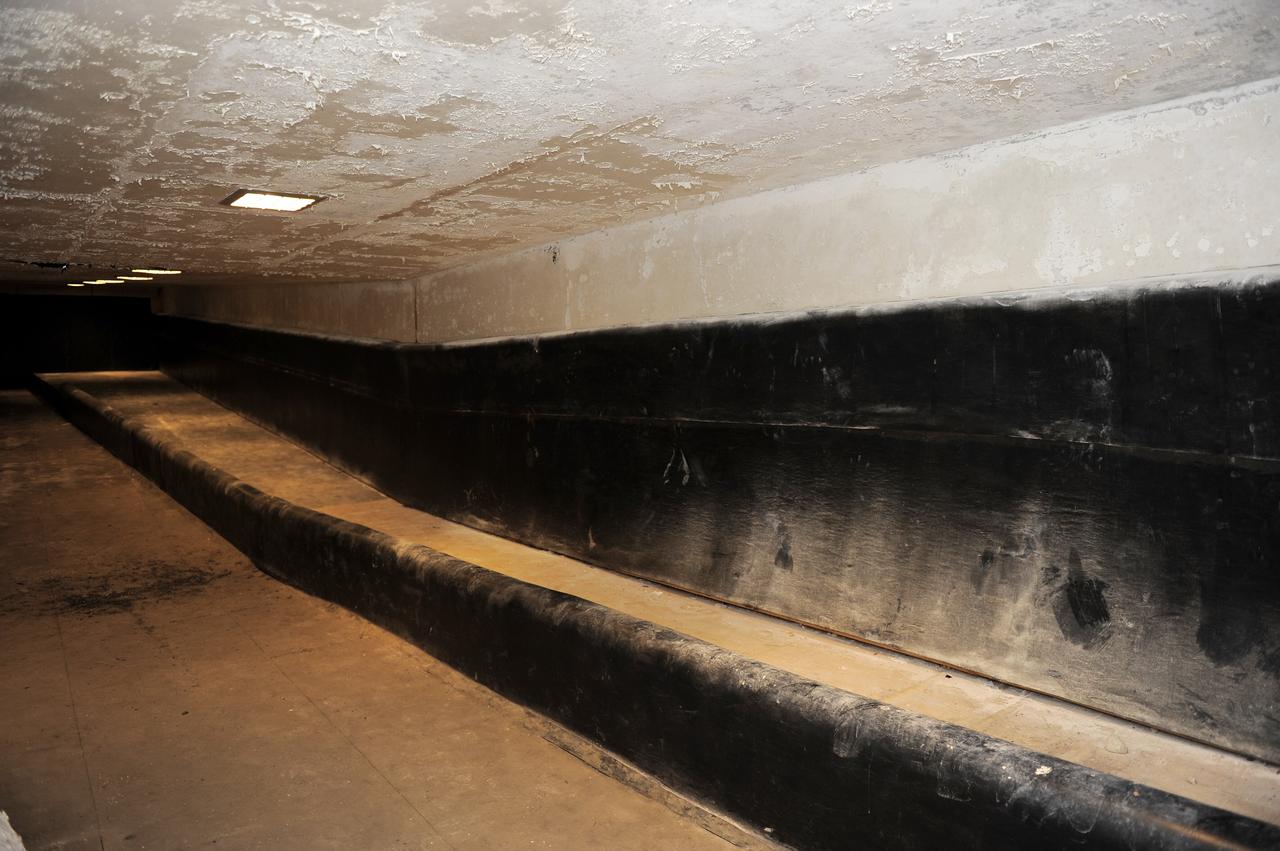
CAPE CANAVERAL, Fla. -- A tunnel beneath Launch Pad 39B at NASA's Kennedy Space Center in Florida leads to the blast-resistant "rubber room." The room is a steel dome floating on rubber isolators and was used as an escape route during the Apollo Program in case of an emergency. It has since been abandoned by astronauts, but throughout the years nature found its way inside, including raccoons, snakes, birds and even a bobcat and opossum. Starting in 2009, the structure above the room on the pad was no longer needed for NASA's Space Shuttle Program, so it is being restructured for future use. The new design will feature a "clean pad" for rockets to come with their own launcher, making it more versatile for a number of vehicles. For information on NASA's future plans, visit www.nasa.gov. Photo credit: NASA/Kim Shiflett
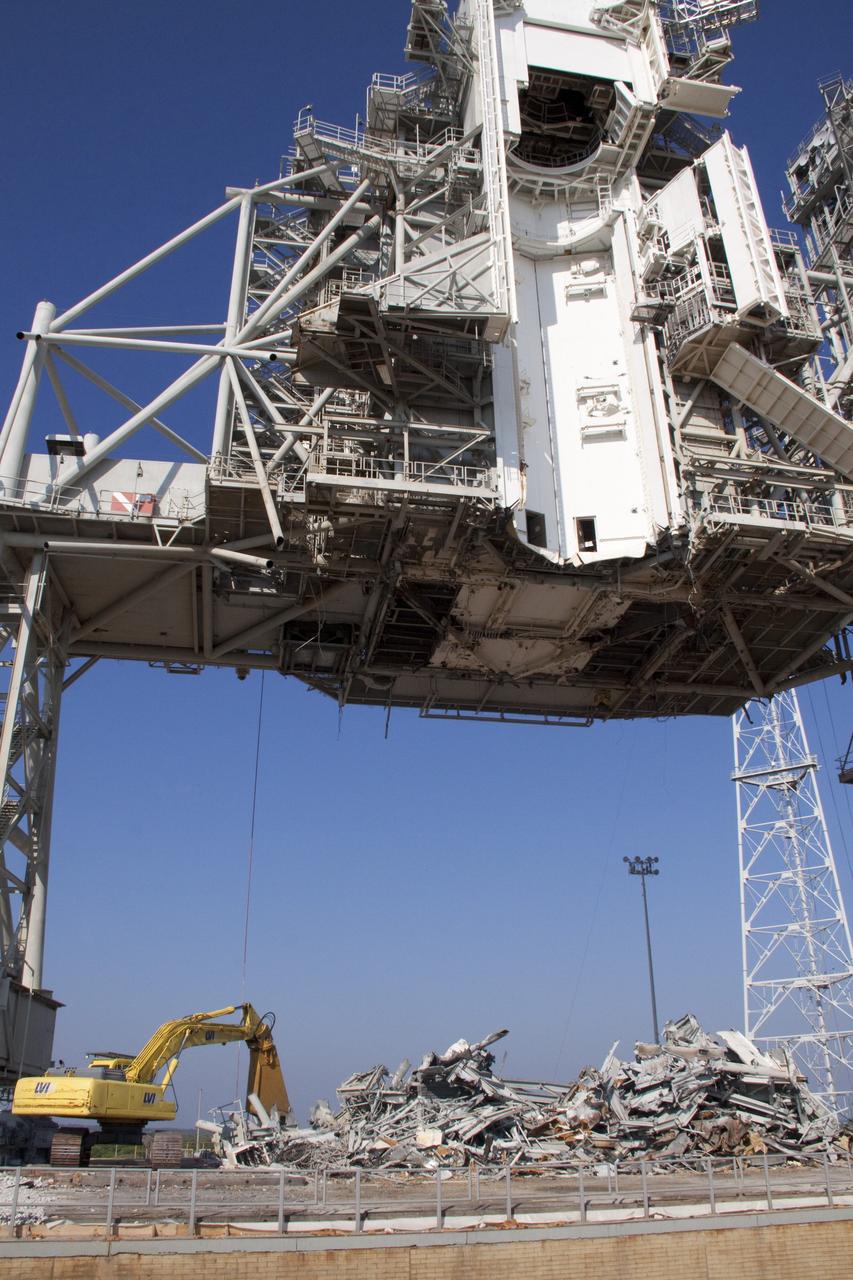
CAPE CANAVERAL, Fla. -- Rubble begins to build as the rotating service structure (RSS) on Launch Pad 39B is dismantled at NASA's Kennedy Space Center in Florida. Starting in 2009, the structure at the pad was no longer needed for NASA's Space Shuttle Program, so it is being restructured for future use. The new design will feature a "clean pad" for rockets to come with their own launcher, making it more versatile for a number of vehicles. For information on NASA's future plans, visit www.nasa.gov. Photo credit: NASA/Jack Pfaller
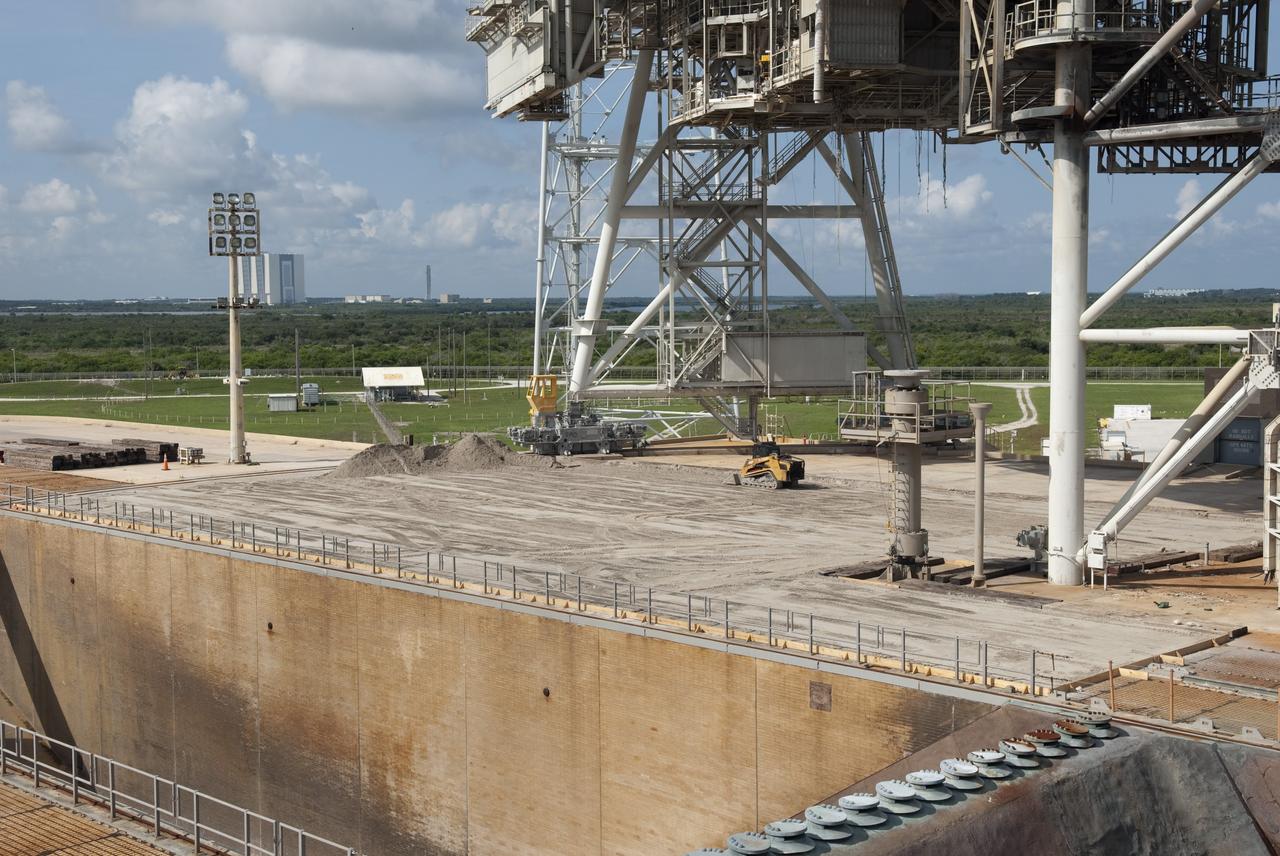
CAPE CANAVERAL, Fla. -- At NASA's Kennedy Space Center in Florida, construction crews lay sand, reinforcing steel and large wooden mats under the rotating service structure (RSS) of Launch Pad 39B to protect the structure's concrete from falling debris during deconstruction. Starting in 2009, the structure at the pad was no longer needed for NASA's Space Shuttle Program, so it is being restructured for future use. The new design will feature a "clean pad" for rockets to come with their own launcher, making it more versatile for a number of vehicles. For information on NASA's future plans, visit www.nasa.gov. Photo credit: NASA/Jim Grossmann

CAPE CANAVERAL, Fla. -- A tunnel beneath Launch Pad 39B at NASA's Kennedy Space Center in Florida runs from the blast-resistant "rubber room" to the pad perimeter. The room is a steel dome floating on rubber isolators and was used as an escape route during the Apollo Program in case of an emergency. It has since been abandoned by astronauts, but throughout the years nature found its way inside, including raccoons, snakes, birds and even a bobcat and opossum. Starting in 2009, the structure above the room on the pad was no longer needed for NASA's Space Shuttle Program, so it is being restructured for future use. The new design will feature a "clean pad" for rockets to come with their own launcher, making it more versatile for a number of vehicles. For information on NASA's future plans, visit www.nasa.gov. Photo credit: NASA/Kim Shiflett
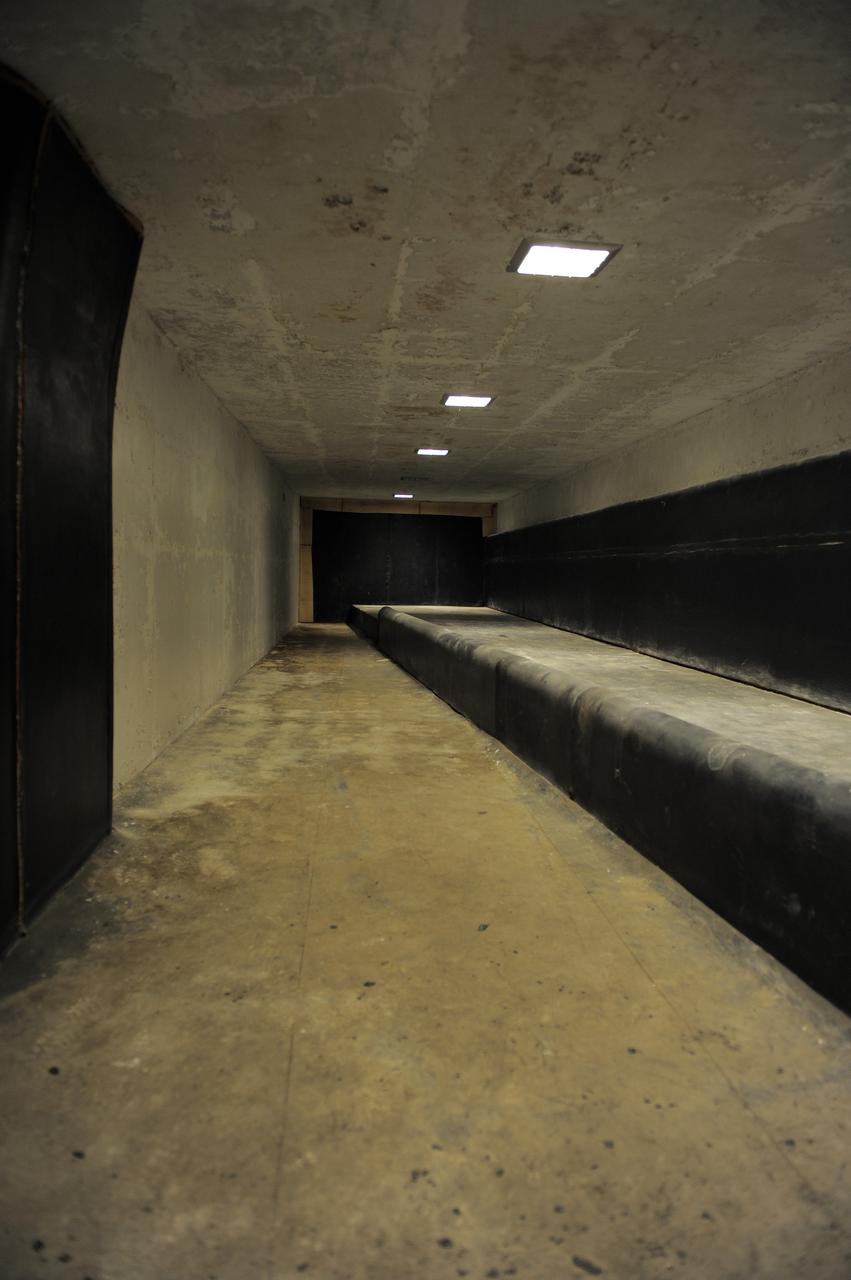
CAPE CANAVERAL, Fla. -- A tunnel beneath Launch Pad 39B at NASA's Kennedy Space Center in Florida leads to the blast-resistant "rubber room." The room is a steel dome floating on rubber isolators and was used as an escape route during the Apollo Program in case of an emergency. It has since been abandoned by astronauts, but throughout the years nature found its way inside, including raccoons, snakes, birds and even a bobcat and opossum. Starting in 2009, the structure above the room on the pad was no longer needed for NASA's Space Shuttle Program, so it is being restructured for future use. The new design will feature a "clean pad" for rockets to come with their own launcher, making it more versatile for a number of vehicles. For information on NASA's future plans, visit www.nasa.gov. Photo credit: NASA/Kim Shiflett
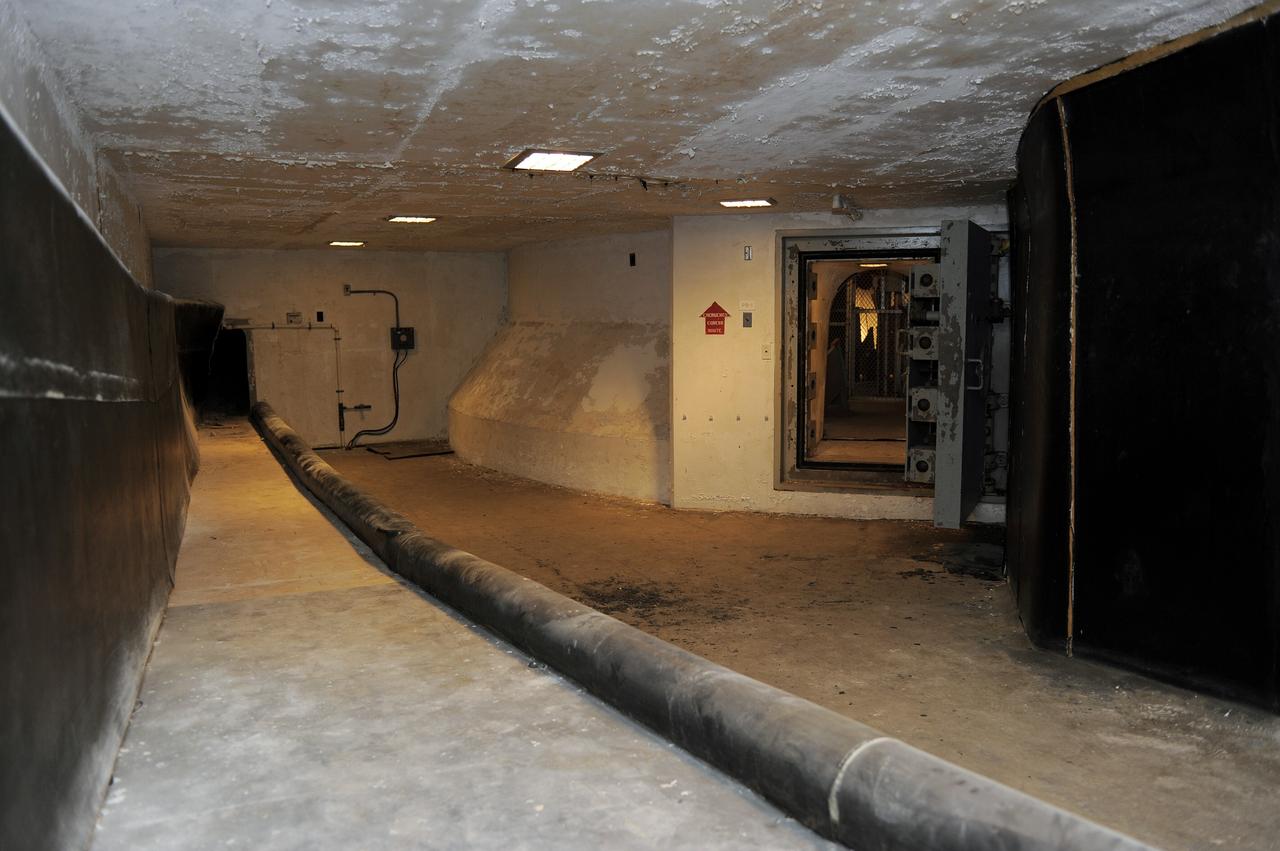
CAPE CANAVERAL, Fla. -- A tunnel beneath Launch Pad 39B at NASA's Kennedy Space Center in Florida leads to the blast-resistant "rubber room." The room is a steel dome floating on rubber isolators and was used as an escape route during the Apollo Program in case of an emergency. It has since been abandoned by astronauts, but throughout the years nature found its way inside, including raccoons, snakes, birds and even a bobcat and opossum. Starting in 2009, the structure above the room on the pad was no longer needed for NASA's Space Shuttle Program, so it is being restructured for future use. The new design will feature a "clean pad" for rockets to come with their own launcher, making it more versatile for a number of vehicles. For information on NASA's future plans, visit www.nasa.gov. Photo credit: NASA/Kim Shiflett
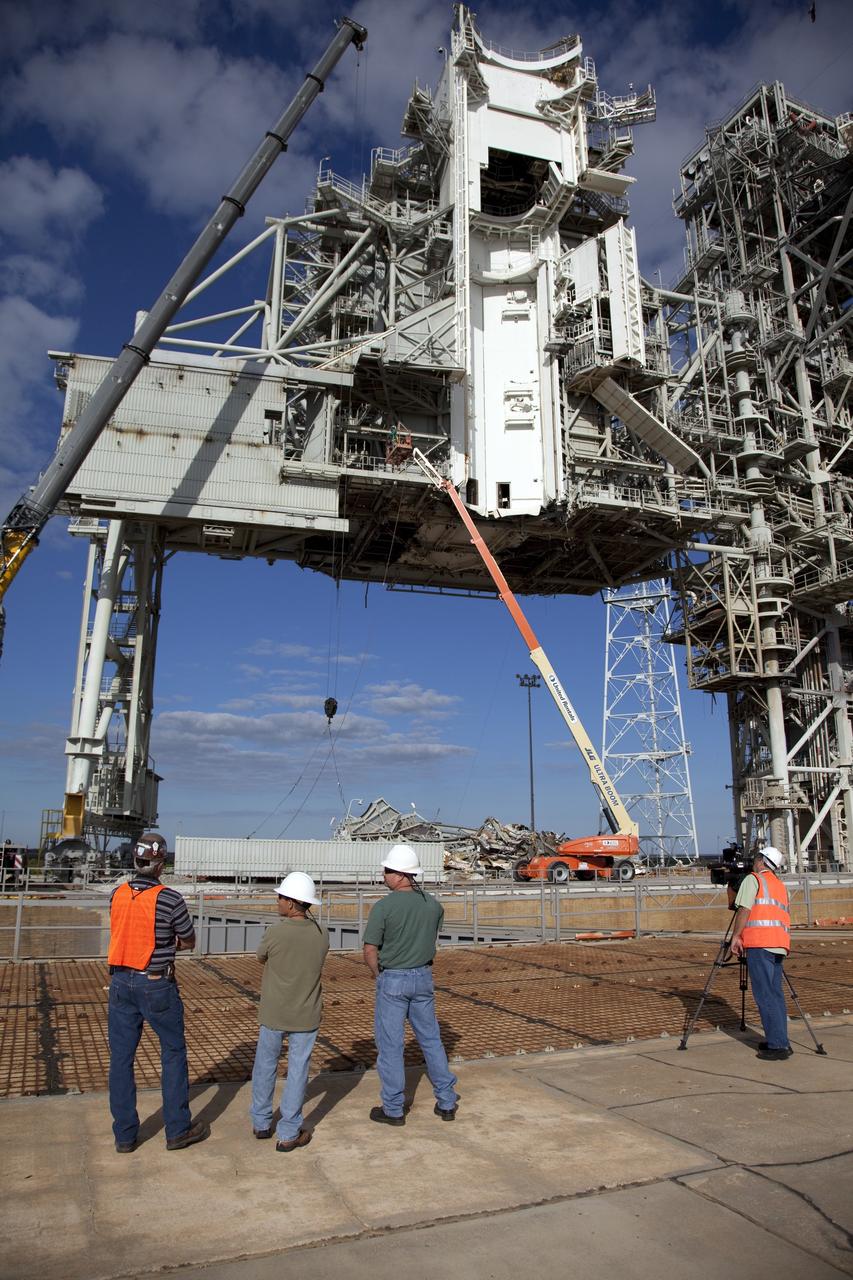
CAPE CANAVERAL, Fla. -- At NASA's Kennedy Space Center in Florida, the rotating service structure (RSS) on Launch Pad 39B is being dismantled. Starting in 2009, the structure at the pad was no longer needed for NASA's Space Shuttle Program, so it is being restructured for future use. The new design will feature a "clean pad" for rockets to come with their own launcher, making it more versatile for a number of vehicles. For information on NASA's future plans, visit www.nasa.gov. Photo credit: NASA/Frankie Martin
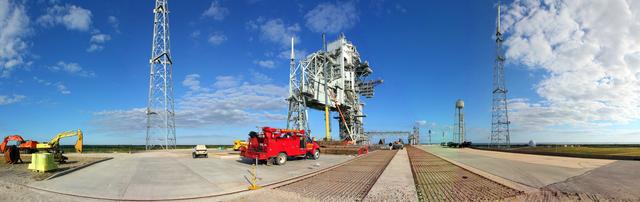
CAPE CANAVERAL, Fla. -- At NASA's Kennedy Space Center in Florida, the rotating service structure (RSS) on Launch Pad 39B is being dismantled. Starting in 2009, the structure at the pad was no longer needed for NASA's Space Shuttle Program, so it is being restructured for future use. The new design will feature a "clean pad" for rockets to come with their own launcher, making it more versatile for a number of vehicles. For information on NASA's future plans, visit www.nasa.gov. Photo credit: NASA/Frankie Martin
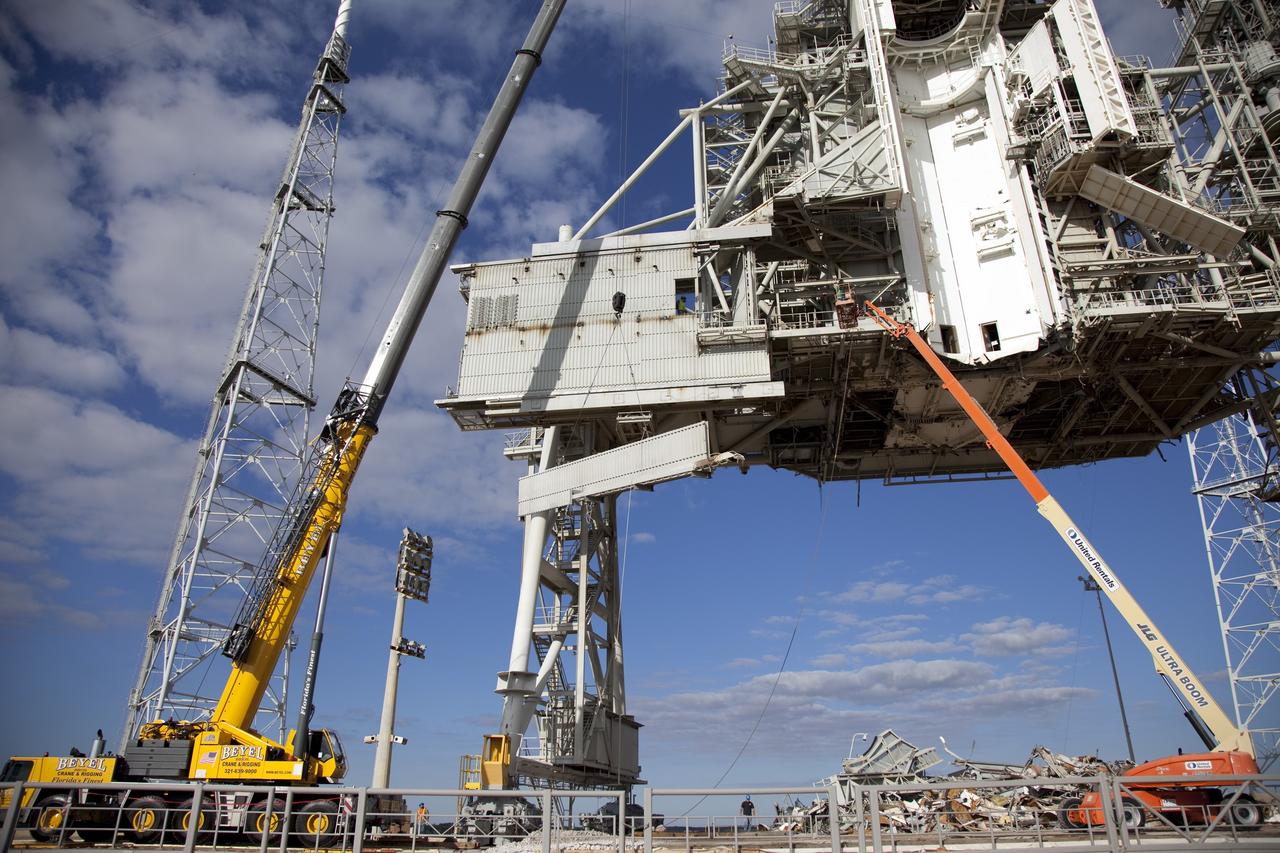
CAPE CANAVERAL, Fla. -- At NASA's Kennedy Space Center in Florida, the rotating service structure (RSS) on Launch Pad 39B is being dismantled. Starting in 2009, the structure at the pad was no longer needed for NASA's Space Shuttle Program, so it is being restructured for future use. The new design will feature a "clean pad" for rockets to come with their own launcher, making it more versatile for a number of vehicles. The new lightning protection system, left, will remain. For information on NASA's future plans, visit www.nasa.gov. Photo credit: NASA/Frankie Martin

CAPE CANAVERAL, Fla. -- At NASA's Kennedy Space Center in Florida, the rotating service structure (RSS) on Launch Pad 39B is being dismantled. Starting in 2009, the structure at the pad was no longer needed for NASA's Space Shuttle Program, so it is being restructured for future use. The new design will feature a "clean pad" for rockets to come with their own launcher, making it more versatile for a number of vehicles. The new lightning protection system, left, will remain. For information on NASA's future plans, visit www.nasa.gov. Photo credit: NASA/Frankie Martin
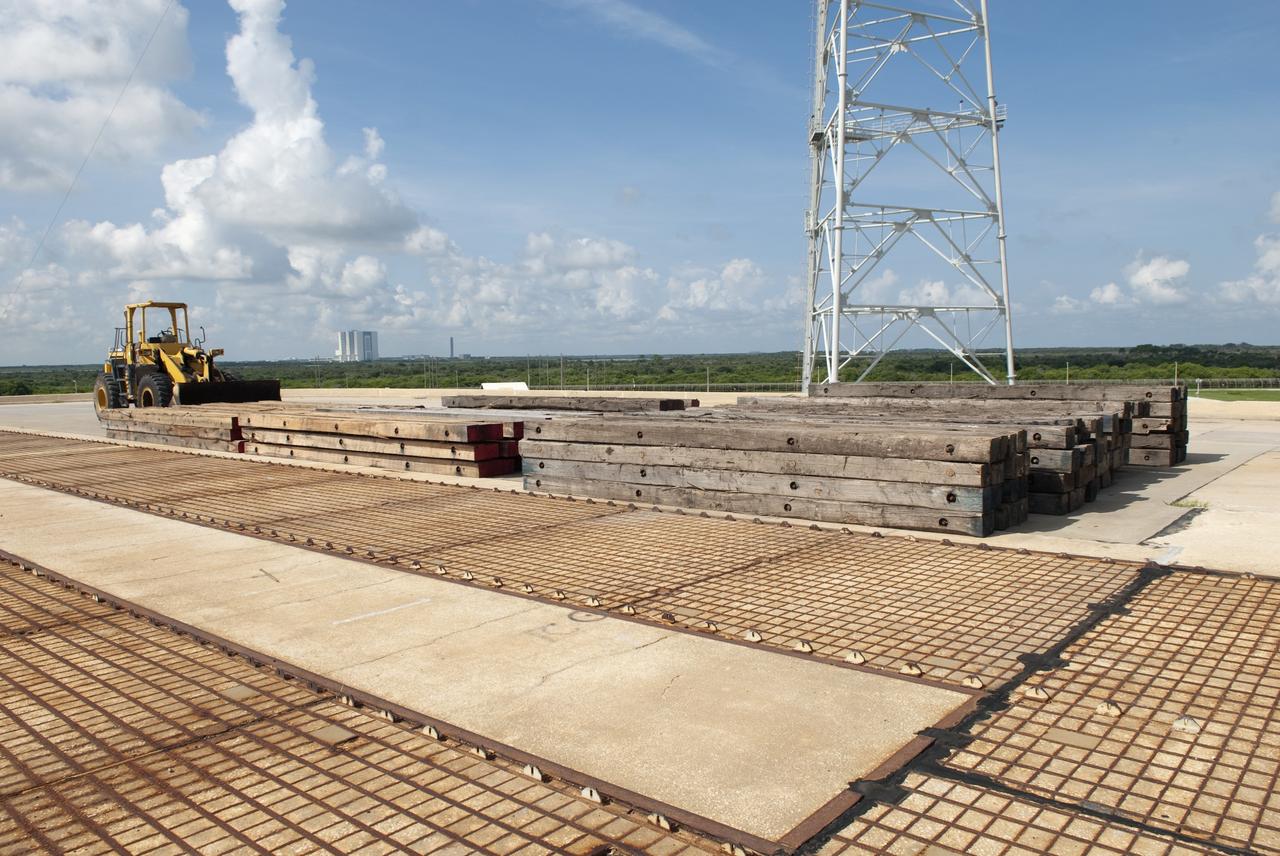
CAPE CANAVERAL, Fla. -- At NASA's Kennedy Space Center in Florida, construction crews lay sand, reinforcing steel and large wooden mats under the rotating service structure (RSS) of Launch Pad 39B to protect the structure's concrete from falling debris during deconstruction. Starting in 2009, the structure at the pad was no longer needed for NASA's Space Shuttle Program, so it is being restructured for future use. The new design will feature a "clean pad" for rockets to come with their own launcher, making it more versatile for a number of vehicles. For information on NASA's future plans, visit www.nasa.gov. Photo credit: NASA/Jim Grossmann
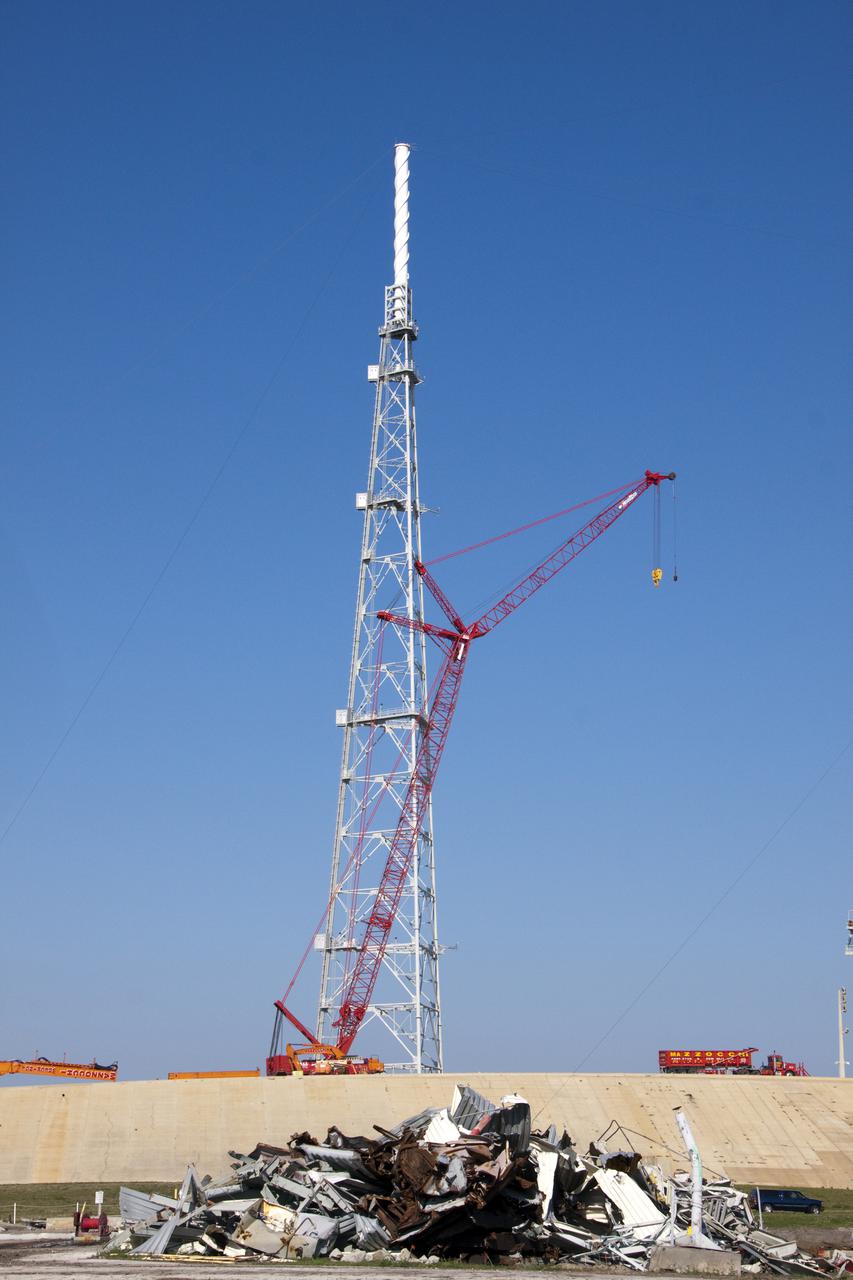
CAPE CANAVERAL, Fla. -- At NASA's Kennedy Space Center in Florida, a large crane will assist in the removal of Launch Pad 39B's fixed service structure FSS. Removal of the pad's rotating service structure RSS continues. The FSS and RSS were designed to support the unique needs of the Space Shuttle Program. In 2009, the pad was no longer needed for the shuttle program, so it is being restructured for future use. Its new design will feature a 'clean pad' for rockets to come with their own launcher, making it more versatile for a number of vehicles. The transformation also includes the refurbishment of the liquid oxygen and liquid hydrogen tanks and the upgrade of about 1.3 million feet of cable. The new lightning protection system, which was in place for the October 2009 launch of Ares I-X, will remain. For information on NASA's future plans, visit www.nasa.gov. Photo credit: NASA_Troy Cryder
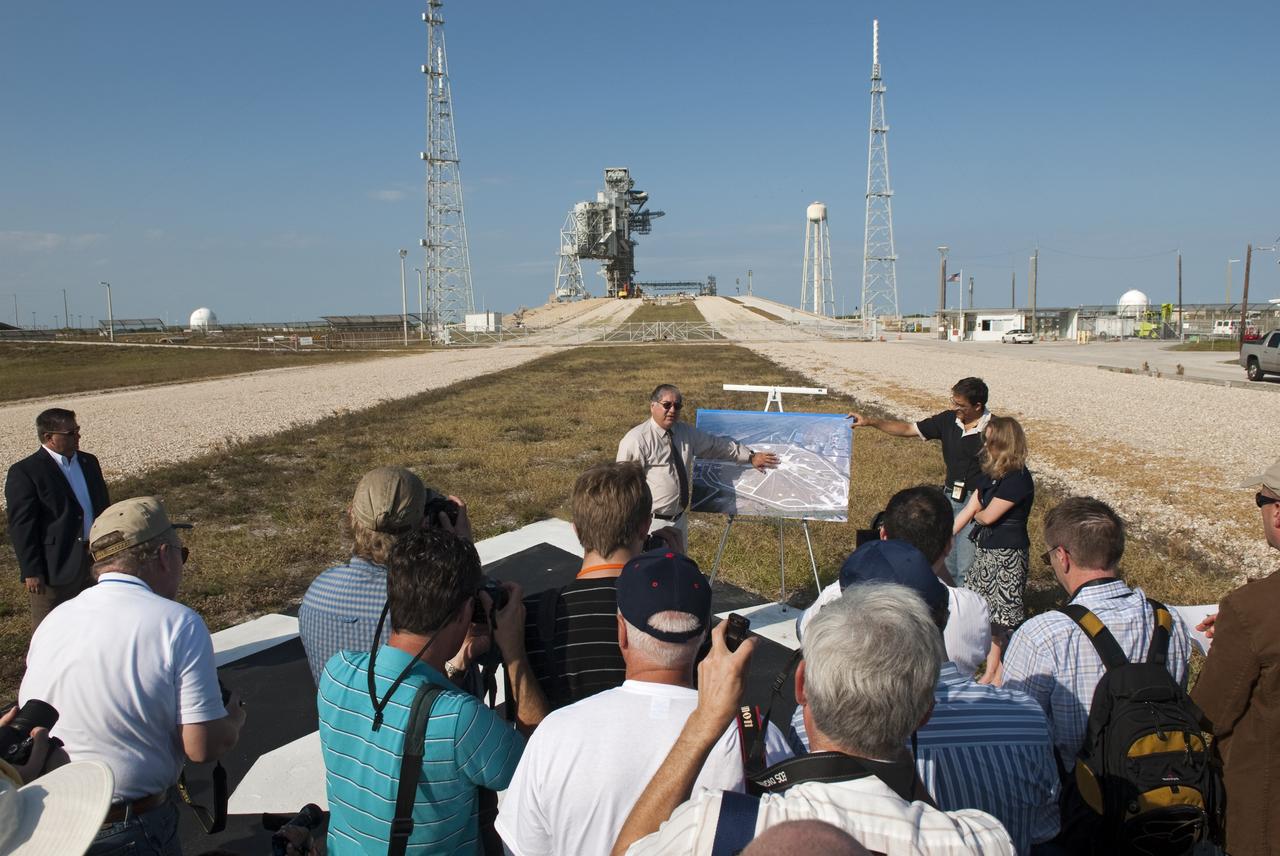
CAPE CANAVERAL, Fla. -- At NASA's Kennedy Space Center in Florida, media learn about the transformation of Launch Pad 39B from Jose Perez-Morales, NASA's Launch Pad 39B senior manager. Starting in 2009, the structure at the pad was no longer needed for NASA's Space Shuttle Program, so it is being restructured for future use. The new design will feature a "clean pad" for rockets to come with their own launcher, making it more versatile for a number of vehicles. The transformation includes the removal of the rotating service structure (RSS) and fixed service structure (FSS), refurbishment of the liquid oxygen and liquid hydrogen tanks, and the upgrade of about 1.3 million feet of cable. The new lightning protection system, which was in place for the October 2009 launch of Ares I-X, will remain. For information on NASA's future plans, visit www.nasa.gov. Photo credit: NASA/Jim Grossmann
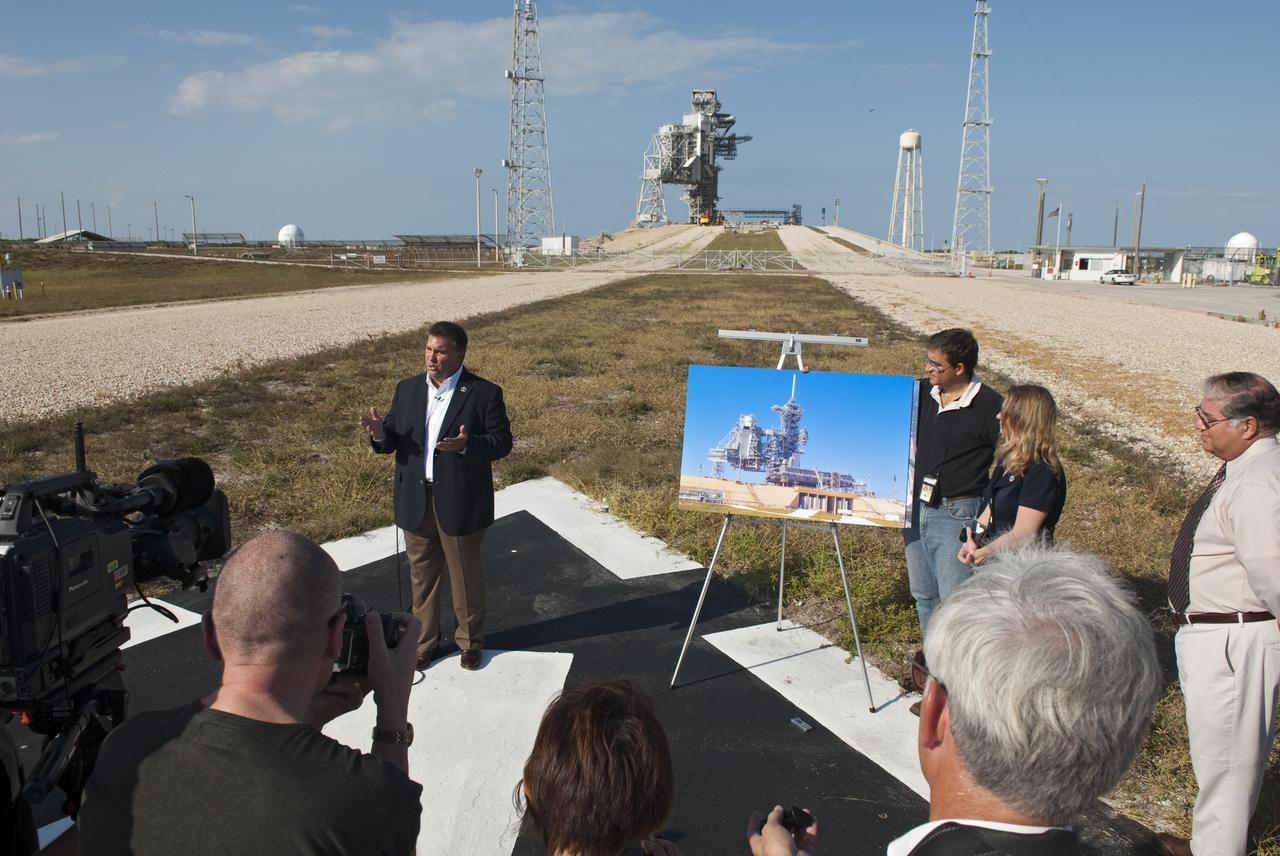
CAPE CANAVERAL, Fla. -- At NASA's Kennedy Space Center in Florida, media learn about the future plans for Launch Pad 39B from Ed Mango, NASA's Space Transportation Planning Office director. If appropriations are provided for NASA's current Authorization Act, those plans would include a robust commercial space program with multiple customers, multiple providers and multiple systems that take Americans to the International Space Station and other low-Earth orbit destinations. For information on NASA's future plans, visit www.nasa.gov. Photo credit: NASA/Jim Grossmann
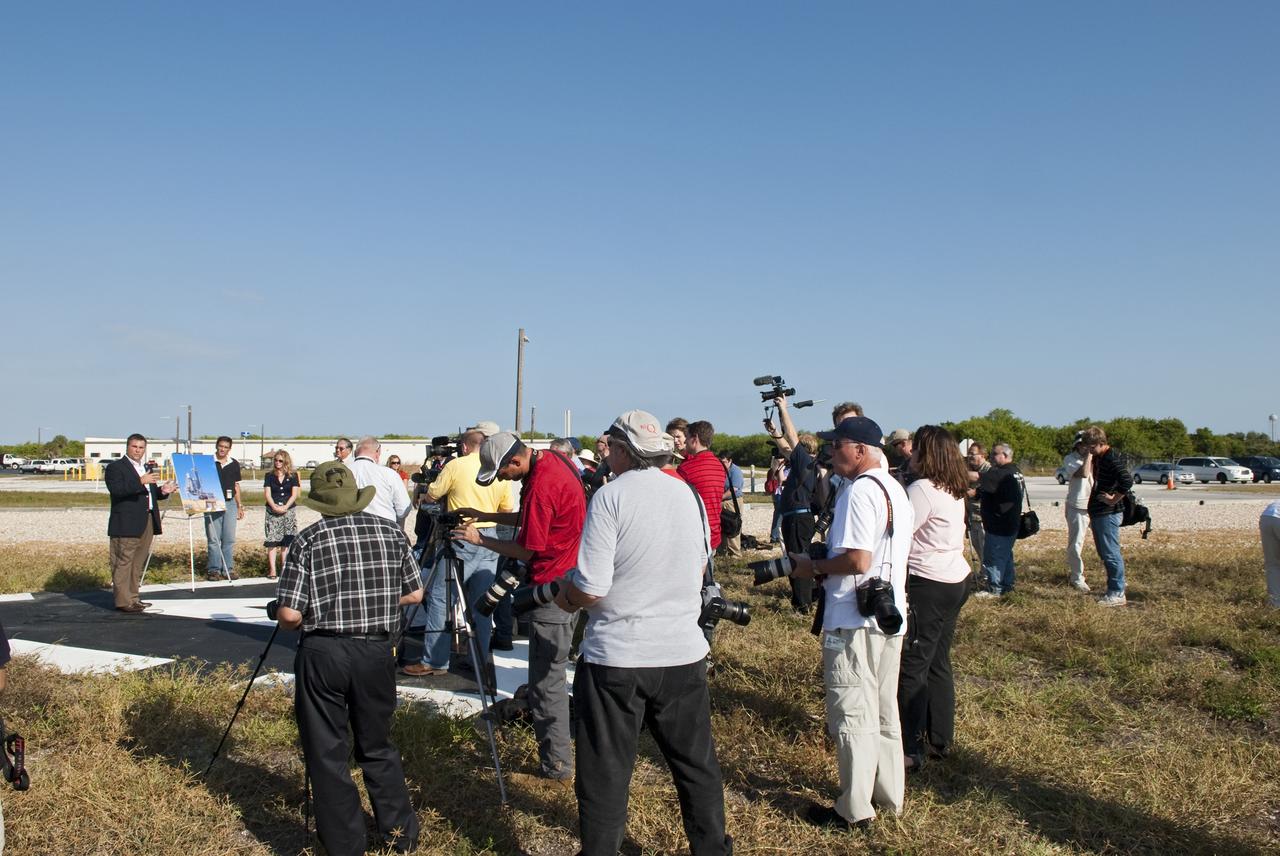
CAPE CANAVERAL, Fla. -- At NASA's Kennedy Space Center in Florida, media learn about the future plans for Launch Pad 39B from Ed Mango, NASA's Space Transportation Planning Office director. If appropriations are provided for NASA's current Authorization Act, those plans would include a robust commercial space program with multiple customers, multiple providers and multiple systems that take Americans to the International Space Station and other low-Earth orbit destinations. For information on NASA's future plans, visit www.nasa.gov. Photo credit: NASA/Jim Grossmann
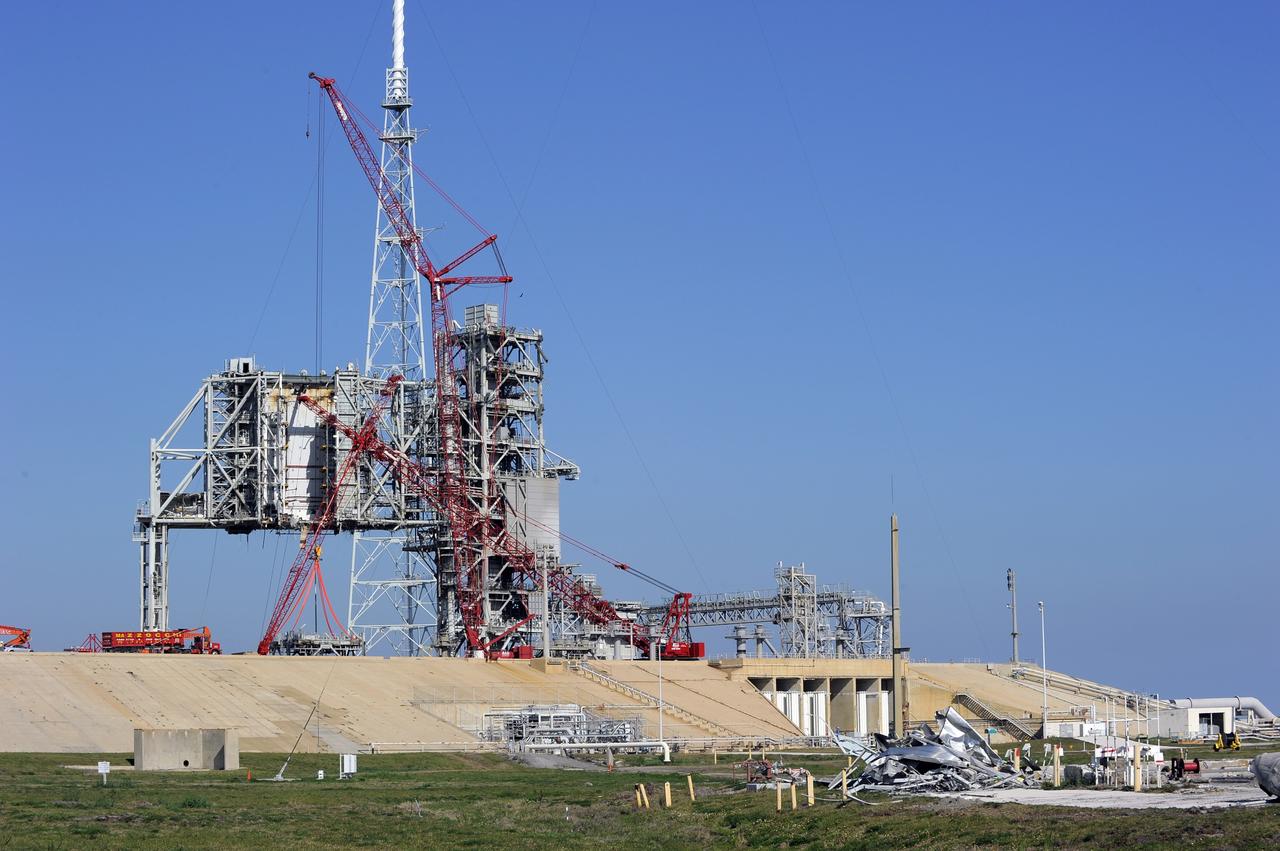
CAPE CANAVERAL, Fla. -- A large crane dismantles another level of the fixed service structure (FSS) on Launch Pad 39B at NASA's Kennedy Space Center in Florida. Work to remove the rotating service structure (RSS) also continues at the pad. The FSS and RSS were designed to support the unique needs of the Space Shuttle Program. In 2009, the pad was no longer needed for the shuttle program, so it is being restructured for future use. Its new design will feature a "clean pad" for rockets to come with their own launcher, making it more versatile for a number of vehicles. The transformation also includes the refurbishment of the liquid oxygen and liquid hydrogen tanks and the upgrade of about 1.3 million feet of cable. The new lightning protection system, which was in place for the October 2009 launch of Ares I-X, will remain. For information on NASA's future plans, visit www.nasa.gov. Photo credit: NASA/Kim Shiflett
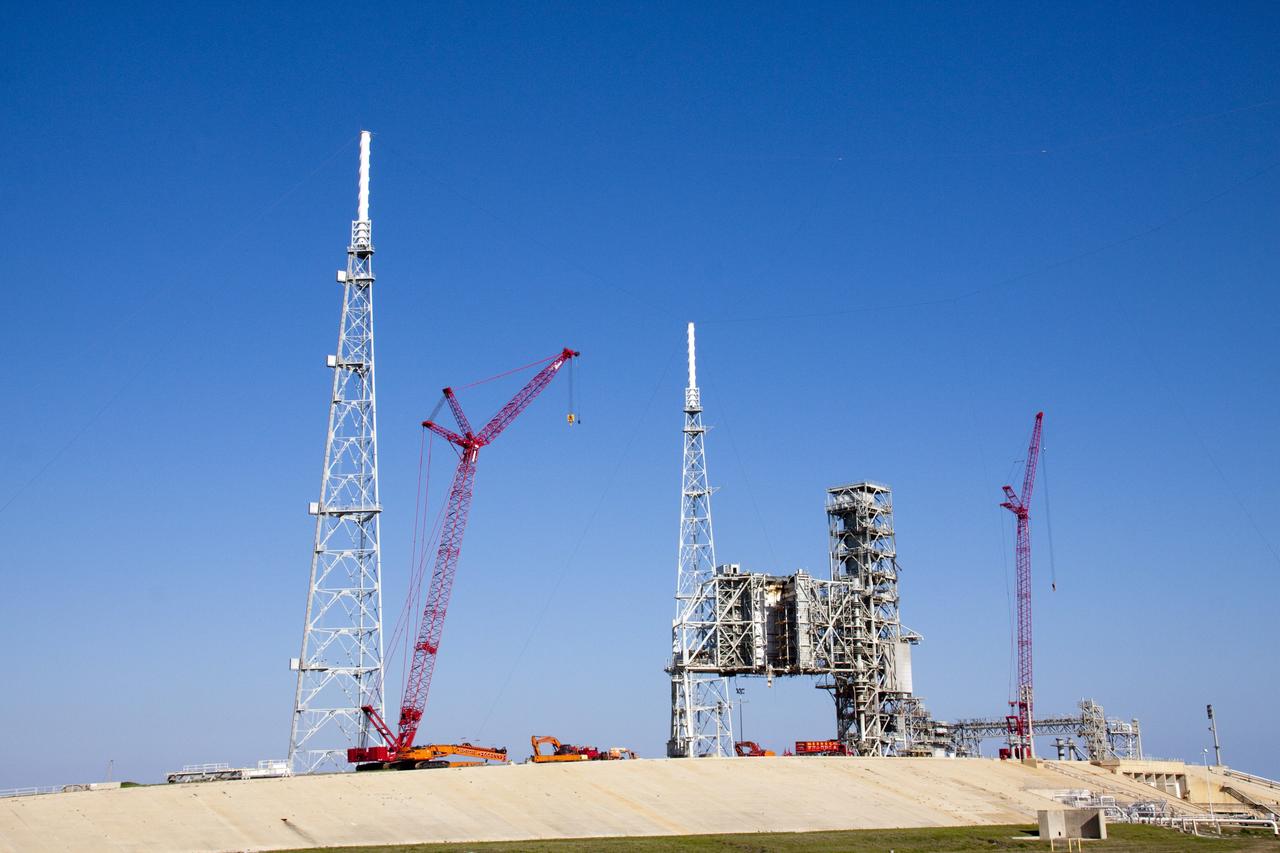
CAPE CANAVERAL, Fla. -- At NASA's Kennedy Space Center in Florida, two large cranes will assist in the removal of Launch Pad 39B's fixed service structure FSS and rotating service structure RSS. The FSS and RSS were designed to support the unique needs of the Space Shuttle Program. In 2009, the pad was no longer needed for the shuttle program, so it is being restructured for future use. Its new design will feature a "clean pad" for rockets to come with their own launcher, making it more versatile for a number of vehicles. The transformation also includes the refurbishment of the liquid oxygen and liquid hydrogen tanks and the upgrade of about 1.3 million feet of cable. The new lightning protection system, which was in place for the October 2009 launch of Ares I-X, will remain. For information on NASA's future plans, visit www.nasa.gov. Photo credit: NASA/Troy Cryder
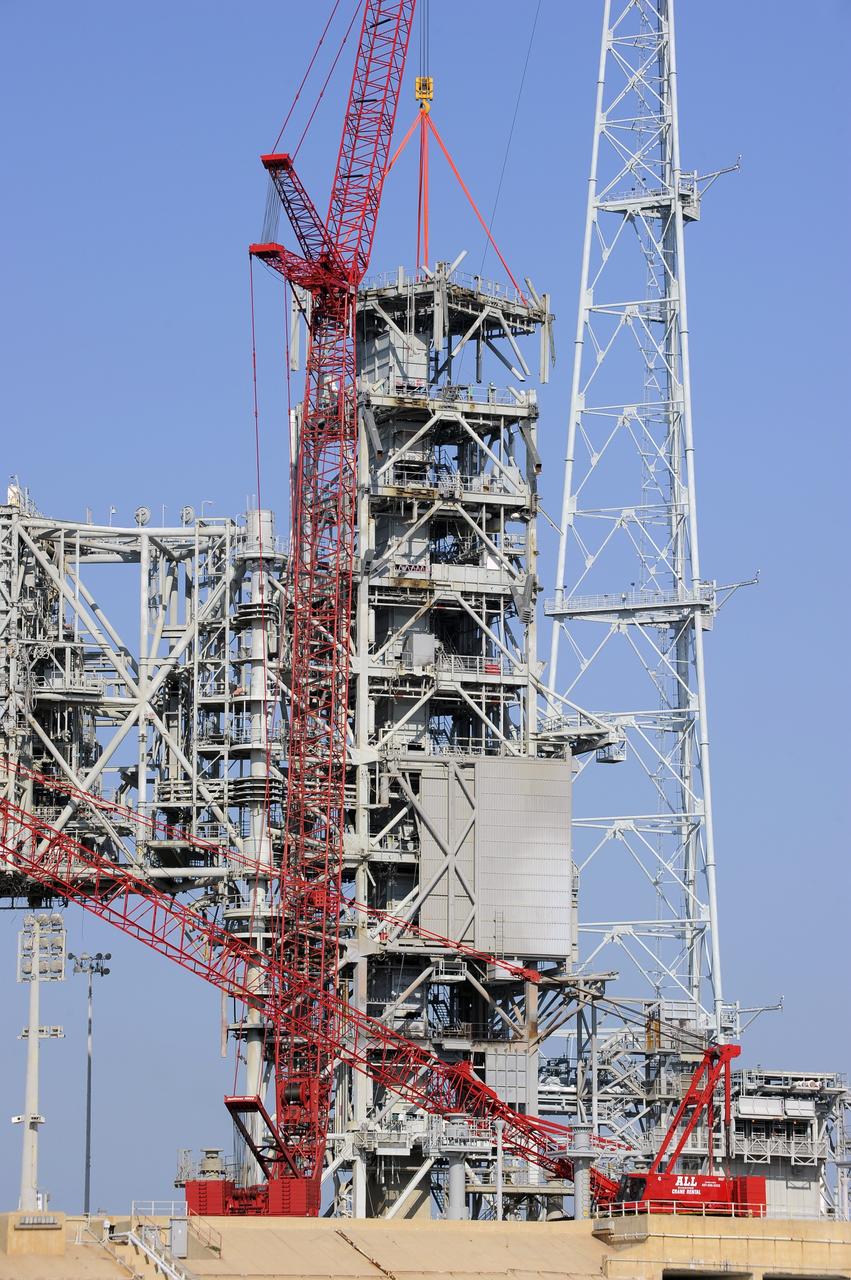
CAPE CANAVERAL, Fla. -- A large crane dismantles another level of the fixed service structure (FSS) on Launch Pad 39B at NASA's Kennedy Space Center in Florida. Work to remove the rotating service structure (RSS) also continues at the pad. The FSS and RSS were designed to support the unique needs of the Space Shuttle Program. In 2009, the pad was no longer needed for the shuttle program, so it is being restructured for future use. Its new design will feature a "clean pad" for rockets to come with their own launcher, making it more versatile for a number of vehicles. The transformation also includes the refurbishment of the liquid oxygen and liquid hydrogen tanks and the upgrade of about 1.3 million feet of cable. The new lightning protection system, which was in place for the October 2009 launch of Ares I-X, will remain. For information on NASA's future plans, visit www.nasa.gov. Photo credit: NASA/Kim Shiflett
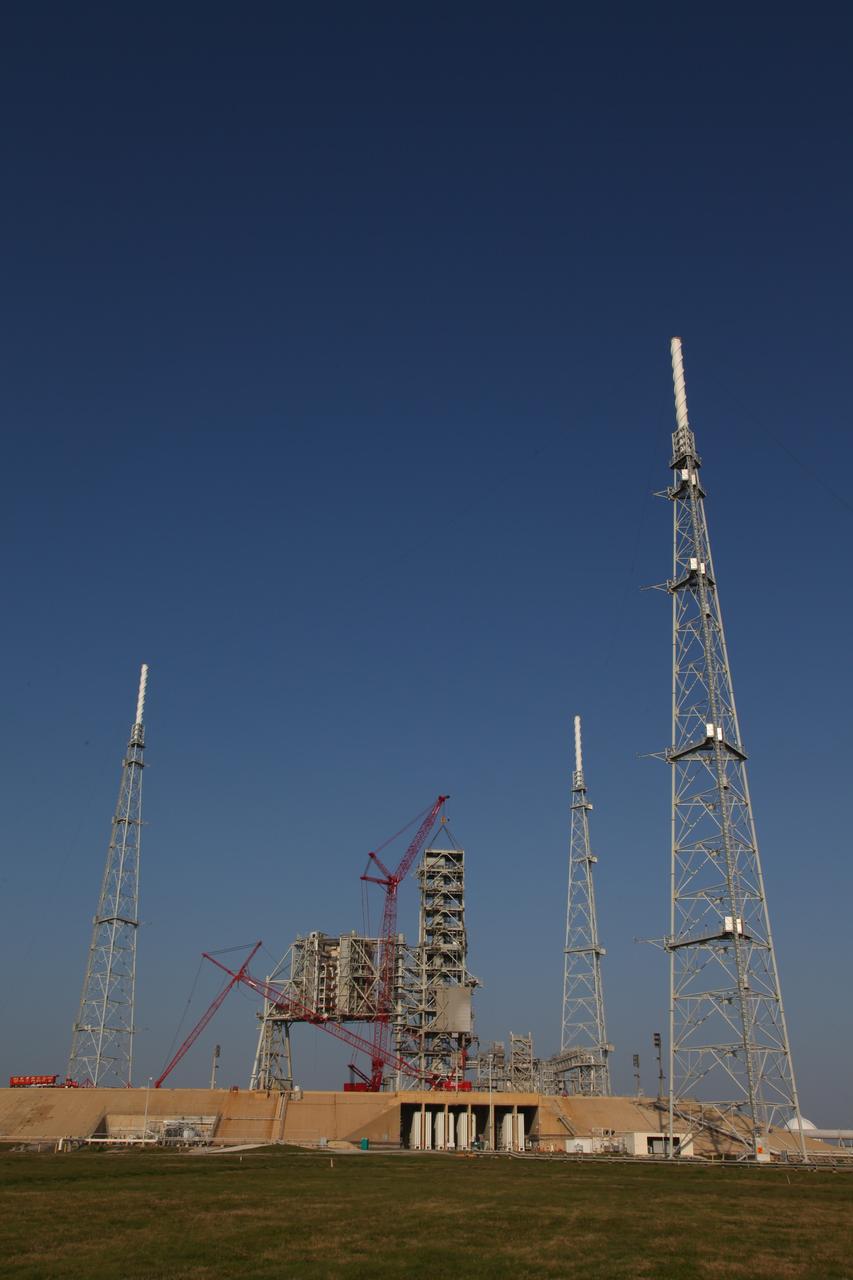
CAPE CANAVERAL, Fla. -- A large crane dismantles the fixed service structure FSS piece by piece on Launch Pad 39B at NASA's Kennedy Space Center in Florida. Work to remove the rotating service structure RSS also continues at the pad. The FSS and RSS were designed to support the unique needs of the Space Shuttle Program. In 2009, the pad was no longer needed for the shuttle program, so it is being restructured for future use. Its new design will feature a "clean pad" for rockets to come with their own launcher, making it more versatile for a number of vehicles. The transformation also includes the refurbishment of the liquid oxygen and liquid hydrogen tanks and the upgrade of about 1.3 million feet of cable. The new lightning protection system, which was in place for the October 2009 launch of Ares I-X, will remain. For information on NASA's future plans, visit www.nasa.gov. Photo credit: NASA/Frankie Martin

CAPE CANAVERAL, Fla. -- A large crane dismantles the fixed service structure FSS piece by piece on Launch Pad 39B at NASA's Kennedy Space Center in Florida. Work to remove the rotating service structure RSS also continues at the pad. The FSS and RSS were designed to support the unique needs of the Space Shuttle Program. In 2009, the pad was no longer needed for the shuttle program, so it is being restructured for future use. Its new design will feature a "clean pad" for rockets to come with their own launcher, making it more versatile for a number of vehicles. The transformation also includes the refurbishment of the liquid oxygen and liquid hydrogen tanks and the upgrade of about 1.3 million feet of cable. The new lightning protection system, which was in place for the October 2009 launch of Ares I-X, will remain. For information on NASA's future plans, visit www.nasa.gov. Photo credit: NASA/Frankie Martin
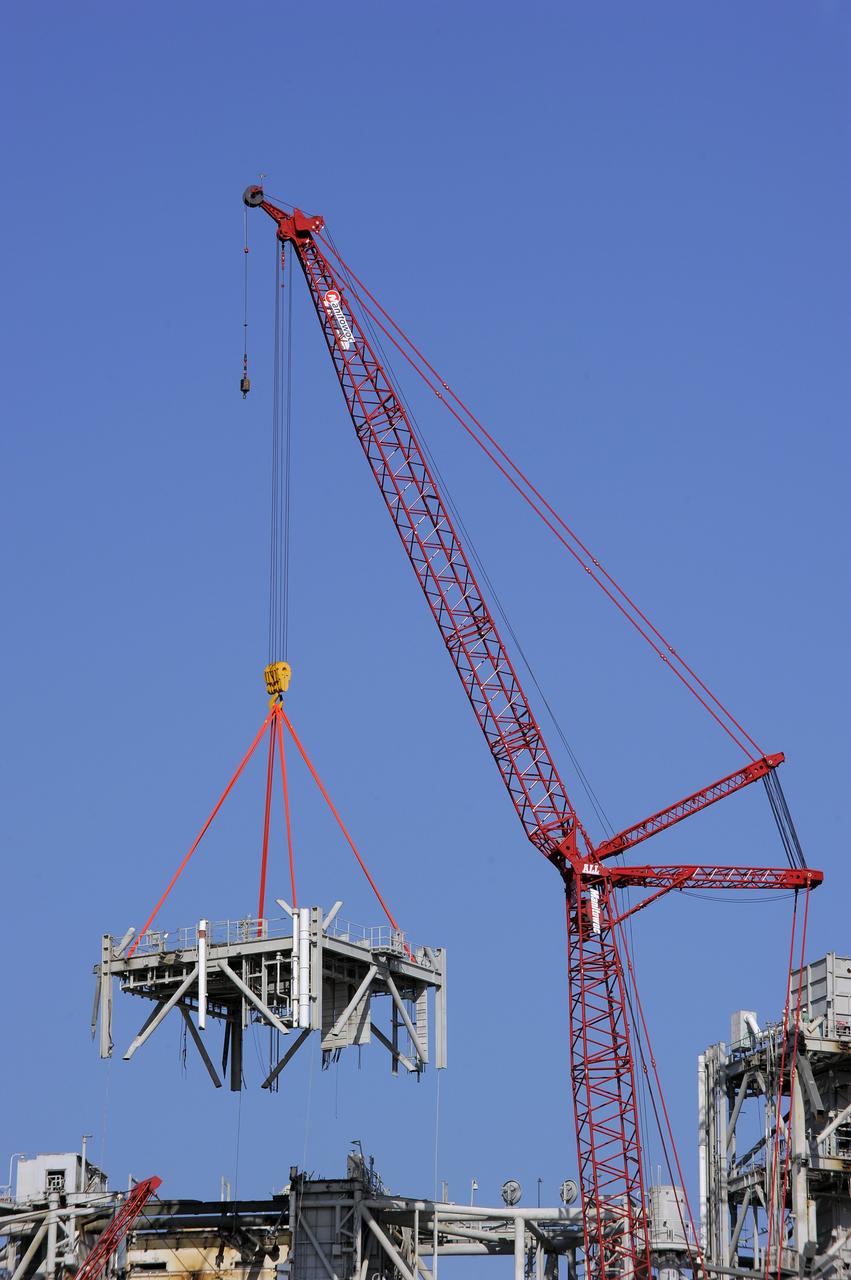
CAPE CANAVERAL, Fla. -- A large crane dismantles another level of the fixed service structure (FSS) on Launch Pad 39B at NASA's Kennedy Space Center in Florida. Work to remove the rotating service structure (RSS) also continues at the pad. The FSS and RSS were designed to support the unique needs of the Space Shuttle Program. In 2009, the pad was no longer needed for the shuttle program, so it is being restructured for future use. Its new design will feature a "clean pad" for rockets to come with their own launcher, making it more versatile for a number of vehicles. The transformation also includes the refurbishment of the liquid oxygen and liquid hydrogen tanks and the upgrade of about 1.3 million feet of cable. The new lightning protection system, which was in place for the October 2009 launch of Ares I-X, will remain. For information on NASA's future plans, visit www.nasa.gov. Photo credit: NASA/Kim Shiflett
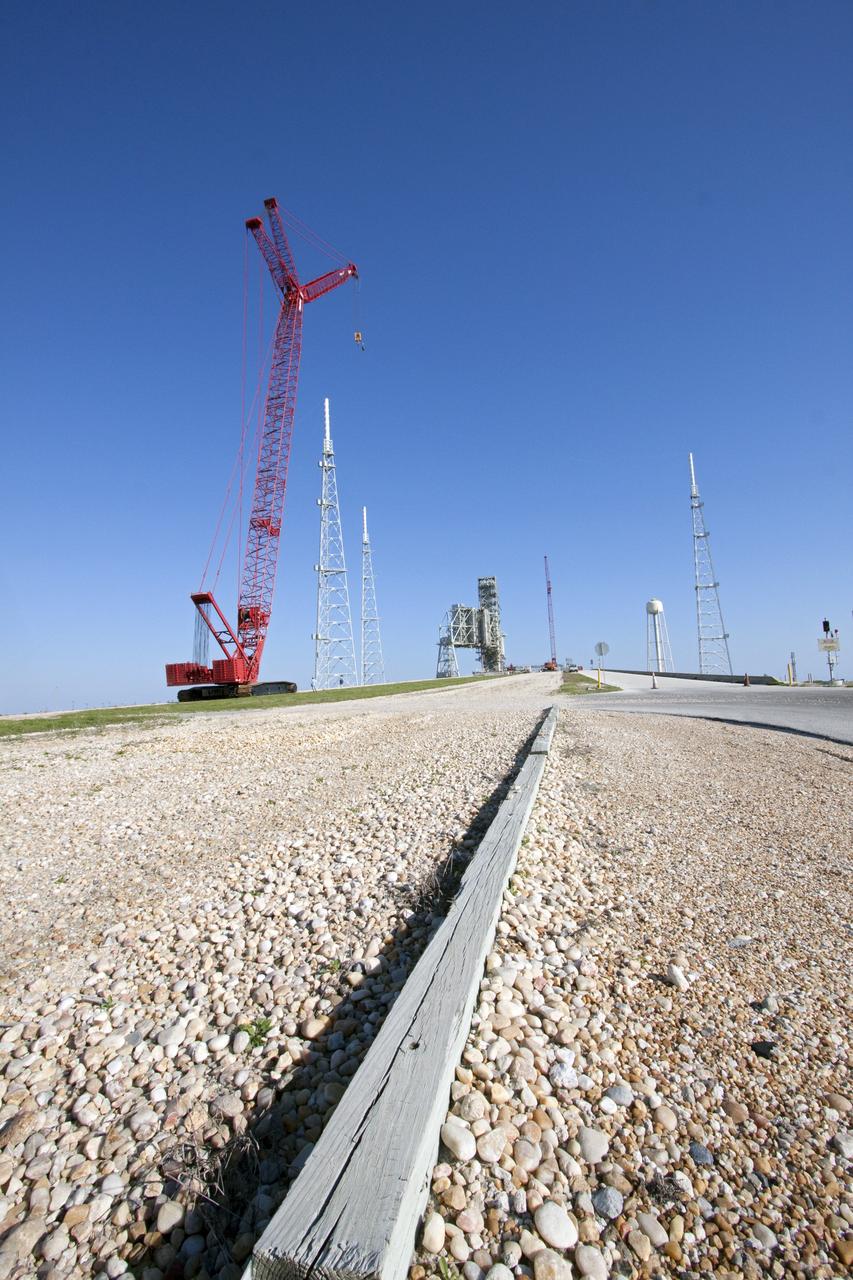
CAPE CANAVERAL, Fla. -- At NASA's Kennedy Space Center in Florida, a large crane makes its way up to the surface of Launch Pad 39B to assist in the removal of the fixed service structure FSS. Removal of the pad's rotating service structure RSS continues. The FSS and RSS were designed to support the unique needs of the Space Shuttle Program. In 2009, the pad was no longer needed for the shuttle program, so it is being restructured for future use. Its new design will feature a "clean pad" for rockets to come with their own launcher, making it more versatile for a number of vehicles. The transformation also includes the refurbishment of the liquid oxygen and liquid hydrogen tanks and the upgrade of about 1.3 million feet of cable. The new lightning protection system, which was in place for the October 2009 launch of Ares I-X, will remain. For information on NASA's future plans, visit www.nasa.gov. Photo credit: NASA/Troy Cryder
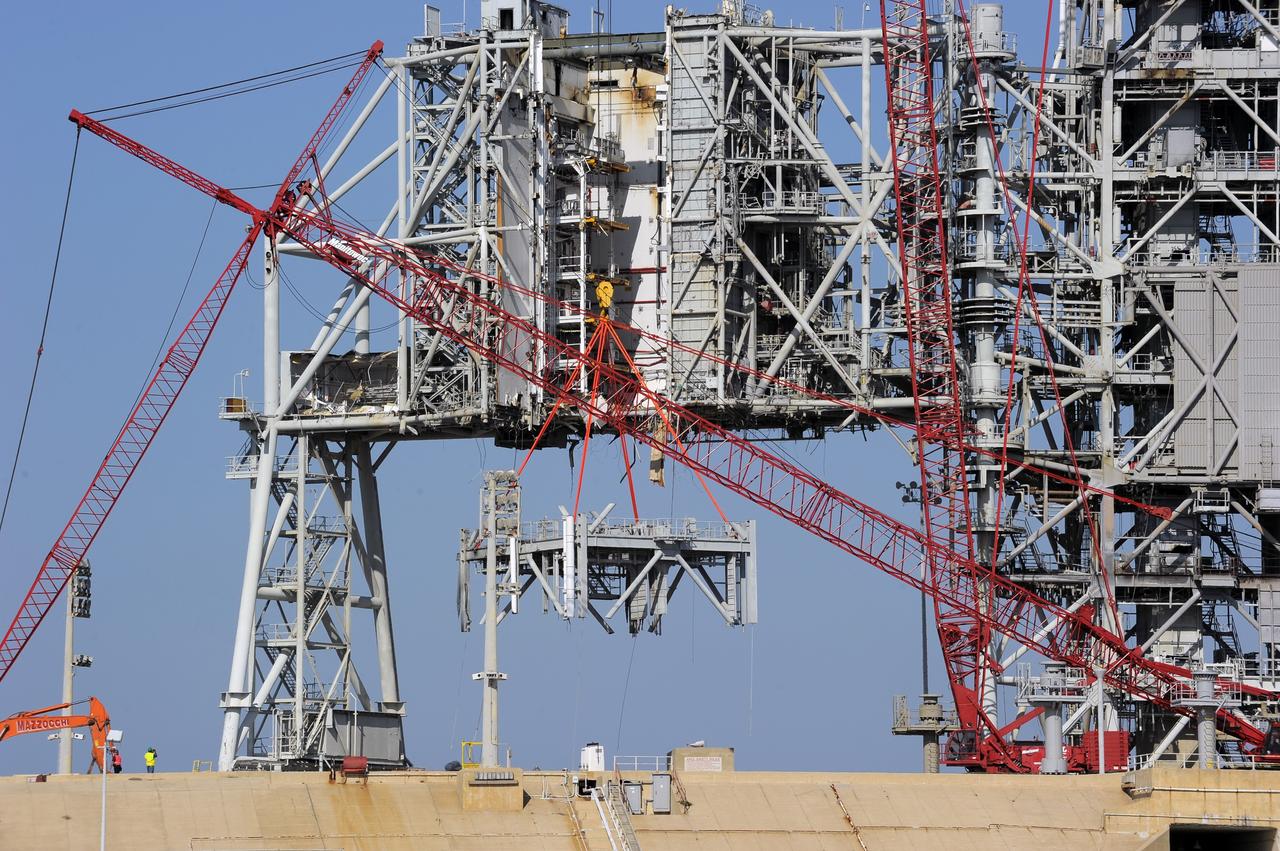
CAPE CANAVERAL, Fla. -- A large crane dismantles another level of the fixed service structure (FSS) on Launch Pad 39B at NASA's Kennedy Space Center in Florida. Work to remove the rotating service structure (RSS) also continues at the pad. The FSS and RSS were designed to support the unique needs of the Space Shuttle Program. In 2009, the pad was no longer needed for the shuttle program, so it is being restructured for future use. Its new design will feature a "clean pad" for rockets to come with their own launcher, making it more versatile for a number of vehicles. The transformation also includes the refurbishment of the liquid oxygen and liquid hydrogen tanks and the upgrade of about 1.3 million feet of cable. The new lightning protection system, which was in place for the October 2009 launch of Ares I-X, will remain. For information on NASA's future plans, visit www.nasa.gov. Photo credit: NASA/Kim Shiflett
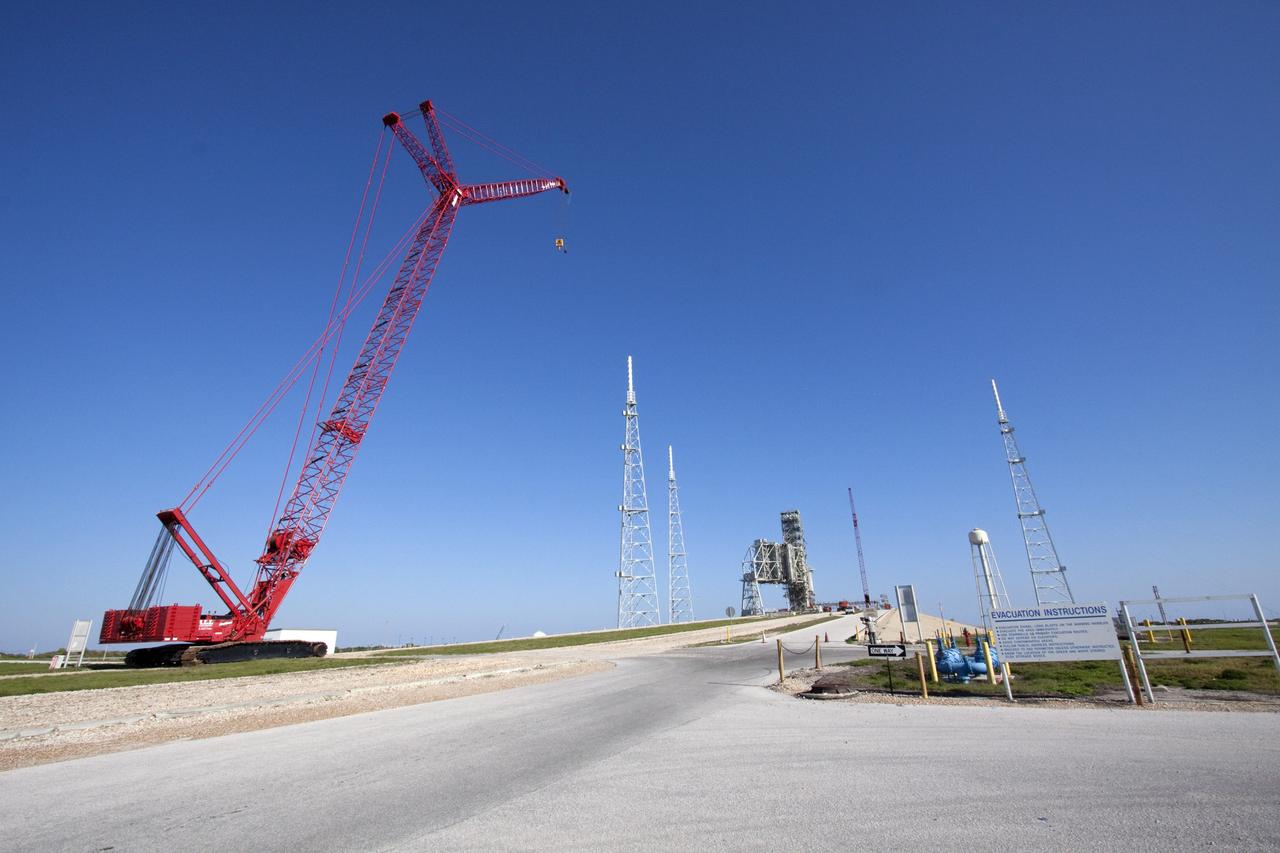
CAPE CANAVERAL, Fla. -- At NASA's Kennedy Space Center in Florida, a large crane makes its way up to the surface of Launch Pad 39B to assist in the removal of the fixed service structure FSS. Removal of the pad's rotating service structure RSS continues. The FSS and RSS were designed to support the unique needs of the Space Shuttle Program. In 2009, the pad was no longer needed for the shuttle program, so it is being restructured for future use. Its new design will feature a "clean pad" for rockets to come with their own launcher, making it more versatile for a number of vehicles. The transformation also includes the refurbishment of the liquid oxygen and liquid hydrogen tanks and the upgrade of about 1.3 million feet of cable. The new lightning protection system, which was in place for the October 2009 launch of Ares I-X, will remain. For information on NASA's future plans, visit www.nasa.gov. Photo credit: NASA/Troy Cryder
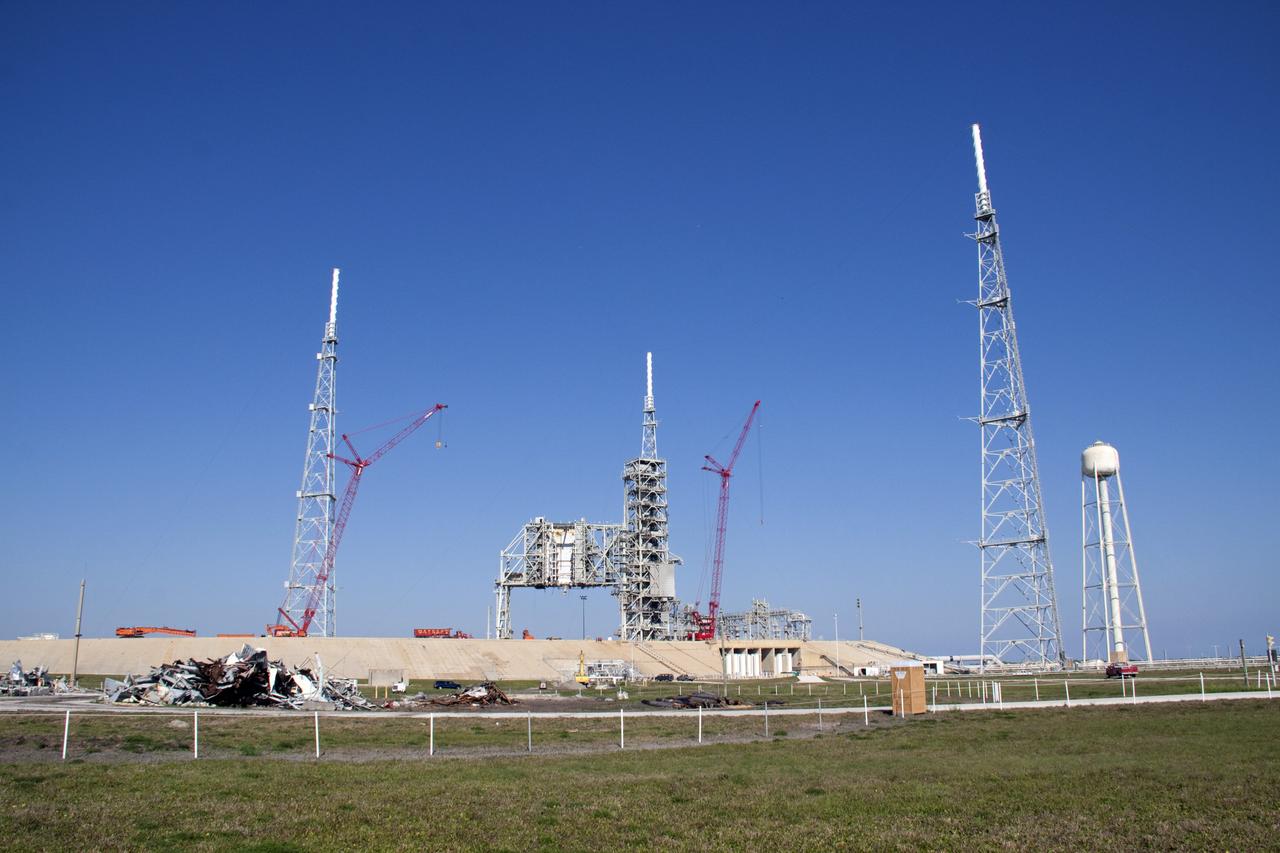
CAPE CANAVERAL, Fla. -- At NASA's Kennedy Space Center in Florida, two large cranes will assist in the removal of Launch Pad 39B's fixed service structure FSS and rotating service structure RSS. The FSS and RSS were designed to support the unique needs of the Space Shuttle Program. In 2009, the pad was no longer needed for the shuttle program, so it is being restructured for future use. Its new design will feature a "clean pad" for rockets to come with their own launcher, making it more versatile for a number of vehicles. The transformation also includes the refurbishment of the liquid oxygen and liquid hydrogen tanks and the upgrade of about 1.3 million feet of cable. The new lightning protection system, which was in place for the October 2009 launch of Ares I-X, will remain. For information on NASA's future plans, visit www.nasa.gov. Photo credit: NASA/Troy Cryder
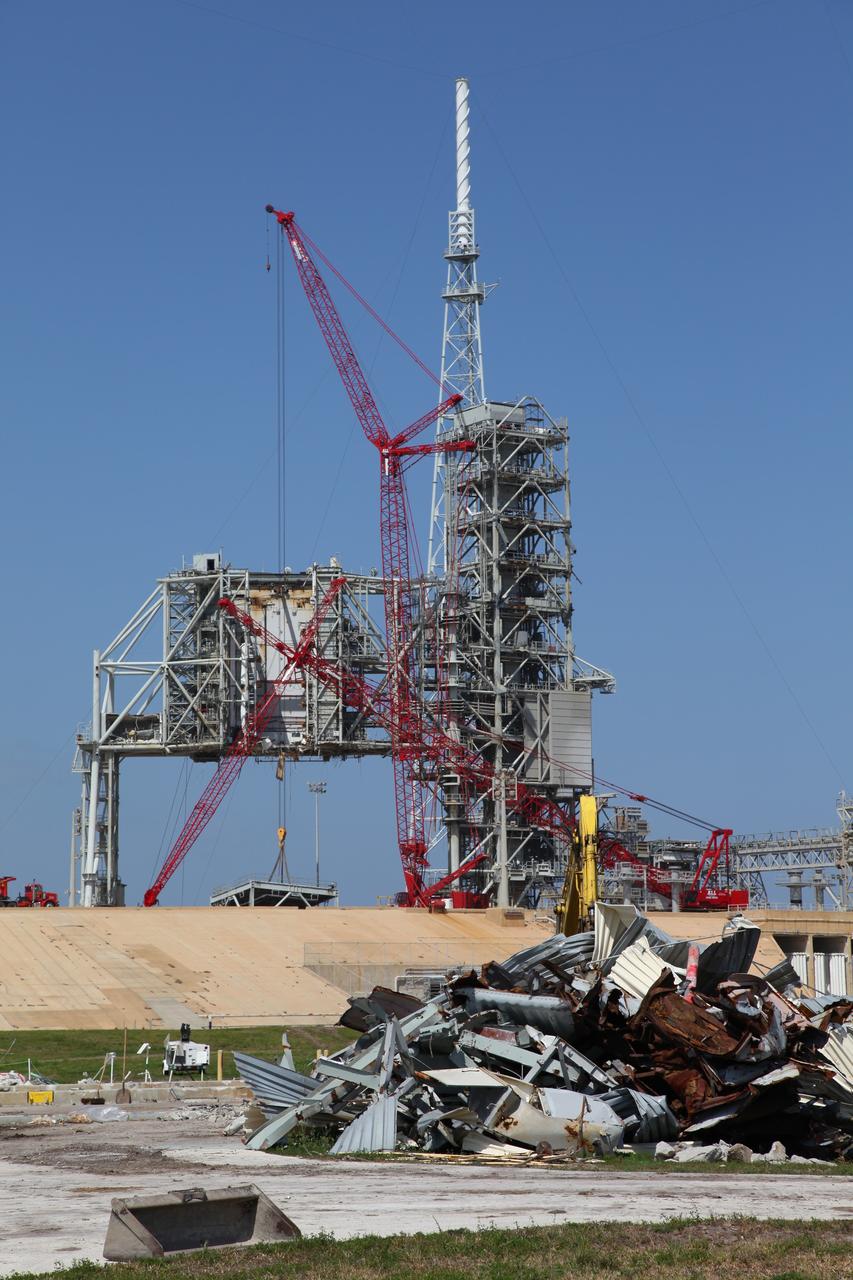
CAPE CANAVERAL, Fla. -- A large crane dismantles the fixed service structure (FSS) piece by piece on Launch Pad 39B at NASA's Kennedy Space Center in Florida. Work to remove the rotating service structure (RSS) also continues at the pad. The FSS and RSS were designed to support the unique needs of the Space Shuttle Program. In 2009, the pad was no longer needed for the shuttle program, so it is being restructured for future use. Its new design will feature a "clean pad" for rockets to come with their own launcher, making it more versatile for a number of vehicles. The transformation also includes the refurbishment of the liquid oxygen and liquid hydrogen tanks and the upgrade of about 1.3 million feet of cable. The new lightning protection system, which was in place for the October 2009 launch of Ares I-X, will remain. For information on NASA's future plans, visit www.nasa.gov. Photo credit: NASA/Frankie Martin
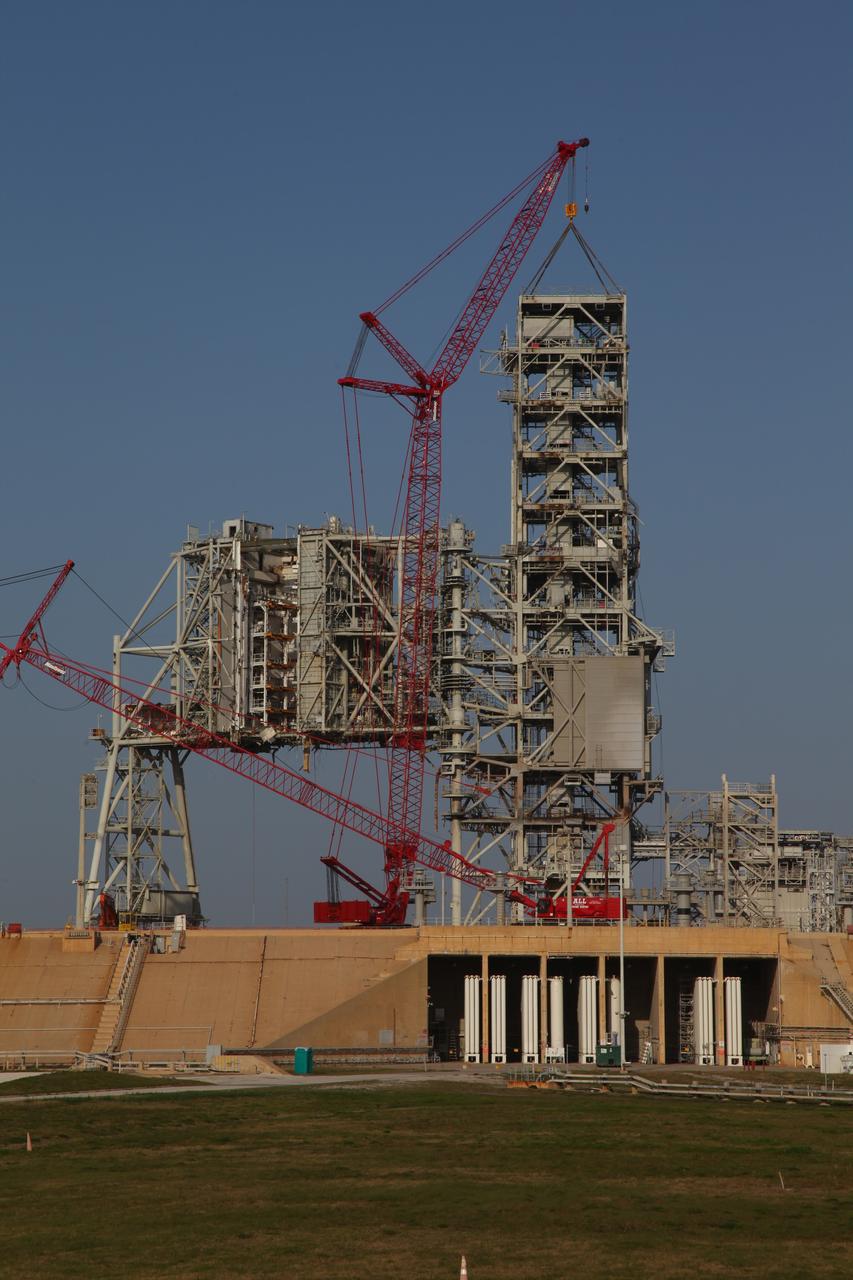
CAPE CANAVERAL, Fla. -- A large crane dismantles the fixed service structure FSS piece by piece on Launch Pad 39B at NASA's Kennedy Space Center in Florida. Work to remove the rotating service structure RSS also continues at the pad. The FSS and RSS were designed to support the unique needs of the Space Shuttle Program. In 2009, the pad was no longer needed for the shuttle program, so it is being restructured for future use. Its new design will feature a "clean pad" for rockets to come with their own launcher, making it more versatile for a number of vehicles. The transformation also includes the refurbishment of the liquid oxygen and liquid hydrogen tanks and the upgrade of about 1.3 million feet of cable. The new lightning protection system, which was in place for the October 2009 launch of Ares I-X, will remain. For information on NASA's future plans, visit www.nasa.gov. Photo credit: NASA/Frankie Martin
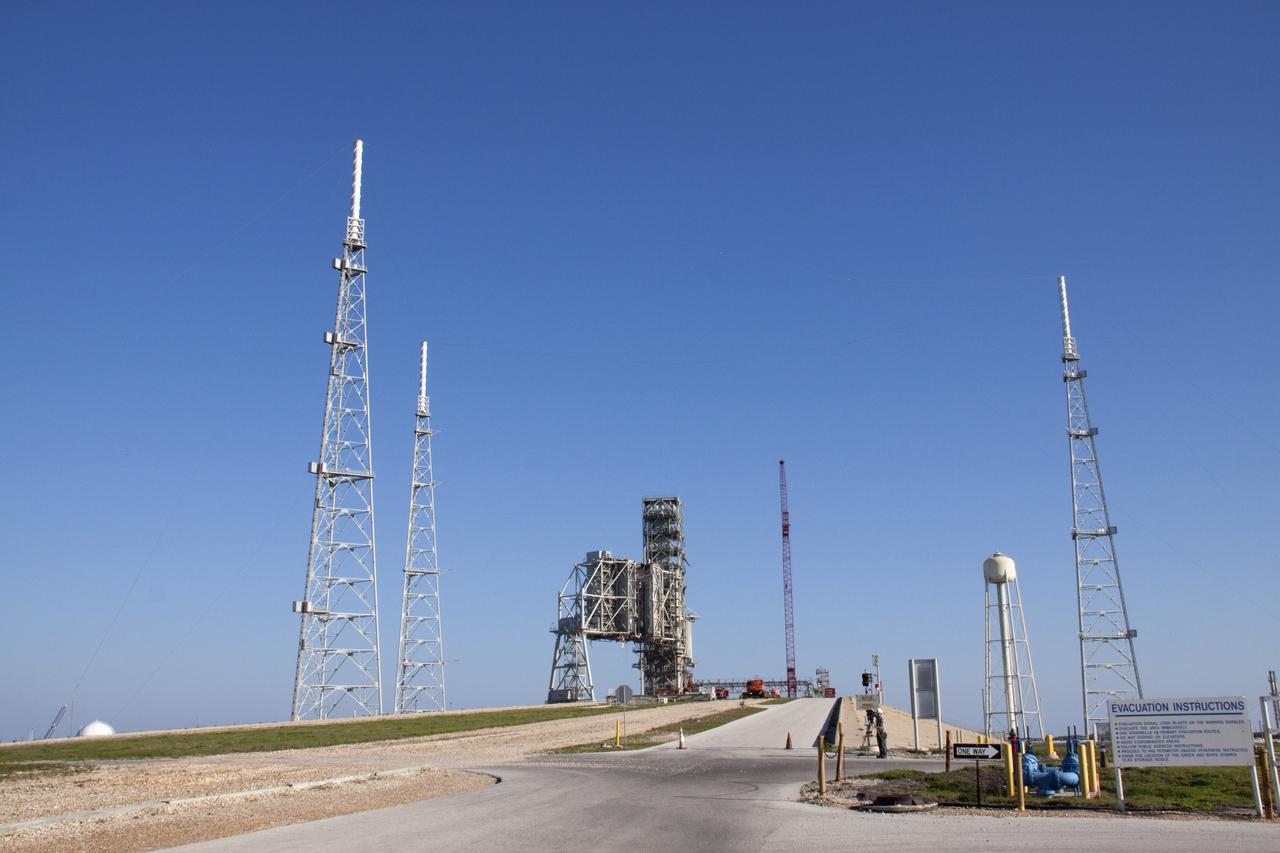
CAPE CANAVERAL, Fla. -- At NASA's Kennedy Space Center in Florida, preparations are under way to begin removing the fixed service structure FSS from Launch Pad 39B. Removal of the pad's rotating service structure RSS continues. The FSS and RSS were designed to support the unique needs of the Space Shuttle Program. In 2009, the pad was no longer needed for the shuttle program, so it is being restructured for future use. Its new design will feature a "clean pad" for rockets to come with their own launcher, making it more versatile for a number of vehicles. The transformation also includes the refurbishment of the liquid oxygen and liquid hydrogen tanks and the upgrade of about 1.3 million feet of cable. The new lightning protection system, which was in place for the October 2009 launch of Ares I-X, will remain. For information on NASA's future plans, visit www.nasa.gov. Photo credit: NASA/Troy Cryder
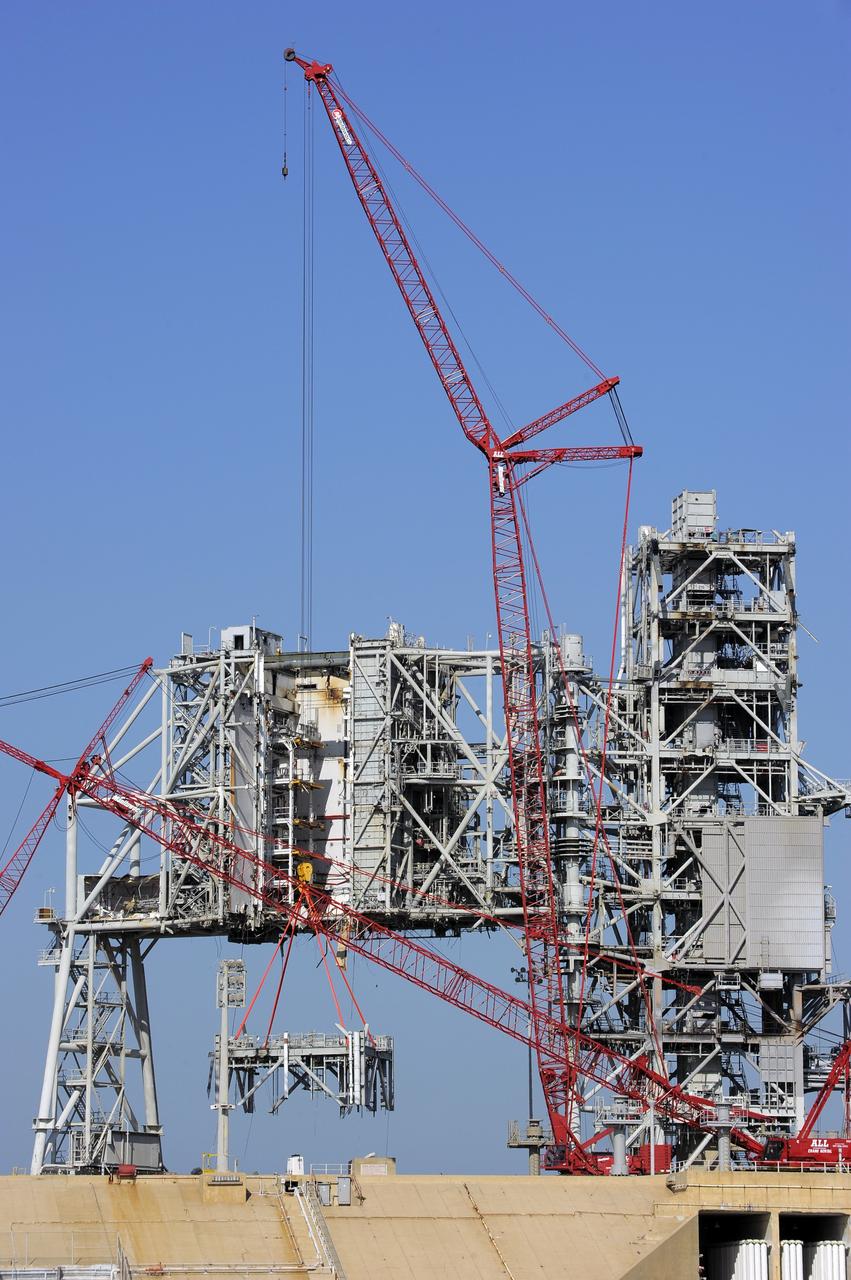
CAPE CANAVERAL, Fla. -- A large crane dismantles another level of the fixed service structure (FSS) on Launch Pad 39B at NASA's Kennedy Space Center in Florida. Work to remove the rotating service structure (RSS) also continues at the pad. The FSS and RSS were designed to support the unique needs of the Space Shuttle Program. In 2009, the pad was no longer needed for the shuttle program, so it is being restructured for future use. Its new design will feature a "clean pad" for rockets to come with their own launcher, making it more versatile for a number of vehicles. The transformation also includes the refurbishment of the liquid oxygen and liquid hydrogen tanks and the upgrade of about 1.3 million feet of cable. The new lightning protection system, which was in place for the October 2009 launch of Ares I-X, will remain. For information on NASA's future plans, visit www.nasa.gov. Photo credit: NASA/Kim Shiflett
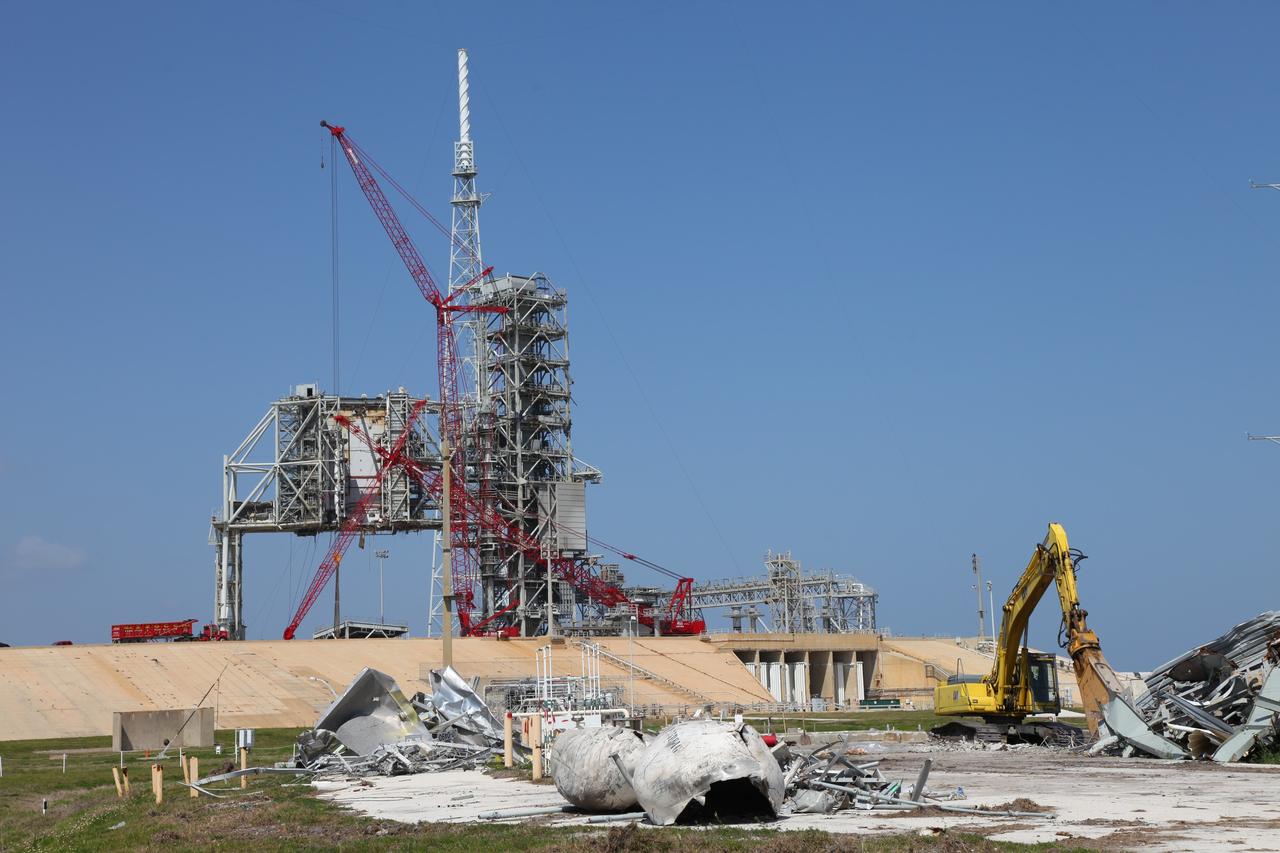
CAPE CANAVERAL, Fla. -- A large crane dismantles the fixed service structure (FSS) piece by piece on Launch Pad 39B at NASA's Kennedy Space Center in Florida. Work to remove the rotating service structure (RSS) also continues at the pad. The FSS and RSS were designed to support the unique needs of the Space Shuttle Program. In 2009, the pad was no longer needed for the shuttle program, so it is being restructured for future use. Its new design will feature a "clean pad" for rockets to come with their own launcher, making it more versatile for a number of vehicles. The transformation also includes the refurbishment of the liquid oxygen and liquid hydrogen tanks and the upgrade of about 1.3 million feet of cable. The new lightning protection system, which was in place for the October 2009 launch of Ares I-X, will remain. For information on NASA's future plans, visit www.nasa.gov. Photo credit: NASA/Frankie Martin
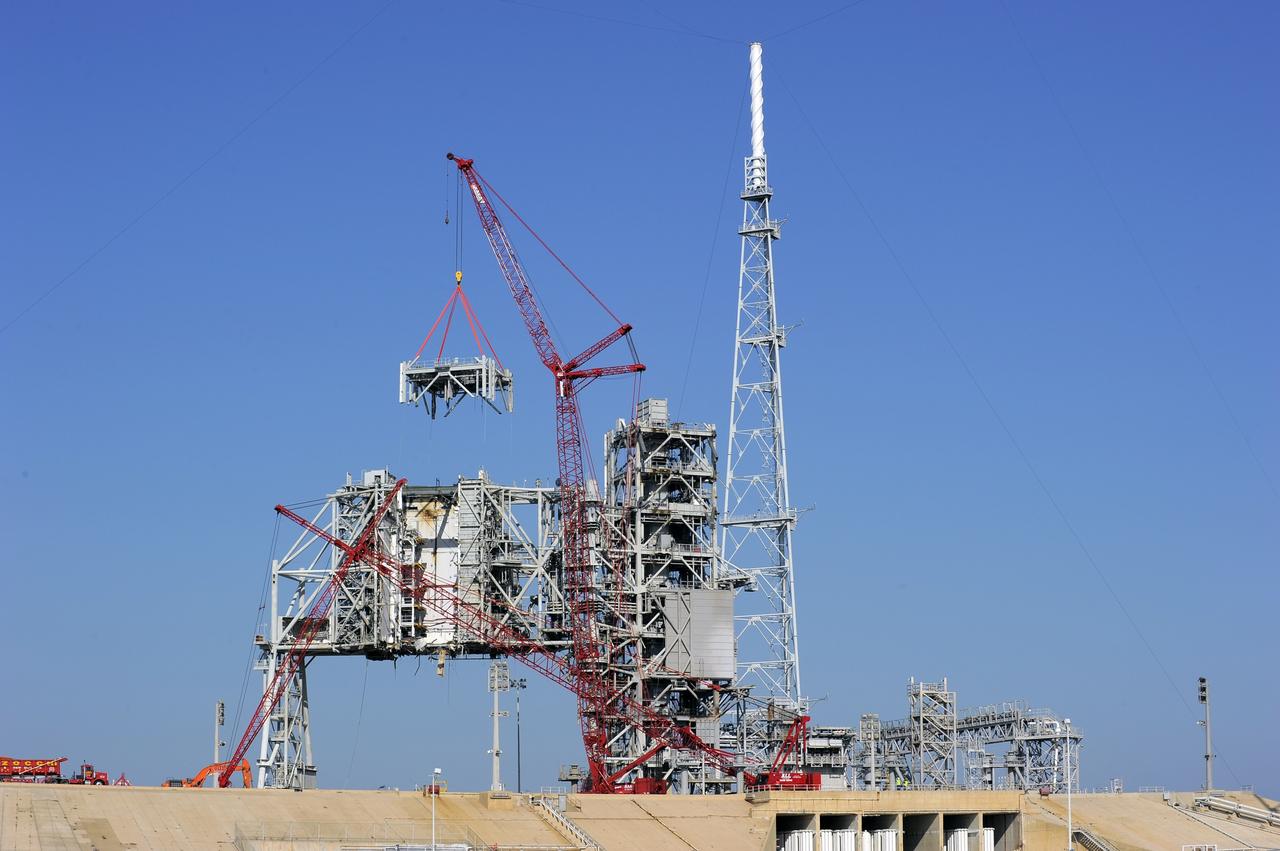
CAPE CANAVERAL, Fla. -- A large crane dismantles another level of the fixed service structure (FSS) on Launch Pad 39B at NASA's Kennedy Space Center in Florida. Work to remove the rotating service structure (RSS) also continues at the pad. The FSS and RSS were designed to support the unique needs of the Space Shuttle Program. In 2009, the pad was no longer needed for the shuttle program, so it is being restructured for future use. Its new design will feature a "clean pad" for rockets to come with their own launcher, making it more versatile for a number of vehicles. The transformation also includes the refurbishment of the liquid oxygen and liquid hydrogen tanks and the upgrade of about 1.3 million feet of cable. The new lightning protection system, which was in place for the October 2009 launch of Ares I-X, will remain. For information on NASA's future plans, visit www.nasa.gov. Photo credit: NASA/Kim Shiflett
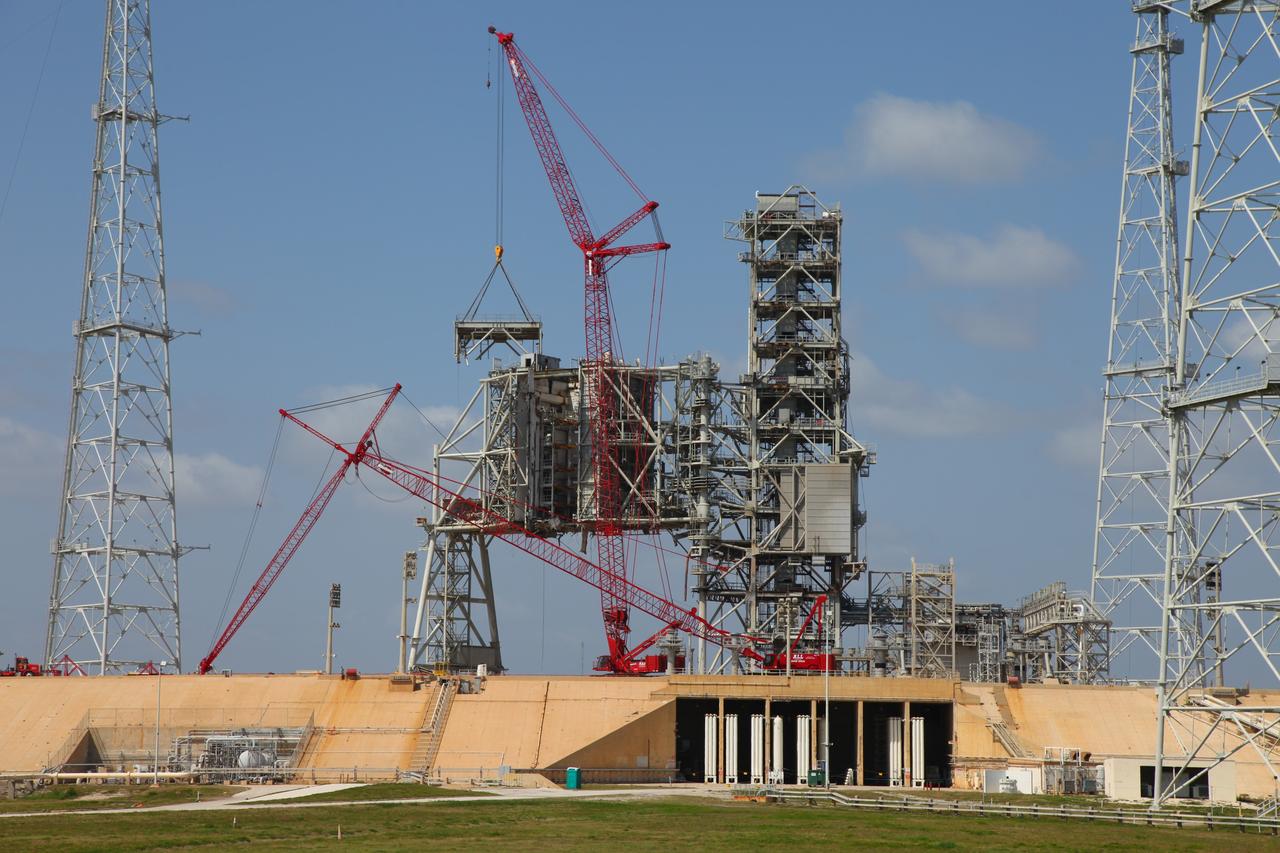
CAPE CANAVERAL, Fla. -- A large crane dismantles the fixed service structure (FSS) piece by piece on Launch Pad 39B at NASA's Kennedy Space Center in Florida. Work to remove the rotating service structure (RSS) also continues at the pad. The FSS and RSS were designed to support the unique needs of the Space Shuttle Program. In 2009, the pad was no longer needed for the shuttle program, so it is being restructured for future use. Its new design will feature a "clean pad" for rockets to come with their own launcher, making it more versatile for a number of vehicles. The transformation also includes the refurbishment of the liquid oxygen and liquid hydrogen tanks and the upgrade of about 1.3 million feet of cable. The new lightning protection system, which was in place for the October 2009 launch of Ares I-X, will remain. For information on NASA's future plans, visit www.nasa.gov. Photo credit: NASA/Frankie Martin