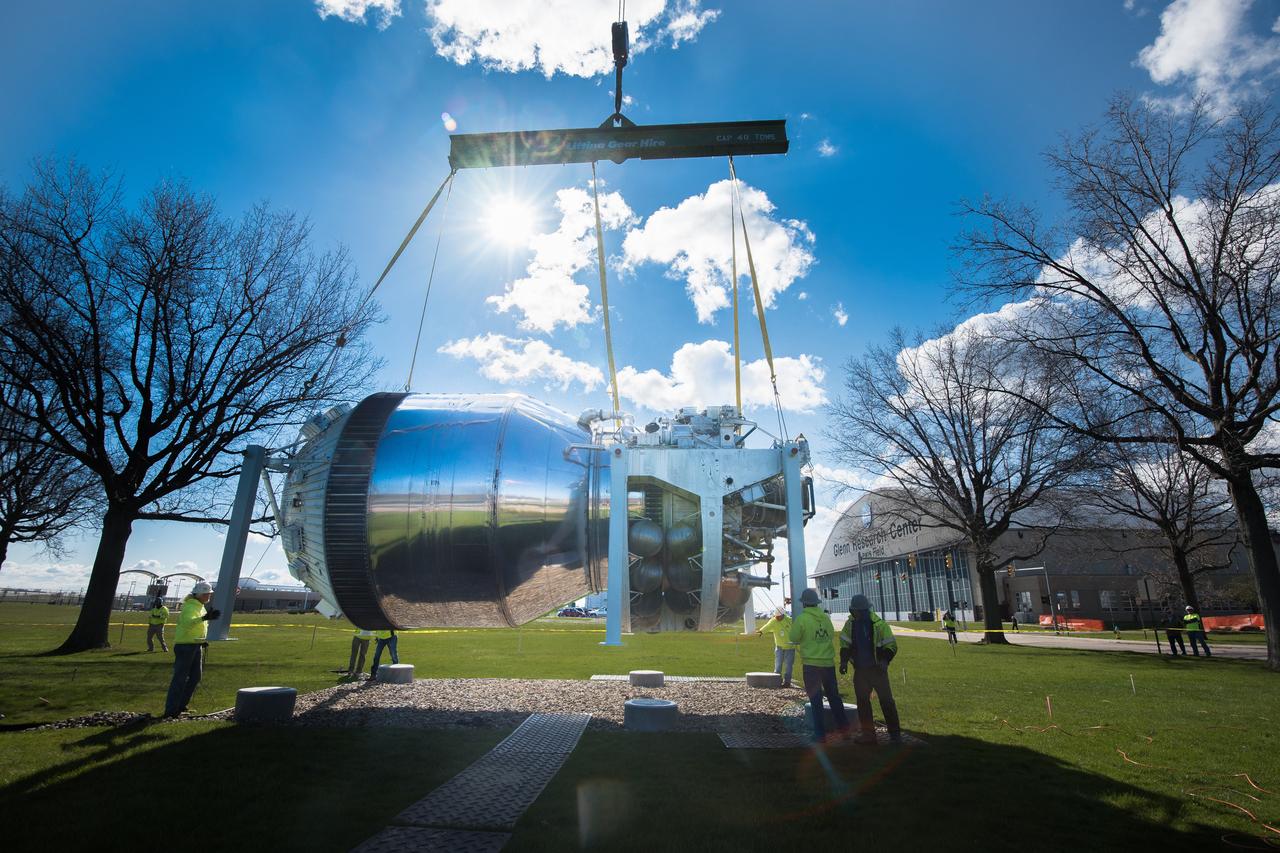
The 6,600 pound Centaur test article is a rare artifact recently transported from the U.S. Space and Rocket Center in Alabama. Centaur, developed at NASA Glenn Research Center in the late 1950s, was the world's first high-energy upper stage, burning liquid hydrogen (LH2) and liquid oxygen (LOX), and has enabled the launch of some of NASA's most important scientific missions over its 50-year history. In this image, technicians prepare to mount the hardware on a permanent display stand close to the main entrance at NASA Glenn Research Center.
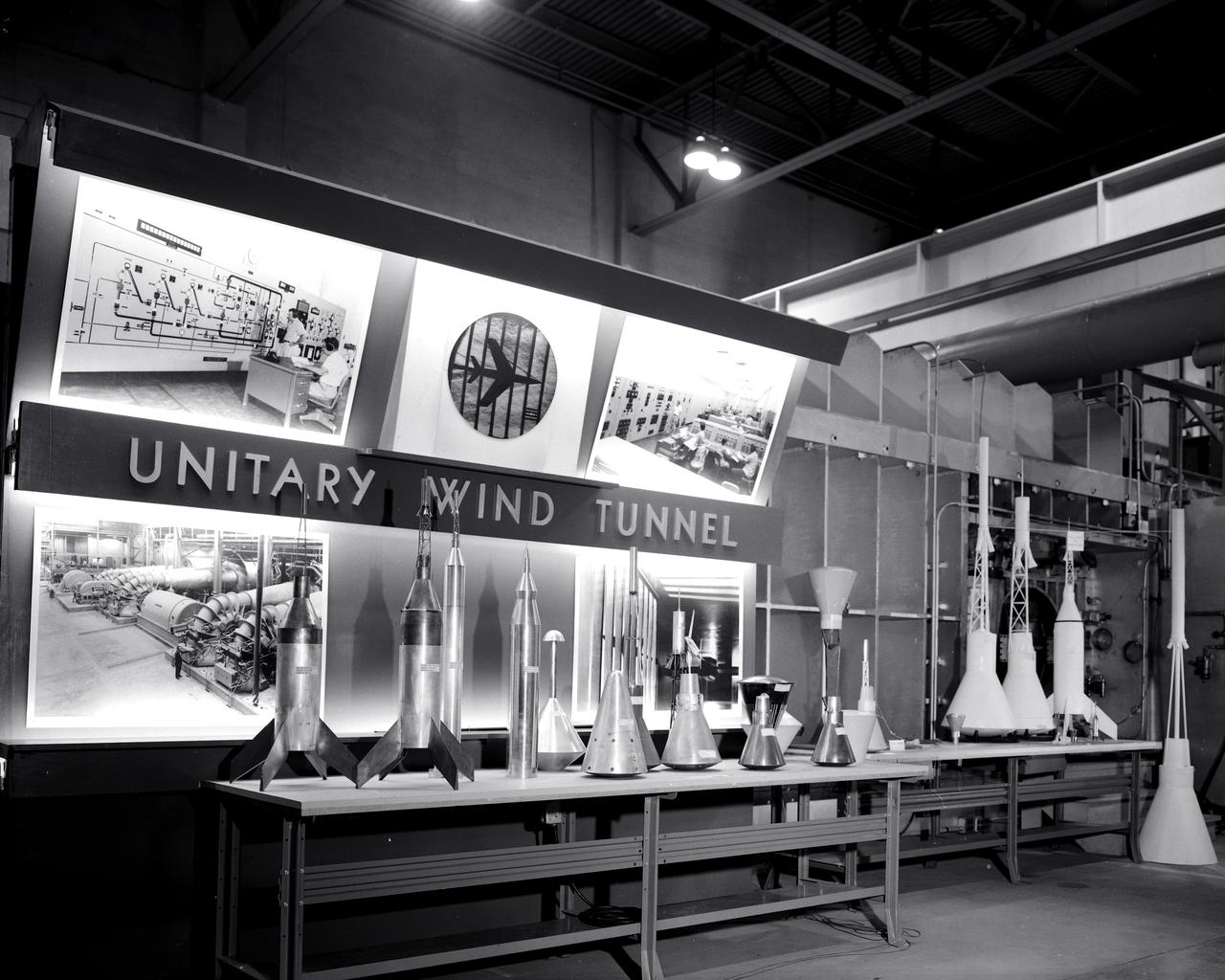
Unitary Wind Tunnel Display
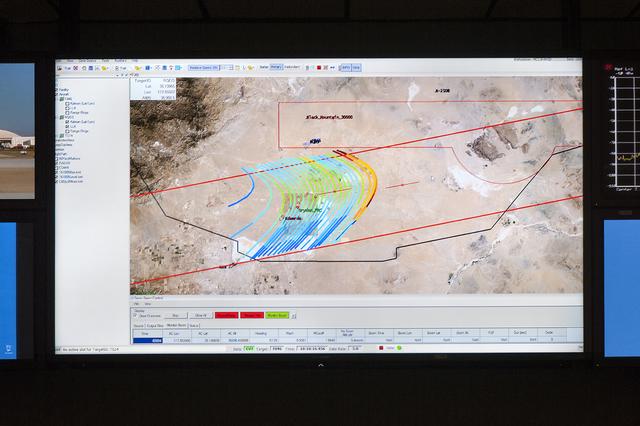
The CISBoomDA display allows the pilot of a supersonic aircraft to monitor the locations of any sonic booms produced, to prevent the aircraft from positioning booms in restricted area.
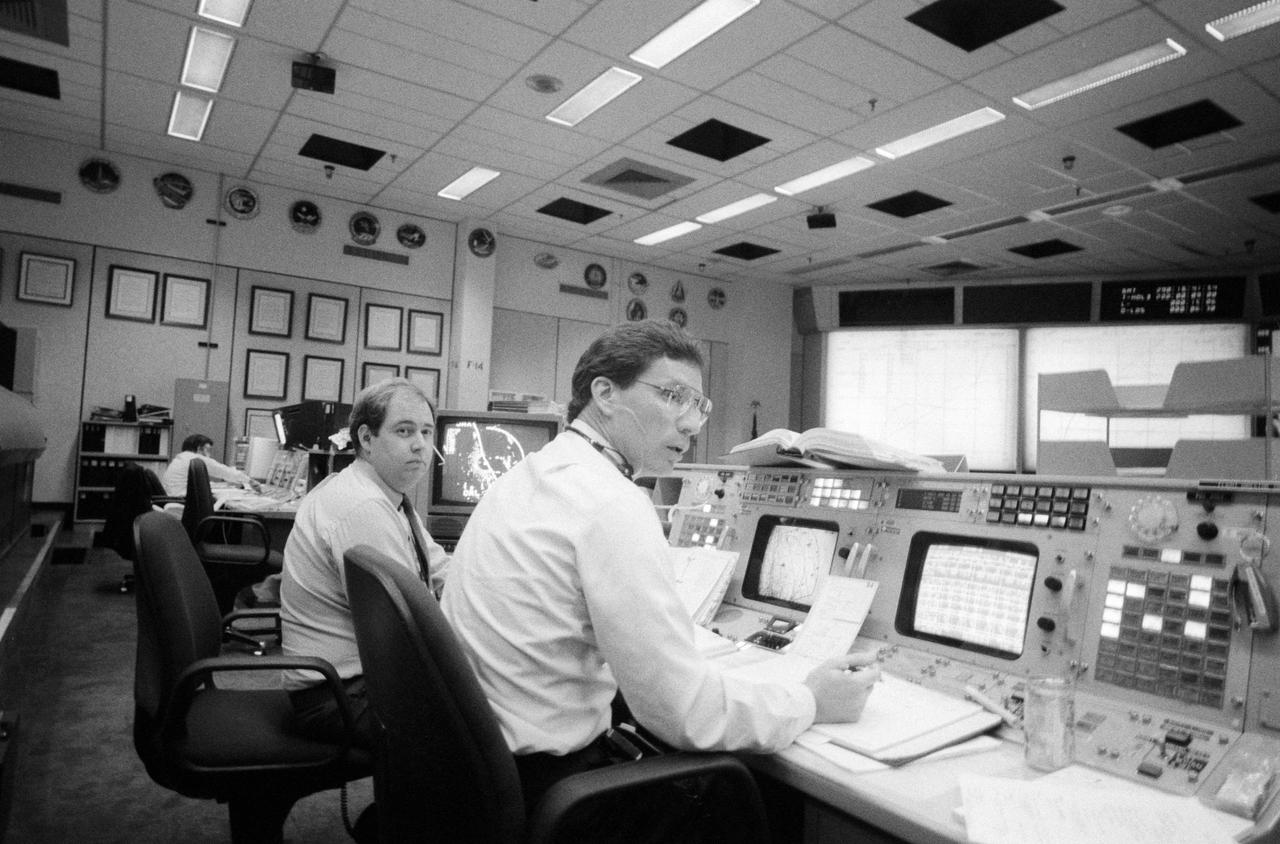
Flight directors Robert E. Castle, Jr (left) and Ronald D. Dittemore monitor console displays during STS-34 mission. Castle and Dittemore will oversee flight activities from their stations in JSC's Mission Control Center (MCC) Bldg 30 flight control room (FCR). In the background are the FCR large screens which display flight data.
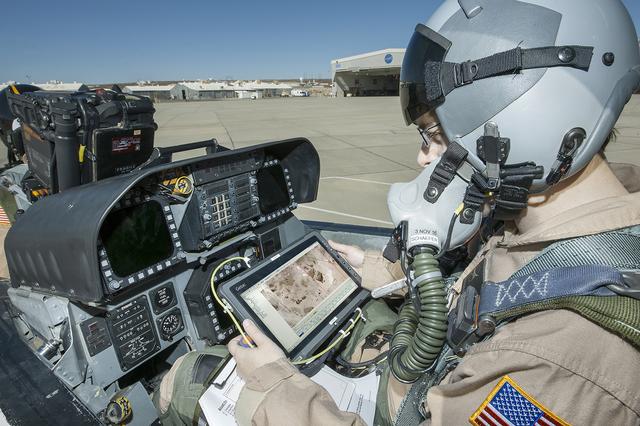
Flight Test Engineer Jacob Schaefer inspects the Cockpit Interactive Sonic Boom Display Avionics, or CISBoomDA, from the cockpit of his F-18 at NASA’s Armstrong Flight Research Center in Edwards, California.
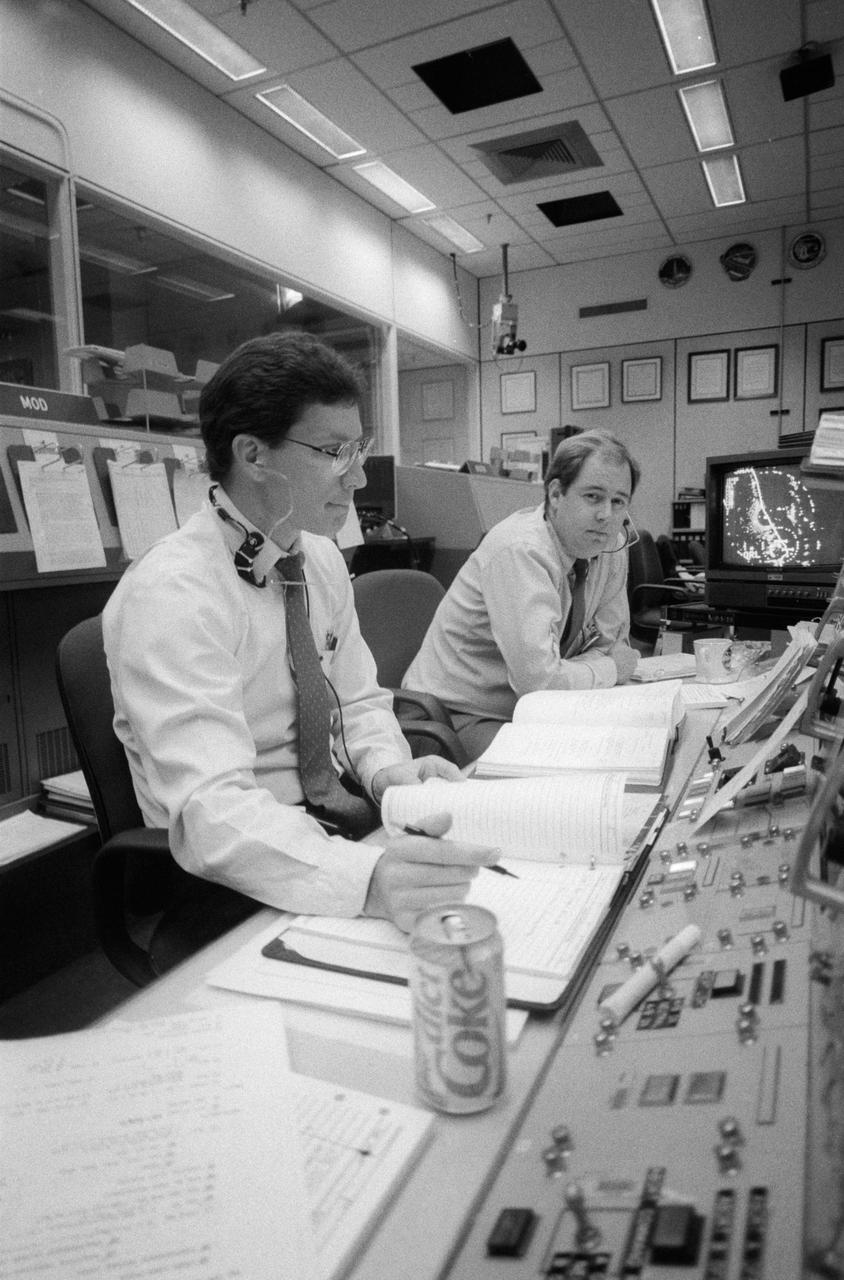
During STS-34, flight directors Robert E. Castle, Jr (left) and Ronald D. Dittemore review checklists and monitor displays at their console in JSC's Mission Control Center (MCC) Bldg 30 flight control room (FCR).
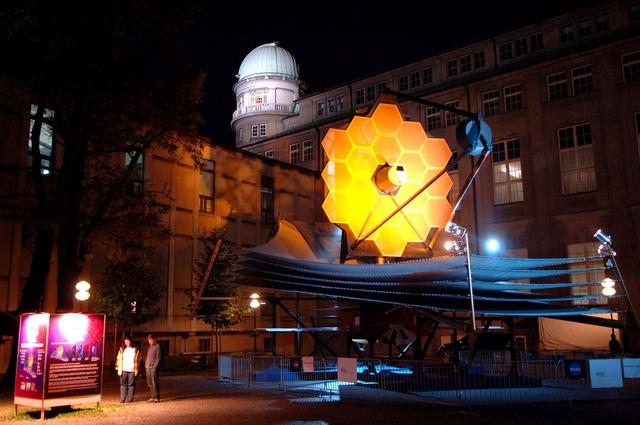
JWST Full-Scale Model on Display. A full-scale model of the James Webb Space Telescope was built by the prime contractor, Northrop Grumman, to provide a better understanding of the size, scale and complexity of this satellite. The model is constructed mainly of aluminum and steel, weighs 12,000 lb., and is approximately 80 feet long, 40 feet wide and 40 feet tall. The model requires 2 trucks to ship it and assembly takes a crew of 12 approximately four days. This model has travelled to a few sites since 2005. The photographs below were taken at some of its destinations. The model is pictured here in Munich, Germany Credit: EADS Astrium
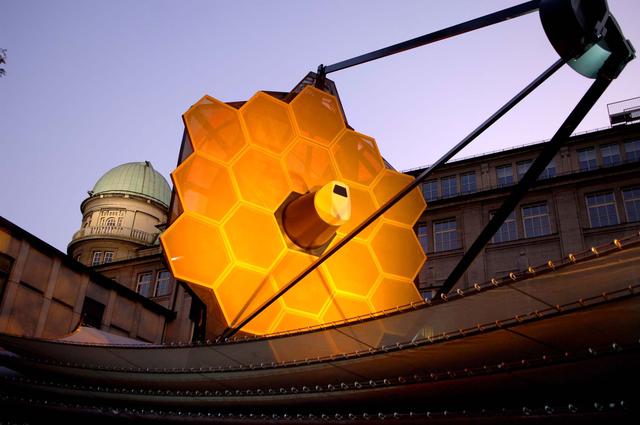
JWST Full-Scale Model on Display. A full-scale model of the James Webb Space Telescope was built by the prime contractor, Northrop Grumman, to provide a better understanding of the size, scale and complexity of this satellite. The model is constructed mainly of aluminum and steel, weighs 12,000 lb., and is approximately 80 feet long, 40 feet wide and 40 feet tall. The model requires 2 trucks to ship it and assembly takes a crew of 12 approximately four days. This model has travelled to a few sites since 2005. The photographs below were taken at some of its destinations. The model is pictured here in Munich, Germany Credit: EADS Astrium
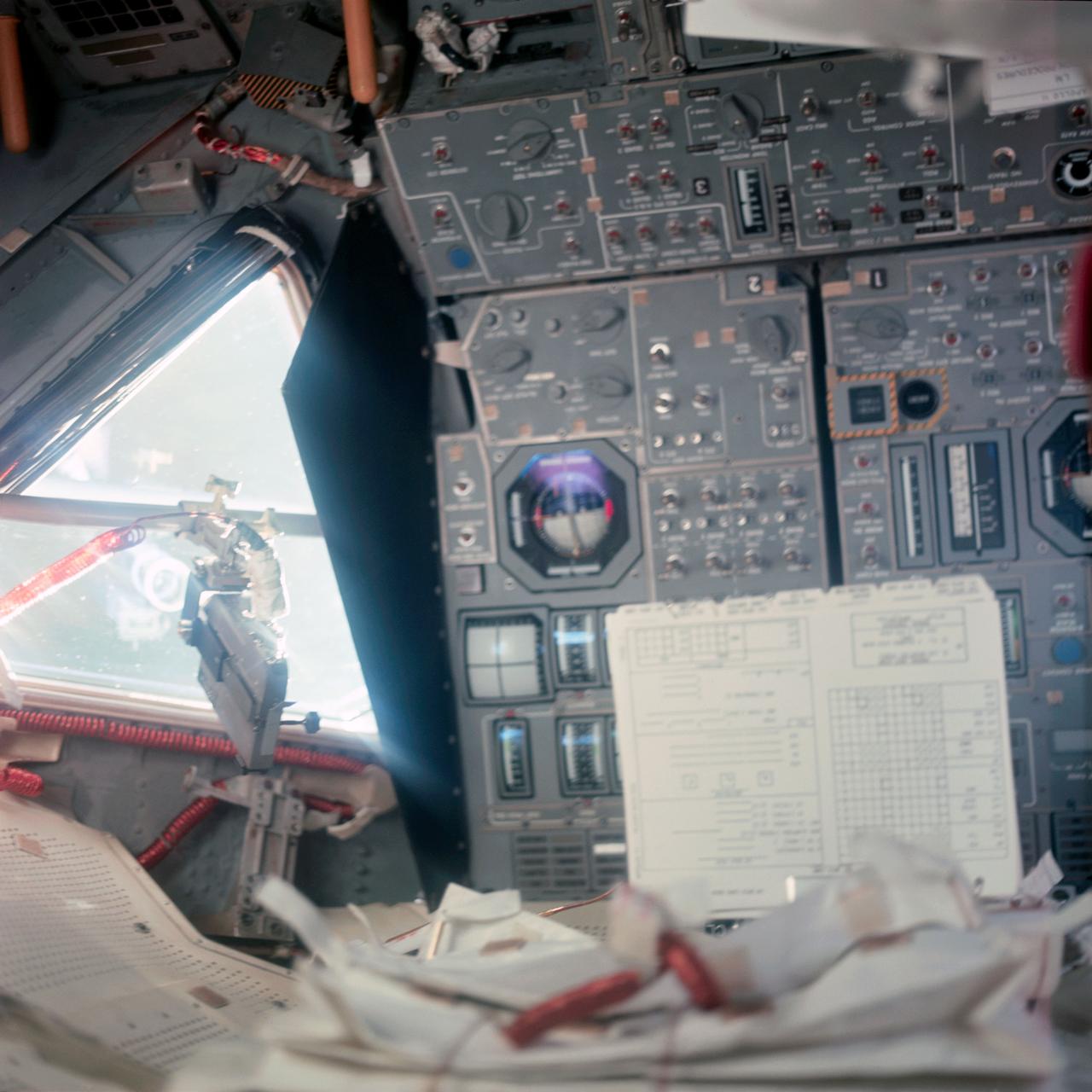
AS11-36-5389 (July 1969) --- An interior view of the Apollo 11 Lunar Module showing some of the displays and controls. Mounted in the Lunar Module window is a 16mm data acquisition camera which has a variable frame speed of 1, 6, 12 and 24 frames per second. Photo credit: NASA

A NASA sounding rocket to be launched from the Poker Flat Research Range, Alaska, between February 13 and March 3, 2017, will form white artificial clouds during its brief, 10-minute flight. The rocket is one of five being launched January through March, each carrying instruments to explore the aurora and its interactions with Earth’s upper atmosphere and ionosphere. Scientists at NASA's Goddard Space Center in Greenbelt, Maryland, explain that electric fields drive the ionosphere, which, in turn, are predicted to set up enhanced neutral winds within an aurora arc. This experiment seeks to understand the height-dependent processes that create localized neutral jets within the aurora. For this mission, two 56-foot long Black Brant IX rockets will be launched nearly simultaneously. One rocket is expected to fly to an apogee of about 107 miles while the other is targeted for 201 miles apogee. Only the lower altitude rocket will form the white luminescent clouds during its flight. Read more: <a href="http://go.nasa.gov/2kYaBgV" rel="nofollow">go.nasa.gov/2kYaBgV</a> <b><a href="http://www.nasa.gov/audience/formedia/features/MP_Photo_Guidelines.html" rel="nofollow">NASA image use policy.</a></b> <b><a href="http://www.nasa.gov/centers/goddard/home/index.html" rel="nofollow">NASA Goddard Space Flight Center</a></b> enables NASA’s mission through four scientific endeavors: Earth Science, Heliophysics, Solar System Exploration, and Astrophysics. Goddard plays a leading role in NASA’s accomplishments by contributing compelling scientific knowledge to advance the Agency’s mission. <b>Follow us on <a href="http://twitter.com/NASAGoddardPix" rel="nofollow">Twitter</a></b> <b>Like us on <a href="http://www.facebook.com/pages/Greenbelt-MD/NASA-Goddard/395013845897?ref=tsd" rel="nofollow">Facebook</a></b> <b>Find us on <a href="http://instagrid.me/nasagoddard/?vm=grid" rel="nofollow">Instagram</a></b>
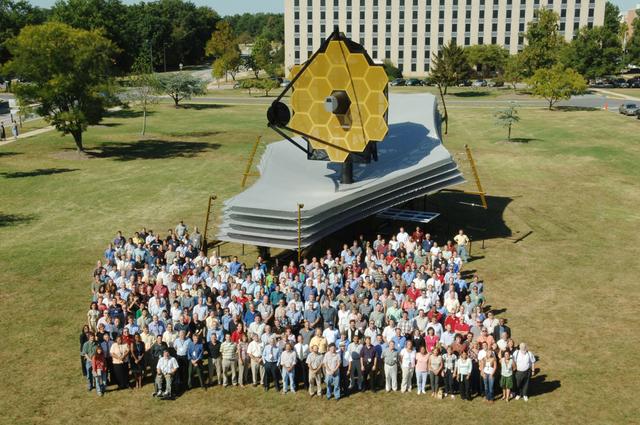
JWST Full-Scale Model on Display. A full-scale model of the James Webb Space Telescope was built by the prime contractor, Northrop Grumman, to provide a better understanding of the size, scale and complexity of this satellite. The model is constructed mainly of aluminum and steel, weighs 12,000 lb., and is approximately 80 feet long, 40 feet wide and 40 feet tall. The model requires 2 trucks to ship it and assembly takes a crew of 12 approximately four days. This model has travelled to a few sites since 2005. The photographs below were taken at some of its destinations. The model is pictured here in Greenbelt, MD at the NASA Goddard Space Flight Center. Credit: NASA/Goddard Space Flight Center/Pat Izzo
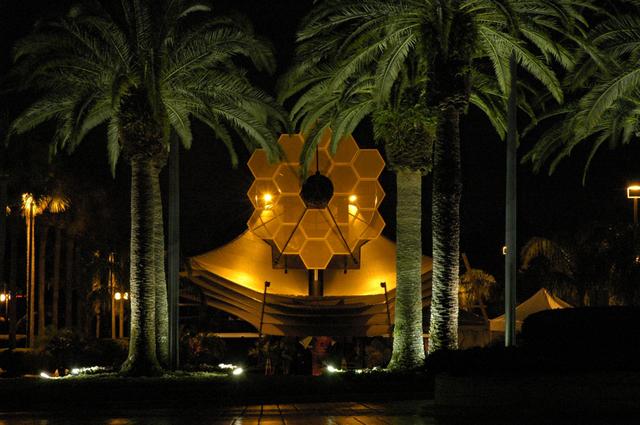
JWST Full-Scale Model on Display. A full-scale model of the James Webb Space Telescope was built by the prime contractor, Northrop Grumman, to provide a better understanding of the size, scale and complexity of this satellite. The model is constructed mainly of aluminum and steel, weighs 12,000 lb., and is approximately 80 feet long, 40 feet wide and 40 feet tall. The model requires 2 trucks to ship it and assembly takes a crew of 12 approximately four days. This model has traveled to a few sites since 2005. The photographs below were taken at some of its destinations. The model was on display at The International Society for Optical Engineering's (SPIE) week-long Astronomical Telescopes and Instrumentations conference,May 25 - 30, 2006. Credit: NASA/Goddard Space Flight Center/Dr Mark Clampin <b><a href="http://www.nasa.gov/audience/formedia/features/MP_Photo_Guidelines.html" rel="nofollow">NASA image use policy.</a></b> <b><a href="http://www.nasa.gov/centers/goddard/home/index.html" rel="nofollow">NASA Goddard Space Flight Center</a></b> enables NASA’s mission through four scientific endeavors: Earth Science, Heliophysics, Solar System Exploration, and Astrophysics. Goddard plays a leading role in NASA’s accomplishments by contributing compelling scientific knowledge to advance the Agency’s mission. <b>Follow us on <a href="http://twitter.com/NASA_GoddardPix" rel="nofollow">Twitter</a></b> <b>Like us on <a href="http://www.facebook.com/pages/Greenbelt-MD/NASA-Goddard/395013845897?ref=tsd" rel="nofollow">Facebook</a></b> <b>Find us on <a href="http://instagram.com/nasagoddard?vm=grid" rel="nofollow">Instagram</a></b>

NASA test pilot, Nils Larson, inspects the X-59 cockpit displays and lighting system during system checkouts. The External Vision System (XVS) is displayed on the top screen, and the avionics flight displays, which can show navigation information or aircraft status, are shown on the bottom two screens.
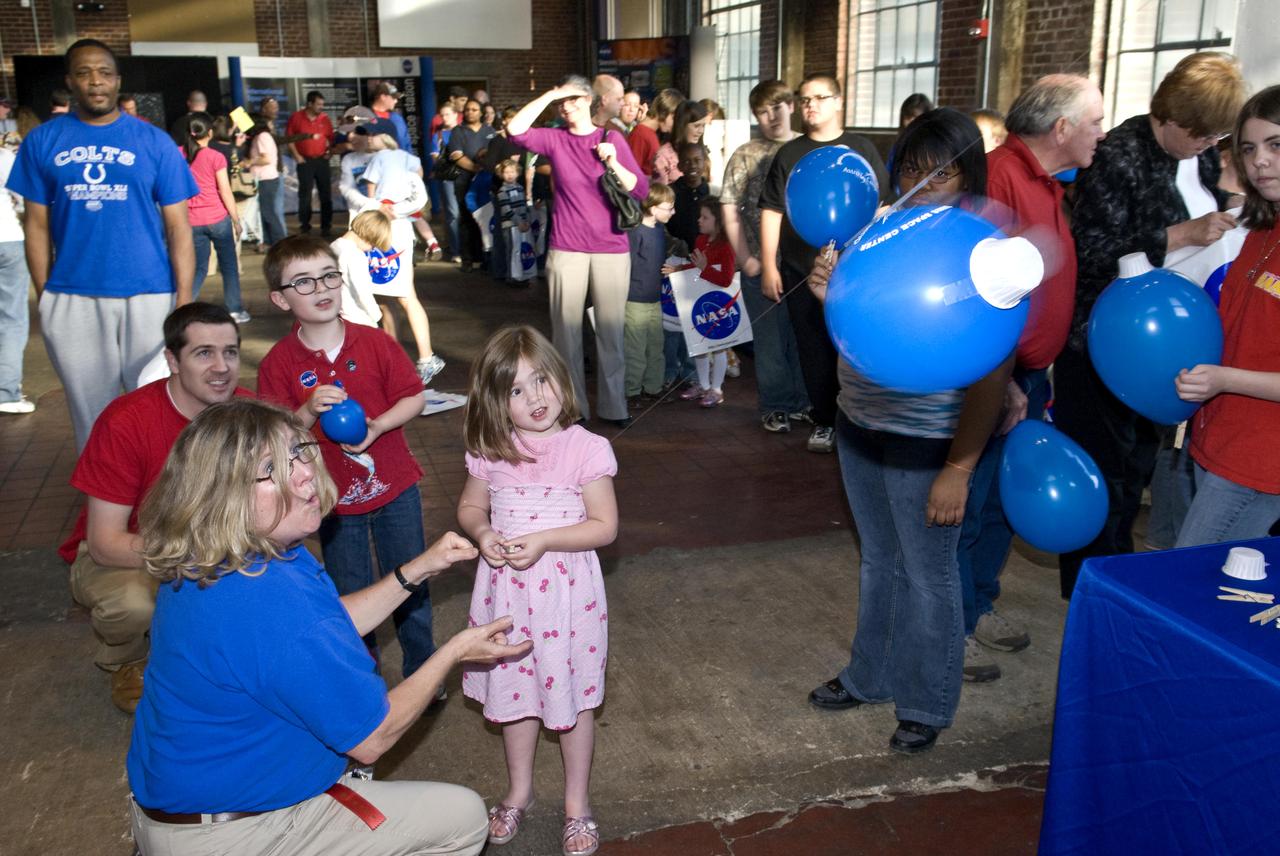
A young visitor to the Powerhouse Community Arts and Cultural Center in Oxford, Miss., enjoys a balloon rocket transportation activity during a NASA Night in the Neighborhood on March 29. NASA's John C. Stennis Space Center near Bay St. Louis visited the center with a variety of space-related displays and educational activities. Events targeted for children included moon phasers and build-your-own rocket transportation exercises, as well as an astronaut ice cream tasting station. Visitors also were able to take photos in the astronaut suit display. Displays focused on the 40th anniversaries of the Apollo 11 and Apollo 13 lunar missions, the International Space Station, and various aspects of Stennis work. The event was sponsored by the NASA Office of External Affairs and Education at Stennis.
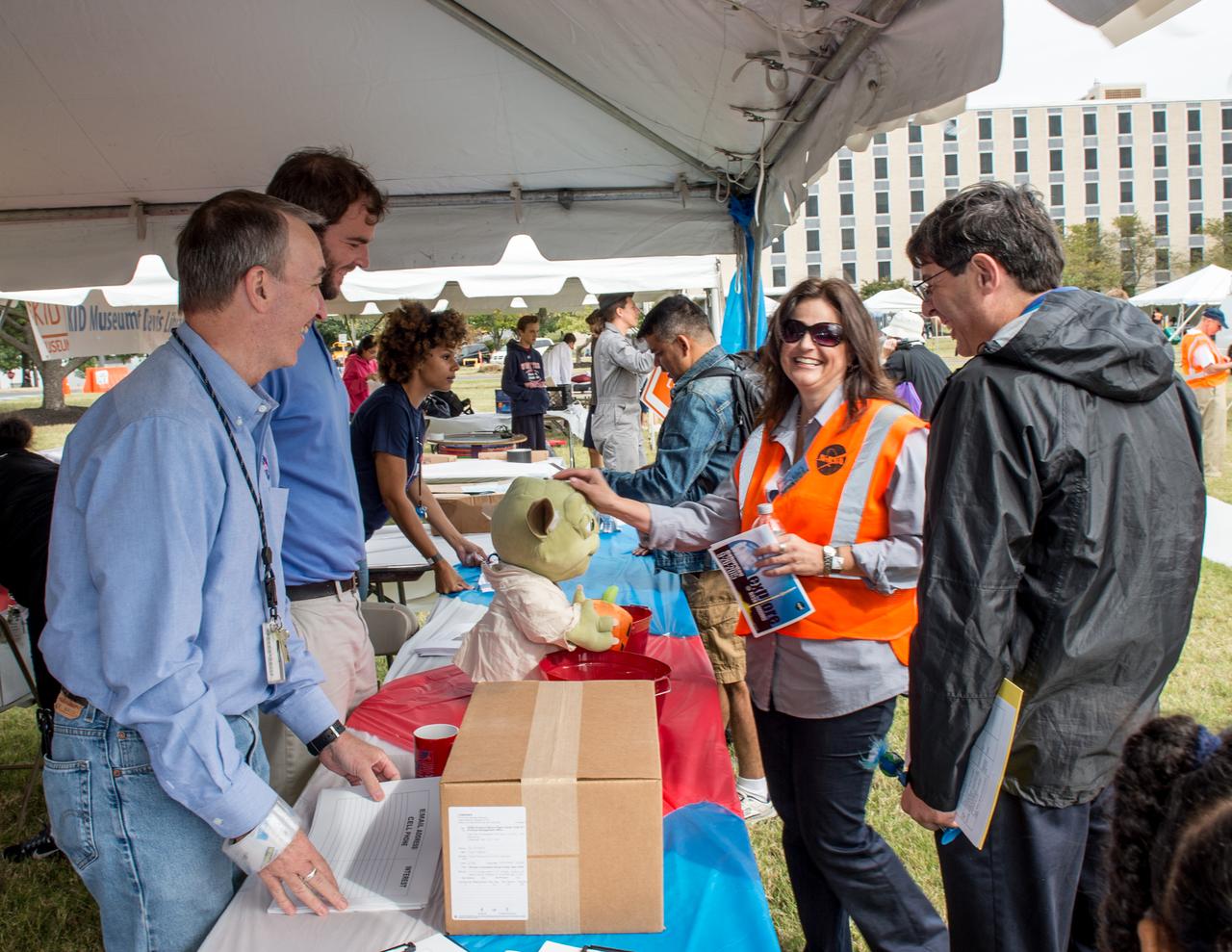
Center Director Chris Scolese visits displays at Explore@NASAGoddard celebrates the 25th anniversary of the launch of the Hubble Space Telescope. All areas of Goddard’s research – Earth science, heliophysics, planetary science, astrophysics, and engineering and technology – will be presented, as each discipline plays a critical part in NASA's ongoing journey to reach new heights.
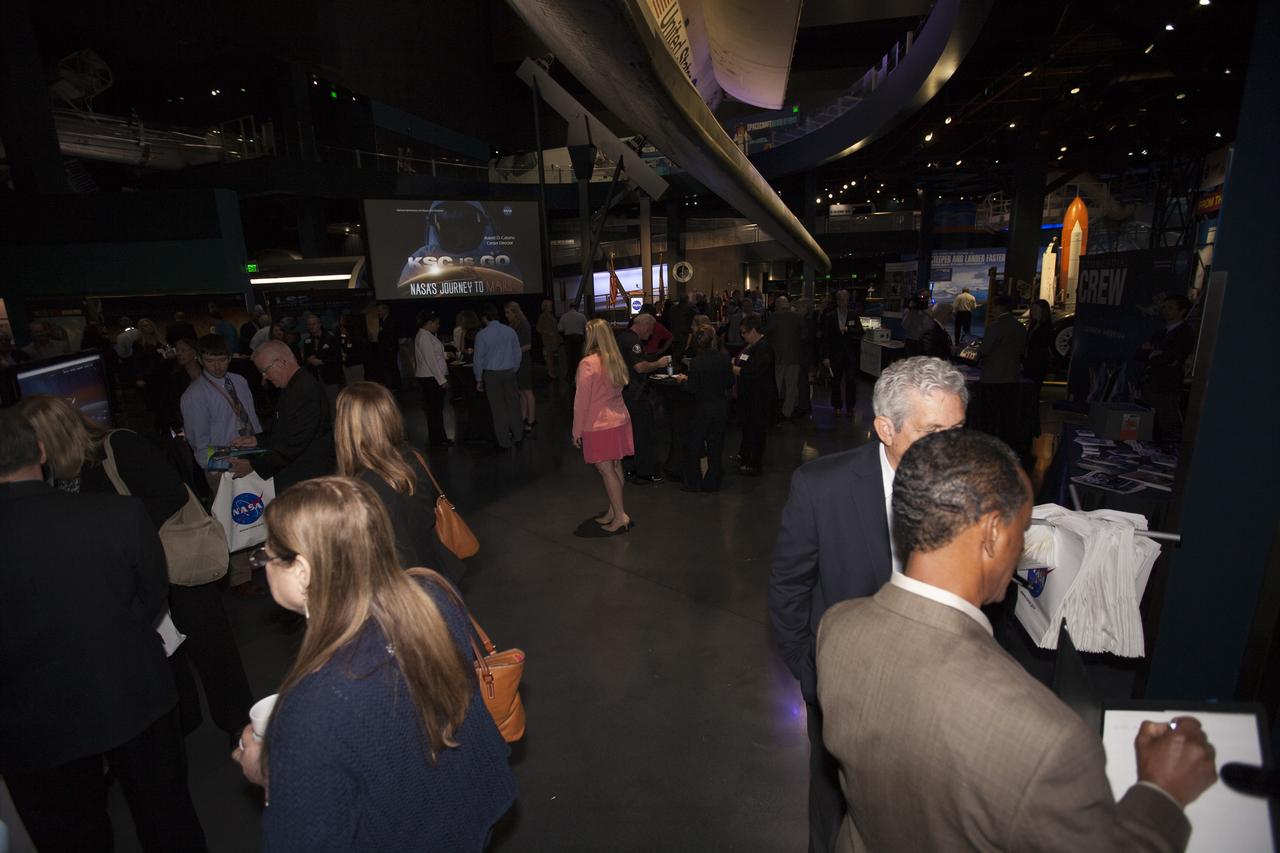
In the Space Shuttle Atlantis exhibit facility at the Kennedy Space Center's Visitor Complex, guests are briefed on work taking place in the Florida spaceport. This followed a presentation by center director Bob Cabana who updated community leaders on current and future activities at the space center.
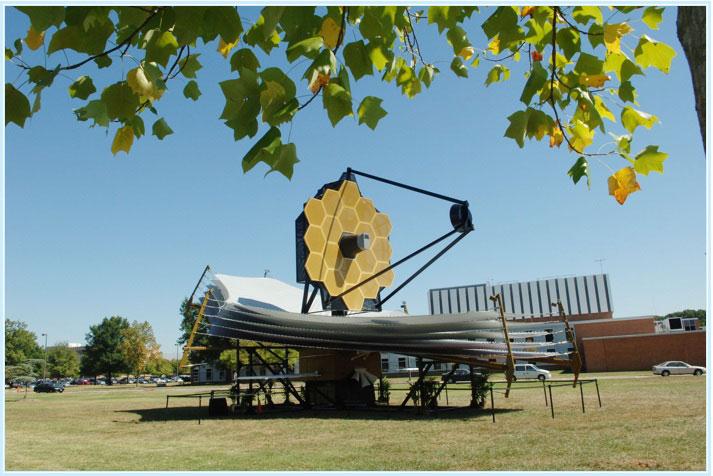
JWST Full-Scale Model on Display. A full-scale model of the James Webb Space Telescope was built by the prime contractor, Northrop Grumman, to provide a better understanding of the size, scale and complexity of this satellite. The model is constructed mainly of aluminum and steel, weighs 12,000 lb., and is approximately 80 feet long, 40 feet wide and 40 feet tall. The model requires 2 trucks to ship it and assembly takes a crew of 12 approximately four days. This model has travelled to a few sites since 2005. The photographs below were taken at some of its destinations. The model is pictured here in Greenbelt, MD at the NASA Goddard Space Flight Center. Credit: NASA/Goddard Space Flight Center/Pat Izzo
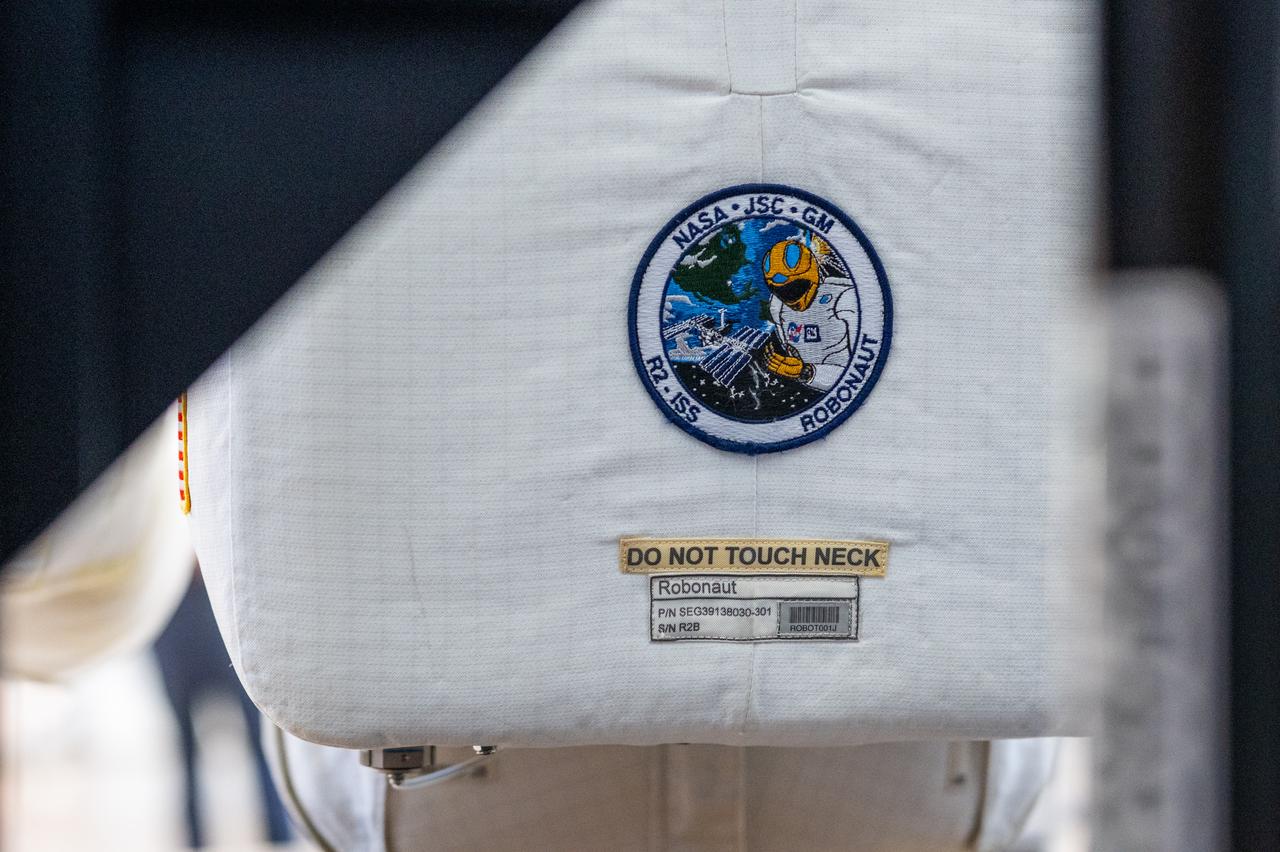
Robonaut 2 is seen at the Smithsonian National Air and Space Museum’s Steve F. Udvar-Hazy Center Thursday, Oct. 24, 2024, in Chantilly, Va. Robonaut 2, the first humanoid robot to fly to space, is displayed publicly for the first time near the space shuttle Discovery. Photo Credit: (NASA/Keegan Barber)

Robonaut 2 is seen at the Smithsonian National Air and Space Museum’s Steve F. Udvar-Hazy Center Thursday, Oct. 24, 2024, in Chantilly, Va. Robonaut 2, the first humanoid robot to fly to space, is displayed publicly for the first time near the space shuttle Discovery. Photo Credit: (NASA/Keegan Barber)
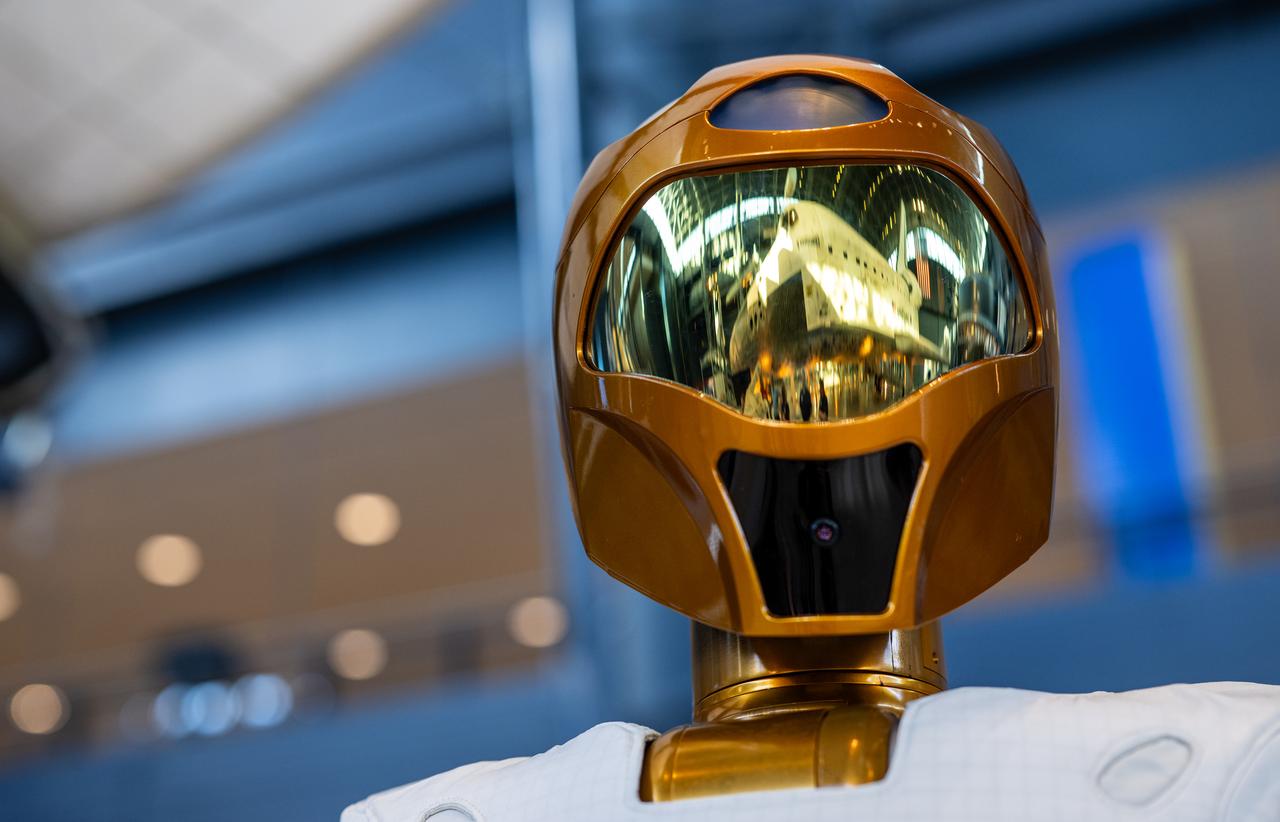
Robonaut 2 is seen at the Smithsonian National Air and Space Museum’s Steve F. Udvar-Hazy Center Thursday, Oct. 24, 2024, in Chantilly, Va. Robonaut 2, the first humanoid robot to fly to space, is displayed publicly for the first time near the space shuttle Discovery. Photo Credit: (NASA/Keegan Barber)
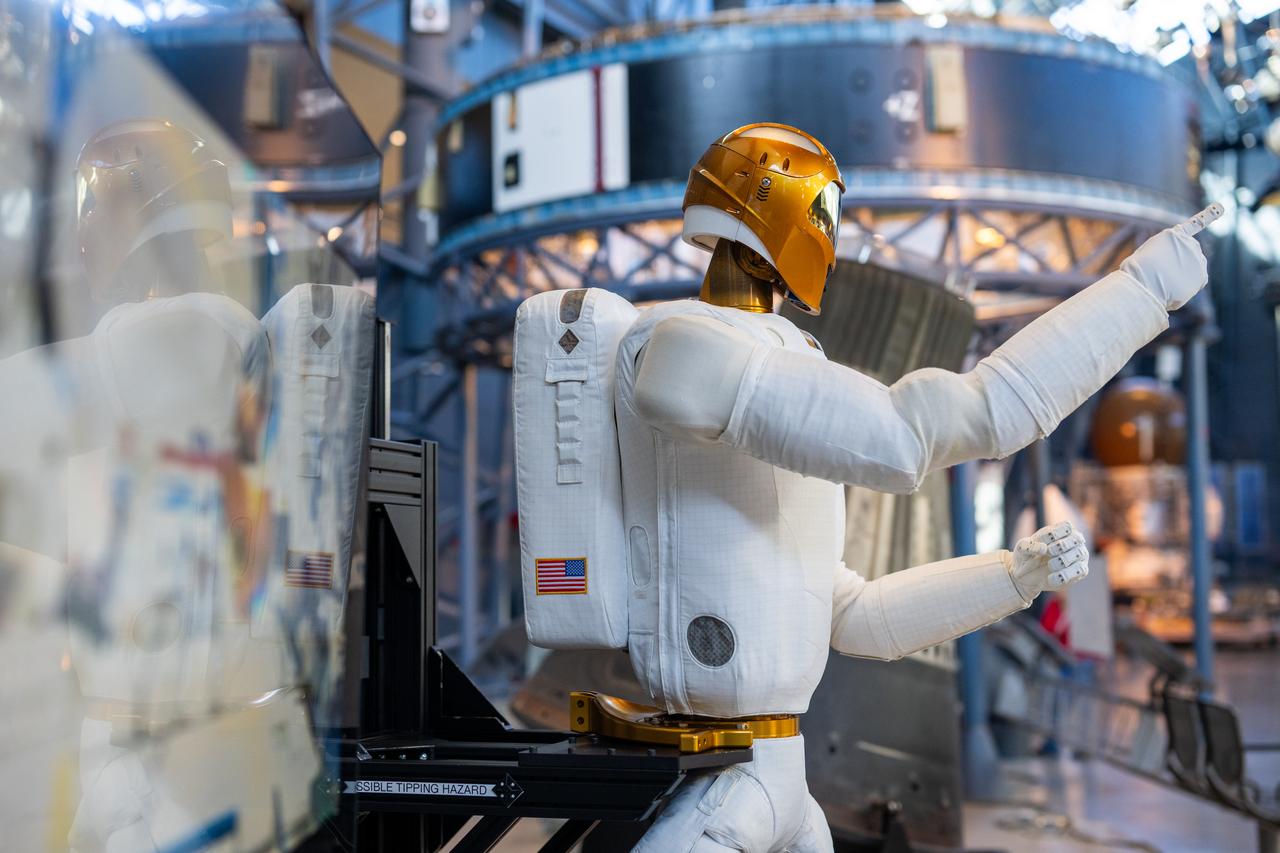
Robonaut 2 is seen at the Smithsonian National Air and Space Museum’s Steve F. Udvar-Hazy Center Thursday, Oct. 24, 2024, in Chantilly, Va. Robonaut 2, the first humanoid robot to fly to space, is displayed publicly for the first time near the space shuttle Discovery. Photo Credit: (NASA/Keegan Barber)
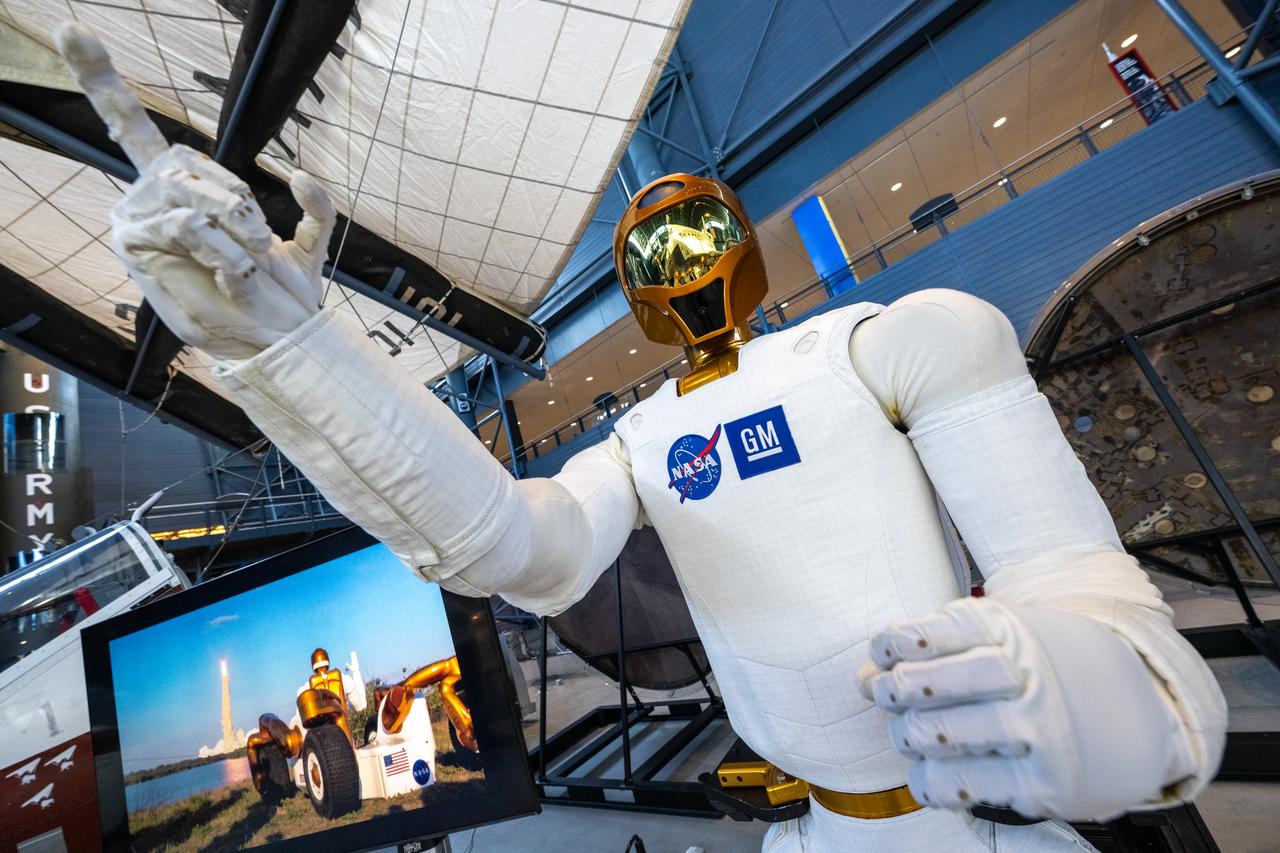
Robonaut 2 is seen at the Smithsonian National Air and Space Museum’s Steve F. Udvar-Hazy Center Thursday, Oct. 24, 2024, in Chantilly, Va. Robonaut 2, the first humanoid robot to fly to space, is displayed publicly for the first time near the space shuttle Discovery. Photo Credit: (NASA/Keegan Barber)
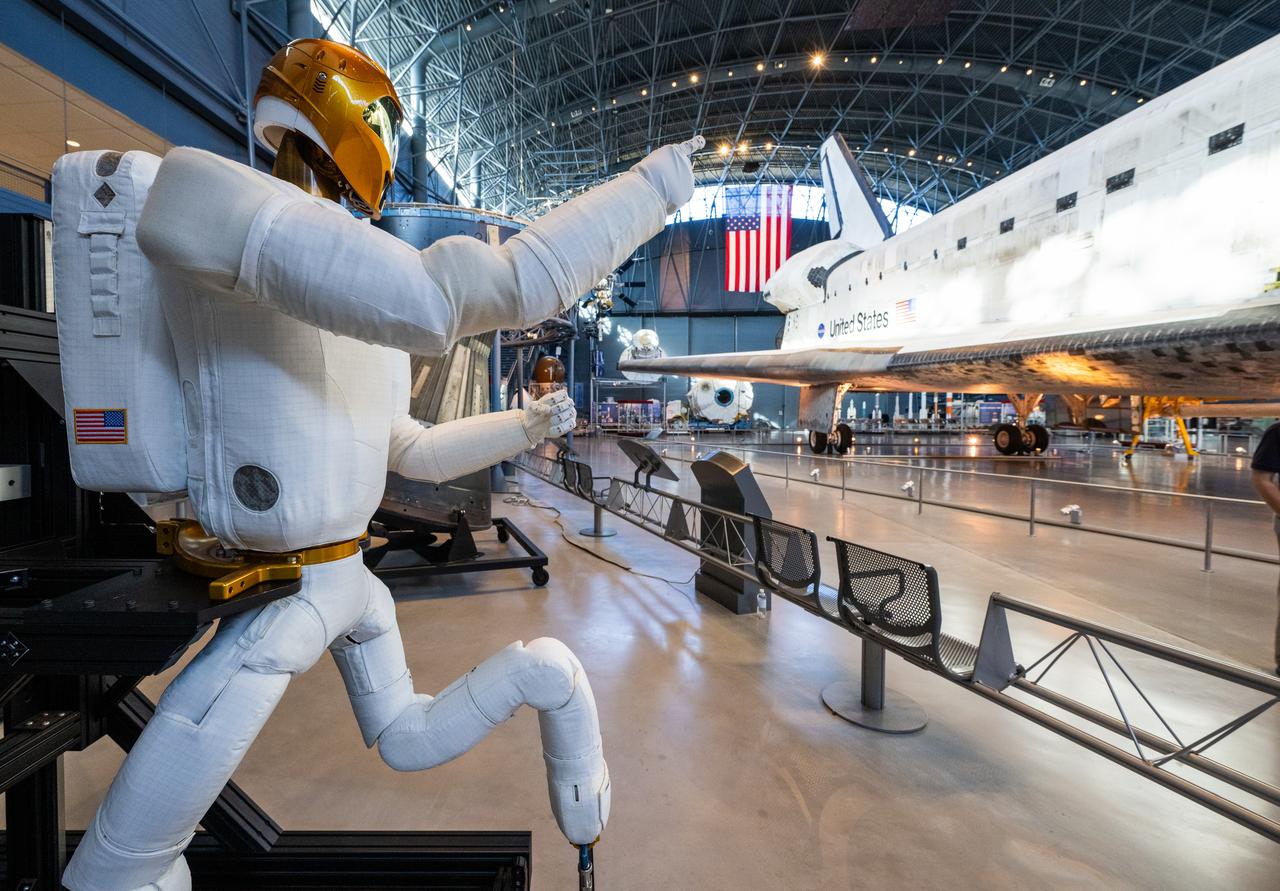
Robonaut 2 is seen at the Smithsonian National Air and Space Museum’s Steve F. Udvar-Hazy Center Thursday, Oct. 24, 2024, in Chantilly, Va. Robonaut 2, the first humanoid robot to fly to space, is displayed publicly for the first time near the space shuttle Discovery. Photo Credit: (NASA/Keegan Barber)
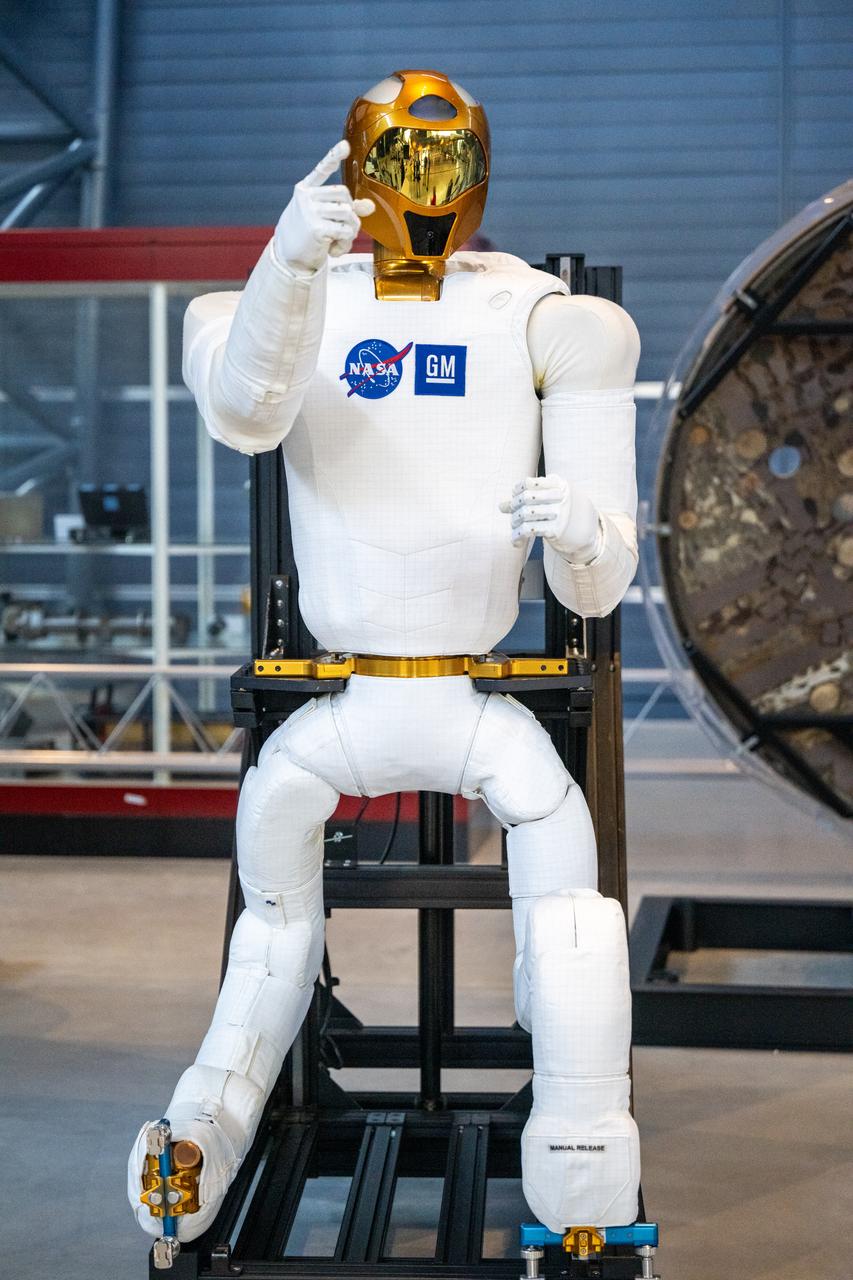
Robonaut 2 is seen at the Smithsonian National Air and Space Museum’s Steve F. Udvar-Hazy Center Thursday, Oct. 24, 2024, in Chantilly, Va. Robonaut 2, the first humanoid robot to fly to space, is displayed publicly for the first time near the space shuttle Discovery. Photo Credit: (NASA/Keegan Barber)
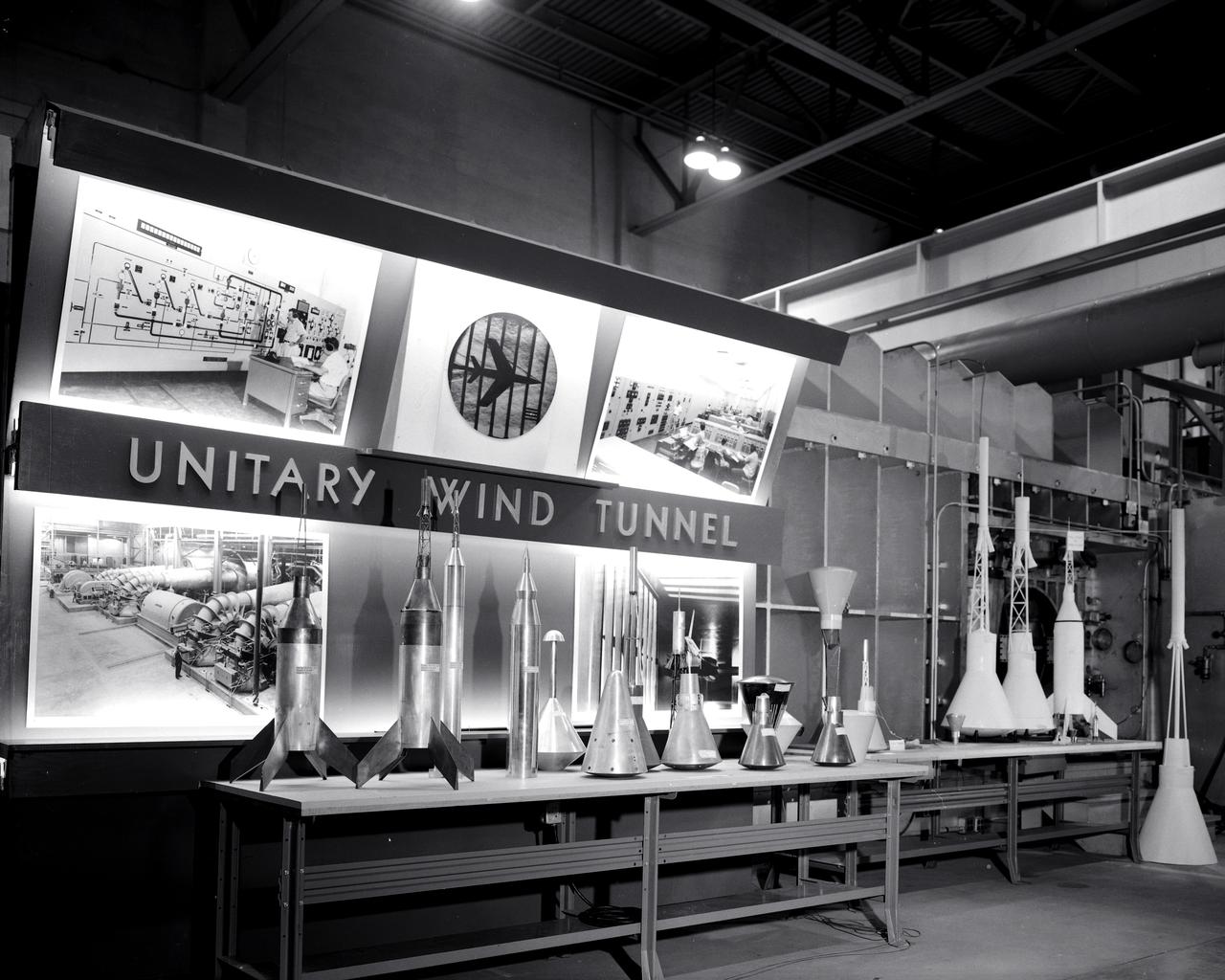
Fig. 68 Unitary Wind Tunnel Display
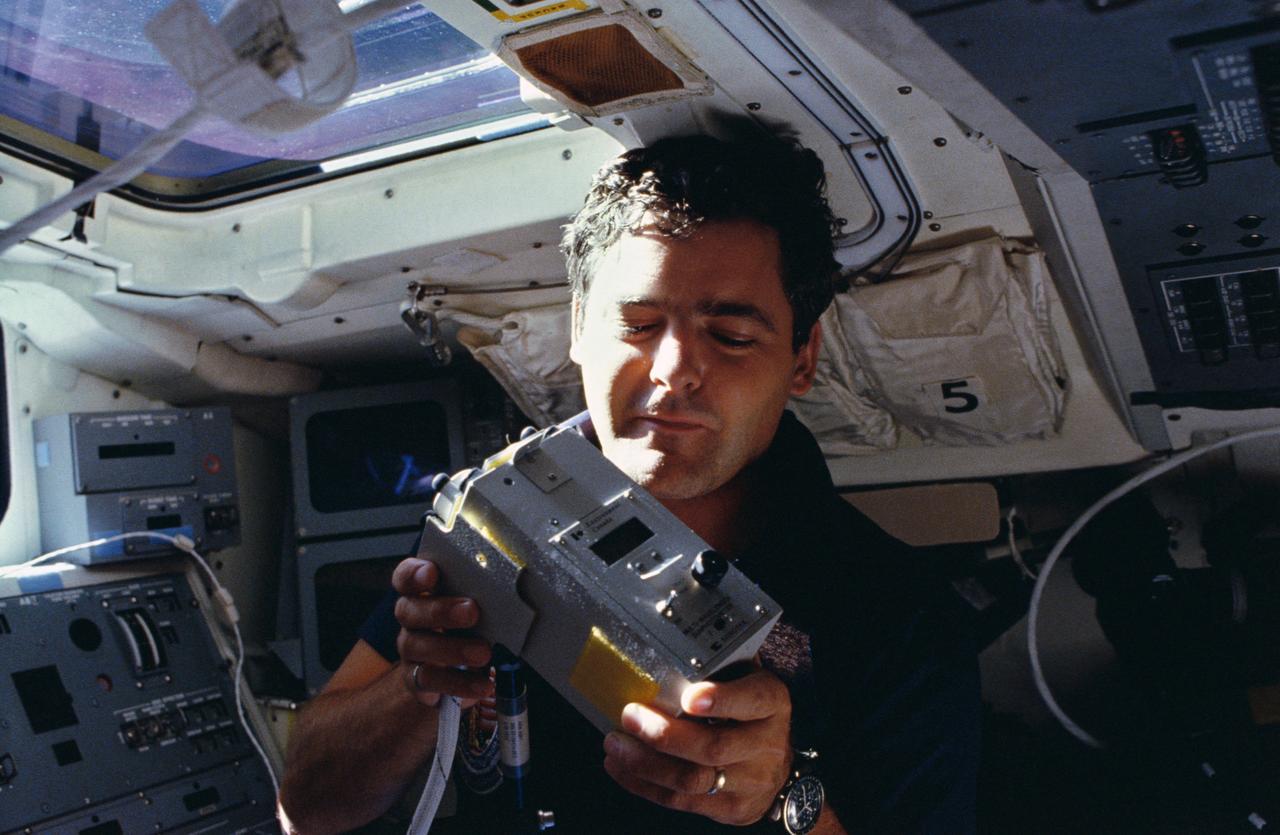
Payload specialist Marc Garneau displays a Canadian made Sunphotometer, part of a package of experiments which he is concentrating on during this mission. He is sitting on the Challenger's flight deck at the aft station.
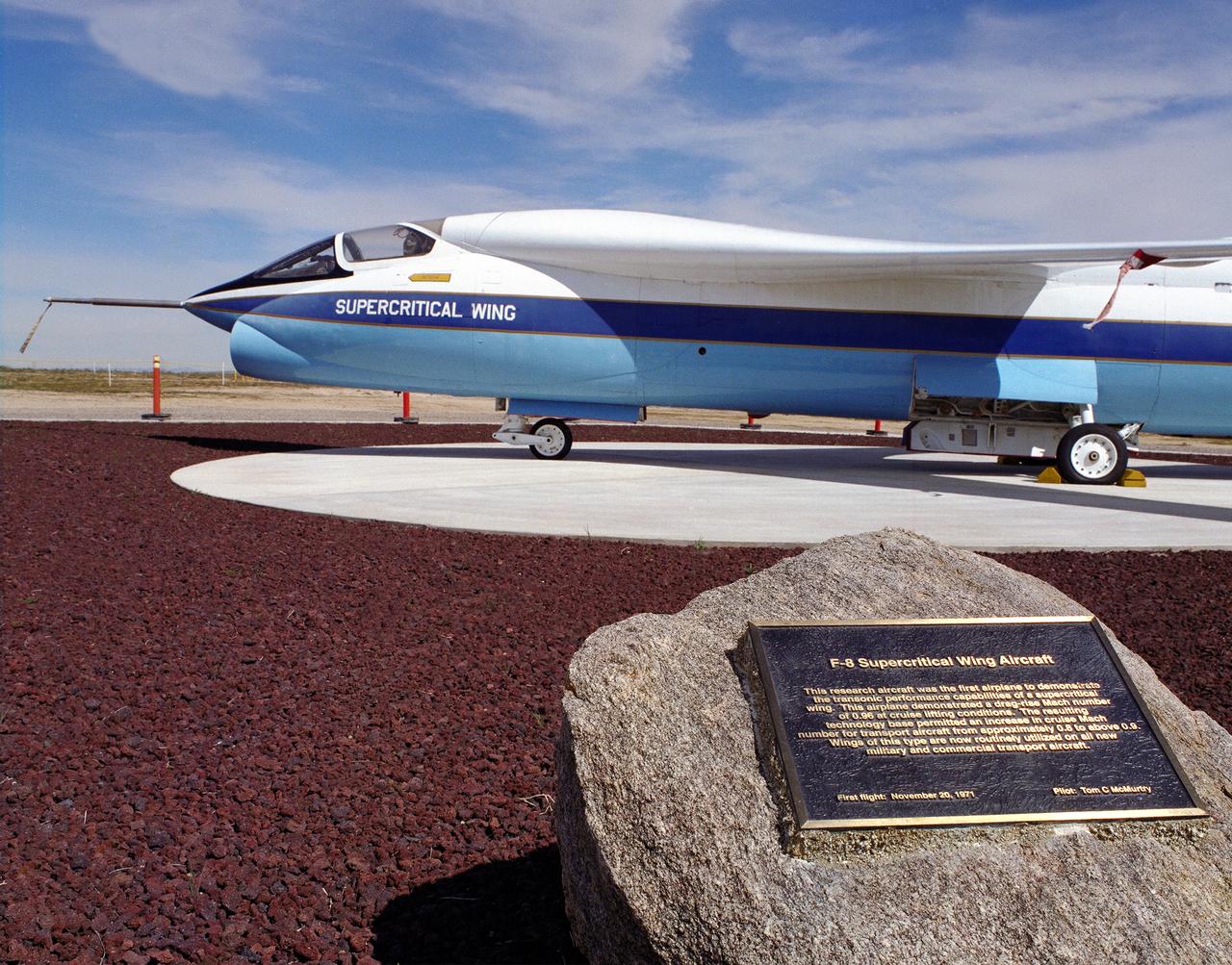
A Vought F-8A Crusader was selected by NASA as the testbed aircraft (designated TF-8A) to install an experimental Supercritical Wing (SCW) in place of the conventional wing. The unique design of the Supercritical Wing reduces the effect of shock waves on the upper surface near Mach 1, which in turn reduces drag. In the photograph the TF-8A Crusader with the Supercritical Wing is shown on static display in front of the NASA Dryden Flight Research Center, Edwards, California. The F-8 SCW aircraft, along with the F-8 Digital Fly-By-Wire aircraft were placed on display on May 27, 1992, at a conference marking the 20th anniversary of the start of the two programs.
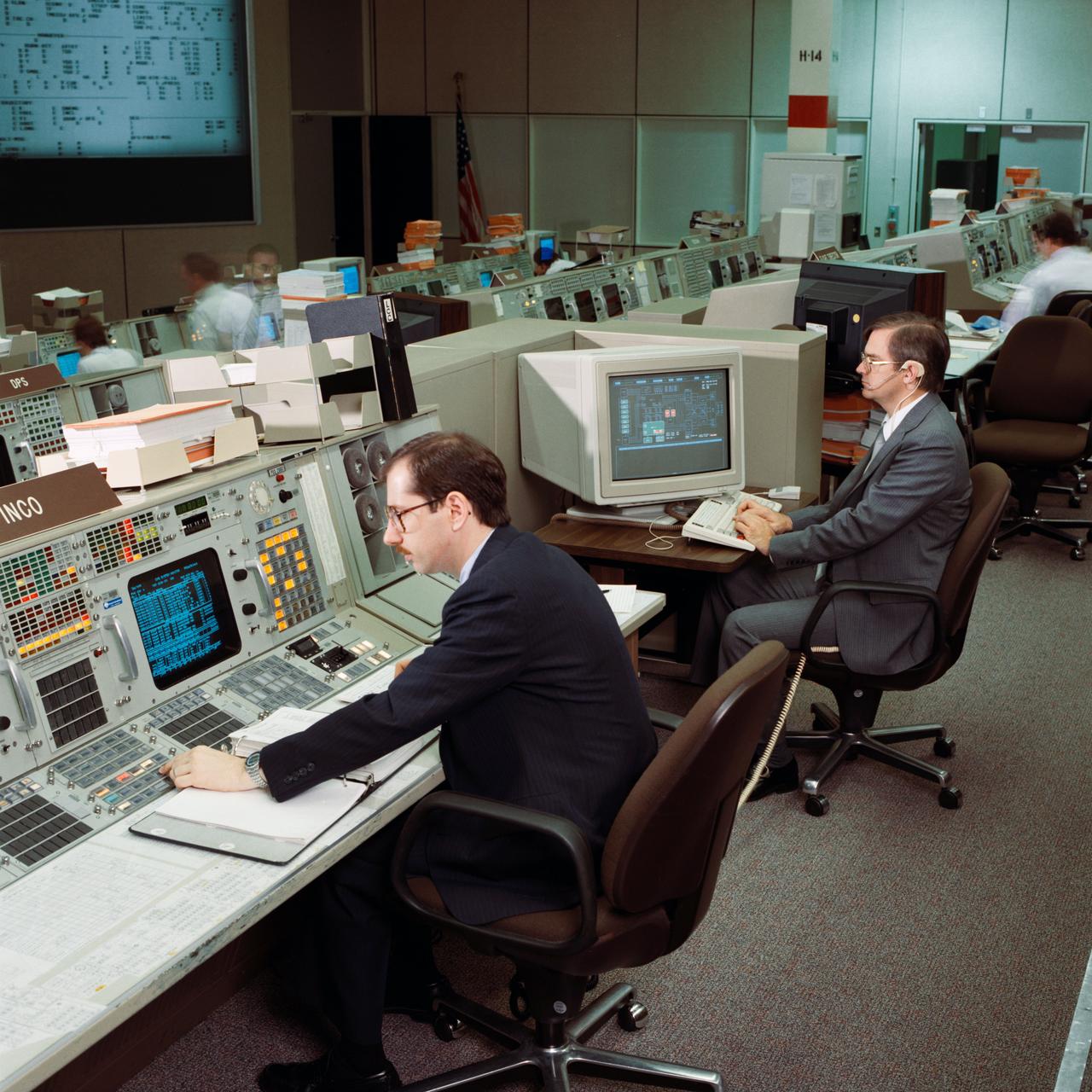
Instrumentation and Communications Officer (INCO) John F. Muratore monitors conventional workstation displays during an STS-26 simulation in JSC Mission Control Center (MCC) Bldg 30 Flight Control Room (FCR). Next to Muratore an operator views the real time data system (RTDS), an expert system. During the STS-29 mission two conventional monochrome console display units will be removed and replaced with RTDS displays. View is for the STS-29 press kit from Office of Aeronautics and Space Technology (OAST) RTDS.
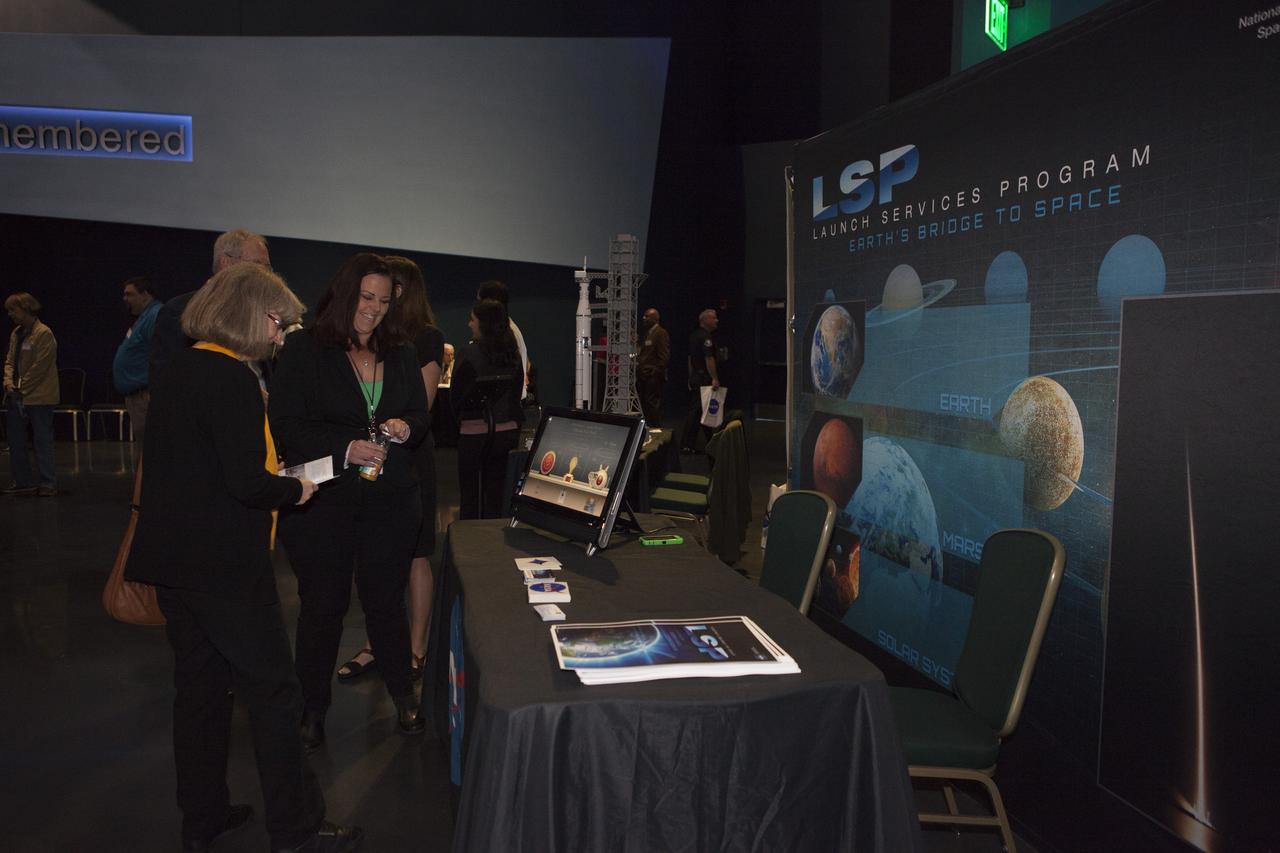
In the Space Shuttle Atlantis exhibit facility at the Kennedy Space Center's Visitor Complex, a guest is briefed on work taking place in the Florida spaceport's Launch Services Program. This followed a presentation by center director Bob Cabana who updated community leaders on current and future activities at the space center.

In the Space Shuttle Atlantis exhibit facility at the Kennedy Space Center's Visitor Complex, a guest is briefed on work taking place in the Florida spaceport's Commercial Crew Program. This followed a presentation by center director Bob Cabana who updated community leaders on current and future activities at the space center.
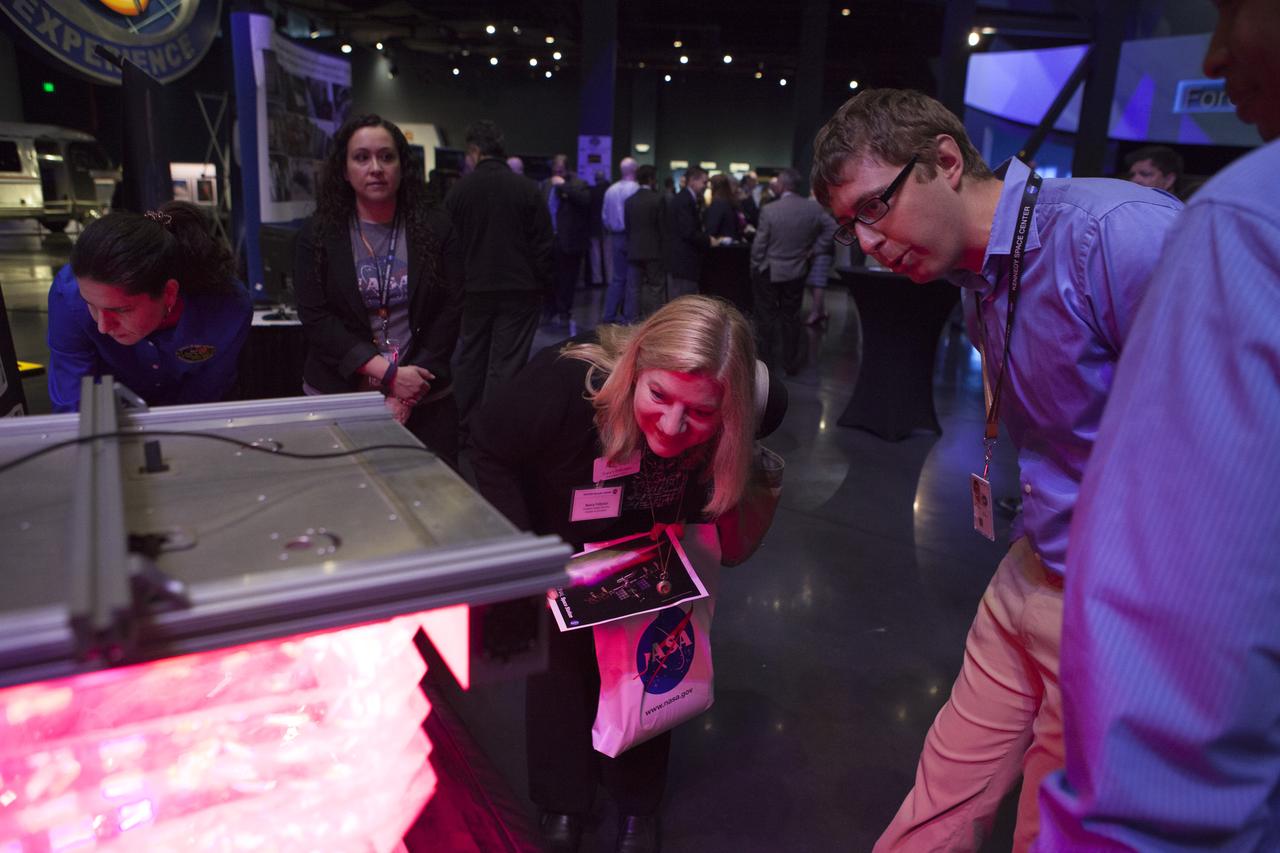
In the Space Shuttle Atlantis exhibit facility at the Kennedy Space Center's Visitor Complex, guests get a close-up look at a plant growth experiment similar to one aboard the International Space Station. This followed a presentation by center director Bob Cabana who updated community leaders on current and future activities at the space center.
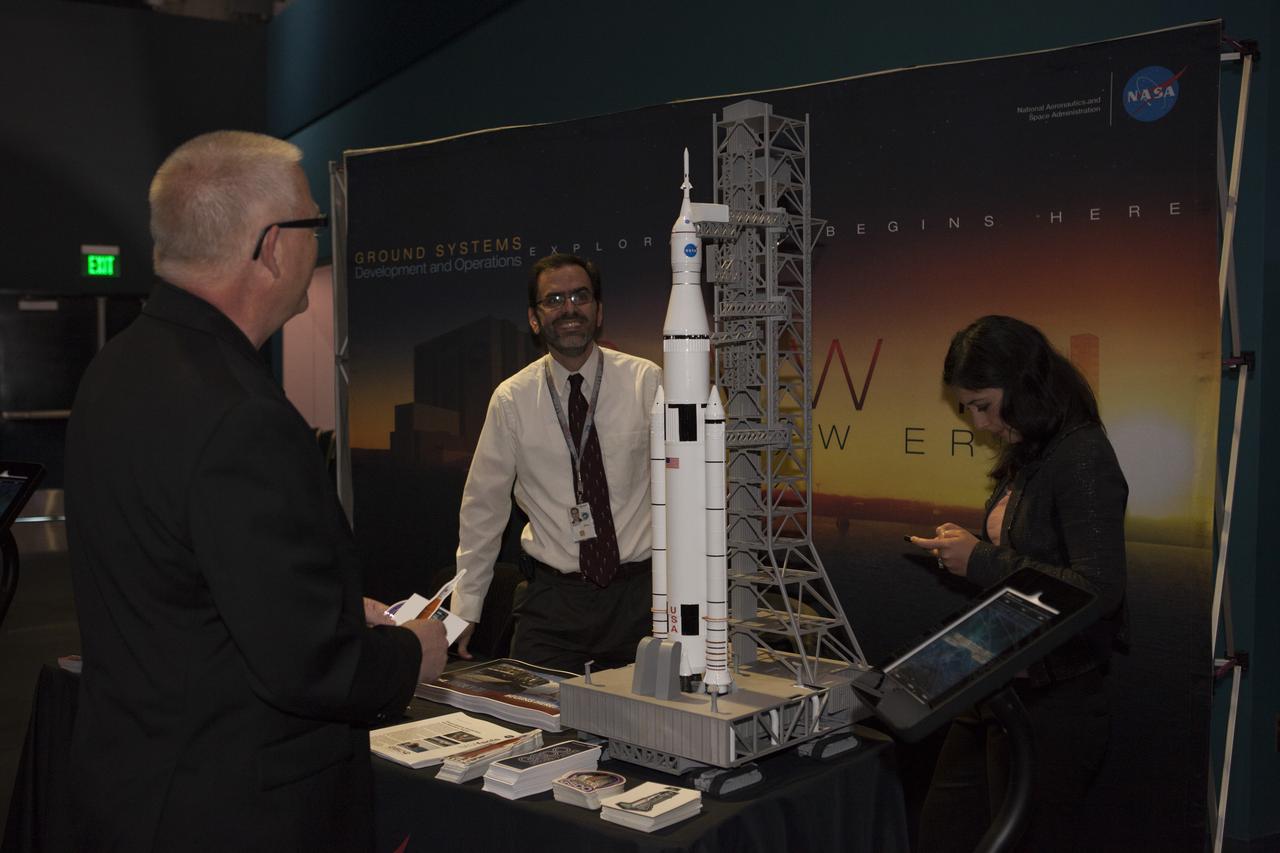
In the Space Shuttle Atlantis exhibit facility at the Kennedy Space Center's Visitor Complex, a guest is briefed on work taking place in the Florida spaceport's Ground Systems Development and Operations Program. This followed a presentation by center director Bob Cabana who updated community leaders on current and future activities at the space center.
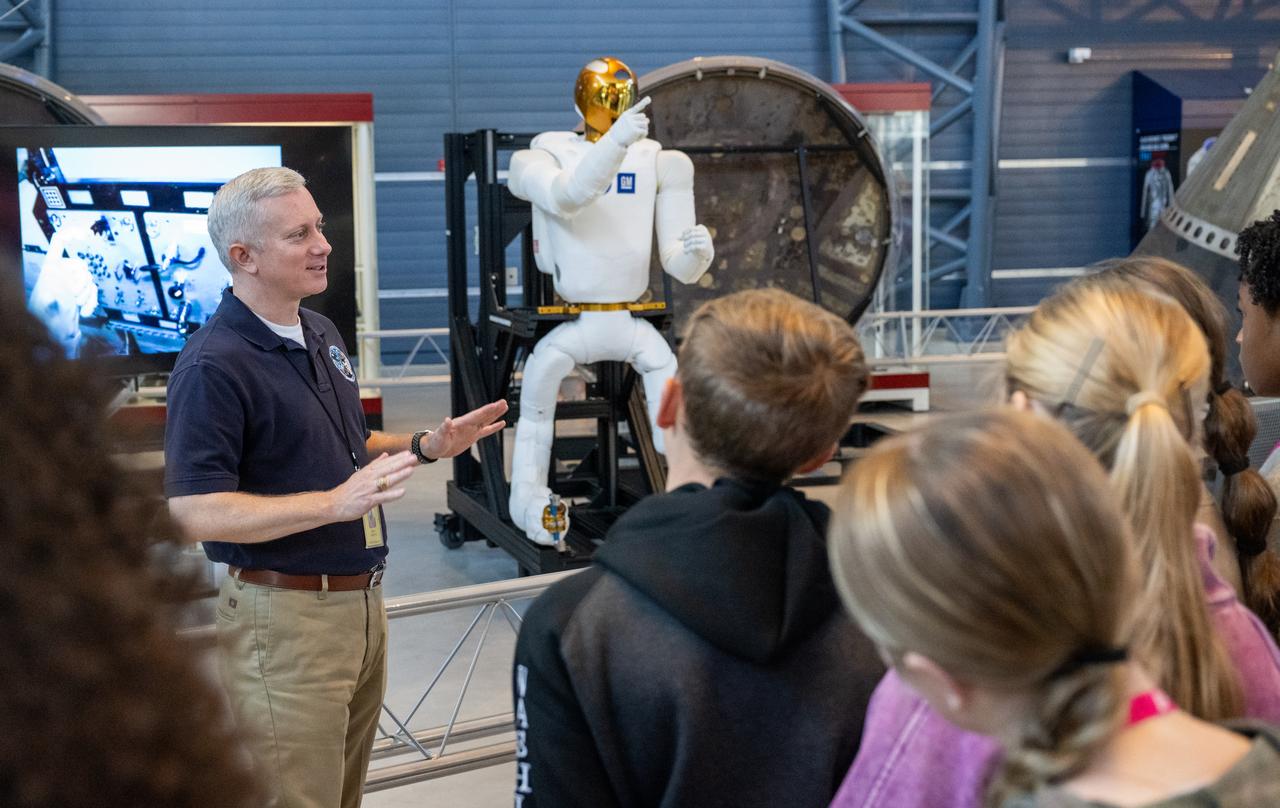
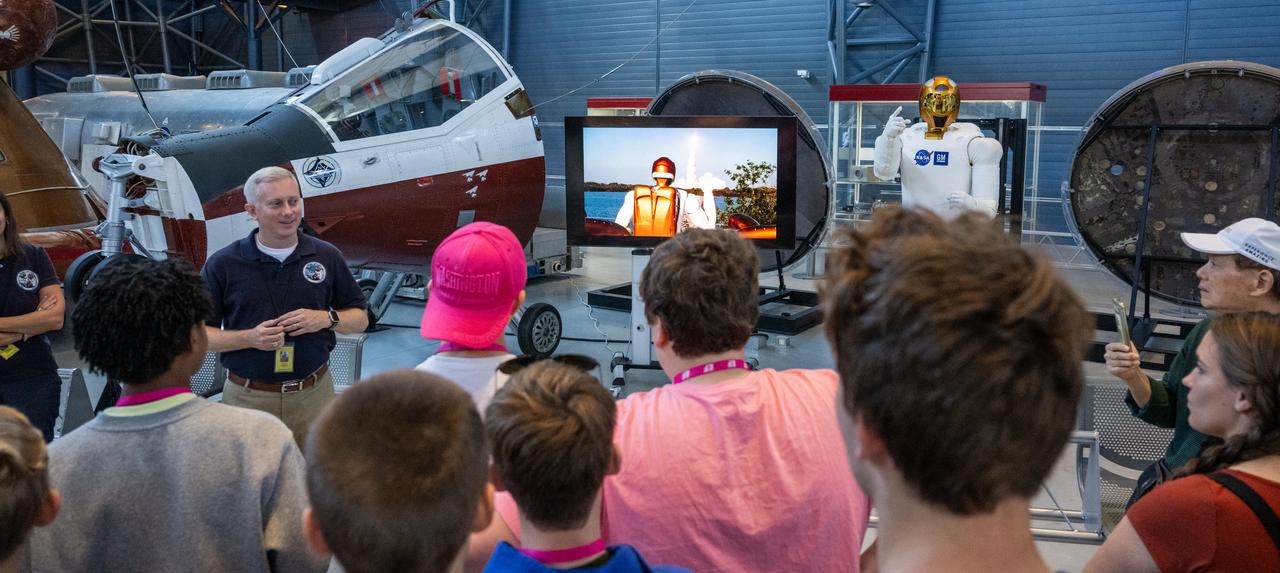
Jonathan Rogers, chief of the Robotic Systems Technology Branch at NASA’s Johnson Space Center and former Robonaut project manager, answers questions about Robonaut 2 from museum guests at the Smithsonian National Air and Space Museum’s Steve F. Udvar-Hazy Center Thursday, Oct. 24, 2024, in Chantilly, Va. Robonaut 2, the first humanoid robot to fly to space, is displayed publicly for the first time near the space shuttle Discovery. Photo Credit: (NASA/Keegan Barber)
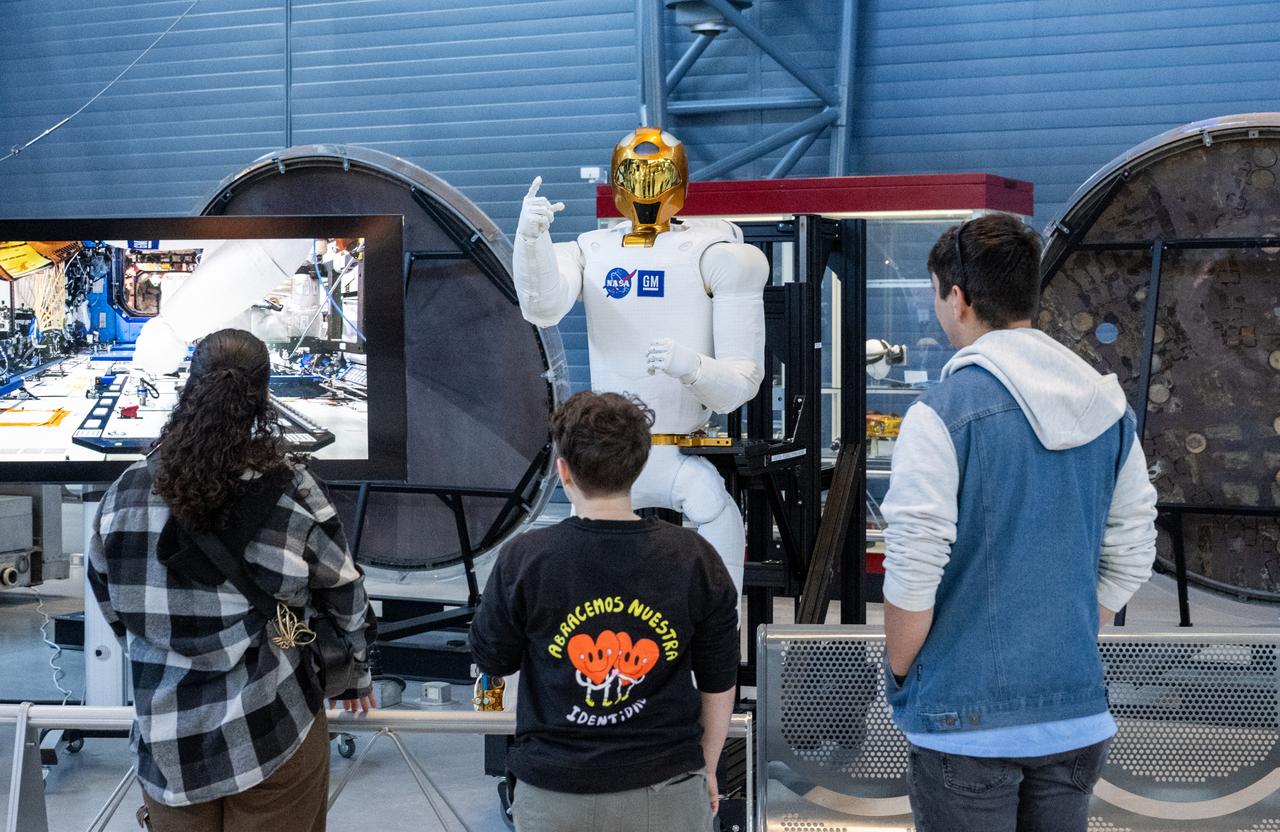
Museum guests view Robonaut 2 at the Smithsonian National Air and Space Museum’s Steve F. Udvar-Hazy Center Thursday, Oct. 24, 2024, in Chantilly, Va. Robonaut 2, the first humanoid robot to fly to space, is displayed publicly for the first time near the space shuttle Discovery. Photo Credit: (NASA/Keegan Barber)
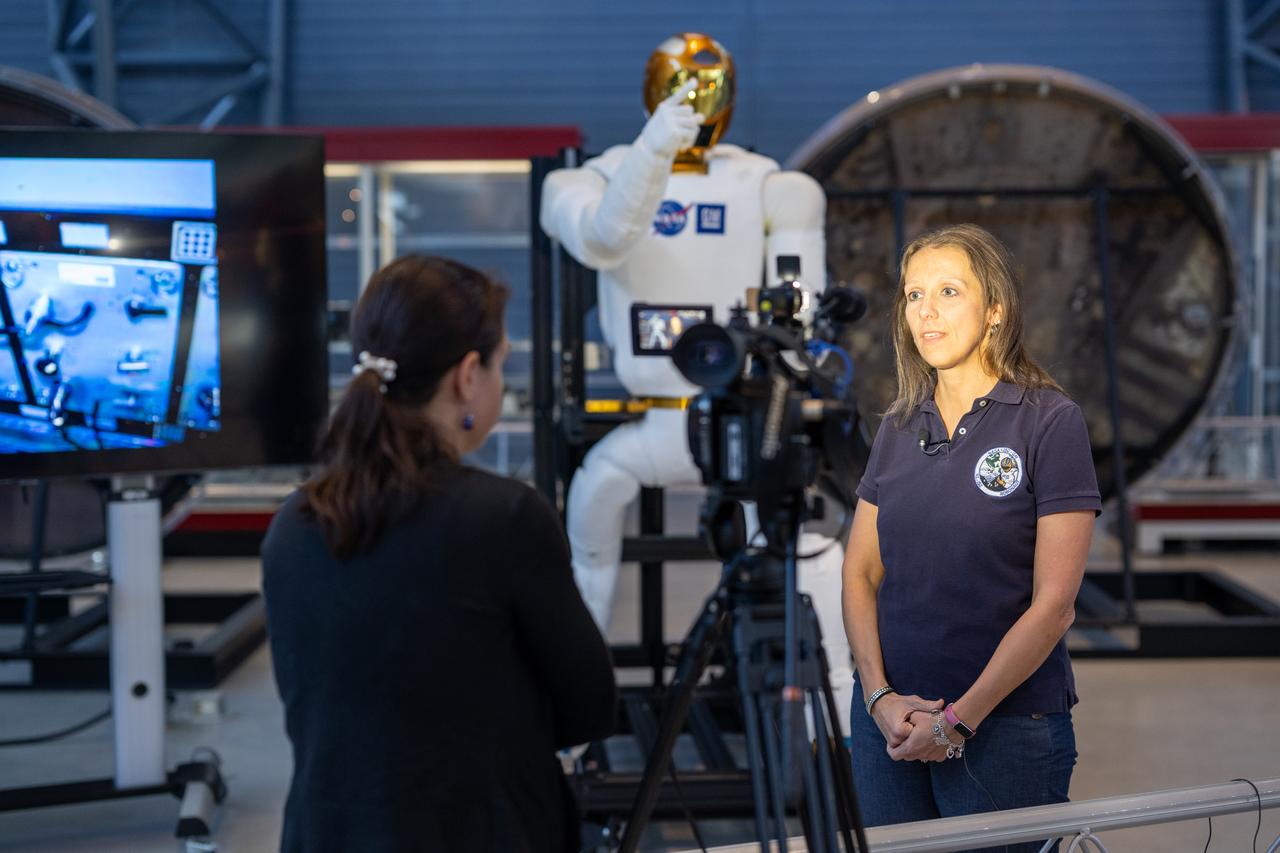
Julia Badger, autonomy and vehicle systems manager for Gateway at NASA’s Johnson Space Center and former Robonaut project manager, participates in a media opportunity at the Smithsonian National Air and Space Museum’s Steve F. Udvar-Hazy Center Thursday, Oct. 24, 2024, in Chantilly, Va. Robonaut 2, the first humanoid robot to fly to space, is displayed publicly for the first time near the space shuttle Discovery. Photo Credit: (NASA/Keegan Barber)
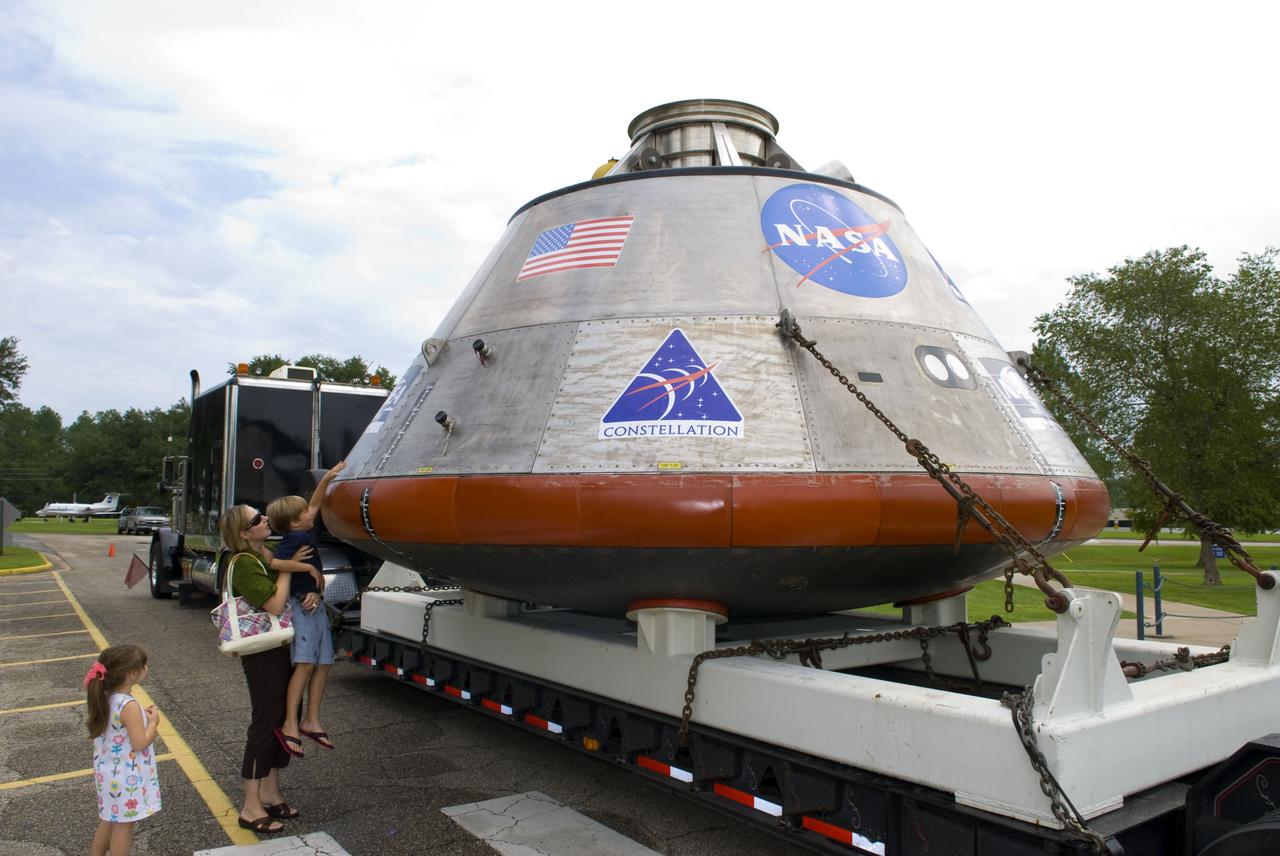
Visitors view a full-scale mockup of NASA's Orion crew exploration vehicle during its one-day display Wednesday at StenniSphere, the visitor center at John C. Stennis Space Center. The mockup is used in tests to study the environment for astronauts and recovery crews after an Orion ocean splashdown. It was en route to Johnson Space Center in Houston for the next phase of testing.
Jonathan Rogers, chief of the Robotic Systems Technology Branch at NASA’s Johnson Space Center and former Robonaut project manager, answers questions about Robonaut 2 from museum guests at the Smithsonian National Air and Space Museum’s Steve F. Udvar-Hazy Center Thursday, Oct. 24, 2024, in Chantilly, Va. Robonaut 2, the first humanoid robot to fly to space, is displayed publicly for the first time near the space shuttle Discovery. Photo Credit: (NASA/Keegan Barber)
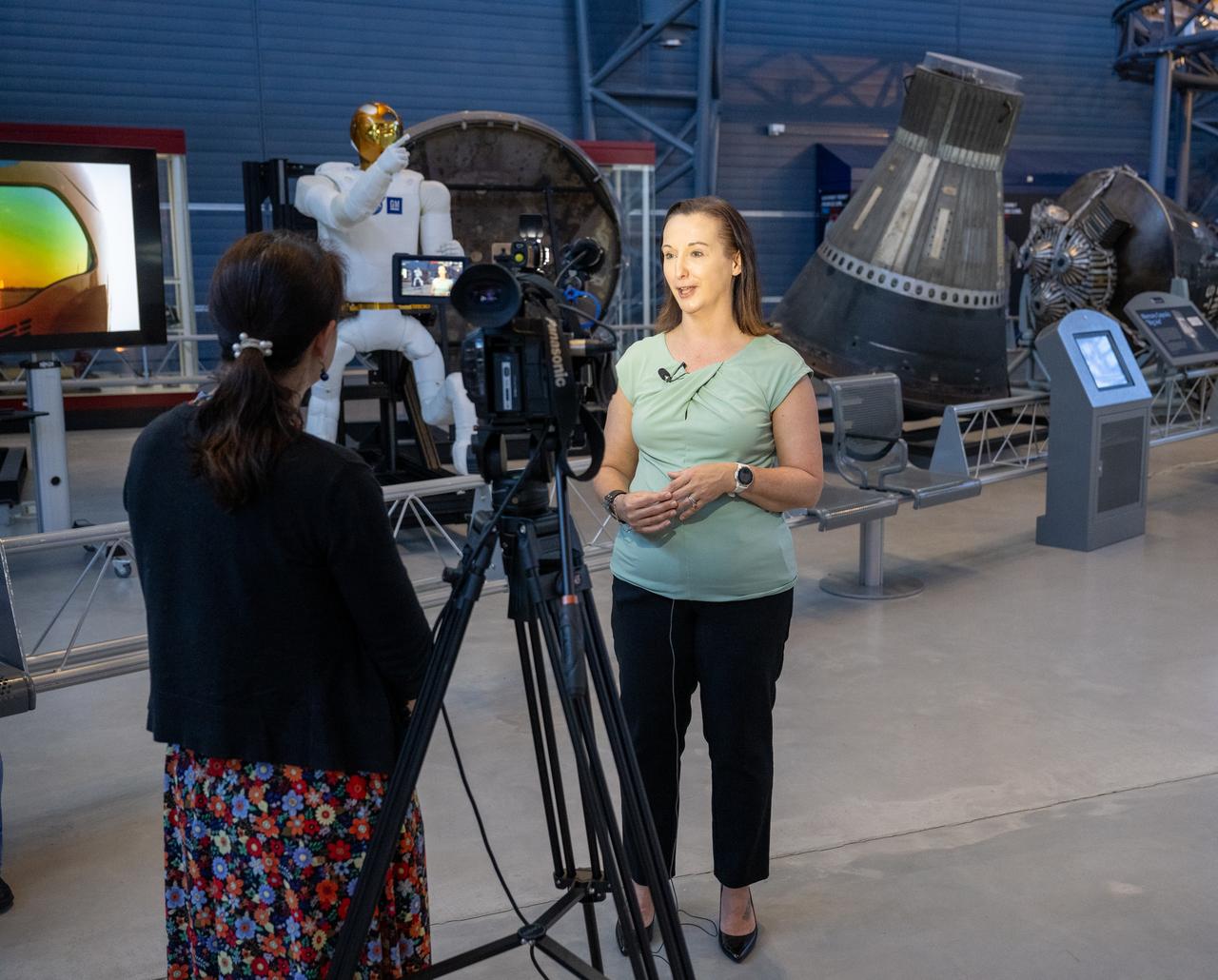
Space history curator Jennifer Levasseur participates in a media opportunity at the Smithsonian National Air and Space Museum’s Steve F. Udvar-Hazy Center Thursday, Oct. 24, 2024, in Chantilly, Va. Robonaut 2, the first humanoid robot to fly to space, is displayed publicly for the first time near the space shuttle Discovery. Photo Credit: (NASA/Keegan Barber)
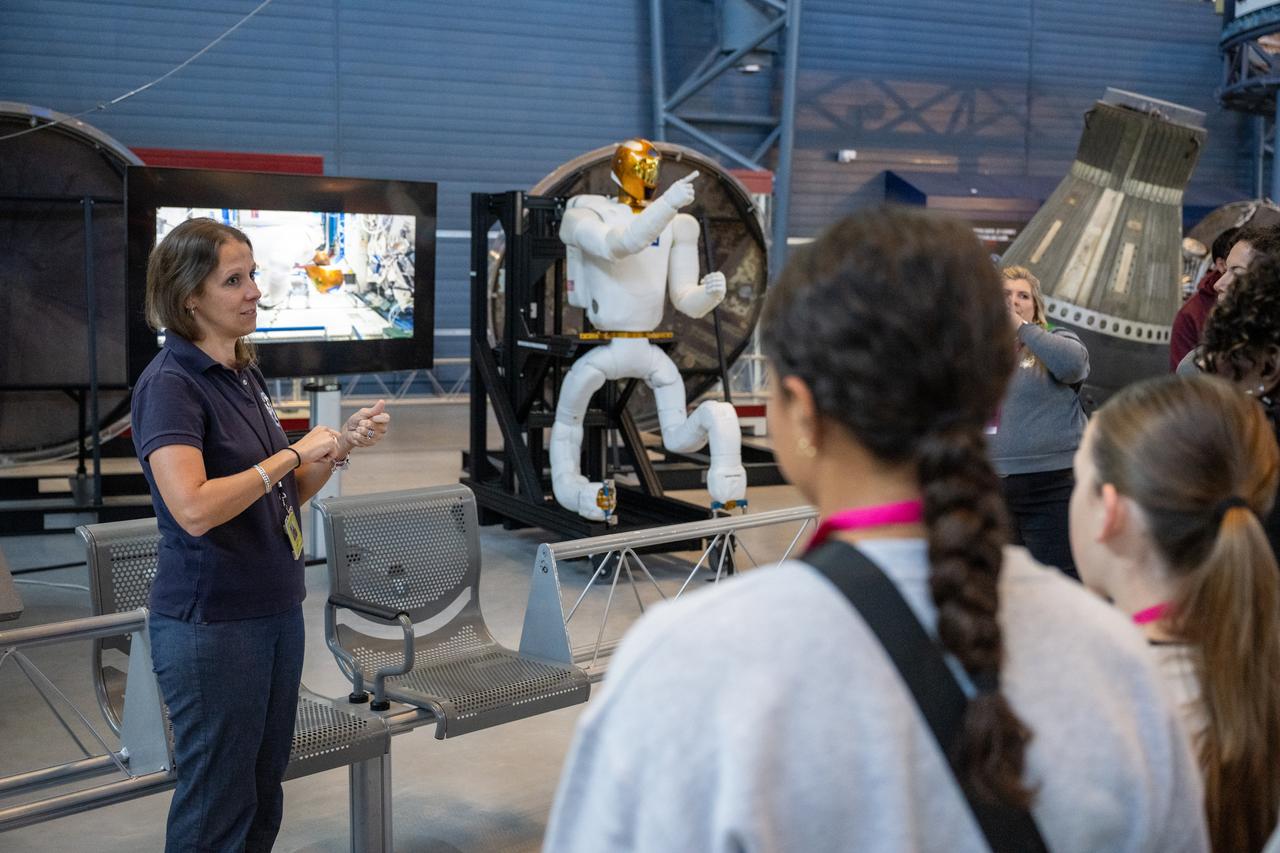
Julia Badger, autonomy and vehicle systems manager for Gateway at NASA’s Johnson Space Center and former Robonaut project manager, participates in a media opportunity at the Smithsonian National Air and Space Museum’s Steve F. Udvar-Hazy Center Thursday, Oct. 24, 2024, in Chantilly, Va. Robonaut 2, the first humanoid robot to fly to space, is displayed publicly for the first time near the space shuttle Discovery. Photo Credit: (NASA/Keegan Barber)
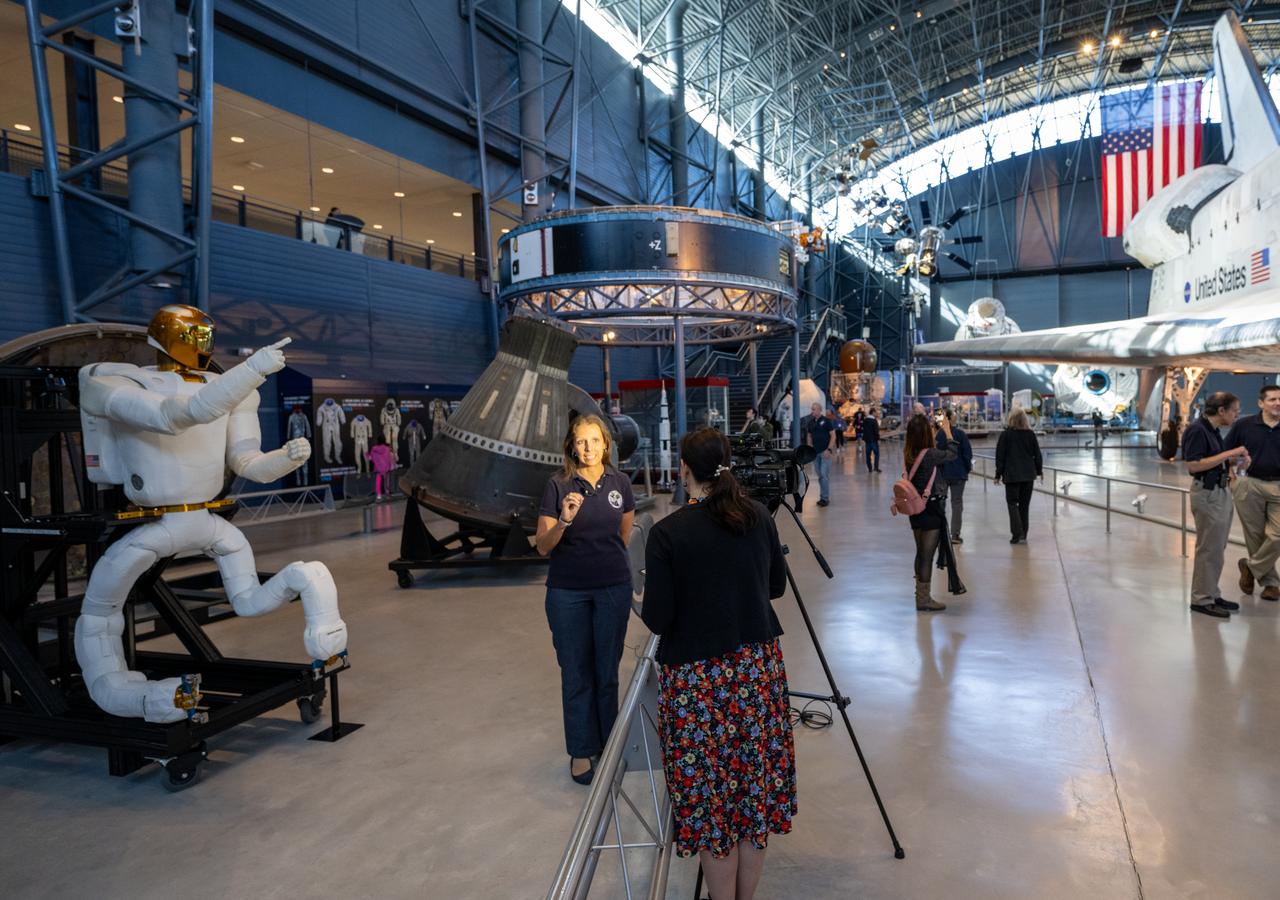
Julia Badger, autonomy and vehicle systems manager for Gateway at NASA’s Johnson Space Center and former Robonaut project manager, participates in a media opportunity at the Smithsonian National Air and Space Museum’s Steve F. Udvar-Hazy Center Thursday, Oct. 24, 2024, in Chantilly, Va. Robonaut 2, the first humanoid robot to fly to space, is displayed publicly for the first time near the space shuttle Discovery. Photo Credit: (NASA/Keegan Barber)
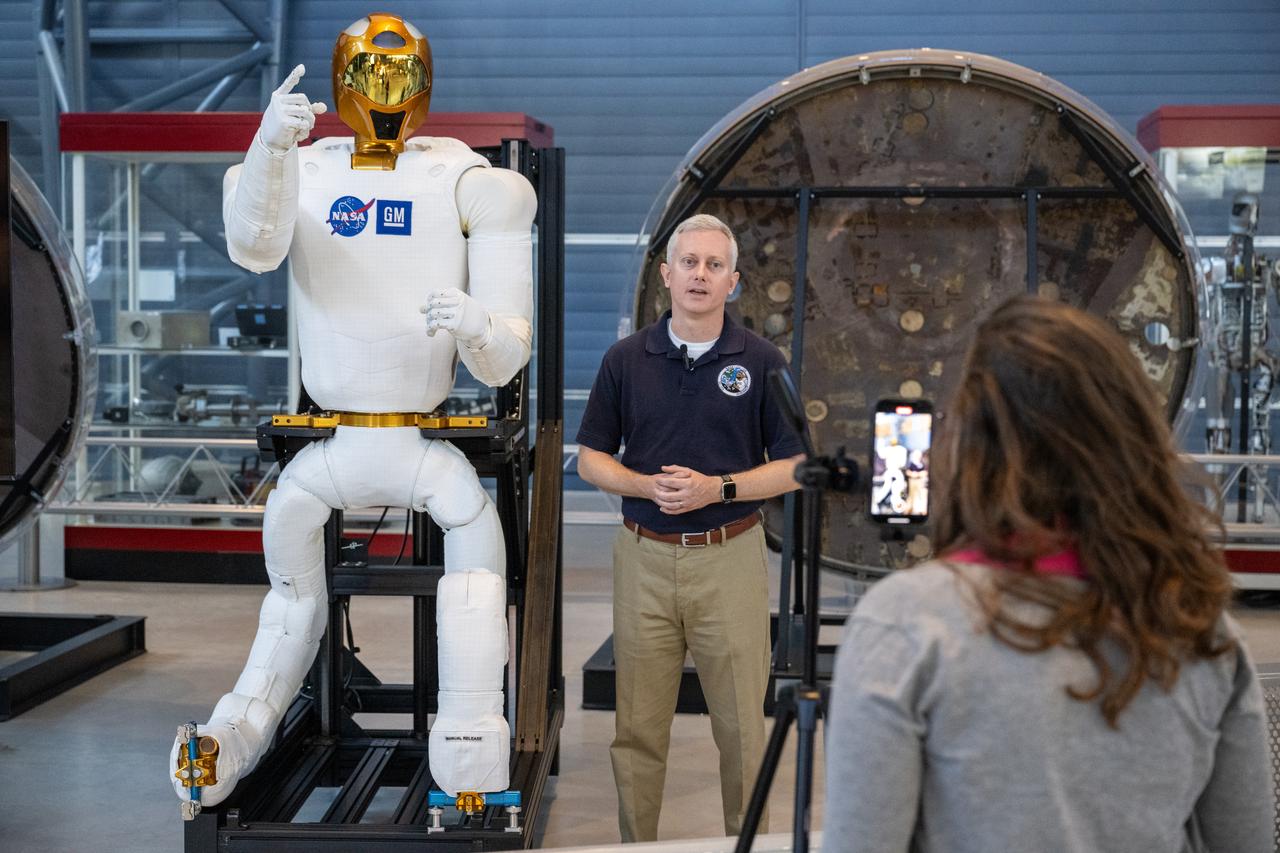
Jonathan Rogers, chief of the Robotic Systems Technology Branch at NASA’s Johnson Space Center and former Robonaut project manager, participates in a media opportunity at the Smithsonian National Air and Space Museum’s Steve F. Udvar-Hazy Center Thursday, Oct. 24, 2024, in Chantilly, Va. Robonaut 2, the first humanoid robot to fly to space, is displayed publicly for the first time near the space shuttle Discovery. Photo Credit: (NASA/Keegan Barber)
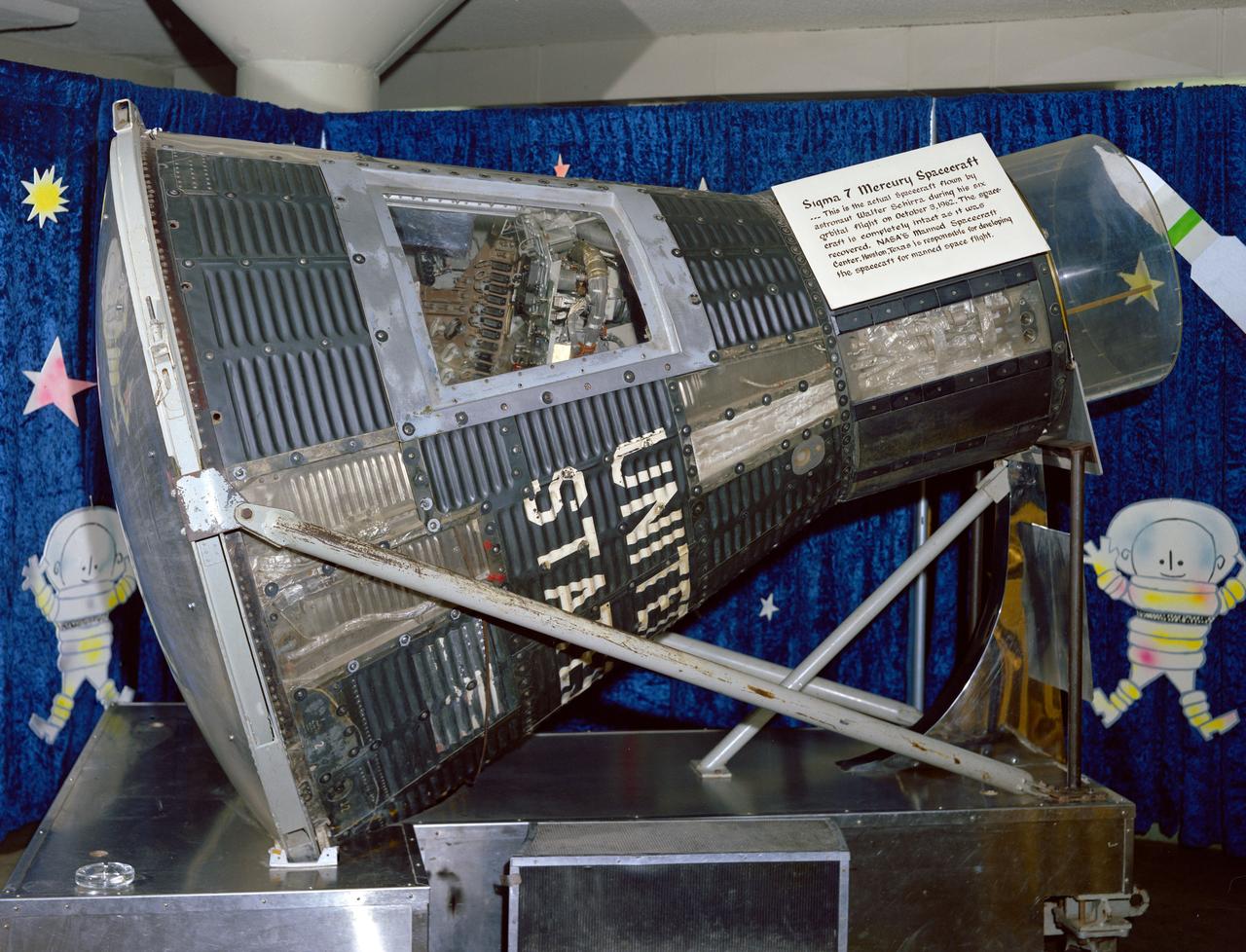
S66-53205 (1966) --- Mercury Atlas (MA-8) Sigma 7 capsule on display at the Johnson Space Center. Photo credit: NASA
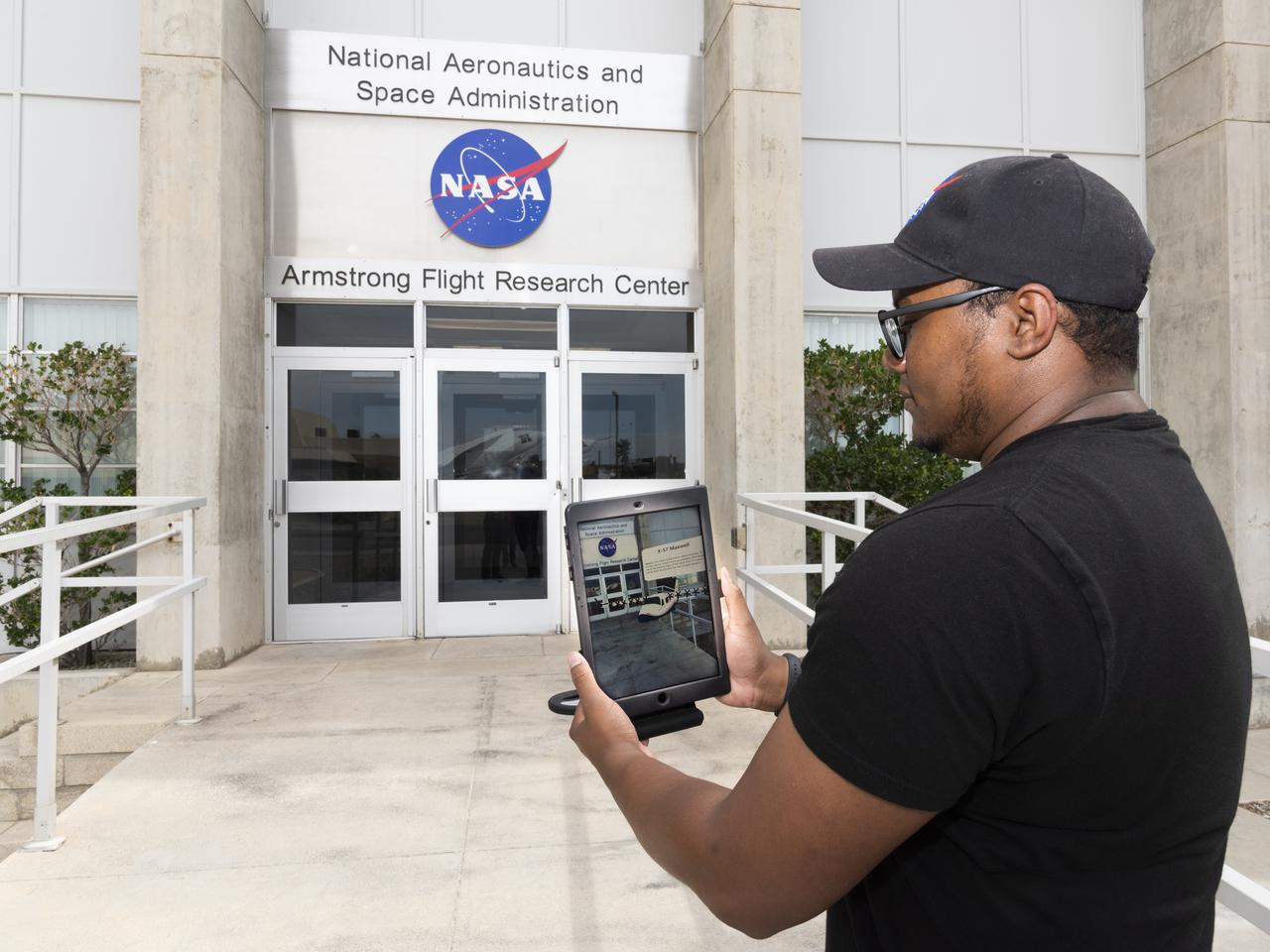
Daniel Williams, intern, shows what the app looks like while in use with the 3D model of the X-57 Maxwell displayed on the screen.
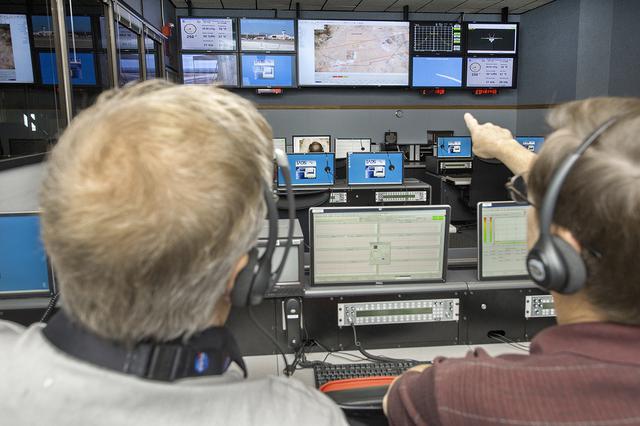
Engineers and researchers at NASA’s Armstrong Flight Research Center monitored the flights, and were able to observe the mapping of the sonic boom carpet from the F-18, from the center’s Mission Control Center.
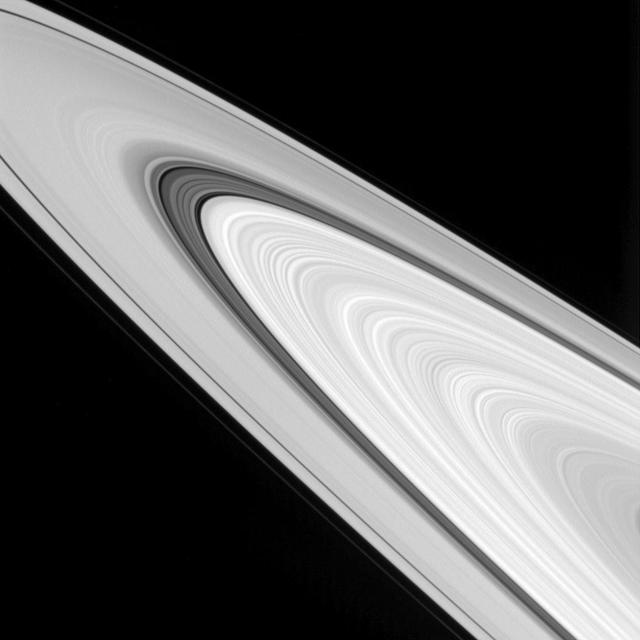
This view from NASA's Cassini spacecraft showcases some of the amazingly detailed structure of Saturn's rings. The rings are made up of many smaller ringlets that blur together when seen from a distance. But when imaged up close, the rings' structures display quite a bit of variation. Ring scientists are debating the nature of these features -- whether they have always appeared this way or if their appearance has evolved over time. This view looks toward the sunlit side of the rings from about 4 degrees above the ring plane. The image was taken in visible light with the Cassini spacecraft wide-angle camera on Sept. 24, 2016. The view was acquired at a distance of approximately 283,000 miles (456,000 kilometers) from Saturn and at a Sun-Saturn-spacecraft, or phase, angle of 32 degrees. Image scale is 17 miles (27 kilometers) per pixel. http://photojournal.jpl.nasa.gov/catalog/PIA20506
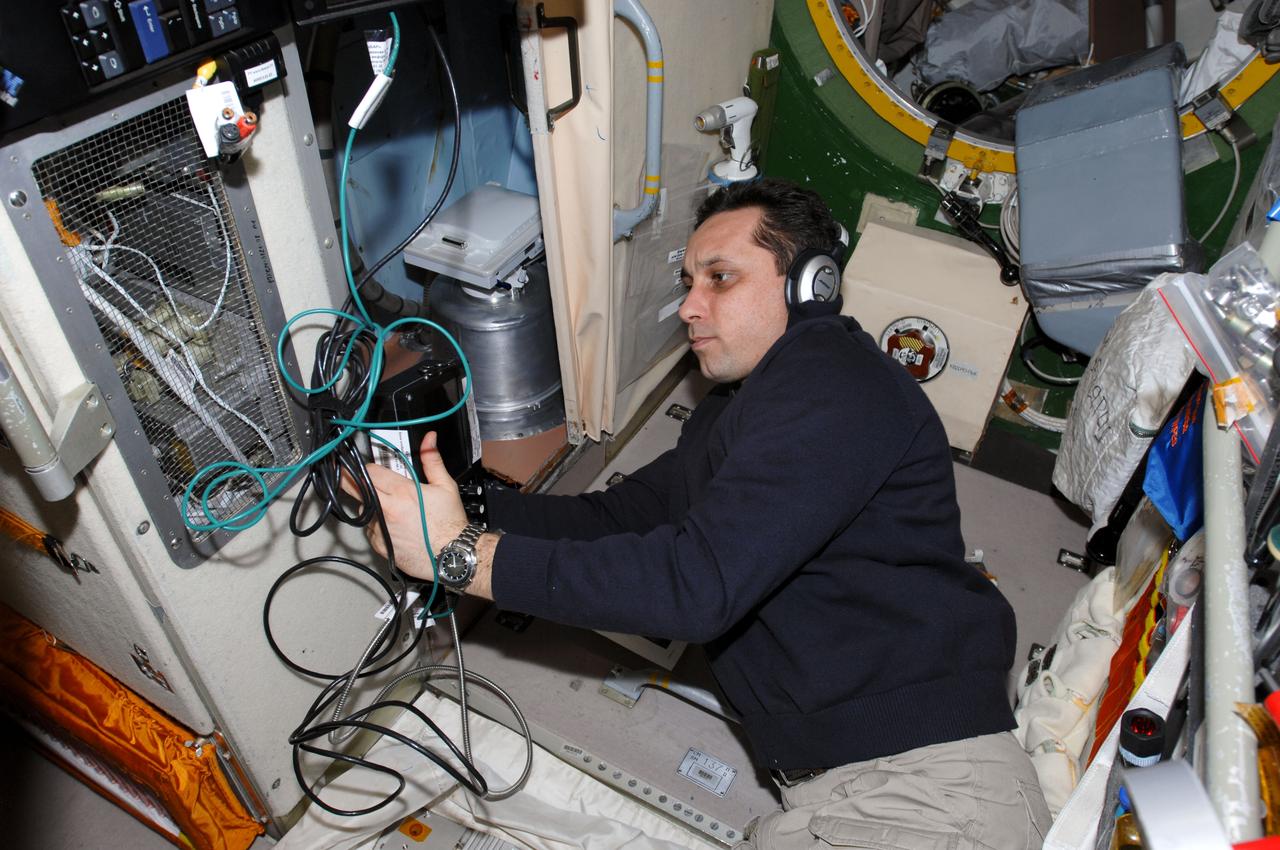
ISS030-E-021042 (5 Jan. 2012) --- Russian cosmonaut Anton Shkaplerov, Expedition 30 flight engineer, wears a communication system headset while working with a video display unit in the Zvezda Service Module of the International Space Station.
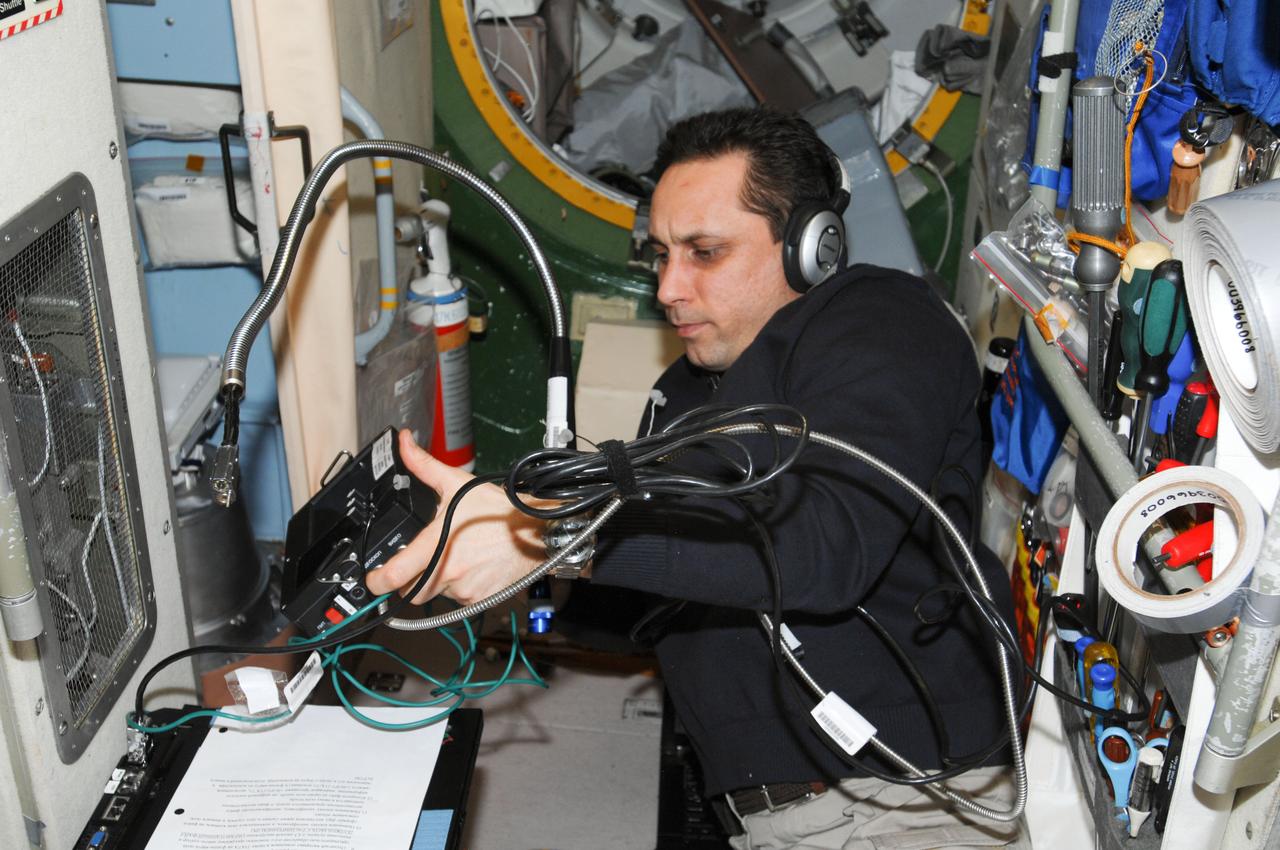
ISS030-E-021039 (5 Jan. 2012) --- Russian cosmonaut Anton Shkaplerov, Expedition 30 flight engineer, wears a communication system headset while working with a video display unit in the Zvezda Service Module of the International Space Station.
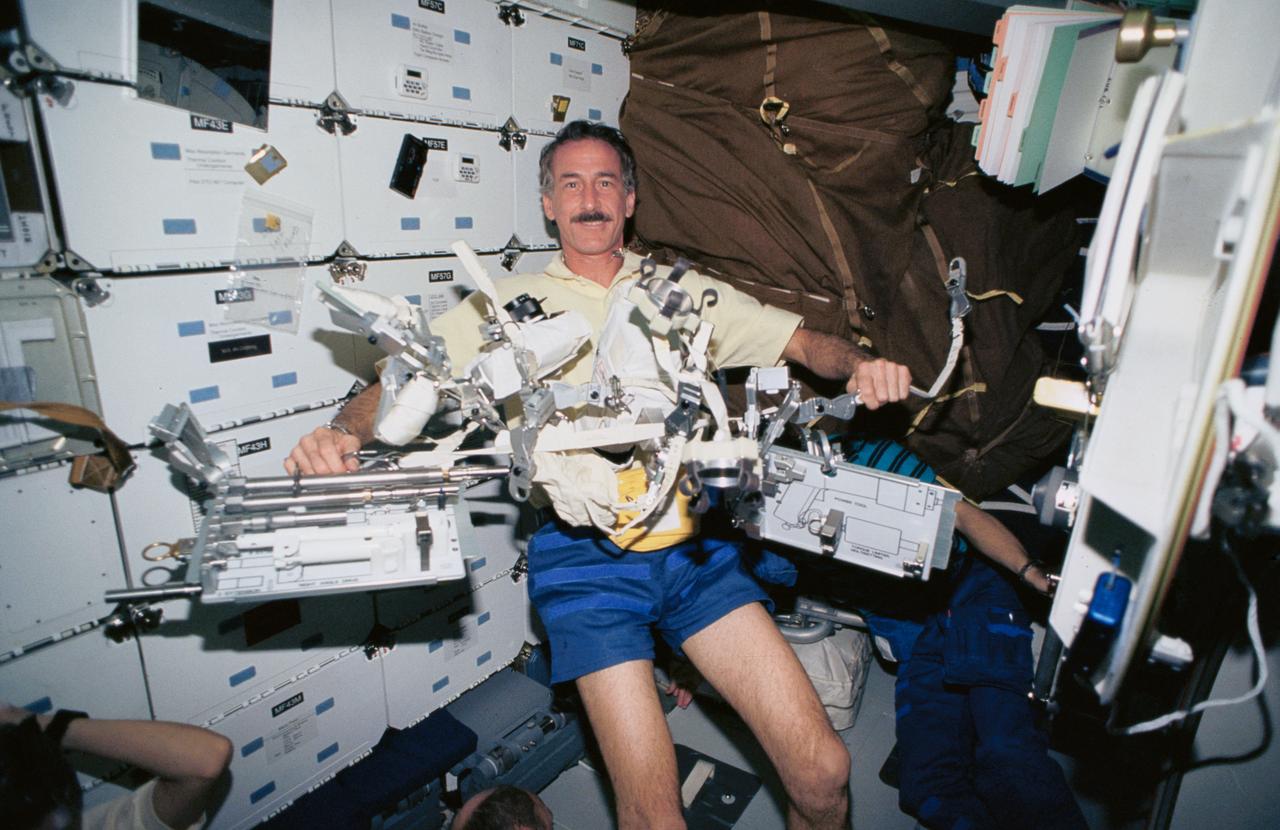
STS061-03-029 (2013 Dec 1993) --- Astronaut Jeffrey A. Hoffman displays tools used in the five space walks on the STS-61 Hubble Space Telescope (HST) repair mission. Hoffman was one of four space walkers making use of the variegated gear.
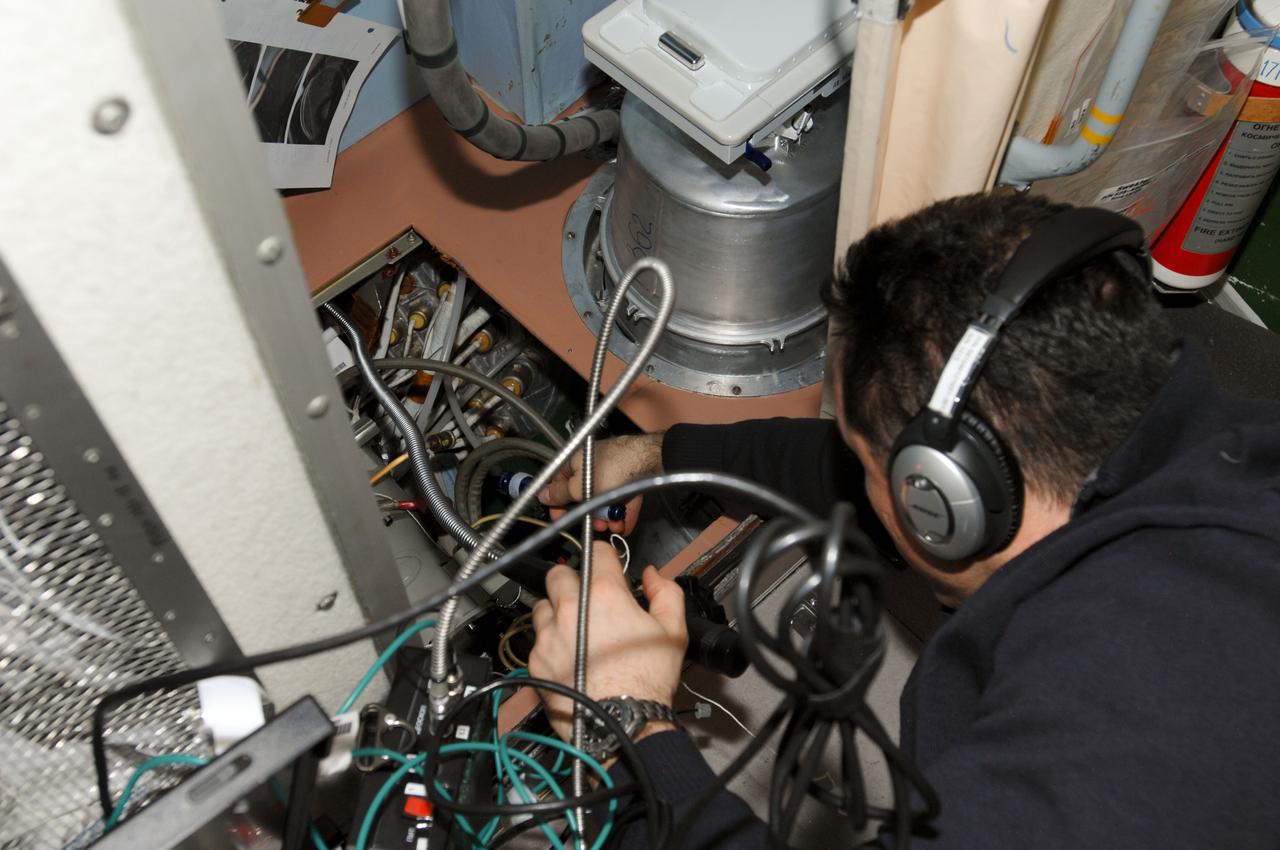
ISS030-E-021041 (5 Jan. 2012) --- Russian cosmonaut Anton Shkaplerov, Expedition 30 flight engineer, wears a communication system headset while working with a video display unit in the Zvezda Service Module of the International Space Station.
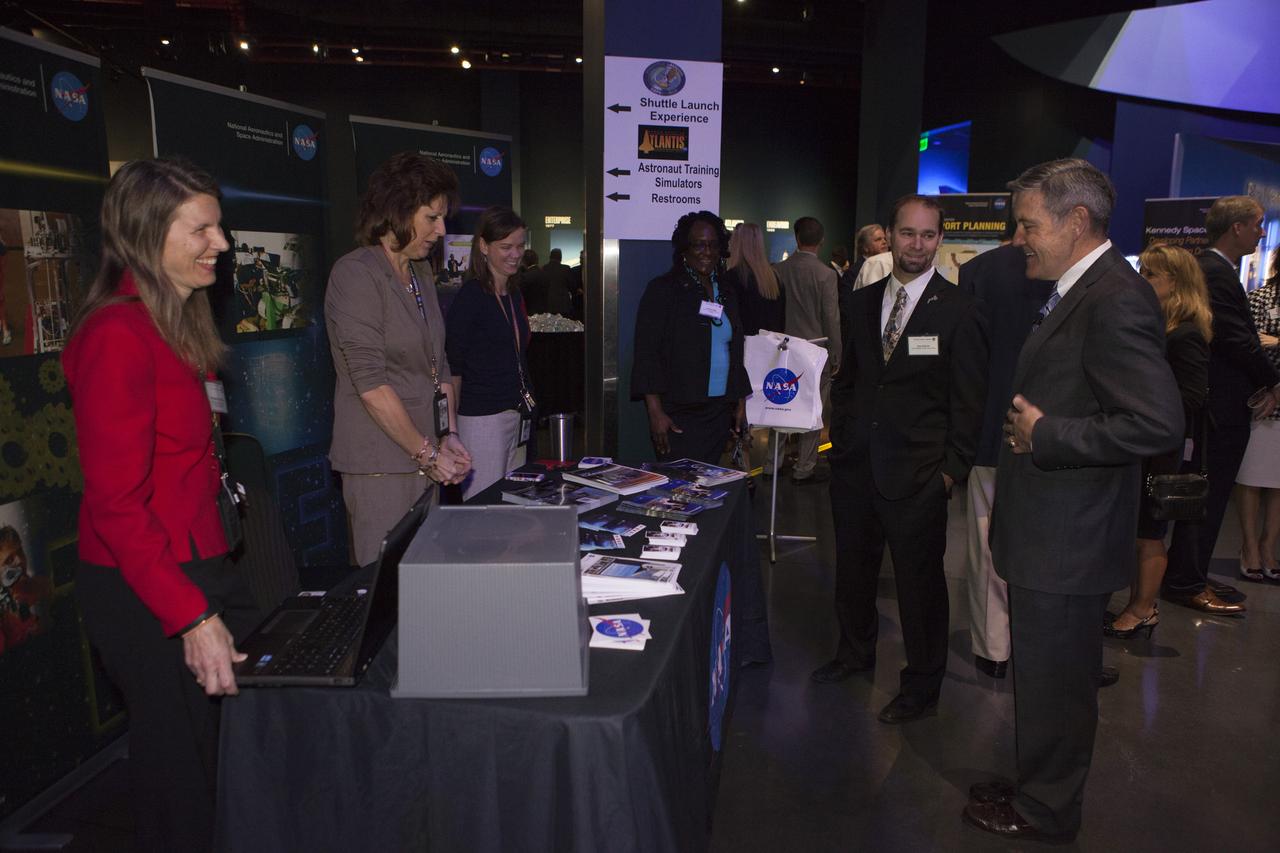
In the Space Shuttle Atlantis exhibit facility at the Kennedy Space Center's Visitor Complex, center director Bob Cabana, right, speaks with guests and employees at the Florida spaceport. This followed a presentation by center director Bob Cabana who updated community leaders on current and future activities at the space center.
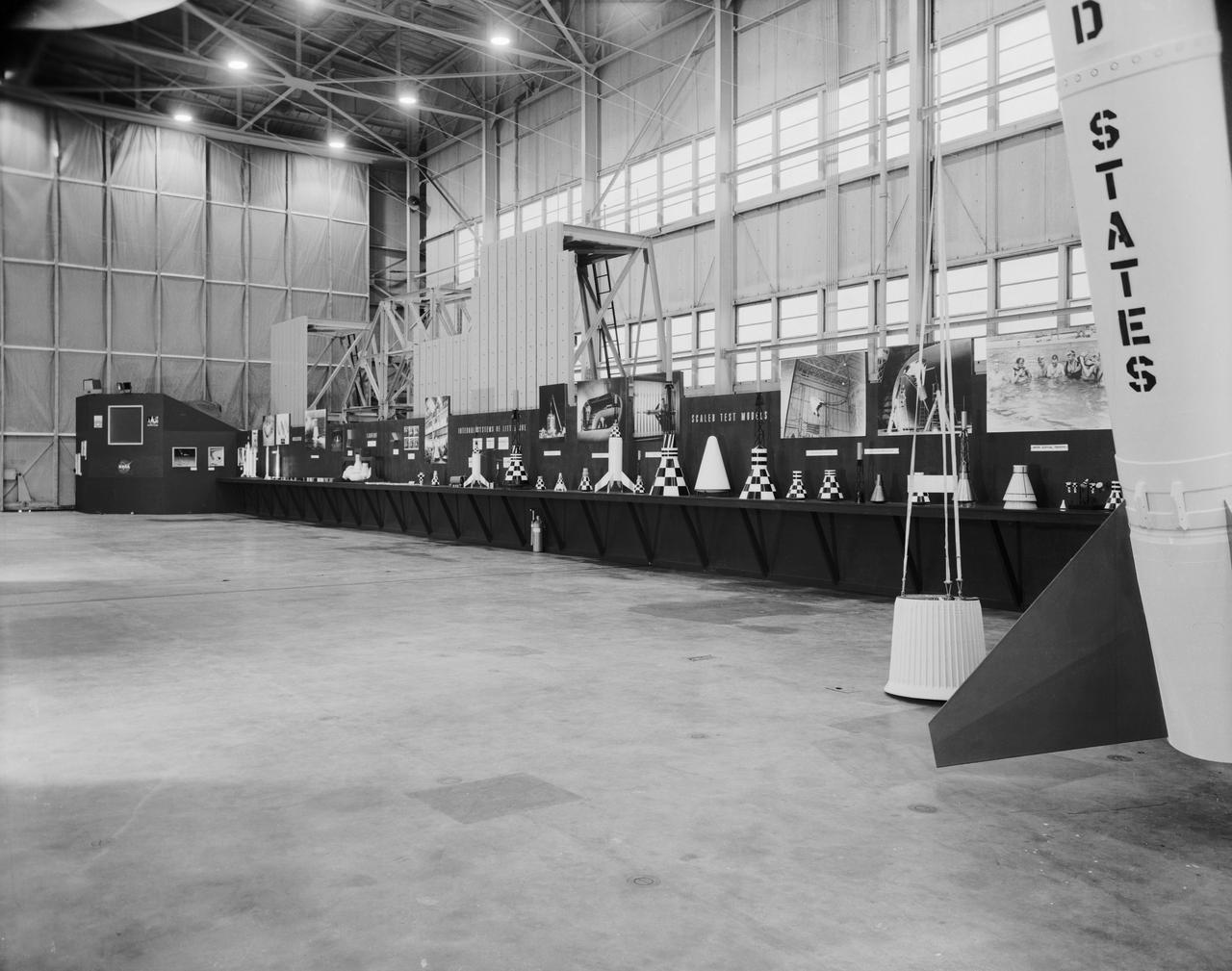
Mock-up of the Mercury capsule on display at the first NASA inspection held on October 24, 1959.
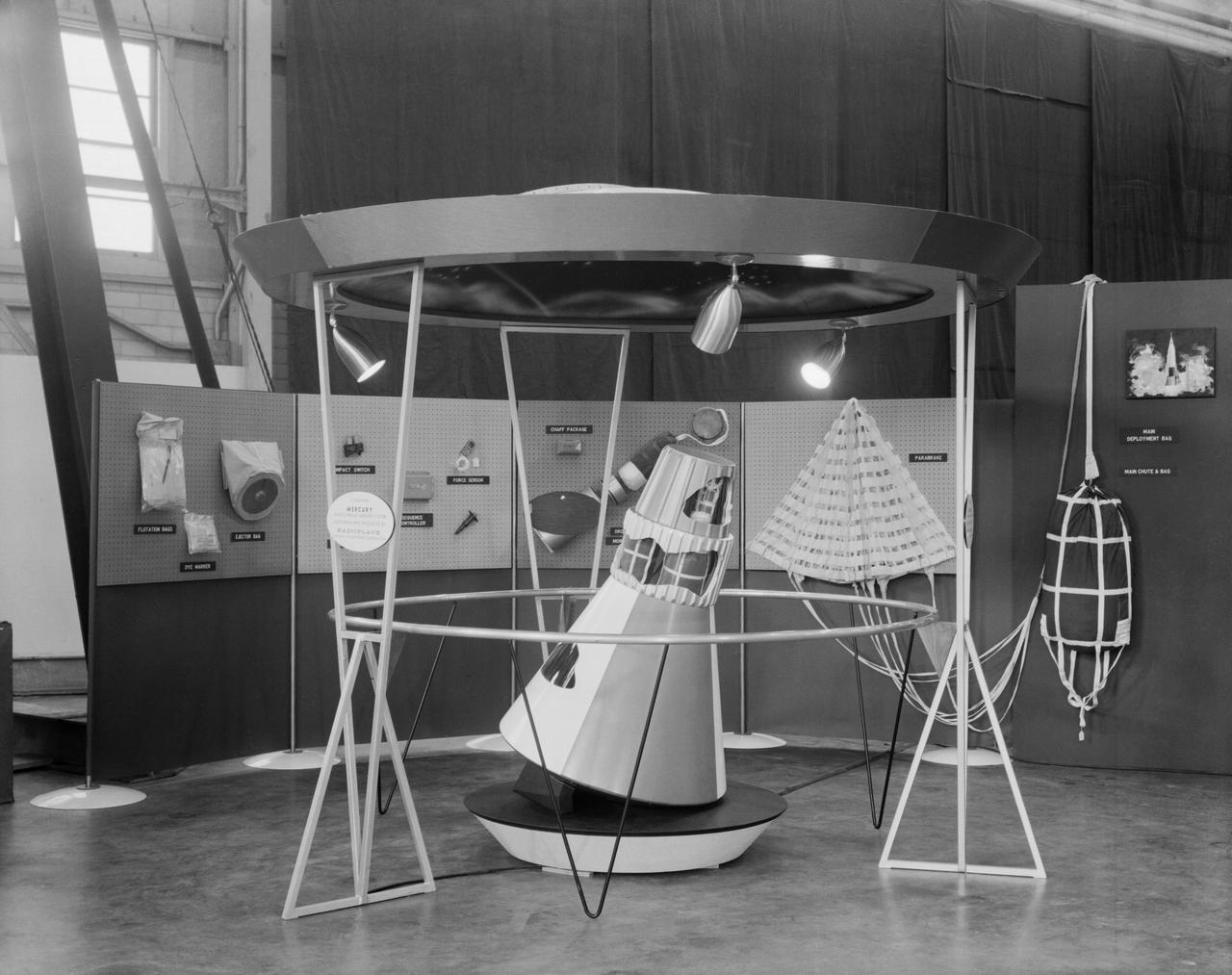
Mock-up of the Mercury capsule on display at the first NASA inspection held on October 24, 1959.
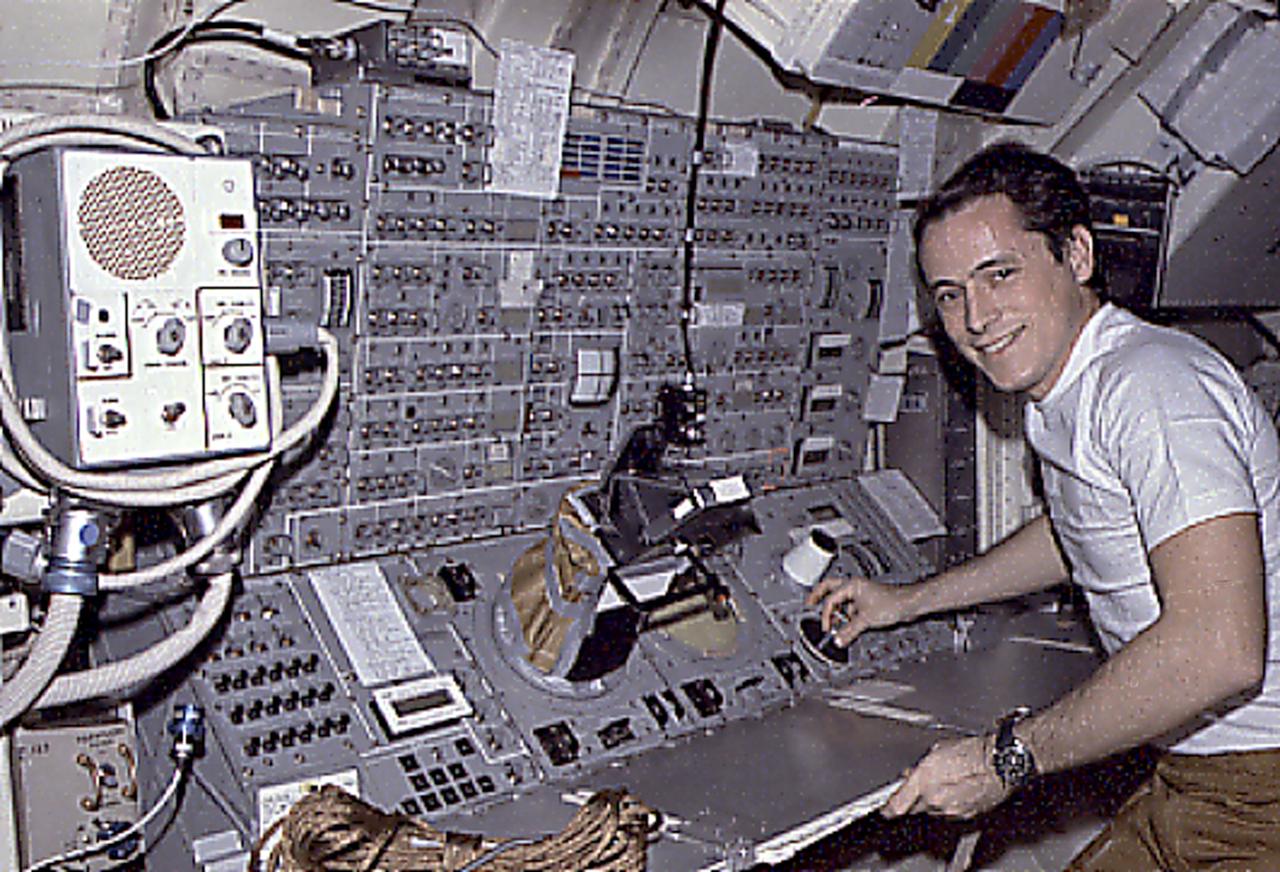
This Skylab-4 mission onboard photograph shows Astronaut Ed Gibson at the complex control and display console for the Apollo Telescope Mount solar telescopes located in the Skylab Multiple Docking Adapter. Astronauts watched the Sun, and photographed and recorded the solar activities, such as the birth of a solar flare.
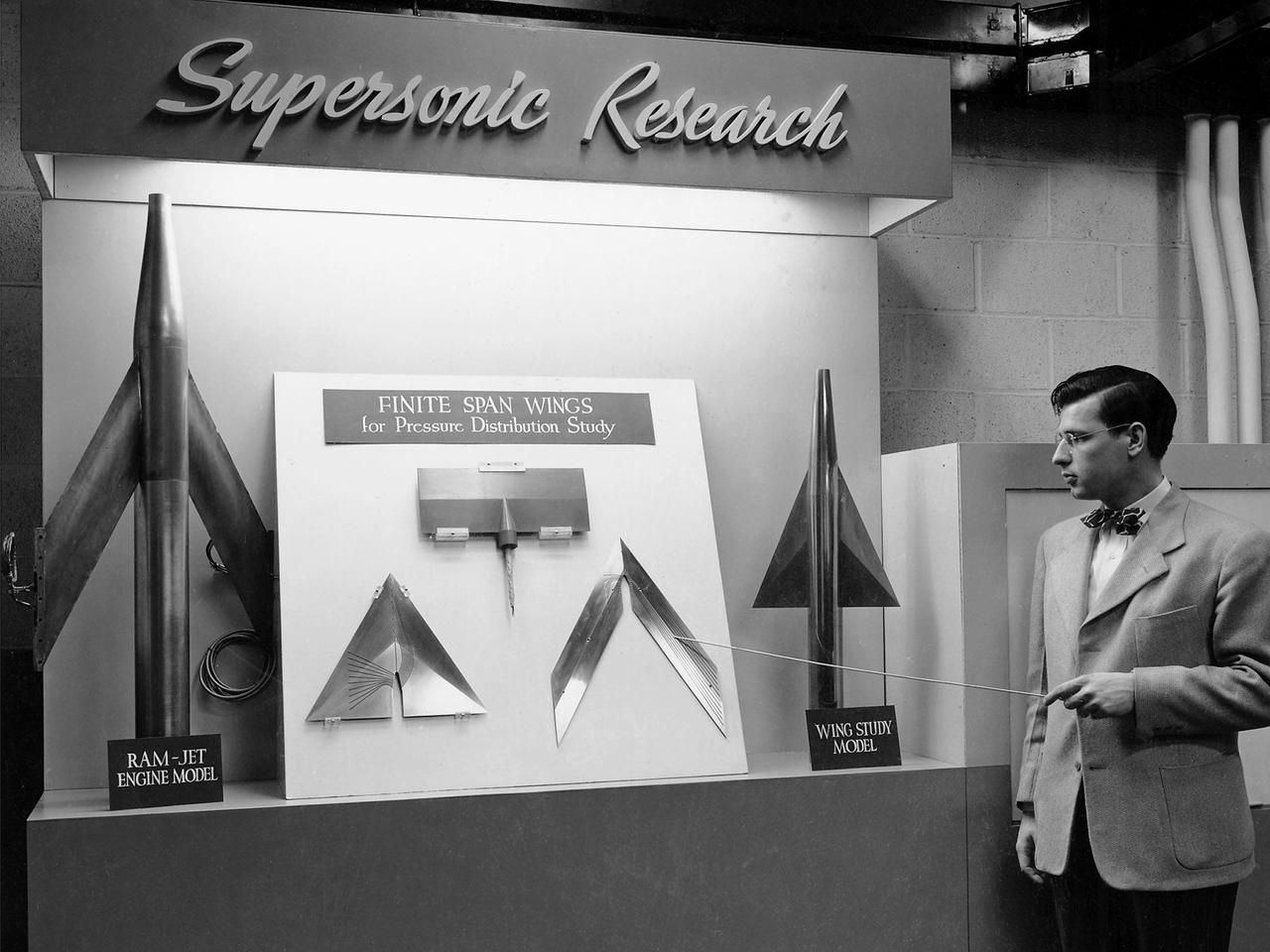
On March 22, 1946, 250 members of the Institute of Aeronautical Science toured the NACA’s Aircraft Engine Research Laboratory. NACA Chairman Jerome Hunsaker and Secretary John Victory were on hand to brief the attendees in the Administration Building before the visited the lab’s test facilities. At each of the twelve stops, researchers provided brief presentations on their work. Topics included axial flow combustors, materials for turbine blades, engine cooling, icing prevention, and supersonic flight. The laboratory reorganized itself in October 1945 as World War II came to an end to address newly emerging technologies such as the jet engine, rockets, and high-speed flight. While design work began on what would eventually become the 8- by 6-Foot Supersonic Wind Tunnel, NACA Lewis quickly built several small supersonic tunnels. These small facilities utilized the Altitude Wind Tunnel’s massive air handling equipment to generate high-speed airflow. The display seen in this photograph was set up in the building that housed the first of these wind tunnels. Eventually the building would contain three small supersonic tunnels, referred to as the “stack tunnels” because of the vertical alignment. The two other tunnels were added to this structure in 1949 and 1951. The small tunnels were used until the early 1960s to study the aerodynamic characteristics of supersonic inlets and exits.
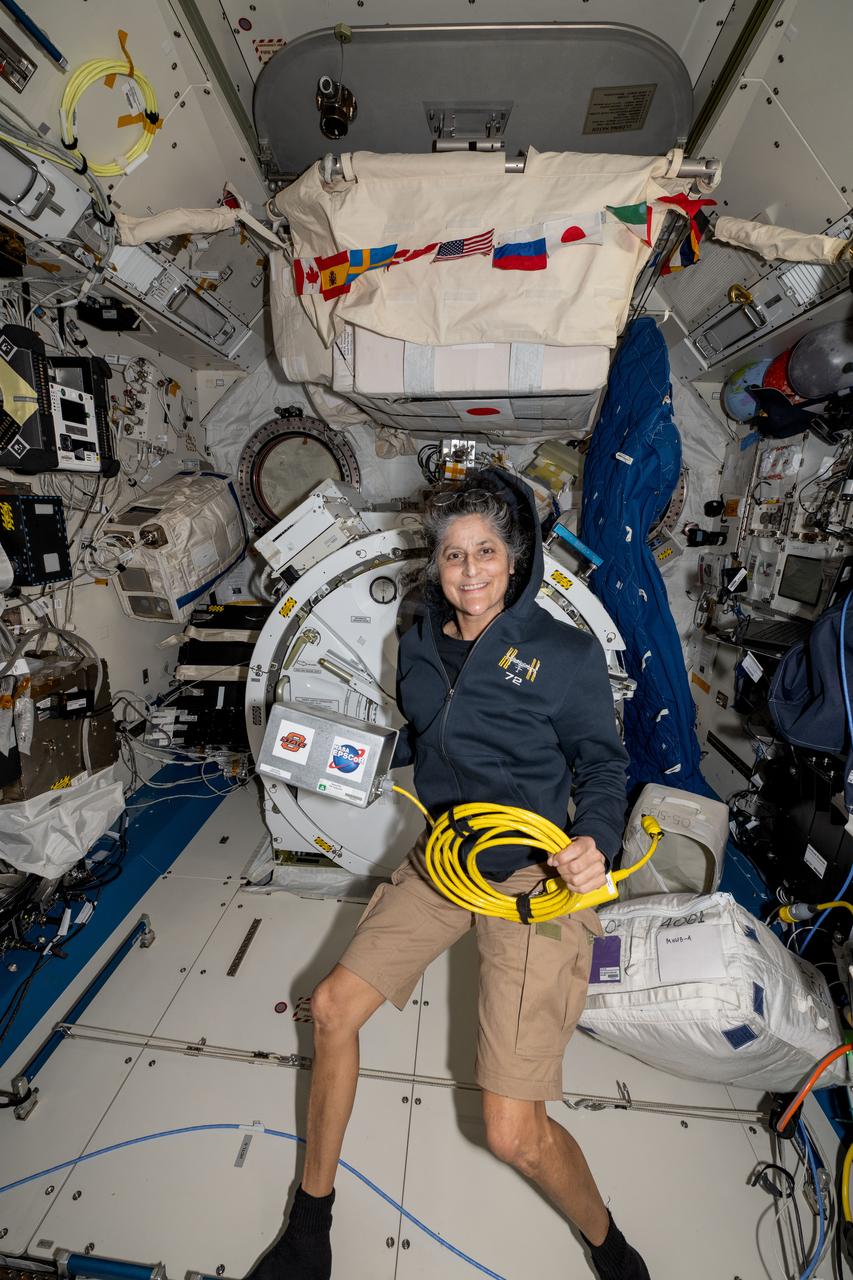
iss072e143491 (Nov. 1, 2024) --- NASA astronaut and Expedition 72 Commander Suni Williams displays the Space Tissue Equivalent Dosimeter (SpaceTED) hardware inside the International Space Station's Kibo laboratory module. SpaceTED is a technology demonstration that can measure radiation dosages and characterize the radiaton environment in microgravity to protect crew members and spacecraft hardware.
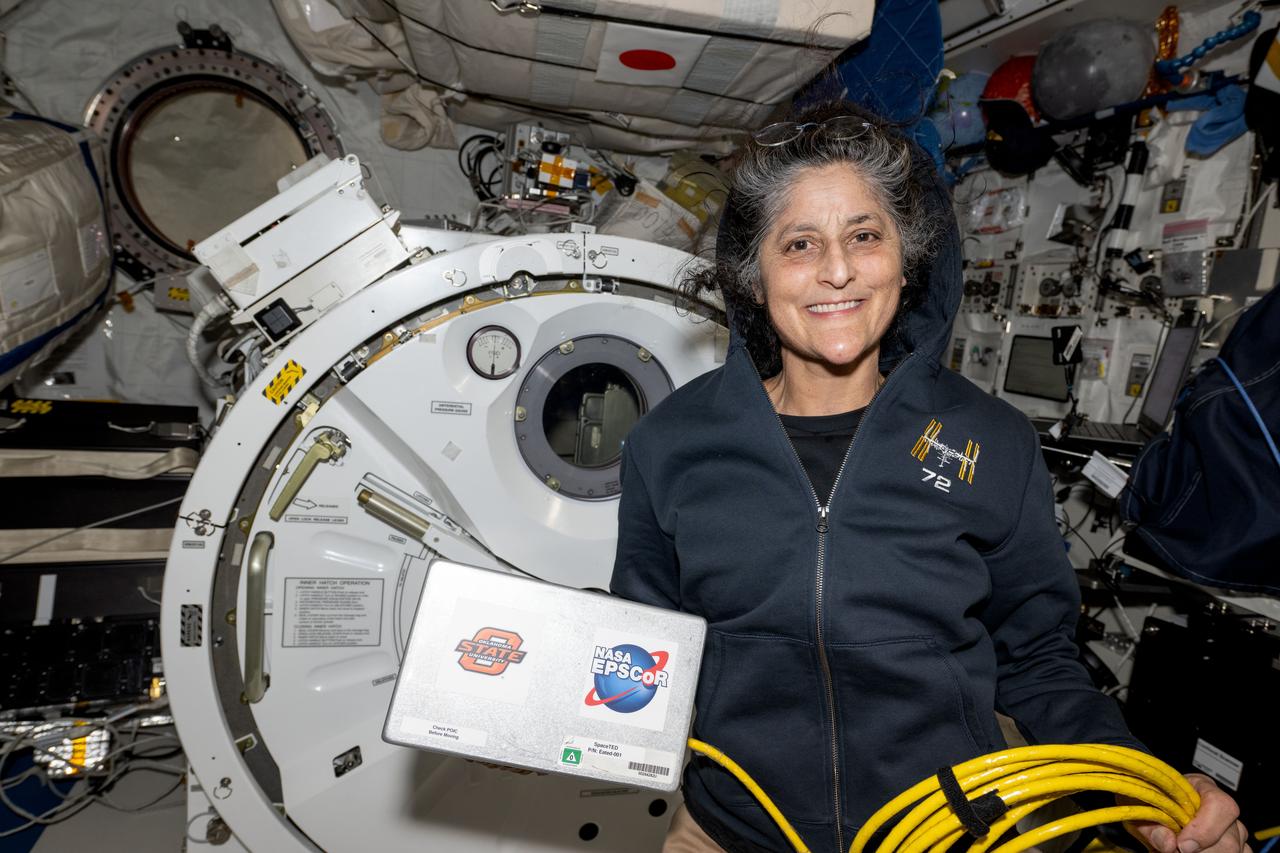
iss072e143492 (Nov. 1, 2024) --- NASA astronaut and Expedition 72 Commander Suni Williams displays the Space Tissue Equivalent Dosimeter (SpaceTED) hardware inside the International Space Station's Kibo laboratory module. SpaceTED is a technology demonstration that can measure radiation dosages and characterize the radiaton environment in microgravity to protect crew members and spacecraft hardware.
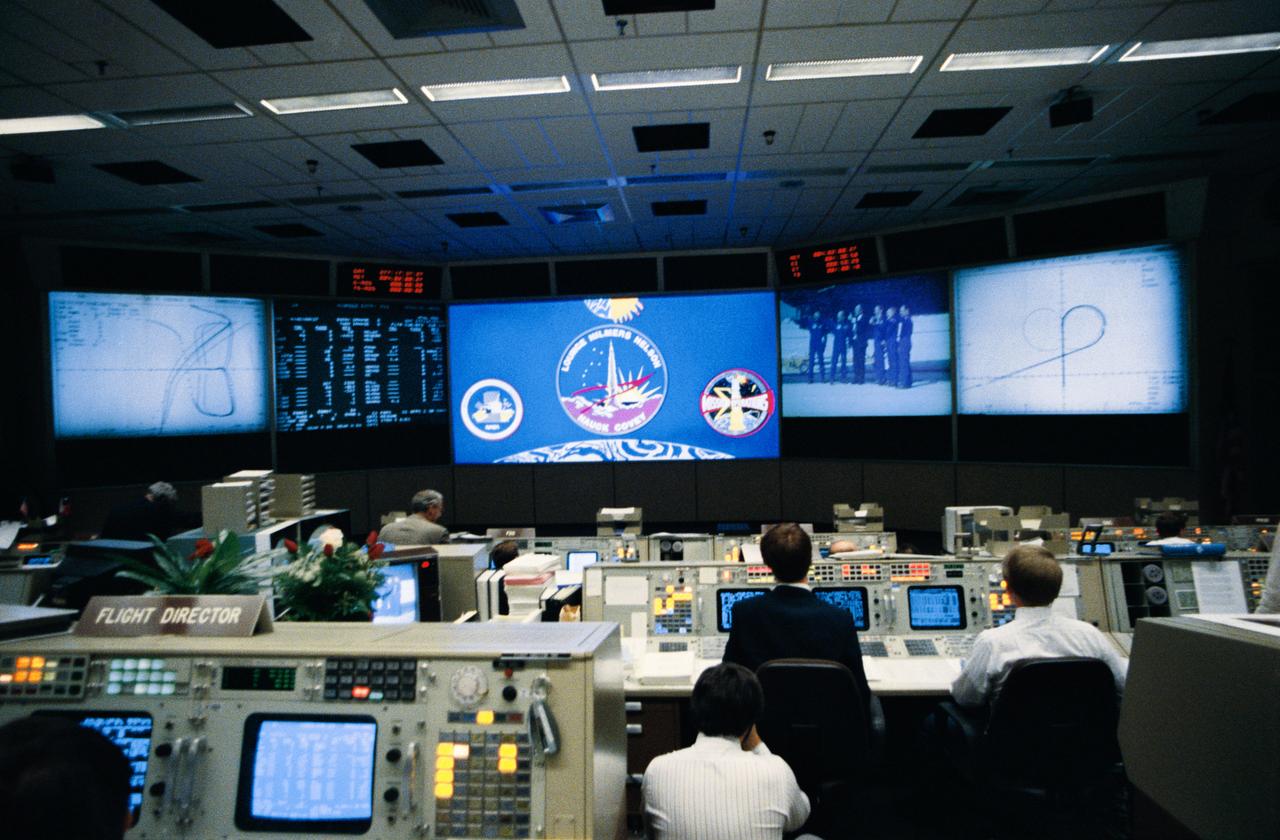
JSC Mission Control Center (MCC) Bldg 30 flight control room (FCR) personnel monitor STS-26 post landing activities and ceremonies at Edwards Air Force Base (EAFB) via their monitors. Displayed on front screens are approach and landing diagrams, data, the space shuttle program insignia, the STS-26 mission insignia, the Mission Operations Directorate insignia, and the STS-26 crew standing in front of Discovery, Orbiter Vehicle (OV) 103.

STS009-128-858 (28 Nov-8 Dec 1983) --- Astronaut John W. Young takes notes in the commander?s station on the flight deck of the Columbia. The cathode ray tube (CRT) among the forward panels displays the orbiter?s position in relation to the Earth on its monitor. Astronaut Brewster H. Shaw Jr., pilot, took this photograph.
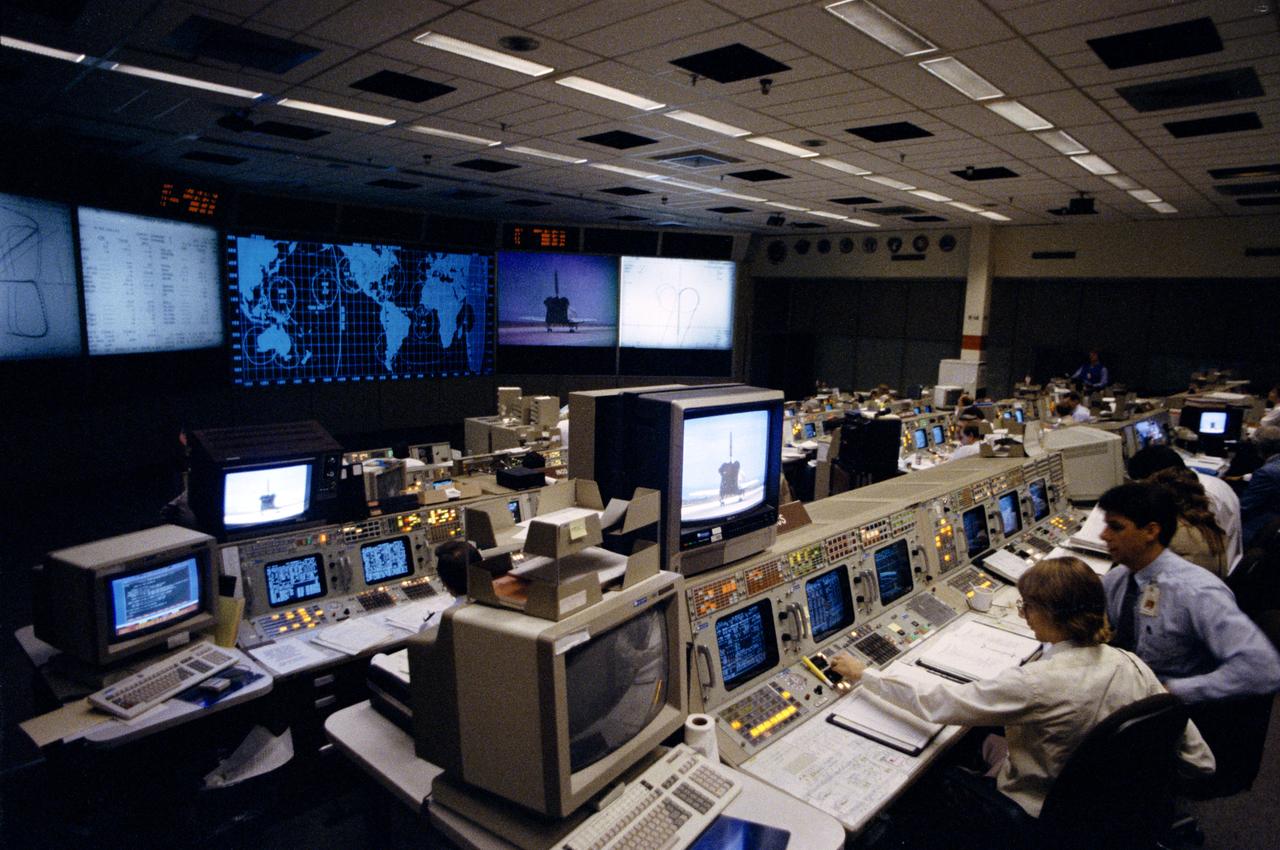
As STS-30 ends its mission with the landing of Atlantis, Orbiter Vehicle (OV) 104, at Edwards Air Force Base (EAFB), California, flight controllers monitor screens at their consoles in JSC Mission Control Center (MCC) Bldg 30. In the foreground is the Maintenance, Mechanical Arm, and Crew Systems Engineer (MMACS) console with R. Kevin McCluney studying data readouts. On the front visual displays are the tracking map and a tail view of OV-104 as it comes to a stop on EAFB concrete runway 22.
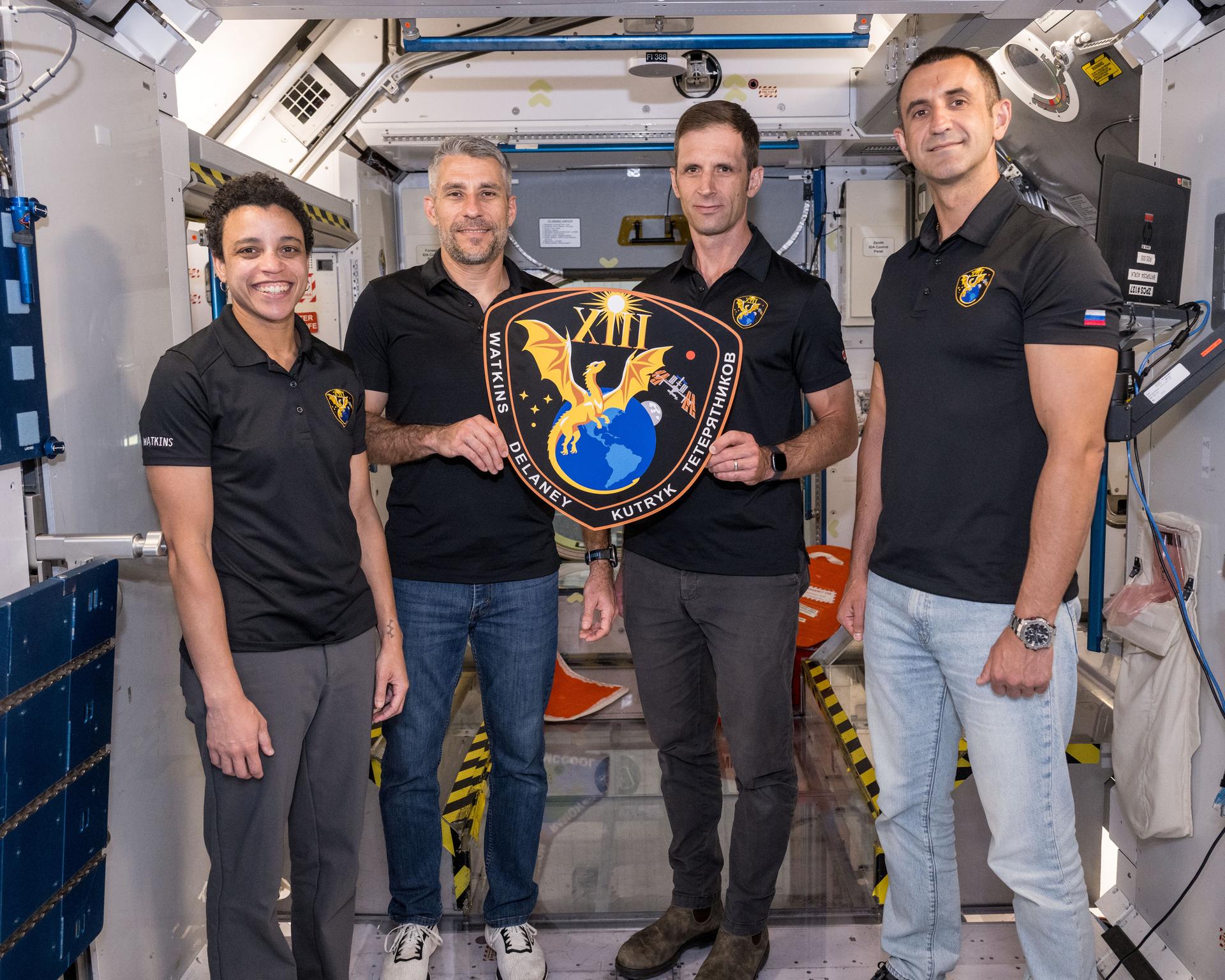
jsc2026e406664 (Aug. 5, 2026) --- The four members of NASA's SpaceX Crew-13 mission to the International Space Station display their mission plaque inside a training mockup of a space station module. From left are, Commander Jessica Watkins and Pilot Luke Delaney, both from NASA, and Mission Specialists Joshua Kutryk of CSA (Canadian Space Agency) and Sergey Teteryatnikov of Roscosmos. Credit: NASA/Morgan Gridley
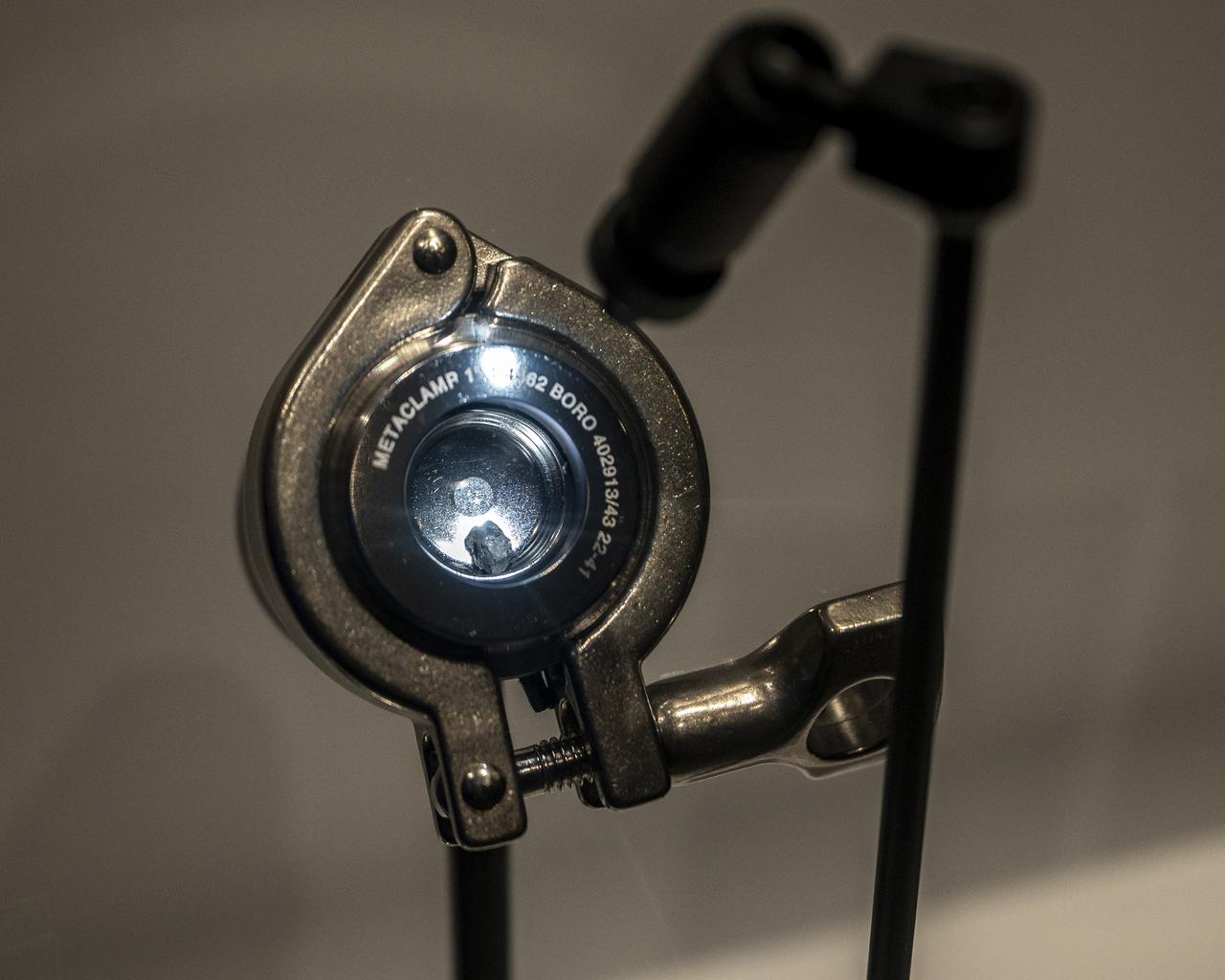
The first public display of a sample from asteroid Bennu is seen, Friday, Nov. 3, 2023, at the Smithsonian’s National Museum of Natural History in Washington. The sample was collected from the carbon rich near Earth asteroid Bennu in October 2020 by NASA’s OSIRIS-REx spacecraft. Photo Credit: (NASA/Keegan Barber)

S73-32837 (10 Sept. 1973) --- Scientist-astronaut Edward G. Gibson, seated, and astronaut William R. Pogue discuss a mission procedure at the Apollo Telescope Mount (ATM) display and control panel mock-up in the one-G trainer for the Multiple Docking Adapter (MDA) at Johnson Space Center. Photo credit: NASA
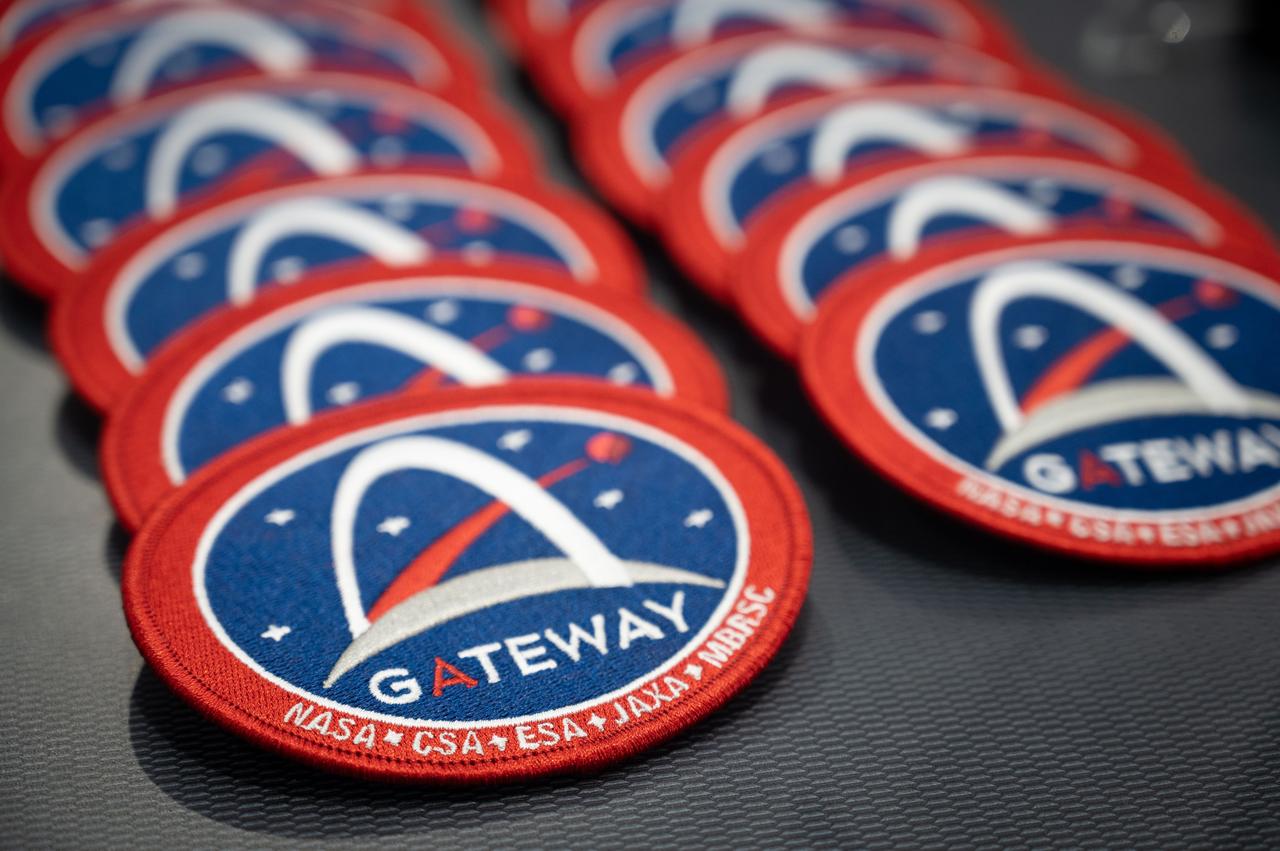
jsc2024e055761 (July 26, 2024) -- A display of Gateway patches at the NASA Pavilion during EAA AirVenture Oshkosh 2024. Gateway highlights at NASA’s exhibition space include a detailed 1:100th scale model of Gateway, a selfie station for Moon photos, and exclusive Gateway stickers, pins, and patches. Photo Credit: NASA/Andrew Carlsen
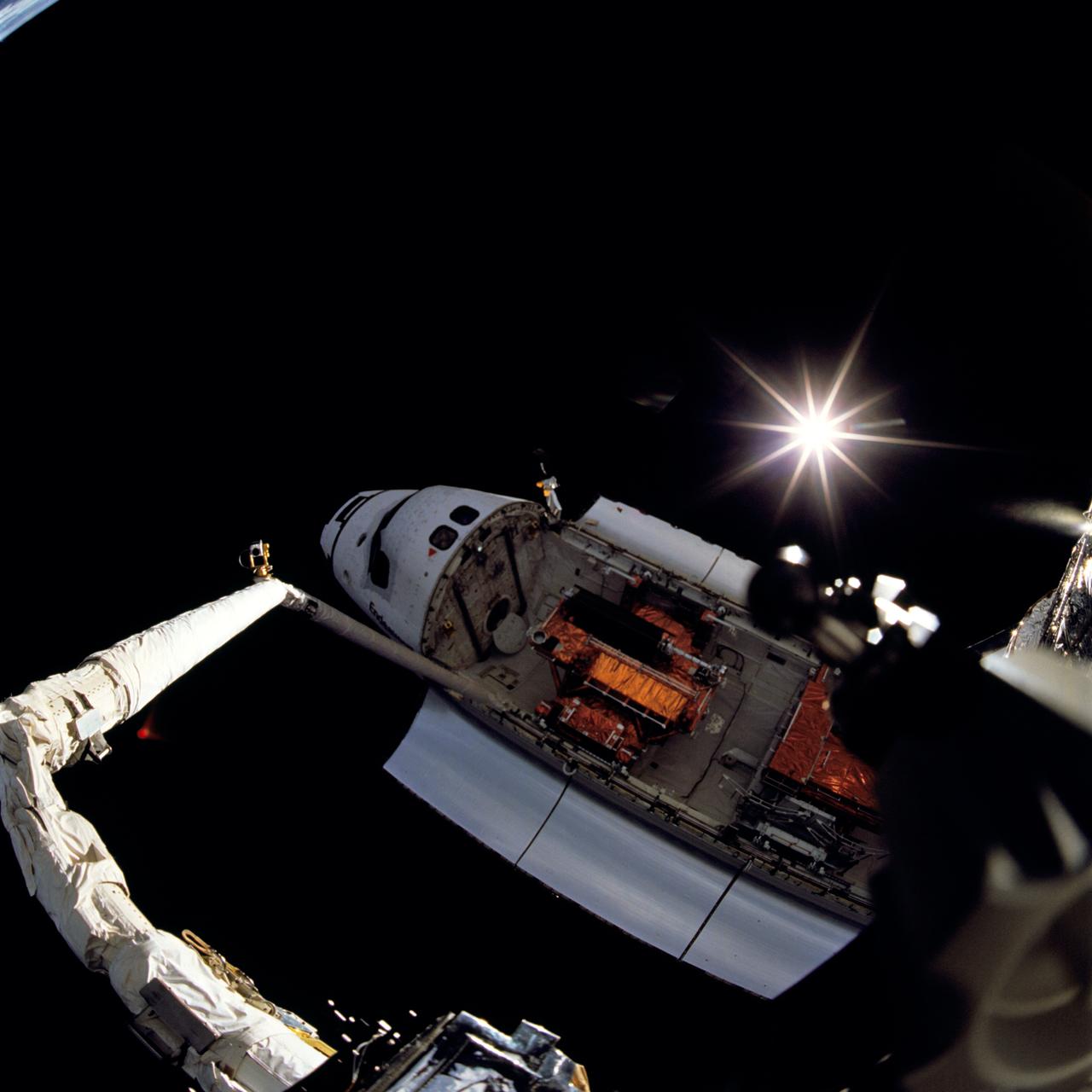
STS061-105-024 (2-13 Dec. 1993) --- One of Endeavour's space walkers captured this view of Endeavour backdropped against the blackness of space, with the Sun displaying a rayed effect. The extended Remote Manipulator System (RMS) arm that the astronaut was standing on is seen on the left side of the view.
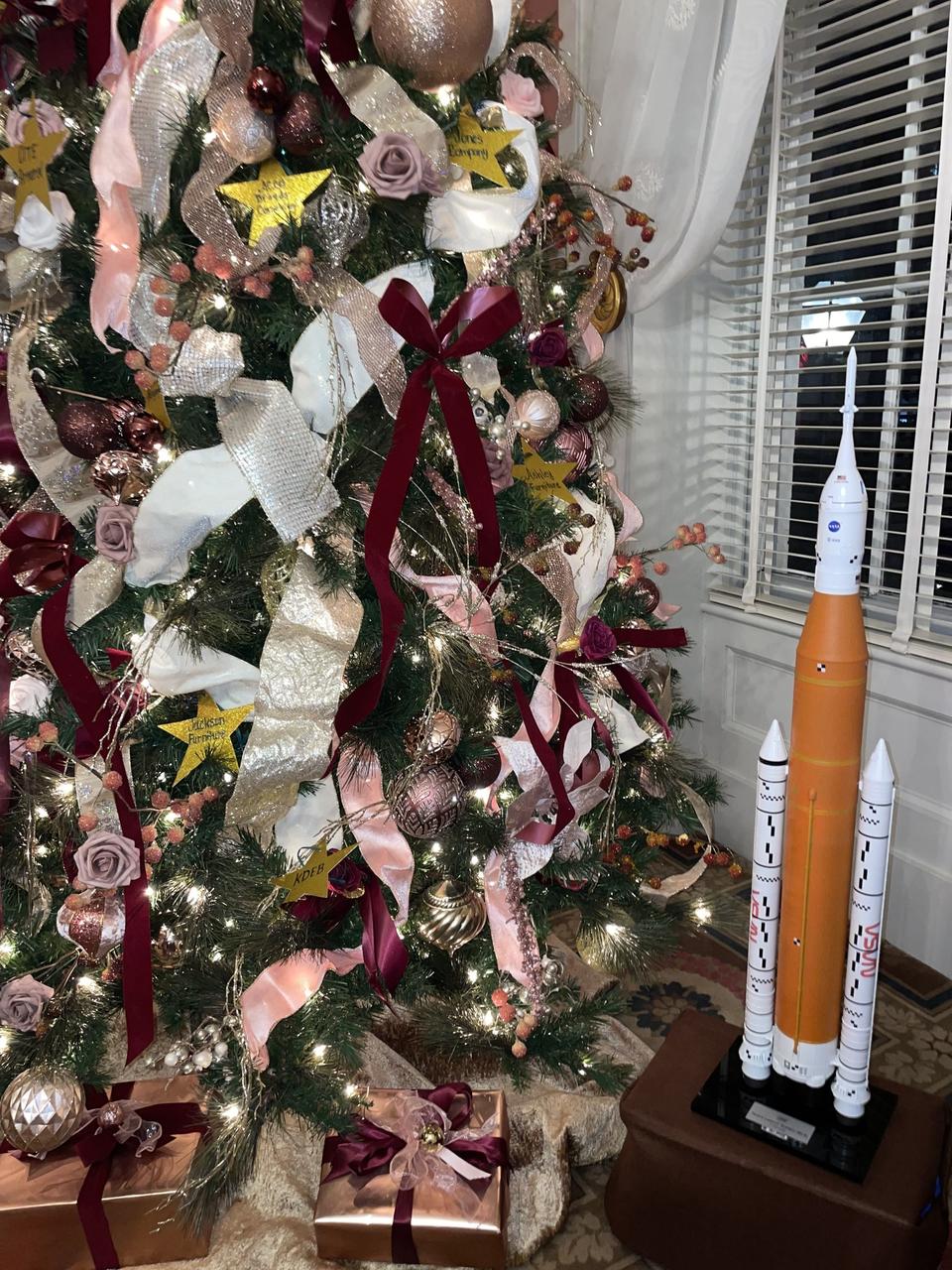
A model of NASA’s SLS (Space Launch System) rocket is part of the holiday display in the Mississippi Governor’s Mansion in Jackson, the official residence of state Gov. Tate Reeves. The model symbolizes the longtime relationship and shared history between the state of Mississippi and NASA’s Stennis Space Center near Bay St. Louis, Mississippi, the nation’s largest rocket propulsion test site. Built in the 1960s, NASA Stennis tested Apollo rocket stages that carried humans to the Moon and every main engine that helped launch 135 space shuttle missions. It now is testing engines and systems for NASA’s Artemis missions and operates as a powerful aerospace and technology hub for the region and state. “We are grateful for our ongoing relationship with the state of Mississippi,” NASA Stennis Director John Bailey said. “We appreciate every opportunity to highlight the role NASA Stennis and the state play in helping to power the nation’s human space exploration program. We look forward to 2025 and continuing our work to test engines and systems that will help launch Artemis missions back to the Moon and beyond.”
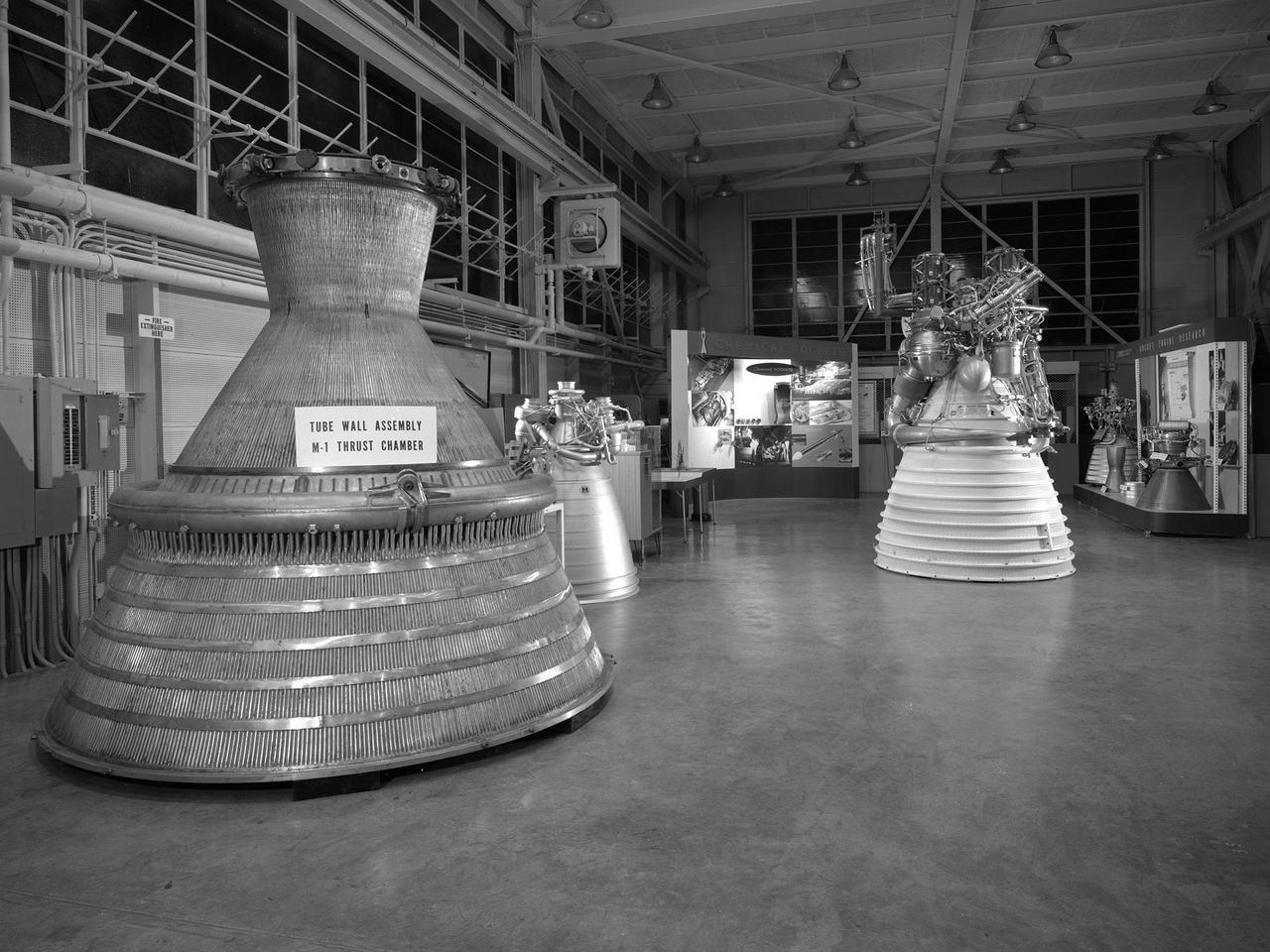
An array of rocket engines displayed in the Propulsion Systems Laboratory for the 1966 Inspection held at the National Aeronautics and Space Administration (NASA) Lewis Research Center. Lewis engineers had been working on chemical, nuclear, and solid rocket engines throughout the 1960s. The engines on display are from left to right: two scale models of the Aerojet M-1, a Rocketdyne J-2, a Pratt and Whitney RL-10, and a Rocketdyne throttleable engine. Also on display are several ejector plates and nozzles. The Chemical Rocket Division resolved issues such as combustion instability and screech, and improved operation of cooling systems and turbopumps. The 1.5-million pound thrust M-1 engine was the largest hydrogen-fueled rocket engine ever created. It was a joint project between NASA Lewis and Aerojet-General. Although much larger in size, the M-1 used technology developed for the RL-10 and J-2. The M-1 program was cancelled in late 1965 due to budget cuts and the lack of a post-Apollo mission. The October 1966 Inspection was the culmination of almost a year of events held to mark the centers’ 25th anniversary. The three‐day Inspection, Lewis’ first since 1957, drew 2000 business, industry, and government executives and included an employee open house. The visitors witnessed presentations at the major facilities and viewed the Gemini VII spacecraft, a Centaur rocket, and other displays in the hangar. In addition, Lewis’ newest facility, the Zero Gravity Facility, was shown off for the first time.

Logos of NASA and the German Aerospace Center (DLR) are displayed prominently on the tail of the Stratospheric Observatory for Infrared Astronomy (SOFIA) 747SP.
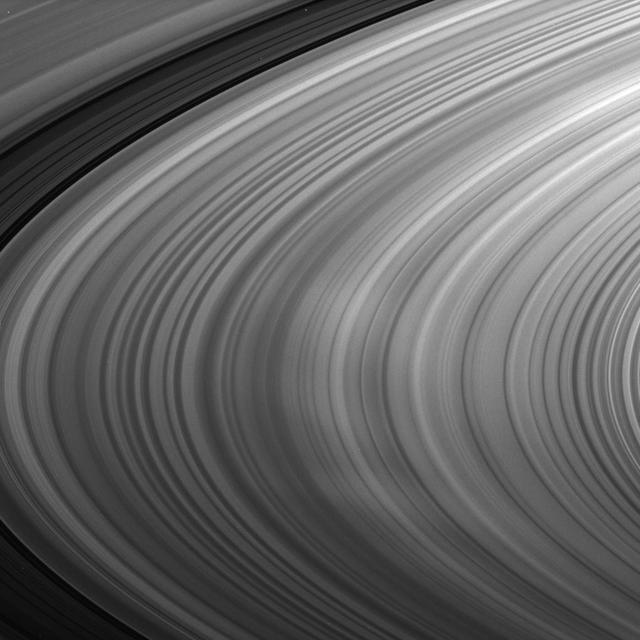
NASA Cassini spacecraft captured Saturn B ring showing off bright spokes in the middle of this image taken at high phase in visible light with the narrow-angle camera.
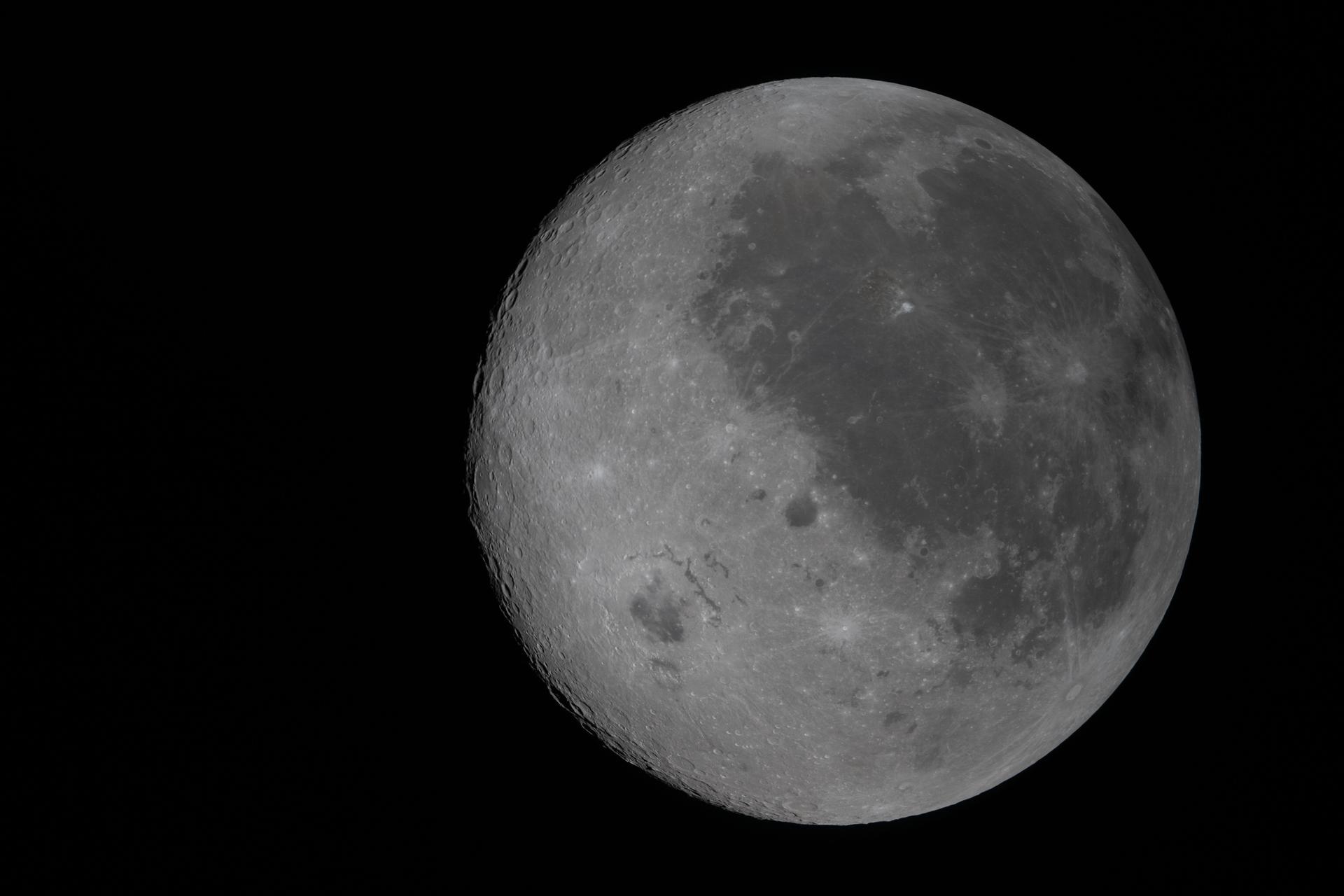
art002e009212 (April 6, 2026) In this fully illuminated view of the Moon, the near side (the hemisphere we see from Earth), is visible on the right. It is identifiable by the dark splotches that cover its surface. These are ancient lava flows from a time early in the Moon’s history when it was volcanically active. The large crater west of the lava flows is Orientale basin, a nearly 600-mile-wide crater that straddles the Moon’s near and far sides. Orientale's left half is not visible from Earth, but in this image we have a full view of the crater. Everything to the left of the crater is the far side, the hemisphere we don’t get to see from Earth because the Moon rotates on its axis at the same rate that it orbits round us.
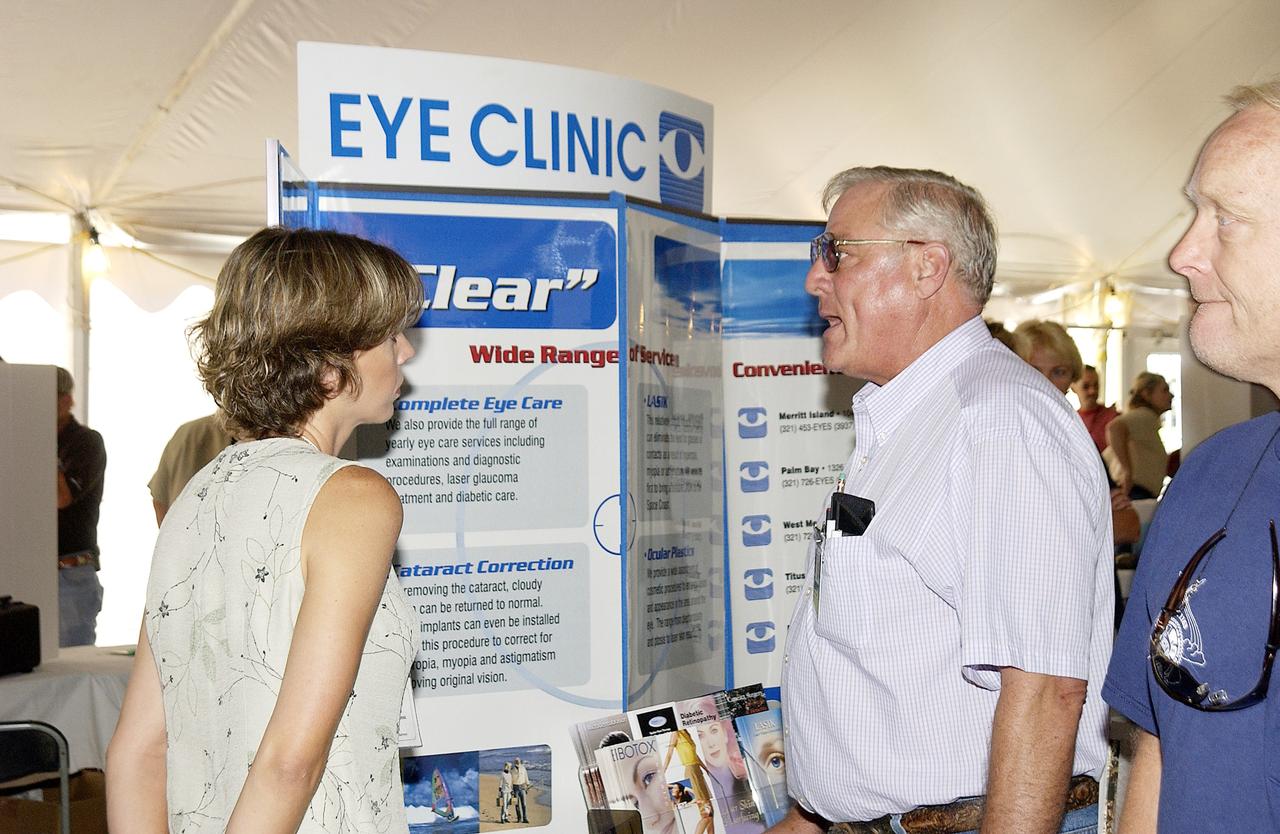
KENNEDY SPACE CENTER, FLA. - Employees file around table displays under a tent near the Operations and Checkout Building. Many vendors and organizations displayed their products during the Spaceport Super Safety and Health Day at KSC and Cape Canaveral Air Force Station, an annual event dedicated to reinforcing safe and healthful behaviors in the workforce.
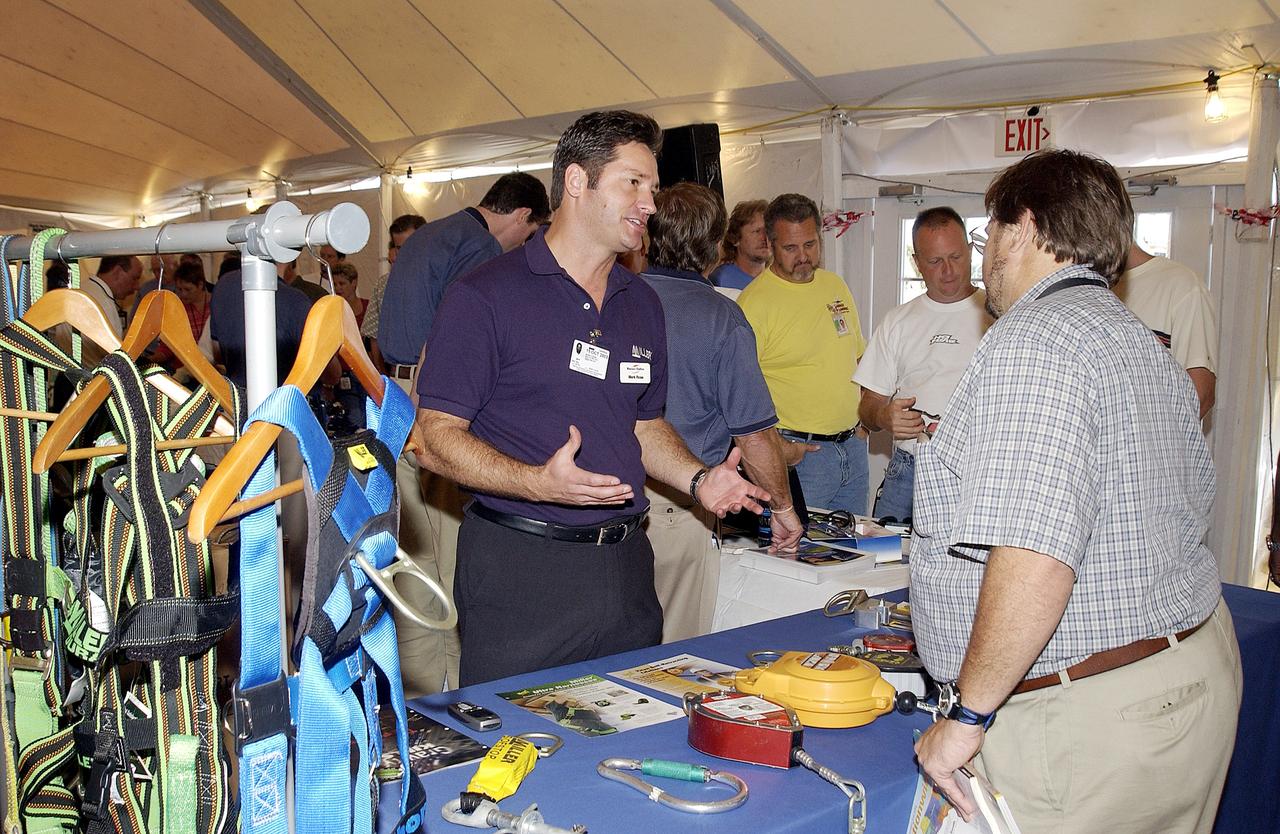
KENNEDY SPACE CENTER, FLA. - Employees file around table displays under a tent near the Vehicle Assembly Building. Many vendors displayed their products during the Spaceport Super Safety and Health Day at KSC, an annual event dedicated to reinforcing safe and healthful behaviors in the workforce.
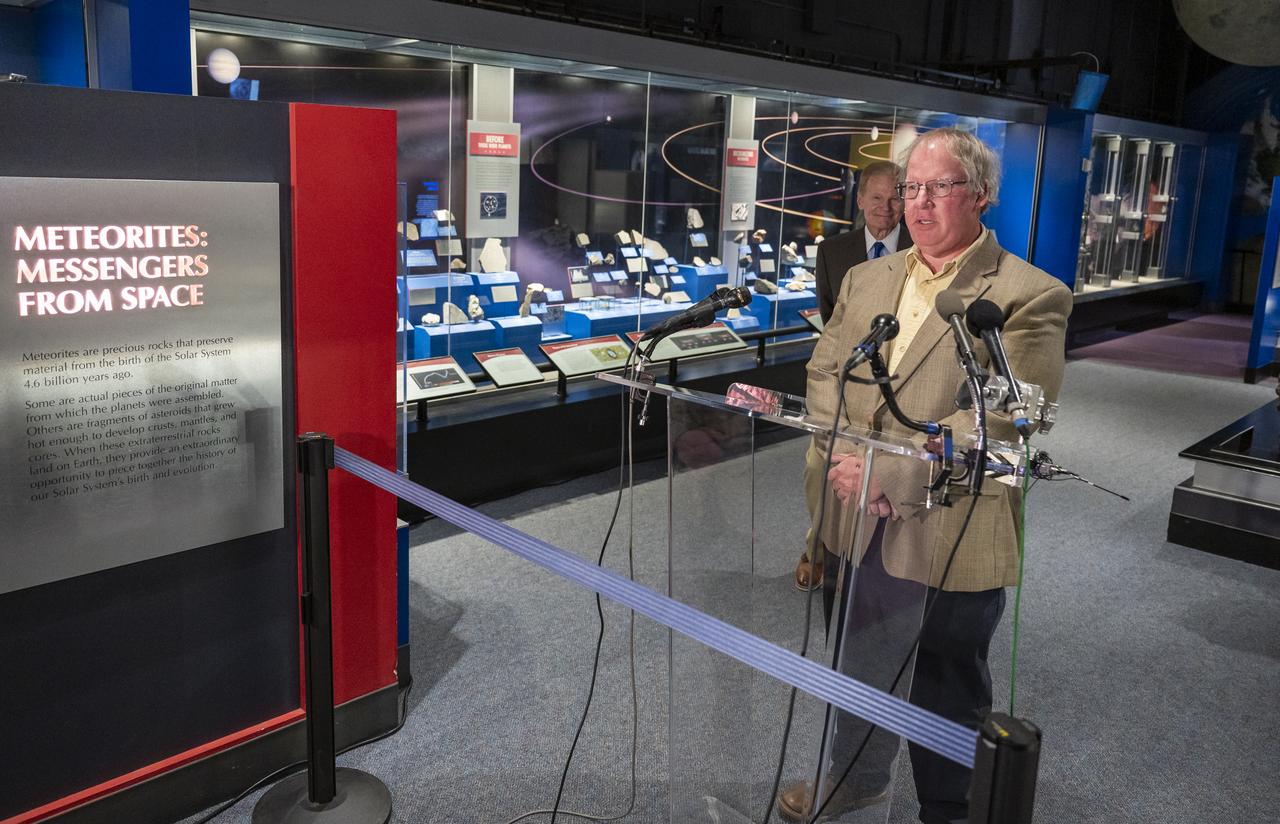
National Museum of Natural History curator of meteorites Tim McCoy delivers remarks during an event to unveil the first public display of a sample from asteroid Bennu, Friday, Nov. 3, 2023, at the Smithsonian’s National Museum of Natural History in Washington. The sample was collected from the carbon rich near Earth asteroid Bennu in October 2020 by NASA’s OSIRIS-REx spacecraft. Photo Credit: (NASA/Keegan Barber)
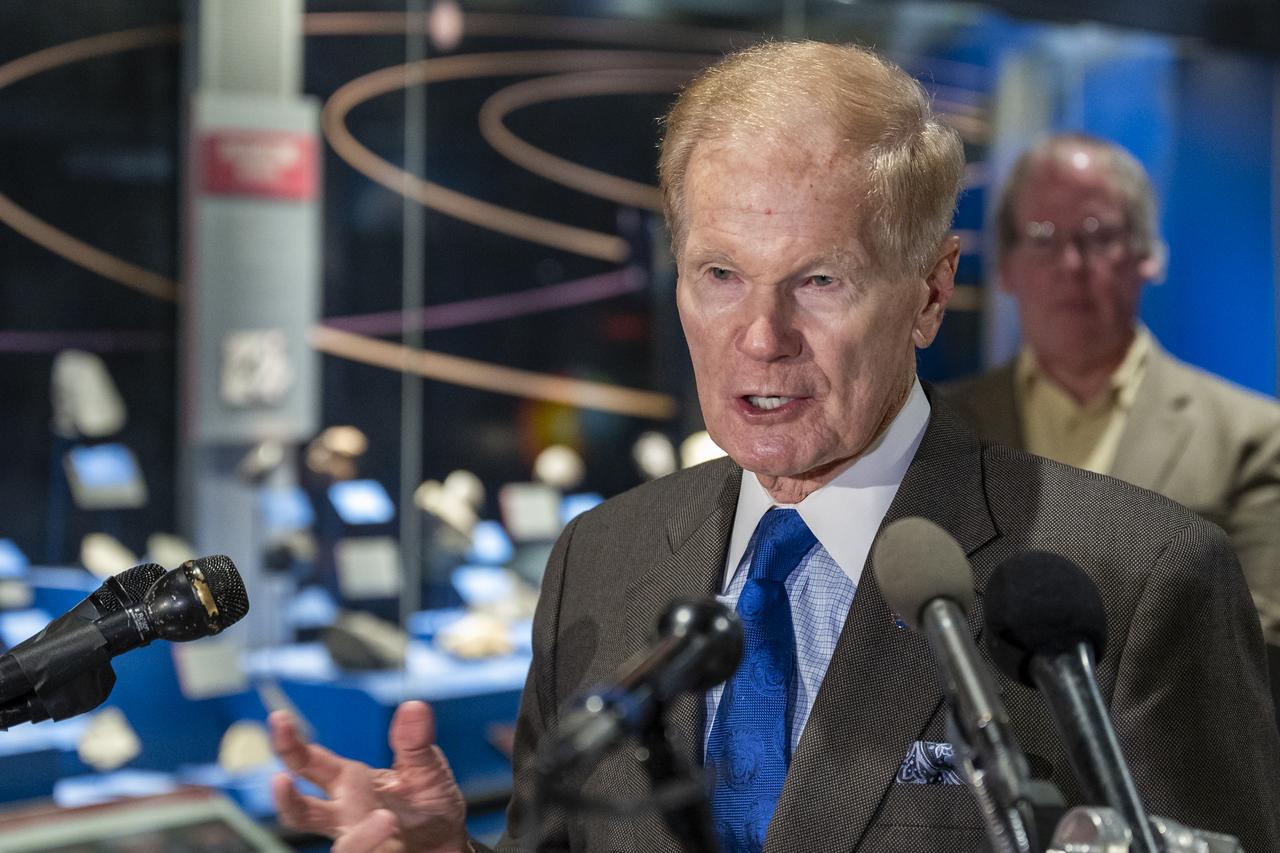
NASA Administrator Bill Nelson delivers remarks during an event to unveil the first public display of a sample from asteroid Bennu, Friday, Nov. 3, 2023, at the Smithsonian’s National Museum of Natural History in Washington. The sample was collected from the carbon rich near Earth asteroid Bennu in October 2020 by NASA’s OSIRIS-REx spacecraft. Photo Credit: (NASA/Keegan Barber)
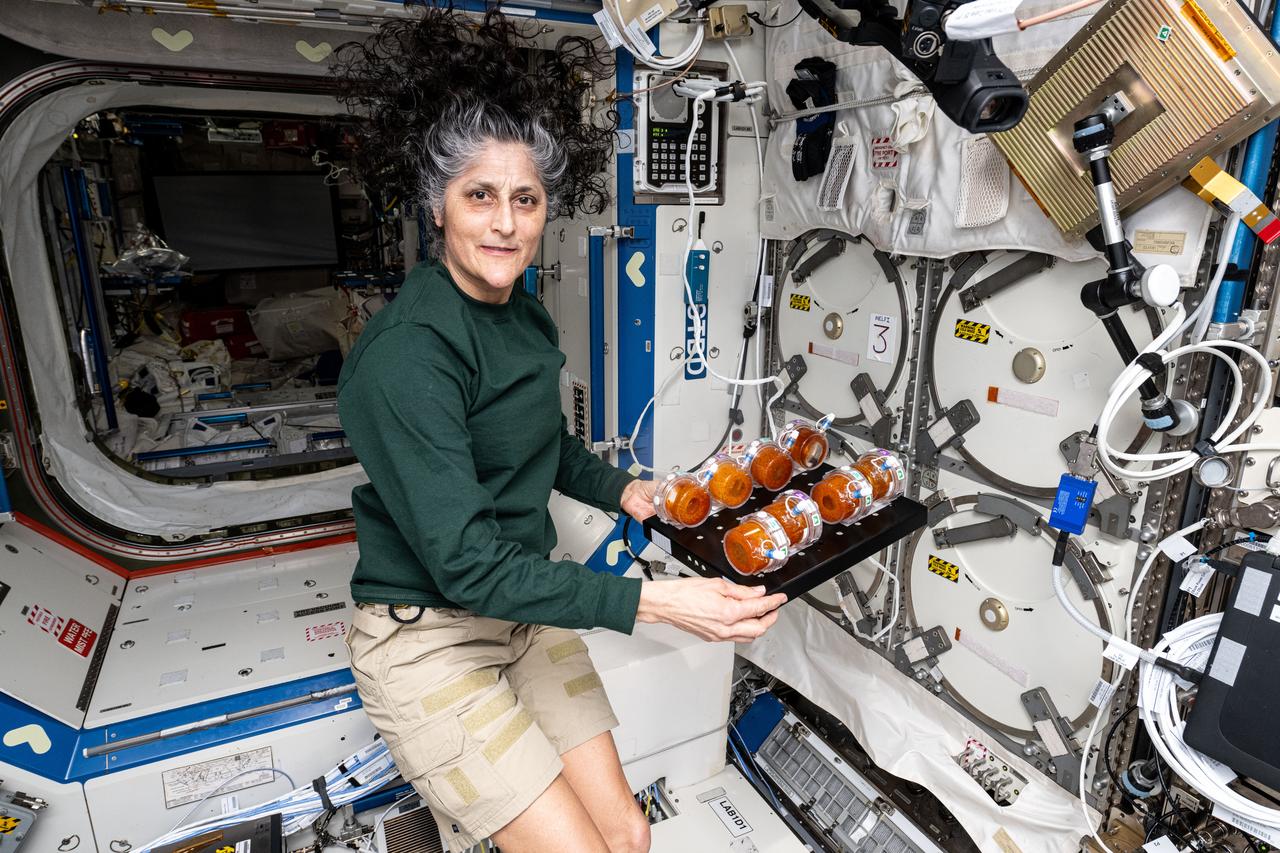
iss072e616432 (Feb. 11, 2025) --- NASA astronaut and Expedition 72 Commander Suni Williams displays production packs containing geneticallly engineered yeast and edible media for incubation to activate yeast growth. The BioNutrients investigation explores using the engineered yeast to produce on-demand nutrients and avoid vitamin deficiencies for crews on long-term missions. The samples are later frozen then returned to Earth to analyze their ability promote crew health and improve the preservation of probiotics.
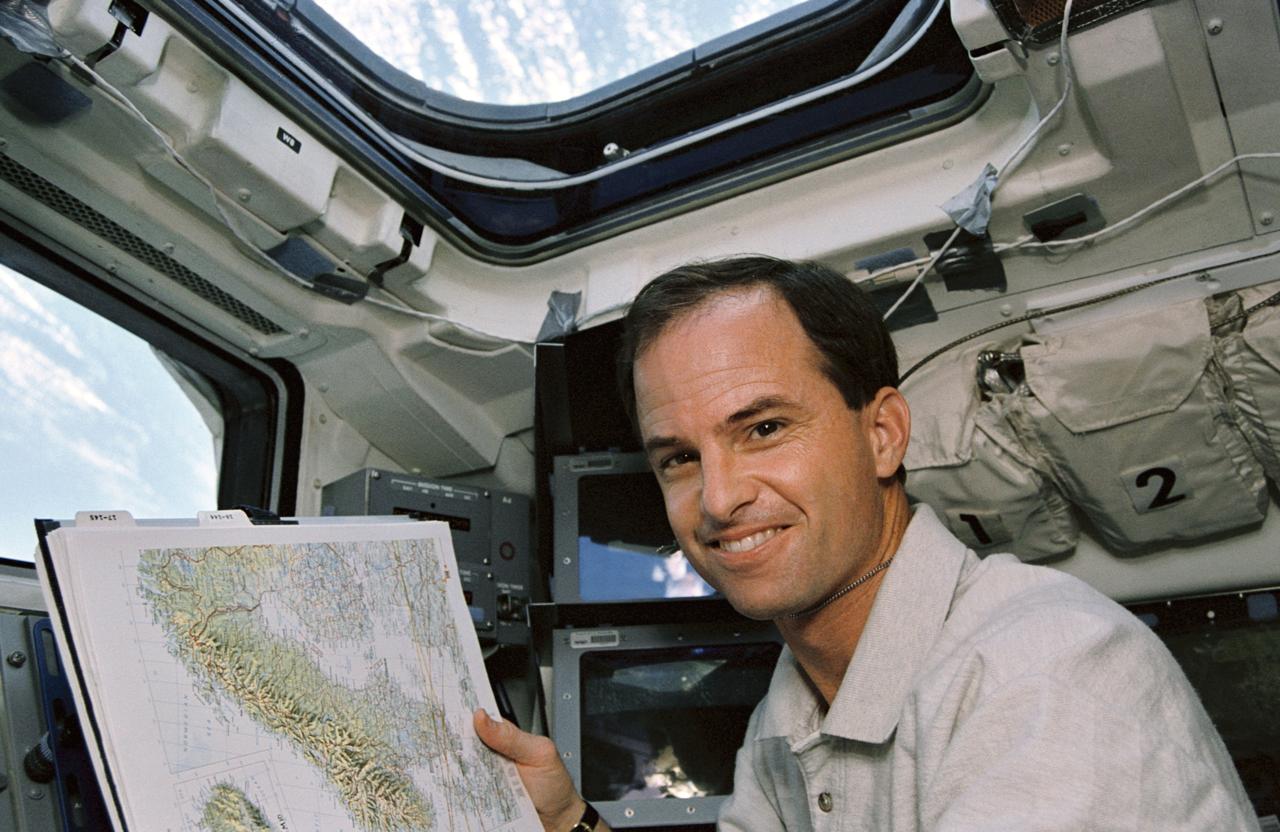
STS059-16-032 (9-20 April 1994) --- Astronaut Kevin P. Chilton, pilot, displays a map of Scandinavia on the Space Shuttle Endeavour's flight deck. Large scale maps such as this were used by the crew to locate specific sites of interest to the Space Radar Laboratory scientists. The crew then photographed the sites at the same time as the radar in the payload bay imaged them. Chilton was joined in space by five other NASA astronauts for a week and a half of support to the Space Radar Laboratory (SRL-1) mission and other tasks.
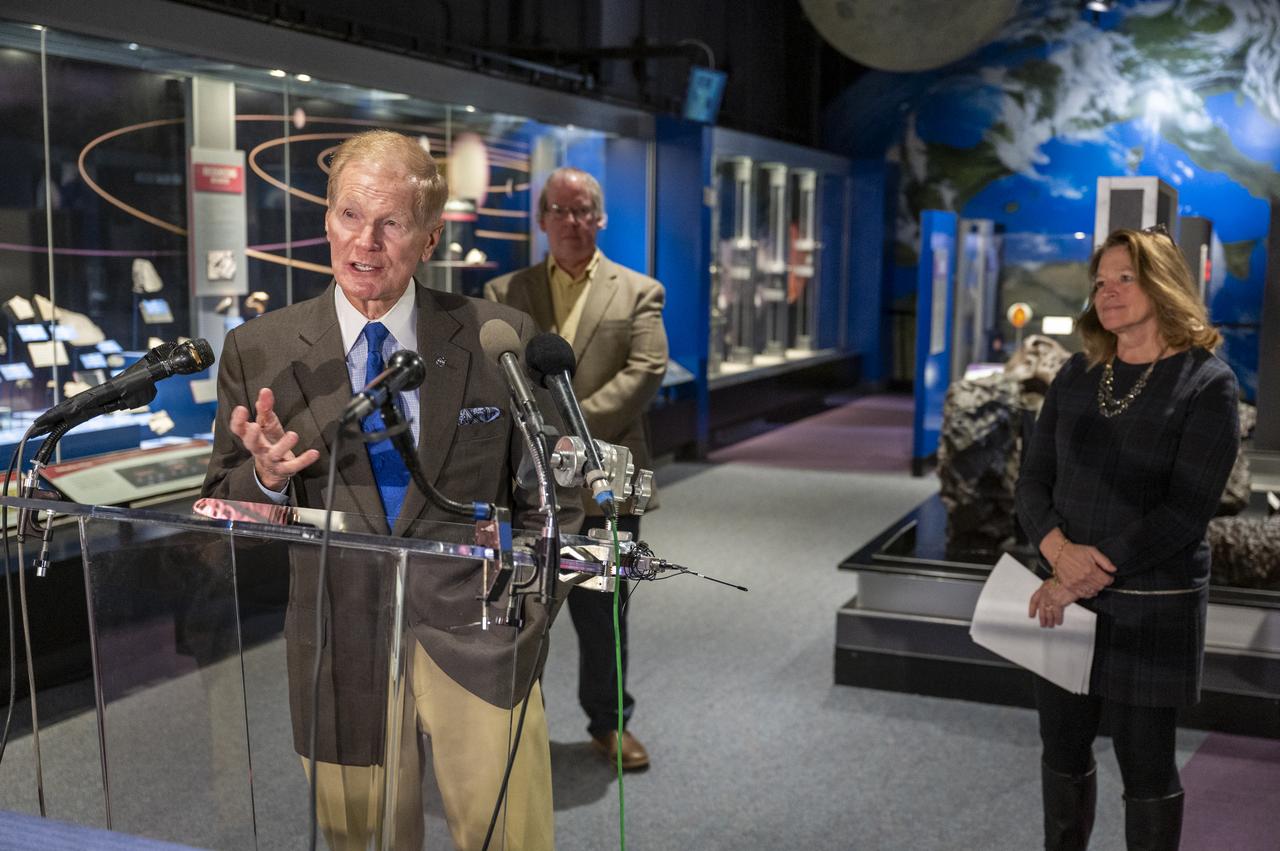
NASA Administrator Bill Nelson delivers remarks during an event to unveil the first public display of a sample from asteroid Bennu, Friday, Nov. 3, 2023, at the Smithsonian’s National Museum of Natural History in Washington. The sample was collected from the carbon rich near Earth asteroid Bennu in October 2020 by NASA’s OSIRIS-REx spacecraft. Photo Credit: (NASA/Keegan Barber)
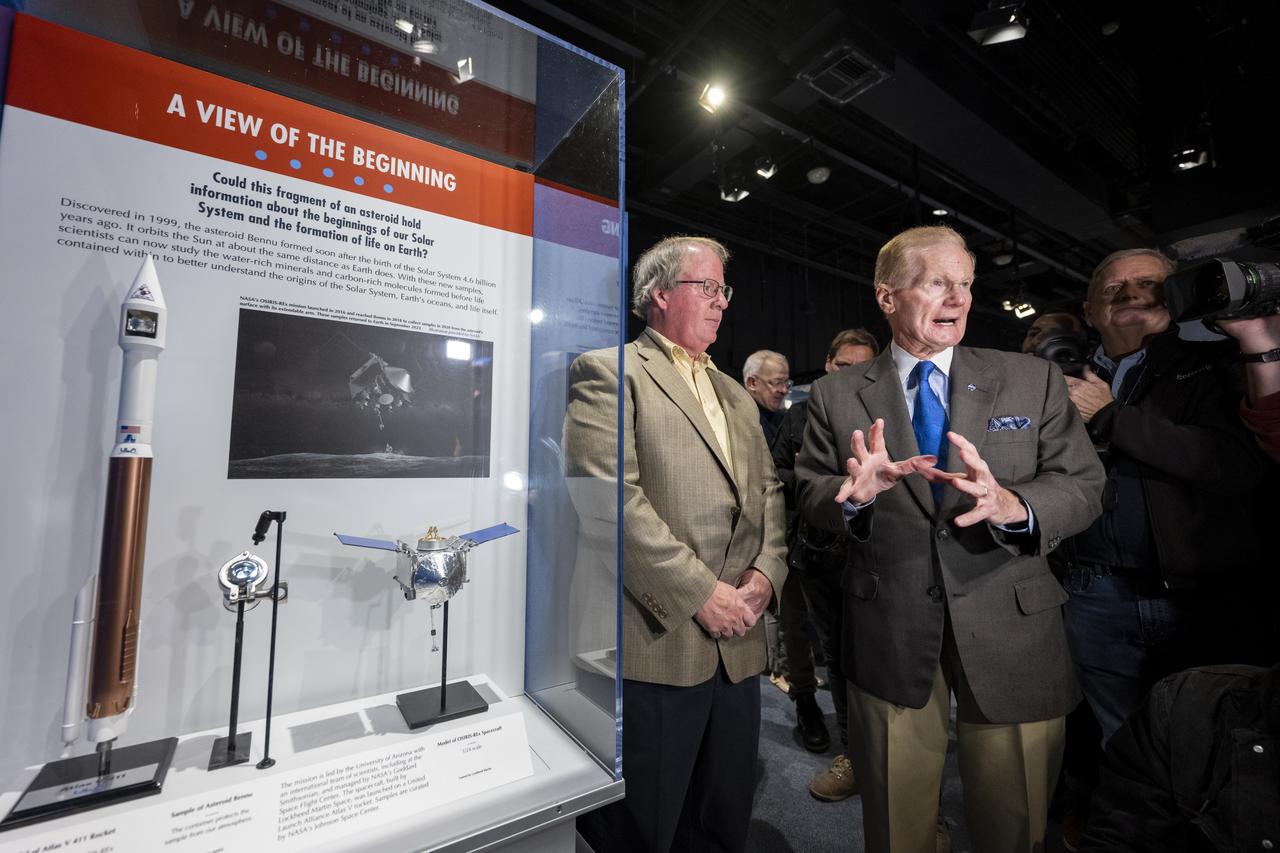
NASA Administrator Bill Nelson speaks to members of the press after unveiling the first public display of a sample from asteroid Bennu, Friday, Nov. 3, 2023, at the Smithsonian’s National Museum of Natural History in Washington. The sample was collected from the carbon rich near Earth asteroid Bennu in October 2020 by NASA’s OSIRIS-REx spacecraft. Photo Credit: (NASA/Keegan Barber)

Smithsonian Under Secretary for Science and Research Ellen Stofan delivers remarks during an event to unveil the first public display of a sample from asteroid Bennu, Friday, Nov. 3, 2023, at the Smithsonian’s National Museum of Natural History in Washington. The sample was collected from the carbon rich near Earth asteroid Bennu in October 2020 by NASA’s OSIRIS-REx spacecraft. Photo Credit: (NASA/Keegan Barber)
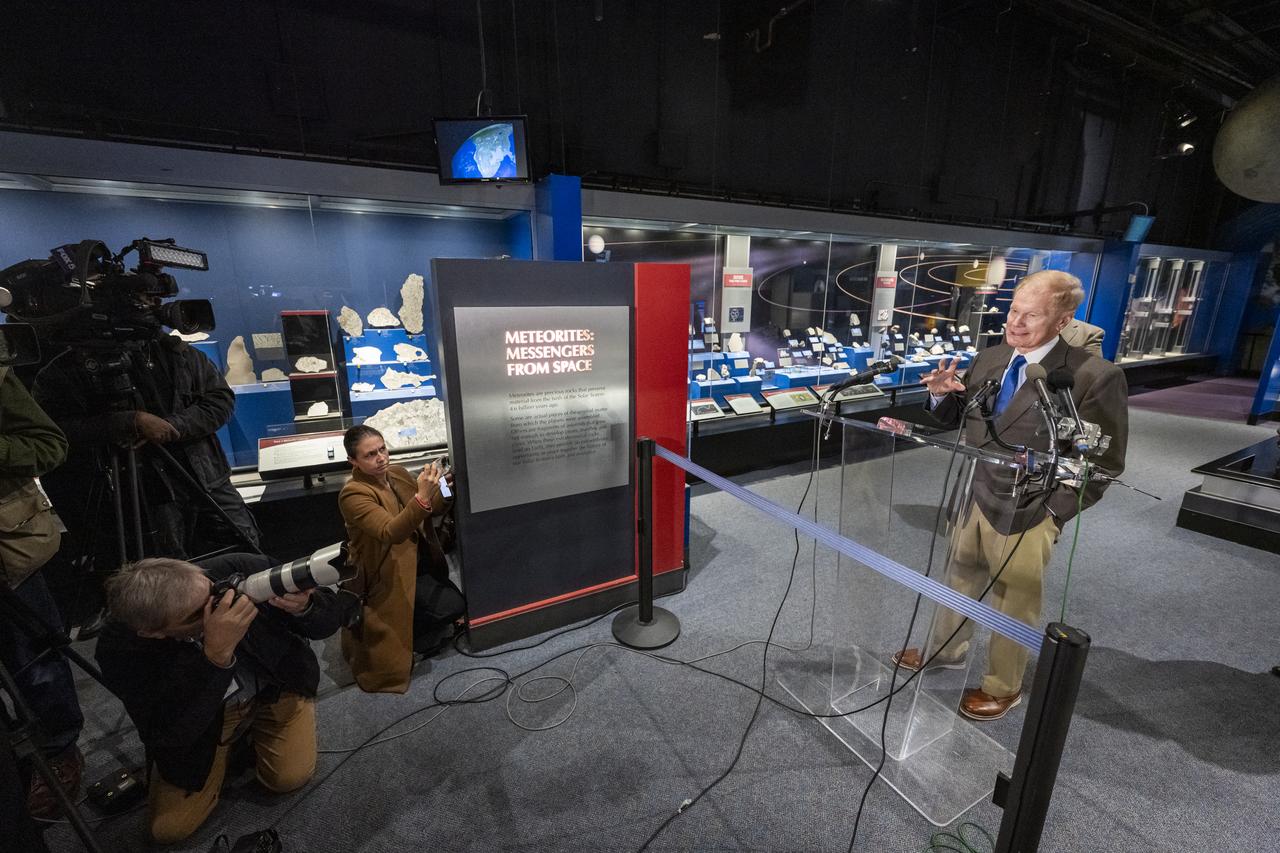
NASA Administrator Bill Nelson delivers remarks during an event to unveil the first public display of a sample from asteroid Bennu, Friday, Nov. 3, 2023, at the Smithsonian’s National Museum of Natural History in Washington. The sample was collected from the carbon rich near Earth asteroid Bennu in October 2020 by NASA’s OSIRIS-REx spacecraft. Photo Credit: (NASA/Keegan Barber)
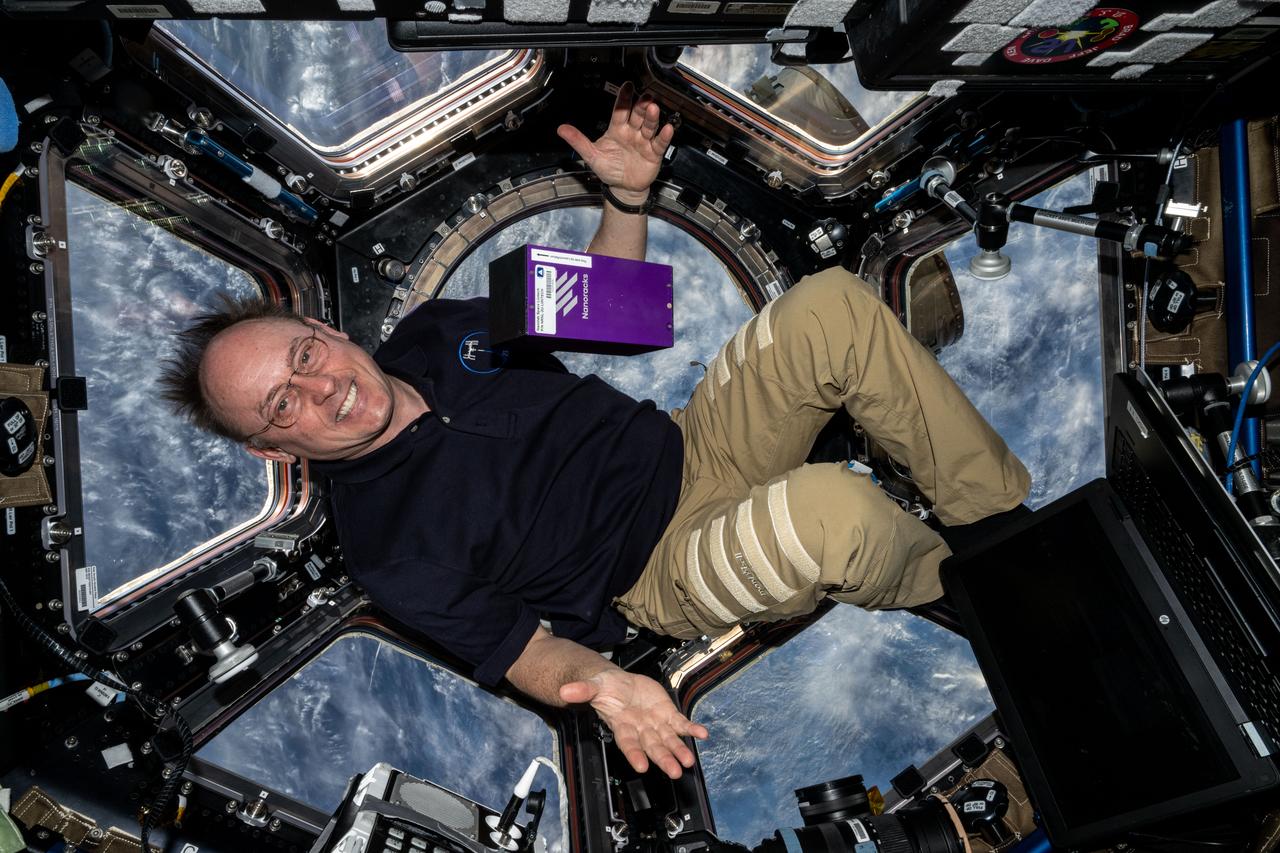
iss073e0548503 (Aug. 28, 2025) --- NASA astronaut and Expedtion 73 Flight Engineer Mike Fincke displays the Nanoracks' Nanolab Space Liintech research hardware inside the International Space Station's cupola while orbiting 262 miles above a cloudy United States. Nanolab Space LiinTech tests a platform that uses optical technology to monitor the process of producing protein crystals in microgravity. This investigation could lead to the development of technology for crystallizing proteins in microgravity to produce pharmaceuticals for use in space and Earth.
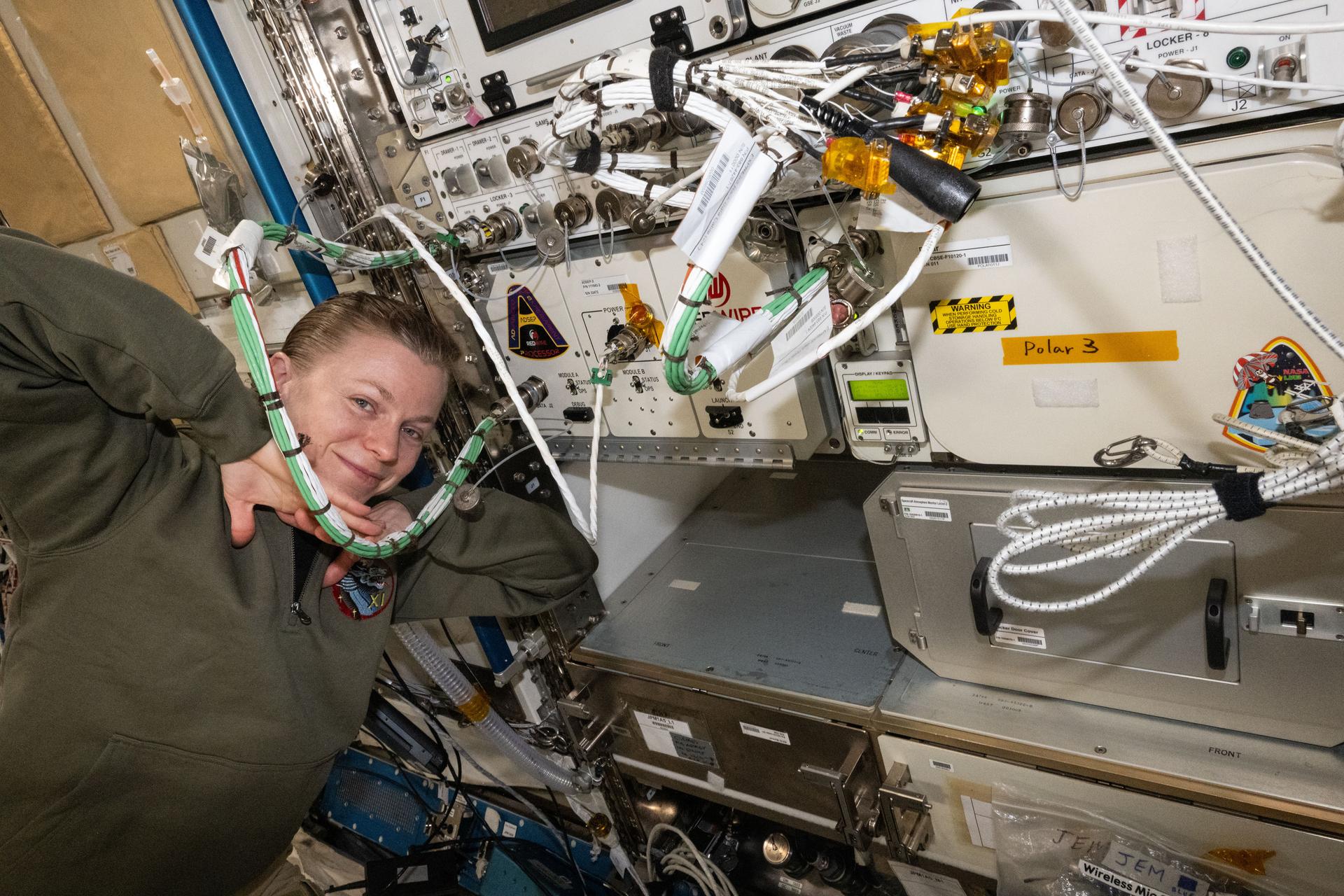
iss073e0818462 (Oct. 2, 2025) --- NASA astronaut and Expedition 73 Flight Engineer Zena Cardman displays the Advanced Space Experiment Processor-2 (ADSEP-2), which she installed inside the International Space Station's Kibo laboratory module after removing it from the Northrop Grumman Cygnus XL cargo spacecraft. ADSEP-2 can be launched to the orbital outpost and returned to Earth aboard commercial cargo vehicles. It supports a range of investigations, including cell and tissue culturing, protein crystal growth, microbiology, and materials science.
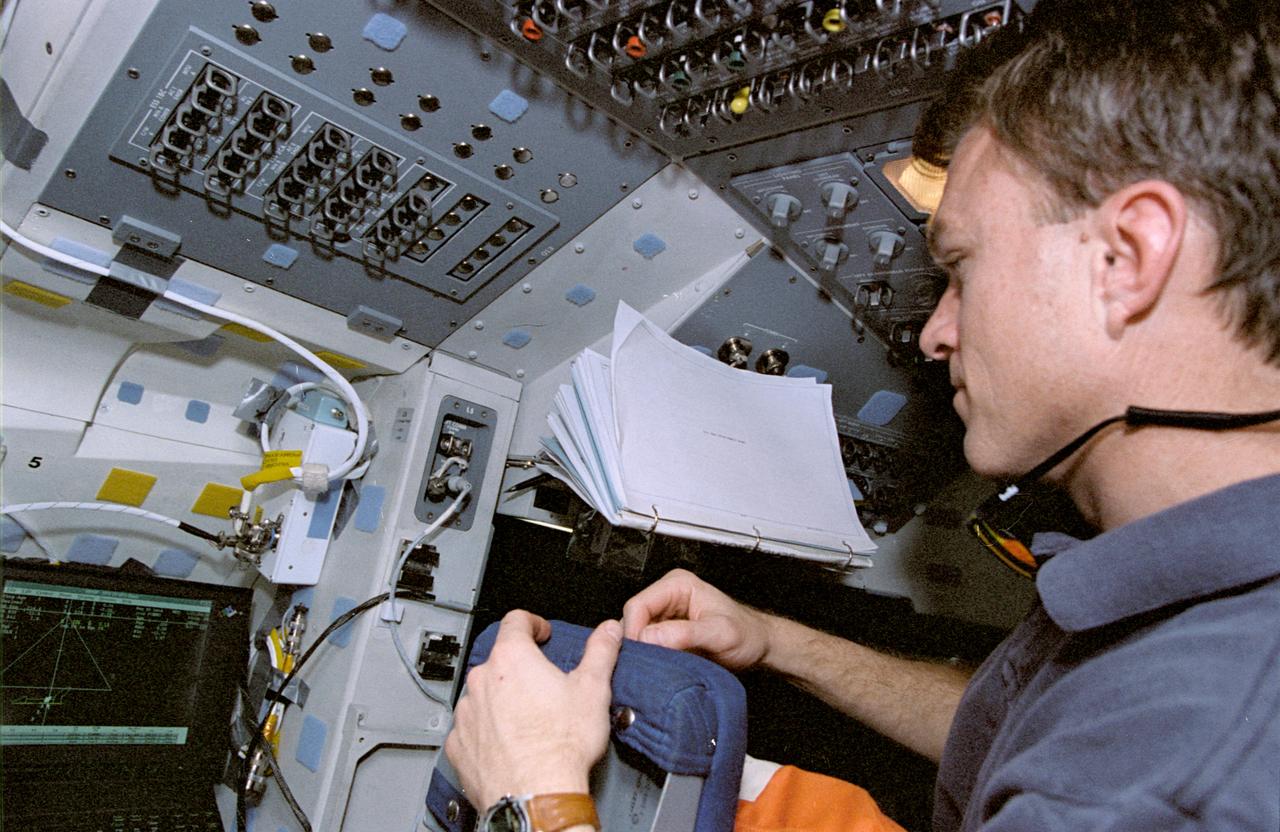
STS072-349-018 (11-20 Jan. 1996) --- On the Space Shuttle Endeavour’s flight deck, astronaut Brett W. Jett Jr., pilot, monitors display of software dealing with proximity operations with one of two satellites. The crew retrieved the Japanese Space Flyer (SFU) and berthed in the aft cargo bay, as well as releasing and re-capturing the Office of Aeronautics and Space Technology (OAST) Flyer satellite.
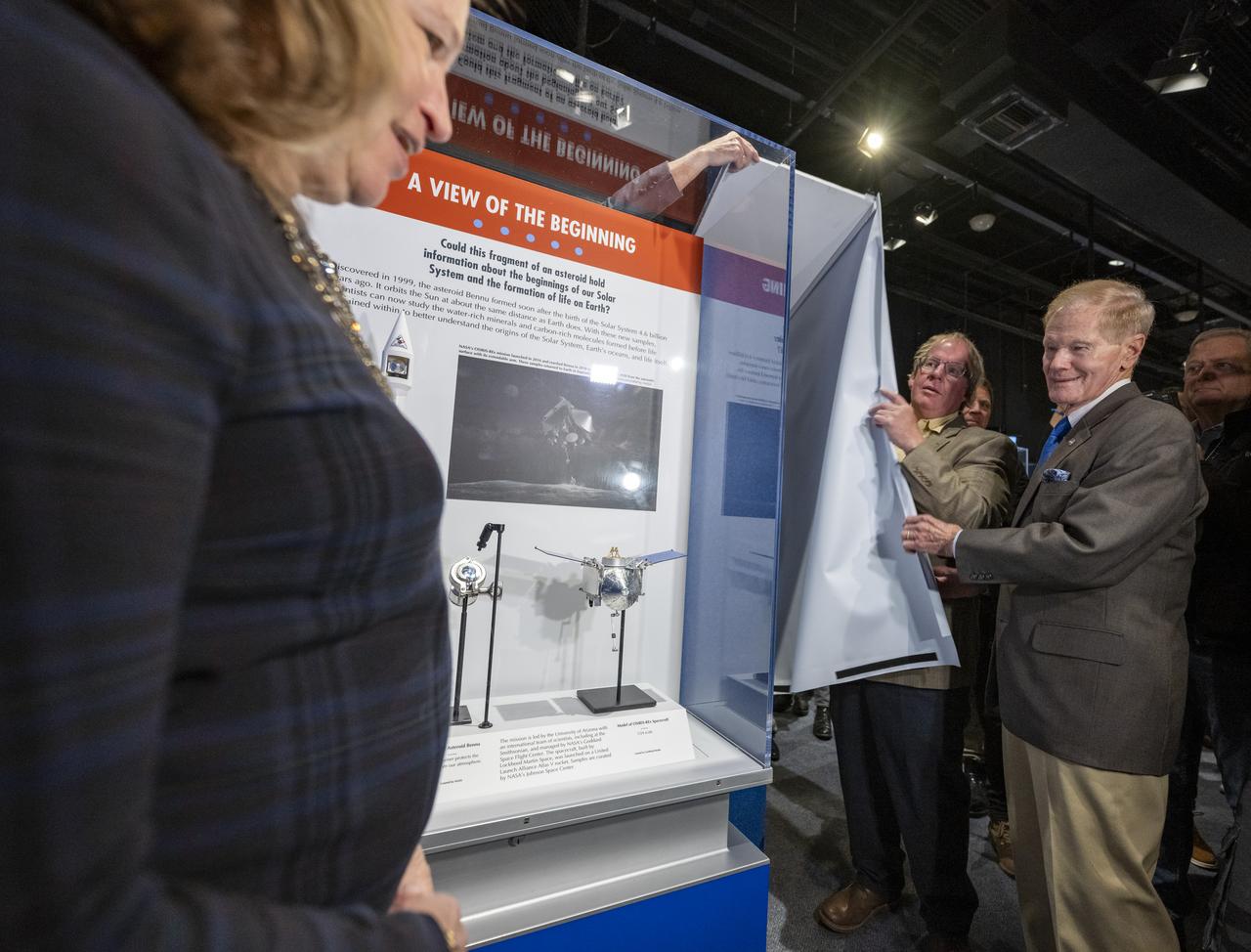
From left to right, Smithsonian Under Secretary for Science and Research Ellen Stofan, National Museum of Natural History curator of meteorites Tim McCoy, and NASA Administrator Bill Nelson unveil the first public display of a sample from asteroid Bennu, Friday, Nov. 3, 2023, at the Smithsonian’s National Museum of Natural History in Washington. The sample was collected from the carbon rich near Earth asteroid Bennu in October 2020 by NASA’s OSIRIS-REx spacecraft. Photo Credit: (NASA/Keegan Barber)
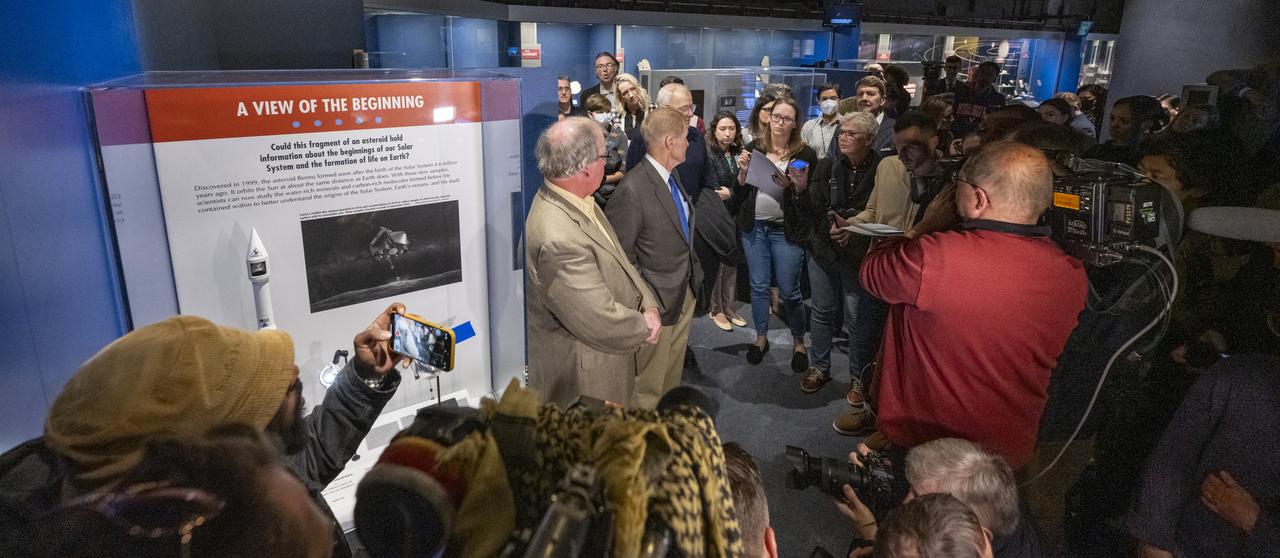
NASA Administrator Bill Nelson speaks to members of the press after unveiling the first public display of a sample from asteroid Bennu, Friday, Nov. 3, 2023, at the Smithsonian’s National Museum of Natural History in Washington. The sample was collected from the carbon rich near Earth asteroid Bennu in October 2020 by NASA’s OSIRIS-REx spacecraft. Photo Credit: (NASA/Keegan Barber)
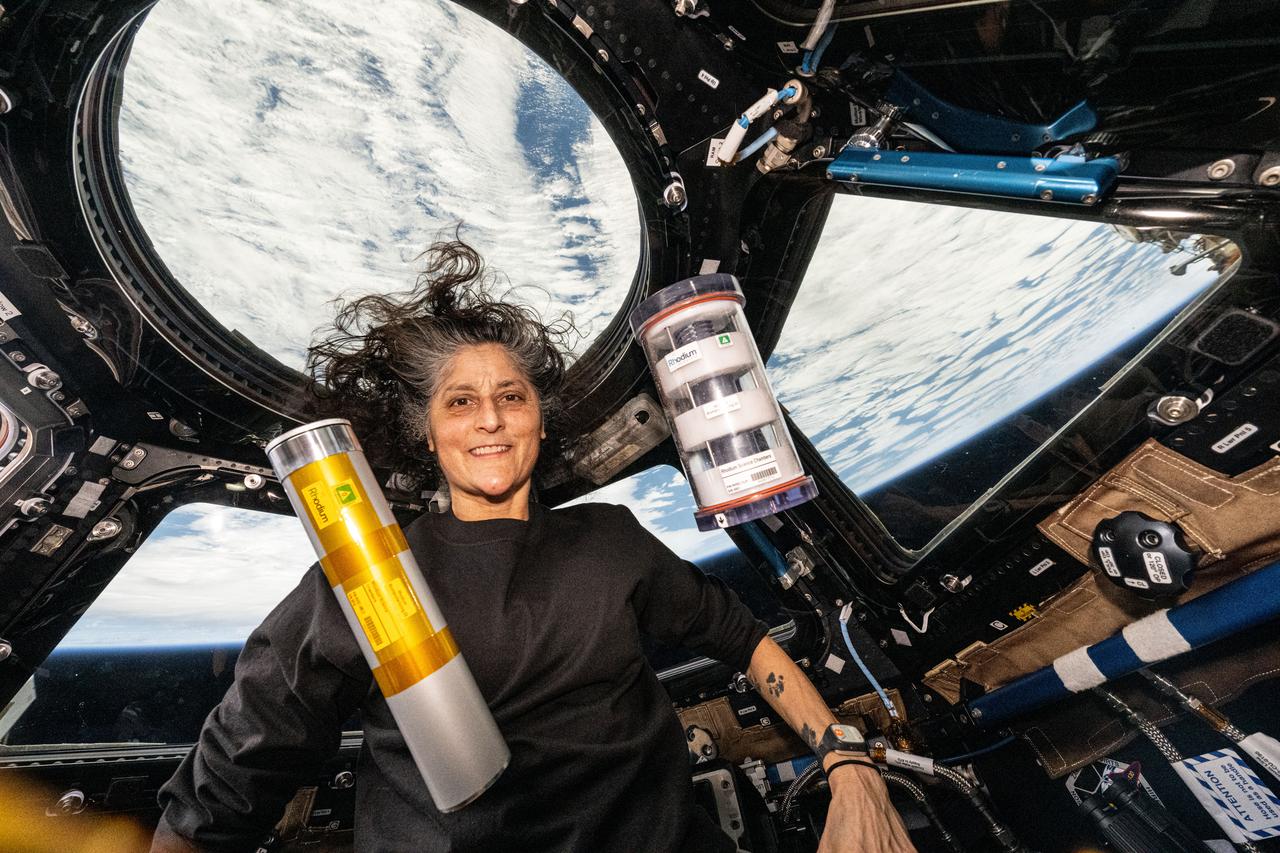
iss072e308289 (Dec. 2, 2024) --- NASA astronaut and Expedition 72 Commander Suni Williams displays science hardware housing bacteria and yeast samples for the Rhodium Biomanufacturing 03 study that may enable the production of food and medicine in space. Williams was in the cupola, the International Space Station's "window to the world," as the orbital outpost soared 258 miles above a cloudy Pacific Ocean off the coast of Costa Rica.
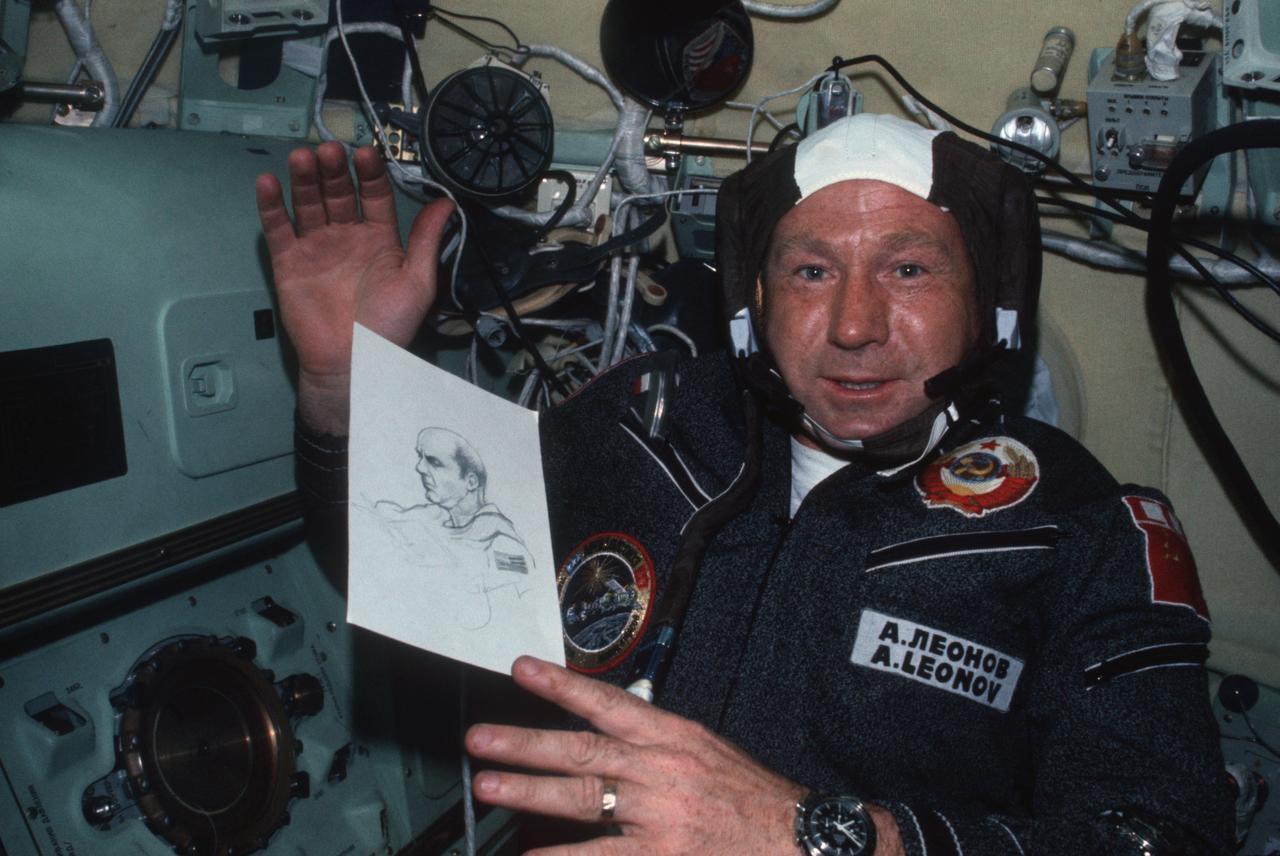
AST-05-275 (17-19 July 1975) --- Cosmonaut Aleksey A. Leonov, commander of the Soviet ASTP crew, displays a drawing of astronaut Thomas P. Stafford during the joint U.S.-USSR Apollo-Soyuz Test Project docking mission in Earth orbit. He is in the Soyuz Orbital Module. This picture was taken by an American ASTP crewman with a 35mm camera.
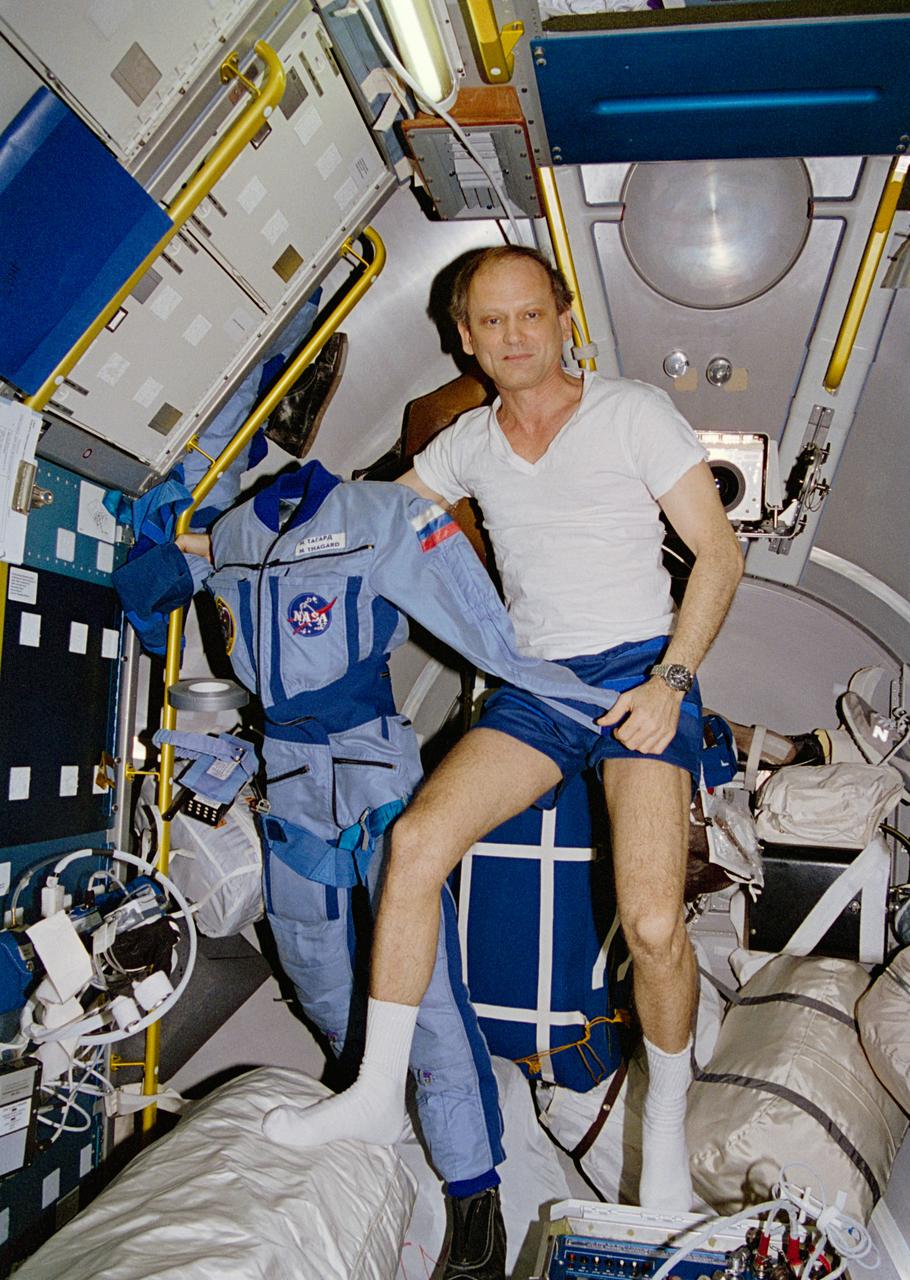
STS071-112-004 (27 June - 7 July 1995) --- Astronaut Norman E. Thagard, displays the flight suit he wore onboard Russia's Mir Space Station during a four month tour of duty as cosmonaut researcher for Mir-18. Thagard is seen in the Spacelab Science Module onboard the Space Shuttle Atlantis, in which he eventually underwent a battery of data collection tests.
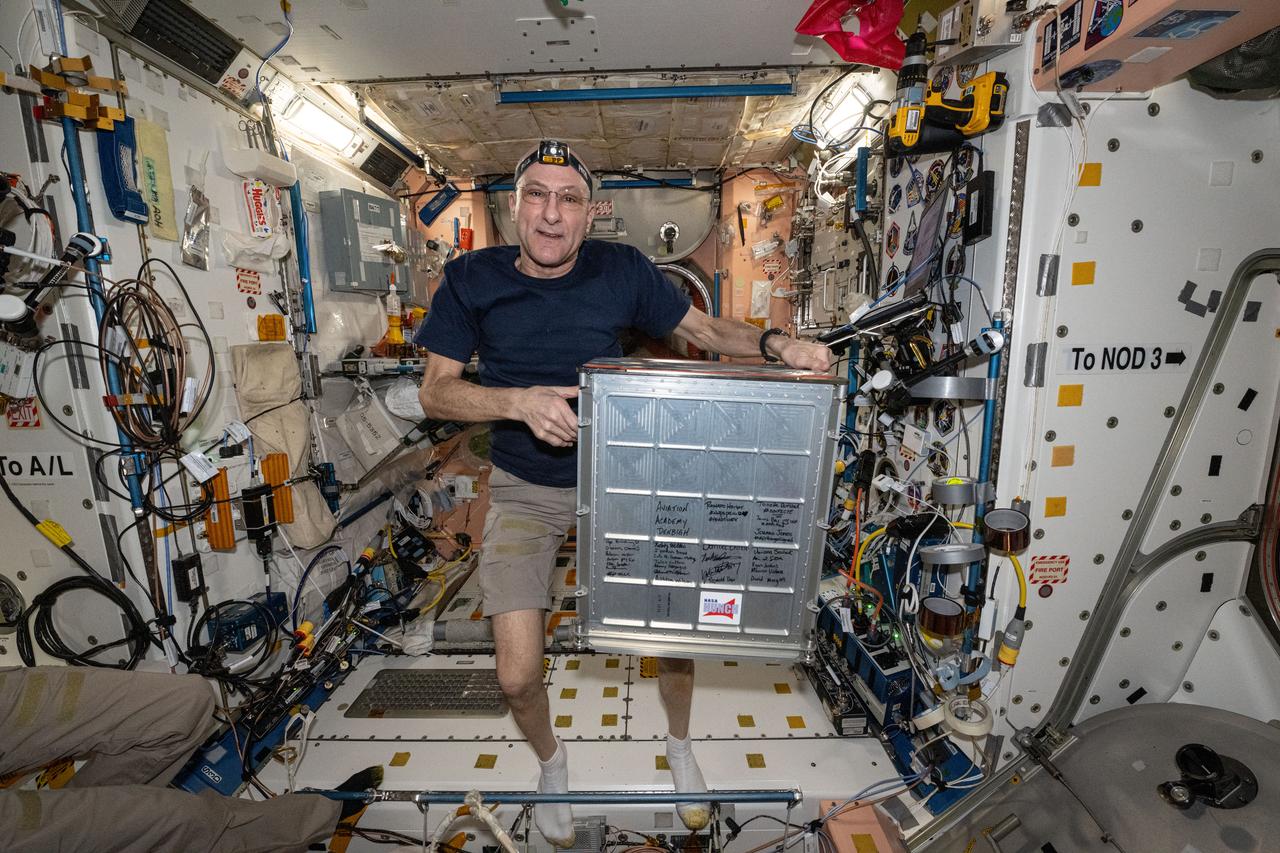
iss072e517816 (Jan. 21, 2025) --- NASA astronaut and Expedition 72 Flight Engineer Don Pettit displays HUNCH (High school students United with NASA to Create Hardware) gear inside the International Space Station's Unity module. The HUNCH mission empowers and inspires high school students to learn 21st-century skills and particpate in the design and fabrication of real-world tools for NASA.
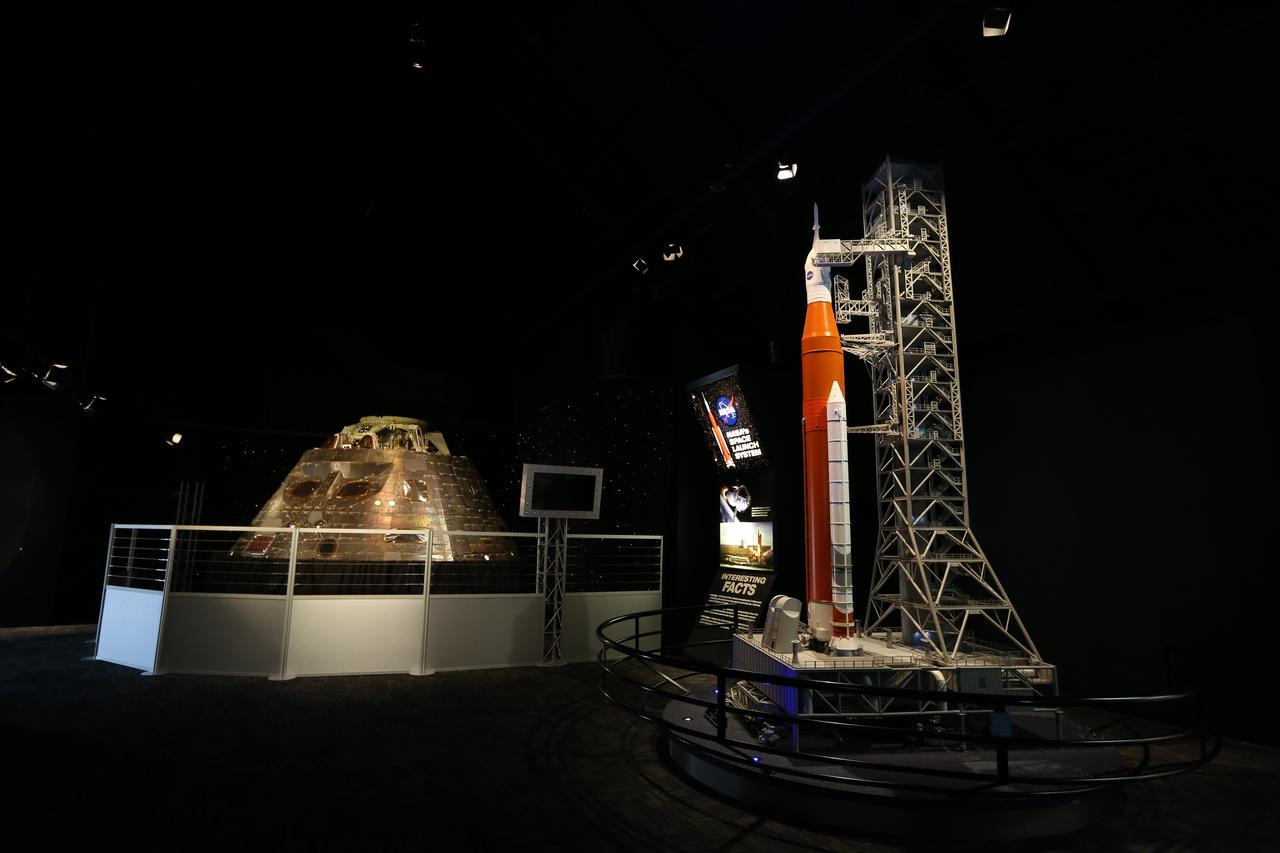
The Orion crew module from Exploration Flight Test 1 (EFT-1) is on display at nearby NASA Kennedy Space Center Visitor Complex in Florida. The crew module is part of the NASA Now exhibit in the IMAX Theater. Also in view is a scale model of NASA's Space Launch System rocket and Orion spacecraft on the mobile launcher. The Orion EFT-1 spacecraft launched atop a United Launch Alliance Delta IV rocket Dec. 5, 2014, from Space Launch Complex 37 at Cape Canaveral Air Force Station. The spacecraft built for humans traveled 3,604 miles above Earth and splashed down about 4.5 hours later in the Pacific Ocean.

STS008-16-454 (30 Aug-5 Sept 1983) --- Following a precedent set early two decades ago during the Gemini program, three members of the STS-8 astronaut crew aboard the Earth-orbiting Space Shuttle Challenger reveal their military backgrounds and loyalties. Astronauts (left to right) Dale A. Gardner, Richard H. Truly and Daniel C. Brandenstein leave no mystery as to their alma mater and gridiron sentimentalities as they display U.S. Navy stickers. The trio was photographed by Astronaut Guion S. Bluford on the flight deck. Truly is crew commander; Brandenstein, pilot; and Gardner and Bluford, along with Dr. William E. Thornton are all mission specialists for this six-day flight.
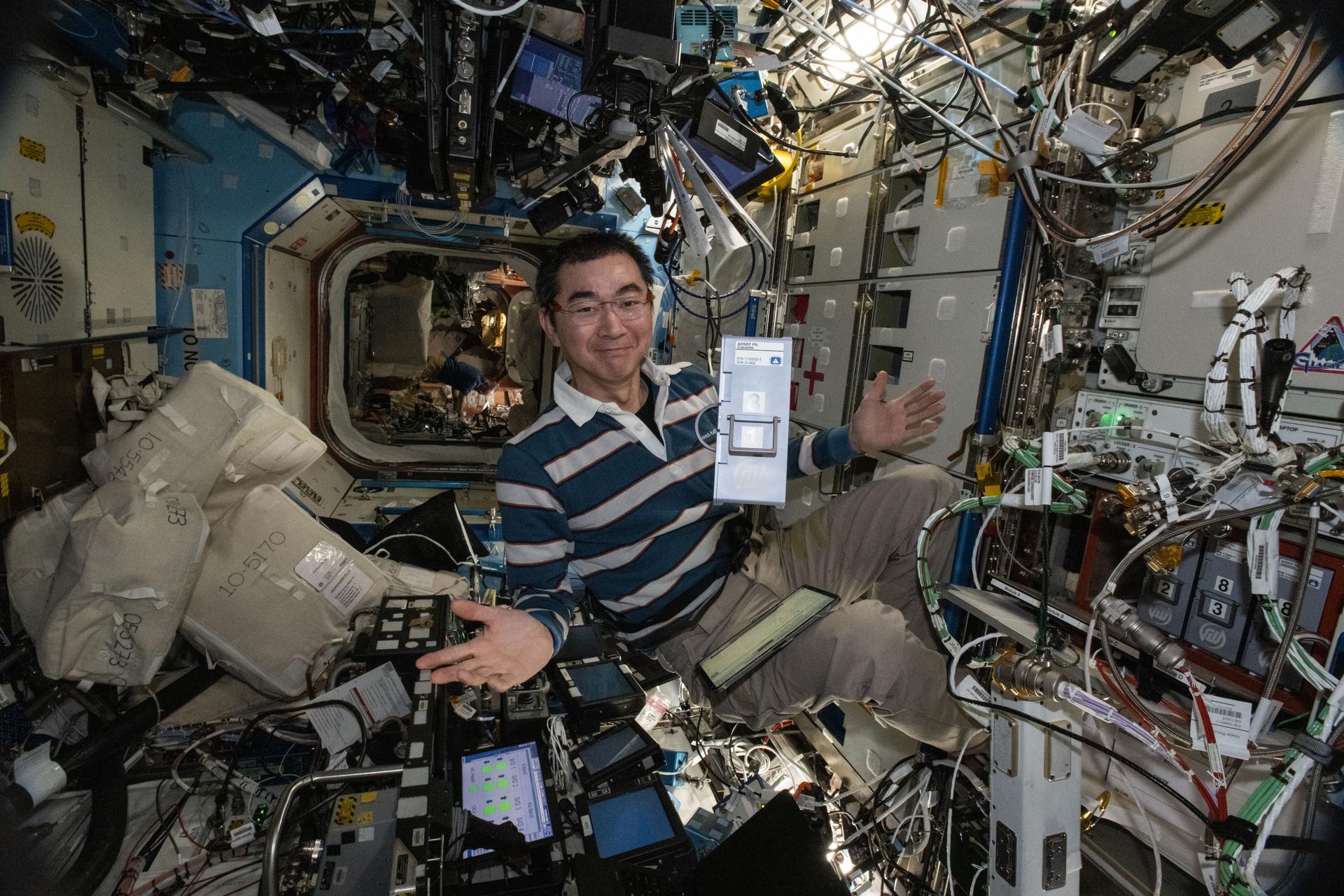
iss074e0046407 (Jan. 9, 2026) --- JAXA (Japan Aerospace Exploration Agency) astronaut and Expedition 74 Flight Engineer Kimiya Yui displays an Advanced Sample Experiment Processor-4 (ADSEP-4) cassette inside the International Space Station’s Destiny laboratory module. ADSEP-4 supports a wide range of microgravity research aboard the orbital outpost and can house samples such as cell and tissue cultures, protein crystals, microbes, colloids, and more. The processor is also capable of supporting powered operations aboard SpaceX Dragon and Northrop Grumman Cygnus XL spacecraft. Credit: NASA/Chris Williams
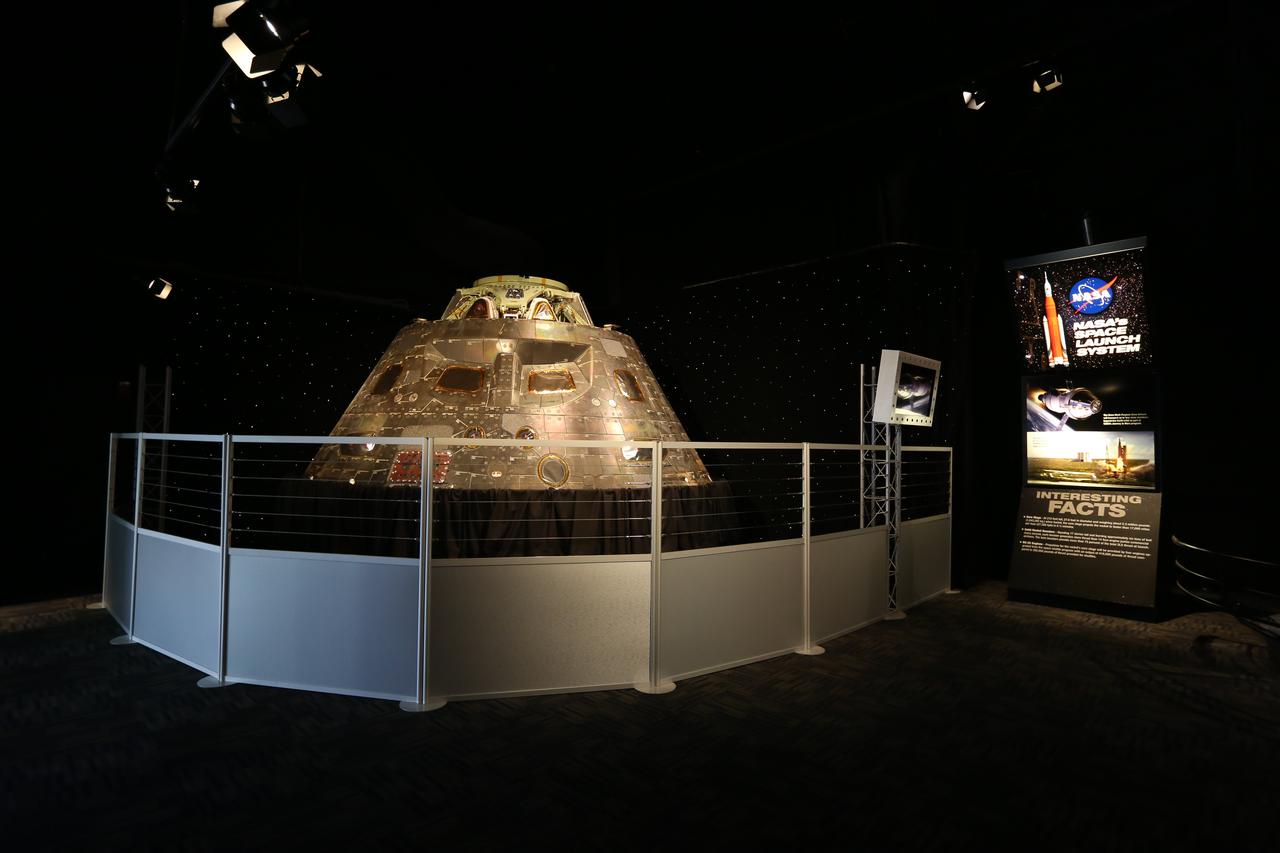
The Orion crew module from Exploration Flight Test 1 (EFT-1) is on display at nearby NASA Kennedy Space Center Visitor Complex in Florida. The crew module is part of the NASA Now exhibit in the IMAX Theater. The Orion EFT-1 spacecraft launched atop a United Launch Alliance Delta IV rocket Dec. 5, 2014, from Space Launch Complex 37 at Cape Canaveral Air Force Station. The spacecraft built for humans traveled 3,604 miles above Earth and splashed down about 4.5 hours later in the Pacific Ocean.
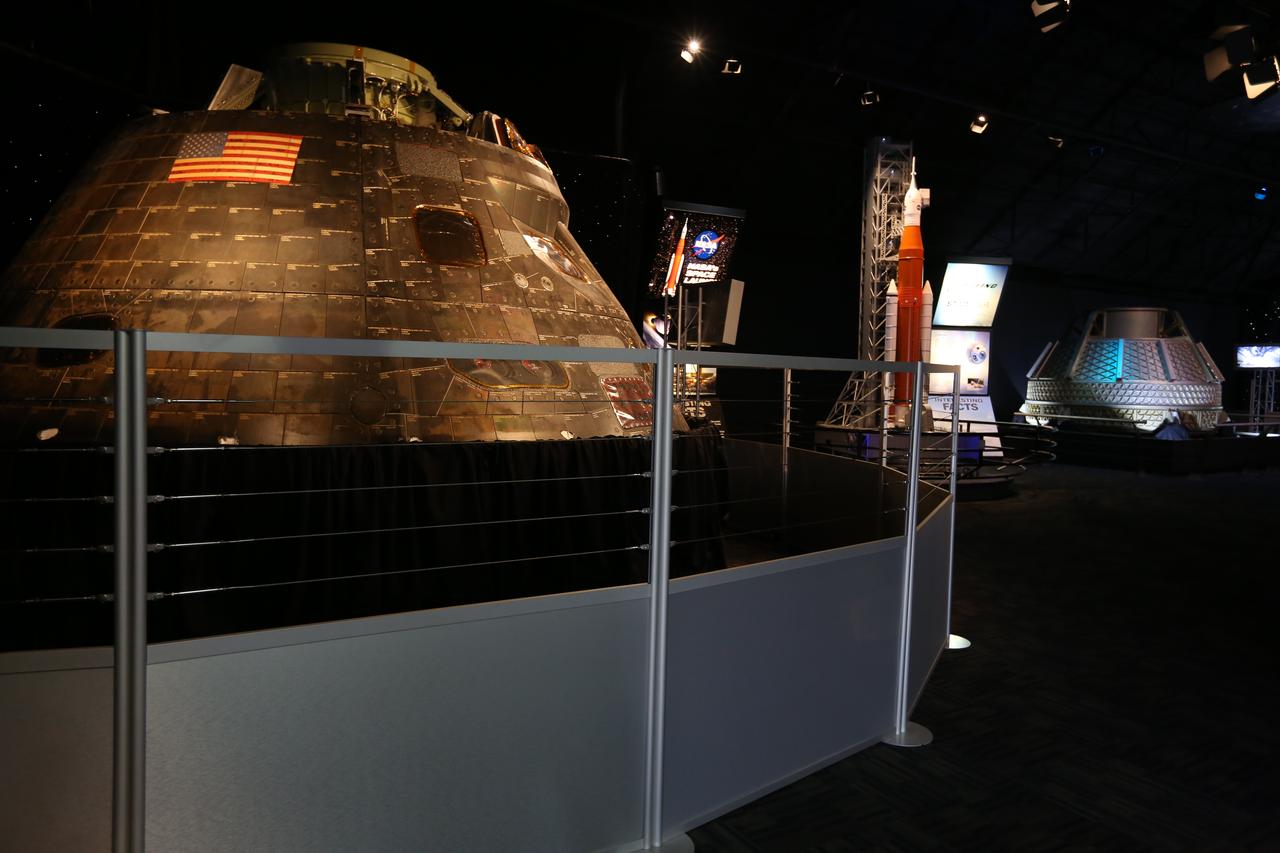
The Orion crew module from Exploration Flight Test 1 (EFT-1) is on display at nearby NASA Kennedy Space Center Visitor Complex in Florida. The crew module is part of the NASA Now exhibit in the IMAX Theater. The Orion EFT-1 spacecraft launched atop a United Launch Alliance Delta IV rocket Dec. 5, 2014, from Space Launch Complex 37 at Cape Canaveral Air Force Station. The spacecraft built for humans traveled 3,604 miles above Earth and splashed down about 4.5 hours later in the Pacific Ocean.
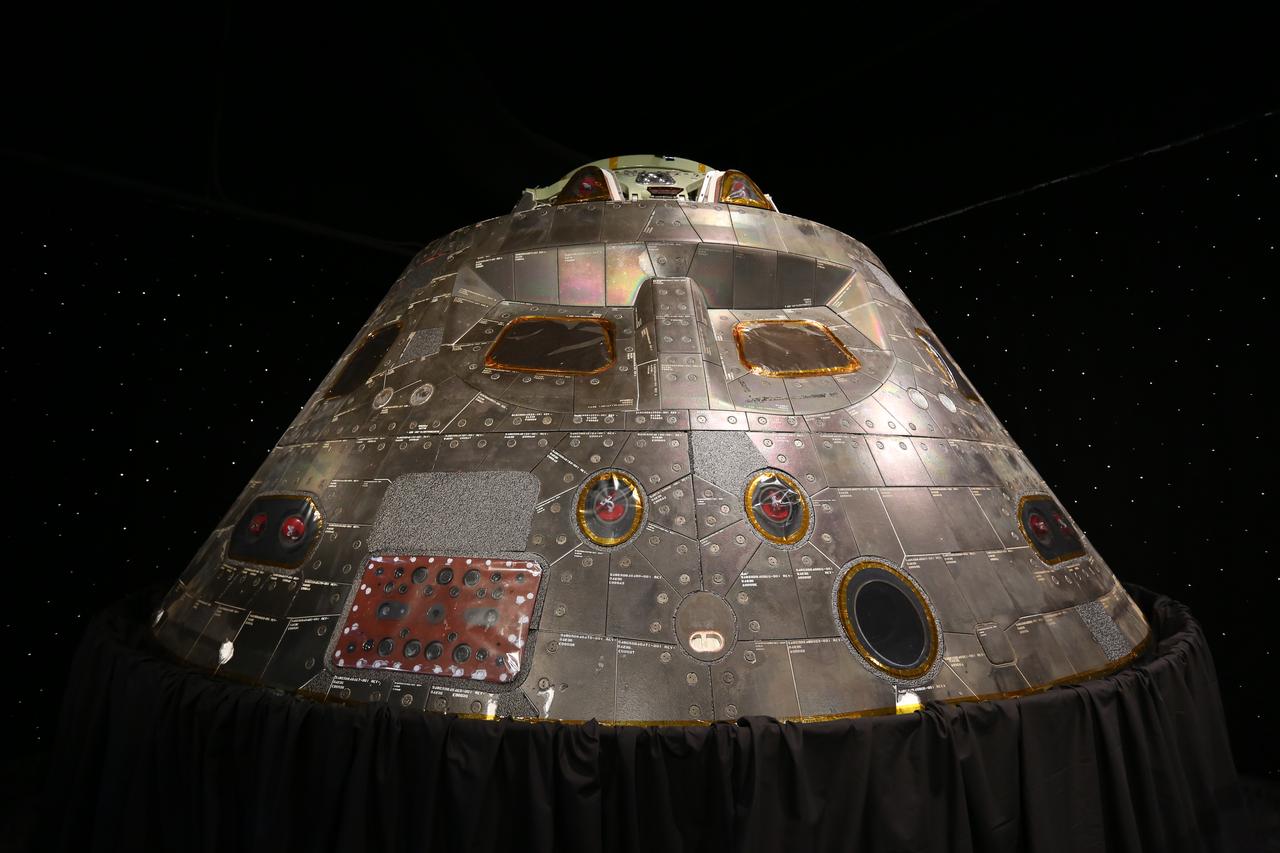
A close-up view of the Orion crew module from Exploration Flight Test 1 (EFT-1) on display at nearby NASA Kennedy Space Center Visitor Complex in Florida. The crew module is part of the NASA Now exhibit in the IMAX Theater. The Orion EFT-1 spacecraft launched atop a United Launch Alliance Delta IV rocket Dec. 5, 2014, from Space Launch Complex 37 at Cape Canaveral Air Force Station. The spacecraft built for humans traveled 3,604 miles above Earth and splashed down about 4.5 hours later in the Pacific Ocean.
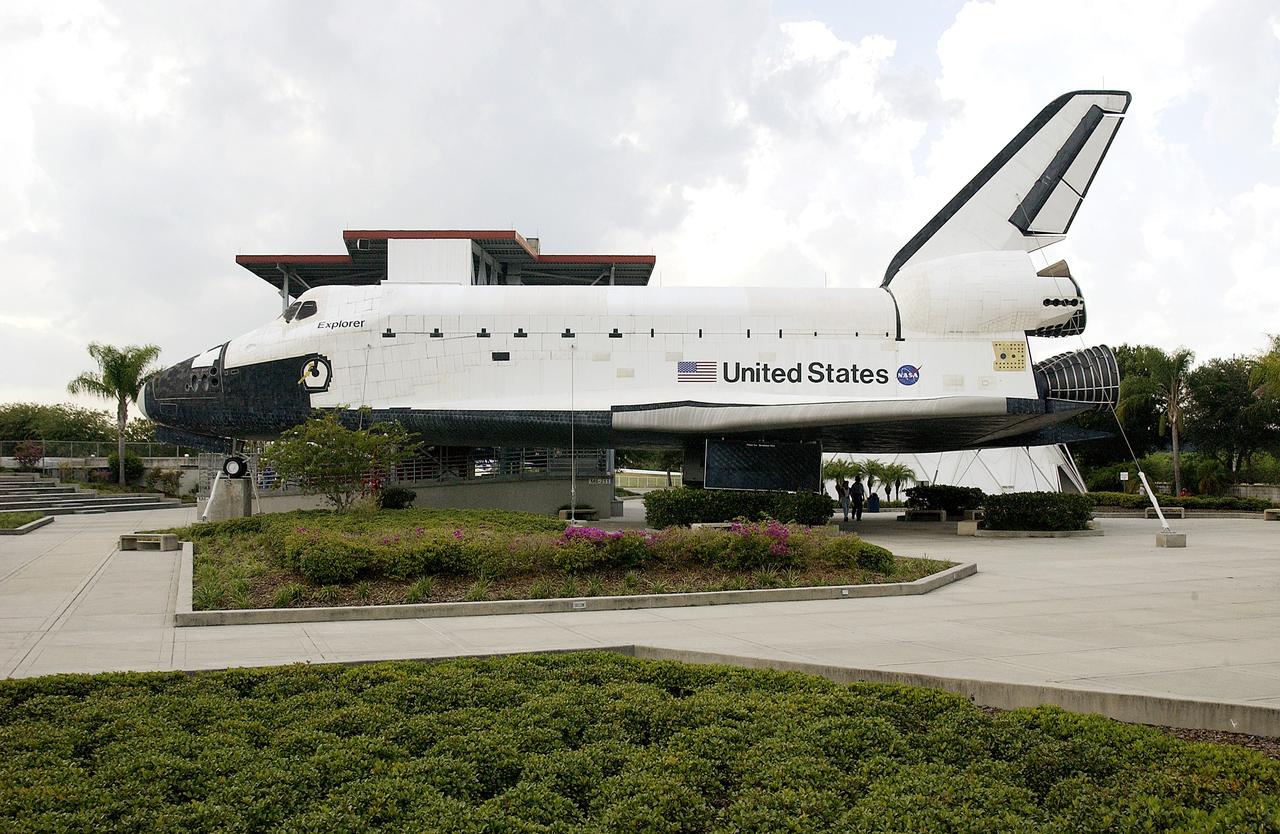
KENNEDY SPACE CENTER, FLA. - One of the featured displays at the KSC Visitor Complex is this full-size replica of a Space Shuttle Orbiter, in the Shuttle Plaza.
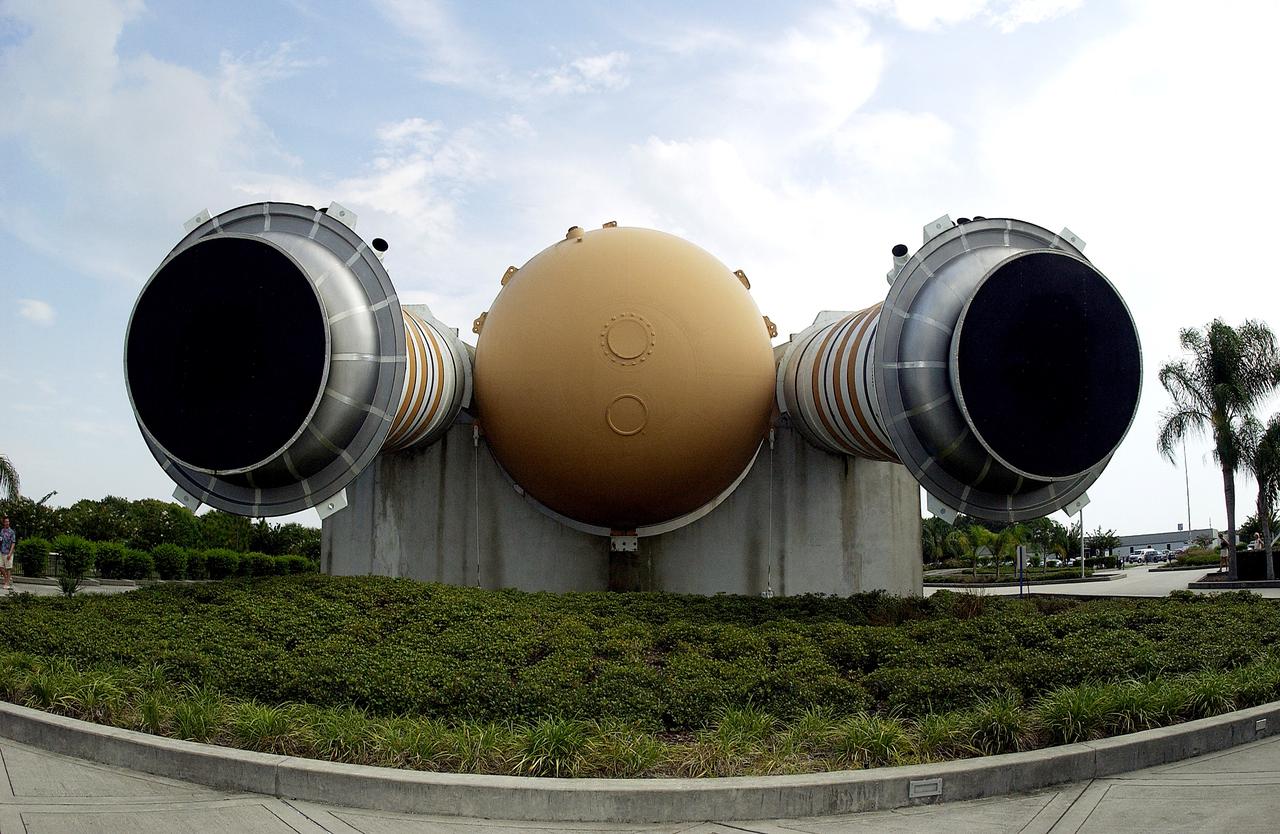
KENNEDY SPACE CENTER, FLA. - One of the featured displays at the KSC Visitor Complex is this full-size replica of a Space Shuttle Orbiter, in the Shuttle Plaza.
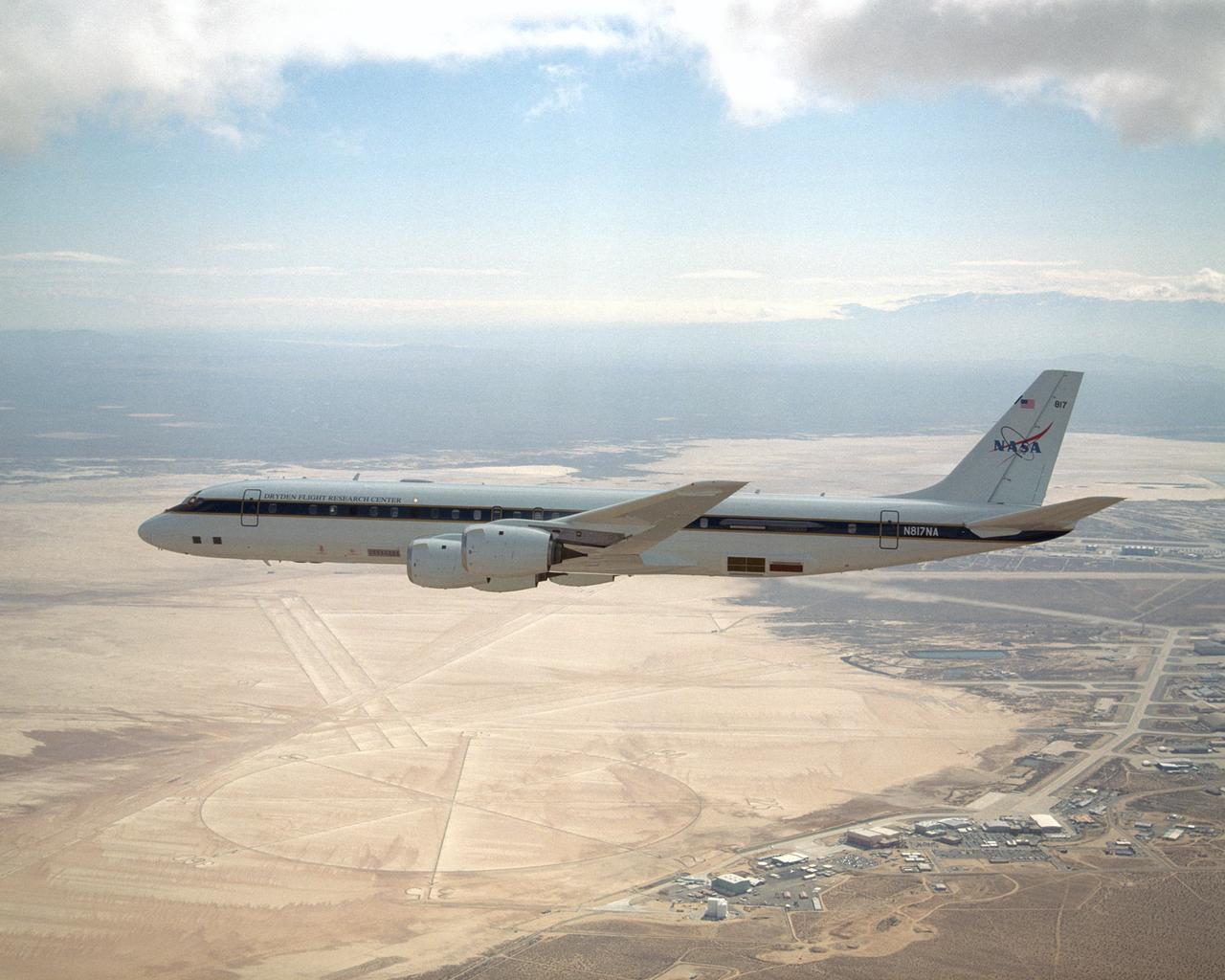
NASA's large Airborne Science research aircraft, a modified DC-8 airliner, displayed new colors in a check flight Feb. 24, 2004, over its home base, the NASA Dryden Flight Research Center at Edwards AFB, California.
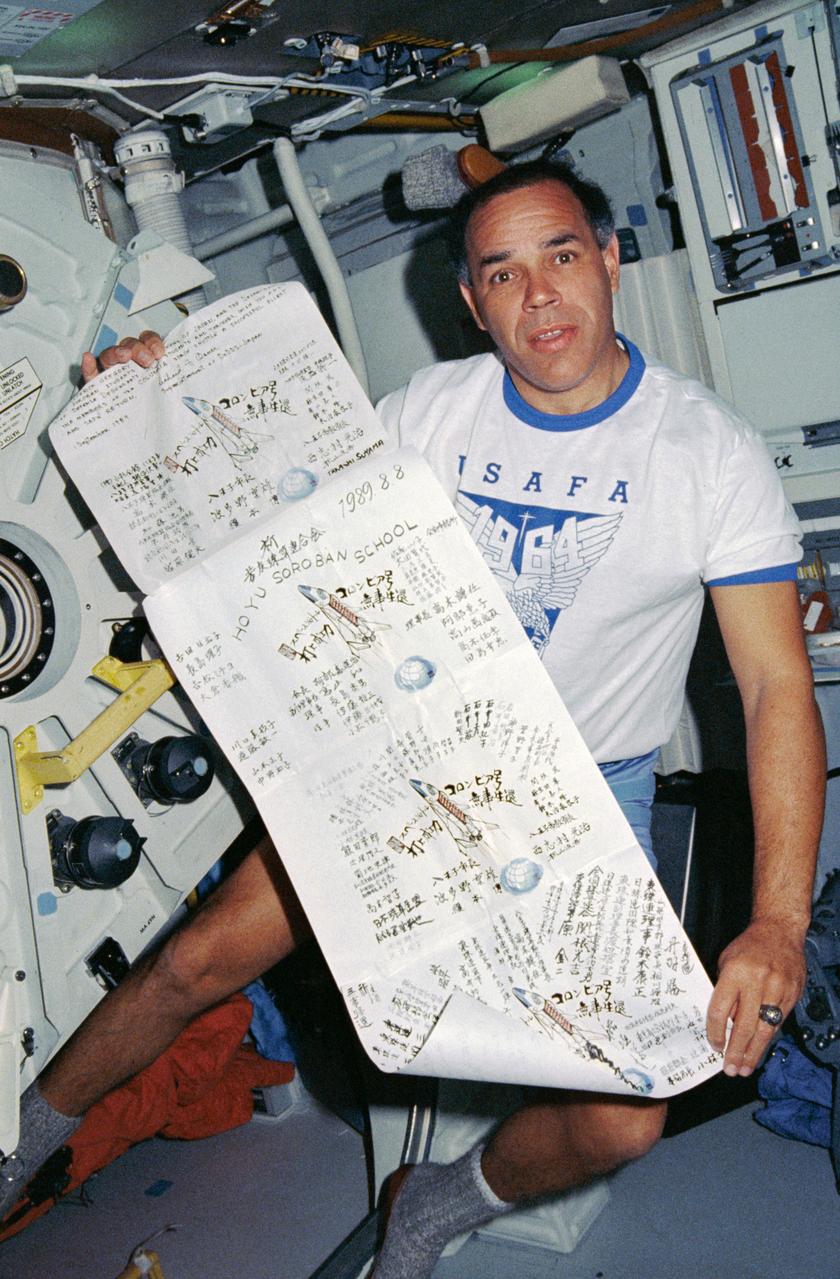
STS033-03-008 (22-27 Nov 1989) --- Astronaut Frederick D. Gregory, STS-33 commander, displays a letter from a special group of well-wishers. The letter is signed by the superintendent of Department of Defense Dependents School in Japan. It was carried onboard Discovery for the five-day DOD-devoted mission.
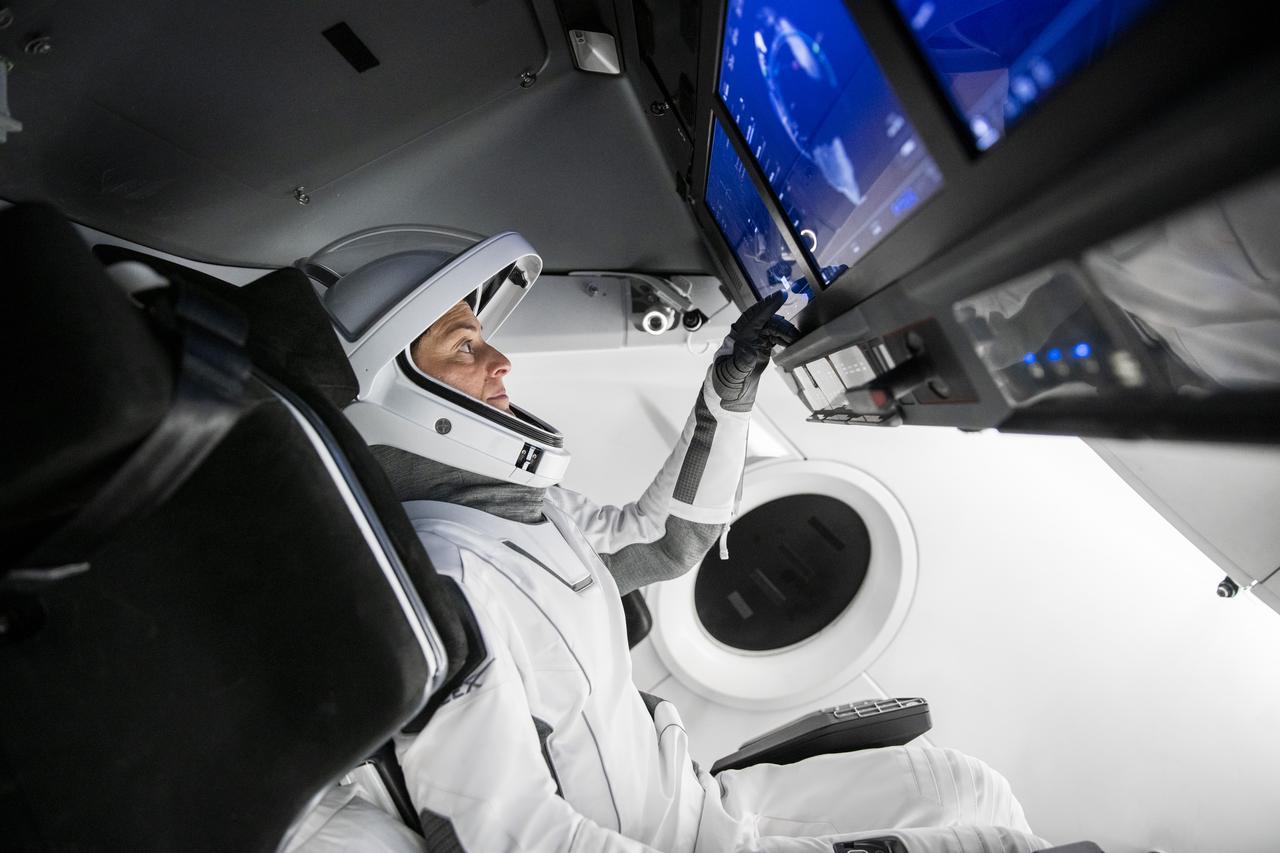
NASA Astronaut Nicole Mann becomes familiar with the spacecraft and its displays during a training at SpaceX in Hawthorne, California.
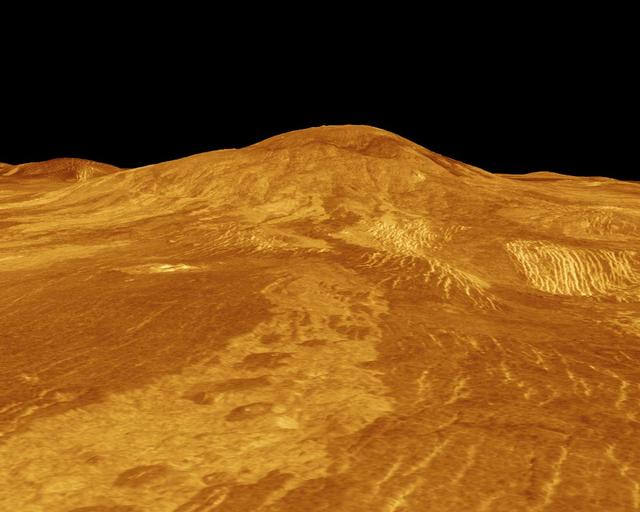
Sif Mons is displayed in this computer-simulated view obtained by NASA's Magellan spacecraft of the surface of Venus. http://photojournal.jpl.nasa.gov/catalog/PIA00108