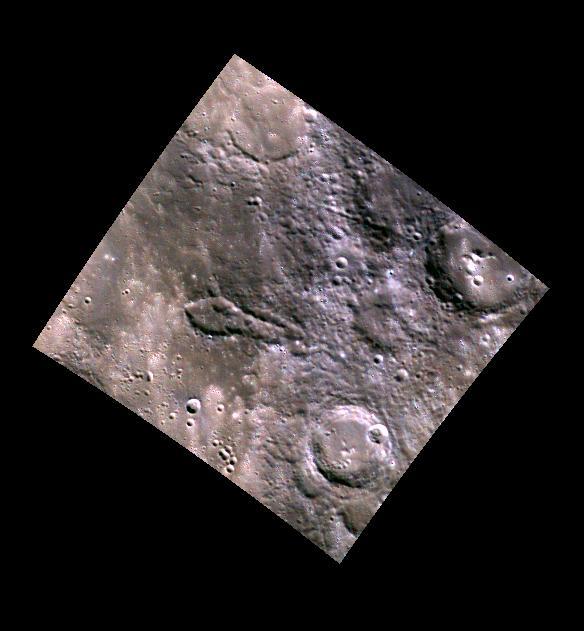
What Does the Arrow Point To?
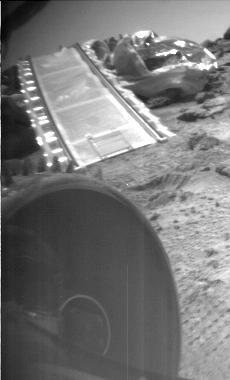
Rover Does a Wheelie
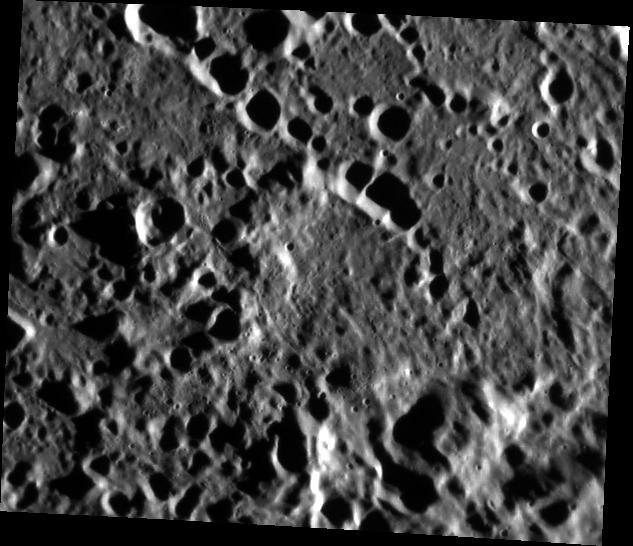
How Does It Feel to Be On Top of the World?
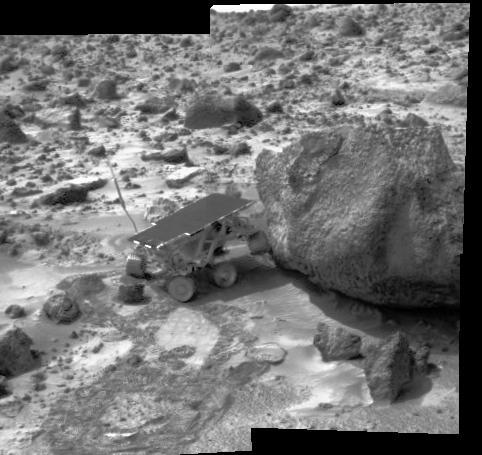
Sojourner Does a Wheelie on Yogi
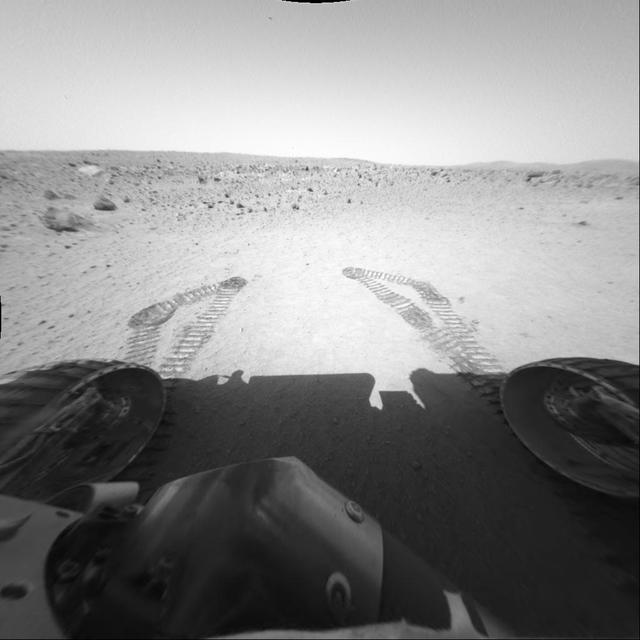
Spirit Does a Jig at Laguna Hollow

U.S. Secretary of Energy Chris Wright gives remarks ahead of NASA and DOE signing a new Memorandum of Understanding, “Accelerating American Leadership in Space Nuclear Power and Propulsion”, during the Golden Age Summit, Thursday, Oct. 8, 2026, at the Donald J. Trump Institute of Peace in Washington. Photo Credit: (NASA/Bill Ingalls)

NASA Administrator Jared Isaacman, center, gives remarks with Director of the White House Office of Science and Technology Policy (OSTP) Michael Kratsios, left, and U.S. Secretary of Energy Chris Wright, ahead of NASA and DOE signing a new Memorandum of Understanding, “Accelerating American Leadership in Space Nuclear Power and Propulsion”, during the Golden Age Summit, Thursday, Oct. 8, 2026, at the Donald J. Trump Institute of Peace in Washington. Photo Credit: (NASA/Bill Ingalls)
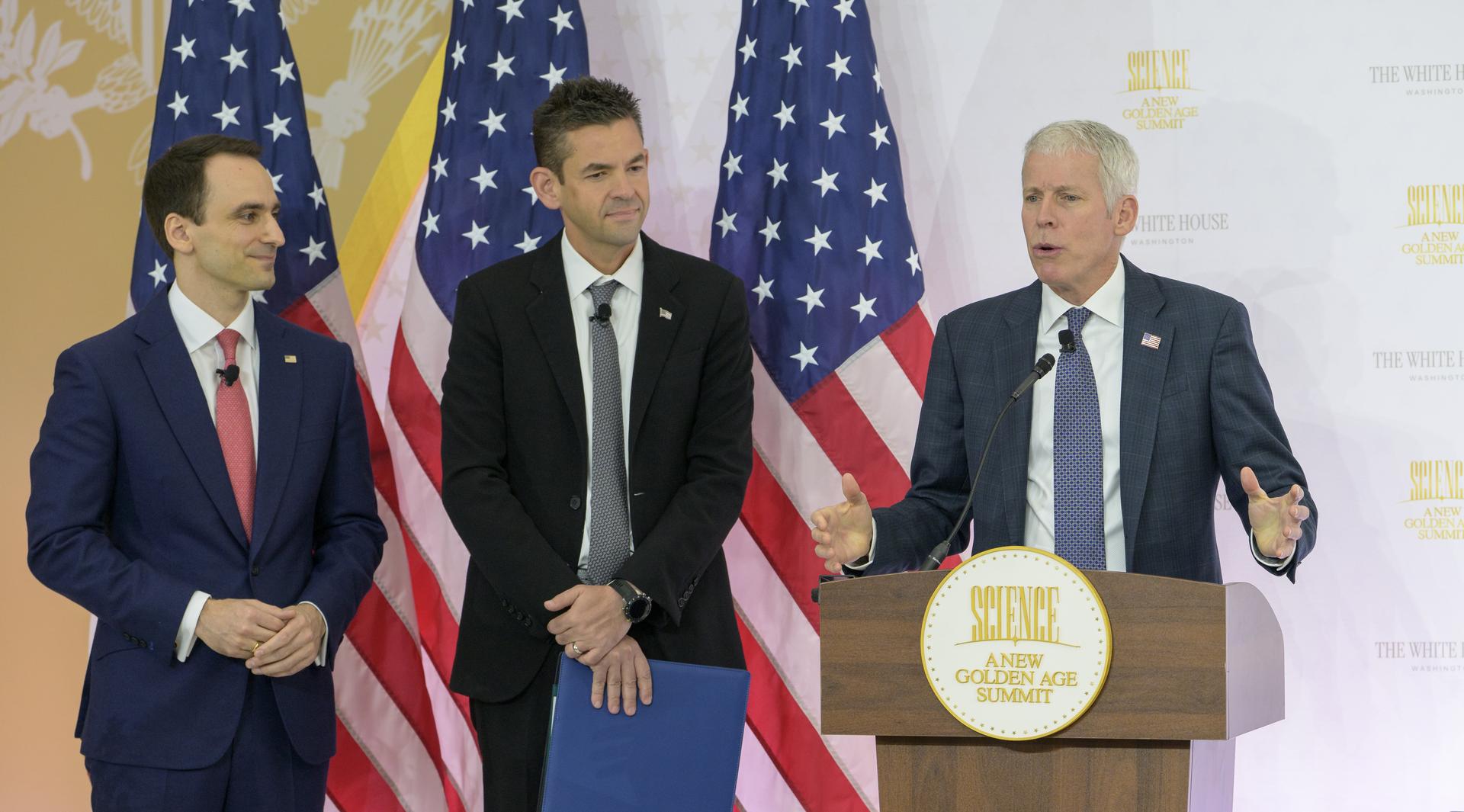
U.S. Secretary of Energy Chris Wright, right, gives remarks with Director of the White House Office of Science and Technology Policy (OSTP) Michael Kratsios, left, and NASA Administrator Jared Isaacman, ahead of NASA and DOE signing a new Memorandum of Understanding, “Accelerating American Leadership in Space Nuclear Power and Propulsion”, during the Golden Age Summit, Thursday, Oct. 8, 2026, at the Donald J. Trump Institute of Peace in Washington. Photo Credit: (NASA/Bill Ingalls)

NASA Administrator Jared Isaacman, center, gives remarks with Director of the White House Office of Science and Technology Policy (OSTP) Michael Kratsios, left, and U.S. Secretary of Energy Chris Wright, ahead of NASA and DOE signing a new Memorandum of Understanding, “Accelerating American Leadership in Space Nuclear Power and Propulsion”, during the Golden Age Summit, Thursday, Oct. 8, 2026, at the Donald J. Trump Institute of Peace in Washington. Photo Credit: (NASA/Bill Ingalls)

U.S. Department of Energy Secretary Chris Wright, left, speaks to NASA Administrator Jared Isaacman, right, Thursday, Jan. 8, 2026, at the Department of Energy Headquarters in Washington. The DOE and NASA signed a memorandum of understanding to support the research and development of a fission surface power system for use on the Moon and future NASA missions to Mars. Photo Credit: (NASA/John Kraus)
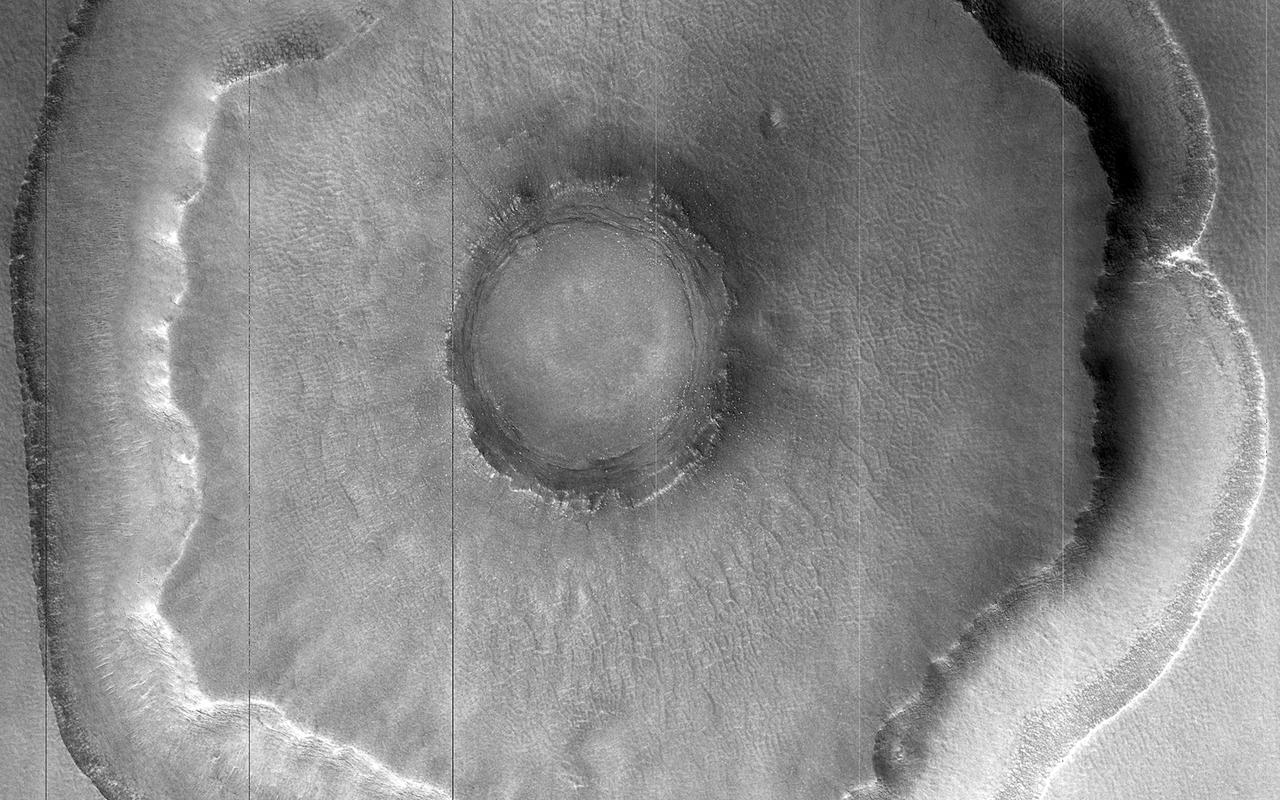
Does this observation from NASA Mars Reconnaissance Orbiter show a possible proto-pedestal crater? This crater has a ring trough, but the inner circle around the crater does not appear significantly elevated.
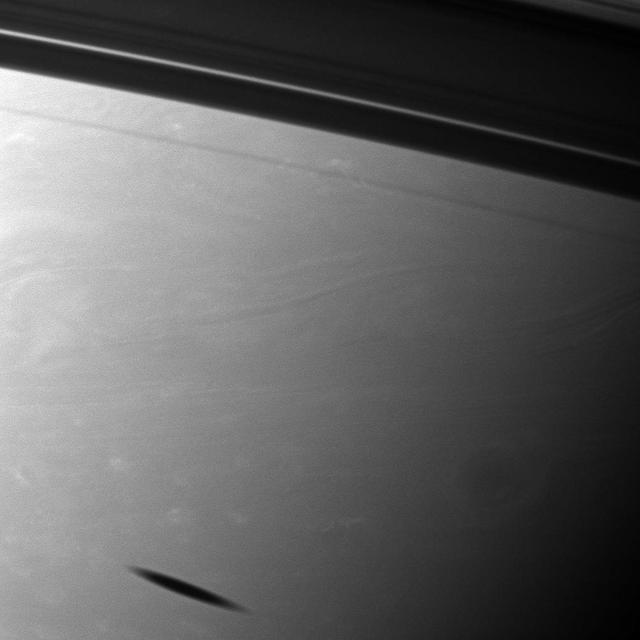
The shadow of the moon Mimas creates a smudge on the southern hemisphere of Saturn in this view from NASA Cassini spacecraft. Mimas does not appear here, but it does cast its shadow on the planet in the lower left of the image.

This view of the gamma-ray sky constructed from one year of Fermi LAT observations is the best view of the extreme universe to date. The map shows the rate at which the LAT detects gamma rays with energies above 300 million electron volts -- about 120 million times the energy of visible light -- from different sky directions. Brighter colors equal higher rates. Credit: NASA/DOE/Fermi LAT Collaboration Full story: <a href="http://www.nasa.gov/mission_pages/GLAST/news/first_year.html" rel="nofollow">www.nasa.gov/mission_pages/GLAST/news/first_year.html</a>
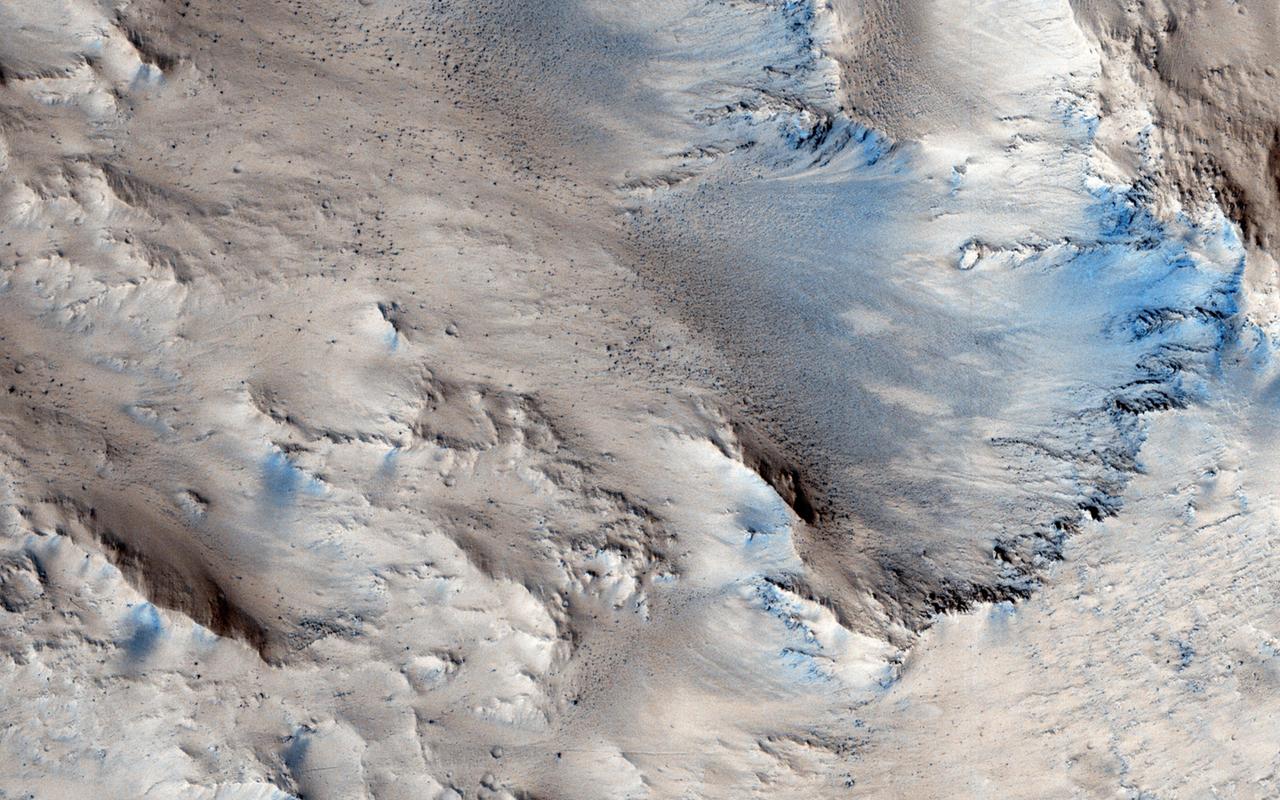
In this observation, does the morphology of these possible sedimentary fans match those found in Mojave Crater not picture here?
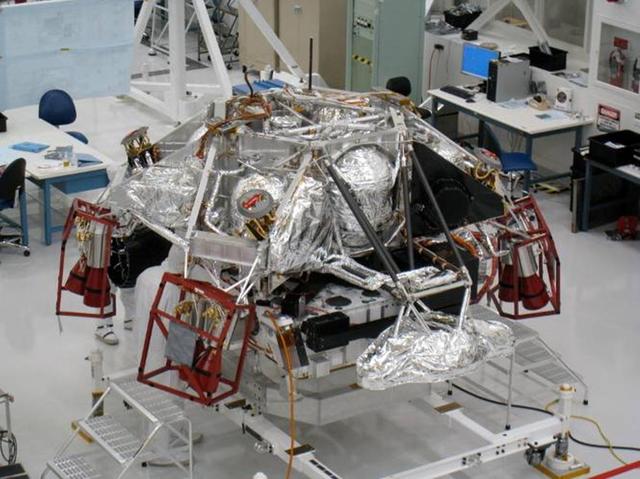
This portion of NASA Mars Science Laboratory, called the descent stage, does its main work during the final few minutes before touchdown on Mars.
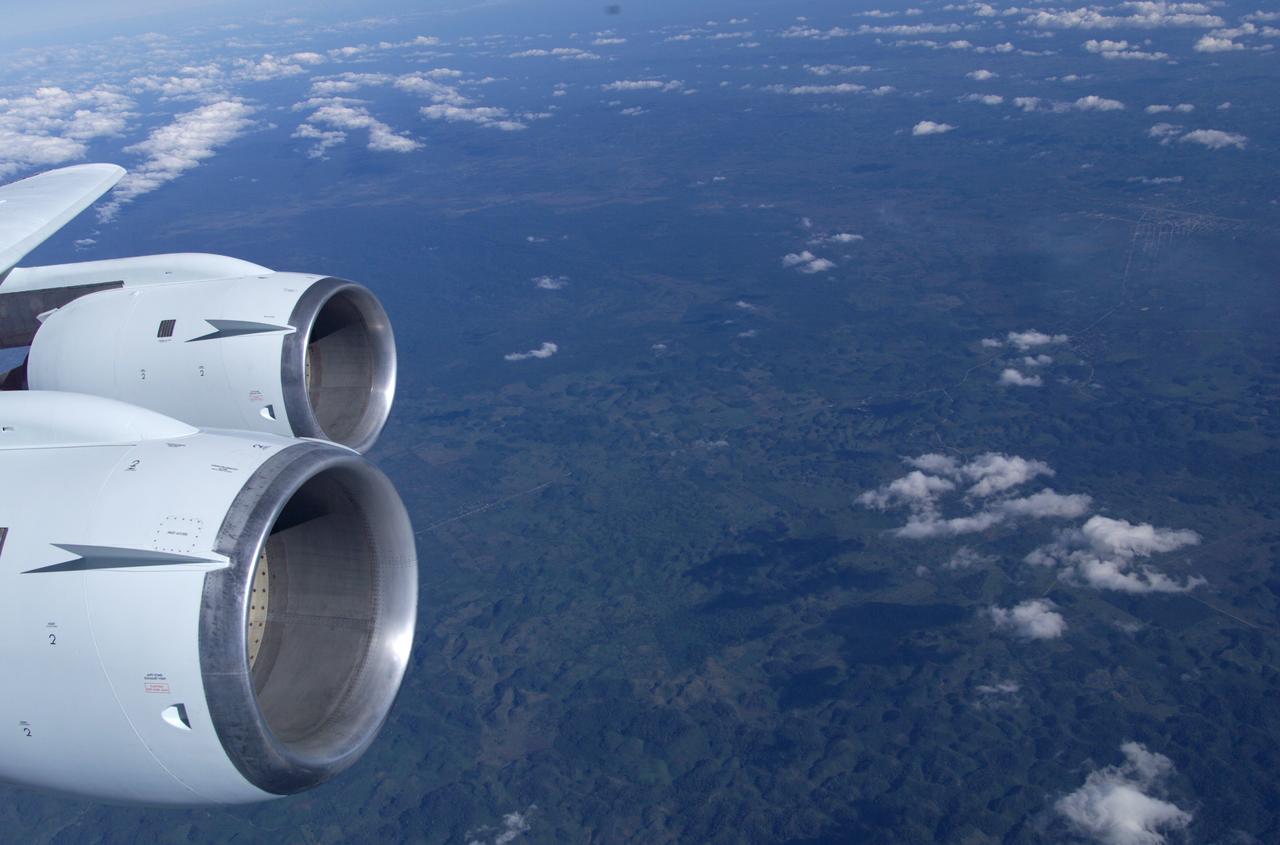
This is a photograph from the left side of the aircraft as NASA's DC-8 does an AirSAR 2004 research "line" over Honduras. AirSAR 2004 is a three-week expedition by an international team of scientists that will use an all-weather imaging tool, called the Airborne Synthetic Aperture Radar (AirSAR), in a mission ranging from the tropical rain forests of Central America to frigid Antarctica.
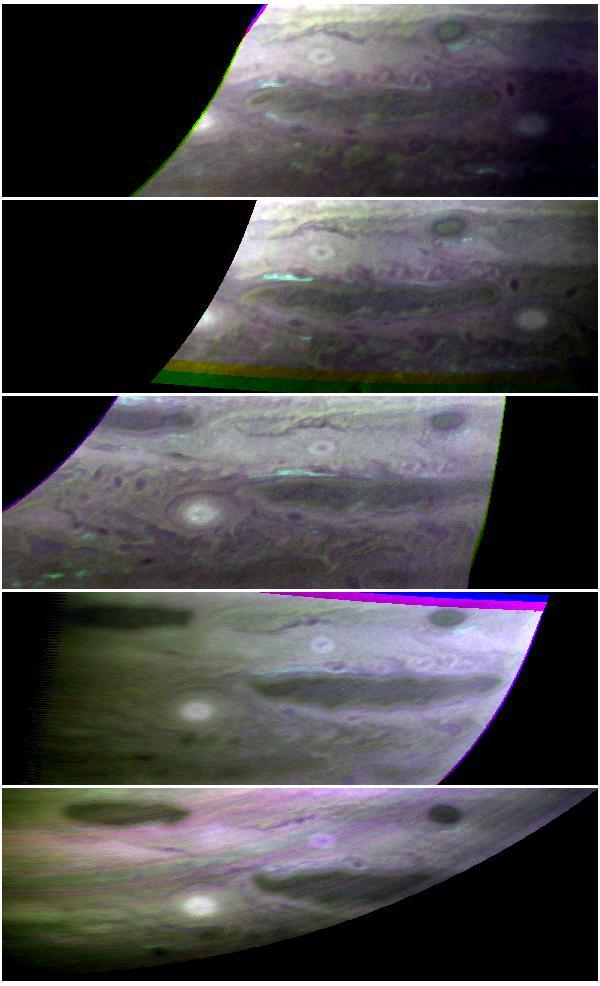
The top cloud layer on Jupiter is thought to consist of ammonia ice, but most of that ammonia hides from spectrometers. It does not absorb light in the same way ammonia does.
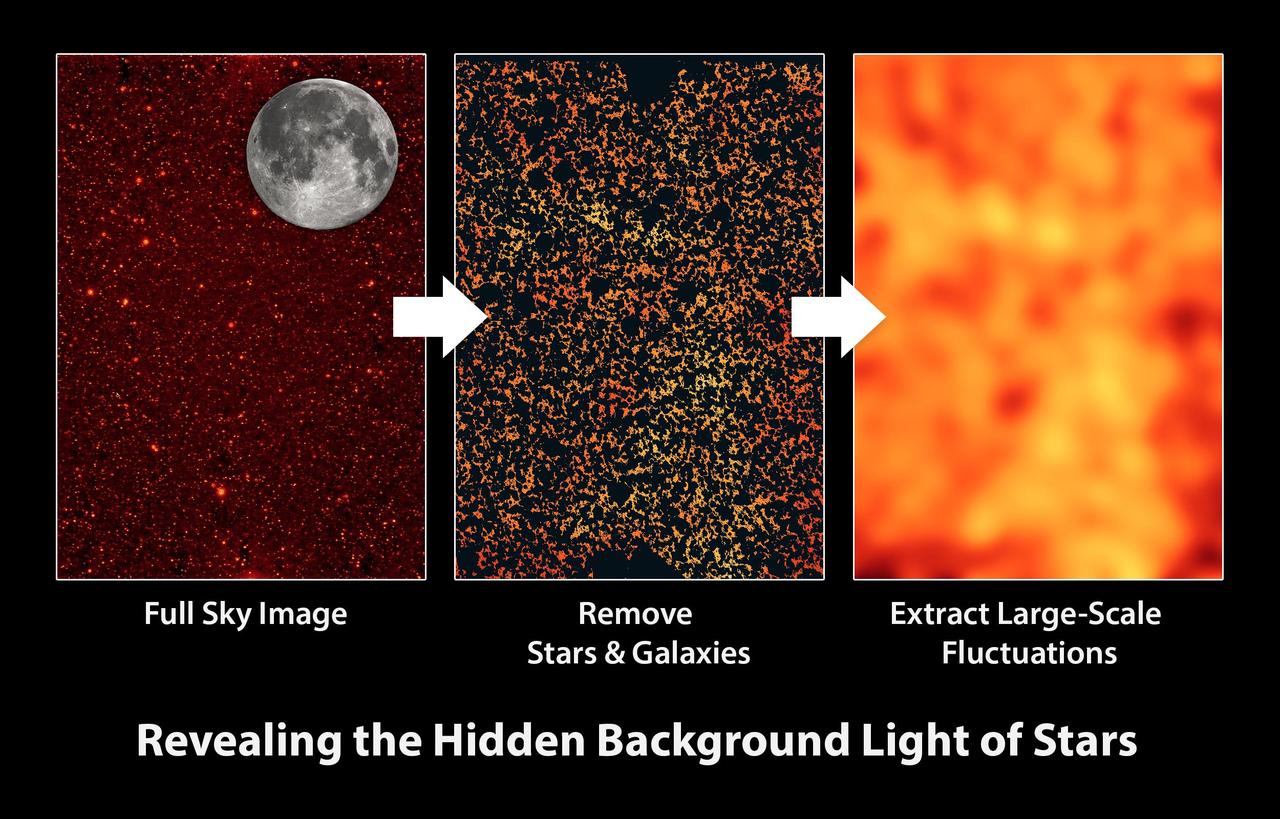
This graphic illustrates how the Cosmic Infrared Background Experiment, or CIBER, team measures a diffuse glow of infrared light filling the spaces between galaxies. The glow does not come from any known stars and galaxies.
What does Earth look like when viewed from Mars? At 13:00 GMT on 8 May 2003, NASA Mars Global Surveyor MGS Mars Orbiter Camera MOC had an opportunity to find out.
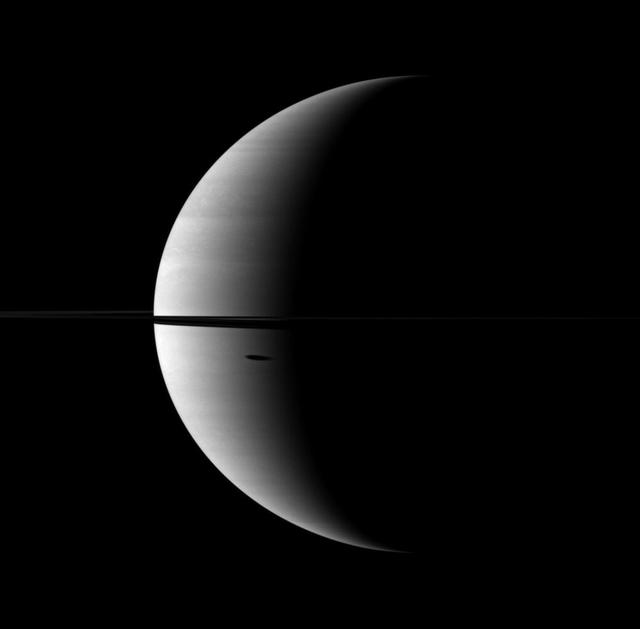
The shadow of Saturn moon Dione, cast onto the planet, is elongated in dramatic fashion in this image captured by NASA Cassini spacecraft. The moon itself does not appear here, but the shadow can be seen south of the ringplane.
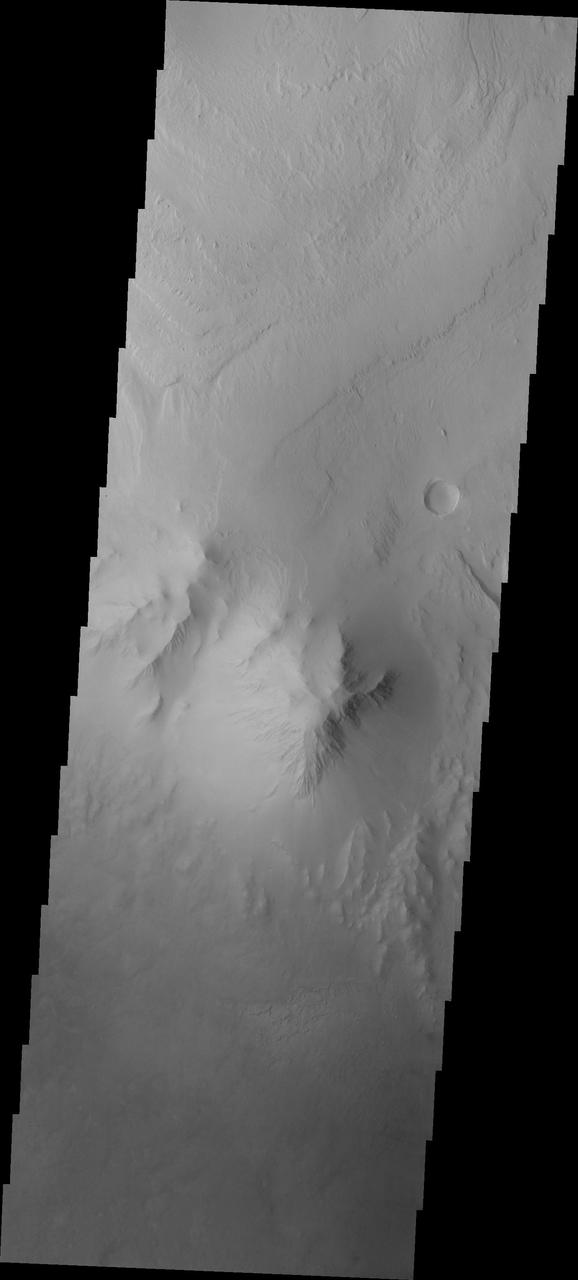
This image from NASA Mars Odyssey spacecraft shows the highest elevation of layered deposit occurs at the top, but just south of the center of the image is a peak that does not appear to be layered and is eroding differently than the rest of Mt. Sharp.
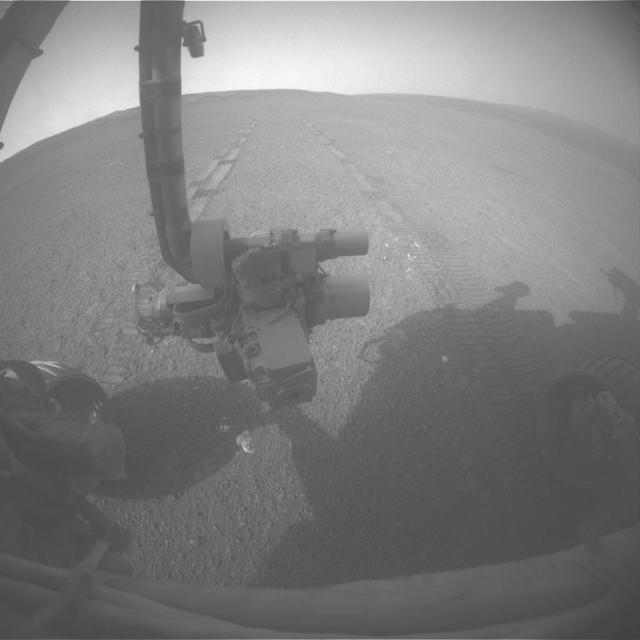
This image was taken by Opportunity front hazard-avoidance camera after the Sol 3309 drive, looking back at the tracks produced while the rover was driving in reverse, as it often does.
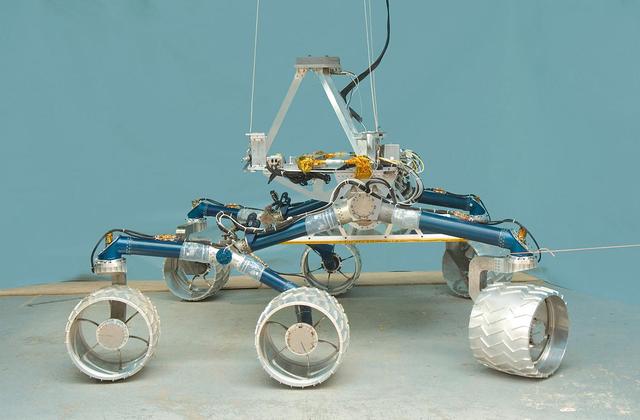
The team developing NASA Mars Science Laboratory calls this test rover Scarecrow because the vehicle does not include a computer brain. Mobility engineers use this test rover to evaluate mobility and suspension performance.
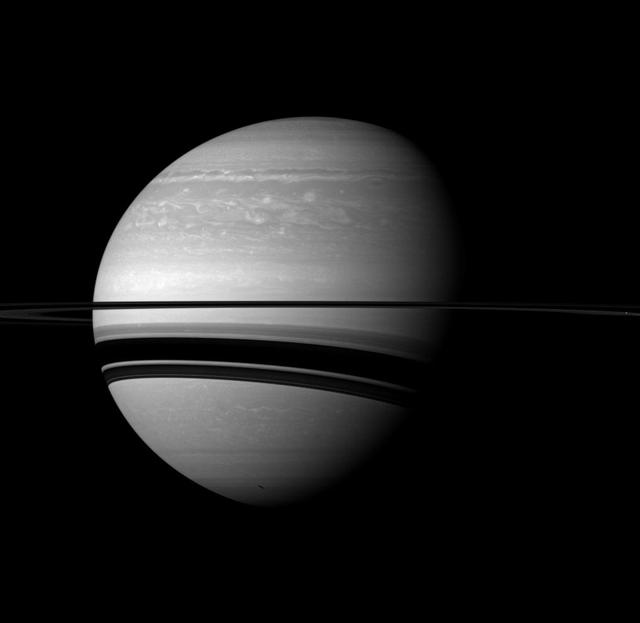
Saturn rings cast wide shadows on the planet, and the shadow of a moon also graces the gas giant in this scene from NASA Cassini spacecraft. The moon Enceladus is not shown in this view, but it does cast a small, elongated shadow.
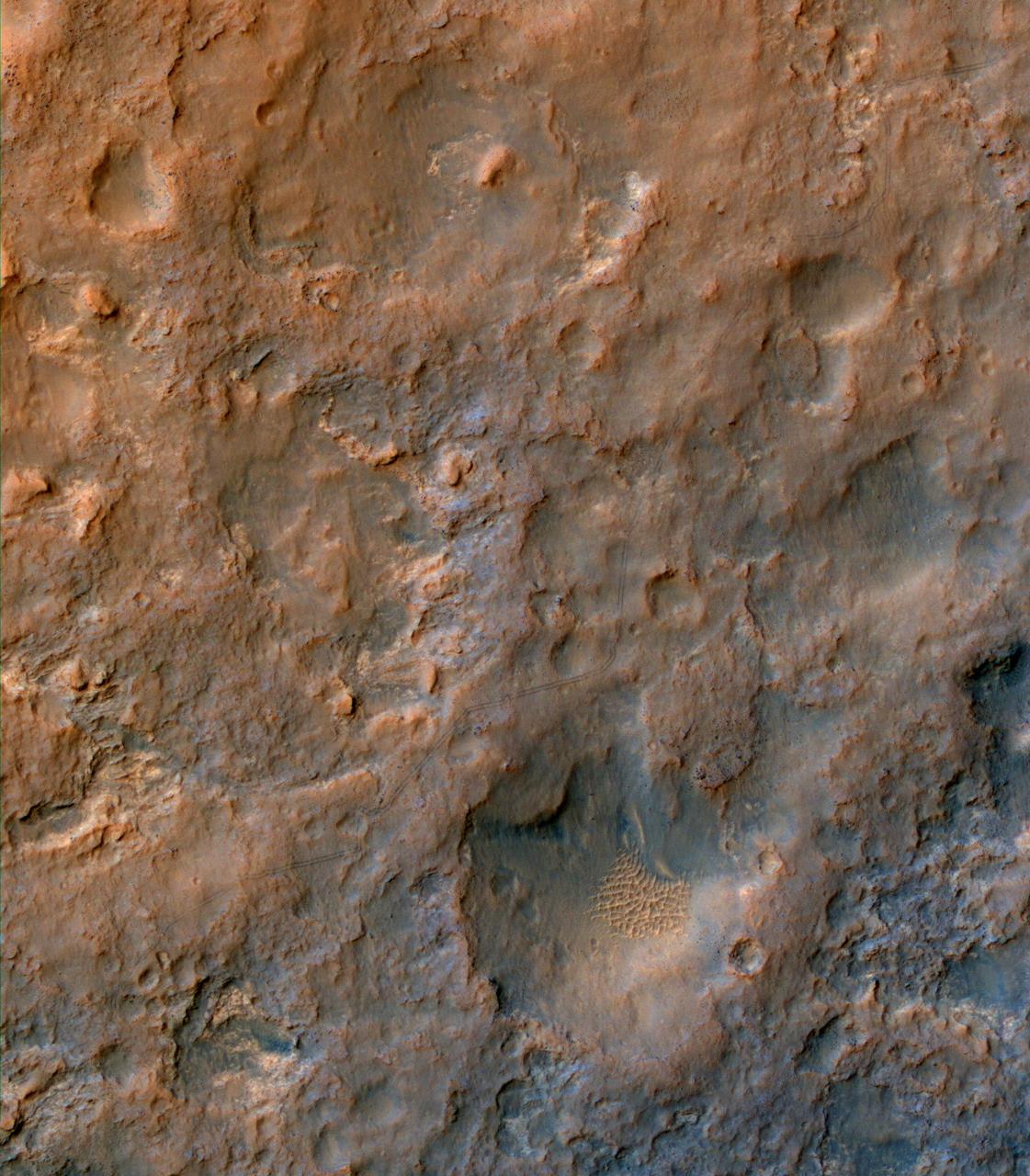
Two parallel tracks left by the wheels of NASA Curiosity Mars rover cross rugged ground in this portion of an observation by the HiRISE camera on NASA Mars Reconnaissance Orbiter on Dec. 11, 2013. The rover itself does not appear in this image.
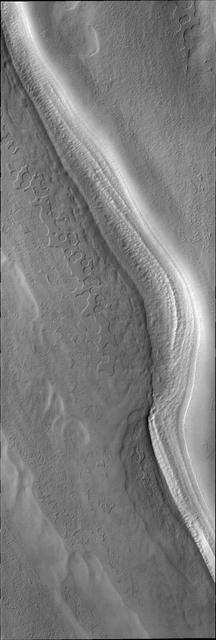
This image from NASA Mars Odyssey is of wiss cheese terrain. Sometimes simple terms like these can accurately describe the appearance of a surface, but it does not relate at all to how that surface texture may have formed.

NASA Wide-field Infrared Survey Explorer observed the star-forming cloud NGC 281 in the constellation of Cassiopeia as it appears to be chomping through the cosmos, earning it the nickname the Pacman nebula.
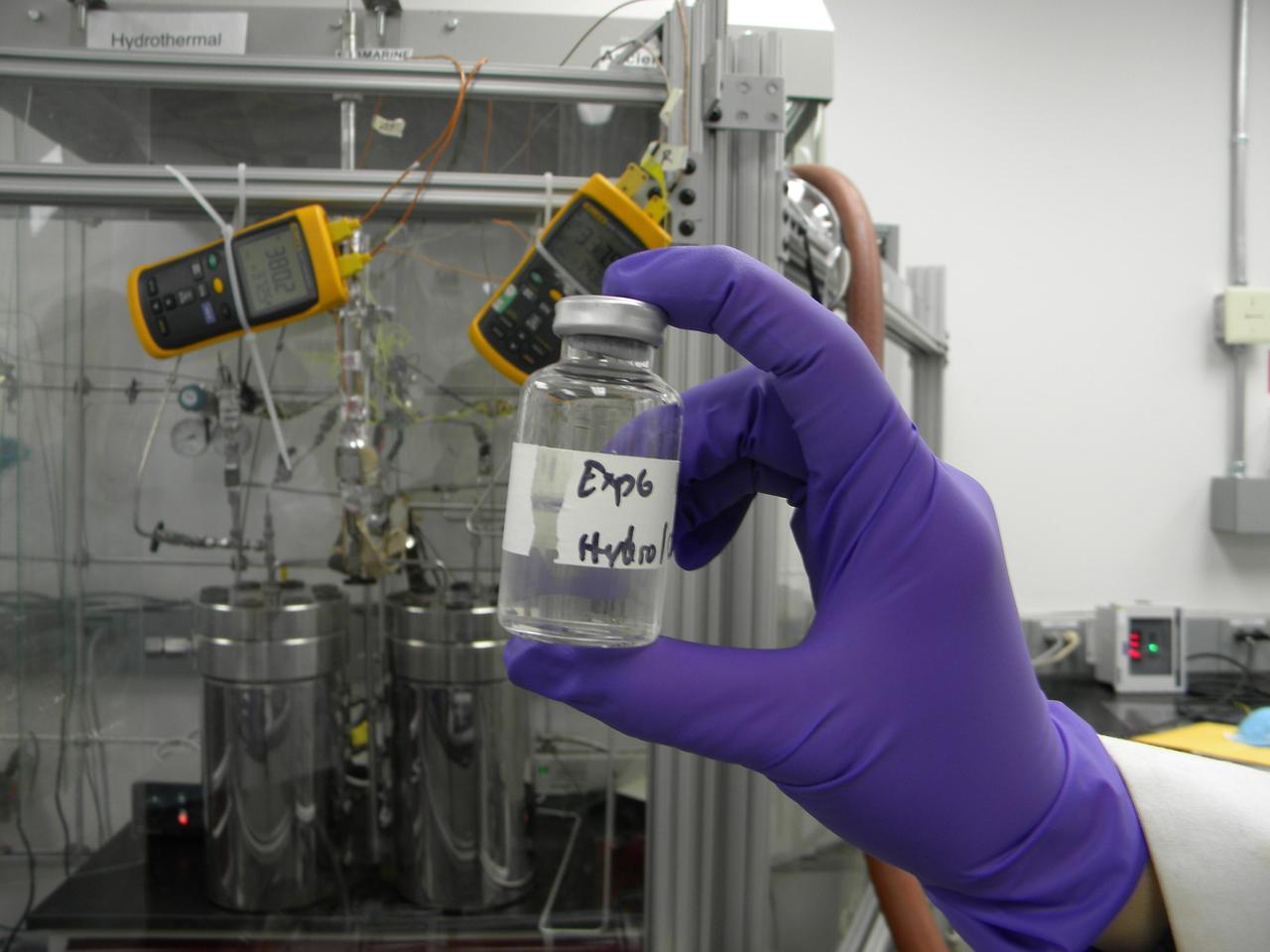
The NASA Astrobiology Icy Worlds team at NASA Jet Propulsion Laboratory are collecting samples from a simulated ocean vent to see if they can detect organic molecules being brewed.
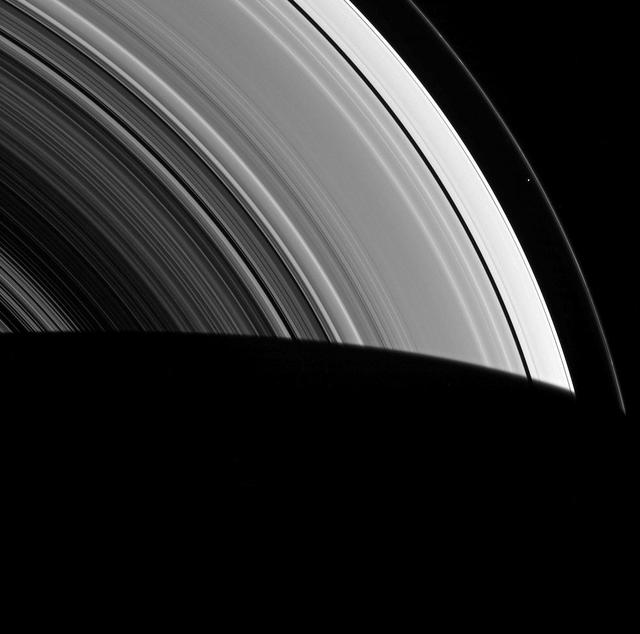
Seen by NASA Cassini spacecraft within the vast expanse of Saturn rings, Prometheus appears as little more than a dot. But that little moon still manages to shape the F ring, confining it to its narrow domain. Prometheus (53 miles, or 86 kilometers across) and its fellow moon Pandora (50 miles, or 81 kilometers across) orbit beside the F ring and keep the ring from spreading outward through a process dubbed "shepherding." This view looks toward the unilluminated side of the rings from about 45 degrees below the ringplane. The image was taken in green light with the Cassini spacecraft wide-angle camera on March 8, 2014. The view was obtained at a distance of approximately 533,000 miles (858,000 kilometers) from Prometheus and at a Sun-Prometheus-spacecraft, or phase, angle of 90 degrees. Image scale is 32 miles (51 kilometers) per pixel. http://photojournal.jpl.nasa.gov/catalog/PIA18272
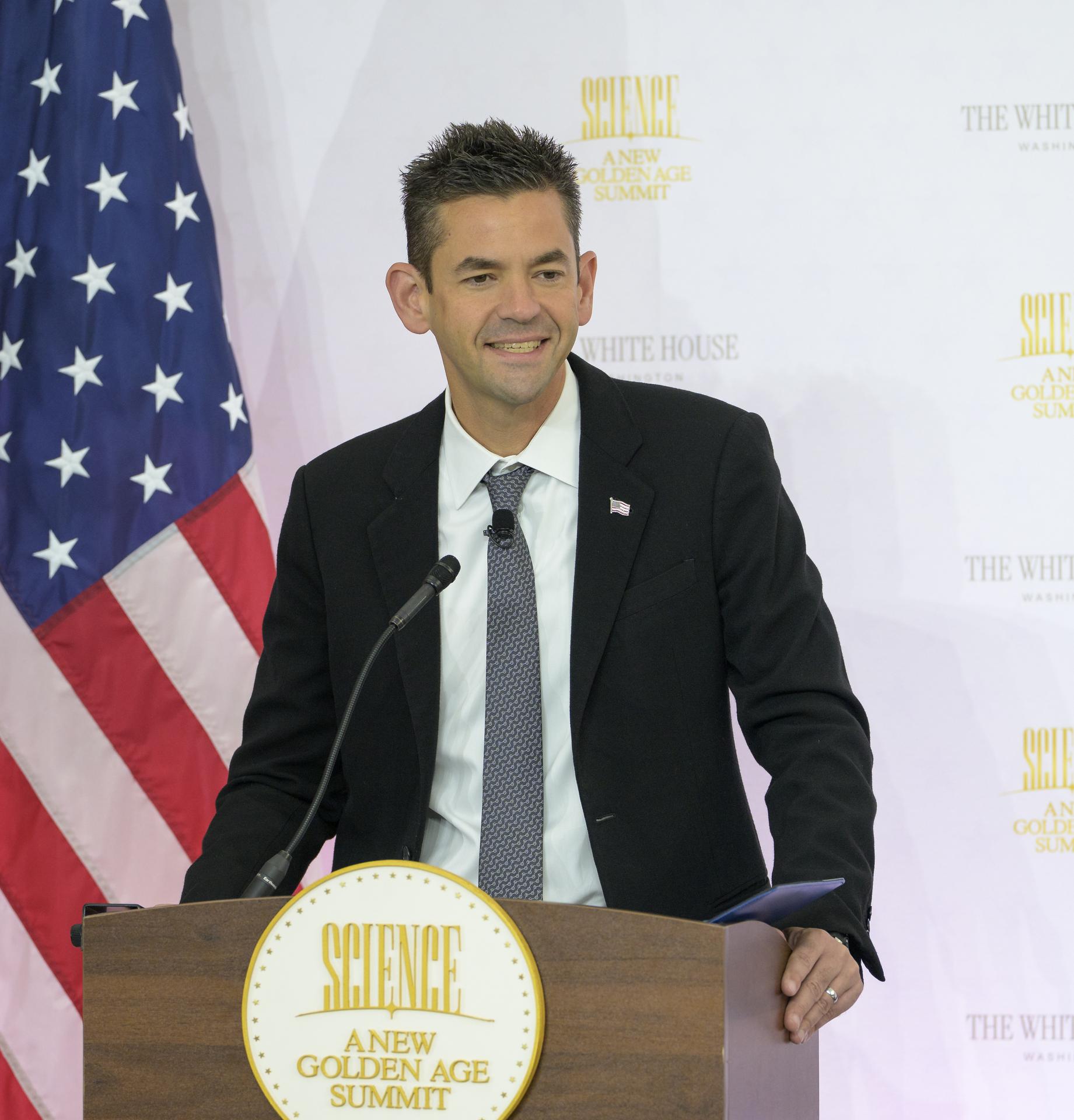
NASA Administrator Jared Isaacman gives remarks ahead of NASA and Department of Energy signing a new Memorandum of Understanding, “Accelerating American Leadership in Space Nuclear Power and Propulsion”, during the Golden Age Summit, Thursday, Oct. 8, 2026, at the Donald J. Trump Institute of Peace in Washington. Photo Credit: (NASA/Bill Ingalls)

NASA Administrator Jared Isaacman, seated left, and U.S. Secretary of Energy Chris Wright, seated right, sign a new Memorandum of Understanding, “Accelerating American Leadership in Space Nuclear Power and Propulsion”, as Director of the White House Office of Science and Technology Policy (OSTP) Michael Kratsios, looks on, during the Golden Age Summit, Thursday, Oct. 8, 2026, at the Donald J. Trump Institute of Peace in Washington. Photo Credit: (NASA/Bill Ingalls)

An introductory video, showing an artist concept of a Moon Base, is seen at the start of the the Golden Age Summit and the signing of a new Memorandum of Understanding between NASA and the Department of Energy, “Accelerating American Leadership in Space Nuclear Power and Propulsion”, Thursday, Oct. 8, 2026, at the Donald J. Trump Institute of Peace in Washington. Photo Credit: (NASA/Bill Ingalls)

NASA Administrator Jared Isaacman, seated left, and U.S. Secretary of Energy Chris Wright, seated right, hold the signed Memorandum of Understanding, “Accelerating American Leadership in Space Nuclear Power and Propulsion”, as Director of the White House Office of Science and Technology Policy (OSTP) Michael Kratsios, looks on, during the Golden Age Summit, Thursday, Oct. 8, 2026, at the Donald J. Trump Institute of Peace in Washington. Photo Credit: (NASA/Bill Ingalls)
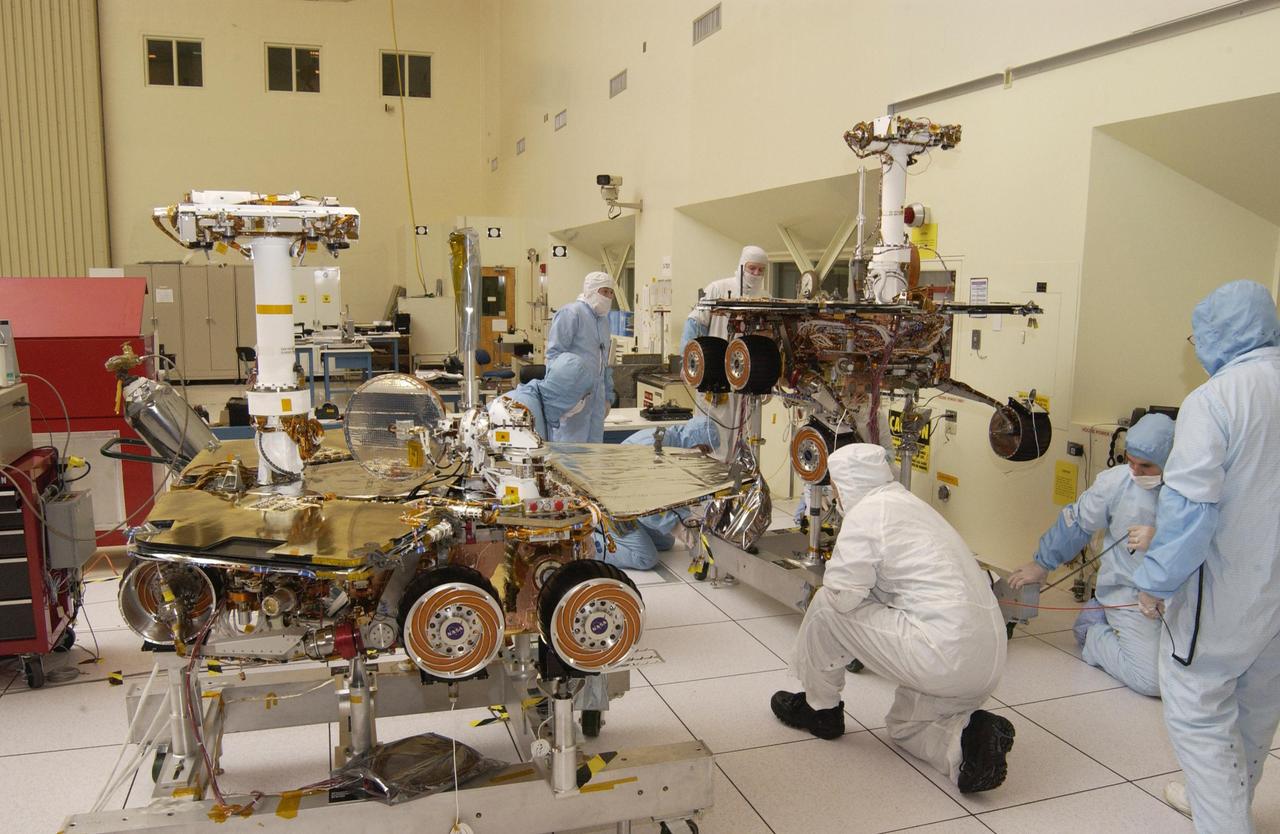
High Bay 1 looks much as it does today in this photo of NASA's Spirit and Opportunity Mars rovers being tested on Feb. 10, 2003. Some workers are wearing booties and others wear shoes that were stored in the gowning area and cleaned regularly. https://photojournal.jpl.nasa.gov/catalog/PIA23244
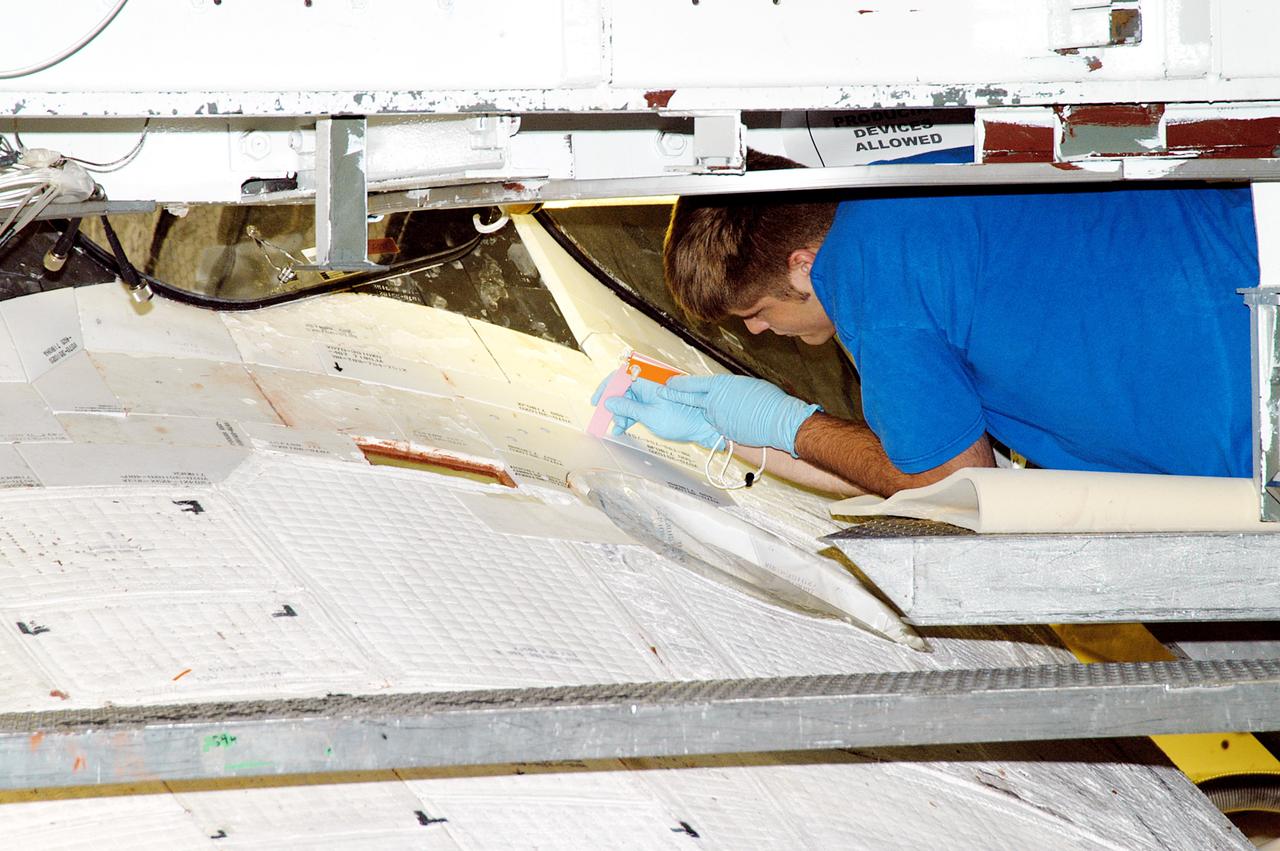
KENNEDY SPACE CENTER, FLA. - In the Orbiter Processing Facility, United Space Alliance technician Jamie Haynes does a gap test on the tiles of the nose of orbiter Atlantis as part of return-to-flight activities. Atlantis is scheduled for mission STS-114, a return-to-flight test mission to the International Space Station.
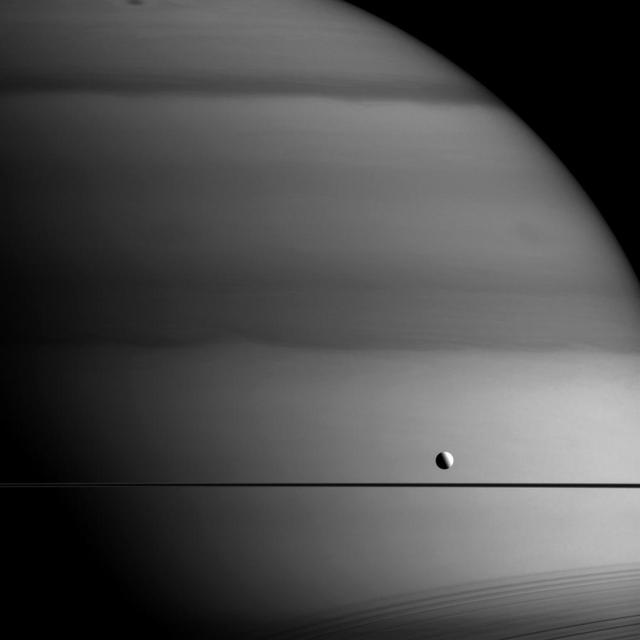
Why does Saturn look like it's been painted with a dark brush in this infrared image, but Dione looks untouched? Perhaps an artist with very specific tastes in palettes? The answer is methane. This image was taken in a wavelength that is absorbed by methane. Dark areas seen here on Saturn are regions with thicker clouds, where light has to travel through more methane on its way into and back out of the atmosphere. Since Dione (698 miles or 1,123 kilometers across) doesn't have an atmosphere rich in methane the way Saturn does, it does not experience similar absorption -- the sunlight simply bounces off its icy surface. Shadows of the rings are seen cast onto the planet at lower right. This view looks toward Saturn from the unilluminated side of the rings, about 0.3 degrees below the ring plane. The image was taken with the Cassini spacecraft wide-angle camera on May 27, 2015 using a spectral filter which preferentially admits wavelengths of near-infrared light centered at 728 nanometers. http://photojournal.jpl.nasa.gov/catalog/PIA18336
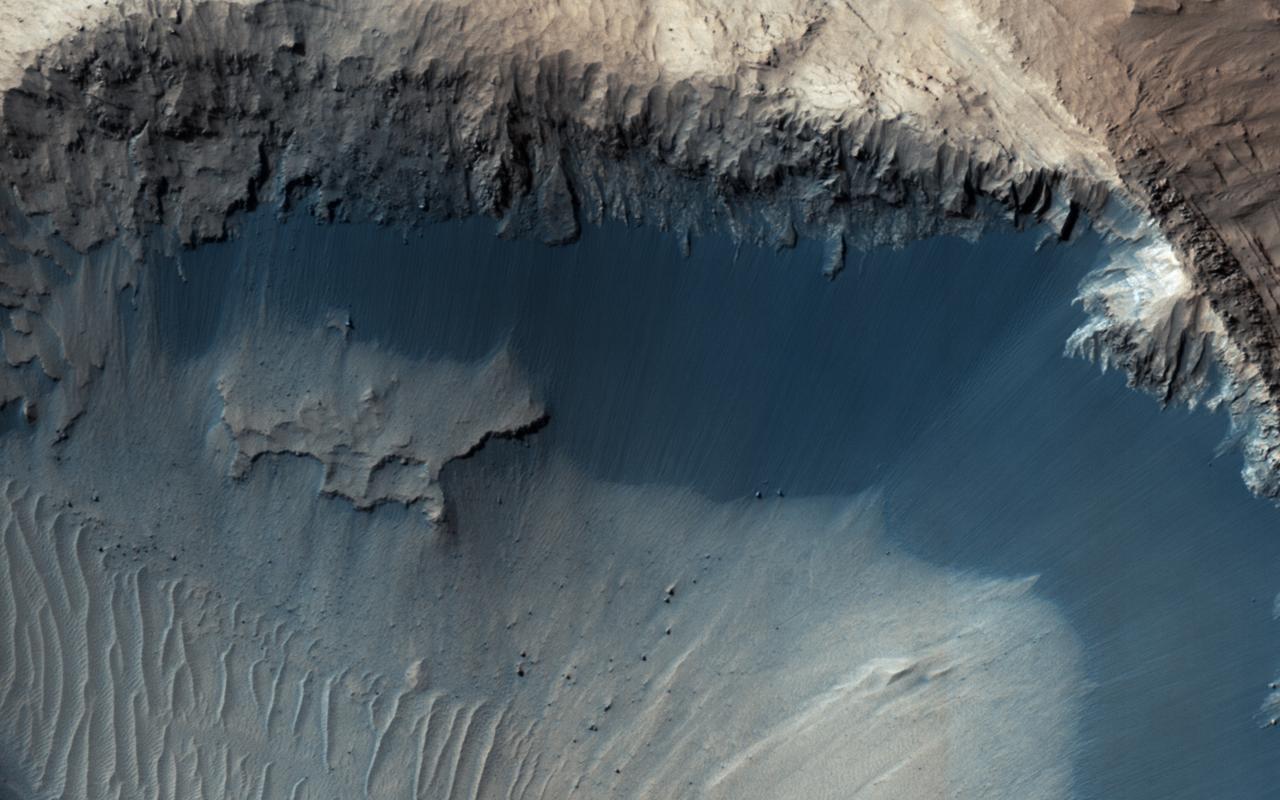
This image from NASA's Mars Reconnaisance Orbiter (MRO) shows one possible place where sand grains are being produced on Mars today. Discovered in images from the Context Camera, this region exhibits dark material that is being eroded from dark layers in the bedrock of a semicircular depression near the boundary of the Southern highlands and the Northern lowlands. Downslope lineations support the notion that these dark sediments are derived locally, and did not accumulate here by coincidence because of the winds. The grains of sand that make up sand dunes on Earth and Mars have a hazardous existence because of the way that they travel. Wind-blown sand is lifted above the surface of each planet before crashing onto the ground and bouncing in a sequence of repeated hops, a process called saltation. Sand grains can also roll along the ground as they are blown by the wind, and they are also jostled by other sand gains that are similarly flying across the surface. All of these repeated impacts tend to wear down the sand grains, smoothing them into a more spherical shape and breaking off small fragments that supply the vast dust deposits of Mars. This process (known as comminution) ultimately destroys sand grains and limits the length of time that the particles exist. The fact that we see active sand dunes on Mars today requires that sand particles must be resupplied to replace the grains that are lost over time. Where are the modern day sources of sand on Mars? https://photojournal.jpl.nasa.gov/catalog/PIA22043
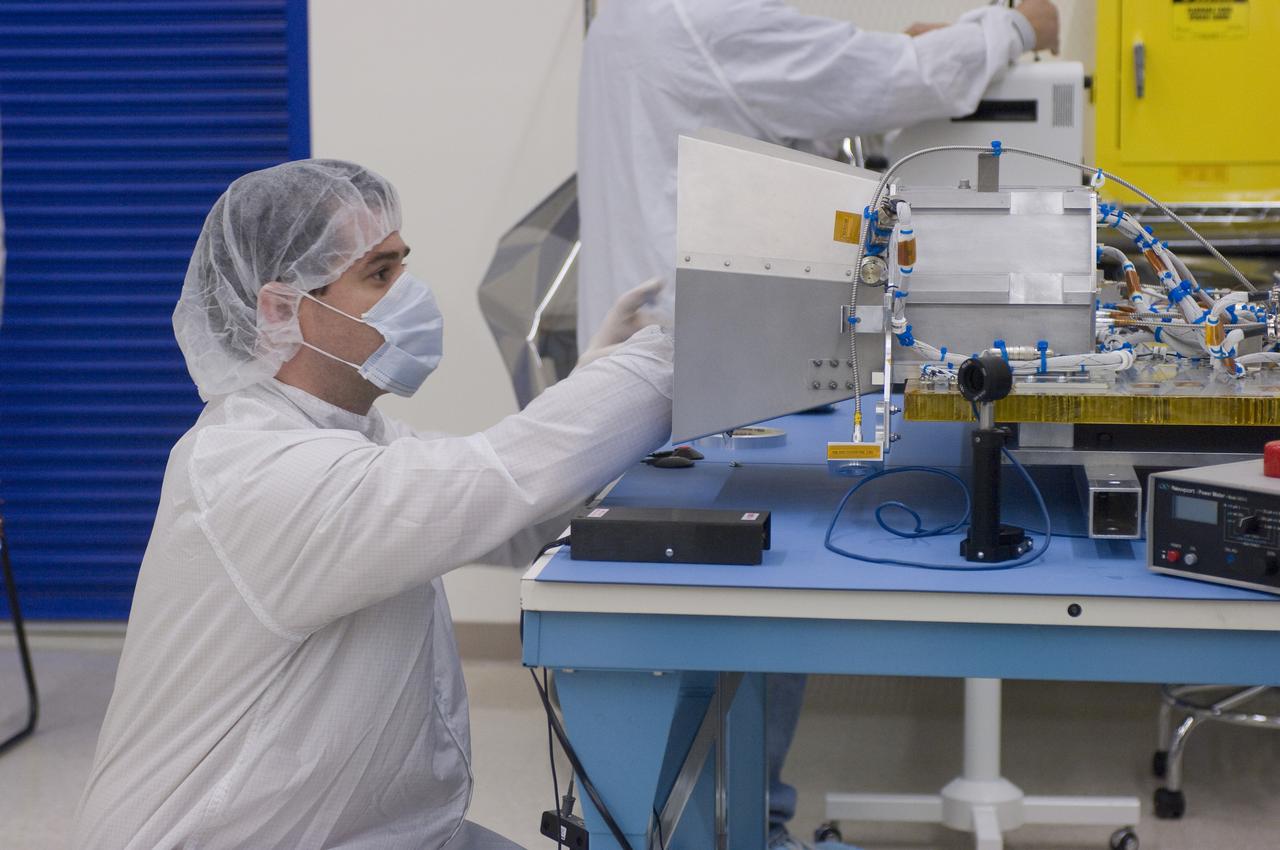
LCROSS - Tony Colaprete does some adjustment during calibration and camera check out
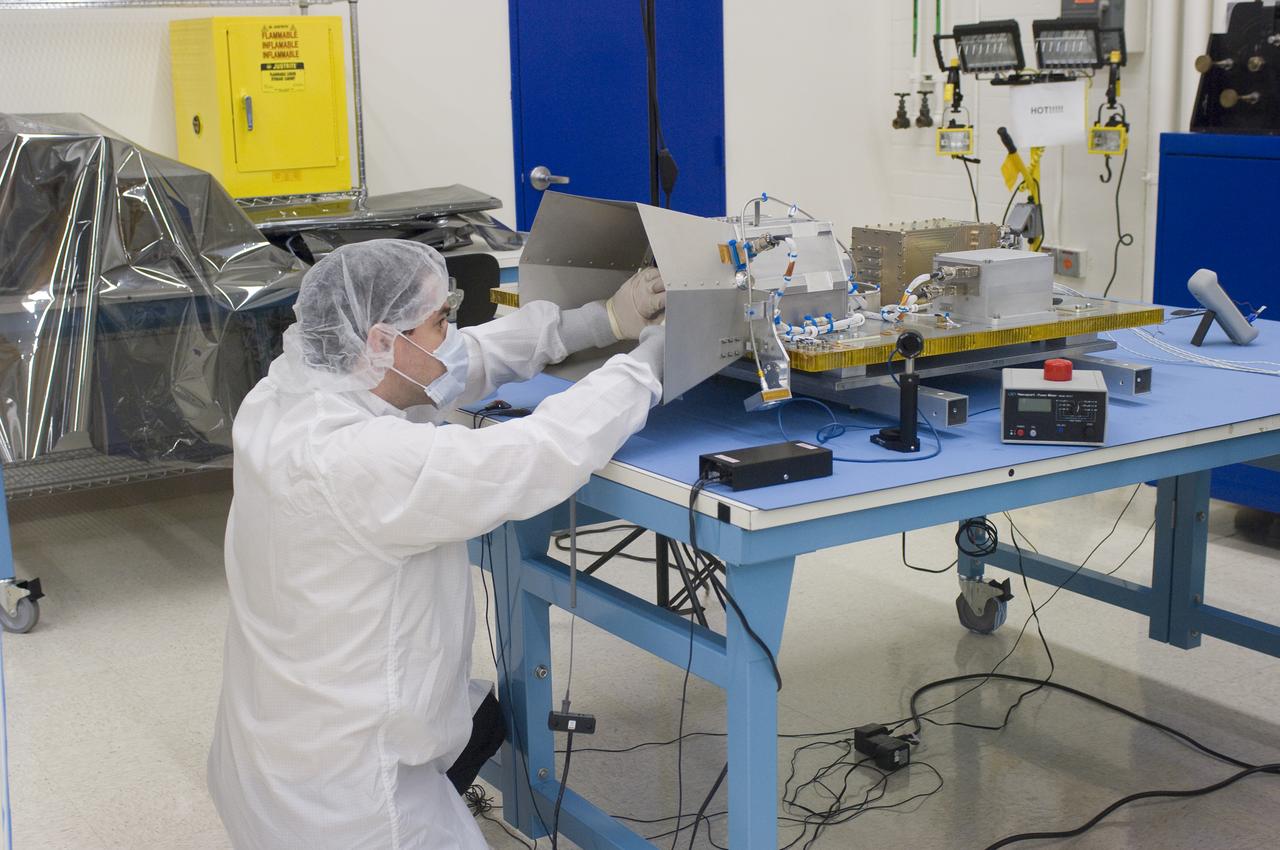
LCROSS in Ames clean room of N-240 - Tony Colaprete does some adjustment during calibration and camera check out
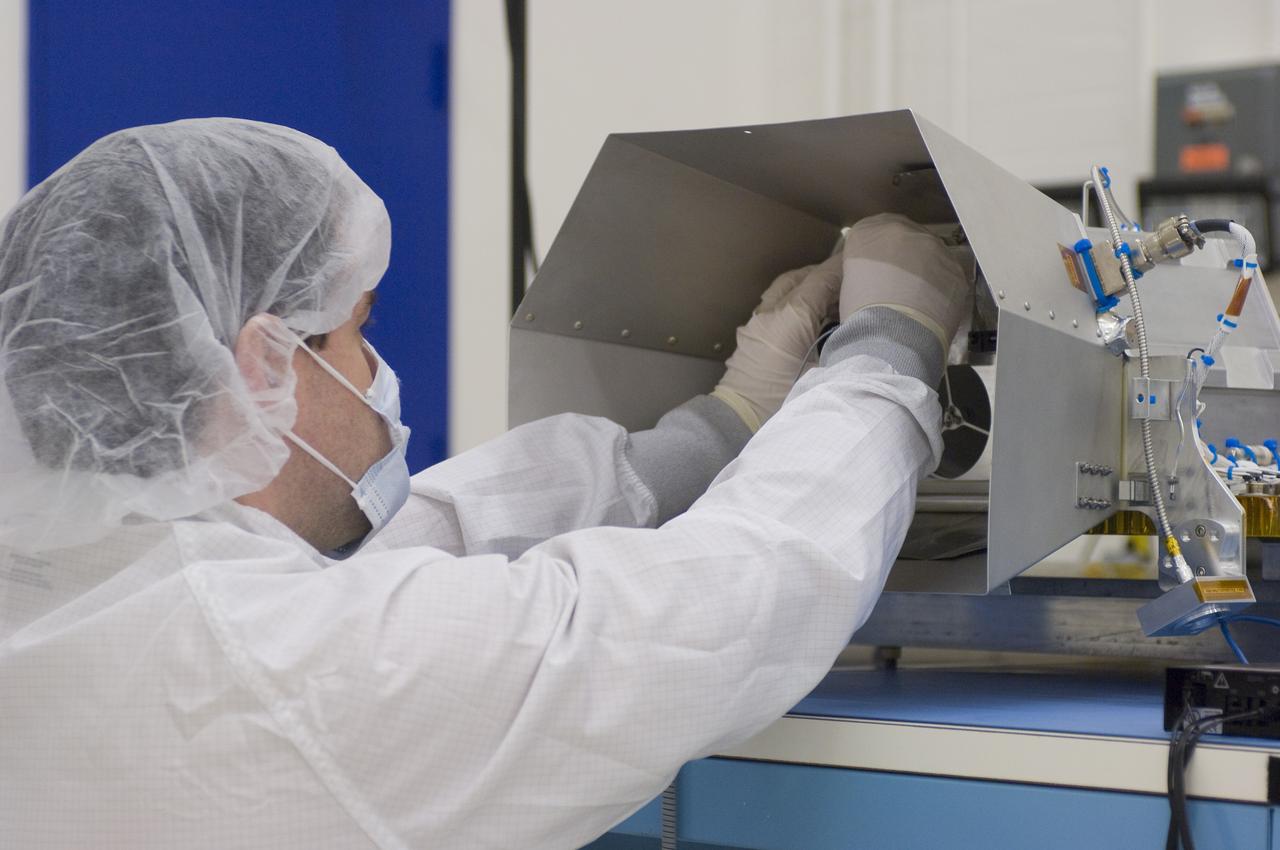
LCROSS - Tony Colaprete does some adjustment during calibration and camera check out

Why does Fargo flood? The Red River of the North, which forms the border between North Dakota and Minnesota, has a long history of severe floods. Major floods include those of 1826, 1897, 1950, 1997, and now 2009.

What does Earth look like when viewed from Mars? At the time, Mars and the orbiting camera were 139 million kilometers 86 million miles from Earth and almost 1 billion kilometers nearly 600 million miles from Jupiter.
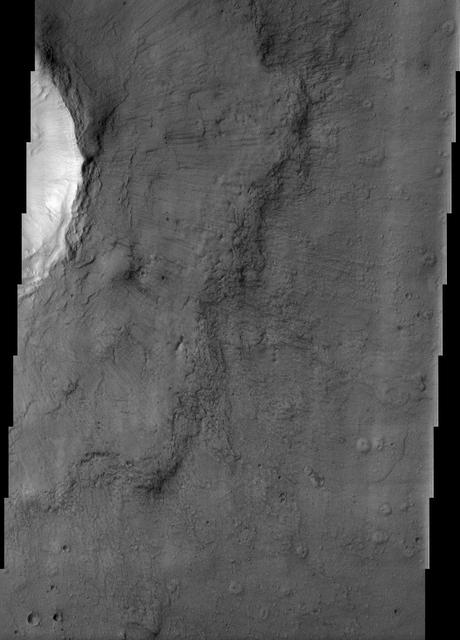
The ejecta blanket of the crater in this image from NASA Mars Odyssey spacecraft does not resemble the blocky, discontinuous ejecta associated with most fresh craters on Mars. Rather, the continuous lobes of material seen around this crater are evidence that the crater ejecta were fluidized upon impact of the meteor that formed this crater. Impact ejecta become fluidized when a meteor strikes a surface that has a considerable volatile content. The volatiles mixed with the ejecta form a flow of material that moves outward from the crater and produces the morphology seen in this THEMIS visible image. http://photojournal.jpl.nasa.gov/catalog/PIA04025
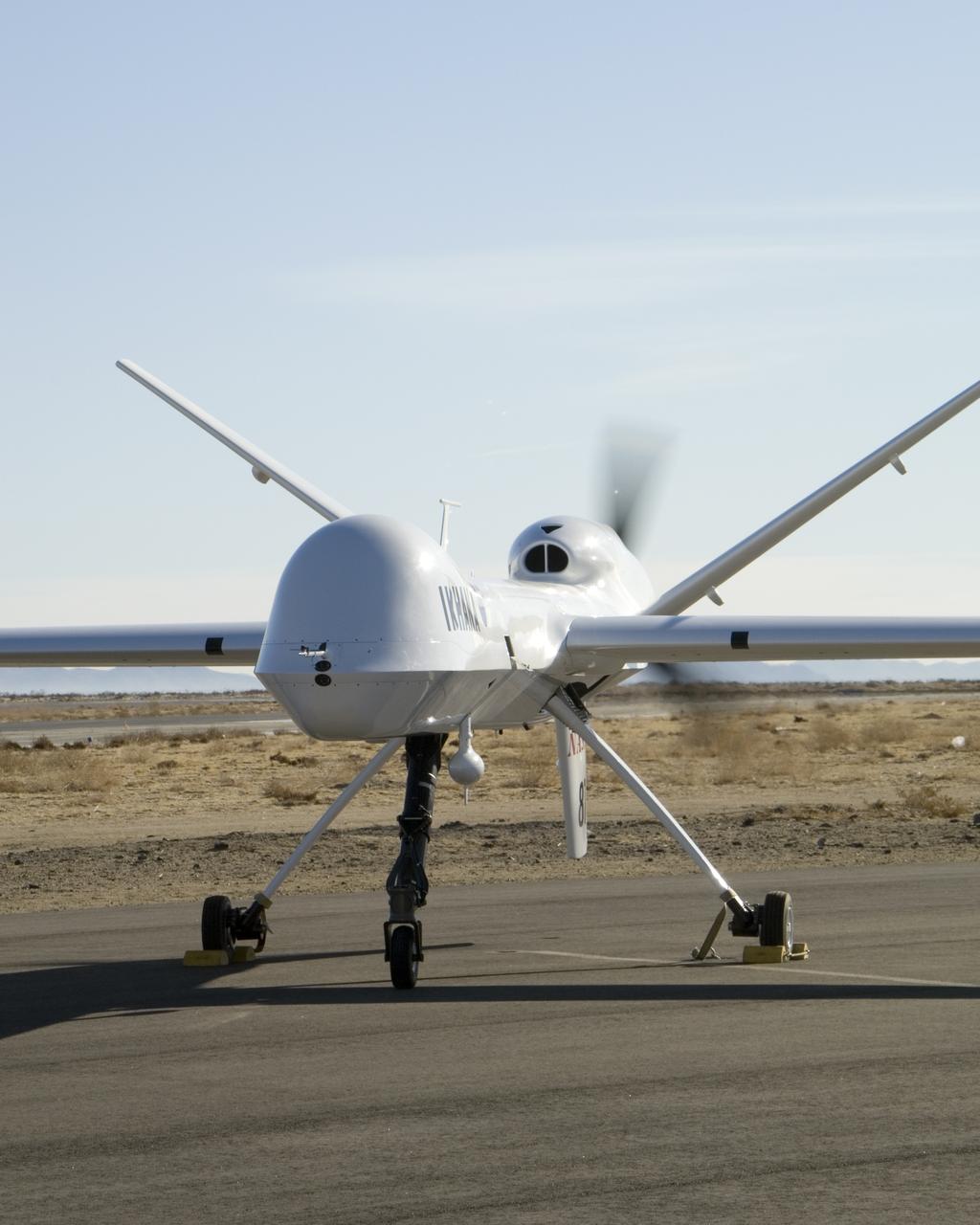
Distinguished by its large nose payload bay, NASA's Ikhana unmanned aircraft does an engine run prior to takeoff from General Atomics' Grey Butte airfield.
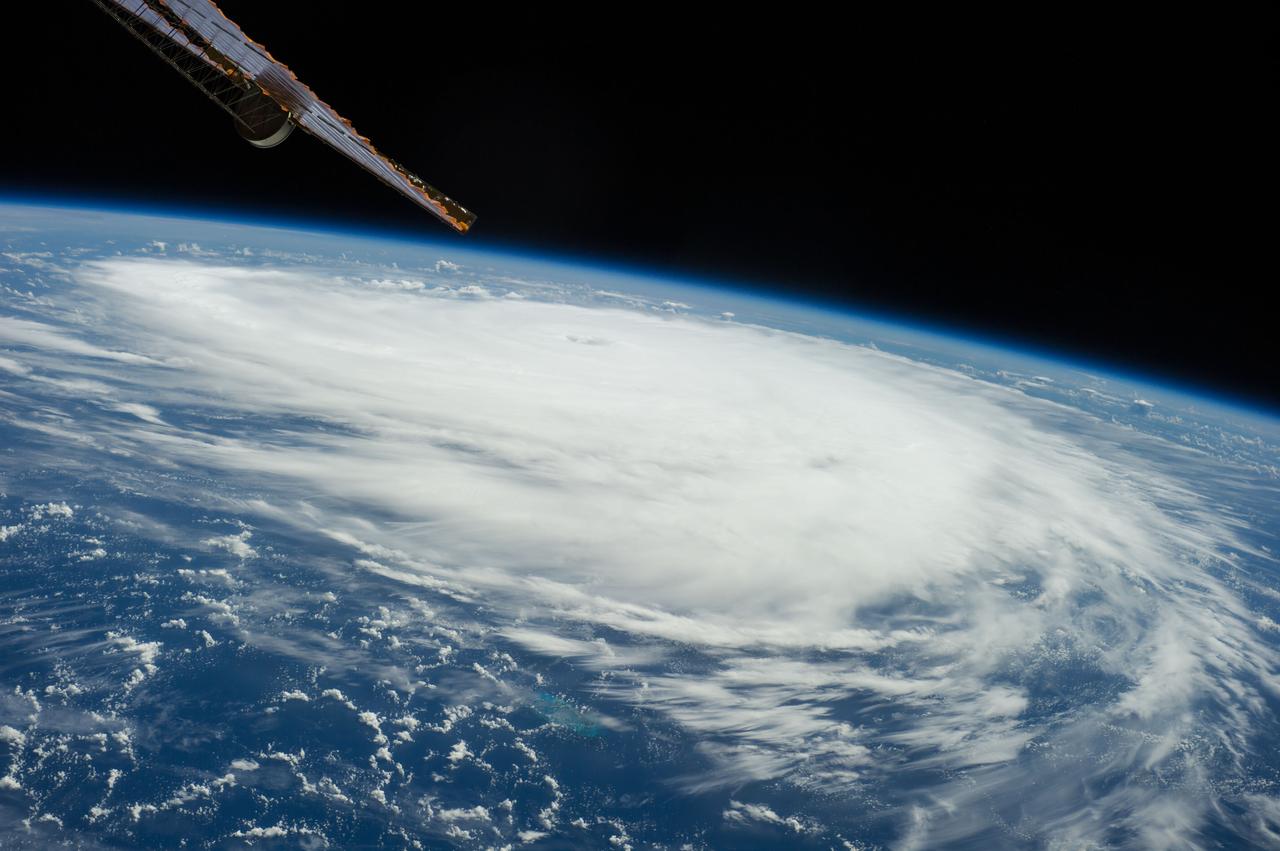
ISS041-E-011814 (16 Sept. 2014) --- Though having been upgraded from a tropical storm to a Category 2 hurricane, the Atlantic-borne Edouard thus far has avoided land interests as it reached maximum sustained winds of 105 miles per hout, churning in ocean waters several hundred miles southeast of Bermuda. The Expedition 41 crew members onboard the International Space Station photographed and distributed a series of images via station-to-ground downlinks and via social media. This photo was taken at 15:29:04 GMT on Sept. 16, 2014. Though it had well-defined eye at this juncture, the eye does not show clearly in this image, as it does in others.
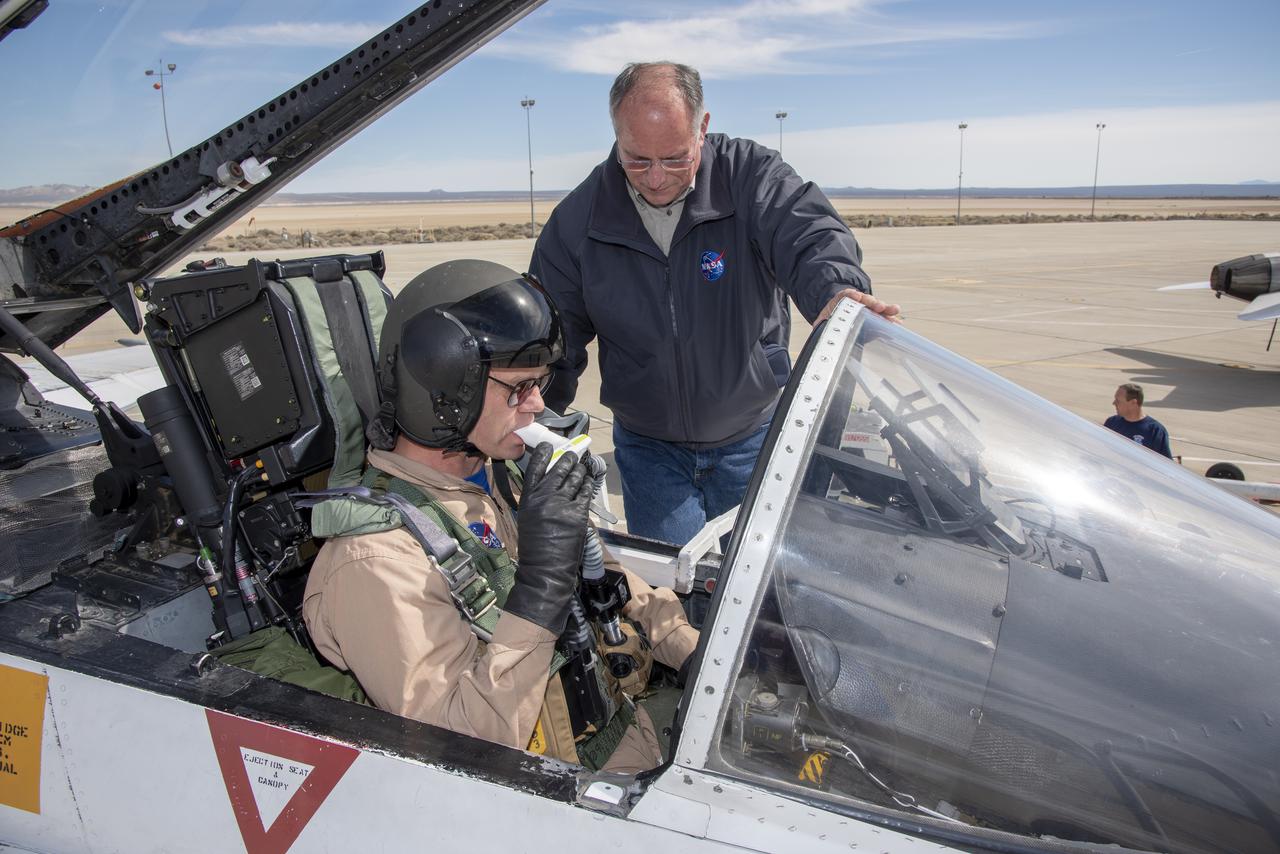
Phillip Wellner from Life Support conducts a spirometry test on NASA Pilot Nils Larson before a Pilot Breathing Assessment flight at NASA’s Armstrong Flight Research Center in California.Â
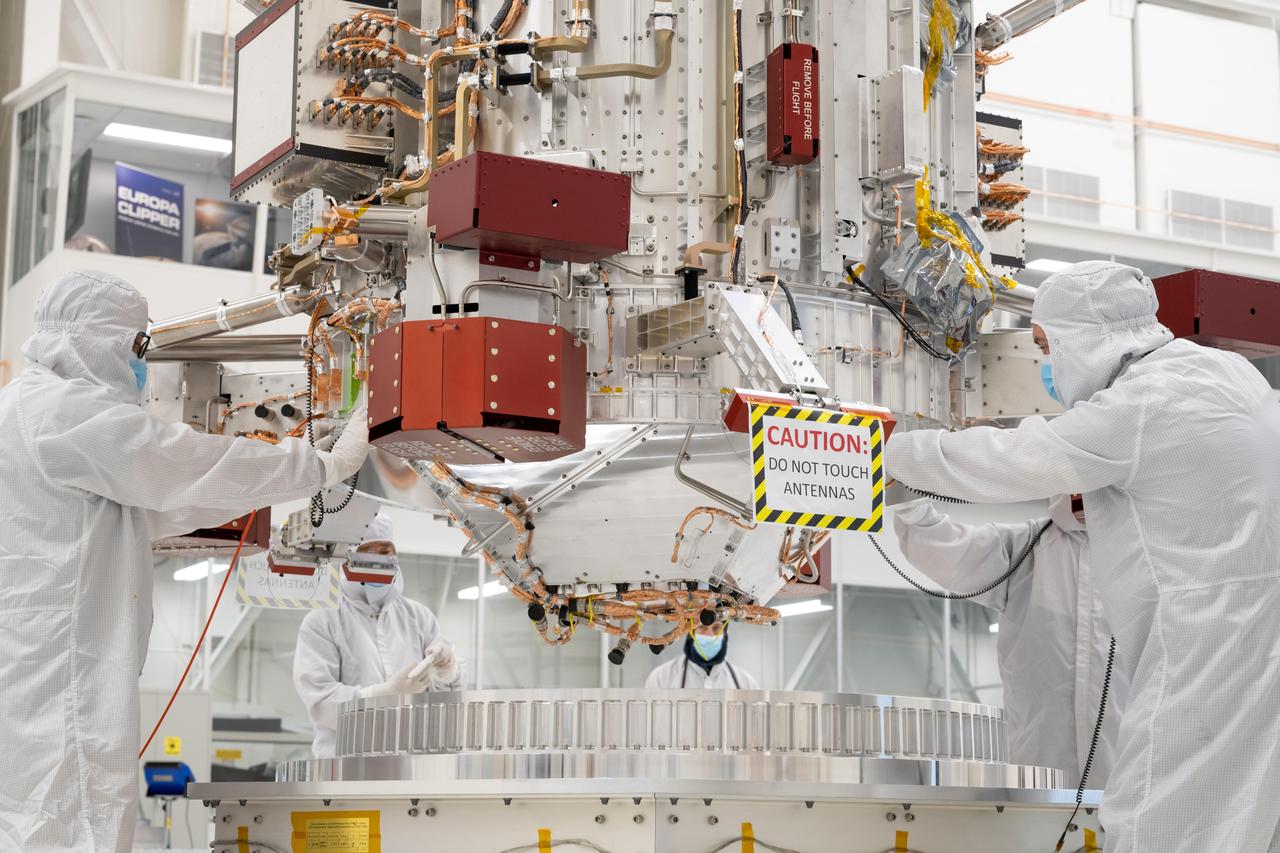
Engineers and technicians use a crane to lower the main body of NASA's Europa Clipper spacecraft into position in the High Bay 1 clean room of the Spacecraft Assembly Facility at the agency's Jet Propulsion Laboratory in Southern California. Standing 10 feet (3 meters) high and 5 feet (1.5 meters) wide, the core will be the focus of attention as the spacecraft is assembled for its launch to Jupiter's moon Europa in October 2024.This image was taken on Aug. 9, 2022. Europa Clipper will conduct nearly 50 flybys of the icy Jovian moon Europa, which scientists are confident harbors an internal ocean containing twice as much water as Earth's oceans combined. The moon may currently have conditions suitable for supporting life. The spacecraft's nine science instruments, plus a gravity science investigation, will gather data on the moon's atmosphere, surface, and interior – information that scientists will use to gauge the depth and salinity of the ocean, the thickness of the ice crust, and potential plumes that may be venting subsurface water into space. https://photojournal.jpl.nasa.gov/catalog/PIA25492
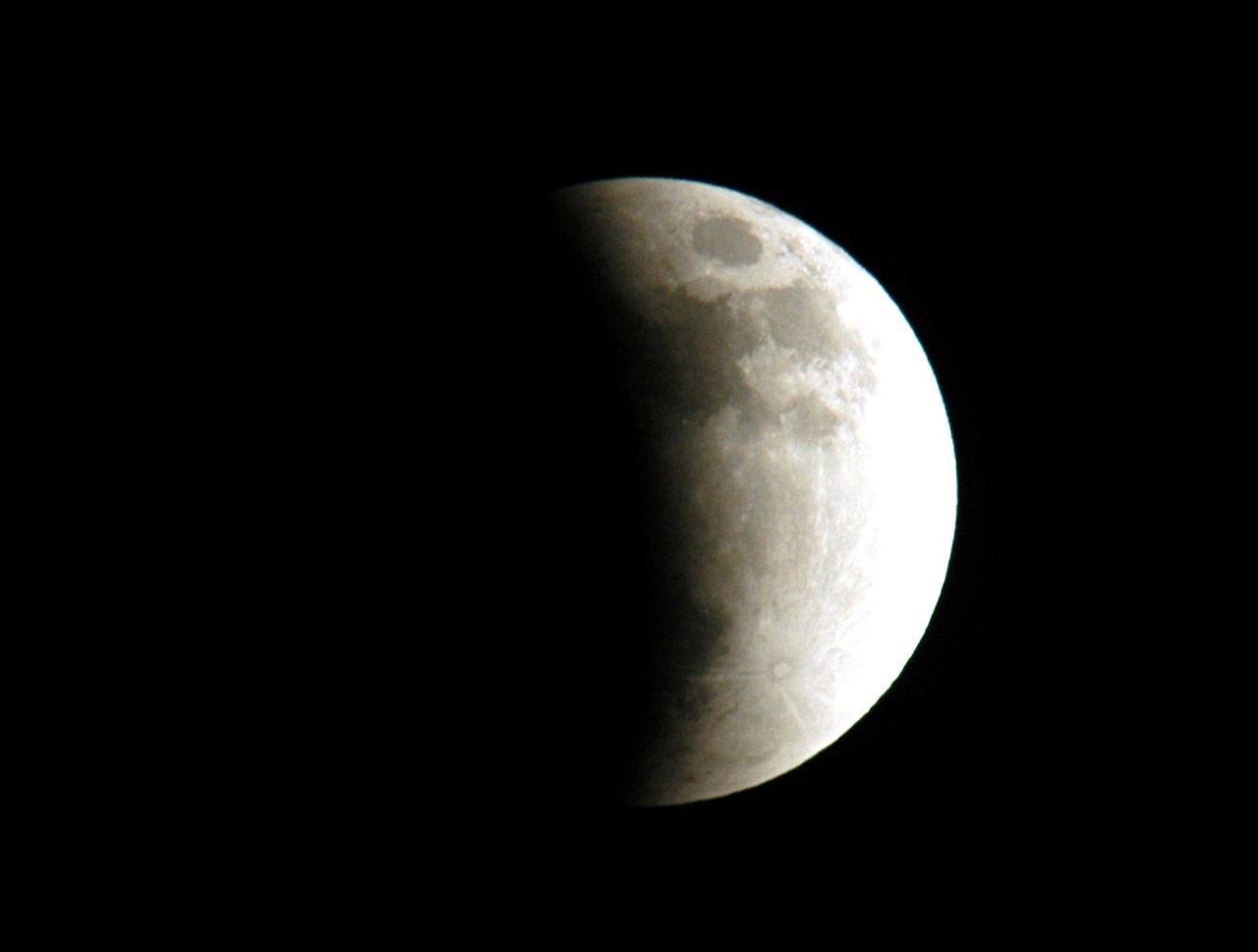
KENNEDY SPACE CENTER, FLA. - The start of a lunar eclipse is viewed from Merritt Island, Fla. Eclipses occur when the Sun, Earth and Moon line up. They are rare because the Moon usually passes above or below the imaginary line connecting Earth and the Sun. The Earth casts a shadow that the Moon can pass through - when it does, it is called a lunar eclipse.
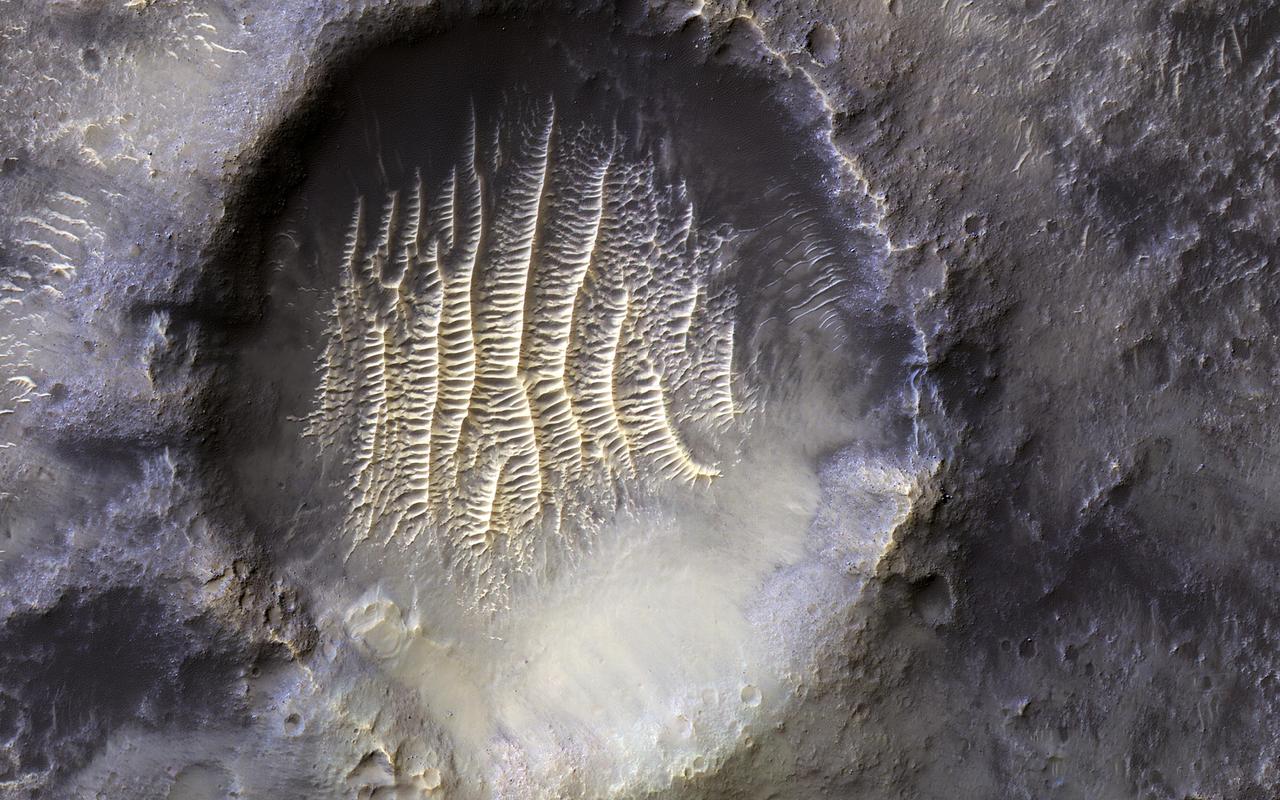
The crater in the center of this HiRISE image defines where zero longitude is on Mars, like the Greenwich Observatory does for the Earth. Originally, the larger crater that this crater sits within, called Airy Crater, defined zero longitude for the Red Planet. But as higher resolution images became available, a smaller feature was needed. This crater, called Airy-0 (zero), was selected because it would require no adjustment of existing maps. These days, longitude on Mars is measured even more precisely using radio tracking of landers such as InSight, but everything is still defined to keep zero longitude centered on this crater. https://photojournal.jpl.nasa.gov/catalog/PIA25090
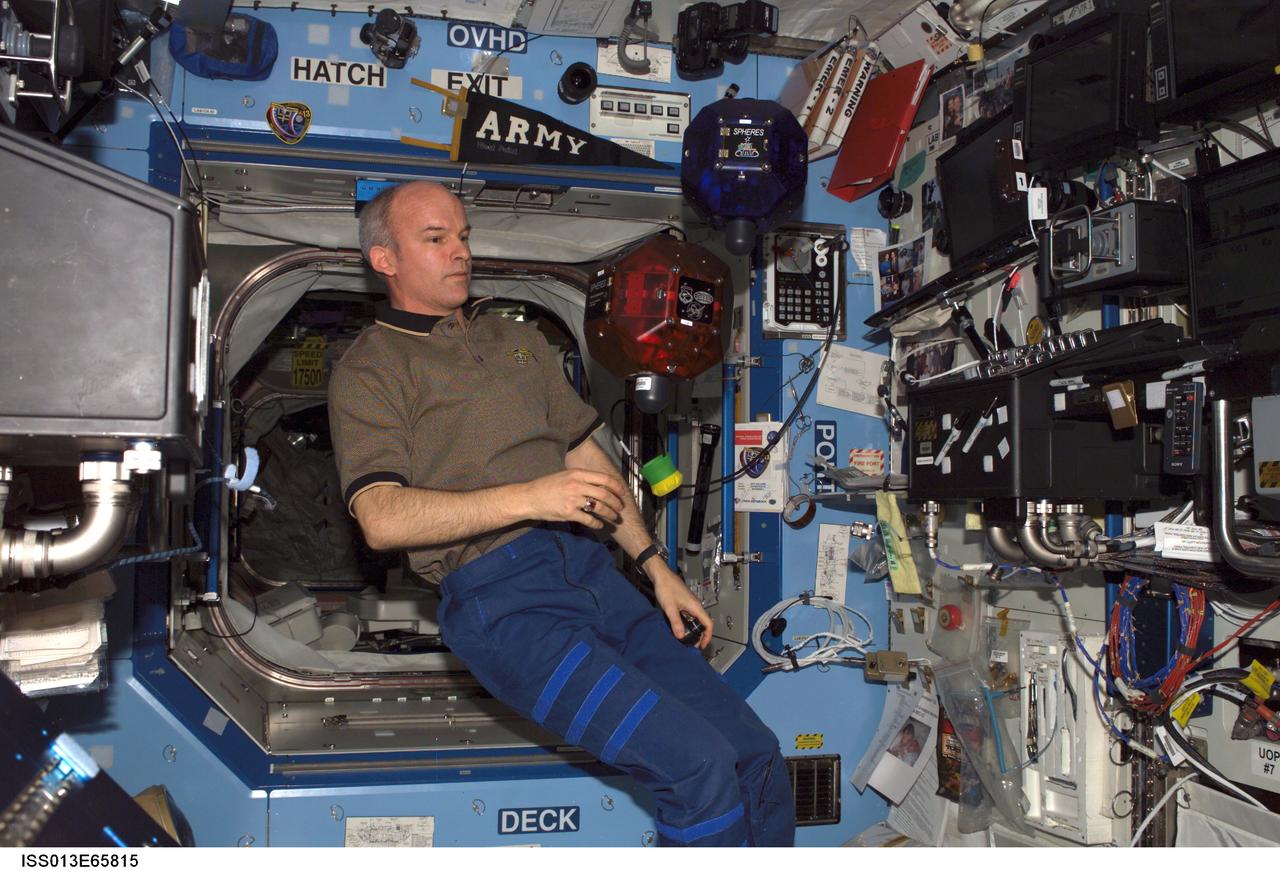
ISS013-E-65815 (12 Aug. 2006) --- Astronaut Jeffrey N. Williams, Expedition 13 NASA space station science officer and flight engineer, does a check of the Synchronized Position Hold, Engage, Reorient, Experimental Satellites (SPHERES) Beacon / Beacon Tester in the Destiny laboratory of the International Space Station.
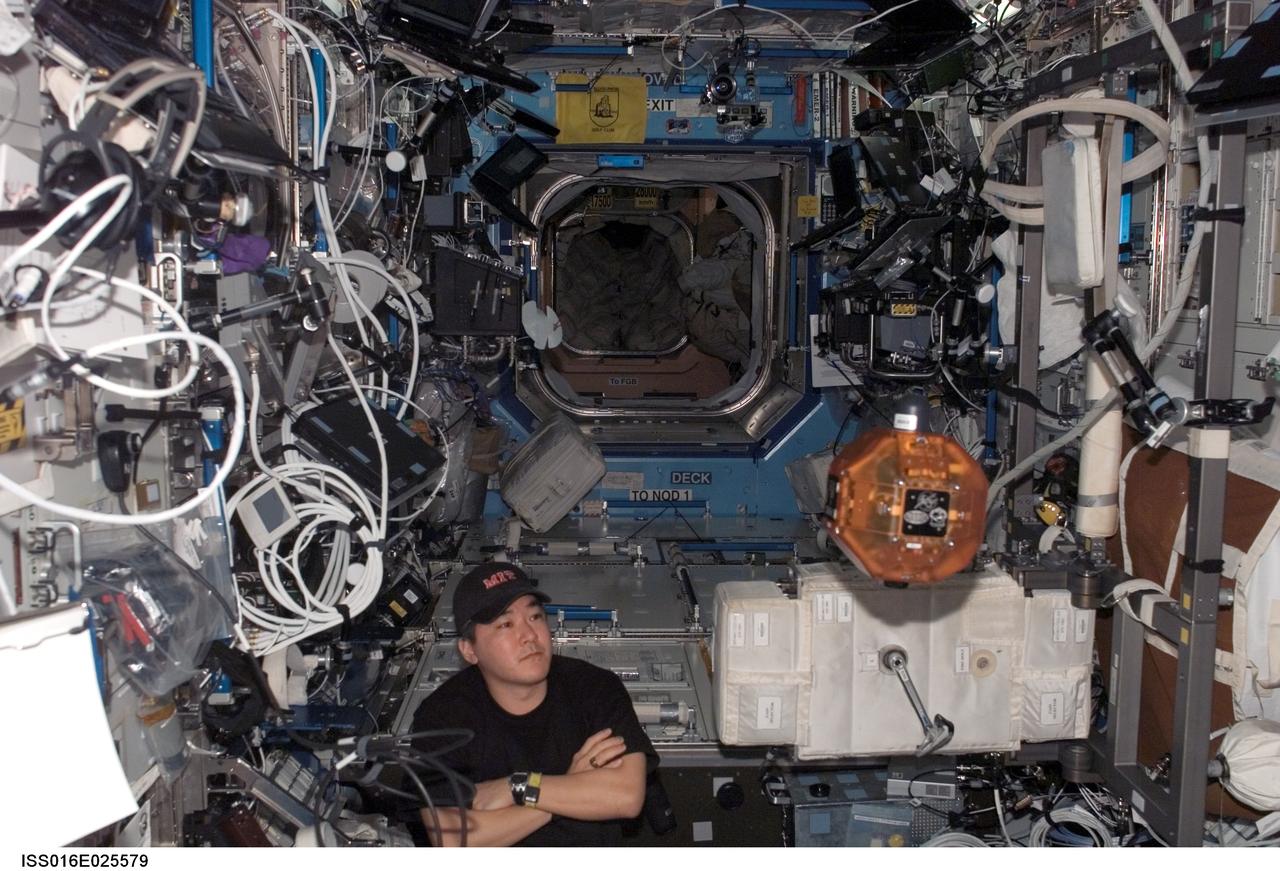
ISS016-E-025579 (27 Jan. 2008) --- Astronaut Daniel Tani, Expedition 16 flight engineer, does a check of the Synchronized Position Hold, Engage, Reorient, Experimental Satellites (SPHERES) Beacon/Beacon Tester in the Destiny laboratory of the International Space Station.
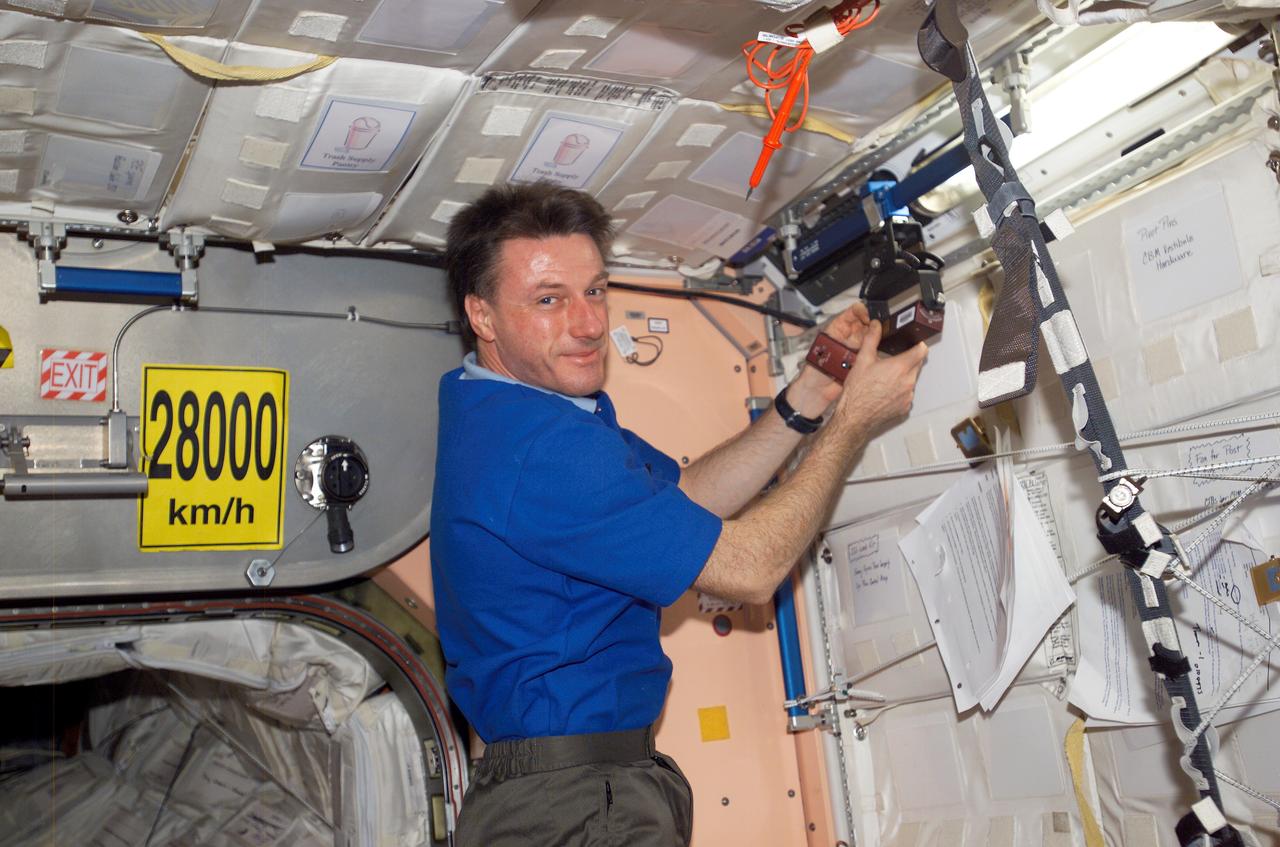
ISS008-E-19136 (24 March 2004) --- Astronaut C. Michael Foale, Expedition 8 commander and NASA ISS science officer, does a check of the Synchronized Position Hold, Engage, Reorient, Experimental Satellites (SPHERES) Beacon / Beacon Tester in the Unity node of the International Space Station.
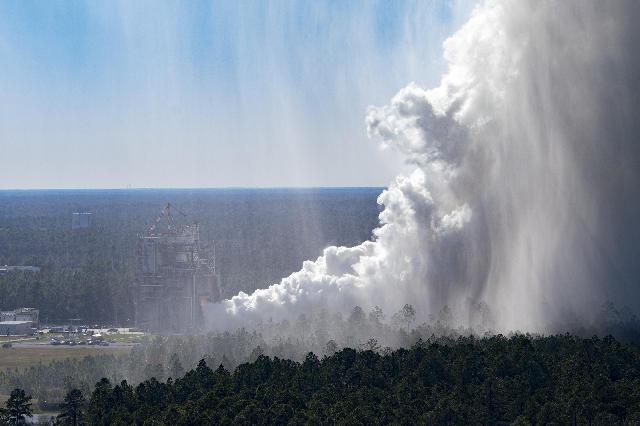
The cloud of steam is visible at NASA’s Stennis Space Center during the Oct. 17 hot fire, which marks the first test in the critical series to support future SLS (Space Launch System) missions to deep space. The steam released during the full duration, 550-second test is water and does not pollute the atmosphere.
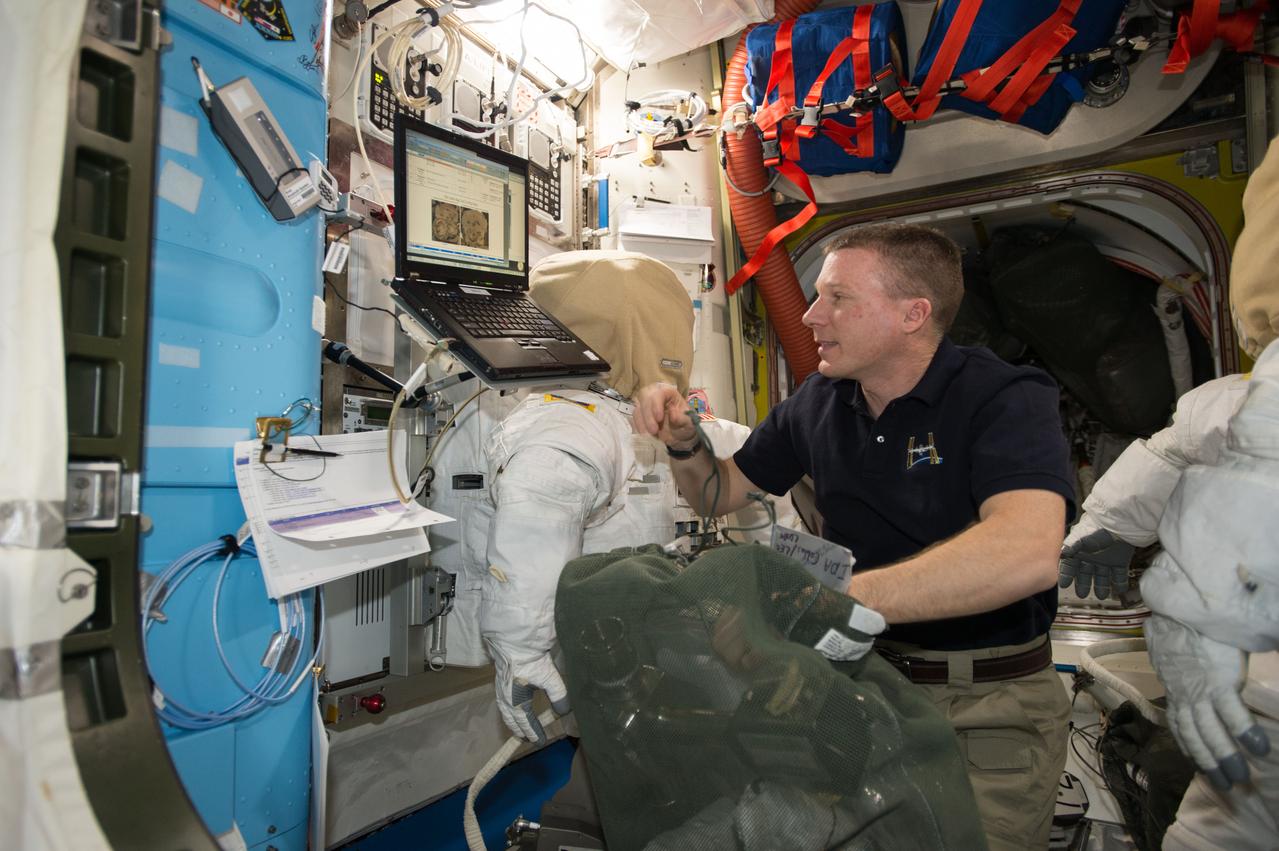
ISS042E238515 (02/10/2015) --- U.S. astronaut Terry Virts does a checkout of his spacesuit’s systems on Feb. 10, 2015 in preparation for an extravehicular activity (EVA) or spacewalk. Virts is a Flight Engineer of Expedition 42 onboard the International Space Station.
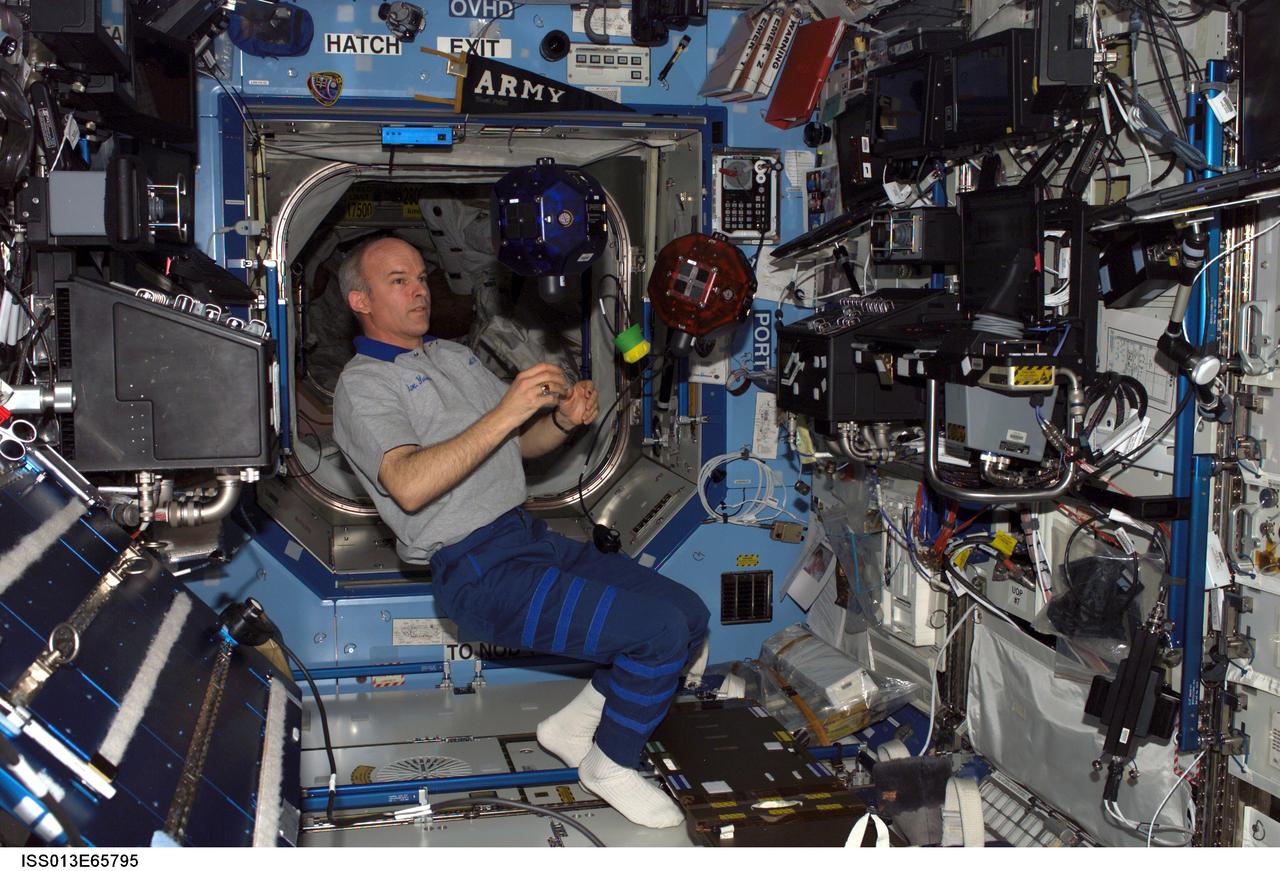
ISS013-E-65795 (12 Aug. 2006) --- Astronaut Jeffrey N. Williams, Expedition 13 NASA space station science officer and flight engineer, does a check of the Synchronized Position Hold, Engage, Reorient, Experimental Satellites (SPHERES) Beacon / Beacon Tester in the Destiny laboratory of the International Space Station.
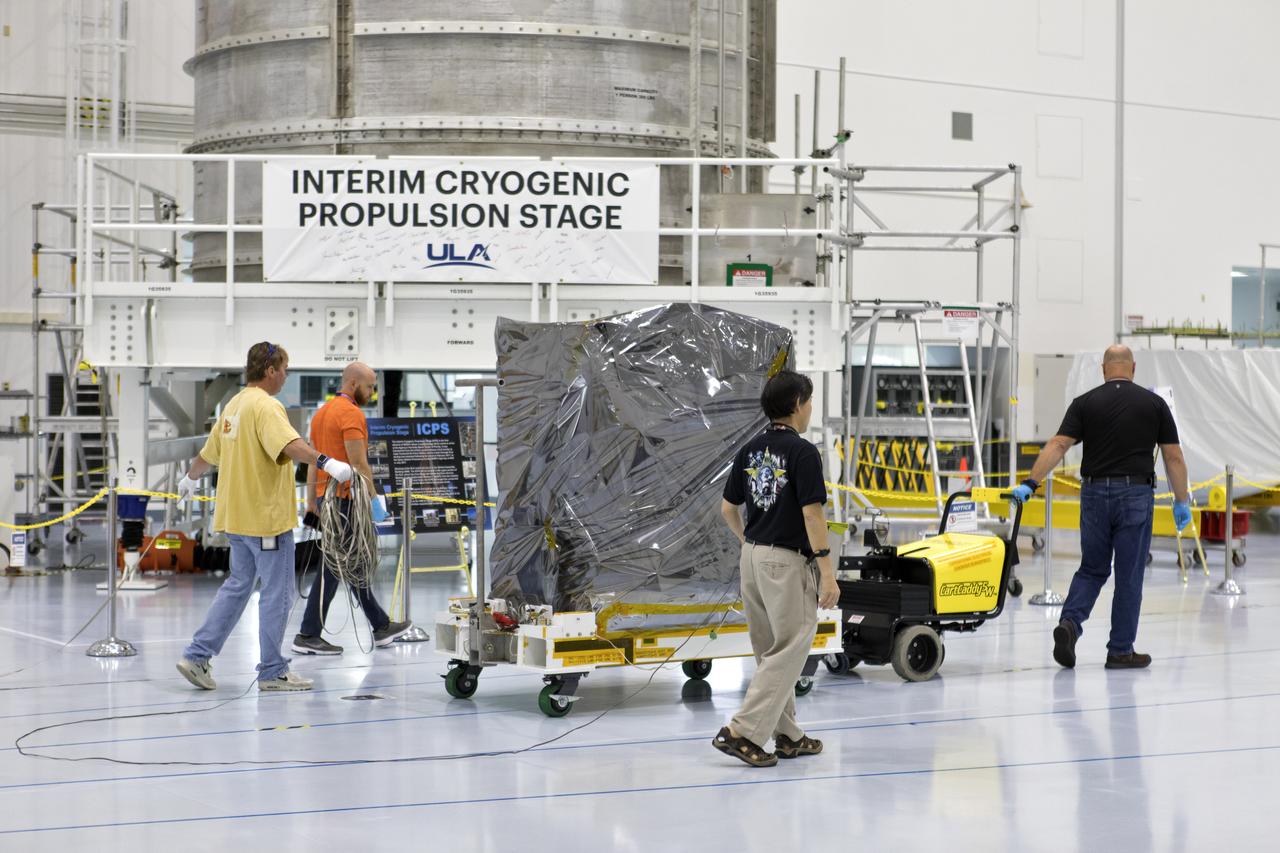
The technology to replenish crucial satellite supplies in space currently does not exist. NASA is looking to help change that with Robotic Refueling Mission 3 (RRM3). The fluid transfer module arrived at Kennedy Space Center on May 8, and is planned to launch to the International Space Station later this year.
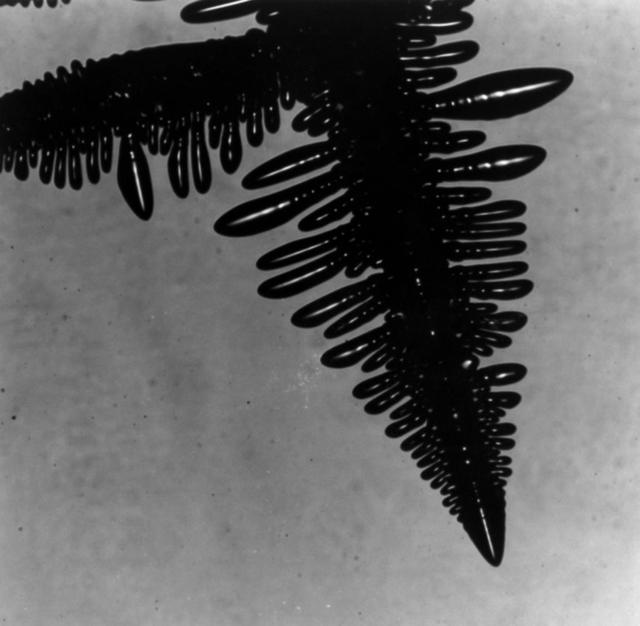
Typical picture of a dendrite: Notice how the branch on the left has no arms coming off the top. This is because of the convective forces (hot liquid rises) that the top of the branch is not solidifying (growing arms) like the bottom, cooler area. The is a gravitational effect. This does not happen in space.
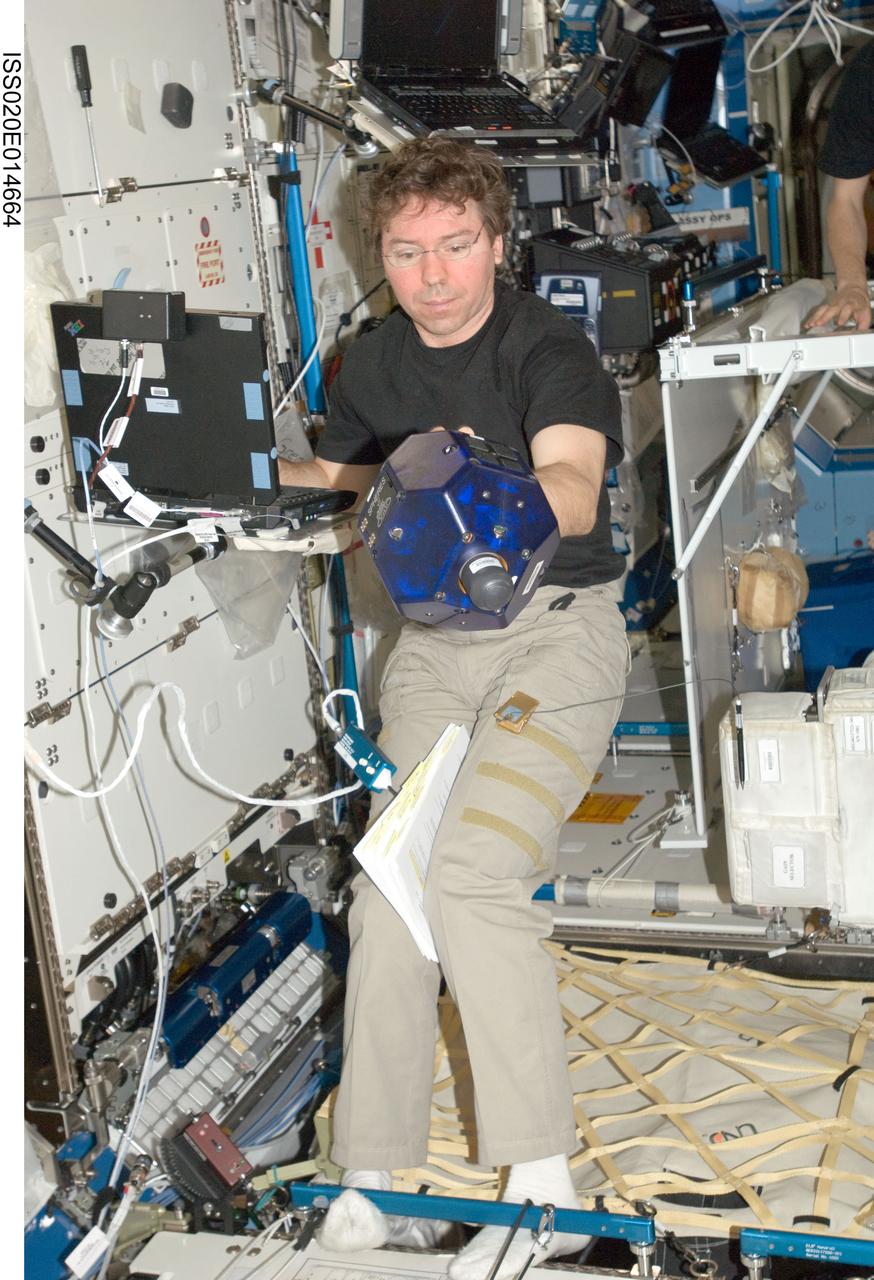
ISS020-E-014664 (26 June 2009) --- NASA astronaut Michael Barratt, Expedition 20 flight engineer, does a check of the Synchronized Position Hold, Engage, Reorient, Experimental Satellites (SPHERES) Beacon / Beacon Tester in the Destiny laboratory of the International Space Station.
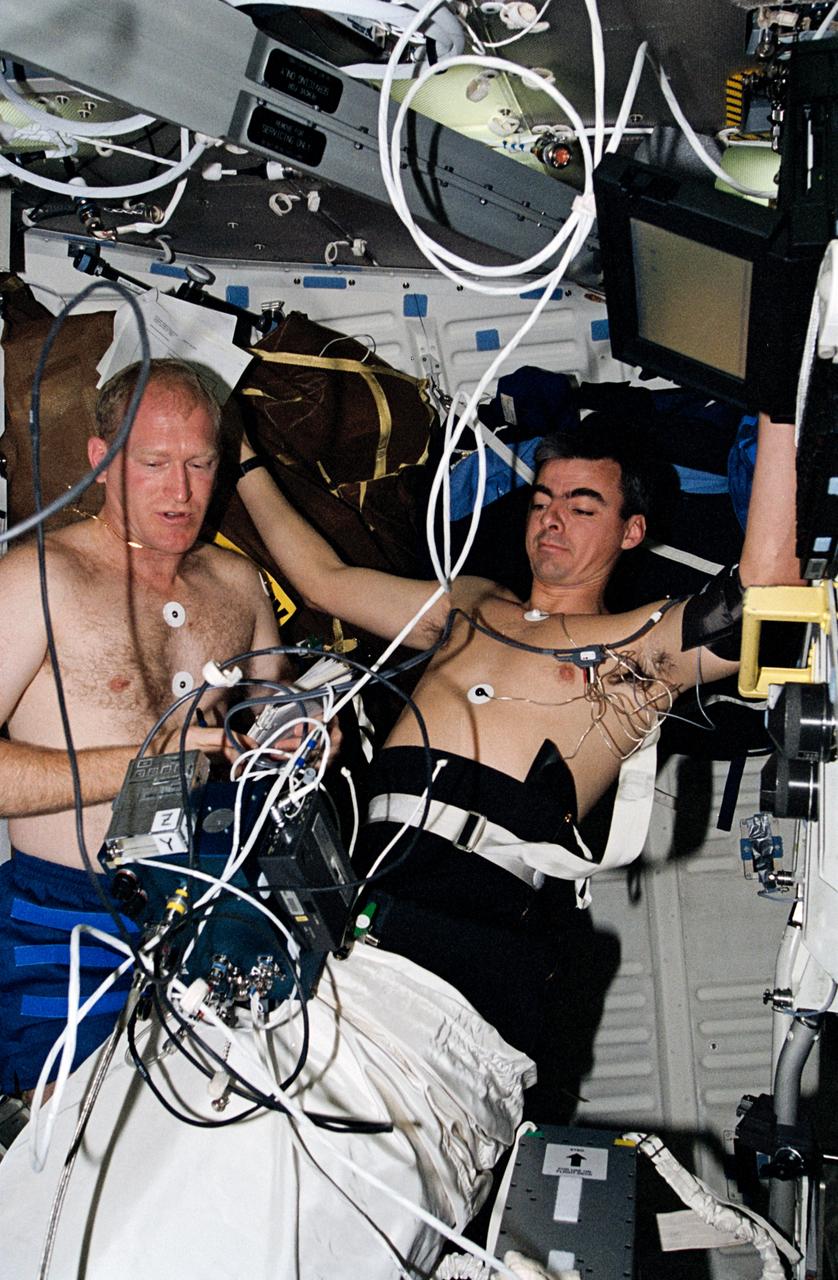
STS062-07-010 (4-18 March 1994) --- Astronaut Andrew M. Allen, pilot, participates in biomedical testing as he does a "soak" in the Lower Body Negative Pressure (LBNP) apparatus on the Columbia's middeck. Astronaut Charles D. (Sam) Gemar, mission specialist, monitors readouts from the test.
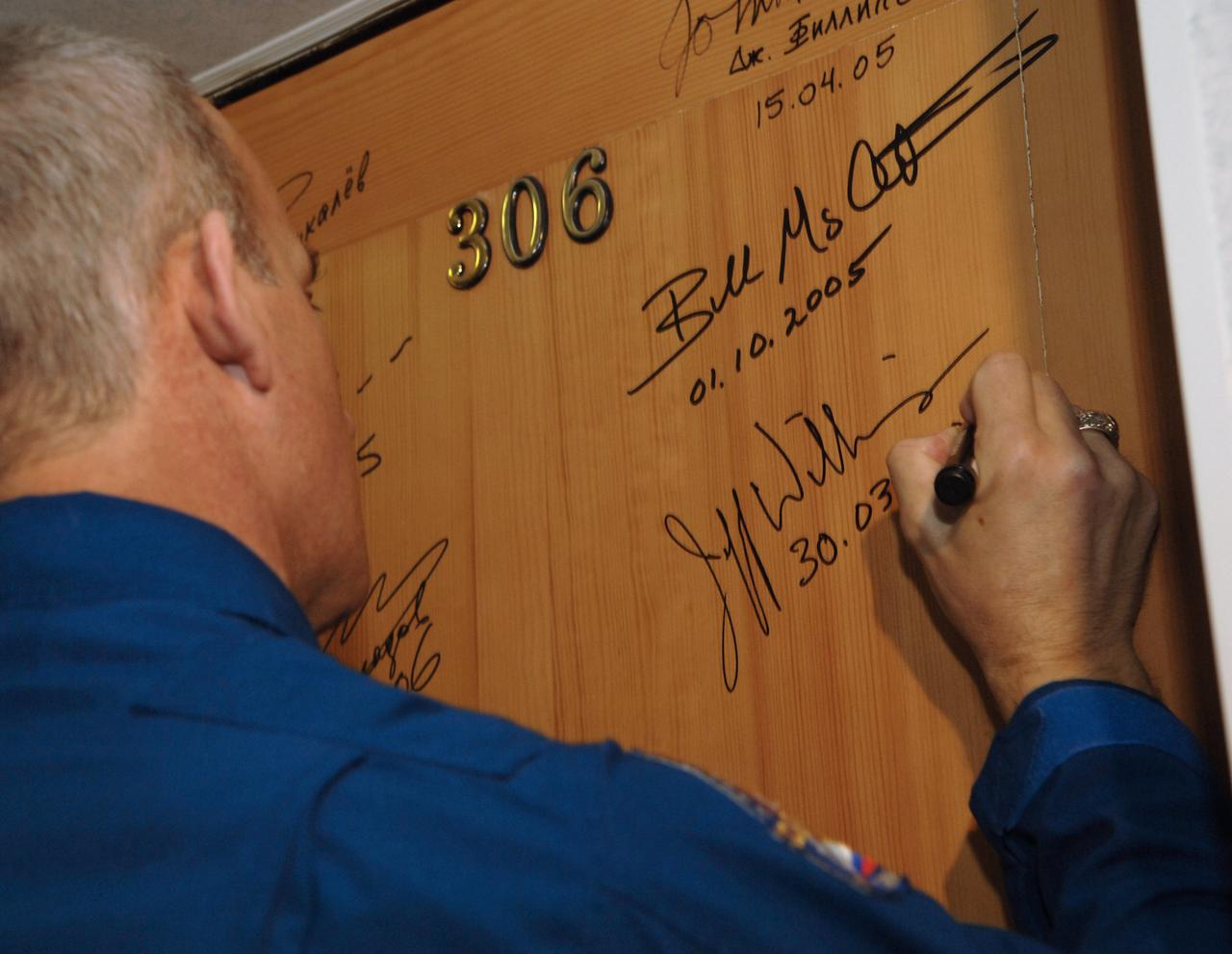
Expedition 13 Science Officer and Flight Engineer Jeffrey N. Williams does the traditional signing of a bedroom door at the Cosmonaut Hotel in Baikonur, Kazakhstan on Thursday, March 30, 2006 prior to the crew’s departure to building 254 and their suit up for launch onboard the Soyuz. Photo Credit: (NASA/Bill Ingalls)
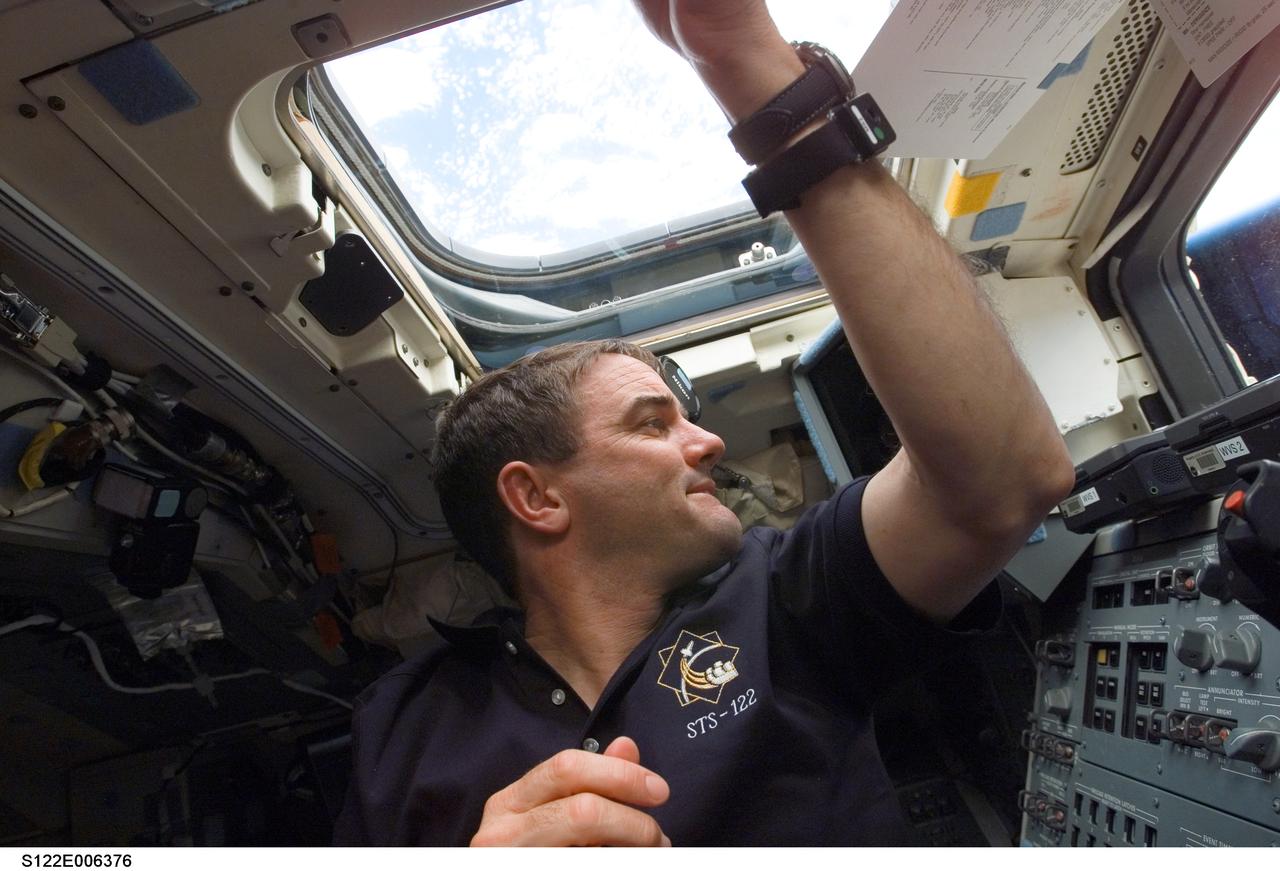
S122-E-006376 (8 Feb. 2008) --- Astronaut Rex Walheim, STS-122 mission specialist, does not have a shortage of windows from which to view Earth's horizon or steal a glance into space from his position on the aft end of Space Shuttle Atlantis' crew cabin.
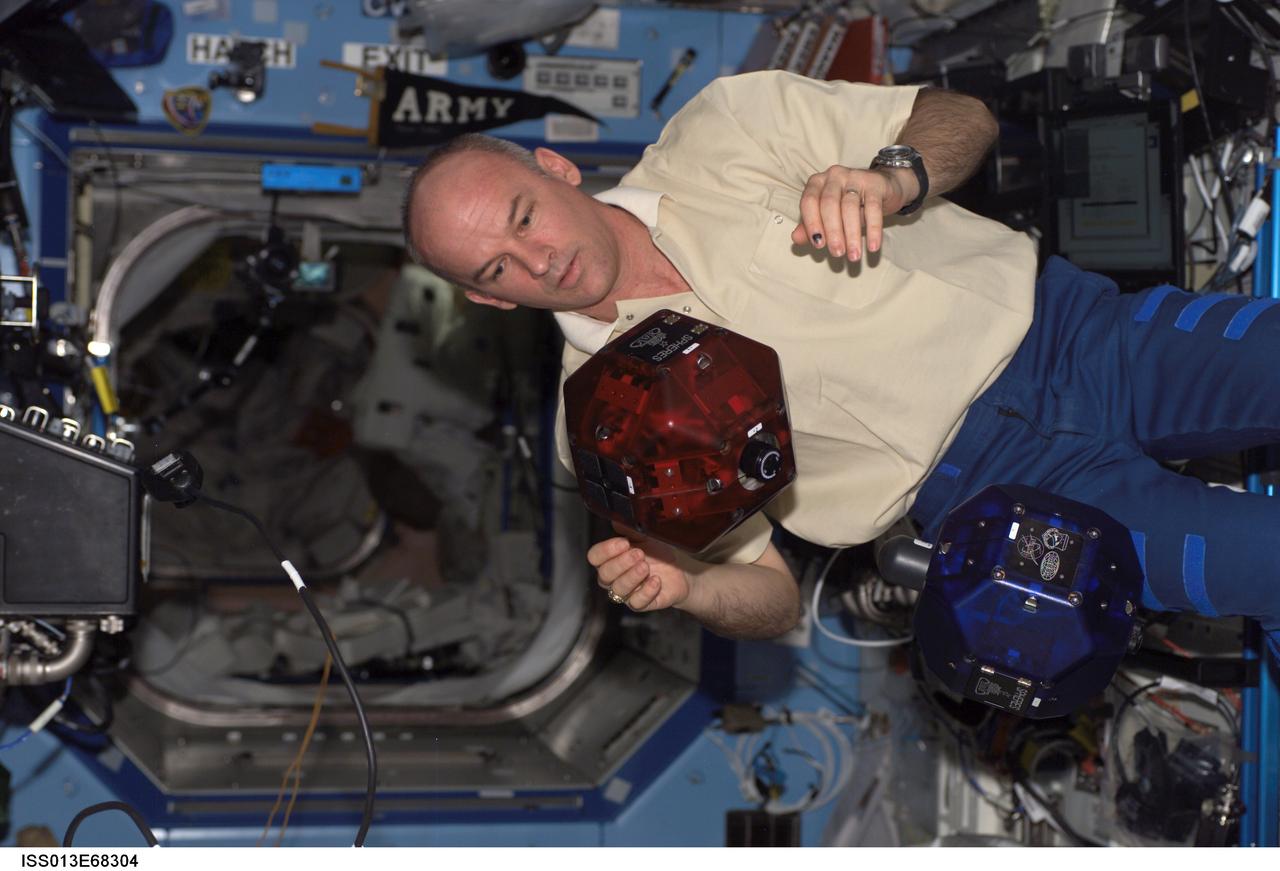
ISS013-E-68304 (19 Aug. 2006) --- Astronaut Jeffrey N. Williams, Expedition 13 NASA space station science officer and flight engineer, does a check of the Synchronized Position Hold, Engage, Reorient, Experimental Satellites (SPHERES) Beacon / Beacon Tester in the Destiny laboratory of the International Space Station.
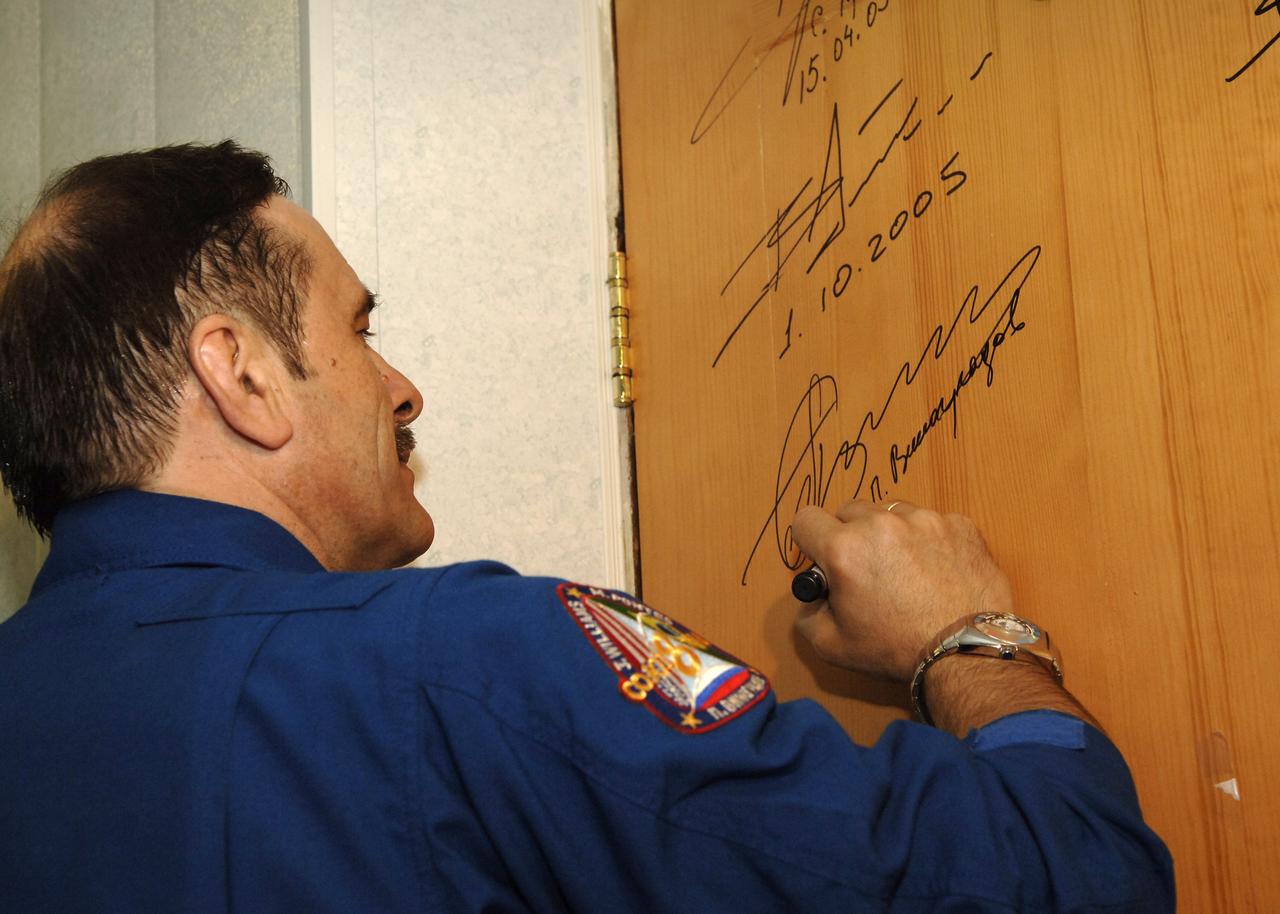
Expedition 13 Commander Pavel V. Vinogradov does the traditional signing of a bedroom door at the Cosmonaut Hotel in Baikonur, Kazakhstan on Thursday, March 30, 2006 prior to the crew’s departure to building 254 and their suit up for launch onboard the Soyuz. Photo Credit: (NASA/Bill Ingalls)
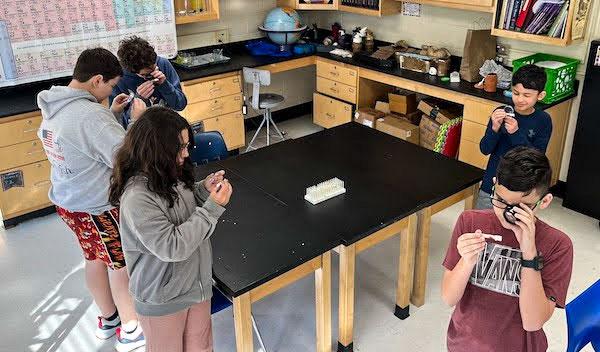
jsc2023e065202 (10/19/2023) --- Student researchers work on their experiment, How Does Microgravity Affect the Germination of Oyster Mushroom Spawns (Pleurotus Ostreatus), which will be included in the Nanoracks-National Center for Earth and Space Science Education-Orbiter-Student Spaceflight Experiments Program Mission 17 to ISS (Nanoracks-NCESSE-Orbiter-SSEP).
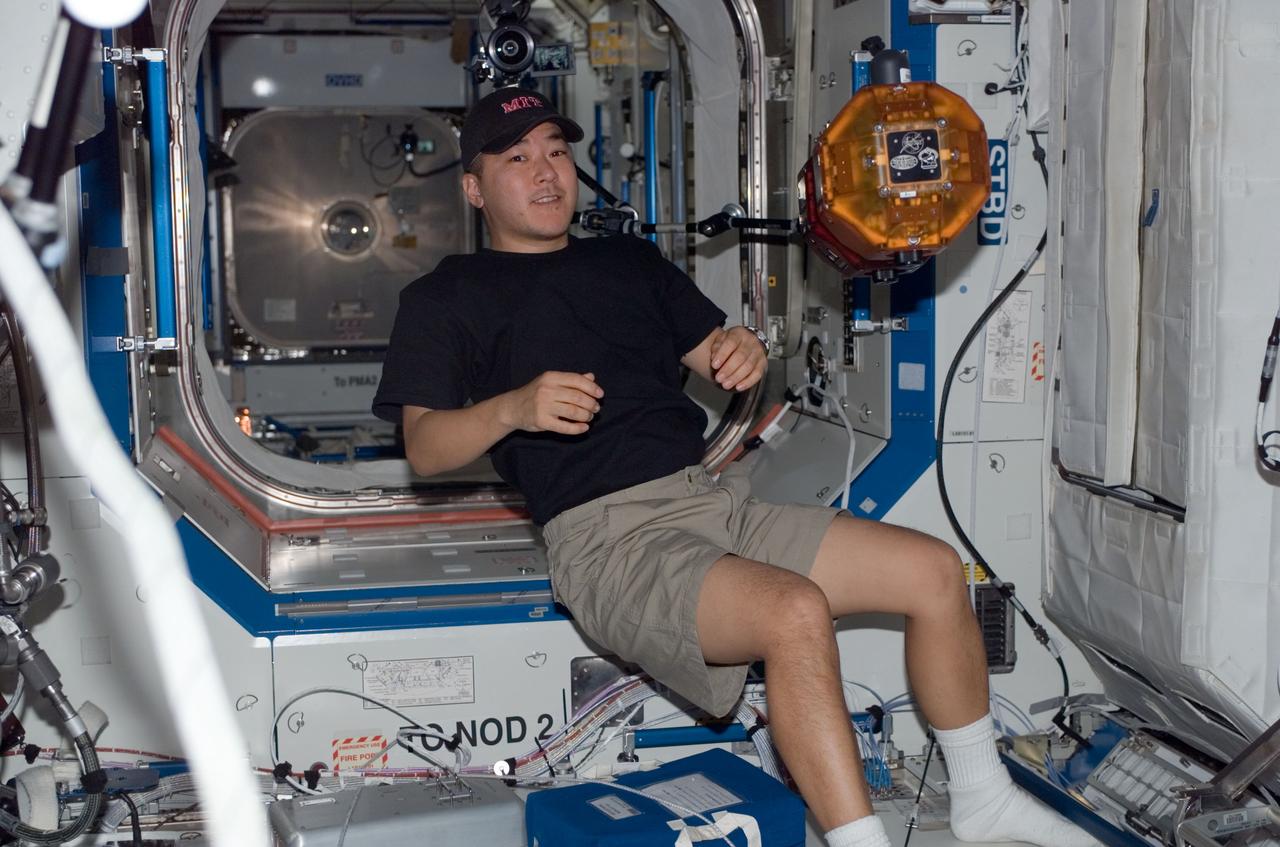
ISS016-E-014207 (2 Dec. 2007) --- Astronaut Daniel Tani, Expedition 16 flight engineer, does a check of the Synchronized Position Hold, Engage, Reorient, Experimental Satellites (SPHERES) Beacon / Beacon Tester in the Destiny laboratory of the International Space Station.
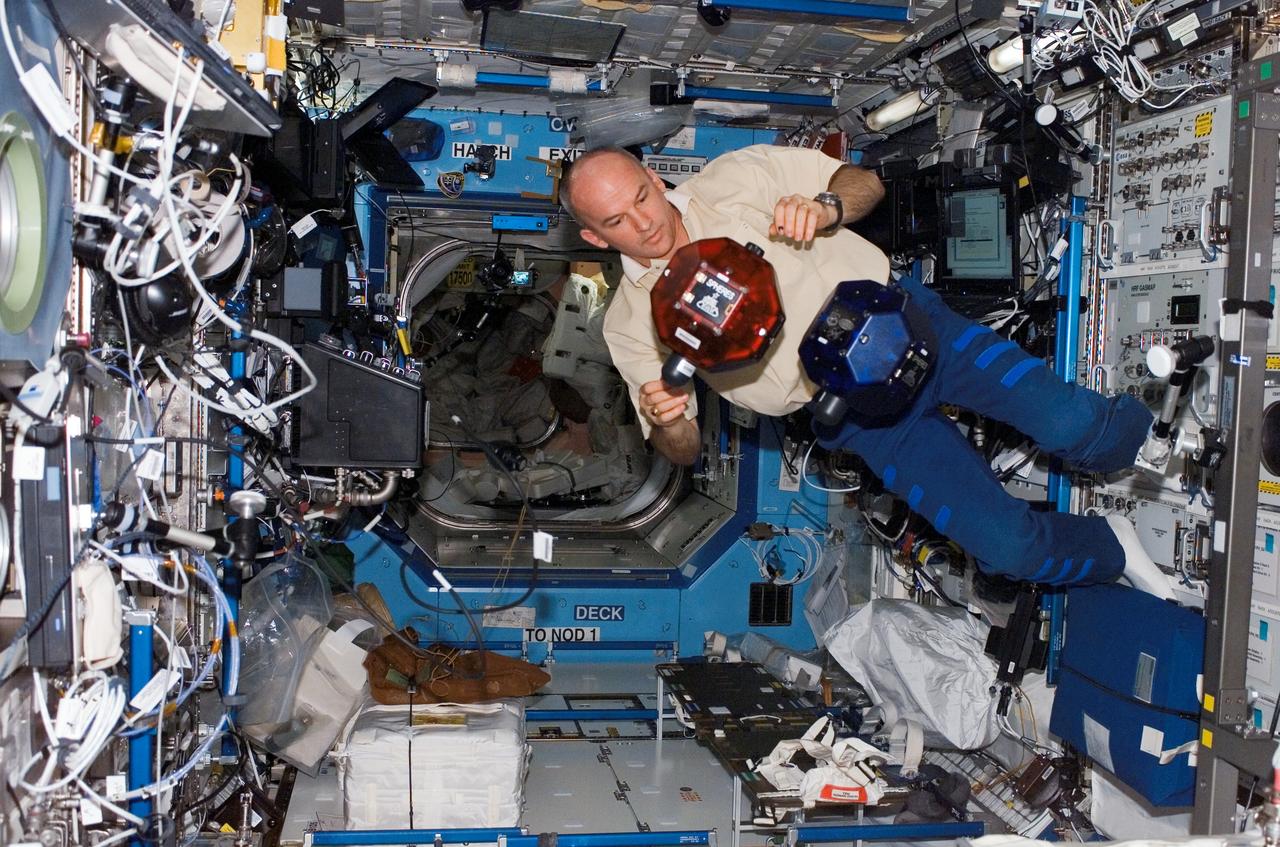
ISS013-E-68303 (19 Aug. 2006) --- Astronaut Jeffrey N. Williams, Expedition 13 NASA space station science officer and flight engineer, does a check of the Synchronized Position Hold, Engage, Reorient, Experimental Satellites (SPHERES) Beacon / Beacon Tester in the Destiny laboratory of the International Space Station.
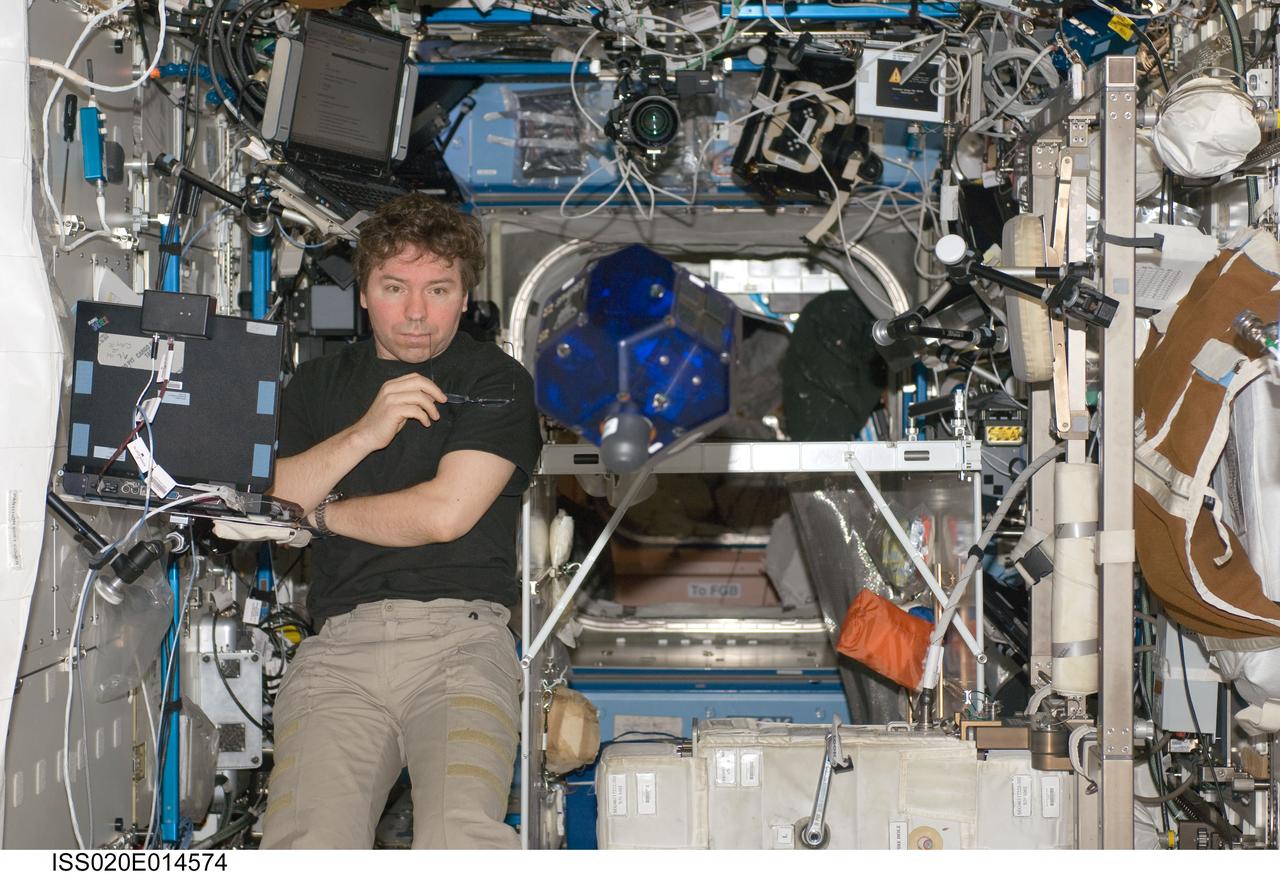
ISS020-E-014574 (26 June 2009) --- NASA astronaut Michael Barratt, Expedition 20 flight engineer, does a check of the Synchronized Position Hold, Engage, Reorient, Experimental Satellites (SPHERES) Beacon / Beacon Tester in the Destiny laboratory of the International Space Station.
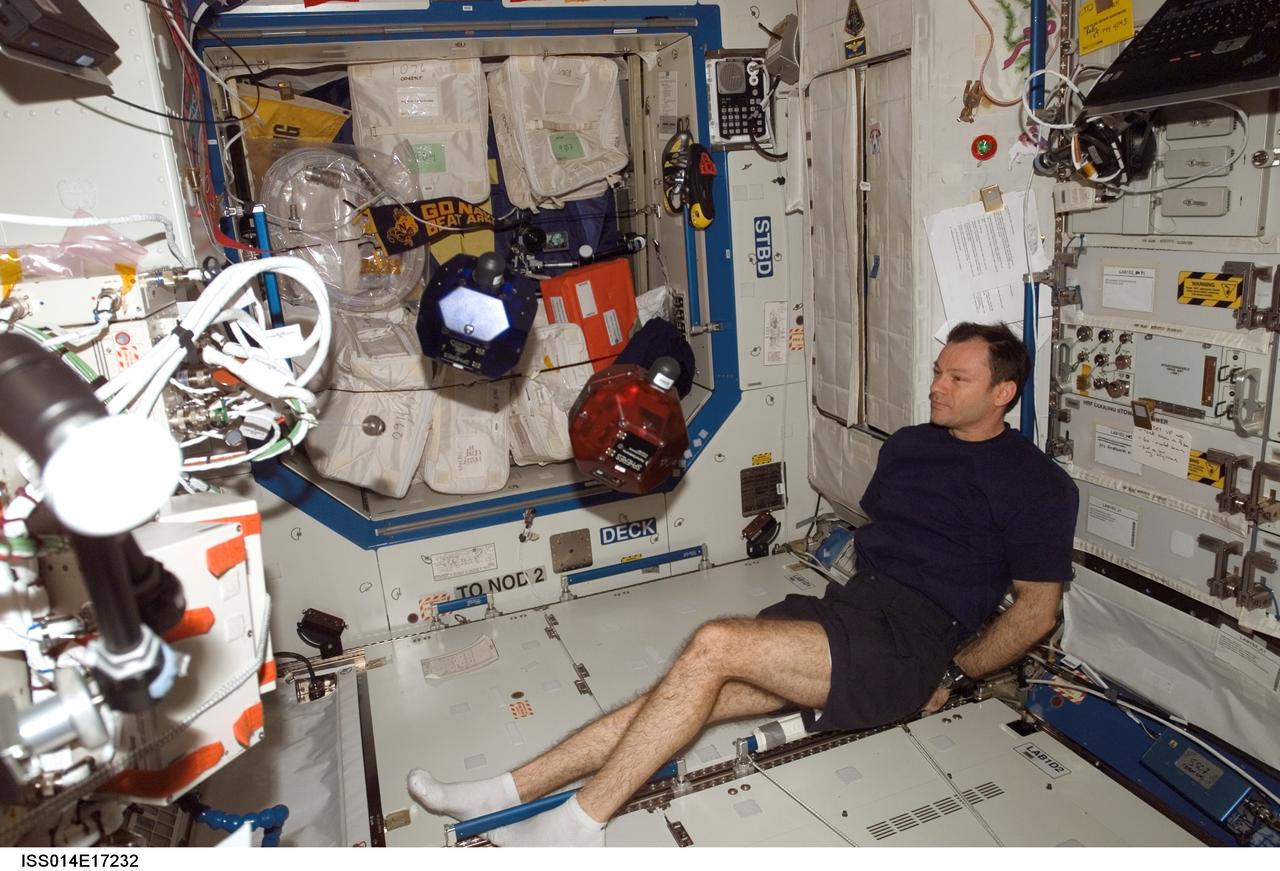
ISS014-E-17232 (17 March 2007) --- Astronaut Michael E. Lopez-Alegria, Expedition 14 commander and NASA space station science officer, does a check of the Synchronized Position Hold, Engage, Reorient, Experimental Satellites (SPHERES) Beacon / Beacon Tester in the Destiny laboratory of the International Space Station.

jsc2024e066530 (10/4/2024) --- Creek Valley Elementary School students prepare their experiment, Does Gravity Affect the Germination Growth of Raspberry Seeds, for space. Their experiment is part of the Nanoracks-National Center for Earth and Space Science Education-Surveyor-Student Spaceflight Experiments Program Mission 18 to ISS (Nanoracks-NCESSE-Surveyor-SSEP).
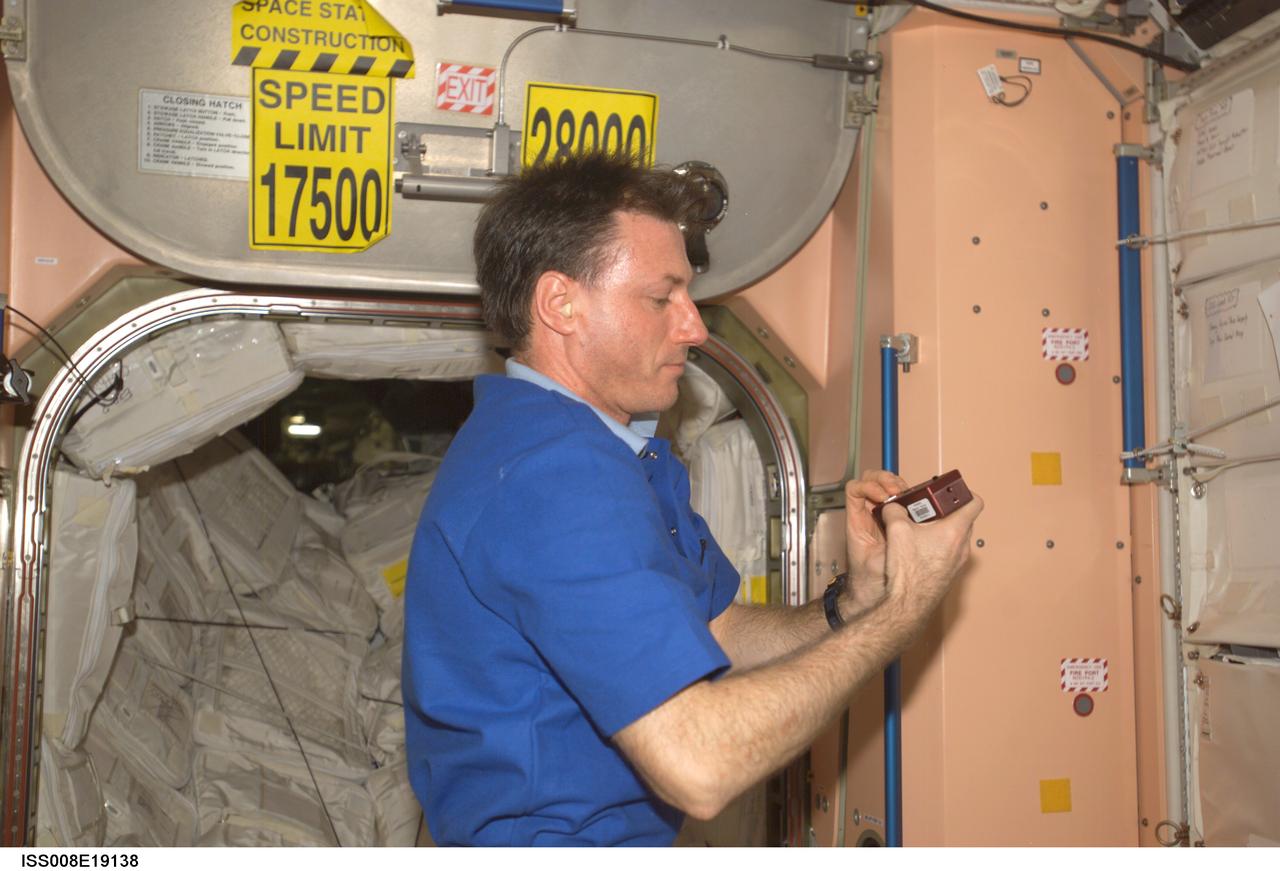
ISS008-E-19138 (24 March 2004) --- Astronaut C. Michael Foale, Expedition 8 commander and NASA ISS science officer, does a check of the Synchronized Position Hold, Engage, Reorient, Experimental Satellites (SPHERES) Beacon / Beacon Tester in the Unity node of the International Space Station.

David Cook, President, Iowa State University welcomes NASA Administrator Jared Isaacman to the Ames National Laboratory, Tuesday, Sept. 8, 2026, on the campus of Iowa State University in Ames, Iowa. Photo Credit: (NASA/Bill Ingalls)

Tom Lograsso, Director, Critical Materials Innovation Hub, talks to NASA Administrator Jared Isaacman, and others, during a tour of lab, Tuesday, Sept. 8, 2026, on the campus of Iowa State University in Ames, Iowa. Photo Credit: (NASA/Bill Ingalls)
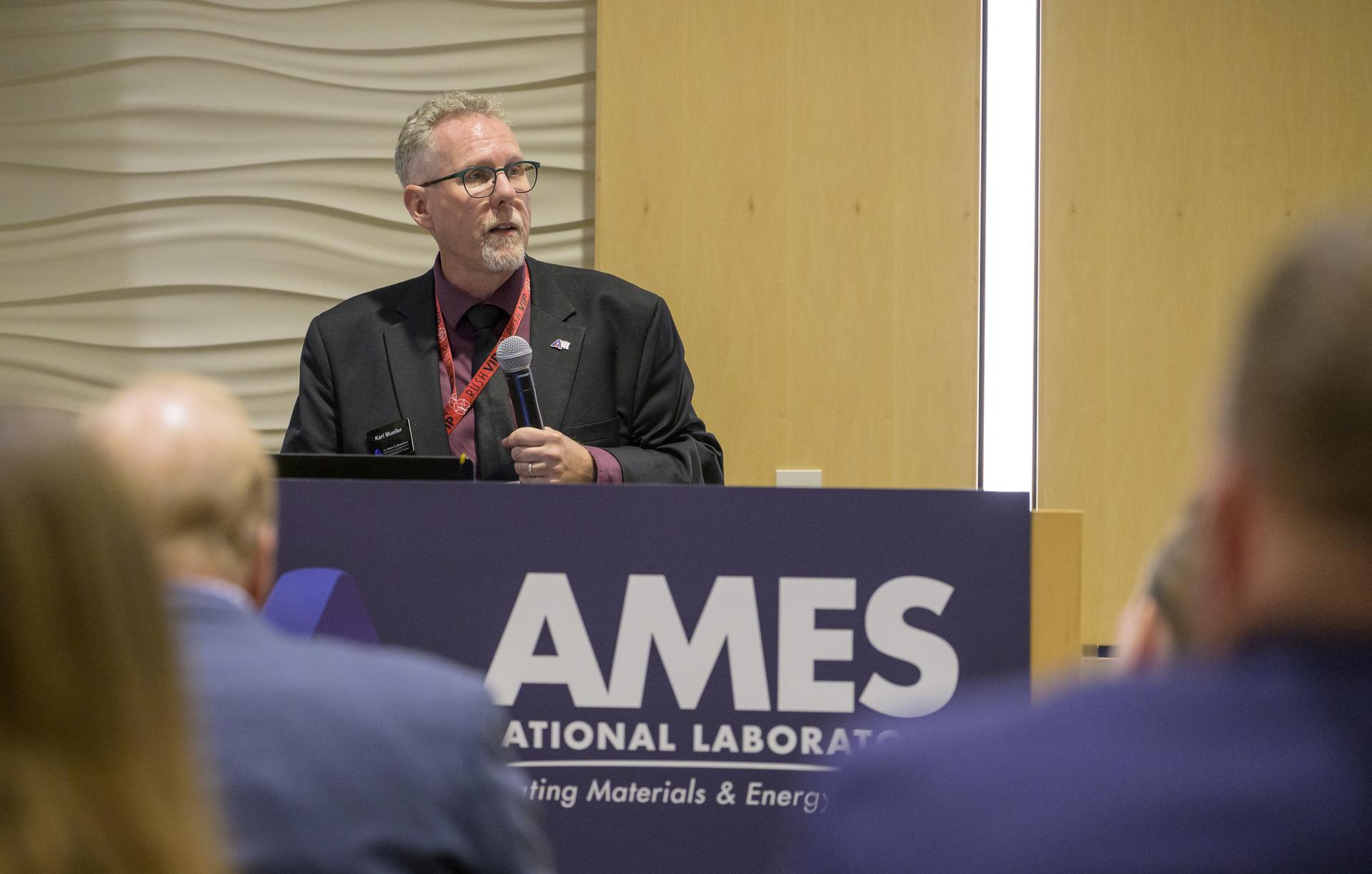
Dr. Karl Mueller, Director, Ames National Laboratory, welcomes NASA Administrator Jared Isaacman to the lab, Tuesday, Sept. 8, 2026, on the campus of Iowa State University in Ames, Iowa. Photo Credit: (NASA/Bill Ingalls)
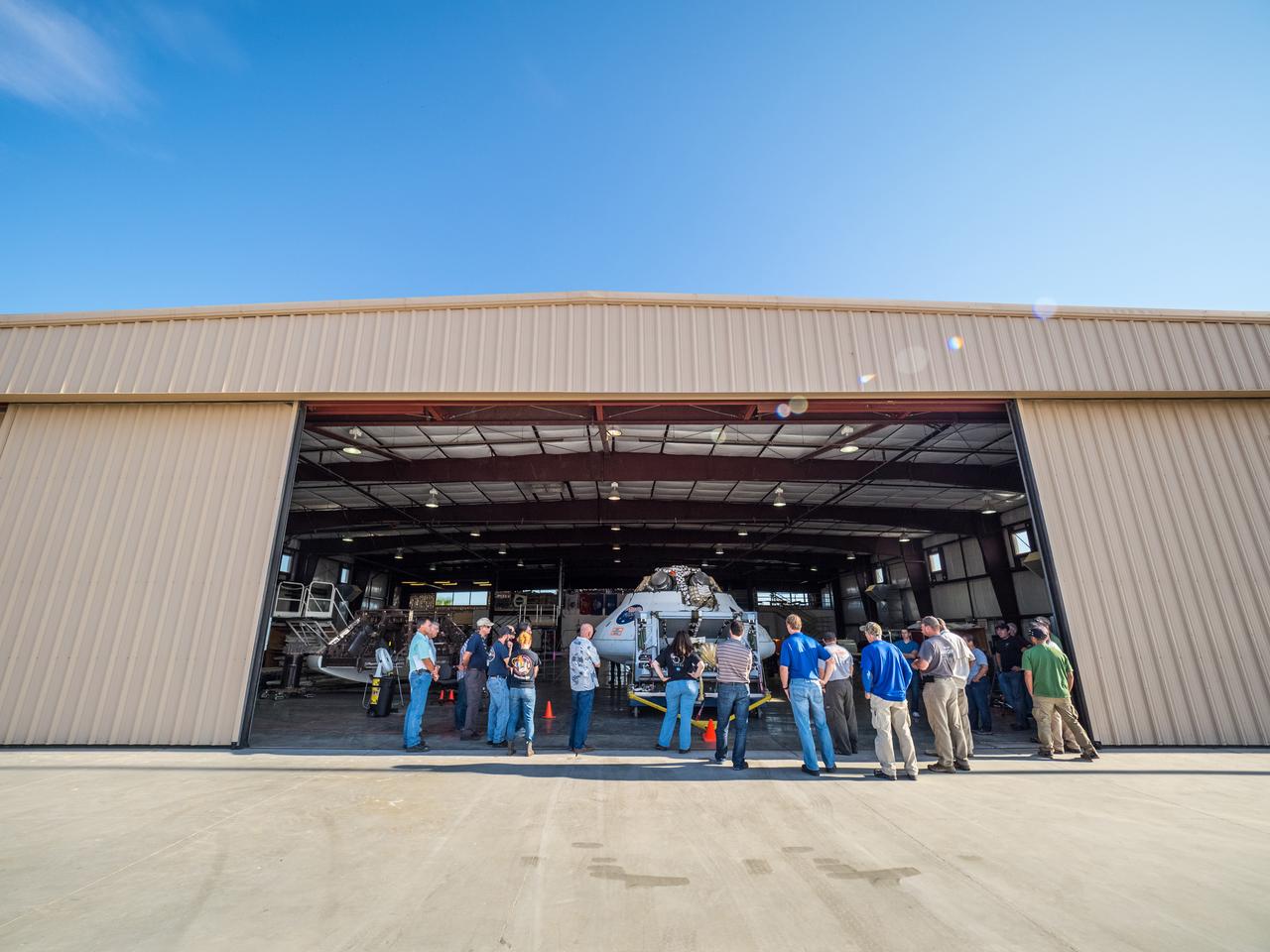
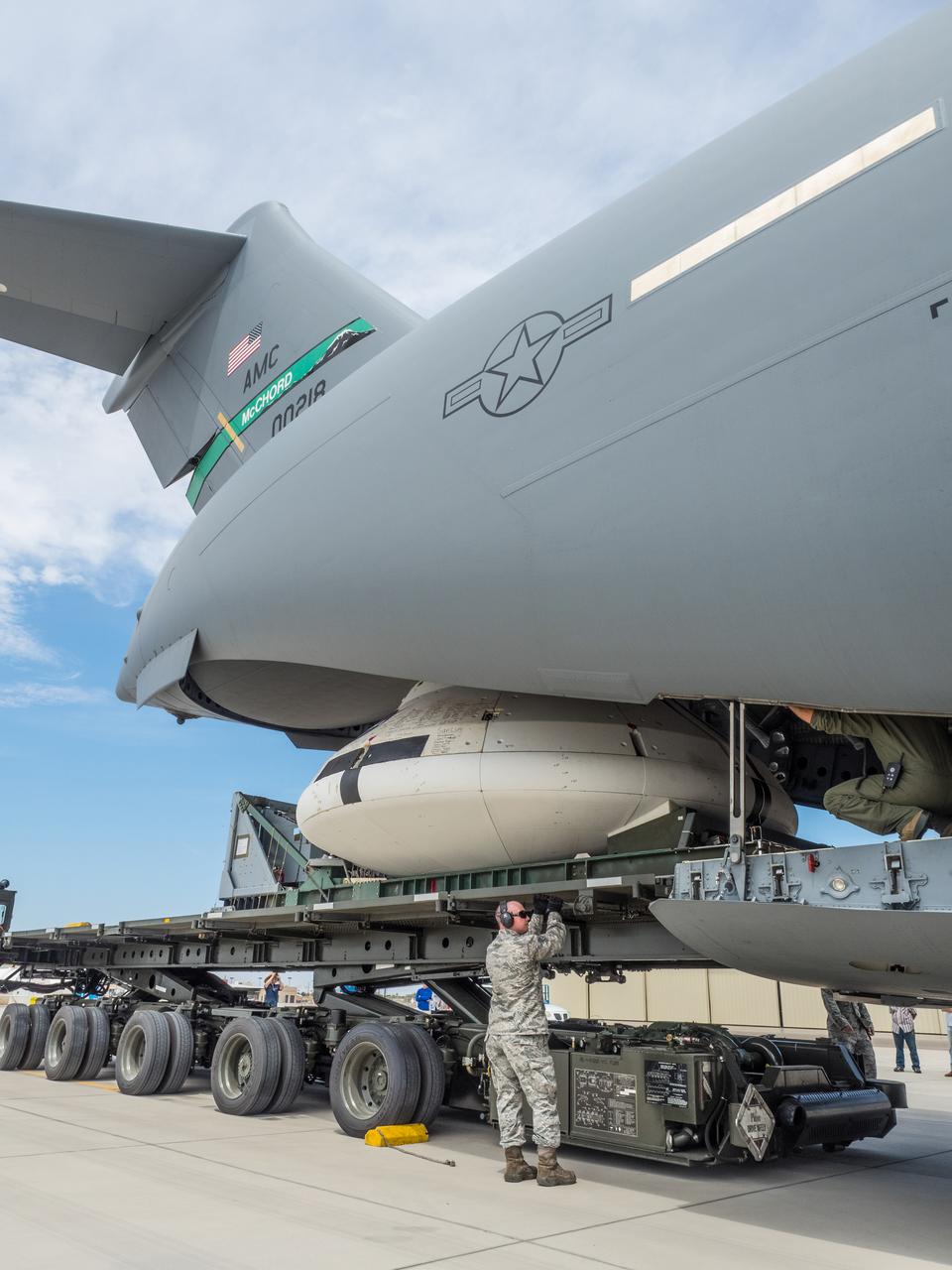
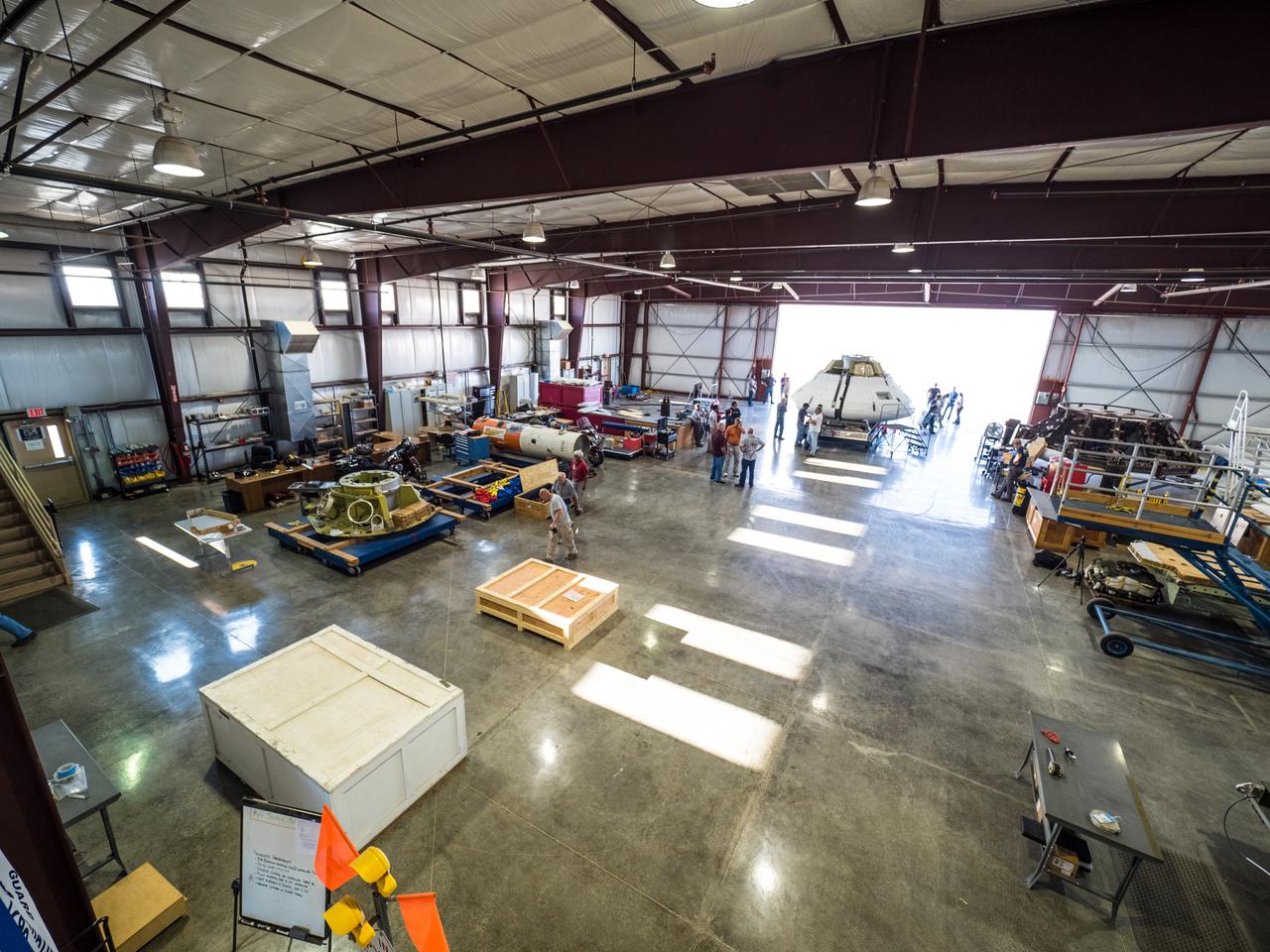
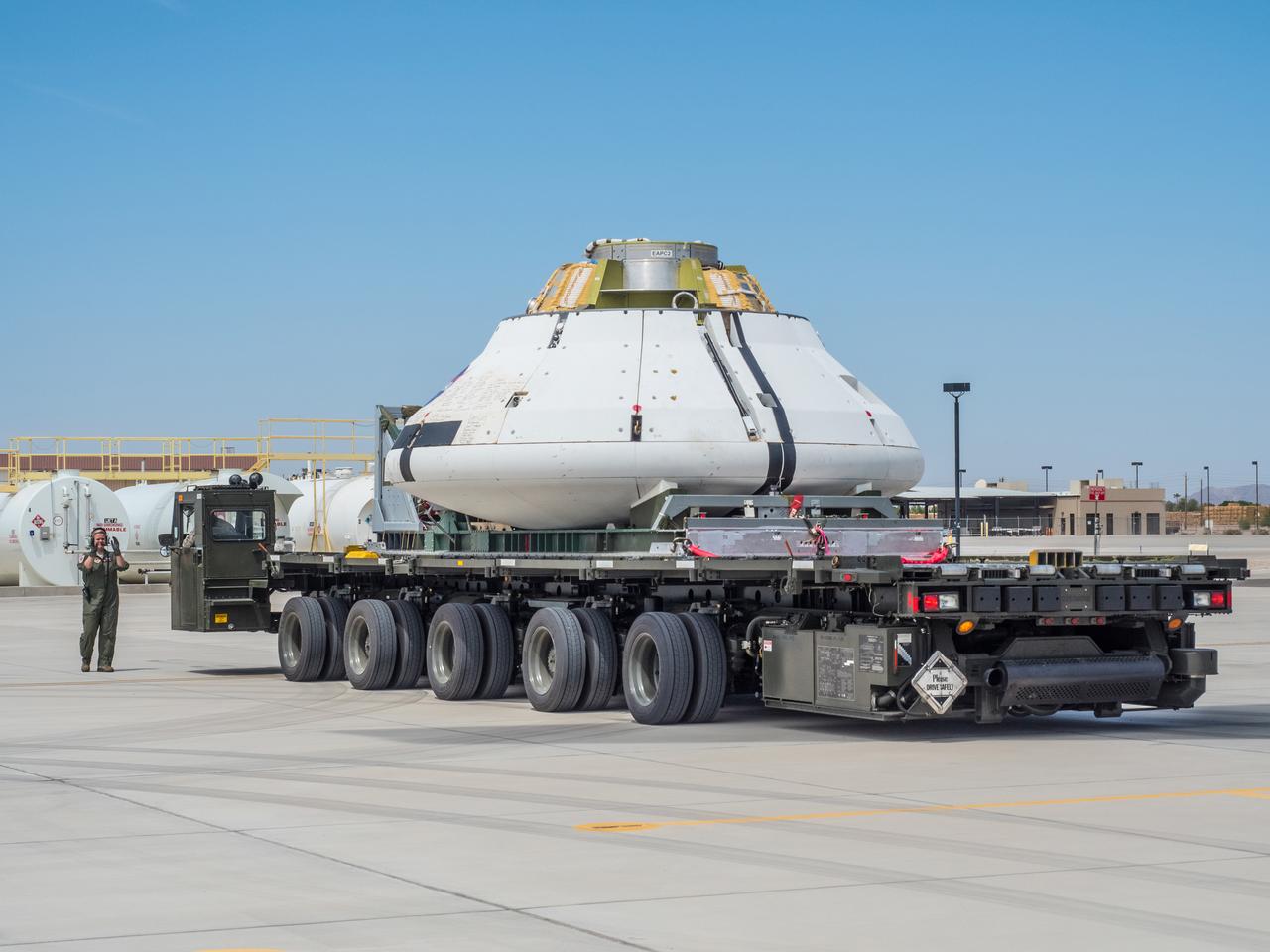
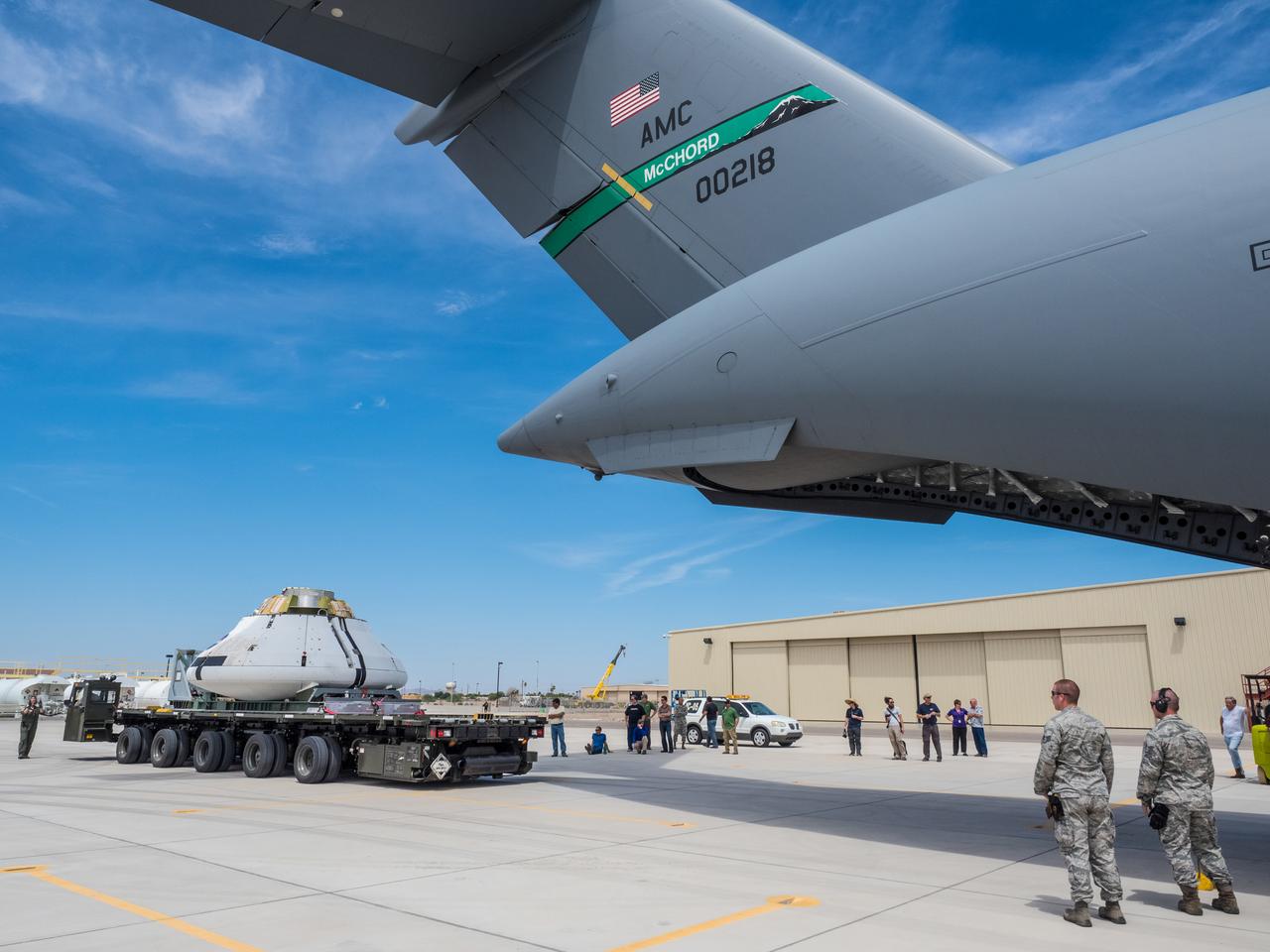
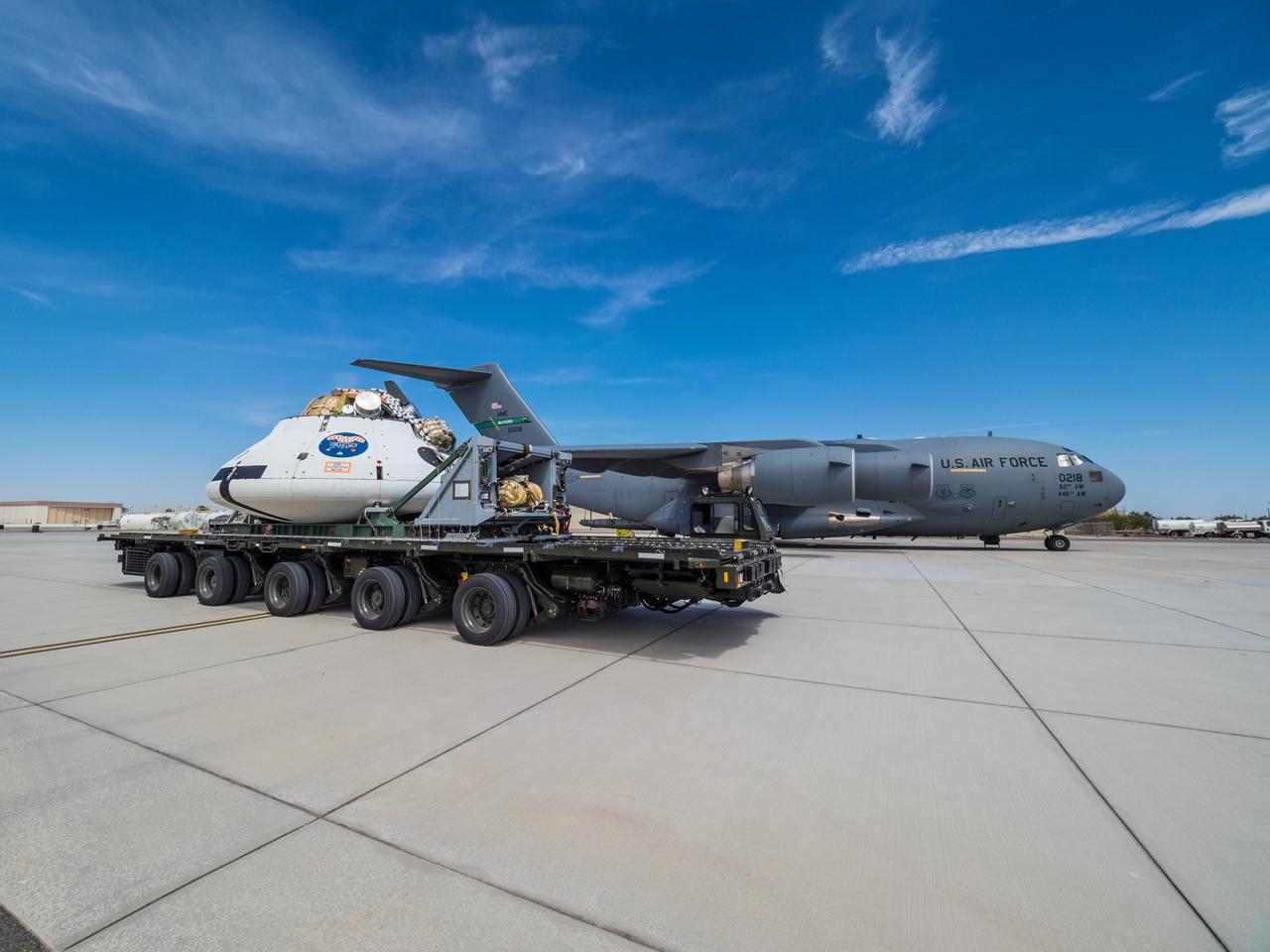
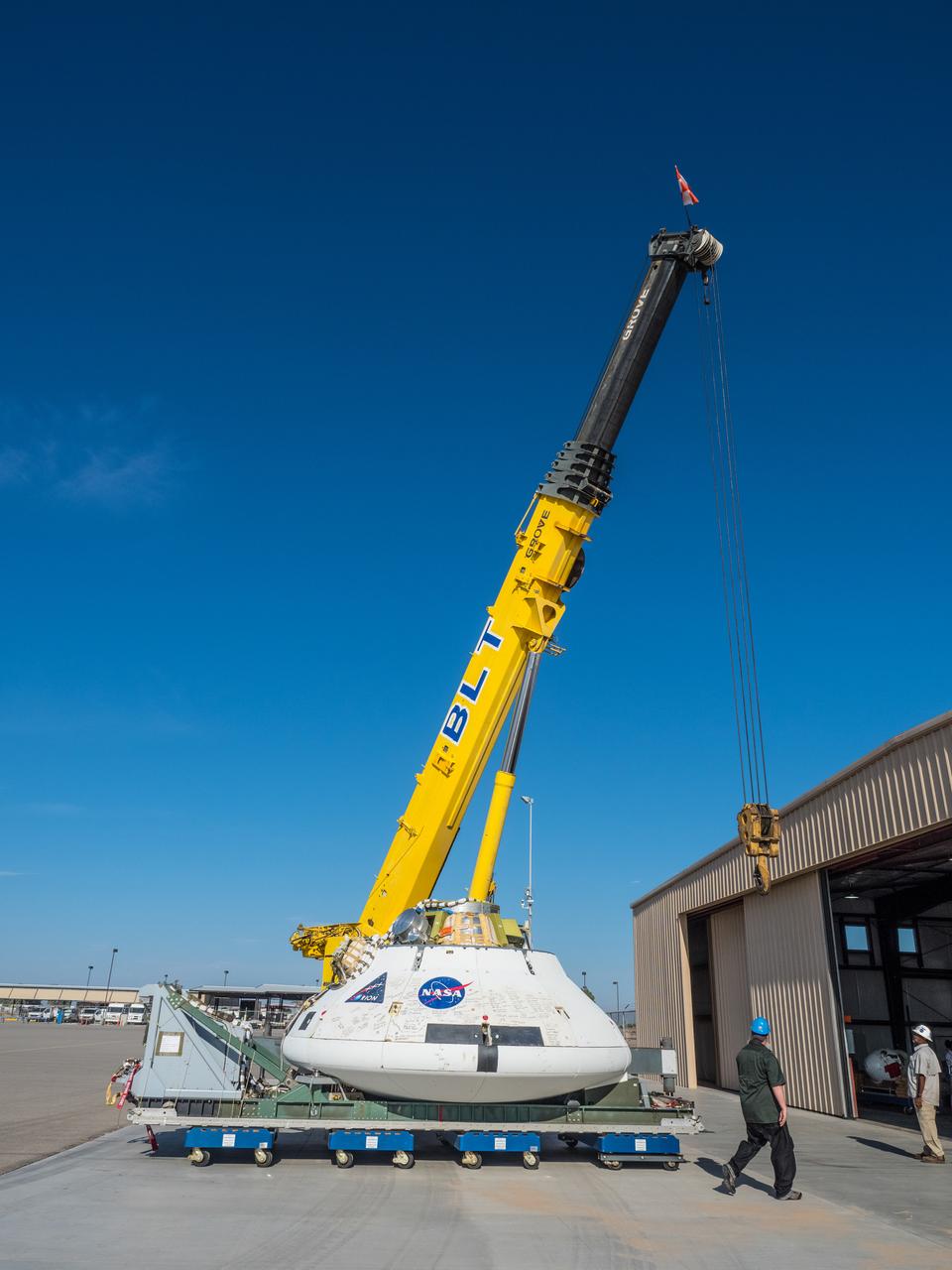
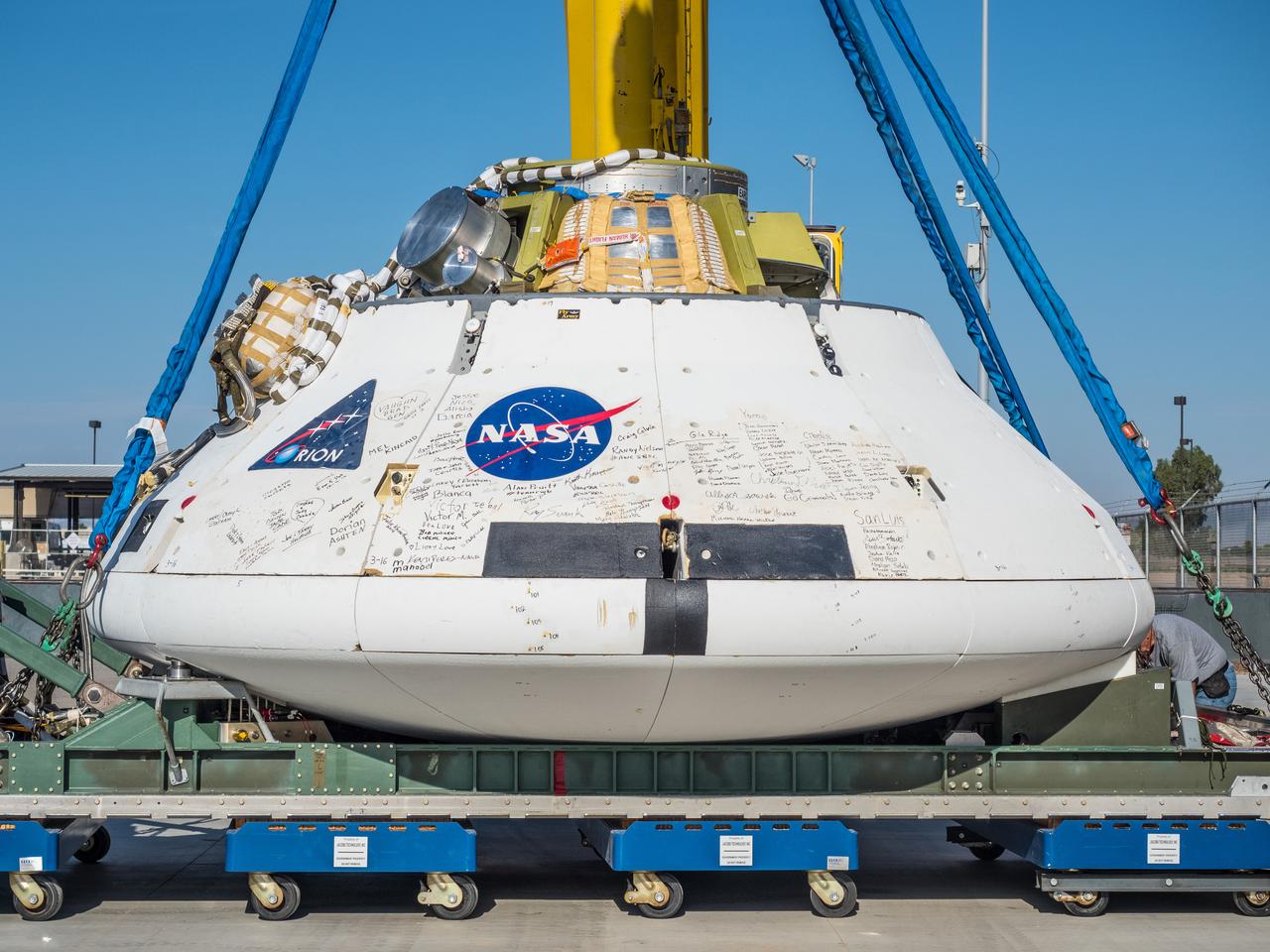
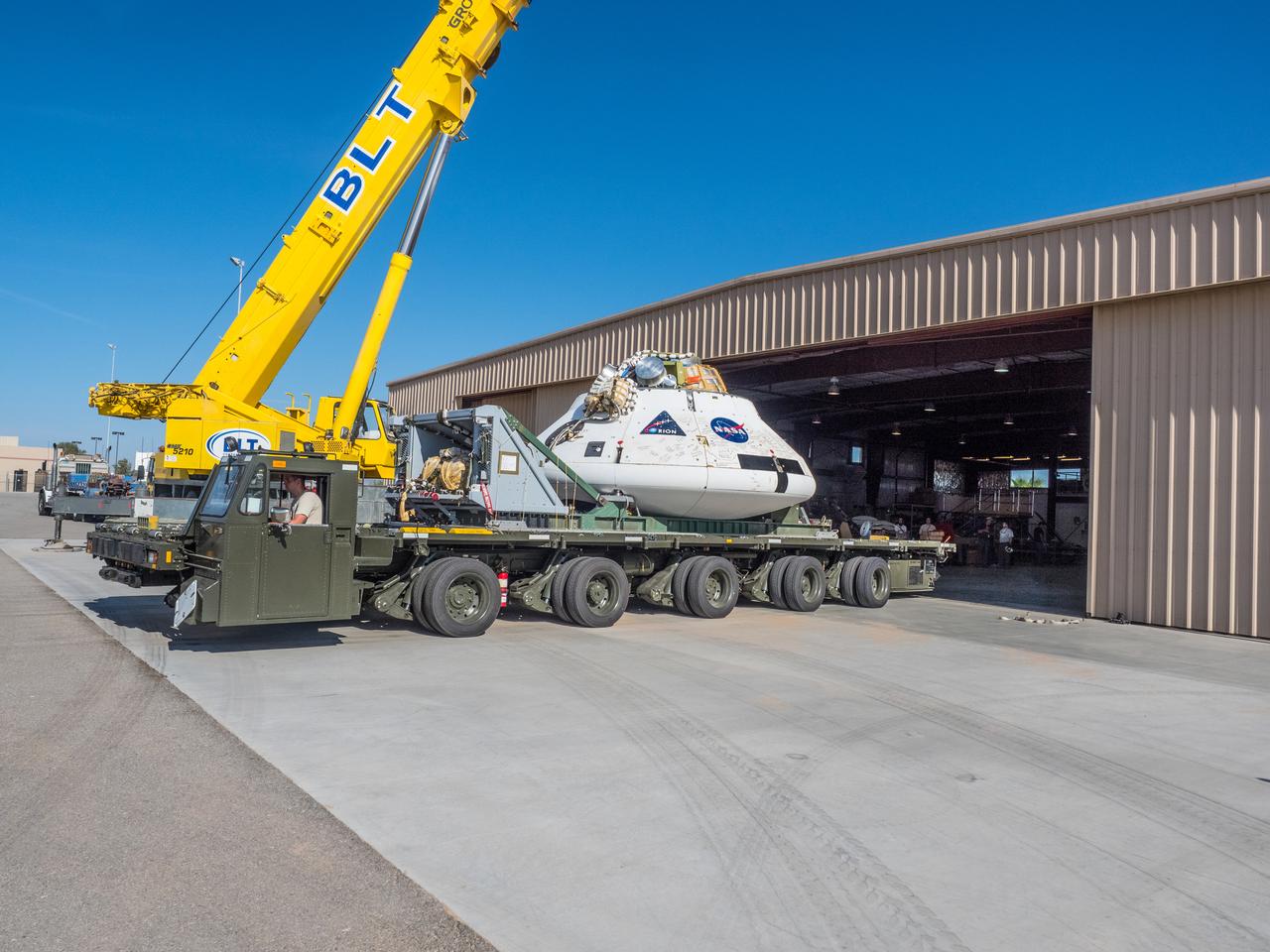
Engineers prepare to test the parachute system for NASA’s Orion spacecraft at the U.S. Army Yuma Proving Ground in Yuma, Arizona on Aug. 24, 2015. During the test, planned for Wednesday, Aug. 26, a C-17 aircraft will carry a representative Orion capsule to 35,000 feet in altitude and then drop it from its cargo bay. Engineers will test a scenario in which one of Orion’s two drogue parachutes, used to stabilize it in the air, does not deploy, and one of its three main parachutes, used to slow the capsule during the final stage of descent, also does not deploy. The risky test will provide data engineers will use as they gear up to qualify Orion’s parachutes for missions with astronauts. On Aug. 24, a C-17 was loaded with the test version of Orion, which has a similar mass and interfaces with the parachutes as the Orion being developed for deep space missions but is shorter on top to fit inside the aircraft. Part of Batch image transfer from Flickr.
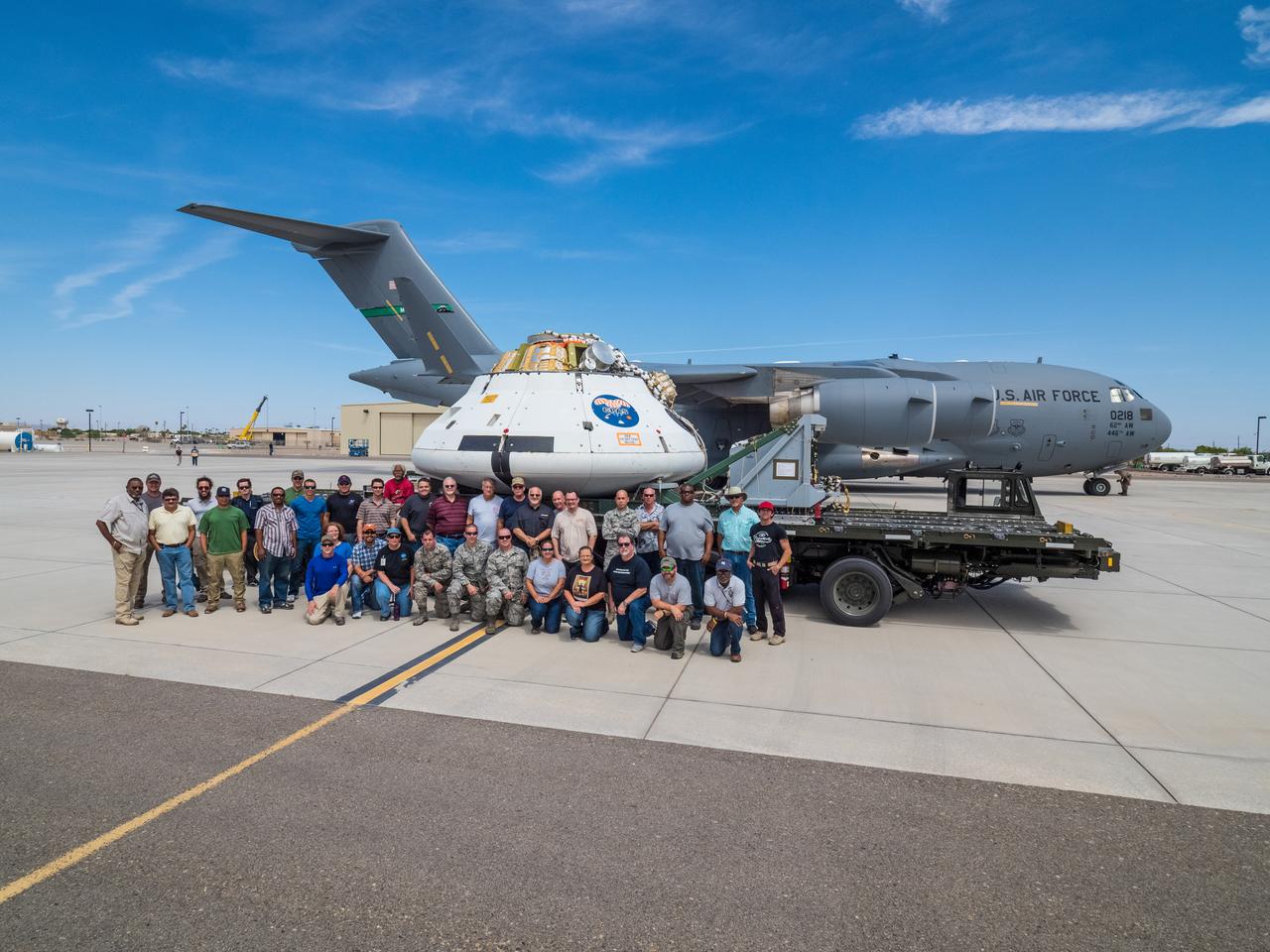
Engineers prepare to test the parachute system for NASA’s Orion spacecraft at the U.S. Army Yuma Proving Ground in Yuma, Arizona on Aug. 24, 2015. During the test, planned for Wednesday, Aug. 26, a C-17 aircraft will carry a representative Orion capsule to 35,000 feet in altitude and then drop it from its cargo bay. Engineers will test a scenario in which one of Orion’s two drogue parachutes, used to stabilize it in the air, does not deploy, and one of its three main parachutes, used to slow the capsule during the final stage of descent, also does not deploy. The risky test will provide data engineers will use as they gear up to qualify Orion’s parachutes for missions with astronauts. On Aug. 24, a C-17 was loaded with the test version of Orion, which has a similar mass and interfaces with the parachutes as the Orion being developed for deep space missions but is shorter on top to fit inside the aircraft. Part of Batch image transfer from Flickr.

Engineers prepare to test the parachute system for NASA’s Orion spacecraft at the U.S. Army Yuma Proving Ground in Yuma, Arizona on Aug. 24, 2015. During the test, planned for Wednesday, Aug. 26, a C-17 aircraft will carry a representative Orion capsule to 35,000 feet in altitude and then drop it from its cargo bay. Engineers will test a scenario in which one of Orion’s two drogue parachutes, used to stabilize it in the air, does not deploy, and one of its three main parachutes, used to slow the capsule during the final stage of descent, also does not deploy. The risky test will provide data engineers will use as they gear up to qualify Orion’s parachutes for missions with astronauts. On Aug. 24, a C-17 was loaded with the test version of Orion, which has a similar mass and interfaces with the parachutes as the Orion being developed for deep space missions but is shorter on top to fit inside the aircraft. Part of Batch image transfer from Flickr.
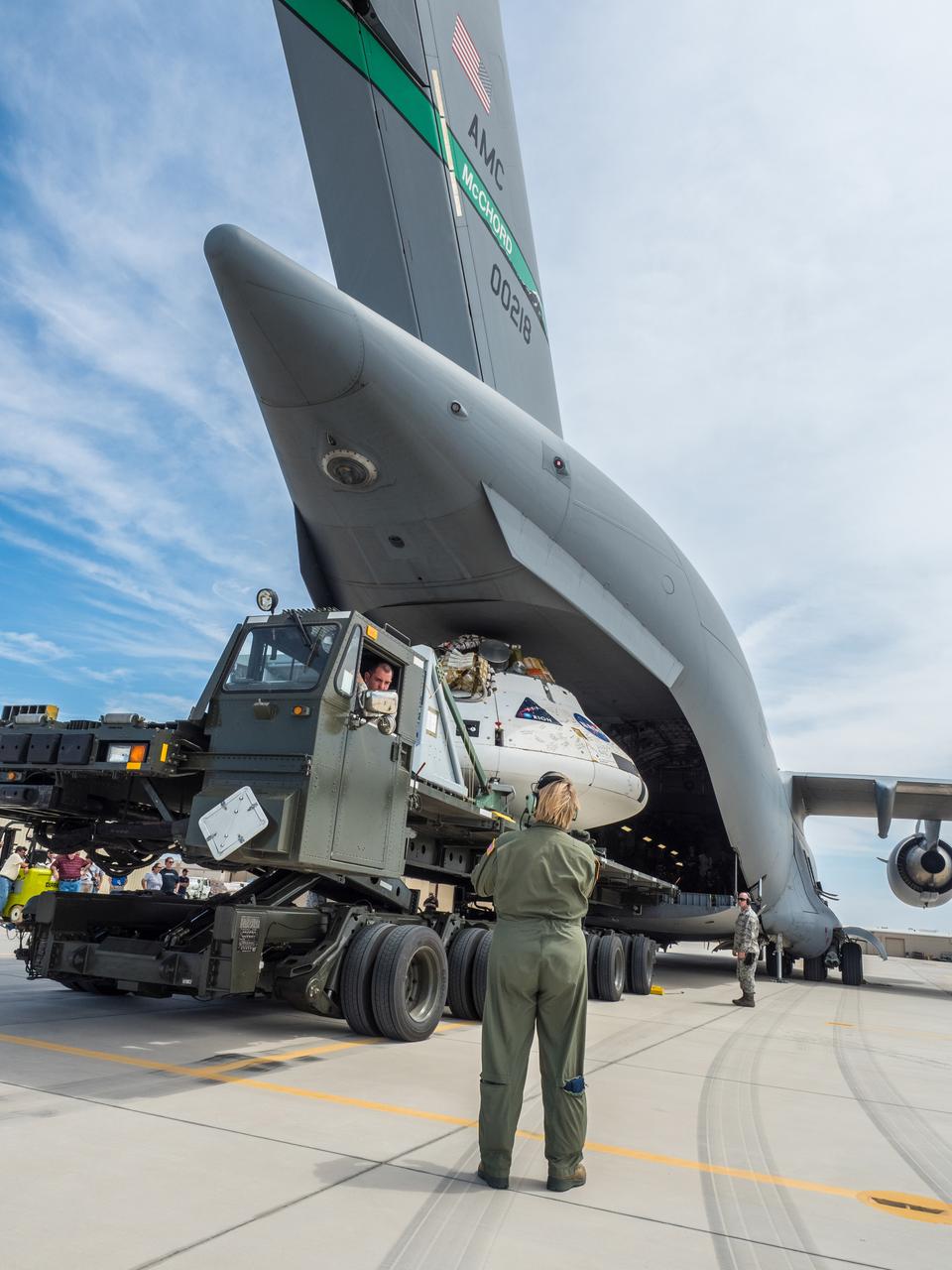
Engineers prepare to test the parachute system for NASA’s Orion spacecraft at the U.S. Army Yuma Proving Ground in Yuma, Arizona on Aug. 24, 2015. During the test, planned for Wednesday, Aug. 26, a C-17 aircraft will carry a representative Orion capsule to 35,000 feet in altitude and then drop it from its cargo bay. Engineers will test a scenario in which one of Orion’s two drogue parachutes, used to stabilize it in the air, does not deploy, and one of its three main parachutes, used to slow the capsule during the final stage of descent, also does not deploy. The risky test will provide data engineers will use as they gear up to qualify Orion’s parachutes for missions with astronauts. On Aug. 24, a C-17 was loaded with the test version of Orion, which has a similar mass and interfaces with the parachutes as the Orion being developed for deep space missions but is shorter on top to fit inside the aircraft. Part of Batch image transfer from Flickr.
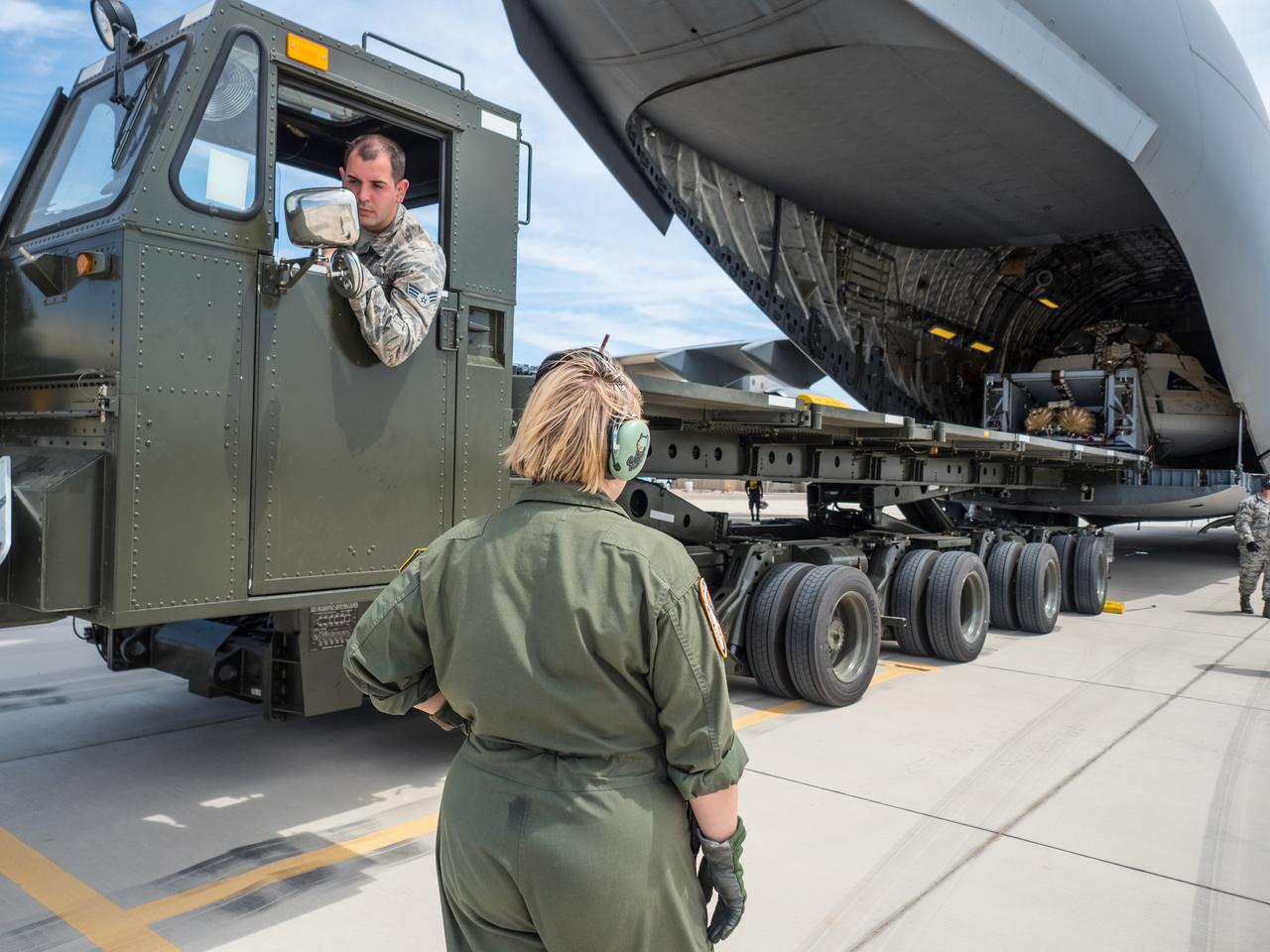
Engineers prepare to test the parachute system for NASA’s Orion spacecraft at the U.S. Army Yuma Proving Ground in Yuma, Arizona on Aug. 24, 2015. During the test, planned for Wednesday, Aug. 26, a C-17 aircraft will carry a representative Orion capsule to 35,000 feet in altitude and then drop it from its cargo bay. Engineers will test a scenario in which one of Orion’s two drogue parachutes, used to stabilize it in the air, does not deploy, and one of its three main parachutes, used to slow the capsule during the final stage of descent, also does not deploy. The risky test will provide data engineers will use as they gear up to qualify Orion’s parachutes for missions with astronauts. On Aug. 24, a C-17 was loaded with the test version of Orion, which has a similar mass and interfaces with the parachutes as the Orion being developed for deep space missions but is shorter on top to fit inside the aircraft. Part of Batch image transfer from Flickr.
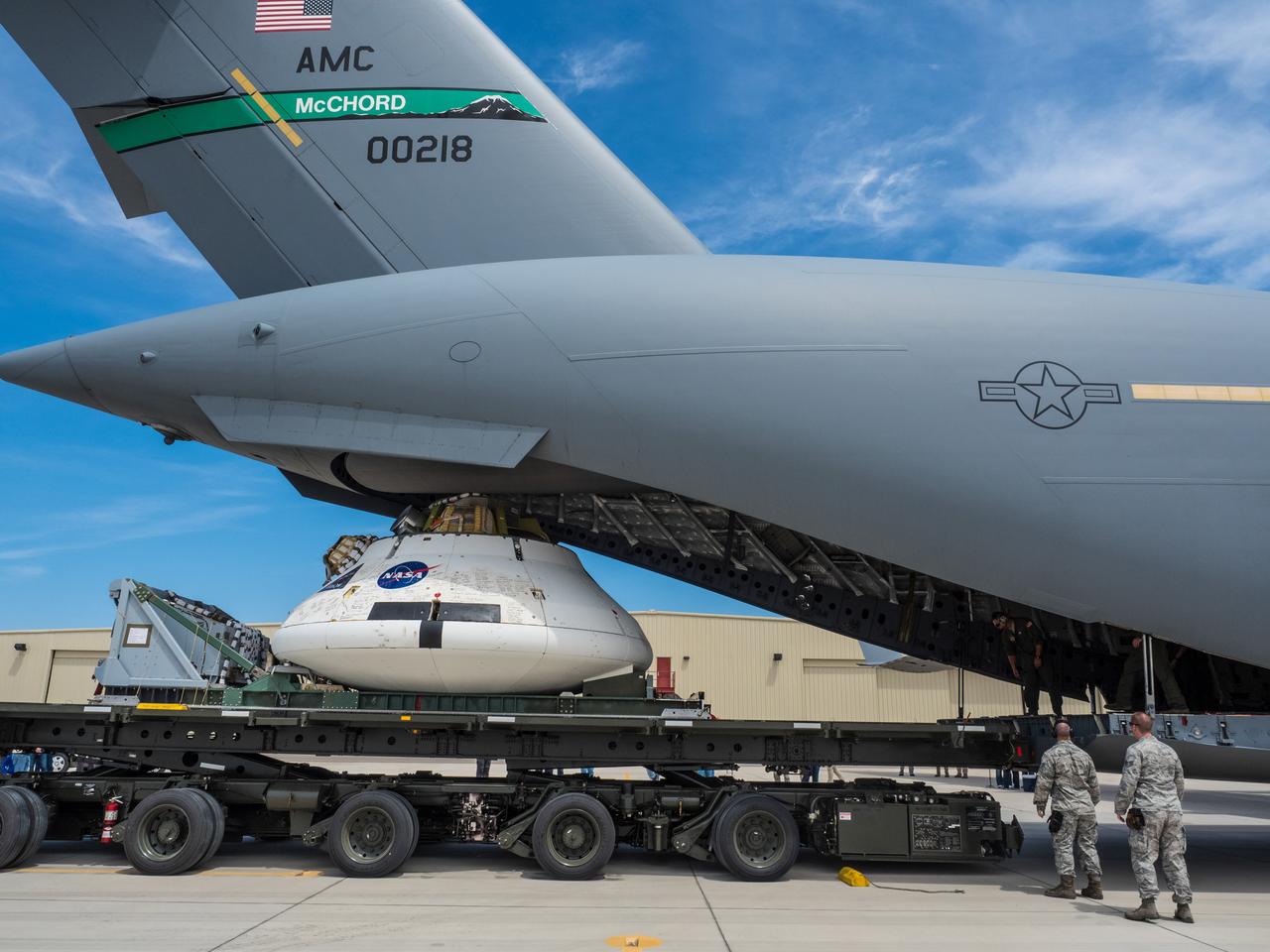
Engineers prepare to test the parachute system for NASA’s Orion spacecraft at the U.S. Army Yuma Proving Ground in Yuma, Arizona on Aug. 24, 2015. During the test, planned for Wednesday, Aug. 26, a C-17 aircraft will carry a representative Orion capsule to 35,000 feet in altitude and then drop it from its cargo bay. Engineers will test a scenario in which one of Orion’s two drogue parachutes, used to stabilize it in the air, does not deploy, and one of its three main parachutes, used to slow the capsule during the final stage of descent, also does not deploy. The risky test will provide data engineers will use as they gear up to qualify Orion’s parachutes for missions with astronauts. On Aug. 24, a C-17 was loaded with the test version of Orion, which has a similar mass and interfaces with the parachutes as the Orion being developed for deep space missions but is shorter on top to fit inside the aircraft. Part of Batch image transfer from Flickr.
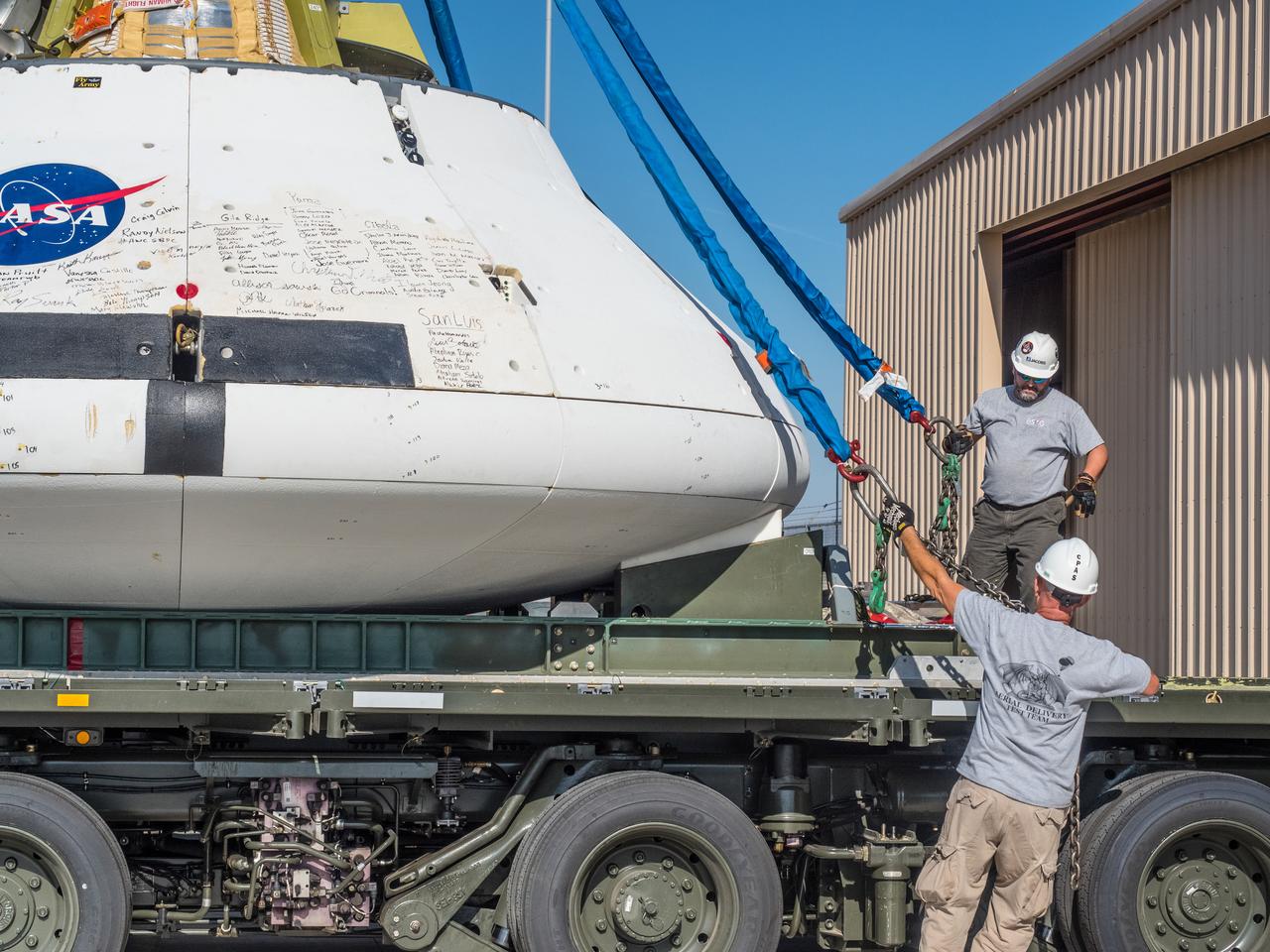
Engineers prepare to test the parachute system for NASA’s Orion spacecraft at the U.S. Army Yuma Proving Ground in Yuma, Arizona on Aug. 24, 2015. During the test, planned for Wednesday, Aug. 26, a C-17 aircraft will carry a representative Orion capsule to 35,000 feet in altitude and then drop it from its cargo bay. Engineers will test a scenario in which one of Orion’s two drogue parachutes, used to stabilize it in the air, does not deploy, and one of its three main parachutes, used to slow the capsule during the final stage of descent, also does not deploy. The risky test will provide data engineers will use as they gear up to qualify Orion’s parachutes for missions with astronauts. On Aug. 24, a C-17 was loaded with the test version of Orion, which has a similar mass and interfaces with the parachutes as the Orion being developed for deep space missions but is shorter on top to fit inside the aircraft. Part of Batch image transfer from Flickr.
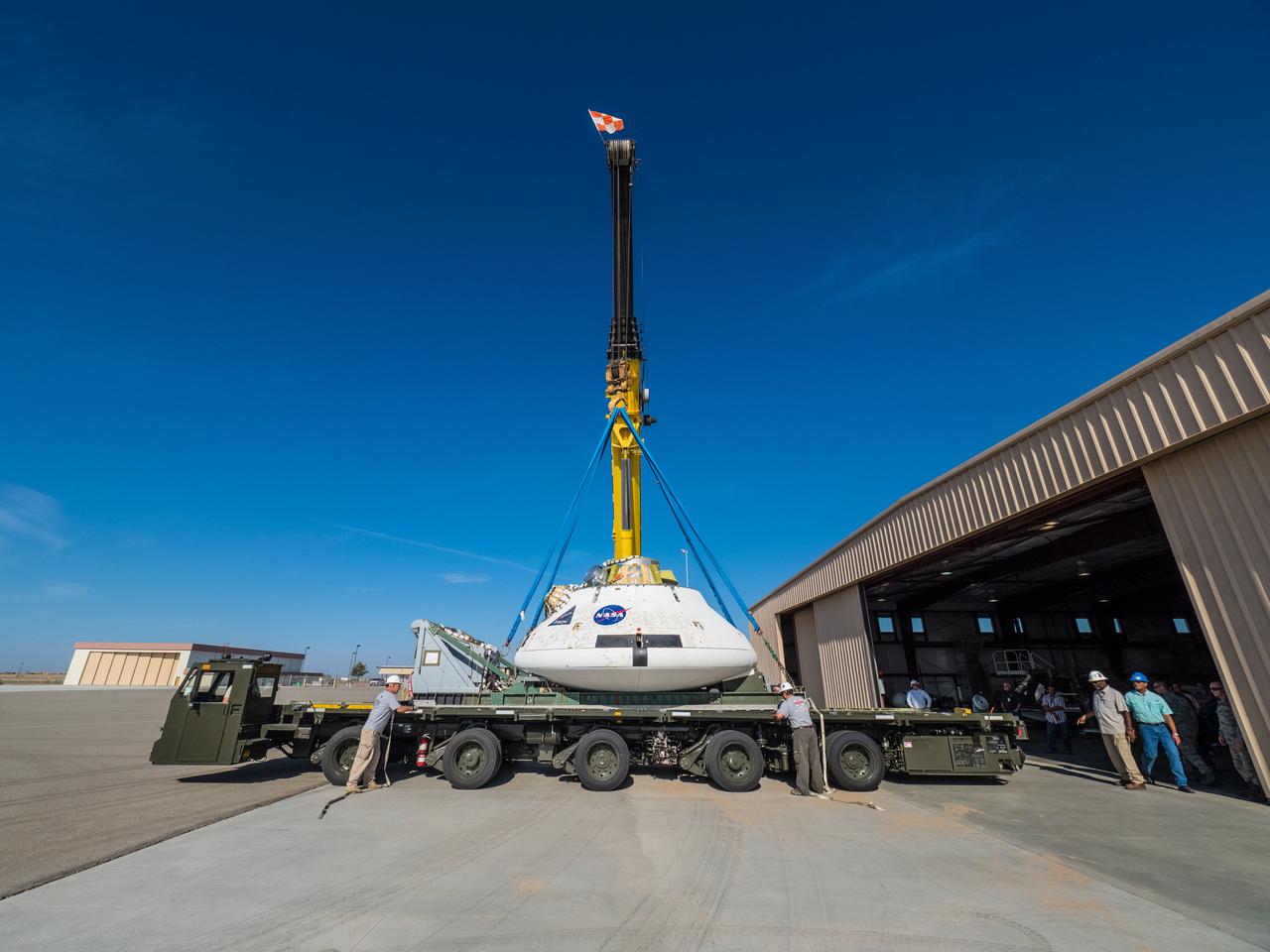
Engineers prepare to test the parachute system for NASA’s Orion spacecraft at the U.S. Army Yuma Proving Ground in Yuma, Arizona on Aug. 24, 2015. During the test, planned for Wednesday, Aug. 26, a C-17 aircraft will carry a representative Orion capsule to 35,000 feet in altitude and then drop it from its cargo bay. Engineers will test a scenario in which one of Orion’s two drogue parachutes, used to stabilize it in the air, does not deploy, and one of its three main parachutes, used to slow the capsule during the final stage of descent, also does not deploy. The risky test will provide data engineers will use as they gear up to qualify Orion’s parachutes for missions with astronauts. On Aug. 24, a C-17 was loaded with the test version of Orion, which has a similar mass and interfaces with the parachutes as the Orion being developed for deep space missions but is shorter on top to fit inside the aircraft. Part of Batch image transfer from Flickr.
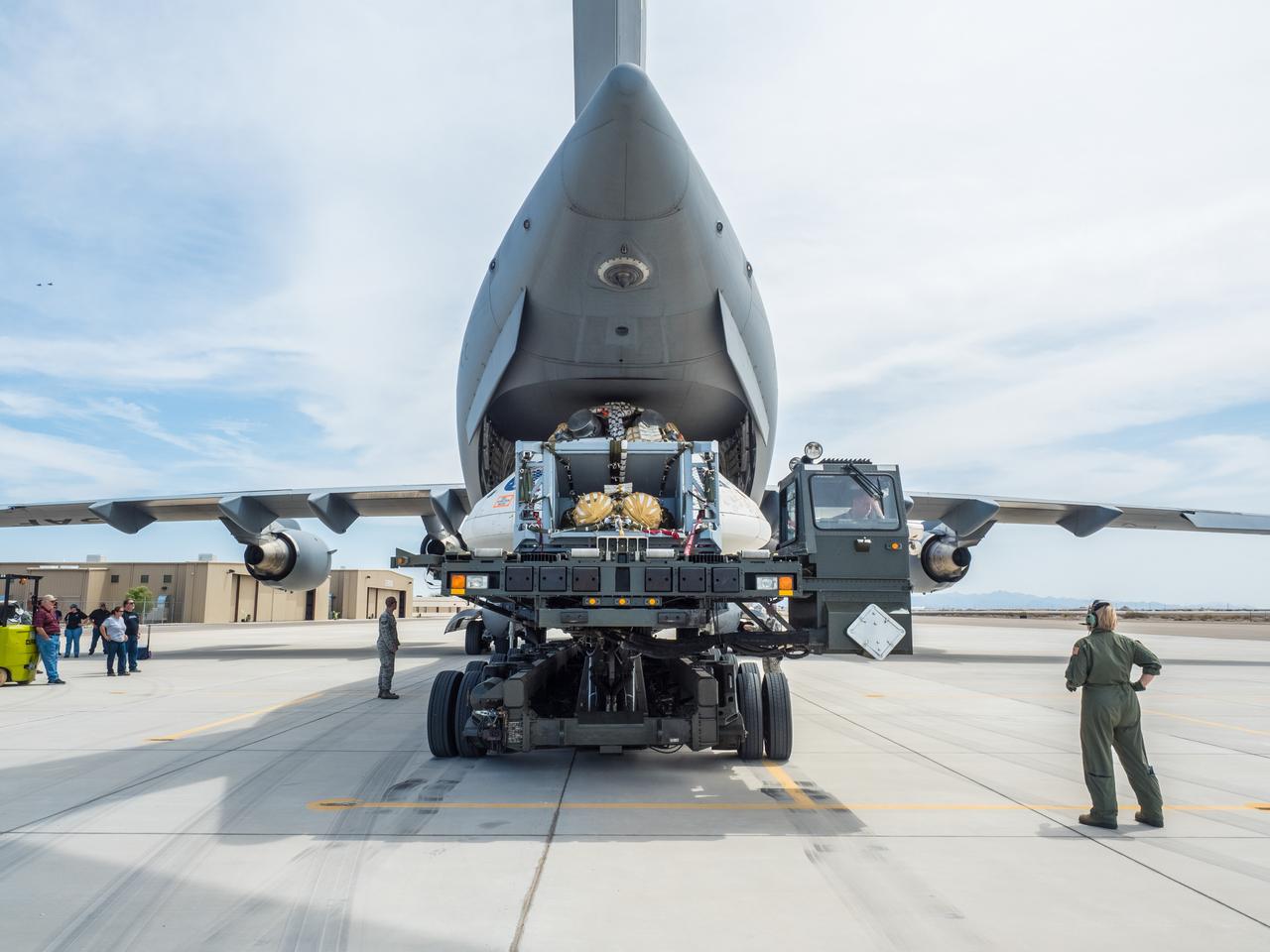
Engineers prepare to test the parachute system for NASA’s Orion spacecraft at the U.S. Army Yuma Proving Ground in Yuma, Arizona on Aug. 24, 2015. During the test, planned for Wednesday, Aug. 26, a C-17 aircraft will carry a representative Orion capsule to 35,000 feet in altitude and then drop it from its cargo bay. Engineers will test a scenario in which one of Orion’s two drogue parachutes, used to stabilize it in the air, does not deploy, and one of its three main parachutes, used to slow the capsule during the final stage of descent, also does not deploy. The risky test will provide data engineers will use as they gear up to qualify Orion’s parachutes for missions with astronauts. On Aug. 24, a C-17 was loaded with the test version of Orion, which has a similar mass and interfaces with the parachutes as the Orion being developed for deep space missions but is shorter on top to fit inside the aircraft. Part of Batch image transfer from Flickr.
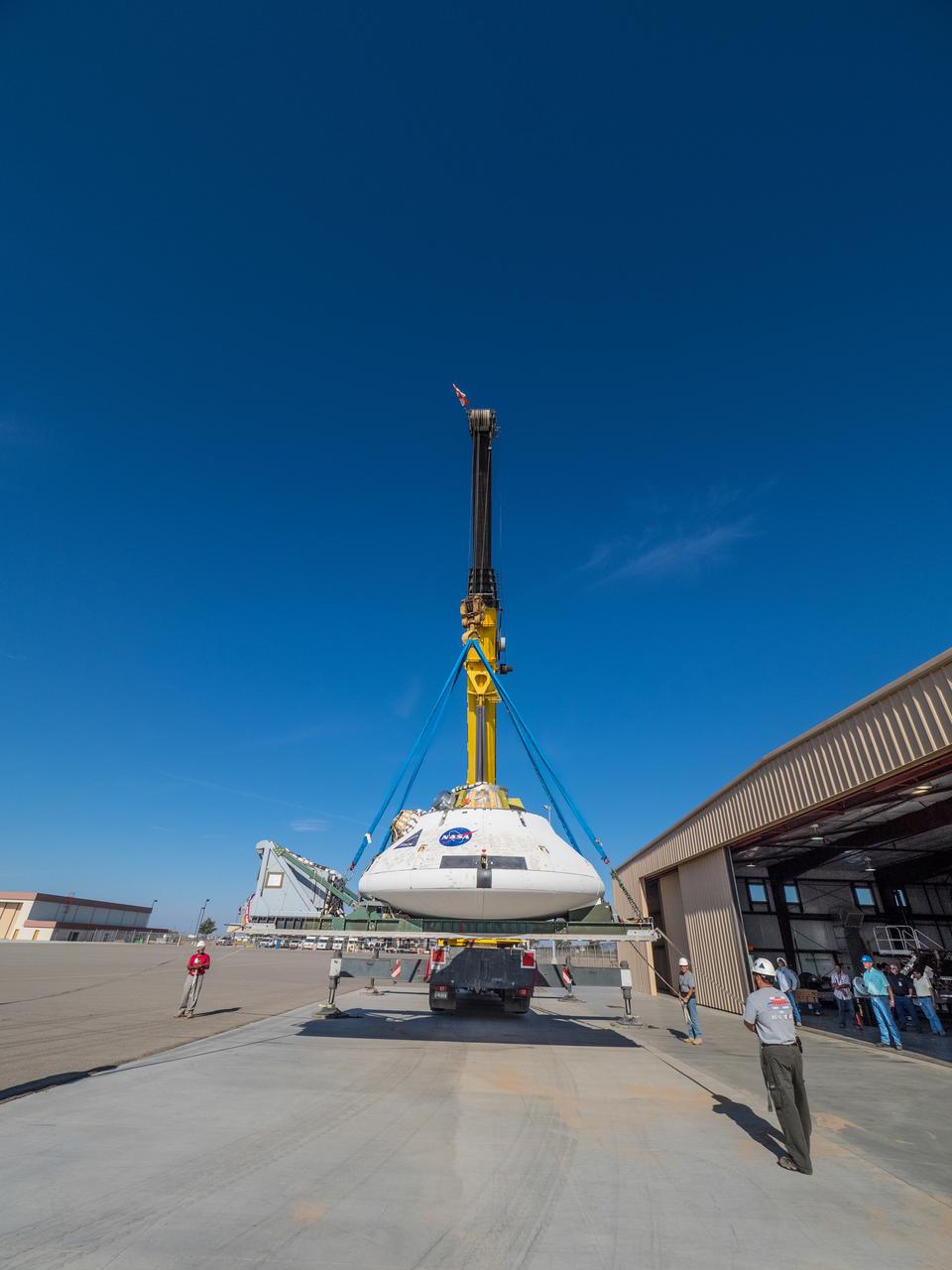
Engineers prepare to test the parachute system for NASA’s Orion spacecraft at the U.S. Army Yuma Proving Ground in Yuma, Arizona on Aug. 24, 2015. During the test, planned for Wednesday, Aug. 26, a C-17 aircraft will carry a representative Orion capsule to 35,000 feet in altitude and then drop it from its cargo bay. Engineers will test a scenario in which one of Orion’s two drogue parachutes, used to stabilize it in the air, does not deploy, and one of its three main parachutes, used to slow the capsule during the final stage of descent, also does not deploy. The risky test will provide data engineers will use as they gear up to qualify Orion’s parachutes for missions with astronauts. On Aug. 24, a C-17 was loaded with the test version of Orion, which has a similar mass and interfaces with the parachutes as the Orion being developed for deep space missions but is shorter on top to fit inside the aircraft. Part of Batch image transfer from Flickr.
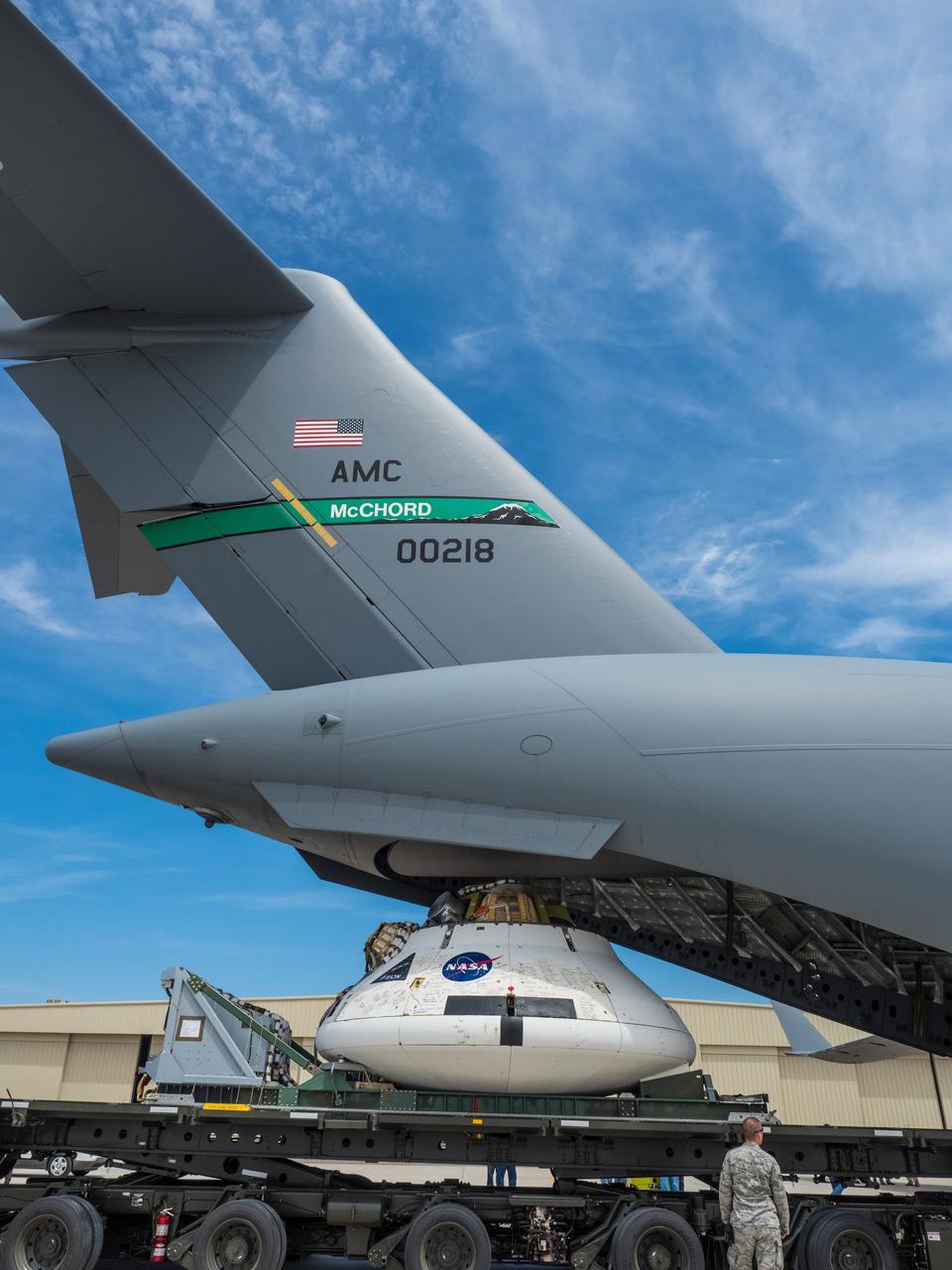
Engineers prepare to test the parachute system for NASA’s Orion spacecraft at the U.S. Army Yuma Proving Ground in Yuma, Arizona on Aug. 24, 2015. During the test, planned for Wednesday, Aug. 26, a C-17 aircraft will carry a representative Orion capsule to 35,000 feet in altitude and then drop it from its cargo bay. Engineers will test a scenario in which one of Orion’s two drogue parachutes, used to stabilize it in the air, does not deploy, and one of its three main parachutes, used to slow the capsule during the final stage of descent, also does not deploy. The risky test will provide data engineers will use as they gear up to qualify Orion’s parachutes for missions with astronauts. On Aug. 24, a C-17 was loaded with the test version of Orion, which has a similar mass and interfaces with the parachutes as the Orion being developed for deep space missions but is shorter on top to fit inside the aircraft. Part of Batch image transfer from Flickr.
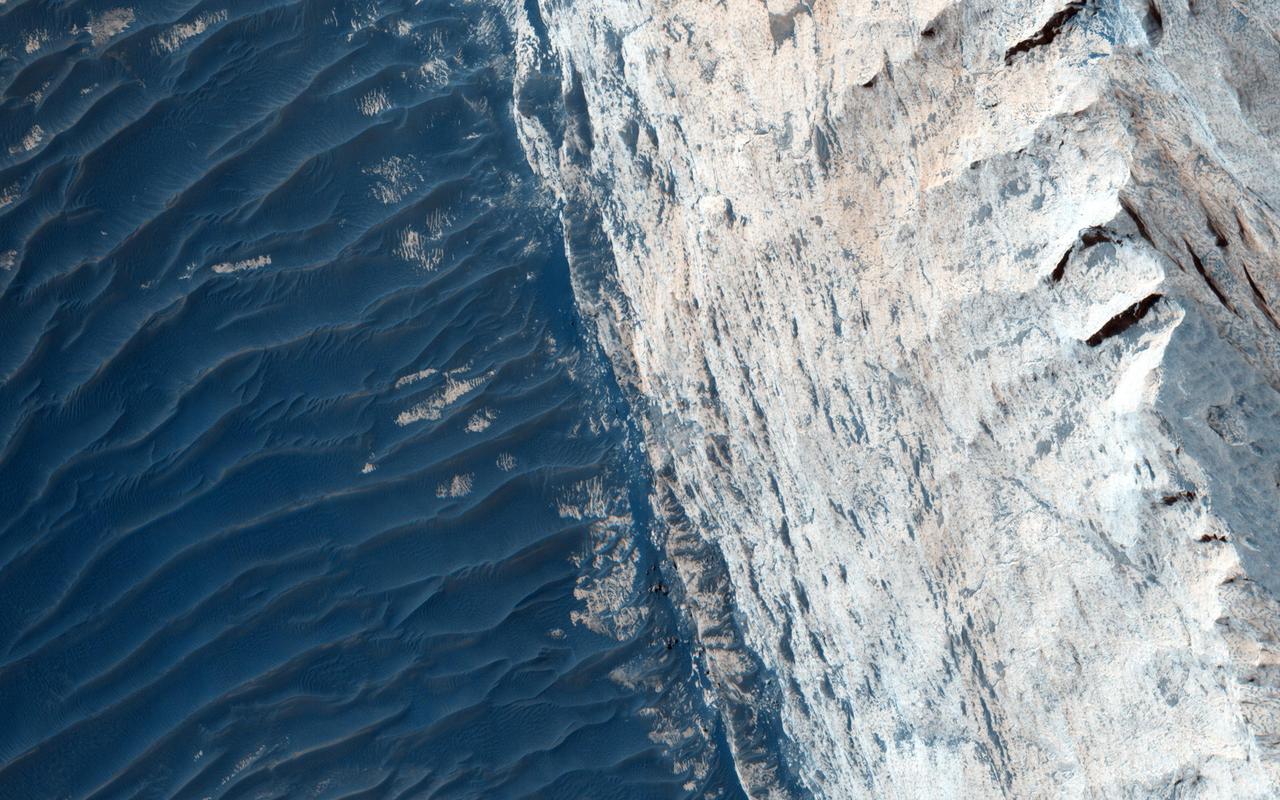
Ophir Chasma forms the northern portion of Valles Marineris, and this image from NASA Mars Reconnaissance Orbiter spacecraft features a small part of its wall and floor. The wall rock shows many sedimentary layers and the floor is covered with wind-blown ridges, which are intermediate in size between sand ripples and sand dunes. Rocks protruding on the floor could be volcanic intrusions of once-molten magma that have pushed aside the surrounding sedimentary layers and "froze" in place. Images like this can help geologists study the formation mechanisms of large tectonic systems like Valles Marineris. (The word "tectonics" does not mean the same thing as "plate tectonics." Tectonics simply refers to large stresses and strains in a planet's crust. Plate tectonics is the main type of tectonics that Earth has; Mars does not have plate tectonics.) http://photojournal.jpl.nasa.gov/catalog/PIA20044
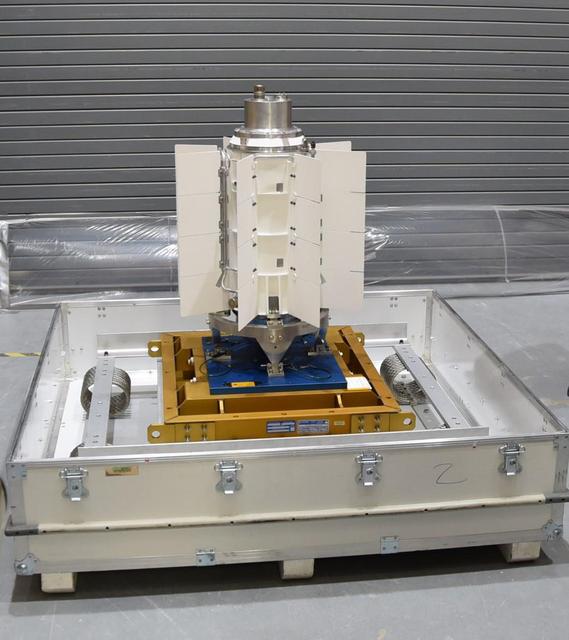
The electricity for NASA's Mars 2020 rover is provided by a power system called a Multi-Mission Radioisotope Thermoelectric Generator, or MMRTG. Essentially a nuclear battery, an MMRTG uses the heat from the natural radioactive decay of plutonium-238 to generate about 110 watts of electricity at the start of a mission. Besides generating electrical power, the MMRTG produces heat. Some of this heat can be used to maintain the rover's systems at the proper operating temperatures in the frigid cold of space and on the surface of Mars. This device, seen here before fueling and testing at the U.S. Department of Energy's Idaho National Laboratory, has "fins" that radiate excess heat. MMRTGs are provided to NASA for civil space applications by the U.S. Department of Energy (DOE). The radioisotope fuel is inserted into the MMRTG at the DOE's Idaho National Laboratory before the MMRTG is shipped to the launch site. Electrically heated versions of the MMRTG are used at JPL to verify and practice integration of the power system with the rover. https://photojournal.jpl.nasa.gov/catalog/PIA23306
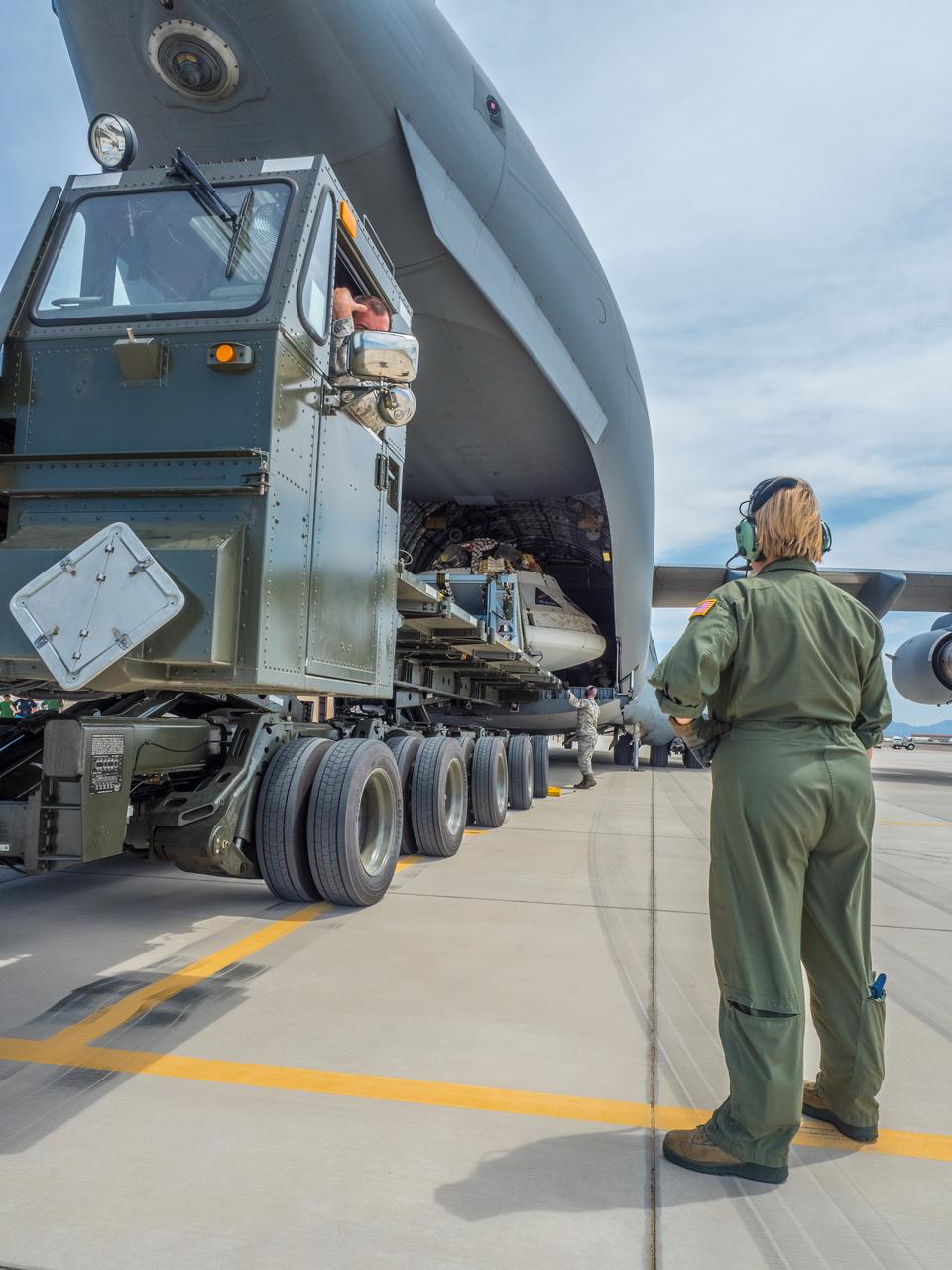
Engineers prepare to test the parachute system for NASA’s Orion spacecraft at the U.S. Army Yuma Proving Ground in Yuma, Arizona on Aug. 24, 2015. During the test, planned for Wednesday, Aug. 26, a C-17 aircraft will carry a representative Orion capsule to 35,000 feet in altitude and then drop it from its cargo bay. Engineers will test a scenario in which one of Orion’s two drogue parachutes, used to stabilize it in the air, does not deploy, and one of its three main parachutes, used to slow the capsule during the final stage of descent, also does not deploy. The risky test will provide data engineers will use as they gear up to qualify Orion’s parachutes for missions with astronauts. On Aug. 24, a C-17 was loaded with the test version of Orion, which has a similar mass and interfaces with the parachutes as the Orion being developed for deep space missions but is shorter on top to fit inside the aircraft. Part of Batch image transfer from Flickr.
Engineers prepare to test the parachute system for NASA’s Orion spacecraft at the U.S. Army Yuma Proving Ground in Yuma, Arizona on Aug. 24, 2015. During the test, planned for Wednesday, Aug. 26, a C-17 aircraft will carry a representative Orion capsule to 35,000 feet in altitude and then drop it from its cargo bay. Engineers will test a scenario in which one of Orion’s two drogue parachutes, used to stabilize it in the air, does not deploy, and one of its three main parachutes, used to slow the capsule during the final stage of descent, also does not deploy. The risky test will provide data engineers will use as they gear up to qualify Orion’s parachutes for missions with astronauts. On Aug. 24, a C-17 was loaded with the test version of Orion, which has a similar mass and interfaces with the parachutes as the Orion being developed for deep space missions but is shorter on top to fit inside the aircraft. Part of Batch image transfer from Flickr.
Engineers prepare to test the parachute system for NASA’s Orion spacecraft at the U.S. Army Yuma Proving Ground in Yuma, Arizona on Aug. 24, 2015. During the test, planned for Wednesday, Aug. 26, a C-17 aircraft will carry a representative Orion capsule to 35,000 feet in altitude and then drop it from its cargo bay. Engineers will test a scenario in which one of Orion’s two drogue parachutes, used to stabilize it in the air, does not deploy, and one of its three main parachutes, used to slow the capsule during the final stage of descent, also does not deploy. The risky test will provide data engineers will use as they gear up to qualify Orion’s parachutes for missions with astronauts. On Aug. 24, a C-17 was loaded with the test version of Orion, which has a similar mass and interfaces with the parachutes as the Orion being developed for deep space missions but is shorter on top to fit inside the aircraft. Part of Batch image transfer from Flickr.
Engineers prepare to test the parachute system for NASA’s Orion spacecraft at the U.S. Army Yuma Proving Ground in Yuma, Arizona on Aug. 24, 2015. During the test, planned for Wednesday, Aug. 26, a C-17 aircraft will carry a representative Orion capsule to 35,000 feet in altitude and then drop it from its cargo bay. Engineers will test a scenario in which one of Orion’s two drogue parachutes, used to stabilize it in the air, does not deploy, and one of its three main parachutes, used to slow the capsule during the final stage of descent, also does not deploy. The risky test will provide data engineers will use as they gear up to qualify Orion’s parachutes for missions with astronauts. On Aug. 24, a C-17 was loaded with the test version of Orion, which has a similar mass and interfaces with the parachutes as the Orion being developed for deep space missions but is shorter on top to fit inside the aircraft. Part of Batch image transfer from Flickr.
Engineers prepare to test the parachute system for NASA’s Orion spacecraft at the U.S. Army Yuma Proving Ground in Yuma, Arizona on Aug. 24, 2015. During the test, planned for Wednesday, Aug. 26, a C-17 aircraft will carry a representative Orion capsule to 35,000 feet in altitude and then drop it from its cargo bay. Engineers will test a scenario in which one of Orion’s two drogue parachutes, used to stabilize it in the air, does not deploy, and one of its three main parachutes, used to slow the capsule during the final stage of descent, also does not deploy. The risky test will provide data engineers will use as they gear up to qualify Orion’s parachutes for missions with astronauts. On Aug. 24, a C-17 was loaded with the test version of Orion, which has a similar mass and interfaces with the parachutes as the Orion being developed for deep space missions but is shorter on top to fit inside the aircraft. Part of Batch image transfer from Flickr.
Engineers prepare to test the parachute system for NASA’s Orion spacecraft at the U.S. Army Yuma Proving Ground in Yuma, Arizona on Aug. 24, 2015. During the test, planned for Wednesday, Aug. 26, a C-17 aircraft will carry a representative Orion capsule to 35,000 feet in altitude and then drop it from its cargo bay. Engineers will test a scenario in which one of Orion’s two drogue parachutes, used to stabilize it in the air, does not deploy, and one of its three main parachutes, used to slow the capsule during the final stage of descent, also does not deploy. The risky test will provide data engineers will use as they gear up to qualify Orion’s parachutes for missions with astronauts. On Aug. 24, a C-17 was loaded with the test version of Orion, which has a similar mass and interfaces with the parachutes as the Orion being developed for deep space missions but is shorter on top to fit inside the aircraft. Part of Batch image transfer from Flickr.
Engineers prepare to test the parachute system for NASA’s Orion spacecraft at the U.S. Army Yuma Proving Ground in Yuma, Arizona on Aug. 24, 2015. During the test, planned for Wednesday, Aug. 26, a C-17 aircraft will carry a representative Orion capsule to 35,000 feet in altitude and then drop it from its cargo bay. Engineers will test a scenario in which one of Orion’s two drogue parachutes, used to stabilize it in the air, does not deploy, and one of its three main parachutes, used to slow the capsule during the final stage of descent, also does not deploy. The risky test will provide data engineers will use as they gear up to qualify Orion’s parachutes for missions with astronauts. On Aug. 24, a C-17 was loaded with the test version of Orion, which has a similar mass and interfaces with the parachutes as the Orion being developed for deep space missions but is shorter on top to fit inside the aircraft. Part of Batch image transfer from Flickr.
Engineers prepare to test the parachute system for NASA’s Orion spacecraft at the U.S. Army Yuma Proving Ground in Yuma, Arizona on Aug. 24, 2015. During the test, planned for Wednesday, Aug. 26, a C-17 aircraft will carry a representative Orion capsule to 35,000 feet in altitude and then drop it from its cargo bay. Engineers will test a scenario in which one of Orion’s two drogue parachutes, used to stabilize it in the air, does not deploy, and one of its three main parachutes, used to slow the capsule during the final stage of descent, also does not deploy. The risky test will provide data engineers will use as they gear up to qualify Orion’s parachutes for missions with astronauts. On Aug. 24, a C-17 was loaded with the test version of Orion, which has a similar mass and interfaces with the parachutes as the Orion being developed for deep space missions but is shorter on top to fit inside the aircraft. Part of Batch image transfer from Flickr.
Engineers prepare to test the parachute system for NASA’s Orion spacecraft at the U.S. Army Yuma Proving Ground in Yuma, Arizona on Aug. 24, 2015. During the test, planned for Wednesday, Aug. 26, a C-17 aircraft will carry a representative Orion capsule to 35,000 feet in altitude and then drop it from its cargo bay. Engineers will test a scenario in which one of Orion’s two drogue parachutes, used to stabilize it in the air, does not deploy, and one of its three main parachutes, used to slow the capsule during the final stage of descent, also does not deploy. The risky test will provide data engineers will use as they gear up to qualify Orion’s parachutes for missions with astronauts. On Aug. 24, a C-17 was loaded with the test version of Orion, which has a similar mass and interfaces with the parachutes as the Orion being developed for deep space missions but is shorter on top to fit inside the aircraft. Part of Batch image transfer from Flickr.

This illustration shows the seven Earth-size planets of TRAPPIST-1, an exoplanet system about 40 light-years away, based on data current as of February 2018. The image shows the planets' relative sizes but does not represent their orbits to scale. The art highlights possibilities for how the surfaces of these intriguing worlds might look based on their newly calculated properties. The seven planets of TRAPPIST-1 are all Earth-sized and terrestrial. TRAPPIST-1 is an ultra-cool dwarf star in the constellation Aquarius, and its planets orbit very close to it. In the background, slightly distorted versions the familiar constellations of Orion and Taurus are shown as they would appear from the location of TRAPPIST-1 (courtesy of California Academy of Sciences/Dan Tell). https://photojournal.jpl.nasa.gov/catalog/PIA22097
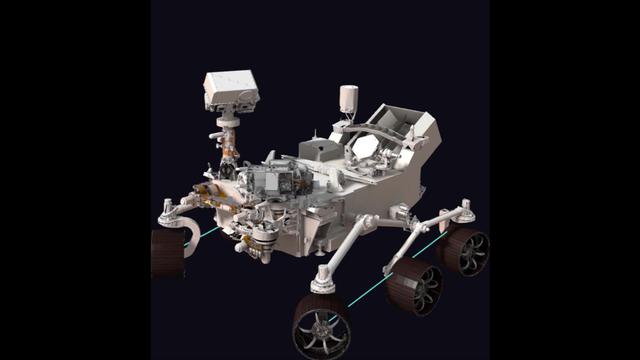
This simulation shows the motions the robotic arm on NASA's Perseverance rover carried out during its first two-hour checkout since its Feb. 18, 2021 touchdown on Mars. This simulation does not run in real-time. A key objective for Perseverance's mission on Mars is astrobiology, including the search for signs of ancient microbial life. The rover will characterize the planet's geology and past climate, pave the way for human exploration of the Red Planet, and be the first mission to collect and cache Martian rock and regolith (broken rock and dust). Subsequent NASA missions, in cooperation with ESA (European Space Agency), would send spacecraft to Mars to collect these sealed samples from the surface and return them to Earth for in-depth analysis. The Mars 2020 Perseverance mission is part of NASA's Moon to Mars exploration approach, which includes Artemis missions to the Moon that will help prepare for human exploration of the Red Planet. Animation available at https://photojournal.jpl.nasa.gov/catalog/PIA24332
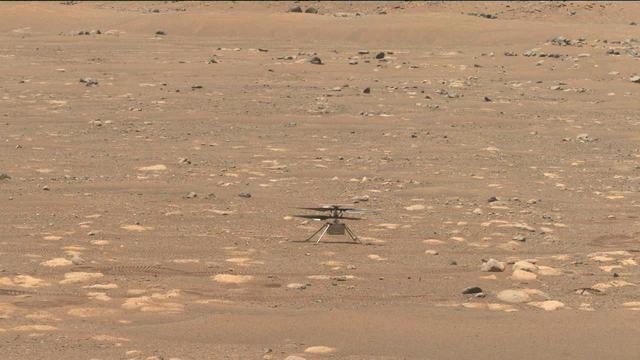
NASA's Ingenuity helicopter does a slow spin test of its blades on April 8, 2021, the 48th Martian day, or sol, of the mission. This image was captured by the Mastcam-Z on NASA's Perseverance Mars rover. The Ingenuity Mars Helicopter was built by JPL, which also manages this technology demonstration project for NASA Headquarters. It is supported by NASA's Science Mission Directorate, Aeronautics Research Mission Directorate, and Space Technology Mission Directorate. NASA's Ames Research Center and Langley Research Center provided significant flight performance analysis and technical assistance during Ingenuity's development. A key objective for Perseverance's mission on Mars is astrobiology, including the search for signs of ancient microbial life. The rover will characterize the planet's geology and past climate, pave the way for human exploration of the Red Planet, and be the first mission to collect and cache Martian rock and regolith (broken rock and dust). Subsequent NASA missions, in cooperation with ESA (European Space Agency), would send spacecraft to Mars to collect these sealed samples from the surface and return them to Earth for in-depth analysis. The Mars 2020 Perseverance mission is part of NASA's Moon to Mars exploration approach, which includes Artemis missions to the Moon that will help prepare for human exploration of the Red Planet. Movie avaiable at https://photojournal.jpl.nasa.gov/catalog/PIA24582
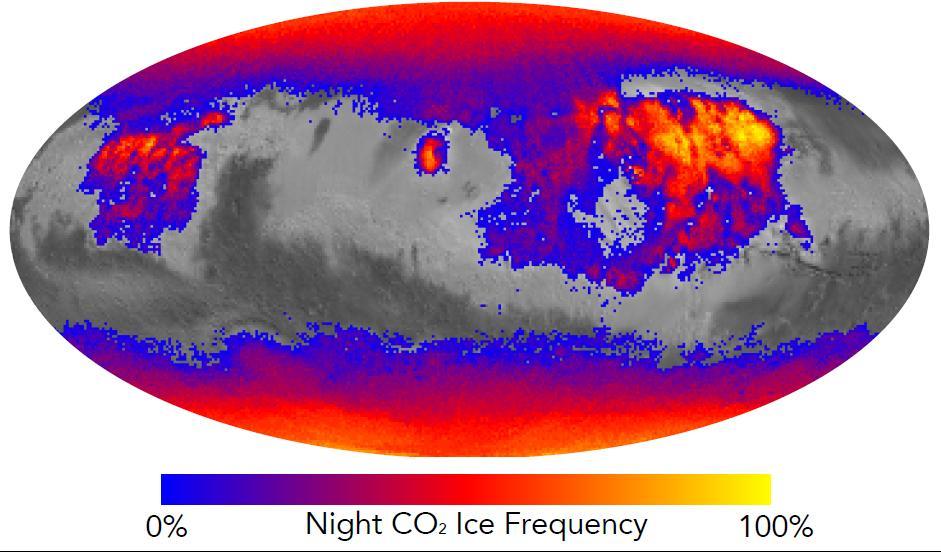
This map shows the frequency of carbon dioxide frost's presence at sunrise on Mars, as a percentage of days year-round. Carbon dioxide ice more often covers the ground at night in some mid-latitude regions than in polar regions, where it is generally absent for much of summer and fall. Color coding is based on data from the Mars Climate Sounder instrument on NASA's Mars Reconnaissance Orbiter. A color-key bar below the map shows how colors correspond to frequencies. Yellow indicates high frequencies, identifying areas where carbon dioxide ice is present on the ground at night during most of the year. Blue identifies areas where it is rarely present; red is intermediate. Areas without color coding are regions where carbon dioxide frost is not detected at any time of year. The areas with highest frequency of overnight carbon dioxide frost correspond to regions with surfaces of loose dust, which do not retain heat well, compared to rockier areas. Those areas also have some of the highest mid-afternoon temperatures on the planet. The dust surface heats up and cools off rapidly. http://photojournal.jpl.nasa.gov/catalog/PIA20758
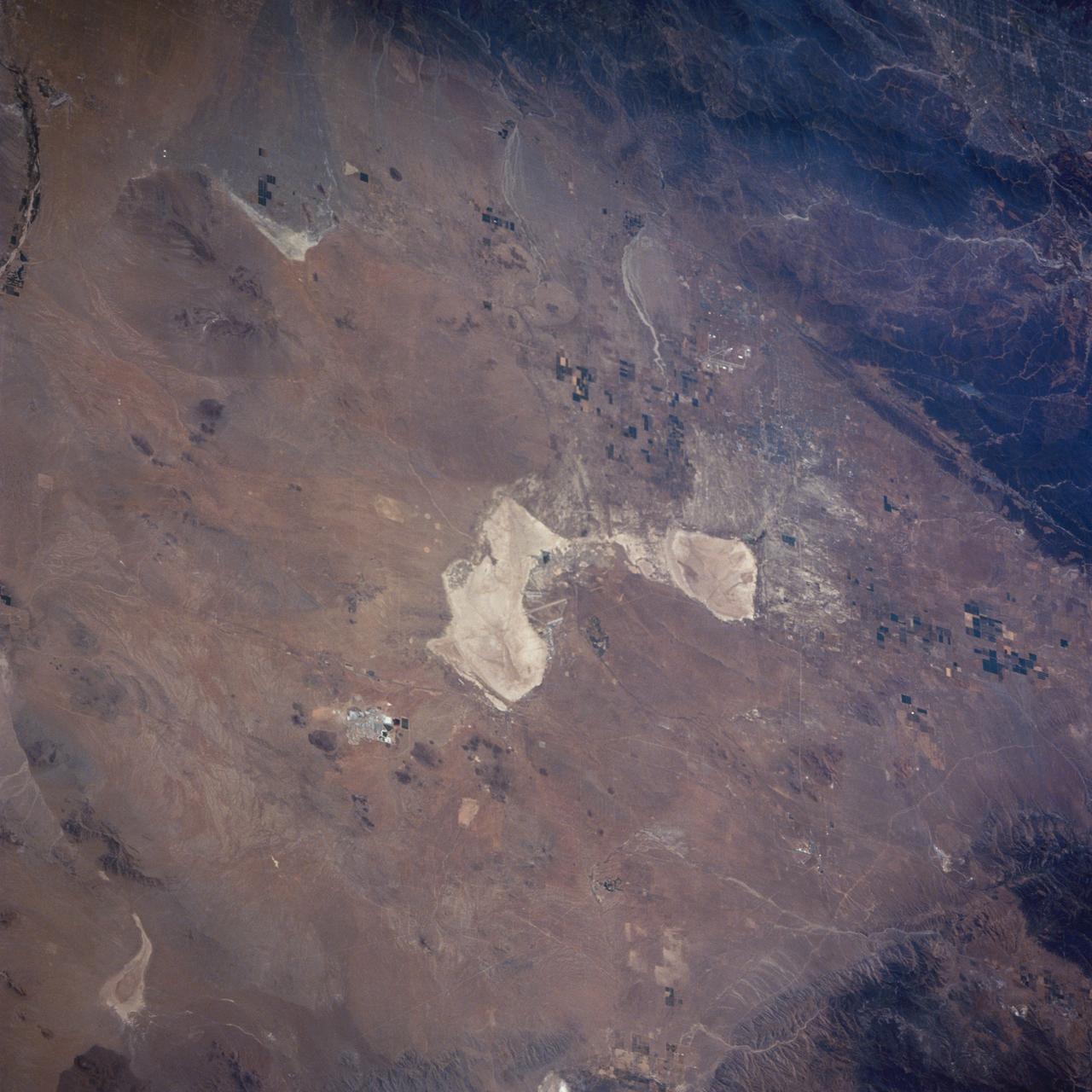
51F-46-100 (29 July-6 Aug 1985) --- The remarkable 51-F mission would end at Edwards Air Force Base, lakebed runway 23 at the center of the photograph. The San Andres Fault gashes across the lower left corner of the photo as does the Garlock fault at the upper left corner. The California Aqueduct can be traced from left center to lower right corner.