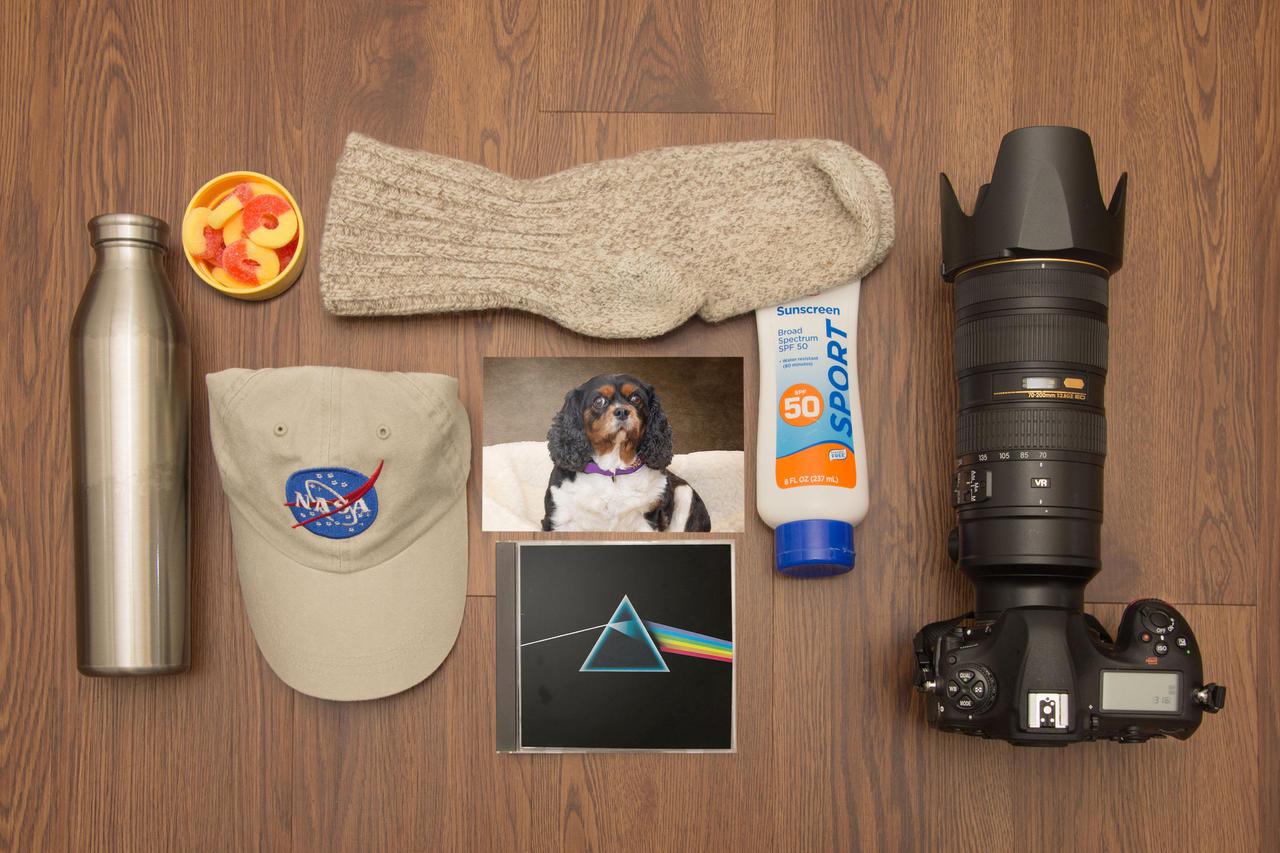
The first thing that went into my Moonkit was my camera. Some of the most iconic photographs ever taken were captured on the surface of the Moon by NASA astronauts. The camera has to go. The hat and sunscreen will be a must to protect me from the unfiltered sunlight. Warm socks? Of course, my feet are always cold. A little “Moon Music” and a photo of Holly, the best dog in the world, will pass the time during breaks. Lastly, I need to eat. Water and gummy peach rings will pack in a small corner of my pack. Marv Smith Lead Photographer, NASA Glenn Research Center
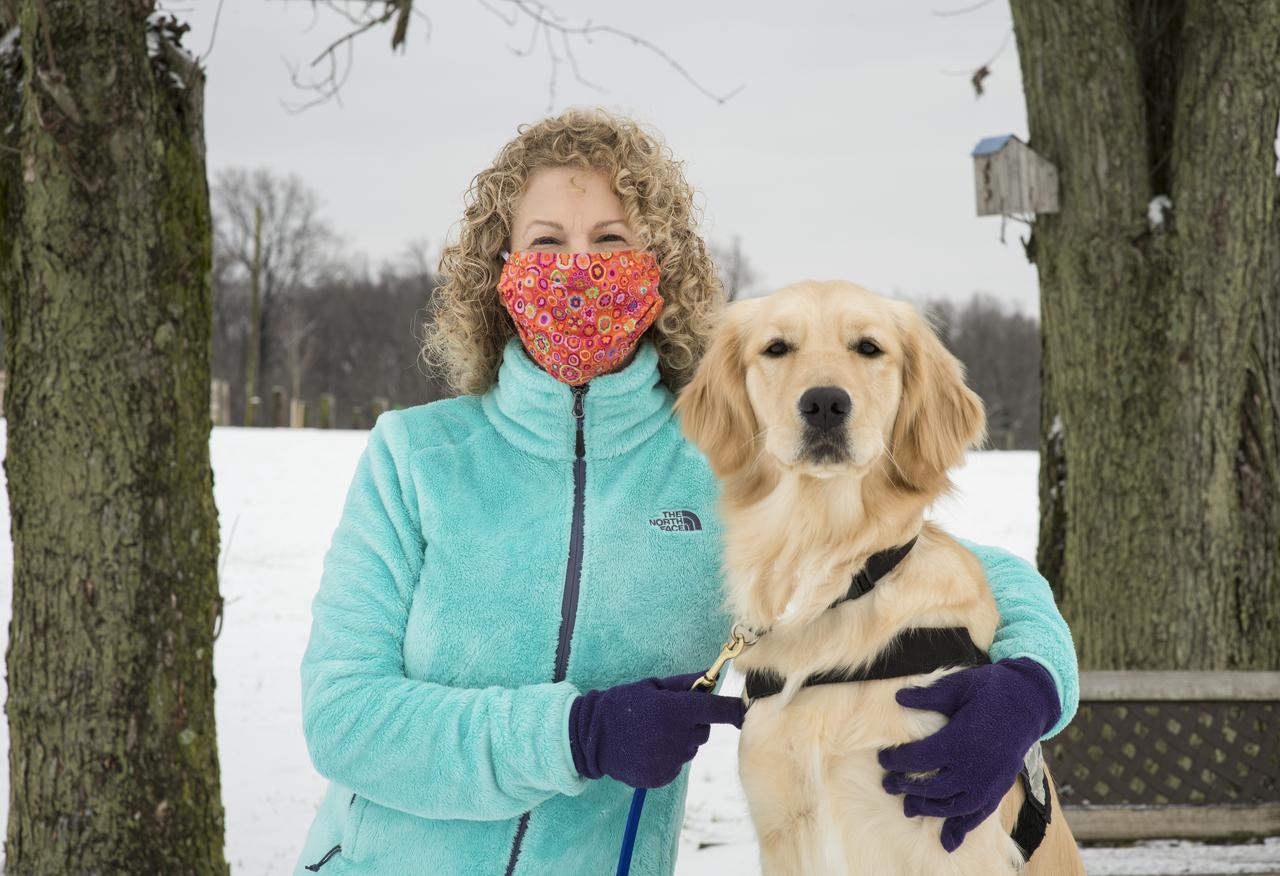
“It was part of my career, but then it was also personal. I was doing it on a volunteer basis, but it was part of my work because I was bringing my service dog in training everywhere with me, which meant to work every day and to meetings at NOAA (National Oceanic and Atmospheric Administration). And I was taking the dog across the country to meetings over at Ball Aerospace; that was all part of the training of a service dog. That was an incredible time. I really enjoyed it. “The fact that I was able to do the two combined, that to me was just such an accomplishment. To some people, it could be they got permission to do it and then that’s all they focused on was the dog, but no. I had my job I had to do. I’ve always gotten a distinguished rating in my performances my entire career, and it didn't change when I was training this service dog. “It was a challenge for sure. “After I had to turn back over the service dog I trained, it was really very difficult because the dog was with me for two years, even though I knew it was for a wonderful cause. I ended up going out and getting my own dog who I’ve trained to be a therapy dog, so now we do therapy visits with veterans, elderly, and others. ” Jean Wolfe, Program Executive for the Geostationary Operational Environmental Satellite (GOES)-R Series Program at NASA Headquarters, poses for a portrait with Bonnie, who was named for U.S. Air Force Reserve Major Bonnie Carroll, Ret., Friday, Dec. 18, 2020 at the Warrior Canine Connection in Boyds, MD. “Warrior Canine Connection enlists service members and veterans with combat stress in the critical mission of training service dogs for fellow Wounded Warriors.” Photo Credit: (NASA/Aubrey Gemignani)
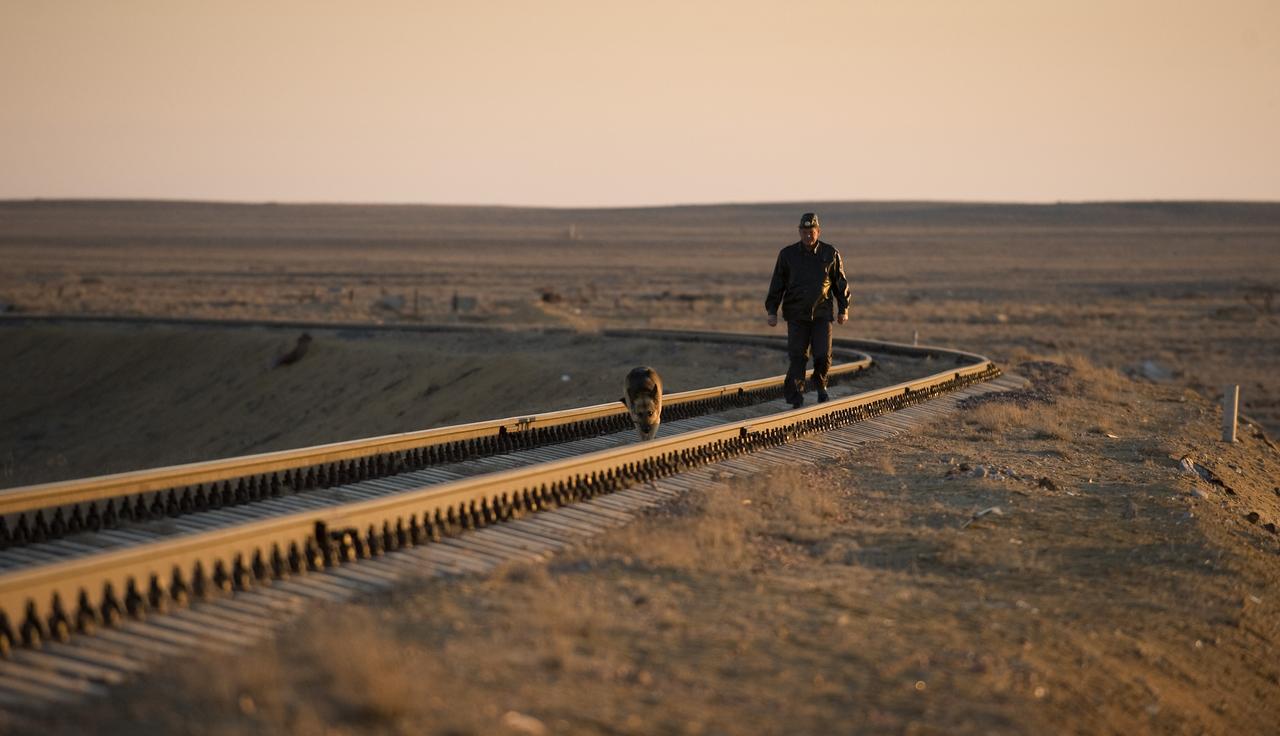
A Russian security member and his dog check the railroad tracks ahead of the Soyuz rocket roll out to the launch pad Tuesday, March 24, 2009 at the Baikonur Cosmodrome in Kazakhstan. The Soyuz is scheduled to launch the crew of Expedition 19 and a spaceflight participant on March 26, 2009. Photo Credit: (NASA/Bill Ingalls)
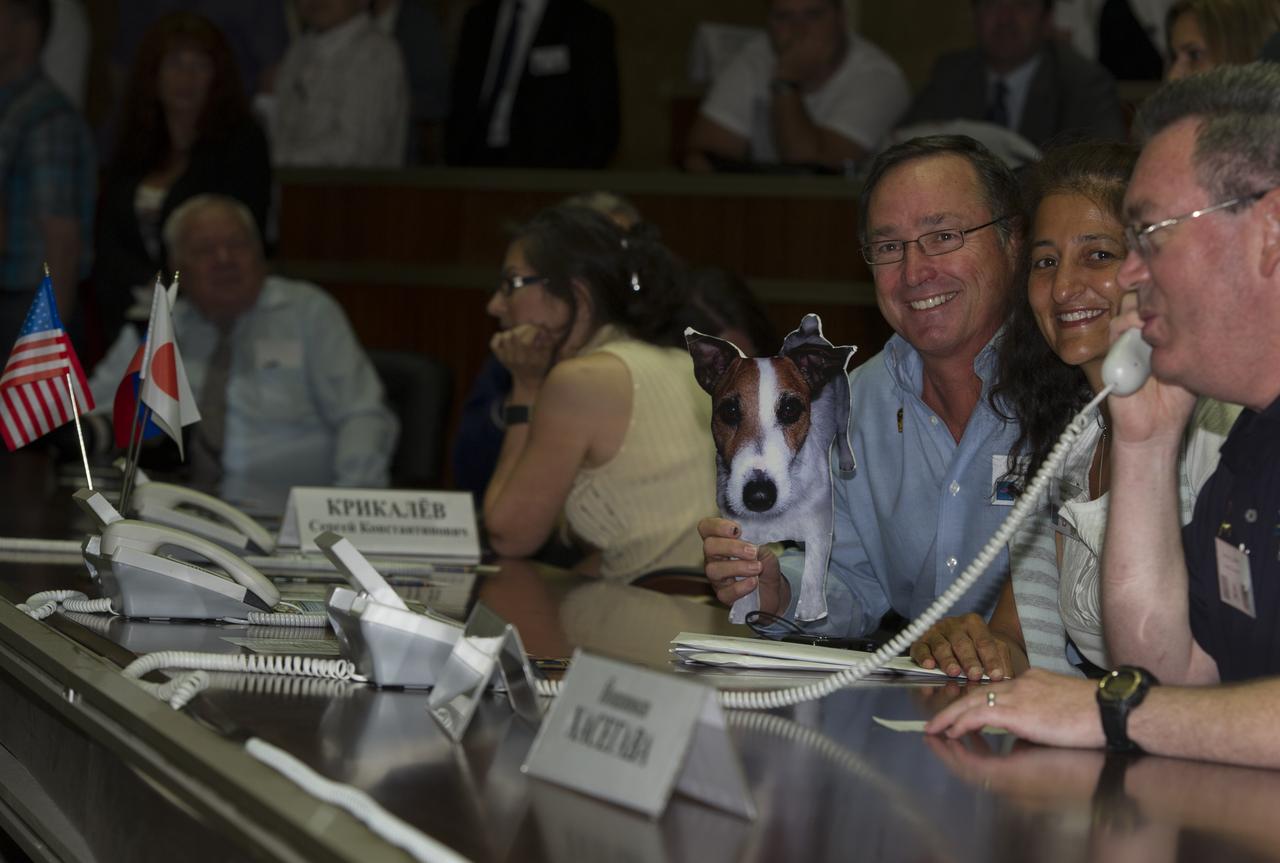
Expedition 32 Flight Engineer Sunita Williams’ sister and friend brought a photo of William’s dog “Gorby” in support of her arrival to the International Space Station on Tuesday, July 17, 2012 at the Russian Mission Control Center in Korolev, Russia. The Soyuz docked to the International Space Station with Williams and fellow crew members Soyuz Commander Yuri Malenchenko and JAXA Flight Engineer Akihiko Hoshide two days after they launched from the Baikonur Cosmodrome in Kazakhstan. Photo Credit: (NASA/Carla Cioffi)
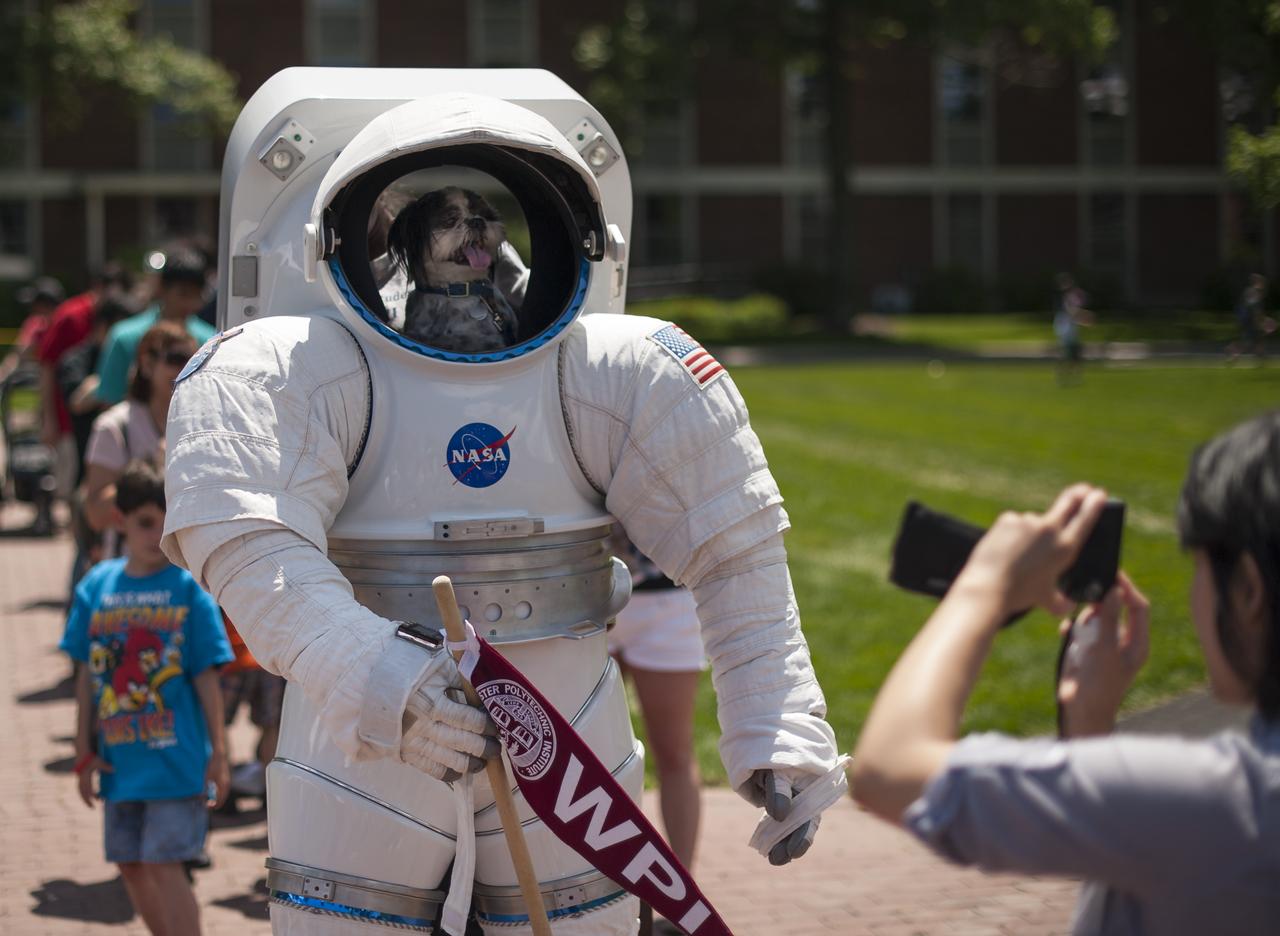
Visitors, some with their dogs, line up to make their photo inside a space suit exhibit during the Worcester Polytechnic Institute (WPI) "TouchTomorrow" education and outreach event that was held in tandem with the NASA-WPI Sample Return Robot Centennial Challenge on Saturday, June 16, 2012 in Worcester, Mass. The NASA-WPI challenge tasked robotic teams to build autonomous robots that can identify, collect and return samples. NASA needs autonomous robotic capability for future planetary exploration. Photo Credit: (NASA/Bill Ingalls)
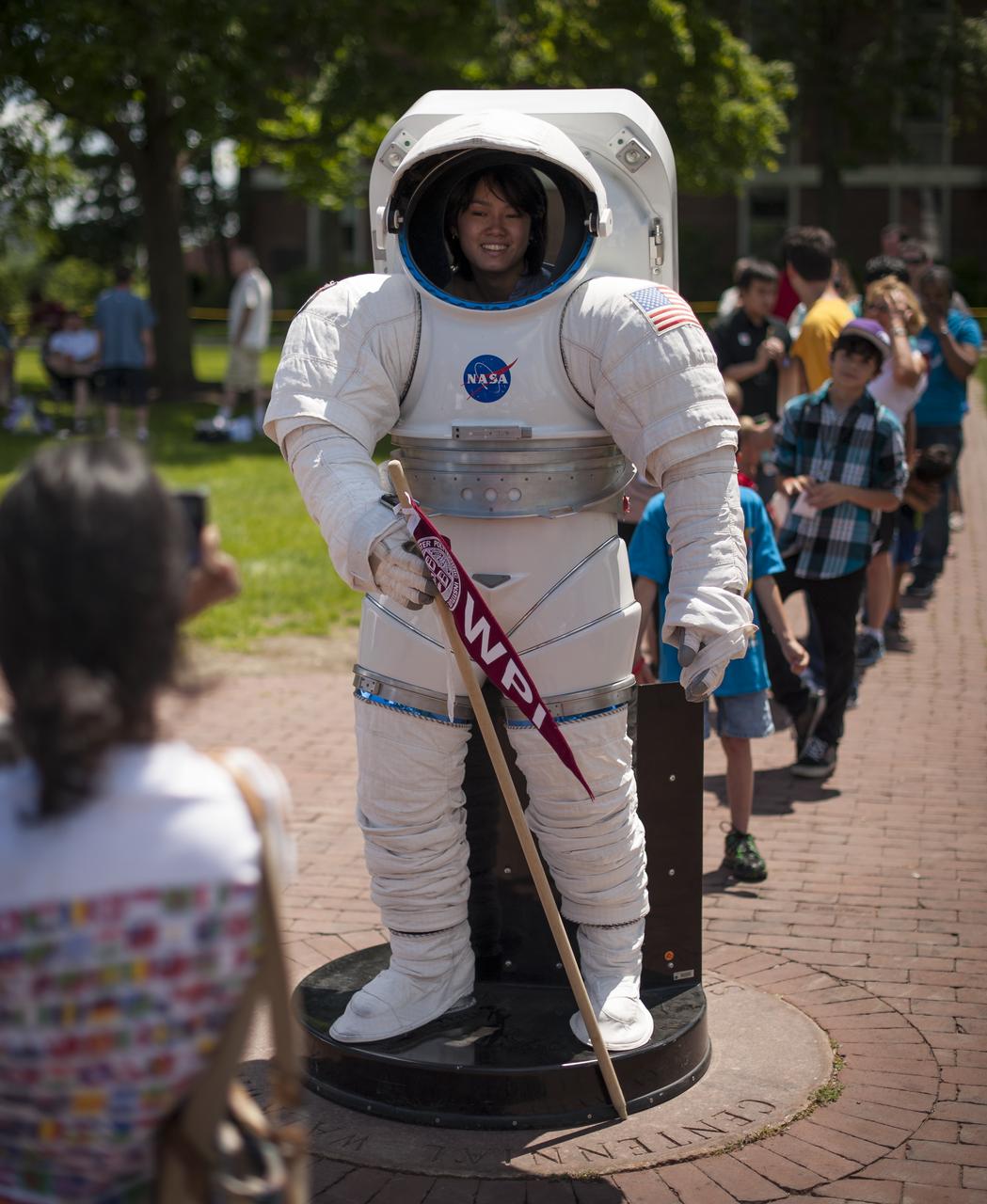
Visitors, some with their dogs, line up to make their photo inside a space suit exhibit during the Worcester Polytechnic Institute (WPI) "TouchTomorrow" education and outreach event that was held in tandem with the NASA-WPI Sample Return Robot Centennial Challenge on Saturday, June 16, 2012 in Worcester, Mass. The NASA-WPI challenge tasked robotic teams to build autonomous robots that can identify, collect and return samples. NASA needs autonomous robotic capability for future planetary exploration. Photo Credit: (NASA/Bill Ingalls)
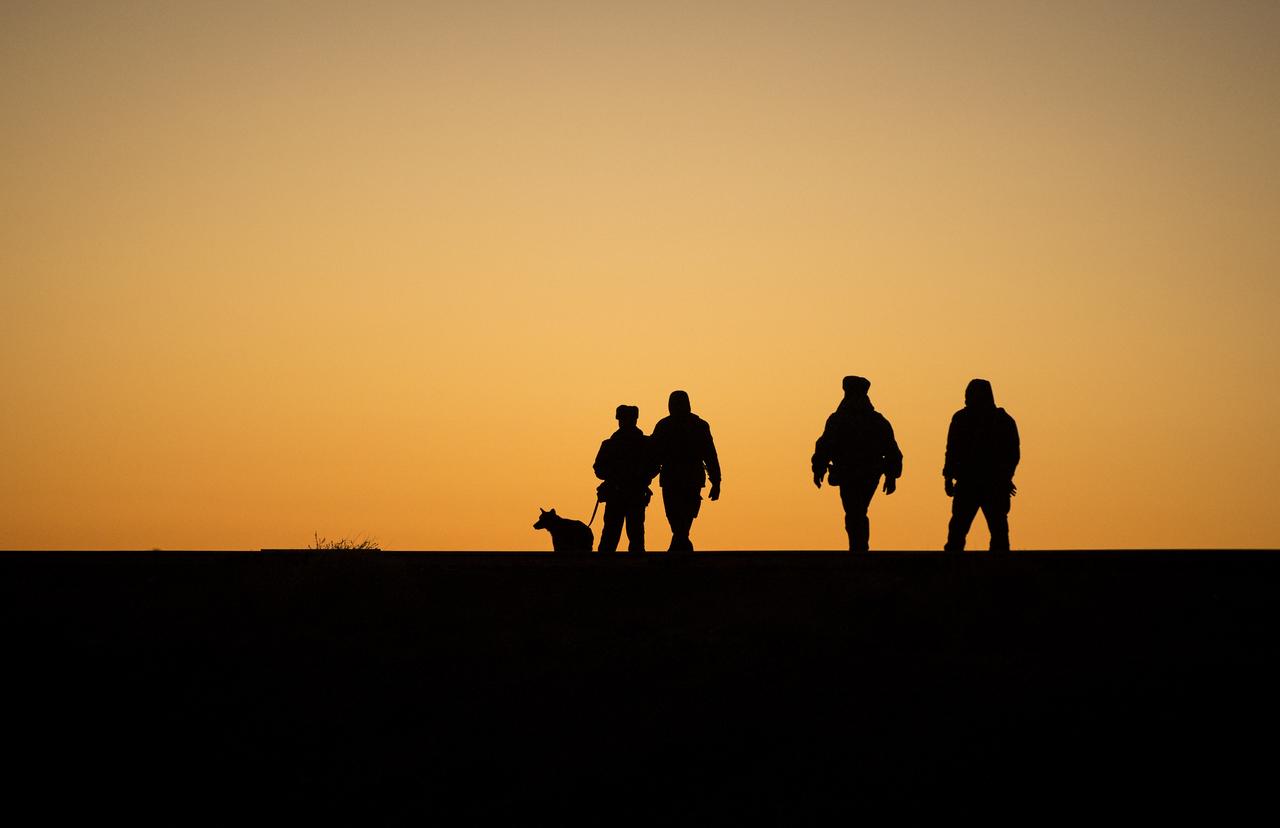
Police walk along railroad tracks, along with a bomb sniffing dog, ahead of the roll out of the Soyuz TMA-11M rocket to the launch pad on Tuesday, Nov. 5, 2013, at the Baikonur Cosmodrome in Kazakhstan. Launch of the Soyuz rocket is scheduled for November 7 and will send Expedition 38 Soyuz Commander Mikhail Tyurin of Roscosmos, Flight Engineer Rick Mastracchio of NASA and Flight Engineer Koichi Wakata of the Japan Aerospace Exploration Agency on a six-month mission aboard the International Space Station. Photo Credit: (NASA/Bill Ingalls)
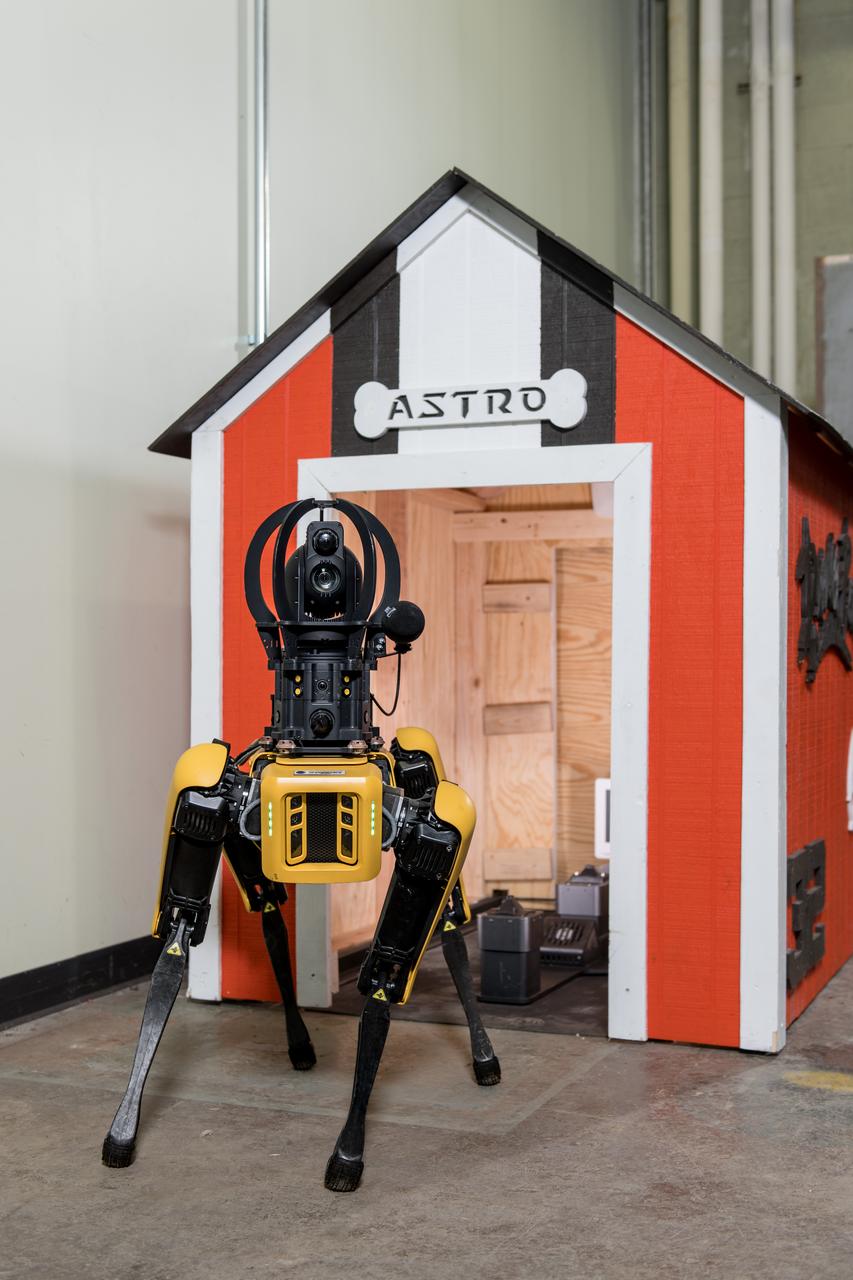
Astro is a robot dog operated by staff via remote control, is fitted with an infrared camera with 40 times zoom, utilizes thermography and a microphone and can navigate all three levels of the facility. The beloved robot conducts inspections to spare the employees ears in extremely loud environments. When not used, Astro lives in his doghouse in the facility and recharges. Photo Credit: (NASA/Sara Lowthian-Hanna)
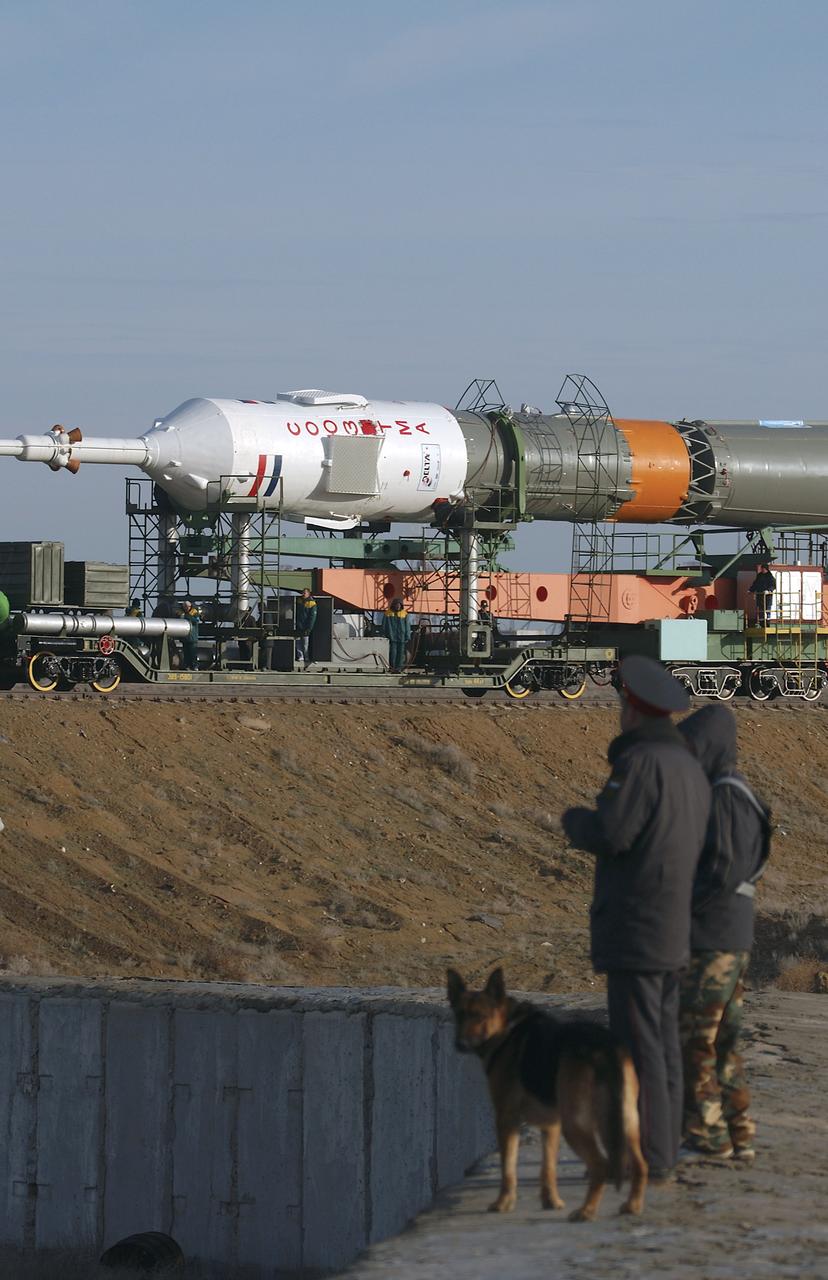
Security Officers with their dog watch as the Soyuz TMA-4 capsule and its booster rocket begin to roll to the launch pad at the Baikonur Cosmodrome on Saturday, April 17, 2004, in Baikonur, Kazakhstan in preparation for the launch of the Expedition 9 crew and a European researcher to the International Space Station on April 19. The Soyuz vehicle is transported to the launch pad horizontally on a railcar from its processing hangar in a process that takes about 2.5 hours to complete. Photo Credit: (NASA/Bill Ingalls)
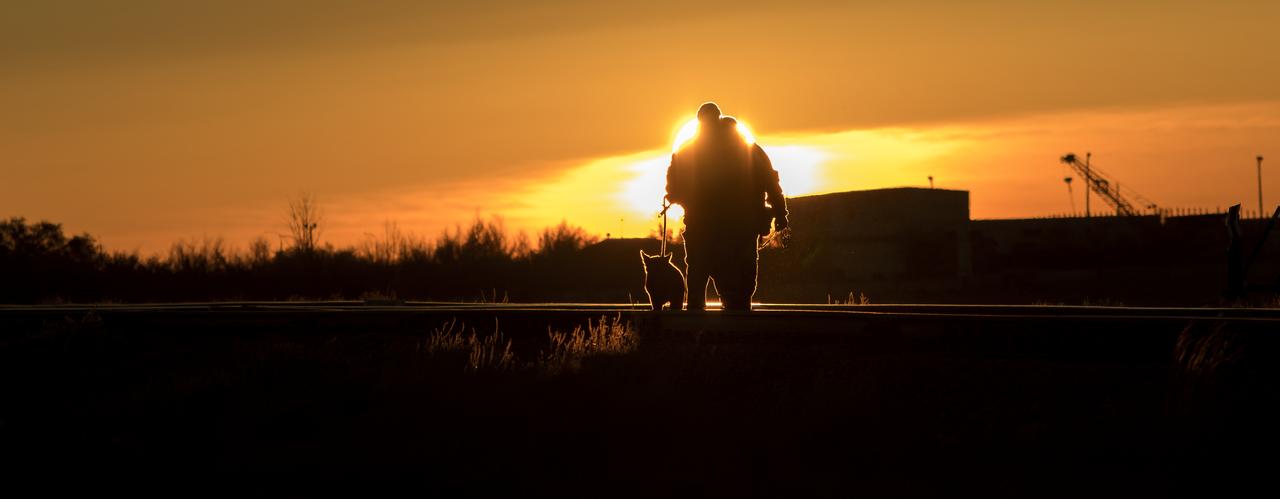
Security personnel and their dog sweep the train tracks in advance of the Soyuz rocket being rolled out to the launch pad, Tuesday, Oct. 9, 2018 at the Baikonur Cosmodrome in Kazakhstan. Expedition 57 crewmembers Nick Hague of NASA and Alexey Ovchinin of Roscosmos are scheduled to launch on October 11 and will spend the next six months living and working aboard the International Space Station. Photo Credit: (NASA/Bill Ingalls)
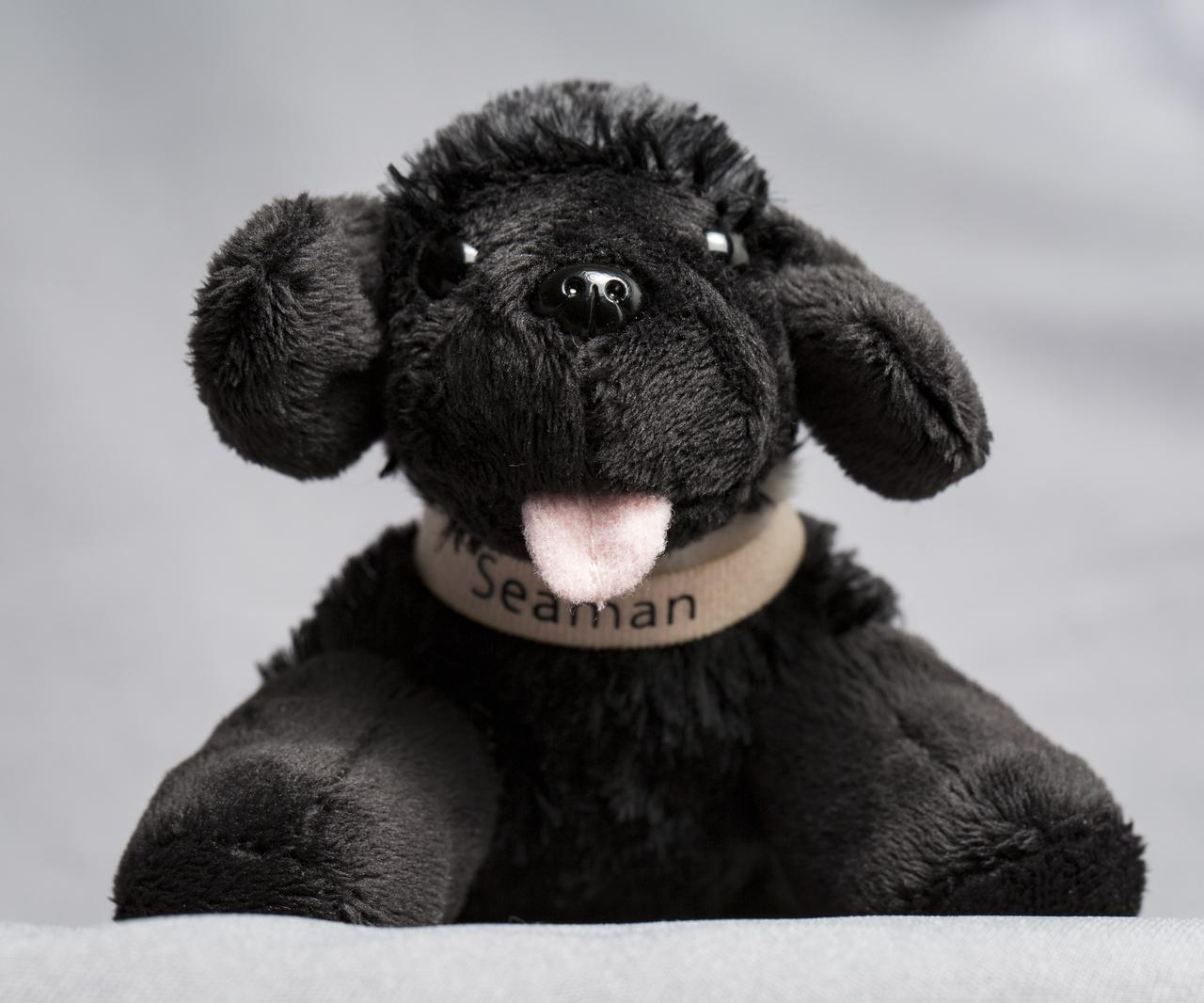
A toy dog named Seaman Jr., representing the Newfoundland that accompanied Lewis and Clark on their historic expedition in the 1800's, is seen here, Thursday, May 3, 2018 at NASA Headquarters in Washington. Seaman Jr. is headed to the International Space Station this summer to help celebrate NASA’s 60th Anniversary and the National Trail System’s 50th anniversary. Photo Credit: (NASA/Aubrey Gemignani)
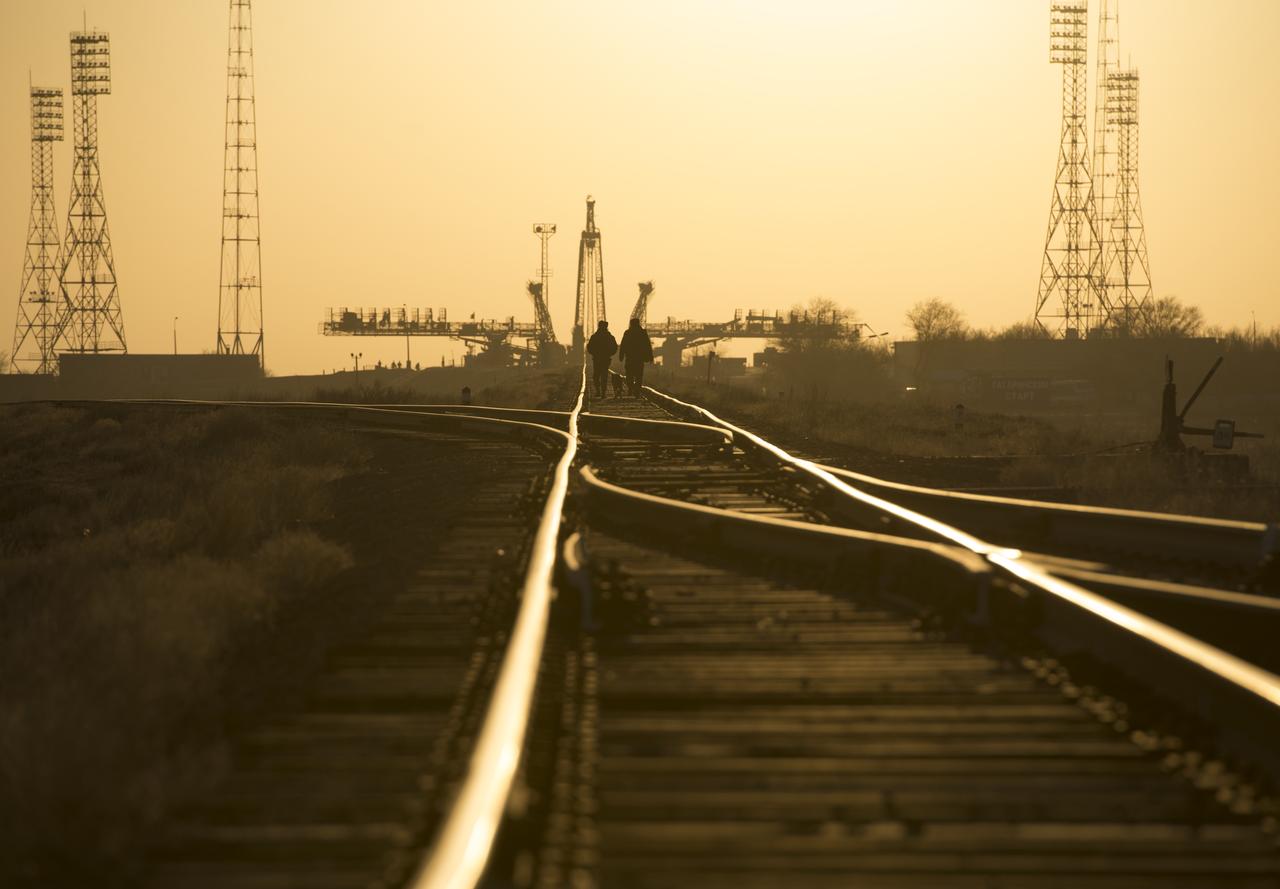
Russia security forces and their dog walk along the train track to the Soyuz launch pad, Tuesday, March 26, 2013 at the Baikonur Cosmodrome in Kazakhstan. Launch of the Soyuz rocket is scheduled for March 29 and will send Expedition 35 Soyuz Commander Pavel Vinogradov, and Flight Engineers Chris Cassidy of NASA and Alexander Misurkin of Russia on a five and a half-month mission aboard the International Space Station. Photo Credit: (NASA/Carla Cioffi)
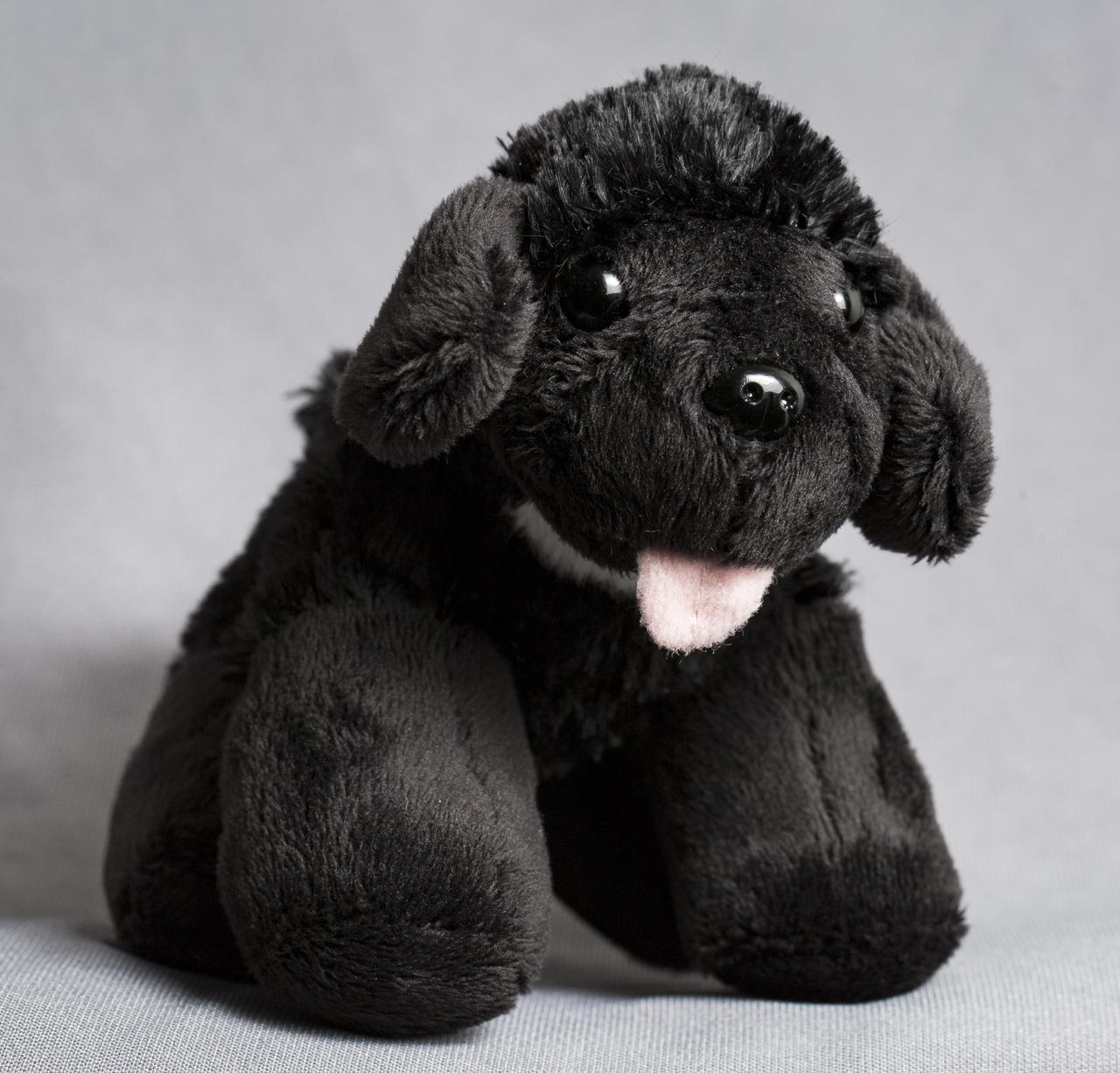
A toy dog named Seaman Jr., representing the Newfoundland that accompanied Lewis and Clark on their historic expedition in the 1800's, is seen here, Thursday, May 3, 2018 at NASA Headquarters in Washington. Seaman Jr. is headed to the International Space Station this summer to help celebrate NASA’s 60th Anniversary and the National Trail System’s 50th anniversary. Photo Credit: (NASA/Aubrey Gemignani)
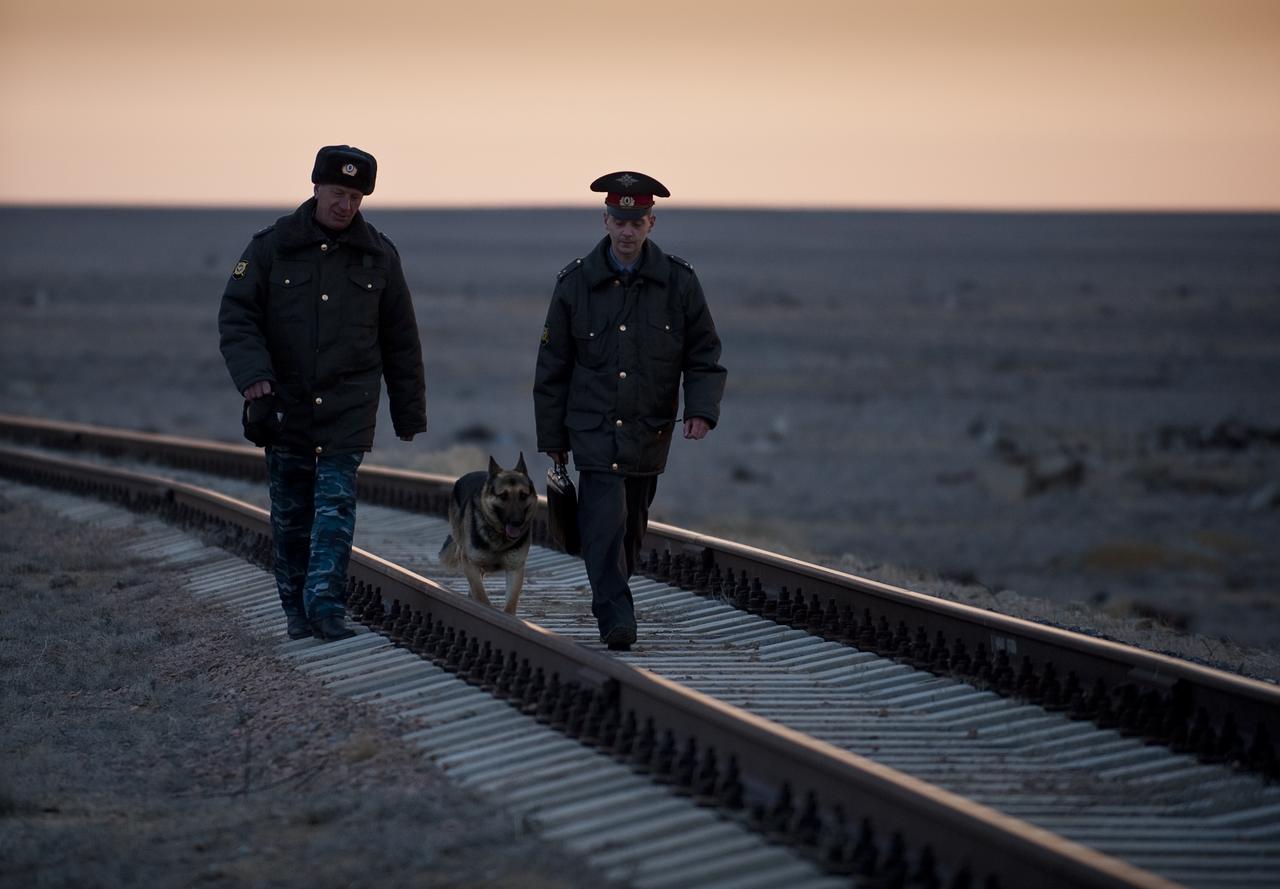
Russian security officers and their dog patrol the railroad track ahead of the Soyuz TMA-18 spacecraft as it is rolled out by train to the launch pad at the Baikonur Cosmodrome, Kazakhstan, Wednesday, March, 31, 2010. The launch of the Soyuz spacecraft with Expedition 23 Soyuz Commander Alexander Skvortsov of Russia, Flight Engineer Mikhail Kornienko of Russia, and NASA Flight Engineer Tracy Caldwell Dyson is scheduled for Friday, April 2, 2010 at 10:04 a.m. Kazakhstan time. Photo Credit (NASA/Bill Ingalls)
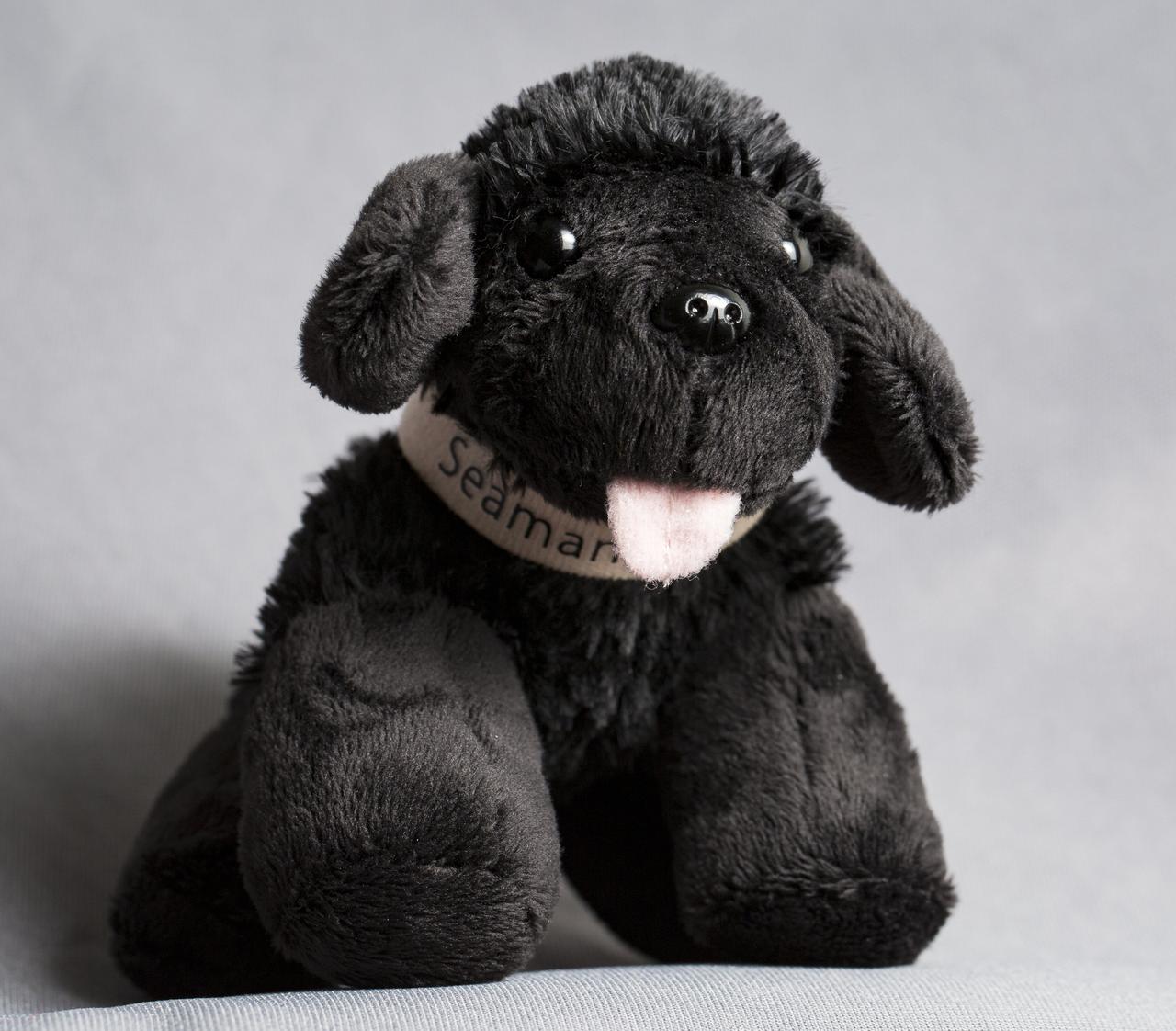
A toy dog named Seaman Jr., representing the Newfoundland that accompanied Lewis and Clark on their historic expedition in the 1800's, is seen here, Thursday, May 3, 2018 at NASA Headquarters in Washington. Seaman Jr. is headed to the International Space Station this summer to help celebrate NASA’s 60th Anniversary and the National Trail System’s 50th anniversary. Photo Credit: (NASA/Aubrey Gemignani)
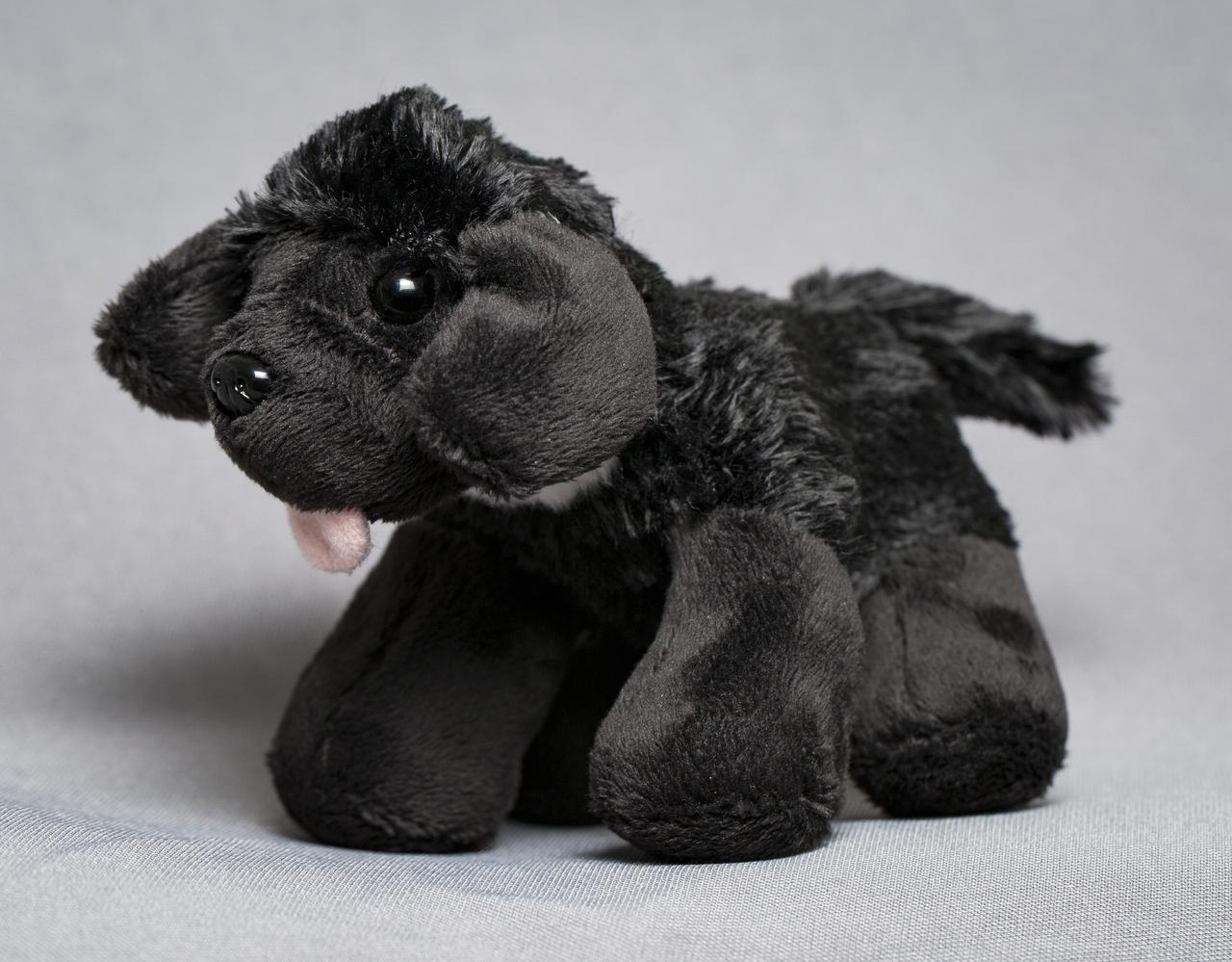
A toy dog named Seaman Jr., representing the Newfoundland that accompanied Lewis and Clark on their historic expedition in the 1800's, is seen here, Thursday, May 3, 2018 at NASA Headquarters in Washington. Seaman Jr. is headed to the International Space Station this summer to help celebrate NASA’s 60th Anniversary and the National Trail System’s 50th anniversary. Photo Credit: (NASA/Aubrey Gemignani)

A woman photographs her two dogs during a Mars celebration event Friday, May 31, 2019, in Mars, Pennsylvania. NASA is in the small town to celebrate Mars exploration and share the agency’s excitement about landing astronauts on the Moon in five years. The celebration includes a weekend of Science, Technology, Engineering, Arts and Mathematics (STEAM) activities. Photo Credit: (NASA/Bill Ingalls)

S73-31104 (17 July 1973) --- The wife and children of astronaut Alan L. Bean are photographed at their home near the Johnson Space Center (JSC), where their husband and father is preparing for NASA?s second manned Skylab mission. Bean is commander of the Skylab 3 Earth-orbital mission and will be joined by scientist-astronaut Owen K. Garriott, science pilot, and astronaut Jack R. Lousma, pilot for the schedule two-month mission. With Mrs. Sue Bean are the couple?s children Clay, 17, and Amy Sue, 10; and the family?s pet dog. Photo credit: NASA
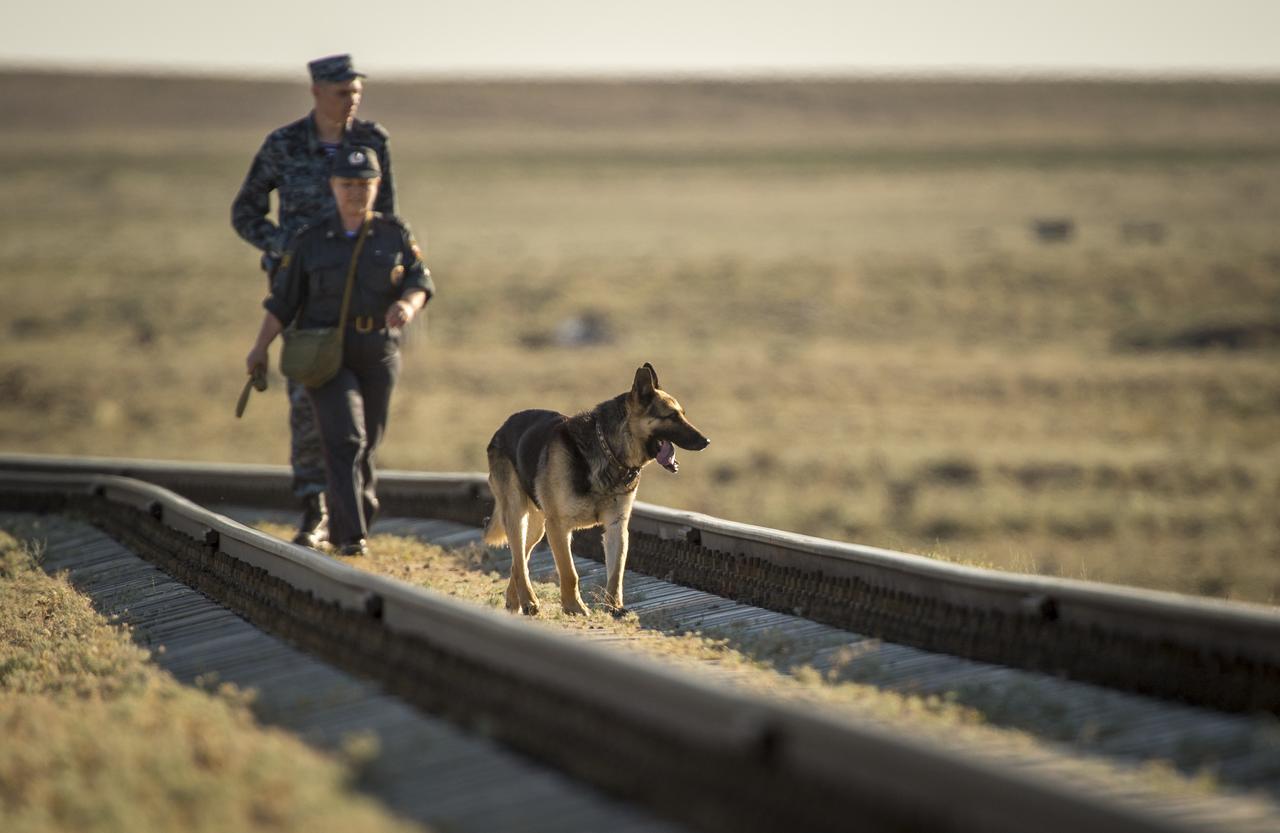
Police walk along railroad tracks with a bomb sniffing dog ahead of the the Soyuz TMA-09M spacecraft as it is rolled out by train to the Baikonur Cosmodrome launch pad, Sunday, May 26, 2013, in Kazakhstan. The launch of the Soyuz rocket to the International Space Station (ISS) with Expedition 36/37 Soyuz Commander Fyodor Yurchikhin of the Russian Federal Space Agency (Roscosmos), Flight Engineers; Luca Parmitano of the European Space Agency, and Karen Nyberg of NASA, is scheduled for Wednesday May 29, Kazakh time. Yurchikhin, Nyberg, and, Parmitano, will remain aboard the station until mid-November. Photo credit: (NASA/Bill Ingalls)
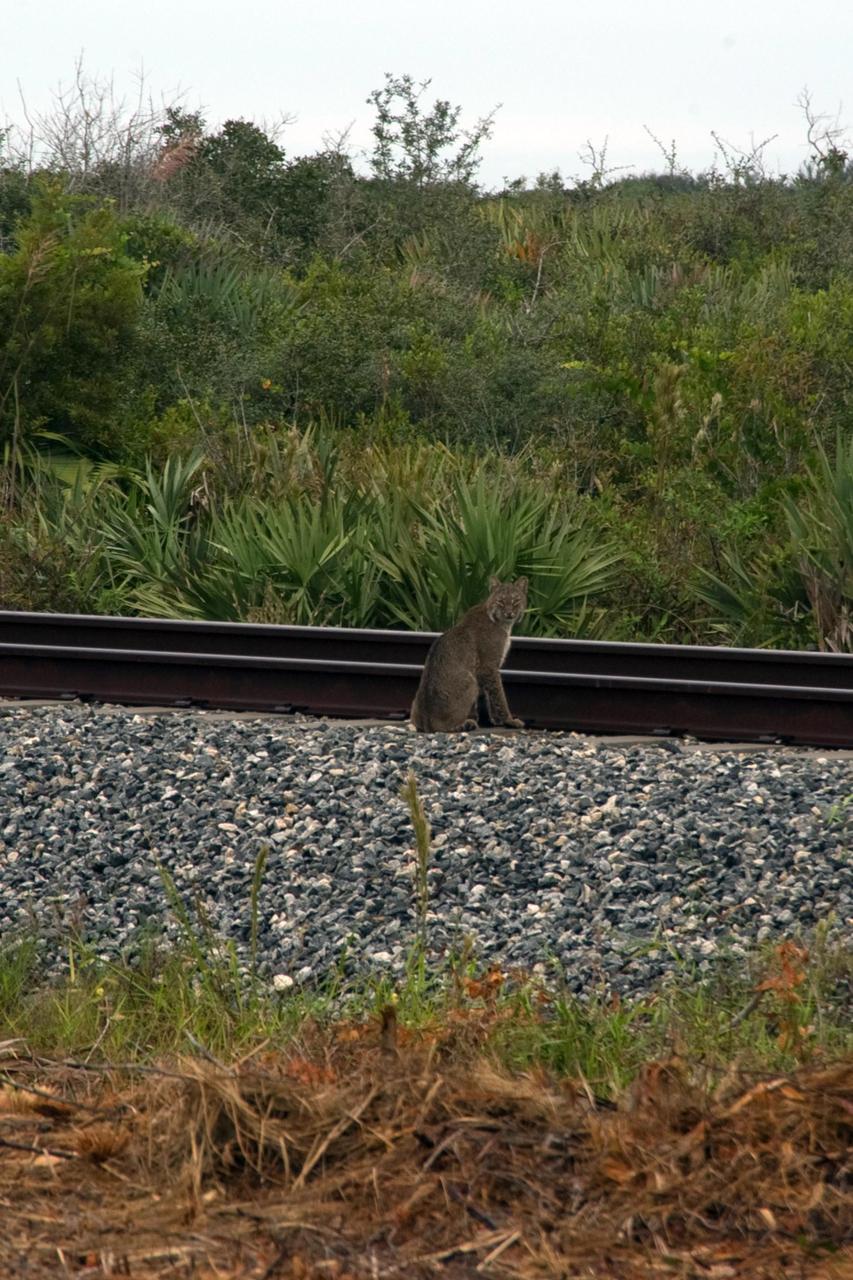
KENNEDY SPACE CENTER, FLA. -- A rare view of a bobcat, spotted near the NASA Railroad tracks on a mid-morning. The bobcat is a solitary and territorial predator mammal. They are mostly nocturnal and solitary, but will travel long distances for a mate. Not as big as a panther, but about the size of a medium-sized dog, male and female bobcats average 39 inches and 36 inches in length, and 24 pounds and 15 pounds in weight, respectively. They are most easily identified by their short tails which are about 5.5 inches long. Their fur, which is short, soft and dense, ranges from light tan to reddish or yellowish brown and markings vary from tabby stripes to spotting. They swim more than other native cats. The backs of their ears are white with a black outline. Their underparts are generally white. Bobcats can most likely be found in every county in Florida. Photo credit: NASA/Sandra Joseph
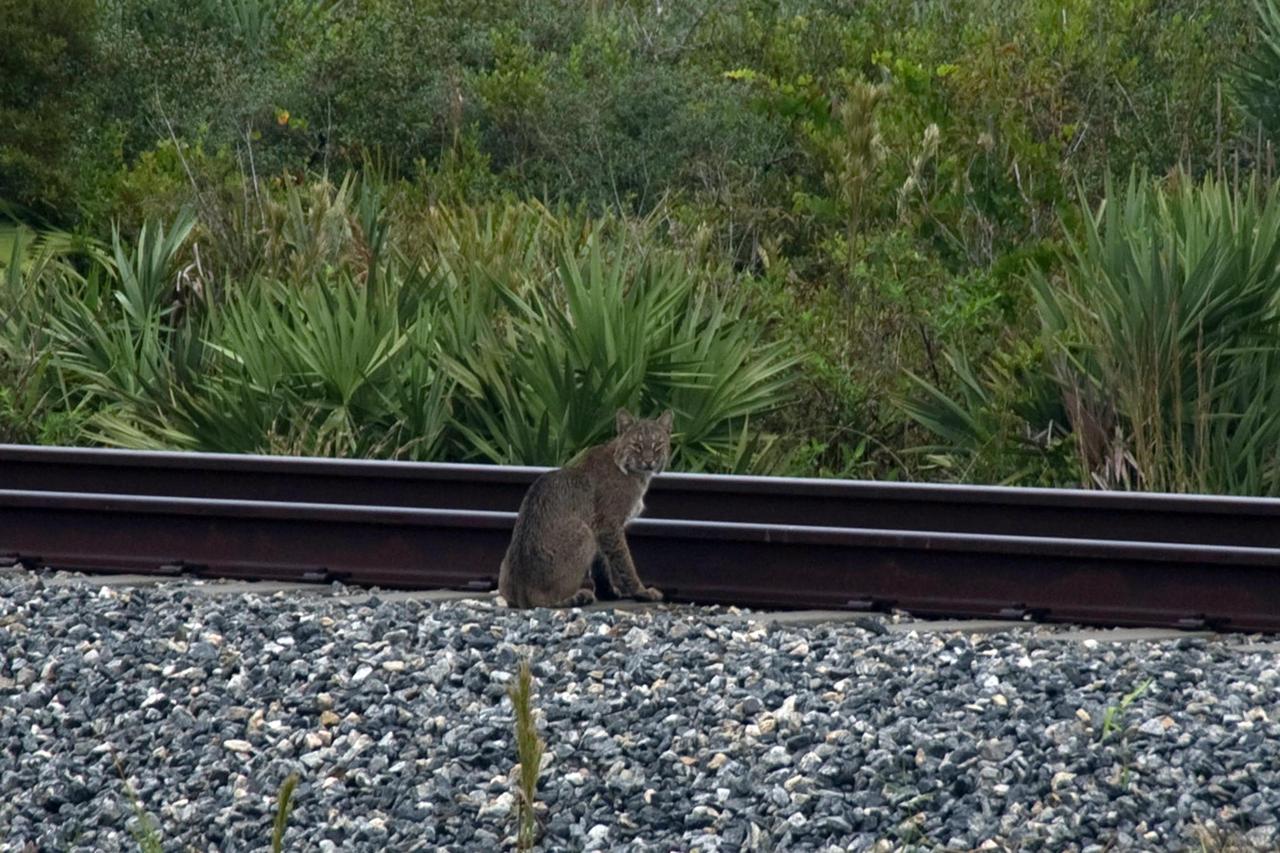
KENNEDY SPACE CENTER, FLA. -- A rare view of a bobcat, spotted near the NASA Railroad tracks on a mid-morning. The bobcat is a solitary and territorial predator mammal. They are mostly nocturnal and solitary, but will travel long distances for a mate. Not as big as a panther, but about the size of a medium-sized dog, male and female bobcats average 39 inches and 36 inches in length, and 24 pounds and 15 pounds in weight, respectively. They are most easily identified by their short tails which are about 5.5 inches long. Their fur, which is short, soft and dense, ranges from light tan to reddish or yellowish brown and markings vary from tabby stripes to spotting. They swim more than other native cats. The backs of their ears are white with a black outline. Their underparts are generally white. Bobcats can most likely be found in every county in Florida. Photo credit: NASA/Sandra Joseph

ISS034-E-057550 (28 Feb. 2013) --- One of the Expedition 34 crew members aboard the Earth-orbiting International Space Station photographed this image featuring the Southern High Plains of northwestern Texas, directly south of the city of Amarillo (off the image to the north). At first glance the picture appears more like a map than an actual photo. The winter of 2012-2013 has been marked by powerful snowstorms with record-setting snowfall throughout much of the Midwestern United States The snowstorm that passed through this area left a record snowfall of approximately 43 centimeters (17 inches). Snow blankets the city of Canyon, Texas. Urban street grids and stream channels appear etched into the landscape by the snow, a result of both melting and street clearing in the urban regions and of the incised nature of stream channels in the surrounding plains. Agricultural fields are easily identified due to the even snow cover broken only by roadways between the fields. Palo Duro Canyon is largely free of snow along the Prairie Dog Town Fork of the Red River channel and at lower elevations, allowing the red sedimentary rocks of the canyon walls to be visible. Lake Tanglewood, a reservoir to the northeast of Canyon, appears dark due to a lack of ice cover. Another dark region to the northwest of Canyon is a feed yard for cattle; any snowfall in this area has been removed by the actions of the livestock. The image was recorded with a digital camera using a 400 millimeter lens,
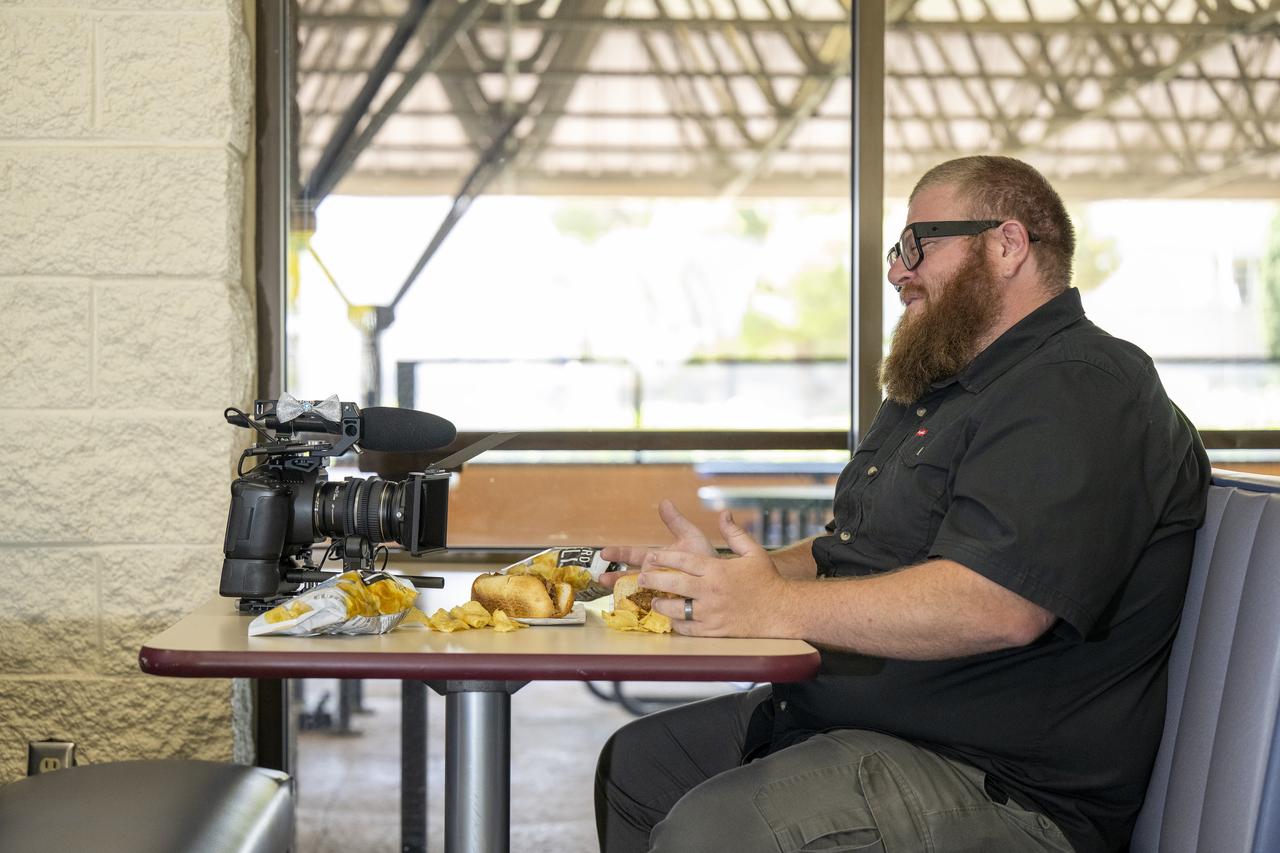
NASA videographer Jacob Shaw shares a moment with his constant companion during a break in the cafeteria at NASA’s Armstrong Flight Research Center in Edwards, California, on May 21, 2025. Shaw recently earned first place in NASA’s 2024 Videographer of the Year Awards – documentation category – for his film, “Reflections,” which chronicles the 2024 Airborne Science mission PACE-PAX – short for Plankton, Aerosol, Cloud, ocean Ecosystem Postlaunch Airborne eXperiment.