Pan in the Driver Seat
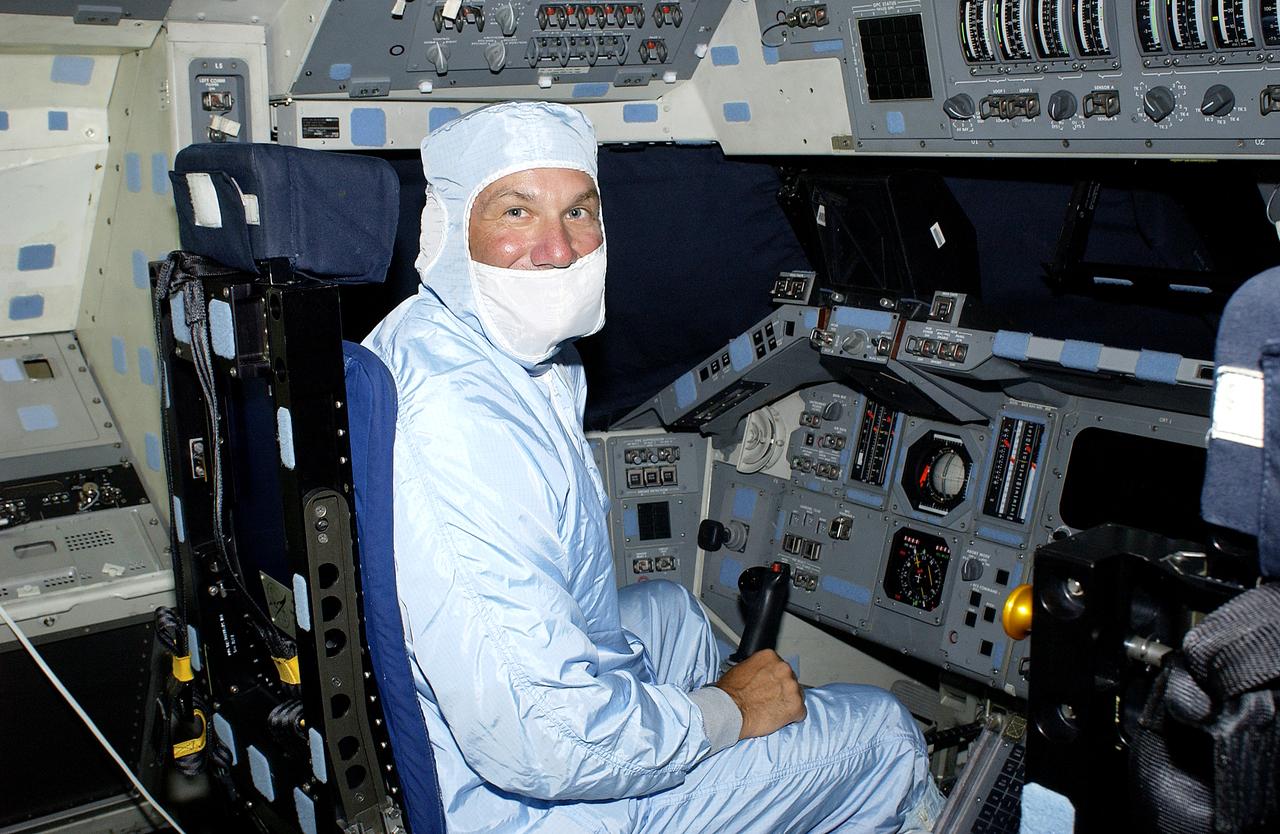
NASCAR driver Dale Jarrett tries out a seat of another vehicle known for speed: the orbiter Endeavour. Jarrett and other drivers Jimmie Johnson and Ryan Newman were on a tour of KSC. The men are scheduled to drive in the Pepsi 400 auto race being held July 5 at the Daytona International Speedway, Daytona Beach.
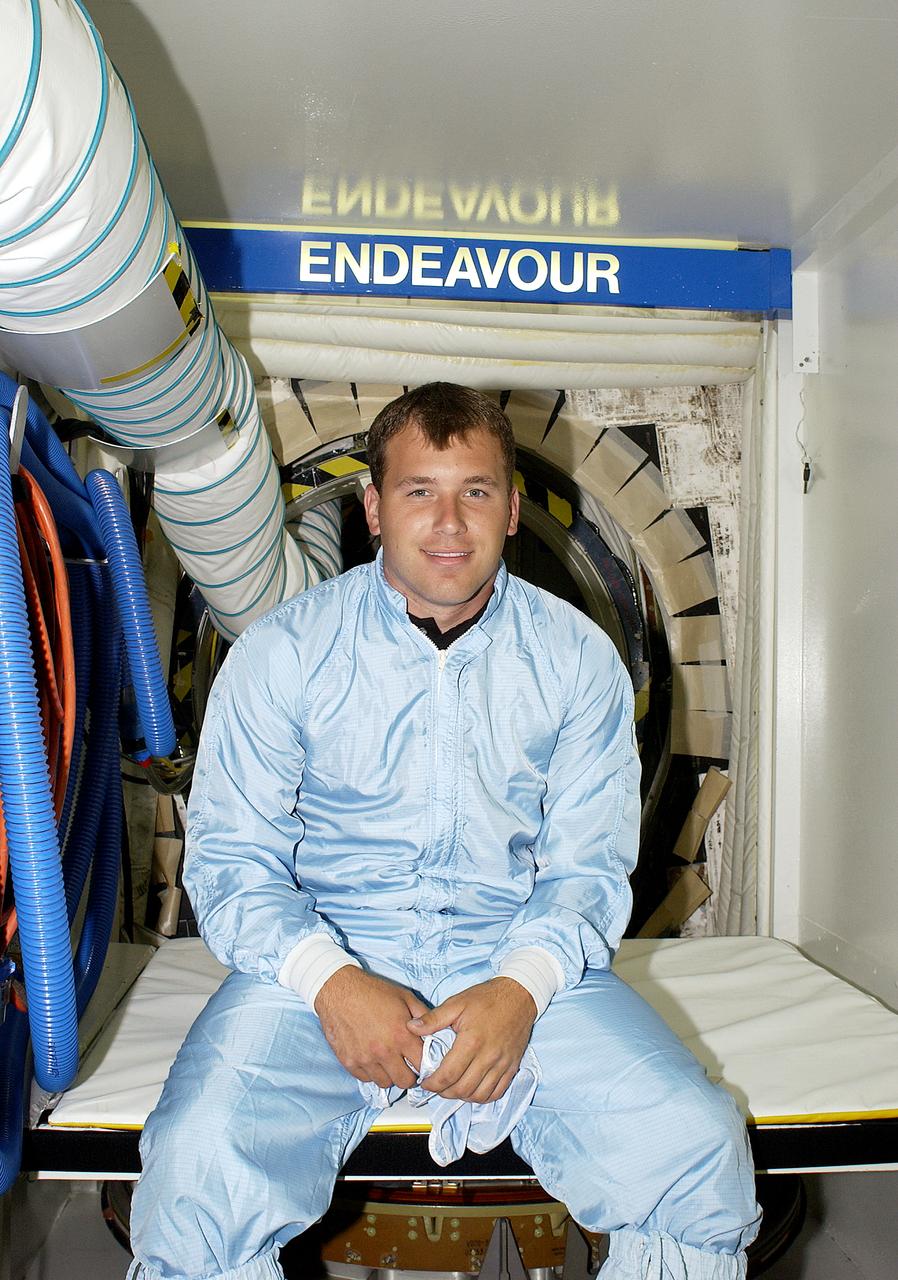
NASCAR driver Dale Jarrett poses outside the hatch of orbiter Endeavour. Jarrett and other drivers Ryan Newman and Jimmie Johnson were on a tour of KSC. The men are scheduled to drive in the Pepsi 400 auto race being held July 5 at the Daytona International Speedway, Daytona Beach.
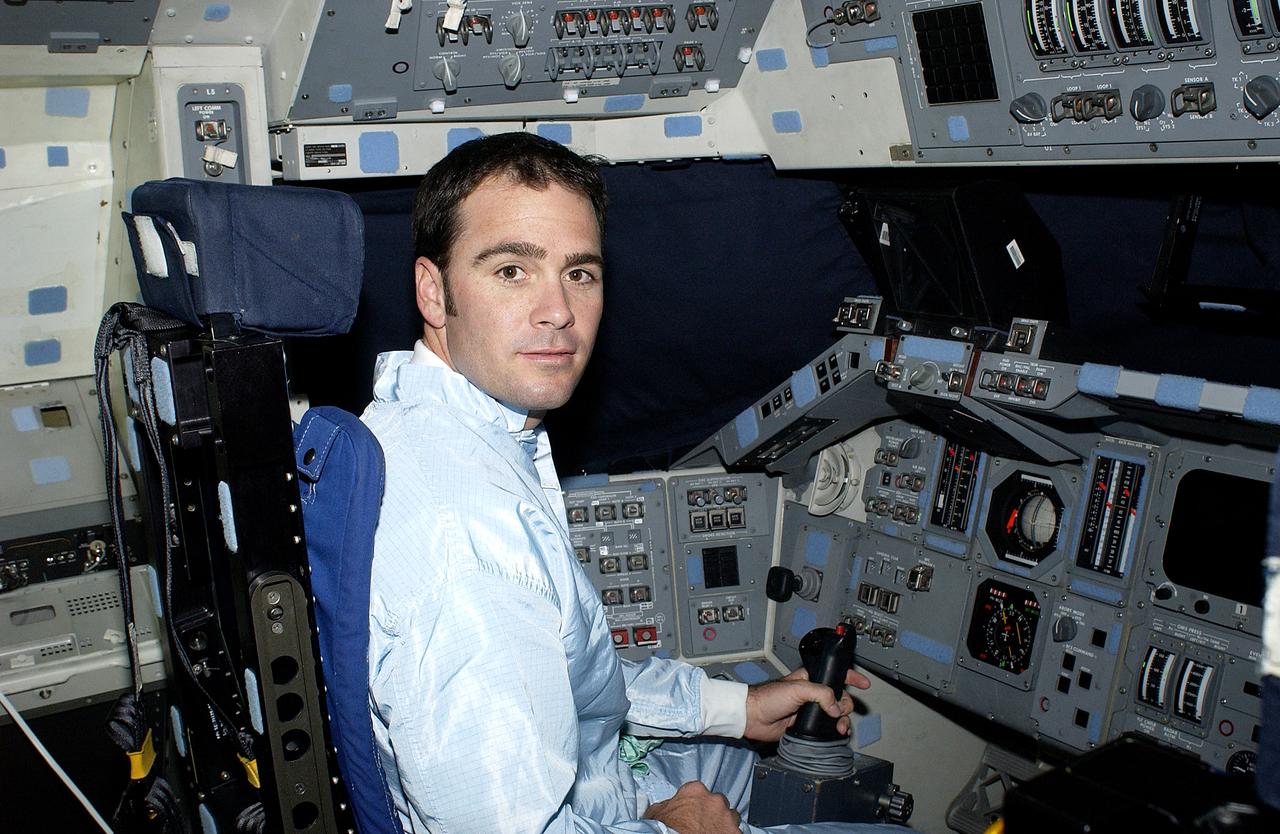
NASCAR driver Jimmie Johnson tries out a seat of another vehicle known for speed: the orbiter Endeavour. Johnson and other drivers Dale Jarrett and Ryan Newman were on a tour of KSC. The men are scheduled to drive in the Pepsi 400 auto race being held July 5 at the Daytona International Speedway, Daytona Beach.
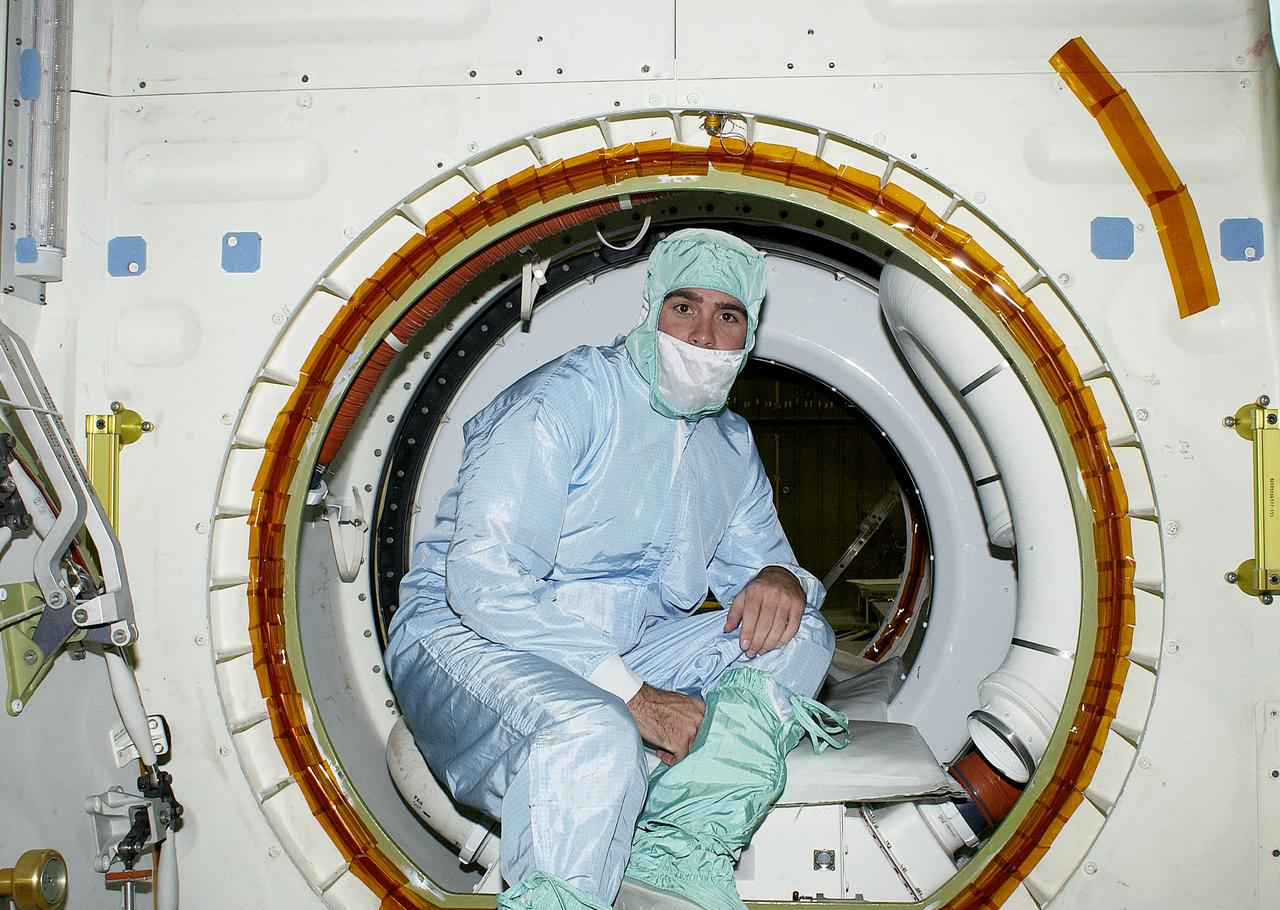
NASCAR driver Jimmie Johnson gets a close look at the orbiter Endeavour. Johnson and other drivers Ryan Newman and Dale Jarrett were on a tour of KSC. The men are scheduled to drive in the Pepsi 400 auto race being held July 5 at the Daytona International Speedway, Daytona Beach.
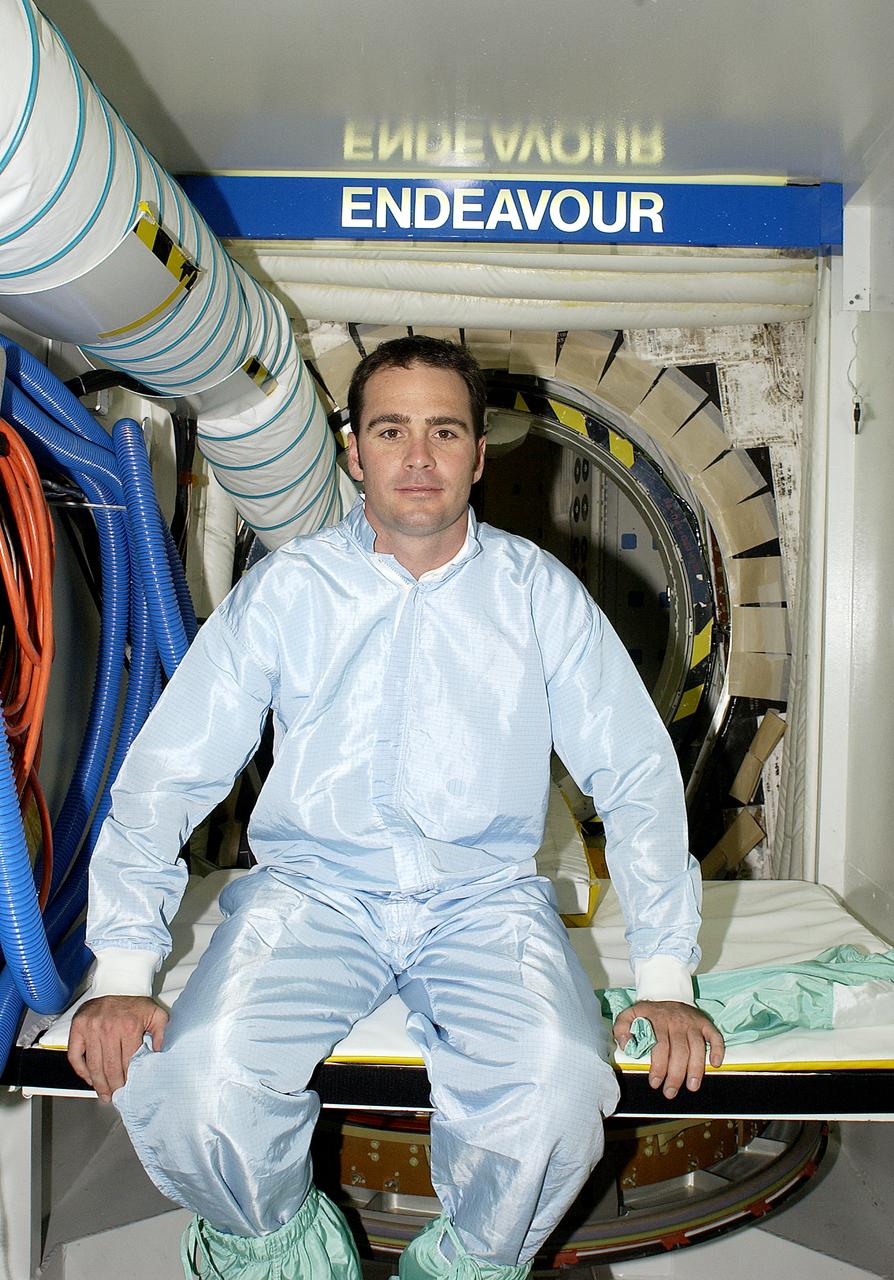
NASCAR driver Jimmie Johnson poses outside the hatch of orbiter Endeavour. Johnson and other drivers Ryan Newman and Dale Jarrett were on a tour of KSC. The men are scheduled to drive in the Pepsi 400 auto race being held July 5 at the Daytona International Speedway, Daytona Beach.
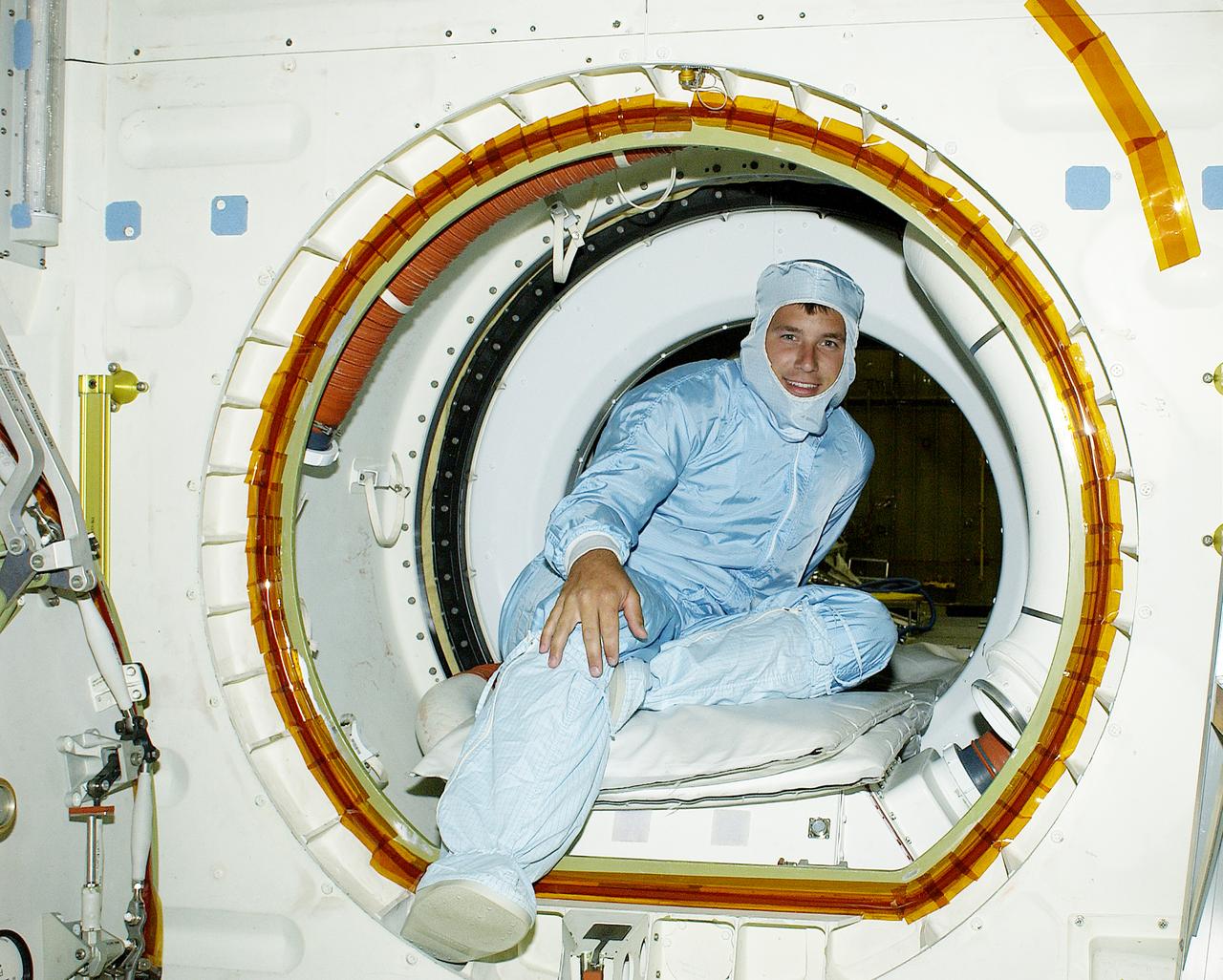
NASCAR driver Ryan Newman gets a close look at the orbiter Endeavour. Newman and other drivers Jimmie Johnson and Dale Jarrett were on a tour of KSC. The men are scheduled to drive in the Pepsi 400 auto race being held July 5 at the Daytona International Speedway, Daytona Beach.

NASCAR driver Ryan Newman tries out a seat of another vehicle known for speed: the orbiter Endeavour. Newman and other drivers Dale Jarrett and Jimmie Johnson were on a tour of KSC. The men are scheduled to drive in the Pepsi 400 auto race being held July 5 at the Daytona International Speedway, Daytona Beach.
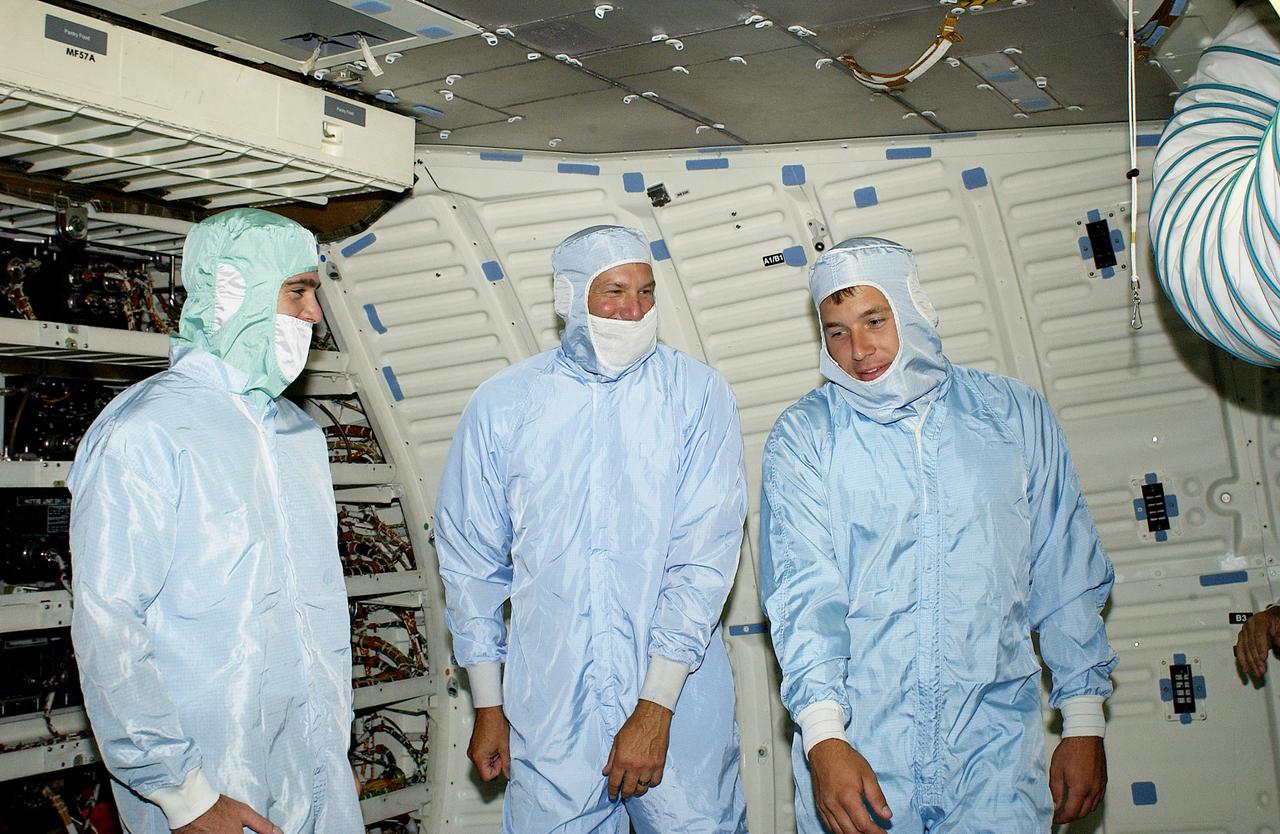
Three NASCAR drivers, (from left) Jimmie Johnson, Dale Jarrett and Ryan Newman, get a close look at the orbiter Endeavour during their tour of KSC. The men are scheduled to drive in the Pepsi 400 auto race being held July 5 at the Daytona International Speedway, Daytona Beach.
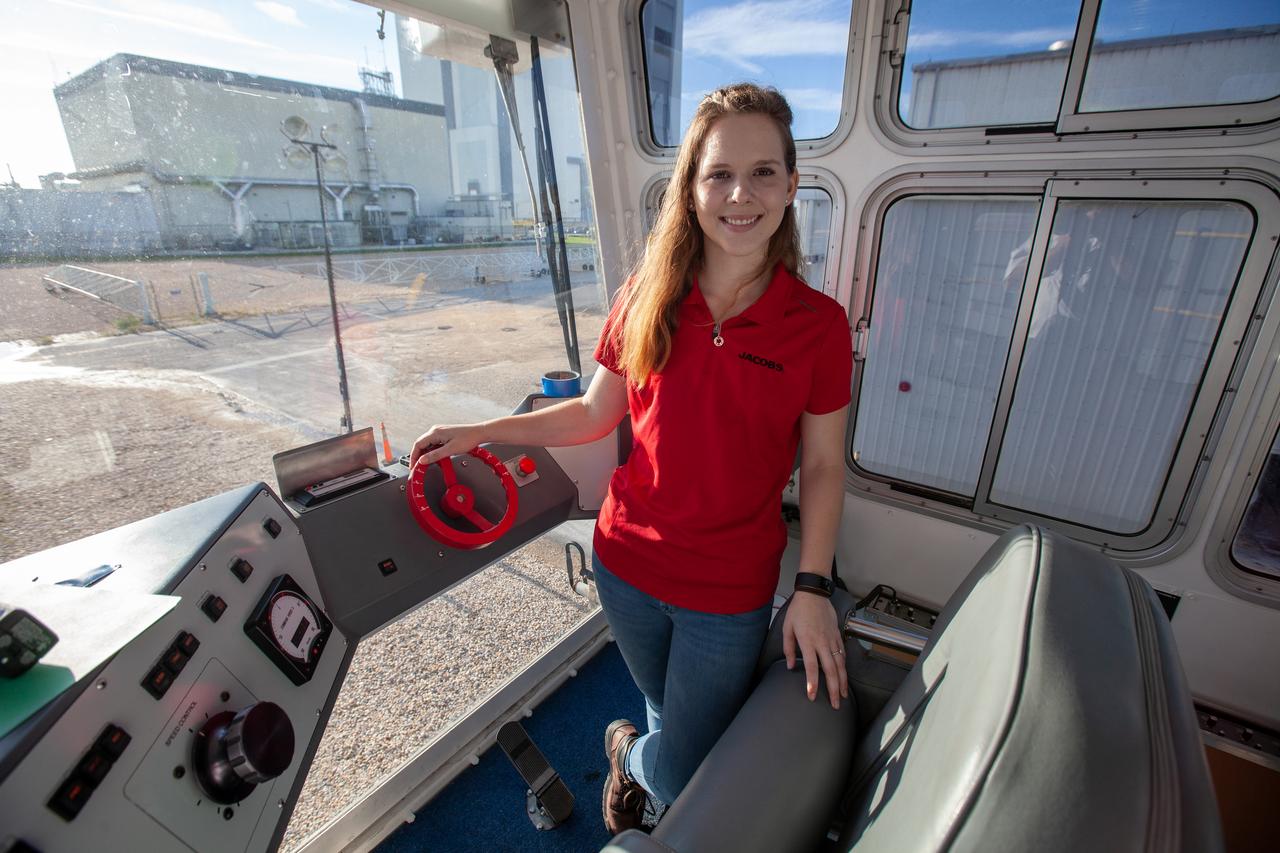
Breanne Stichler, mechanical engineer I, is photographed inside the cab of NASA’s Crawler-Transporter 2 (CT-2) at the Kennedy Space Center in Florida on Aug. 8, 2019. Stichler started working at Kennedy in June and is among one of the few females to have ever driven the crawler. CT-2 will carry the agency’s mobile launcher with the Space Launch System rocket from the Vehicle Assembly Building to Launch Pad 39B for the launch of Artemis 1, the first in a series of complex missions that will provide the foundation for human deep space exploration.
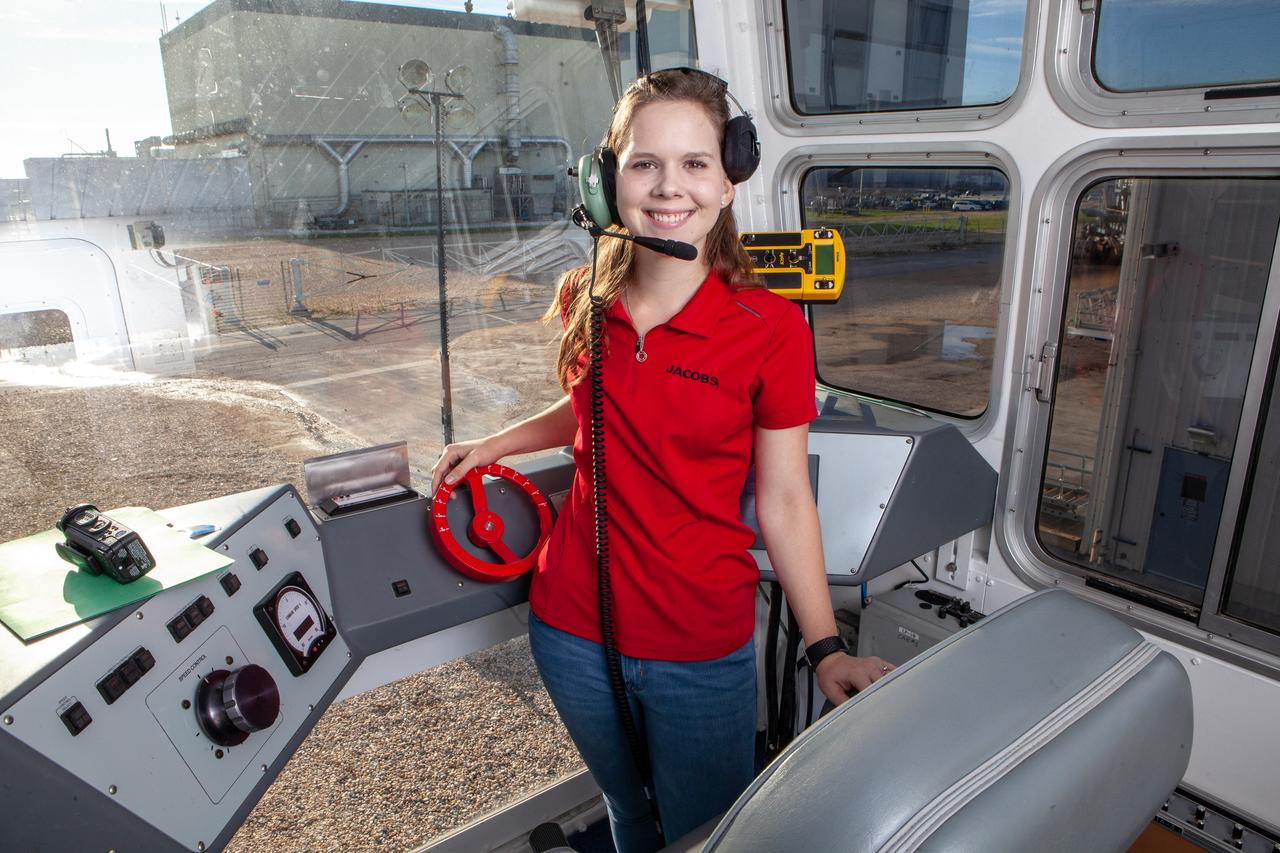
Breanne Stichler, mechanical engineer I, is photographed inside the cab of NASA’s Crawler-Transporter 2 (CT-2) at the Kennedy Space Center in Florida on Aug. 8, 2019. Stichler started working at Kennedy in June and is among one of the few females to have ever driven the crawler. CT-2 will carry the agency’s mobile launcher with the Space Launch System rocket from the Vehicle Assembly Building to Launch Pad 39B for the launch of Artemis 1, the first in a series of complex missions that will provide the foundation for human deep space exploration.
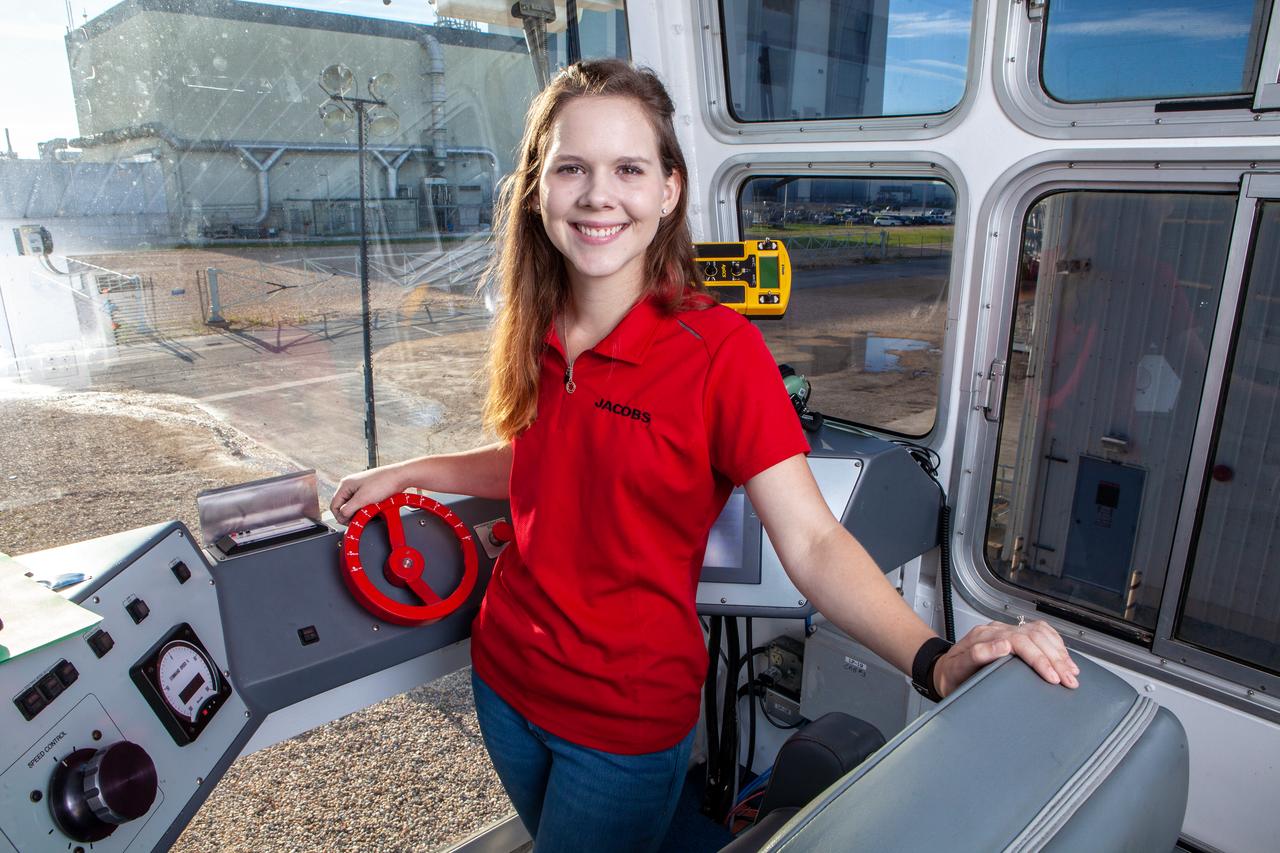
Breanne Stichler, mechanical engineer I, is photographed inside the cab of NASA’s Crawler-Transporter 2 (CT-2) at the Kennedy Space Center in Florida on Aug. 8, 2019. Stichler started working at Kennedy in June and is among one of the few females to have ever driven the crawler. CT-2 will carry the agency’s mobile launcher with the Space Launch System rocket from the Vehicle Assembly Building to Launch Pad 39B for the launch of Artemis 1, the first in a series of complex missions that will provide the foundation for human deep space exploration.
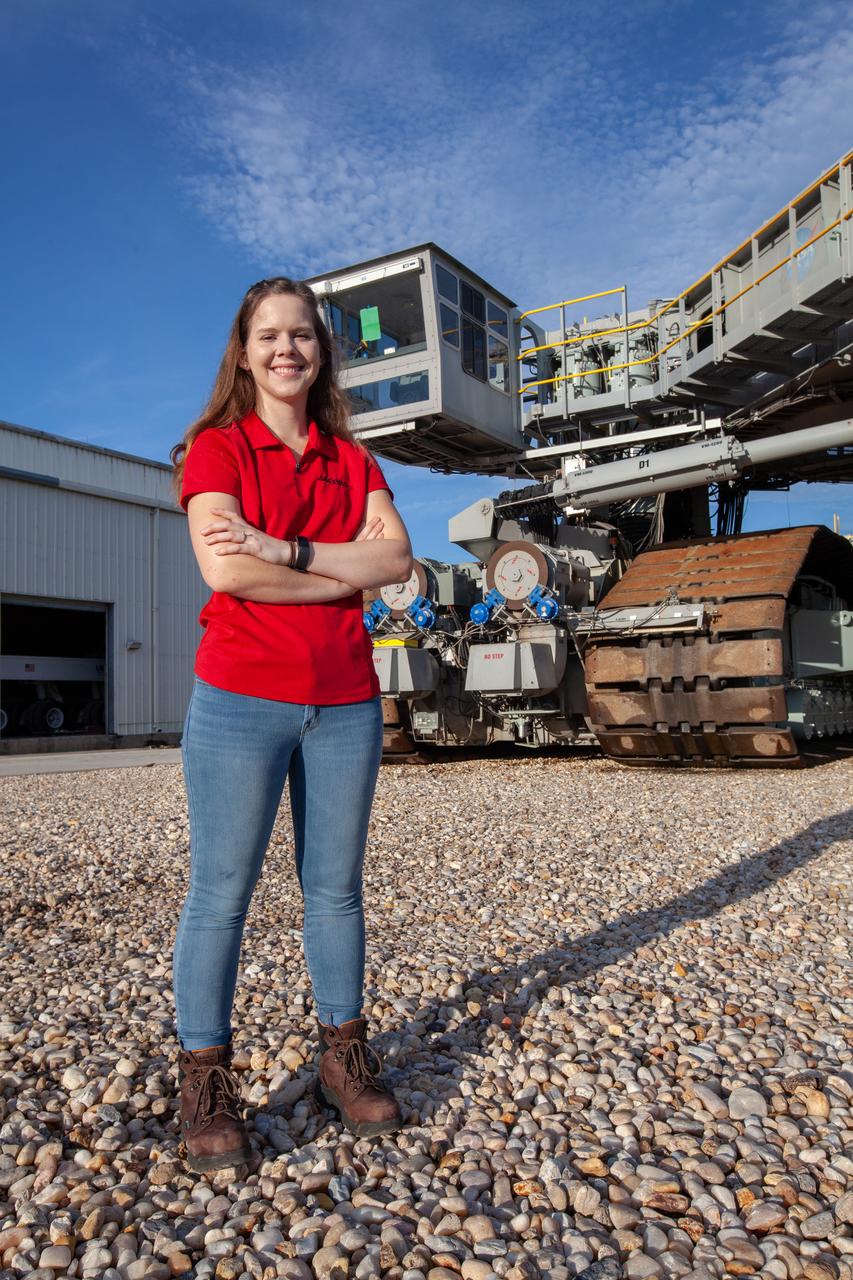
Breanne Stichler, mechanical engineer I, is photographed in front of NASA’s Crawler-Transporter 2 (CT-2) at the Kennedy Space Center in Florida on Aug. 8, 2019. Stichler started working at Kennedy in June and is among one of the few females to have ever driven the crawler. CT-2 will carry the agency’s mobile launcher with the Space Launch System rocket from the Vehicle Assembly Building to Launch Pad 39B for the launch of Artemis 1, the first in a series of complex missions that will provide the foundation for human deep space exploration.
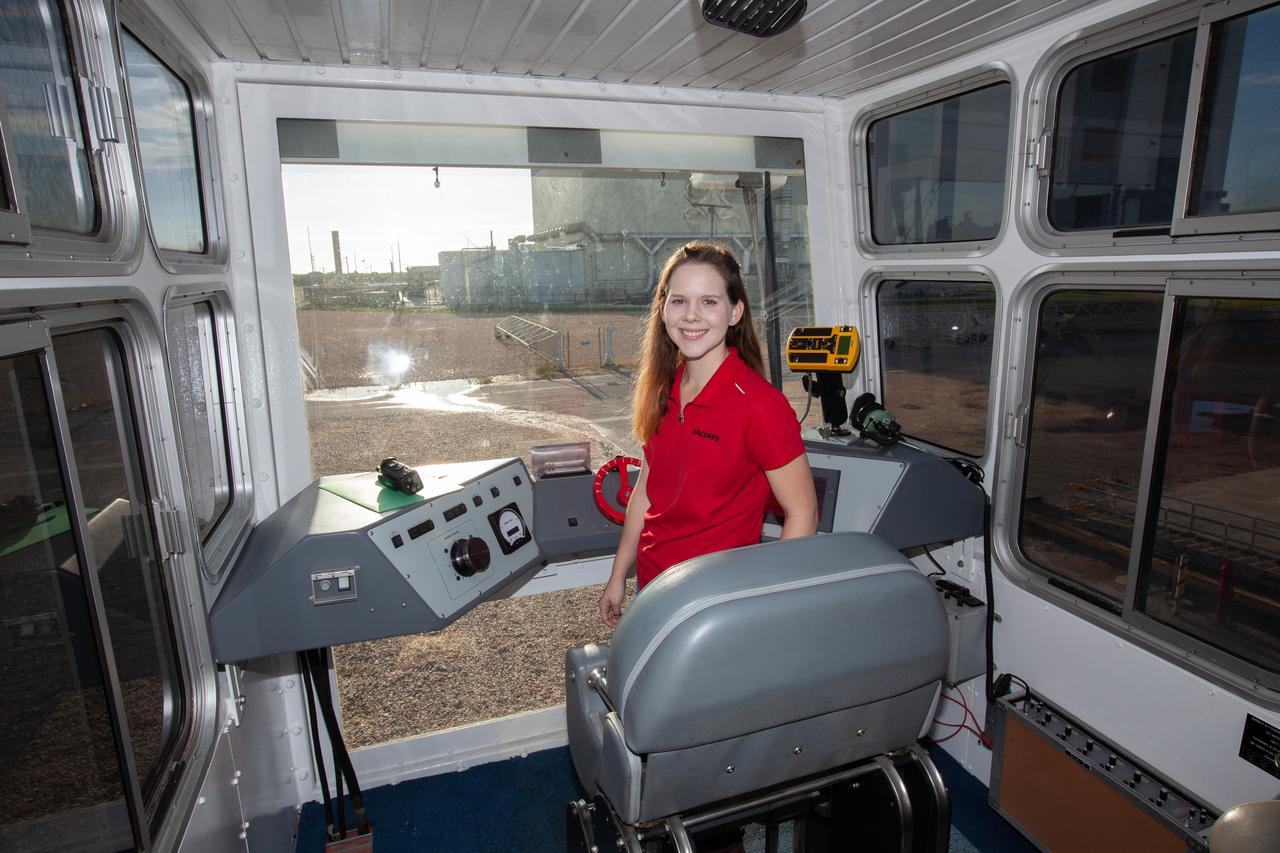
Breanne Stichler, mechanical engineer I, is photographed inside the cab of NASA’s Crawler-Transporter 2 (CT-2) at the Kennedy Space Center in Florida on Aug. 8, 2019. Stichler started working at Kennedy in June and is among one of the few females to have ever driven the crawler. CT-2 will carry the agency’s mobile launcher with the Space Launch System rocket from the Vehicle Assembly Building to Launch Pad 39B for the launch of Artemis 1, the first in a series of complex missions that will provide the foundation for human deep space exploration.
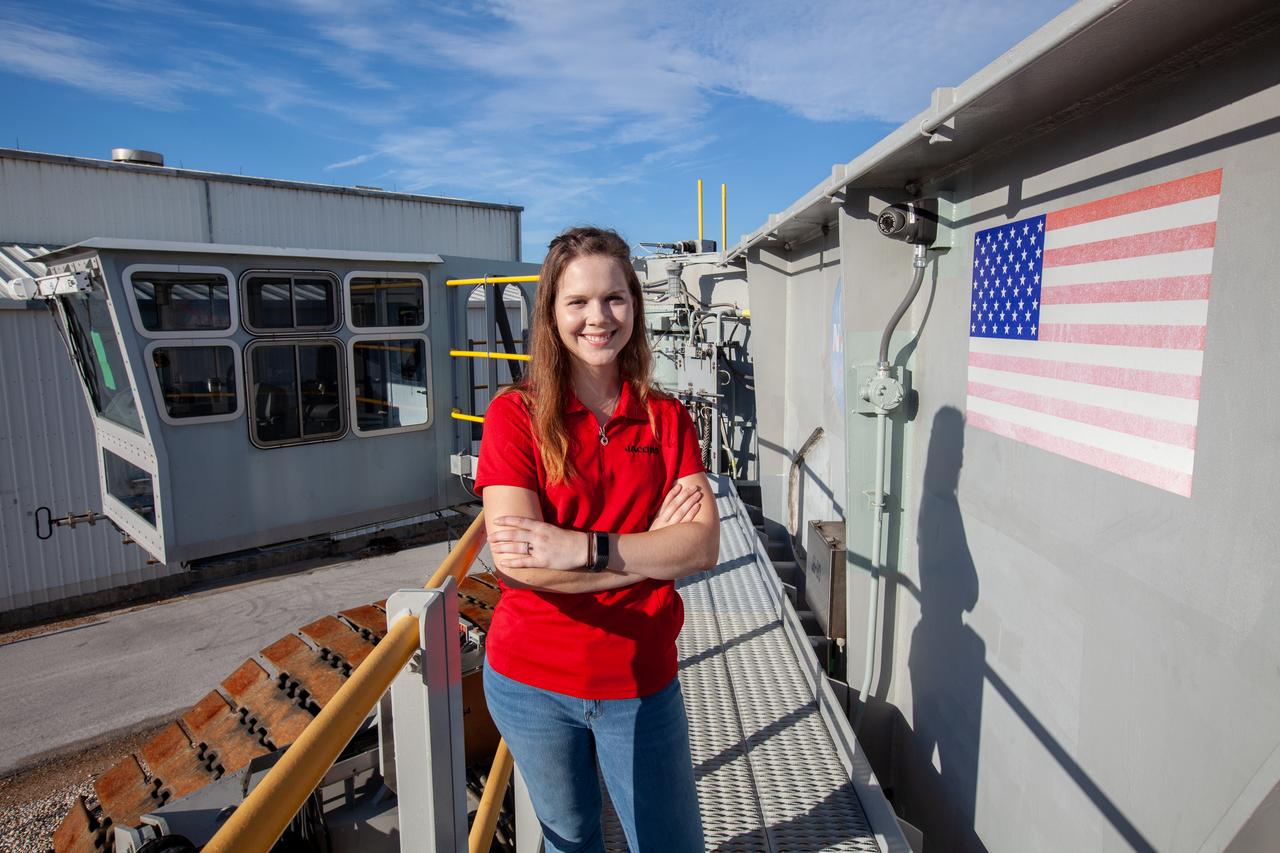
Breanne Stichler, mechanical engineer I, stands atop NASA’s Crawler-Transporter 2 (CT-2) at the Kennedy Space Center in Florida on Aug. 8, 2019. Stichler started working at Kennedy in June and is among one of the few females to have ever driven the crawler. CT-2 will carry the agency’s mobile launcher with the Space Launch System rocket from the Vehicle Assembly Building to Launch Pad 39B for the launch of Artemis 1, the first in a series of complex missions that will provide the foundation for human deep space exploration.
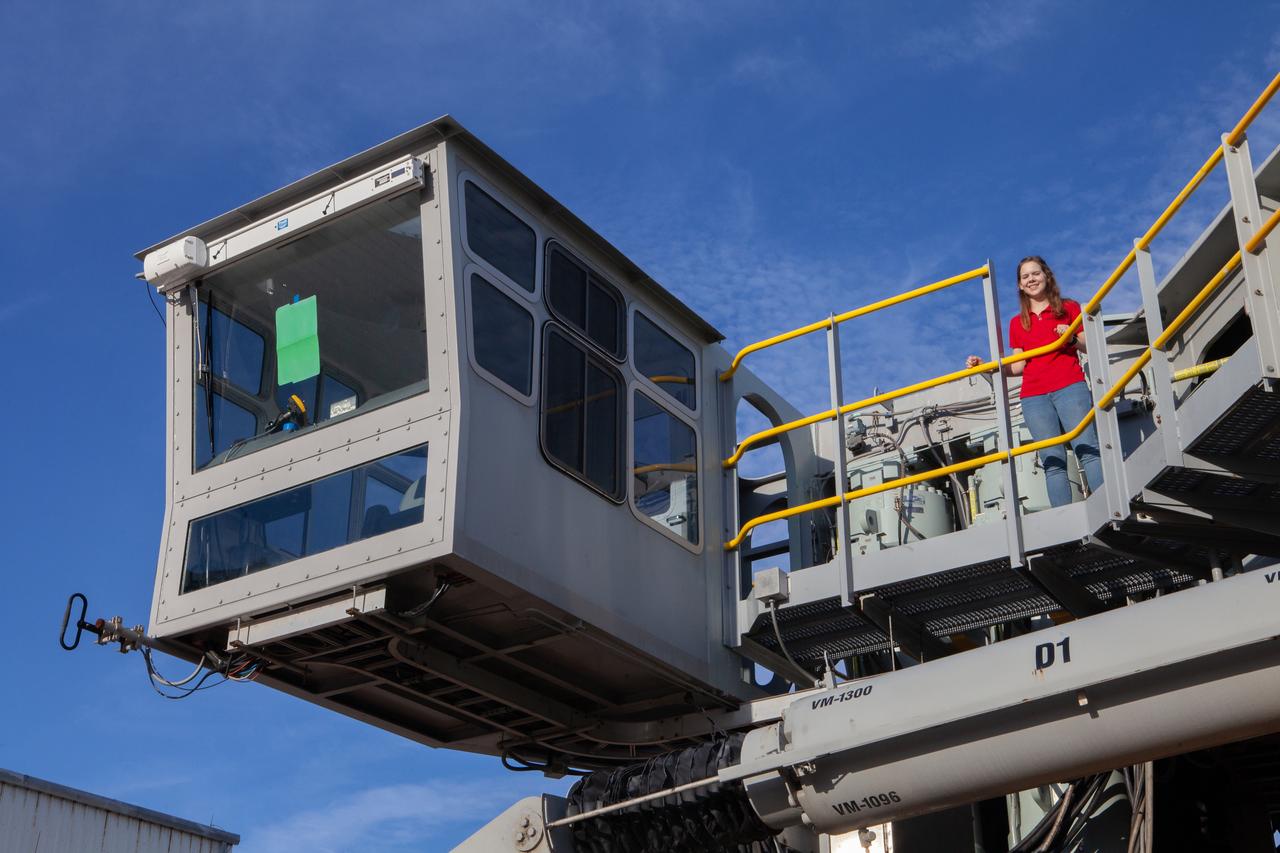
Breanne Stichler, mechanical engineer I, is photographed next to the cab of NASA’s Crawler-Transporter 2 (CT-2) at the Kennedy Space Center in Florida on Aug. 8, 2019. Stichler started working at Kennedy in June and is among one of the few females to have ever driven the crawler. CT-2 will carry the agency’s mobile launcher with the Space Launch System rocket from the Vehicle Assembly Building to Launch Pad 39B for the launch of Artemis 1, the first in a series of complex missions that will provide the foundation for human deep space exploration.
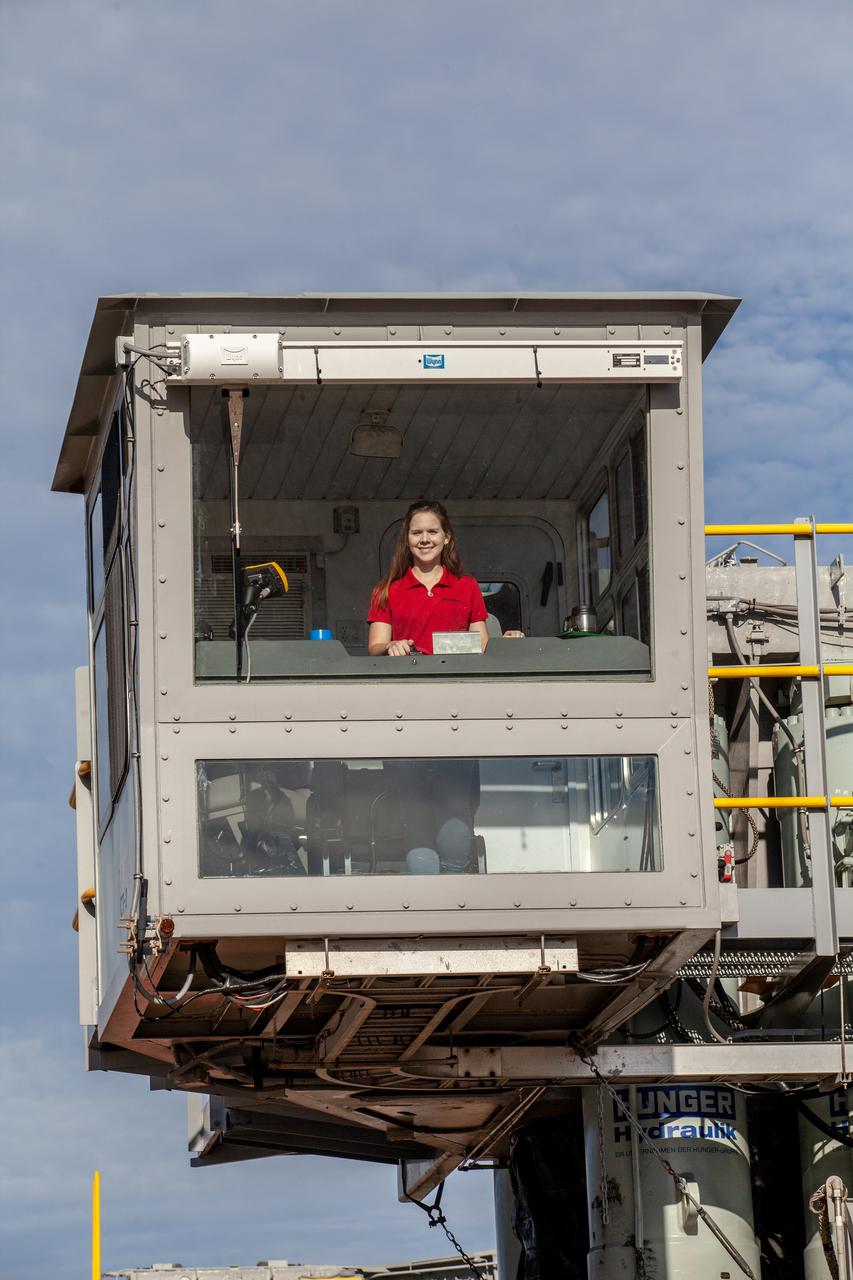
Mechanical Engineer I Breanne Stichler is photographed inside the cab of NASA’s Crawler-Transporter 2 (CT-2) at the Kennedy Space Center in Florida on Aug. 8, 2019. Stichler started working at Kennedy in June and is among one of the few females to have ever driven the crawler. CT-2 will carry the agency’s mobile launcher with the Space Launch System rocket from the Vehicle Assembly Building to Launch Pad 39B for the launch of Artemis 1, the first in a series of complex missions that will provide the foundation for human deep space exploration.
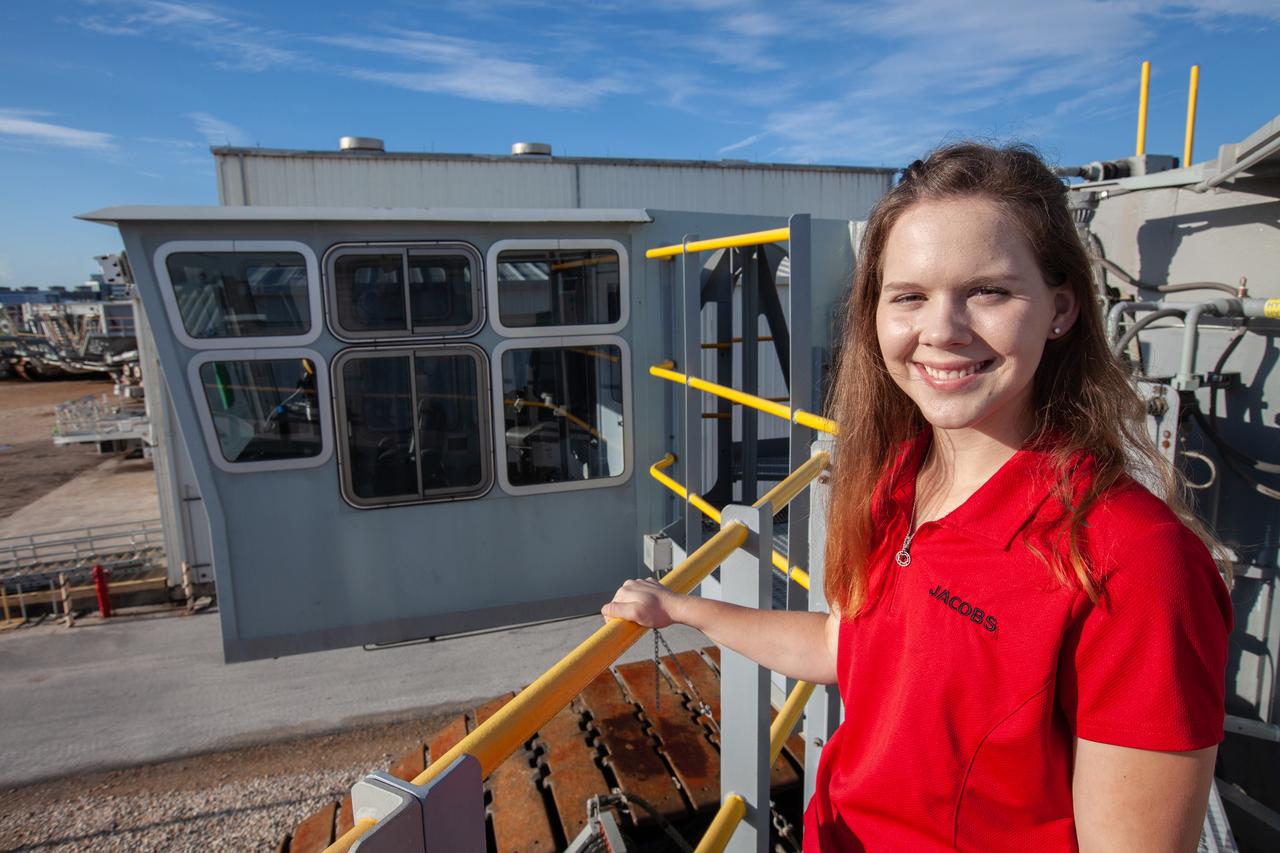
Breanne Stichler, mechanical engineer I, stands atop NASA’s Crawler-Transporter 2 (CT-2) at the Kennedy Space Center in Florida on Aug. 8, 2019. Stichler started working at Kennedy in June and is among one of the few females to have ever driven the crawler. CT-2 will carry the agency’s mobile launcher with the Space Launch System rocket from the Vehicle Assembly Building to Launch Pad 39B for the launch of Artemis 1, the first in a series of complex missions that will provide the foundation for human deep space exploration.
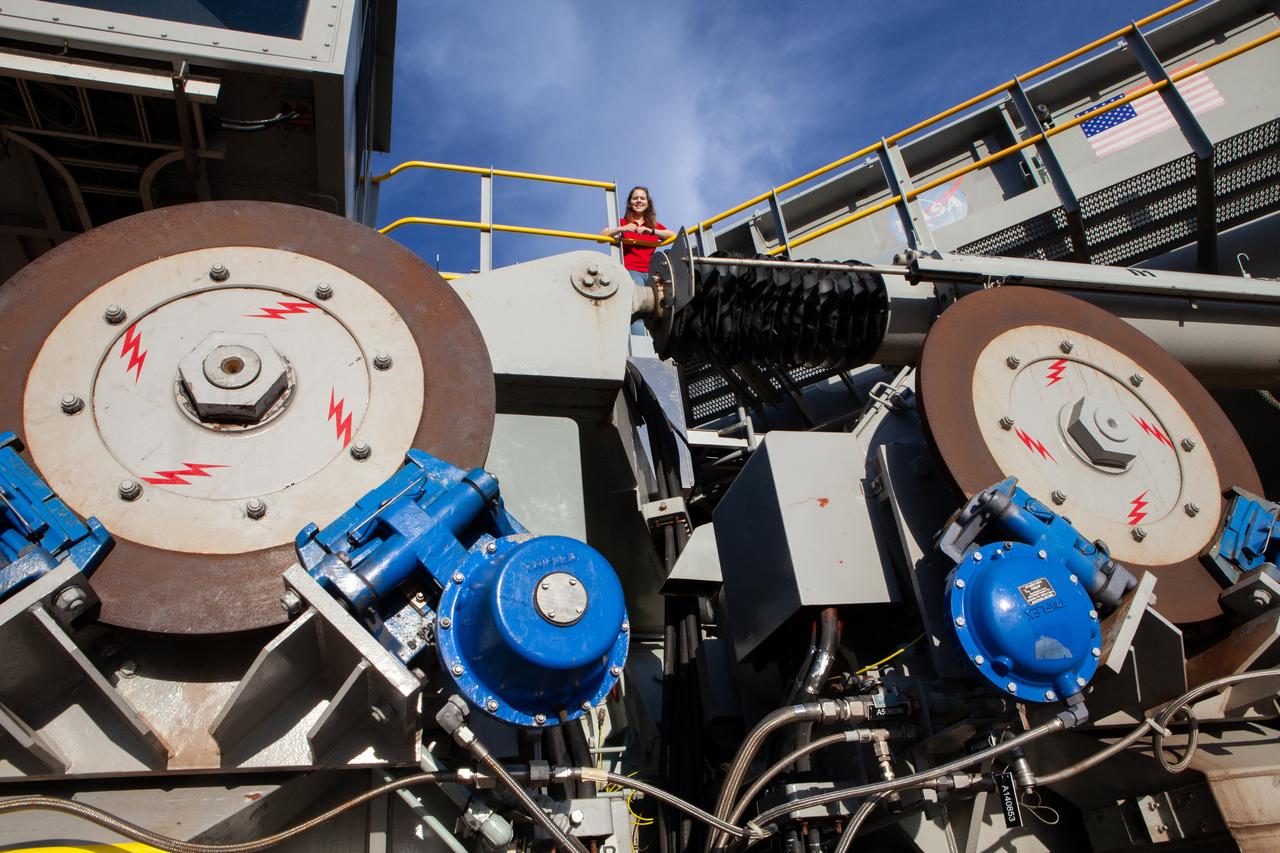
Breanne Stichler, mechanical engineer I, is photographed atop NASA’s Crawler-Transporter 2 (CT-2) at the Kennedy Space Center in Florida on Aug. 8, 2019. Stichler started working at Kennedy in June and is among one of the few females to have ever driven the crawler. CT-2 will carry the agency’s mobile launcher with the Space Launch System rocket from the Vehicle Assembly Building to Launch Pad 39B for the launch of Artemis 1, the first in a series of complex missions that will provide the foundation for human deep space exploration.
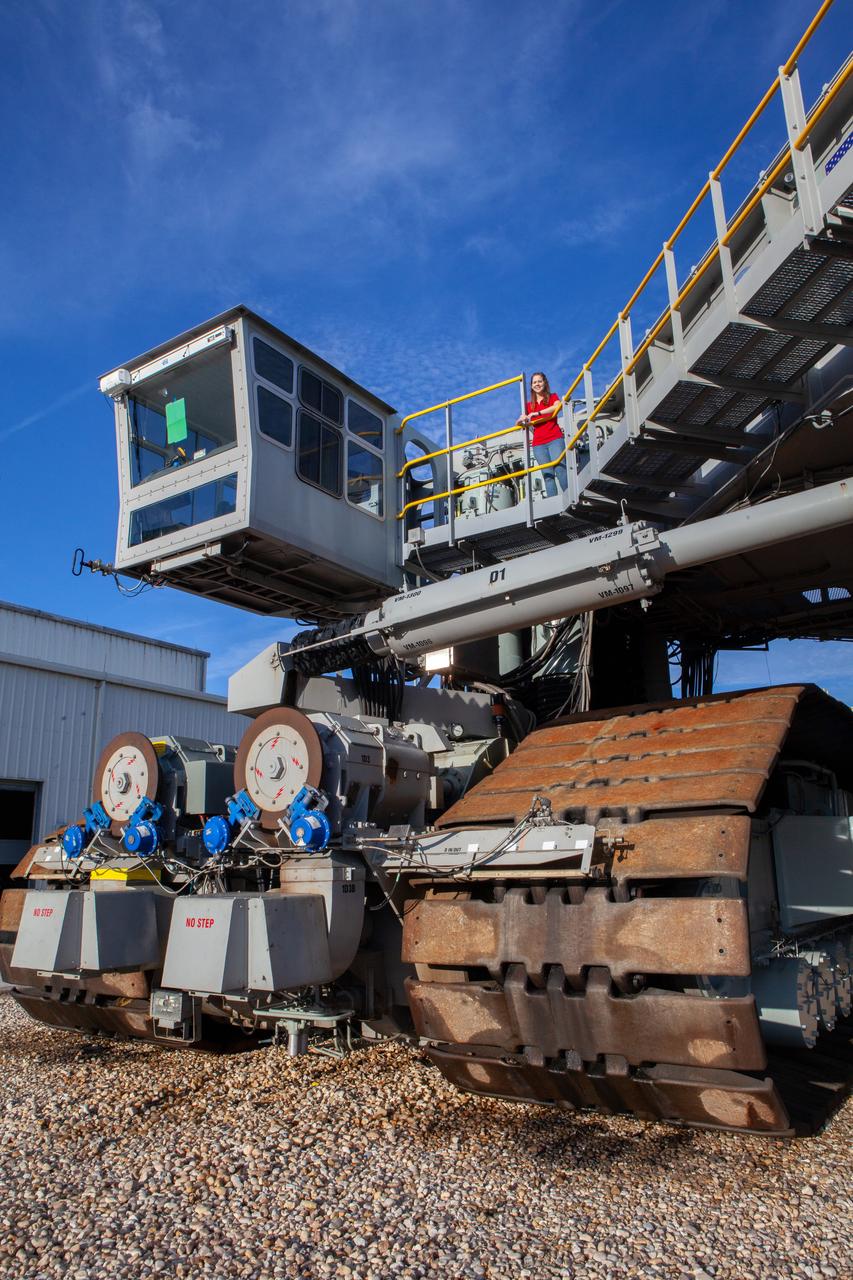
Breanne Stichler, mechanical engineer I, stands atop NASA’s Crawler-Transporter 2 (CT-2) at the Kennedy Space Center in Florida on Aug. 8, 2019. Stichler started working at Kennedy in June and is among one of the few females to have ever driven the crawler. CT-2 will carry the agency’s mobile launcher with the Space Launch System rocket from the Vehicle Assembly Building to Launch Pad 39B for the launch of Artemis 1, the first in a series of complex missions that will provide the foundation for human deep space exploration.
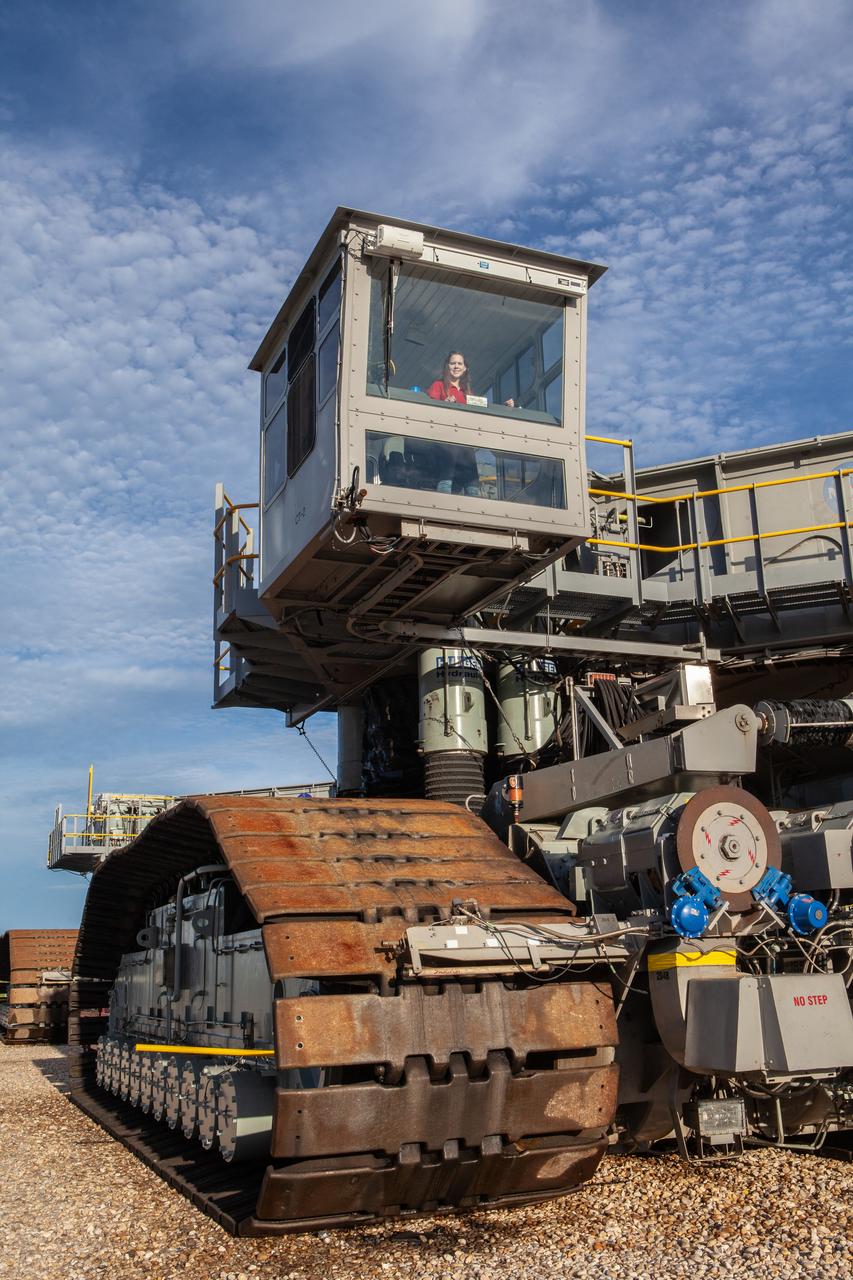
Breanne Stichler, mechanical engineer I, is photographed inside the cab of NASA’s Crawler-Transporter 2 (CT-2) at the Kennedy Space Center in Florida on Aug. 8, 2019. Stichler started working at Kennedy in June and is among one of the few females to have ever driven the crawler. CT-2 will carry the agency’s mobile launcher with the Space Launch System rocket from the Vehicle Assembly Building to Launch Pad 39B for the launch of Artemis 1, the first in a series of complex missions that will provide the foundation for human deep space exploration.
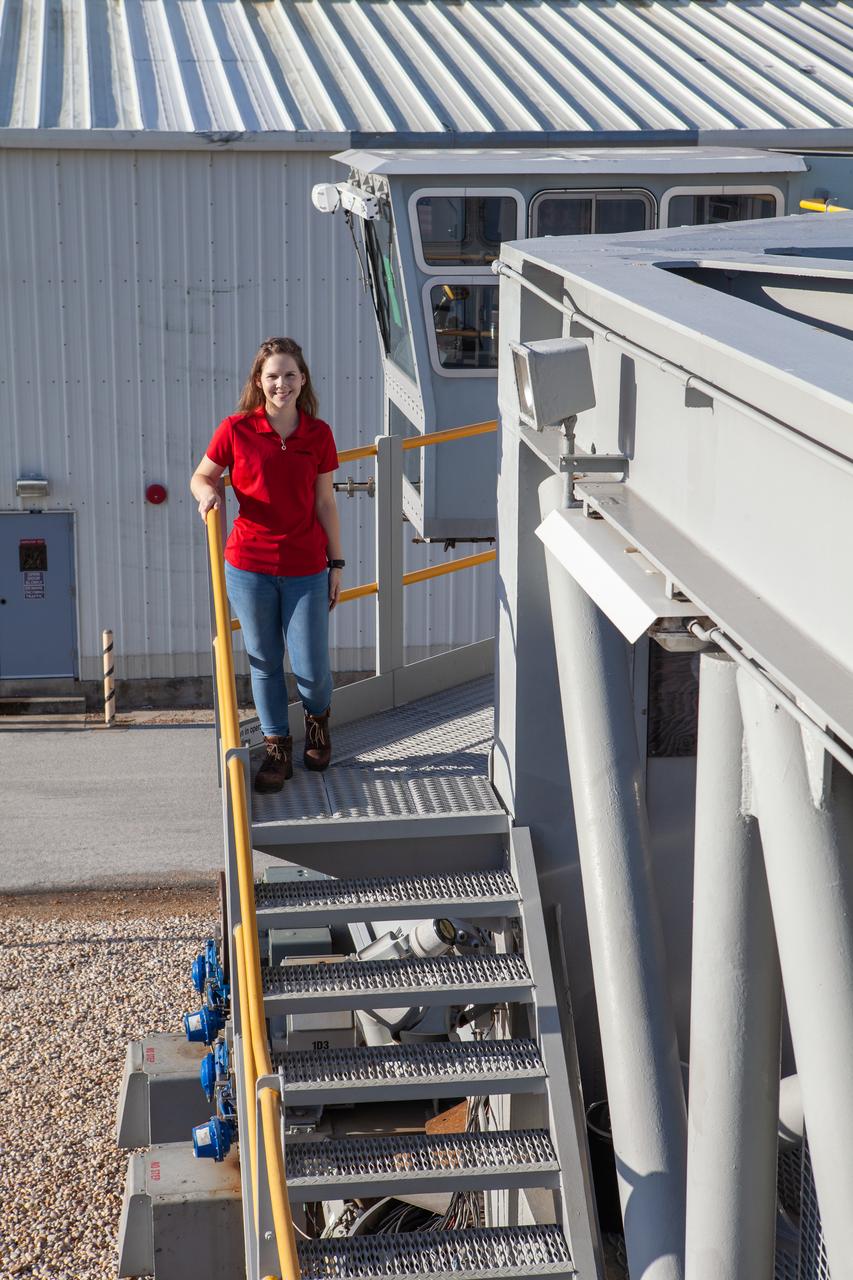
Mechanical Engineer I Breanne Stichler is photographed atop NASA’s Crawler-Transporter 2 (CT-2) at the Kennedy Space Center in Florida on Aug. 8, 2019. Stichler started working at Kennedy in June and is among one of the few females to have ever driven the crawler. CT-2 will carry the agency’s mobile launcher with the Space Launch System rocket from the Vehicle Assembly Building to Launch Pad 39B for the launch of Artemis 1, the first in a series of complex missions that will provide the foundation for human deep space exploration.
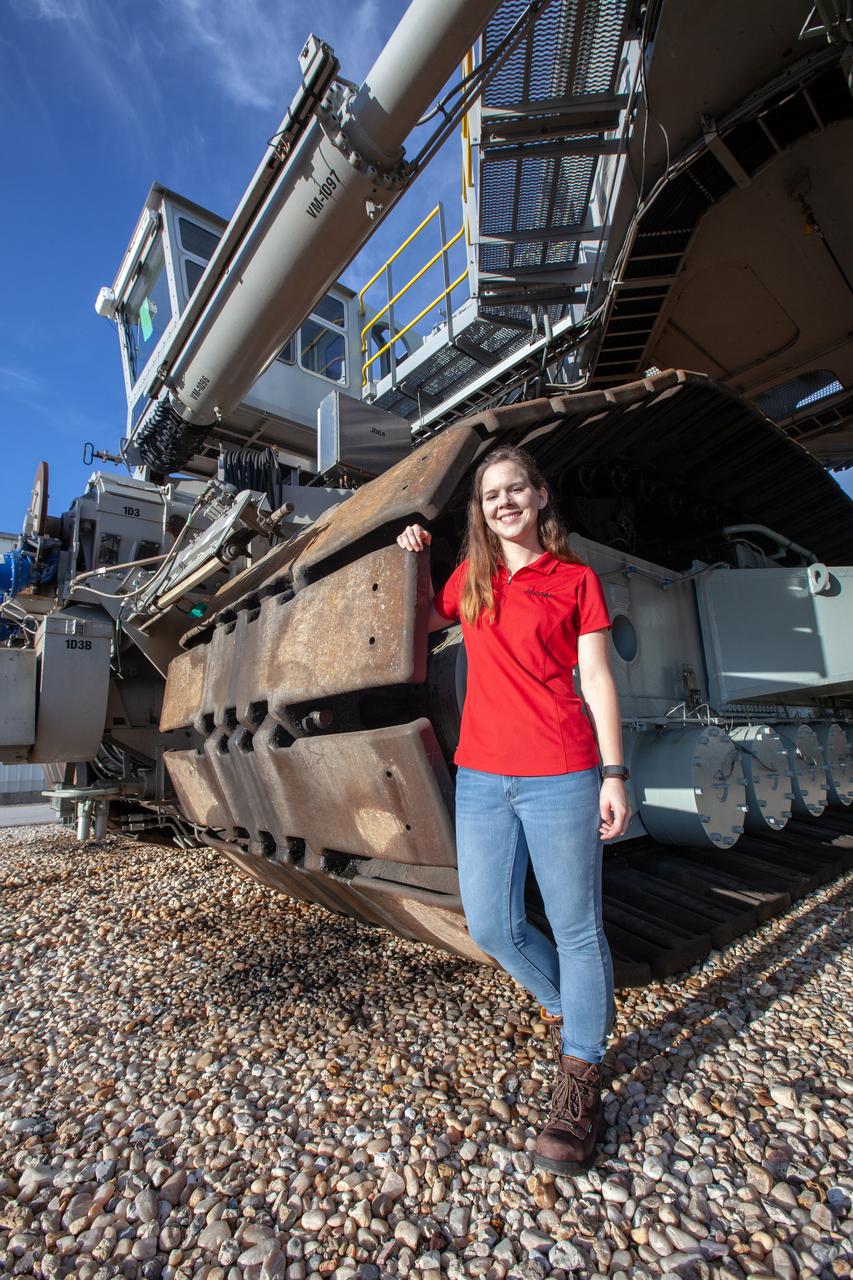
Breanne Stichler, mechanical engineer I, is photographed with NASA’s Crawler-Transporter 2 (CT-2) at the Kennedy Space Center in Florida on Aug. 8, 2019. Stichler started working at Kennedy in June and is among one of the few females to have ever driven the crawler. CT-2 will carry the agency’s mobile launcher with the Space Launch System rocket from the Vehicle Assembly Building to Launch Pad 39B for the launch of Artemis 1, the first in a series of complex missions that will provide the foundation for human deep space exploration.
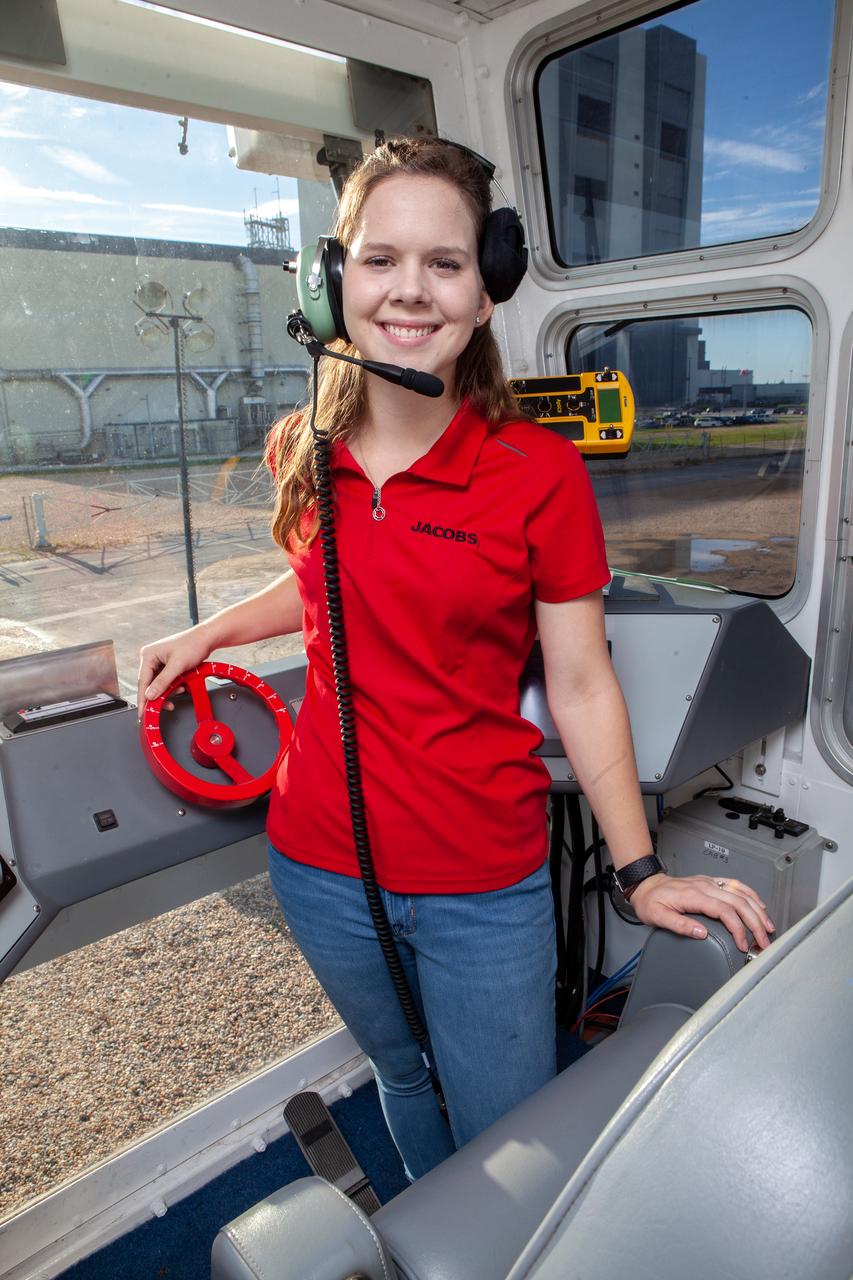
Breanne Stichler, mechanical engineer I, is photographed inside the cab of NASA’s Crawler-Transporter 2 (CT-2) at the Kennedy Space Center in Florida on Aug. 8, 2019. Stichler started working at Kennedy in June and is among one of the few females to have ever driven the crawler. CT-2 will carry the agency’s mobile launcher with the Space Launch System rocket from the Vehicle Assembly Building to Launch Pad 39B for the launch of Artemis 1, the first in a series of complex missions that will provide the foundation for human deep space exploration.
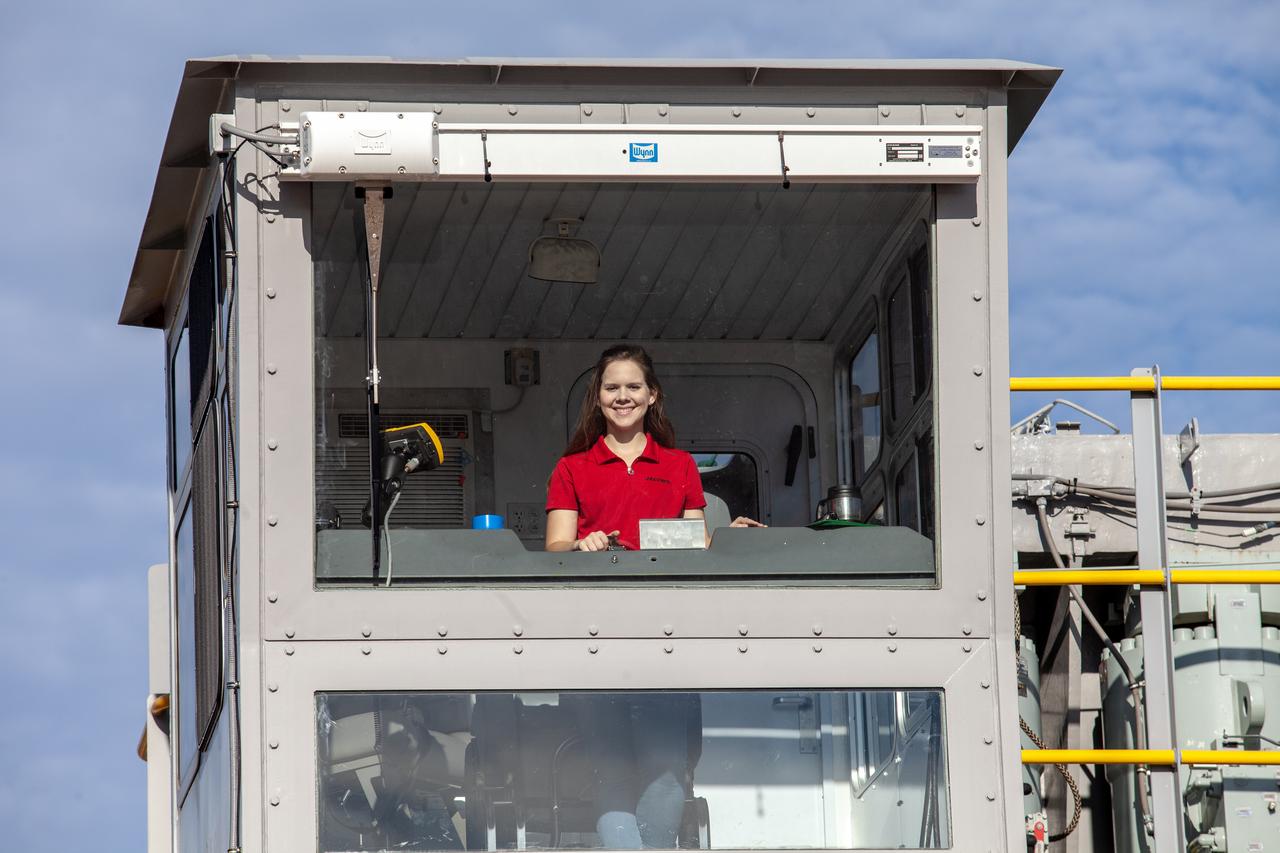
Mechanical Engineer I Breanne Stichler is photographed inside the cab of NASA’s Crawler-Transporter 2 (CT-2) at the Kennedy Space Center in Florida on Aug. 8, 2019. Stichler started working at Kennedy in June and is among one of the few females to have ever driven the crawler. CT-2 will carry the agency’s mobile launcher with the Space Launch System rocket from the Vehicle Assembly Building to Launch Pad 39B for the launch of Artemis 1, the first in a series of complex missions that will provide the foundation for human deep space exploration.
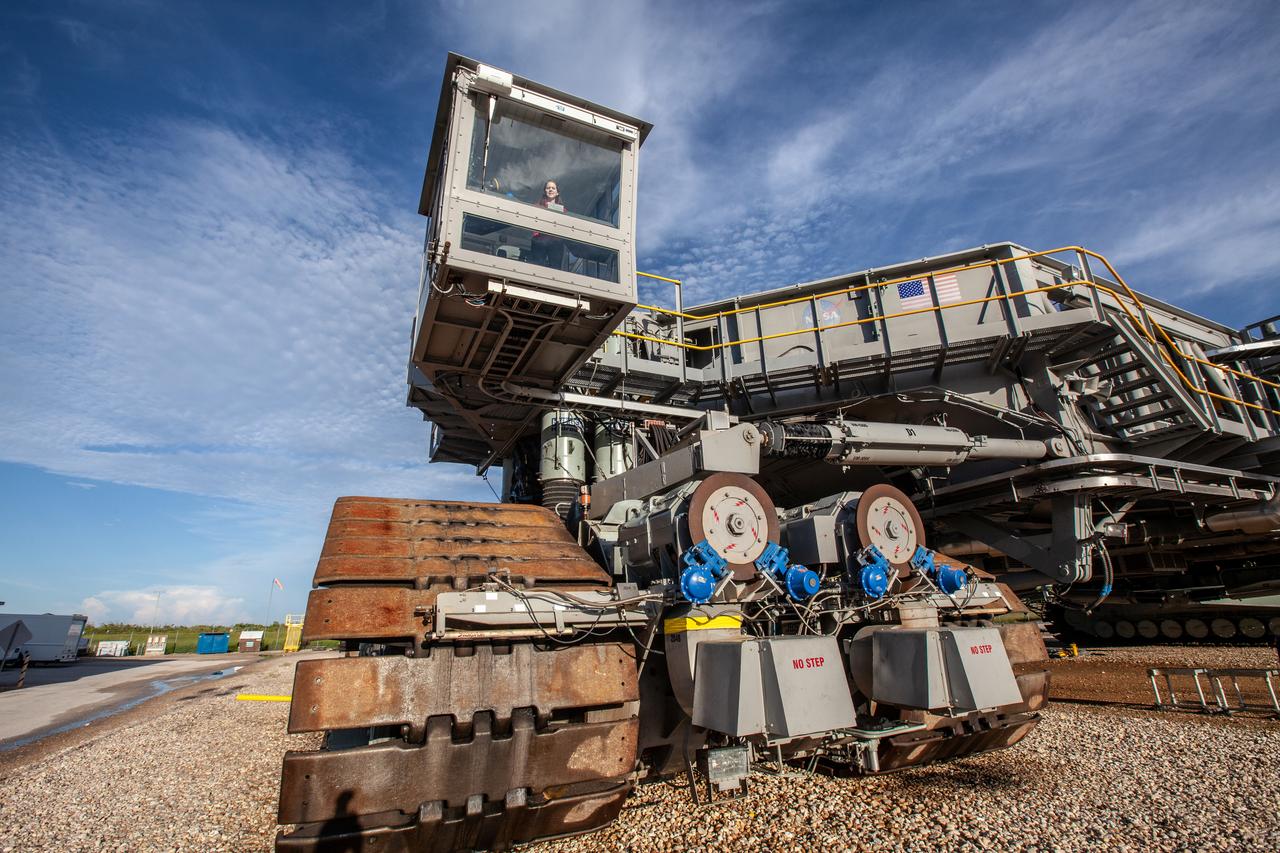
Breanne Stichler, mechanical engineer I, is photographed inside the cab of NASA’s Crawler-Transporter 2 (CT-2) at the Kennedy Space Center in Florida on Aug. 8, 2019. Stichler started working at Kennedy in June and is among one of the few females to have ever driven the crawler. CT-2 will carry the agency’s mobile launcher with the Space Launch System rocket from the Vehicle Assembly Building to Launch Pad 39B for the launch of Artemis 1, the first in a series of complex missions that will provide the foundation for human deep space exploration.
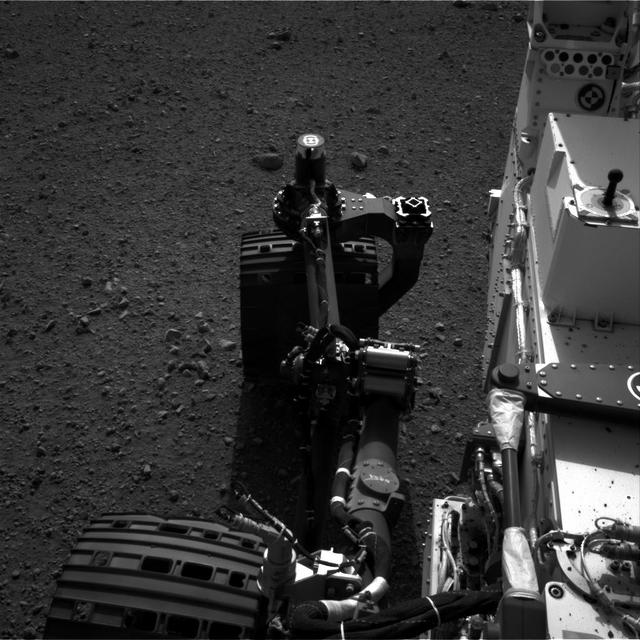
This image from an animated gif shows the movement of the rear right wheel of NASA Curiosity as rover drivers turned the wheels in place at the landing site on Mars.
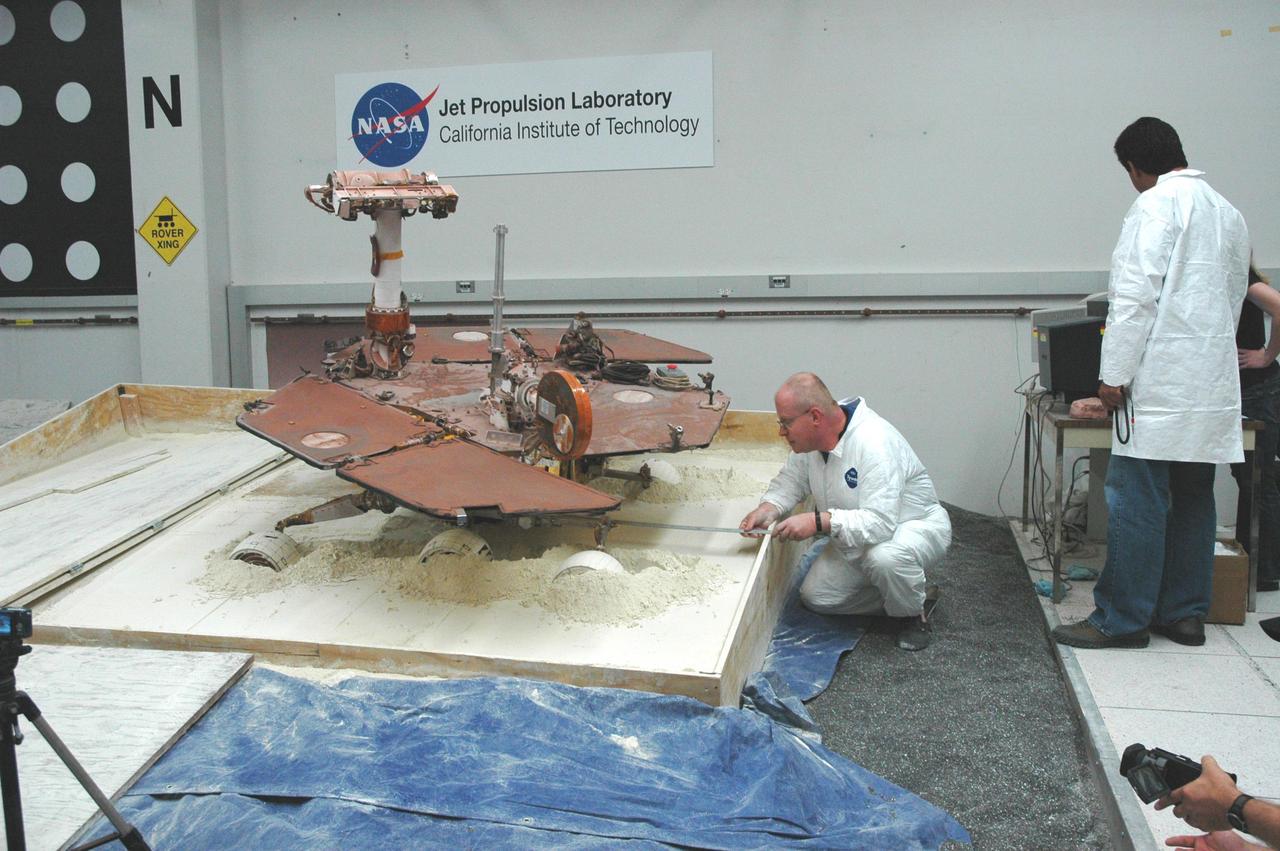
After commanding five of a test rover six wheels to drive forward, rover driver Paolo Bellutta left measures how much the rover moved sideways, downslope, during the maneuver.
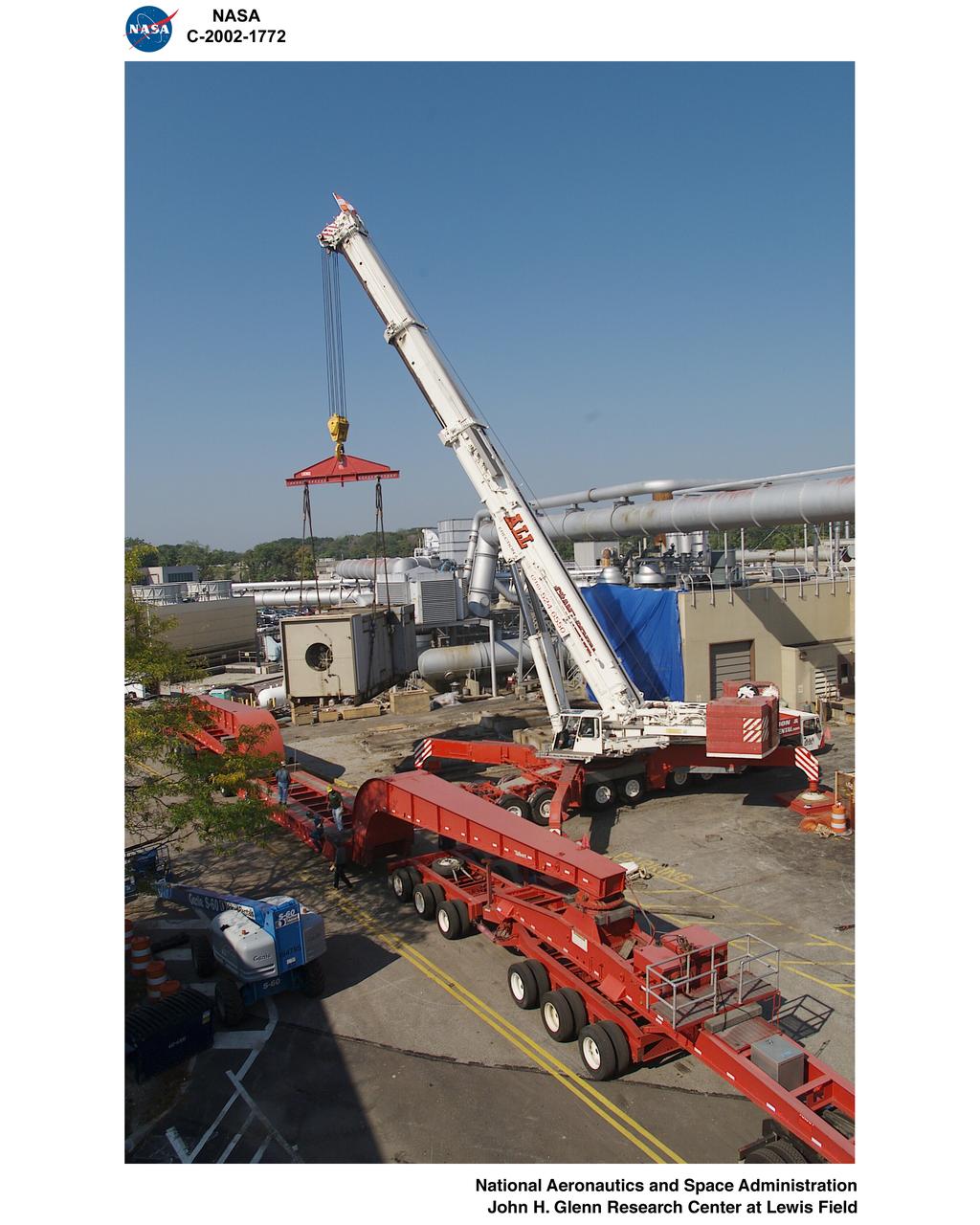
REMOVAL OF GE - GENERAL ELECTRIC - DRIVERS
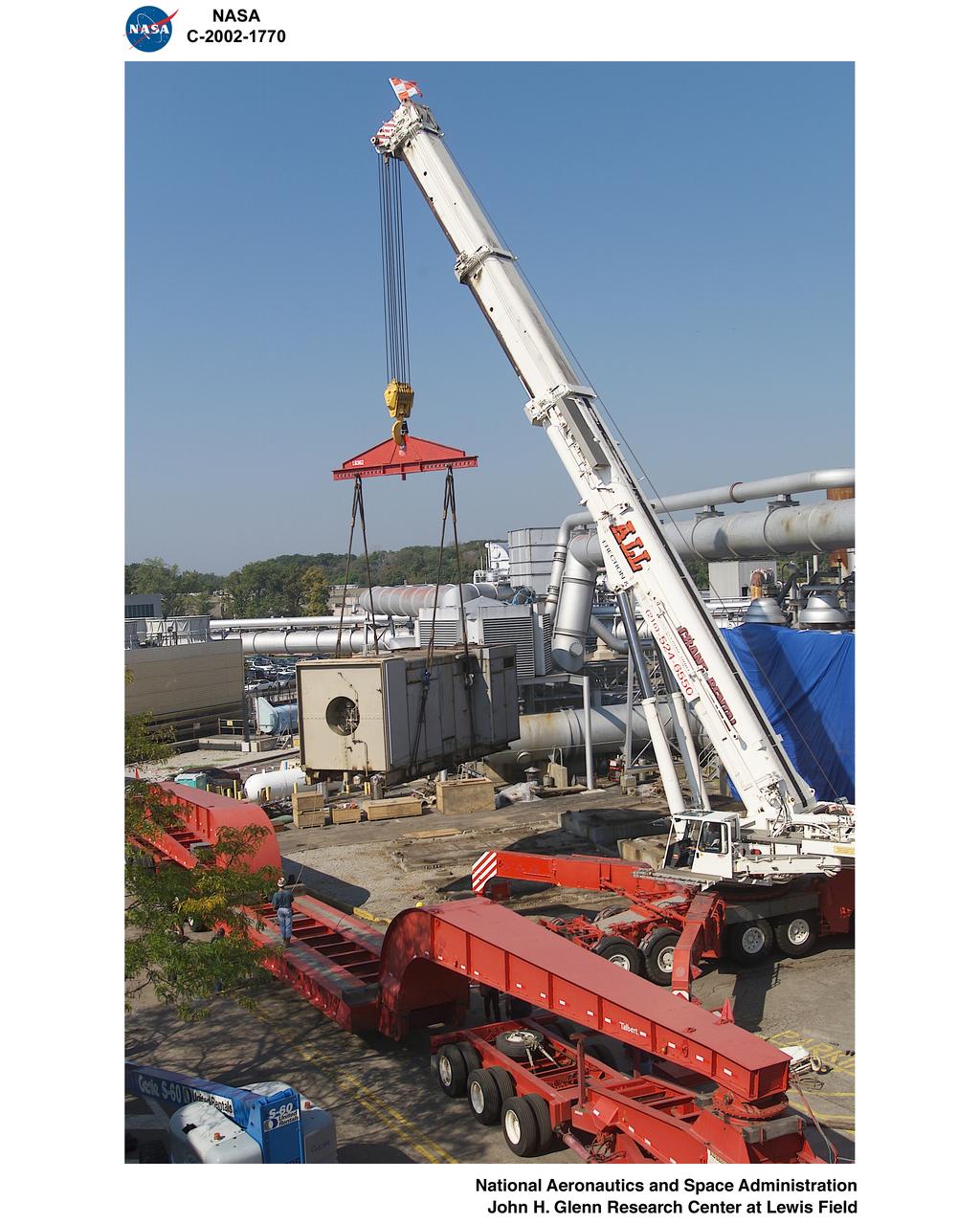
REMOVAL OF GE - GENERAL ELECTRIC - DRIVERS
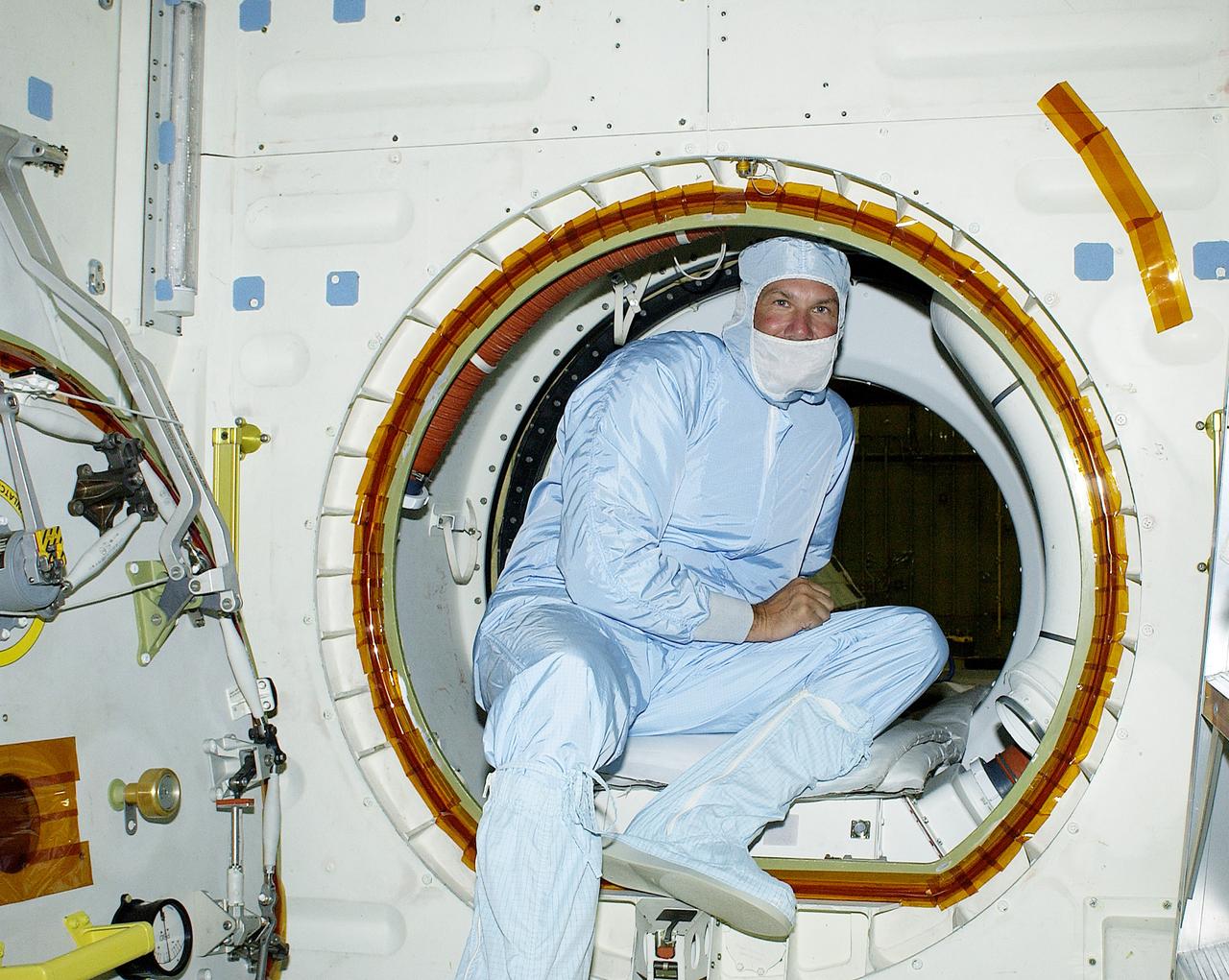
KENNEDY SPACE CENTER, FLA. - NASCAR driver Dale Jarrett gets a close look at the orbiter Endeavour. Jarrett and other drivers Jimmie Johnson and Ryan Newman were on a tour of KSC. The men are scheduled to drive in the Pepsi 400 auto race being held July 5 at the Daytona International Speedway, Daytona Beach.
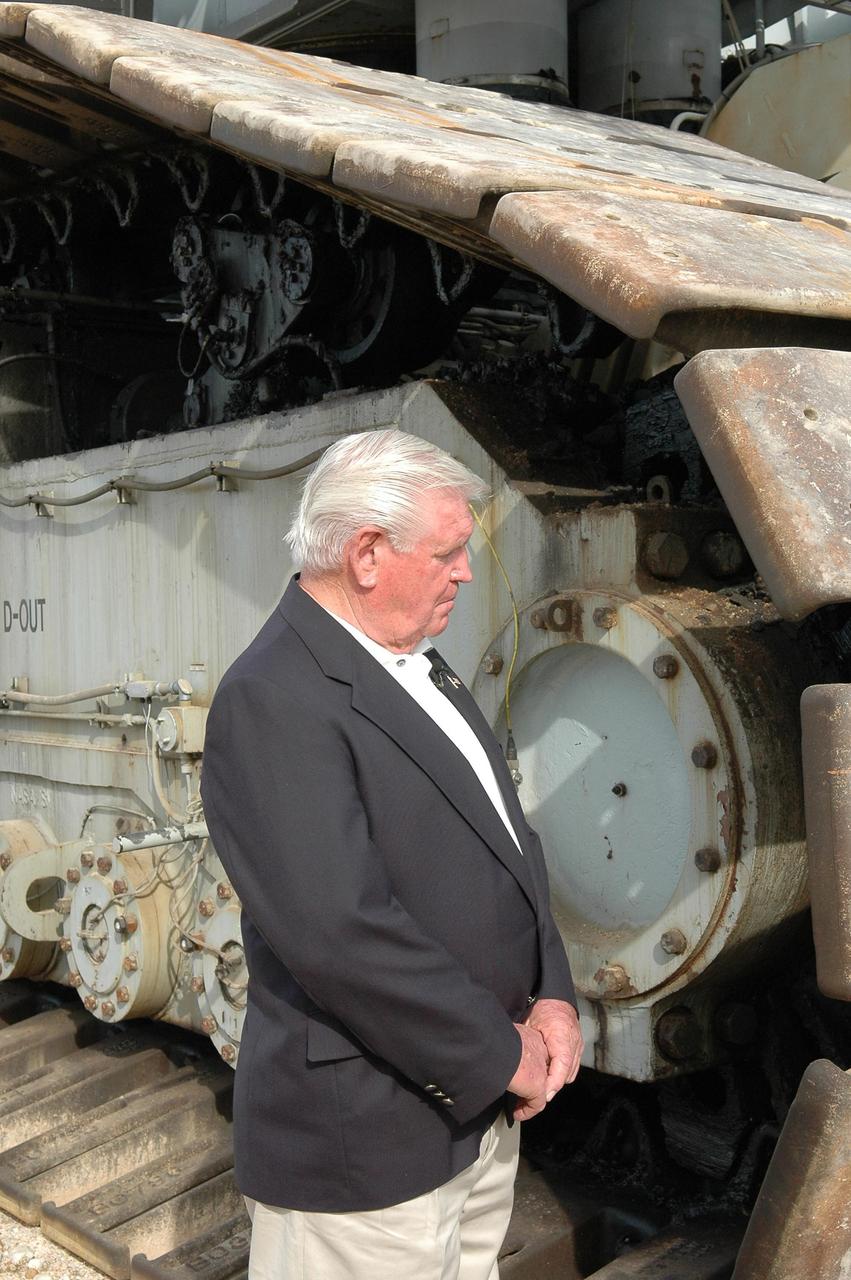
KENNEDY SPACE CENTER, FLA. - On the occasion of the 40th anniversary of the crawler transporter used for moving space shuttles to the NASA Kennedy Space Center’s launch pads, former crawler driver Fred Renaud gets a close look at one of the crawlers still in use. Media representatives and invited guests had the opportunity to tour one of NASA's two crawlers. This included the driver cab and engine room. Guests included current drivers and operators, as well as drivers from the Apollo Program. In January 1966, the crawler completed its first successful move with a 10.6-million-pound launch umbilical tower. It moved three-quarters of a mile in about nine hours. Throughout 40 years of service, the two crawlers have moved more than 3,500 miles and carried seven vehicles.
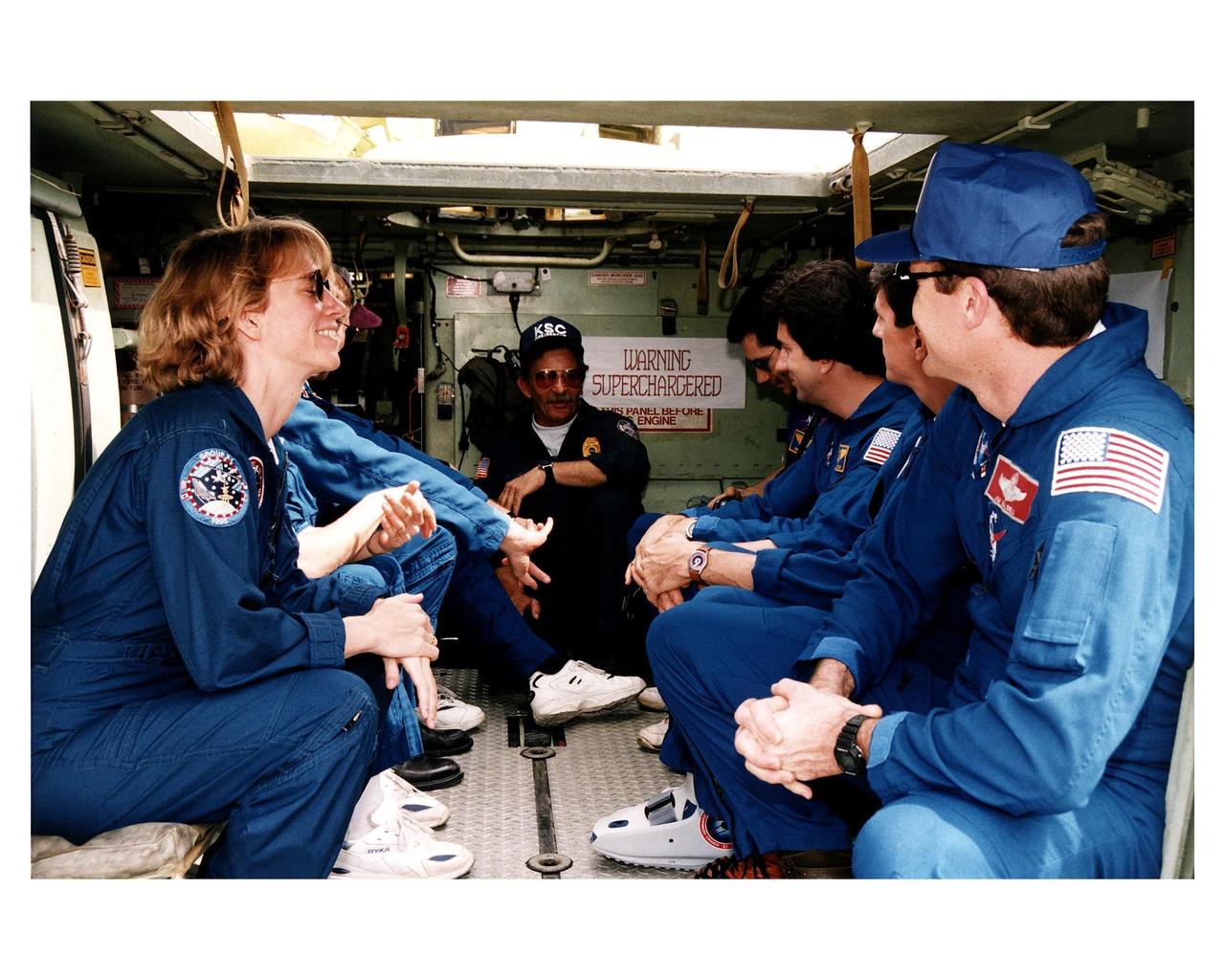
STS-83 crew M113 driver training during Terminal Countdown Demonstration Test (TCDT
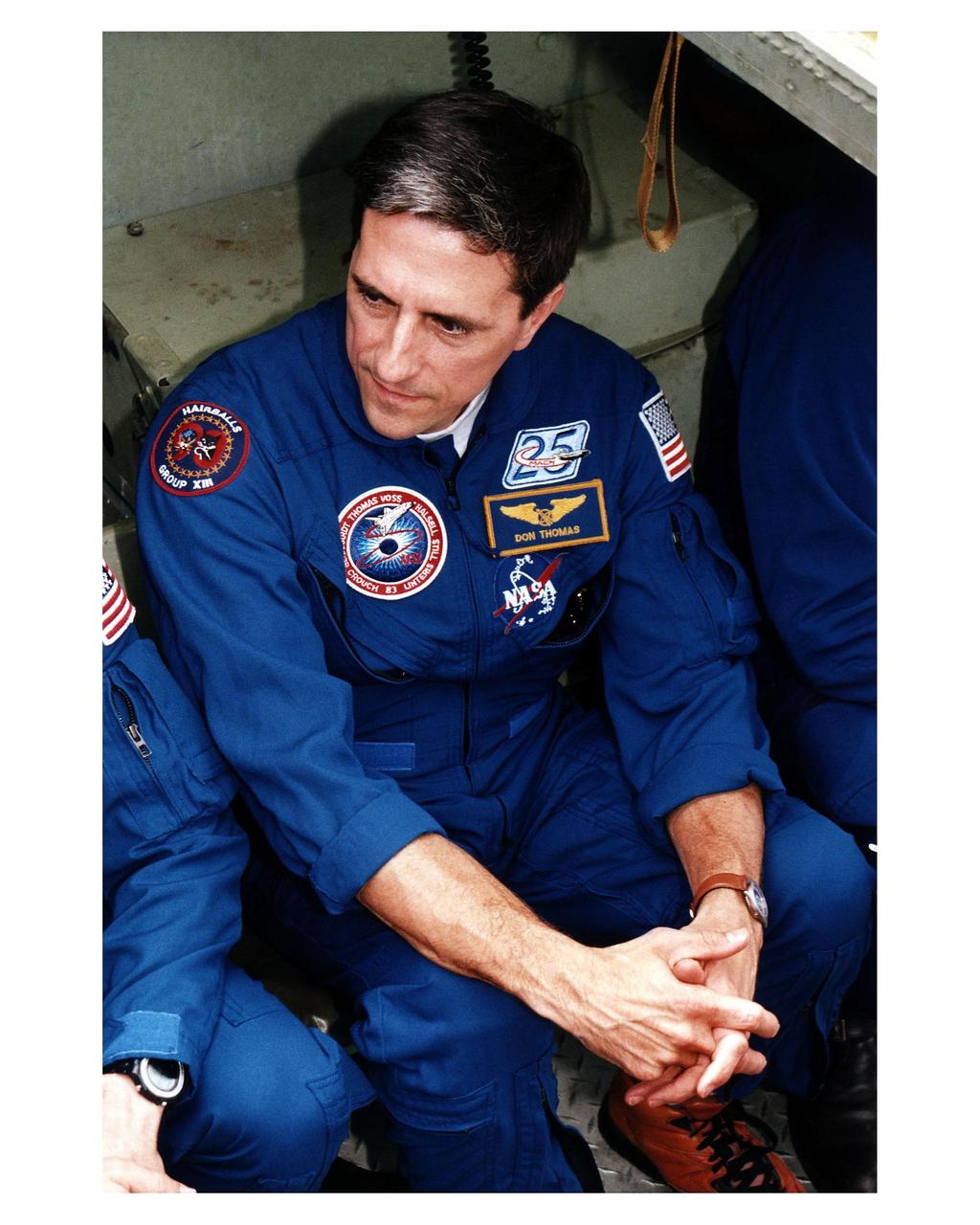
STS-83 crew M113 driver training during Terminal Countdown Demonstration Test (TCDT
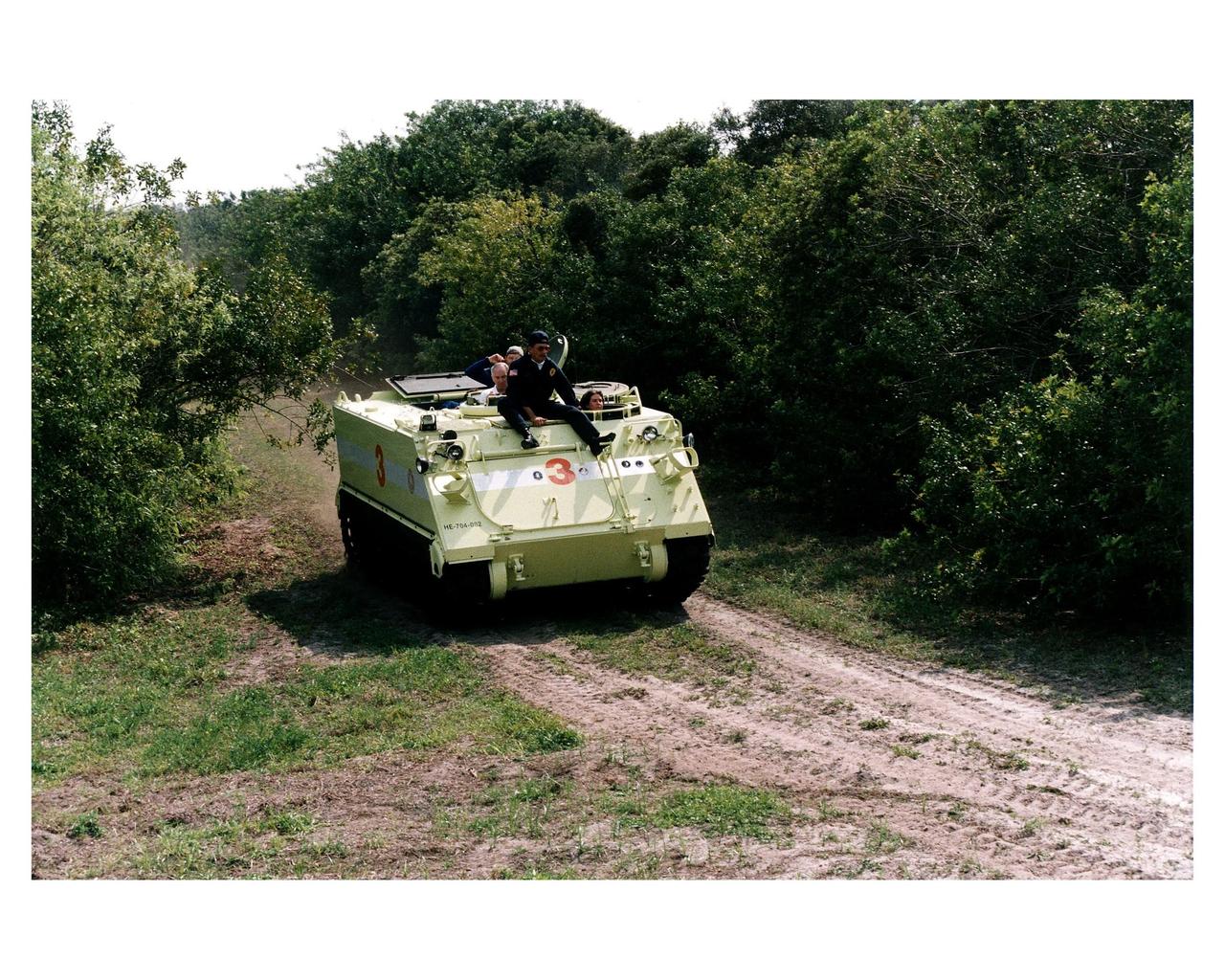
STS-83 crew M113 driver training during Terminal Countdown Demonstration Test (TCDT
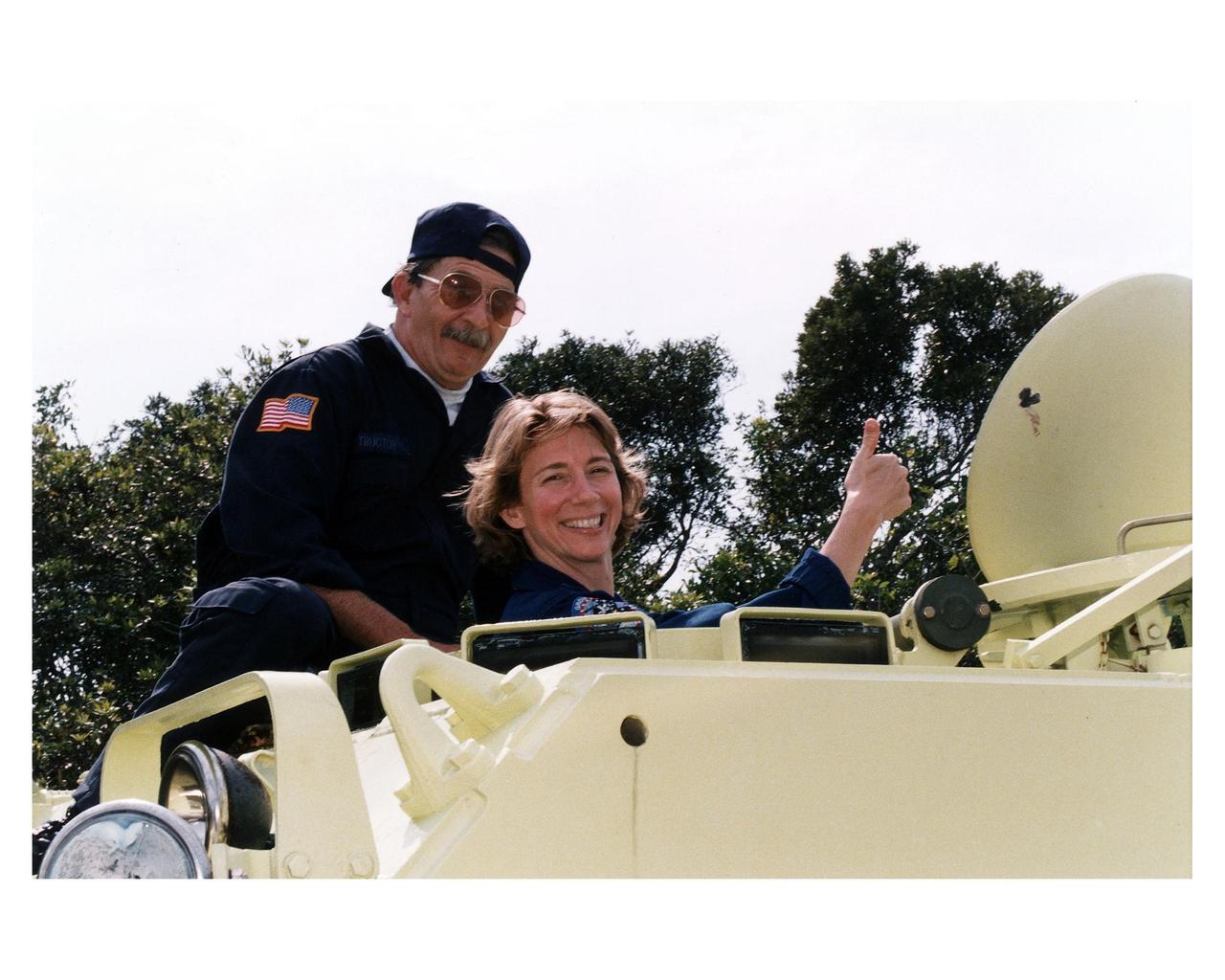
STS-83 crew M113 driver training during Terminal Countdown Demonstration Test (TCDT
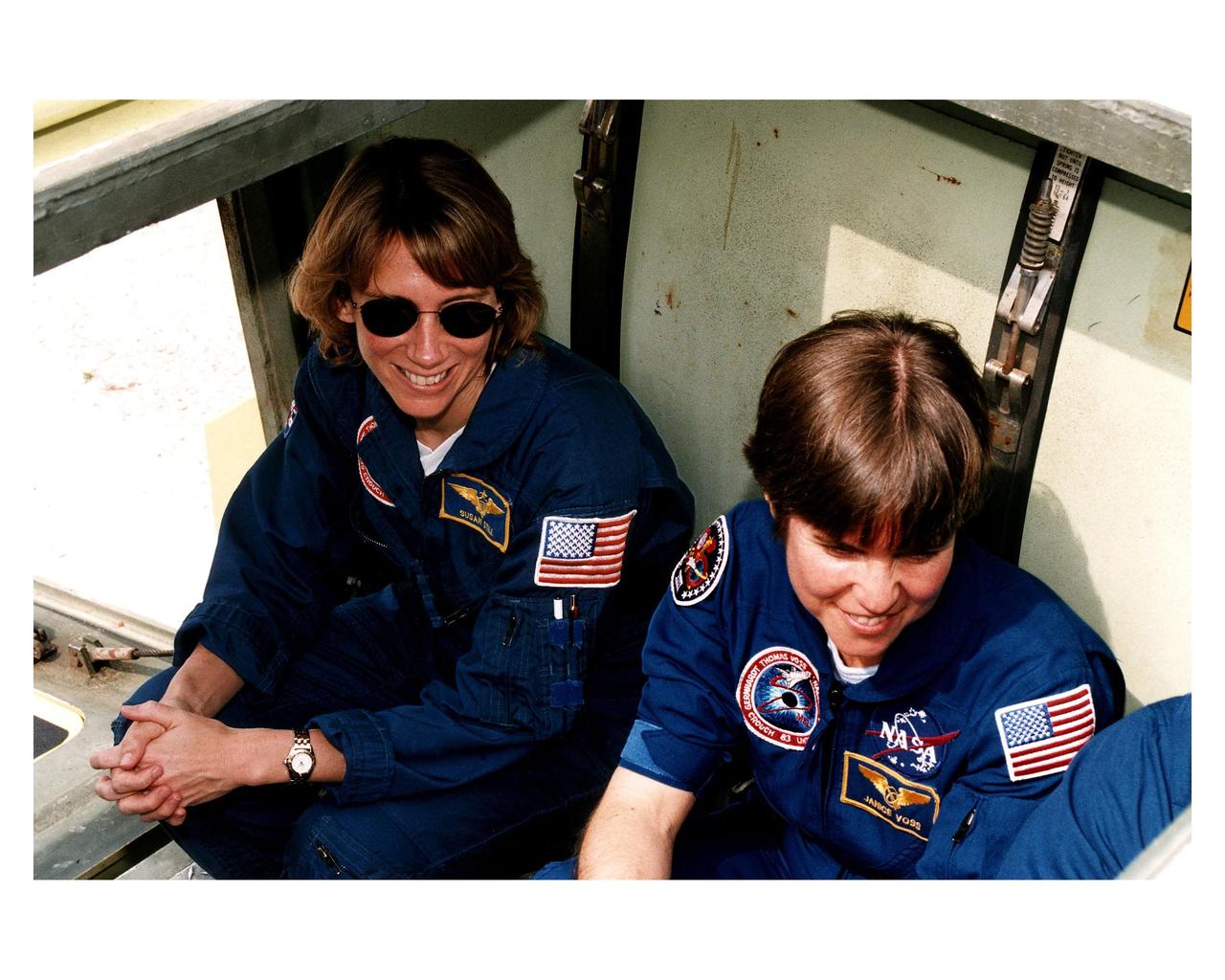
STS-83 crew M113 driver training during Terminal Countdown Demonstration Test (TCDT
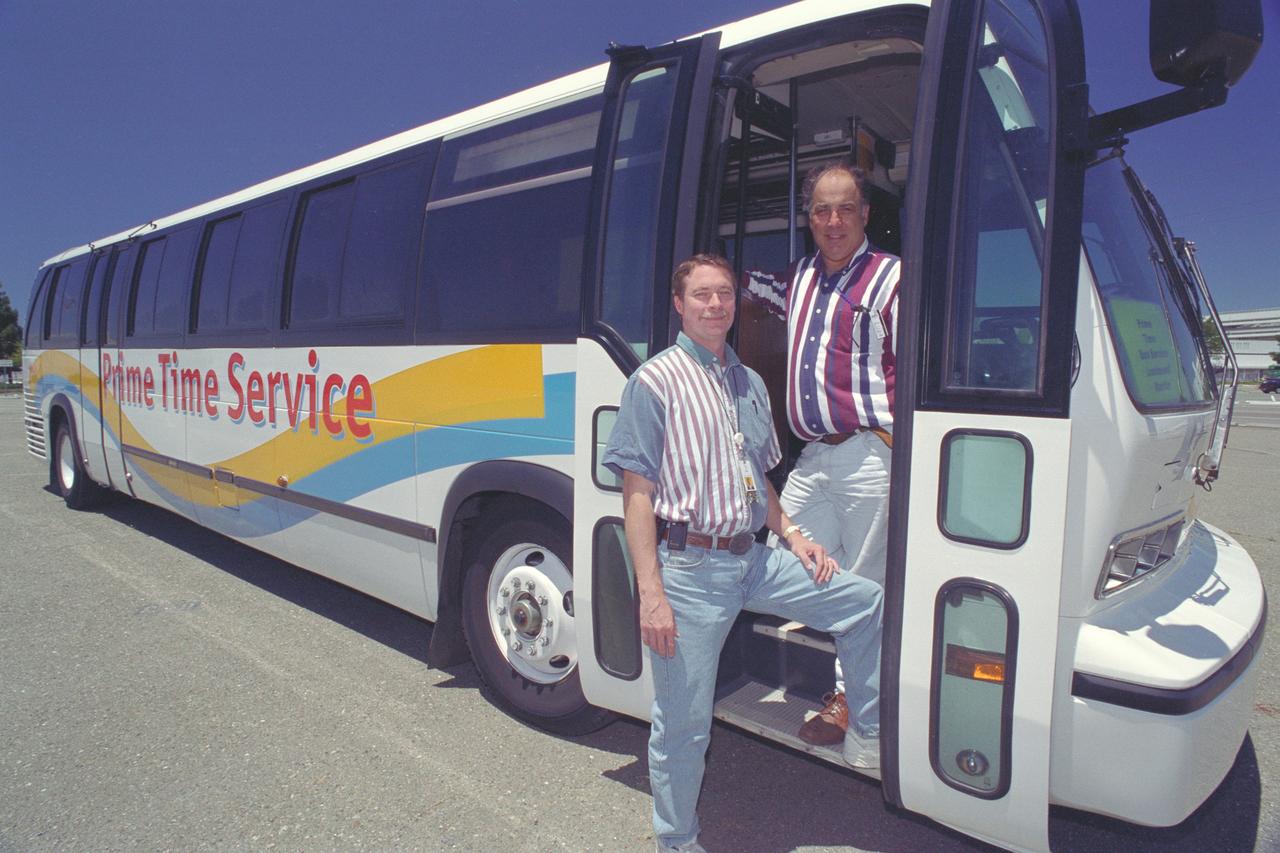
Lockheed Bus 'Prime Time' with drivers Danial Dague & Gary Zaharias. Ames Alternative Commute Program (AACP)
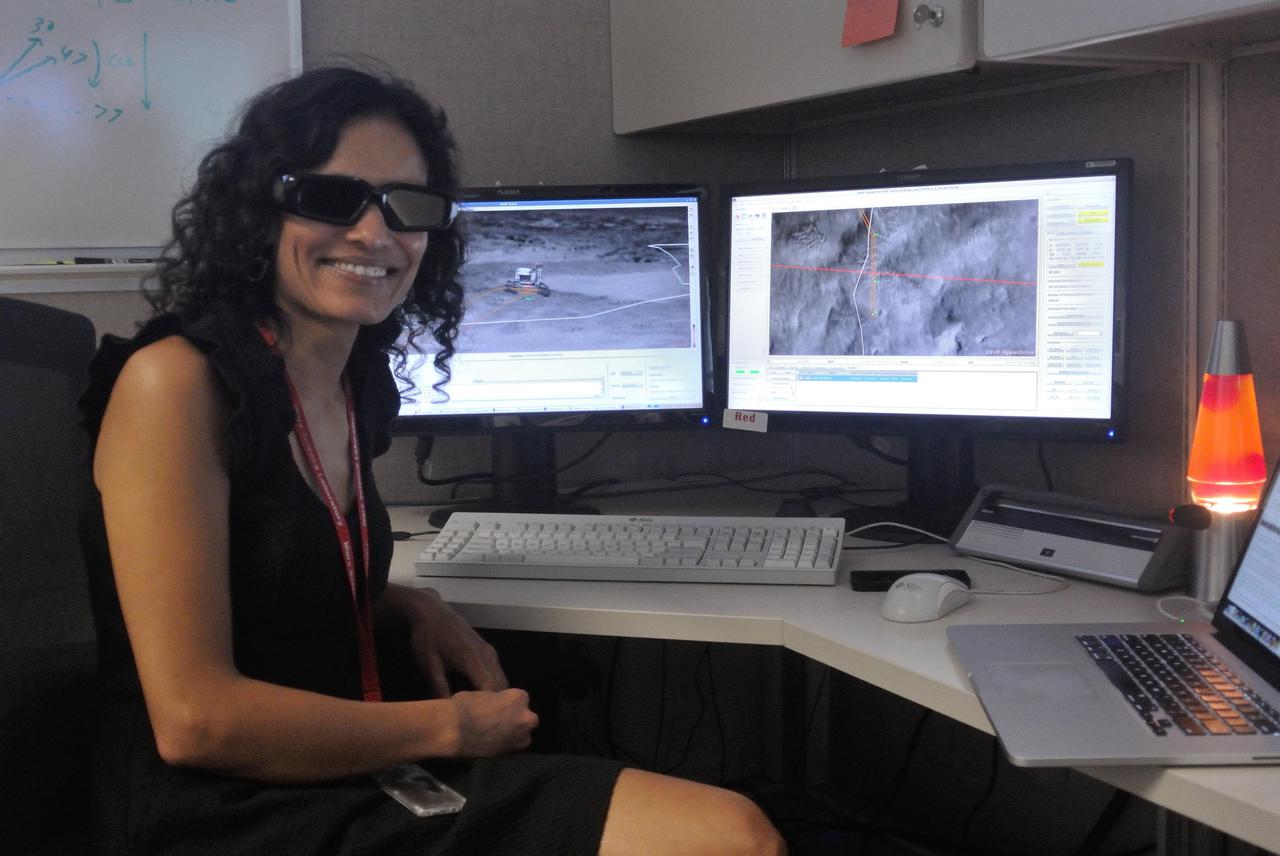
Vandi Verma, an engineer who now works with NASA's Perseverance Mars rover, is seen here working as a driver for the Curiosity rover. The special 3D glasses she's wearing are still used by rover drivers to easily detect changes in terrain that the rover may need to avoid. A key objective for Perseverance's mission on Mars is astrobiology, including the search for signs of ancient microbial life. The rover will characterize the planet's geology and past climate, pave the way for human exploration of the Red Planet, and be the first mission to collect and cache Martian rock and regolith (broken rock and dust). Subsequent NASA missions, in cooperation with ESA (European Space Agency), would send spacecraft to Mars to collect these sealed samples from the surface and return them to Earth for in-depth analysis. The Mars 2020 Perseverance mission is part of NASA's Moon to Mars exploration approach, which includes Artemis missions to the Moon that will help prepare for human exploration of the Red Planet. https://photojournal.jpl.nasa.gov/catalog/PIA24724
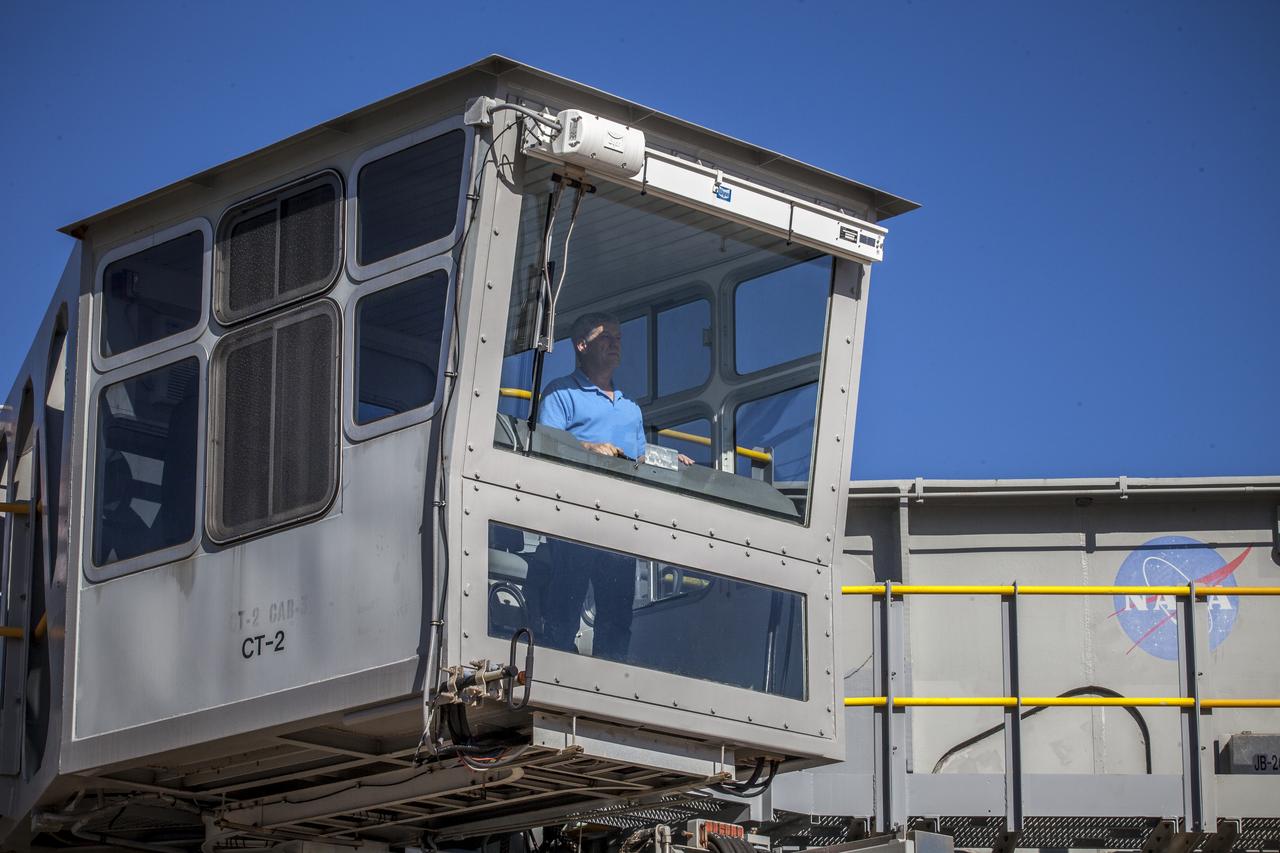
Sam Dove, a crawler-transporter engineer with Jacobs on the Test and Operations Support Contract, is inside the operator cab of crawler-transporter 2 on the crawlerway at NASA's Kennedy Space Center in Florida, on Aug. 27, 2018. CT-2 will carry the mobile launcher for the first time to Launch Pad 39B for a fit check of key systems that will support the launch of the agency's Space Launch System rocket and Orion spacecraft on Exploration Mission-1. The crawler also will carry the mobile launcher to the Vehicle Assembly Building for system checks and fit checks with the 10 levels of new platforms in High Bay 3.
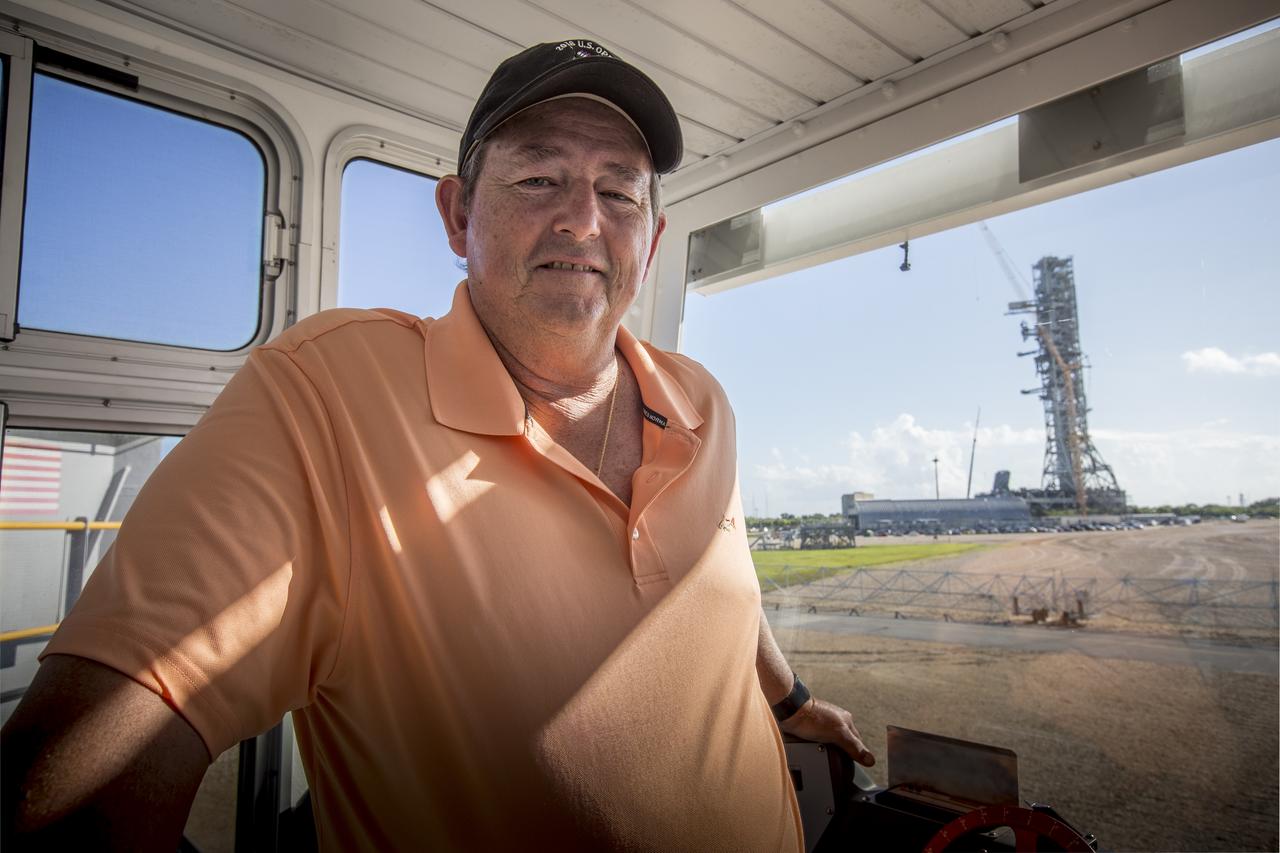
Bob Myers, a mechanical systems engineer with ERC on the Test and Operations Support Contract, is inside the operator cab of crawler-transporter 2 on the crawlerway at NASA's Kennedy Space Center in Florida, on Aug. 27, 2018. CT-2 will carry the mobile launcher for the first time to Launch Pad 39B for a fit check of key systems that will support the launch of the agency's Space Launch System rocket and Orion spacecraft on Exploration Mission-1. The crawler also will carry the mobile launcher to the Vehicle Assembly Building for system checks and fit checks with the 10 levels of new work platforms in High Bay 3.
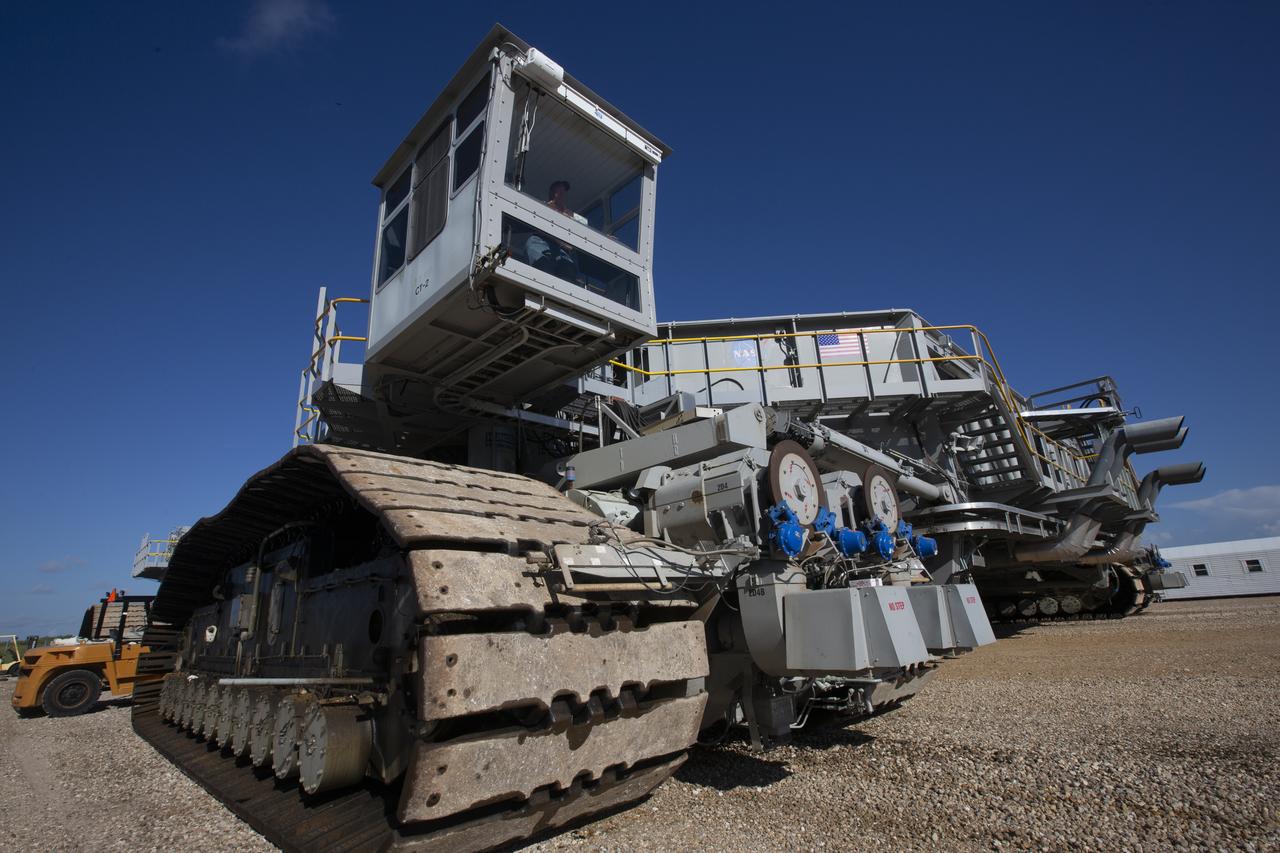
Sam Dove, a crawler-transporter engineer with Jacobs on the Test and Operations Support Contract, is inside the operator cab of crawler-transporter 2 on the crawlerway at NASA's Kennedy Space Center in Florida, on Aug. 27, 2018. CT-2 will carry the mobile launcher for the first time to Launch Pad 39B for a fit check of key systems that will support the launch of the agency's Space Launch System rocket and Orion spacecraft on Exploration Mission-1. The crawler also will carry the mobile launcher to the Vehicle Assembly Building for system checks and fit checks with the 10 levels of new work platforms in High Bay 3.
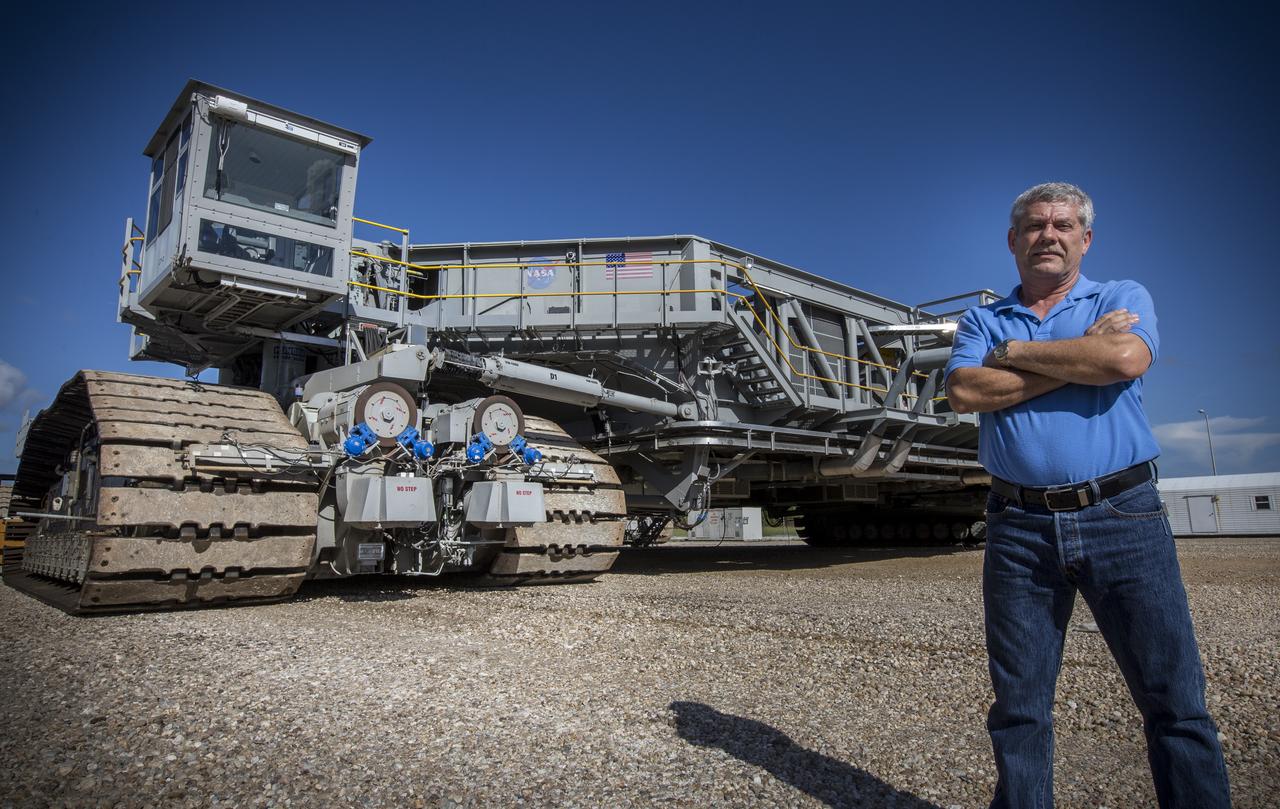
Sam Dove, a crawler-transporter engineer with Jacobs on the Test and Operations Support Contract, stands in front of crawler-transporter 2 on the crawlerway at NASA's Kennedy Space Center in Florida, on Aug. 27, 2018. CT-2 will carry the mobile launcher for the first time to Launch Pad 39B for a fit check of key systems that will support the launch of the agency's Space Launch System rocket and Orion spacecraft on Exploration Mission-1. The crawler also will carry the mobile launcher to the Vehicle Assembly Building for system checks and fit checks with the 10 levels of new platforms in High Bay 3.
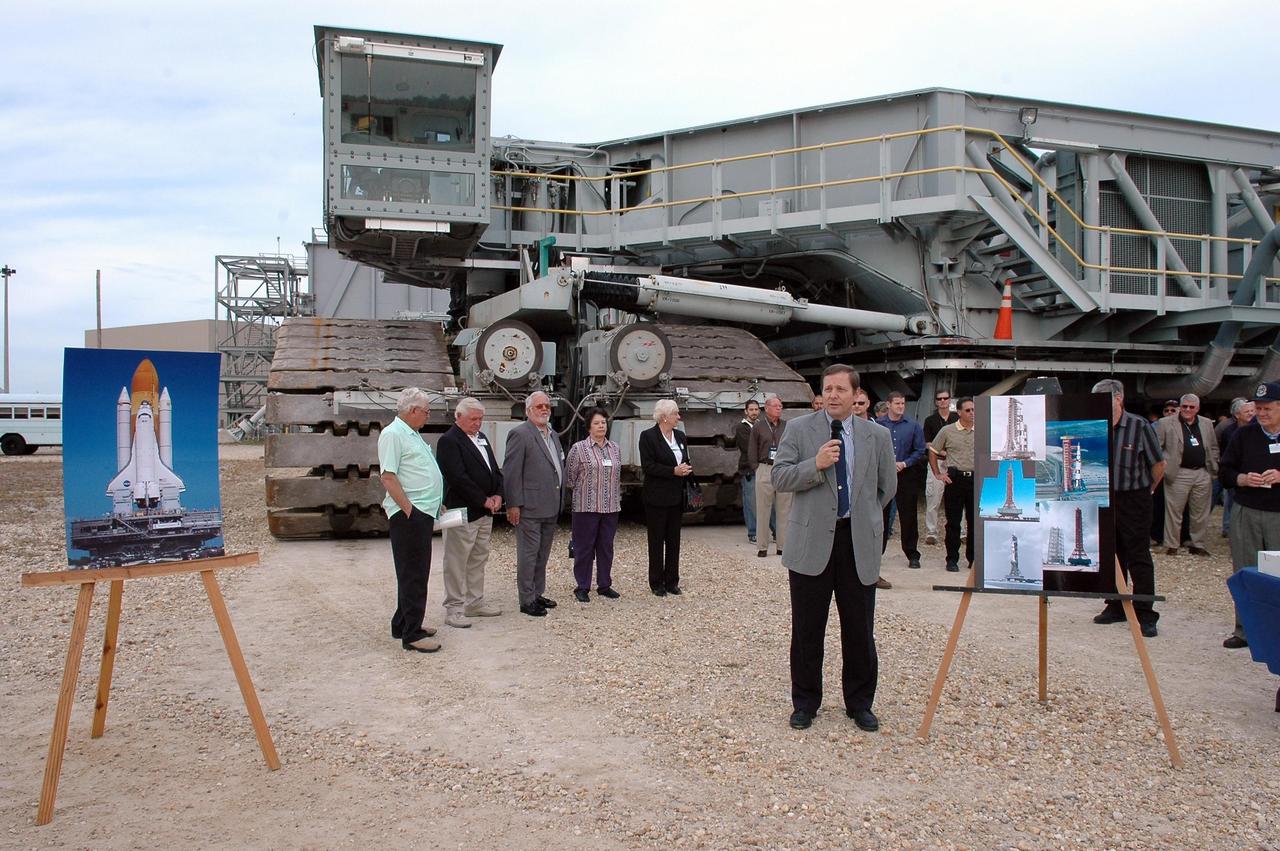
KENNEDY SPACE CENTER, FLA. - Standing in front of one of the crawler transporters at NASA Kennedy Space Center, Director of Space Shuttle Processing Mike Wetmore addresses invited guests (behind him) and the media on the occasion of the 40th anniversary of the crawler transporters. Media representatives and invited guests had the opportunity to tour one of NASA's two crawlers. This included the driver cab and engine room. Guests included current drivers and operators, as well as drivers from the Apollo Program. In January 1966, the crawler completed its first successful move with a 10.6-million-pound launch umbilical tower. It moved three-quarters of a mile in about nine hours. Throughout 40 years of service, the two crawlers have moved more than 3,500 miles and carried seven vehicles.
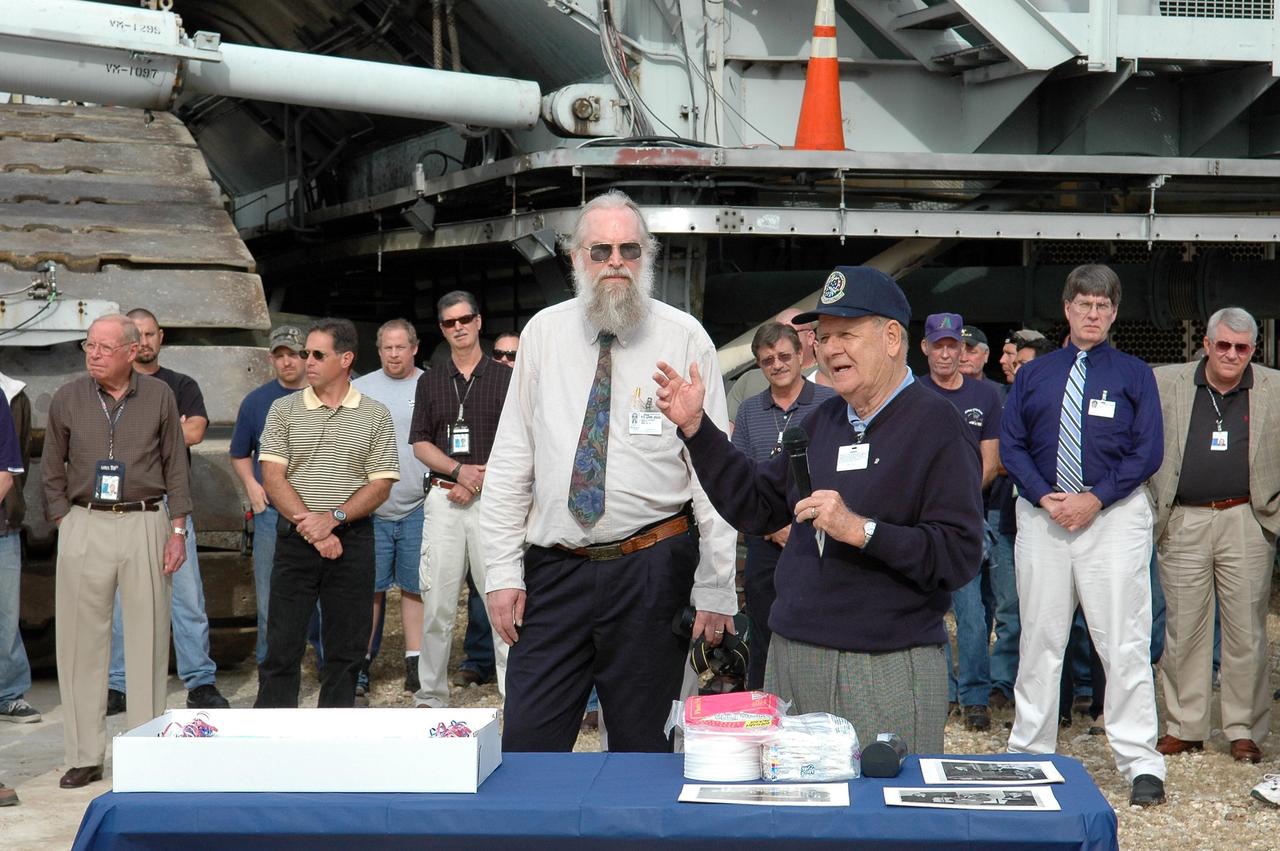
KENNEDY SPACE CENTER, FLA. - On the occasion of the 40th anniversary of the crawler transporter used for moving space shuttles to the NASA Kennedy Space Center’s launch pads, former crawler engineer Bill Clemens (right) introduces Philip Koehring Jr., whose father was project manager at the Marion Power Shovel Co. in Ohio where the crawlers were initially built in 1965. Media representatives and invited guests had the opportunity to tour one of NASA's two crawlers. This included the driver cab and engine room. Guests included current drivers and operators, as well as drivers from the Apollo Program. In January 1966, the crawler completed its first successful move with a 10.6-million-pound launch umbilical tower. It moved three-quarters of a mile in about nine hours. Throughout 40 years of service, the two crawlers have moved more than 3,500 miles and carried seven vehicles.
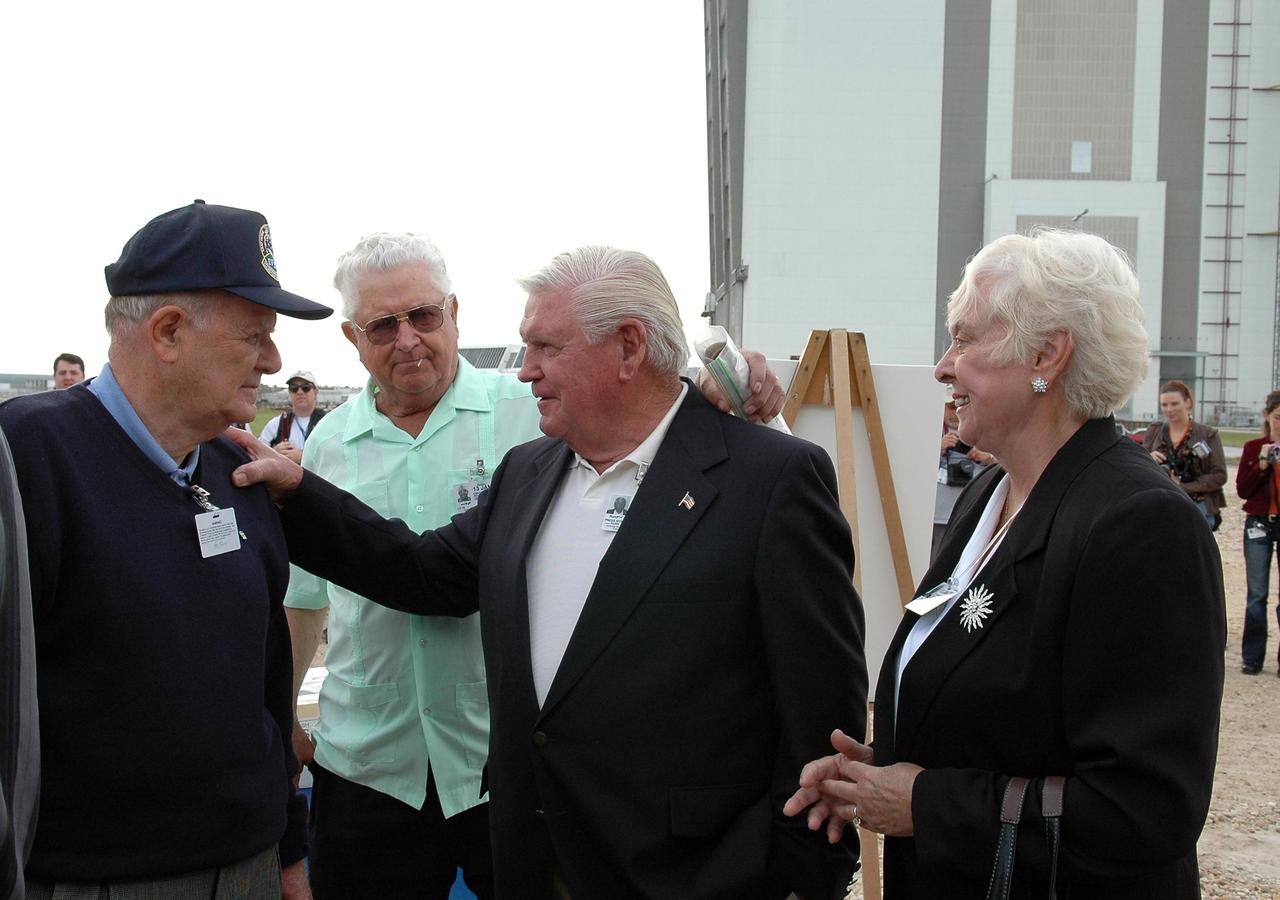
KENNEDY SPACE CENTER, FLA. - On the occasion of the 40th anniversary of the crawler transporter used for moving space shuttles to the NASA Kennedy Space Center’s launch pads, retired crawler workers meet for the celebration. At left is Bill Clemens talking with Fred Renaud and his wife, Patricia. Media representatives and invited guests had the opportunity to tour one of NASA's two crawlers. This included the driver cab and engine room. Guests included current drivers and operators, as well as drivers from the Apollo Program. In January 1966, the crawler completed its first successful move with a 10.6-million-pound launch umbilical tower. It moved three-quarters of a mile in about nine hours. Throughout 40 years of service, the two crawlers have moved more than 3,500 miles and carried seven vehicles.
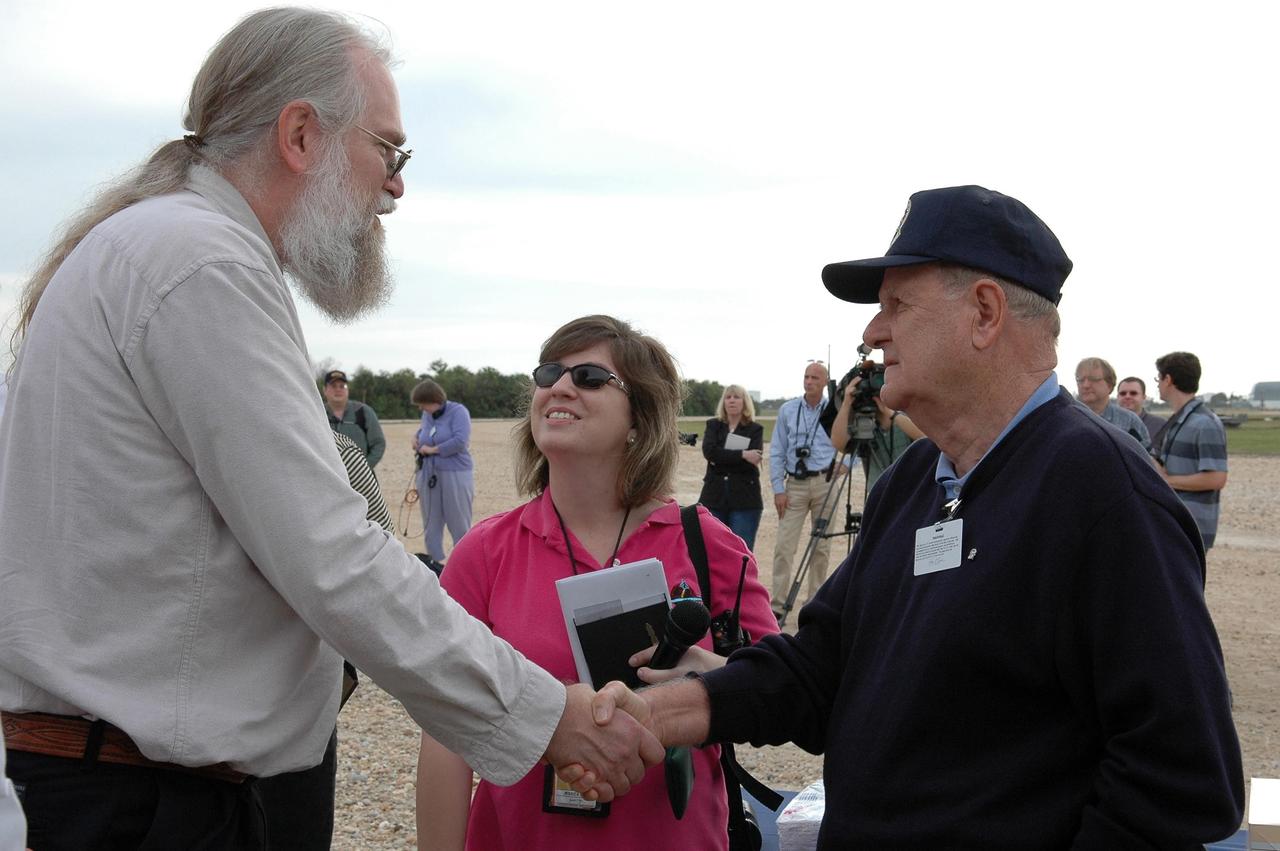
KENNEDY SPACE CENTER, FLA. - On the occasion of the 40th anniversary of the crawler transporter used for moving space shuttles to the NASA Kennedy Space Center’s launch pads, Philip Koehring Jr. (left) meets Bill Clemens. Koehring represented his father, who was project manager at Marion Power Shovel Co. in Ohio where the crawlers were initially built in 1965. Media representatives and invited guests had the opportunity to tour one of NASA's two crawlers. This included the driver cab and engine room. Guests included current drivers and operators, as well as drivers from the Apollo Program. In January 1966, the crawler completed its first successful move with a 10.6-million-pound launch umbilical tower. It moved three-quarters of a mile in about nine hours. Throughout 40 years of service, the two crawlers have moved more than 3,500 miles and carried seven vehicles.
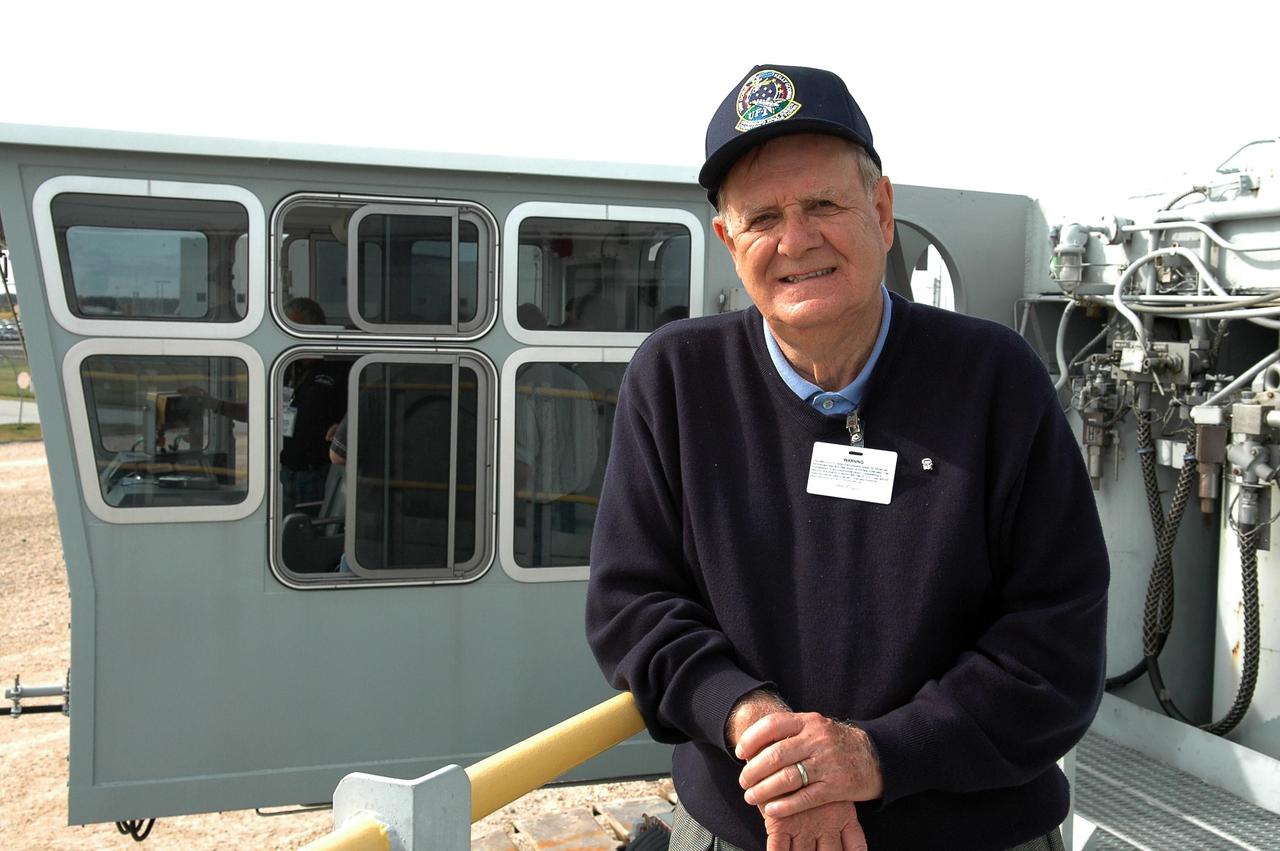
KENNEDY SPACE CENTER, FLA. - On the occasion of the 40th anniversary of the crawler transporter used for moving space shuttles to the NASA Kennedy Space Center’s launch pads, former crawler engineer Bill Clemens stops in front of one of the cabs used to navigate the crawler. Media representatives and invited guests had the opportunity to tour one of NASA's two crawlers. This included the driver cab and engine room. Guests included current drivers and operators, as well as drivers from the Apollo Program. In January 1966, the crawler completed its first successful move with a 10.6-million-pound launch umbilical tower. It moved three-quarters of a mile in about nine hours. Throughout 40 years of service, the two crawlers have moved more than 3,500 miles and carried seven vehicles.
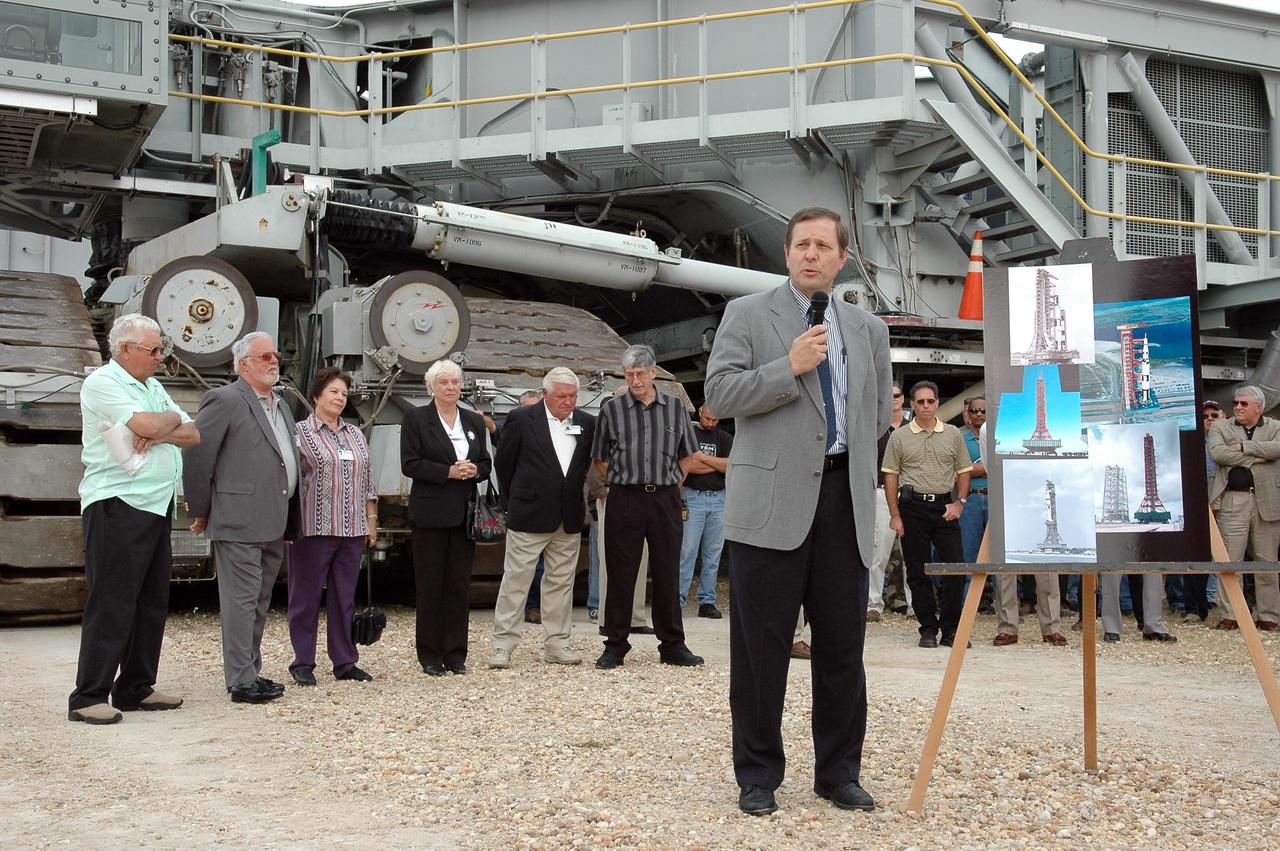
KENNEDY SPACE CENTER, FLA. - Standing in front of one of the crawler transporters at NASA Kennedy Space Center, Director of Space Shuttle Processing Mike Wetmore addresses invited guests (behind him) and the media on the occasion of the 40th anniversary of the crawler transporters. Media representatives and invited guests had the opportunity to tour one of NASA's two crawlers. This included the driver cab and engine room. Guests included current drivers and operators, as well as drivers from the Apollo Program. In January 1966, the crawler completed its first successful move with a 10.6-million-pound launch umbilical tower. It moved three-quarters of a mile in about nine hours. Throughout 40 years of service, the two crawlers have moved more than 3,500 miles and carried seven vehicles.
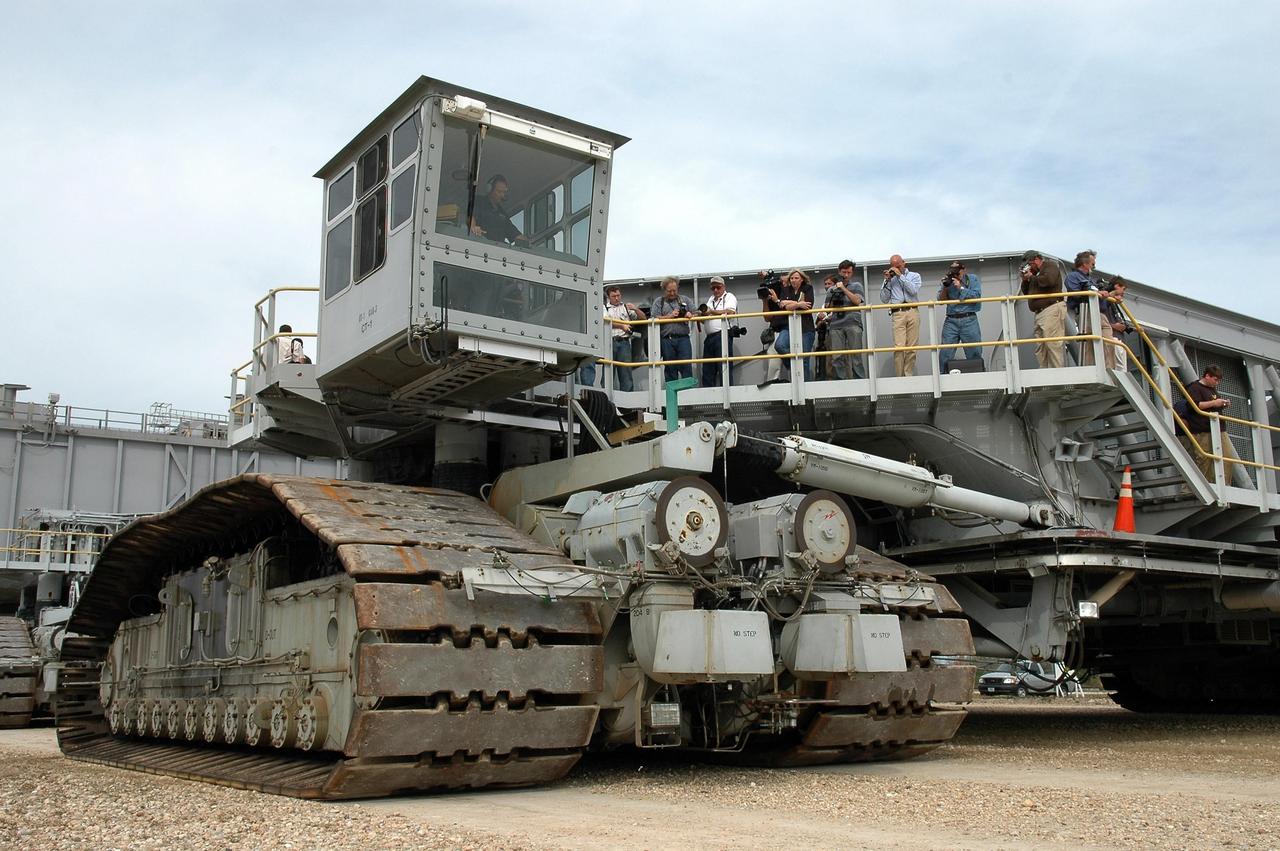
KENNEDY SPACE CENTER, FLA. - On the occasion of the 40th anniversary of the crawler transporter used for moving space shuttles to the NASA Kennedy Space Center’s launch pads, media get a rare opportunity to ride on and photograph one of the crawlers up close. Media representatives and invited guests had the opportunity to tour one of NASA's two crawlers. This included the driver cab and engine room. Guests included current drivers and operators, as well as drivers from the Apollo Program. In January 1966, the crawler completed its first successful move with a 10.6-million-pound launch umbilical tower. It moved three-quarters of a mile in about nine hours. Throughout 40 years of service, the two crawlers have moved more than 3,500 miles and carried seven vehicles.
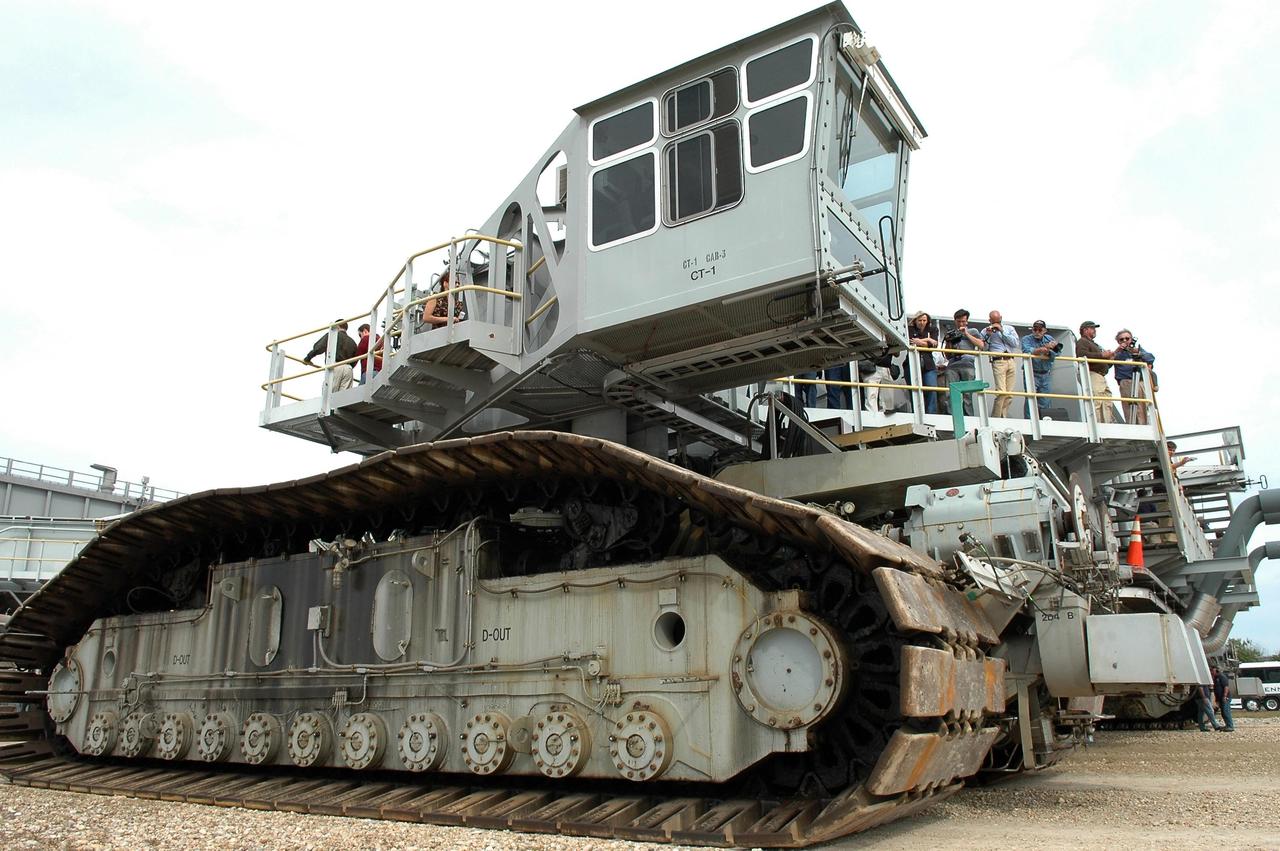
KENNEDY SPACE CENTER, FLA. - On the occasion of the 40th anniversary of the crawler transporter used for moving space shuttles to the NASA Kennedy Space Center’s launch pads, media get a rare opportunity to ride on and photograph one of the crawlers up close. Media representatives and invited guests had the opportunity to tour one of NASA's two crawlers. This included the driver cab and engine room. Guests included current drivers and operators, as well as drivers from the Apollo Program. In January 1966, the crawler completed its first successful move with a 10.6-million-pound launch umbilical tower. It moved three-quarters of a mile in about nine hours. Throughout 40 years of service, the two crawlers have moved more than 3,500 miles and carried seven vehicles.
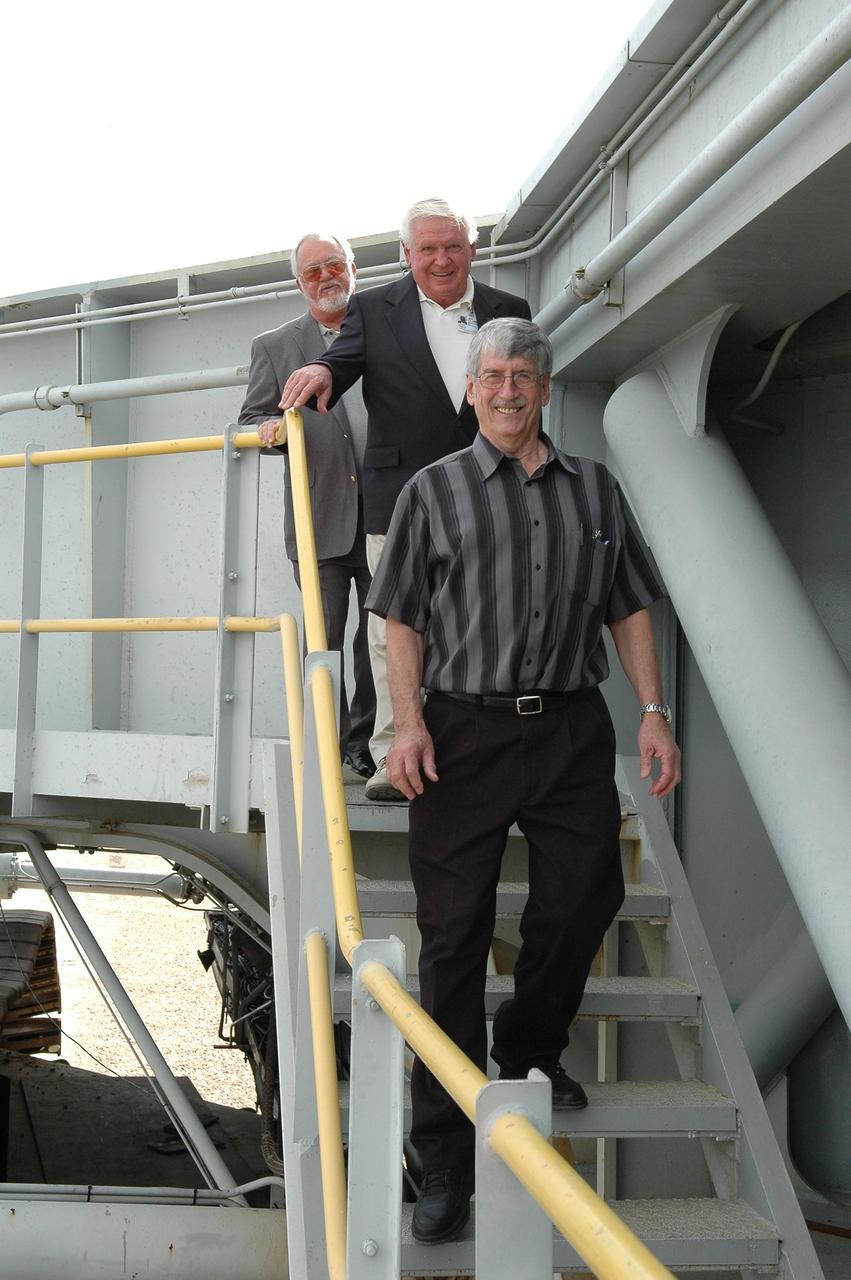
KENNEDY SPACE CENTER, FLA. - On the occasion of the 40th anniversary of the crawler transporter used for moving space shuttles to the NASA Kennedy Space Center’s launch pads, three former crawler workers tour one of the crawlers still in use. From the top are Sylvan “Skip” Montagna, Fred Renaud and Fred Wallace. Media representatives and invited guests had the opportunity to tour one of NASA's two crawlers. This included the driver cab and engine room. Guests included current drivers and operators, as well as drivers from the Apollo Program. In January 1966, the crawler completed its first successful move with a 10.6-million-pound launch umbilical tower. It moved three-quarters of a mile in about nine hours. Throughout 40 years of service, the two crawlers have moved more than 3,500 miles and carried seven vehicles.
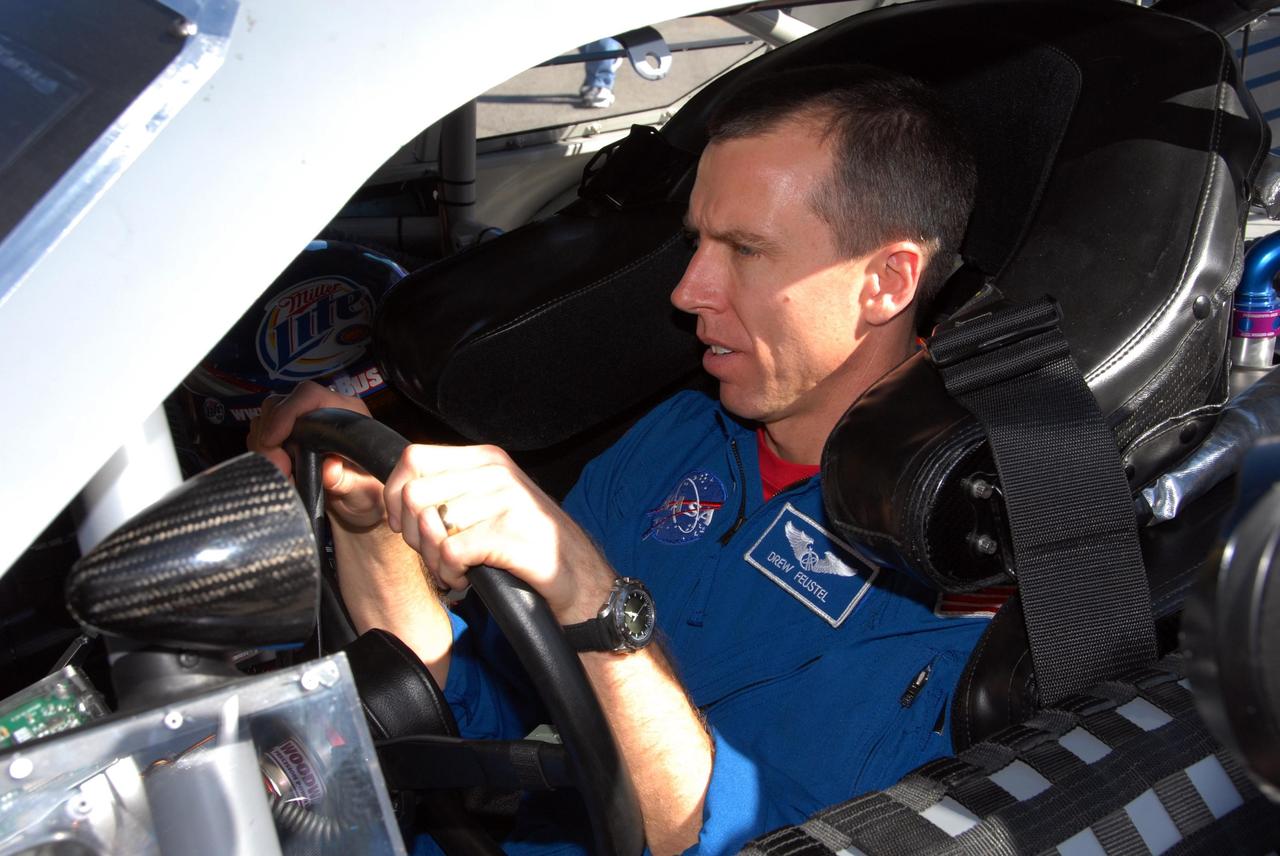
KENNEDY SPACE CENTER, FLA. -- Astronaut Andrew Feustel gets adjusted to the driver's seat in an official track vehicle at Daytona International Speedway. Feustel is participating in NASCAR's Preseason Thunder Fan Fest at the speedway and will ride around the track, taking "hot laps" in the car. Feustel's appearance celebrates NASA's 50th anniversary and the speedway's 50th running of the Daytona 500 in February. Besides the driving experience, Feuster will meet with fans and the media. The NASA/NASCAR association spans decades. Technology developed for the space program has helped NASCAR drivers increase their performance and stay safe over the years. They wear cooling suits similar to what astronauts wear during a spacewalk. Foam that NASA developed for aircraft seats protects racecar drivers' necks in crashes. In addition to participating in the fan festival, NASA will fly three Daytona 500 flags aboard an upcoming space shuttle flight. Speedway officials plan to wave one of the flags to begin the 2008 installment of the Daytona 500, while another will be presented to the winning driver. NASA will keep the third. Feustel will fly on the space shuttle mission STS-125 to the Hubble Space Telescope. The mission will extend and improve the observatory's capabilities through 2013. Launch is targeted for August 2008. Photo credit: NASA/George Shelton

KENNEDY SPACE CENTER, FLA. -- Astronaut Andrew Feustel (right) thanks NASCAR driver Kurt Busch (center) for his views about his pending "hot laps" in an official track vehicle around the Daytona International Speedway. Feustel is participating in NASCAR's Preseason Thunder Fan Fest at. Feustel's appearance celebrates NASA's 50th anniversary and the speedway's 50th running of the Daytona 500 in February. Besides the driving experience, Feuster will meet with fans and the media. The NASA/NASCAR association spans decades. Technology developed for the space program has helped NASCAR drivers increase their performance and stay safe over the years. They wear cooling suits similar to what astronauts wear during a spacewalk. Foam that NASA developed for aircraft seats protects racecar drivers' necks in crashes. In addition to participating in the fan festival, NASA will fly three Daytona 500 flags aboard an upcoming space shuttle flight. Speedway officials plan to wave one of the flags to begin the 2008 installment of the Daytona 500, while another will be presented to the winning driver. NASA will keep the third. Feustel will fly on the space shuttle mission STS-125 to the Hubble Space Telescope. The mission will extend and improve the observatory's capabilities through 2013. Launch is targeted for August 2008. Photo credit: NASA/George Shelton
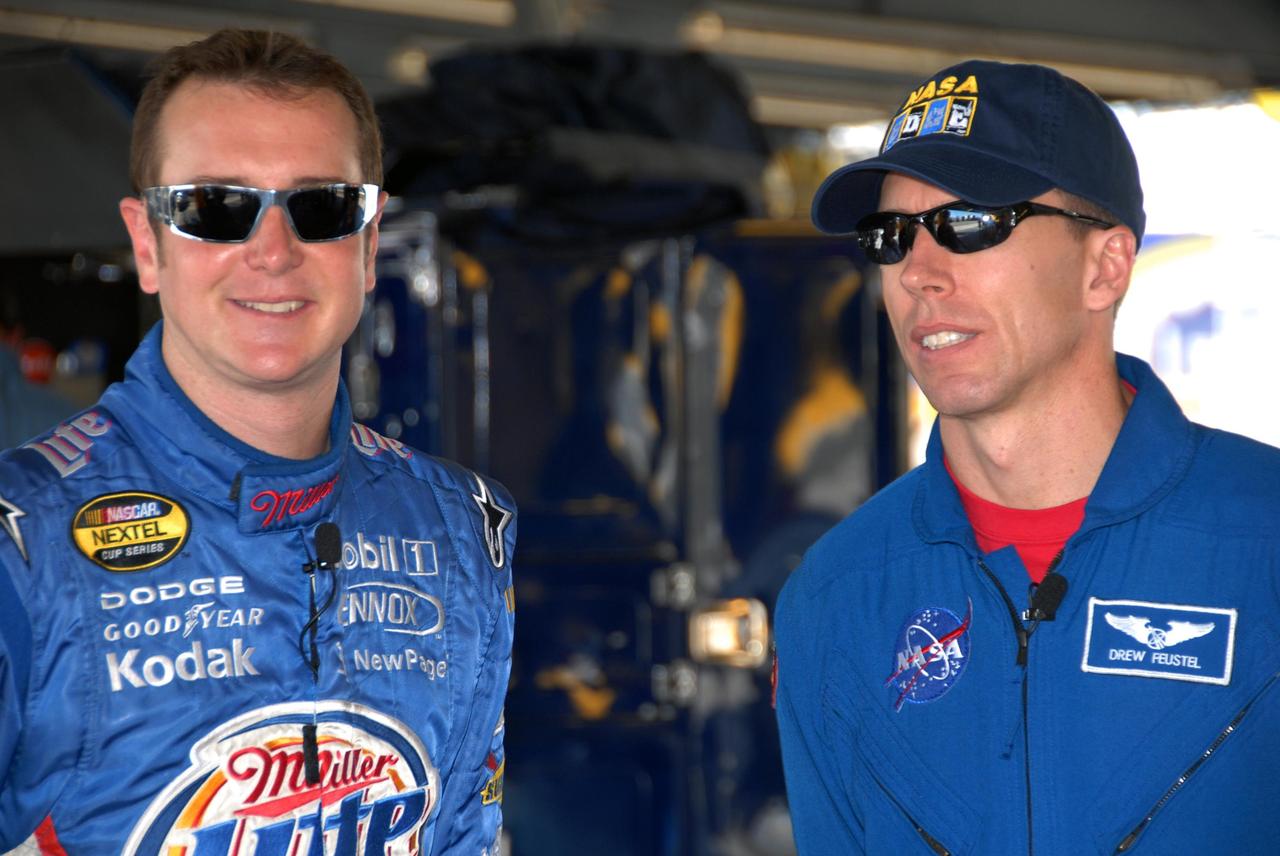
KENNEDY SPACE CENTER, FLA. -- Astronaut Andrew Feustel (right) is ready to participate in NASCAR's Preseason Thunder Fan Fest at Daytona International Speedway. At left is NASCAR driver Kurt Busch. Feustel's appearance celebrates NASA's 50th anniversary and the speedway's 50th running of the Daytona 500 in February. Besides meeting with fans and media, Feustel will ride around the track, taking "hot laps," in an official track vehicle. The NASA/NASCAR association spans decades. Technology developed for the space program has helped NASCAR drivers increase their performance and stay safe over the years. They wear cooling suits similar to what astronauts wear during a spacewalk. Foam that NASA developed for aircraft seats protects racecar drivers' necks in crashes. In addition to participating in the fan festival, NASA will fly three Daytona 500 flags aboard an upcoming space shuttle flight. Speedway officials plan to wave one of the flags to begin the 2008 installment of the Daytona 500, while another will be presented to the winning driver. NASA will keep the third. Feustel will fly on the space shuttle mission STS-125 to the Hubble Space Telescope. The mission will extend and improve the observatory's capabilities through 2013. Launch is targeted for August 2008. Photo credit: NASA/George Shelton
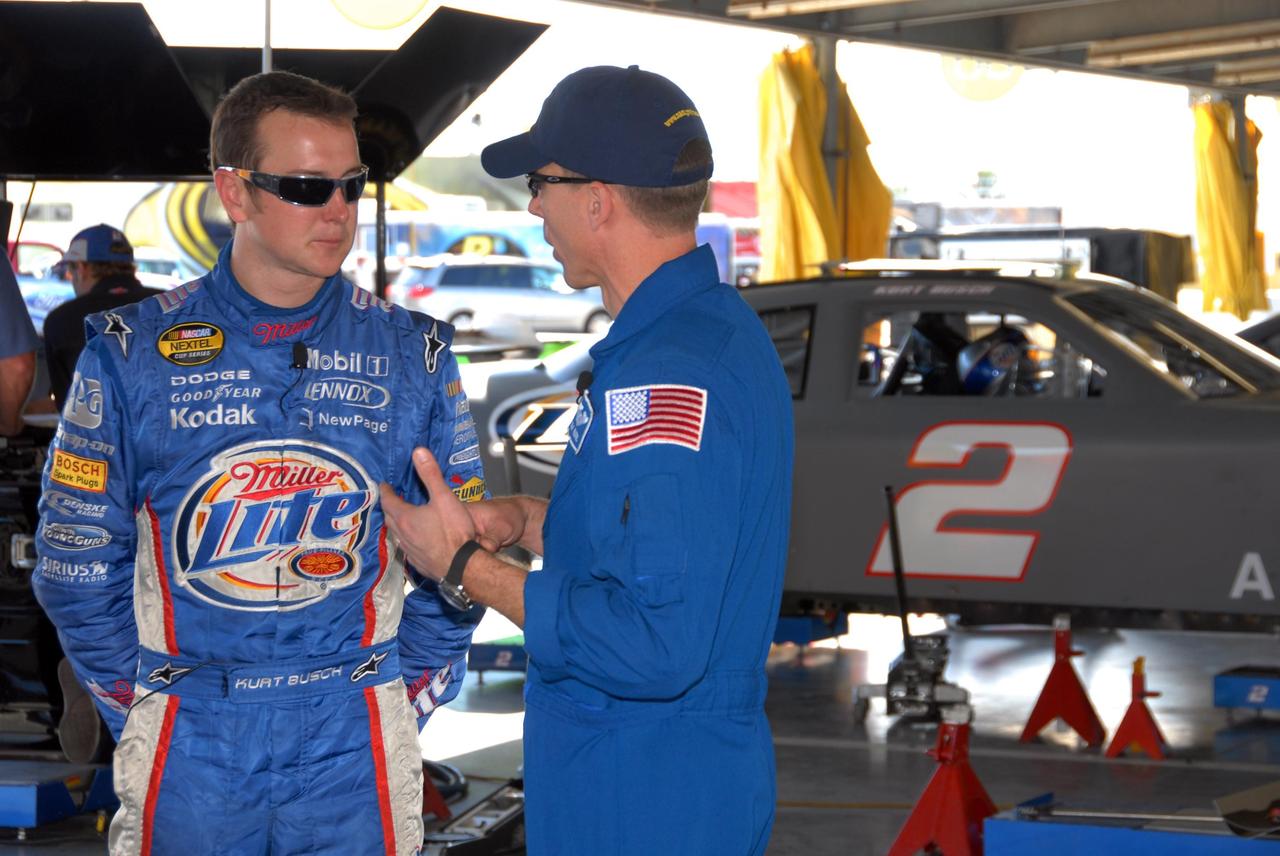
KENNEDY SPACE CENTER, FLA. -- Astronaut Andrew Feustel (right) talks to NASCAR driver Kurt Busch about his pending "hot laps" in an official track vehicle around the Daytona International Speedway. Feustel is participating in NASCAR's Preseason Thunder Fan Fest at. Feustel's appearance celebrates NASA's 50th anniversary and the speedway's 50th running of the Daytona 500 in February. Besides the driving experience, Feuster will meet with fans and the media. The NASA/NASCAR association spans decades. Technology developed for the space program has helped NASCAR drivers increase their performance and stay safe over the years. They wear cooling suits similar to what astronauts wear during a spacewalk. Foam that NASA developed for aircraft seats protects racecar drivers' necks in crashes. In addition to participating in the fan festival, NASA will fly three Daytona 500 flags aboard an upcoming space shuttle flight. Speedway officials plan to wave one of the flags to begin the 2008 installment of the Daytona 500, while another will be presented to the winning driver. NASA will keep the third. Feustel will fly on the space shuttle mission STS-125 to the Hubble Space Telescope. The mission will extend and improve the observatory's capabilities through 2013. Launch is targeted for August 2008. Photo credit: NASA/George Shelton
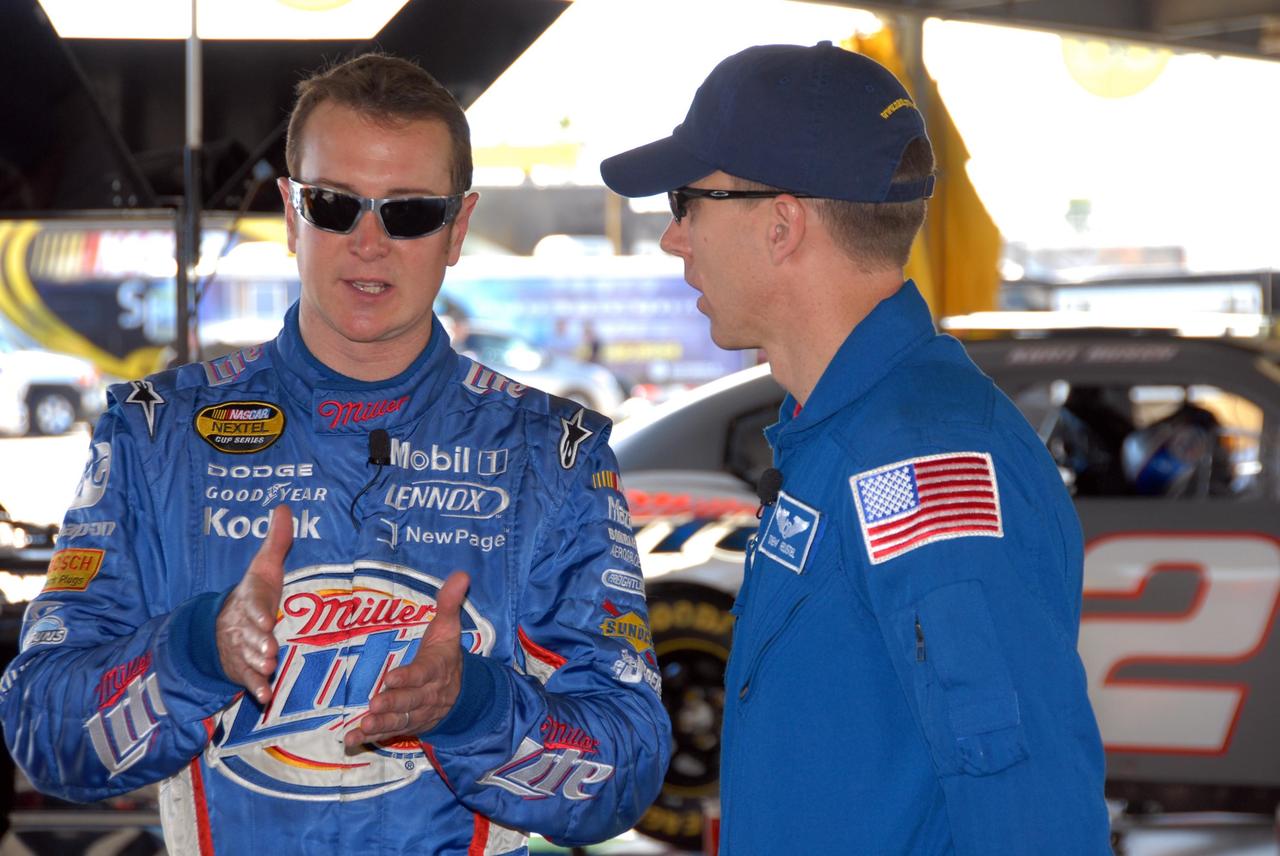
KENNEDY SPACE CENTER, FLA. -- NASCAR driver Kurt Busch (left) talks to astronaut Andrew Feustel about driving. Feustel is participating in NASCAR's Preseason Thunder Fan Fest at Daytona International Speedway. Feustel's appearance celebrates NASA's 50th anniversary and the speedway's 50th running of the Daytona 500 in February. Besides meeting with fans and media, Feustel will ride around the track, taking "hot laps," in an official track vehicle. The NASA/NASCAR association spans decades. Technology developed for the space program has helped NASCAR drivers increase their performance and stay safe over the years. They wear cooling suits similar to what astronauts wear during a spacewalk. Foam that NASA developed for aircraft seats protects racecar drivers' necks in crashes. In addition to participating in the fan festival, NASA will fly three Daytona 500 flags aboard an upcoming space shuttle flight. Speedway officials plan to wave one of the flags to begin the 2008 installment of the Daytona 500, while another will be presented to the winning driver. NASA will keep the third. Feustel will fly on the space shuttle mission STS-125 to the Hubble Space Telescope. The mission will extend and improve the observatory's capabilities through 2013. Launch is targeted for August 2008. Photo credit: NASA/George Shelton
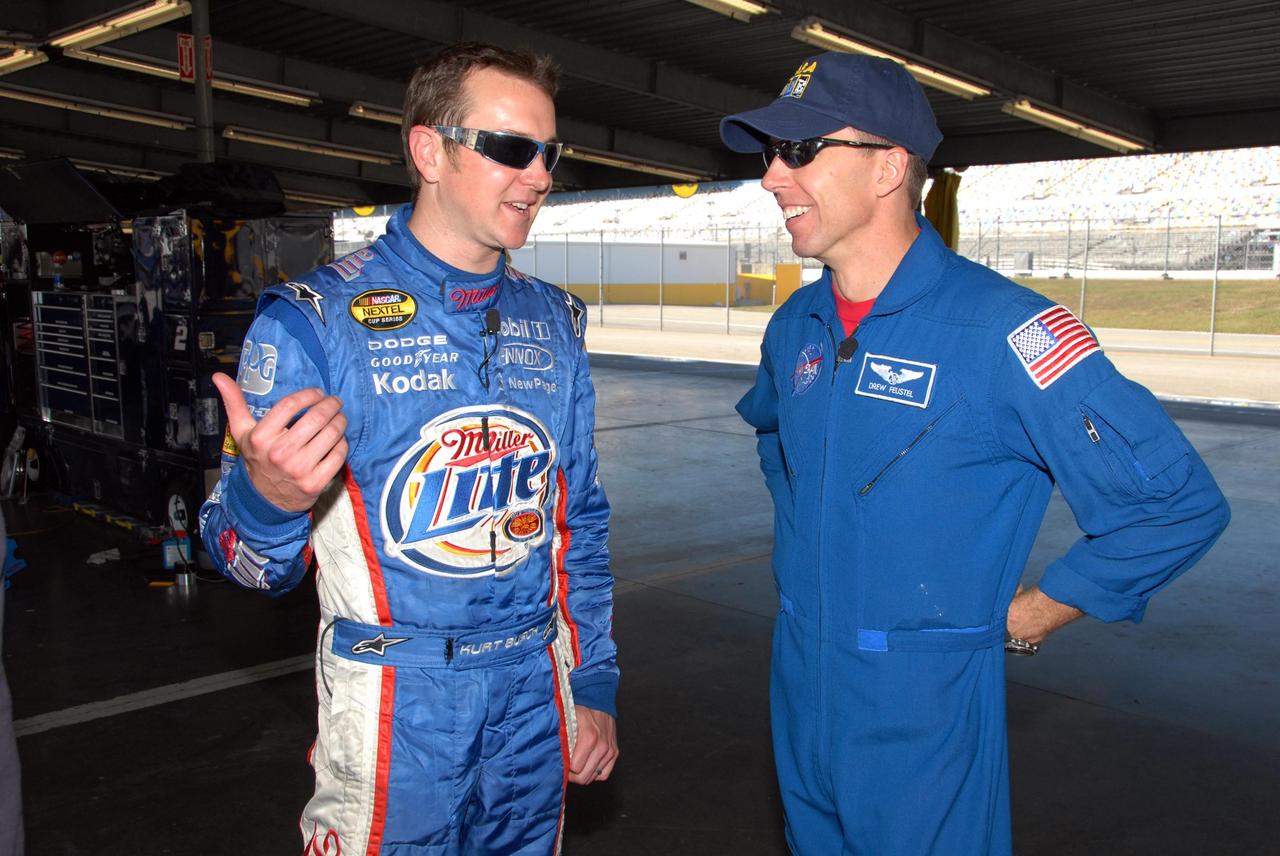
KENNEDY SPACE CENTER, FLA. -- NASCAR driver Kurt Busch (left) talks to astronaut Andrew Feustel about driving. Feustel is participating in NASCAR's Preseason Thunder Fan Fest at Daytona International Speedway. Feustel's appearance celebrates NASA's 50th anniversary and the speedway's 50th running of the Daytona 500 in February. Besides meeting with fans and media, Feustel will ride around the track, taking "hot laps," in an official track vehicle. The NASA/NASCAR association spans decades. Technology developed for the space program has helped NASCAR drivers increase their performance and stay safe over the years. They wear cooling suits similar to what astronauts wear during a spacewalk. Foam that NASA developed for aircraft seats protects racecar drivers' necks in crashes. In addition to participating in the fan festival, NASA will fly three Daytona 500 flags aboard an upcoming space shuttle flight. Speedway officials plan to wave one of the flags to begin the 2008 installment of the Daytona 500, while another will be presented to the winning driver. NASA will keep the third. Feustel will fly on the space shuttle mission STS-125 to the Hubble Space Telescope. The mission will extend and improve the observatory's capabilities through 2013. Launch is targeted for August 2008. Photo credit: NASA/George Shelton
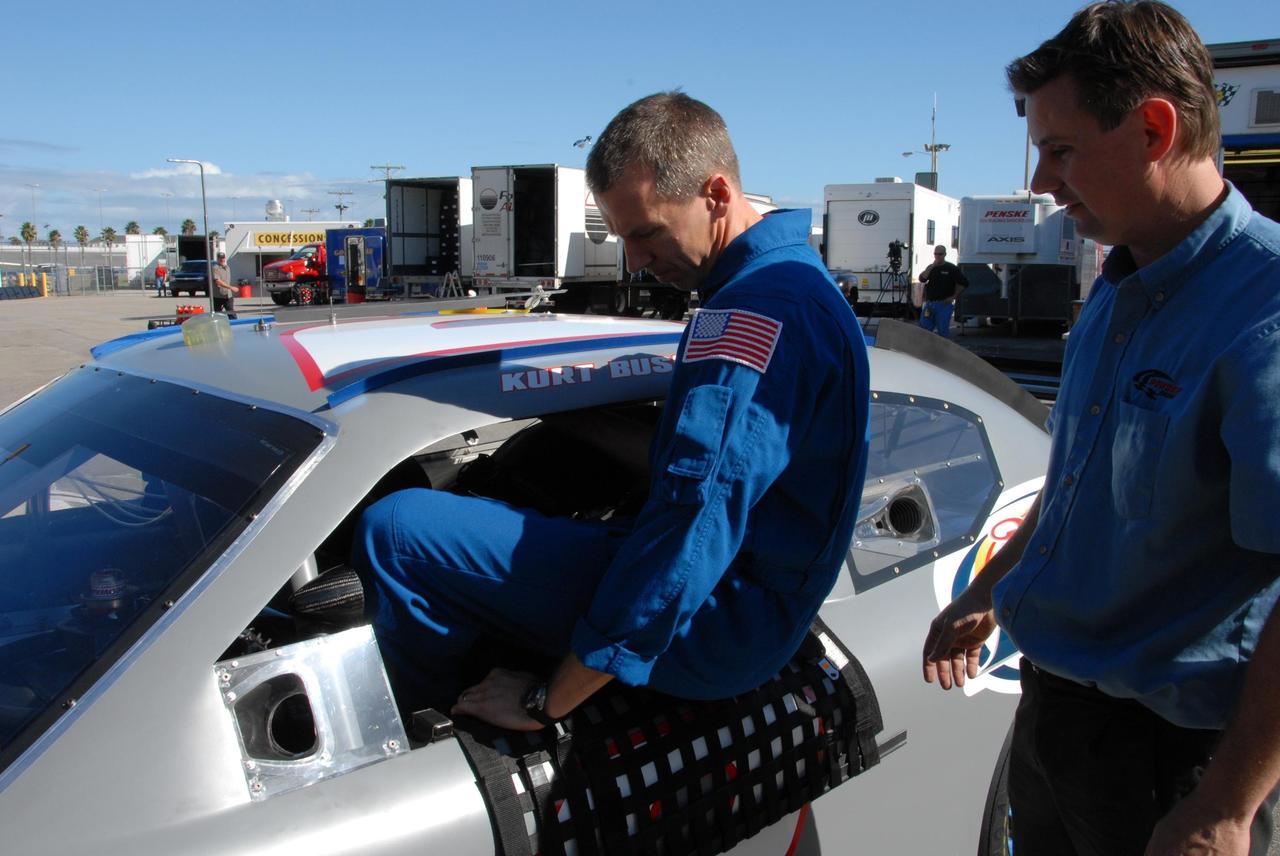
KENNEDY SPACE CENTER, FLA. -- Astronaut Andrew Feustel climbs into the driver's seat of an official track vehicle at Daytona International Speedway. Feustel is participating in NASCAR's Preseason Thunder Fan Fest at the speedway and will ride around the track, taking "hot laps" in the car. Feustel's appearance celebrates NASA's 50th anniversary and the speedway's 50th running of the Daytona 500 in February. Besides the driving experience, Feuster will meet with fans and the media. The NASA/NASCAR association spans decades. Technology developed for the space program has helped NASCAR drivers increase their performance and stay safe over the years. They wear cooling suits similar to what astronauts wear during a spacewalk. Foam that NASA developed for aircraft seats protects racecar drivers' necks in crashes. In addition to participating in the fan festival, NASA will fly three Daytona 500 flags aboard an upcoming space shuttle flight. Speedway officials plan to wave one of the flags to begin the 2008 installment of the Daytona 500, while another will be presented to the winning driver. NASA will keep the third. Feustel will fly on the space shuttle mission STS-125 to the Hubble Space Telescope. The mission will extend and improve the observatory's capabilities through 2013. Launch is targeted for August 2008. Photo credit: NASA/George Shelton
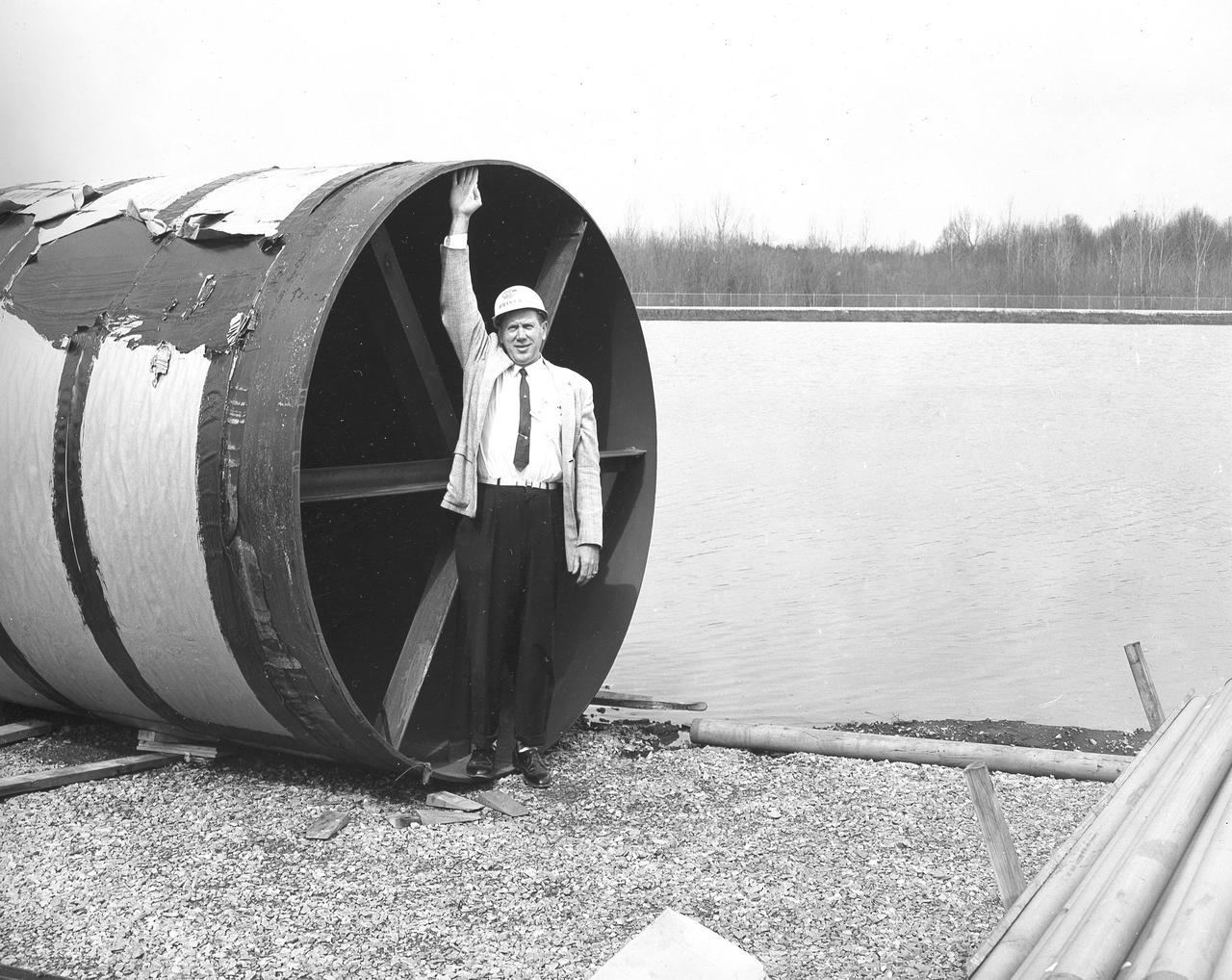
At its founding, the Marshall Space Flight Center (MSFC) inherited the Army’s Jupiter and Redstone test stands, but much larger facilities were needed for the giant stages of the Saturn V. From 1960 to 1964, the existing stands were remodeled and a sizable new test area was developed. The new comprehensive test complex for propulsion and structural dynamics was unique within the nation and the free world, and they remain so today because they were constructed with foresight to meet the future as well as on going needs. Construction of the S-IC Static test stand complex began in 1961 in the west test area of MSFC, and was completed in 1964. The S-IC static test stand was designed to develop and test the 138-ft long and 33-ft diameter Saturn V S-IC first stage, or booster stage, weighing in at 280,000 pounds. Required to hold down the brute force of a 7,500,000-pound thrust produced by 5 F-1 engines, the S-IC static test stand was designed and constructed with the strength of hundreds of tons of steel and 12,000,000 pounds of cement, planted down to bedrock 40 feet below ground level. The foundation walls, constructed with concrete and steel, are 4 feet thick. The base structure consists of four towers with 40-foot-thick walls extending upward 144 feet above ground level. The structure was topped by a crane with a 135-foot boom. With the boom in the upright position, the stand was given an overall height of 405 feet, placing it among the highest structures in Alabama at the time. In addition to the stand itself, related facilities were constructed during this time. Built directly east of the test stand was the Block House, which served as the control center for the test stand. The two were connected by a narrow access tunnel which housed the cables for the controls. Again to the east, just south of the Block House, was a newly constructed Pump House. Its function was to provide water to the stand to prevent melting damage during testing. The water was sprayed through small holes in the stand’s 1900 ton water deflector at the rate of 320,000 gallons per minute. In this photo, NASA employee Orville Driver is demonstrating the size of the 8 foot diameter water lines used for this purpose.
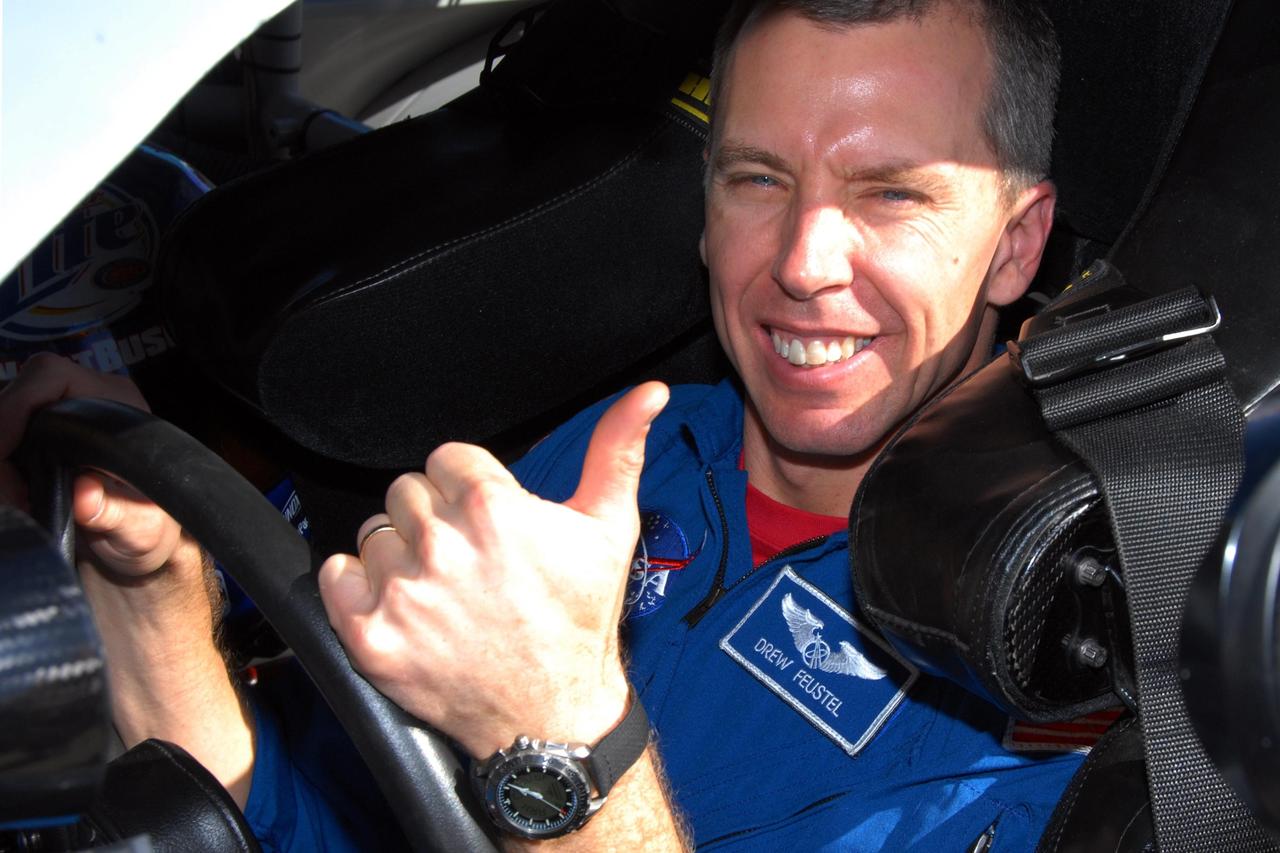
KENNEDY SPACE CENTER, FLA. -- Astronaut Andrew Feustel is ready for his ride in an official track vehicle at Daytona International Speedway. Feustel is participating in NASCAR's Preseason Thunder Fan Fest at the speedway and will ride around the track, taking "hot laps" in the car. Feustel's appearance celebrates NASA's 50th anniversary and the speedway's 50th running of the Daytona 500 in February. Besides the driving experience, Feuster will meet with fans and the media. The NASA/NASCAR association spans decades. Technology developed for the space program has helped NASCAR drivers increase their performance and stay safe over the years. They wear cooling suits similar to what astronauts wear during a spacewalk. Foam that NASA developed for aircraft seats protects racecar drivers' necks in crashes. In addition to participating in the fan festival, NASA will fly three Daytona 500 flags aboard an upcoming space shuttle flight. Speedway officials plan to wave one of the flags to begin the 2008 installment of the Daytona 500, while another will be presented to the winning driver. NASA will keep the third. Feustel will fly on the space shuttle mission STS-125 to the Hubble Space Telescope. The mission will extend and improve the observatory's capabilities through 2013. Launch is targeted for August 2008. Photo credit: NASA/George Shelton
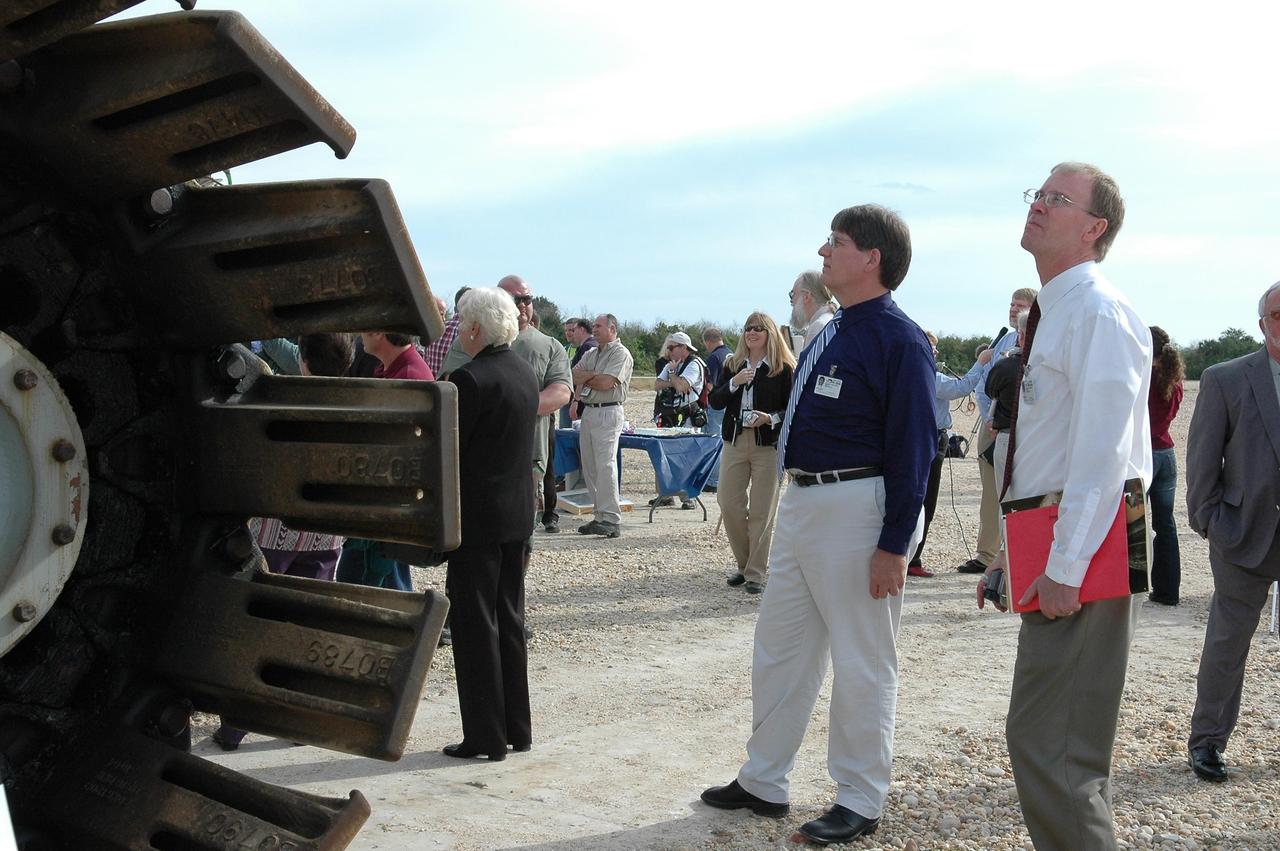
KENNEDY SPACE CENTER, FLA. - On the occasion of the 40th anniversary of the crawler transporter used for moving space shuttles to the NASA Kennedy Space Center’s launch pads, Rick Drollinger (center) and John Koehring get a close look at one of the crawlers still in use. Drollinger’s father, Richard, was director of engineering at Marion Power Shovel Co. in Ohio where the crawlers were initially built in 1965. Koehring is the son of Philip Koehring Sr., who was project manager at Marion. Media representatives and invited guests had the opportunity to tour one of NASA's two crawlers. This included the driver cab and engine room. Guests included current drivers and operators, as well as drivers from the Apollo Program. In January 1966, the crawler completed its first successful move with a 10.6-million-pound launch umbilical tower. It moved three-quarters of a mile in about nine hours. Throughout 40 years of service, the two crawlers have moved more than 3,500 miles and carried seven vehicles.
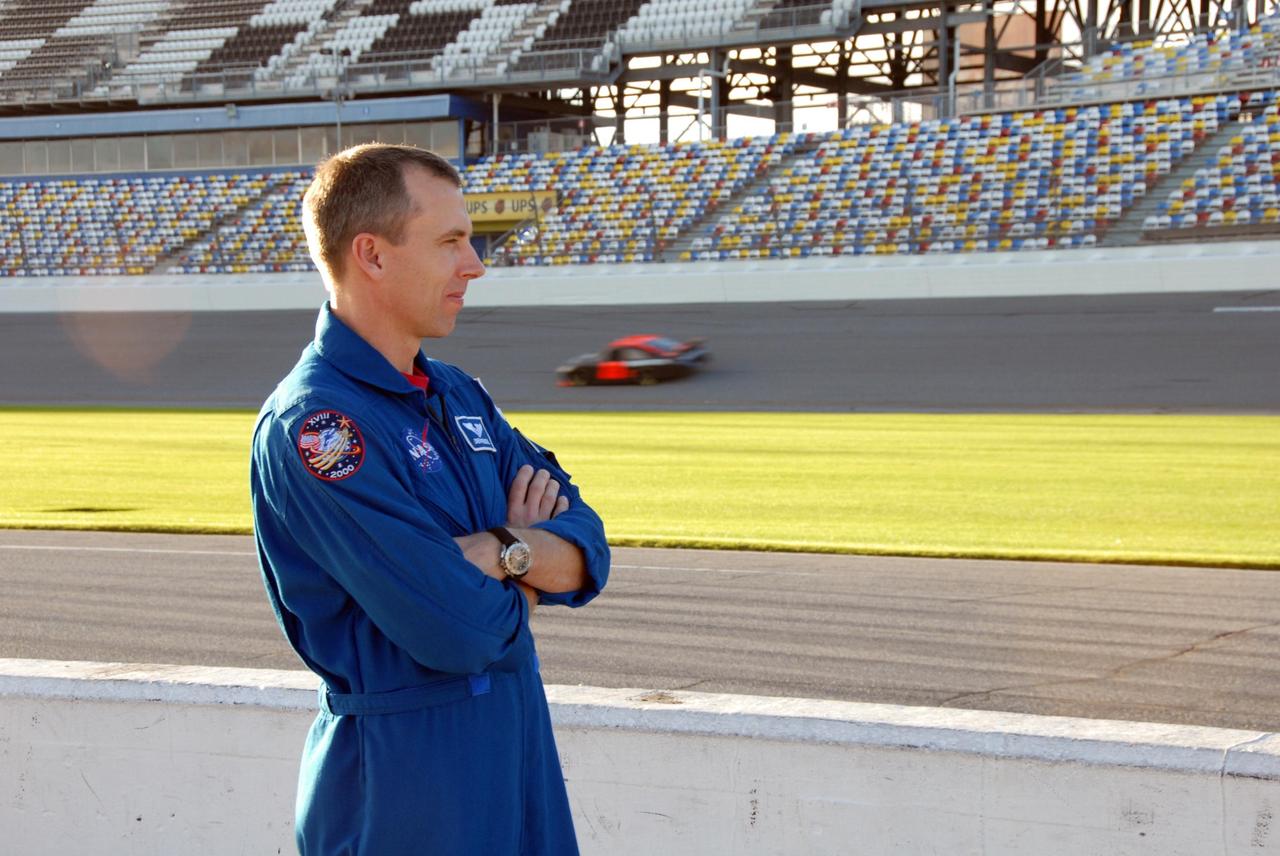
KENNEDY SPACE CENTER, FLA. -- Astronaut Andrew Feustel watches other cars on the Daytona International Speedway. Feustel had his turn at riding around the track, taking "hot laps" in an official track vehicle. Feustel is participating in NASCAR's Preseason Thunder Fan Fest at the speedway, also meeting with fans and the media. Feustel's appearance celebrates NASA's 50th anniversary and the speedway's 50th running of the Daytona 500 in February. The NASA/NASCAR association spans decades. Technology developed for the space program has helped NASCAR drivers increase their performance and stay safe over the years. They wear cooling suits similar to what astronauts wear during a spacewalk. Foam that NASA developed for aircraft seats protects racecar drivers' necks in crashes. In addition to participating in the fan festival, NASA will fly three Daytona 500 flags aboard an upcoming space shuttle flight. Speedway officials plan to wave one of the flags to begin the 2008 installment of the Daytona 500, while another will be presented to the winning driver. NASA will keep the third. Feustel will fly on the space shuttle mission STS-125 to the Hubble Space Telescope. The mission will extend and improve the observatory's capabilities through 2013. Launch is targeted for August 2008. Photo credit: NASA/George Shelton
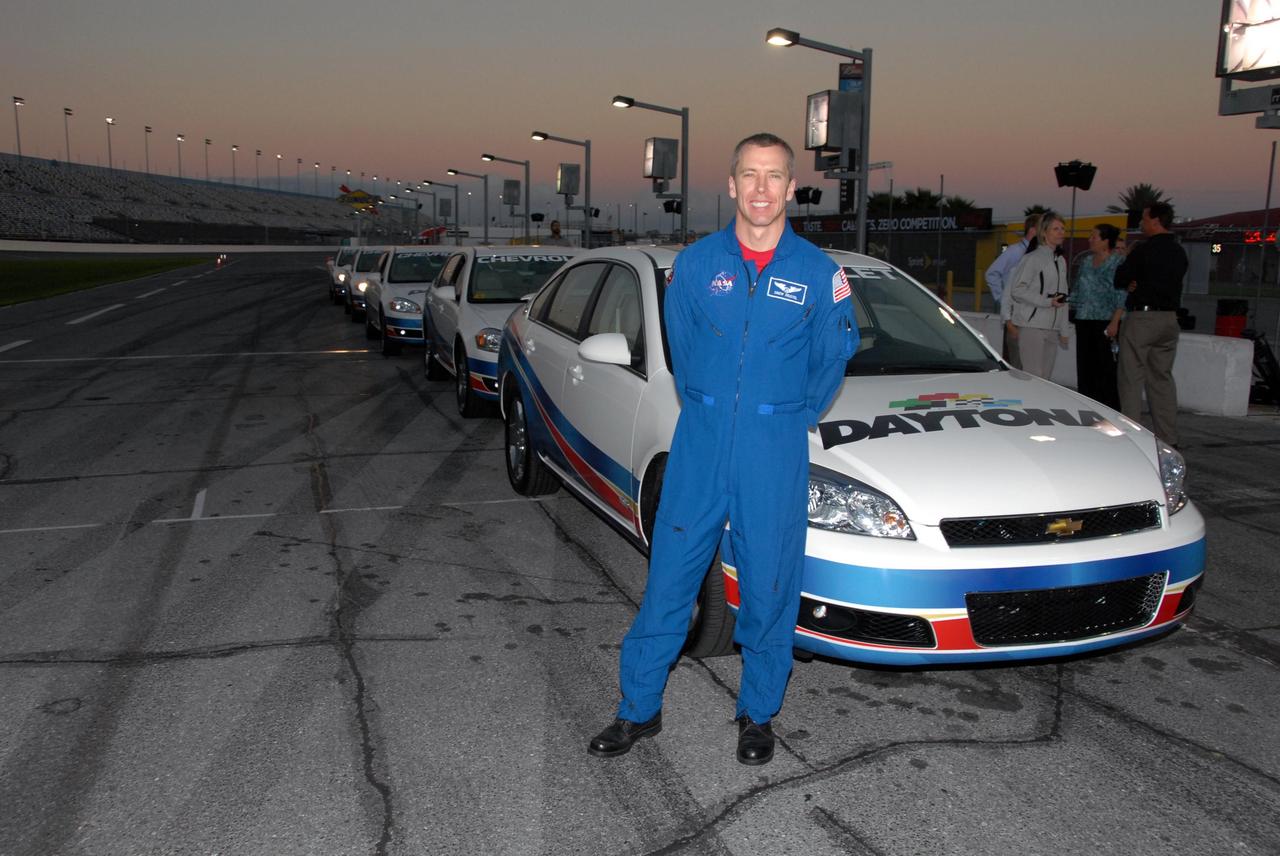
KENNEDY SPACE CENTER, FLA. -- Astronaut Andrew Feustel poses with track vehicles during NASCAR's Preseason Thunder Fan Fest at the Daytona International Speedway. Feustel's appearance celebrates NASA's 50th anniversary and the speedway's 50th running of the Daytona 500 in February. The NASA/NASCAR association spans decades. Technology developed for the space program has helped NASCAR drivers increase their performance and stay safe over the years. They wear cooling suits similar to what astronauts wear during a spacewalk. Foam that NASA developed for aircraft seats protects racecar drivers' necks in crashes. In addition to participating in the fan festival, NASA will fly three Daytona 500 flags aboard an upcoming space shuttle flight. Speedway officials plan to wave one of the flags to begin the 2008 installment of the Daytona 500, while another will be presented to the winning driver. NASA will keep the third. Feustel will fly on the space shuttle mission STS-125 to the Hubble Space Telescope. The mission will extend and improve the observatory's capabilities through 2013. Launch is targeted for August 2008. Photo credit: NASA/George Shelton
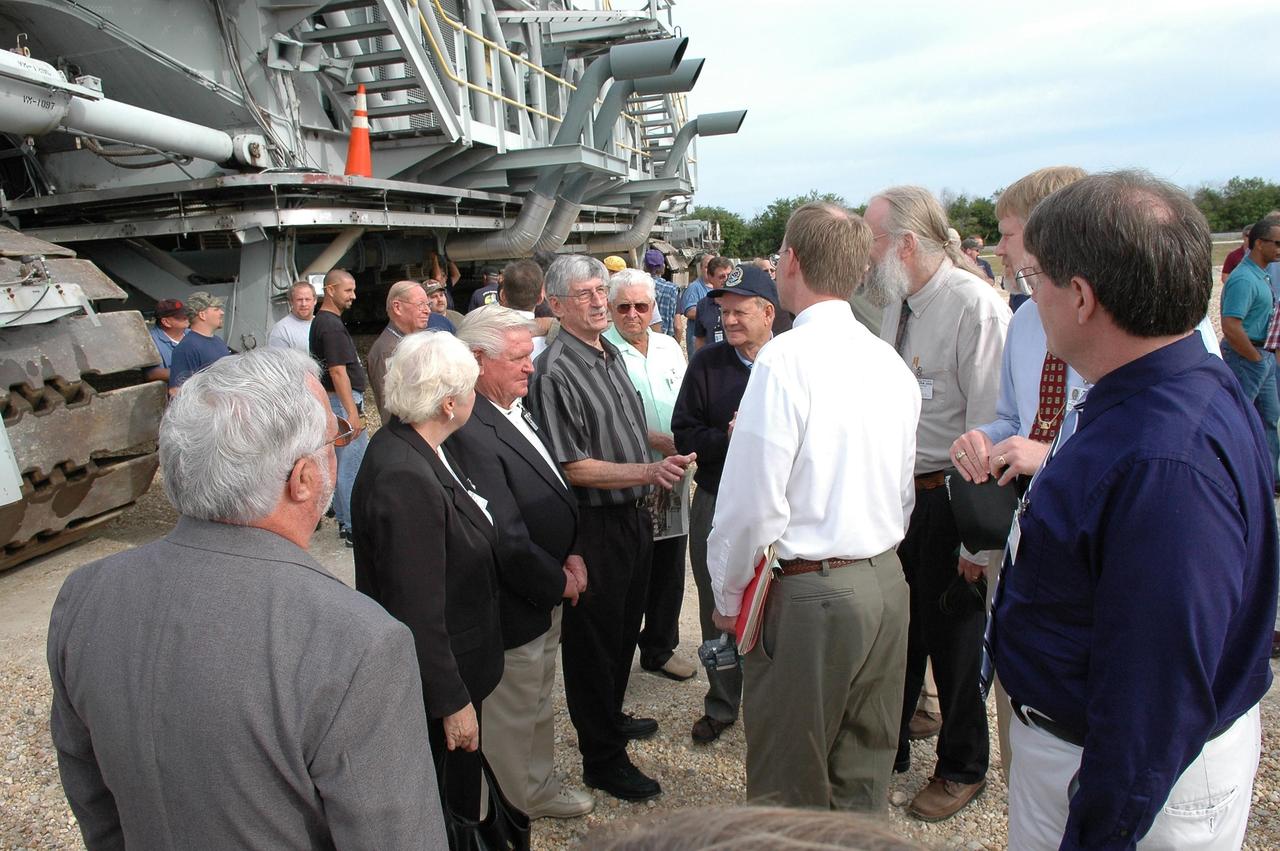
KENNEDY SPACE CENTER, FLA. - On the occasion of the 40th anniversary of the crawler transporter used for moving space shuttles to the NASA Kennedy Space Center’s launch pads, invited guests mingle in front of one of the crawlers still in use. From left are Sylvan “Skip” Montagna, Patricia and Fred Renaud, Fred Wallace and Bill Clemens. Philip Koehring and his brothers Doug(white shirt) and John (light blue shirt) and Rick Drollinger are on the right. Philip Koehring Sr. was project manager at the Marion Power Shovel Co. in Ohio where the crawlers were initially built in 1965. Drollinger’s father, Richard, was director of engineering at Marion. Media representatives and invited guests had the opportunity to tour one of NASA's two crawlers. This included the driver cab and engine room. Guests included current drivers and operators, as well as drivers from the Apollo Program. In January 1966, the crawler completed its first successful move with a 10.6-million-pound launch umbilical tower. It moved three-quarters of a mile in about nine hours. Throughout 40 years of service, the two crawlers have moved more than 3,500 miles and carried seven vehicles.

KENNEDY SPACE CENTER, FLA. - On the occasion of the 40th anniversary of the crawler transporter used for moving space shuttles to the NASA Kennedy Space Center’s launch pads, former crawler engineer Bill Clemens talks to the media and invited guests (behind him) Rick Drollinger (blue shirt), whose father Richard was director of engineering at Marion Power Shovel Co. in Ohio where the crawlers were initially built in 1965; Philip Koehring Jr. (on right), whose father was project manager at Marion; and Koehring’s sons Doug and John. Media representatives and invited guests had the opportunity to tour one of NASA's two crawlers. This included the driver cab and engine room. Guests included current drivers and operators, as well as drivers from the Apollo Program. In January 1966, the crawler completed its first successful move with a 10.6-million-pound launch umbilical tower. It moved three-quarters of a mile in about nine hours. Throughout 40 years of service, the two crawlers have moved more than 3,500 miles and carried seven vehicles.
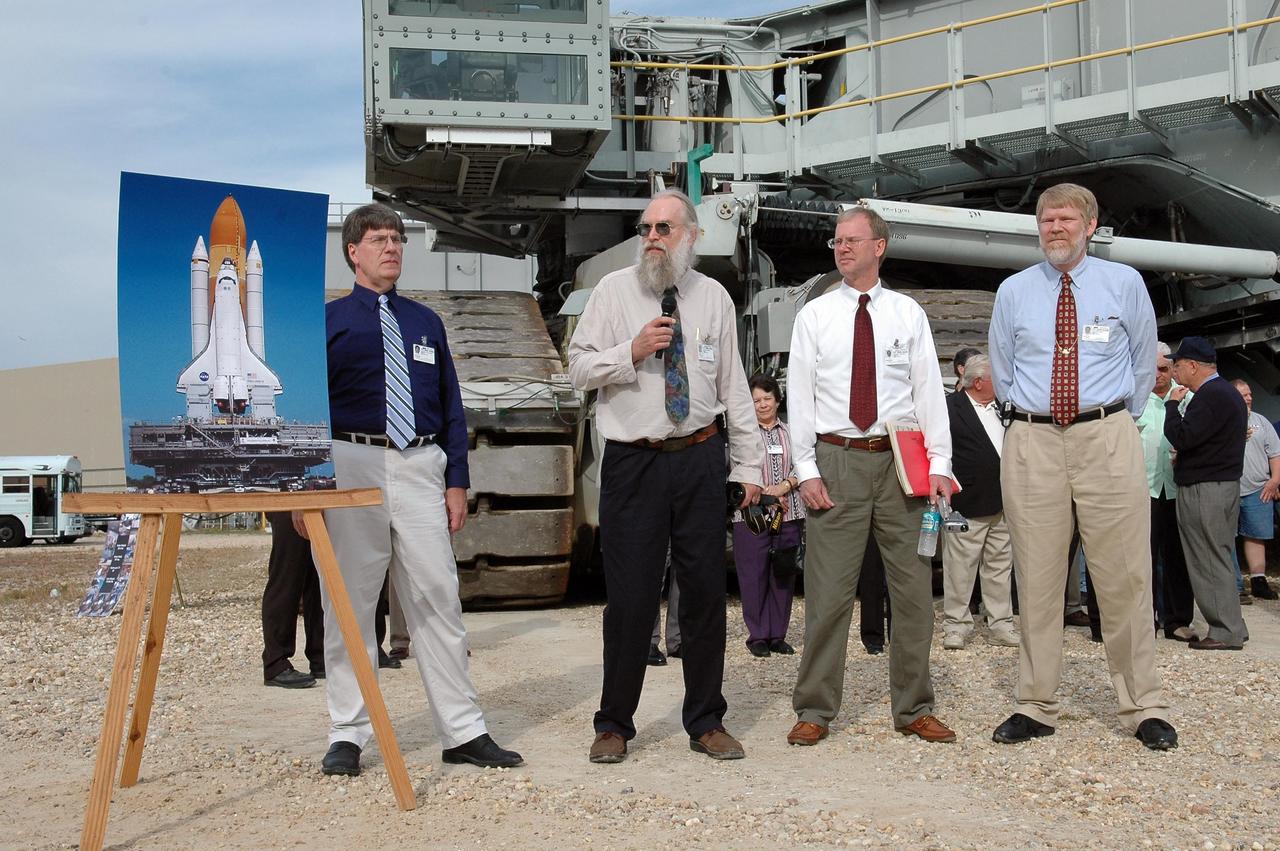
KENNEDY SPACE CENTER, FLA. - Standing in front of one of NASA Kennedy Space Center’s crawler transporters are Rick Drollinger (left) and Phllip Koehring Jr., who both represent their fathers for their roles in the development of the crawlers. The occasion was the 40th anniversary of the crawlers. Drollinger’s father, Richard, was director of engineering at Marion Power Shovel Co. in Ohio where the crawlers were initially built in 1965. Koehring’s father, Philip Sr., was project manager at Marion. Alongside Koehring are his brothers Doug and John. Media representatives and invited guests had the opportunity to tour one of NASA's two crawlers. This included the driver cab and engine room. Guests included current drivers and operators, as well as drivers from the Apollo Program. In January 1966, the crawler completed its first successful move with a 10.6-million-pound launch umbilical tower. It moved three-quarters of a mile in about nine hours. Throughout 40 years of service, the two crawlers have moved more than 3,500 miles and carried seven vehicles.
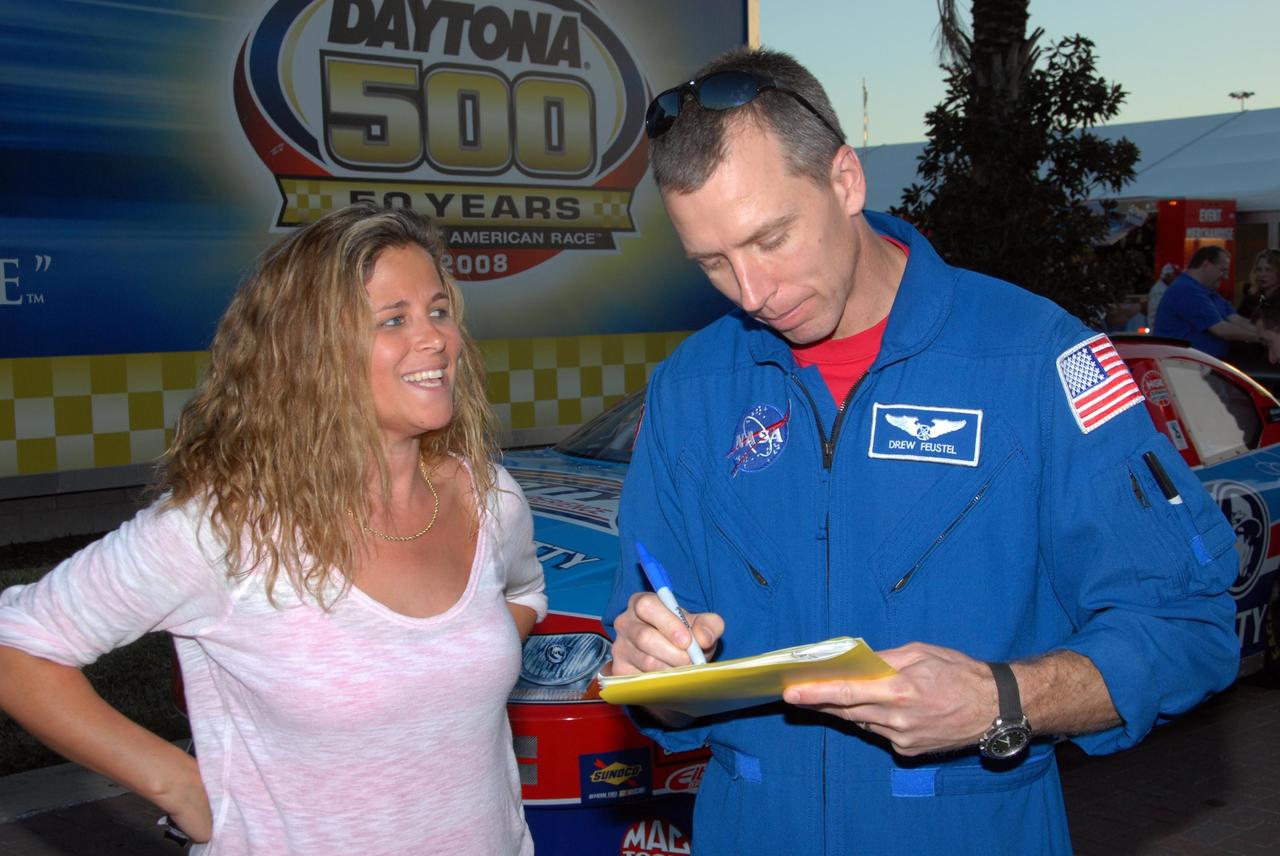
KENNEDY SPACE CENTER, FLA. -- Astronaut Andrew Feustel gives an autograph to a fan during NASCAR's Preseason Thunder Fan Fest at the Daytona International Speedway. Feustel's appearance celebrates NASA's 50th anniversary and the speedway's 50th running of the Daytona 500 in February. The NASA/NASCAR association spans decades. Technology developed for the space program has helped NASCAR drivers increase their performance and stay safe over the years. They wear cooling suits similar to what astronauts wear during a spacewalk. Foam that NASA developed for aircraft seats protects racecar drivers' necks in crashes. In addition to participating in the fan festival, NASA will fly three Daytona 500 flags aboard an upcoming space shuttle flight. Speedway officials plan to wave one of the flags to begin the 2008 installment of the Daytona 500, while another will be presented to the winning driver. NASA will keep the third. Feustel will fly on the space shuttle mission STS-125 to the Hubble Space Telescope. The mission will extend and improve the observatory's capabilities through 2013. Launch is targeted for August 2008. Photo credit: NASA/George Shelton
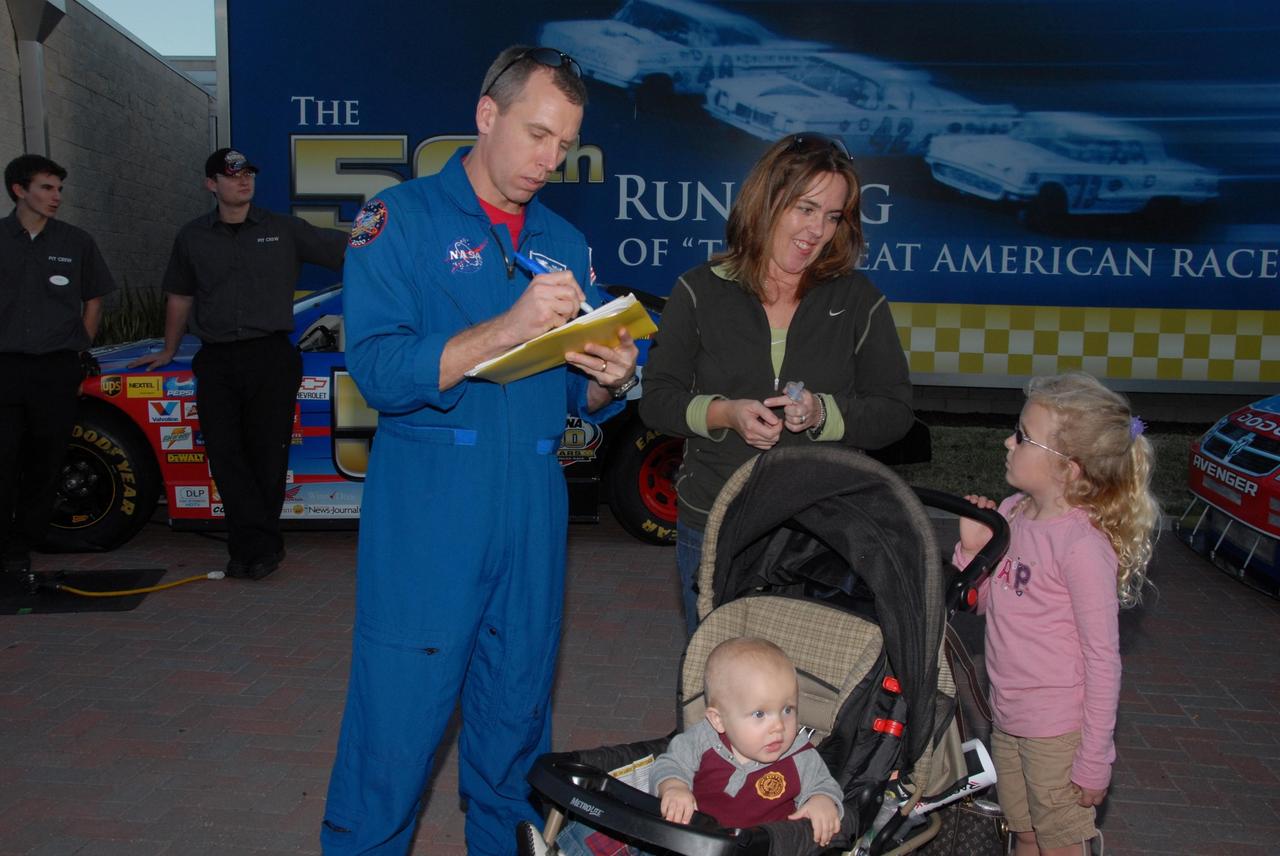
KENNEDY SPACE CENTER, FLA. -- Astronaut Andrew Feustel gives an autograph to a fan during NASCAR's Preseason Thunder Fan Fest at the Daytona International Speedway. Feustel's appearance celebrates NASA's 50th anniversary and the speedway's 50th running of the Daytona 500 in February. The NASA/NASCAR association spans decades. Technology developed for the space program has helped NASCAR drivers increase their performance and stay safe over the years. They wear cooling suits similar to what astronauts wear during a spacewalk. Foam that NASA developed for aircraft seats protects racecar drivers' necks in crashes. In addition to participating in the fan festival, NASA will fly three Daytona 500 flags aboard an upcoming space shuttle flight. Speedway officials plan to wave one of the flags to begin the 2008 installment of the Daytona 500, while another will be presented to the winning driver. NASA will keep the third. Feustel will fly on the space shuttle mission STS-125 to the Hubble Space Telescope. The mission will extend and improve the observatory's capabilities through 2013. Launch is targeted for August 2008. Photo credit: NASA/George Shelton
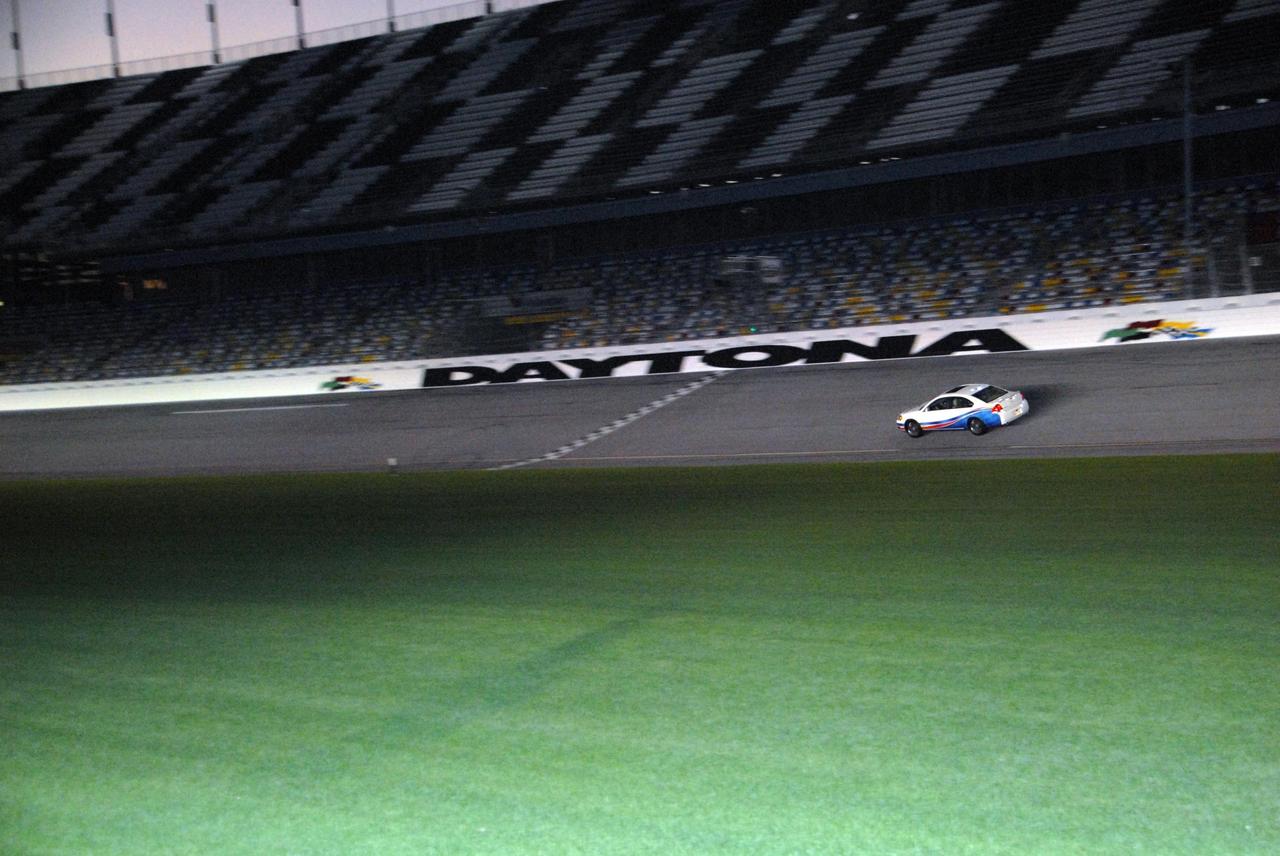
KENNEDY SPACE CENTER, FLA. -- Astronaut Andrew Feustel drives an official track vehicle at Daytona International Speedway. Feustel is participating in NASCAR's Preseason Thunder Fan Fest at the speedway and will ride around the track, taking "hot laps" in the car. Feustel's appearance celebrates NASA's 50th anniversary and the speedway's 50th running of the Daytona 500 in February. Besides the driving experience, Feuster will meet with fans and the media. The NASA/NASCAR association spans decades. Technology developed for the space program has helped NASCAR drivers increase their performance and stay safe over the years. They wear cooling suits similar to what astronauts wear during a spacewalk. Foam that NASA developed for aircraft seats protects racecar drivers' necks in crashes. In addition to participating in the fan festival, NASA will fly three Daytona 500 flags aboard an upcoming space shuttle flight. Speedway officials plan to wave one of the flags to begin the 2008 installment of the Daytona 500, while another will be presented to the winning driver. NASA will keep the third. Feustel will fly on the space shuttle mission STS-125 to the Hubble Space Telescope. The mission will extend and improve the observatory's capabilities through 2013. Launch is targeted for August 2008. Photo credit: NASA/George Shelton
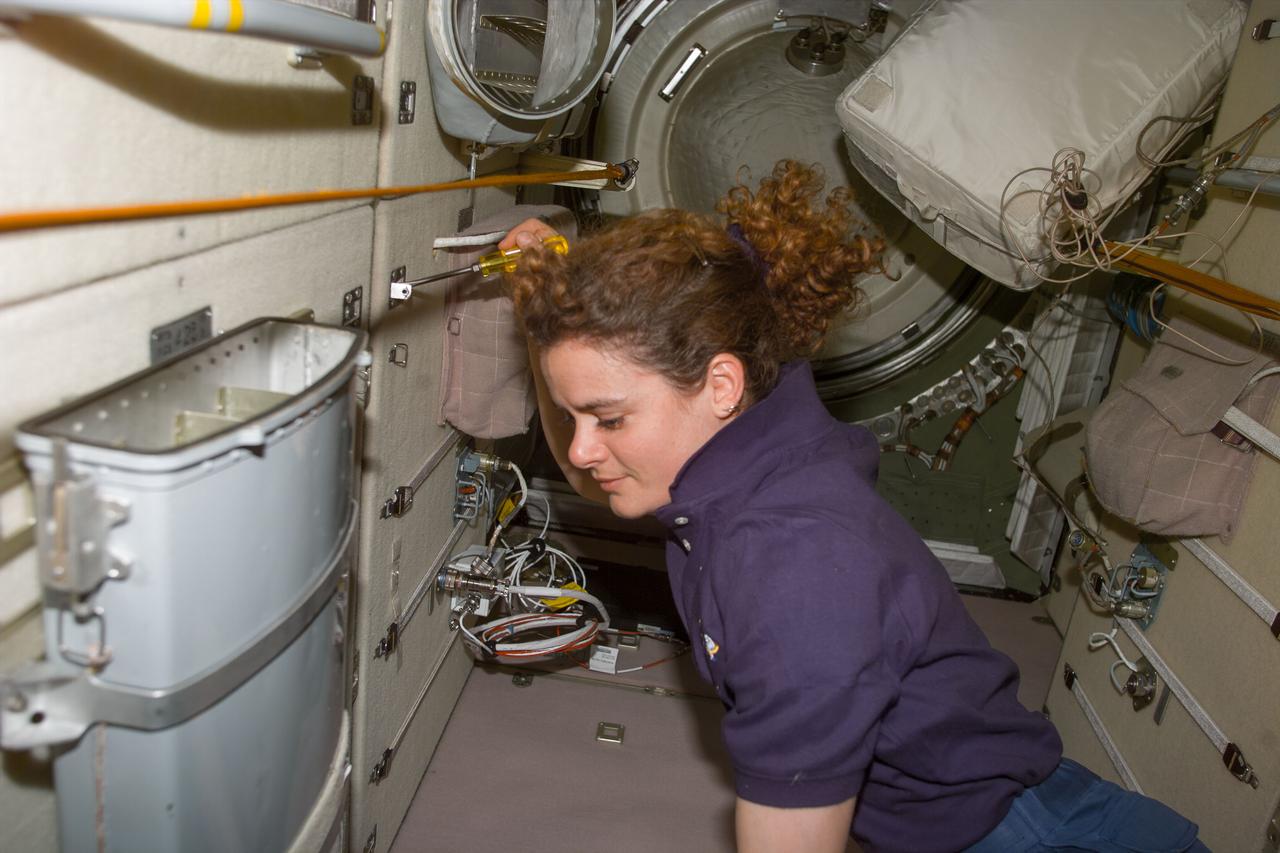
S96-E-5122 (1 June 1999) --- Astronaut Julie Payette uses a conventional screw driver while performing a Flight Day 6 task in the Russian-built Zarya module. The photo was recorded with an electronic still camera (ESC) at 07:47:47 GMT, June 1, 1999.
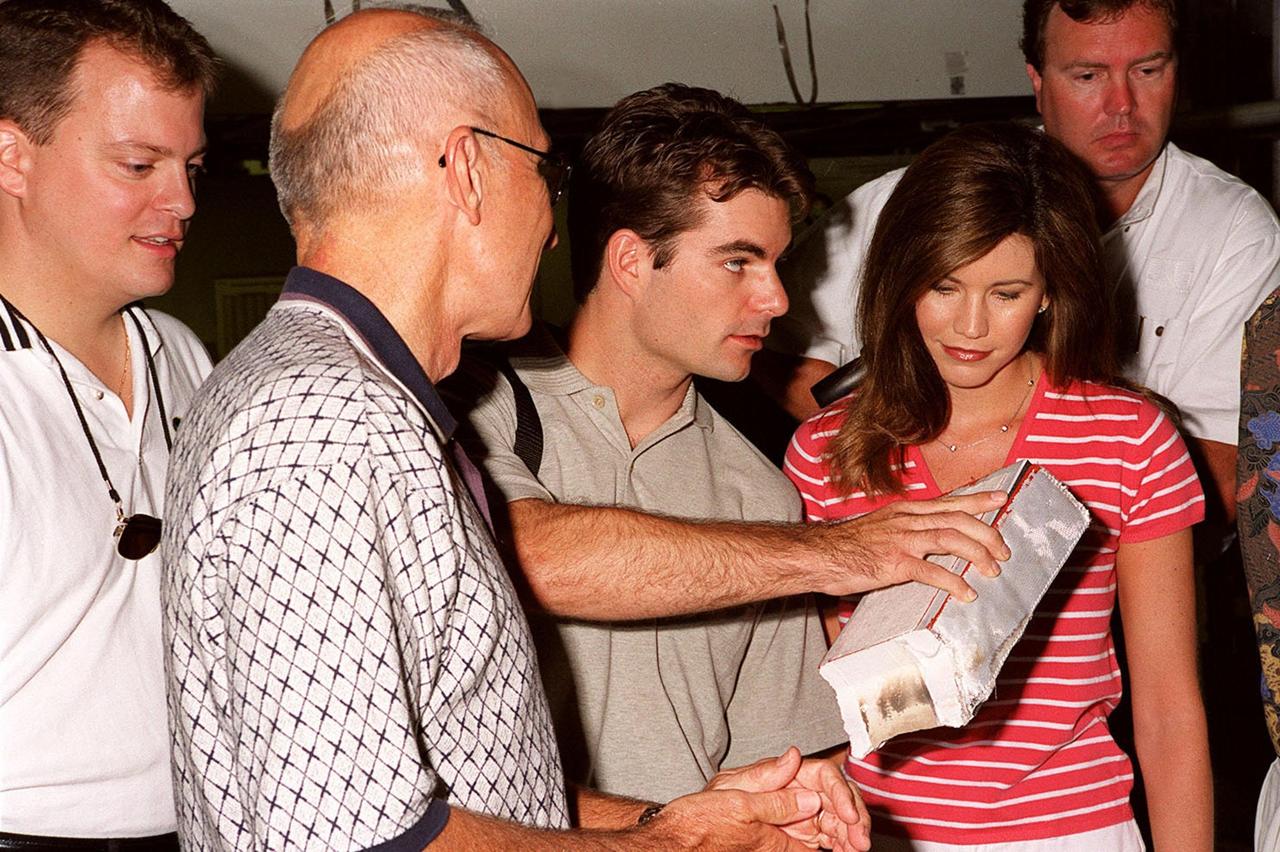
KENNEDY SPACE CENTER, FLA. -- During a visit to KSC, NASCAR race driver Jeff Gordon and his wife look closely at blanket material used for the Shuttle. Former KSC launch director Bob Sieck (back to camera) looks on
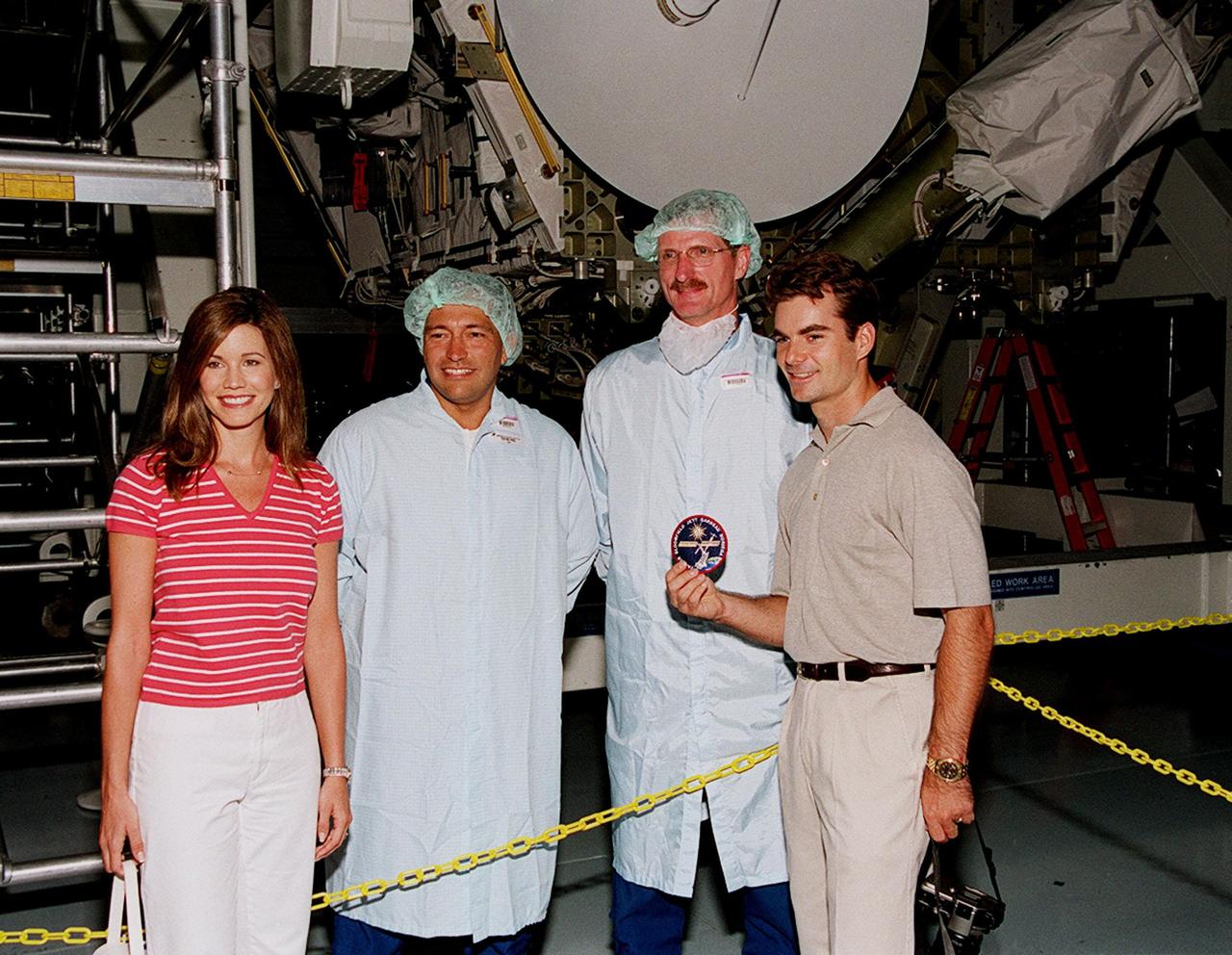
KENNEDY SPACE CENTER, FLA. -- During a visit to KSC, NASCAR race driver Jeff Gordon (far right) and his wife (far left) pose with astronauts Michael Lopez-Alegria (second from left) and Joe Tanner (third from left)
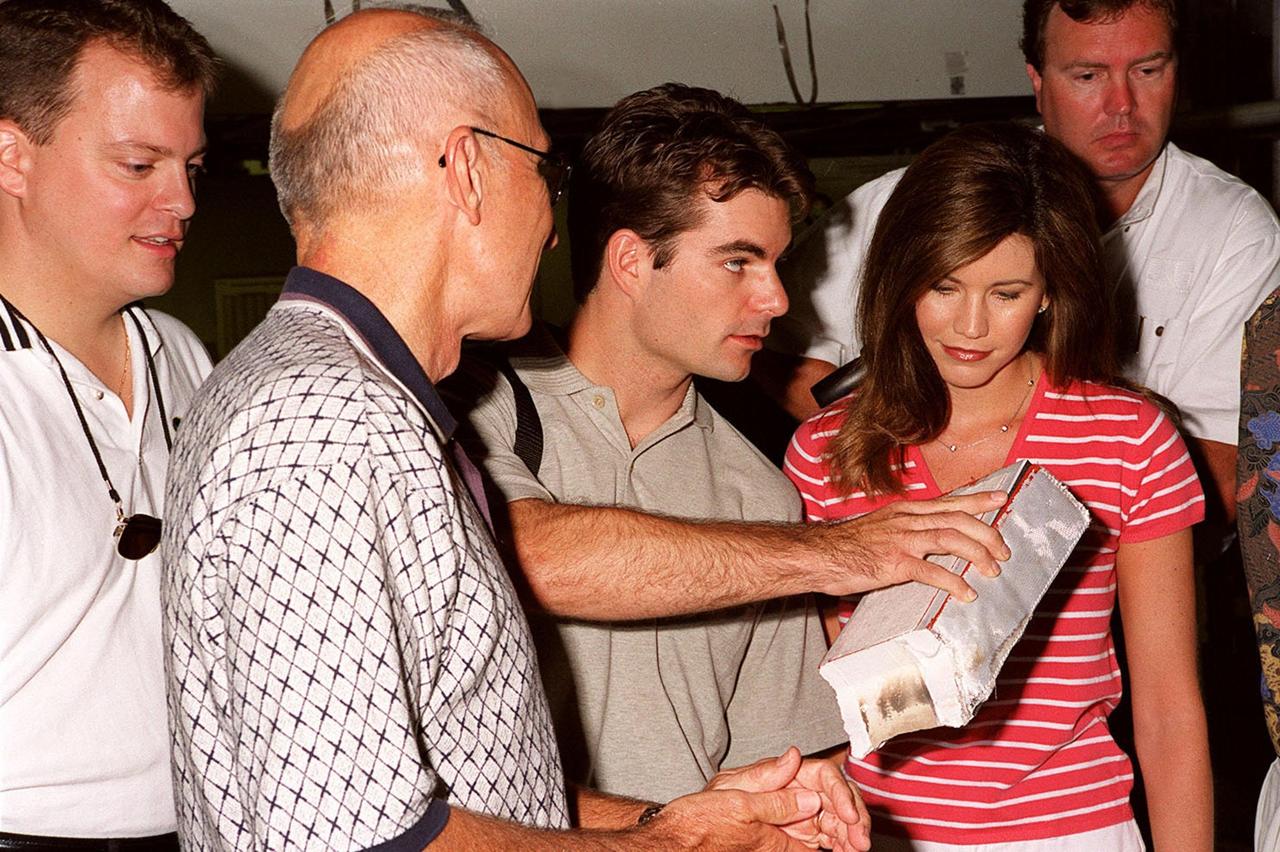
KENNEDY SPACE CENTER, FLA. -- During a visit to KSC, NASCAR race driver Jeff Gordon and his wife look closely at blanket material used for the Shuttle. Former KSC launch director Bob Sieck (back to camera) looks on
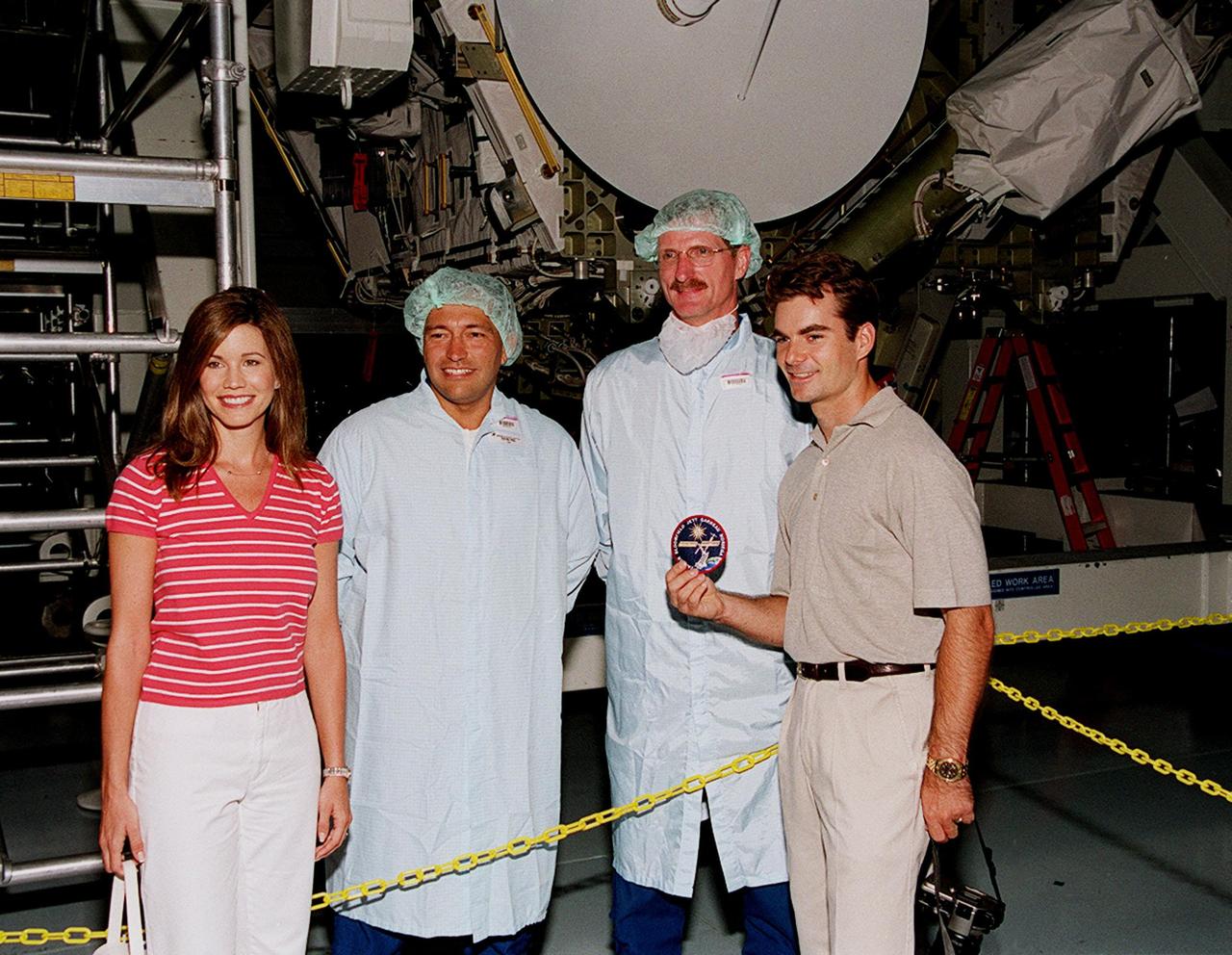
KENNEDY SPACE CENTER, FLA. -- During a visit to KSC, NASCAR race driver Jeff Gordon (far right) and his wife (far left) pose with astronauts Michael Lopez-Alegria (second from left) and Joe Tanner (third from left)
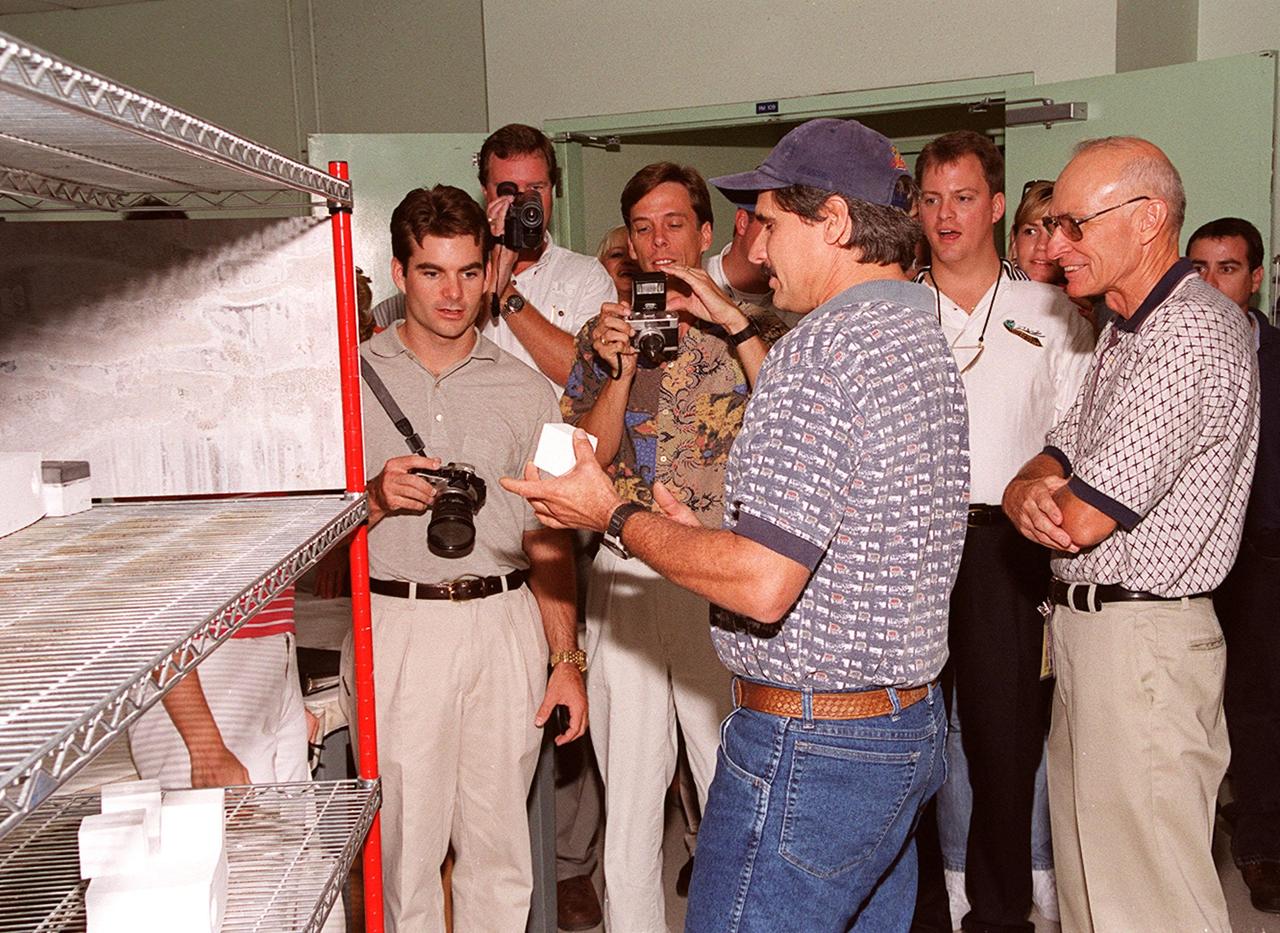
KENNEDY SPACE CENTER, FLA. -- During a visit to KSC, NASCAR race driver Jeff Gordon (left) looks at a tile in the Tile Shop in the Launch Complex 39 area. Former KSC launch director Bob Sieck (far right) looks on
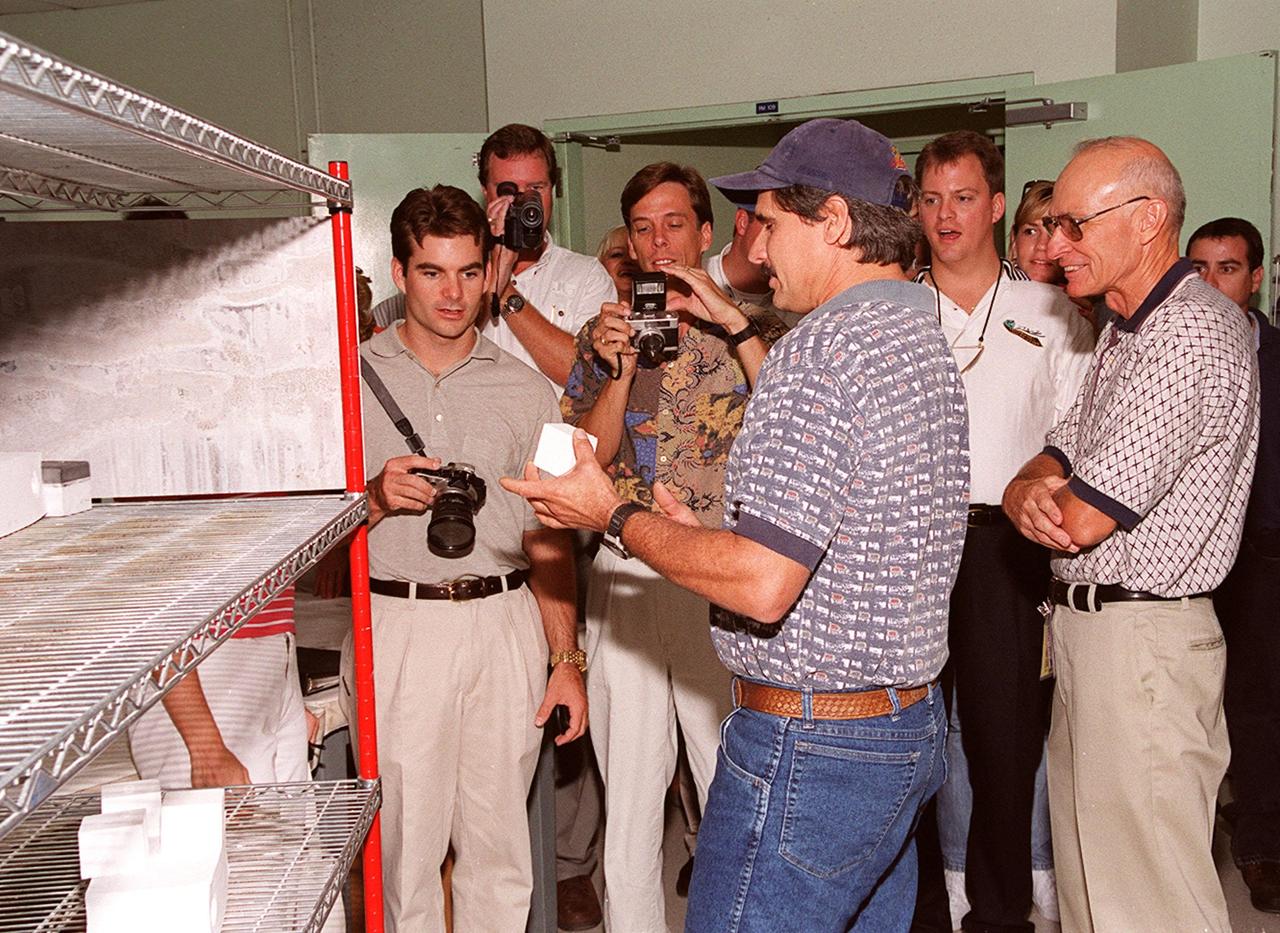
KENNEDY SPACE CENTER, FLA. -- During a visit to KSC, NASCAR race driver Jeff Gordon (left) looks at a tile in the Tile Shop in the Launch Complex 39 area. Former KSC launch director Bob Sieck (far right) looks on
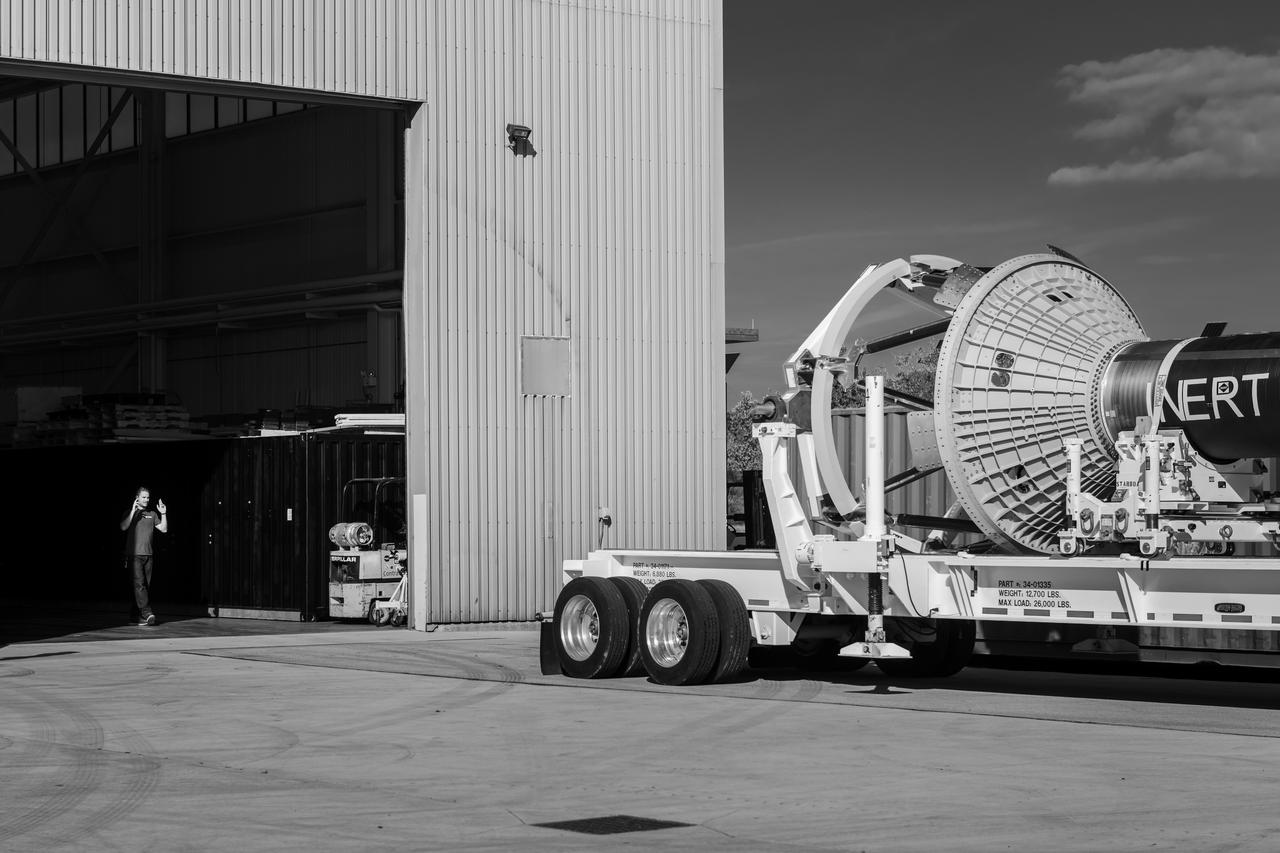
An engineer signals the truck driver carrying Orion’s Launch Abort System (LAS) at the Space Environments Complex. The LAS was awaiting Orion’s Crew Capsule to be tested on for mission critical support for Artemis II. Photo Credit: (NASA/Jordan Salkin)
![The STS-100 crew gathers at the bus when Terminal Countdown Demonstration Test activities are hampered by the rain. Standing with the bus driver, from left, are Mission Specialist John L. Phillips, Commander Kent V. Rominger, Mission Specialists Umberto Guidoni, Chris Hadfield, [driver], and Scott E. Parazynski, Pilot Jeffrey S. Ashby and Mission Specialist Yuri V. Lonchakov. TCDT includes emergency escape training at the pad and a simulated launch countdown. The mission is carrying the Multi-Purpose Logistics Module Raffaello and the Canadian robotic arm, SSRMS, to the International Space Station. Raffaello carries six system racks and two storage racks for the U.S. Lab. The SSRMS is crucial to the continued assembly of the orbiting complex. Launch of mission STS-100 is scheduled for April 19 at 2:41 p.m. EDT from Launch Pad 39A](https://images-assets.nasa.gov/image/KSC-01pp0614/KSC-01pp0614~medium.jpg)
The STS-100 crew gathers at the bus when Terminal Countdown Demonstration Test activities are hampered by the rain. Standing with the bus driver, from left, are Mission Specialist John L. Phillips, Commander Kent V. Rominger, Mission Specialists Umberto Guidoni, Chris Hadfield, [driver], and Scott E. Parazynski, Pilot Jeffrey S. Ashby and Mission Specialist Yuri V. Lonchakov. TCDT includes emergency escape training at the pad and a simulated launch countdown. The mission is carrying the Multi-Purpose Logistics Module Raffaello and the Canadian robotic arm, SSRMS, to the International Space Station. Raffaello carries six system racks and two storage racks for the U.S. Lab. The SSRMS is crucial to the continued assembly of the orbiting complex. Launch of mission STS-100 is scheduled for April 19 at 2:41 p.m. EDT from Launch Pad 39A

Several small sunspots appeared this week, giving NASA Solar Dynamics Observatory a chance to illustrate their sources Mar. 2, 2017. The first image is a magnetogram or magnetic image of the sun's surface. The MDI instrument can observe where positive and negative particles are moving toward or away from strong magnetic areas. These active regions have stronger magnetic fields and appear as strongly black or white. The yellow image shows the surface in filtered light, and there the same active regions appear as dark, cooler splotches called sunspots. Higher up in the sun's atmosphere, the golden image (in extreme ultraviolet light) shows arches of light above the active regions, which are charged particles spinning along magnetic field lines. Note that they all align very well with each other. Magnetic forces are the dynamic drivers here in these regions of the sun. Movies are available at http://photojournal.jpl.nasa.gov/catalog/PIA21557
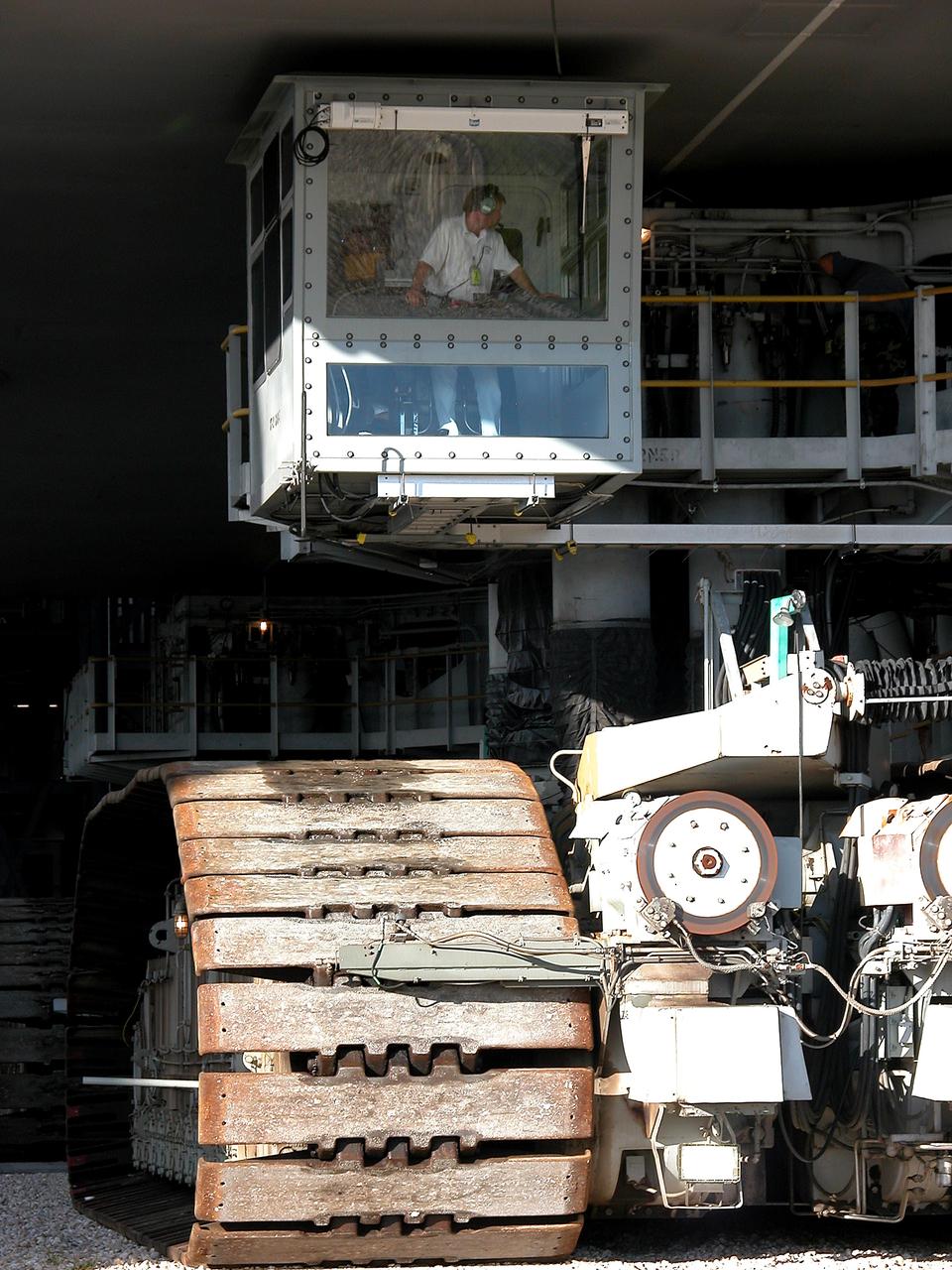
KENNEDY SPACE CENTER, FLA. - As the crawler transporter slowly moves the Mobile Launcher Platform (MLP) out of the Vehicle Assembly Building, the driver of the front control cab can be seen. The MLP is carrying two solid rocket boosters for engineering analysis vibration tests on the crawler and MLP. The crawler is moving at various speeds up to 1 mph in an effort to achieve vibration data gathering goals as it leaves the VAB and then returns. The boosters are braced at the top for stability. The primary purpose of these rollout tests is to gather data to develop future maintenance requirements on the transport equipment and the flight hardware. Various parts of the MLP and crawler transporter have been instrumented with vibration data collection equipment.
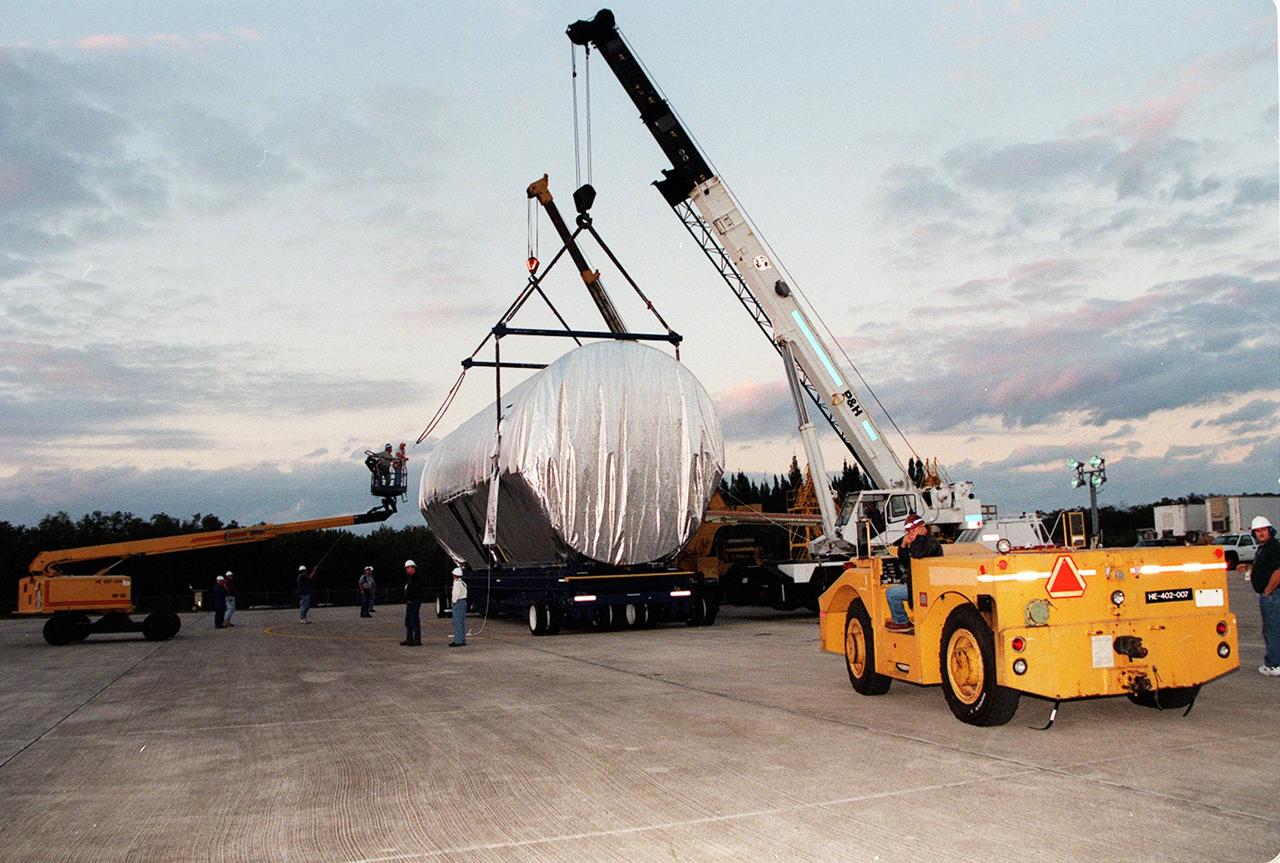
KENNEDY SPACE CENTER, FLA. -- In the waning afternoon light, cranes secure the P3 truss on the transporter while a tractor and driver wait to move it to the Operations and Checkout Building. The second port-side truss is a segment of the International Space Station (ISS), scheduled to be added to the ISS on mission STS-115 in 2002 aboard Space Shuttle Atlantis. P3 will be attached to the first port truss segment (P1).
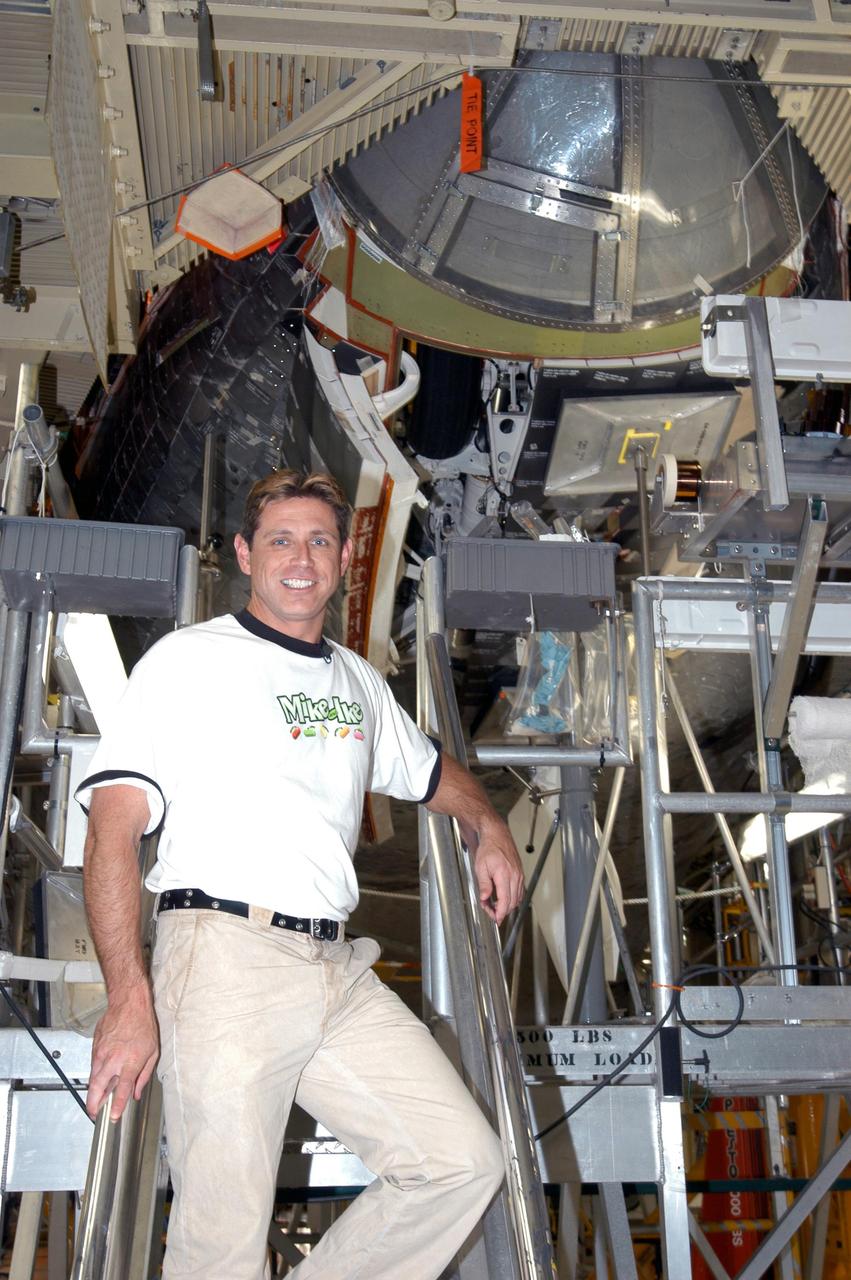
KENNEDY SPACE CENTER, FLA. - In the Orbiter Processing Facility, NASCAR Busch Series race driver Tim Fedewa stands underneath Discovery. Fedewa is on a tour of KSC for the Speed Channel TV show “NBS 24/7,” which is devoted to NASCAR. Other sites on his tour are the Launch Control Center, Vehicle Assembly Building and one of the launch pads.
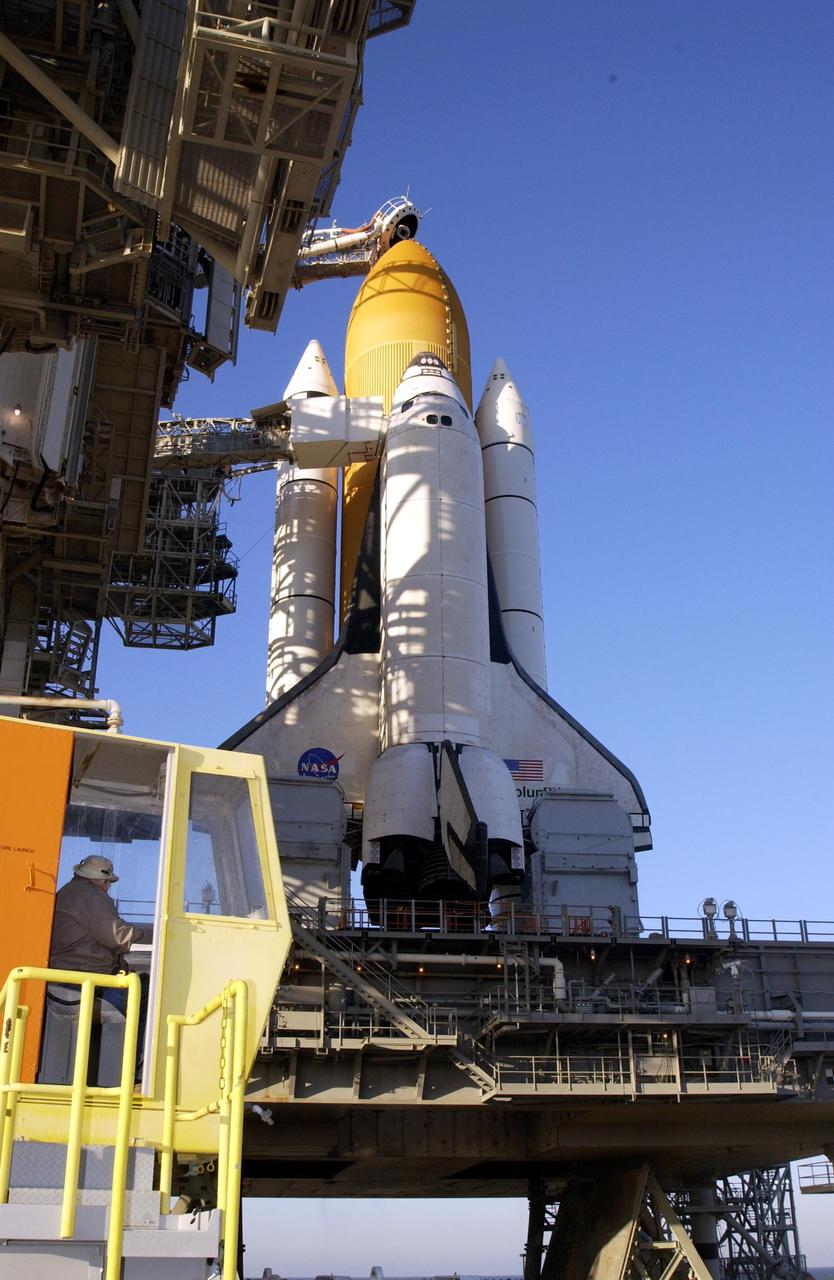
KENNEDY SPACE CENTER, FLA. -- The driver in the foreground controls the rollback of the Rotating Service Structure from around Space Shuttle Columbia, which is bathed in shadows. Visible are the orbiter access arm with the White Room extended to Columbia's cockpit, and at the top, the gaseous oxygen vent arm and cap, called the "beanie cap." Columbia is scheduled for launch Jan. 16 at 10:39 a.m. EST on mission STS-107.
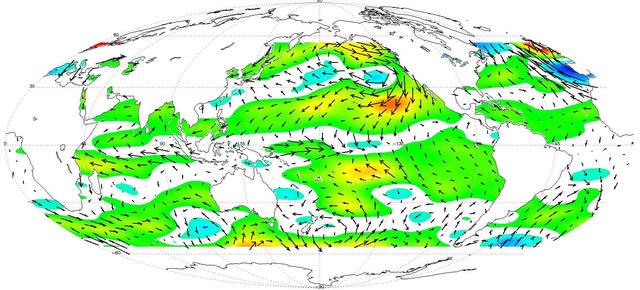
While El Niño events have a significant impact on the entire Earth System, they are most easily visible in measurements of sea surface temperature (SST), sea surface height (SSH) and ocean winds near the surface. In fact, the precursor and the main driver of El Niño events is manifested in the weakening of the normally westward blowing trade winds, or even their complete reversal to blow from west to east, in the Western and Central tropical Pacific. http://photojournal.jpl.nasa.gov/catalog/PIA20365
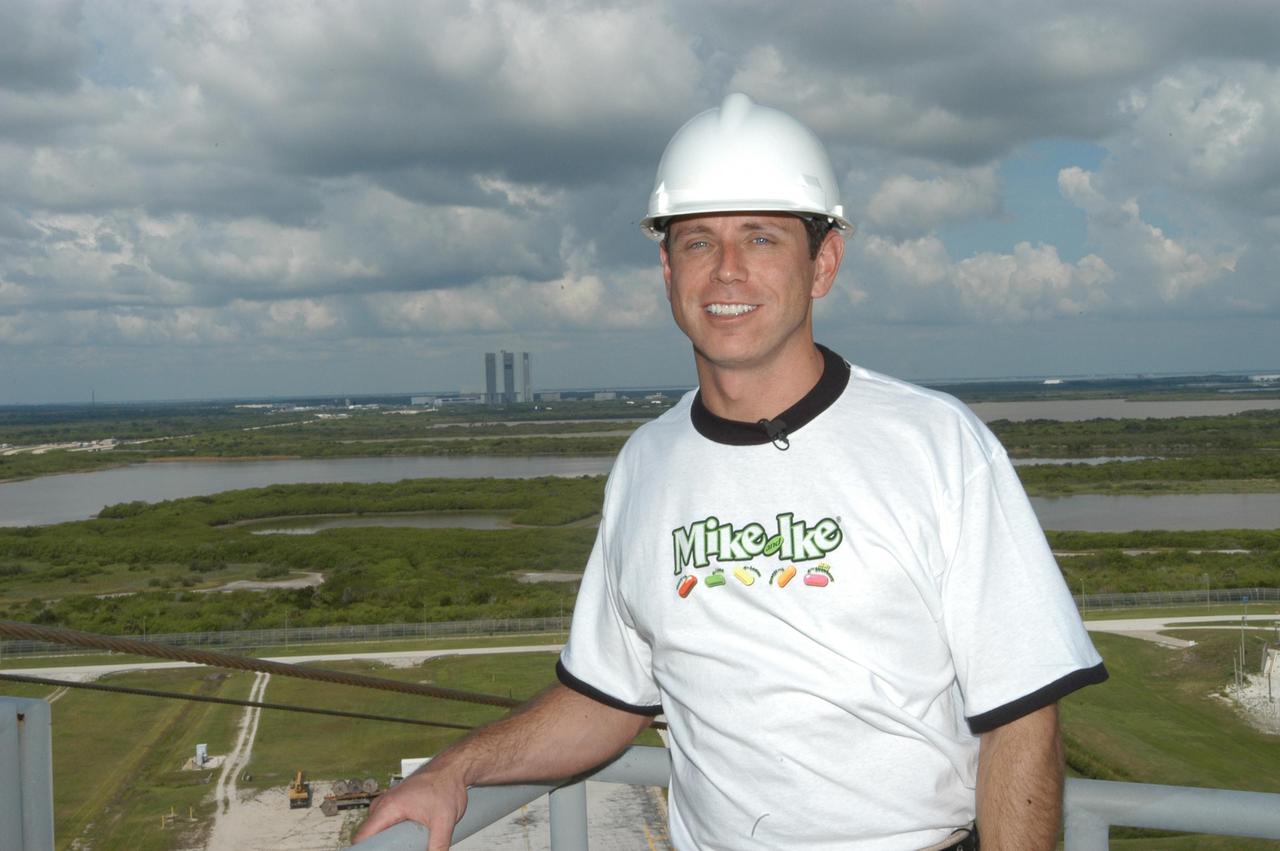
KENNEDY SPACE CENTER, FLA. - NASCAR Busch Series race driver Tim Fedewa completes his tour of KSC with a view from an upper level of the Fixed Service Structure on Launch Pad 39A. The Vehicle Assembly Building is in the background. Fedewa is touring KSC for the Speed Channel TV show “NBS 24/7,” which is devoted to NASCAR. Other sites on his tour are the Launch Control Center, Vehicle Assembly Building and the Orbiter Processing Facility.
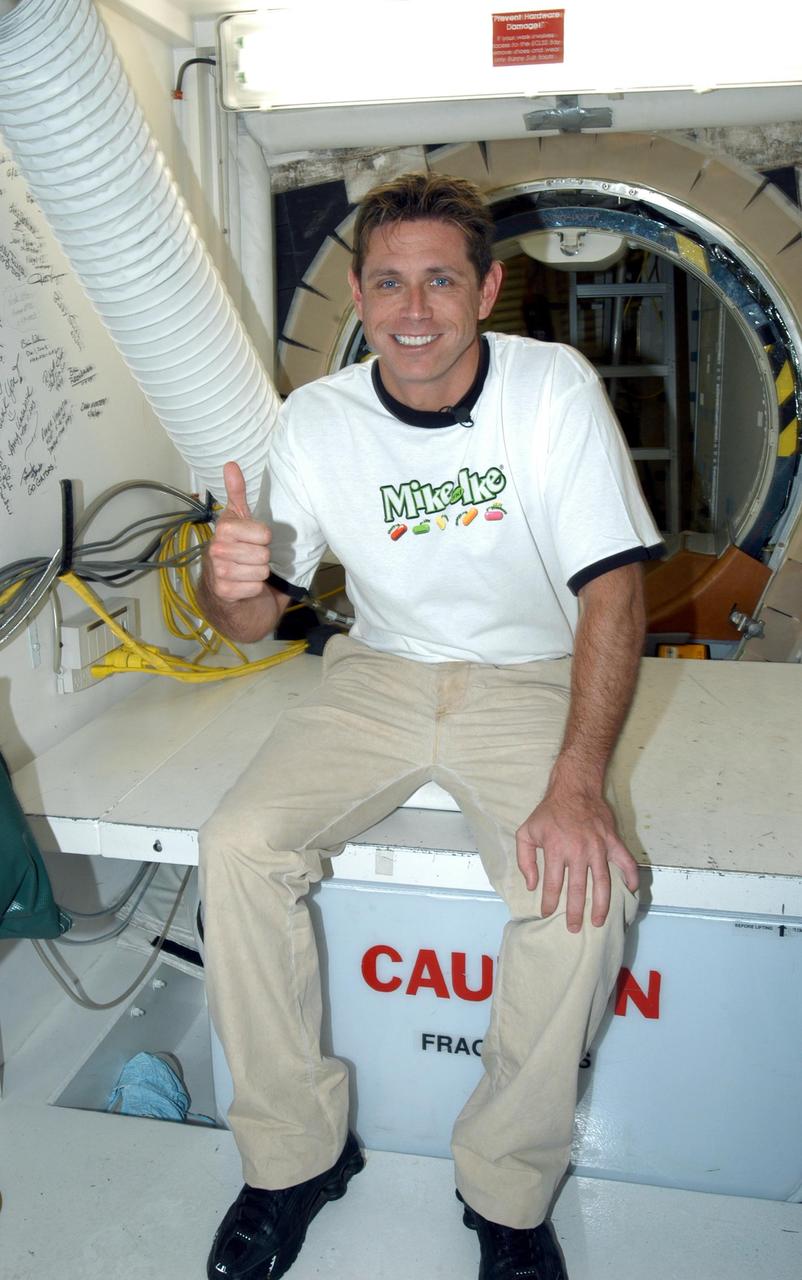
KENNEDY SPACE CENTER, FLA. - NASCAR Busch Series race driver Tim Fedewa poses in the White Room at Launch Pad 39A. Fedewa is on a tour of KSC for the Speed Channel TV show “NBS 24/7,” which is devoted to NASCAR. Other sites on his tour are the Launch Control Center, Vehicle Assembly Building and Orbiter Processing Facility.
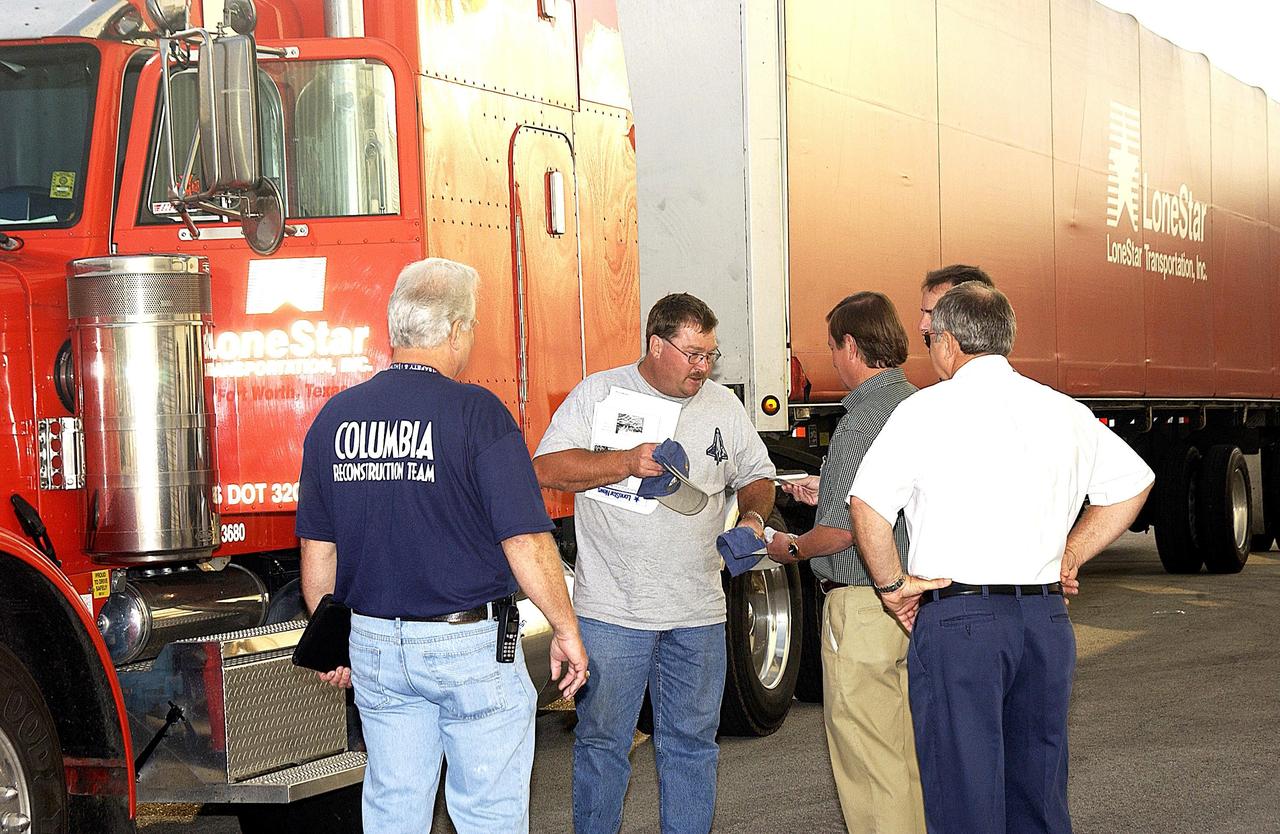
KENNEDY SPACE CENTER, FLA. - Shuttle Launch Director Mike Leinbach, third from left, greets the truck driver delivering the final shipment of Columbia debris. The recovery efforts have been concluded in East Texas. Prior to this final shipment, the total number of items at KSC is 82,567, weighing 84,800 pounds or 38 percent of the total dry weight of Columbia. Of those items, 78,760 have been identified, with 753 placed on the left wing grid in the RLV Hangar.
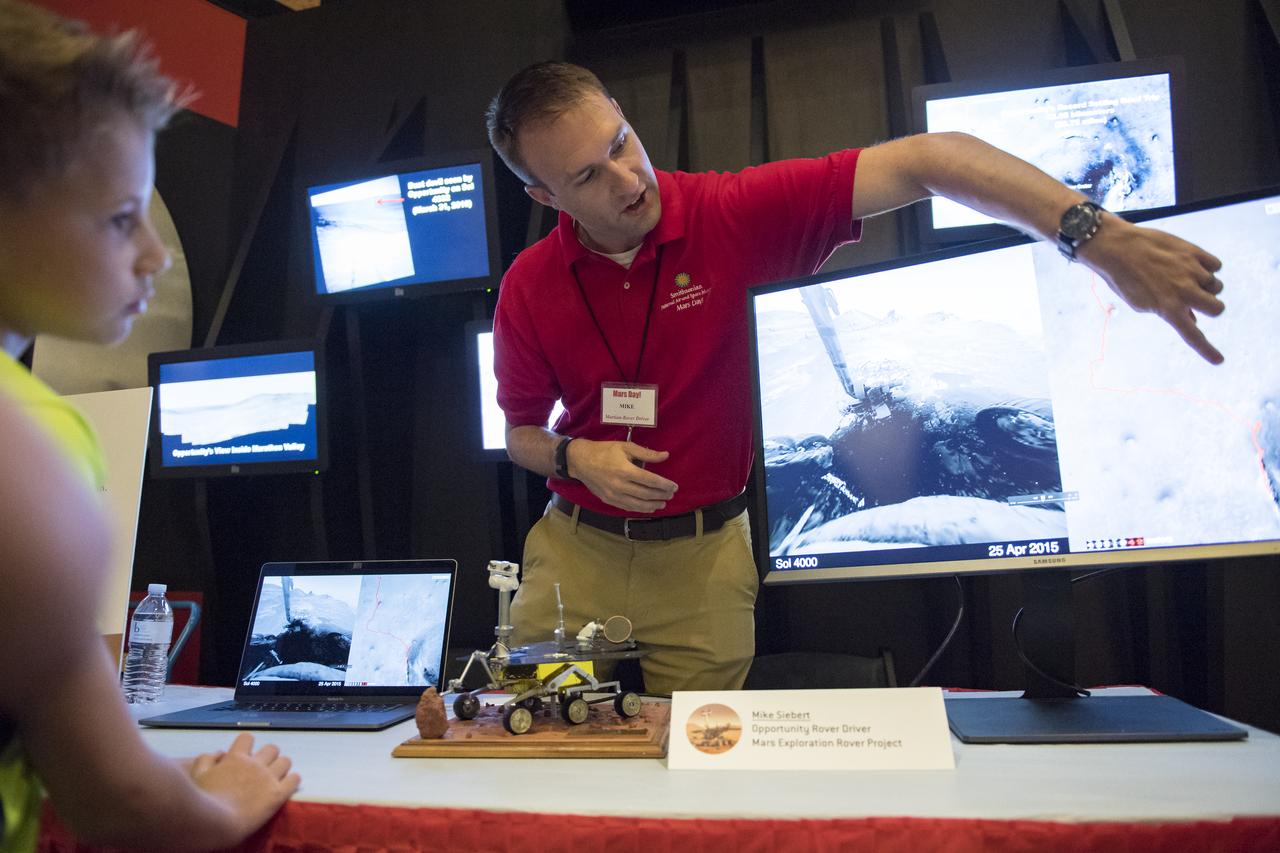
Mike Seibert, rover driver for NASA’s Opportunity rover on Mars talks with visitors about navigating the surface of Mars at the Smithsonian Institution’s National Air and Space Museum Mars Day, an annual event celebrating the Red Planet with exhibits, speakers, and educational activities, Friday, July 21, 2017 in Washington. Photo Credit: (NASA/Aubrey Gemignani)
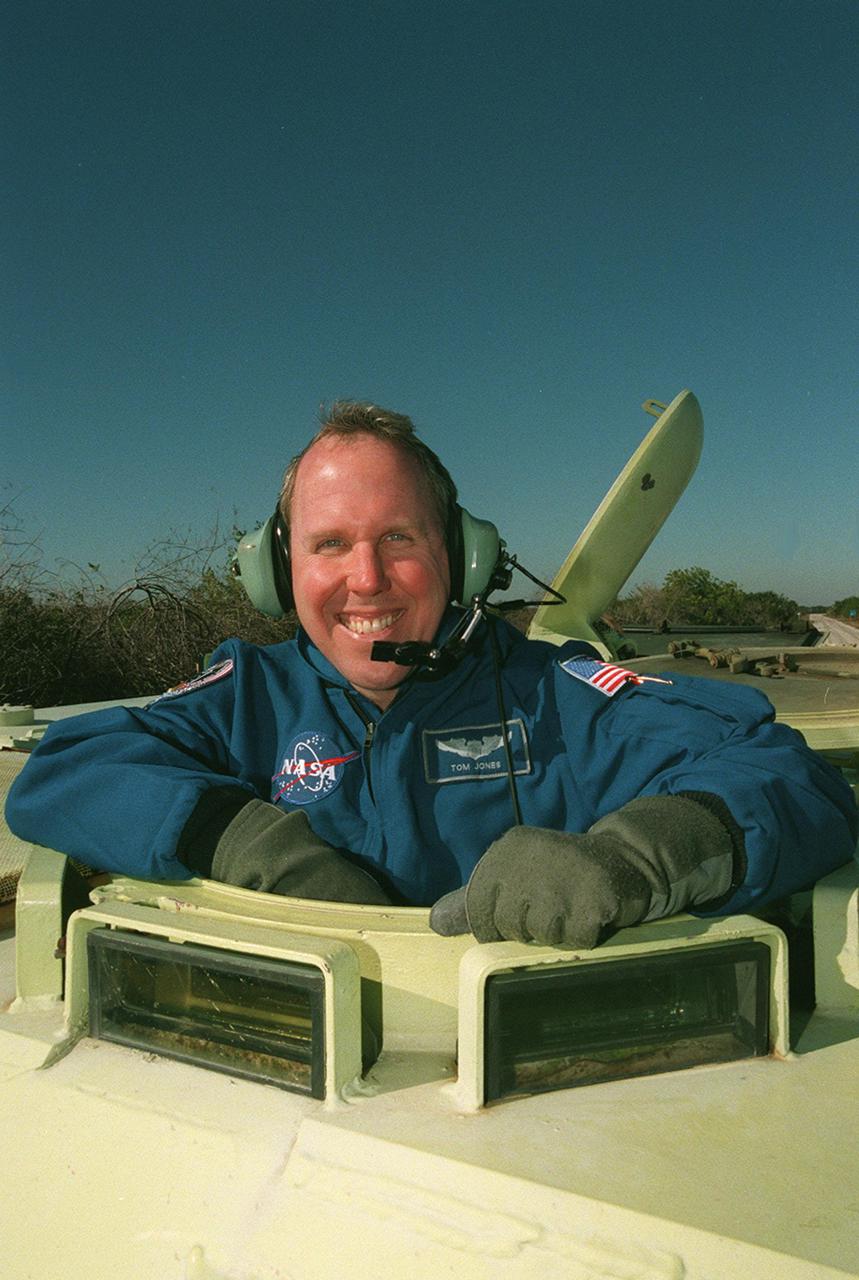
A smiling Thomas Jones, one of the mission specialists on STS-98, gets ready to take the driver’s seat in an M-113 armored carrier, part of emergency egress training at Launch Pad 39A. In the event of an emergency at the pad prior to launch, the carrier could be used to transport the crew to a nearby bunker or farther. The STS-98 crew is at KSC to take part in Terminal Countdown Demonstration Test activities, which also includes a simulated launch countdown. STS-98 is the seventh construction flight to the International Space Station, carrying as payload the U.S. Lab Destiny, a key element in the construction of the ISS
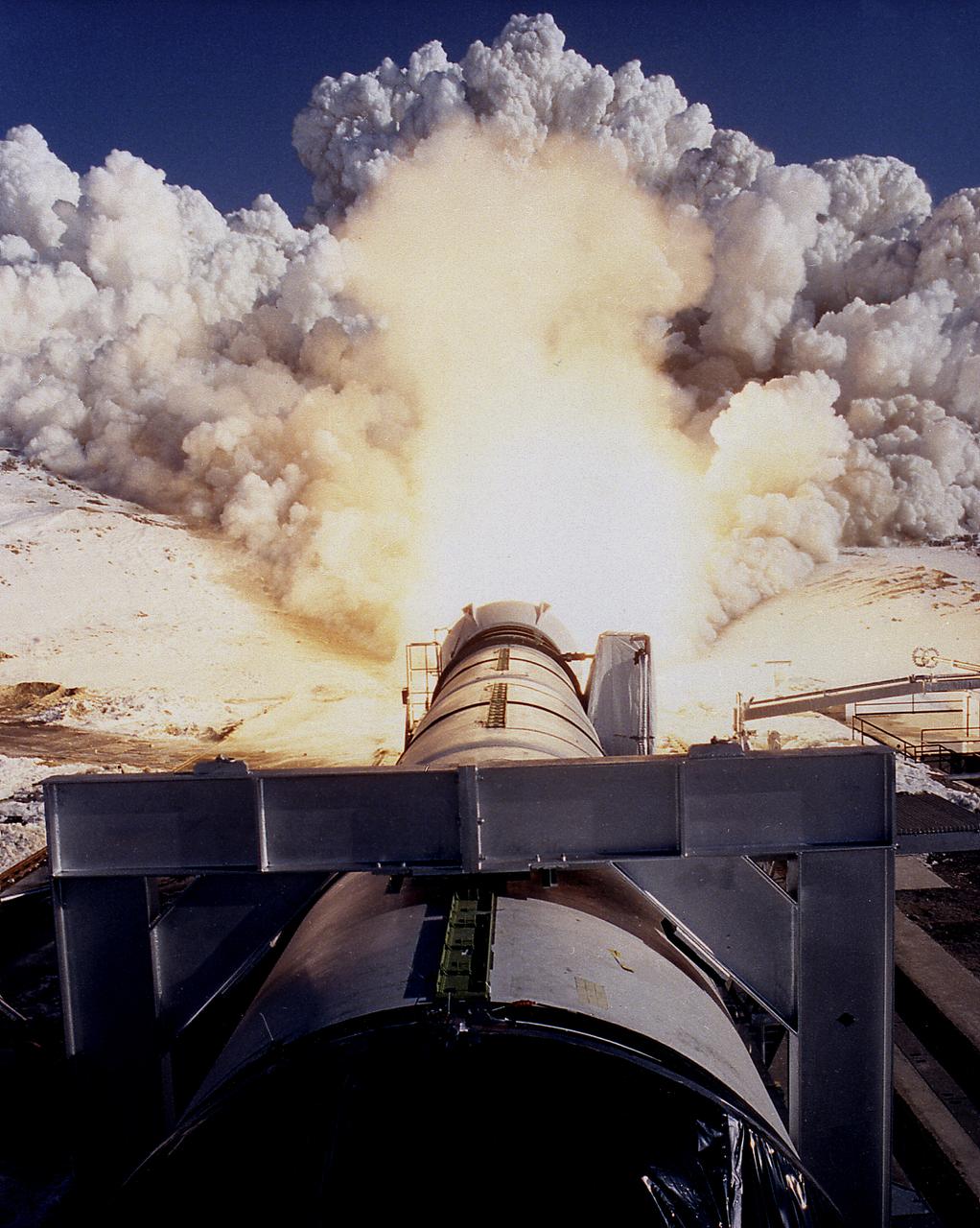
This photograph shows a static firing test of the Solid Rocket Qualification Motor-8 (QM-8) at the Morton Thiokol Test Site in Wasatch, Utah. The twin solid rocket boosters provide the majority of thrust for the first two minutes of flight, about 5.8 million pounds, augmenting the Shuttle's main propulsion system during liftoff. The major design drivers for the solid rocket motors (SRM's) were high thrust and reuse. The desired thrust was achieved by using state-of-the-art solid propellant and by using a long cylindrical motor with a specific core design that allows the propellant to burn in a carefully controlled marner. Under the direction of the Marshall Space Flight Center, the SRM's are provided by the Morton Thiokol Corporation.
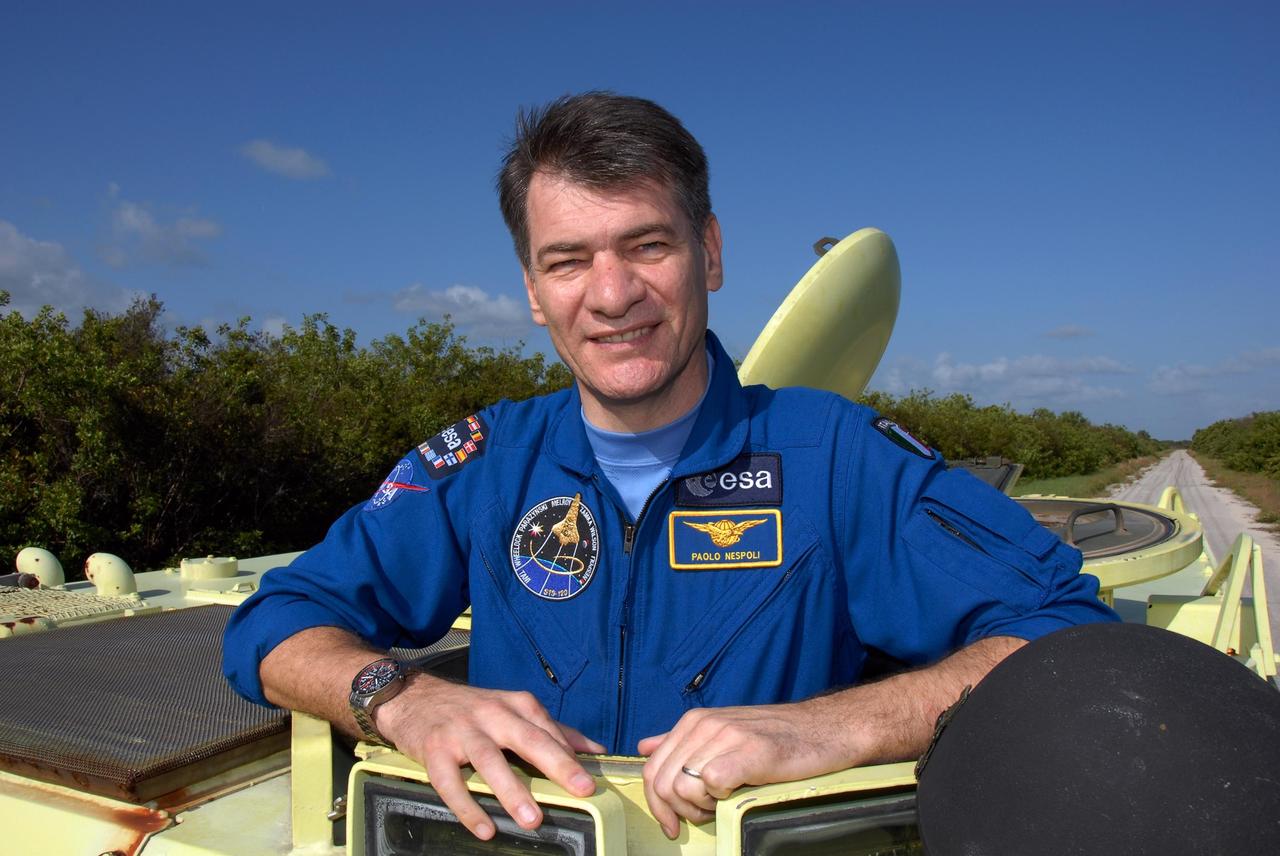
KENNEDY SPACE CENTER, FLA. -- STS-120 Mission Specialist Paolo Nespoli, who represents the European Space Agency, gets ready in the driver's seat for driving practice in the M-113 armored personnel carrier. The M-113 is part of emergency exit procedures from Launch Pad 39A. The training is part of terminal countdown demonstration test, or TCDT, activities the crew is undertaking at NASA's Kennedy Space Center. The TCDT also includes equipment familiarization and a simulated launch countdown. Mission STS-120, which will carry the Italian-built U.S. Node 2 to the International Space Station, is targeted for launch on Oct. 23. Photo credit: NASA/Kim Shiflett
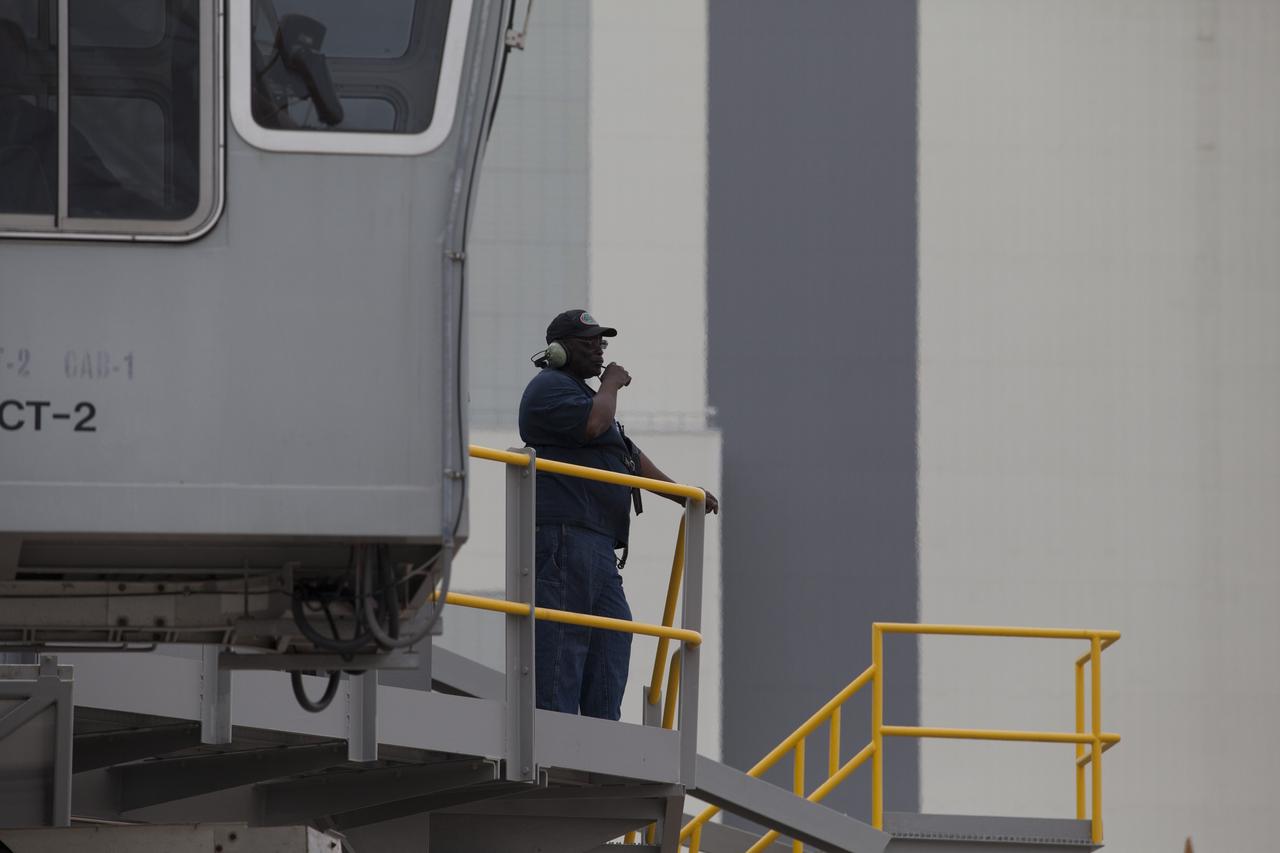
A technician communicates with the driver of NASA’s upgraded crawler-transporter 2 (CT-2) during the return drive to the Vehicle Assembly Building (VAB) at the agency’s Kennedy Space Center in Florida from its test drive to Launch Pad 39B. The crawler’s recently completed upgrades and modifications were tested to ensure the vehicle will be ready to support NASA’s journey to Mars. The Ground Systems Development and Operations Program at Kennedy oversaw upgrades to the crawler in the VAB. The crawler will carry the mobile launcher with Orion atop the Space Launch System rocket to Pad 39B for Exploration Mission 1.

Dan Zapata is a crawler systems engineer for the Exploration Ground Systems Program at NASA’s Kennedy Space Center in Florida. One of seven certified drivers for the agency’s crawler transporters –six-million-pound platforms that carry rockets and spacecraft from Kennedy’s iconic Vehicle Assembly Building to the launch pad – Zapata is part of the team that will take NASA’s Space Launch System rocket and Orion spacecraft to Launch Complex 39B for the Artemis I launch. Artemis I is the first in an increasingly complex series of missions that will ultimately send the first woman and first person of color to the Moon, paving the way for long-term presence in lunar orbit and serving as a steppingstone for future missions to Mars.
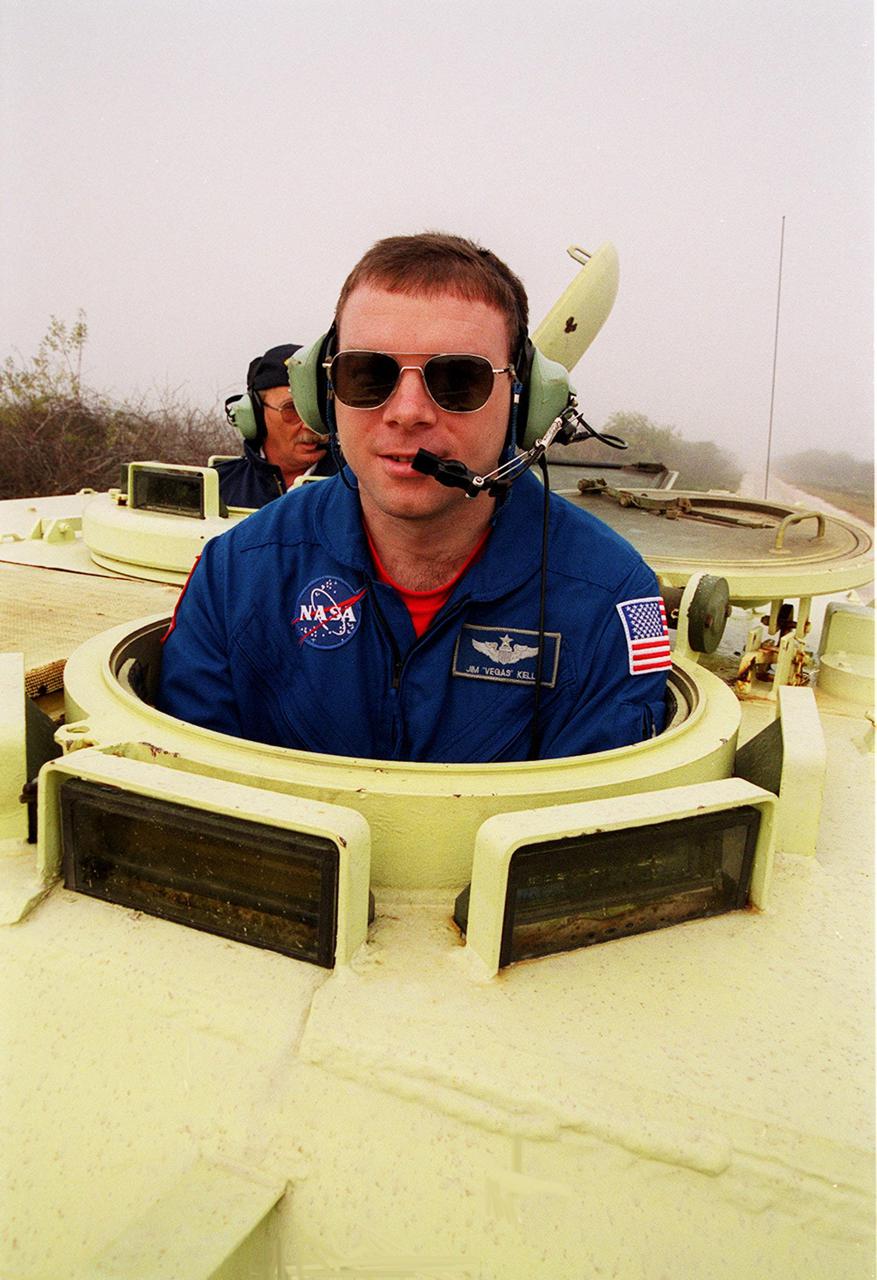
STS-102 Pilot James Kelly gets into the driver’s seat of an M-113 armored carrier near Launch Pad 39B he will practice driving. In the background is Capt. George Hoggard, a training officer with SGS Fire Services. In the event of an emergency at the pad prior to launch, the carrier could be used to transport the crew to a nearby bunker or farther. The STS-102 crew is at KSC to take part in Terminal Countdown Demonstration Test activities, which also include a simulated launch countdown. STS-102 is the eighth construction flight to the International Space Station, carrying as payload the Multi-Purpose Logistics Module Leonardo. Launch on mission STS-102 is scheduled for March 8
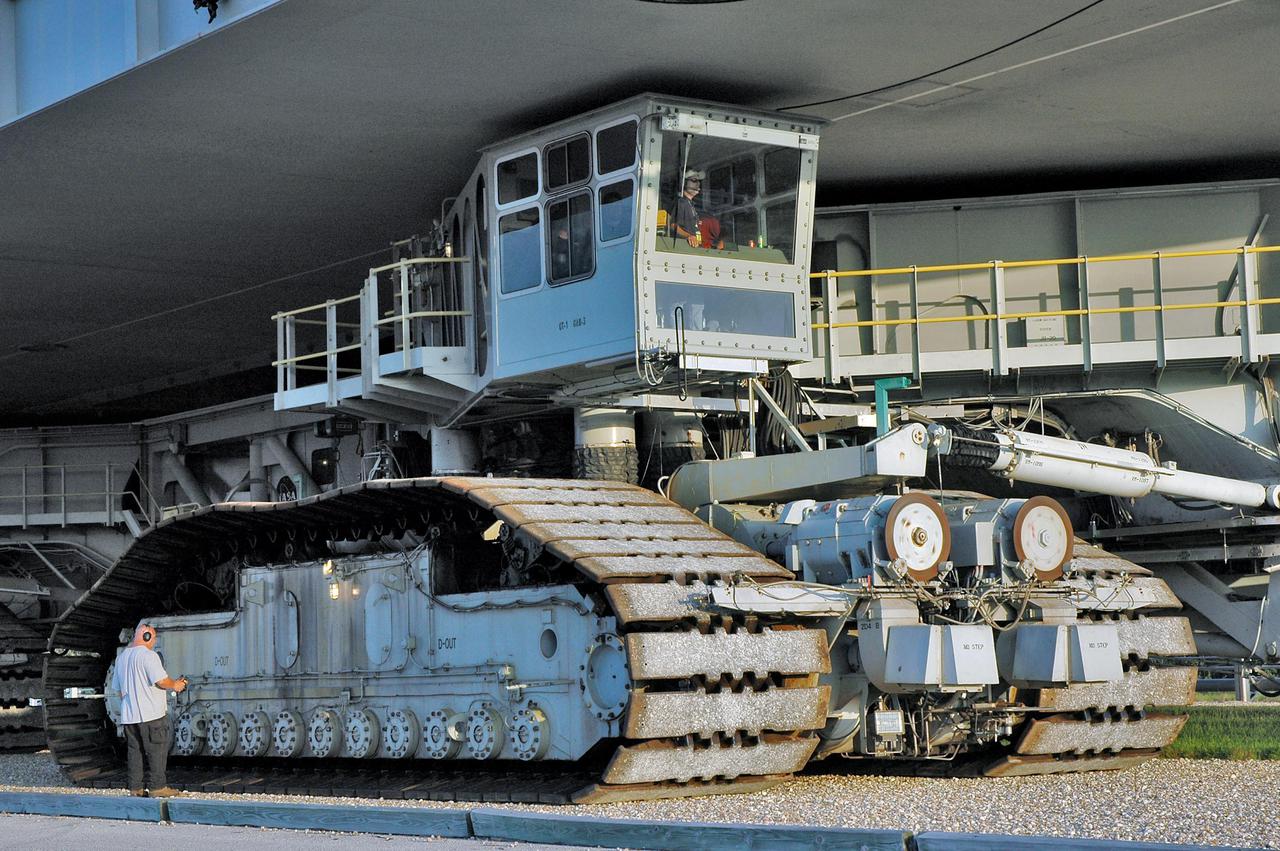
KENNEDY SPACE CENTER, FLA. - The Crawler-Transporter carries Space Shuttle Discovery and the Mobile Launcher Platform to Launch Pad 39B. The crawler is operated by a United Space Alliance driver, seen in the cab above the crawler tracks. The transporter uses a laser guidance system and a leveling system for the journey that keeps the top of the Space Shuttle vertical. This is the second rollout of Discovery after being returned to the Vehicle Assembly Building for connection to an improved External Tank. Launch of Discovery on its Return to Flight mission STS-114 is targeted for a launch window extending from July 13 to July 31.
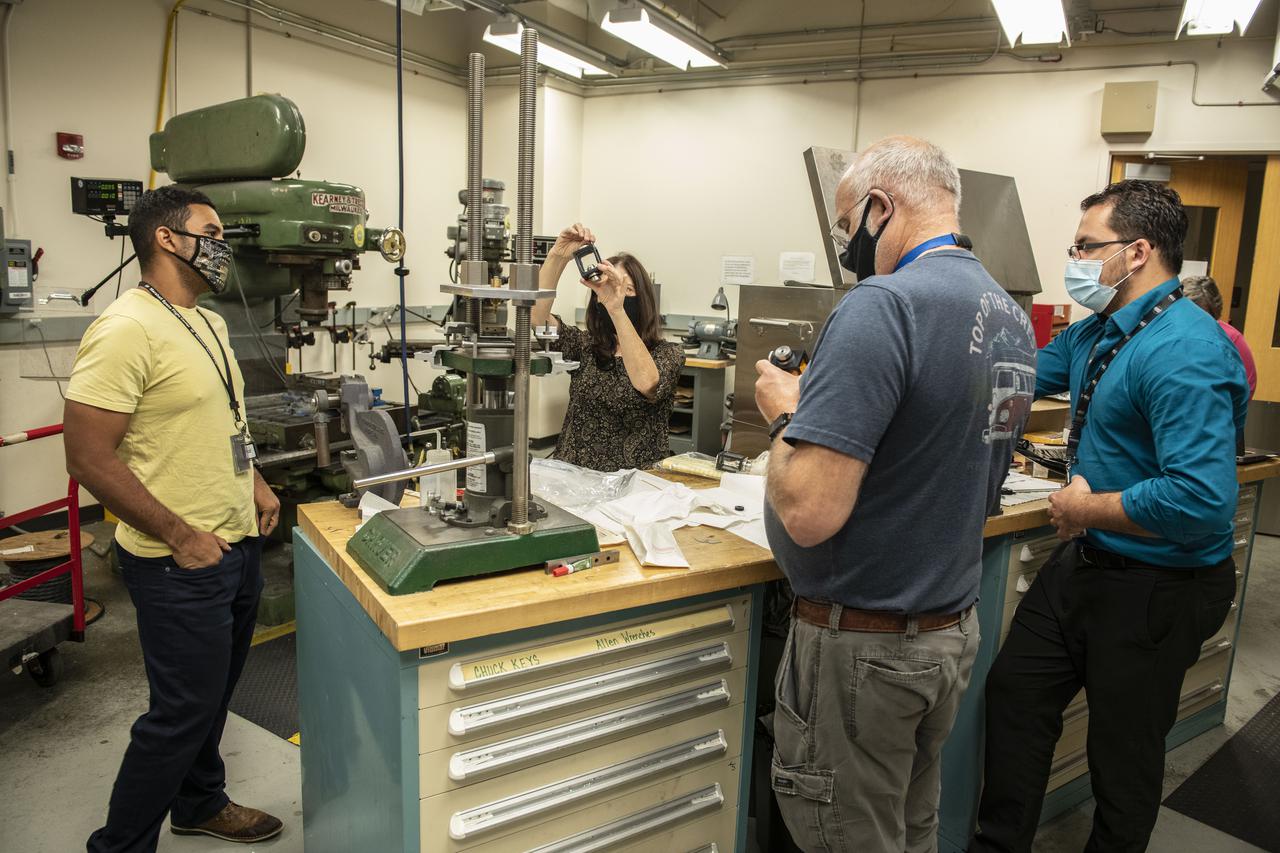
Scientists at NASA's Marshall Space Flight Center in Huntsville, Alabama, clean equipment and prepare for shipment of the ring sheared drop payload currently set for launch on Northrop Grumman 16 the first week in August, 2021. The payload studies the formation of potentially destructive amyloid fibrils, or protein clusters, like those found in the brain tissue of patients battling neurodegenerative diseases. Such illnesses may damage neurons, the drivers of the human nervous system. Experimentation in microgravity provides the opportunity to study amyloid fibril formation in conditions more analogous to those found in the human body than can be studied in a ground-based laboratory environment.
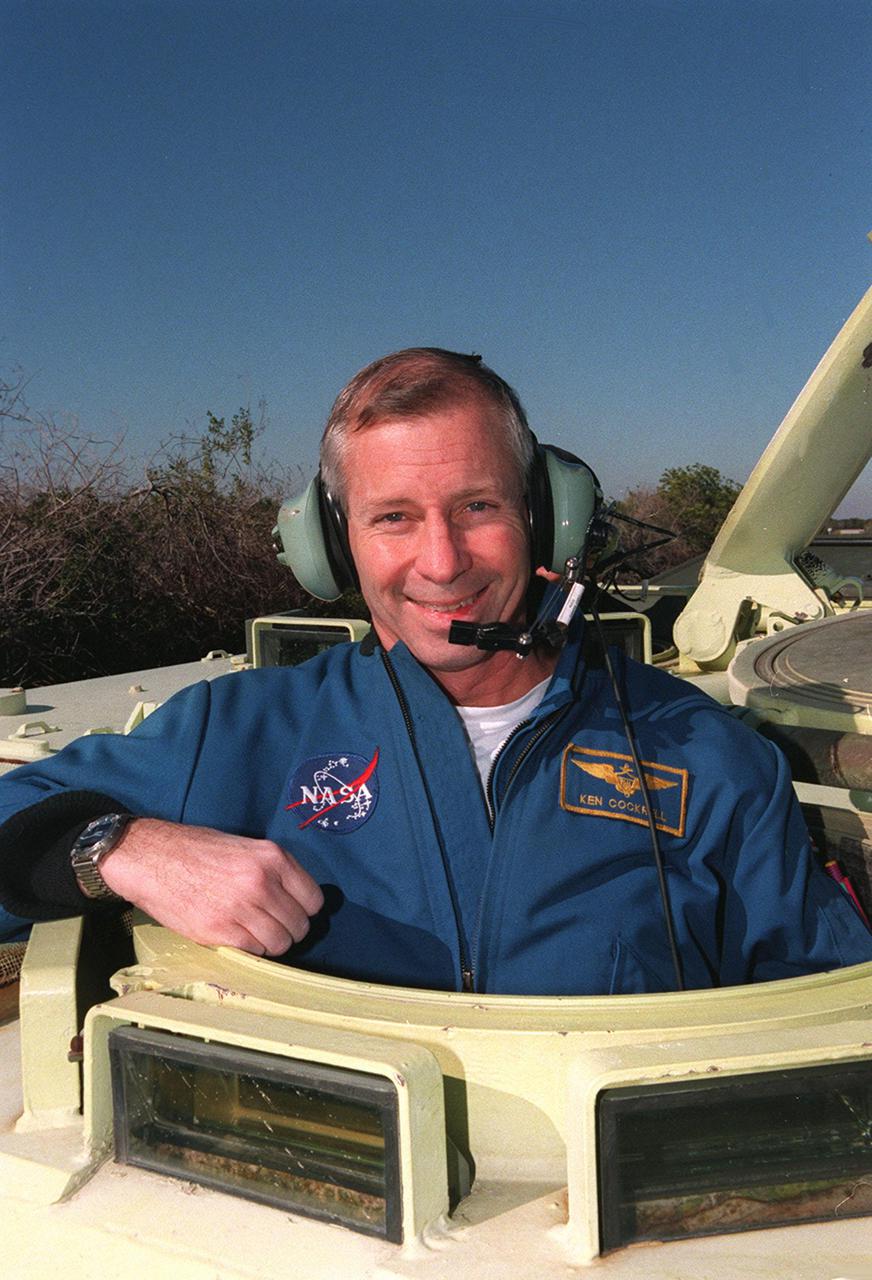
A smiling Ken Cockrell, commander on STS-98, gets ready to take the driver’s seat in an M-113 armored carrier, part of emergency egress training at Launch Pad 39A. In the event of an emergency at the pad prior to launch, the carrier could be used to transport the crew to a nearby bunker or farther. The STS-98 crew is at KSC to take part in Terminal Countdown Demonstration Test activities, which also includes a simulated launch countdown. STS-98 is the seventh construction flight to the International Space Station, carrying as payload the U.S. Lab Destiny, a key element in the construction of the ISS
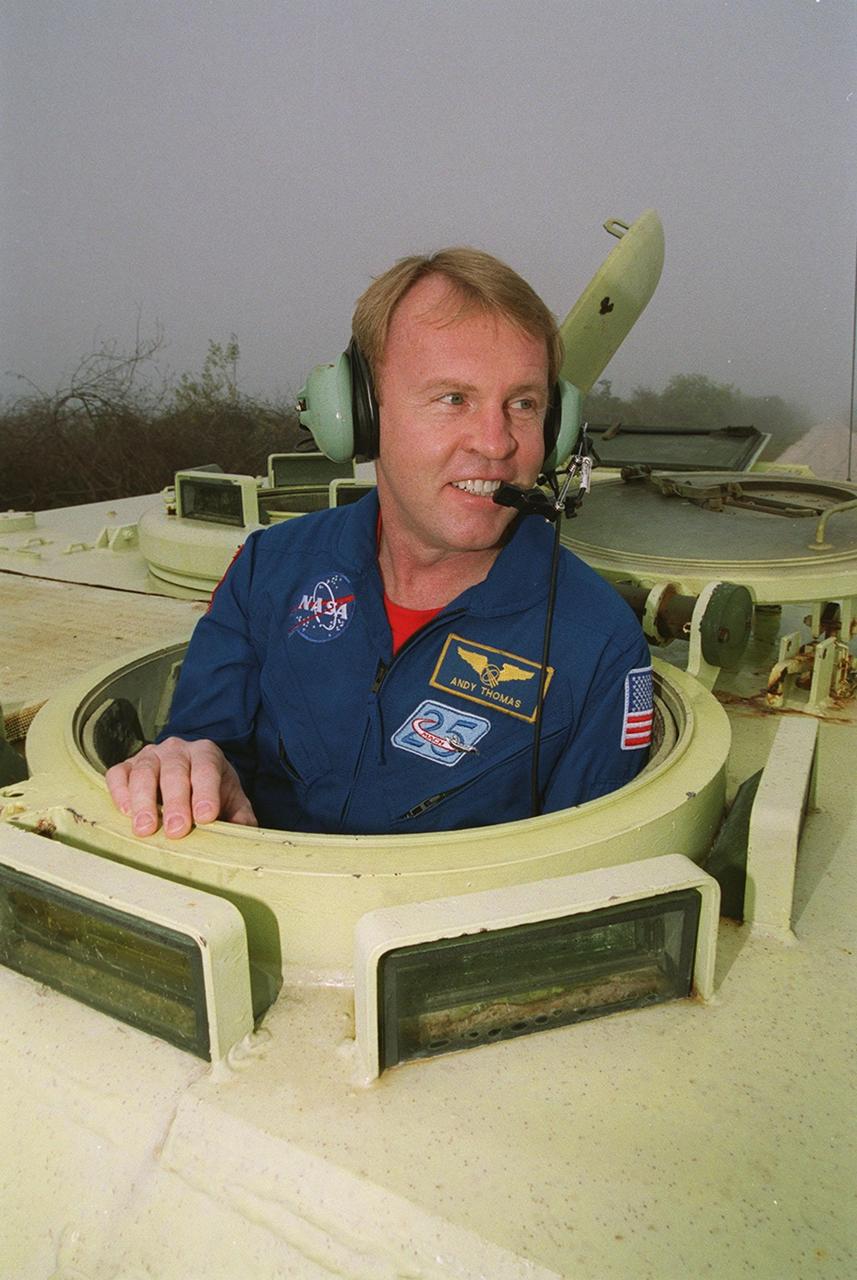
STS-102 Mission Specialist Andrew Thomas climbs into the driver’s seat of the M-113 armored carrier he will practice driving. In the event of an emergency at the pad prior to launch, the carrier could be used to transport the crew to a nearby bunker or farther. The STS-102 crew is at KSC to take part in Terminal Countdown Demonstration Test activities, which also include a simulated launch countdown. STS-102 is the eighth construction flight to the International Space Station, carrying as payload the Multi-Purpose Logistics Module Leonardo. Launch on mission STS-102 is scheduled for March 8
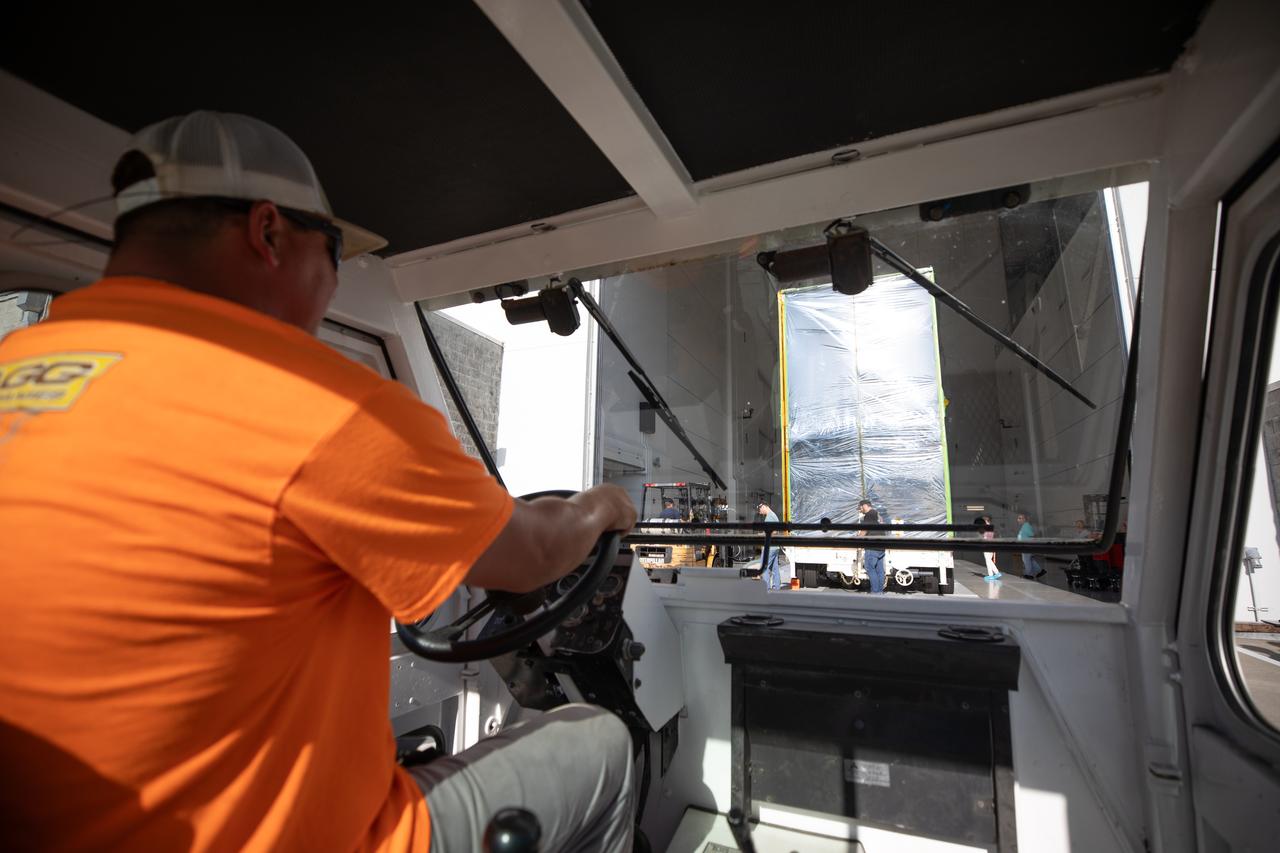
A driver uses a transport vehicle to move NASA’s Psyche spacecraft, secured for transport, into the entrance of Building 9 at the Astrotech Space Operations Facility near the agency’s Kennedy Space Center in Florida on Aug. 14, 2023. Psyche will explore its namesake, a metal-rich asteroid orbiting the Sun between Mars and Jupiter. Psyche has NASA’s Deep Space Optical Communications (DSOC) technology demonstration onboard the spacecraft. DSOC will be the agency's first demonstration of optical communication beyond the Moon. Psyche will launch atop a SpaceX Falcon Heavy rocket from Launch Complex 39A at Kennedy. Launch is targeted for Oct. 5, 2023.