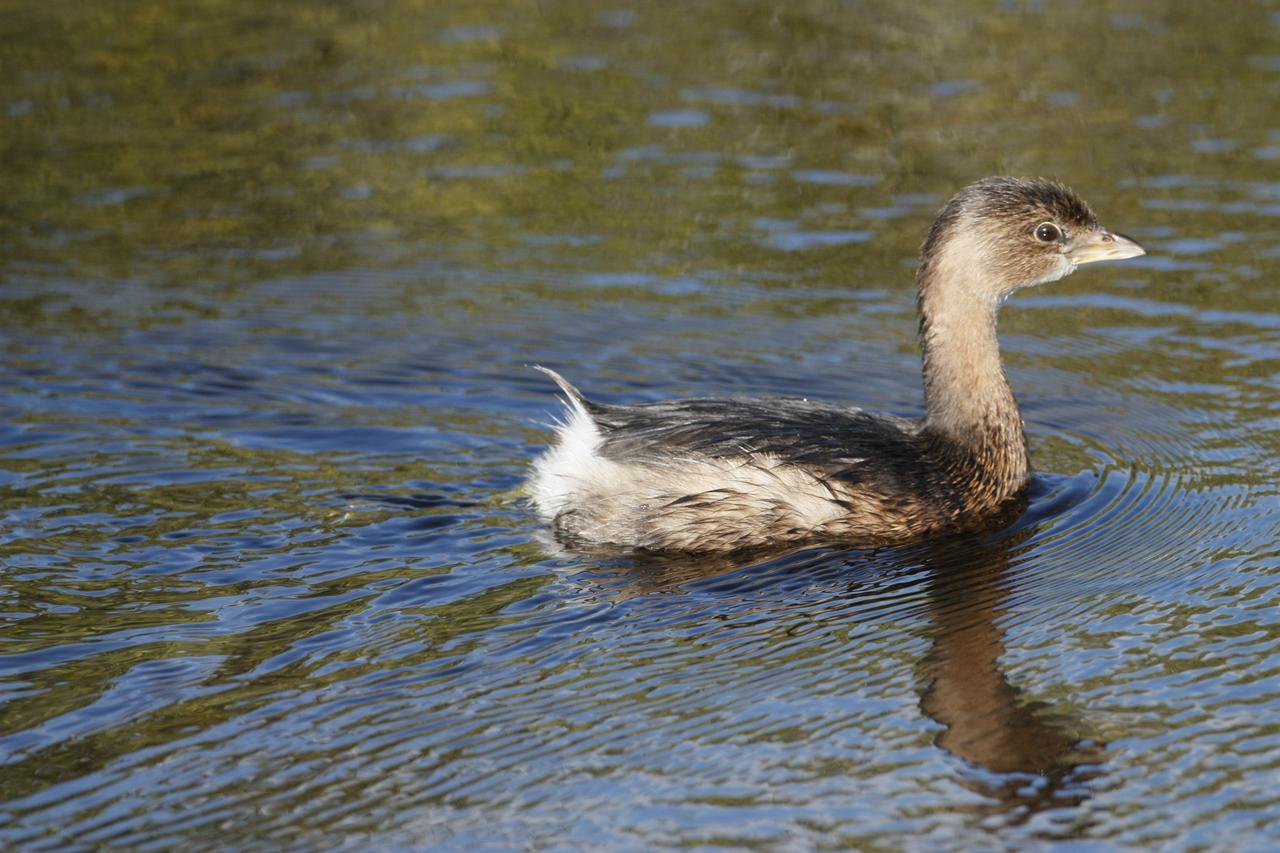
CAPE CANAVERAL, Fla. – Near NASA's Kennedy Space Center in Florida, a pied-billed Grebe swims on a pond in the Merritt island National Wildlife Refuge. The normal black band on its bill is lacking in winter. The most common grebe in eastern North America, the pied-billed Grebe inhabits marshes and ponds, eating small fish, crustaceans, especially crayfish, and aquatic insects. The center shares a boundary with the refuge that includes salt-water estuaries, brackish marshes, hardwood hammocks and pine flatwoods. The diverse landscape provides habitat for more than 310 species of birds, 25 mammals, 117 fishes and 65 amphibians and reptiles. Photo credit: NASA/Jim Grossmann
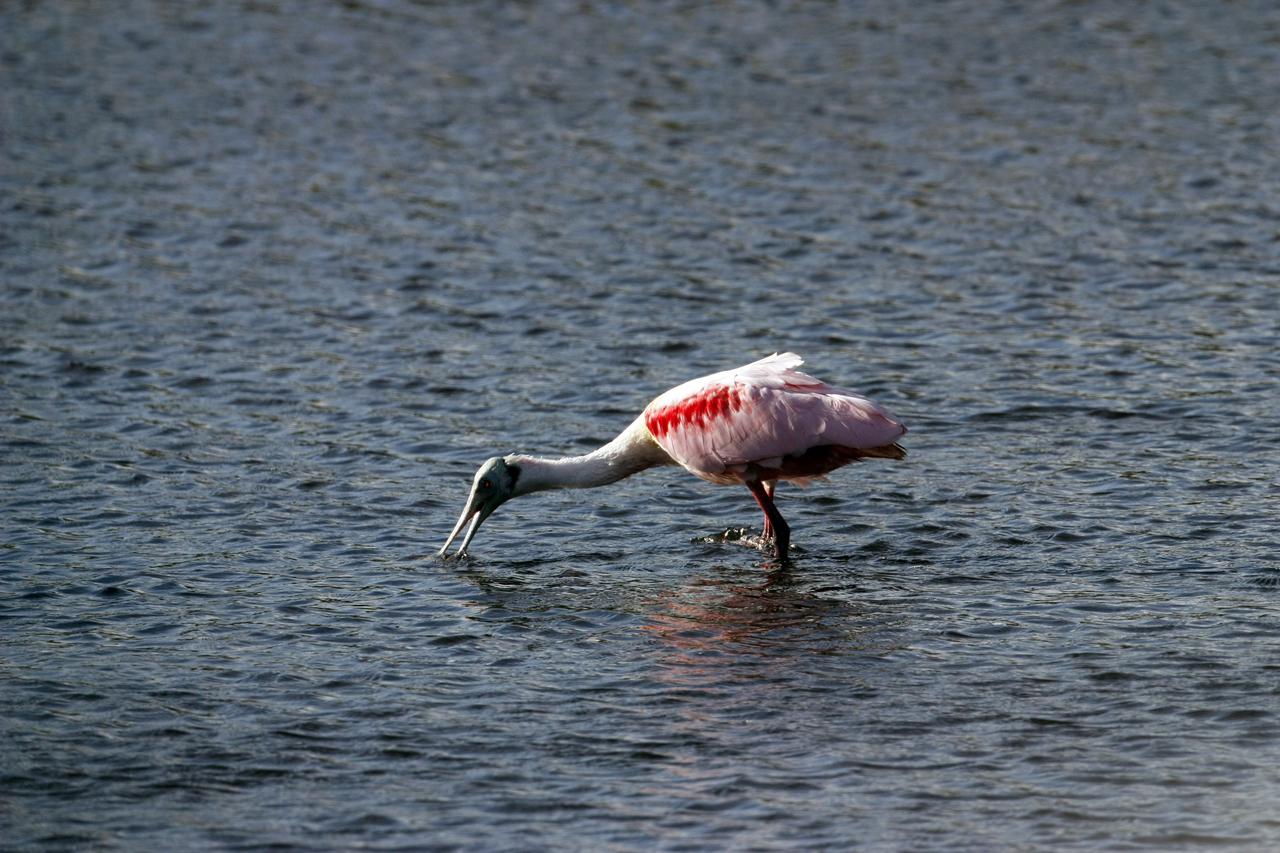
CAPE CANAVERAL, Fla. – A roseate spoonbill is feeding on a pond in the Merritt island National Wildlife Refuge, which borders NASA's Kennedy Space Center in Florida. Spoonbills inhabit areas of mangroves such as on the coasts of southern Florida and Texas. These birds feed on shrimp and fish in the shallow water, sweeping their bills from side to side. The center shares a boundary with the refuge that includes salt-water estuaries, brackish marshes, hardwood hammocks and pine flatwoods. The diverse landscape provides habitat for more than 310 species of birds, 25 mammals, 117 fishes and 65 amphibians and reptiles. Photo credit: NASA/Jim Grossmann
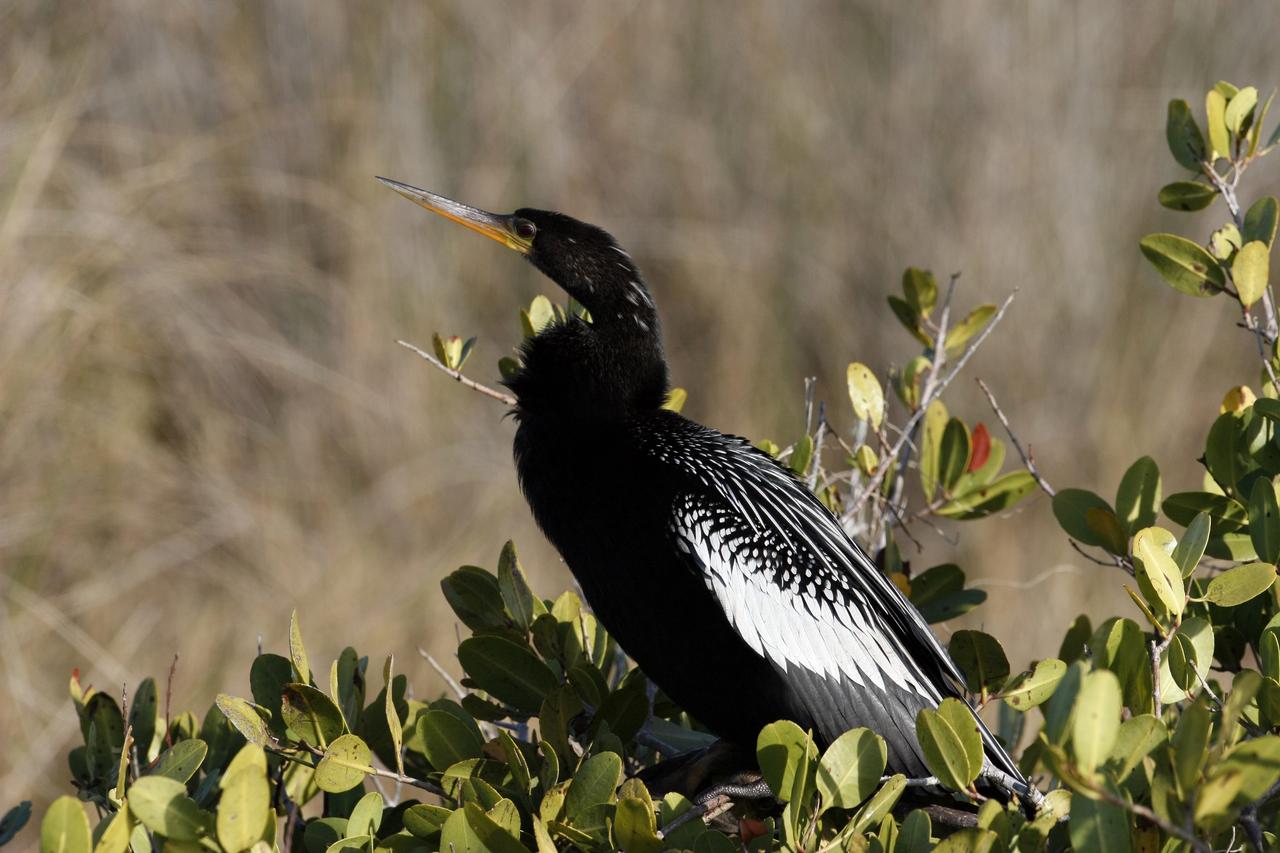
CAPE CANAVERAL, Fla. – A male Anhinga perches in a shrub in the Merritt island National Wildlife Refuge, which borders NASA's Kennedy Space Center in Florida. Anhingas inhabit freshwater ponds and swamps with thick vegetation. They range from the Atlantic and Gulf coasts from North Carolina to Texas, the Mississippi Valley north to Arkansas and Tennessee, and south to southern South America. They are also referred to as snakebirds because their body is submerged when swimming, showing only the head and long, slender neck above water. The center shares a boundary with the refuge that includes salt-water estuaries, brackish marshes, hardwood hammocks and pine flatwoods. The diverse landscape provides habitat for more than 310 species of birds, 25 mammals, 117 fishes and 65 amphibians and reptiles. Photo credit: NASA/Jim Grossmann

CAPE CANAVERAL, Fla. – Near NASA's Kennedy Space Center in Florida, on a pond in the Merritt island National Wildlife Refuge, a male hooded Merganser duck swims with a female (right) who is stretching her wings. The Merganser's habitat includes wooded ponds, lakes and rivers. They are most often seen along rivers and estuaries during the fall and winter. They feed chiefly on small fish, which they pursue in long, rapid, underwater dives, and also frogs and aquatic insects. The center shares a boundary with the refuge that includes salt-water estuaries, brackish marshes, hardwood hammocks and pine flatwoods. The diverse landscape provides habitat for more than 310 species of birds, 25 mammals, 117 fishes and 65 amphibians and reptiles. Photo credit: NASA/Jim Grossmann
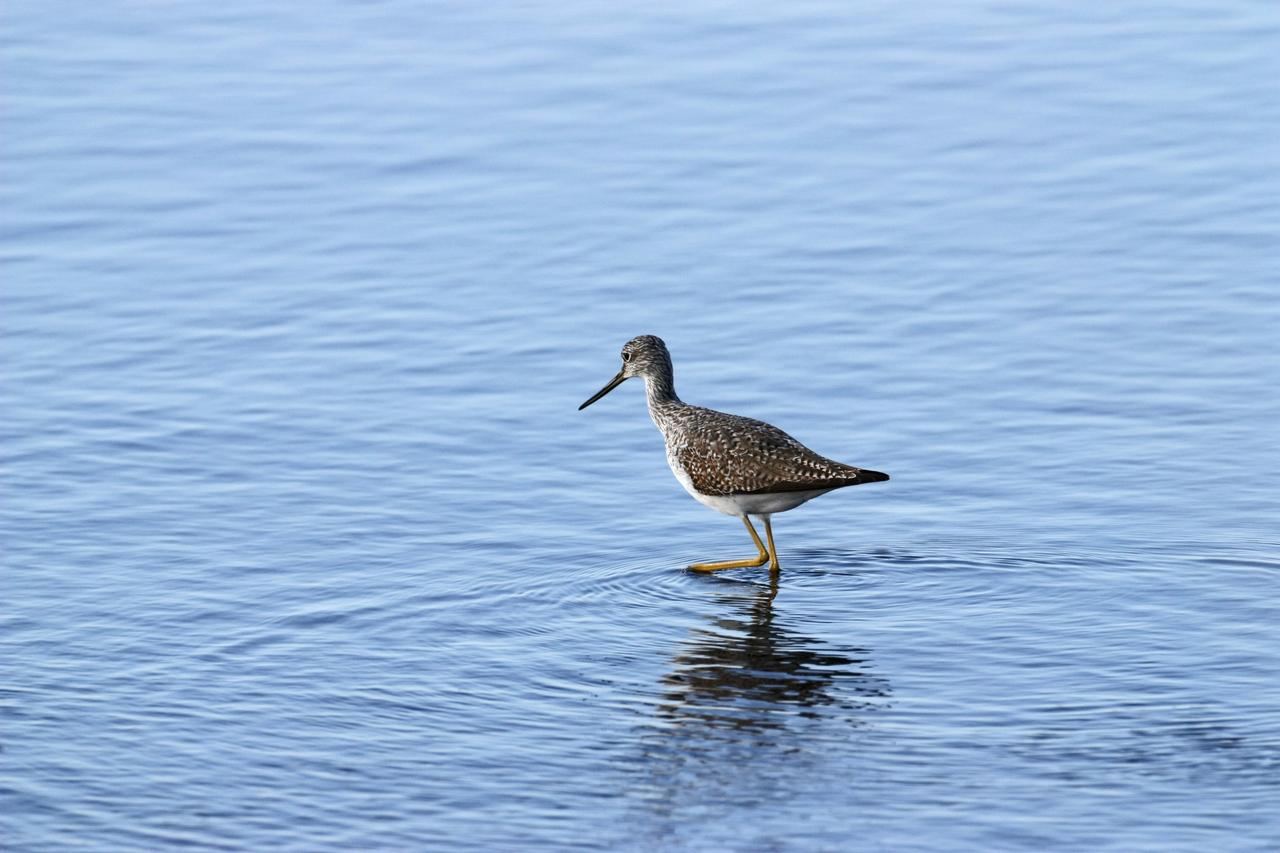
CAPE CANAVERAL, Fla. – A yellowleg sandpiper wades in the shallow water of a pond in the Merritt island National Wildlife Refuge, which borders NASA's Kennedy Space Center in Florida. They range through Alaska and Canada, wintering from the southern U.S. to southern South America. They inhabit marshy ponds, lake and river shores and mud flats. The center shares a boundary with the refuge that includes salt-water estuaries, brackish marshes, hardwood hammocks and pine flatwoods. The diverse landscape provides habitat for more than 310 species of birds, 25 mammals, 117 fishes and 65 amphibians and reptiles. Photo credit: NASA/Jim Grossmann
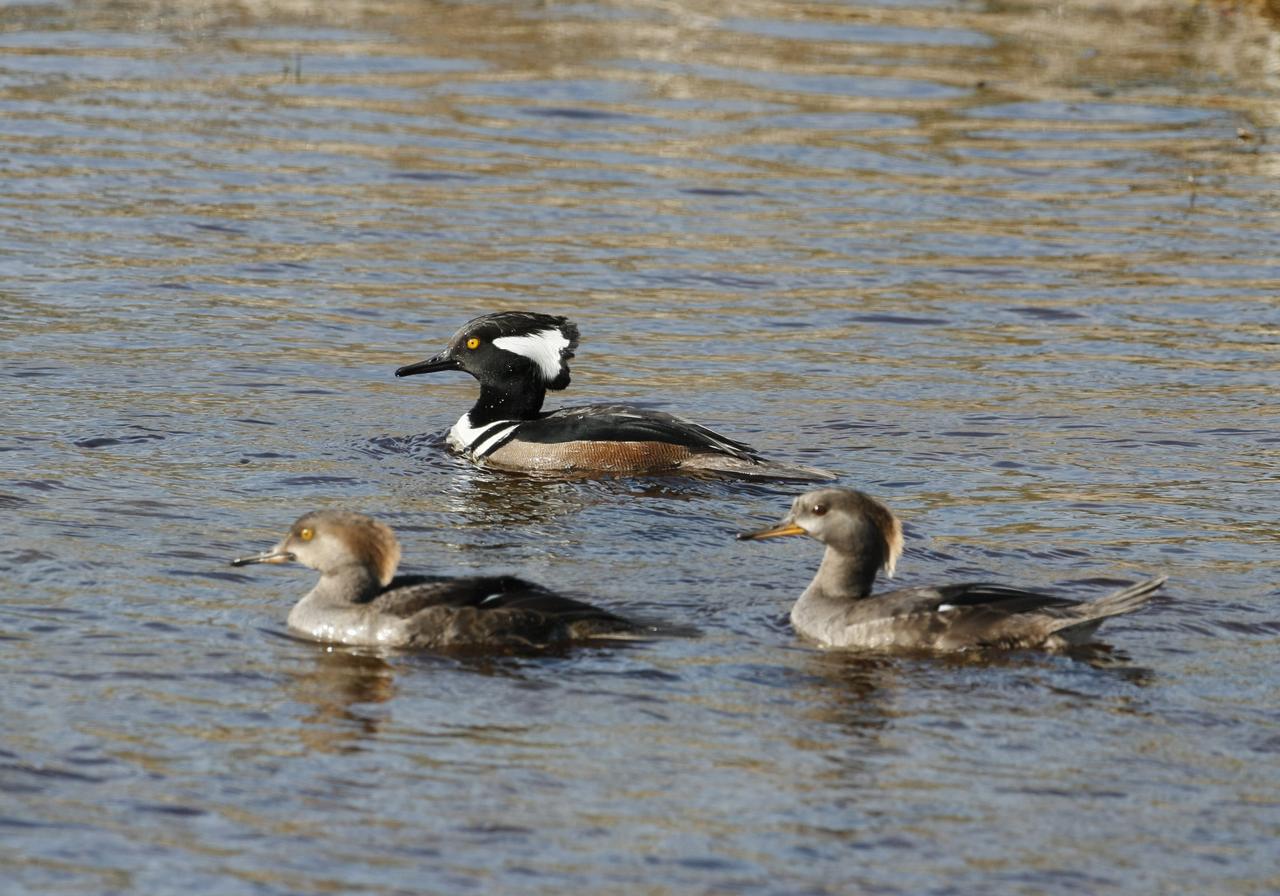
CAPE CANAVERAL, Fla. – Near NASA's Kennedy Space Center in Florida, on a pond in the Merritt island National Wildlife Refuge, a male hooded Merganser duck swims with two females. Their habitat includes wooded ponds, lakes and rivers. They are most often seen along rivers and estuaries during the fall and winter. They feed chiefly on small fish, which they pursue in long, rapid, underwater dives, and also frogs and aquatic insects. The center shares a boundary with the refuge that includes salt-water estuaries, brackish marshes, hardwood hammocks and pine flatwoods. The diverse landscape provides habitat for more than 310 species of birds, 25 mammals, 117 fishes and 65 amphibians and reptiles. Photo credit: NASA/Jim Grossmann
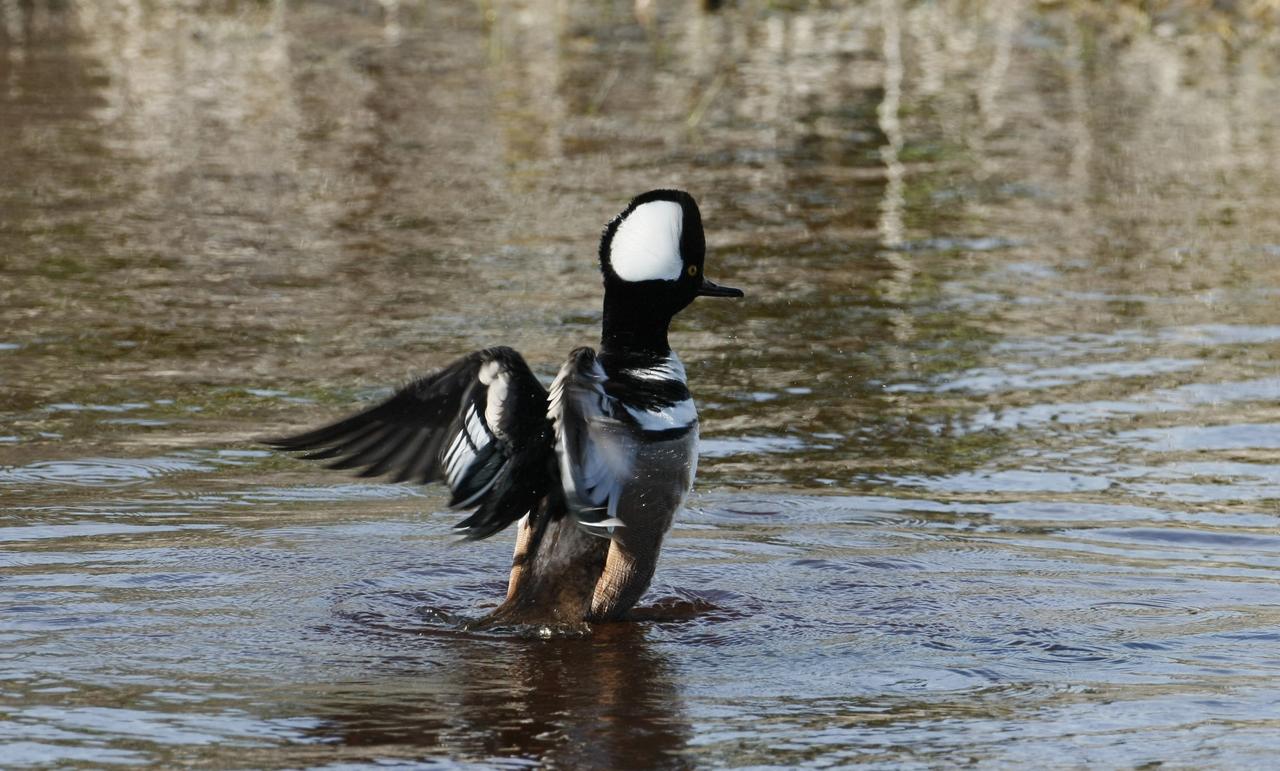
CAPE CANAVERAL, Fla. – Near NASA's Kennedy Space Center in Florida, on a pond in the Merritt island National Wildlife Refuge, a male hooded Merganser duck stretches its wings. The Merganser's habitat includes wooded ponds, lakes and rivers. They are most often seen along rivers and estuaries during the fall and winter. They feed chiefly on small fish, which they pursue in long, rapid, underwater dives, and also frogs and aquatic insects. The center shares a boundary with the refuge that includes salt-water estuaries, brackish marshes, hardwood hammocks and pine flatwoods. The diverse landscape provides habitat for more than 310 species of birds, 25 mammals, 117 fishes and 65 amphibians and reptiles. Photo credit: NASA/Jim Grossmann
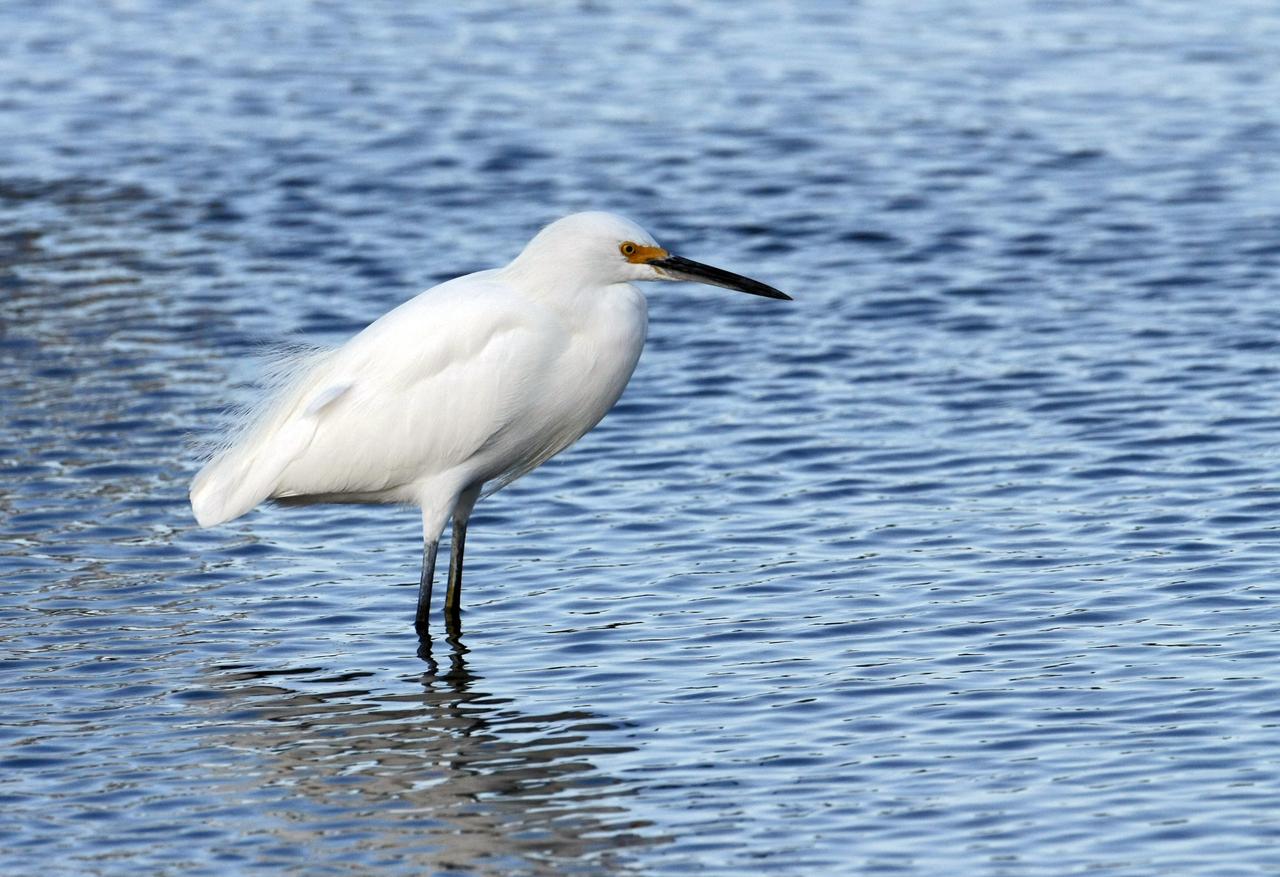
CAPE CANAVERAL, Fla. – A snowy egret stands in the shallow water of a pond in the Merritt island National Wildlife Refuge, which borders NASA's Kennedy Space Center in Florida. A type of heron, the snowy egret inhabits salt marshes, ponds, rice fields and shallow coastal bays ranging from Maine to southern South America on the east coast. It can also be found in California and Oklahoma to the Gulf of Mexico. The center shares a boundary with the refuge that includes salt-water estuaries, brackish marshes, hardwood hammocks and pine flatwoods. The diverse landscape provides habitat for more than 310 species of birds, 25 mammals, 117 fishes and 65 amphibians and reptiles. Photo credit: NASA/Jim Grossmann
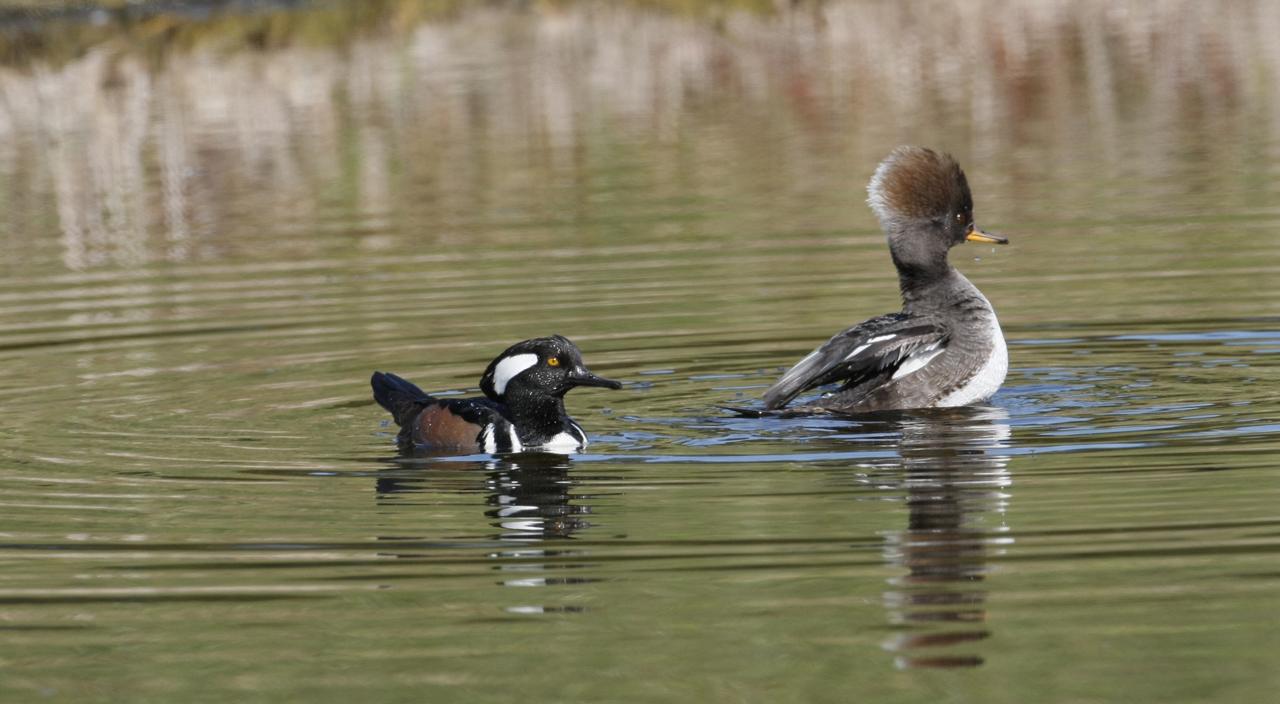
CAPE CANAVERAL, Fla. – Near NASA's Kennedy Space Center in Florida, on a pond in the Merritt island National Wildlife Refuge, a male hooded Merganser duck swims with a female. The Merganser's habitat includes wooded ponds, lakes and rivers. They are most often seen along rivers and estuaries during the fall and winter. They feed chiefly on small fish, which they pursue in long, rapid, underwater dives, and also frogs and aquatic insects. The center shares a boundary with the refuge that includes salt-water estuaries, brackish marshes, hardwood hammocks and pine flatwoods. The diverse landscape provides habitat for more than 310 species of birds, 25 mammals, 117 fishes and 65 amphibians and reptiles. Photo credit: NASA/Jim Grossmann
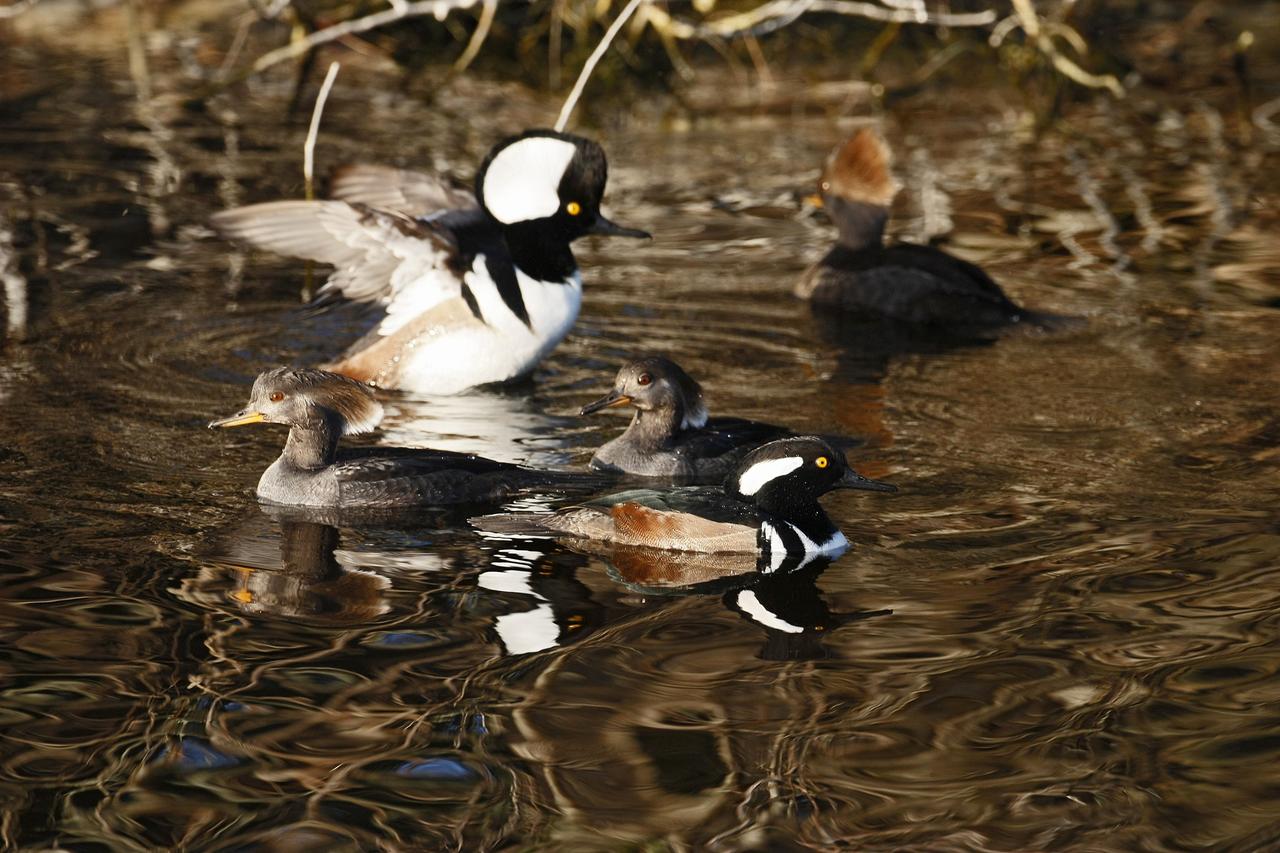
CAPE CANAVERAL, Fla. – Hooded Merganser ducks swim on a pond in the Merritt island National Wildlife Refuge, which borders NASA's Kennedy Space Center in Florida. Their habitat includes wooded ponds, lakes and rivers. They are most often seen along rivers and estuaries during the fall and winter. They feed chiefly on small fish, which they pursue in long, rapid, underwater dives, and also frogs and aquatic insects. The center shares a boundary with the refuge that includes salt-water estuaries, brackish marshes, hardwood hammocks and pine flatwoods. The diverse landscape provides habitat for more than 310 species of birds, 25 mammals, 117 fishes and 65 amphibians and reptiles. Photo credit: NASA/Jim Grossmann
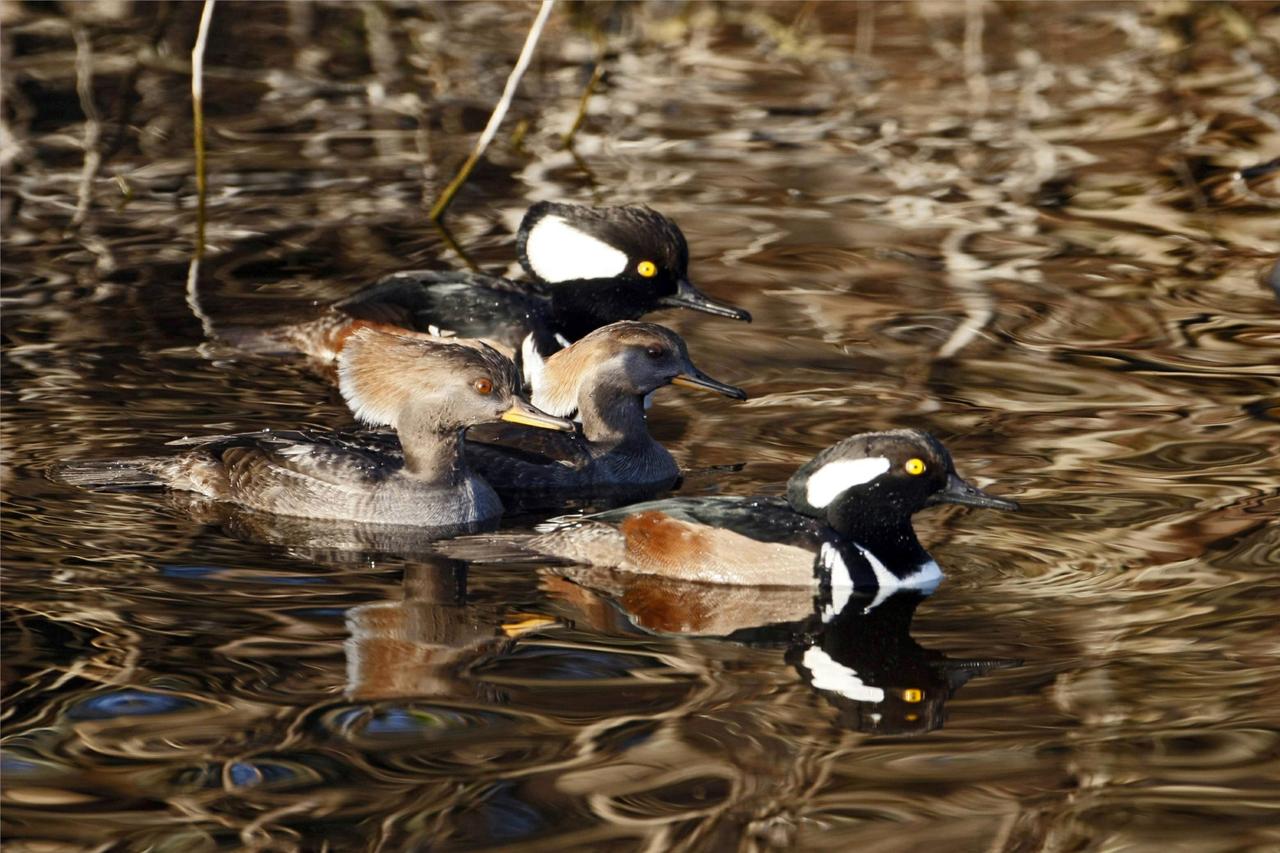
CAPE CANAVERAL, Fla. – Hooded Merganser ducks swim on a pond in the Merritt island National Wildlife Refuge, which borders NASA's Kennedy Space Center in Florida. Their habitat includes wooded ponds, lakes and rivers. They are most often seen along rivers and estuaries during the fall and winter. They feed chiefly on small fish, which they pursue in long, rapid, underwater dives, and also frogs and aquatic insects. The center shares a boundary with the refuge that includes salt-water estuaries, brackish marshes, hardwood hammocks and pine flatwoods. The diverse landscape provides habitat for more than 310 species of birds, 25 mammals, 117 fishes and 65 amphibians and reptiles. Photo credit: NASA/Jim Grossmann

CAPE CANAVERAL, Fla. – Near NASA's Kennedy Space Center in Florida, a male Northern pintail duck swims on a pond in the Merritt island National Wildlife Refuge. Pintails inhabit marshes, prairie ponds and tundra. Widely distributed across the U.S. and Canada, the breed winters south to Central America and the West Indies. It feeds largely on seeds of aquatic plants but may also take small aquatic animals. The center shares a boundary with the refuge that includes salt-water estuaries, brackish marshes, hardwood hammocks and pine flatwoods. The diverse landscape provides habitat for more than 310 species of birds, 25 mammals, 117 fishes and 65 amphibians and reptiles. Photo credit: NASA/Jim Grossmann
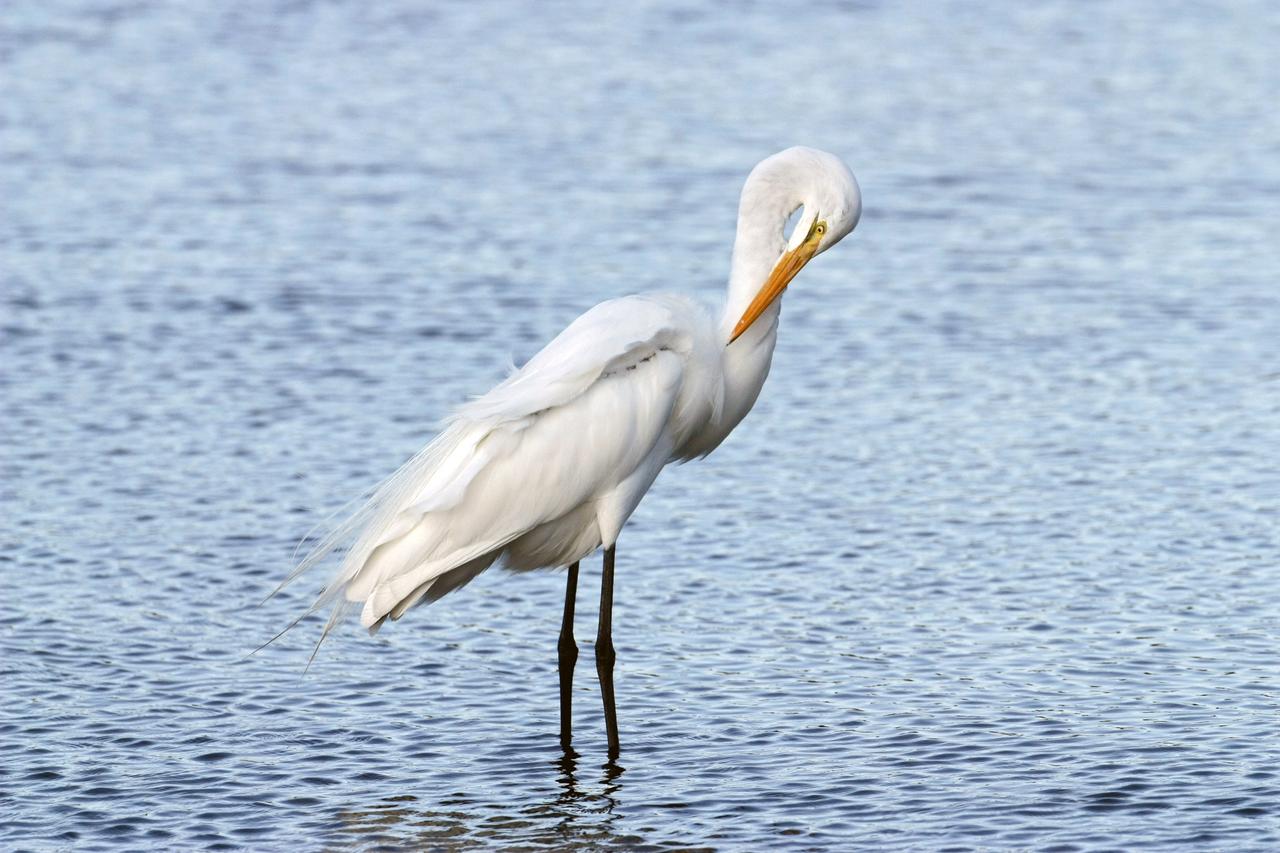
CAPE CANAVERAL, Fla. – A great egret preens its feathers while standing in the shallow water of a pond in the Merritt island National Wildlife Refuge, which borders NASA's Kennedy Space Center in Florida. The breed feeds alone, stalking fish, frogs, snakes and crayfish in shallow water. They inhabit freshwater and salt marshes, marshy ponds and tidal flats. The center shares a boundary with the refuge that includes salt-water estuaries, brackish marshes, hardwood hammocks and pine flatwoods. The diverse landscape provides habitat for more than 310 species of birds, 25 mammals, 117 fishes and 65 amphibians and reptiles. Photo credit: NASA/Jim Grossmann