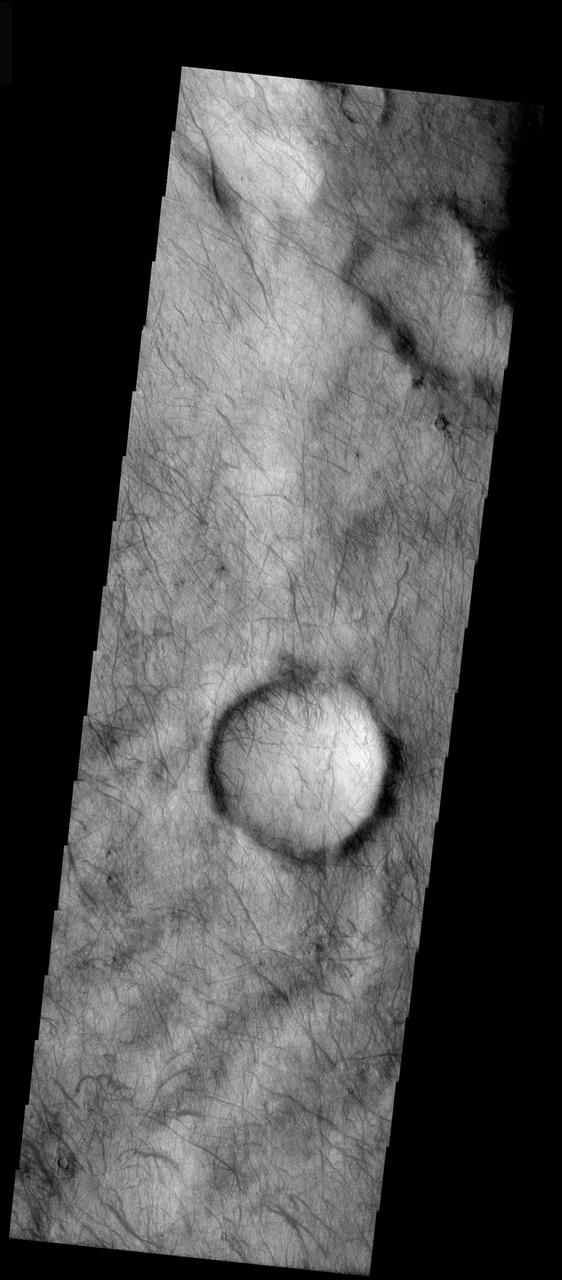
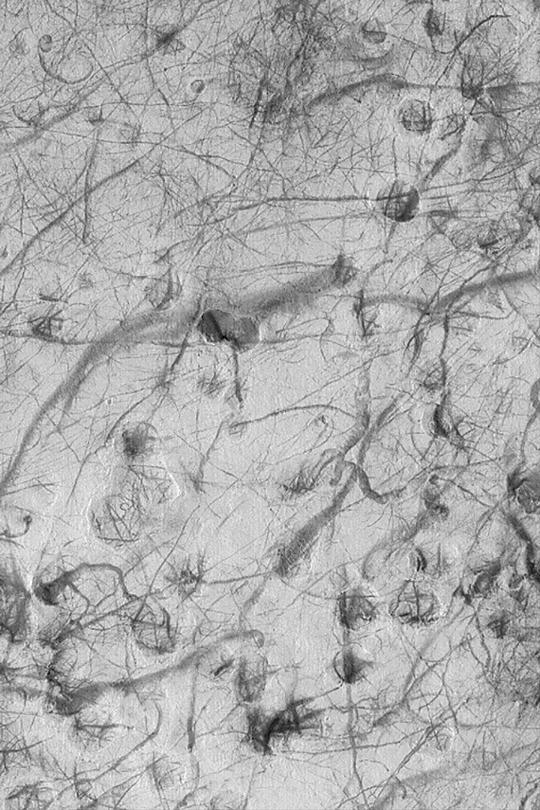
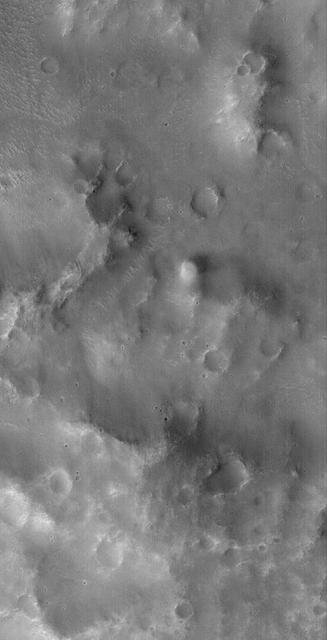
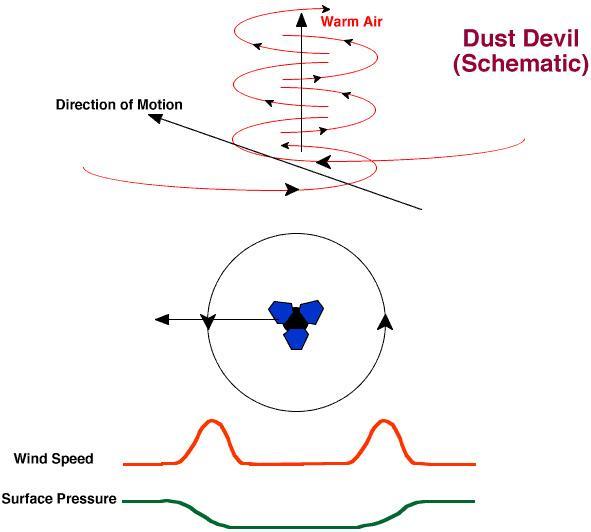
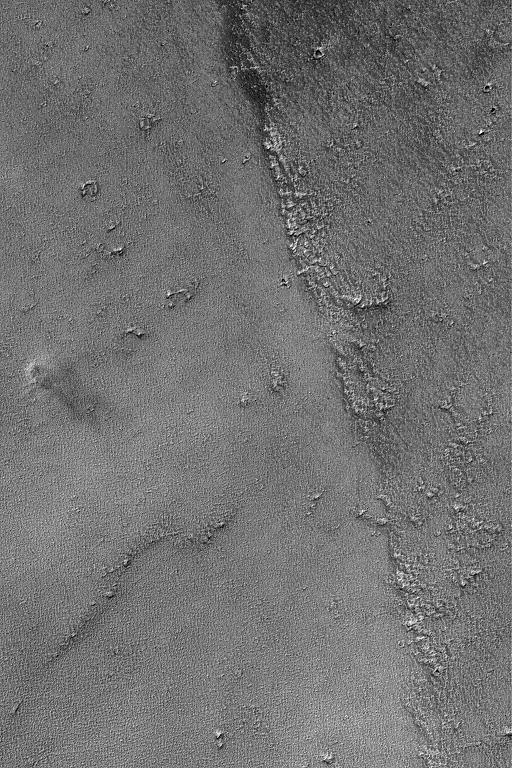
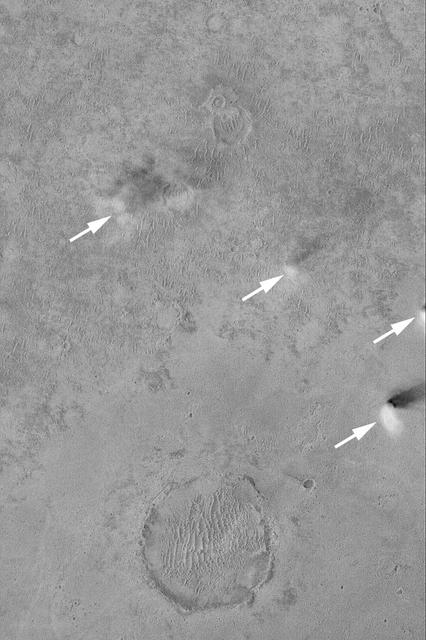
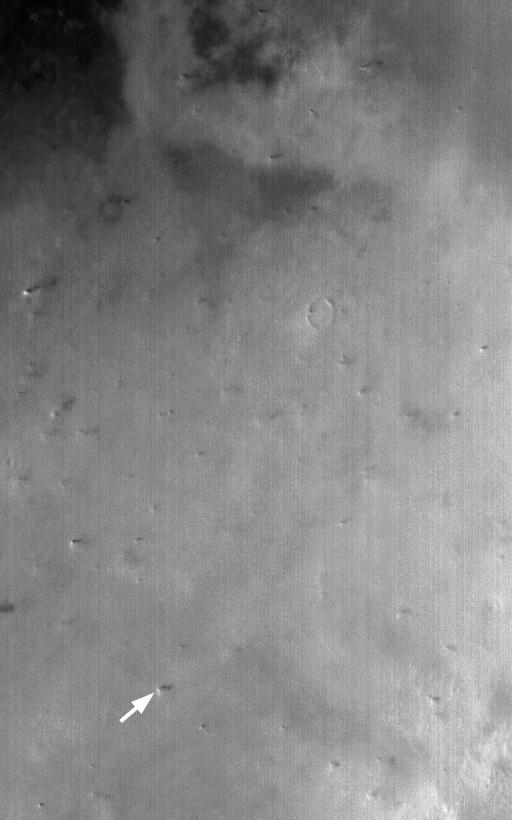
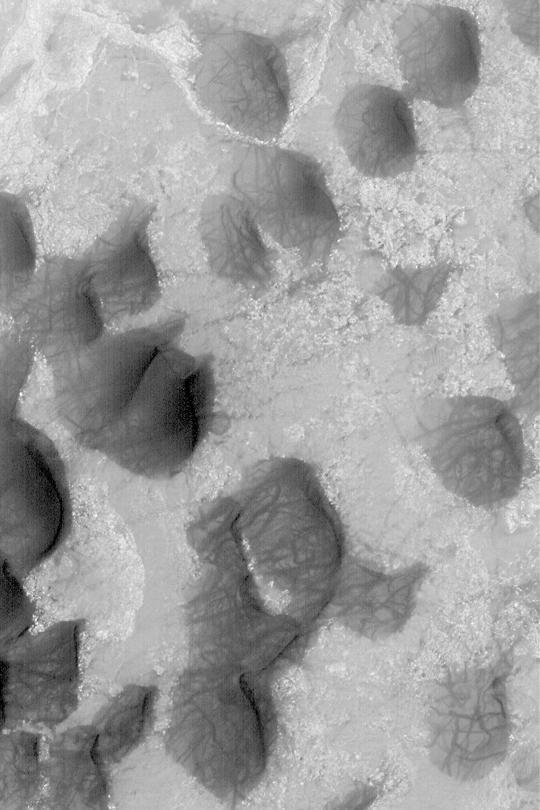
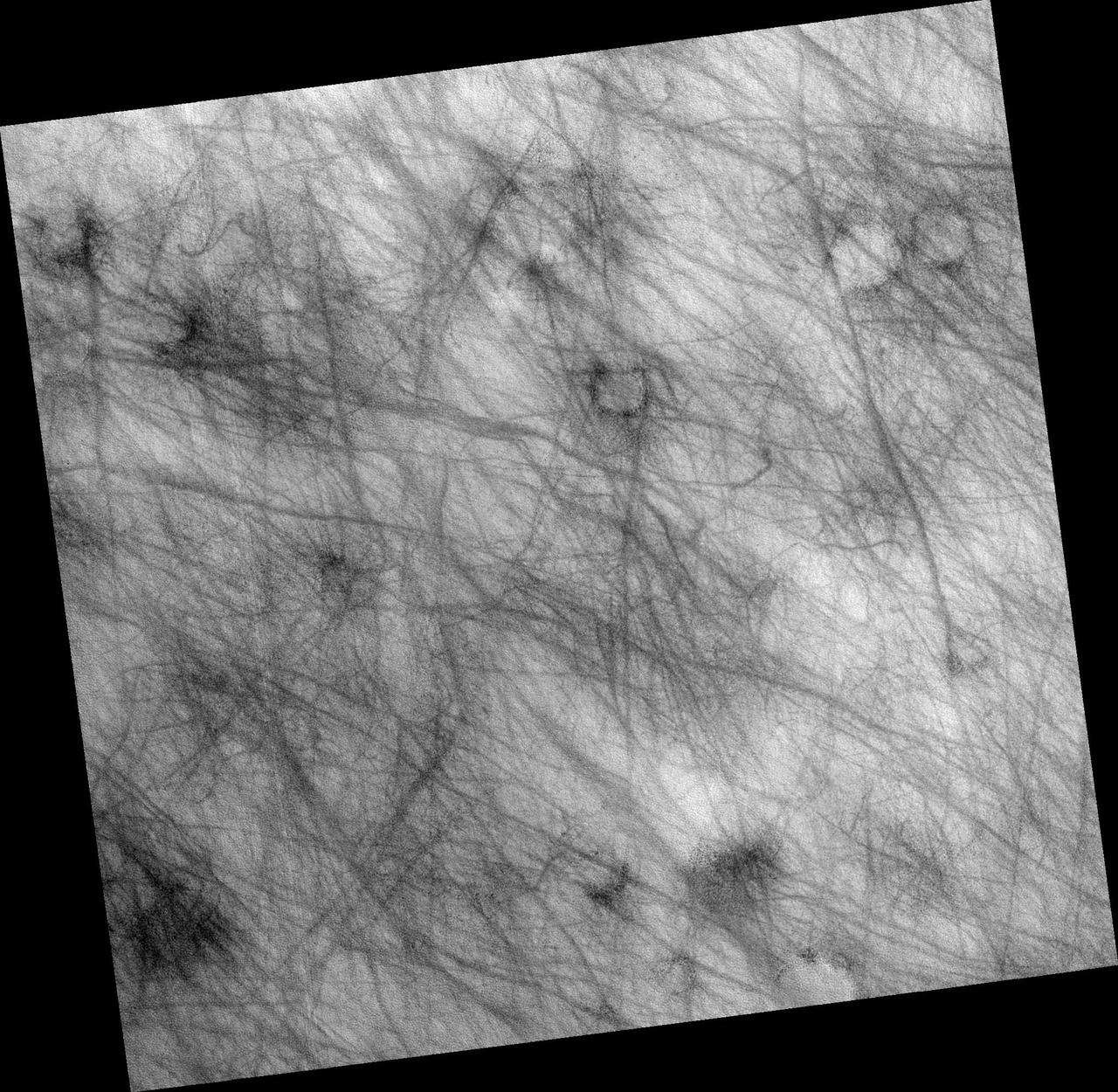
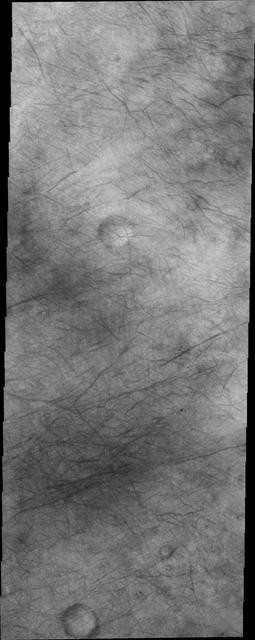
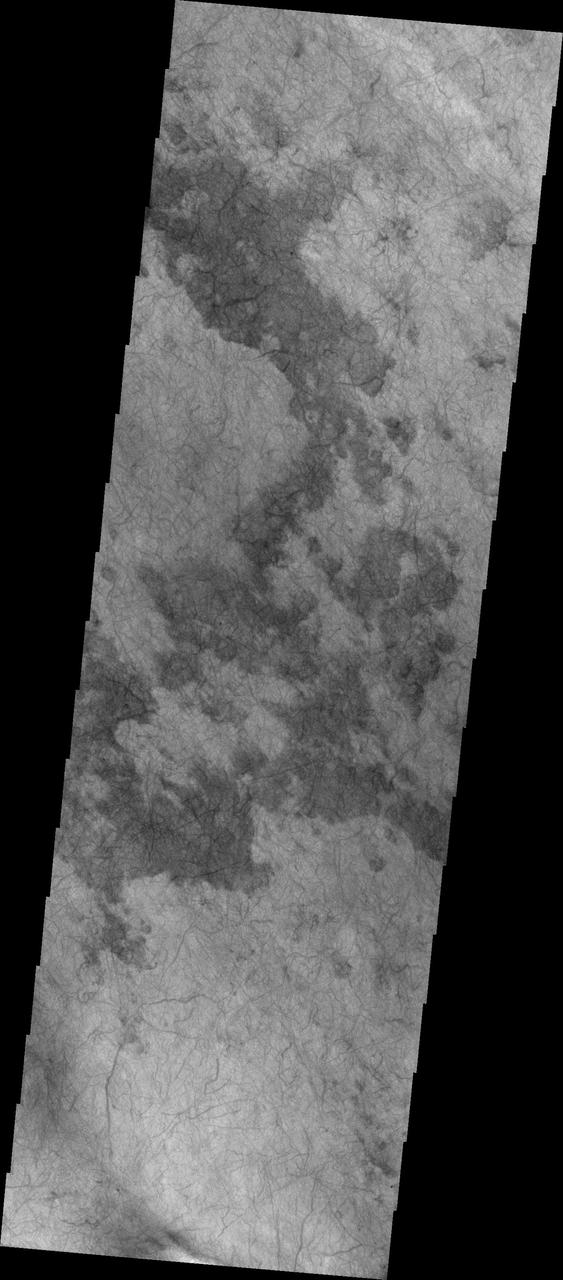
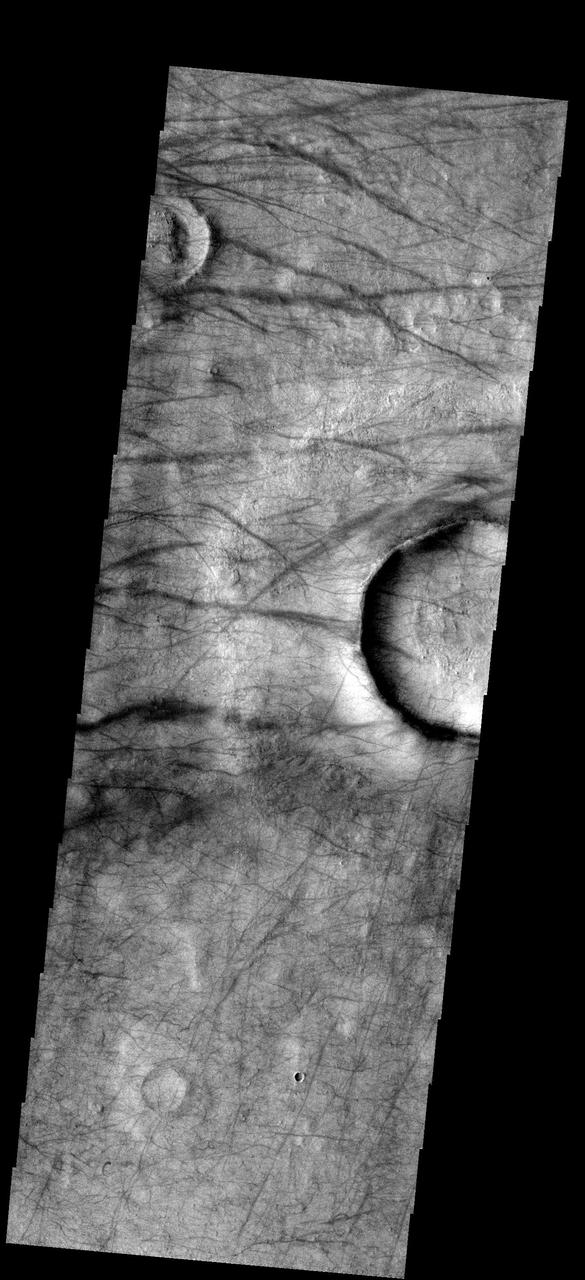
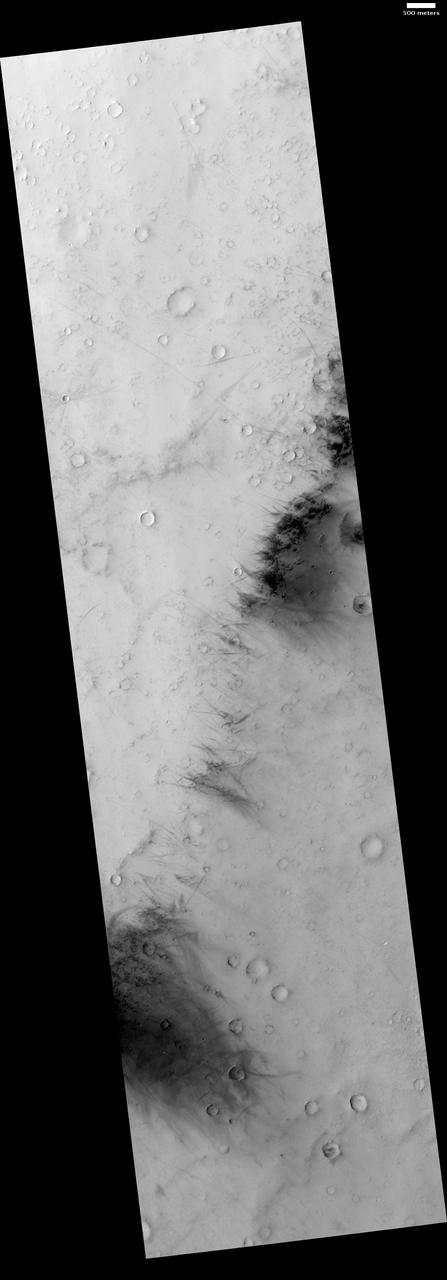
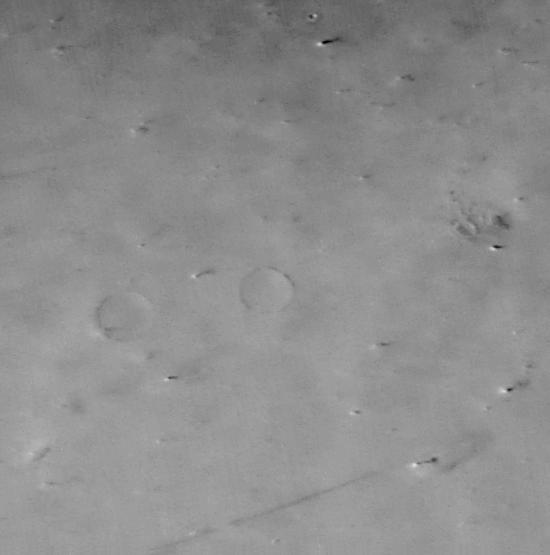
On an early fall afternoon in Ganges Chasma Valles Marineris, NASA Mars Reconnaissance Orbiter spacecraft managed to capture a cluster of eight dust devils, five of them in the enhanced color strip. They're together on a dark sandy surface that tilts slightly to the north, towards the Sun.  Both of these factors help warm the surface and generate convection in the air above. The surface is streaked with the faint tracks of earlier dust devils. A pair of dust devils appears together at top right, spaced only 250 meters apart. These two have quite different morphologies. The bigger one (on the right) is about 100 meters in diameter and is shaped like a doughnut with a hole in the middle. Its smaller companion is more compact and plume-like, but it too has a small hole in the center, where the air pressure is lowest. It may be that the smaller dust devil is younger than the larger one. A row of four dust devils are in the middle of the color strip, separated by about 900 meters from one another.  This image might answer some interesting questions about the behavior of dust devils. Dust devils are theoretically expected to migrate uphill on a sloping surface, or migrate downwind when there is a breeze. Where they are found close together in pairs, they are expected to rotate in opposite directions. HiRISE color observations can be used to determine the direction of rotation and-for fast moving dust devils-the direction of their travel. This is because the different color observations (infrared, red, and blue) are taken at slightly different times. The differences between the earliest color observation and the last tell us about the changes that took place during that time interval.  All this requires careful analysis, but if these dust devils are moving fast enough, and spaced closely enough, these here might display some interesting "social dynamics," possibly marching together and rotating in alternating directions.  http://photojournal.jpl.nasa.gov/catalog/PIA20045
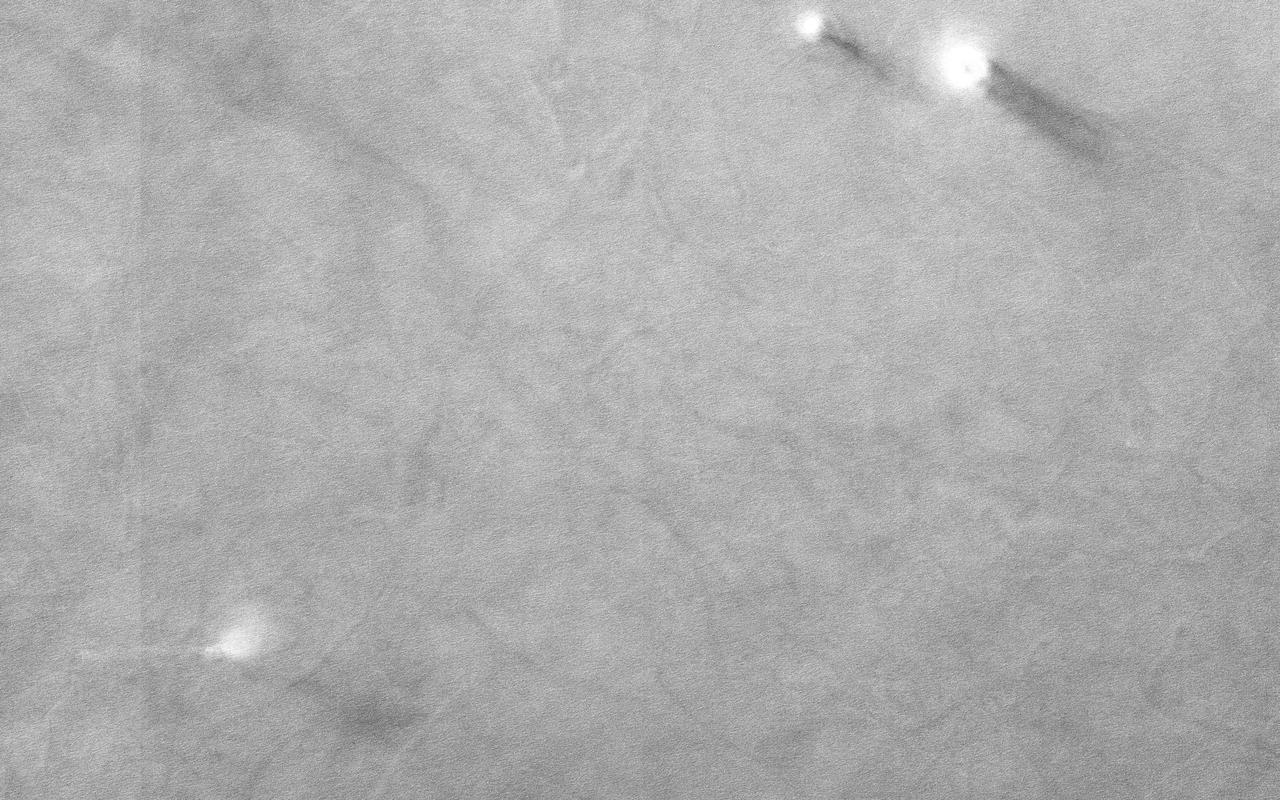
Marching Dust Devils
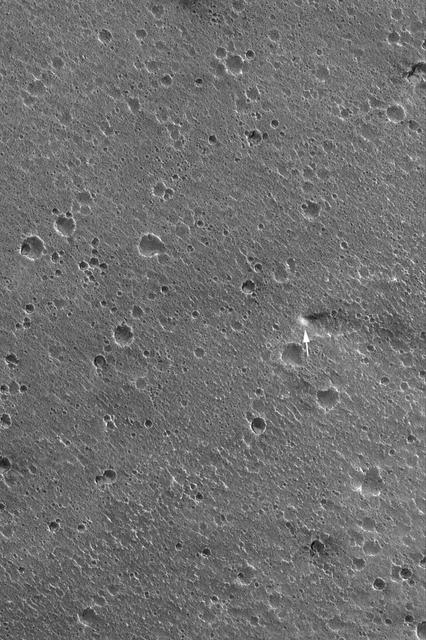
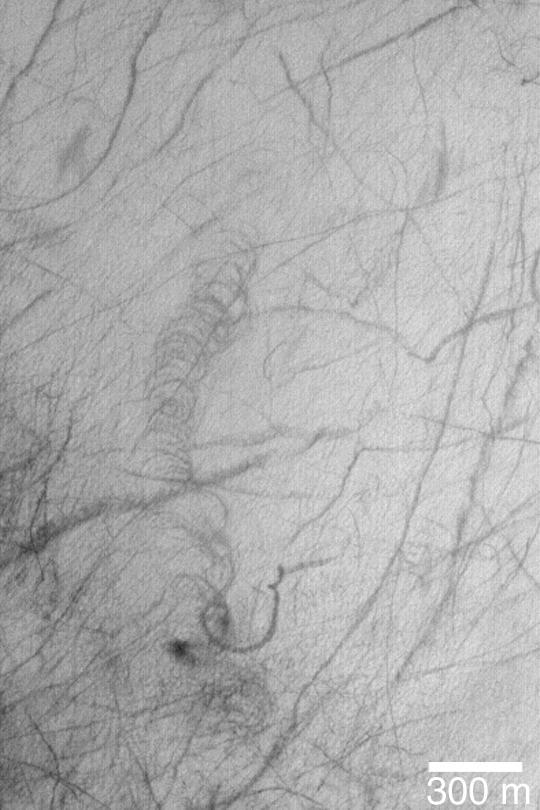
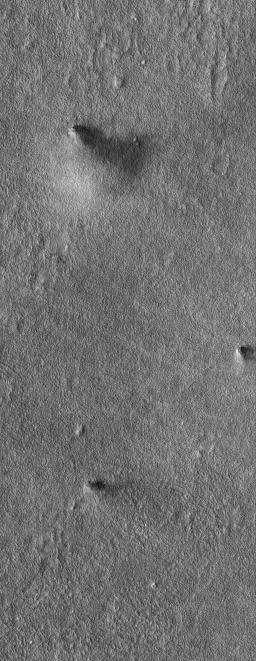
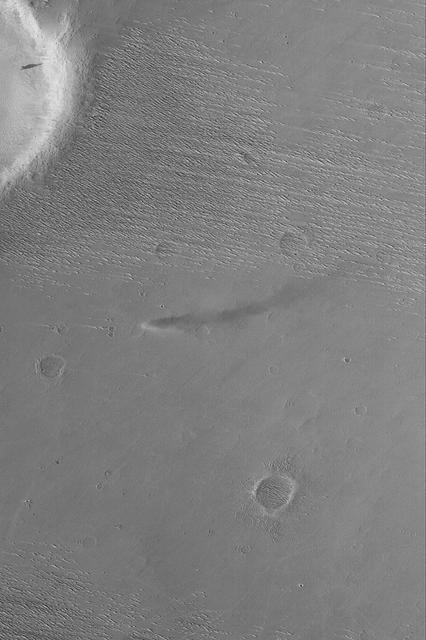
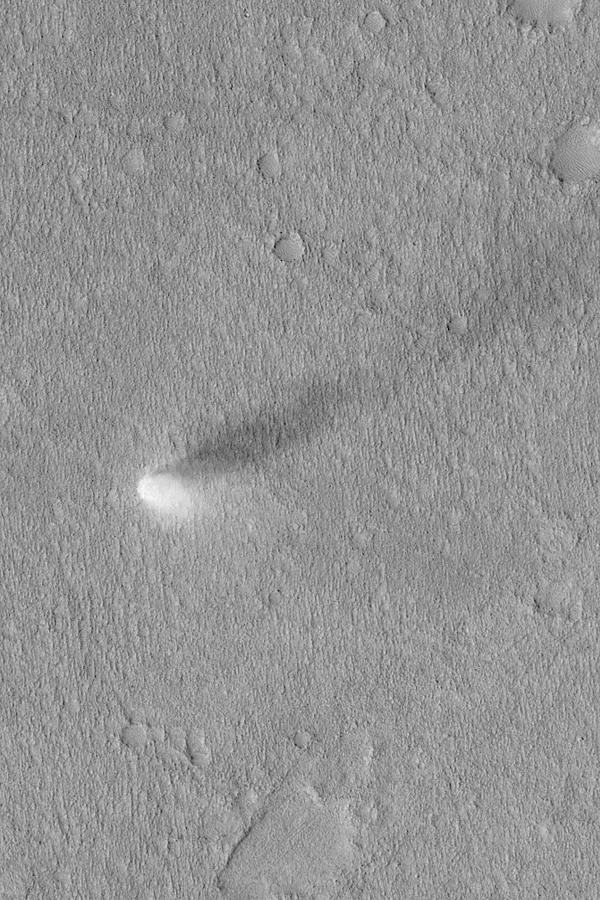
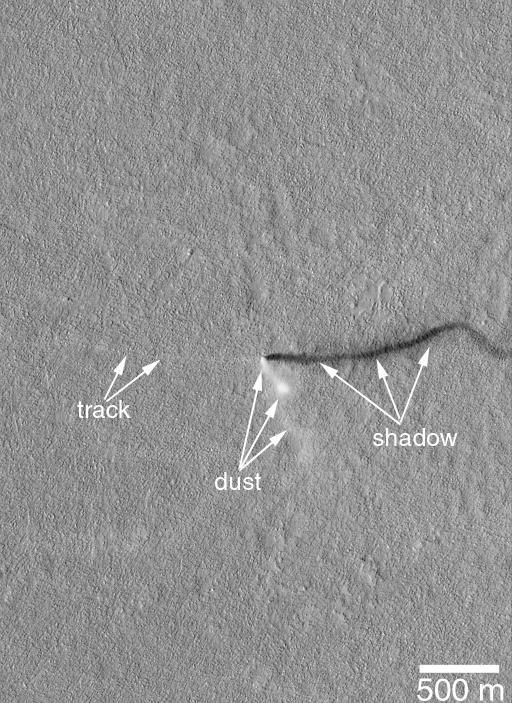
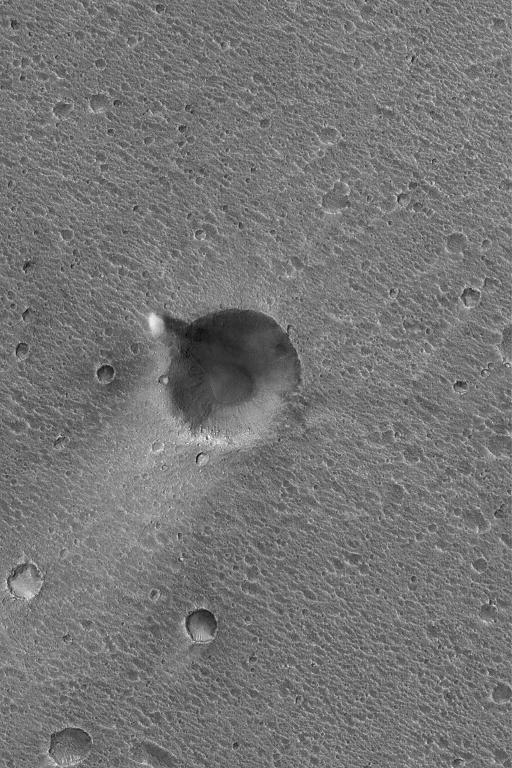
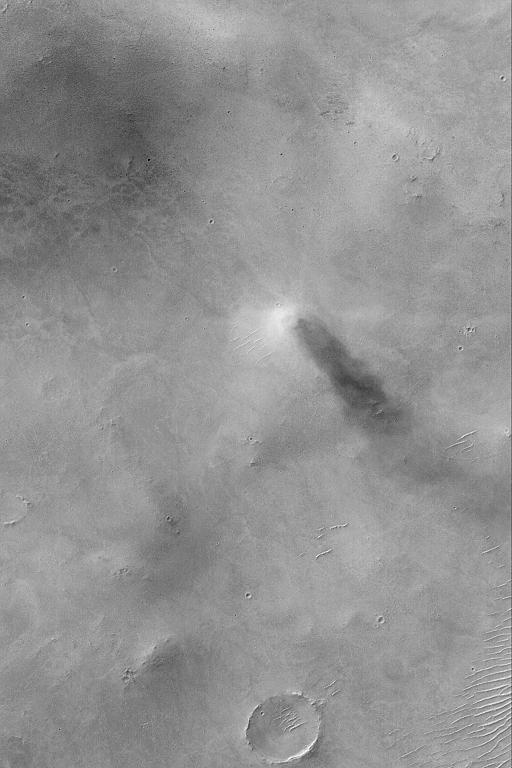
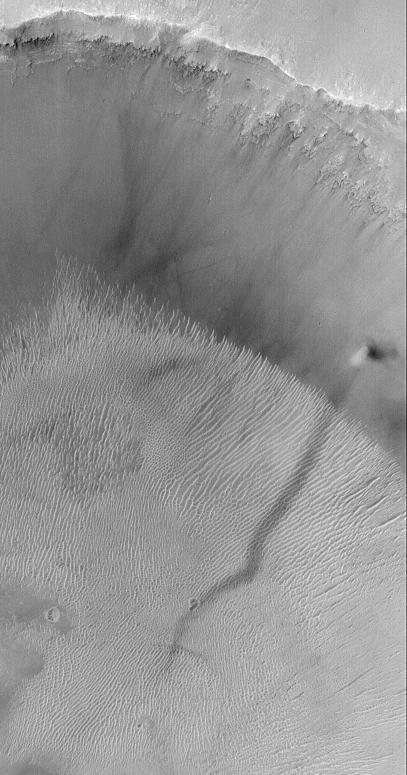
There are many dust devils on Mars -- little twisters that raise dust from the surface. They have also cleaned dust off of the solar panels of the rovers Opportunity and Spirit, improving the solar power production. (Spirit became stuck in 2009 and ceased communication a year later.)  HiRISE sees many dust-devil tracks on Mars, but rarely captures an active feature because the images cover such small areas and because the typical time of day near 3 p.m. is past the peak heating and dust-devil activity.  The map is projected here at a scale of 25 centimeters (9.8 inches) per pixel. [The original image scale is 29.5 centimeters (11.6 inches) per pixel (with 1 x 1 binning) to 58.9 centimeters (23.2 inches) per pixel (with 2 x 2 binning)]. North is up.  http://photojournal.jpl.nasa.gov/catalog/PIA21457
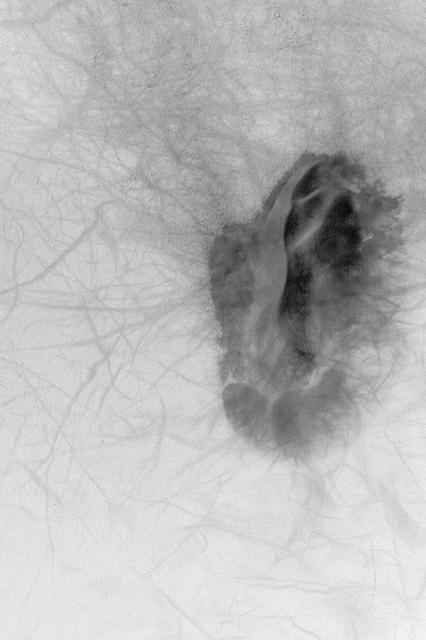
A Dust Devil on Hilly Terrain
Dust Devils
Dust Devils
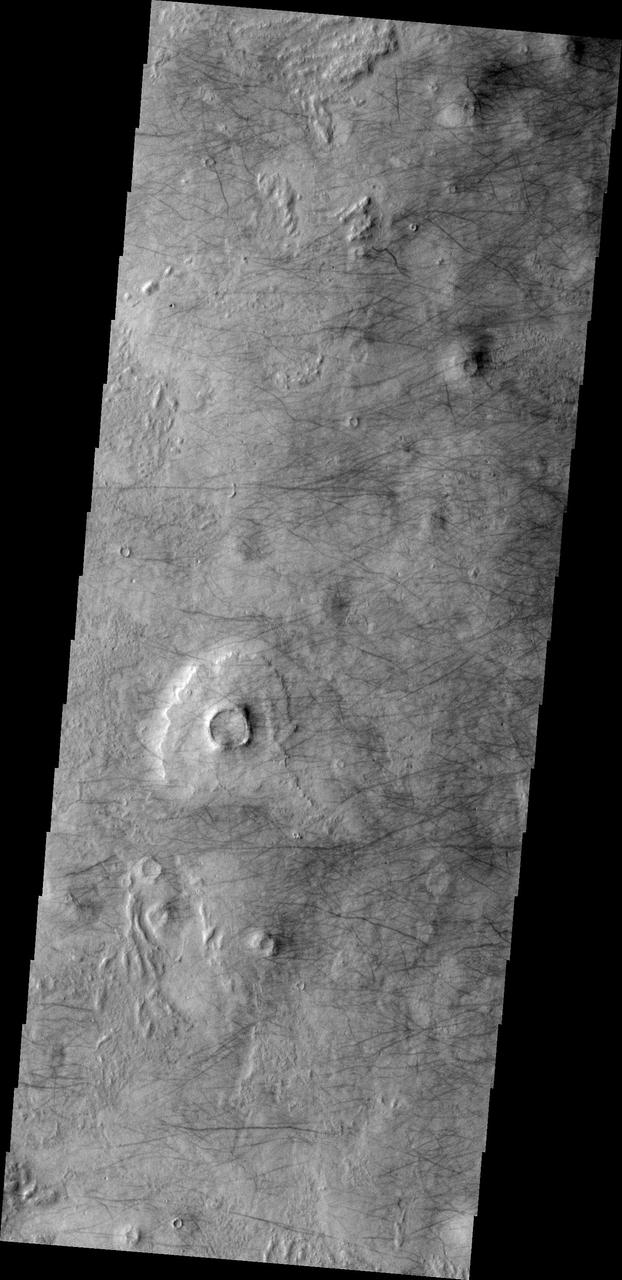
Dust Devil Tracks
Dust Devil Tracks
Dune and Dust Devil Tracks
Bright Dust Devil Tracks
Dust Devil Streaks
Dust Devil Streaks
Dust Devil Tracks
Dust Devil Tracks
A Mid-Summer Dust Devil
Dust Devil Tracks
Dust Devil Tracks
Dust Devil Tracks
Dust Devil Tracks
Dust Devil Tracks
Dust Devil Tracks
Dust Devil Tracks
Dust Devil Tracks
Big Dust Devils
Big Dust Devils
Dust Devils Seen by Spirit
Light Dust Devil Tracks
Daedalia Dust Devil
Daedalia Dust Devil
Dust Devil Tracks
Dust Devil Tracks
Dust Devil Tracks
Dust Devil Tracks
Martian Dust Devil Tracks
Isidis Dust Devil
Isidis Dust Devil
September Dust Devil
Tithonium Dust Devil
Dust Devil Tracks
Dust Devil Tracks
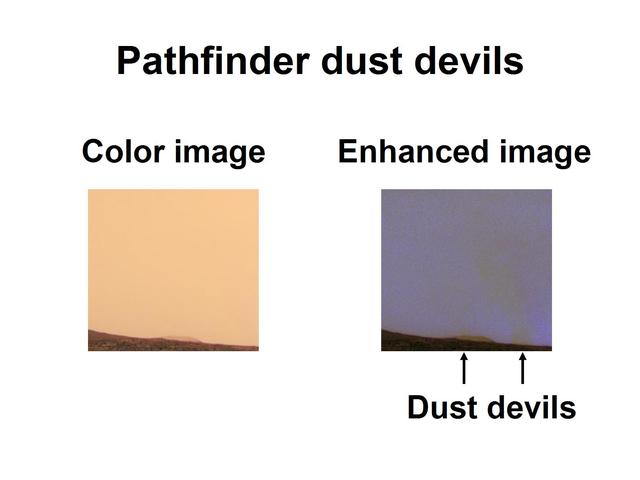
Pathfinder Spies Dust Devils
Dust Devil Tracks
Dust Devil Tracks
Dust Devil Art
Dust Devil Art
Dust Devil Tracks
Dust Devil Tracks
Dust Devil Tracks
Dust Devil Tracks
Southern Dust Devils
Dust Devil Tracks
Dust Devil Tracks
Loire Dust Devil
Loire Dust Devil
Kaiser Crater Dust Devils
Dune and Dust Devil Streaks
Argyre Dust Devil Tracks
Dust Devil Days
Dust Devil Days
Dust Devil Art
Dust Devil Art
Dust Devil Tracks
Dust Devil Tracks
Dust Devil Tracks
Dust Devil Tracks
Ares Vallis Dust Devil
Dunes and Dust Devil Tracks
Plentiful Dust Devils
Summertime Dust Devil
Dust Devil Tracks
Dust Devil Tracks
Dust Devil Schematic
Dust Devil Tracks
Dust Devil Tracks
Cycloidal Dust Devil Track
Dust Devils Near Schiaparelli
Dust Devils Together
Dust Devil Tracks
Dust Devil Tracks
Syrian Dust Devil
Syrian Dust Devil
Dust Devil Tracks
Dust Devil Tracks
Sabaeus Dust Devil
Sabaeus Dust Devil
Gusev Dust Devil, sol 532
Wind vs. Dust Devil Streaks
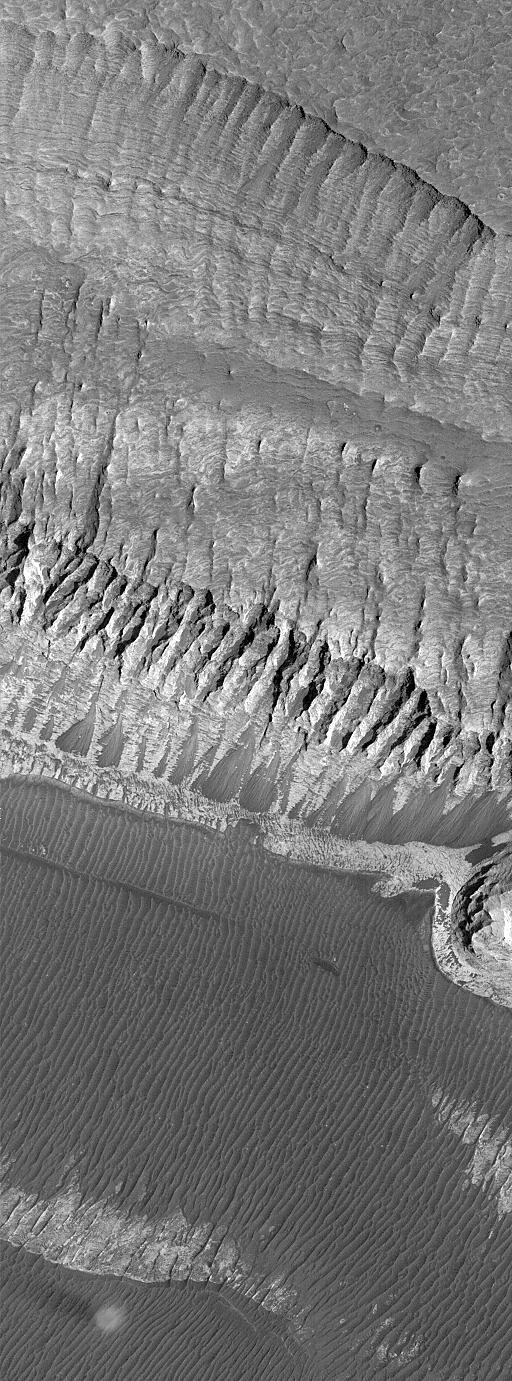
Layers and a Dust Devil in Melas Chasma
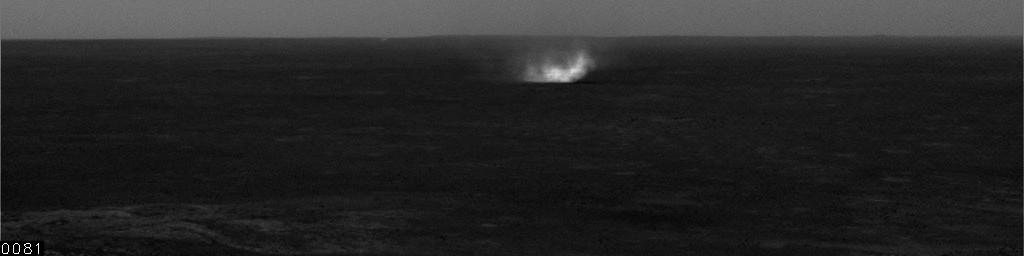
Dust Devils at Gusev, Sol 525
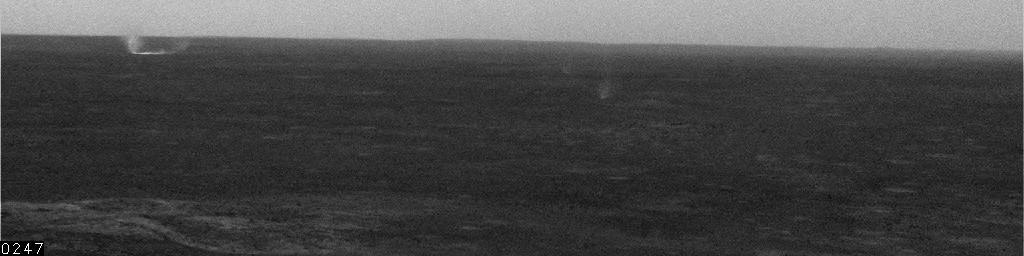
Dust Devils at Gusev, Sol 537
Dust Devil Tracks in Northern Plains
Gusev Dust Devil, Sol 543
The dust devil tracks in this image are located in Terra Cimmeria.
Dust Devil Tracks
The dust devil tracks in this image are located in Terra Sirenum.
Dust Devil Tracks
Dust Devil activity in this region between Brashear and Ross Craters is  very common. Large regions of dust devil tracks surround the south polar  region of Mars
A Dust Devil Playground
The dust devil tracks in this VIS image are located in Terra Cimmeria.
Dust Devil Tracks
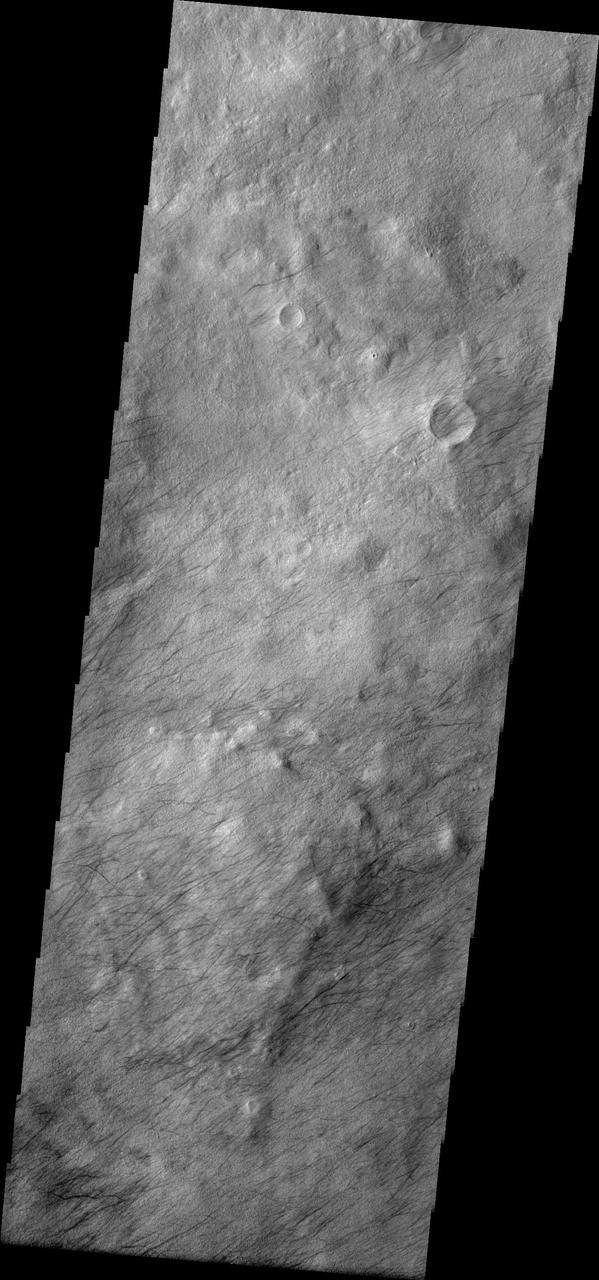
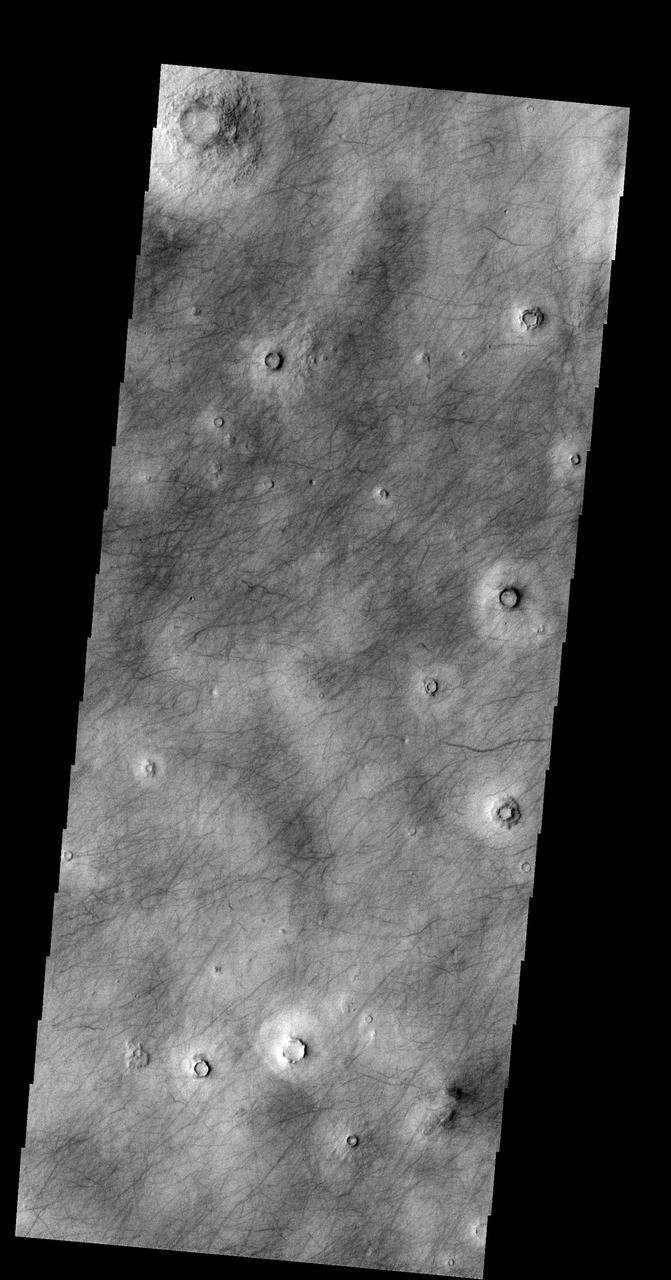
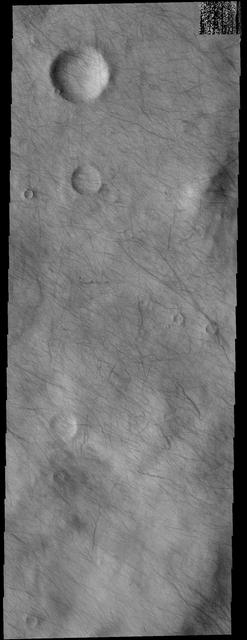
The dark markings in this image from NASA 2001 Mars Odyssey spacecraft are tracks made by the passage of dust devils. Dust devils are common in the extensive plains of the northern latitudes. This image is located in Utopia Planitia.
Dust Devil Tracks
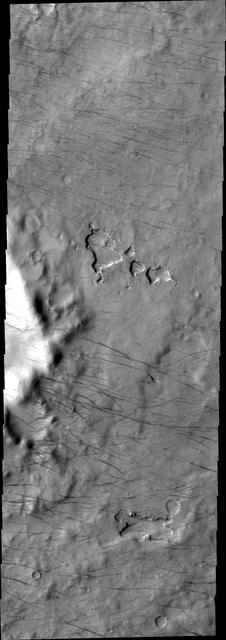
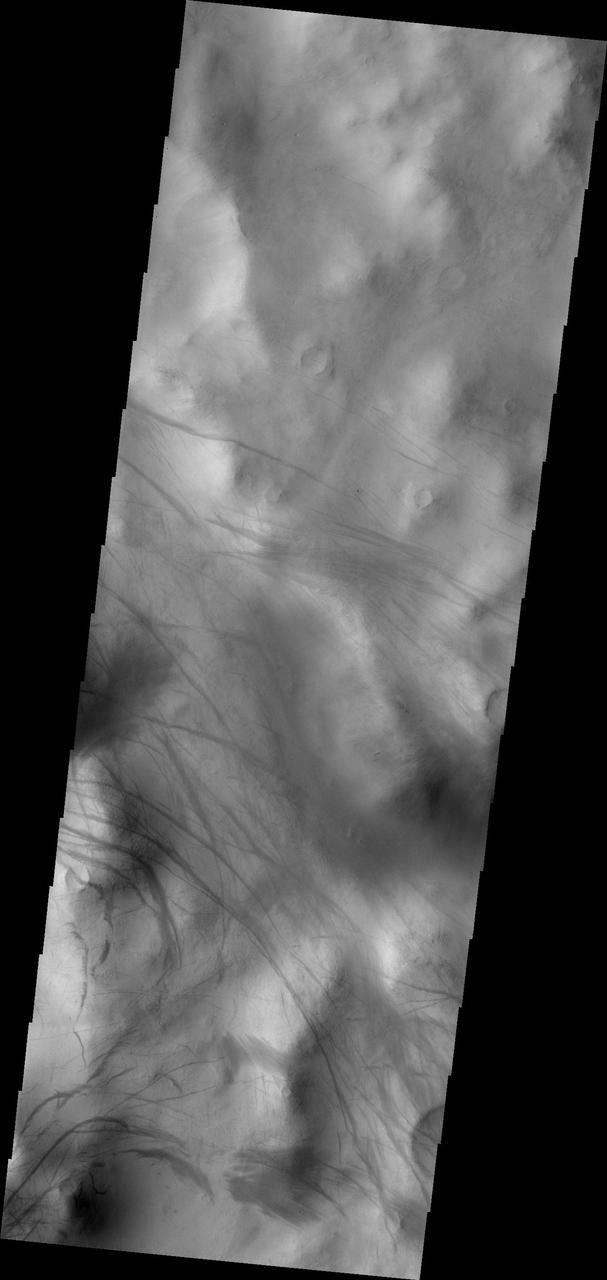
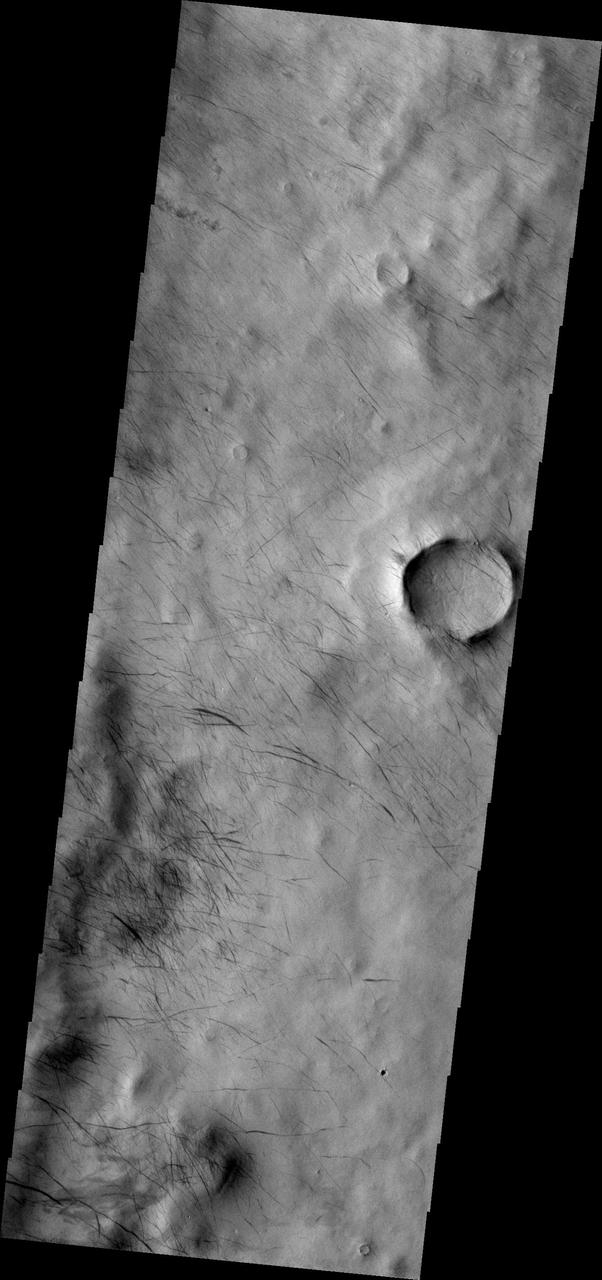
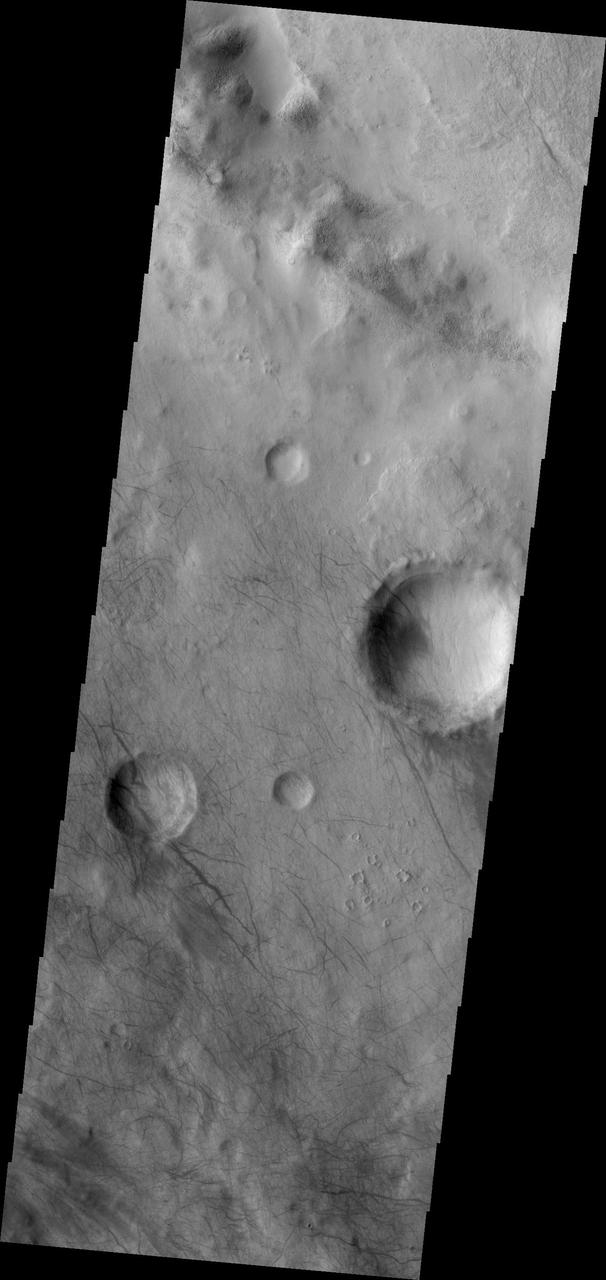
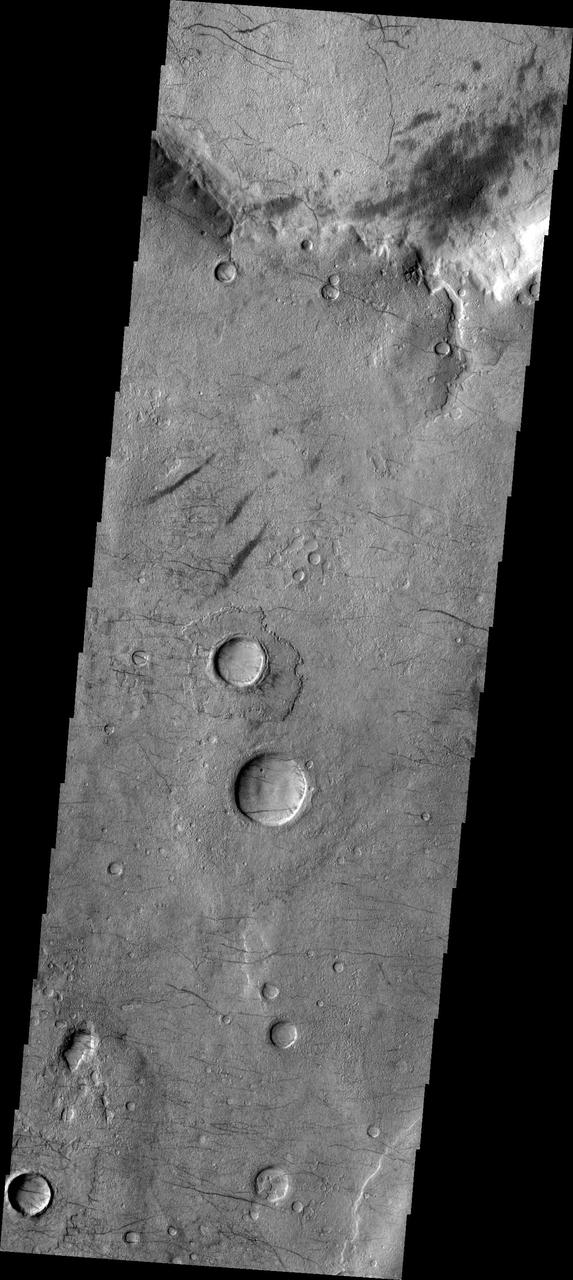
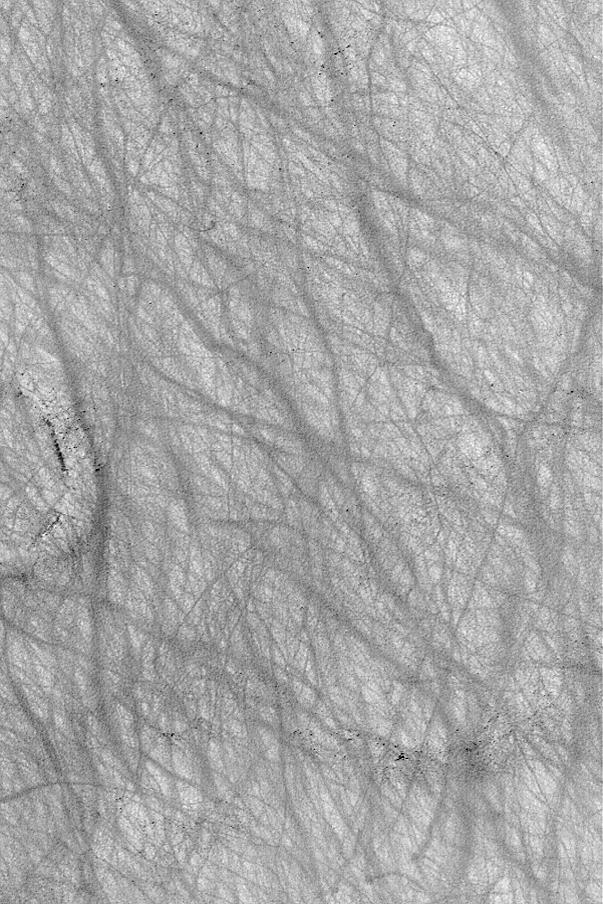
Today's VIS image shows dust devil tracks in Utopia Planitia. The tracks occur where dust devils have scoured the fine materials off the underlying surface. In some cases dust devils can create arced tracks. The ones in this image are mostly linear.  Orbit Number: 72335 Latitude: 51.4292 Longitude: 112.722 Instrument: VIS Captured: 2018-04-05 06:20  https://photojournal.jpl.nasa.gov/catalog/PIA22578
Dust Devil Tracks
Gusev Dust Devil Movie, Sol 459 Enhanced
A Dust Devil Making a Streak and Climbing a Crater Wall
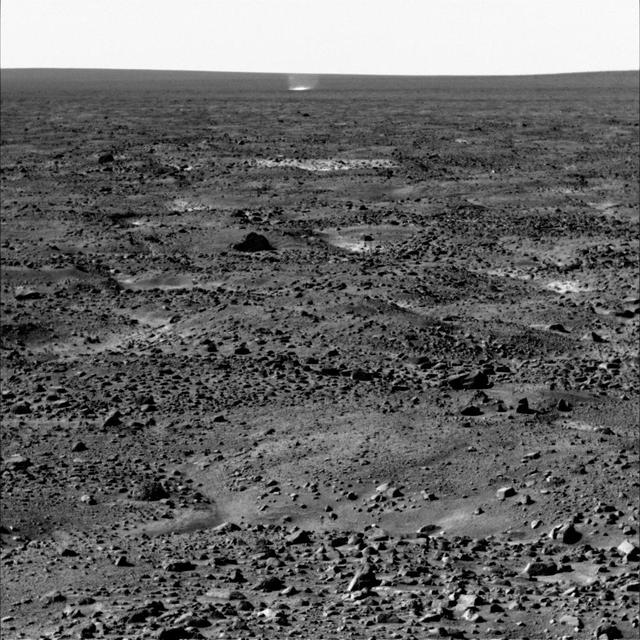
Martian Arctic Dust Devil, Phoenix Sol 104
Several Dust Devils in Gusev Crater, Sol 461
Dust Devils in Gusev Crater, Sol 463
Gusev Dust Devil Movie, Sol 456 Enhanced
Large Dust Devil on Horizon, Sol 468
Large Martian Dust Devils Caught in the Act
Dust Devil in Gusev Crater, Sol 445
Martian Arctic Dust Devil and Phoenix Meteorology Mast
Dust Devil in Spirit View Ahead on Sol 1854
Spirit Captures Two Dust Devils On the Move
Dust Devil Near Spirit, Sol 446
Dust-Devil Tracks in Southern Schiaparelli Basin
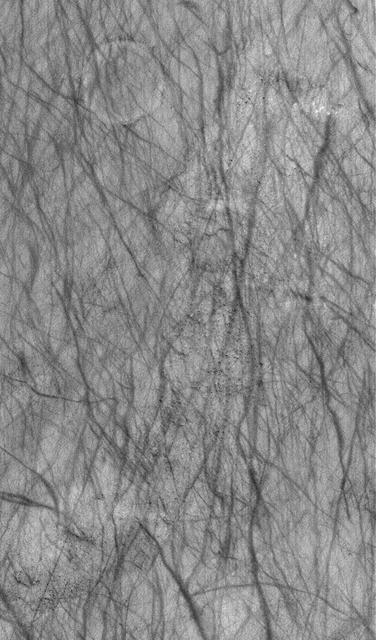
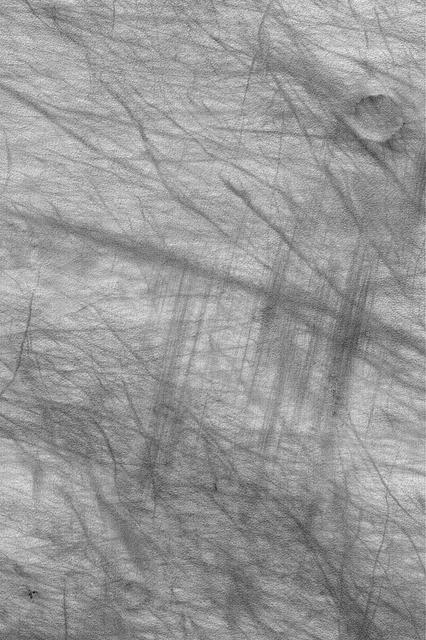
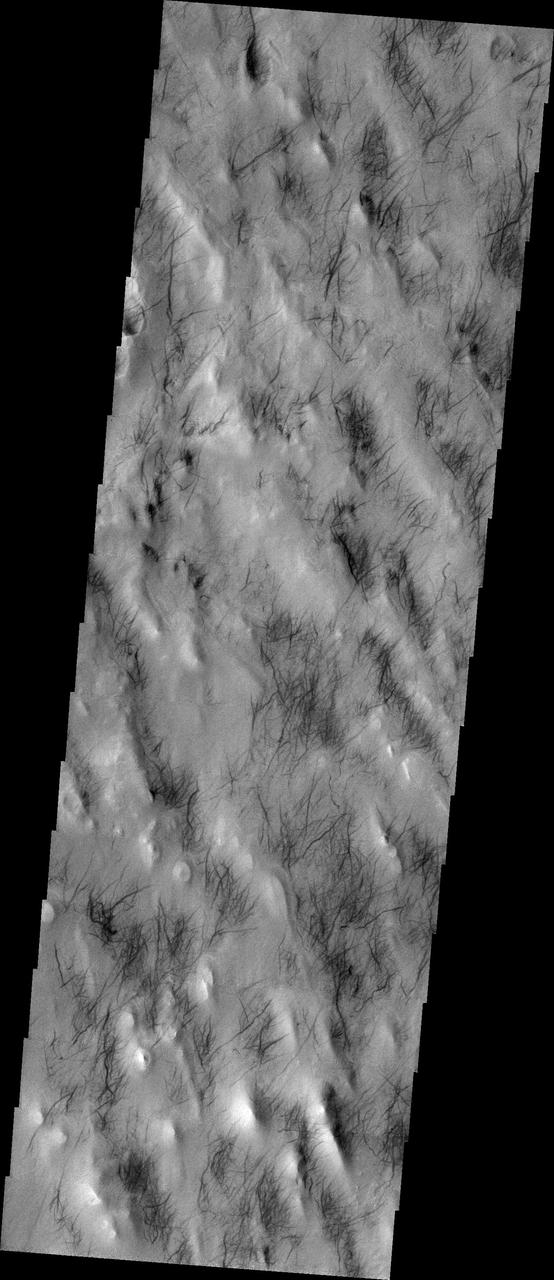
This image captured by NASA 2001 Mars Odyssey spacecraft shows a multitude of dust devil tracks. The dark linear marks record where the dust devil was in contact with the surface and removed dust revealing the darker surface below.  Orbit Number: 58616 Latitude: -66.6715 Longitude: 231.785 Instrument: VIS Captured: 2015-03-02 03:48  http://photojournal.jpl.nasa.gov/catalog/PIA19437
Dust Devil Tracks
The faint dark lines in this image captured by NASA 2001 Mars Odyssey spacecraft are caused by dust devils. As the dust devil travels along the surface it scours away the loose surface dust, revealing the darker surface beneath.  Orbit Number: 58268 Latitude: -51.7254 Longitude: 17.0688 Instrument: VIS Captured: 2015-02-01 12:25  http://photojournal.jpl.nasa.gov/catalog/PIA19271
Dust Devil Tracks
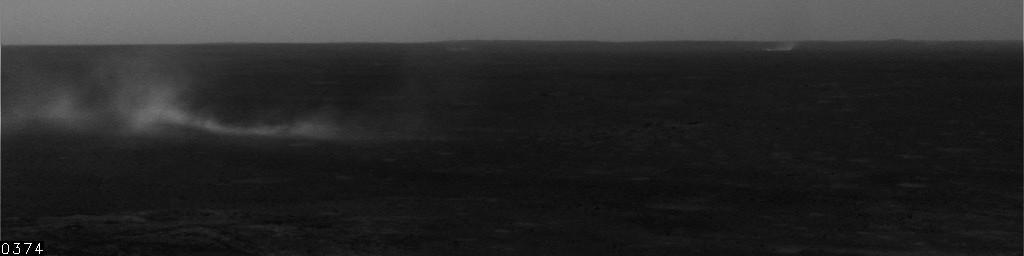
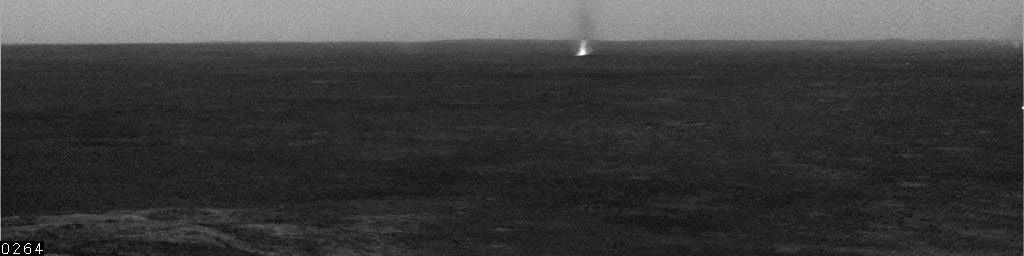
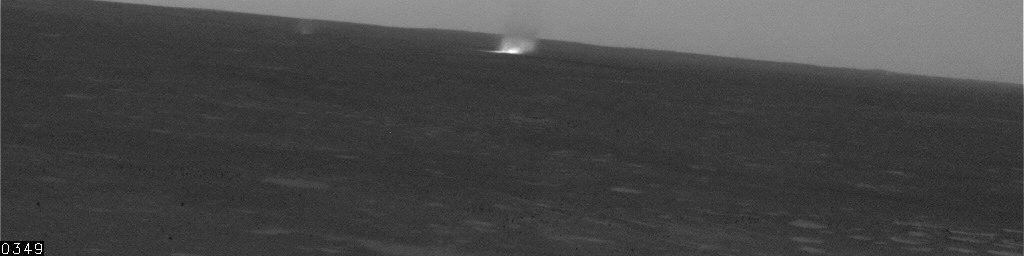
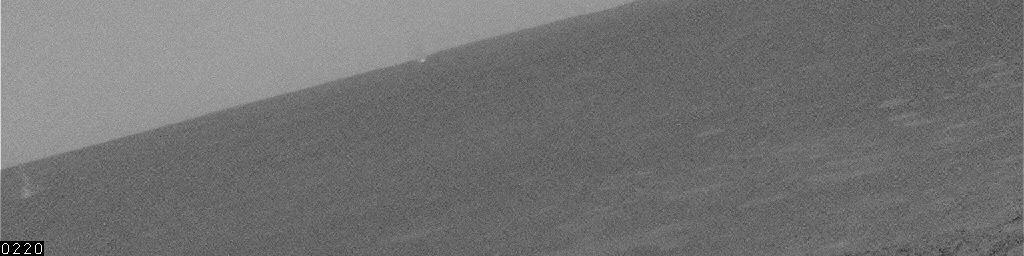
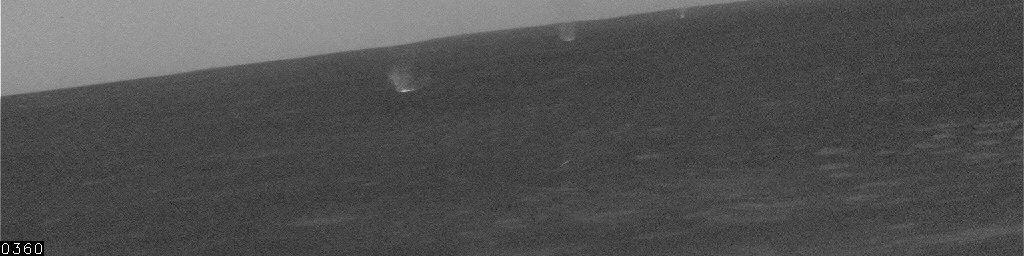
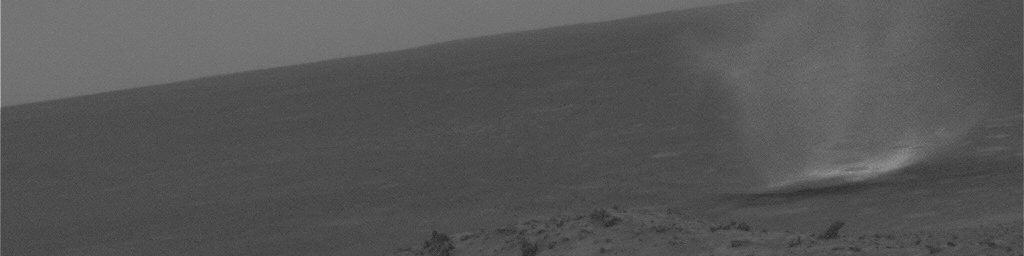
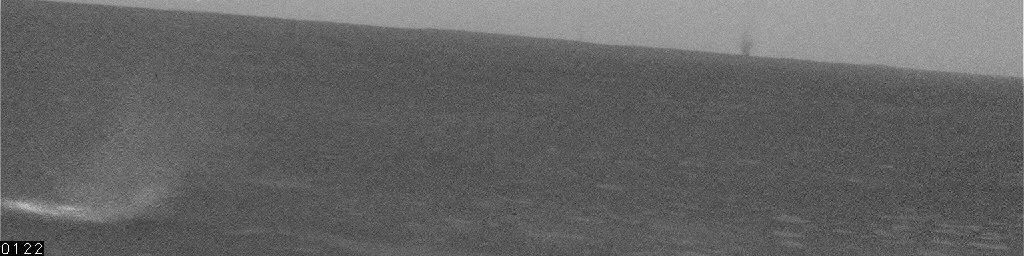
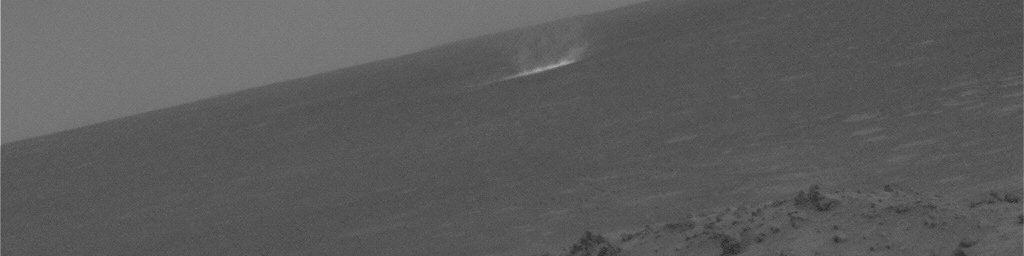
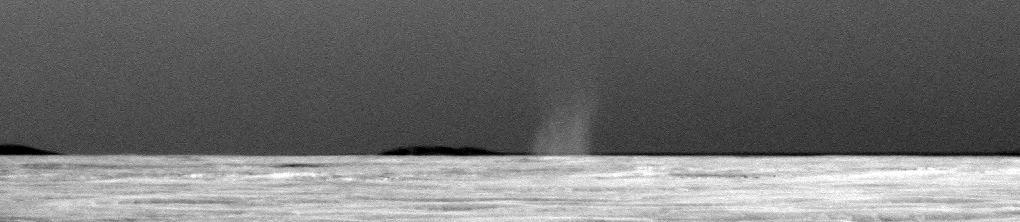
This is the first dust devil that NASA rover Opportunity has observed in the rover six and a half years on Mars. This image has been carefully calibrated and the contrast stretched to make the dust devil easier to see against the Martian sky.
First Dust Devil Seen by Opportunity
This image captured by NASA 2001 Mars Odyssey spacecraft shows dust devil tracks in Aonia Terra. As the dust devil moves along the surface it scours the dust and fine materials away, revealing the darker rocky surface below the dust.  Orbit Number: 66962 Latitude: -68.8221 Longitude: 241.346 Instrument: VIS Captured: 2017-01-17 13:13  http://photojournal.jpl.nasa.gov/catalog/PIA21501
Dust Devil Tracks
Today's VIS image shows dust devil tracks in Argyre Planitia. The dark streaks are made by dust devil activity scouring the surface and removing the lighter toned dust to reveal the darker rocky surface below.  Orbit Number: 66386 Latitude: -46.532 Longitude: 314.96 Instrument: VIS Captured: 2016-12-01 02:09  http://photojournal.jpl.nasa.gov/catalog/PIA21294
Dust Devil Tracks
Today's VIS image shows dust devil tracks on the plains of Aonia Terra. As the dust devil moves across the surface it scours the fine dust particles, revealing the darker rock surface below.  Orbit Number: 66800 Latitude: -65.2605 Longitude: 239.338 Instrument: VIS Captured: 2017-01-04 04:52  http://photojournal.jpl.nasa.gov/catalog/PIA21316
Dust Devil Tracks
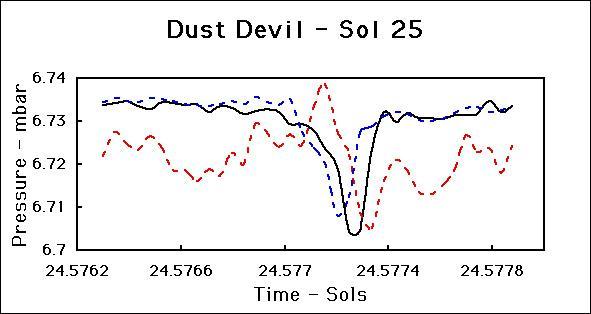
This figure shows the signature of a dust devil that passed over the Pathfinder Lander on Sol 25. Since then we have seen several similar features. The black line shows surface pressure plotted over a period of approximately two minutes. The sharp minimum approximately 0.5% below the background pressure is very clear. The dashed curves show raw data from two hot wire wind sensor elements (Blue = Wind Sensor 4 = East Wind, Red = Wind Sensor 1 = West Wind). When the wind blows directly on an element it cools. It is clear from the figure that the East wind increases suddenly as the dust devil approaches the lander and the pressure begins to fall. As the dust devil passes over the lander, pressure begins to rise, the East wind dies away and the West wind increases suddenly. Finally as the dust devil moves away, pressure returns to normal and the West wind dies away. This is a textbook dust-devil signature.  http://photojournal.jpl.nasa.gov/catalog/PIA00900
Dust Devil - Sol 25
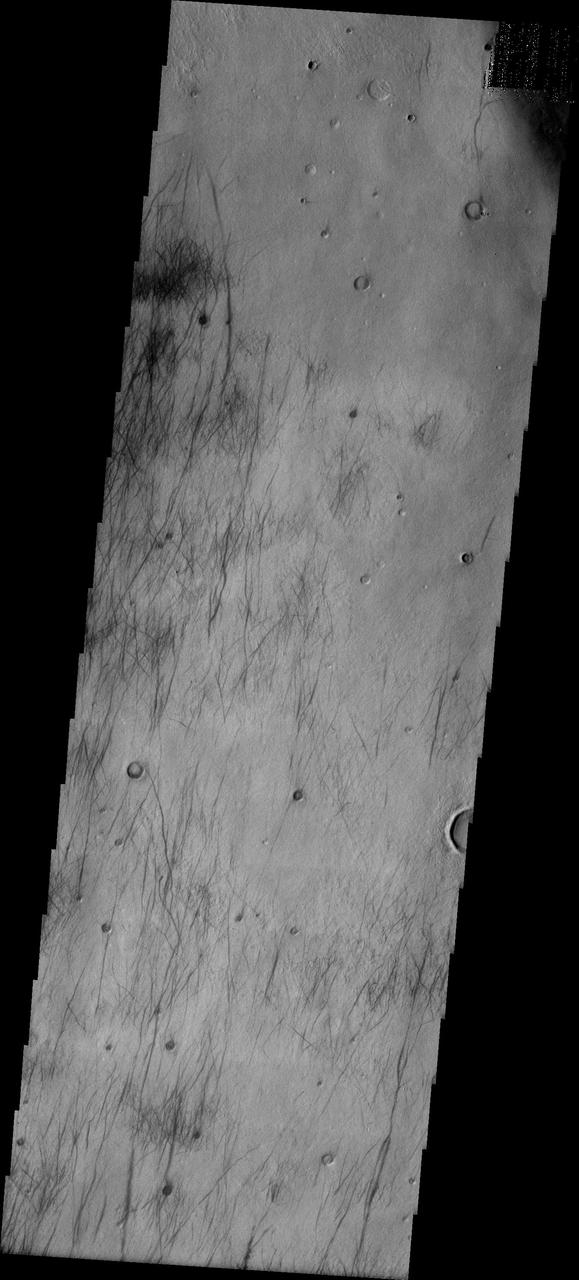
This image captured by NASA 2001 Mars Odyssey spacecraft is of the northern plains and shows hundreds of dust devil tracks.
Dust Devil Tracks
This image captured by NASA 2001 Mars Odyssey spacecraft show the tracks of dust devils on the rim of Stoney Crater.
Dust Devil Tracks
The dust devil tracks seen in this image from NASA 2001 Mars Odyssey spacecraft are located in Argyre Planitia.
Dust Devil Tracks
The dust devil tracks in this image captured by NASA 2001 Mars Odyssey spacecraft are located in Utopia Planitia.
Dust Devil Tracks
The dark surface markings in this image from NASA Mars Odyssey spacecraft are dust devil tracks. These tracks are located in Utopia Planitia.
Dust Devil Tracks
The numerous dust devil tracks in this image captured by NASA 2001 Mars Odyssey spacecraft are located in Utopia Planitia.
Dust Devil Tracks
These dust devil tracks are located in the region surrounding Hooke Crater as seen by NASA 2001 Mars Odyssey spacecraft.
Dust Devil Tracks
A multitude of dust devil tracks mark the suface in this region of Utopia Planitia. This image is from NASA 2001 Mars Odyssey spacecraft.
Dust Devil Tracks
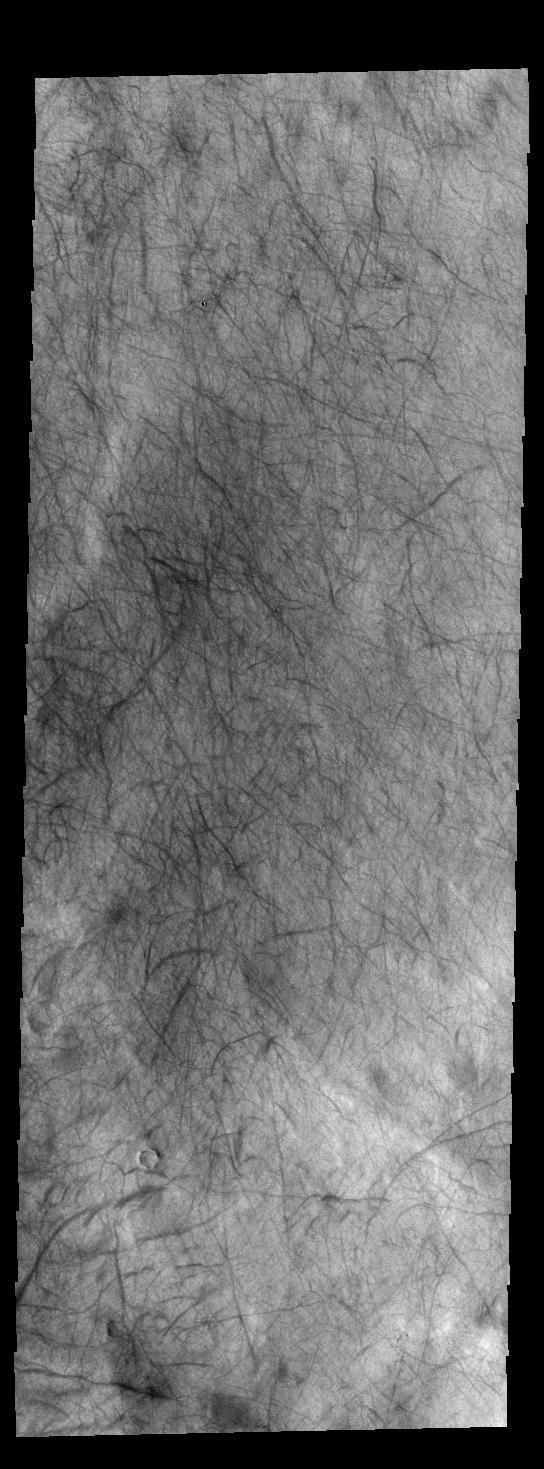
The plains of Planum Chronium shown in this 2001 Mars Odyssey THEMIS VIS image are covered by hundreds of dust devil tracks.
Dust Devil Tracks
Dust devil tracks criss-cross the surface in this image captured by NASA 2001 Mars Odyssey spacecraft.
Dust Devil Tracks
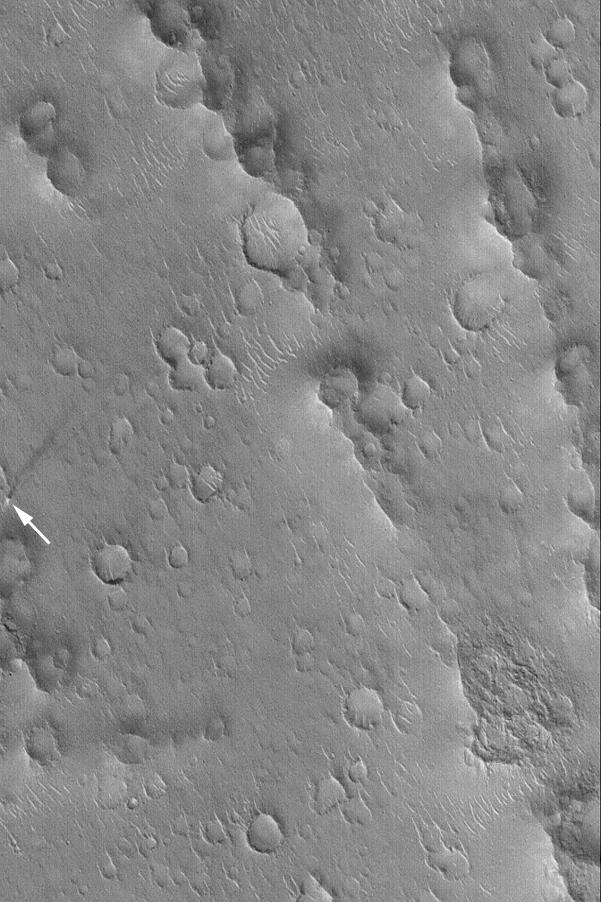
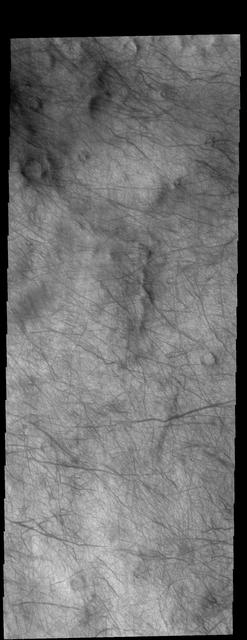
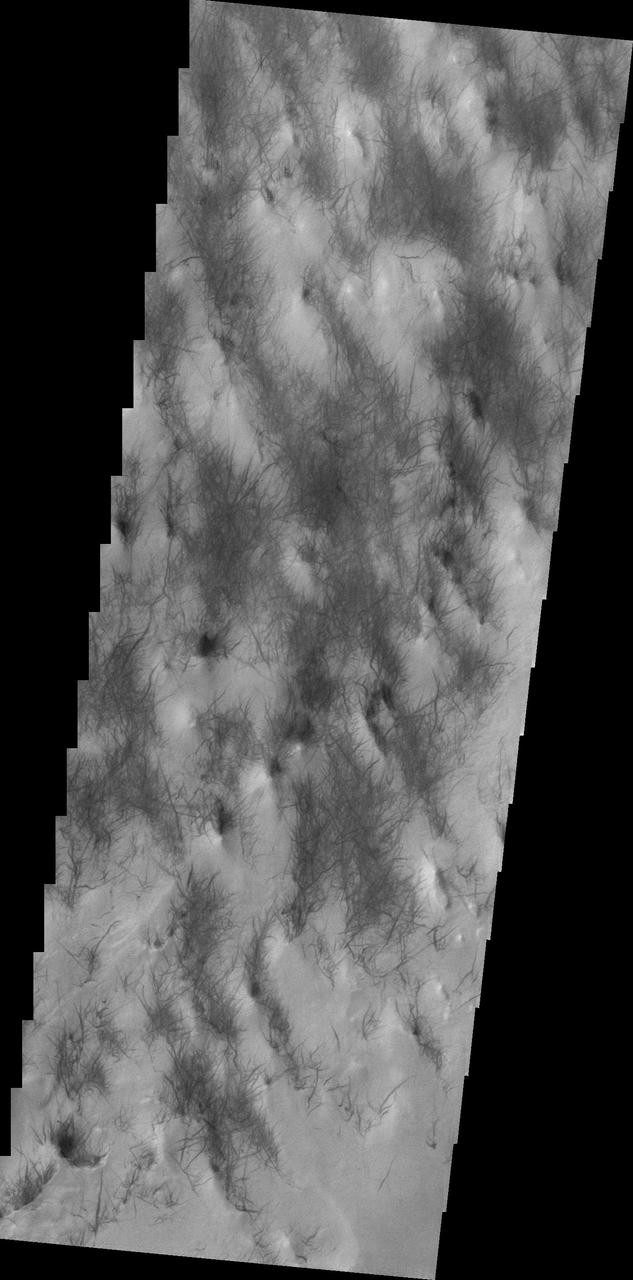
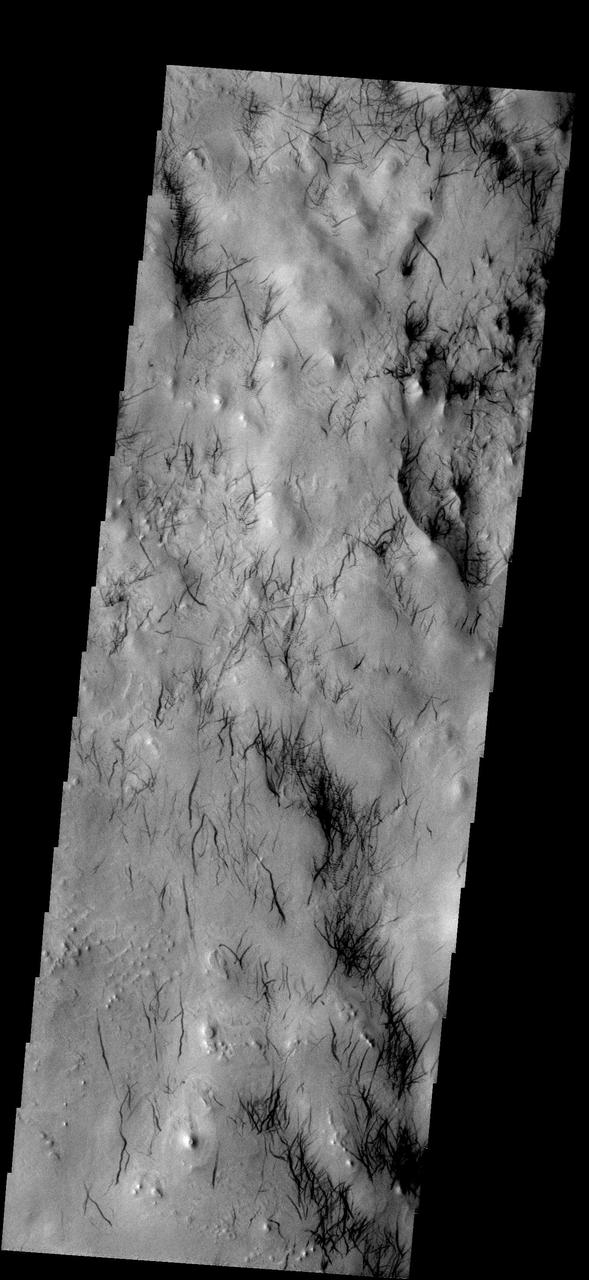
At first glance, the dust devil streaks observed in this THEMIS image of the martian northern plains may look similar to many other images. However, what makes this THEMIS image so interesting are the many streaks that trend over hills, mounds, and valleys. Many of the dust devil streaks previously observed occur in very flat and dusty regions. This unique image gives hints to the dynamic nature of the dust devil streak formational process.  http://photojournal.jpl.nasa.gov/catalog/PIA04401
Dust Devil Streaks
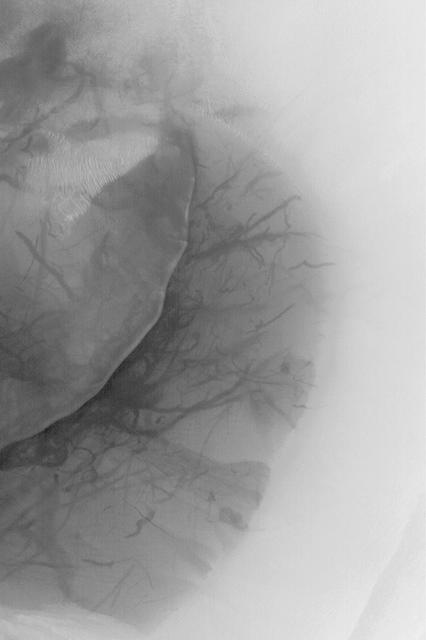
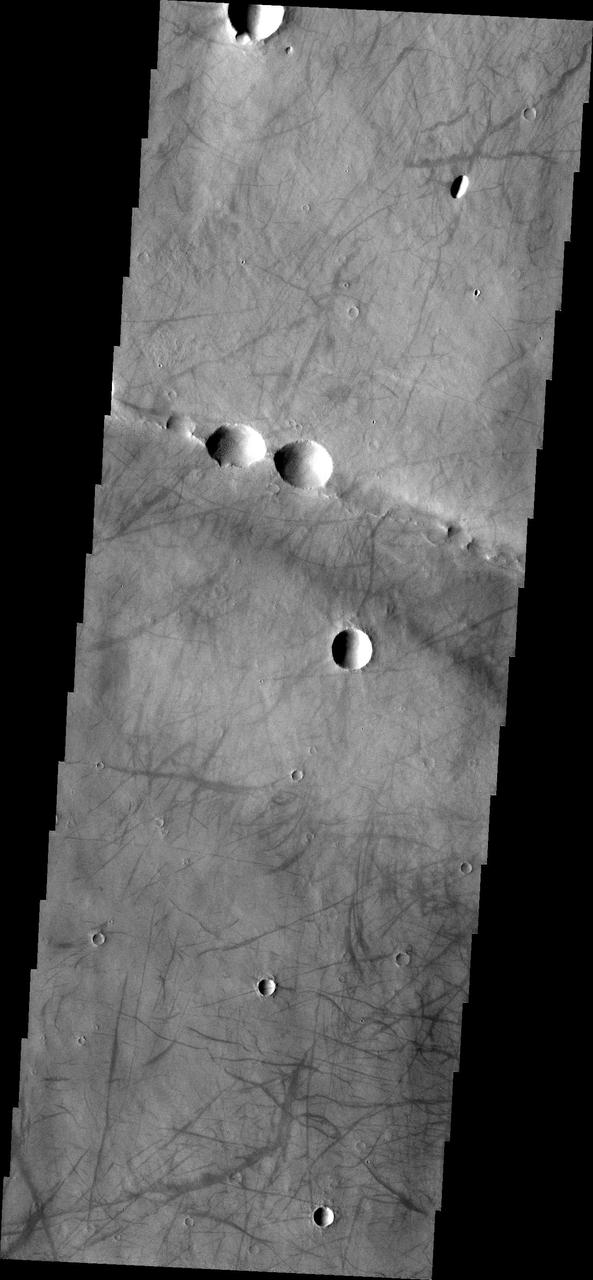
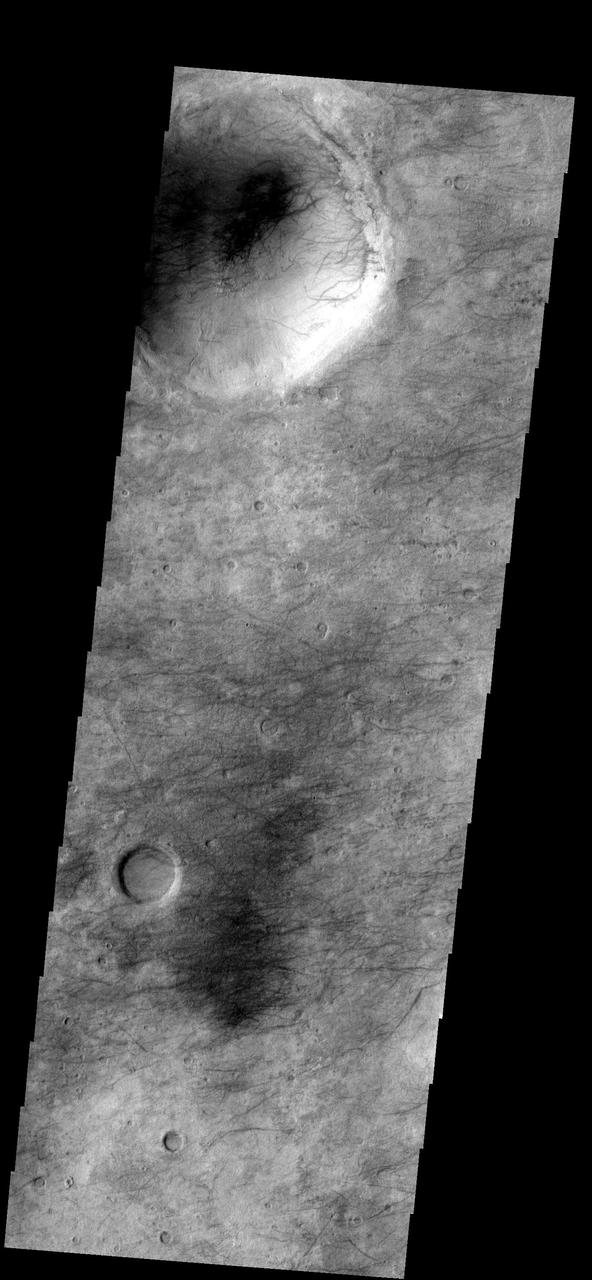
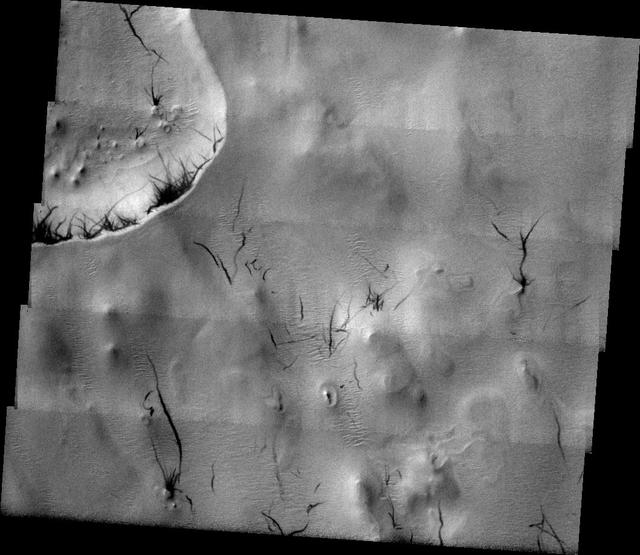
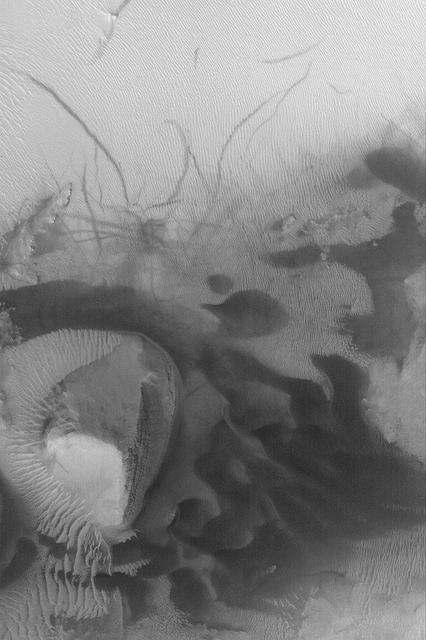
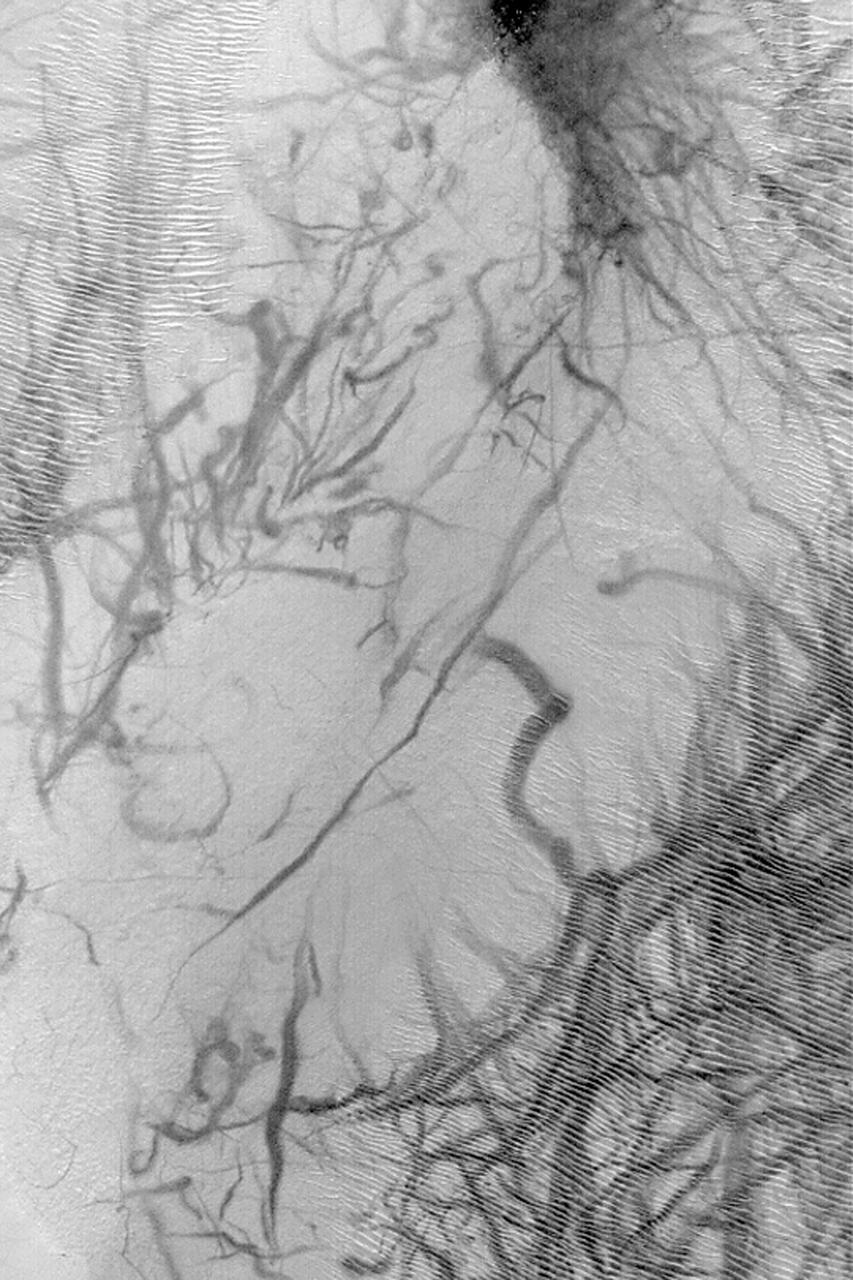
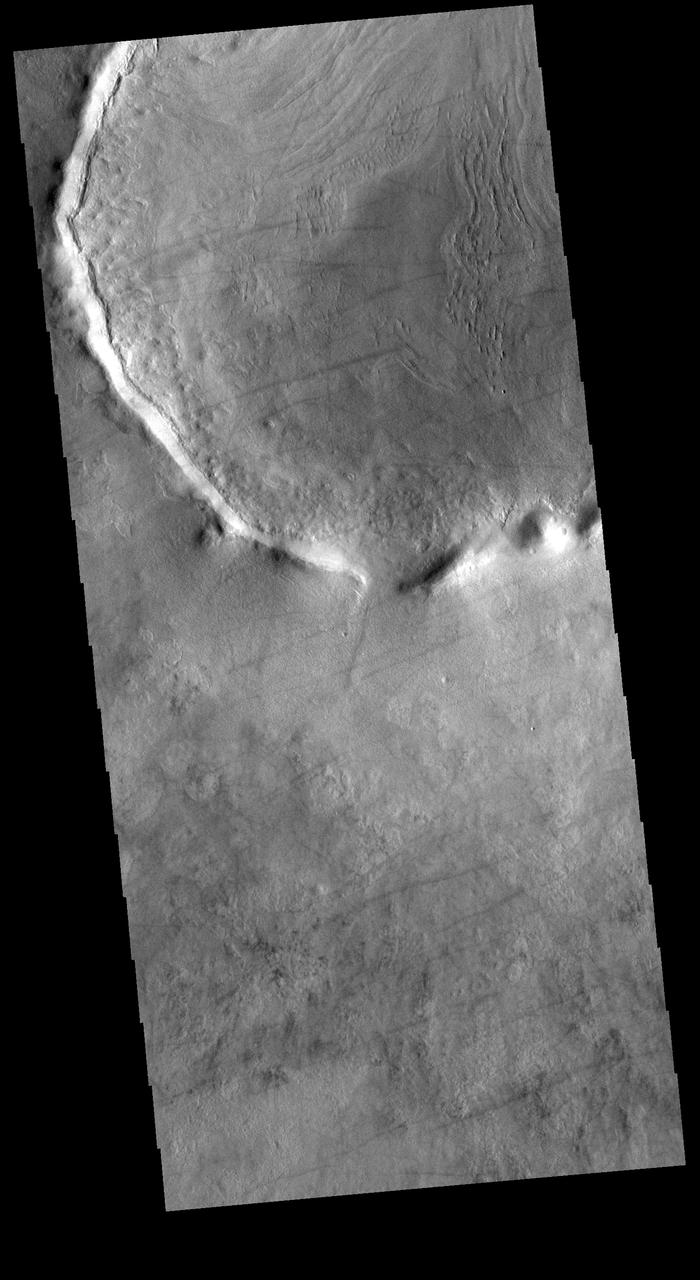
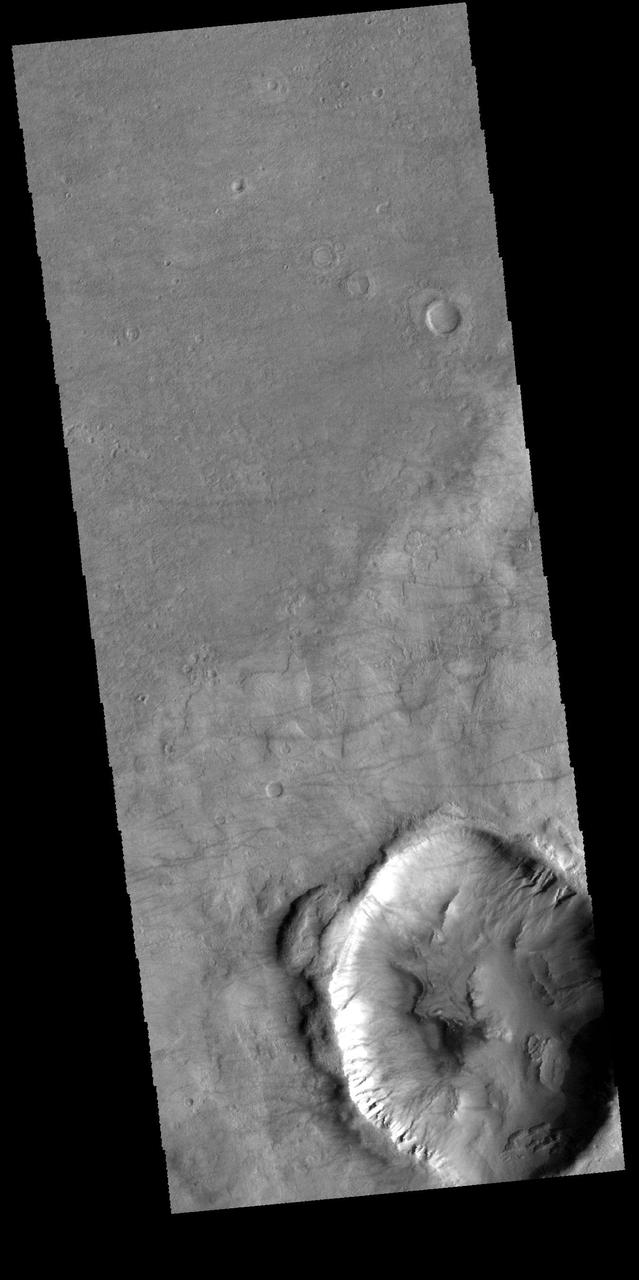
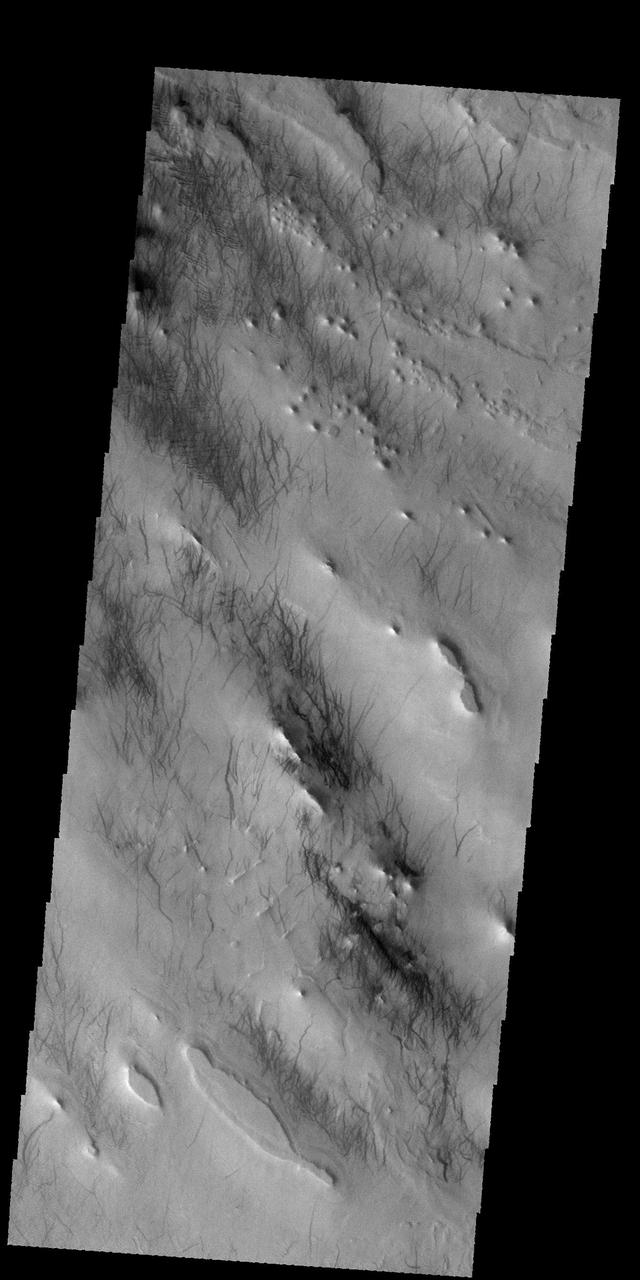
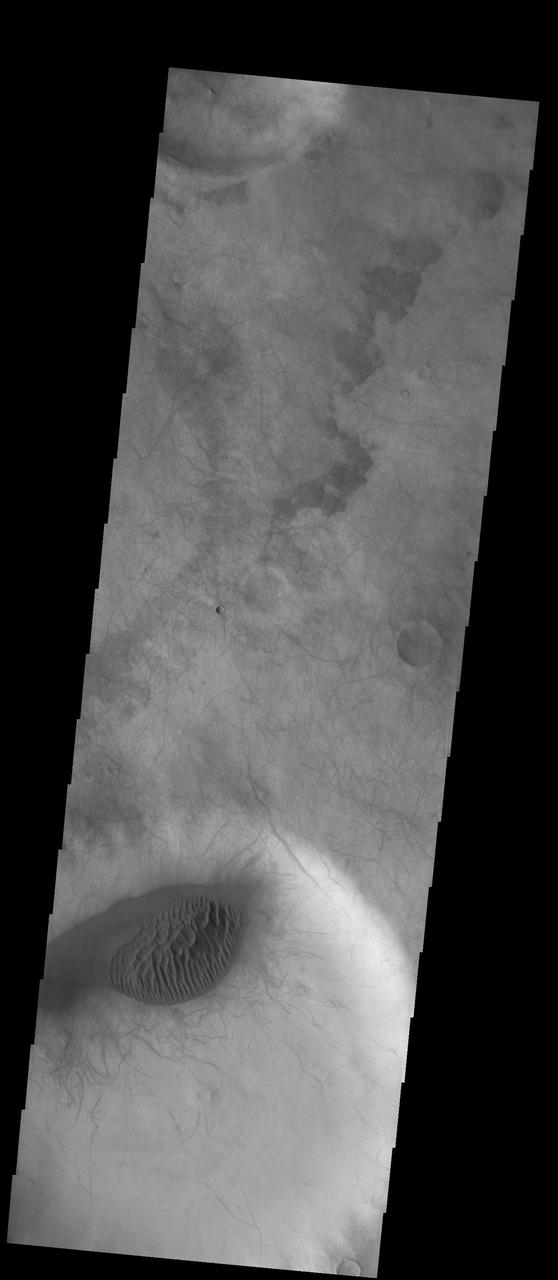
This unnamed crater in Terra Cimmeria has both a sand sheet with dune forms and a multitude of dust devil tracks. The linear and scalloped dark marks are created by dust devils removing surface dust and revealing the darker surface beneath the dust. It is common for sand to accumulate in the floor of crater. Changes in the wind occur due to the crater shape and possible internal peak or pit features. As the winds are deflected by this type of feature the sand and dust carried by the wind will settle out. The extensive number of dust devil tracks indicate that surface winds are pervasive in this region.  Orbit Number: 75246 Latitude: -58.8609 Longitude: 172.829 Instrument: VIS Captured: 2018-12-01 00:11  https://photojournal.jpl.nasa.gov/catalog/PIA23024
Dunes and Dust Devils