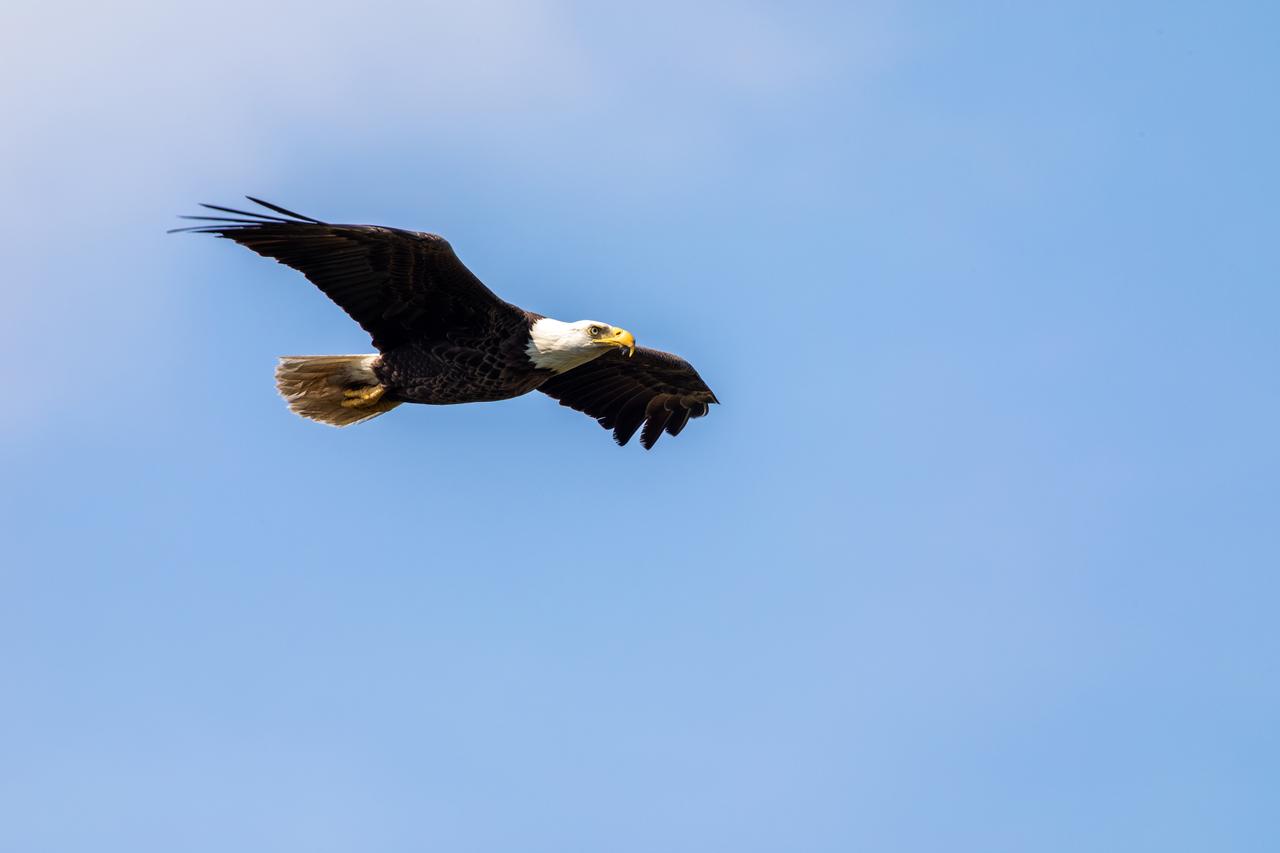
An American bald eagle soars through the sky at NASA’s Kennedy Space Center on March 8, 2023. The eagle is part of a mating pair that takes up residence at the Florida spaceport during nesting season. Recently, a baby eagle was spotted in their nest, located off of Kennedy Parkway, about two miles from the Vehicle Assembly Building. There are 39 eagle territories at Kennedy, 33 of which are active or potentially active.
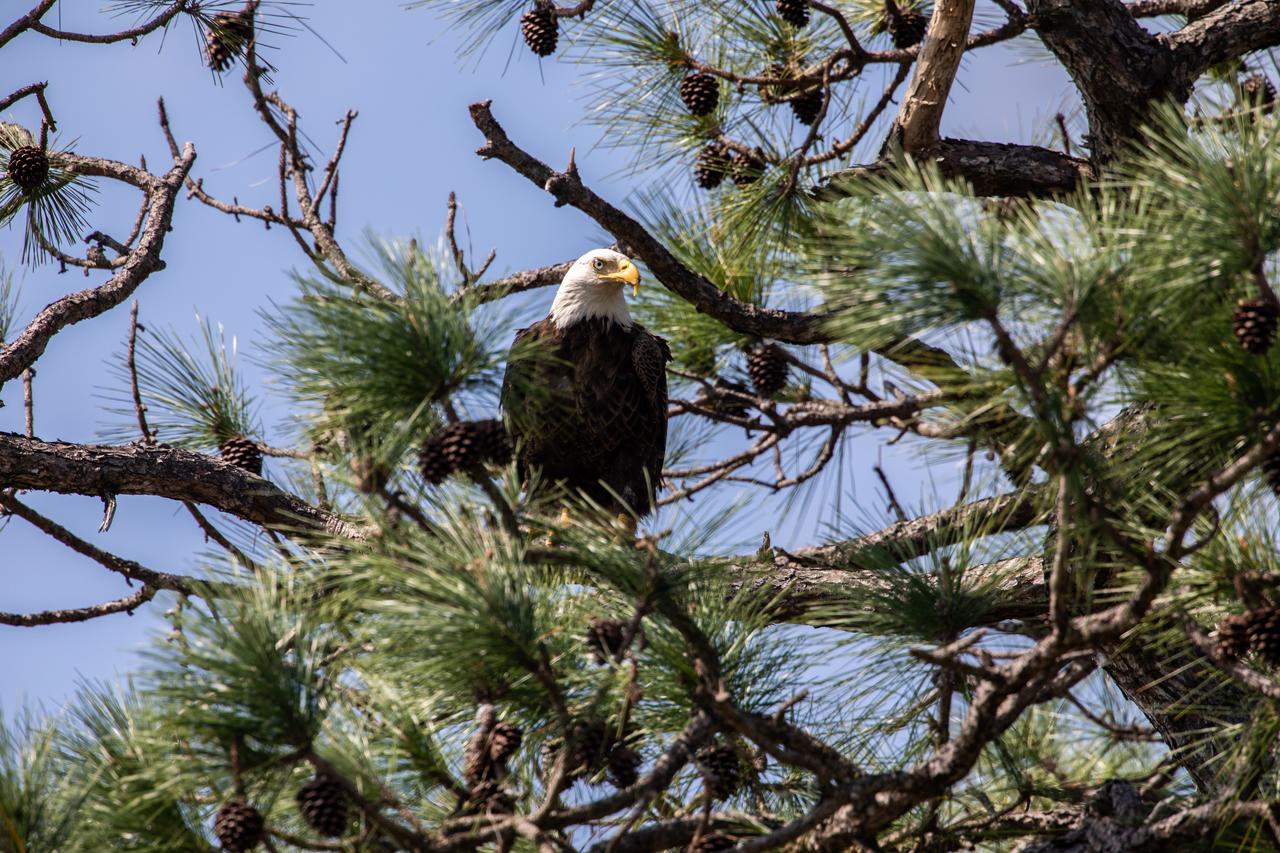
An American bald eagle is perched in a tree near its nest at NASA’s Kennedy Space Center on March 8, 2023. The eagle is part of a mating pair that takes up residence at the Florida spaceport during nesting season. Recently, a baby eagle was spotted in their nest, located off of Kennedy Parkway, about two miles from the Vehicle Assembly Building. There are 39 eagle territories at Kennedy, 33 of which are active or potentially active.
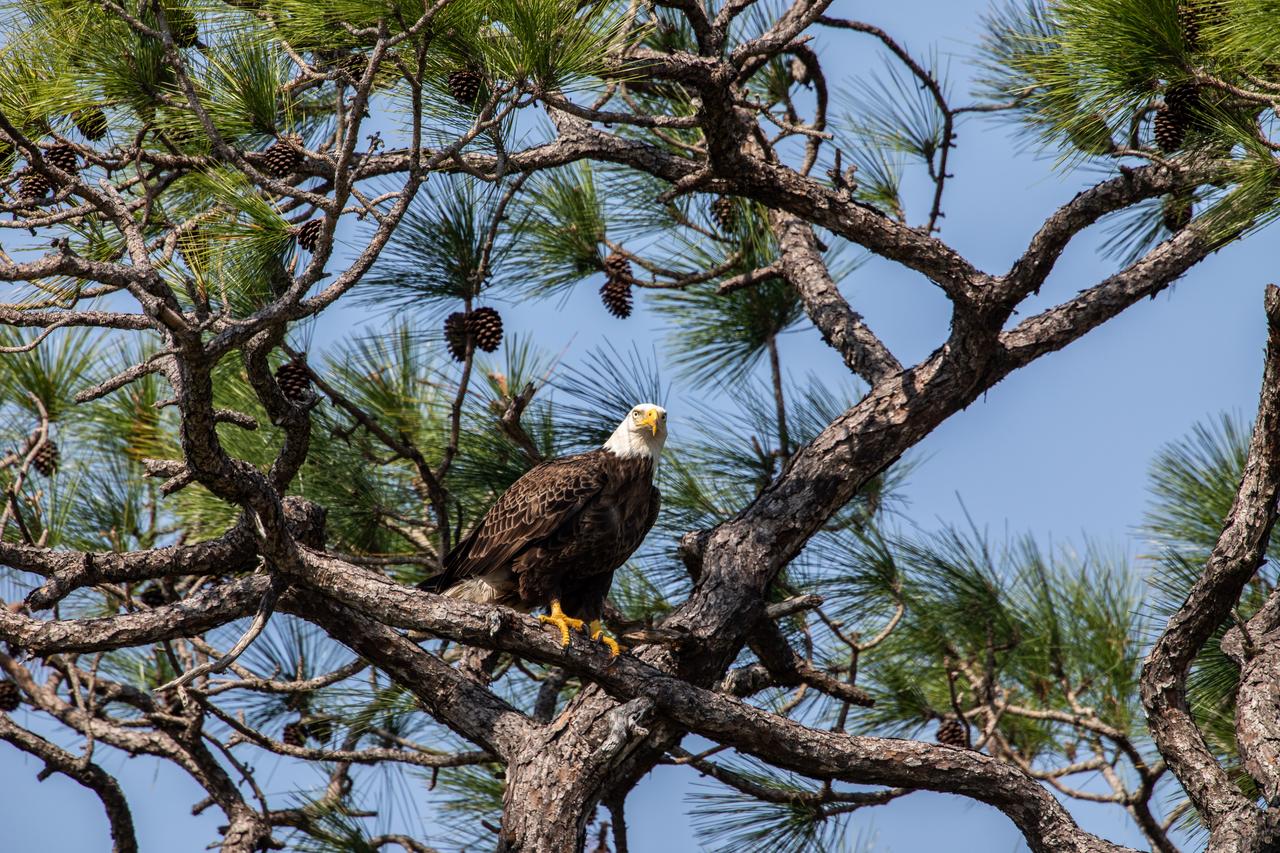
An American bald eagle is perched in a tree near its nest at NASA’s Kennedy Space Center on March 8, 2023. The eagle is part of a mating pair that takes up residence at the Florida spaceport during nesting season. Recently, a baby eagle was spotted in their nest, located off of Kennedy Parkway, about two miles from the Vehicle Assembly Building. There are 39 eagle territories at Kennedy, 33 of which are active or potentially active.
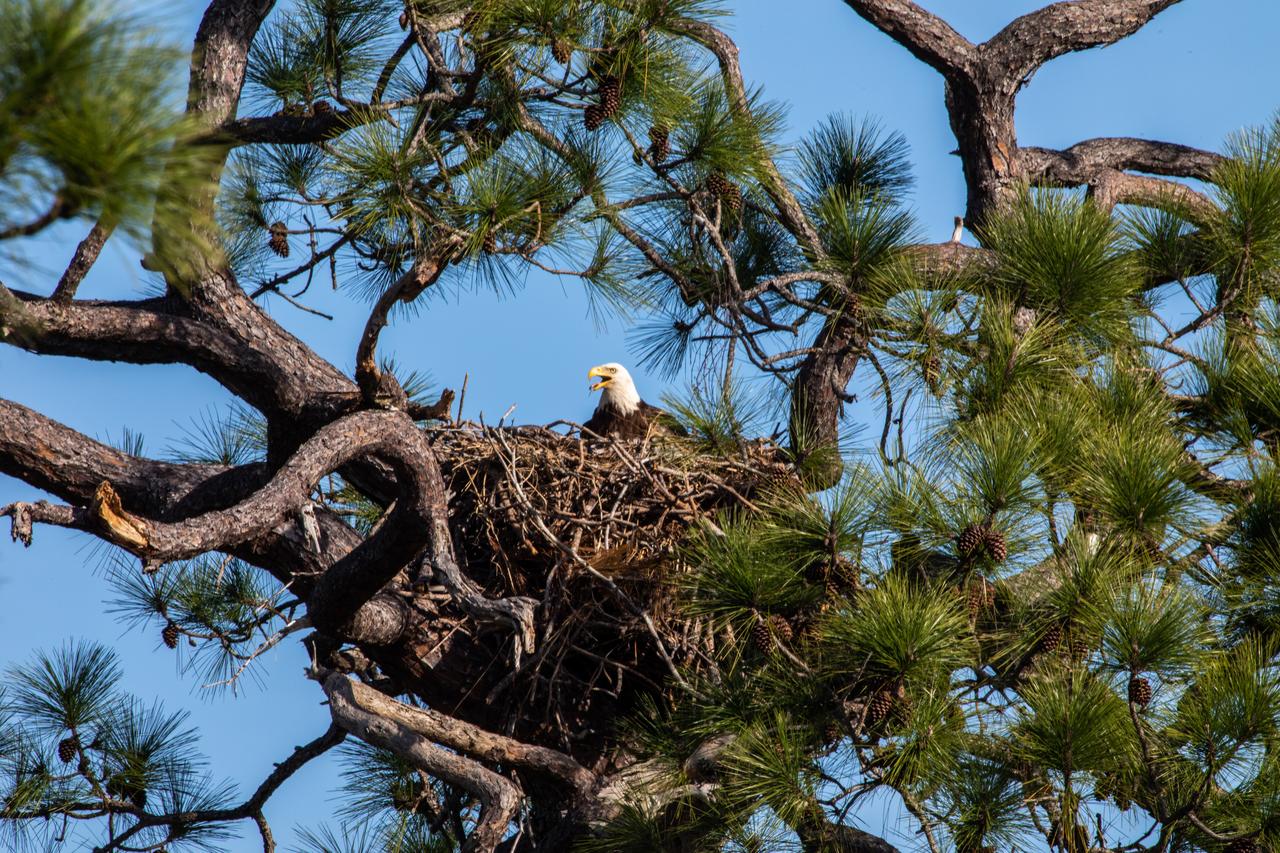
A southern bald eagle occupies a nest at NASA’s Kennedy Space Center on Jan. 20, 2023. After a recent fire burned a tree that housed an eagles’ nest for several years, the birds returned to the area on Kennedy Parkway North and built a new nest in a tree about 60 yards away. Each year, eagles take up winter residence at the Florida spaceport, breeding and raising a new generation. The center shares a boundary with the Merritt Island National Wildlife Refuge, home to more than 1,500 species of plants and animals, and 15 federally listed species.
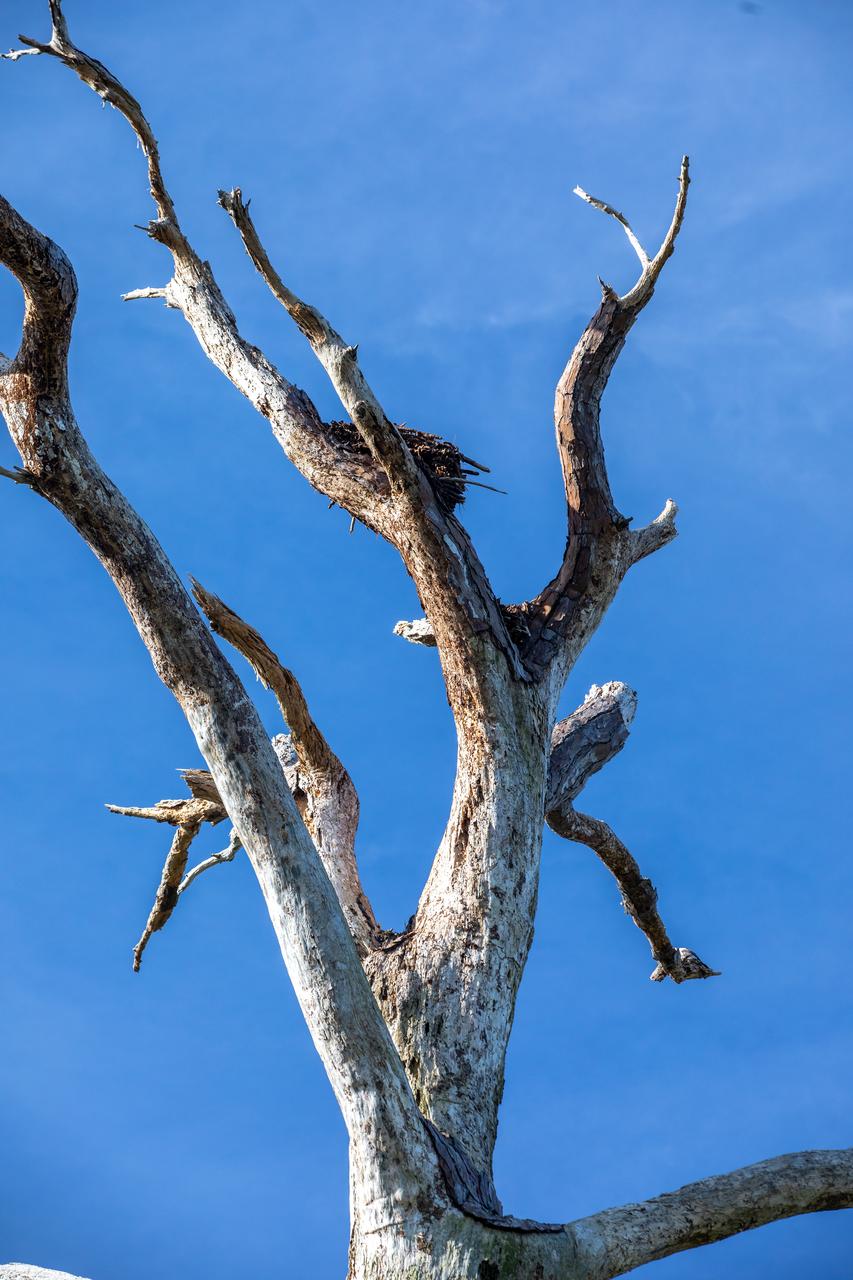
Shown in this Jan. 20, 2023, photo is the remainder of a nest used by southern bald eagles for several years at NASA’s Kennedy Space Center. After a recent fire burned the tree, the eagles returned to the area on Kennedy Parkway North and built a new nest in a tree about 60 yards away. Each year, eagles take up winter residence at the Florida spaceport, breeding and raising a new generation. The center shares a boundary with the Merritt Island National Wildlife Refuge, home to more than 1,500 species of plants and animals, and 15 federally listed species.
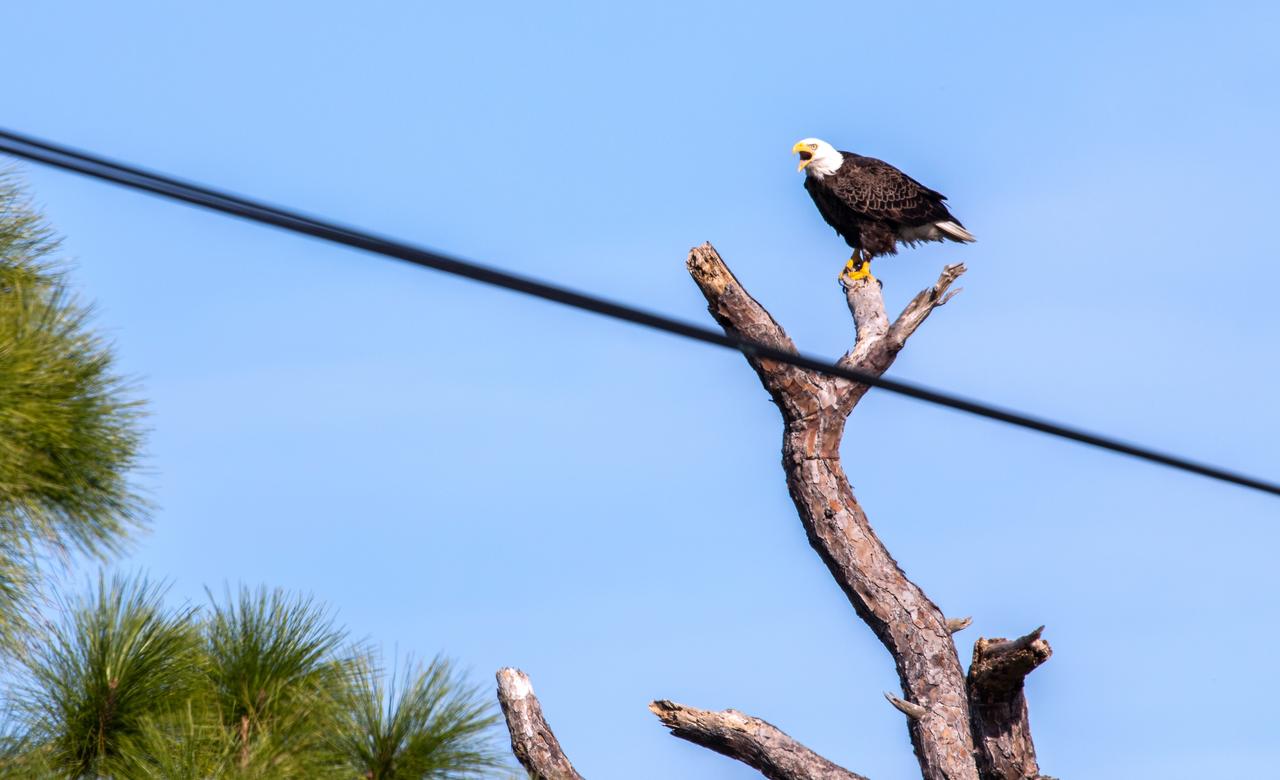
A southern bald eagle is perched in a tree at NASA’s Kennedy Space Center on Jan. 20, 2023. After a recent fire burned a tree that housed an eagles’ nest for several years, the birds returned to the area on Kennedy Parkway North and built a new nest in a tree about 60 yards away. Each year, eagles take up winter residence at the Florida spaceport, breeding and raising a new generation. The center shares a boundary with the Merritt Island National Wildlife Refuge, home to more than 1,500 species of plants and animals, and 15 federally listed species.

A southern bald eagle is perched in a tree at NASA’s Kennedy Space Center on Jan. 20, 2023. After a recent fire burned a tree that housed an eagles’ nest for several years, the birds returned to the area on Kennedy Parkway North and built a new nest in a tree about 60 yards away. Each year, eagles take up winter residence at the Florida spaceport, breeding and raising a new generation. The center shares a boundary with the Merritt Island National Wildlife Refuge, home to more than 1,500 species of plants and animals, and 15 federally listed species.
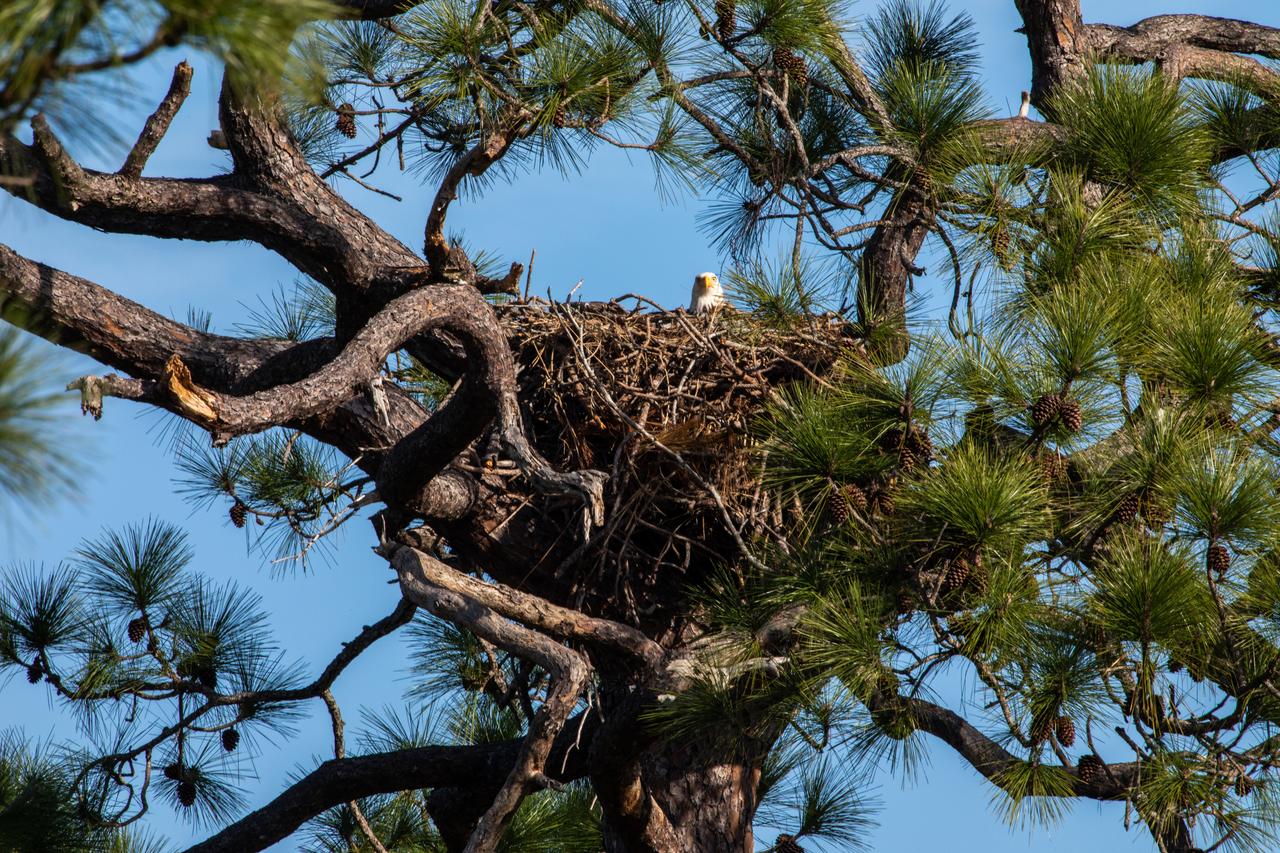
A southern bald eagle occupies a nest at NASA’s Kennedy Space Center on Jan. 20, 2023. After a recent fire burned a tree that housed an eagles’ nest for several years, the birds returned to the area on Kennedy Parkway North and built a new nest in a tree about 60 yards away. Each year, eagles take up winter residence at the Florida spaceport, breeding and raising a new generation. The center shares a boundary with the Merritt Island National Wildlife Refuge, home to more than 1,500 species of plants and animals, and 15 federally listed species.
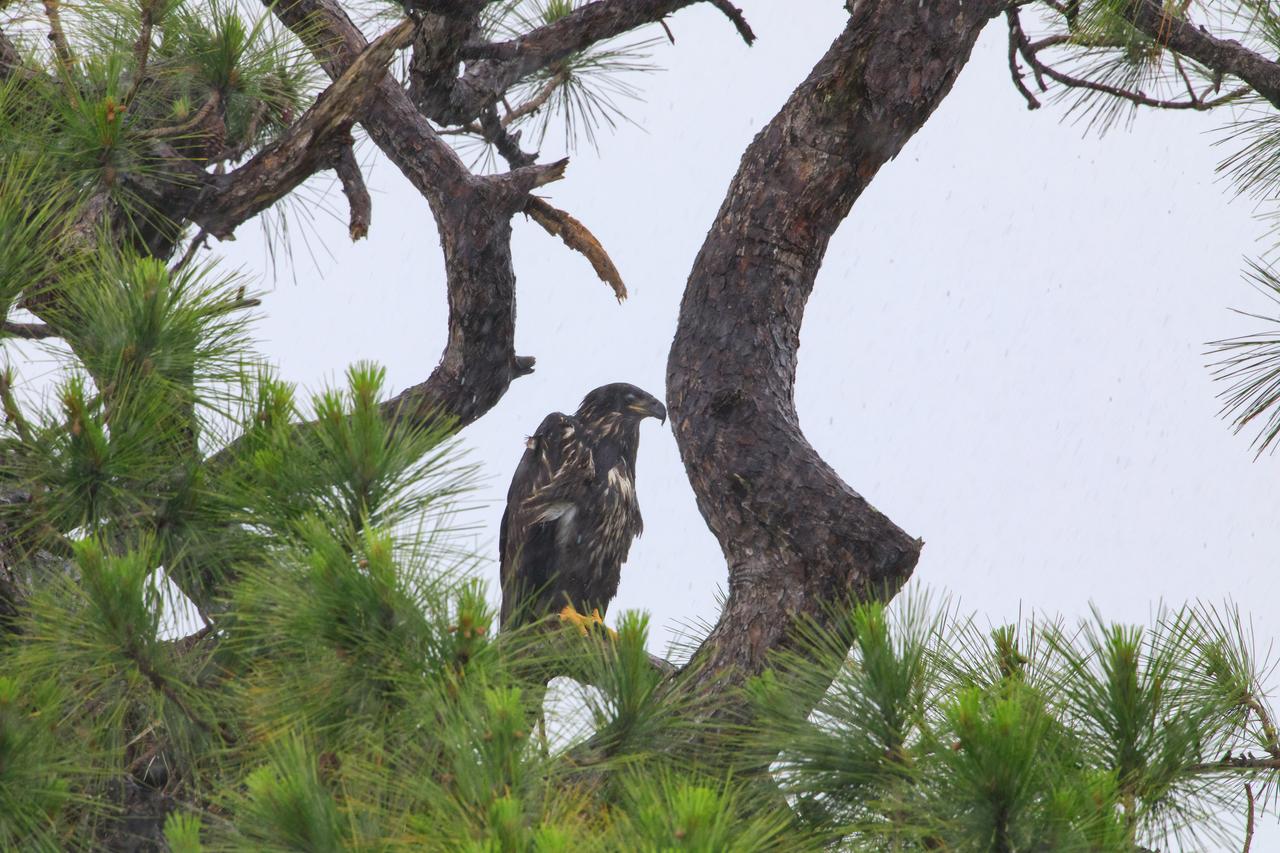
A baby American bald eagle looks out from just above its nest, located in a tree at NASA’s Kennedy Space Center in Florida on April 25, 2023. The eaglet is the lone offspring of a mated pair of eagles that recently built the new home after storms badly damaged their original nest located about 50 yards away. That nest was built in 1973 and had been used by eagles almost every year since 1975.
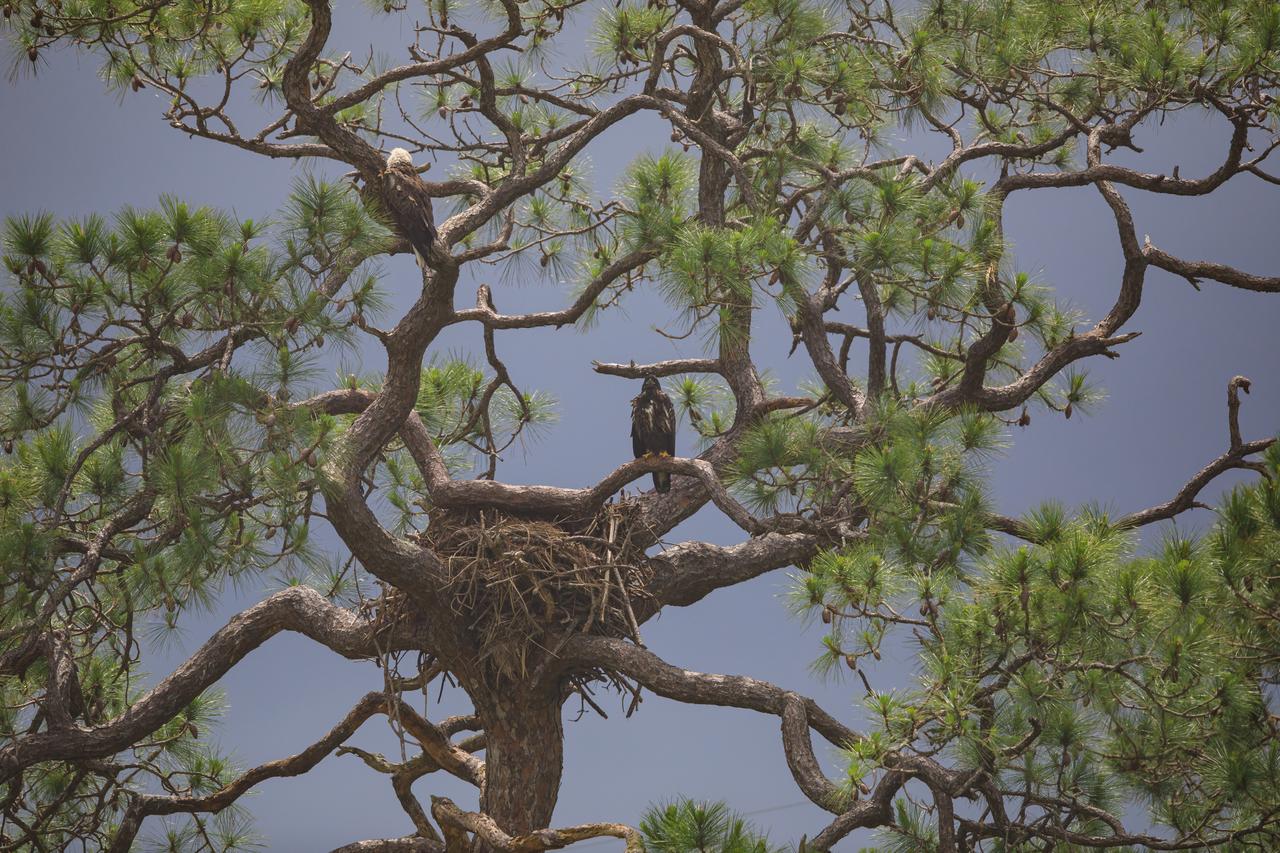
An American bald eagle, upper left, and its baby are perched in a tree near their nest at NASA’s Kennedy Space Center in Florida as a rainstorm approaches on April 25, 2023. The eaglet is the lone offspring of a mated pair of eagles that recently built the new home after storms badly damaged their original nest located about 50 yards away. That nest was built in 1973 and had been used by eagles almost every year since 1975.

An American bald eagle, upper left, and its baby are perched in a tree near their nest at NASA’s Kennedy Space Center in Florida as a rainstorm approaches on April 25, 2023. The eaglet is the lone offspring of a mated pair of eagles that recently built the new home after storms badly damaged their original nest located about 50 yards away. That nest was built in 1973 and had been used by eagles almost every year since 1975.
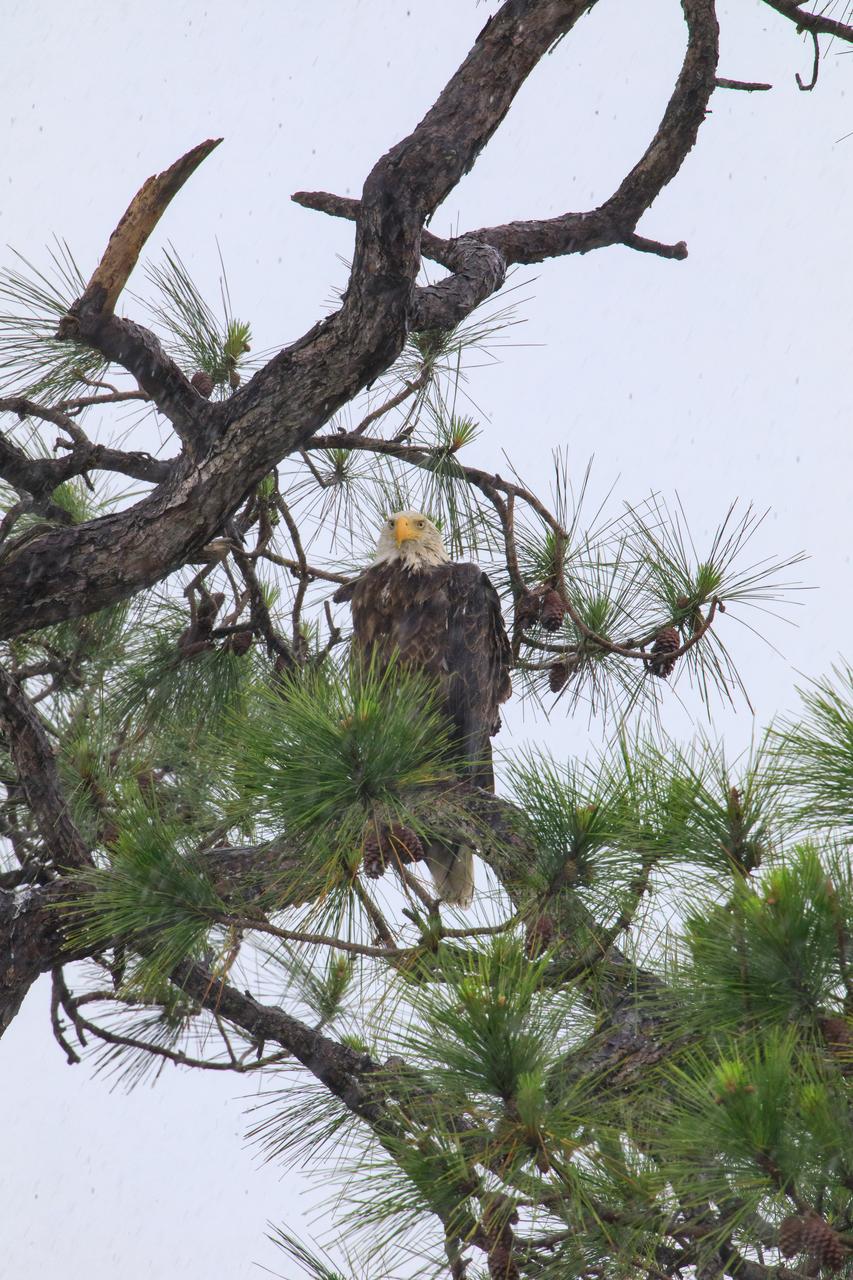
An American bald eagle is perched high in a tree above its nest at NASA’s Kennedy Space Center in Florida on April 25, 2023. The adult eagle is part of a mated pair that recently built a new home in this tree after storms badly damaged their original nest located about 50 yards away. That nest was built in 1973 and had been used by eagles almost every year since 1975. This season, the pair produced one eaglet.
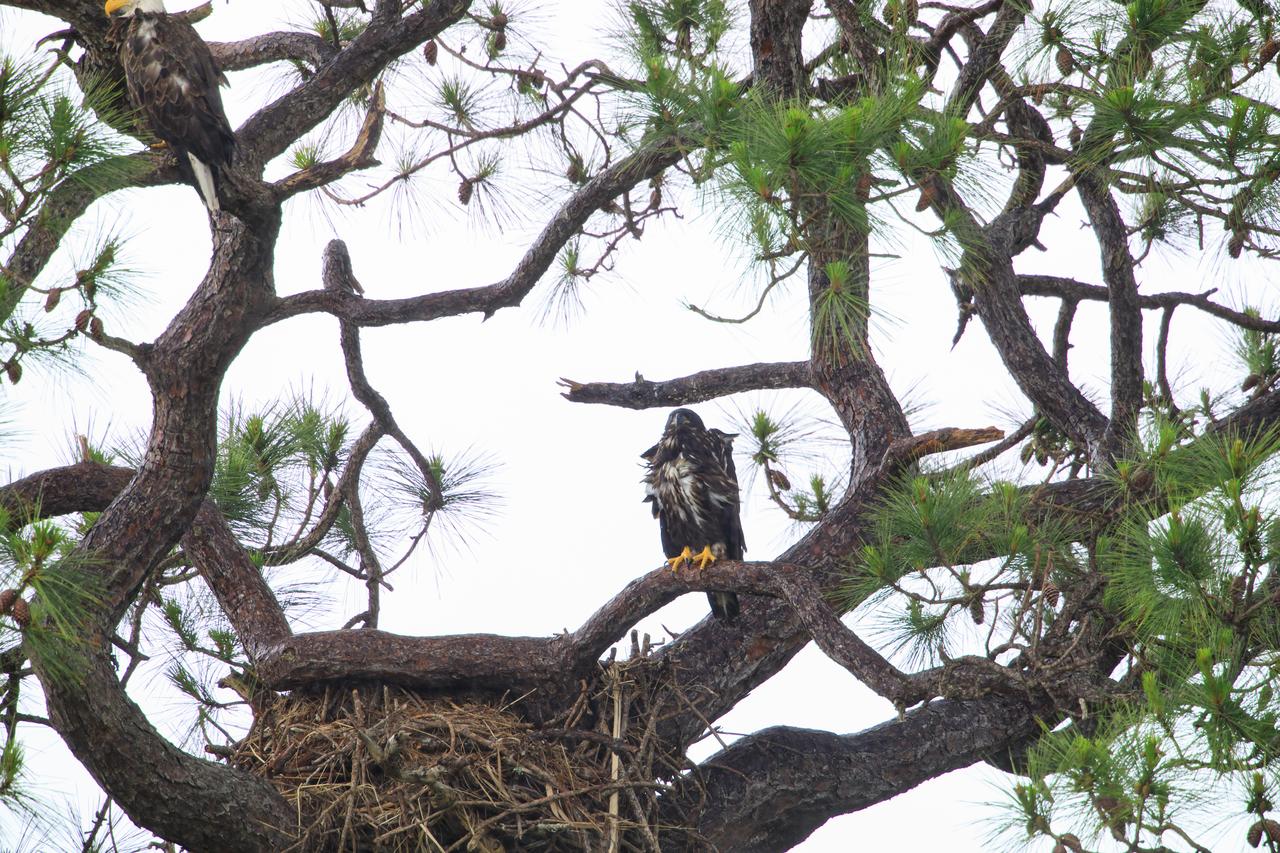
An American bald eagle, upper left, and its baby are perched in a tree near their nest at NASA’s Kennedy Space Center in Florida on April 25, 2023. The eaglet is the lone offspring of a mated pair of eagles that recently built the new home after storms badly damaged their original nest located about 50 yards away. That nest was built in 1973 and had been used by eagles almost every year since 1975.
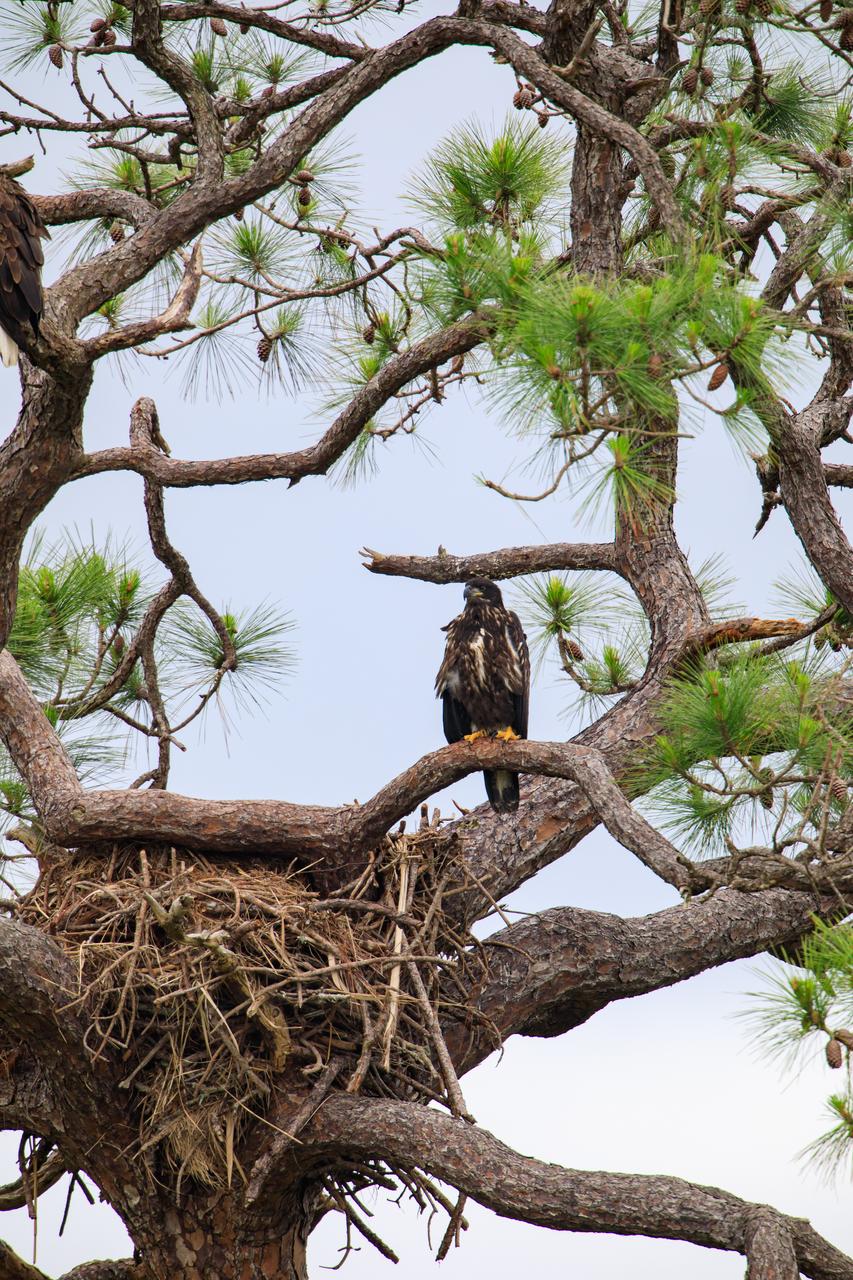
A baby American bald eagle looks out from just above its nest, located in a tree at NASA’s Kennedy Space Center in Florida on April 25, 2023. A mated pair of eagles recently built a new home in this tree after storms badly damaged their original nest located about 50 yards away, and produced one eaglet. The previous nest was built in 1973 and had been used by eagles almost every year since 1975.
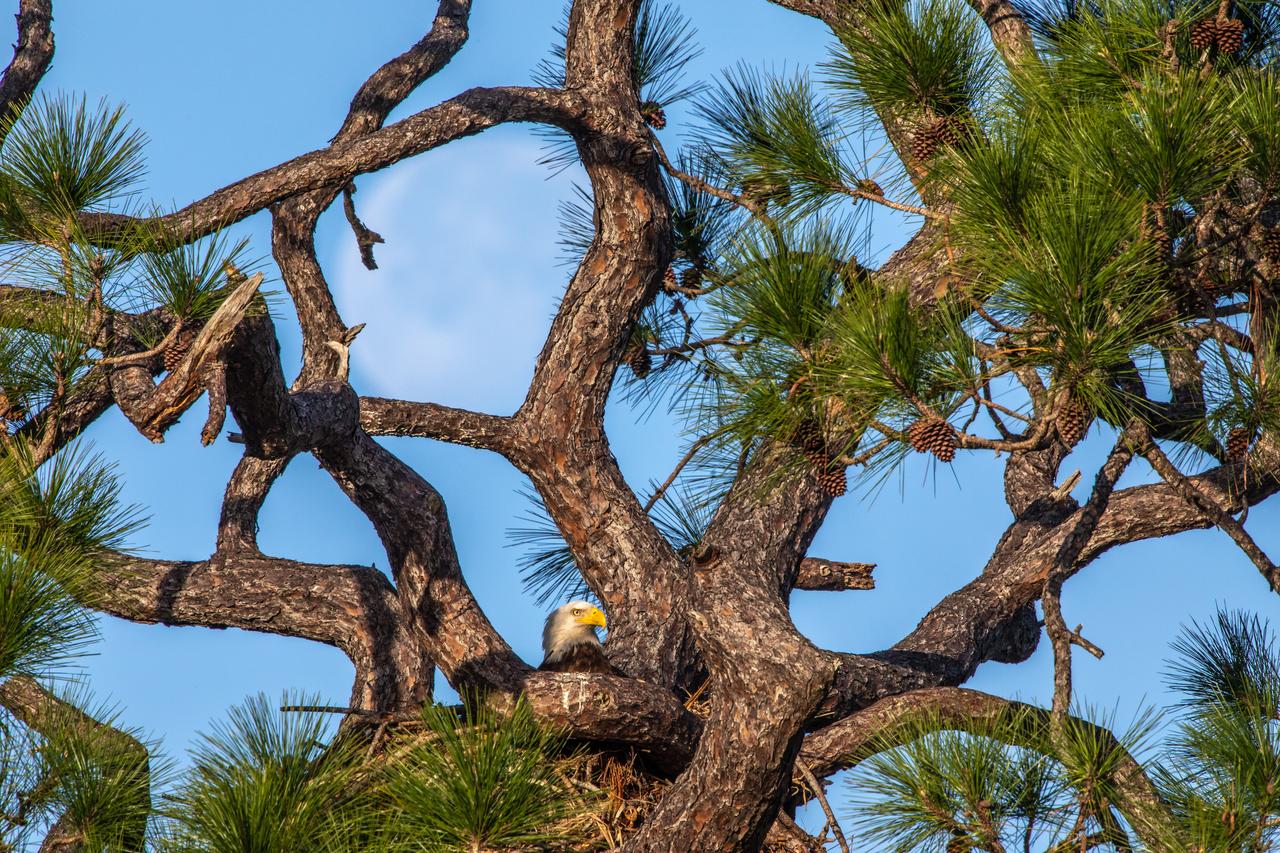
An American bald eagle occupies a nest near Kennedy Parkway North at NASA’s Kennedy Space Center on Feb. 8, 2023. Each year, eagles take up winter residence at the Florida spaceport, breeding and raising a new generation. The center shares a boundary with the Merritt Island National Wildlife Refuge, home to more than 1,500 species of plants and animals, and 15 federally listed species.
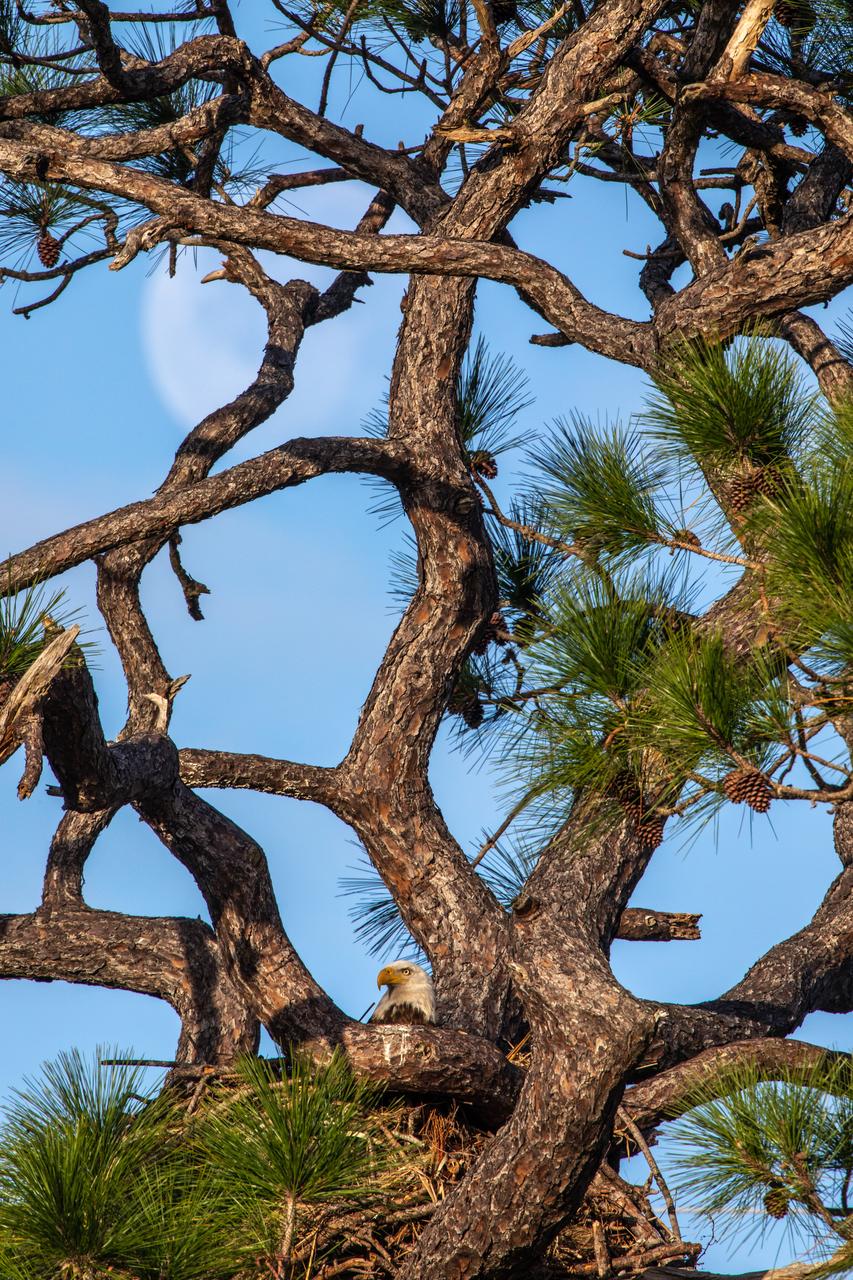
An American bald eagle occupies a nest near Kennedy Parkway North at NASA’s Kennedy Space Center on Feb. 8, 2023. Each year, eagles take up winter residence at the Florida spaceport, breeding and raising a new generation. The center shares a boundary with the Merritt Island National Wildlife Refuge, home to more than 1,500 species of plants and animals, and 15 federally listed species.
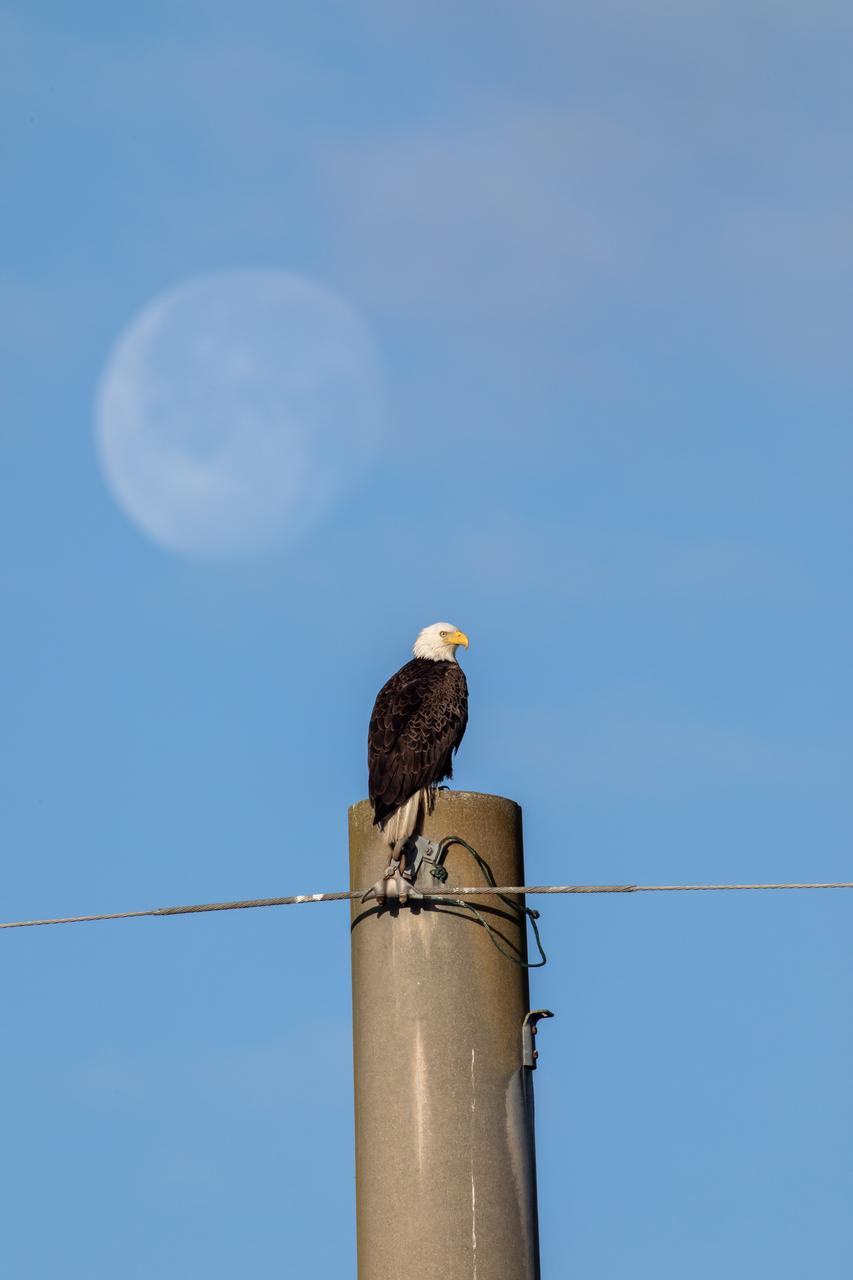
An American bald eagle is perched atop a pole near Kennedy Parkway North at NASA’s Kennedy Space Center on Feb. 8, 2023. Each year, eagles take up winter residence at the Florida spaceport, breeding and raising a new generation. The center shares a boundary with the Merritt Island National Wildlife Refuge, home to more than 1,500 species of plants and animals, and 15 federally listed species.
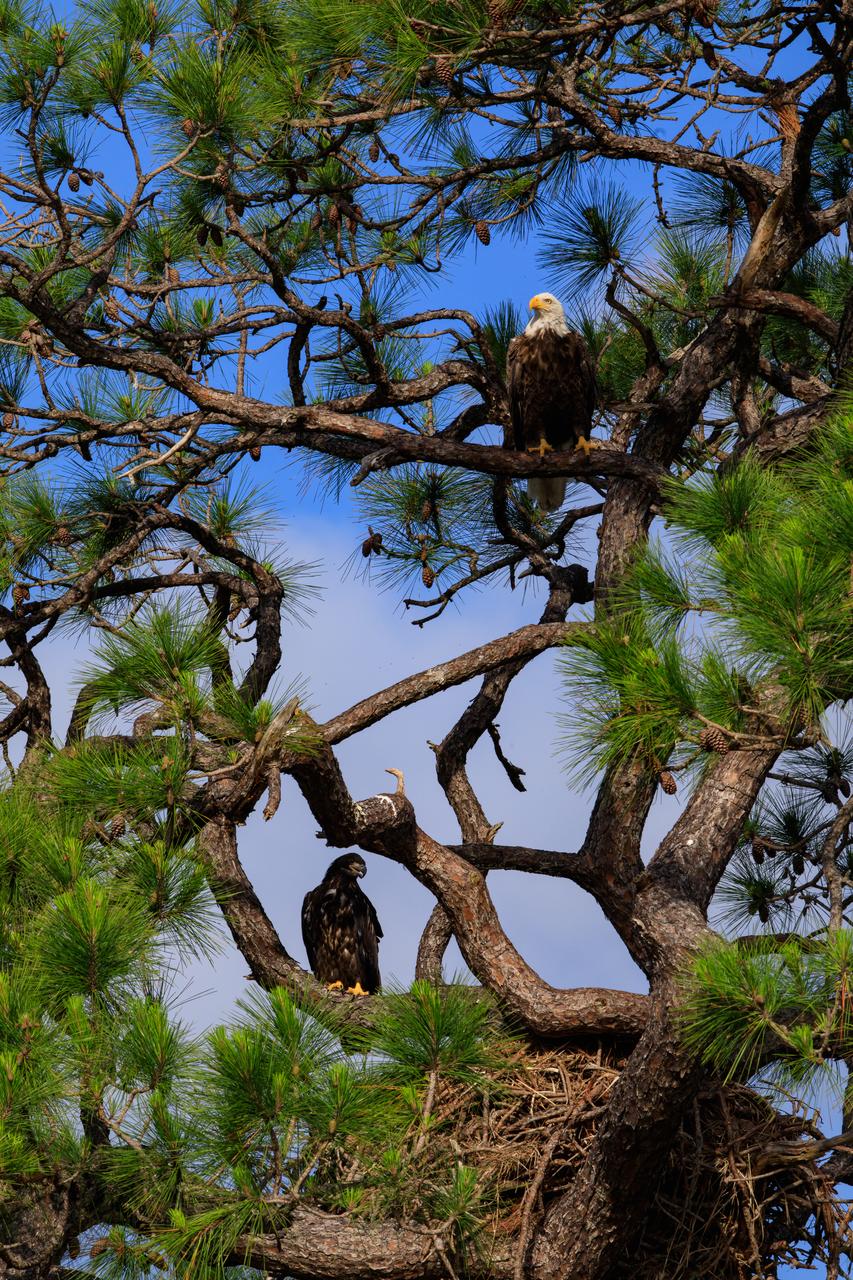
An American bald eagle is perched high in a tree above its nest at NASA’s Kennedy Space Center in Florida on April 10, 2023. Below is its baby eagle, looking up from the nest located off of Kennedy Parkway, about two miles from the Vehicle Assembly Building. The adult eagle is part of a mated pair that recently built a new home in this tree after storms badly damaged their original nest located about 50 yards away. That nest was built in 1973 and had been used by eagles almost every year since 1975. Kennedy currently is home to approximately 20 nesting pairs of bald eagles.
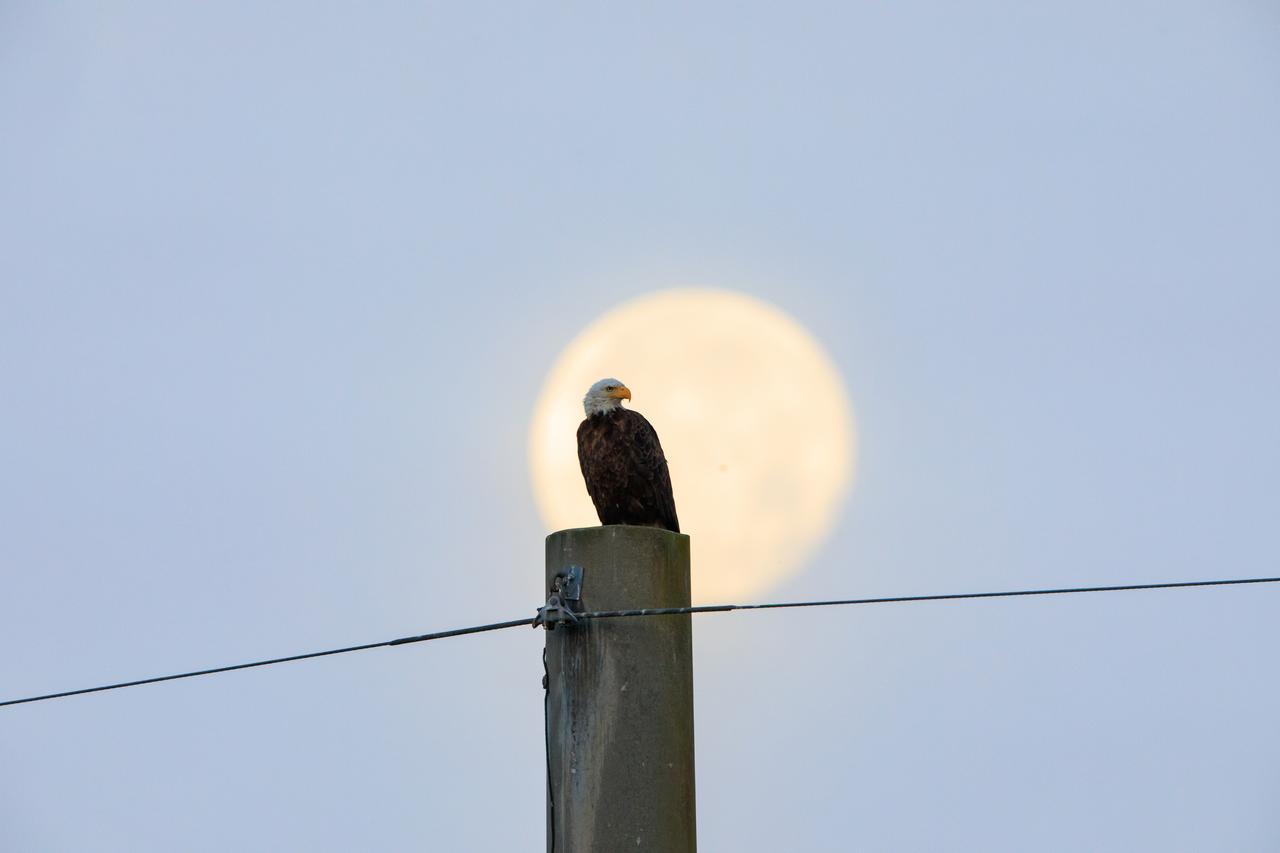
With the Moon in the background, an American bald eagle perches on a pole near its nest at NASA’s Kennedy Space Center on April 10, 2023. The eagle is part of a mated pair that takes up residence at the Florida spaceport during nesting season. This year, the pair is raising a lone baby eagle in the nest, located off of Kennedy Parkway, about two miles from the Vehicle Assembly Building. Kennedy currently is home to approximately 20 nesting pairs of bald eagles.
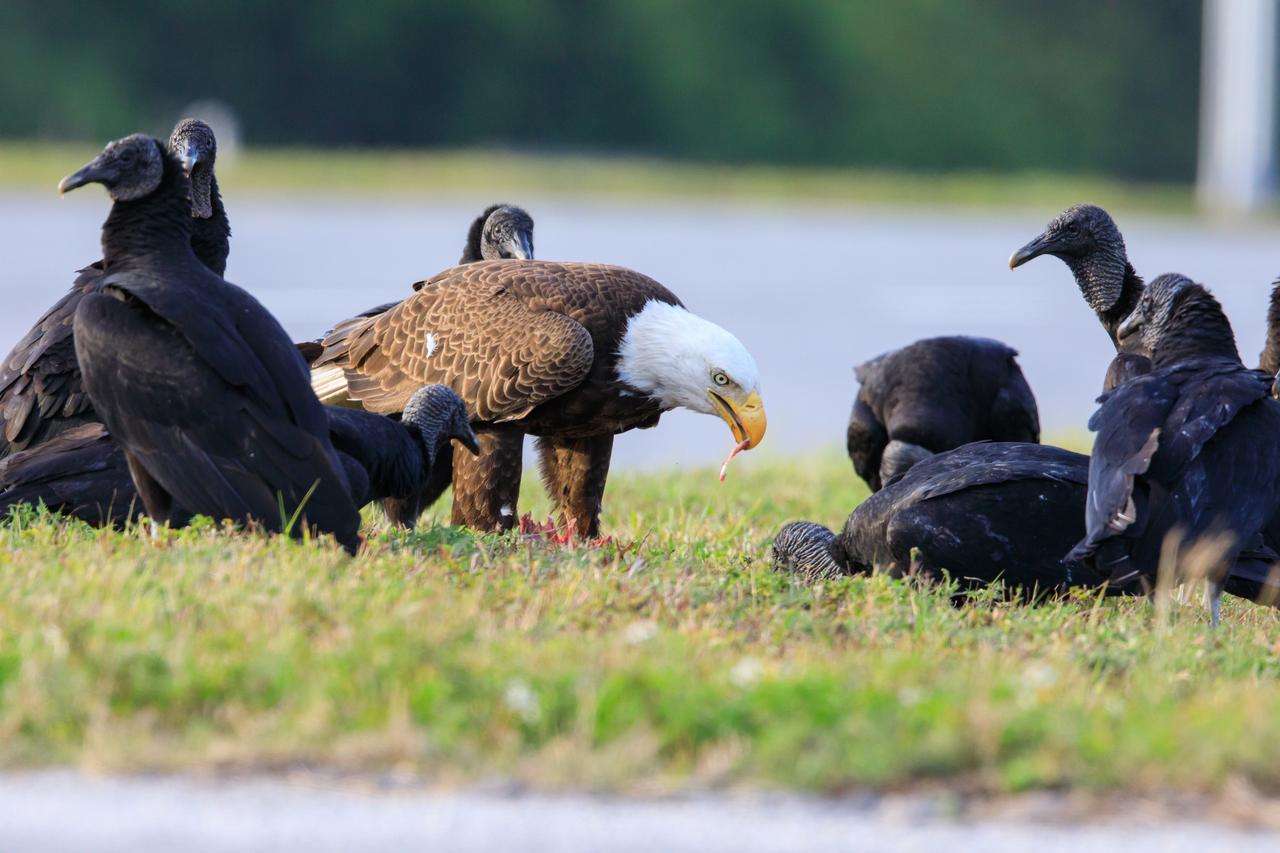
An American bald eagle feeds alongside some vultures at NASA’s Kennedy Space Center on April 10, 2023. The eagle is part of a mated pair that takes up residence at the Florida spaceport during nesting season. The pair is raising a baby eagle in their nest located off of Kennedy Parkway, about two miles from the Vehicle Assembly Building. Kennedy currently is home to approximately 20 nesting pairs of bald eagles.
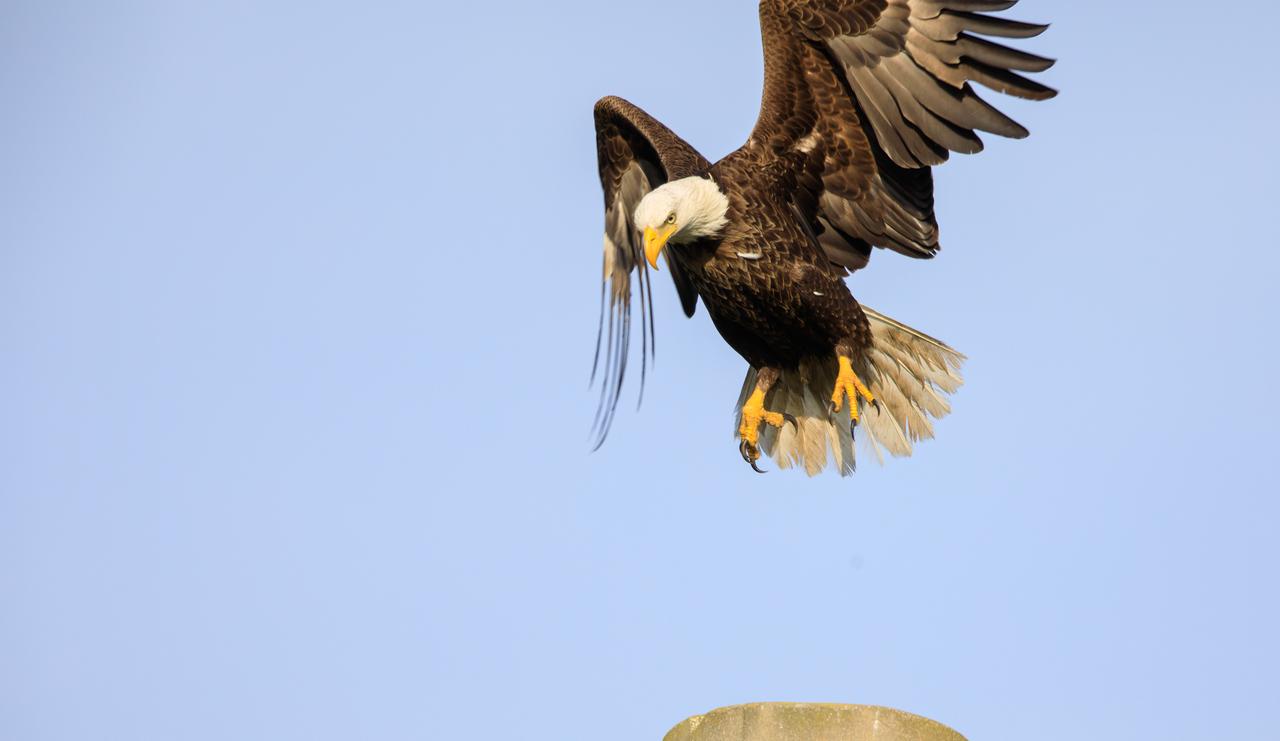
An American bald eagle swoops down to land on a pole at NASA’s Kennedy Space Center on April 10, 2023. The eagle is part of a mated pair that takes up residence at the Florida spaceport during nesting season. This year, the pair is raising a lone baby eagle in the nest, located in a tree near Kennedy Parkway, about two miles from the Vehicle Assembly Building. Kennedy currently is home to approximately 20 nesting pairs of bald eagles.
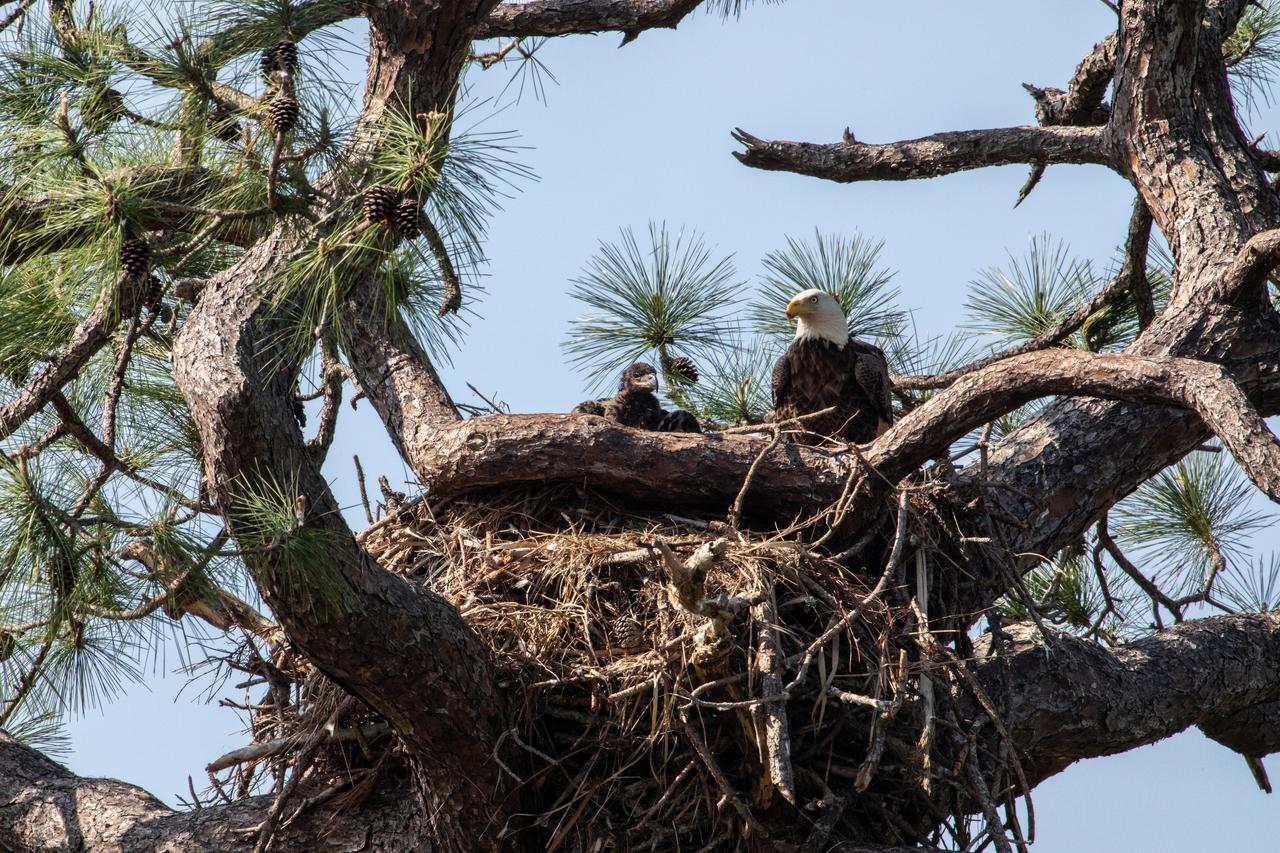
A baby American bald eagle spends time with one of its parents in a nest located near Kennedy Parkway North at NASA’s Kennedy Space Center in Florida on March 8, 2023. A mating pair of eagles recently built a new home in this tree after a combination of storms badly damaged their original nest located less than 100 yards away. That nest was built in 1973 and had been used by eagles almost every year since 1975.
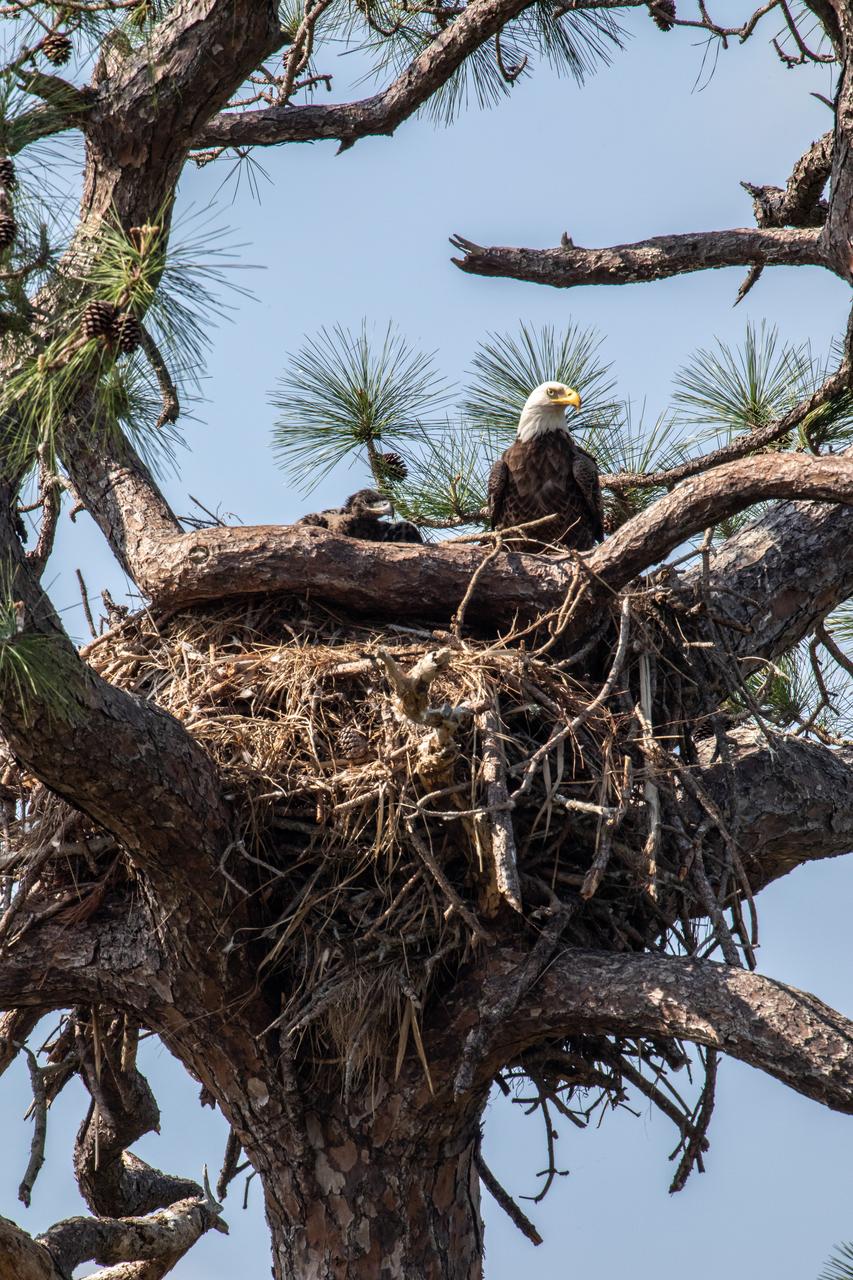
A baby American bald eagle looks out from its nest, along with one of its parents, from their temporary home located near Kennedy Parkway North at NASA’s Kennedy Space Center in Florida on March 8, 2023. A mating pair of eagles recently built a new nest in this tree after a combination of storms badly damaged their original nest located less than 100 yards away. That nest was built in 1973 and had been used by eagles almost every year since 1975.
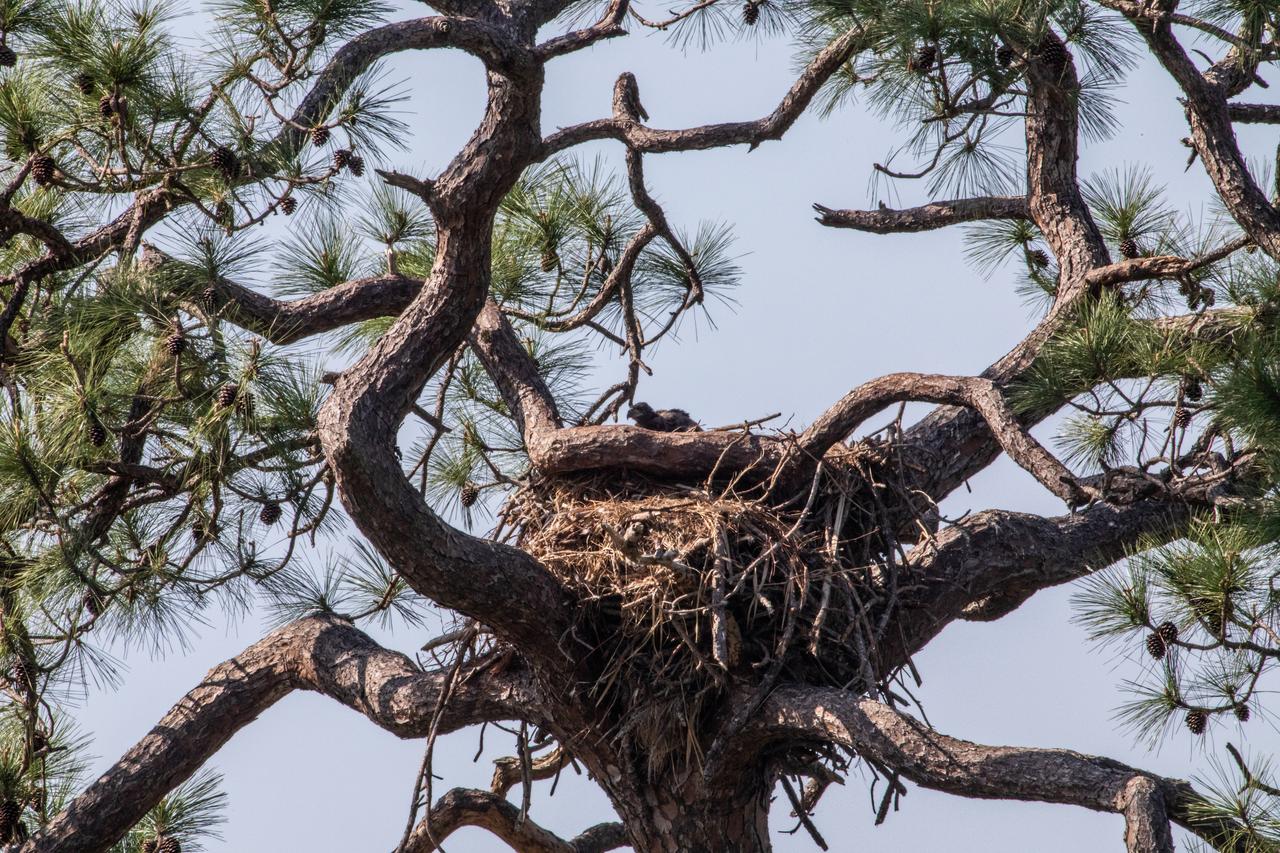
A baby American bald eagle pokes its head up from a nest located near Kennedy Parkway North at NASA’s Kennedy Space Center in Florida on March 8, 2023. A mating pair of eagles recently built a new home in this tree after a combination of storms badly damaged their original nest located less than 100 yards away. That nest was built in 1973 and had been used by eagles almost every year since 1975.
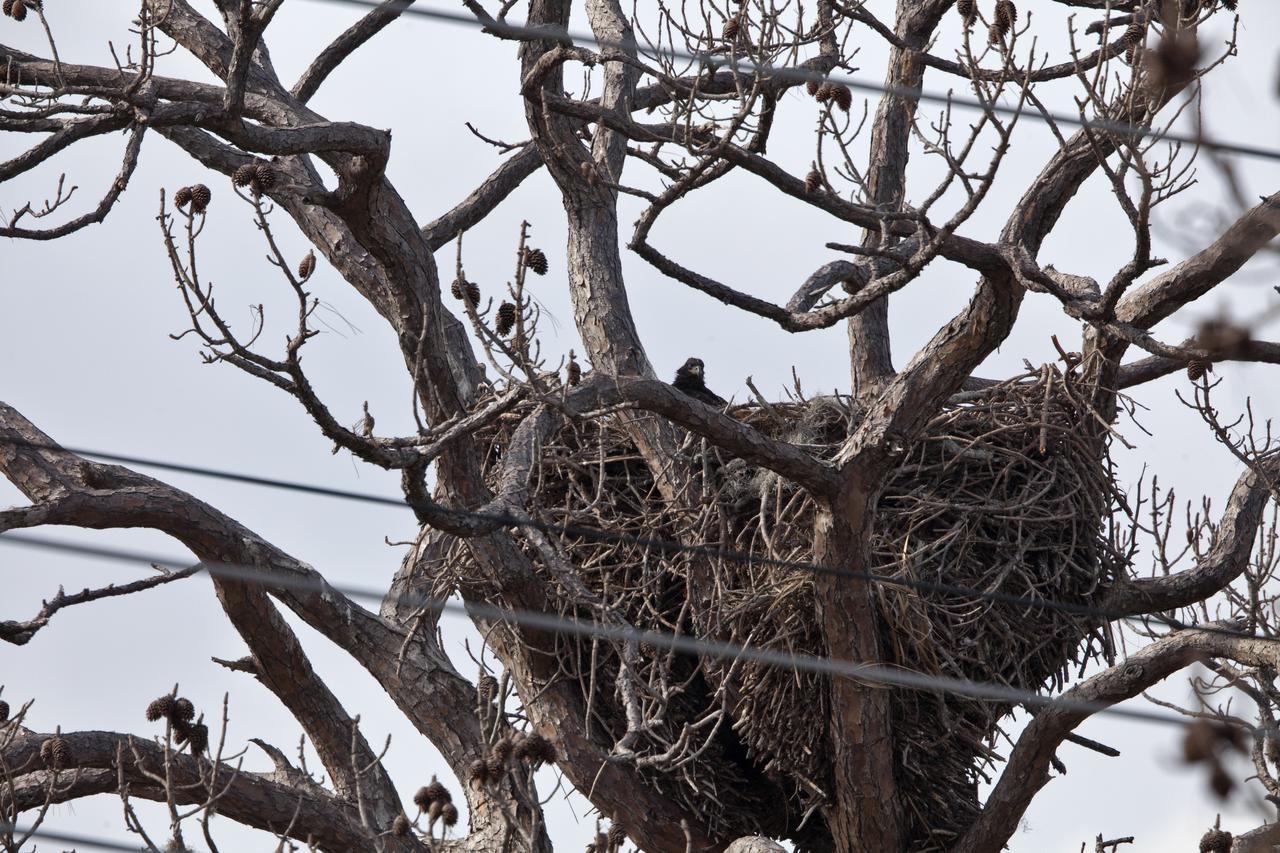
A baby eagle perches in a nest in a tree along State Road 3 at NASA's Kennedy Space Center in Florida. The center shares a border with the 140,000-acre Merritt Island National Wildlife Refuge. More than 330 native and migratory bird species, 25 mammals, 117 fishes and 65 amphibians and reptiles call Kennedy and the wildlife refuge home.
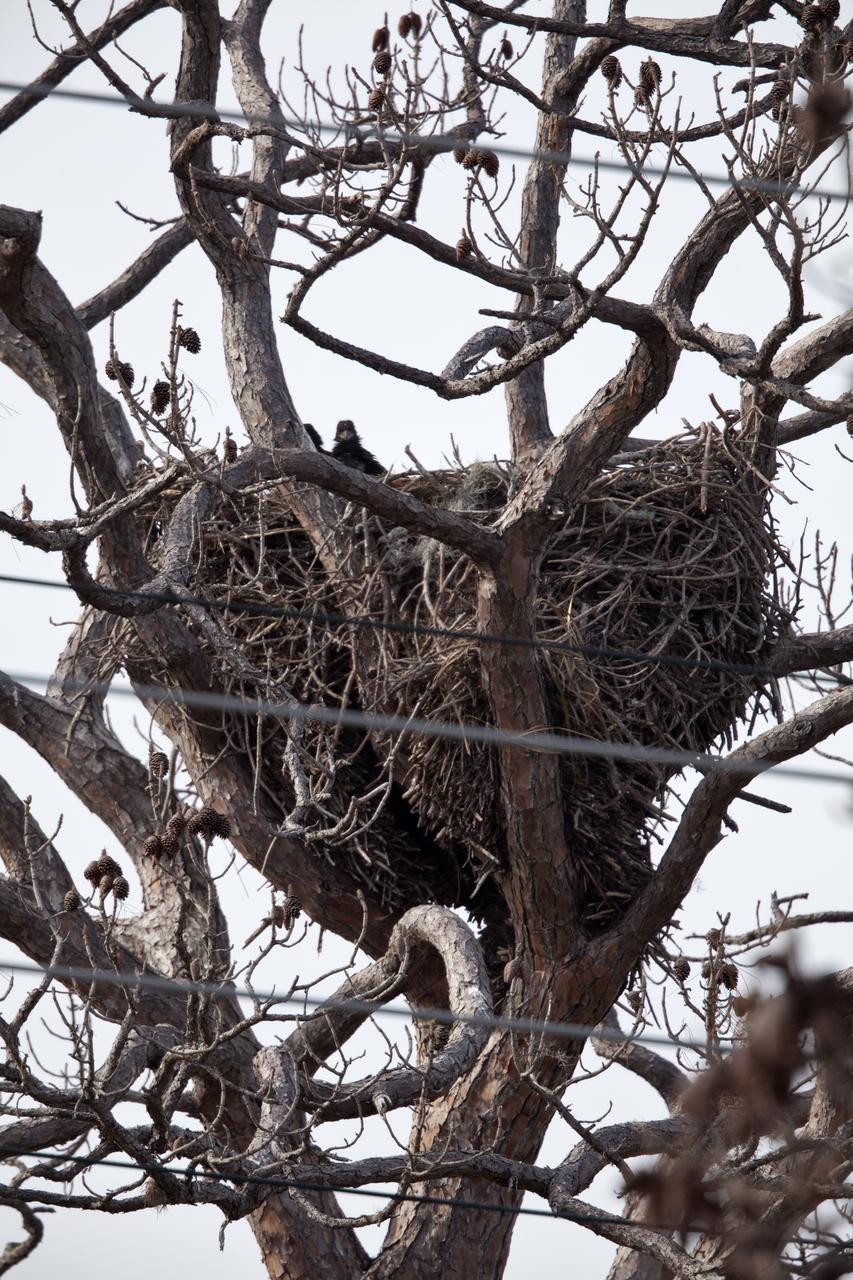
Two baby eagles perch in a nest in a tree along State Road 3 at NASA's Kennedy Space Center in Florida. The center shares a border with the 140,000-acre Merritt Island National Wildlife Refuge. More than 330 native and migratory bird species, 25 mammals, 117 fishes and 65 amphibians and reptiles call Kennedy and the wildlife refuge home.
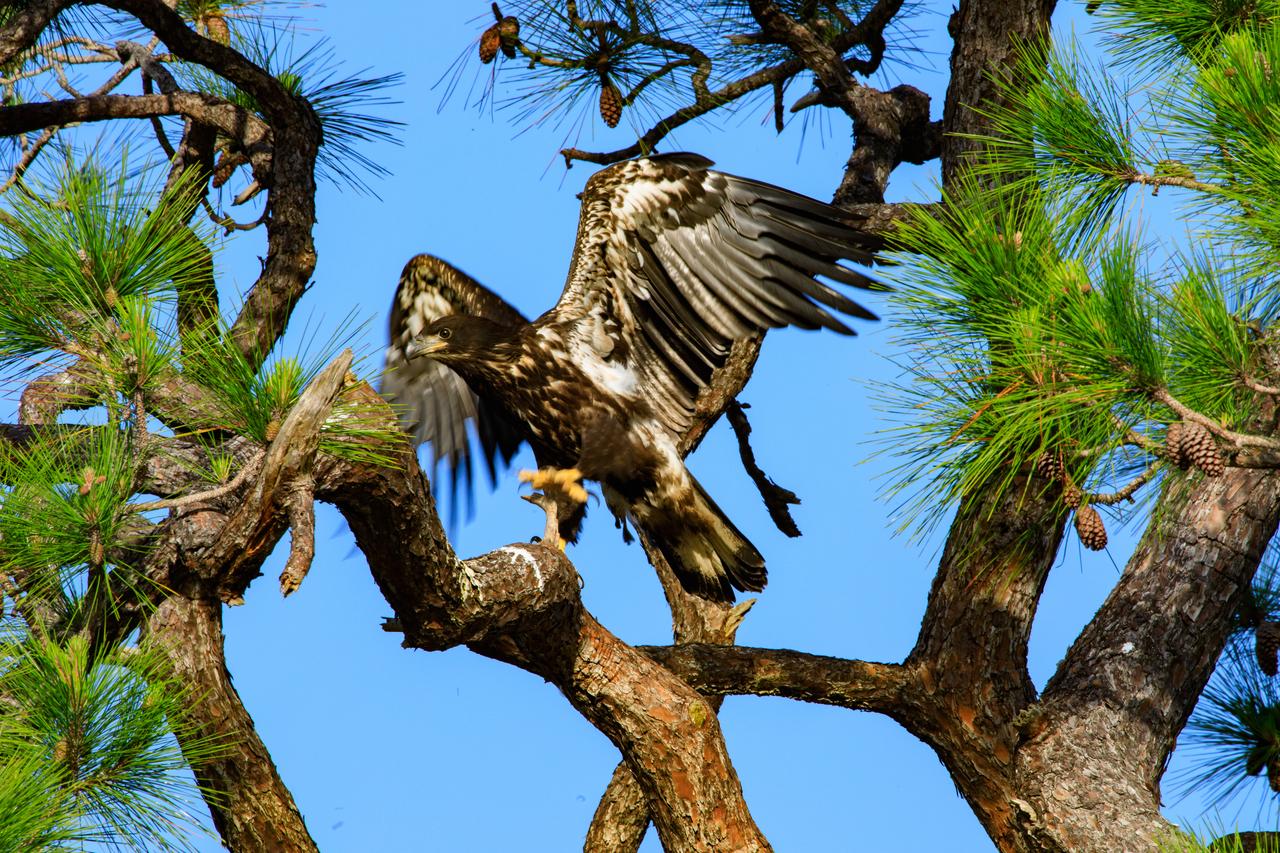
A baby American bald eagle spreads its wings to fly high above a tree that contains its nest at NASA’s Kennedy Space Center in Florida on April 26, 2023. The nest is located off Kennedy Parkway, about two miles from the Vehicle Assembly Building. The eagle is from a mated pair that recently built a new home in this tree after storms badly damaged their original nest located about 50 yards away. That nest was built in 1973 and had been used by eagles almost every year since 1975. Kennedy currently is home to approximately 20 nesting pairs of bald eagles.
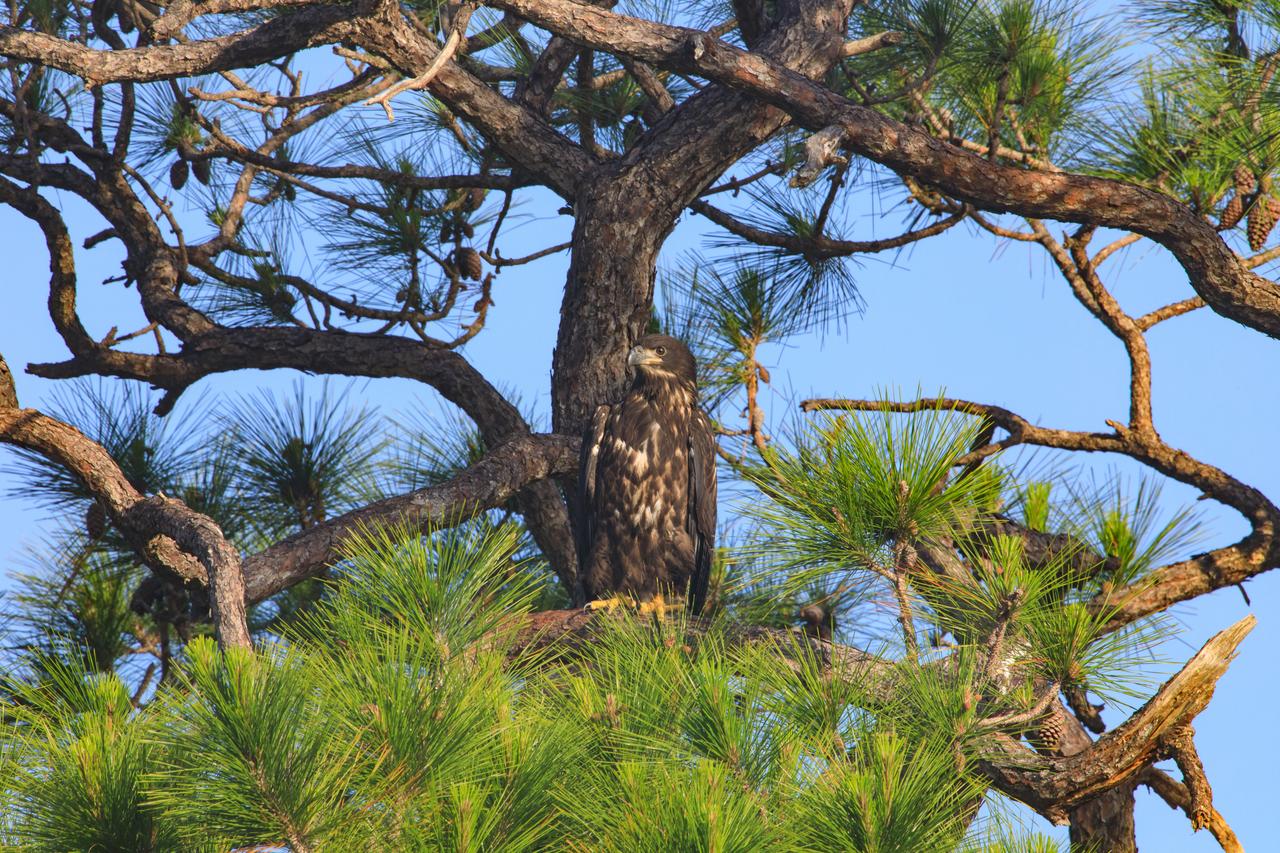
A baby American bald eagle is perched high in a tree above its nest at NASA’s Kennedy Space Center in Florida on April 26, 2023. The nest is located off Kennedy Parkway, about two miles from the Vehicle Assembly Building. The eagle is from a mated pair that recently built a new home in this tree after storms badly damaged their original nest located about 50 yards away. That nest was built in 1973 and had been used by eagles almost every year since 1975. Kennedy currently is home to approximately 20 nesting pairs of bald eagles.
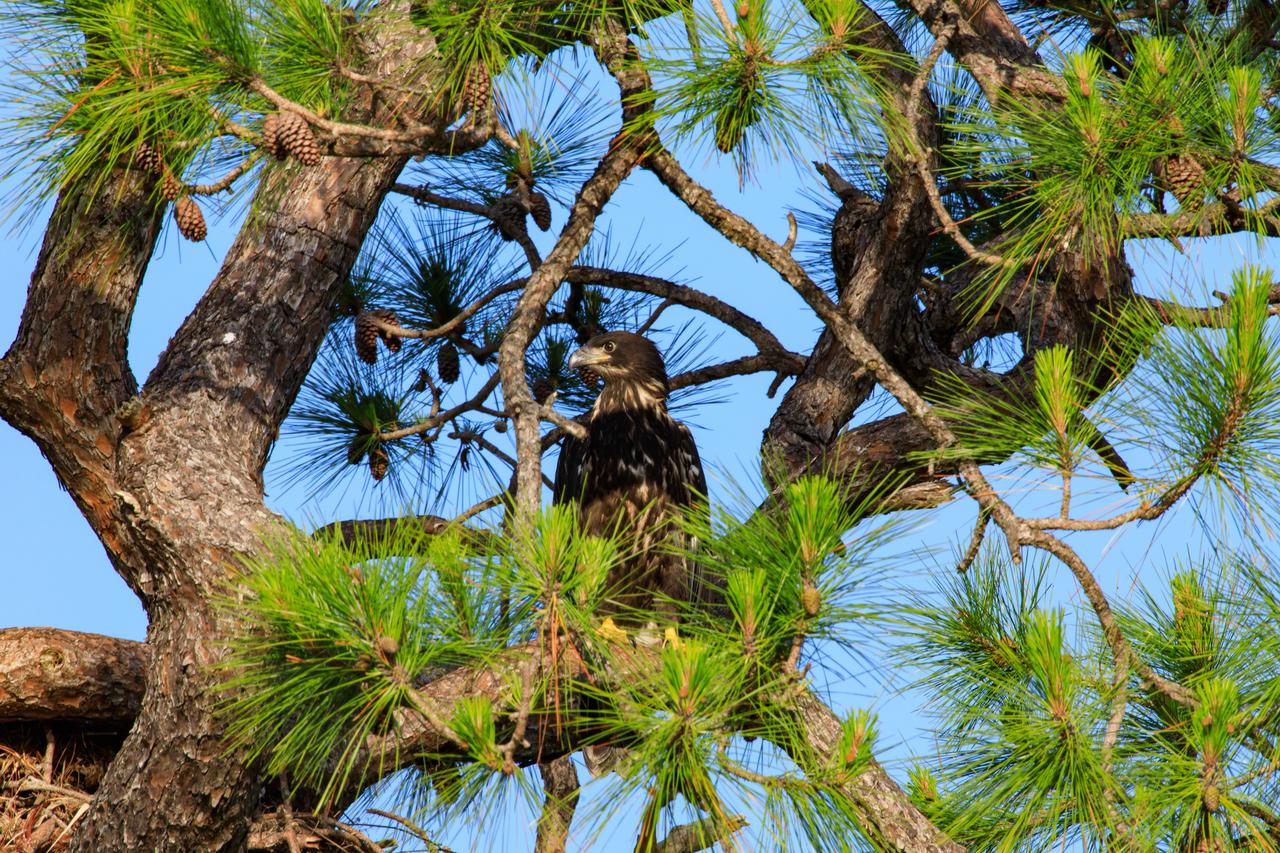
A baby American bald eagle is perched high in a tree above its nest at NASA’s Kennedy Space Center in Florida on April 26, 2023. The nest is located off Kennedy Parkway, about two miles from the Vehicle Assembly Building. The eagle is from a mated pair that recently built a new home in this tree after storms badly damaged their original nest located about 50 yards away. That nest was built in 1973 and had been used by eagles almost every year since 1975. Kennedy currently is home to approximately 20 nesting pairs of bald eagles.
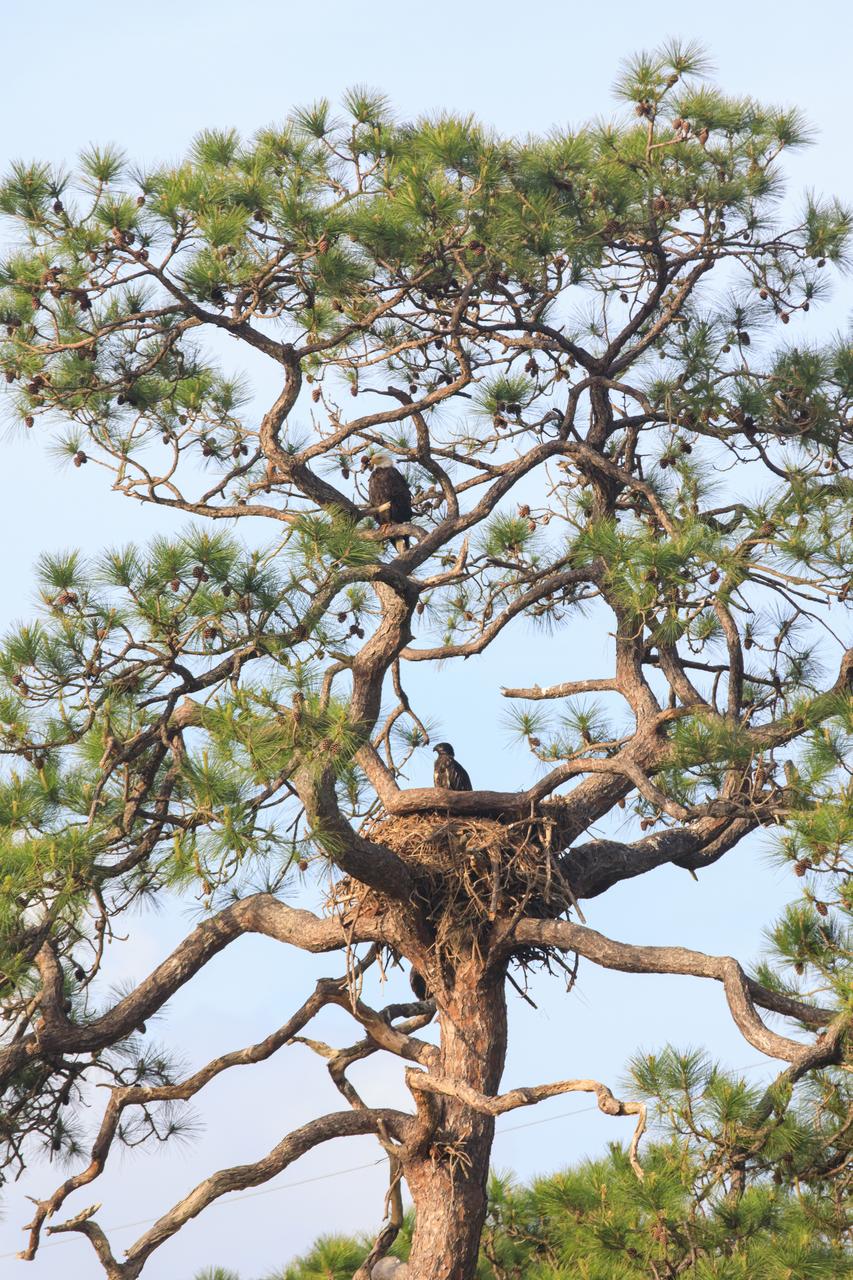
An American bald eagle is perched high in a tree above its nest at NASA’s Kennedy Space Center in Florida on April 10, 2023. Below is its baby eagle, looking up from the nest located off of Kennedy Parkway, about two miles from the Vehicle Assembly Building. The adult eagle is part of a mated pair that recently built a new home in this tree after storms badly damaged their original nest located about 50 yards away. That nest was built in 1973 and had been used by eagles almost every year since 1975.
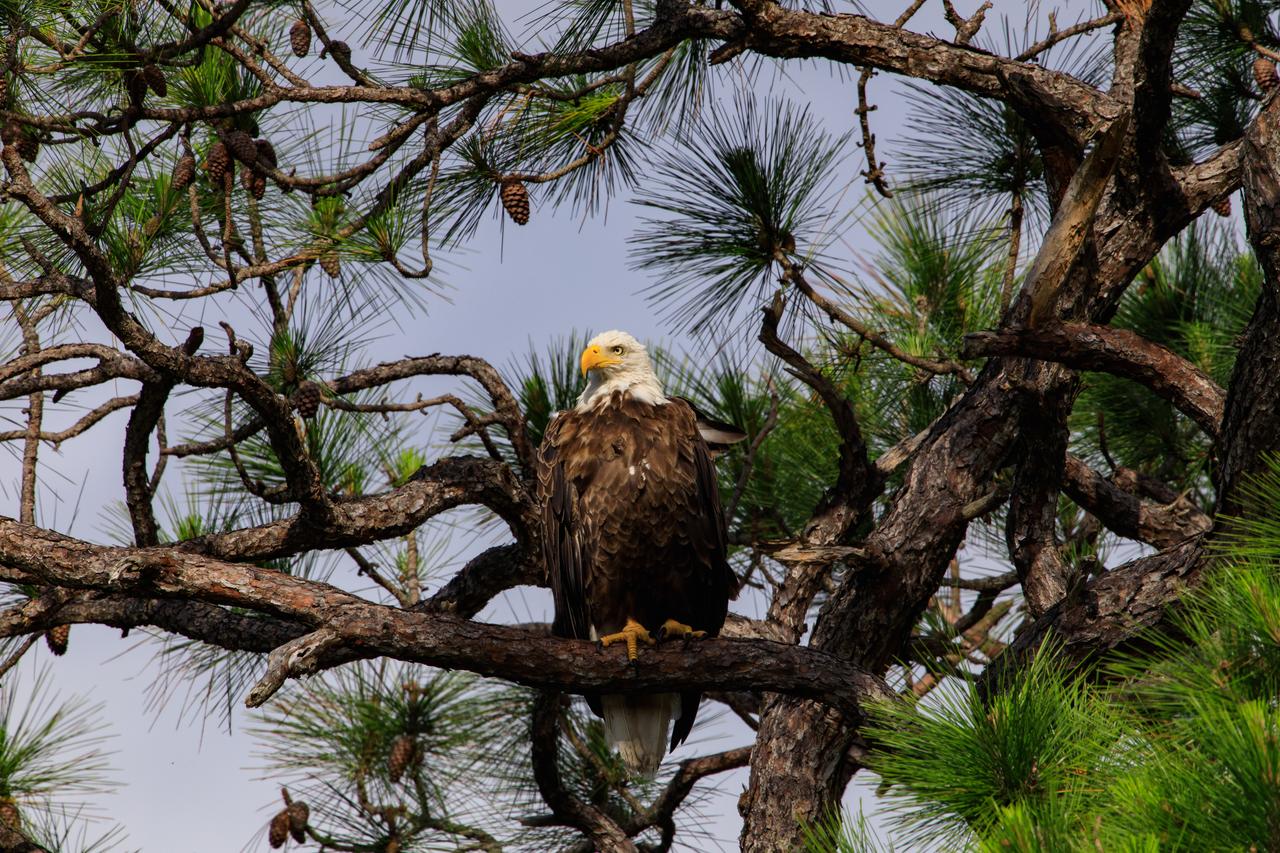
An American bald eagle is perched high in a tree above its nest at NASA’s Kennedy Space Center in Florida on April 10, 2023. The nest is located off of Kennedy Parkway, about two miles from the Vehicle Assembly Building. The adult eagle is part of a mated pair that recently built a new home in this tree after storms badly damaged their original nest located about 50 yards away. That nest was built in 1973 and had been used by eagles almost every year since 1975. Kennedy currently is home to approximately 20 nesting pairs of bald eagles.
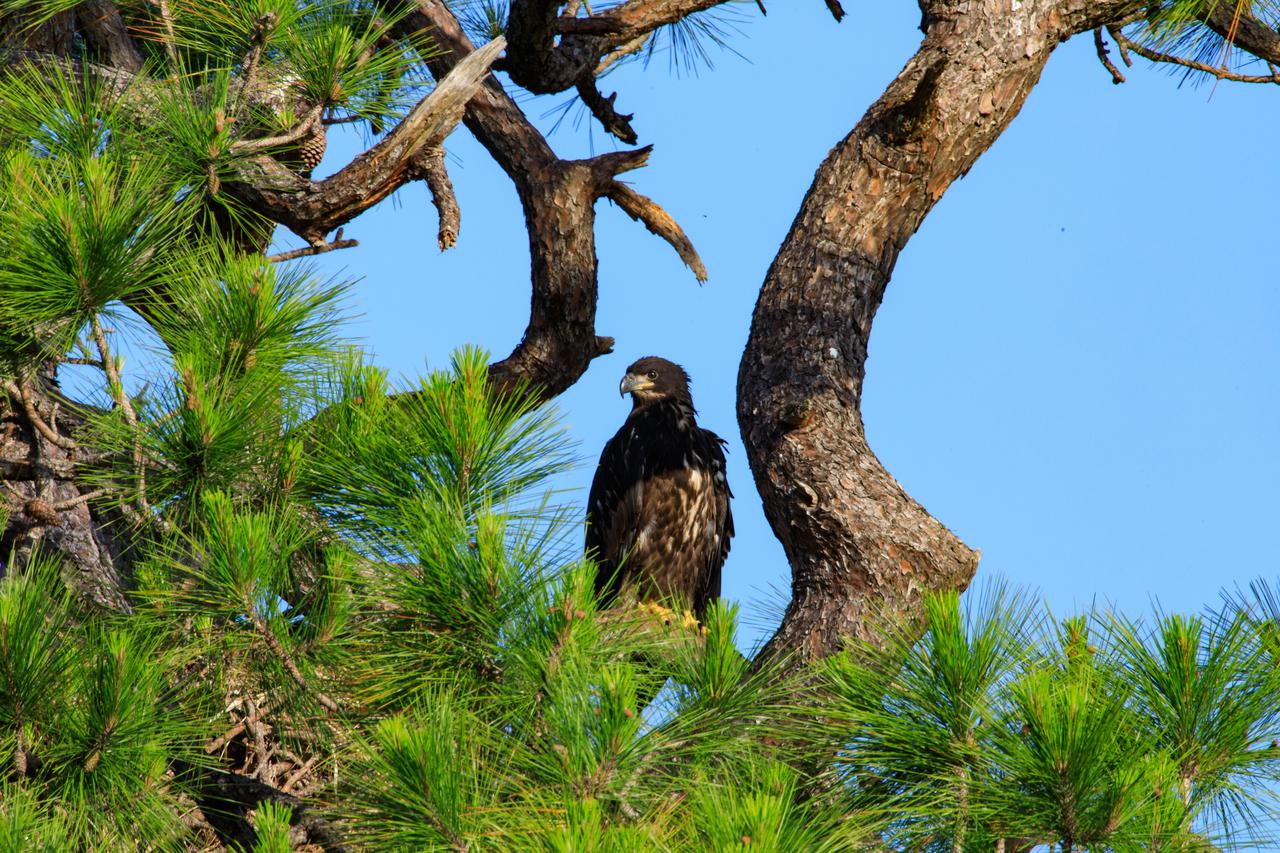
A baby American bald eagle is perched high in a tree above its nest at NASA’s Kennedy Space Center in Florida on April 26, 2023. The nest is located off Kennedy Parkway, about two miles from the Vehicle Assembly Building. The eagle is from a mated pair that recently built a new home in this tree after storms badly damaged their original nest located about 50 yards away. That nest was built in 1973 and had been used by eagles almost every year since 1975. Kennedy currently is home to approximately 20 nesting pairs of bald eagles.
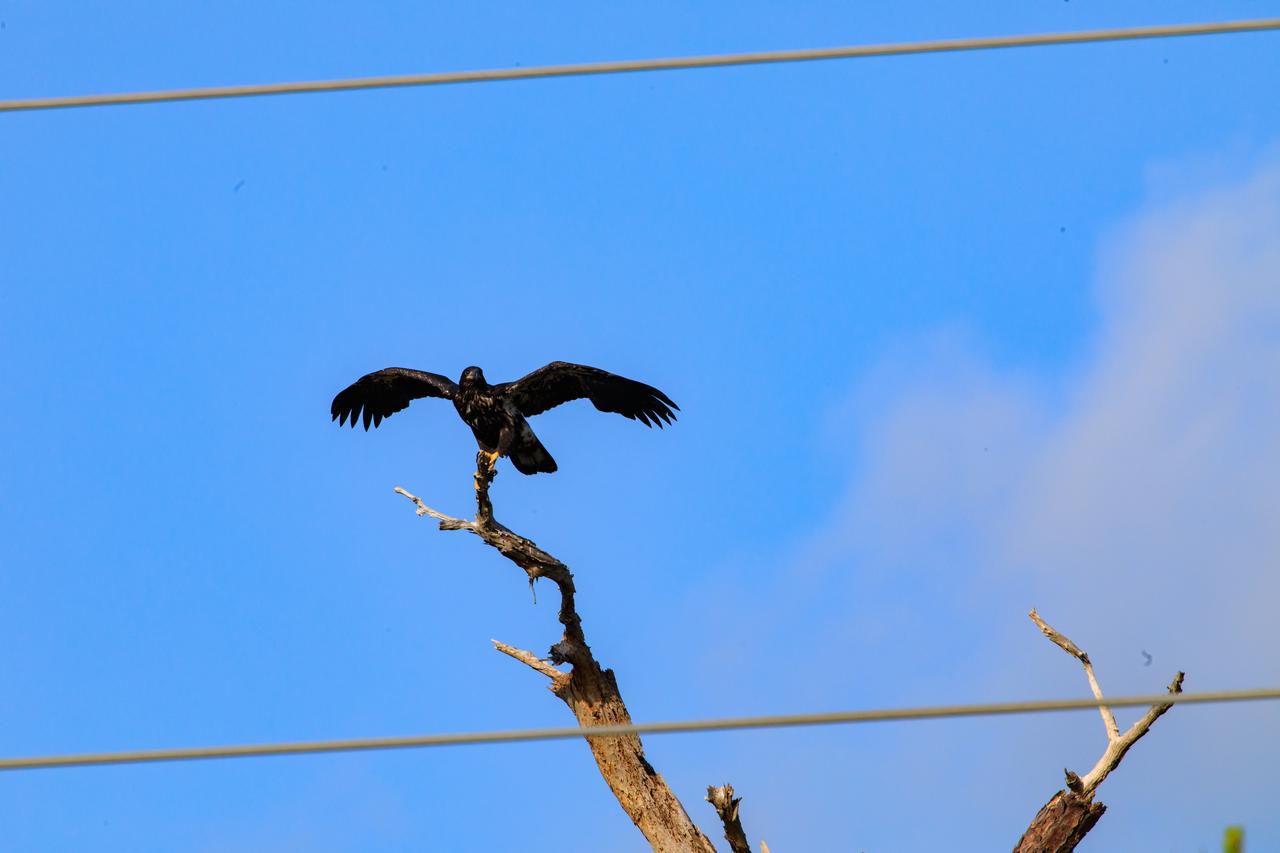
A baby American bald eagle spreads its wings to fly above a tree that contains its nest at NASA’s Kennedy Space Center in Florida on April 26, 2023. The nest is located off Kennedy Parkway, about two miles from the Vehicle Assembly Building. The eagle is from a mated pair that recently built a new home in this tree after storms badly damaged their original nest located about 50 yards away. That nest was built in 1973 and had been used by eagles almost every year since 1975. Kennedy currently is home to approximately 20 nesting pairs of bald eagles.
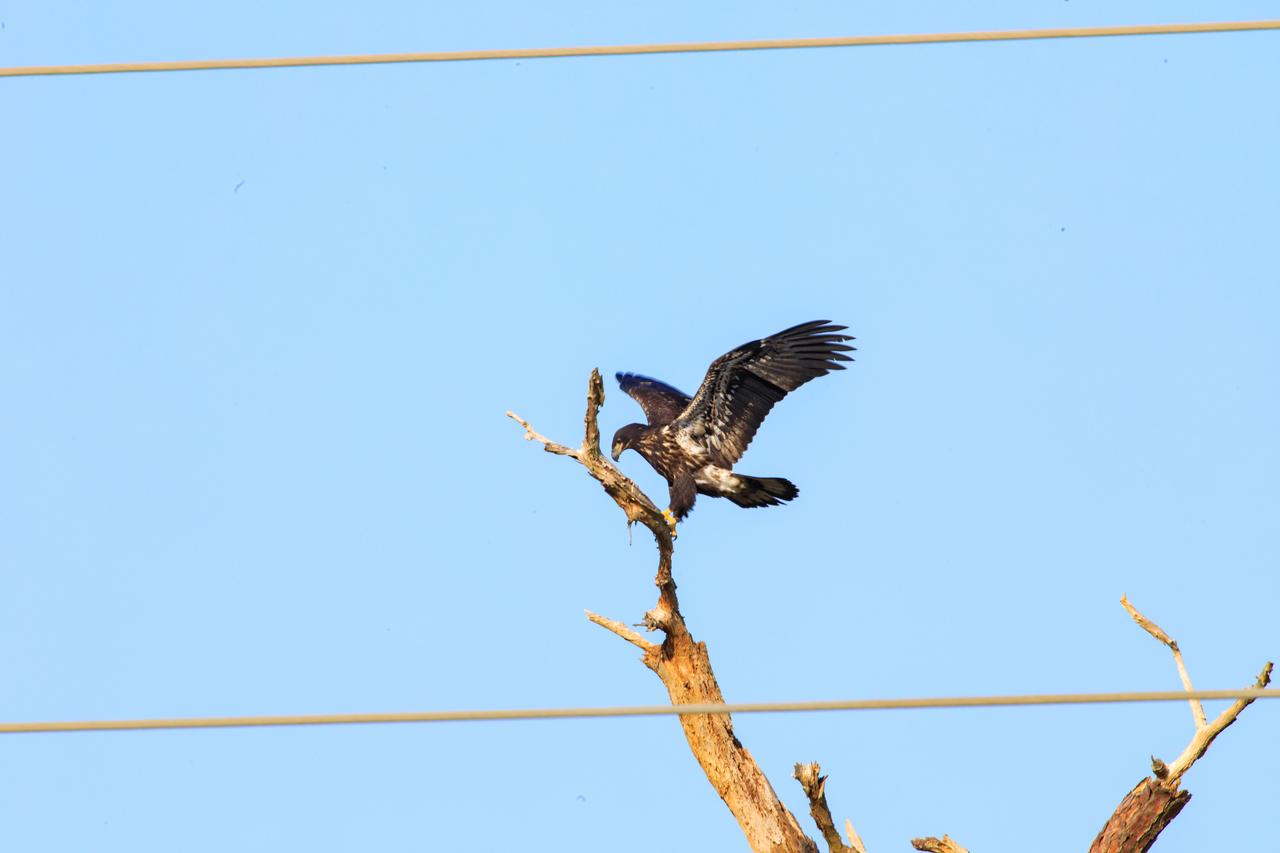
A baby American bald eagle spreads its wings to fly above a tree that contains its nest at NASA’s Kennedy Space Center in Florida on April 26, 2023. The nest is located off Kennedy Parkway, about two miles from the Vehicle Assembly Building. The eagle is from a mated pair that recently built a new home in this tree after storms badly damaged their original nest located about 50 yards away. That nest was built in 1973 and had been used by eagles almost every year since 1975. Kennedy currently is home to approximately 20 nesting pairs of bald eagles.
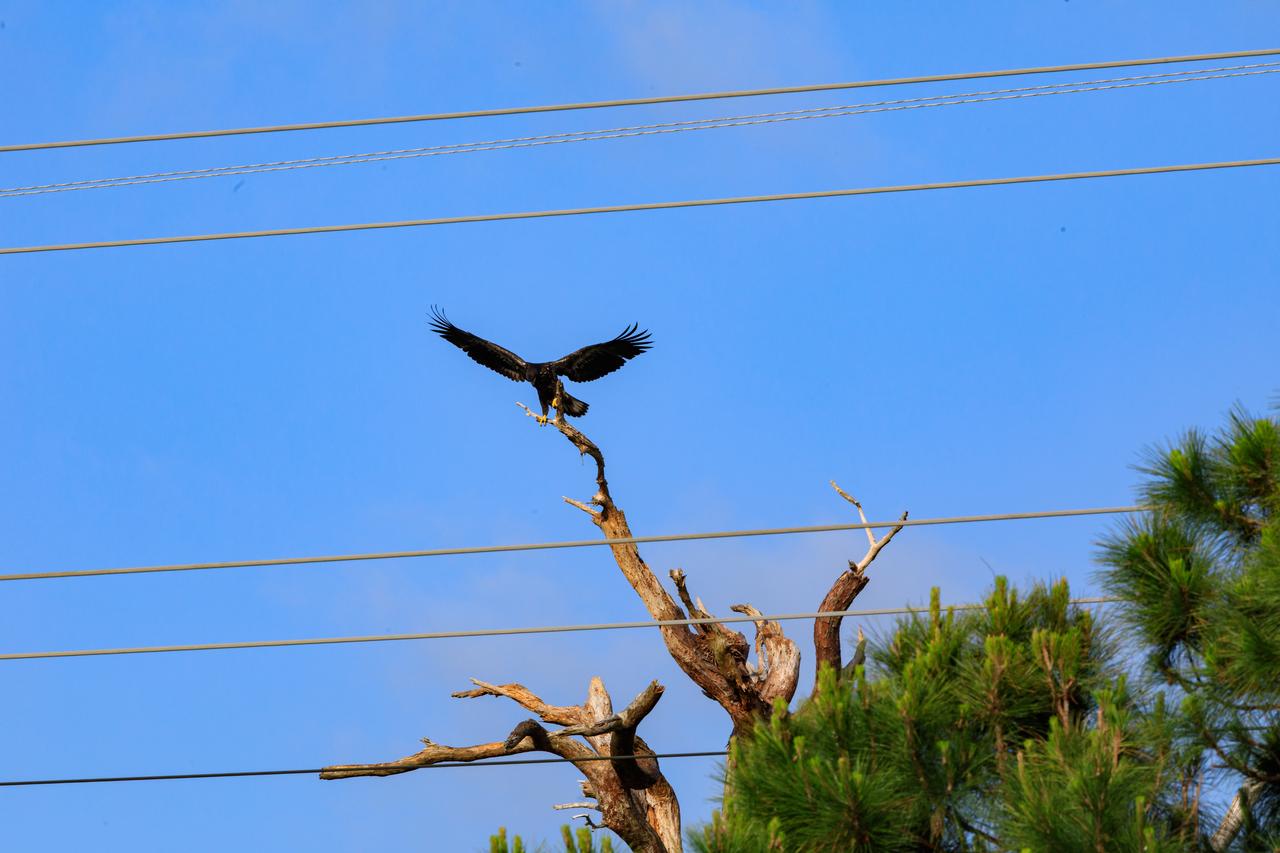
A baby American bald eagle spreads its wings to fly above a tree that contains its nest at NASA’s Kennedy Space Center in Florida on April 26, 2023. The nest is located off Kennedy Parkway, about two miles from the Vehicle Assembly Building. The eagle is from a mated pair that recently built a new home in this tree after storms badly damaged their original nest located about 50 yards away. That nest was built in 1973 and had been used by eagles almost every year since 1975. Kennedy currently is home to approximately 20 nesting pairs of bald eagles.
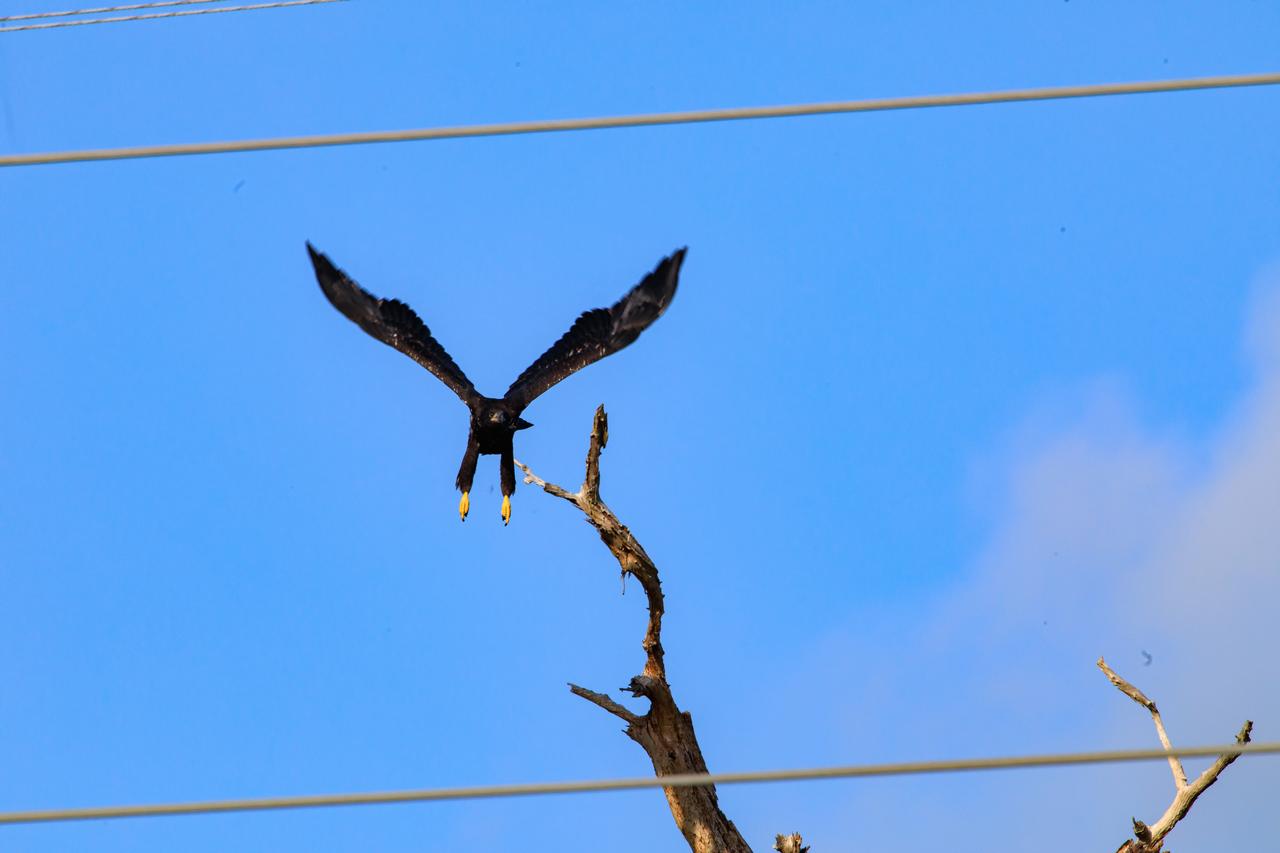
A baby American bald eagle takes flight from a tree that contains its nest at NASA’s Kennedy Space Center in Florida on April 26, 2023. The nest is located off Kennedy Parkway, about two miles from the Vehicle Assembly Building. The eagle is from a mated pair that recently built a new home in this tree after storms badly damaged their original nest located about 50 yards away. That nest was built in 1973 and had been used by eagles almost every year since 1975. Kennedy currently is home to approximately 20 nesting pairs of bald eagles.
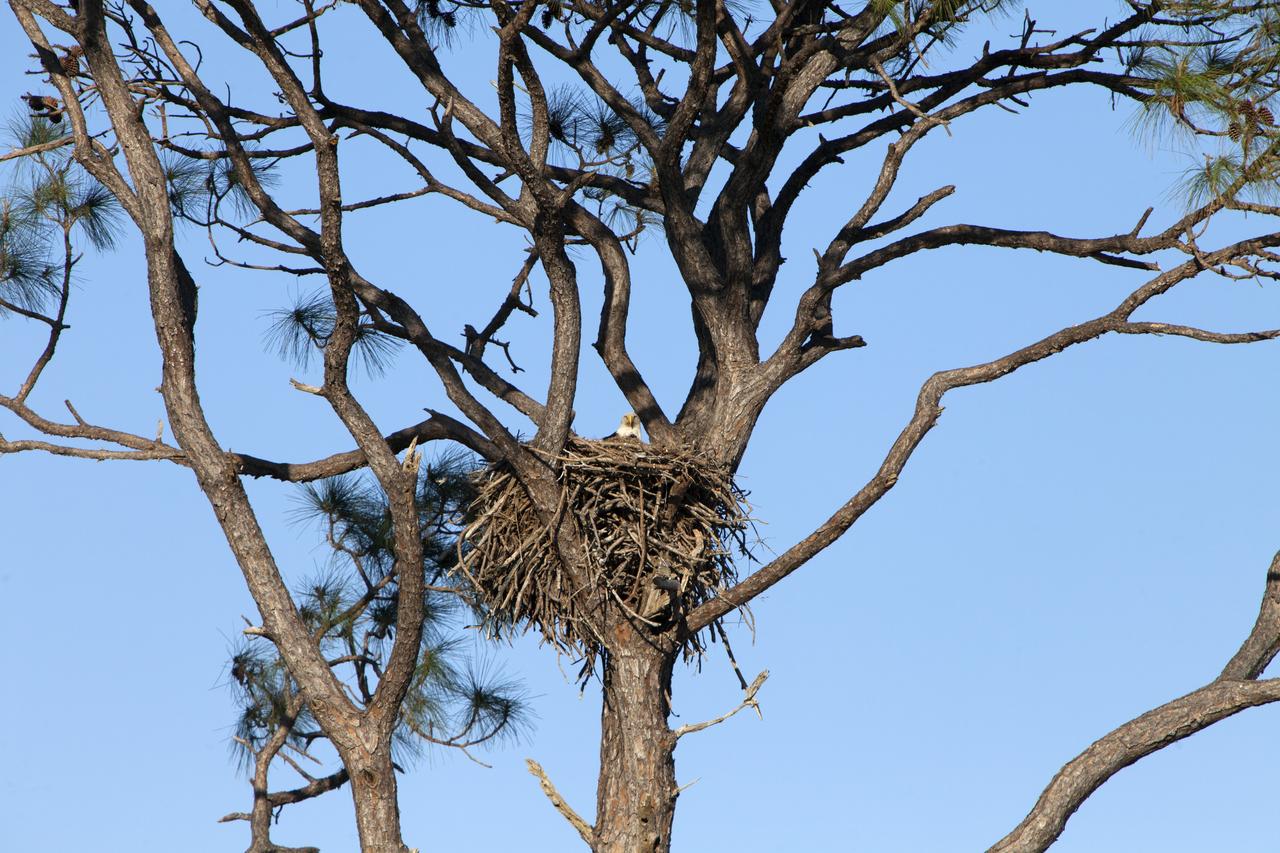
An adult American bald eagle perches in a nest in a tree along State Road 3 at NASA's Kennedy Space Center in Florida. Eagles have built nests in trees at the center for many years. The center shares a border with the 140,000-acre Merritt Island National Wildlife Refuge. More than 330 native and migratory bird species, 25 mammals, 117 fishes and 65 amphibians and reptiles call Kennedy and the wildlife refuge home.
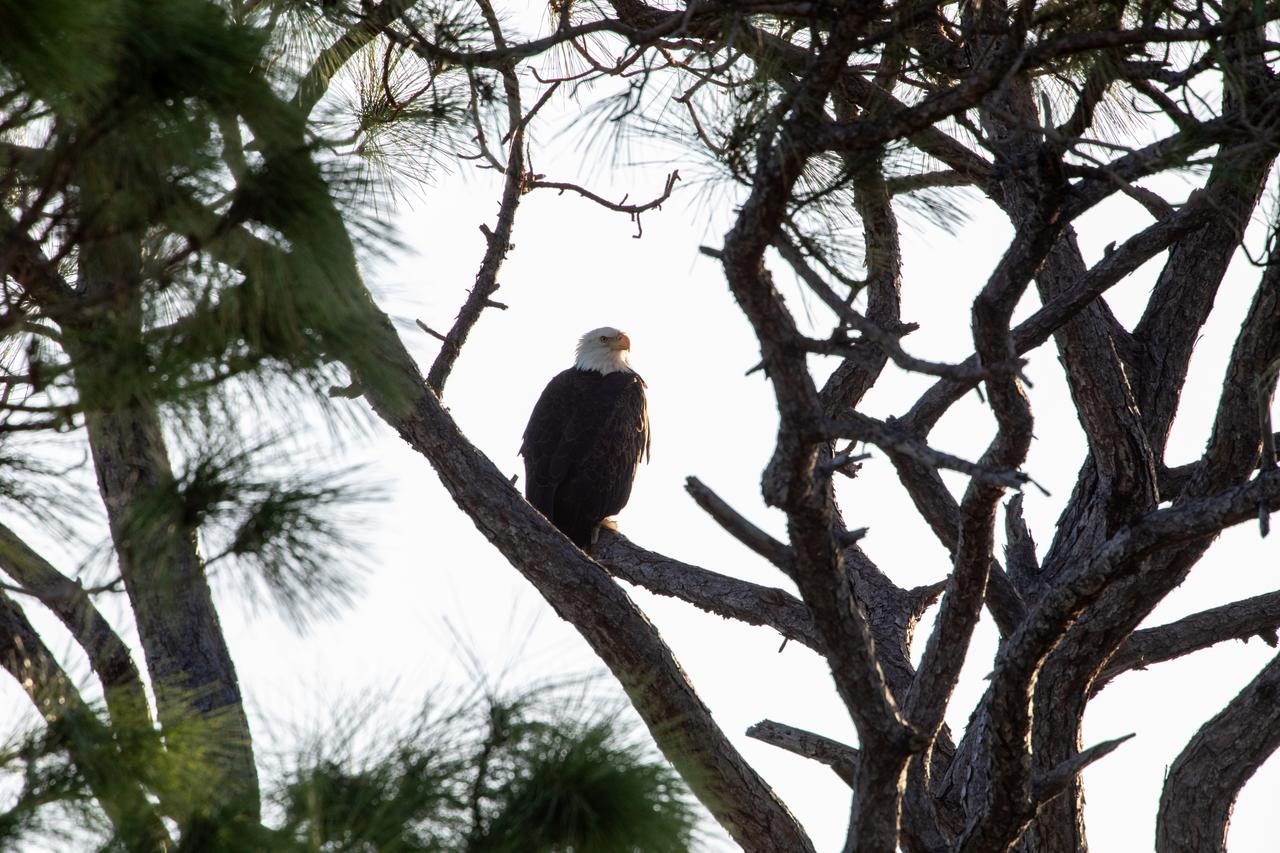
An American bald eagle is perched in a tree near its nest along Kennedy Parkway North on Monday, Nov. 4, 2024, about two miles from the Vehicle Assembly Building at NASA’s Kennedy Space Center in Florida. The spaceport shares a border with the 140,000-acre Merritt Island National Wildlife Refuge and is home to 39 eagle territories, 33 of which are active or potentially active between the months of September and March.
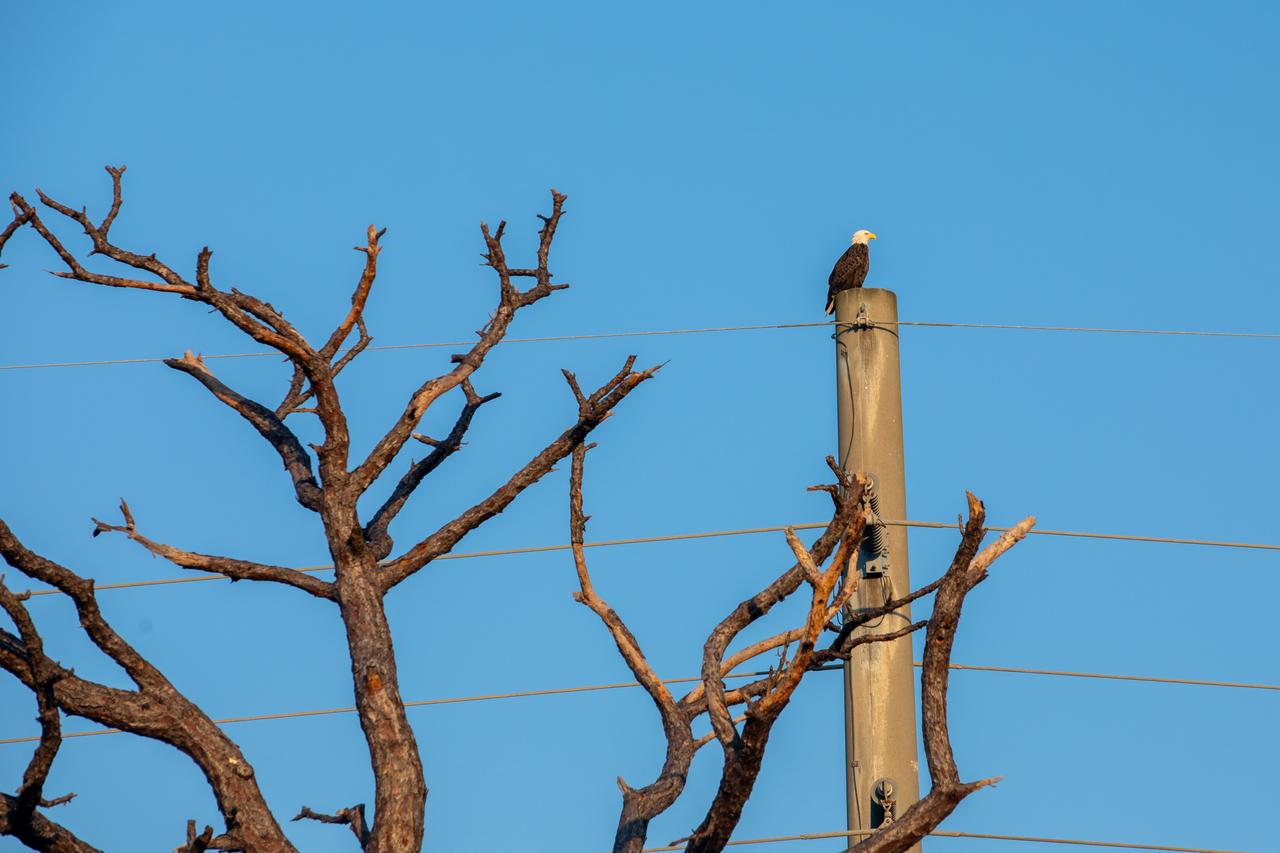
An American bald eagle is perched atop a pole on Wednesday, Sept. 18, 2024, near Kennedy Parkway North, about two miles from the Vehicle Assembly Building at NASA’s Kennedy Space Center in Florida. As of 2023, NASA’s Kennedy is home to 39 eagle territories with 33 of them active or potentially active between the months of September to March. NASA shares a boundary with the Merritt Island National Wildlife Refuge, home to more than 1,500 species of plants and animals, and 15 federally listed species.
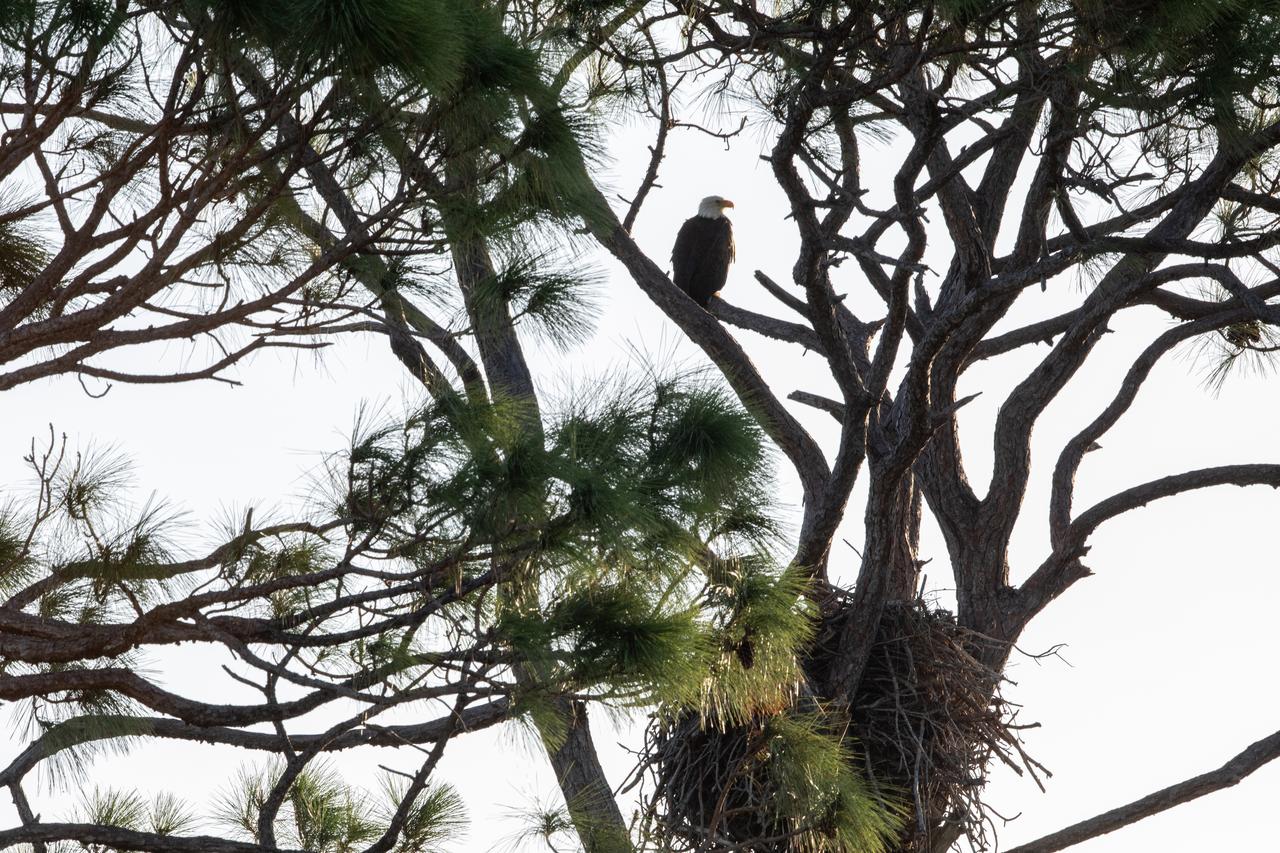
An American bald eagle is perched in a tree near its nest along Kennedy Parkway North on Monday, Nov. 4, 2024, about two miles from the Vehicle Assembly Building at NASA’s Kennedy Space Center in Florida. The spaceport shares a border with the 140,000-acre Merritt Island National Wildlife Refuge and is home to 39 eagle territories, 33 of which are active or potentially active between the months of September and March.
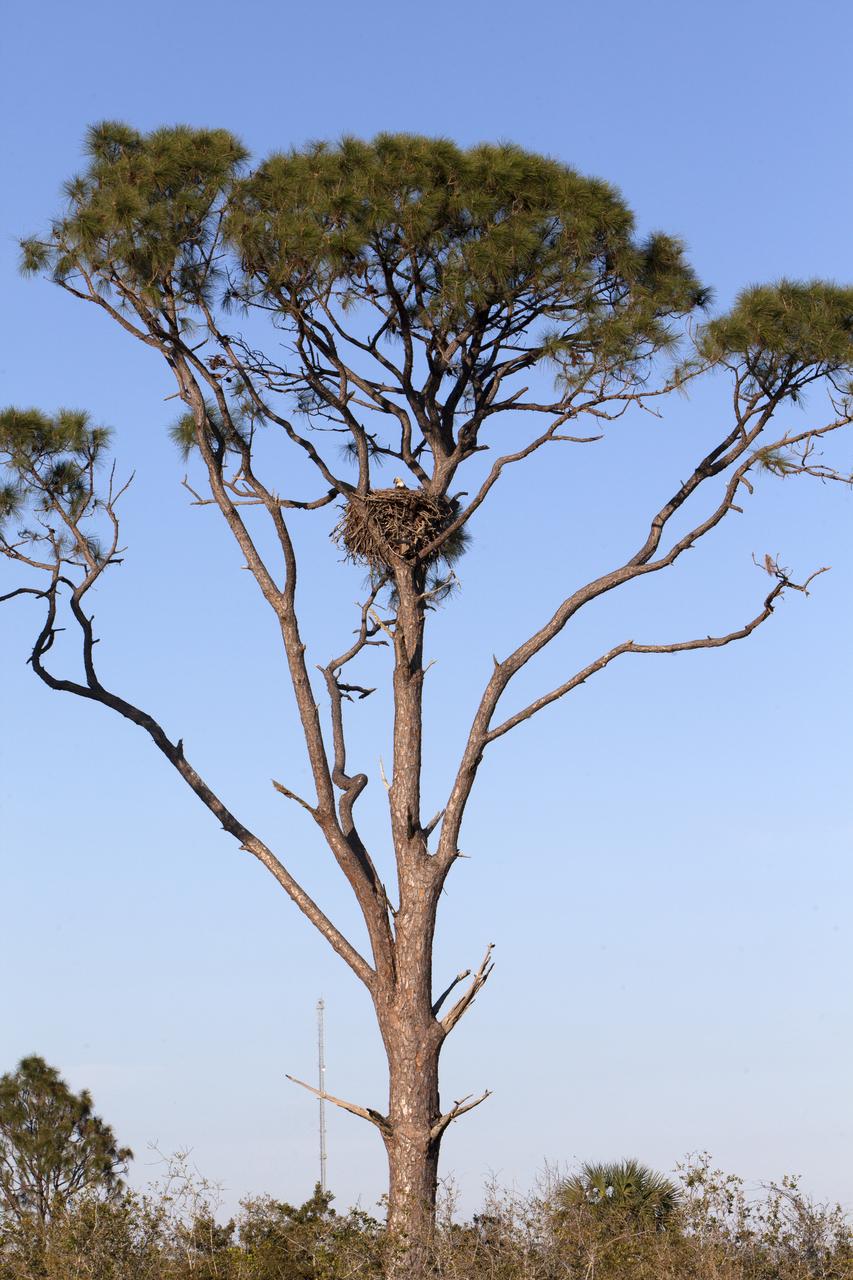
An adult American bald eagle perches in a nest in a tree along State Road 3 at NASA's Kennedy Space Center in Florida. Eagles have built nests in trees at the center for many years. The center shares a border with the 140,000-acre Merritt Island National Wildlife Refuge. More than 330 native and migratory bird species, 25 mammals, 117 fishes and 65 amphibians and reptiles call Kennedy and the wildlife refuge home.
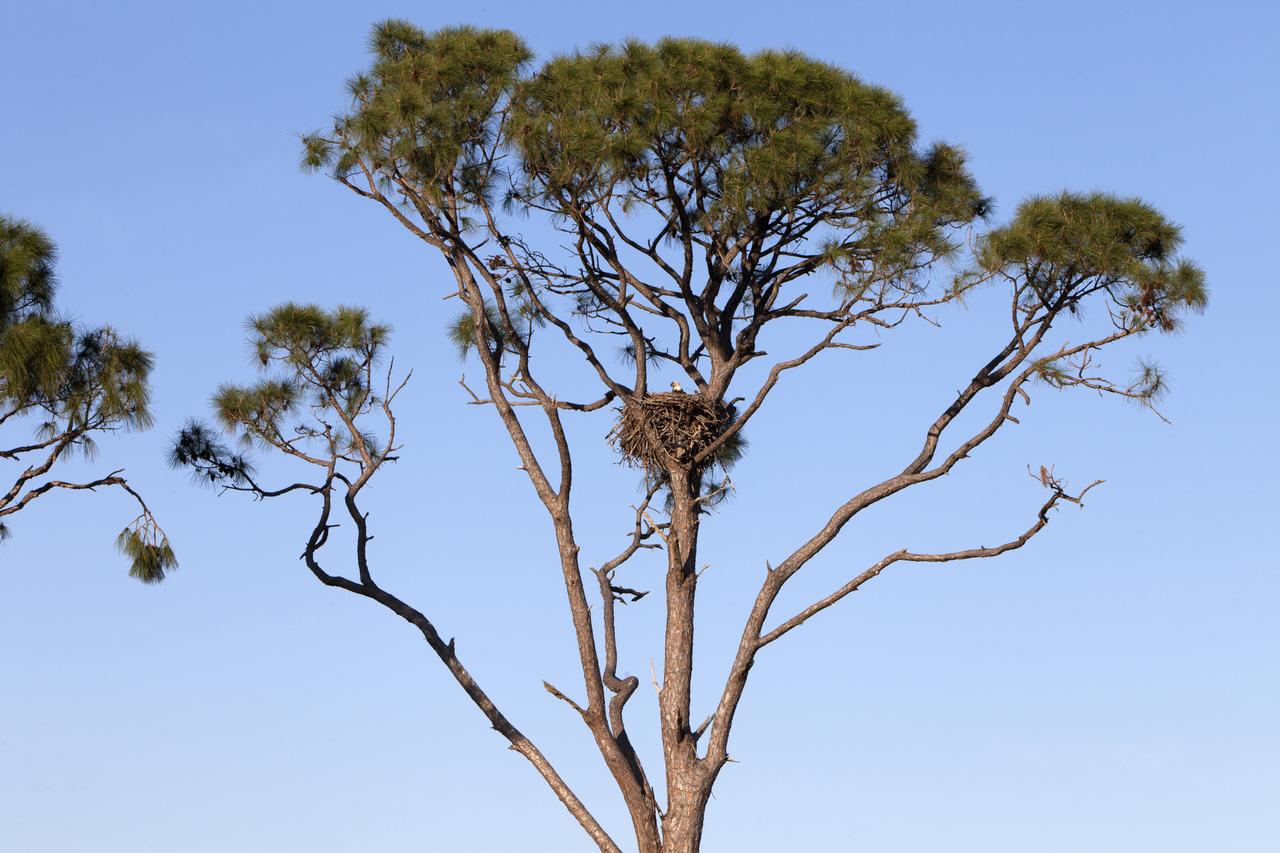
An adult American bald eagle perches in a nest in a tree along State Road 3 at NASA's Kennedy Space Center in Florida. Eagles have built nests in trees at the center for many years. The center shares a border with the 140,000-acre Merritt Island National Wildlife Refuge. More than 330 native and migratory bird species, 25 mammals, 117 fishes and 65 amphibians and reptiles call Kennedy and the wildlife refuge home.
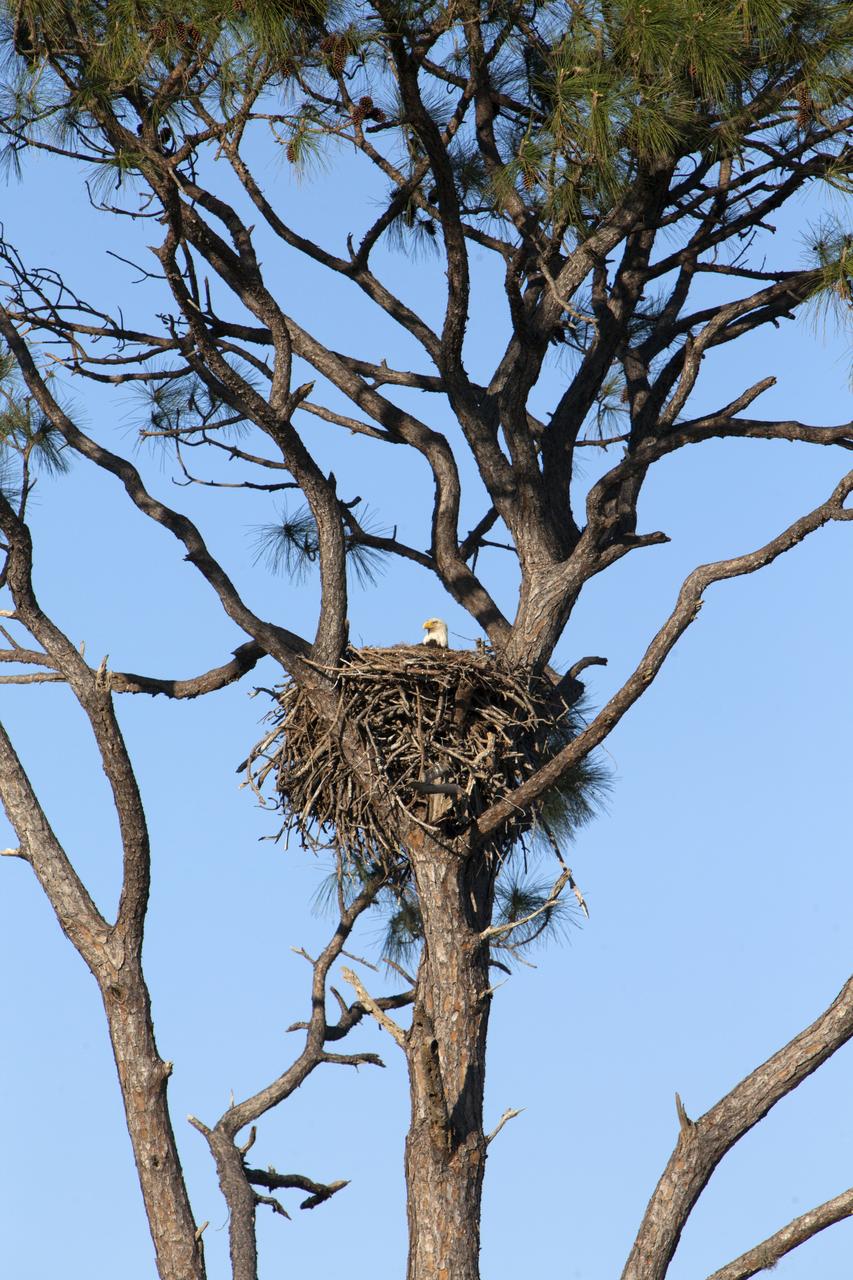
An adult American bald eagle perches in a nest in a tree along State Road 3 at NASA's Kennedy Space Center in Florida. Eagles have built nests in trees at the center for many years. The center shares a border with the 140,000-acre Merritt Island National Wildlife Refuge. More than 330 native and migratory bird species, 25 mammals, 117 fishes and 65 amphibians and reptiles call Kennedy and the wildlife refuge home.
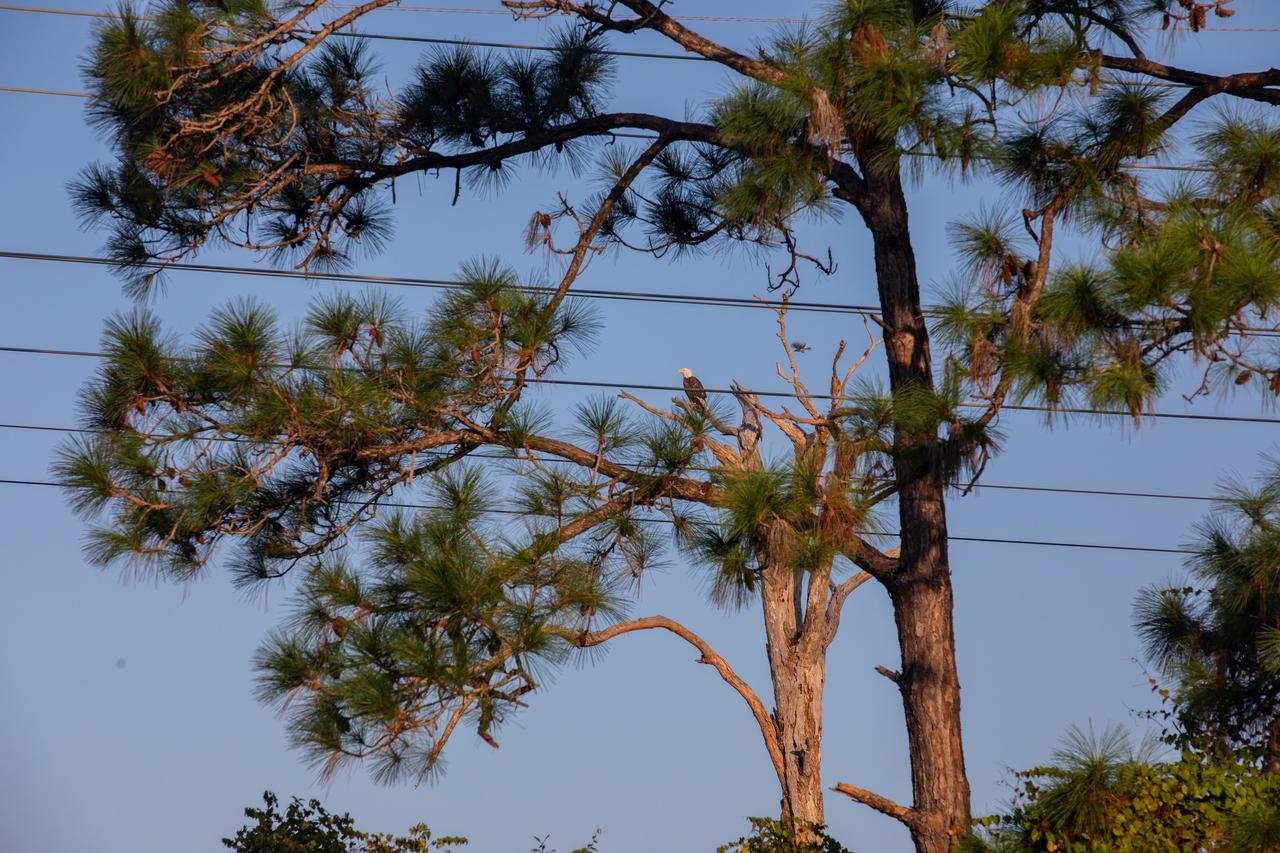
An American bald eagle is perched atop a pole on Wednesday, Sept. 18, 2024, near Kennedy Parkway North, about two miles from the Vehicle Assembly Building at NASA’s Kennedy Space Center in Florida. As of 2023, NASA’s Kennedy is home to 39 eagle territories with 33 of them active or potentially active between the months of September to March. NASA shares a boundary with the Merritt Island National Wildlife Refuge, home to more than 1,500 species of plants and animals, and 15 federally listed species.
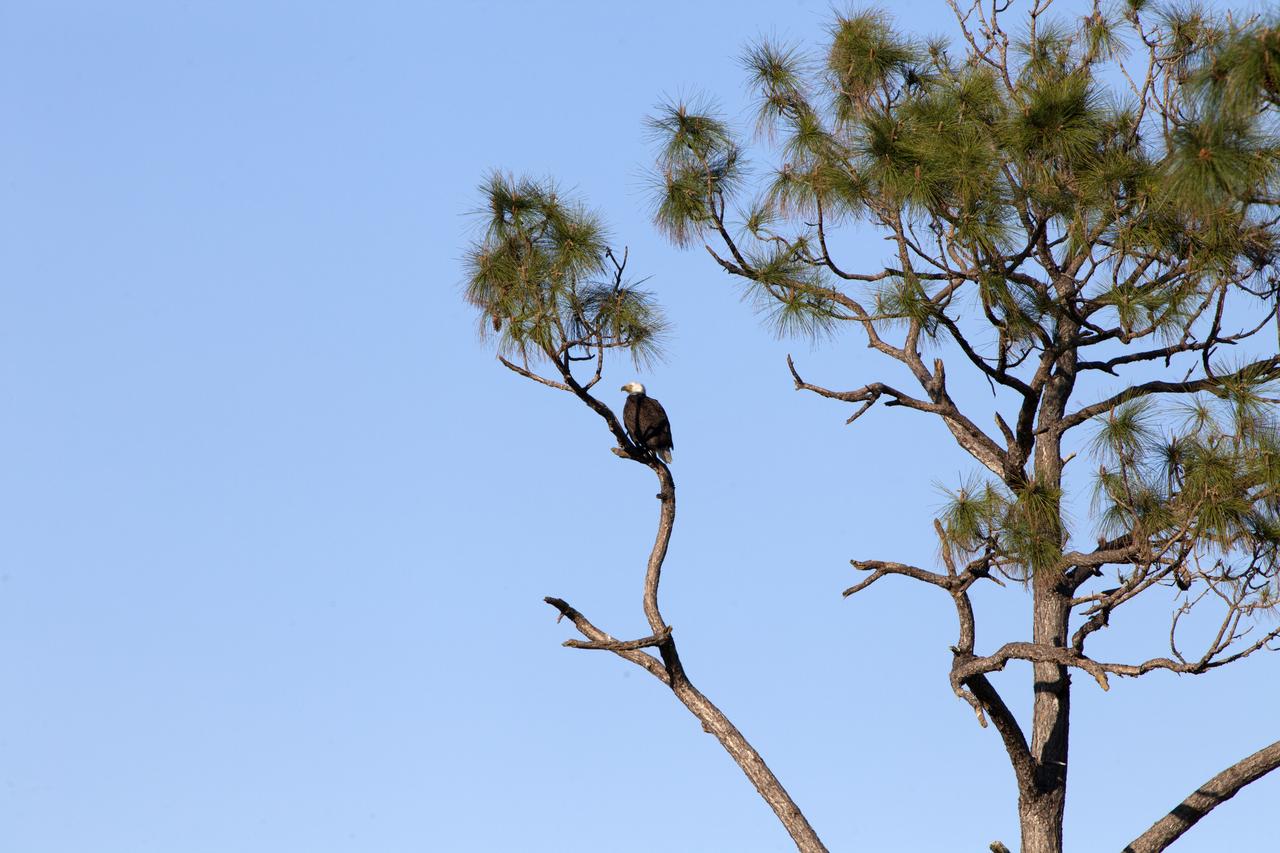
An adult American bald eagle perches on a branch in a tree along State Road 3 at NASA's Kennedy Space Center in Florida. Eagles have built nests in trees at the center for many years. The center shares a border with the 140,000-acre Merritt Island National Wildlife Refuge. More than 330 native and migratory bird species, 25 mammals, 117 fishes and 65 amphibians and reptiles call Kennedy and the wildlife refuge home.
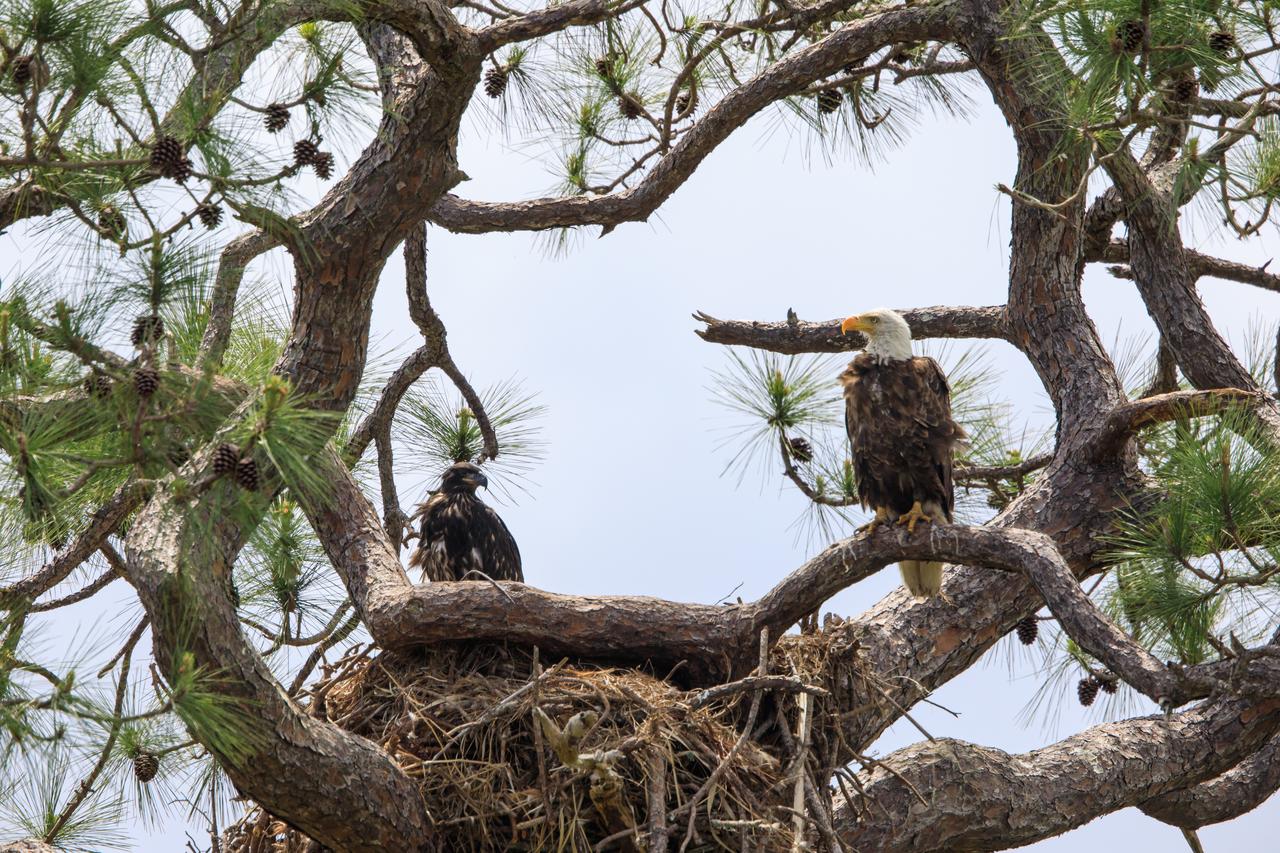
A baby American bald eagle looks out from its nest, accompanied by one of its parents, in a tree located near Kennedy Parkway North at NASA’s Kennedy Space Center in Florida on April 10, 2023. A mated pair of eagles recently built a new home in this tree after storms badly damaged their original nest located about 50 yards away. That nest was built in 1973 and had been used by eagles almost every year since 1975.
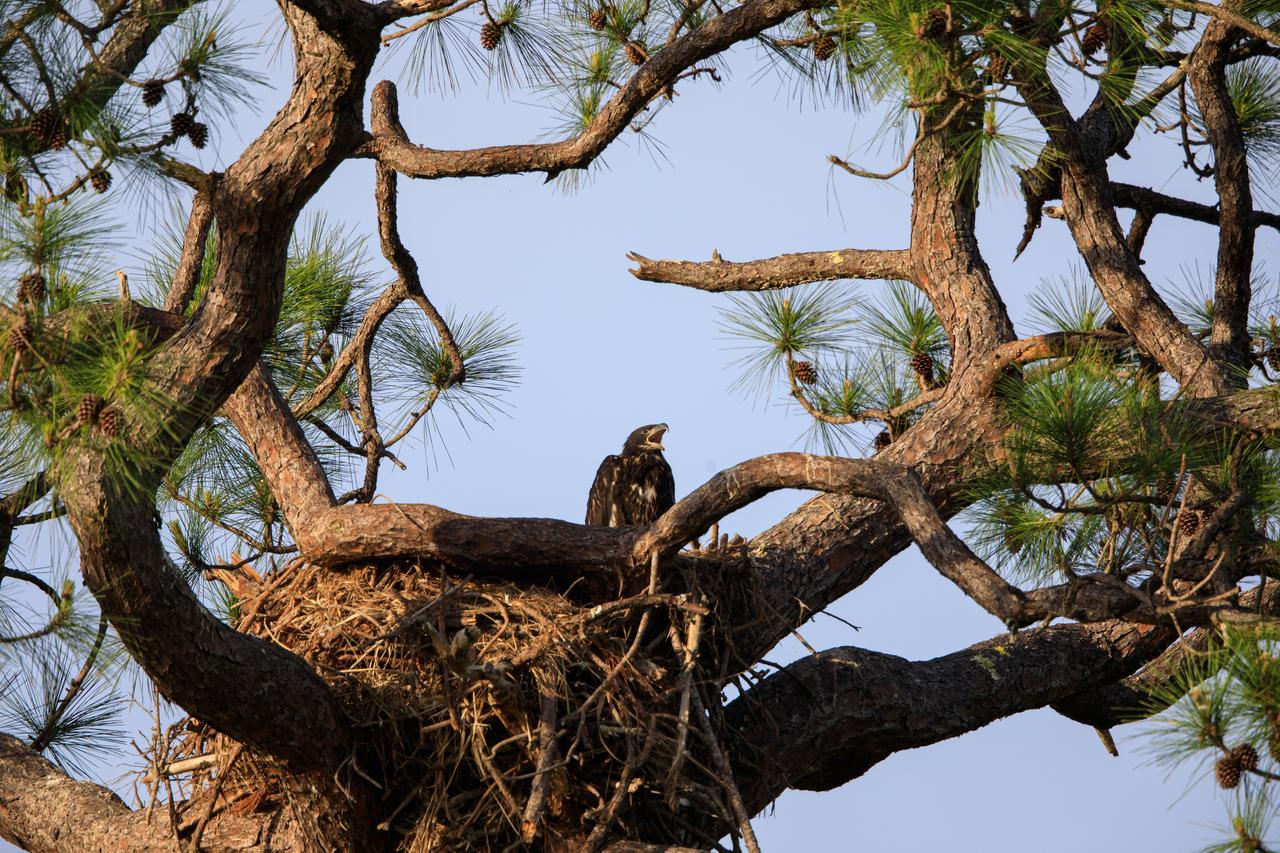
A baby American bald eagle calls out from a nest located near Kennedy Parkway North at NASA’s Kennedy Space Center in Florida on April 10, 2023. The eaglet is the lone offspring of a mated pair of eagles that recently built the new home after storms badly damaged their original nest located about 50 yards away. That nest was built in 1973 and had been used by eagles almost every year since 1975.

Looking Back at Eagle Crater
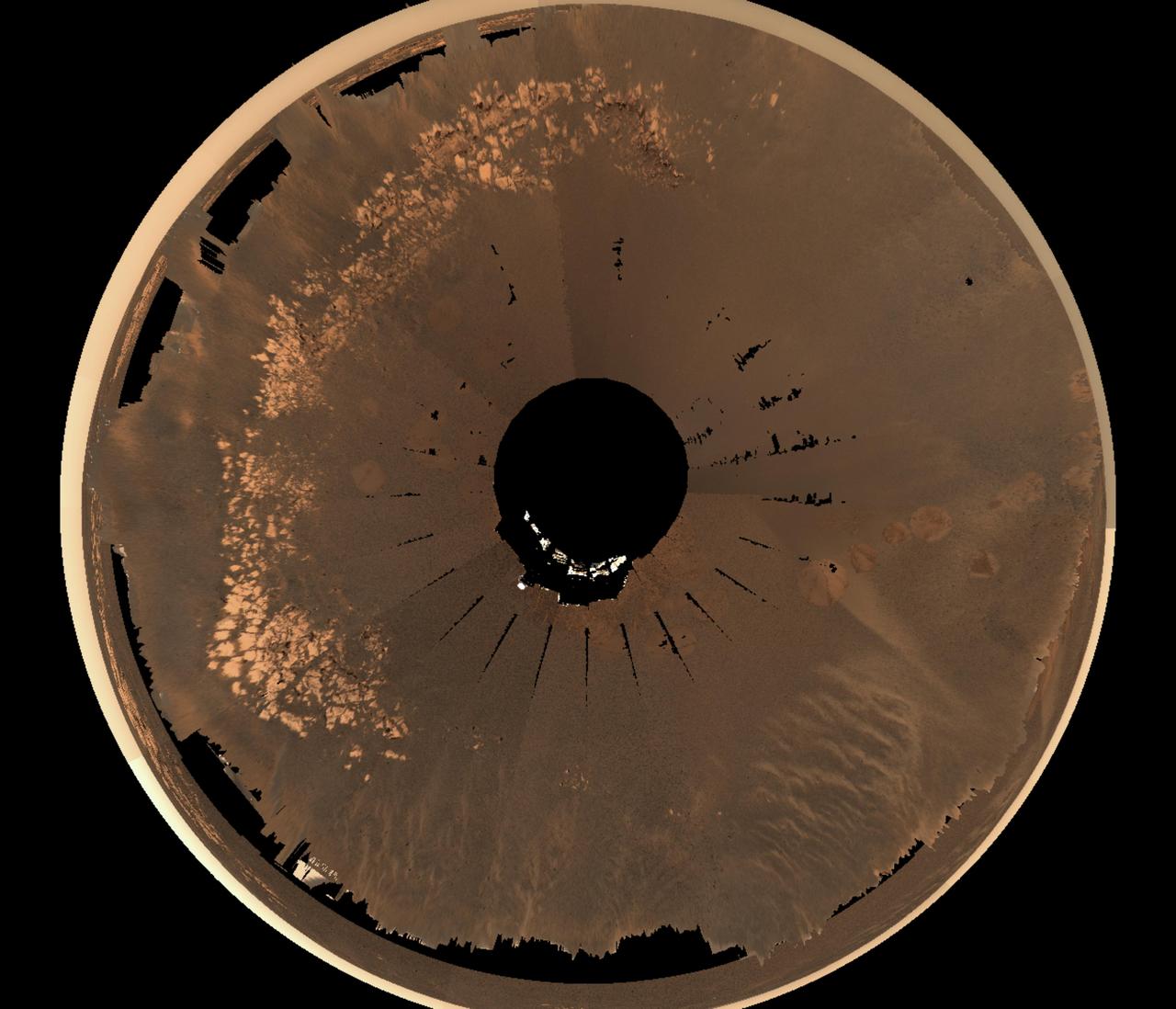
Eagle Crater Traverse Area
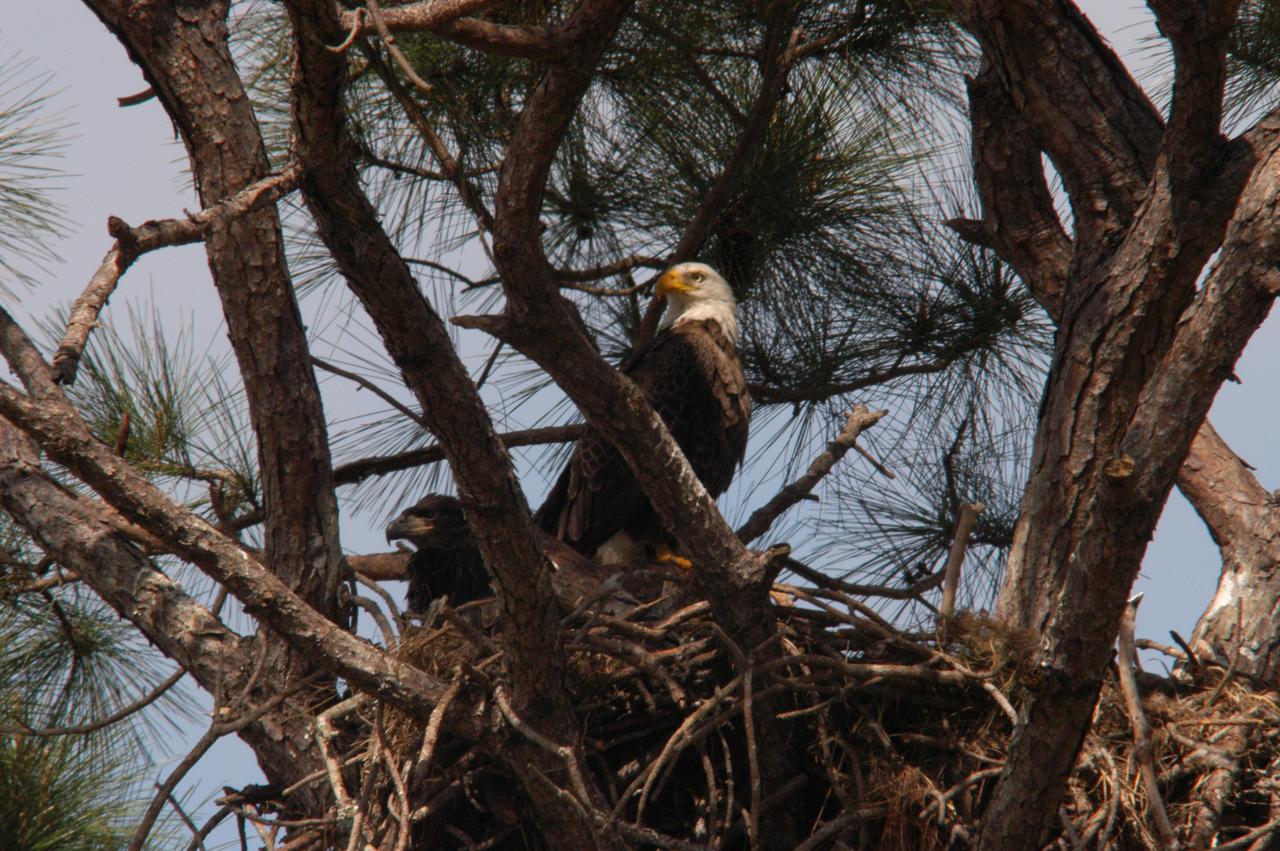
High in a pine tree at NASA's Kennedy Space Center, an adult bald eagle (right) and a fledgling keep watch from their nest. There are approximately a dozen active bald eagle nests both in KSC and in the Merritt Island National Wildlife Refuge, which surrounds KSC. The refuge includes several wading bird rookeries, many osprey nests, up to 400 manatees during the spring, and approximately 2,500 Florida scrub jays. It also is a major wintering area for migratory birds. More than 500 species of wildlife inhabit the refuge, with 15 considered federally threatened or endangered.
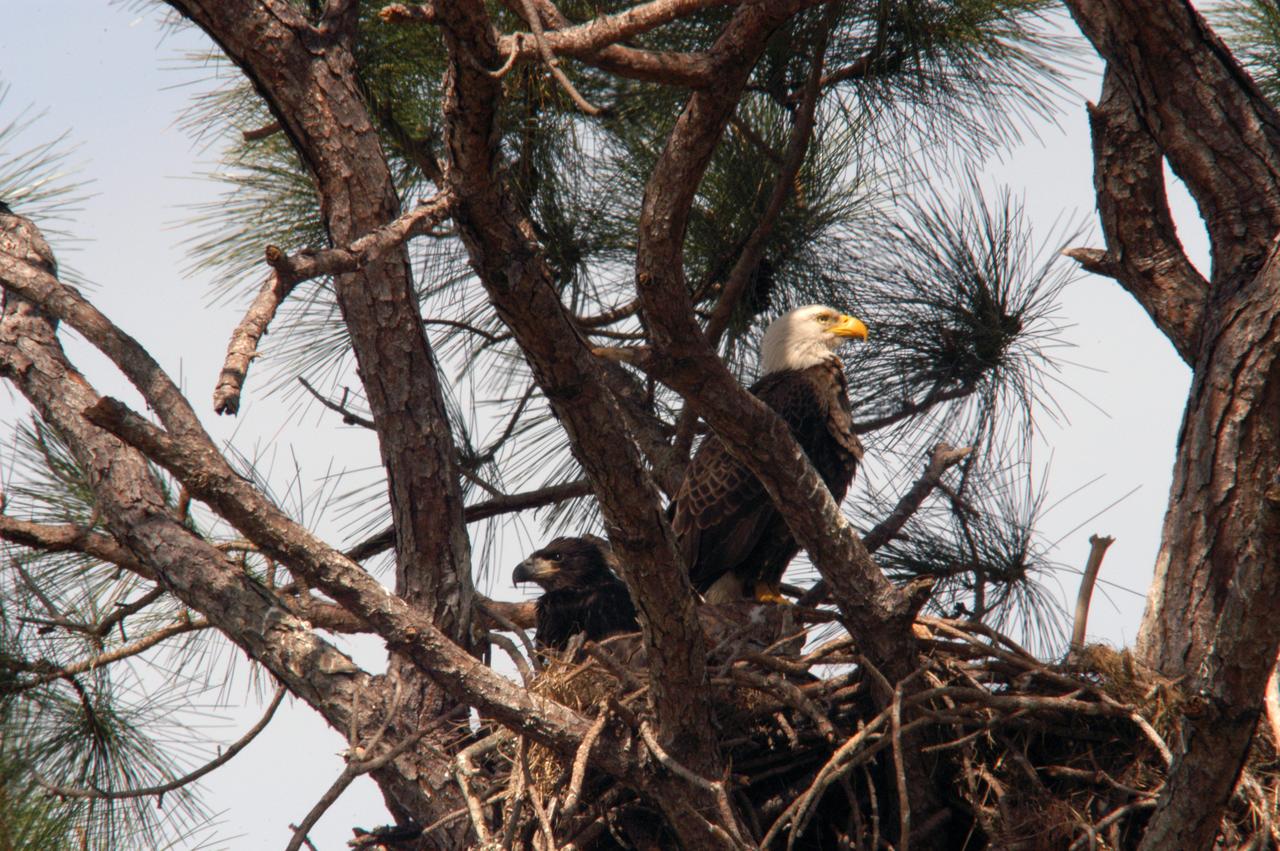
High in a pine tree at NASA's Kennedy Space Center, an adult bald eagle (right) and a fledgling keep watch from their nest. There are approximately a dozen active bald eagle nests both in KSC and in the Merritt Island National Wildlife Refuge, which surrounds KSC. The refuge includes several wading bird rookeries, many osprey nests, up to 400 manatees during the spring, and approximately 2,500 Florida scrub jays. It also is a major wintering area for migratory birds. More than 500 species of wildlife inhabit the refuge, with 15 considered federally threatened or endangered.
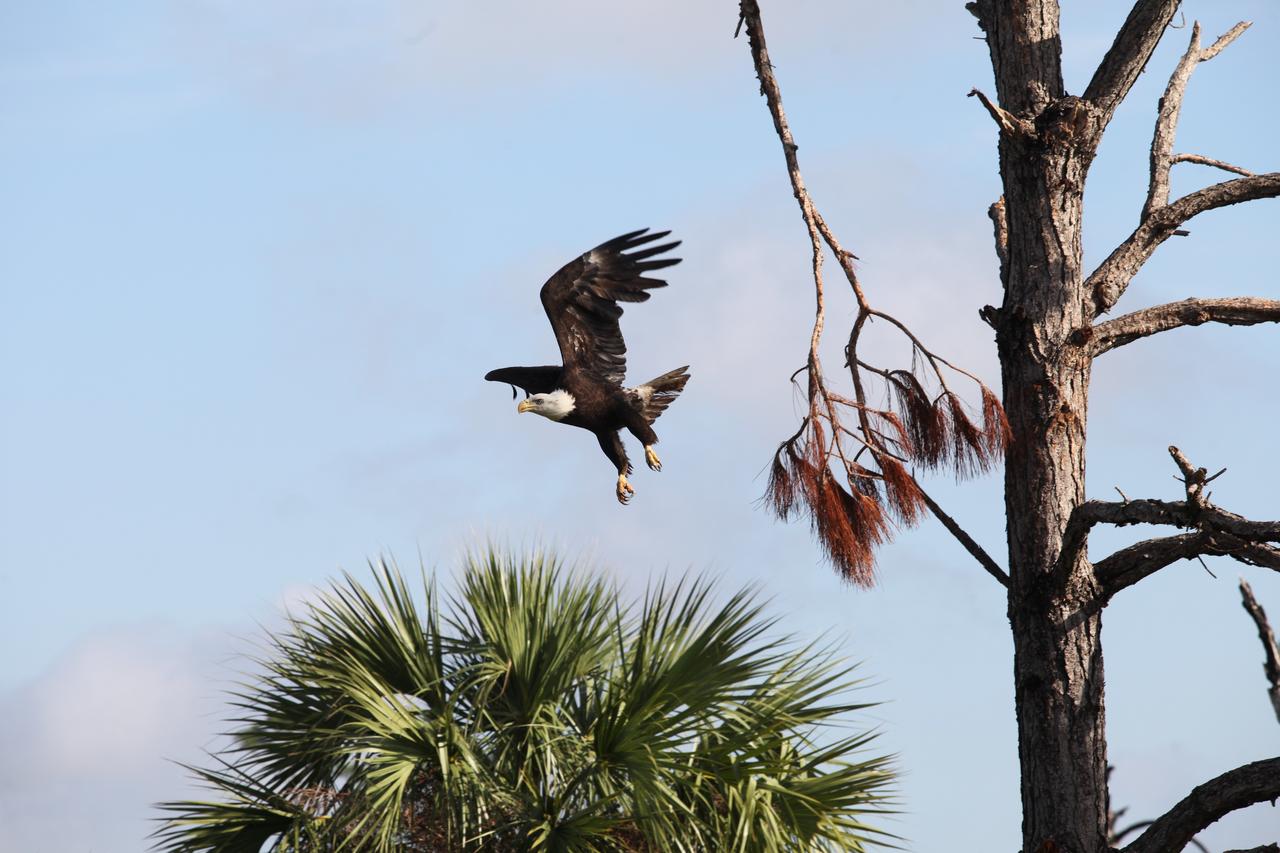
An American bald eagle soars from its perch in a tree at NASA's Kennedy Space Center in Florida. Several eagles call the center home. The center shares a boundary with the Merritt Island National Wildlife Refuge. The refuge is home to more than 65 amphibian and reptile species, along with 330 native and migratory bird species, 25 mammal and 117 fish species.
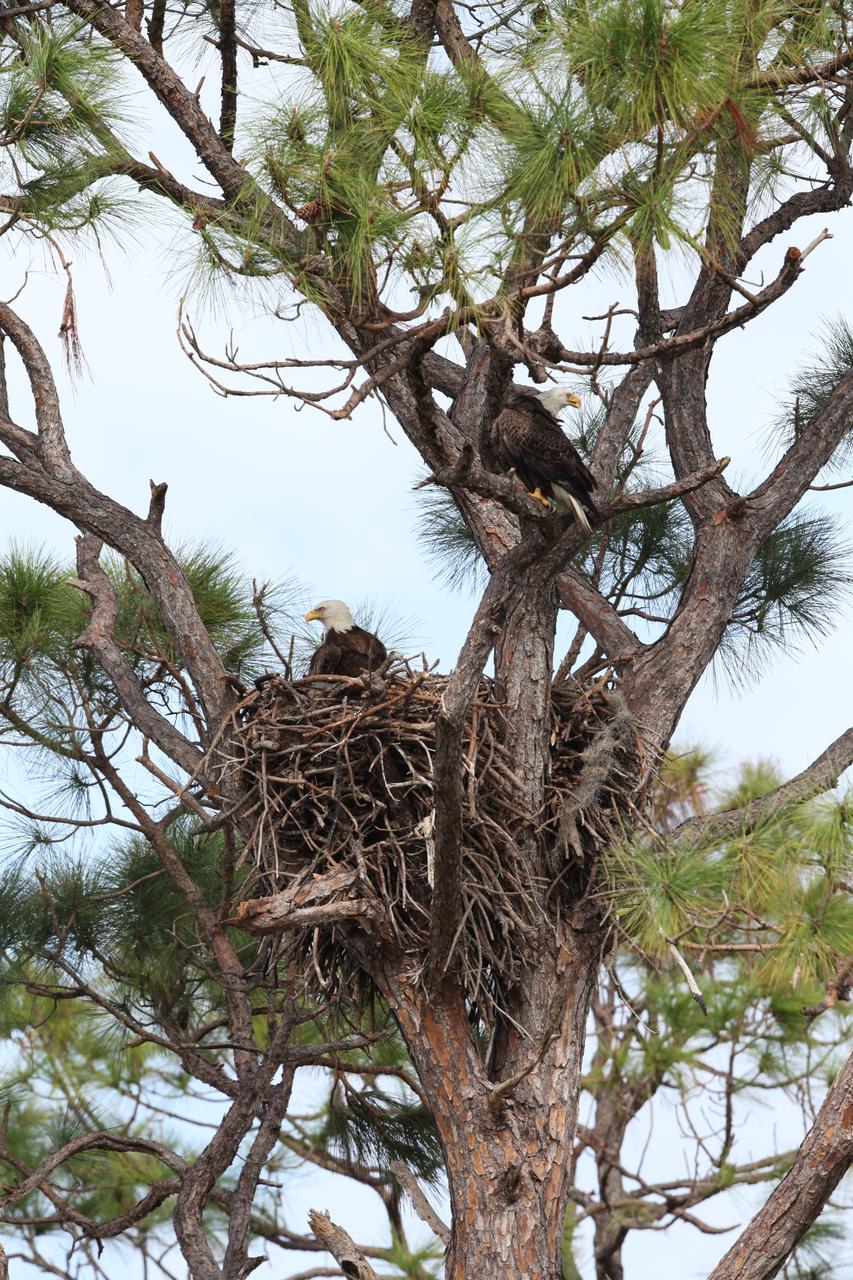
One American bald eagle sits in its nest, while another eagle perches on a branch in tree at NASA's Kennedy Space Center in Florida. The center shares a border with the Merritt Island National Wildlife Refuge. More than 330 native and migratory bird species, 25 mammals, 117 fishes and 65 amphibians and reptiles call Kennedy and the wildlife refuge home.
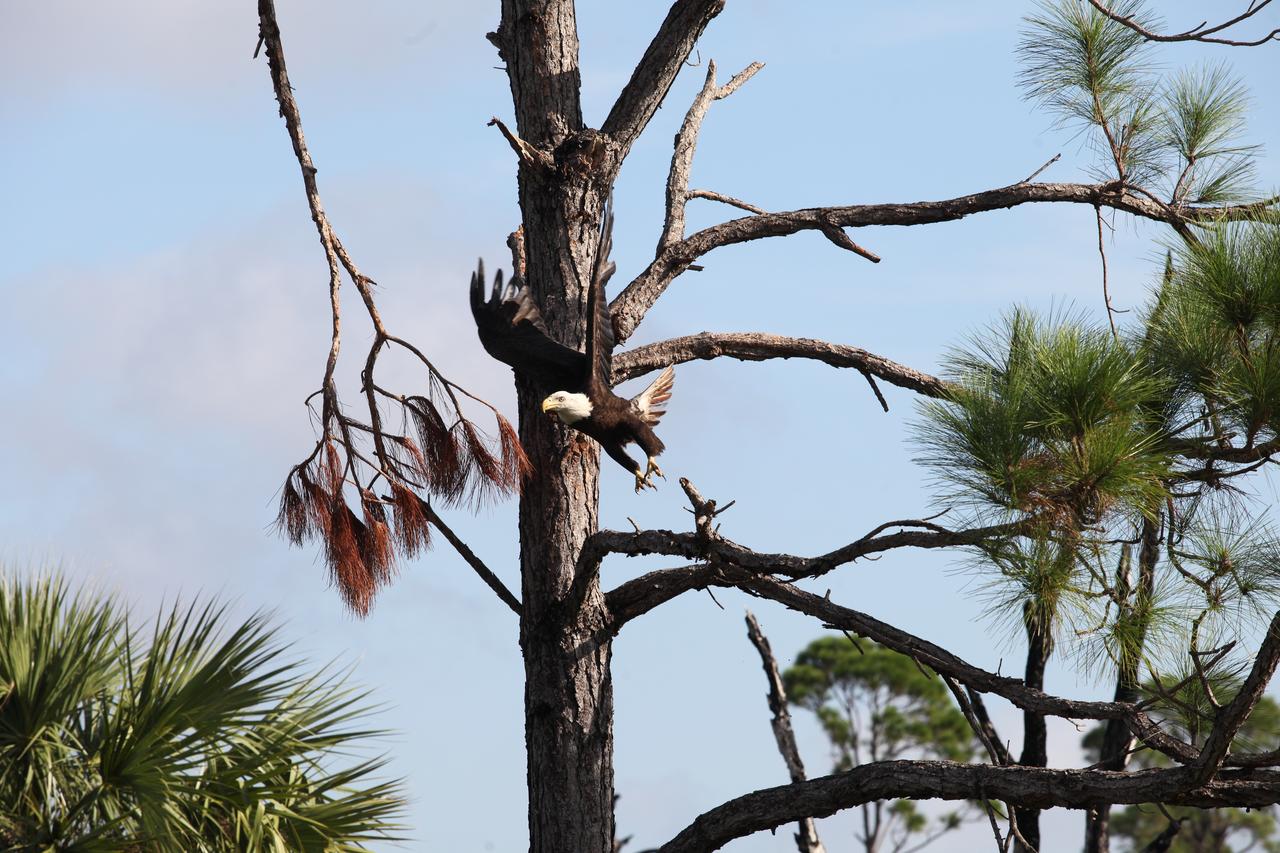
An American bald eagle soars from its perch in a tree at NASA's Kennedy Space Center in Florida. Several eagles call the center home. The center shares a boundary with the Merritt Island National Wildlife Refuge. The refuge is home to more than 65 amphibian and reptile species, along with 330 native and migratory bird species, 25 mammal and 117 fish species.
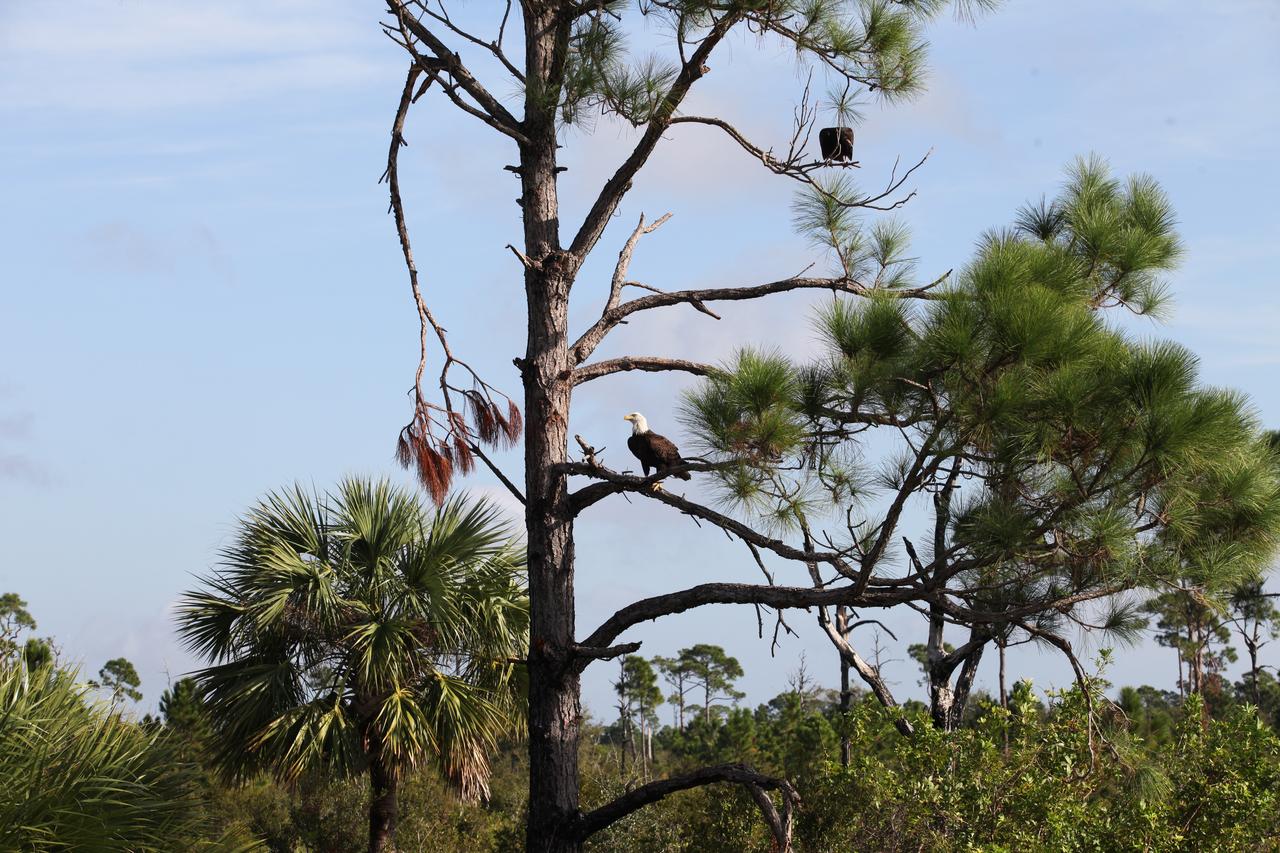
An American bald eagle perches in a tree at NASA's Kennedy Space Center in Florida. Several eagles call the center home. The center shares a boundary with the Merritt Island National Wildlife Refuge. The refuge is home to more than 65 amphibian and reptile species, along with 330 native and migratory bird species, 25 mammal and 117 fish species.
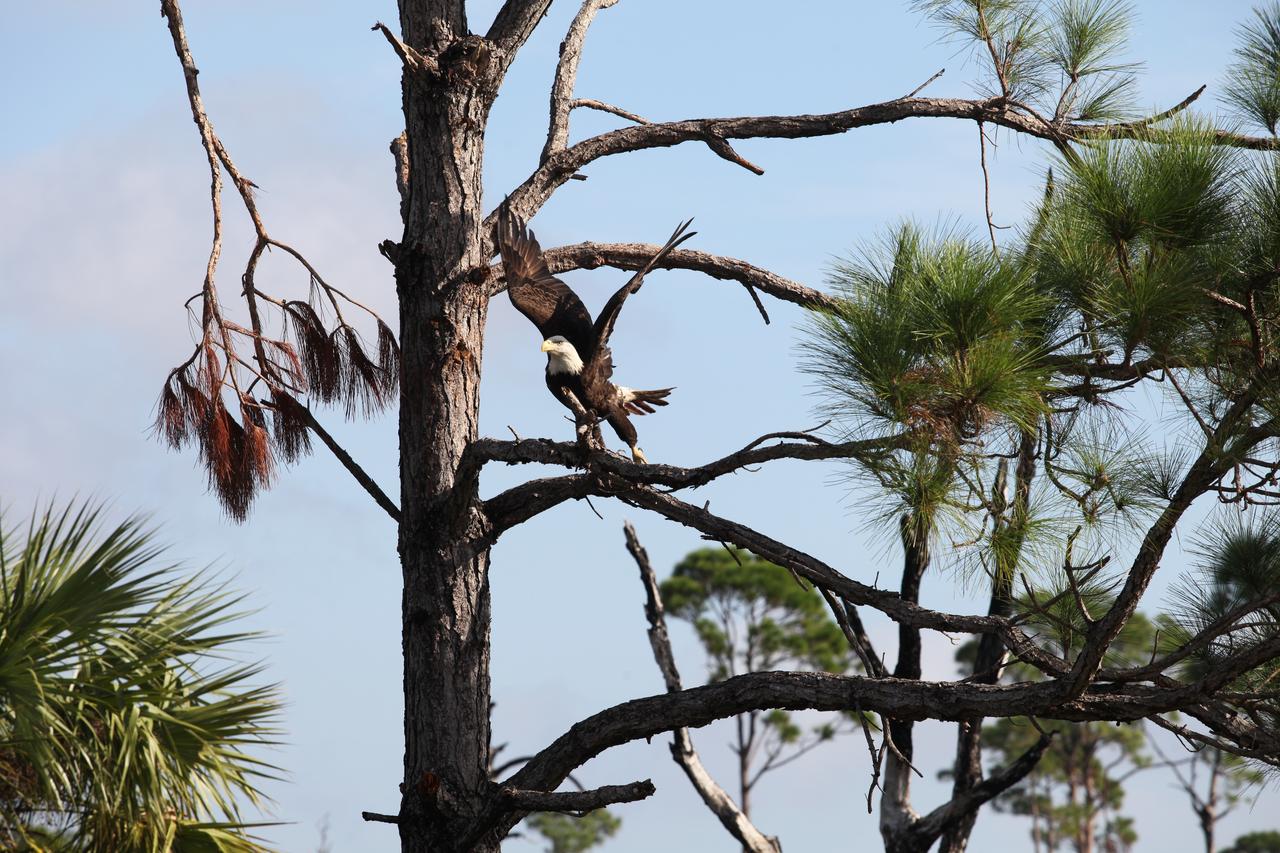
An American bald eagle begins to soar from its perch in a tree at NASA's Kennedy Space Center in Florida. Several eagles call the center home. The center shares a boundary with the Merritt Island National Wildlife Refuge. The refuge is home to more than 65 amphibian and reptile species, along with 330 native and migratory bird species, 25 mammal and 117 fish species.
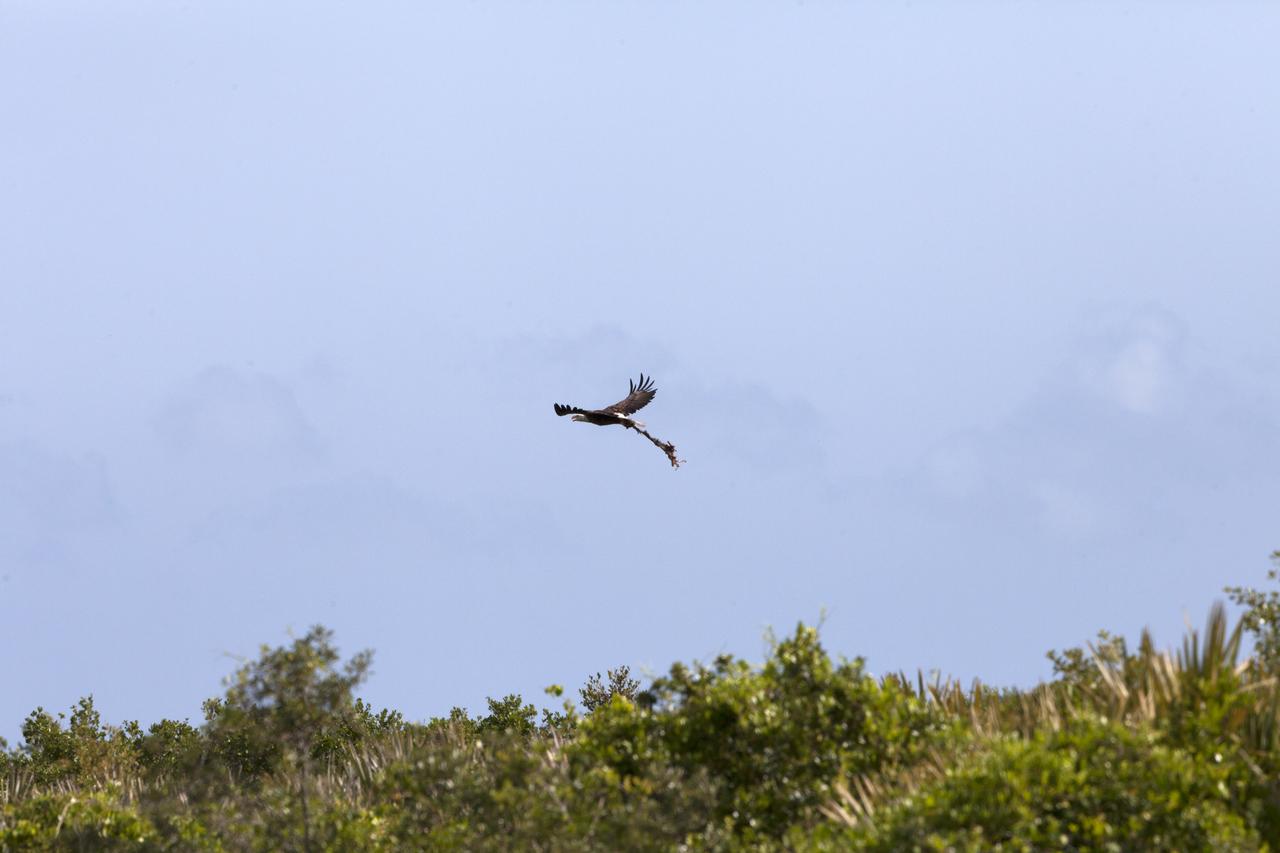
An American bald eagle soars through the air with its prey at NASA's Kennedy Space Center in Florida. The center shares a border with the Merritt Island National Wildlife Refuge. More than 330 native and migratory bird species, 25 mammals, 117 fishes and 65 amphibians and reptiles call Kennedy and the wildlife refuge home.
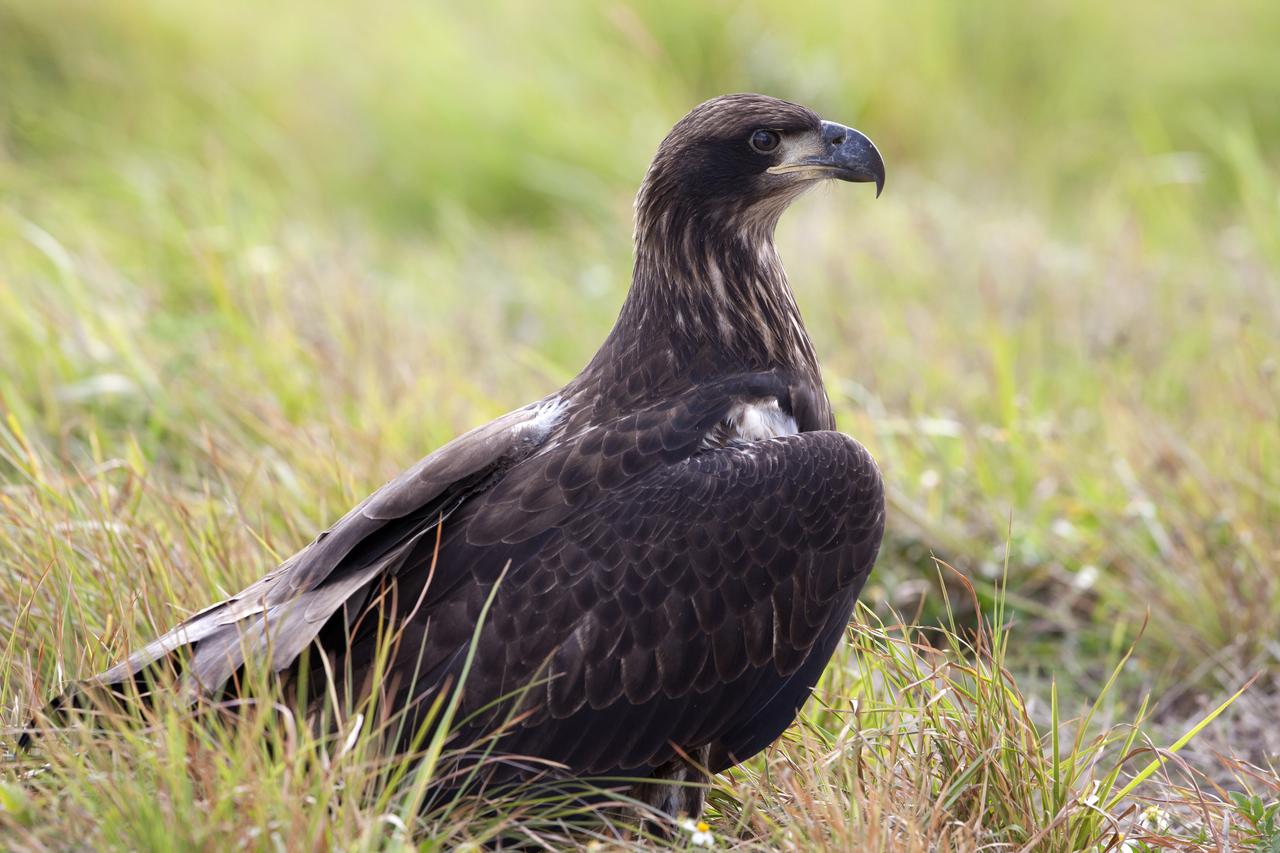
A juvenile bald eagle watches for prey in the grass at NASA's Kennedy Space Center in Florida. The center shares a border with the Merritt Island National Wildlife Refuge. More than 330 native and migratory bird species, 25 mammals, 117 fishes and 65 amphibians and reptiles call Kennedy and the wildlife refuge home.
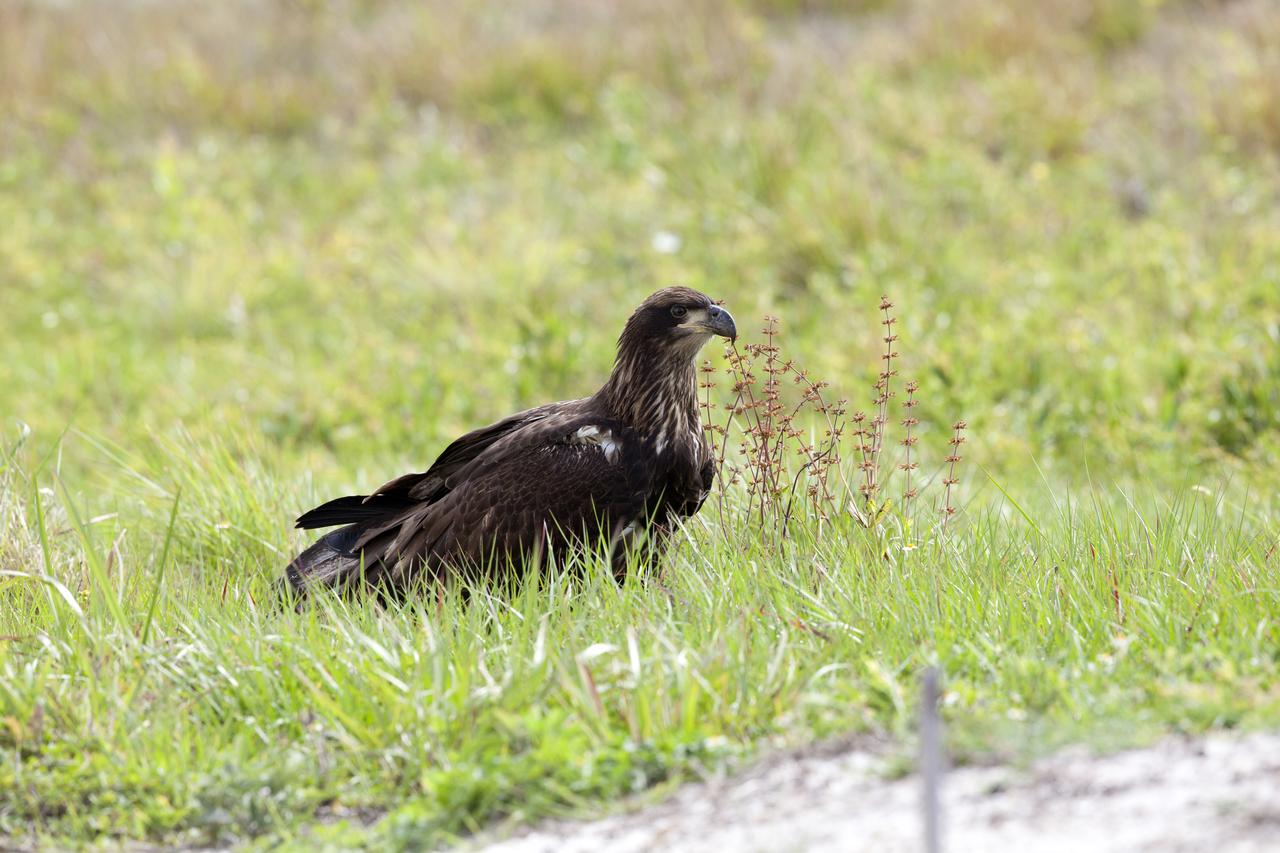
A juvenile bald eagle sits in the grass at NASA's Kennedy Space Center in Florida. The center shares a border with the Merritt Island National Wildlife Refuge. More than 330 native and migratory bird species, 25 mammals, 117 fishes and 65 amphibians and reptiles call Kennedy and the wildlife refuge home.
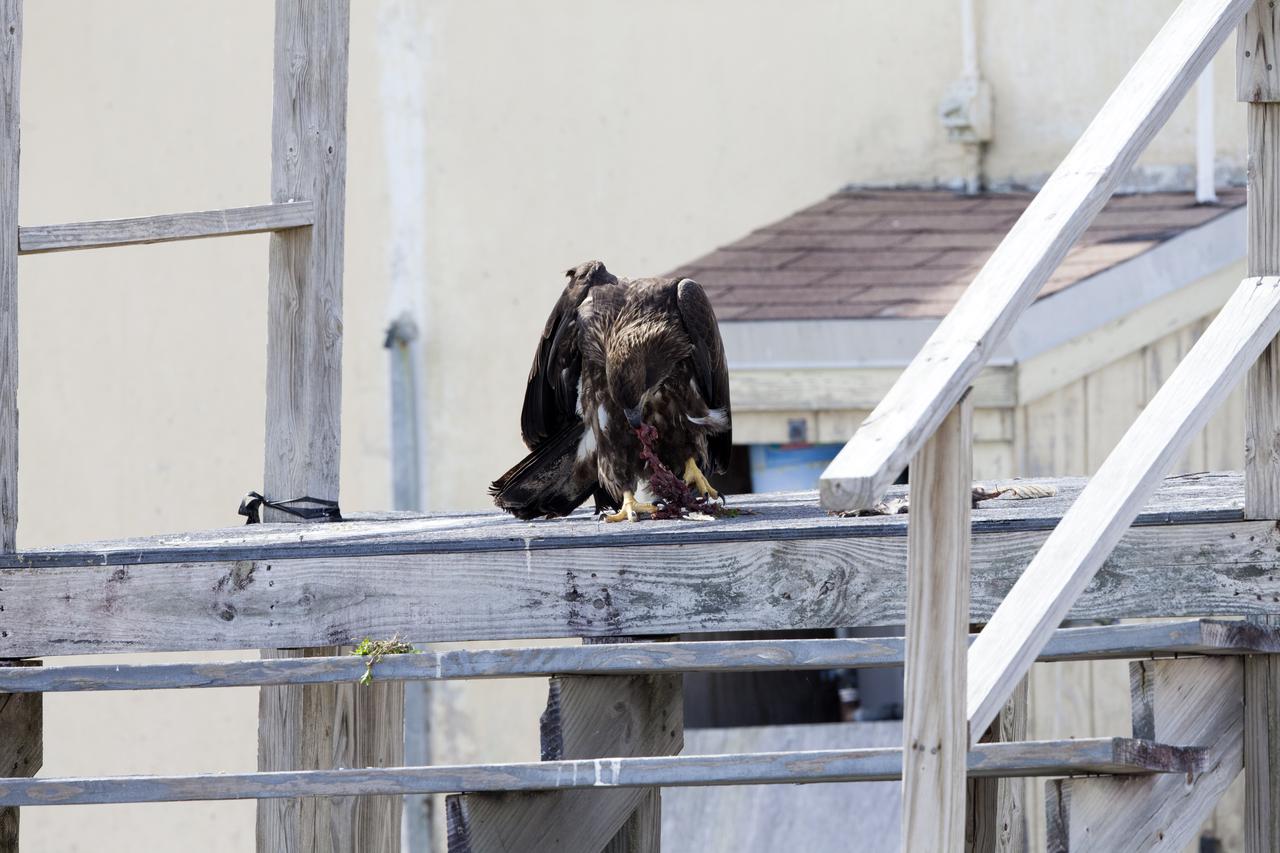
An American bald eagle eats its prey on a wooden dock at NASA's Kennedy Space Center in Florida. The center shares a border with the Merritt Island National Wildlife Refuge. More than 330 native and migratory bird species, 25 mammals, 117 fishes and 65 amphibians and reptiles call Kennedy and the wildlife refuge home.
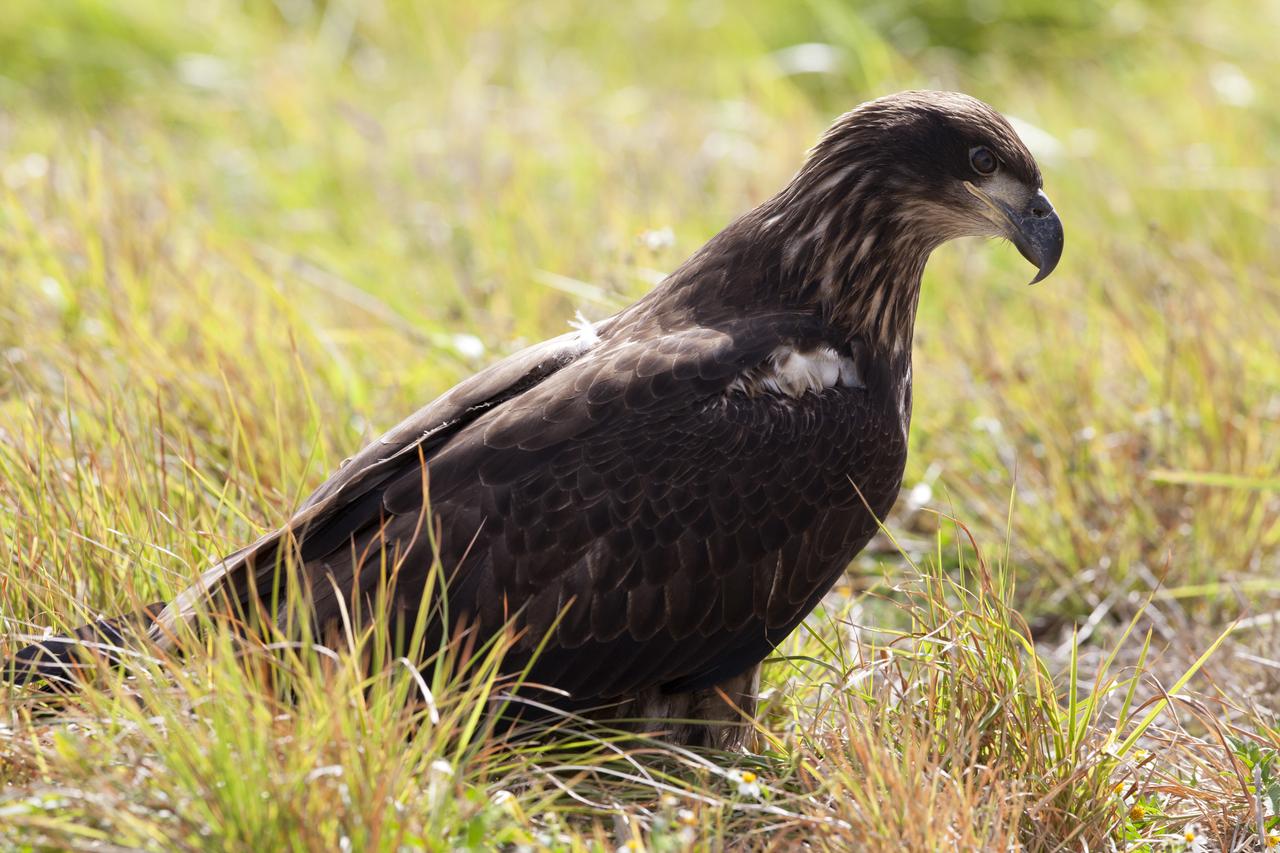
A juvenile bald eagle watches for prey in the grass at NASA's Kennedy Space Center in Florida. The center shares a border with the Merritt Island National Wildlife Refuge. More than 330 native and migratory bird species, 25 mammals, 117 fishes and 65 amphibians and reptiles call Kennedy and the wildlife refuge home.
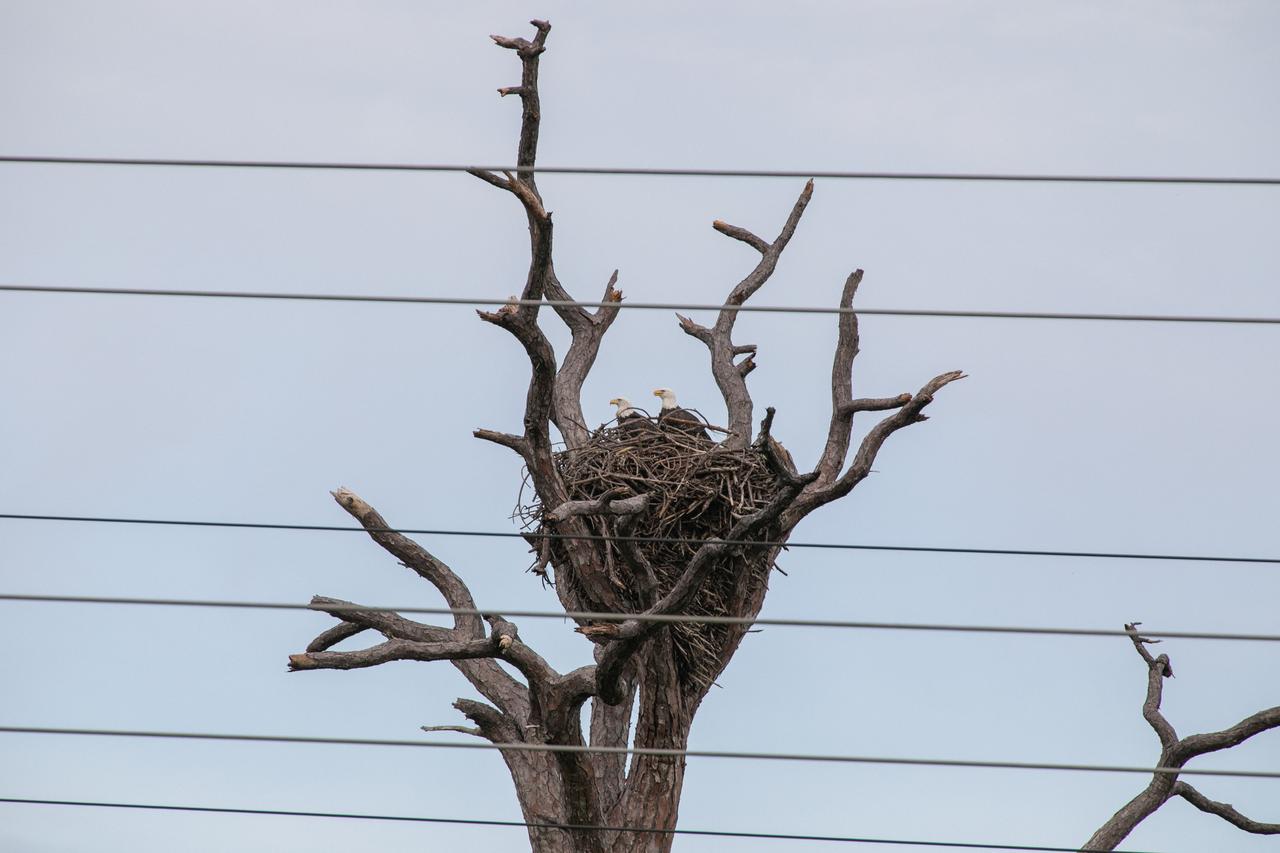
A pair of American bald eagles occupy a large nest on Kennedy Space Center property in Florida on Sept. 14, 2020. Eagles reuse the same nests each season for several years; once a nest is unusable, the majestic birds will select another tree. The nest shown has been used for approximately 30 years. Kennedy shares boundaries with the Merritt Island National Wildlife Refuge, which covers approximately 144,000 acres and is home to more than 315 native and migratory bird species, 25 mammal species, and 65 amphibian and reptile species.
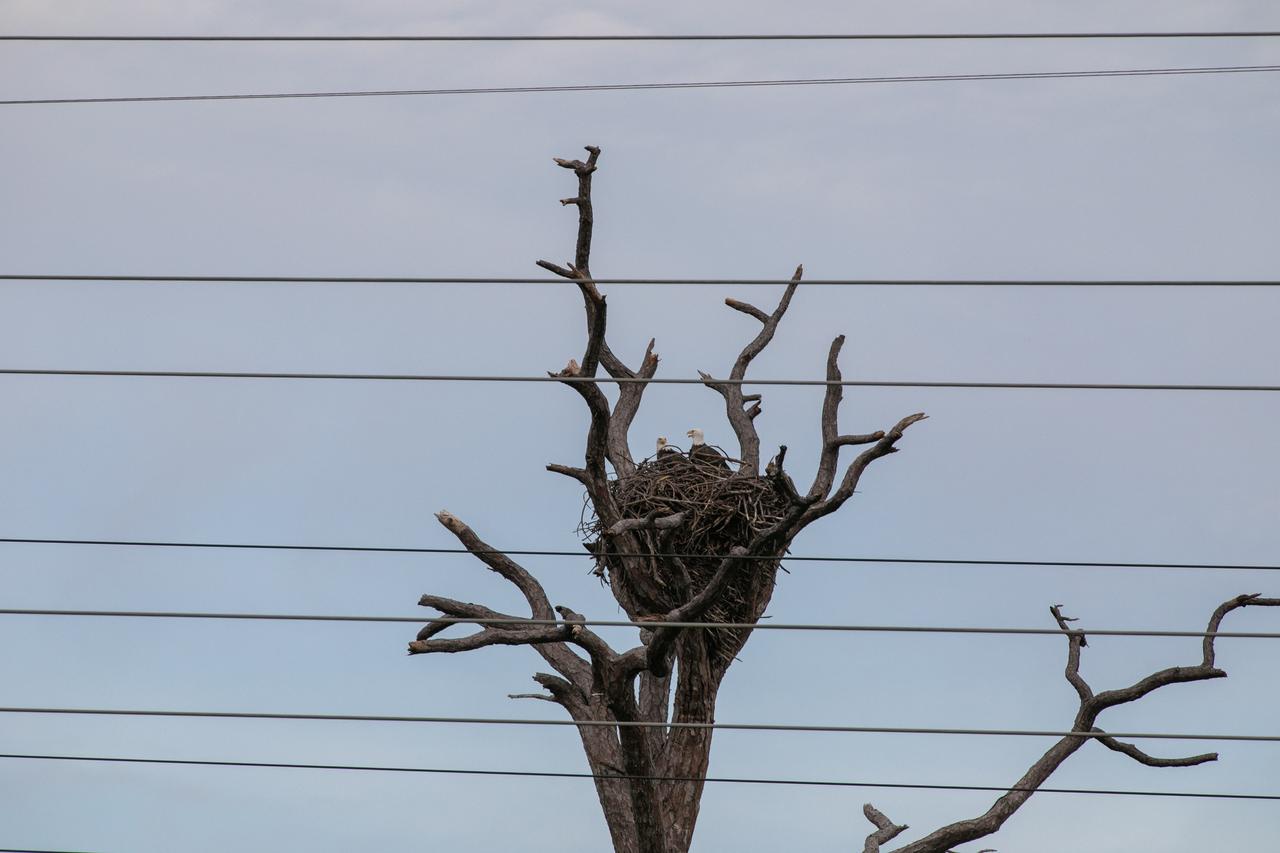
A pair of American bald eagles occupy a large nest on Kennedy Space Center property in Florida on Sept. 14, 2020. Eagles reuse the same nests each season for several years; once a nest is unusable, the majestic birds will select another tree. The nest shown has been used for approximately 30 years. Kennedy shares boundaries with the Merritt Island National Wildlife Refuge, which covers approximately 144,000 acres and is home to more than 315 native and migratory bird species, 25 mammal species, and 65 amphibian and reptile species.
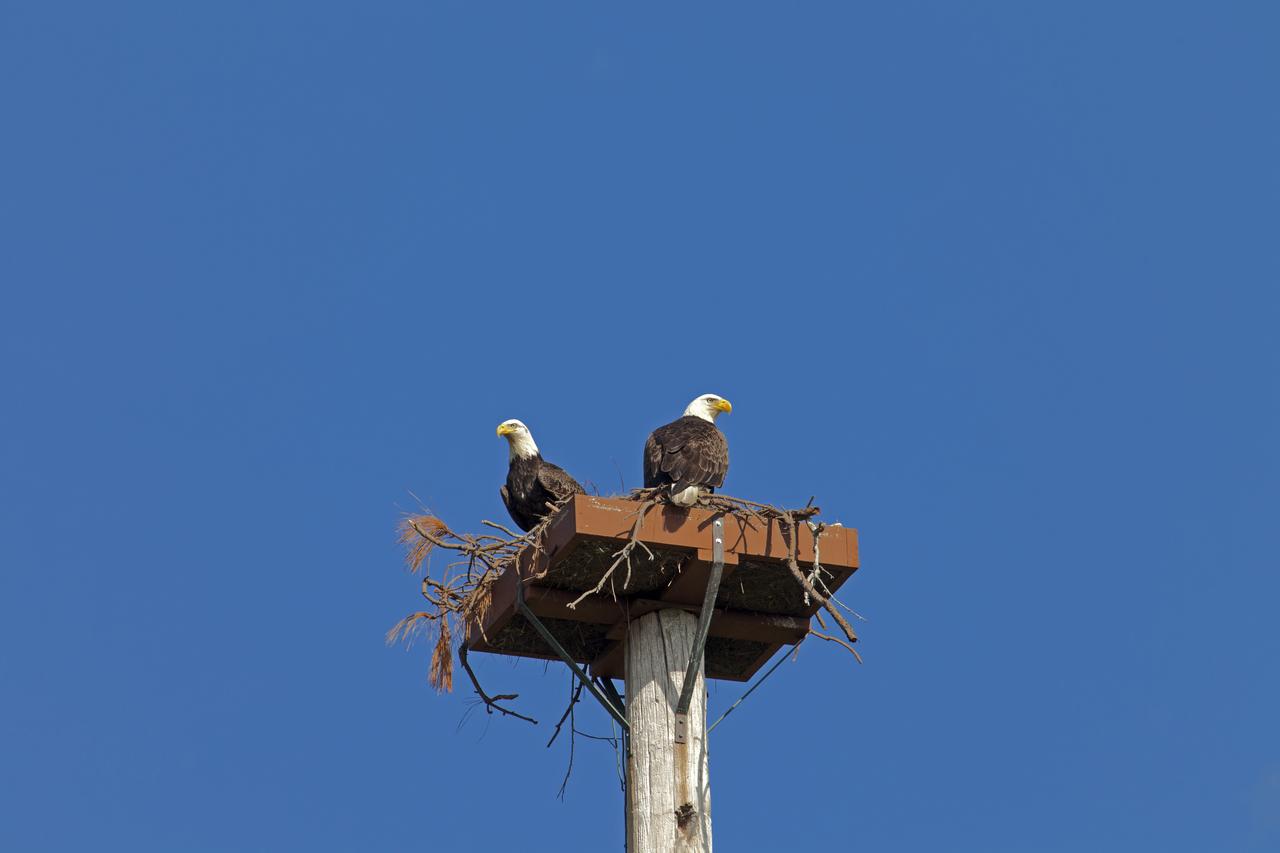
Two American bald eagles are perched in a nest atop a pole at NASA's Kennedy Space Center in Florida. The center shares a border with the Merritt Island National Wildlife Refuge. More than 330 native and migratory bird species, 25 mammals, 117 fishes and 65 amphibians and reptiles call Kennedy and the wildlife refuge home.
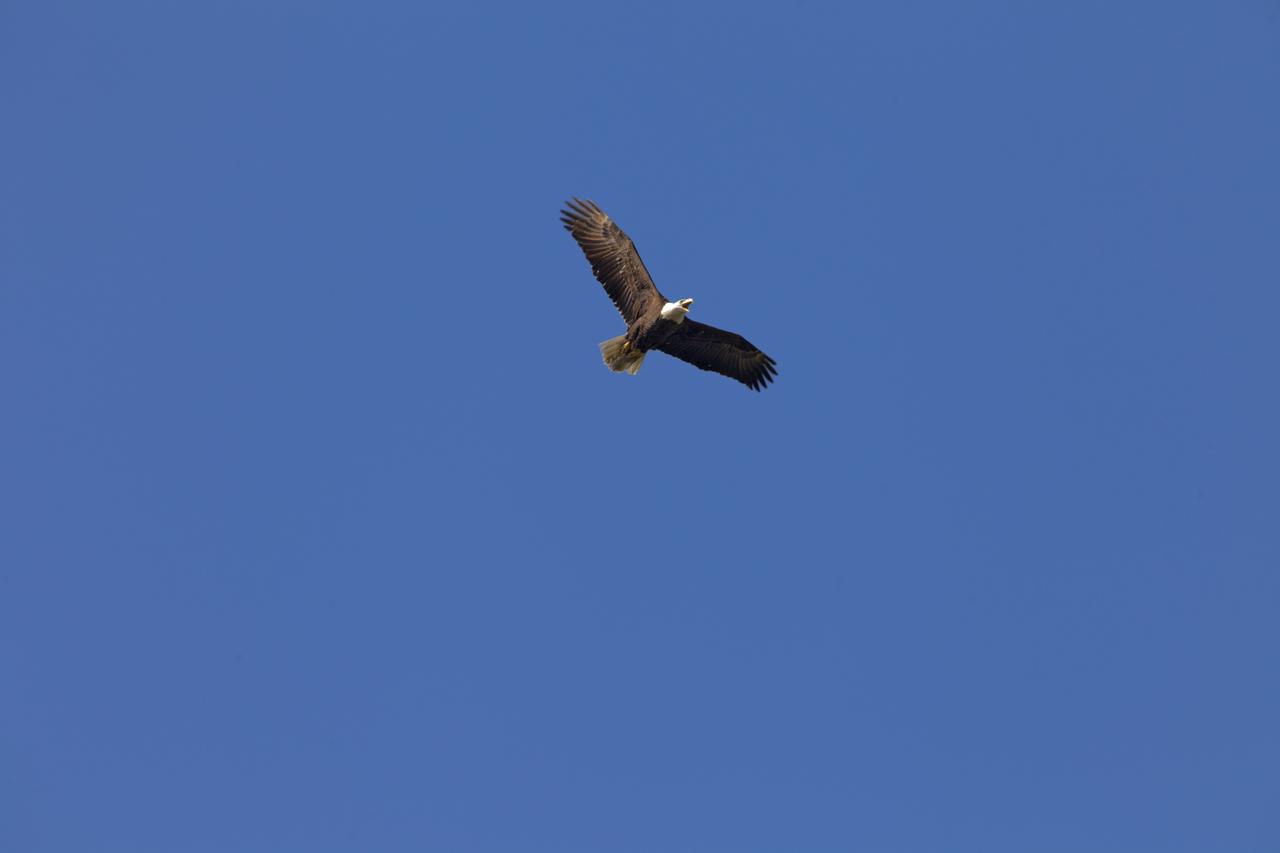
An American bald eagle soars through the air above NASA's Kennedy Space Center in Florida. The center shares a border with the Merritt Island National Wildlife Refuge. More than 330 native and migratory bird species, 25 mammals, 117 fishes and 65 amphibians and reptiles call Kennedy and the wildlife refuge home.
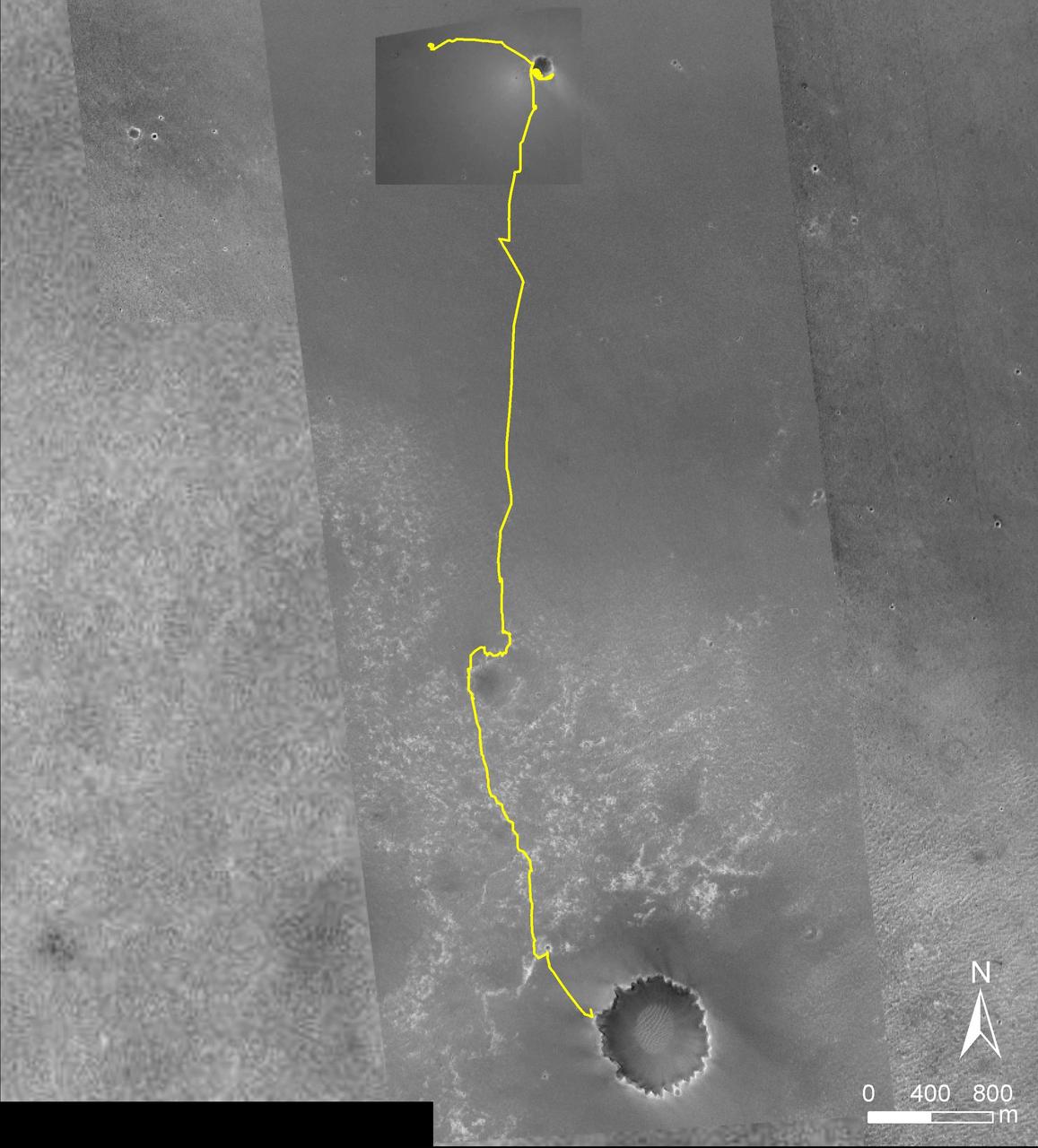
Opportunity Traverse Map, Eagle to Victoria

Looking Back at Eagle CraterRight-eye
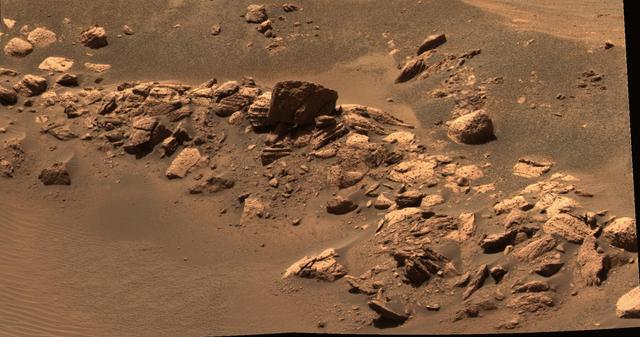
Hamersley : Not Quite Like Eagle Crater

Looking Back at Eagle CraterLeft-eye
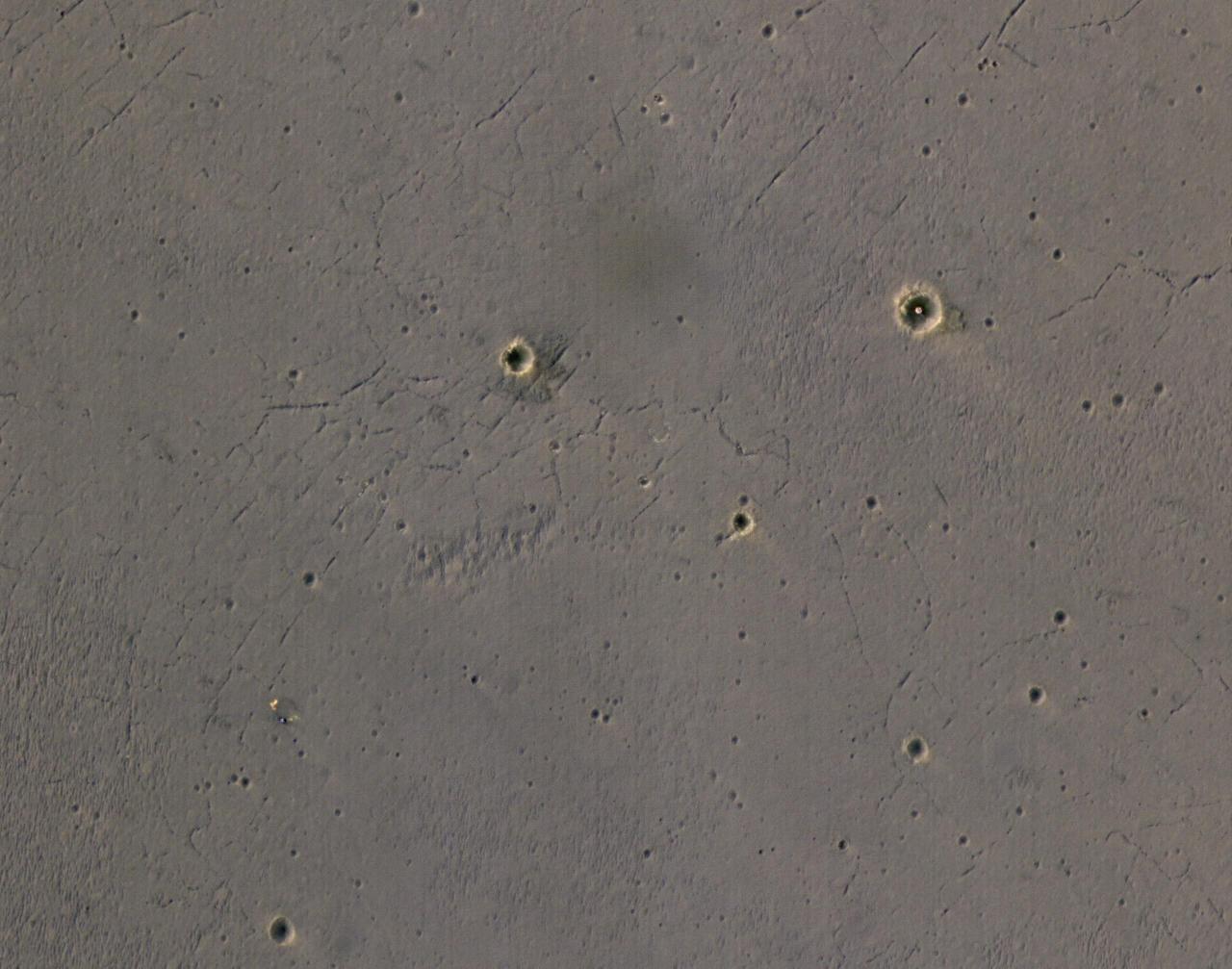
The bright landing platform left behind by NASA's Mars Exploration Rover Opportunity in 2004 is visible inside Eagle Crater, at upper right in this April 8, 2017, observation by NASA's Mars Reconnaissance Orbiter. Mars Reconnaissance Orbiter arrived at Mars in March 2006, more than two years after Opportunity's landing on Jan. 25, 2004, Universal Time (Jan. 24, PDT). This is the first image of Eagle Crater from the orbiter's High Resolution Imaging Science Experiment (HiRISE) camera, which has optics that include the most powerful telescope ever sent to Mars. Eagle Crater is about 72 feet (22 meters) in diameter, at 1.95 degrees south latitude, 354.47 degrees east longitude, in the Meridiani Planum region of Mars. The airbag-cushioned lander, with Opportunity folded-up inside, first hit Martian ground near the crater, then bounced and rolled right into the crater. The lander structure was four triangles, folded into a tetrahedron until after the airbags deflated. The triangular petals then opened, exposing the rover. A week later, the rover drove off (see PIA05214), and the landing platform's job was done. The spacecraft's backshell and parachute, jettisoned during final descent, are visible near the lower left corner of this scene. The blue tint of the backshell is an effect of exaggerated color, because HiRISE combines color information from red, blue-green and infrared portions of the spectrum, rather than three different visible-light colors, so its color images are not true color. Opportunity examined Eagle Crater for more than half of the rover's originally planned three-month mission, before driving east and south to larger craters. At Eagle, it found headline-making evidence that water once flowed over the surface and soaked the subsurface of the area. By the time this orbital image of the landing site was taken, about 13 years after the rover departed Eagle, Opportunity had driven more than 27 miles (44 kilometers) and was actively exploring the rim of Endeavour Crater, which is about 1,000 times as wide as Eagle. https://photojournal.jpl.nasa.gov/catalog/PIA21494
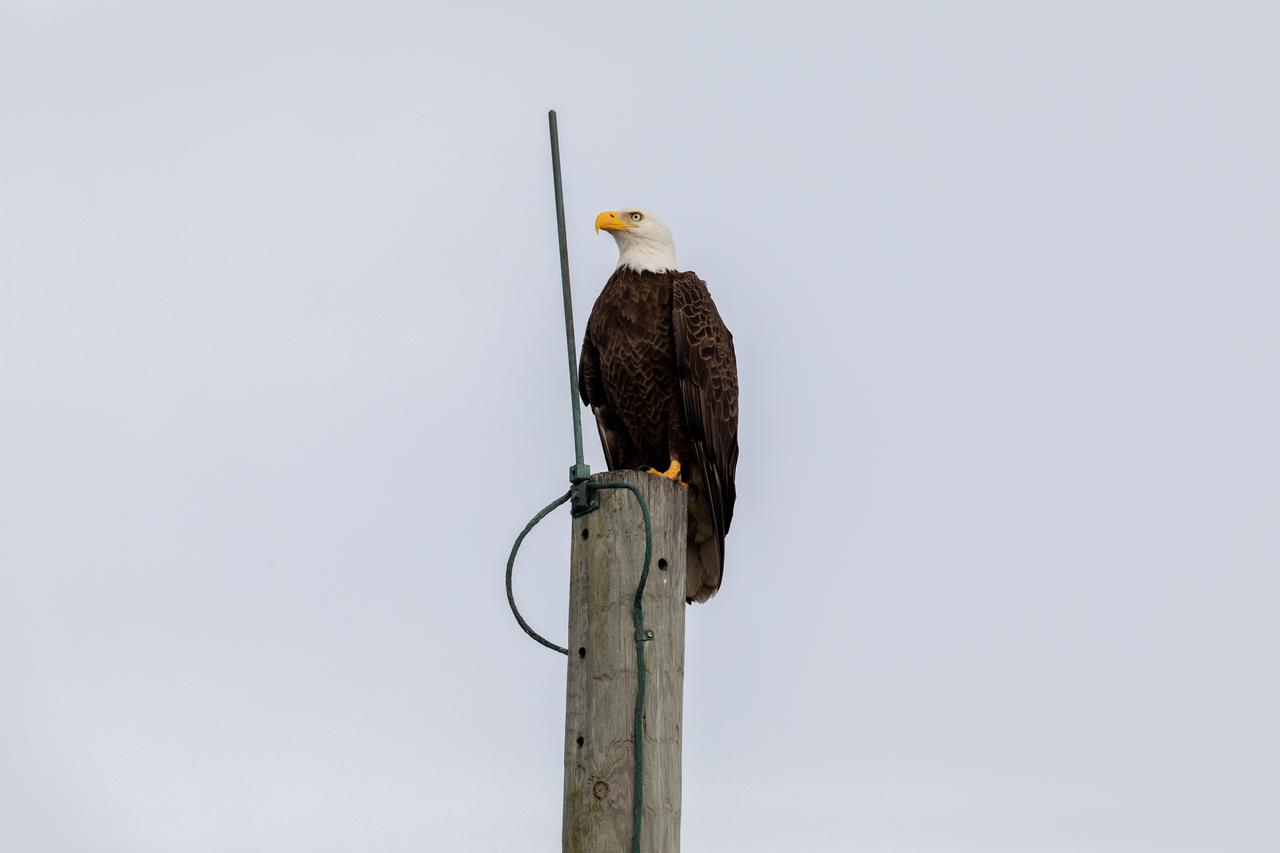
An American bald eagle perches on top of a telephone pole at NASA’s Kennedy Space Center in Florida. Kennedy shares a border with the Merritt Island National Wildlife Refuge, consisting of 140,000 acres of land, water, and marshes. Within the refuge, many species of birds, reptiles, fish, amphibians, and mammals can be found.
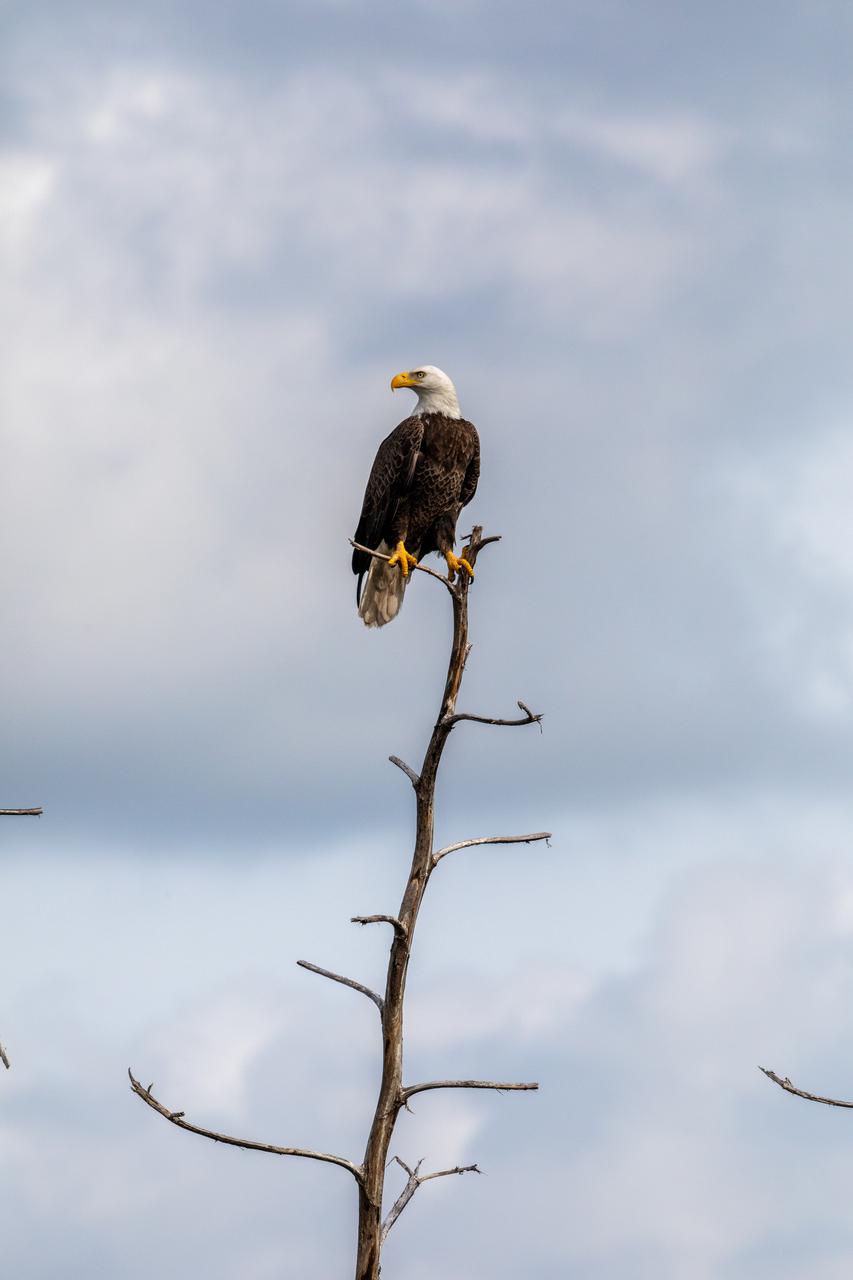
An American bald eagle perches on a tree branch at NASA’s Kennedy Space Center in Florida. Kennedy shares a border with the Merritt Island National Wildlife Refuge, consisting of 140,000 acres of land, water, and marshes. Within the refuge, many species of birds, reptiles, fish, amphibians, and mammals can be found.
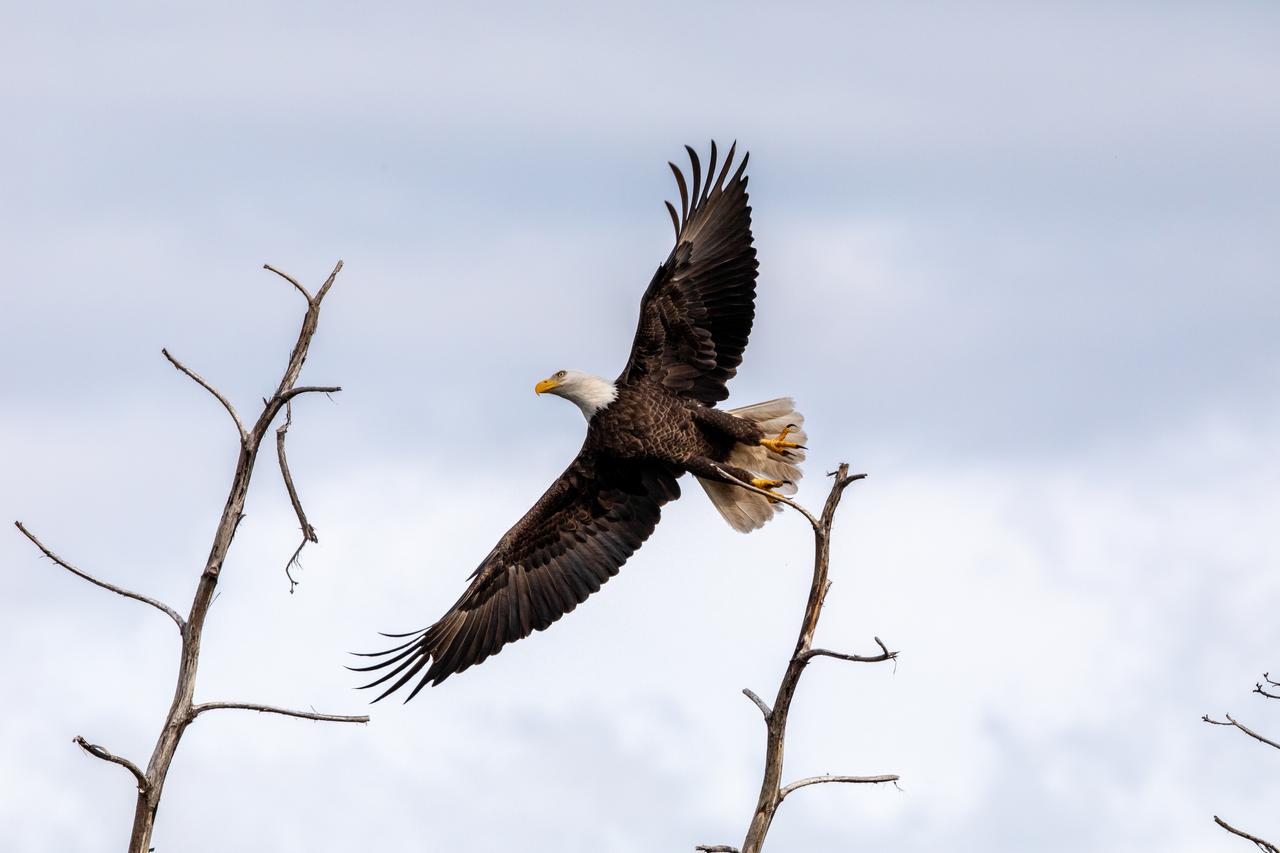
An American bald eagle takes flight after resting on a tree branch at NASA’s Kennedy Space Center in Florida. Kennedy shares a border with the Merritt Island National Wildlife Refuge, consisting of 140,000 acres of land, water, and marshes. Within the refuge, many species of birds, reptiles, fish, amphibians, and mammals can be found.
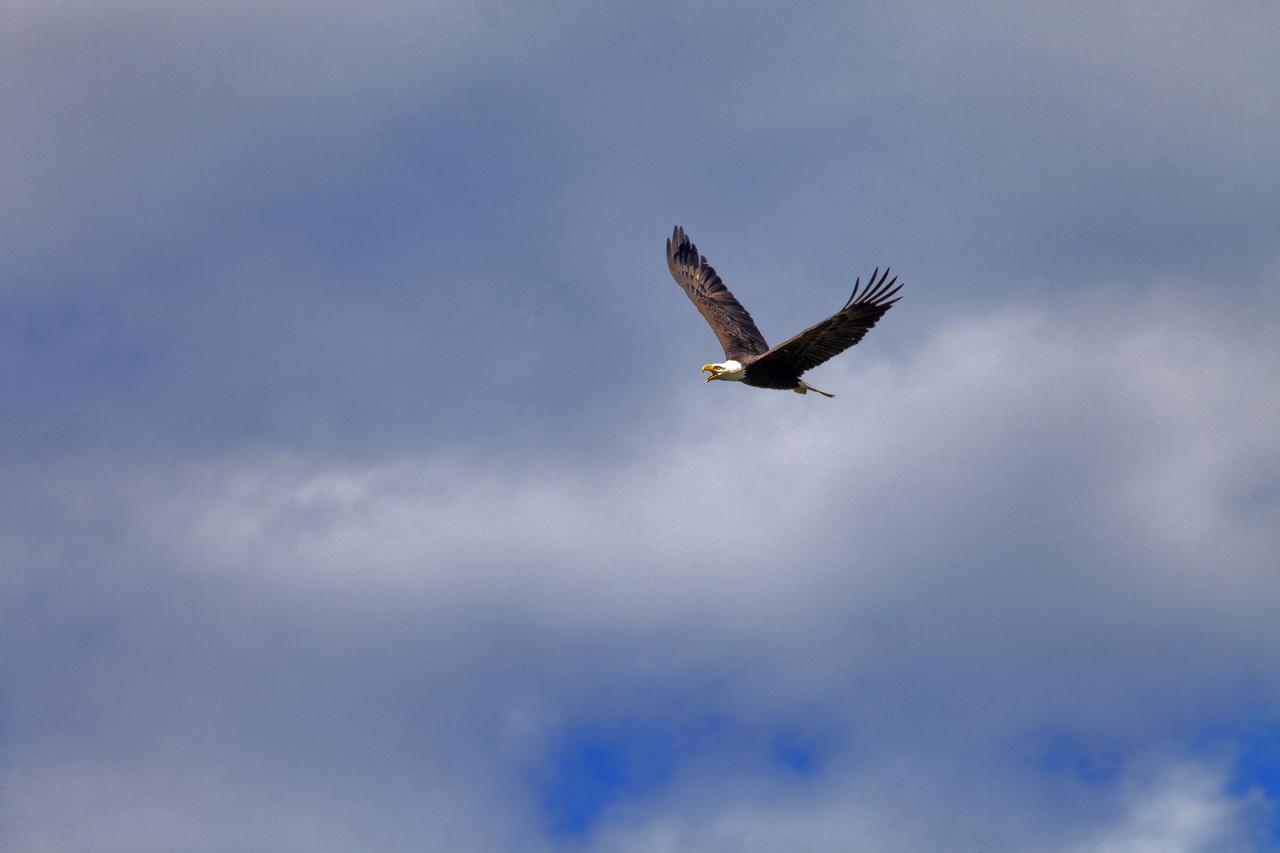
An American bald eagle soars through the air above NASA's Kennedy Space Center in Florida. The center shares a border with the Merritt Island National Wildlife Refuge. The bird is one of more than 330 native and migratory bird species, 25 mammals, 117 fishes and 65 amphibians and reptiles that call Kennedy and the wildlife refuge home.
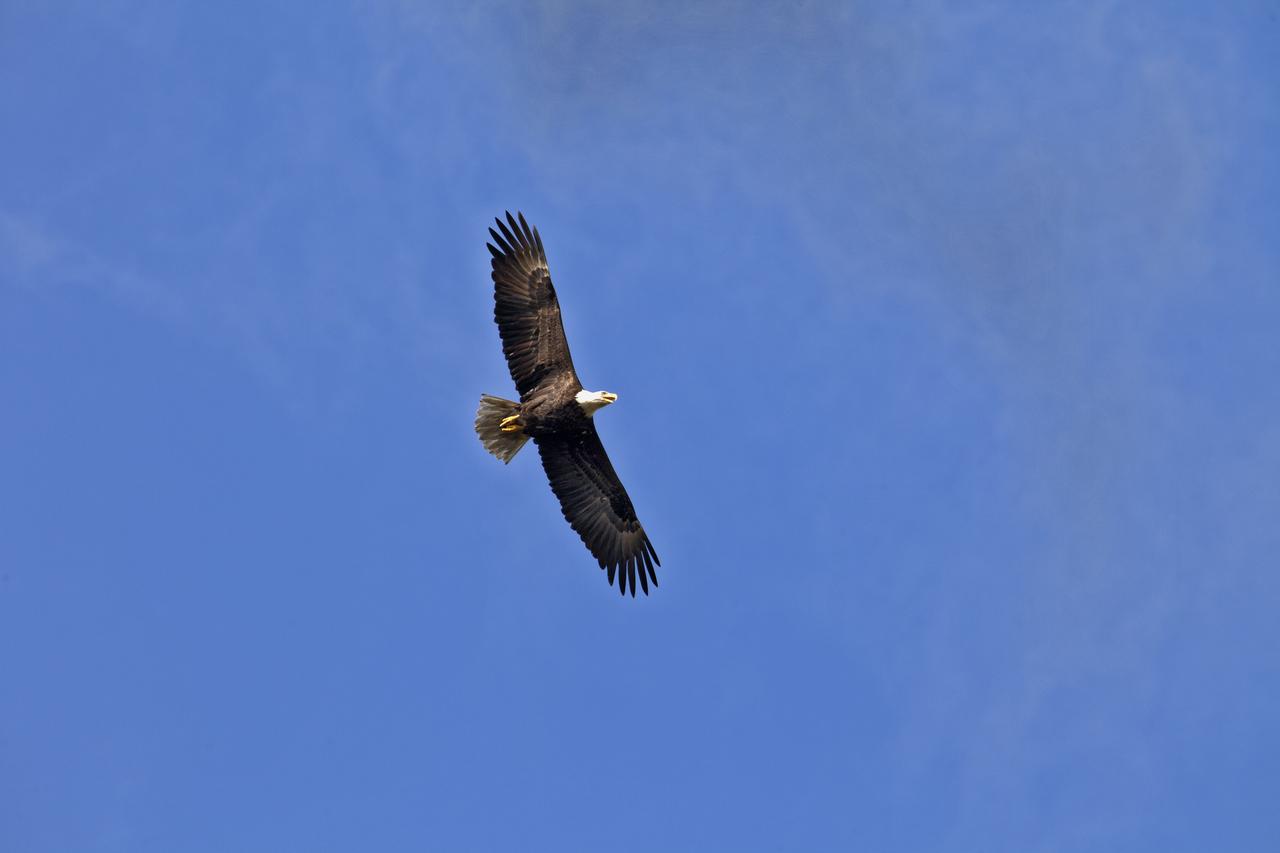
With wings outstretched, an American bald eagle soars through the air above NASA's Kennedy Space Center in Florida. The center shares a border with the Merritt Island National Wildlife Refuge. The bird is one of more than 330 native and migratory bird species, 25 mammals, 117 fishes and 65 amphibians and reptiles that call Kennedy and the wildlife refuge home.

Eagle-eye View of Eagle
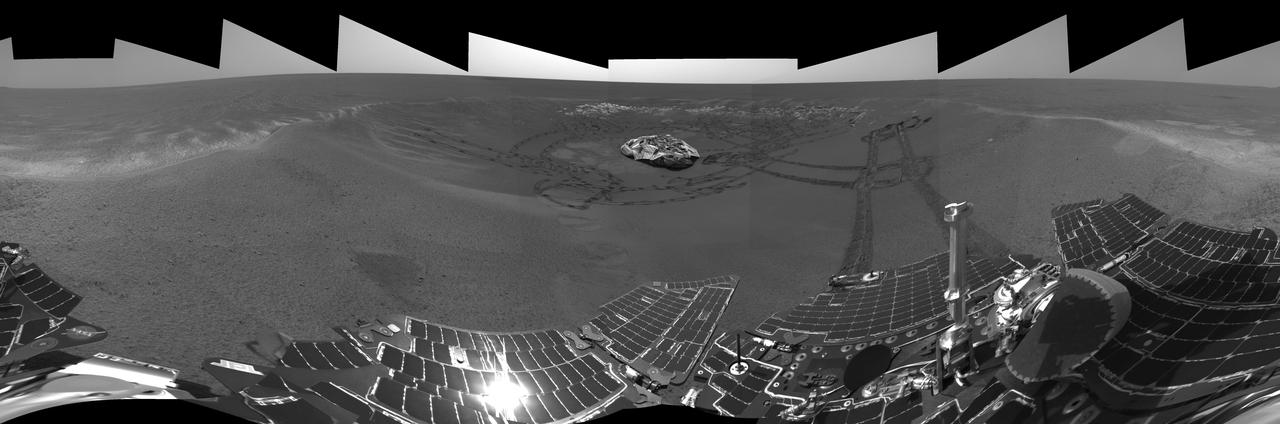
A Well-Traveled Eagle Crater right-eye
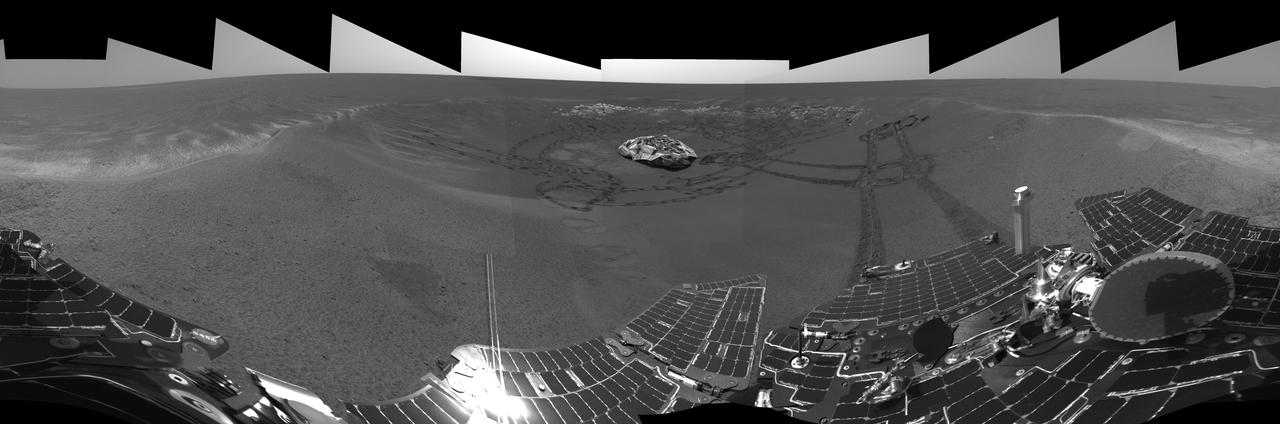
A Well-Traveled Eagle Crater left-eye
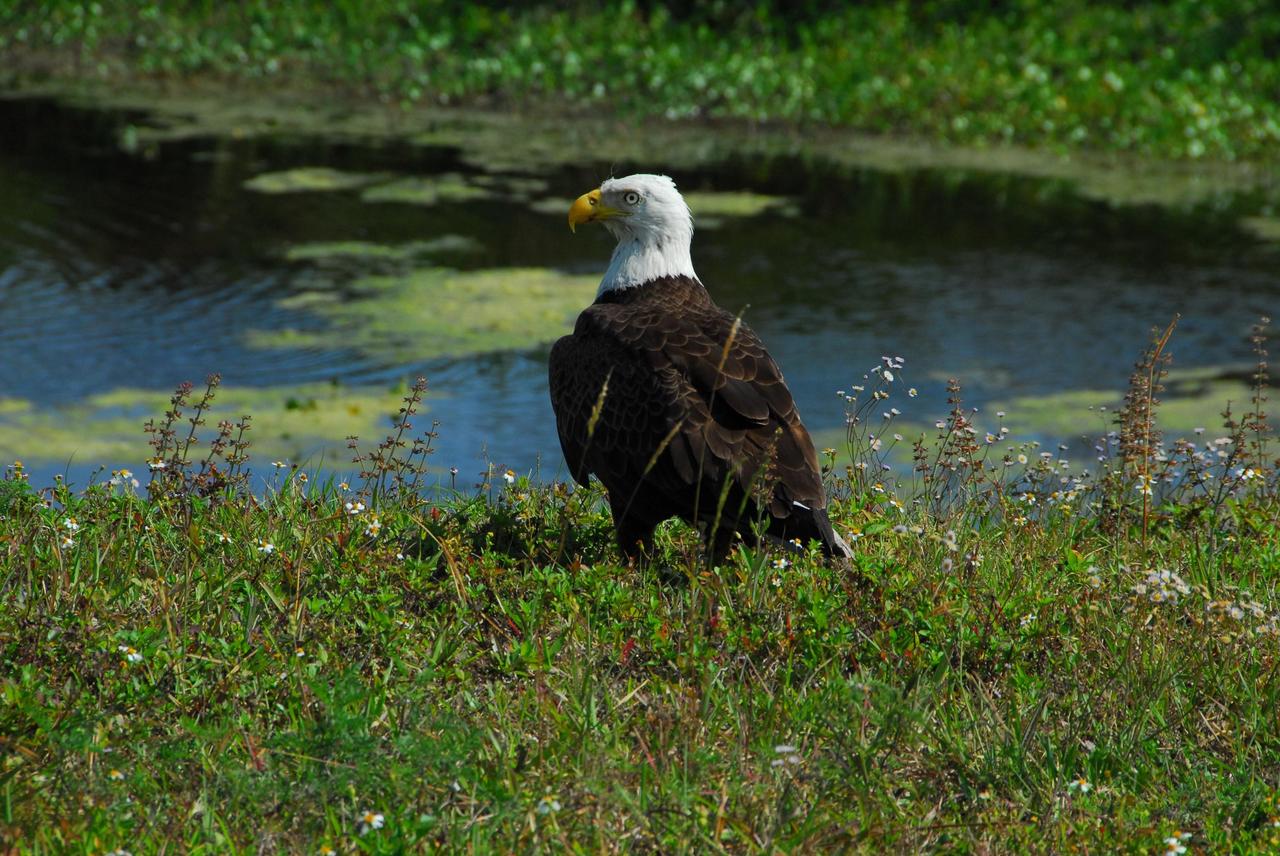
KENNEDY SPACE CENTER, FLA. -- This adult bald eagle rests on the ground near a pond close to S.R. 3 in NASA's Kennedy Space Center. Bald eagles live near large bodies of open water such as lakes, marshes, seacoasts and rivers, where there are plenty of fish to eat and tall trees for nesting and roosting. Bald eagles feed primarily on fish, but also eat small animals (ducks, coots, muskrats, turtles, rabbits, snakes, etc.) and occasional carrion (dead animals). They are sometimes seen among a gathering of vultures at the site of a fresh meal. Bald eagles have a presence in every U. S. state except Hawaii. Bald eagles use a specific territory for nesting (they mate for life), winter feeding or a year-round residence. Its natural domain is from Alaska to Baja, California, and from Maine to Florida. There are a dozen eagle nests both in KSC and in the Merritt Island National Wildlife Refuge, which surrounds KSC. The refuge includes several wading bird rookeries, many osprey nests, up to 400 manatees during the spring, and approximately 2,500 Florida scrub jays. It also is a major wintering area for migratory birds. More than 500 species of wildlife inhabit the refuge, with 15 considered federally threatened or endangered. Photo credit: NASA/George Shelton
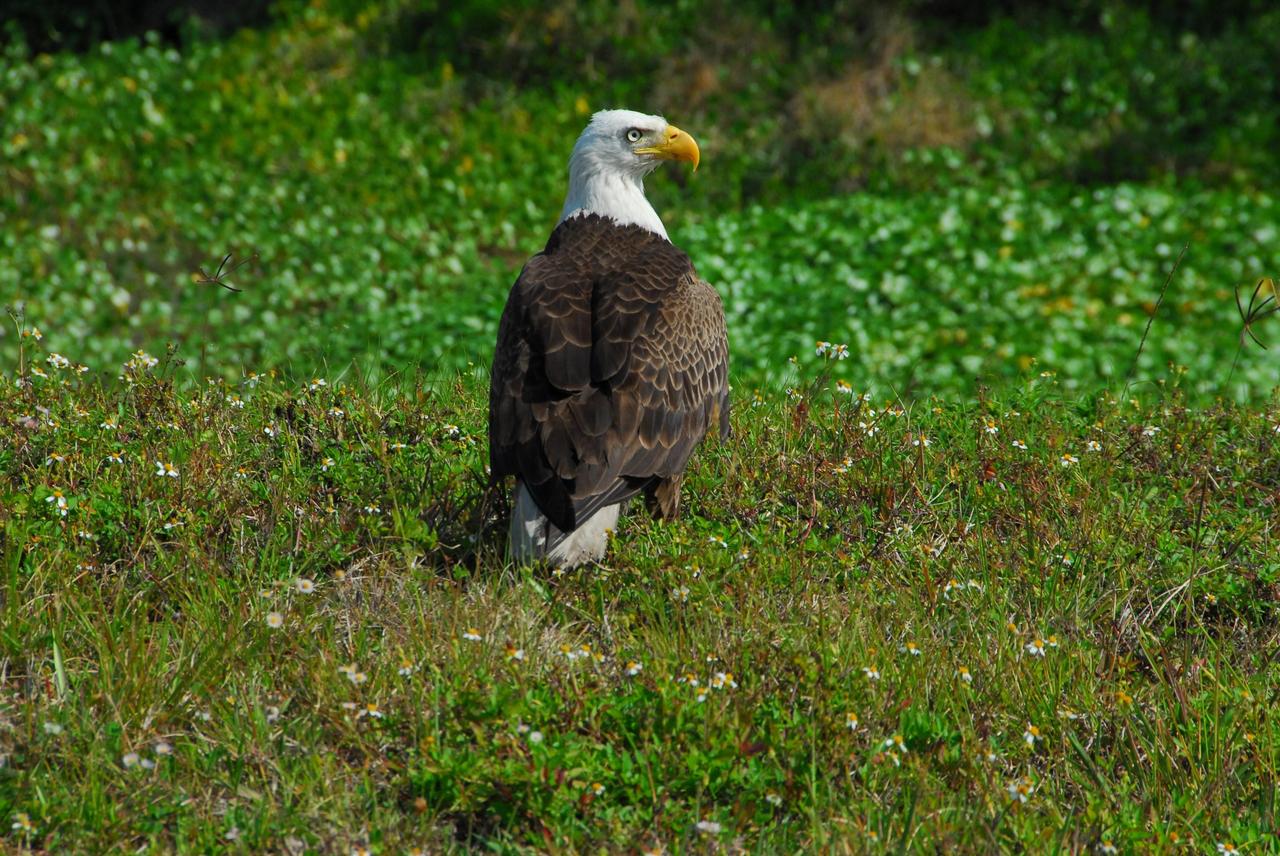
KENNEDY SPACE CENTER, FLA. -- This adult bald eagle rests on the ground near a pond close to S.R. 3 in NASA's Kennedy Space Center. Bald eagles live near large bodies of open water such as lakes, marshes, seacoasts and rivers, where there are plenty of fish to eat and tall trees for nesting and roosting. Bald eagles feed primarily on fish, but also eat small animals (ducks, coots, muskrats, turtles, rabbits, snakes, etc.) and occasional carrion (dead animals). They are sometimes seen among a gathering of vultures at the site of a fresh meal. Bald eagles have a presence in every U. S. state except Hawaii. Bald eagles use a specific territory for nesting (they mate for life), winter feeding or a year-round residence. Its natural domain is from Alaska to Baja, California, and from Maine to Florida. There are a dozen eagle nests both in KSC and in the Merritt Island National Wildlife Refuge, which surrounds KSC. The refuge includes several wading bird rookeries, many osprey nests, up to 400 manatees during the spring, and approximately 2,500 Florida scrub jays. It also is a major wintering area for migratory birds. More than 500 species of wildlife inhabit the refuge, with 15 considered federally threatened or endangered. Photo credit: NASA/George Shelton

The dusty face of the Eagle Nebula and its surroundings are revealed in this image based on data from NASA's Wide Field Survey Explorer (WISE). WISE detects infrared light, or a range of wavelengths longer than what the human eye can see. This large star forming region is about 5,700 light years away from Earth and is most famous for being home to the the "Pillars of Creation," a region famously imaged by NASA's Hubble and James Webb space telescopes. The WISE data reveals the entire structure of the nebula surrounding the pillars, which themselves can be seen as a faint yellow-green feature inside the white circle. While the WISE view of the "Pillars" is not as sharp as those taken by Webb and Hubble, the telescope's wide field of view allows us to explore the extended nebula around it. When viewed in visible light, the dust is dark and opaque. In these infrared wavelengths, the dust becomes more translucent, and emits infrared light, shown in green, yellow, and red in this image. The data used in this image came from WISE's primary mission which ran from 2009 to 2011. In 2013, NASA took the spacecraft out of hibernation and began using it to track and study near-Earth objects. The mission and the spacecraft were renamed NEOWISE. However, the data is still being used by astronomers to study objects and regions outside our solar system. Blue and cyan are used to represent infrared light at wavelengths of 3.4 and 4.6 microns, while green and red display longer wavelengths of 12 and 22 microns, respectively. Animation available at https://photojournal.jpl.nasa.gov/catalog/PIA25433

Eyeing Eagle

TEST FLIGHT OF THE LANDER PROTOTYPE “MIGHTY EAGLE” OVER A SIMULATED LUNAR LANDSCAPE. SEPTEMBER 20, 2013

TEST FLIGHT OF THE LANDER PROTOTYPE “MIGHTY EAGLE” OVER A SIMULATED LUNAR LANDSCAPE. SEPTEMBER 20, 2013

TEST FLIGHT OF THE LANDER PROTOTYPE “MIGHTY EAGLE” OVER A SIMULATED LUNAR LANDSCAPE. SEPTEMBER 20, 2013

TEST FLIGHT OF THE LANDER PROTOTYPE “MIGHTY EAGLE” OVER A SIMULATED LUNAR LANDSCAPE. SEPTEMBER 20, 2013

TEST FLIGHT OF THE LANDER PROTOTYPE “MIGHTY EAGLE” OVER A SIMULATED LUNAR LANDSCAPE. SEPTEMBER 20, 2013

TEST FLIGHT OF THE LANDER PROTOTYPE “MIGHTY EAGLE” OVER A SIMULATED LUNAR LANDSCAPE. SEPTEMBER 20, 2013

TEST FLIGHT OF THE LANDER PROTOTYPE “MIGHTY EAGLE” OVER A SIMULATED LUNAR LANDSCAPE. SEPTEMBER 20, 2013

An American bald eagle sits perched on a tree branch (top left), while another American eagle and two eaglets sit in their nest at NASA’s Kennedy Space Center in Florida on Friday, March 13, 2026. Bald eagle nesting surveys across NASA Kennedy, Merritt Island National Wildlife Refuge, and Canaveral National Seashore are conducted annually to document the number of bald eagle active and inactive nests in support of wildlife management and regulatory compliance. Each year, eagles take up winter residence at the Florida spaceport, breeding and raising a new generation.

From top left, an American bald eagle sits perched on a tree branch, another eaglet sits on a tree branch (bottom left), while an eaglet and a bald eagle sit in their nest at NASA’s Kennedy Space Center in Florida on Friday, March 13, 2026. Bald eagle nesting surveys across NASA Kennedy, Merritt Island National Wildlife Refuge, and Canaveral National Seashore are conducted annually to document the number of bald eagle active and inactive nests in support of wildlife management and regulatory compliance. Each year, eagles take up winter residence at the Florida spaceport, breeding and raising a new generation.

Two American bald eagles sit perched on a tree branch while two eaglets sit in their nest at NASA’s Kennedy Space Center in Florida on Friday, March 13, 2026. Bald eagle nesting surveys across NASA Kennedy, Merritt Island National Wildlife Refuge, and Canaveral National Seashore are conducted annually to document the number of bald eagle active and inactive nests in support of wildlife management and regulatory compliance. Each year, eagles take up winter residence at the Florida spaceport, breeding and raising a new generation.

An American bald eagles flies away from their nest and tree at NASA’s Kennedy Space Center in Florida on Friday, March 13, 2026. Bald eagle nesting surveys across NASA Kennedy, Merritt Island National Wildlife Refuge, and Canaveral National Seashore are conducted annually to document the number of bald eagle active and inactive nests in support of wildlife management and regulatory compliance. Each year, eagles take up winter residence at the Florida spaceport, breeding and raising a new generation.

An American bald eagle prepares to feed two eaglets in their nest at NASA’s Kennedy Space Center in Florida on Friday, March 13, 2026. Bald eagle nesting surveys across NASA Kennedy, Merritt Island National Wildlife Refuge, and Canaveral National Seashore are conducted annually to document the number of bald eagle active and inactive nests in support of wildlife management and regulatory compliance. Each year, eagles take up winter residence at the Florida spaceport, breeding and raising a new generation.

Two American bald eagles sit perched on a tree branch while two eaglets sit in their nest at NASA’s Kennedy Space Center in Florida on Friday, March 13, 2026. Bald eagle nesting surveys across NASA Kennedy, Merritt Island National Wildlife Refuge, and Canaveral National Seashore are conducted annually to document the number of bald eagle active and inactive nests in support of wildlife management and regulatory compliance. Each year, eagles take up winter residence at the Florida spaceport, breeding and raising a new generation.
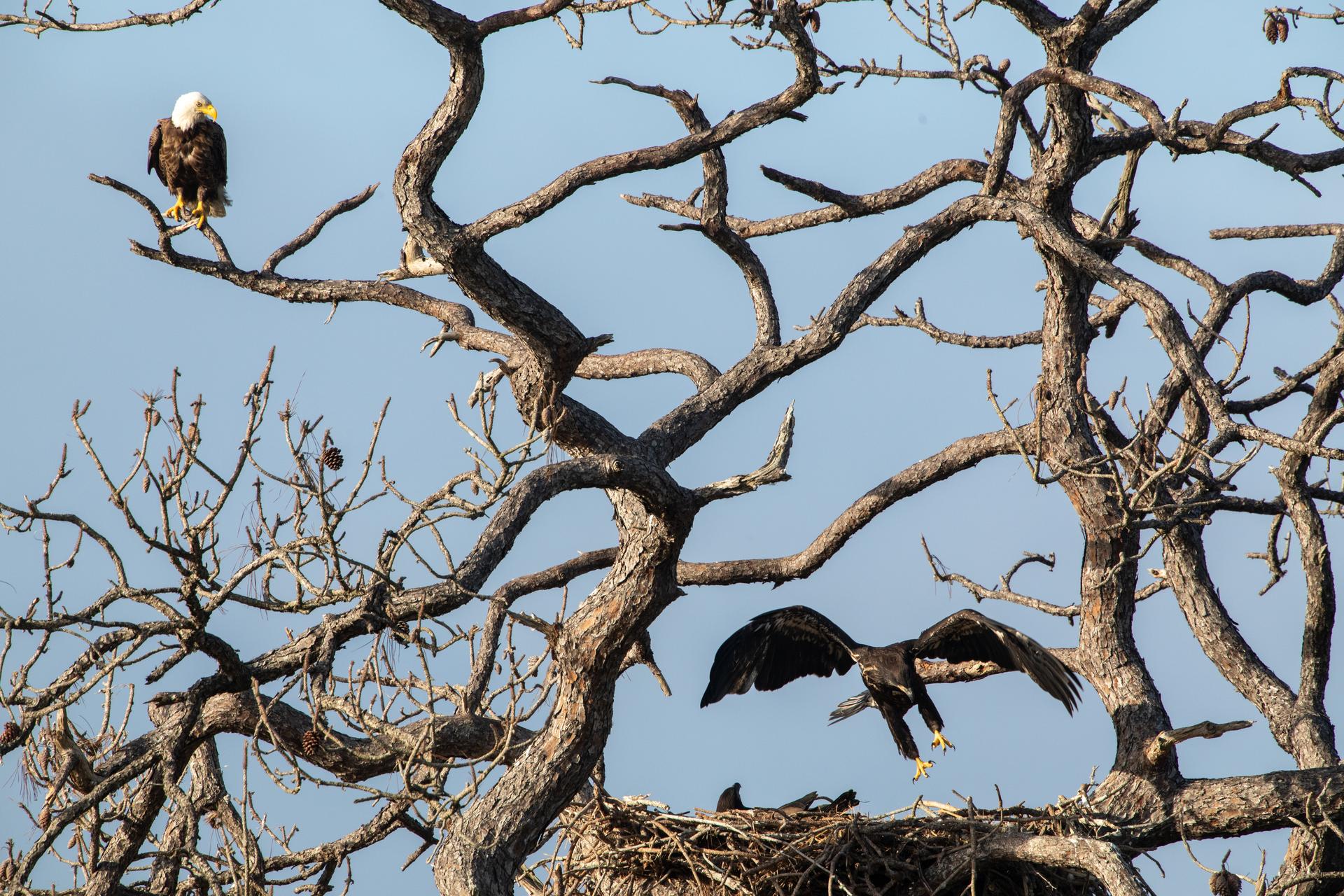
An American bald eagle sits perched on a tree branch as an eaglet flies from their nest at NASA’s Kennedy Space Center in Florida on Friday, March 13, 2026. Bald eagle nesting surveys across NASA Kennedy, Merritt Island National Wildlife Refuge, and Canaveral National Seashore are conducted annually to document the number of bald eagle active and inactive nests in support of wildlife management and regulatory compliance. Each year, eagles take up winter residence at the Florida spaceport, breeding and raising a new generation.

An American bald eagles flies away from their nest and tree at NASA’s Kennedy Space Center in Florida on Friday, March 13, 2026. Bald eagle nesting surveys across NASA Kennedy, Merritt Island National Wildlife Refuge, and Canaveral National Seashore are conducted annually to document the number of bald eagle active and inactive nests in support of wildlife management and regulatory compliance. Each year, eagles take up winter residence at the Florida spaceport, breeding and raising a new generation.

Two American bald eagles sit perched on a tree branch near their nest at NASA’s Kennedy Space Center in Florida on Friday, March 13, 2026. Bald eagle nesting surveys across NASA Kennedy, Merritt Island National Wildlife Refuge, and Canaveral National Seashore are conducted annually to document the number of bald eagle active and inactive nests in support of wildlife management and regulatory compliance. Each year, eagles take up winter residence at the Florida spaceport, breeding and raising a new generation.

Two American bald eagles sit perched on a tree branch while two eaglets sit in their nest at NASA’s Kennedy Space Center in Florida on Friday, March 13, 2026. Bald eagle nesting surveys across NASA Kennedy, Merritt Island National Wildlife Refuge, and Canaveral National Seashore are conducted annually to document the number of bald eagle active and inactive nests in support of wildlife management and regulatory compliance. Each year, eagles take up winter residence at the Florida spaceport, breeding and raising a new generation.

An American bald eagles flies away from their nest and tree at NASA’s Kennedy Space Center in Florida on Friday, March 13, 2026. Bald eagle nesting surveys across NASA Kennedy, Merritt Island National Wildlife Refuge, and Canaveral National Seashore are conducted annually to document the number of bald eagle active and inactive nests in support of wildlife management and regulatory compliance. Each year, eagles take up winter residence at the Florida spaceport, breeding and raising a new generation.