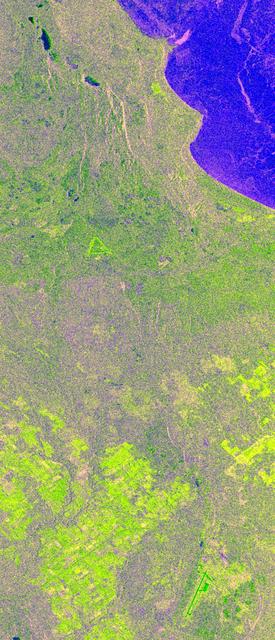
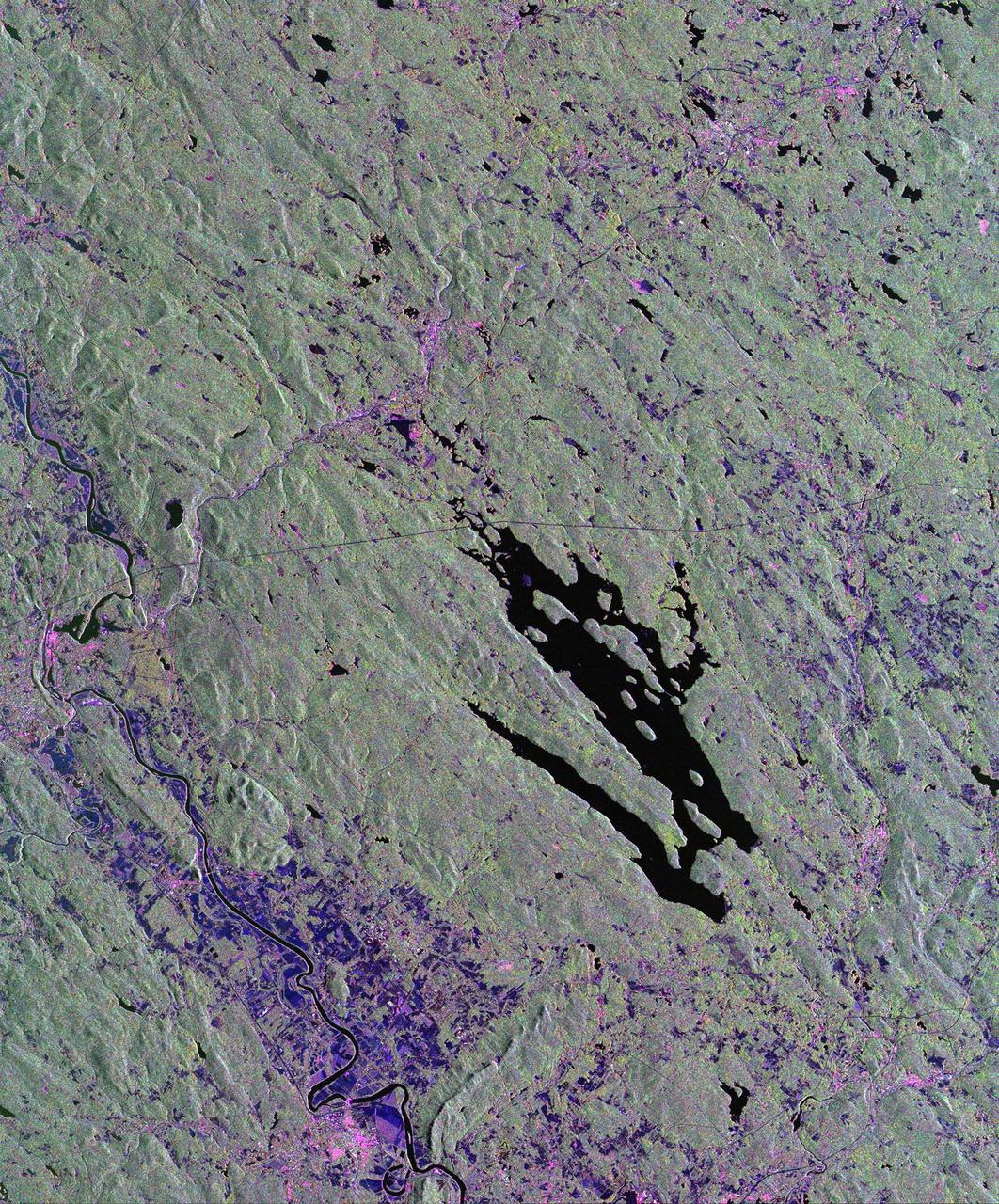
This is an X-band image of seasonal changes at the ecological test site of Raco, Michigan, located south of Whitefish Bay on Lake Superior. The image is centered at about 46 degrees north latitude and 85 degrees west longitude. This image was acquired by the X-band Synthetic Aperture Radar onboard the space shuttle Endeavour on April 10th, 1994, and on October 1, 1994. The areas shown in red correspond to the April 10th data; the areas in blue correspond to data acquired on October 1, 1994; green indicates the ratio of data acquired on April 10 and October 1, 1994. The area shown is 22.7 kilometers by 53 kilometers (14 miles by 33 miles). Lake Superior in the upper right was frozen in April and had small waves (ripples) on its surface in October. The land area contains mostly forests and, to a lesser extent, agricultural regions. In April the area was covered in wet snow. By October, there agricultural areas were covered with grass. Vegetation and soils were moist due to rainfalls three days before the data was acquired on October 1, 1994. The bright light green/yellow tones in the lower half of the image show the stronger reflections of the snow-covered agricultural fields. The pinkish color corresponds to the coniferous and deciduous forests. The green area represents red pines. These trees are smaller than the surrounding forest cover and allow more radar penetration. The area is green because the radar is sensing the surface, which undergoes great change from snow to grass and fern undergrowth between April and October. The bright green triangle in the upper half of the image is an old airstrip, while the modern airport can be seen on the bottom right side of the image. The Raco site is an important location for monitoring seasonal changes and future global change because it is situated at the ecological transition zone between the boreal forests and the northern temperate forests. This transitional zone is expected to be ecologically sensitive to anticipated global changes resulting from climatic warming. Baseline studies of vegetation are essential in monitoring these expected changes. http://photojournal.jpl.nasa.gov/catalog/PIA01734
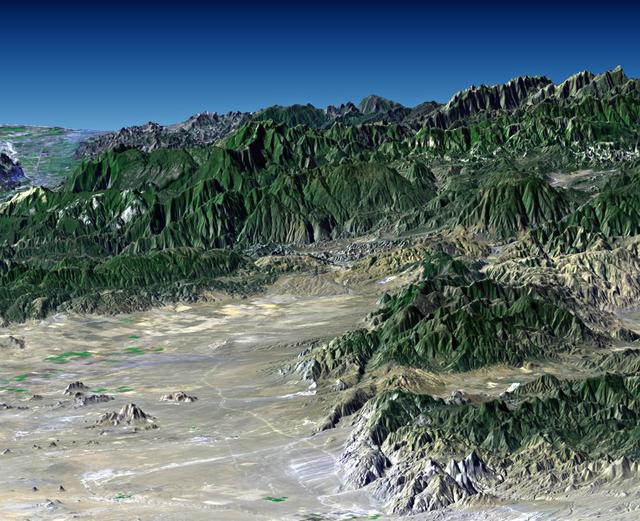
Southern California dramatic topography plays acritical role in its climate, hydrology, ecology, agriculture, and habitability.
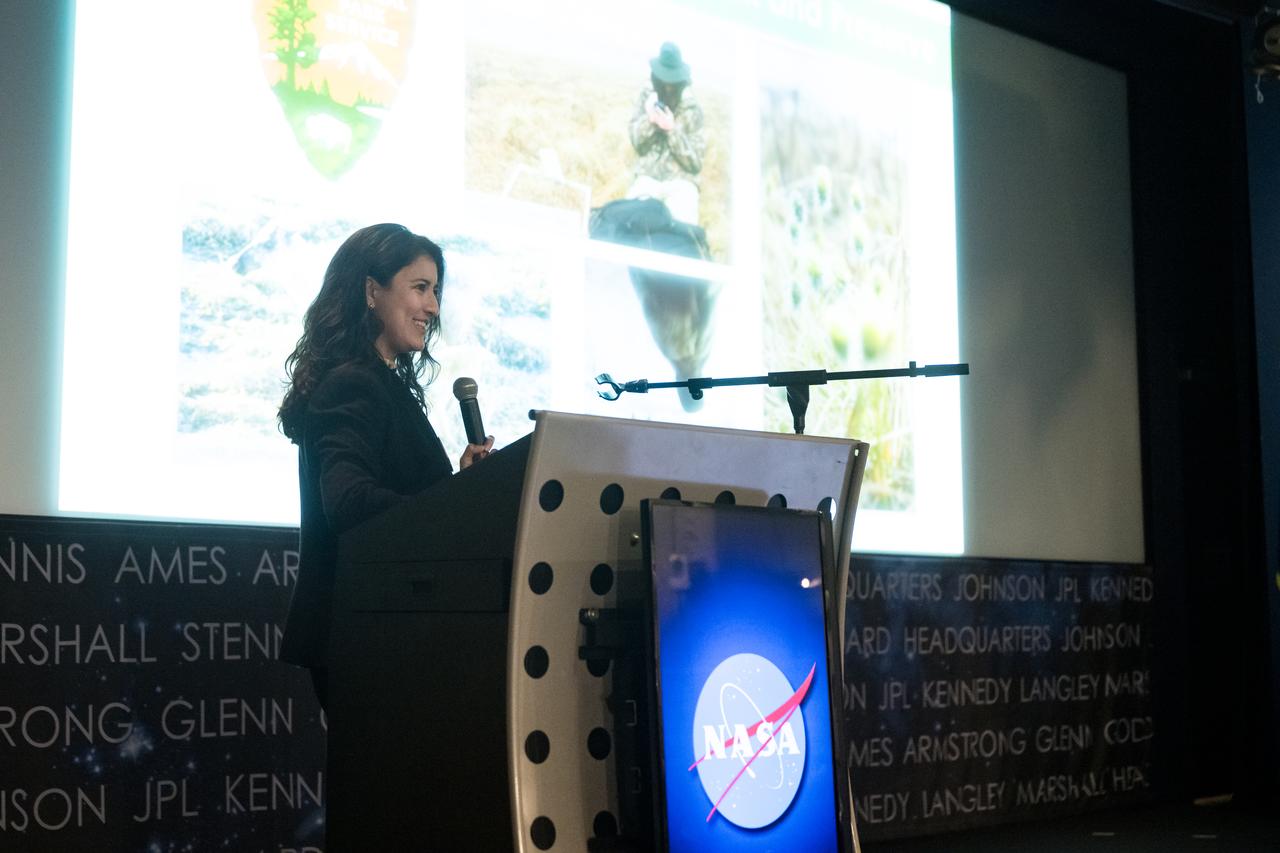
Jackie Encinas speaks about her project, Alaska Ecological Conservation II, Tuesday, August 6, 2024, at the Mary W. Jackson NASA Headquarters building in Washington. Every summer early career researchers from NASA’s DEVELOP National Program come to NASA Headquarters and present their research projects. DEVELOP is a training and development program where early career researchers work on Earth science projects, mentored by science advisors from NASA and partner agencies, and provide research results to local communities. Photo Credit: (NASA/Aubrey Gemignani)
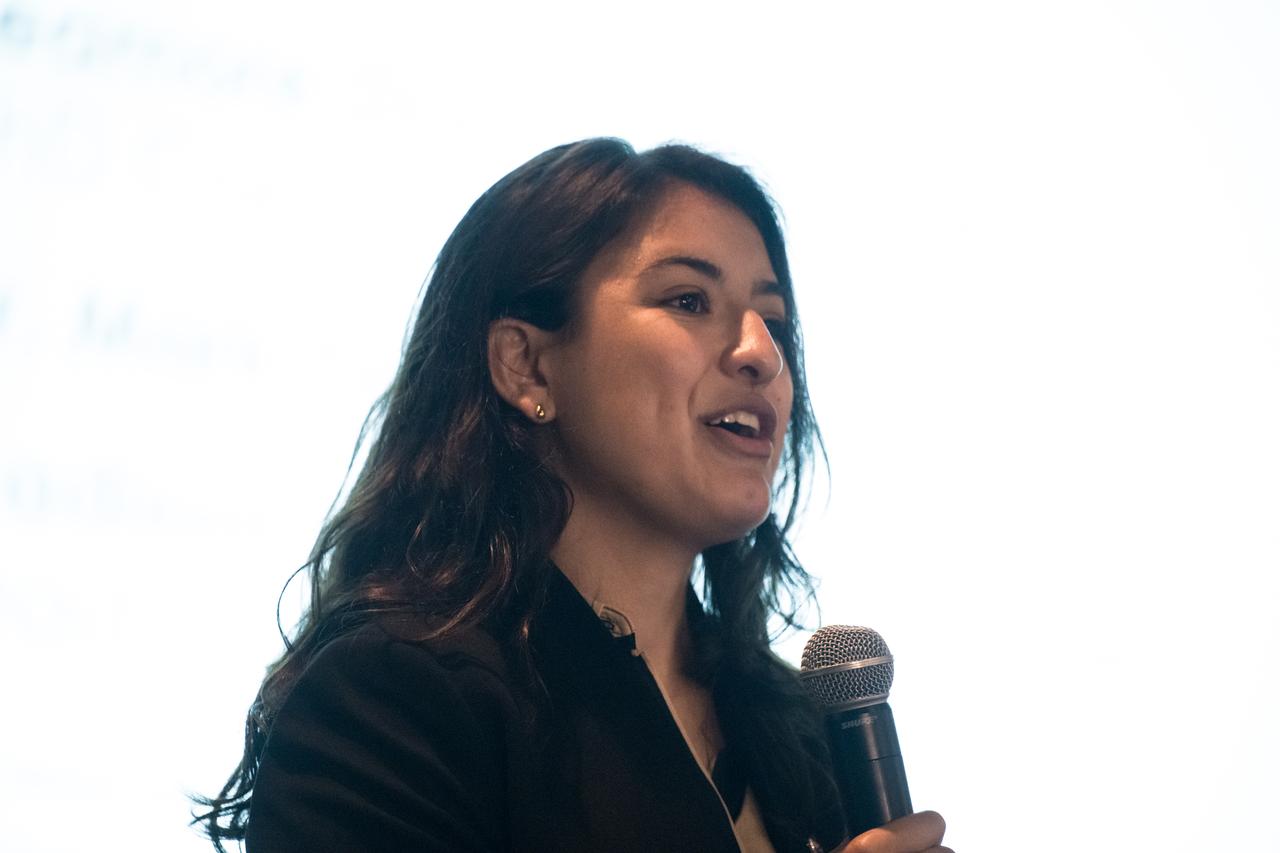
Jackie Encinas speaks about her project, Alaska Ecological Conservation II, Tuesday, August 6, 2024, at the Mary W. Jackson NASA Headquarters building in Washington. Every summer early career researchers from NASA’s DEVELOP National Program come to NASA Headquarters and present their research projects. DEVELOP is a training and development program where early career researchers work on Earth science projects, mentored by science advisors from NASA and partner agencies, and provide research results to local communities. Photo Credit: (NASA/Aubrey Gemignani)

An astonishing diversity of geological features, ecological systems and human landscapes across North America is indicated within this image from NASA Terra spacecraft.
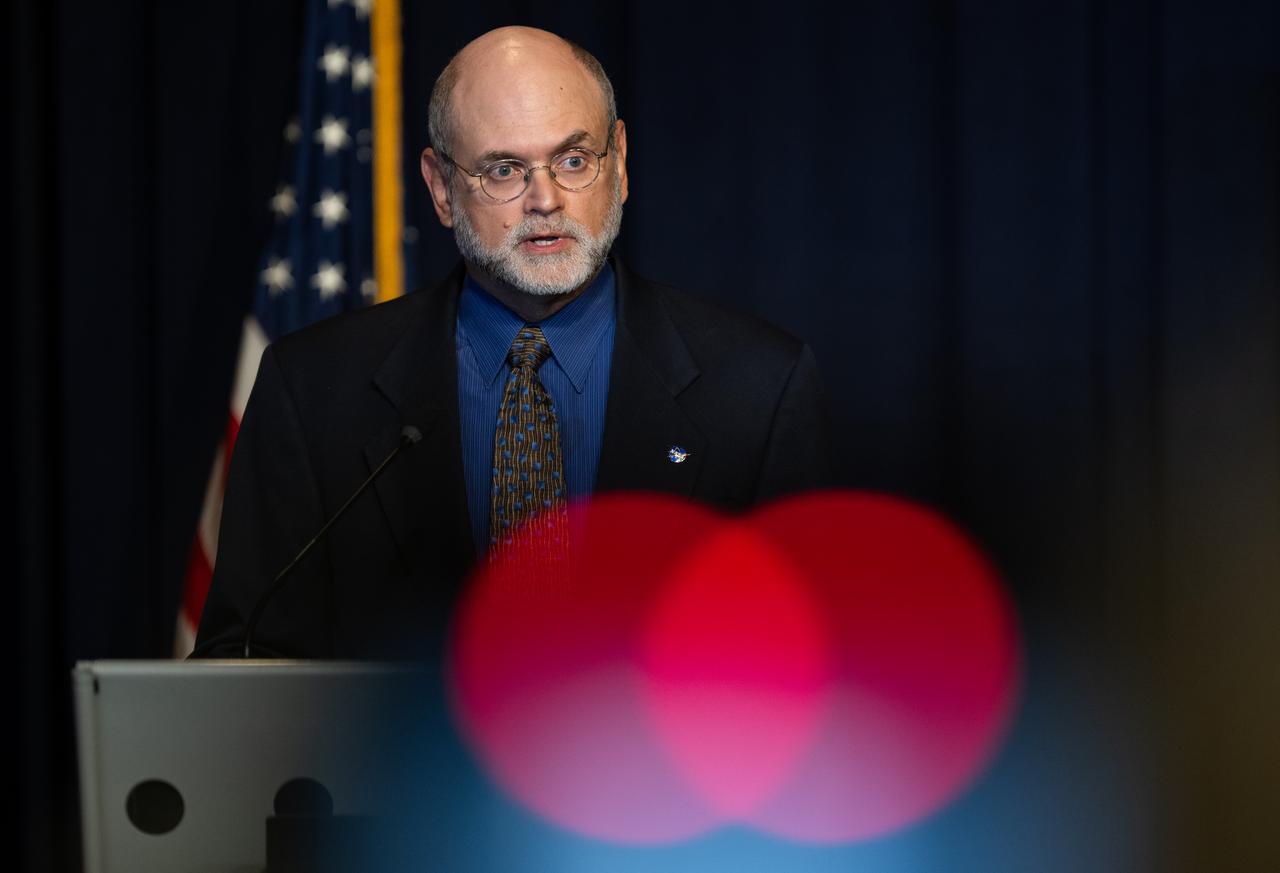
Carlos Del Castillo, chief of the Ocean Ecology Laboratory at NASA’s Goddard Space Flight Center, speaks during a news conference to discuss the latest global temperature data, Monday, Aug. 14, 2023, at the Mary W. Jackson NASA Headquarters building in Washington. Photo Credit: (NASA/Joel Kowsky)
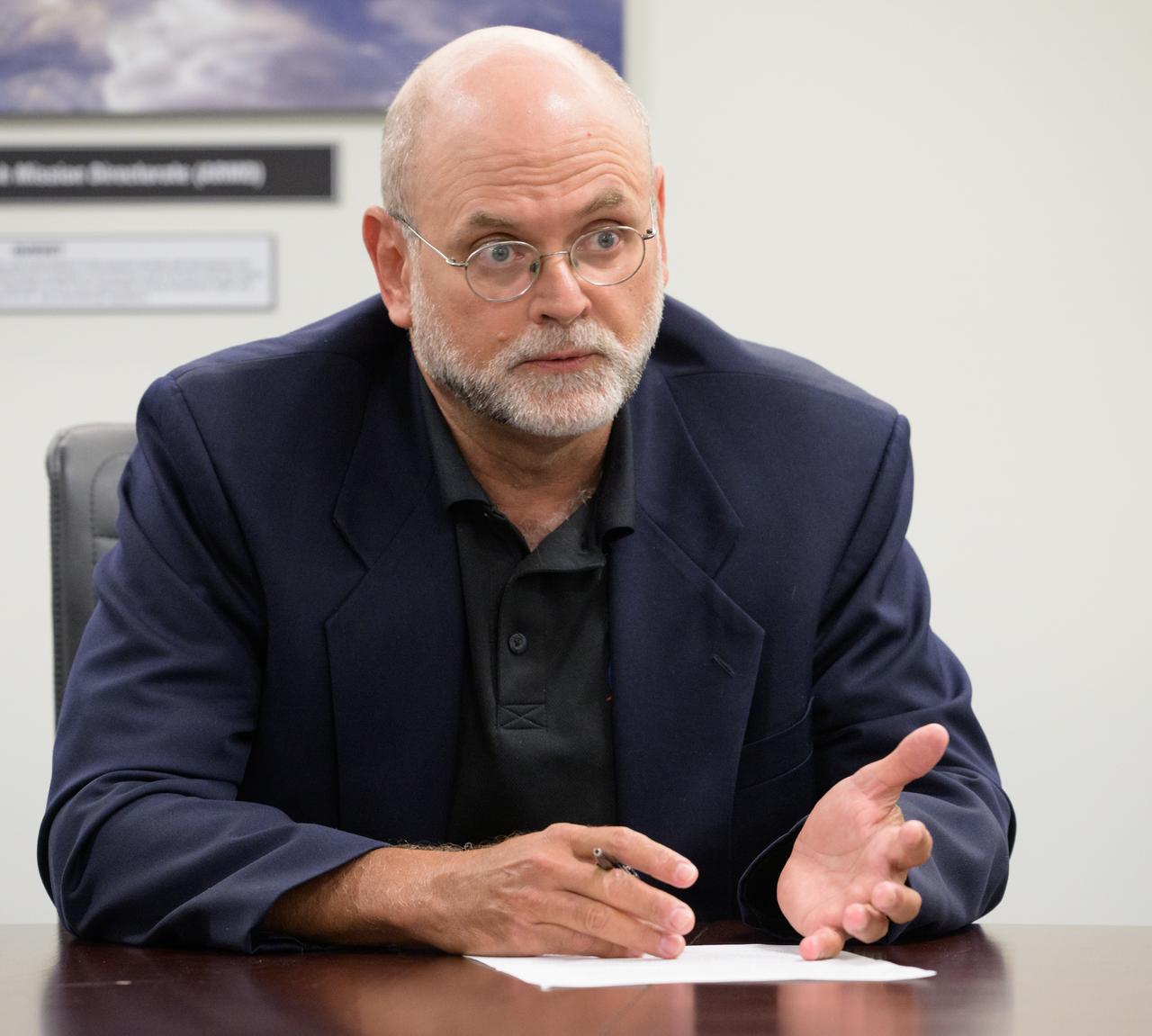
NASA Goddard Space Flight Center Ocean Ecology Laboratory Chief Carlos Del Castillo highlights NASA’s climate work during a media roundtable, Thursday, July 20, 2023, at the NASA Headquarters Mary W. Jackson Building in Washington. Photo Credit: (NASA/Bill Ingalls)
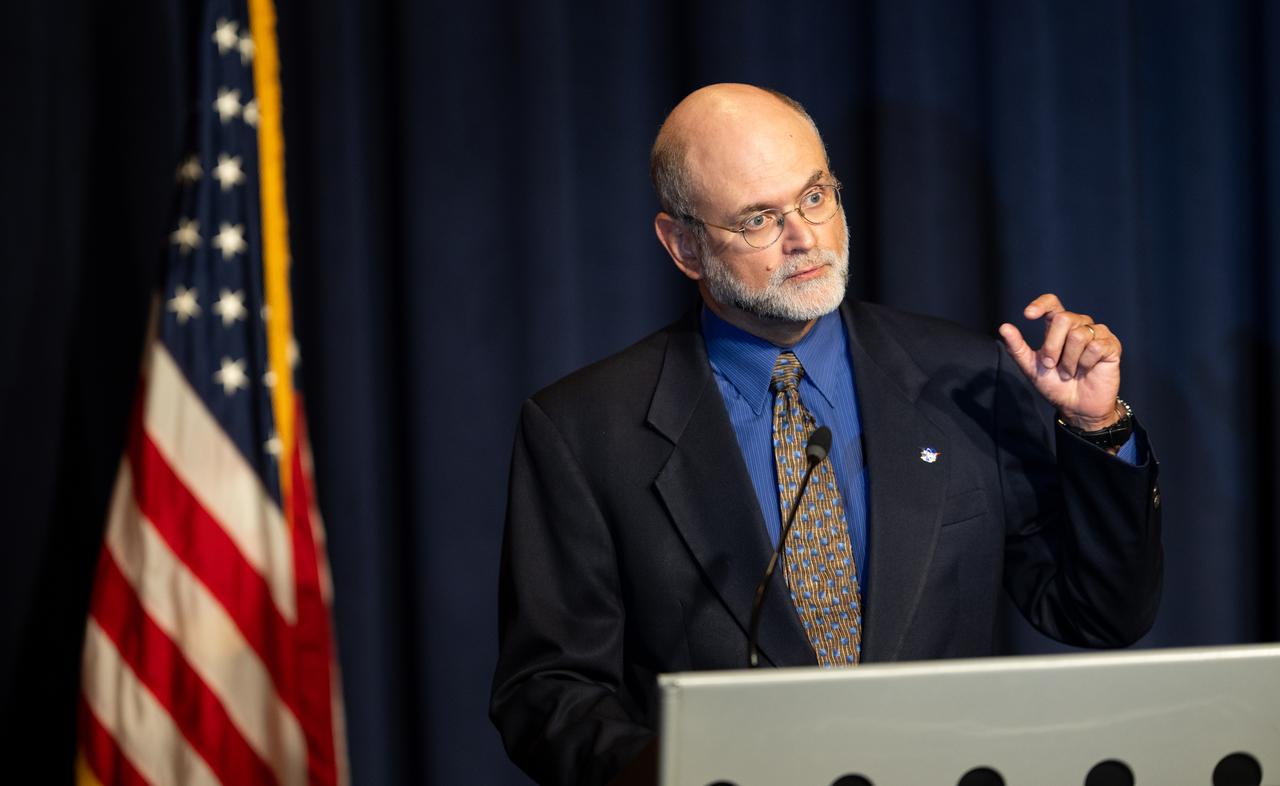
Carlos Del Castillo, chief of the Ocean Ecology Laboratory at NASA’s Goddard Space Flight Center, speaks during a news conference to discuss the latest global temperature data, Monday, Aug. 14, 2023, at the Mary W. Jackson NASA Headquarters building in Washington. Photo Credit: (NASA/Joel Kowsky)
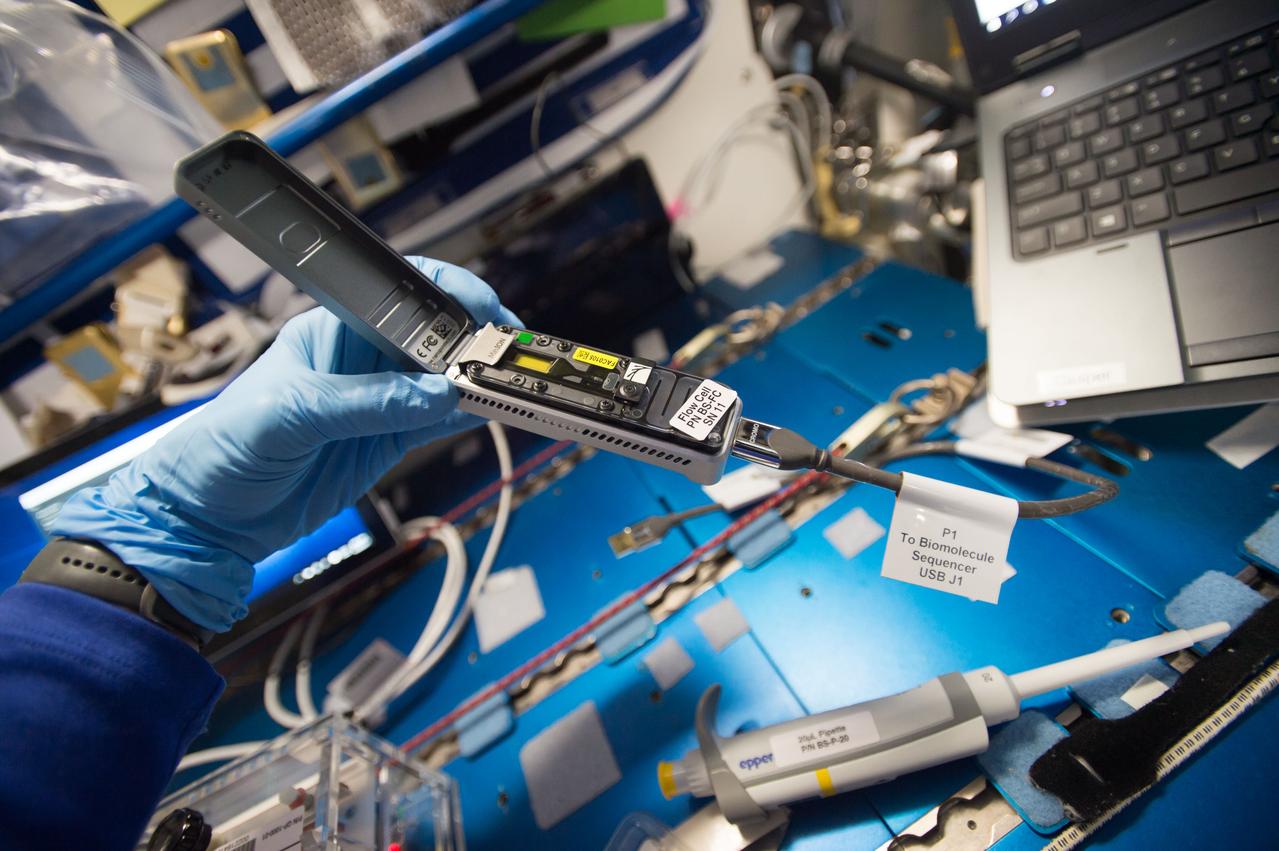
iss052e008880 (6/28/2017) --- View of Genes In Space-3 experiment in the Node 2 module. The Genes in Space-3 experiments demonstrate ways in which portable, real-time DNA sequencing can be used to assay microbial ecology, diagnose infectious diseases and monitor crew health aboard the ISS.
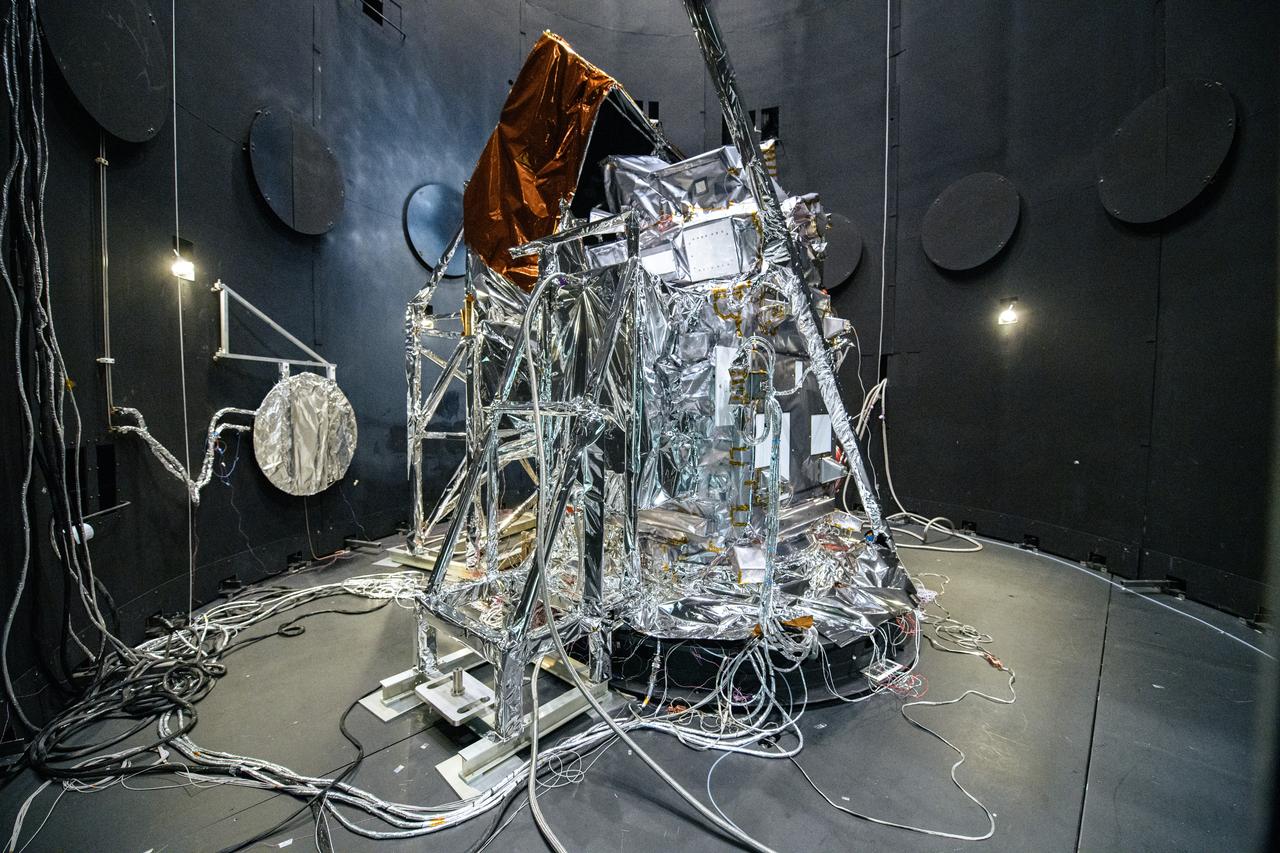
The Plankton, Aerosol, Cloud, ocean Ecosystem (PACE) Observatory inside the Space Environment Simulator (SES) thermal vacuuum chamber before thermal environmental testing at NASA's Goddard Space Flight Center in Greenbelt, Maryland on June 17th, 2023. PACE's unprecedented spectral coverage will provide the first-ever global measurements designed to identify phytoplankton community composition. The mission will make global ocean color measurements, using the Ocean Color Instrument (OCI), to provide extended data records on ocean ecology and global biogeochemistry along with polarimetry measurements, using the Spectro-polarimeter for Planetary Exploration (SPEXone) and the Hyper Angular Research Polarimeter (HARP2) to provide extended data records on clouds and aerosols. The Earth-observing satellite mission, built at Goddard Space Flight Center in Greenbelt, MD, will continue and advance observations of global ocean color, biogeochemistry, and ecology, as well as the carbon cycle, aerosols and clouds.
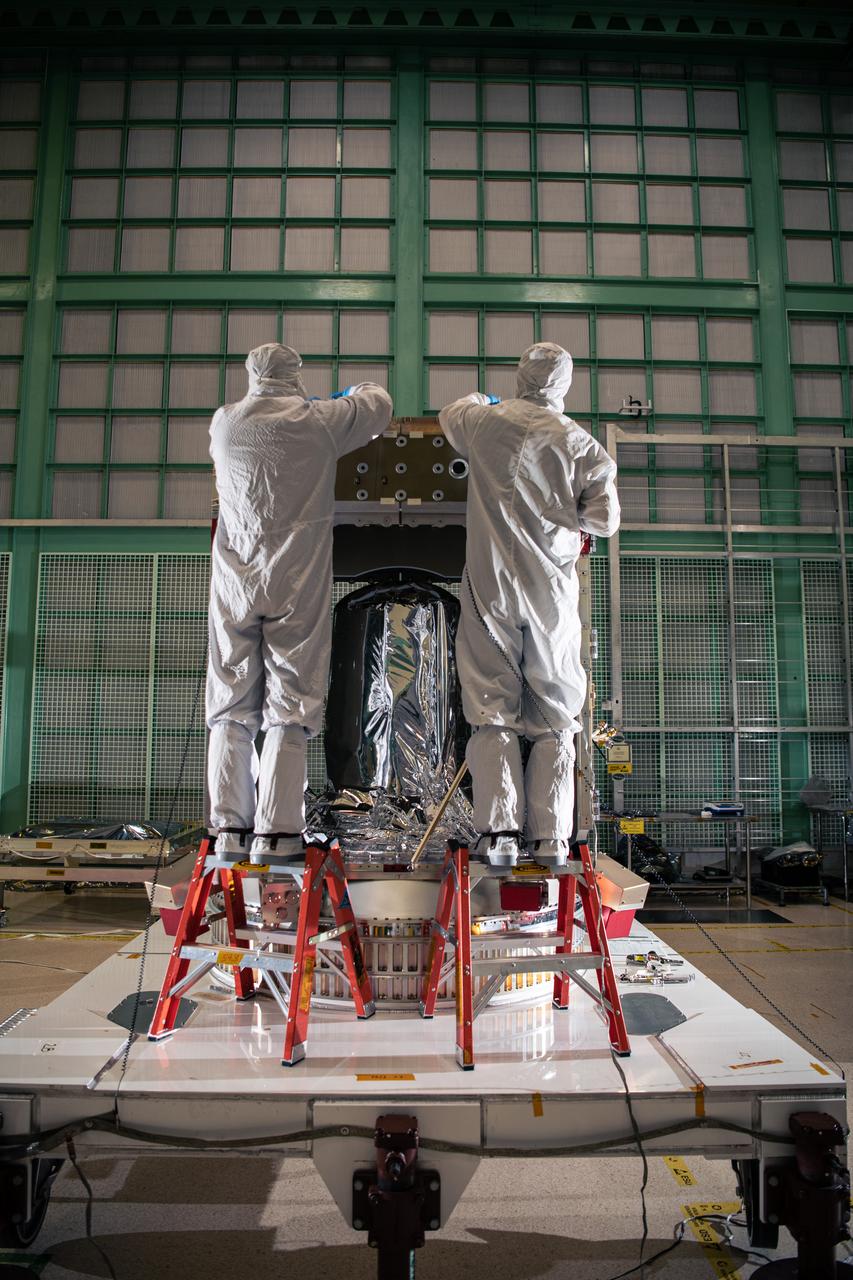
Engineering Technicians Alex Schaeffer and Eric Norris assemble the Plankton, Aerosol, Cloud, ocean Ecosystem (PACE) Spacecraft structure in the cleanroom at NASA Goddard Space Flight Center in Greenbelt, Maryland on February 24th, 2022. PACE's unprecedented spectral coverage will provide the first-ever global measurements designed to identify phytoplankton community composition. The mission will make global ocean color measurements, using the Ocean Color Instrument (OCI), to provide extended data records on ocean ecology and global biogeochemistry along with polarimetry measurements, using the Spectro-polarimeter for Planetary Exploration (SPEXone) and the Hyper Angular Research Polarimeter (HARP2) to provide extended data records on clouds and aerosols. The Earth-observing satellite mission, built at Goddard Space Flight Center in Greenbelt, MD, will continue and advance observations of global ocean color, biogeochemistry, and ecology, as well as the carbon cycle, aerosols and clouds.
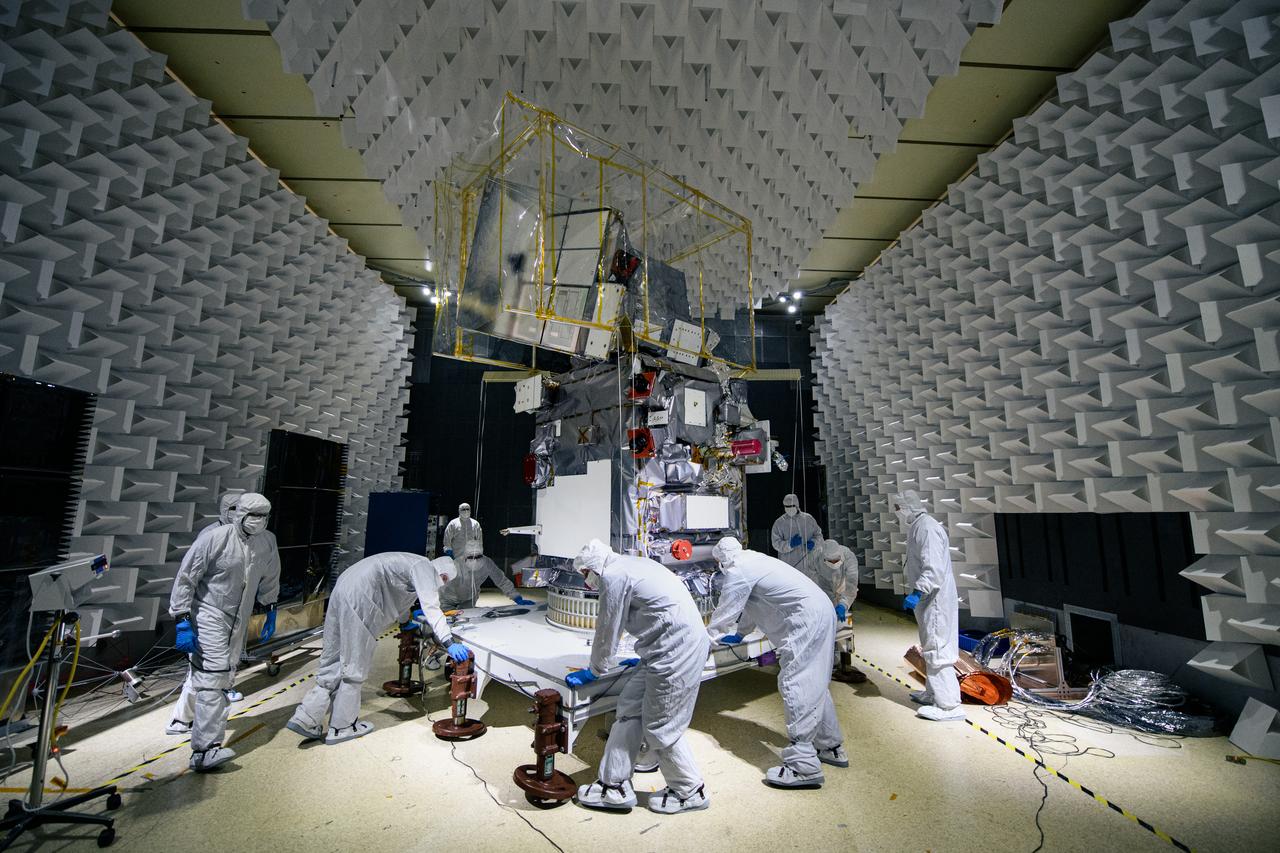
Technicians move the Plankton, Aerosol, Cloud, ocean Ecosystem (PACE) observatory inside the Electromagnetic Interference testing facility at NASA's Goddard Space Flight Center in Greenbelt, Maryland on January 30th, 2023. PACE's unprecedented spectral coverage will provide the first-ever global measurements designed to identify phytoplankton community composition. The mission will make global ocean color measurements, using the Ocean Color Instrument (OCI), to provide extended data records on ocean ecology and global biogeochemistry along with polarimetry measurements, using the Spectro-polarimeter for Planetary Exploration (SPEXone) and the Hyper Angular Research Polarimeter (HARP2) to provide extended data records on clouds and aerosols. The Earth-observing satellite mission, built at Goddard Space Flight Center in Greenbelt, MD, will continue and advance observations of global ocean color, biogeochemistry, and ecology, as well as the carbon cycle, aerosols and clouds.
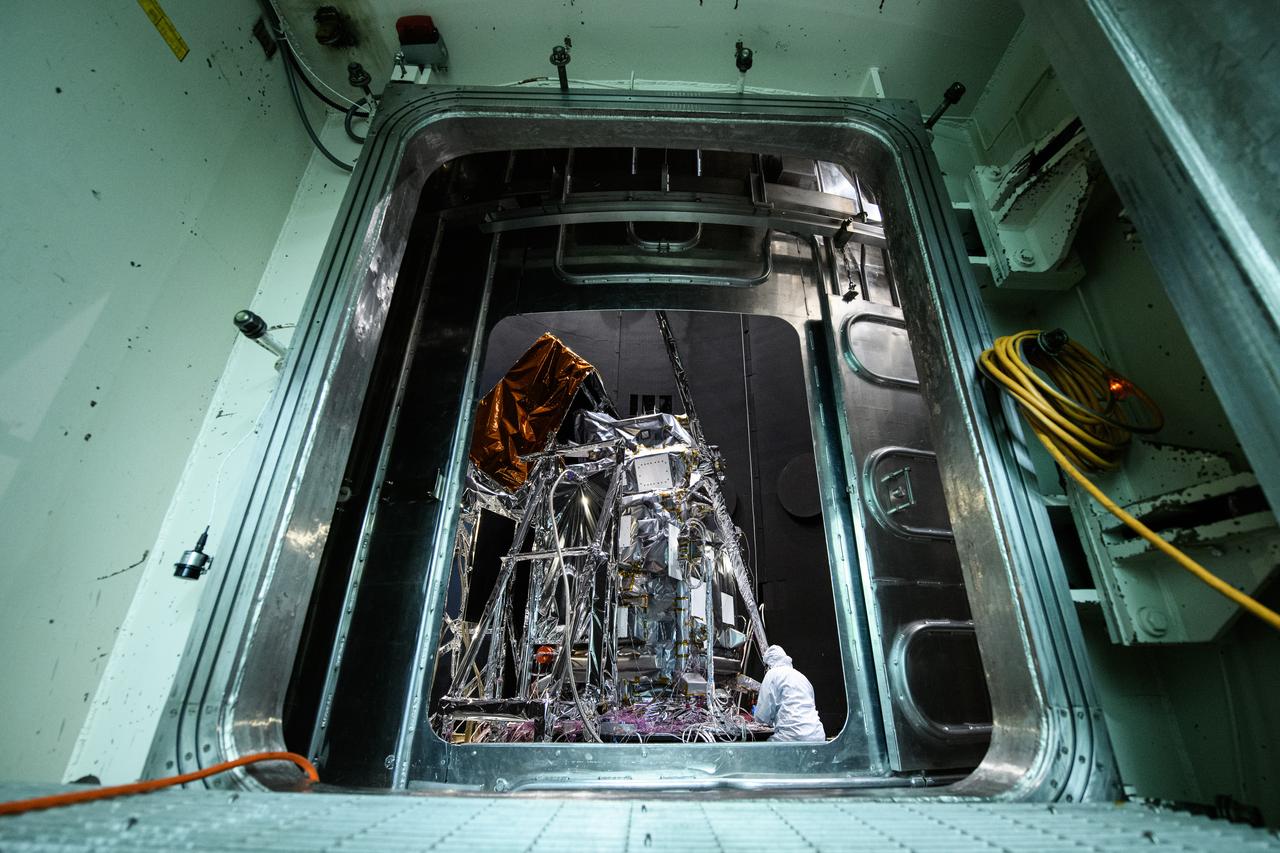
The Plankton, Aerosol, Cloud, ocean Ecosystem (PACE) Observatory inside the Space Environment Simulator (SES) thermal vacuuum chamber before thermal environmental testing at NASA's Goddard Space Flight Center in Greenbelt, Maryland on June 16th, 2023. PACE's unprecedented spectral coverage will provide the first-ever global measurements designed to identify phytoplankton community composition. The mission will make global ocean color measurements, using the Ocean Color Instrument (OCI), to provide extended data records on ocean ecology and global biogeochemistry along with polarimetry measurements, using the Spectro-polarimeter for Planetary Exploration (SPEXone) and the Hyper Angular Research Polarimeter (HARP2) to provide extended data records on clouds and aerosols. The Earth-observing satellite mission, built at Goddard Space Flight Center in Greenbelt, MD, will continue and advance observations of global ocean color, biogeochemistry, and ecology, as well as the carbon cycle, aerosols and clouds.
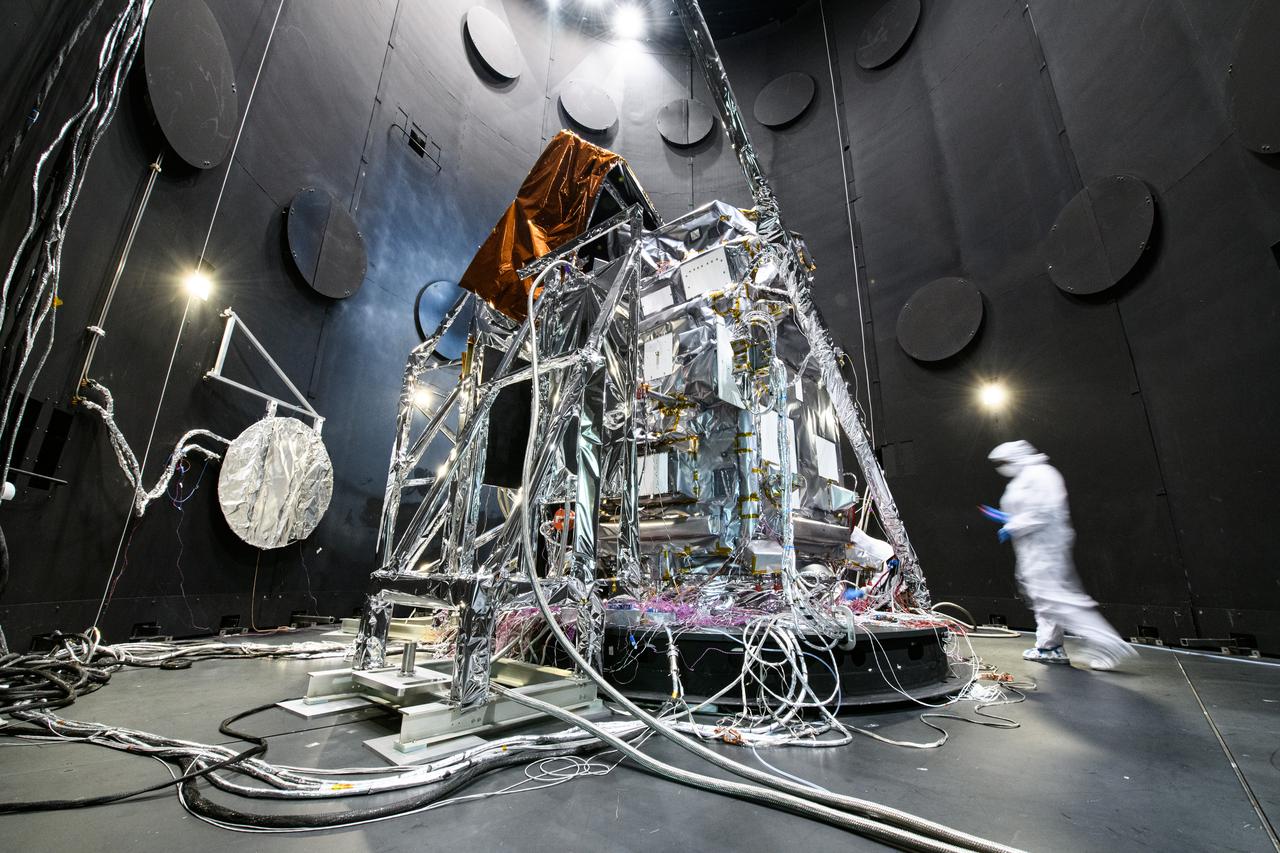
The Plankton, Aerosol, Cloud, ocean Ecosystem (PACE) Observatory inside the Space Environment Simulator (SES) thermal vacuuum chamber before thermal environmental testing at NASA's Goddard Space Flight Center in Greenbelt, Maryland on June 16th, 2023. PACE's unprecedented spectral coverage will provide the first-ever global measurements designed to identify phytoplankton community composition. The mission will make global ocean color measurements, using the Ocean Color Instrument (OCI), to provide extended data records on ocean ecology and global biogeochemistry along with polarimetry measurements, using the Spectro-polarimeter for Planetary Exploration (SPEXone) and the Hyper Angular Research Polarimeter (HARP2) to provide extended data records on clouds and aerosols. The Earth-observing satellite mission, built at Goddard Space Flight Center in Greenbelt, MD, will continue and advance observations of global ocean color, biogeochemistry, and ecology, as well as the carbon cycle, aerosols and clouds.
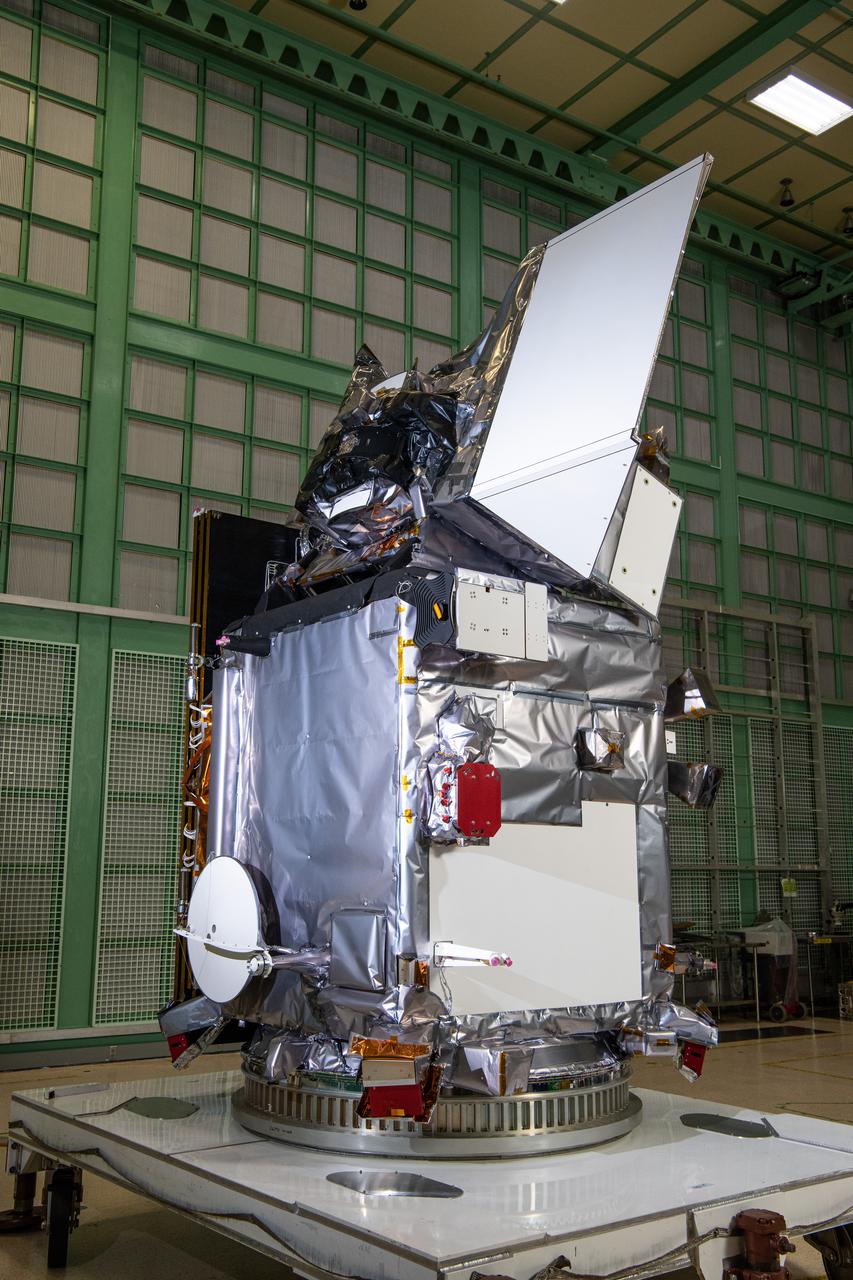
The Plankton, Aerosol, Cloud, ocean Ecosystem (PACE) in the clean room at NASA's Goddard Space Flight Center in Greenbelt, Maryland on October 31st, 2023. PACE's unprecedented spectral coverage will provide the first-ever global measurements designed to identify phytoplankton community composition. The mission will make global ocean color measurements, using the Ocean Color Instrument (OCI), to provide extended data records on ocean ecology and global biogeochemistry along with polarimetry measurements, using the Spectro-polarimeter for Planetary Exploration (SPEXone) and the Hyper Angular Research Polarimeter (HARP2) to provide extended data records on clouds and aerosols. The Earth-observing satellite mission, built at Goddard Space Flight Center in Greenbelt, MD, will continue and advance observations of global ocean color, biogeochemistry, and ecology, as well as the carbon cycle, aerosols and clouds.
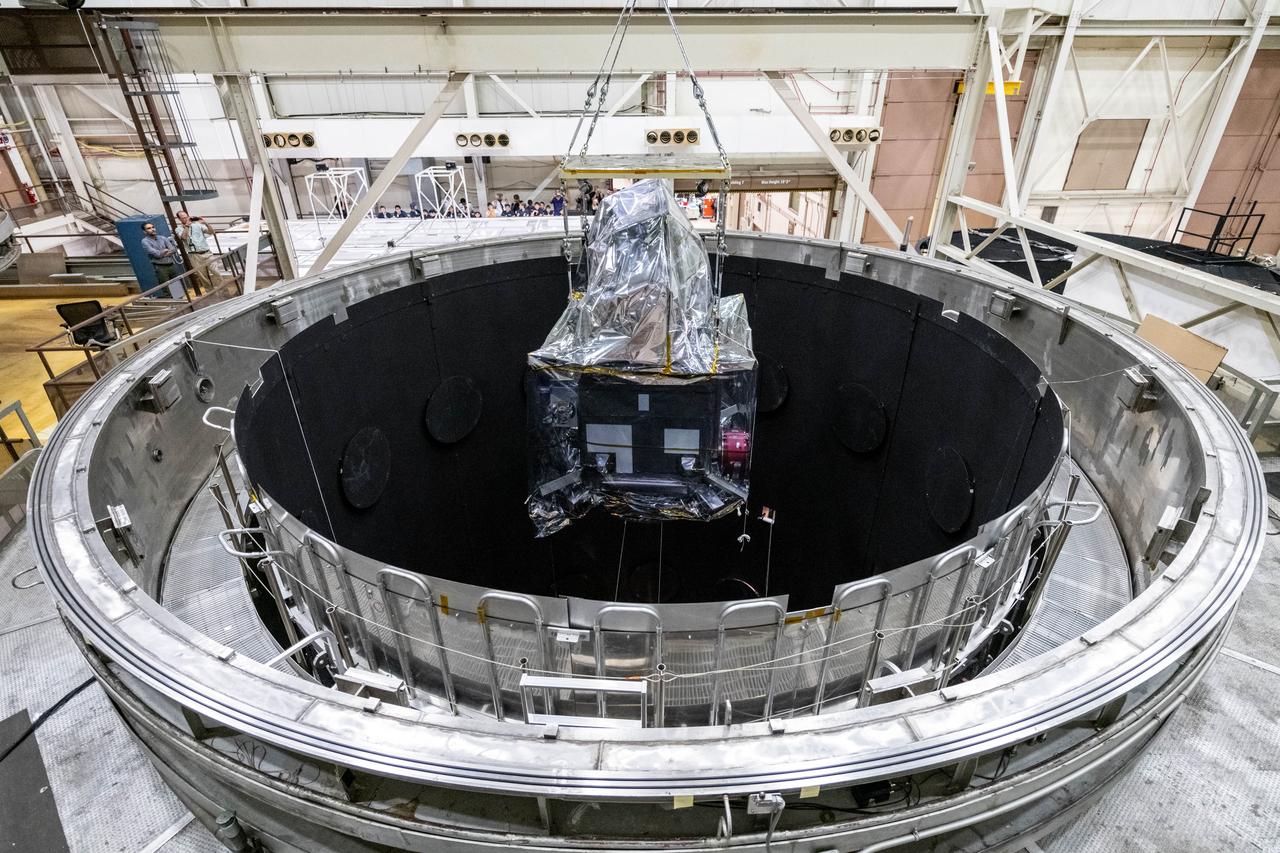
The Plankton, Aerosol, Cloud, ocean Ecosystem (PACE) Observatory is lowered into the Space Environment Simulator (SES) thermal vacuuum chamber at NASA's Goddard Space Flight Center in Greenbelt, Maryland on June 1st, 2023. PACE's unprecedented spectral coverage will provide the first-ever global measurements designed to identify phytoplankton community composition. The mission will make global ocean color measurements, using the Ocean Color Instrument (OCI), to provide extended data records on ocean ecology and global biogeochemistry along with polarimetry measurements, using the Spectro-polarimeter for Planetary Exploration (SPEXone) and the Hyper Angular Research Polarimeter (HARP2) to provide extended data records on clouds and aerosols. The Earth-observing satellite mission, built at Goddard Space Flight Center in Greenbelt, MD, will continue and advance observations of global ocean color, biogeochemistry, and ecology, as well as the carbon cycle, aerosols and clouds.
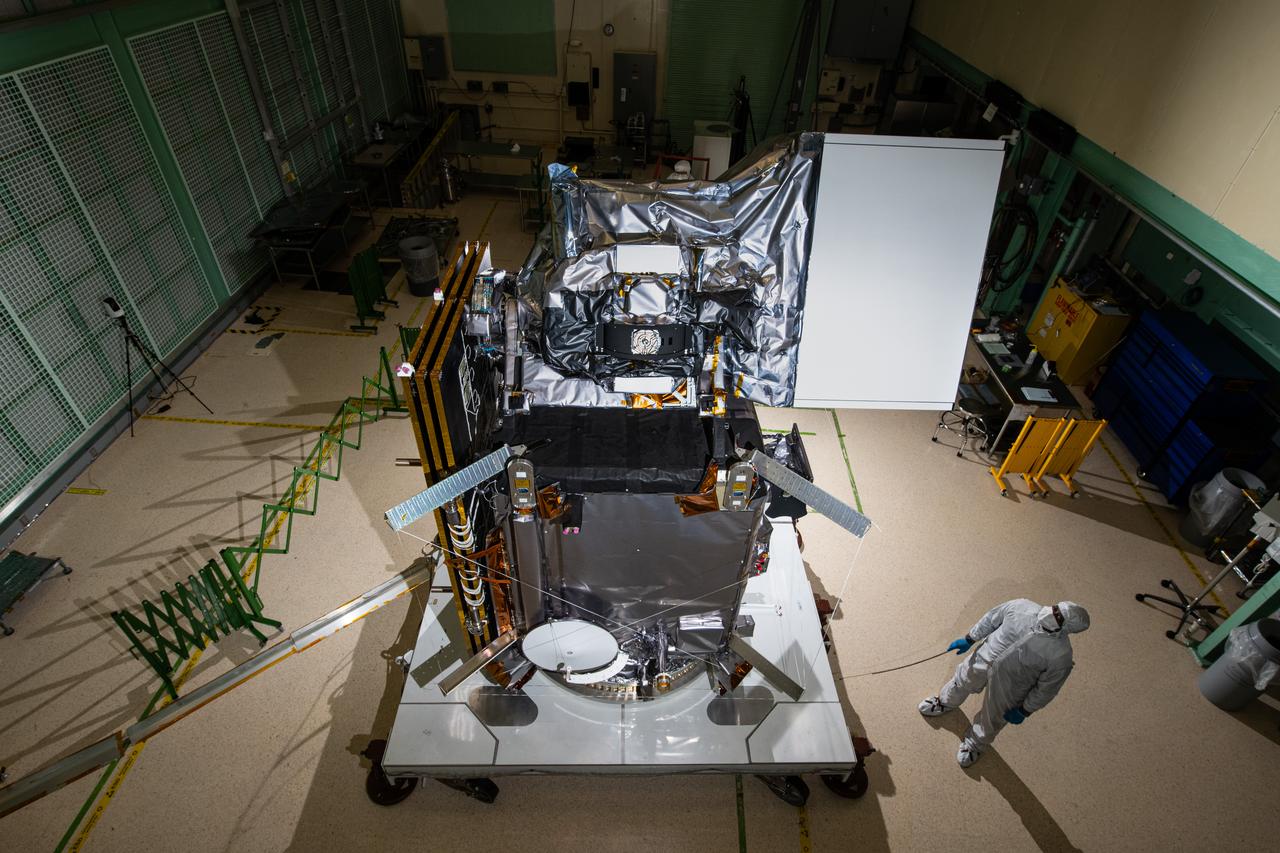
Quality Engineer Larry Morgan looks at the Plankton, Aerosol, Cloud, ocean Ecosystem (PACE) observatory in the cleanroom at NASA's Goddard Space Flight Center in Greenbelt, Maryland on November 2nd, 2023. PACE's unprecedented spectral coverage will provide the first-ever global measurements designed to identify phytoplankton community composition. The mission will make global ocean color measurements, using the Ocean Color Instrument (OCI), to provide extended data records on ocean ecology and global biogeochemistry along with polarimetry measurements, using the Spectro-polarimeter for Planetary Exploration (SPEXone) and the Hyper Angular Research Polarimeter (HARP2) to provide extended data records on clouds and aerosols. The Earth-observing satellite mission, built at Goddard Space Flight Center in Greenbelt, MD, will continue and advance observations of global ocean color, biogeochemistry, and ecology, as well as the carbon cycle, aerosols and clouds.
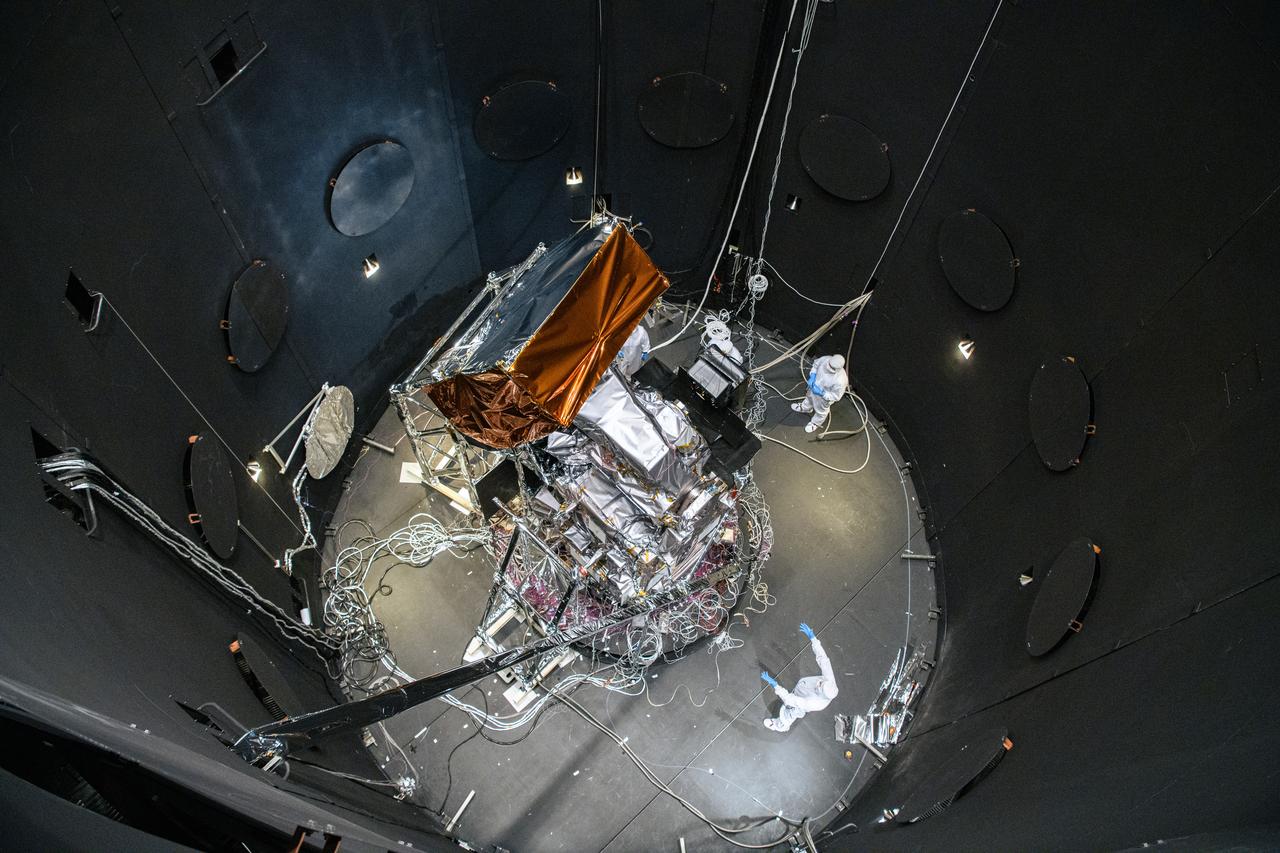
The Plankton, Aerosol, Cloud, ocean Ecosystem (PACE) Observatory inside the Space Environment Simulator (SES) thermal vacuuum chamber before thermal environmental testing at NASA's Goddard Space Flight Center in Greenbelt, Maryland on June 16th, 2023. PACE's unprecedented spectral coverage will provide the first-ever global measurements designed to identify phytoplankton community composition. The mission will make global ocean color measurements, using the Ocean Color Instrument (OCI), to provide extended data records on ocean ecology and global biogeochemistry along with polarimetry measurements, using the Spectro-polarimeter for Planetary Exploration (SPEXone) and the Hyper Angular Research Polarimeter (HARP2) to provide extended data records on clouds and aerosols. The Earth-observing satellite mission, built at Goddard Space Flight Center in Greenbelt, MD, will continue and advance observations of global ocean color, biogeochemistry, and ecology, as well as the carbon cycle, aerosols and clouds.
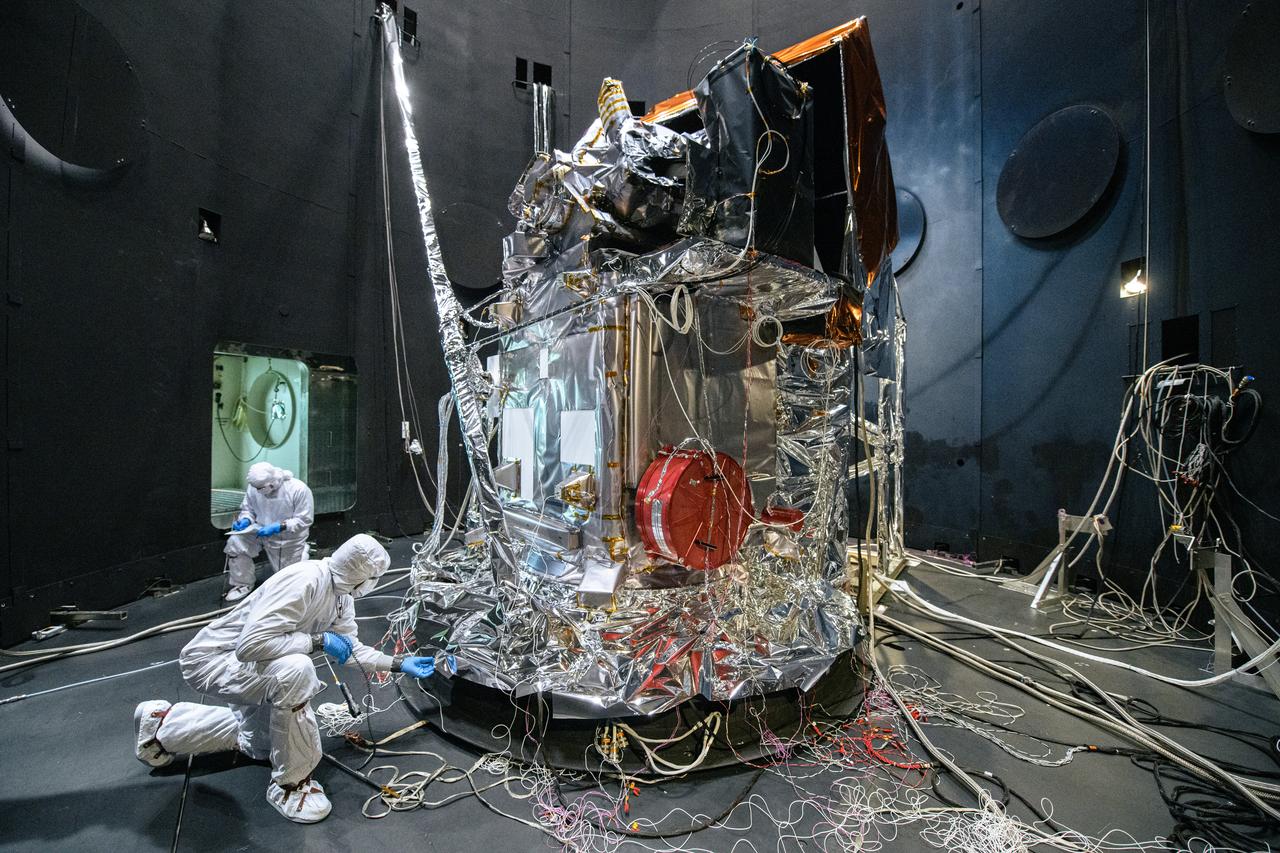
The Plankton, Aerosol, Cloud, ocean Ecosystem (PACE) Observatory inside the Space Environment Simulator (SES) thermal vacuuum chamber before thermal environmental testing at NASA's Goddard Space Flight Center in Greenbelt, Maryland on June 17th, 2023. PACE's unprecedented spectral coverage will provide the first-ever global measurements designed to identify phytoplankton community composition. The mission will make global ocean color measurements, using the Ocean Color Instrument (OCI), to provide extended data records on ocean ecology and global biogeochemistry along with polarimetry measurements, using the Spectro-polarimeter for Planetary Exploration (SPEXone) and the Hyper Angular Research Polarimeter (HARP2) to provide extended data records on clouds and aerosols. The Earth-observing satellite mission, built at Goddard Space Flight Center in Greenbelt, MD, will continue and advance observations of global ocean color, biogeochemistry, and ecology, as well as the carbon cycle, aerosols and clouds.
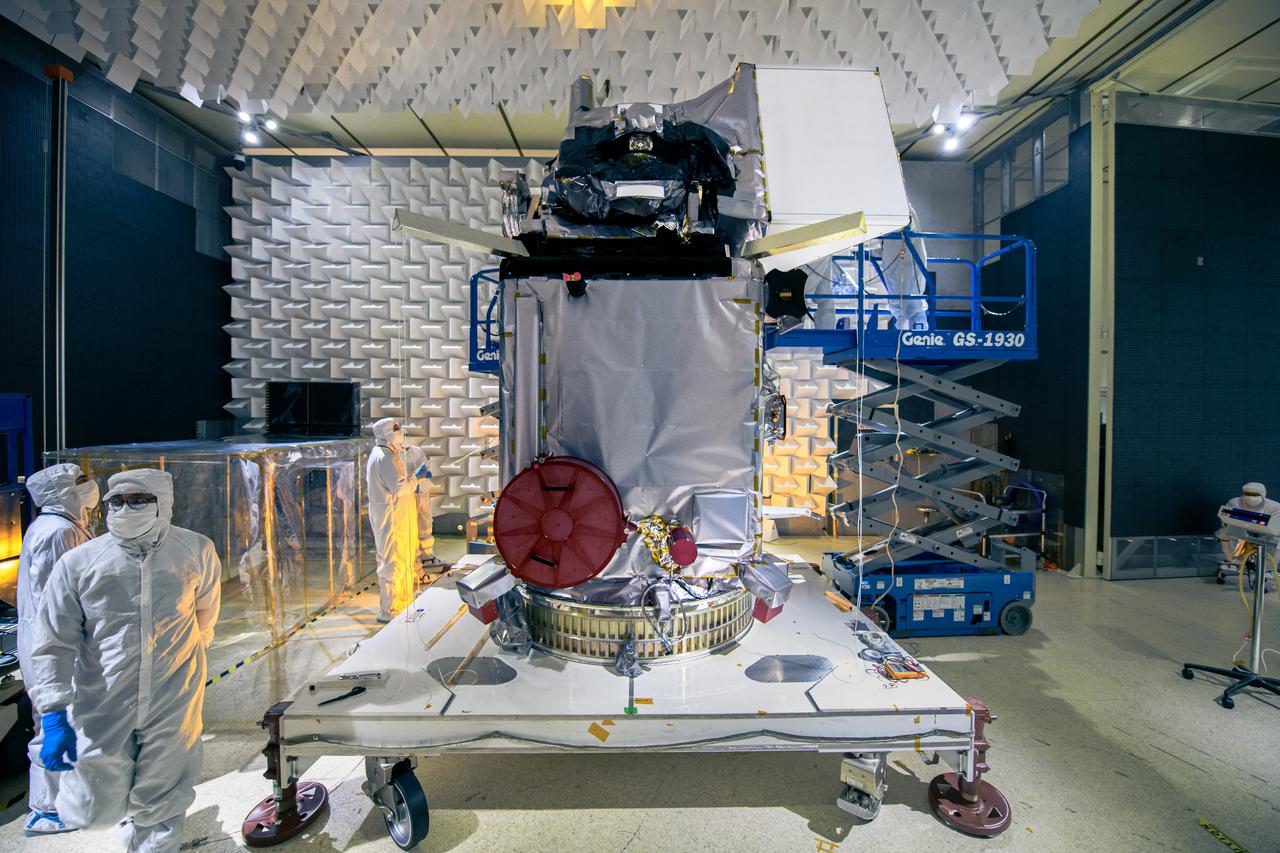
The Plankton, Aerosol, Cloud, ocean Ecosystem (PACE) observatory inside the Electromagnetic Interference testing facility at NASA's Goddard Space Flight Center in Greenbelt, Maryland on January 30th, 2023. PACE's unprecedented spectral coverage will provide the first-ever global measurements designed to identify phytoplankton community composition. The mission will make global ocean color measurements, using the Ocean Color Instrument (OCI), to provide extended data records on ocean ecology and global biogeochemistry along with polarimetry measurements, using the Spectro-polarimeter for Planetary Exploration (SPEXone) and the Hyper Angular Research Polarimeter (HARP2) to provide extended data records on clouds and aerosols. The Earth-observing satellite mission, built at Goddard Space Flight Center in Greenbelt, MD, will continue and advance observations of global ocean color, biogeochemistry, and ecology, as well as the carbon cycle, aerosols and clouds.
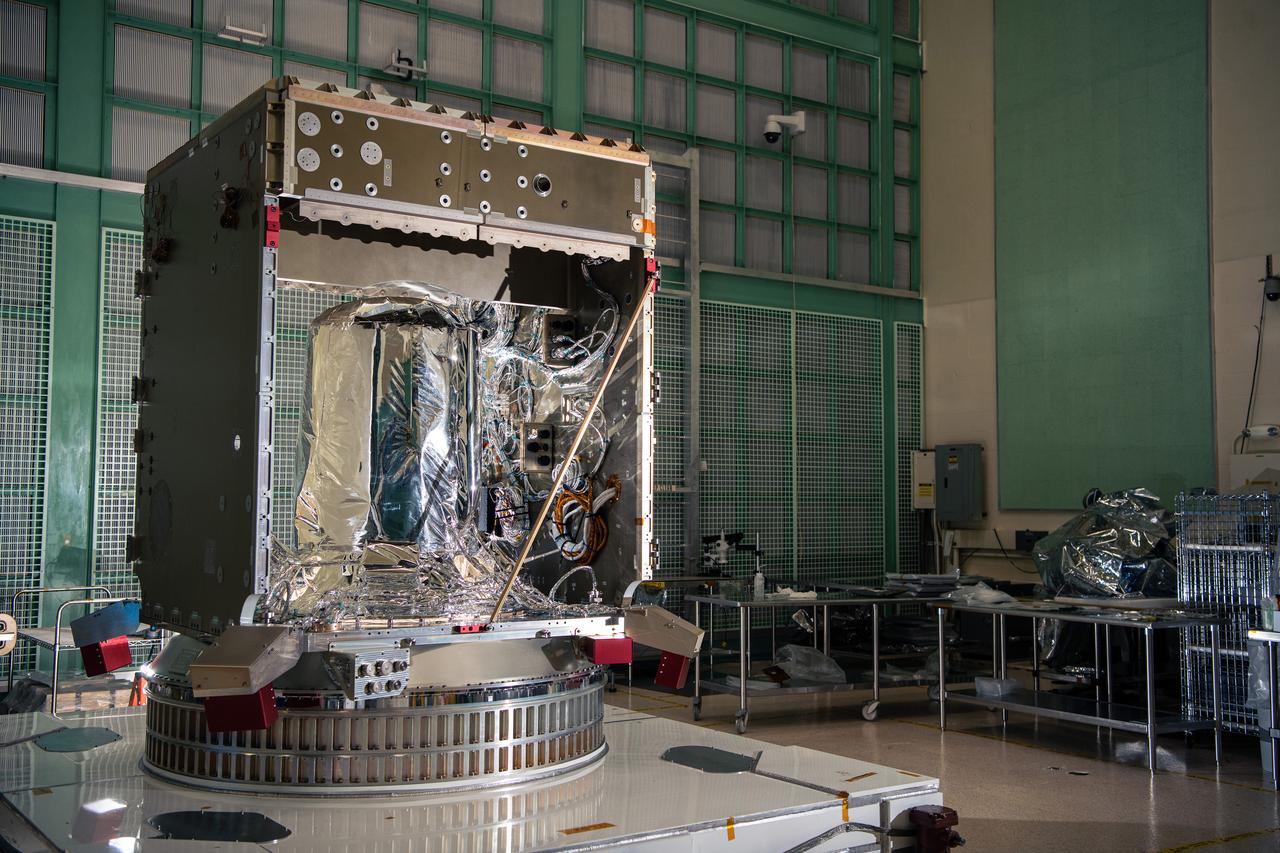
The flight propellant tank is visible inside the partially assembled Plankton, Aerosol, Cloud, ocean Ecosystem (PACE) Spacecraft structure in the cleanroom at NASA Goddard Space Flight Center in Greenbelt, Maryland on February 24th, 2022. PACE's unprecedented spectral coverage will provide the first-ever global measurements designed to identify phytoplankton community composition. The mission will make global ocean color measurements, using the Ocean Color Instrument (OCI), to provide extended data records on ocean ecology and global biogeochemistry along with polarimetry measurements, using the Spectro-polarimeter for Planetary Exploration (SPEXone) and the Hyper Angular Research Polarimeter (HARP2) to provide extended data records on clouds and aerosols. The Earth-observing satellite mission, built at Goddard Space Flight Center in Greenbelt, MD, will continue and advance observations of global ocean color, biogeochemistry, and ecology, as well as the carbon cycle, aerosols and clouds.
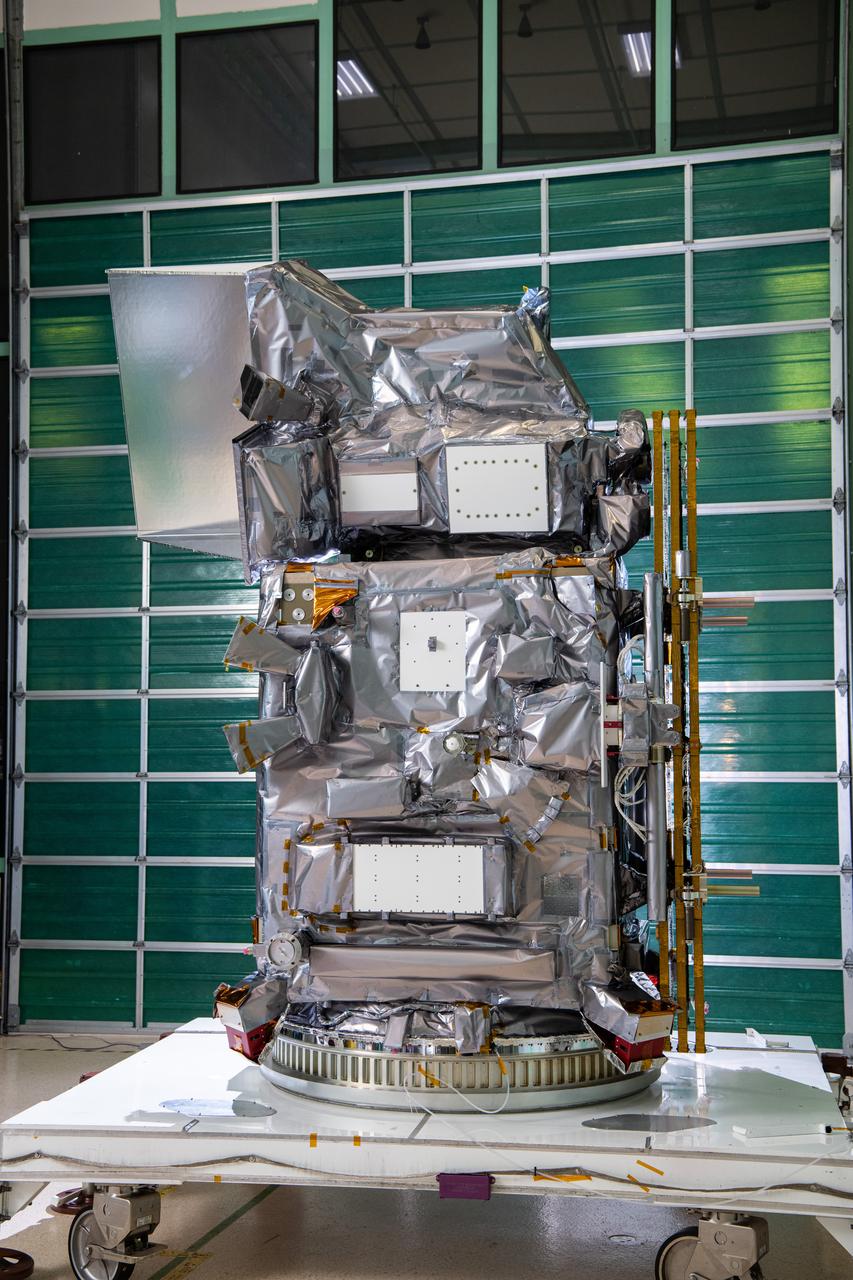
The Plankton, Aerosol, Cloud, ocean Ecosystem (PACE) in the clean room at NASA's Goddard Space Flight Center in Greenbelt, Maryland on October 31st, 2023. PACE's unprecedented spectral coverage will provide the first-ever global measurements designed to identify phytoplankton community composition. The mission will make global ocean color measurements, using the Ocean Color Instrument (OCI), to provide extended data records on ocean ecology and global biogeochemistry along with polarimetry measurements, using the Spectro-polarimeter for Planetary Exploration (SPEXone) and the Hyper Angular Research Polarimeter (HARP2) to provide extended data records on clouds and aerosols. The Earth-observing satellite mission, built at Goddard Space Flight Center in Greenbelt, MD, will continue and advance observations of global ocean color, biogeochemistry, and ecology, as well as the carbon cycle, aerosols and clouds.
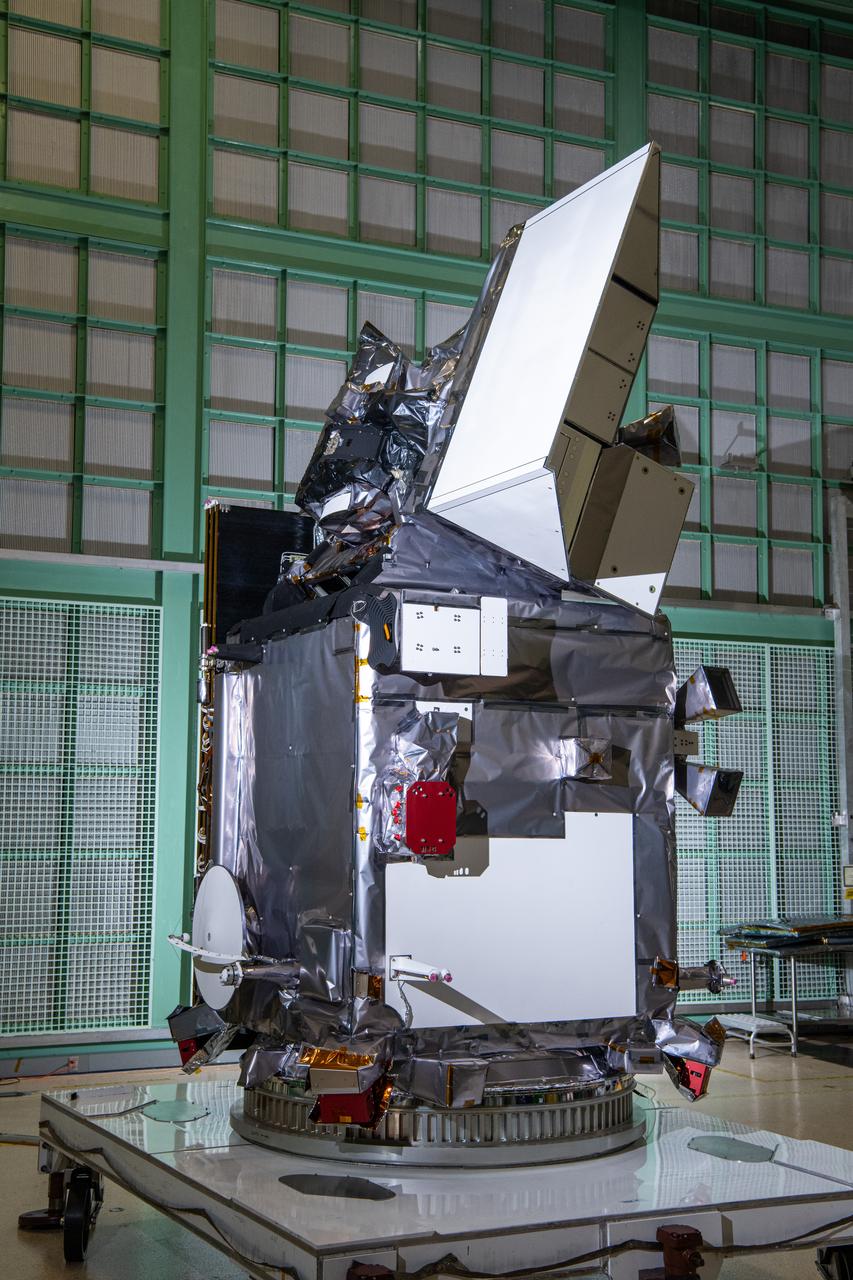
The Plankton, Aerosol, Cloud, ocean Ecosystem (PACE) in the clean room at NASA's Goddard Space Flight Center in Greenbelt, Maryland on October 31st, 2023. PACE's unprecedented spectral coverage will provide the first-ever global measurements designed to identify phytoplankton community composition. The mission will make global ocean color measurements, using the Ocean Color Instrument (OCI), to provide extended data records on ocean ecology and global biogeochemistry along with polarimetry measurements, using the Spectro-polarimeter for Planetary Exploration (SPEXone) and the Hyper Angular Research Polarimeter (HARP2) to provide extended data records on clouds and aerosols. The Earth-observing satellite mission, built at Goddard Space Flight Center in Greenbelt, MD, will continue and advance observations of global ocean color, biogeochemistry, and ecology, as well as the carbon cycle, aerosols and clouds.
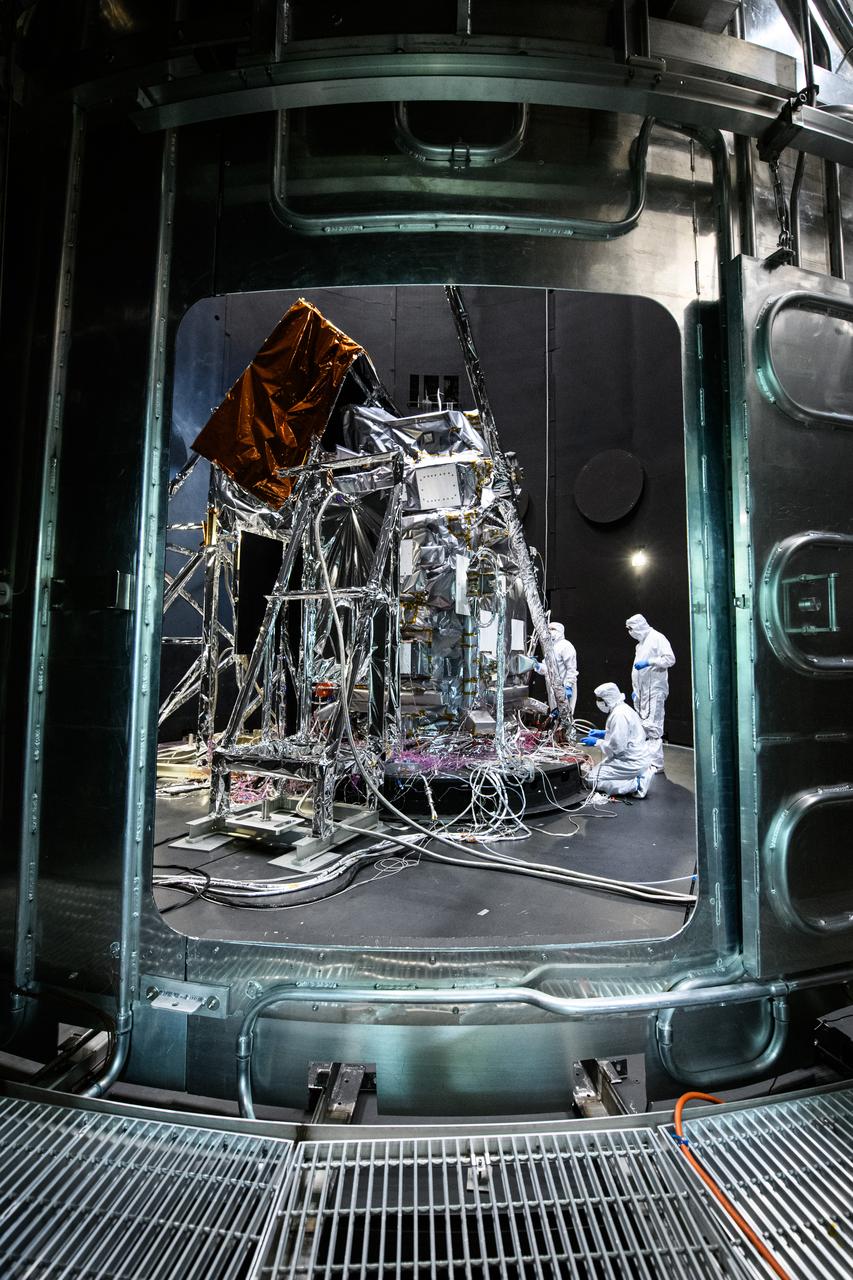
The Plankton, Aerosol, Cloud, ocean Ecosystem (PACE) Observatory inside the Space Environment Simulator (SES) thermal vacuuum chamber before thermal environmental testing at NASA's Goddard Space Flight Center in Greenbelt, Maryland on June 16th, 2023. PACE's unprecedented spectral coverage will provide the first-ever global measurements designed to identify phytoplankton community composition. The mission will make global ocean color measurements, using the Ocean Color Instrument (OCI), to provide extended data records on ocean ecology and global biogeochemistry along with polarimetry measurements, using the Spectro-polarimeter for Planetary Exploration (SPEXone) and the Hyper Angular Research Polarimeter (HARP2) to provide extended data records on clouds and aerosols. The Earth-observing satellite mission, built at Goddard Space Flight Center in Greenbelt, MD, will continue and advance observations of global ocean color, biogeochemistry, and ecology, as well as the carbon cycle, aerosols and clouds.

The Plankton, Aerosol, Cloud, ocean Ecosystem (PACE) spacecraft bus with mass mockups installed is lifted before structural proof testing at NASA's Goddard Space Flight Center in Greenbelt, Maryland on May 26th, 2021. PACE's unprecedented spectral coverage will provide the first-ever global measurements designed to identify phytoplankton community composition. The mission will make global ocean color measurements, using the Ocean Color Instrument (OCI), to provide extended data records on ocean ecology and global biogeochemistry along with polarimetry measurements, using the Spectro-polarimeter for Planetary Exploration (SPEXone) and the Hyper Angular Research Polarimeter (HARP2) to provide extended data records on clouds and aerosols. The Earth-observing satellite mission, built at Goddard Space Flight Center in Greenbelt, MD, will continue and advance observations of global ocean color, biogeochemistry, and ecology, as well as the carbon cycle, aerosols and clouds.
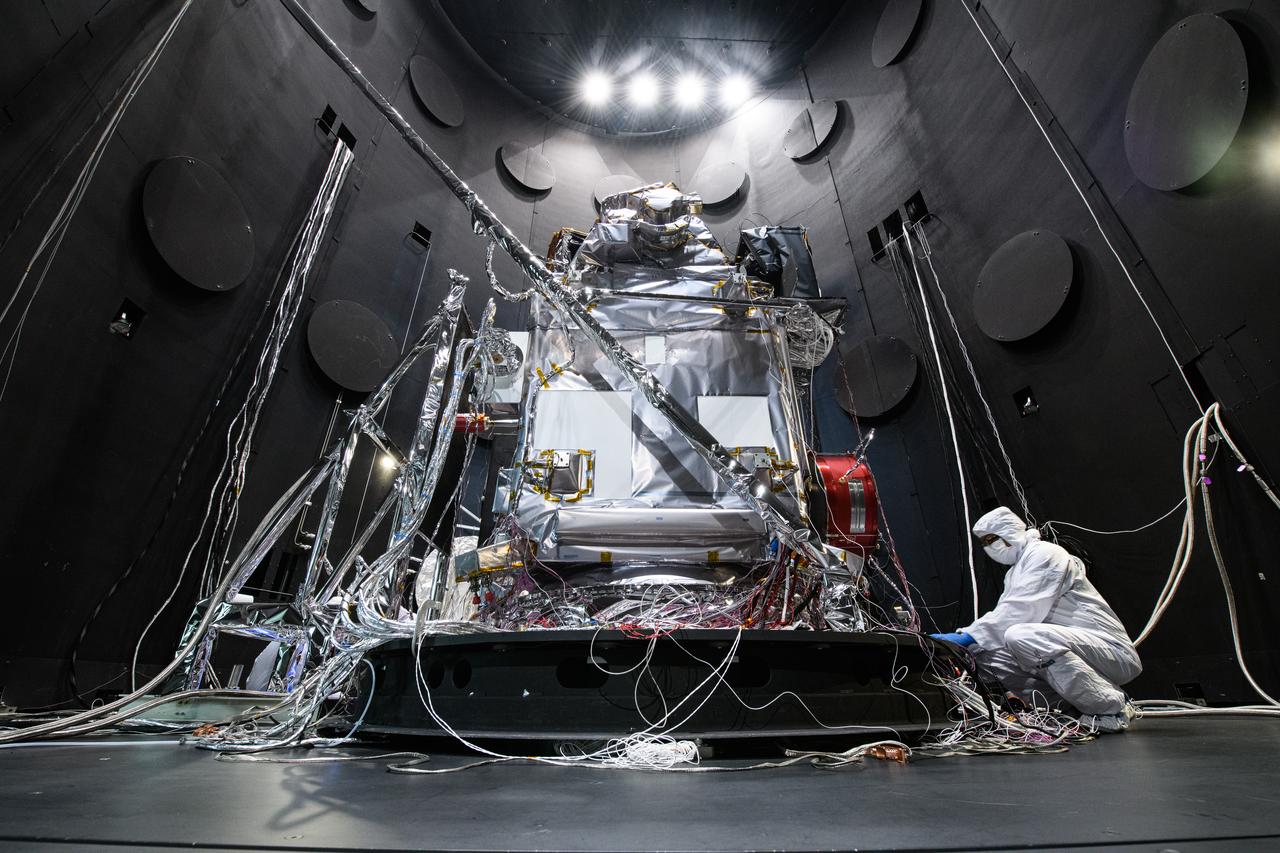
The Plankton, Aerosol, Cloud, ocean Ecosystem (PACE) Observatory inside the Space Environment Simulator (SES) thermal vacuuum chamber before thermal environmental testing at NASA's Goddard Space Flight Center in Greenbelt, Maryland on June 16th, 2023. PACE's unprecedented spectral coverage will provide the first-ever global measurements designed to identify phytoplankton community composition. The mission will make global ocean color measurements, using the Ocean Color Instrument (OCI), to provide extended data records on ocean ecology and global biogeochemistry along with polarimetry measurements, using the Spectro-polarimeter for Planetary Exploration (SPEXone) and the Hyper Angular Research Polarimeter (HARP2) to provide extended data records on clouds and aerosols. The Earth-observing satellite mission, built at Goddard Space Flight Center in Greenbelt, MD, will continue and advance observations of global ocean color, biogeochemistry, and ecology, as well as the carbon cycle, aerosols and clouds.
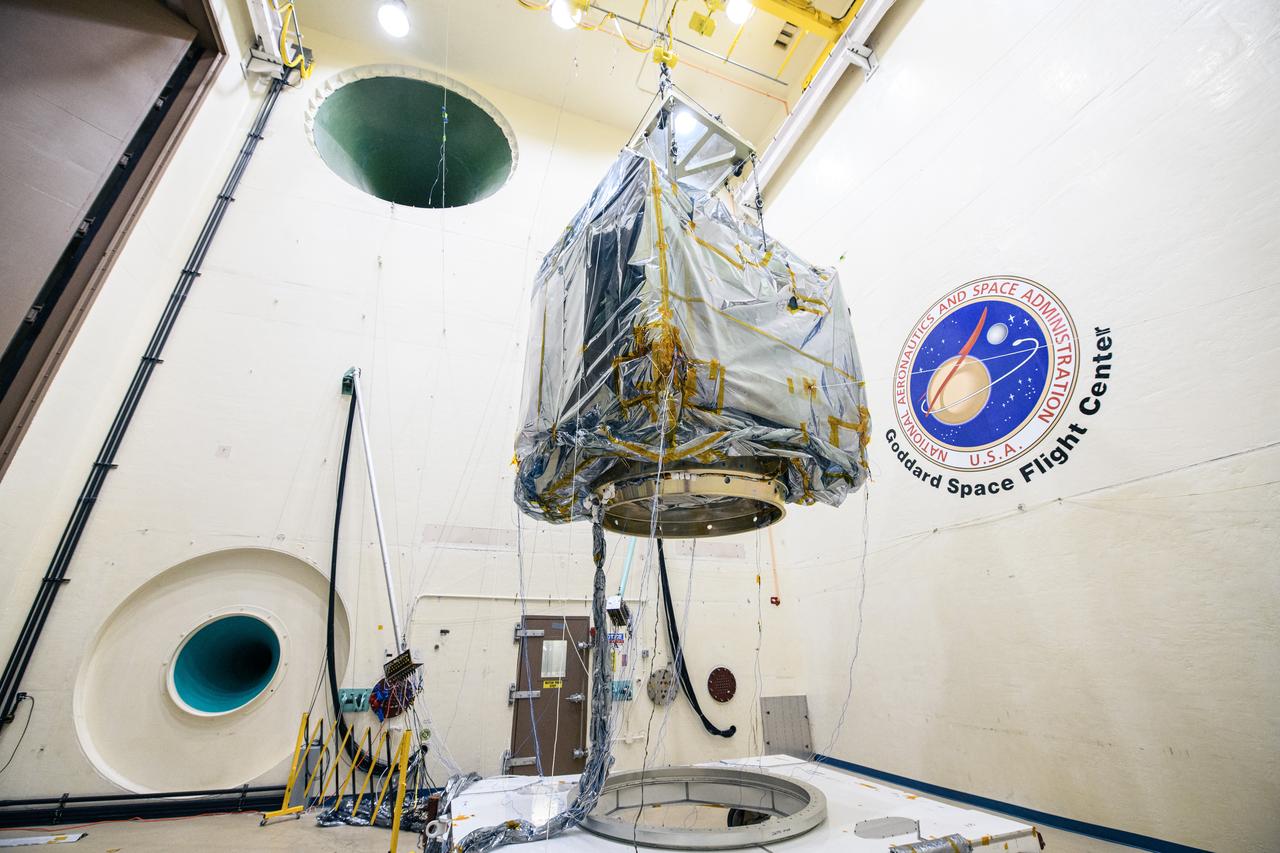
The Plankton, Aerosol, Cloud, ocean Ecosystem (PACE) observatory suspended for acoustic testing in the acoustic test facility at NASA's Goddard Space Flight Center in Greenbelt, Maryland on April 17th, 2023. PACE's unprecedented spectral coverage will provide the first-ever global measurements designed to identify phytoplankton community composition. The mission will make global ocean color measurements, using the Ocean Color Instrument (OCI), to provide extended data records on ocean ecology and global biogeochemistry along with polarimetry measurements, using the Spectro-polarimeter for Planetary Exploration (SPEXone) and the Hyper Angular Research Polarimeter (HARP2) to provide extended data records on clouds and aerosols. The Earth-observing satellite mission, built at Goddard Space Flight Center in Greenbelt, MD, will continue and advance observations of global ocean color, biogeochemistry, and ecology, as well as the carbon cycle, aerosols and clouds.

The Plankton, Aerosol, Cloud, ocean Ecosystem (PACE) in the clean room at NASA's Goddard Space Flight Center in Greenbelt, Maryland on October 31st, 2023. PACE's unprecedented spectral coverage will provide the first-ever global measurements designed to identify phytoplankton community composition. The mission will make global ocean color measurements, using the Ocean Color Instrument (OCI), to provide extended data records on ocean ecology and global biogeochemistry along with polarimetry measurements, using the Spectro-polarimeter for Planetary Exploration (SPEXone) and the Hyper Angular Research Polarimeter (HARP2) to provide extended data records on clouds and aerosols. The Earth-observing satellite mission, built at Goddard Space Flight Center in Greenbelt, MD, will continue and advance observations of global ocean color, biogeochemistry, and ecology, as well as the carbon cycle, aerosols and clouds.
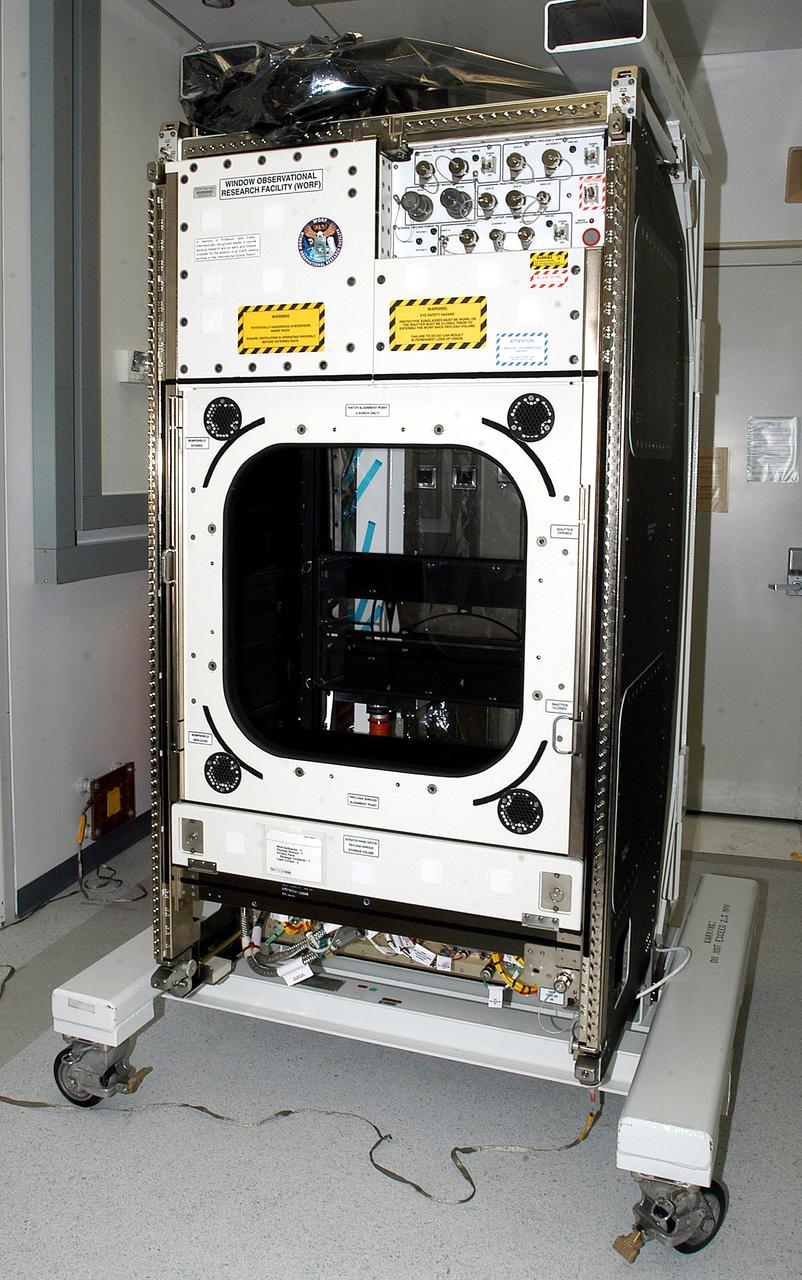
KENNEDY SPACE CENTER, FLA. - The Window Observational Research Facility (WORF), seen in the Space Station Processing Facility, was designed and built by the Boeing Co. at NASA’s Marshall Space Flight Center in Huntsville, Ala. WORF will be delivered to the International Space Station and placed in the rack position in front of the Destiny lab window, providing locations for attaching cameras, multi-spectral scanners and other instruments. WORF will support a variety of scientific and commercial experiments in areas of Earth systems and processes, global ecological changes in Earth’s biosphere, lithosphere, hydrosphere and climate system, Earth resources, natural hazards, and education. After installation, it will become a permanent focal point for Earth Science research aboard the space station.
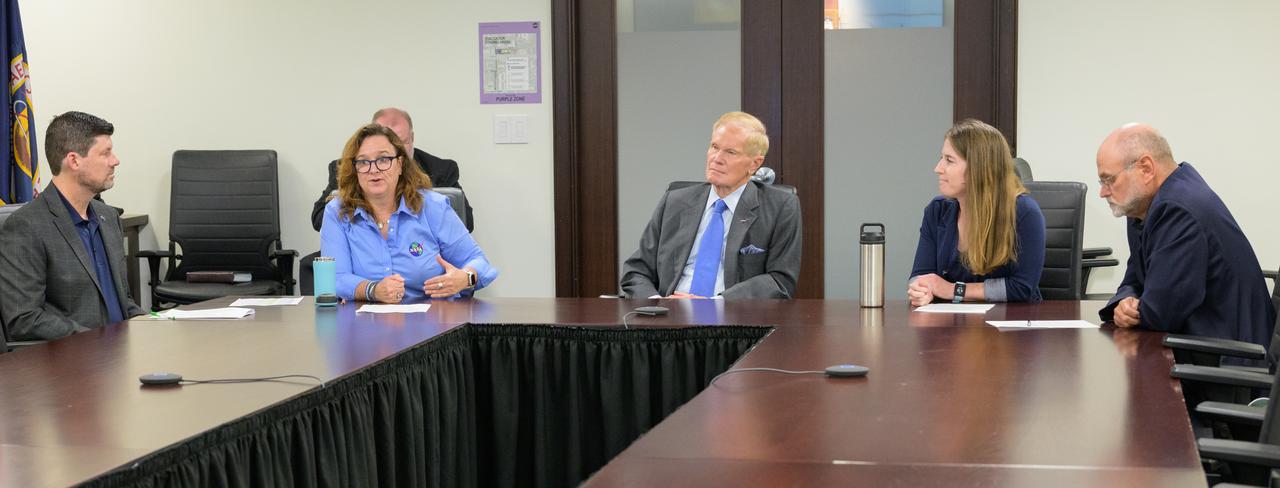
NASA Earth Action Associate Director Tom Wagner, left, NASA Earth Science Division Director Karen St. Germain, NASA Administrator Bill Nelson, NASA Chief Scientist and Senior Climate Adviser Kate Calvin, and NASA Goddard Space Flight Center Ocean Ecology Laboratory Chief Carlos Del Castillo, highlight NASA’s climate work during a media roundtable, Thursday, July 20, 2023, at the NASA Headquarters Mary W. Jackson Building in Washington. Photo Credit: (NASA/Bill Ingalls)
Research scientist Oscar Monje records data associated with ground testing for the first International Space Station plant experiment, scheduled to fly in October 2001. The payload process testing is one of many studies being performed at the Biological Sciences Branch in the Spaceport Engineering and Technology Directorate at Kennedy Space Center. The branch's operations and research areas include life sciences Space Shuttle payloads, bioregenerative life-support for long-duration spaceflight and environmental/ecological stewardship
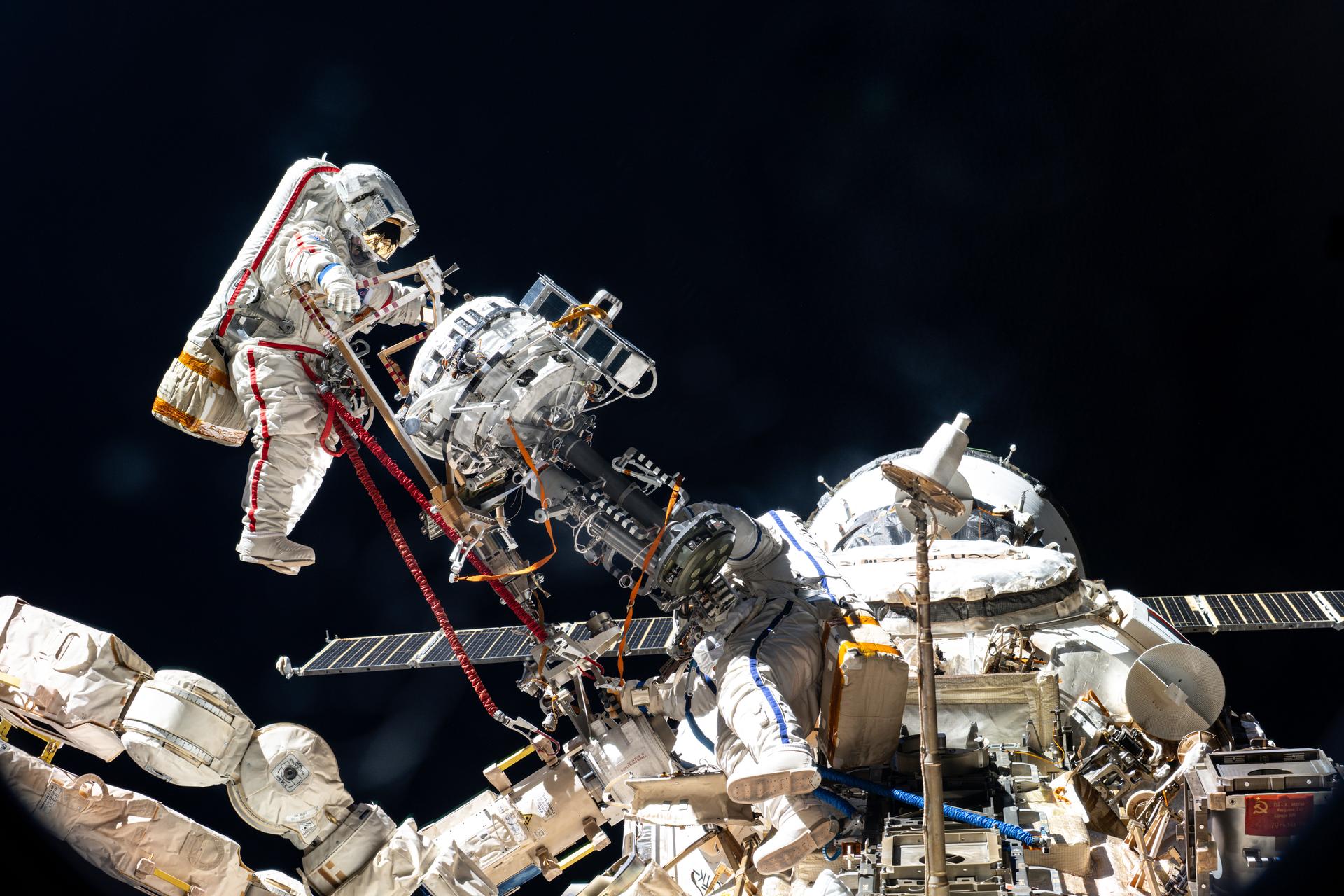
iss073e0981212 (Oct. 16, 2025) --- Roscosmos cosmonauts Sergey Ryzhikov (left) and Alexey Zubritsky (bottom right) work together to remove a high-resolution camera (HRC) monoblock during a six-hour and nine-minute spacewalk outside the International Space Station's Roscosmos segment. The HRC monoblock is part of a scientific optical telescope system designed to test compact radio-optical detectors for Earth observation, ecological monitoring, and emergency response.
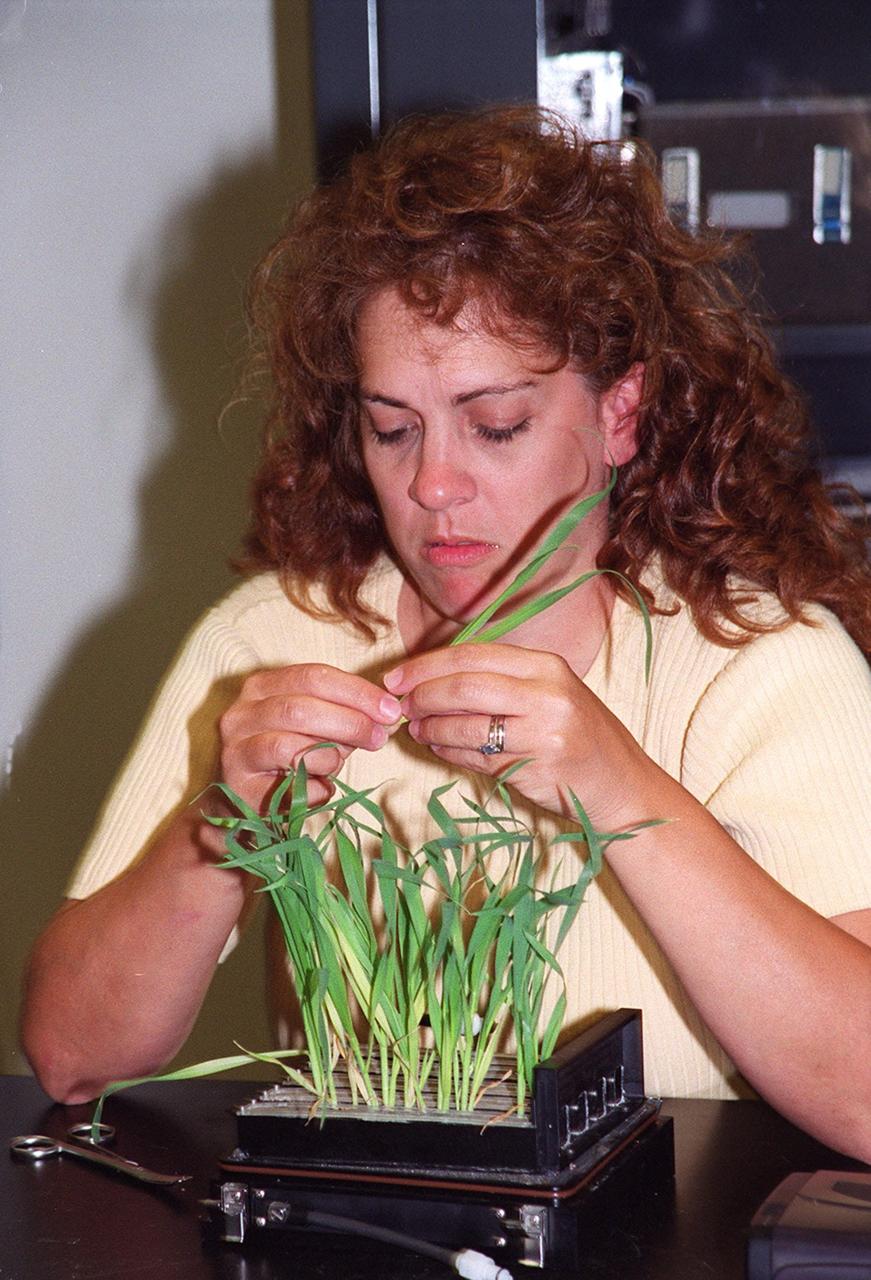
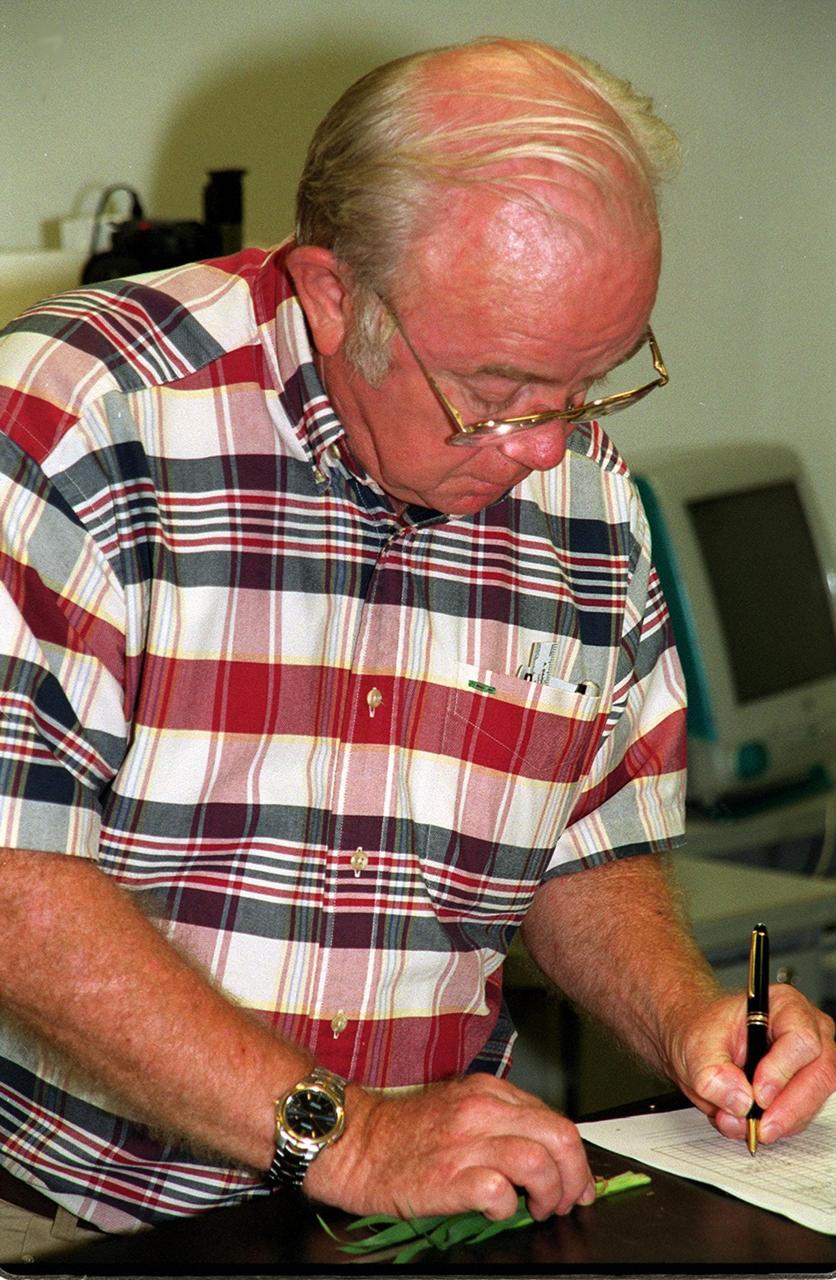
Research technician Lisa Ruffa works with a wheat sample that is part of ground testing for the first International Space Station plant experiment, scheduled to fly in October 2001. The payload process testing is one of many studies being performed at the Biological Sciences Branch in the Spaceport Engineering and Technology Directorate at Kennedy Space Center. The branch's operations and research areas include life sciences Space Shuttle payloads, bioregenerative life-support for long-duration spaceflight and environmental/ecological stewardship
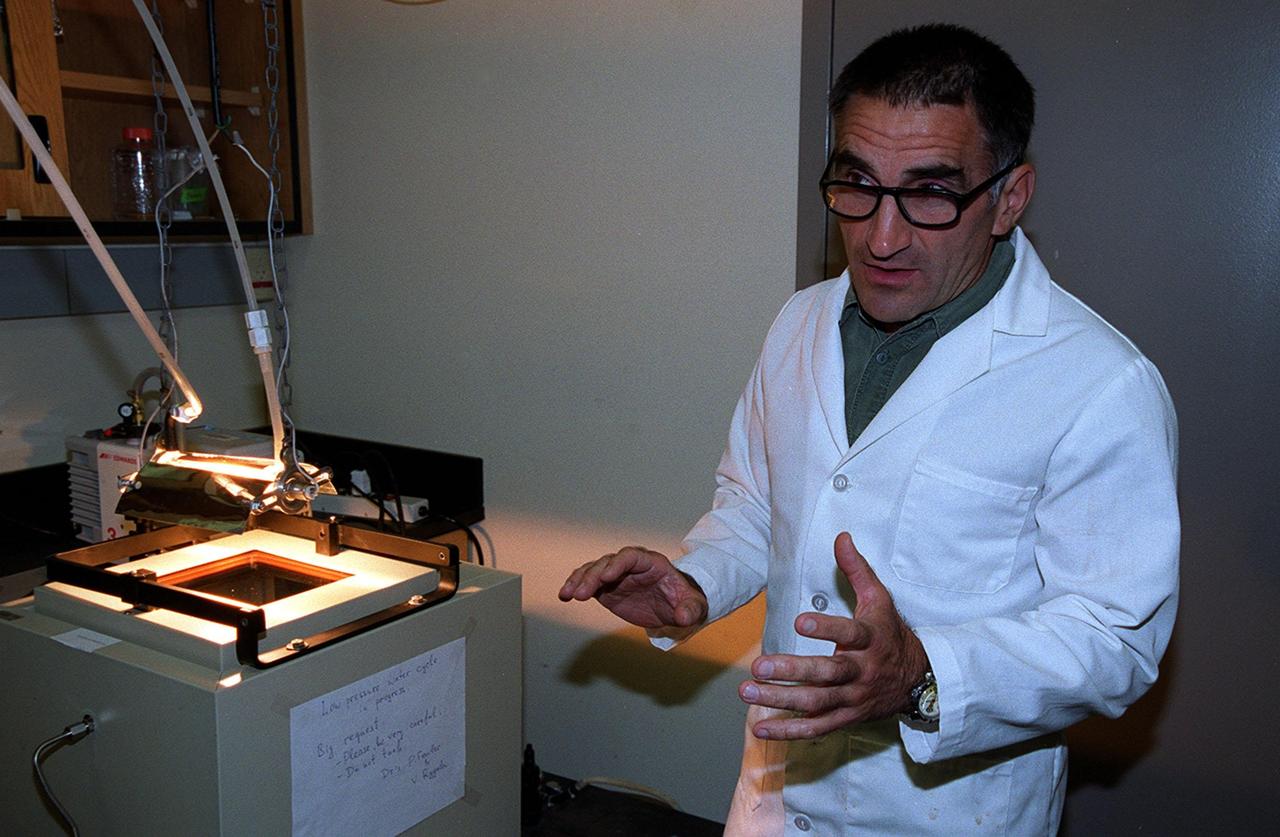
Research scientist Vadim Rygalov describes a new low-pressure water-recycling experiment being designed to help simulate plant growth conditions on Mars. The research he is performing is one of many studies at the Biological Sciences Branch in the Spaceport Engineering and Technology Directorate at Kennedy Space Center. The branch's operations and research areas include life sciences Space Shuttle payloads, bioregenerative life-support for long-duration spaceflight and environmental/ecological stewardship

Research assistant Trisha Bruno performs an analysis on potato samples at Hangar L at the Cape Canaveral Air Force Station. The research she is performing is one of many studies at the Biological Sciences Branch in the Spaceport Engineering and Technology Directorate at Kennedy Space Center. The branch's operations and research areas include life sciences Space Shuttle payloads, bioregenerative life-support for long-duration spaceflight and environmental/ecological stewardship
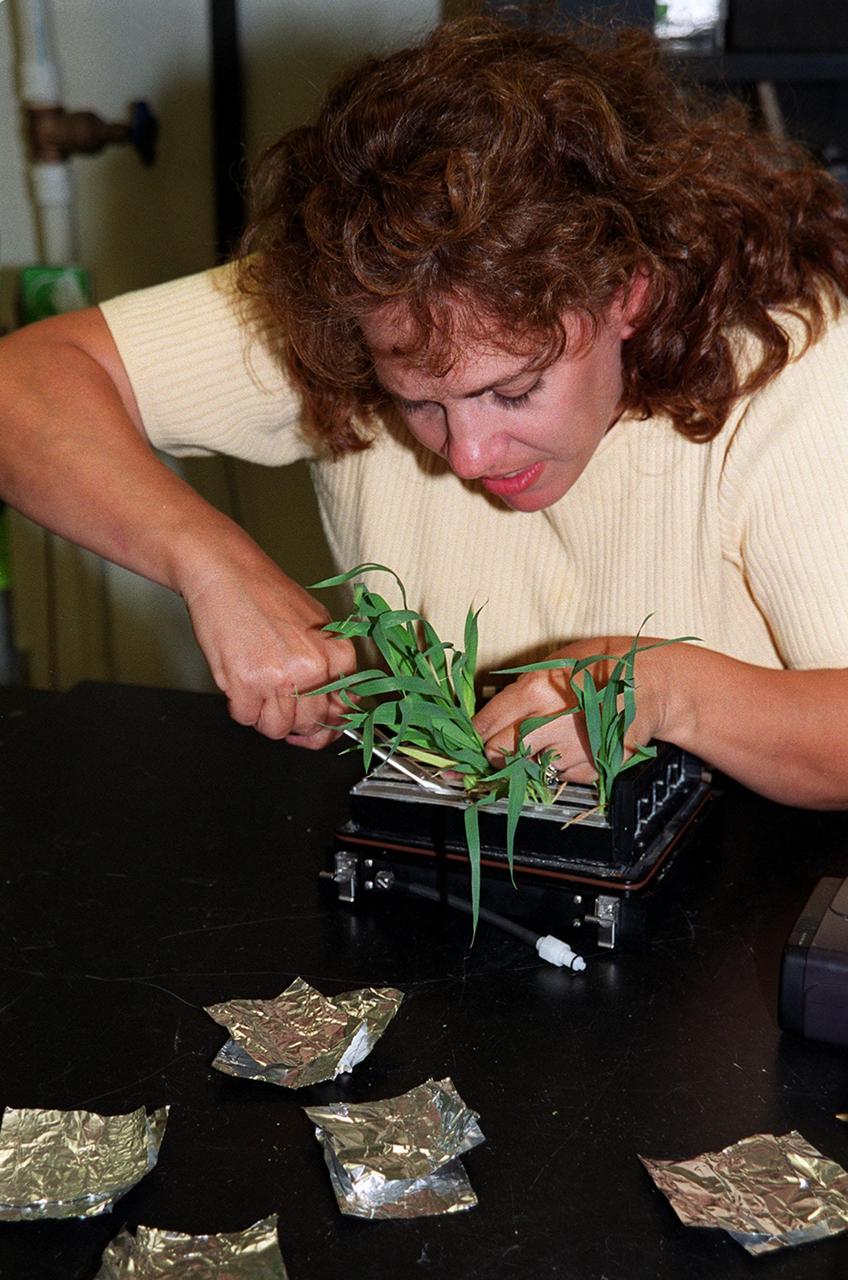
Research technician Lisa Ruffa works with a wheat sample that is part of ground testing for the first International Space Station plant experiment, scheduled to fly in October 2001. The payload process testing is one of many studies being performed at the Biological Sciences Branch in the Spaceport Engineering and Technology Directorate at Kennedy Space Center. The branch's operations and research areas include life sciences Space Shuttle payloads, bioregenerative life-support for long-duration spaceflight and environmental/ecological stewardship
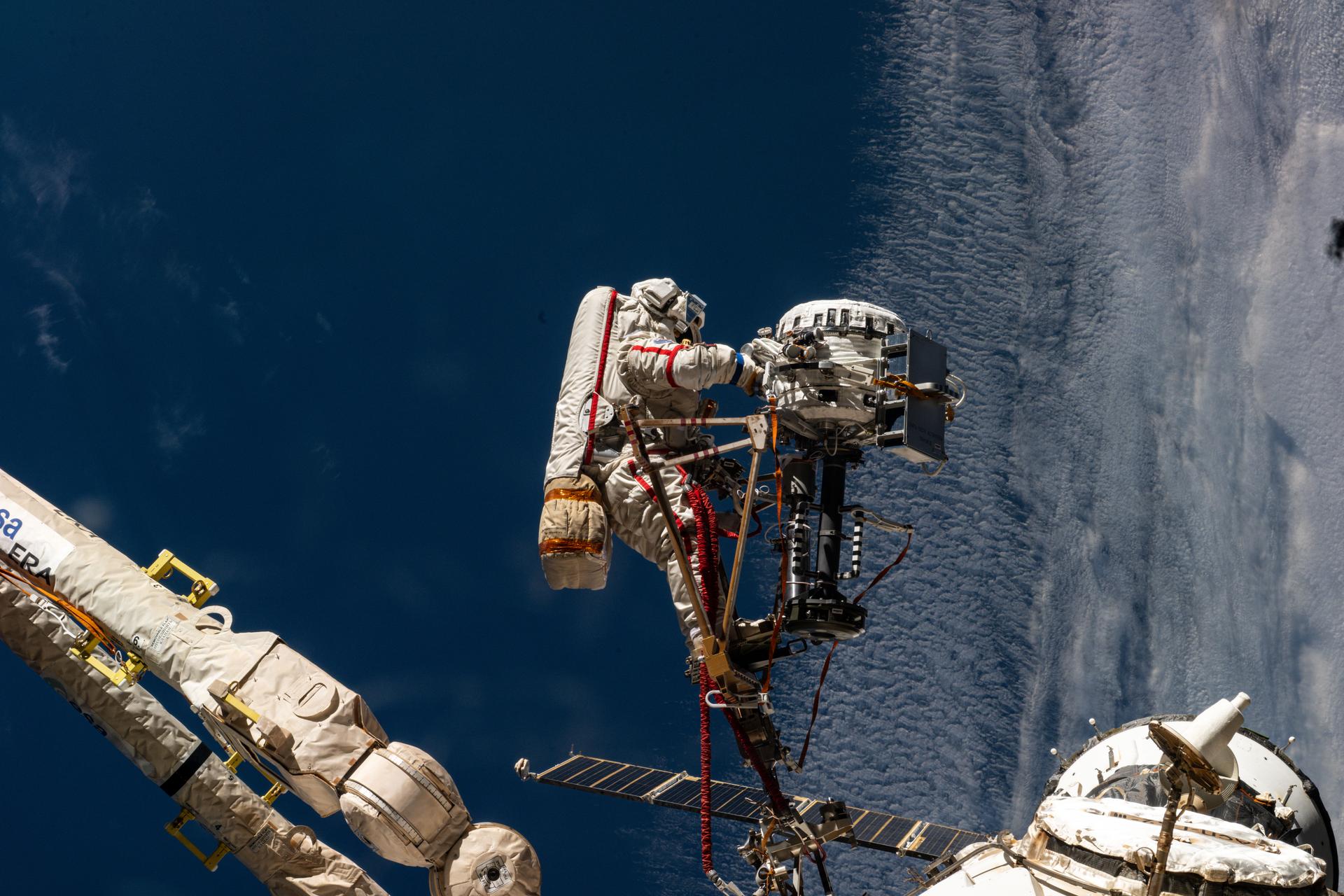
iss073e0981126 (Oct. 16, 2025) --- Roscosmos cosmonaut Sergey Ryzhikov is pictured attached to the end effector of the European robotic arm, holding the high-resolution camera (HRC) monoblock he removed during a six-hour and nine-minute spacewalk outside the International Space Station's Roscosmos segment. The HRC monoblock is part of a scientific optical telescope system designed to test compact radio-optical detectors for Earth observation, ecological monitoring, and emergency response.
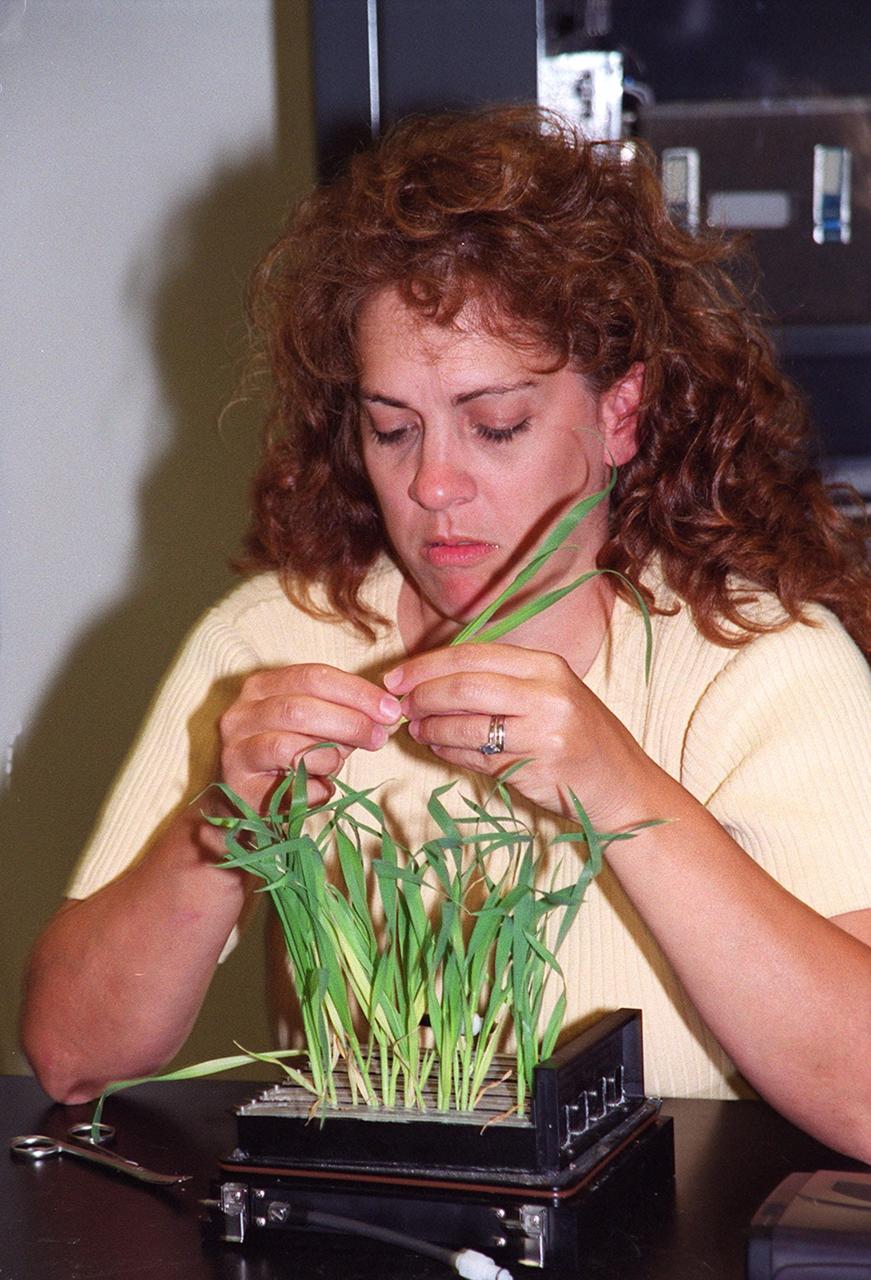
Research technician Lisa Ruffa works with a wheat sample that is part of ground testing for the first International Space Station plant experiment, scheduled to fly in October 2001. The payload process testing is one of many studies being performed at the Biological Sciences Branch in the Spaceport Engineering and Technology Directorate at Kennedy Space Center. The branch's operations and research areas include life sciences Space Shuttle payloads, bioregenerative life-support for long-duration spaceflight and environmental/ecological stewardship
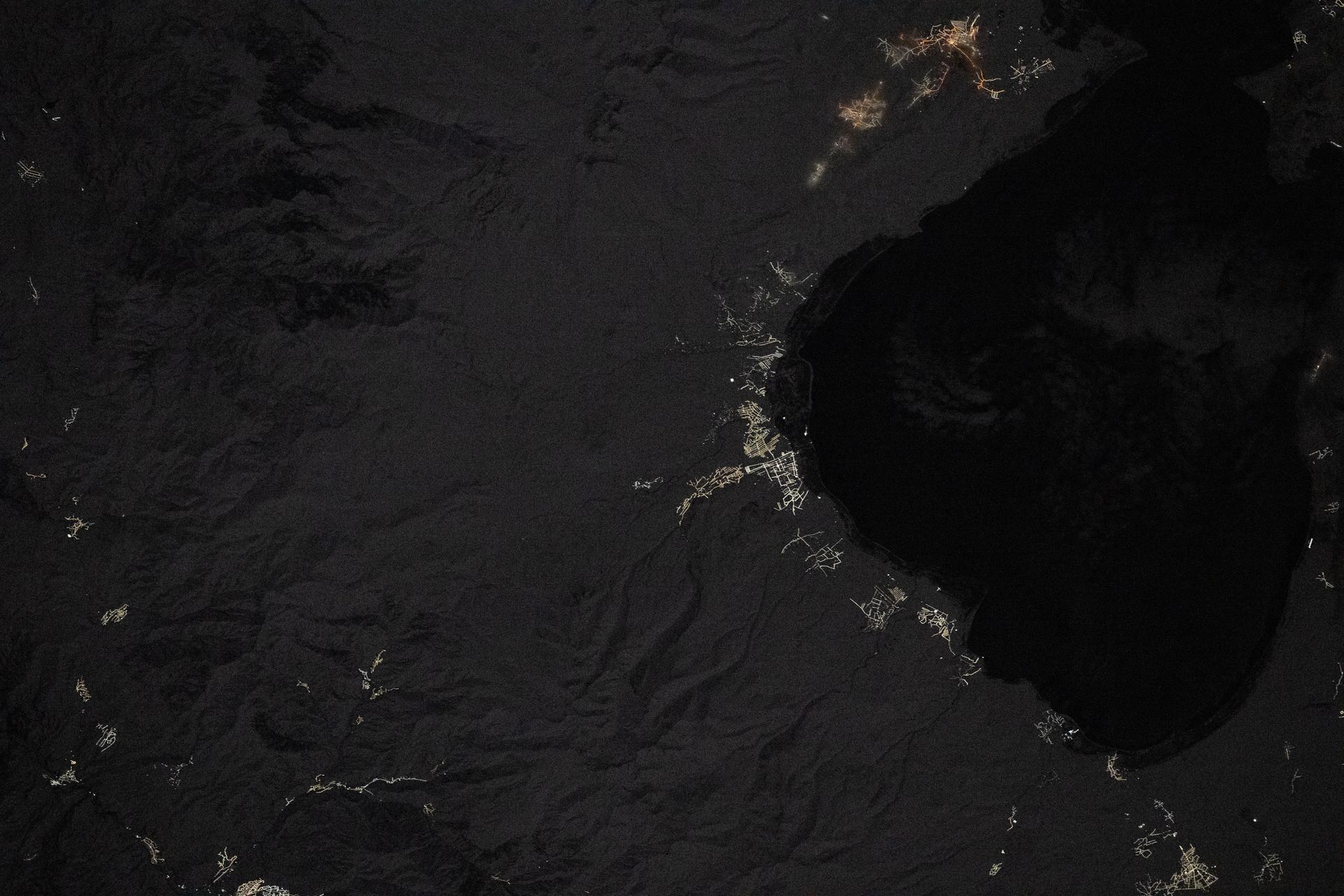
iss074e0043972 (Jan. 3, 2026) --- Villages light up the coastline in this nighttime image of Lake Sevan, one of the largest freshwater high-altitude lakes in the world, sitting at 1,900 meters above sea level in Armenia. Lake Sevan is protected as Sevan National Park for its ecological importance and for providing landlocked Armenia with most of its fish. The International Space Station was orbiting 262 miles above Earth at 11:13 p.m. local time when this photograph was taken. Credit: JAXA/Kimiya Yui
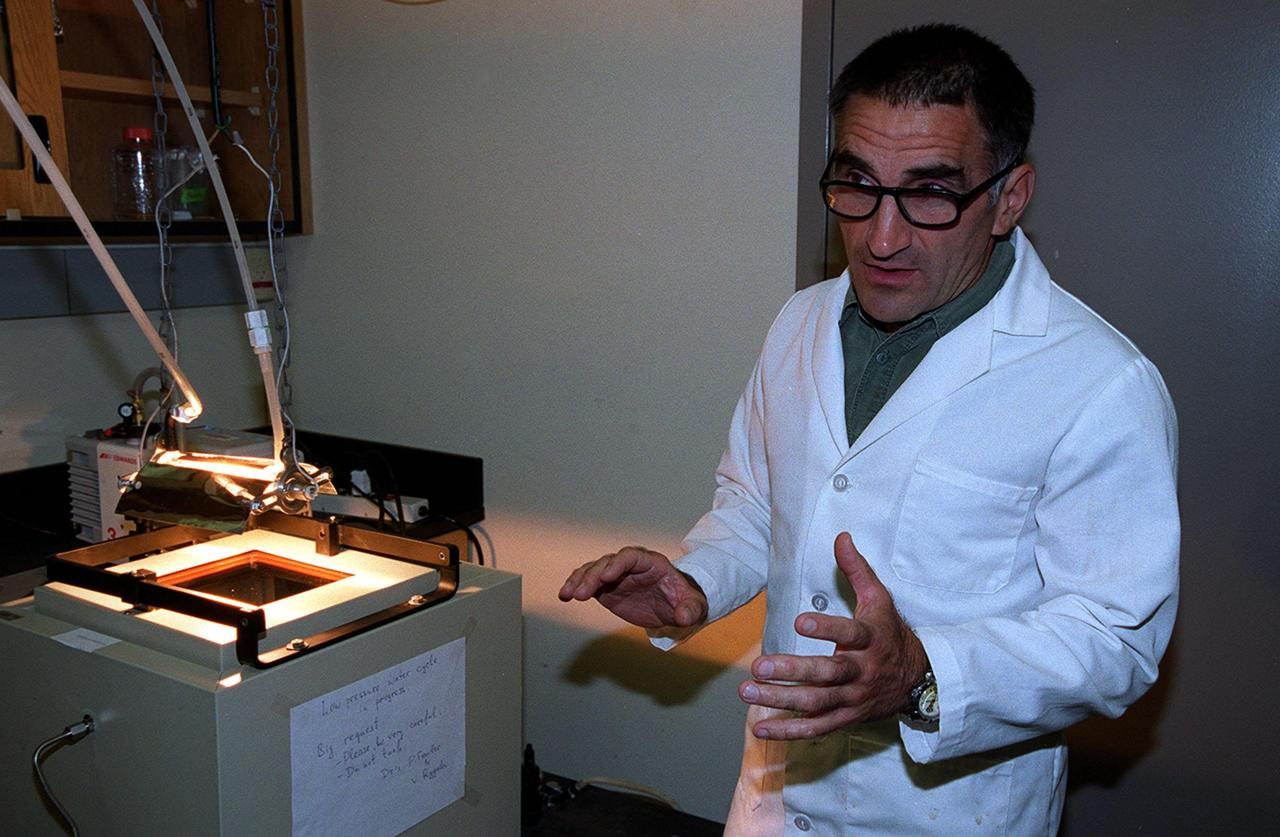
Research scientist Vadim Rygalov describes a new low-pressure water-recycling experiment being designed to help simulate plant growth conditions on Mars. The research he is performing is one of many studies at the Biological Sciences Branch in the Spaceport Engineering and Technology Directorate at Kennedy Space Center. The branch's operations and research areas include life sciences Space Shuttle payloads, bioregenerative life-support for long-duration spaceflight and environmental/ecological stewardship
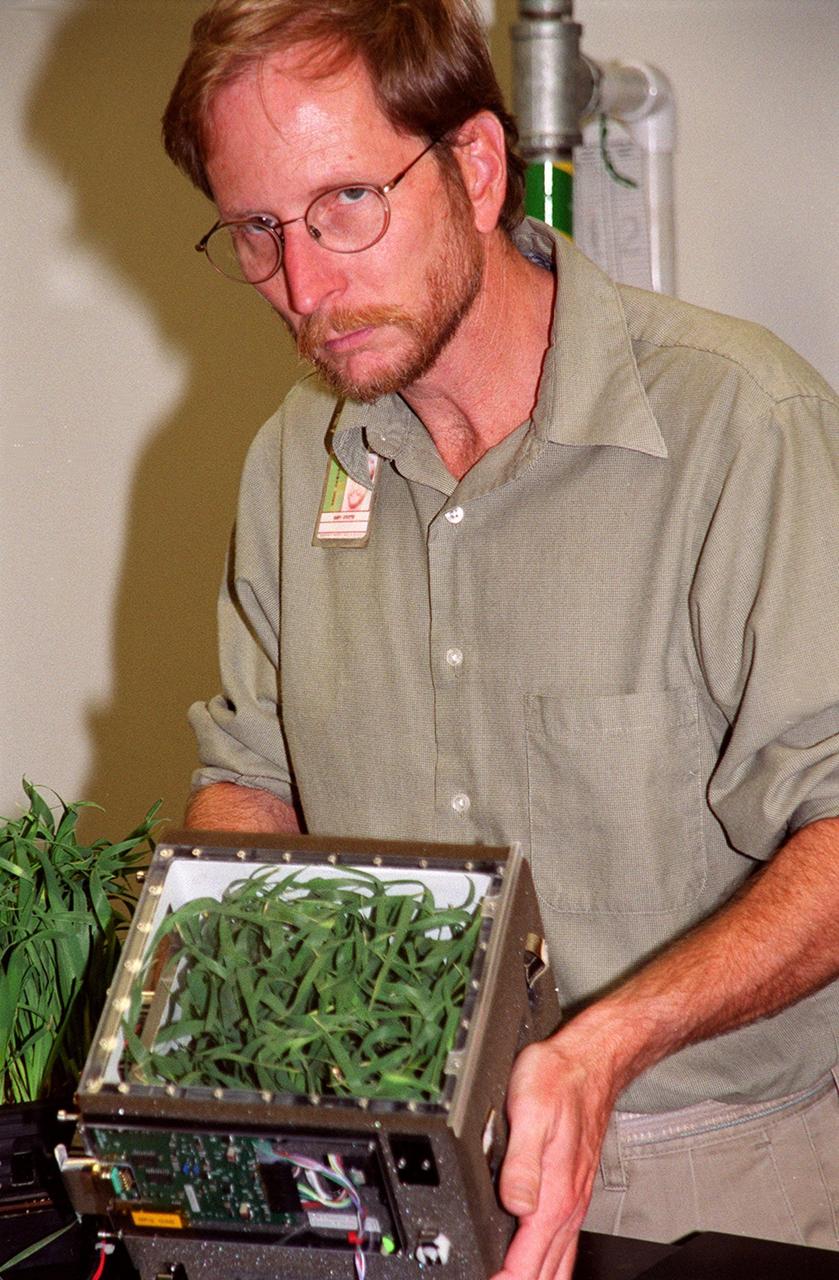
Research scientist Gary Stutte displays a wheat sample that is part of ground testing for the first International Space Station plant experiment, scheduled to fly in October 2001. The payload process testing is one of many studies being performed at the Biological Sciences Branch in the Spaceport Engineering and Technology Directorate at Kennedy Space Center. The branch's operations and research areas include life sciences Space Shuttle payloads, bioregenerative life-support for long-duration spaceflight and environmental/ecological stewardship
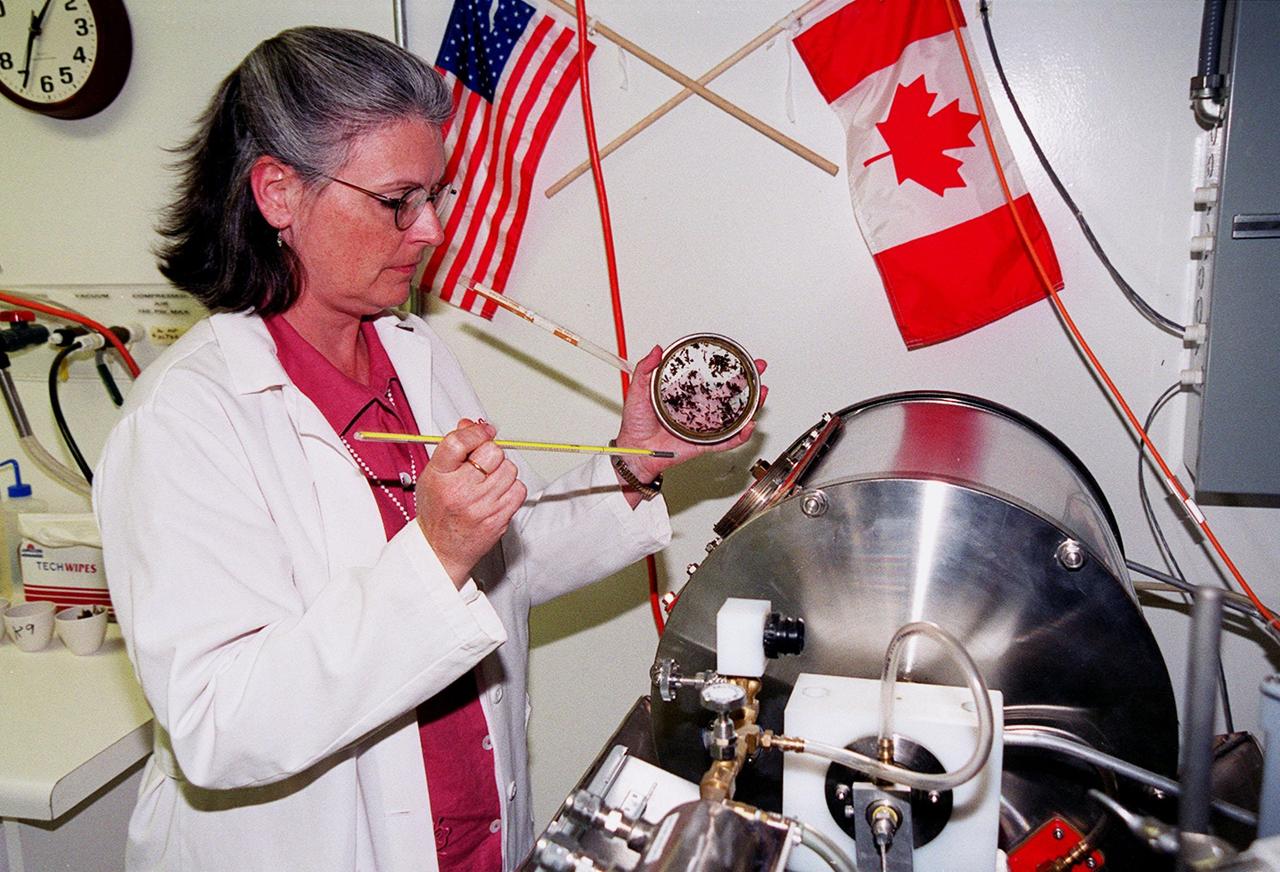
Visiting scientist Cheryl Frazier monitors a prototype composting machine in Hangar L at the Cape Canaveral Air Force Station. The research she is performing is one of many studies at the Biological Sciences Branch in the Spaceport Engineering and Technology Directorate at Kennedy Space Center. The branch's operations and research areas include life sciences Space Shuttle payloads, bioregenerative life-support for long-duration spaceflight and environmental/ecological stewardship
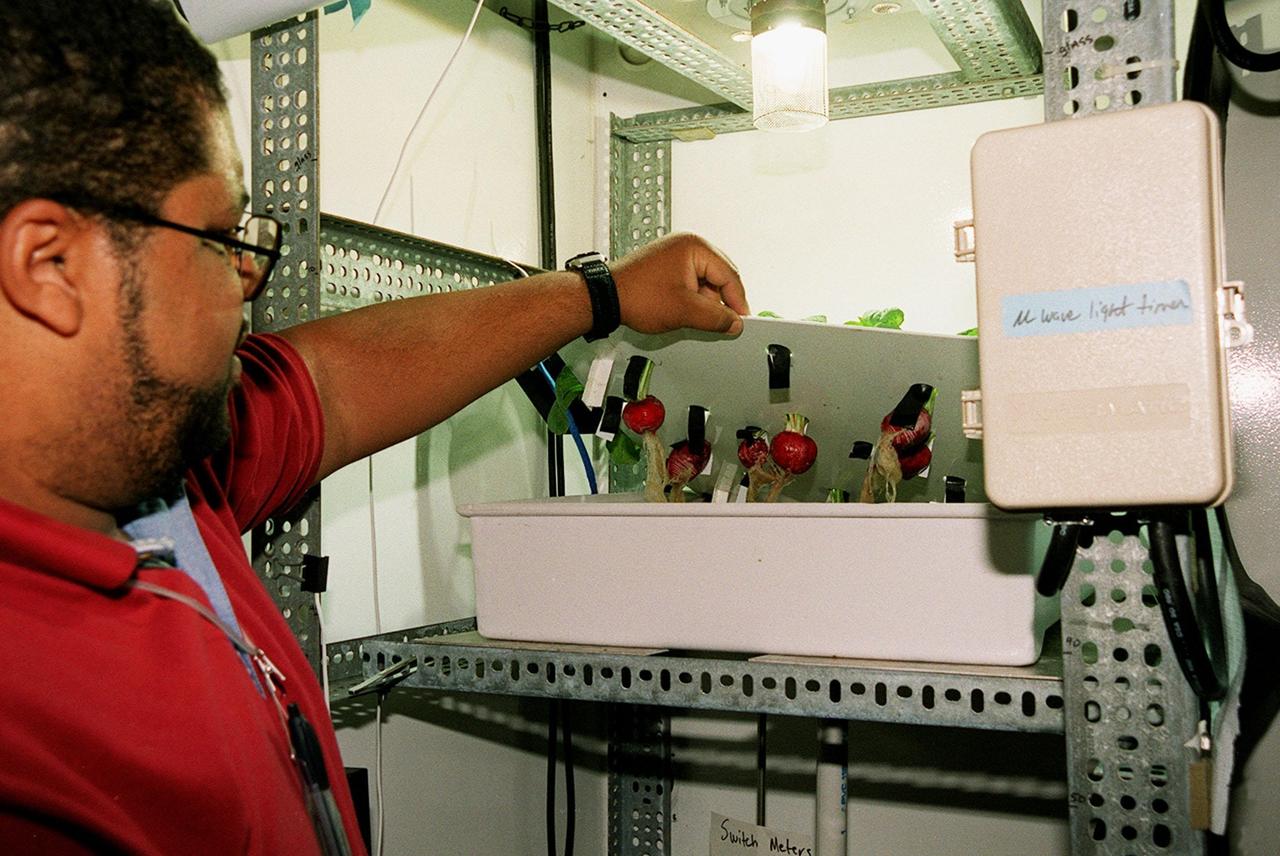
Research scientist Greg Goins monitors radish growth under a sulfur-microwave light at Hangar L at the Cape Canaveral Air Force Station. The research he is performing is one of many studies at the Biological Sciences Branch in the Spaceport Engineering and Technology Directorate at Kennedy Space Center. The branch's operations and research areas include life sciences Space Shuttle payloads, bioregenerative life-support for long-duration spaceflight and environmental/ecological stewardshi
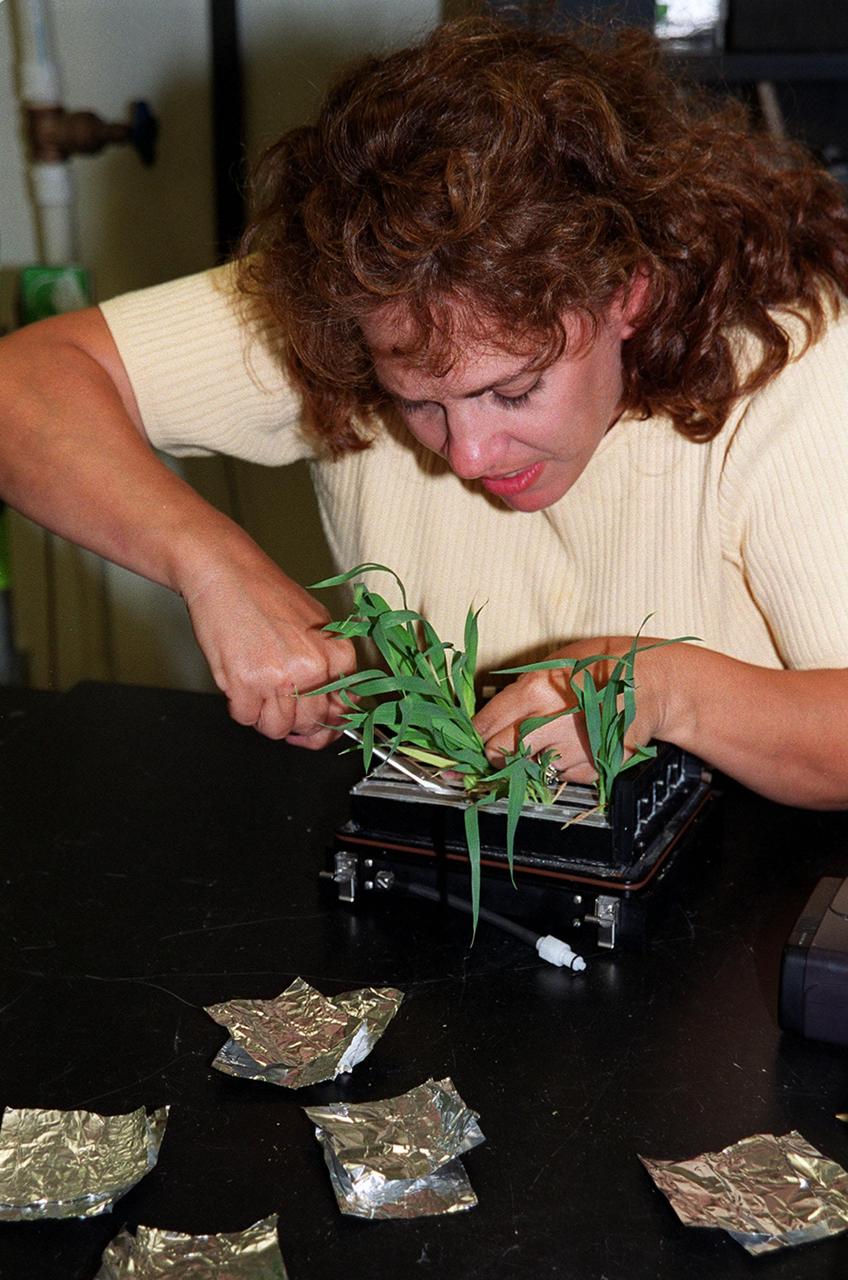
Research technician Lisa Ruffa works with a wheat sample that is part of ground testing for the first International Space Station plant experiment, scheduled to fly in October 2001. The payload process testing is one of many studies being performed at the Biological Sciences Branch in the Spaceport Engineering and Technology Directorate at Kennedy Space Center. The branch's operations and research areas include life sciences Space Shuttle payloads, bioregenerative life-support for long-duration spaceflight and environmental/ecological stewardship
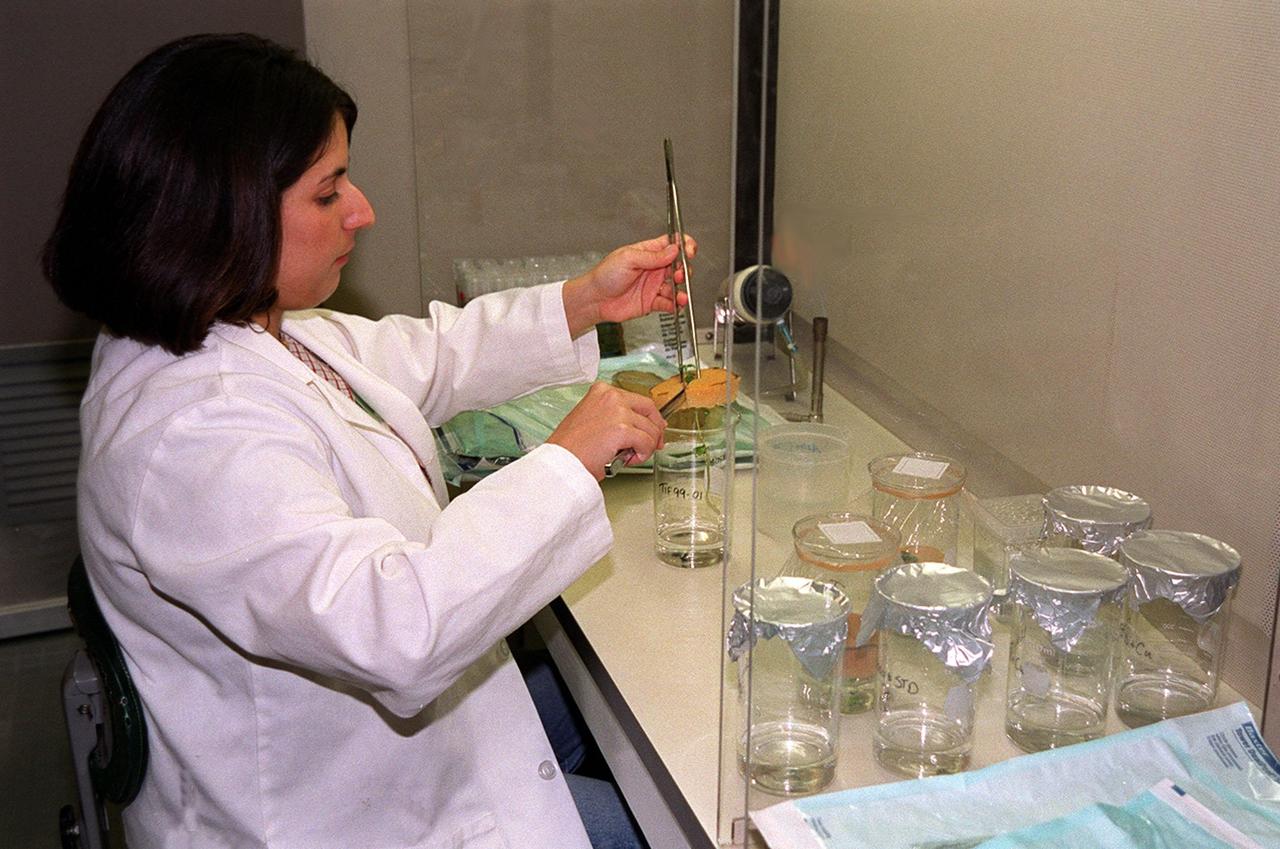
Research assistant Trisha Bruno performs an analysis on potato samples at Hangar L at the Cape Canaveral Air Force Station. The research she is performing is one of many studies at the Biological Sciences Branch in the Spaceport Engineering and Technology Directorate at Kennedy Space Center. The branch's operations and research areas include life sciences Space Shuttle payloads, bioregenerative life-support for long-duration spaceflight and environmental/ecological stewardship
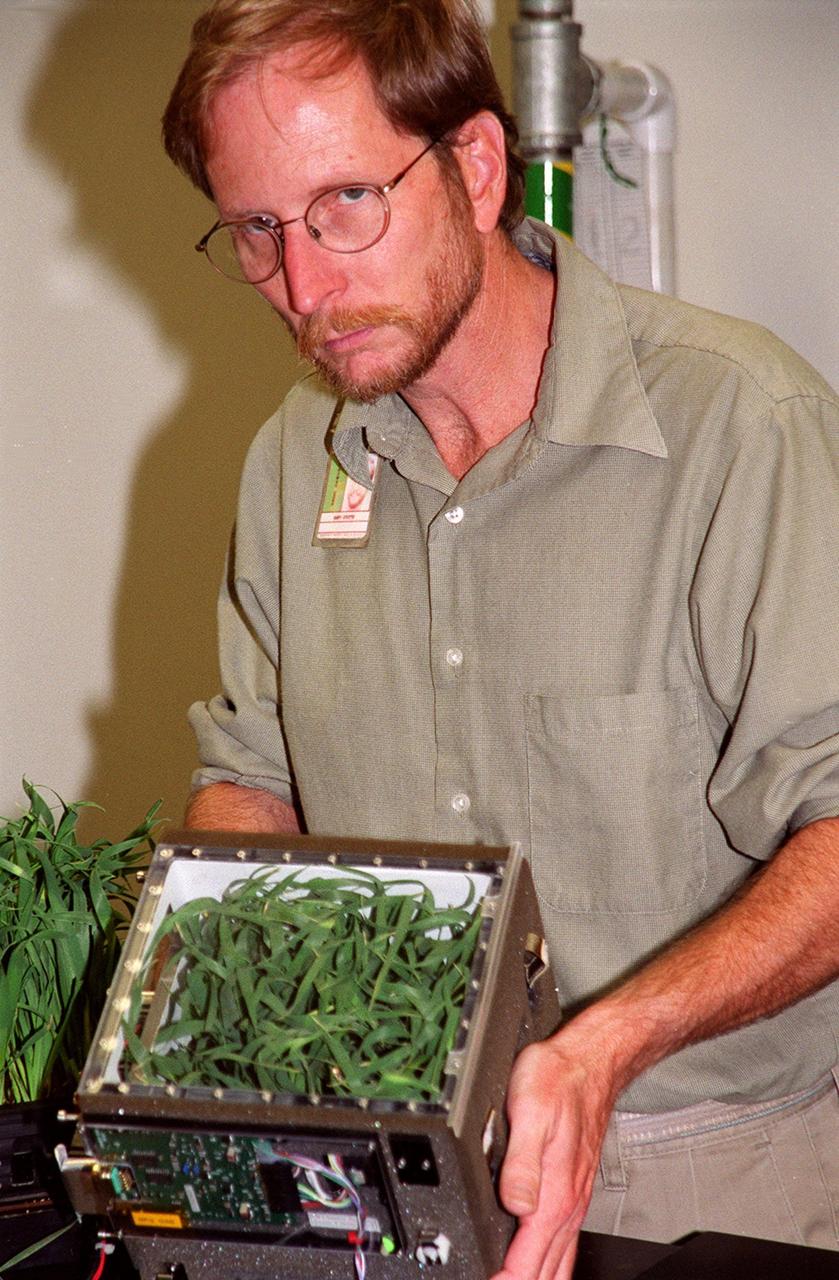
Research scientist Gary Stutte displays a wheat sample that is part of ground testing for the first International Space Station plant experiment, scheduled to fly in October 2001. The payload process testing is one of many studies being performed at the Biological Sciences Branch in the Spaceport Engineering and Technology Directorate at Kennedy Space Center. The branch's operations and research areas include life sciences Space Shuttle payloads, bioregenerative life-support for long-duration spaceflight and environmental/ecological stewardship
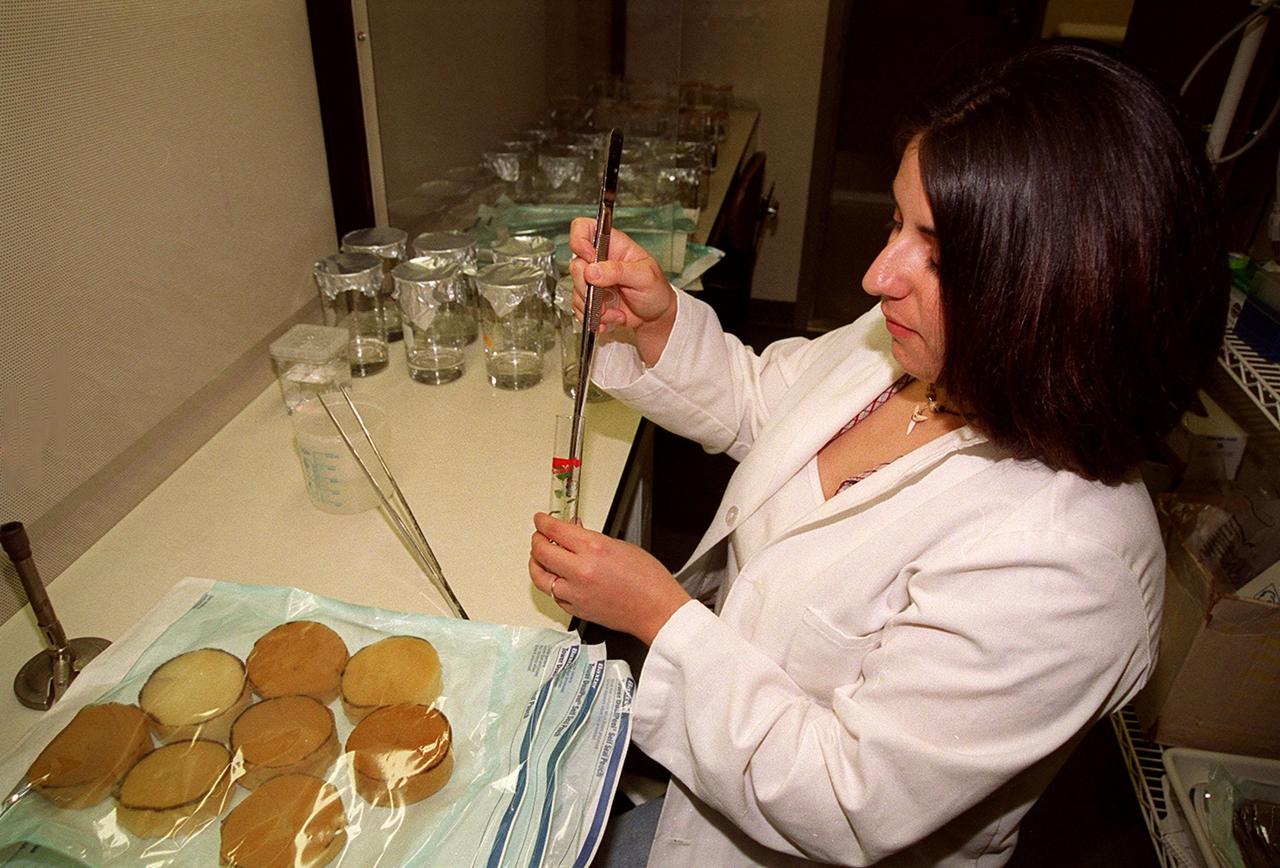
Research assistant Trisha Bruno performs an analysis on potato samples at Hangar L at the Cape Canaveral Air Force Station. The research she is performing is one of many studies at the Biological Sciences Branch in the Spaceport Engineering and Technology Directorate at Kennedy Space Center. The branch's operations and research areas include life sciences Space Shuttle payloads, bioregenerative life-support for long-duration spaceflight and environmental/ecological stewardship
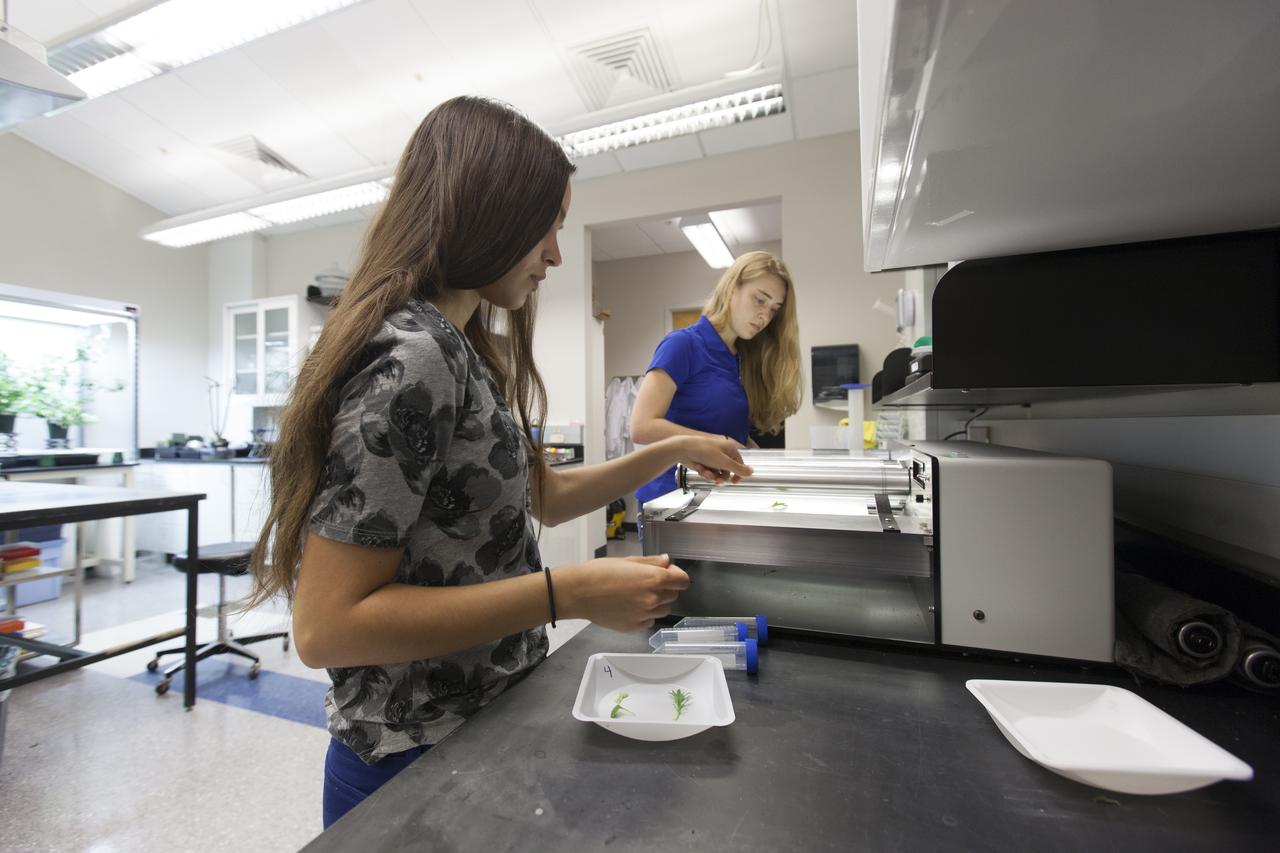
In the Space Life Sciences Laboratory at NASA's Kennedy Space Center in Florida, student interns such as Emma Boehm, left, and Jessica Scotten are joining agency scientists, contributing in the area of plant growth research for food production in space. Boehm is pursuing a degree in ecology and evolution at the University of Minnesota. Scotten is majoring in microbiology at Oregon State University. The agency attracts its future workforce through the NASA Internship, Fellowships and Scholarships, or NIFS, Program.
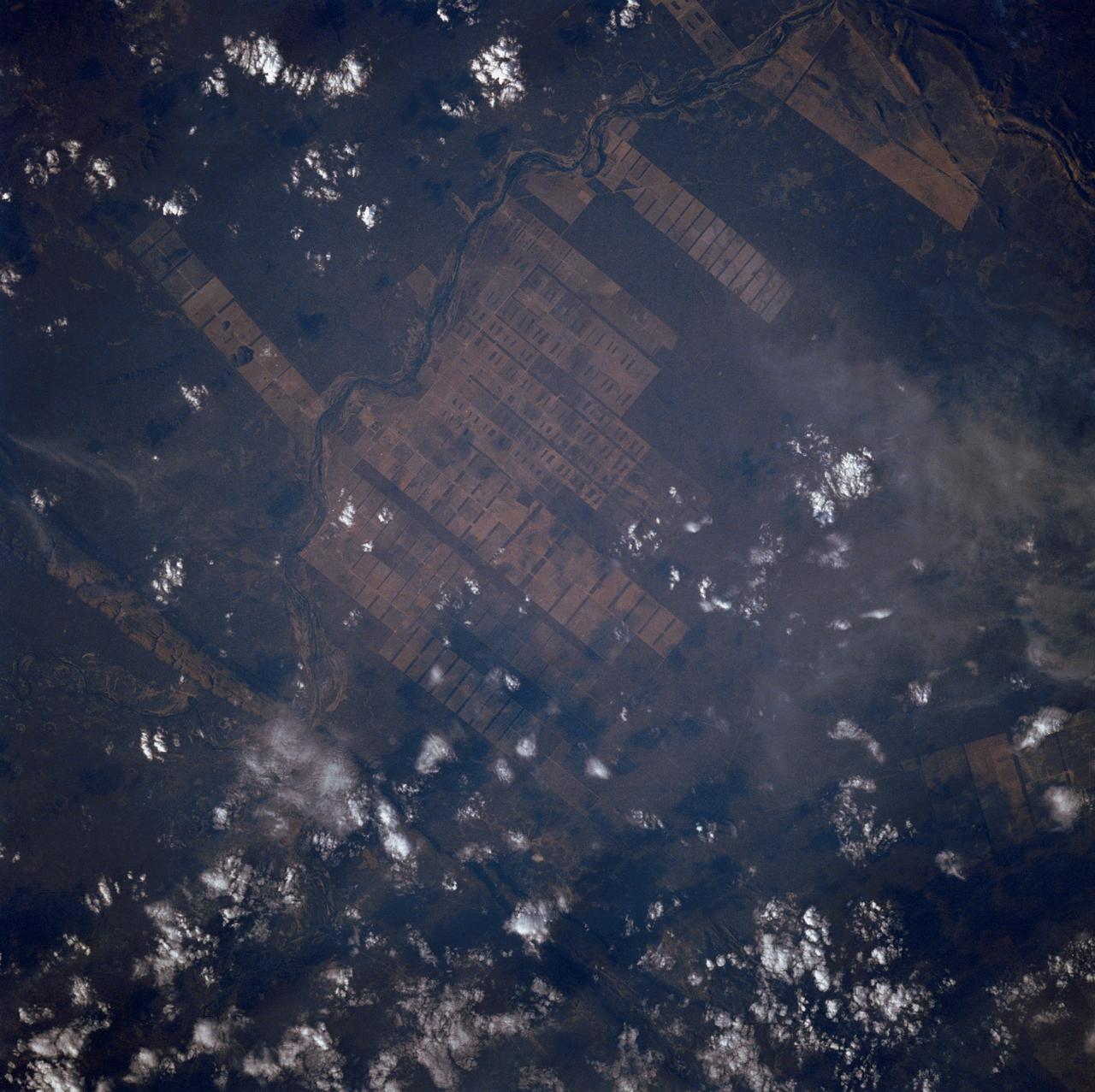
The large field patterns in this view of the Rio Sao Francisco basin, Brazil, South America, (11.5S, 43.5W) indicate a commercial agriculture venture; family subsistence farms are much smaller and laid out in different patterns. Land clearing in Brazil has increased at an alarming rate in recent years and preliminary estimates suggest a 25 to 30% increase in deforestation since 1984. The long term impact on the ecological processes are still unknown.
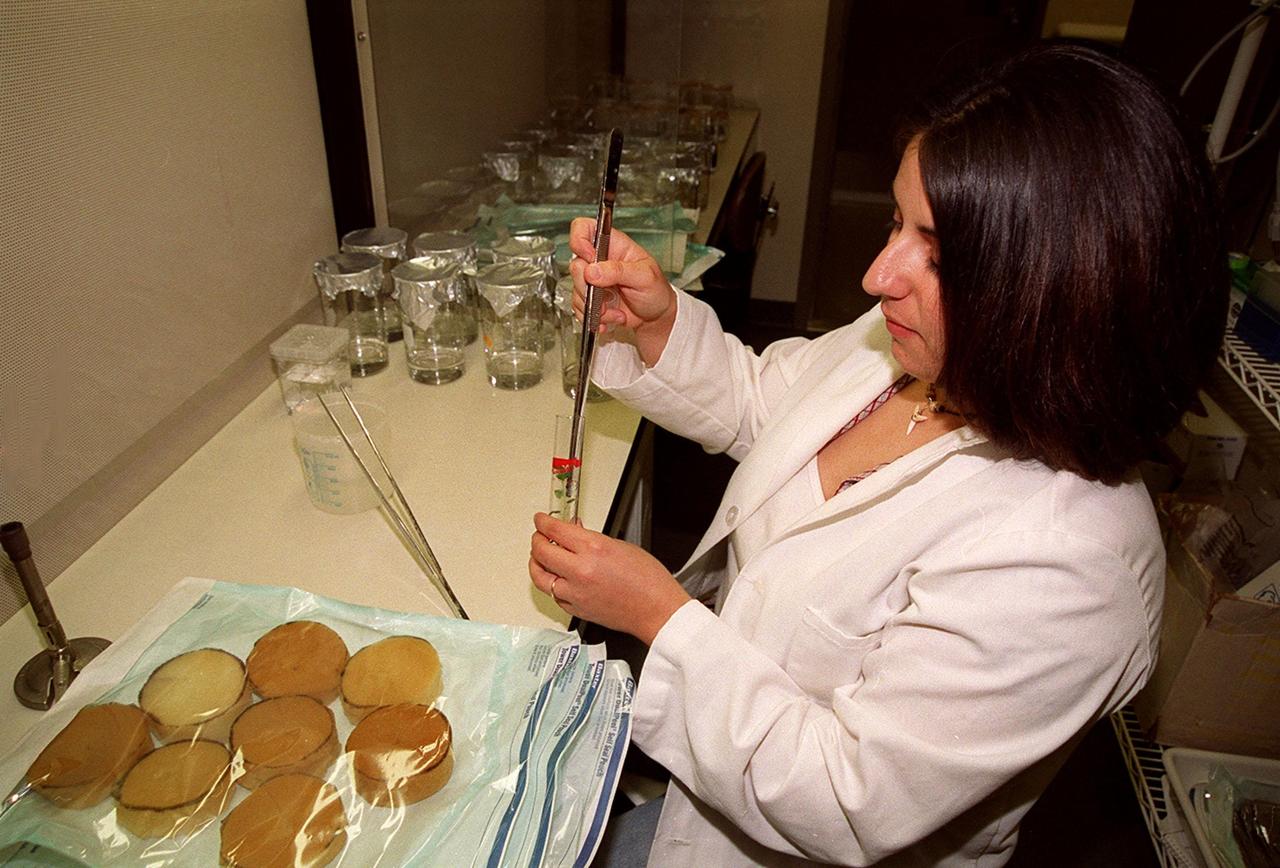
Research assistant Trisha Bruno performs an analysis on potato samples at Hangar L at the Cape Canaveral Air Force Station. The research she is performing is one of many studies at the Biological Sciences Branch in the Spaceport Engineering and Technology Directorate at Kennedy Space Center. The branch's operations and research areas include life sciences Space Shuttle payloads, bioregenerative life-support for long-duration spaceflight and environmental/ecological stewardship
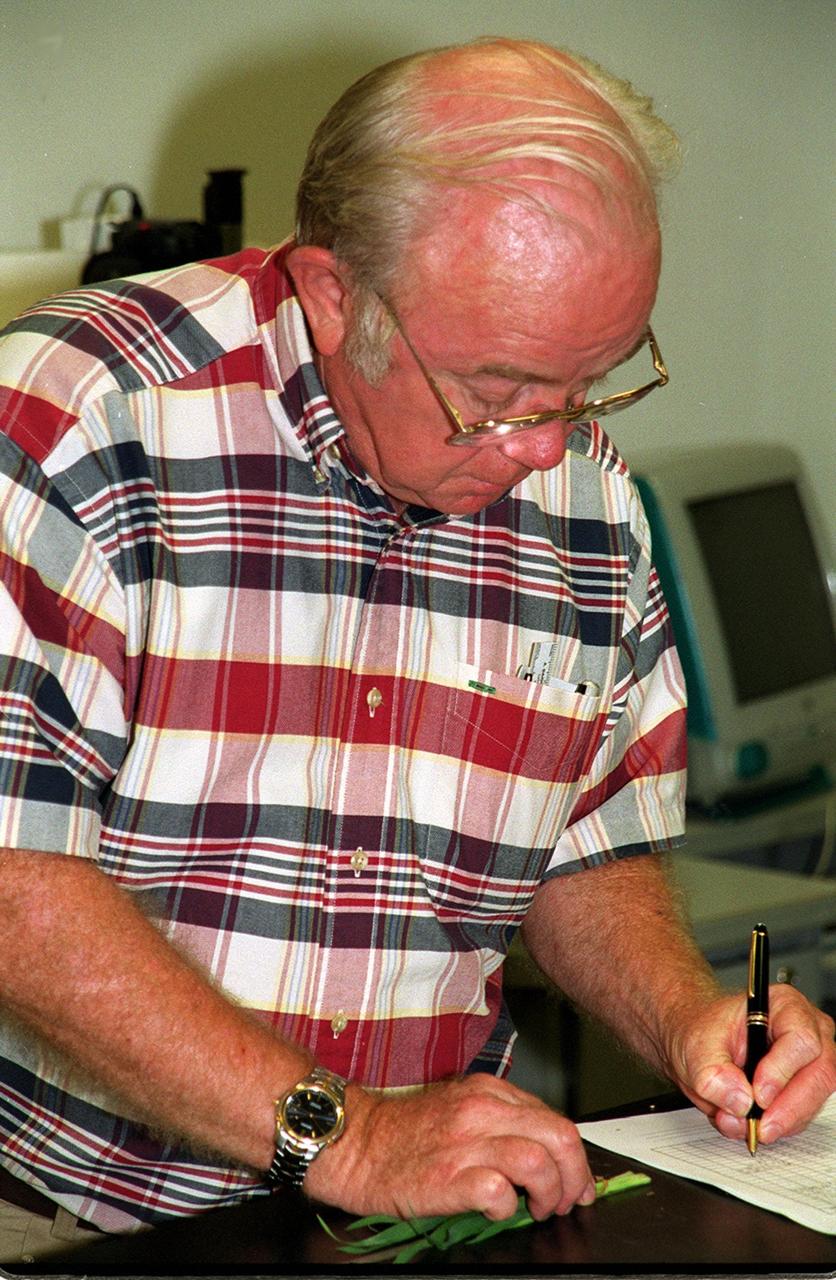
Research scientist Oscar Monje records data associated with ground testing for the first International Space Station plant experiment, scheduled to fly in October 2001. The payload process testing is one of many studies being performed at the Biological Sciences Branch in the Spaceport Engineering and Technology Directorate at Kennedy Space Center. The branch's operations and research areas include life sciences Space Shuttle payloads, bioregenerative life-support for long-duration spaceflight and environmental/ecological stewardship
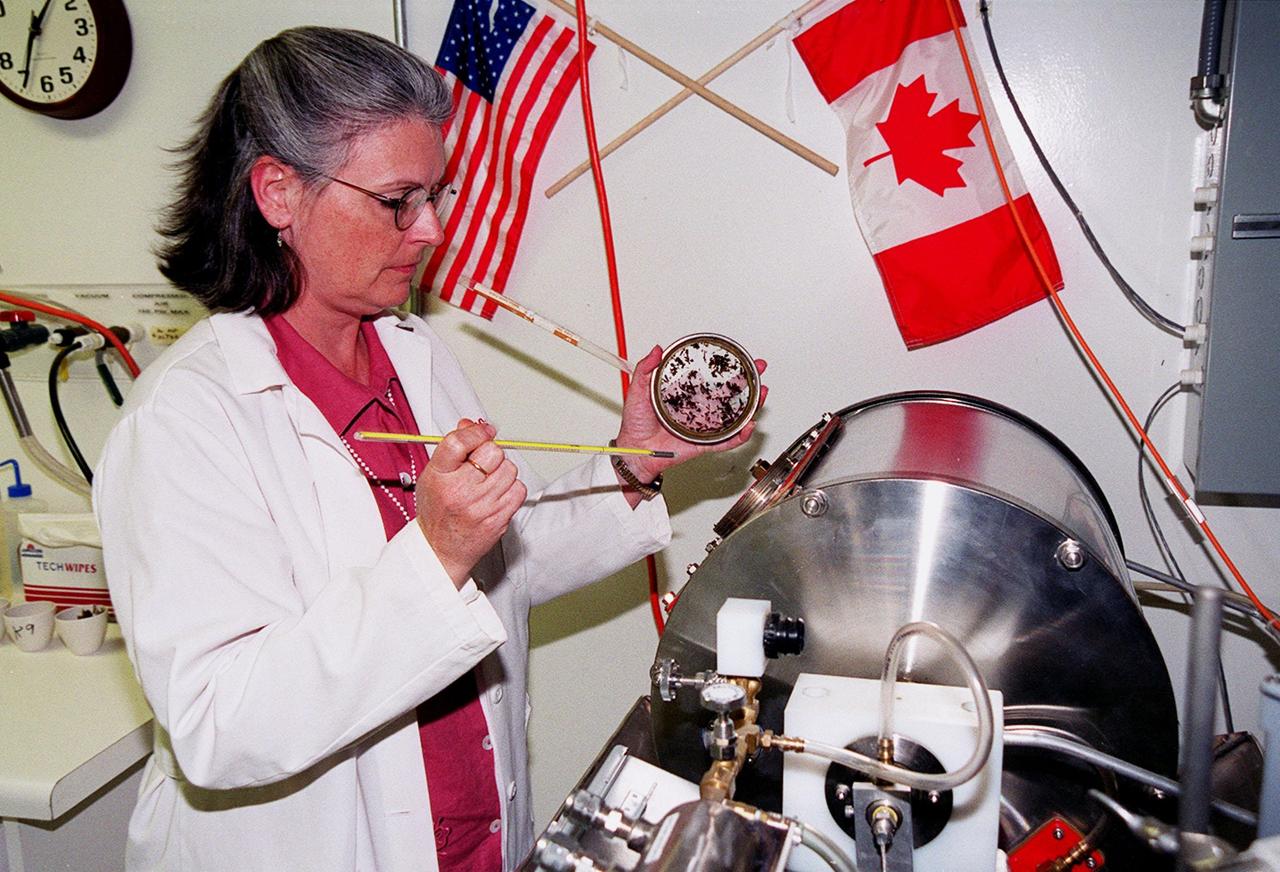
Visiting scientist Cheryl Frazier monitors a prototype composting machine in Hangar L at the Cape Canaveral Air Force Station. The research she is performing is one of many studies at the Biological Sciences Branch in the Spaceport Engineering and Technology Directorate at Kennedy Space Center. The branch's operations and research areas include life sciences Space Shuttle payloads, bioregenerative life-support for long-duration spaceflight and environmental/ecological stewardship
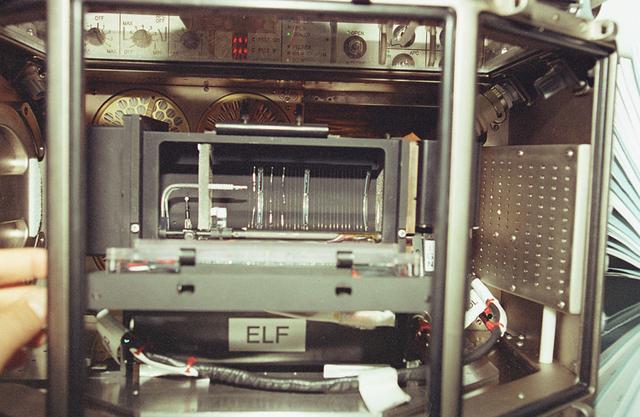
The goal of the ELF investigation is to improve our fundamental understanding of the effects of the flow environment on flame stability. The flame's stability refers to the position of its base and ultimately its continued existence. Combustion research focuses on understanding the important hidden processes of ignitions, flame spreading, and flame extinction. Understanding these processes will directly affect the efficiency of combustion operations in converting chemical energy to heat and will create a more balanced ecology and healthy environment by reducing pollutants emitted during combustion.
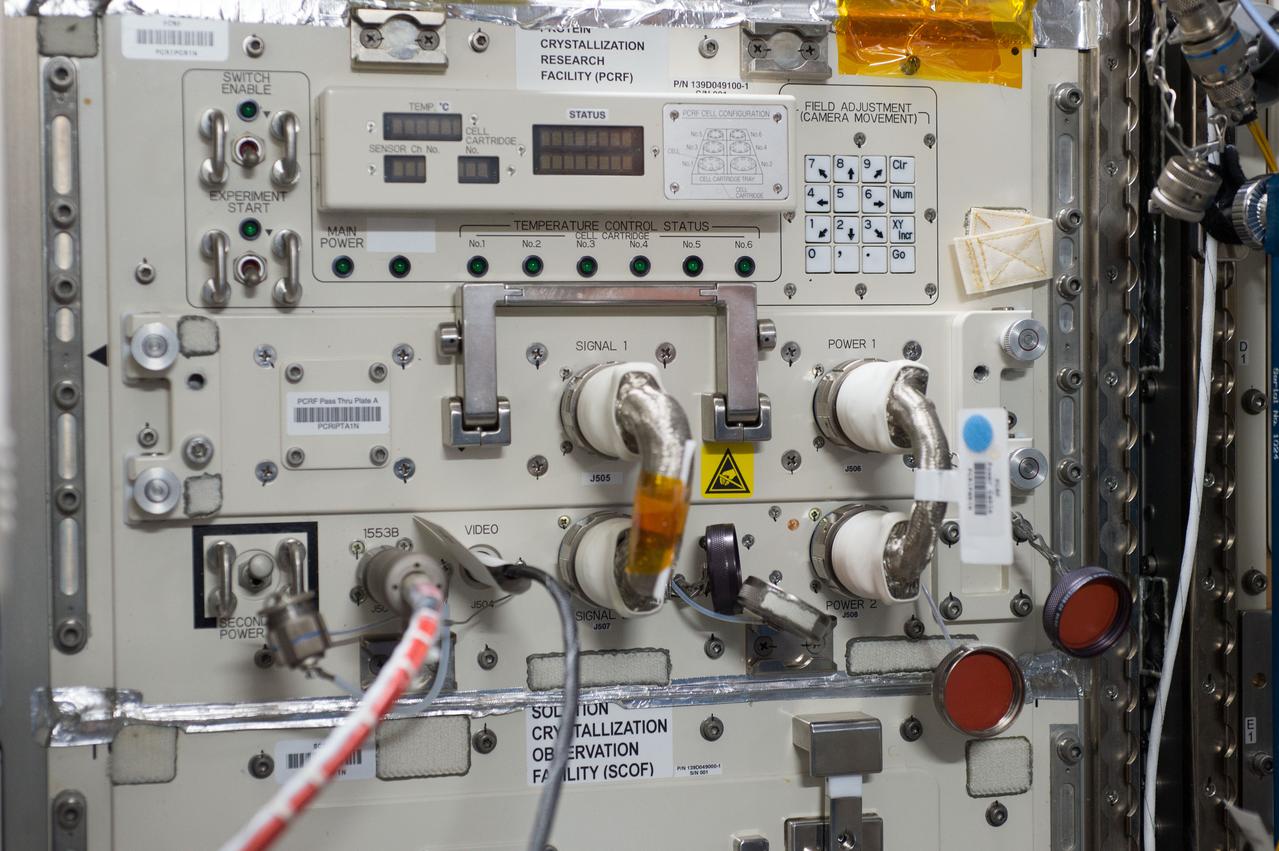
iss047e105727 (5/10/2016) --- Photographic documentation of the Japan Aerospace Exploration Agency (JAXA) High Quality Protein Crystal Growth (PCG) Removal. The PCG-Canister Bags were removed from the Cell Biology Experiment Facility (CBEF) and the Protein Crystallization Research Facility (PCRF) before being stowed for return on SpX-8. The JAXA PCG-Demo investigation crystallizes proteins using the counter-diffusion technique and permeation method that minimizes impurities, forming high-quality crystals for use in medical studies and ecological applications.
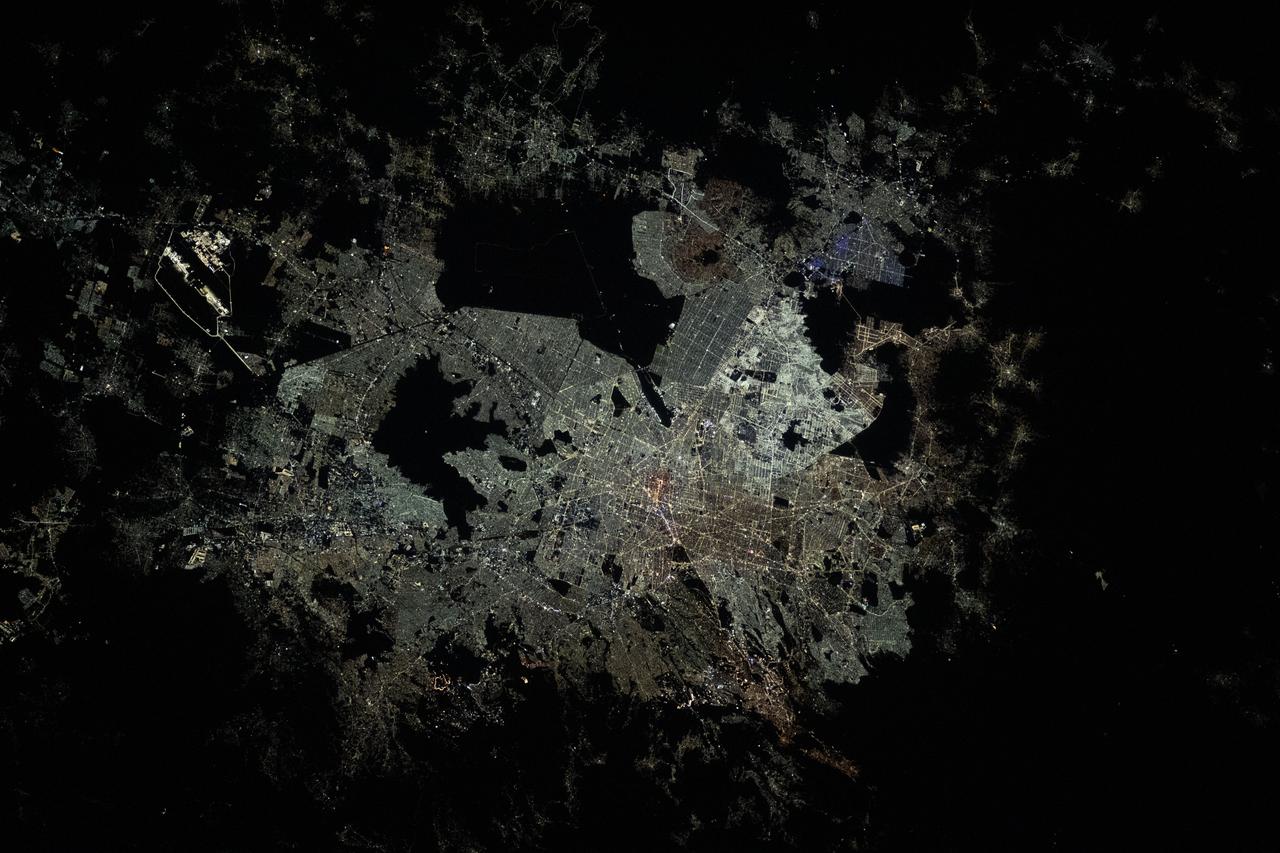
iss070e027906 (Nov. 19, 2023) --- The night lights of Mexico City, the capital and largest city of Mexico with a population of 9.2 million, are pictured from the International Space Station as it orbited 260 miles above the central American nation. At far left, the well-lit Felipe Ángeles International Airport is easily observable from low-Earth orbit. The large, dark area at center top, is Lake Texcoco Ecological Park. The dark area just below, is the Sierra de Guadalupe mountain range.
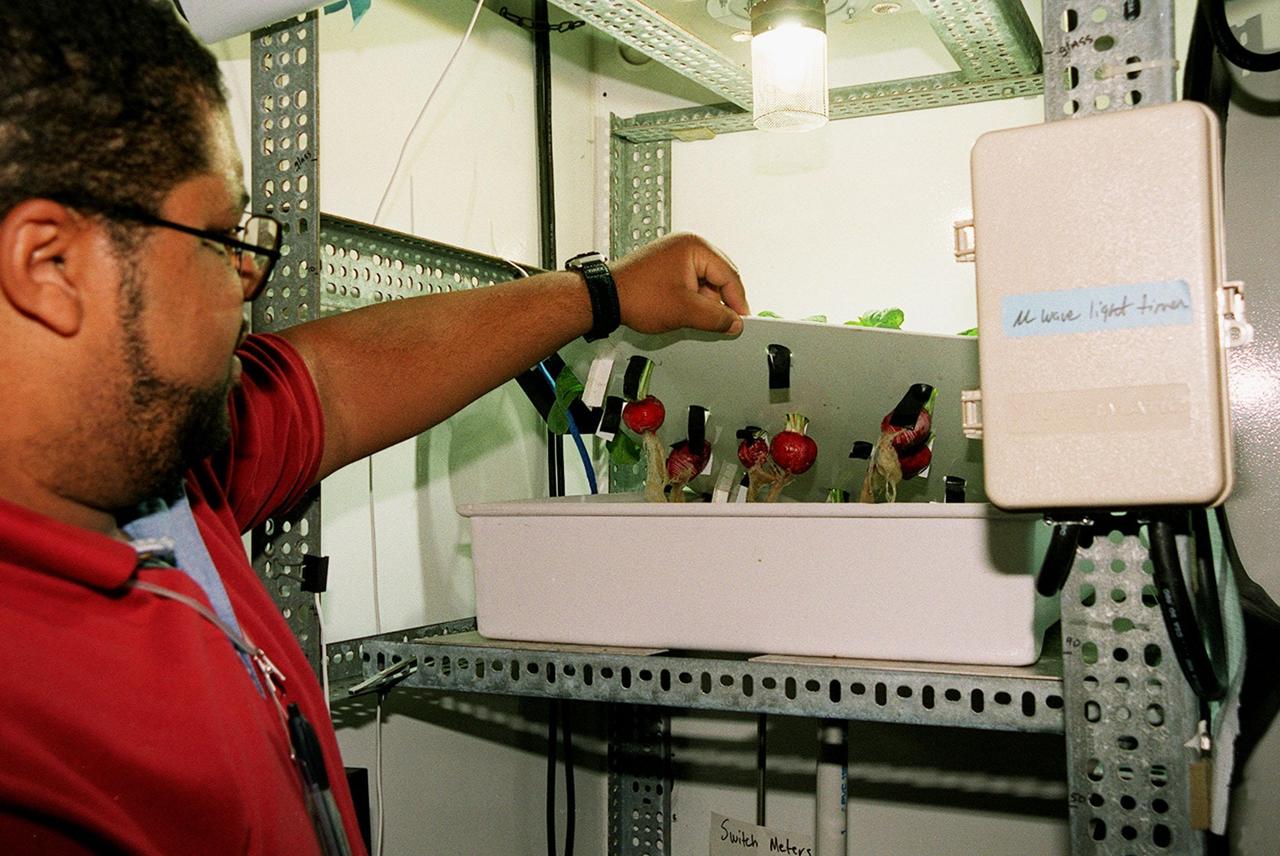
Research scientist Greg Goins monitors radish growth under a sulfur-microwave light at Hangar L at the Cape Canaveral Air Force Station. The research he is performing is one of many studies at the Biological Sciences Branch in the Spaceport Engineering and Technology Directorate at Kennedy Space Center. The branch's operations and research areas include life sciences Space Shuttle payloads, bioregenerative life-support for long-duration spaceflight and environmental/ecological stewardshi
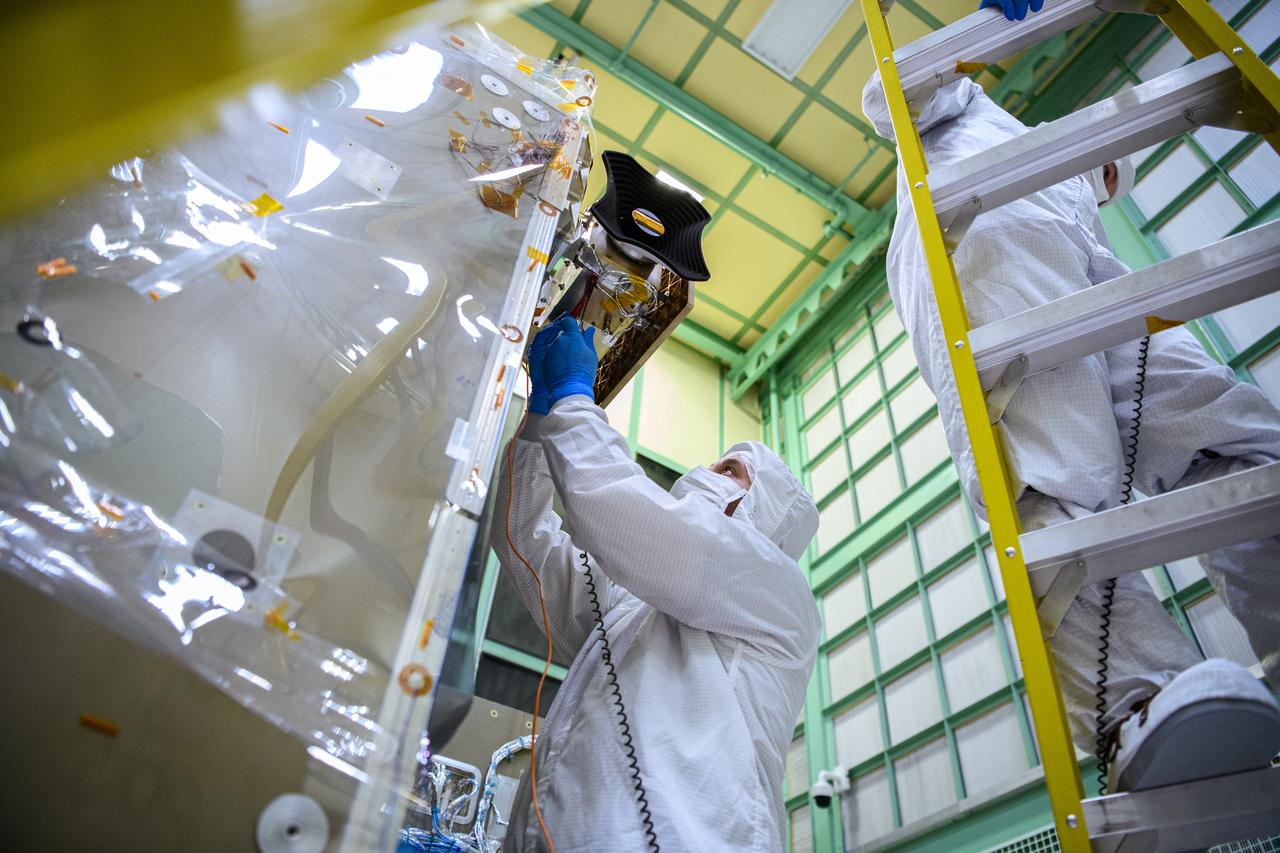
Technicians integrate the Hyper-Angular Rainbow Polarimeter #2 (HARP2) instrument to the Plankton, Aerosol, Cloud, ocean Ecosystem (PACE) spacecraft bus at NASA's Goddard Space Flight Center in Greenbelt, Maryland on October 25th, 2022. HARP2 is one of three instruments on NASA's PACE observatory, it was designed and built by UMBC's Earth and Space Institute. PACE's unprecedented spectral coverage will provide the first-ever global measurements designed to identify phytoplankton community composition. The mission will make global ocean color measurements, using the Ocean Color Instrument (OCI), to provide extended data records on ocean ecology and global biogeochemistry along with polarimetry measurements, using the Spectro-polarimeter for Planetary Exploration (SPEXone) and the Hyper Angular Research Polarimeter (HARP2) to provide extended data records on clouds and aerosols. The Earth-observing satellite mission, built at Goddard Space Flight Center in Greenbelt, MD, will continue and advance observations of global ocean color, biogeochemistry, and ecology, as well as the carbon cycle, aerosols and clouds.
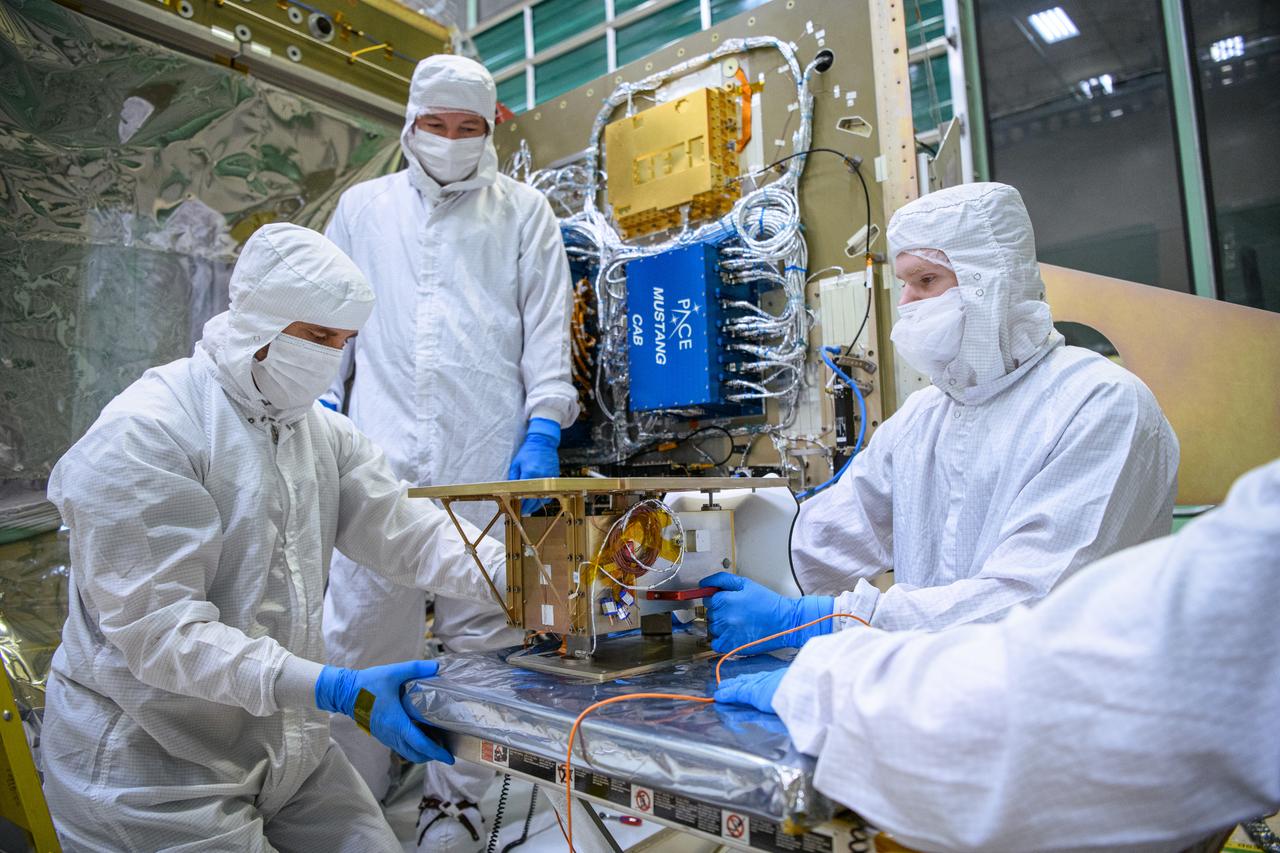
Technicians prepare to integrate the Hyper-Angular Rainbow Polarimeter #2 (HARP2) instrument to the Plankton, Aerosol, Cloud, ocean Ecosystem (PACE) spacecraft bus at NASA's Goddard Space Flight Center in Greenbelt, Maryland on October 25th, 2022. HARP2 is one of three instruments on NASA's PACE observatory, it was designed and built by UMBC's Earth and Space Institute. PACE's unprecedented spectral coverage will provide the first-ever global measurements designed to identify phytoplankton community composition. The mission will make global ocean color measurements, using the Ocean Color Instrument (OCI), to provide extended data records on ocean ecology and global biogeochemistry along with polarimetry measurements, using the Spectro-polarimeter for Planetary Exploration (SPEXone) and the Hyper Angular Research Polarimeter (HARP2) to provide extended data records on clouds and aerosols. The Earth-observing satellite mission, built at Goddard Space Flight Center in Greenbelt, MD, will continue and advance observations of global ocean color, biogeochemistry, and ecology, as well as the carbon cycle, aerosols and clouds.
The SPEXone instrument on The Plankton, Aerosol, Cloud, ocean Ecosystem (PACE) in the clean room at NASA's Goddard Space Flight Center in Greenbelt, Maryland on October 31st, 2023. SPEXone is one of three instruments on NASA's Plankton, Aerosol, Cloud, ocean Ecosystem (PACE) observatory and has been developed by a Dutch consortium consisting of SRON Netherlands Institute for Space Research and Airbus Defence and Space Netherlands, supported by opto-mechanical expertise from TNO. SRON and Airbus DS NL are responsible for the design, manufacturing and testing of the instrument. The scientific lead is in the hands of SRON. SPEXone is a public-private initiative, funded by the Netherlands Space Office (NSO), the Netherlands Organization of Scientific Research (NWO), SRON and Airbus DS NL. PACE's unprecedented spectral coverage will provide the first-ever global measurements designed to identify phytoplankton community composition. The mission will make global ocean color measurements, using the Ocean Color Instrument (OCI), to provide extended data records on ocean ecology and global biogeochemistry along with polarimetry measurements, using the Spectro-polarimeter for Planetary Exploration (SPEXone) and the Hyper Angular Research Polarimeter (HARP2) to provide extended data records on clouds and aerosols. The Earth-observing satellite mission, built at Goddard Space Flight Center in Greenbelt, MD, will continue and advance observations of global ocean color, biogeochemistry, and ecology, as well as the carbon cycle, aerosols and clouds.
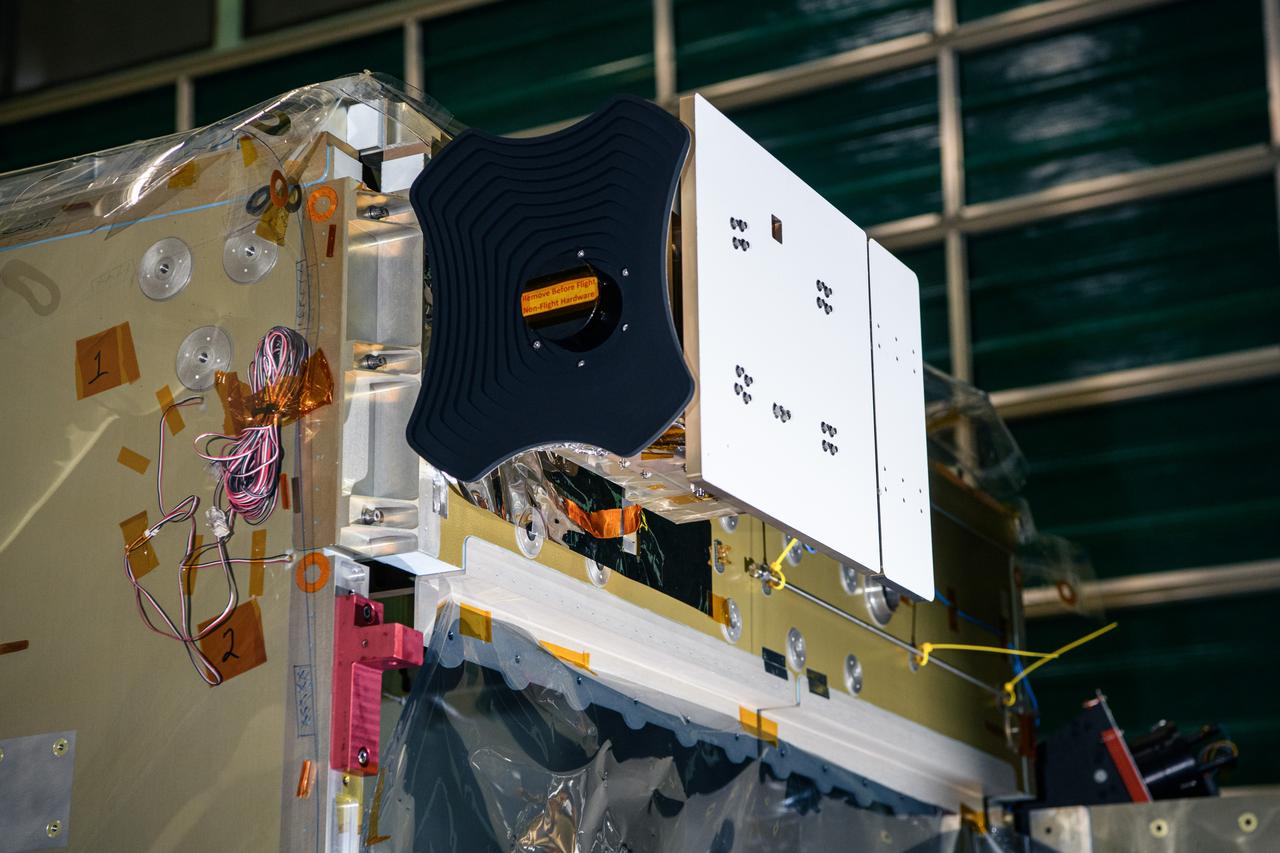
The Hyper-Angular Rainbow Polarimeter #2 (HARP2) instrument after integration to the Plankton, Aerosol, Cloud, ocean Ecosystem (PACE) spacecraft bus at NASA's Goddard Space Flight Center in Greenbelt, Maryland on October 25th, 2022. HARP2 is one of three instruments on NASA's PACE observatory, it was designed and built by UMBC's Earth and Space Institute. PACE's unprecedented spectral coverage will provide the first-ever global measurements designed to identify phytoplankton community composition. The mission will make global ocean color measurements, using the Ocean Color Instrument (OCI), to provide extended data records on ocean ecology and global biogeochemistry along with polarimetry measurements, using the Spectro-polarimeter for Planetary Exploration (SPEXone) and the Hyper Angular Research Polarimeter (HARP2) to provide extended data records on clouds and aerosols. The Earth-observing satellite mission, built at Goddard Space Flight Center in Greenbelt, MD, will continue and advance observations of global ocean color, biogeochemistry, and ecology, as well as the carbon cycle, aerosols and clouds.
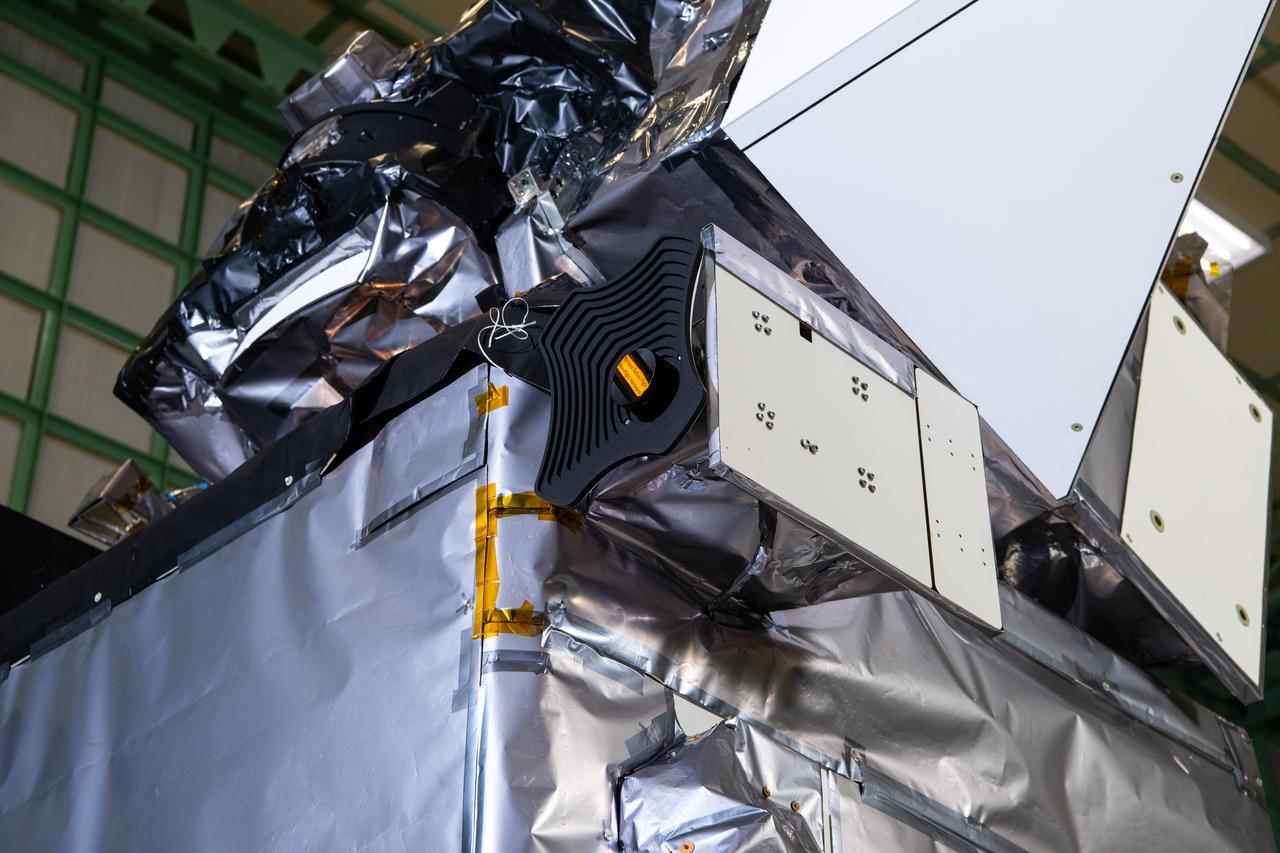
The Hyper-Angular Rainbow Polarimeter #2 (HARP2) instrument on The Plankton, Aerosol, Cloud, ocean Ecosystem (PACE) in the clean room at NASA's Goddard Space Flight Center in Greenbelt, Maryland on October 31st, 2023. HARP2 is one of three instruments on NASA's PACE observatory, it was designed and built by UMBC's Earth and Space Institute. PACE's unprecedented spectral coverage will provide the first-ever global measurements designed to identify phytoplankton community composition. The mission will make global ocean color measurements, using the Ocean Color Instrument (OCI), to provide extended data records on ocean ecology and global biogeochemistry along with polarimetry measurements, using the Spectro-polarimeter for Planetary Exploration (SPEXone) and the Hyper Angular Research Polarimeter (HARP2) to provide extended data records on clouds and aerosols. The Earth-observing satellite mission, built at Goddard Space Flight Center in Greenbelt, MD, will continue and advance observations of global ocean color, biogeochemistry, and ecology, as well as the carbon cycle, aerosols and clouds.
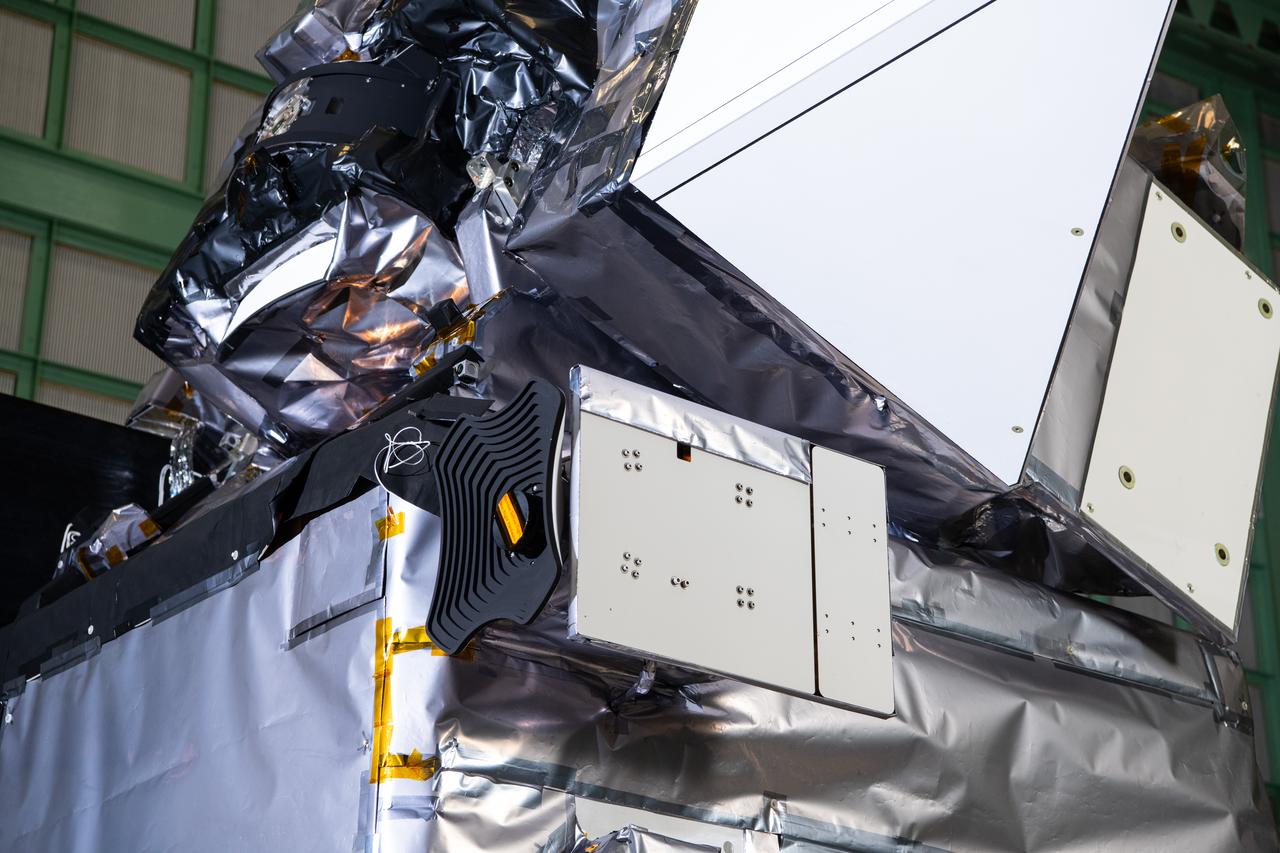
The Hyper-Angular Rainbow Polarimeter #2 (HARP2) instrument on The Plankton, Aerosol, Cloud, ocean Ecosystem (PACE) in the clean room at NASA's Goddard Space Flight Center in Greenbelt, Maryland on October 31st, 2023. HARP2 is one of three instruments on NASA's PACE observatory, it was designed and built by UMBC's Earth and Space Institute. PACE's unprecedented spectral coverage will provide the first-ever global measurements designed to identify phytoplankton community composition. The mission will make global ocean color measurements, using the Ocean Color Instrument (OCI), to provide extended data records on ocean ecology and global biogeochemistry along with polarimetry measurements, using the Spectro-polarimeter for Planetary Exploration (SPEXone) and the Hyper Angular Research Polarimeter (HARP2) to provide extended data records on clouds and aerosols. The Earth-observing satellite mission, built at Goddard Space Flight Center in Greenbelt, MD, will continue and advance observations of global ocean color, biogeochemistry, and ecology, as well as the carbon cycle, aerosols and clouds.

Technicians integrate the Hyper-Angular Rainbow Polarimeter #2 (HARP2) instrument to the Plankton, Aerosol, Cloud, ocean Ecosystem (PACE) spacecraft bus at NASA's Goddard Space Flight Center in Greenbelt, Maryland on October 25th, 2022. HARP2 is one of three instruments on NASA's PACE observatory, it was designed and built by UMBC's Earth and Space Institute. PACE's unprecedented spectral coverage will provide the first-ever global measurements designed to identify phytoplankton community composition. The mission will make global ocean color measurements, using the Ocean Color Instrument (OCI), to provide extended data records on ocean ecology and global biogeochemistry along with polarimetry measurements, using the Spectro-polarimeter for Planetary Exploration (SPEXone) and the Hyper Angular Research Polarimeter (HARP2) to provide extended data records on clouds and aerosols. The Earth-observing satellite mission, built at Goddard Space Flight Center in Greenbelt, MD, will continue and advance observations of global ocean color, biogeochemistry, and ecology, as well as the carbon cycle, aerosols and clouds.
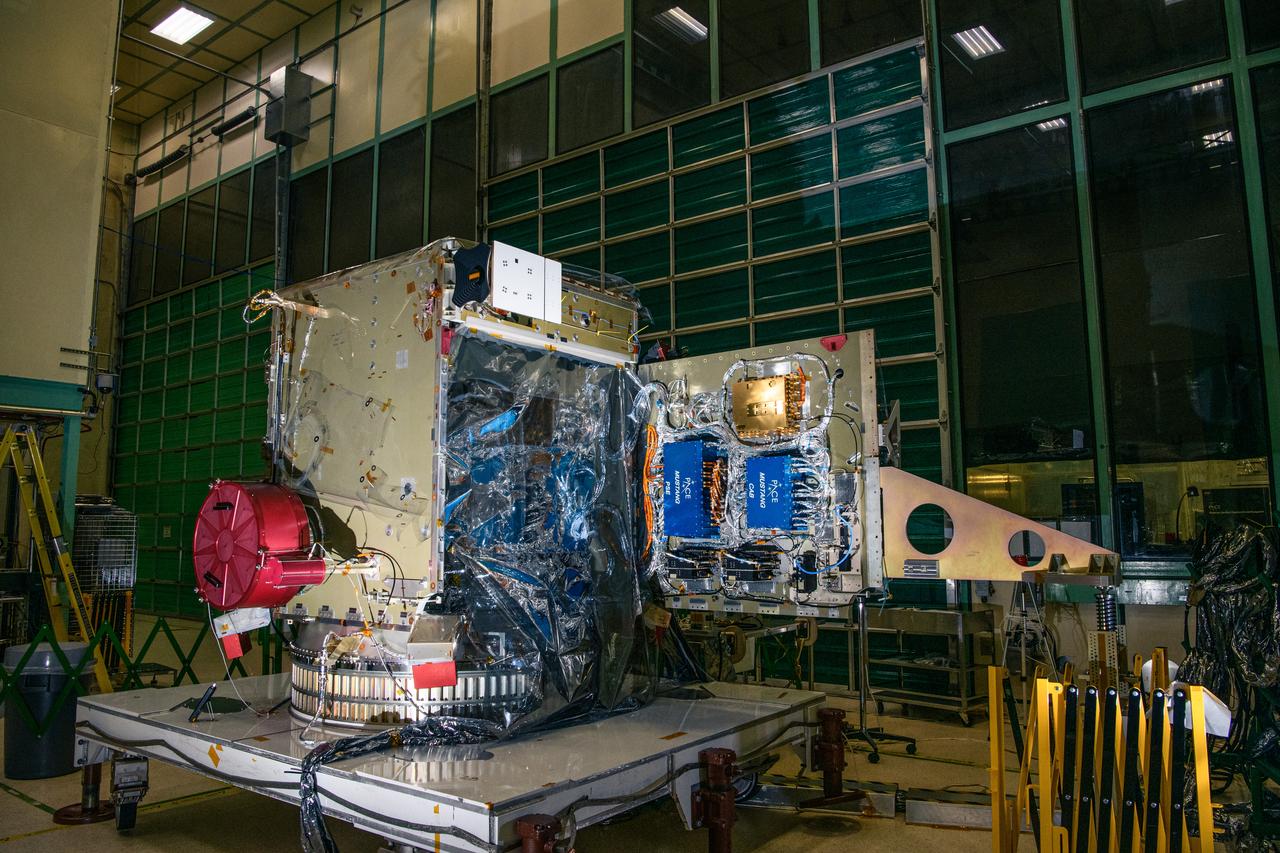
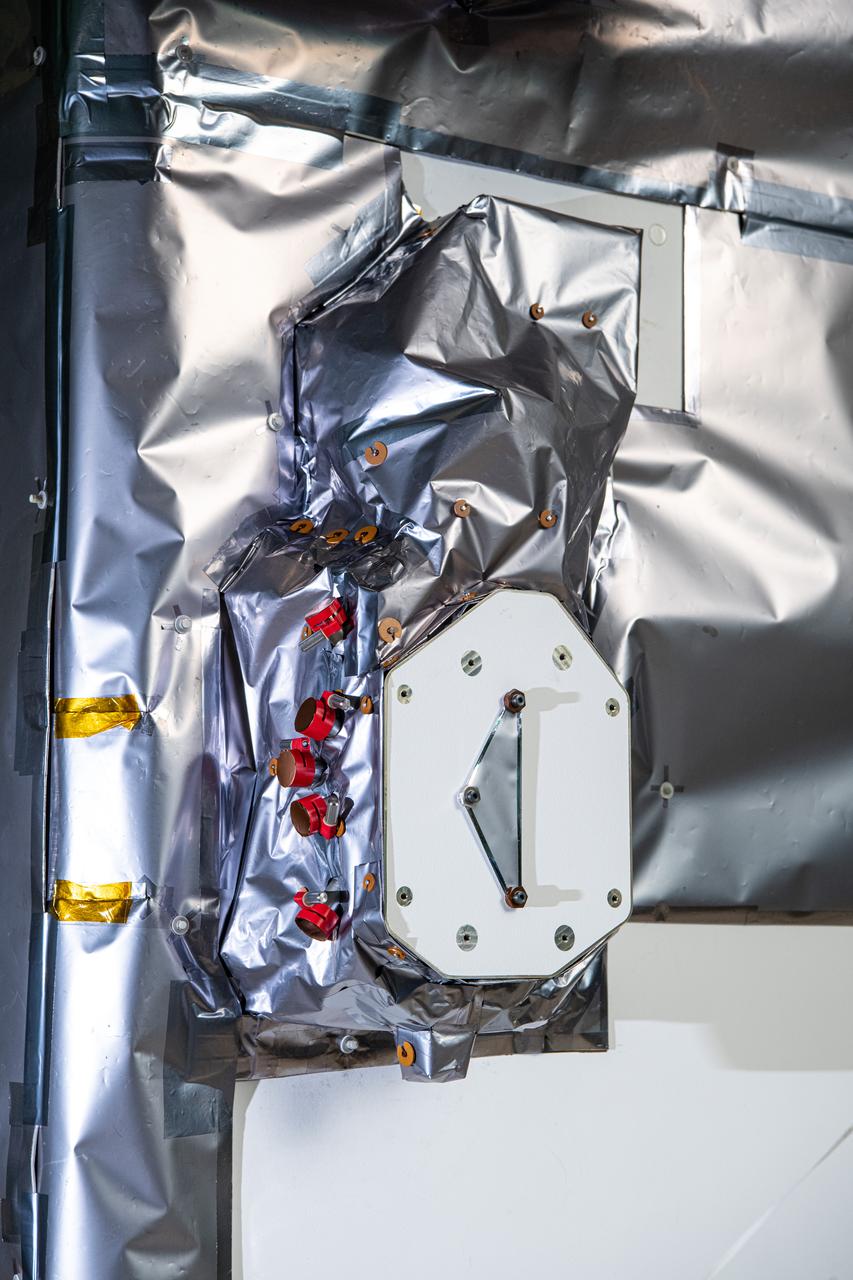
The Plankton, Aerosol, Cloud, ocean Ecosystem (PACE) spacecraft bus after integration of The Hyper-Angular Rainbow Polarimeter #2 (HARP2) instrument at NASA's Goddard Space Flight Center in Greenbelt, Maryland on October 25th, 2022. HARP2 is one of three instruments on NASA's PACE observatory, it was designed and built by UMBC's Earth and Space Institute. PACE's unprecedented spectral coverage will provide the first-ever global measurements designed to identify phytoplankton community composition. The mission will make global ocean color measurements, using the Ocean Color Instrument (OCI), to provide extended data records on ocean ecology and global biogeochemistry along with polarimetry measurements, using the Spectro-polarimeter for Planetary Exploration (SPEXone) and the Hyper Angular Research Polarimeter (HARP2) to provide extended data records on clouds and aerosols. The Earth-observing satellite mission, built at Goddard Space Flight Center in Greenbelt, MD, will continue and advance observations of global ocean color, biogeochemistry, and ecology, as well as the carbon cycle, aerosols and clouds.

NASA DC-8 airborne laboratory flying over Mint Canyon near the snow-covered San Gabriel Mountains of California. The mostly white aircraft is silhouetted against the darker mountains in the background.
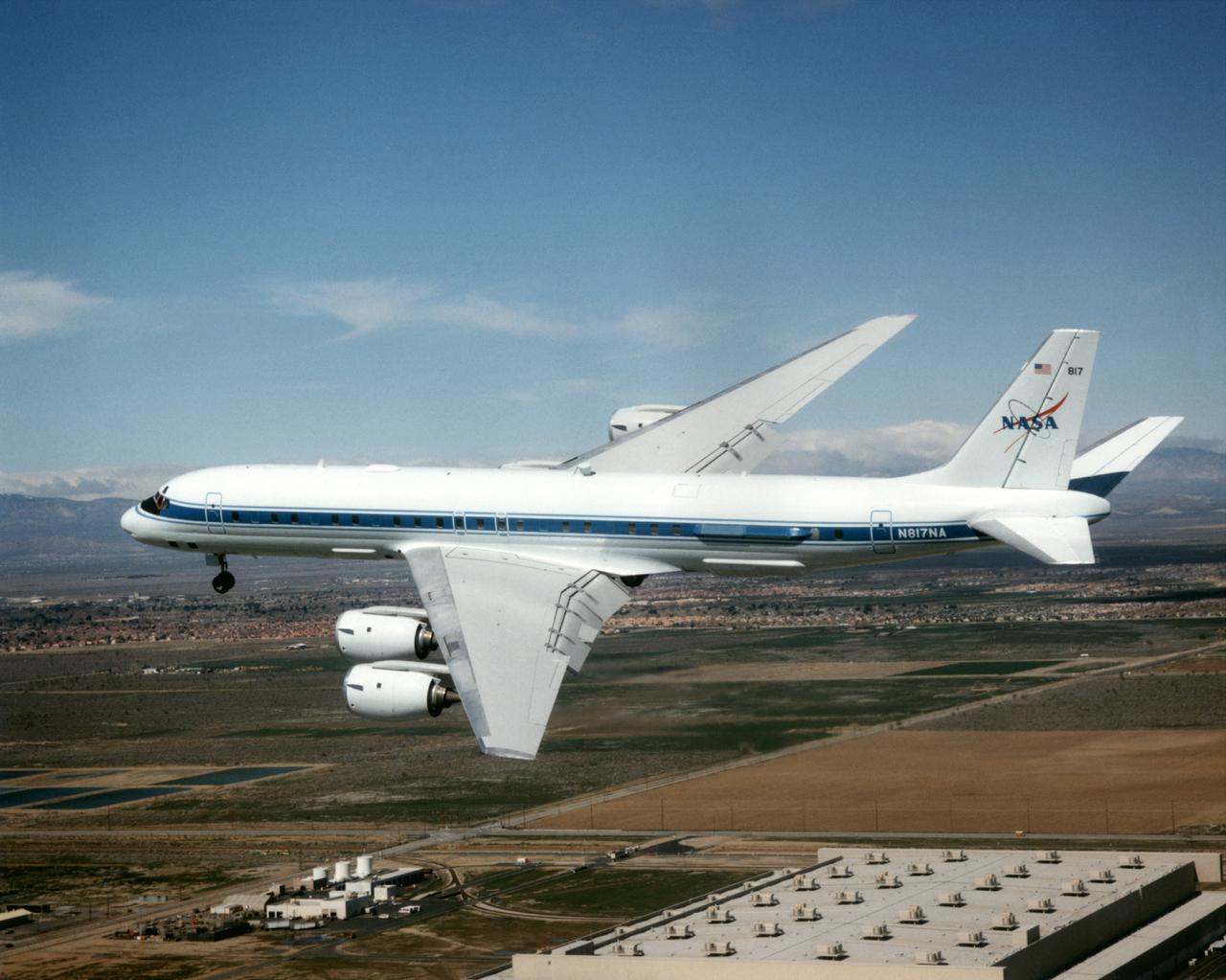
The DC-8 Airborne Laboratory in a left banking turn above the airport at Palmdale, California. The right wing is silhouetted against the blue sky, while the left wing contrasts with the desert terrain. The former airliner is a "dash-72" model and has a range of 5,400 miles. The craft can stay airborne for 12 hours and has an operational speed range between 300 and 500 knots. The research flights are made at between 500 and 41,000 feet. The aircraft can carry up to 30,000 lbs of research/science payload equipment installed in 15 mission-definable spaces.
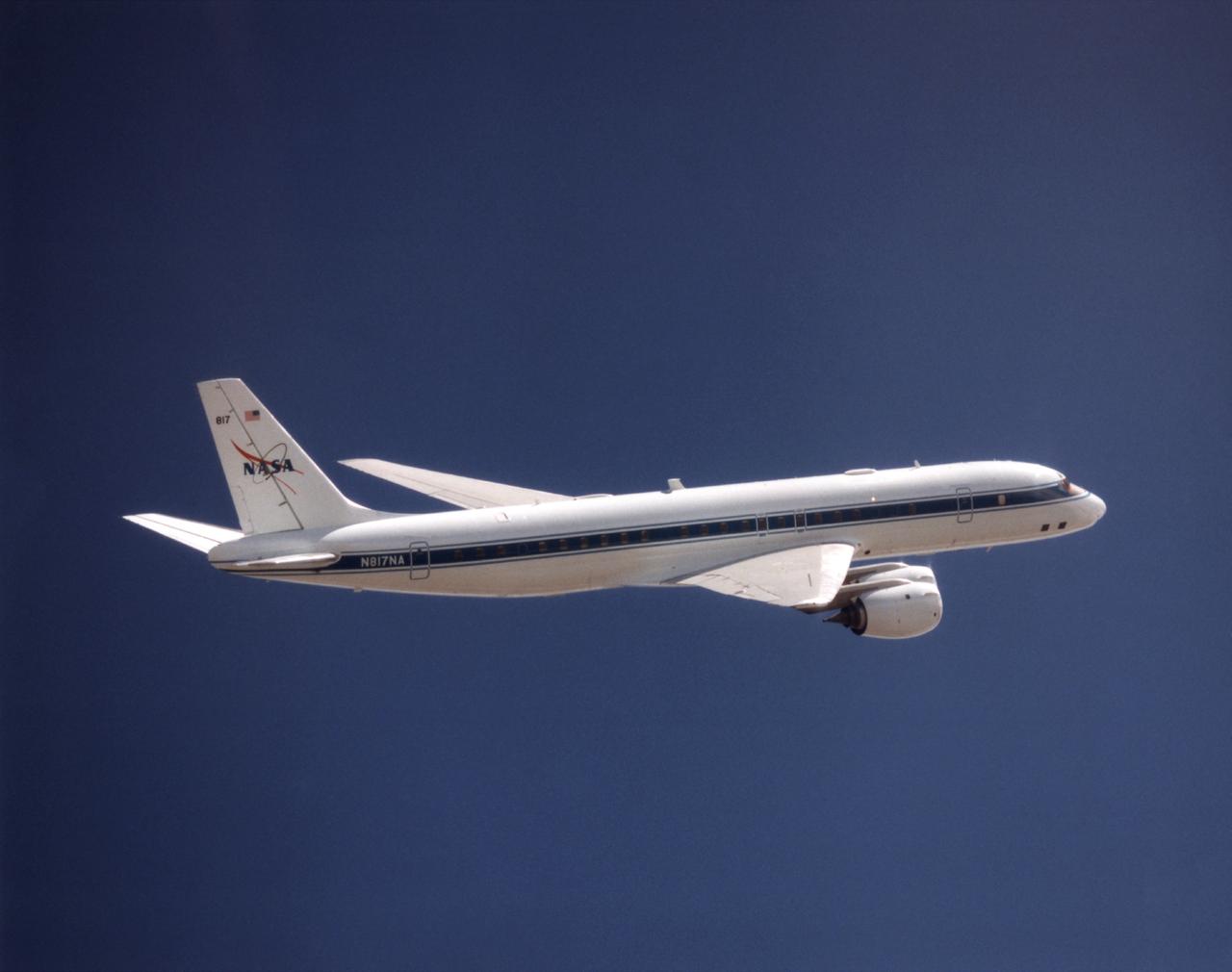
NASA's DC-8 Airborne Science platform shown against a background of a dark blue sky on February 20, 1998. The aircraft is shown from the right rear, slightly above its plane, with the right wing in the foreground and the left wing and horizontal tail in the background. The former airliner is a "dash-72" model and has a range of 5,400 miles. The craft can stay airborne for 12 hours and has an operational speed range between 300 and 500 knots. The research flights are made at between 500 and 41,000 feet. The aircraft can carry up to 30,000 lbs of research/science payload equipment installed in 15 mission-definable spaces.
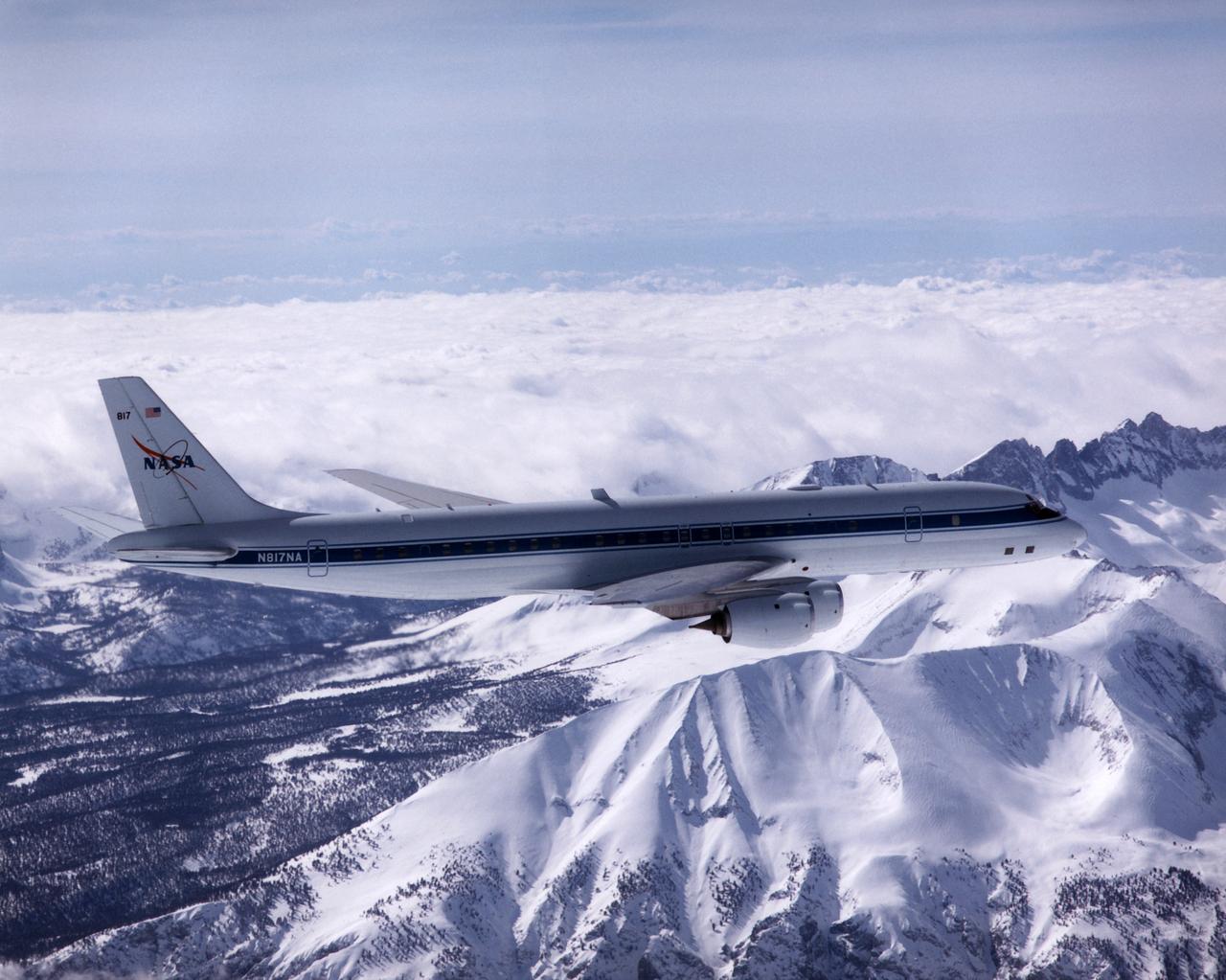
NASA's DC-8 Airborne Laboratory during a flight over the snow-covered Sierra Nevada Mountains. Over the past several years the DC-8 has conducted research missions in such diverse places as the Pacific in spring and Sweden in winter.
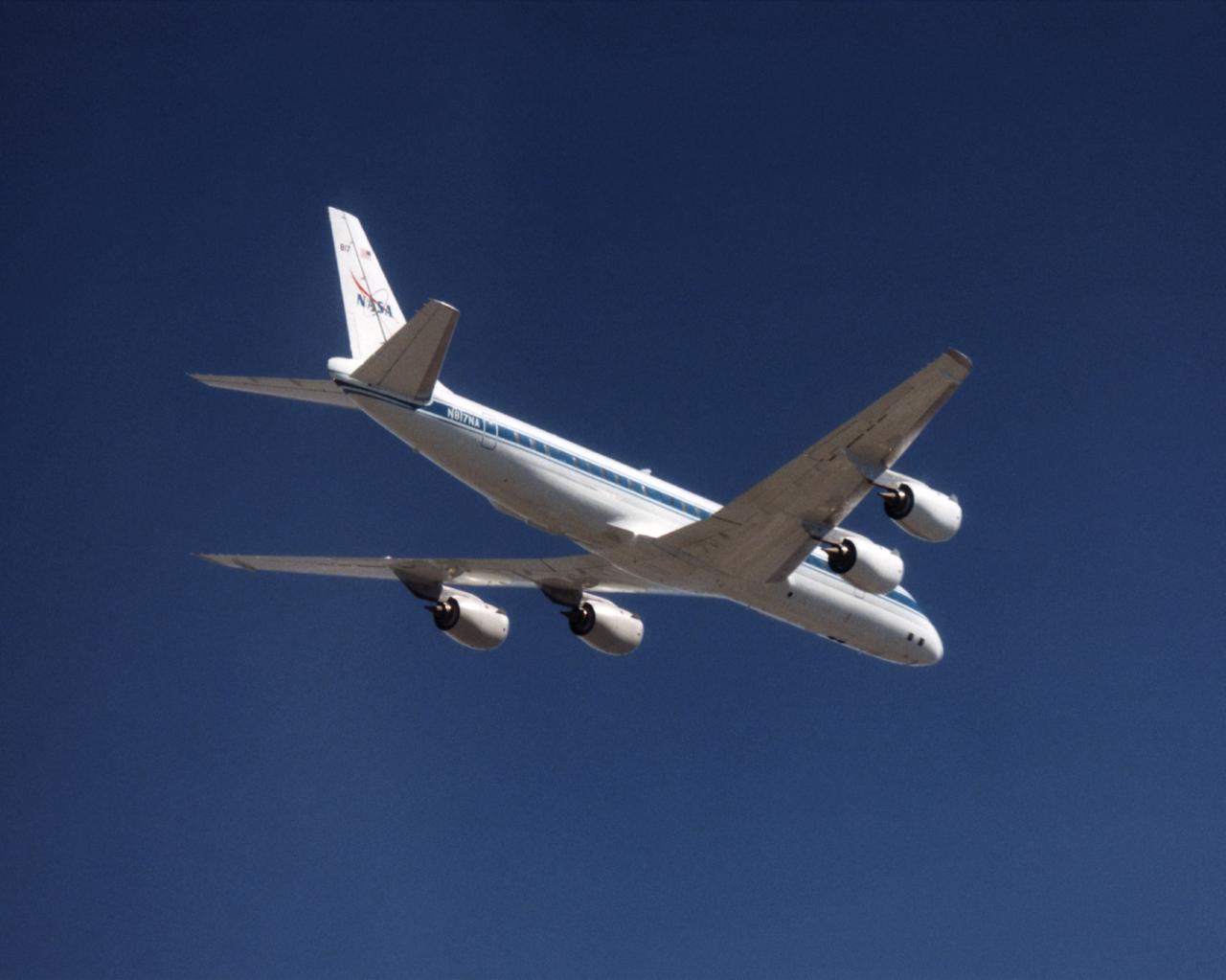
The NASA DC-8 in a right bank over the rugged Sierra Nevada Mountains. The former airliner is a "dash-72" model and has a range of 5,500 miles. The craft can stay airborne for 12 hours and has an operational speed range between 300 and 500 knots. The research flights are made at between 500 and 41,000 feet. The aircraft can carry up to 30,000 lbs of research/science payload equipment installed in 15 mission-definable spaces. In this photo, the aircraft is shown in flight from below, with the DC-8 silhouetted against a blue sky.
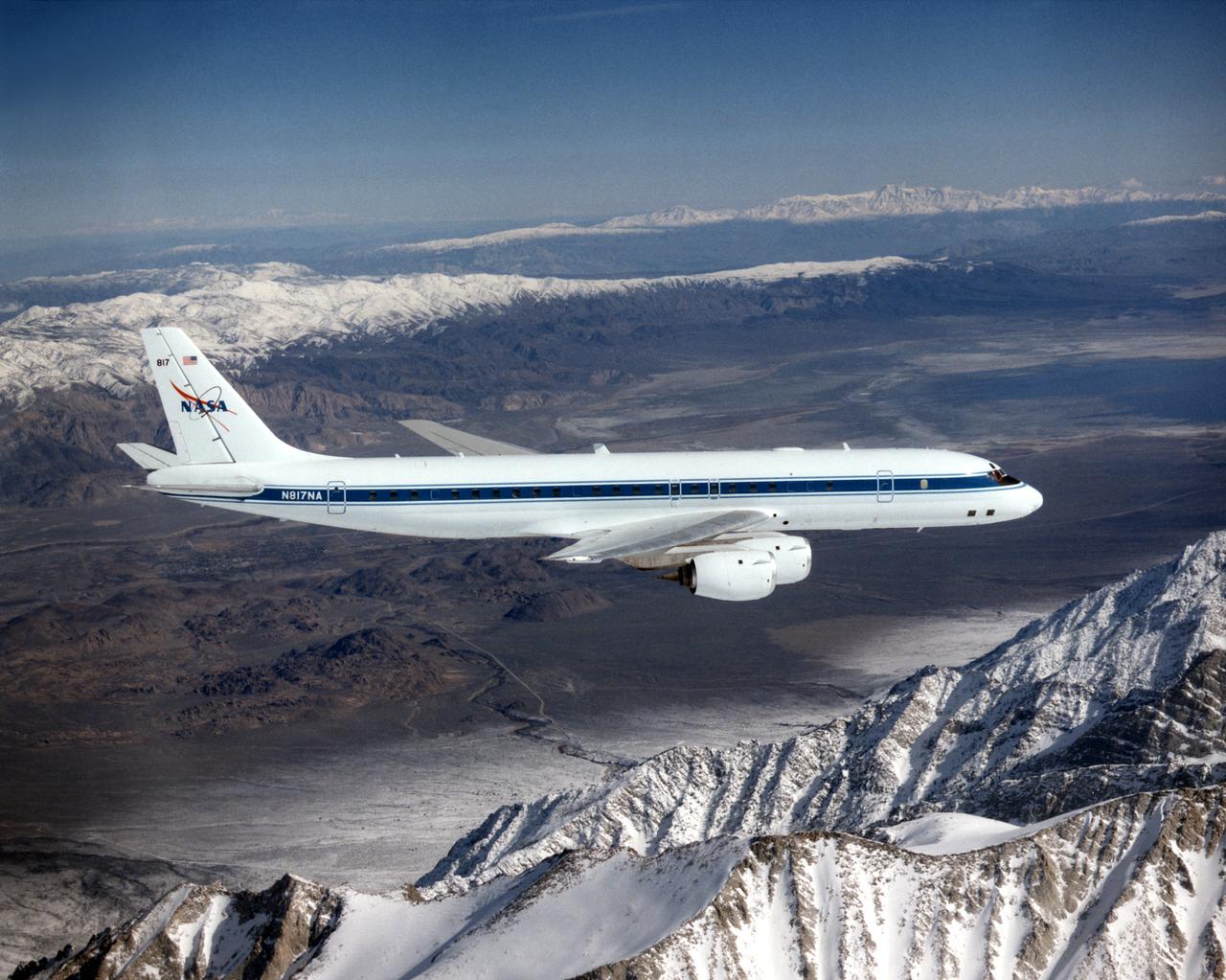
The DC-8 in flight near Lone Pine, Calif. In the foreground are the Sierra Nevada Mountains, covered with winter snow. In the distance are the White Mountains. The DC-8's fuselage is painted white with a dark blue stripe down the side. The wings are silver, while the engine pods are white. In this view of the airplane's right-hand side, only a few of its antennas are visible. The experimental payload can be as great as 30,000 pounds of equipment for gathering data of various sorts.
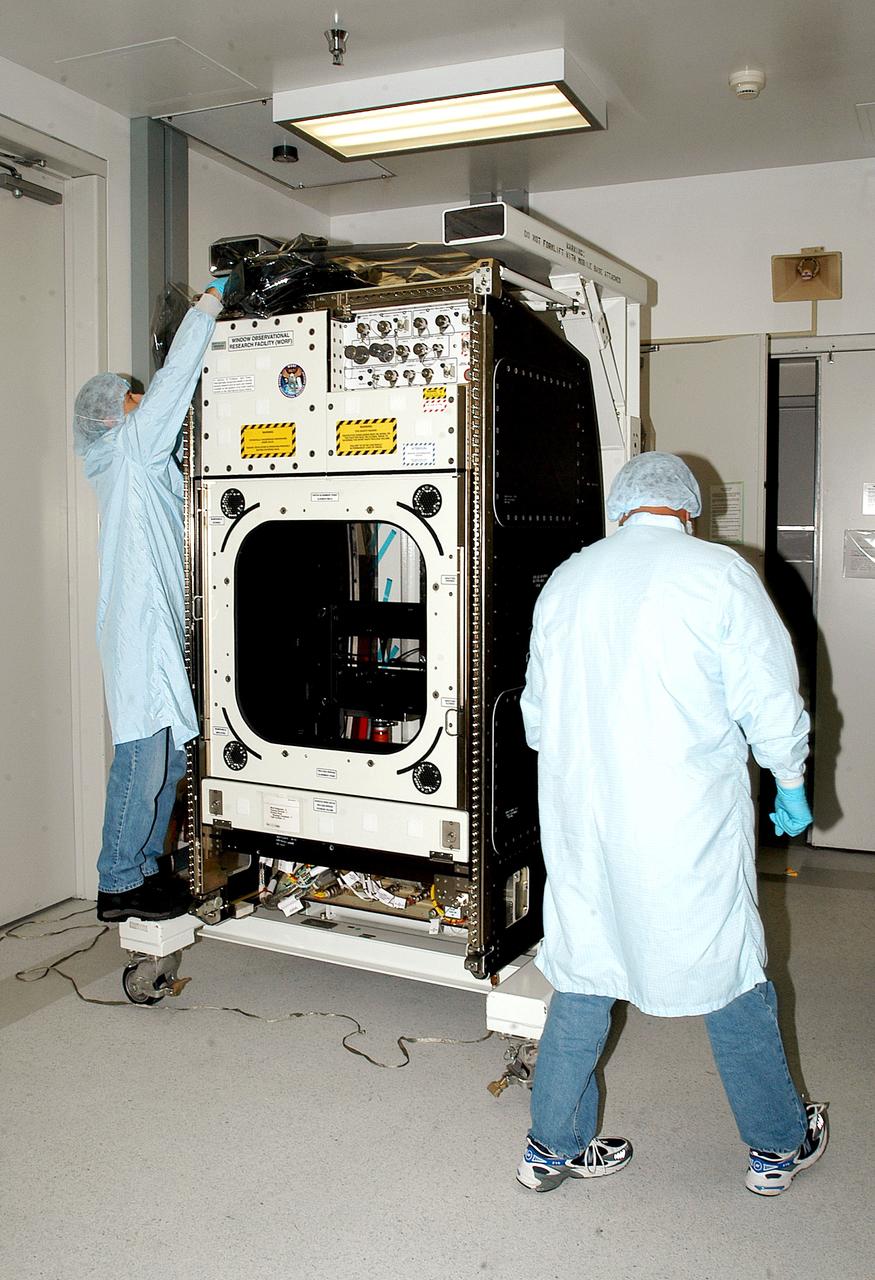
KENNEDY SPACE CENTER, FLA. - Workers in the Space Station Processing Facility check out the Window Observational Research Facility (WORF), designed and built by the Boeing Co. at NASA’s Marshall Space Flight Center in Huntsville, Ala. WORF will be delivered to the International Space Station and placed in the rack position in front of the Destiny lab window, providing locations for attaching cameras, multi-spectral scanners and other instruments. WORF will support a variety of scientific and commercial experiments in areas of Earth systems and processes, global ecological changes in Earth’s biosphere, lithosphere, hydrosphere and climate system, Earth resources, natural hazards, and education. After installation, it will become a permanent focal point for Earth Science research aboard the space station.
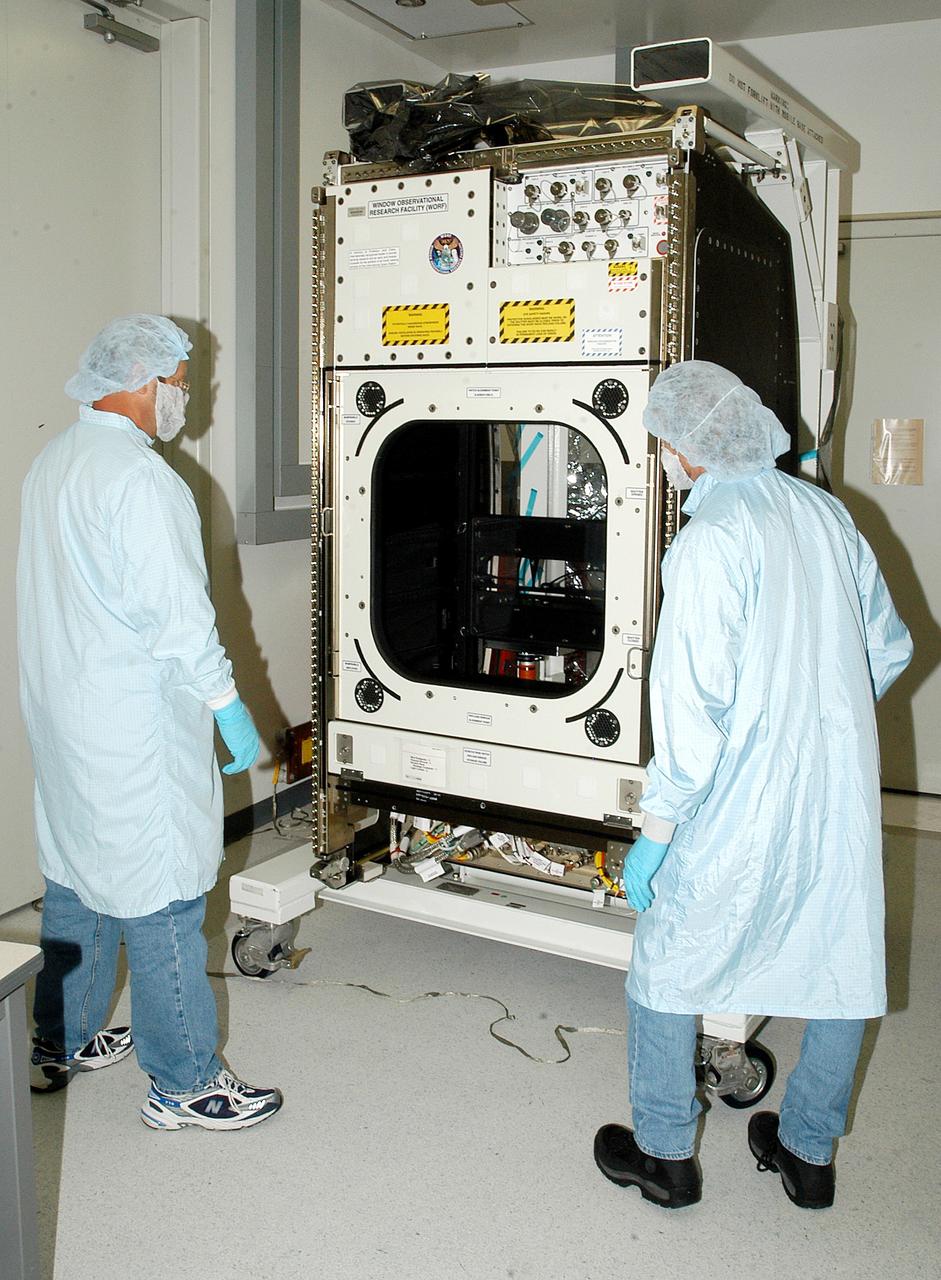
KENNEDY SPACE CENTER, FLA. - Workers in the Space Station Processing Facility check out the Window Observational Research Facility (WORF), designed and built by the Boeing Co. at NASA’s Marshall Space Flight Center in Huntsville, Ala. WORF will be delivered to the International Space Station and placed in the rack position in front of the Destiny lab window, providing locations for attaching cameras, multi-spectral scanners and other instruments. WORF will support a variety of scientific and commercial experiments in areas of Earth systems and processes, global ecological changes in Earth’s biosphere, lithosphere, hydrosphere and climate system, Earth resources, natural hazards, and education. After installation, it will become a permanent focal point for Earth Science research aboard the space station.
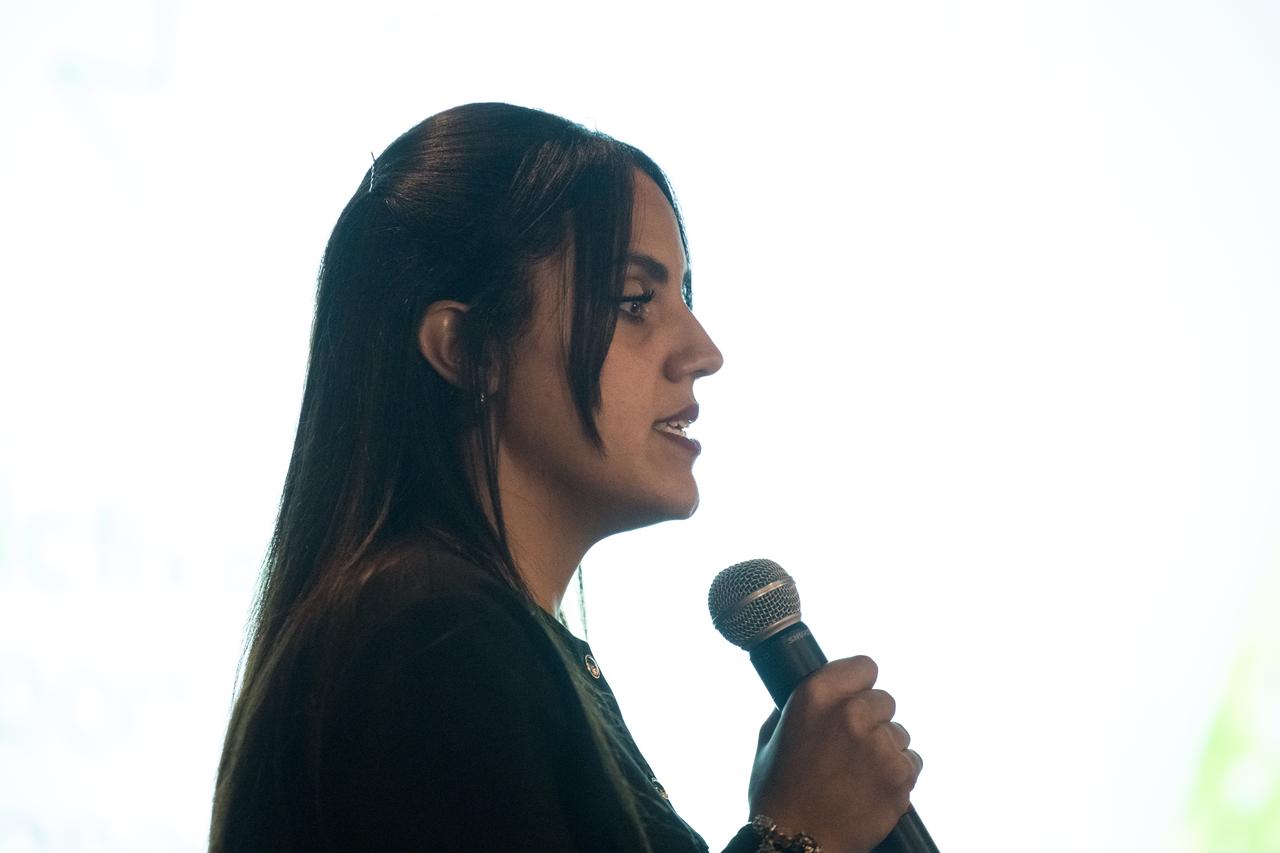
Ikram Morso speaks about her project, Central Park Ecological Conservation, Tuesday, August 6, 2024, at the Mary W. Jackson NASA Headquarters building in Washington. Every summer early career researchers from NASA’s DEVELOP National Program come to NASA Headquarters and present their research projects. DEVELOP is a training and development program where early career researchers work on Earth science projects, mentored by science advisors from NASA and partner agencies, and provide research results to local communities. Photo Credit: (NASA/Aubrey Gemignani)
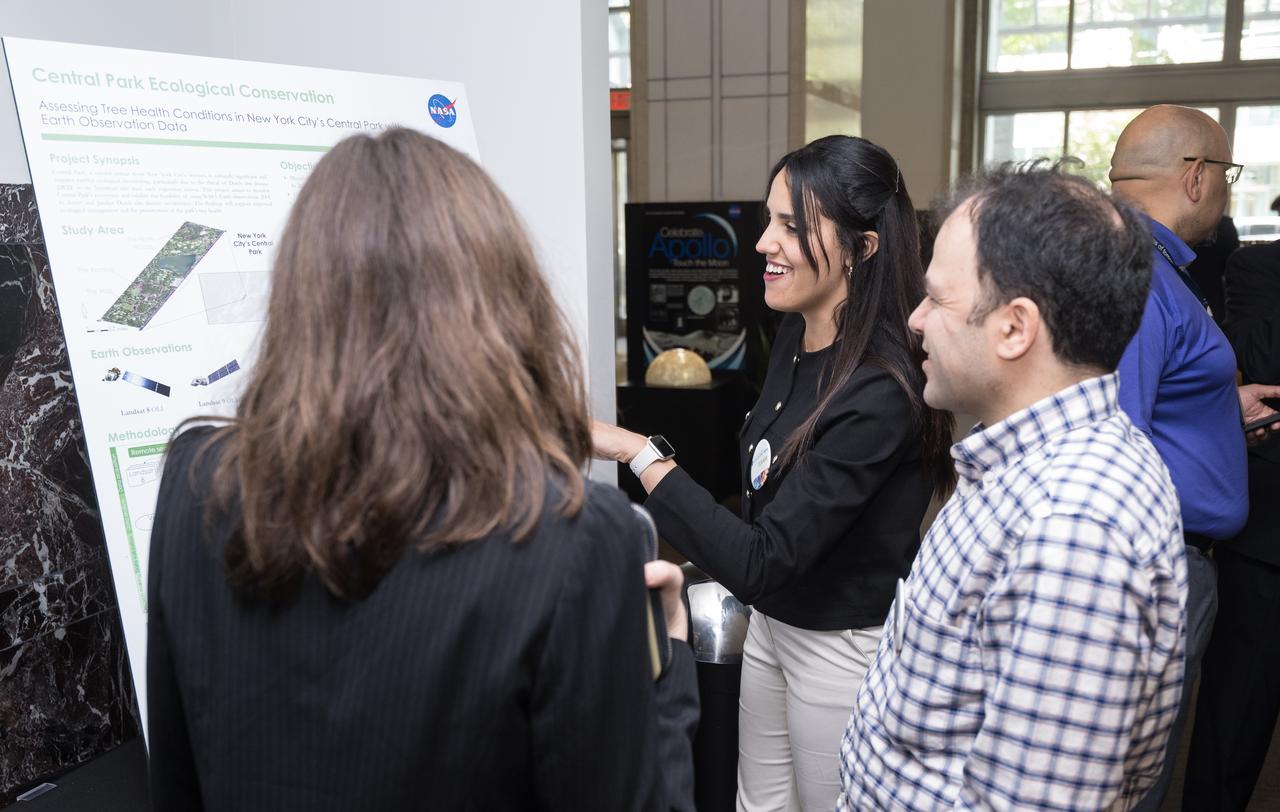
Ikram Morso speaks about her project, Central Park Ecological Conservation, Tuesday, August 6, 2024, at the Mary W. Jackson NASA Headquarters building in Washington. Every summer early career researchers from NASA’s DEVELOP National Program come to NASA Headquarters and present their research projects. DEVELOP is a training and development program where early career researchers work on Earth science projects, mentored by science advisors from NASA and partner agencies, and provide research results to local communities. Photo Credit: (NASA/Aubrey Gemignani)
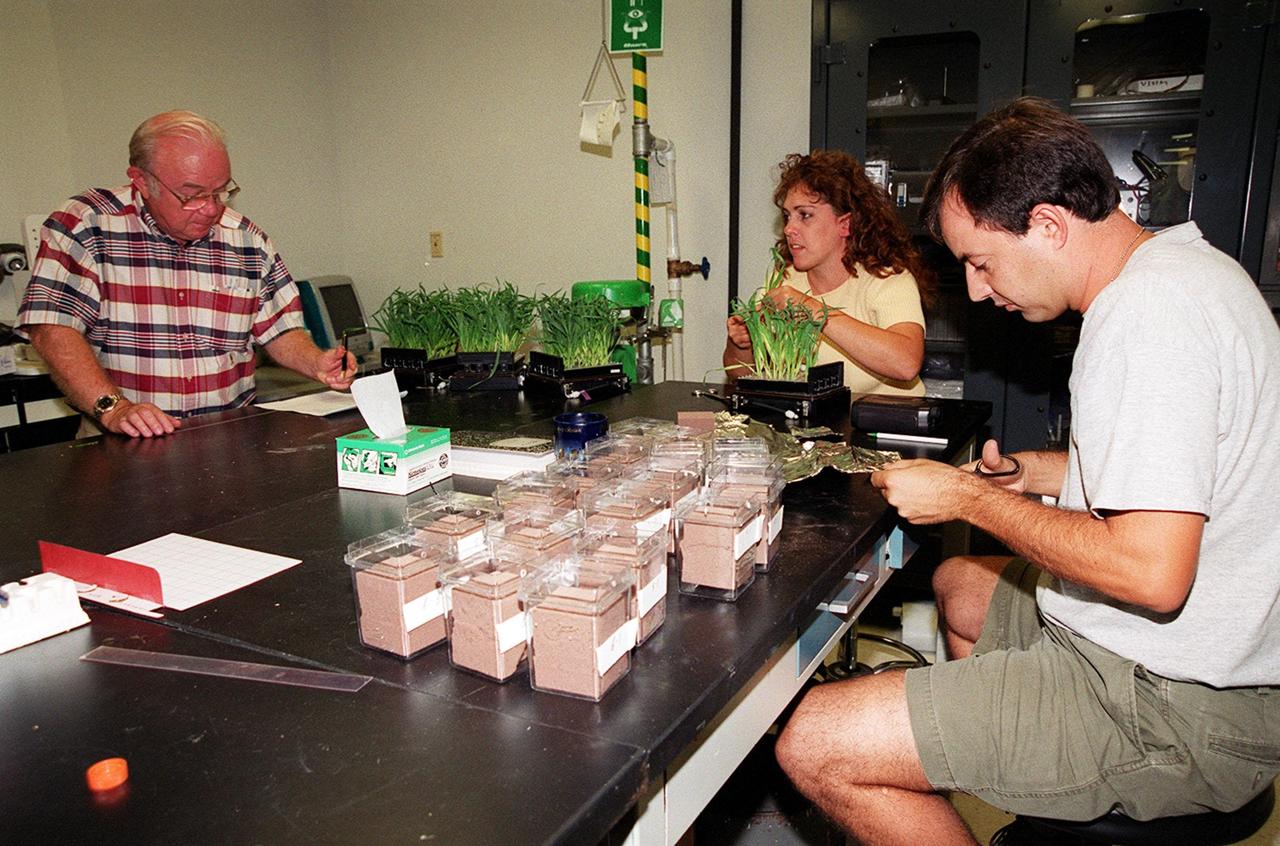
Researchers work with wheat samples that are part of ground testing for the first International Space Station plant experiment, scheduled to fly in October 2001. From left are research scientist Oscar Monje and research technicians Lisa Ruffa and Ignacio Eraso. The payload process testing they are performing is one of many studies at the Biological Sciences Branch in the Spaceport Engineering and Technology Directorate at Kennedy Space Center. The branch's operations and research areas include life sciences Space Shuttle payloads, bioregenerative life-support for long-duration spaceflight and environmental/ecological stewardship
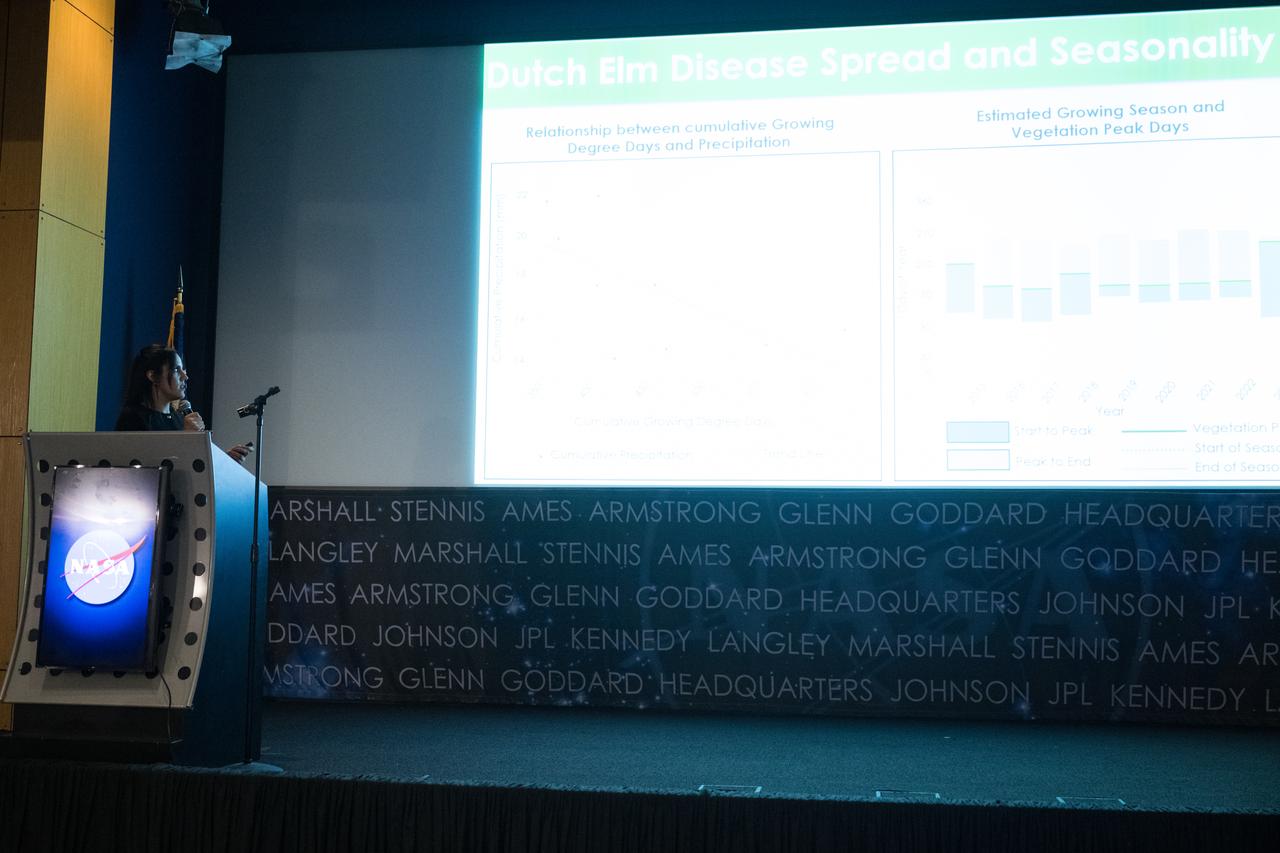
Ikram Morso speaks about her project, Central Park Ecological Conservation, Tuesday, August 6, 2024, at the Mary W. Jackson NASA Headquarters building in Washington. Every summer early career researchers from NASA’s DEVELOP National Program come to NASA Headquarters and present their research projects. DEVELOP is a training and development program where early career researchers work on Earth science projects, mentored by science advisors from NASA and partner agencies, and provide research results to local communities. Photo Credit: (NASA/Aubrey Gemignani)
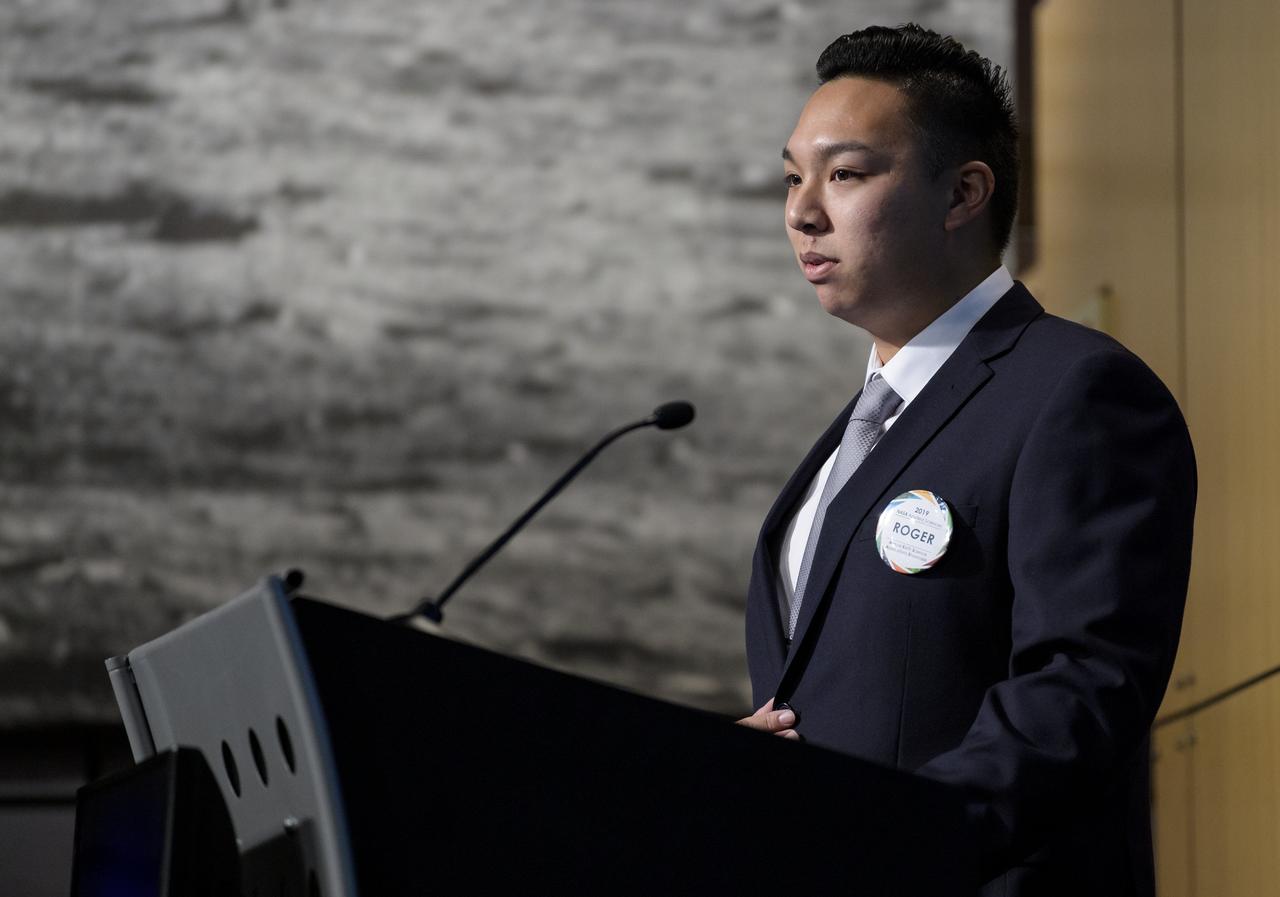
Roger Ly speaks about DEVELOP's Santa Monica Mountains Ecological Forecasting III project during the 2019 Annual Earth Science Applications Showcase, Thursday, Aug. 1, 2019 at NASA Headquarters in Washington, DC. Every summer students and young professionals from NASA’s Applied Sciences’ DEVELOP National Program come to NASA Headquarters and present their research projects. DEVELOP is a training and development program where students work on Earth science research projects, mentored by science advisers from NASA and partner agencies, and extend research results to local communities. Photo Credit: (NASA/Joel Kowsky)
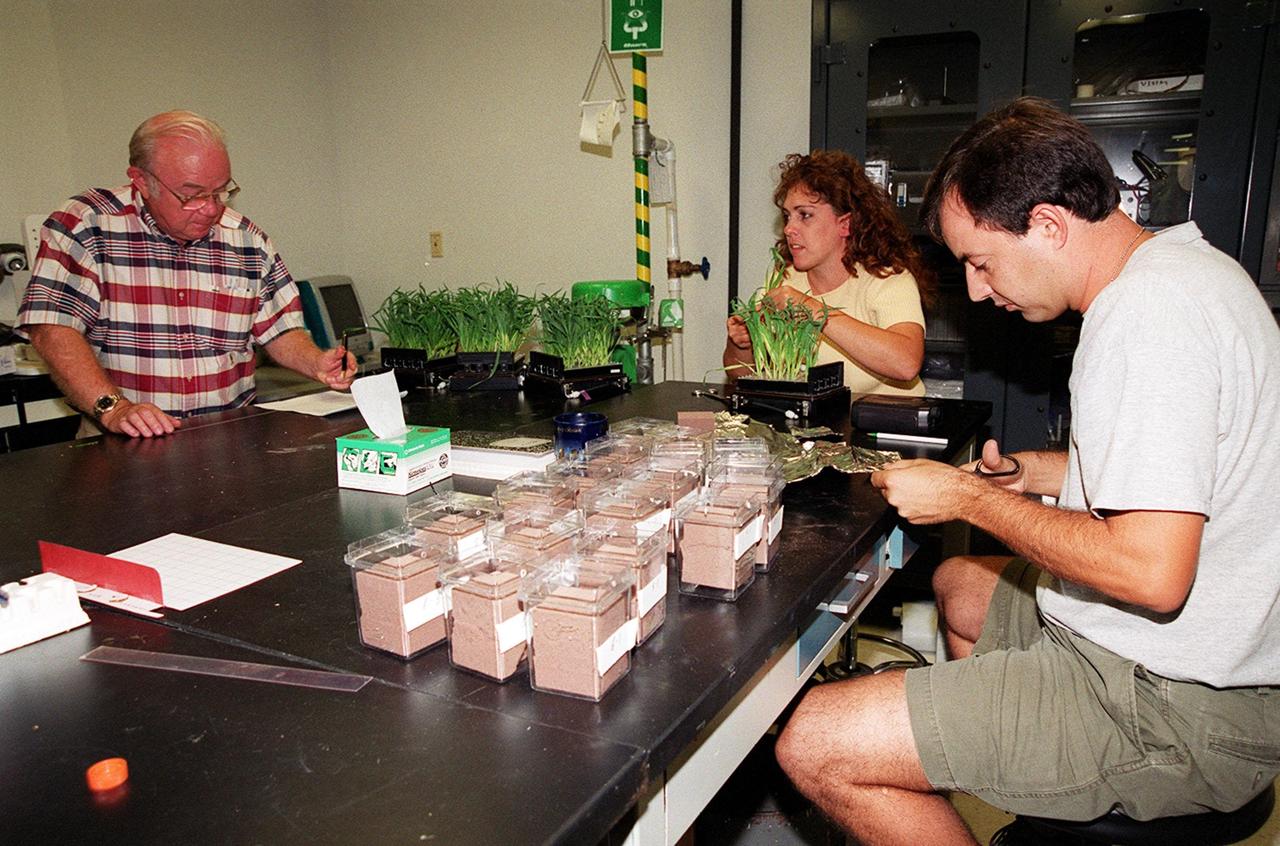
Researchers work with wheat samples that are part of ground testing for the first International Space Station plant experiment, scheduled to fly in October 2001. From left are research scientist Oscar Monje and research technicians Lisa Ruffa and Ignacio Eraso. The payload process testing they are performing is one of many studies at the Biological Sciences Branch in the Spaceport Engineering and Technology Directorate at Kennedy Space Center. The branch's operations and research areas include life sciences Space Shuttle payloads, bioregenerative life-support for long-duration spaceflight and environmental/ecological stewardship
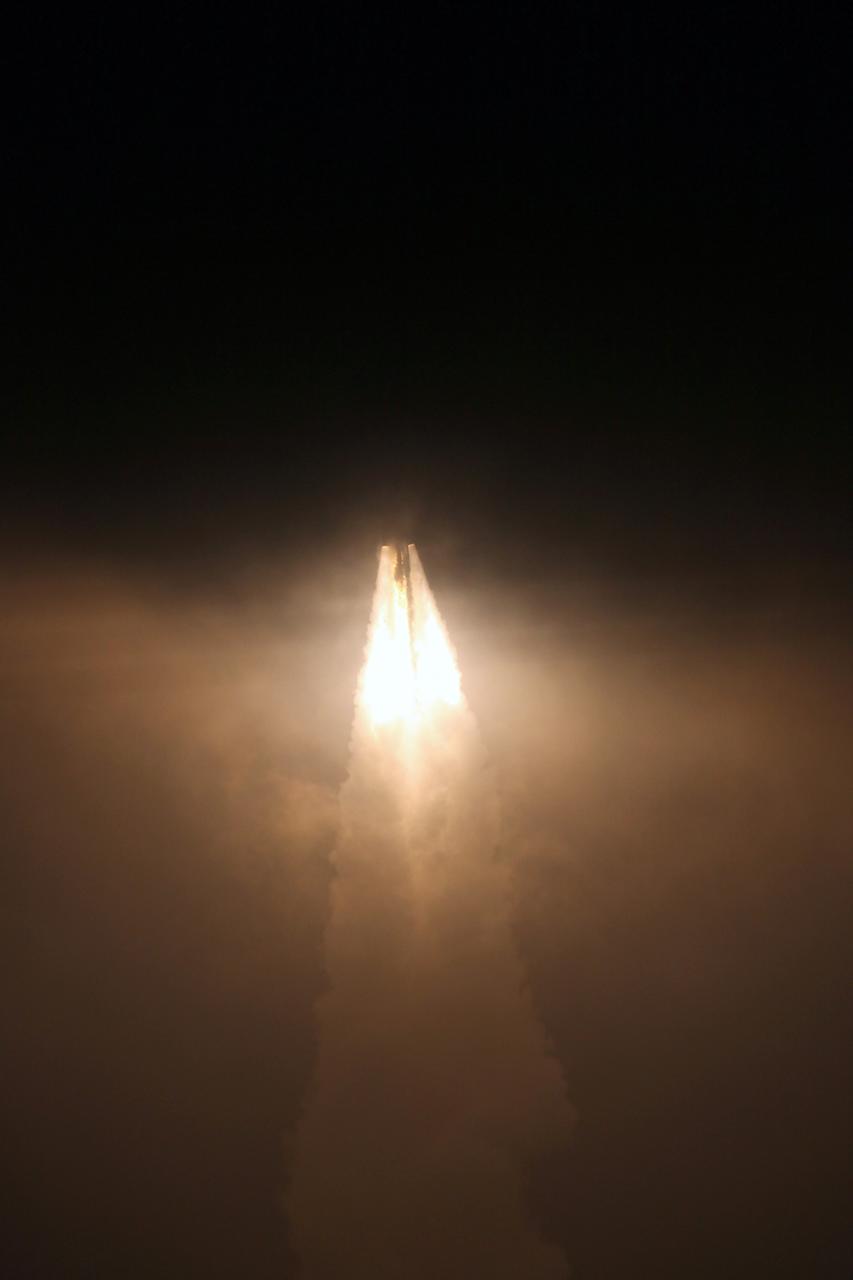
VANDENBERG AIR FORCE BASE, Calif. – A Delta II rocket lifts off Space Launch Complex 2 at Vandenberg Air Force Base, carrying NASA's Soil Moisture Active Passive satellite, or SMAP, to Earth orbit. Liftoff was at 9:22 a.m. EST. SMAP's measurements will be invaluable across many science and applications disciplines including hydrology, climate, carbon cycle, and the meteorological, environmental and ecology applications communities. SMAP is designed to produce the highest-resolution maps of soil moisture ever obtained from space. To learn more about SMAP, visit http://www.nasa.gov/smap. Photo credit: NASA/Kim Shiflett
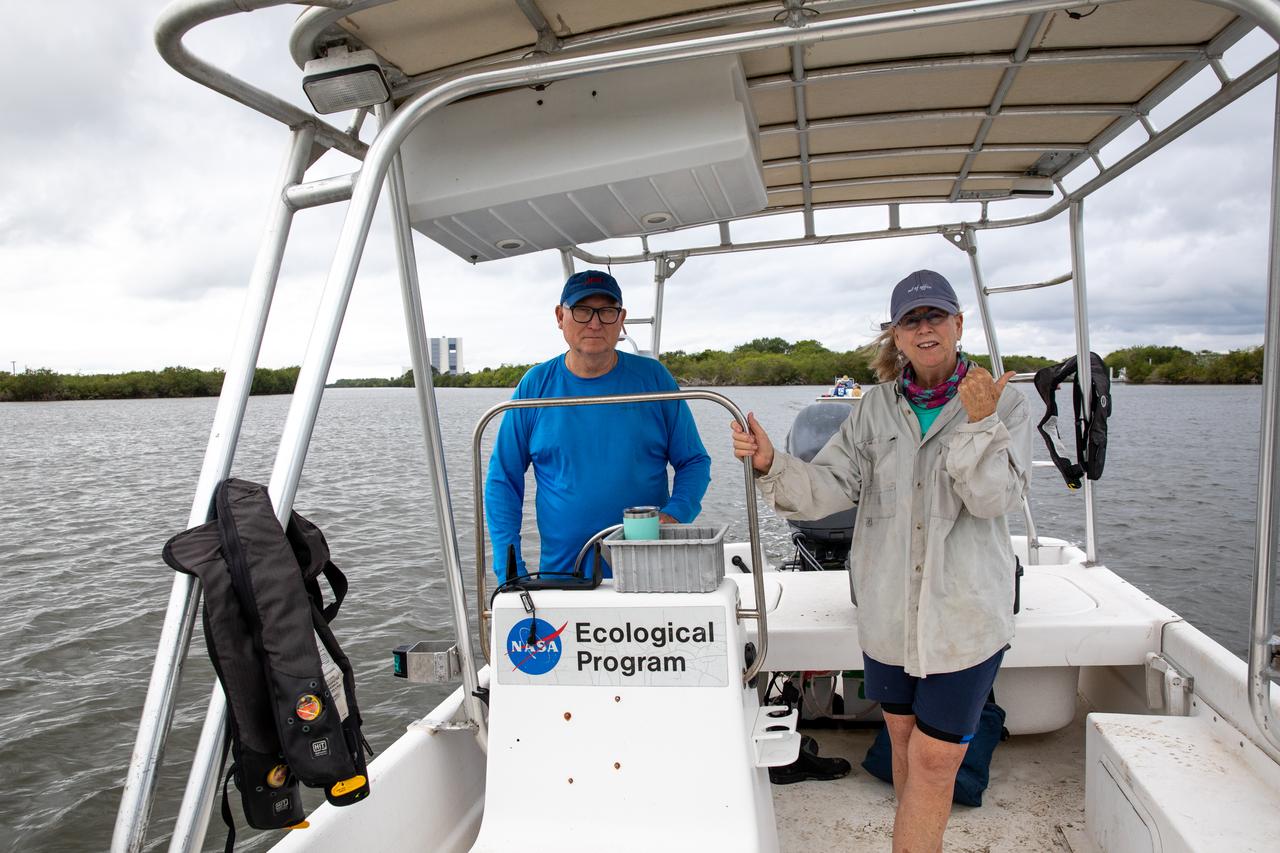
Kennedy Space Center’s Doug Scheidt (left), an ecologist working on NASA’s Environmental and Medical Contract (NEMCON), and Jane Provancha, manager of the ecological group for NEMCON, oversee seagrass restoration efforts at the Florida spaceport on March 29, 2023. Kennedy’s Environmental Management Branch is working to plant a minimum of 28,000 shoots of seagrass divided into 18 sites across three areas at the Florida spaceport as part of a pilot project for seagrass restoration efforts. The project will look at the feasibility of replanting seagrass in Kennedy waters and, if successful, could lead to the spaceport becoming a donor site where shoots of grass can be broken off and relocated to other areas within Kennedy or along the Indian River Lagoon to promote growth.
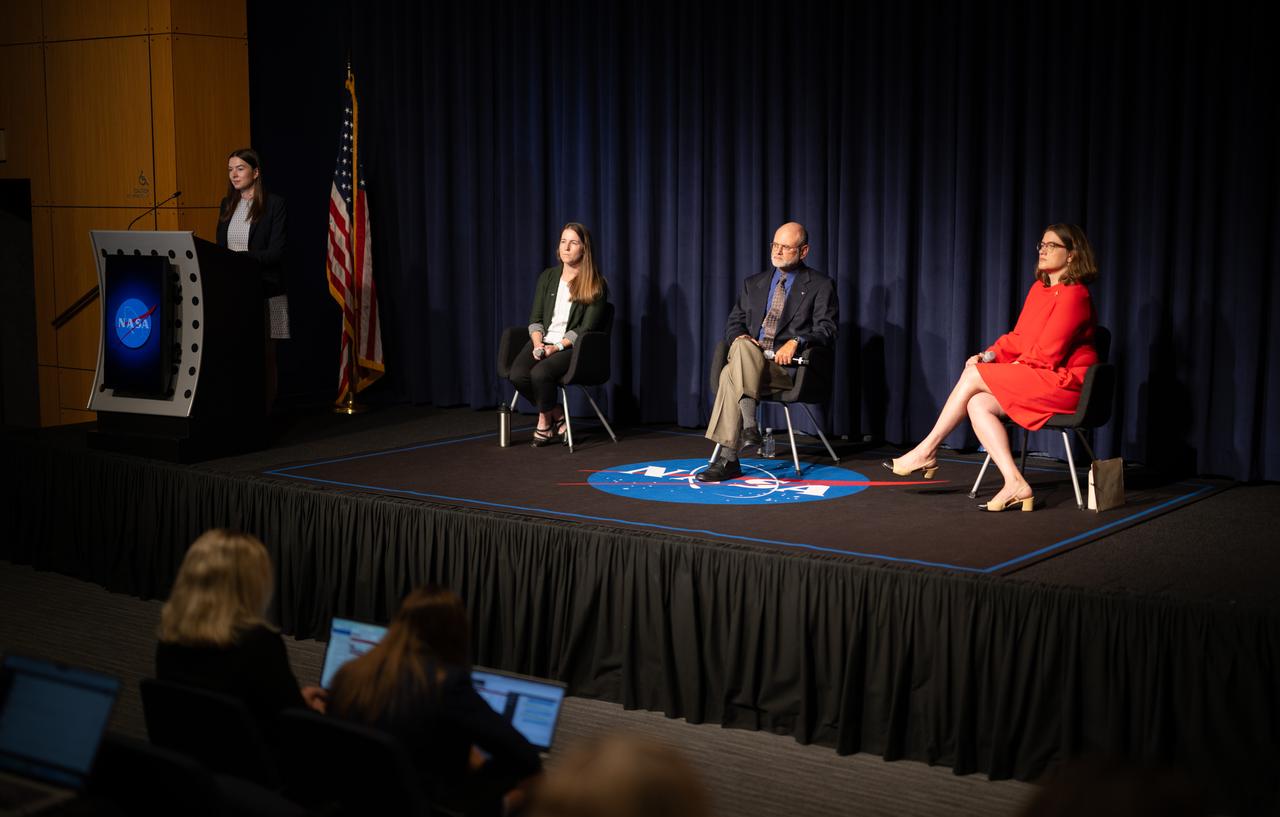
NASA Press Secretary Jackie McGuinness, left, Kate Calvin, NASA Chief Scientist and senior climate advisor, second from left, Carlos Del Castillo, chief of the Ocean Ecology Laboratory at NASA’s Goddard Space Flight Center, second from right, and Sarah Kapnick, Chief Scientist at the National Oceanic and Atmospheric Administration (NOAA), right, are seen during a news conference to discuss the latest global temperature data, Monday, Aug. 14, 2023, at the Mary W. Jackson NASA Headquarters building in Washington. Photo Credit: (NASA/Joel Kowsky)
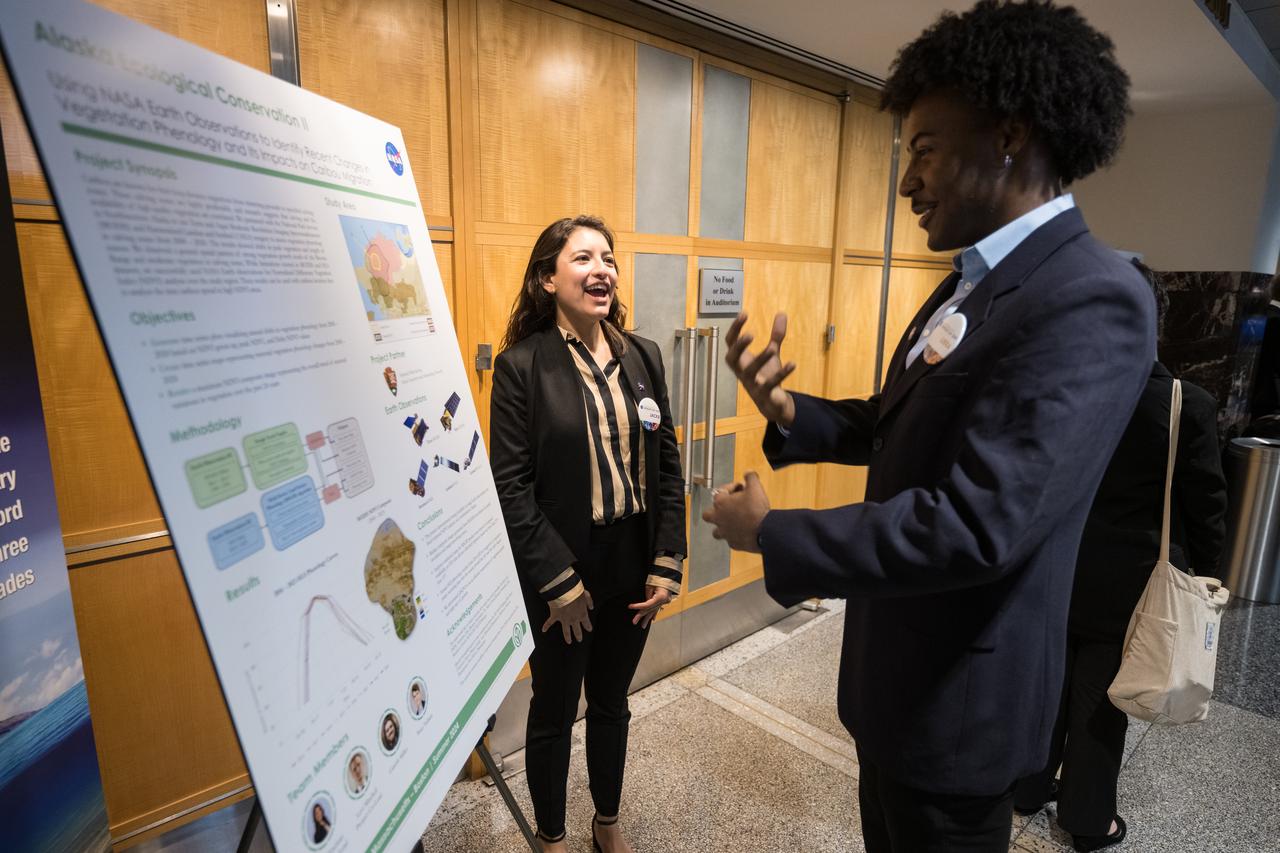
Jackie Encinas speaks about her project, Alaska Ecological Conservation II, Tuesday, August 6, 2024, at the Mary W. Jackson NASA Headquarters building in Washington. Every summer early career researchers from NASA’s DEVELOP National Program come to NASA Headquarters and present their research projects. DEVELOP is a training and development program where early career researchers work on Earth science projects, mentored by science advisors from NASA and partner agencies, and provide research results to local communities. Photo Credit: (NASA/Aubrey Gemignani)
This is a radar image of the area surrounding the Harvard Forest in north-central Massachusetts that has been operated as a ecological research facility by Harvard University since 1907. At the center of the image is the Quabbin Reservoir, and the Connecticut River is at the lower left of the image. The Harvard Forest itself is just above the reservoir. Researchers are comparing the naturally occurring physical disturbances in the forest and the recent and projected chemical disturbances and their effects on the forest ecosystem. Agricultural land appears dark blue/purple, along with low shrub vegetation and some wetlands. Urban development is bright pink; the yellow to green tints are conifer-dominated vegetation with the pitch pine sand plain at the middle left edge of the image appearing very distinctive. The green tint may indicate pure pine plantation stands, and deciduous broadleaf trees appear gray/pink with perhaps wetter sites being pinker. This image was acquired by the Spaceborne Imaging Radar-C/X-Band Synthetic Aperture Radar (SIR-C/X-SAR) aboard the space shuttle Endeavour. SIR-C/X-SAR, a joint mission of the German, Italian and the United States space agencies, is part of NASA's Mission to Planet Earth. The image is centered at 42.50 degrees North latitude and 72.33 degrees West longitude and covers an area of 53 kilometers 63 by kilometers (33 miles by 39 miles). The colors in the image are assigned to different frequencies and polarizations of the radar as follows: red is L-band horizontally transmitted and horizontally received; green is L-band horizontally transmitted and vertically received; and blue is C-band horizontally transmitted and horizontally received. http://photojournal.jpl.nasa.gov/catalog/PIA01788
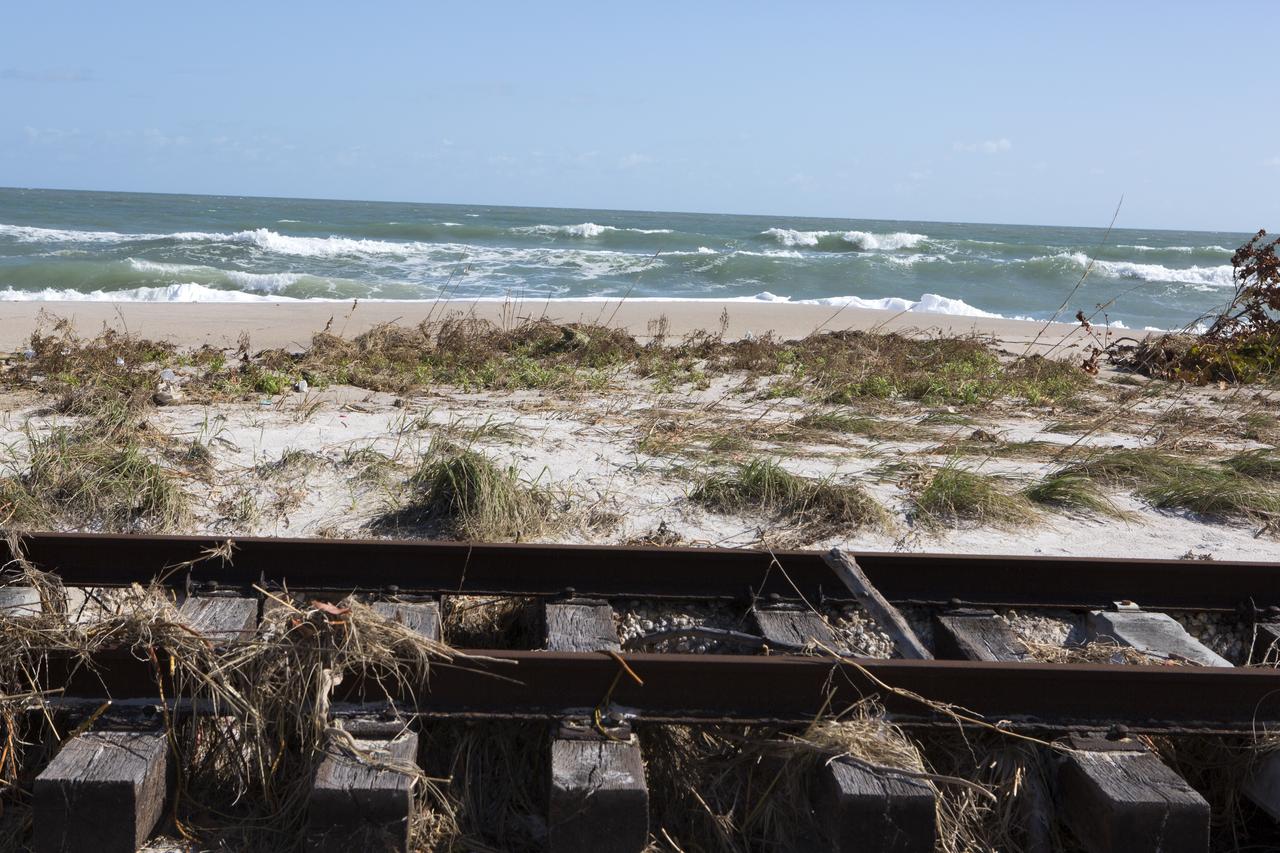
Plant debris left behind by Hurricane Matthew covers a stretch of the NASA Railroad near Launch Pads 39A and B at Kennedy Space Center in Florida. A portion of the line near the ocean was used during the Apollo era, although some portions were used to deliver commodities to the nearby Cape Canaveral Air Force Station through the end of the Titan program. NASA determined it was financially and ecologically advantageous to leave the tracks in place. Hurricane Matthew, a Category 3 storm, passed to the east of Kennedy on Oct. 6 and 7, 2016. The center received some isolated roof damage, damaged support buildings, a few downed power lines, and limited water intrusion. Beach erosion also occurred, although the storm surge was less than expected.
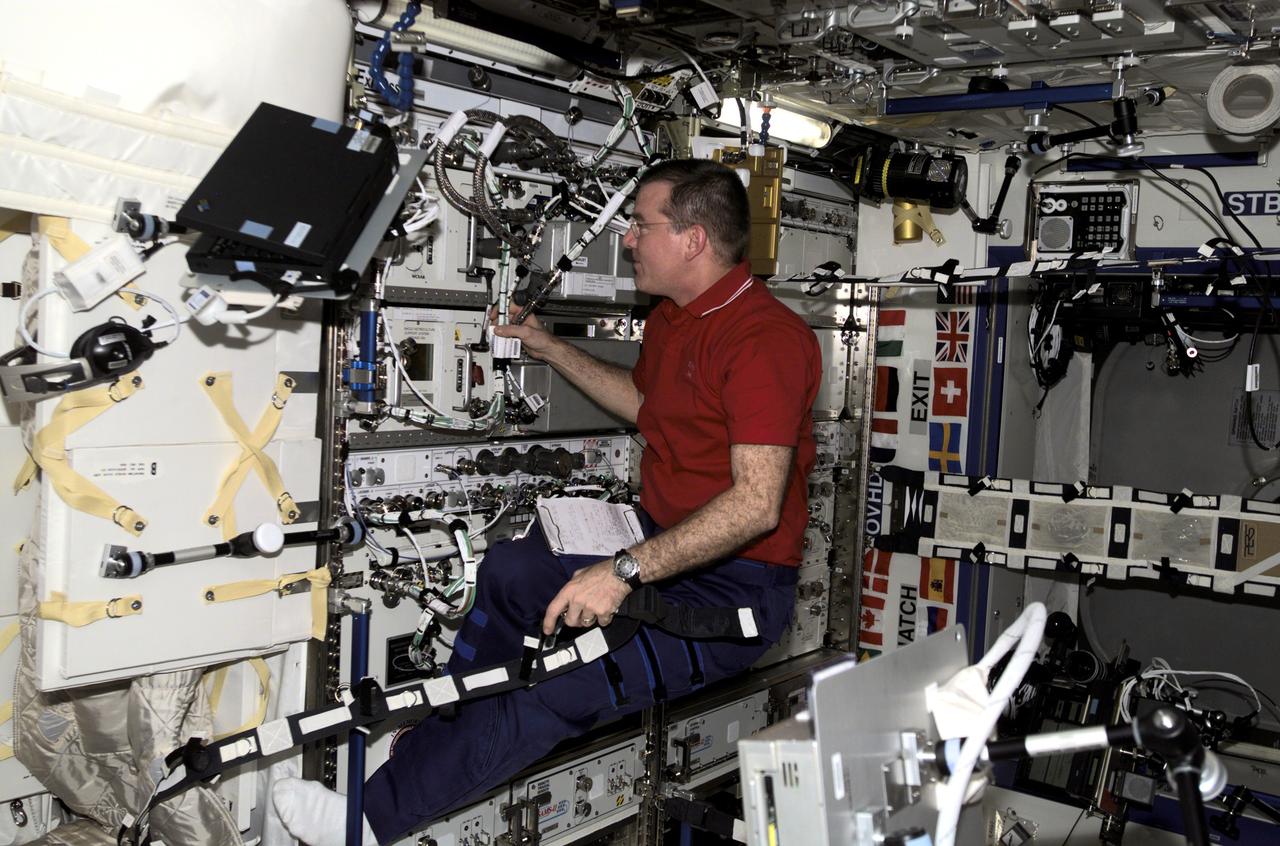
Astronaut James S. Voss, Expedition Two flight engineer, works with a series of cables on the EXPRESS Rack in the United State's Destiny laboratory on the International Space Station (ISS). The EXPRESS Rack is a standardized payload rack system that transports, stores, and supports experiments aboard the ISS. EXPRESS stands for EXpedite the PRocessing of Experiments to the Space Station, reflecting the fact that this system was developed specifically to maximize the Station's research capabilities. The EXPRESS Rack system supports science payloads in several disciplines, including biology, chemistry, physics, ecology, and medicine. With the EXPRESS Rack, getting experiments to space has never been easier or more affordable. With its standardized hardware interfaces and streamlined approach, the EXPRESS Rack enables quick, simple integration of multiple payloads aboard the ISS. The system is comprised of elements that remain on the ISS, as well as elements that travel back and forth between the ISS and Earth via the Space Shuttle.

Plant debris left behind by Hurricane Matthew covers a stretch of the NASA Railroad at Kennedy Space Center in Florida. A portion of the line near the ocean was used during the Apollo era, although some portions were used to deliver commodities to the nearby Cape Canaveral Air Force Station through the end of the Titan program. NASA determined it was financially and ecologically advantageous to leave the tracks in place. Hurricane Matthew, a Category 3 storm, passed to the east of Kennedy on Oct. 6 and 7, 2016. The center received some isolated roof damage, damaged support buildings, a few downed power lines, and limited water intrusion. Beach erosion also occurred, although the storm surge was less than expected.
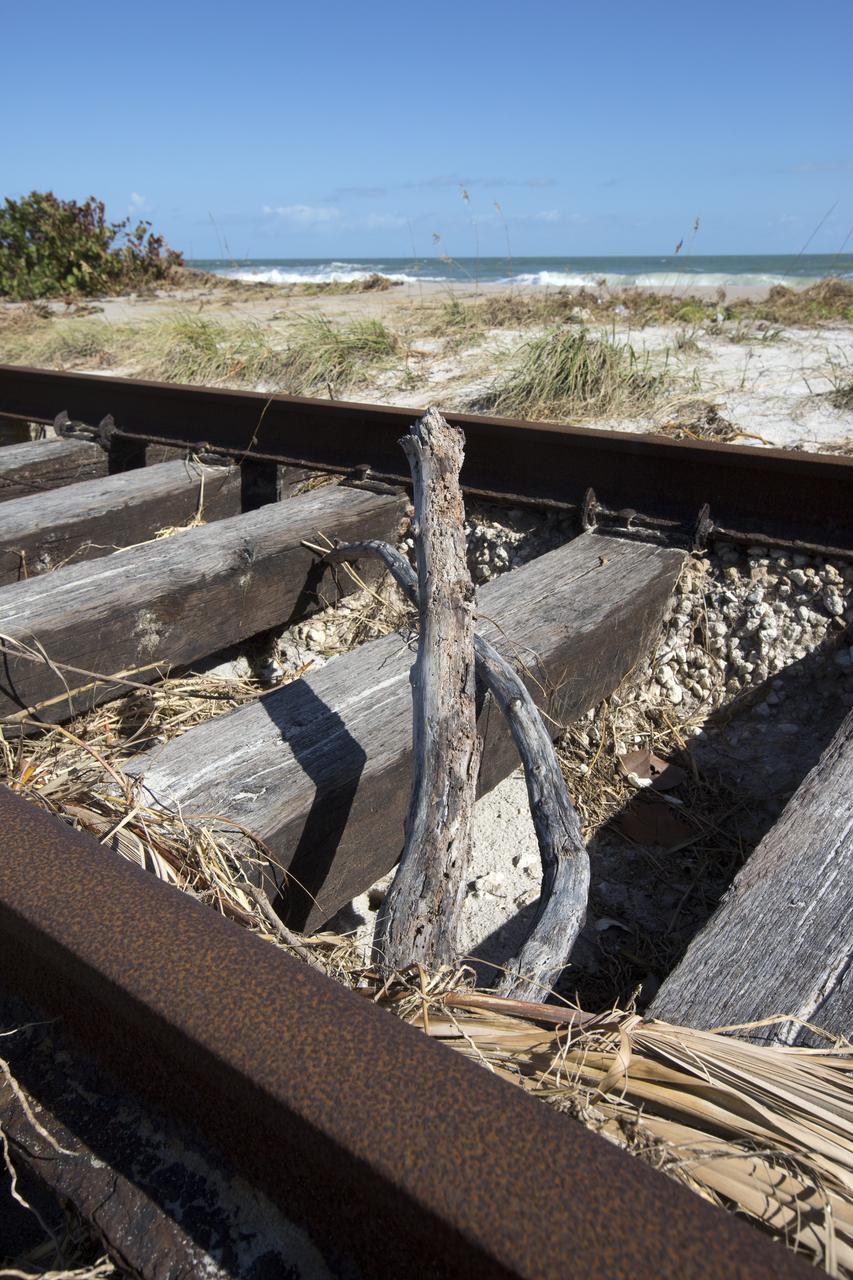
Plant debris and ground erosion left behind by Hurricane Matthew affect a stretch of the NASA Railroad at Kennedy Space Center in Florida. A portion of the line near the ocean was used during the Apollo era, although some portions were used to deliver commodities to the nearby Cape Canaveral Air Force Station through the end of the Titan program. NASA determined it was financially and ecologically advantageous to leave the tracks in place. Hurricane Matthew, a Category 3 storm, passed to the east of Kennedy on Oct. 6 and 7, 2016. The center received some isolated roof damage, damaged support buildings, a few downed power lines, and limited water intrusion. Beach erosion also occurred, although the storm surge was less than expected.
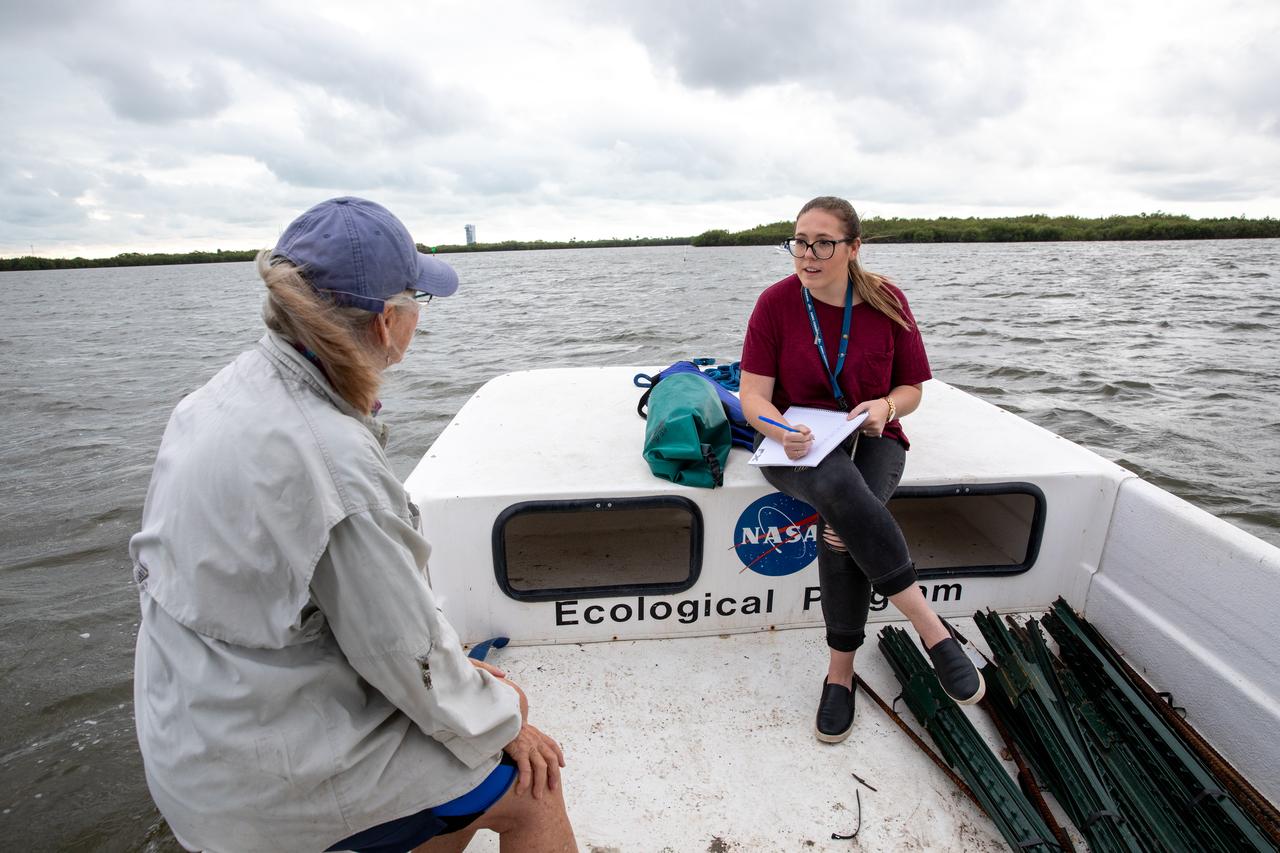
Kennedy Space Center Public Affairs Writer Danielle Sempsrott (right) interviews Jane Provancha, manager of the ecological group for NASA’s Environmental and Medical Contract (NEMCON) at Kennedy, for a web feature highlighting seagrass restoration efforts taking place at the Florida spaceport on March 29, 2023. Kennedy’s Environmental Management Branch is working to plant a minimum of 28,000 shoots of seagrass divided into 18 sites across three areas at the Florida spaceport as part of a pilot project for seagrass restoration efforts. The project will look at the feasibility of replanting seagrass in Kennedy waters and, if successful, could lead to the spaceport becoming a donor site where shoots of grass can be broken off and relocated to other areas within Kennedy or along the Indian River Lagoon to promote growth.
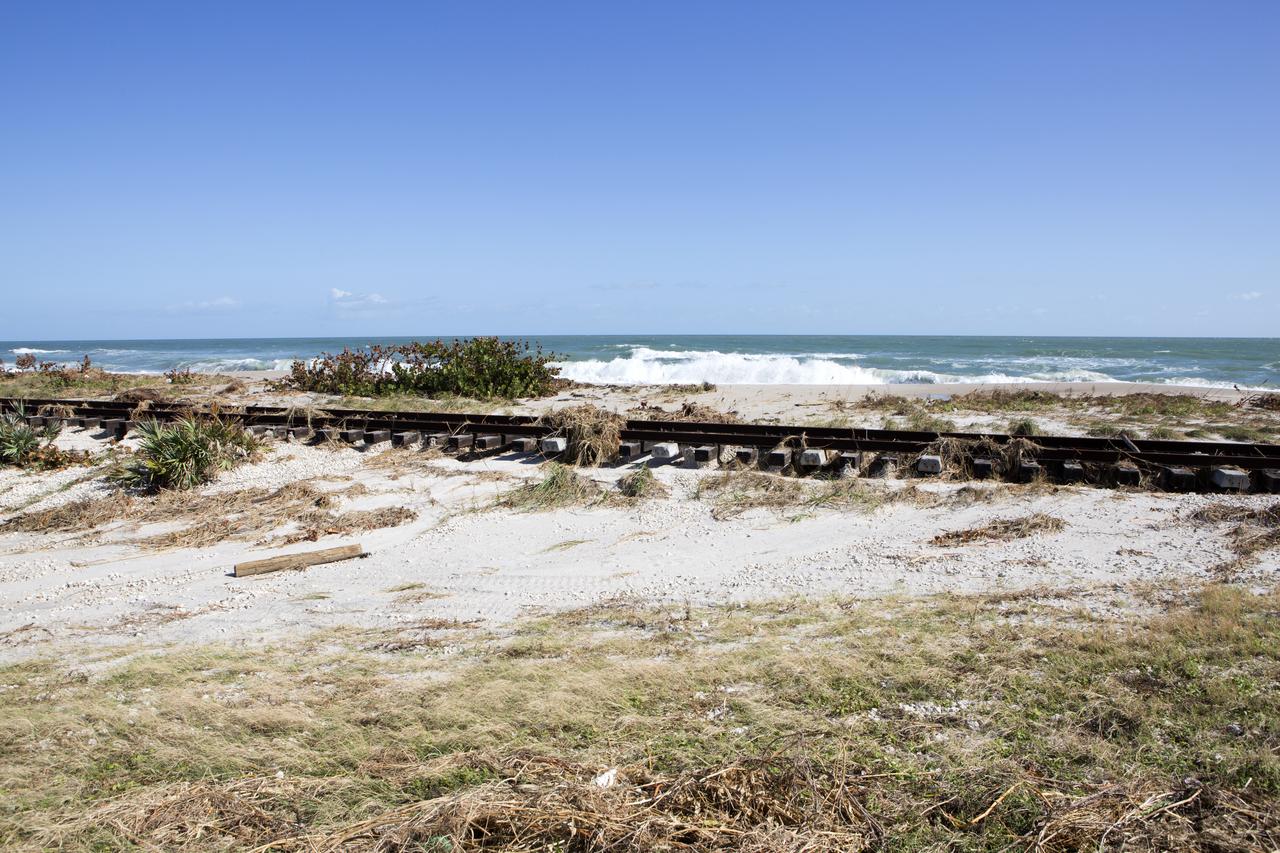
Plant debris left behind by Hurricane Matthew covers a stretch of the NASA Railroad near Launch Pads 39A and B at Kennedy Space Center in Florida. A portion of the line near the ocean was used during the Apollo era, although some portions were used to deliver commodities to the nearby Cape Canaveral Air Force Station through the end of the Titan program. NASA determined it was financially and ecologically advantageous to leave the tracks in place. Hurricane Matthew, a Category 3 storm, passed to the east of Kennedy on Oct. 6 and 7, 2016. The center received some isolated roof damage, damaged support buildings, a few downed power lines, and limited water intrusion. Beach erosion also occurred, although the storm surge was less than expected.
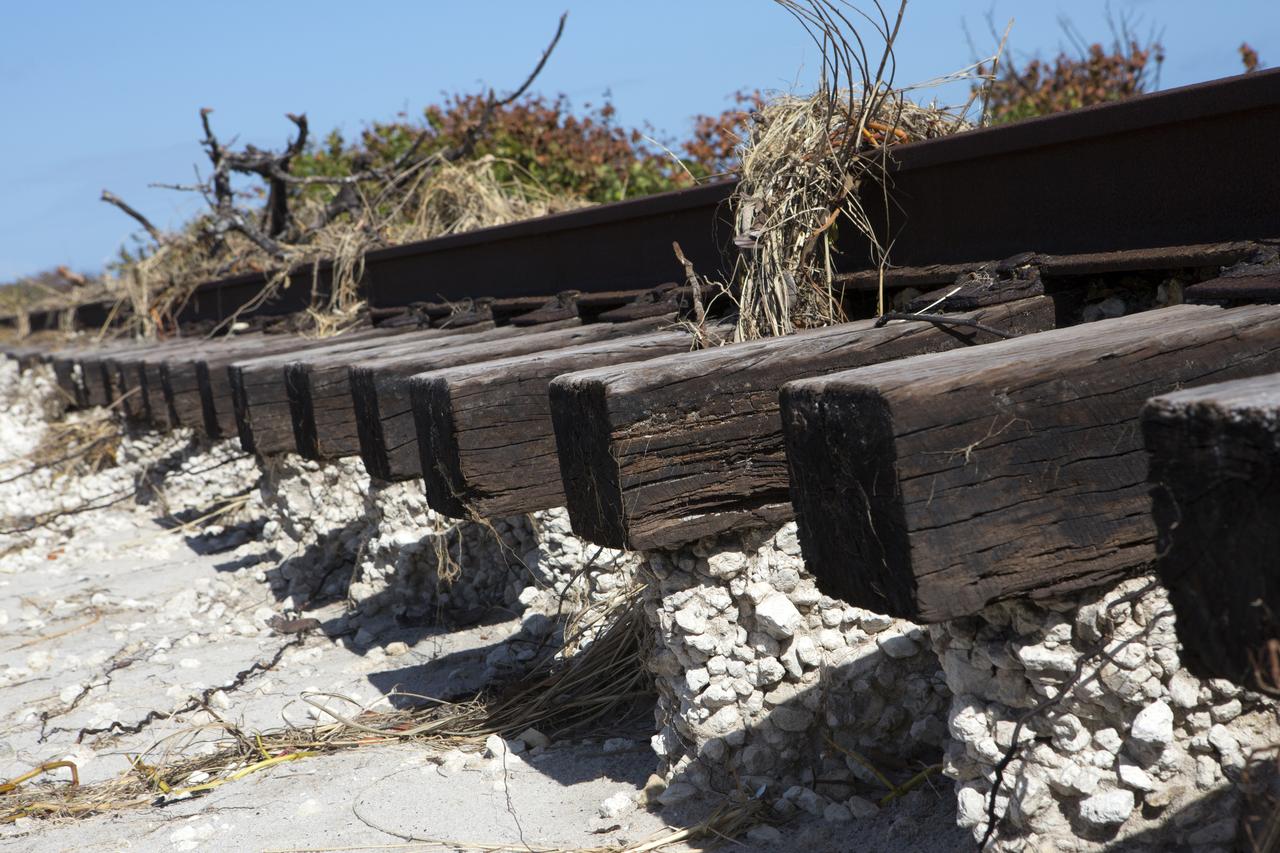
Plant debris and ground erosion left behind by Hurricane Matthew affect a stretch of the NASA Railroad at Kennedy Space Center in Florida. A portion of the line near the ocean was used during the Apollo era, although some portions were used to deliver commodities to the nearby Cape Canaveral Air Force Station through the end of the Titan program. NASA determined it was financially and ecologically advantageous to leave the tracks in place. Hurricane Matthew, a Category 3 storm, passed to the east of Kennedy on Oct. 6 and 7, 2016. The center received some isolated roof damage, damaged support buildings, a few downed power lines, and limited water intrusion. Beach erosion also occurred, although the storm surge was less than expected.
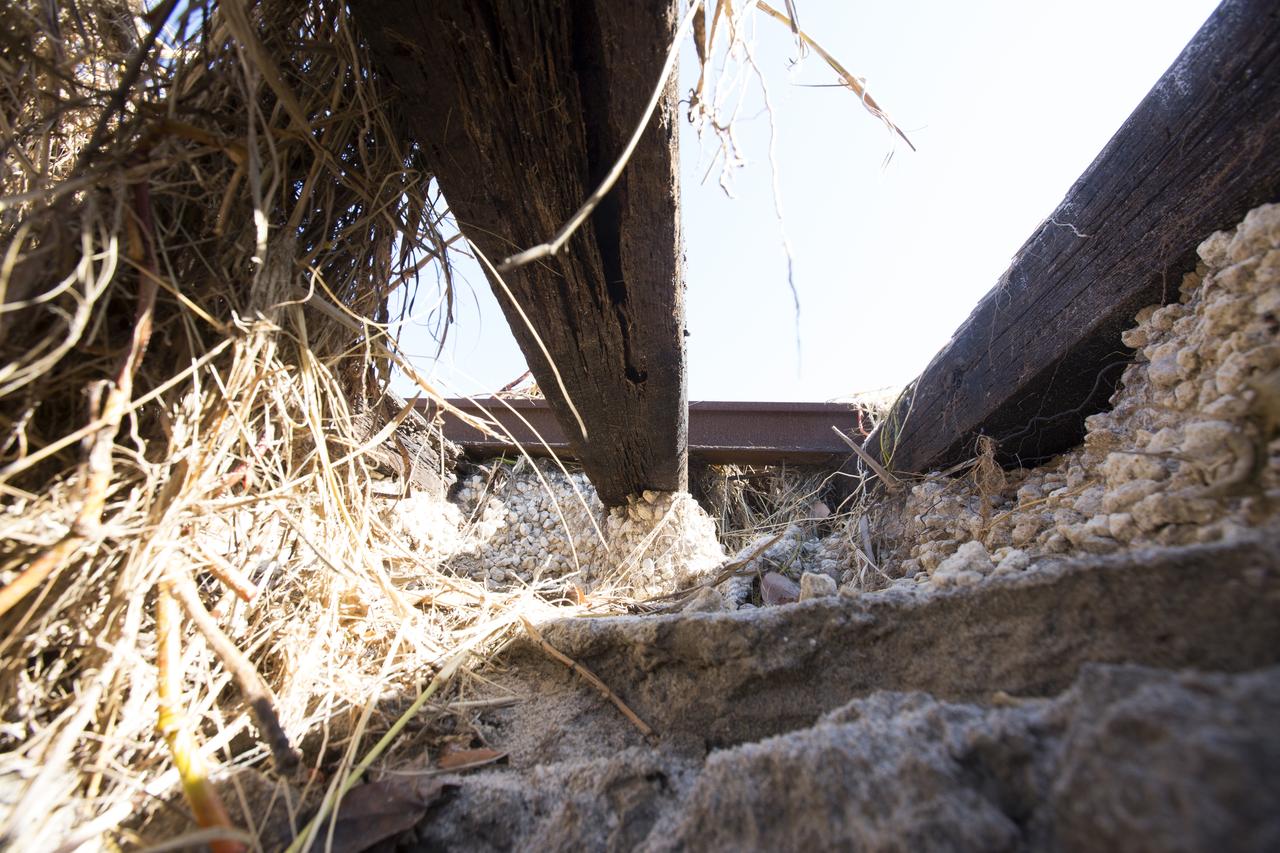
Erosion caused by Hurricane Matthew has worn away sections of the ground beneath the NASA Railroad at Kennedy Space Center in Florida. A portion of the line near the ocean was used during the Apollo era, although some portions were used to deliver commodities to the nearby Cape Canaveral Air Force Station through the end of the Titan program. NASA determined it was financially and ecologically advantageous to leave the tracks in place. Hurricane Matthew, a Category 3 storm, passed to the east of Kennedy on Oct. 6 and 7, 2016. The center received some isolated roof damage, damaged support buildings, a few downed power lines, and limited water intrusion. Beach erosion also occurred, although the storm surge was less than expected.
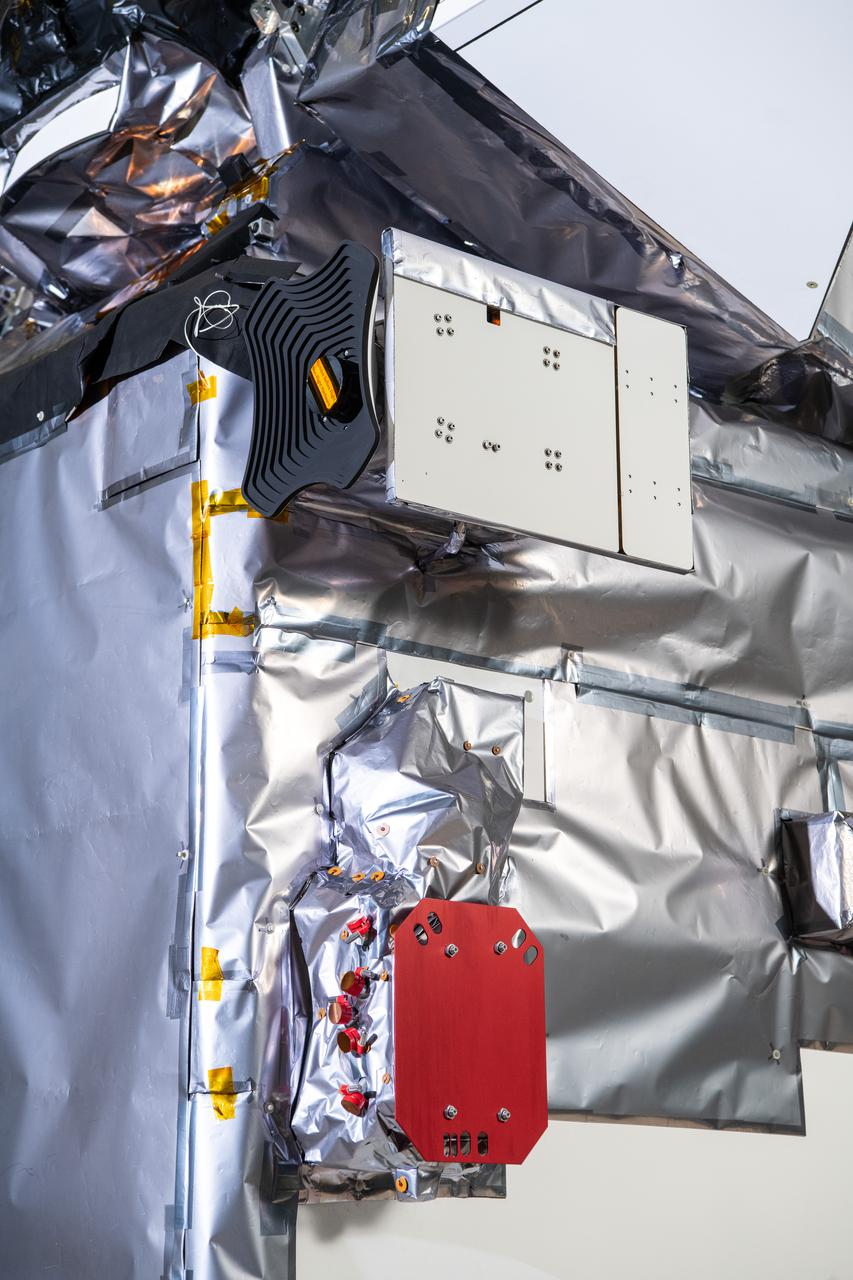
The Hyper-Angular Rainbow Polarimeter #2 (HARP2) instrument (top) and the SPEXone instrument on The Plankton, Aerosol, Cloud, ocean Ecosystem (PACE) in the clean room at NASA's Goddard Space Flight Center in Greenbelt, Maryland on October 31st, 2023. HARP2 is one of three instruments on NASA's PACE observatory, it was designed and built by UMBC's Earth and Space Institute. SPEXone has been developed by a Dutch consortium consisting of SRON Netherlands Institute for Space Research and Airbus Defence and Space Netherlands, supported by opto-mechanical expertise from TNO. SRON and Airbus DS NL are responsible for the design, manufacturing and testing of the instrument. The scientific lead is in the hands of SRON. SPEXone is a public-private initiative, funded by the Netherlands Space Office (NSO), the Netherlands Organization of Scientific Research (NWO), SRON and Airbus DS NL. PACE's unprecedented spectral coverage will provide the first-ever global measurements designed to identify phytoplankton community composition. The mission will make global ocean color measurements, using the Ocean Color Instrument (OCI), to provide extended data records on ocean ecology and global biogeochemistry along with polarimetry measurements, using the Spectro-polarimeter for Planetary Exploration (SPEXone) and the Hyper Angular Research Polarimeter (HARP2) to provide extended data records on clouds and aerosols. The Earth-observing satellite mission, built at Goddard Space Flight Center in Greenbelt, MD, will continue and advance observations of global ocean color, biogeochemistry, and ecology, as well as the carbon cycle, aerosols and clouds.
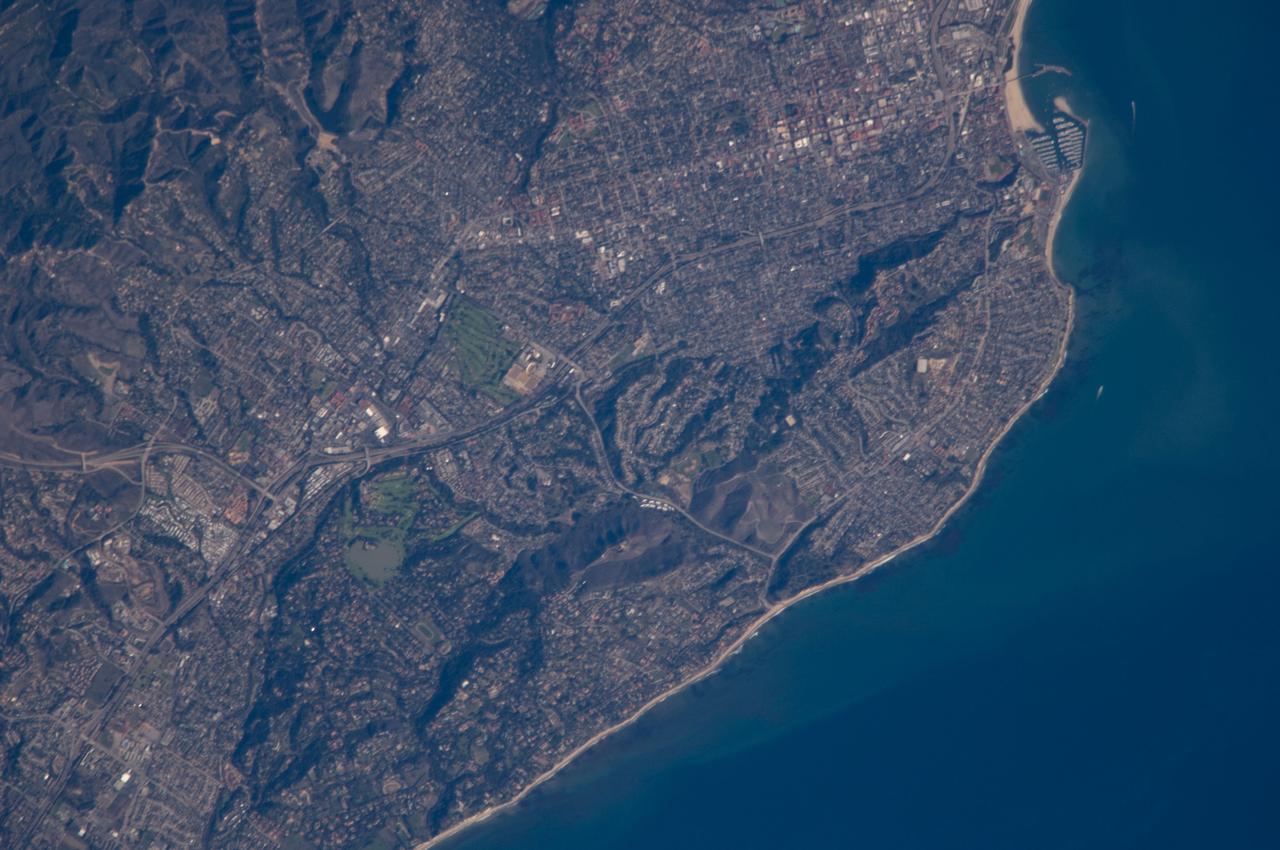
ISS018-E-011096 (6 Dec. 2008) --- Santa Barbara, CA metropolitan area, also known as the ?American Riviera?, is featured in this image photographed by an Expedition 18 crewmember on the International Space Station. The geographic setting of the city - between the Santa Barbara Channel to the south and the steep Santa Ynez Mountains to the north. The city was officially founded as a Spanish mission in 1786, and was incorporated into the United States from Mexico in 1848 following the Mexican-American War. The dramatic landscape of the city is the result of tectonic forces ? the Santa Barbara Channel is part of the boundary between the Pacific oceanic and North American continental crustal plates. Movement along the San Andreas Fault ? the actual zone of contact between the two plates ? over geologic time both raised the Santa Ynez range and lowered the seafloor, forming the deep Santa Barbara Channel. The city has experienced two earthquakes, one in 1812 and another in 1925 that caused significant damage. The urban street grid is defined by white and red rooftops at top center; to the southeast lie beaches and the boat slips of a large marina (top right). Two large golf courses, characterized by expanses of green grass, are visible at center. Low east-west trending hills that parallel the coastline are almost completely covered by residential and commercial development, lending a speckled appearance to the hillsides. Immediately offshore, giant kelp beds are the focus of the Santa Barbara Coastal Long Term Ecological Research site, part of the National Science Foundation?s Long Term Ecological Research Network.
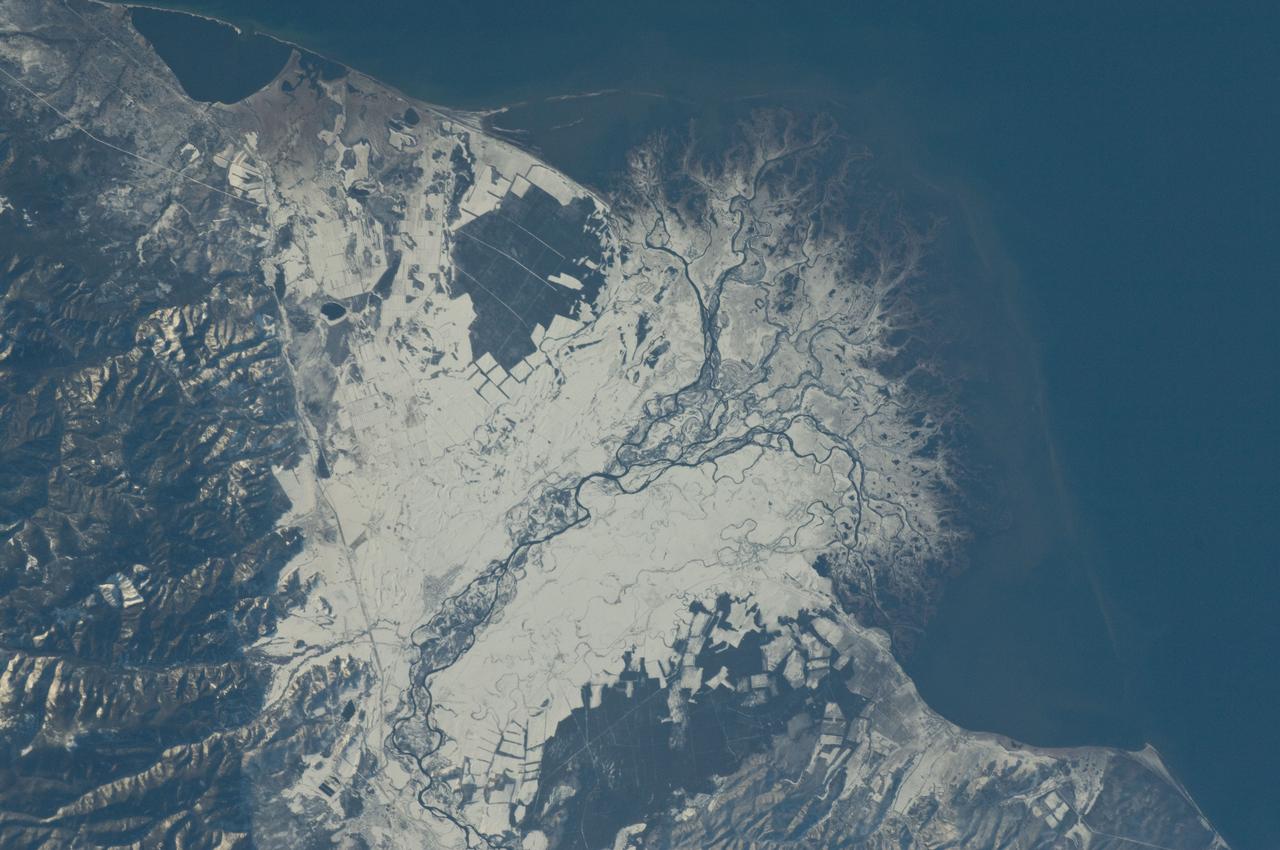
ISS029-E-037915 (3 Nov. 2011) --- Snowfall on the Selenga River Delta, Russian Federation is featured in this image photographed by an Expedition 29 crew member on the International Space Station. This photograph illustrates the Selenga River Delta built out into Lake Baikal in Russia. The Selenga River delta (center) is lobate in form, with an intricate network of distributary channels and levees surrounded by marshlands building out into Lake Baikal. This suggests that development of the delta is governed by the sediment load carried by the river, and any modifications of form due to lake tides or waves are relatively minor. Further out, dark brown depositional bars are visible forming a rough arc marking the edge of the delta. Snow cover on the river floodplain highlights numerous secondary channels, as well as channels previously occupied by the river but now abandoned. The regular outlines of agricultural fields to the southwest and northeast of the river are also highlighted by the snow cover. Lake Baikal is a World Heritage Site. The Selenga River is the major contributor of water to Lake Baikal; it occupies approximately 82 per cent of the watershed area for the lake. The wetlands of the Selenga River delta are designated as a RAMSAR site and provide valuable habitat for more than 170 species of birds, including many that are migrating. Like Baikal, the Selenga Delta is home to unique ecosystems, including more than 70 rare or endangered species of plants and animals. Waters of the Selenga River serve many (and differing) uses in both Mongolia and Russia, including support of agriculture, provision of drinking water, light industry, mining, recreation, and tourism. These uses also contribute to degradation of the river water quality, downstream availability of water, and ecological impacts. For example, a pulp and paper plant in the city of Selenginsk (lower left) has been tied to high levels of pollution in the river. International efforts to integrate management of the Selenga River basin for both ecological and economic sustainability are ongoing.
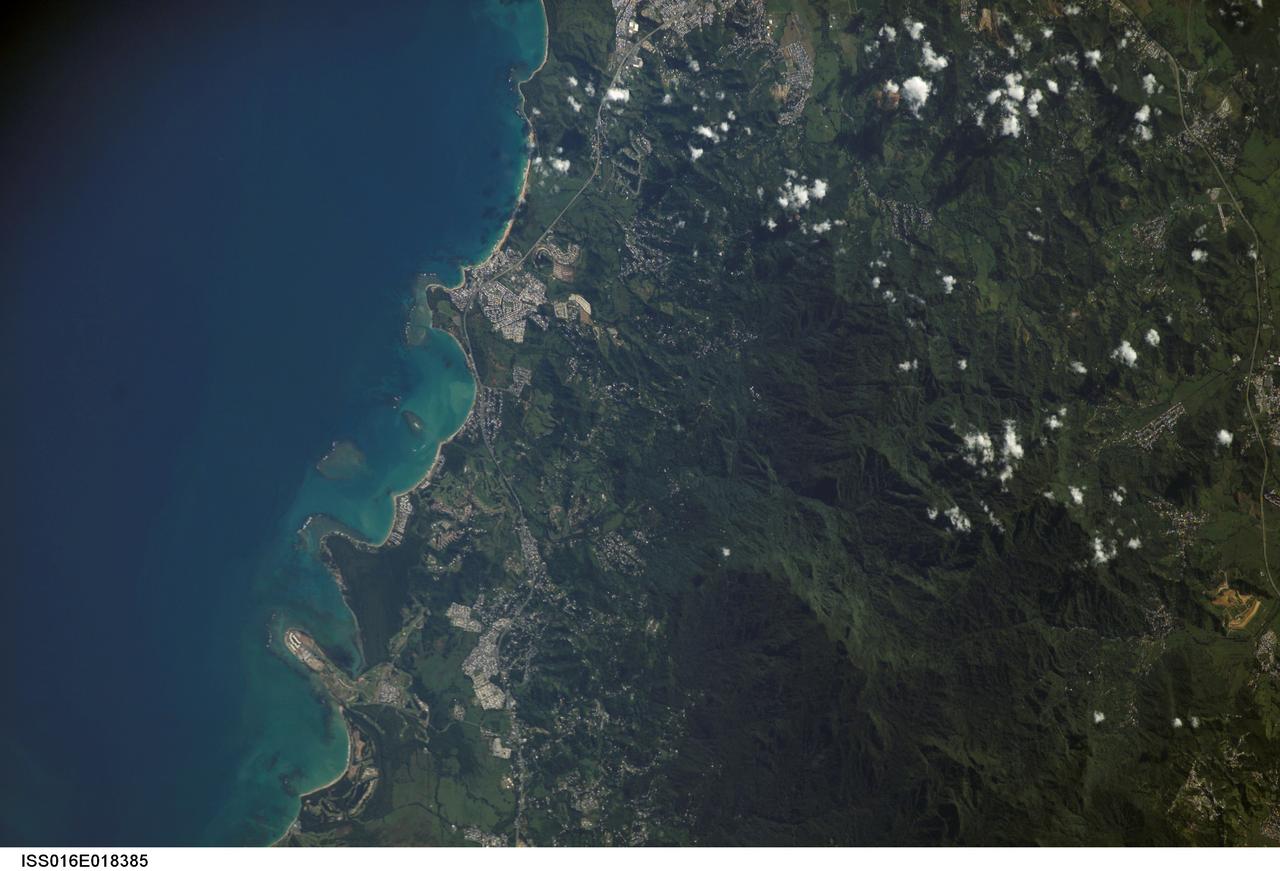
ISS016-E-018385 (23 Dec. 2008) --- Luquillo Mountains, Puerto Rico are featured in this image photographed by an Expedition 16 crewmember on the International Space Station. The Luquillo Mountains are located in the northeastern portion of Puerto Rico and rise to elevations of 1,075 meters. According to scientists, the mountains are comprised mainly of volcanic rock material that was uplifted by tectonism - Puerto Rico is located between the junction of the North American and Caribbean plates - approximately 37--28 million years ago. Prevailing easterly winds bring moisture from the Caribbean Sea that falls as precipitation as they cross the mountains. Higher elevations receive more rainfall than lower elevations, leading to subtropical forest types in the lowlands and montane forest types near the summits. This image, taken during the rainy season, illustrates the rich vegetation cover of the mountains. The rapid change in ecosystems with elevation, land use history, and exposure to frequent natural disturbances (such as hurricanes) makes the Luquillo Mountains as ideal location for ecological study. The Luquillo Experimental Forest Long Term Ecological Research (LTER) site is contained within the Luquillo National Forest, covering much of the mountains to the southwest of the city of Luquillo (center). Historical human land uses in the Forest -- such as logging, agriculture, charcoal production, and coffee plantations - have determined much of the current ecosystem structure. Results of LTER site research indicates that the forest ecosystems recover more rapidly from natural disturbances (like hurricanes) than they do from human disturbance.
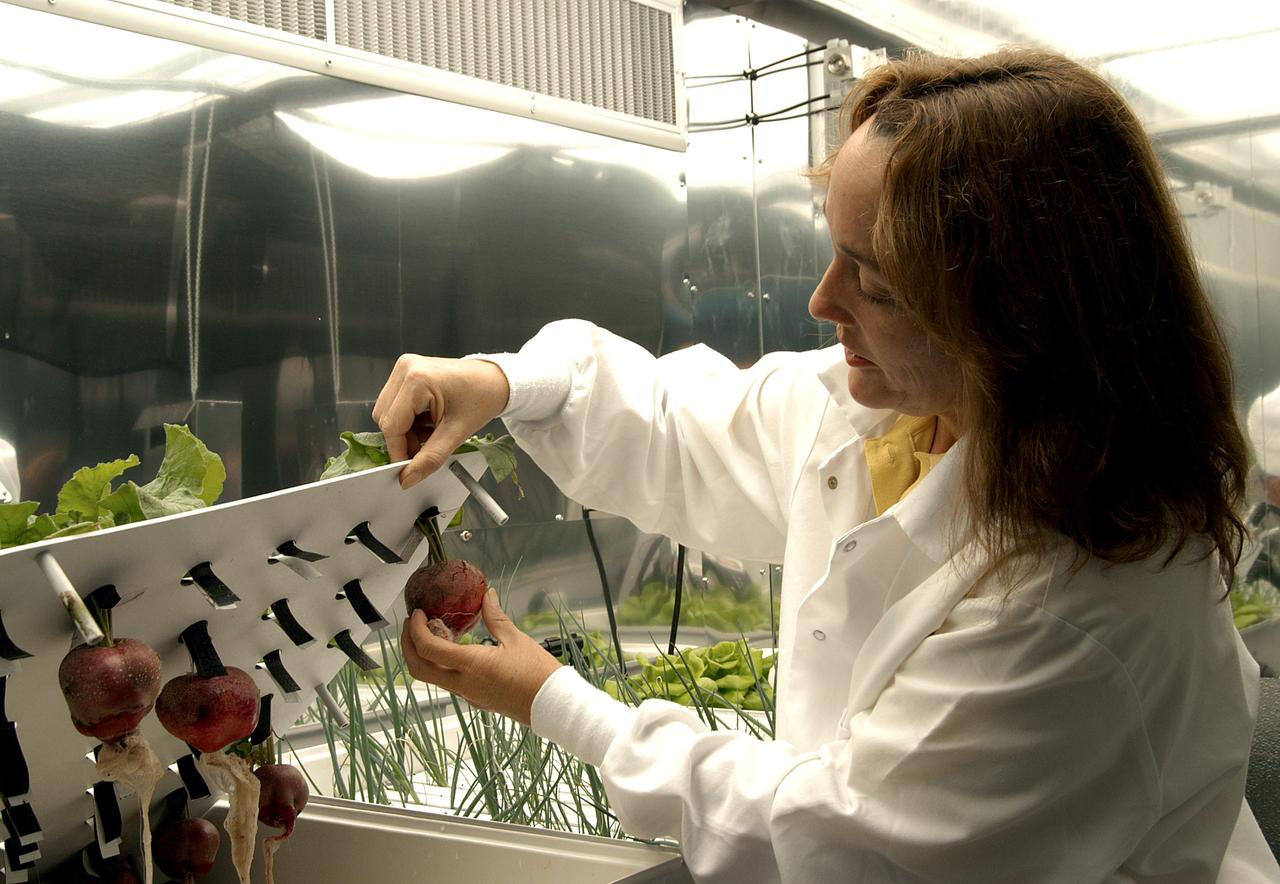
KENNEDY SPACE CENTER, FLA. -- Sharon Edney, with Dynamac Corp., checks the growth of radishes being grown hydroponically for study in the Space Life Sciences Lab. The 100,000 square-foot facility houses labs for NASA’s ongoing research efforts, microbiology/microbial ecology studies and analytical chemistry labs. Also calling the new lab home are facilities for space flight-experiment and flight-hardware development, new plant growth chambers, and an Orbiter Environment Simulator that will be used to conduct ground control experiments in simulated flight conditions for space flight experiments. The SLS Lab, formerly known as the Space Experiment Research and Processing Laboratory or SERPL, provides space for NASA’s Life Sciences Services contractor Dynamac Corporation, Bionetics Corporation, and researchers from the University of Florida. NASA’s Office of Biological and Physical Research will use the facility for processing life sciences experiments that will be conducted on the International Space Station. The SLS Lab is the magnet facility for the International Space Research Park at KSC being developed in partnership with Florida Space Authority.
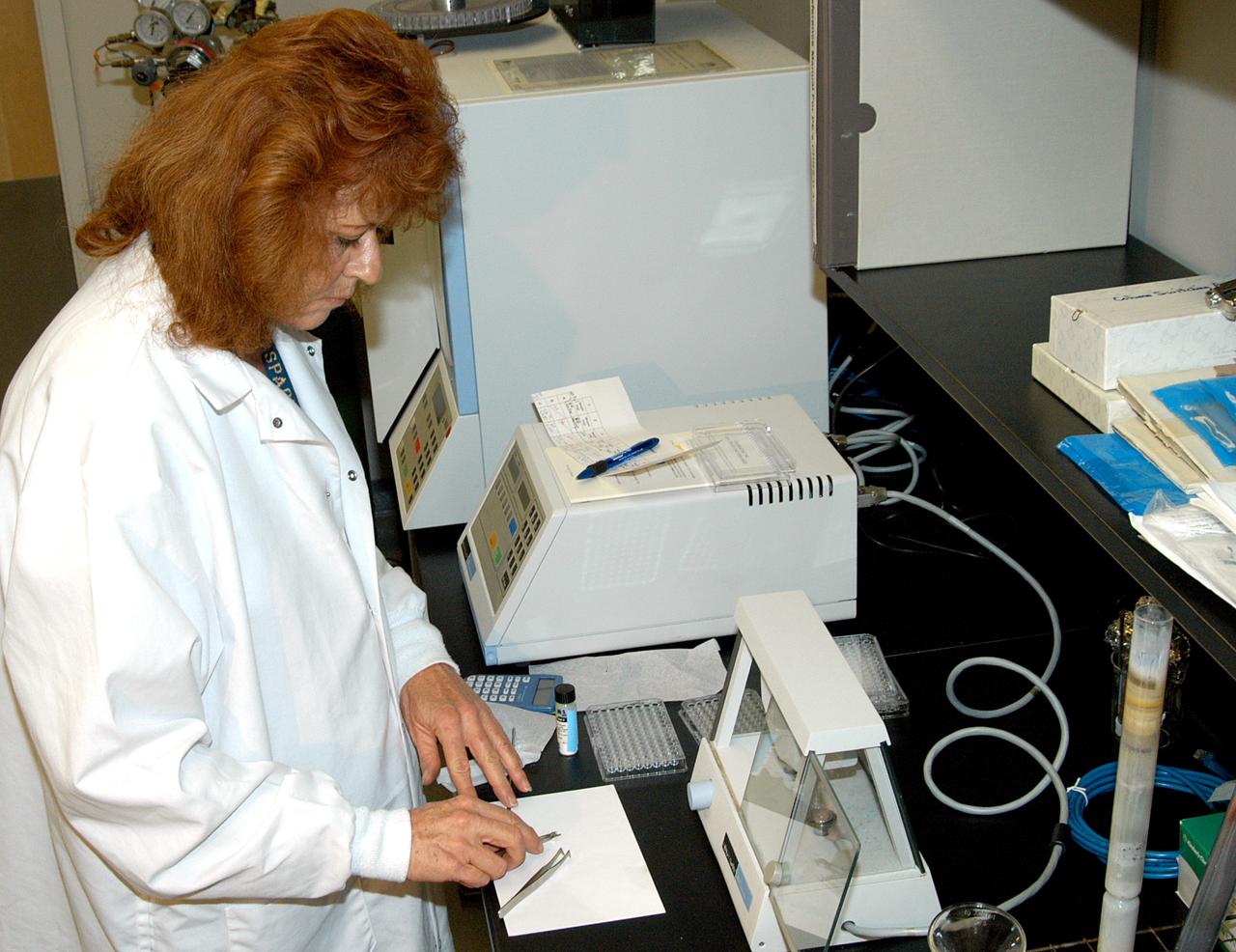
KENNEDY SPACE CENTER, FLA. -- In the Space Life Sciences (SLS) Lab, Jan Bauer, with Dynamac Corp., weighs samples of onion tissue for processing in the elemental analyzer behind it. The equipment analyzes for carbon, hydrogen, nitrogen and sulfur. The 100,000 square-foot SLS houses labs for NASA’s ongoing research efforts, microbiology/microbial ecology studies and analytical chemistry labs. Also calling the new lab home are facilities for space flight-experiment and flight-hardware development, new plant growth chambers, and an Orbiter Environment Simulator that will be used to conduct ground control experiments in simulated flight conditions for space flight experiments. The SLS Lab, formerly known as the Space Experiment Research and Processing Laboratory or SERPL, provides space for NASA’s Life Sciences Services contractor Dynamac Corporation, Bionetics Corporation, and researchers from the University of Florida. NASA’s Office of Biological and Physical Research will use the facility for processing life sciences experiments that will be conducted on the International Space Station. The SLS Lab is the magnet facility for the International Space Research Park at KSC being developed in partnership with Florida Space Authority.
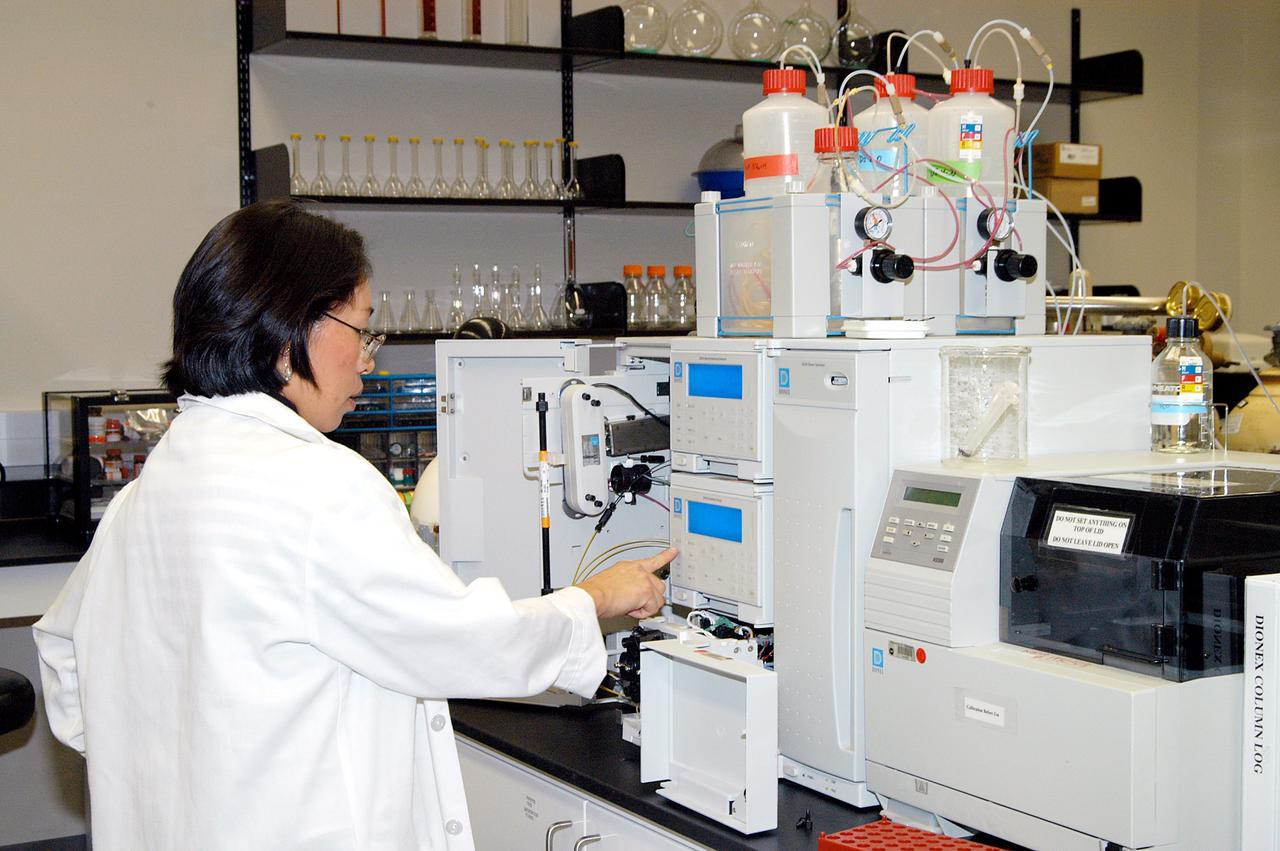
KENNEDY SPACE CENTER, FLA. -- Lanfang Levine, with Dynamac Corp., helps install a Dionex DX-500 IC/HPLC system in the Space Life Sciences Lab. The equipment will enable analysis of volatile compounds, such as from plants. The 100,000 square-foot facility houses labs for NASA’s ongoing research efforts, microbiology/microbial ecology studies and analytical chemistry labs. Also calling the new lab home are facilities for space flight-experiment and flight-hardware development, new plant growth chambers, and an Orbiter Environment Simulator that will be used to conduct ground control experiments in simulated flight conditions for space flight experiments. The SLS Lab, formerly known as the Space Experiment Research and Processing Laboratory or SERPL, provides space for NASA’s Life Sciences Services contractor Dynamac Corporation, Bionetics Corporation, and researchers from the University of Florida. NASA’s Office of Biological and Physical Research will use the facility for processing life sciences experiments that will be conducted on the International Space Station. The SLS Lab is the magnet facility for the International Space Research Park at KSC being developed in partnership with Florida Space Authority.
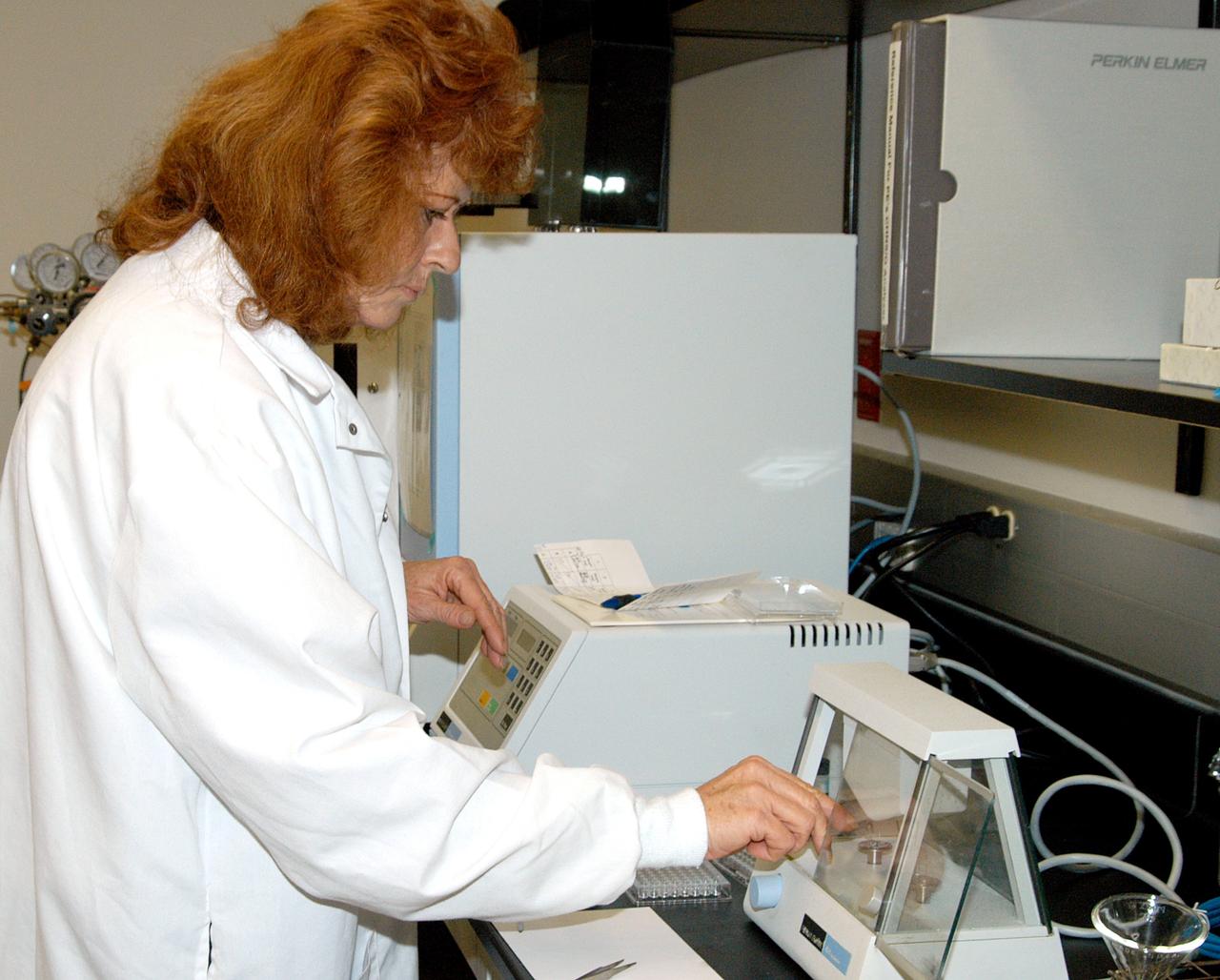
KENNEDY SPACE CENTER, FLA. -- In the Space Life Sciences (SLS) Lab, Jan Bauer, with Dynamac Corp., places samples of onion tissue in the elemental analyzer, which analyzes for carbon, hydrogen, nitrogen and sulfur. The 100,000 square-foot SLS houses labs for NASA’s ongoing research efforts, microbiology/microbial ecology studies and analytical chemistry labs. Also calling the new lab home are facilities for space flight-experiment and flight-hardware development, new plant growth chambers, and an Orbiter Environment Simulator that will be used to conduct ground control experiments in simulated flight conditions for space flight experiments. The SLS Lab, formerly known as the Space Experiment Research and Processing Laboratory or SERPL, provides space for NASA’s Life Sciences Services contractor Dynamac Corporation, Bionetics Corporation, and researchers from the University of Florida. NASA’s Office of Biological and Physical Research will use the facility for processing life sciences experiments that will be conducted on the International Space Station. The SLS Lab is the magnet facility for the International Space Research Park at KSC being developed in partnership with Florida Space Authority.
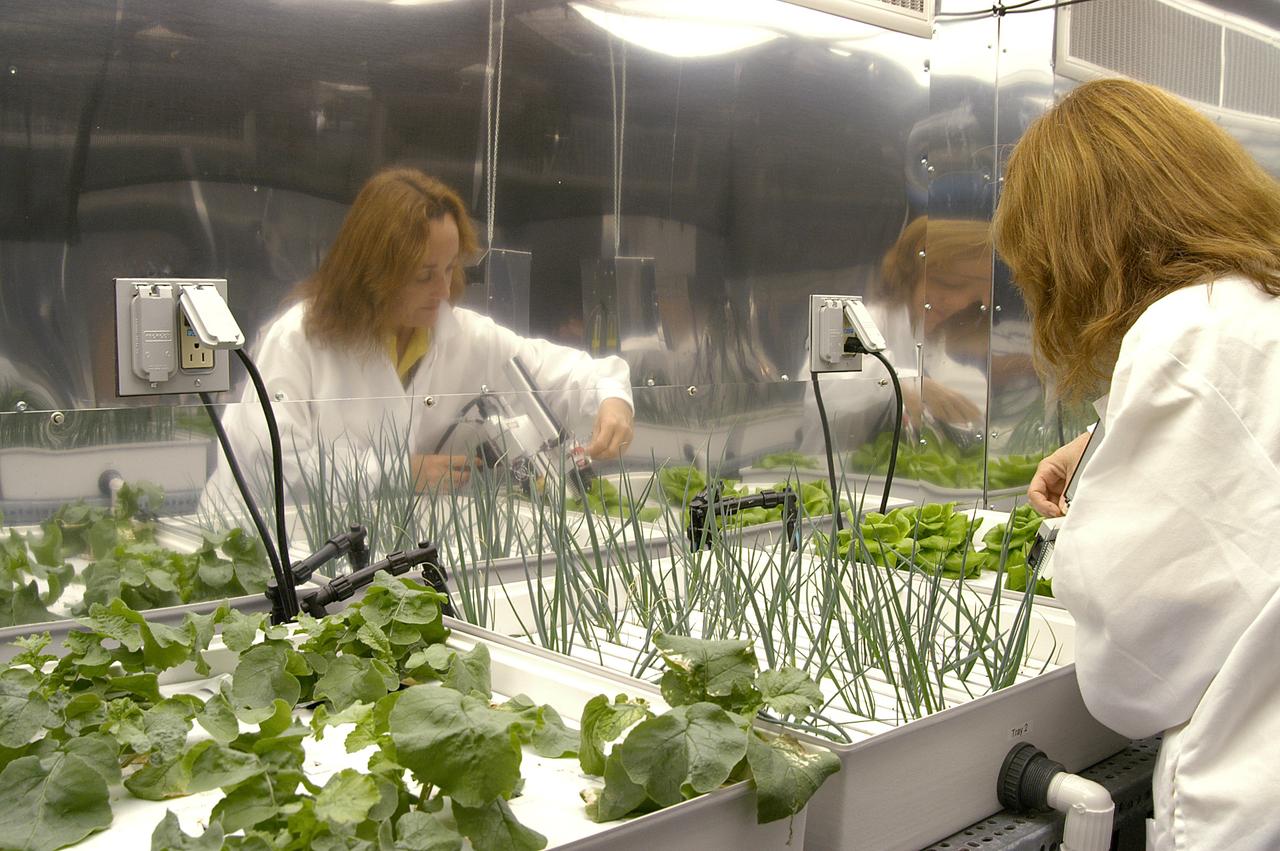
KENNEDY SPACE CENTER, FLA. -- Sharon Edney, with Dynamac Corp., measures photosynthesis on Bibb lettuce being grown hydroponically for study in the Space Life Sciences Lab. The 100,000 square-foot facility houses labs for NASA’s ongoing research efforts, microbiology/microbial ecology studies and analytical chemistry labs. Also calling the new lab home are facilities for space flight-experiment and flight-hardware development, new plant growth chambers, and an Orbiter Environment Simulator that will be used to conduct ground control experiments in simulated flight conditions for space flight experiments. The SLS Lab, formerly known as the Space Experiment Research and Processing Laboratory or SERPL, provides space for NASA’s Life Sciences Services contractor Dynamac Corporation, Bionetics Corporation, and researchers from the University of Florida. NASA’s Office of Biological and Physical Research will use the facility for processing life sciences experiments that will be conducted on the International Space Station. The SLS Lab is the magnet facility for the International Space Research Park at KSC being developed in partnership with Florida Space Authority.