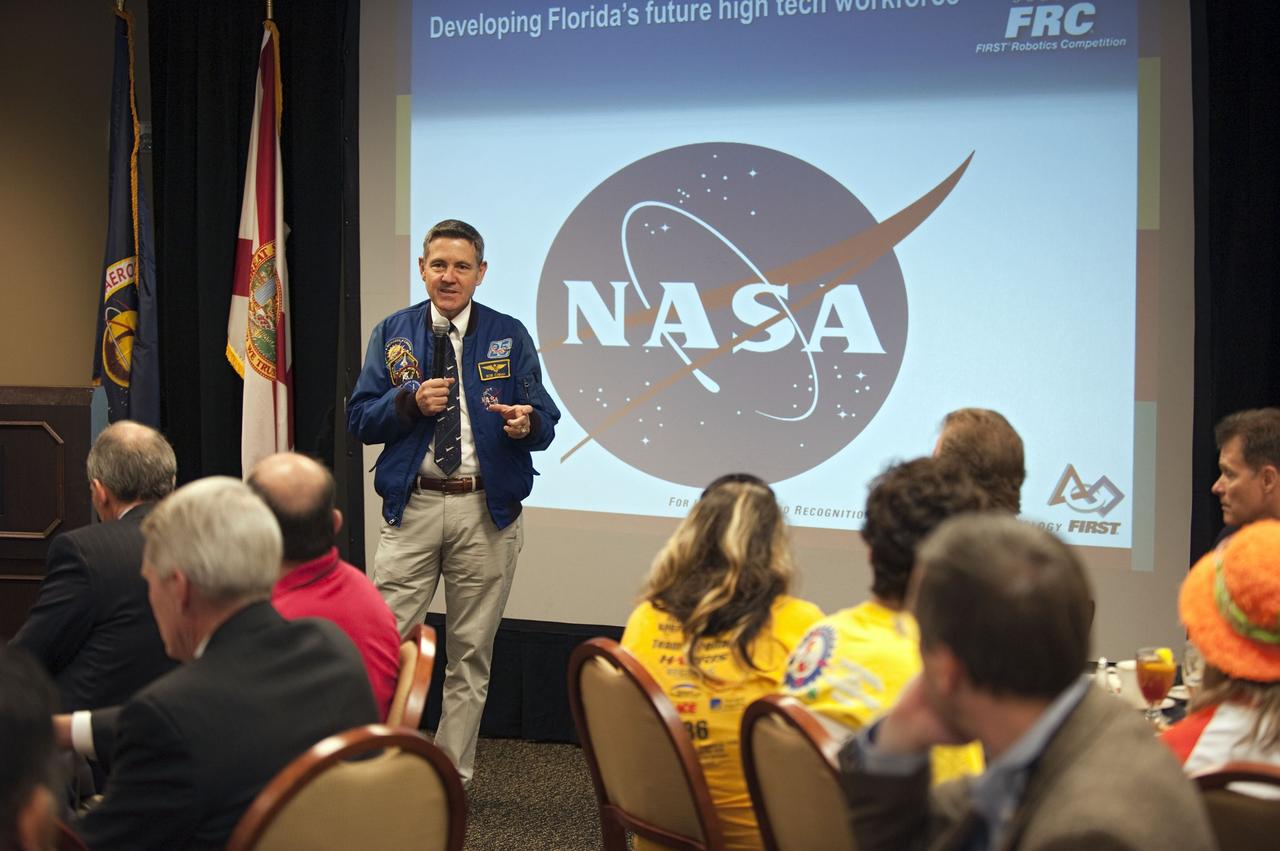
ORLANDO, Fla. – NASA Kennedy Space Center Director Bob Cabana talks to high school students taking part in the "For Inspiration and Recognition of Science and Technology," or FIRST, competition at the University of Central Florida in Orlando. FIRST, founded in 1989, is a non-profit organization that designs accessible, innovative programs to build self-confidence, knowledge and life skills while motivating young people to pursue academic opportunities. The robotics competition challenges teams of high school students and their mentors to solve a common problem in a six-week timeframe using a standard kit of parts and a common set of rules. Photo credit: NASA/Glenn Benson
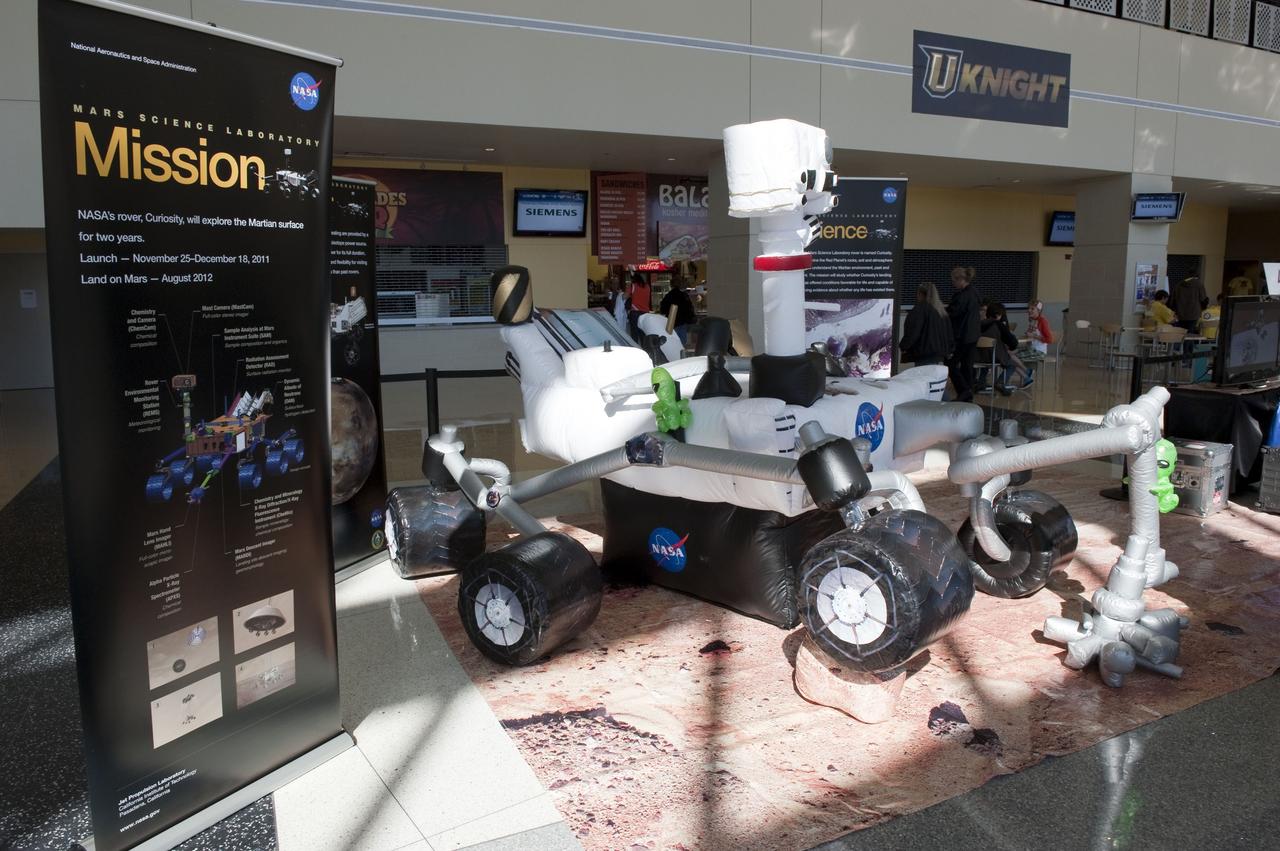
ORLANDO, Fla. – NASA's Jet Propulsion Laboratory (JPL) in Pasadena, Calif., unveiled an inflatable, full-size model of the Mars Science Laboratory mission's Curiosity rover at the "For Inspiration and Recognition of Science and Technology," or FIRST, competition at the University of Central Florida in Orlando. The rover is scheduled to launch from Cape Canaveral Air Force Station in Florida aboard an Atlas V later this year. FIRST, founded in 1989, is a non-profit organization that designs accessible, innovative programs to build self-confidence, knowledge and life skills while motivating young people to pursue academic opportunities. The robotics competition challenges teams of high school students and their mentors to solve a common problem in a six-week timeframe using a standard kit of parts and a common set of rules. Photo credit: NASA/Glenn Benson
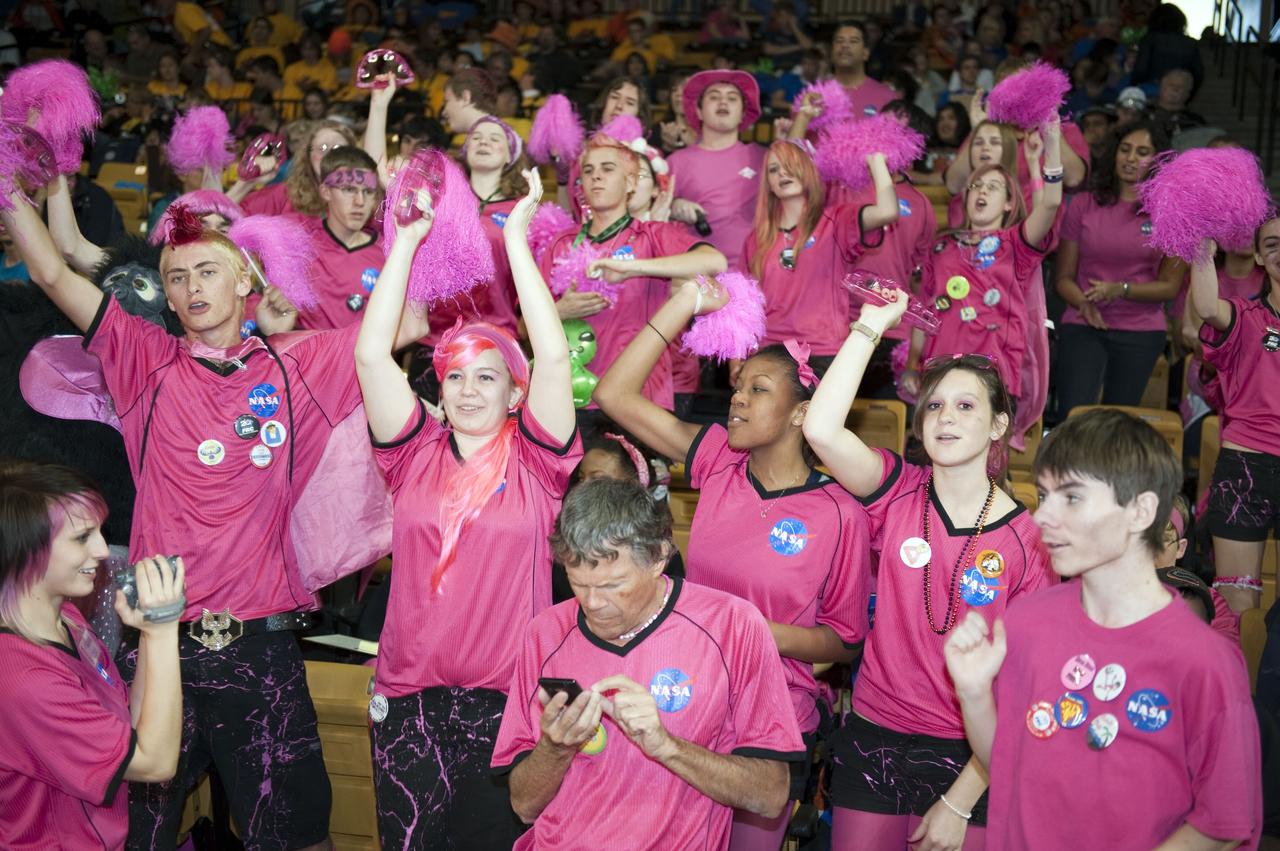
ORLANDO, Fla. – The Pink Team participates in the regional FIRST robotics competition at the University of Central Florida in Orlando. The team is made up of students from Rockledge, Cocoa Beach and Viera high schools along the Space Coast of Florida. NASA’s Kennedy Space Center is a sponsor of the team. The Pink Team finished sixth in the competition called "For Inspiration and Recognition of Science and Technology," or FIRST, among about 60 high school teams hoping to advance to the national robotics championship. The team also took home the Industrial Design Award sponsored by General Motors. FIRST, founded in 1989, is a non-profit organization that designs accessible, innovative programs to build self-confidence, knowledge and life skills while motivating young people to pursue academic opportunities. The robotics competition challenges teams of high school students and their mentors to solve a common problem in a six-week timeframe using a standard kit of parts and a common set of rules. Photo credit: NASA/Glenn Benson
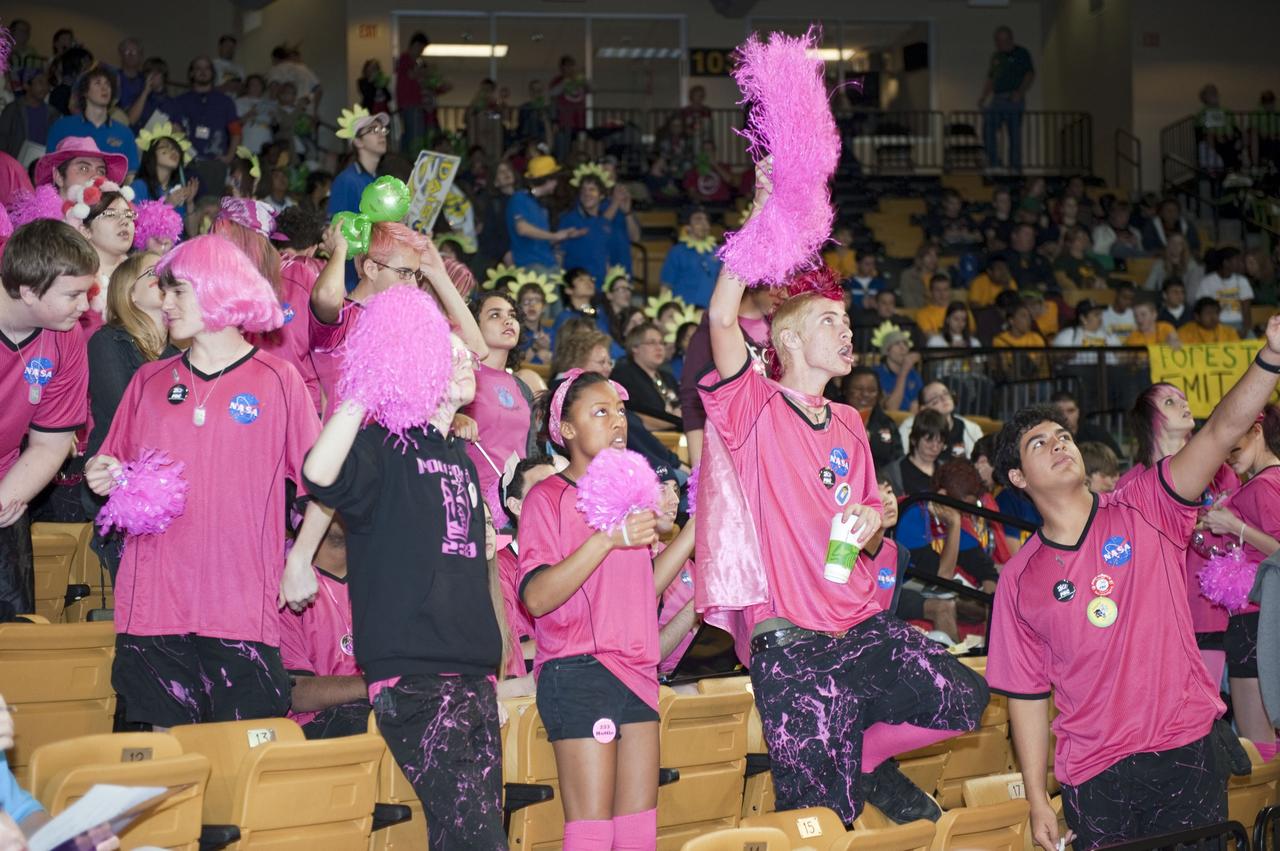
ORLANDO, Fla. – The Pink Team participates in the regional FIRST robotics competition at the University of Central Florida in Orlando. The team is made up of students from Rockledge, Cocoa Beach and Viera high schools along the Space Coast of Florida. NASA’s Kennedy Space Center is a sponsor of the team. The Pink Team finished sixth in the competition called "For Inspiration and Recognition of Science and Technology," or FIRST, among about 60 high school teams hoping to advance to the national robotics championship. The team also took home the Industrial Design Award sponsored by General Motors. FIRST, founded in 1989, is a non-profit organization that designs accessible, innovative programs to build self-confidence, knowledge and life skills while motivating young people to pursue academic opportunities. The robotics competition challenges teams of high school students and their mentors to solve a common problem in a six-week timeframe using a standard kit of parts and a common set of rules. Photo credit: NASA/Glenn Benson
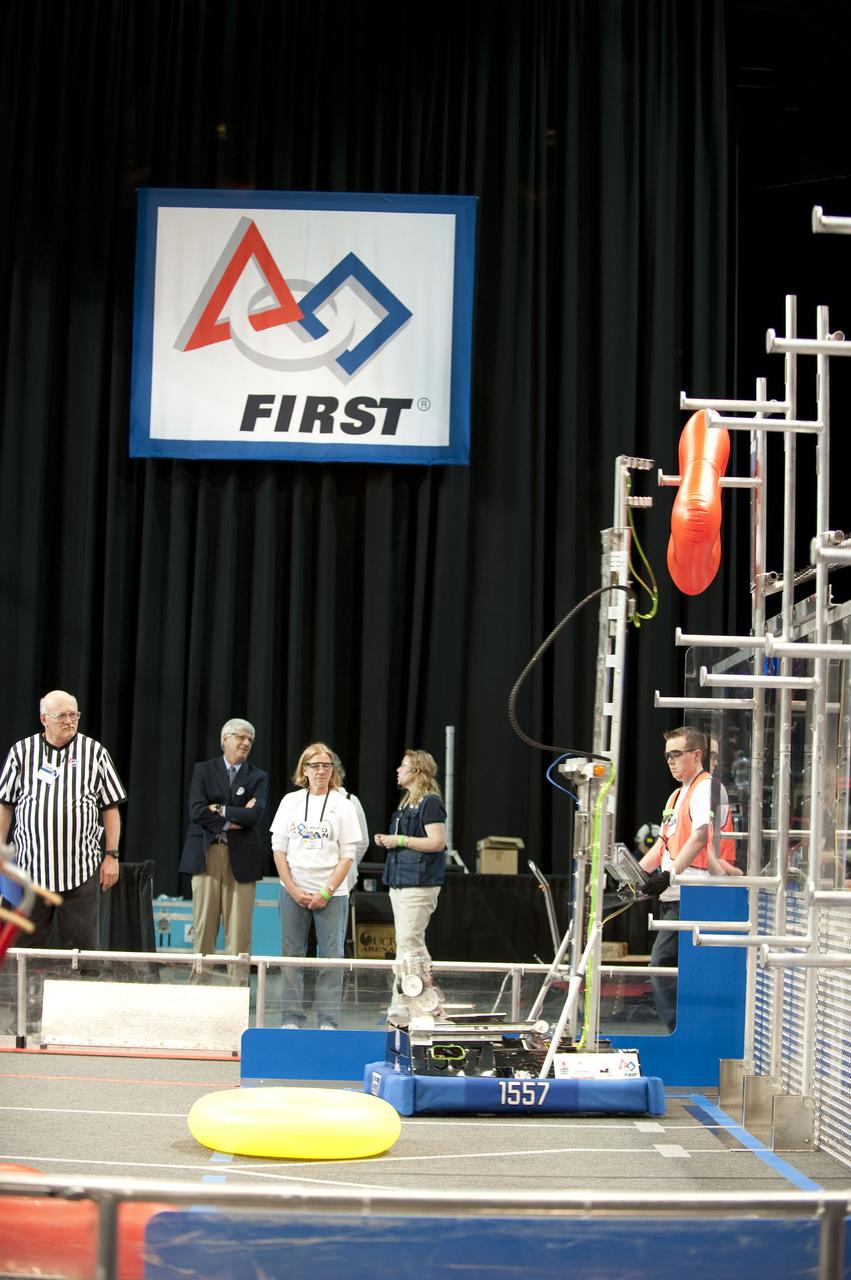
ORLANDO, Fla. – Teams prepare for the "For Inspiration and Recognition of Science and Technology," or FIRST, competition at the University of Central Florida in Orlando. About 60 high school teams took part in hopes of advancing to the national robotics championship. FIRST, founded in 1989, is a non-profit organization that designs accessible, innovative programs to build self-confidence, knowledge and life skills while motivating young people to pursue academic opportunities. The robotics competition challenges teams of high school students and their mentors to solve a common problem in a six-week timeframe using a standard kit of parts and a common set of rules. Photo credit: NASA/Glenn Benson
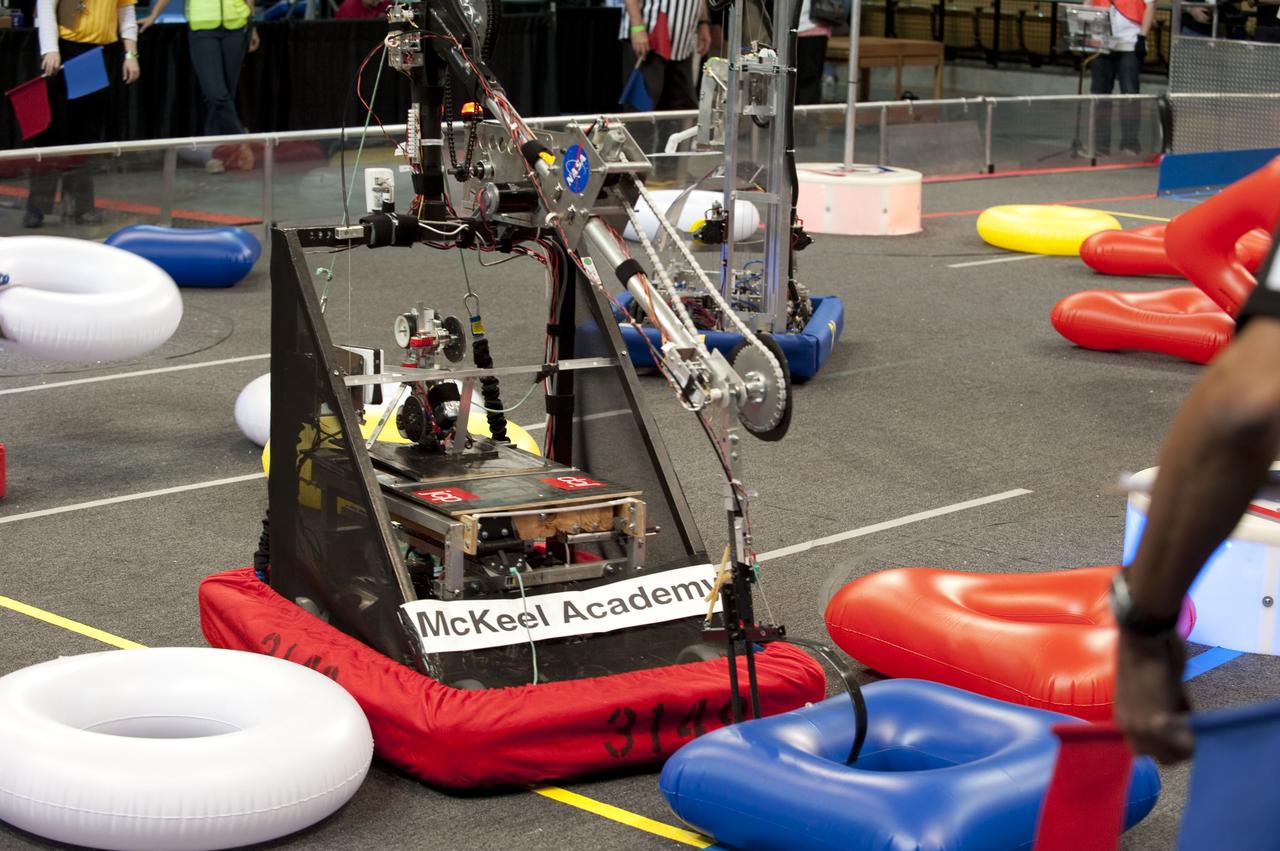
ORLANDO, Fla. – The Team 3149 robot participates in the regional FIRST robotics competition at the University of Central Florida in Orlando. The team is made up of students from McKeel Academy of Technology in Lakeland, Fla. NASA is a sponsor of the team. Team 3149 finished eighth in the competition called "For Inspiration and Recognition of Science and Technology," or FIRST, among about 60 high school teams hoping to advance to the national robotics championship. FIRST, founded in 1989, is a non-profit organization that designs accessible, innovative programs to build self-confidence, knowledge and life skills while motivating young people to pursue academic opportunities. The robotics competition challenges teams of high school students and their mentors to solve a common problem in a six-week timeframe using a standard kit of parts and a common set of rules. Photo credit: NASA/Glenn Benson
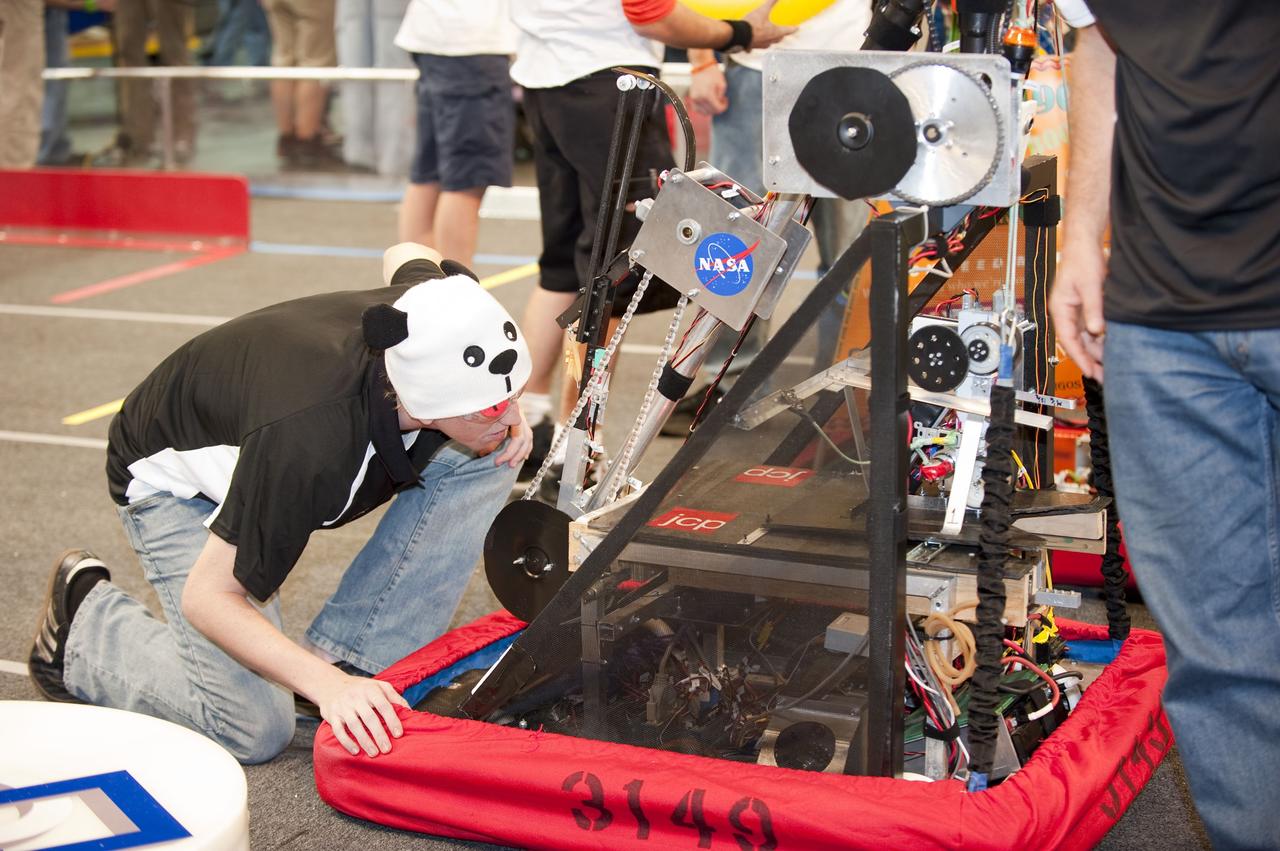
ORLANDO, Fla. – Team 3149 participates in the regional FIRST robotics competition at the University of Central Florida in Orlando. The team is made up of students from McKeel Academy of Technology in Lakeland, Fla. NASA is a sponsor of the team. Team 3149 finished eighth in the competition called "For Inspiration and Recognition of Science and Technology," or FIRST, among about 60 high school teams hoping to advance to the national robotics championship. FIRST, founded in 1989, is a non-profit organization that designs accessible, innovative programs to build self-confidence, knowledge and life skills while motivating young people to pursue academic opportunities. The robotics competition challenges teams of high school students and their mentors to solve a common problem in a six-week timeframe using a standard kit of parts and a common set of rules. Photo credit: NASA/Glenn Benson
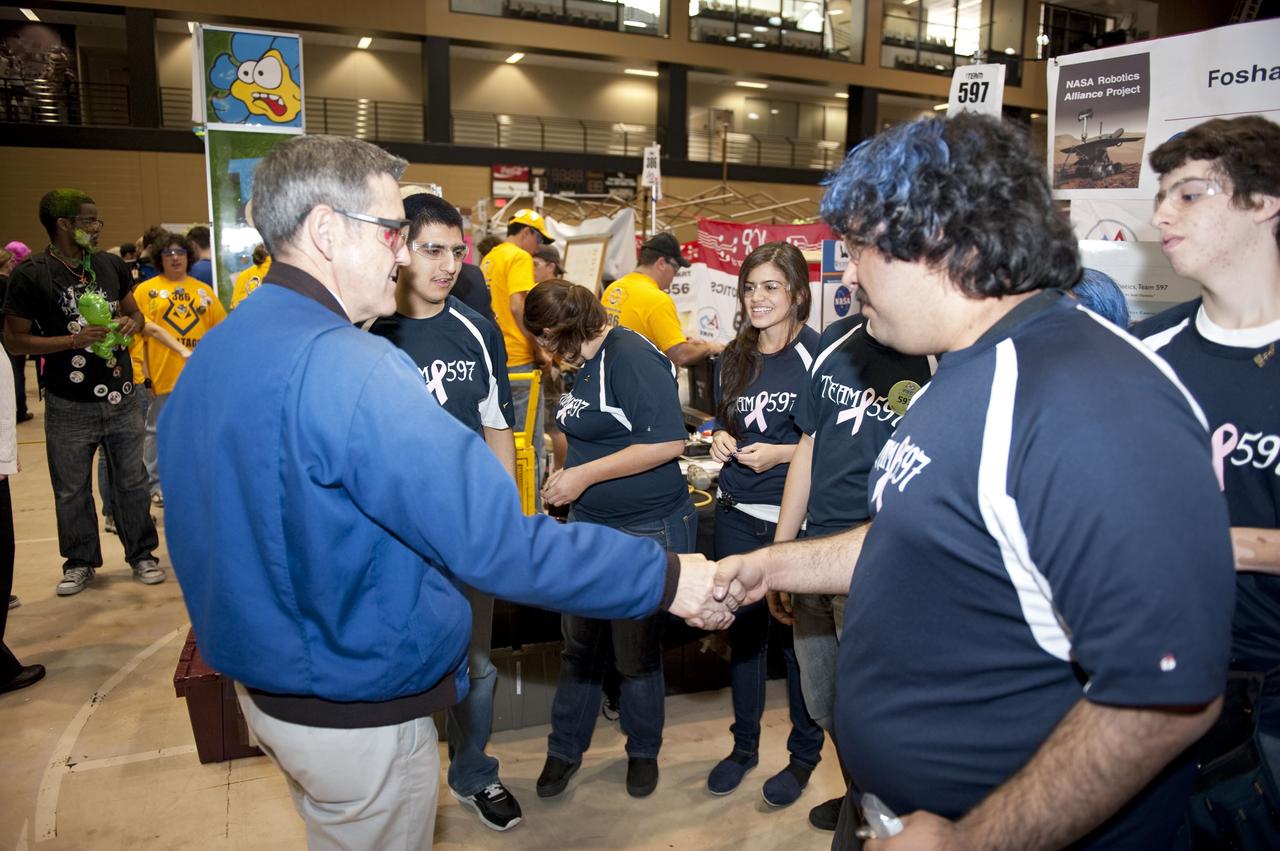
ORLANDO, Fla. – NASA Kennedy Space Center Director Bob Cabana talks to The Wolverines team at the regional FIRST robotics competition at the University of Central Florida in Orlando. The team is made up of students from the Foshay Learning Center located in Los Angeles. NASA is a sponsor of the team. About 60 high school teams took part in the competition called "For Inspiration and Recognition of Science and Technology," or FIRST, in hopes of advancing to the national robotics championship. The team took home the Industrial Safety Award sponsored by Underwriters Laboratories. FIRST, founded in 1989, is a non-profit organization that designs accessible, innovative programs to build self-confidence, knowledge and life skills while motivating young people to pursue academic opportunities. The robotics competition challenges teams of high school students and their mentors to solve a common problem in a six-week timeframe using a standard kit of parts and a common set of rules. Photo credit: NASA/Glenn Benson
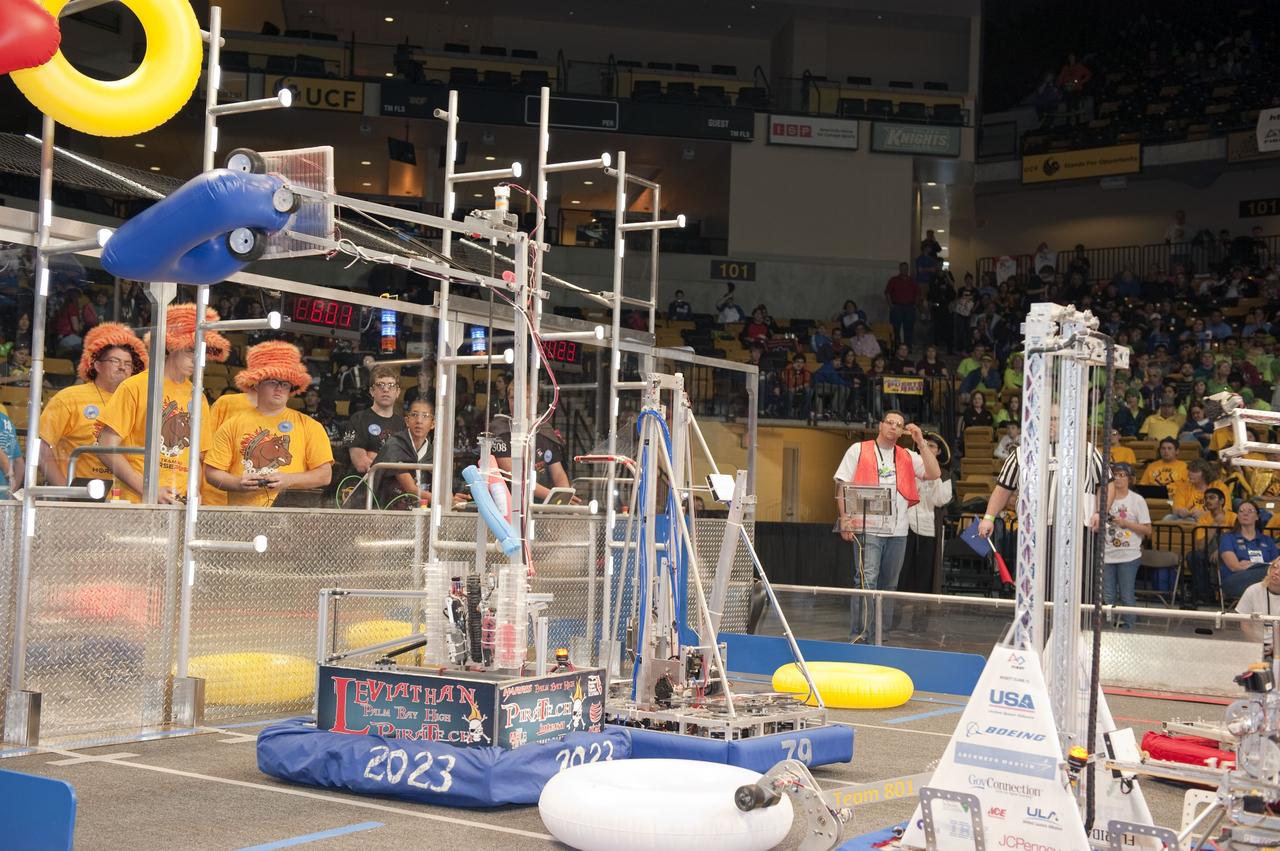
ORLANDO, Fla. – Teams prepare for the "For Inspiration and Recognition of Science and Technology," or FIRST, competition at the University of Central Florida in Orlando. About 60 high school teams took part in hopes of advancing to the national robotics championship. FIRST, founded in 1989, is a non-profit organization that designs accessible, innovative programs to build self-confidence, knowledge and life skills while motivating young people to pursue academic opportunities. The robotics competition challenges teams of high school students and their mentors to solve a common problem in a six-week timeframe using a standard kit of parts and a common set of rules. Photo credit: NASA/Glenn Benson
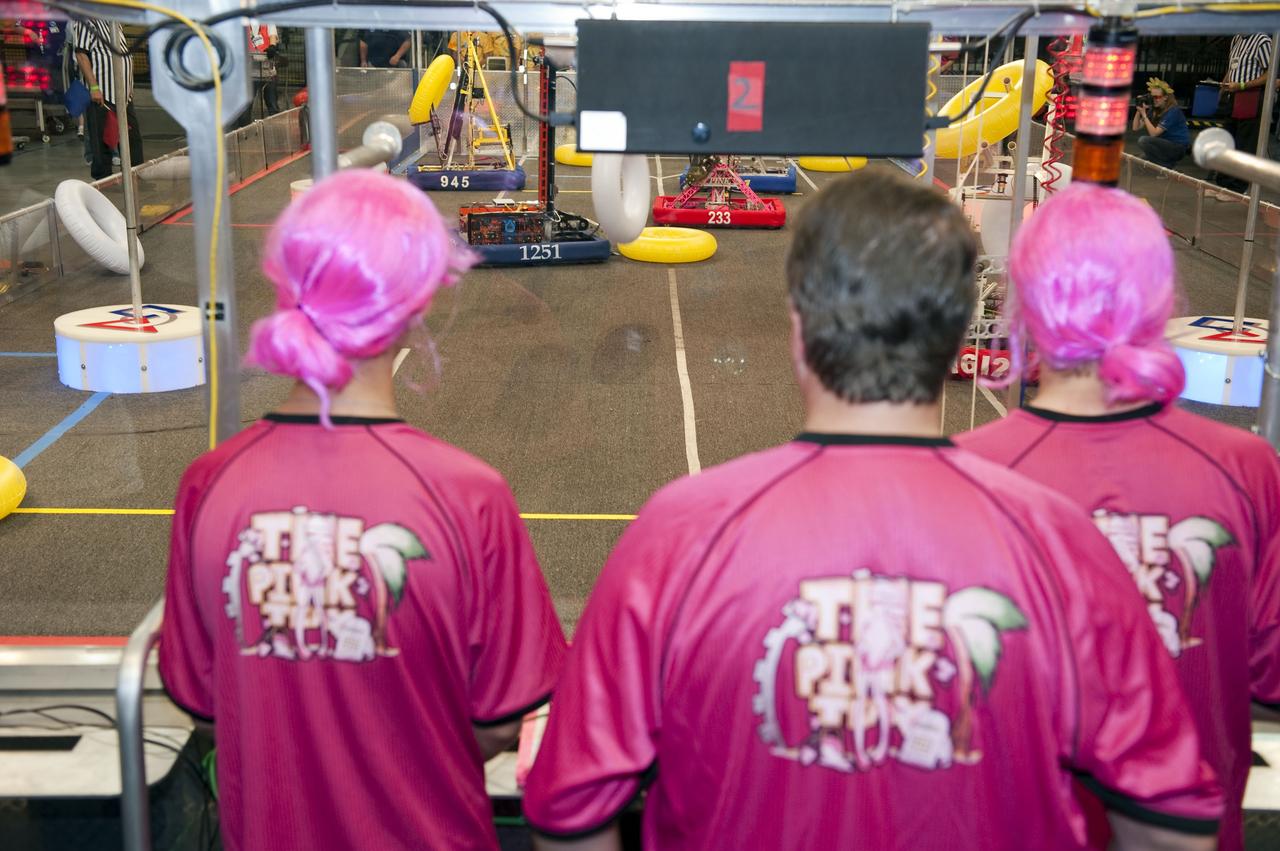
ORLANDO, Fla. – The Pink Team participates in the regional FIRST robotics competition at the University of Central Florida in Orlando. The team is made up of students from Rockledge, Cocoa Beach and Viera high schools along the Space Coast of Florida. NASA’s Kennedy Space Center is a sponsor of the team. The Pink Team finished sixth in the competition called "For Inspiration and Recognition of Science and Technology," or FIRST, among about 60 high school teams hoping to advance to the national robotics championship. The team also took home the Industrial Design Award sponsored by General Motors. FIRST, founded in 1989, is a non-profit organization that designs accessible, innovative programs to build self-confidence, knowledge and life skills while motivating young people to pursue academic opportunities. The robotics competition challenges teams of high school students and their mentors to solve a common problem in a six-week timeframe using a standard kit of parts and a common set of rules. Photo credit: NASA/Glenn Benson
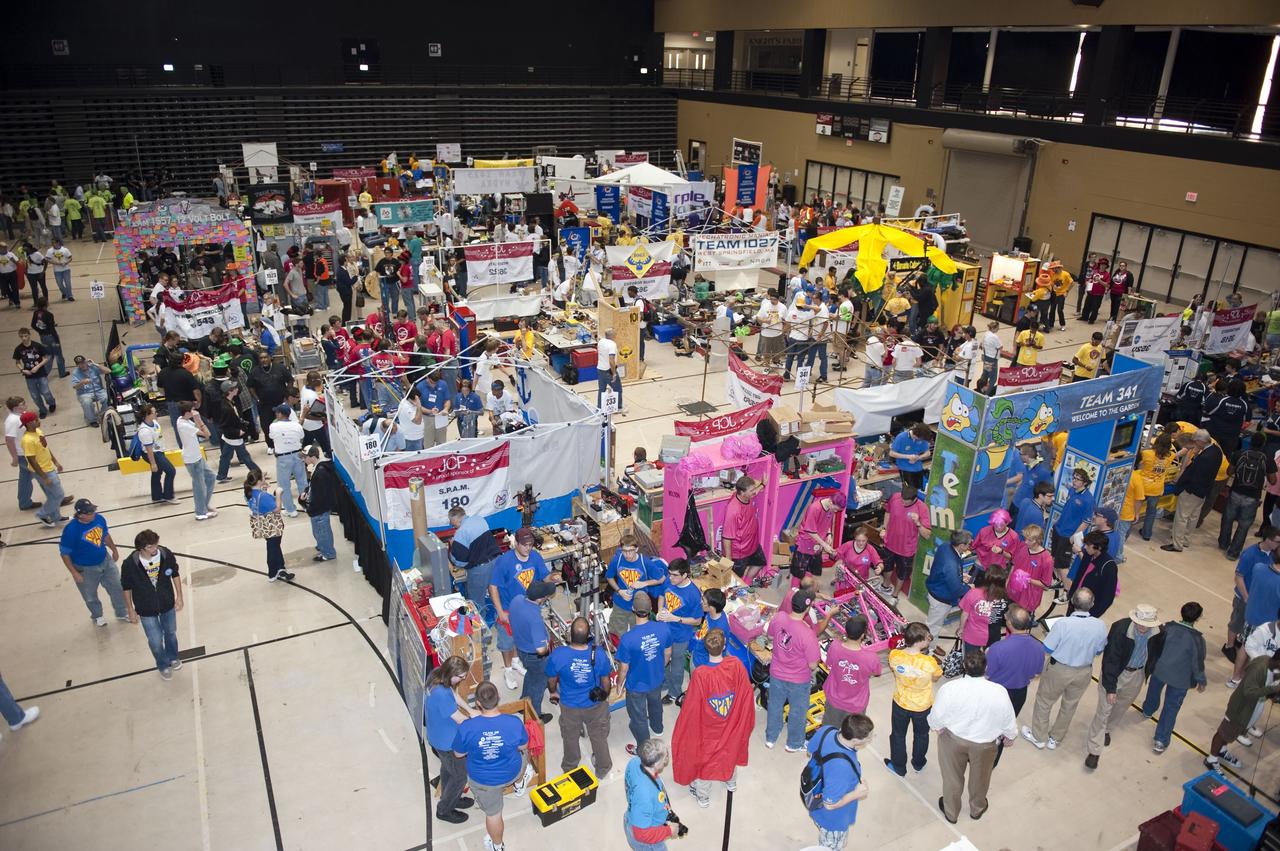
ORLANDO, Fla. – About 60 high school teams take part in the "For Inspiration and Recognition of Science and Technology," or FIRST, competition at the University of Central Florida in Orlando. FIRST, founded in 1989, is a non-profit organization that designs accessible, innovative programs to build self-confidence, knowledge and life skills while motivating young people to pursue academic opportunities. The robotics competition challenges teams of high school students and their mentors to solve a common problem in a six-week timeframe using a standard kit of parts and a common set of rules. Photo credit: NASA/Glenn Benson
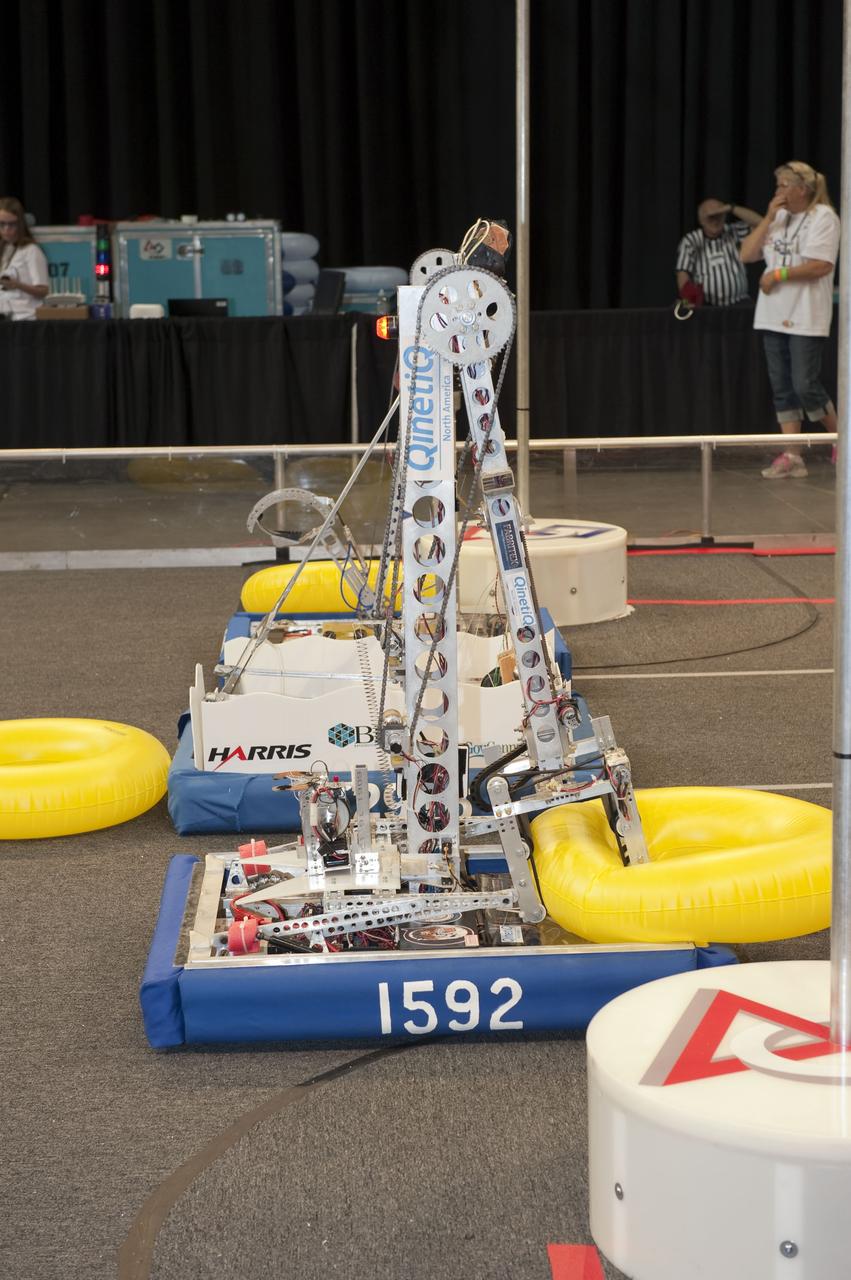
ORLANDO, Fla. –The Bionic Tigers robot participates in the regional FIRST robotics competition at the University of Central Florida in Orlando. The team is made up of students from Cocoa High School and Holy Trinity Episcopal Academy along the Space Coast in Florida. NASA's Launch Services Program based at Kennedy is a sponsor of the team. The Bionic Tigers finished seventh in the competition called "For Inspiration and Recognition of Science and Technology," or FIRST, among about 60 high school teams hoping to advance to the national robotics championship. FIRST, founded in 1989, is a non-profit organization that designs accessible, innovative programs to build self-confidence, knowledge and life skills while motivating young people to pursue academic opportunities. The robotics competition challenges teams of high school students and their mentors to solve a common problem in a six-week timeframe using a standard kit of parts and a common set of rules. Photo credit: NASA/Glenn Benson
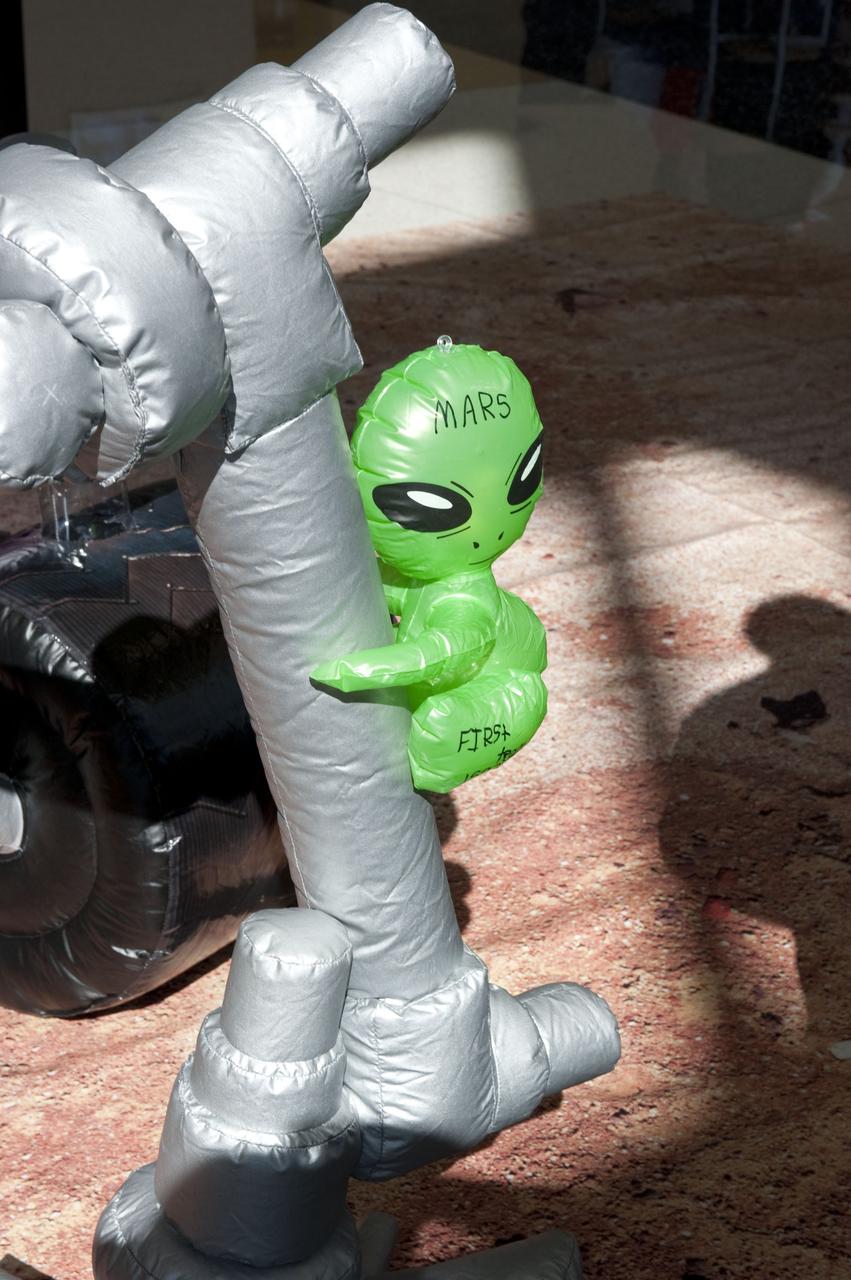
ORLANDO, Fla. – NASA's Jet Propulsion Laboratory (JPL) in Pasadena, Calif., unveiled an inflatable, full-size model of the Mars Science Laboratory mission's Curiosity rover at the "For Inspiration and Recognition of Science and Technology," or FIRST, competition at the University of Central Florida in Orlando. The rover is scheduled to launch from Cape Canaveral Air Force Station in Florida aboard an Atlas V later this year. FIRST, founded in 1989, is a non-profit organization that designs accessible, innovative programs to build self-confidence, knowledge and life skills while motivating young people to pursue academic opportunities. The robotics competition challenges teams of high school students and their mentors to solve a common problem in a six-week timeframe using a standard kit of parts and a common set of rules. Photo credit: NASA/Glenn Benson
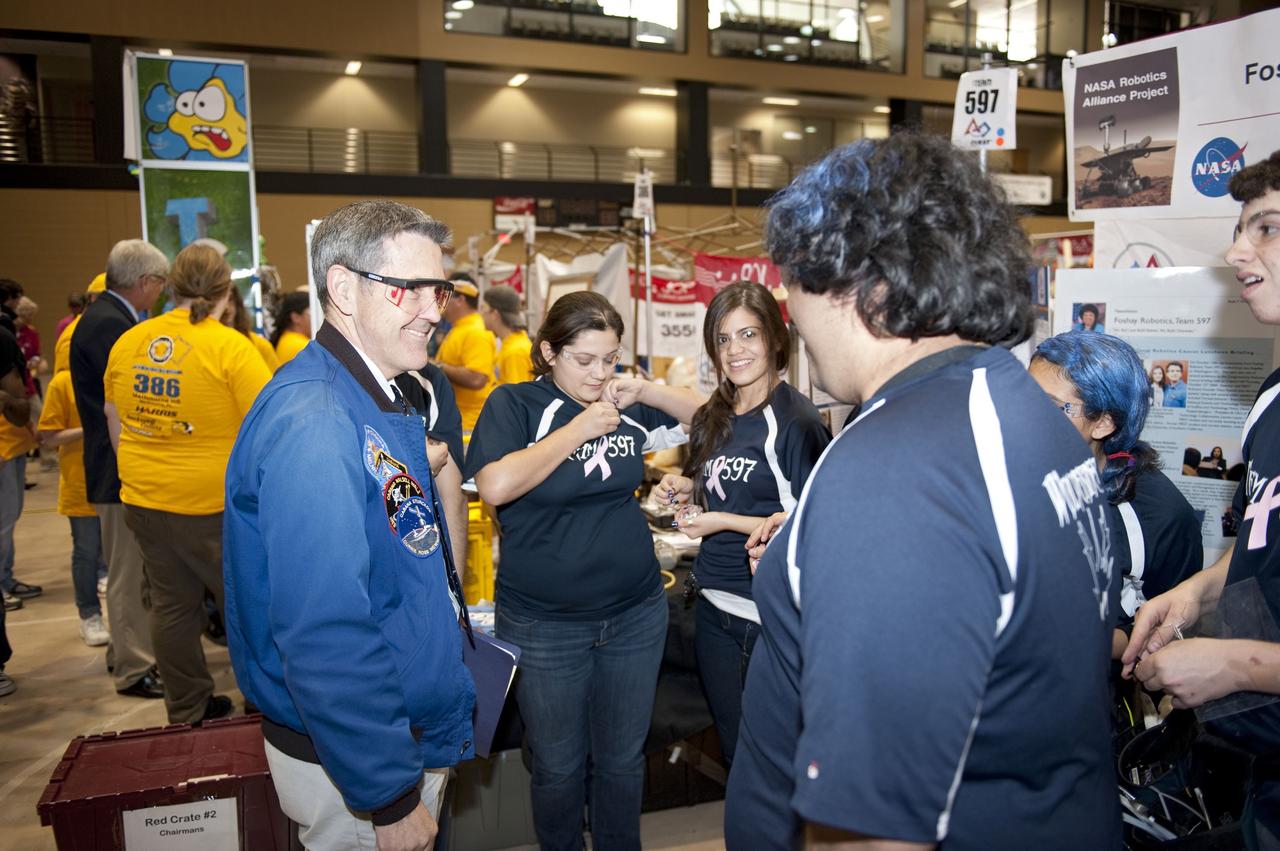
ORLANDO, Fla. – NASA Kennedy Space Center Director Bob Cabana talks to The Wolverines team at the regional FIRST robotics competition at the University of Central Florida in Orlando. The team is made up of students from the Foshay Learning Center located in Los Angeles. NASA is a sponsor of the team. About 60 high school teams took part in the competition called "For Inspiration and Recognition of Science and Technology," or FIRST, in hopes of advancing to the national robotics championship. The team took home the Industrial Safety Award sponsored by Underwriters Laboratories. FIRST, founded in 1989, is a non-profit organization that designs accessible, innovative programs to build self-confidence, knowledge and life skills while motivating young people to pursue academic opportunities. The robotics competition challenges teams of high school students and their mentors to solve a common problem in a six-week timeframe using a standard kit of parts and a common set of rules. Photo credit: NASA/Glenn Benson
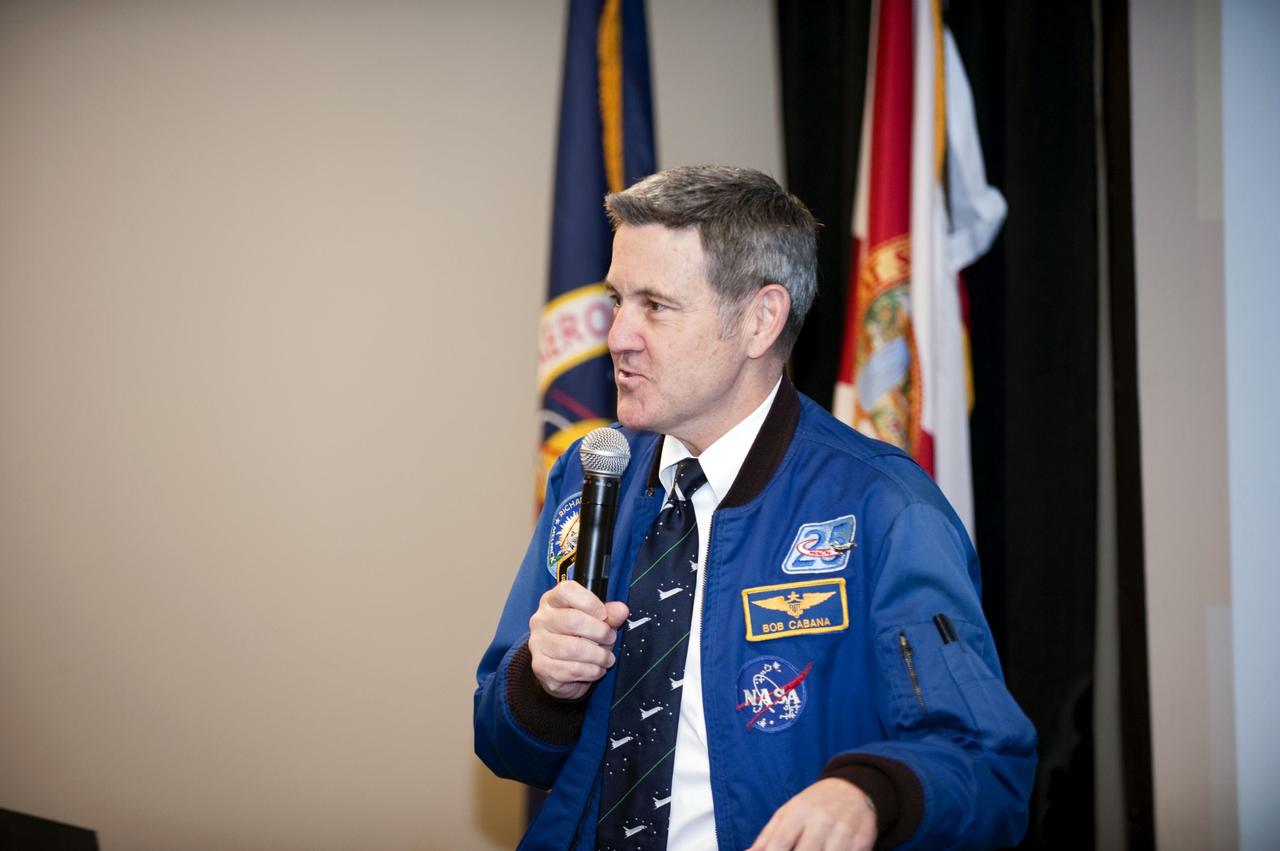
ORLANDO, Fla. – NASA Kennedy Space Center Director Bob Cabana talks to high school students taking part in the "For Inspiration and Recognition of Science and Technology," or FIRST, competition at the University of Central Florida in Orlando. FIRST, founded in 1989, is a non-profit organization that designs accessible, innovative programs to build self-confidence, knowledge and life skills while motivating young people to pursue academic opportunities. The robotics competition challenges teams of high school students and their mentors to solve a common problem in a six-week timeframe using a standard kit of parts and a common set of rules. Photo credit: NASA/Glenn Benson
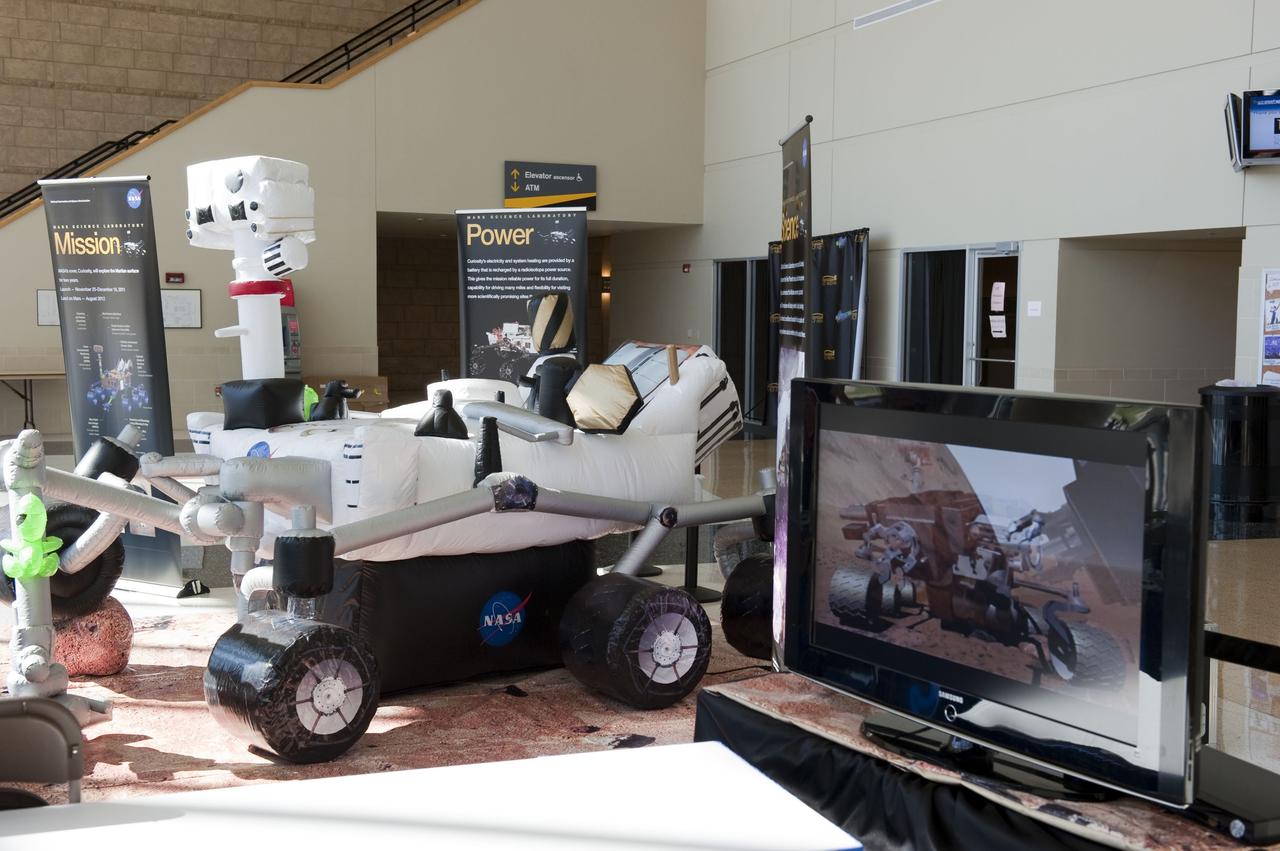
ORLANDO, Fla. – NASA's Jet Propulsion Laboratory (JPL) in Pasadena, Calif., unveiled an inflatable, full-size model of the Mars Science Laboratory mission's Curiosity rover at the "For Inspiration and Recognition of Science and Technology," or FIRST, competition at the University of Central Florida in Orlando. The rover is scheduled to launch from Cape Canaveral Air Force Station in Florida aboard an Atlas V later this year. FIRST, founded in 1989, is a non-profit organization that designs accessible, innovative programs to build self-confidence, knowledge and life skills while motivating young people to pursue academic opportunities. The robotics competition challenges teams of high school students and their mentors to solve a common problem in a six-week timeframe using a standard kit of parts and a common set of rules. Photo credit: NASA/Glenn Benson
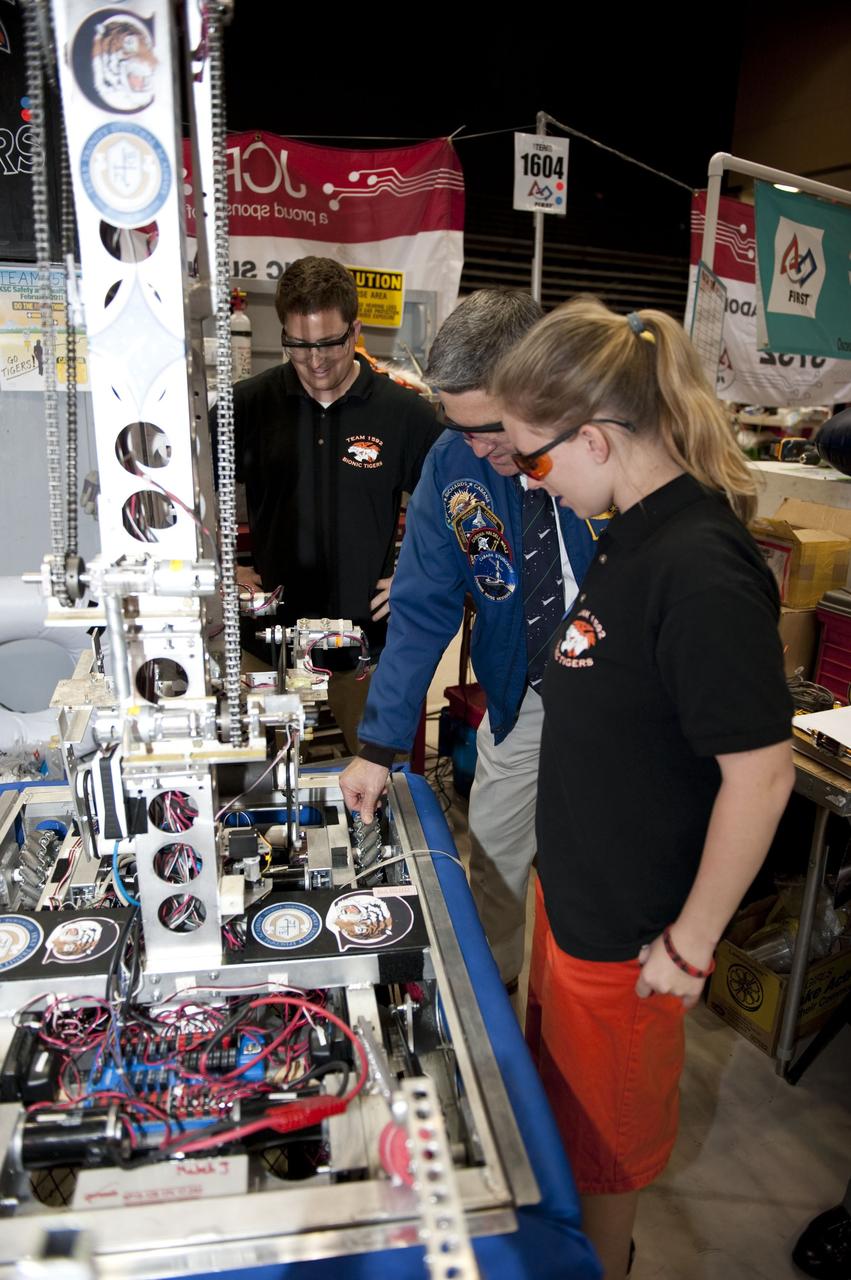
ORLANDO, Fla. – NASA Kennedy Space Center Director Bob Cabana checks out the robot designed by the Bionic Tigers team at the regional FIRST robotics competition at the University of Central Florida in Orlando. The team is made up of students from Cocoa High School and Holy Trinity Episcopal Academy along the Space Coast in Florida. NASA's Launch Services Program based at Kennedy is a sponsor of the team. The Bionic Tigers finished seventh in the competition called "For Inspiration and Recognition of Science and Technology," or FIRST, among about 60 high school teams hoping to advance to the national robotics championship. FIRST, founded in 1989, is a non-profit organization that designs accessible, innovative programs to build self-confidence, knowledge and life skills while motivating young people to pursue academic opportunities. The robotics competition challenges teams of high school students and their mentors to solve a common problem in a six-week timeframe using a standard kit of parts and a common set of rules. Photo credit: NASA/Glenn Benson
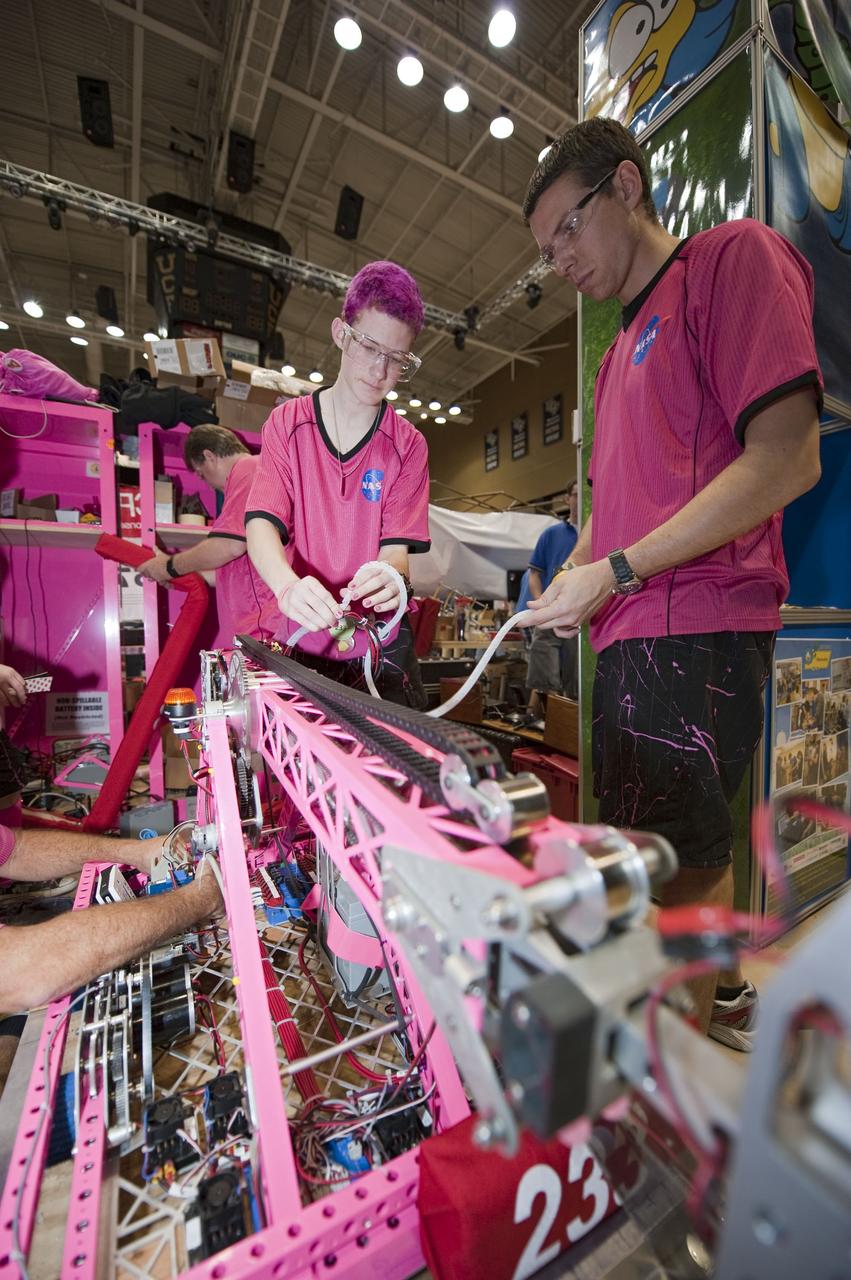
ORLANDO, Fla. – The Pink Team participates in the regional FIRST robotics competition at the University of Central Florida in Orlando. The team is made up of students from Rockledge, Cocoa Beach and Viera high schools along the Space Coast of Florida. NASA’s Kennedy Space Center is a sponsor of the team. The Pink Team finished sixth in the competition called "For Inspiration and Recognition of Science and Technology," or FIRST, among about 60 high school teams hoping to advance to the national robotics championship. The team also took home the Industrial Design Award sponsored by General Motors. FIRST, founded in 1989, is a non-profit organization that designs accessible, innovative programs to build self-confidence, knowledge and life skills while motivating young people to pursue academic opportunities. The robotics competition challenges teams of high school students and their mentors to solve a common problem in a six-week timeframe using a standard kit of parts and a common set of rules. Photo credit: NASA/Glenn Benson
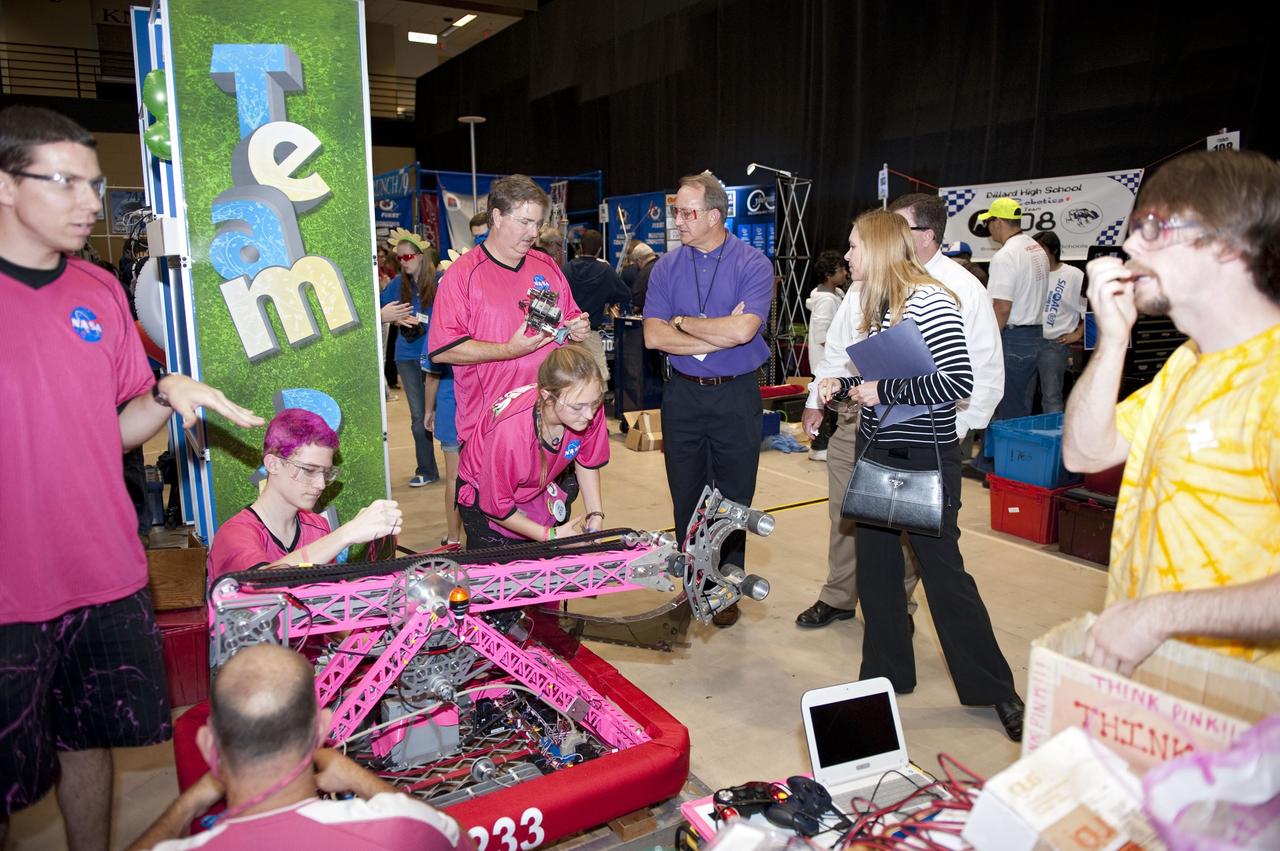
ORLANDO, Fla. – The Pink Team participates in the regional FIRST robotics competition at the University of Central Florida in Orlando. The team is made up of students from Rockledge, Cocoa Beach and Viera high schools along the Space Coast of Florida. NASA’s Kennedy Space Center is a sponsor of the team. The Pink Team finished sixth in the competition called "For Inspiration and Recognition of Science and Technology," or FIRST, among about 60 high school teams hoping to advance to the national robotics championship. The team also took home the Industrial Design Award sponsored by General Motors. Kennedy's Deputy Director Janet Petro and Engineering Director Pat Simpkins also stopped by the competition to encourage the teams. FIRST, founded in 1989, is a non-profit organization that designs accessible, innovative programs to build self-confidence, knowledge and life skills while motivating young people to pursue academic opportunities. The robotics competition challenges teams of high school students and their mentors to solve a common problem in a six-week timeframe using a standard kit of parts and a common set of rules. Photo credit: NASA/Glenn Benson
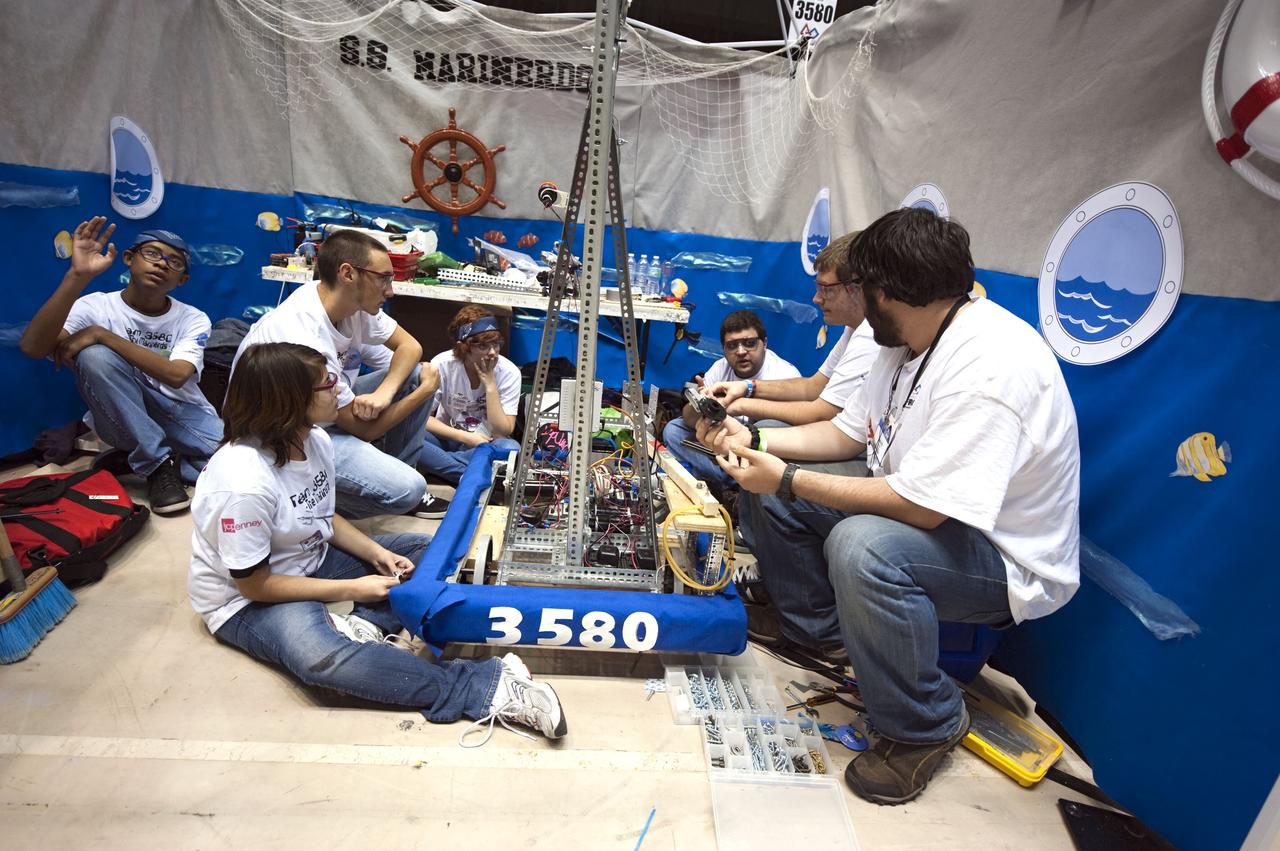
ORLANDO, Fla. – The S.S. Marinerds team participates in the regional FIRST robotics competition at the University of Central Florida in Orlando. The team is made up of students from Mariner High School in Cape Coral, Fla. NASA is a sponsor of the team. About 60 high school teams took part in the competition called "For Inspiration and Recognition of Science and Technology," or FIRST, in hopes of advancing to the national robotics championship. FIRST, founded in 1989, is a non-profit organization that designs accessible, innovative programs to build self-confidence, knowledge and life skills while motivating young people to pursue academic opportunities. The robotics competition challenges teams of high school students and their mentors to solve a common problem in a six-week timeframe using a standard kit of parts and a common set of rules. Photo credit: NASA/Glenn Benson
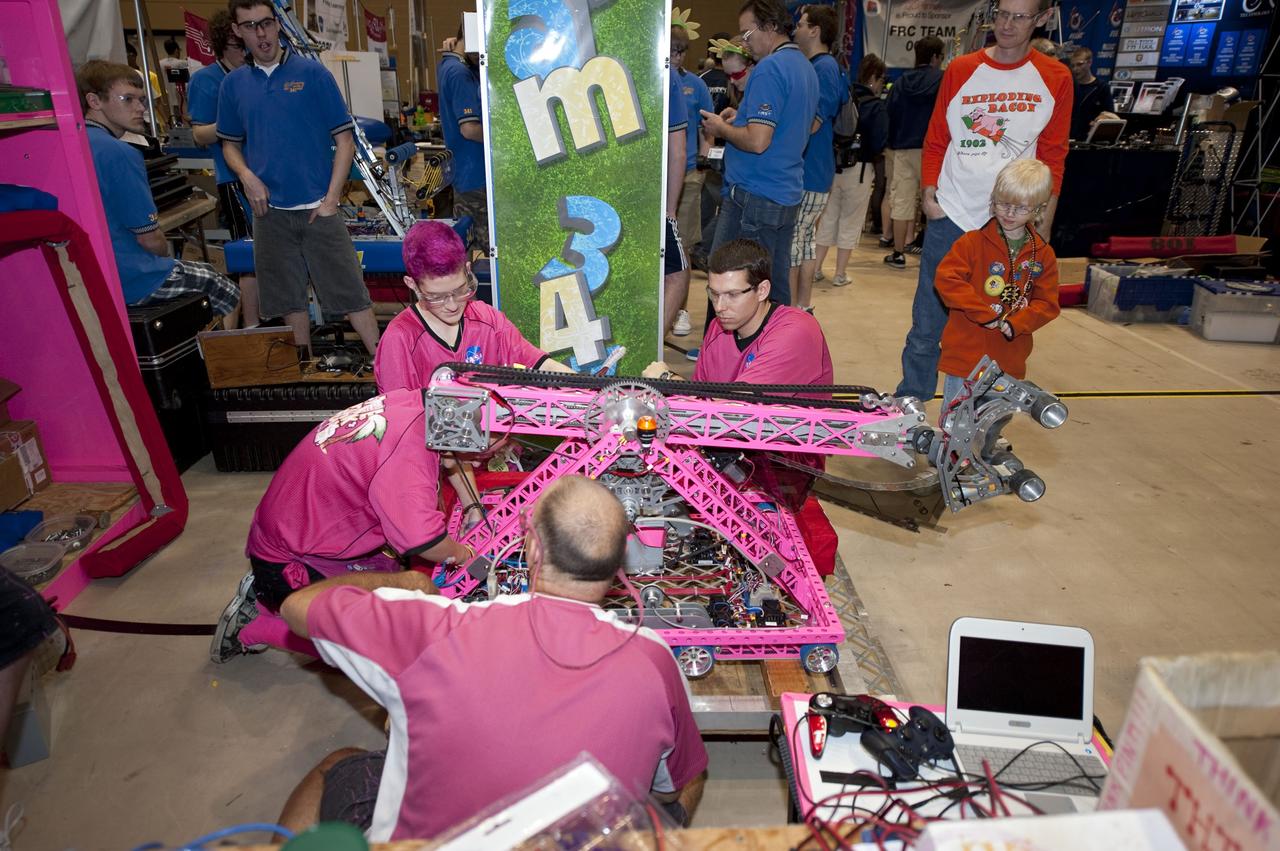
ORLANDO, Fla. – The Pink Team participates in the regional FIRST robotics competition at the University of Central Florida in Orlando. The team is made up of students from Rockledge, Cocoa Beach and Viera high schools along the Space Coast of Florida. NASA’s Kennedy Space Center is a sponsor of the team. The Pink Team finished sixth in the competition called "For Inspiration and Recognition of Science and Technology," or FIRST, among about 60 high school teams hoping to advance to the national robotics championship. The team also took home the Industrial Design Award sponsored by General Motors. FIRST, founded in 1989, is a non-profit organization that designs accessible, innovative programs to build self-confidence, knowledge and life skills while motivating young people to pursue academic opportunities. The robotics competition challenges teams of high school students and their mentors to solve a common problem in a six-week timeframe using a standard kit of parts and a common set of rules. Photo credit: NASA/Glenn Benson

ORLANDO, Fla. – Robotics Engineer Michael Garrett from NASA's Jet Propulsion Laboratory (JPL) in Pasadena, Calif., talks about the Mars Science Laboratory mission's Curiosity rover at the "For Inspiration and Recognition of Science and Technology," or FIRST, competition at the University of Central Florida in Orlando. JPL unveiled an inflatable, full-size model of the rover at the competition. The rover is scheduled to launch from Cape Canaveral Air Force Station in Florida aboard an Atlas V later this year. FIRST, founded in 1989, is a non-profit organization that designs accessible, innovative programs to build self-confidence, knowledge and life skills while motivating young people to pursue academic opportunities. The robotics competition challenges teams of high school students and their mentors to solve a common problem in a six-week timeframe using a standard kit of parts and a common set of rules. Photo credit: NASA/Glenn Benson
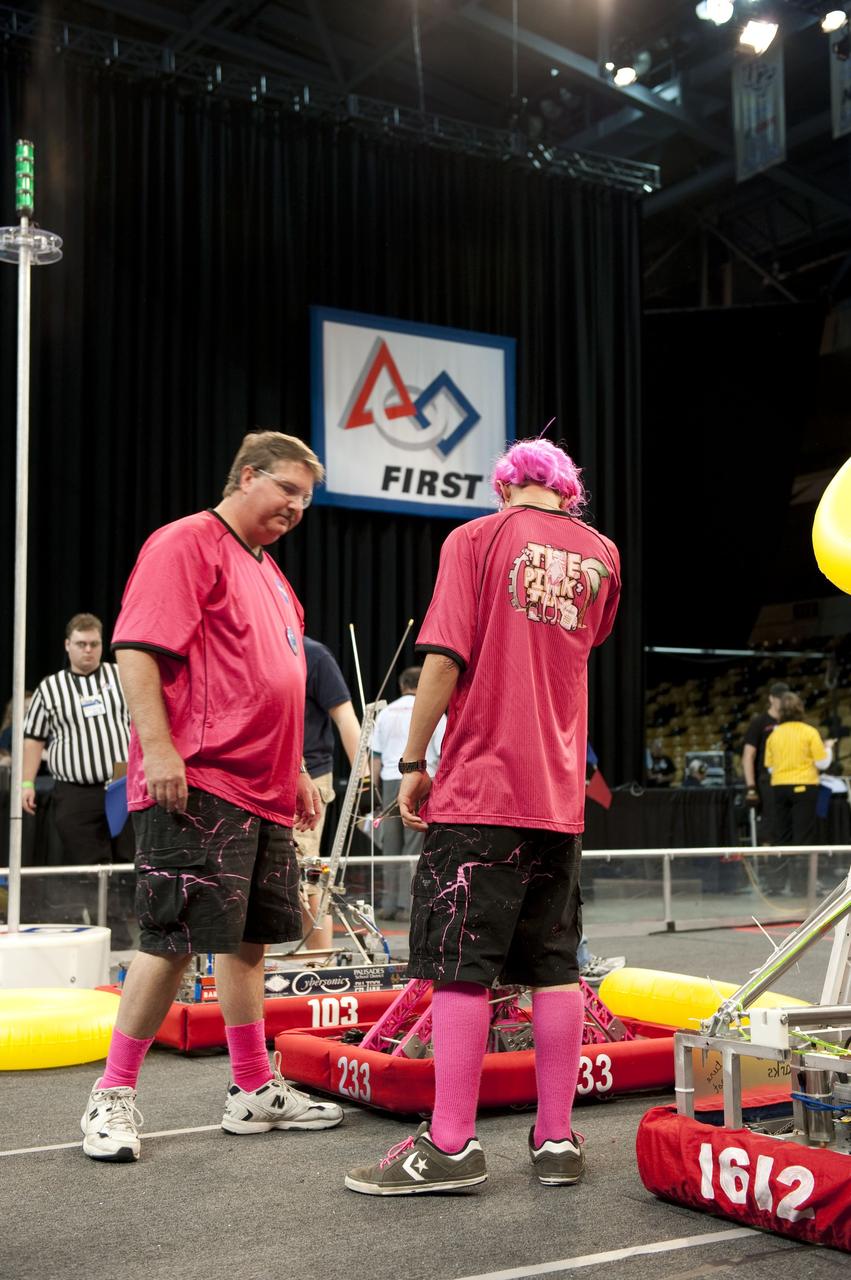
ORLANDO, Fla. – The Pink Team participates in the regional FIRST robotics competition at the University of Central Florida in Orlando. The team is made up of students from Rockledge, Cocoa Beach and Viera high schools along the Space Coast of Florida. NASA’s Kennedy Space Center is a sponsor of the team. The Pink Team finished sixth in the competition called "For Inspiration and Recognition of Science and Technology," or FIRST, among about 60 high school teams hoping to advance to the national robotics championship. The team also took home the Industrial Design Award sponsored by General Motors. FIRST, founded in 1989, is a non-profit organization that designs accessible, innovative programs to build self-confidence, knowledge and life skills while motivating young people to pursue academic opportunities. The robotics competition challenges teams of high school students and their mentors to solve a common problem in a six-week timeframe using a standard kit of parts and a common set of rules. Photo credit: NASA/Glenn Benson

ORLANDO, Fla. – About 60 high school teams take part in the "For Inspiration and Recognition of Science and Technology," or FIRST, competition at the University of Central Florida in Orlando. FIRST, founded in 1989, is a non-profit organization that designs accessible, innovative programs to build self-confidence, knowledge and life skills while motivating young people to pursue academic opportunities. The robotics competition challenges teams of high school students and their mentors to solve a common problem in a six-week timeframe using a standard kit of parts and a common set of rules. Photo credit: NASA/Glenn Benson

Eric Fingerhut, head of Education at Battelle, former chancellor of Ohio's Higher Education System, talks during the during the NASA Future Forum Inspiration and Education Panel at The Ohio State University on Monday, Feb. 20, 2012, in Columbus, Ohio. The NASA Future Forum features panel discussions on the importance of education to our nation's future in space, the benefit of commercialized space technology to our economy and lives here on Earth, and the shifting roles for the public, commercial and international communities in space. Photo Credit: (NASA/Bill Ingalls)

Leland Melvin, NASA Associate Administrator for Education and NASA Astronaut, moderates the NASA Future Forum Inspiration and Education Panel at The Ohio State University on Monday, Feb. 20, 2012, in Columbus, Ohio. The NASA Future Forum features panel discussions on the importance of education to our nation's future in space, the benefit of commercialized space technology to our economy and lives here on Earth, and the shifting roles for the public, commercial and international communities in space. Photo Credit: (NASA/Bill Ingalls)
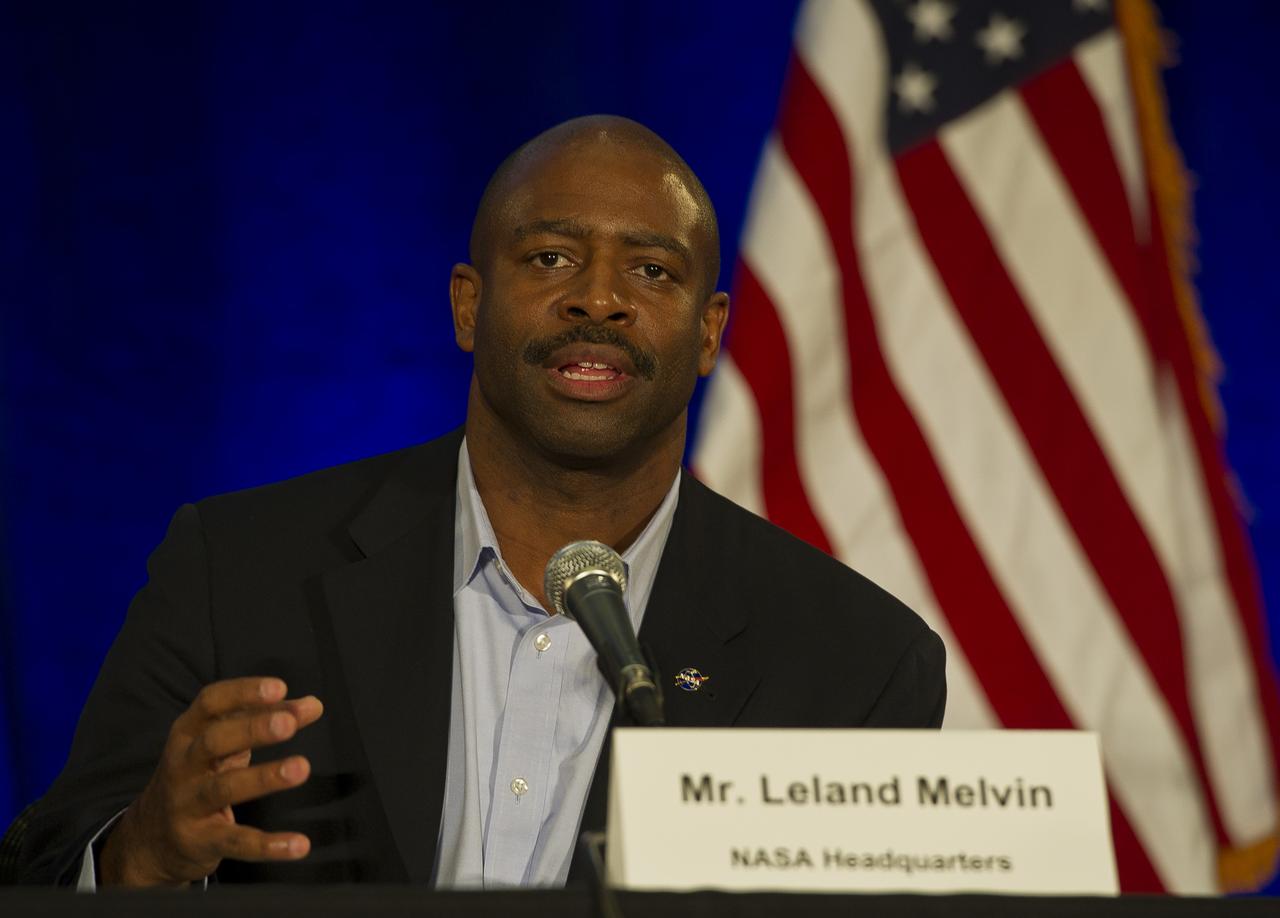
Leland Melvin, NASA Associate Administrator for Education, speaks during a panel discussion on inspiration in education at the 2011 NASA Future Forum held at the Riggs Alumni Center on the campus of the University of Maryland, Thursday, Aug. 11, 2011, in College Park, Md. Photo Credit: (NASA/Paul E. Alers)
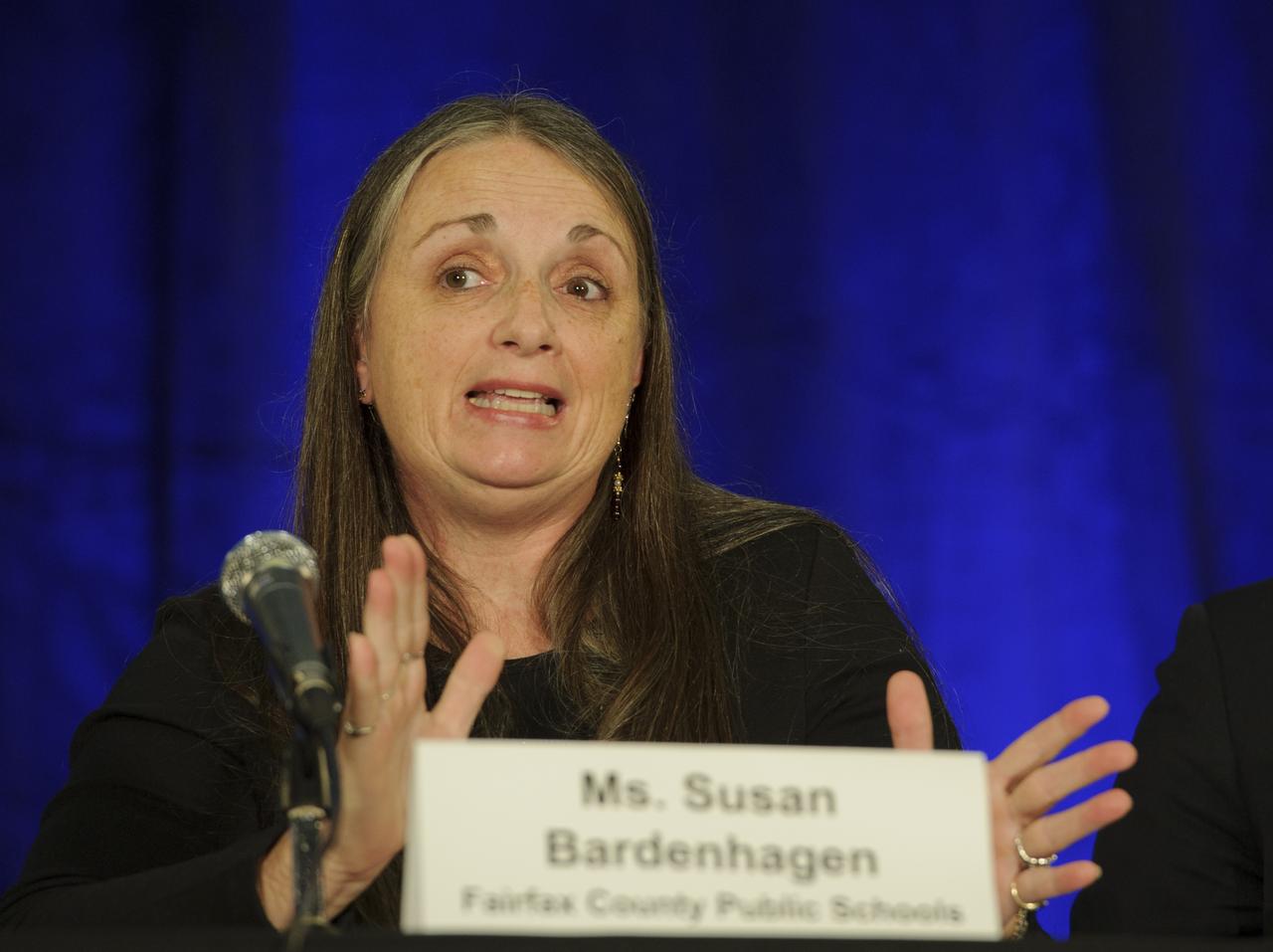
Susan Bardenhagen, an educator from the Fairfax County Public Schools, speaks during a panel discussion on inspiration in education at the 2011 NASA Future Forum held at the Riggs Alumni Center on the campus of the University of Maryland, Thursday, Aug. 11, 2011, in College Park, Md. Photo Credit: (NASA/Paul E. Alers)

Ohio Space Grant Consortium (OSGC) Director Gary Slater talks during the NASA Future Forum Inspiration and Education Panel at The Ohio State University on Monday, Feb. 20, 2012, in Columbus, Ohio. The NASA Future Forum features panel discussions on the importance of education to our nation's future in space, the benefit of commercialized space technology to our economy and lives here on Earth, and the shifting roles for the public, commercial and international communities in space. Photo Credit: (NASA/Bill Ingalls)

Pickerington High School student Jordan Elliott, left, and Dayton Regional STEM student Cheyenne Benson participate in the NASA Future Forum Inspiration and Education Panel at The Ohio State University on Monday, Feb. 20, 2012, in Columbus, Ohio. The NASA Future Forum features panel discussions on the importance of education to our nation's future in space, the benefit of commercialized space technology to our economy and lives here on Earth, and the shifting roles for the public, commercial and international communities in space. Photo Credit: (NASA/Bill Ingalls)
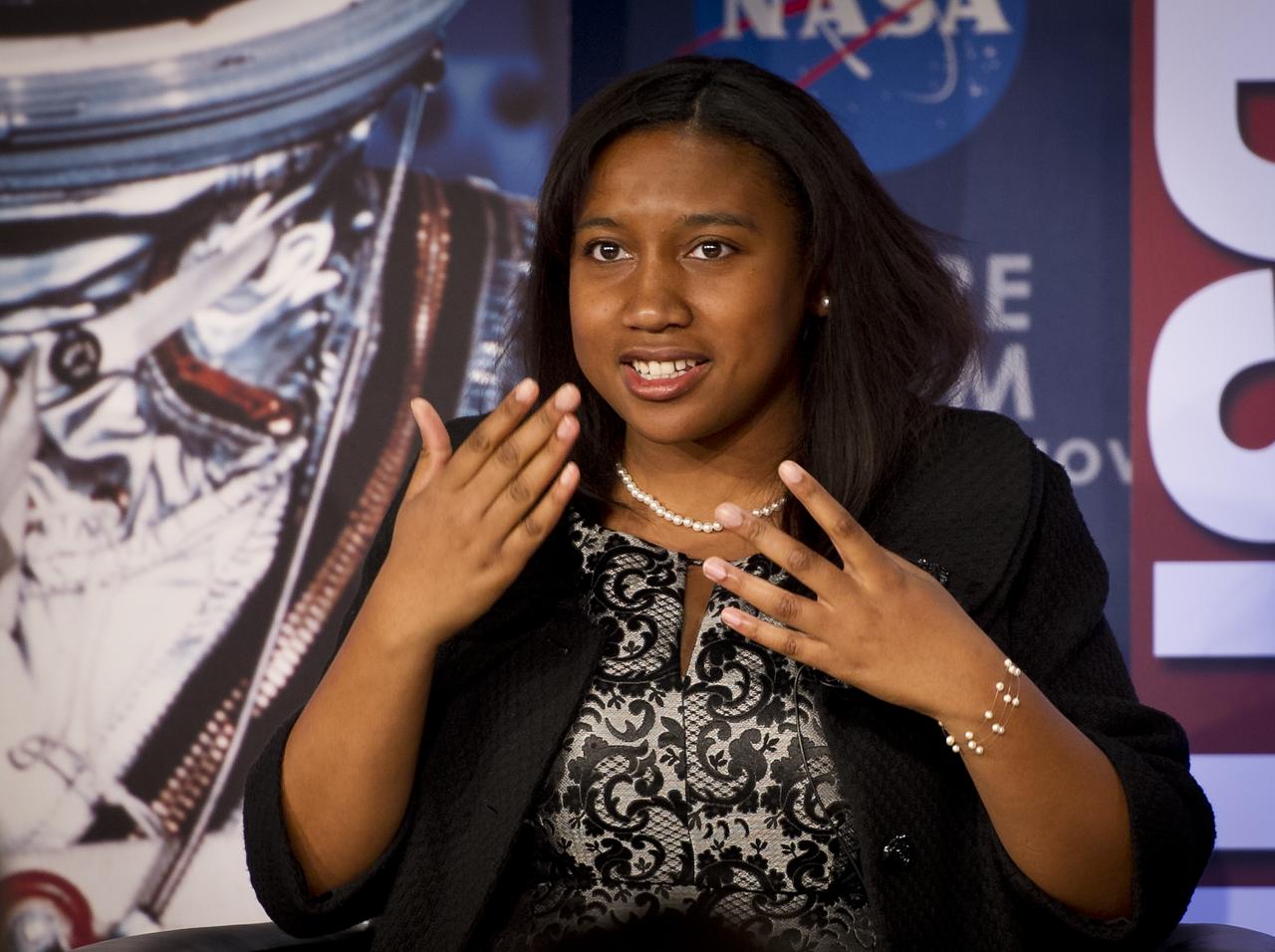
Ohio State University graduate student, biological sciences and NASA Student Ambassador, Monica Okon talks during the NASA Future Forum Inspiration and Education Panel at The Ohio State University on Monday, Feb. 20, 2012, in Columbus, Ohio. The NASA Future Forum features panel discussions on the importance of education to our nation's future in space, the benefit of commercialized space technology to our economy and lives here on Earth, and the shifting roles for the public, commercial and international communities in space. Photo Credit: (NASA/Bill Ingalls)

Founding head of MC2 STEM High School Jeffrey McClellan talks during the NASA Future Forum Inspiration and Education Panel at The Ohio State University on Monday, Feb. 20, 2012, in Columbus, Ohio. The NASA Future Forum features panel discussions on the importance of education to our nation's future in space, the benefit of commercialized space technology to our economy and lives here on Earth, and the shifting roles for the public, commercial and international communities in space. Photo Credit: (NASA/Bill Ingalls)

Dayton Regional STEM student Cheyenne Benson talks during the NASA Future Forum Inspiration and Education Panel at The Ohio State University on Monday, Feb. 20, 2012, in Columbus, Ohio. The NASA Future Forum features panel discussions on the importance of education to our nation's future in space, the benefit of commercialized space technology to our economy and lives here on Earth, and the shifting roles for the public, commercial and international communities in space. Photo Credit: (NASA/Bill Ingalls)
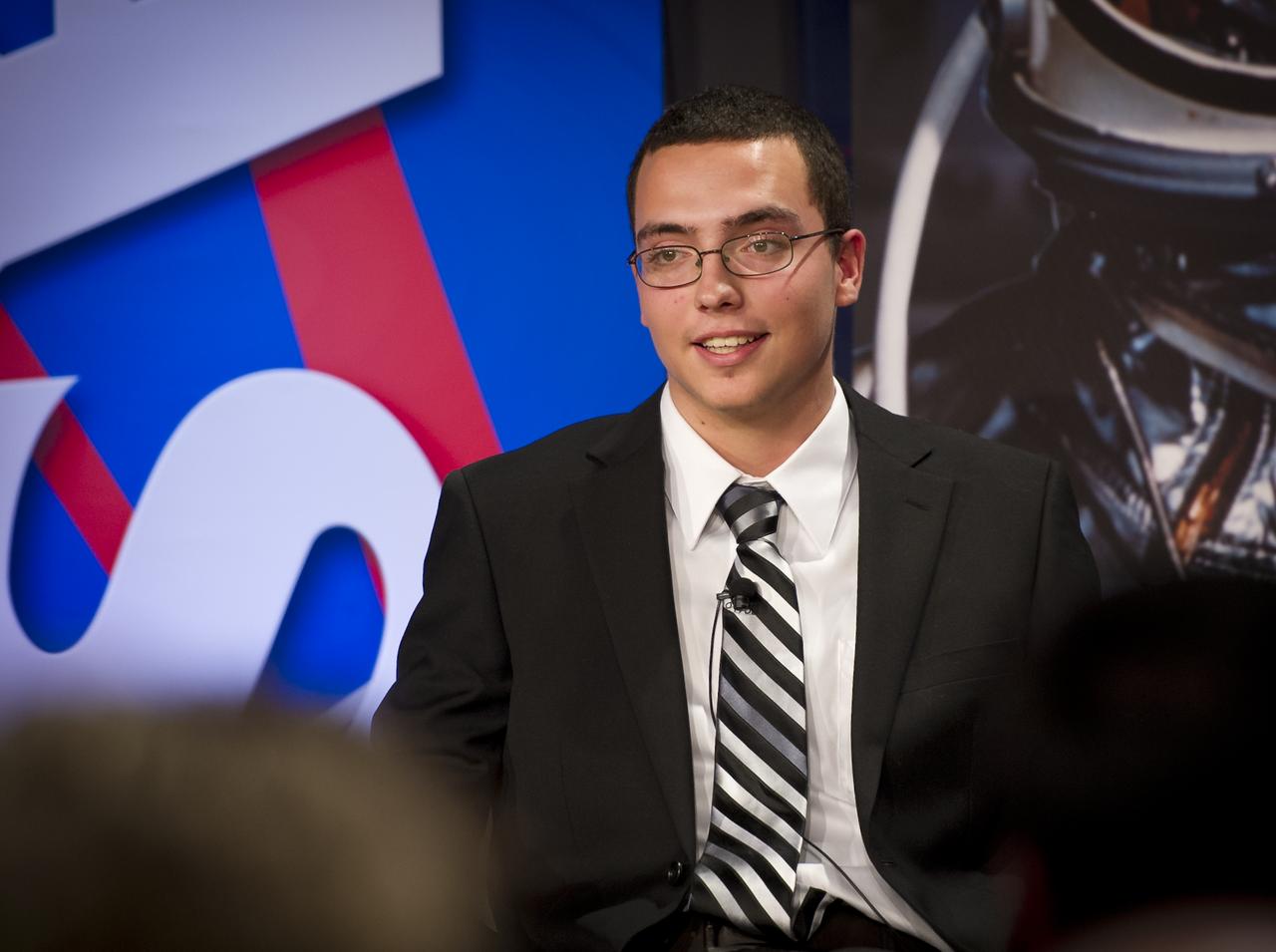
Metro High School Student Anthony Springer talks during the NASA Future Forum Inspiration and Education Panel at The Ohio State University on Monday, Feb. 20, 2012, in Columbus, Ohio. The NASA Future Forum features panel discussions on the importance of education to our nation's future in space, the benefit of commercialized space technology to our economy and lives here on Earth, and the shifting roles for the public, commercial and international communities in space. Photo Credit: (NASA/Bill Ingalls)
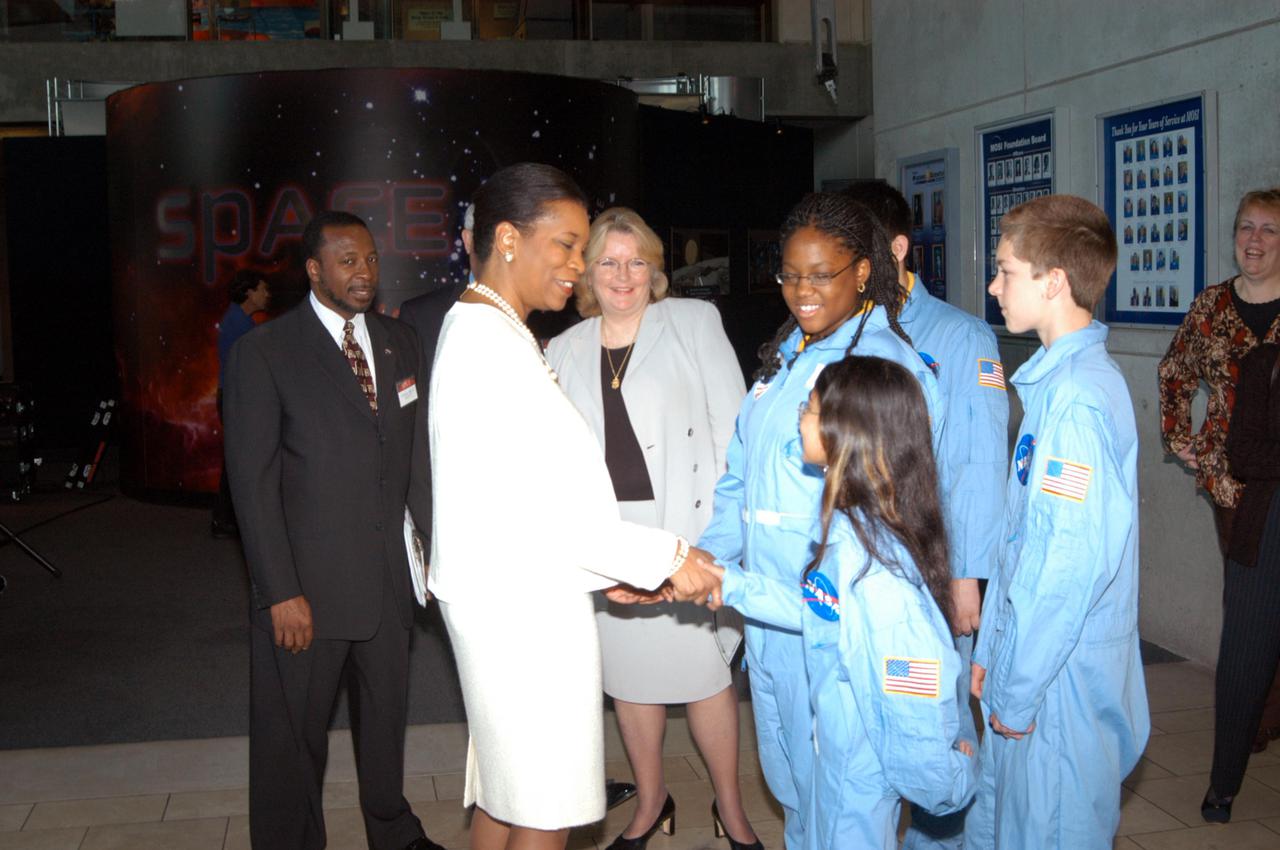
KENNEDY SPACE CENTER, FLA. - At the Museum of Science and Industry (MOSI) in Tampa, Dr. Adena Williams Loston, chief education officer at NASA Headquarters, greets students from one of NASA’s Explorer Schools, Stewart Middle School in Tampa. The students as well as Dr. Loston and KSC Deputy Director Dr. Woodrow Whitlow Jr. (far left) were at MOSI to view the space exhibits Space: A Journey to Our Future, an extraordinary, interactive exhibition designed to entertain, educate and inspire; and SPACE STATION, the first cinematic journey to the International Space Station (ISS), where audiences can experience for themselves life in zero gravity aboard the new station.

The space shuttle Endeavour is seen as it traverses through Inglewood, California on Friday, Oct. 2012. Endeavour, built as a replacement for space shuttle Challenger, completed 25 missions, spent 299 days in orbit, and orbited Earth 4,671 times while traveling 122,883,151 miles. Beginning Oct. 30, the shuttle will be on display in the CSC’s Samuel Oschin Space Shuttle Endeavour Display Pavilion, embarking on its new mission to commemorate past achievements in space and educate and inspire future generations of explorers. Photo Credit: (NASA/Carla Cioffi)

The space shuttle Endeavour is seen as it traverses through Inglewood, Calif. on Friday, Oct. 12, 2012. Endeavour, built as a replacement for space shuttle Challenger, completed 25 missions, spent 299 days in orbit, and orbited Earth 4,671 times while traveling 122,883,151 miles. Beginning Oct. 30, the shuttle will be on display in the CSC's Samuel Oschin Space Shuttle Endeavour Display Pavilion, embarking on its new mission to commemorate past achievements in space and educate and inspire future generations of explorers. Photo Credit: (NASA/Carla Cioffi)
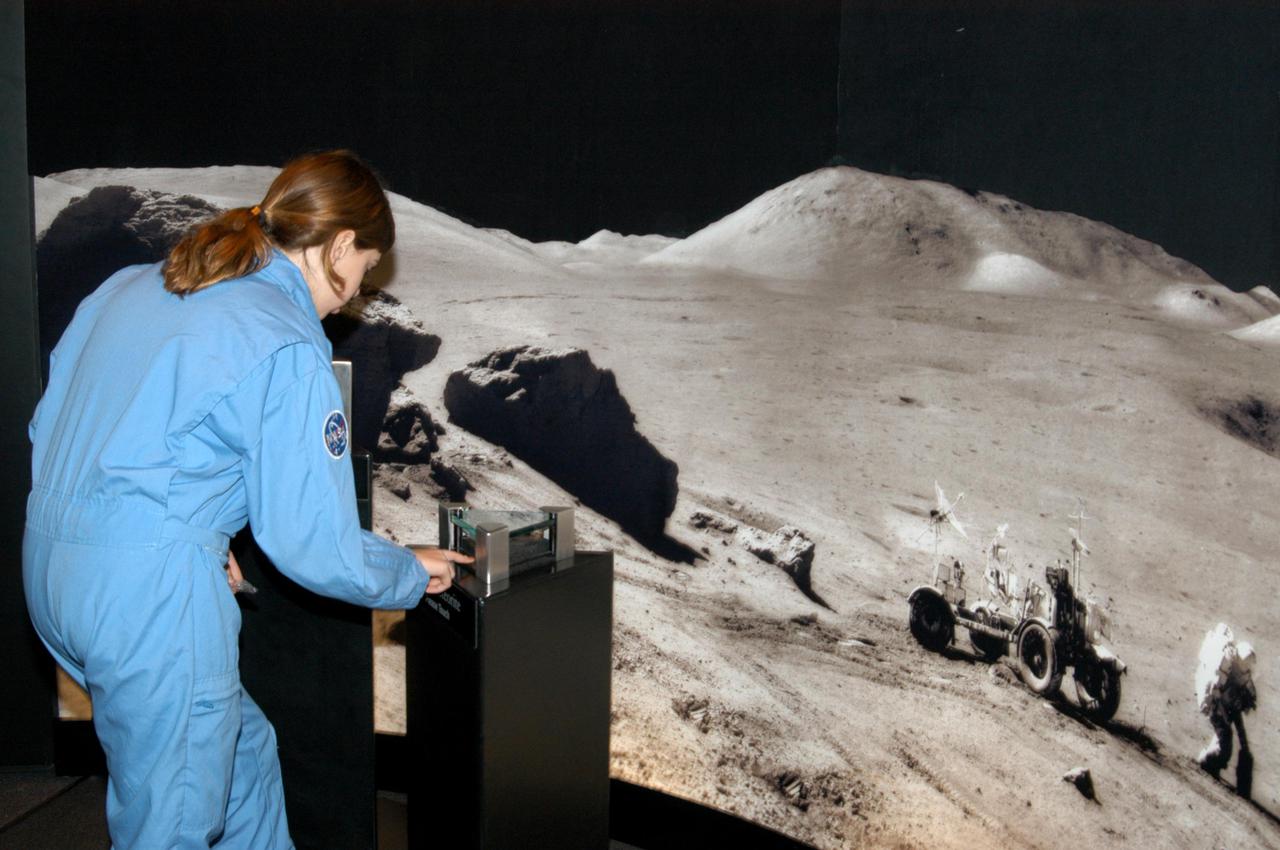
KENNEDY SPACE CENTER, FLA. - At the Museum of Science and Industry (MOSI) in Tampa, a student from one of NASA’s Explorer Schools, Stewart Middle School in Tampa, tries her hand at an interactive exhibit. The students are at MOSI to view the space exhibit Space: A Journey to Our Future, an extraordinary, interactive exhibition designed to entertain, educate and inspire. Another exhibit is SPACE STATION, the first cinematic journey to the International Space Station (ISS), where audiences can experience for themselves life in zero gravity aboard the new station.
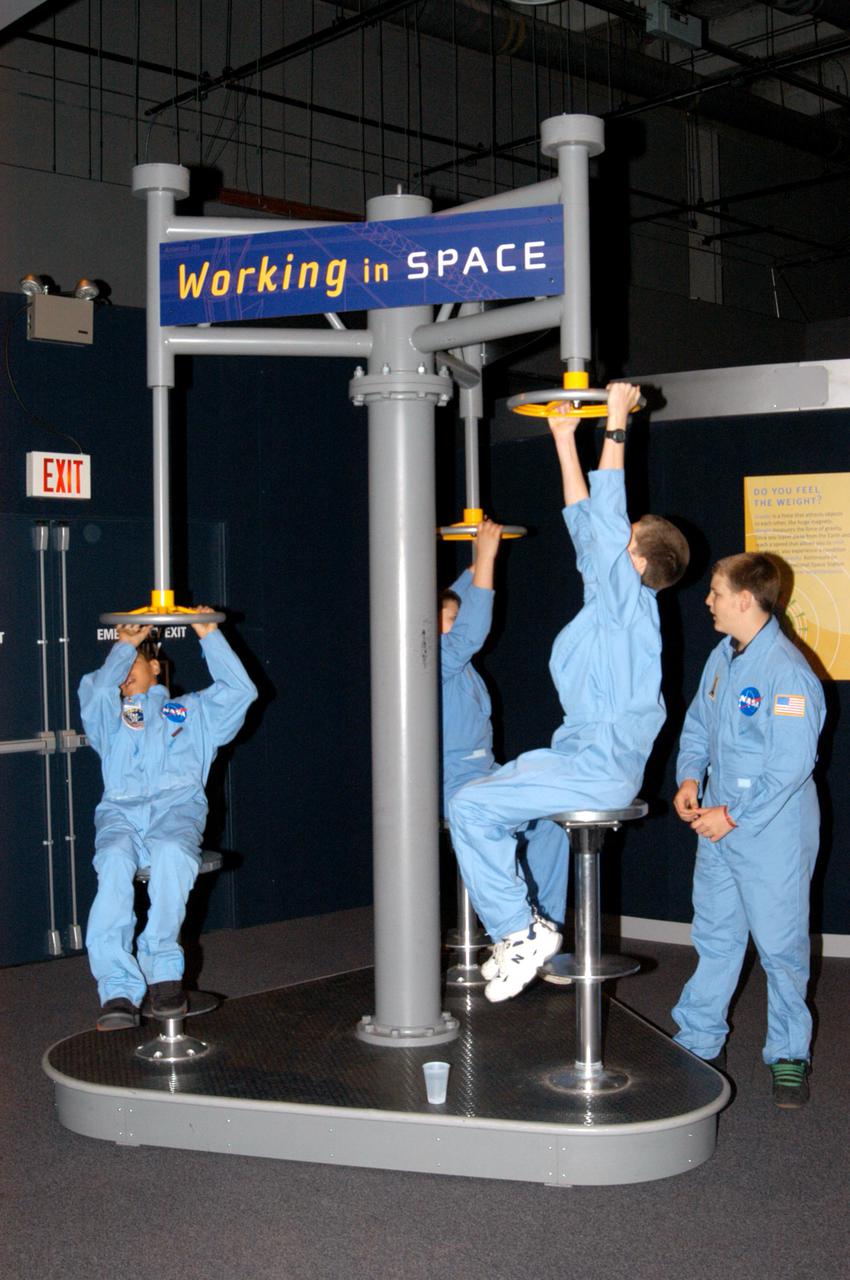
KENNEDY SPACE CENTER, FLA. - At the Museum of Science and Industry (MOSI) in Tampa, students from one of NASA’s Explorer Schools, Stewart Middle School in Tampa, enjoy an interactive exhibit. The students are at MOSI to view the space exhibit Space: A Journey to Our Future, an extraordinary, interactive exhibition designed to entertain, educate and inspire. Another exhibit is SPACE STATION, the first cinematic journey to the International Space Station (ISS), where audiences can experience for themselves life in zero gravity aboard the new station.

The space shuttle Endeavour is seen as it traverses through Inglewood, Calif. on Friday, Oct. 12, 2012. Endeavour, built as a replacement for space shuttle Challenger, completed 25 missions, spent 299 days in orbit, and orbited Earth 4,671 times while traveling 122,883,151 miles. Beginning Oct. 30, the shuttle will be on display in the CSC's Samuel Oschin Space Shuttle Endeavour Display Pavilion, embarking on its new mission to commemorate past achievements in space and educate and inspire future generations of explorers. Photo Credit: (NASA/Carla Cioffi)

The space shuttle Endeavour is seen as it traverses through Inglewood, Calif. on Friday, Oct. 12, 2012. Endeavour, built as a replacement for space shuttle Challenger, completed 25 missions, spent 299 days in orbit, and orbited Earth 4,671 times while traveling 122,883,151 miles. Beginning Oct. 30, the shuttle will be on display in the CSC's Samuel Oschin Space Shuttle Endeavour Display Pavilion, embarking on its new mission to commemorate past achievements in space and educate and inspire future generations of explorers. Photo Credit: (NASA/Carla Cioffi)
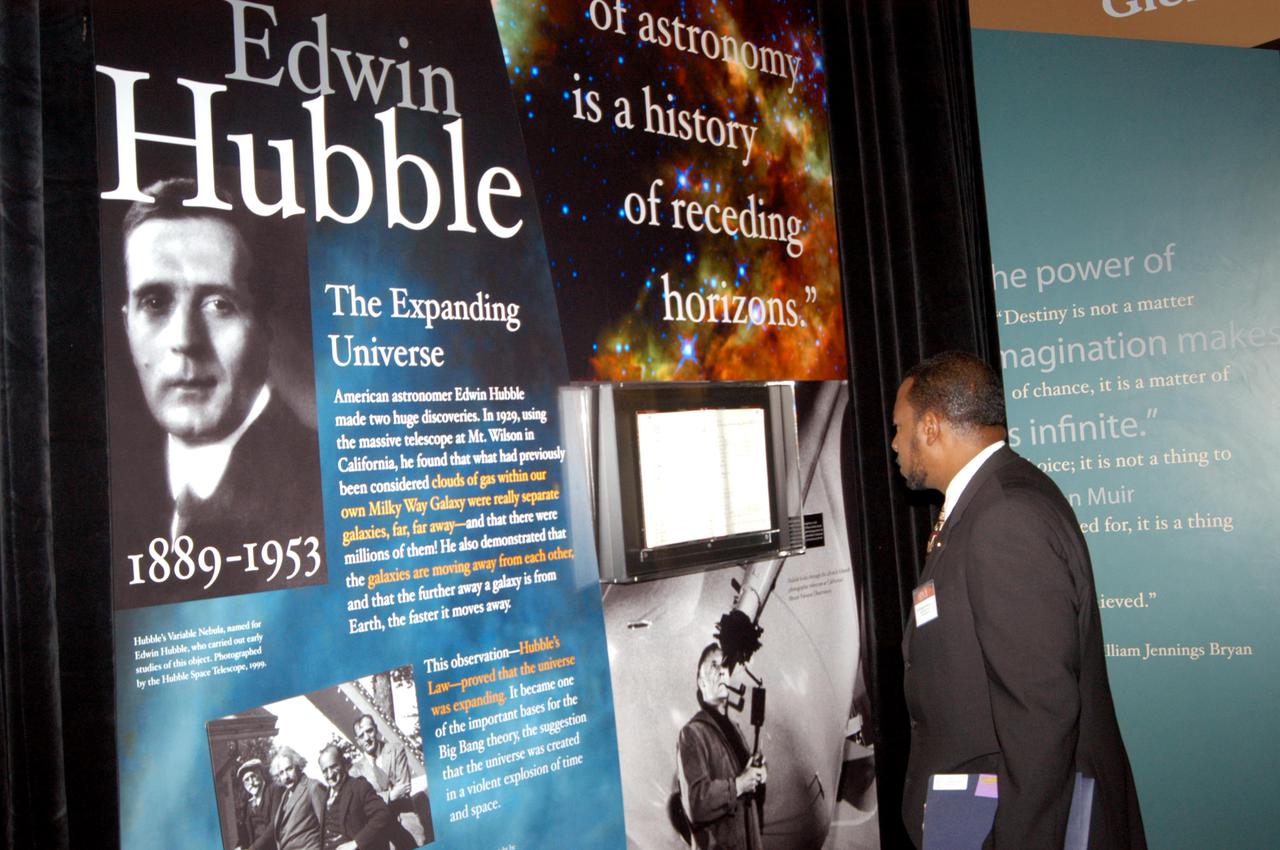
KENNEDY SPACE CENTER, FLA. - Dr. Woodrow Whitlow Jr., deputy director of Kennedy Space Center, looks at an exhibit of astronomer Edwin Hubble at the Museum of Science and Industry (MOSI) in Tampa. Whitlow was at MOSI to view the space exhibits Space: A Journey to Our Future, an extraordinary, interactive exhibition designed to entertain, educate and inspire; and SPACE STATION, the first cinematic journey to the International Space Station (ISS), where audiences can experience for themselves life in zero gravity aboard the new station.
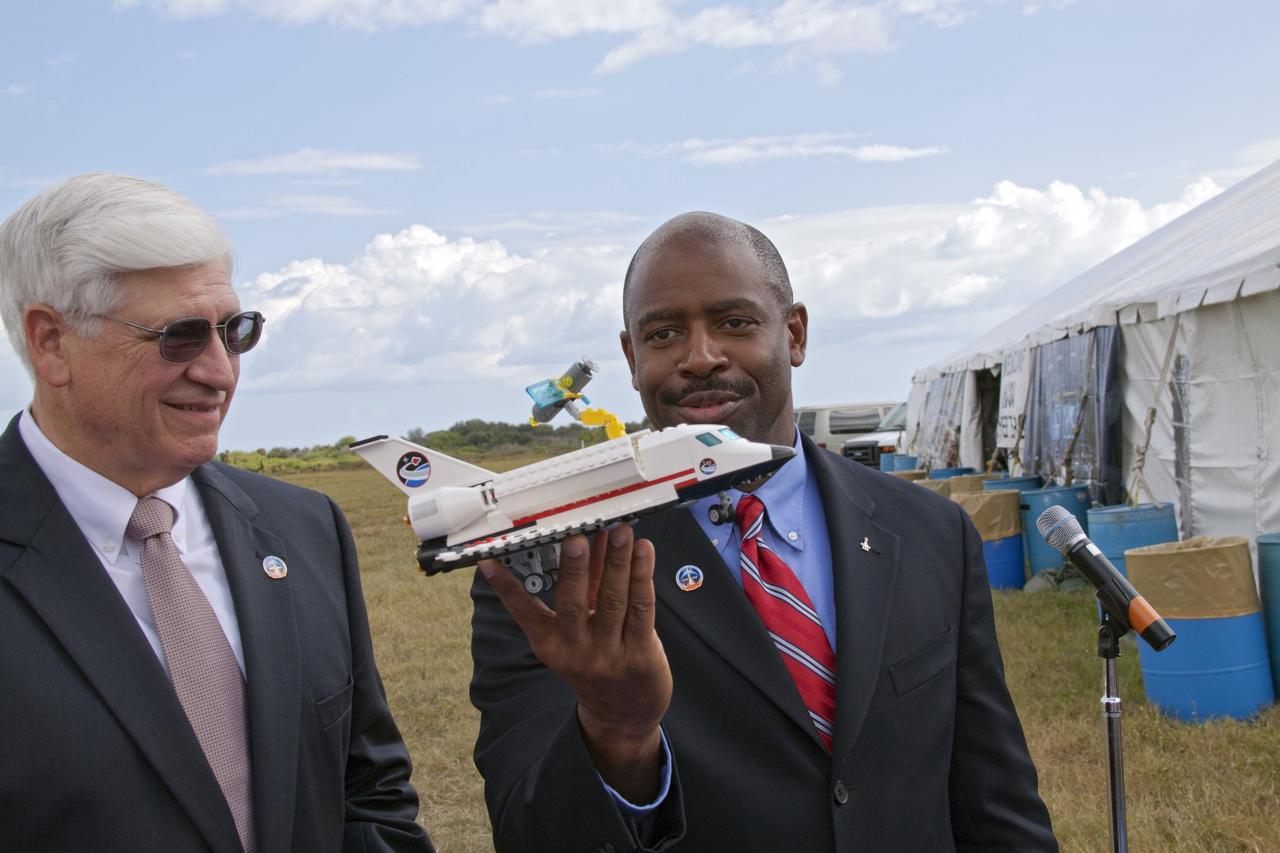
CAPE CANAVERAL, Fla. -- NASA and The LEGO Group announce a three-year Space Act Agreement meant to spark the interest of children in science, technology, engineering and mathematics (STEM) with the future release of four NASA-inspired products in the toy company's LEGO CITY line. From left, are Stephan Turnipseed, president of LEGO Education North America, and Leland Melvin, NASA's associate administrator for Education. To commemorate the beginning of the partnership, two small LEGO space shuttles will launch aboard space shuttle Discovery's STS-133 mission to the International Space Station. A 40- by 70-foot activity tent will be set up at Kennedy on Nov. 3 for children of all ages to build their vision of the future with LEGO bricks. LEGO sets also will fly to the space station aboard Endeavour's STS-134 mission, and will be put together on orbit to demonstrate the challenges faced while building things in microgravity. Photo credit: NASA/Jack Pfaller
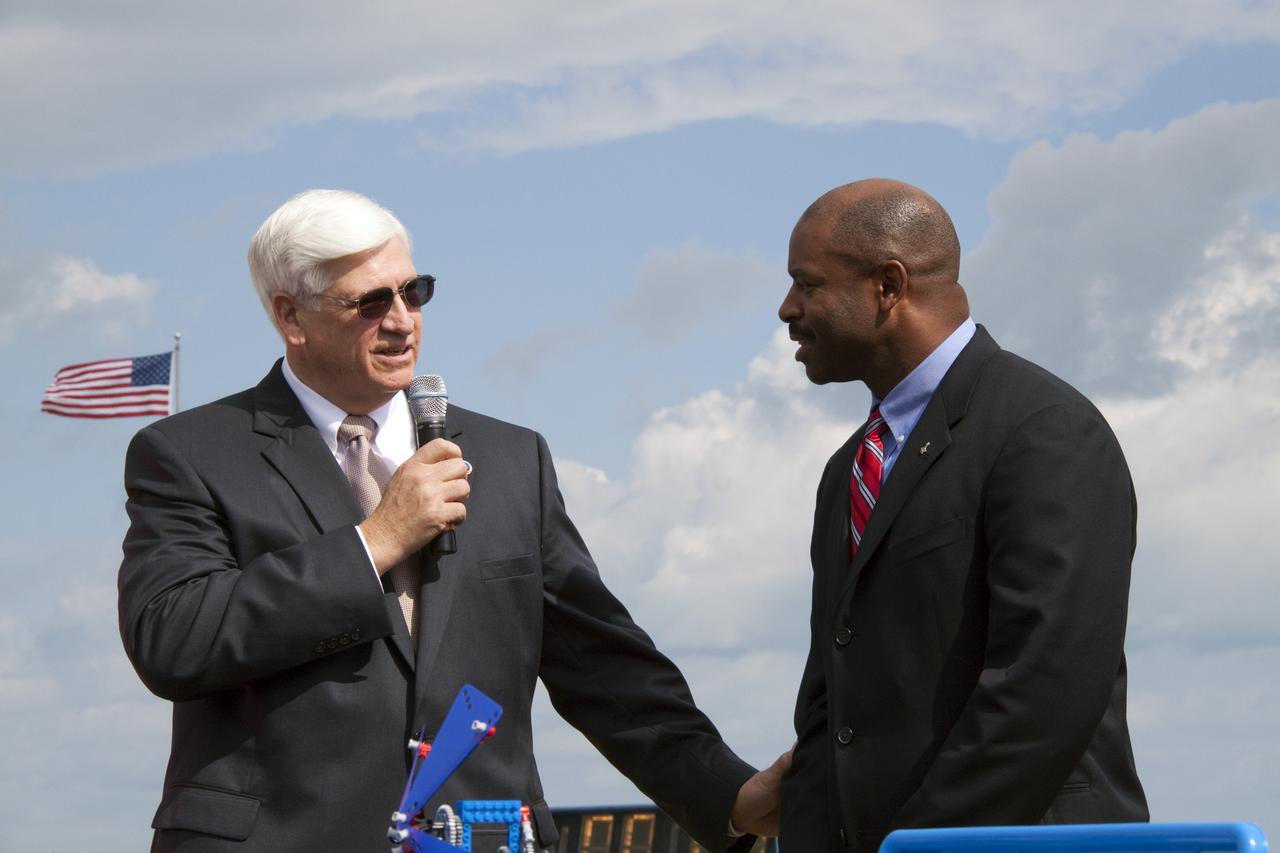
CAPE CANAVERAL, Fla. -- NASA and The LEGO Group announce a three-year Space Act Agreement meant to spark the interest of children in science, technology, engineering and mathematics (STEM) with the future release of four NASA-inspired products in the toy company's LEGO CITY line. From left, are Stephan Turnipseed, president of LEGO Education North America, and Leland Melvin, NASA's associate administrator for Education. To commemorate the beginning of the partnership, two small LEGO space shuttles will launch aboard space shuttle Discovery's STS-133 mission to the International Space Station. A 40- by 70-foot activity tent will be set up at Kennedy on Nov. 3 for children of all ages to build their vision of the future with LEGO bricks. LEGO sets also will fly to the space station aboard Endeavour's STS-134 mission, and will be put together on orbit to demonstrate the challenges faced while building things in microgravity. Photo credit: NASA/Jack Pfaller
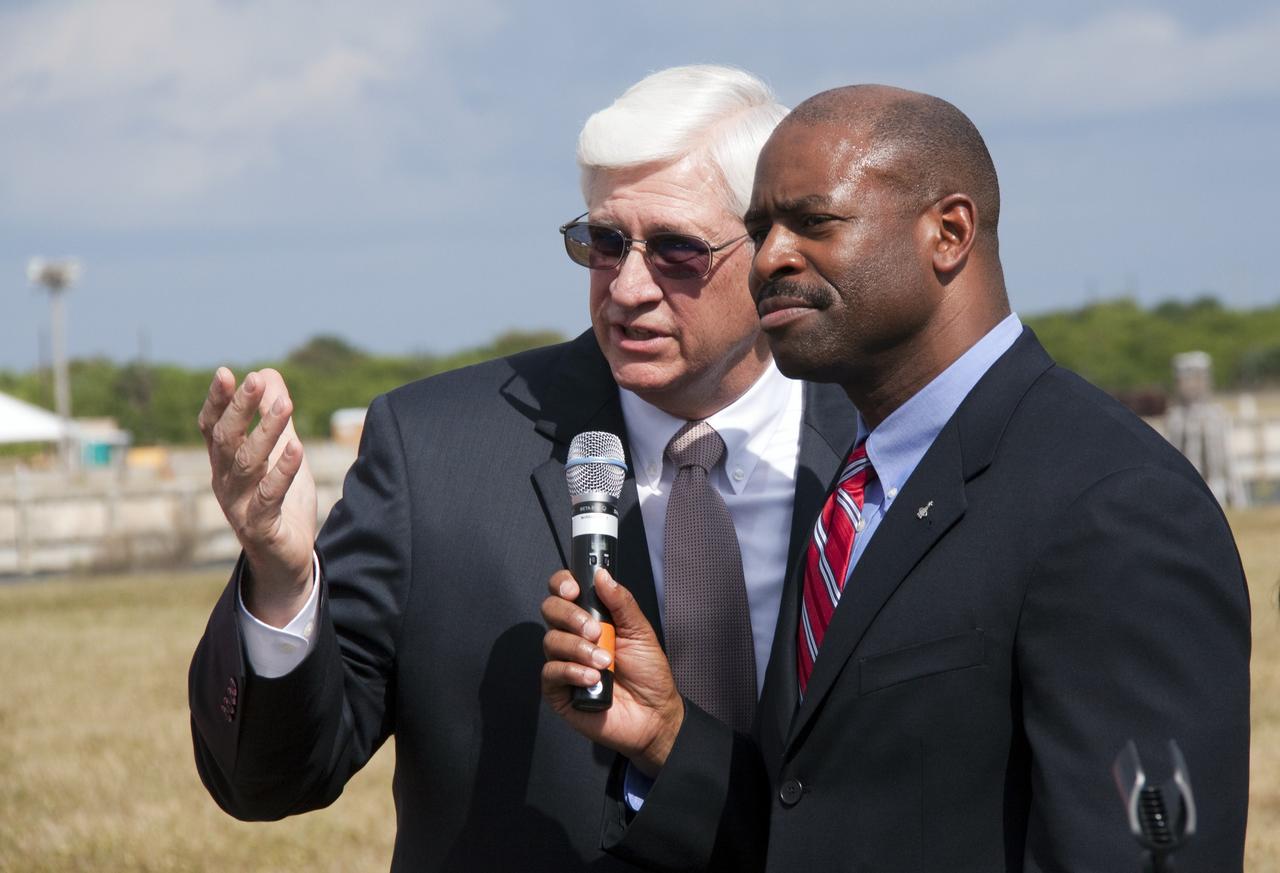
CAPE CANAVERAL, Fla. -- NASA and The LEGO Group announce a three-year Space Act Agreement meant to spark the interest of children in science, technology, engineering and mathematics (STEM) with the future release of four NASA-inspired products in the toy company's LEGO CITY line. From left, are Stephan Turnipseed, president of LEGO Education North America, and Leland Melvin, NASA's associate administrator for Education. To commemorate the beginning of the partnership, two small LEGO space shuttles will launch aboard space shuttle Discovery's STS-133 mission to the International Space Station. A 40- by 70-foot activity tent will be set up at Kennedy on Nov. 3 for children of all ages to build their vision of the future with LEGO bricks. LEGO sets also will fly to the space station aboard Endeavour's STS-134 mission, and will be put together on orbit to demonstrate the challenges faced while building things in microgravity. Photo credit: NASA/Jack Pfaller
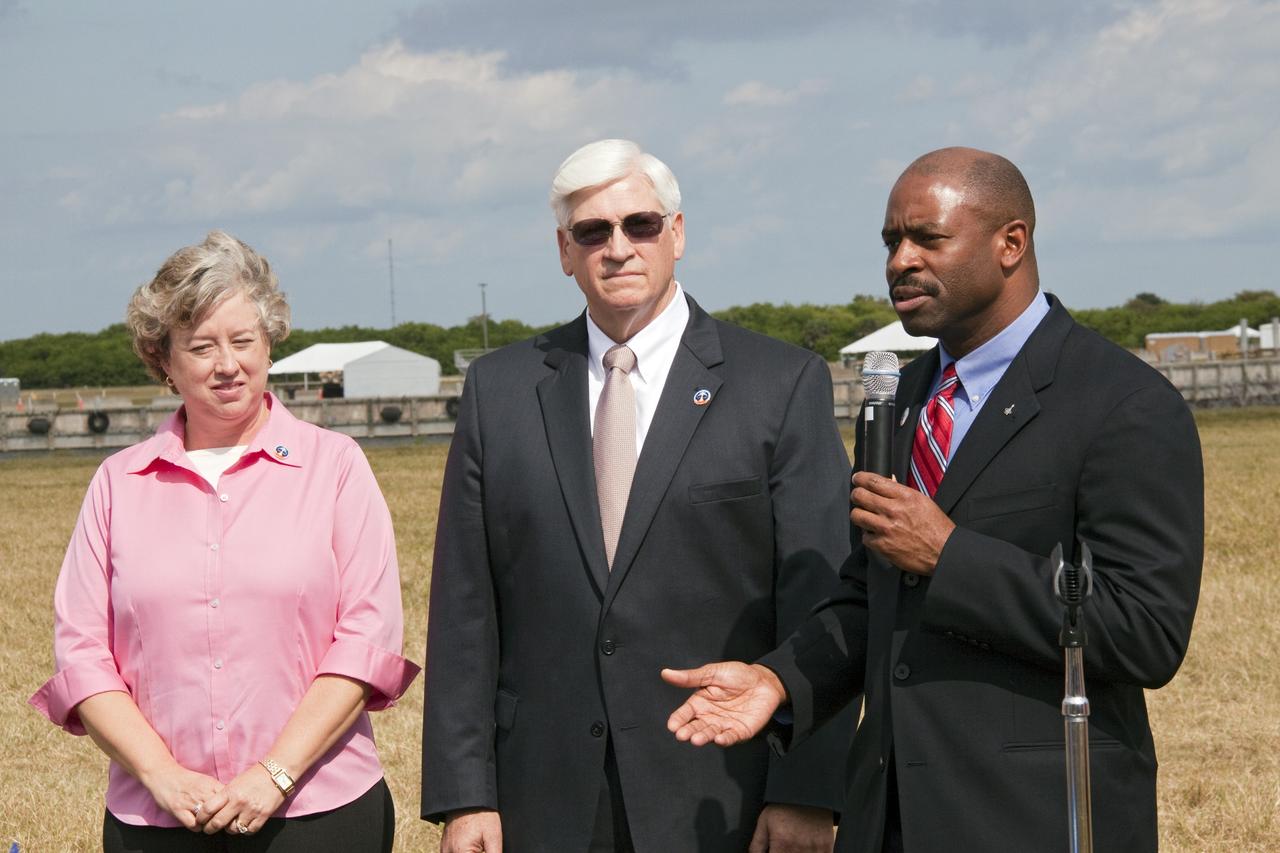
CAPE CANAVERAL, Fla. -- NASA and The LEGO Group announce a three-year Space Act Agreement meant to spark the interest of children in science, technology, engineering and mathematics (STEM) with the future release of four NASA-inspired products in the toy company's LEGO CITY line. From left, are Debbie Biggs, education specialist for International Space Station National Lab Education Projects, Stephan Turnipseed, president of LEGO Education North America, and Leland Melvin, NASA's associate administrator for Education. To commemorate the beginning of the partnership, two small LEGO space shuttles will launch aboard space shuttle Discovery's STS-133 mission to the International Space Station. A 40- by 70-foot activity tent will be set up at Kennedy on Nov. 3 for children of all ages to build their vision of the future with LEGO bricks. LEGO sets also will fly to the space station aboard Endeavour's STS-134 mission, and will be put together on orbit to demonstrate the challenges faced while building things in microgravity. Photo credit: NASA/Jack Pfaller
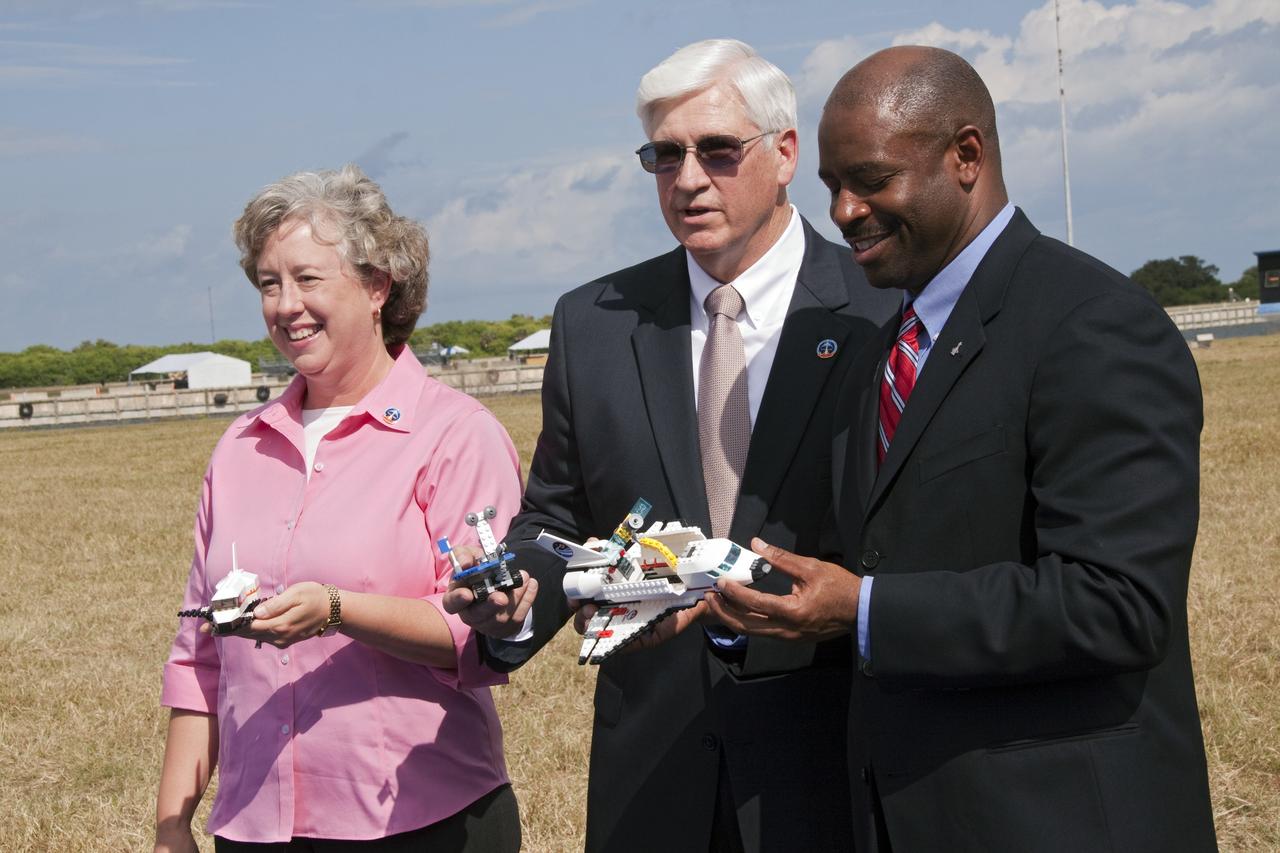
CAPE CANAVERAL, Fla. -- NASA and The LEGO Group announce a three-year Space Act Agreement meant to spark the interest of children in science, technology, engineering and mathematics (STEM) with the future release of four NASA-inspired products in the toy company's LEGO CITY line. From left, are Debbie Biggs, education specialist for International Space Station National Lab Education Projects, Stephan Turnipseed, president of LEGO Education North America, and Leland Melvin, NASA's associate administrator for Education. To commemorate the beginning of the partnership, two small LEGO space shuttles will launch aboard space shuttle Discovery's STS-133 mission to the International Space Station. A 40- by 70-foot activity tent will be set up at Kennedy on Nov. 3 for children of all ages to build their vision of the future with LEGO bricks. LEGO sets also will fly to the space station aboard Endeavour's STS-134 mission, and will be put together on orbit to demonstrate the challenges faced while building things in microgravity. Photo credit: NASA/Jack Pfaller

CAPE CANAVERAL, Fla. -- NASA and The LEGO Group announce a three-year Space Act Agreement meant to spark the interest of children in science, technology, engineering and mathematics (STEM) with the future release of four NASA-inspired products in the toy company's LEGO CITY line. From left, are Debbie Biggs, education specialist for International Space Station National Lab Education Projects, Stephan Turnipseed, president of LEGO Education North America, Leland Melvin, NASA's associate administrator for Education, and Ann Marie Trotta, NASA Public Affairs officer. To commemorate the beginning of the partnership, two small LEGO space shuttles will launch aboard space shuttle Discovery's STS-133 mission to the International Space Station. A 40- by 70-foot activity tent will be set up at Kennedy on Nov. 3 for children of all ages to build their vision of the future with LEGO bricks. LEGO sets also will fly to the space station aboard Endeavour's STS-134 mission, and will be put together on orbit to demonstrate the challenges faced while building things in microgravity. Photo credit: NASA/Jack Pfaller
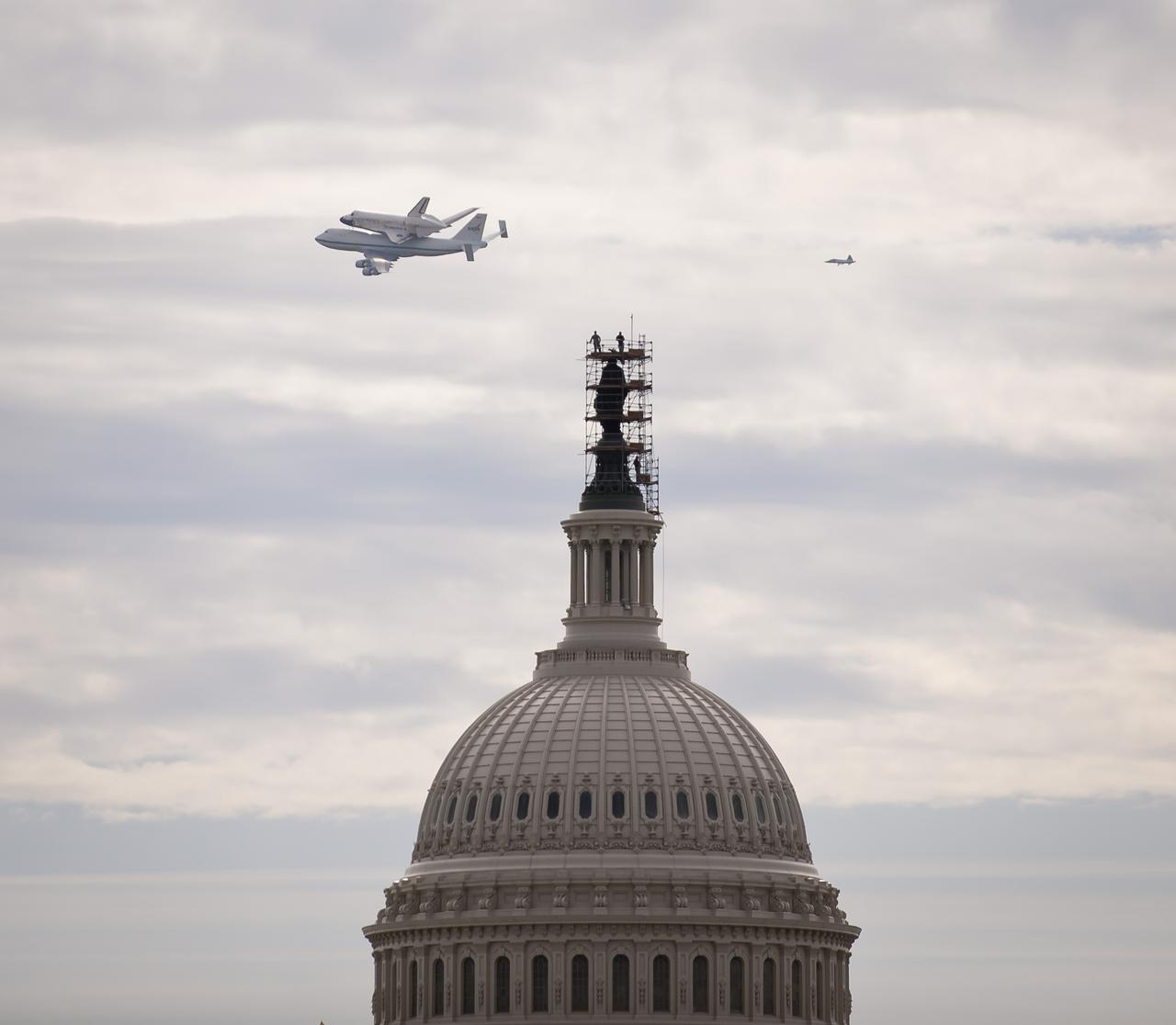
Space shuttle Discovery, mounted atop a NASA 747 Shuttle Carrier Aircraft (SCA) is seen as it flies near the U.S. Capitol, Tuesday, April 17, 2012, in Washington. Discovery, the first orbiter retired from NASA’s shuttle fleet, completed 39 missions, spent 365 days in space, orbited the Earth 5,830 times, and traveled 148,221,675 miles. NASA will transfer Discovery to the National Air and Space Museum to begin its new mission to commemorate past achievements in space and to educate and inspire future generations of explorers. Photo Credit: (NASA/Smithsonian Institution/Harold Dorwin)
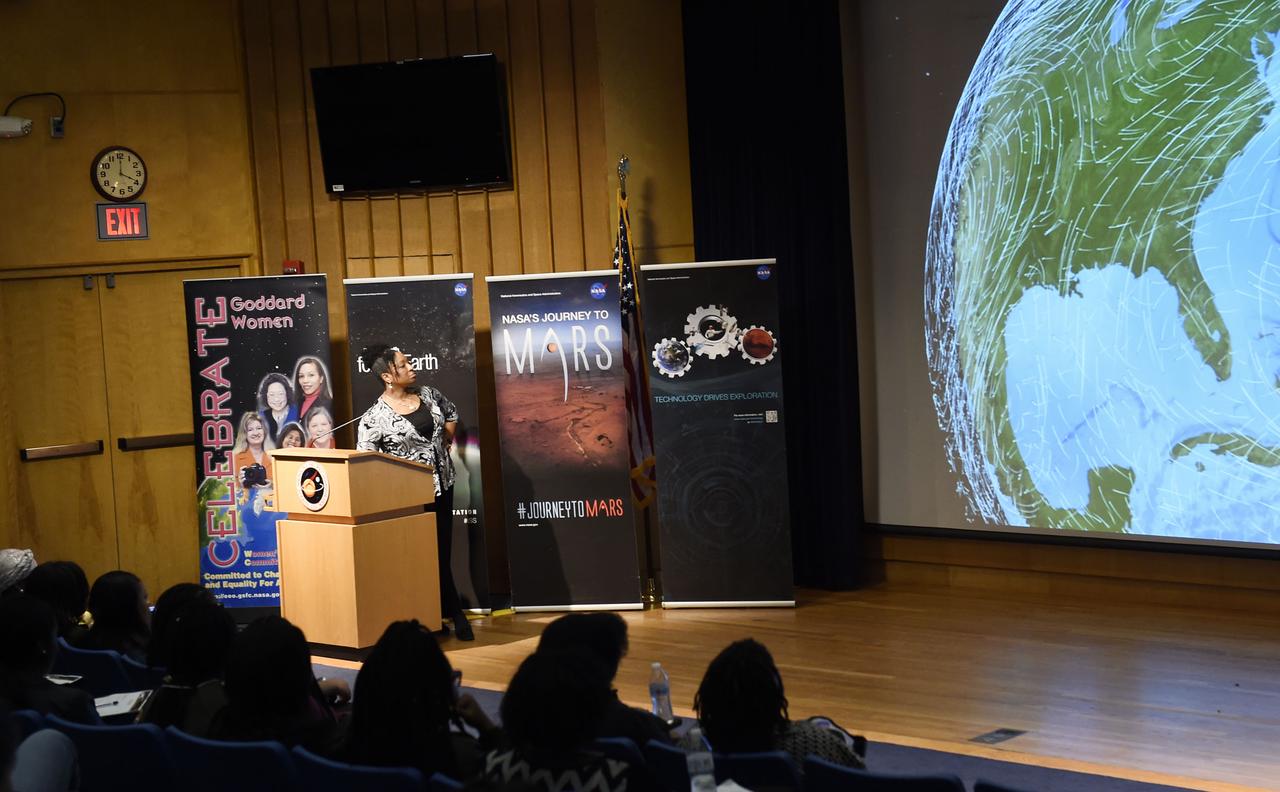
Girls Night In was held at Goddard on Nov 4-5, 2016. This is a pilot program which reinvigorates, inspires, and engages high school girls who may be struggling or not fully engaged in STEM (Science, Technology Engineering and Math) education. The program allowed NASA women to share and demonstrate the work they do, provide the girls an opportunity to completely immerse themselves in Goddard science, technology, engineering and math as well as provide them activities that will challenge and promote knowledge and discovery. Goddard invites other NASA centers tolearn from this pilot program and work towards a simultaneous multicenter event in the future. Participating schools were: DuVal, Crossland, Flowers, High Point, Northwestern and Oxon Hill

Support personnel and film crews are seen working around the space shuttle Endeavour as it traverses through Inglewood, Calif. on Friday, Oct. 12, 2012. Endeavour, built as a replacement for space shuttle Challenger, completed 25 missions, spent 299 days in orbit, and orbited Earth 4,671 times while traveling 122,883,151 miles. Beginning Oct. 30, the shuttle will be on display in the CSC's Samuel Oschin Space Shuttle Endeavour Display Pavilion, embarking on its new mission to commemorate past achievements in space and educate and inspire future generations of explorers. Photo Credit: (NASA/Carla Cioffi)
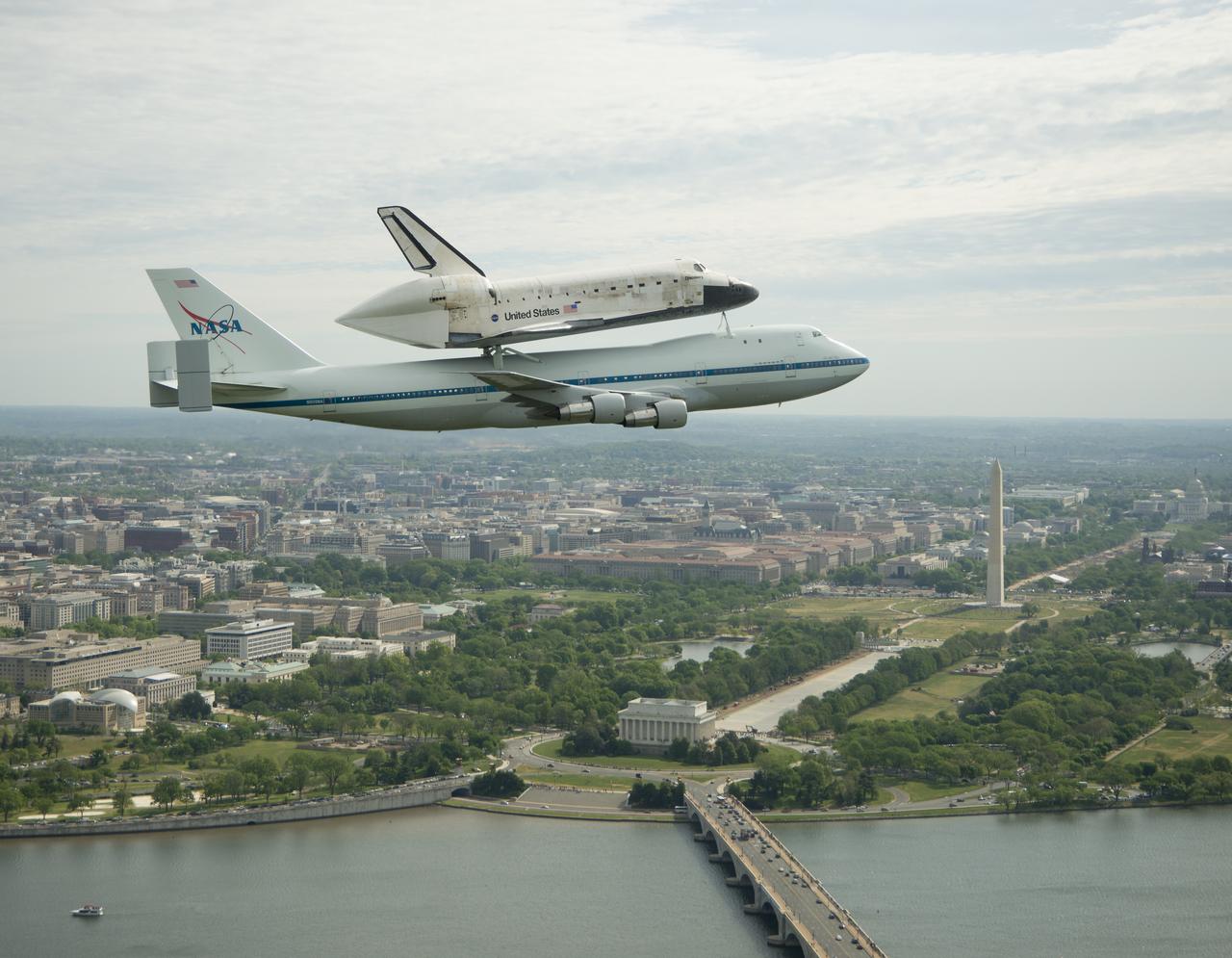
Space shuttle Discovery, mounted atop a NASA 747 Shuttle Carrier Aircraft (SCA), flies over the Washington skyline as seen from a NASA T-38 aircraft, Tuesday, April 17, 2012. Discovery, the first orbiter retired from NASA’s shuttle fleet, completed 39 missions, spent 365 days in space, orbited the Earth 5,830 times, and traveled 148,221,675 miles. NASA will transfer Discovery to the National Air and Space Museum to begin its new mission to commemorate past achievements in space and to educate and inspire future generations of explorers. Photo Credit: (NASA/Robert Markowitz)
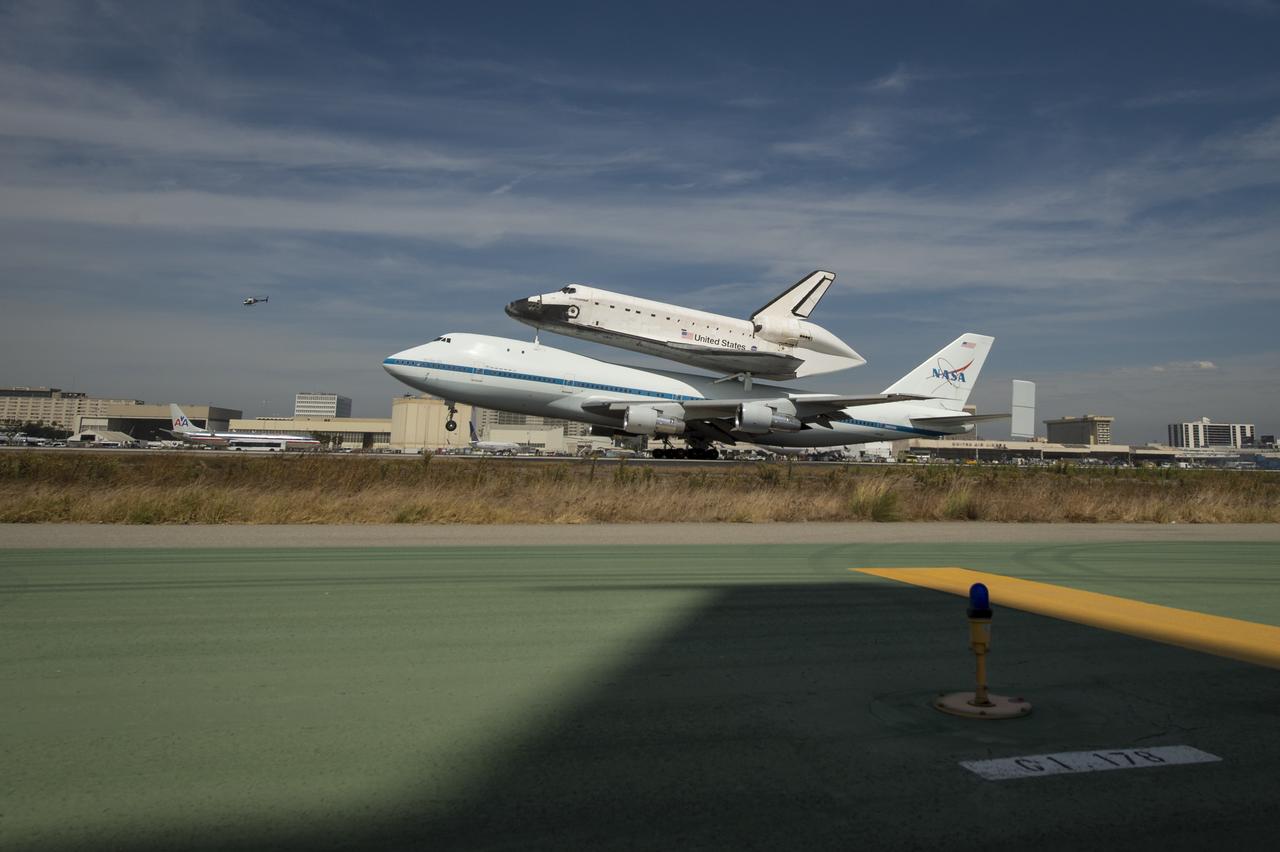
Space shuttle Endeavour, mounted atop a NASA 747 Shuttle Carrier Aircraft (SCA) lands at Los Angeles International Airport, Friday, Sept. 21, 2012. The shadow of a NASA F-18 chase jet wing is shown in the foreground. Endeavour, built as a replacement for space shuttle Challenger, completed 25 missions, spent 299 days in orbit, and orbited Earth 4,671 times while traveling 122,883,151 miles. Beginning Oct. 30, the shuttle will be on display in the California Science center's Samuel Oschin Space Shuttle Endeavour Display Pavilion, embarking on its new mission to commemorate past achievements in space and educate and inspire future generations of explorers.Photo Credit: (NASA/Bill Ingalls)

Space Shuttle Discovery mounted atop a 747 Shuttle Carrier Aircraft (SCA) approaches the runway for landing at Washington Dulles International Airport, Tuesday April 17, 2012, in Sterling, Va. Discovery, the first orbiter retired from NASA’s shuttle fleet, completed 39 missions, spent 365 days in space, orbited the Earth 5,830 times, and traveled 148,221,675 miles. NASA will transfer Discovery to the National Air and Space Museum to begin its new mission to commemorate past achievements in space and to educate and inspire future generations of explorers. Photo Credit: (NASA/Paul E. Alers)
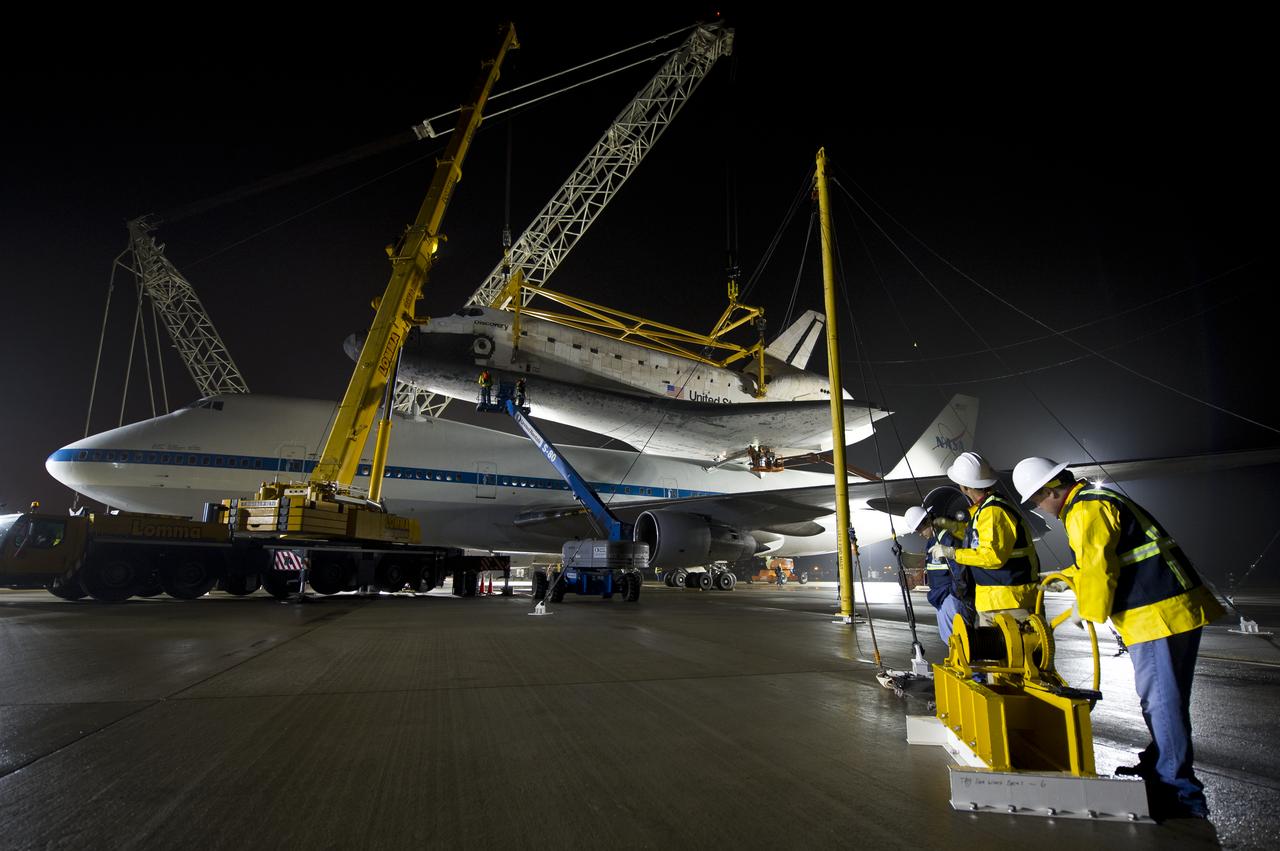
Workers monitor the lift of the space shuttle Discovery from the the NASA 747 Shuttle Carrier Aircraft (SCA) at Washington Dulles International Airport, Thursday, April 19, 2012, in Sterling, VA. Discovery, the first orbiter retired from NASA’s shuttle fleet, completed 39 missions, spent 365 days in space, orbited the Earth 5,830 times, and traveled 148,221,675 miles. NASA will transfer Discovery to the National Air and Space Museum to begin its new mission to commemorate past achievements in space and to educate and inspire future generations of explorers. Photo Credit: (NASA/Bill Ingalls)
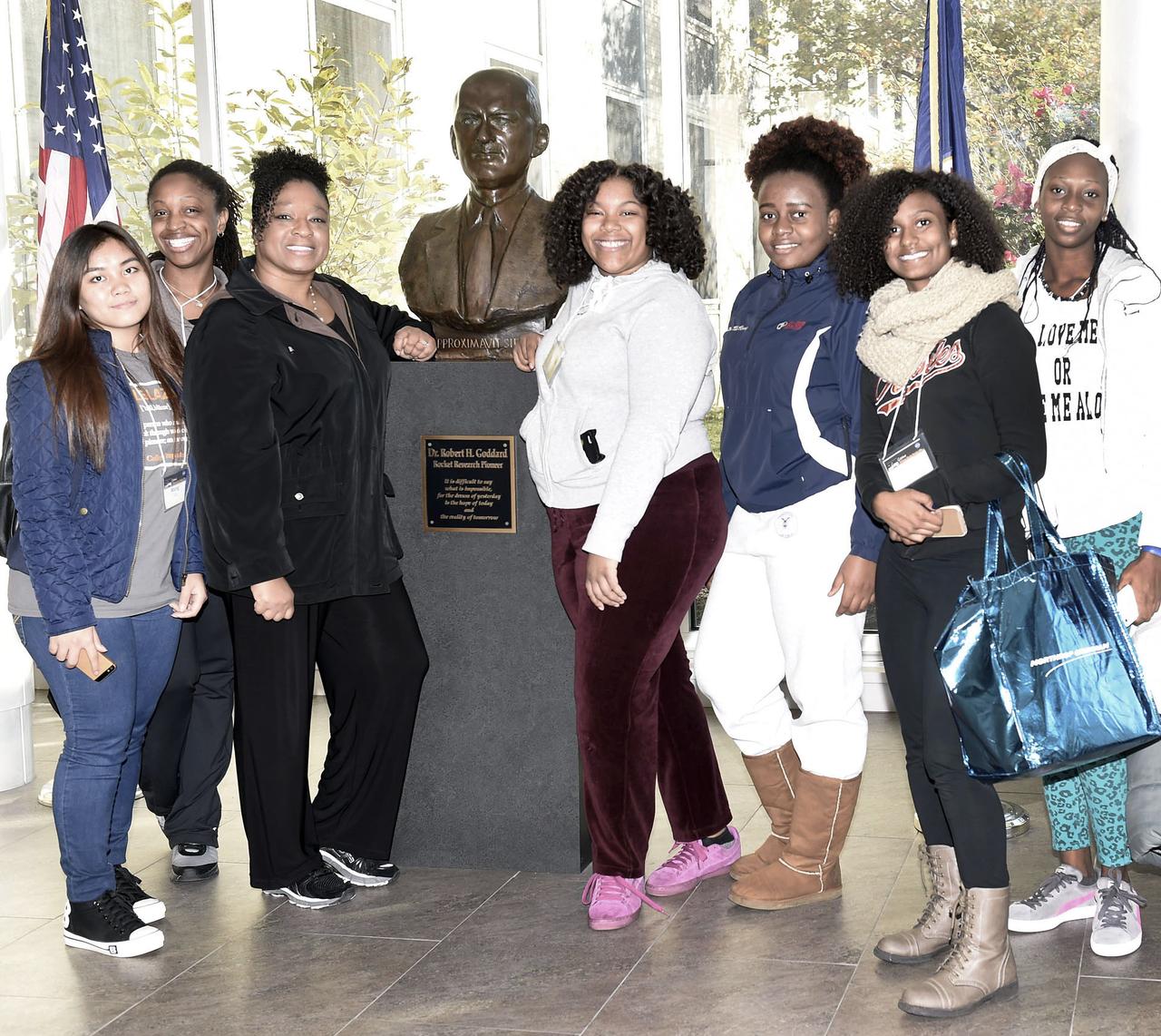
Girls Night In was held at Goddard on Nov 4-5, 2016. This is a pilot program which reinvigorates, inspires, and engages high school girls who may be struggling or not fully engaged in STEM (Science, Technology Engineering and Math) education. The program allowed NASA women to share and demonstrate the work they do, provide the girls an opportunity to completely immerse themselves in Goddard science, technology, engineering and math as well as provide them activities that will challenge and promote knowledge and discovery. Goddard invites other NASA centers tolearn from this pilot program and work towards a simultaneous multicenter event in the future. Participating schools were: DuVal, Crossland, Flowers, High Point, Northwestern and Oxon Hill
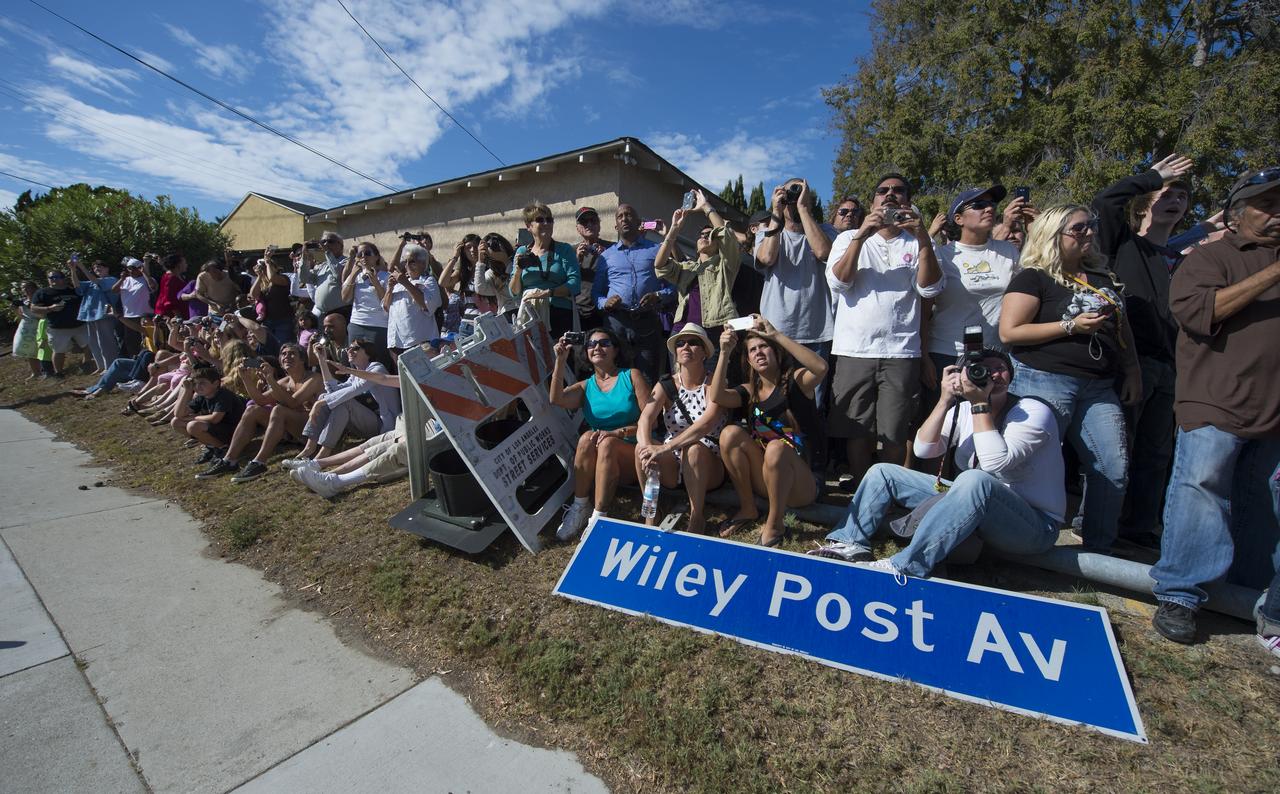
Spectators are seen as they watch space shuttle Endeavour as it passes by on its way to its new home at the California Science Center in Los Angeles, Friday, Oct. 12, 2012. Endeavour, built as a replacement for space shuttle Challenger, completed 25 missions, spent 299 days in orbit, and orbited Earth 4,671 times while traveling 122,883,151 miles. Beginning Oct. 30, the shuttle will be on display in the CSC’s Samuel Oschin Space Shuttle Endeavour Display Pavilion, embarking on its new mission to commemorate past achievements in space and educate and inspire future generations of explorers. Photo Credit: (NASA/Carla Cioffi)
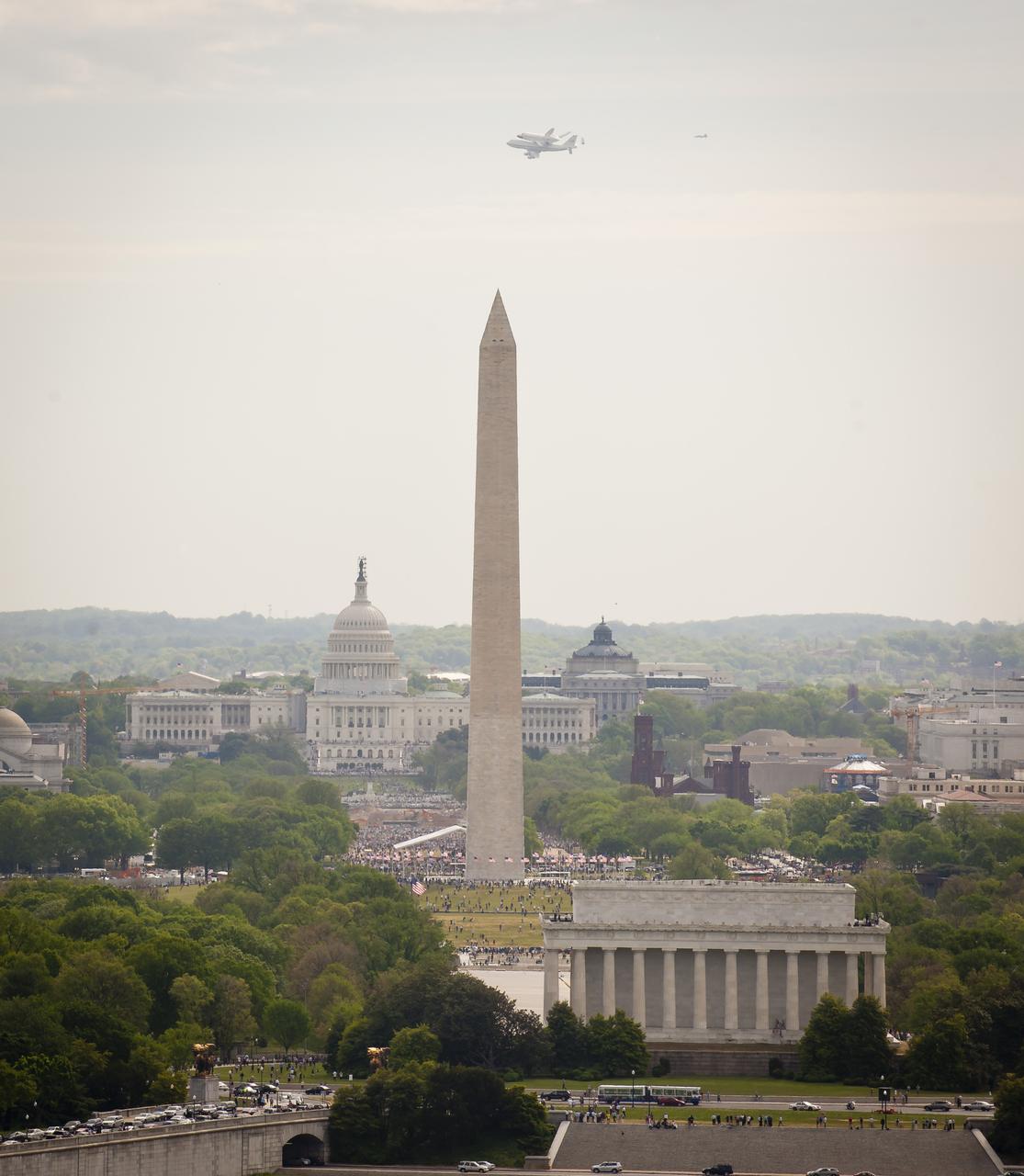
Space shuttle Discovery, mounted atop a NASA 747 Shuttle Carrier Aircraft (SCA) is seen from Top of the Town in Arlington, Virginia as it flies near the U.S. Capitol, Tuesday, April 17, 2012, in Washington. Discovery, the first orbiter retired from NASA’s shuttle fleet, completed 39 missions, spent 365 days in space, orbited the Earth 5,830 times, and traveled 148,221,675 miles. NASA will transfer Discovery to the National Air and Space Museum to begin its new mission to commemorate past achievements in space and to educate and inspire future generations of explorers. Photo Credit: (NASA/Chris Gunn)
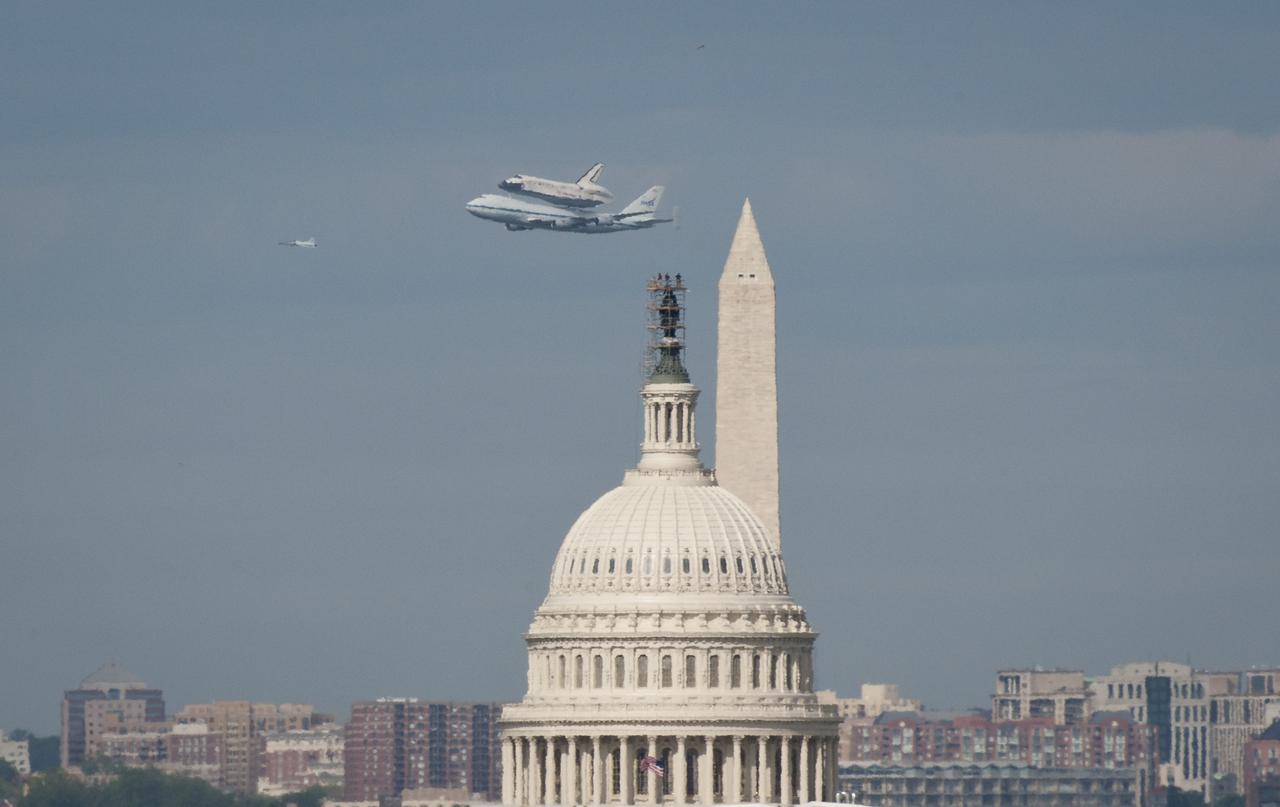
Space shuttle Discovery, mounted atop a NASA 747 Shuttle Carrier Aircraft (SCA) flies near the U.S. Capitol, Tuesday, April 17, 2012, in Washington. Discovery, the first orbiter retired from NASA’s shuttle fleet, completed 39 missions, spent 365 days in space, orbited the Earth 5,830 times, and traveled 148,221,675 miles. NASA will transfer Discovery to the National Air and Space Museum to begin its new mission to commemorate past achievements in space and to educate and inspire future generations of explorers. Photo Credit: (NASA/Rebecca Roth)
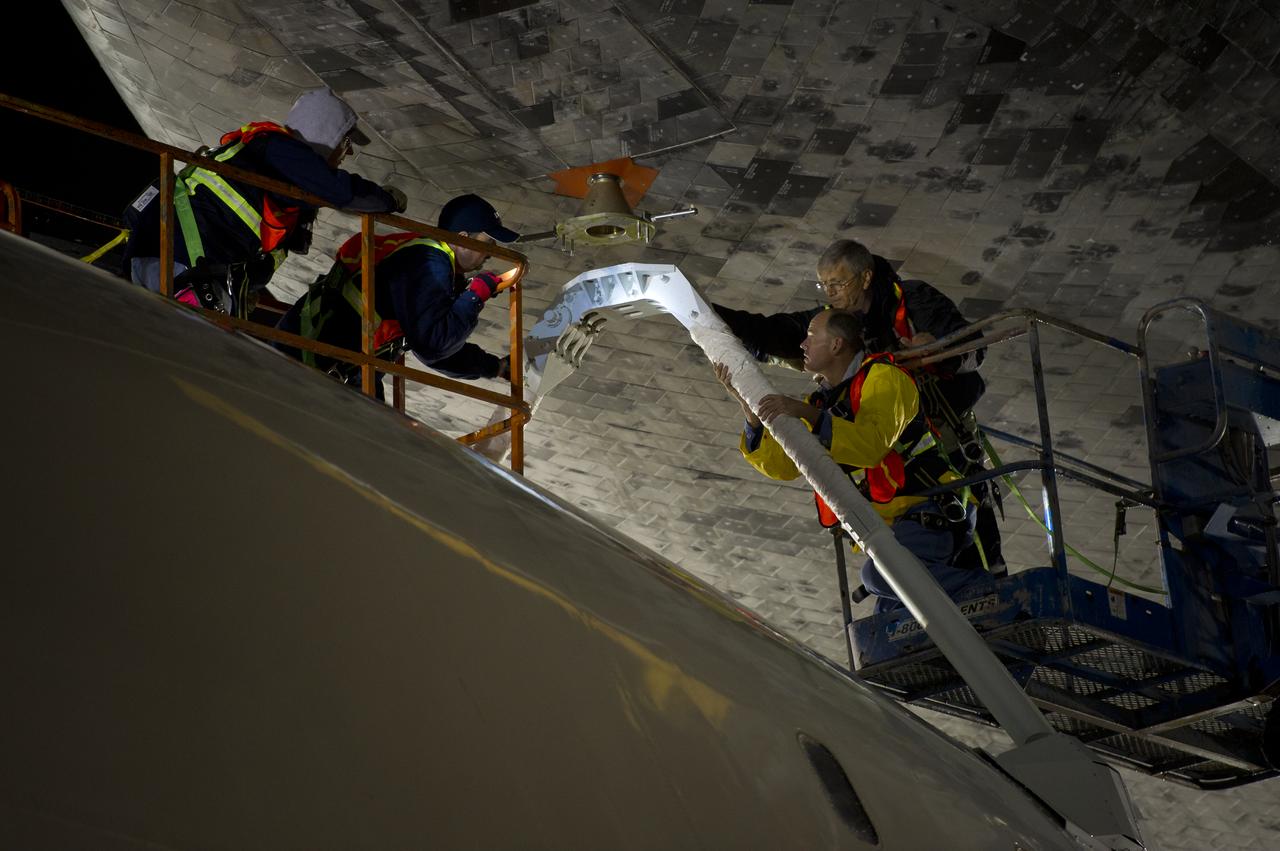
Workers monitor the lift of the space shuttle Discovery from the top of the NASA 747 Shuttle Carrier Aircraft (SCA) at Washington Dulles International Airport, Thursday, April 19, 2012, in Sterling, VA. Discovery, the first orbiter retired from NASA’s shuttle fleet, completed 39 missions, spent 365 days in space, orbited the Earth 5,830 times, and traveled 148,221,675 miles. NASA will transfer Discovery to the National Air and Space Museum to begin its new mission to commemorate past achievements in space and to educate and inspire future generations of explorers. Photo Credit: (NASA/Bill Ingalls)
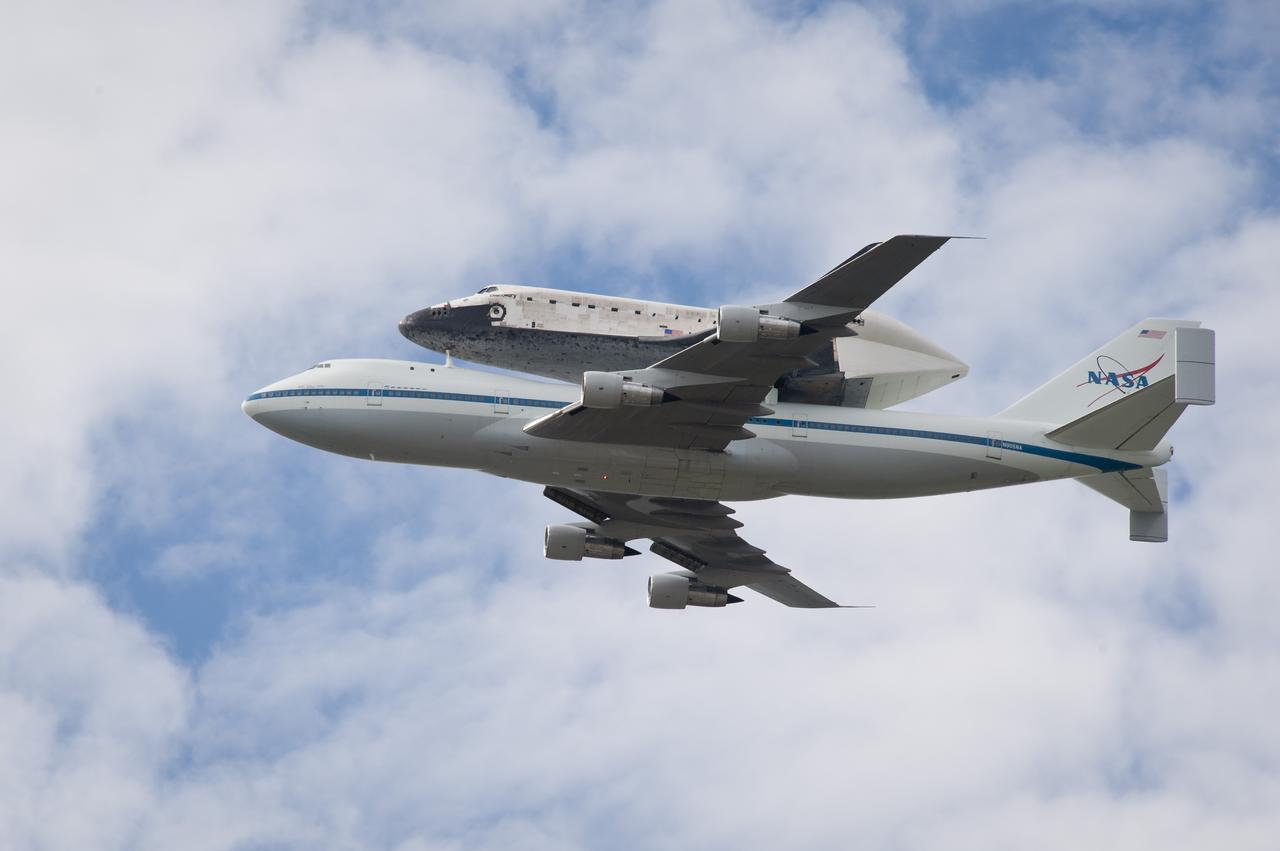
Space shuttle Discovery, mounted atop a NASA 747 Shuttle Carrier Aircraft (SCA) flies near the U.S. Capitol, Tuesday, April 17, 2012, in Washington. Discovery, the first orbiter retired from NASA’s shuttle fleet, completed 39 missions, spent 365 days in space, orbited the Earth 5,830 times, and traveled 148,221,675 miles. NASA will transfer Discovery to the National Air and Space Museum to begin its new mission to commemorate past achievements in space and to educate and inspire future generations of explorers. Photo Credit: (NASA/Michael Porterfield)
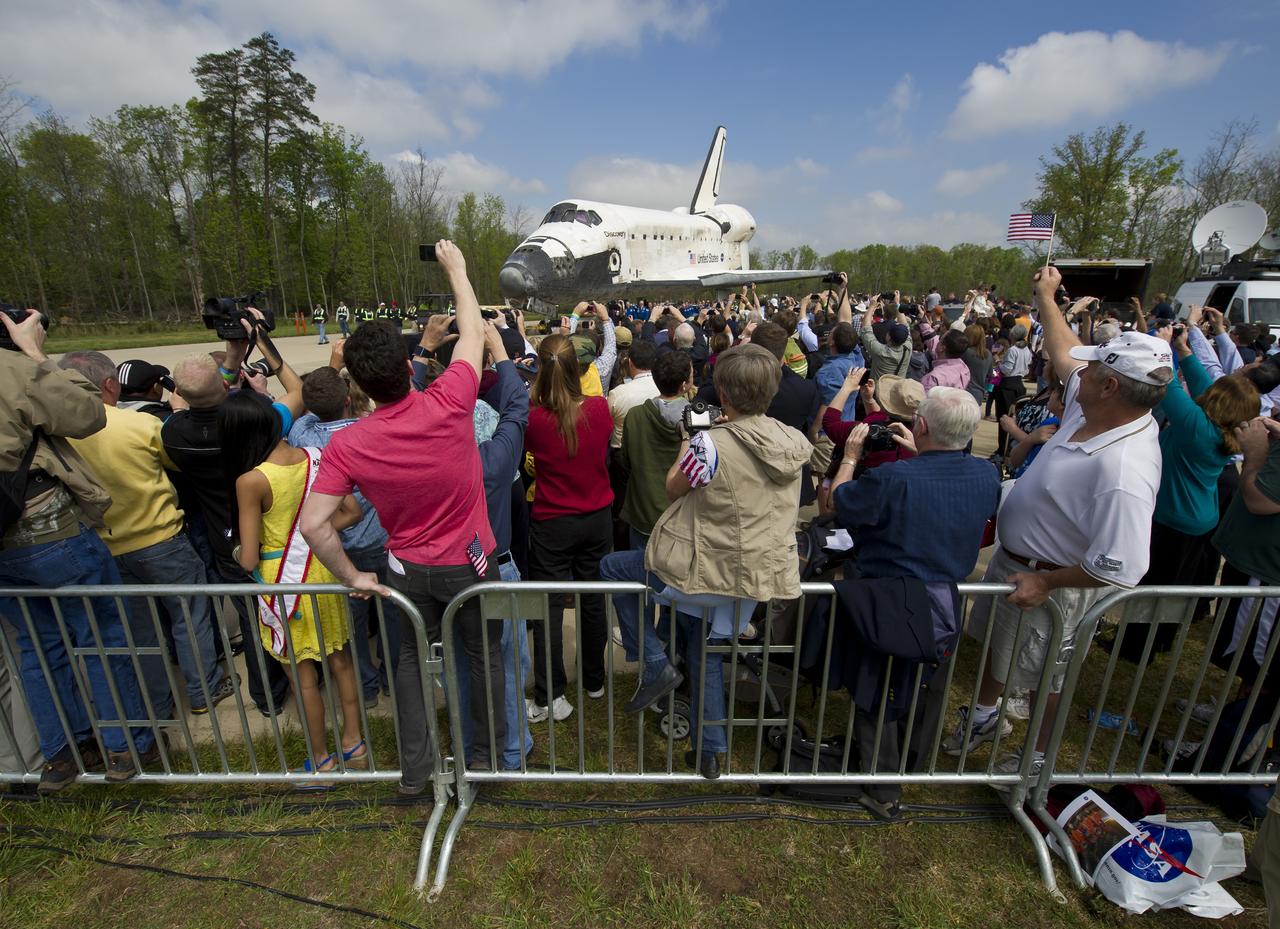
Space shuttle Discovery is rolled toward the transfer ceremony at the Steven F. Udvar-Hazy Center Thursday, April 19, 2012 in Chantilly, Va. Discovery will be permanently housed at the Udvar-Hazy Center, part of the Smithsonian Institution’s Air and Space Museum. Discovery, the first orbiter retired from NASA’s shuttle fleet, completed 39 missions, spent 365 days in space, orbited the Earth 5,830 times, and traveled 148,221,675 miles. NASA will transfer Discovery to the National Air and Space Museum to begin its new mission to commemorate past achievements in space and to educate and inspire future generations of explorers. Photo Credit: (NASA/Carla Cioffi)
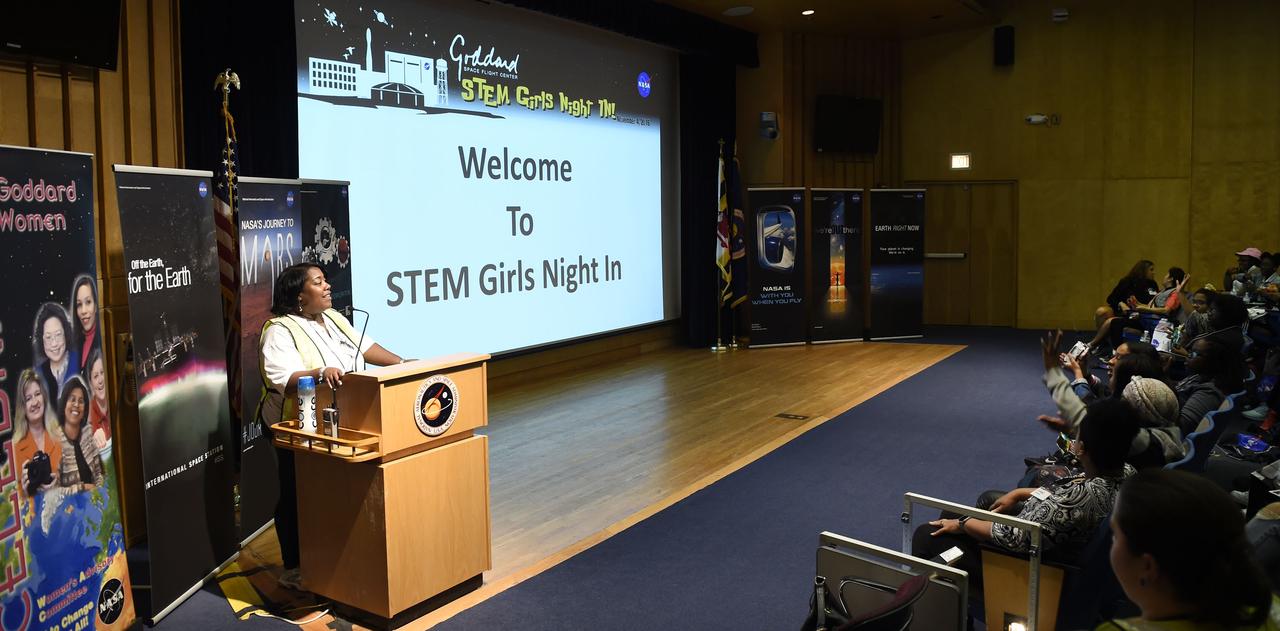
Girls Night In was held at Goddard on Nov 4-5, 2016. This is a pilot program which reinvigorates, inspires, and engages high school girls who may be struggling or not fully engaged in STEM (Science, Technology Engineering and Math) education. The program allowed NASA women to share and demonstrate the work they do, provide the girls an opportunity to completely immerse themselves in Goddard science, technology, engineering and math as well as provide them activities that will challenge and promote knowledge and discovery. Goddard invites other NASA centers tolearn from this pilot program and work towards a simultaneous multicenter event in the future. Participating schools were: DuVal, Crossland, Flowers, High Point, Northwestern and Oxon Hill

The nose cone of the space shuttle Endeavour is seen next to the Randy’s Donuts landmark in Inglewood, California, Friday, Oct. 12, 2012. Endeavour, built as a replacement for space shuttle Challenger, completed 25 missions, spent 299 days in orbit, and orbited Earth 4,671 times while traveling 122,883,151 miles. Beginning Oct. 30, the shuttle will be on display in the CSC’s Samuel Oschin Space Shuttle Endeavour Display Pavilion, embarking on its new mission to commemorate past achievements in space and educate and inspire future generations of explorers. Photo Credit: (NASA/Carla Cioffi)

The space shuttle Endeavour is seen as it is maneuvered through the streets of Inglewood on its way to its new home at the California Science Center, Saturday, Oct. 13, 2012. Endeavour, built as a replacement for space shuttle Challenger, completed 25 missions, spent 299 days in orbit, and orbited Earth 4,671 times while traveling 122,883,151 miles. Beginning Oct. 30, the shuttle will be on display in the CSC’s Samuel Oschin Space Shuttle Endeavour Display Pavilion, embarking on its new mission to commemorate past achievements in space and educate and inspire future generations of explorers. Photo Credit: (NASA/Carla Cioffi)
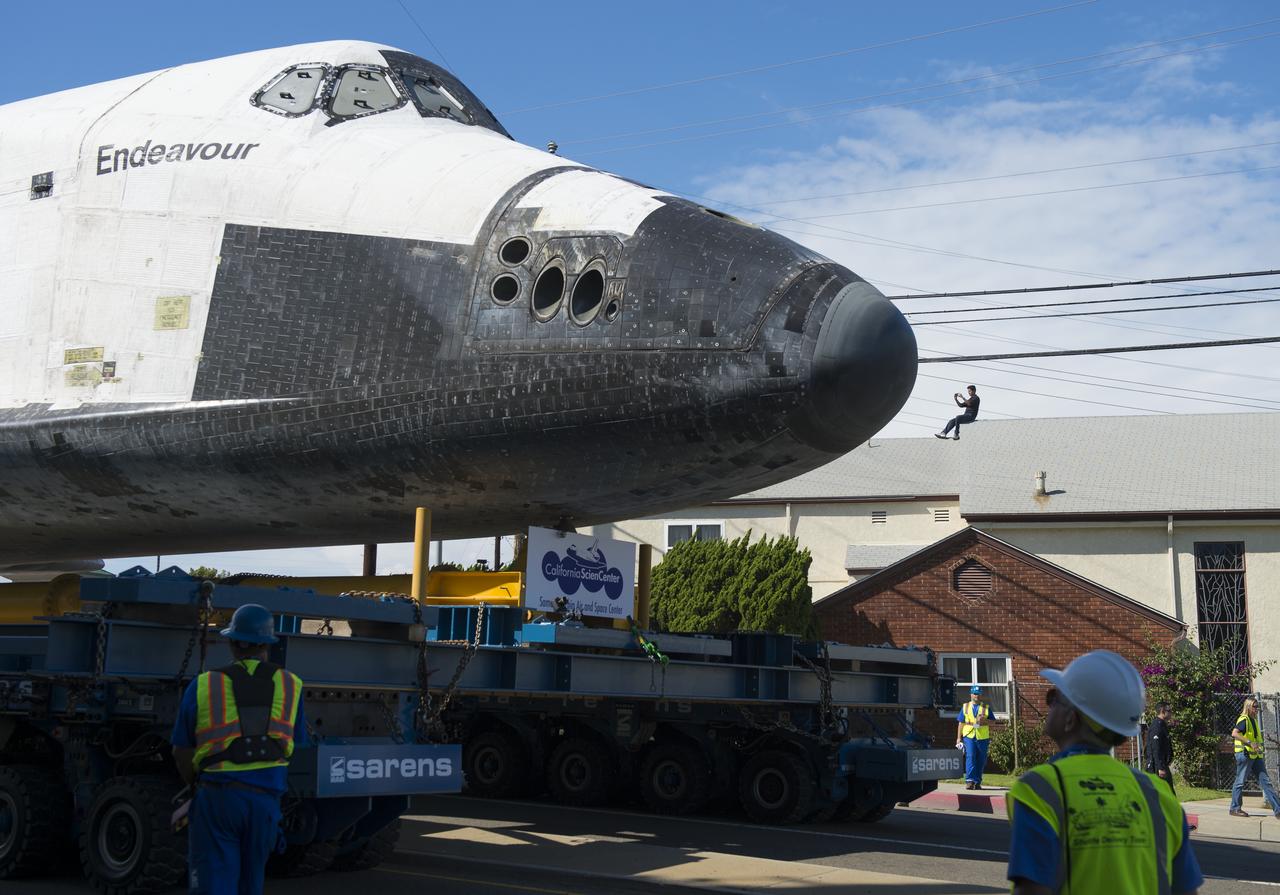
A spectator on the roof of a building photographs space shuttle Endeavour as it passes by on its way to its new home at the California Science Center in Los Angeles, Friday, Oct. 12, 2012. Endeavour, built as a replacement for space shuttle Challenger, completed 25 missions, spent 299 days in orbit, and orbited Earth 4,671 times while traveling 122,883,151 miles. Beginning Oct. 30, the shuttle will be on display in the CSC’s Samuel Oschin Space Shuttle Endeavour Display Pavilion, embarking on its new mission to commemorate past achievements in space and educate and inspire future generations of explorers. Photo Credit: (NASA/Carla Cioffi)

Jarod Ondas (left), of Virginia, and his brother Austin, watch as space shuttle Discovery approaches the National Air and Space Museum’s Steven F. Udvar-Hazy Center for its fly-over, Tuesday, April 17, 2012, in Chantilly, Va. Discovery, the first orbiter retired from NASA’s shuttle fleet, completed 39 missions, spent 365 days in space, orbited the Earth 5,830 times, and traveled 148,221,675 miles. NASA will transfer Discovery to the National Air and Space Museum to begin its new mission to commemorate past achievements in space and to educate and inspire future generations of explorers. Photo Credit: (NASA/Carla Cioffi)

Space shuttle Discovery, mounted atop a NASA 747 Shuttle Carrier Aircraft (SCA) lands at Washington Dulles International Airport, Tuesday, April 17, 2012, in Sterling, Va. Discovery, the first orbiter retired from NASA’s shuttle fleet, completed 39 missions, spent 365 days in space, orbited the Earth 5,830 times, and traveled 148,221,675 miles. NASA will transfer Discovery to the National Air and Space Museum to begin its new mission to commemorate past achievements in space and to educate and inspire future generations of explorers. Photo Credit: (NASA/Smithsonian Institution/Eric Long)
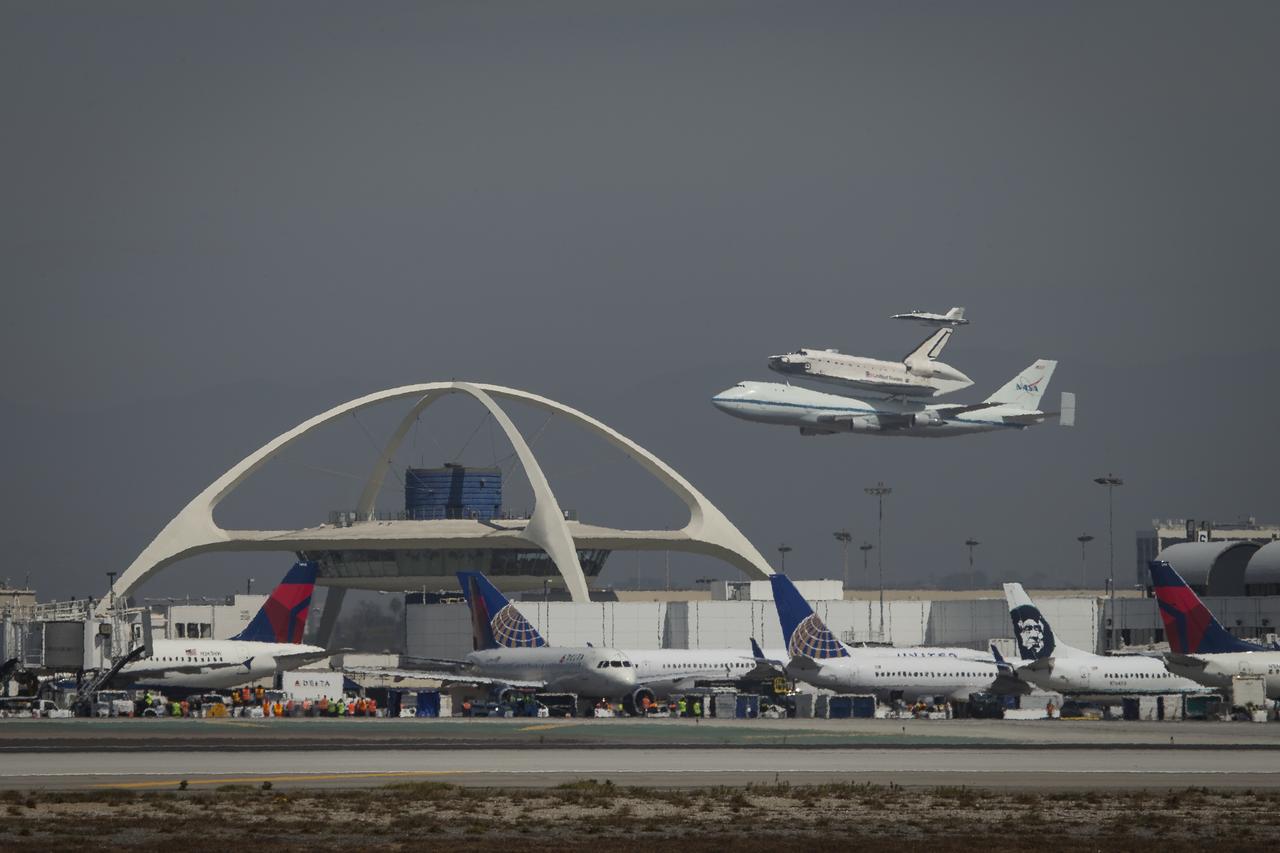
Space shuttle Endeavour, mounted atop a NASA 747 Shuttle Carrier Aircraft (SCA) performs a flyby of the Theme Building at Los Angeles International Airport, Friday, Sept. 21, 2012. Endeavour, built as a replacement for space shuttle Challenger, completed 25 missions, spent 299 days in orbit, and orbited Earth 4,671 times while traveling 122,883,151 miles. Beginning Oct. 30, the shuttle will be on display in the California Science center's Samuel Oschin Space Shuttle Endeavour Display Pavilion, embarking on its new mission to commemorate past achievements in space and educate and inspire future generations of explorers.Photo Credit: (NASA/Scott Andrews)
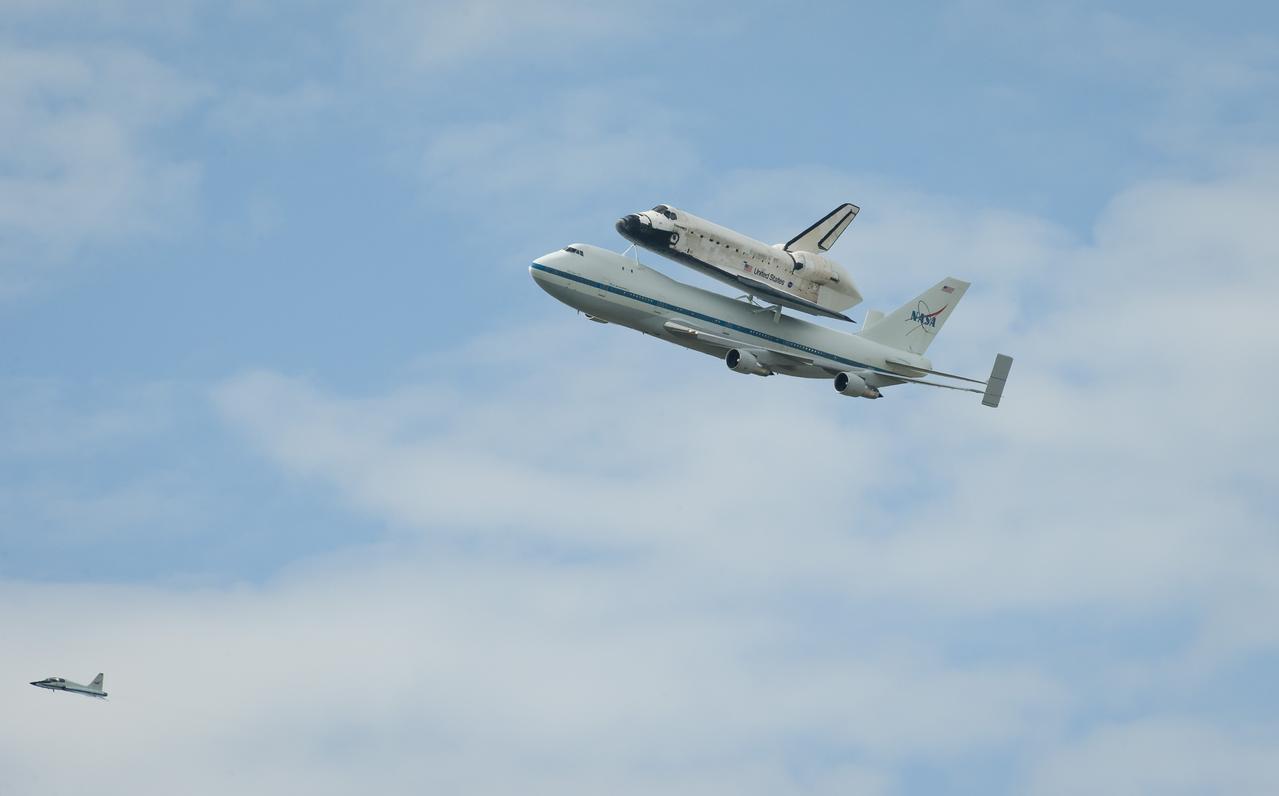
Space shuttle Discovery, mounted atop a NASA 747 Shuttle Carrier Aircraft (SCA) flies near the U.S. Capitol, Tuesday, April 17, 2012, in Washington. Discovery, the first orbiter retired from NASA’s shuttle fleet, completed 39 missions, spent 365 days in space, orbited the Earth 5,830 times, and traveled 148,221,675 miles. NASA will transfer Discovery to the National Air and Space Museum to begin its new mission to commemorate past achievements in space and to educate and inspire future generations of explorers. Photo Credit: (NASA/Rebecca Roth)
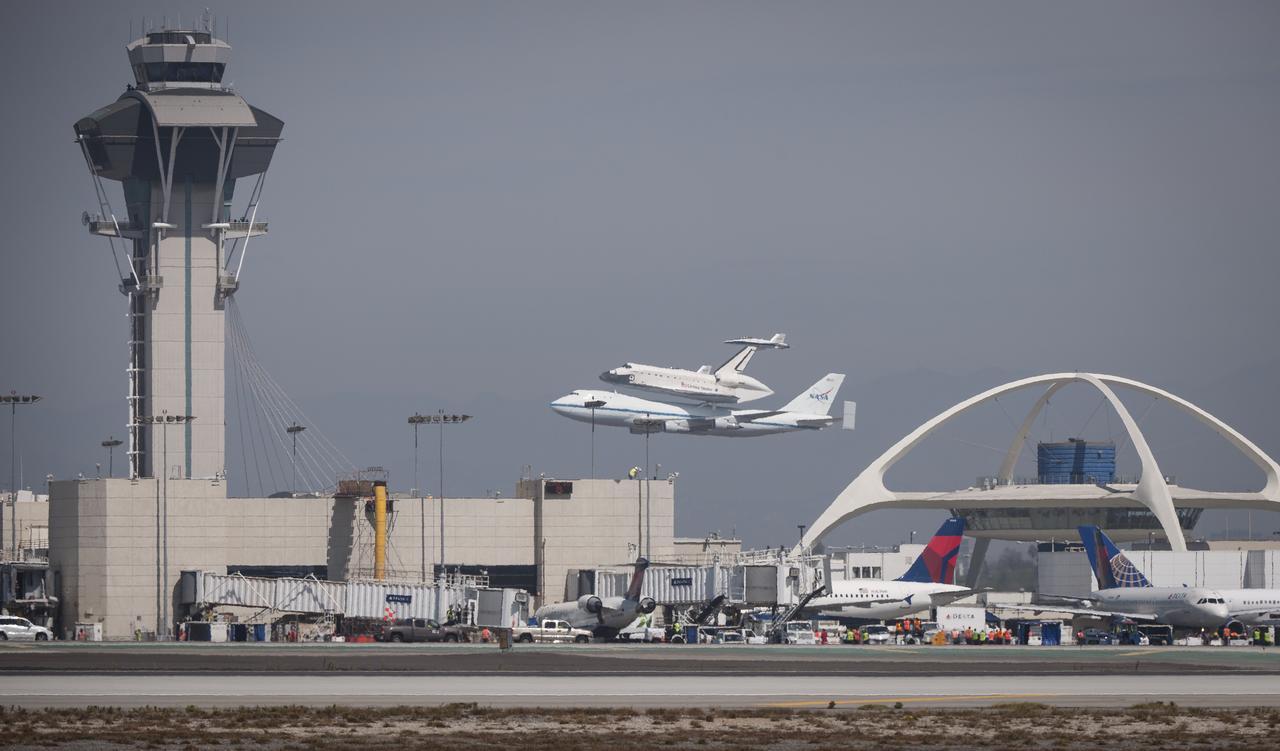
Space shuttle Endeavour, mounted atop a NASA 747 Shuttle Carrier Aircraft (SCA) performs a low flyby past the tower at Los Angeles International Airport, Friday, Sept. 21, 2012. Endeavour, built as a replacement for space shuttle Challenger, completed 25 missions, spent 299 days in orbit, and orbited Earth 4,671 times while traveling 122,883,151 miles. Beginning Oct. 30, the shuttle will be on display in the California Science center's Samuel Oschin Space Shuttle Endeavour Display Pavilion, embarking on its new mission to commemorate past achievements in space and educate and inspire future generations of explorers.Photo Credit: (NASA/Bill Ingalls)
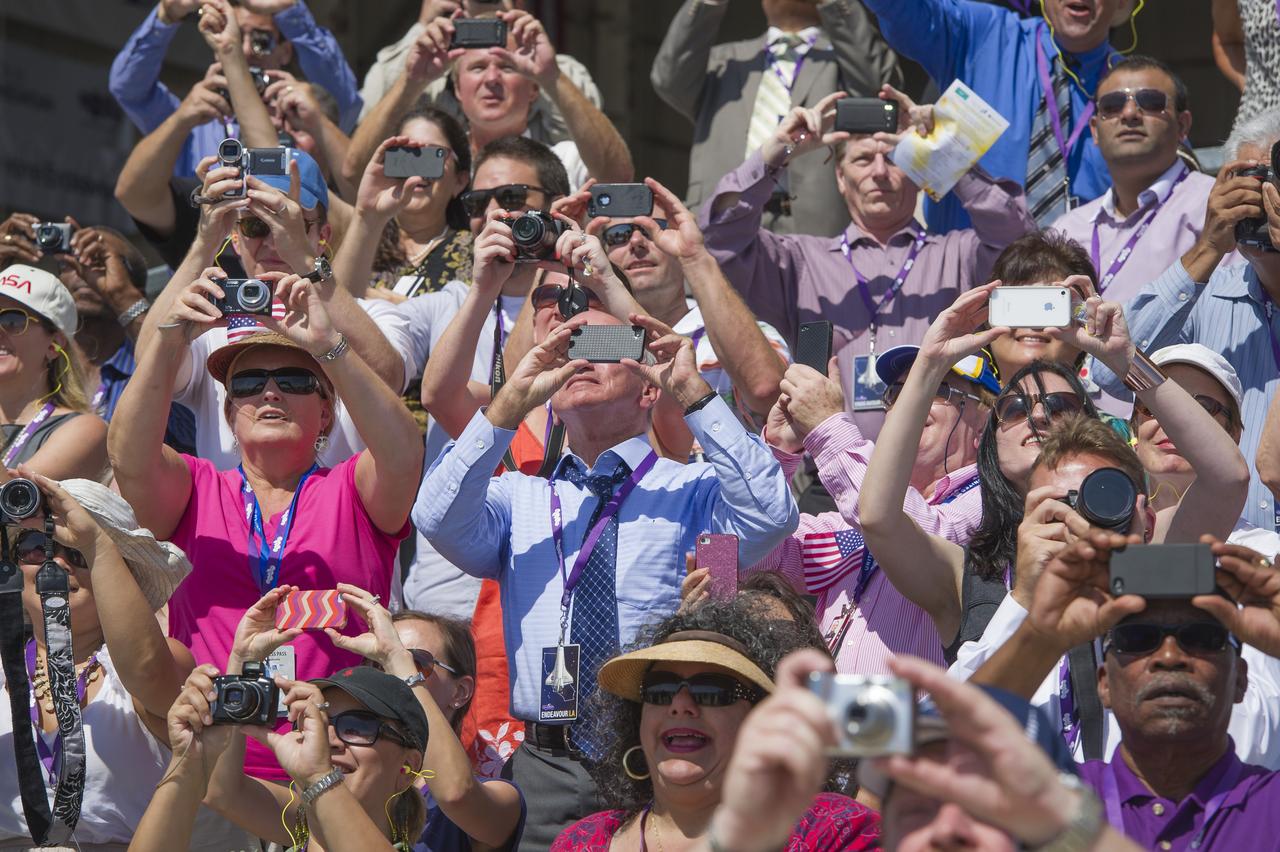
Spectators look to the sky with cameras and other devices as the space shuttle Endeavour flies over prior to landing Friday, Sept. 21, 2012, at Los Angeles International Airport. Endeavour, built as a replacement for space shuttle Challenger, completed 25 missions, spent 299 days in orbit, and orbited Earth 4,671 times while traveling 122,883,151 miles. Beginning Oct. 30, the shuttle will be on display in the California Science center's Samuel Oschin Space Shuttle Endeavour Display Pavilion, embarking on its new mission to commemorate past achievements in space and educate and inspire future generations of explorers.Photo Credit: (NASA/Paul E. Alers)

NASA Deputy Administrator Lori Garver, at podium, speaks to those in attendance at Apron W after the 747 Shuttle Carrier Aircraft (SCA) with space shuttle Discovery mounted on top rolled to a halt at Washington Dulles International Airport, Tuesday, April 17, 2012 in Sterling, Va. Discovery, the first orbiter retired from NASA’s shuttle fleet, completed 39 missions, spent 365 days in space, orbited the Earth 5,830 times, and traveled 148,221,675 miles. NASA will transfer Discovery to the National Air and Space Museum to begin its new mission to commemorate past achievements in space and to educate and inspire future generations of explorers. Photo Credit: (NASA/Smithsonian Institution/Dane Penland)
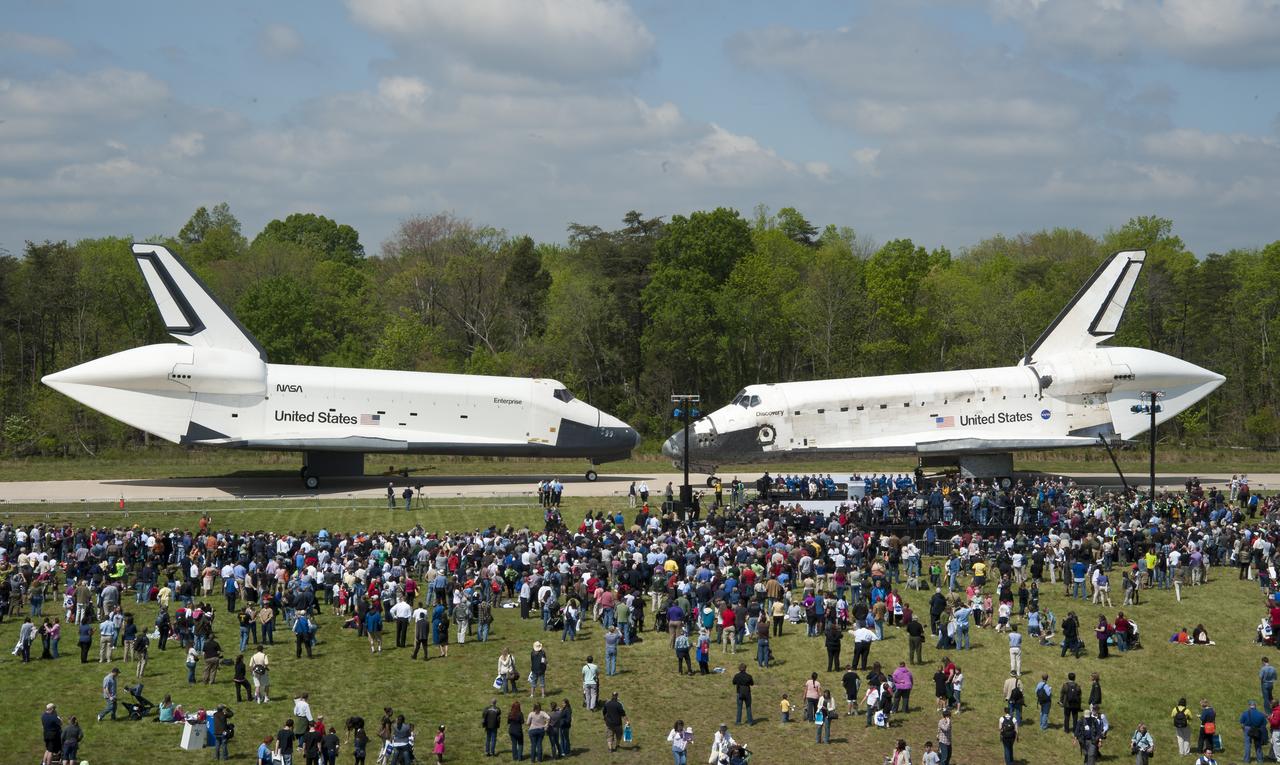
Space Shuttles Enterprise, left, and Discovery meet nose-to-nose at the beginning of a transfer ceremony at the Smithsonian's Steven F. Udvar-Hazy Center, Thursday, April 19, 2012, in Chantilly, Va. Space shuttle Discovery, the first orbiter retired from NASA’s shuttle fleet, completed 39 missions, spent 365 days in space, orbited the Earth 5,830 times, and traveled 148,221,675 miles will take the place of Enterprise at the center to commemorate past achievements in space and to educate and inspire future generations of explorers at the center. Photo Credit: (NASA/Smithsonian Institution/Carolyn Russo)

Space shuttle Discovery, mounted atop a NASA 747 Shuttle Carrier Aircraft (SCA) flies over the Steven F. Udvar-Hazy Center, Tuesday, April 17, 2012, in Washington. Discovery, the first orbiter retired from NASA’s shuttle fleet, completed 39 missions, spent 365 days in space, orbited the Earth 5,830 times, and traveled 148,221,675 miles. NASA will transfer Discovery to the National Air and Space Museum to begin its new mission to commemorate past achievements in space and to educate and inspire future generations of explorers. Photo Credit: (NASA/Smithsonian Institution/Eric Long)
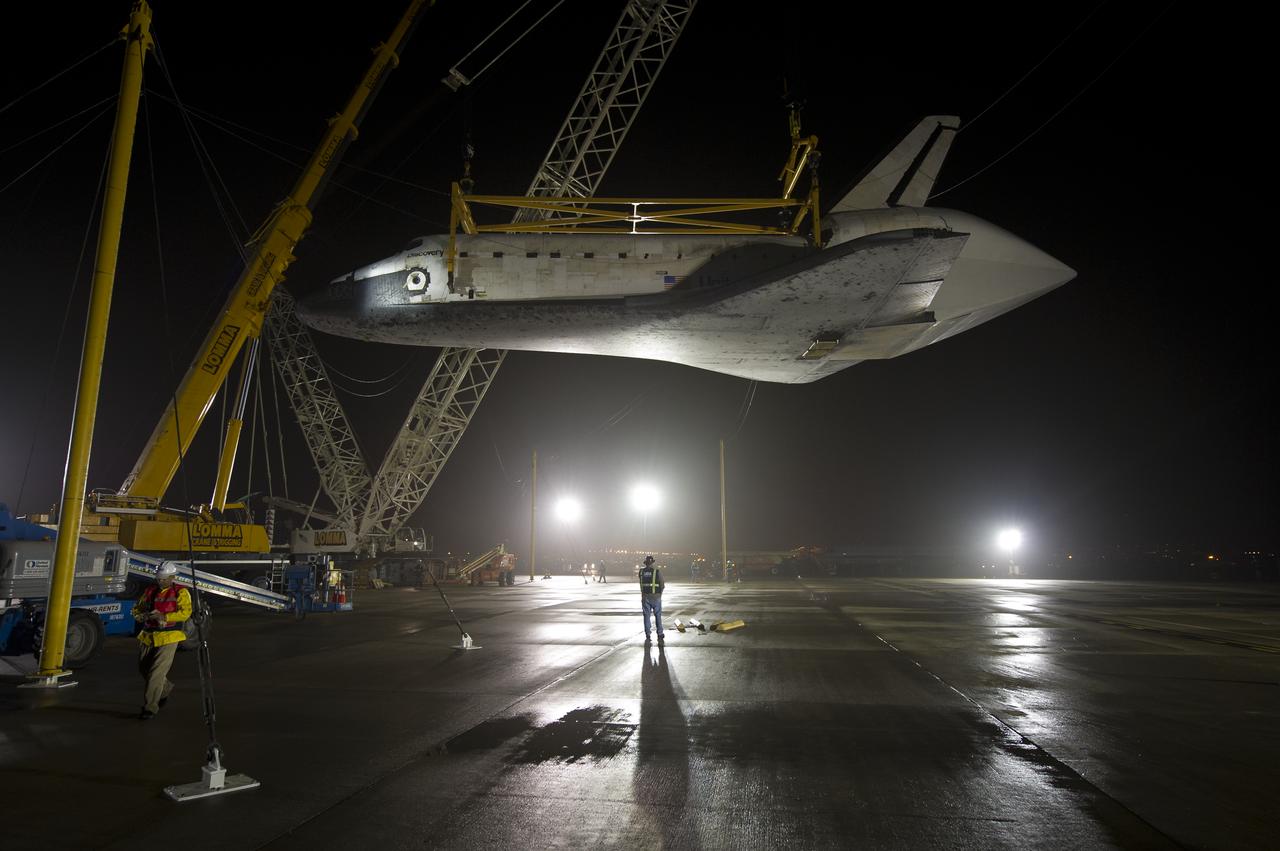
The space shuttle Discovery is suspended from a sling held by two cranes shortly after the NASA 747 Shuttle Carrier Aircraft (SCA) was pushed back from underneath at Washington Dulles International Airport, Thursday, April 19, 2012, in Sterling, VA. Discovery, the first orbiter retired from NASA’s shuttle fleet, completed 39 missions, spent 365 days in space, orbited the Earth 5,830 times, and traveled 148,221,675 miles. NASA will transfer Discovery to the National Air and Space Museum to begin its new mission to commemorate past achievements in space and to educate and inspire future generations of explorers. Photo Credit: (NASA/Bill Ingalls)
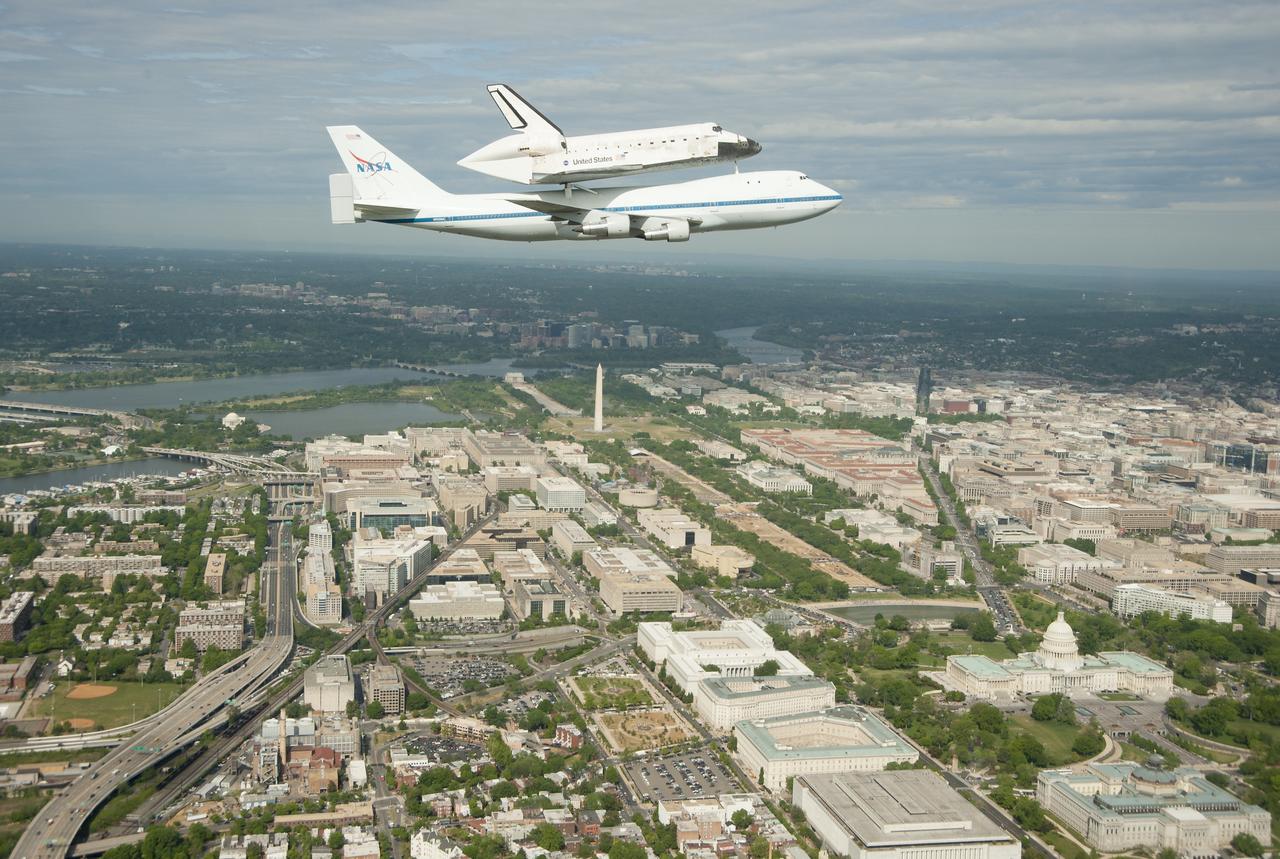
Space shuttle Discovery, mounted atop a NASA 747 Shuttle Carrier Aircraft (SCA), flies over the Washington skyline as seen from a NASA T-38 aircraft, Tuesday, April 17, 2012. Discovery, the first orbiter retired from NASA’s shuttle fleet, completed 39 missions, spent 365 days in space, orbited the Earth 5,830 times, and traveled 148,221,675 miles. NASA will transfer Discovery to the National Air and Space Museum to begin its new mission to commemorate past achievements in space and to educate and inspire future generations of explorers. Photo Credit: (NASA/Robert Markowitz)

Space shuttle Discovery, mounted atop a NASA 747 Shuttle Carrier Aircraft (SCA) taxis in front of the main terminal at Washington Dulles International Airport, Tuesday, April 17, 2012, in Sterling, Va. Discovery, the first orbiter retired from NASA’s shuttle fleet, completed 39 missions, spent 365 days in space, orbited the Earth 5,830 times, and traveled 148,221,675 miles. NASA will transfer Discovery to the National Air and Space Museum to begin its new mission to commemorate past achievements in space and to educate and inspire future generations of explorers. Photo Credit: (NASA/Smithsonian Institution/Eric Long)
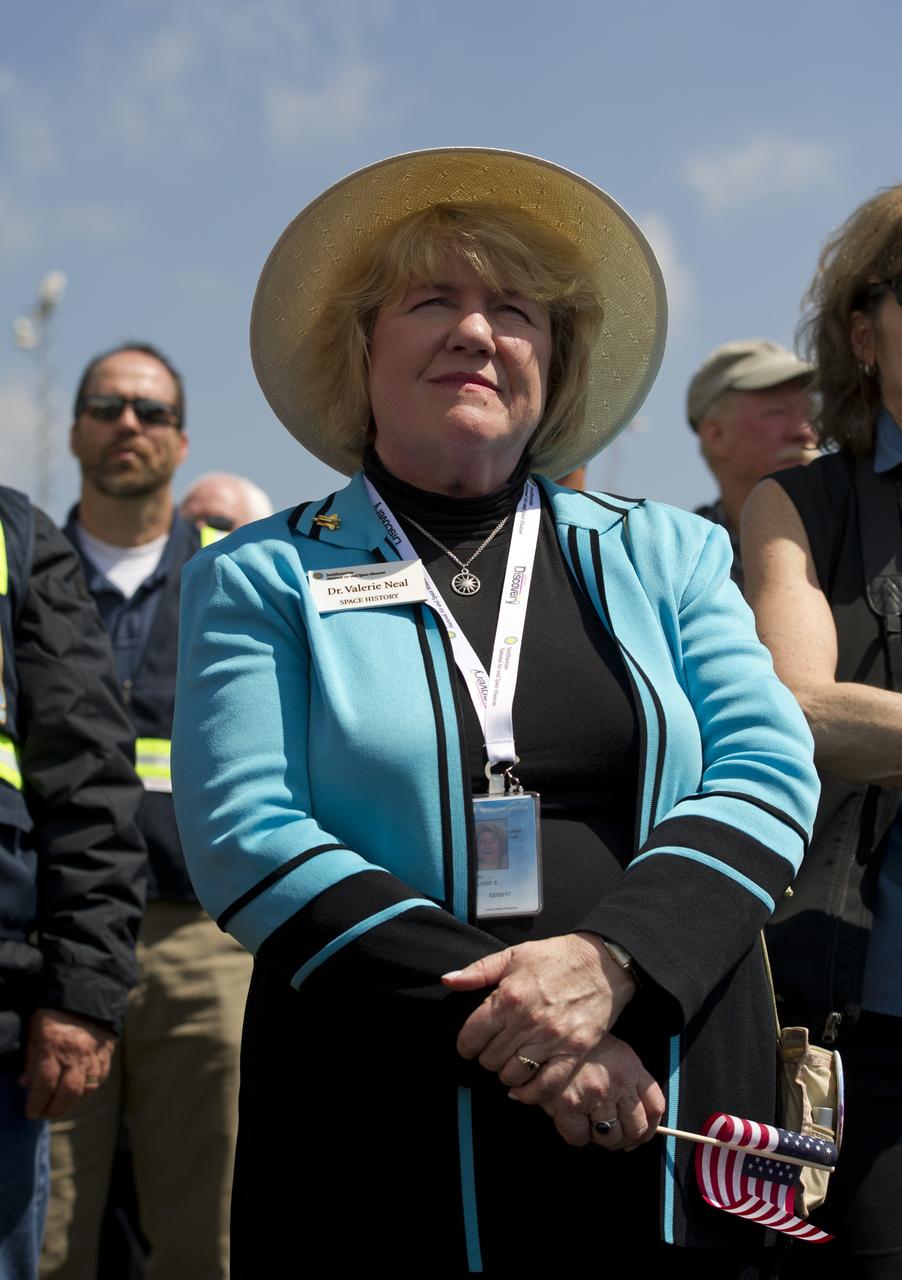
Dr. Valerie Neal, curator for the shuttle program in the Space History office at the National Air and Space Museum, attends the transfer ceremony for space shuttle Discovery, Thursday, April 19, 2012, at the Smithsonian's Steven F. Udvar-Hazy Center in Chantilly, Va. Discovery, the first orbiter retired from NASA’s shuttle fleet, which completed 39 missions, spent 365 days in space, orbited the Earth 5,830 times, and traveled 148,221,675 miles will take the place of Enterprise at the center to commemorate past achievements in space and to educate and inspire future generations of explorers at the center. Photo Credit: (NASA/Carla Cioffi)
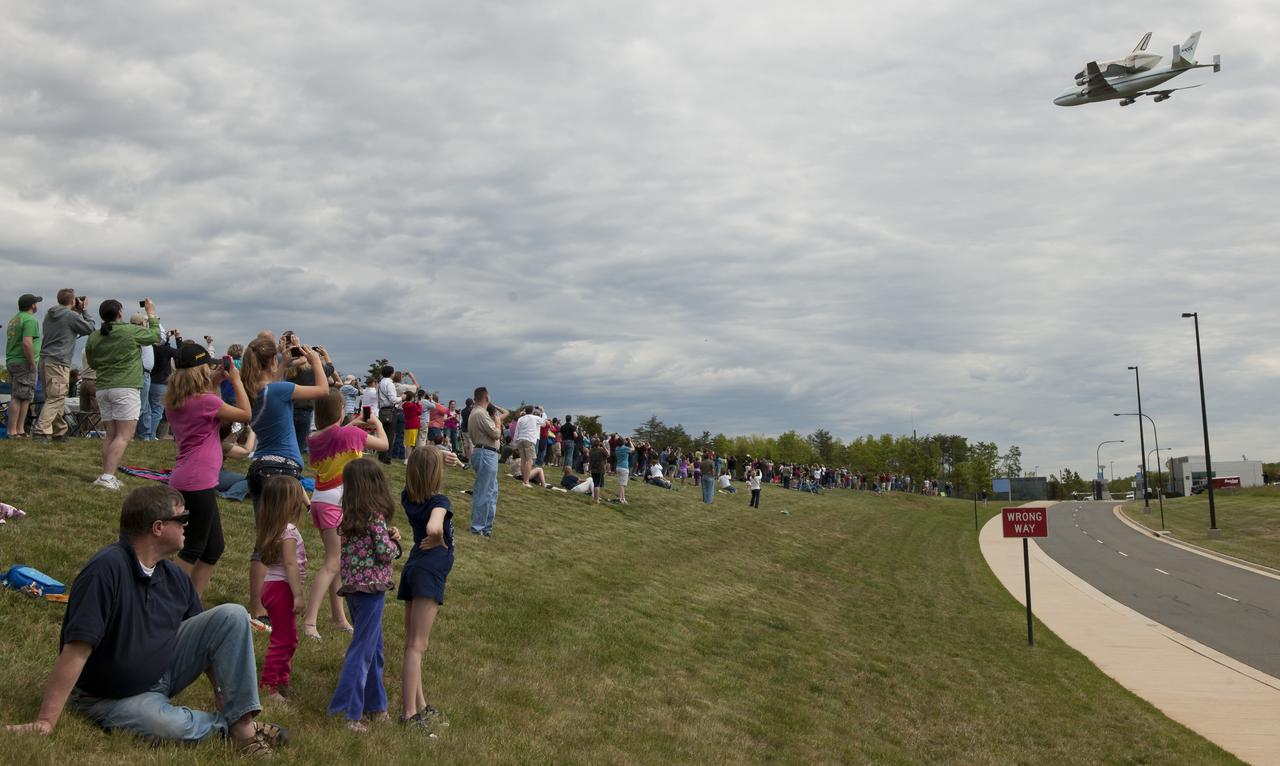
Spectators watch as space shuttle Discovery, mounted atop a NASA 747 Shuttle Carrier Aircraft (SCA) flies over the National Air and Space Museum’s Steven F. Udvar-Hazy Center, Tuesday, April 17, 2012, in Chantilly, Va. Discovery, the first orbiter retired from NASA’s shuttle fleet, completed 39 missions, spent 365 days in space, orbited the Earth 5,830 times, and traveled 148,221,675 miles. NASA will transfer Discovery to the National Air and Space Museum to begin its new mission to commemorate past achievements in space and to educate and inspire future generations of explorers. Photo Credit: (NASA/Carla Cioffi)

Spectators are seen as they watch space shuttle Endeavour as it passes by on its way to its new home at the California Science Center in Los Angeles, Saturday, Oct. 13, 2012. Endeavour, built as a replacement for space shuttle Challenger, completed 25 missions, spent 299 days in orbit, and orbited Earth 4,671 times while traveling 122,883,151 miles. Beginning Oct. 30, the shuttle will be on display in the CSC’s Samuel Oschin Space Shuttle Endeavour Display Pavilion, embarking on its new mission to commemorate past achievements in space and educate and inspire future generations of explorers. Photo Credit: (NASA/Carla Cioffi)

Support personnel and film crews are seen working around the space shuttle Endeavour as it traverses through Inglewood, Calif. on Friday, Oct. 12, 2012. Endeavour, built as a replacement for space shuttle Challenger, completed 25 missions, spent 299 days in orbit, and orbited Earth 4,671 times while traveling 122,883,151 miles. Beginning Oct. 30, the shuttle will be on display in the CSC's Samuel Oschin Space Shuttle Endeavour Display Pavilion, embarking on its new mission to commemorate past achievements in space and educate and inspire future generations of explorers. Photo Credit: (NASA/Carla Cioffi)

California Congresswoman Maxine Waters, 35th Congressional District, waves to the crowds as she is introduced at the Endeavour Kick-Off Ceremony at The Forum in Inglewood, Saturday, Oct. 13, 2012. Endeavour, built as a replacement for space shuttle Challenger, completed 25 missions, spent 299 days in orbit, and orbited Earth 4,671 times while traveling 122,883,151 miles. Beginning Oct. 30, the shuttle will be on display in the CSC’s Samuel Oschin Space Shuttle Endeavour Display Pavilion, embarking on its new mission to commemorate past achievements in space and educate and inspire future generations of explorers. Photo Credit: (NASA/Carla Cioffi)
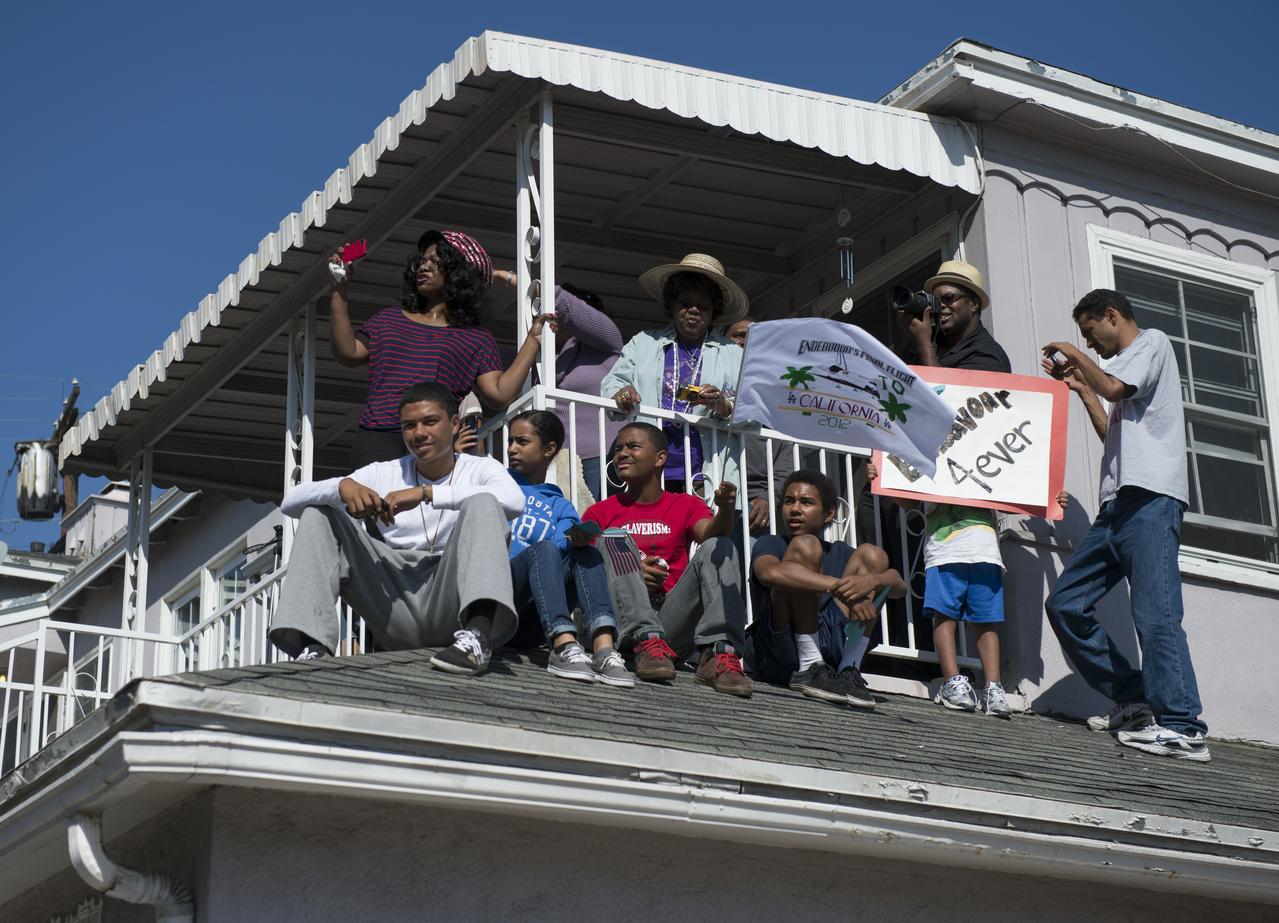
Spectators sit on the roof of an apartment building in Inglewood to get a view of the space shuttle Endeavour as it is carried through to its new home at the California Science Center, Saturday, Oct. 13, 2012. Endeavour, built as a replacement for space shuttle Challenger, completed 25 missions, spent 299 days in orbit, and orbited Earth 4,671 times while traveling 122,883,151 miles. Beginning Oct. 30, the shuttle will be on display in the CSC’s Samuel Oschin Space Shuttle Endeavour Display Pavilion, embarking on its new mission to commemorate past achievements in space and educate and inspire future generations of explorers. Photo Credit: (NASA/Carla Cioffi)
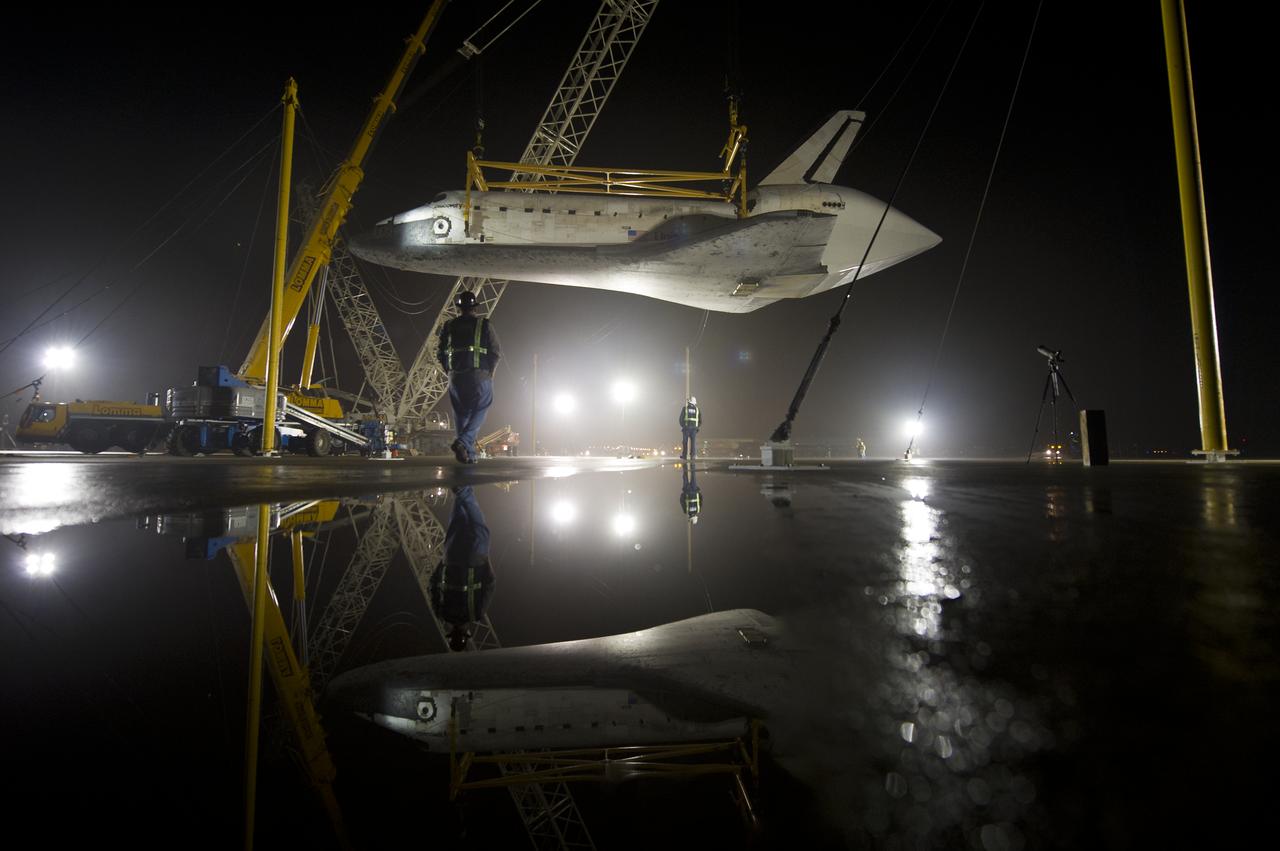
The space shuttle Discovery is suspended from a sling held by two cranes shortly after the NASA 747 Shuttle Carrier Aircraft (SCA) was pushed back from underneath at Washington Dulles International Airport, Thursday, April 19, 2012, in Sterling, VA. Discovery, the first orbiter retired from NASA’s shuttle fleet, completed 39 missions, spent 365 days in space, orbited the Earth 5,830 times, and traveled 148,221,675 miles. NASA will transfer Discovery to the National Air and Space Museum to begin its new mission to commemorate past achievements in space and to educate and inspire future generations of explorers. Photo Credit: (NASA/Bill Ingalls)

The driver of the Over Land Transporter (OLT) is seen as he maneuvers the space shuttle Endeavour on the streets of Los Angeles as it heads to its new home at the California Science Center, Friday, Oct. 12, 2012. Endeavour, built as a replacement for space shuttle Challenger, completed 25 missions, spent 299 days in orbit, and orbited Earth 4,671 times while traveling 122,883,151 miles. Beginning Oct. 30, the shuttle will be on display in the CSC's Samuel Oschin Space Shuttle Endeavour Display Pavilion, embarking on its new mission to commemorate past achievements in space and educate and inspire future generations of explorers. Photo Credit: (NASA/Carla Cioffi)
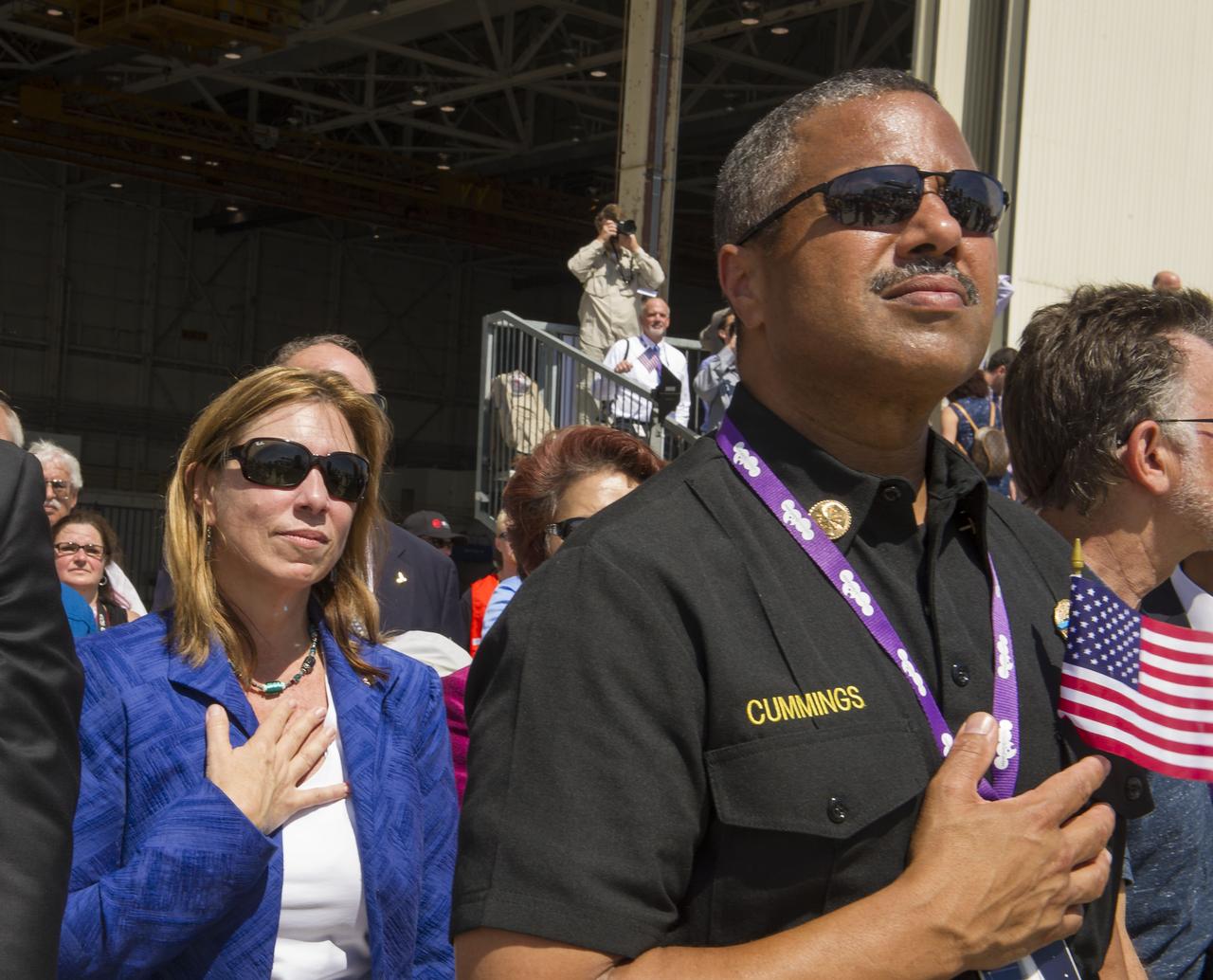
NASA Deputy Administrator Lori Garver, right, holds her hand to her heart during the playing of the National Anthem at the welcoming ceremony for space shuttle Endeavour, Friday, Sept. 21, 2012, at Los Angeles International Airport. Endeavour, built as a replacement for space shuttle Challenger, completed 25 missions, spent 299 days in orbit, and orbited Earth 4,671 times while traveling 122,883,151 miles. Beginning Oct. 30, the shuttle will be on display in the California Science center's Samuel Oschin Space Shuttle Endeavour Display Pavilion, embarking on its new mission to commemorate past achievements in space and educate and inspire future generations of explorers.Photo Credit: (NASA/Paul E. Alers)
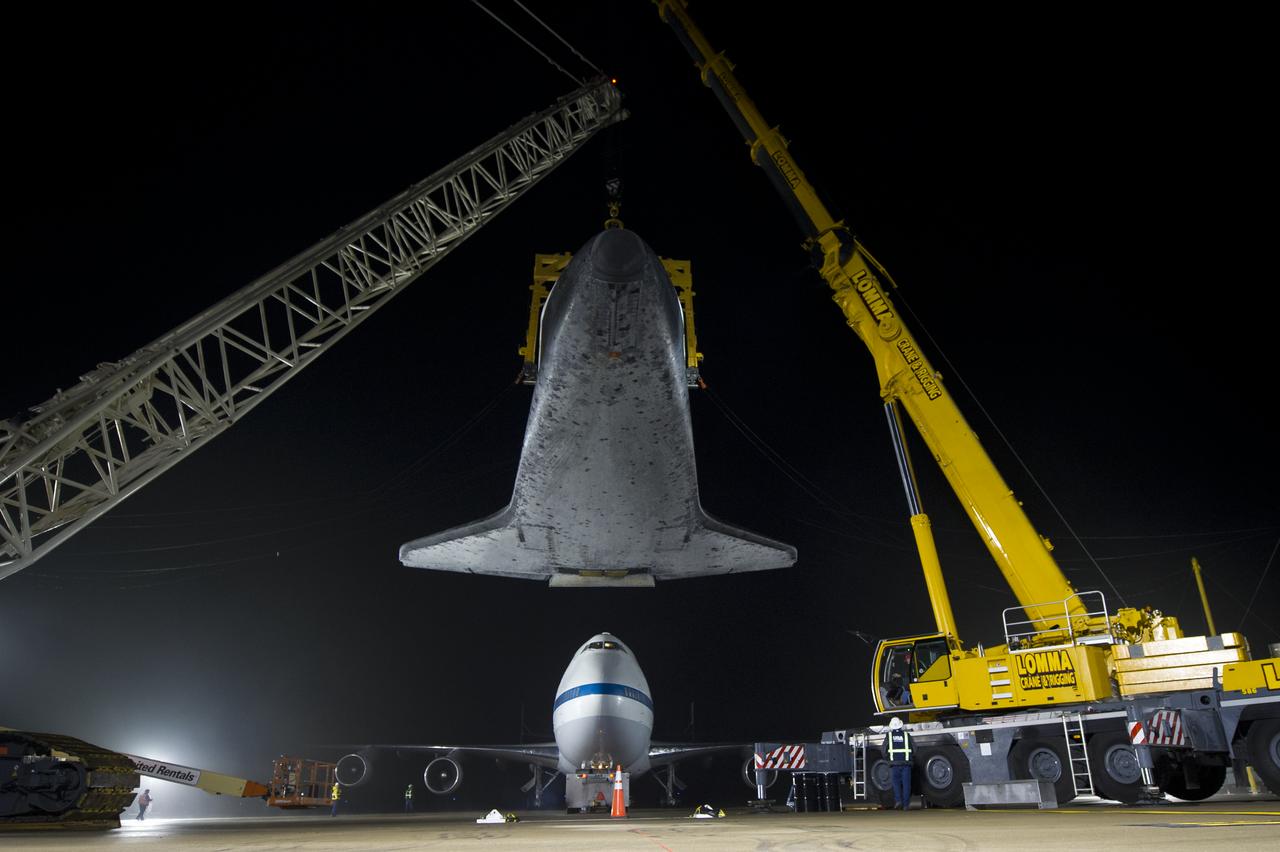
The space shuttle Discovery is suspended from a sling held by two cranes as the NASA 747 Shuttle Carrier Aircraft (SCA) is pushed back from underneath at Washington Dulles International Airport, Thursday, April 19, 2012, in Sterling, VA. Discovery, the first orbiter retired from NASA’s shuttle fleet, completed 39 missions, spent 365 days in space, orbited the Earth 5,830 times, and traveled 148,221,675 miles. NASA will transfer Discovery to the National Air and Space Museum to begin its new mission to commemorate past achievements in space and to educate and inspire future generations of explorers. Photo Credit: (NASA/Bill Ingalls)
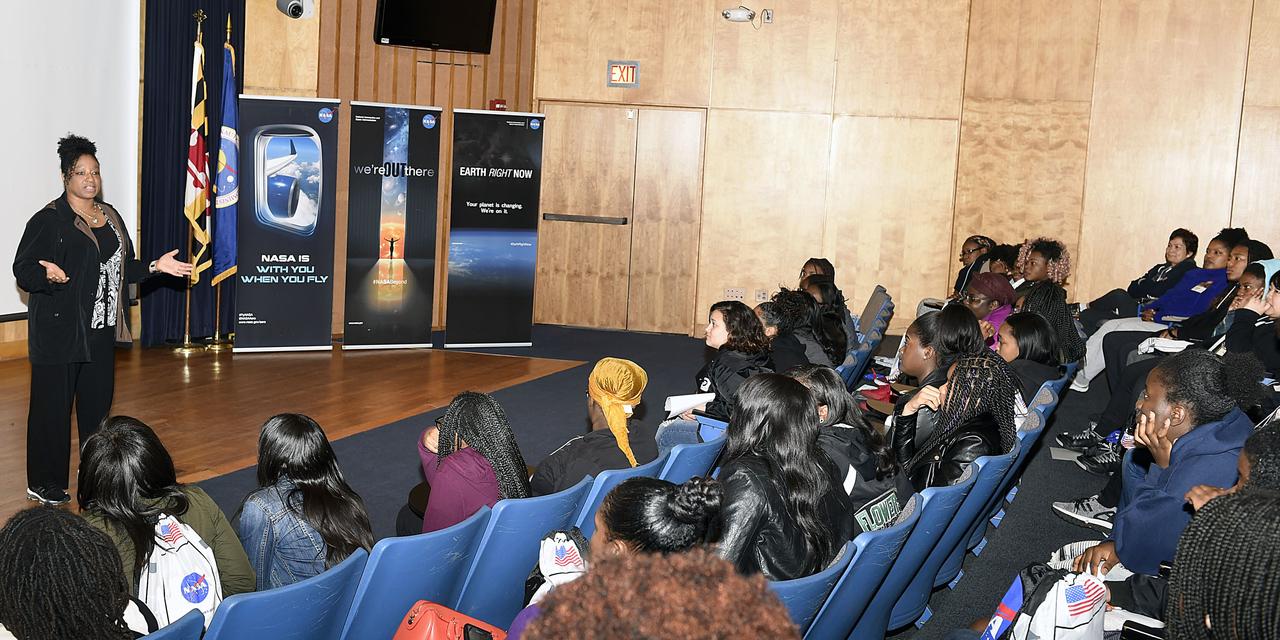
Girls Night In was held at Goddard on Nov 4-5, 2016. This is a pilot program which reinvigorates, inspires, and engages high school girls who may be struggling or not fully engaged in STEM (Science, Technology Engineering and Math) education. The program allowed NASA women to share and demonstrate the work they do, provide the girls an opportunity to completely immerse themselves in Goddard science, technology, engineering and math as well as provide them activities that will challenge and promote knowledge and discovery. Goddard invites other NASA centers tolearn from this pilot program and work towards a simultaneous multicenter event in the future. Participating schools were: DuVal, Crossland, Flowers, High Point, Northwestern and Oxon Hill
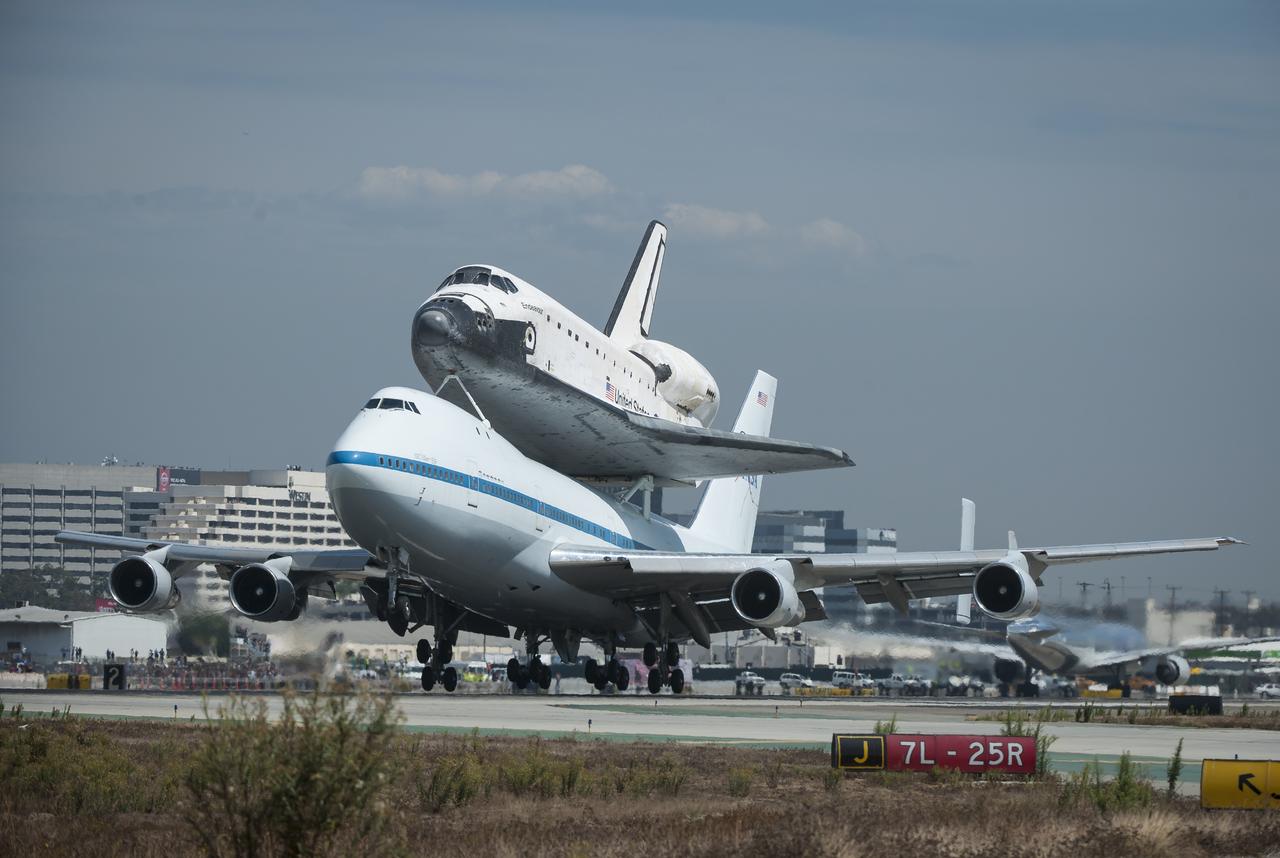
Space shuttle Endeavour, mounted atop a NASA 747 Shuttle Carrier Aircraft (SCA) lands at Los Angeles International Airport, Friday, Sept. 21, 2012. Endeavour, built as a replacement for space shuttle Challenger, completed 25 missions, spent 299 days in orbit, and orbited Earth 4,671 times while traveling 122,883,151 miles. Beginning Oct. 30, the shuttle will be on display in the California Science center's Samuel Oschin Space Shuttle Endeavour Display Pavilion, embarking on its new mission to commemorate past achievements in space and educate and inspire future generations of explorers.Photo Credit: (NASA/Bill Ingalls)

Spectators are seen photographing space shuttle Endeavour as it passes by on its way to its new home at the California Science Center, Friday, Oct. 12, 2012, in Inglewood. Endeavour, built as a replacement for space shuttle Challenger, completed 25 missions, spent 299 days in orbit, and orbited Earth 4,671 times while traveling 122,883,151 miles. Beginning Oct. 30, the shuttle will be on display in the CSC’s Samuel Oschin Space Shuttle Endeavour Display Pavilion, embarking on its new mission to commemorate past achievements in space and educate and inspire future generations of explorers. Photo Credit: (NASA/Carla Cioffi)
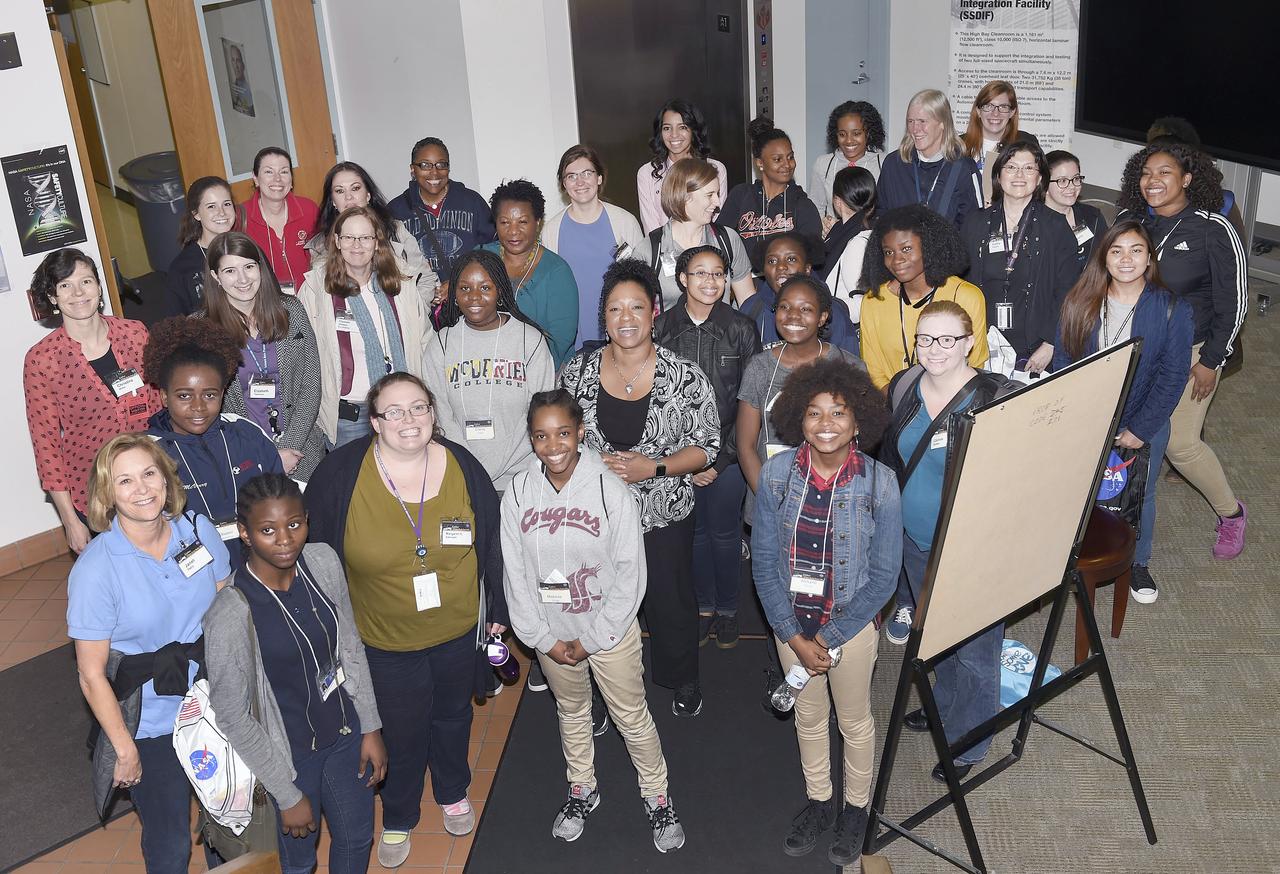
Girls Night In was held at Goddard on Nov 4-5, 2016. This is a pilot program which reinvigorates, inspires, and engages high school girls who may be struggling or not fully engaged in STEM (Science, Technology Engineering and Math) education. The program allowed NASA women to share and demonstrate the work they do, provide the girls an opportunity to completely immerse themselves in Goddard science, technology, engineering and math as well as provide them activities that will challenge and promote knowledge and discovery. Goddard invites other NASA centers tolearn from this pilot program and work towards a simultaneous multicenter event in the future. Participating schools were: DuVal, Crossland, Flowers, High Point, Northwestern and Oxon Hill
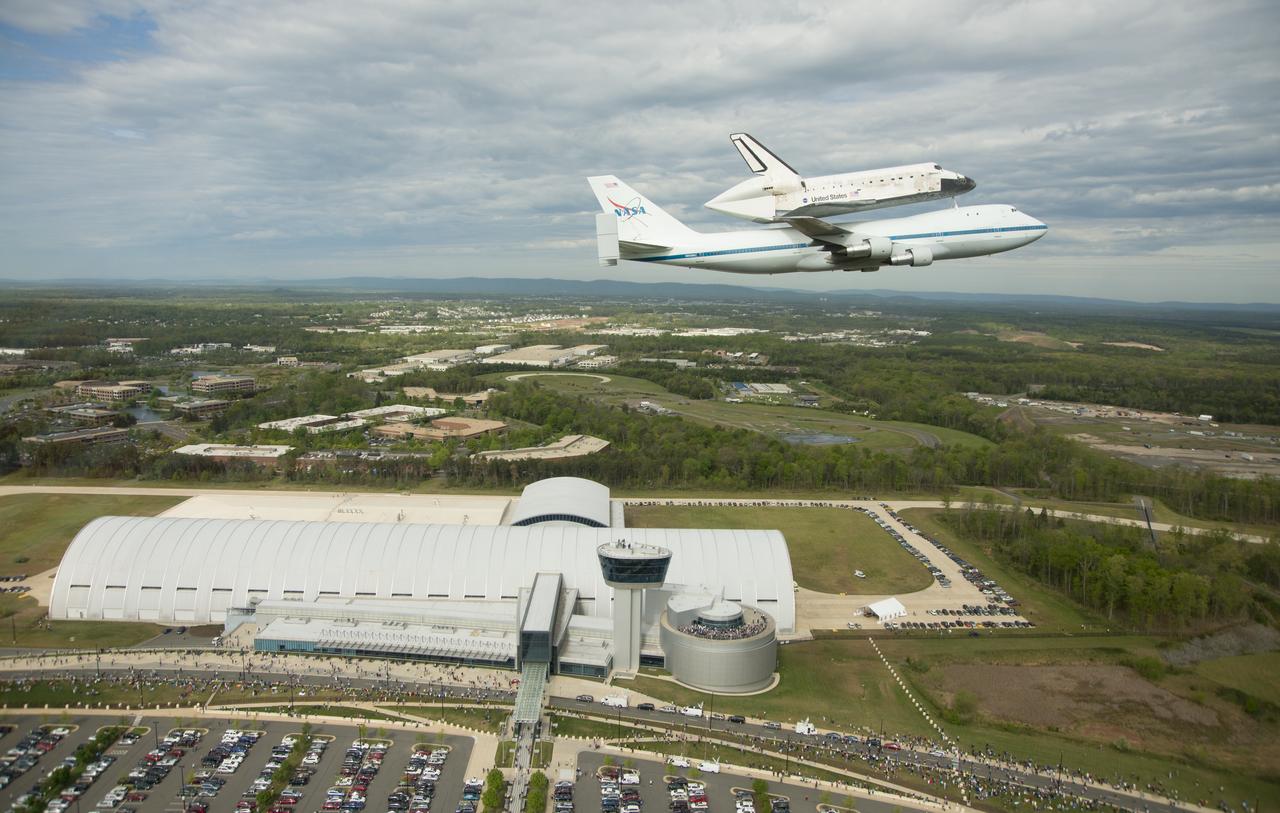
Space shuttle Discovery, mounted atop a NASA 747 Shuttle Carrier Aircraft (SCA) flies over the Steven F. Udvar-Hazy Center, Tuesday, April 17, 2012, in Washington. Discovery, the first orbiter retired from NASA’s shuttle fleet, completed 39 missions, spent 365 days in space, orbited the Earth 5,830 times, and traveled 148,221,675 miles. NASA will transfer Discovery to the National Air and Space Museum to begin its new mission to commemorate past achievements in space and to educate and inspire future generations of explorers. Photo Credit: (NASA/Robert Markowitz)
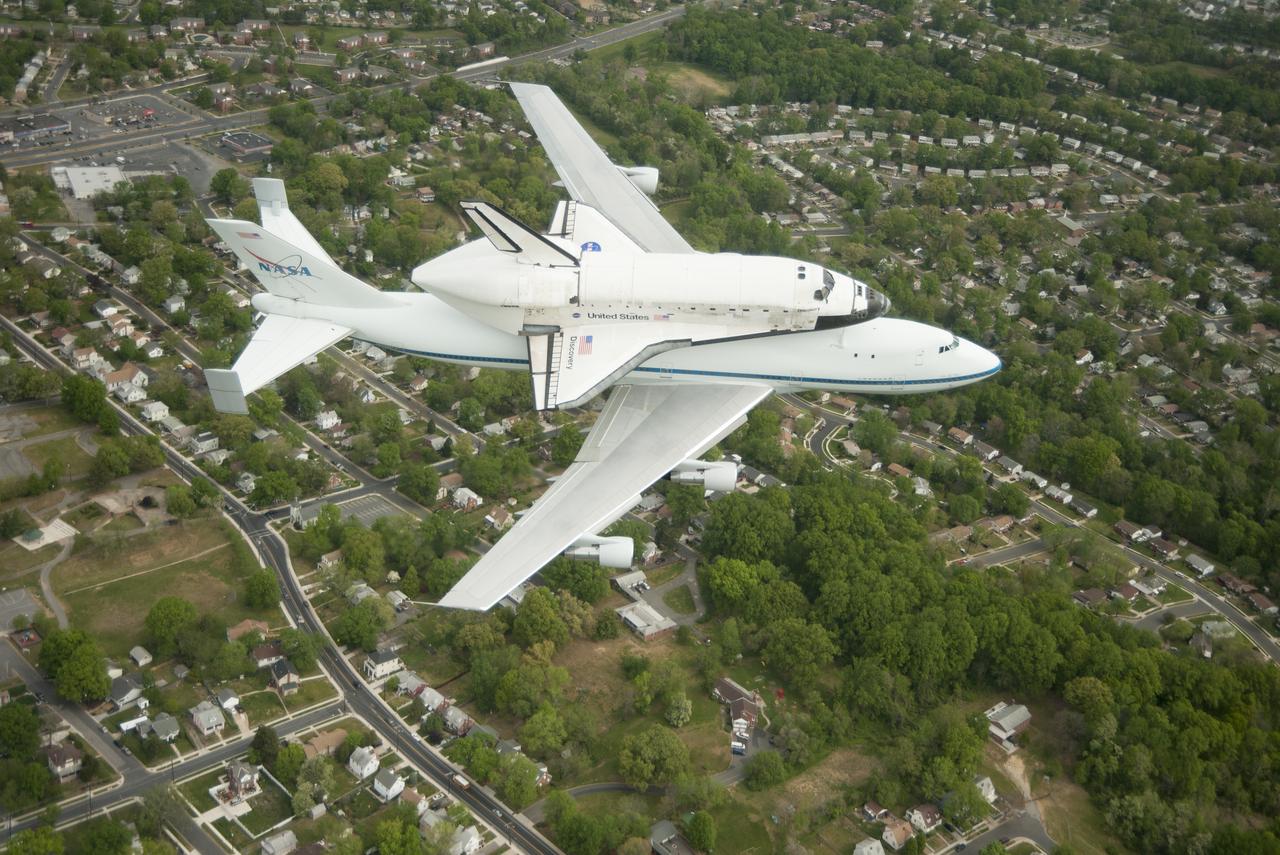
Space shuttle Discovery, mounted atop a NASA 747 Shuttle Carrier Aircraft (SCA), flies over the Washington skyline as seen from a NASA T-38 aircraft, Tuesday, April 17, 2012. Discovery, the first orbiter retired from NASA’s shuttle fleet, completed 39 missions, spent 365 days in space, orbited the Earth 5,830 times, and traveled 148,221,675 miles. NASA will transfer Discovery to the National Air and Space Museum to begin its new mission to commemorate past achievements in space and to educate and inspire future generations of explorers. Photo Credit: (NASA/Robert Markowitz)
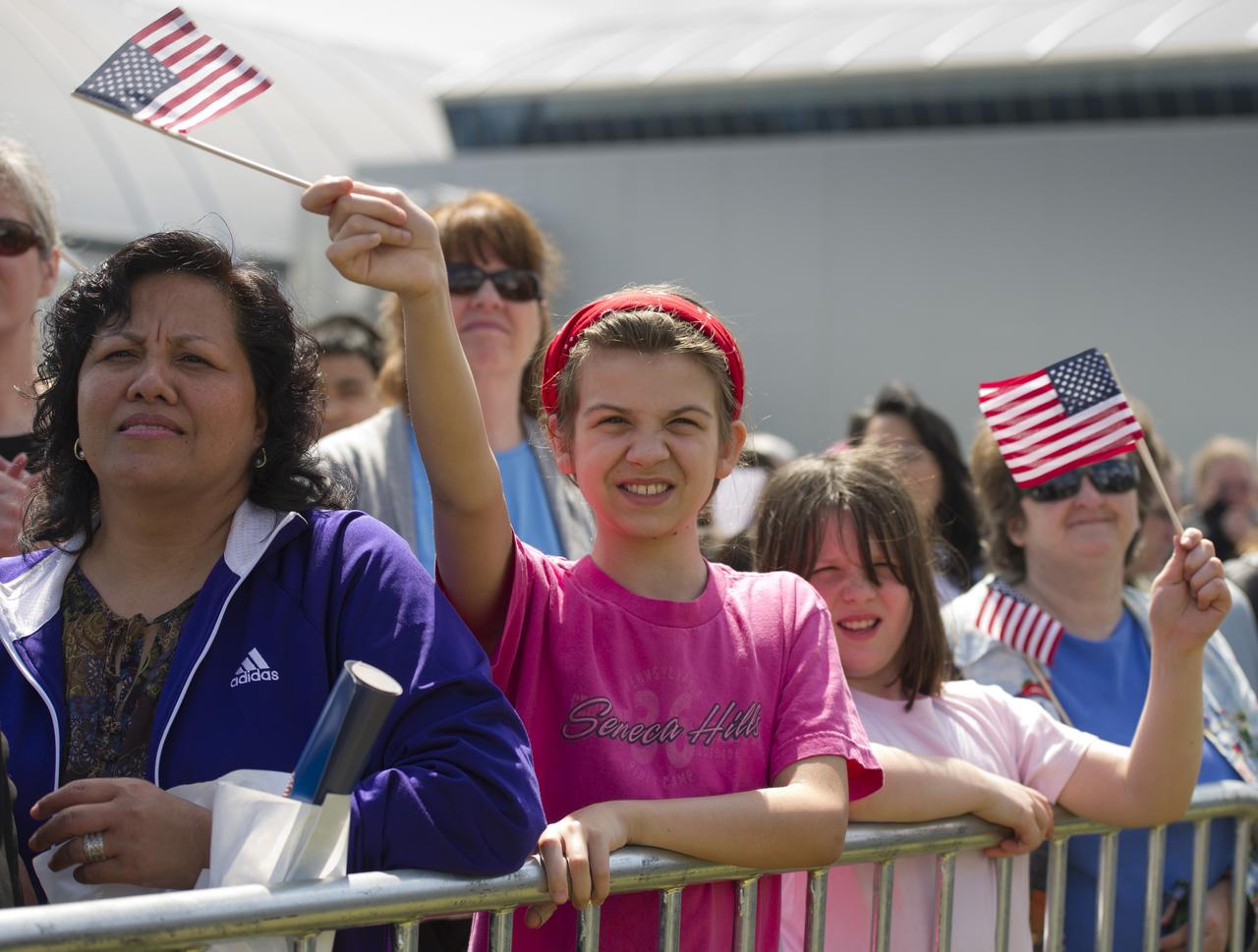
Rachel Ledford, in prink shirt, and Noelle Leford, right, from Butler, PA attend the transfer ceremony for space shuttle Discovery, Thursday, April 19, 2012, at the Smithsonian's Steven F. Udvar-Hazy Center in Chantilly, Va. Discovery, the first orbiter retired from NASA’s shuttle fleet, which completed 39 missions, spent 365 days in space, orbited the Earth 5,830 times, and traveled 148,221,675 miles will take the place of Enterprise at the center to commemorate past achievements in space and to educate and inspire future generations of explorers at the center. Photo Credit: (NASA/Carla Cioffi)
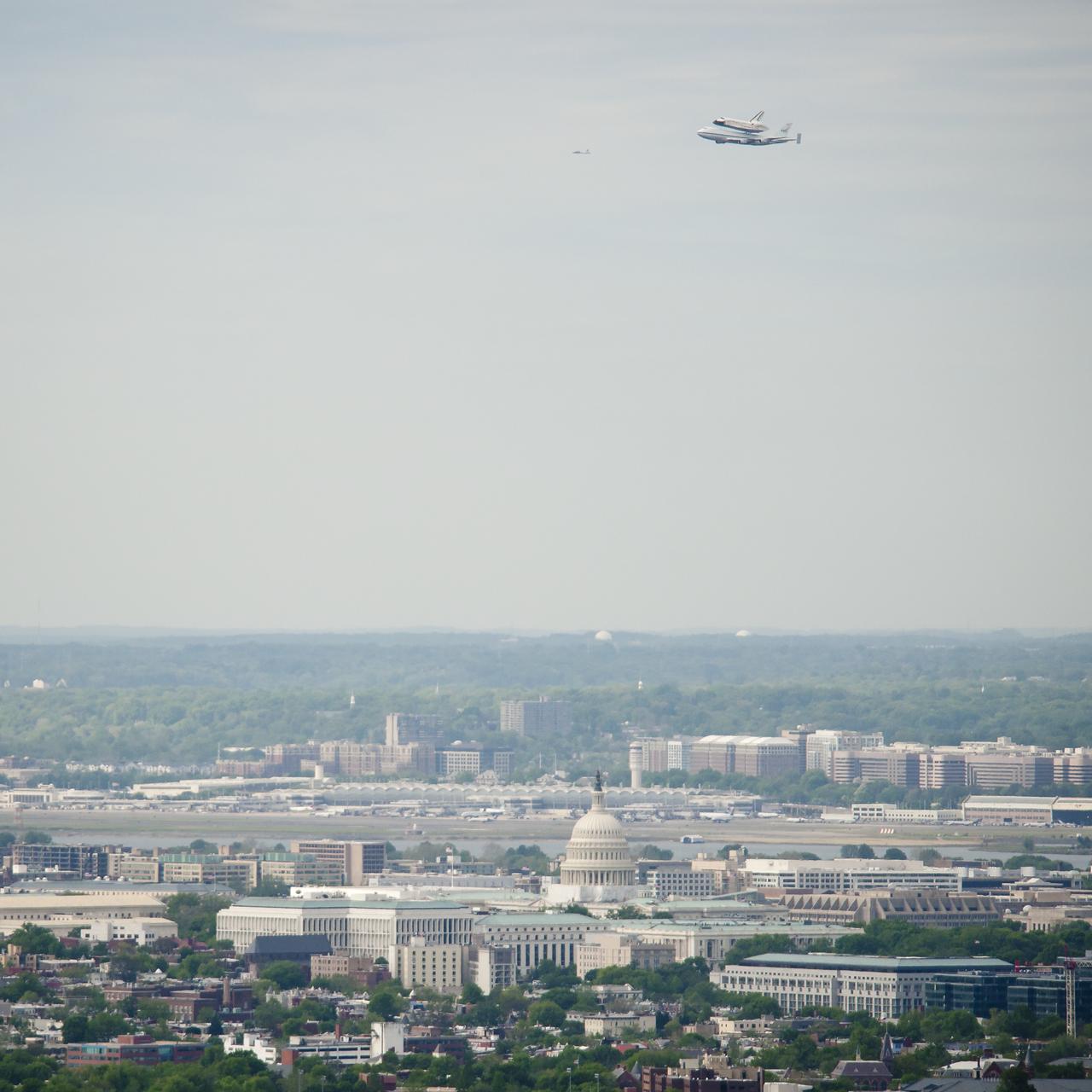
Space shuttle Discovery, mounted atop a NASA 747 Shuttle Carrier Aircraft (SCA) flies near the U.S. Capitol, Tuesday, April 17, 2012, in Washington. Discovery, the first orbiter retired from NASA’s shuttle fleet, completed 39 missions, spent 365 days in space, orbited the Earth 5,830 times, and traveled 148,221,675 miles. NASA will transfer Discovery to the National Air and Space Museum to begin its new mission to commemorate past achievements in space and to educate and inspire future generations of explorers. Photo Credit: (NASA/Bill Ingalls)

The space shuttle Endeavour is seen as it traverses through the streest of Los Angeles on its way to its new home at the California Science Center, Friday, Oct. 12, 2012. Endeavour, built as a replacement for space shuttle Challenger, completed 25 missions, spent 299 days in orbit, and orbited Earth 4,671 times while traveling 122,883,151 miles. Beginning Oct. 30, the shuttle will be on display in the CSC's Samuel Oschin Space Shuttle Endeavour Display Pavilion, embarking on its new mission to commemorate past achievements in space and educate and inspire future generations of explorers. Photo Credit: (NASA/Carla Cioffi)

Power lines are hoisted upwards by a crane in order to allow the space shuttle Endeavour to traverse on its path to its new home at the California Science Center, Friday, Oct. 12, 2012 in Inglewood. Endeavour, built as a replacement for space shuttle Challenger, completed 25 missions, spent 299 days in orbit, and orbited Earth 4,671 times while traveling 122,883,151 miles. Beginning Oct. 30, the shuttle will be on display in the CSC’s Samuel Oschin Space Shuttle Endeavour Display Pavilion, embarking on its new mission to commemorate past achievements in space and educate and inspire future generations of explorers. Photo Credit: (NASA/Carla Cioffi)
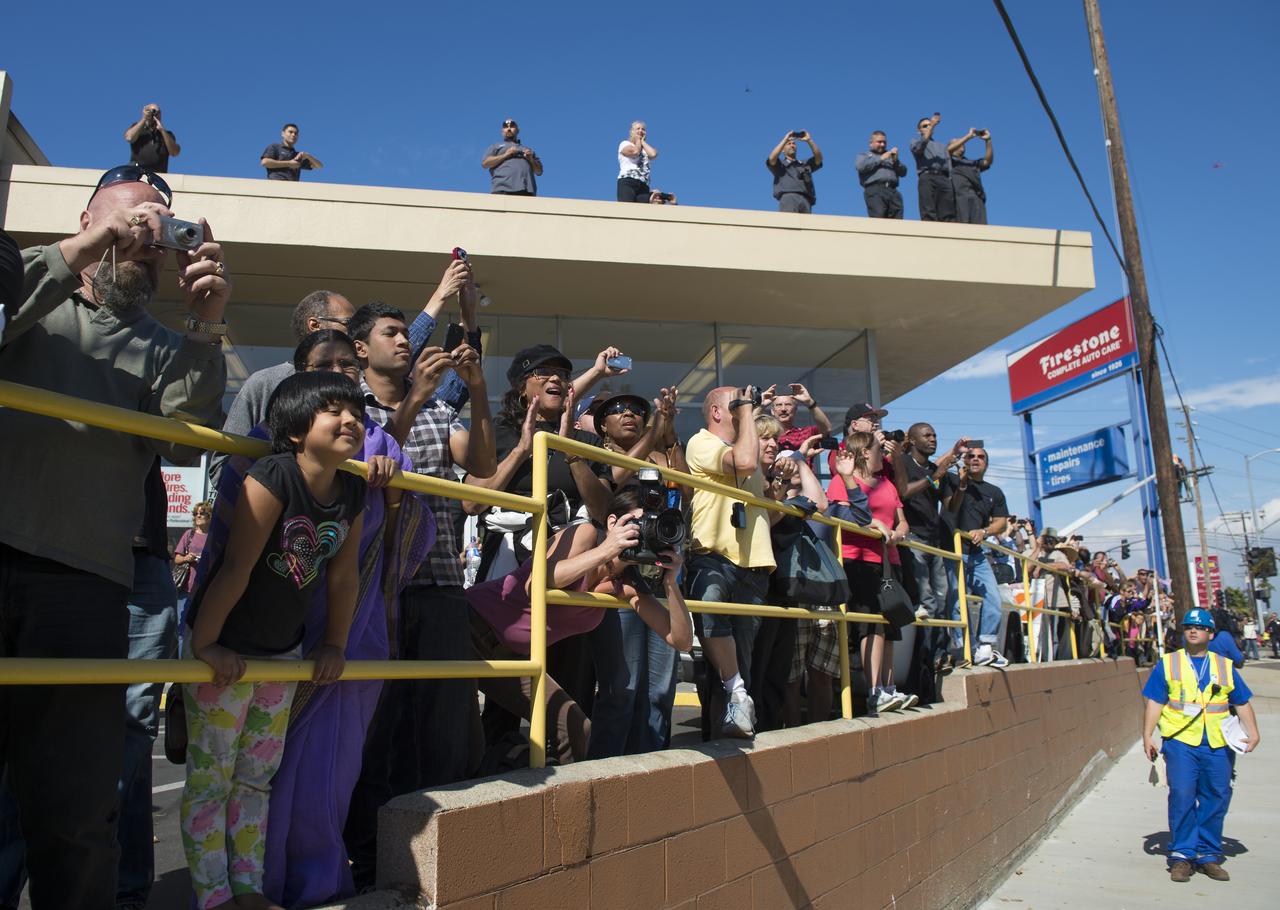
Spectators are seen as they watch space shuttle Endeavour as it passes by on its way to its new home at the California Science Center in Los Angeles, Friday, Oct. 12, 2012. Endeavour, built as a replacement for space shuttle Challenger, completed 25 missions, spent 299 days in orbit, and orbited Earth 4,671 times while traveling 122,883,151 miles. Beginning Oct. 30, the shuttle will be on display in the CSC's Samuel Oschin Space Shuttle Endeavour Display Pavilion, embarking on its new mission to commemorate past achievements in space and educate and inspire future generations of explorers. Photo Credit: (NASA/Carla Cioffi)
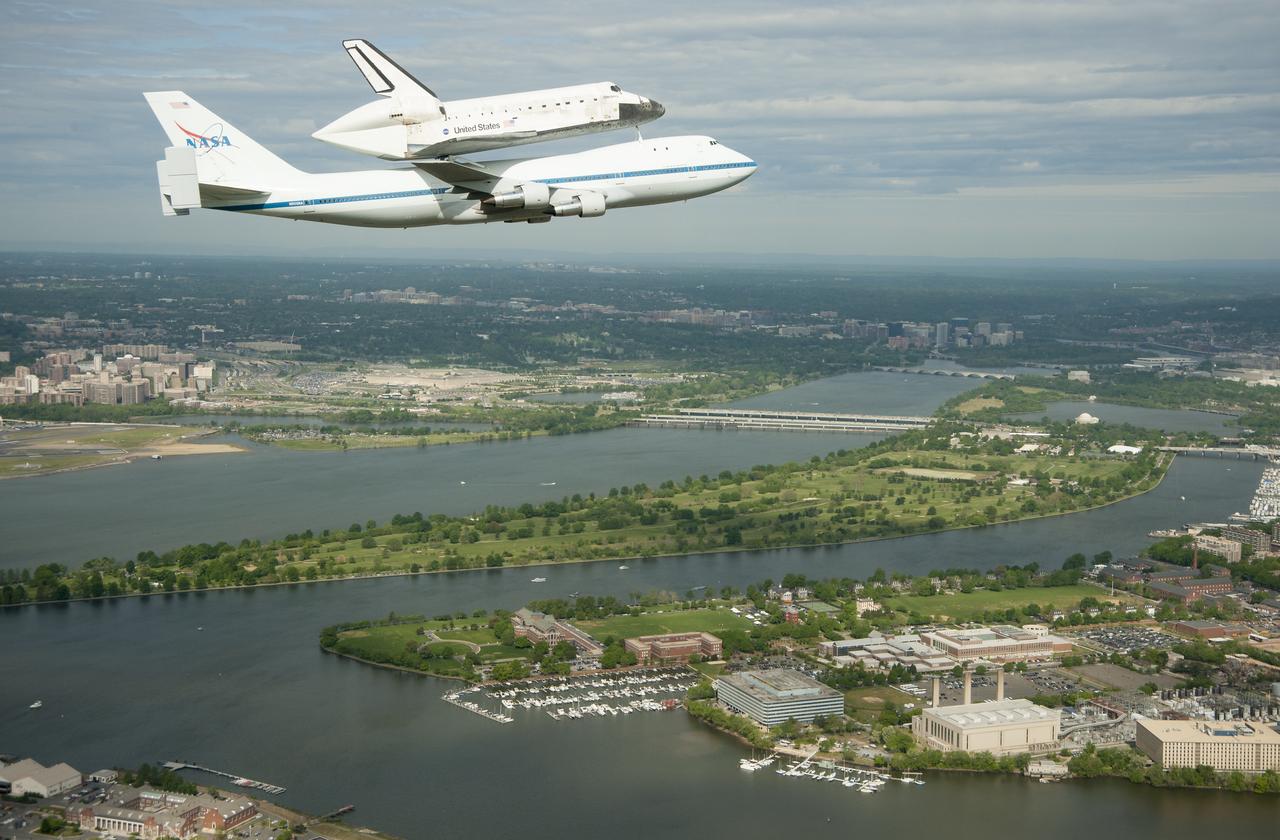
Space shuttle Discovery, mounted atop a NASA 747 Shuttle Carrier Aircraft (SCA), flies over the Washington skyline as seen from a NASA T-38 aircraft, Tuesday, April 17, 2012. Discovery, the first orbiter retired from NASA’s shuttle fleet, completed 39 missions, spent 365 days in space, orbited the Earth 5,830 times, and traveled 148,221,675 miles. NASA will transfer Discovery to the National Air and Space Museum to begin its new mission to commemorate past achievements in space and to educate and inspire future generations of explorers. Photo Credit: (NASA/Robert Markowitz)