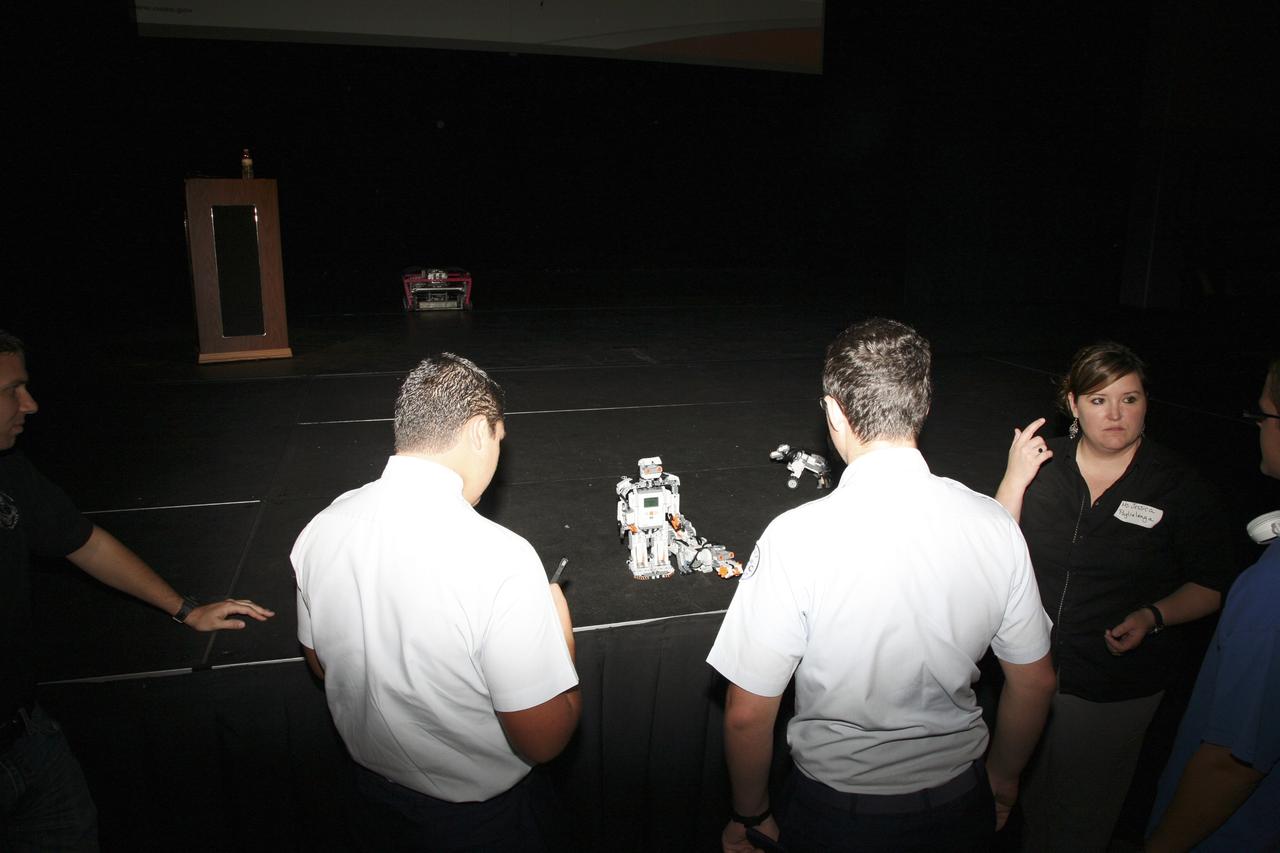
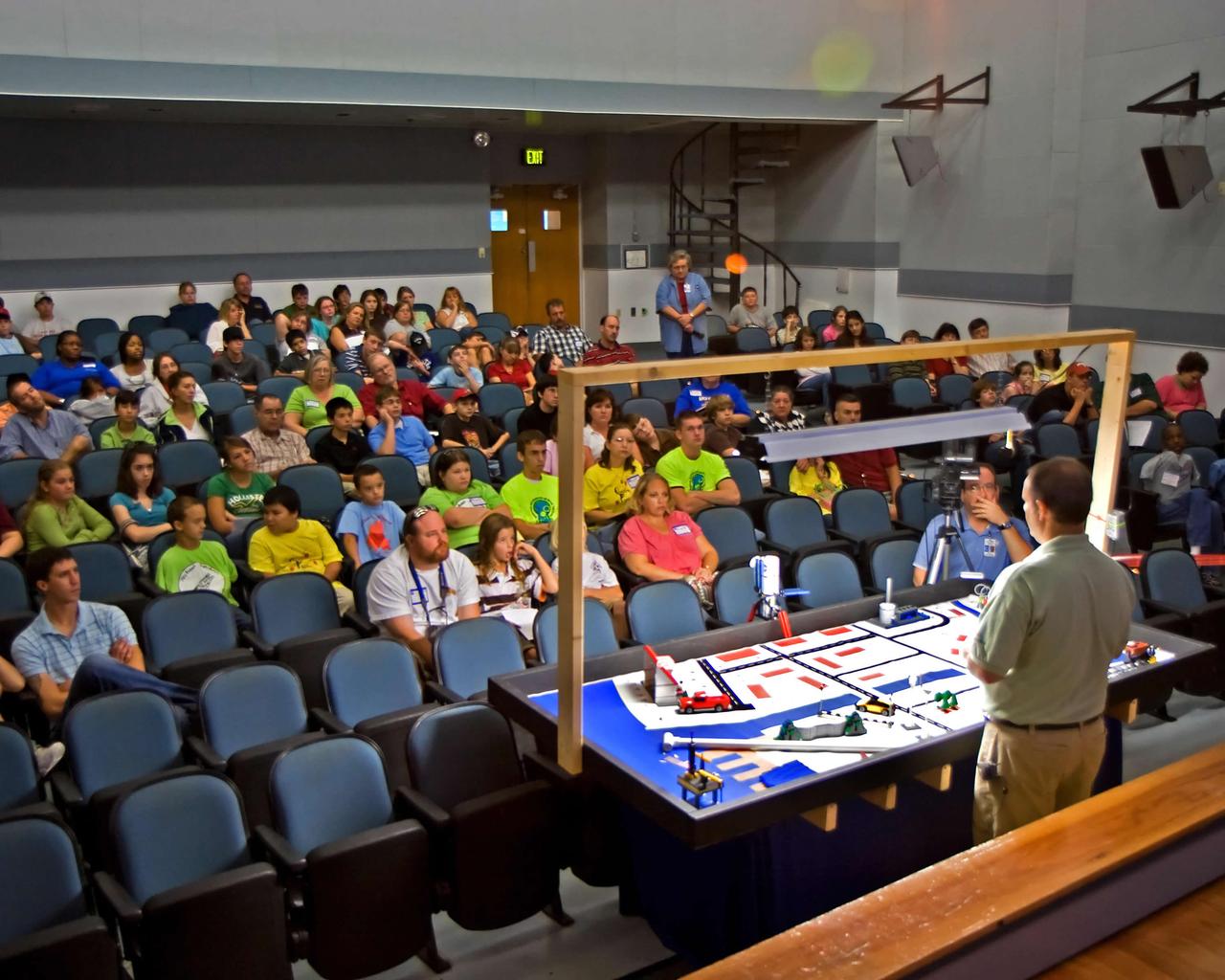
CAPE CANAVERAL, Fla. -- Pre-calculus, engineering, and physics students at Timber Creek High School in Orlando, Fla., had the opportunity to view a FIRST robotics robot demonstration during an education outreach event on Nov. 16 in the school’s Performing Arts Center. Students, heard from NASA Kennedy Space Center Deputy Director Janet Petro about work being done at the center, and learned about Kennedy’s Educate to Innovate (KETI) LEGO Mindstorm activities. Photo credit: NASA/Gianni Woods
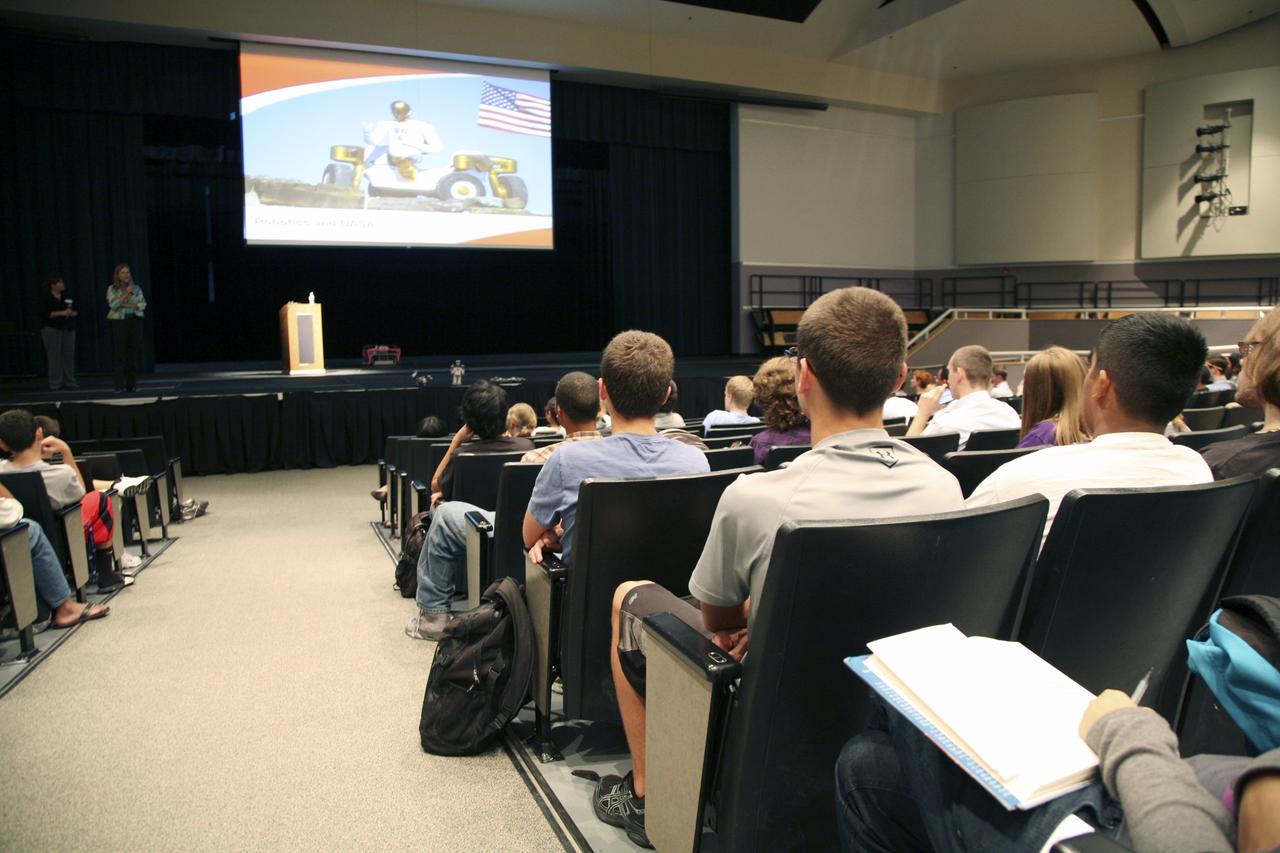
CAPE CANAVERAL, Fla. -- -- Pre-calculus, engineering, and physics students at Timber Creek High School in Orlando, Fla., listen to NASA Kennedy Space Center Deputy Director Janet Petro speak on work being done at the center during an education outreach event on Nov. 16 in the school’s Performing Arts Center. Students also had the opportunity to view a FIRST Robotics robot in action and learn about Kennedy’s Educate to Innovate (KETI) LEGO Mindstorm activities. Photo credit: NASA/Gianni Woods
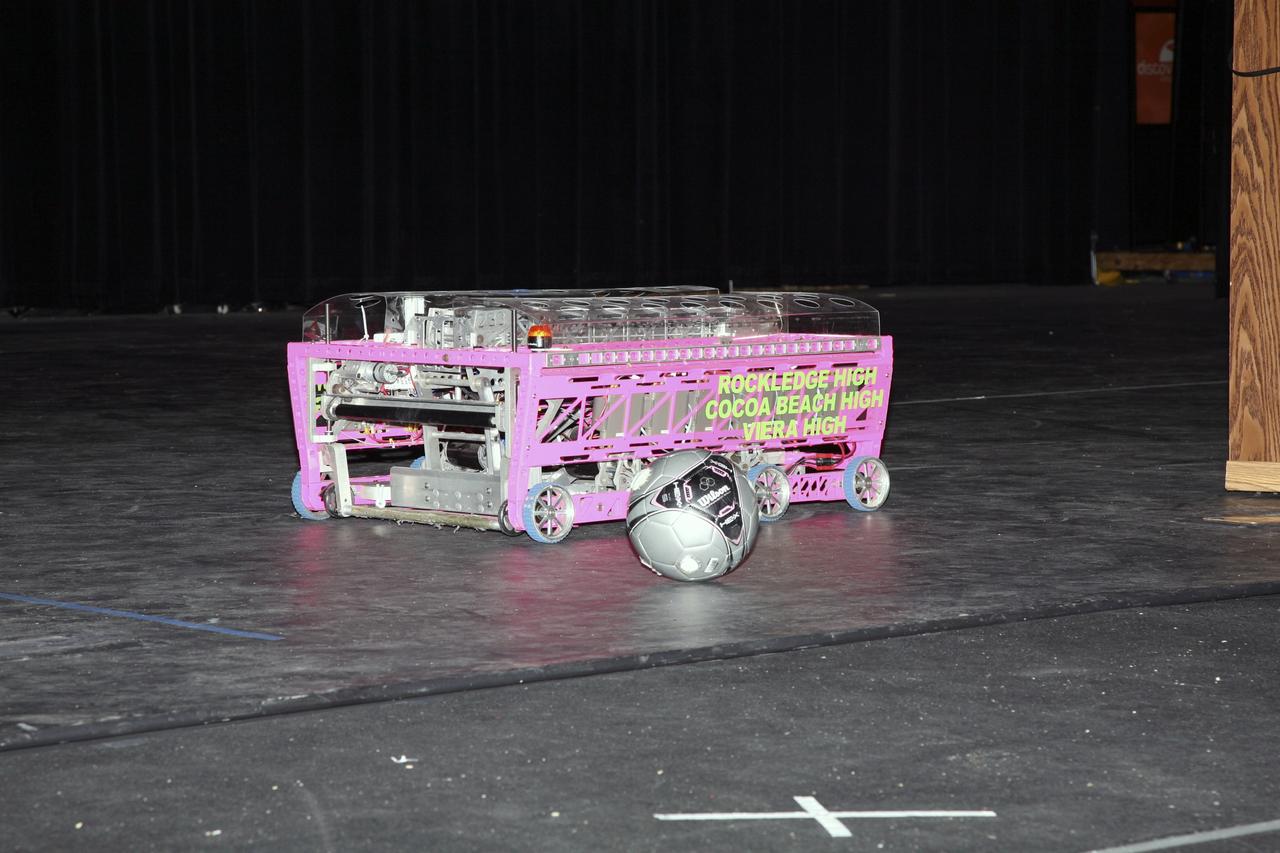
CAPE CANAVERAL, Fla. -- -- Pre-calculus, engineering, and physics students at Timber Creek High School in Orlando, Fla., had the opportunity to view a FIRST robotics robot demonstration during an education outreach event on Nov. 16 in the school’s Performing Arts Center. Students, heard from NASA Kennedy Space Center Deputy Director Janet Petro about work being done at the center, and also learned about Kennedy’s Educate to Innovate (KETI) LEGO Mindstorm activities. Photo credit: NASA/Gianni Woods
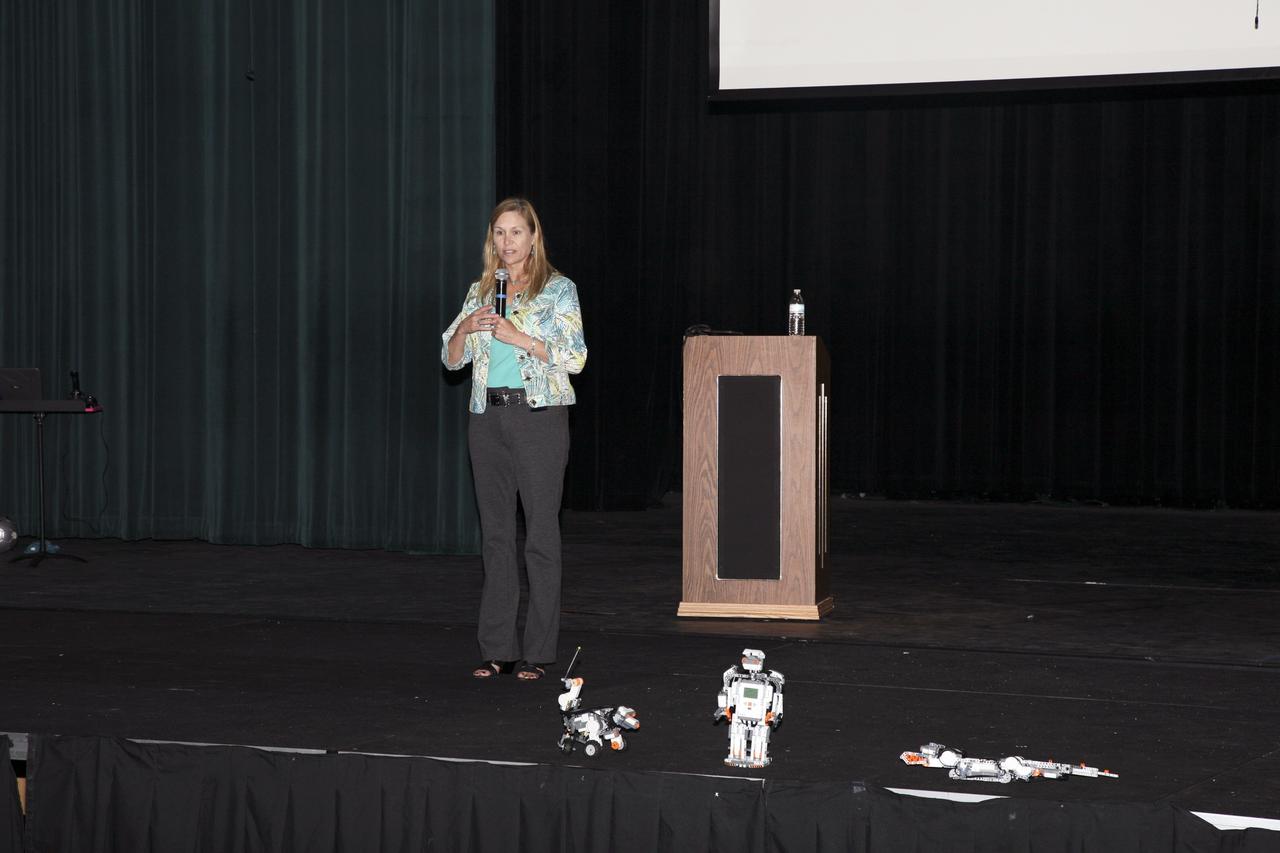
CAPE CANAVERAL, Fla. -- -- NASA Kennedy Space Center Deputy Director Janet Petro addresses pre-calculus, engineering and physics students at Timber Creek High School, in Orlando, Fla., on work being done at the center during an education outreach event on Nov. 16. Students also had the opportunity to view a FIRST Robotics robot in action, and learn about Kennedy’s Educate to Innovate (KETI) LEGO Mindstorm activities in the school’s Performing Arts Center. Photo credit: NASA/Gianni Woods
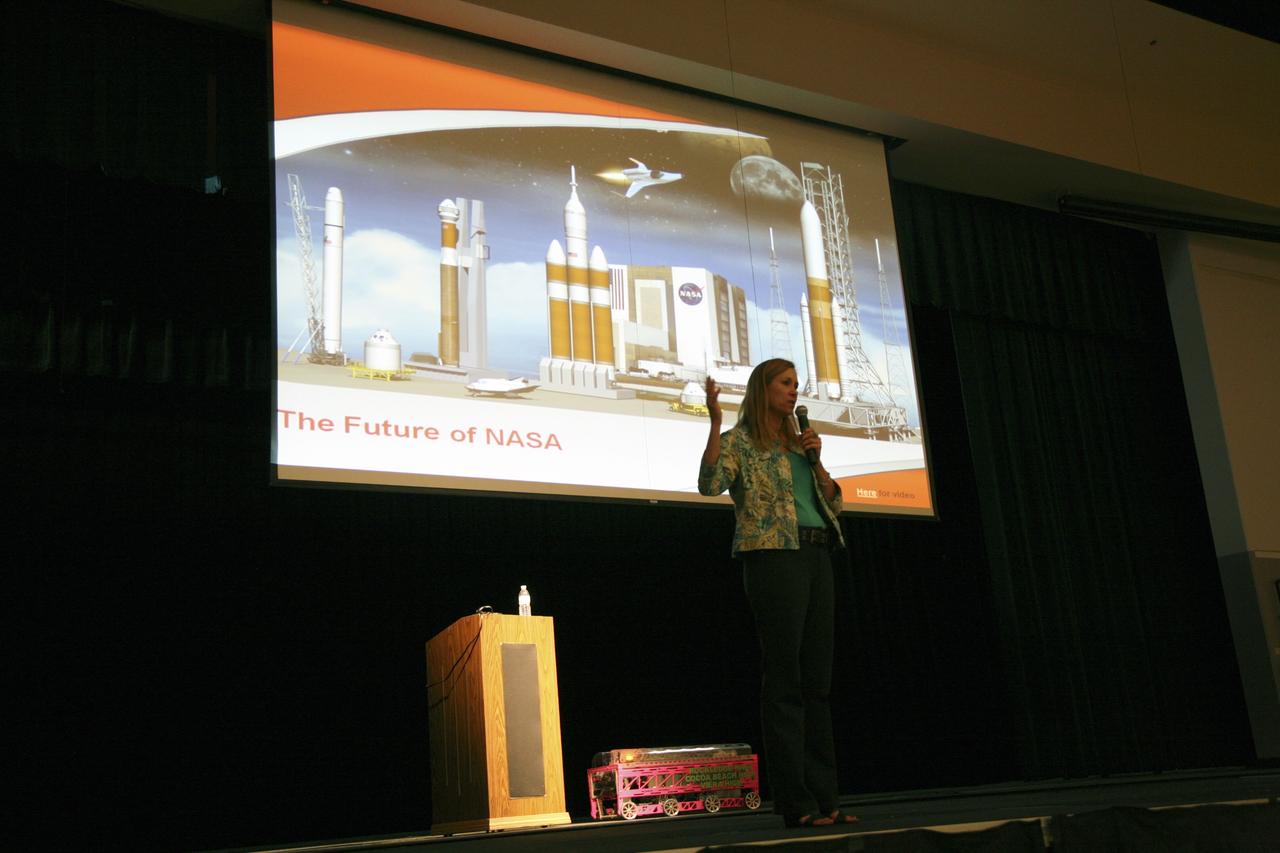
CAPE CANAVERAL, Fla. -- -- NASA Kennedy Space Center Deputy Director Janet Petro addresses pre-calculus, engineering, and physics students at Timber Creek High School in Orlando, Fla., on the future of the center during an education outreach event on Nov. 16 in the school’s Performing Arts Center. Students also had the opportunity to view FIRST Robotics robot in action and learned about Kennedy’s Educate to Innovate (KETI) LEGO Mindstorm activities. Photo credit: NASA/Gianni Woods
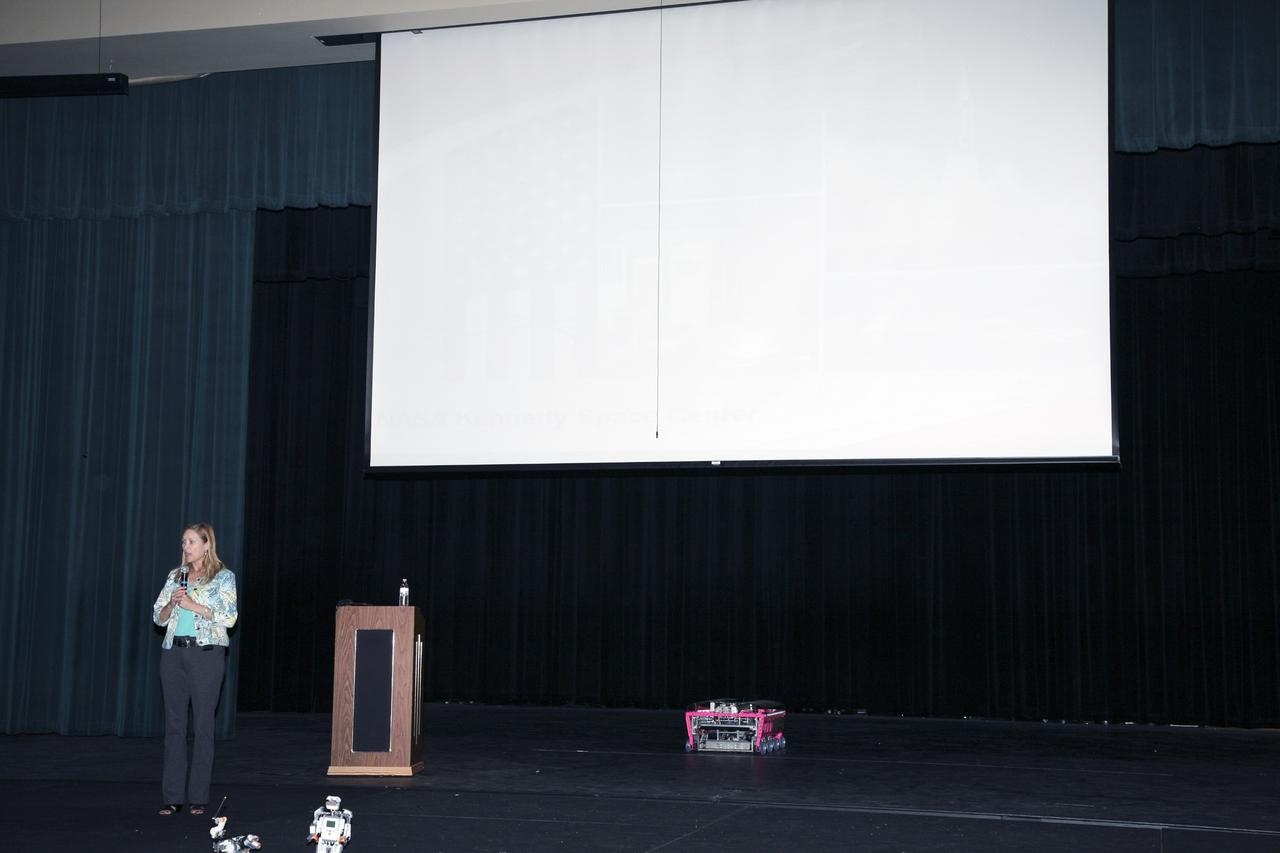
CAPE CANAVERAL, Fla. -- -- NASA Kennedy Space Center Deputy Director Janet Petro addresses pre-calculus, engineering and physics students at Timber Creek High School, in Orlando, Fla., on work being done at the center during an education outreach event on Nov. 16. Students also had the opportunity to view a FIRST Robotics robot in action, and learn about Kennedy’s Educate to Innovate (KETI) LEGO Mindstorm activities in the school’s Performing Arts Center. Photo credit: NASA/Gianni Woods
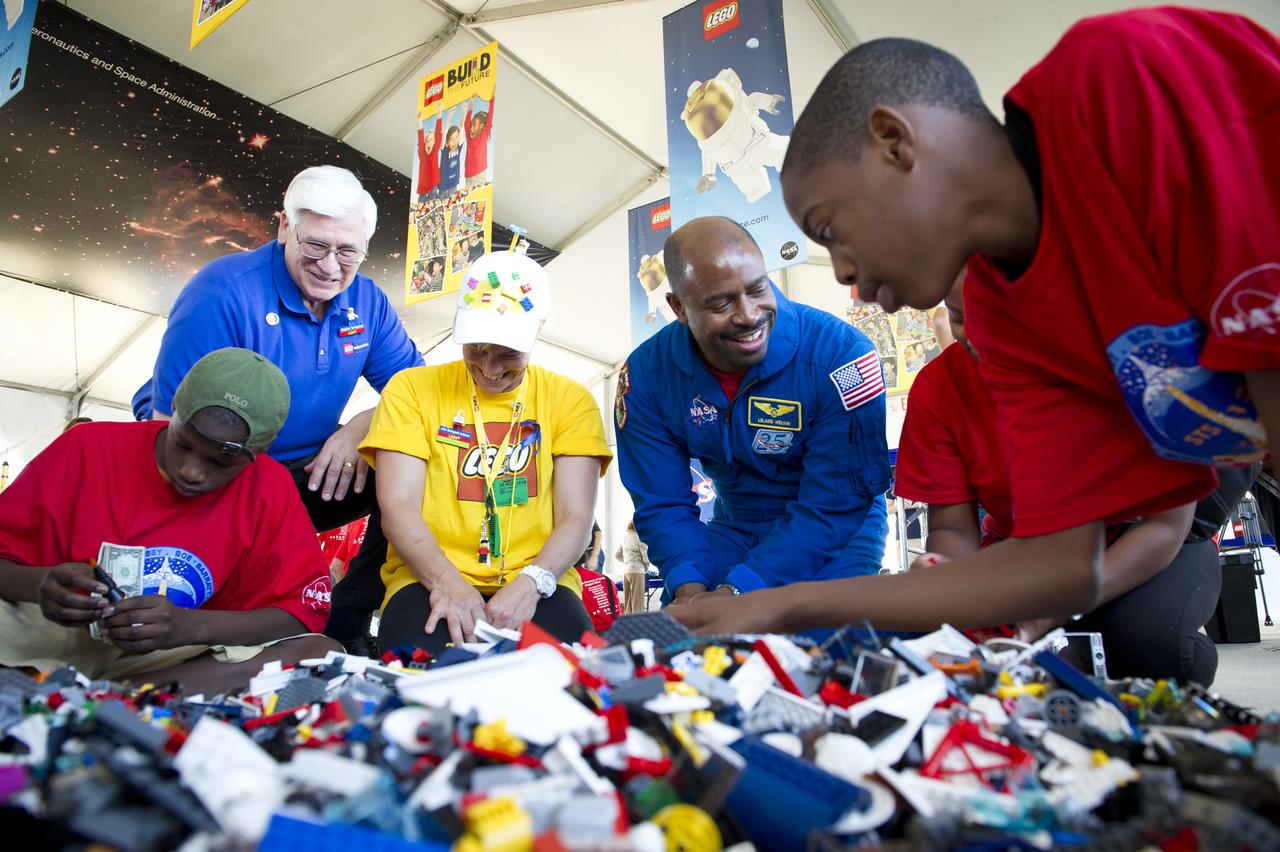
President of LEGO Education USA Stephan Turnipseed, back left, and Associate Administrator for Education and Astronaut Leland Melvin, 2nd from right, talk with a student during the “Build the Future” activity where students created their vision of the future in space with LEGO bricks and elements inside a tent that was set up on the launch viewing area at NASA's Kennedy Space Center in Cape Canaveral, Fla. on Monday, Nov. 1, 2010. NASA and The LEGO Group signed a Space Act Agreement to spark children's interest in science, technology, engineering and math (STEM). Photo Credit: (NASA/Bill Ingalls)
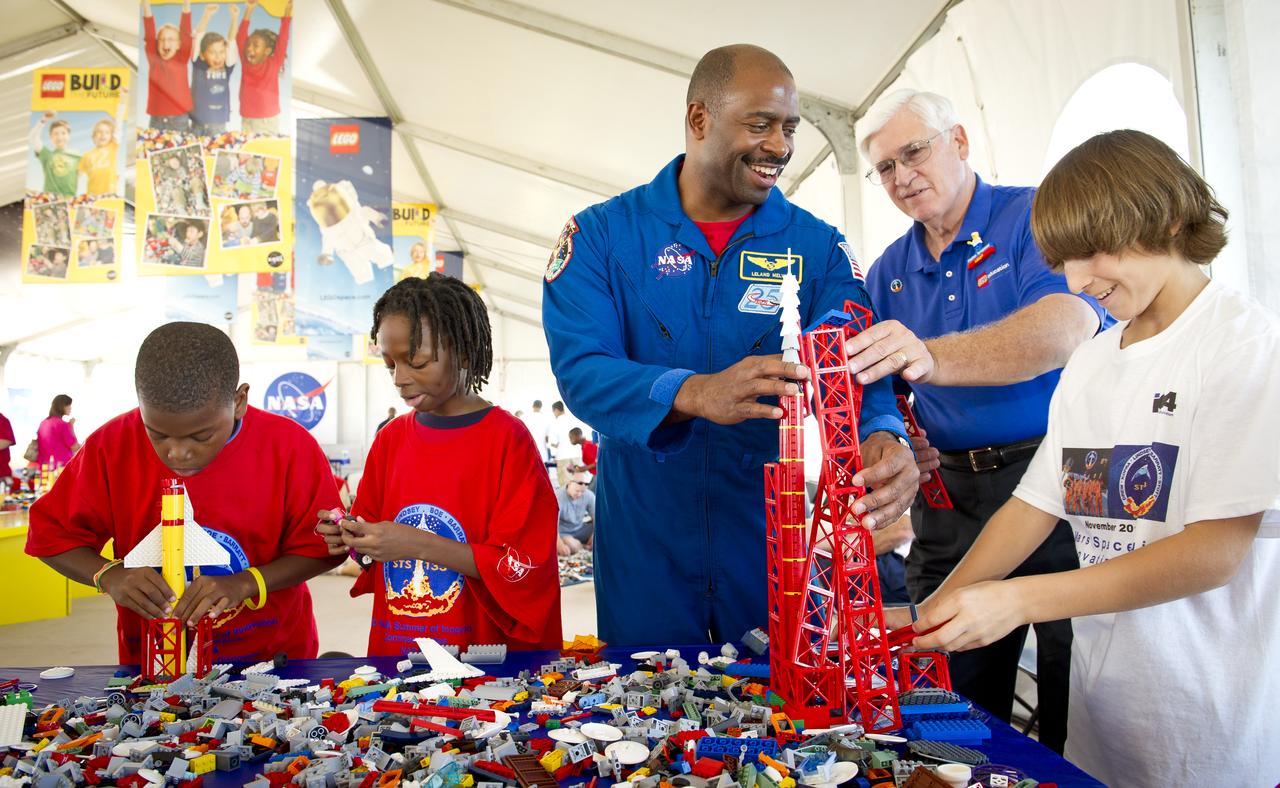
Associate Administrator for Education and Astronaut Leland Melvin, left, and President of LEGO Education USA Stephan Turnipseed, right, help students during the “Build the Future” activity where students created their vision of the future in space with LEGO bricks and elements inside a tent that was set up on the launch viewing area at NASA's Kennedy Space Center in Cape Canaveral, Fla. on Monday, Nov. 1, 2010. NASA and The LEGO Group signed a Space Act Agreement to spark children's interest in science, technology, engineering and math (STEM). Photo Credit: (NASA/Bill Ingalls)
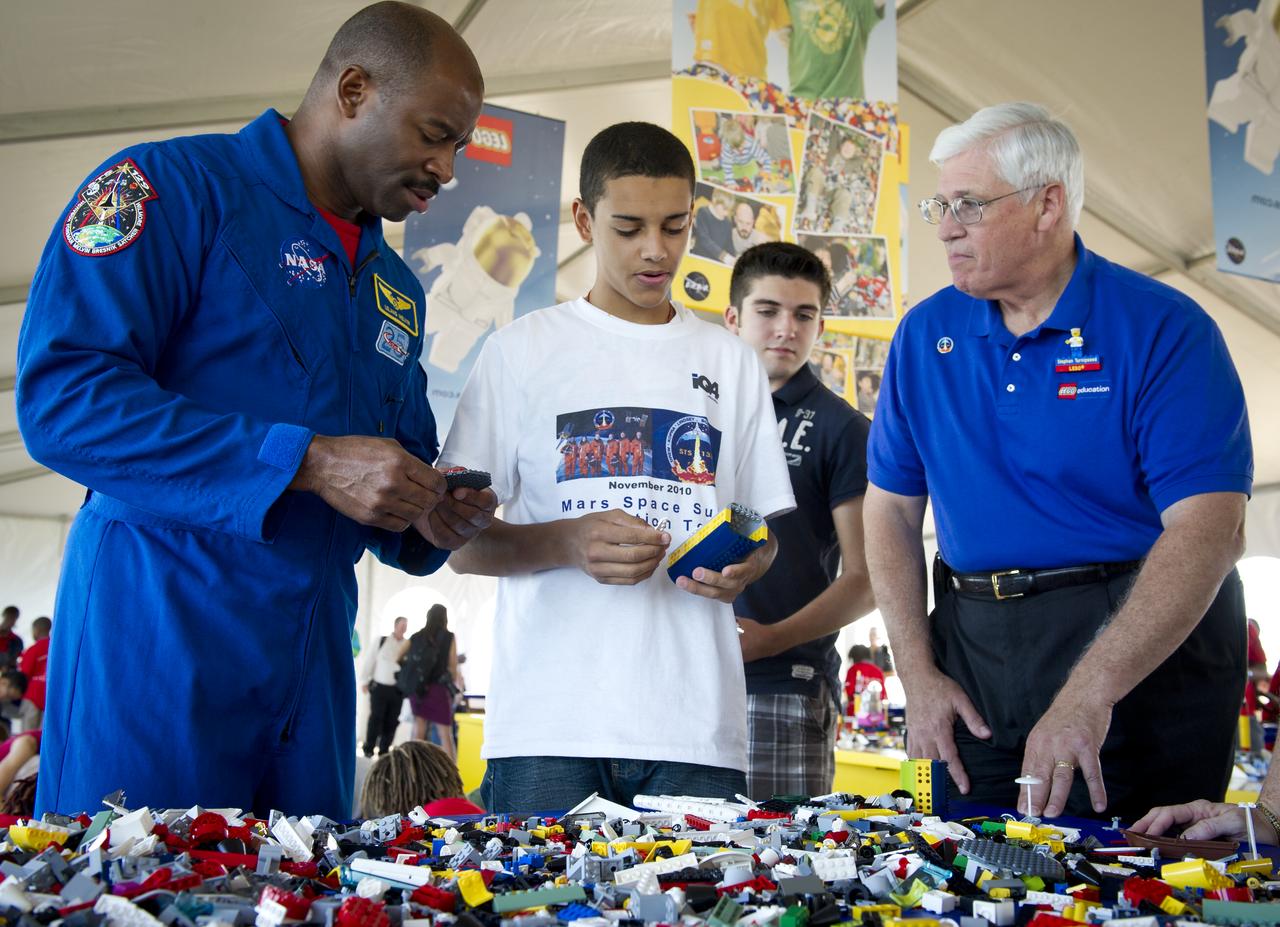
Associate Administrator for Education and Astronaut Leland Melvin, left, and President of LEGO Education USA Stephan Turnipseed, right, talk with a student during the “Build the Future” activity where students created their vision of the future in space with LEGO bricks and elements inside a tent that was set up on the launch viewing area at NASA's Kennedy Space Center in Cape Canaveral, Fla. on Monday, Nov. 1, 2010. NASA and The LEGO Group signed a Space Act Agreement to spark children's interest in science, technology, engineering and math (STEM). Photo Credit: (NASA/Bill Ingalls)
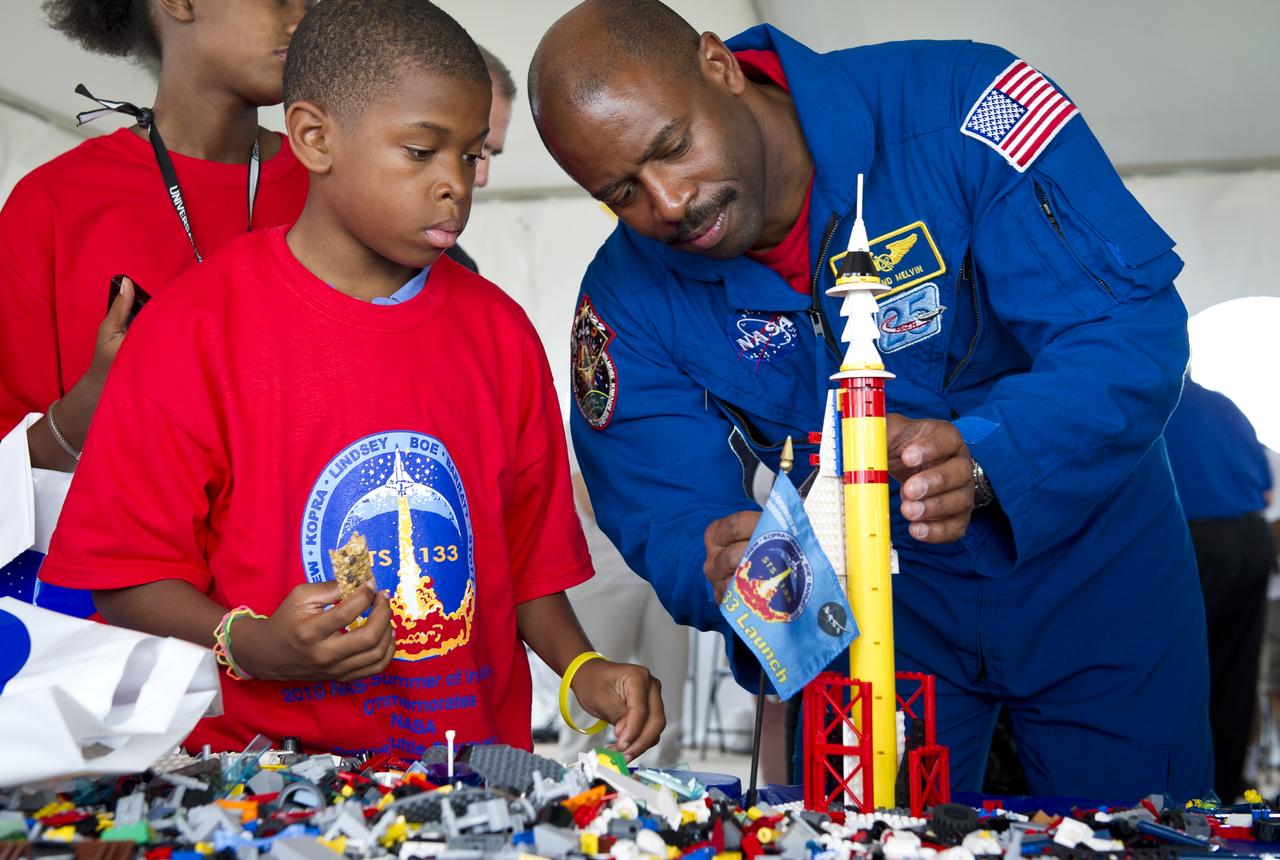
Associate Administrator for Education and Astronaut Leland Melvin talks with school children during the “Build the Future” activity where students created their vision of the future in space with LEGO bricks and elements inside a tent that was set up on the launch viewing area at NASA's Kennedy Space Center in Cape Canaveral, Fla. on Monday, Nov. 1, 2010. NASA and The LEGO Group signed a Space Act Agreement to spark children's interest in science, technology, engineering and math (STEM). Photo Credit: (NASA/Bill Ingalls)
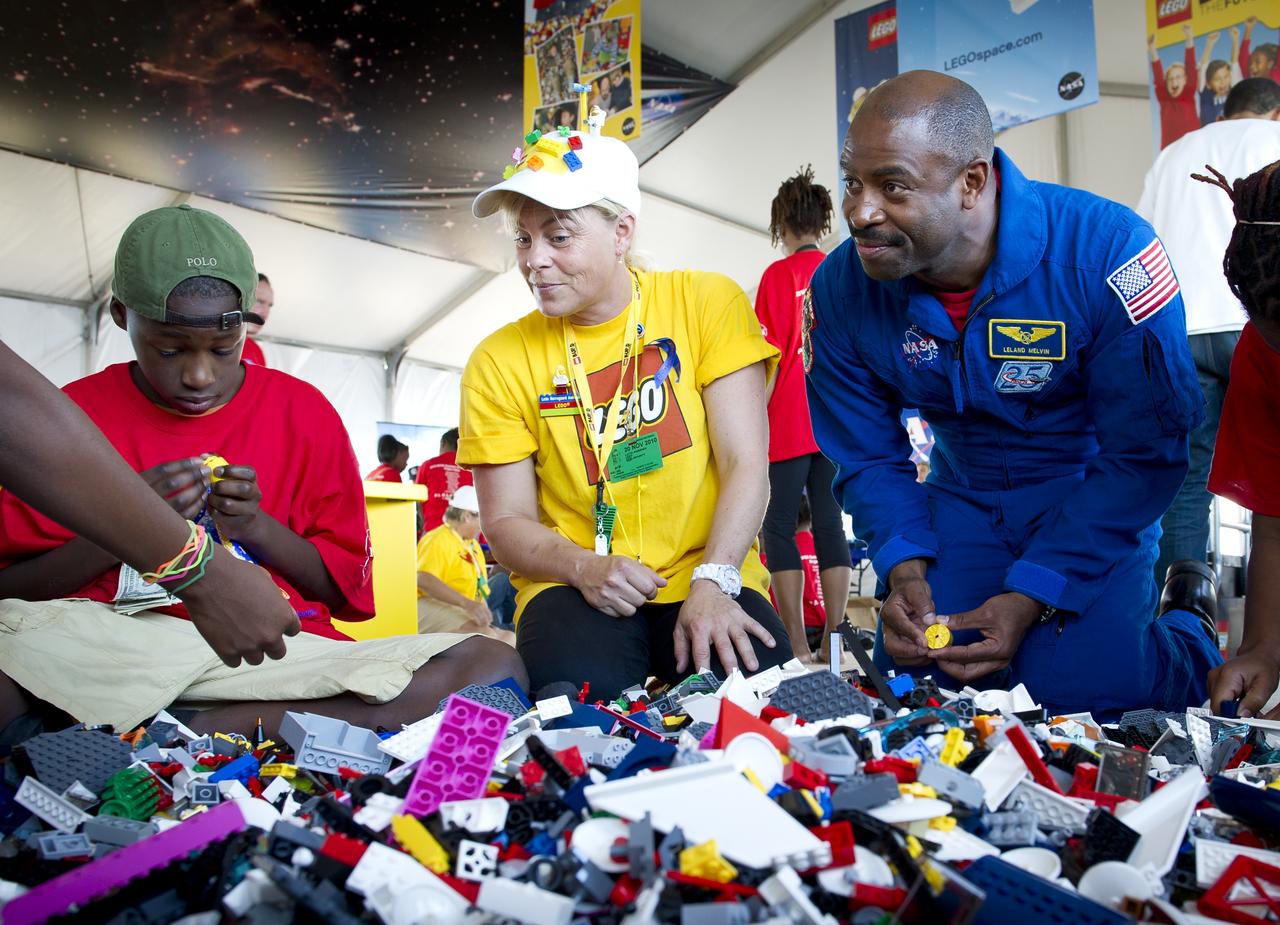
Associate Administrator for Education and Astronaut Leland Melvin talks with school children during the “Build the Future” activity where students created their vision of the future in space with LEGO bricks and elements inside a tent that was set up on the launch viewing area at NASA's Kennedy Space Center in Cape Canaveral, Fla. on Monday, Nov. 1, 2010. NASA and The LEGO Group signed a Space Act Agreement to spark children's interest in science, technology, engineering and math (STEM). Photo Credit: (NASA/Bill Ingalls)
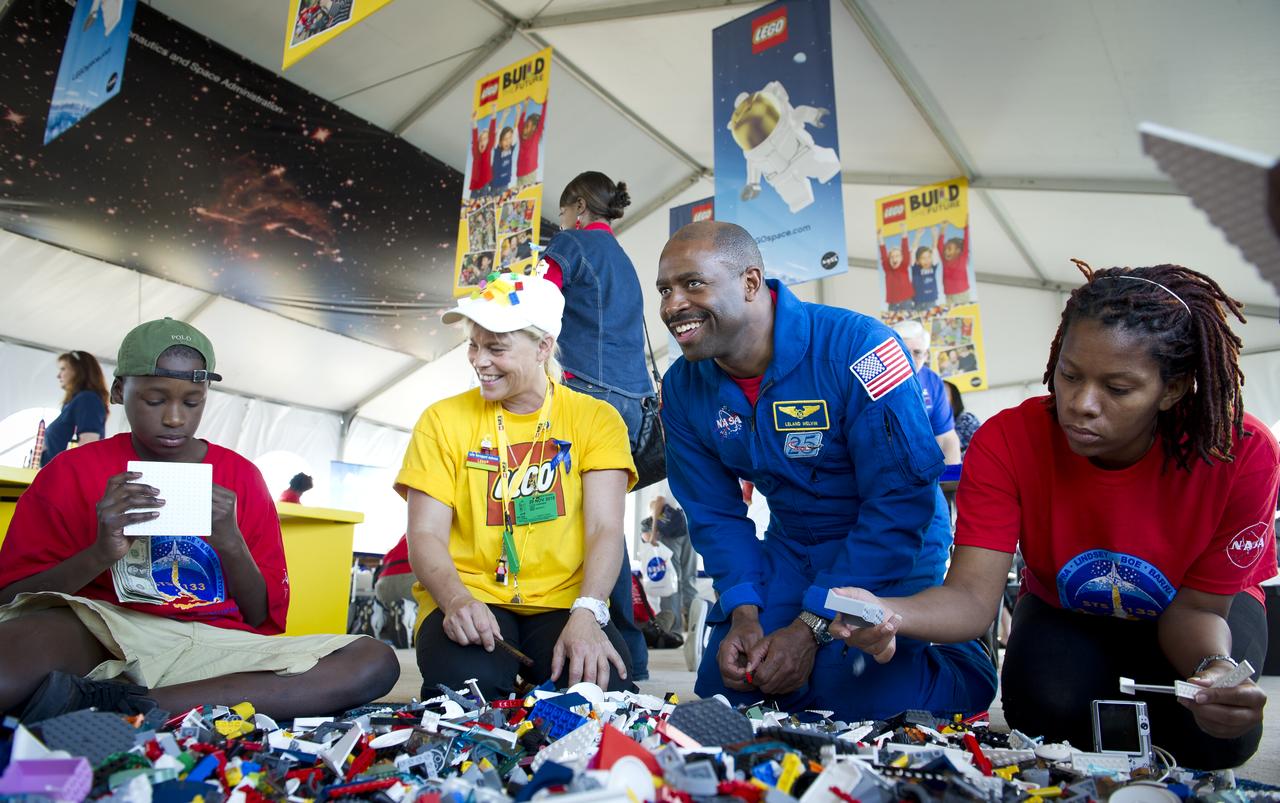
Associate Administrator for Education and Astronaut Leland Melvin, 3rd from left, talks with school children during the “Build the Future” activity where students created their vision of the future in space with LEGO bricks and elements inside a tent that was set up on the launch viewing area at NASA's Kennedy Space Center in Cape Canaveral, Fla. on Monday, Nov. 1, 2010. NASA and The LEGO Group signed a Space Act Agreement to spark children's interest in science, technology, engineering and math (STEM). Photo Credit: (NASA/Bill Ingalls)
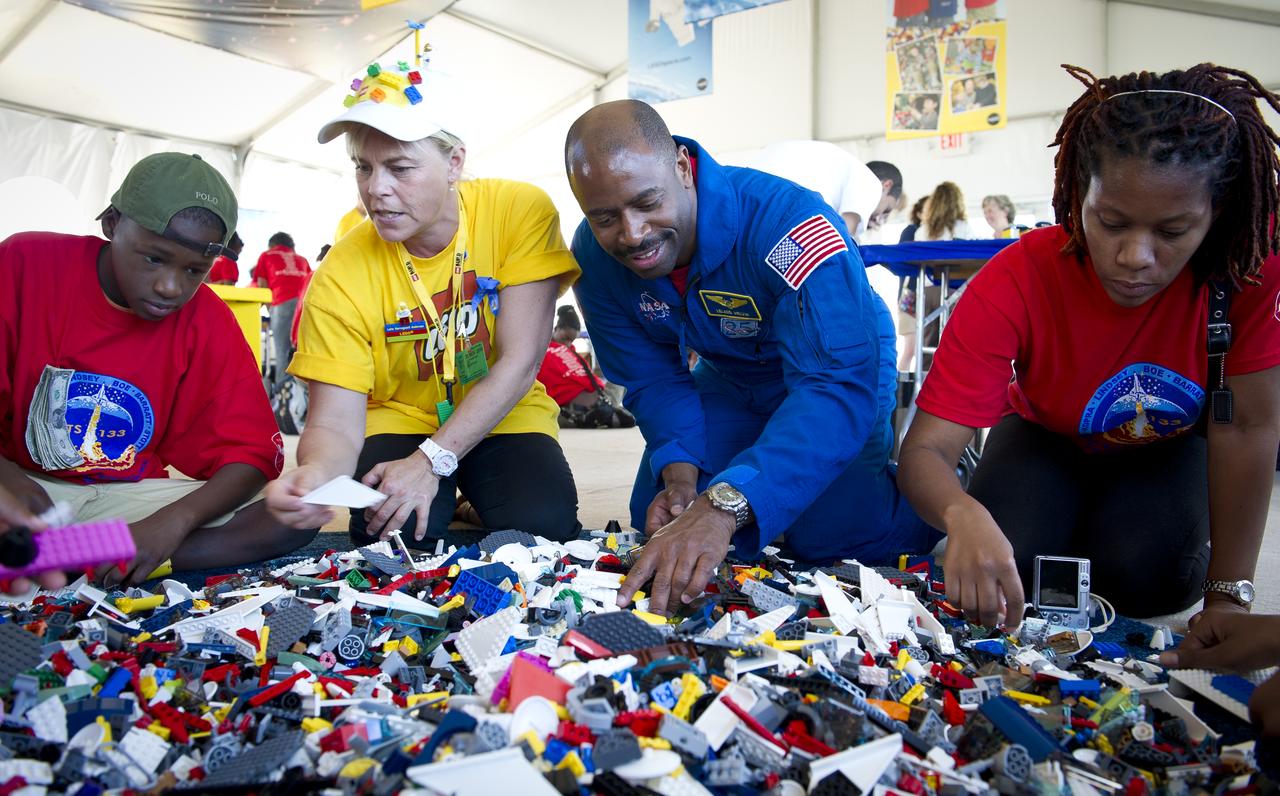
Associate Administrator for Education and Astronaut Leland Melvin, 3rd from left, talks with school children during the “Build the Future” activity where students created their vision of the future in space with LEGO bricks and elements inside a tent that was set up on the launch viewing area at NASA's Kennedy Space Center in Cape Canaveral, Fla. on Monday, Nov. 1, 2010. NASA and The LEGO Group signed a Space Act Agreement to spark children's interest in science, technology, engineering and math (STEM). Photo Credit: (NASA/Bill Ingalls)
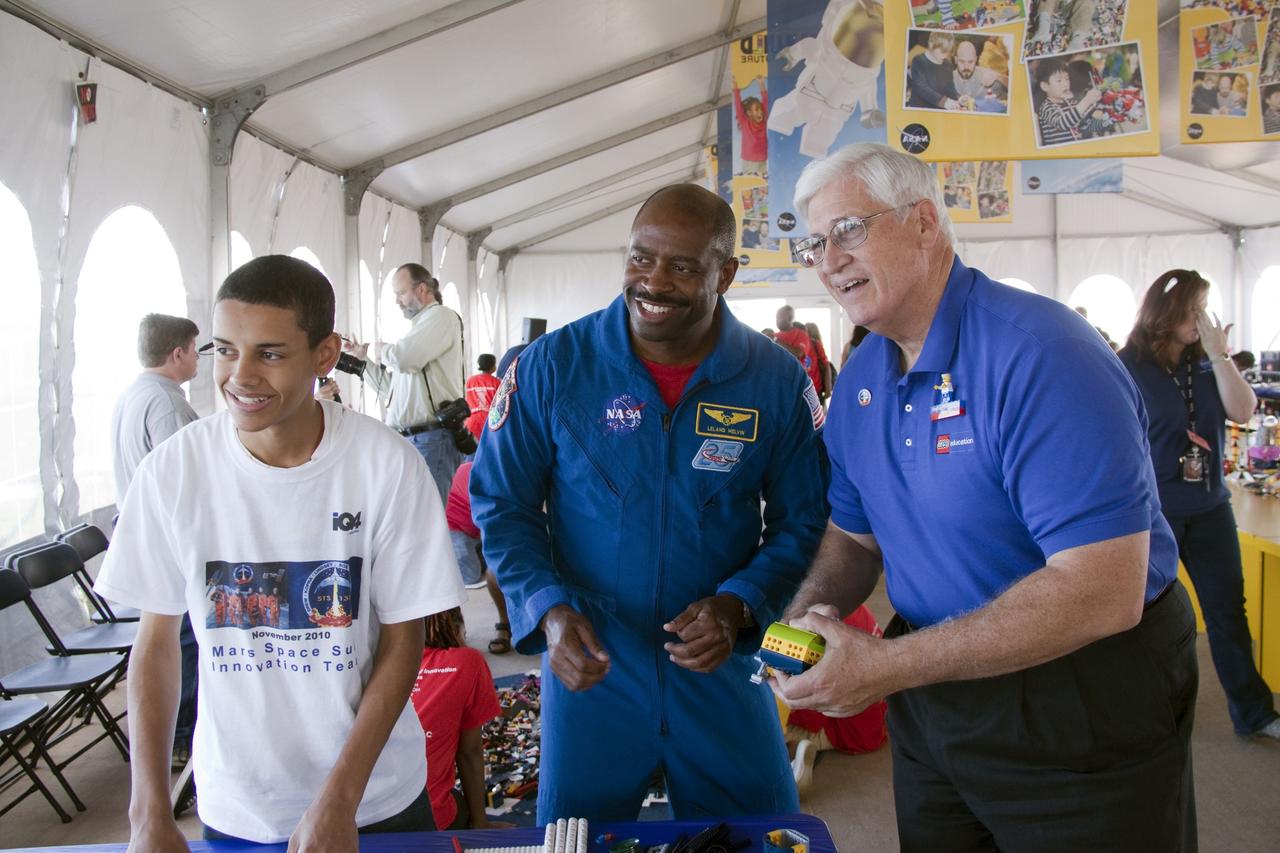
CAPE CANAVERAL, Fla. -- On the NASA Causeway at Kennedy Space Center in Florida, Leland Melvin, NASA's associate administrator for Education, center, and Stephan Turnipseed, president of LEGO Education North America, right, help a student build LEGO space vehicles inside a 40- by 70-foot activity tent. There, children of all ages are building their vision of the future with LEGO bricks, marking the beginning of a three-year Space Act Agreement meant to spark the interest of children in science, technology, engineering and mathematics (STEM). To commemorate the partnership, two small LEGO space shuttles will launch aboard space shuttle Discovery's STS-133 mission to the International Space Station and the company will release four NASA-inspired products in its LEGO CITY line next year. LEGO sets also will fly to the space station aboard Endeavour's STS-134 mission, and will be put together on orbit to demonstrate the challenges faced while building things in microgravity. Photo credit: NASA/Jack Pfaller
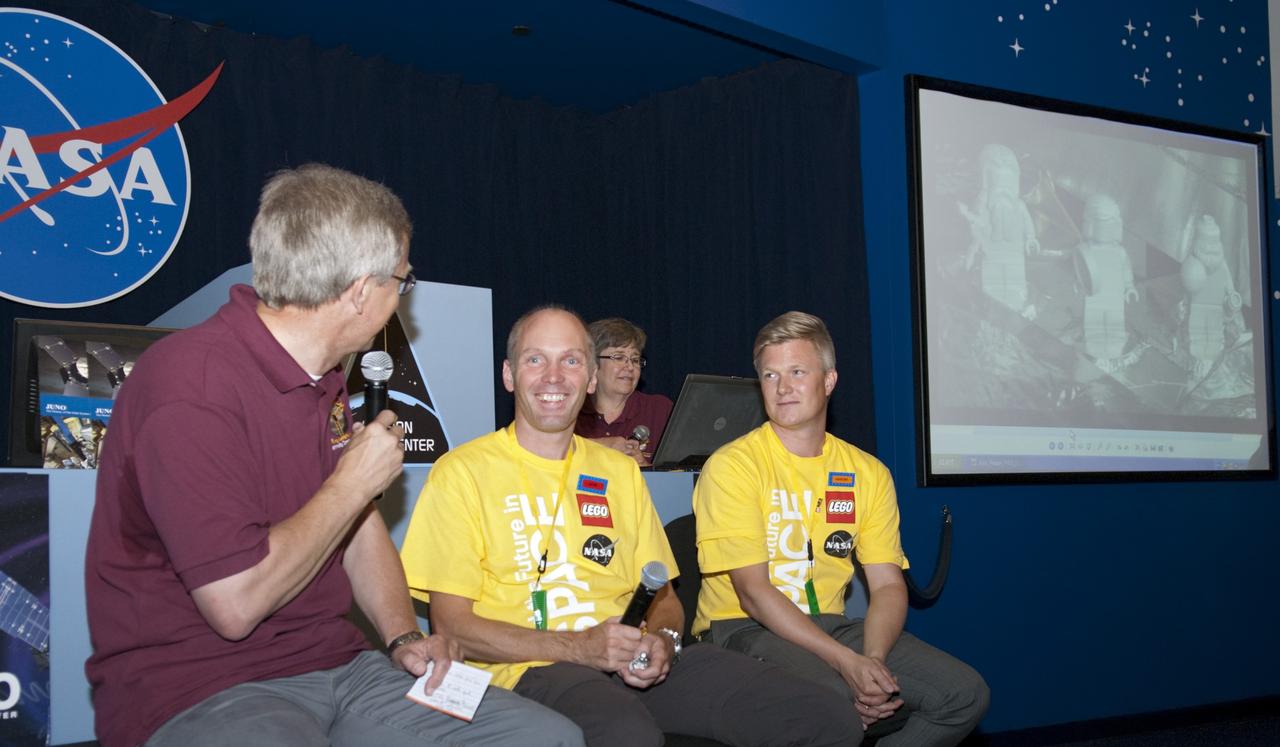
CAPE CANAVERAL, Fla. -- From left, Dr. Steve Lee, with the Denver Museum of Nature and Science; Ulrik Solberg Lund, a LEGO minifigure designer; and Karsten Juel Bunch, a LEGO City senior designer, participate in an educational webcast in the Mission Status Center at the Kennedy Space Center Visitor Complex in Florida. On hand to ask questions of the guests were students, teachers, and mentors of the Goldstone Apple Valley Radio Telescope (GAVRT) project who were invited to Kennedy to watch the launch of NASA's Juno spacecraft atop a United Launch Alliance Atlas V rocket. GAVRT is a partnership between NASA, the Jet Propulsion Laboratory (JPL), and The Lewis Center for Educational Research (LCER) in Apple Valley, Calif. It allows students to control a 34-meter radio telescope that, until recently, was part of NASA’s Deep Space Network, and to interact with scientists outside the classroom setting. Photo credit: NASA/Glenn Benson

CAPE CANAVERAL, Fla. -- From left, Dr. Steve Lee, with the Denver Museum of Nature and Science; Ulrik Solberg Lund, a LEGO minifigure designer; and Karsten Juel Bunch, a LEGO City senior designer, participate in an educational webcast in the Mission Status Center at the Kennedy Space Center Visitor Complex in Florida. On hand to ask questions of the guests were students, teachers, and mentors of the Goldstone Apple Valley Radio Telescope (GAVRT) project who were invited to Kennedy to watch the launch of NASA's Juno spacecraft atop a United Launch Alliance Atlas V rocket. GAVRT is a partnership between NASA, the Jet Propulsion Laboratory (JPL), and The Lewis Center for Educational Research (LCER) in Apple Valley, Calif. It allows students to control a 34-meter radio telescope that, until recently, was part of NASA’s Deep Space Network, and to interact with scientists outside the classroom setting. Photo credit: NASA/Glenn Benson
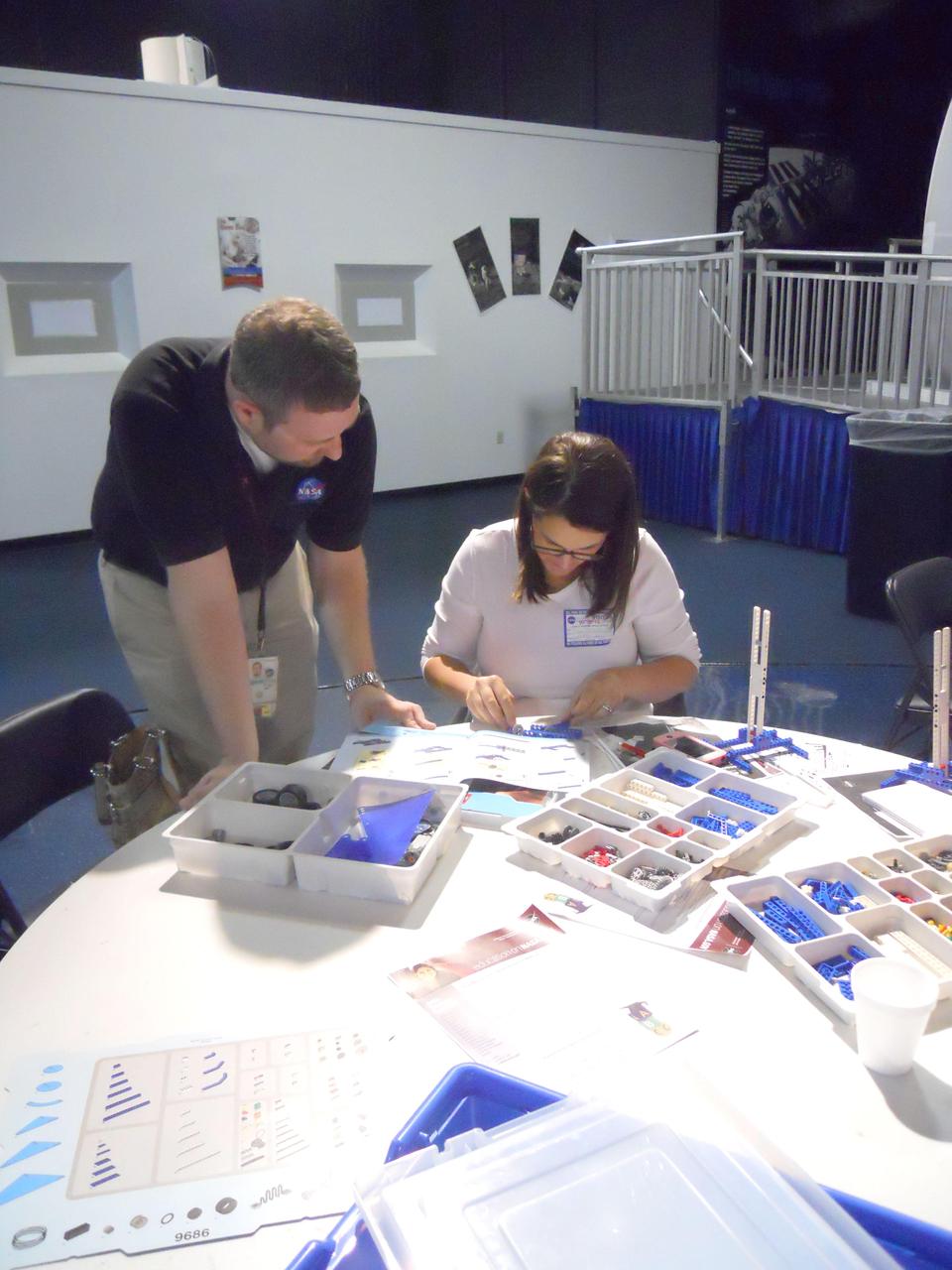
John C. Stennis Space Center educators and area teachers partnered together during a professional development workshop Oct. 20 to learn about the LEGO Bricks in Space curriculum issued by NASA. The curriculum is designed to encourage students in areas of science, technology, engineering and mathematics. The Stennis Space Center Educator Resource Center hosted the workshop to equip teachers of grades 3-12.
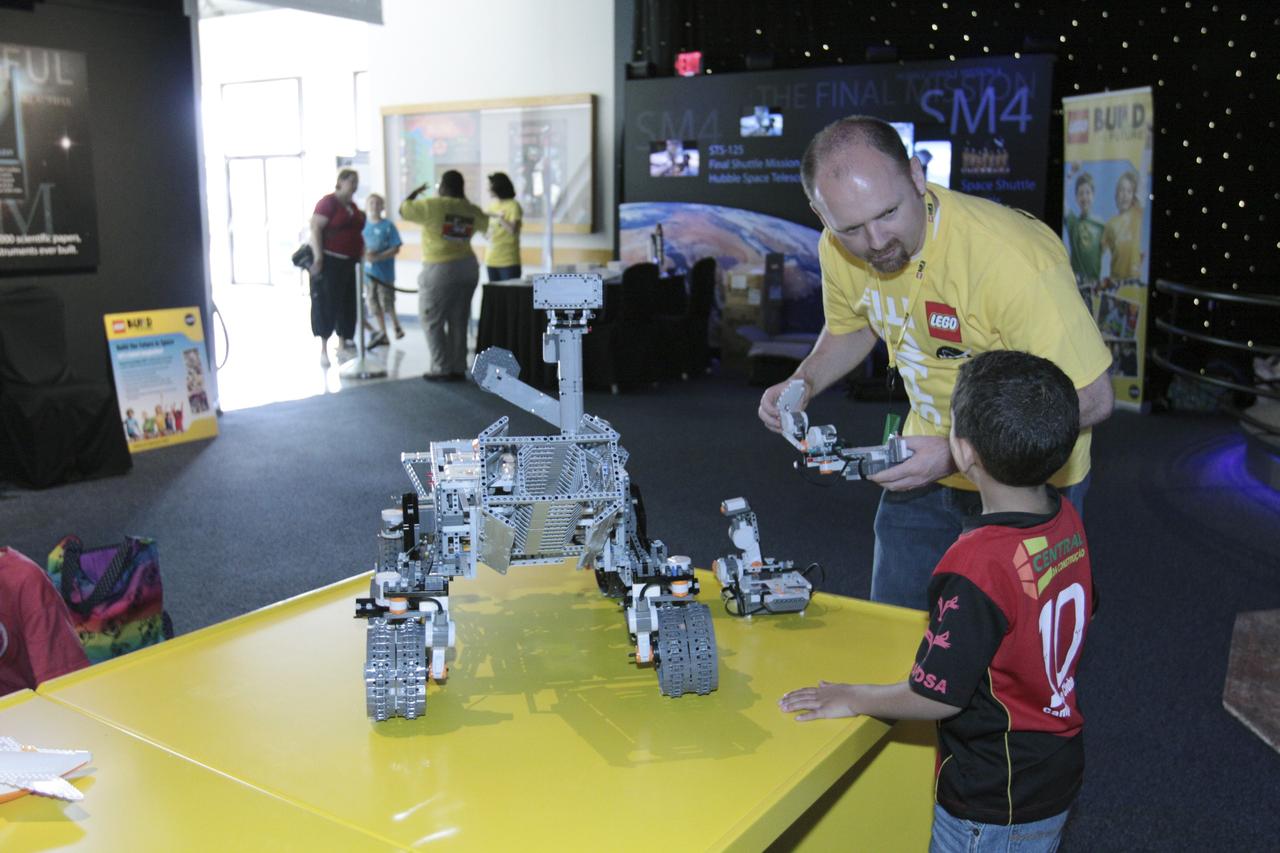
CAPE CANAVERAL, Fla. – LEGO NXT robots, designed to look like Mars rovers, are on display at the LEGO "Build the Future" event at the Kennedy Space Center Visitor Complex in Florida. The festivities coincide with the launch of NASA's Mars Science Laboratory (MSL), carrying a compact car-sized rover, Curiosity, to the red planet. Part of the Space Act Agreement between NASA and LEGO A/S, the activities are designed to inspire students of every age to consider an education and careers in the science, technology, engineering and mathematics, or STEM, disciplines. Launch of MSL aboard a United Launch Alliance Atlas V rocket is scheduled for Nov. 26 from Space Launch Complex-41 on Cape Canaveral Air Force Station in Florida. For more information, visit http://www.nasa.gov/audience/foreducators/nasa-lego-partnership.html. Photo credit: NASA/Kim Shiflett
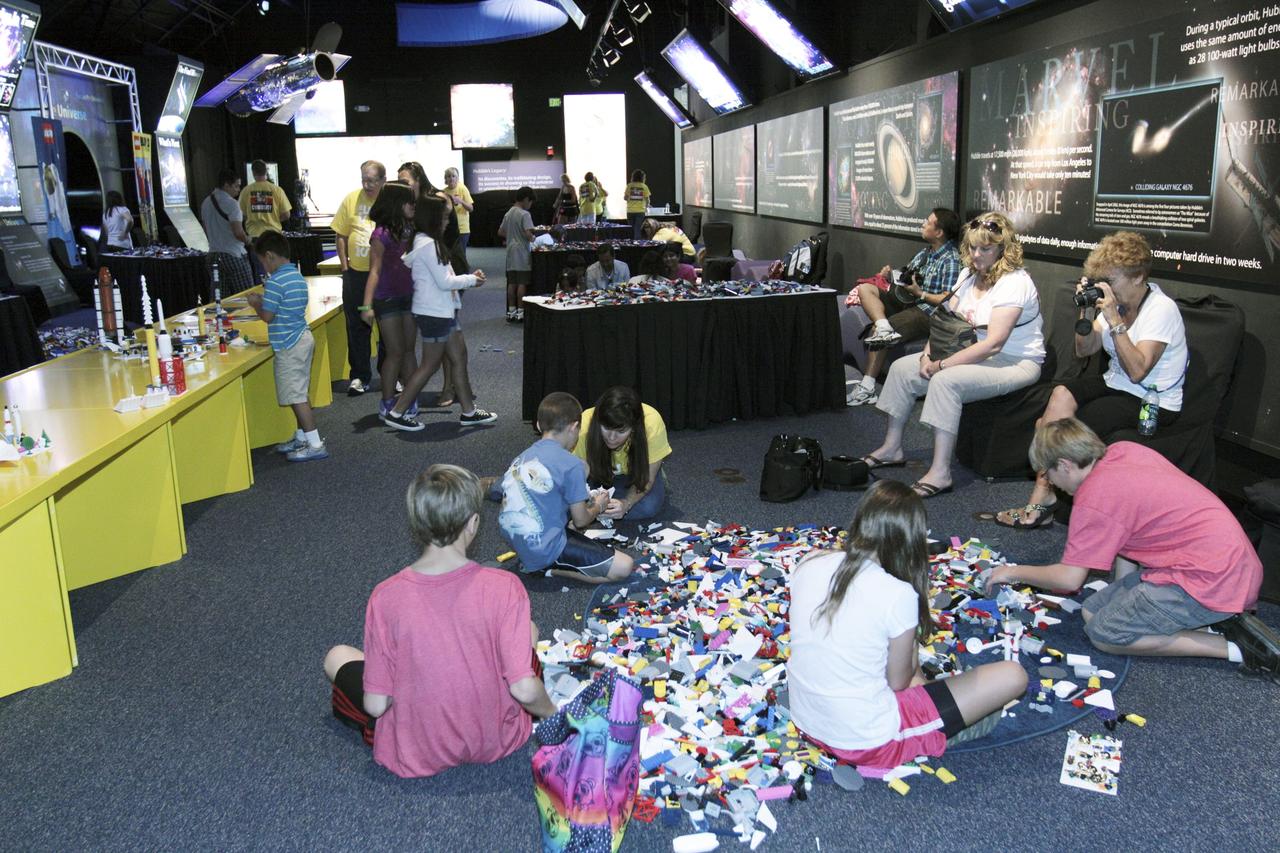
CAPE CANAVERAL, Fla. – LEGO blocks are spread out on the floor of an exhibition hall at the Kennedy Space Center Visitor Complex in Florida for easy access during the LEGO "Build the Future" event. The festivities coincide with the launch of NASA's Mars Science Laboratory (MSL), carrying a compact car-sized rover, Curiosity, to the red planet. Part of the Space Act Agreement between NASA and LEGO A/S, the activities are designed to inspire students of every age to consider an education and careers in the science, technology, engineering and mathematics, or STEM, disciplines. Launch of MSL aboard a United Launch Alliance Atlas V rocket is scheduled for Nov. 26 from Space Launch Complex-41 on Cape Canaveral Air Force Station in Florida. For more information, visit http://www.nasa.gov/audience/foreducators/nasa-lego-partnership.html. Photo credit: NASA/Kim Shiflett
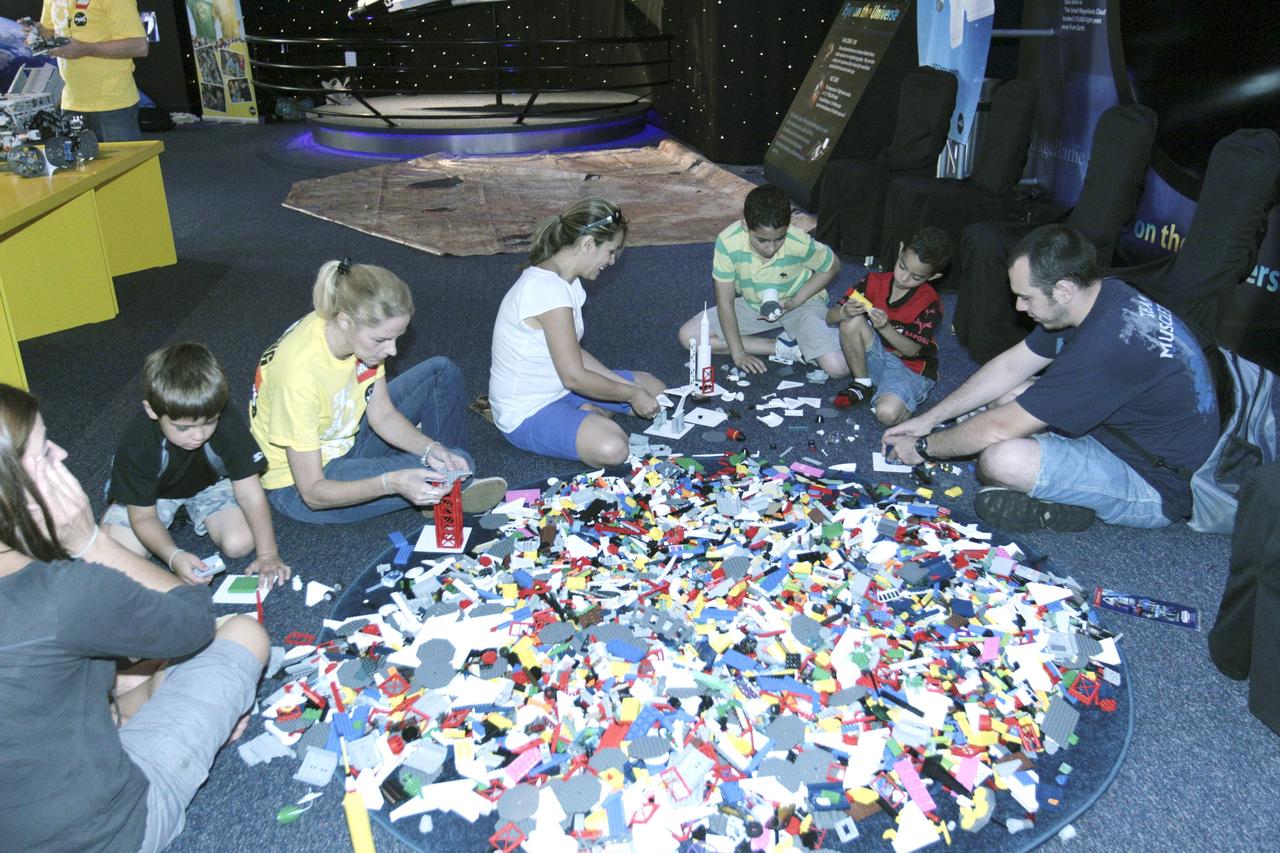
CAPE CANAVERAL, Fla. – Parents and children of all ages participate in a LEGO "Build the Future" event at the Kennedy Space Center Visitor Complex in Florida. The festivities coincide with the launch of NASA's Mars Science Laboratory (MSL), carrying a compact car-sized rover, Curiosity, to the red planet. Part of the Space Act Agreement between NASA and LEGO A/S, the activities are designed to inspire students of every age to consider an education and careers in the science, technology, engineering and mathematics, or STEM, disciplines. Launch of MSL aboard a United Launch Alliance Atlas V rocket is scheduled for Nov. 26 from Space Launch Complex-41 on Cape Canaveral Air Force Station in Florida. For more information, visit http://www.nasa.gov/audience/foreducators/nasa-lego-partnership.html. Photo credit: NASA/Kim Shiflett
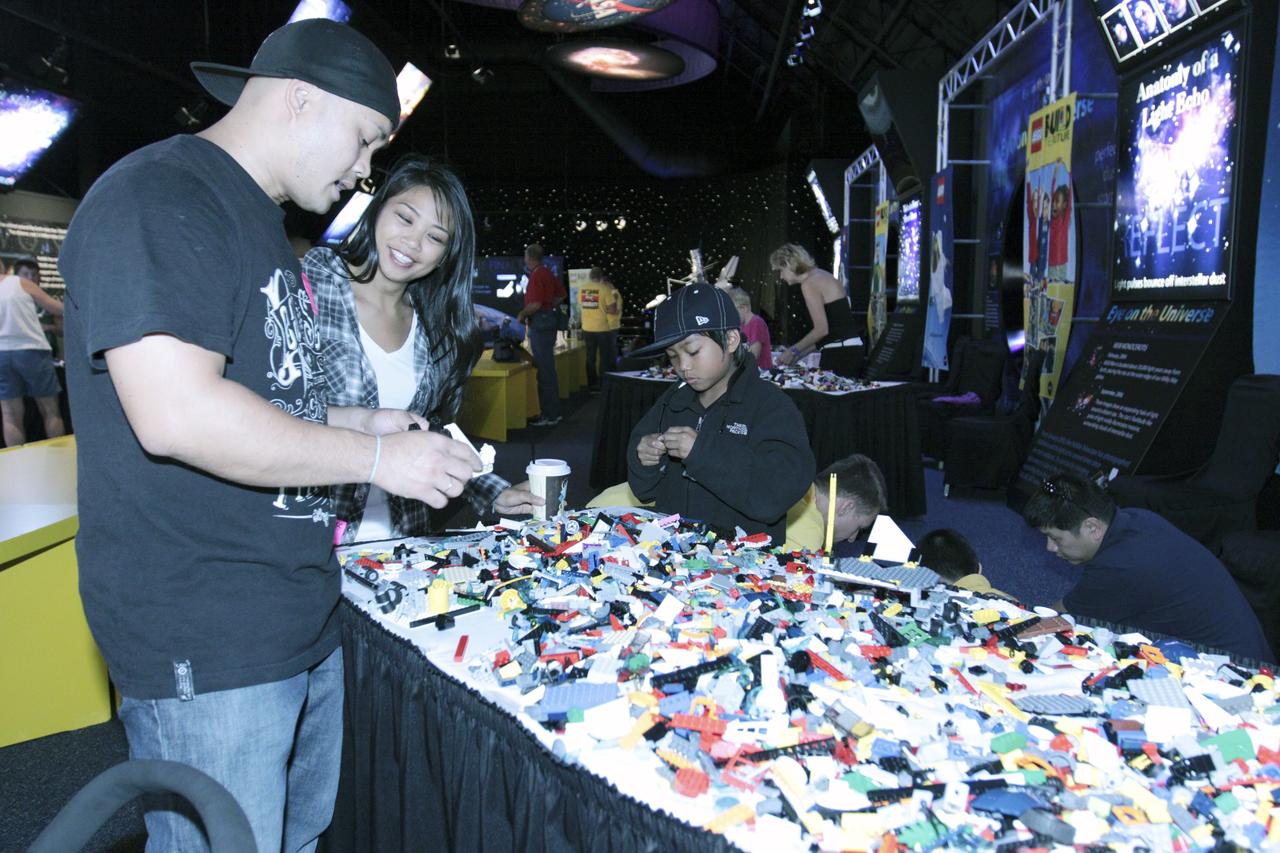
CAPE CANAVERAL, Fla. – Families visiting the Kennedy Space Center Visitor Complex in Florida participate in a LEGO "Build the Future" event. The festivities coincide with the launch of NASA's Mars Science Laboratory (MSL), carrying a compact car-sized rover, Curiosity, to the red planet. Part of the Space Act Agreement between NASA and LEGO A/S, the activities are designed to inspire students of every age to consider an education and careers in the science, technology, engineering and mathematics, or STEM, disciplines. Launch of MSL aboard a United Launch Alliance Atlas V rocket is scheduled for Nov. 26 from Space Launch Complex-41 on Cape Canaveral Air Force Station in Florida. For more information, visit http://www.nasa.gov/audience/foreducators/nasa-lego-partnership.html. Photo credit: NASA/Kim Shiflett
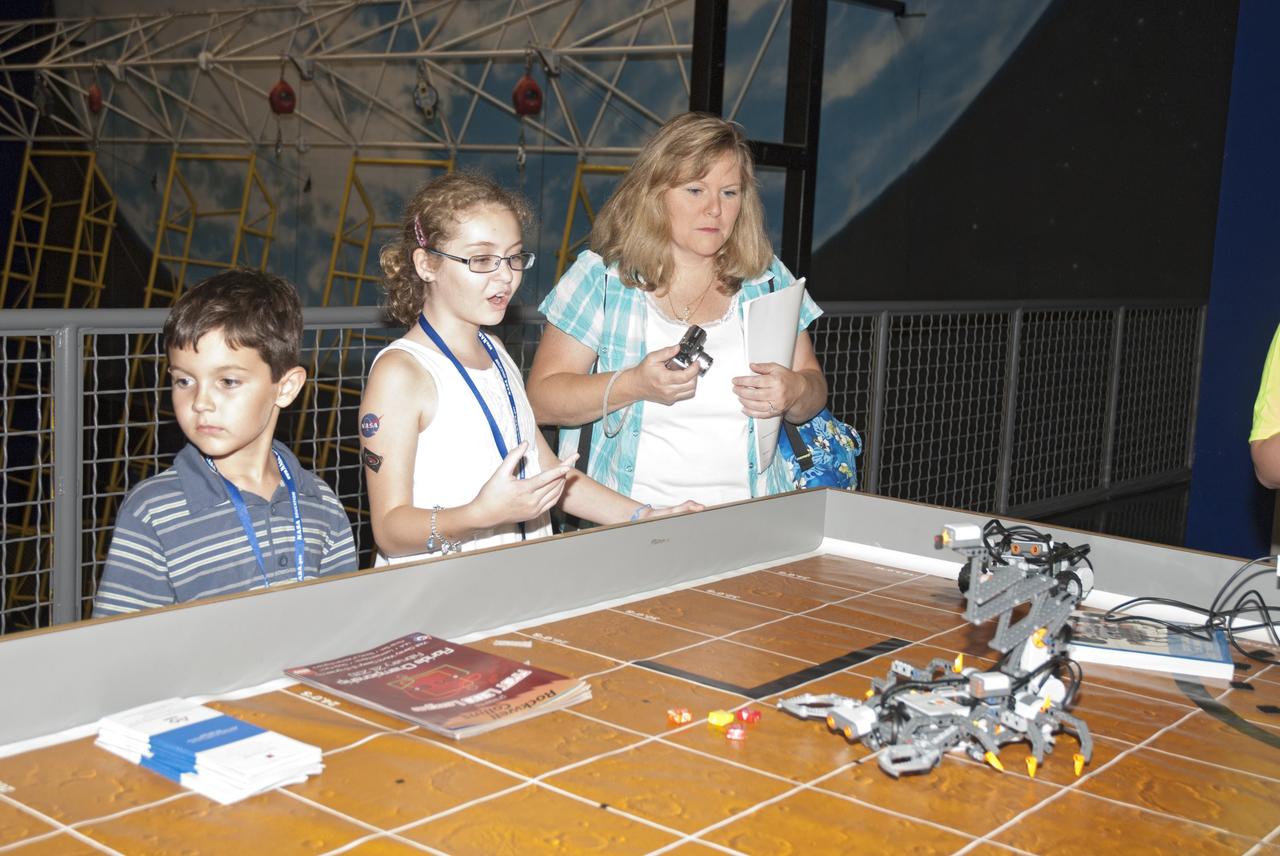
CAPE CANAVERAL, Fla. -- At the Astronaut Hall of Fame near the Kennedy Space Center Visitor Complex in Florida, fifth- through eighth-grade students and their parents participate in a Lego robotics demonstration during the last NASA family education night event. Other activities included "gee-whiz" presentations, astronaut appearances, a hovercraft, vortex cannon and alternative fuel vehicles, which promote science, technology, engineering and mathematics (STEM) education. The event is part of NASA's Summer of Innovation initiative to provide interactive learning experiences to middle school students nationwide during the summer months. The program is a cornerstone of the Educate to Innovate campaign announced by President Barack Obama in November 2009. Photo credit: NASA/Charisse Nahser
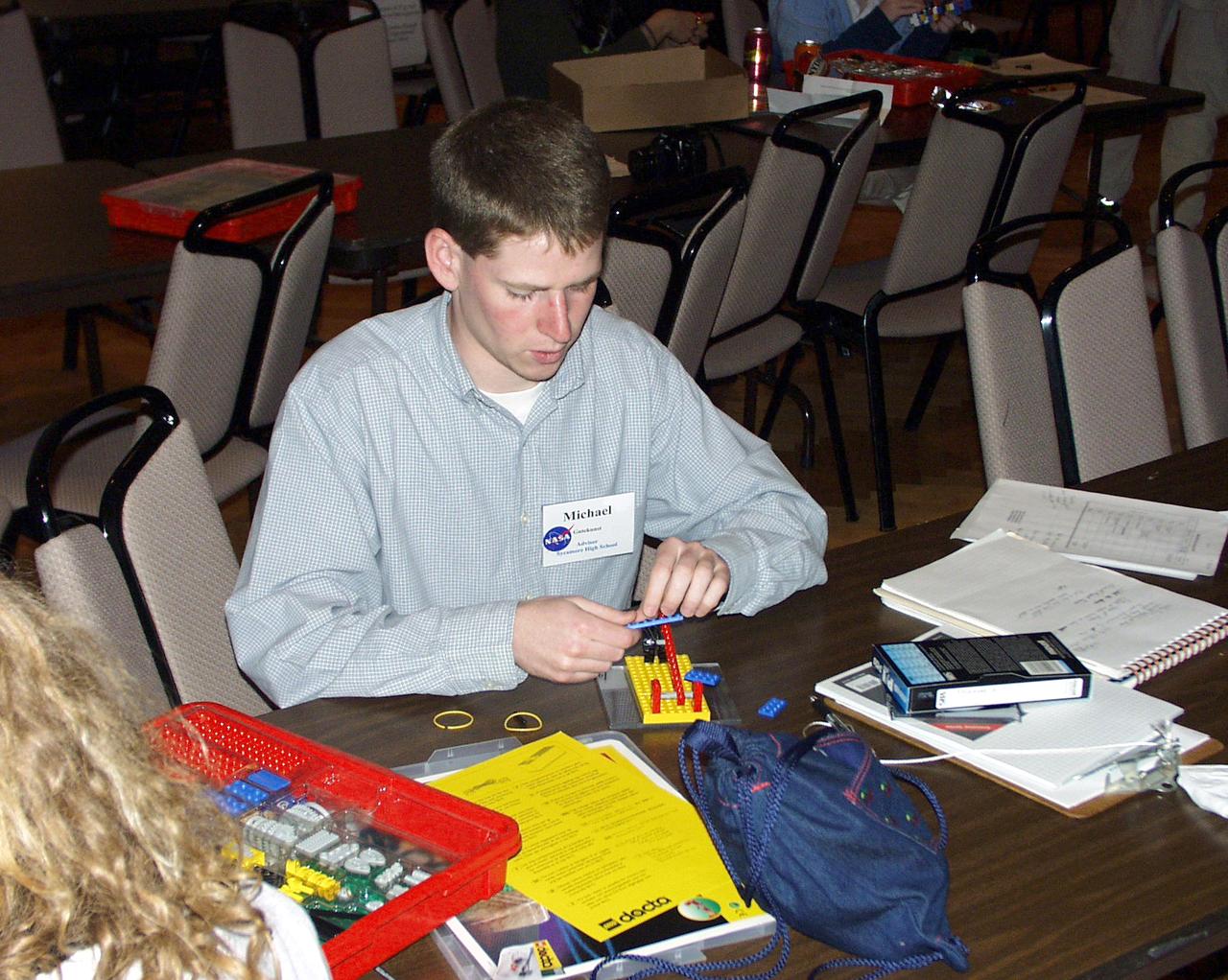
A student assembles a Lego (TM) Challenge device designed to operate in the portable drop tower demonstrator as part of the second Dropping in a Microgravity Environment (DIME) competition held April 23-25, 2002, at NASA's Glenn Research Center. Competitors included two teams from Sycamore High School, Cincinnati, OH, and one each from Bay High School, Bay Village, OH, and COSI Academy, Columbus, OH. DIME is part of NASA's education and outreach activities. Details are on line at http://microgravity.grc.nasa.gov/DIME_2002.html.
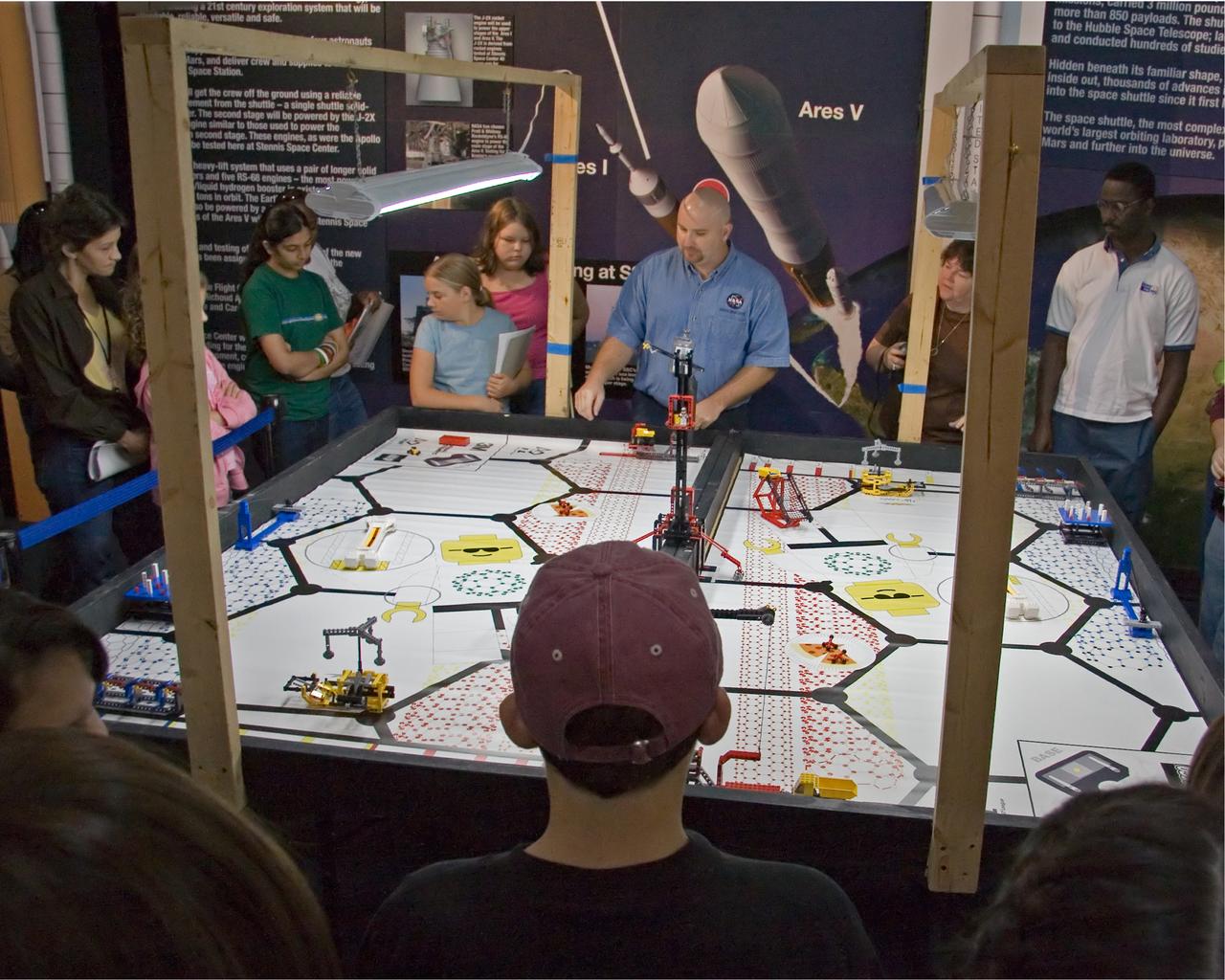
FIRST LEGO League participants listen to Aerospace Education Specialist Chris Copelan explain the playing field for 'Nano Quest' during a recent FLL kickoff event at StenniSphere, the visitor center at NASA Stennis Space Center. The kickoff began the 2006 FLL competition season. Eighty-five teachers, mentors, parents and 9- to 14-year-old students from southern and central Mississippi came to SSC to hear the rules for Nano Quest. The challenge requires teams to spend eight weeks building and programming robots from LEGO Mindstorms kits. They'll battle their creations in local and regional competitions. The Dec. 2 competition at Mississippi Gulf Coast Community College will involve about 200 students. FIRST LEGO League, considered the 'little league' of the FIRST (For Inspiration and Recognition of Science and Technology) Robotics Competition, partners FIRST and the LEGO Group. Competitions aim to inspire and celebrate science and technology using real-world context and hands-on experimentation, and to promote the principles of team play and gracious professionalism. Because NASA advocates robotics and science-technology education, the agency and SSC support FIRST by providing team coaches, mentors and training, as well as competition event judges, referees, audio-visual and other volunteer staff personnel. Two of Mississippi's NASA Explorer Schools, Bay-Waveland Middle and Hattiesburg's Lillie Burney Elementary, were in attendance. The following schools were also represented: Ocean Springs Middle, Pearl Upper Elementary, Long Beach Middle, Jackson Preparatory Academy, North Woolmarket Middle, D'Iberville Middle, West Wortham Middle, Picayune's Roseland Park Baptist Academy and Nicholson Elementary, as well as two home-school groups from McComb and Brandon. Gulfport and Picayune Memorial-Pearl River high schools' FIRST Robotics teams conducted robotics demonstrations for the FLL crowd.
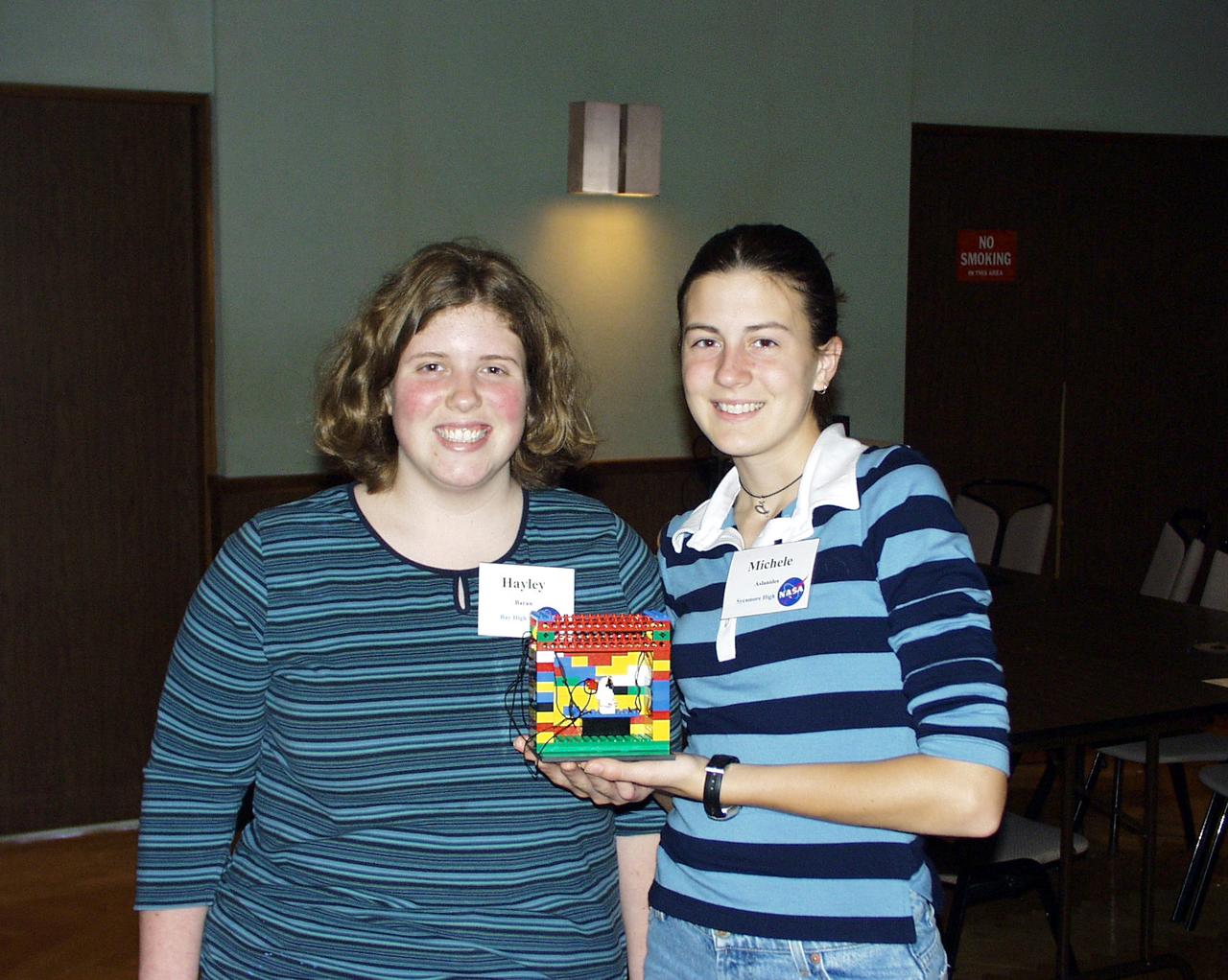
Two students show the Lego (TM) Challenge device they designed and built to operate in the portable drop tower demonstrator as part of the second Dropping in a Microgravity Environment (DIME) competition held April 23-25, 2002, at NASA's Glenn Research Center. Competitors included two teams from Sycamore High School, Cincinnati, OH, and one each from Bay High School, Bay Village, OH, and COSI Academy, Columbus, OH. DIME is part of NASA's education and outreach activities. Details are on line at http://microgravity.grc.nasa.gov/DIME_2002.html.
Randall Hicks (right), Jacobs Technology's Education Services manager at NASA John C. Stennis Space Center, answers questions about the playing field for FIRST (For Inspiration and Recognition of Science and Technology) LEGO League's 2007 Challenge, `Power Puzzle.' More than 140 teachers, mentors, parents and students from 15 schools attended the Sept. 15 FLL season kickoff at StenniSphere, the visitor center at SSC. The teams from southern and central Mississippi and Mobile, Ala., who came to SSC heard rules for and asked questions about `Power Puzzle,' and saw robot demonstrations by Gulfport and Picayune high schools' past FIRST Robotics competitions. Using LEGO Mindstorms NXT kits, FLL teams of children ages 9-14 will spend the next three months building and programming robots to perform 'Power Puzzle's' challenge tasks, then pit them in competitions. They also will submit a research project about how energy choices impact the environment and the economy. The season will culminate at the Mississippi Championship Tournament on Dec. 8 at the Mississippi Gulf Coast Community College. FLL, considered the `little league' of the FIRST Robotics Competition, partners FIRST and the LEGO Group. Competitions aim to inspire and celebrate science and technology using real-world context and hands-on experimentation. NASA recognizes FIRST activities as an excellent hands-on method to increase student knowledge of science, engineering, technology and mathematics. Schools represented in this year's kickoff were: Madison Avenue Upper Elementary, the Mississippi Band of Choctaw Indians' Conehatta Elementary, Hattiesburg's Lillie Burney Elementary, Pearl Upper Elementary, Long Beach Middle, Oktibehha Elementary, d'Iberville Middle, Saucier's West Wortham Middle, Picayune's Nicholson Elementary and Roseland Park Baptist Church Academy, Bay St. Louis' St. Stanislaus College and Mobile's Davidson High, as well as two home-school groups from the Jackson area.