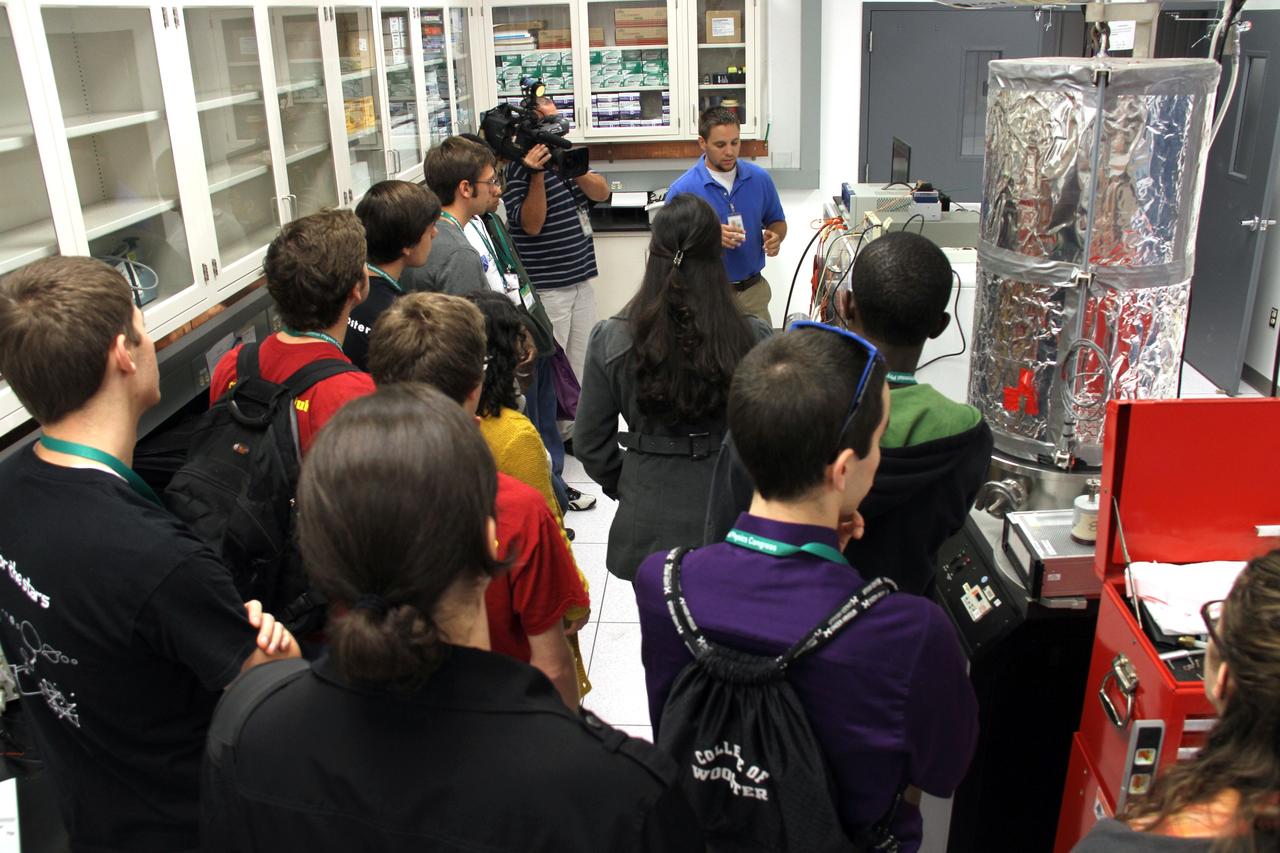
CAPE CANAVERAL, Fla. -- – Inside a laboratory in the Engineering Development Laboratory, or EDL, at NASA’s Kennedy Space Center in Florida, research scientist Michael Johansen, in the blue polo shirt, describes dust mitigation technology to a group of Society of Physics students. About 800 graduate and undergraduate physics students toured Kennedy facilities. A group of about 40 students toured laboratories in the Operations and Checkout Building and the EDL during their visit. The physics students were in Orlando for the 2012 Quadrennial Physics Congress. Photo credit: NASA/Cory Huston
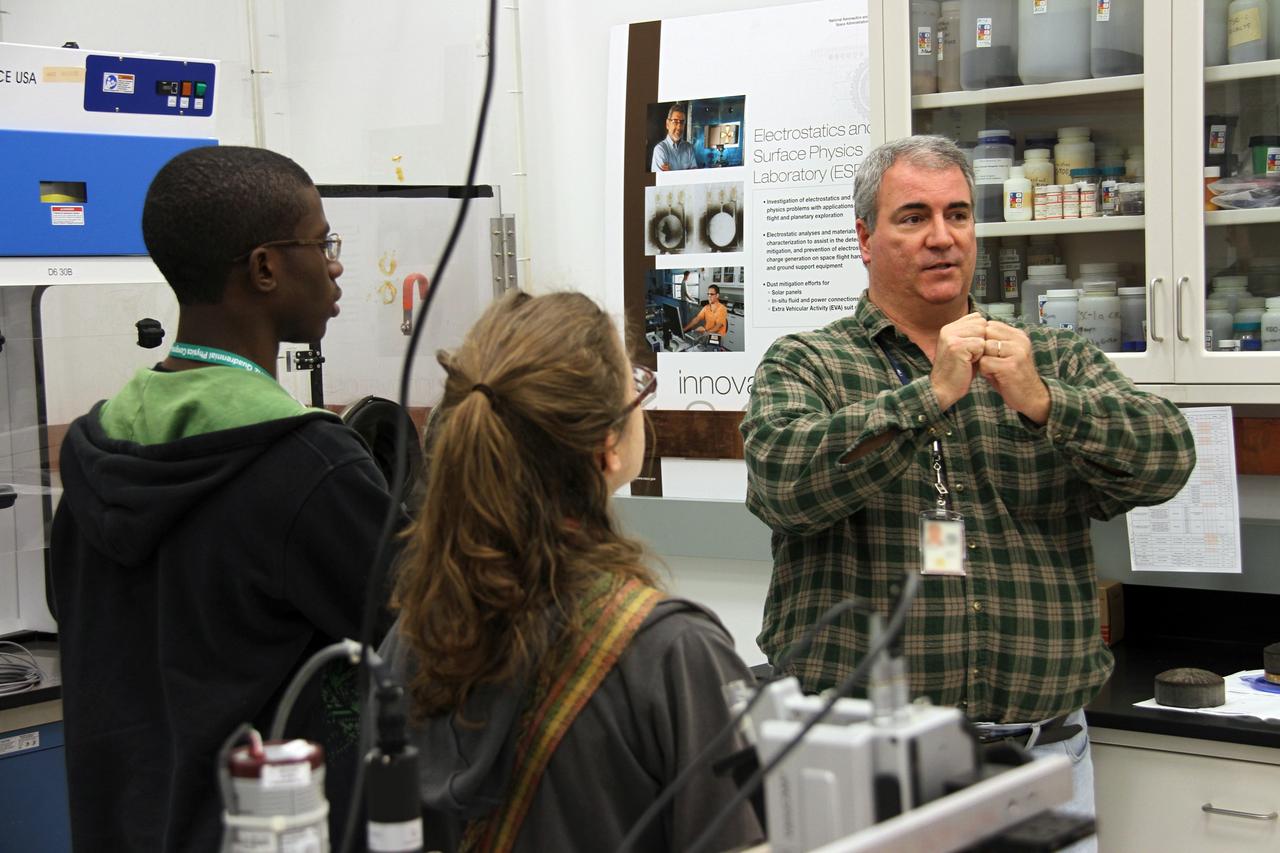
CAPE CANAVERAL, Fla. -- Inside a laboratory in the Engineering Development Laboratory, or EDL, at NASA’s Kennedy Space Center in Florida, research scientist Michael Hogue, in the green plaid shirt, describes several technologies to a group of Society of Physics students. About 800 graduate and undergraduate physics students toured Kennedy facilities. A group of about 40 students toured laboratories in the Operations and Checkout Building and the EDL during their visit. The physics students were in Orlando for the 2012 Quadrennial Physics Congress. Photo credit: NASA/Cory Huston
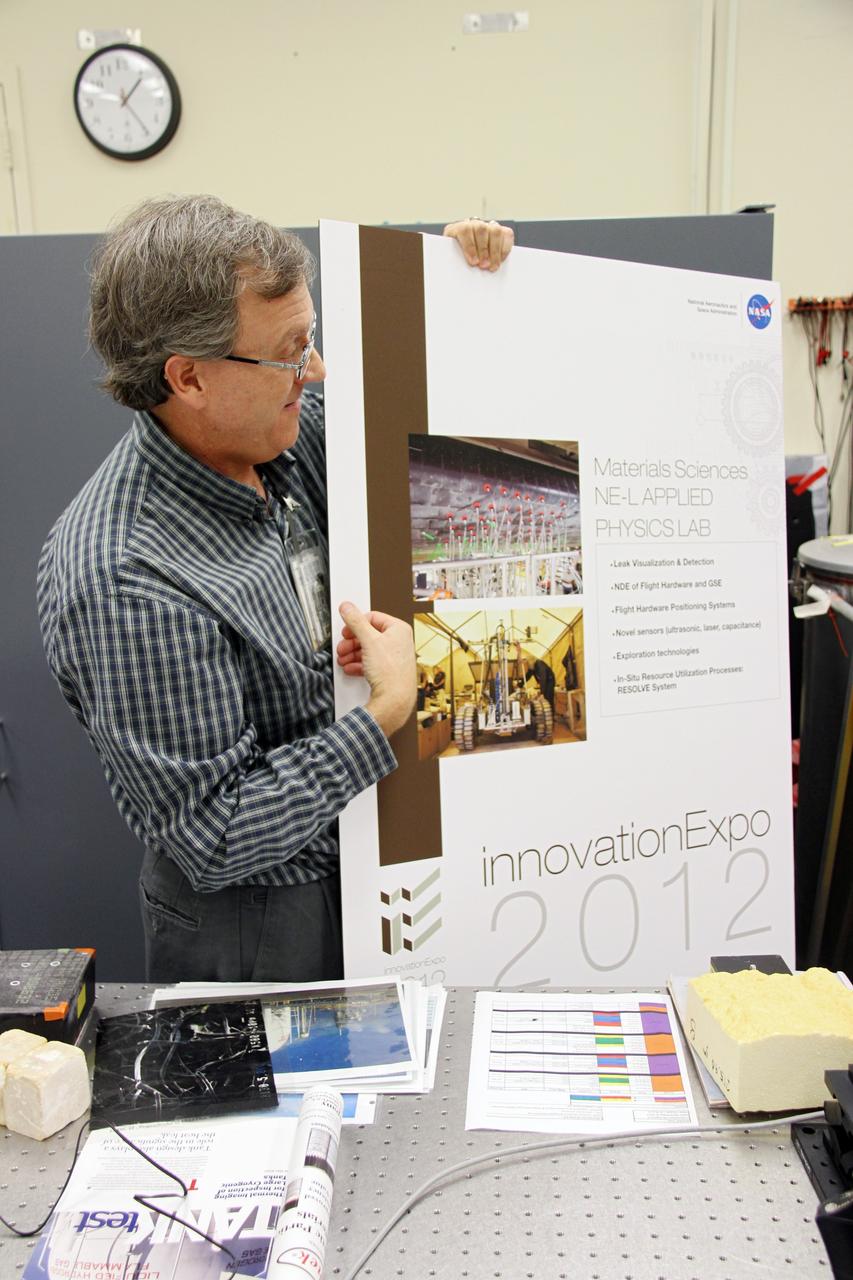
CAPE CANAVERAL, Fla. -- Inside the Applied Physics Laboratory in the Operations and Checkout Building at NASA’s Kennedy Space Center in Florida, lead researcher Dr. Bob Youngquist describes technologies developed for the Space Shuttle Program to a group of Society of Physics students. About 800 graduate and undergraduate physics students toured Kennedy facilities. A group of about 40 students toured laboratories in the Operations and Checkout Building and the EDL during their visit. The physics students were in Orlando for the 2012 Quadrennial Physics Congress. Photo credit: NASA/Cory Huston
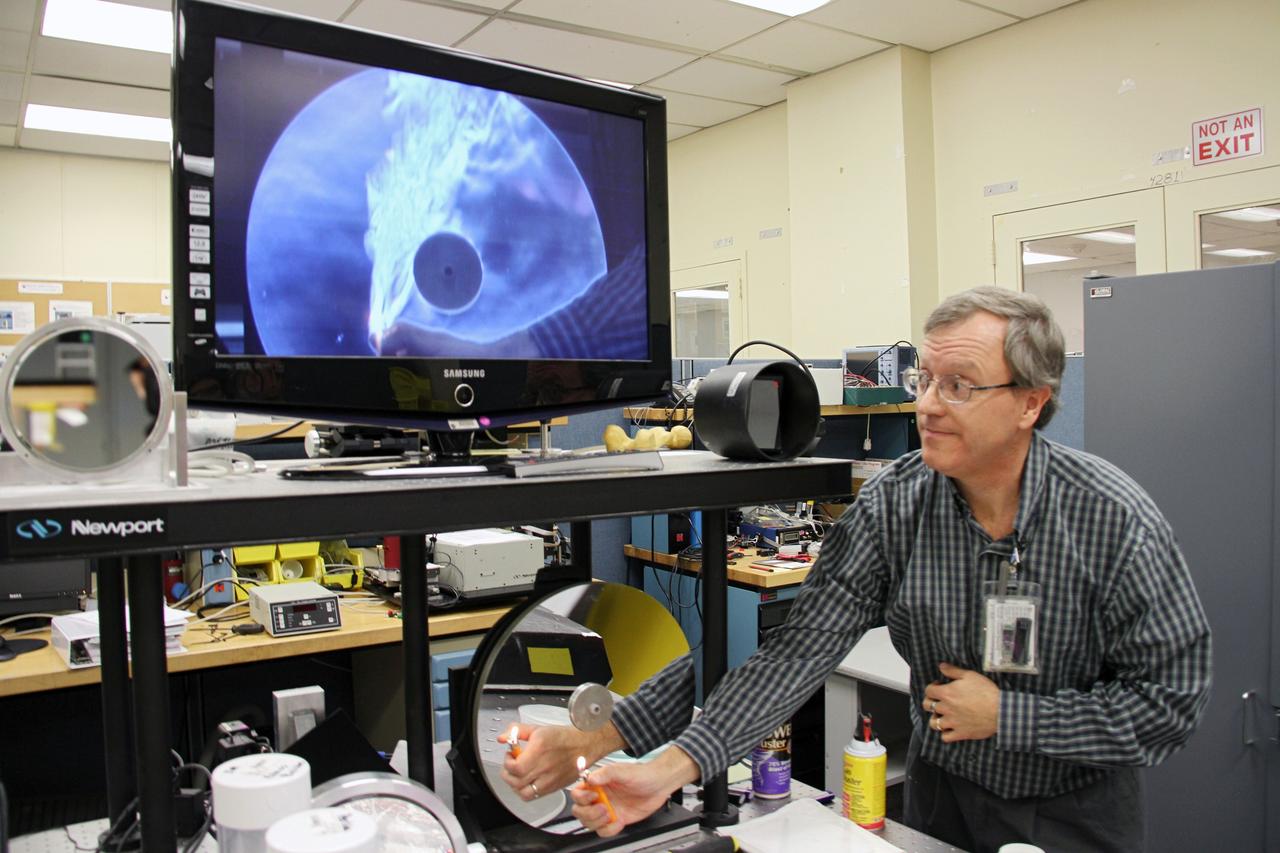
CAPE CANAVERAL, Fla. -- Inside the Applied Physics Laboratory in the Operations and Checkout Building at NASA’s Kennedy Space Center in Florida, lead researcher Dr. Bob Youngquist demonstrates a technology developed for the Space Shuttle Program to a group of Society of Physics students. About 800 graduate and undergraduate physics students toured Kennedy facilities. A group of about 40 students toured laboratories in the Operations and Checkout Building and the EDL during their visit. The physics students were in Orlando for the 2012 Quadrennial Physics Congress. Photo credit: NASA/Cory Huston
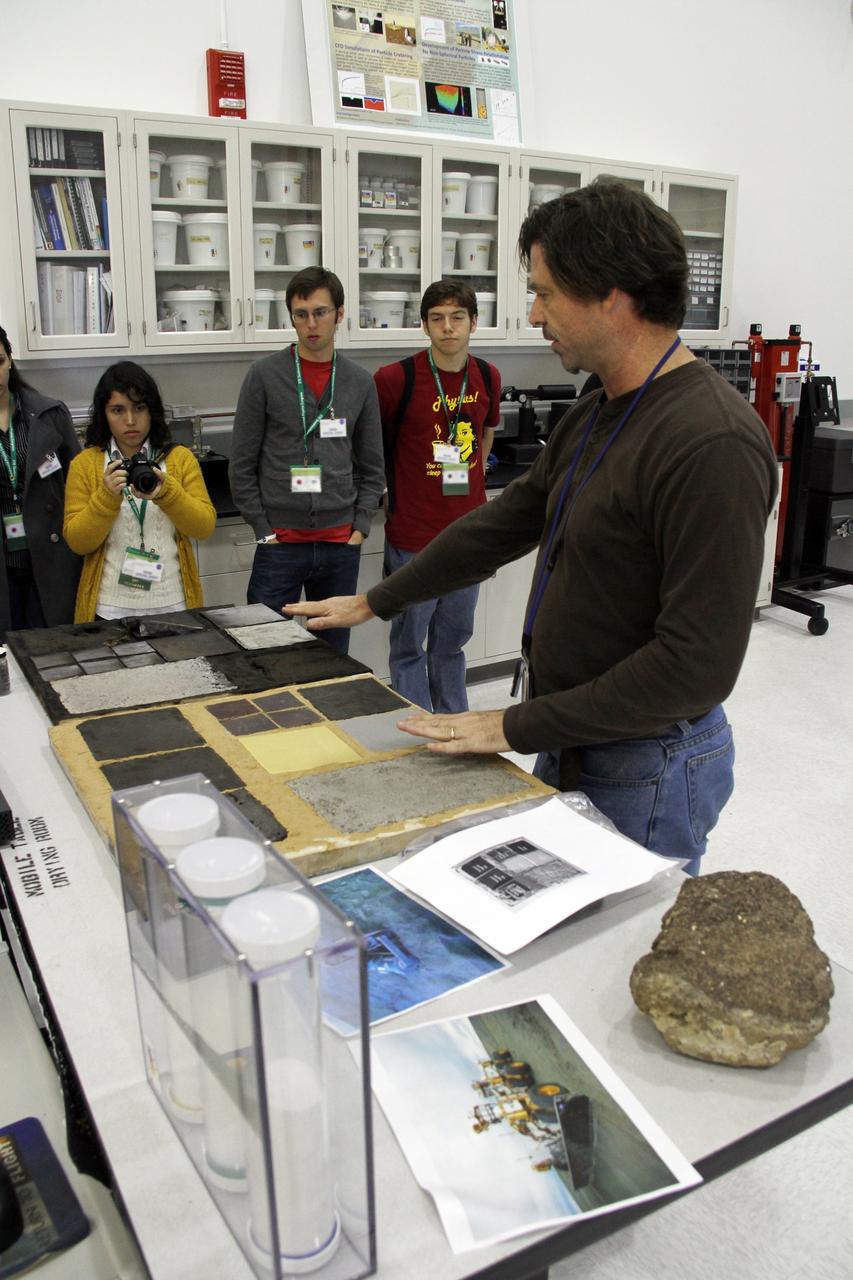
CAPE CANAVERAL, Fla. -- Inside a laboratory in the Engineering Development Laboratory, or EDL, at NASA’s Kennedy Space Center in Florida, research physicist Phil Metzger describes lunar excavators and soil processing technologies to a group of Society of Physics students. About 800 graduate and undergraduate physics students toured Kennedy facilities. A group of about 40 students toured laboratories in the Operations and Checkout Building and the EDL during their visit. The physics students were in Orlando for the 2012 Quadrennial Physics Congress. Photo credit: NASA/Cory Huston

CAPE CANAVERAL, Fla. -- Inside a laboratory in the Operations and Checkout Building at NASA’s Kennedy Space Center in Florida, research chemist Mary Coan describes components of the Regolith and Environment Science and Oxygen and Lunar Volatiles Extraction, or RESOLVE, rover to a group of Society of Physics students. About 800 graduate and undergraduate physics students toured Kennedy facilities. A group of about 40 students toured laboratories in the Operations and Checkout Building and the EDL during their visit. The physics students were in Orlando for the 2012 Quadrennial Physics Congress. Photo credit: NASA/Cory Huston
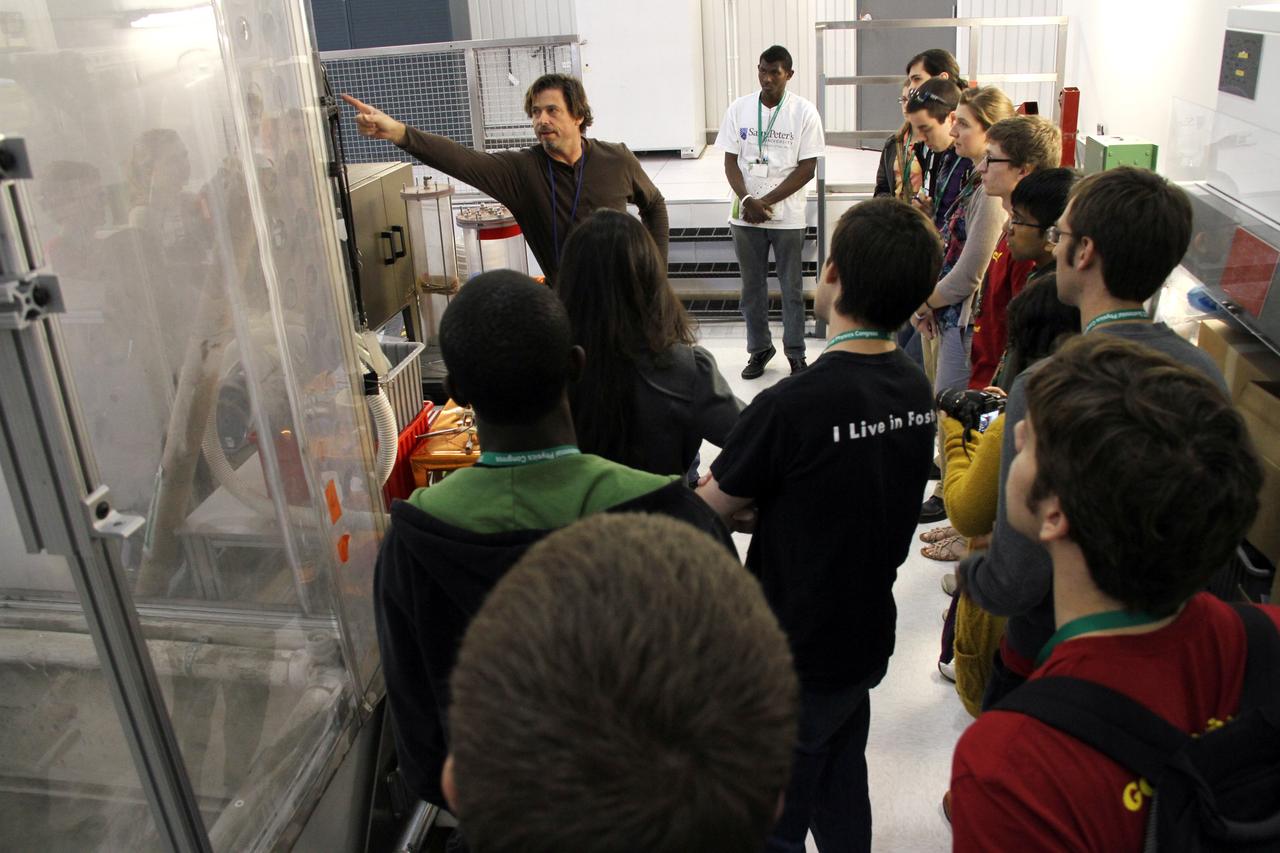
CAPE CANAVERAL, Fla. -- Inside a laboratory in the Engineering Development Laboratory, or EDL, at NASA’s Kennedy Space Center in Florida, research physicist Phil Metzger describes lunar excavators and soil processing technologies to a group of Society of Physics students. About 800 graduate and undergraduate physics students toured Kennedy facilities. A group of about 40 students toured laboratories in the Operations and Checkout Building and the EDL during their visit. The physics students were in Orlando for the 2012 Quadrennial Physics Congress. Photo credit: NASA/Cory Huston
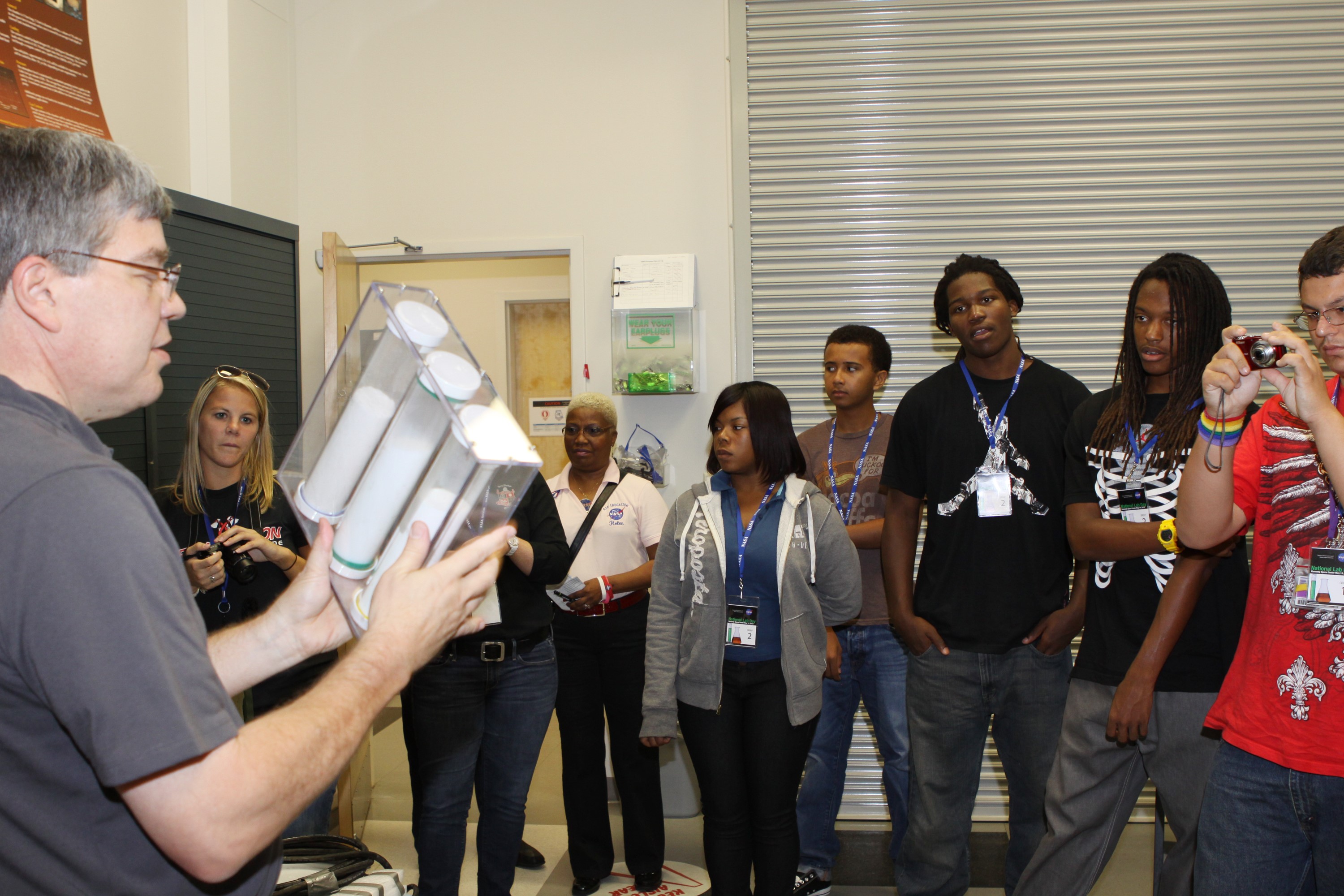
CAPE CANAVERAL, Fla. – Dr. Phil Metzger demonstrates an experiment to study the physics of granular materials to students in the Granular Physics and Regolith Operations Lab at the Space Life Sciences Lab facility. The 26 honor students in chemistry and biology and their teachers got a chance to visit a number of high-tech labs at Kennedy Space Center as part of an effort to encourage students in the areas of science, technology, engineering and math. The tenth and eleventh grade students from Terry Parker High School in Jacksonville, Fla., visited a number of vastly different labs during their one-day tour. The group's visit to Kennedy was hosted by the Education Office as part of a nationwide effort by the National Lab Network to help introduce the nation's students to science careers. Photo credit: NASA/Jim Grossmann
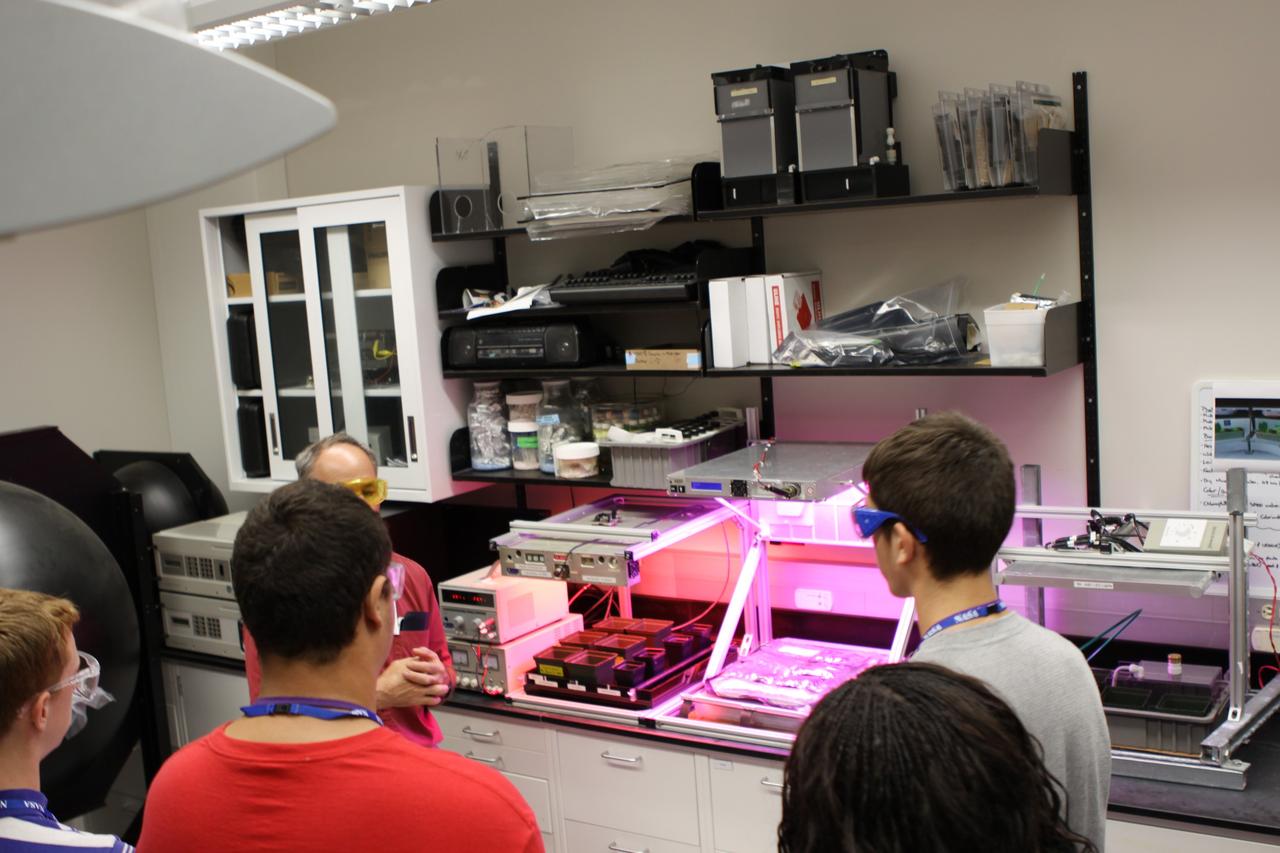
CAPE CANAVERAL, Fla. – Dr. Ray Wheeler explains a system for growing salad crops in space to students in the Life Support and Habitation Systems Lab at the Space Life Sciences Lab facility. The 26 honor students in chemistry and biology and their teachers got a chance to visit a number of high-tech labs at Kennedy Space Center as part of an effort to encourage students in the areas of science, technology, engineering and math. The tenth and eleventh grade students from Terry Parker High School in Jacksonville, Fla., visited a number of vastly different labs during their one-day tour. The group's visit to Kennedy was hosted by the Education Office as part of a nationwide effort by the National Lab Network to help introduce the nation's students to science careers. Photo credit: NASA/Jim Grossmann
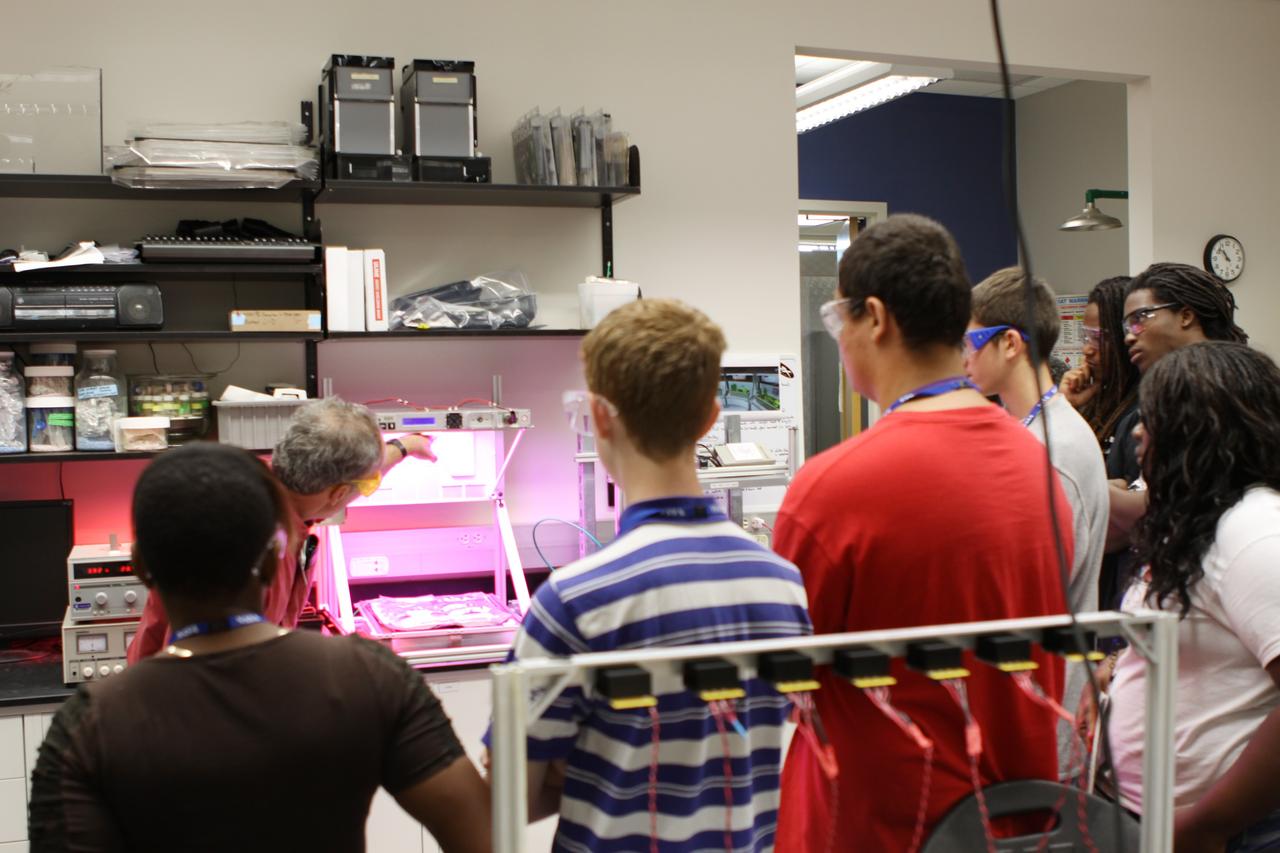
CAPE CANAVERAL, Fla. – Dr. Ray Wheeler explains a system for growing salad crops in space to students in the Life Support and Habitation Systems Lab at the Space Life Sciences Lab facility. The 26 honor students in chemistry and biology and their teachers got a chance to visit a number of high-tech labs at Kennedy Space Center as part of an effort to encourage students in the areas of science, technology, engineering and math. The tenth and eleventh grade students from Terry Parker High School in Jacksonville, Fla., visited a number of vastly different labs during their one-day tour. The group's visit to Kennedy was hosted by the Education Office as part of a nationwide effort by the National Lab Network to help introduce the nation's students to science careers. Photo credit: NASA/Jim Grossmann
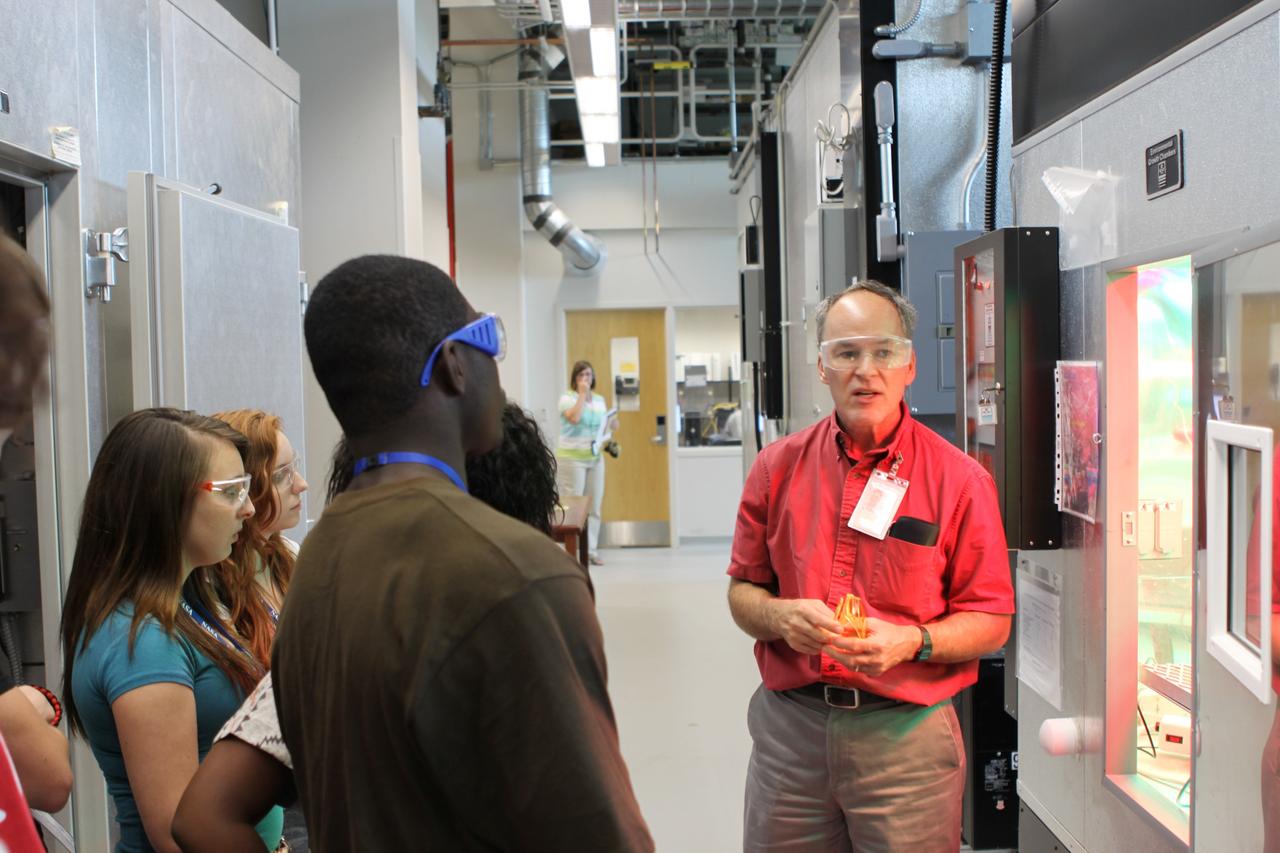
CAPE CANAVERAL, Fla. – Dr. Ray Wheeler explains a plant growth chamber to students in the Life Support and Habitation Systems Lab at the Space Life Sciences Lab facility. The 26 honor students in chemistry and biology and their teachers got a chance to visit a number of high-tech labs at Kennedy Space Center as part of an effort to encourage students in the areas of science, technology, engineering and math. The tenth and eleventh grade students from Terry Parker High School in Jacksonville, Fla., visited a number of vastly different labs during their one-day tour. The group's visit to Kennedy was hosted by the Education Office as part of a nationwide effort by the National Lab Network to help introduce the nation's students to science careers. Photo credit: NASA/Jim Grossmann
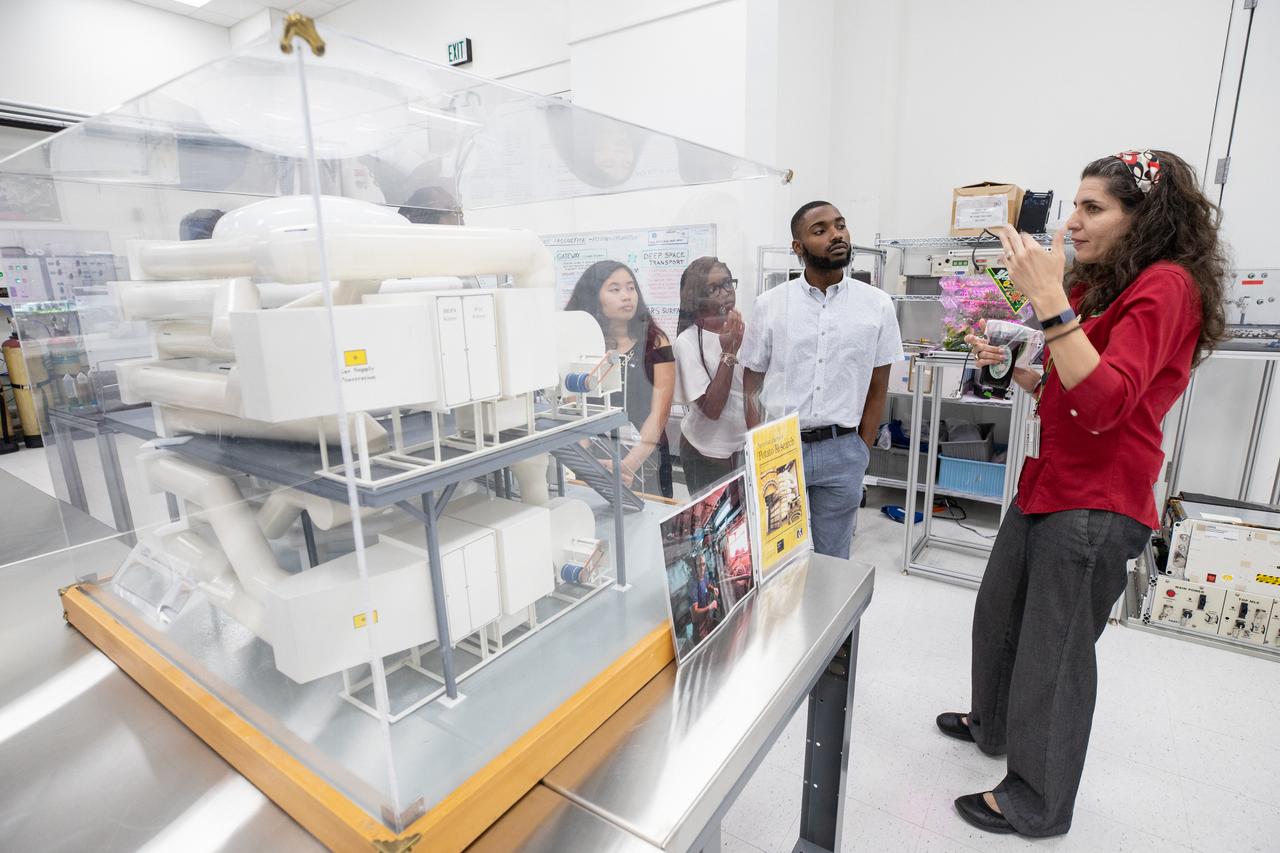
Dr. Gioia Massa, NASA Veggie project lead, addresses Langston University students inside a Space Station Processing Facility lab at Kennedy Space Center on Sept. 18, 2019. The tour of the Florida spaceport was organized by NASA’s Office of Education and Byron Quinn, Ph.D., Langston University director of the Science Research Institute. Students visited SwampWorks, the Neil Armstrong Operations and Checkout Building, the Vehicle Assembly Building, the visitor complex and the Center for Space Education.
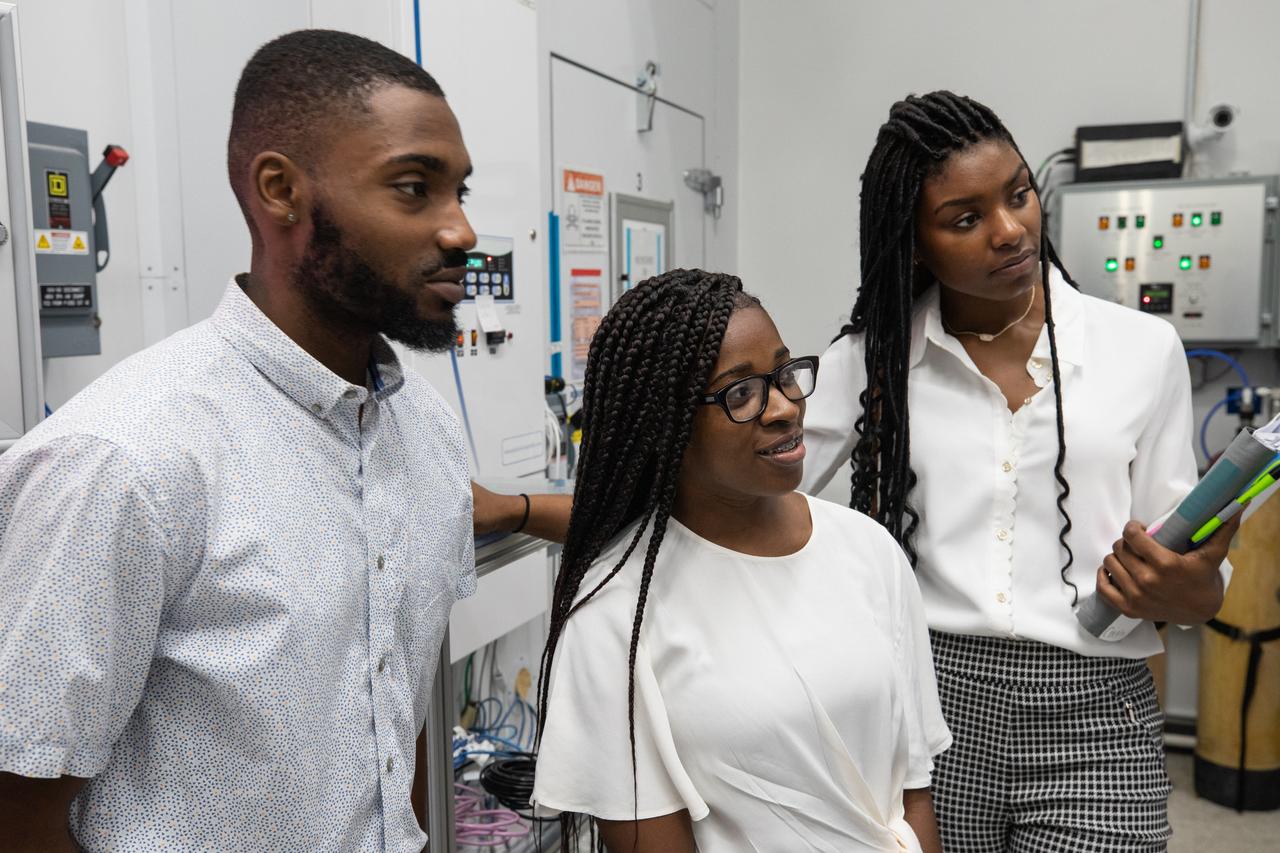
Langston University students, from left, Sherman Cravens, Makyah Farris and Courtney Miller listen to a presentation inside a Space Station Processing Facility lab at Kennedy Space Center on Sept. 18, 2019. The students were part of a tour of the Florida spaceport organized by NASA’s Office of Education and Byron Quinn, Ph.D., Langston University director of the Science Research Institute. The visit included stops at SwampWorks, the Neil Armstrong Operations and Checkout Building, the Vehicle Assembly Building, the visitor complex and the Center for Space Education.
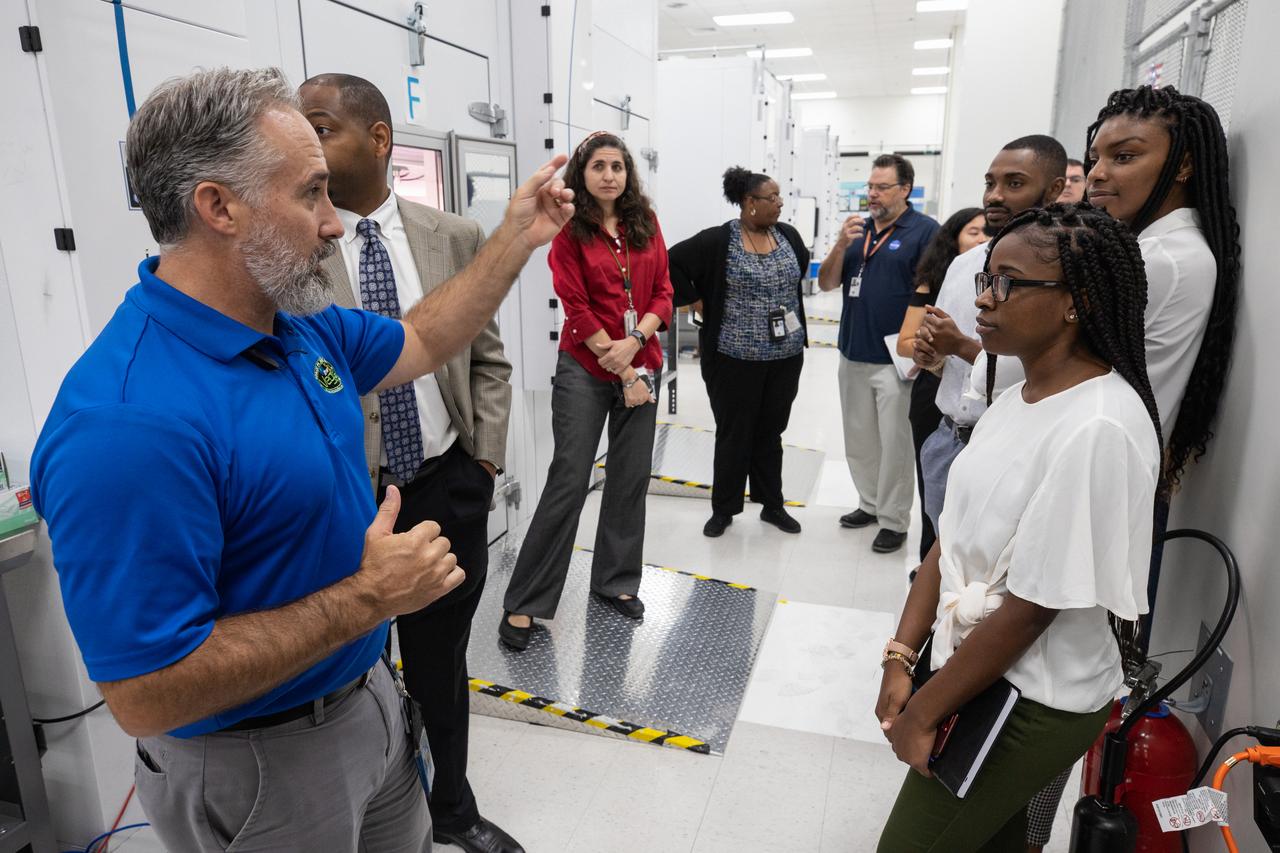
Kennedy Space Center Veggie Project Manager Trent Smith addresses students from Langston University in Oklahoma inside a Space Station Processing Facility lab at the Florida spaceport on Sept. 18, 2019. The students were part of a tour of Kennedy organized by Langston professor Byron Quinn, Ph.D., and NASA’s Office of Education. The visit included stops at SwampWorks, the Neil Armstrong Operations and Checkout Building, the Vehicle Assembly Building, the visitor complex and the Center for Space Education.
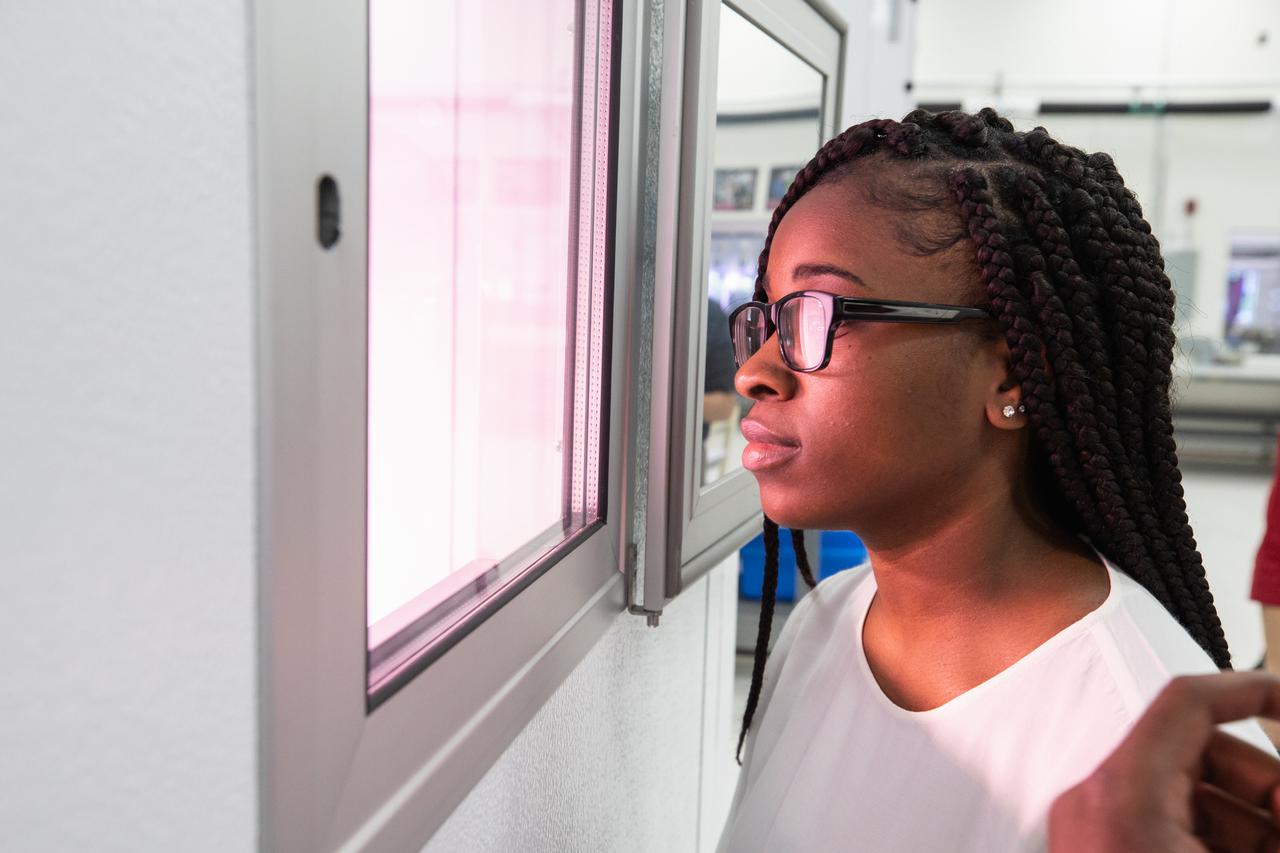
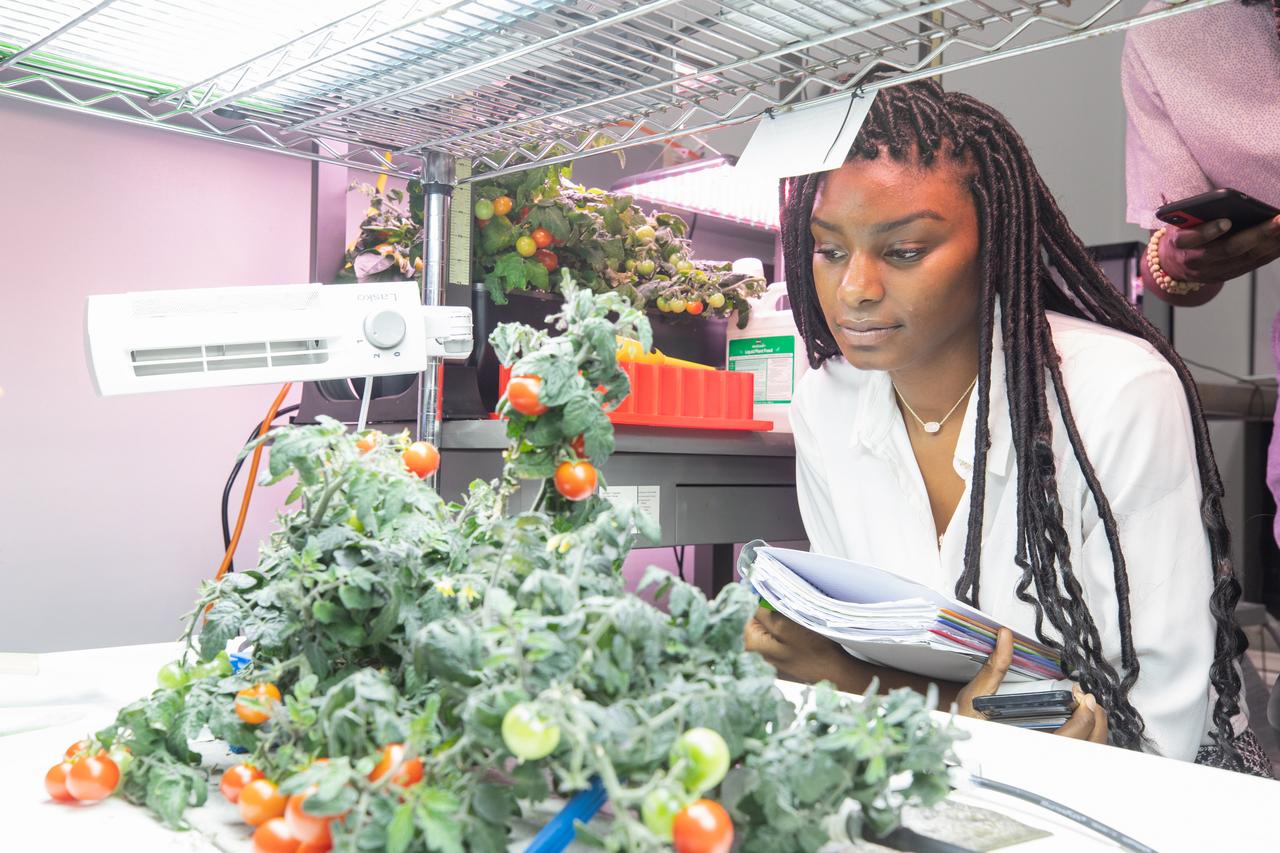
Langston University student Makyah Farris observes plants inside a Space Station Processing Facility lab at Kennedy Space Center on Sept. 18, 2019. Farris was part of a tour of the Florida spaceport organized by NASA’s Office of Education and Byron Quinn, Ph.D., Langston University director of the Science Research Institute. The students’ tour of Kennedy included stops at SwampWorks, the Neil Armstrong Operations and Checkout Building, the Vehicle Assembly Building, the visitor complex and the Center for Space Education.
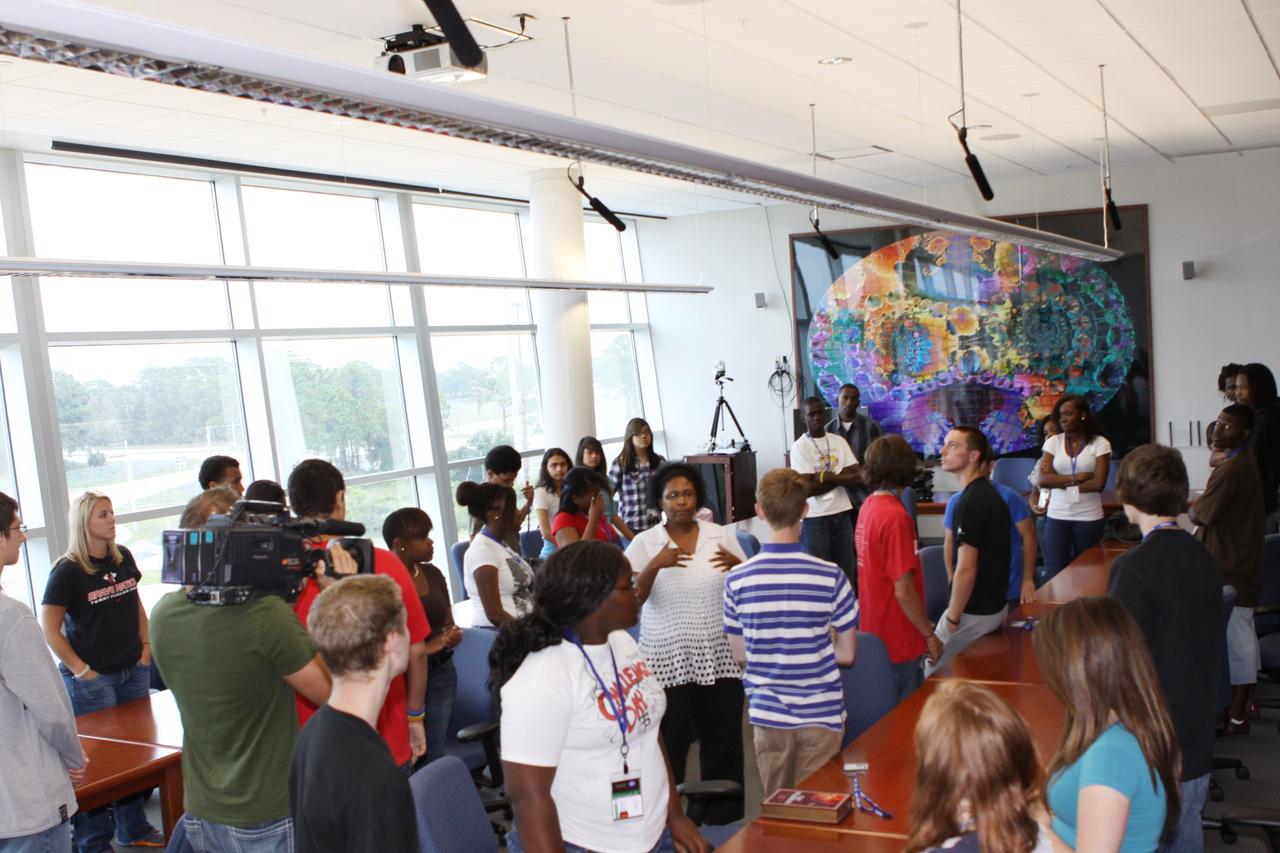
CAPE CANAVERAL, Fla. – Dr. LaNetra C. Tate, center, materials engineer at Kennedy Space Center, is surrounded by students as she welcomes them for their tour of the Space Life Sciences Lab facilities. The 26 honor students in chemistry and biology and their teachers got a chance to visit a number of high-tech labs at Kennedy as part of an effort to encourage students in the areas of science, technology, engineering and math. The tenth and eleventh grade students from Terry Parker High School in Jacksonville, Fla., visited a number of vastly different labs during their one-day tour. The group's visit to Kennedy was hosted by the Education Office as part of a nationwide effort by the National Lab Network to help introduce the nation's students to science careers. Photo credit: NASA/Jim Grossmann
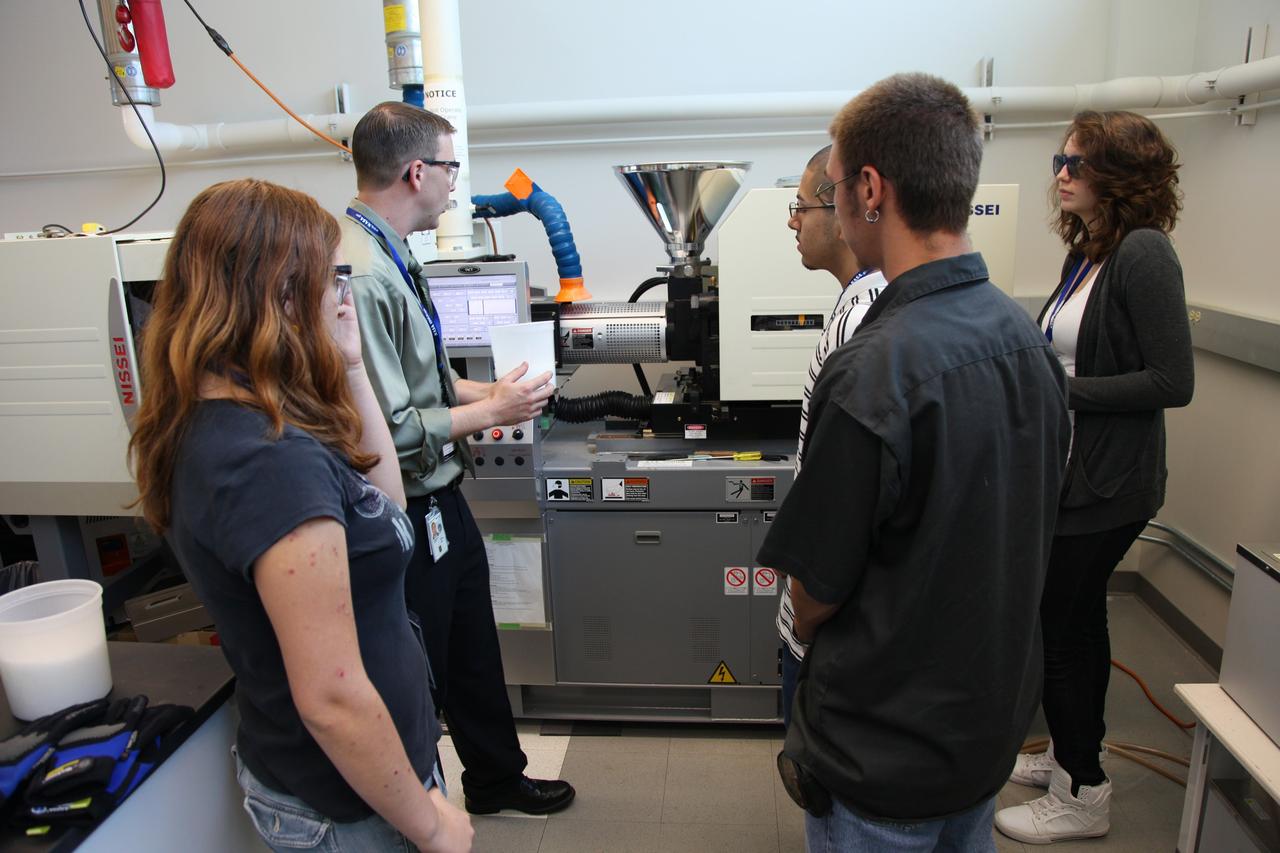
Cape Canaveral, Fla. -- Students listen intently as a laboratory technician describes the experiment being conducted in Kennedy’s Space Life Sciences Laboratory (SLSL). High-school students from two Orlando, Fla., schools travelled to NASA’s Kennedy Space Center in Florida to participate in National Lab Day activities. During the event, about 80 students, toured various facilities and engaged in educational hands-on activities. National Lab Day is a partnership between federal agencies, foundations, professional societies and organizations devoted to promoting science, technology, engineering and math, or STEM, hands-on discovery-based laboratory experiences for students. Photo Credit: NASA/Frankie Martin
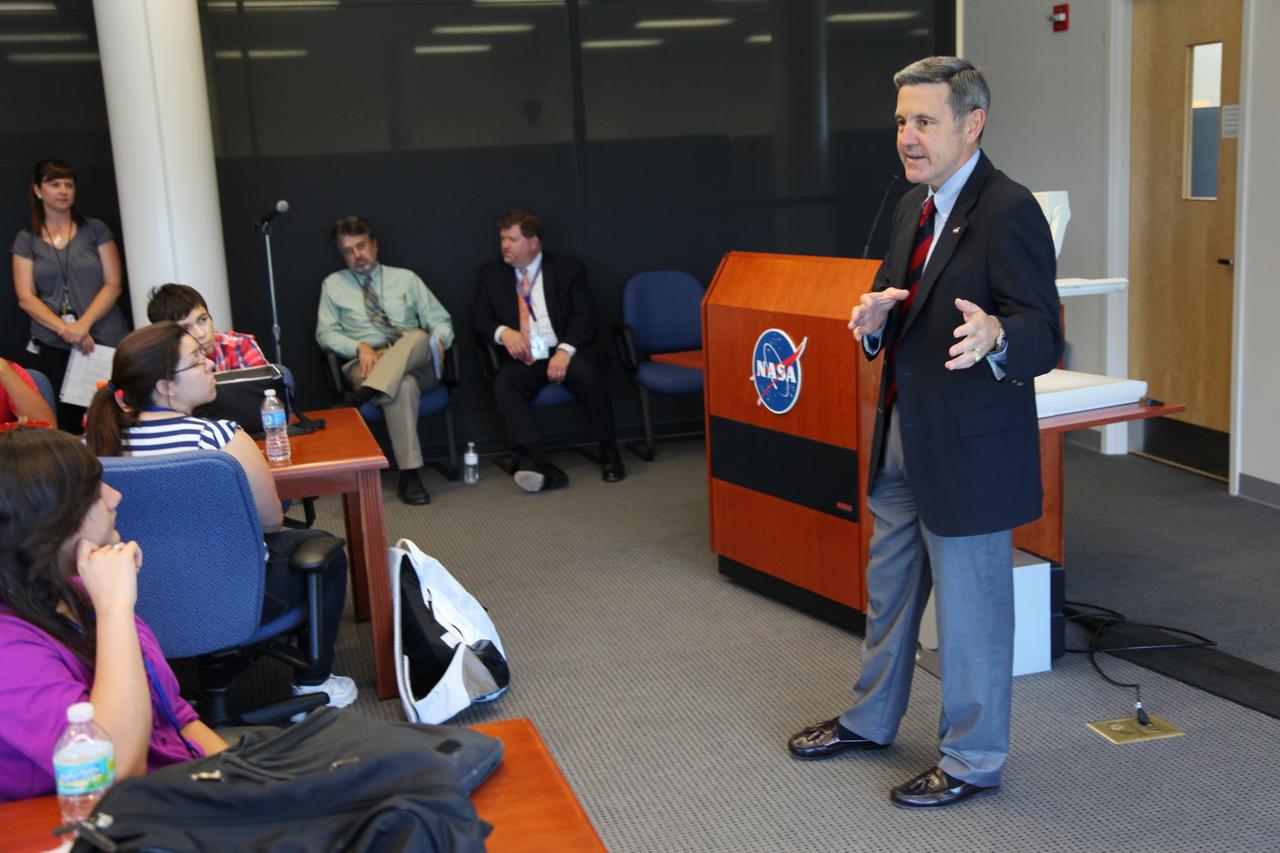
Cape Canaveral, Fla. -- Kennedy Center Director Bob Cabana speaks to the students after they participated in hands-on projects in Kennedy’s Space Life Sciences Laboratory (SLSL). High-school students from two Orlando, Fla., schools travelled to NASA’s Kennedy Space Center in Florida to participate in National Lab Day activities. During the event, about 80 students, toured various facilities and engaged in educational hands-on activities. National Lab Day is a partnership between federal agencies, foundations, professional societies and organizations devoted to promoting science, technology, engineering and math, or STEM, hands-on discovery-based laboratory experiences for students. Photo Credit: NASA/Frankie Martin

Cape Canaveral, Fla. -- Students listen intently as a laboratory technician describes a project that's being researched in Kennedy’s Space Life Sciences Laboratory (SLSL). High-school students from two Orlando, Fla., schools travelled to NASA’s Kennedy Space Center in Florida to participate in National Lab Day activities. During the event, about 80 students, toured various facilities and engaged in educational hands-on activities. National Lab Day is a partnership between federal agencies, foundations, professional societies and organizations devoted to promoting science, technology, engineering and math, or STEM, hands-on discovery-based laboratory experiences for students. Photo Credit: NASA/Frankie Martin
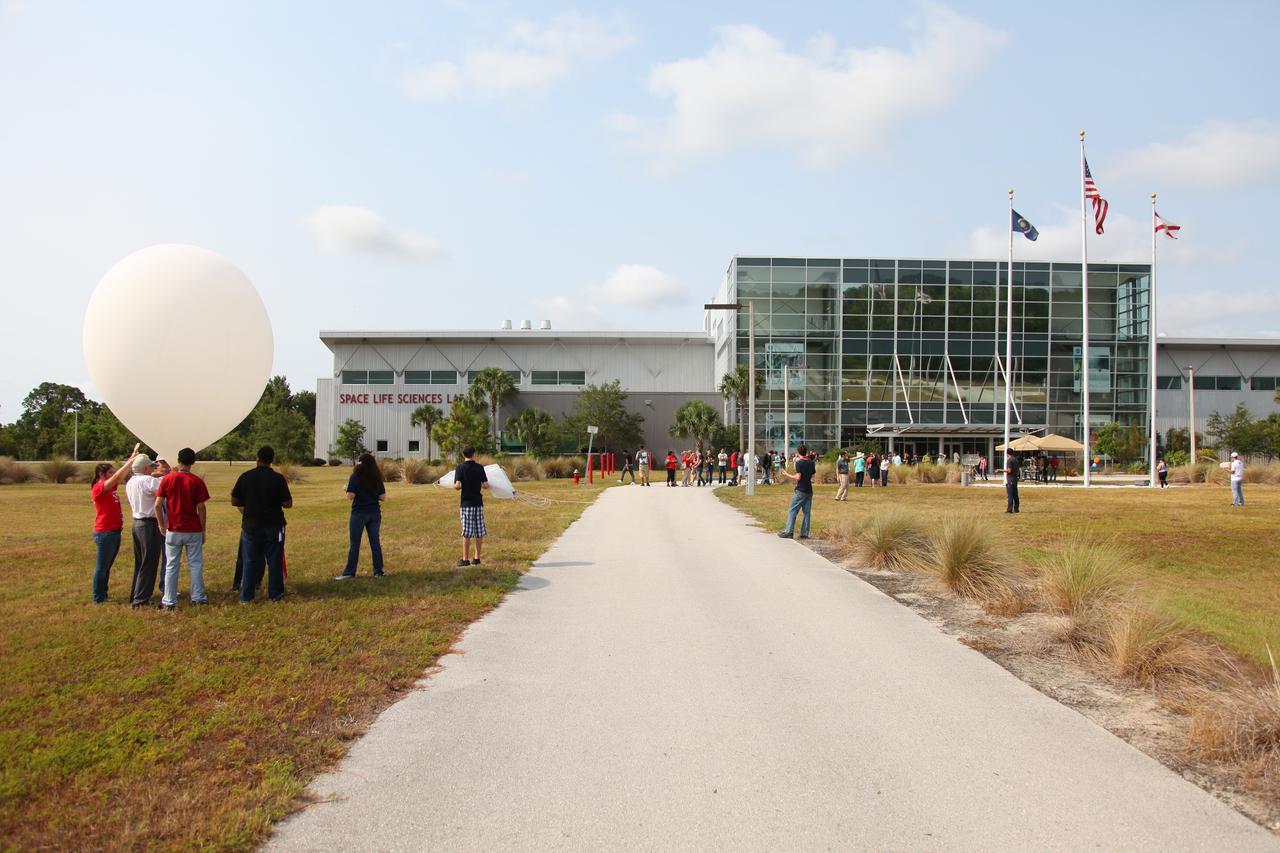
Cape Canaveral, Fla. -- Students participate in a high-altitude balloon experiment that's being conducted on the grounds of Kennedy’s Space Life Sciences Laboratory (SLSL). High-school students from two Orlando, Fla., schools travelled to NASA’s Kennedy Space Center in Florida to participate in National Lab Day activities. During the event, about 80 students, toured various facilities and engaged in educational hands-on activities. National Lab Day is a partnership between federal agencies, foundations, professional societies and organizations devoted to promoting science, technology, engineering and math, or STEM, hands-on discovery-based laboratory experiences for students. Photo Credit: NASA/Frankie Martin
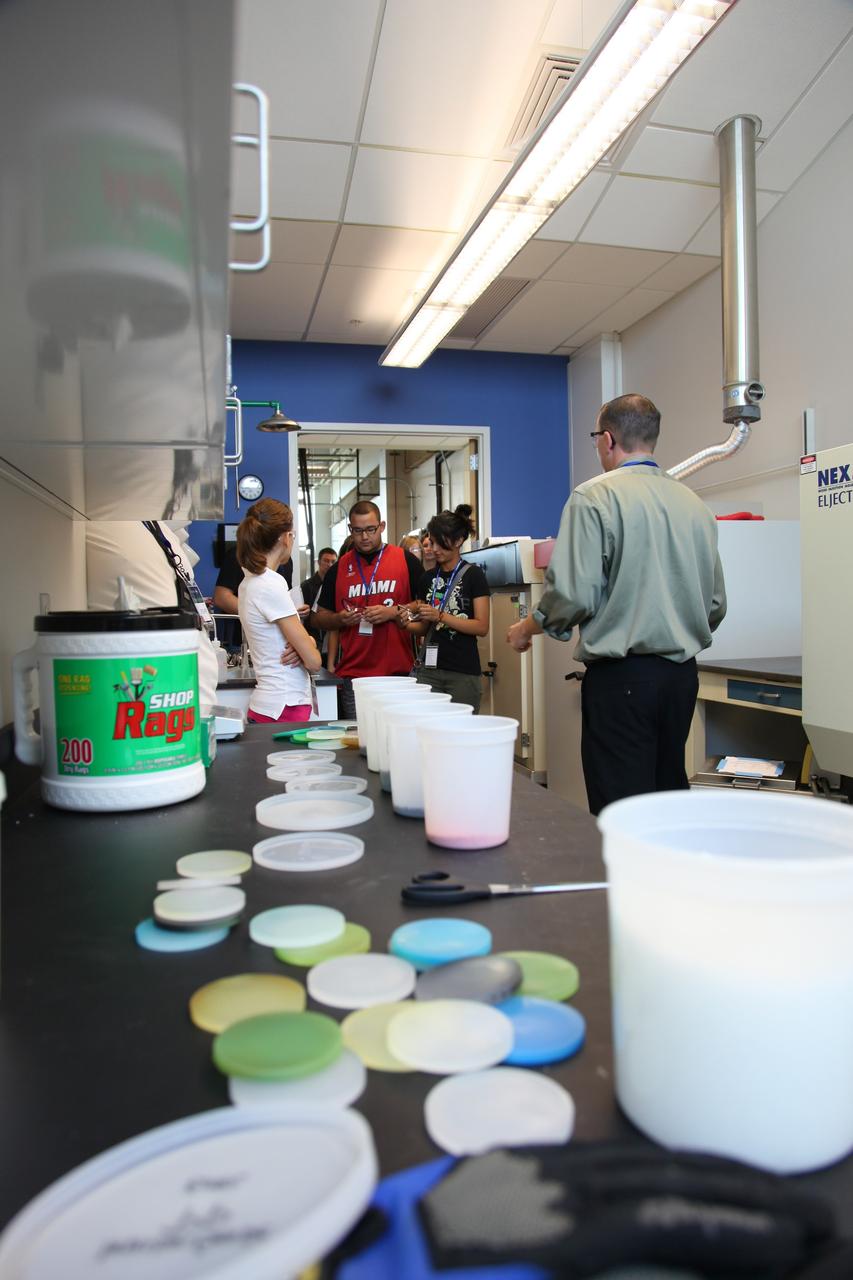
Cape Canaveral, Fla. -- Students participate in a hands-on activity as a laboratory technician looks on in Kennedy’s Space Life Sciences Laboratory (SLSL). High-school students from two Orlando, Fla., schools travelled to NASA’s Kennedy Space Center in Florida to participate in National Lab Day activities. During the event, about 80 students, toured various facilities and engaged in educational hands-on activities. National Lab Day is a partnership between federal agencies, foundations, professional societies and organizations devoted to promoting science, technology, engineering and math, or STEM, hands-on discovery-based laboratory experiences for students. Photo Credit: NASA/Frankie Martin
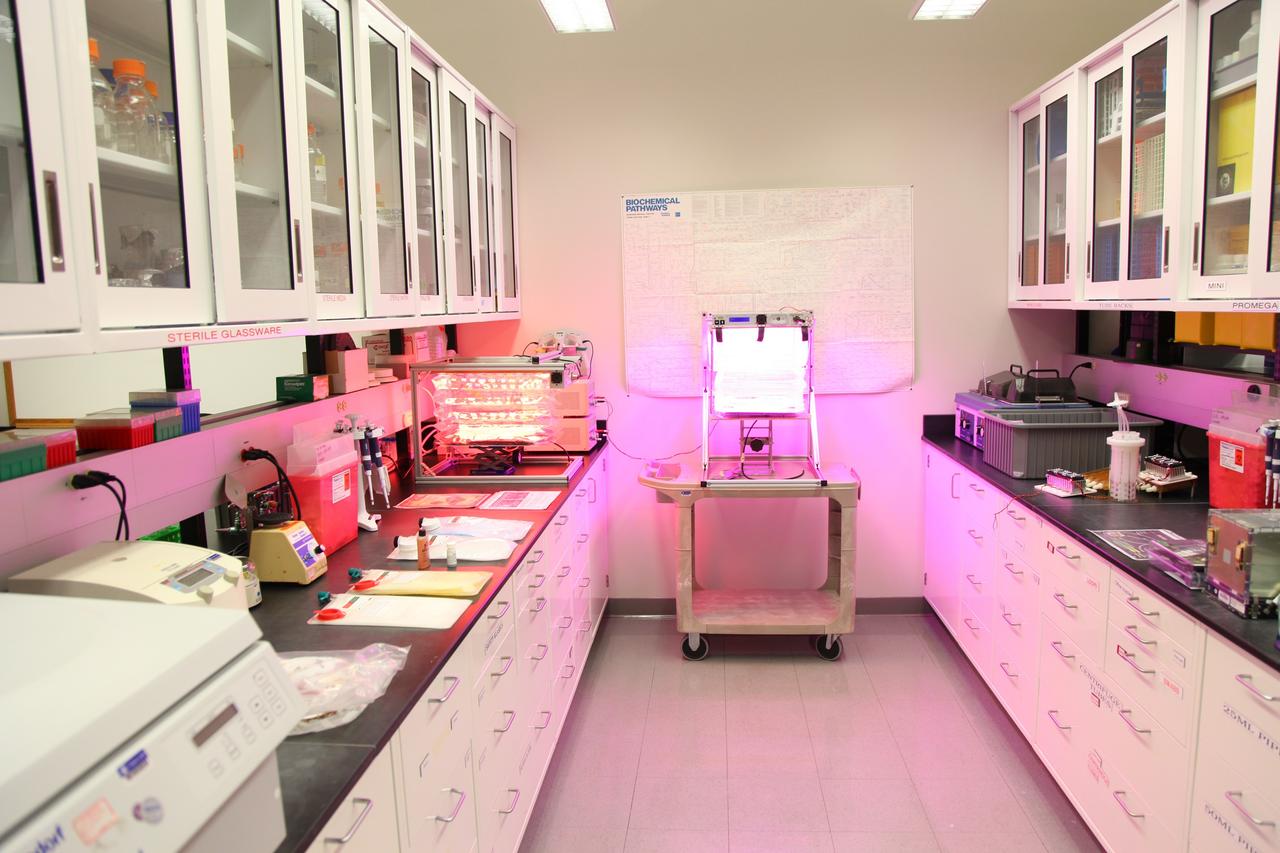
Cape Canaveral, Fla. -- A research laboratory is prepared for students to perform hands-on activities in Kennedy’s Space Life Sciences Laboratory (SLSL). High-school students from two Orlando, Fla., schools travelled to NASA’s Kennedy Space Center in Florida to participate in National Lab Day activities. During the event, about 80 students, toured various facilities and engaged in educational hands-on activities. National Lab Day is a partnership between federal agencies, foundations, professional societies and organizations devoted to promoting science, technology, engineering and math, or STEM, hands-on discovery-based laboratory experiences for students. Photo Credit: NASA/Frankie Martin
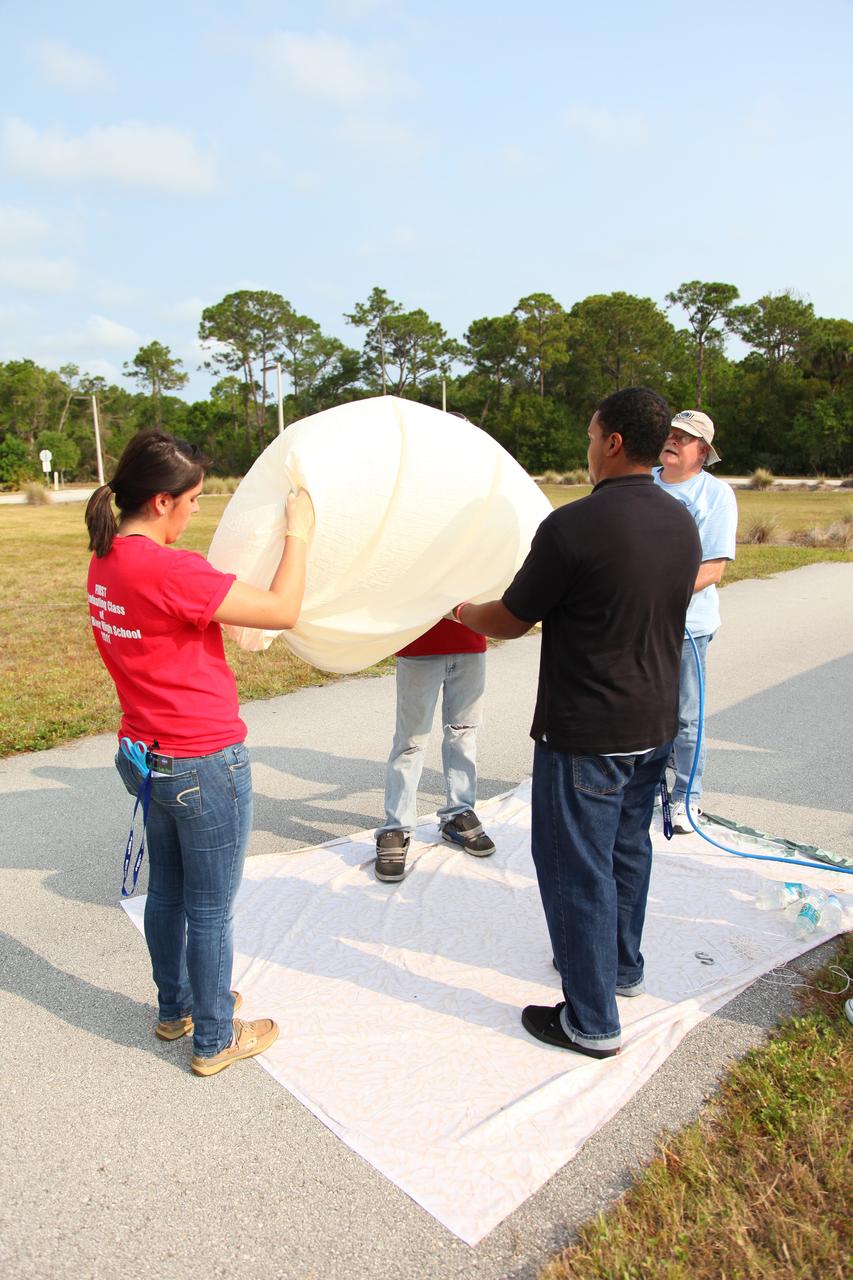
Cape Canaveral, Fla. -- Students participate in a high-altitude balloon experiment that's being conducted on the grounds of Kennedy’s Space Life Sciences Laboratory (SLSL). High-school students from two Orlando, Fla., schools travelled to NASA’s Kennedy Space Center in Florida to participate in National Lab Day activities. During the event, about 80 students, toured various facilities and engaged in educational hands-on activities. National Lab Day is a partnership between federal agencies, foundations, professional societies and organizations devoted to promoting science, technology, engineering and math, or STEM, hands-on discovery-based laboratory experiences for students. Photo Credit: NASA/Frankie Martin
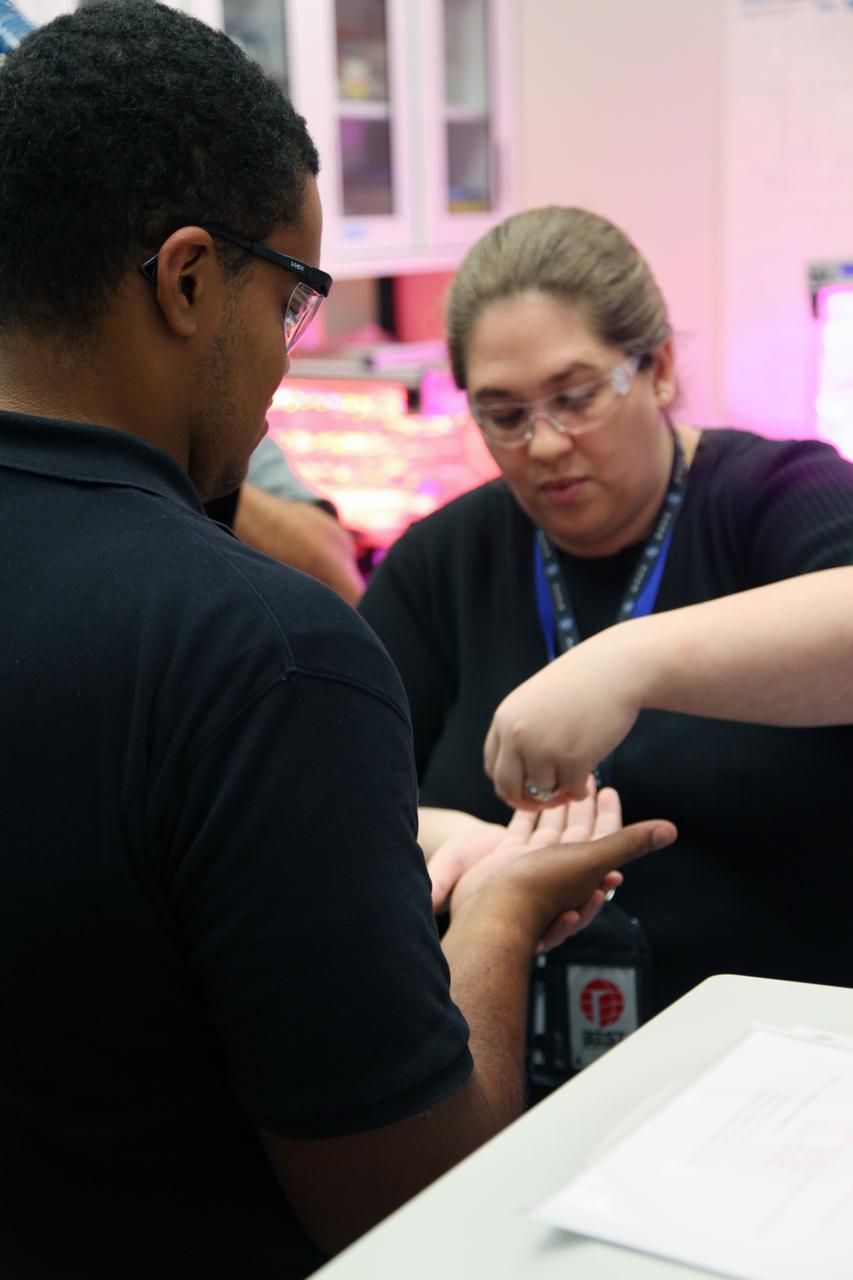
Cape Canaveral, Fla. -- A student participates in a hands-on activity as a laboratory technician assists in Kennedy’s Space Life Sciences Laboratory (SLSL). High-school students from two Orlando, Fla., schools travelled to NASA’s Kennedy Space Center in Florida to participate in National Lab Day activities. During the event, about 80 students, toured various facilities and engaged in educational hands-on activities. National Lab Day is a partnership between federal agencies, foundations, professional societies and organizations devoted to promoting science, technology, engineering and math, or STEM, hands-on discovery-based laboratory experiences for students. Photo Credit: NASA/Frankie Martin

Cape Canaveral, Fla. -- Students participate in a high-altitude balloon experiment that's being conducted on the grounds of Kennedy’s Space Life Sciences Laboratory (SLSL). High-school students from two Orlando, Fla., schools travelled to NASA’s Kennedy Space Center in Florida to participate in National Lab Day activities. During the event, about 80 students, toured various facilities and engaged in educational hands-on activities. National Lab Day is a partnership between federal agencies, foundations, professional societies and organizations devoted to promoting science, technology, engineering and math, or STEM, hands-on discovery-based laboratory experiences for students. Photo Credit: NASA/Frankie Martin
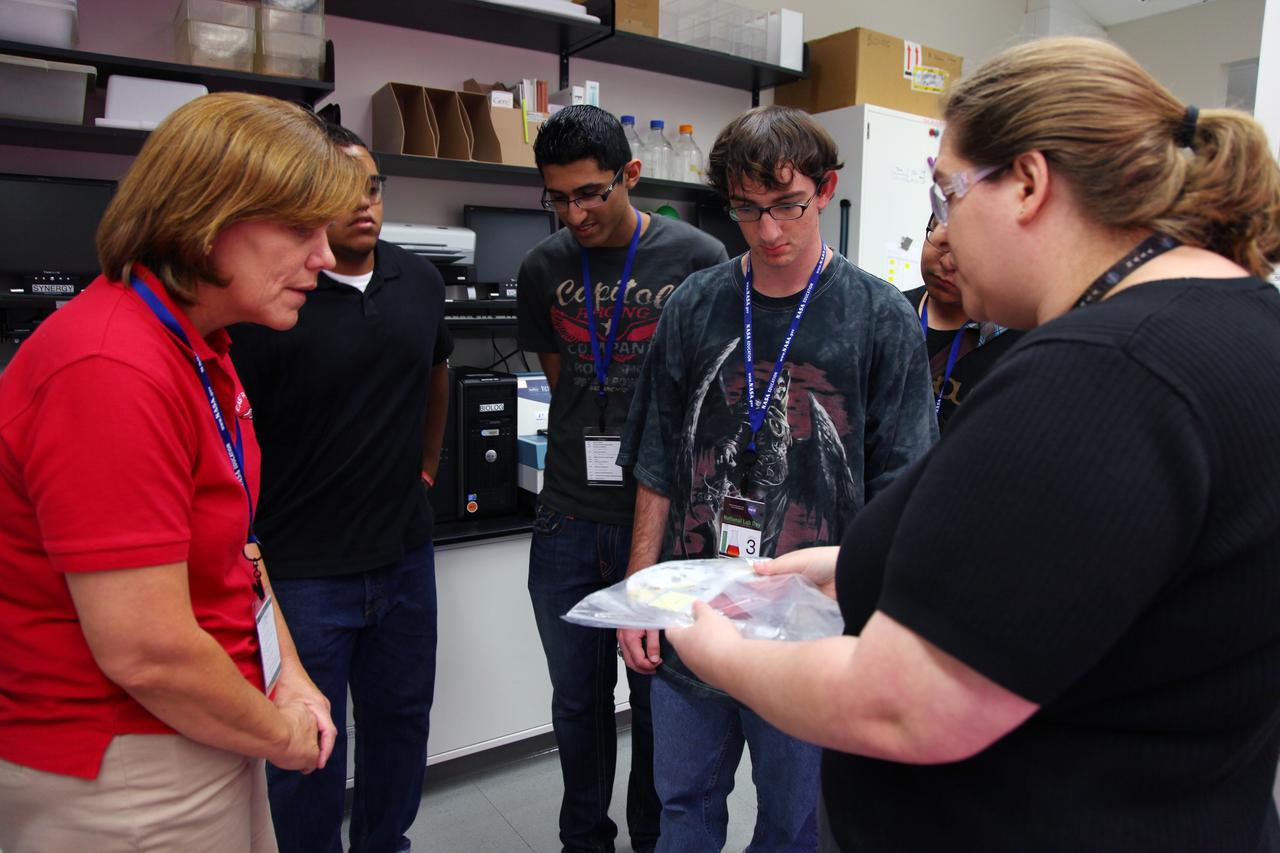
Cape Canaveral, Fla. -- Students listen intently as a laboratory technician describes a project that's being researched in Kennedy’s Space Life Sciences Laboratory (SLSL). High-school students from two Orlando, Fla., schools travelled to NASA’s Kennedy Space Center in Florida to participate in National Lab Day activities. During the event, about 80 students, toured various facilities and engaged in educational hands-on activities. National Lab Day is a partnership between federal agencies, foundations, professional societies and organizations devoted to promoting science, technology, engineering and math, or STEM, hands-on discovery-based laboratory experiences for students. Photo Credit: NASA/Frankie Martin
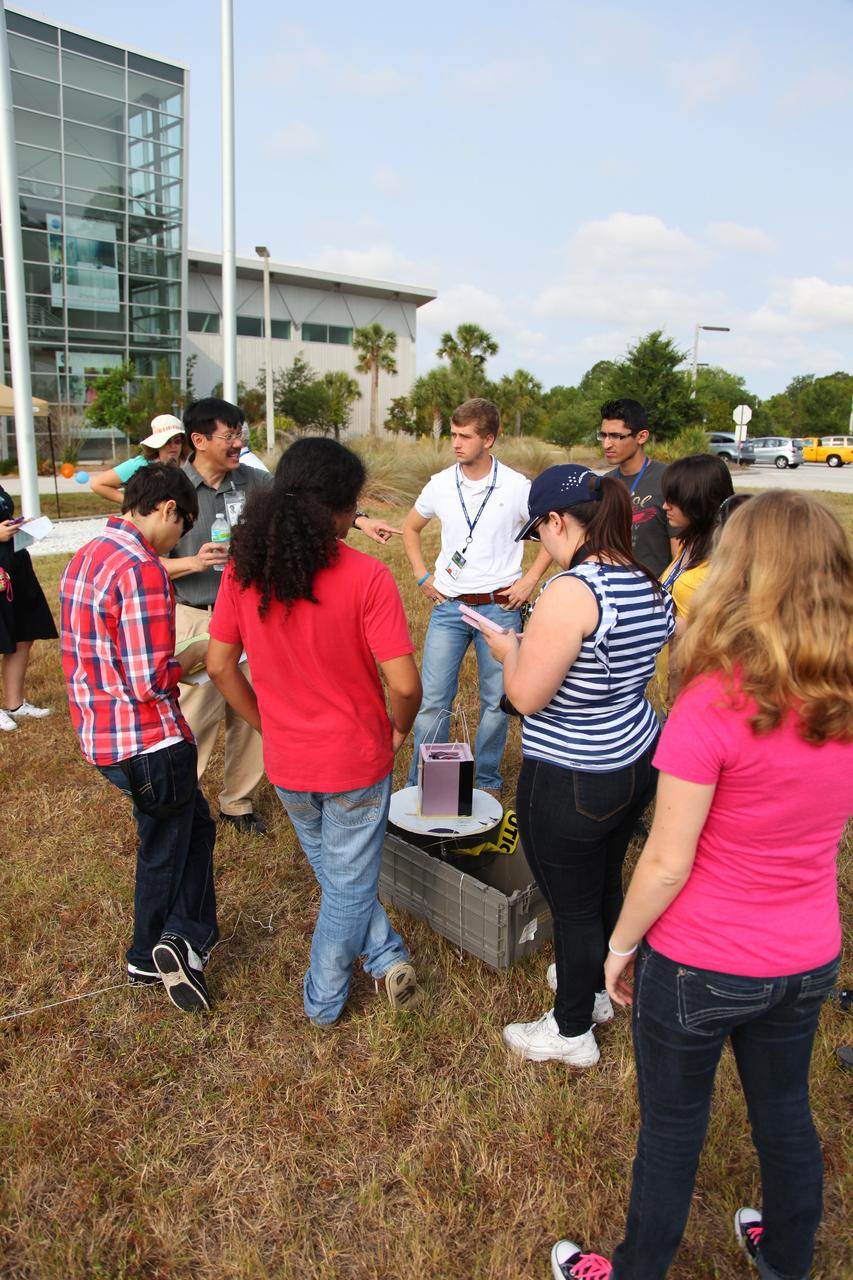
Cape Canaveral, Fla. -- Students listen intently as a laboratory technician describes the high-altitude balloon experiment that's being conducted on the grounds of Kennedy’s Space Life Sciences Laboratory (SLSL). High-school students from two Orlando, Fla., schools travelled to NASA’s Kennedy Space Center in Florida to participate in National Lab Day activities. During the event, about 80 students, toured various facilities and engaged in educational hands-on activities. National Lab Day is a partnership between federal agencies, foundations, professional societies and organizations devoted to promoting science, technology, engineering and math, or STEM, hands-on discovery-based laboratory experiences for students. Photo Credit: NASA/Frankie Martin
Courtney Miller, a student at Langston University in Oklahoma, participates in a hands-on experience inside a Space Station Processing Facility lab at Kennedy Space Center on Sept. 18, 2019. Miller was part of a tour of the Florida spaceport organized by NASA’s Office of Education and Langston professor Byron Quinn, Ph.D. The Kennedy visit included stops at SwampWorks, the Neil Armstrong Operations and Checkout Building, the Vehicle Assembly Building, the visitor complex and the Center for Space Education.
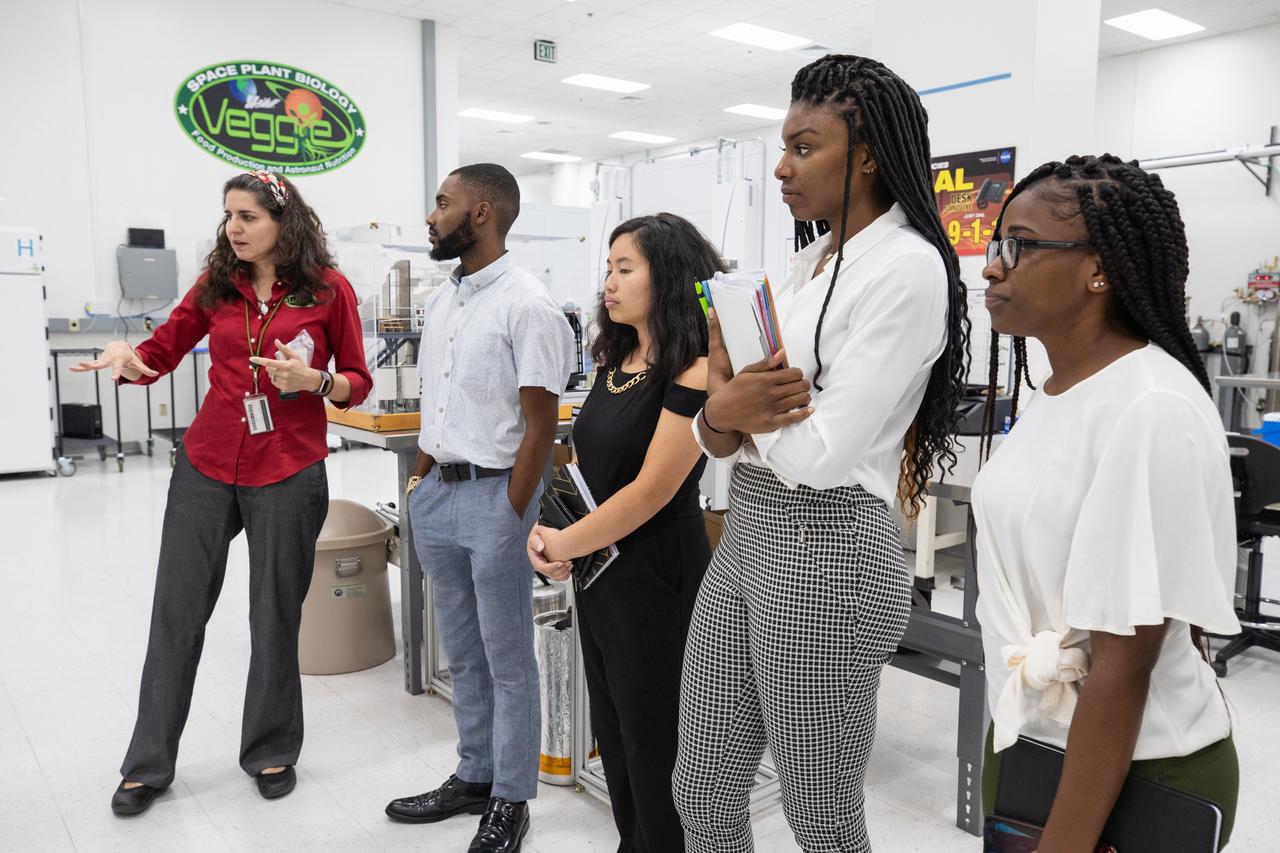
Dr. Gioia Massa, NASA Veggie project lead, addresses Langston University students, from left, Sherman Cravens, Kashia Cha, Courtney Miller and Makyah Farris inside a Space Station Processing Facility lab at Kennedy Space Center on Sept. 18, 2019. The tour, which was organized by Langston University professor Byron Quinn, Ph.D., and NASA’s Office of Education, included stops at SwampWorks, the Neil Armstrong Operations and Checkout Building, the Vehicle Assembly Building, the visitor complex and the Center for Space Education.
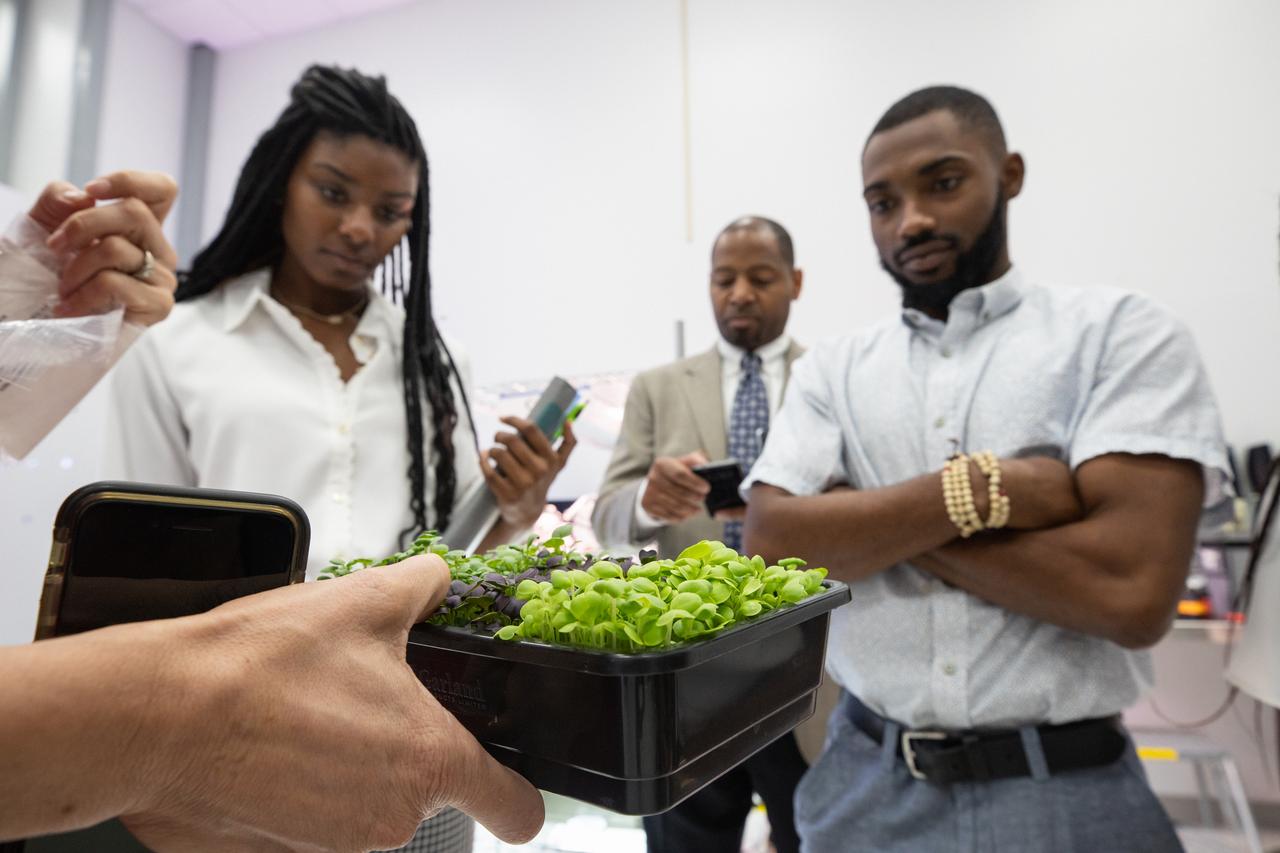
Langston University students Courtney Miller, left, and Sherman Cravens participate in a hands-on experience inside a Space Station Processing Facility lab at Kennedy Space Center on Sept. 18, 2019. Miller and Cravens were part of a tour of the Florida spaceport organized by Byron Quinn (background), Ph.D., Langston University director of the Science Research Institute, and NASA’s Office of Education. The Kennedy visit included stops at SwampWorks, the Neil Armstrong Operations and Checkout Building, the Vehicle Assembly Building, the visitor complex and the Center for Space Education.
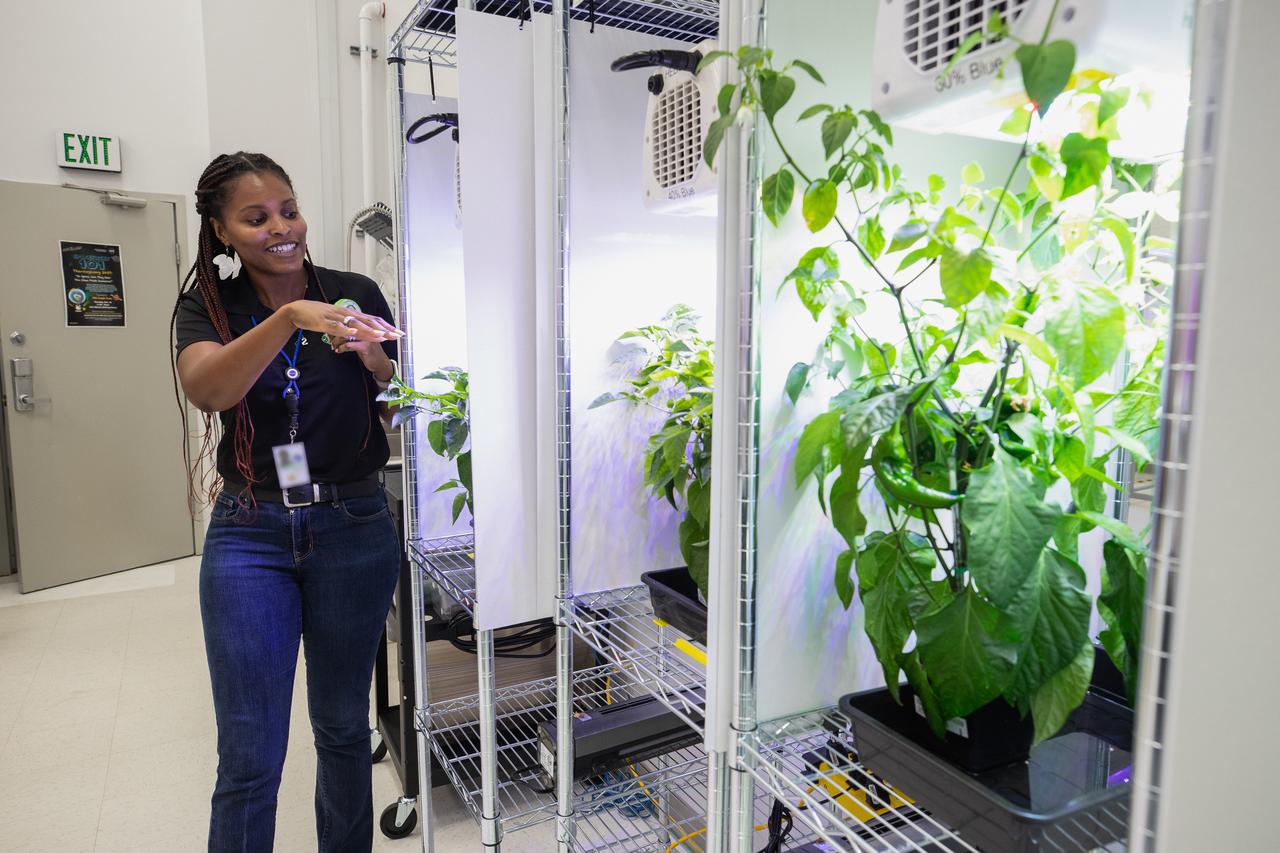
Kennedy Space Center Research and Development Scientist Lashelle Spencer discusses plant growth in space with Langston University students and professor Byron Quinn, Ph.D., inside a Space Station Processing Facility lab at Kennedy Space Center on Sept. 18, 2019. Quinn organized the tour through NASA’s Office of Education. The visit included stops at SwampWorks, the Neil Armstrong Operations and Checkout Building, the Vehicle Assembly Building, the visitor complex and the Center for Space Education.
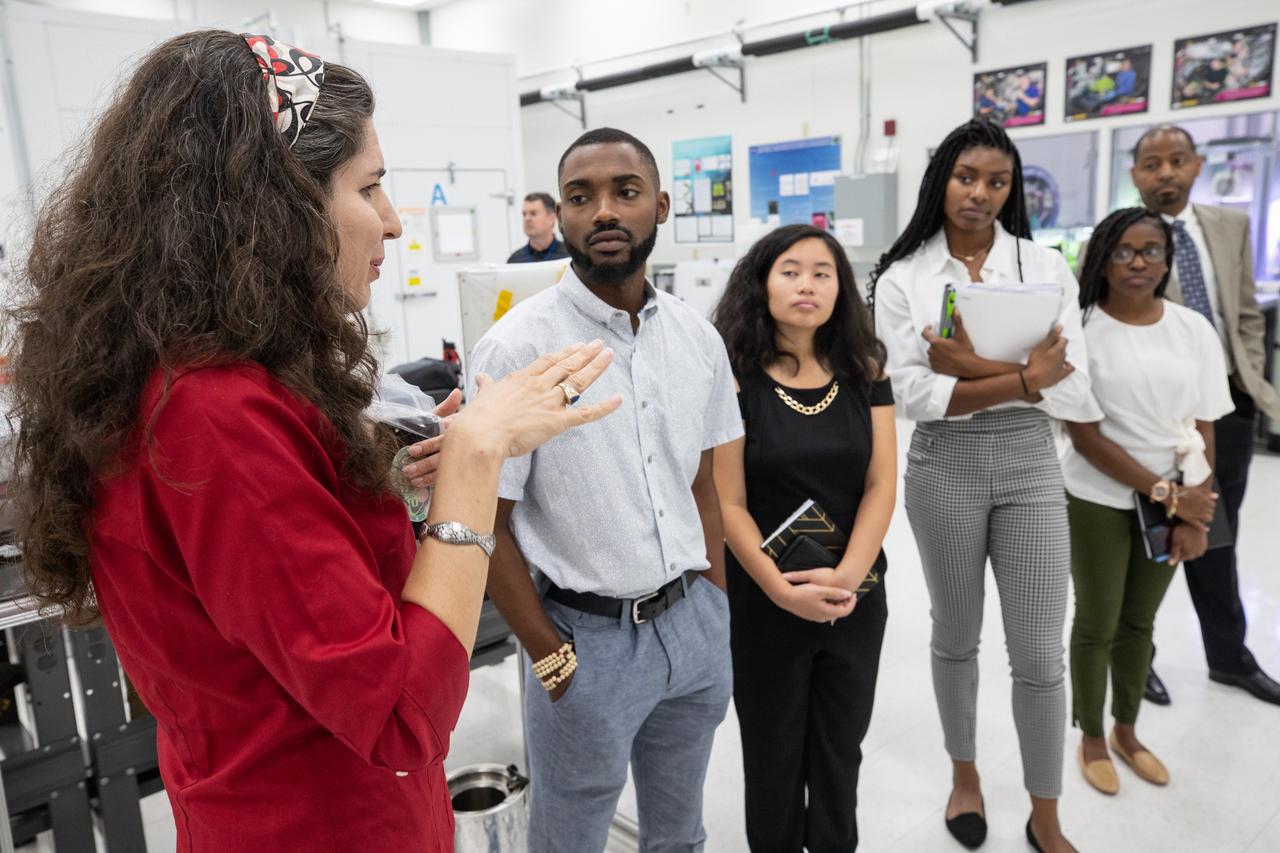
Dr. Gioia Massa, NASA Veggie project lead, addresses Langston University students, from left, Sherman Cravens, Kashia Cha, Courtney Miller and Makyah Farris, along with Langston professor Byron Quinn, Ph.D., inside a Space Station Processing Facility lab at Kennedy Space Center on Sept. 18, 2019. The tour, which was organized by Quinn and NASA’s Office of Education, included stops at SwampWorks, the Neil Armstrong Operations and Checkout Building, the Vehicle Assembly Building, the visitor complex and the Center for Space Education.
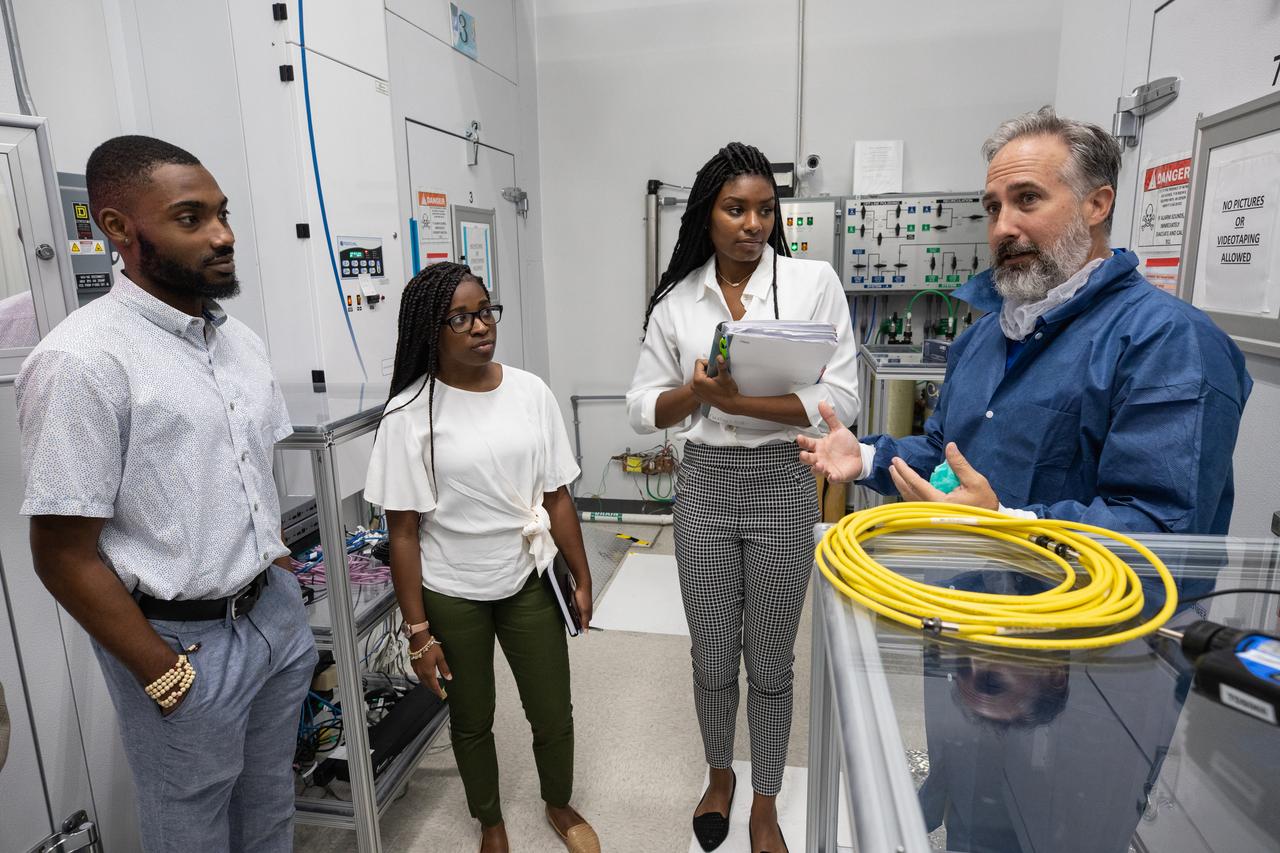
Kennedy Space Center Veggie Project Manager Trent Smith talks with Langston University students, from left, Sherman Cravens, Makyah Farris and Courtney Miller inside a Space Station Processing Facility lab at Kennedy Space Center on Sept. 18, 2019. The students were part of a tour of the Florida spaceport organized by NASA’s Office of Education and Byron Quinn, Ph.D., Langston University director of the Science Research Institute. The visit included stops at SwampWorks, the Neil Armstrong Operations and Checkout Building, the Vehicle Assembly Building, the visitor complex and the Center for Space Education.
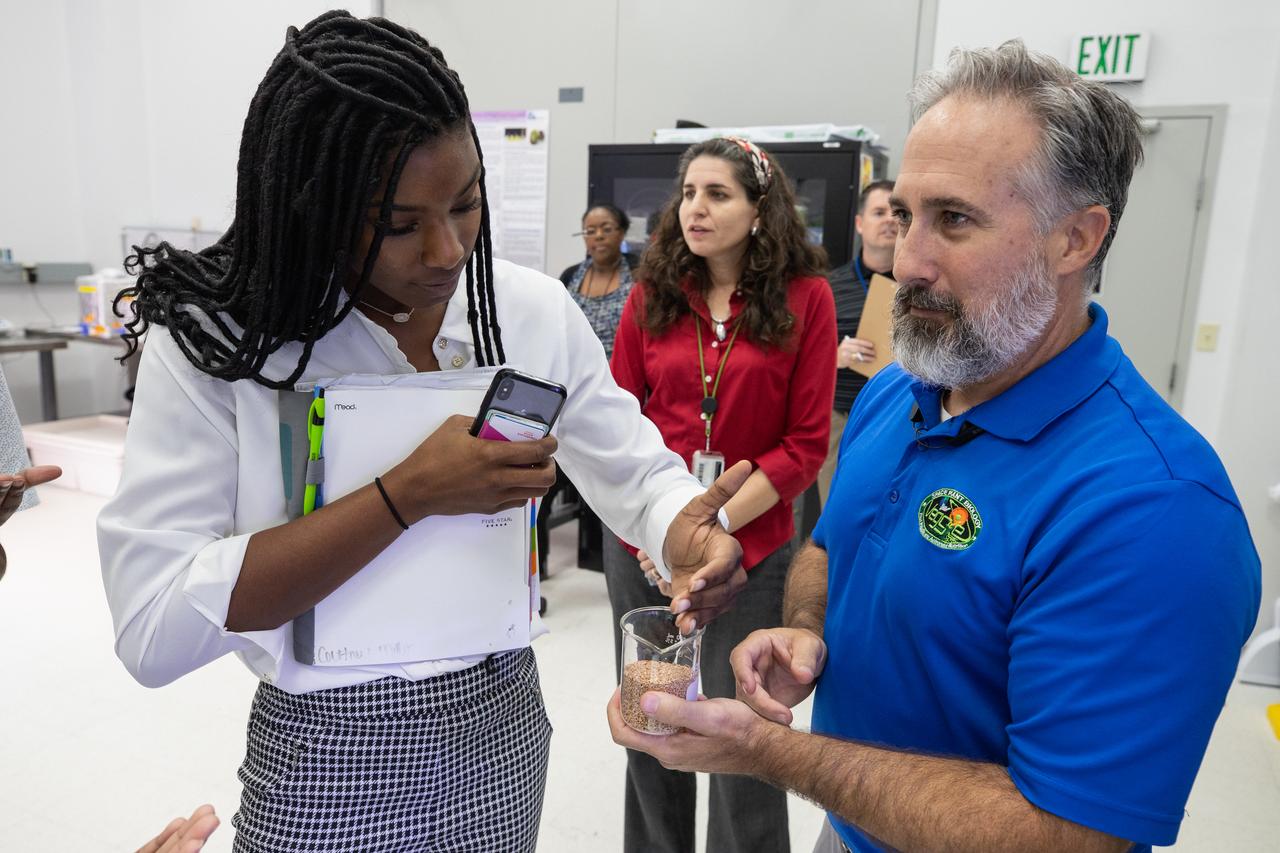
Langston University student Courtney Miller, left, interacts with Kennedy Space Center Veggie Project Manager Trent Smith inside a Space Station Processing Facility lab at Kennedy on Sept. 18, 2019. Behind them is Veggie Project lead Dr. Gioia Massa. Miller was one of four Langston students, along with professor Byron Quinn, Ph.D., who toured the Florida spaceport. The visit included stops at SwampWorks, the Neil Armstrong Operations and Checkout Building, the Vehicle Assembly Building, the visitor complex and the Center for Space Education.
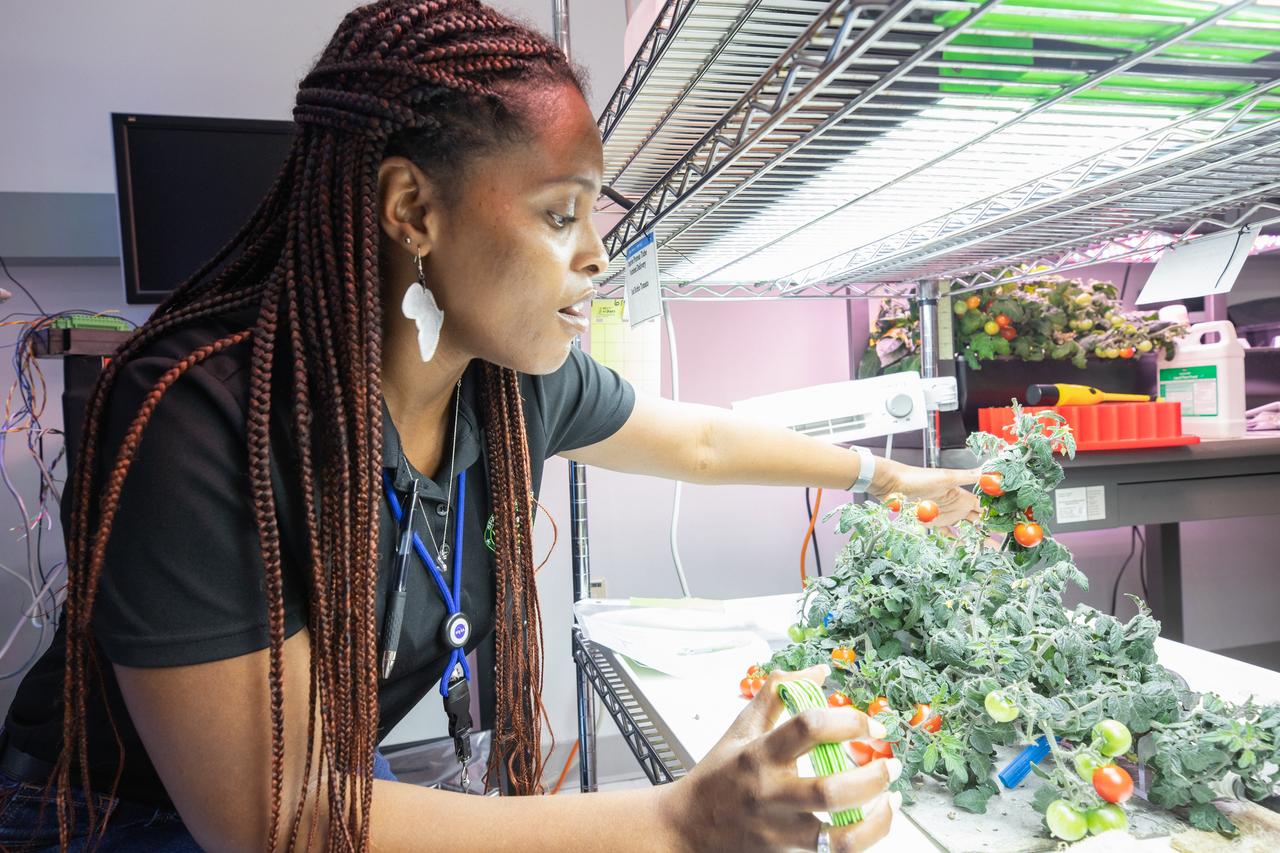
Kennedy Space Center Research and Development Scientist Lashelle Spencer explains methods for growing vegetables in space to a group of students from Langston University inside a Space Station Processing Facility lab at Kennedy Space Center on Sept. 18, 2019. The students’ tour of the Florida spaceport included stops at SwampWorks, the Neil Armstrong Operations and Checkout Building, the Vehicle Assembly Building, the visitor complex and the Center for Space Education.

NASA successfully launched a NASA Terrier-Improved Orion suborbital sounding rocket carrying student experiments with the RockOn/RockSat-C programs at 6 a.m., today. More than 200 middle school and university students and instructors participating in Rocket Week at Wallops were on hand to witness the launch. Through RockOn and RockSat-C students are learning and applying skills required to develop experiments for suborbital rocket flight. In addition, middle school educators through the Wallops Rocket Academy for Teachers (WRATS) are learning about applying rocketry basics in their curriculum. The payload flew to an altitude of 71.4 miles and descended by parachute into the Atlantic Ocean off the coast of Wallops. Payload recovery is in progress. The next launch from NASA’s Wallops Flight Facility is a Black Brant IX suborbital sounding rocket currently scheduled between 6 and 10 a.m., July 7. Credits: NASA Wallops Optics Lab <b><a href="http://www.nasa.gov/audience/formedia/features/MP_Photo_Guidelines.html" rel="nofollow">NASA image use policy.</a></b> <b><a href="http://www.nasa.gov/centers/goddard/home/index.html" rel="nofollow">NASA Goddard Space Flight Center</a></b> enables NASA’s mission through four scientific endeavors: Earth Science, Heliophysics, Solar System Exploration, and Astrophysics. Goddard plays a leading role in NASA’s accomplishments by contributing compelling scientific knowledge to advance the Agency’s mission. <b>Follow us on <a href="http://twitter.com/NASAGoddardPix" rel="nofollow">Twitter</a></b> <b>Like us on <a href="http://www.facebook.com/pages/Greenbelt-MD/NASA-Goddard/395013845897?ref=tsd" rel="nofollow">Facebook</a></b> <b>Find us on <a href="http://instagrid.me/nasagoddard/?vm=grid" rel="nofollow">Instagram</a></b>