
jsc2025e041097 (April 11, 2025) --- NASA’s SpaceX Crew-11 crew pose for a photo by an emergency egress vehicle at NASA’s Kennedy Space Center in Florida. Astronauts would use the emergency egress vehicle to quickly leave the launch area in the unlikely event of an emergency. From left to right: Roscosmos cosmonaut Oleg Platonov, NASA astronauts Mike Fincke and Zena Cardman, and JAXA astronaut Kimiya Yui.
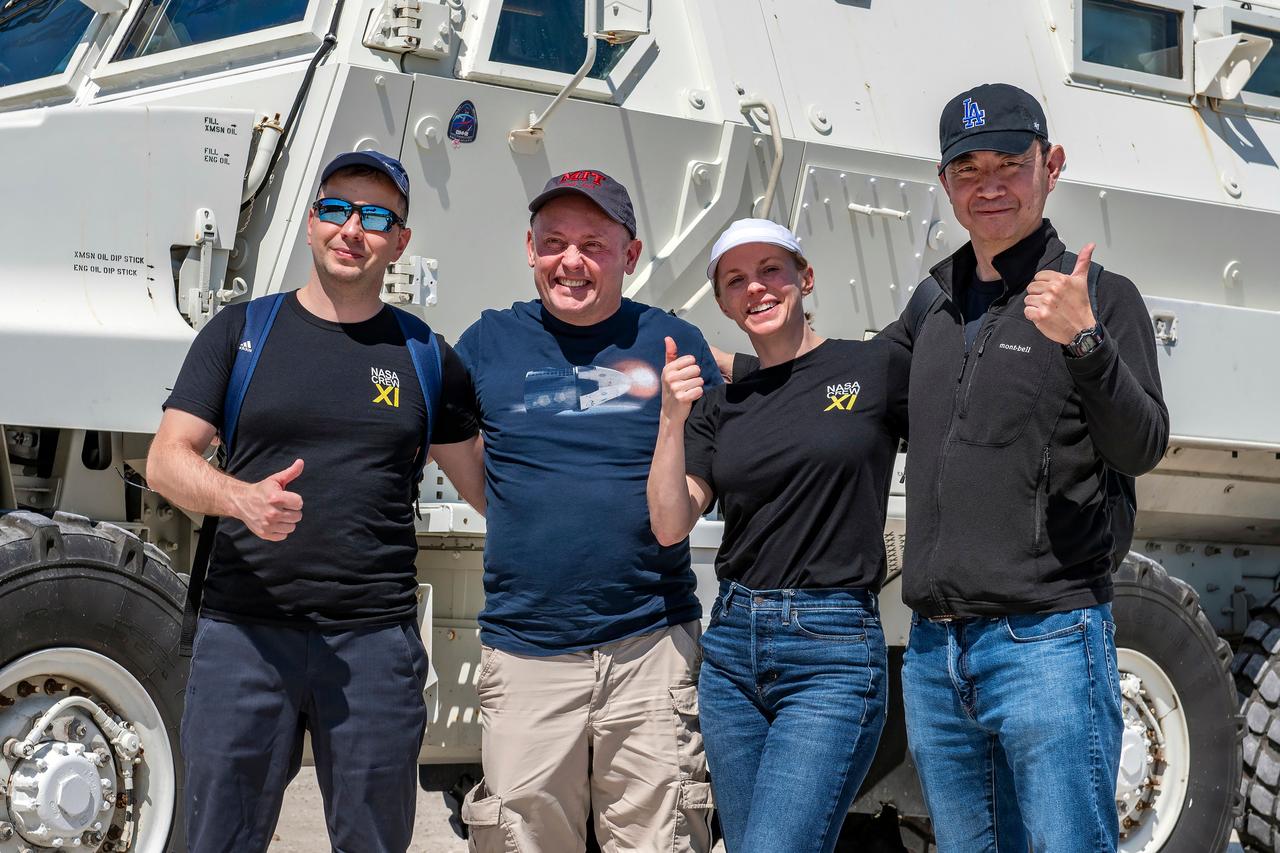
jsc2025e041100 (April 11, 2025) --- NASA’s SpaceX Crew-11 crew pose for a photo by an emergency egress vehicle at NASA’s Kennedy Space Center in Florida. Astronauts would use the emergency egress vehicle to quickly leave the launch area in the unlikely event of an emergency. From left to right: Roscosmos cosmonaut Oleg Platonov, NASA astronauts Mike Fincke and Zena Cardman, and JAXA astronaut Kimiya Yui.
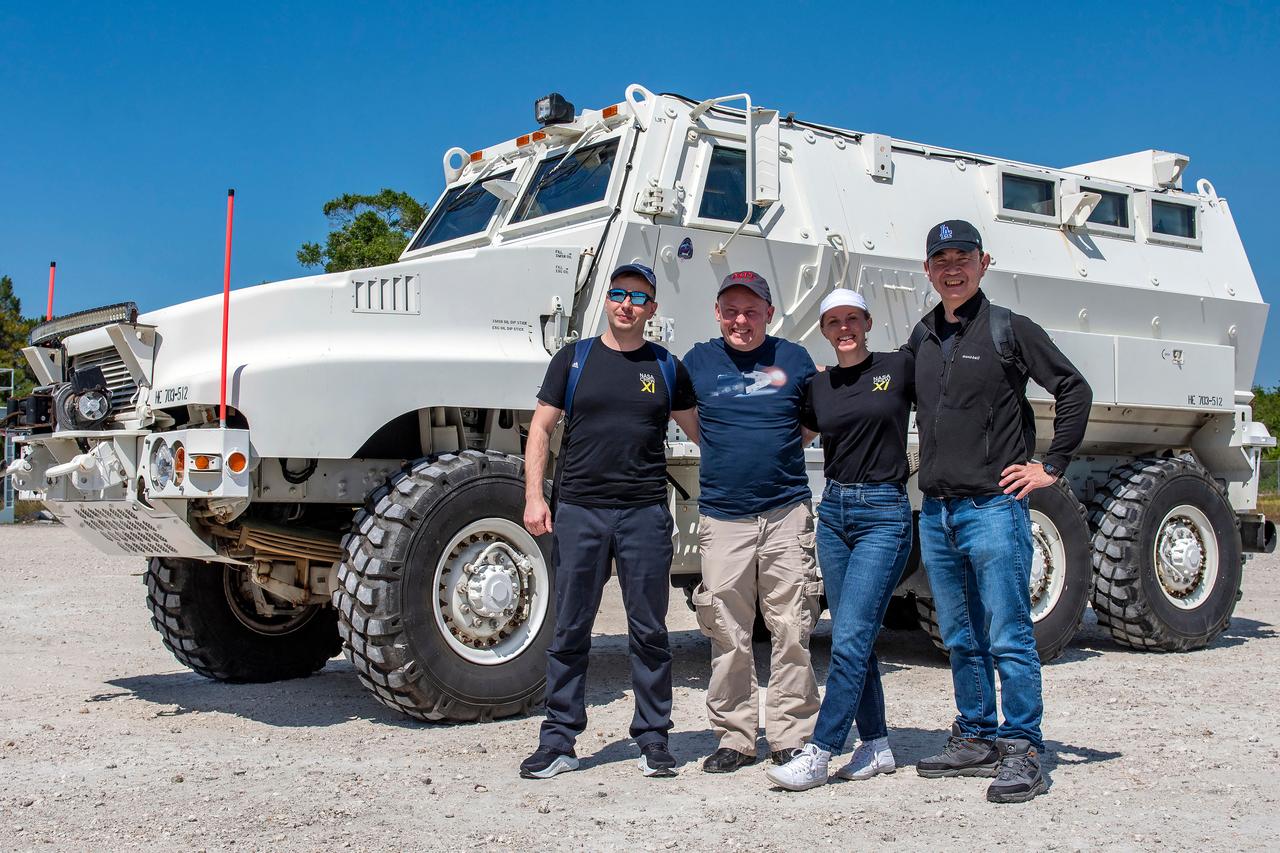
jsc2025e041098 (April 11, 2025) --- NASA’s SpaceX Crew-11 crew pose for a photo by an emergency egress vehicle at NASA’s Kennedy Space Center in Florida. Astronauts would use the emergency egress vehicle to quickly leave the launch area in the unlikely event of an emergency. From left to right: Roscosmos cosmonaut Oleg Platonov, NASA astronauts Mike Fincke and Zena Cardman, and JAXA astronaut Kimiya Yui.
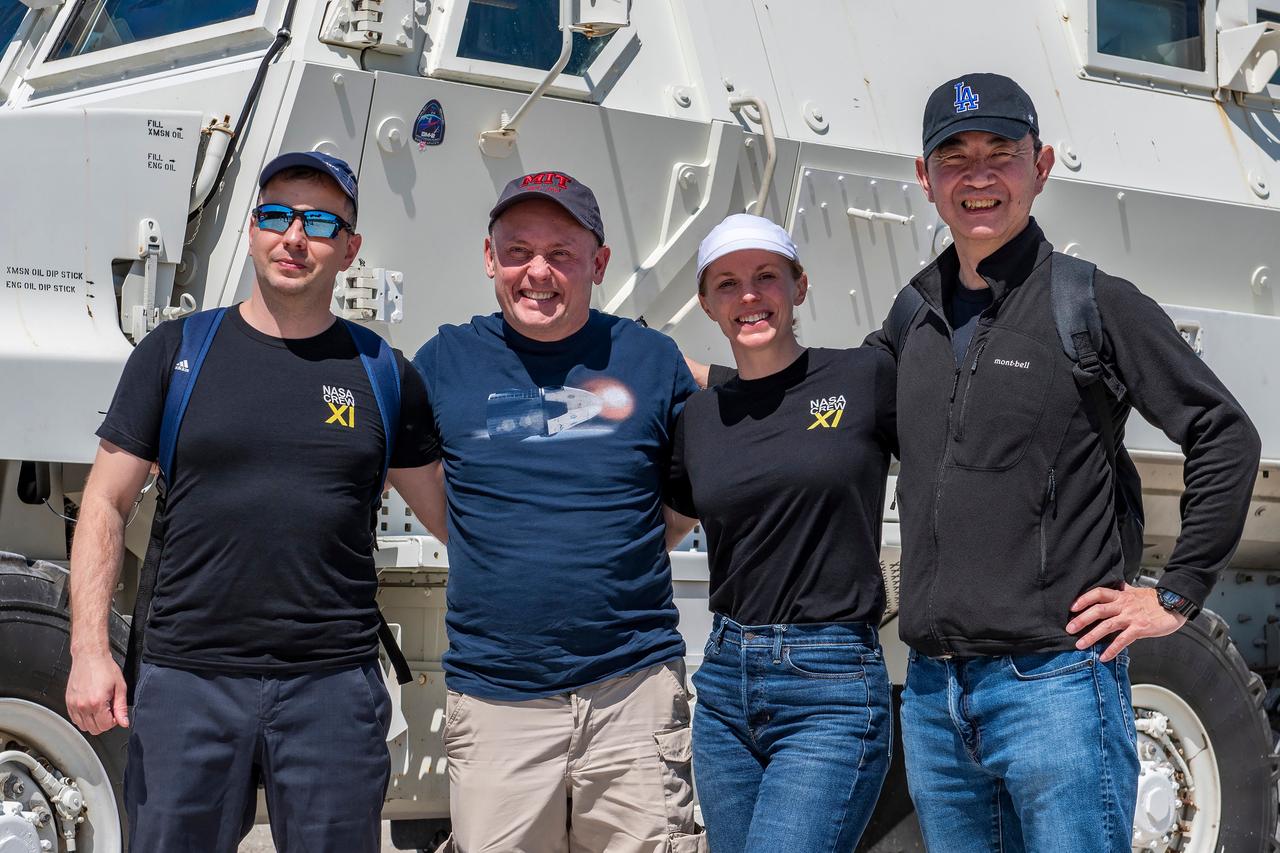
jsc2025e041099 (April 11, 2025) --- NASA’s SpaceX Crew-11 crew pose for a photo by an emergency egress vehicle at NASA’s Kennedy Space Center in Florida. Astronauts would use the emergency egress vehicle to quickly leave the launch area in the unlikely event of an emergency. From left to right: Roscosmos cosmonaut Oleg Platonov, NASA astronauts Mike Fincke and Zena Cardman, and JAXA astronaut Kimiya Yui.
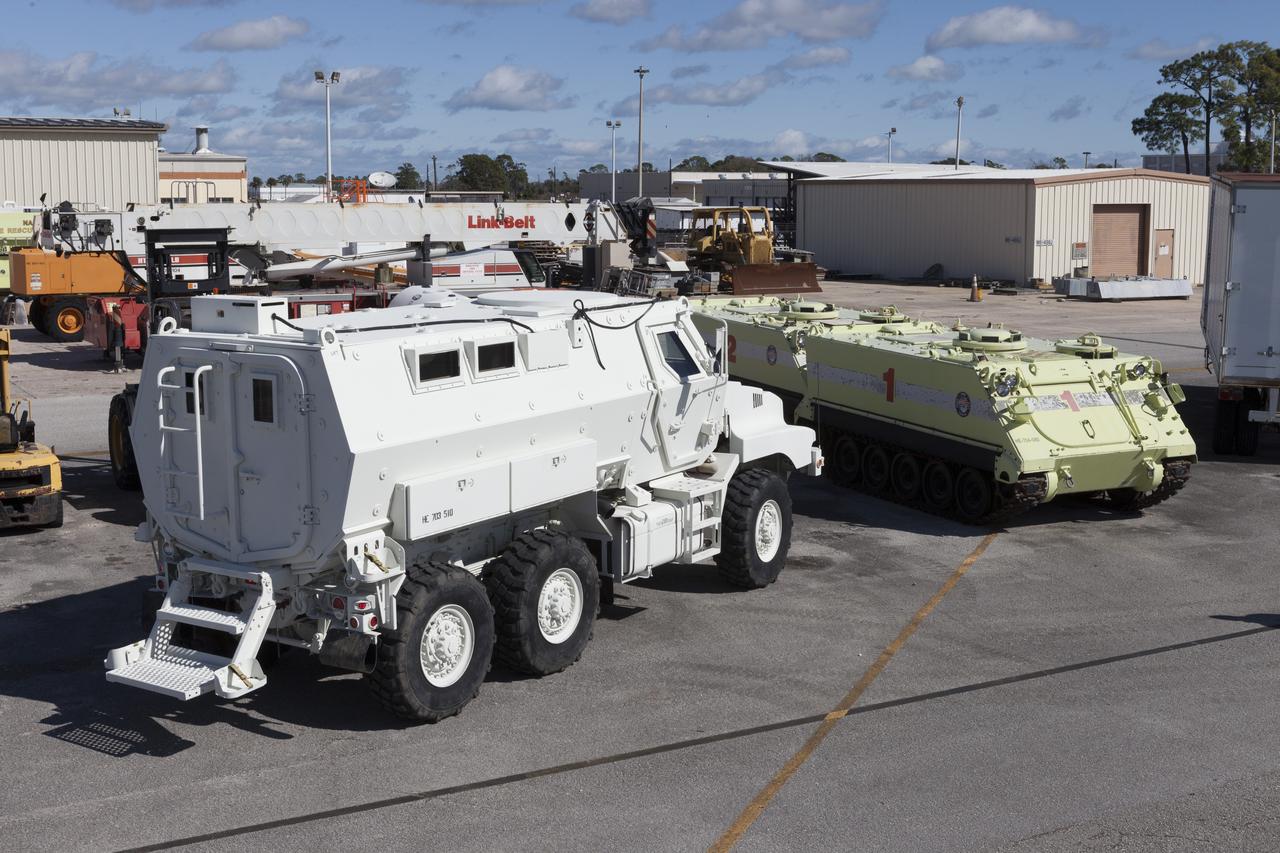
CAPE CANAVERAL, Fla. – One of four new emergency egress vehicles, called Mine-Resistant Ambush-Protection, or MRAP, vehicles sits near space shuttle-era M-113 vehicles at the Maintenance and Operations Facility at NASA’s Kennedy Space Center in Florida. The MRAPs arrived from the U.S. Army Red River Depot in Texarkana, Texas in December 2013. The vehicles were processed in and then transported to the Rotation, Processing and Surge Facility near the Vehicle Assembly Building for temporary storage. The Ground Systems Development and Operations Program at Kennedy led the efforts to an emergency egress vehicle that future astronauts could quickly use to leave the Launch Complex 39 area in case of an emergency. During crewed launches of NASA’s Space Launch System and Orion spacecraft, the MRAP will be stationed by the slidewire termination area at the pad. In case of an emergency, the crew will ride a slidewire to the ground and immediately board the MRAP for safe egress from the pad. The new vehicles replace the M-113 vehicles that were used during the Space Shuttle Program. Photo credit: NASA/Kim Shiflett
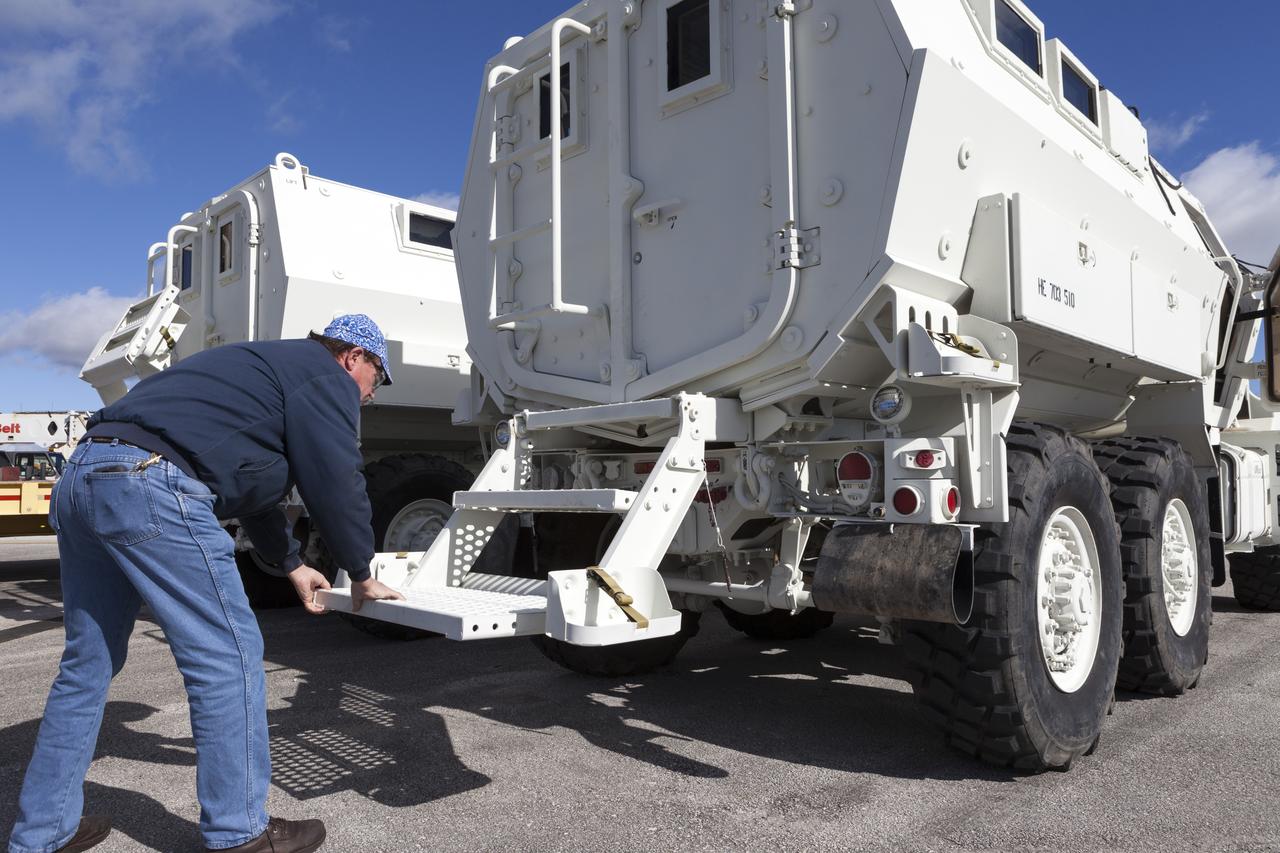
CAPE CANAVERAL, Fla. – A URS Federal Services worker pulls down the steps to the entrance of one of the four new emergency egress vehicles, called Mine-Resistant Ambush-Protected, or MRAP, vehicles at the Maintenance and Operations Facility at NASA’s Kennedy Space Center in Florida. The MRAPs arrived from the U.S. Army Red River Depot in Texarkana, Texas in December 2013. The vehicles were processed in and then transported to the Rotation, Processing and Surge Facility near the Vehicle Assembly Building for temporary storage. The Ground Systems Development and Operations Program at Kennedy led the efforts to an emergency egress vehicle that future astronauts could quickly use to leave the Launch Complex 39 area in case of an emergency. During crewed launches of NASA’s Space Launch System and Orion spacecraft, the MRAP will be stationed by the slidewire termination area at the pad. In case of an emergency, the crew will ride a slidewire to the ground and immediately board the MRAP for safe egress from the pad. The new vehicles replace the M-113 vehicles that were used during the Space Shuttle Program. Photo credit: NASA/Kim Shiflett

CAPE CANAVERAL, Fla. – One of four new emergency egress vehicles, called Mine-Resistant Ambush-Protection, or MRAP, vehicles is driven to the Maintenance and Operations Facility at Kennedy Space Center in Florida. The MRAPs arrived from the U.S. Army Red River Depot in Texarkana, Texas in December 2013. The vehicles were processed in and then transported to the Rotation, Processing and Surge Facility near the Vehicle Assembly Building for temporary storage. The Ground Systems Development and Operations Program at Kennedy led the efforts to an emergency egress vehicle that future astronauts could quickly use to leave the Launch Complex 39 area in case of an emergency. During crewed launches of NASA’s Space Launch System and Orion spacecraft, the MRAP will be stationed by the slidewire termination area at the pad. In case of an emergency, the crew will ride a slidewire to the ground and immediately board the MRAP for safe egress from the pad. The new vehicles replace the M-113 vehicles that were used during the Space Shuttle Program. Photo credit: NASA/Kim Shiflett
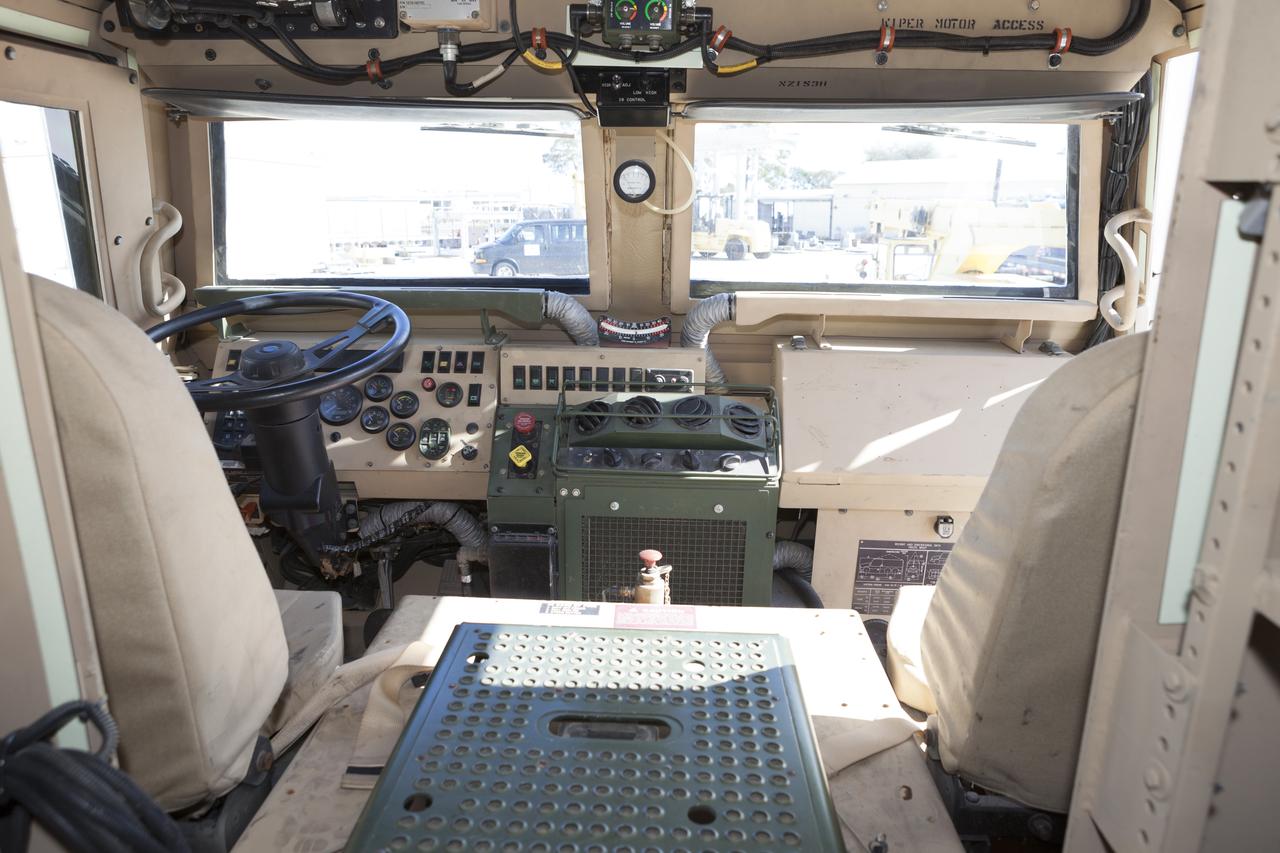
CAPE CANAVERAL, Fla. – A view of the interior of one of four new emergency egress vehicles, called Mine-Resistant Ambush-Protected, or MRAP, vehicles is shown. The MRAPs are at the Maintenance and Operations Facility at NASA’s Kennedy Space Center in Florida. The MRAPs arrived from the U.S. Army Red River Depot in Texarkana, Texas in December 2013. The vehicles were processed in and then transported to the Rotation, Processing and Surge Facility near the Vehicle Assembly Building for temporary storage. The Ground Systems Development and Operations Program at Kennedy led the efforts to an emergency egress vehicle that future astronauts could quickly use to leave the Launch Complex 39 area in case of an emergency. During crewed launches of NASA’s Space Launch System and Orion spacecraft, the MRAP will be stationed by the slidewire termination area at the pad. In case of an emergency, the crew will ride a slidewire to the ground and immediately board the MRAP for safe egress from the pad. The new vehicles replace the M-113 vehicles that were used during the Space Shuttle Program. Photo credit: NASA/Kim Shiflett
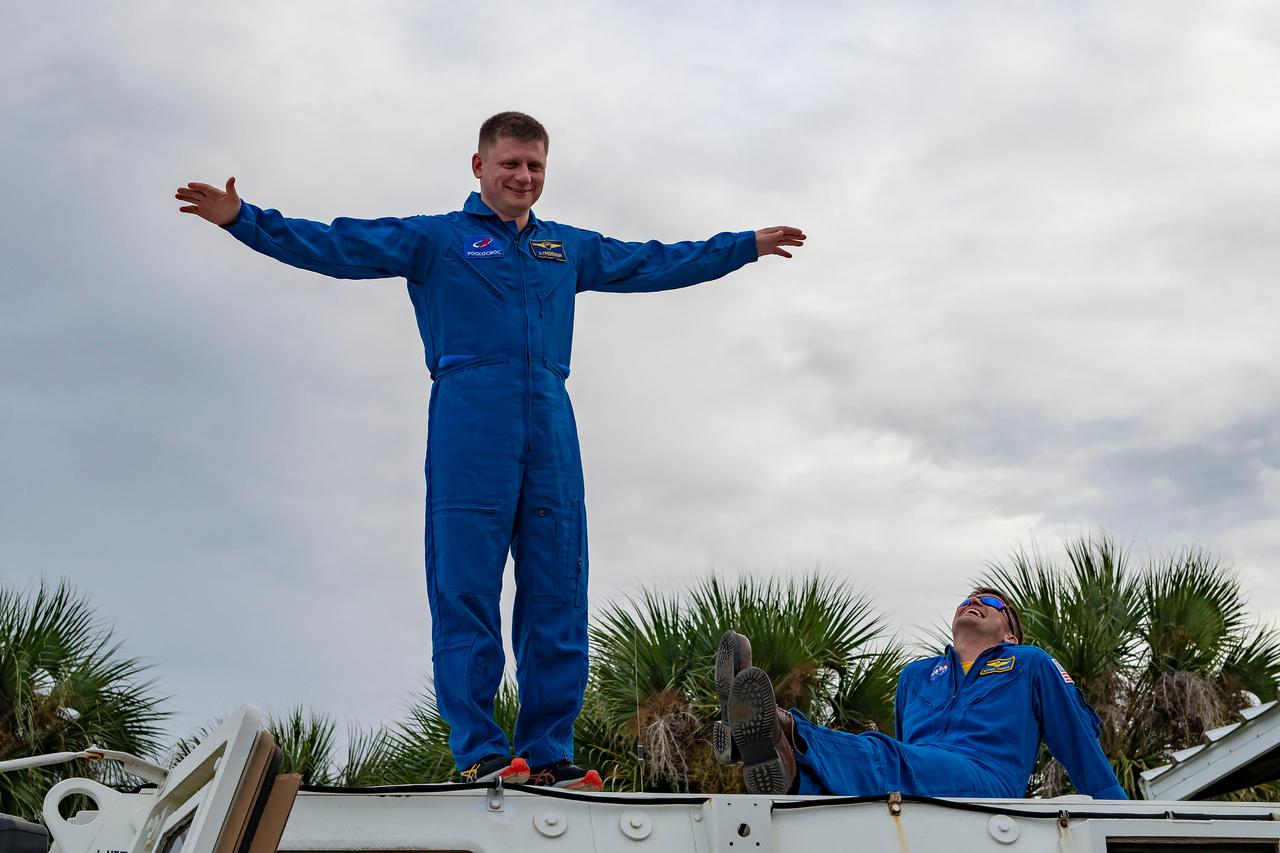
jsc2024e011755 (Oct. 12, 2023) --- SpaceX Crew-8 Mission Specialist Alexander Grebenkin poses for a photo outside the emergency egress vehicle at NASA's Kennedy Space Center's Launch Pad 39A in Florida. Astronauts would use the emergency egress vehicle to quickly leave the launch area in the unlikely event of an emergency. Credit: SpaceX
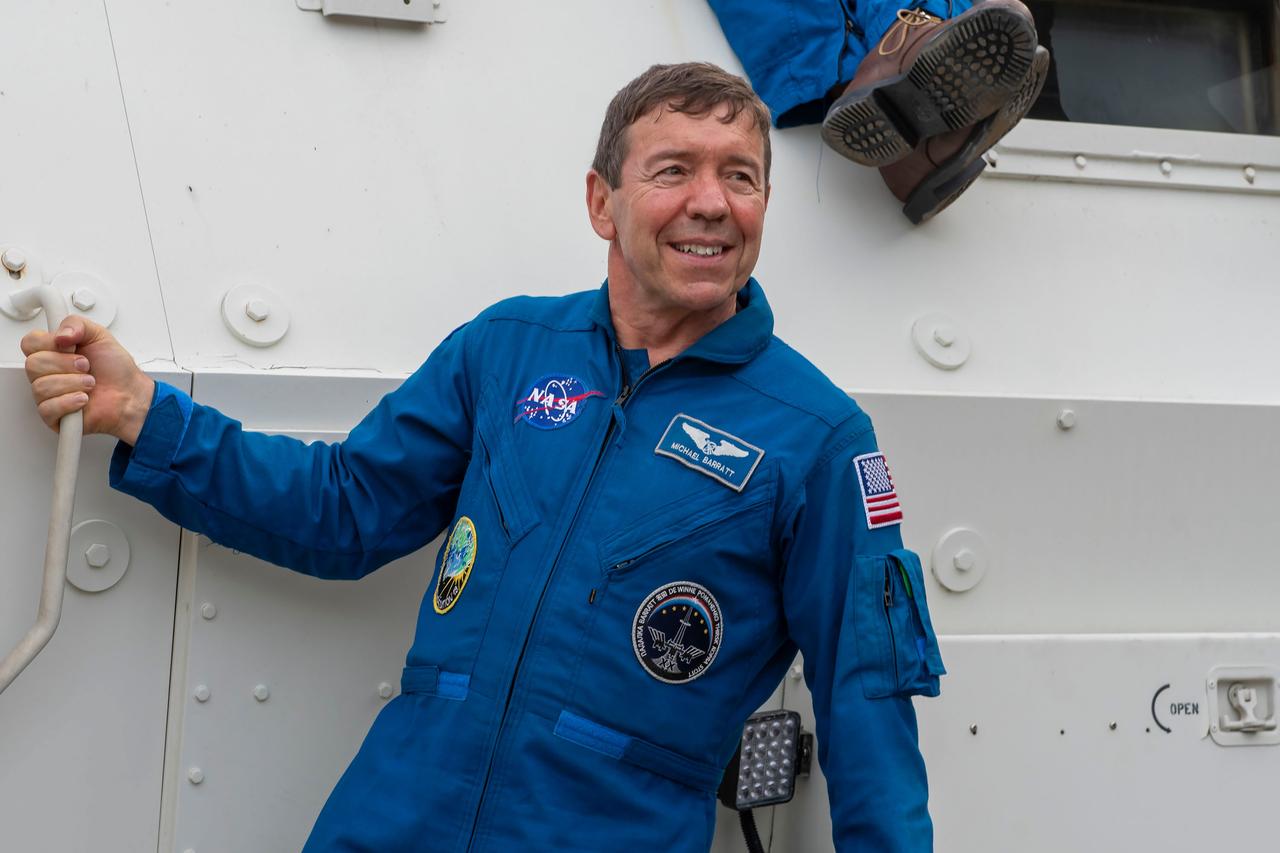
jsc2024e011752 (Oct. 12, 2023) --- NASA's SpaceX Crew-8 Pilot Michael Barratt poses for a photo outside the emergency egress vehicle at NASA's Kennedy Space Center's Launch Pad 39A in Florida. Astronauts would use the emergency egress vehicle to quickly leave the launch area in the unlikely event of an emergency. Credit: SpaceX
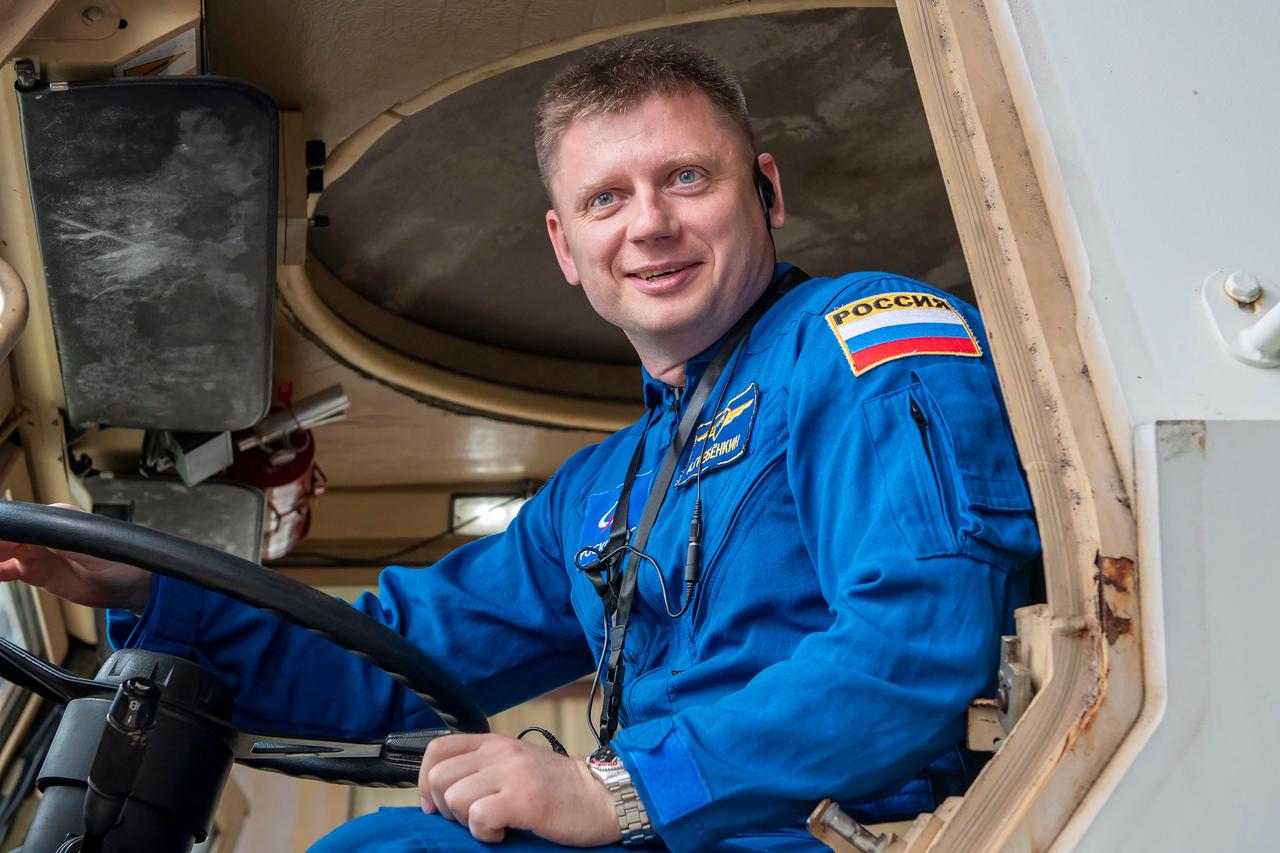
jsc2024e011750 (Oct. 12, 2023) --- SpaceX Crew-8 Mission Specialist Alexander Grebenkin poses for a photo inside an emergency egress vehicle at NASA's Kennedy Space Center's Launch Pad 39A in Florida. Crews would use the emergency egress vehicle to quickly leave the launch area in case of an emergency. Credit: SpaceX

jsc2024e011753 (Oct. 12, 2023) --- NASA's SpaceX Crew-8 Mission Specialist Jeanette Epps poses for a photo inside an emergency egress vehicle at NASA's Kennedy Space Center's Launch Pad 39A in Florida. Crews would use the emergency egress vehicle to quickly leave the launch area in case of an emergency. Credit: SpaceX
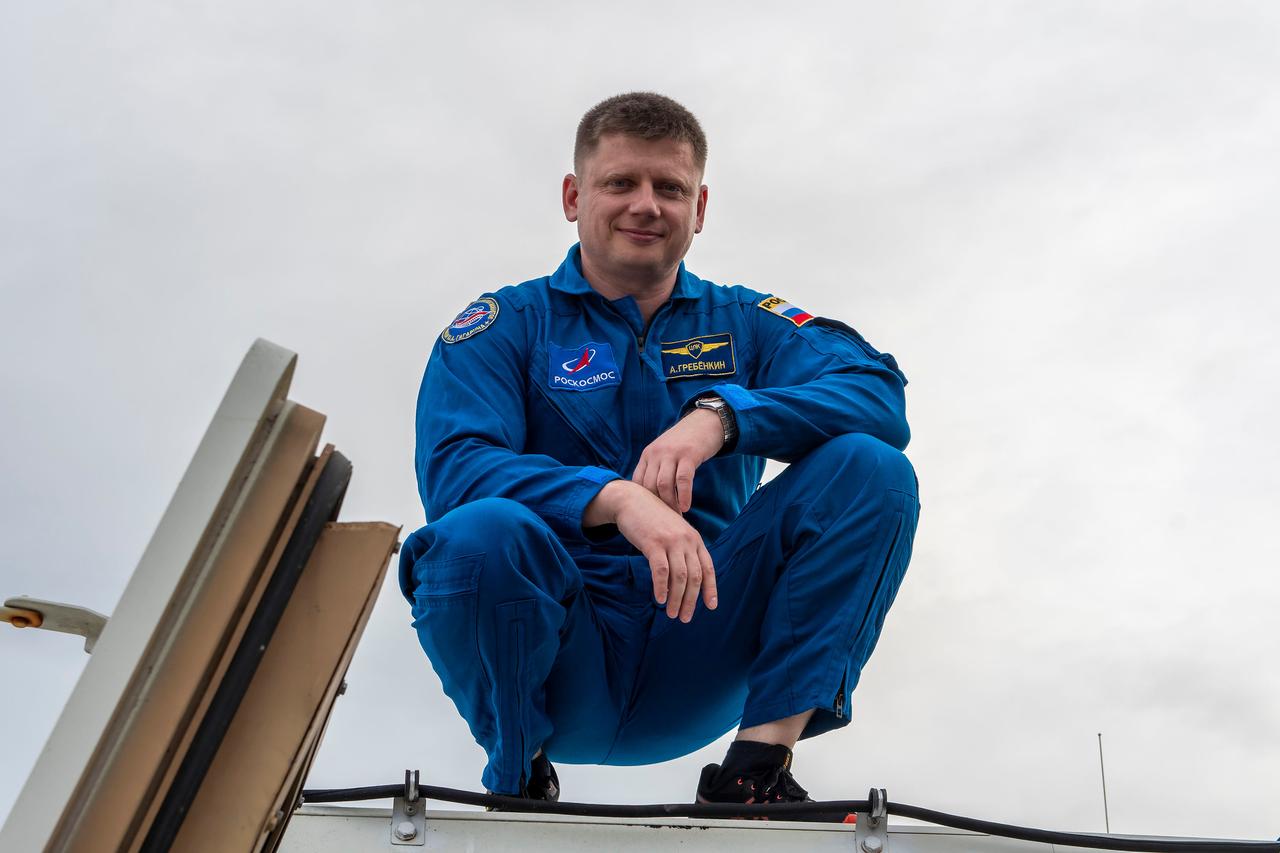
jsc2024e011754 (Oct. 12, 2023) --- SpaceX Crew-8 Mission Specialist Alexander Grebenkin poses for a photo outside the emergency egress vehicle at NASA's Kennedy Space Center's Launch Pad 39A in Florida. Astronauts would use the emergency egress vehicle to quickly leave the launch area in the unlikely event of an emergency. Credit: SpaceX
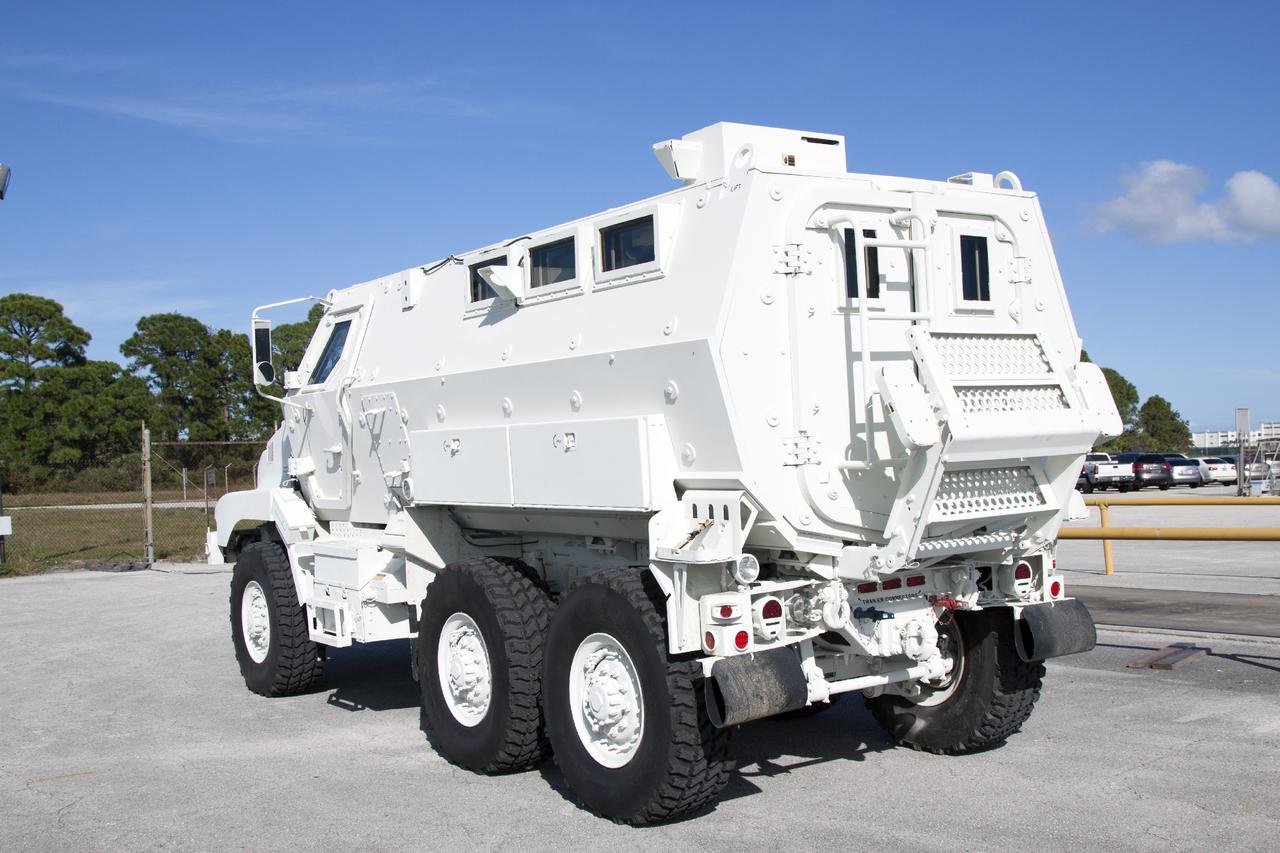
CAPE CANAVERAL, Fla. -- The first of four new emergency egress vehicles, called Mine-Resistant Ambush-Protection, or MRAP, vehicles arrived at Kennedy Space Center in Florida from the U.S. Army Red River Depot in Texarkana, Texas. Each vehicle will be processed in and then transported to the Rotation, Processing and Surge Facility near the Vehicle Assembly Building for temporary storage. The Ground Systems Development and Operations Program at Kennedy led the efforts to an emergency egress vehicle that future astronauts could quickly use to leave the Launch Complex 39 area in case of an emergency. During crewed launches of NASA’s Space Launch System and Orion spacecraft, the MRAP will be stationed by the slidewire termination area at the pad. In case of an emergency, the crew will ride a slidewire to the ground and immediately board the MRAP for safe egress from the pad. The new vehicles replace the M-113 vehicles that were used during the Space Shuttle Program. Photo credit: NASA/Jim Grossmann
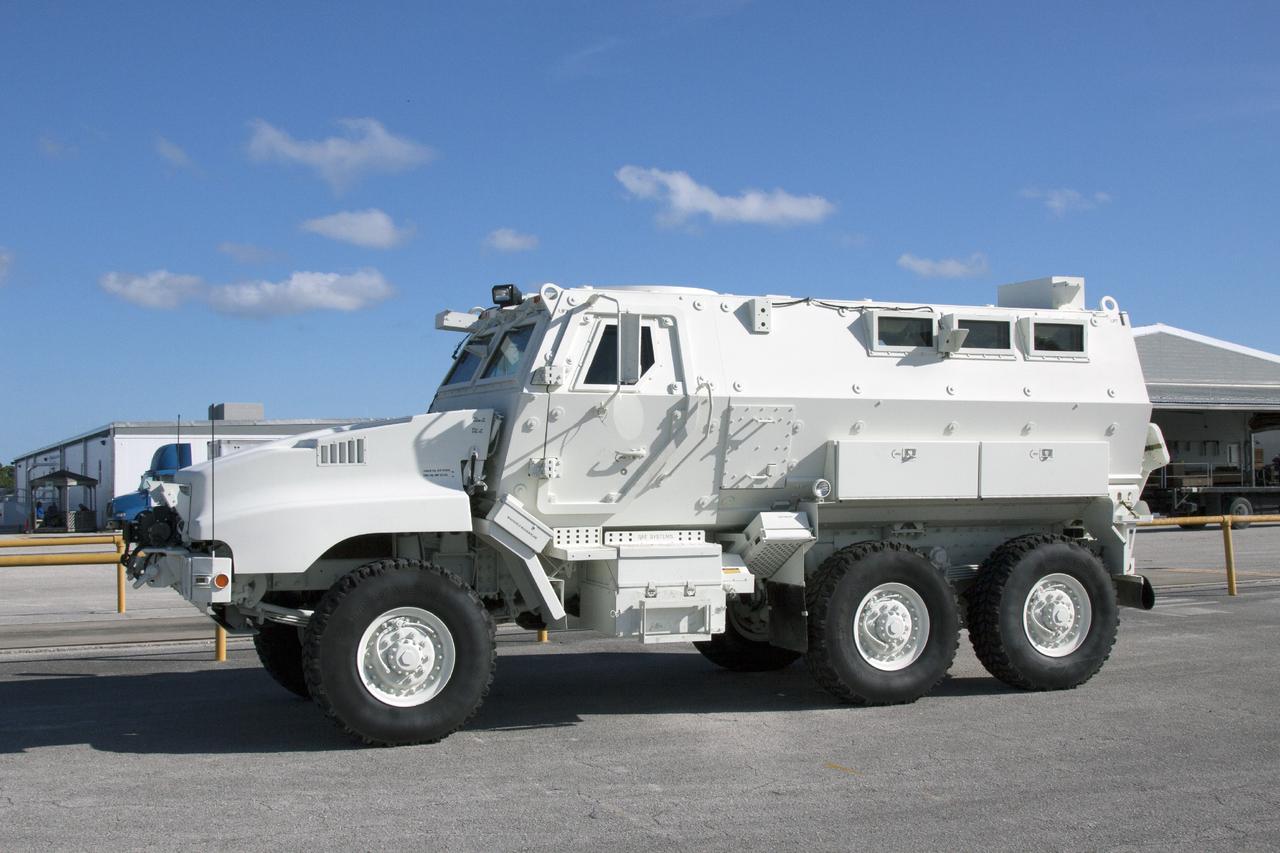
CAPE CANAVERAL, Fla. -- The first of four new emergency egress vehicles, called Mine-Resistant Ambush-Protection, or MRAP, vehicles arrived at Kennedy Space Center in Florida from the U.S. Army Red River Depot in Texarkana, Texas. Each vehicle will be processed in and then transported to the Rotation, Processing and Surge Facility near the Vehicle Assembly Building for temporary storage. The Ground Systems Development and Operations Program at Kennedy led the efforts to an emergency egress vehicle that future astronauts could quickly use to leave the Launch Complex 39 area in case of an emergency. During crewed launches of NASA’s Space Launch System and Orion spacecraft, the MRAP will be stationed by the slidewire termination area at the pad. In case of an emergency, the crew will ride a slidewire to the ground and immediately board the MRAP for safe egress from the pad. The new vehicles replace the M-113 vehicles that were used during the Space Shuttle Program. Photo credit: NASA/Jim Grossmann
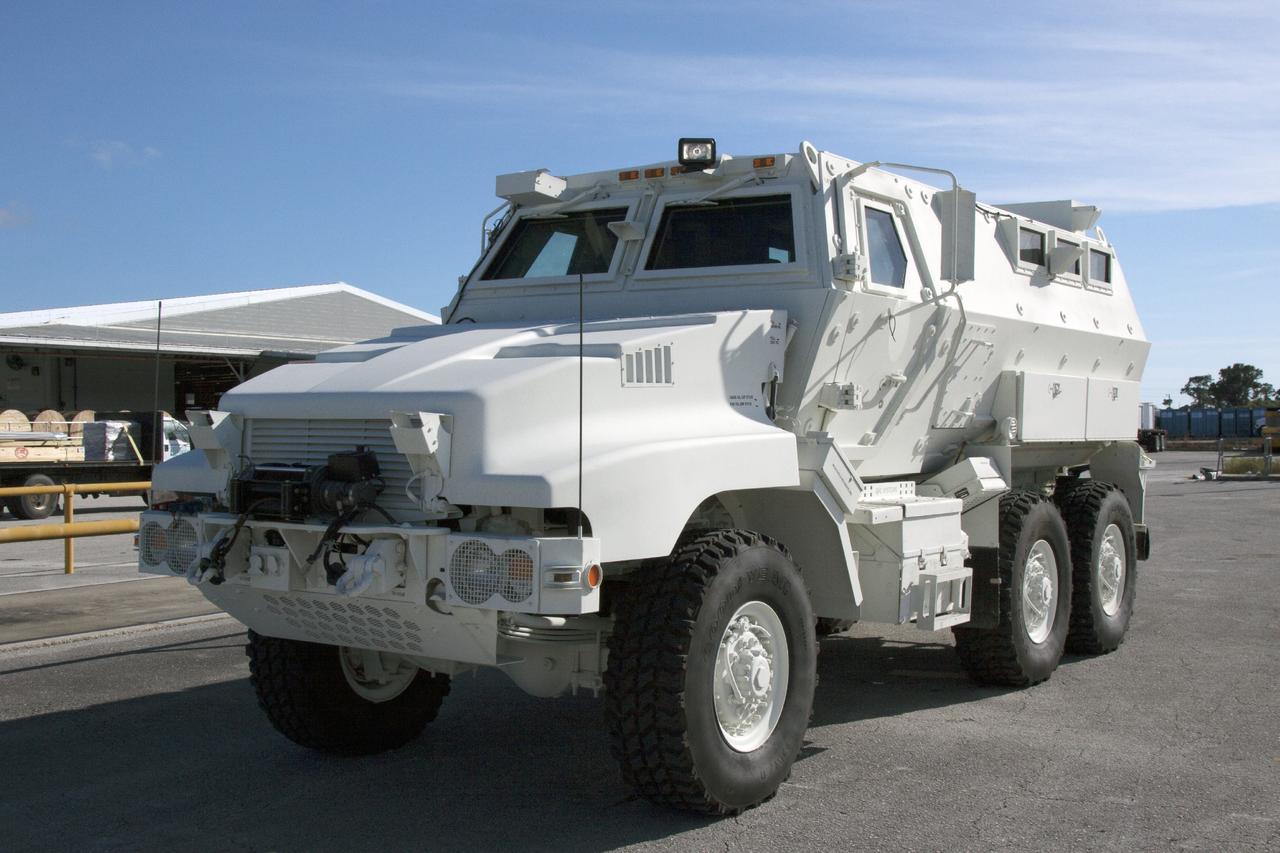
CAPE CANAVERAL, Fla. -- The first of four new emergency egress vehicles, called Mine-Resistant Ambush-Protection, or MRAP, vehicles arrived at Kennedy Space Center in Florida from the U.S. Army Red River Depot in Texarkana, Texas. Each vehicle will be processed in and then transported to the Rotation, Processing and Surge Facility near the Vehicle Assembly Building for temporary storage. The Ground Systems Development and Operations Program at Kennedy led the efforts to an emergency egress vehicle that future astronauts could quickly use to leave the Launch Complex 39 area in case of an emergency. During crewed launches of NASA’s Space Launch System and Orion spacecraft, the MRAP will be stationed by the slidewire termination area at the pad. In case of an emergency, the crew will ride a slidewire to the ground and immediately board the MRAP for safe egress from the pad. The new vehicles replace the M-113 vehicles that were used during the Space Shuttle Program. Photo credit: NASA/Jim Grossmann
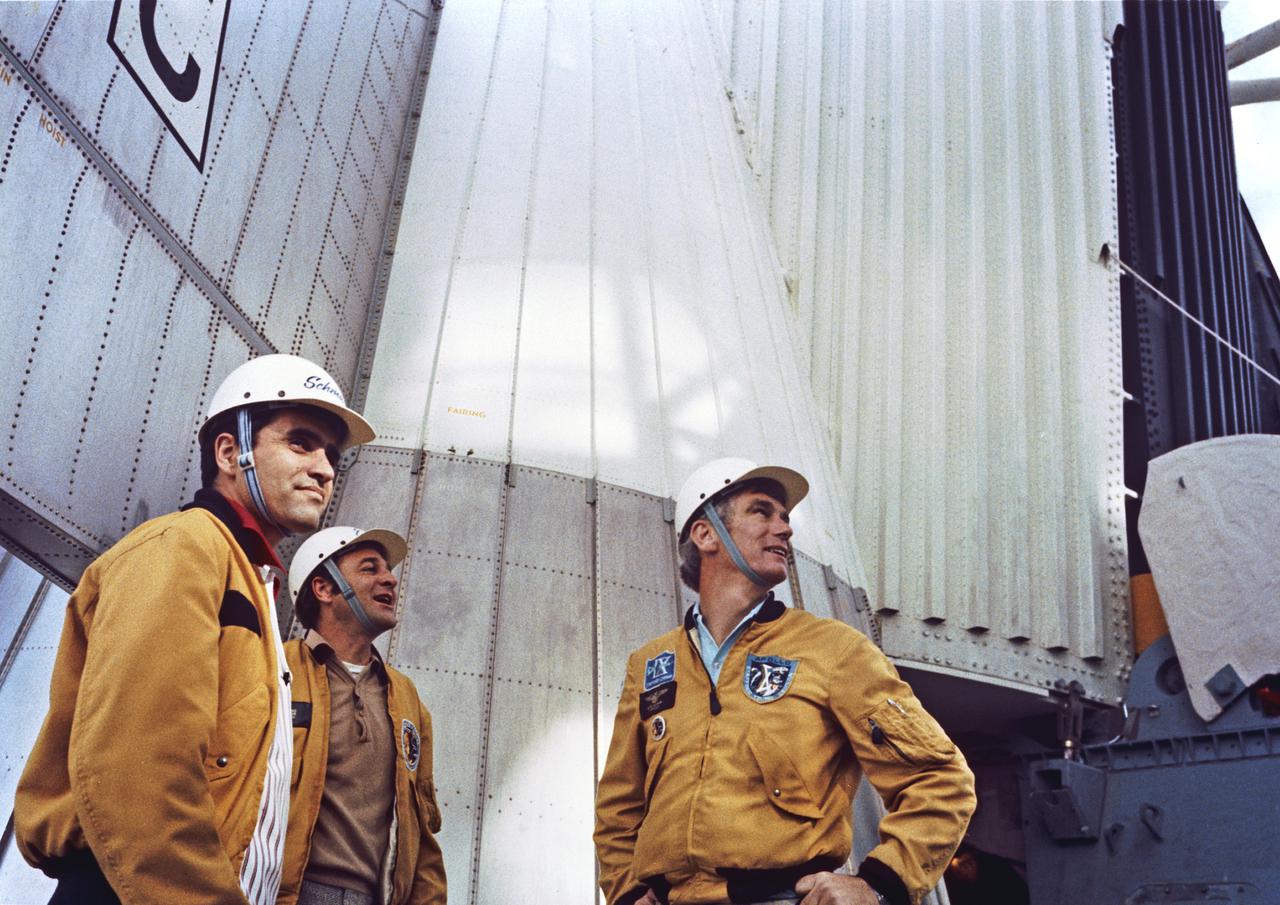
The Apollo 17 prime crew pauses on the access arm leading to their spacecraft, mated to the Saturn V launch vehicle at Complex 39, during Emergency Egress Test.
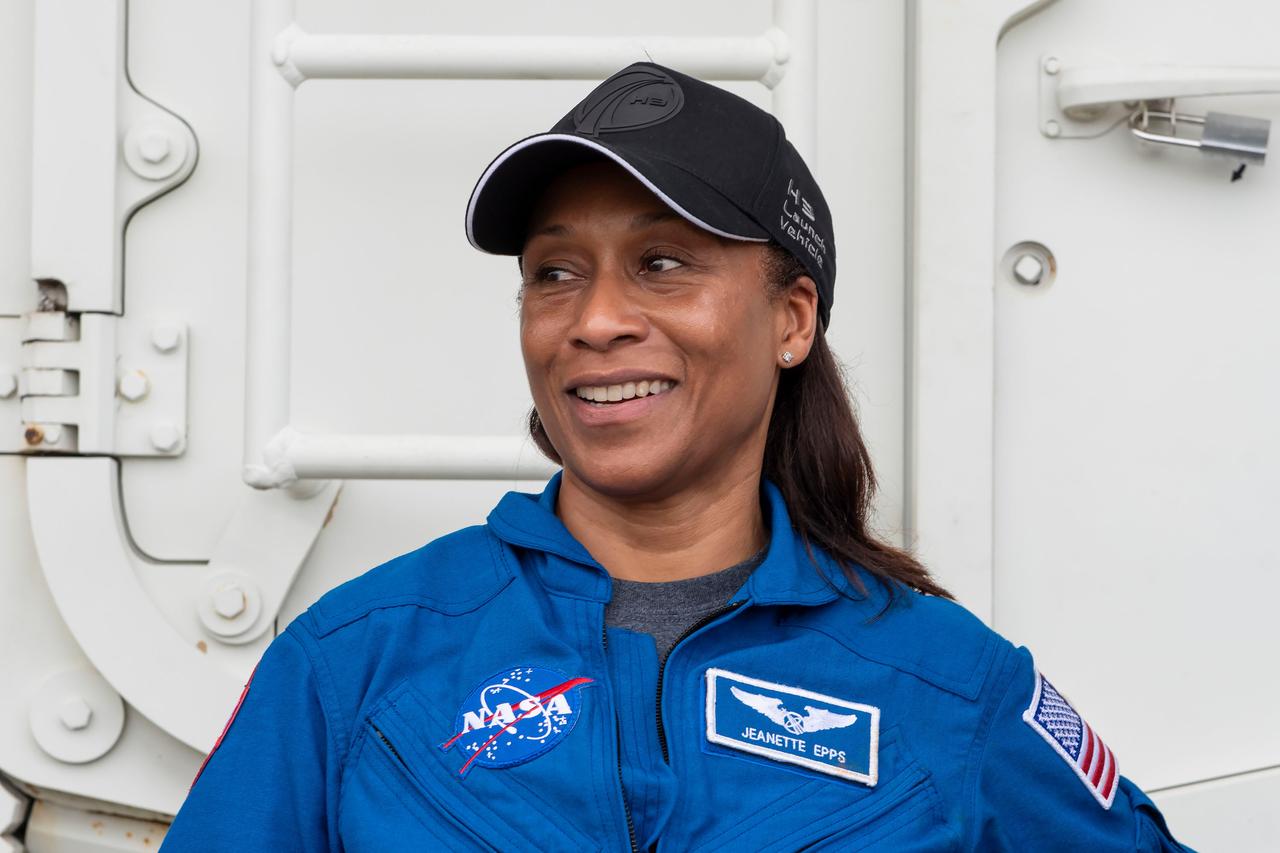
jsc2024e011756 (Oct. 12, 2023) --- NASA's SpaceX Crew-8 Mission Specialist Jeanette Epps poses for a photo outside the emergency egress vehicle at NASA's Kennedy Space Center's Launch Pad 39A in Florida. Astronauts would use the emergency egress vehicle to quickly leave the launch area in the unlikely event of an emergency. Credit: SpaceX
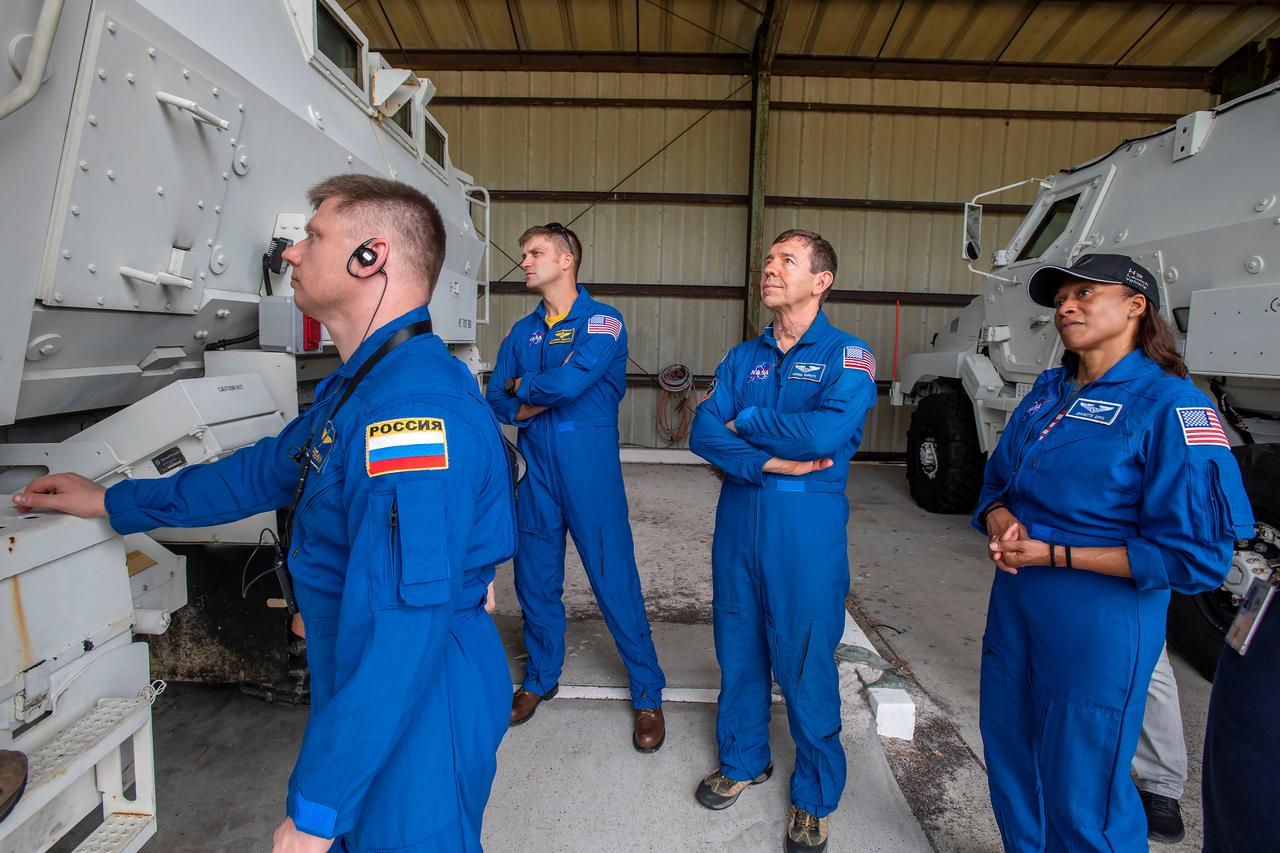
jsc2024e011757 (Oct. 12, 2023) --- The four crew members of NASA's SpaceX Crew-8 mission train outside an emergency egress vehicle at NASA's Kennedy Space Center's Launch Pad 39A in Florida. From left are, Mission Specialist Alexander Grebenkin, Commander Matthew Dominick, Pilot Michael Barratt, and Mission Specialist Jeanette Epps. Astronauts would use the emergency egress vehicle to quickly leave the launch area in the unlikely event of an emergency. Credit: SpaceX
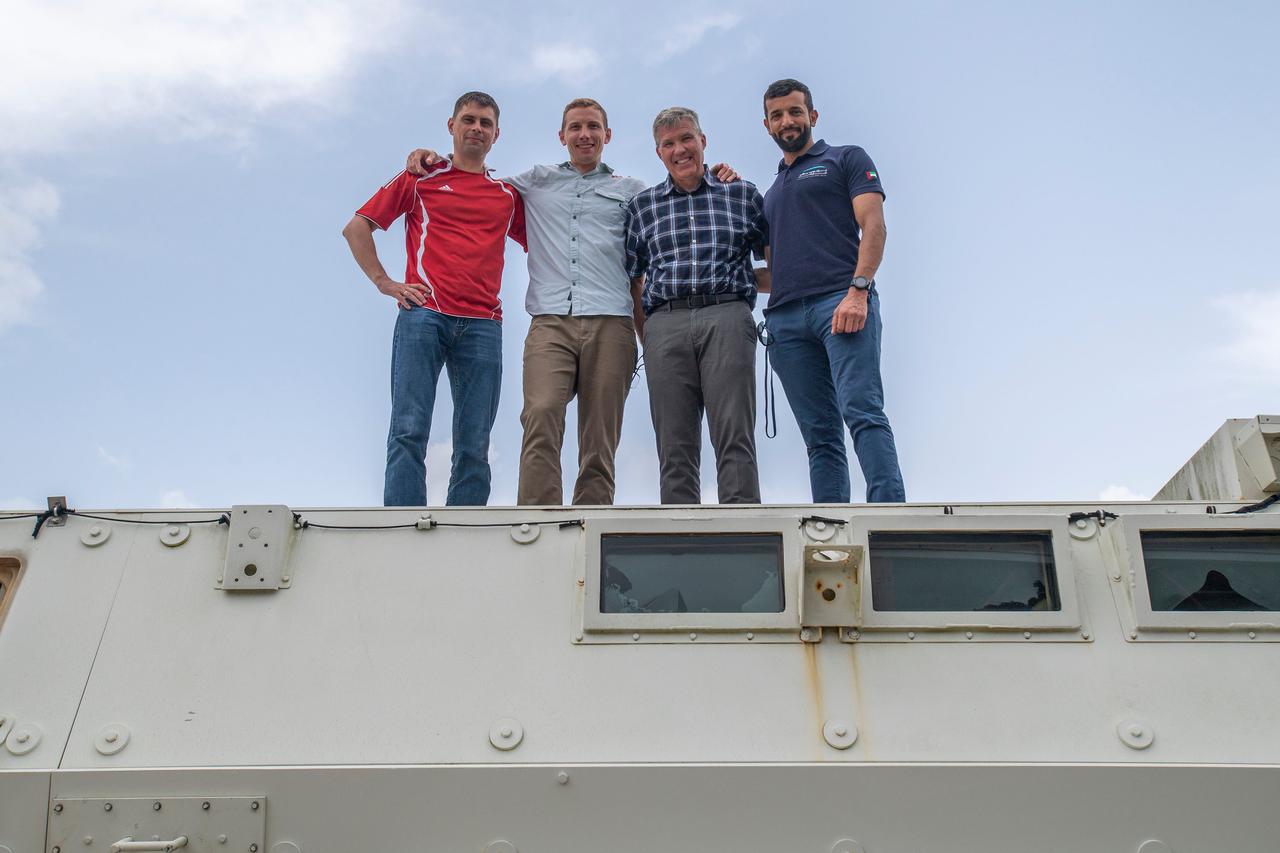
jsc2022e065077 (Aug. 9, 2022) --- The four crew members that comprise the SpaceX Crew-6 mission pose for a photo atop an emergency egress vehicle at the Kennedy Space Center's Launch Pad 39A in Florida. Crews would use the emergency egress vehicle to quickly leave the launch area in case of an emergency. From left are, Mission Specialist Andrey Fedyaev, Pilot Warren "Woody" Hoburg, Commander Stephen Bowen and Mission Specialist Sultan Alneyadi. Credit: SpaceX
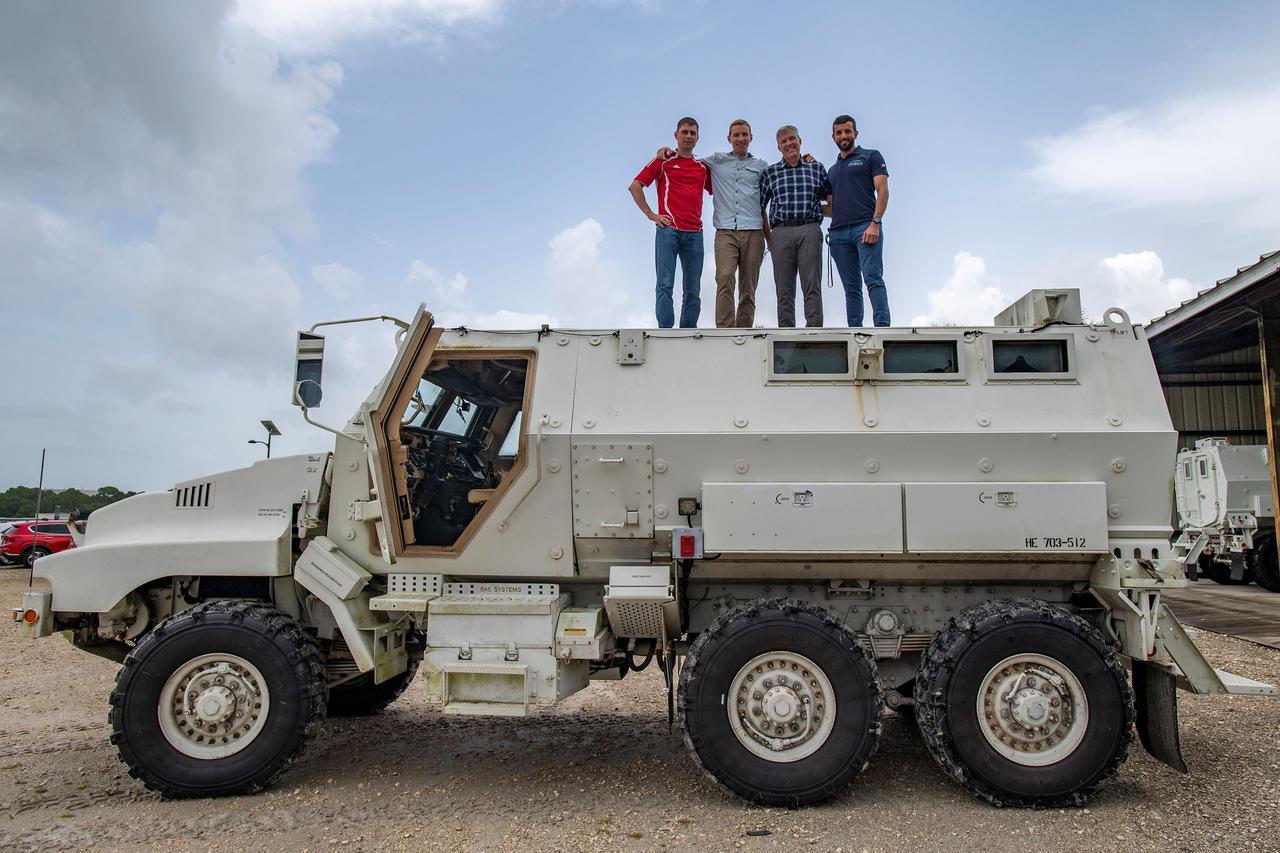
jsc2022e065078 (Aug. 9, 2022) --- The four crew members that comprise the SpaceX Crew-6 mission pose for a photo atop an emergency egress vehicle at the Kennedy Space Center's Launch Pad 39A in Florida. Crews would use the emergency egress vehicle to quickly leave the launch area in case of an emergency. From left are, Mission Specialist Andrey Fedyaev, Pilot Warren "Woody" Hoburg, Commander Stephen Bowen, and Mission Specialist Sultan Alnedayi. Credit: SpaceX
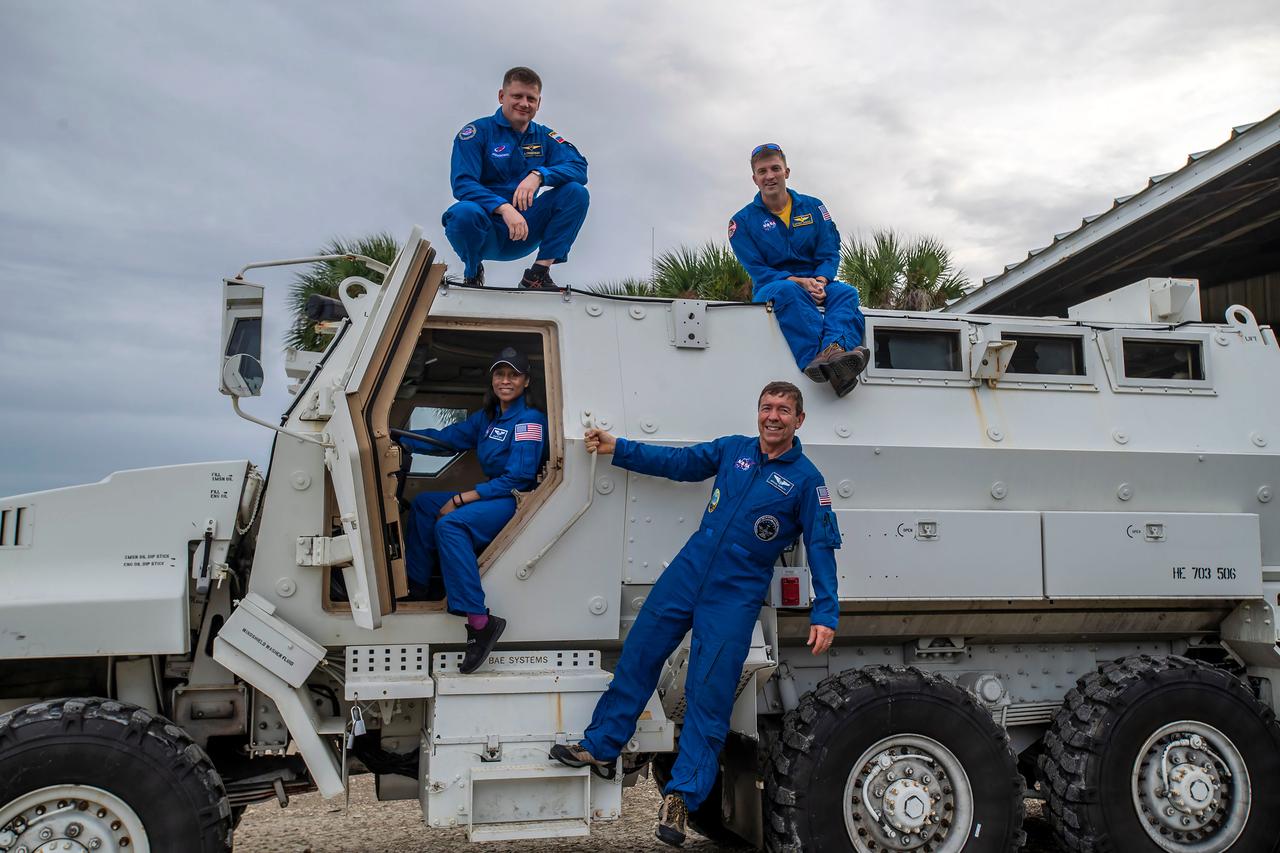
jsc2024e011758 (Oct. 12, 2023) --- The crew members of NASA's SpaceX Crew-8 mission pose for a photo at an emergency egress vehicle at NASA's Kennedy Space Center's Launch Pad 39A in Florida. Clockwise from top left are, Mission Specialist Alexander Grebenkin, Commander Matthew Dominick, Pilot Michael Barratt, and Mission Specialist Jeanette Epps.. Astronauts would use the emergency egress vehicle to quickly leave the launch area in the unlikely event of an emergency. Credit: SpaceX
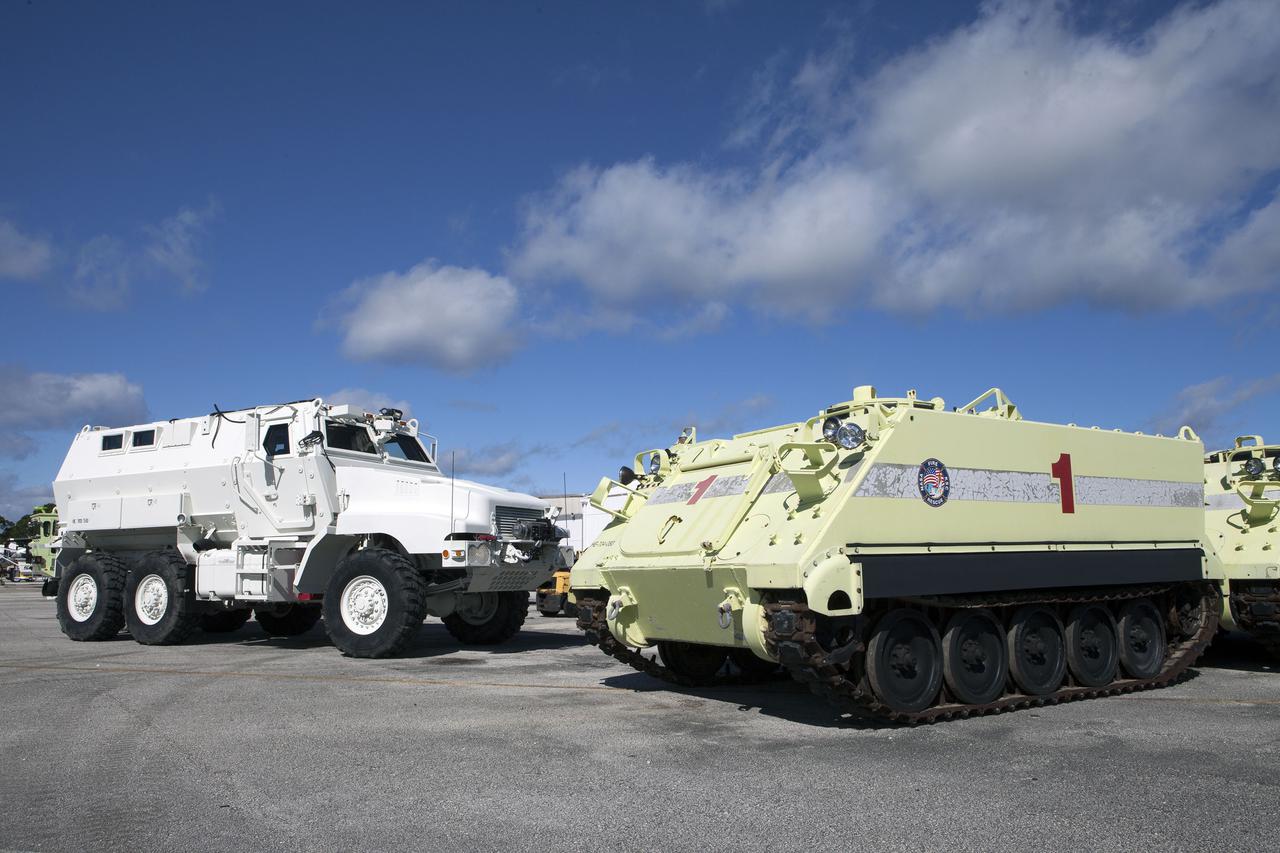
CAPE CANAVERAL, Fla. – One of four new emergency egress vehicles, called Mine-Resistant Ambush-Protection, or MRAP, vehicles sits near space shuttle-era M-113 vehicles at the Maintenance and Operations Facility at NASA’s Kennedy Space Center in Florida. The MRAPs arrived from the U.S. Army Red River Depot in Texarkana, Texas in December 2013. The vehicles were processed in and then transported to the Rotation, Processing and Surge Facility near the Vehicle Assembly Building for temporary storage. The Ground Systems Development and Operations Program at Kennedy led the efforts to an emergency egress vehicle that future astronauts could quickly use to leave the Launch Complex 39 area in case of an emergency. During crewed launches of NASA’s Space Launch System and Orion spacecraft, the MRAP will be stationed by the slidewire termination area at the pad. In case of an emergency, the crew will ride a slidewire to the ground and immediately board the MRAP for safe egress from the pad. The new vehicles replace the M-113 vehicles that were used during the Space Shuttle Program. Photo credit: NASA_Kim Shiflett
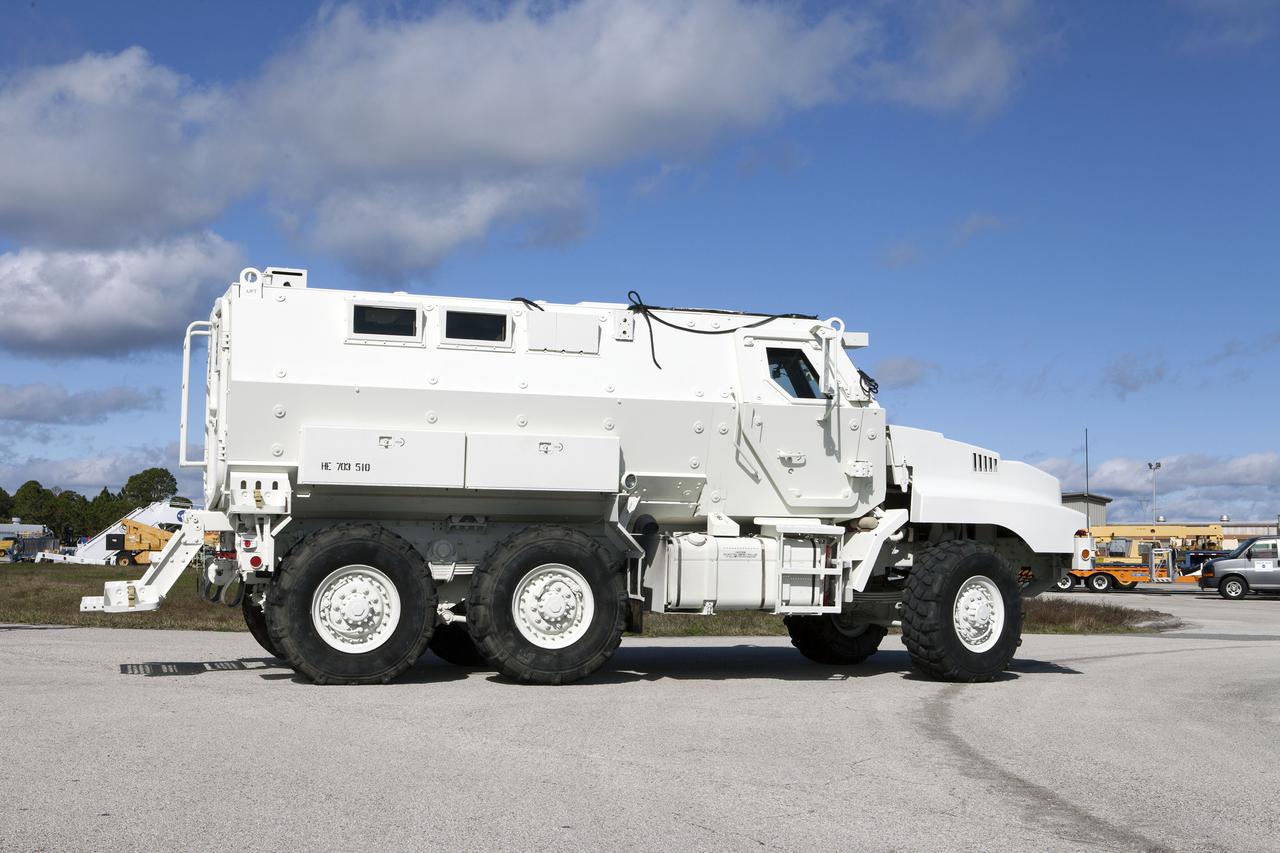
CAPE CANAVERAL, Fla. – One of four new emergency egress vehicles, called Mine-Resistant Ambush-Protection, or MRAP, vehicles is driven to the Maintenance and Operations Facility at NASA’s Kennedy Space Center in Florida. The MRAPs arrived from the U.S. Army Red River Depot in Texarkana, Texas in December 2013. The vehicles were processed in and then transported to the Rotation, Processing and Surge Facility near the Vehicle Assembly Building for temporary storage. The Ground Systems Development and Operations Program at Kennedy led the efforts to an emergency egress vehicle that future astronauts could quickly use to leave the Launch Complex 39 area in case of an emergency. During crewed launches of NASA’s Space Launch System and Orion spacecraft, the MRAP will be stationed by the slidewire termination area at the pad. In case of an emergency, the crew will ride a slidewire to the ground and immediately board the MRAP for safe egress from the pad. The new vehicles replace the M-113 vehicles that were used during the Space Shuttle Program. Photo credit: NASA_Kim Shiflett
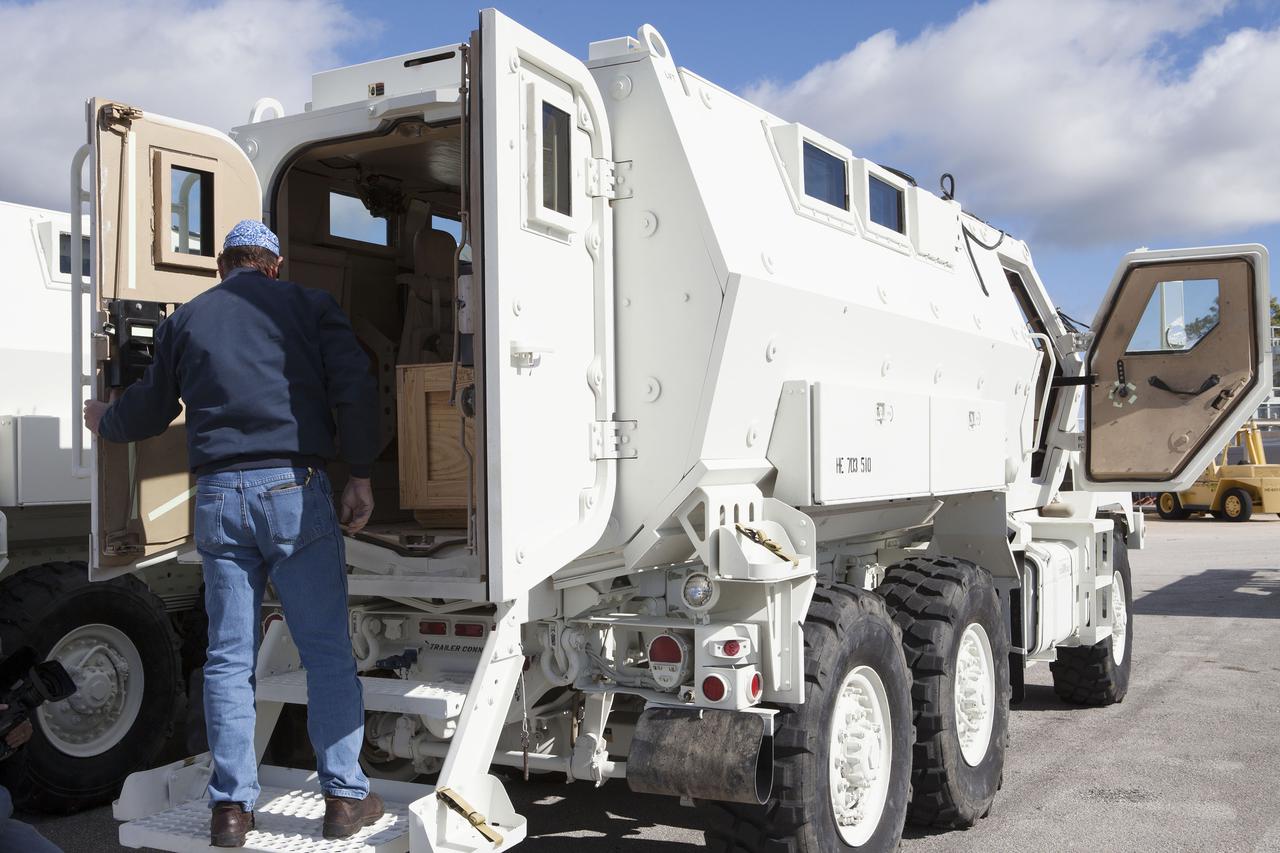
CAPE CANAVERAL, Fla. – A URS Federal Services worker enters one of the four new emergency egress vehicles, called Mine-Resistant Ambush-Protected, or MRAP, vehicles at the Maintenance and Operations Facility at NASA’s Kennedy Space Center in Florida. The MRAPs arrived from the U.S. Army Red River Depot in Texarkana, Texas in December 2013. The vehicles were processed in and then transported to the Rotation, Processing and Surge Facility near the Vehicle Assembly Building for temporary storage. The Ground Systems Development and Operations Program at Kennedy led the efforts to an emergency egress vehicle that future astronauts could quickly use to leave the Launch Complex 39 area in case of an emergency. During crewed launches of NASA’s Space Launch System and Orion spacecraft, the MRAP will be stationed by the slidewire termination area at the pad. In case of an emergency, the crew will ride a slidewire to the ground and immediately board the MRAP for safe egress from the pad. The new vehicles replace the M-113 vehicles that were used during the Space Shuttle Program. Photo credit: NASA_Kim Shiflett
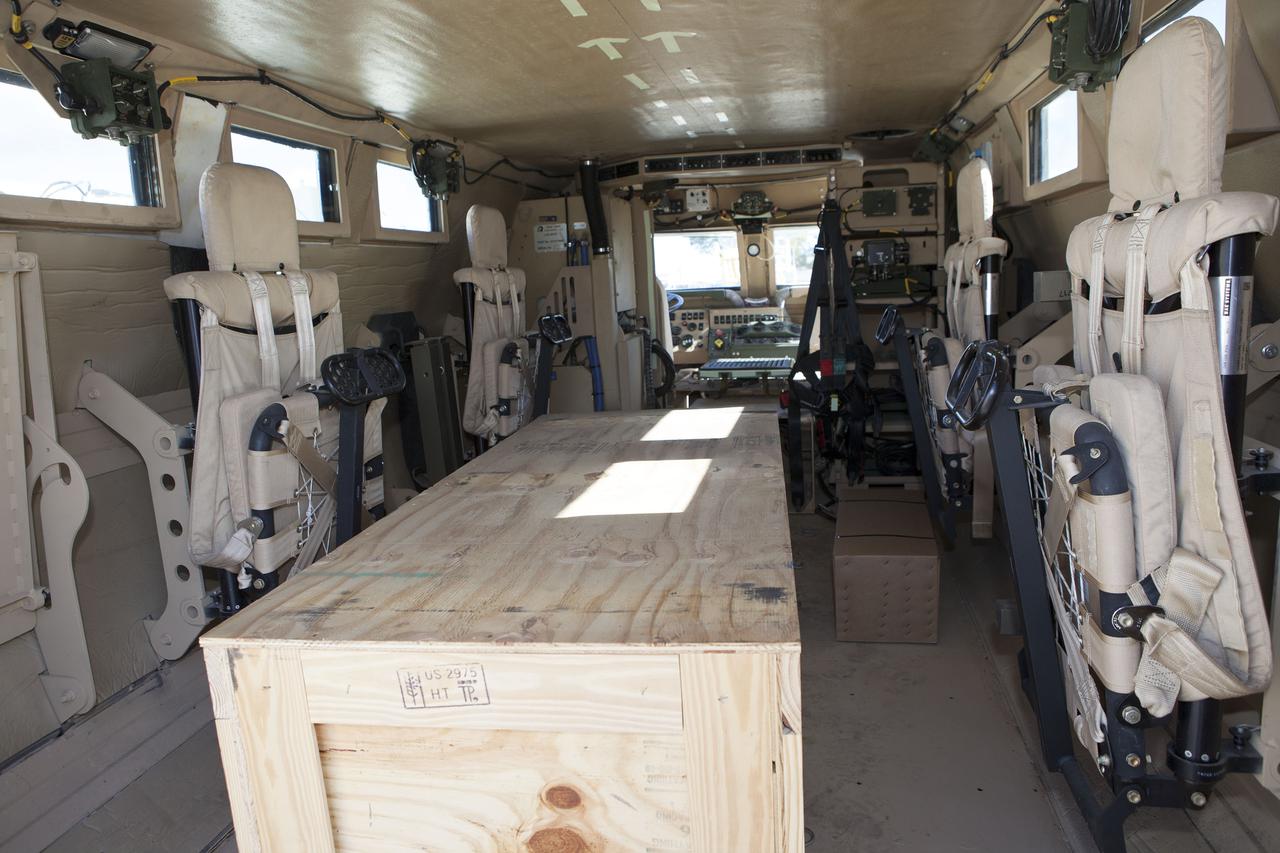
CAPE CANAVERAL, Fla. – A view of the interior of one of four new emergency egress vehicles, called Mine-Resistant Ambush-Protected, or MRAP, vehicles is shown. The MRAPs are at the Maintenance and Operations Facility at NASA’s Kennedy Space Center in Florida. The MRAPs arrived from the U.S. Army Red River Depot in Texarkana, Texas in December 2013. The vehicles were processed in and then transported to the Rotation, Processing and Surge Facility near the Vehicle Assembly Building for temporary storage. The Ground Systems Development and Operations Program at Kennedy led the efforts to an emergency egress vehicle that future astronauts could quickly use to leave the Launch Complex 39 area in case of an emergency. During crewed launches of NASA’s Space Launch System and Orion spacecraft, the MRAP will be stationed by the slidewire termination area at the pad. In case of an emergency, the crew will ride a slidewire to the ground and immediately board the MRAP for safe egress from the pad. The new vehicles replace the M-113 vehicles that were used during the Space Shuttle Program. Photo credit: NASA_Kim Shiflett
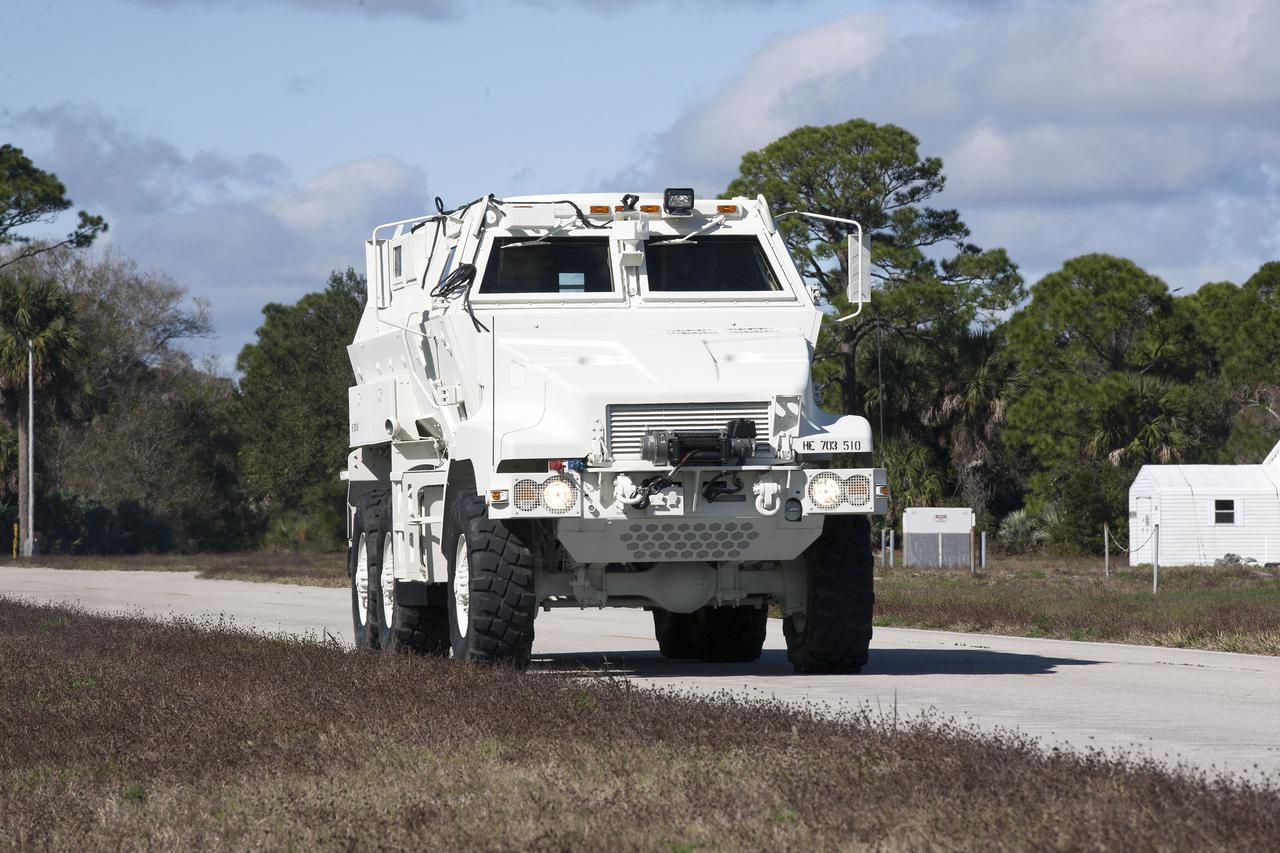
CAPE CANAVERAL, Fla. –One of four new emergency egress vehicles, called Mine-Resistant Ambush-Protection, or MRAP, vehicles is driven to the Maintenance and Operations Facility at NASA’s Kennedy Space Center in Florida. The MRAPs arrived from the U.S. Army Red River Depot in Texarkana, Texas in December 2013. The vehicles were processed in and then transported to the Rotation, Processing and Surge Facility near the Vehicle Assembly Building for temporary storage. The Ground Systems Development and Operations Program at Kennedy led the efforts to an emergency egress vehicle that future astronauts could quickly use to leave the Launch Complex 39 area in case of an emergency. During crewed launches of NASA’s Space Launch System and Orion spacecraft, the MRAP will be stationed by the slidewire termination area at the pad. In case of an emergency, the crew will ride a slidewire to the ground and immediately board the MRAP for safe egress from the pad. The new vehicles replace the M-113 vehicles that were used during the Space Shuttle Program. Photo credit: NASA_Kim Shiflett
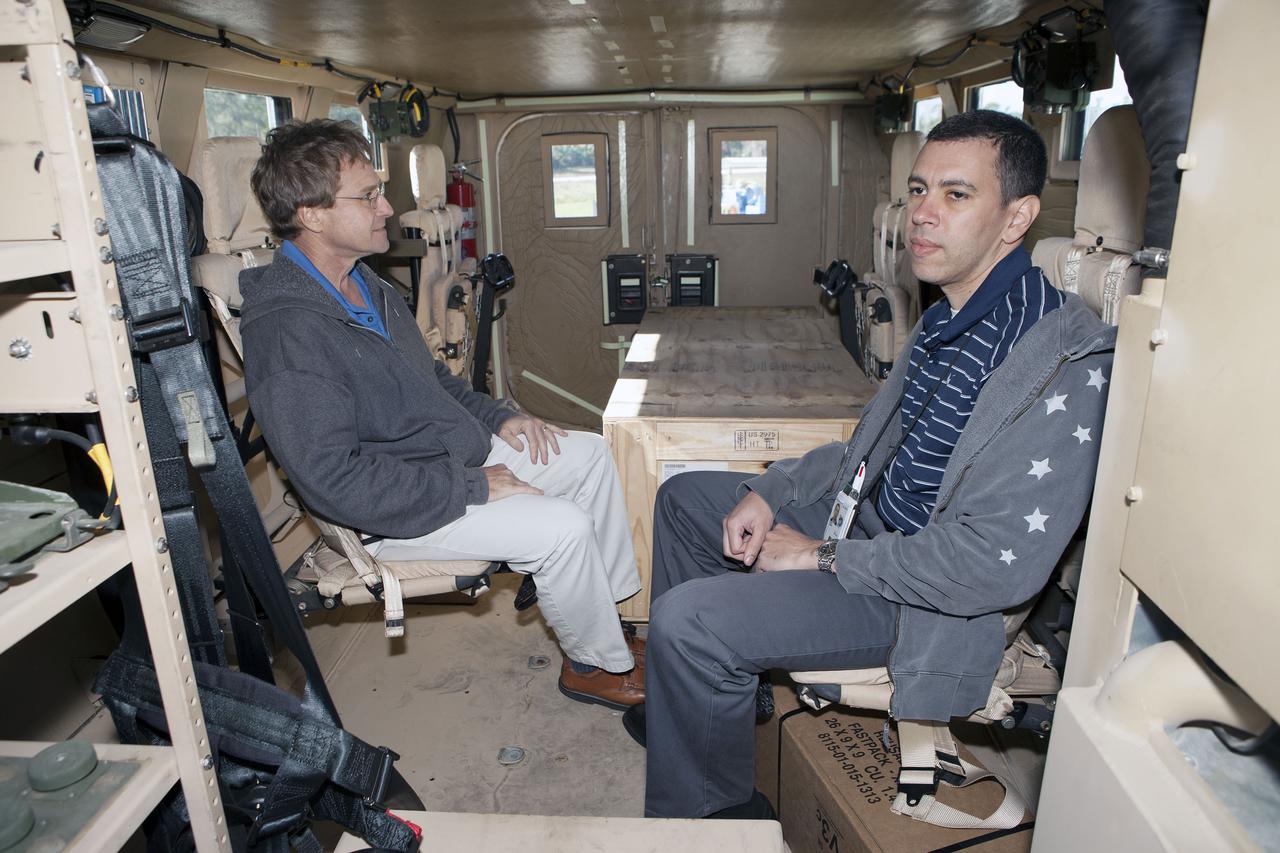
CAPE CANAVERAL, Fla. – Tom Hoffmann, left, and Danny Zeno, both Ground Systems Development and Operations, or GSDO, integration engineers, sit inside one of four new emergency egress vehicles, called Mine-Resistant Ambush-Protected, or MRAP, vehicles at the Maintenance and Operations Facility at NASA’s Kennedy Space Center in Florida. The MRAPs arrived from the U.S. Army Red River Depot in Texarkana, Texas in December 2013. The vehicles were processed in and then transported to the Rotation, Processing and Surge Facility near the Vehicle Assembly Building for temporary storage. The GSDO Program at Kennedy led the efforts to an emergency egress vehicle that future astronauts could quickly use to leave the Launch Complex 39 area in case of an emergency. During crewed launches of NASA’s Space Launch System and Orion spacecraft, the MRAP will be stationed by the slidewire termination area at the pad. In case of an emergency, the crew will ride a slidewire to the ground and immediately board the MRAP for safe egress from the pad. The new vehicles replace the M-113 vehicles that were used during the Space Shuttle Program. Photo credit: NASA_Kim Shiflett
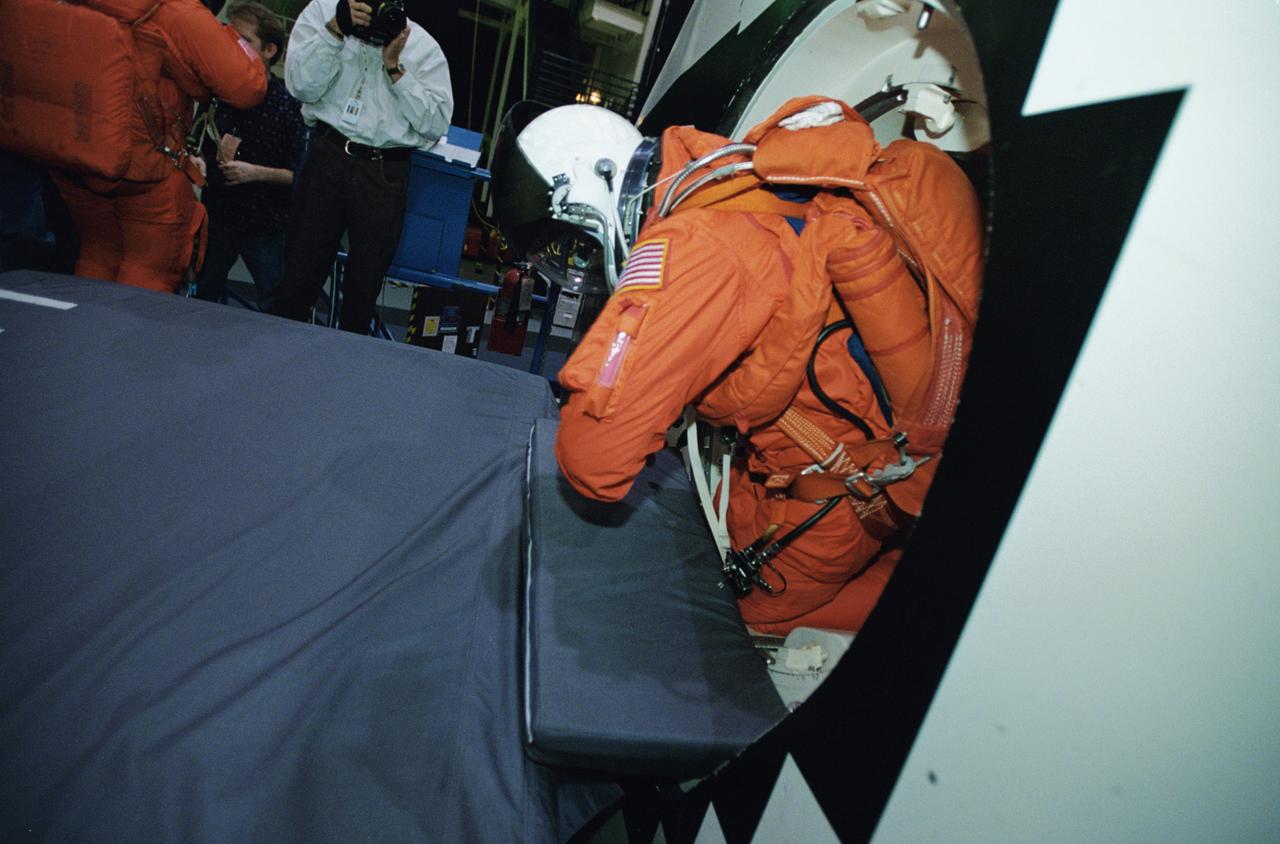
JSC2002-00686 (21 March 2002) --- An unidentified member of the STS-113 crew simulates a bailout from a shuttle-in-trouble during an emergency egress exercise in the Space Vehicle Mockup Facility at the Johnson Space Center (JSC).
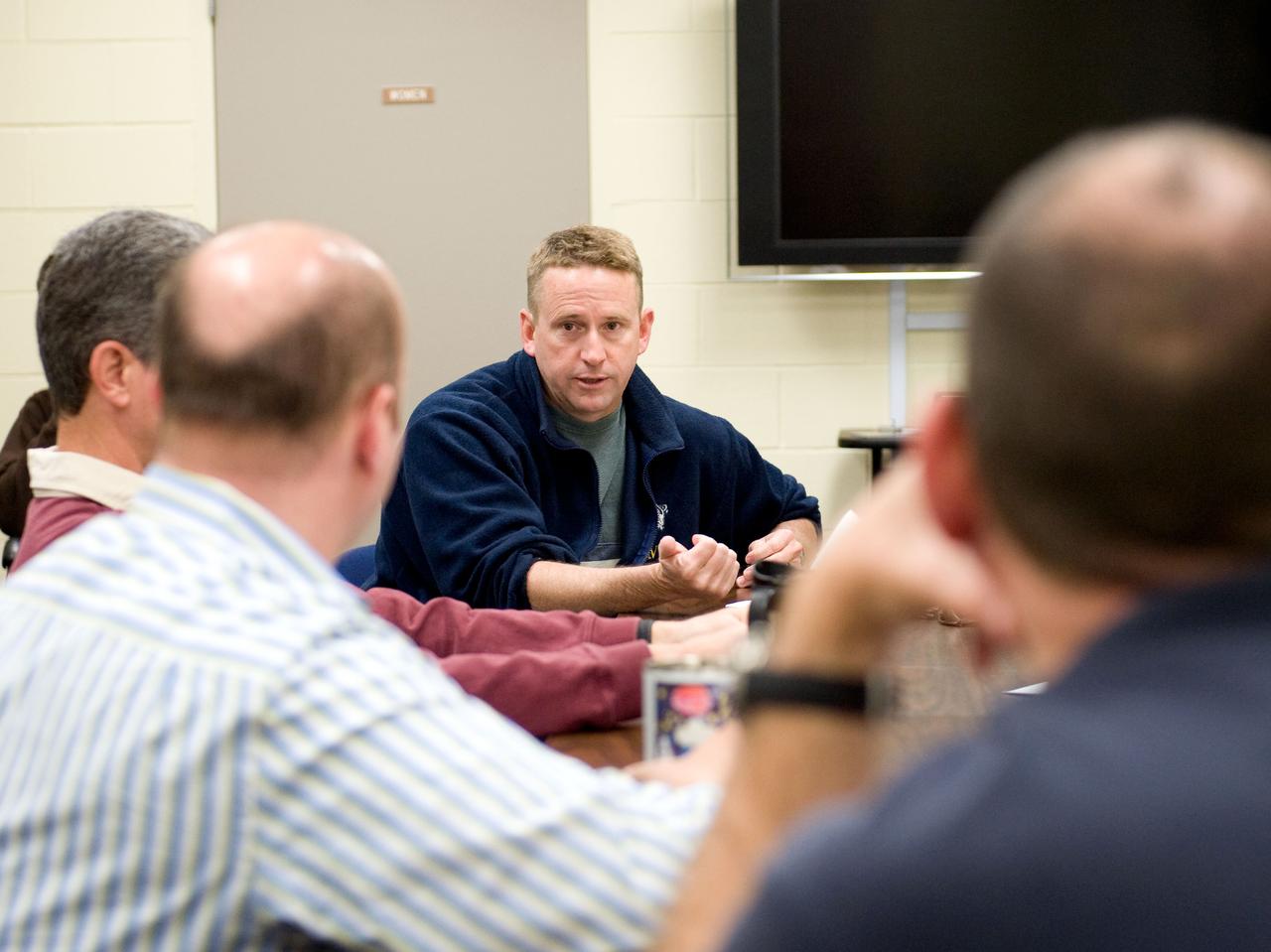
JSC2010-E-051980 (8 April 2010) --- NASA astronaut Ken Ham, STS-132 commander, is pictured during an ingress/egress training session in the Space Vehicle Mock-up Facility at NASA's Johnson Space Center.

KENNEDY SPACE CENTER, FLA. -- Apollo 7 crew member Donn F. Eisele relaxes during suiting up prior to today's space vehicle emergency egress tests conducted at Cape Kennedy's Launch Complex 34.

Teams at NASA’s Kennedy Space Center in Florida practice the Artemis mission emergency escape or egress procedures during a series of integrated system verification and validation tests at Launch Complex 39B on Friday, Aug. 9, 2024. Simulated flight crew members practice getting out of the emergency egress basket and into the emergency transport vehicle to drive them to safety in the event of an unlikely emergency during launch countdown.
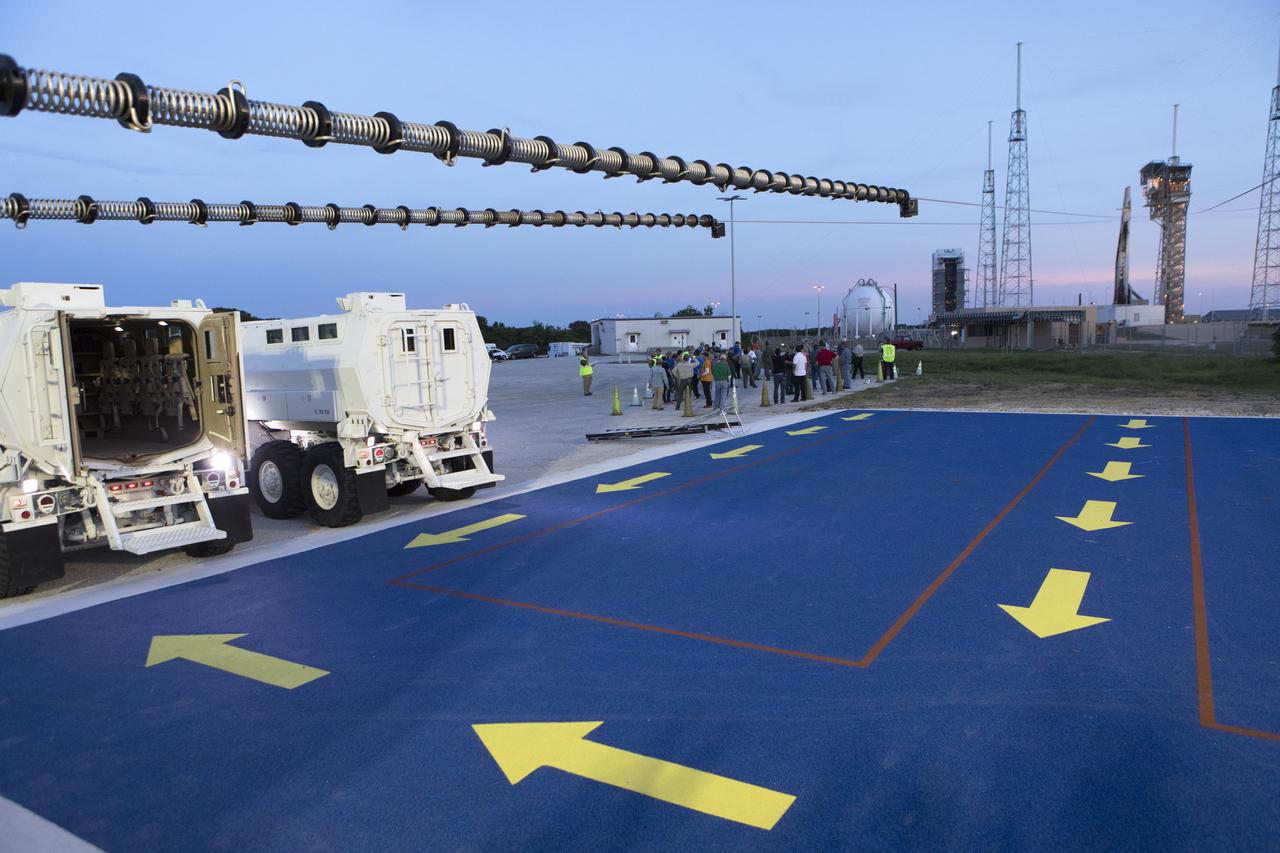
Two mine-resistant ambush protected vehicles, or MRAPs, sit ready to receive astronauts and ground crews during a Boeing/United Launch Alliance emergency egress system demonstration at Cape Canaveral Air Force Station’s Launch Complex 41 in Florida on June 19, 2018. The emergency egress system will provide an escape route in the unlikely event of an emergency on the launch pad on launch day.
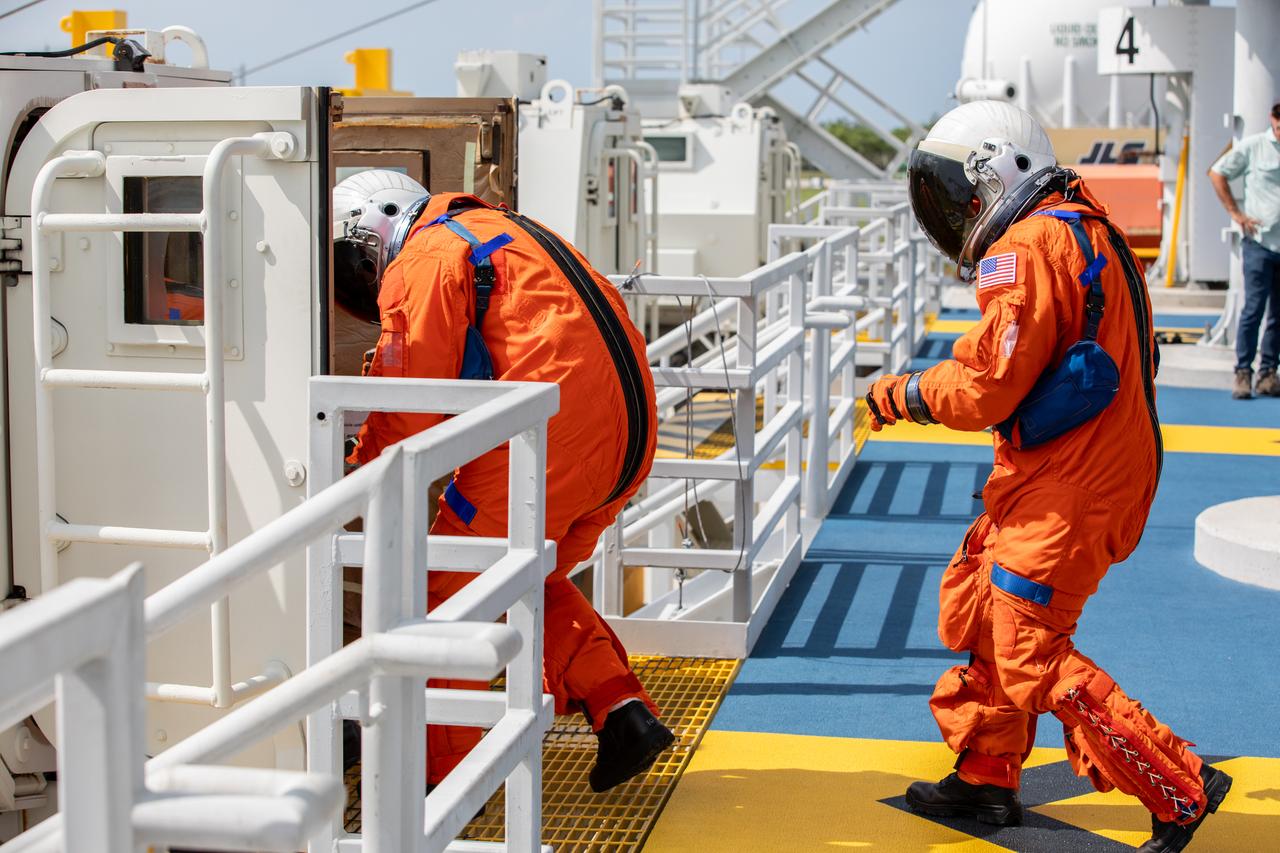
Teams at NASA’s Kennedy Space Center in Florida practice the Artemis mission emergency escape or egress procedures during a series of integrated system verification and validation tests at Launch Complex 39B on Friday, Aug. 9, 2024. Simulated flight crew members practice getting out of the emergency egress basket and into the emergency transport vehicle to drive them to safety in the event of an unlikely emergency during launch countdown.
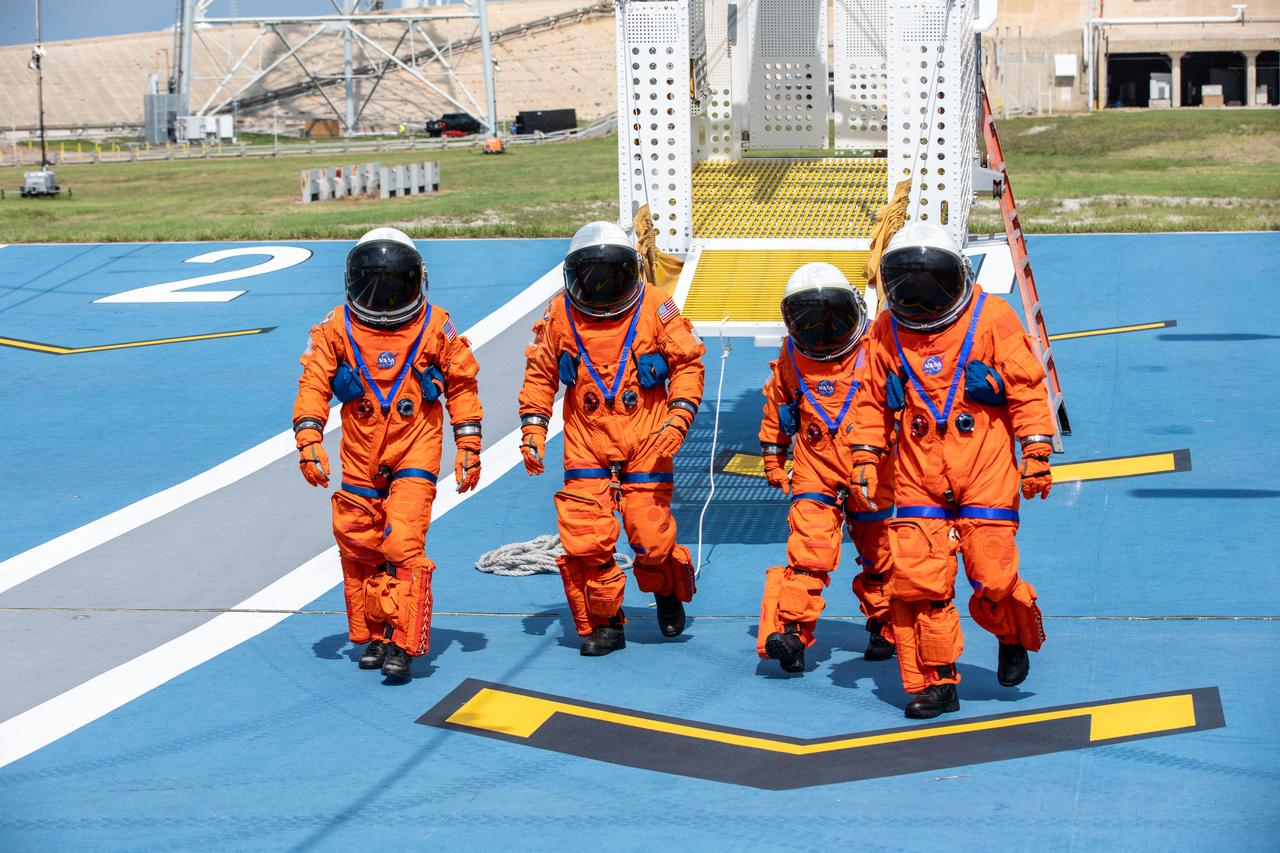
Teams at NASA’s Kennedy Space Center in Florida practice the Artemis mission emergency escape or egress procedures during a series of integrated system verification and validation tests at Launch Complex 39B on Friday, Aug. 9, 2024. Simulated flight crew members practice getting out of the emergency egress basket and into the emergency transport vehicle to drive them to safety in the event of an unlikely emergency during launch countdown.
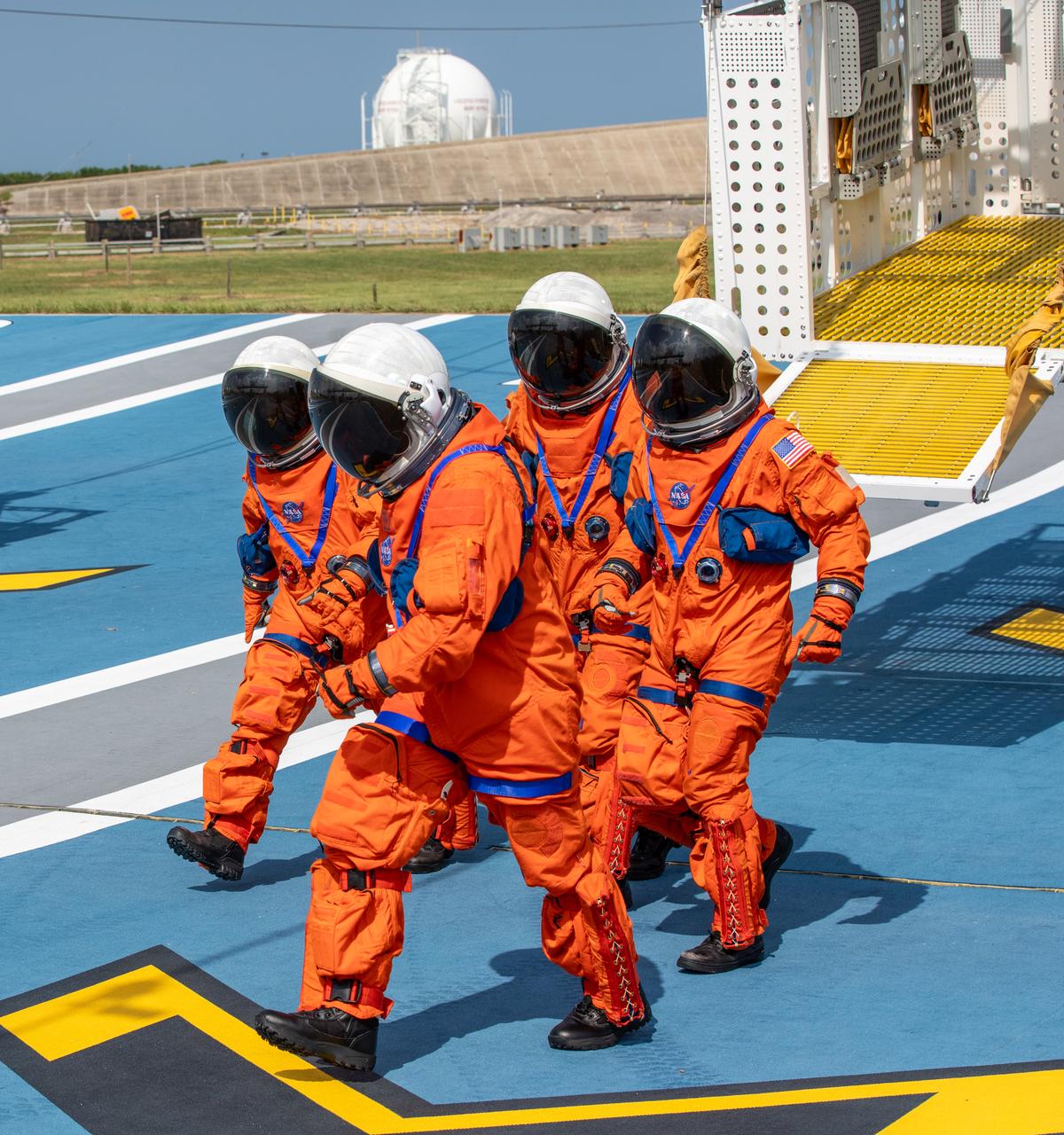
Teams at NASA’s Kennedy Space Center in Florida practice the Artemis mission emergency escape or egress procedures during a series of integrated system verification and validation tests at Launch Complex 39B on Friday, Aug. 9, 2024. Simulated flight crew members practice getting out of the emergency egress basket and into the emergency transport vehicle to drive them to safety in the event of an unlikely emergency during launch countdown.
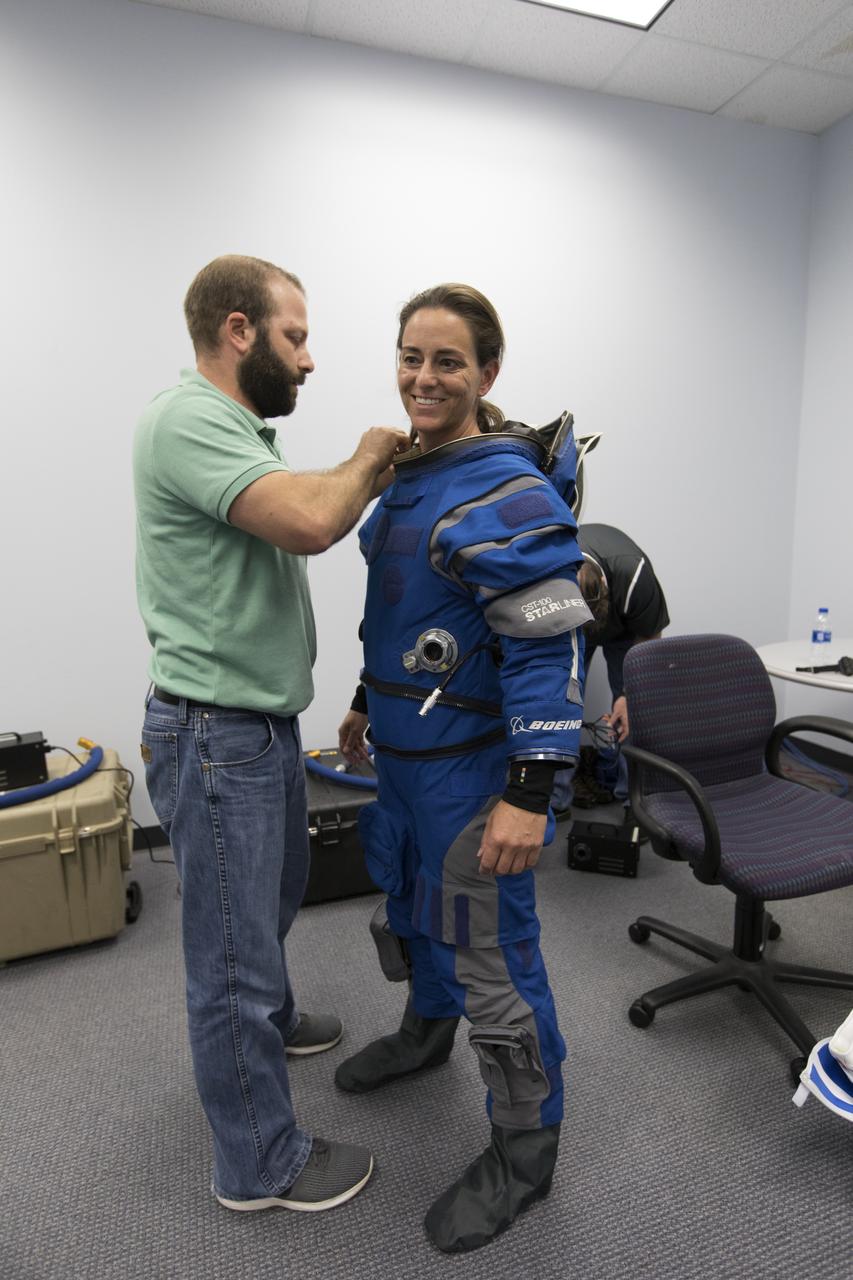
Astronaut Nicole Mann gets suited up for a Boeing/United Launch Alliance emergency egress system demonstration at Cape Canaveral Air Force Station’s Launch Complex 41 in Florida on June 19, 2018. The emergency egress system will allow for a safe evacuation in the unlikely event of an emergency on the launch pad on launch day. It can carry up to 20 people more than 1,300 feet away from the crew access tower and the launch vehicle.

Teams at NASA’s Kennedy Space Center in Florida practice the Artemis mission emergency escape or egress procedures during a series of integrated system verification and validation tests at Launch Complex 39B on Friday, Aug. 9, 2024. Simulated flight crew members practice getting out of the emergency egress basket and into the emergency transport vehicle to drive them to safety in the event of an unlikely emergency during launch countdown.

Astronaut Suni Williams gets suited up in preparation for the Boeing/United Launch Alliance emergency egress system demonstration at Cape Canaveral Air Force Station’s Launch Complex 41 in Florida on June 19, 2018. The emergency egress system features seats that attach to slide wires. It can carry astronauts and ground crew more than 1,300 feet away from the crew access tower and the launch vehicle in the unlikely event of an emergency before liftoff.
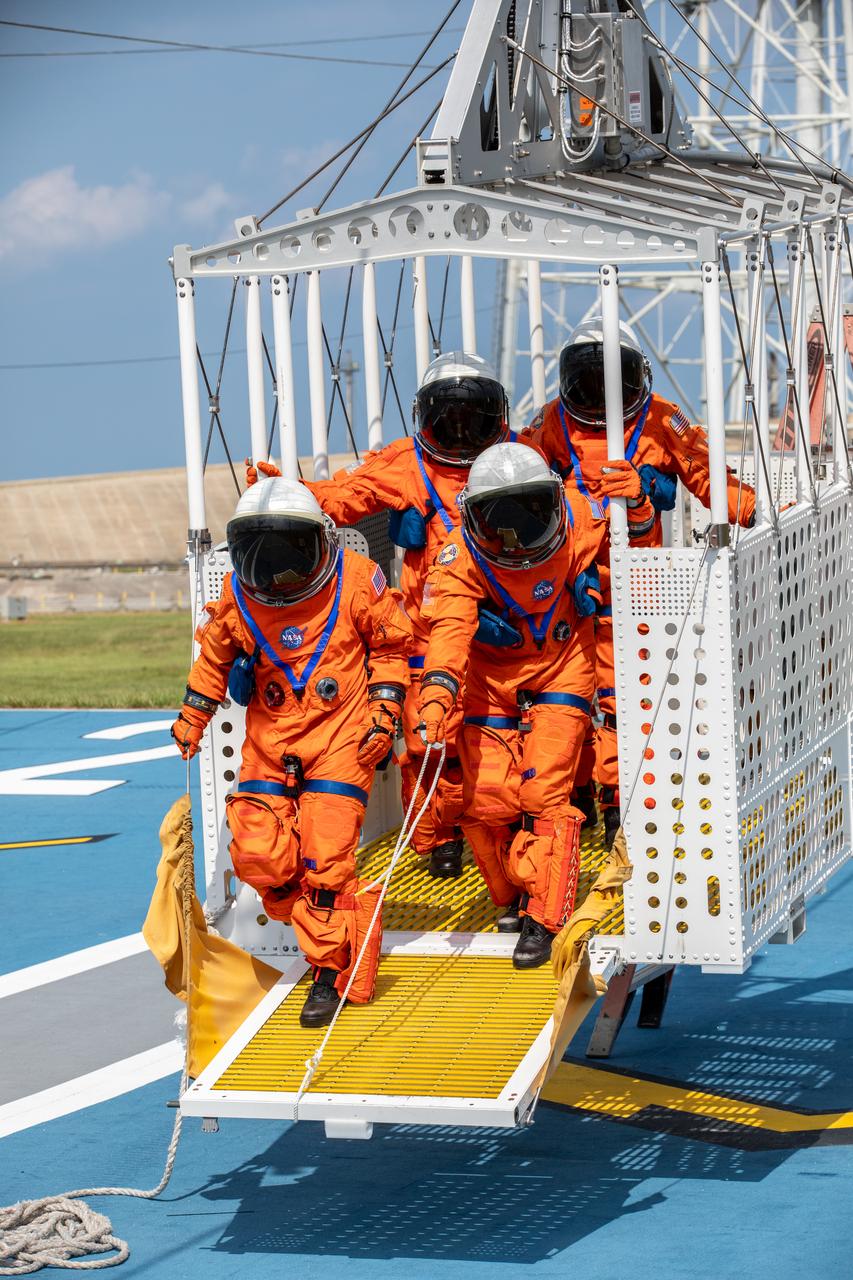
Teams at NASA’s Kennedy Space Center in Florida practice the Artemis mission emergency escape or egress procedures during a series of integrated system verification and validation tests at Launch Complex 39B on Friday, Aug. 9, 2024. Simulated flight crew members practice getting out of the emergency egress basket and into the emergency transport vehicle to drive them to safety in the event of an unlikely emergency during launch countdown.
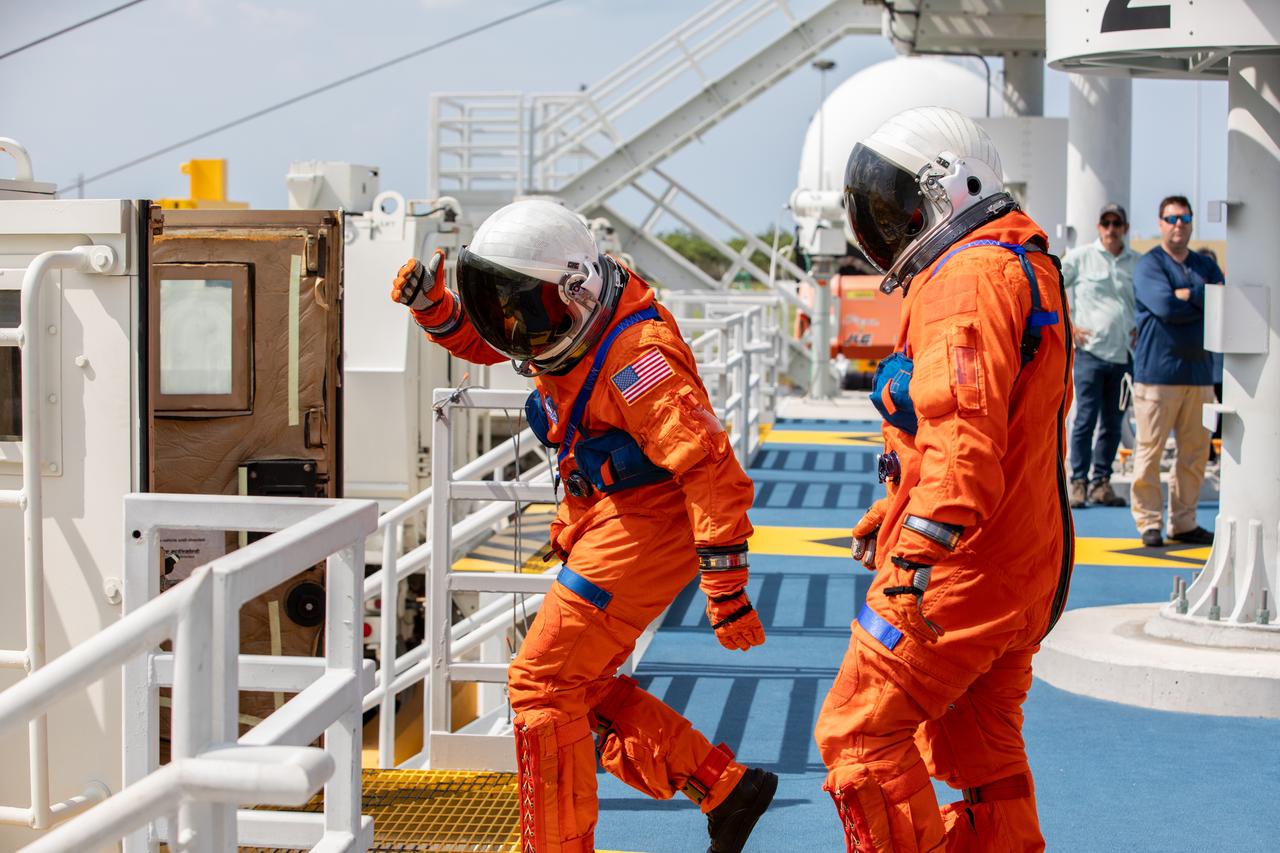
Teams at NASA’s Kennedy Space Center in Florida practice the Artemis mission emergency escape or egress procedures during a series of integrated system verification and validation tests at Launch Complex 39B on Friday, Aug. 9, 2024. Simulated flight crew members practice getting out of the emergency egress basket and into the emergency transport vehicle to drive them to safety in the event of an unlikely emergency during launch countdown.
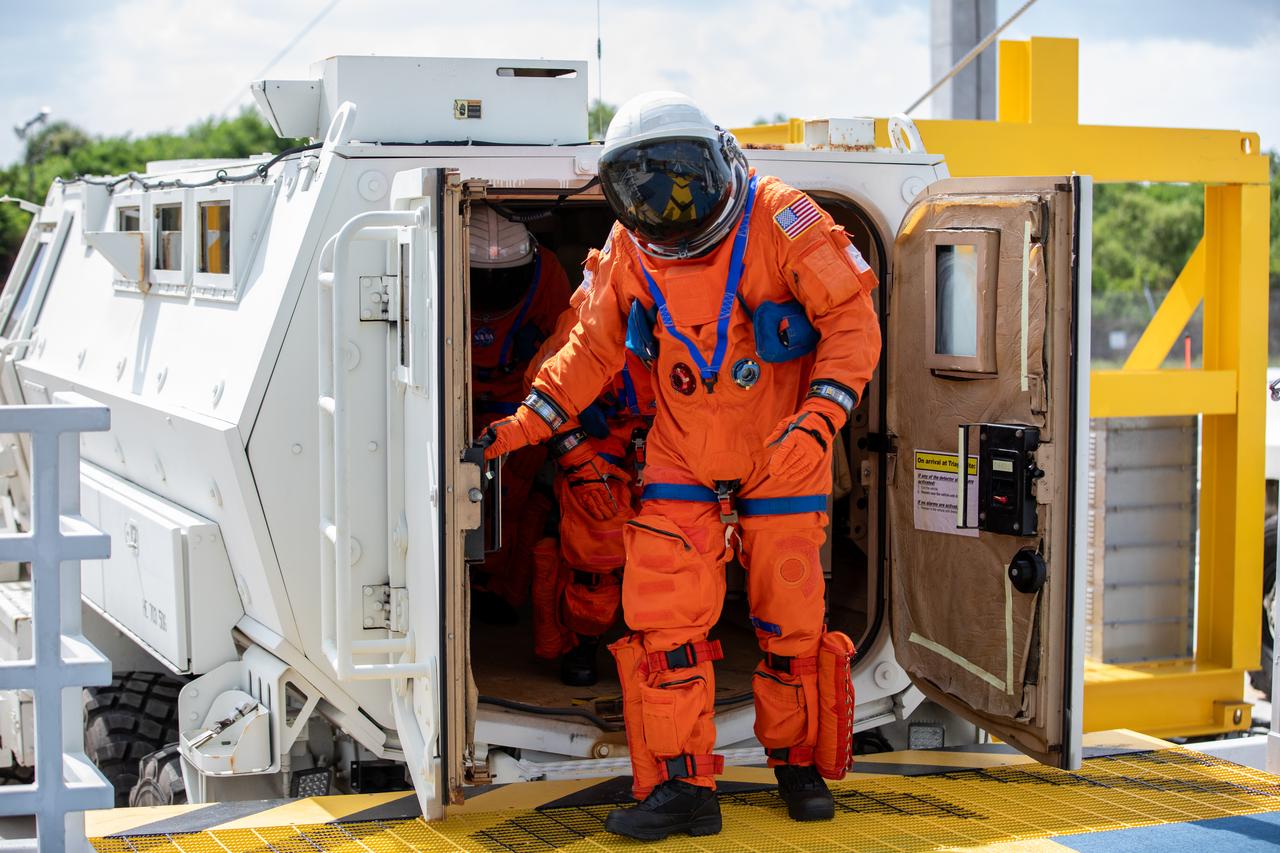
Teams at NASA’s Kennedy Space Center in Florida practice the Artemis mission emergency escape or egress procedures during a series of integrated system verification and validation tests at Launch Complex 39B on Friday, Aug. 9, 2024. Simulated flight crew members practice getting out of the emergency egress basket and into the emergency transport vehicle to drive them to safety in the event of an unlikely emergency during launch countdown.
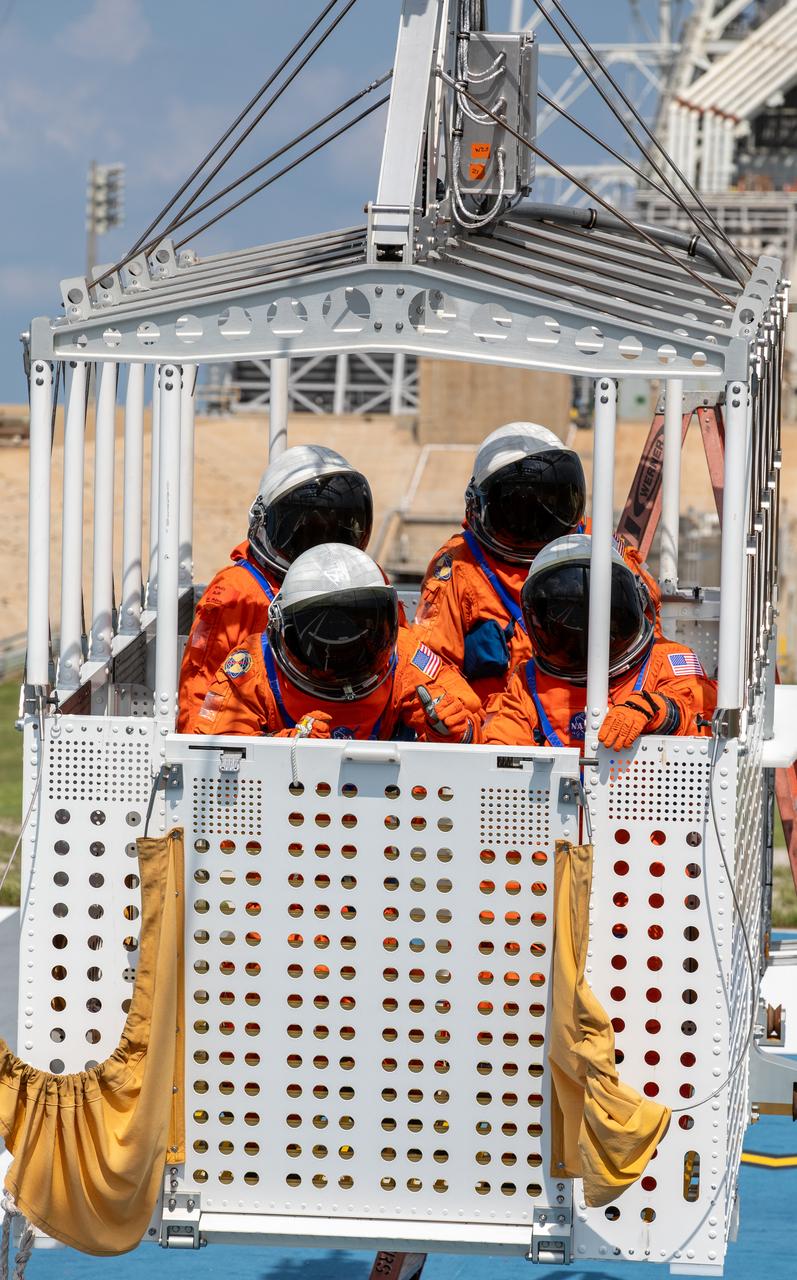
Teams at NASA’s Kennedy Space Center in Florida practice the Artemis mission emergency escape or egress procedures during a series of integrated system verification and validation tests at Launch Complex 39B on Friday, Aug. 9, 2024. Simulated flight crew members practice getting out of the emergency egress basket and into the emergency transport vehicle to drive them to safety in the event of an unlikely emergency during launch countdown.
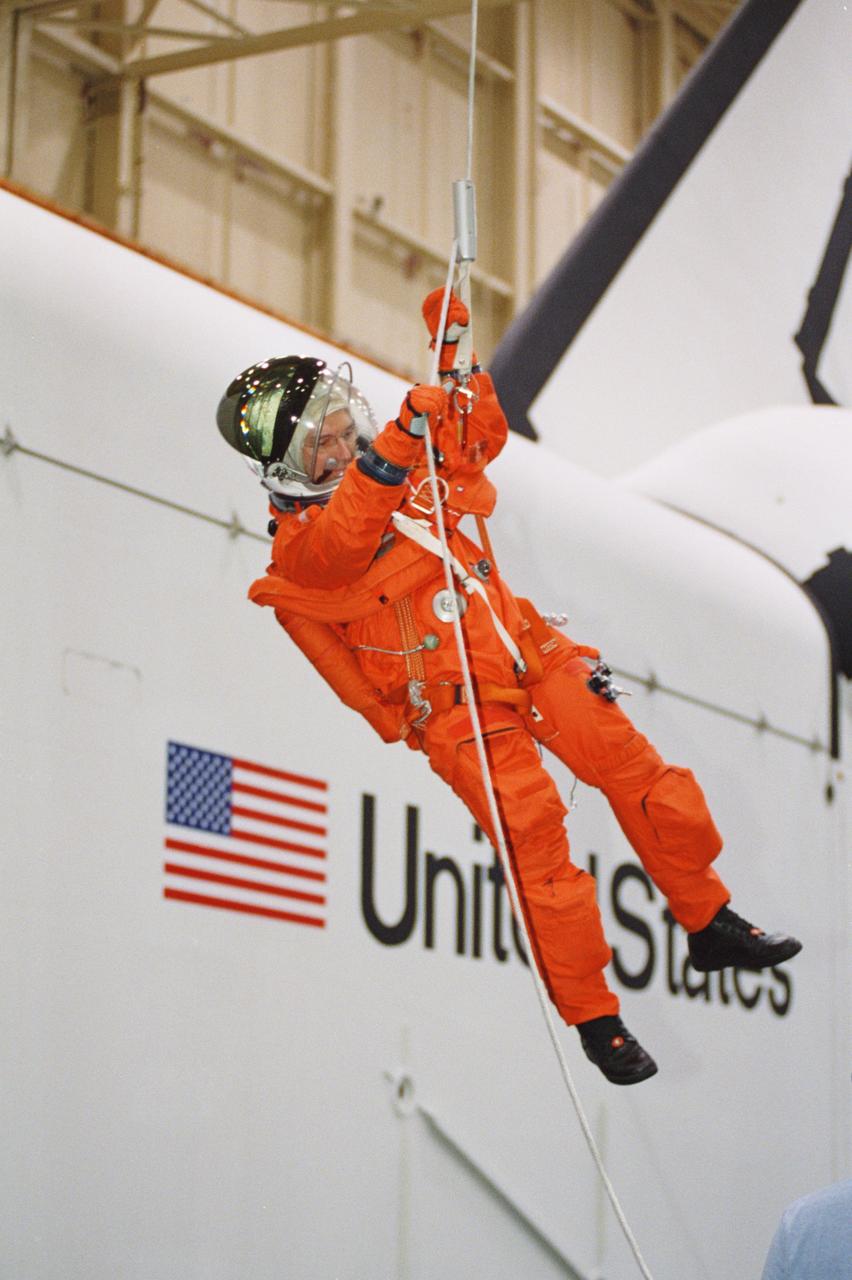
JSC2001-01466 (18 May 2001) --- Astronaut Carl E. Walz, Expedition Four flight engineer, lowers himself from a simulated shuttle in trouble during an emergency egress training session in the Space Vehicle Mockup Facility at the Johnson Space Center (JSC).
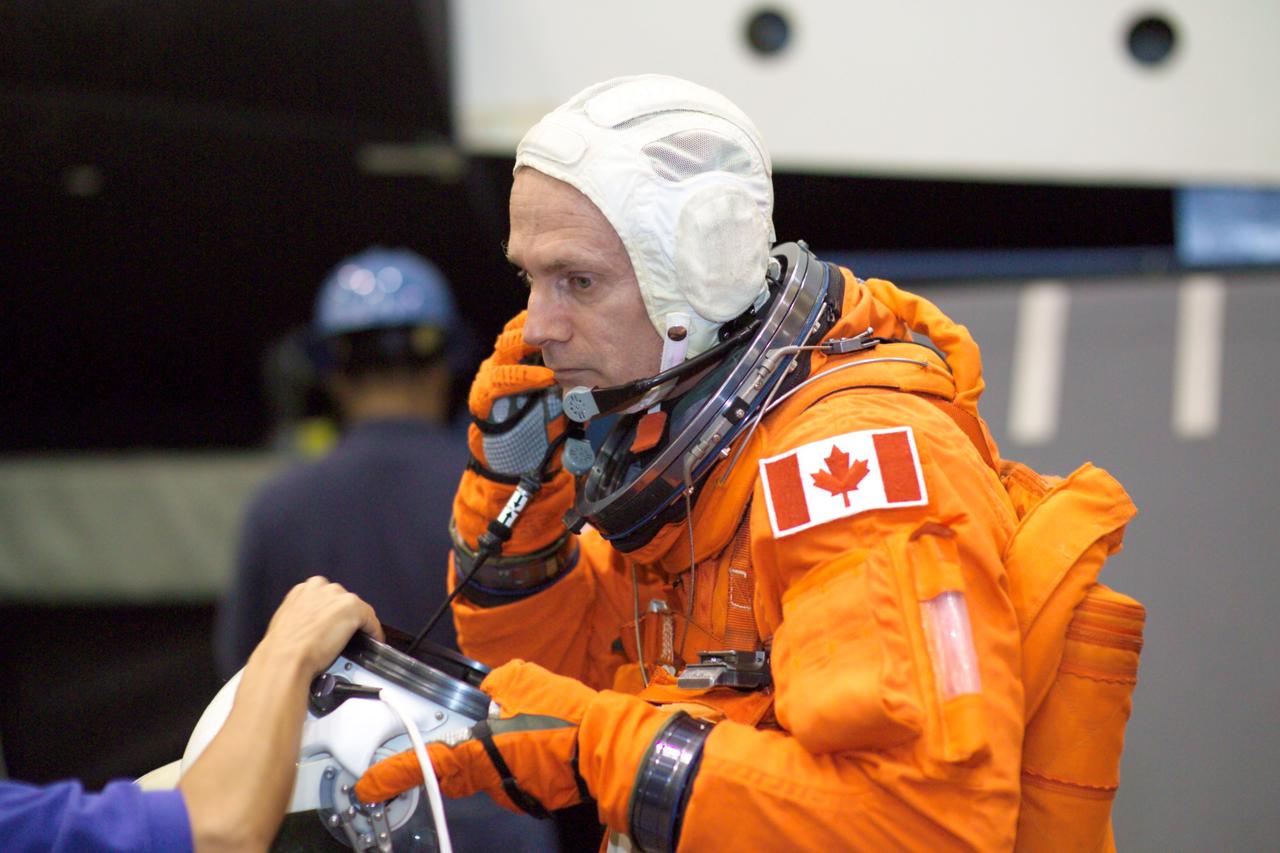
JSC2005-E-13822 (4 April 2005) --- Astronaut Steven G. MacLean, STS-115 mission specialist representing the Canadian Space Agency, dons a training version of the shuttle launch and entry suit prior to the start of an emergency egress training session in the Space Vehicle Mockup Facility at the Johnson Space Center.
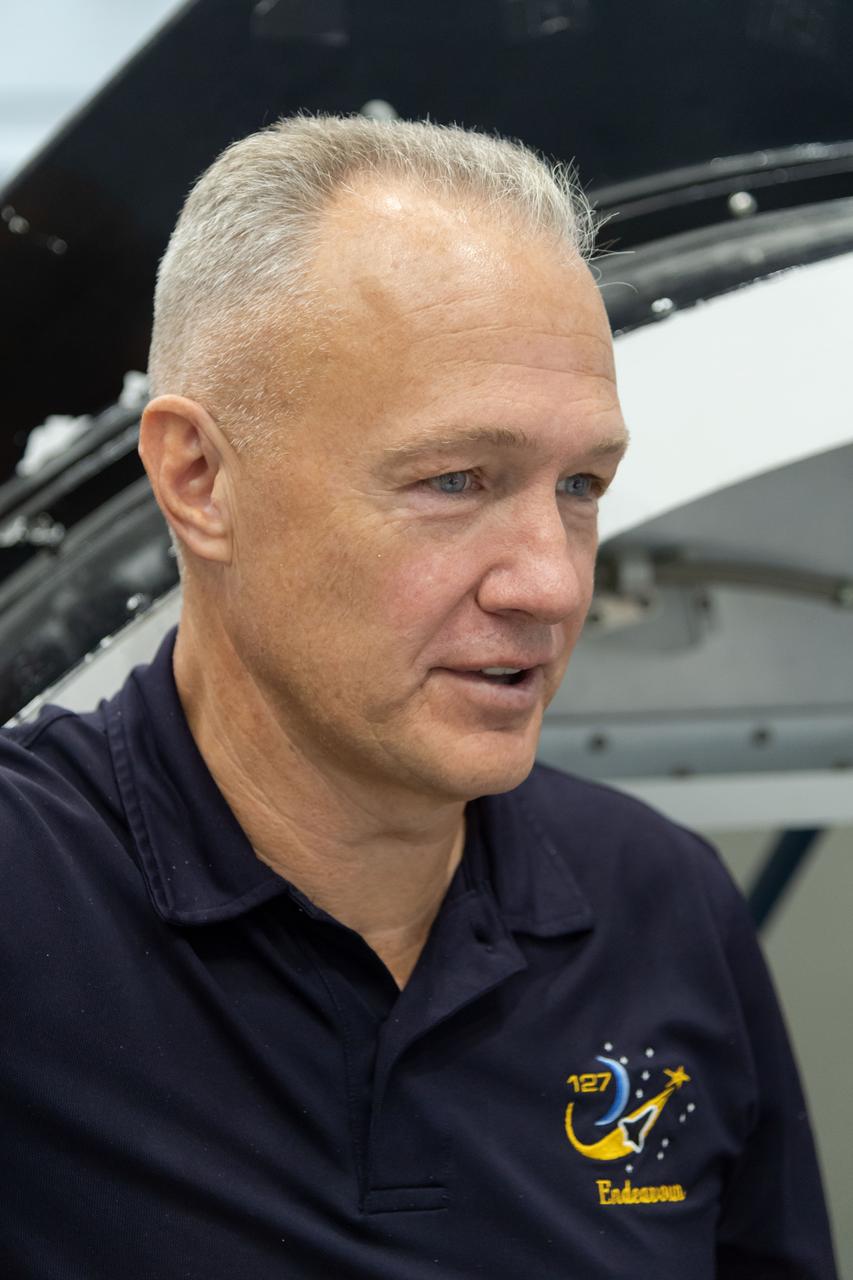
NASA commercial crew astronaut Doug Hurley attends a training class for International Space Station ingress and egress procedures in the Space Vehicle Mock-Up Facility at Johnson Space Center in Houston. Hurley is assigned to the SpaceX Crew Dragon’s first crewed flight.
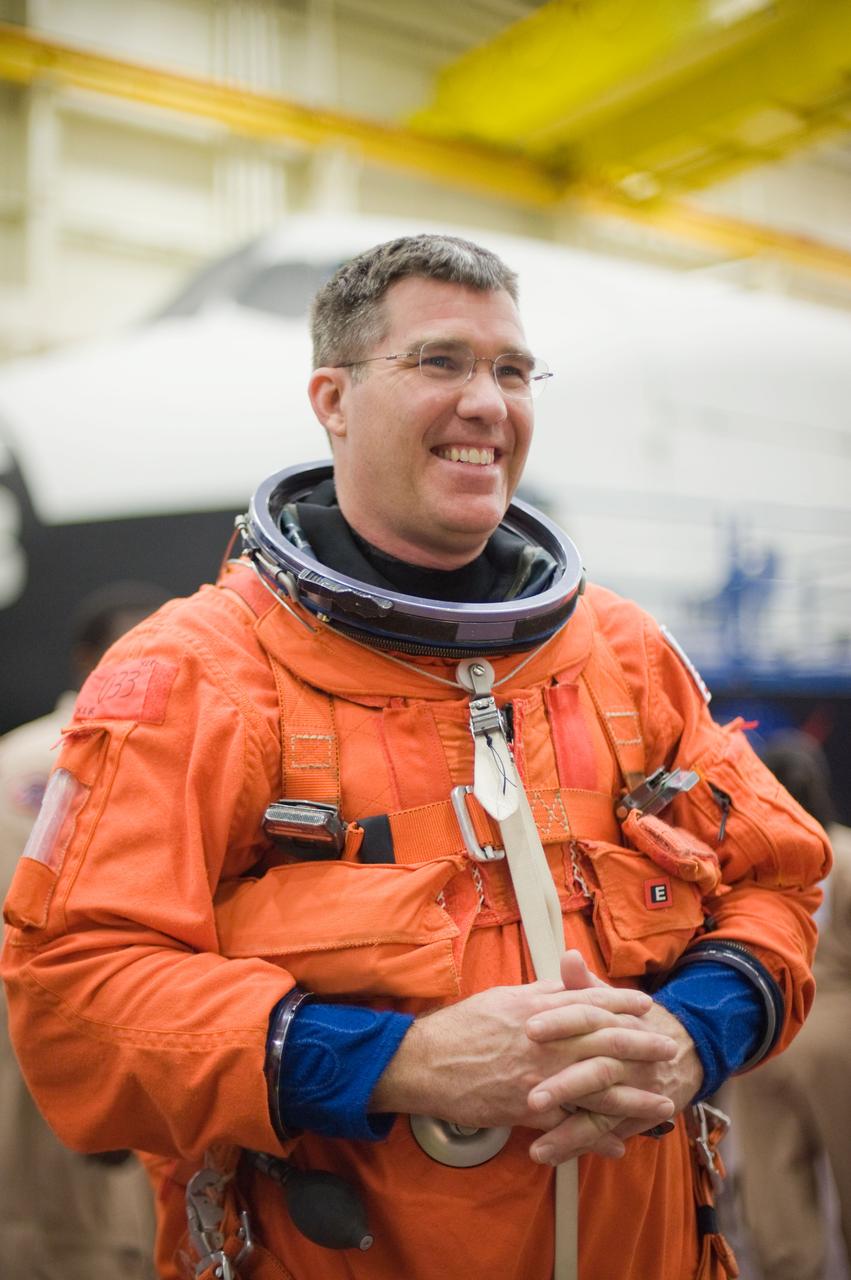
JSC2010-E-051996 (8 April 2010) --- NASA astronaut Steve Bowen, STS-132 mission specialist, attired in a training version of his shuttle launch and entry suit, awaits the start of an ingress/egress training session in the Space Vehicle Mock-up Facility at NASA's Johnson Space Center.

JSC2007-E-21204 (1 May 2007) --- Attired in a training version of his shuttle launch and entry suit, astronaut Leland D. Melvin, STS-122 mission specialist, awaits the start of an emergency egress training session in the Space Vehicle Mockup Facility at Johnson Space Center.
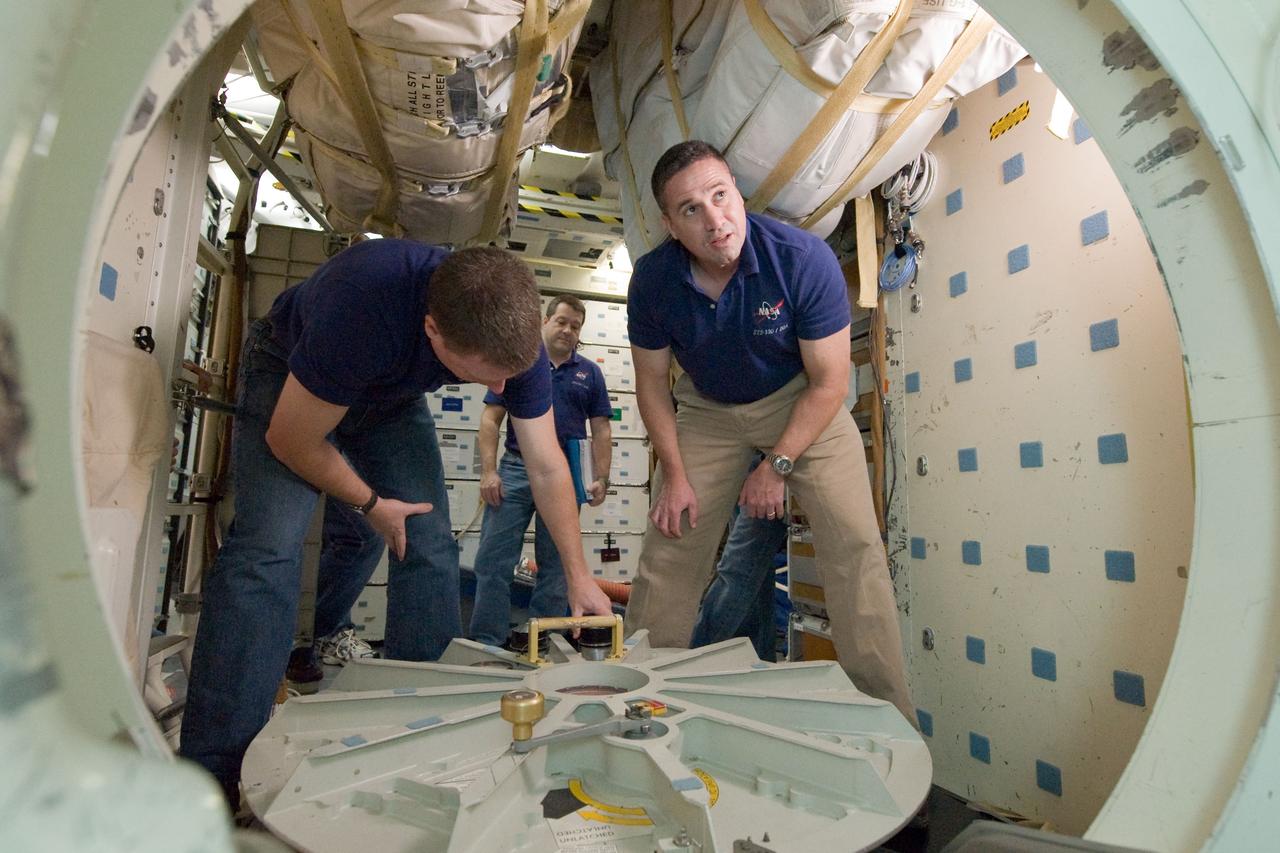
JSC2009-E-286958 (22 Dec. 2009) --- Astronauts George Zamka (right), STS-130 commander; Terry Virts, pilot; and Nicholas Patrick (background), mission specialist, participate in an ingress/egress timeline training session in a shuttle mock-up in the Space Vehicle Mock-up Facility at NASA's Johnson Space Center.
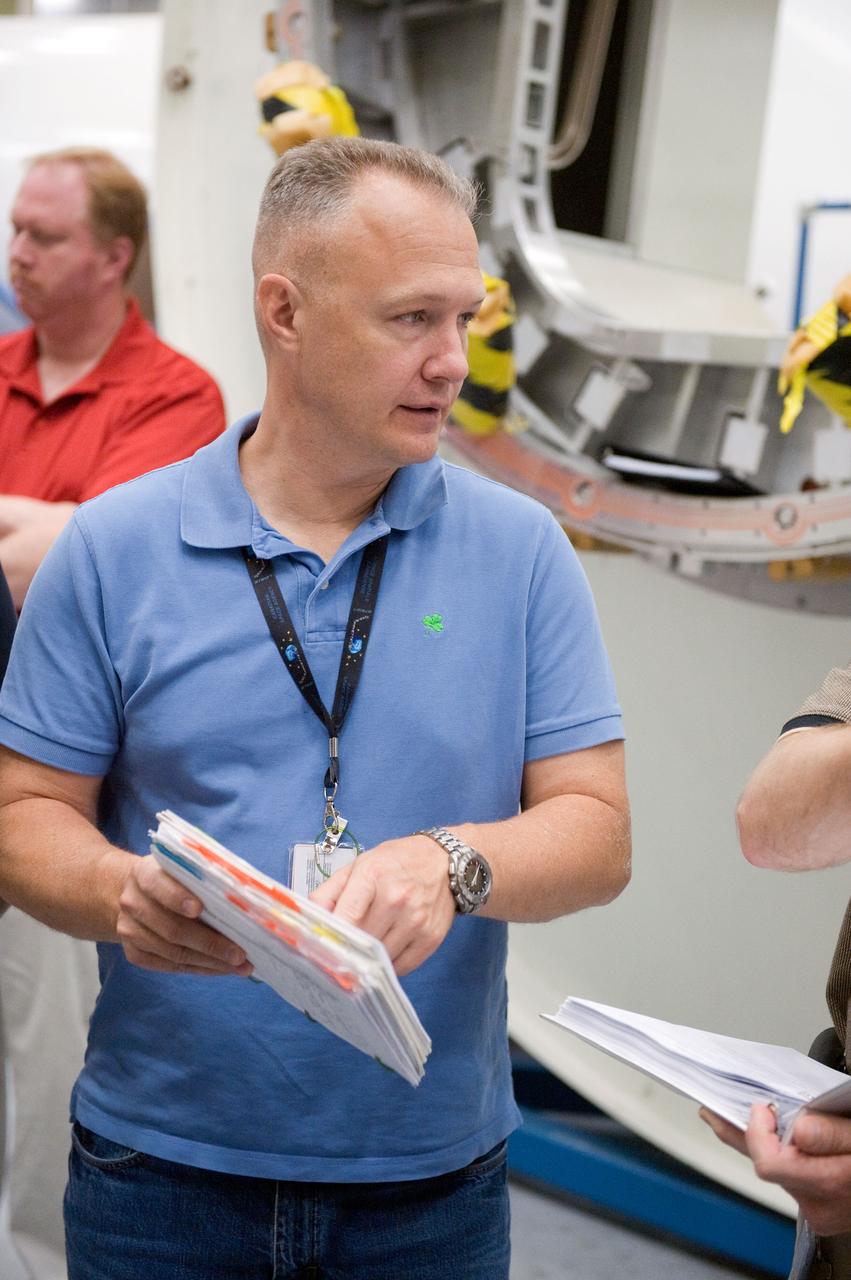
JSC2011-E-043701 (29 April 2011) --- NASA astronaut Doug Hurley, STS-135 pilot, participates in an ingress/egress timeline training session in the Space Vehicle Mock-up Facility at NASA's Johnson Space Center. Photo credit: NASA
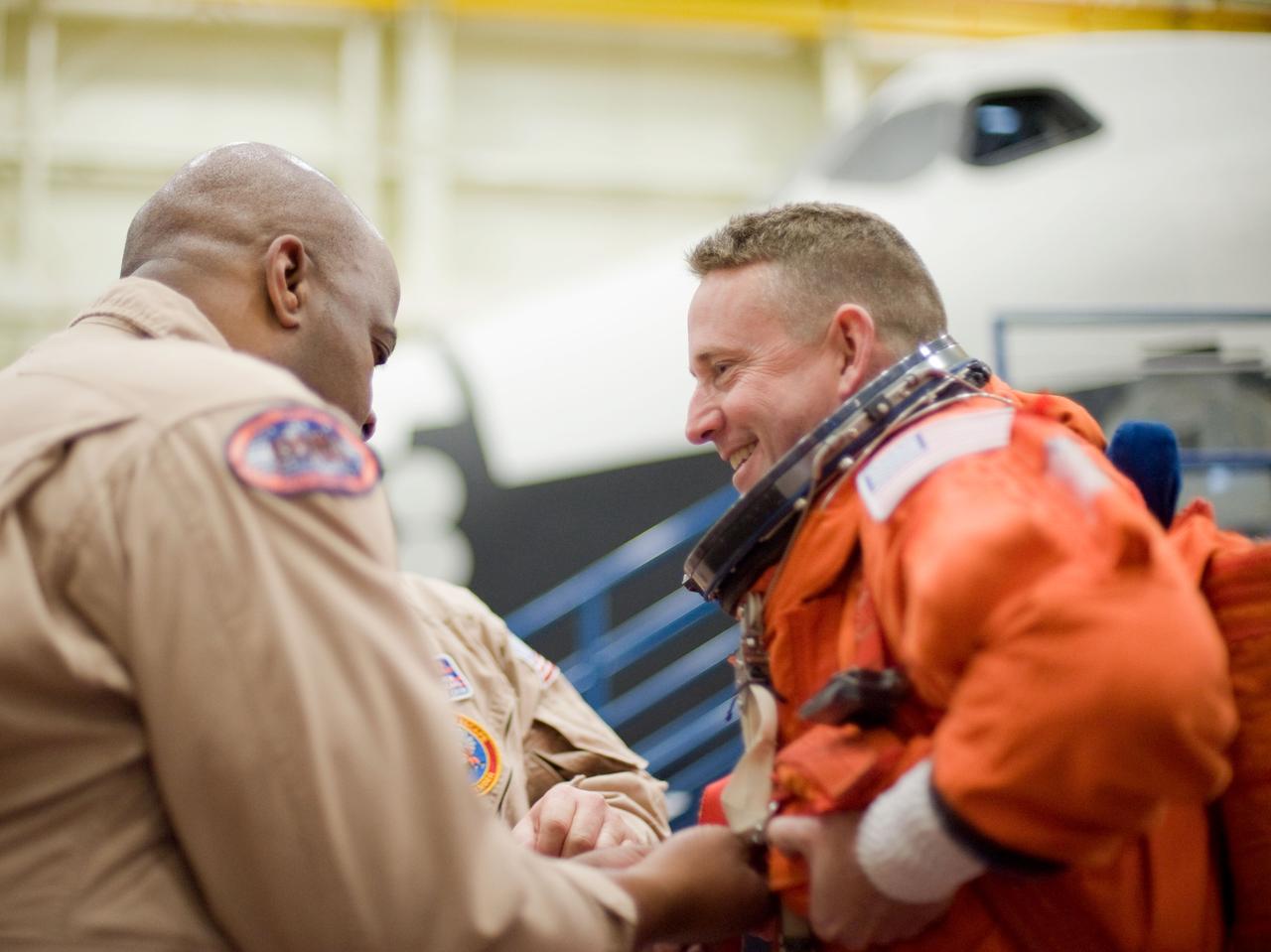
JSC2010-E-051994 (8 April 2010) --- NASA astronaut Ken Ham, STS-132 commander, gets help with the donning of a training version of his shuttle launch and entry suit in preparation for an ingress/egress training session in the Space Vehicle Mock-up Facility at NASA's Johnson Space Center.
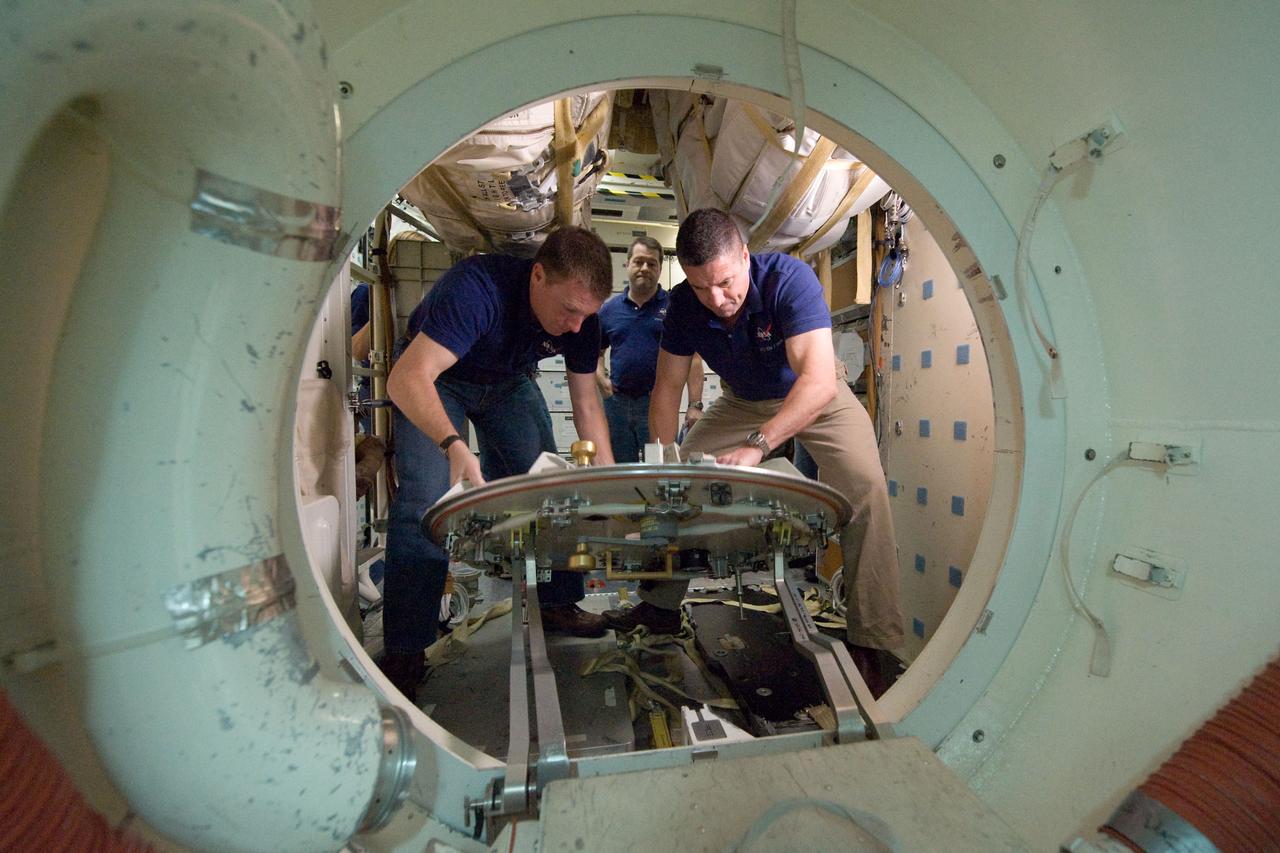
JSC2009-E-286956 (22 Dec. 2009) --- Astronauts George Zamka (right), STS-130 commander; Terry Virts, pilot; and Nicholas Patrick (background), mission specialist, participate in an ingress/egress timeline training session in a shuttle mock-up in the Space Vehicle Mock-up Facility at NASA's Johnson Space Center.
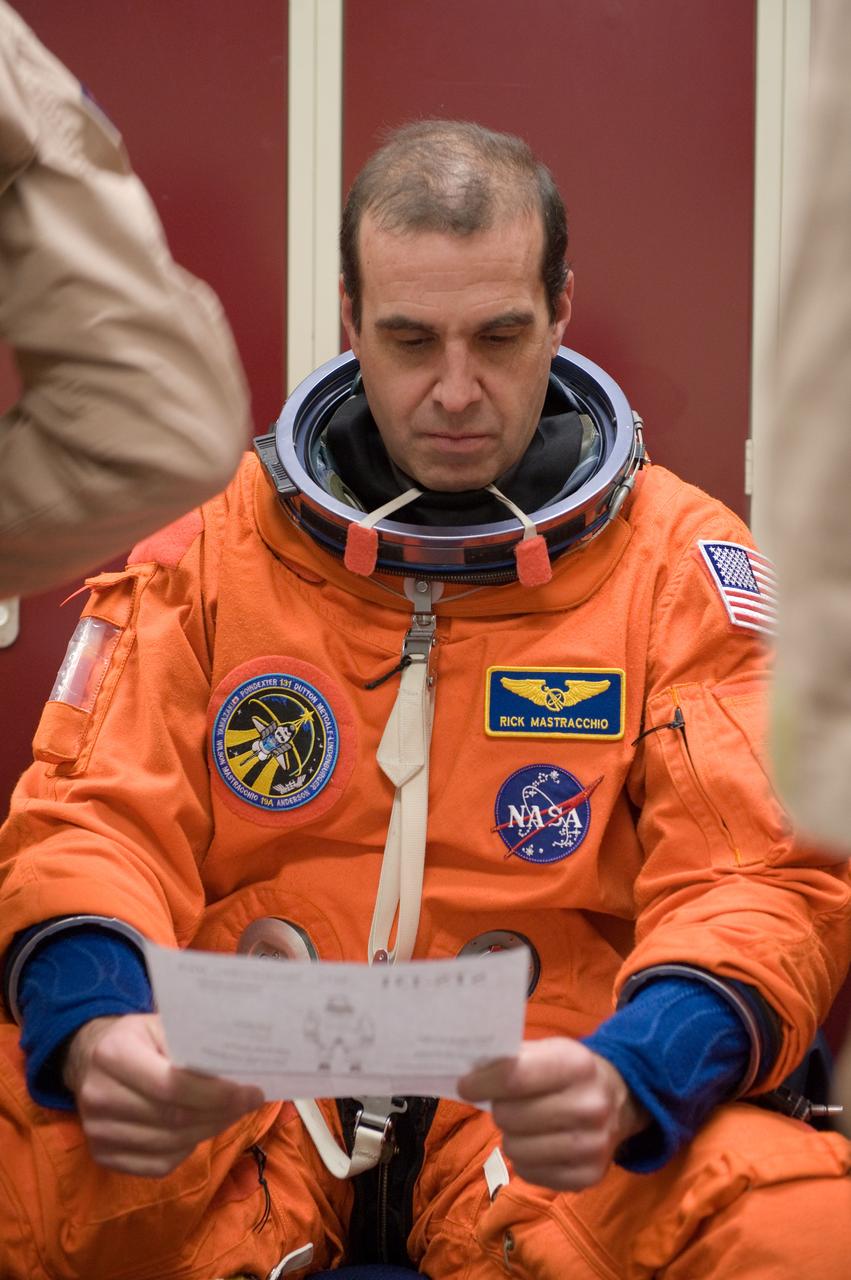
JSC2010-E-017715 (29 Jan. 2010) --- NASA astronaut Rick Mastracchio, STS-131 mission specialist, attired in a training version of his shuttle launch and entry suit, prepares for an ingress/egress training session in the Space Vehicle Mock-up Facility at NASA's Johnson Space Center.
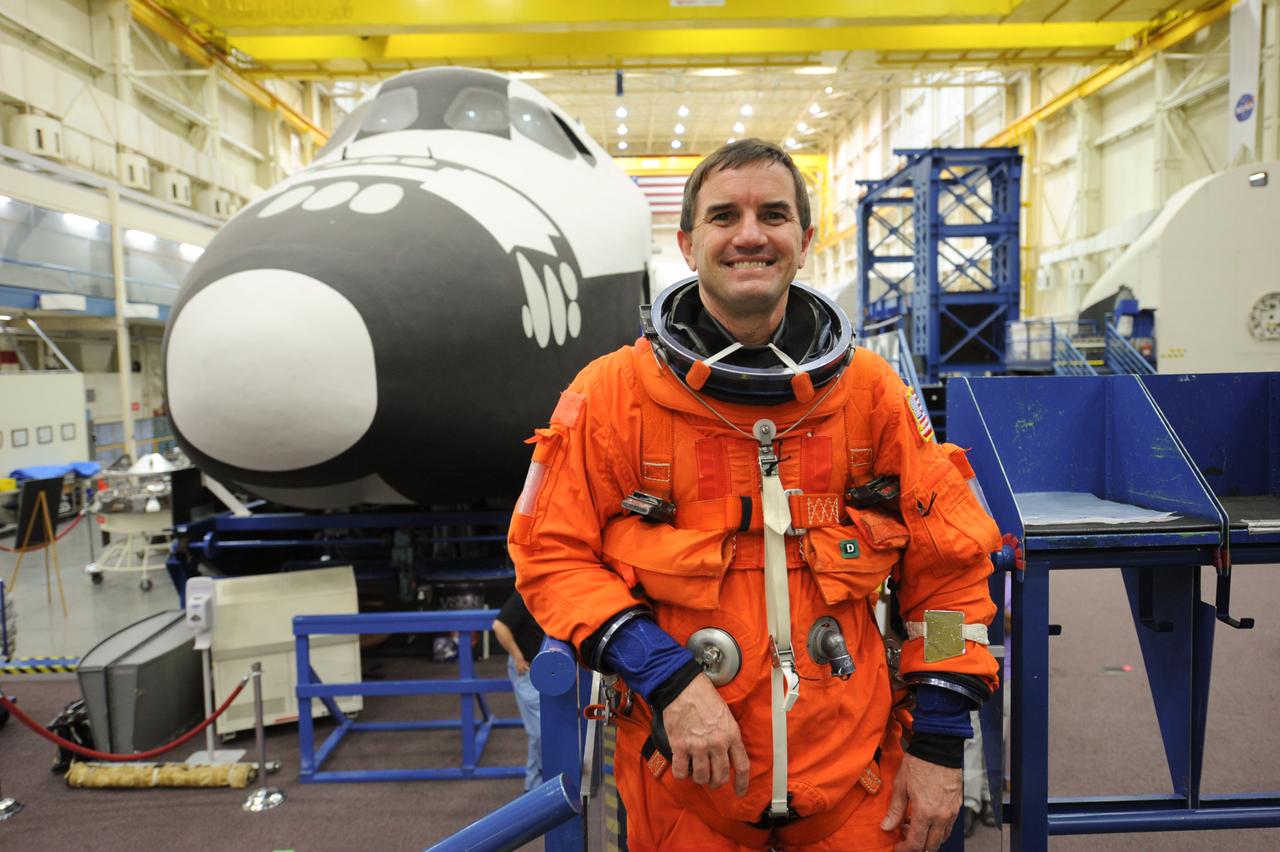
JSC2011-E-050041 (24 May 2011) --- NASA astronaut Rex Walheim, STS-135 mission specialist, attired in a training version of the shuttle launch and entry suit, is pictured during an ingress/egress training session in the Space Vehicle Mock-up Facility at NASA's Johnson Space Center. Photo credit: NASA
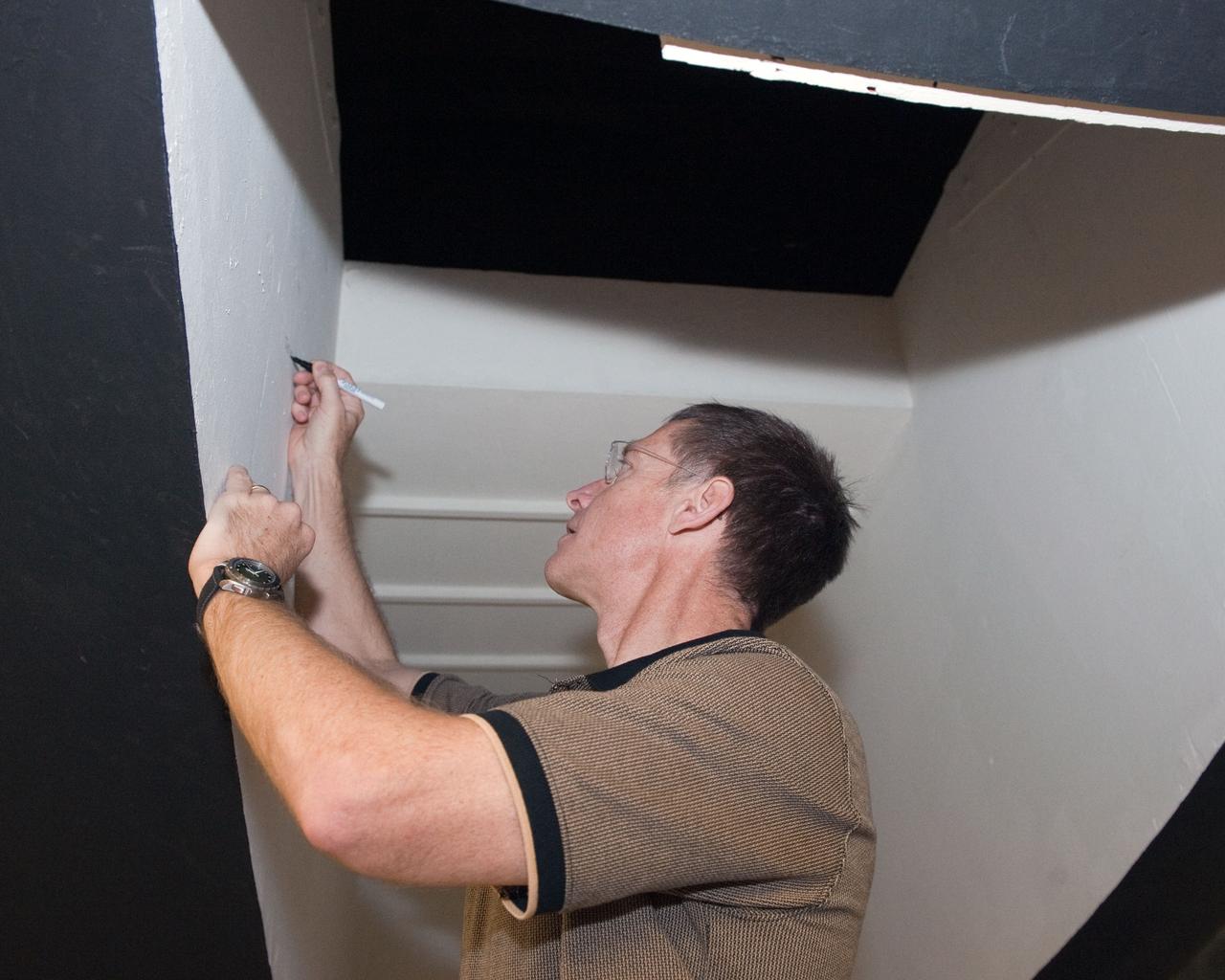
JSC2011-E-043688 (29 April 2011) --- NASA astronaut Chris Ferguson, STS-135 commander, signs his name on hardware during an ingress/egress timeline training session in the Space Vehicle Mock-up Facility at NASA's Johnson Space Center. Photo credit: NASA
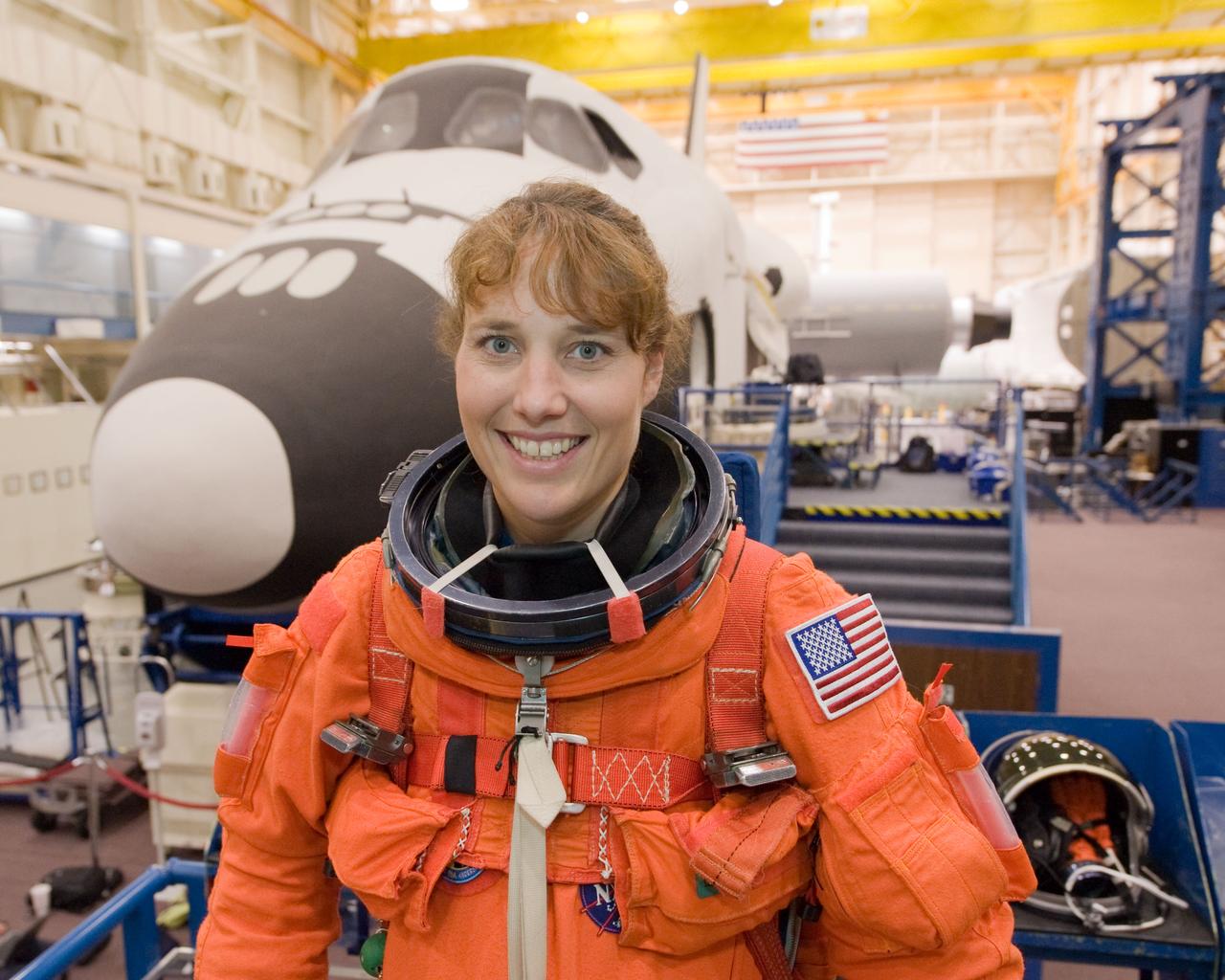
JSC2010-E-017748 (29 Jan. 2010) --- NASA astronaut Dorothy Metcalf-Lindenburger, STS-131 mission specialist, attired in a training version of her shuttle launch and entry suit, poses for a photo prior to the start of an ingress/egress training session in the Space Vehicle Mock-up Facility at NASA's Johnson Space Center.
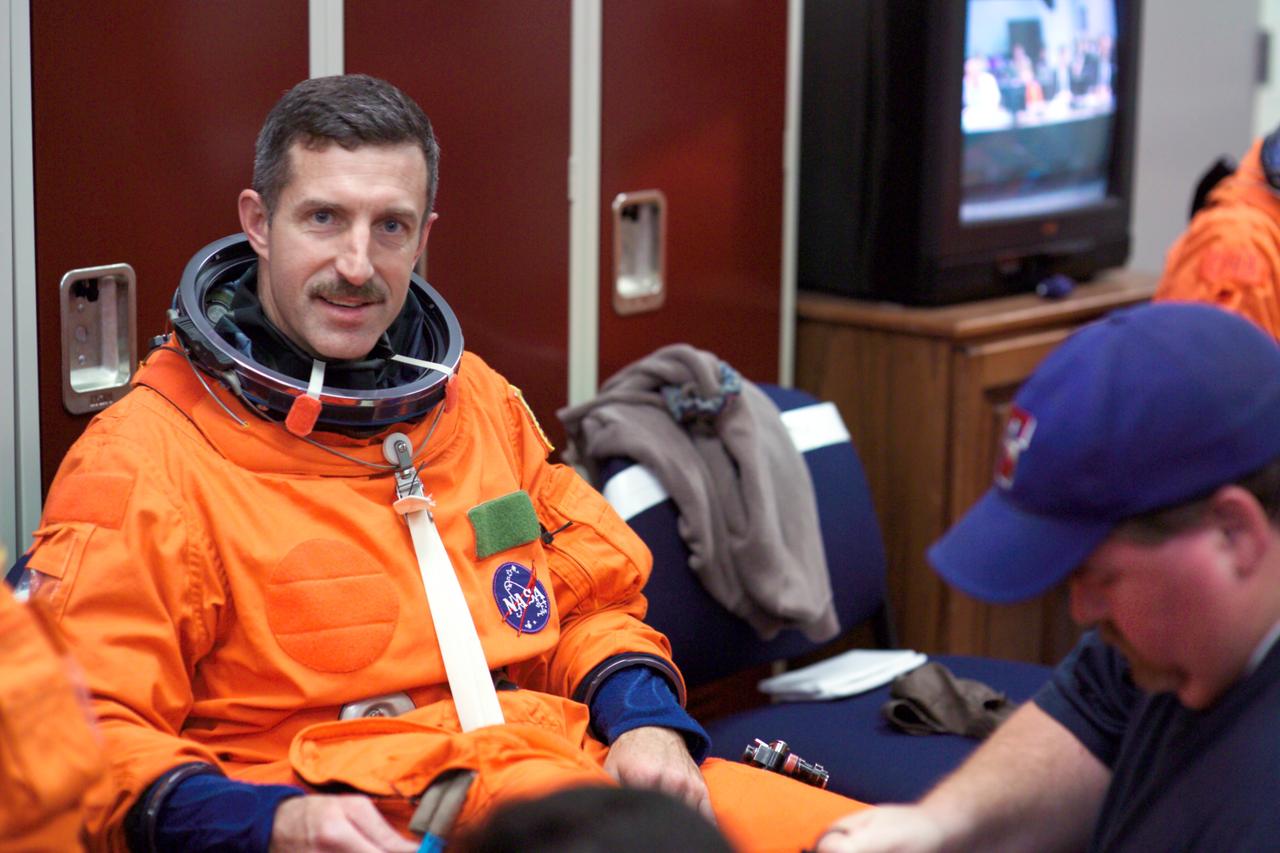
JSC2005-E-13774 (5 April 2005) --- Astronaut Daniel C. Burbank, STS-115 mission specialist, dons a training version of the shuttle launch and entry suit prior to the start of an emergency egress training session in the Space Vehicle Mockup Facility at the Johnson Space Center. Suit technician Mike Thompson assisted Burbank.

JSC2002-00866 (24 April 2002) --- Astronaut David A. Wolf, STS-112 mission specialist, wearing a training version of the full-pressure launch and entry suit, lowers himself from a simulated shuttle in trouble during an emergency egress training session in the Space Vehicle Mockup Facility at the Johnson Space Center (JSC).
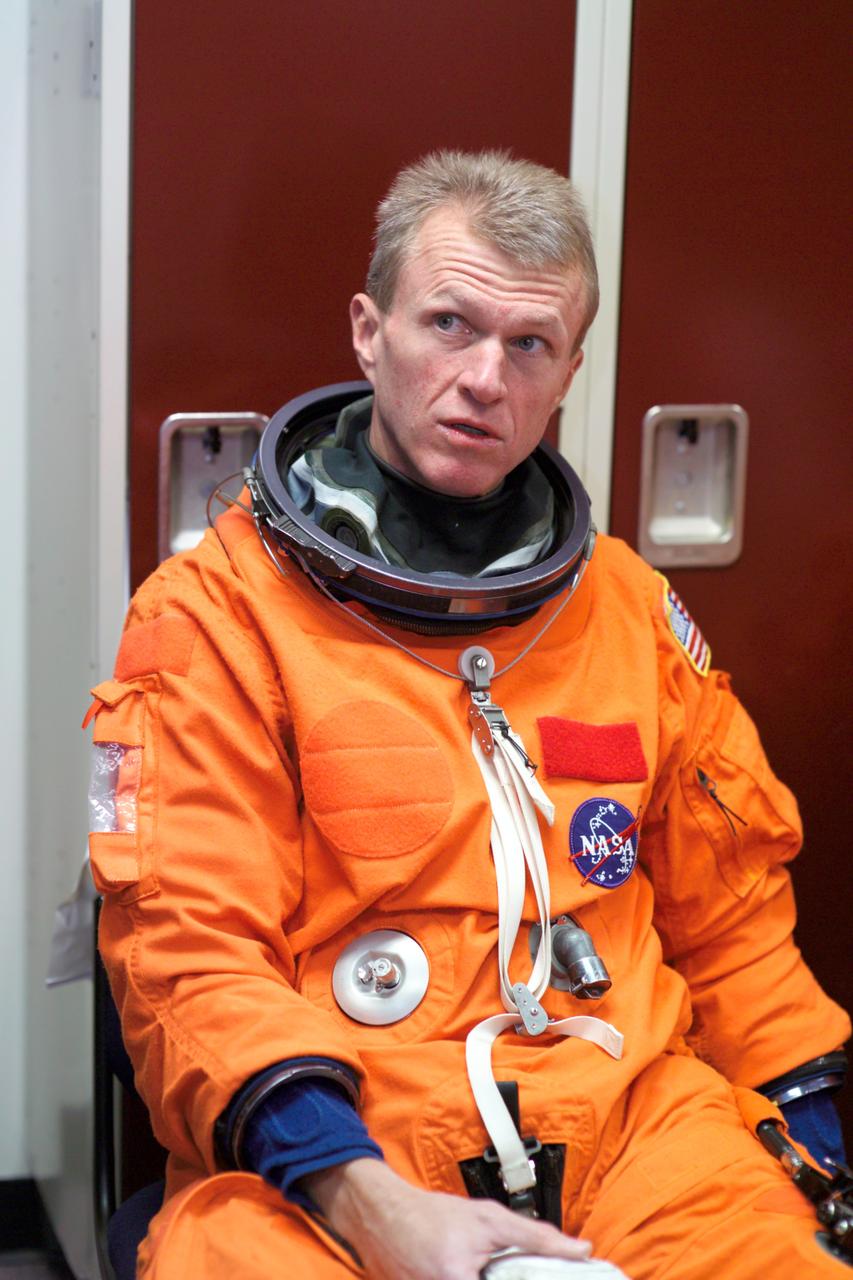
JSC2005-E-13773 (5 April 2005) --- Astronaut Brent W. Jett Jr., STS-115 commander, attired in a training version of the shuttle launch and entry suit, awaits the start of an emergency egress training session in the Space Vehicle Mockup Facility at the Johnson Space Center.
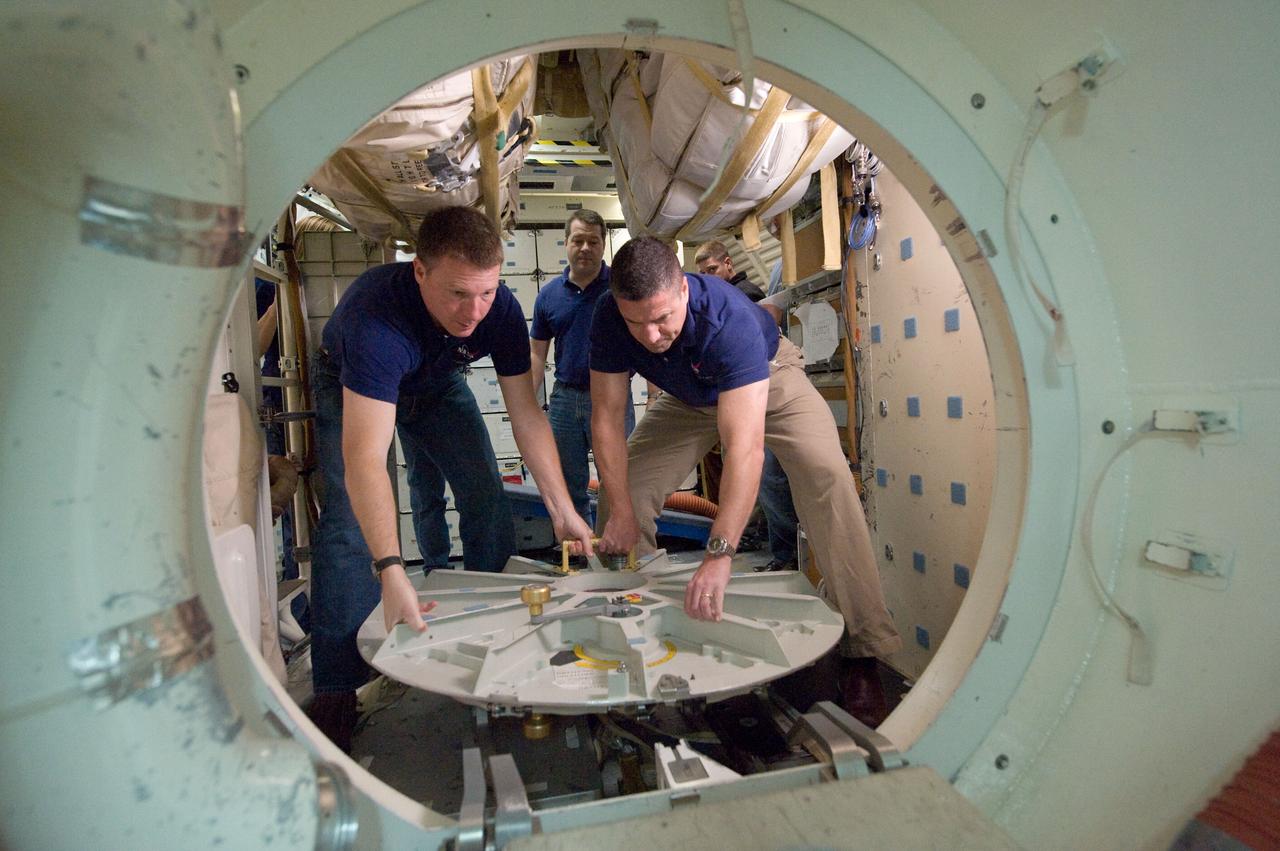
JSC2009-E-286957 (22 Dec. 2009) --- Astronauts George Zamka (right), STS-130 commander; Terry Virts, pilot; and Nicholas Patrick (background), mission specialist, participate in an ingress/egress timeline training session in a shuttle mock-up in the Space Vehicle Mock-up Facility at NASA's Johnson Space Center.3
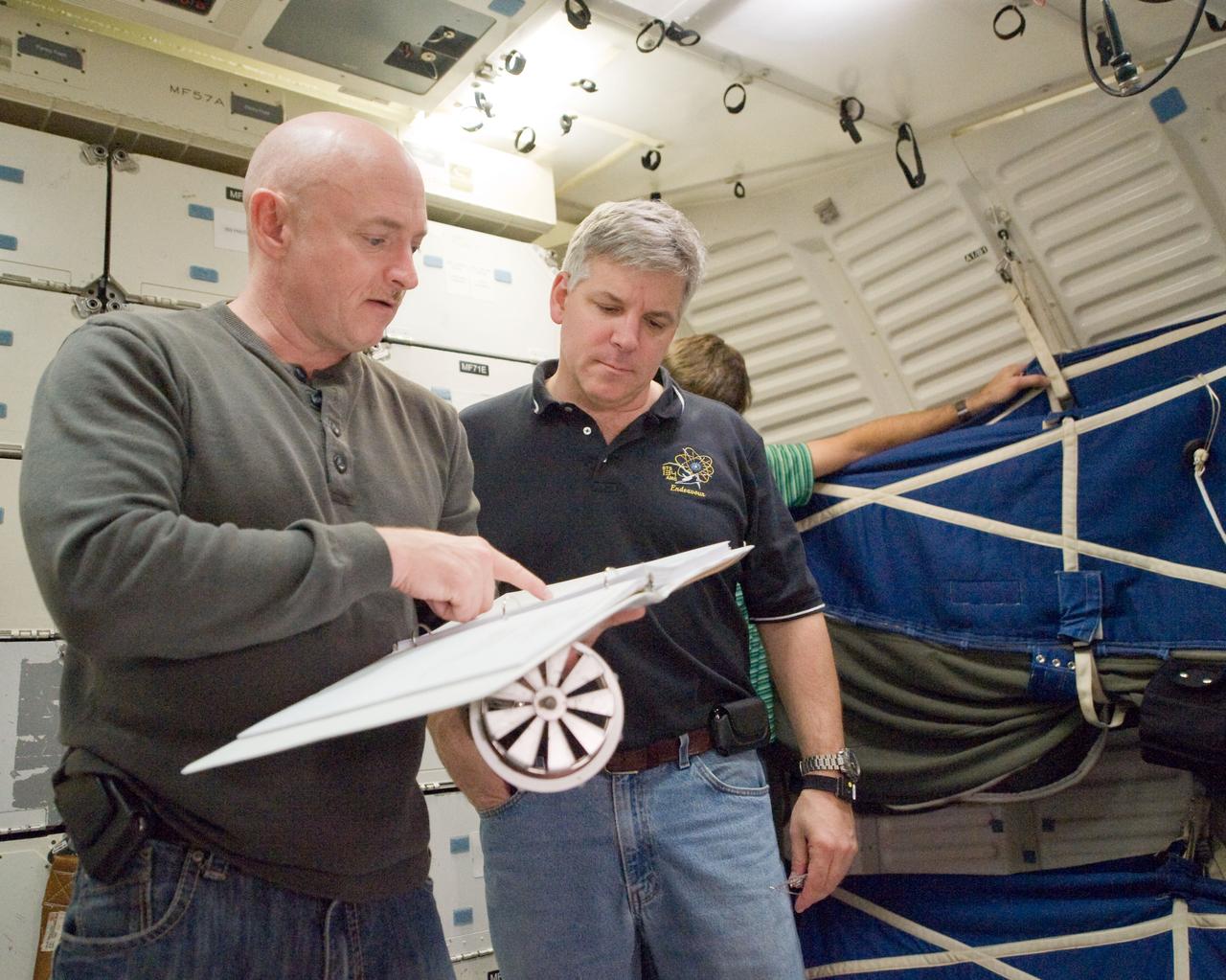
JSC2010-E-194291 (4 Dec. 2010) --- NASA astronauts Mark Kelly (left) and Gregory H. Johnson, STS-134 commander and pilot, respectively, participate in an ingress/egress training session in the Space Vehicle Mock-up Facility at NASA's Johnson Space Center. Photo credit: NASA or National Aeronautics and Space Administration
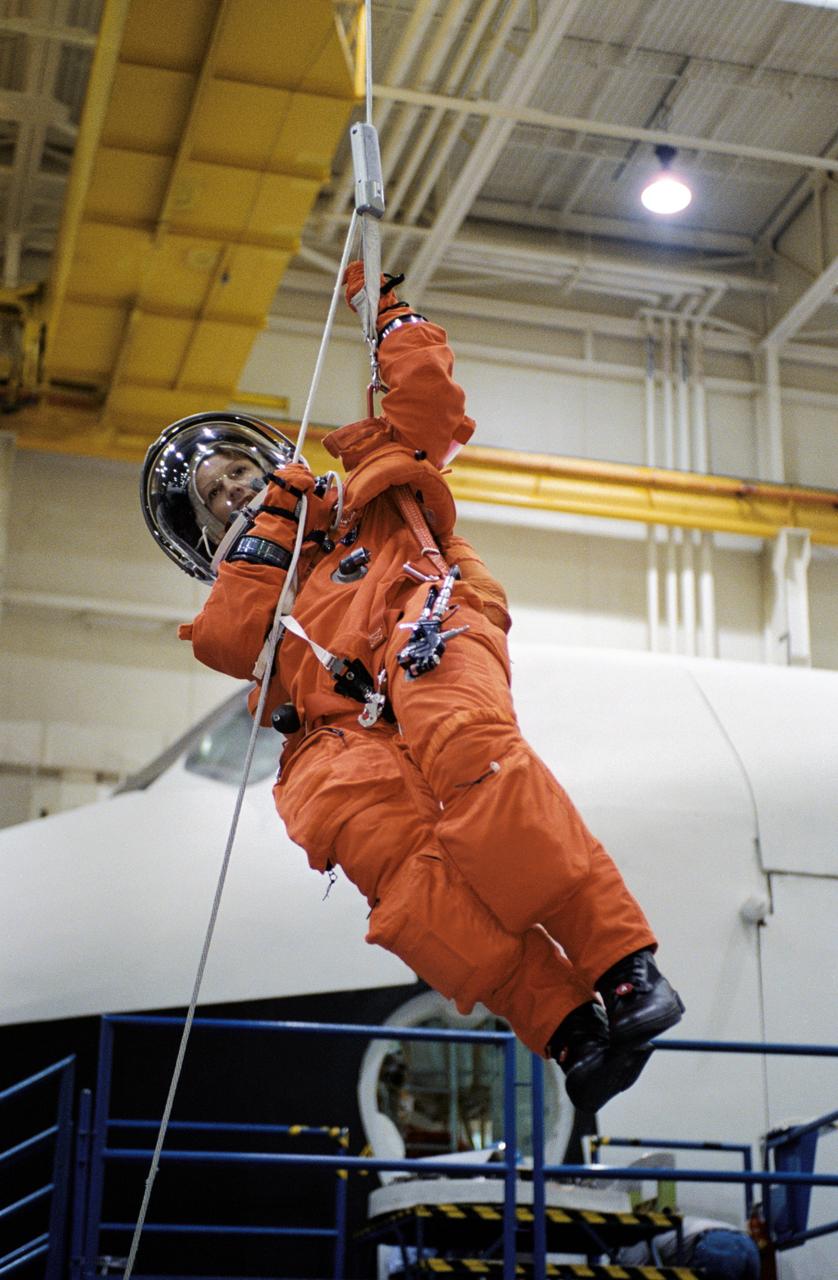
JSC2002-01651 (12 September 2002) --- Astronaut Eileen M. Collins, STS-114 mission commander, wearing a training version of the full-pressure launch and entry suit, lowers herself from a simulated shuttle in trouble during an emergency egress training session in the Space Vehicle Mockup Facility at the Johnson Space Center (JSC).
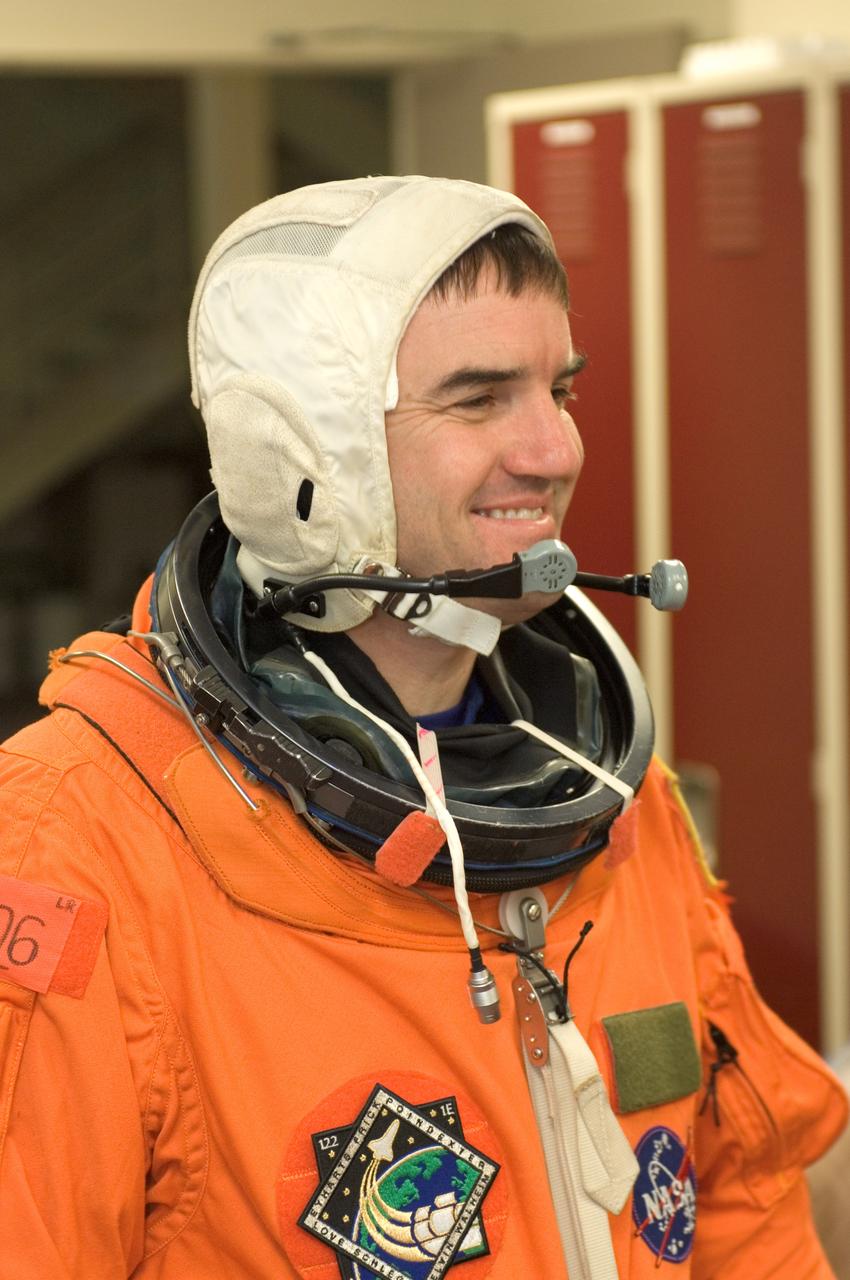
JSC2007-E-21172 (1 May 2007) --- Astronaut Rex J. Walheim, STS-122 mission specialist, attired in a training version of his shuttle launch and entry suit, awaits the start of an emergency egress training session in the Space Vehicle Mockup Facility at Johnson Space Center.

JSC2007-E-21208 (1 May 2007) --- Attired in a training version of his shuttle launch and entry suit, astronaut Stanley G. Love, STS-122 mission specialist, awaits the start of an emergency egress training session in the Space Vehicle Mockup Facility at Johnson Space Center.
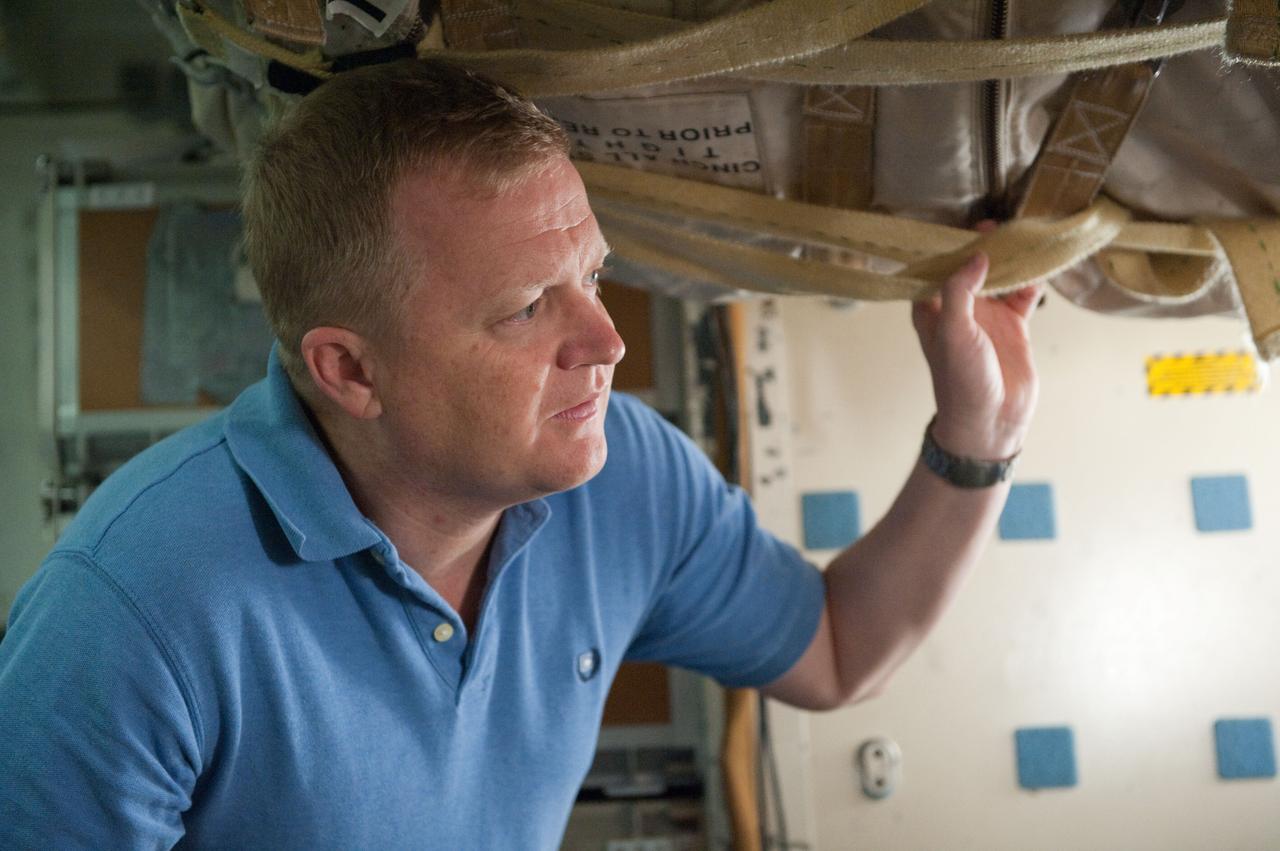
JSC2010-E-171229 (30 Sept. 2010) --- NASA astronaut Eric Boe, STS-133 pilot, participates in an ingress/egress timeline training session in a shuttle mock-up in the Space Vehicle Mock-up Facility at NASA's Johnson Space Center. Photo credit: NASA or National Aeronautics and Space Administration
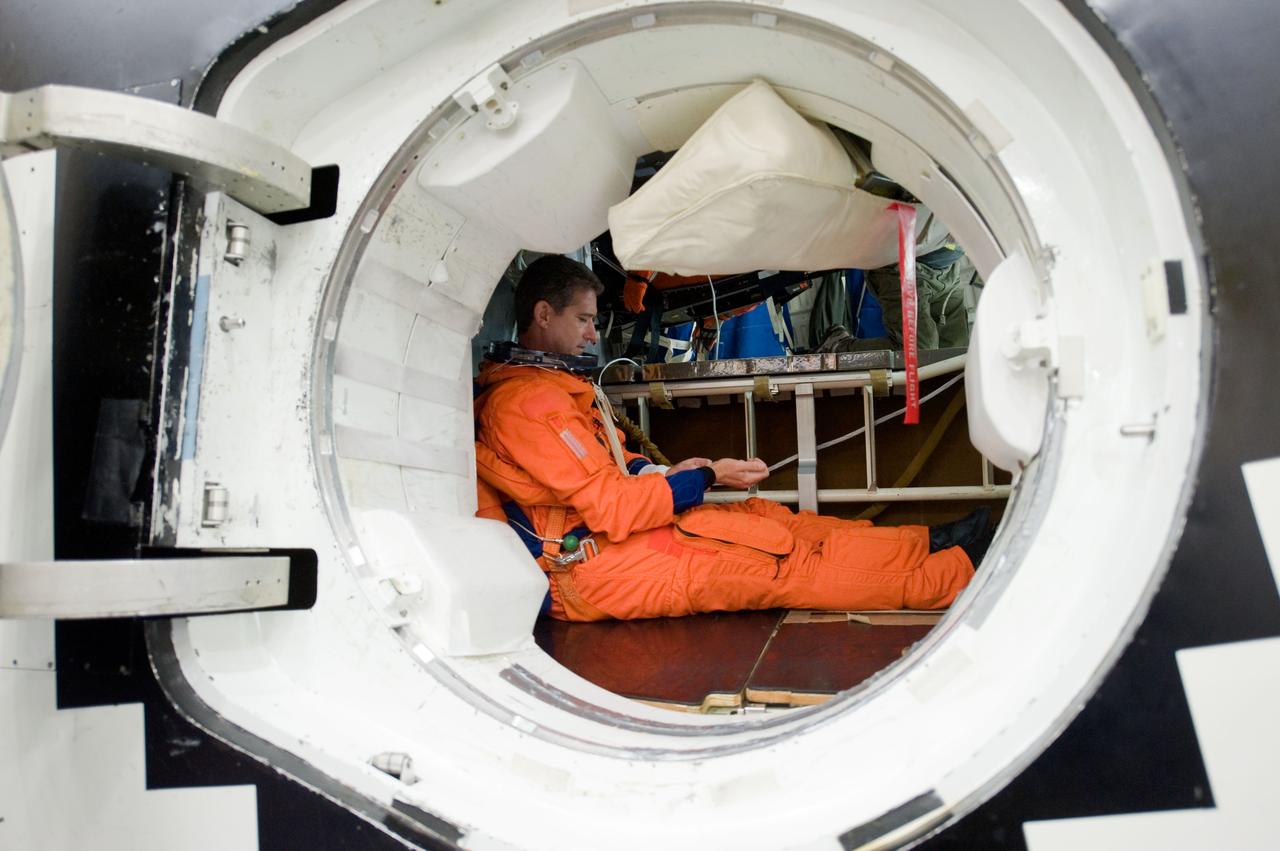
JSC2010-E-052006 (8 April 2010) --- NASA astronaut Michael Good, STS-132 mission specialist, attired in a training version of his shuttle launch and entry suit, participates in an ingress/egress training session in a shuttle mock-up in the Space Vehicle Mock-up Facility at NASA's Johnson Space Center.
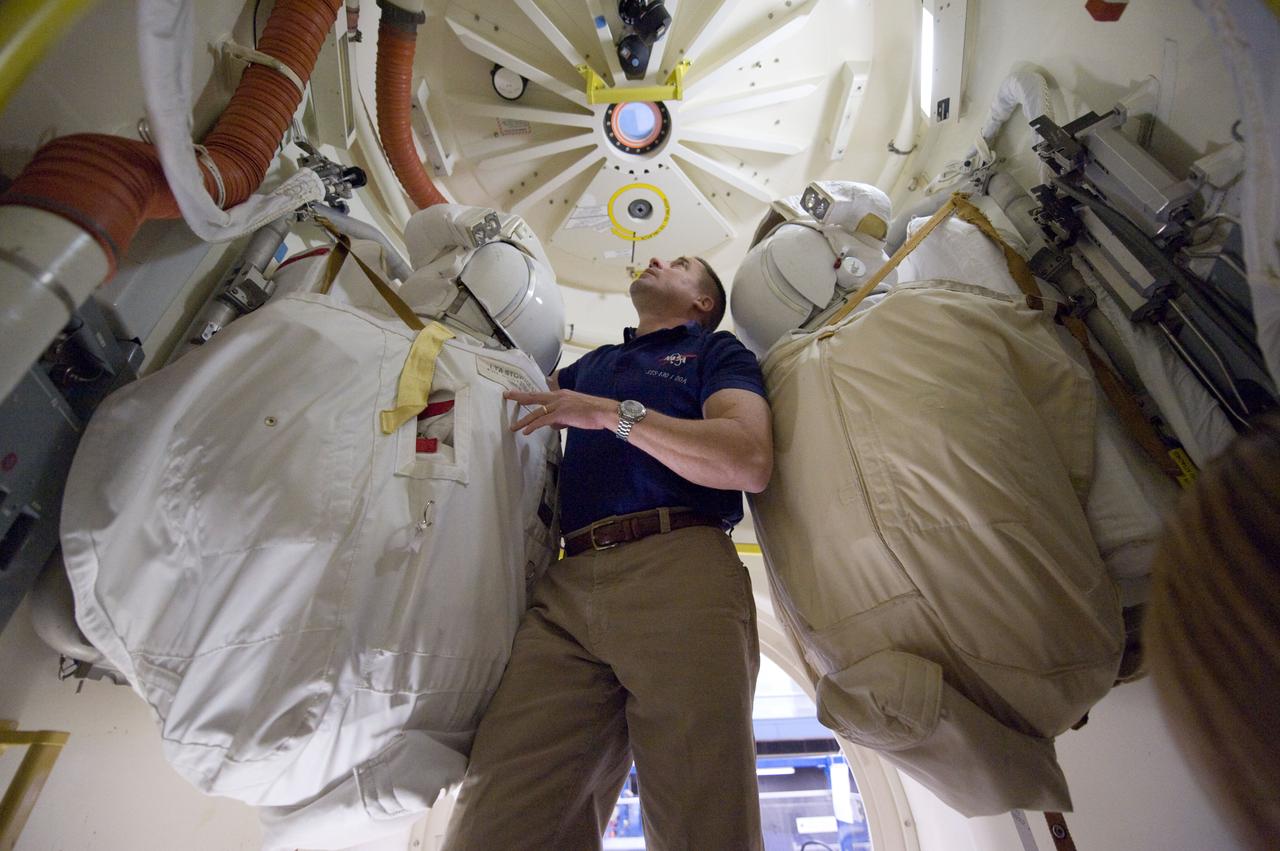
JSC2009-E-286951 (22 Dec. 2009) --- Astronaut George Zamka, STS-130 commander, participates in an ingress/egress timeline training session in a shuttle mock-up in the Space Vehicle Mock-up Facility at NASA's Johnson Space Center.
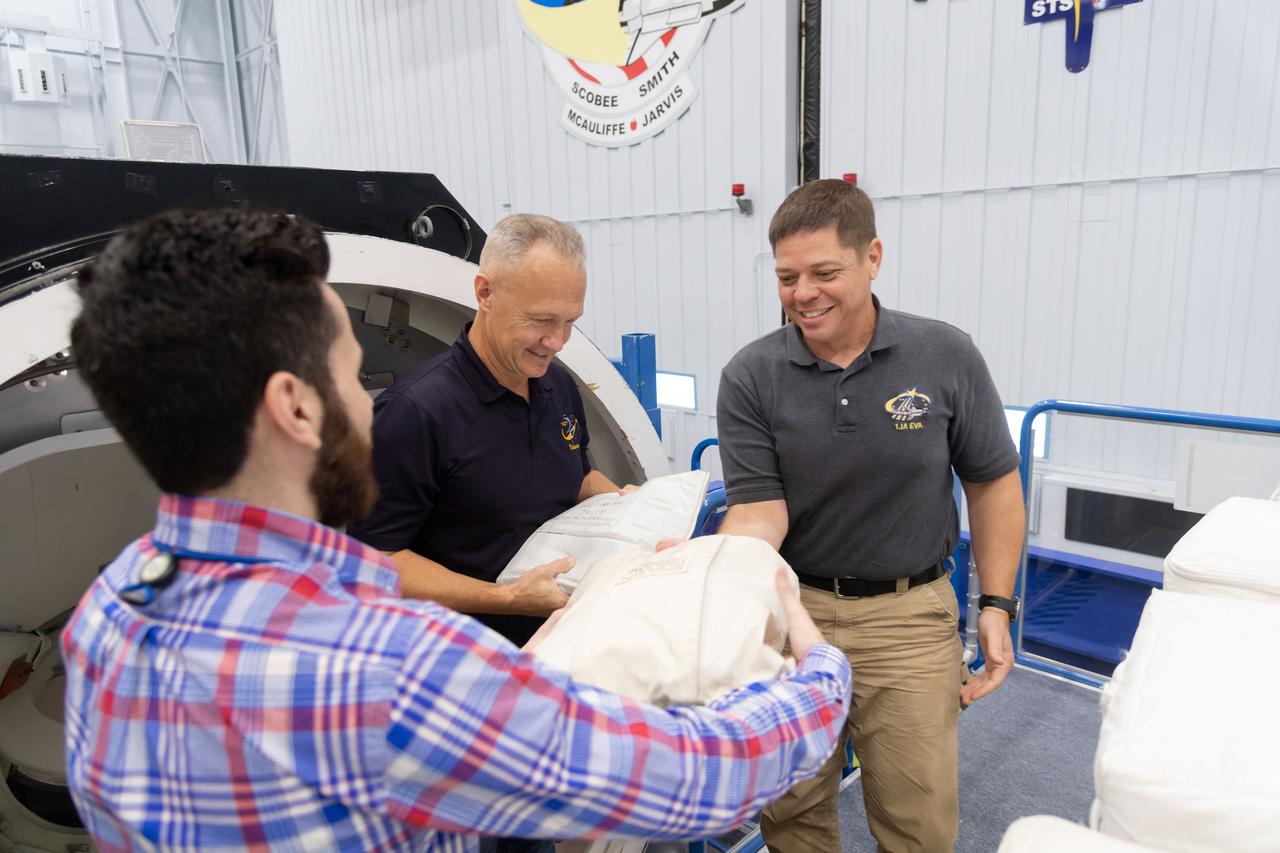
NASA commercial crew astronauts Doug Hurley and Bob Behnken attend a training class for International Space Station ingress and egress procedures in the Space Vehicle Mock-Up Facility at Johnson Space Center in Houston. Hurley and Behnken are both assigned to the SpaceX Crew Dragon’s first crewed flight.
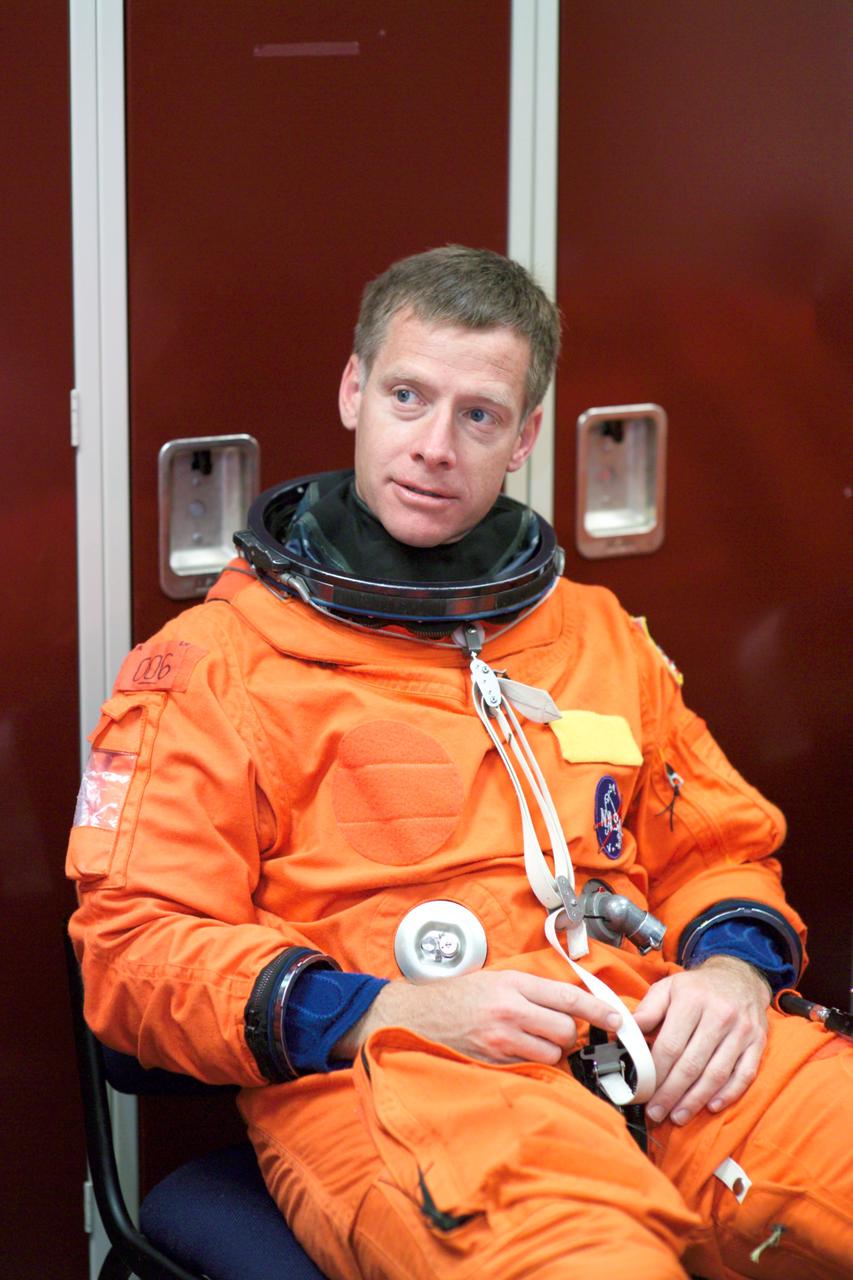
JSC2005-E-13772 (5 April 2005) --- Astronaut Christopher J. Ferguson, STS-115 pilot, attired in a training version of the shuttle launch and entry suit, awaits the start of an emergency egress training session in the Space Vehicle Mockup Facility at the Johnson Space Center.
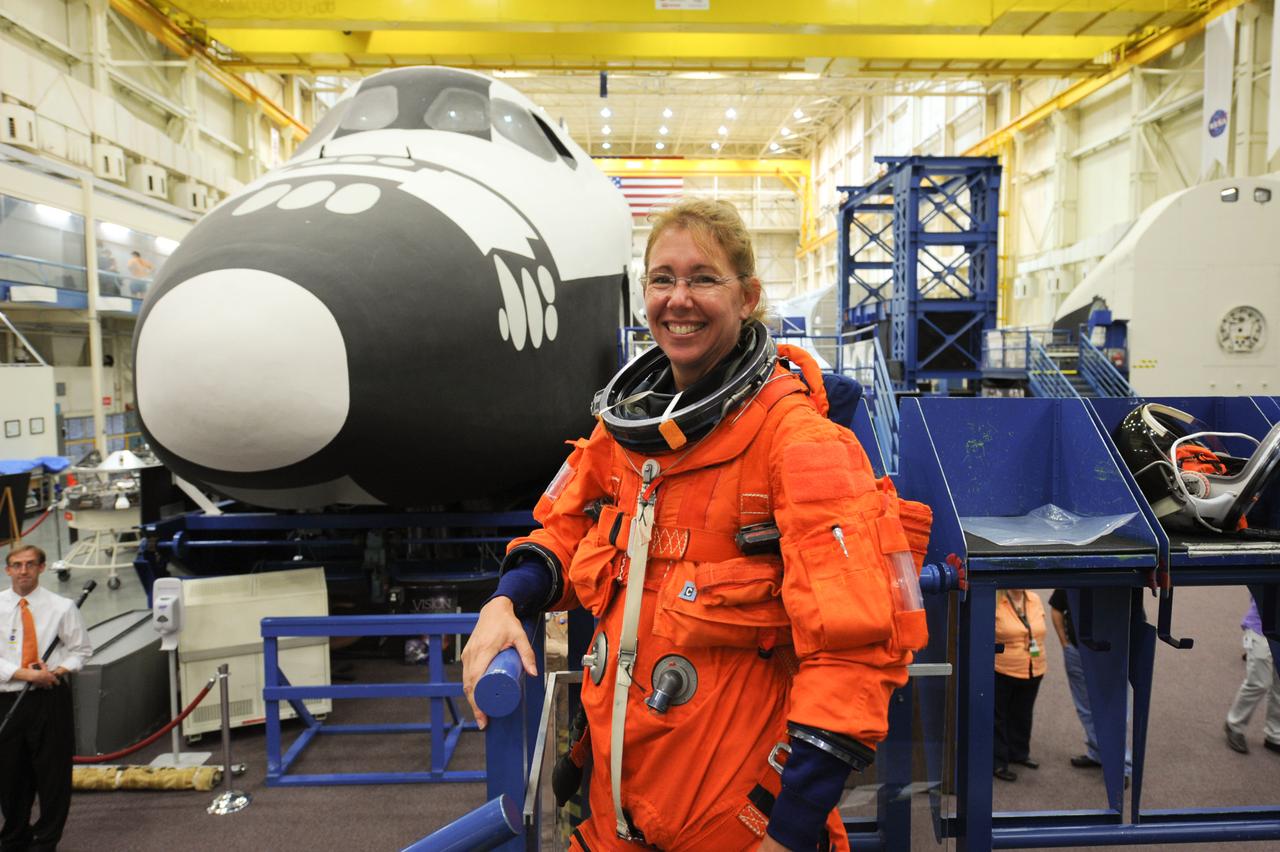
JSC2011-E-050025 (24 May 2011) --- NASA astronaut Sandy Magnus, STS-135 mission specialist, attired in a training version of the shuttle launch and entry suit, is pictured during an ingress/egress training session in the Space Vehicle Mock-up Facility at NASA's Johnson Space Center. Photo credit: NASA
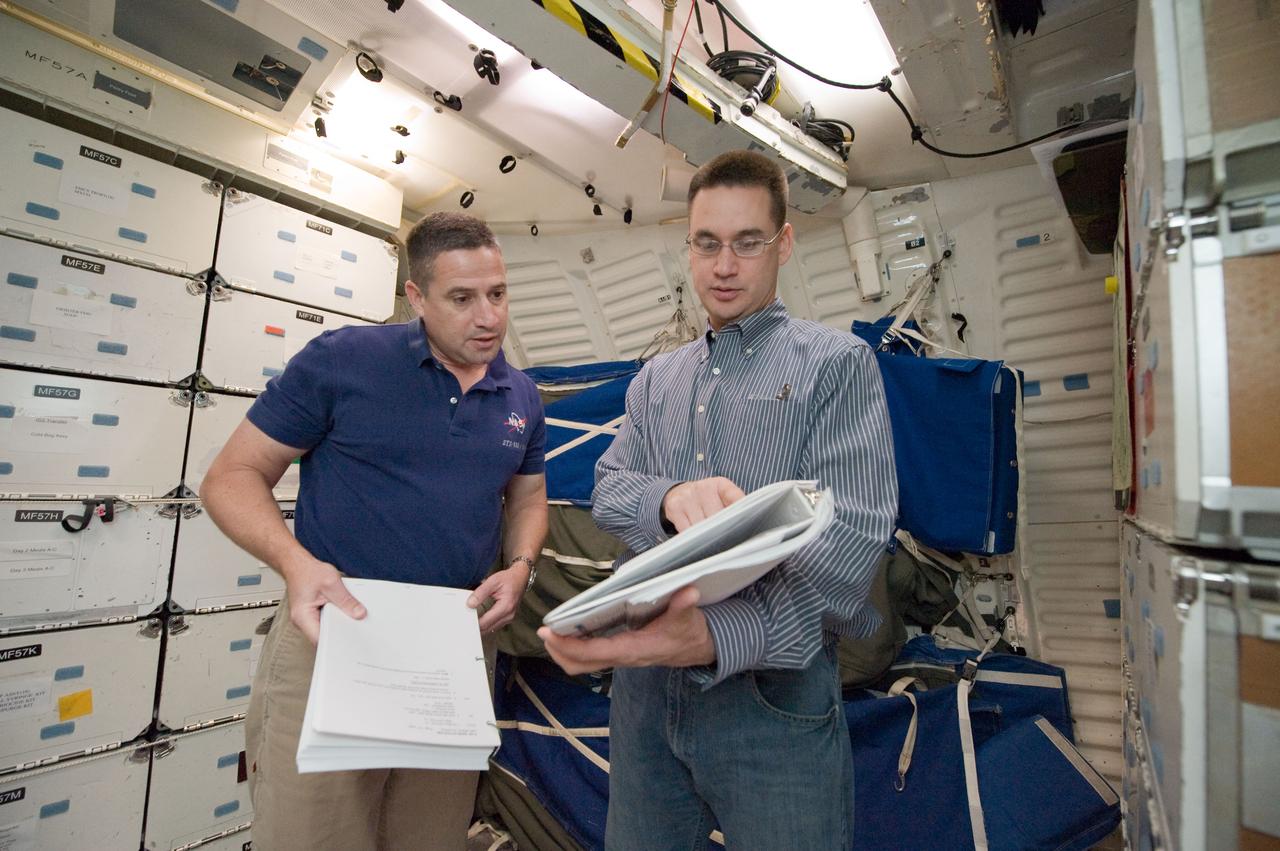
JSC2009-E-286949 (22 Dec. 2009) --- Astronaut George Zamka (left), STS-130 commander, participates in an ingress/egress timeline training session in a shuttle mock-up in the Space Vehicle Mock-up Facility at NASA's Johnson Space Center. Crew trainer Adam Flagan assisted Zamka.
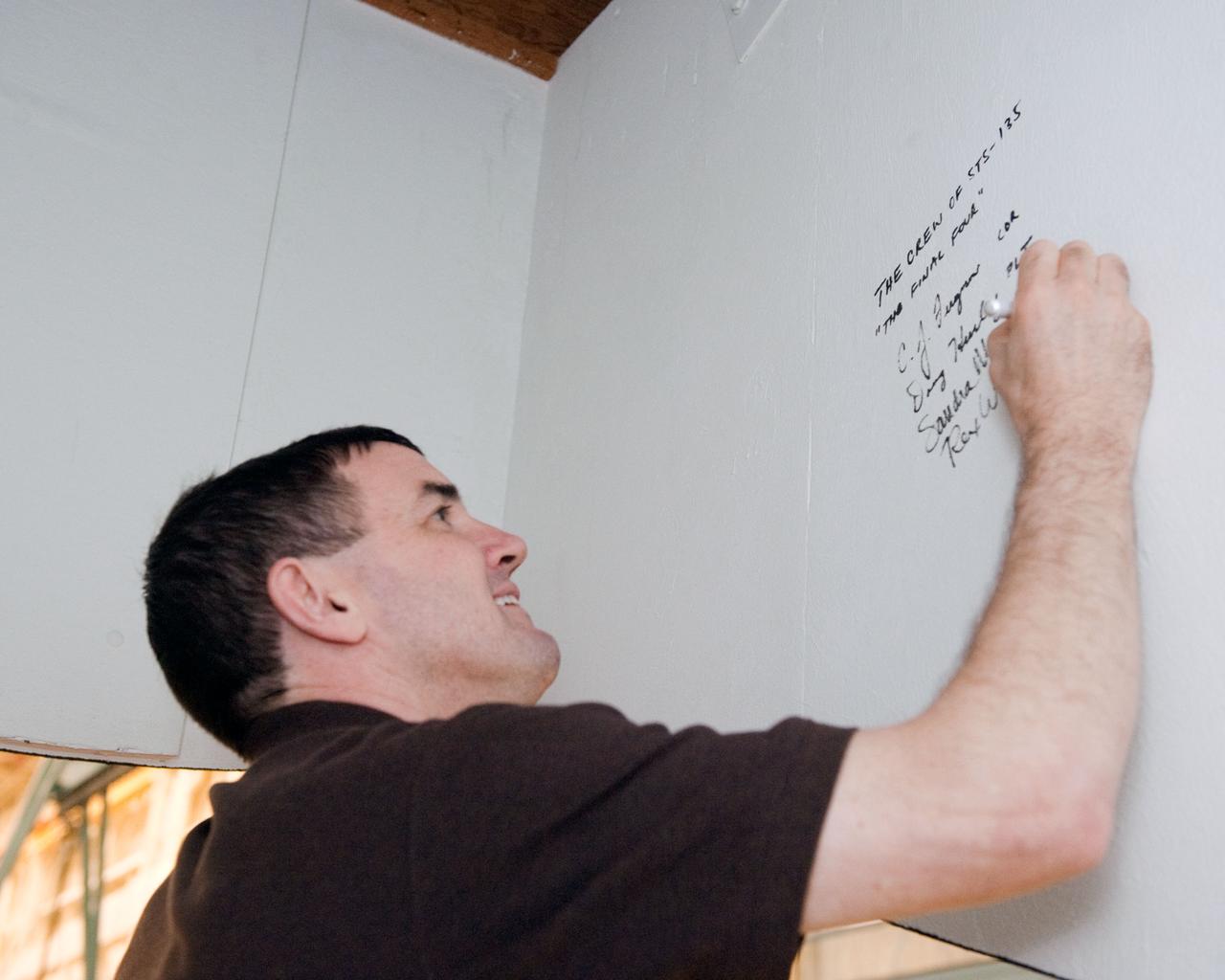
JSC2011-E-043692 (29 April 2011) --- NASA astronaut Rex Walheim, STS-135 mission specialist, signs his name on hardware during an ingress/egress timeline training session in the Space Vehicle Mock-up Facility at NASA's Johnson Space Center. Photo credit: NASA
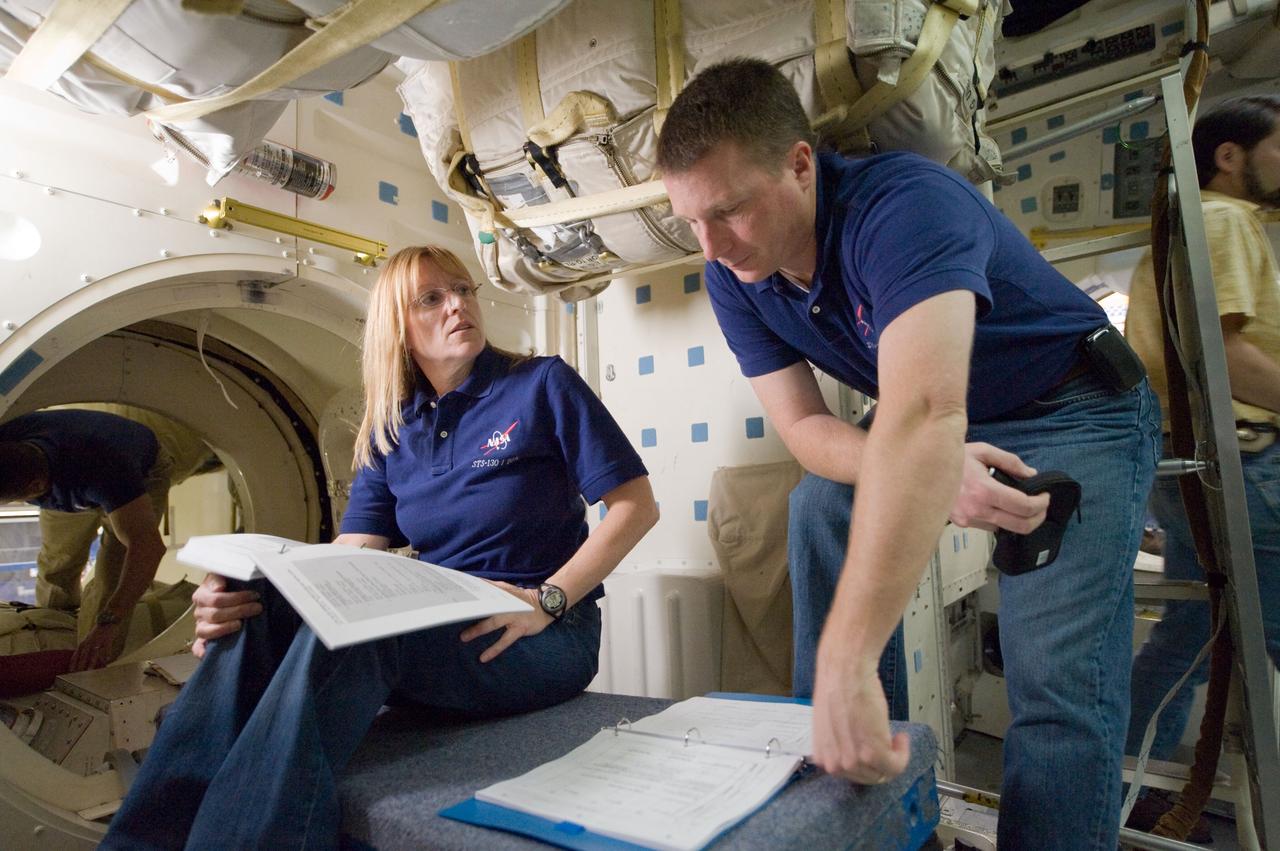
JSC2009-E-286950 (22 Dec. 2009) --- Astronauts Terry Virts, STS-130 pilot; and Kathryn Hire, mission specialist, participate in an ingress/egress timeline training session in a shuttle mock-up in the Space Vehicle Mock-up Facility at NASA's Johnson Space Center.
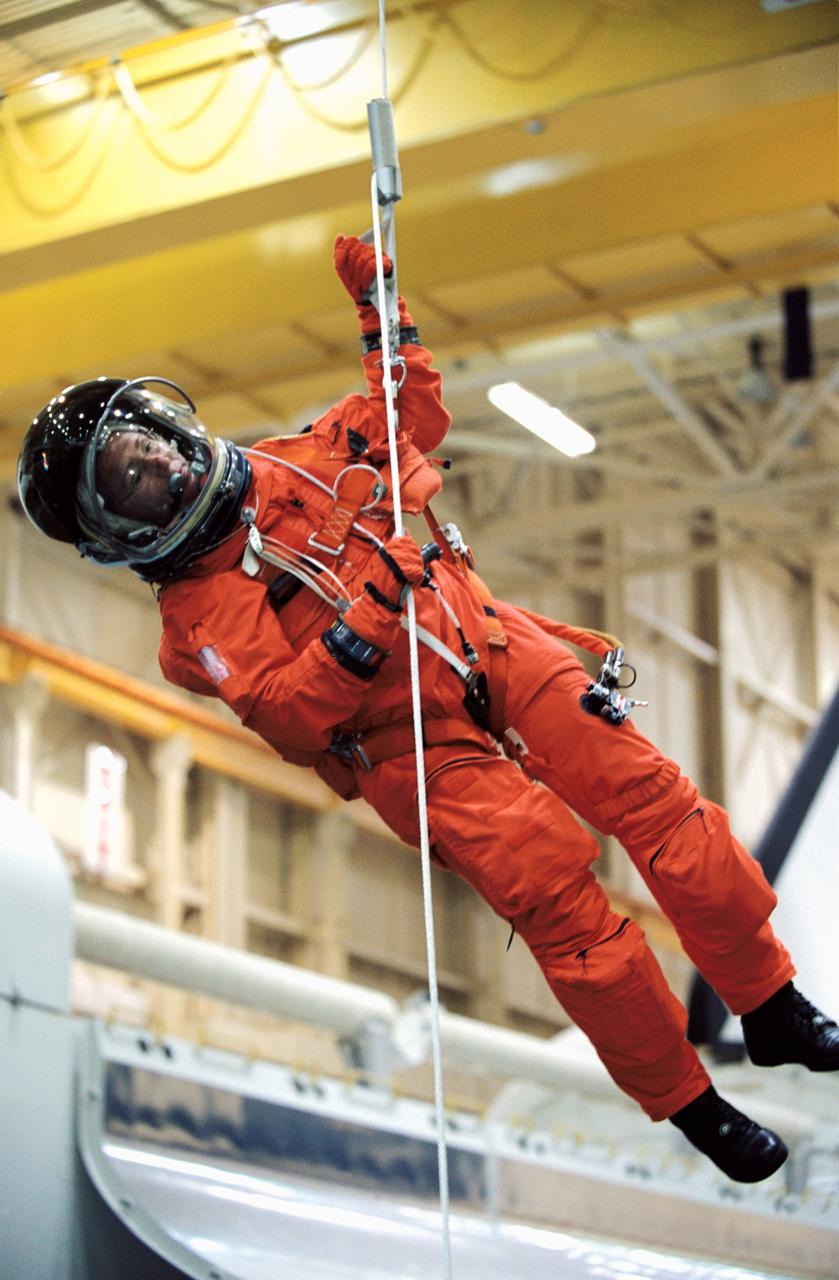
JSC2002-00879 (24 April 2002) --- Astronaut Sandra H. Magnus, STS-112 mission specialist, wearing a training version of the full-pressure launch and entry suit, lowers herself from a simulated shuttle in trouble during an emergency egress training session in the Space Vehicle Mockup Facility at the Johnson Space Center (JSC).
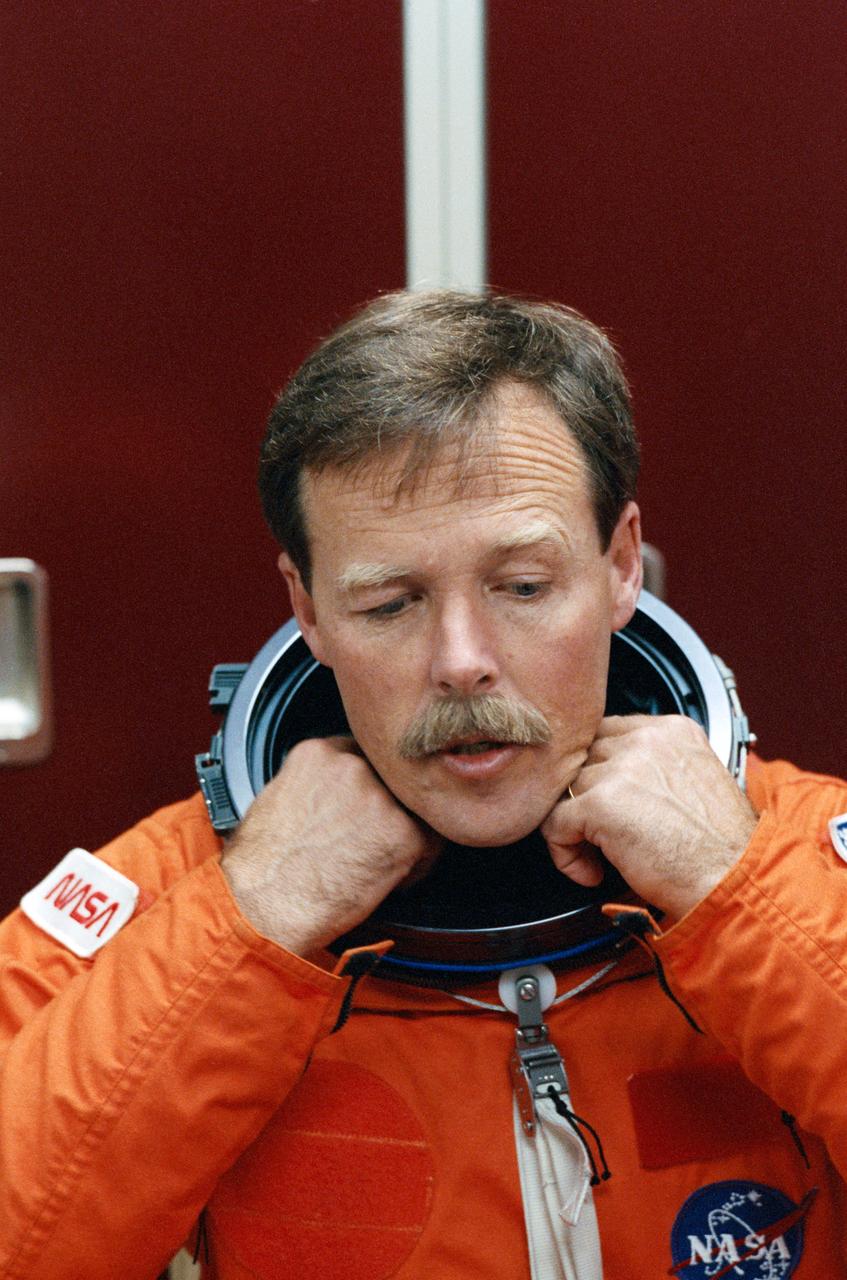
STS-47 Endeavour, Orbiter Vehicle (OV) 105, Commander Robert L. Gibson adjusts the launch and entry suit (LES) neck dam during suit donning in JSC's Mockup and Integration Laboratory (MAIL) Bldg 9A. Gibson is preparing for launch emergency egress (bailout) exercises in the Crew Compartment Trainer (CCT).
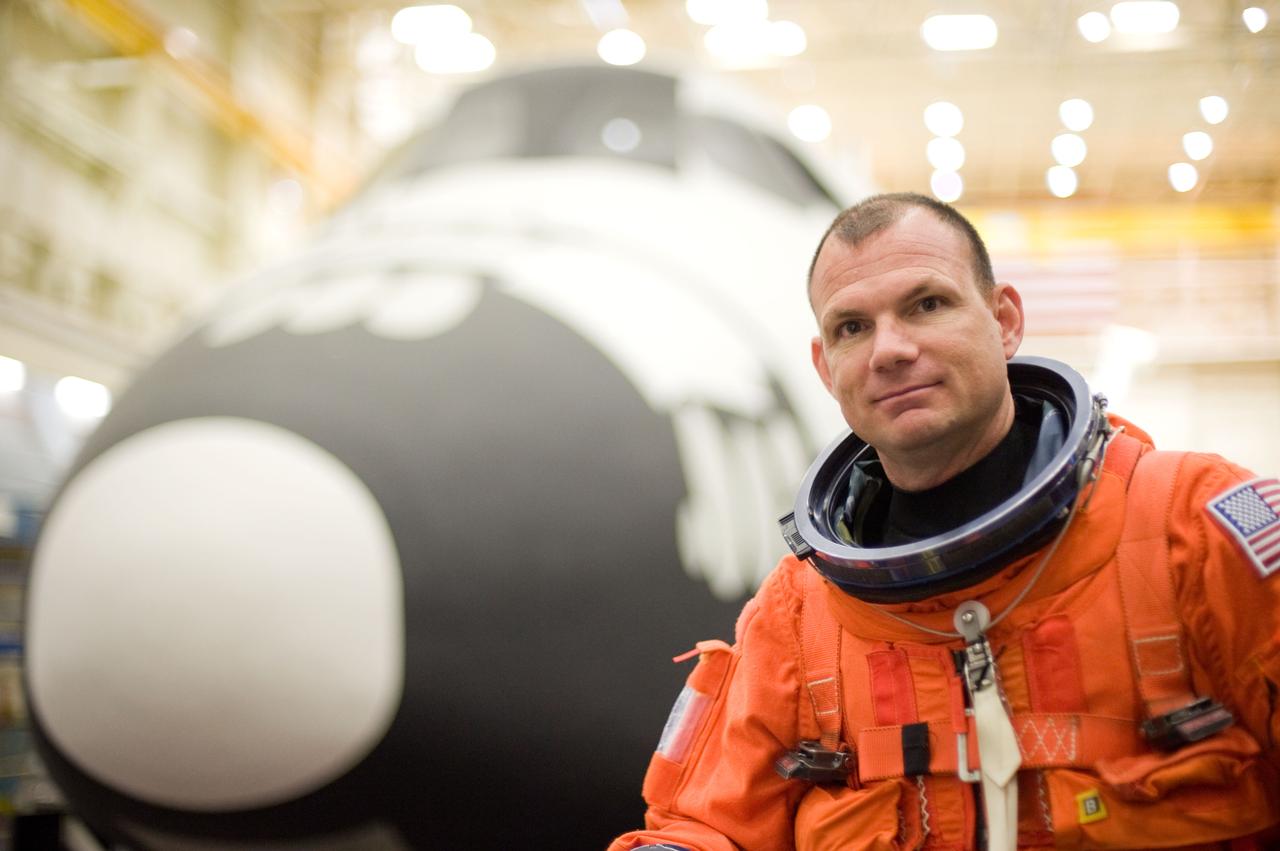
JSC2010-E-052000 (8 April 2010) --- NASA astronaut Tony Antonelli, STS-132 pilot, attired in a training version of his shuttle launch and entry suit, is pictured during an ingress/egress training session in the Space Vehicle Mock-up Facility at NASA's Johnson Space Center.
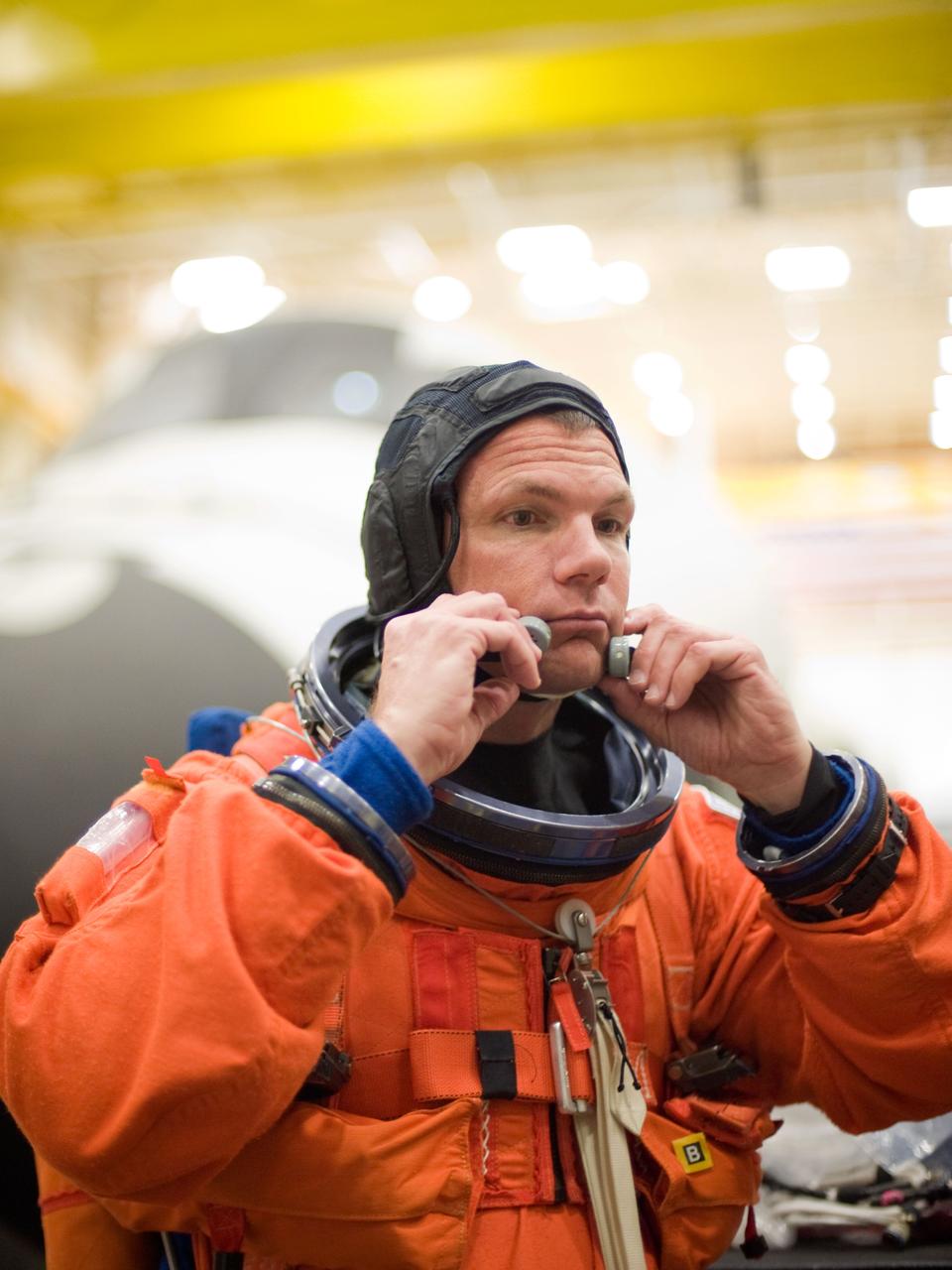
JSC2010-E-052001 (8 April 2010) --- NASA astronaut Tony Antonelli, STS-132 pilot, attired in a training version of his shuttle launch and entry suit, is pictured during an ingress/egress training session in the Space Vehicle Mock-up Facility at NASA's Johnson Space Center.
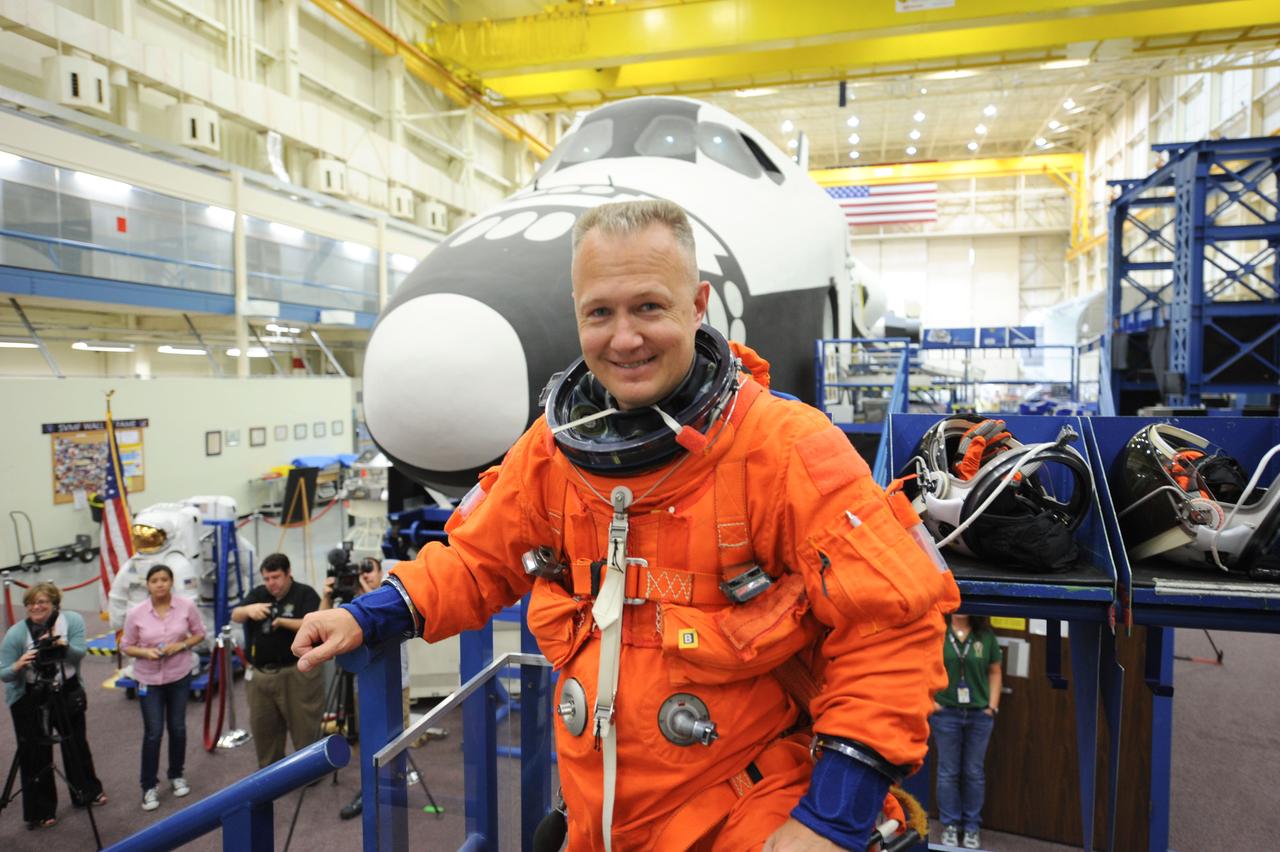
JSC2011-E-050015 (24 May 2011) --- NASA astronaut Doug Hurley, STS-135 pilot, attired in a training version of the shuttle launch and entry suit, is pictured during an ingress/egress training session in the Space Vehicle Mock-up Facility at NASA's Johnson Space Center. Photo credit: NASA
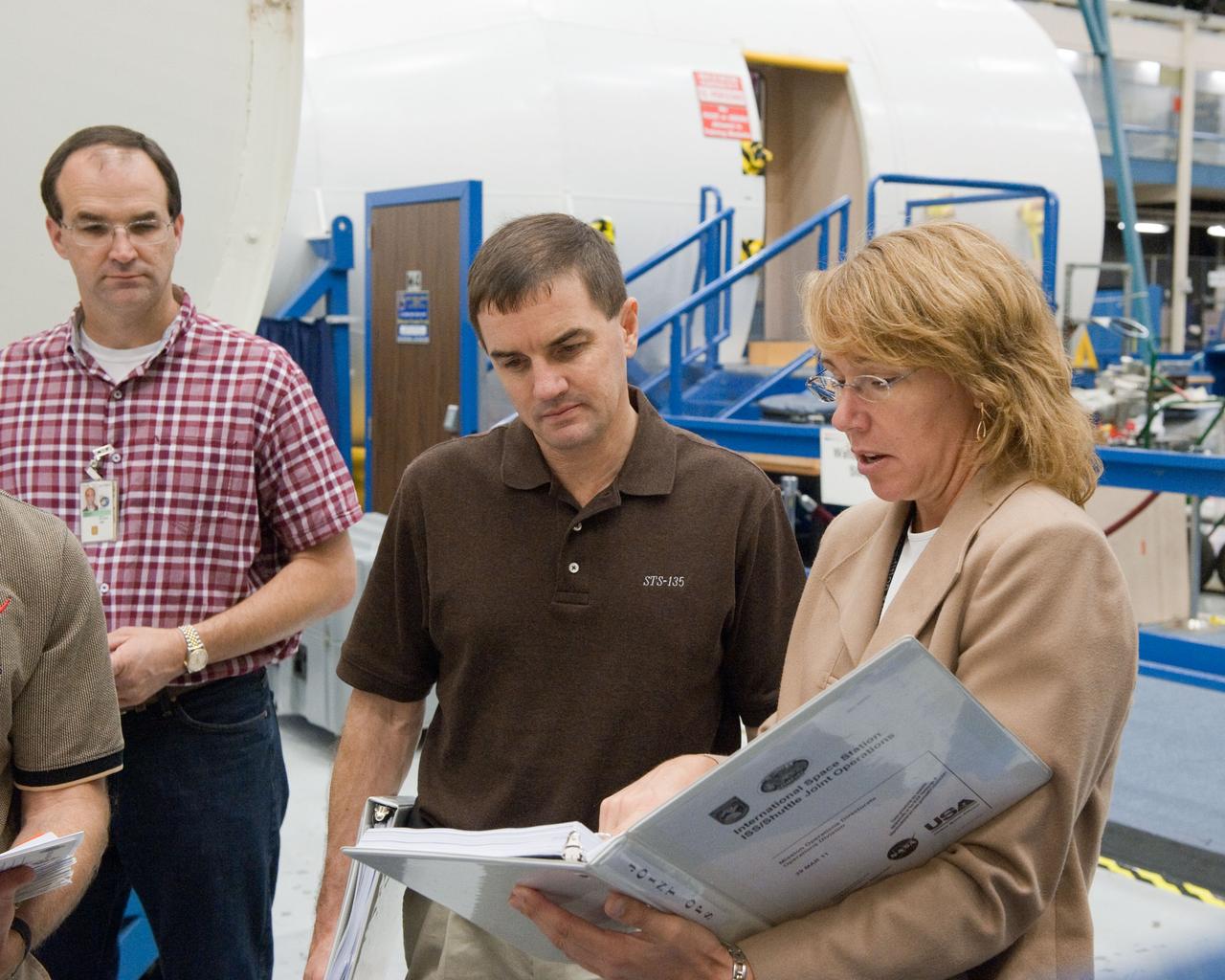
JSC2011-E-043696 (29 April 2011) --- NASA astronauts Rex Walheim (center) and Sandy Magnus, both STS-135 mission specialists, participate in an ingress/egress timeline training session in the Space Vehicle Mock-up Facility at NASA's Johnson Space Center. Photo credit: NASA
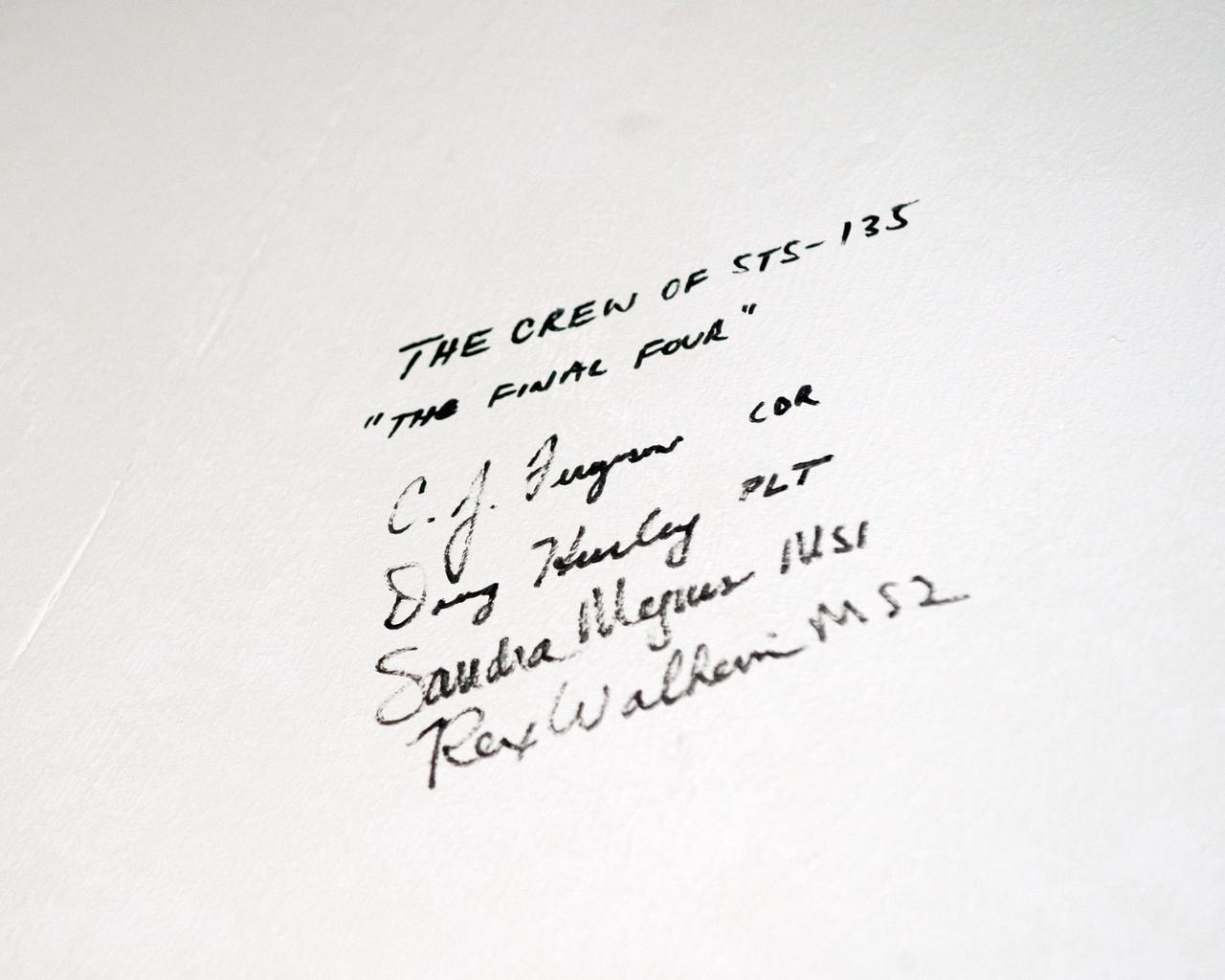
JSC2011-E-043693 (29 April 2011) --- A close-up view of the STS-135 crew members? signatures placed on hardware during an ingress/egress timeline training session in the Space Vehicle Mock-up Facility at NASA's Johnson Space Center. Photo credit: NASA
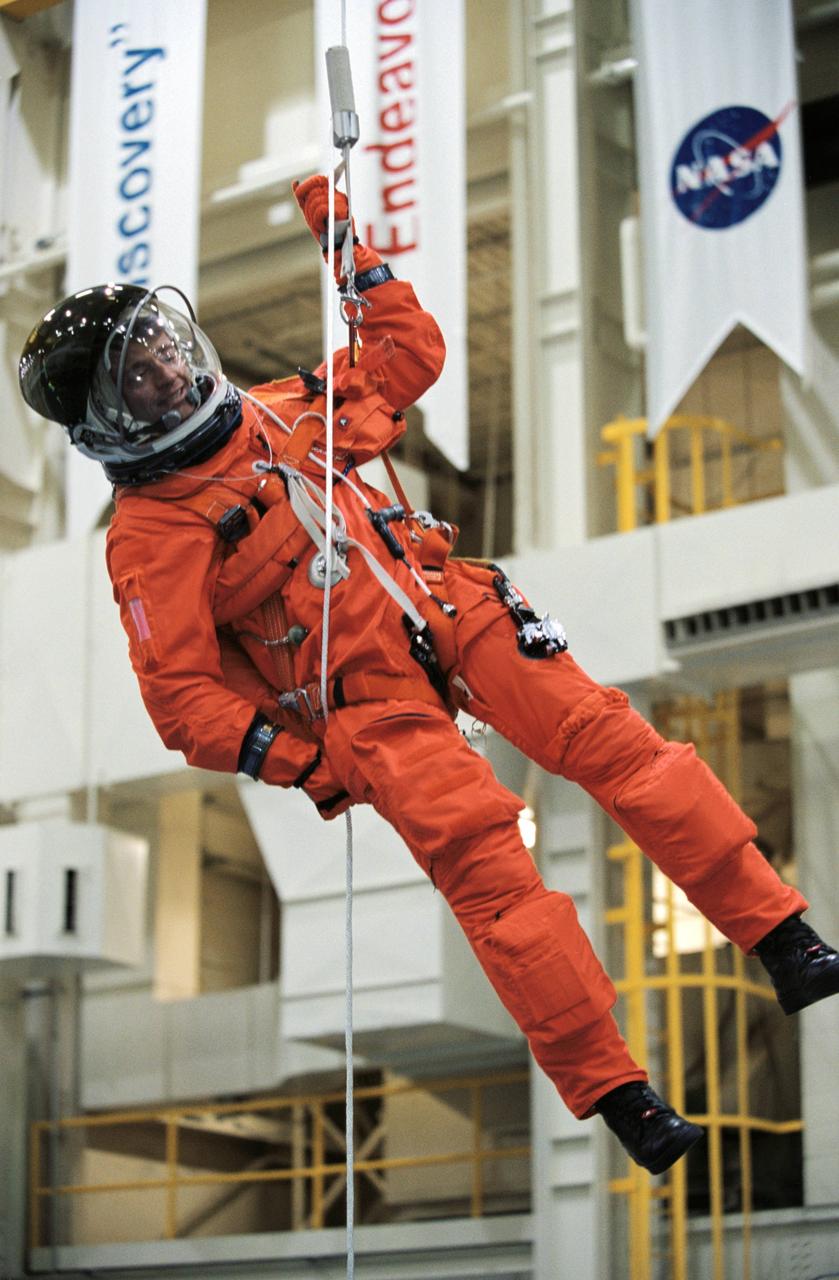
JSC2002-00868 (24 April 2002) --- Astronaut Jeffrey S. Ashby, STS-112 mission commander, wearing a training version of the full-pressure launch and entry suit, lowers himself from a simulated shuttle in trouble during an emergency egress training session in the Space Vehicle Mockup Facility at the Johnson Space Center (JSC).
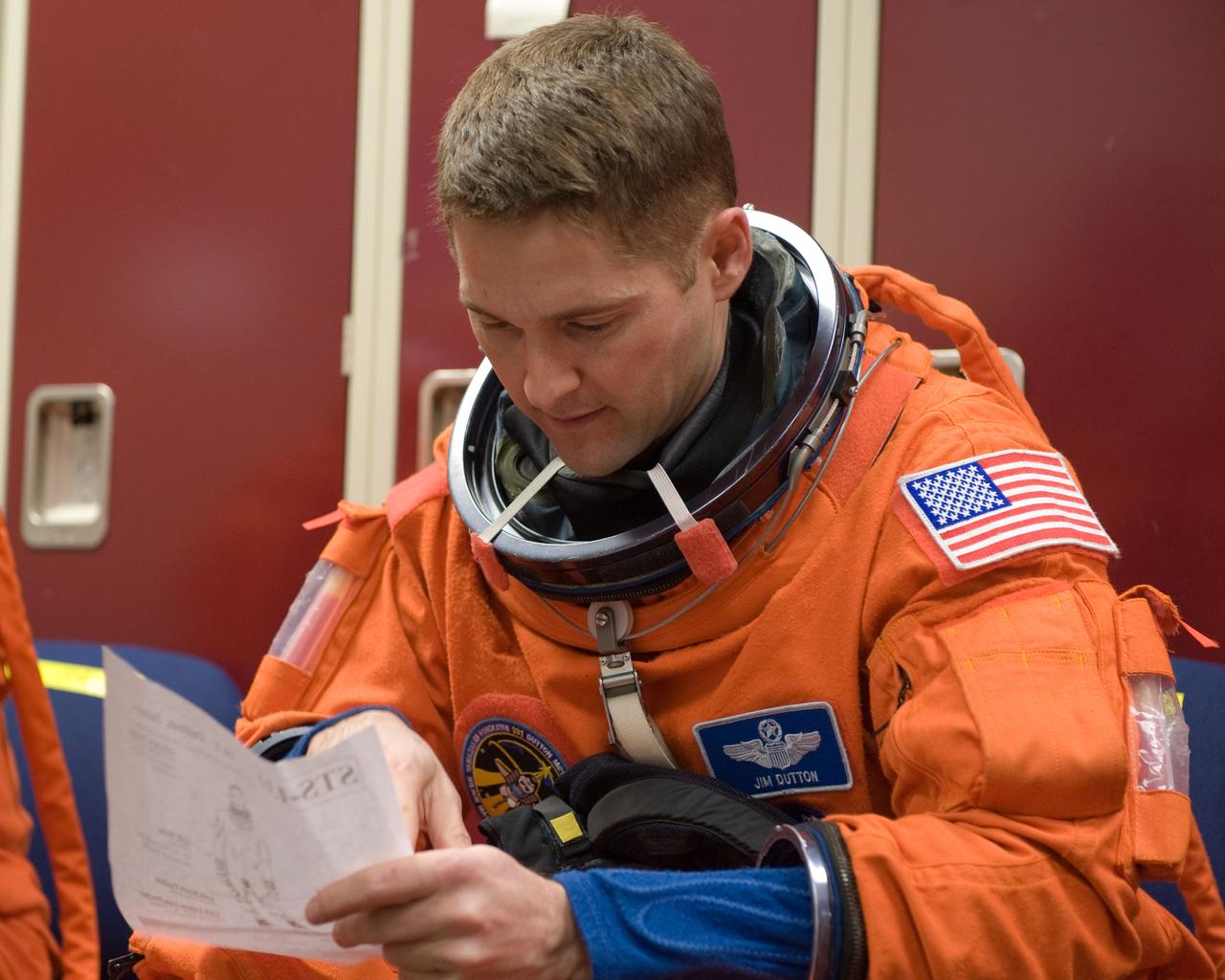
JSC2010-E-017718 (29 Jan. 2010) --- NASA astronaut James P. Dutton Jr., STS-131 pilot, attired in a training version of his shuttle launch and entry suit, prepares for an ingress/egress training session in the Space Vehicle Mock-up Facility at NASA's Johnson Space Center.
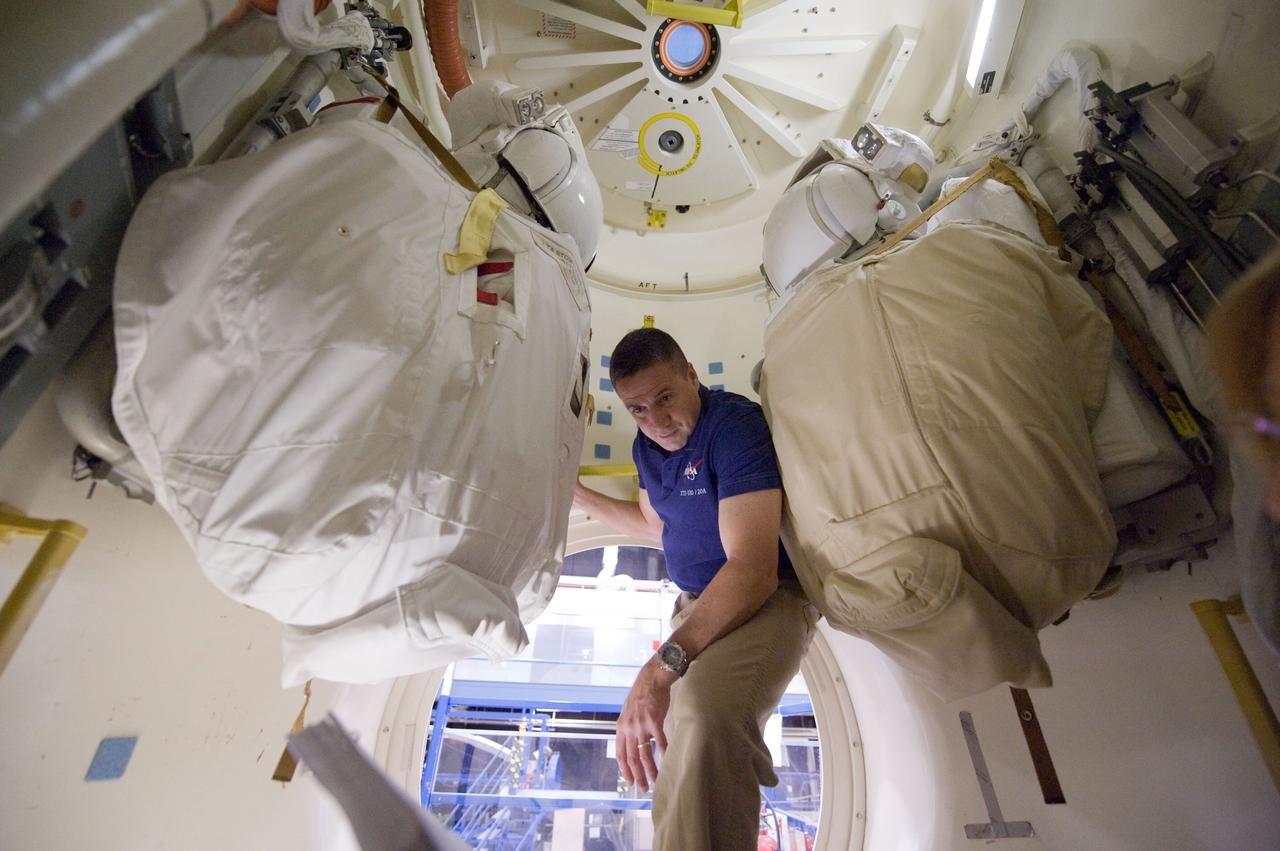
JSC2009-E-286952 (22 Dec. 2009) --- Astronaut George Zamka, STS-130 commander, participates in an ingress/egress timeline training session in a shuttle mock-up in the Space Vehicle Mock-up Facility at NASA's Johnson Space Center.
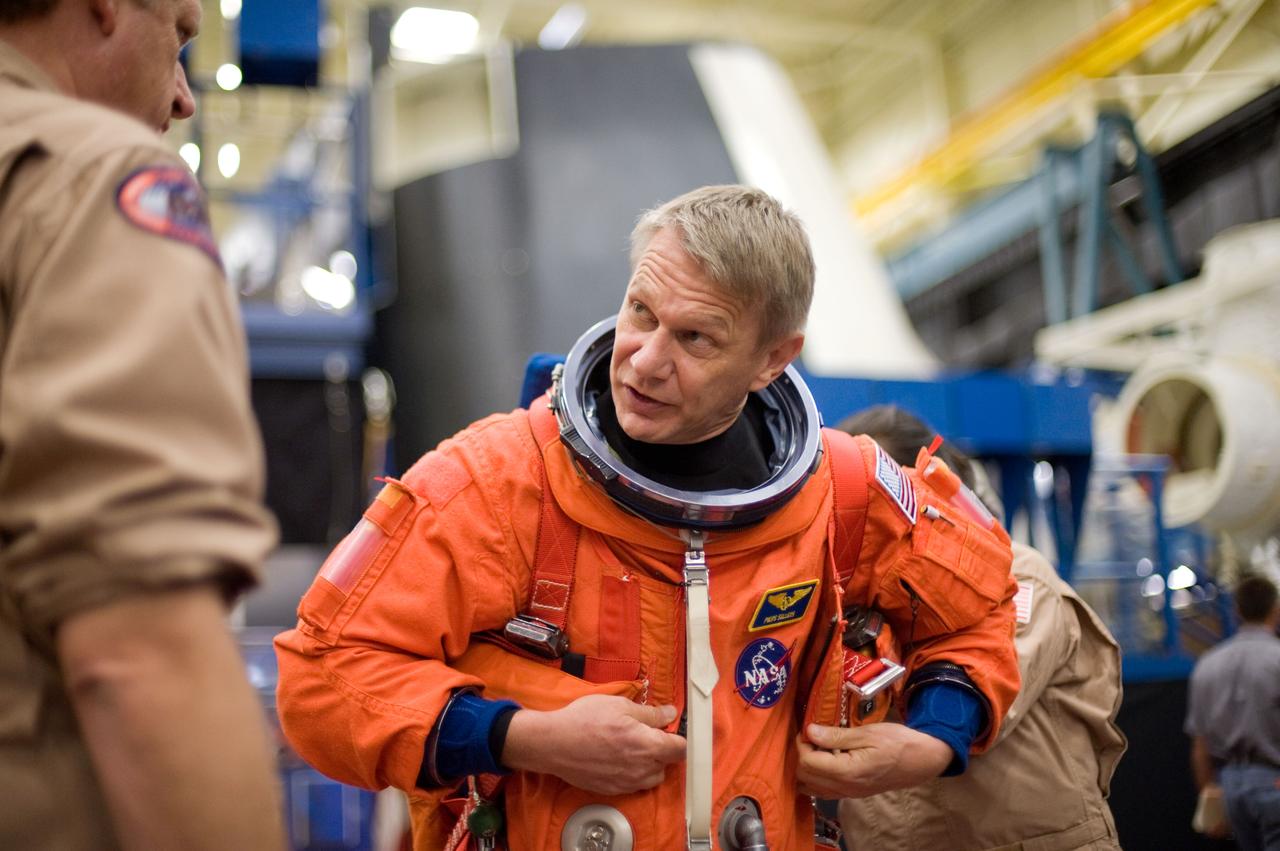
JSC2010-E-051992 (8 April 2010) --- NASA astronaut Piers Sellers, STS-132 mission specialist, dons a training version of his shuttle launch and entry suit in preparation for an ingress/egress training session in the Space Vehicle Mock-up Facility at NASA's Johnson Space Center.
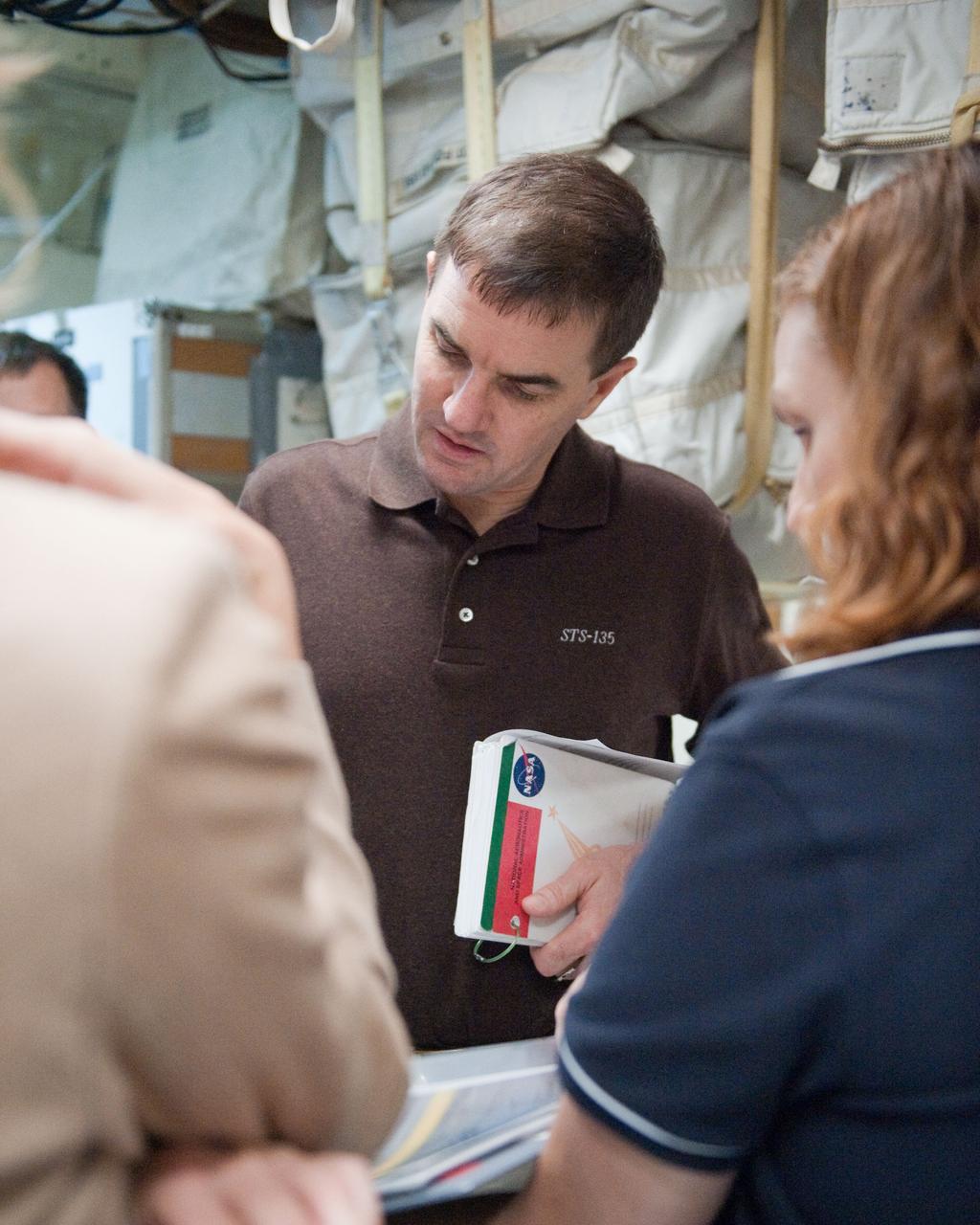
JSC2011-E-043685 (29 April 2011) --- NASA astronaut Rex Walheim, STS-135 mission specialist, participates in an ingress/egress timeline training session in the Space Vehicle Mock-up Facility at NASA's Johnson Space Center. Photo credit: NASA
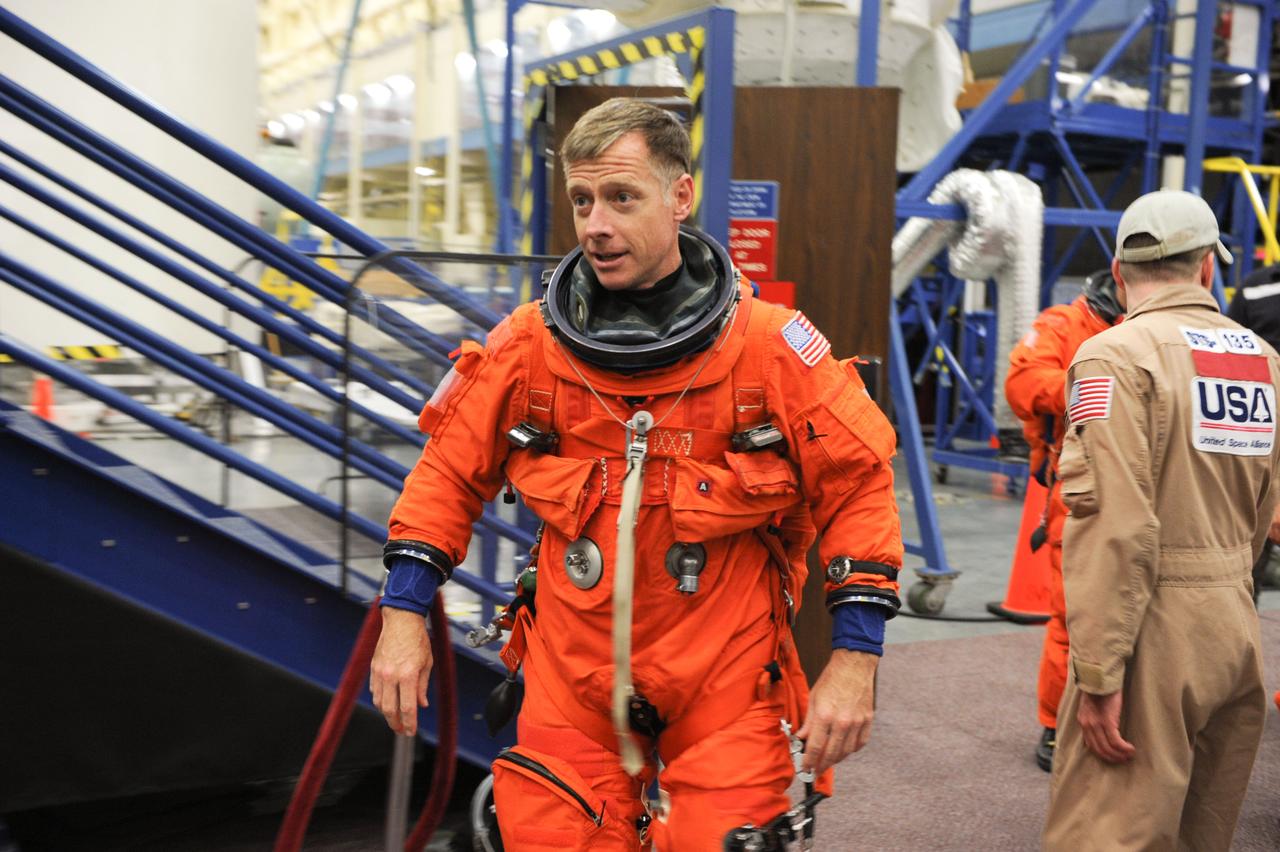
JSC2011-E-050072 (24 May 2011) --- NASA astronaut Chris Ferguson, STS-135 commander, attired in a training version of the shuttle launch and entry suit, is pictured during an ingress/egress training session in the Space Vehicle Mock-up Facility at NASA's Johnson Space Center. Photo credit: NASA
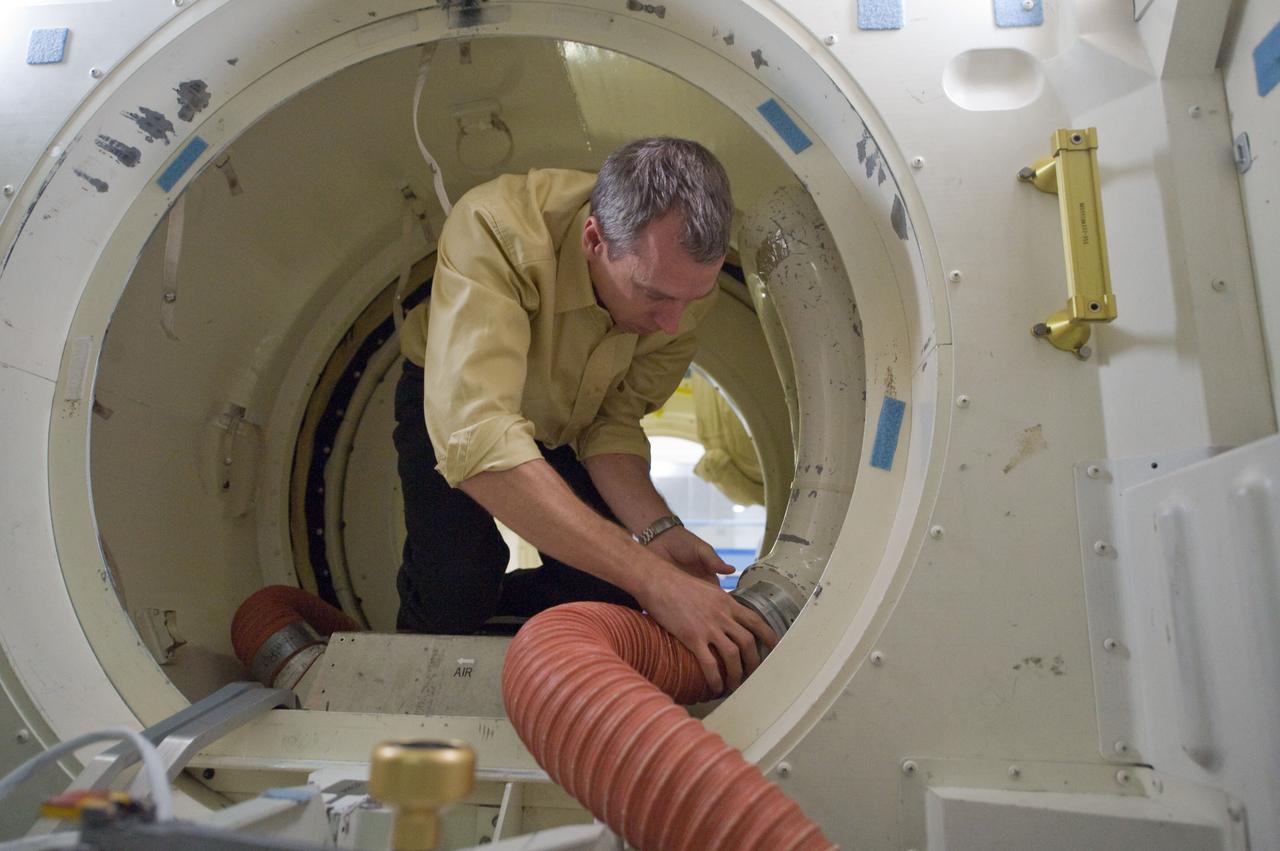
JSC2010-E-194290 (4 Dec. 2010) --- NASA astronaut Andrew Feustel, STS-134 mission specialist, participates in an ingress/egress training session in the Space Vehicle Mock-up Facility at NASA's Johnson Space Center. Photo credit: NASA or National Aeronautics and Space Administration
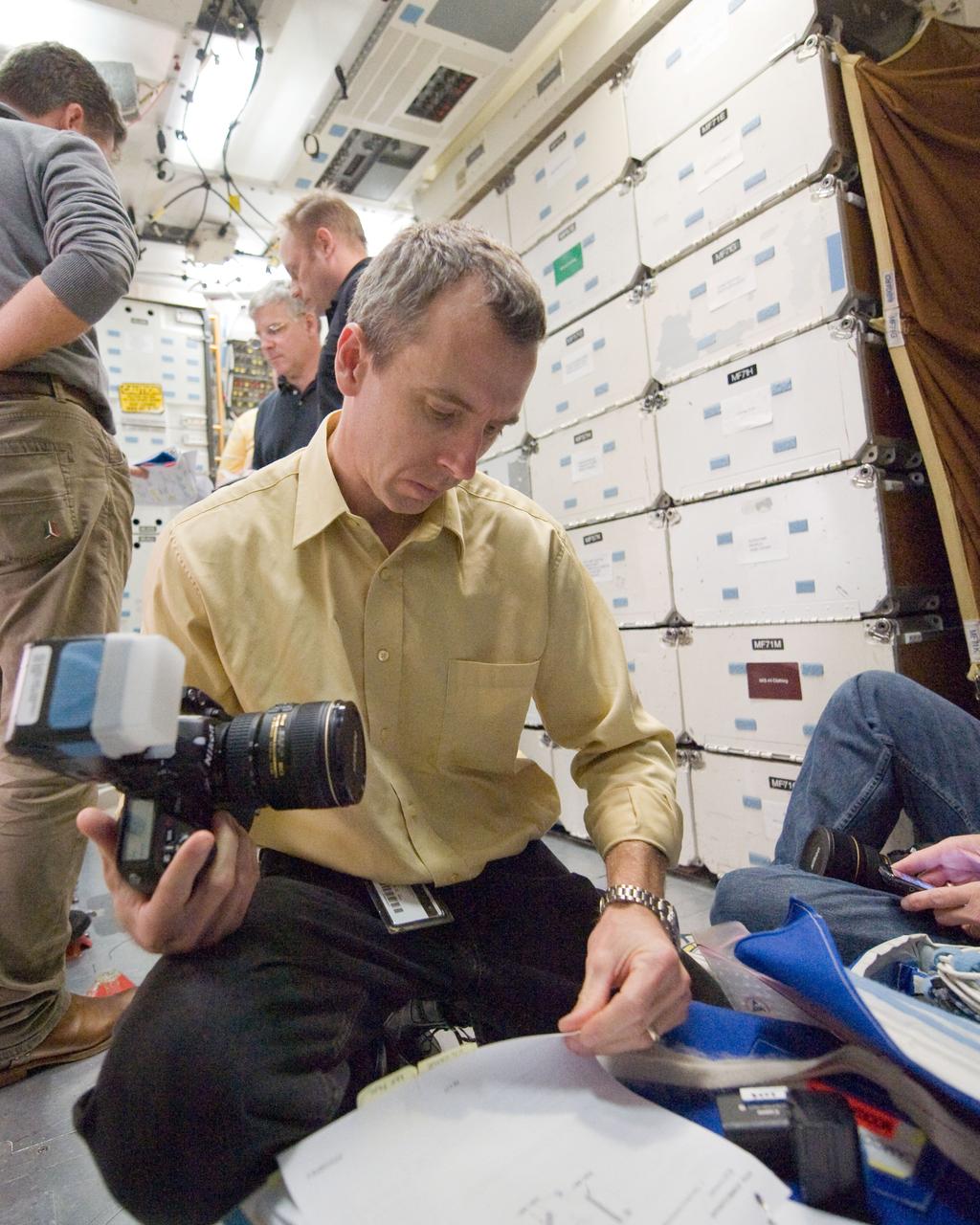
JSC2010-E-194295 (4 Dec. 2010) --- NASA astronaut Andrew Feustel, STS-134 mission specialist, participates in an ingress/egress training session in the Space Vehicle Mock-up Facility at NASA's Johnson Space Center. Photo credit: NASA or National Aeronautics and Space Administration
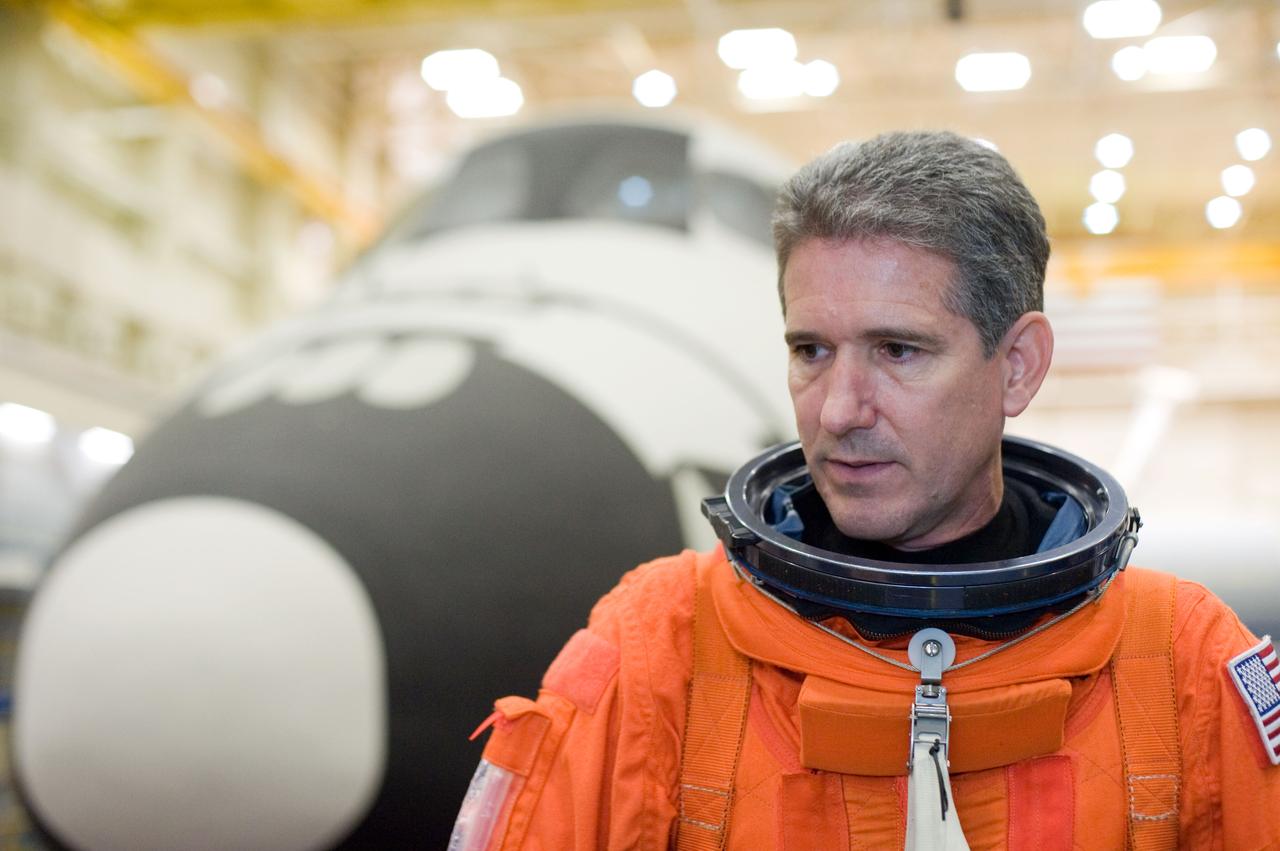
JSC2010-E-052005 (8 April 2010) --- NASA astronaut Michael Good, STS-132 mission specialist, attired in a training version of his shuttle launch and entry suit, is pictured during an ingress/egress training session in the Space Vehicle Mock-up Facility at NASA's Johnson Space Center.
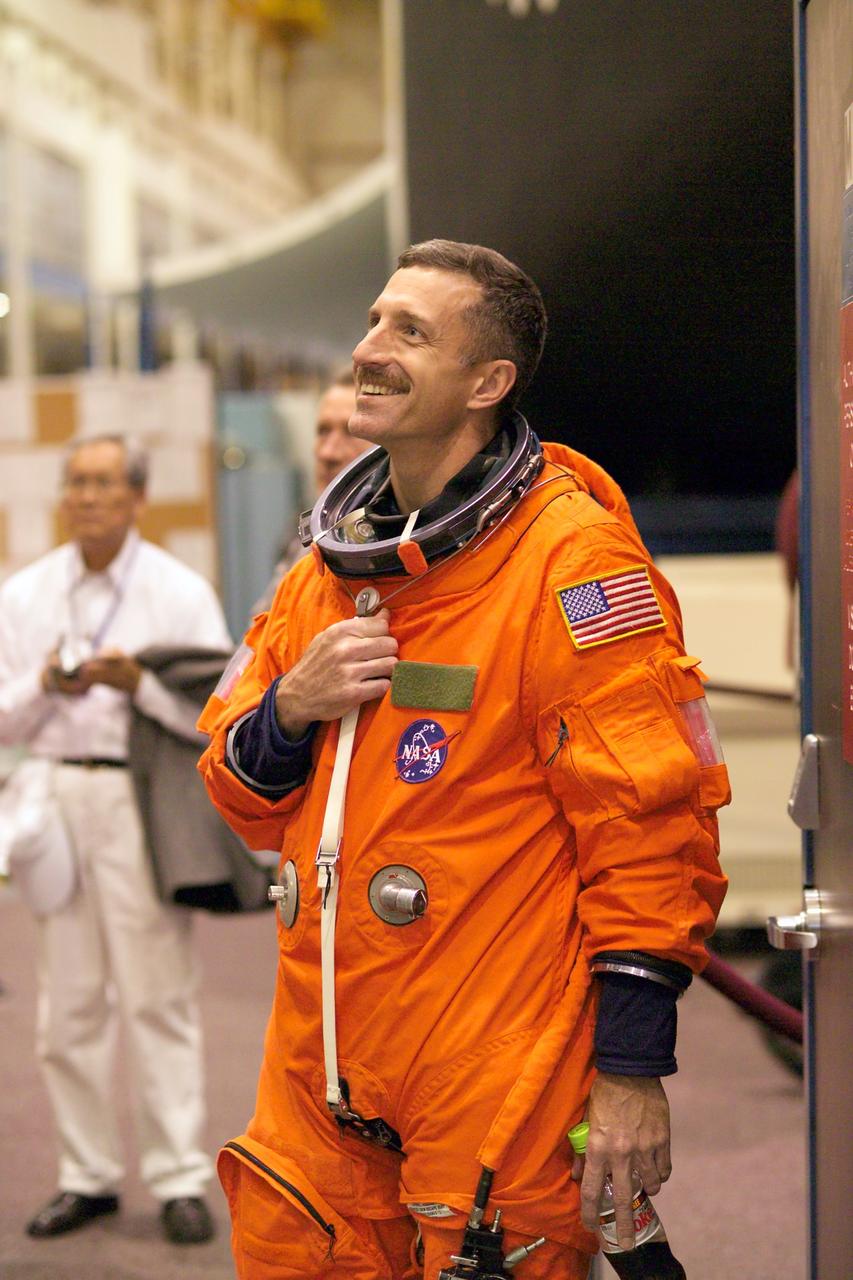
JSC2005-E-17431 (28 April 2005) --- Astronaut Daniel C. Burbank, STS-115 mission specialist, observes fellow crew members during an emergency egress training session in the Space Vehicle Mockup Facility at Johnson Space Center. Burbank is attired in a training version of the shuttle launch and entry suit.
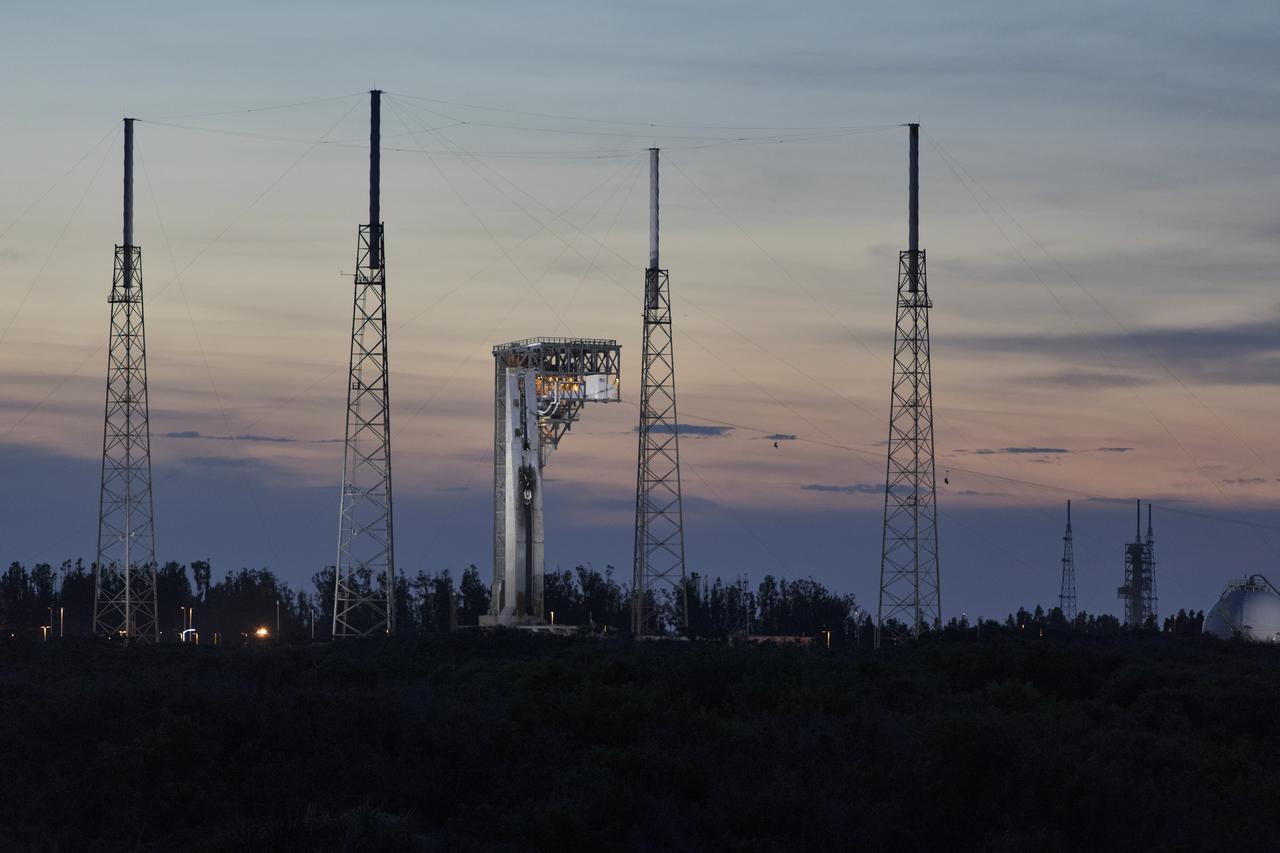
Commercial Crew astronauts participate in a Boeing/United Launch Alliance (ULA) emergency egress system demonstration at Cape Canaveral Air Force Station’s Launch Complex 41 in Florida on June 19, 2018. The emergency egress system will allow for a safe evacuation in the unlikely event of an emergency on the launch pad on launch day. It can carry up to 20 people more than 1,300 feet away from the crew access tower and the launch vehicle. The Boeing CST-100 Starliner will launch on a ULA Atlas V rocket, carrying astronauts to the International Space Station.

Medical and fire-rescue personnel participate in the Artemis II mission emergency escape or egress verification and validation tests near Launch Complex 39 at NASA's Kennedy Space Center in Florida on Monday, Aug. 12, 2024. During the multi-day tests, members of the closeout crew, pad rescue team, and the Exploration Ground Systems Program practiced the process of getting in and out of the emergency egress baskets then down to the launch pad where they would be transported to emergency transport vehicles and driven to safety. Prior to this test and throughout the course of several months, teams conducted basket release demonstrations to validate the system.
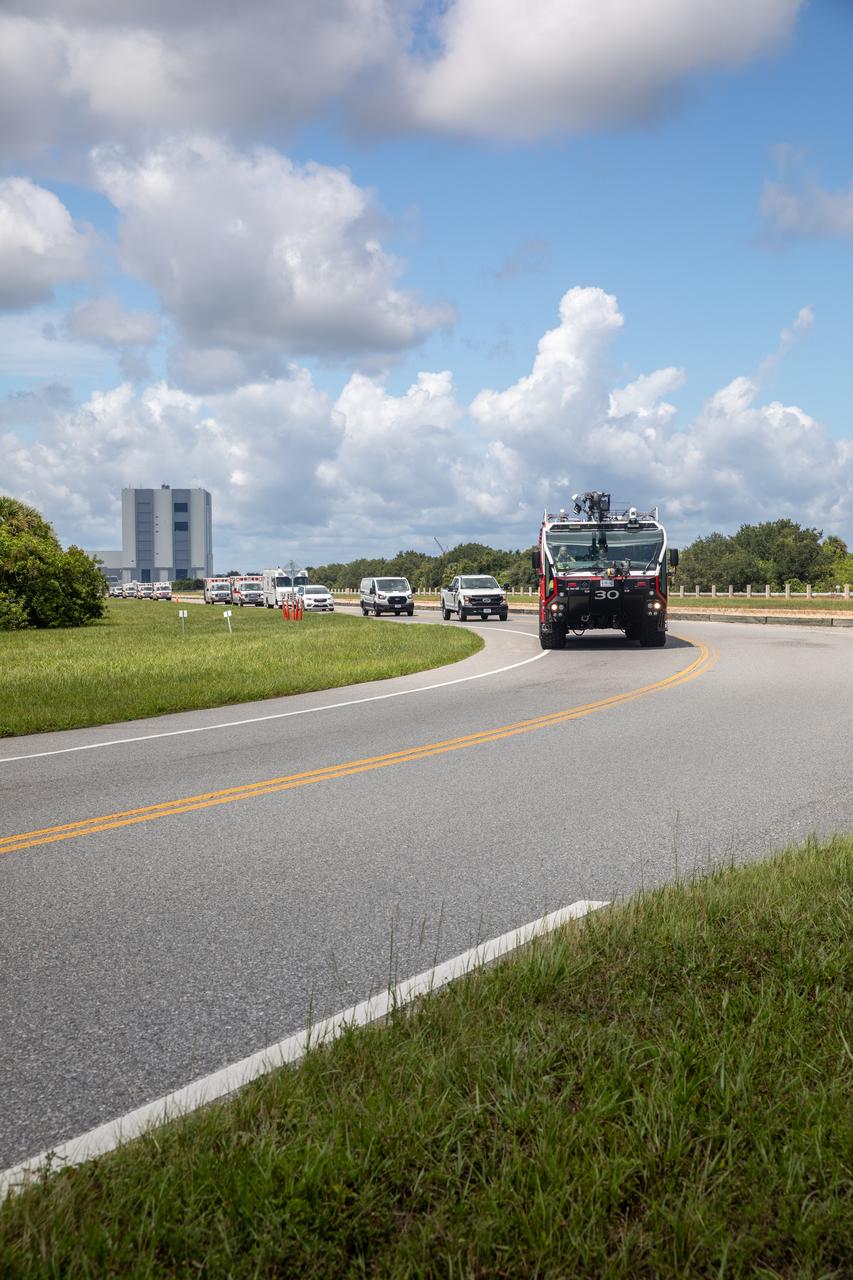
Medical and fire-rescue personnel participate in the Artemis II mission emergency escape or egress verification and validation tests near Launch Complex 39 at NASA's Kennedy Space Center in Florida on Monday, Aug. 12, 2024. During the multi-day tests, members of the closeout crew, pad rescue team, and the Exploration Ground Systems Program practiced the process of getting in and out of the emergency egress baskets then down to the launch pad where they would be transported to emergency transport vehicles and driven to safety. Prior to this test and throughout the course of several months, teams conducted basket release demonstrations to validate the system.
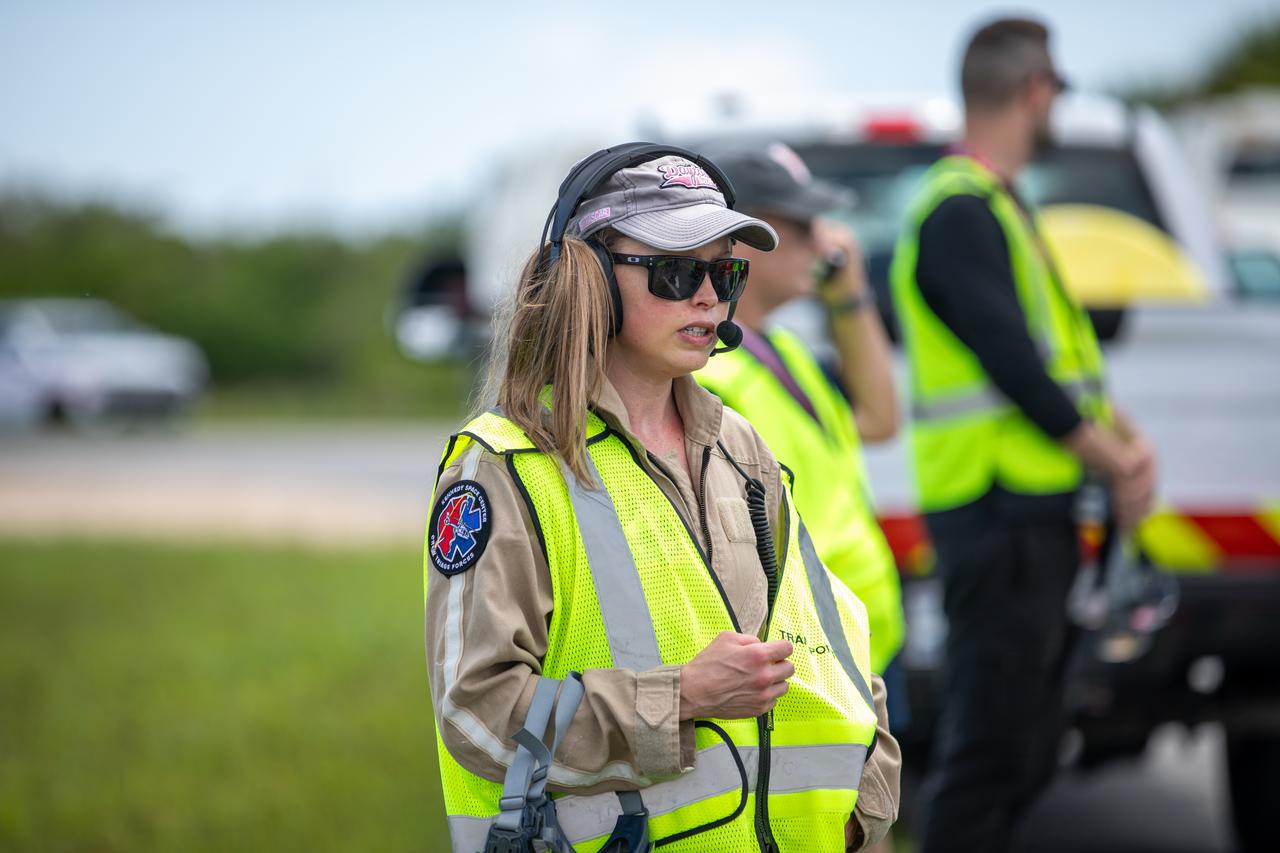
Medical and fire-rescue personnel participate in the Artemis II mission emergency escape or egress verification and validation tests near Launch Complex 39 at NASA's Kennedy Space Center in Florida on Monday, Aug. 12, 2024. During the multi-day tests, members of the closeout crew, pad rescue team, and the Exploration Ground Systems Program practiced the process of getting in and out of the emergency egress baskets then down to the launch pad where they would be transported to emergency transport vehicles and driven to safety. Prior to this test and throughout the course of several months, teams conducted basket release demonstrations to validate the system.
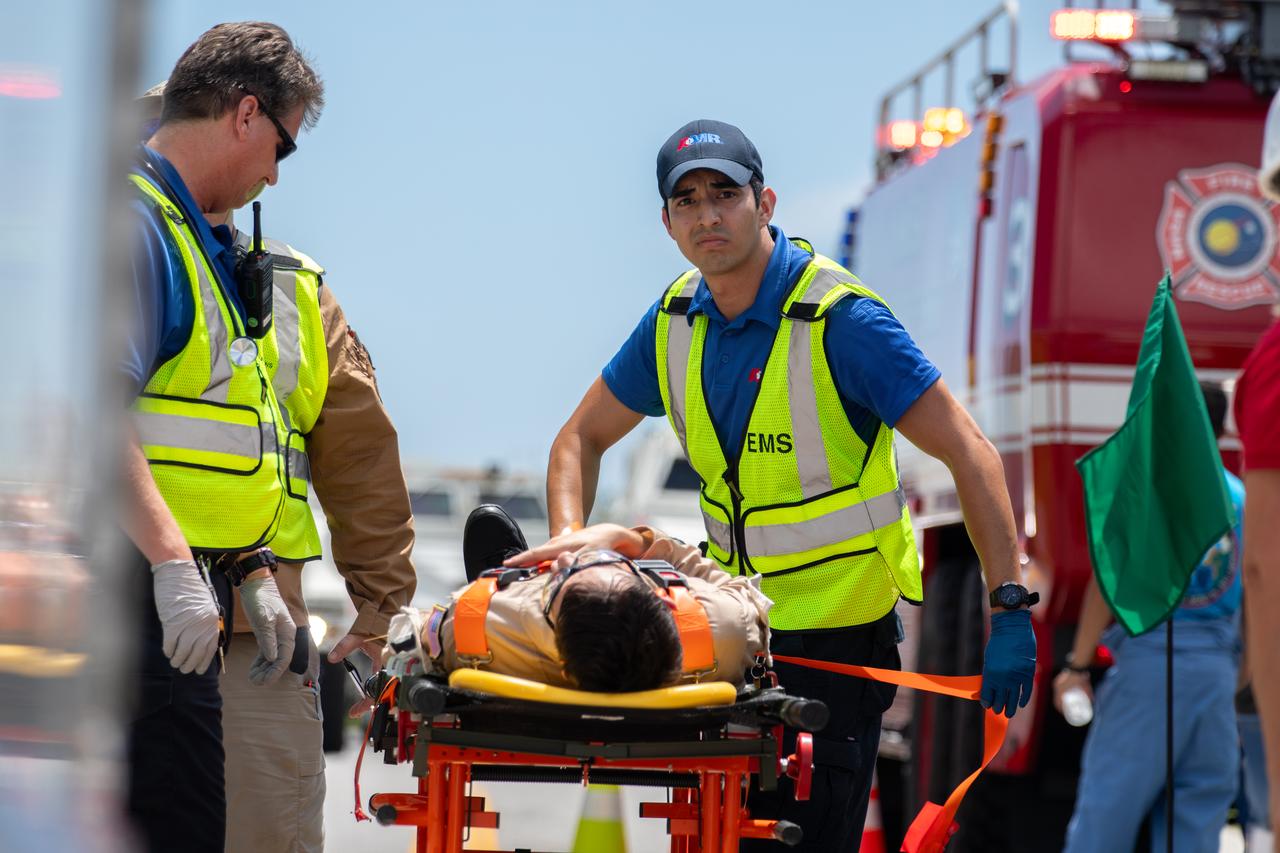
Medical and fire-rescue personnel participate in the Artemis II mission emergency escape or egress verification and validation tests near Launch Complex 39 at NASA's Kennedy Space Center in Florida on Monday, Aug. 12, 2024. During the multi-day tests, members of the closeout crew, pad rescue team, and the Exploration Ground Systems Program practiced the process of getting in and out of the emergency egress baskets then down to the launch pad where they would be transported to emergency transport vehicles and driven to safety. Prior to this test and throughout the course of several months, teams conducted basket release demonstrations to validate the system.
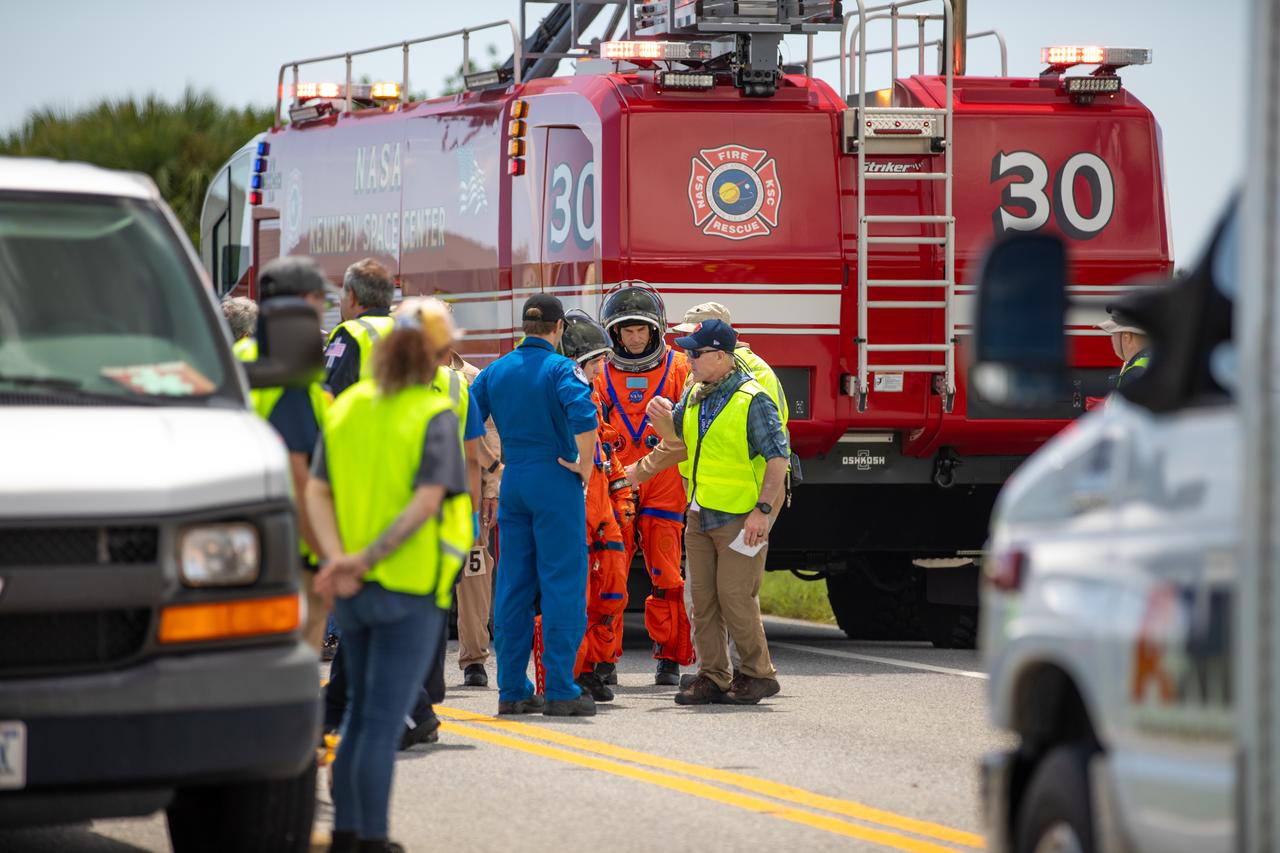
Medical, fire-rescue personnel, and simulated flight crew members participate in the Artemis II mission emergency escape or egress verification and validation tests near Launch Complex 39 at NASA's Kennedy Space Center in Florida on Monday, Aug. 12, 2024. During the multi-day tests, members of the closeout crew, pad rescue team, and the Exploration Ground Systems Program practiced the process of getting in and out of the emergency egress baskets then down to the launch pad where they would be transported to emergency transport vehicles and driven to safety. Prior to this test and throughout the course of several months, teams conducted basket release demonstrations to validate the system.
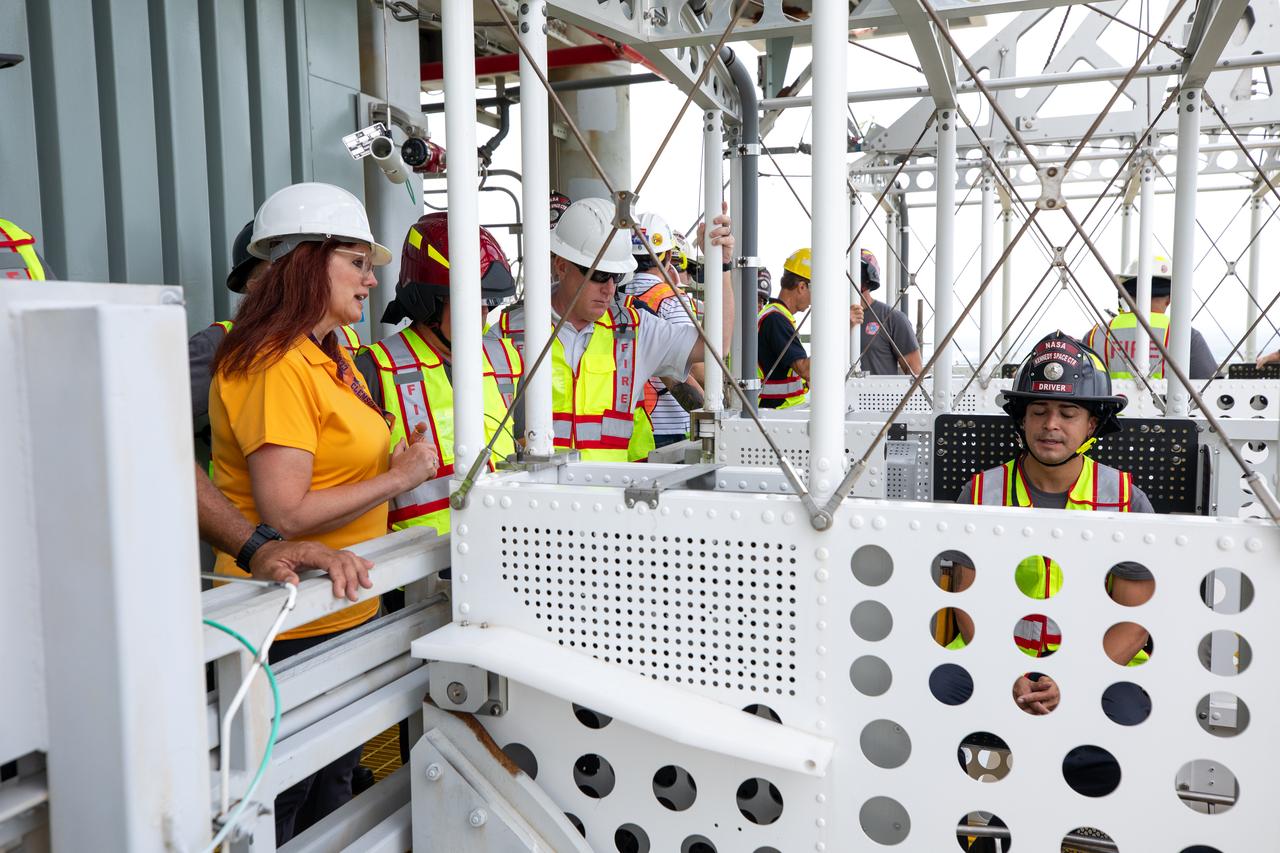
Teams with NASA’s Exploration Ground Systems Program, as well as NASA’s pad rescue team, conduct training inside the Artemis emergency egress baskets at Launch Pad 39B as part of the Artemis emergency egress demonstration training at the agency’s Kennedy Space Center in Florida on Thursday, Aug. 8, 2024. The baskets, similar to gondolas on ski lifts, are used in the case of a pad abort emergency to enable astronauts and other pad personnel a way to quickly escape away from the mobile launcher to the base of the pad and where waiting emergency transport vehicles will then drive them away.
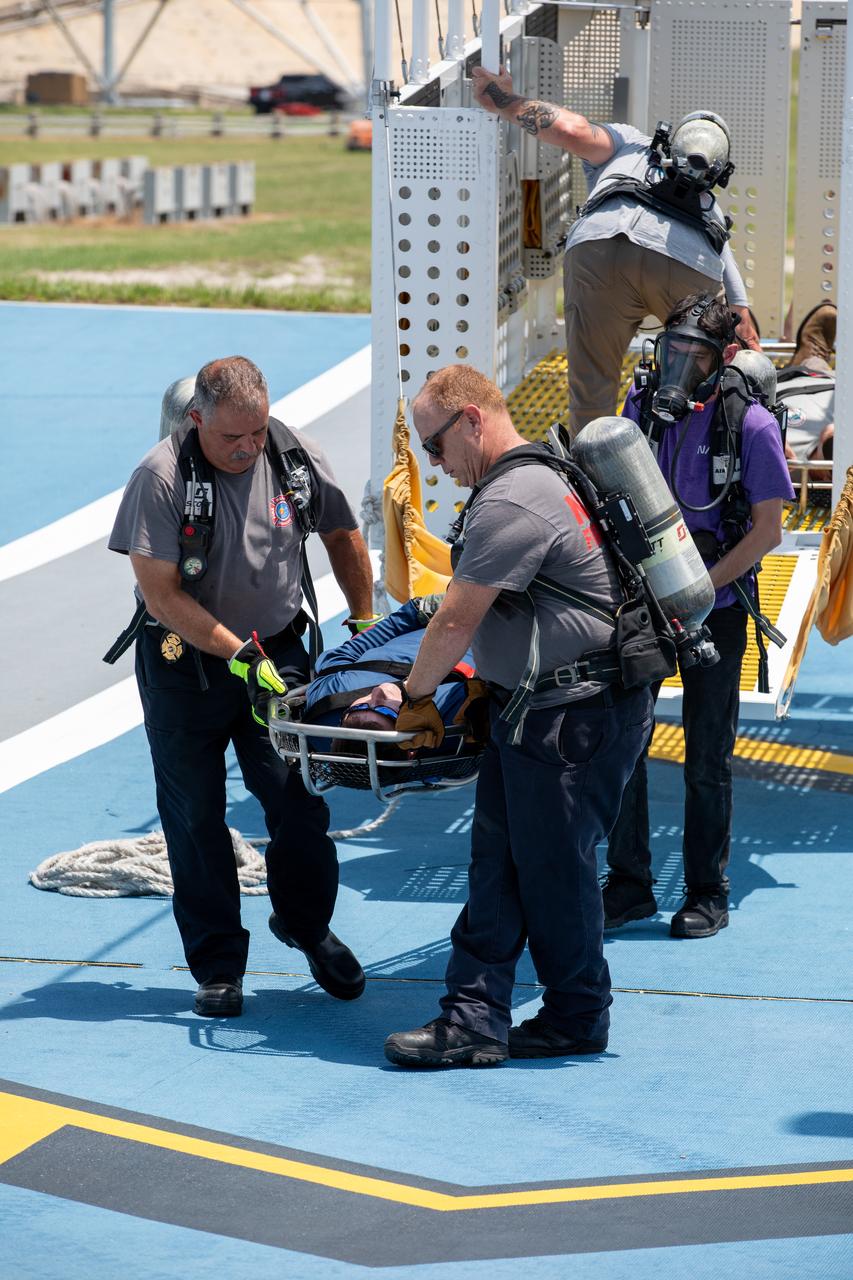
Teams at NASA’s Kennedy Space Center in Florida practice the Artemis mission emergency escape or egress procedures during a series of integrated system verification and validation tests at Launch Complex 39B on Friday, Aug. 9, 2024. Members of the closeout crew, pad rescue team, and the Exploration Ground Systems Program practiced the process of getting in and out of the emergency egress baskets then down to the launch pad where they would be transported to emergency transport vehicles and driven to safety. Prior to this test and throughout the course of several months, teams conducted several basket release demonstrations to validate the system.
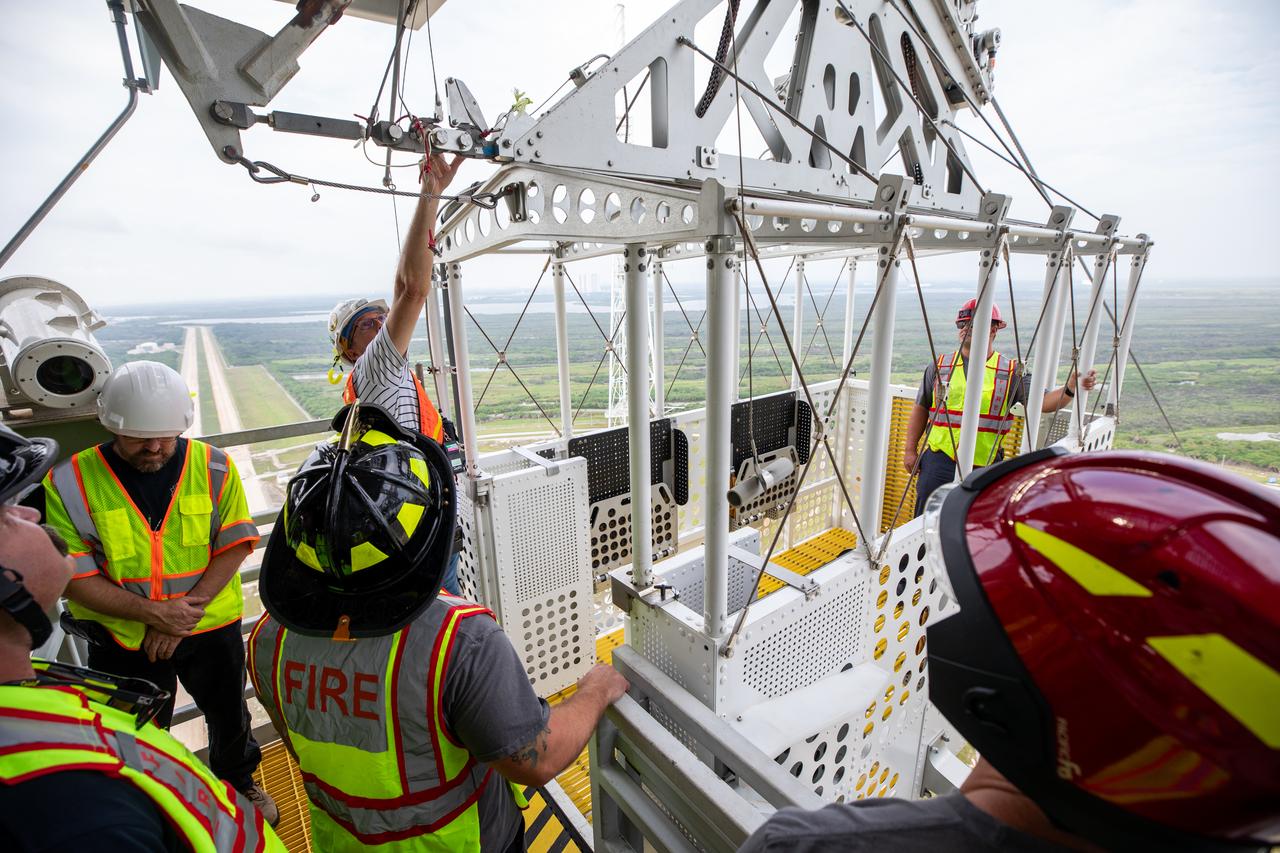
Teams with NASA’s Exploration Ground Systems Program, as well as NASA’s pad rescue team, conduct training inside the Artemis emergency egress baskets at Launch Pad 39B as part of the Artemis emergency egress demonstration training at the agency’s Kennedy Space Center in Florida on Thursday, Aug. 8, 2024. The baskets, similar to gondolas on ski lifts, are used in the case of a pad abort emergency to enable astronauts and other pad personnel a way to quickly escape away from the mobile launcher to the base of the pad and where waiting emergency transport vehicles will then drive them away.
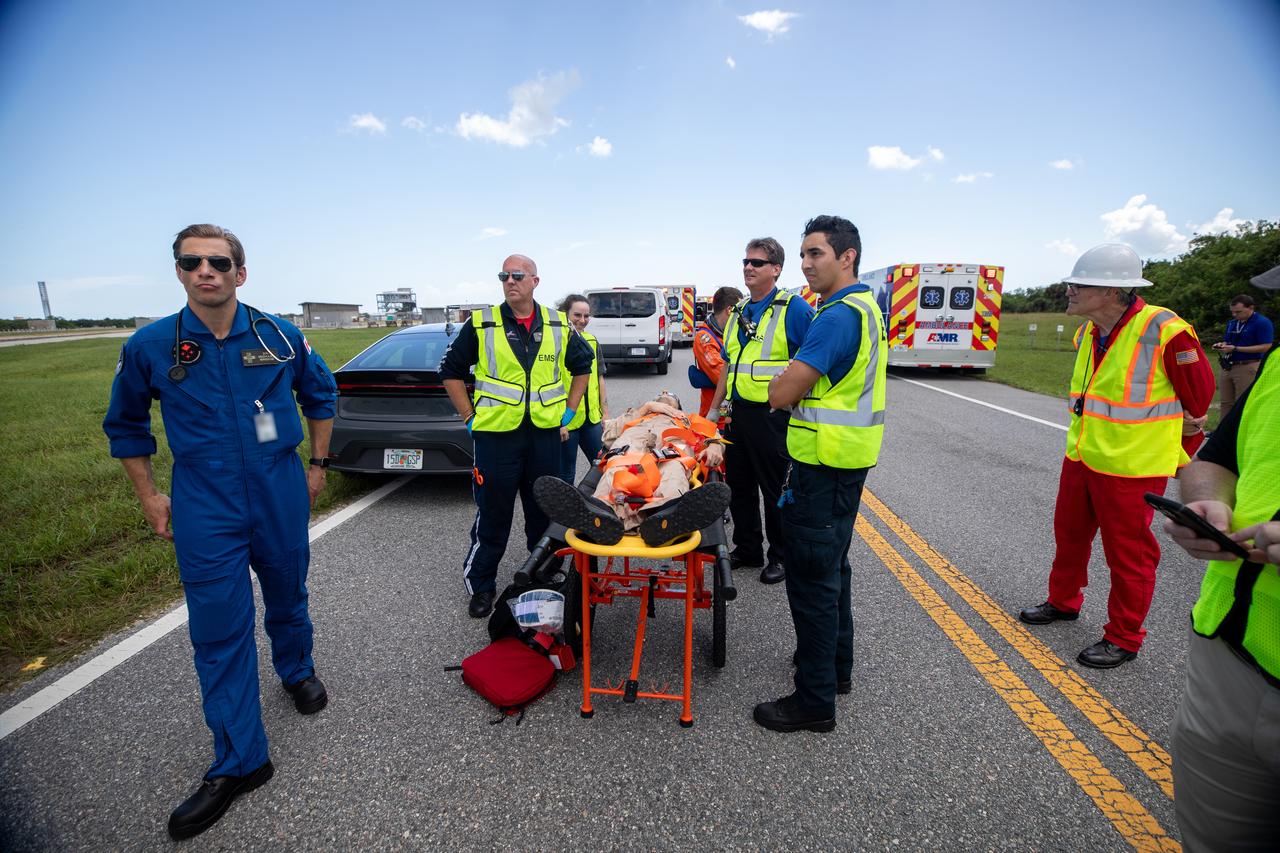
Medical, fire-rescue personnel, and simulated flight crew members participate in the Artemis II mission emergency escape or egress verification and validation tests near Launch Complex 39 at NASA's Kennedy Space Center in Florida on Monday, Aug. 12, 2024. During the multi-day tests, members of the closeout crew, pad rescue team, and the Exploration Ground Systems Program practiced the process of getting in and out of the emergency egress baskets then down to the launch pad where they would be transported to emergency transport vehicles and driven to safety. Prior to this test and throughout the course of several months, teams conducted basket release demonstrations to validate the system.