Crater Ejecta
Crater Ejecta
Crater Ejecta

Ejecta Craters
Ejecta in Tycho Crater
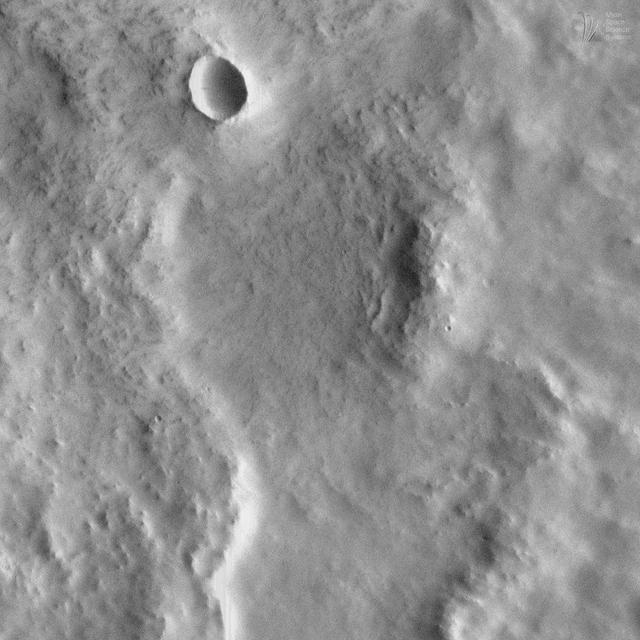
Fluidized Crater Ejecta Deposit
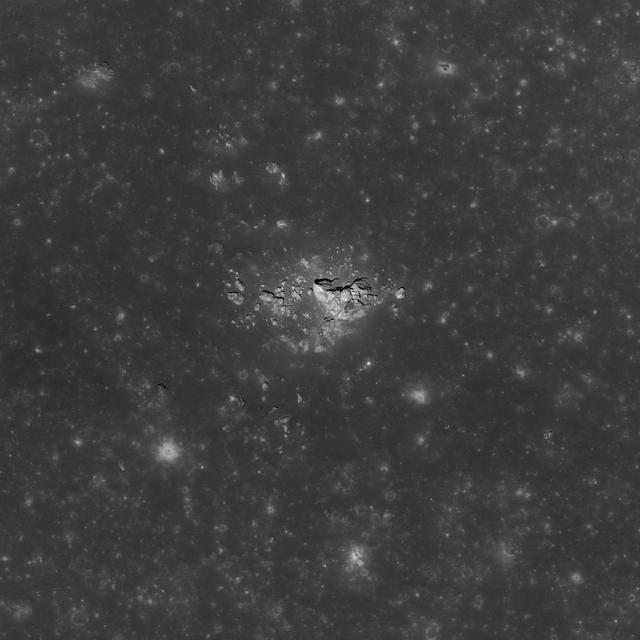
Kepler Crater Ejecta
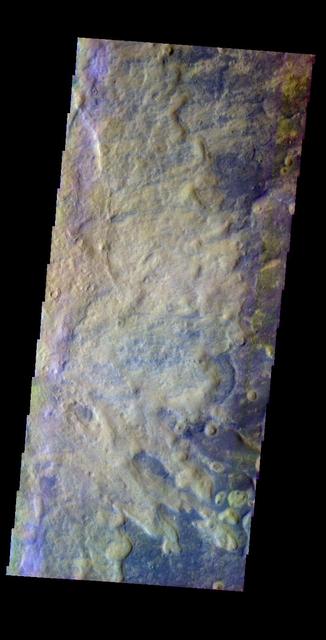
Rampart Crater Ejecta
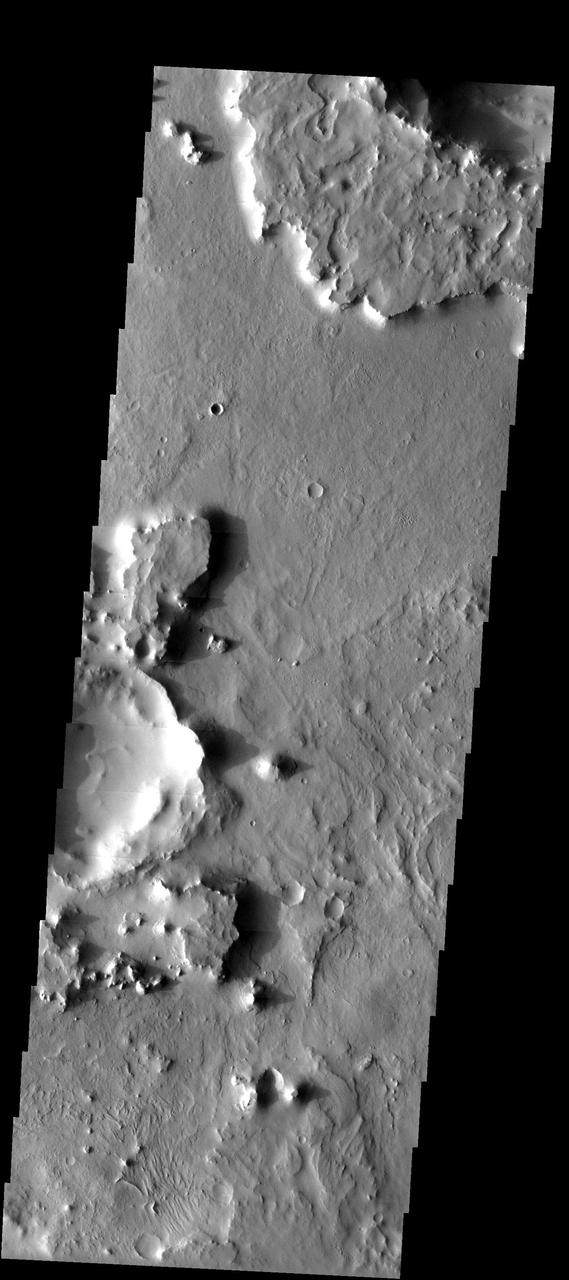
Eroded Crater Ejecta
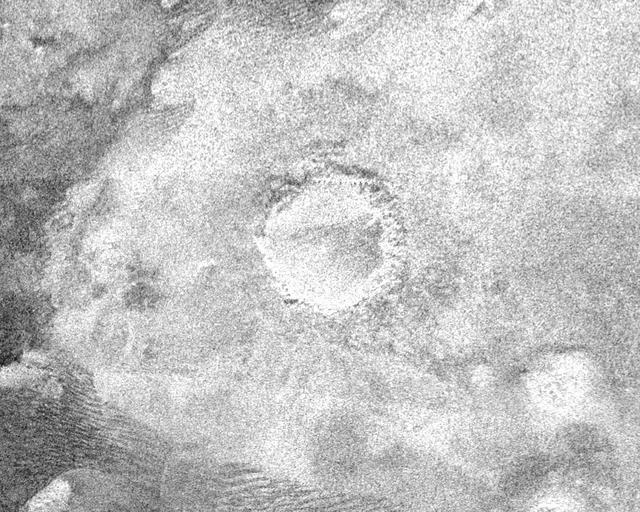
Impact Crater with Ejecta Blanket
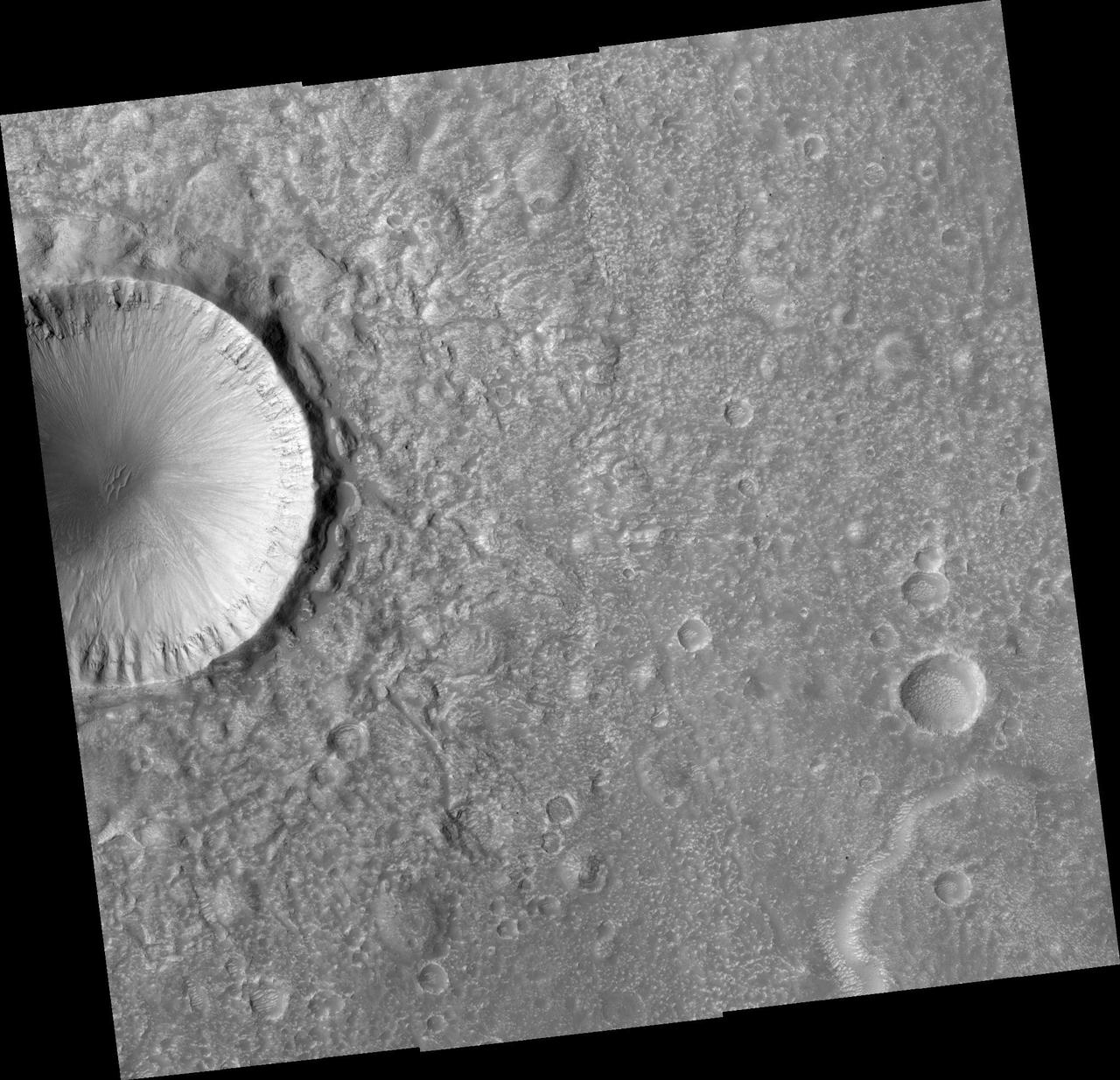
Crater Ejecta Morphology
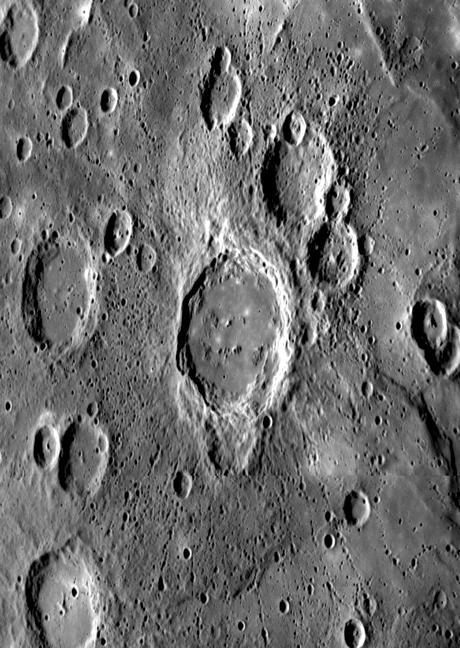
Crater Ejecta and Chains of Secondary Impacts
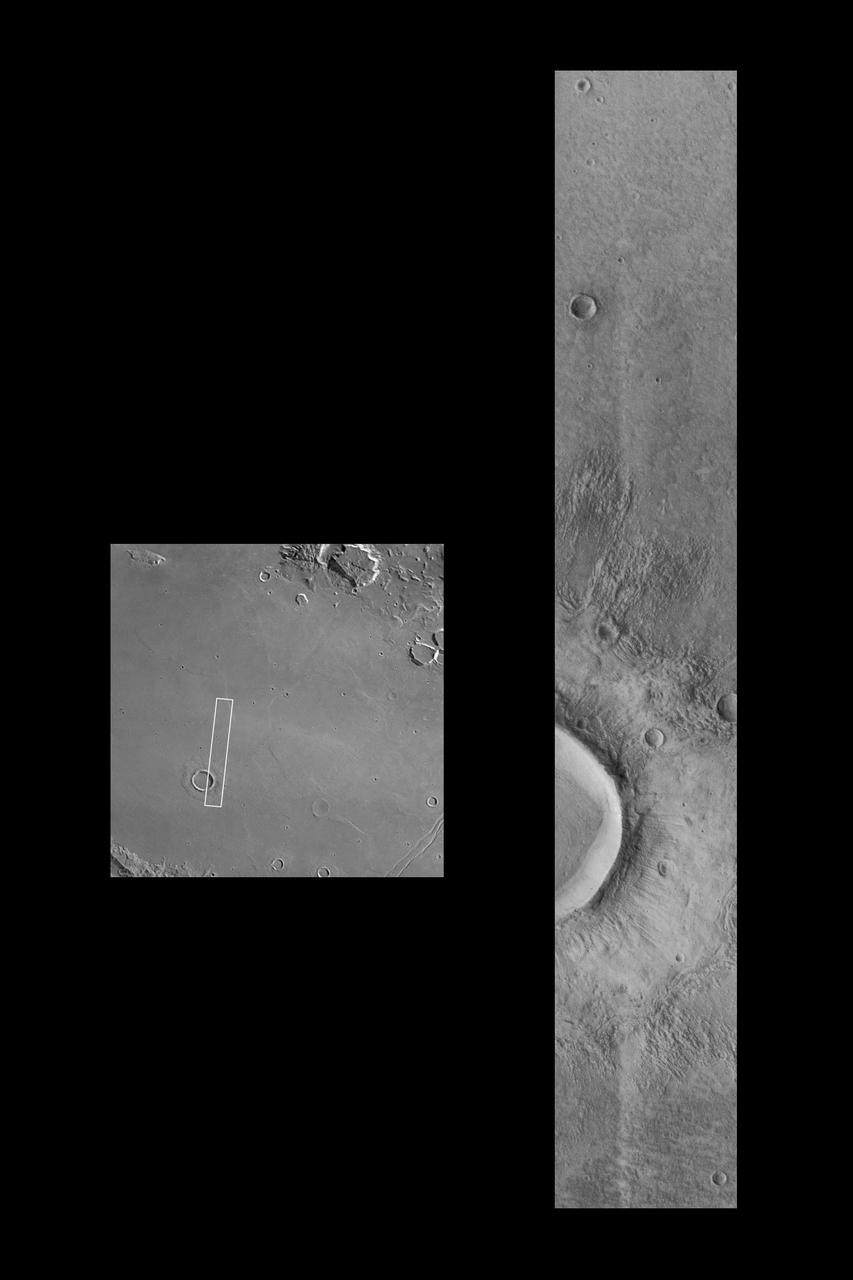
Flow-ejecta Crater in Icaria Planum
The ejecta blanket of the crater in this image from NASA Mars Odyssey spacecraft does not resemble the blocky, discontinuous ejecta associated with most fresh craters on Mars. Rather, the continuous lobes of material seen around this crater are evidence that the crater ejecta were fluidized upon impact of the meteor that formed this crater. Impact ejecta become fluidized when a meteor strikes a surface that has a considerable volatile content. The volatiles mixed with the ejecta form a flow of material that moves outward from the crater and produces the morphology seen in this THEMIS visible image. http://photojournal.jpl.nasa.gov/catalog/PIA04025
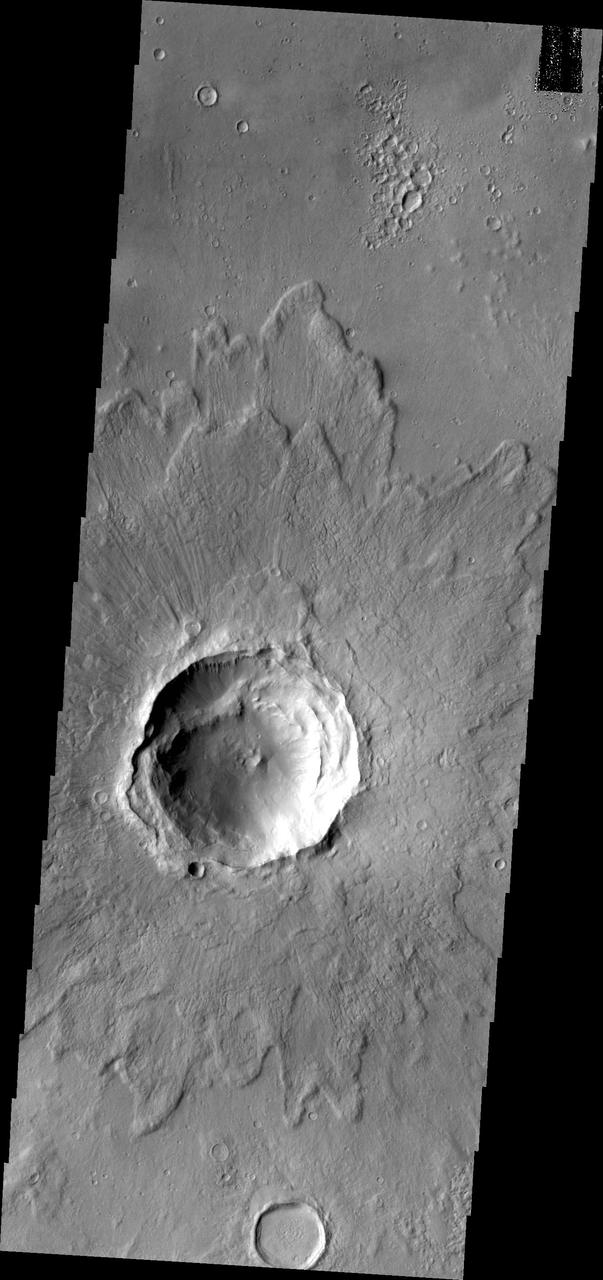
This image from NASA 2001 Mars Odyssey spacecraft contains a relatively young crater and its ejecta. Layering in the ejecta is visible and relates to the shock waves from the impact. This unnamed crater is located in Arabia Terra.
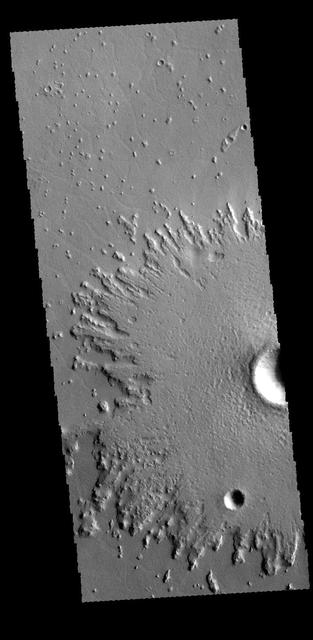
This image from NASA 2001 Mars Odyssey spacecraft shows part of an unnamed crater in Amazonis Planitia. The radial nature of the emplaced ejecta can be seen at the edge of the ejecta.

Multiple overlapping lobes of ejecta are visible in this image of an unnamed crater in Chryse Planitia as seen by NASA 2001 Mars Odyssey spacecraft.
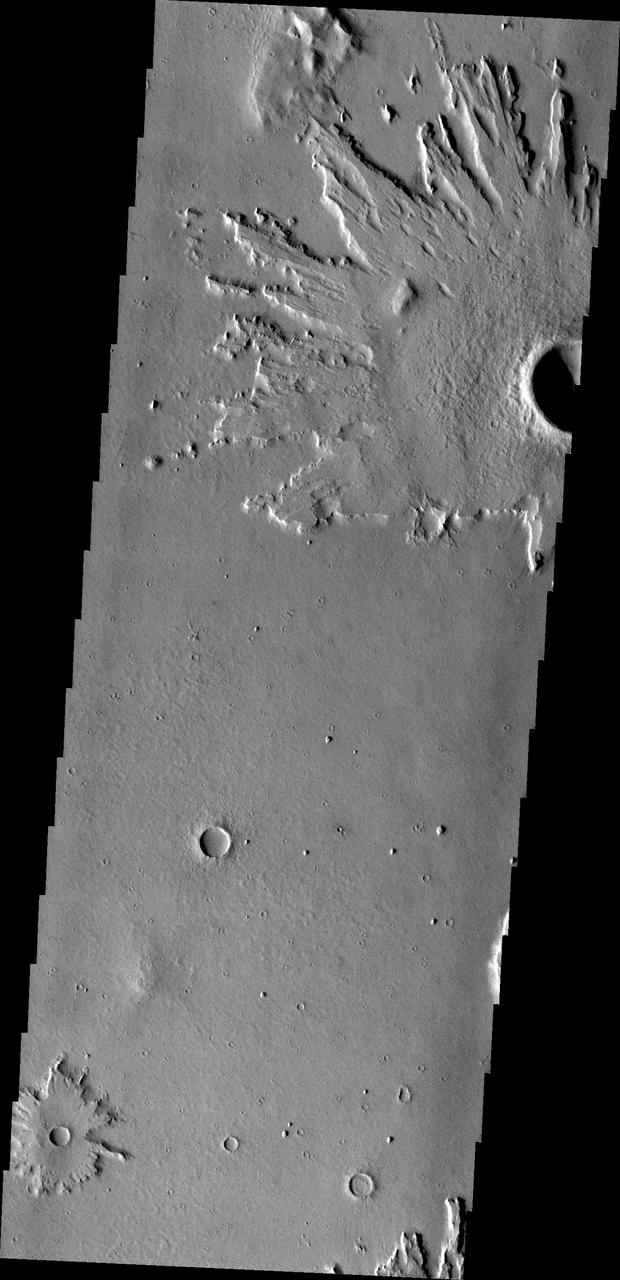
The ejecta of this unnamed crater in Amazonis Planitia is more resistant than the material around it in this image taken by NASA Mars Odyssey.
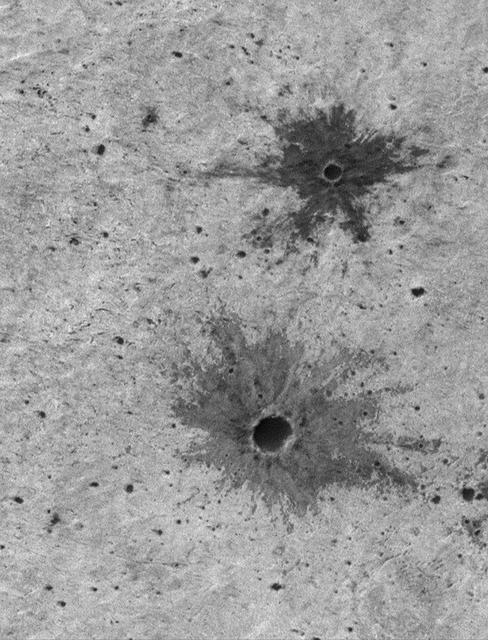
Small Impact Craters with Dark Ejecta Deposits
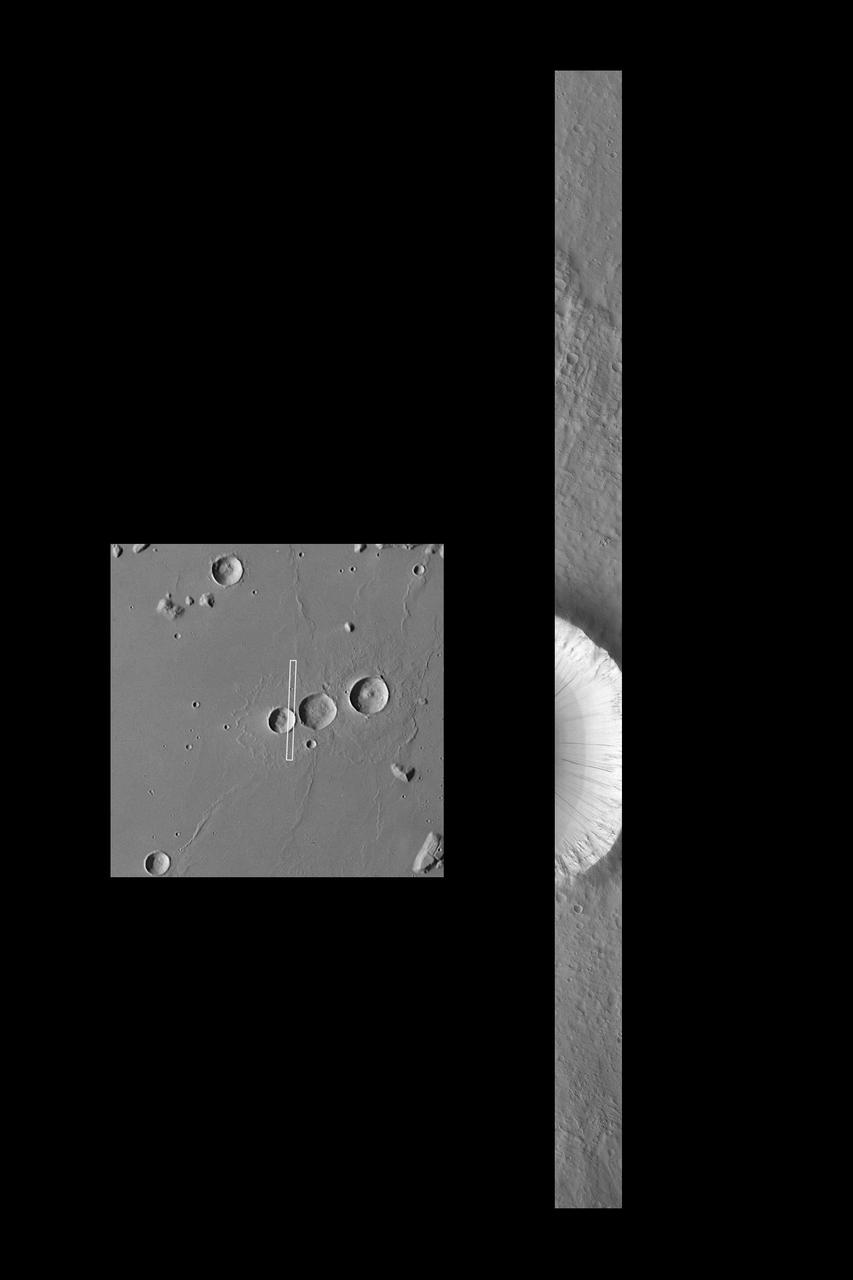
Flow Ejecta and Slope Landslides in Small Crater
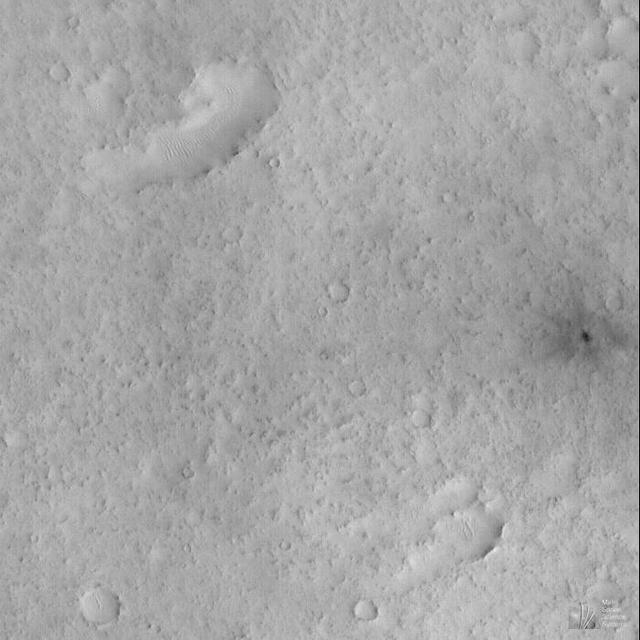
Small, Fresh Impact Crater With Dark Ejecta
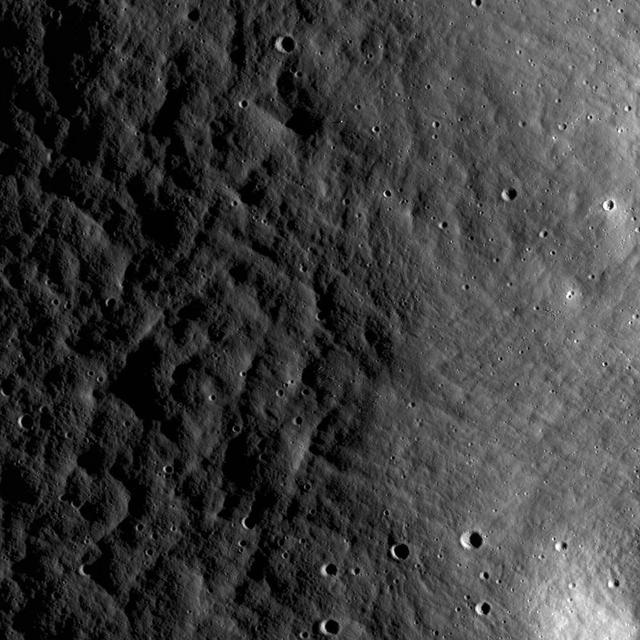
Ejecta from Van de Graaff Crater
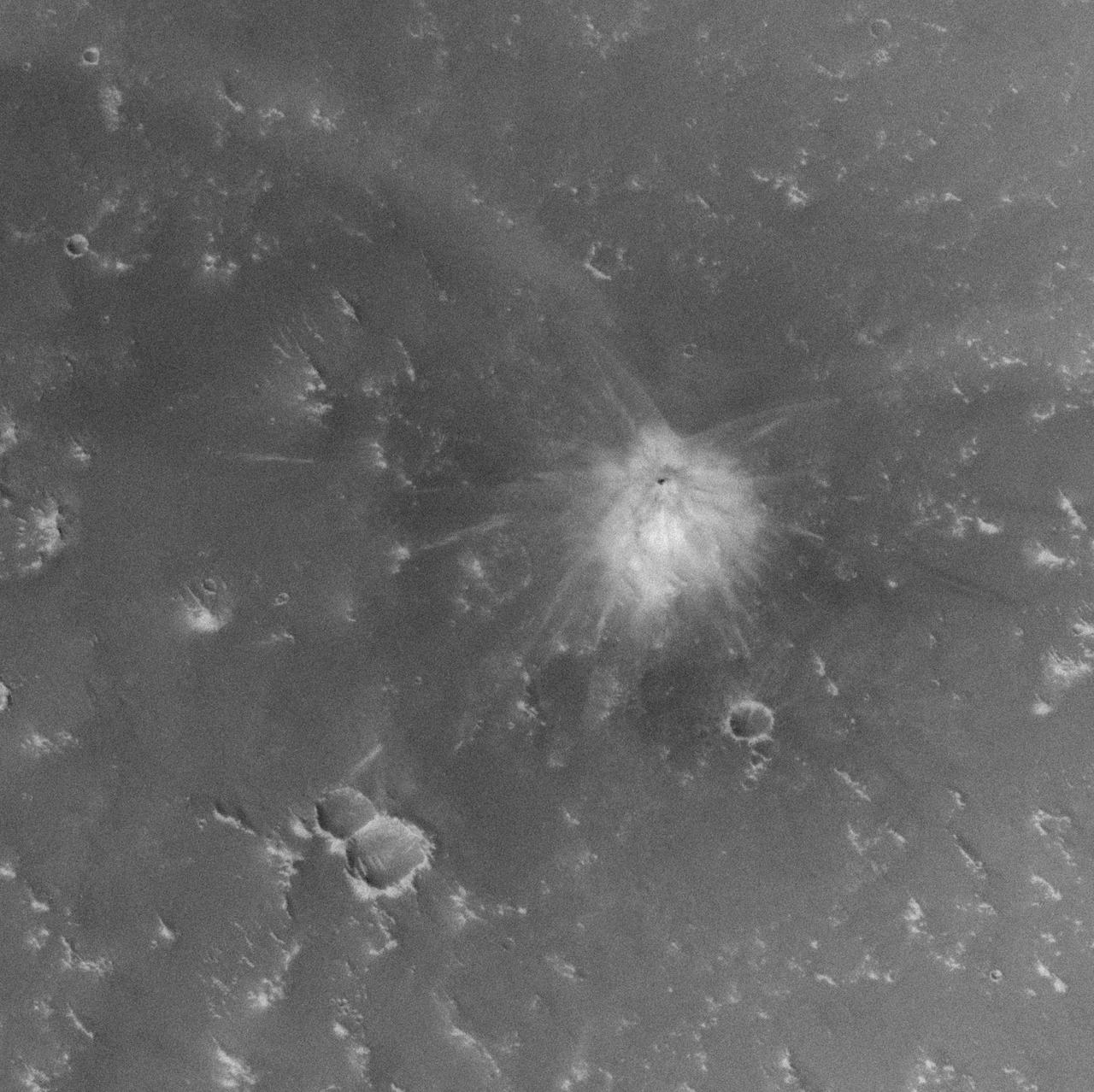
Fresh Crater in Arabia Terra with Light-Toned Ejecta
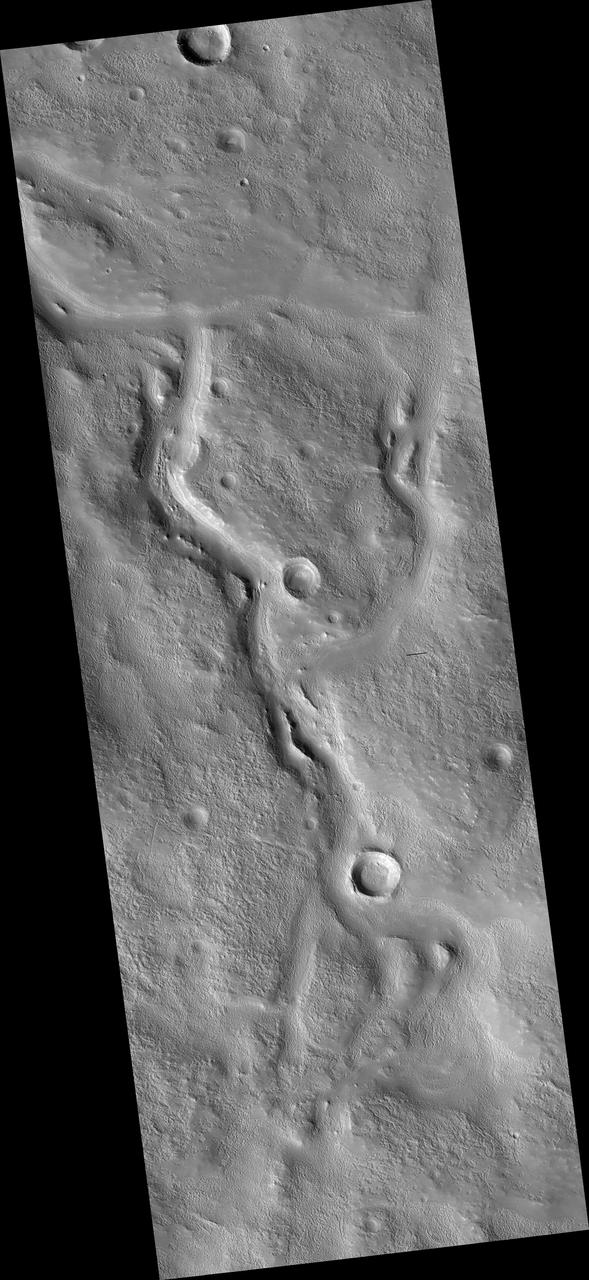
Valleys on the Ejecta Blanket from Cerulli Crater

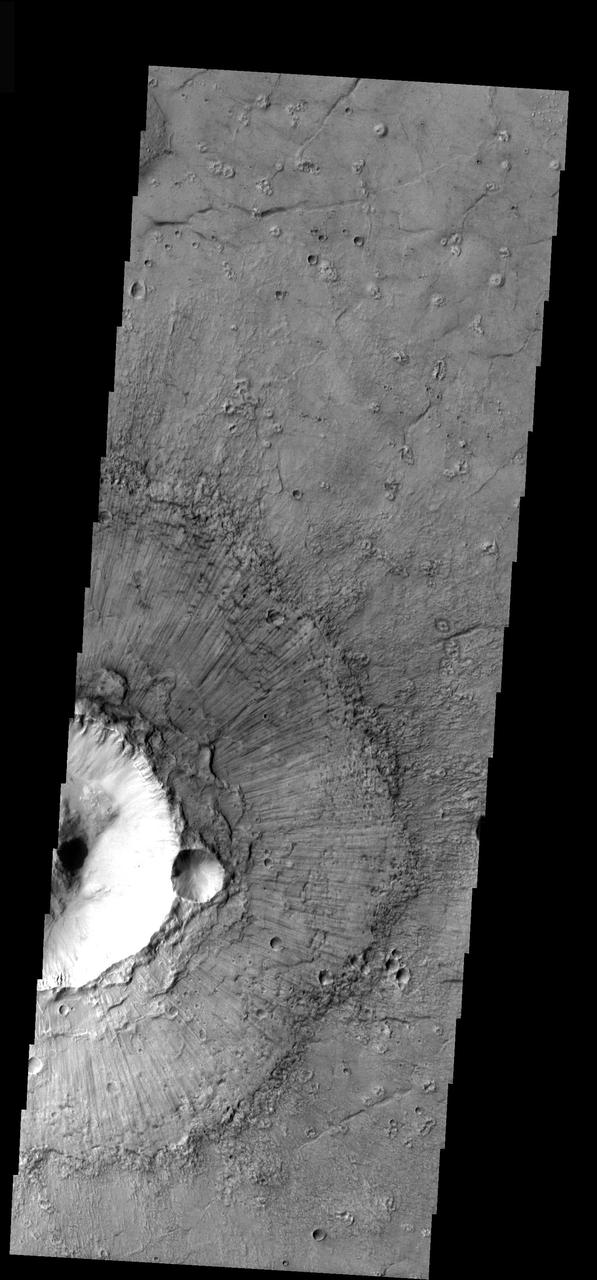
This VIS image shows the part of the crater rim and ejecta surrounding Lonar Crater in the northern plains of Vastitas Borealis. There is a fine scale, radial grooved outer layer of ejecta covered by lobate ejecta nearer the crater rim. The ends of the lobes are taller than the material just inside the end of the lobe. Often called rampart ejecta, this morphology can be caused by impact into a surface that includes volatiles such as sub-surface water or ice. Orbit Number: 71327 Latitude: 73.428 Longitude: 38.7539 Instrument: VIS Captured: 2018-01-12 05:31 https://photojournal.jpl.nasa.gov/catalog/PIA22386
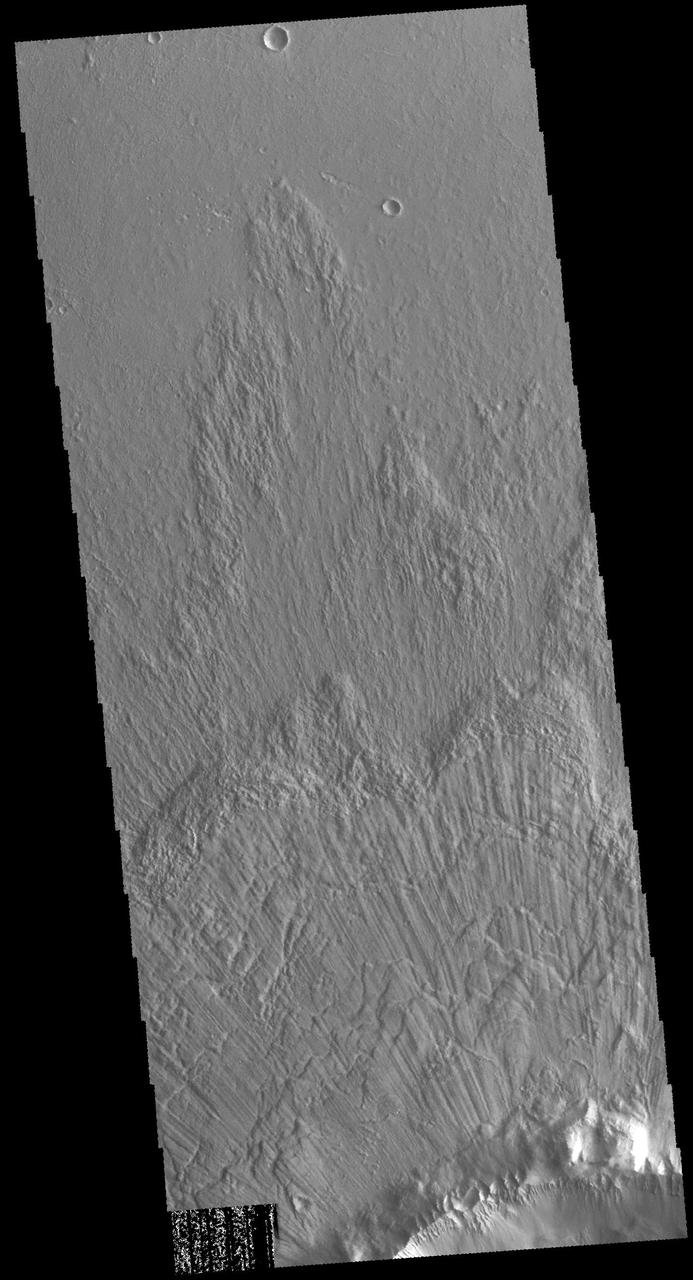
This image captured by NASA 2001 Mars Odyssey spacecraft show part of the ejecta of Bacolor Crater. The ejecta is layered and grooved, all radial to the crater itself. Bacolor Crater is located in Utopia Planitia. Orbit Number: 60710 Latitude: 33.4786 Longitude: 118.408 Instrument: VIS Captured: 2015-08-21 14:55 http://photojournal.jpl.nasa.gov/catalog/PIA20088
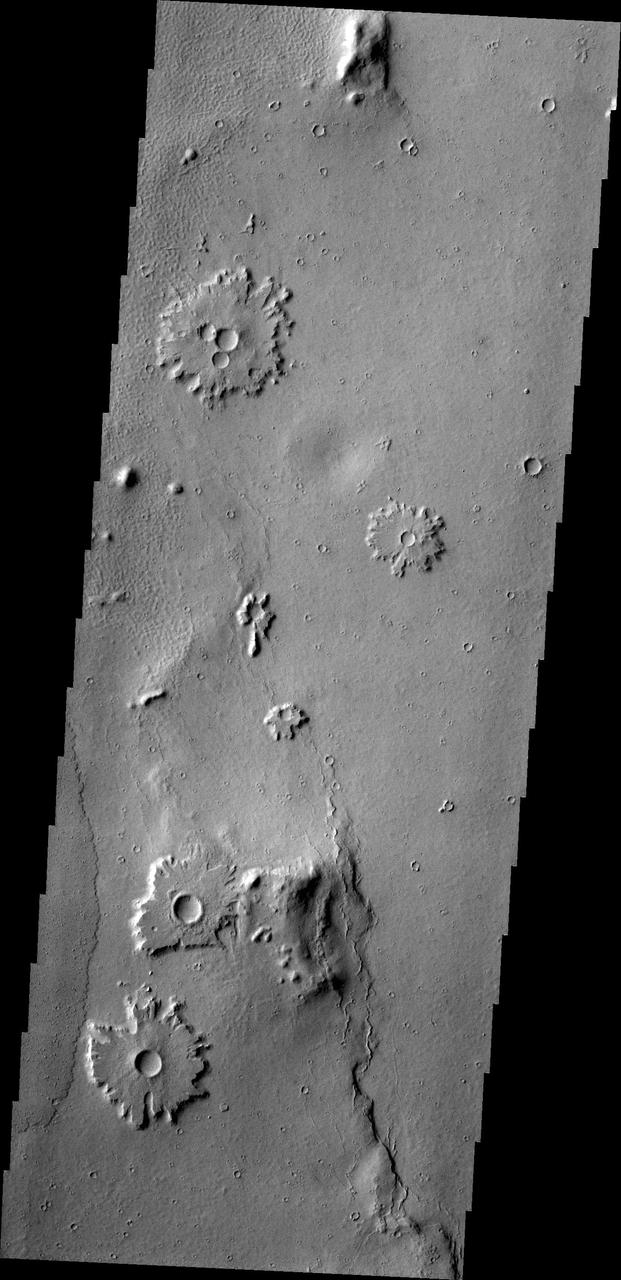
The craters in this image from NASA 2001 Mars Odyssey spacecraft are located in a region of prolonged wind action. The ejecta of the craters is more resistant to the wind than the materials around it.
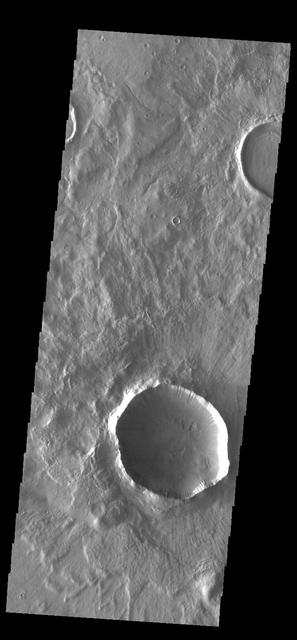
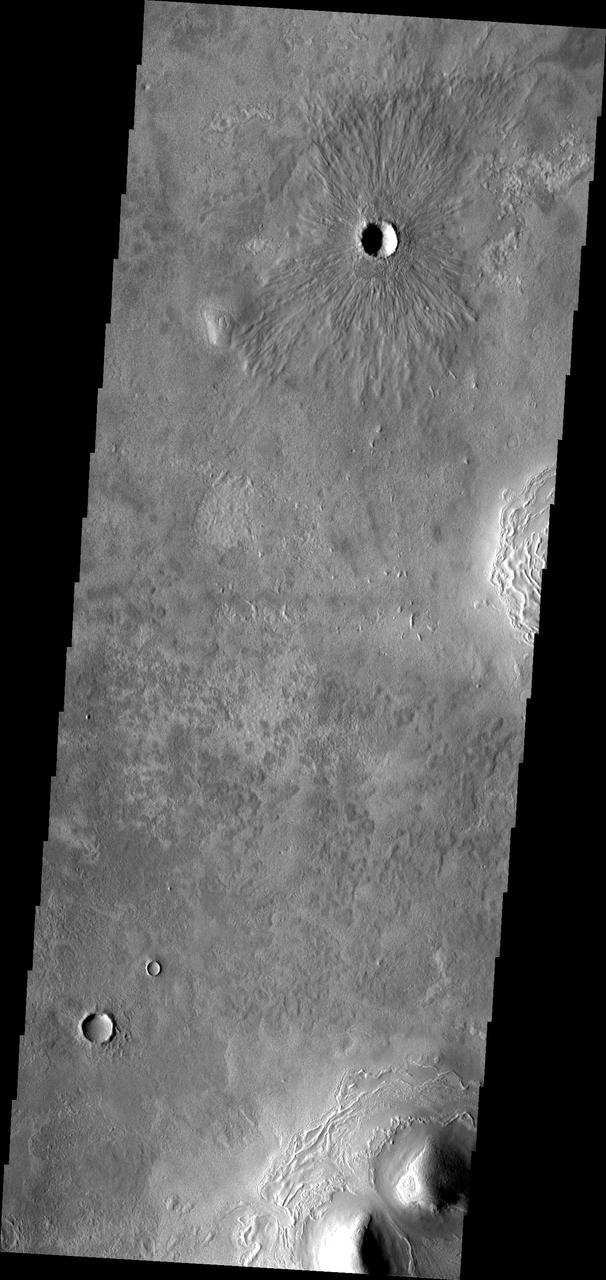
This VIS image shows an unnamed crater located in Terra Sirenum. The surface of the ejecta contains radial grooves, visible on the thicker ejecta near the crater rim. The formation mechanism for the grooves is still unknown but several theories exist including basal surge flows and air pressure rock entrainment. Several gullies dissect the inner crater rim. Orbit Number: 84865 Latitude: -43.7455 Longitude: 222.519 Instrument: VIS Captured: 2021-01-31 01:32 https://photojournal.jpl.nasa.gov/catalog/PIA24734
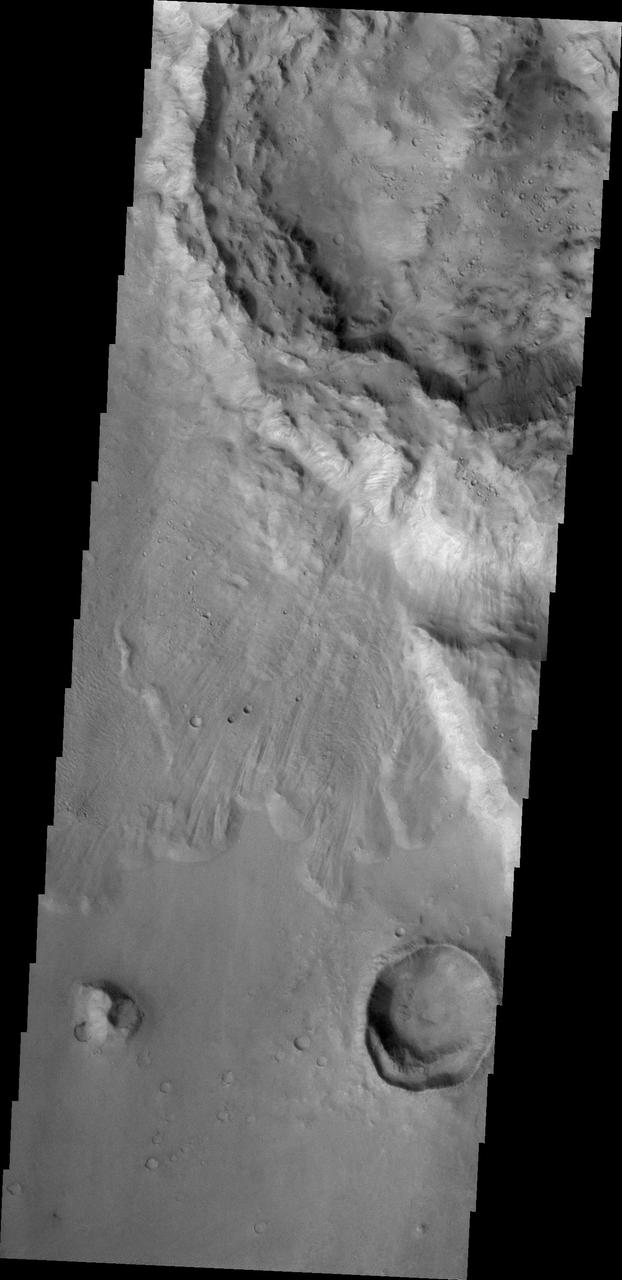
The pristine nature of this crater and its ejecta indicate that it is younger than the outflow channel where it is located. This image is from NASA 2001 Mars Odyssey.
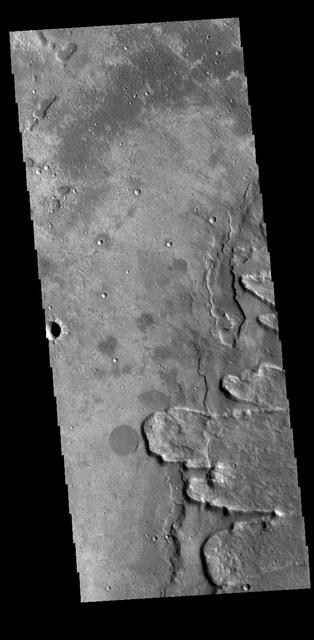
This image captured by NASA 2001 Mars Odyssey spacecraft shows a small portion of Yuty Crater ejecta blanket.
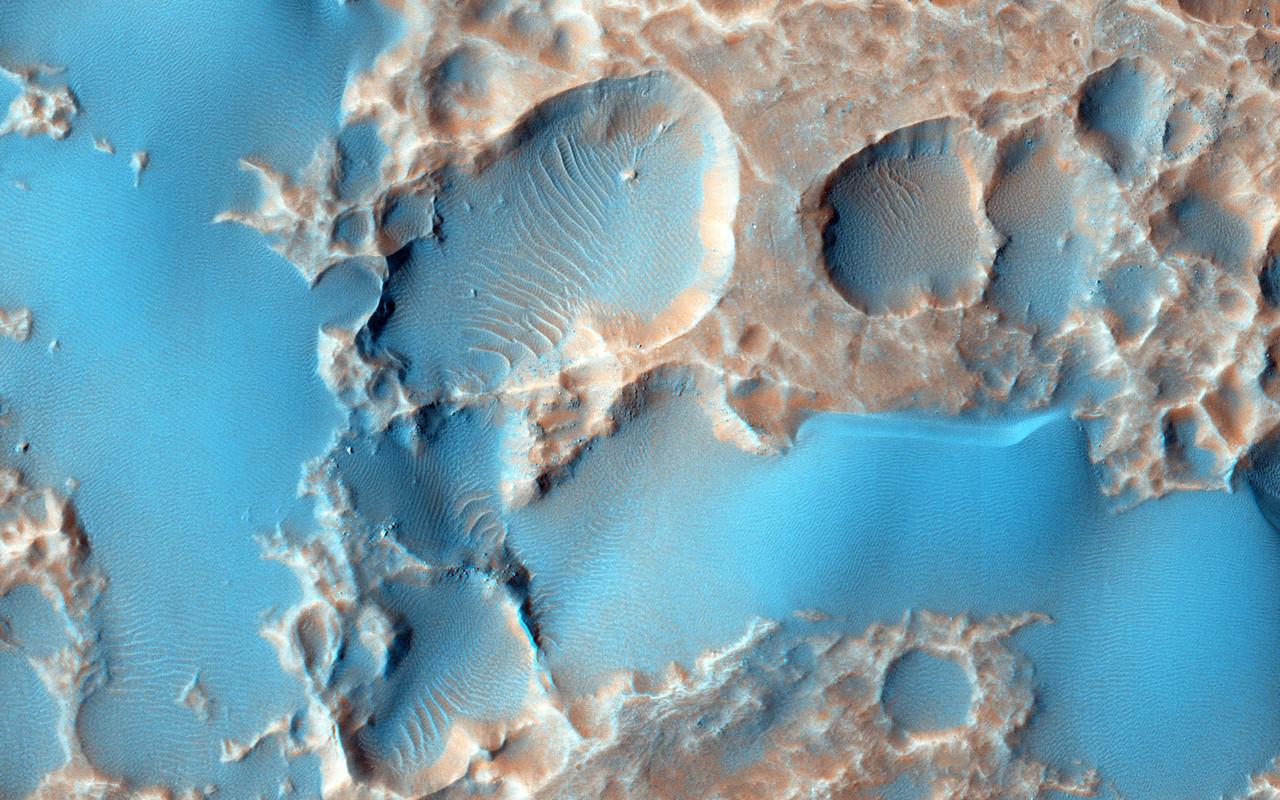
The pits visible in this image from NASA Mars Reconnaissance Orbiter arent impact craters. The material they are embedded into is ejecta stuff thrown out of an impact crater when it forms from a large crater called Hale not seen in this image. Substances called "volatiles" -- which can explode as gases when they're quickly warmed by the immense heat of an impact-exploded out of the ejecta and caused these pits. Unrelated sand dunes near the top of the image have since blown over portions of the pits. http://photojournal.jpl.nasa.gov/catalog/PIA19289
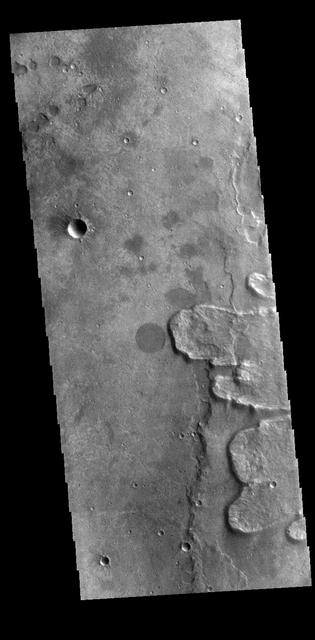
This VIS image shows a portion of the ejecta deposit of Yuty Crater. The raised edge of the ejecta is termed a rampart, and indicates that a volatile like water may have been present. The ejecta edge looks like a flow front and much different from air fall ejecta emplacement. Orbit Number: 68736 Latitude: 22.247 Longitude: 325.213 Instrument: VIS Captured: 2017-06-12 17:57 https://photojournal.jpl.nasa.gov/catalog/PIA22171
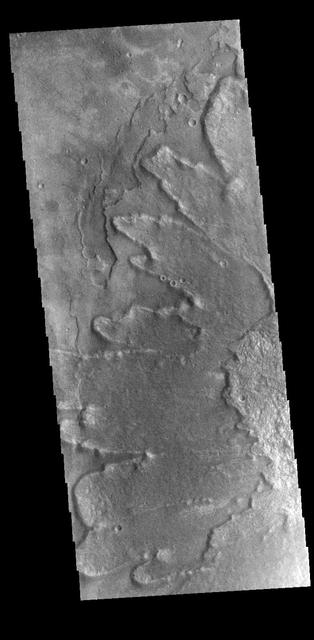
This VIS image shows part of the ejecta around Yuty Crater. The ejecta, with the raised outer margin, is called a rampart. Orbit Number: 65269 Latitude: 22.3058 Longitude: 325.442 Instrument: VIS Captured: 2016-08-31 02:31 http://photojournal.jpl.nasa.gov/catalog/PIA21007
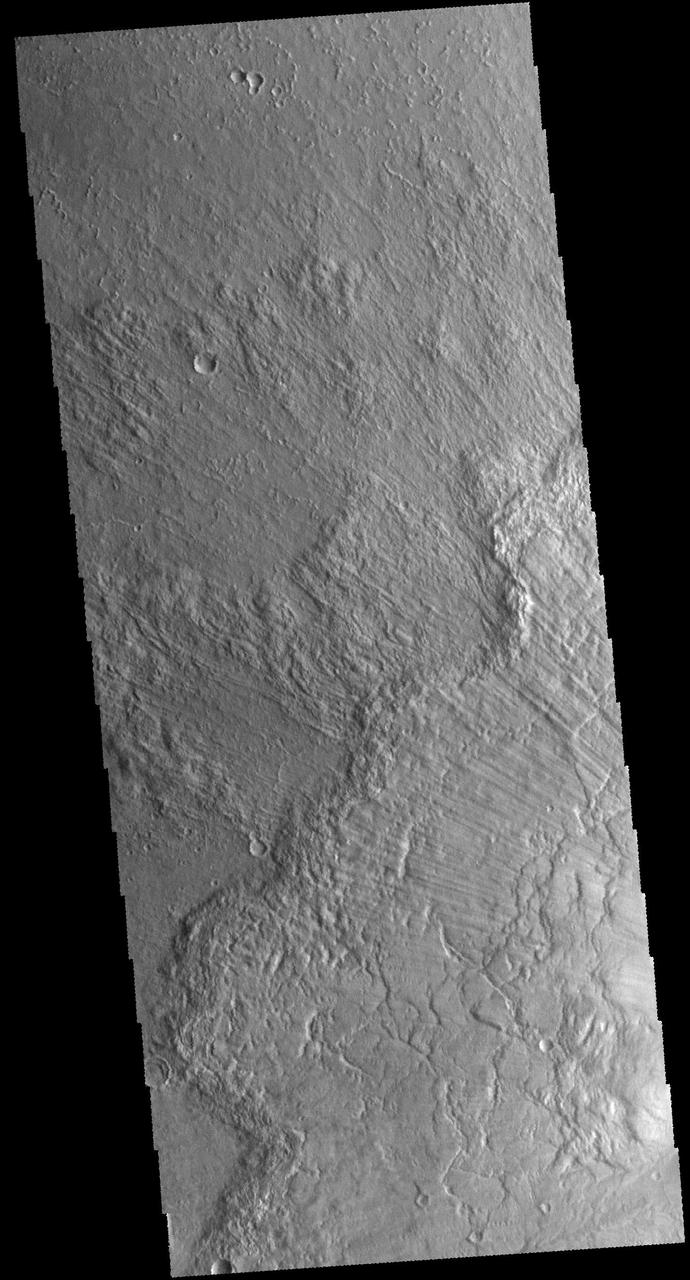
Today's VIS image shows some of the ejecta from Bacolor Crater in Utopia Planitia. There are several layers of ejecta visible in the image. The crater itself is just off the image to the lower right. Orbit Number: 68581 Latitude: 33.2419 Longitude: 118.099 Instrument: VIS Captured: 2017-05-30 23:30 https://photojournal.jpl.nasa.gov/catalog/PIA21790
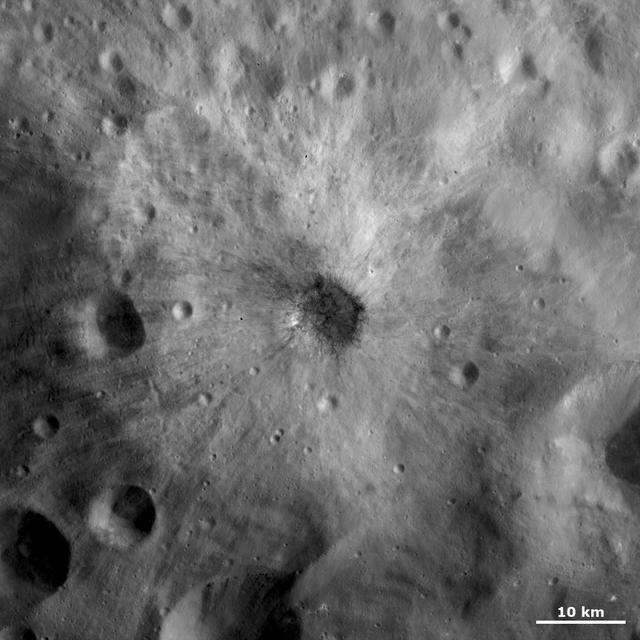
This image from NASA Dawn spacecraft is centered on a small, young, fresh crater with bright and dark ejecta rays extending from it. The crater is located in Vesta Tuccia quadrangle on asteroid Vesta.
This small 2 kilometer-wide crater was sitting around, minding its own business when a meteoroid struck the ground just to the west and created a new, larger crater almost 10 kilometers in diameter (not pictured). The ejecta spraying out of the new crater landed back on the ground and then continued to flow away from the new crater, and the smaller crater was in the way of that muddy flow. You can see where much of the muddy material flowed around the crater's uplifted rim and forms a squiggly ridge, but you can also see where the mud flow slid over the rim and ponded down in the bottom of the crater. One question we don't know the answer to is: "how wet was the muddy ejecta?" Ongoing observations like this and laboratory-based experiments are trying to find the answer to that question. This image also illustrates a common theme in geology, namely, the law of superposition. Because the crater has been affected by ejecta from the larger crater to the west, the small crater had to be there first and then the second, larger crater and its ejecta had to form. This allows planetary geologists to decipher the relative ages of different landforms. Because a central goal of geology is to understand past events from present-day clues, geology is sometimes compared to forensic science. http://photojournal.jpl.nasa.gov/catalog/PIA13181
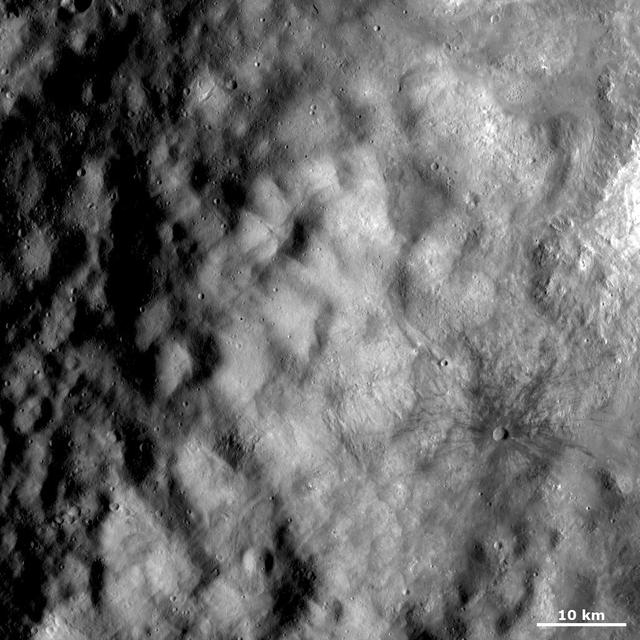
This image from NASA Dawn spacecraft shows part of the ejecta deposit surrounding the nowman craters, the largest of which has been named Marcia.
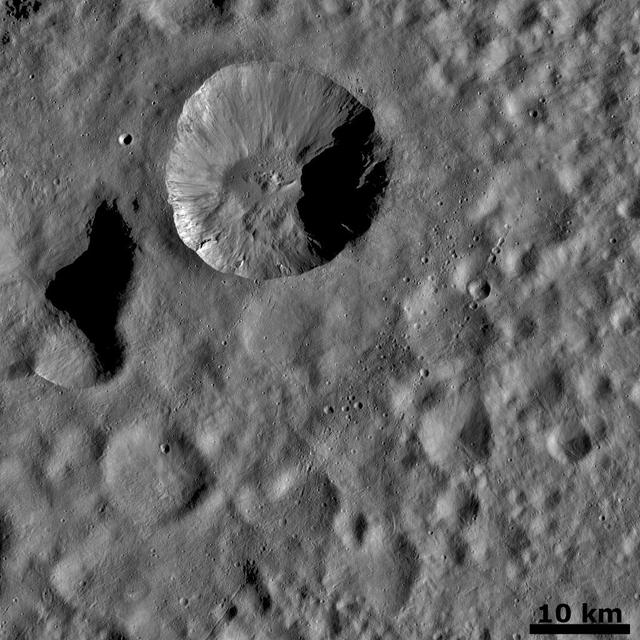
This image from NASA Dawn spacecraft is dominated by a wide, young, fresh crater on asteroid Vesta. Surrounding this crater is its ejecta blanket, a covering of small particles that were thrown out during the impact that formed the crater.

Flow Ejecta and Slope Landslides in Small Crater - High Resolution Image

Flow-ejecta Crater in Icaria Planum - High Resolution Image
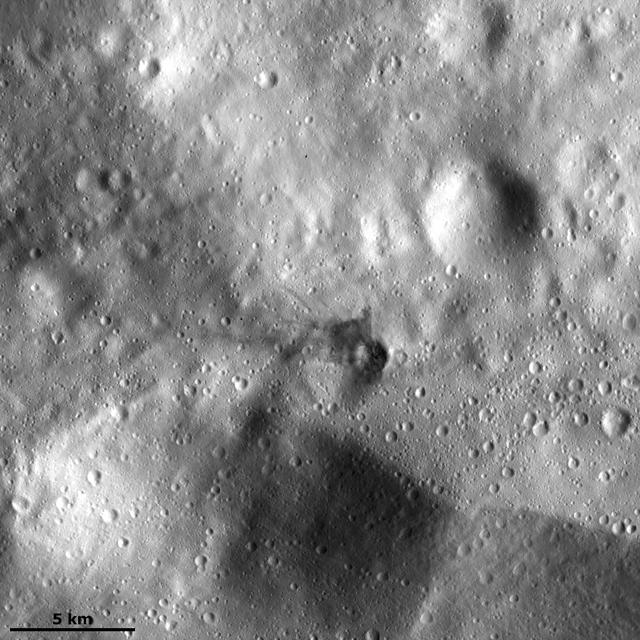
This image from NASA Dawn spacecraft, located in asteroid Vesta Urbinia quadrangle in the Vestan southern hemisphere, shows a small crater with ejecta made of dark material.
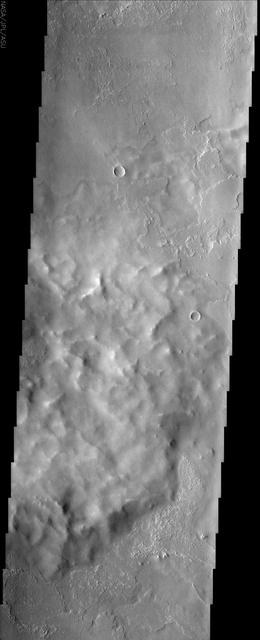
Located roughly equidistant between two massive volcanoes, the approximately 60 km Poynting Crater and its ejecta, shown in this image from NASA Mars Odyssey spacecraft, have experienced an onslaught of volcanic activity.
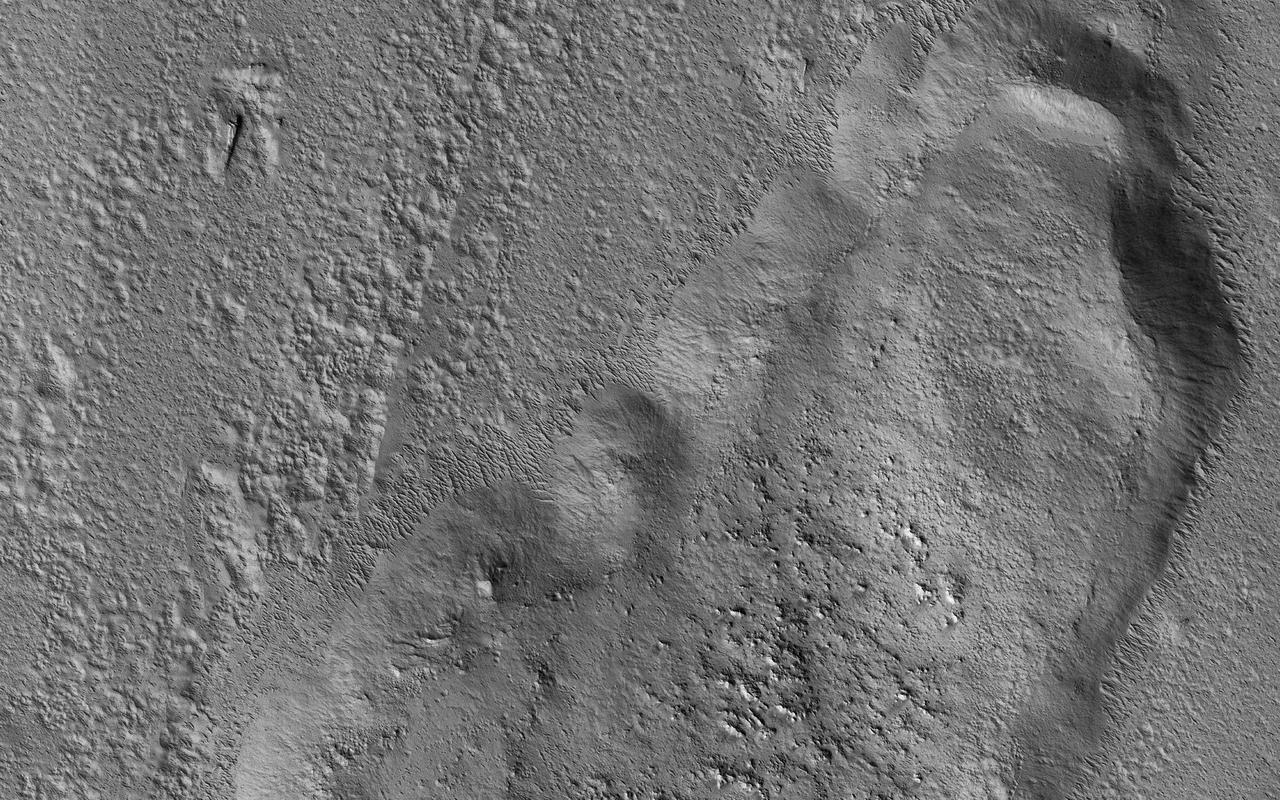
n this picture we can see a huge tongue-like form, which looks a like a mudflow with boulders on its surface. This "tongue" is only a small part of a larger deposit that completely surrounds Tooting Crater (not visible in this image). This is part of what is called an "ejecta blanket." The shape and form of the deposits in the ejecta blanket can tell us about the condition of the ground when the impact crater was formed. The presence of this tongue of ejecta is interpreted as a sign that the ground was frozen before impact. The force of the impact melted ice and mixed it with rock and dust as it was thrown away from the crater. It then settled to form these tongue-like lobes all around the crater. https://photojournal.jpl.nasa.gov/catalog/PIA23286
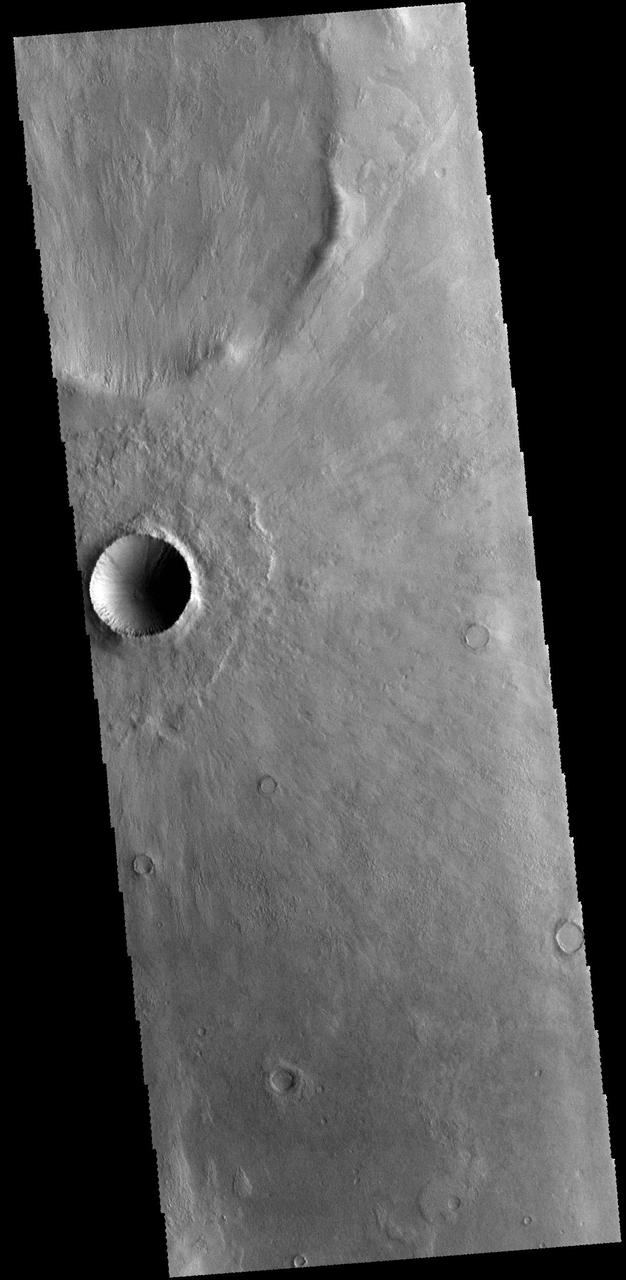
This VIS image shows an unnamed crater in Terra Cimmeria. Note how the ejecta overlays the surrounding terrain, radial to the crater. Orbit Number: 68431 Latitude: -44.3744 Longitude: 139.441 Instrument: VIS Captured: 2017-05-18 14:27 https://photojournal.jpl.nasa.gov/catalog/PIA21789
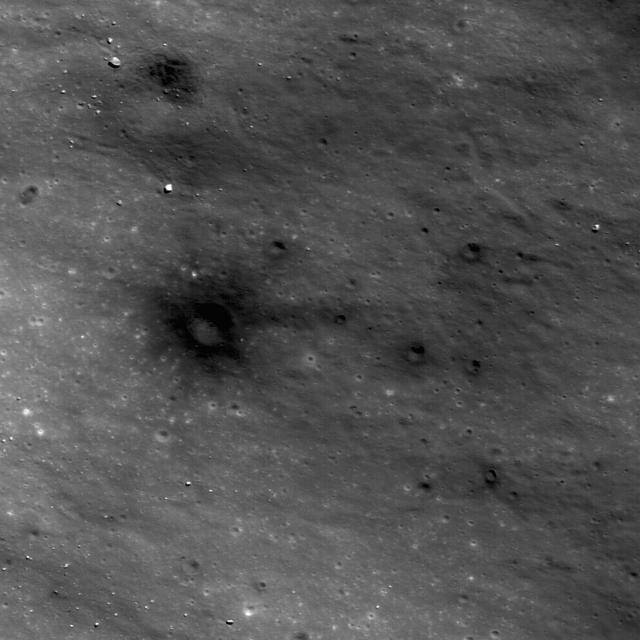
This image from NASA Lunar Reconnaissance Orbiter shows dark materials excavated by later small impacts show up clearly on the bright ejecta of a small lunar crater to the west.
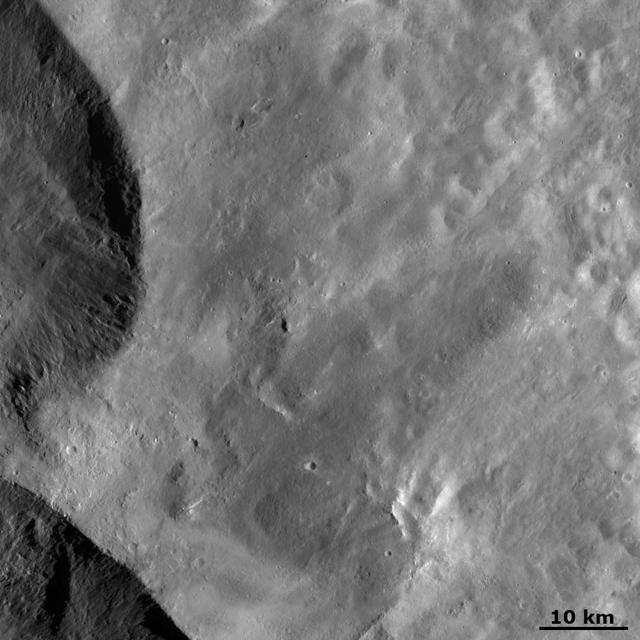
This image from NASA Dawn spacecraft shows ejecta from two of the large Snowman craters on the left of the image. This ejecta smooths out asteroid Vesta surface in the rest of the image.

Off the image to the right is Yuty Crater, located between Simud and Tiu Valles. The crater ejcta forms the large lobes along the right side of this VIS image. This type of ejecta was created by surface flow rather than air fall. It is thought that the near surface materials contained volatiles (like water) which mixed with the ejecta at the time of the impact. Orbit Number: 68736 Latitude: 22.247 Longitude: 325.213 Instrument: VIS Captured: 2017-06-12 17:57 https://photojournal.jpl.nasa.gov/catalog/PIA22303
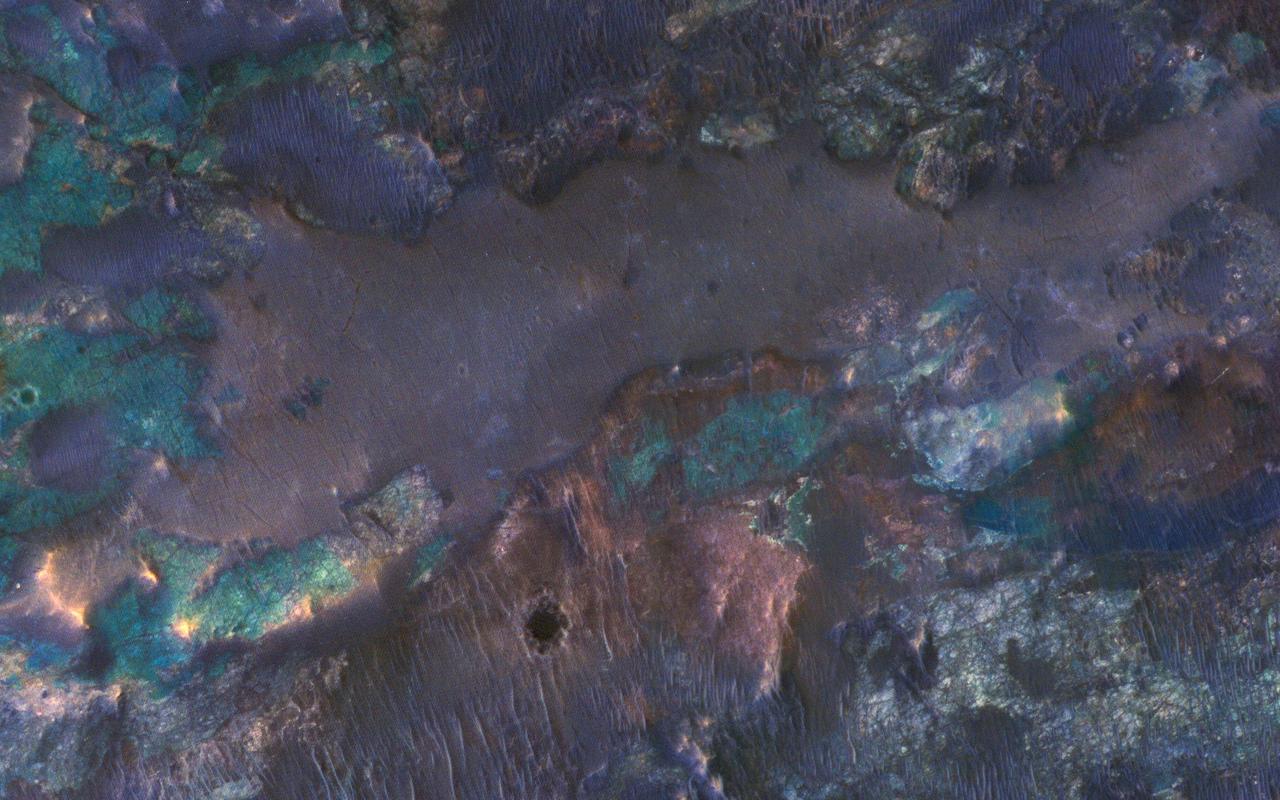
The collision that created Hargraves Crater impacted into diverse bedrock lithologies of ancient Mars; the impact ejecta is a rich mix of rock types with different colors and textures, as seen by NASA Mars Reconnaissance Orbiter. The crater is named after Robert Hargraves who discovered and studied meteorite impacts on the Earth. https://photojournal.jpl.nasa.gov/catalog/PIA21609
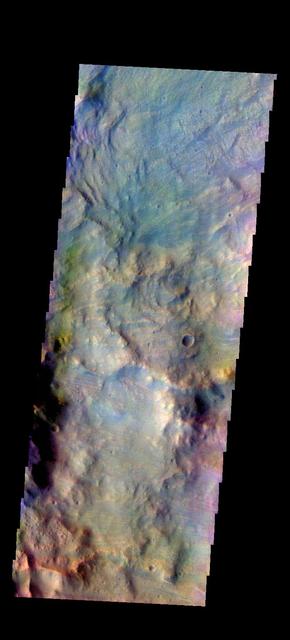
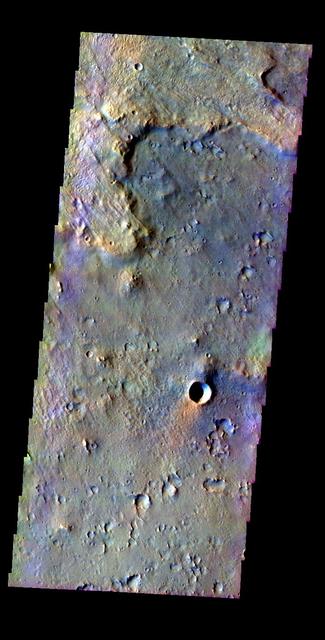
The THEMIS camera contains 5 filters. The data from different filters can be combined in multiple ways to create a false color image. This image from NASA 2001 Mars Odyssey spacecraft shows the outer rim of Beruri Crater. This image is of the ejecta along the eastern rim of the crater. The color variations show the radial nature of the ejecta emplacement. Orbit Number: 51267 Latitude: 5.28807 Longitude: 81.8251 Instrument: VIS Captured: 2013-07-05 08:29 http://photojournal.jpl.nasa.gov/catalog/PIA21305
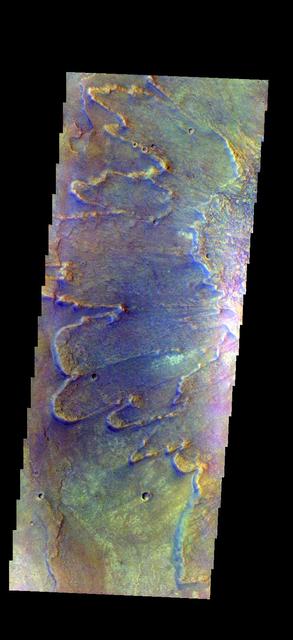
The THEMIS camera contains 5 filters. The data from different filters can be combined in multiple ways to create a false color image. This image from NASA 2001 Mars Odyssey spacecraft shows part of the ejecta from Yuty Crater.
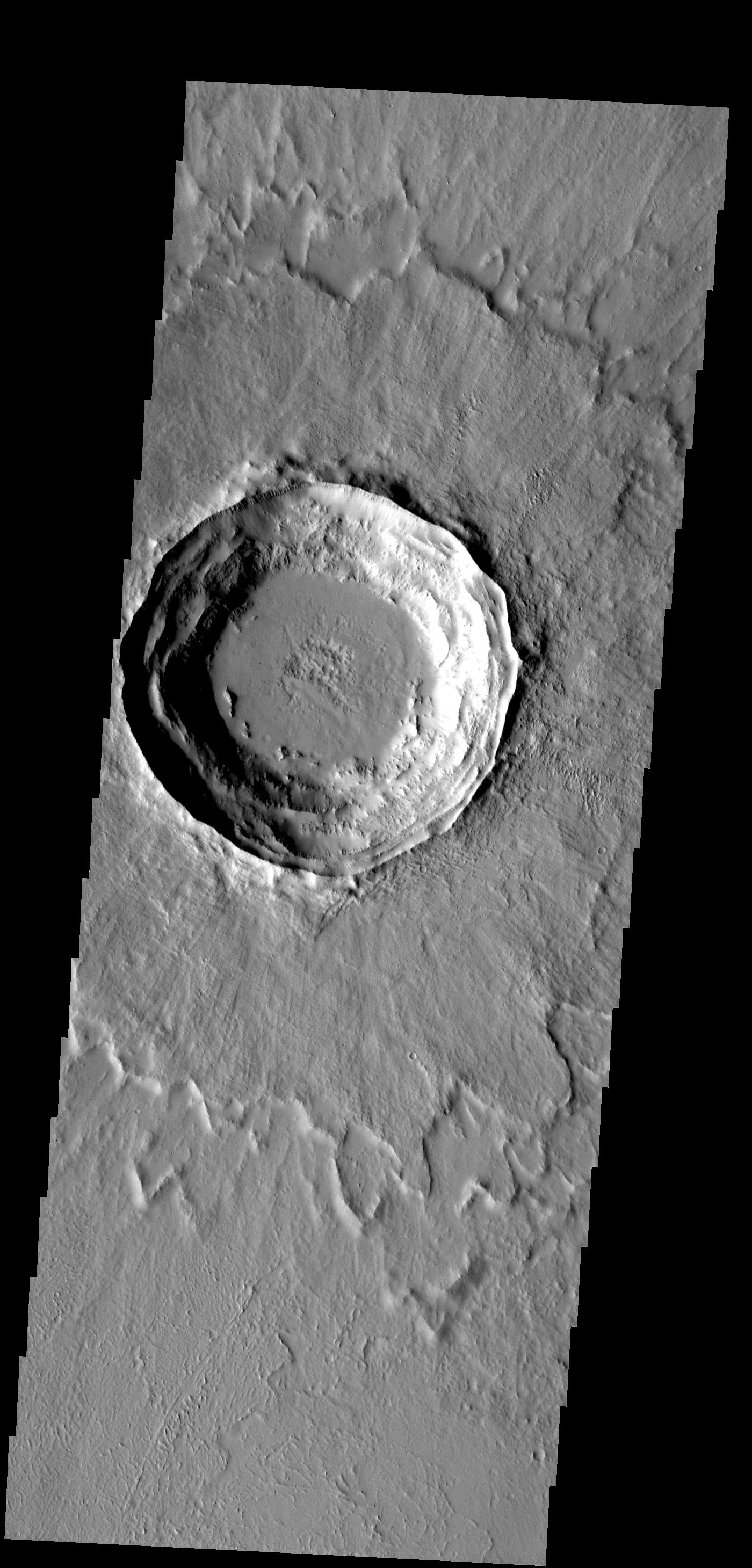
This crater has a layered ejecta blanket.
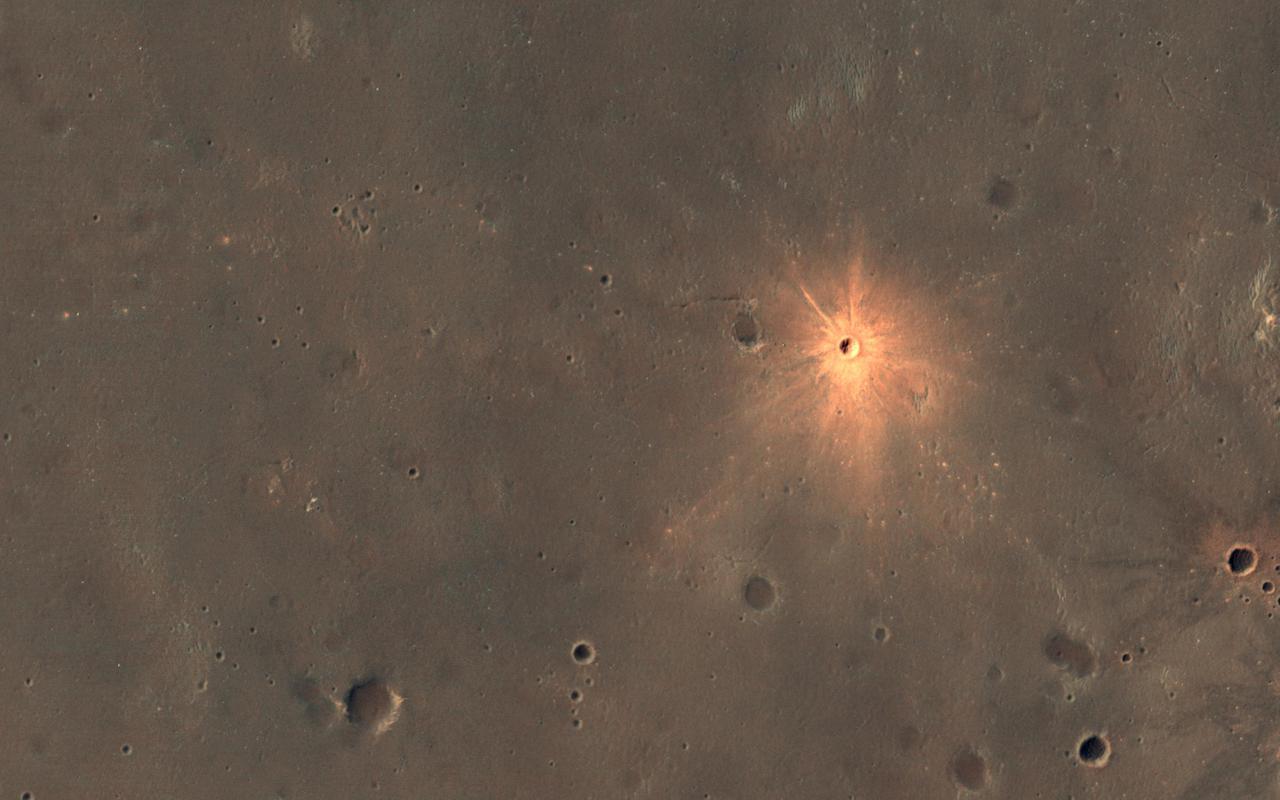
The Context Camera onboard MRO has been discovering new impact sites on Mars, followed up with HiRISE images. Usually these sites are discovered as new dark spots from removal or disturbance of bright dust, but a few show up as new bright spots. These craters may have bright ejecta from exposure of shallow subsurface materials, below a thin dark cover. An alternate theory—that this is a particle size effect—is unlikely because the bright materials are also distinctly redder than surrounding areas, and because ejecta is typically more coarse-grained, which would make the surface darker rather than brighter. The new crater visible here is about 13 meters in diameter. The color has been enhanced for this cutout. https://photojournal.jpl.nasa.gov/catalog/PIA24619
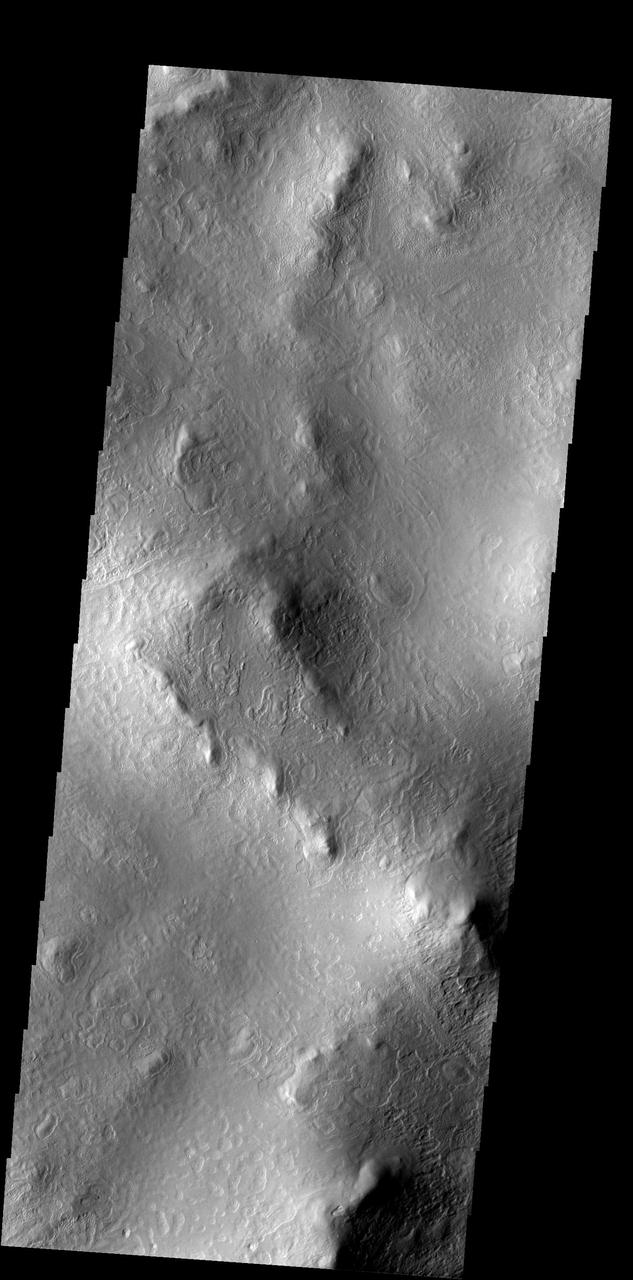
This interesting surface texture covers the ejecta of Mie Crater
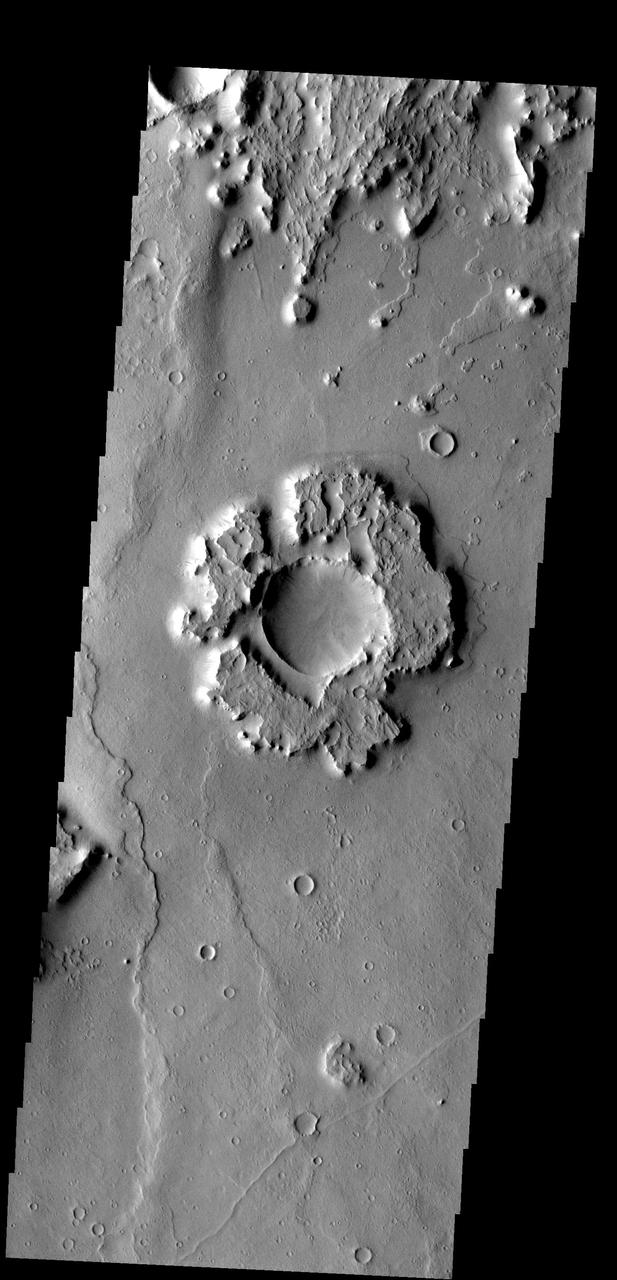
Only the most resistant portions of this crater ejecta remain
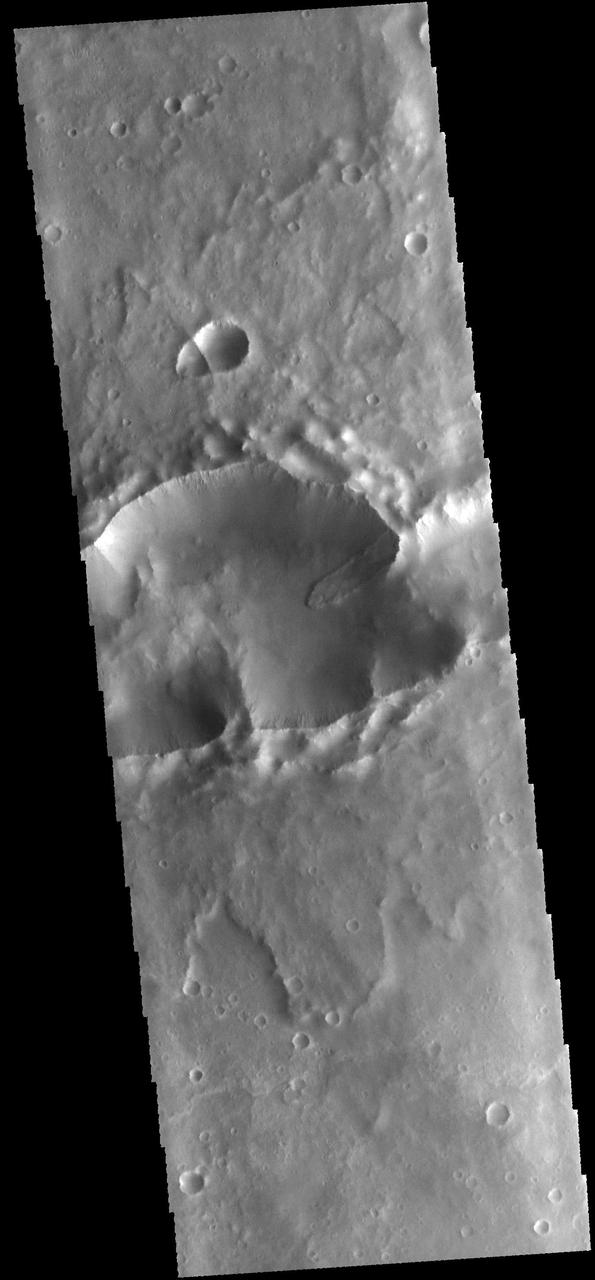
This image from NASA 2001 Mars Odyssey spacecraft shows a landslide deposit within a complex crater note the ejecta to the top and bottom of the image. There is a smaller complex crater on the ejecta to the north of the larger crater.

Butterfly ejecta is the name given when a crater has two lobes of ejecta on opposite sides, with little or no ejecta between the lobes. This image is from NASA 2001 Mars Odyssey spacecraft.
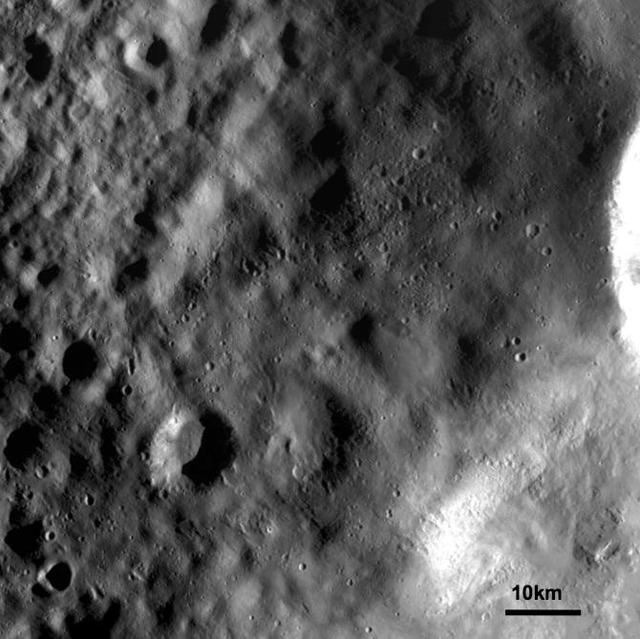
This image from NASA Dawn spacecraft shows an ejecta blanket mantling the surface and obscuring older caters. The bright crater rim, seen in the middle right edge, is one of a group of craters which are the source of this ejecta blanket.
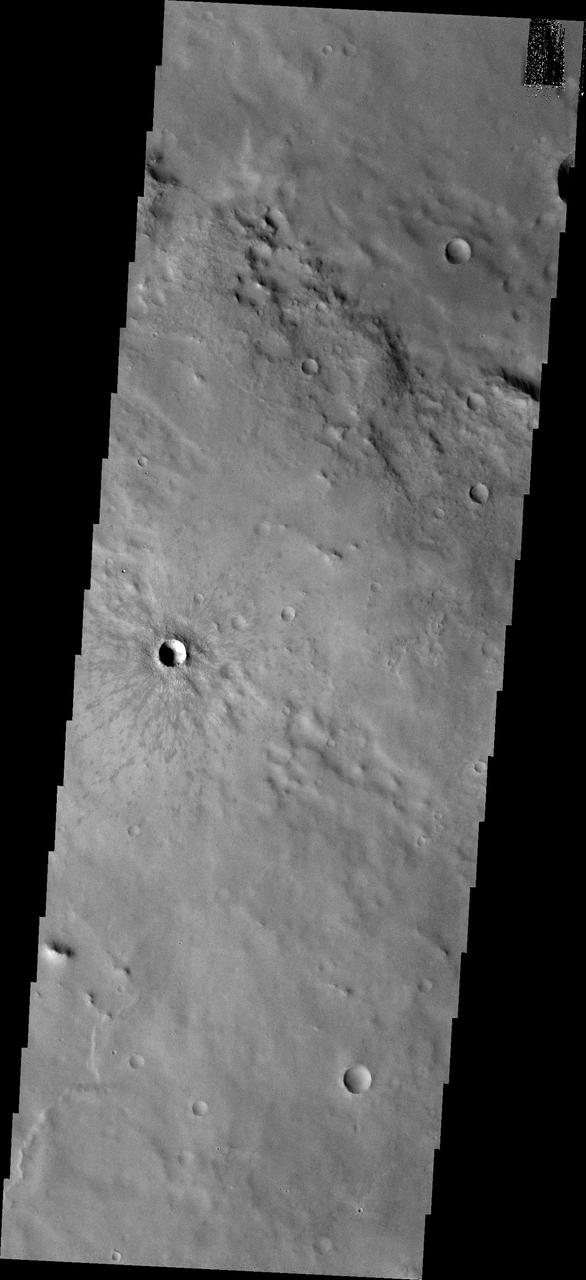
This image captured by NASA 2001 Mars Odyssey spacecraft shows Winslow Crater, a fairly young crater. The darker rayed ejecta is still visible surrounding the crater.
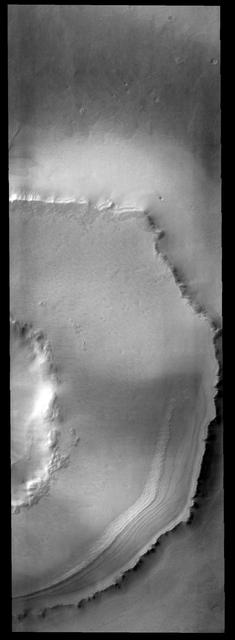
This crater is located south of Agassiz Crater. It is likely that the polar freeze/thaw/frost cycle is responsible for unusual appearance of the ejecta region around the crater
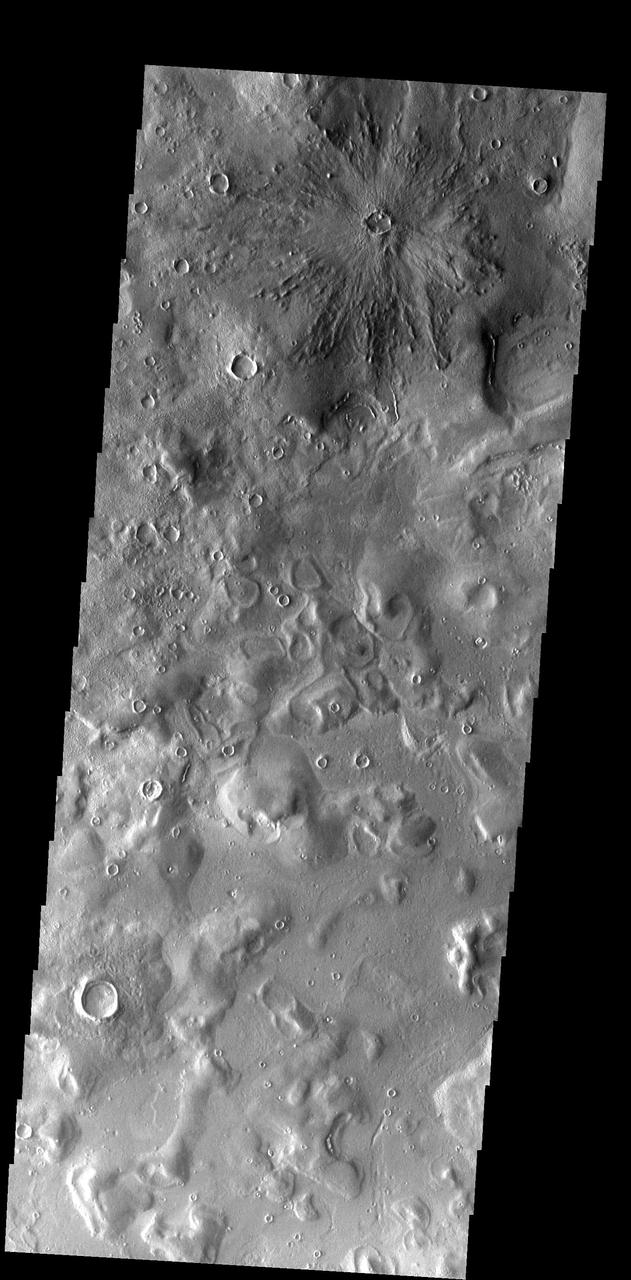
This unnamed crater is noticeably younger than the other craters in this image. Note the easily identifiable ejecta blanket. This crater is located in the Phlegra Montes
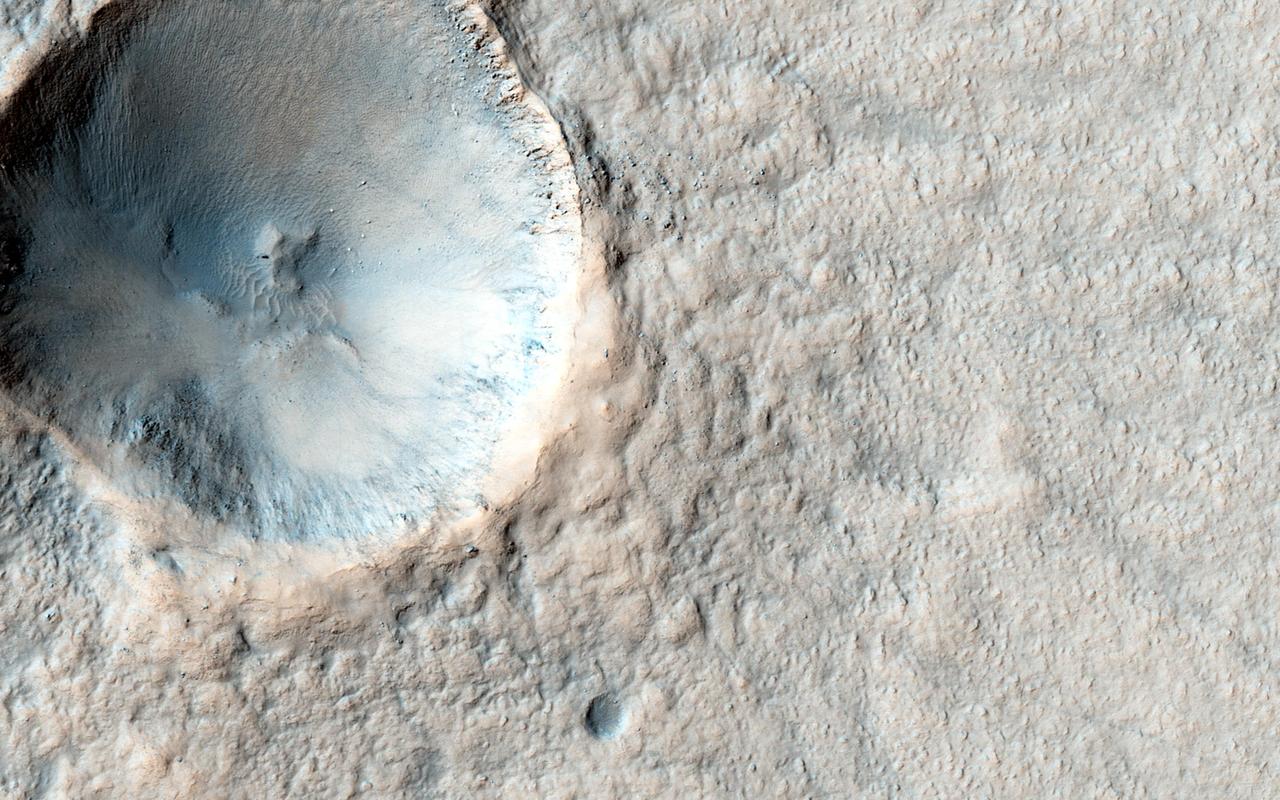
In this image, we see an approximately 500-meter crater that is fairly fresh (in geological terms), but the ejecta is already high-standing. Could this be an indication of early stage of pedestal development? A pedestal crater is when the ejecta from an impact settles around the new crater and is more erosion-resistant than the surrounding terrain. Over time, the surrounding terrain erodes much faster than the ejecta; in fact, some pedestal craters are measured to be hundreds of meters above the surrounding area. HiRISE has imaged many other pedestal craters before, and the ejecta isn't always symmetrical, as in this observation. http://photojournal.jpl.nasa.gov/catalog/PIA19849
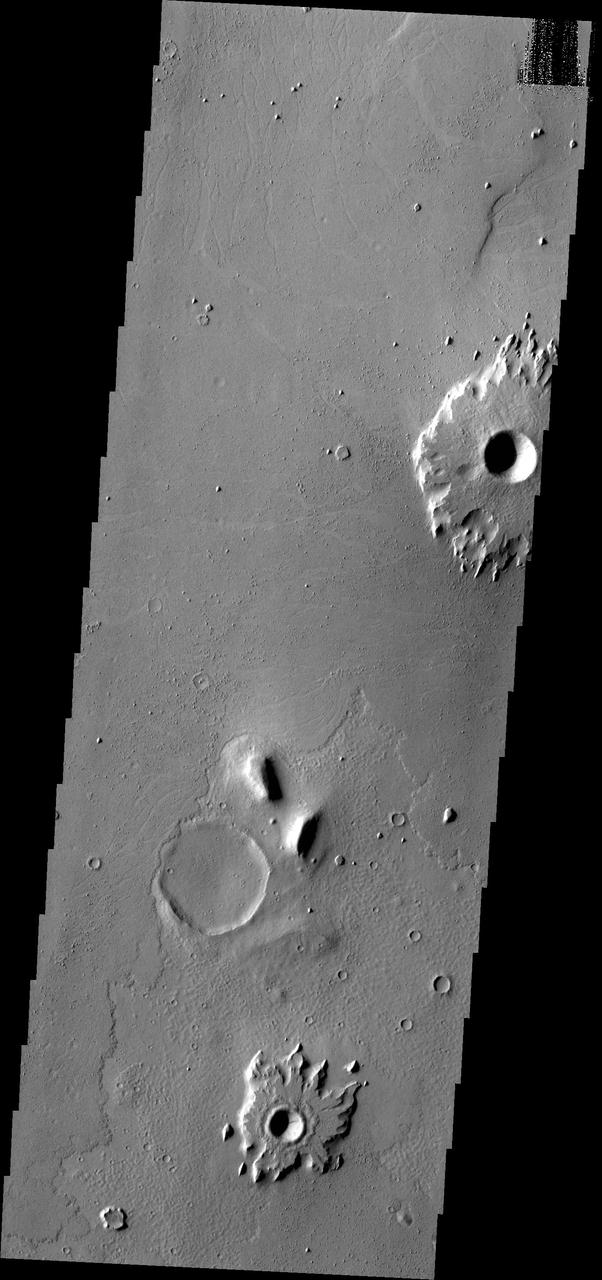
The southern Amazonis Planitia shows two craters with ejecta that stand out above the surrounding surface. The ejecta has remained in place while the surrounding material was removed. This image is from NASA 2001 Mars Odyssey spacecraft.
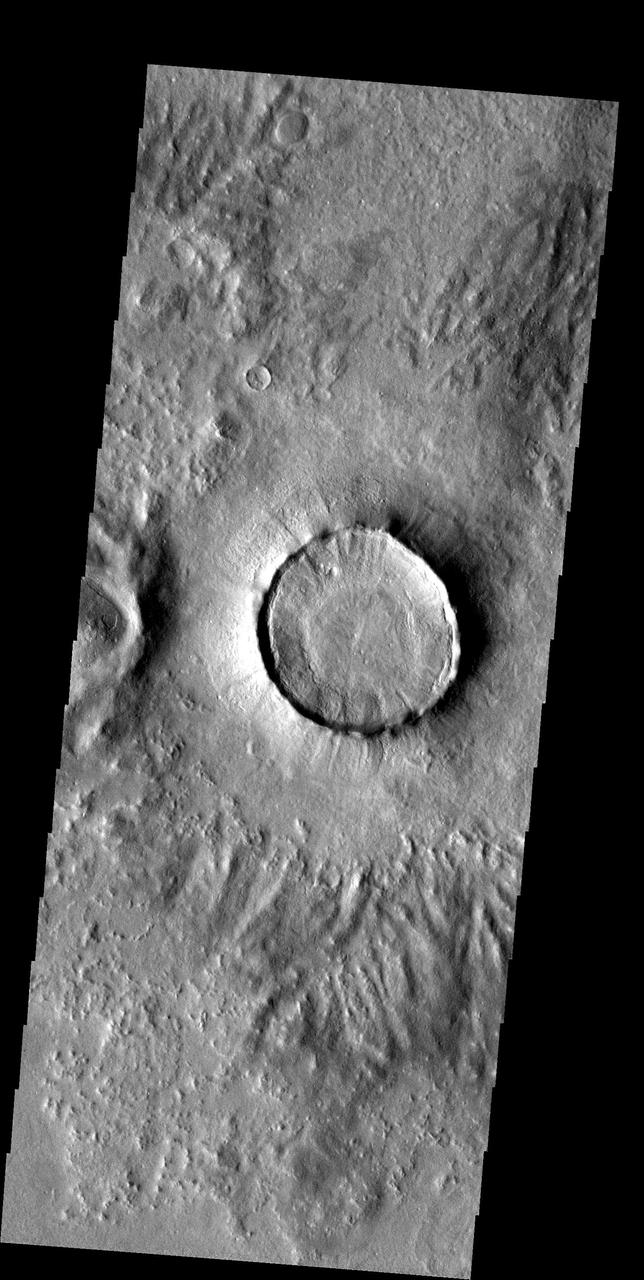
Many craters in the northern plains look like the one in this image -- interior filled almost to the rim, narrow and steep ejecta surrounding the rim, little or no remaining distant ejecta
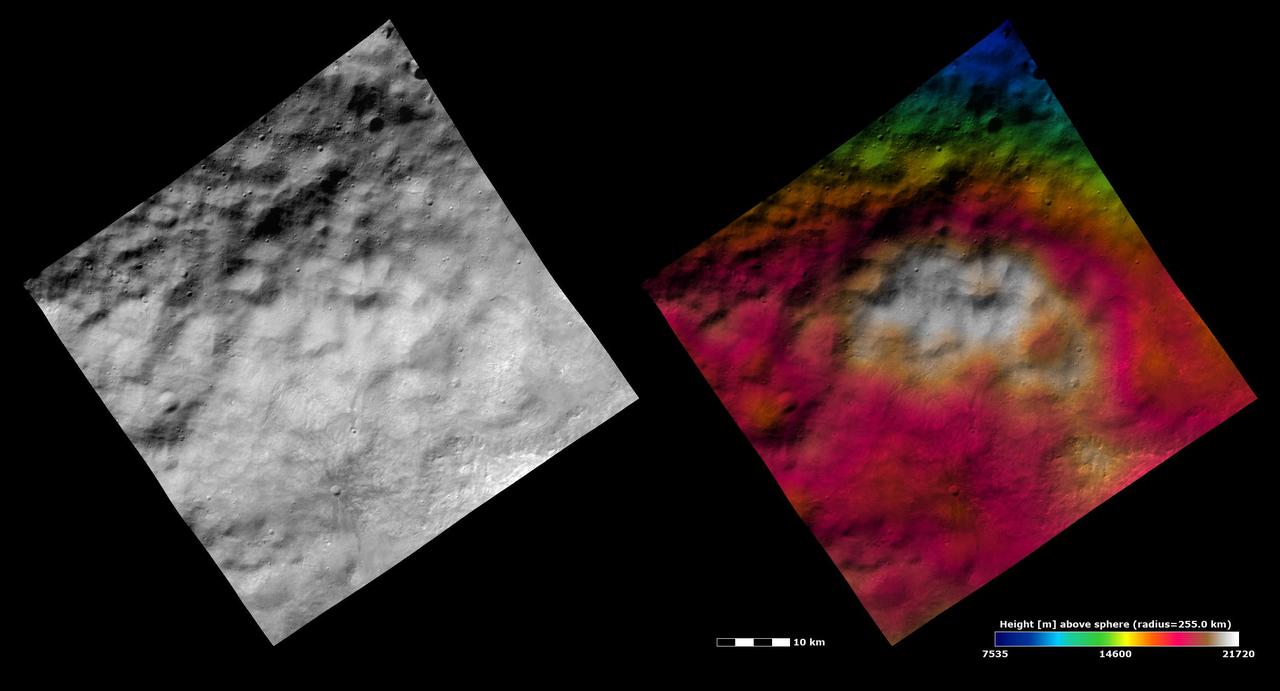
These images from NASA Dawn spacecraft show part of the ejecta blanket from Vesta Snowman craters in the northern hemisphere. The ejecta blanket fills the whole image and is identified by its hummocky yet smooth texture.
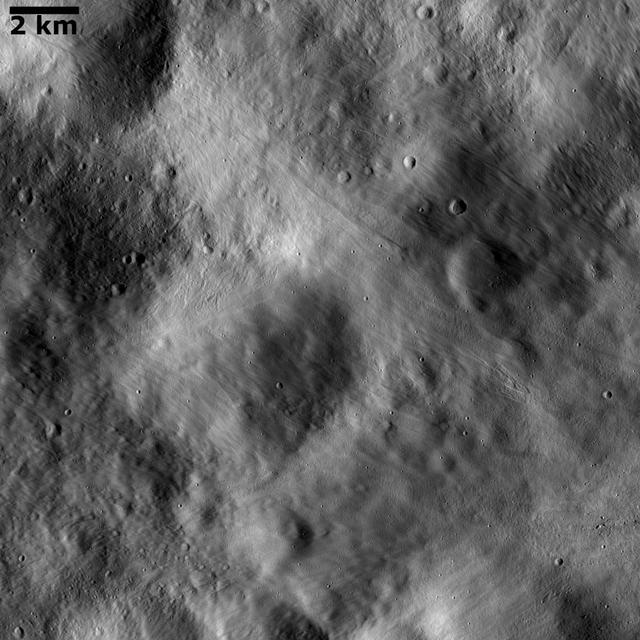
This image from NASA Dawn spacecraft shows impact ejecta deposits dominating asteroid Vesta landscape. This impact ejecta material was ejected from an impact crater located outside the imaged area.
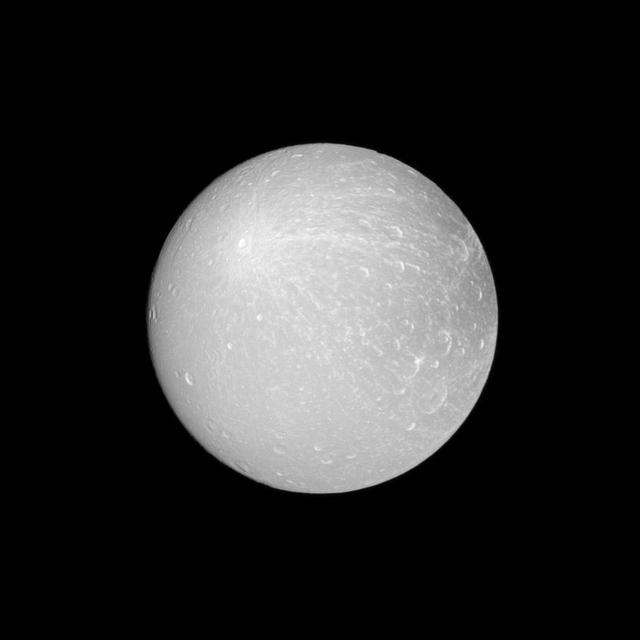
NASA Cassini spacecraft looks at an example of a ray crater on the leading hemisphere of Saturn moon Dione. The ray crater is in the upper-left of the image and ejecta rays show up as brighter material emanating from the crater.
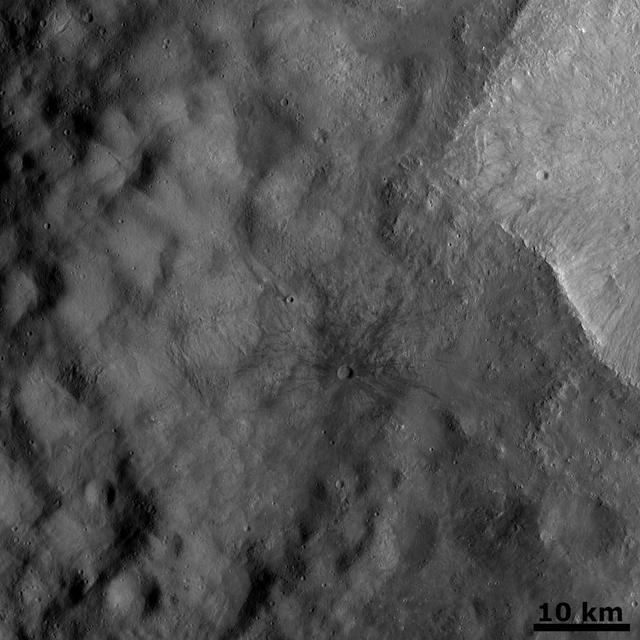
The crater on asteroid Vesta shown in this image from NASA Dawn spacecraft was emplaced onto the ejecta blanket of two large twin craters. Commonly, rays from impact craters are brighter than the surrounding surface.
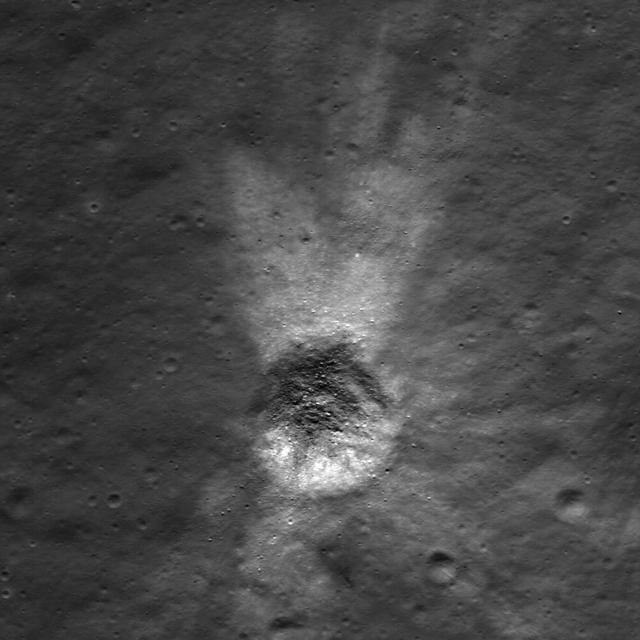
Distinctive asymmetrical ejecta surrounding a 140 meter diameter crater in the lunar highlands as seen by NASA Lunar Reconnaissance Orbiter. Crater is located on the northeastern rim of the eroded pre-Nectarian crater Hommel.
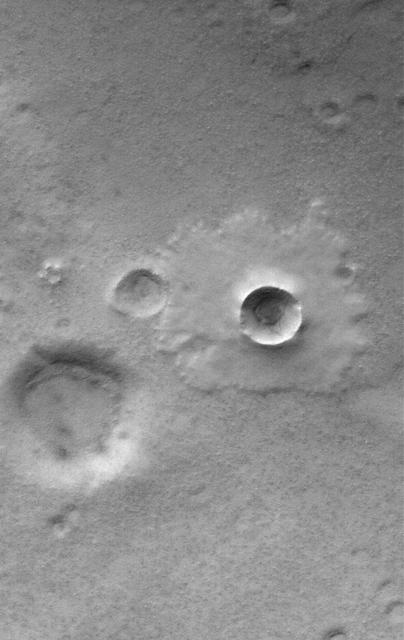
This MOC image shows a pedestal crater superposed on the floor of the much larger Mellish Crater. When an impact crater of this type forms, material is thrown onto the adjacent terrain to form portions of the ejecta blanket
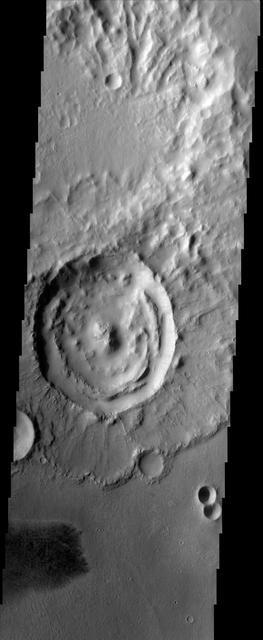
This image from NASA Mars Odyssey spacecraft shows an impact crater with a rampart ejecta blanket in Arabia Terra.
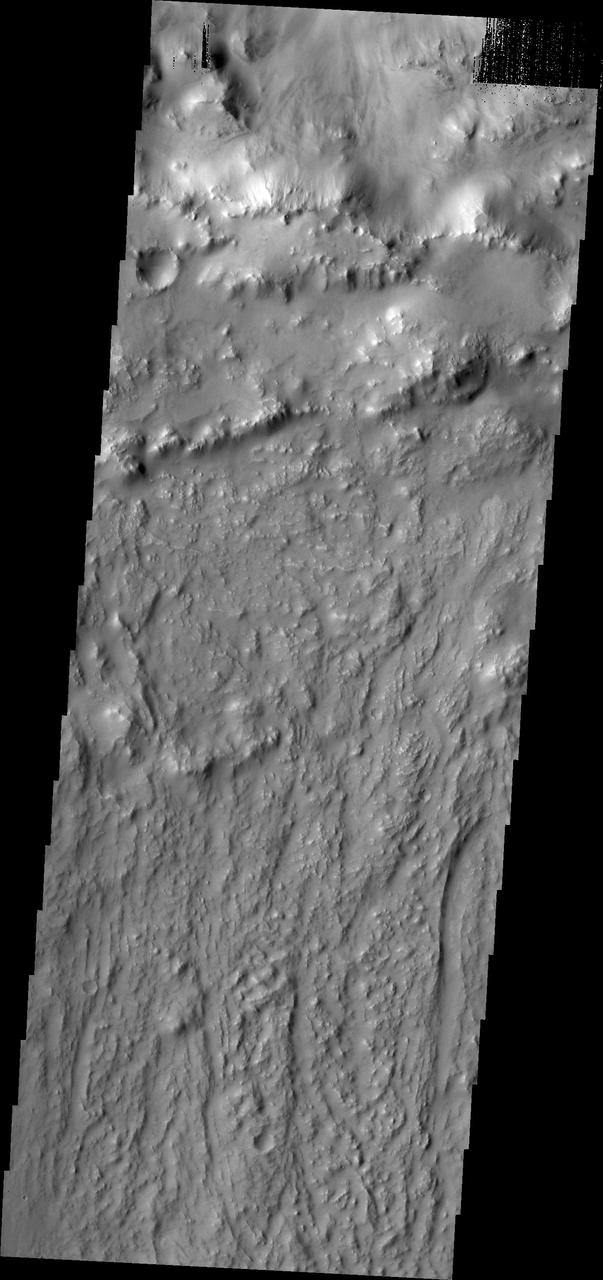
This image captured by NASA 2001 Mars Odyssey spacecraft shows the southern rim of Lockyer Crater and part of its ejecta blanket.
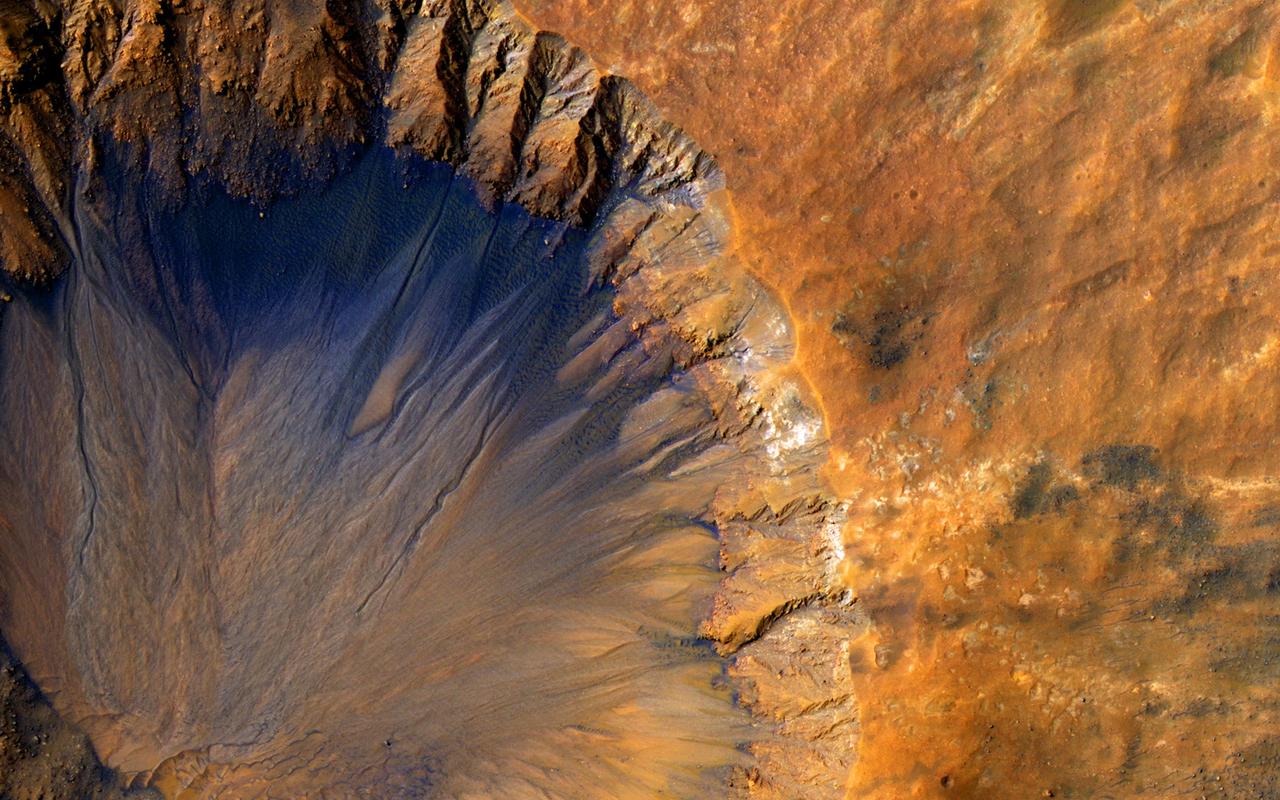
This impact crater, as seen by NASA Mars Reconnaissance Orbiter, appears relatively recent as it has a sharp rim and well-preserved ejecta.
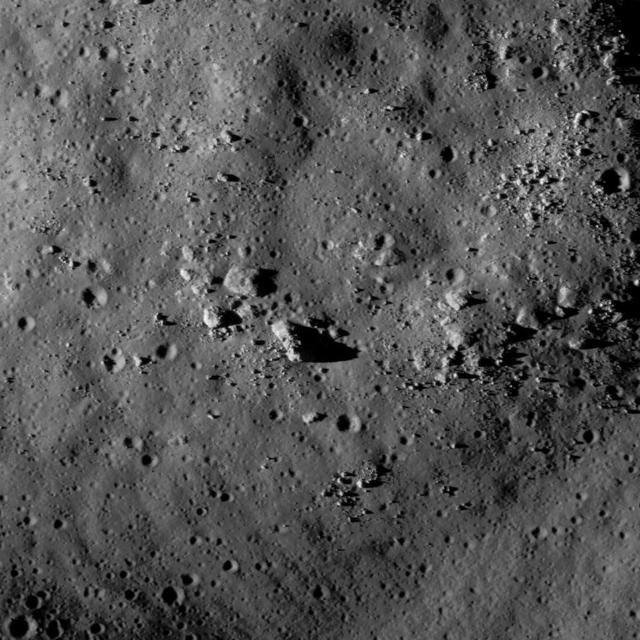
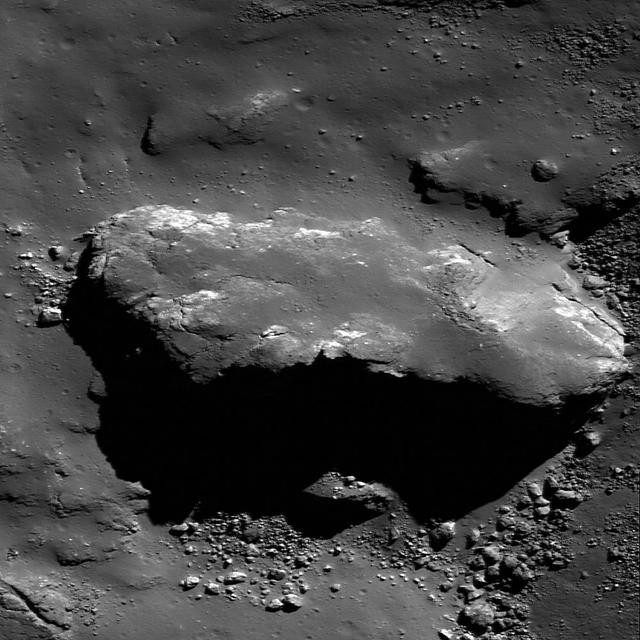
NASA Lunar Reconnaissance Orbiter sees hummocks and blocks on the ejecta blanket of Tsiolkovskiy crater.
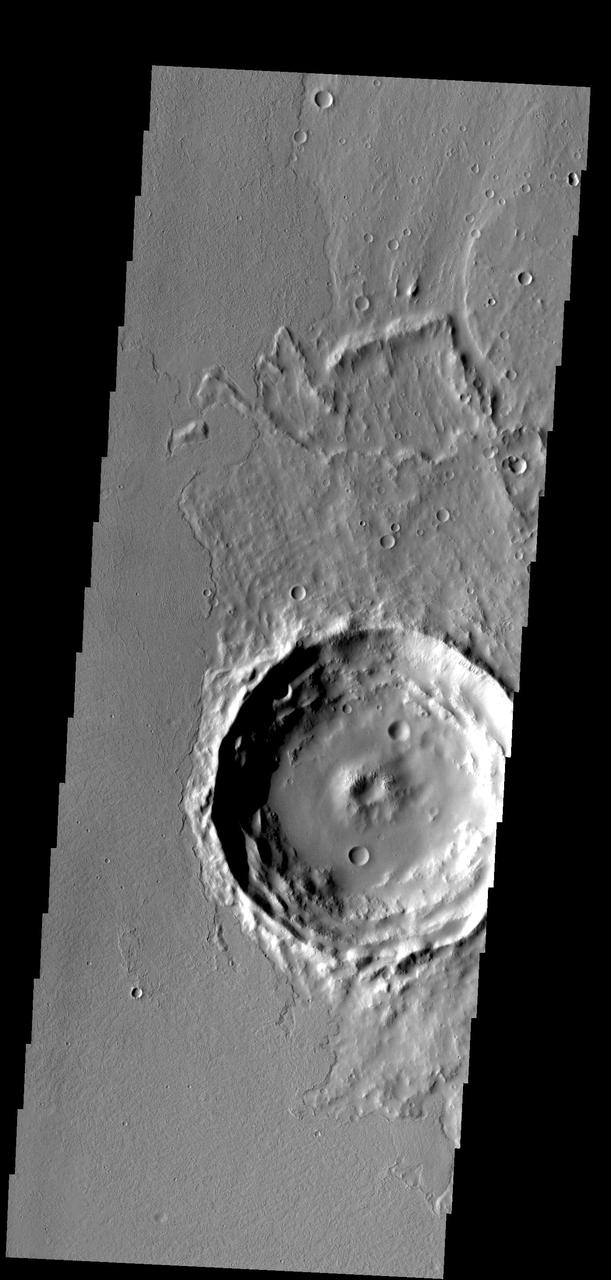
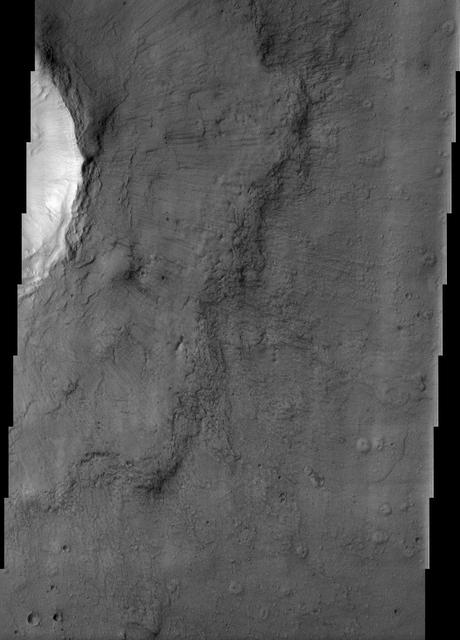
Located on the eastern edge of the Tharsis region, this crater has had half of its ejecta covered by lava flows
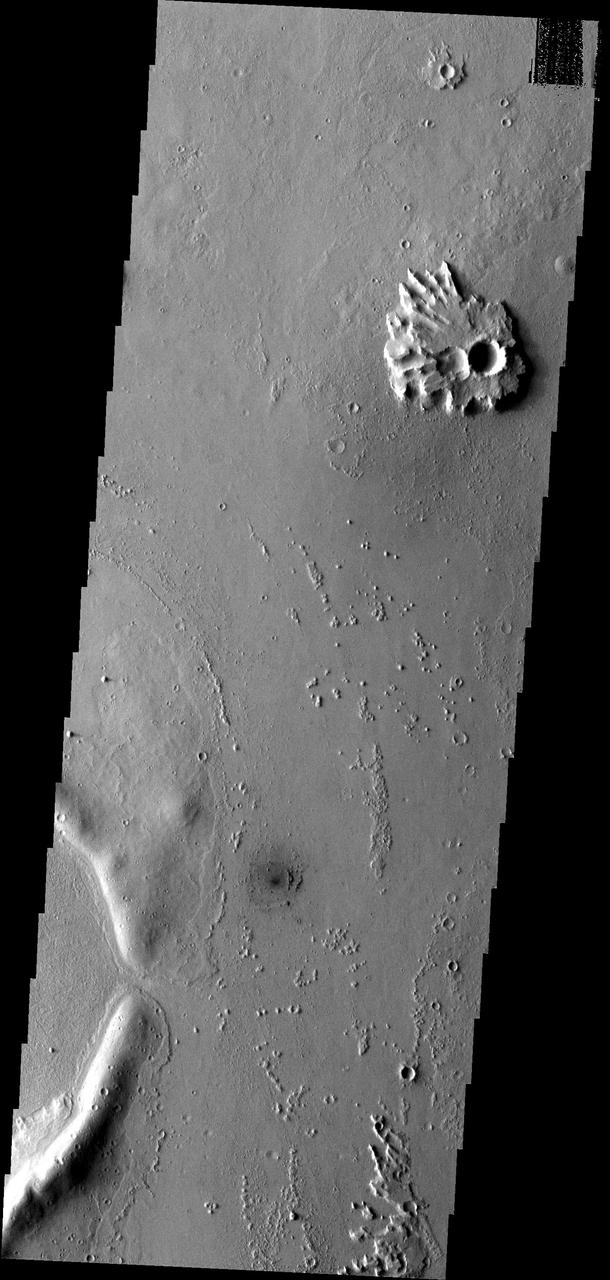
This ejecta blanket surrounding this small unnamed crater on the margin of Eumenides Dorsum has steep margins created by erosion
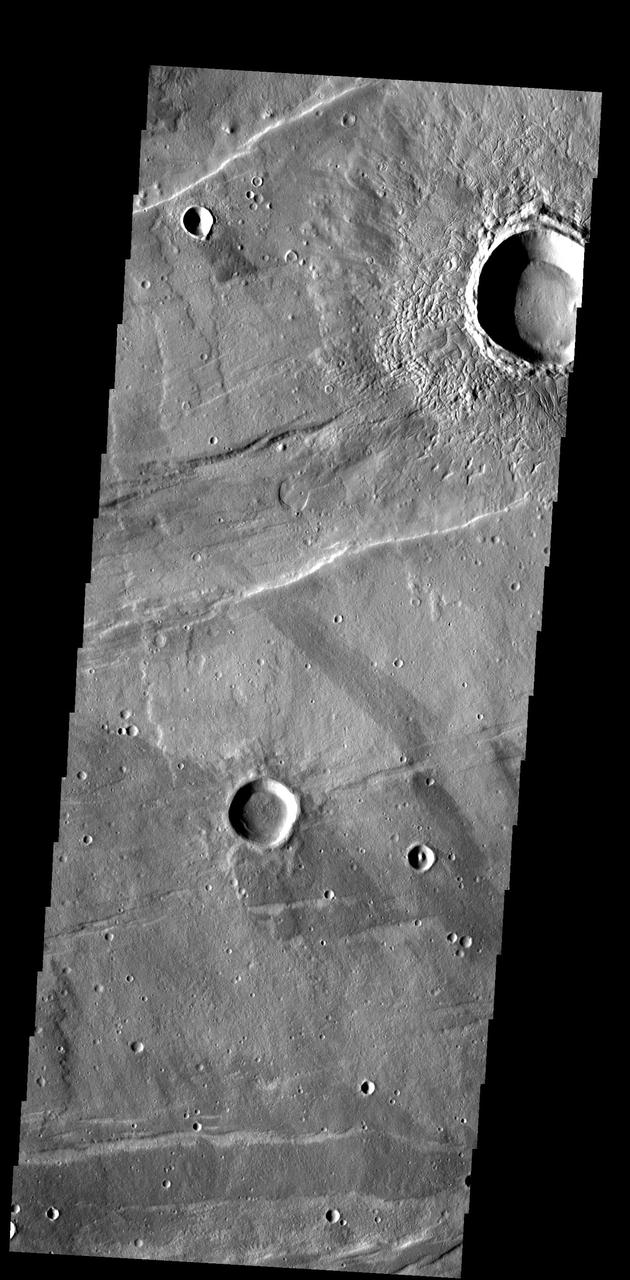
The ejecta surrounding this crater in Tempe Terra has an unusual texture that appears to contain small channels and fractures

NASA Lunar Reconnaissance Orbiter captured this image of the ejecta blanket and rim of Timocharis crater in southeastern Mare Imbrium.
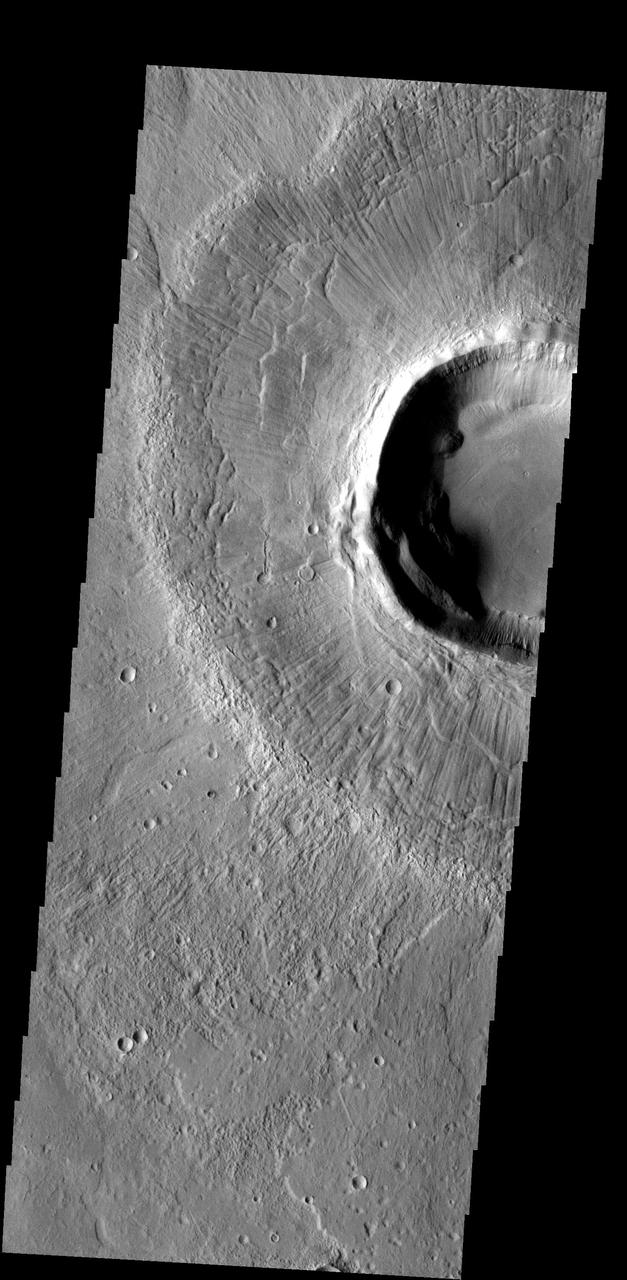
The surface of the ejecta surrounding this crater is scored with fine radial grooves. The grooves were formed during the impact event
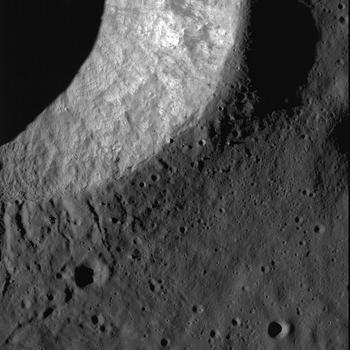
NASA Lunar Reconnaissance Orbiter captured this image of the ejecta blanket and rim of Timocharis crater in southeastern Mare Imbrium.
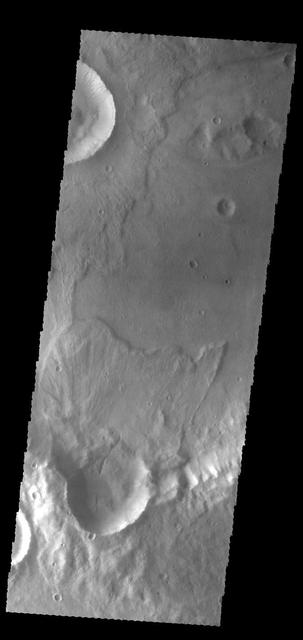
Today's VIS image of an unnamed crater in Terra Sirenum shows crater ejecta. Orbit Number: 60139 Latitude: -38.4241 Longitude: 224.216 Instrument: VIS Captured: 2015-07-05 13:30 http://photojournal.jpl.nasa.gov/catalog/PIA19760
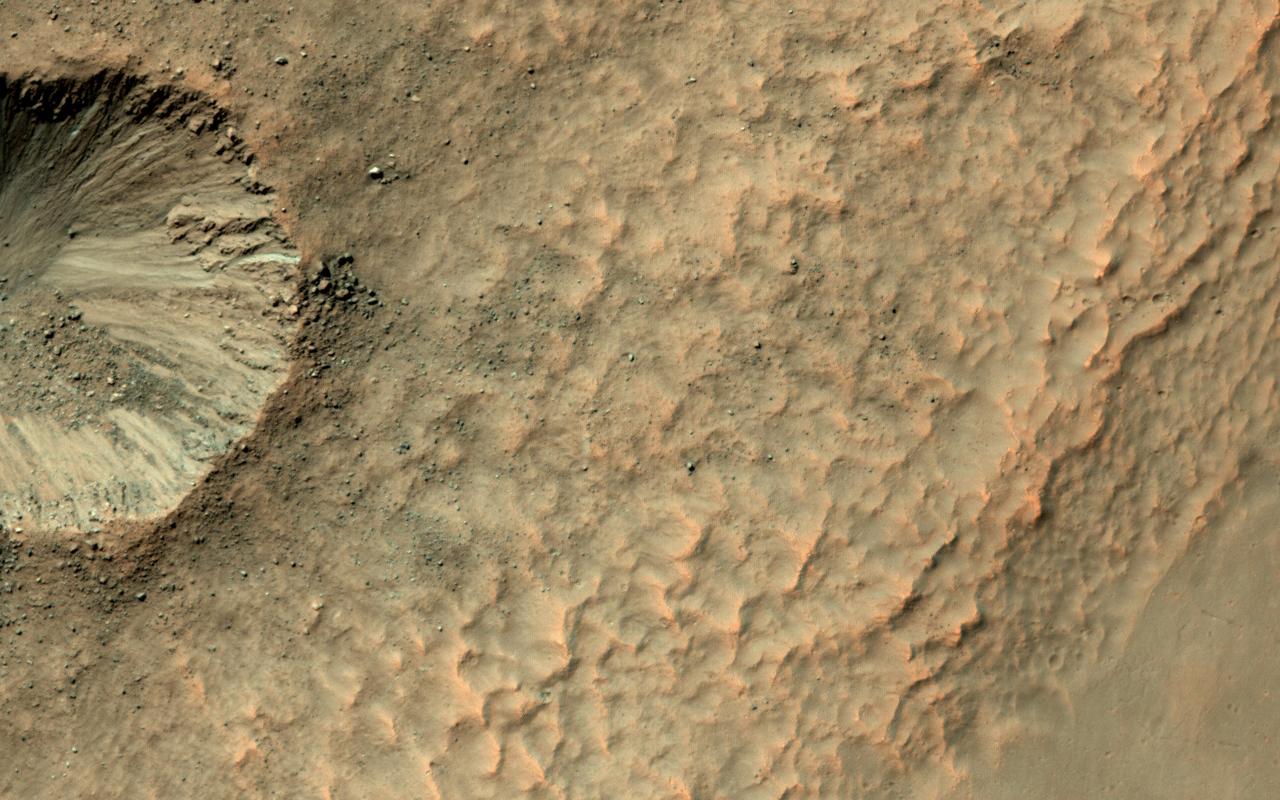
It's not that common to see craters on steep hills, partly because rocks falling downhill can quickly erase such craters. Here, however, NASA's Mars Reconnaissance Orbiter (MRO) observes a small impact has occurred on the sloping wall of a larger crater and is well-preserved. Dark, blocky ejecta from the smaller crater has flowed downhill (to the west) toward the floor of the larger crater. Understanding the emplacement of such ejecta on steep hills is an area of ongoing research. https://photojournal.jpl.nasa.gov/catalog/PIA21758
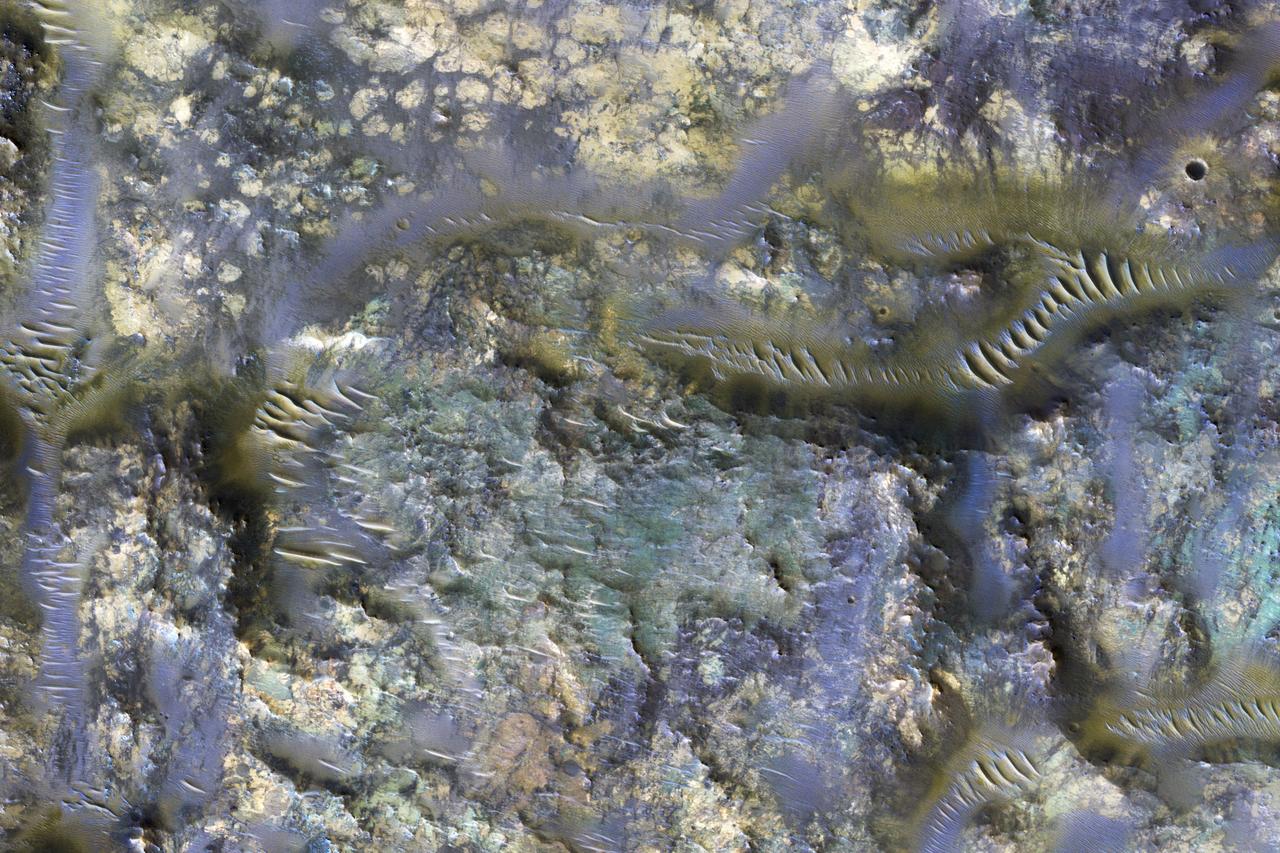
This image from NASA's Mars Reconnaissance Orbiter shows the exposed bedrock of an ejecta blanket of an unnamed crater in the Mare Serpentis region of Mars. Ejecta, when exposed, are truly an eye-opening feature, as they reveal the sometimes exotic subsurface, and materials created by impacts (close-up view). This ejecta shares similarities to others found elsewhere on Mars, which are of particular scientific interest for the extent of exposure and diverse colors. (For example, the Hargraves Crater ejecta, in the Nili Fossae trough region, was once considered as a candidate landing site for the next NASA Mars rover 2020.) The colors observed in this picture represent different rocks and minerals, now exposed on the surface. Blue in HiRISE infrared color images generally depicts iron-rich minerals, like olivine and pyroxene. Lighter colors, such as yellow, indicate the presence of altered rocks. The possible sources of the ejecta is most likely from two unnamed craters. How do we determine which crater deposited the ejecta? A full-scale image shows numerous linear features that are observed trending in an east-west direction. These linear features indicate the flow direction of the ejecta from its unnamed host crater. Therefore, if we follow them, we find that they emanate from the bottom of the two unnamed craters. If the ejecta had originated from the top crater, then we would expect the linear features at the location of our picture to trend northwest to southeast. https://photojournal.jpl.nasa.gov/catalog/PIA21782
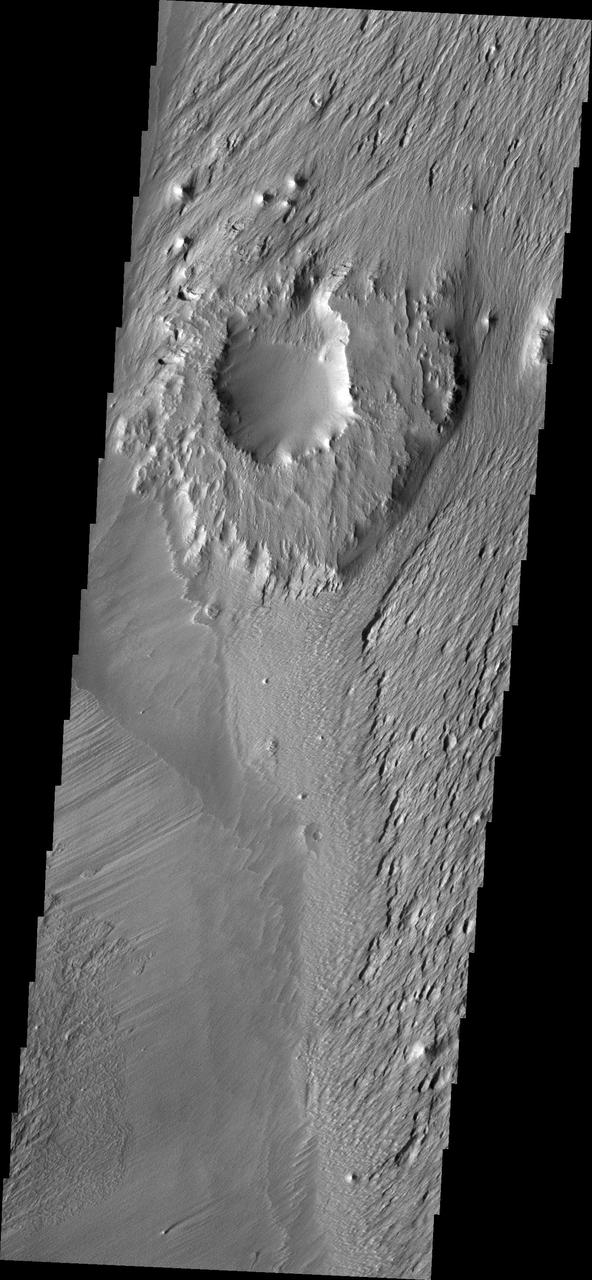
The ejecta materials of this crater are more resistant to erosion than the surrounding materials. The wind has eroded pits and other features around the crater causing it to become a topographic high. This image is from NASA Mars Odyssey.
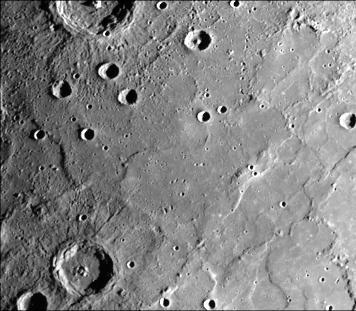
This image, from NASA Mariner 10 spacecraft which launched in 1974, shows young craters superposed on smooth plains. Larger young craters have central peaks, flat floors, terraced walls, and radial ejecta deposits.
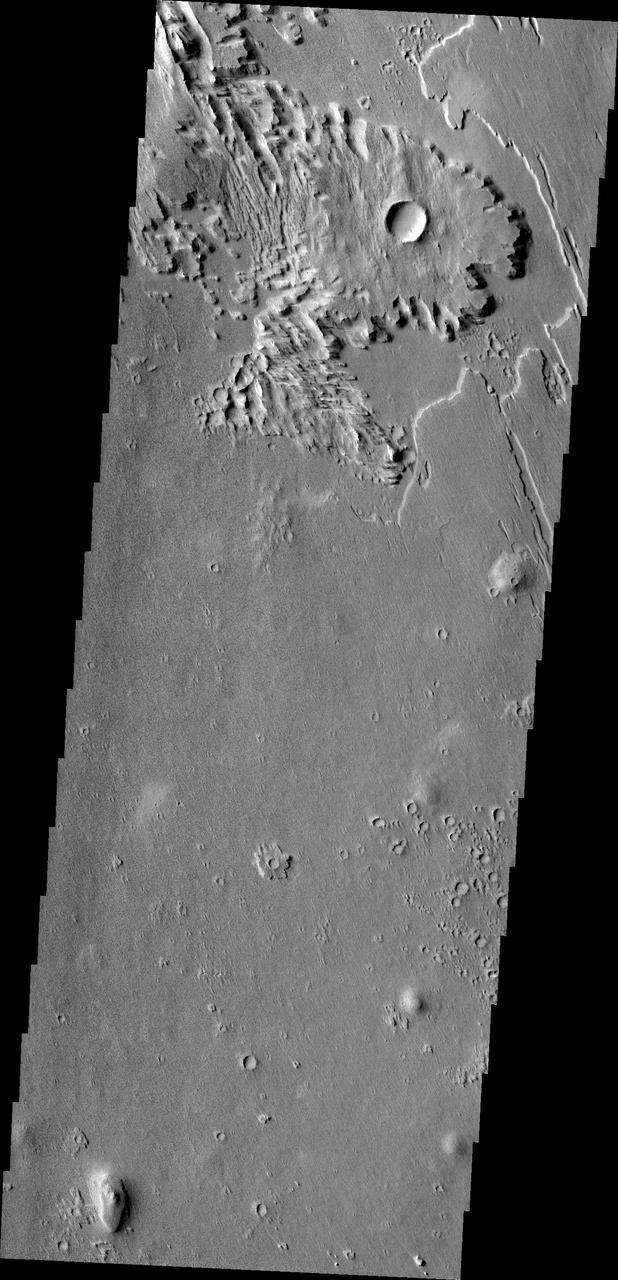
This wind eroded crater is located between Eumenides and Gordii Dorsa. The ejecta of the crater is more resistant to the wind than the surrounding materials in this image from NASA Mars Odyssey.
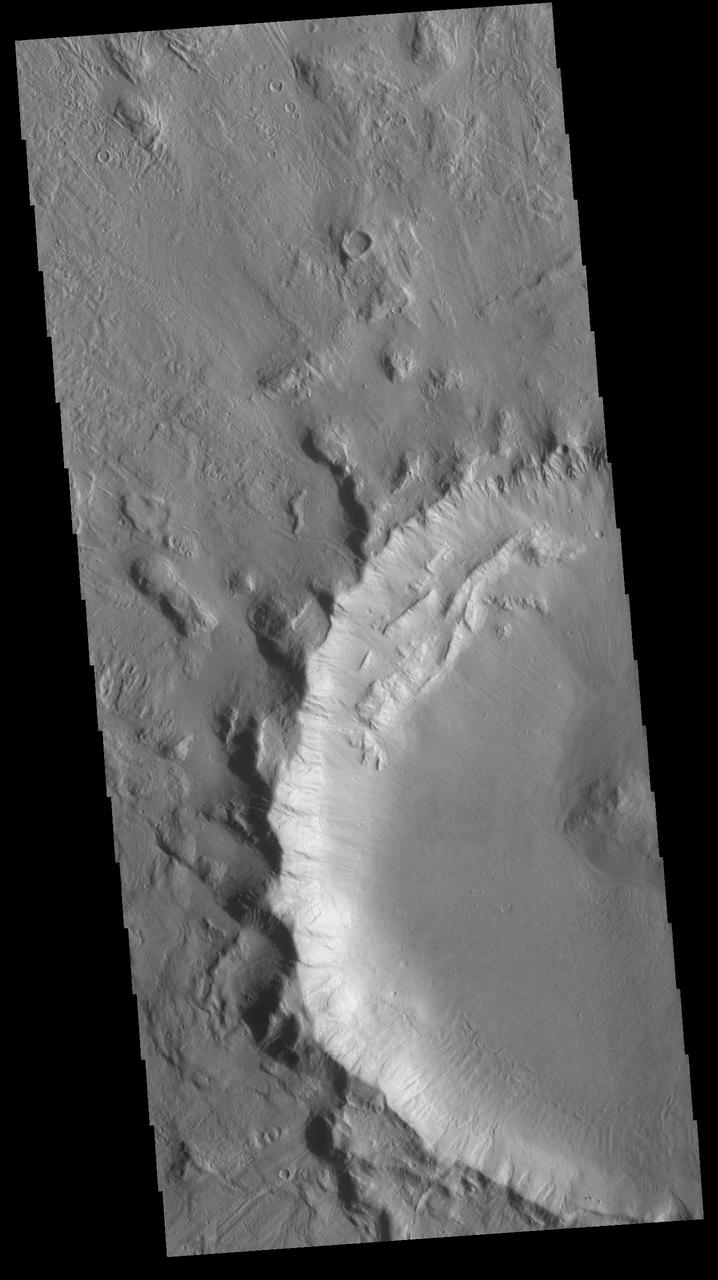
This image from NASA's Mars Odyssey shows part of a crater located north of Hecates Tholus. The radial grooves in the ejecta blanket are still visible around the crater rim. https://photojournal.jpl.nasa.gov/catalog/PIA22496

This Mars Global Surveyor MGS Mars Orbiter Camera MOC image shows a pedestal crater in the Promethei Terra region. The ejecta from an impact crater is usually rocky
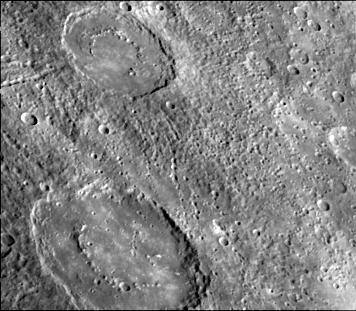
The craters in this image NASA Mariner 10 spacecraft, which launched in 1974, have interior rings of mountains and ejecta deposits which are scarred by deep secondary crater chain groves.
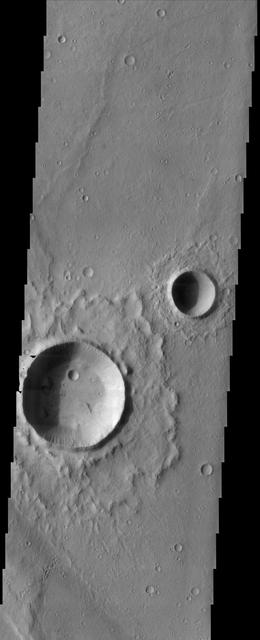
The fluidized impact crater ejecta and flat crater floors observed in this image from NASA Mars Odyssey spacecraft suggest near-surface volatiles once played an important role in modifying the Martian surface.
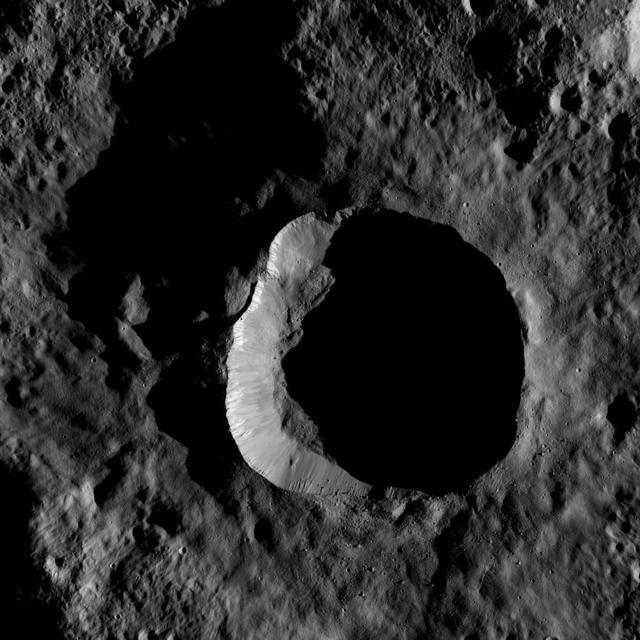
This view from NASA Dawn spacecraft shows an impact site at high southern latitude on Ceres. A smooth blanket of ejecta surrounds the crater. Many boulders can be seen around the crater rim and on the sunlit part of its floor.
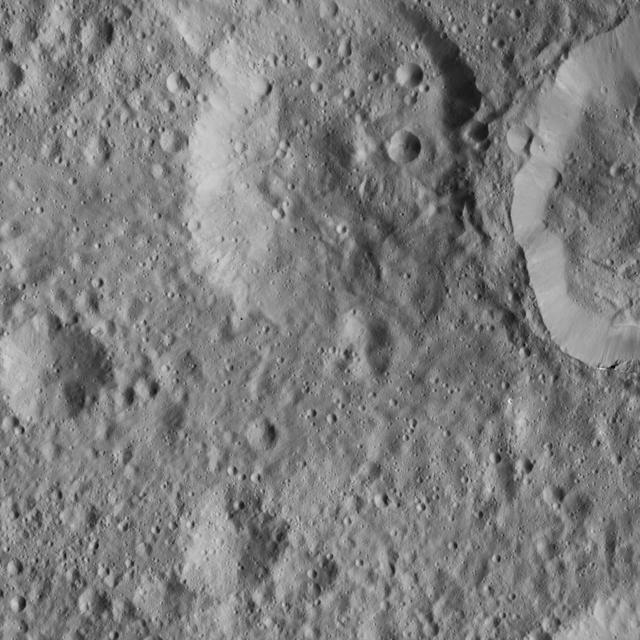
This scene from Ceres, captured by NASA Dawn spacecraft, shows an older crater at top center that has been blanketed by impact ejecta from the younger crater to its right.
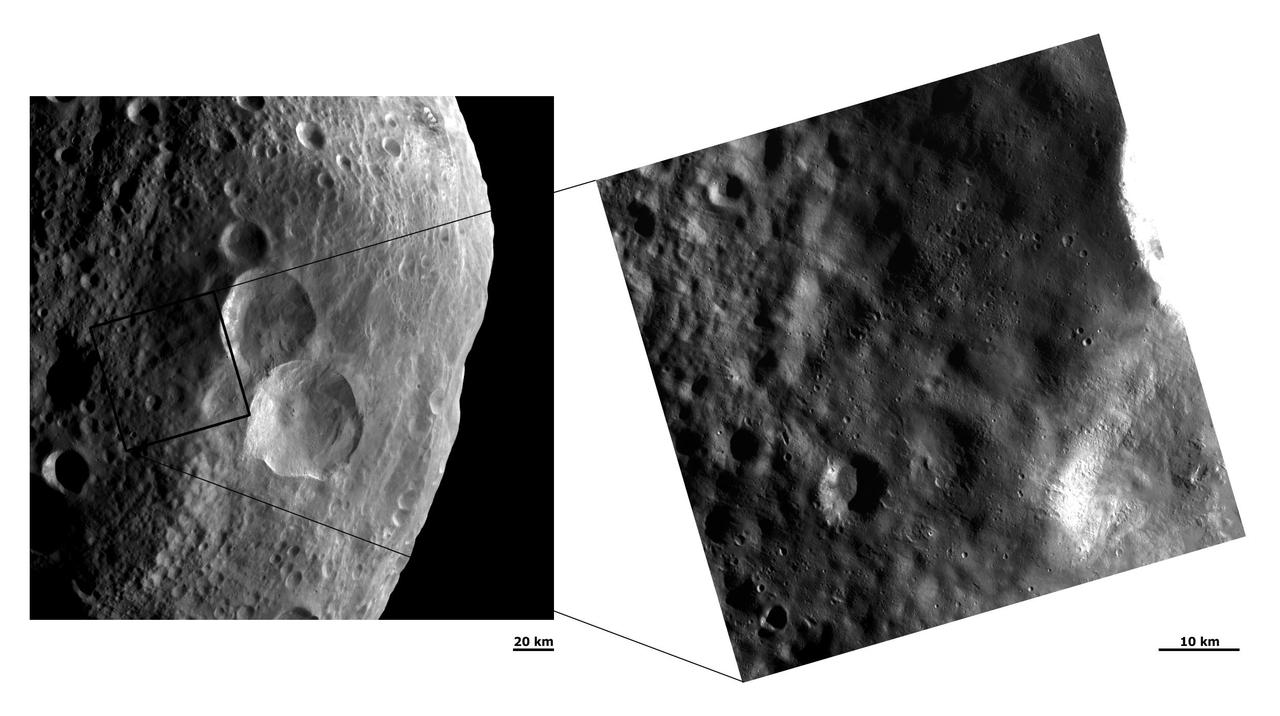
These images from NASA Dawn spacecraft shows two different resolution views of the ejecta blanket of Vesta nowman craters. The snowman-like pattern of these craters is clearly seen in the center of the left hand image.
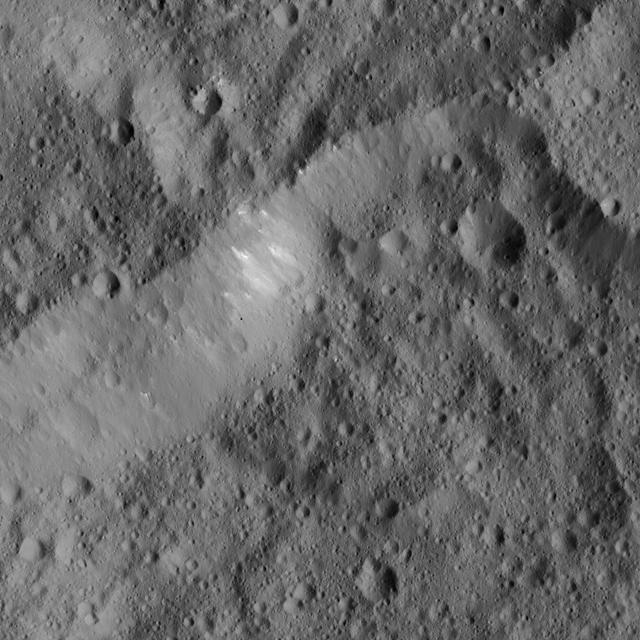
This scene from Ceres, captured by NASA Dawn spacecraft, shows an older crater at top center that has been blanketed by impact ejecta from the younger crater to its right.
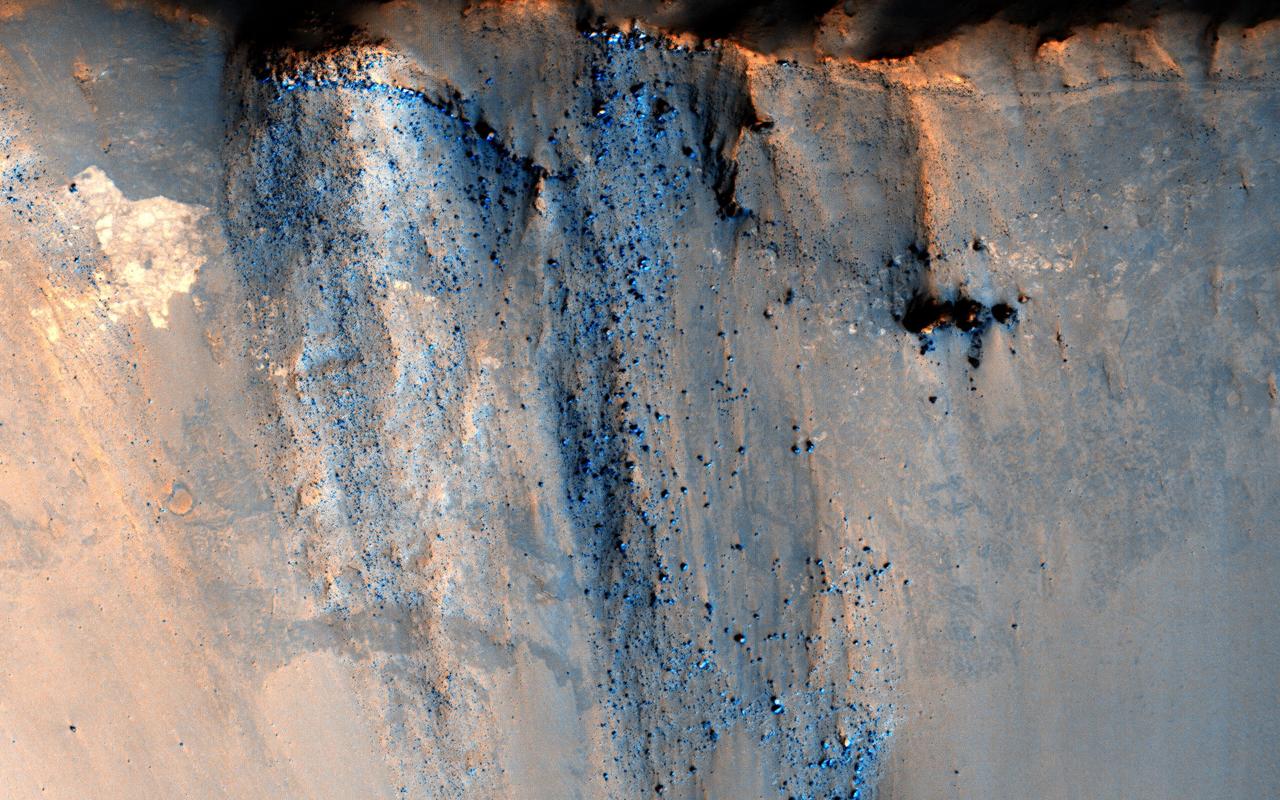
This image captured by NASA Mars Reconnaissance Orbiter spacecraft targets a 3-kilometer diameter crater that occurs within the ejecta blanket of the much older Bakhuysen Crater, a 150-kilometer diameter impact crater in Noachis Terra. Impact craters are interesting because they provide a mechanism to uplift and expose underlying bedrock, allowing for the study of the subsurface and the geologic past. An enhanced color image shows the wall of the crater, which exposes layering as well as blocks of rock. There is a distinctive large block in the upper left of the crater wall, generally referred to as a "mega-block."Â It is an angular, light-toned, highly fragmented block, about 100 meters across. Several smaller light-toned blocks are also in the crater wall, possibly of the same rock type as the "mega-block." Ejecta blocks are thrown outward during the initial excavation of a crater, or are deposited as part of the ground-hugging flows of which the majority of the ejecta blanket is comprised. Through images like these, we are able to study the deeper subsurface of Mars that is not otherwise exposed. http://photojournal.jpl.nasa.gov/catalog/PIA20728
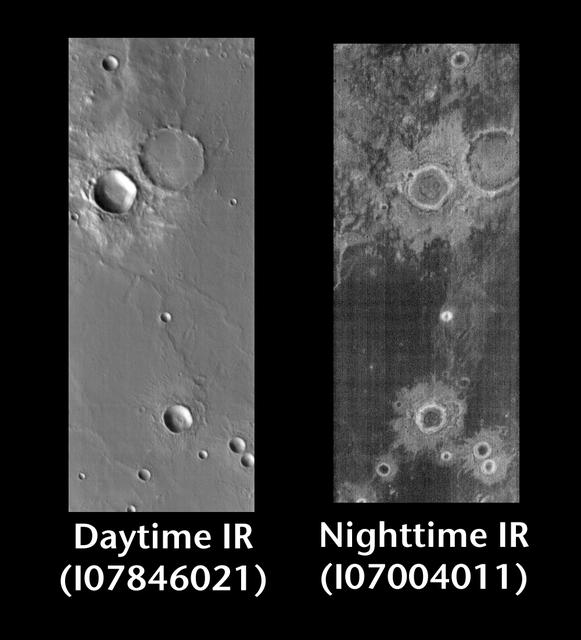
Released 24 June 2004 This pair of images shows a crater and its ejecta. Day/Night Infrared Pairs The image pairs presented focus on a single surface feature as seen in both the daytime and nighttime by the infrared THEMIS camera. The nighttime image (right) has been rotated 180 degrees to place north at the top. Infrared image interpretation Daytime: Infrared images taken during the daytime exhibit both the morphological and thermophysical properties of the surface of Mars. Morphologic details are visible due to the effect of sun-facing slopes receiving more energy than antisun-facing slopes. This creates a warm (bright) slope and cool (dark) slope appearance that mimics the light and shadows of a visible wavelength image. Thermophysical properties are seen in that dust heats up more quickly than rocks. Thus dusty areas are bright and rocky areas are dark. Nighttime: Infrared images taken during the nighttime exhibit only the thermophysical properties of the surface of Mars. The effect of sun-facing versus non-sun-facing energy dissipates quickly at night. Thermophysical effects dominate as different surfaces cool at different rates through the nighttime hours. Rocks cool slowly, and are therefore relatively bright at night (remember that rocks are dark during the day). Dust and other fine grained materials cool very quickly and are dark in nighttime infrared images. Image information: IR instrument. Latitude -9, Longitude 164.2 East (195.8 West). 100 meter/pixel resolution. http://photojournal.jpl.nasa.gov/catalog/PIA06445
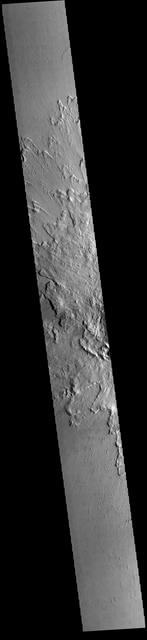
Today's VIS image shows part of the ejecta blanket of Tooting Crater. Tooting Crater is located west of Olympus Mons. Orbit Number: 77272 Latitude: 23.1953 Longitude: 207.317 Instrument: VIS Captured: 2019-05-16 21:16 https://photojournal.jpl.nasa.gov/catalog/PIA23323
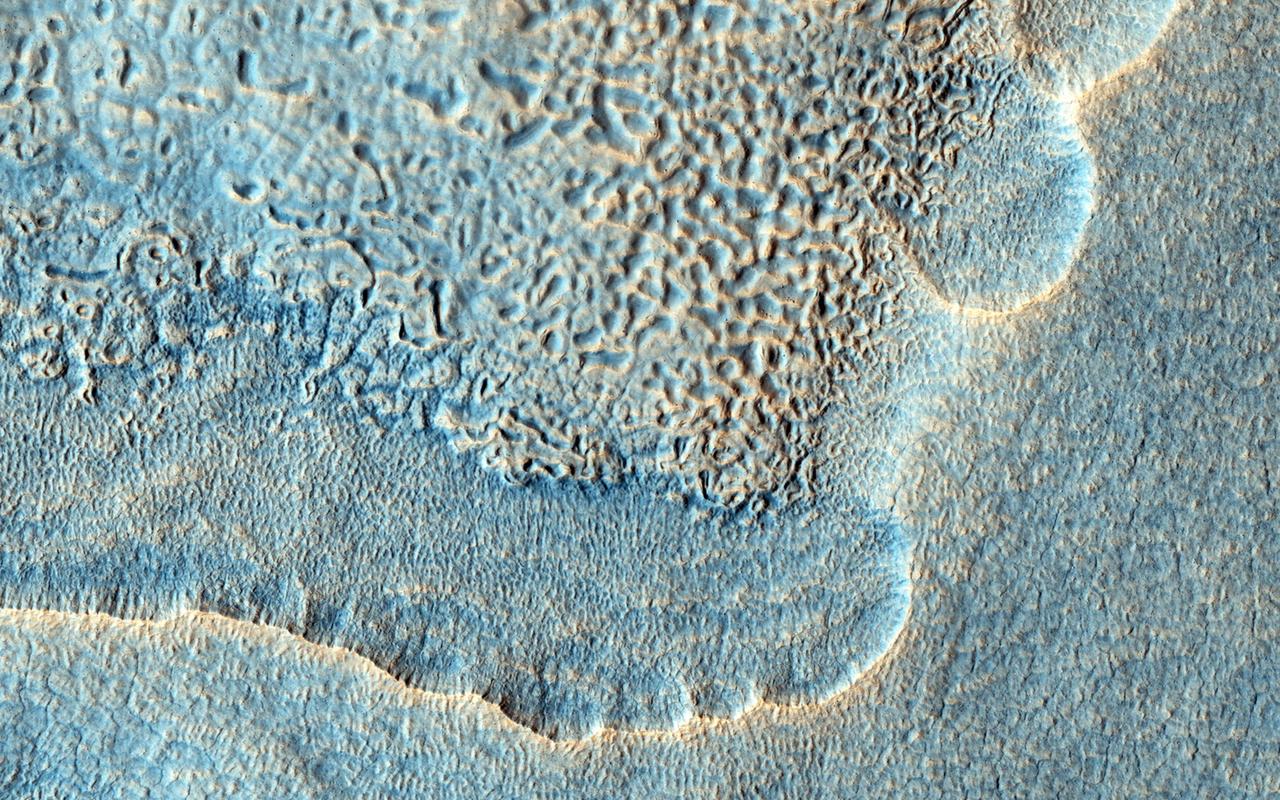
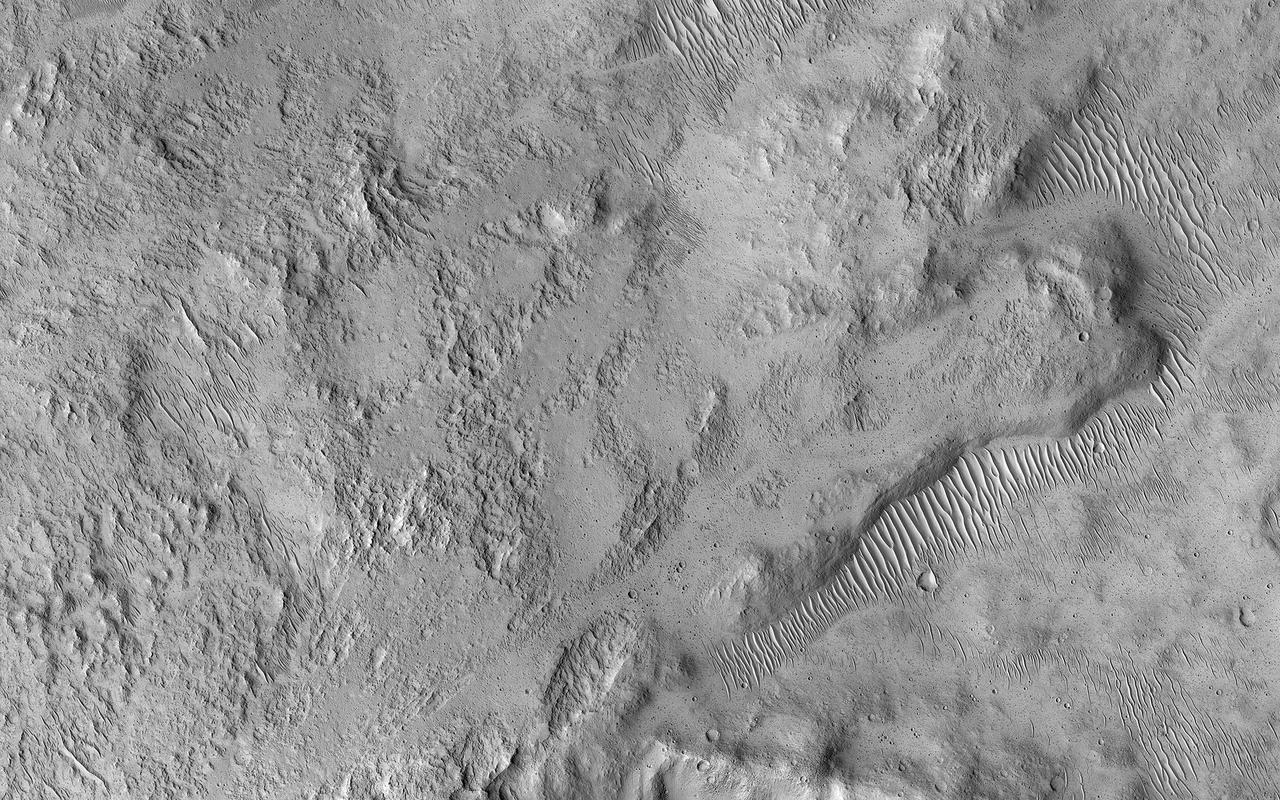
The objective of this observation by NASA Mars Reconnaissance Orbiter was to examine the edge of impact ejecta from a crater to the north-west of this area north is up, west is to the left.
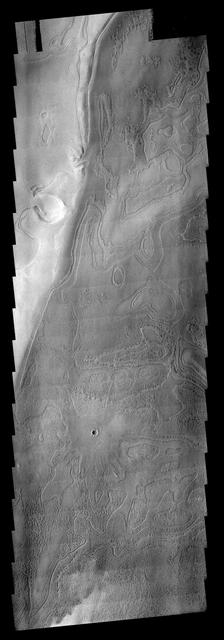
This VIS image shows part of the south polar region. The ejecta from the relatively young crater covers the rougher textured polar surface
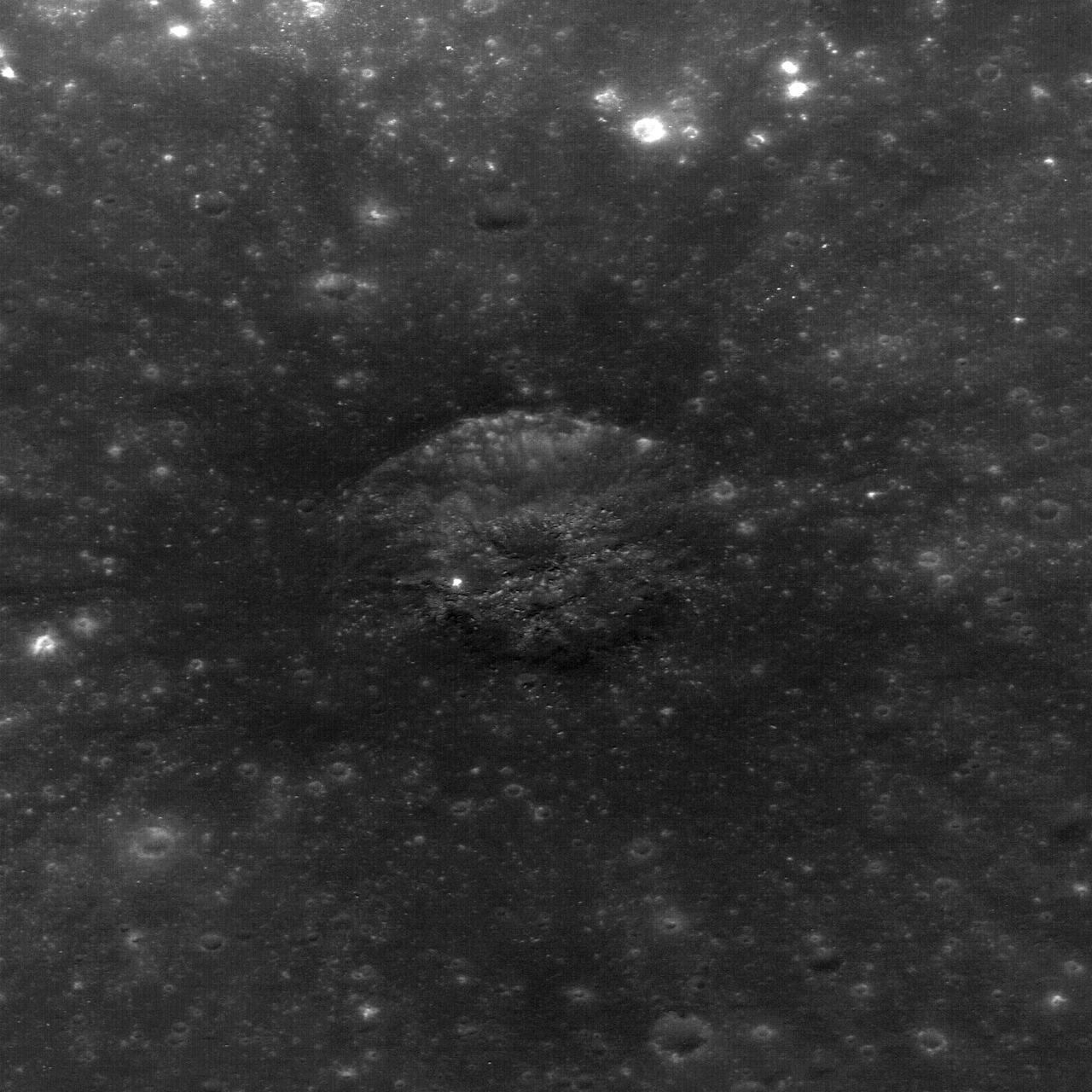
This image is a NASA Lunar Reconnaissance Orbiter closeup of a small fresh crater with very dark ejecta highlands near Rima Bode II.
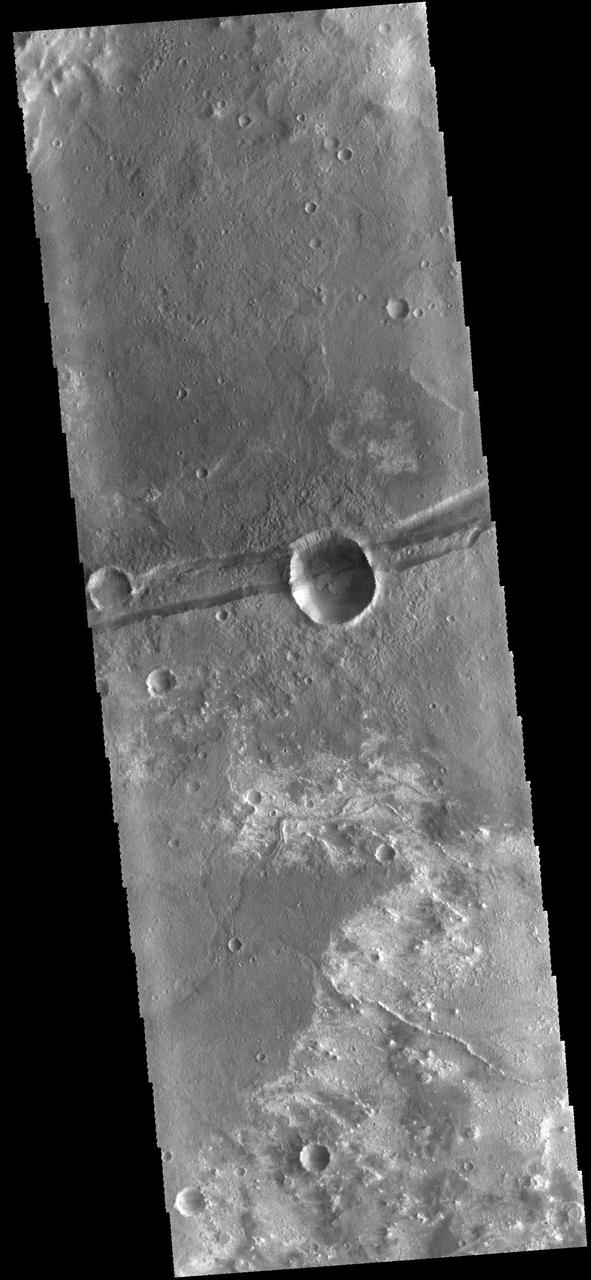
The linear depression in the center of this image captured by NASA Mars Odyssey spacecraft is a graben - a fault bounded block of material. The graben crosses the crater and ejecta in the middle of the image.