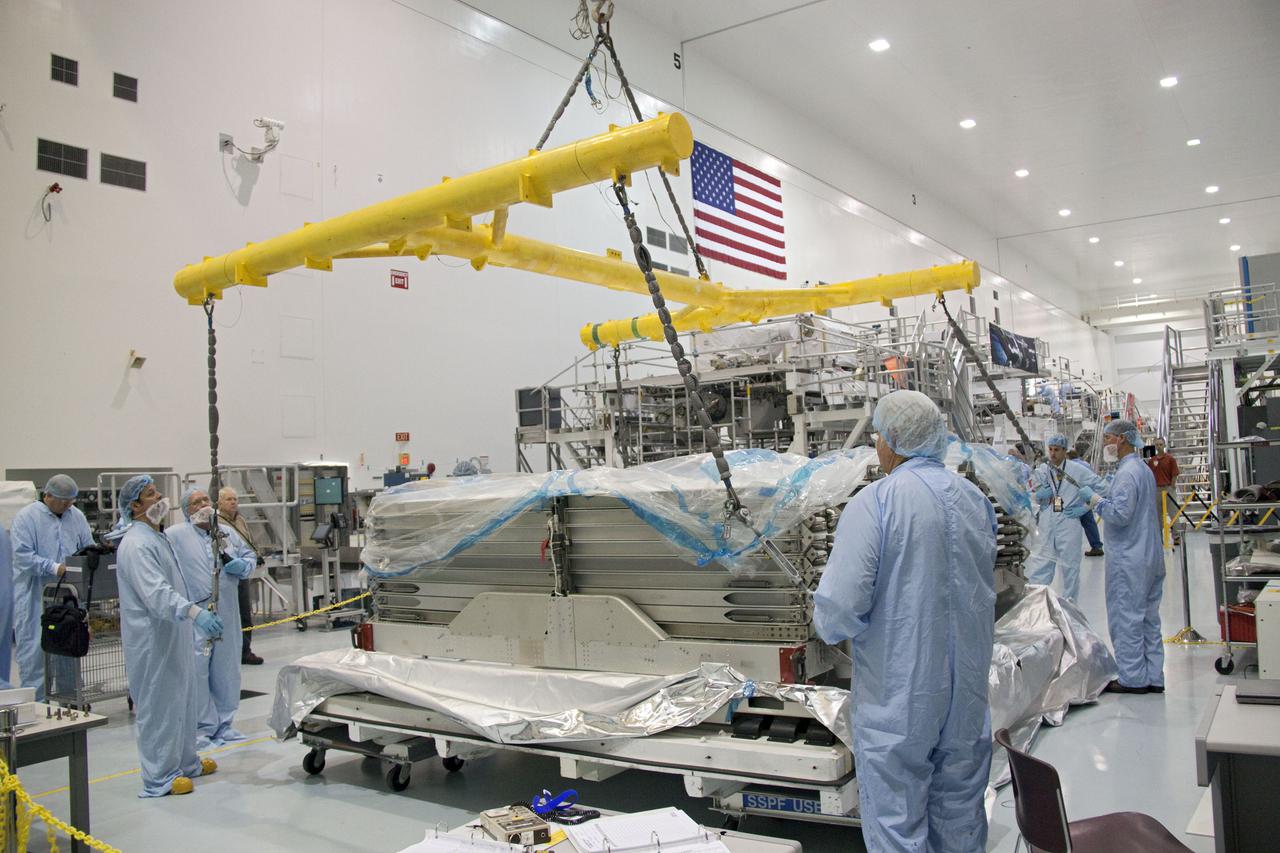
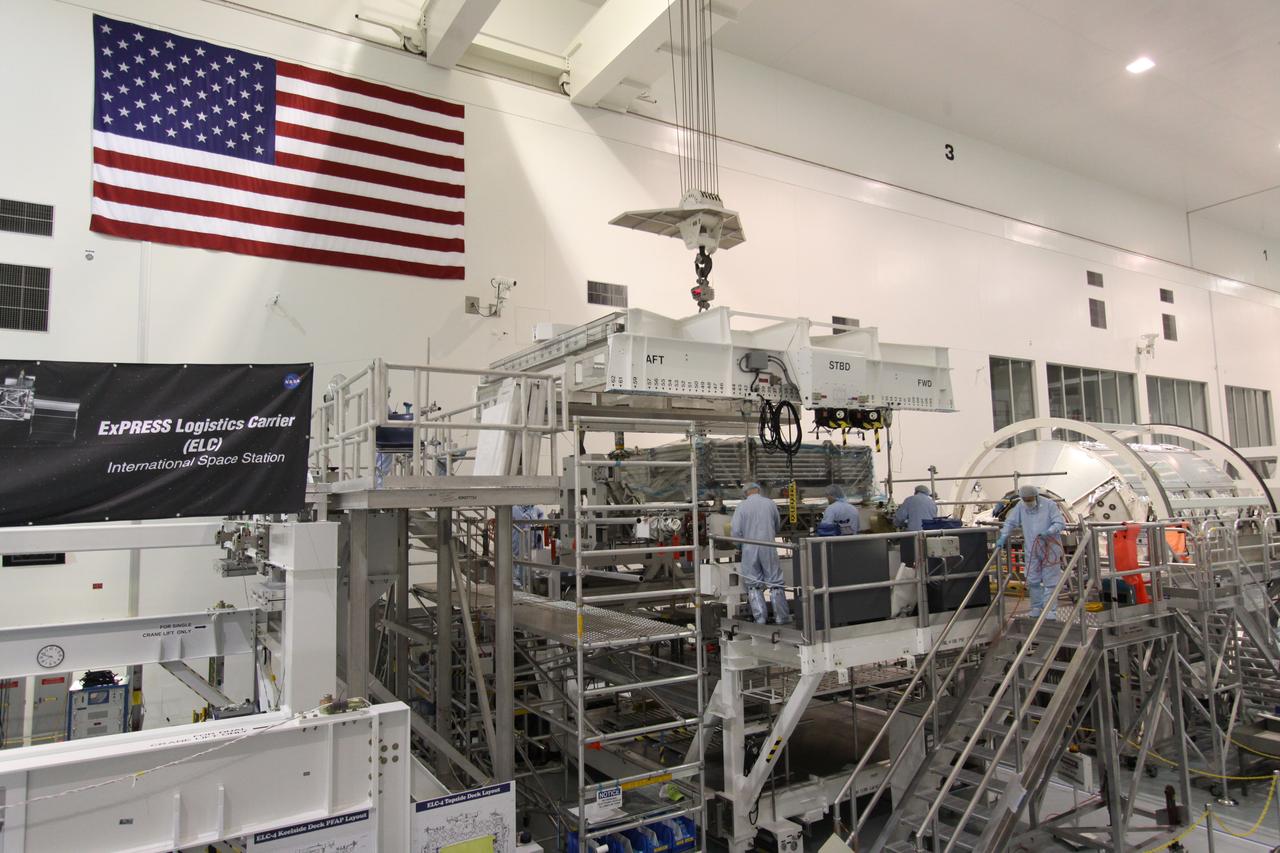
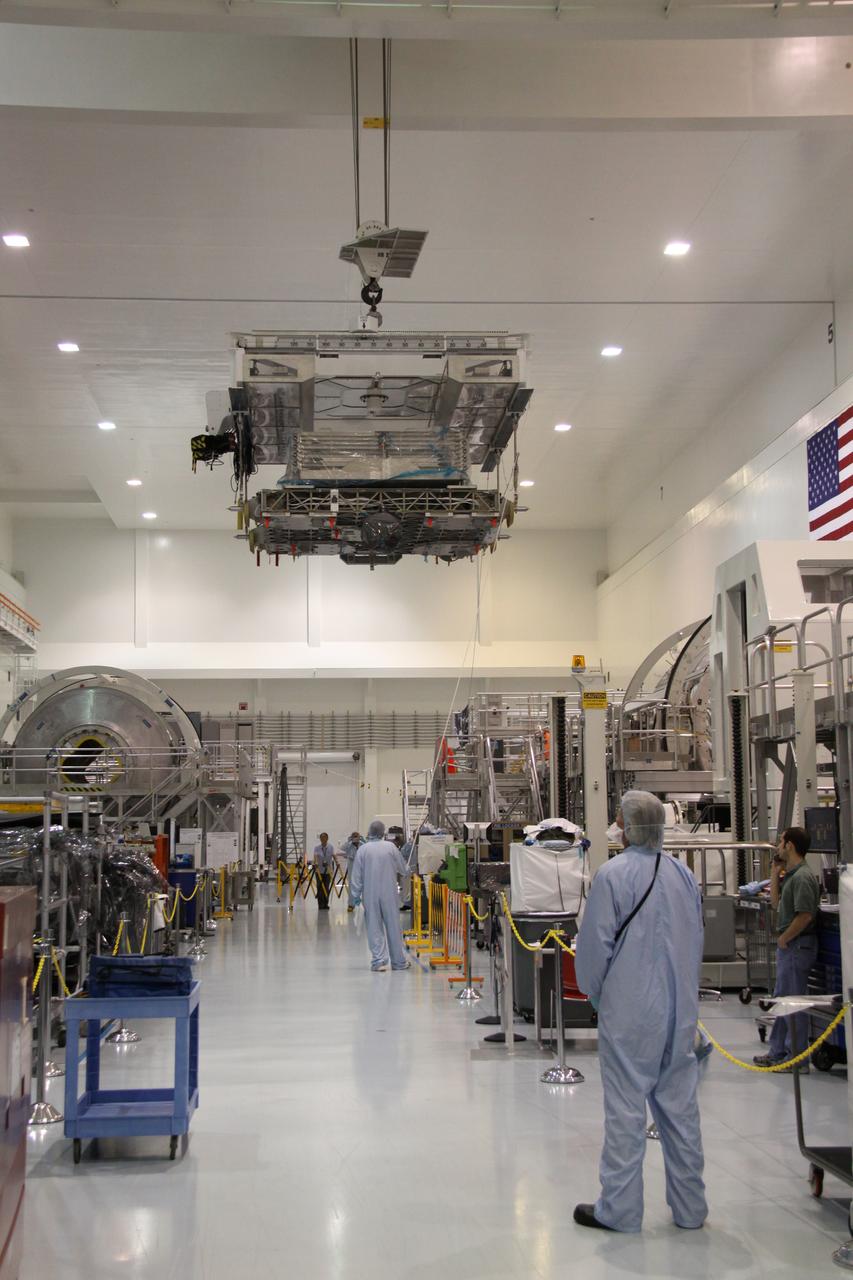
CAPE CANAVERAL, Fla. -- At NASA's Kennedy Space Center in Florida, an overhead crane in the Space Station Processing Facility is attached to the Heat Rejection Subsystem, or HRS, radiator for installation onto the Express Logistics Carrier-4, or ELC-4. Space shuttle Discovery and its STS-133 crew will deliver the ELC-4 filled with external payloads and experiments, as well as the spare radiator and the Permanent Multipurpose Module, or PMM, to the International Space Station. Launch is targeted for Nov. 1 at 4:33 p.m. EDT. For more information visit, www.nasa.gov_shuttle. Photo credit: NASA_Troy Cryder
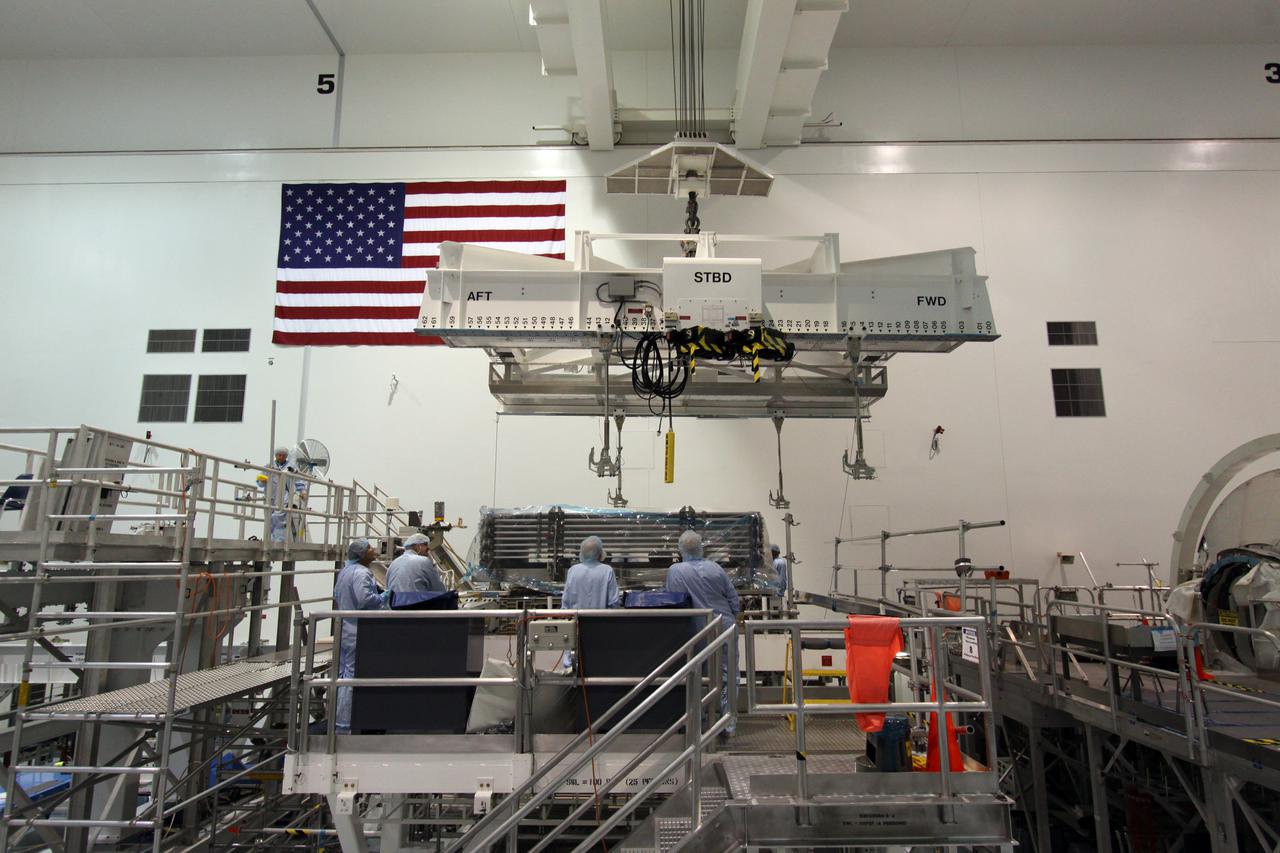
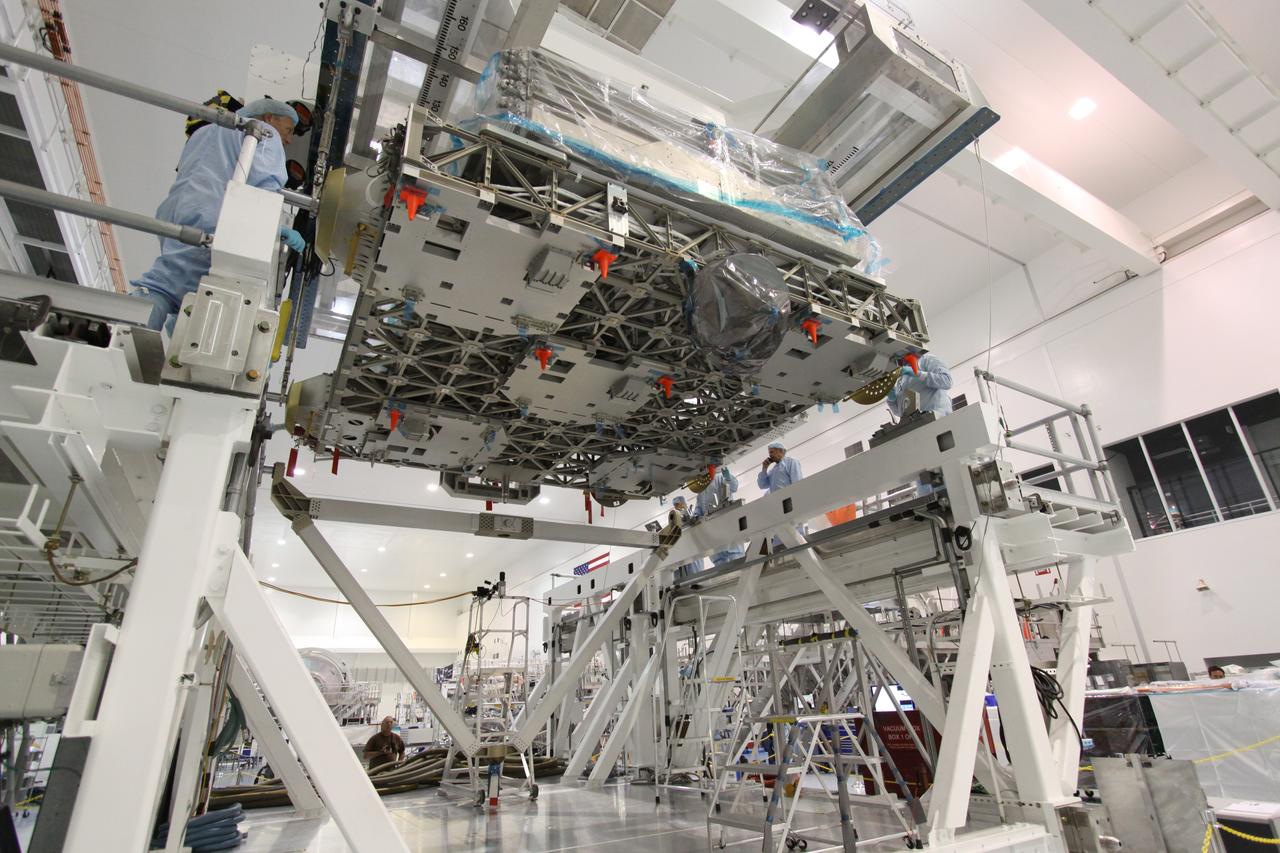
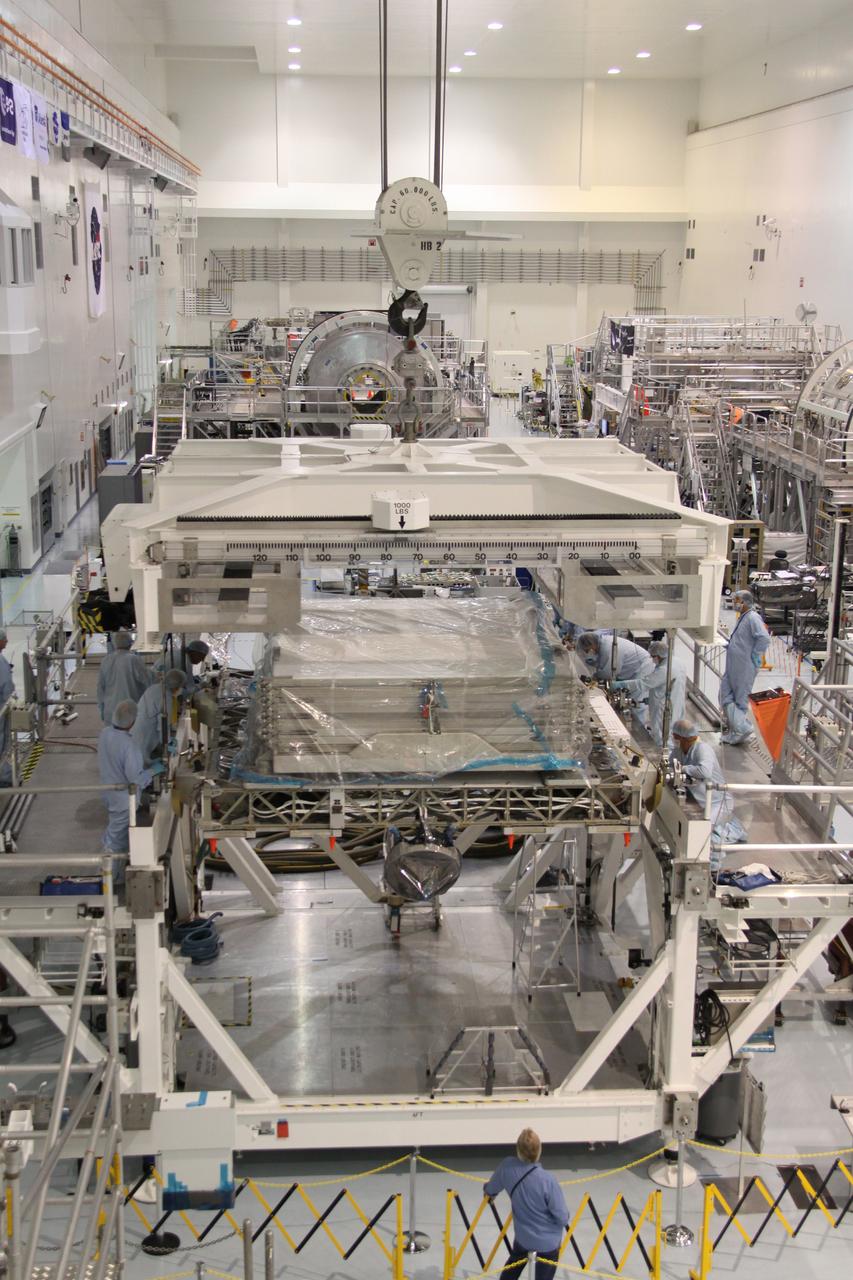
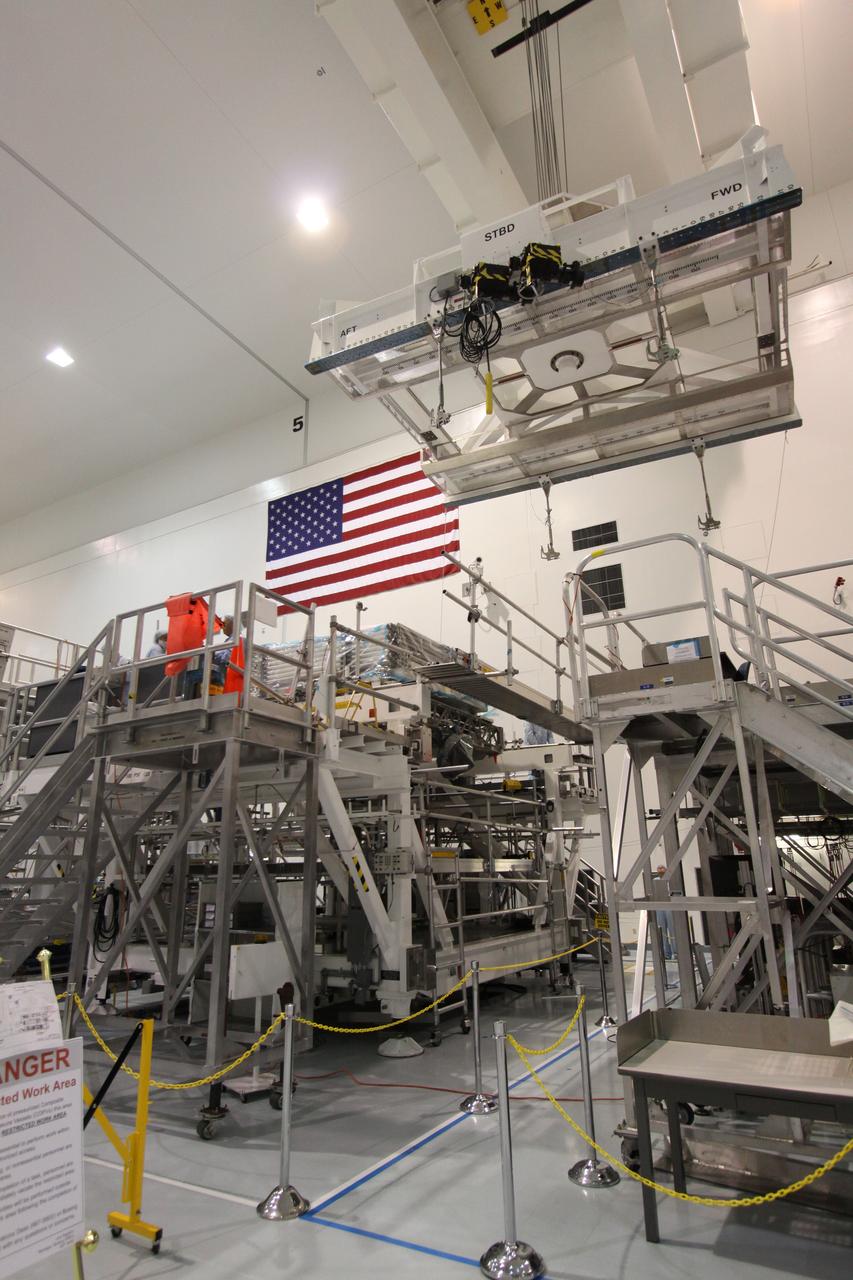
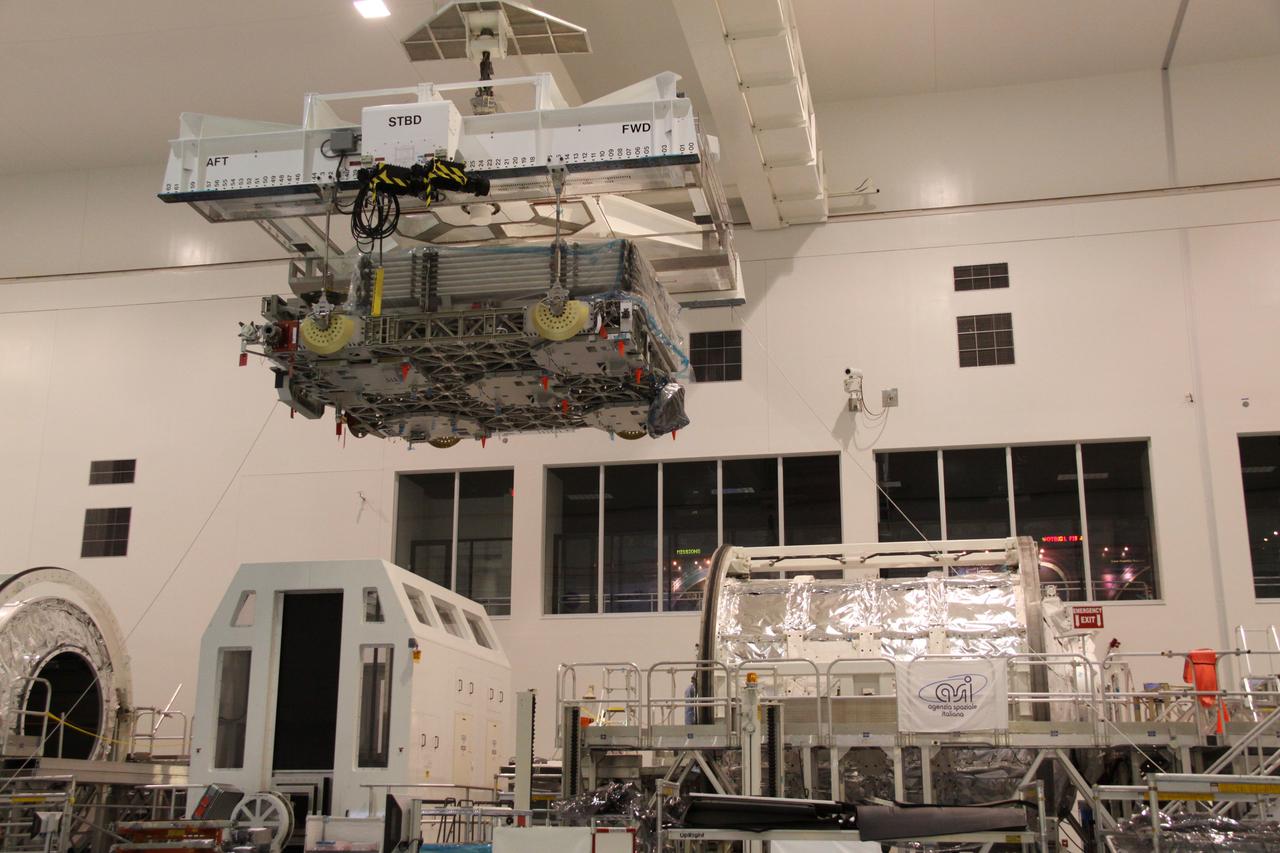
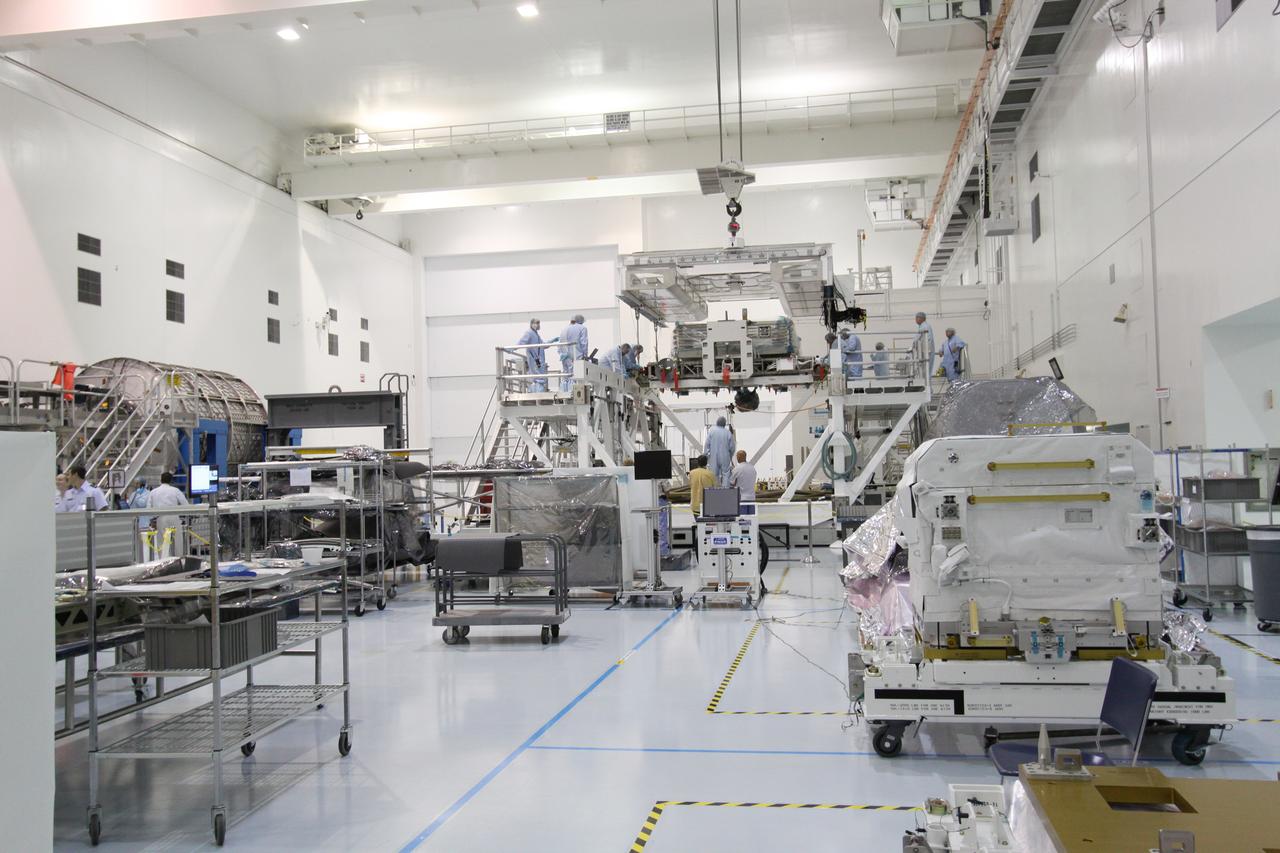
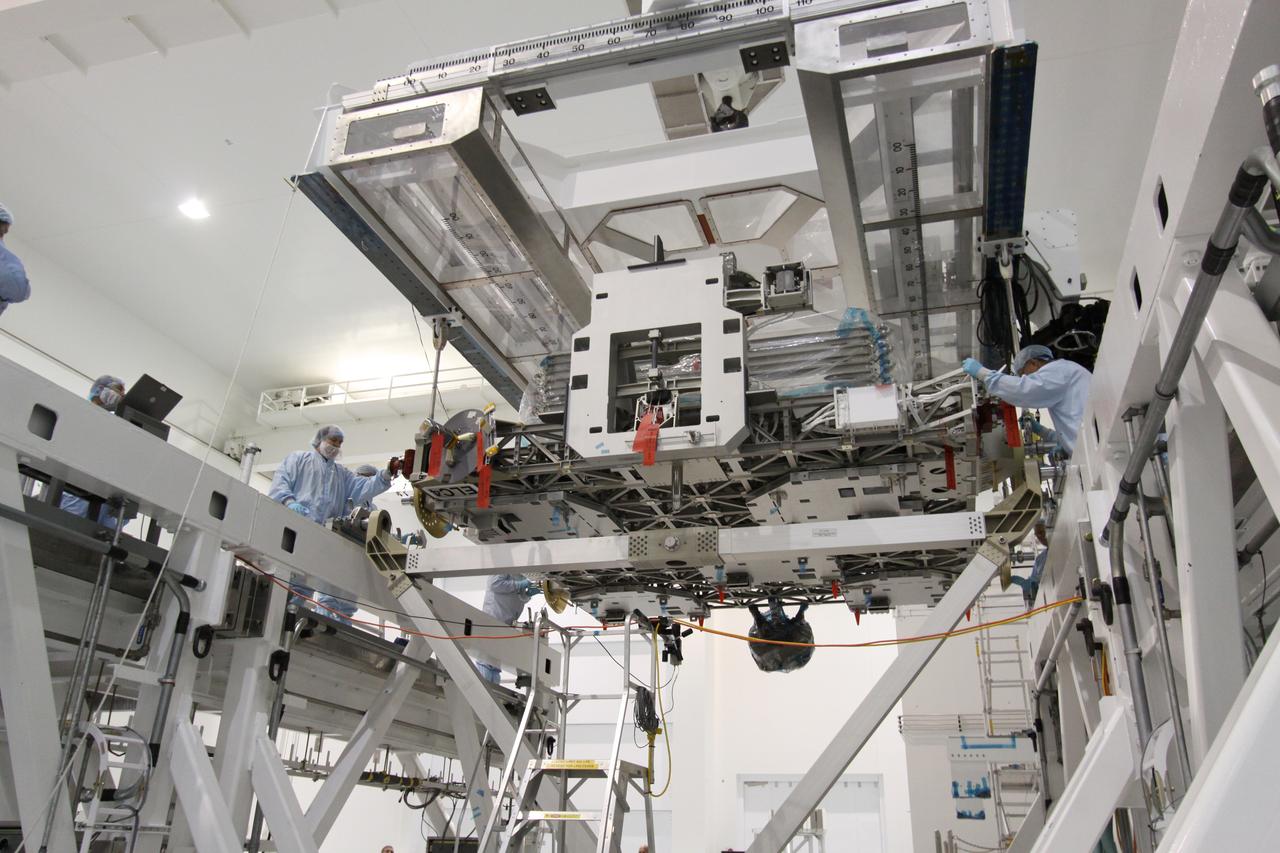
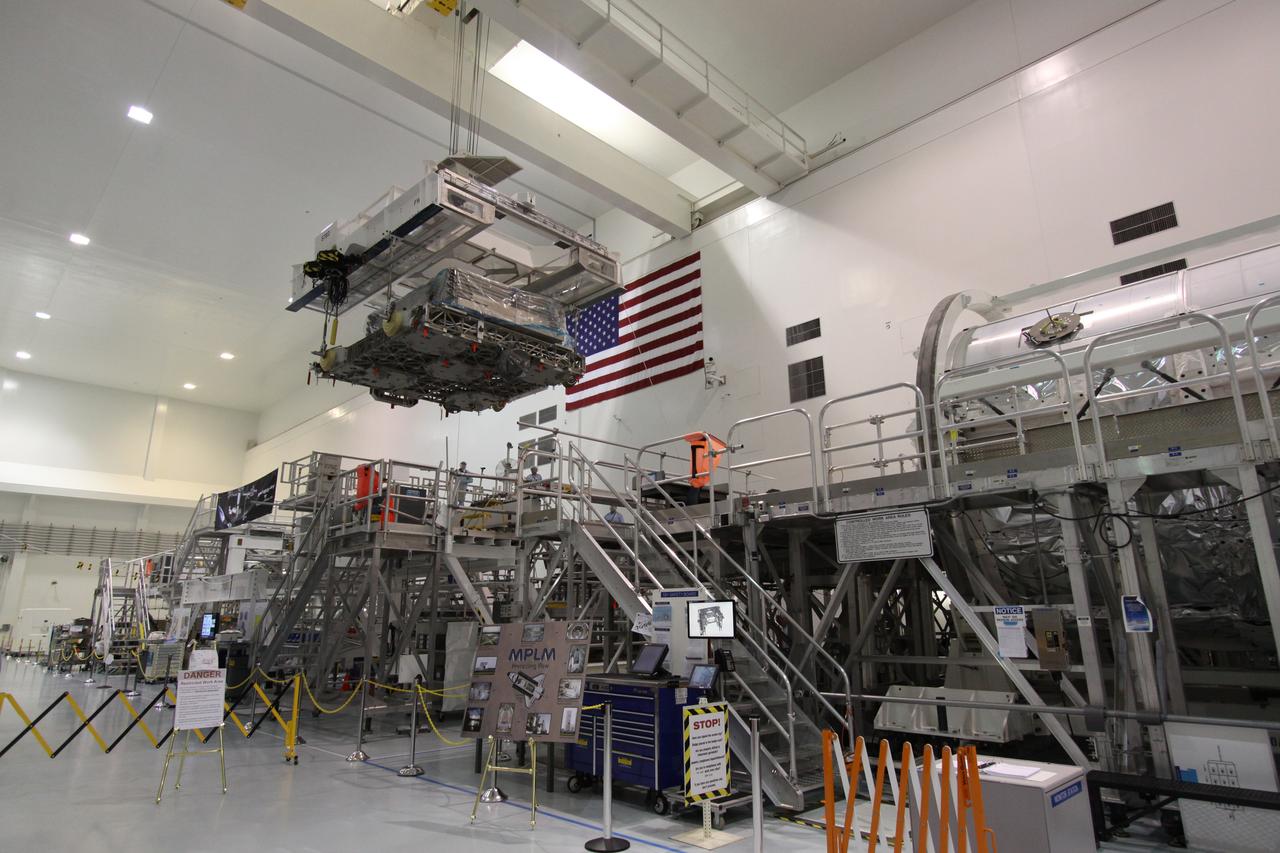
CAPE CANAVERAL, Fla. -- In the Space Station Processing Facility at NASA's Kennedy Space Center in Florida, technicians hoist the Express Logistics Carrier-4, or ELC-4, for the deck-to-keel mate. The deck is about 14 by 16 feet and spans the width of a space shuttle’s payload bay. It is capable of providing astronauts aboard the International Space Station with a platform and infrastructure to deploy experiments in the vacuum of space without requiring a separate dedicated Earth-orbiting satellite. Space shuttle Discovery and its STS-133 crew will deliver the carrier along with critical spare parts to the station later this year. Photo credit: NASA_Jack Pfaller
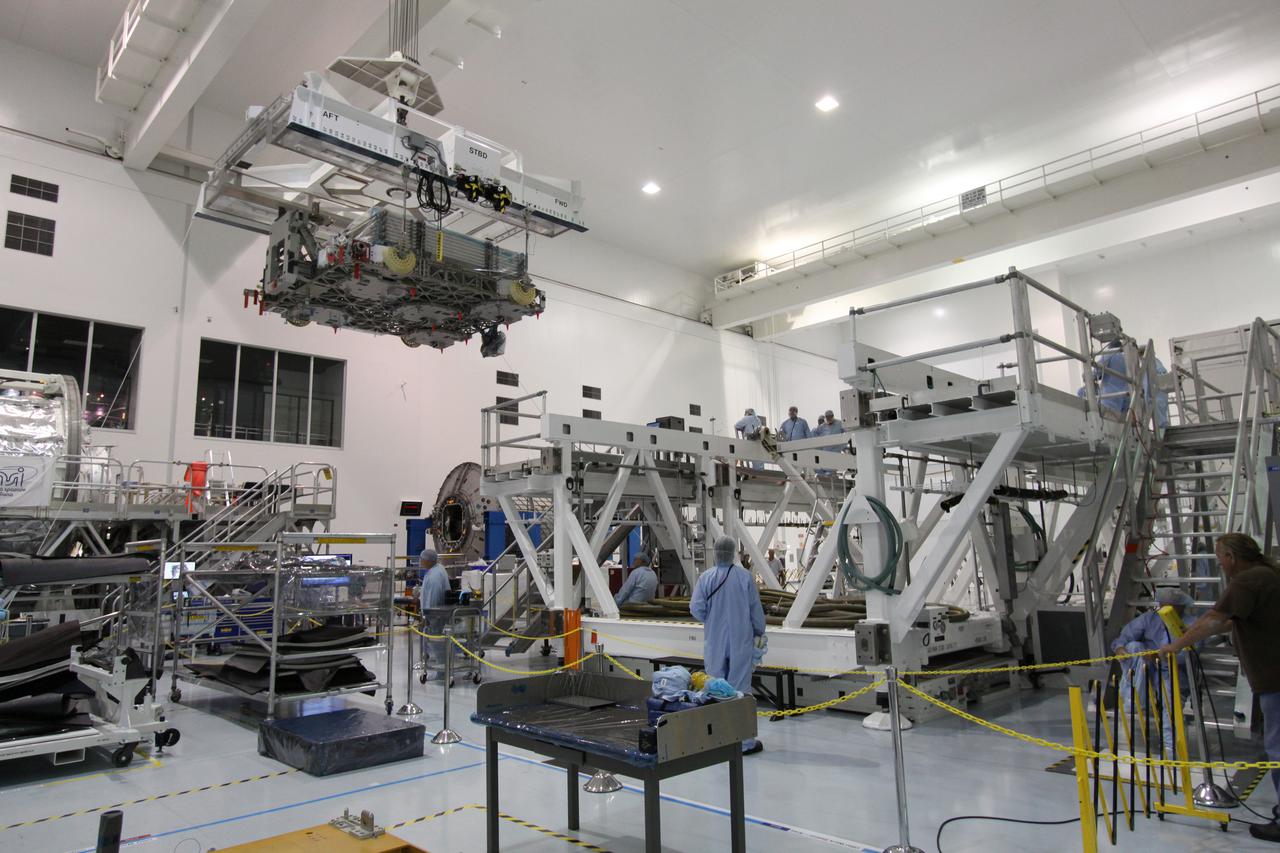
CAPE CANAVERAL, Fla. -- In the Space Station Processing Facility at NASA's Kennedy Space Center in Florida, technicians perform the Express Logistics Carrier-4, or ELC-4, deck-to-keel mate. The deck is about 14 by 16 feet and spans the width of a space shuttle’s payload bay. It is capable of providing astronauts aboard the International Space Station with a platform and infrastructure to deploy experiments in the vacuum of space without requiring a separate dedicated Earth-orbiting satellite. Space shuttle Discovery and its STS-133 crew will deliver the carrier along with critical spare parts to the station later this year. Photo credit: NASA_Jack Pfaller

STS-133 Hoist of ELC-4 for Deck to Keel Mate
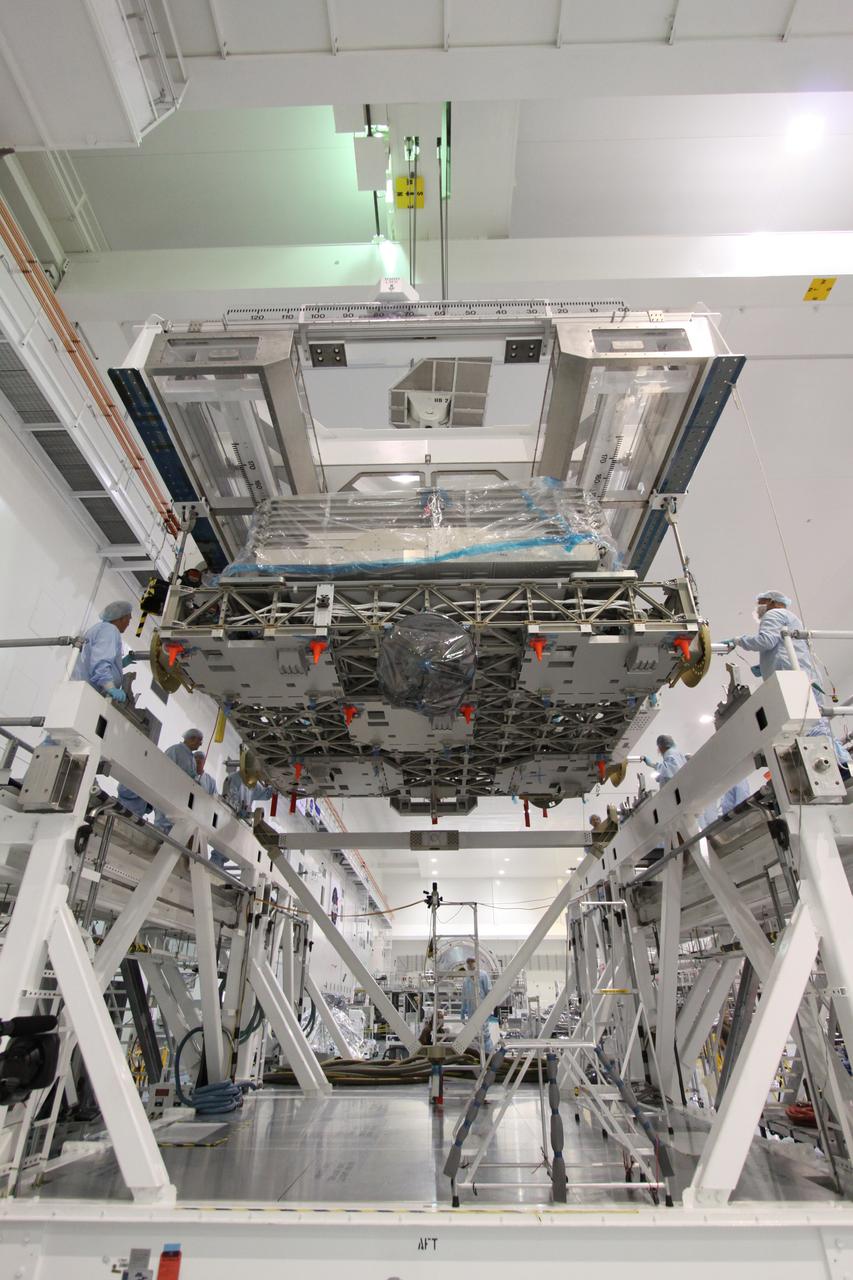
STS-133 Hoist of ELC-4 for Deck to Keel Mate
STS-133 Hoist of ELC-4 for Deck to Keel Mate
STS-133 Hoist of ELC-4 for Deck to Keel Mate

STS-133 Hoist of ELC-4 for Deck to Keel Mate
STS-133 Hoist of ELC-4 for Deck to Keel Mate
STS-133 Hoist of ELC-4 for Deck to Keel Mate
STS-133 Hoist of ELC-4 for Deck to Keel Mate
STS-133 Hoist of ELC-4 for Deck to Keel Mate
STS-133 Hoist of ELC-4 for Deck to Keel Mate

STS-133 Hoist of ELC-4 for Deck to Keel Mate
STS-133 Hoist of ELC-4 for Deck to Keel Mate
STS-133 Hoist of ELC-4 for Deck to Keel Mate

JSC2006-E-43515 (October 2006) --- Computer-generated artist's rendering of the International Space Station after flight ULF4. U.S. Orbiter delivers EXPRESS Logistics Carrier-3 (ELC-3) and EXPRESS Logistics Carrier-4 (ELC-4). Micrometeoroid Debris panels are installed on Zvezda Service Module and the Zvezda solar arrays are feathered.
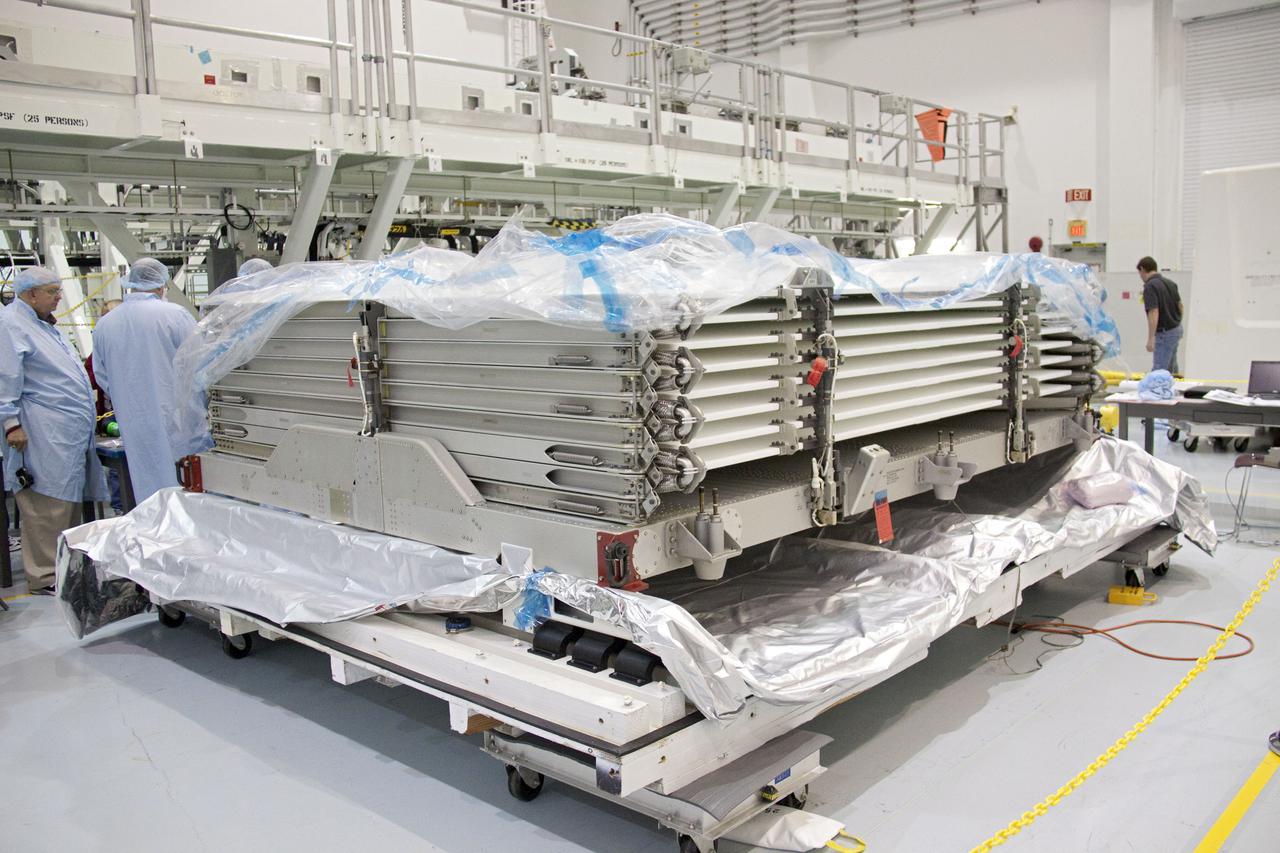
CAPE CANAVERAL, Fla. -- In the Space Station Processing Facility at NASA's Kennedy Space Center in Florida, workers prepare the Heat Rejection Subsystem, or HRS, radiator for installation onto the Express Logistics Carrier-4, or ELC-4. Space shuttle Discovery and its STS-133 crew will deliver the ELC-4 filled with external payloads and experiments, as well as the spare radiator and the Permanent Multipurpose Module, or PMM, to the International Space Station. Launch is targeted for Nov. 1 at 4:33 p.m. EDT. For more information visit, www.nasa.gov_shuttle. Photo credit: NASA_Troy Cryder

CAPE CANAVERAL, Fla. -- Inside the Space Station Processing Facility at NASA's Kennedy Space Center in Florida, the hatch of the Permanent Multipurpose Module (PMM) is closed in preparation for space shuttle Discovery's STS-133 mission to the International Space Station. Robonaut 2 (R2) and critical spare parts are packed inside the PMM, which will be left aboard the station on Discovery's final mission. Targeted to launch Nov. 1 at 4:40 p.m. EDT, Discovery and its crew also will carry Express Logistics Carrier-4 (ELC-4), which is filled with external payloads and experiments. For more information visit, www.nasa.gov/shuttle. Photo credit: NASA/Jim Grossmann
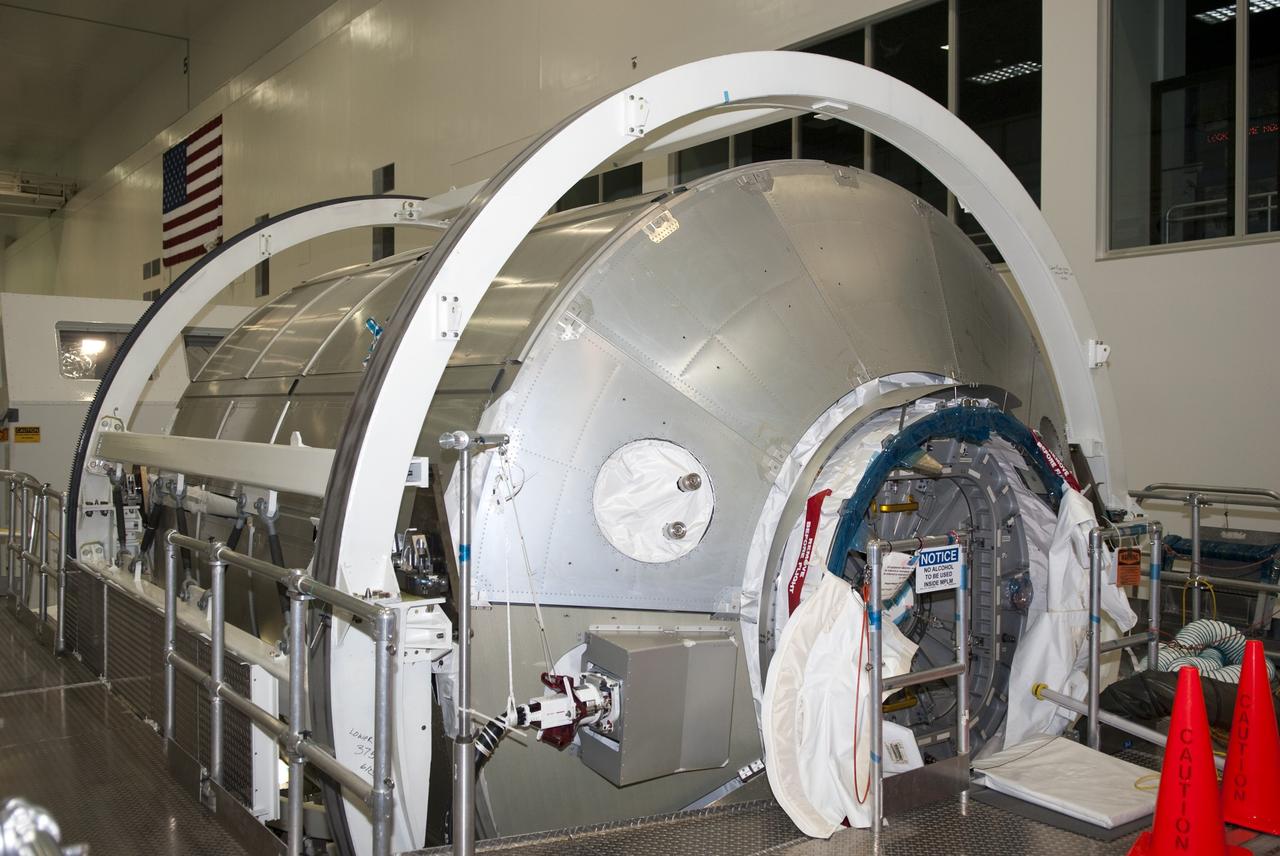
CAPE CANAVERAL, Fla. -- Inside the Space Station Processing Facility at NASA's Kennedy Space Center in Florida, the hatch of the Permanent Multipurpose Module (PMM) is closed in preparation for space shuttle Discovery's STS-133 mission to the International Space Station. Robonaut 2 (R2) and critical spare parts are packed inside the PMM, which will be left aboard the station on Discovery's final mission. Targeted to launch Nov. 1 at 4:40 p.m. EDT, Discovery and its crew also will carry Express Logistics Carrier-4 (ELC-4), which is filled with external payloads and experiments. For more information visit, www.nasa.gov/shuttle. Photo credit: NASA/Jim Grossmann
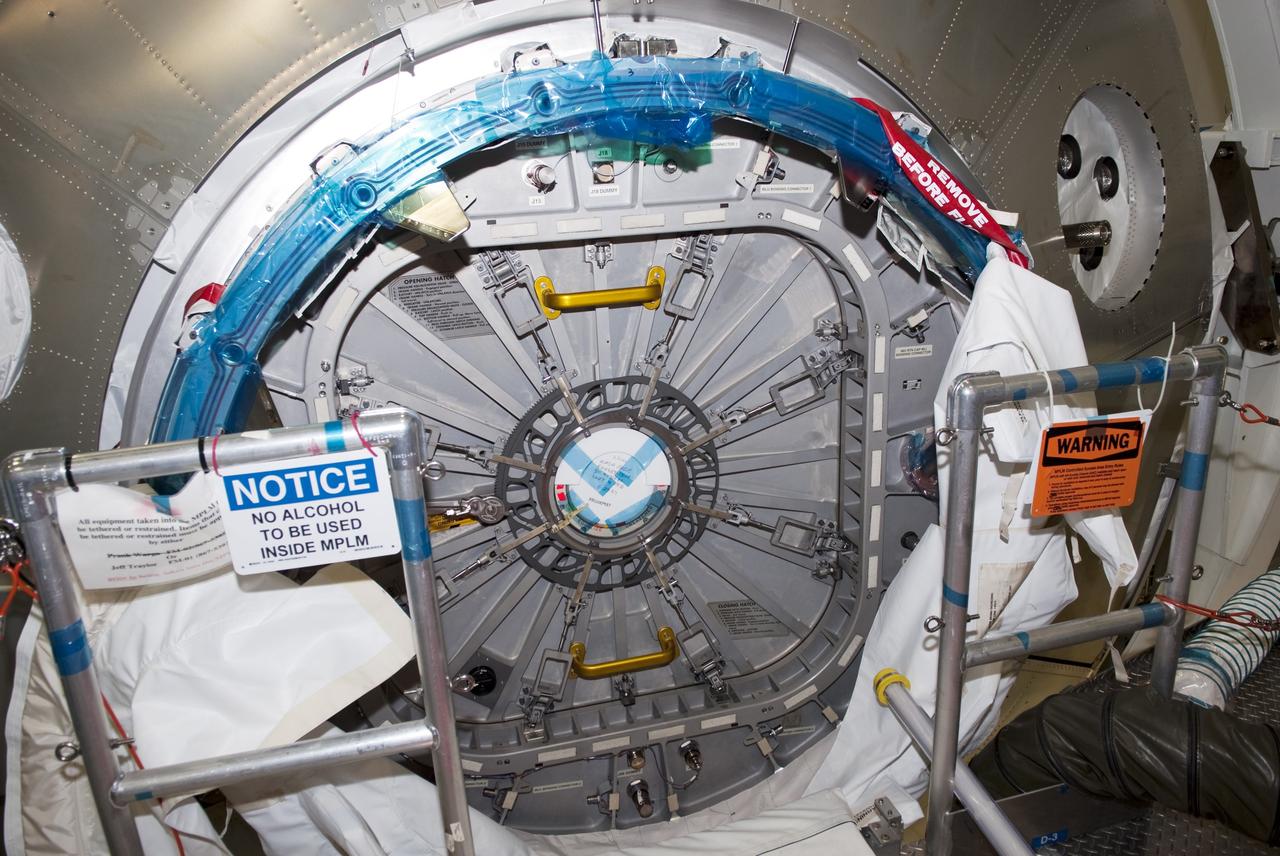
CAPE CANAVERAL, Fla. -- Inside the Space Station Processing Facility at NASA's Kennedy Space Center in Florida, the hatch of the Permanent Multipurpose Module (PMM) is closed in preparation for space shuttle Discovery's STS-133 mission to the International Space Station. Robonaut 2 (R2) and critical spare parts are packed inside the PMM, which will be left aboard the station on Discovery's final mission. Targeted to launch Nov. 1 at 4:40 p.m. EDT, Discovery and its crew also will carry Express Logistics Carrier-4 (ELC-4), which is filled with external payloads and experiments. For more information visit, www.nasa.gov/shuttle. Photo credit: NASA/Jim Grossmann

CAPE CANAVERAL, Fla. -- Inside the Space Station Processing Facility at NASA's Kennedy Space Center in Florida, workers inspect the Permanent Multipurpose Module (PMM) after its hatch is closed in preparation for space shuttle Discovery's STS-133 mission to the International Space Station. Robonaut 2 (R2) and critical spare parts are packed inside the PMM, which will be left aboard the station on Discovery's final mission. Targeted to launch Nov. 1 at 4:40 p.m. EDT, Discovery and its crew also will carry Express Logistics Carrier-4 (ELC-4), which is filled with external payloads and experiments. For more information visit, www.nasa.gov/shuttle. Photo credit: NASA/Jim Grossmann
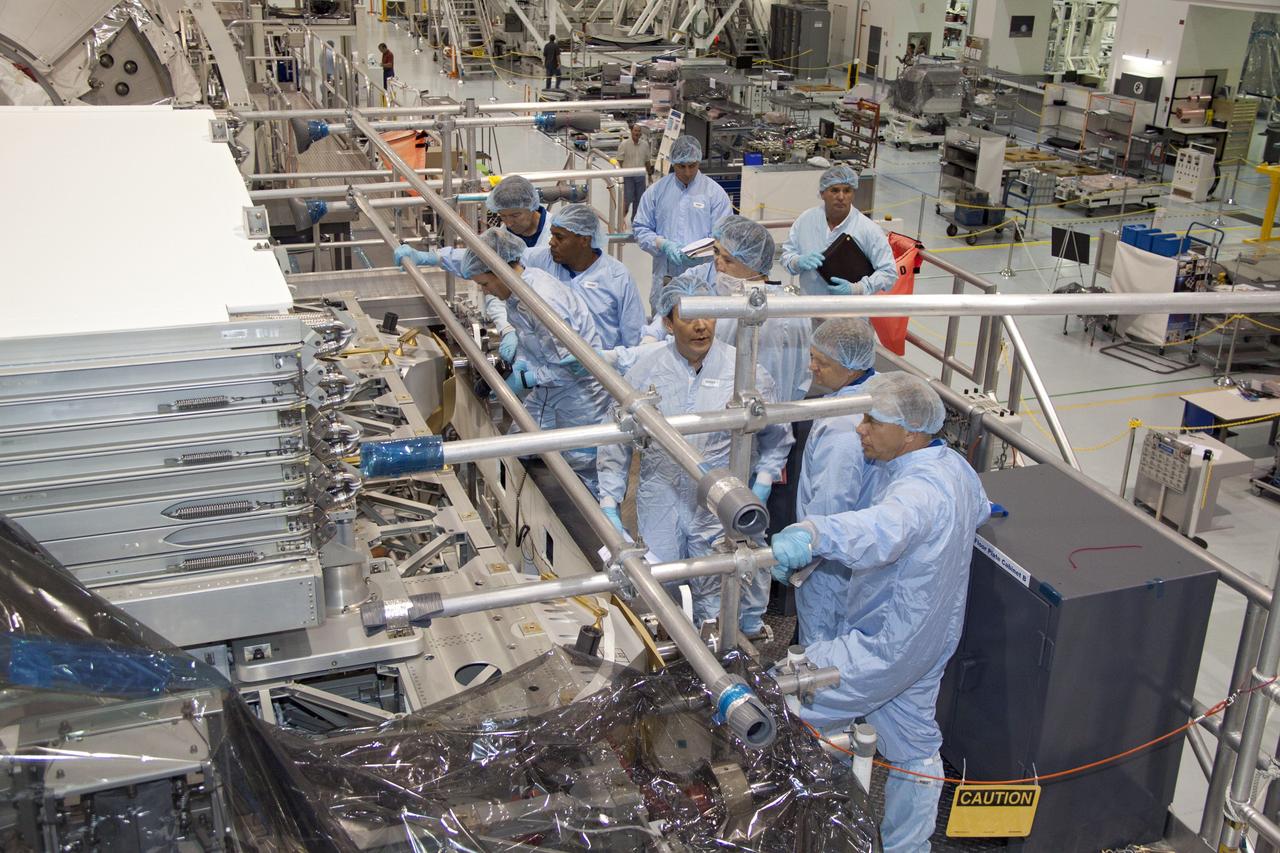
CAPE CANAVERAL, Fla. -- In the Space Station Processing Facility at NASA's Kennedy Space Center in Florida, the STS-133 crew members and processing technicians inspect the Express Logistics Carrier-3, or ELC-3. The astronauts are at Kennedy to participate in the Payload Crew Equipment Interface Test, or CEIT, which gives the crew an opportunity for hands-on training with tools they'll be using in space and familiarization of the payload they will be delivering to the International Space Station. Launch of space shuttle Discovery is targeted for Nov. 1 at 4:40 p.m. EDT. For more information visit, www.nasa.gov/shuttle. Photo credit: NASA/Jack Pfaller
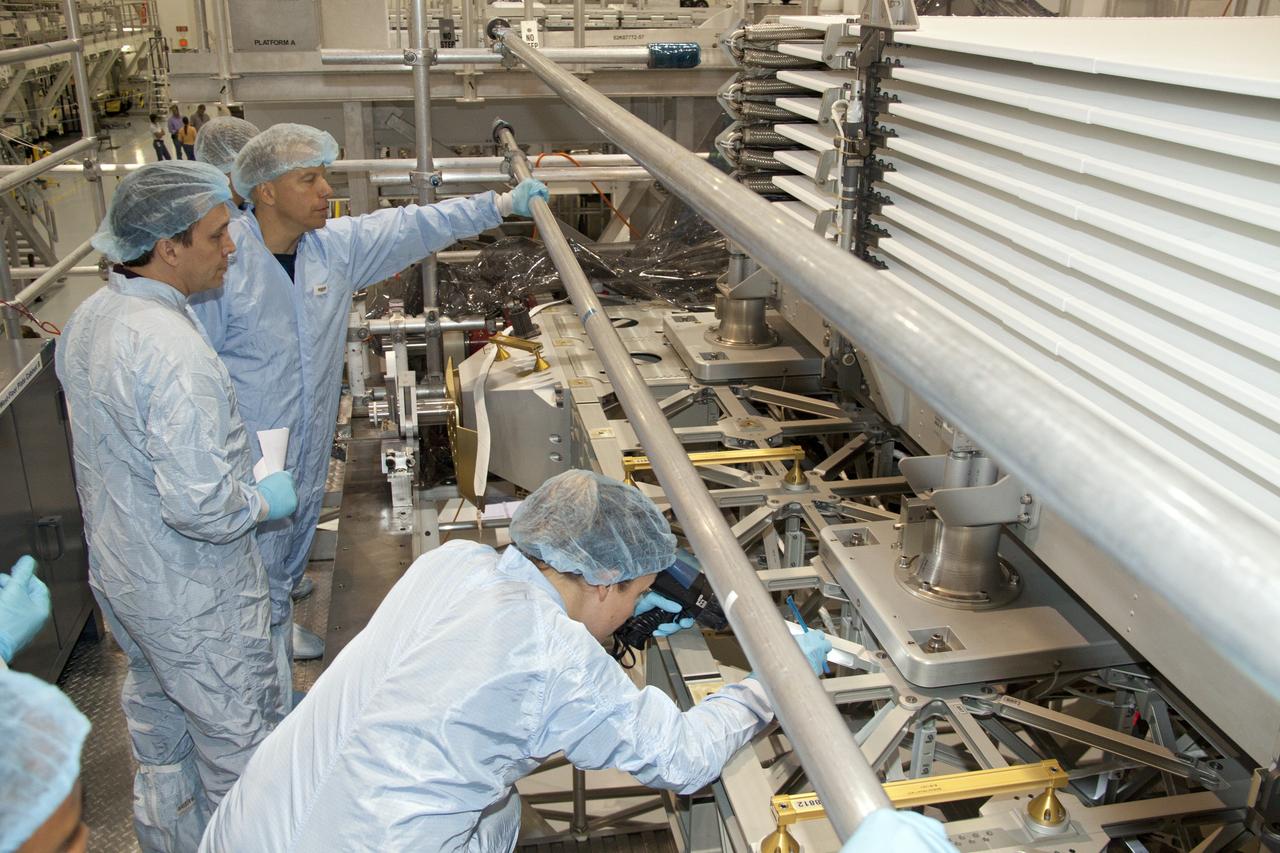
CAPE CANAVERAL, Fla. -- In the Space Station Processing Facility at NASA's Kennedy Space Center in Florida, STS-133 Mission Specialist Tim Kopra gets an up-close view of the Express Logistics Carrier-3, or ELC-3, accompanied by processing technicians. The astronauts are at Kennedy to participate in the Payload Crew Equipment Interface Test, or CEIT, which gives the crew an opportunity for hands-on training with tools they'll be using in space and familiarization of the payload they will be delivering to the International Space Station. Launch of space shuttle Discovery is targeted for Nov. 1 at 4:40 p.m. EDT. For more information visit, www.nasa.gov/shuttle. Photo credit: NASA/Jack Pfaller
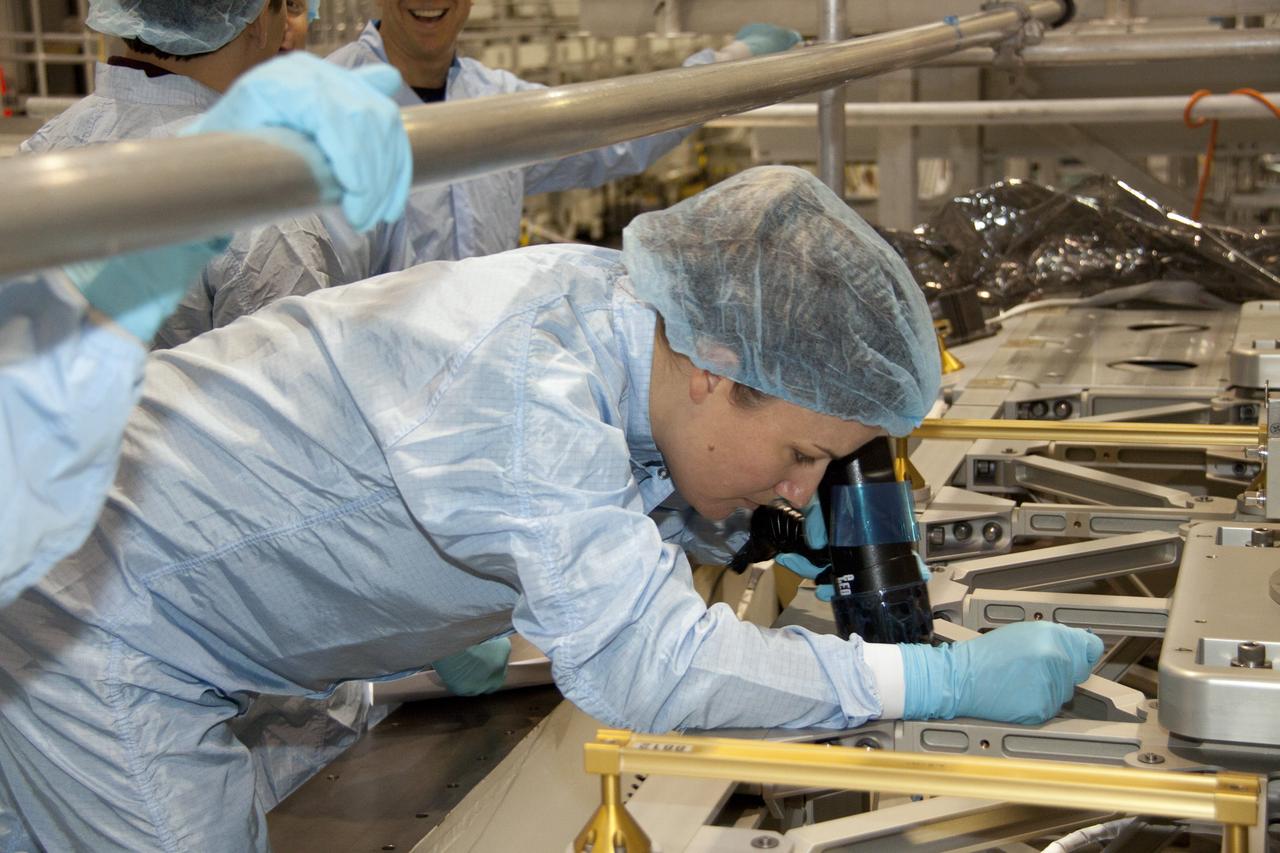
CAPE CANAVERAL, Fla. -- In the Space Station Processing Facility at NASA's Kennedy Space Center in Florida, a technician continues processing the Express Logistics Carrier-3, or ELC-3 while the STS-133 mission astronauts continue training. The astronauts are at Kennedy to participate in the Payload Crew Equipment Interface Test, or CEIT, which gives the crew an opportunity for hands-on training with tools they'll be using in space and familiarization of the payload they will be delivering to the International Space Station. Launch of space shuttle Discovery is targeted for Nov. 1 at 4:40 p.m. EDT. For more information visit, www.nasa.gov/shuttle. Photo credit: NASA/Jack Pfaller