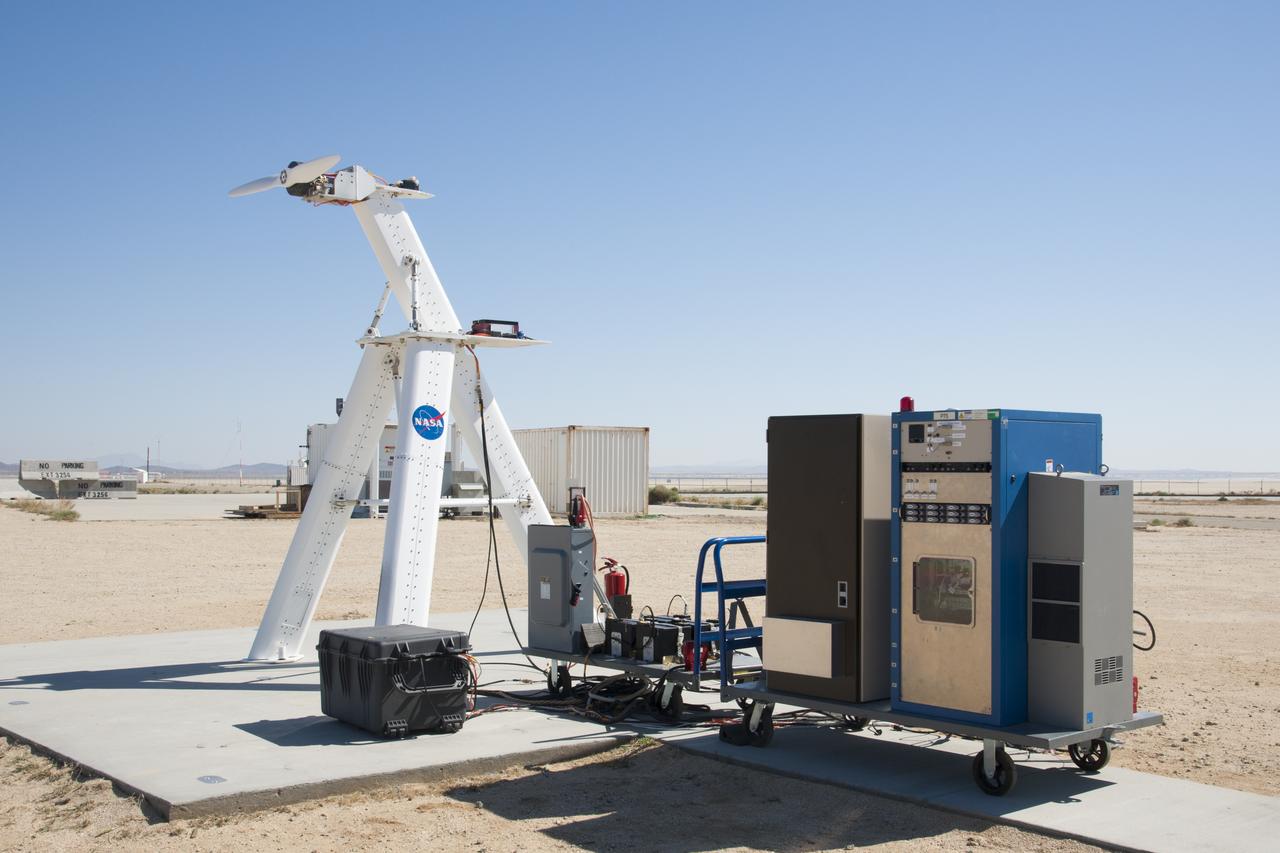
The equipment required for an electric propulsion test is ready for research.

The Ocean Color Instrument (OCI) Electro-Magnetic Interference (EMI) & Electrical Ground Support Equipment (EGSE) Team pose in the control room. From this room, they are able to analyze the data from the test remotely and send commands through electrical cables that run through the walls into the EMI lab. OCI is a highly advanced optical spectrometer that will be used to measure properties of light over portions of the electromagnetic spectrum. It will enable continuous measurement of light at finer wavelength resolution than previous NASA satellite sensors, extending key system ocean color data records for climate studies. OCI is PACE's (Plankton, Aerosol, Cloud, ocean Ecosystem) primary sensor built at Goddard Space Flight Center in Greenbelt, MD.
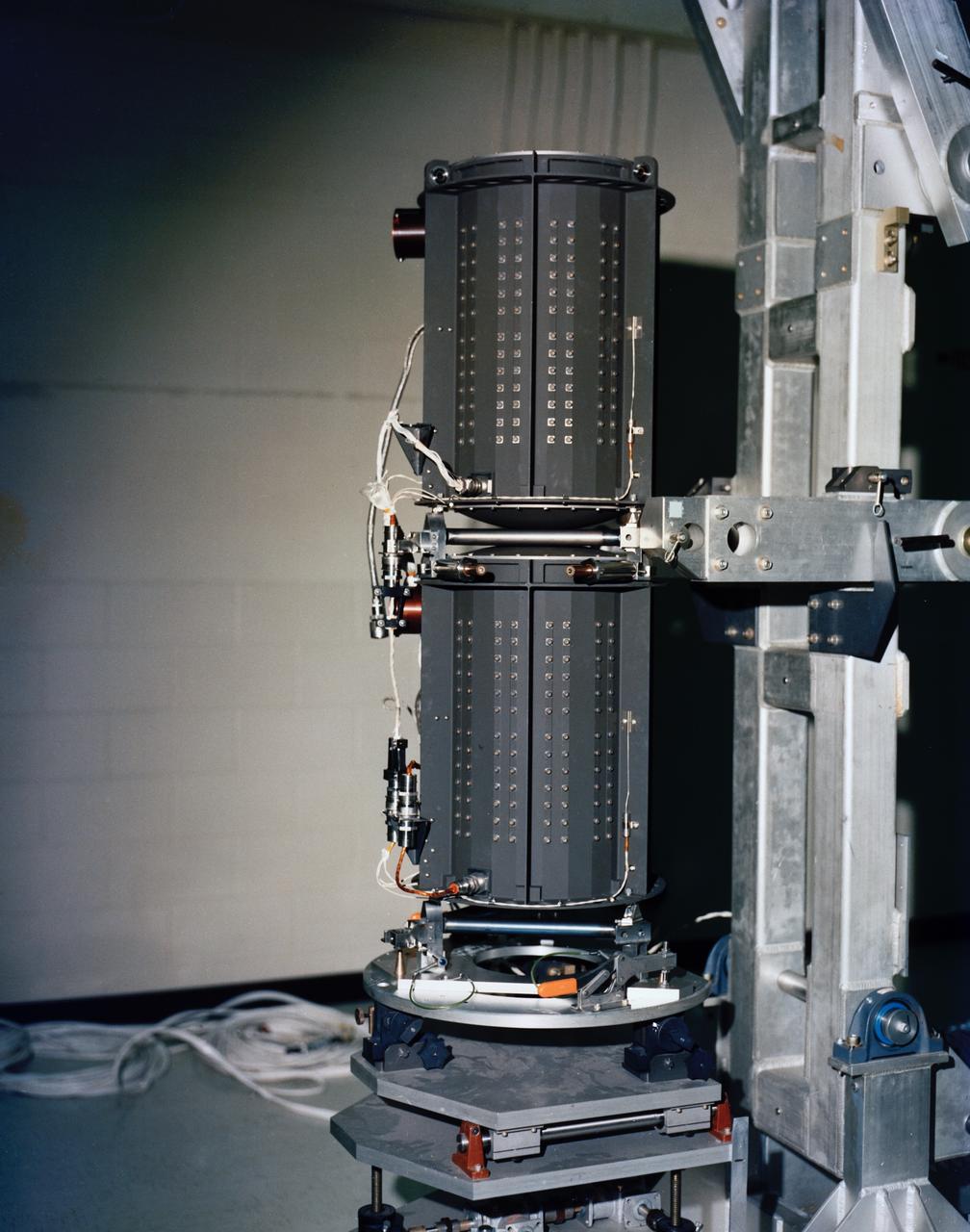
Each of NASA's Voyager probes are equipped with three radioisotope thermoelectric generators (RTGs), including the one shown here at NASA's Kennedy Space Center in Florida. The RTGs provide power for the spacecraft by converting the heat generated by the decay of plutonium-238 into electricity. Launched in 1977, the Voyager mission is managed for NASA by the agency's Jet Propulsion Laboratory, a division of Caltech in Pasadena, California. https://photojournal.jpl.nasa.gov/catalog/PIA25782
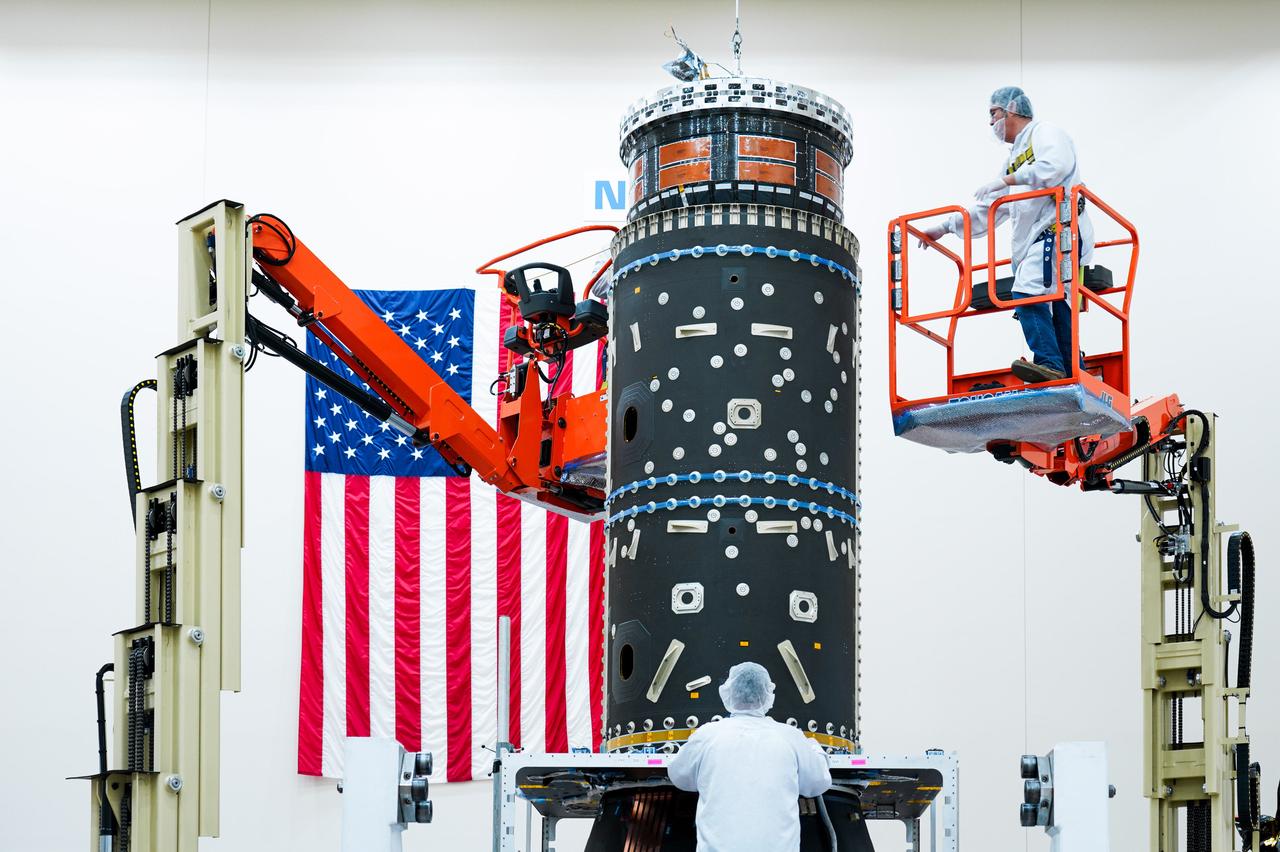
Technicians carefully install a piece of equipment to house Gateway’s xenon fuel tanks, part of its advanced electric propulsion system.
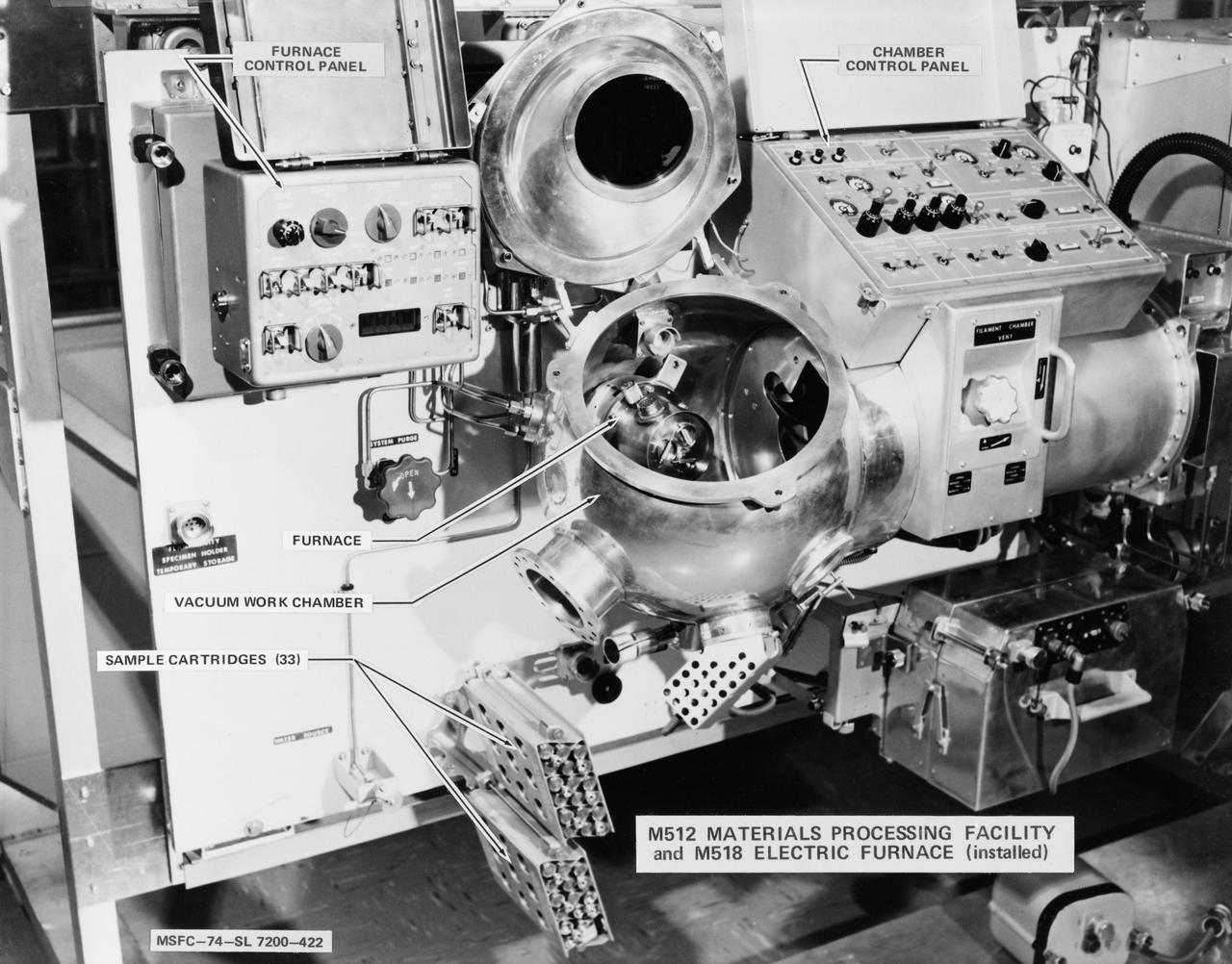
S74-19675 (1974) --- Medium close-up view of the M512 materials processing equipment storage assembly and the M518 electric furnace in the Multiple Docking Adapter (MDA), one of the primary elements of the Skylab space station. The assembly holds equipment designed to explore space manufacturing capability in a weightless state. Photo credit: NASA
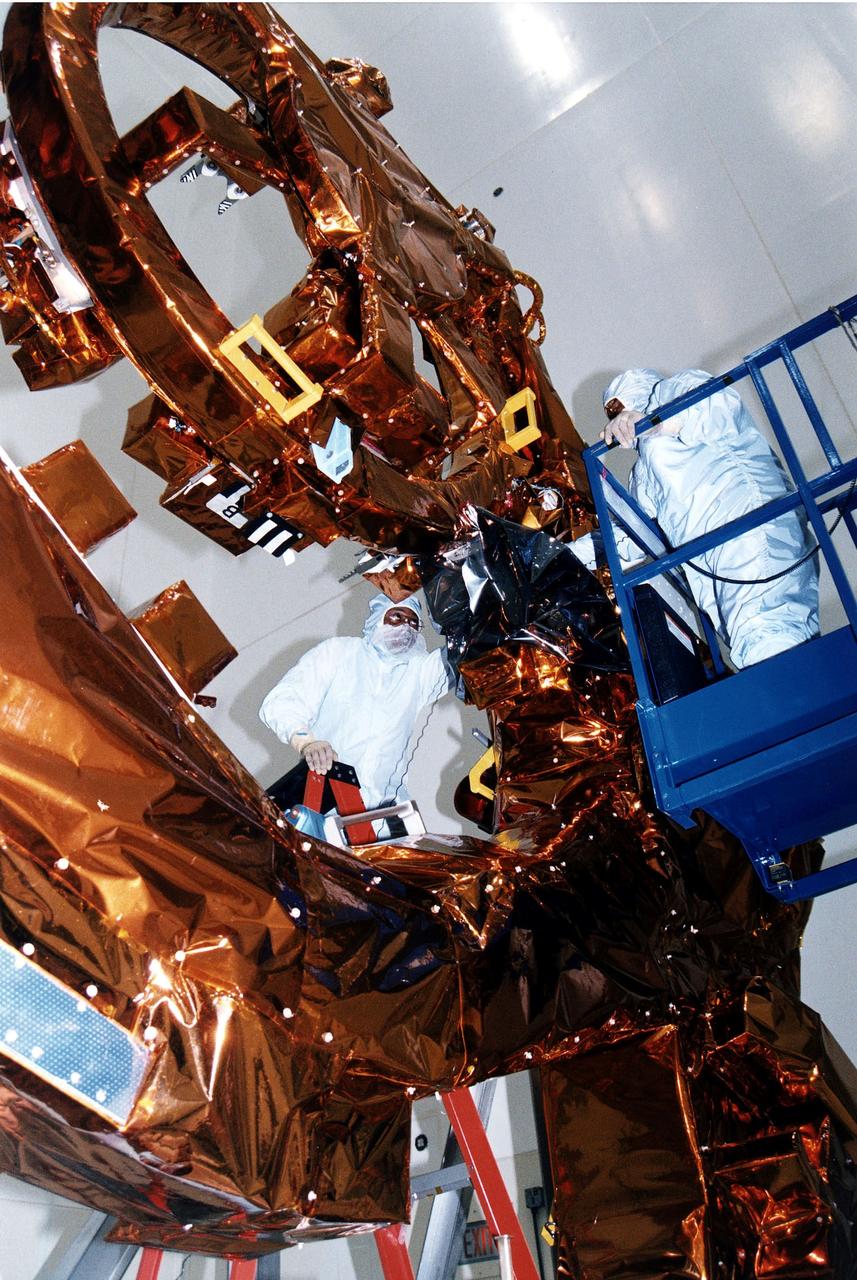
KENNEDY SPACE CENTER, FLA. - Workers in KSC's Vertical Processing Facility make final adjustments to the Flight Support System (FSS) for STS-82, the second Hubble Space Telescope servicing mission. The FSS is reusable flight hardware that provides the mechanical, structural and electrical interfaces between HST, the space support equipment and the orbiter for payload retrieval and on-orbit servicing. Liftoff aboard Discovery is targeted Feb. 11 with a crew of seven.
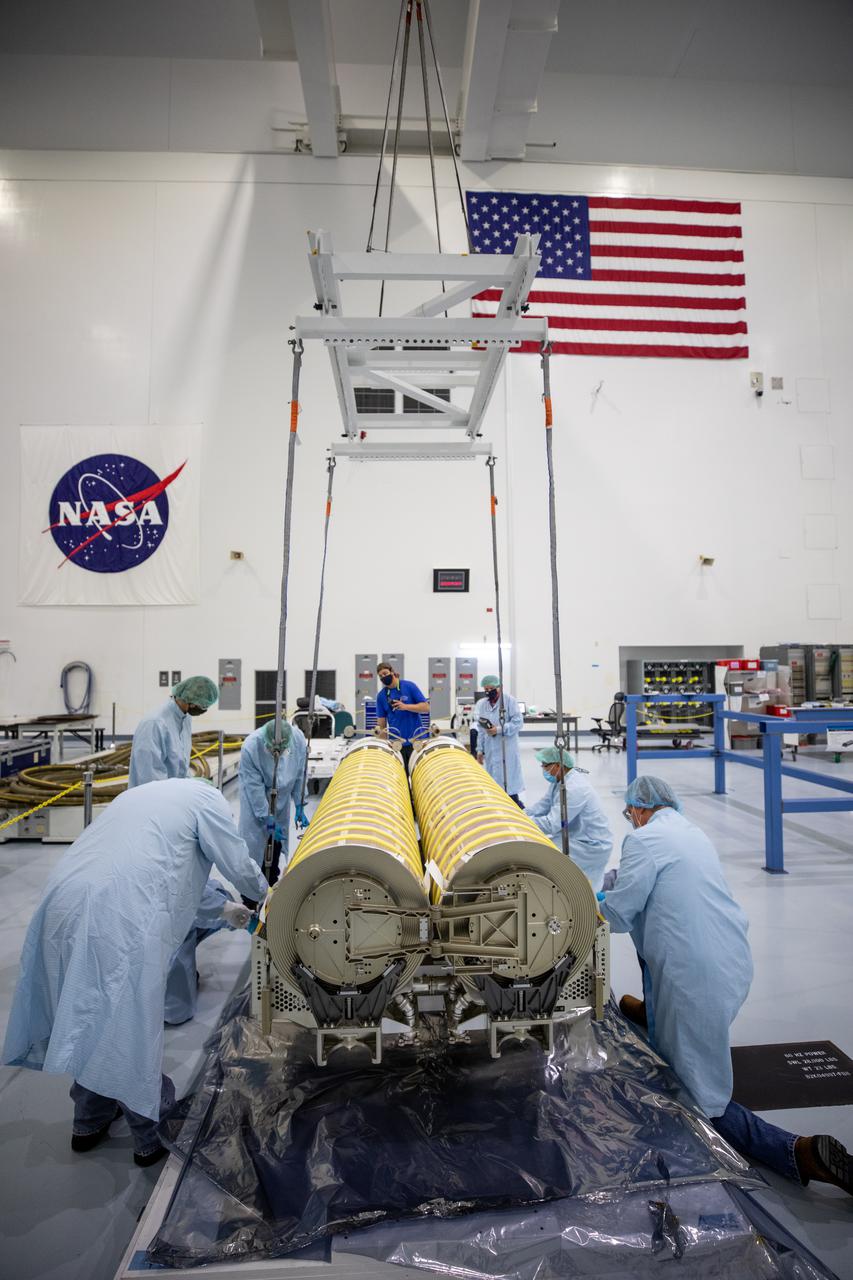
NASA and Boeing workers move solar arrays for the International Space Station to flight support equipment in the high bay of the Space Station Processing Facility at NASA’s Kennedy Space Center in Florida on April 2, 2021. The 63- by- 20-foot solar arrays will launch to the International Space Station later this year. They are the first two of six new solar arrays that in total will produce more than 120 kilowatts of electricity from the Sun’s energy, enough to power more than 40 average U.S. homes. Combined with the eight original, larger arrays, this advanced hardware will provide 215 kilowatts of energy, a 20 to 30 percent increase in power, helping maximize the space station’s capabilities for years to come. The arrays will produce electricity to sustain the station’s systems and equipment, plus augment the electricity available to continue a wide variety of public and private experiments and research in the microgravity environment of low-Earth orbit.
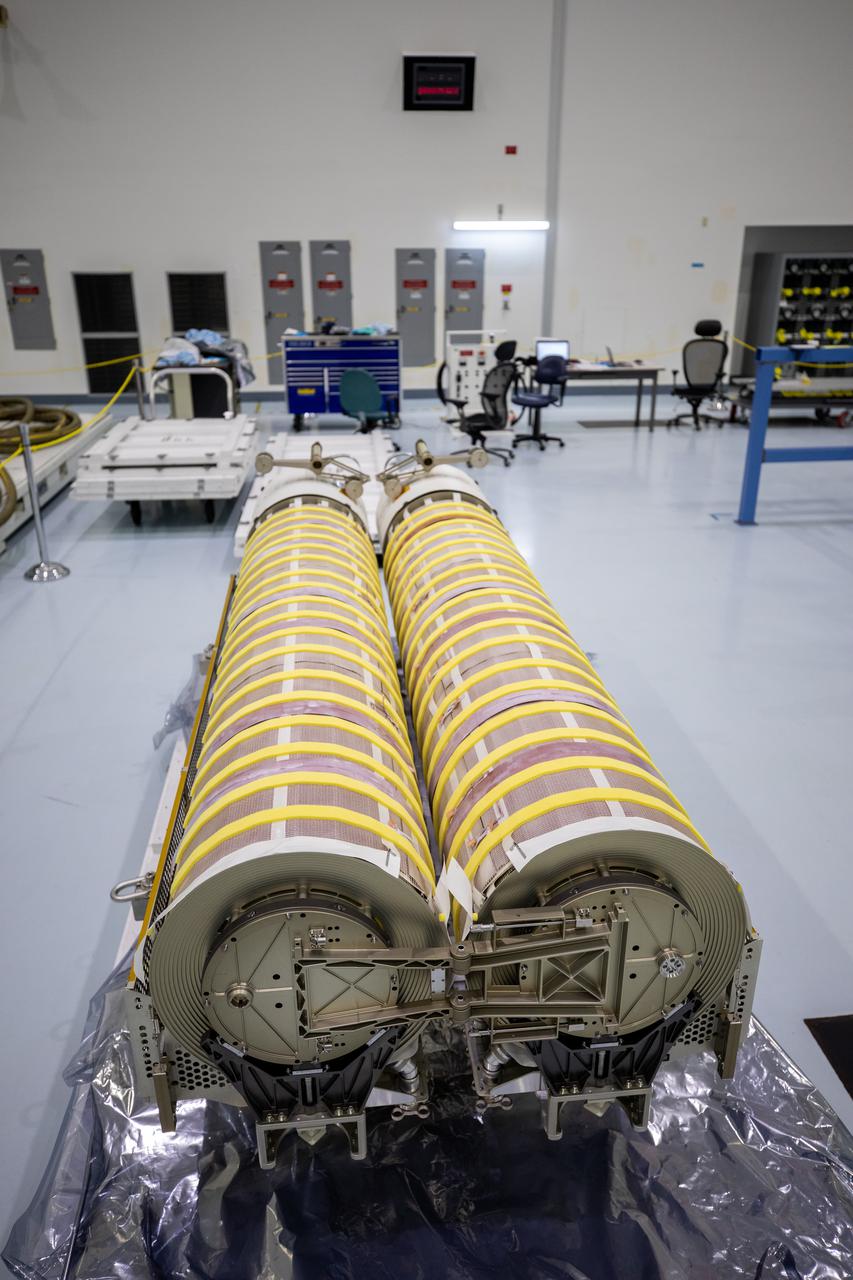
In view are the first two of six solar arrays shortly before NASA and Boeing workers began lifting them into flight support equipment the Space Station Processing Facility at NASA’s Kennedy Space Center in Florida on April 2, 2021. The 63- by- 20-foot solar arrays will launch to the International Space Station later this year. The six new solar arrays in total will produce more than 120 kilowatts of electricity from the Sun’s energy, enough to power more than 40 average U.S. homes. Combined with the eight original, larger arrays, this advanced hardware will provide 215 kilowatts of energy, a 20 to 30 percent increase in power, helping maximize the space station’s capabilities for years to come. The arrays will produce electricity to sustain the station’s systems and equipment, plus augment the electricity available to continue a wide variety of public and private experiments and research in the microgravity environment of low-Earth orbit.
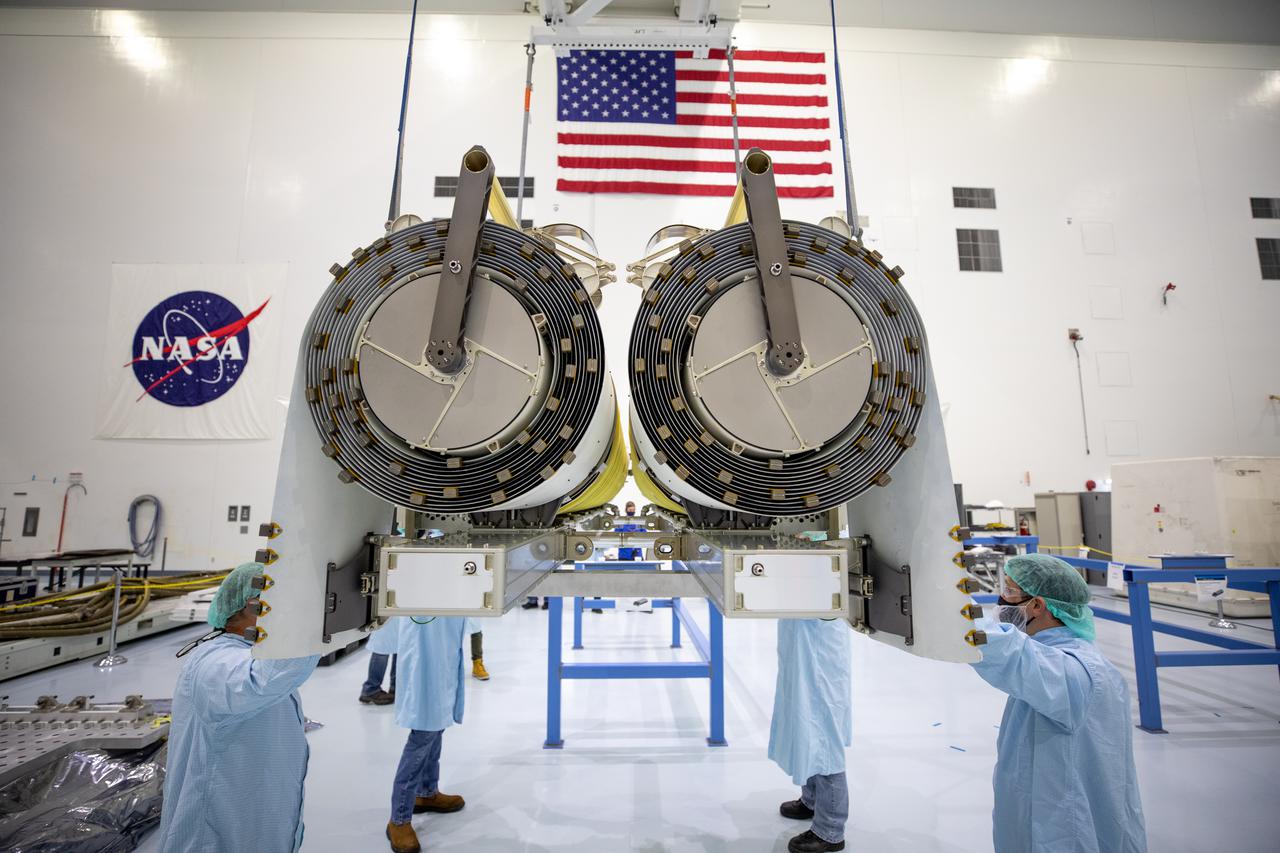
NASA and Boeing workers help position the solar arrays onto flight support equipment inside the high bay of the Space Station Processing Facility at NASA’s Kennedy Space Center in Florida on April 2, 2021. The 63- by- 20-foot solar arrays will launch to the International Space Station later this year. They are the first two of six new solar arrays that in total will produce more than 120 kilowatts of electricity from the Sun’s energy, enough to power more than 40 average U.S. homes. Combined with the eight original, larger arrays, this advanced hardware will provide 215 kilowatts of energy, a 20 to 30 percent increase in power, helping maximize the space station’s capabilities for years to come. The arrays will produce electricity to sustain the station’s systems and equipment, plus augment the electricity available to continue a wide variety of public and private experiments and research in the microgravity environment of low-Earth orbit.
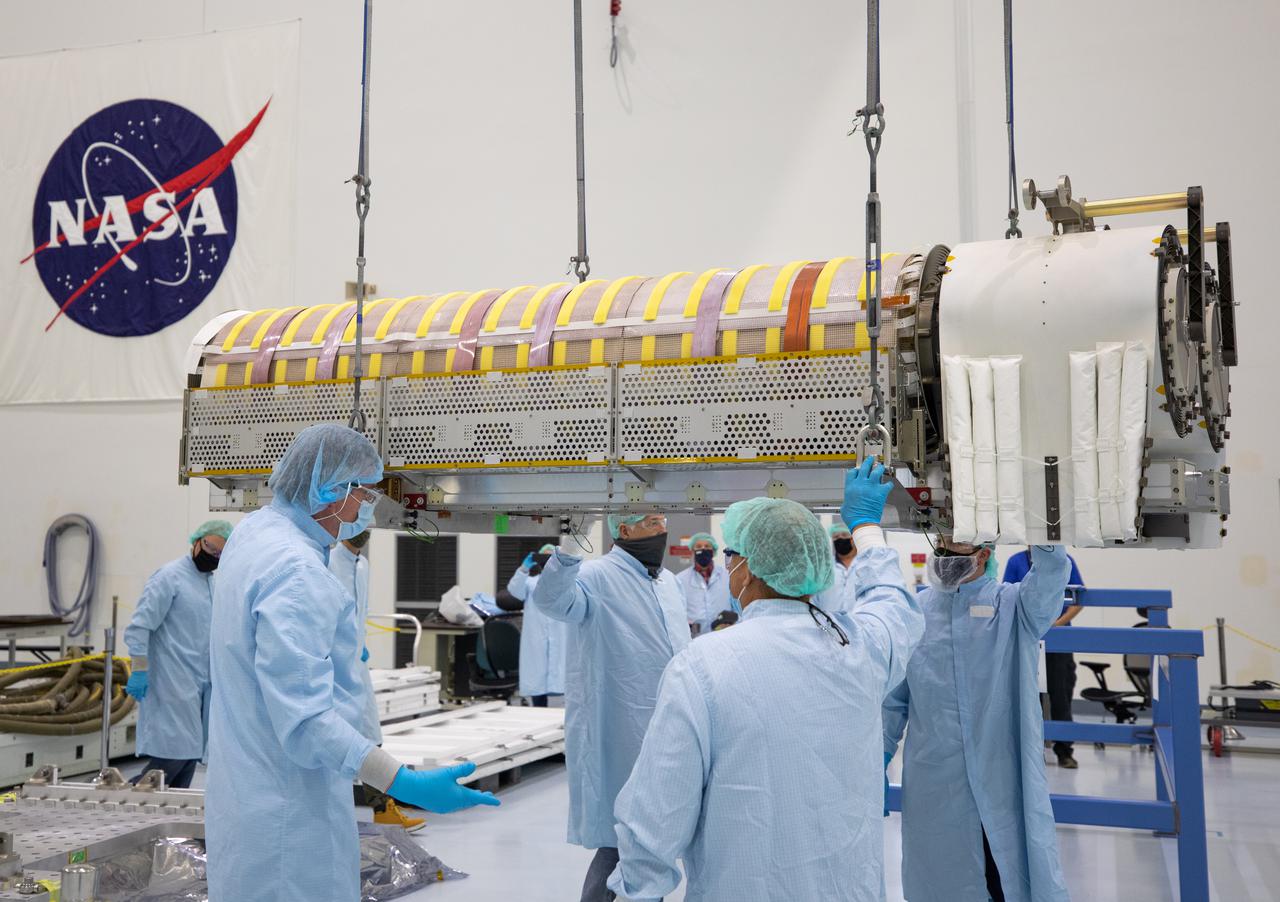
NASA and Boeing workers lift solar arrays into flight support equipment on April 2, 2021, in the Space Station Processing Facility at NASA’s Kennedy Space Center in Florida. The 63- by- 20-foot solar arrays will launch to the International Space Station later this year. They are the first two of six new solar arrays that in total will produce more than 120 kilowatts of electricity from the Sun’s energy, enough to power more than 40 average U.S. homes. Combined with the eight original, larger arrays, this advanced hardware will provide 215 kilowatts of energy, a 20 to 30 percent increase in power, helping maximize the space station’s capabilities for years to come. The arrays will produce electricity to sustain the station’s systems and equipment, plus augment the electricity available to continue a wide variety of public and private experiments and research in the microgravity environment of low-Earth orbit. Most of the station systems, including its batteries, scientific equipment racks, and communications equipment have been upgraded since humans began a continuous presence on the orbiting laboratory in November 2000. For more than two decades, astronauts have lived and worked on this unique orbiting lab, supporting scientific research that has led to numerous discoveries that benefit people on Earth and prepare for future Artemis missions to the Moon and beyond.
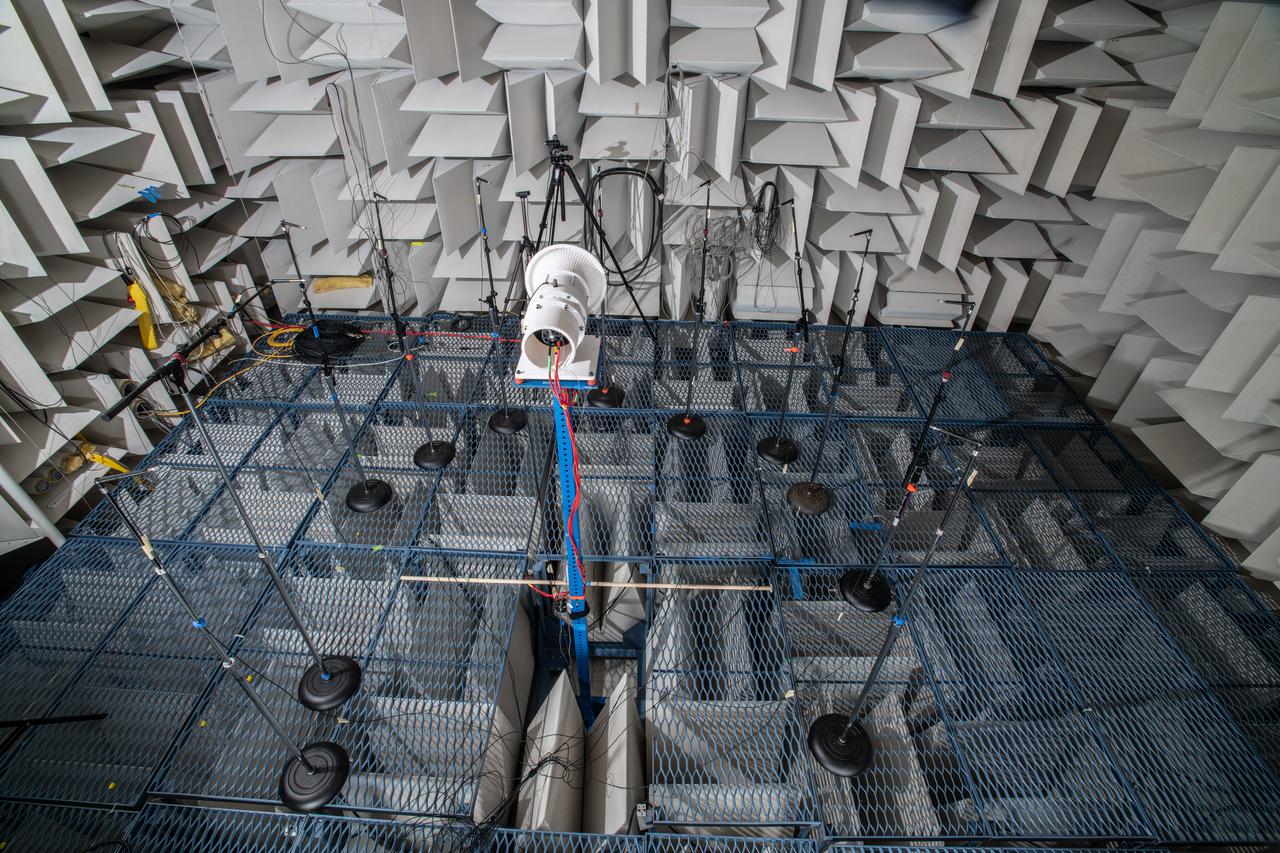
The Quiet Electric Engine V1 (QUEEN V1) experiment that was performed in the NASA GRC Acoustical Testing Laboratory (ATL). Equipment is installed in the anechoic chamber and in the adjacent control room. In response to the pervasive health and environmental problems associated with aviation noise and air pollution, NASA’s Quiet Electric Engine (QUEEN) team is working to increase the peace and quiet in the world by researching ways to make engines for large single-aisle aircraft safer, cleaner, and quieter.

The Quiet Electric Engine V1 (QUEEN V1) experiment that was performed in the NASA GRC Acoustical Testing Laboratory (ATL). Equipment is installed in the anechoic chamber and in the adjacent control room. In response to the pervasive health and environmental problems associated with aviation noise and air pollution, NASA’s Quiet Electric Engine (QUEEN) team is working to increase the peace and quiet in the world by researching ways to make engines for large single-aisle aircraft safer, cleaner, and quieter.
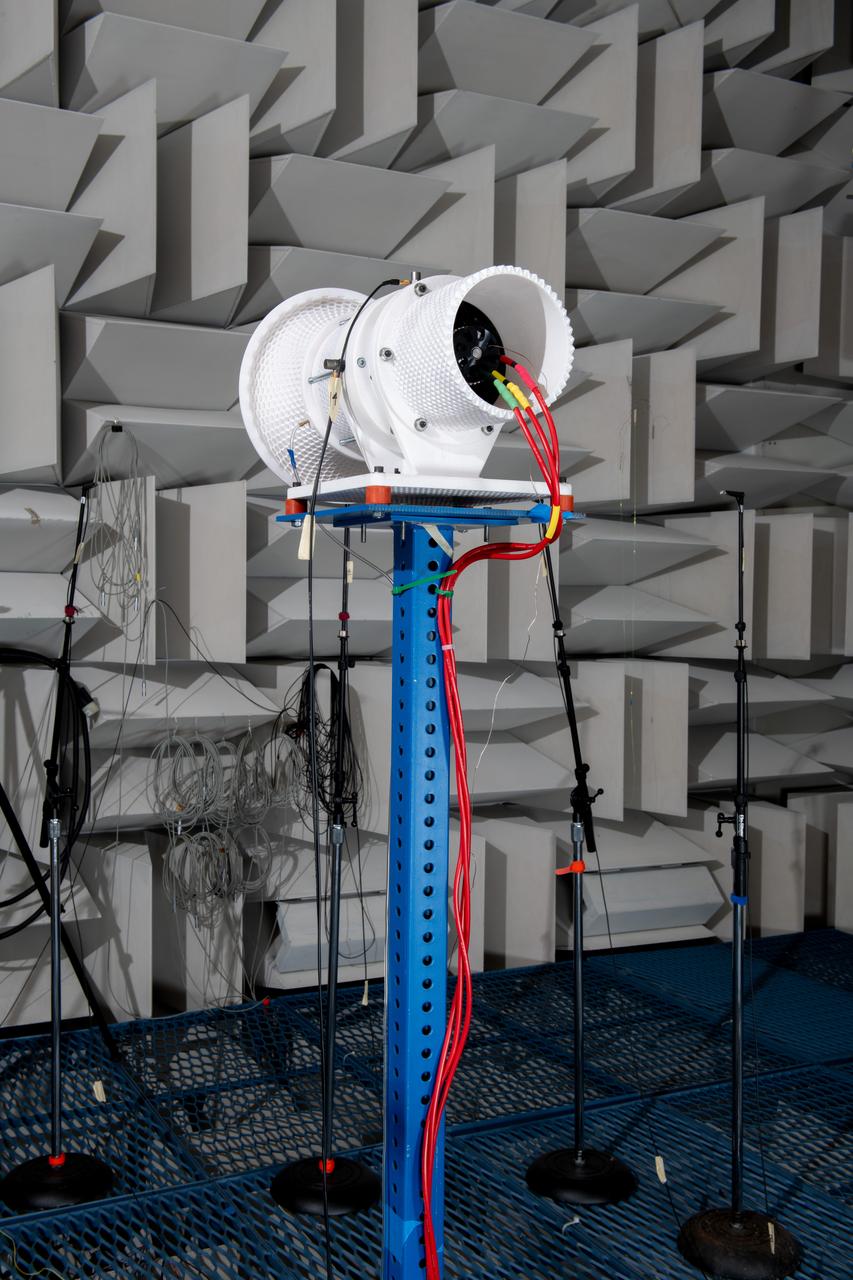
The Quiet Electric Engine V1 (QUEEN V1) experiment that was performed in the NASA GRC Acoustical Testing Laboratory (ATL). Equipment is installed in the anechoic chamber and in the adjacent control room. In response to the pervasive health and environmental problems associated with aviation noise and air pollution, NASA’s Quiet Electric Engine (QUEEN) team is working to increase the peace and quiet in the world by researching ways to make engines for large single-aisle aircraft safer, cleaner, and quieter.
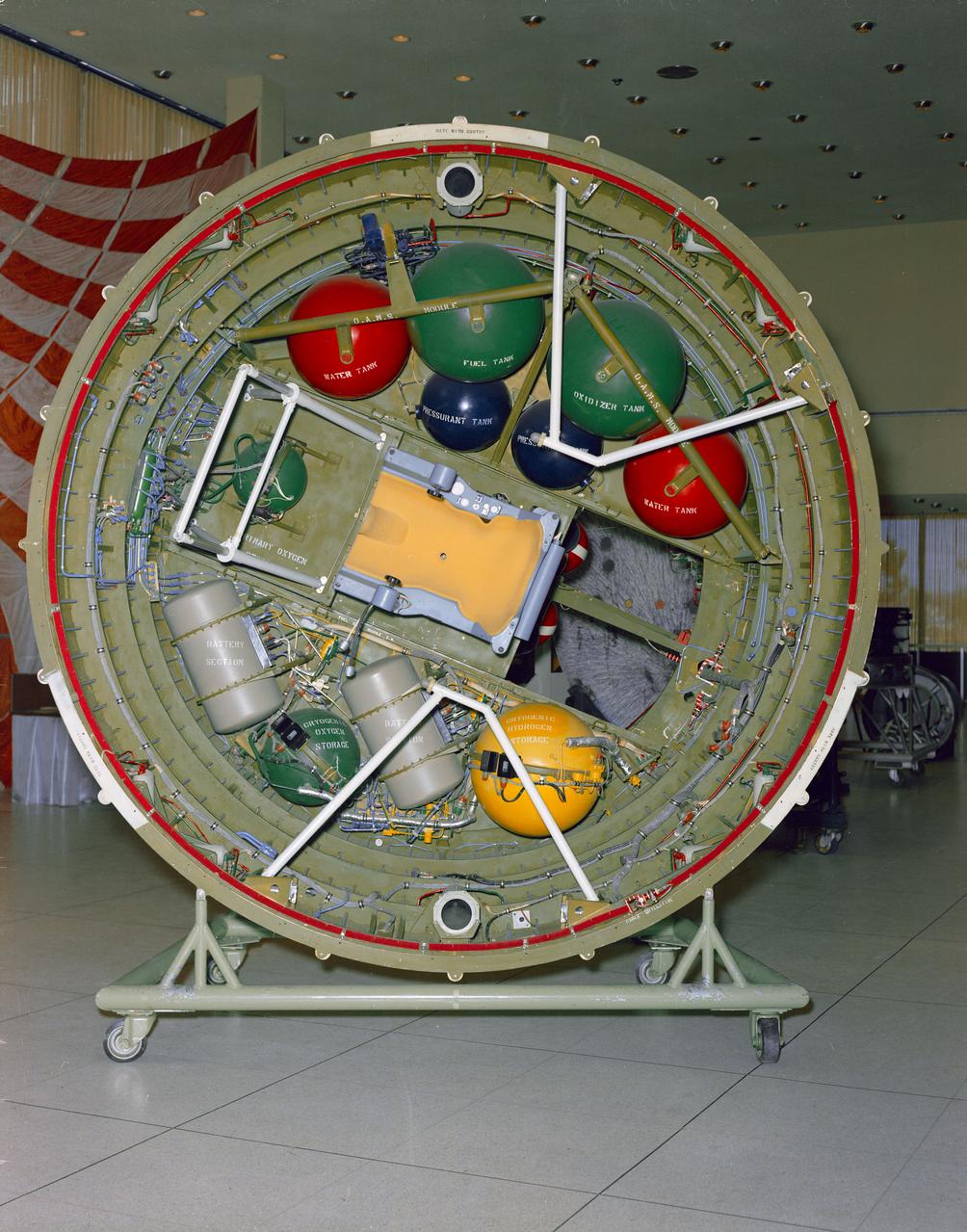
S66-22686 (March 1966) --- Mock-up of the adapter equipment section to be used on the Gemini-9 spaceflight. This section provides volume and attach points for several system modules, including Orbit Attitude Maneuver System, Environmental Control System primary oxygen supply, batteries, coolant, and electrical and electric components. This section will also hold the Astronaut Maneuvering Unit (AMU) backpack (center). Photo credit: NASA
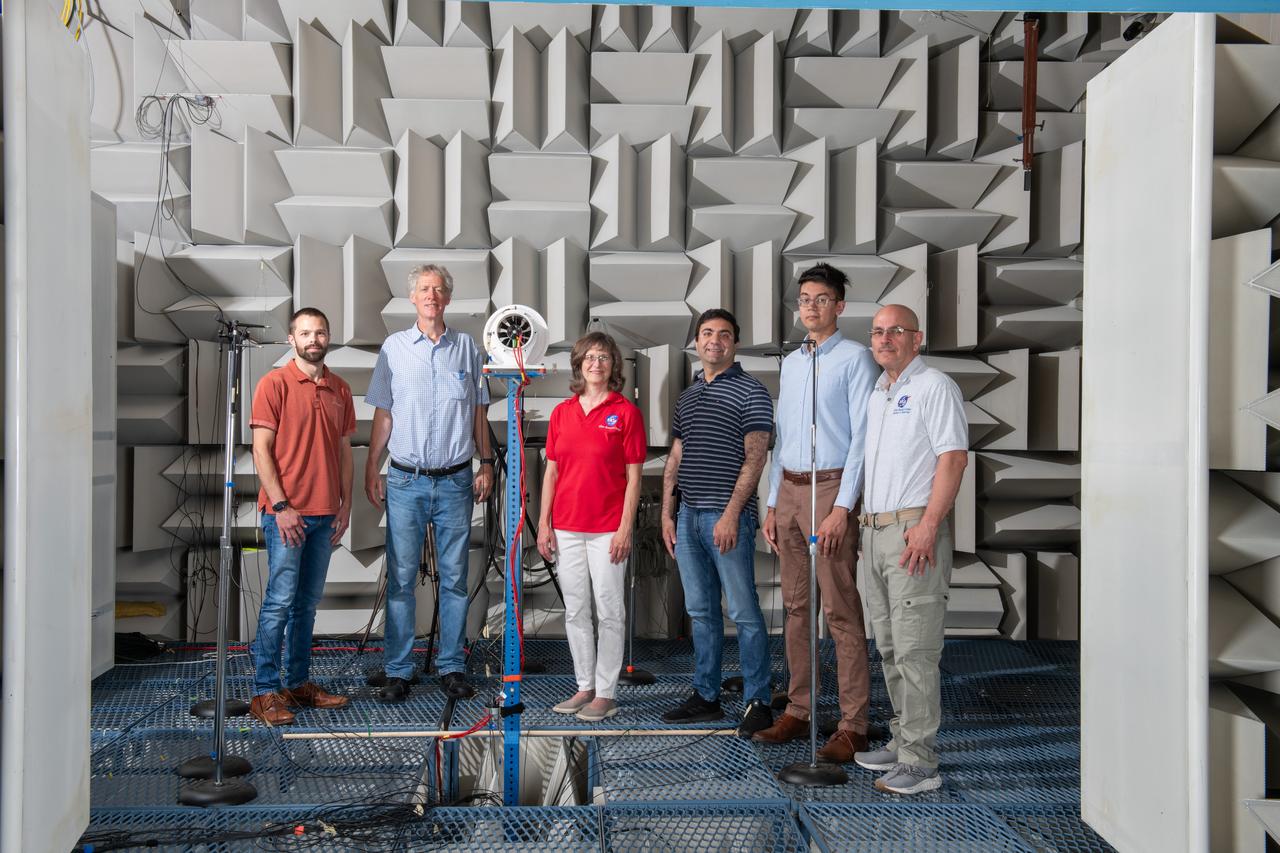
The Quiet Electric Engine V1 (QUEEN V1) experiment that was performed in the NASA GRC Acoustical Testing Laboratory (ATL). Equipment is installed in the anechoic chamber and in the adjacent control room. In response to the pervasive health and environmental problems associated with aviation noise and air pollution, NASA’s Quiet Electric Engine (QUEEN) team is working to increase the peace and quiet in the world by researching ways to make engines for large single-aisle aircraft safer, cleaner, and quieter.
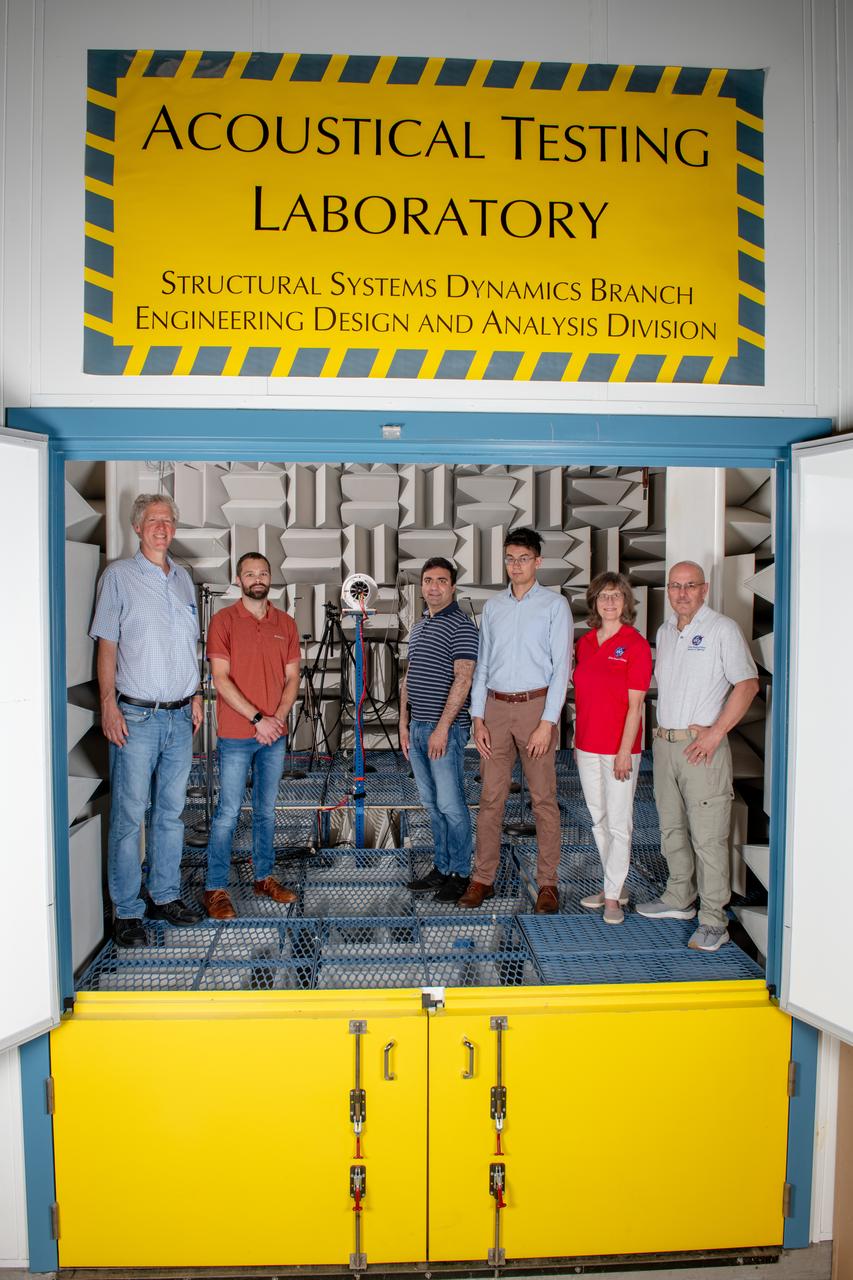
The Quiet Electric Engine V1 (QUEEN V1) experiment that was performed in the NASA GRC Acoustical Testing Laboratory (ATL). Equipment is installed in the anechoic chamber and in the adjacent control room. In response to the pervasive health and environmental problems associated with aviation noise and air pollution, NASA’s Quiet Electric Engine (QUEEN) team is working to increase the peace and quiet in the world by researching ways to make engines for large single-aisle aircraft safer, cleaner, and quieter.
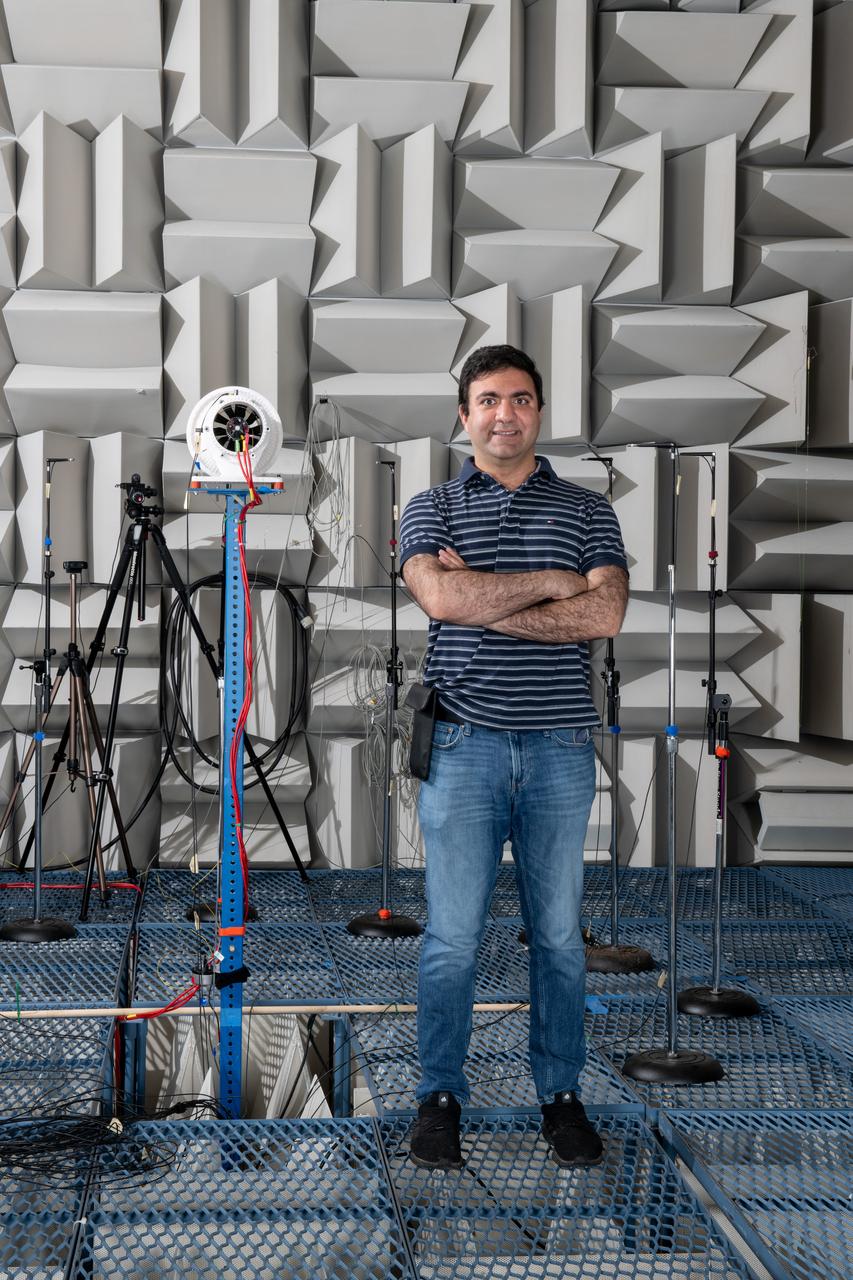
The Quiet Electric Engine V1 (QUEEN V1) experiment that was performed in the NASA GRC Acoustical Testing Laboratory (ATL). Equipment is installed in the anechoic chamber and in the adjacent control room. In response to the pervasive health and environmental problems associated with aviation noise and air pollution, NASA’s Quiet Electric Engine (QUEEN) team is working to increase the peace and quiet in the world by researching ways to make engines for large single-aisle aircraft safer, cleaner, and quieter. Posing with the experiment is aerospace engineer, Jonathan M. Goodman.
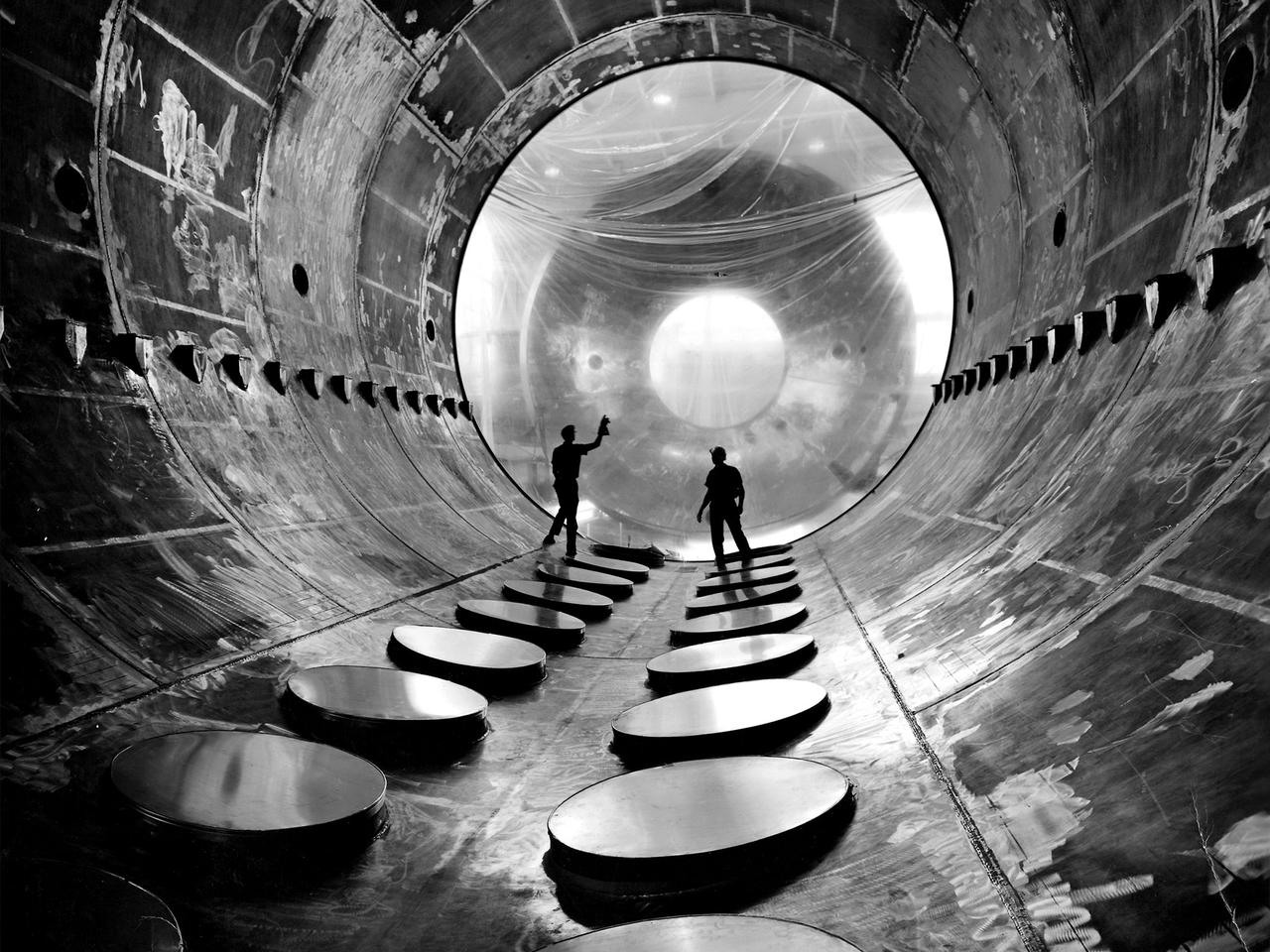
Interior of the 20-foot diameter vacuum tank at the NASA Lewis Research Center’s Electric Propulsion Laboratory. Lewis researchers had been studying different electric rocket propulsion methods since the mid-1950s. Harold Kaufman created the first successful ion engine, the electron bombardment ion engine, in the early 1960s. These engines used electric power to create and accelerate small particles of propellant material to high exhaust velocities. Electric engines have a very small thrust, but can operate for long periods of time. The ion engines are often clustered together to provide higher levels of thrust. The Electric Propulsion Laboratory, which began operation in 1961, contained two large vacuum tanks capable of simulating a space environment. The tanks were designed especially for testing ion and plasma thrusters and spacecraft. The larger 25-foot diameter tank included a 10-foot diameter test compartment to test electric thrusters with condensable propellants. The portals along the chamber floor lead to the massive exhauster equipment that pumped out the air to simulate the low pressures found in space.
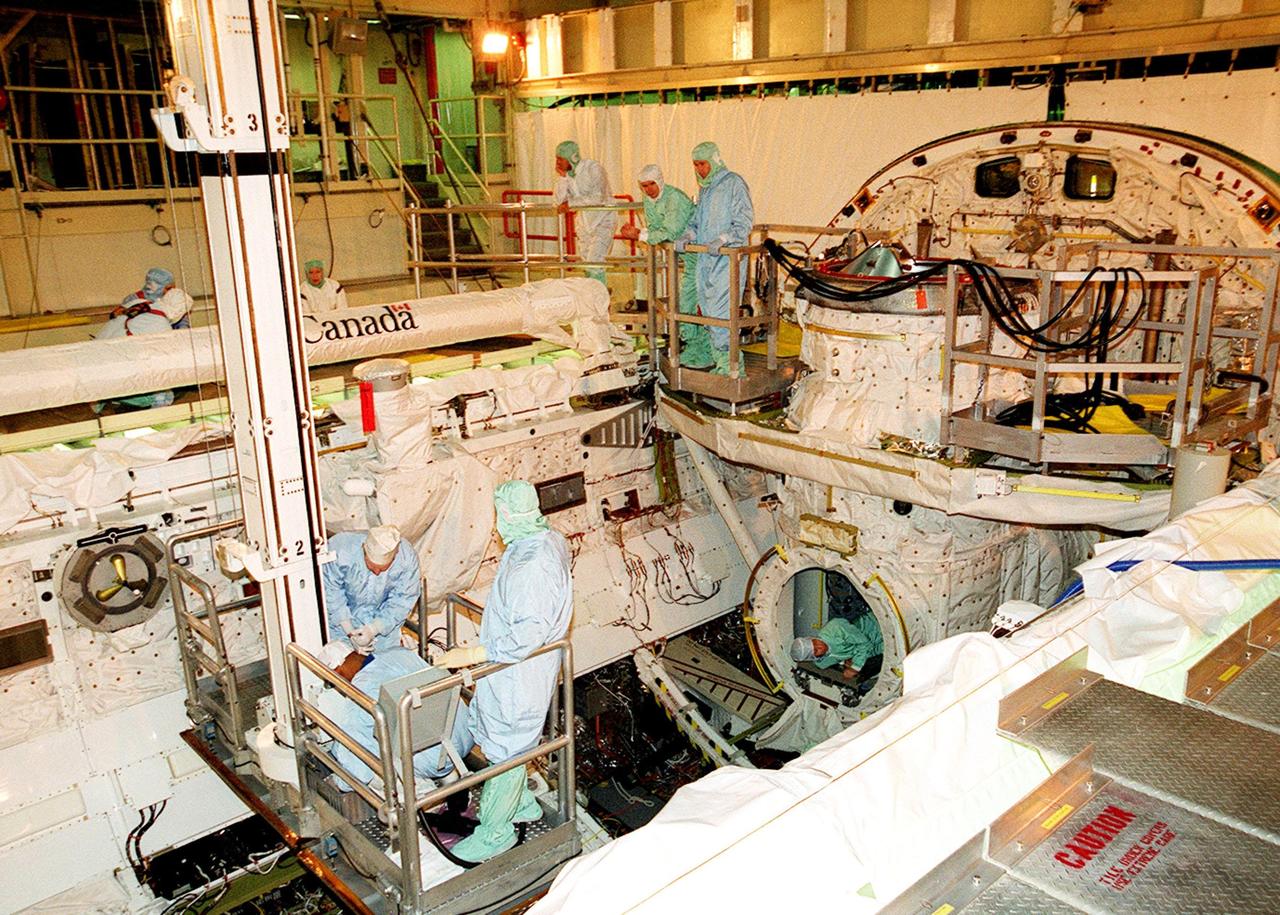
KENNEDY SPACE CENTER, FLA. -- The STS-98 crew looks over components of the equipment already installed in the payload bay of orbiter Atlantis, which is in the Orbiter Processing Facility bay 3. The crew is at KSC for Crew Equipment Interface Test activities. Launch on mission STS-98 is scheduled for Jan. 18, 2001. It will be transporting the U.S. Lab, Destiny, to the International Space Station with five system racks already installed inside of the module. After delivery of electronics in the lab, electrically powered attitude control for Control Moment Gyroscopes will be activated
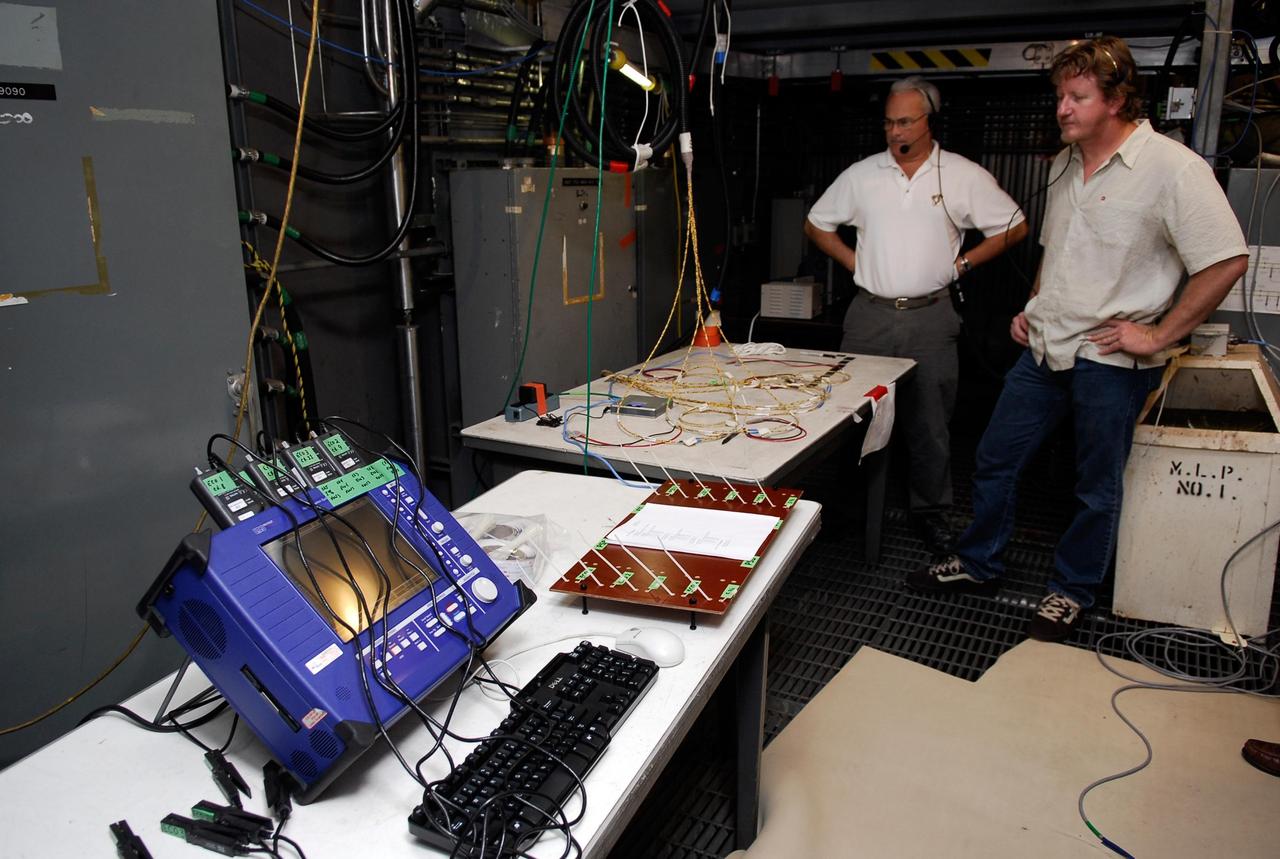
KENNEDY SPACE CENTER, FLA. -- On Launch Pad 39A, technicians overlook wires and monitoring equipment that will be used to validate the circuit on the test wiring from the electrical harness in space shuttle Atlantis' aft main engine compartment connected with the engine cut-off system. The test wiring leads from the tail mast on the mobile launcher platform to the interior where the Time Domain Reflectometry, or TDR, test equipment will be located to test the sensor system. Photo credit: NASA/Kim Shiflett
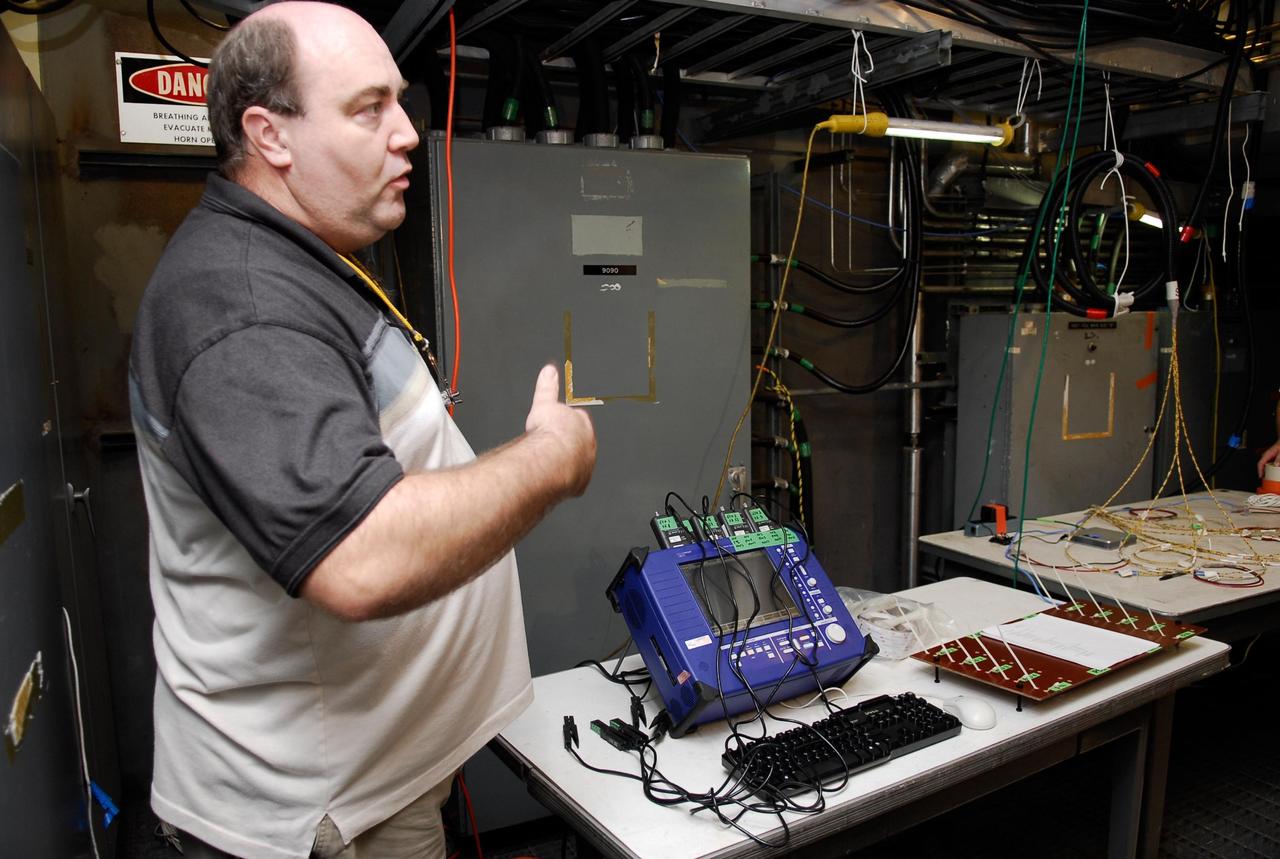
KENNEDY SPACE CENTER, FLA. -- On Launch Pad 39A, a technician explains how test equipment -- the blue monitor -- will be used to validate the circuit on test wiring from the electrical harness in space shuttle Atlantis' aft main engine compartment connected with the engine cut-off system. The test wiring leads from the tail mast on the mobile launcher platform to the interior where the Time Domain Reflectometry, or TDR, test equipment will be located to test the sensor system. Photo credit: NASA/Kim Shiflett
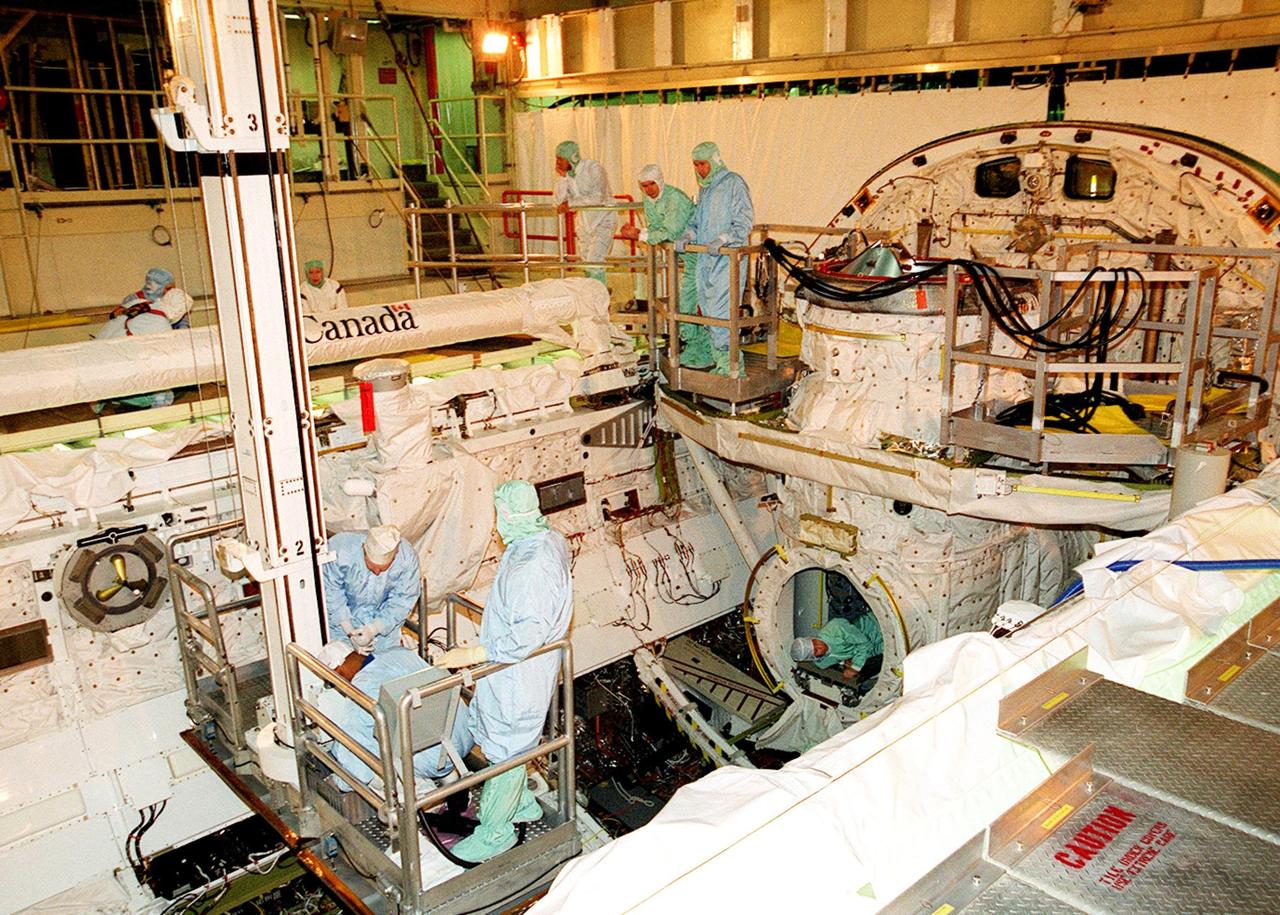
KENNEDY SPACE CENTER, FLA. -- The STS-98 crew looks over components of the equipment already installed in the payload bay of orbiter Atlantis, which is in the Orbiter Processing Facility bay 3. The crew is at KSC for Crew Equipment Interface Test activities. Launch on mission STS-98 is scheduled for Jan. 18, 2001. It will be transporting the U.S. Lab, Destiny, to the International Space Station with five system racks already installed inside of the module. After delivery of electronics in the lab, electrically powered attitude control for Control Moment Gyroscopes will be activated
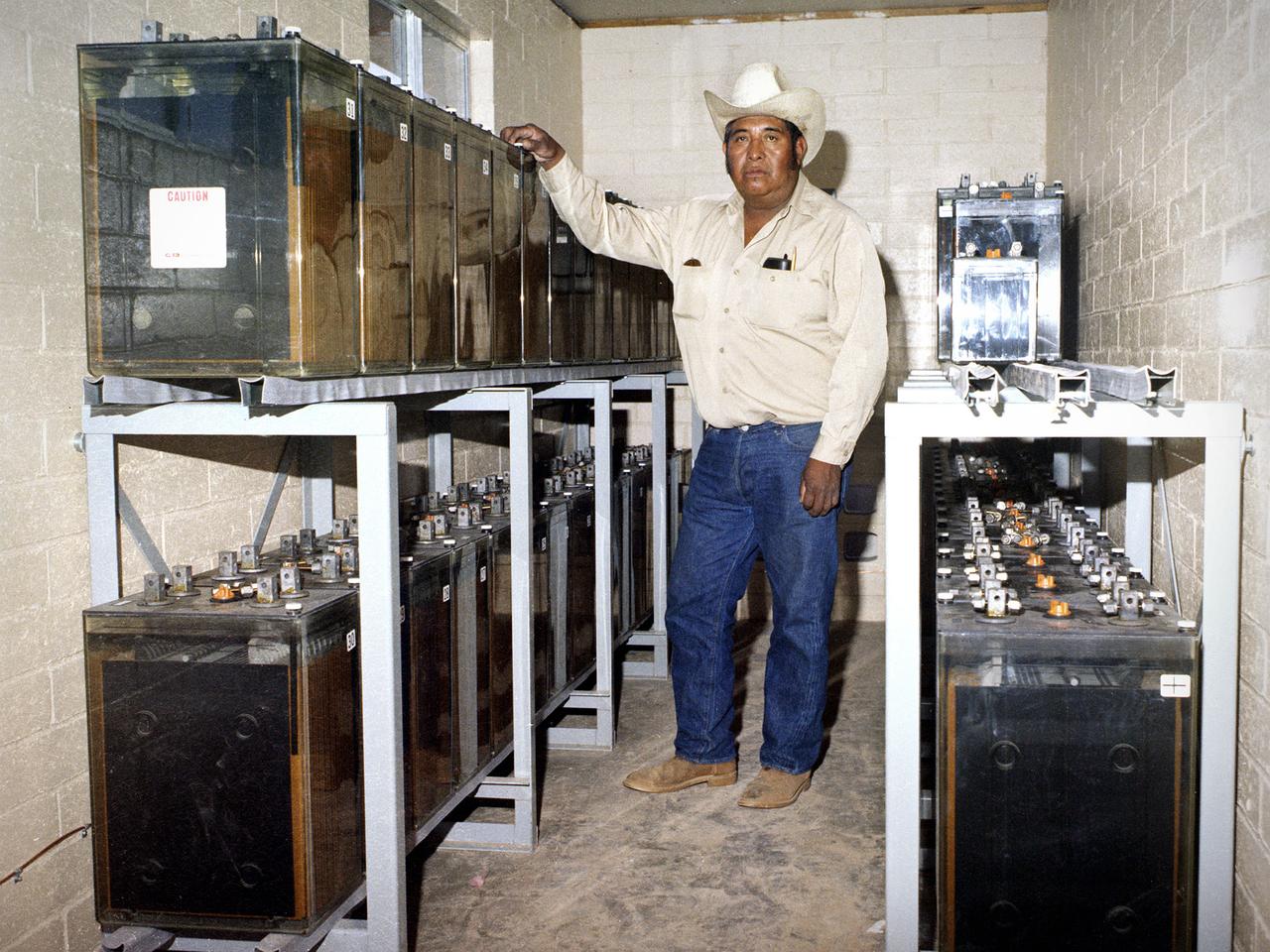
National Aeronautics and Space Administration (NASA) Lewis Research Center. NASA signed an agreement with the Papago tribe in May 1978 to provide the village with solar-generated electricity within the year. The project was funded by the Department of Energy and managed by NASA Lewis. Lewis provided all of the equipment and technical assistance while the tribe’s construction team built the arrays and support equipment, seen here. The 3.5-kilowatt system was modest in scope, but resulted in the first solar electric village. The system provided power to operate a refrigerator, freezer, washing machine, and water pump for the village and lights in each of the 16 homes. The system was activated on December 16, 1978. During the next year officials from around the world travelled to Schuchuli to ascertain if the system was applicable to their areas. The major television networks and over 100 publications covered the story. Less than one percent of the cells failed during the first year of operation.
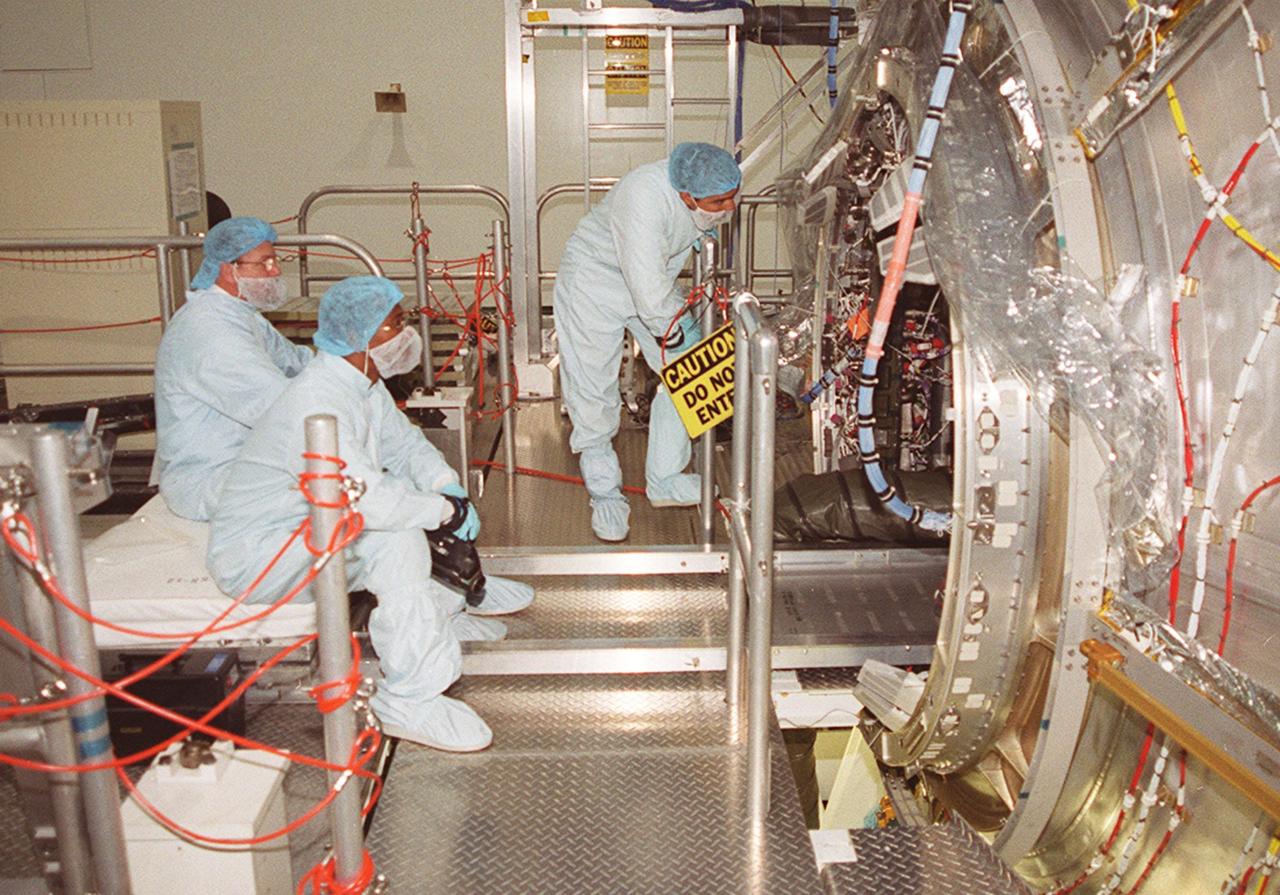
In the Space Station Processing Facility, workers at left watch while members of the STS-98 crew check out equipment inside the U.S. Lab, Destiny (at right). The crew comprises Commander Ken Cockrell, Pilot Mark Polansky and Mission Specialists Robert Curbeam, Thomas Jones and Marsha Ivins. They are taking part in Crew Equipment Interface Test activities, becoming familiar with equipment they will be handling during the mission. The mission will be transporting the Lab to the International Space Station with five system racks already installed inside of the module. With delivery of electronics in the lab, electrically powered attitude control for Control Moment Gyroscopes will be activated. The STS-98 launch is scheduled for Jan. 18, 2001

In the Space Station Processing Facility, STS-98 Mission Specialist Marsha Ivins wields a tool on part of the U.S. Lab, Destiny. The crew is checking out equipment inside the lab as part of Crew Equipment Interface Test activities, becoming familiar with equipment it will be handling during the mission. Others in the crew are Commander Ken Cockrell, Pilot Mark Polansky and Mission Specialists Robert Curbeam and Thomas Jones. The mission will be transporting the Lab to the International Space Station with five system racks already installed inside of the module. With delivery of electronics in the lab, electrically powered attitude control for Control Moment Gyroscopes will be activated. The STS-98 launch is scheduled for Jan. 18, 2001
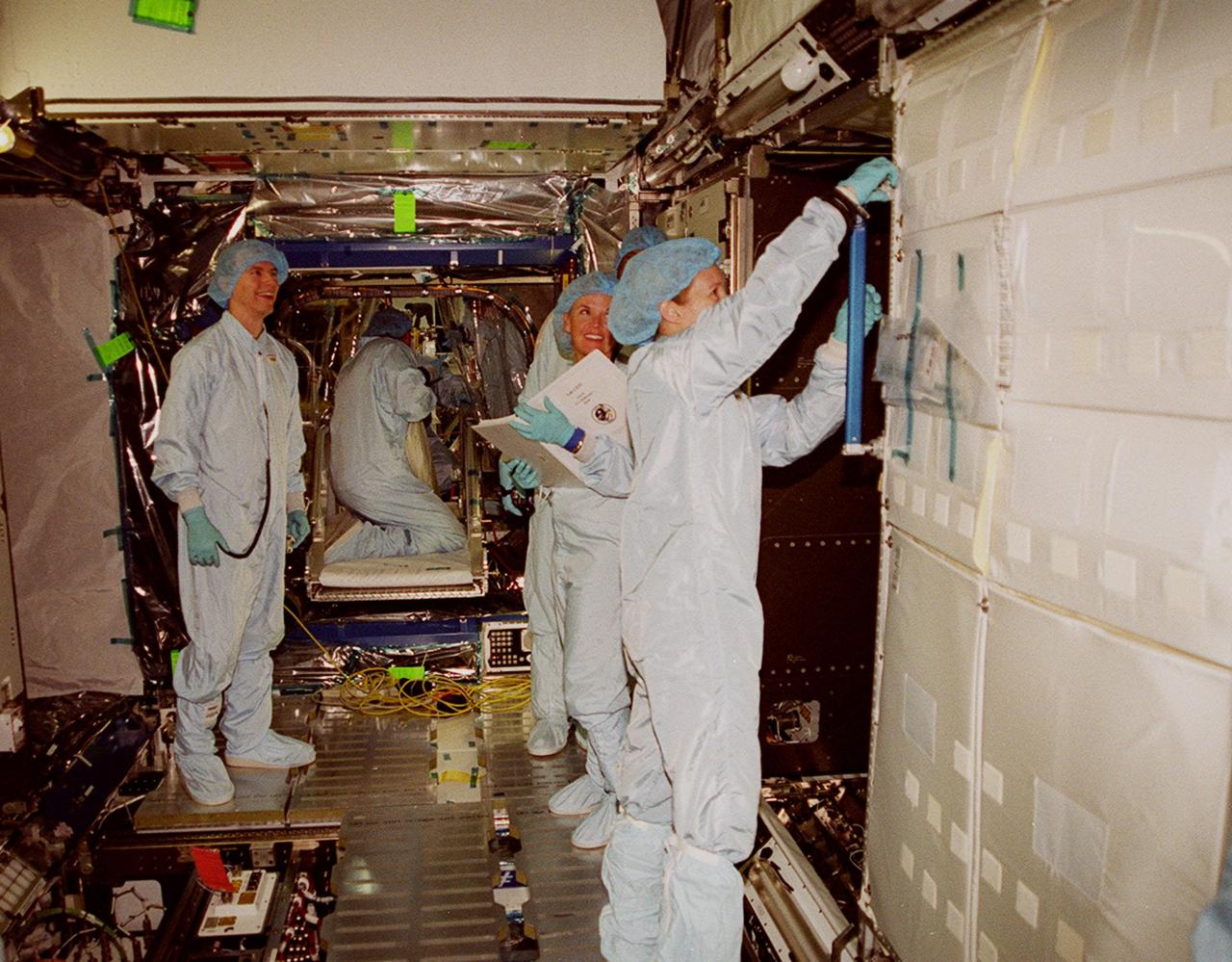
In the Space Station Processing Facility, STS-98 Mission Specialist Marsha Ivins maneuvers a part of the U.S. Lab, Destiny. The crew is checking out equipment inside the lab as part of Crew Equipment Interface Test activities, becoming familiar with equipment it will be handling during the mission. Others in the crew are Commander Ken Cockrell, Pilot Mark Polansky and Mission Specialists Robert Curbeam and Thomas Jones. The mission will be transporting the Lab to the International Space Station with five system racks already installed inside of the module. With delivery of electronics in the lab, electrically powered attitude control for Control Moment Gyroscopes will be activated. The STS-98 launch is scheduled for Jan. 18, 2001
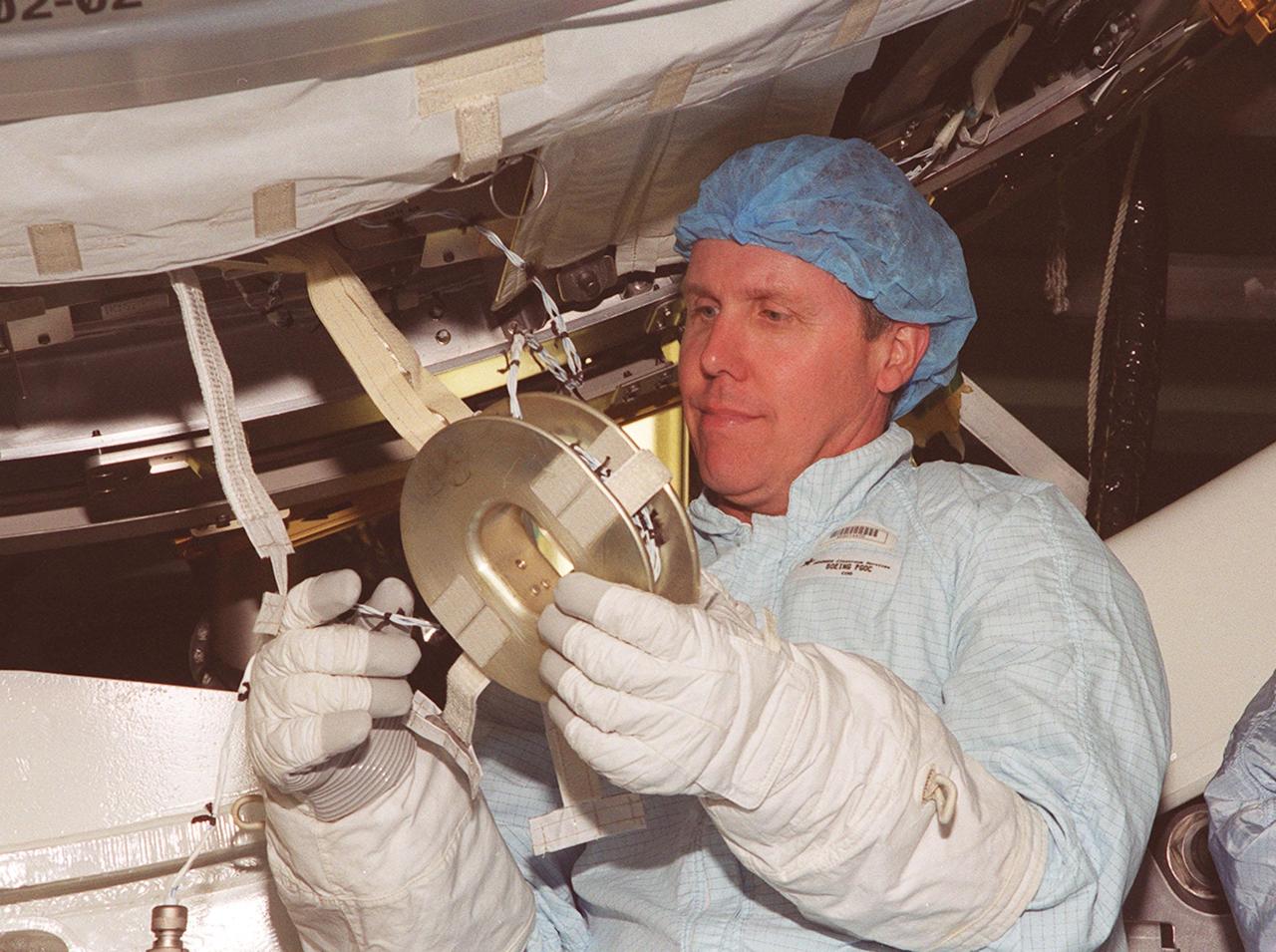
STS-98 Mission Specialist Thomas Jones practices handling a piece of equipment on the U.S. Lab, Destiny, while wearing the gloves he will wear in space. Jones and other crew members are taking part in Crew Equipment Interface Test activities to become familiar with equipment they will be handling during the mission. With launch scheduled for Jan. 18, 2001, the STS-98 mission will be transporting the Lab to the International Space Station with five system racks already installed inside of the module. After delivery of electronics in the lab, electrically powered attitude control for Control Moment Gyroscopes will be activated
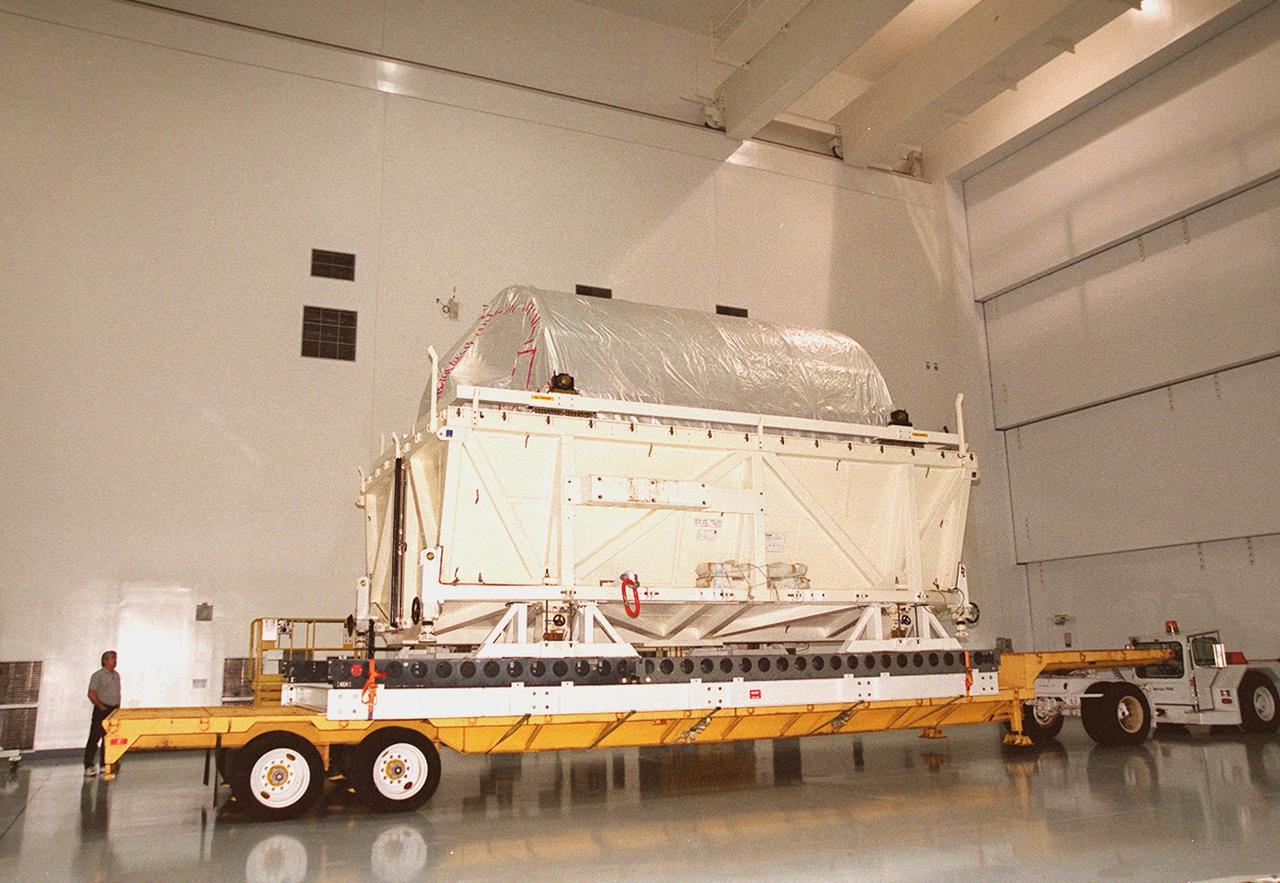
The lid is off the shipping container with the Multi-Purpose Logistics Module Donatello inside. It sits on a transporter inside the Space Station Processing Facility. In the SSPF, Donatello will undergo processing by the payload test team, including integrated electrical tests with other Station elements in the SSPF, leak tests, electrical and software compatibility tests with the Space Shuttle (using the Cargo Integrated Test equipment) and an Interface Verification Test once the module is installed in the Space Shuttle’s payload bay at the launch pad. The most significant mechanical task to be performed on Donatello in the SSPF is the installation and outfitting of the racks for carrying the various experiments and cargo. Donatello will be launched on mission STS-130, currently planned for September 2004
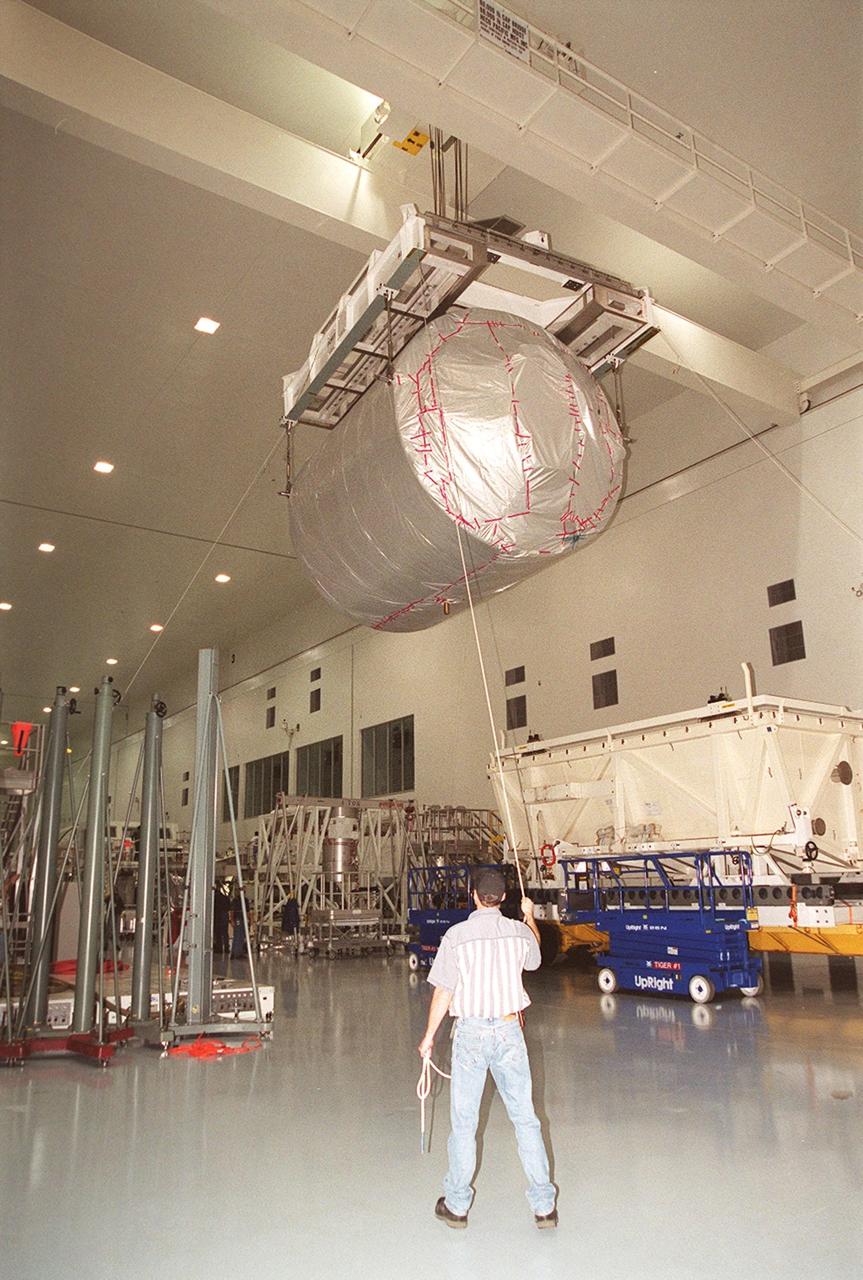
In the Space Station Processing Facility, workers help guide the Multi-Purpose Logistics Module Donatello as it moves the length of the SSPF toward a workstand. In the SSPF, Donatello will undergo processing by the payload test team, including integrated electrical tests with other Station elements in the SSPF, leak tests, electrical and software compatibility tests with the Space Shuttle (using the Cargo Integrated Test equipment) and an Interface Verification Test once the module is installed in the Space Shuttle’s payload bay at the launch pad. The most significant mechanical task to be performed on Donatello in the SSPF is the installation and outfitting of the racks for carrying the various experiments and cargo. Donatello will be launched on mission STS-130, currently planned for September 2004
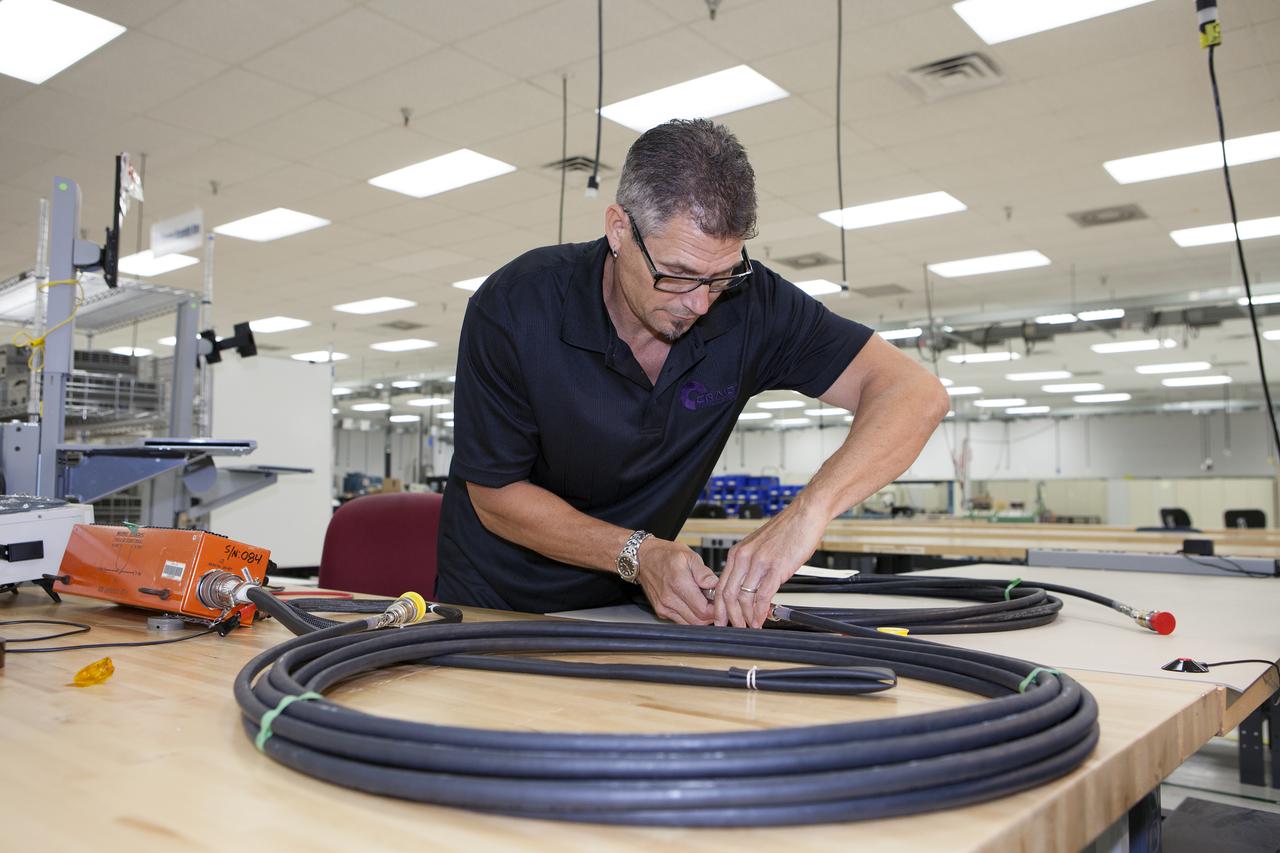
CAPE CANAVERAL, Fla. – At the Aerospace and Defense Manufacturing Center in Cape Canaveral, Fla., Craig Technologies Electrical Technician Joey Charvet checks an electrical cable in the Avionics Laboratory of the 161,000-square-foot facility. In June of last year, NASA signed a partnership agreement with Craig Technologies to maintain an inventory of unique processing and manufacturing equipment for future mission support at the agency's Kennedy Space Center. The Cape Canaveral, Fla., facility, formerly known as the NASA Shuttle Logistics Depot NSLD, is now the Aerospace and Defense Manufacturing Center ADMC. Photo credit: NASA_Kim Shiflett
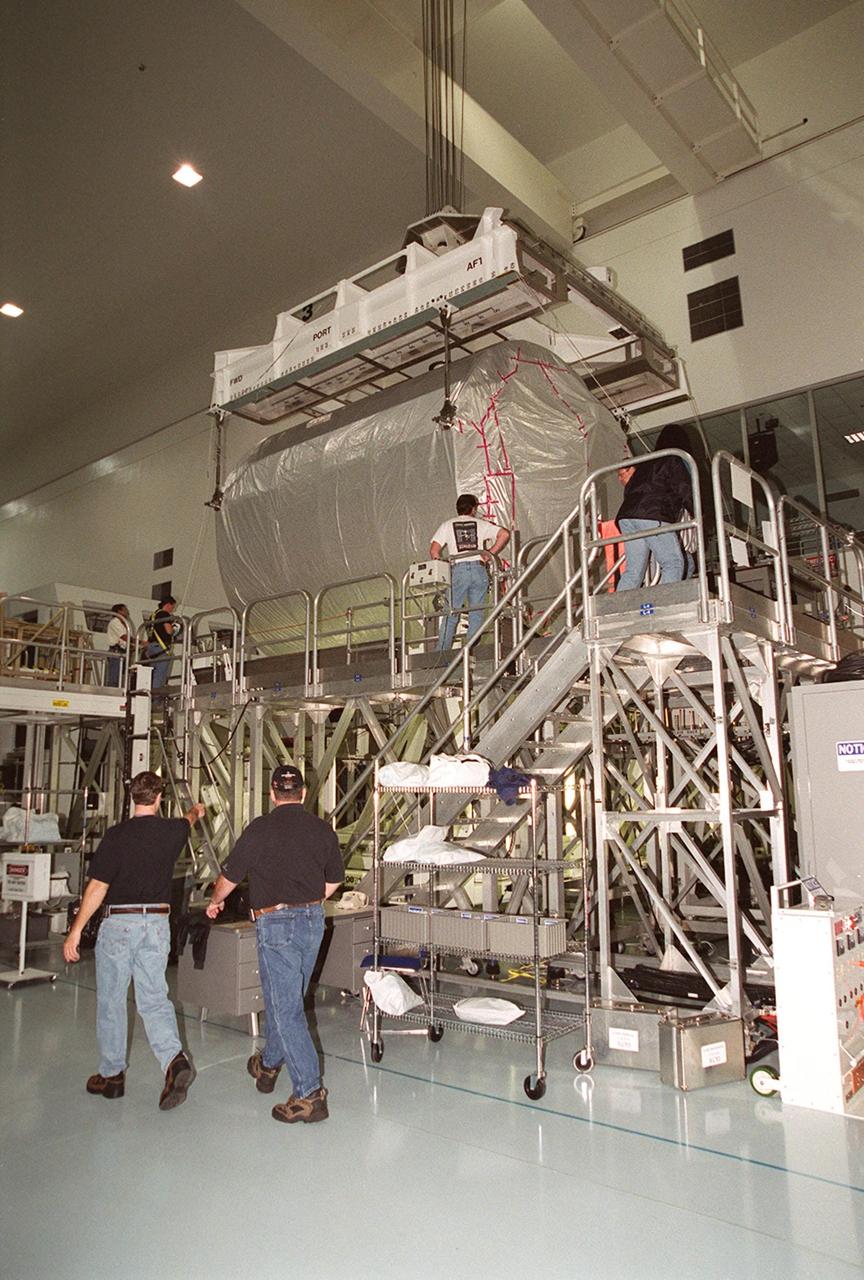
An overhead crane lowers the Multi-Purpose Logistics Module Donatello onto a workstand. In the SSPF, Donatello will undergo processing by the payload test team, including integrated electrical tests with other Station elements in the SSPF, leak tests, electrical and software compatibility tests with the Space Shuttle (using the Cargo Integrated Test equipment) and an Interface Verification Test once the module is installed in the Space Shuttle’s payload bay at the launch pad. The most significant mechanical task to be performed on Donatello in the SSPF is the installation and outfitting of the racks for carrying the various experiments and cargo. Donatello will be launched on mission STS-130, currently planned for September 2004
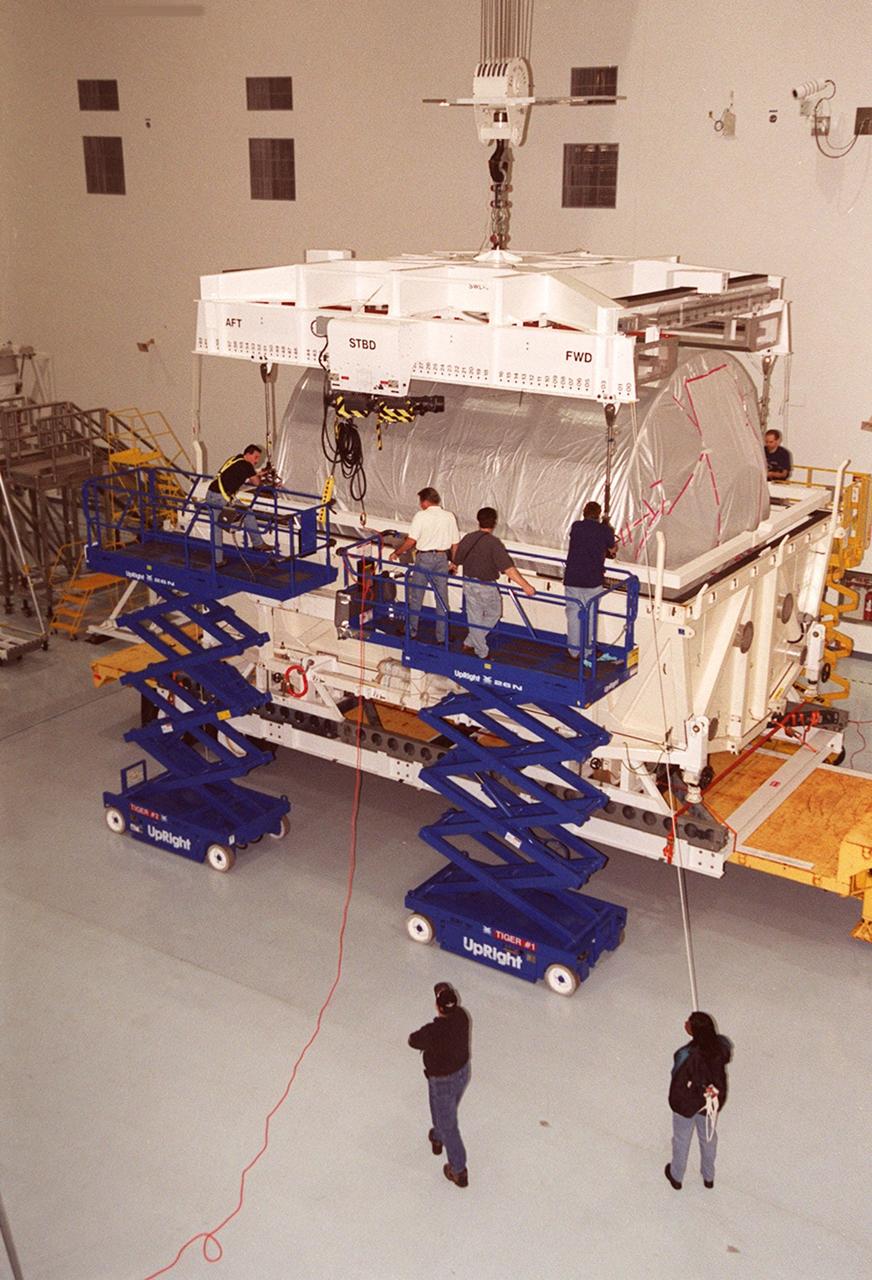
Workers in the Space Station Processing Facility attach an overhead crane to the Multi-Purpose Logistics Module Donatello to lift it out of the shipping container. In the SSPF, Donatello will undergo processing by the payload test team, including integrated electrical tests with other Station elements in the SSPF, leak tests, electrical and software compatibility tests with the Space Shuttle (using the Cargo Integrated Test equipment) and an Interface Verification Test once the module is installed in the Space Shuttle’s payload bay at the launch pad. The most significant mechanical task to be performed on Donatello in the SSPF is the installation and outfitting of the racks for carrying the various experiments and cargo. Donatello will be launched on mission STS-130, currently planned for September 2004
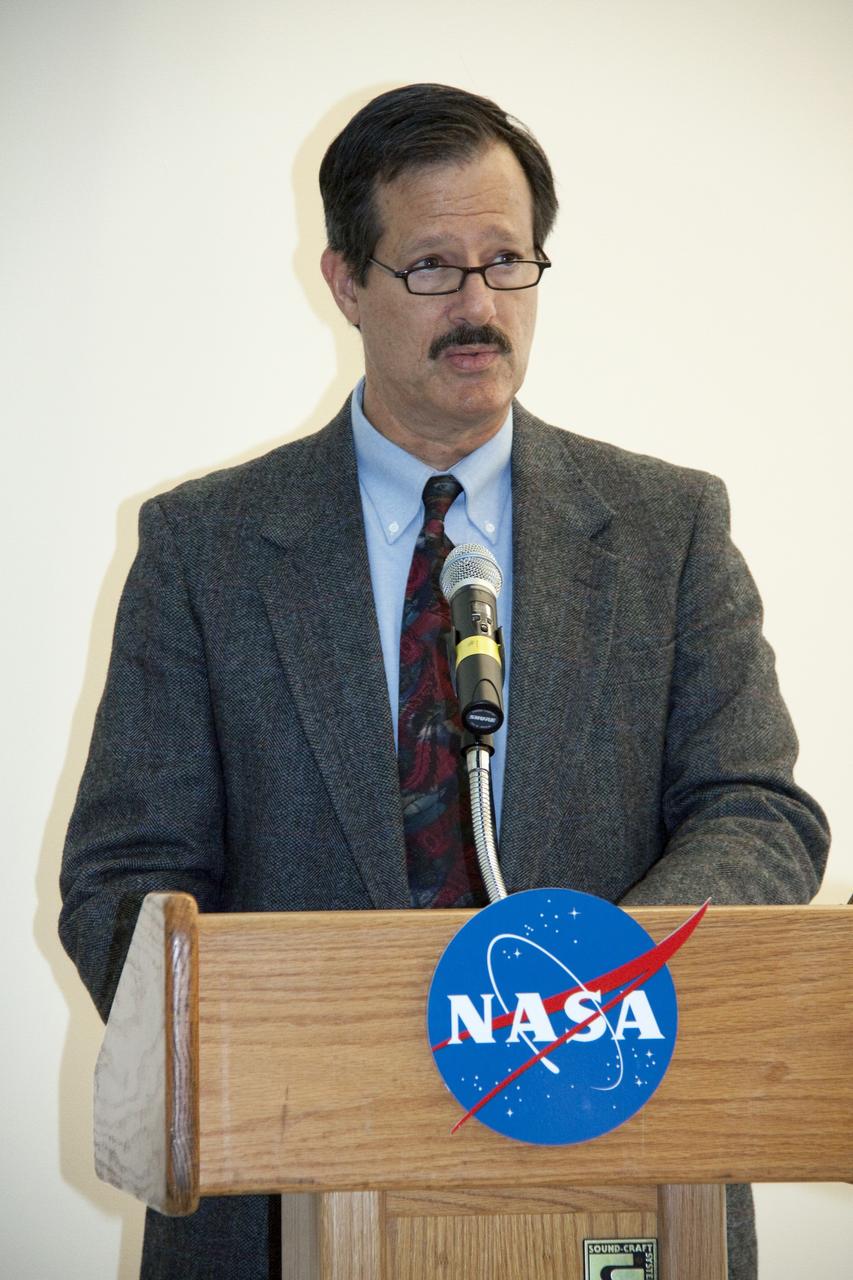
CAPE CANAVERAL, Fla. -- NASA's Kennedy Space Center in Florida hosts a ribbon-cutting ceremony at a new 18,500-square-foot Electrical Maintenance Facility (EMF) officially opening for business. Addressing the attendees is Kennedy Director of Operations Mike Benik. Located in Kennedy's Launch Complex 39 area, the EMF will provide new and renovated space for maintenance shops, offices, and equipment and material storage in support of the electrical maintenance functions for the center. The facility is projected to receive Gold certification under the U.S. Green Building Council’s Leadership in Energy and Environmental Design (LEED) rating system. Photo credit: NASA/ Troy Cryder
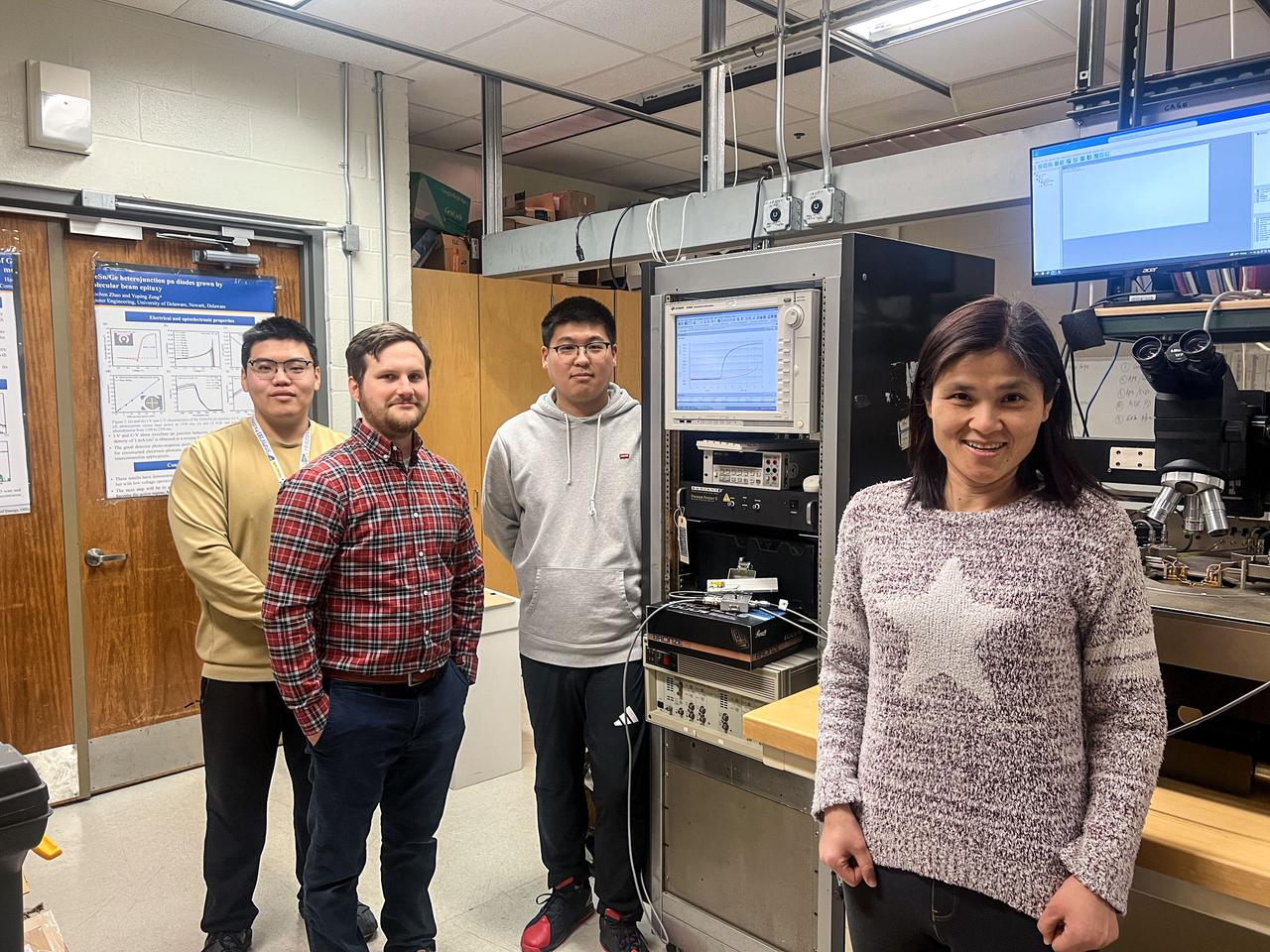
jsc2025e015682 (3/6/2025) --- From left to right: students, Tuofu Zhama, Alex Katorkas, Haochen Zhao, and Principal Investigator Yuping Zeng stand beside the equipment for GaN devices electrical property measurement before the packaging. The High Performance Radiation Hardened GaN High Electron Mobility Transistors for Space Applications (Radiation Harden GaN) investigation studies how radiation affects a type of transistor used in the semiconductor industry. Researchers measure the performance of the devices before, during, and after flight to determine whether performance degrades. This could help determine how well the transistors can tolerate radiation in space. Image courtesy of Department of Electrical and Computer Engineering, University of Delaware.
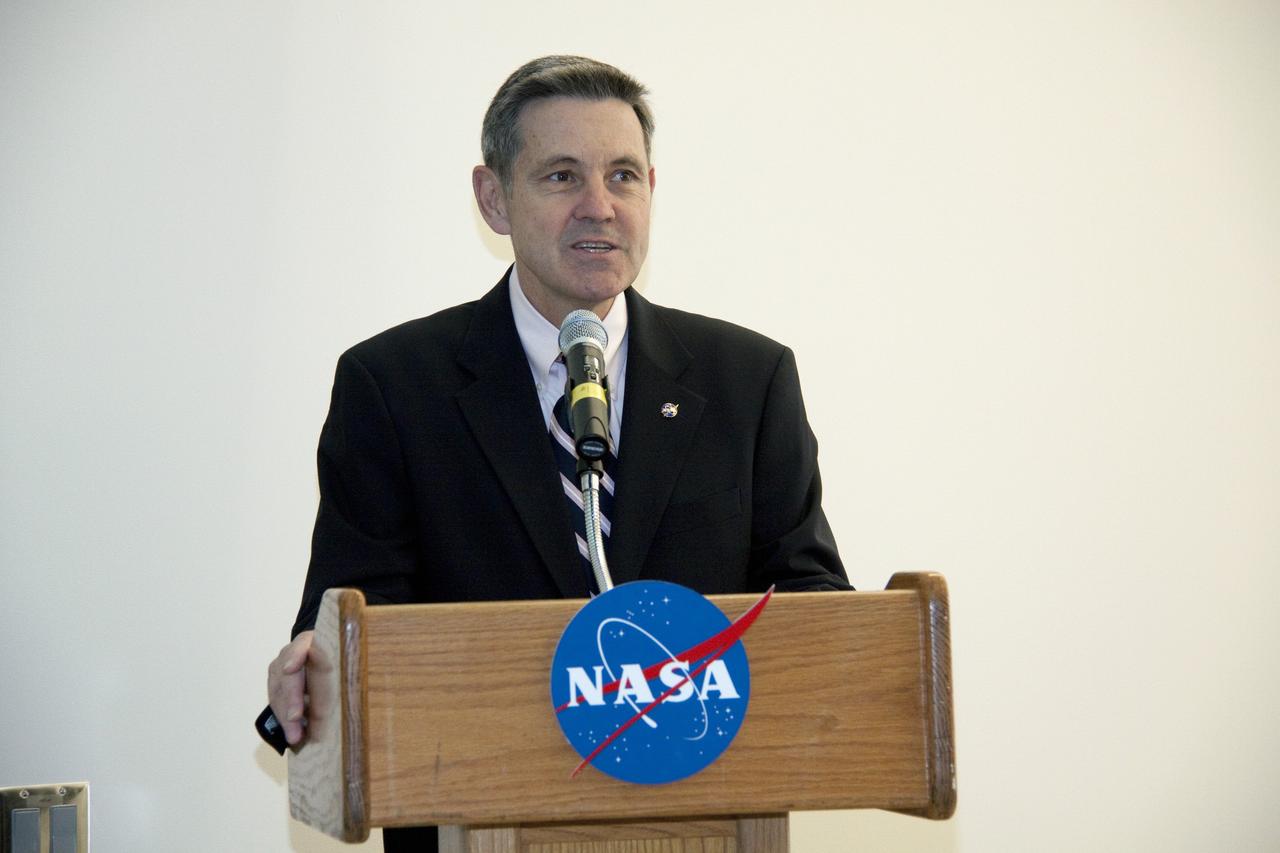
CAPE CANAVERAL, Fla. -- NASA's Kennedy Space Center in Florida hosts a ribbon-cutting ceremony at a new 18,500-square-foot Electrical Maintenance Facility (EMF) officially opening for business. Addressing the attendees is Kennedy Center Director Bob Cabana. Located in Kennedy's Launch Complex 39 area, the EMF will provide new and renovated space for maintenance shops, offices, and equipment and material storage in support of the electrical maintenance functions for the center. The facility is projected to receive Gold certification under the U.S. Green Building Council’s Leadership in Energy and Environmental Design (LEED) rating system. Photo credit: NASA/ Troy Cryder
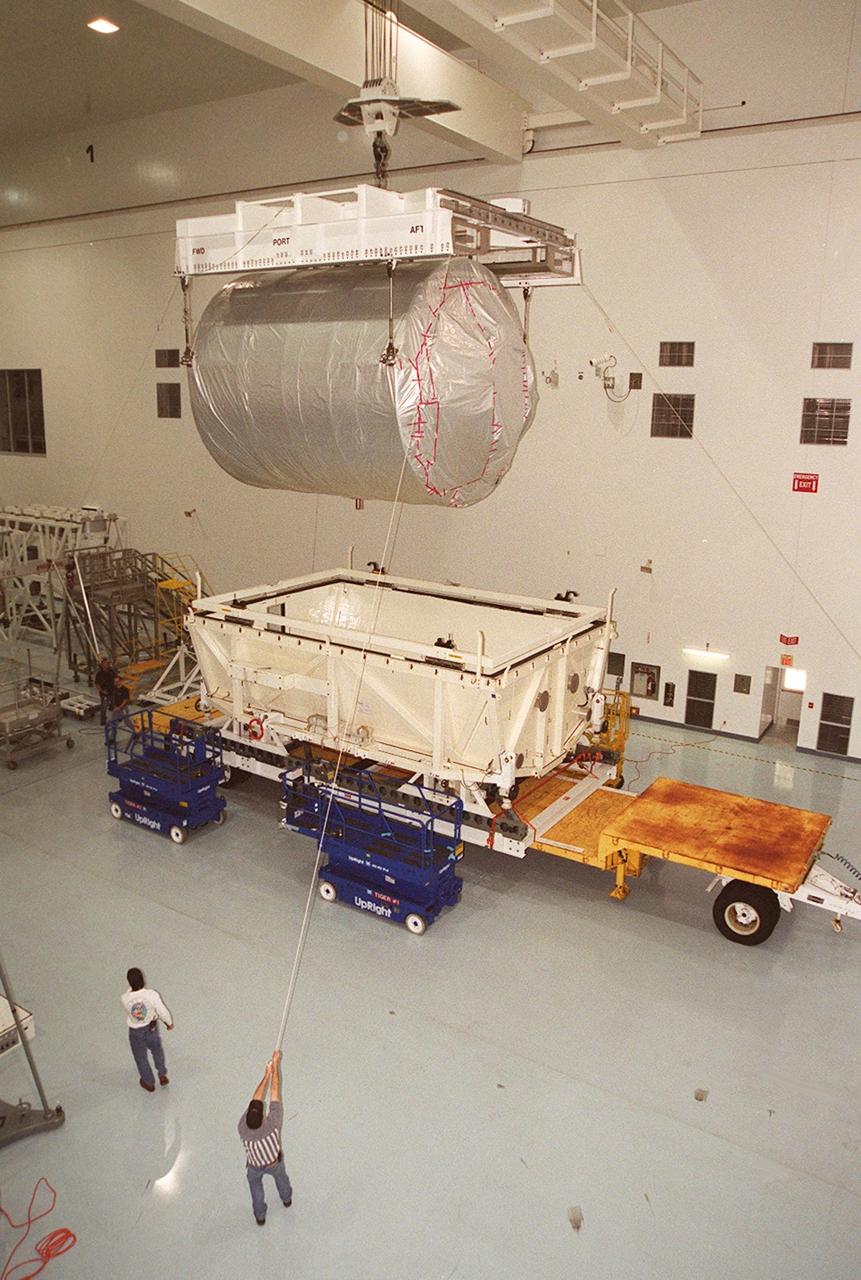
In the Space Station Processing Facility, workers help guide the overhead crane as it lifts the Multi-Purpose Logistics Module Donatello out of the shipping container. In the SSPF, Donatello will undergo processing by the payload test team, including integrated electrical tests with other Station elements in the SSPF, leak tests, electrical and software compatibility tests with the Space Shuttle (using the Cargo Integrated Test equipment) and an Interface Verification Test once the module is installed in the Space Shuttle’s payload bay at the launch pad. The most significant mechanical task to be performed on Donatello in the SSPF is the installation and outfitting of the racks for carrying the various experiments and cargo. Donatello will be launched on mission STS-130, currently planned for September 2004
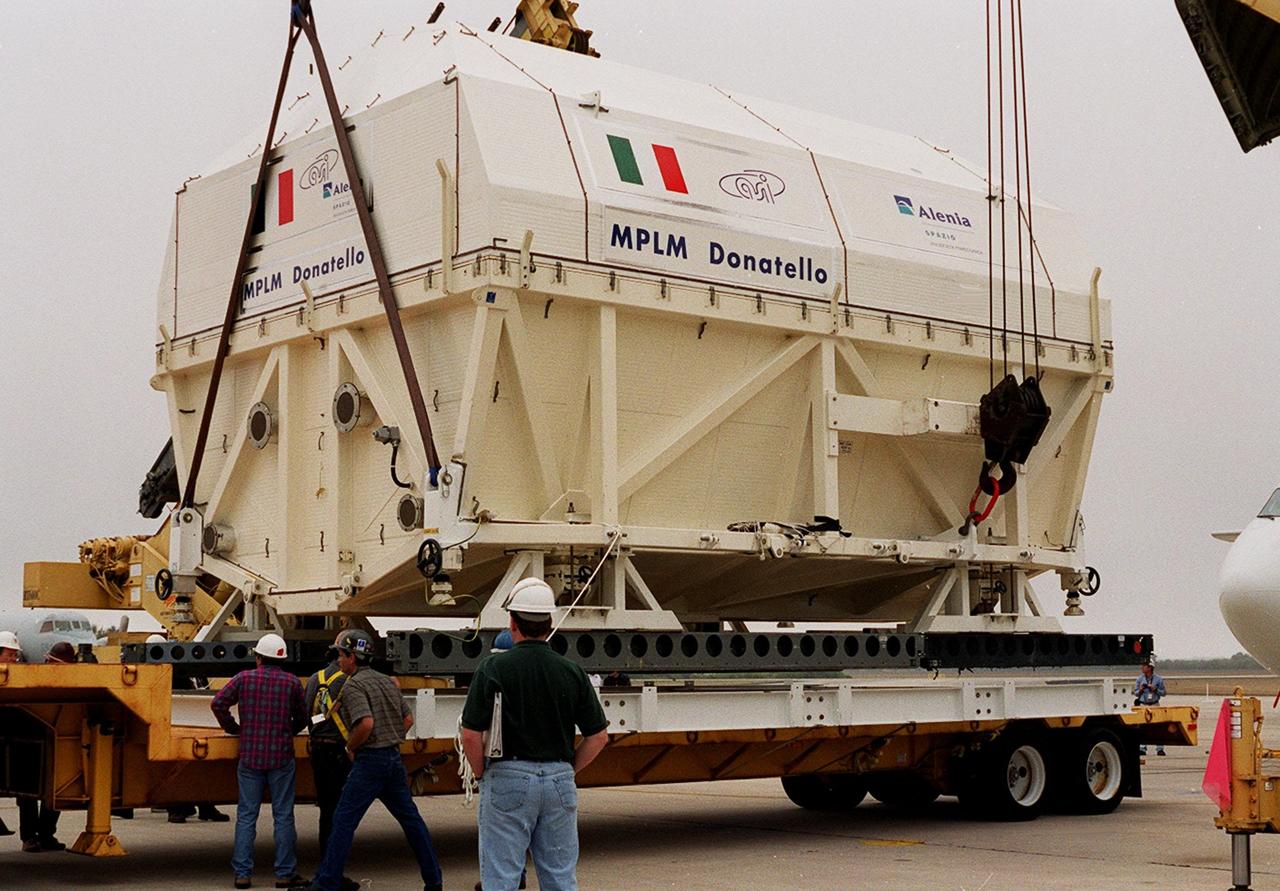
At the Shuttle Landing Facility, workers watch as cranes lower the Italian Space Agency’s Multi-Purpose Logistics Module Donatello onto a flat bed for transport to the Space Station Processing Facility for processing. Among the activities for the payload test team are integrated electrical tests with other Station elements in the SSPF, leak tests, electrical and software compatibility tests with the Space Shuttle (using the Cargo Integrated Test equipment) and an Interface Verification Test once the module is installed in the Space Shuttle’s payload bay at the launch pad. The most significant mechanical task to be performed on Donatello in the SSPF is the installation and outfitting of the racks for carrying the various experiments and cargo
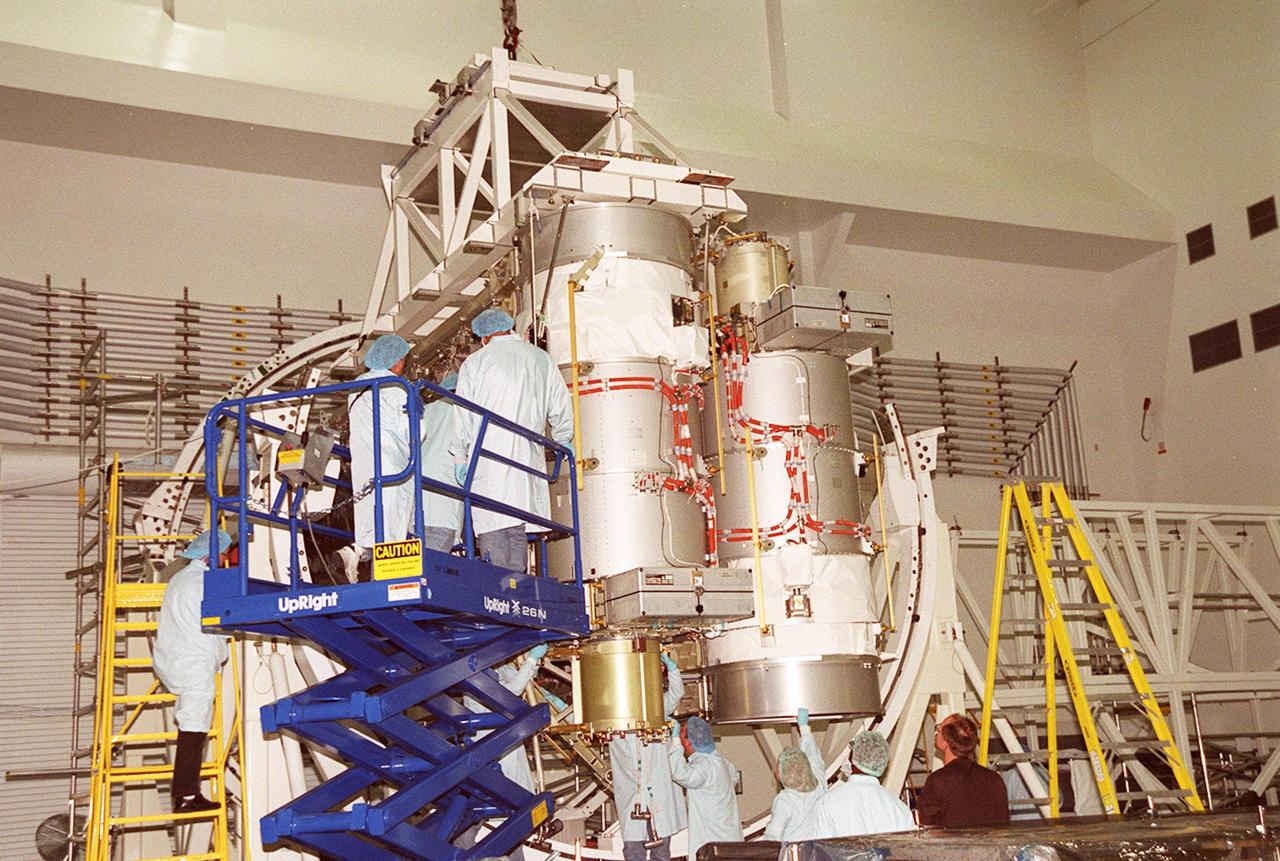
A solar array is nearly in place on the Integrated Equipment Assembly, next to Solar Array Wing-3, which is already installed. Components of the International Space Station, the arrays are scheduled to be launched on mission STS-97 in late November along with the P6 truss. The Station’s electrical power system (EPS) will use eight photovoltaic solar arrays to convert sunlight to electricity. Each of the eight solar arrays will be 112 feet long by 39 feet wide. The solar arrays are mounted on a “blanket” that can be folded like an accordion for delivery. Once in orbit, astronauts will deploy the blankets to their full size. Gimbals will be used to rotate the arrays so that they will face the Sun to provide maximum power to the Space Station
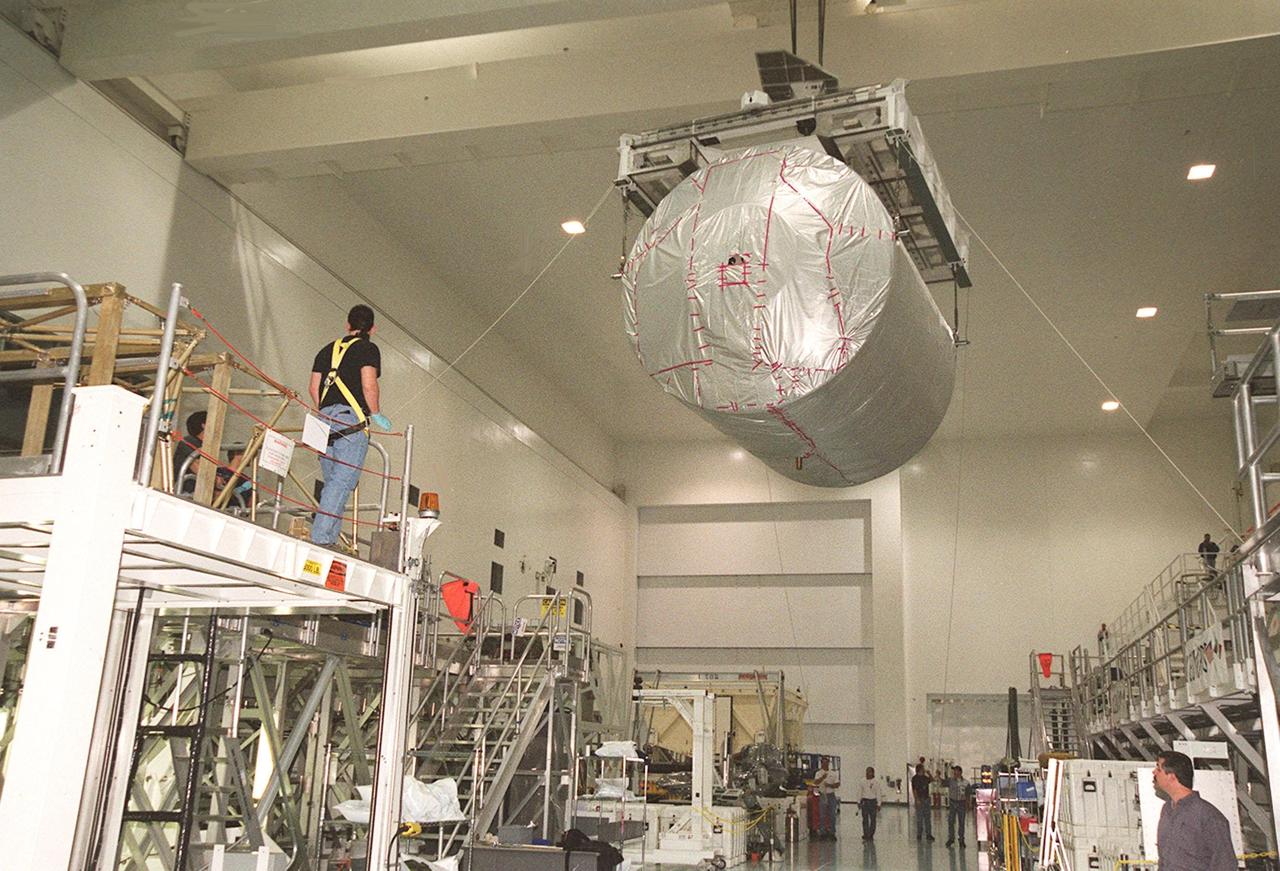
In the Space Station Processing Facility, workers wait for the Multi-Purpose Logistics Module Donatello, suspended by an overhead crane, to move onto a workstand. In the SSPF, Donatello will undergo processing by the payload test team, including integrated electrical tests with other Station elements in the SSPF, leak tests, electrical and software compatibility tests with the Space Shuttle (using the Cargo Integrated Test equipment) and an Interface Verification Test once the module is installed in the Space Shuttle’s payload bay at the launch pad. The most significant mechanical task to be performed on Donatello in the SSPF is the installation and outfitting of the racks for carrying the various experiments and cargo. Donatello will be launched on mission STS-130, currently planned for September 2004
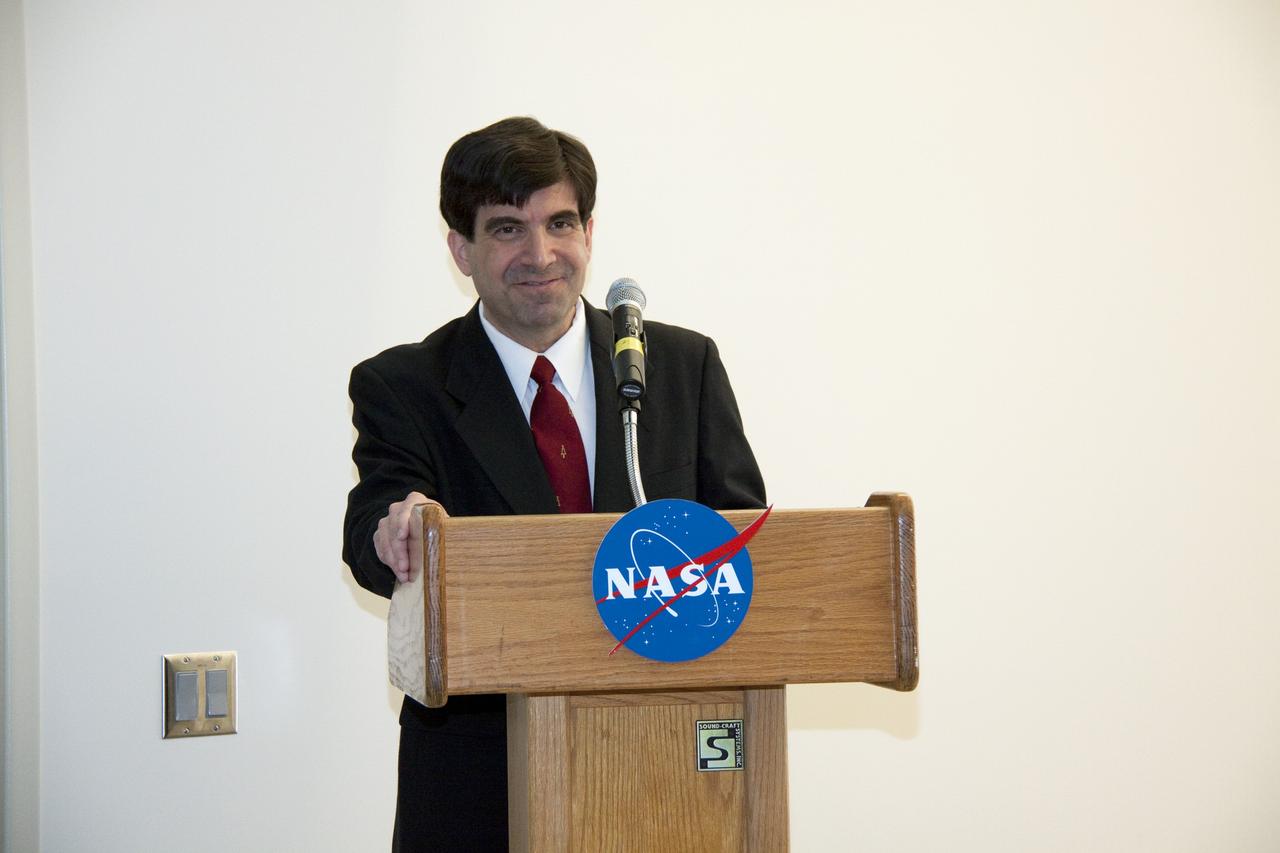
CAPE CANAVERAL, Fla. -- NASA's Kennedy Space Center in Florida hosts a ribbon-cutting ceremony at a new 18,500-square-foot Electrical Maintenance Facility (EMF) officially opening for business. Addressing the attendees is NASA Construction of Facility Project Manager Nick Rivieccio. Located in Kennedy's Launch Complex 39 area, the EMF will provide new and renovated space for maintenance shops, offices, and equipment and material storage in support of the electrical maintenance functions for the center. The facility is projected to receive Gold certification under the U.S. Green Building Council’s Leadership in Energy and Environmental Design (LEED) rating system. Photo credit: NASA/ Troy Cryder
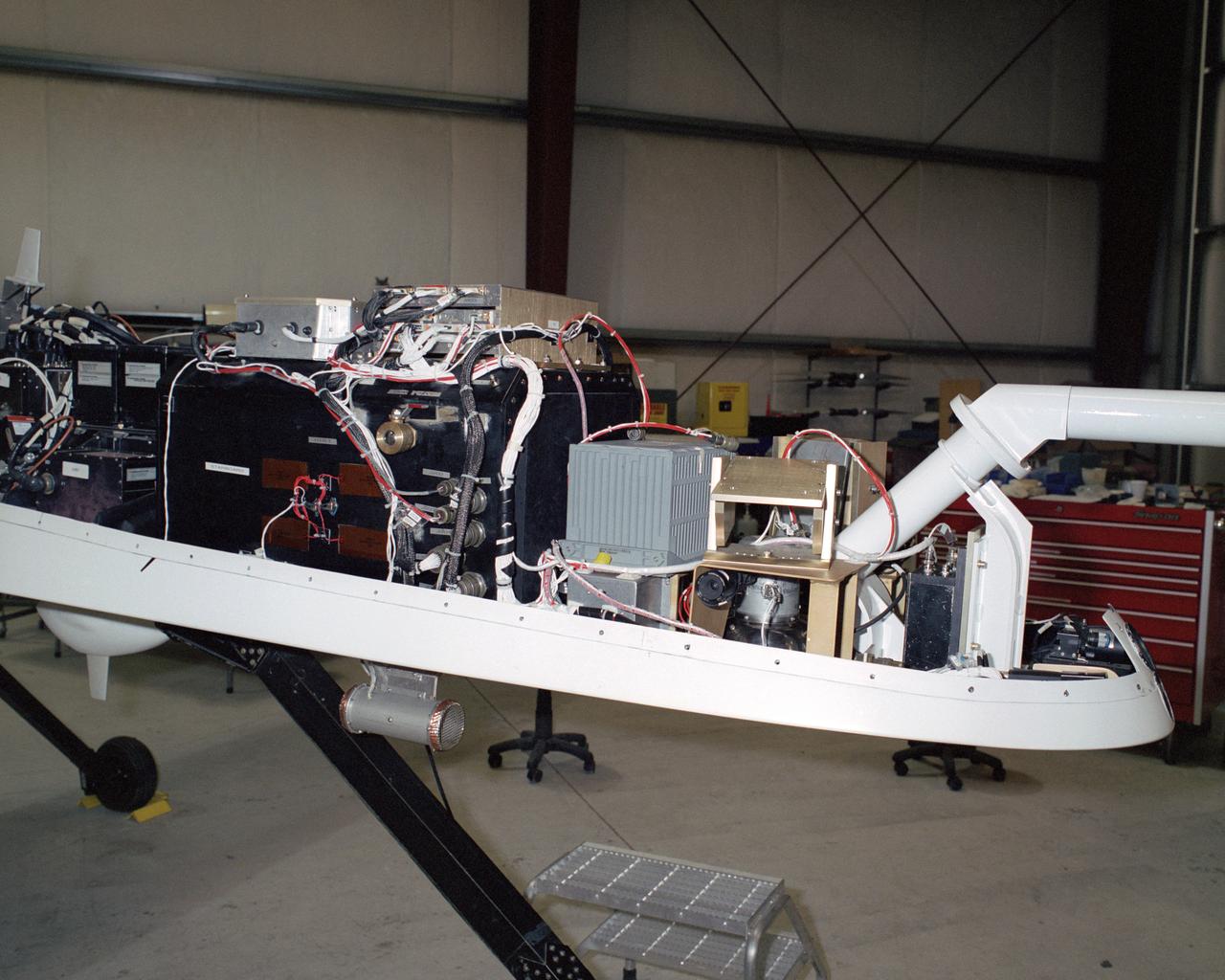
A NASA team studying the causes of electrical storms and their effects on our home planet achieved a milestone on August 21, 2002, completing the study's longest-duration research flight and monitoring four thunderstorms in succession. Based at the Naval Air Station Key West, Florida, researchers with the Altus Cumulus Electrification Study (ACES) used the Altus II remotely-piloted aircraft to study thunderstorms in the Atlantic Ocean off Key West and the west of the Everglades. Using special equipment aboard the Altus II, scientists in ACES will gather electric, magnetic, and optical measurements of the thunderstorms, gauging elements such as lightning activity and the electrical environment in and around the storms. With dual goals of gathering weather data safely and testing the adaptability of the uninhabited aircraft, the ACES study is a collaboration among the Marshall Space Flight Center, the University of Alabama in Huntsville, NASA's Goddard Space Flight Center in Greenbelt, Maryland, Pernsylvania State University in University Park, and General Atomics Aeronautical Systems, Inc.
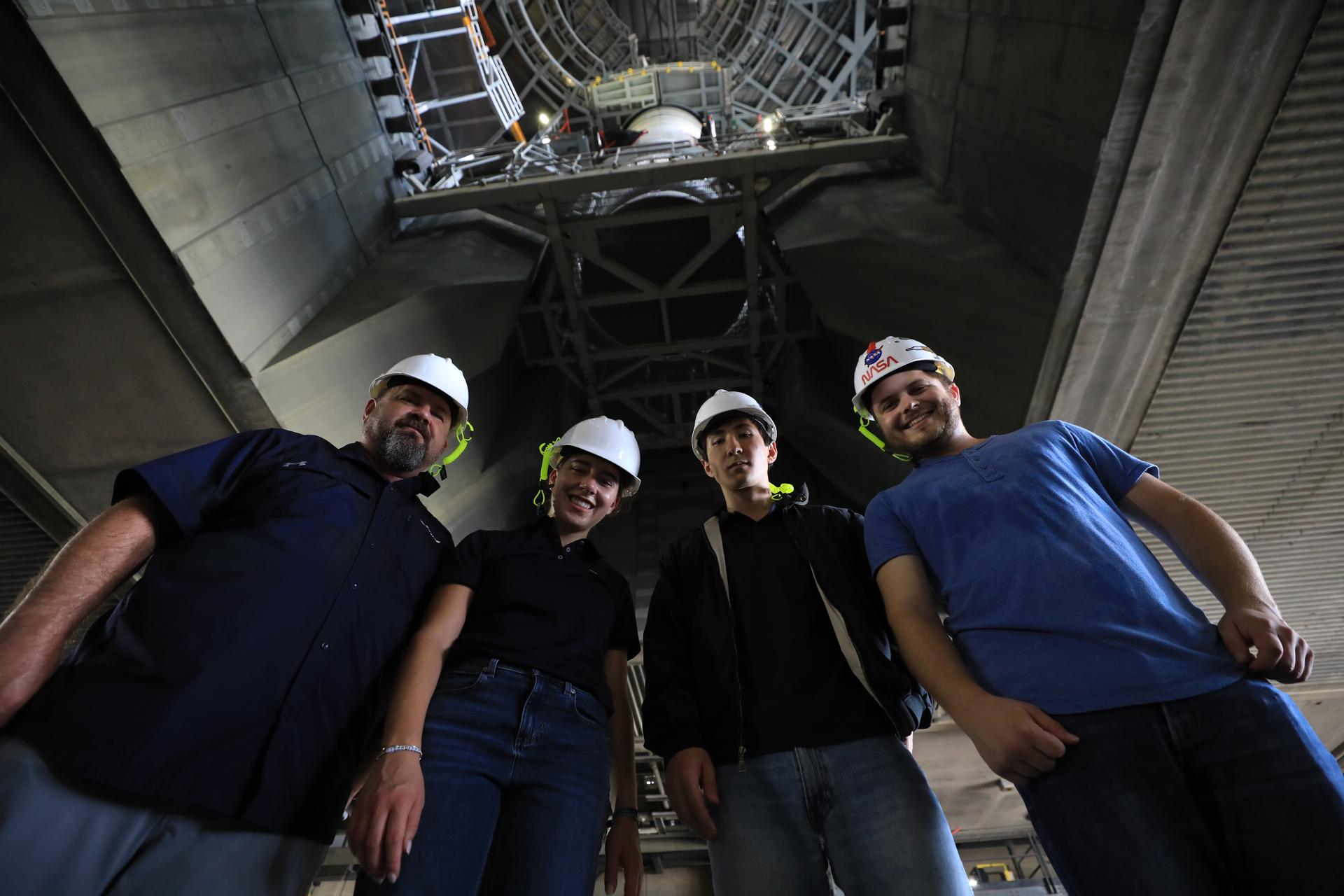
Boeing employees, from left to right, Adam Shaffer, Electrical Ground Systems equipment and technical lead engineer; Anna Fischer, Space Launch System electrical engineering intern; Ethan Minvielle, Space Launch System electrical engineering intern; and Joseph Colangelo, Space Launch System Test and evaluation engineering intern, pose for a photograph following left-hand aft assembly solid rocket booster segment for NASA’s Artemis III SLS (Space Launch System) was secured to the mobile launcher at the agency’s Vehicle Assembly Building at NASA Kennedy on Thursday, July 9, 2026. The twin boosters, manufactured by Northrop Grumman in Utah, will provide more than 75 percent of the SLS rocket’s total thrust at launch. The Artemis III mission will launch crew in the Orion spacecraft on top of the SLS rocket to test rendezvous and docking capabilities between Orion and commercial spacecraft needed to land astronauts on the Moon.
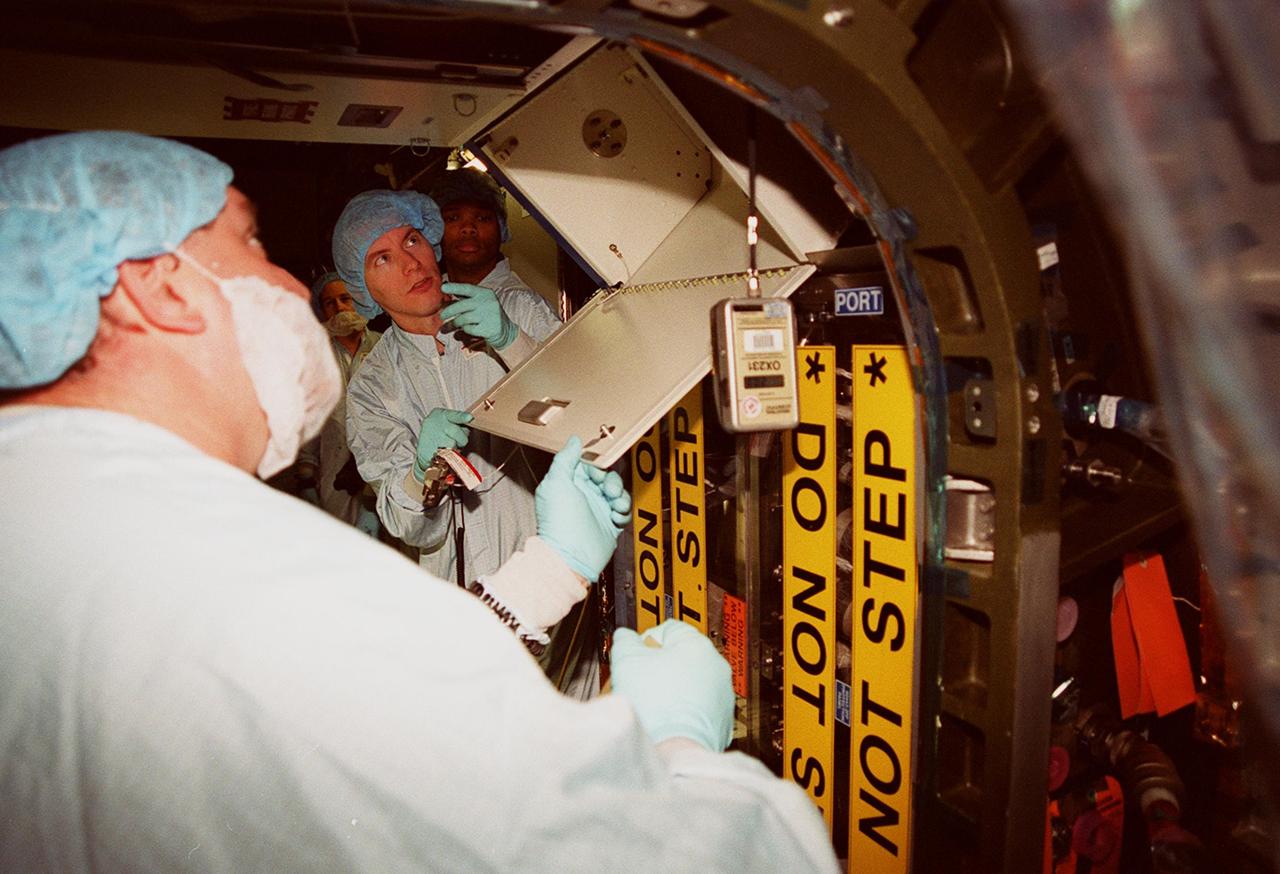
In the Space Station Processing Facility, members of the STS-98 crew check out components inside the U.S. Lab, Destiny, under the watchful eye of trainers. The crew comprises Commander Ken Cockrell, Pilot Mark Polansky and Mission Specialists Robert Curbeam, Thomas Jones and Marsha Ivins. They are taking part in Crew Equipment Interface Test activities, becoming familiar with equipment they will be handling during the mission. The mission will be transporting the Lab to the International Space Station with five system racks already installed inside of the module. With delivery of electronics in the lab, electrically powered attitude control for Control Moment Gyroscopes will be activated. The STS-98 launch is scheduled for Jan. 18, 2001
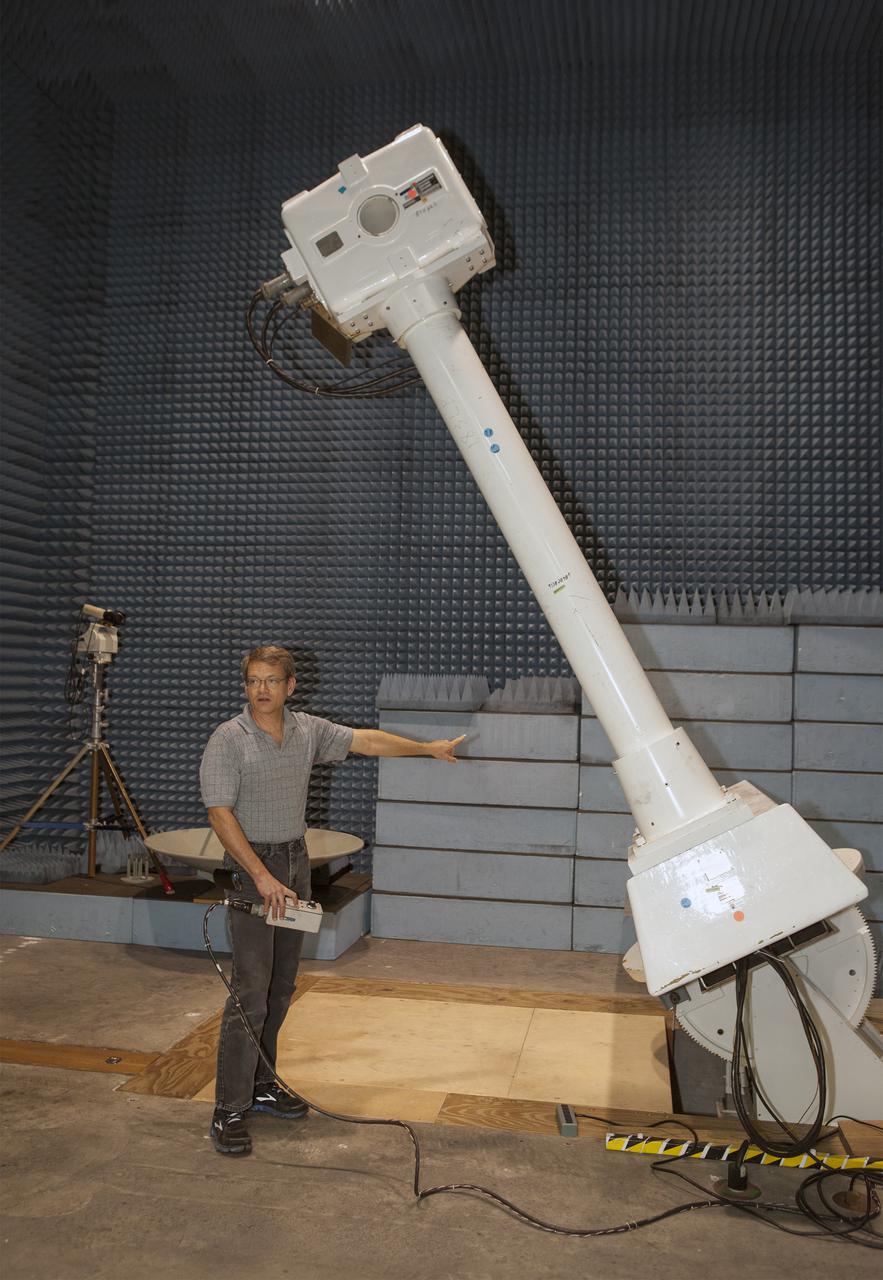
CAPE CANAVERAL, Fla. – At the Aerospace and Defense Manufacturing Center in Cape Canaveral, Fla., Craig Technologies Electrical Technician Mike Palin checks the performance of one of the 1,600 pieces of specialty equipment to be operated in the Avionics Laboratory at the 161,000-square-foot facility. In June of last year, NASA signed a partnership agreement with Craig Technologies to maintain an inventory of unique processing and manufacturing equipment for future mission support at the agency's Kennedy Space Center. The Cape Canaveral, Fla., facility, formerly known as the NASA Shuttle Logistics Depot NSLD, is now the Aerospace and Defense Manufacturing Center ADMC. Photo credit: NASA_Kim Shiflett
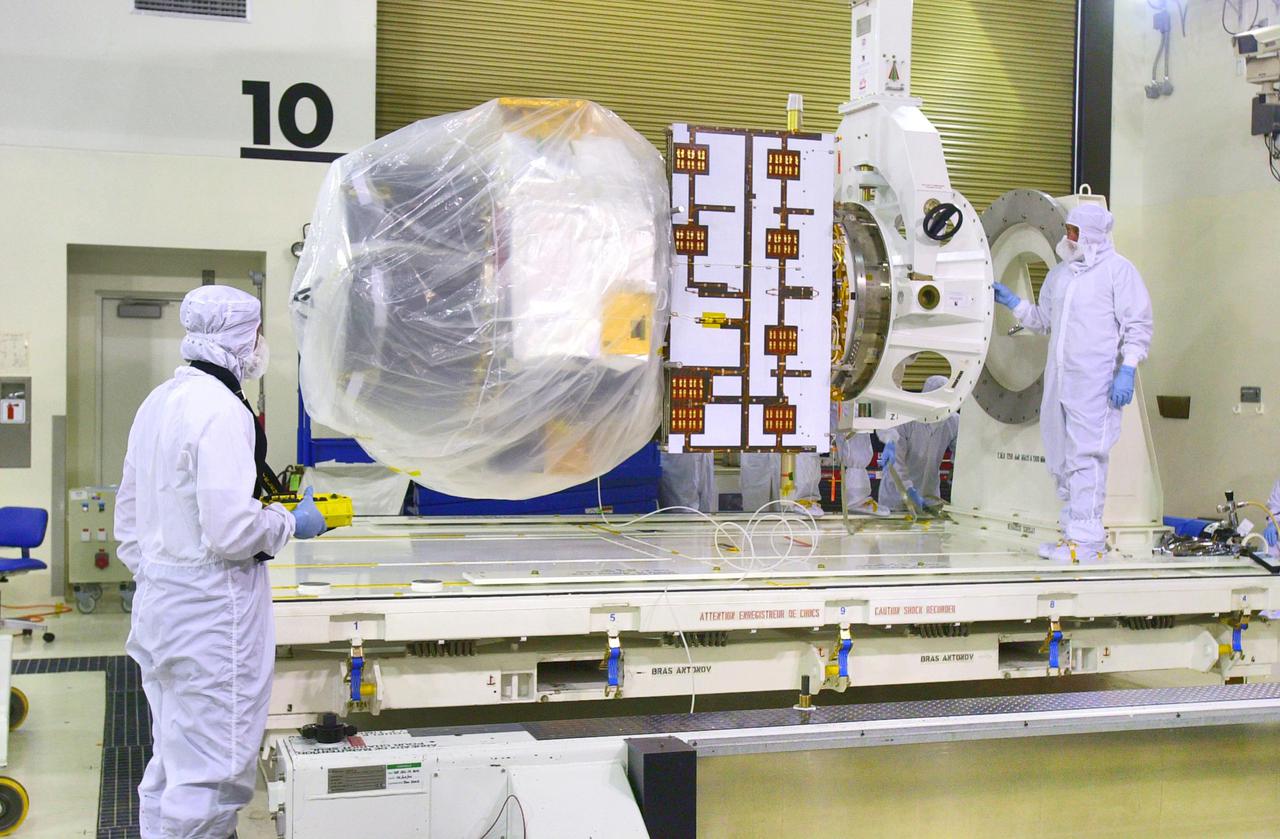
KENNEDY SPACE CENTER, FLA. - Inside the Astrotech Payload Processing Facility on Vandenberg Air Force Base in California, workers prepare to attach equipment that will enable the Cloud-Aerosol Lidar and Infrared Pathfinder Satellite Observation (CALIPSO) spacecraft to be raised to a vertical position and moved to a workstand. It will undergo state-of-health checks, and electrical ground-support equipment testing. CALIPSO will fly in combination with the CloudSat satellite to provide never-before-seen 3-D perspectives of how clouds and aerosols form, evolve, and affect weather and climate. CALIPSO and CloudSat will join three other satellites in orbit to enhance understanding of climate systems. The launch date for CALIPSO_CloudSat is no earlier than Aug. 22.
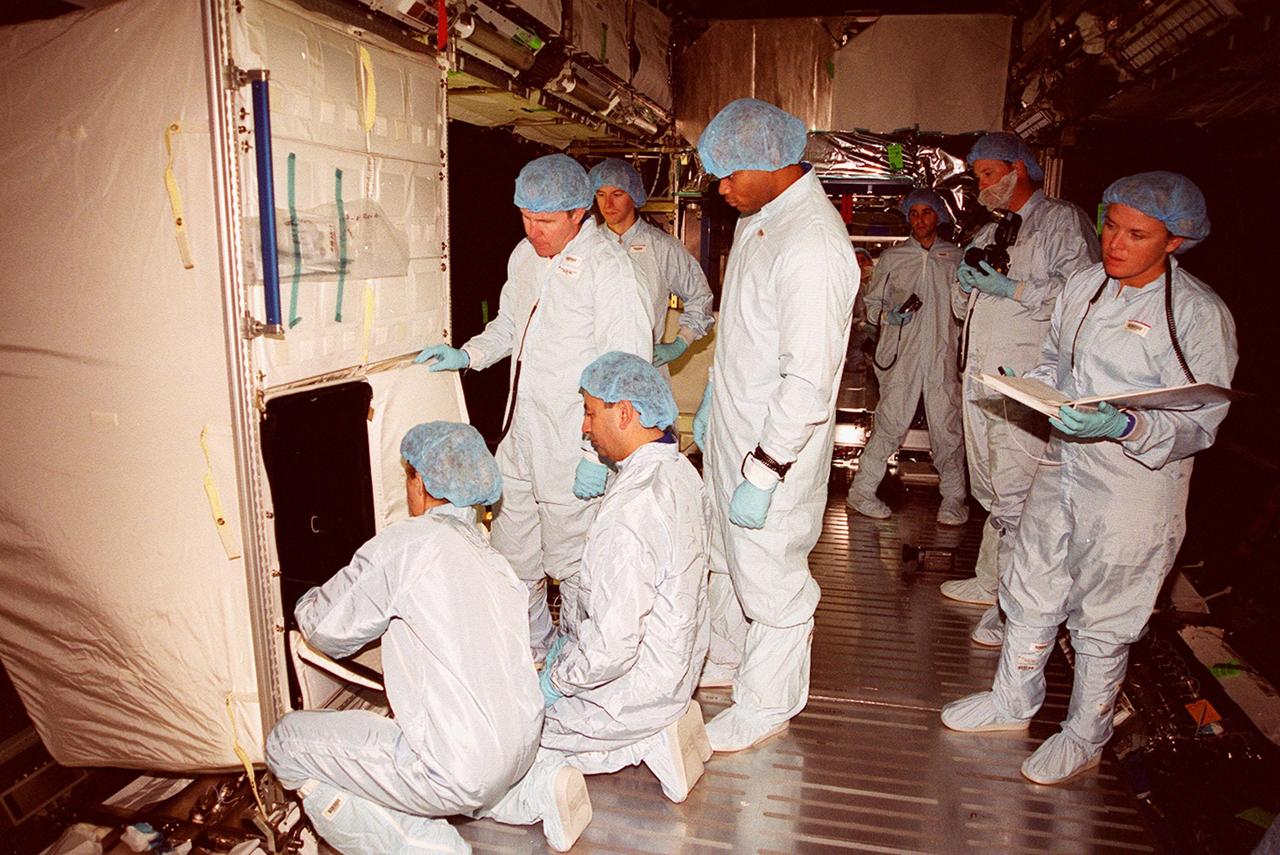
Inside the U.S. Lab, Destiny, members of the STS-98 crew work with technicians (in the background) to learn more about the equipment in the module. They are taking part in Crew Equipment Interface Test activities. At left, back to camera, is Mission Specialist Marsha Ivins. Standing are Mission Specialists Thomas Jones (left) and Robert Curbeam (right). Other crew members not seen are Commander Ken Cockrell and Pilot Mark Polansky. The mission will be transporting the Lab to the International Space Station with five system racks already installed inside of the module. With delivery of electronics in the lab, electrically powered attitude control for Control Moment Gyroscopes will be activated. The STS-98 launch is scheduled for Jan. 18, 2001
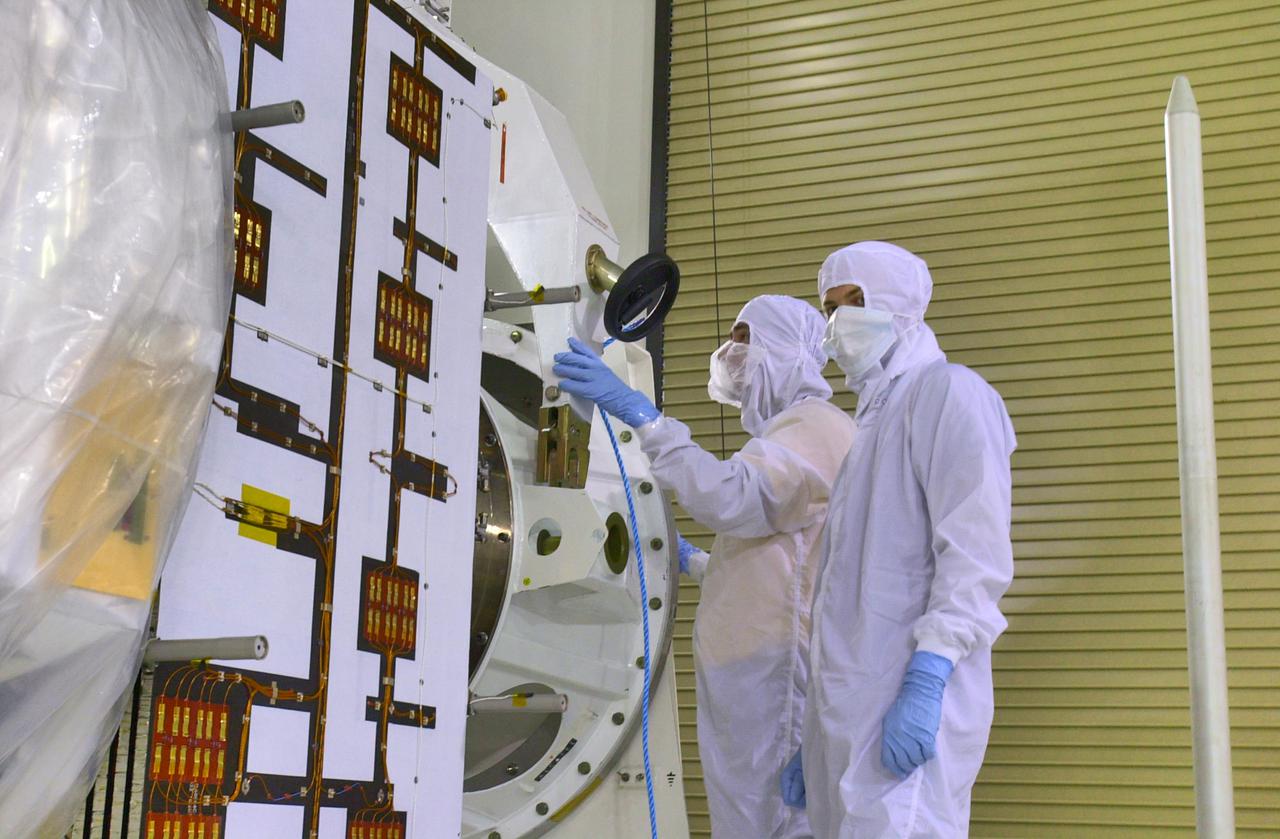
KENNEDY SPACE CENTER, FLA. -Inside the Astrotech Payload Processing Facility on Vandenberg Air Force Base in California, workers prepare to attach equipment that will enable the Cloud-Aerosol Lidar and Infrared Pathfinder Satellite Observation (CALIPSO) spacecraft to be raised to a vertical position and moved to a workstand. It will undergo state-of-health checks, and electrical ground-support equipment testing. CALIPSO will fly in combination with the CloudSat satellite to provide never-before-seen 3-D perspectives of how clouds and aerosols form, evolve, and affect weather and climate. CALIPSO and CloudSat will join three other satellites in orbit to enhance understanding of climate systems. The launch date for CALIPSO_CloudSat is no earlier than Aug. 22.
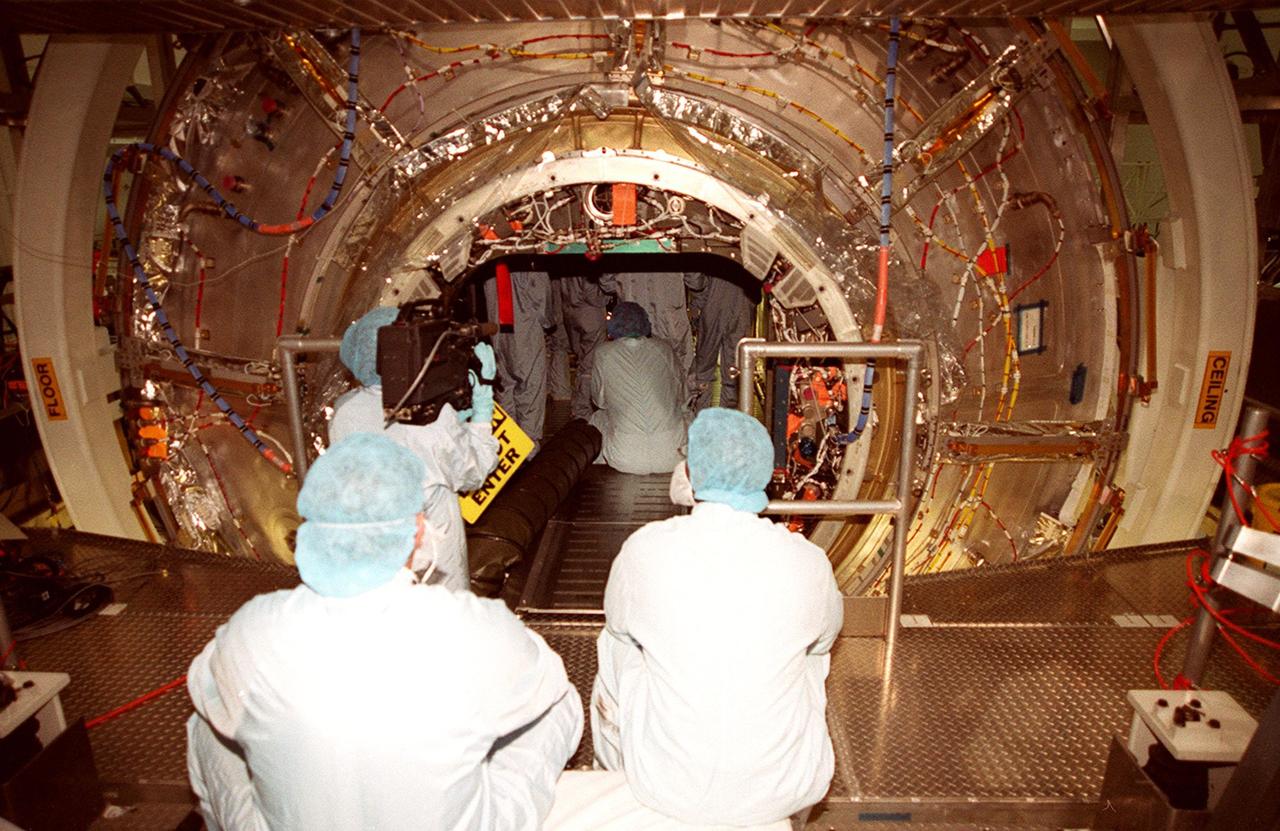
In the Space Station Processing Facility, workers in the foreground watch and wait while members of the STS-98 crew check out the U.S. Lab, Destiny in the background. The crew comprises Commander Ken Cockrell, Pilot Mark Polansky and Mission Specialists Robert Curbeam, Thomas Jones and Marsha Ivins. They are taking part in Crew Equipment Interface Test activities, becoming familiar with equipment they will be handling during the mission. The mission will be transporting the Lab to the International Space Station with five system racks already installed inside of the module. With delivery of electronics in the lab, electrically powered attitude control for Control Moment Gyroscopes will be activated. The STS-98 launch is scheduled for Jan. 18, 2001
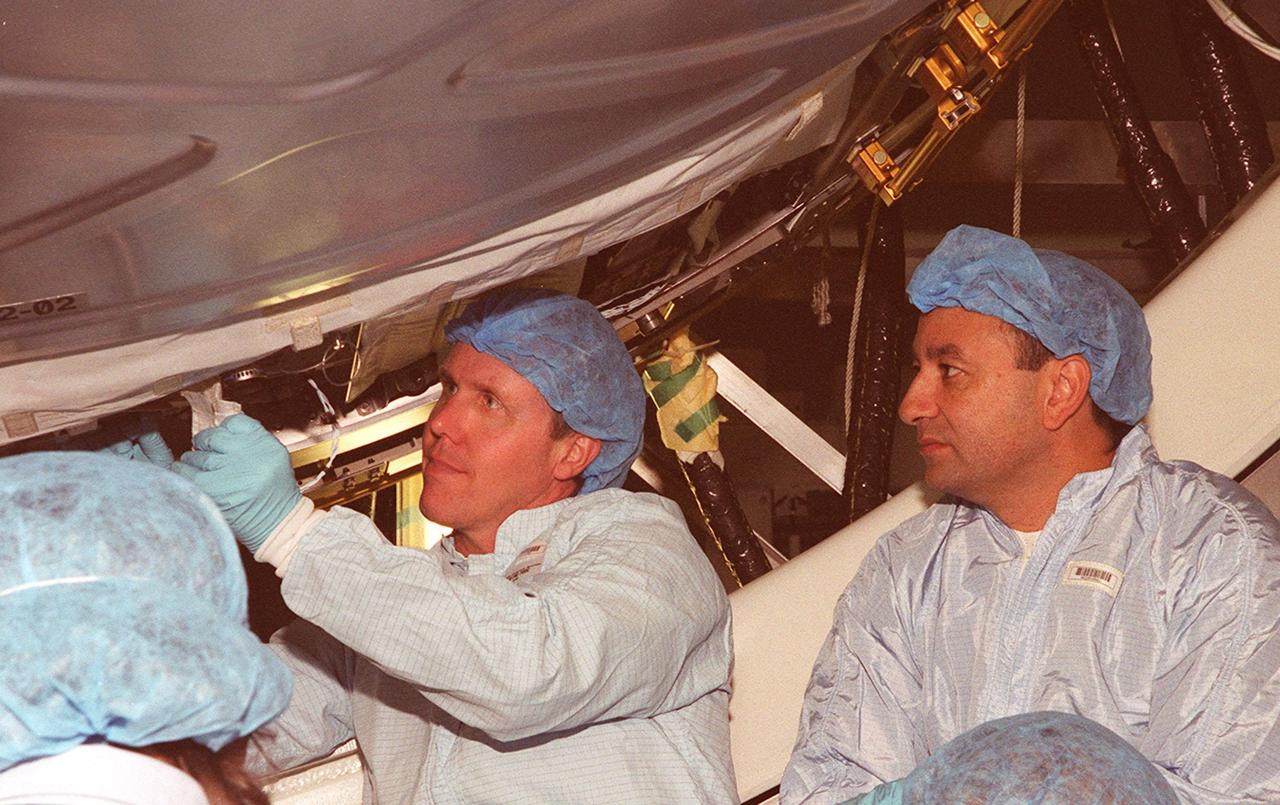
In the Space Station Processing Facility, STS-98 Mission Specialist Thomas Jones works on a part of the U.S. Lab, Destiny. Watching at right is Pilot Mark Polansky. Jones and Polansky, along with other crew members, are taking part in Crew Equipment Interface Test activities to become familiar with equipment they will be handling during the mission. Others in the crew are Commander Ken Cockrell and Mission Specialists Robert Curbeam and Marsha Ivins. The mission will be transporting the Lab to the International Space Station with five system racks already installed inside of the module. With delivery of electronics in the lab, electrically powered attitude control for Control Moment Gyroscopes will be activated. The STS-98 launch is scheduled for Jan. 18, 2001
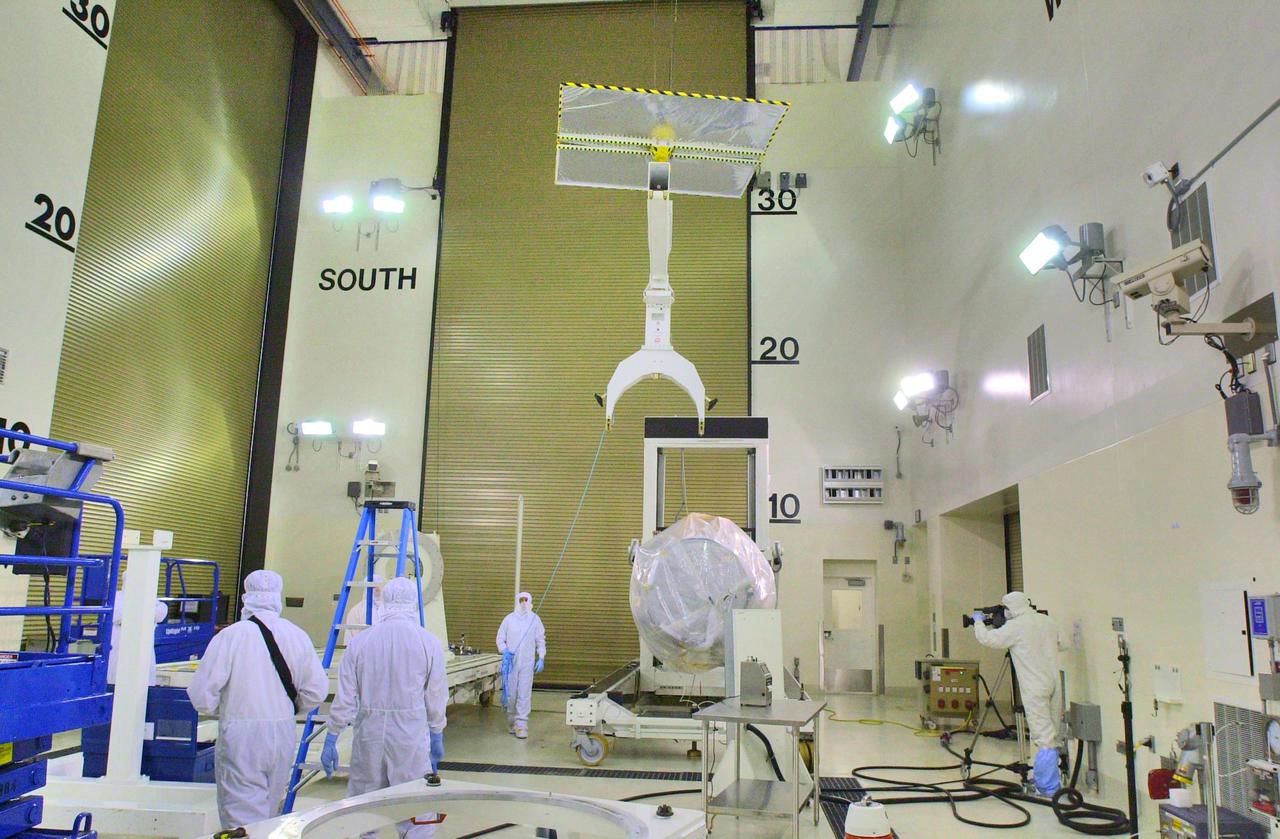
KENNEDY SPACE CENTER, FLA. - Inside the Astrotech Payload Processing Facility on Vandenberg Air Force Base in California, workers remove a piece of equipment used to help attach the Cloud-Aerosol Lidar and Infrared Pathfinder Satellite Observation (CALIPSO) spacecraft to a tilt dolly. CALIPSO will be moved to a workstand. It will undergo state-of-health checks, and electrical ground-support equipment testing. CALIPSO will fly in combination with the CloudSat satellite to provide never-before-seen 3-D perspectives of how clouds and aerosols form, evolve, and affect weather and climate. CALIPSO and CloudSat will join three other satellites in orbit to enhance understanding of climate systems. The launch date for CALIPSO_CloudSat is no earlier than Aug. 22.
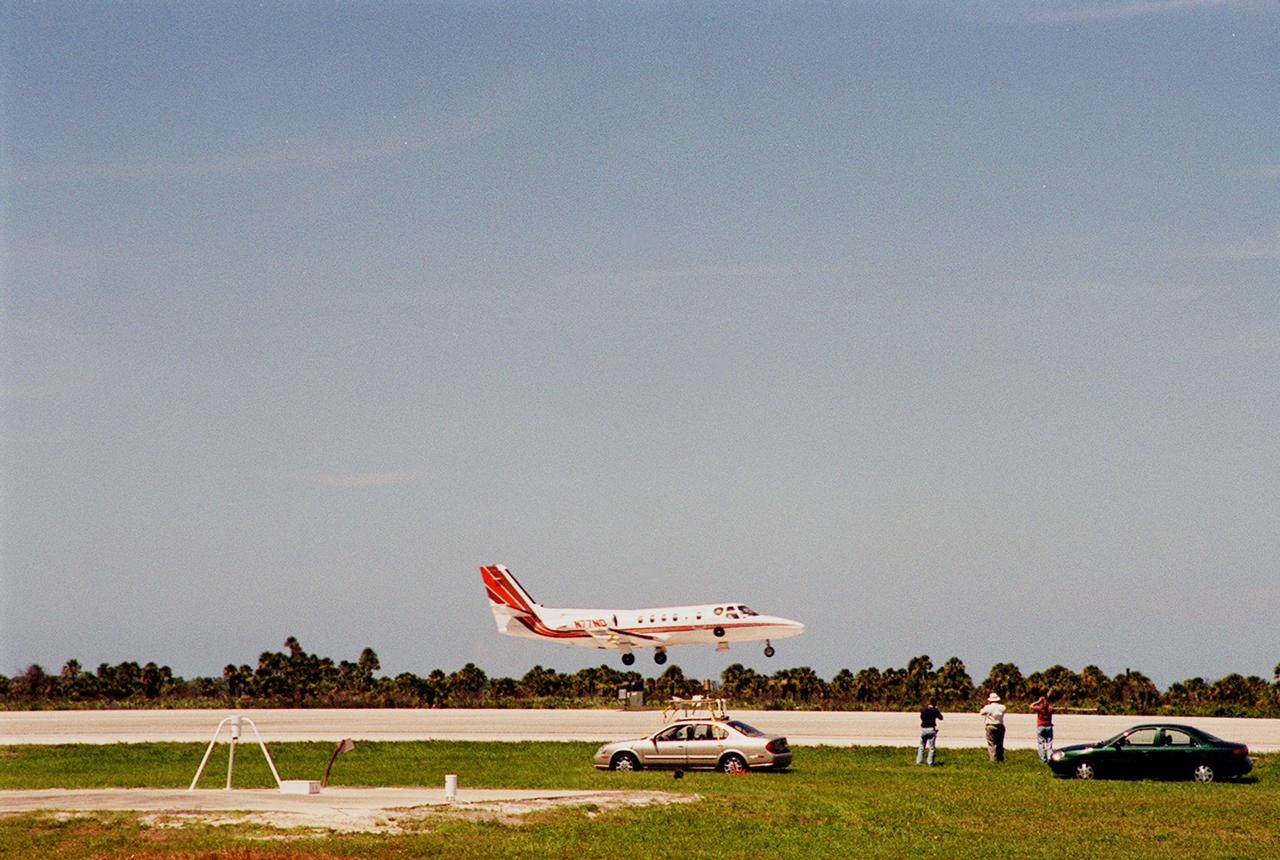
KENNEDY SPACE CENTER, FLA. -- At KSC's Shuttle Landing Facility, a specially equipped Cessna Citation aircraft flies over the runway to calibrate the Cesna's field mills with field mills on the ground (on the tripod at left) and on the car parked nearby (at center). Field mills measure electric fields. The aircraft is also equipped with cloud physics probes that measure the size, shape and number of ice and water particles in clouds. The plane is being flown into anvil clouds in the KSC area as part of a study to review and possibly modify lightning launch commit criteria. The weather study could lead to improved lightning avoidance rules and fewer launch scrubs for the Space Shuttle and other launch vehicles on the Eastern and Western ranges.
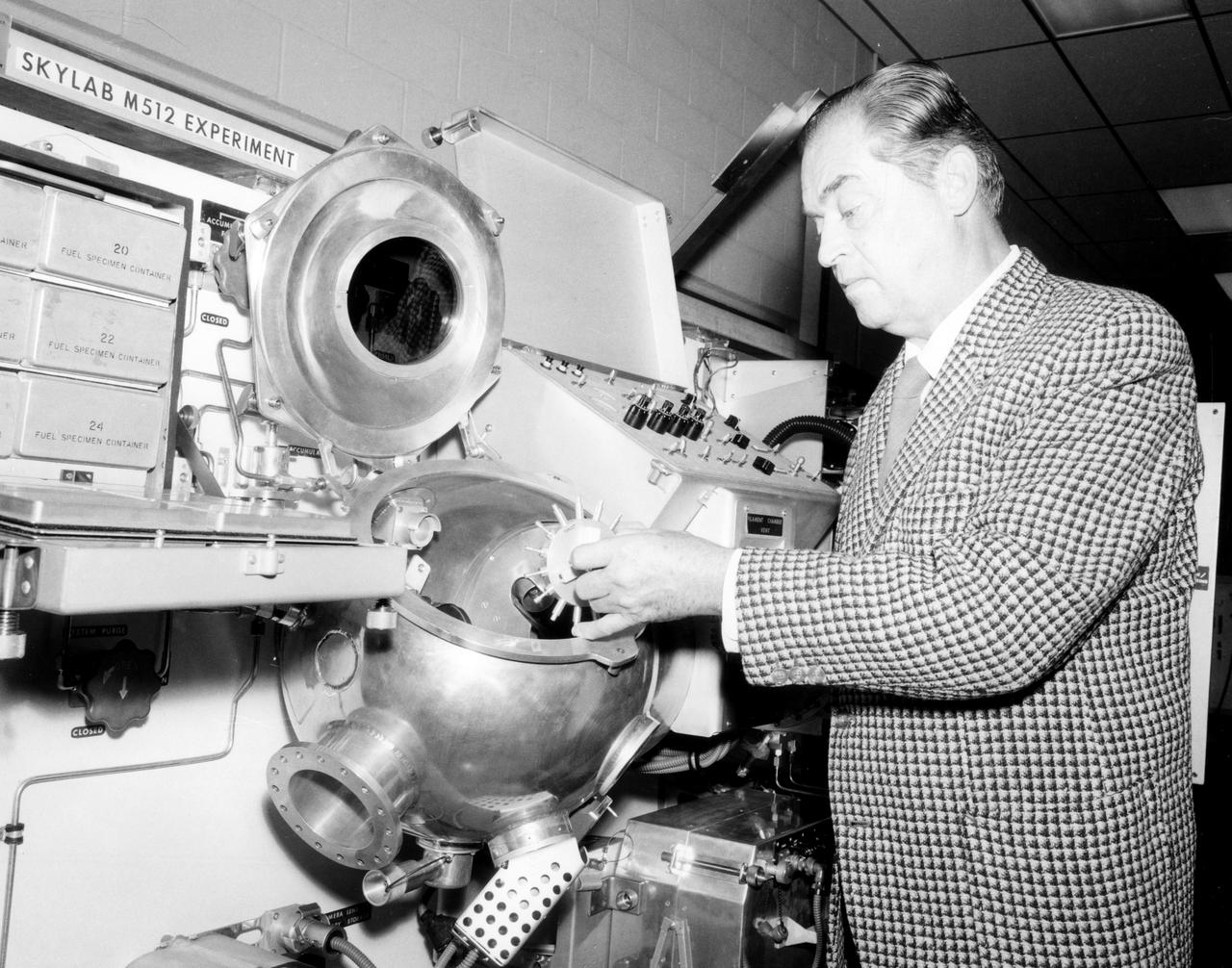
Hans F. Wuenscher, assistant director for Advanced Space Projects Engineering Laboratory at Marshall Space Flight Center (MSFC), examined the facility to be used by Skylab astronauts in performing a number of experiments in material science and manufacturing in space. The equipment shown here is a duplicate of the M512 Experiment hardware flown in the Multiple Docking Adapter section of the Sky lab. This equipment, itself an experiment, was be used for conducting 5 other experiments in the round vacuum chamber. Inside was a cavity which held the M518 Multipurpose Electric Furnace, a facility which was used for conducting other experiments. In all, a total of 17 experiments were conducted using this facility and furnace.
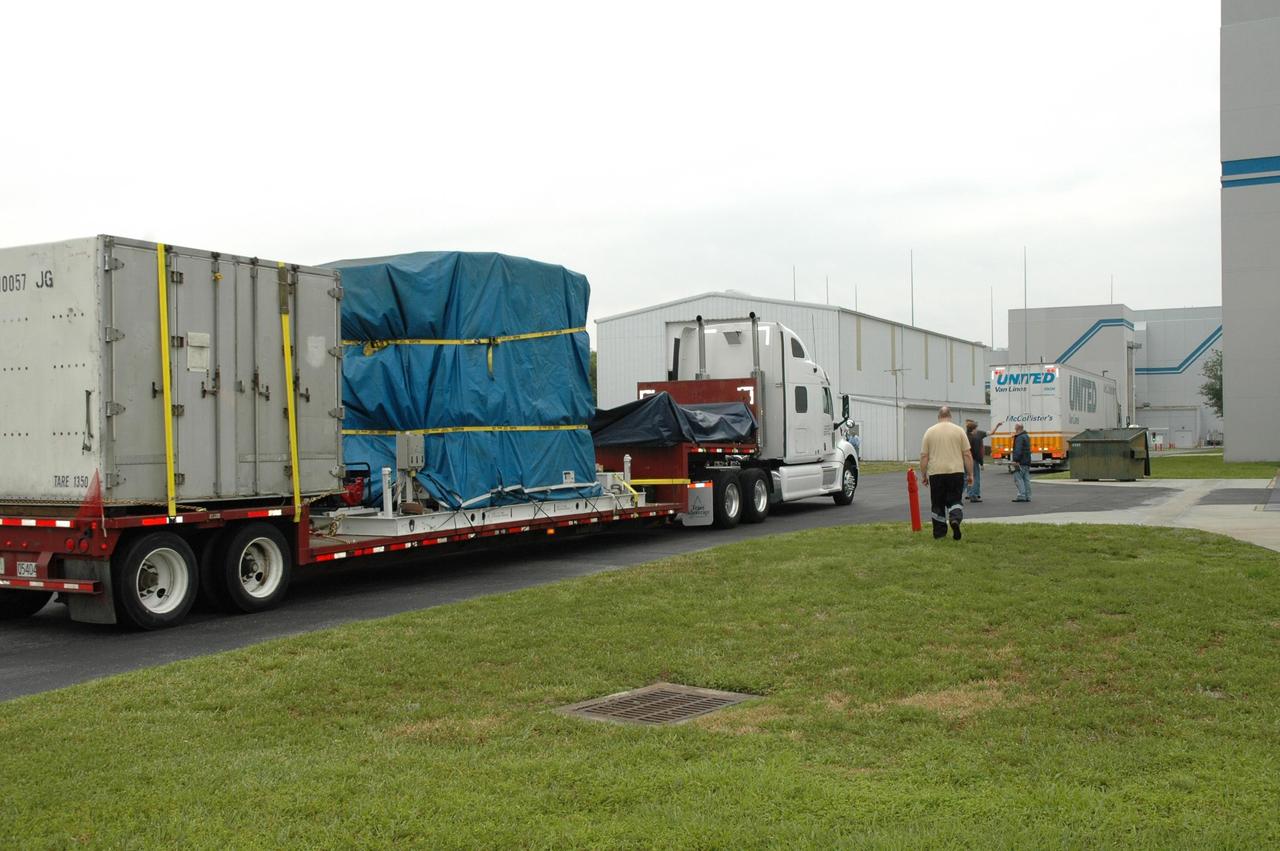
KENNEDY SPACE CENTER, FLA. -- Two trucks (one air-ride, one flat-bed) deliver the Dawn spacecraft, as well as additional electrical and ground support equipment and xenon ground support equipment, to Astrotech. Dawn will be moved from the truck and the shipping container removed. The spacecraft will then be moved into the high bay of the Payload Processing Facility. Dawn's mission is to explore two of the asteroid belt's most intriguing and dissimilar occupants: asteroid Vesta and the dwarf planet Ceres. The Dawn mission is managed by JPL, a division of the California Institute of Technology in Pasadena, for NASA's Science Mission Directorate in Washington, D.C. Photo credit: NASA/Jim Grossmann
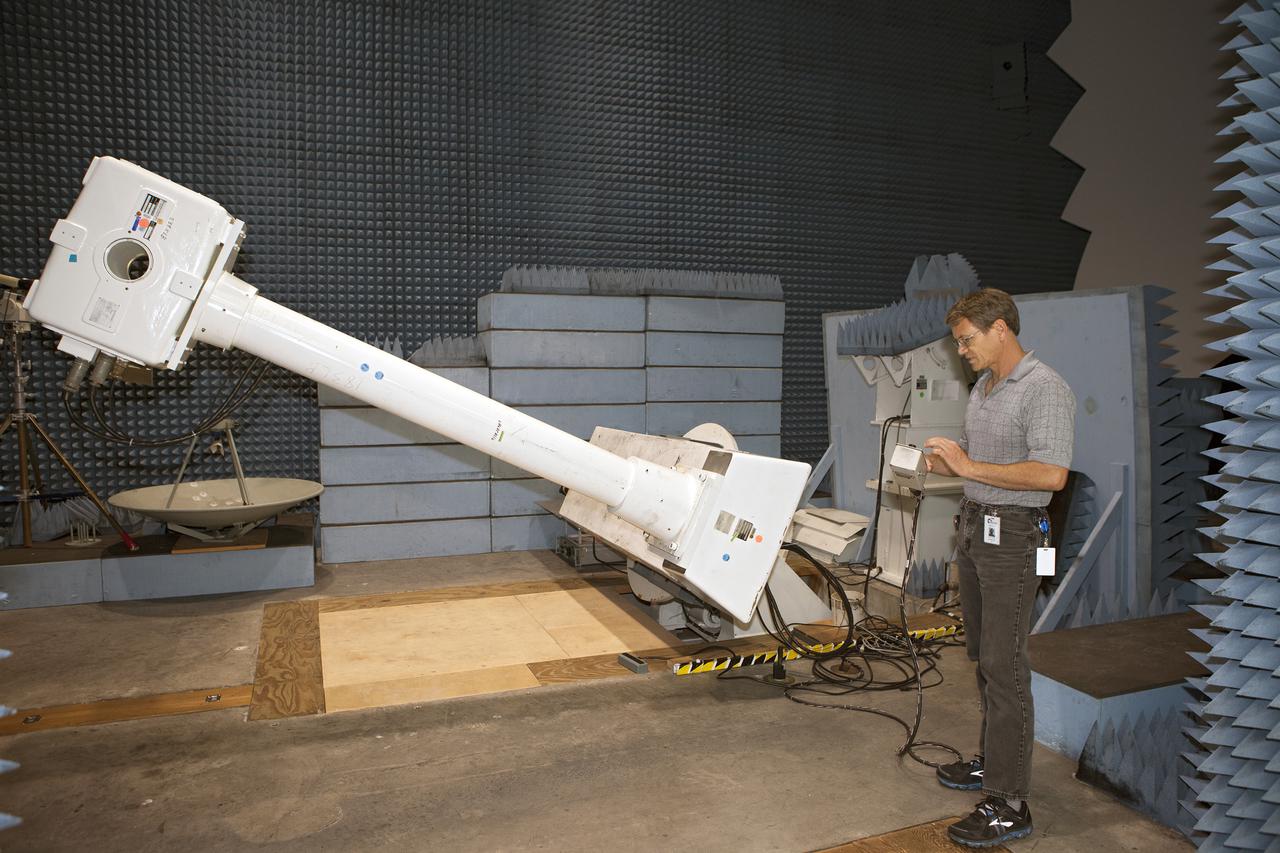
CAPE CANAVERAL, Fla. – At the Aerospace and Defense Manufacturing Center in Cape Canaveral, Fla., Craig Technologies Electrical Technician Mike Palin checks the performance of one of the 1,600 pieces of specialty equipment to be operated in the Avionics Laboratory at the 161,000-square-foot facility. In June of last year, NASA signed a partnership agreement with Craig Technologies to maintain an inventory of unique processing and manufacturing equipment for future mission support at the agency's Kennedy Space Center. The Cape Canaveral, Fla., facility, formerly known as the NASA Shuttle Logistics Depot NSLD, is now the Aerospace and Defense Manufacturing Center ADMC. Photo credit: NASA_Kim Shiflett
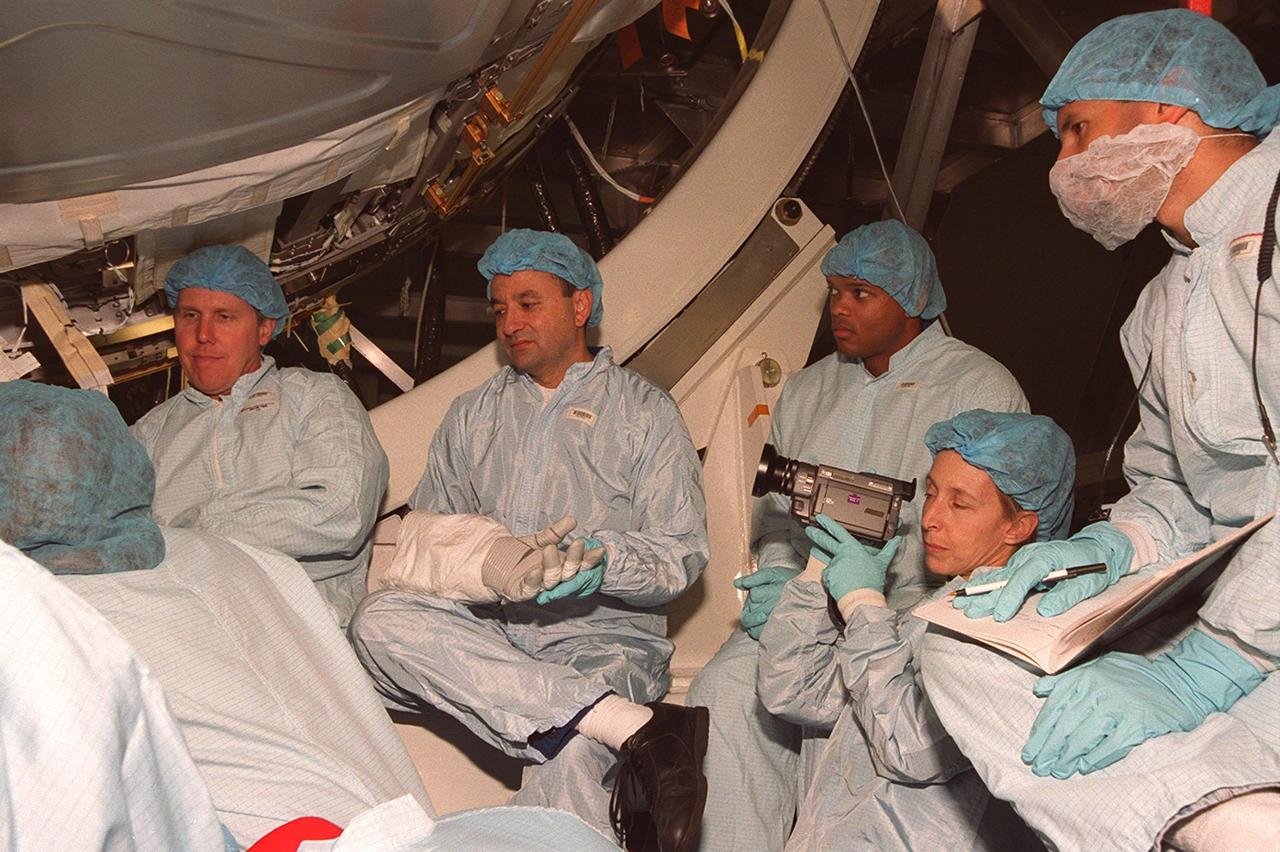
In the Space Station Processing Facility, members of the STS-98 crew, sitting in front of the U.S. Lab, Destiny, listen to a trainer during Crew Equipment Interface Test (CEIT) activities. Seen, left to right, are Mission Specialist Thomas Jones, Pilot Mark Polansky and Mission Specialists Robert Curbeam and Marsha Ivins (with camera). The CEIT allows a crew to become familiar with equipment they will be handling during the mission. With launch scheduled for Jan. 18, 2001, the STS-98 mission will be transporting the Lab to the International Space Station with five system racks already installed inside of the module. After delivery of electronics in the lab, electrically powered attitude control for Control Moment Gyroscopes will be activated
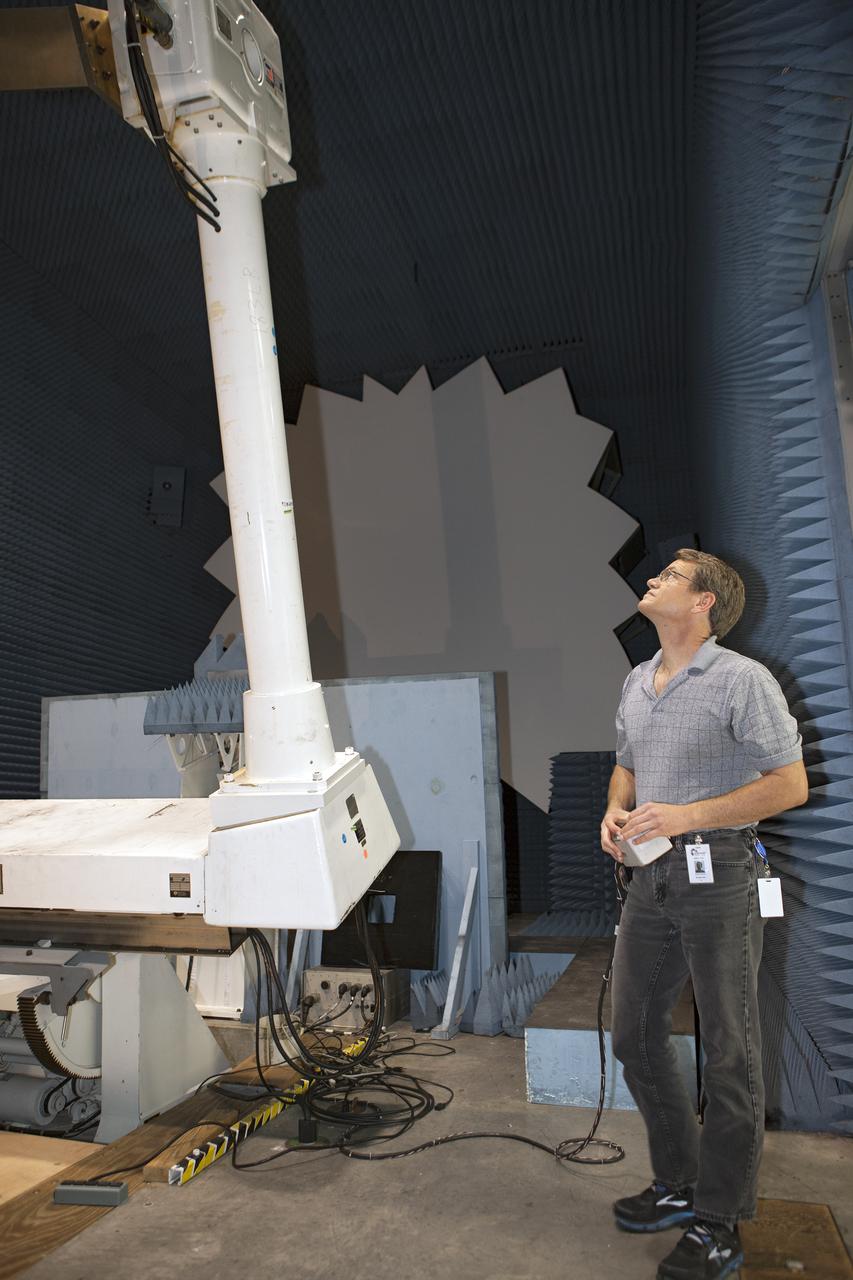
CAPE CANAVERAL, Fla. – At the Aerospace and Defense Manufacturing Center in Cape Canaveral, Fla., Craig Technologies Electrical Technician Mike Palin checks the performance of one of the 1,600 pieces of specialty equipment to be operated in the Avionics Laboratory at the 161,000-square-foot facility. In June of last year, NASA signed a partnership agreement with Craig Technologies to maintain an inventory of unique processing and manufacturing equipment for future mission support at the agency's Kennedy Space Center. The Cape Canaveral, Fla., facility, formerly known as the NASA Shuttle Logistics Depot NSLD, is now the Aerospace and Defense Manufacturing Center ADMC. Photo credit: NASA_Kim Shiflett
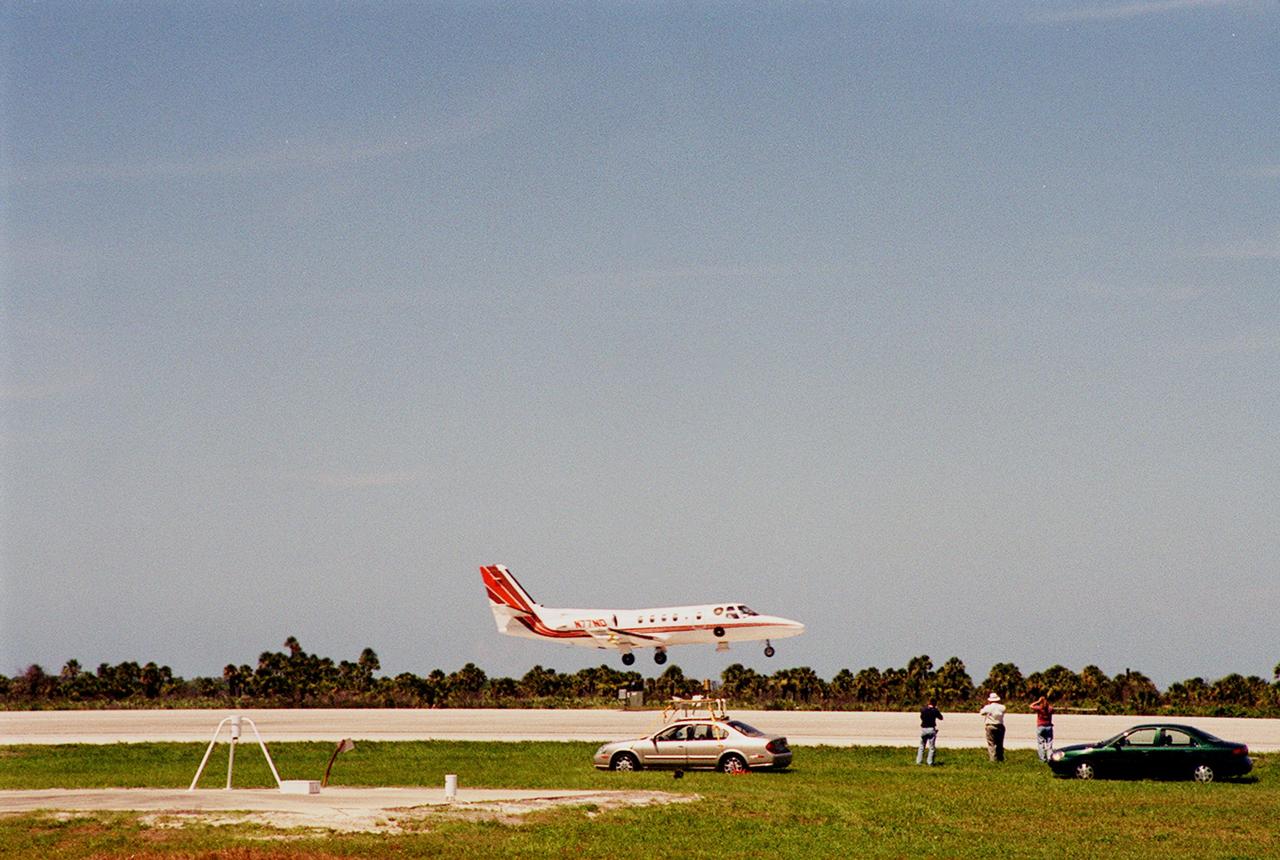
KENNEDY SPACE CENTER, FLA. -- At KSC's Shuttle Landing Facility, a specially equipped Cessna Citation aircraft flies over the runway to calibrate the Cesna's field mills with field mills on the ground (on the tripod at left) and on the car parked nearby (at center). Field mills measure electric fields. The aircraft is also equipped with cloud physics probes that measure the size, shape and number of ice and water particles in clouds. The plane is being flown into anvil clouds in the KSC area as part of a study to review and possibly modify lightning launch commit criteria. The weather study could lead to improved lightning avoidance rules and fewer launch scrubs for the Space Shuttle and other launch vehicles on the Eastern and Western ranges.
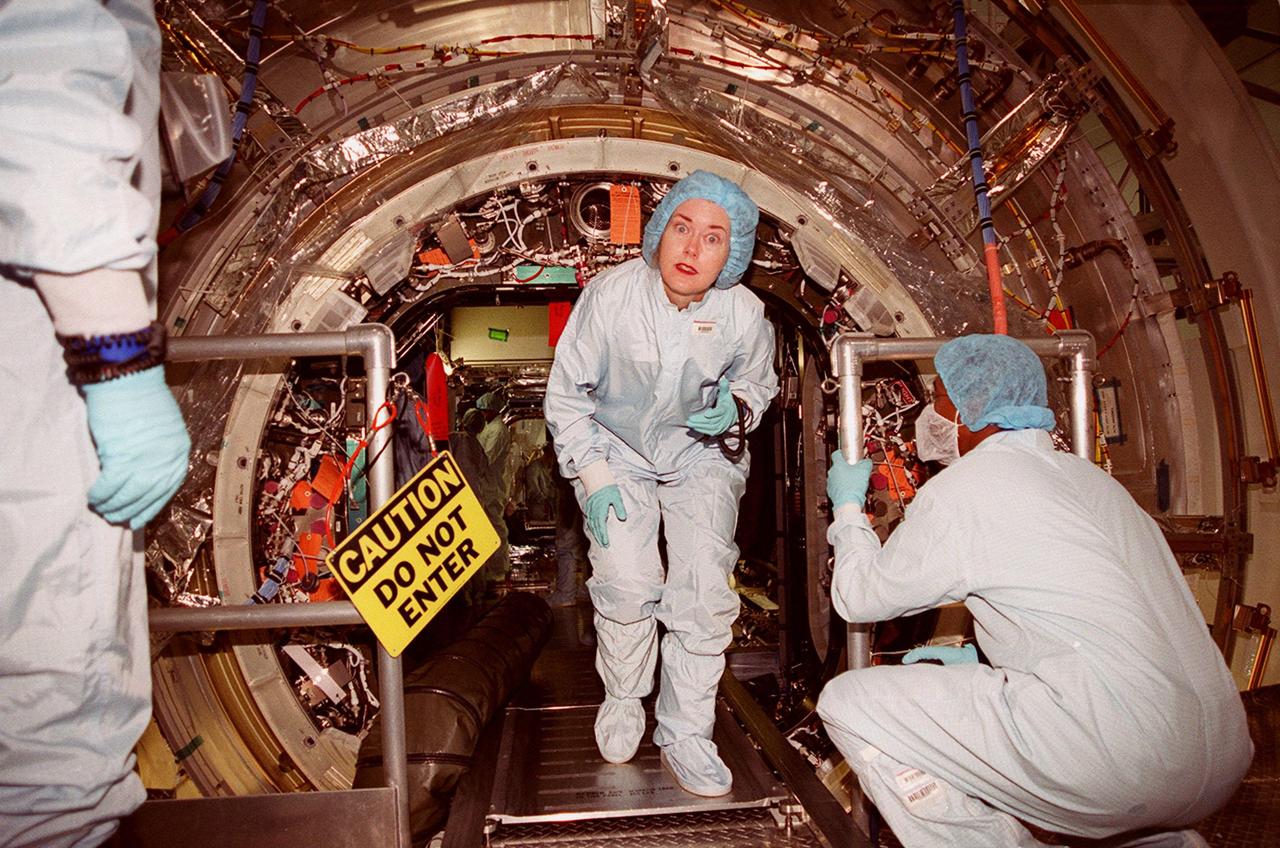
In the Space Station Processing Facility, a worker is surprised by the camera as she exits the U.S. Lab, Destiny. Inside the lab is the STS-98 crew, which is taking part in Crew Equipment Interface Test activities, becoming familiar with equipment it will be handling during the mission. The crew comprises Commander Ken Cockrell, Pilot Mark Polansky and Mission Specialists Robert Curbeam, Thomas Jones and Marsha Ivins. The mission will be transporting the Lab to the International Space Station with five system racks already installed inside of the module. With delivery of electronics in the lab, electrically powered attitude control for Control Moment Gyroscopes will be activated. The STS-98 launch is scheduled for Jan. 18, 2001
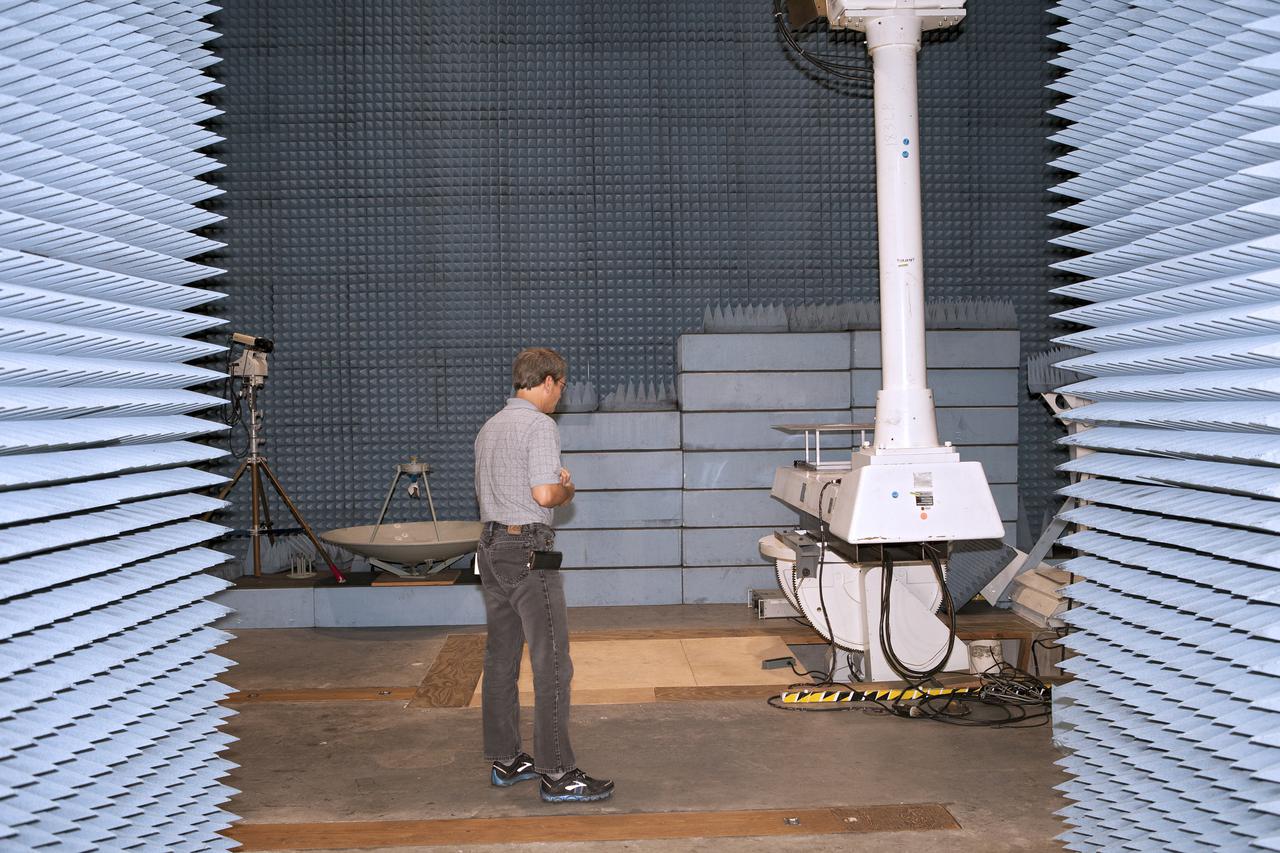
CAPE CANAVERAL, Fla. – At the Aerospace and Defense Manufacturing Center in Cape Canaveral, Fla., Craig Technologies Electrical Technician Mike Palin checks the performance of one of the 1,600 pieces of specialty equipment to be operated in the Avionics Laboratory at the 161,000-square-foot facility. In June of last year, NASA signed a partnership agreement with Craig Technologies to maintain an inventory of unique processing and manufacturing equipment for future mission support at the agency's Kennedy Space Center. The Cape Canaveral, Fla., facility, formerly known as the NASA Shuttle Logistics Depot NSLD, is now the Aerospace and Defense Manufacturing Center ADMC. Photo credit: NASA_Kim Shiflett

KENNEDY SPACE CENTER, FLA. -- On Launch Pad 39A at NASA's Kennedy Space Center, the wiring is checked and validated before the tanking test on space shuttle Atlantis' external tank set for Dec. 18. The test wiring has been spliced into an electrical harness in the aft main engine compartment connected with the engine cut-off, or ECO, sensor system. The attached wiring leads to the interior of the mobile launcher platform where the time domain reflectometry, or TDR, test equipment is located. Photo credit: NASA/Kim Shiflett
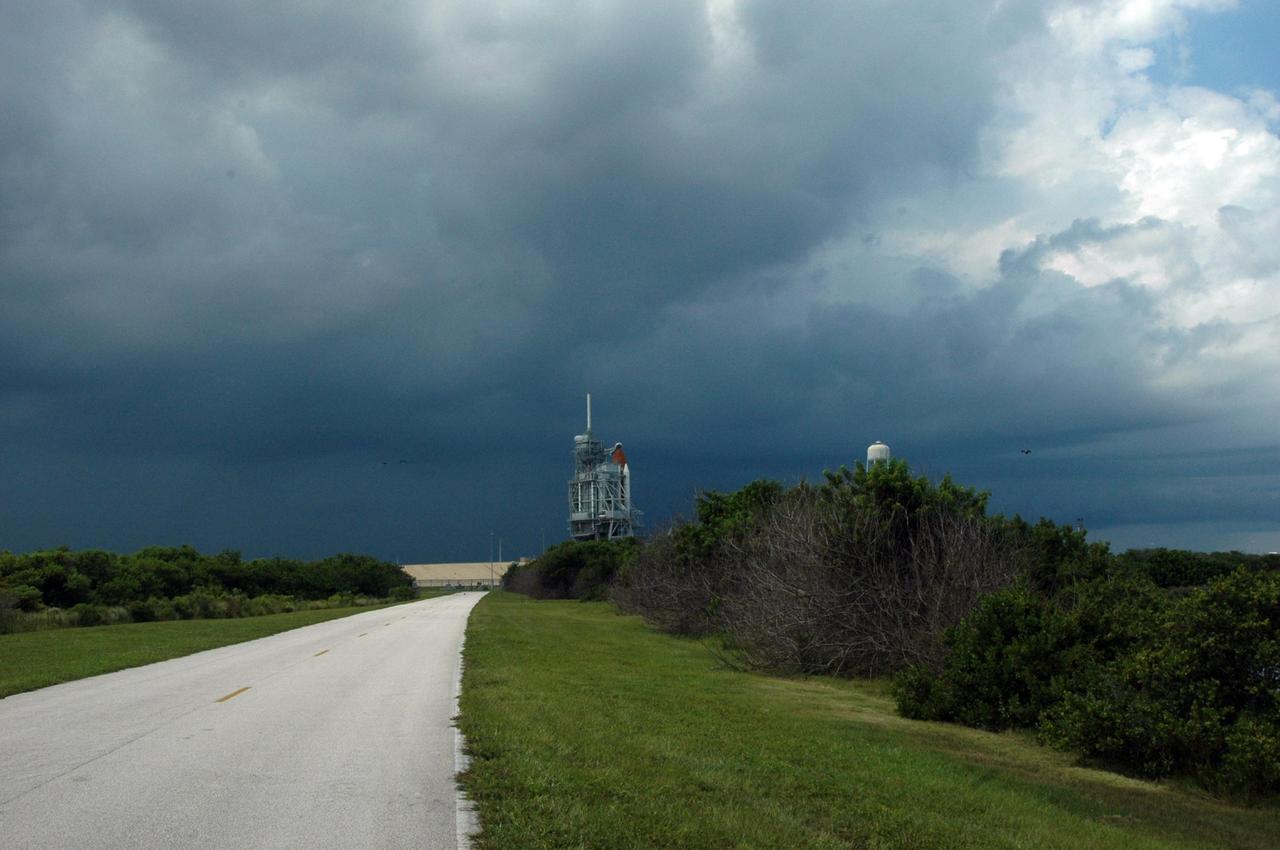
KENNEDY SPACE CENTER, FLA. - The dark clouds of a heavy rainstorm moving into Kennedy Space Center in the late afternoon on Sat., August 26, 2006, seem to illuminate the Space Shuttle Atlantis as it sits on Launch Pad 39B. A lightning strike to the pad's lightning protection system on August 25, caused the mission management team to postpone the launch of mission STS-115 for 24 hours in order to review all electrical systems on the space shuttle and ground support equipment at the pad. Photo credit: NASA/Ken Thornsley.
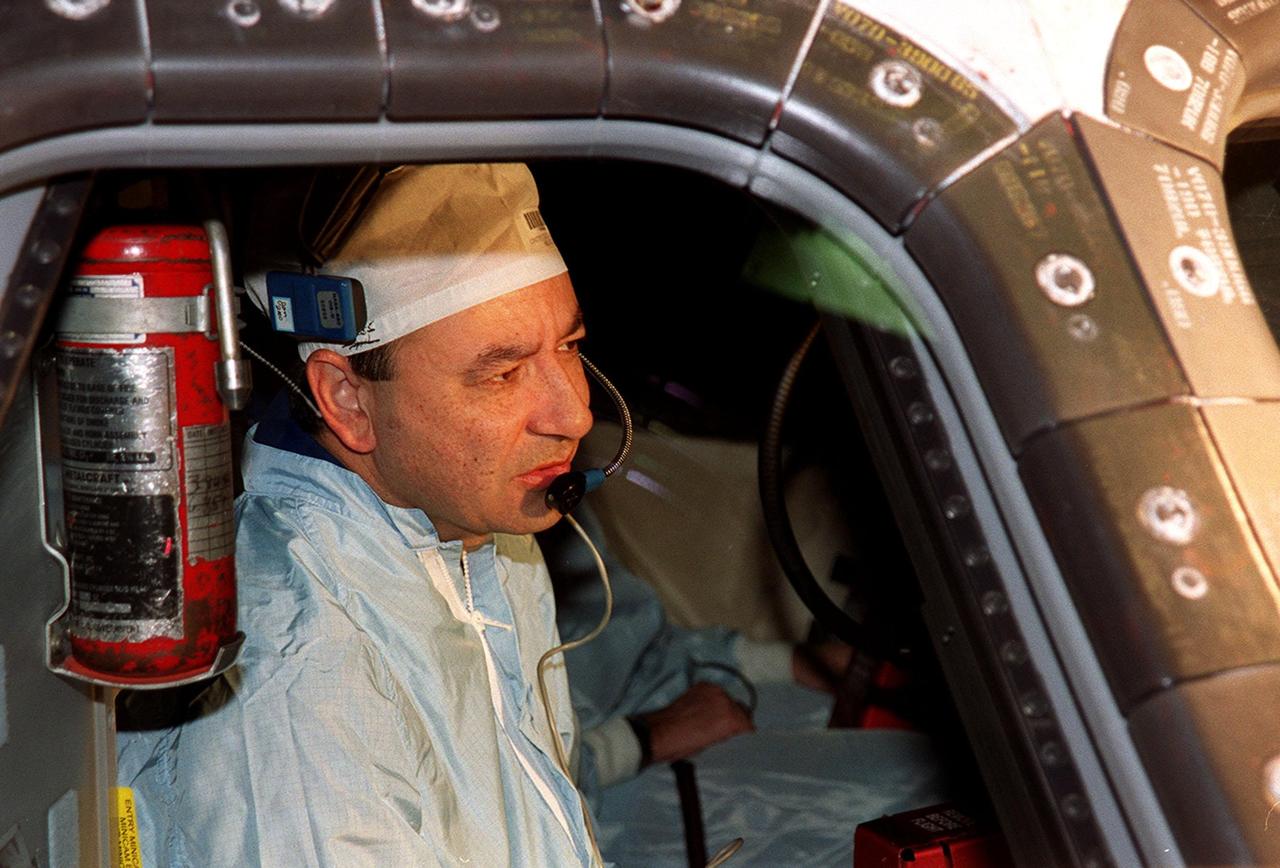
KENNEDY SPACE CENTER, FLA. -- In Orbiter Processing Facility bay 3, STS-98 Pilot Mark Polansky inspects the window in the cockpit of Atlantis. He and the rest of the crew are at KSC for Crew Equipment Interface Test activities. Launch on mission STS-98 is scheduled for Jan. 18, 2001. It will be transporting the U.S. Lab, Destiny, to the International Space Station with five system racks already installed inside of the module. After delivery of electronics in the lab, electrically powered attitude control for Control Moment Gyroscopes will be activated
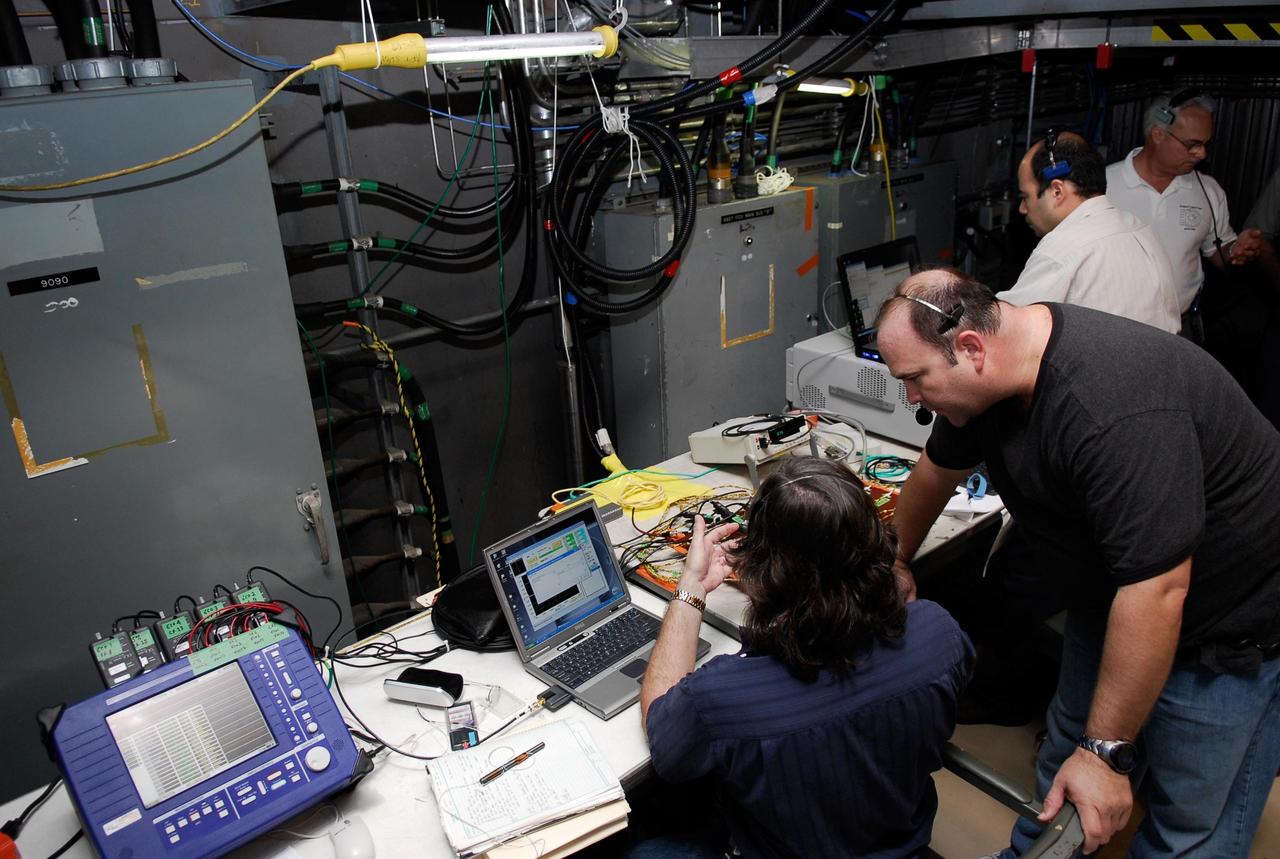
KENNEDY SPACE CENTER, FLA. -- On Launch Pad 39A at NASA's Kennedy Space Center, the wiring is checked and validated before the tanking test on space shuttle Atlantis' external tank set for Dec. 18. The test wiring has been spliced into an electrical harness in the aft main engine compartment connected with the engine cut-off, or ECO, sensor system. The attached wiring leads to the interior of the mobile launcher platform where the time domain reflectometry, or TDR, test equipment is located. Photo credit: NASA/Kim Shiflett
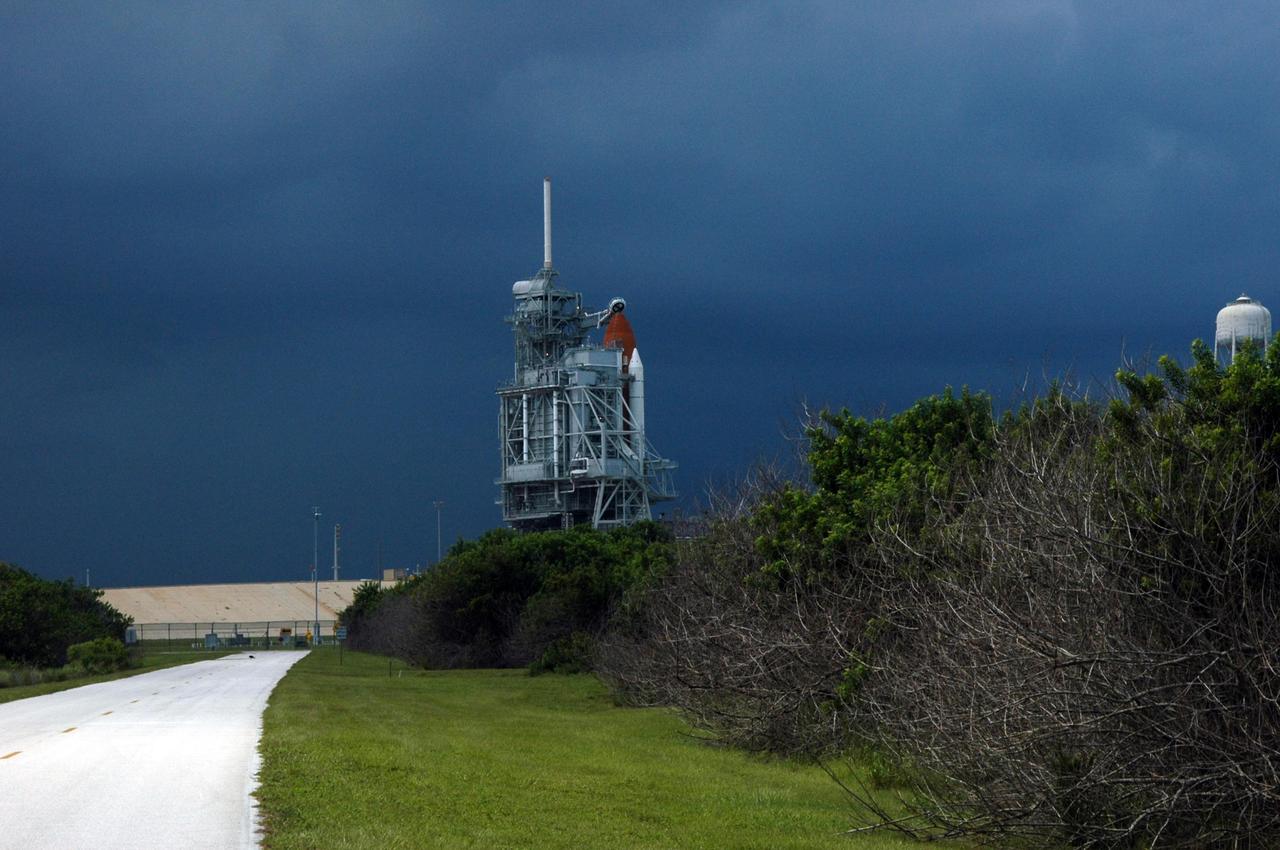
KENNEDY SPACE CENTER, FLA. - The dark clouds of a heavy rainstorm moving into Kennedy Space Center in the late afternoon on Sat., August 26, 2006, seem to illuminate the Space Shuttle Atlantis as it sits on Launch Pad 39B. A lightning strike to the pad's lightning protection system on August 25, caused the mission management team to postpone the launch of mission STS-115 for 24 hours in order to review all electrical systems on the space shuttle and ground support equipment at the pad. Photo credit: NASA/Ken Thornsley.
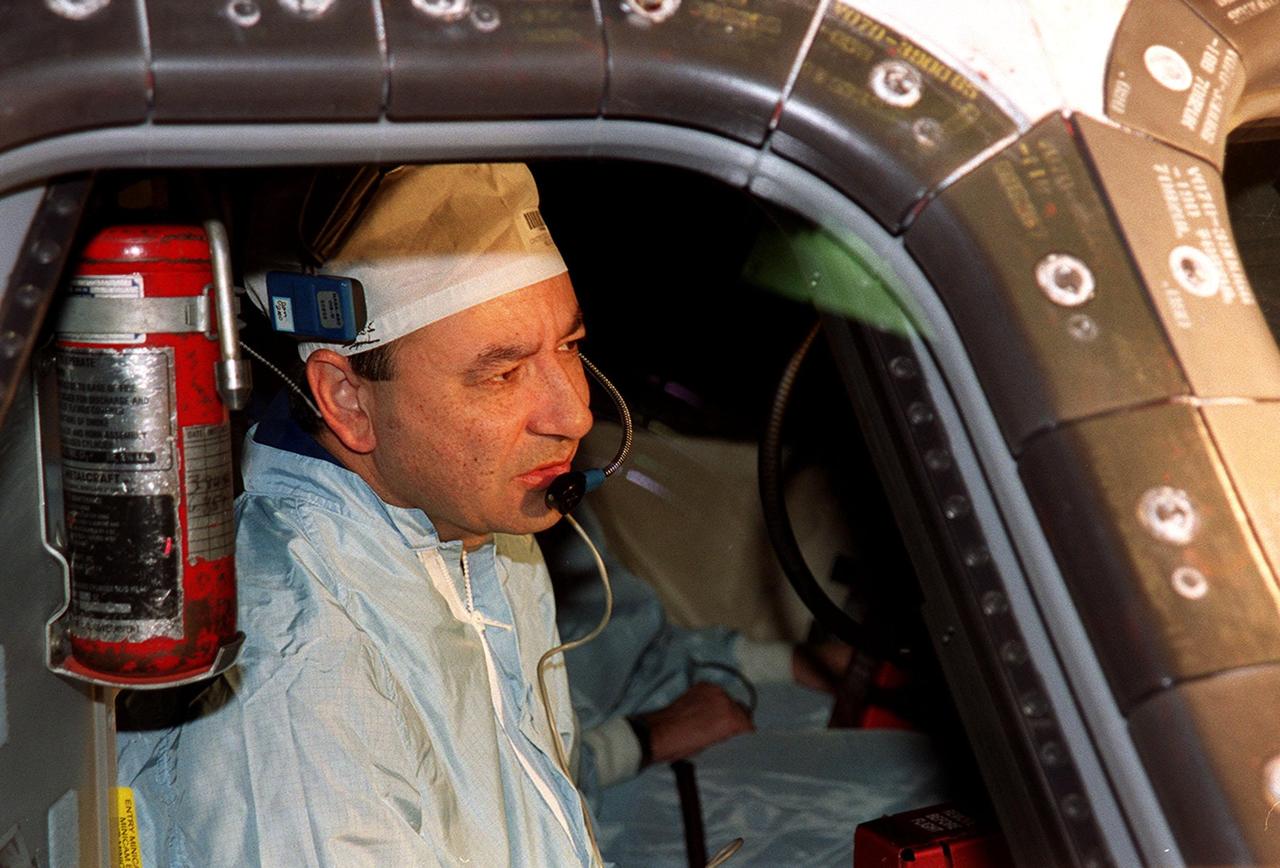
KENNEDY SPACE CENTER, FLA. -- In Orbiter Processing Facility bay 3, STS-98 Pilot Mark Polansky inspects the window in the cockpit of Atlantis. He and the rest of the crew are at KSC for Crew Equipment Interface Test activities. Launch on mission STS-98 is scheduled for Jan. 18, 2001. It will be transporting the U.S. Lab, Destiny, to the International Space Station with five system racks already installed inside of the module. After delivery of electronics in the lab, electrically powered attitude control for Control Moment Gyroscopes will be activated
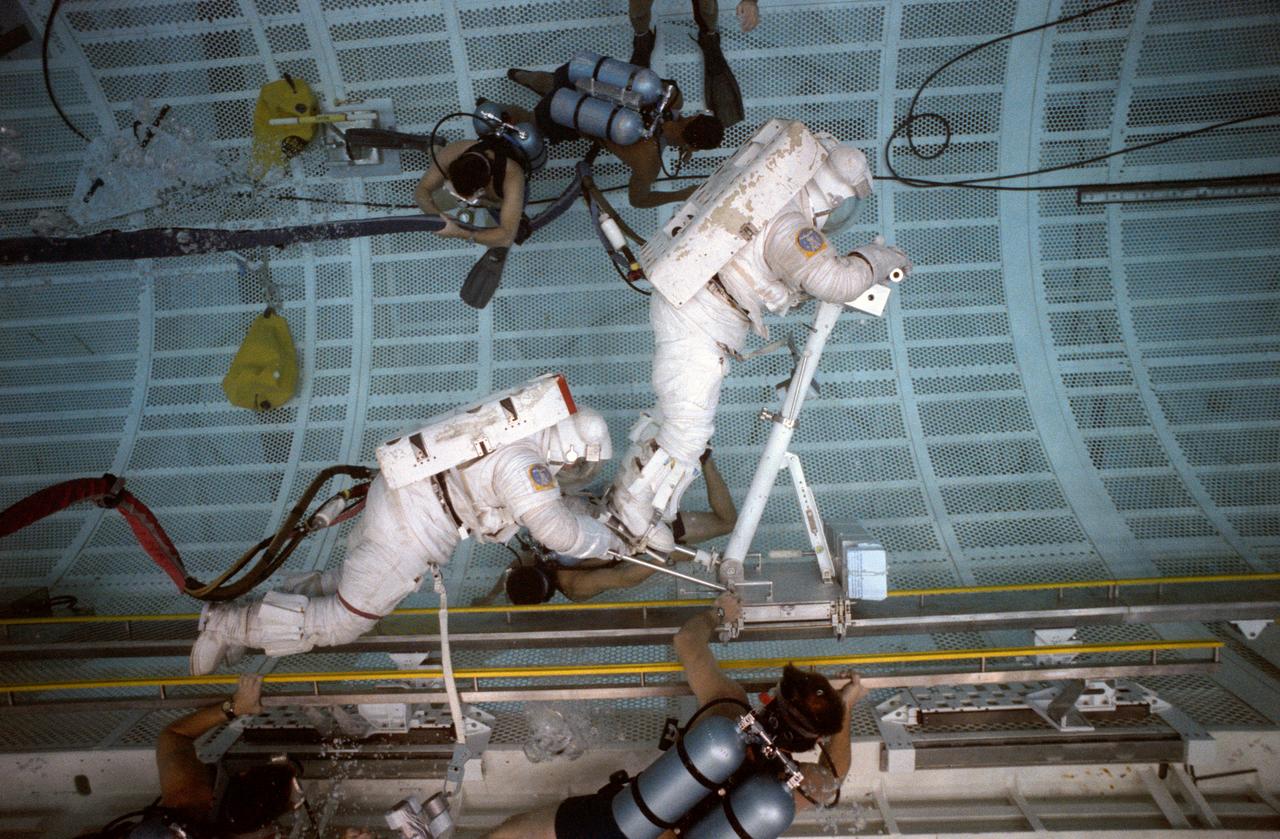
S89-46985 (October 1989) --- Astronauts Jerry L Ross and Jerome (Jay) Apt, STS-37 mission specialists, practice a spacewalk they will perform on that flight. The experiment uses an electrically powered version of the Crew and Equipment Translation Aid (CETA), a type of railroad handcart planned as a spacewalker's transportation system along the truss of Space Station Freedom. Apt is pulling Ross along to test the cart's ability to carry a person plus cargo.
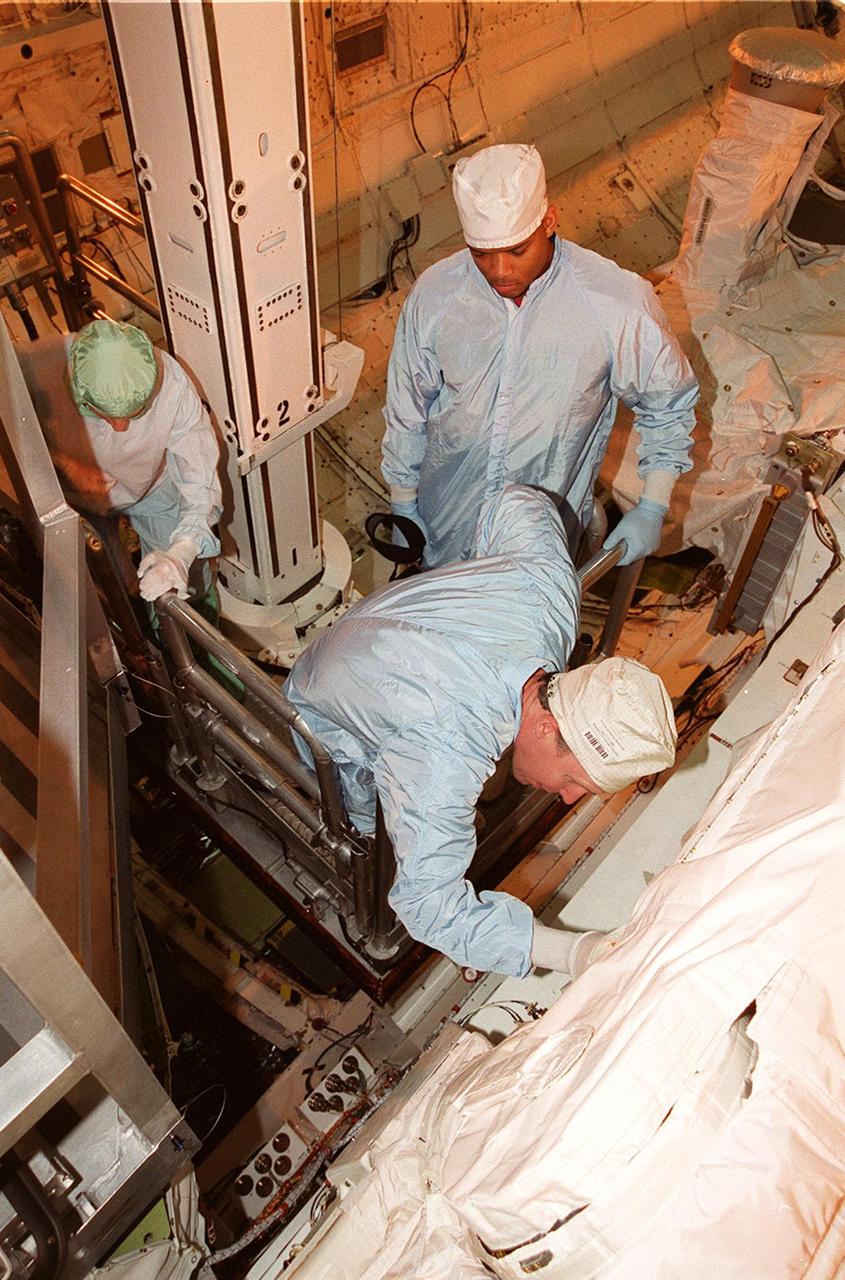
KENNEDY SPACE CENTER, FLA. -- Working on the Orbiter Docking System of orbiter Atlantis are Mission Specialists Tom Jones (leaning over) and Robert Curbeam. They and the rest of the crew are at KSC for Crew Equipment Interface Test activities. Launch on mission STS-98 is scheduled for Jan. 18, 2001. It will be transporting the U.S. Lab, Destiny, to the International Space Station with five system racks already installed inside of the module. After delivery of electronics in the lab, electrically powered attitude control for Control Moment Gyroscopes will be activated
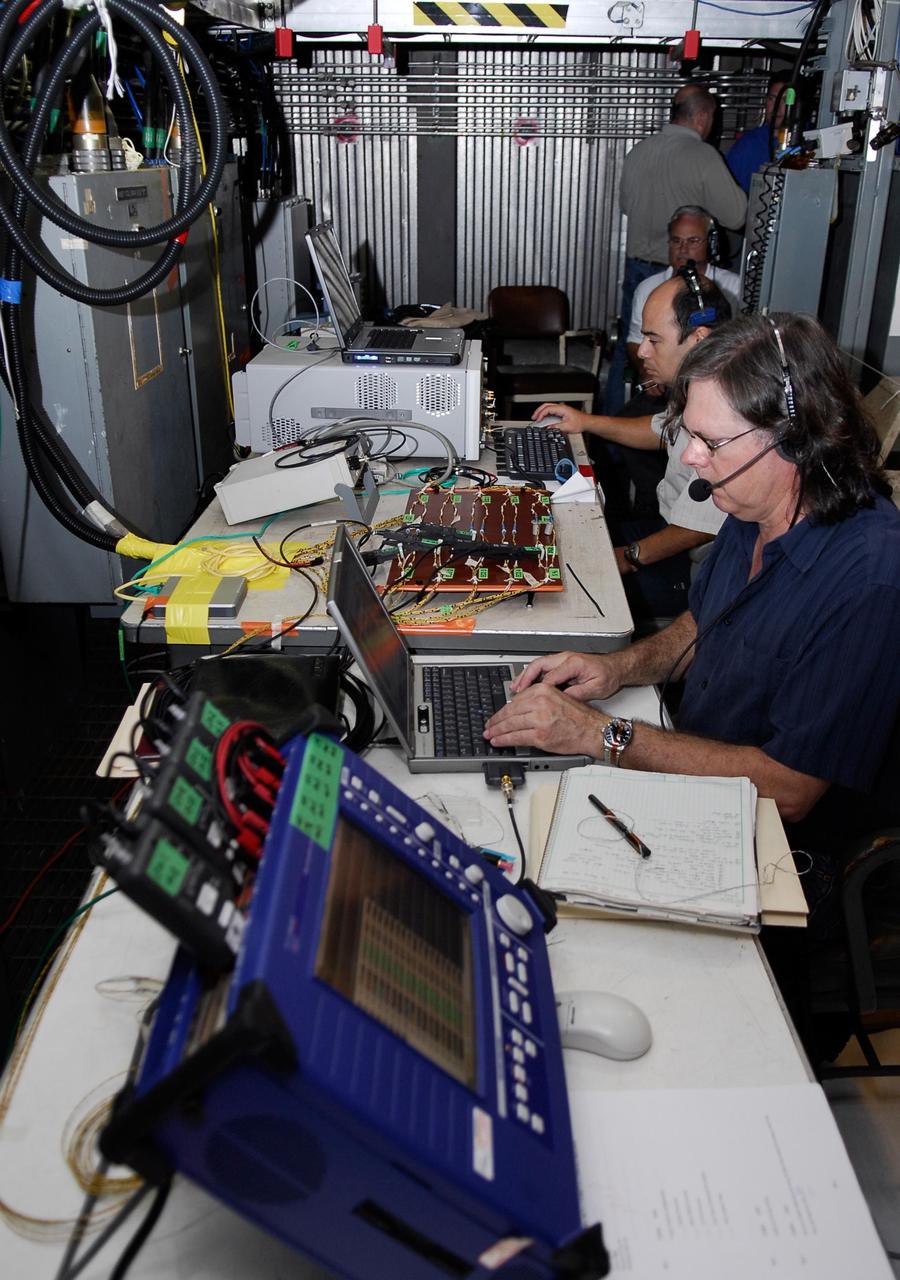
KENNEDY SPACE CENTER, FLA. -- On Launch Pad 39A at NASA's Kennedy Space Center, the wiring is checked and validated before the tanking test on space shuttle Atlantis' external tank set for Dec. 18. The test wiring has been spliced into an electrical harness in the aft main engine compartment connected with the engine cut-off, or ECO, sensor system. The attached wiring leads to the interior of the mobile launcher platform where the time domain reflectometry, or TDR, test equipment is located. Photo credit: NASA/Kim Shiflett
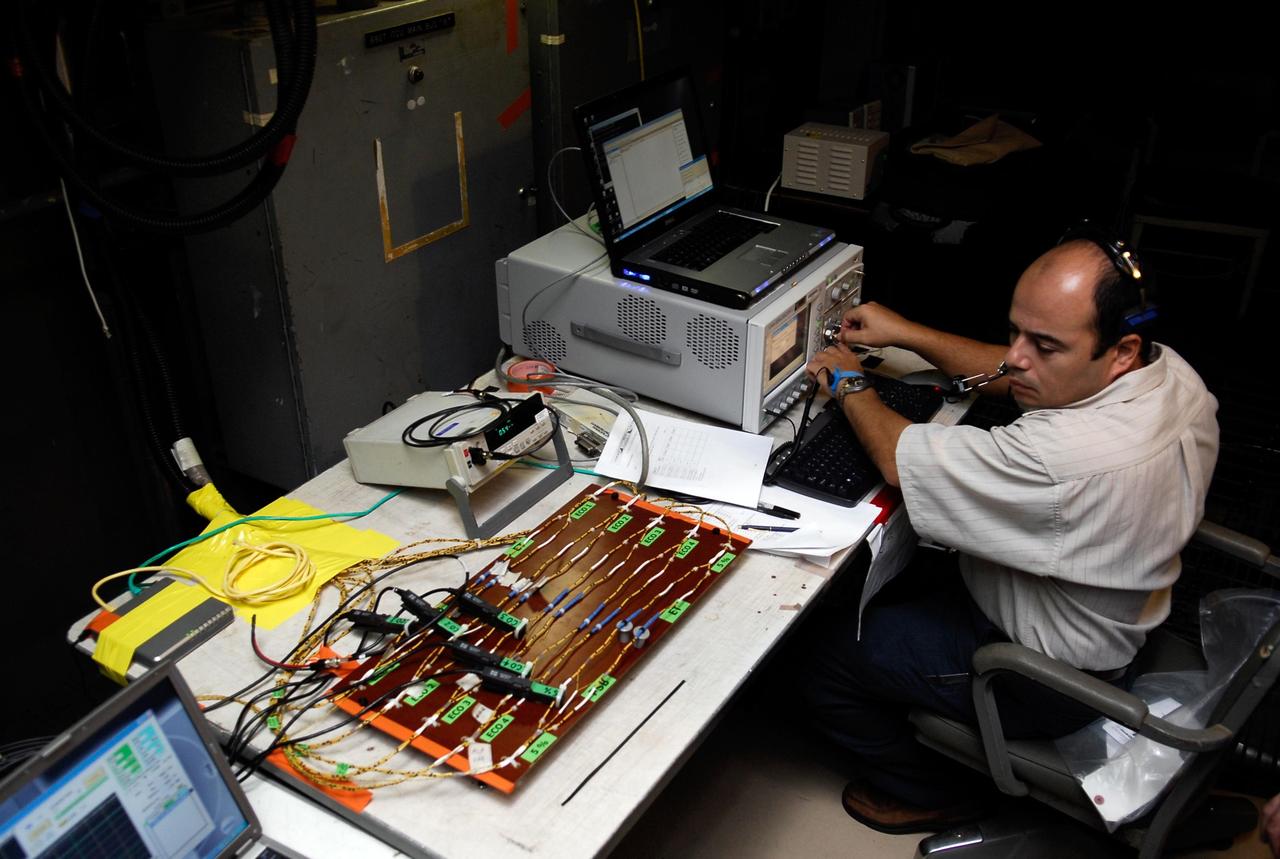
KENNEDY SPACE CENTER, FLA. -- On Launch Pad 39A at NASA's Kennedy Space Center, the wiring is checked and validated before the tanking test on space shuttle Atlantis' external tank set for Dec. 18. The test wiring has been spliced into an electrical harness in the aft main engine compartment connected with the engine cut-off, or ECO, sensor system. The attached wiring leads to the interior of the mobile launcher platform where the time domain reflectometry, or TDR, test equipment is located. Photo credit: NASA/Kim Shiflett
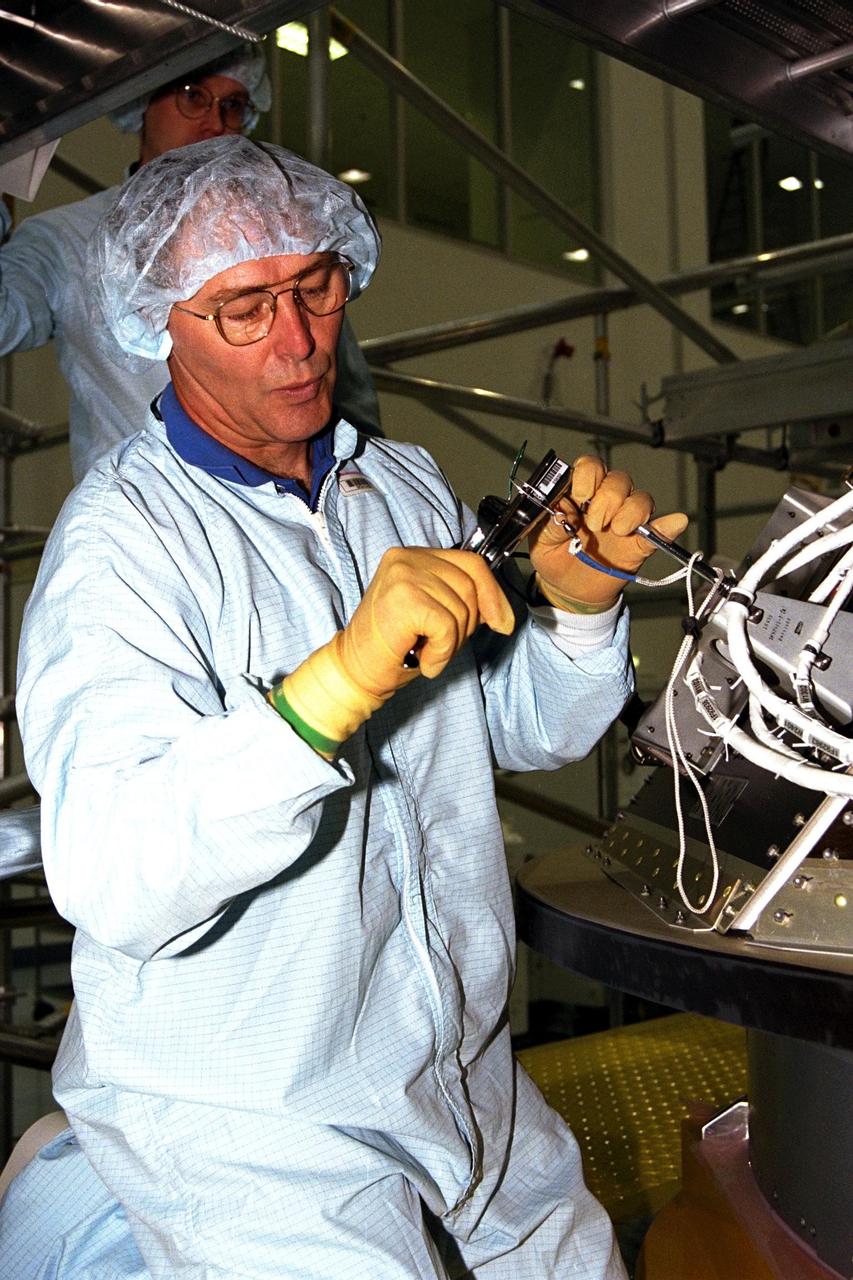
Mission Specialist Jerry Ross participates in the Crew Equipment Interface Test (CEIT) for STS-88 in KSC's Space Station Processing Facility. The CEIT gives astronauts an opportunity to get a hands-on look at the payloads with which they will be working on-orbit. Here, Ross is inspecting electrical connections that will be used in assembly of the International Space Station (ISS). STS-88, the first ISS assembly flight, is targeted for launch in July 1998 aboard Space Shuttle Endeavour
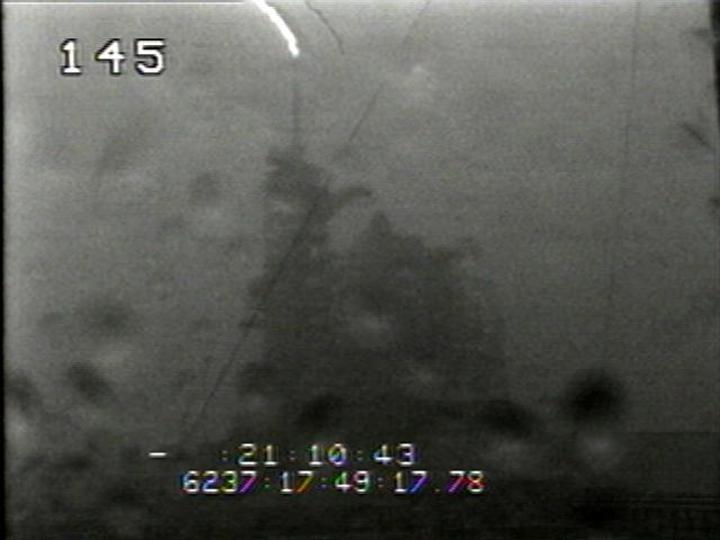
KENNEDY SPACE CENTER, FLA. - A lightning strike occurred at the lightning protection system of Launch Pad 39B on Fri., August 25, 2006, at 1:49:17 p.m. (EST). The lightning strike caused the mission management team to scrub the launch of mission STS-115 for 24 hours in order to review all electrical systems on the space shuttle and the launch pad ground support equipment. Photo credit: NASA/InDyne -Operational Television.
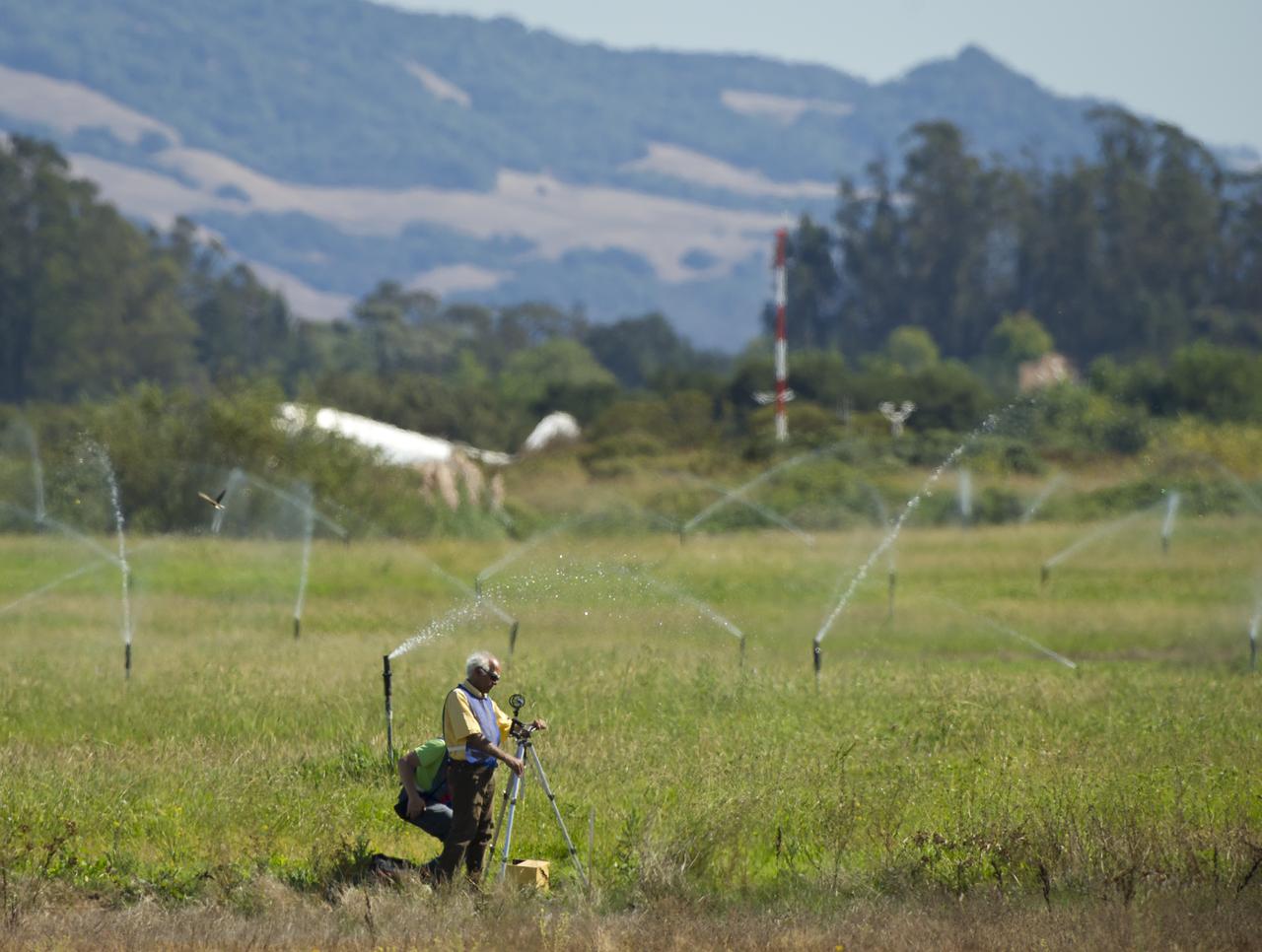
Support personnel prepare noise level measuring equipment along the runway for the 2011 Green Flight Challenge, sponsored by Google, at the Charles M. Schulz Sonoma County Airport in Santa Rosa, Calif. on Monday, Sept. 26, 2011. NASA and the Comparative Aircraft Flight Efficiency (CAFE) Foundation are having the challenge with the goal to advance technologies in fuel efficiency and reduced emissions with cleaner renewable fuels and electric aircraft. Photo Credit: (NASA/Bill Ingalls)
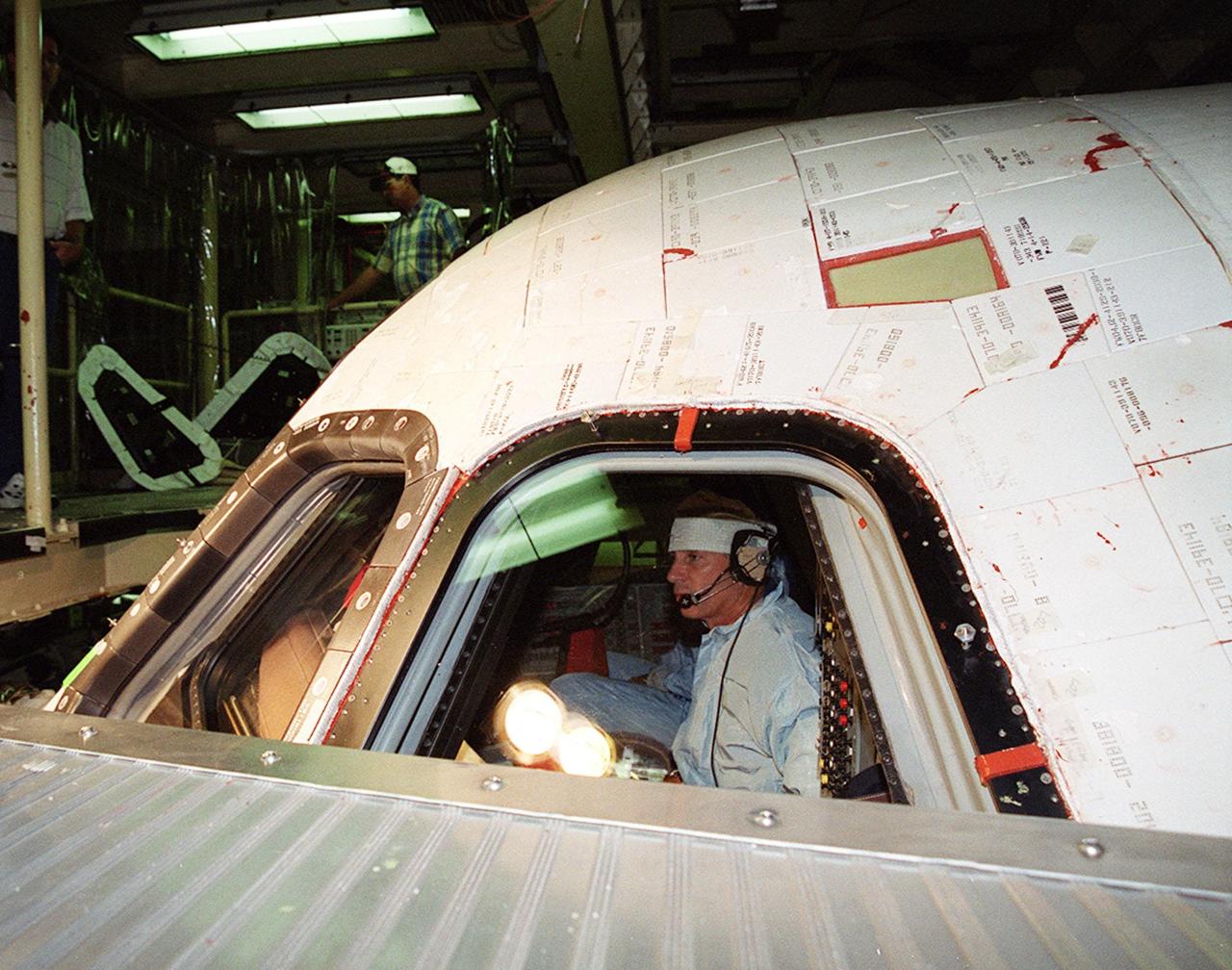
KENNEDY SPACE CENTER, FLA. -- In Orbiter Processing Facility bay 3, STS-98 Commander Ken Cockrell conducts window inspection, checking for leaks, in the cockpit of Atlantis. He and the rest of the crew are at KSC for Crew Equipment Interface Test activities. Launch on mission STS-98 is scheduled for Jan. 18, 2001. It will be transporting the U.S. Lab, Destiny, to the International Space Station with five system racks already installed inside of the module. After delivery of electronics in the lab, electrically powered attitude control for Control Moment Gyroscopes will be activated
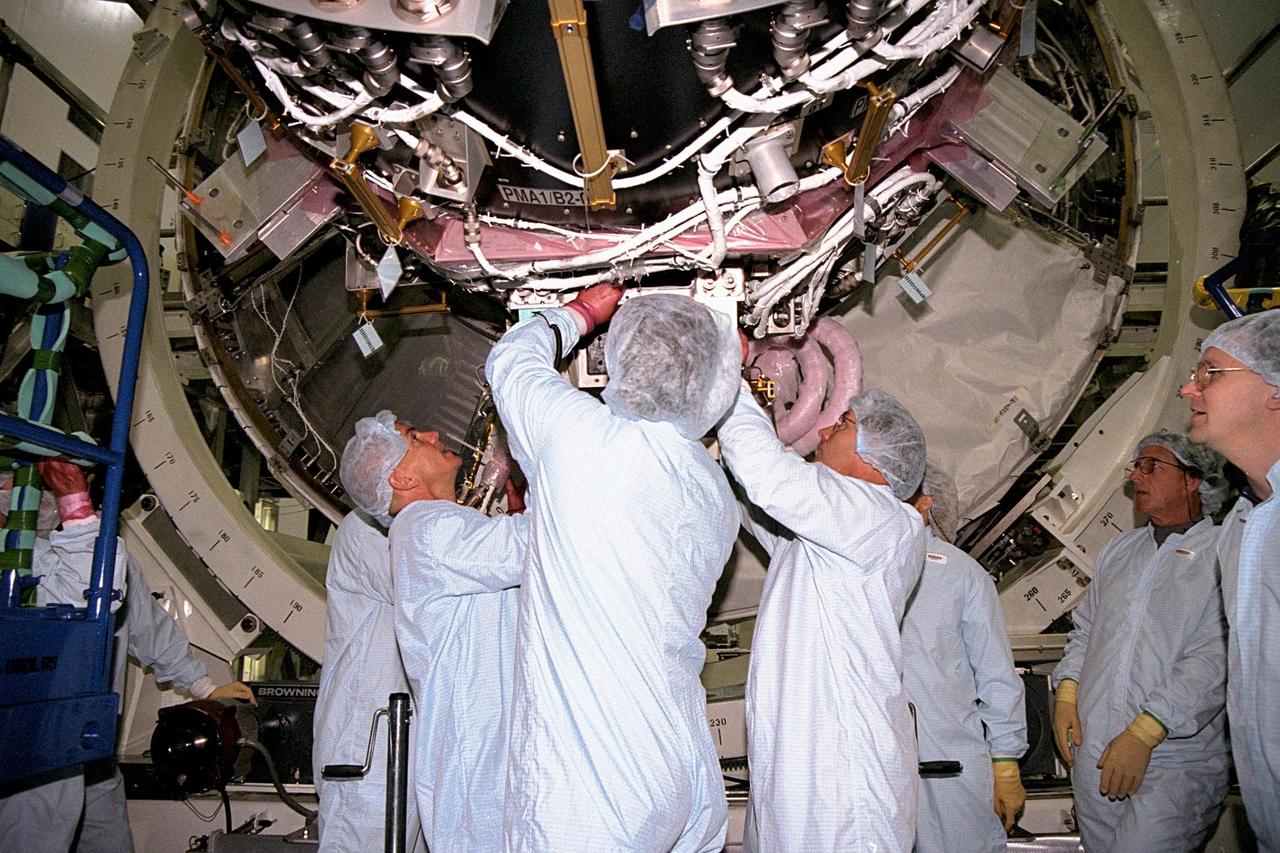
Pilot Rick Sturckow, left of center, and Mission Specialist Jerry Ross, right of center, participate in the Crew Equipment Interface Test (CEIT) for STS-88 in KSC's Space Station Processing Facility. The CEIT gives astronauts an opportunity to get a hands-on look at the payloads with which they will be working on-orbit. Here, the crew is inspecting electrical connections that will be used in assembly of the International Space Station (ISS). STS-88, the first ISS assembly flight, is targeted for launch in July 1998 aboard Space Shuttle Endeavour

The Orion crew module adapter for NASA’s Artemis III campaign undergoes wiring installs inside the Neil A. Armstrong Operations and Checkout Building at NASA’s Kennedy Space Center on Wednesday, Sept. 4, 2024. In Orion’s final configuration before launch, the crew module adapter connects the capsule to the European Service Module 3. The crew module adapter houses electronic equipment for communications, power, and control, and includes an umbilical connector that bridges the electrical, data, and fluid systems between the main modules.
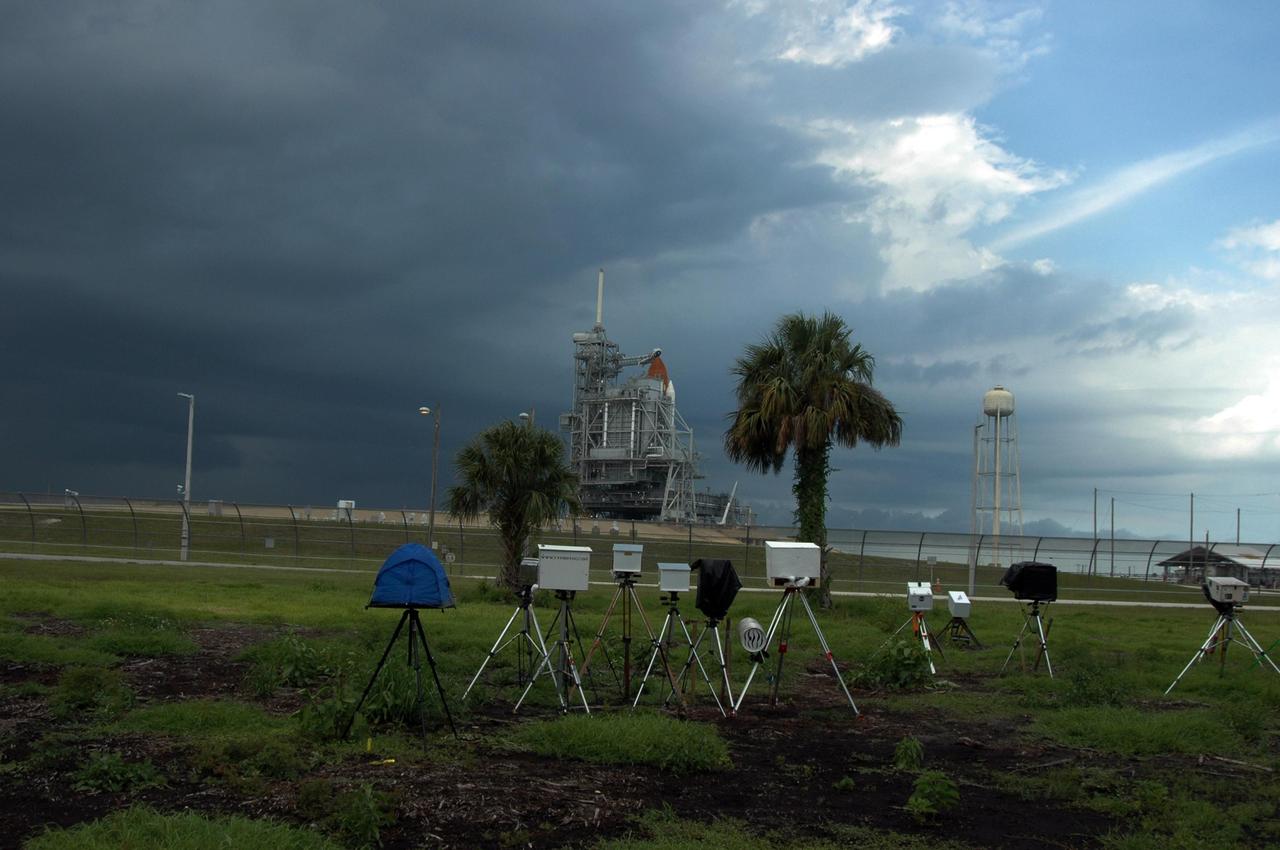
KENNEDY SPACE CENTER, FLA. - Several remote cameras are positioned around the perimeter of Launch Pad 39B in preparation for the launch of mission STS-115 aboard Space Shuttle Atlantis. A lightning strike to the pad's lightning protection system on August 25, caused the mission management team to postpone the launch of mission STS-115 for 24 hours in order to review all electrical systems on the space shuttle and ground support equipment at the pad. Photo credit: NASA/Ken Thornsley.
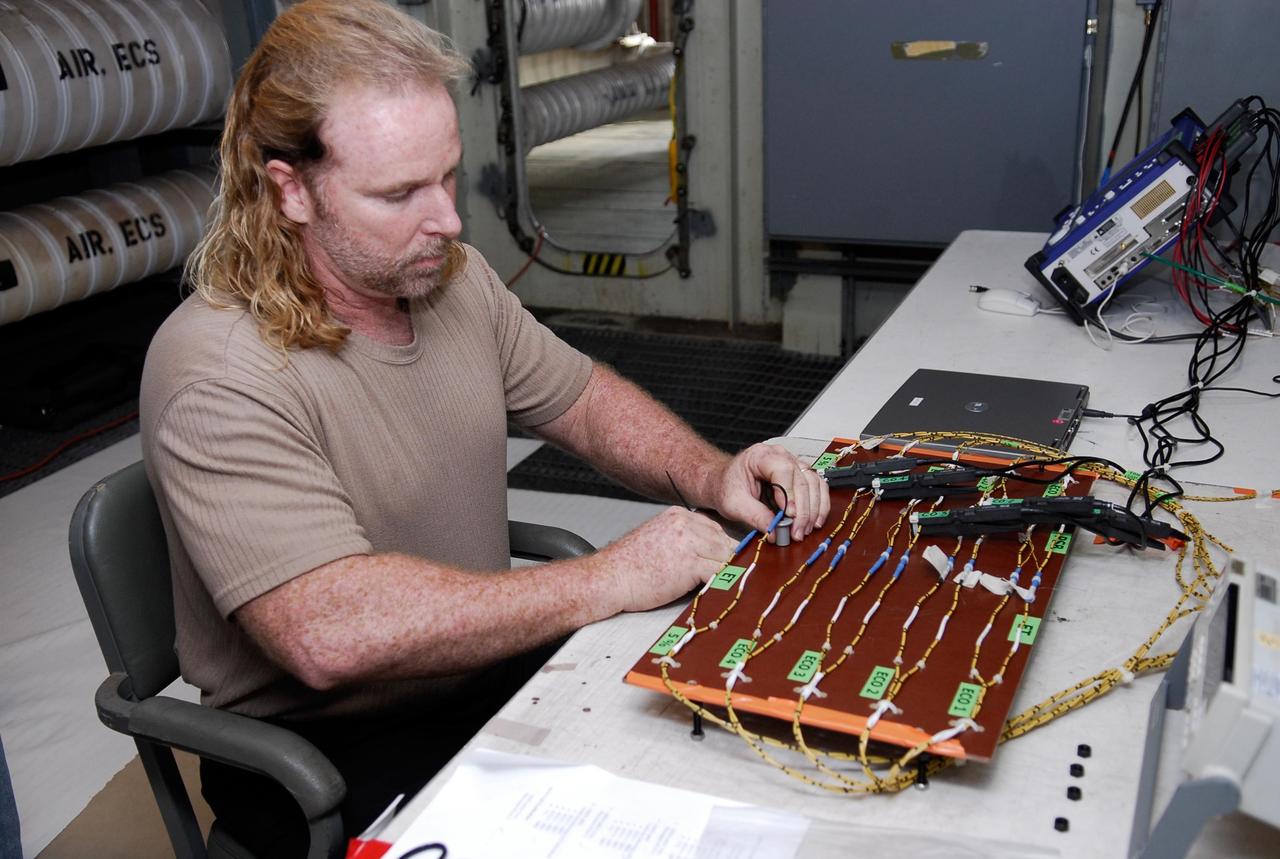
KENNEDY SPACE CENTER, FLA. -- On Launch Pad 39A at NASA's Kennedy Space Center, a technician sets up wiring for the tanking test on space shuttle Atlantis' external tank set for Dec. 18. The test wiring has been spliced into an electrical harness in the aft main engine compartment connected with the engine cut-off, or ECO, sensor system. The attached wiring leads to the interior of the mobile launcher platform where the time domain reflectometry, or TDR, test equipment is located. Photo credit: NASA/Kim Shiflett
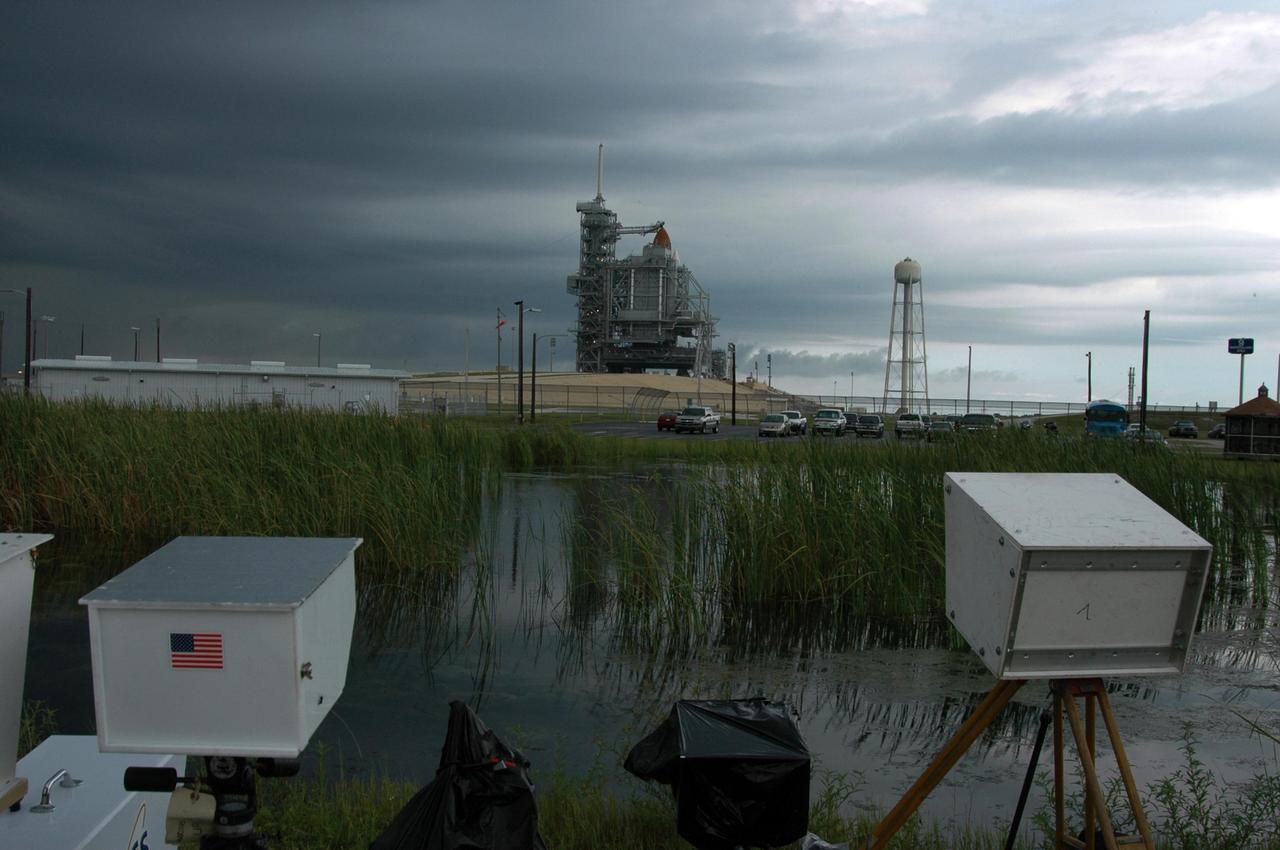
KENNEDY SPACE CENTER, FLA. - Several remote cameras are positioned around the perimeter of Launch Pad 39B in preparation for the launch of mission STS-115 aboard Space Shuttle Atlantis. A lightning strike to the pad's lightning protection system on August 25, caused the mission management team to postpone the launch of mission STS-115 for 24 hours in order to review all electrical systems on the space shuttle and ground support equipment at the pad. Photo credit: NASA/Ken Thornsley.
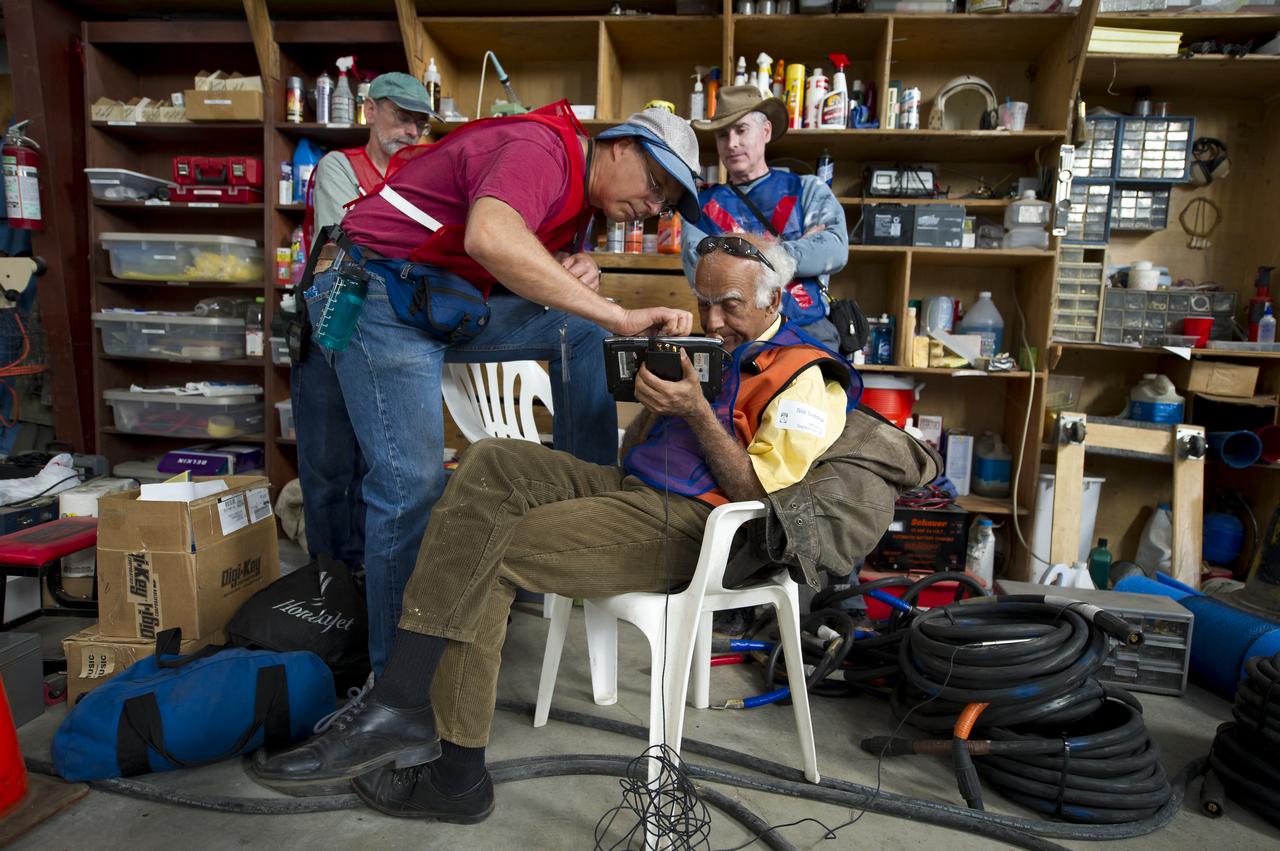
Sid Siddiqi, seated, and other support personnel prepare noise level measuring equipment for the 2011 Green Flight Challenge, sponsored by Google, at the Charles M. Schulz Sonoma County Airport in Santa Rosa, Calif. on Monday, Sept. 26, 2011. NASA and the Comparative Aircraft Flight Efficiency (CAFE) Foundation are having the challenge with the goal to advance technologies in fuel efficiency and reduced emissions with cleaner renewable fuels and electric aircraft. Photo Credit: (NASA/Bill Ingalls)
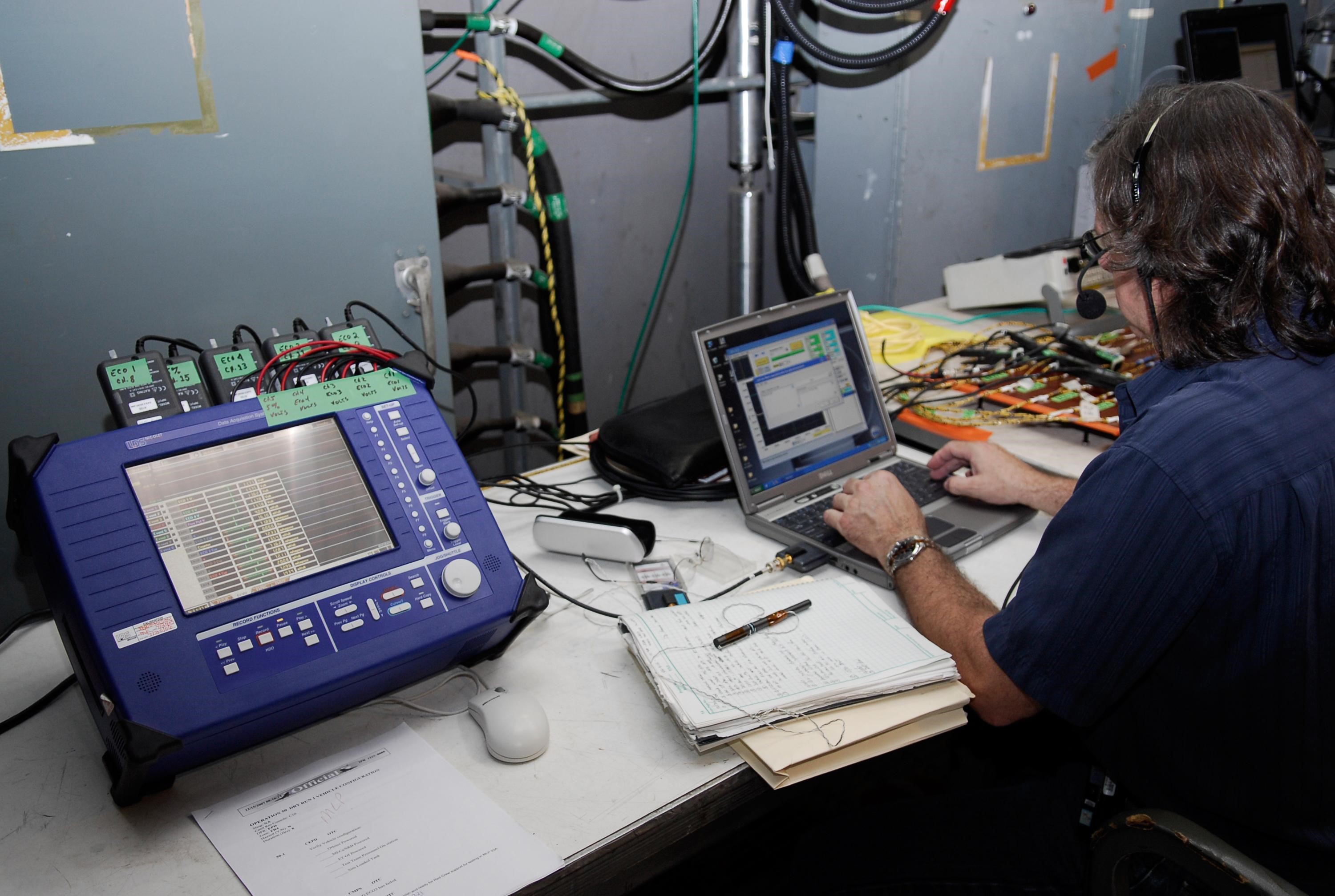
KENNEDY SPACE CENTER, FLA. -- On Launch Pad 39A at NASA's Kennedy Space Center, the wiring is checked and validated before the tanking test on space shuttle Atlantis' external tank set for Dec. 18. The test wiring has been spliced into an electrical harness in the aft main engine compartment connected with the engine cut-off, or ECO, sensor system. The attached wiring leads to the interior of the mobile launcher platform where the time domain reflectometry, or TDR, test equipment is located. Photo credit: NASA/Kim Shiflett
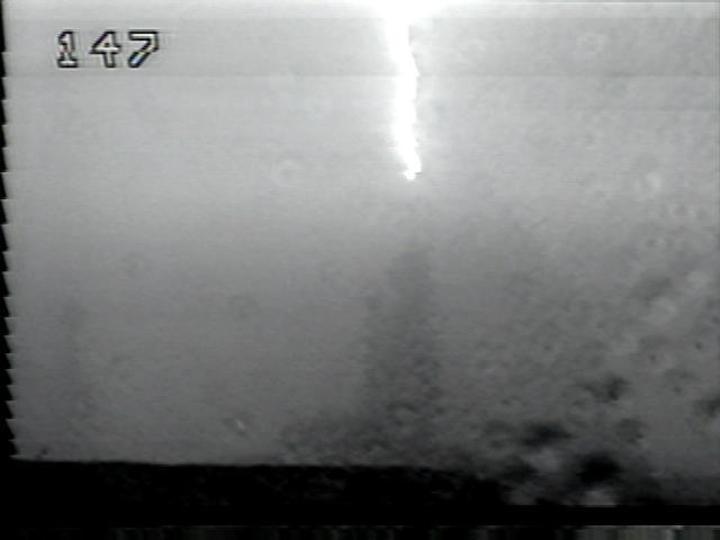
KENNEDY SPACE CENTER, FLA. - A lightning strike occurred at the lightning protection system of Launch Pad 39B on Fri., August 25, 2006, at 1:49:17 p.m. (EST). The lightning strike caused the mission management team to scrub the launch of mission STS-115 for 24 hours in order to review all electrical systems on the space shuttle and the launch pad ground support equipment. Photo credit: NASA/InDyne -Operational Television.
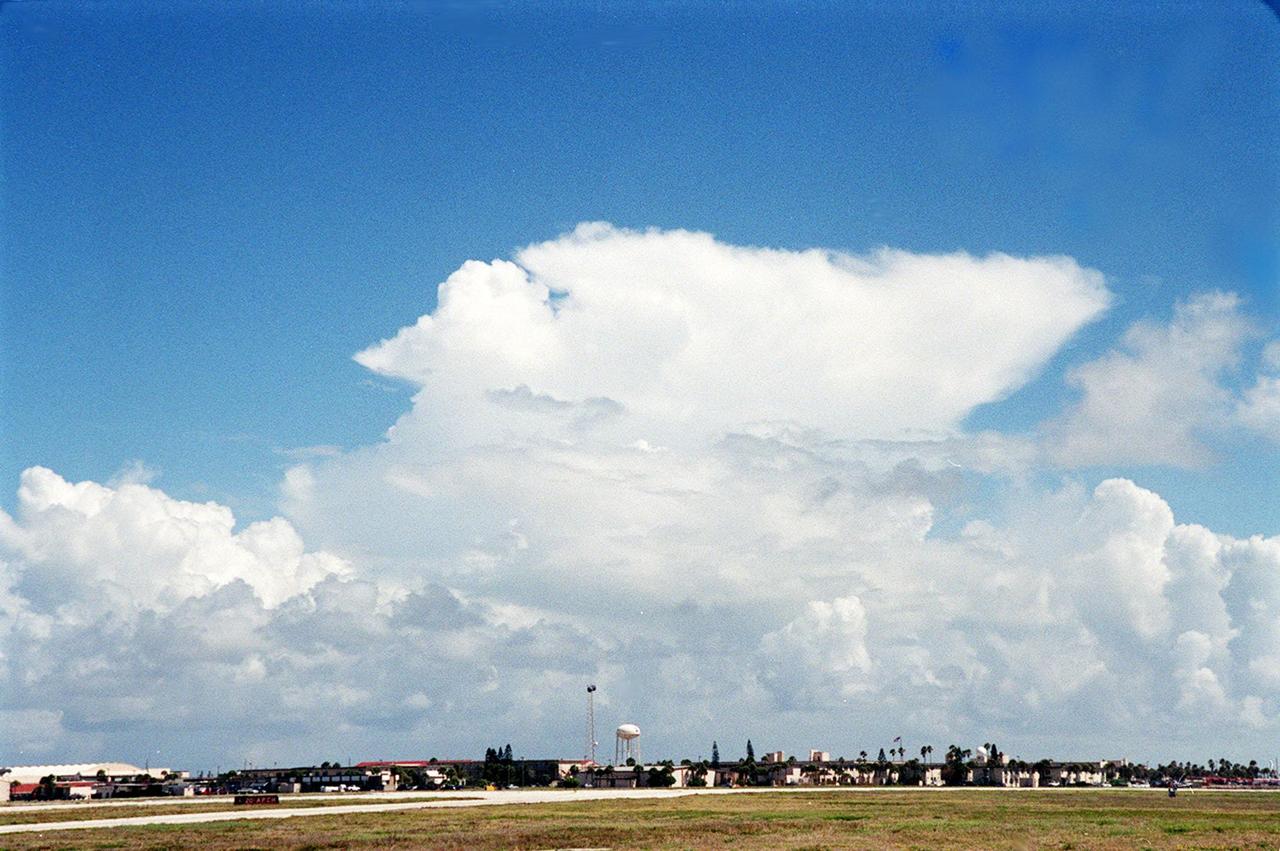
This anvil-shaped cloud over the Central Florida coast is part of a NASA study measuring electric fields in this type of cloud. A specially equipped Cessna Citation aircraft is being flown into anvil clouds in the KSC area . The weather study could lead to improved lightning avoidance rules and fewer launch scrubs for the Space Shuttle and other launch vehicles on the Eastern and Western ranges.; More information about the study can be found in <a href="http://www-pao.ksc.nasa.gov/kscpao/release/2000/56-00.htm">Release No. 56-00</a>
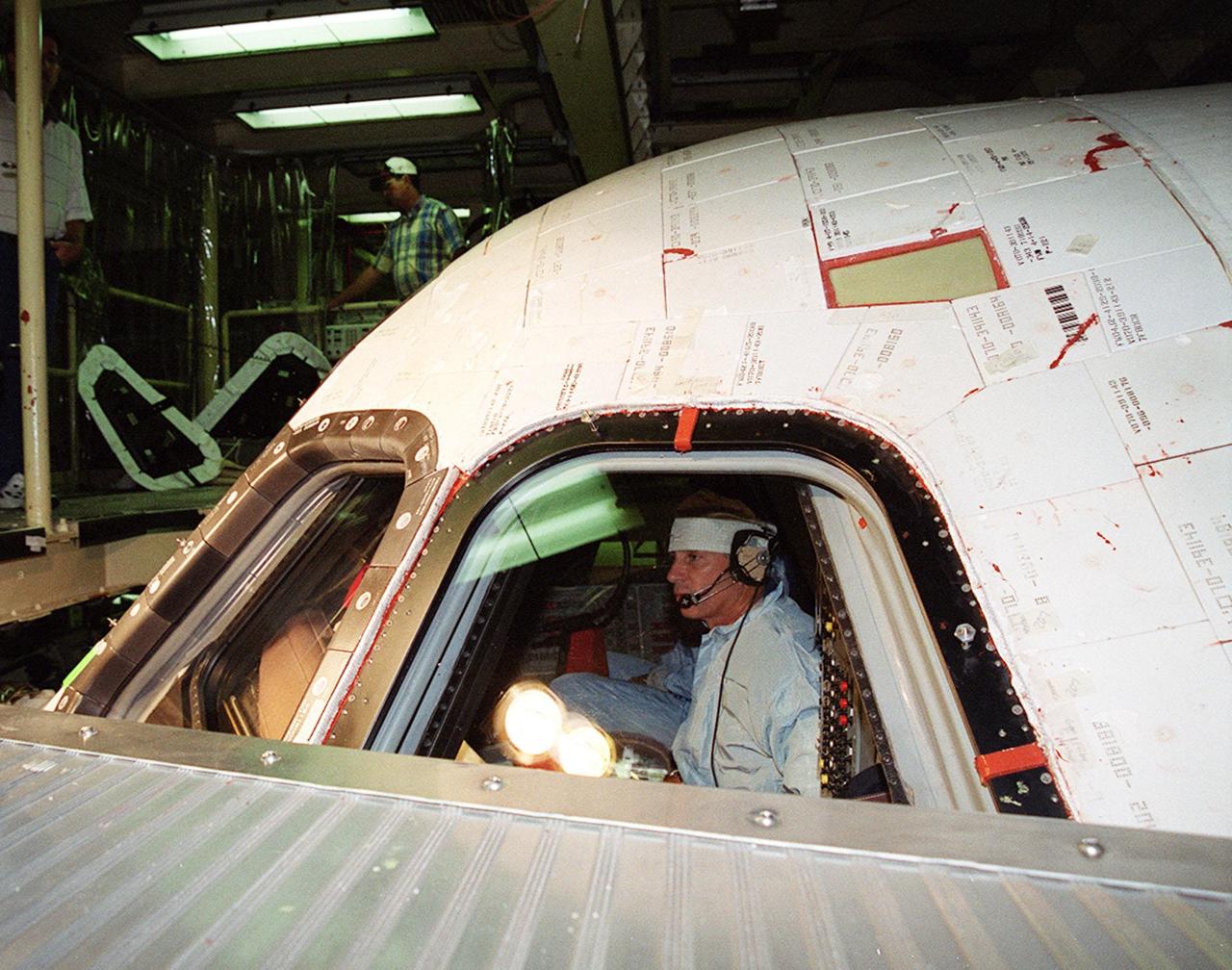
KENNEDY SPACE CENTER, FLA. -- In Orbiter Processing Facility bay 3, STS-98 Commander Ken Cockrell conducts window inspection, checking for leaks, in the cockpit of Atlantis. He and the rest of the crew are at KSC for Crew Equipment Interface Test activities. Launch on mission STS-98 is scheduled for Jan. 18, 2001. It will be transporting the U.S. Lab, Destiny, to the International Space Station with five system racks already installed inside of the module. After delivery of electronics in the lab, electrically powered attitude control for Control Moment Gyroscopes will be activated
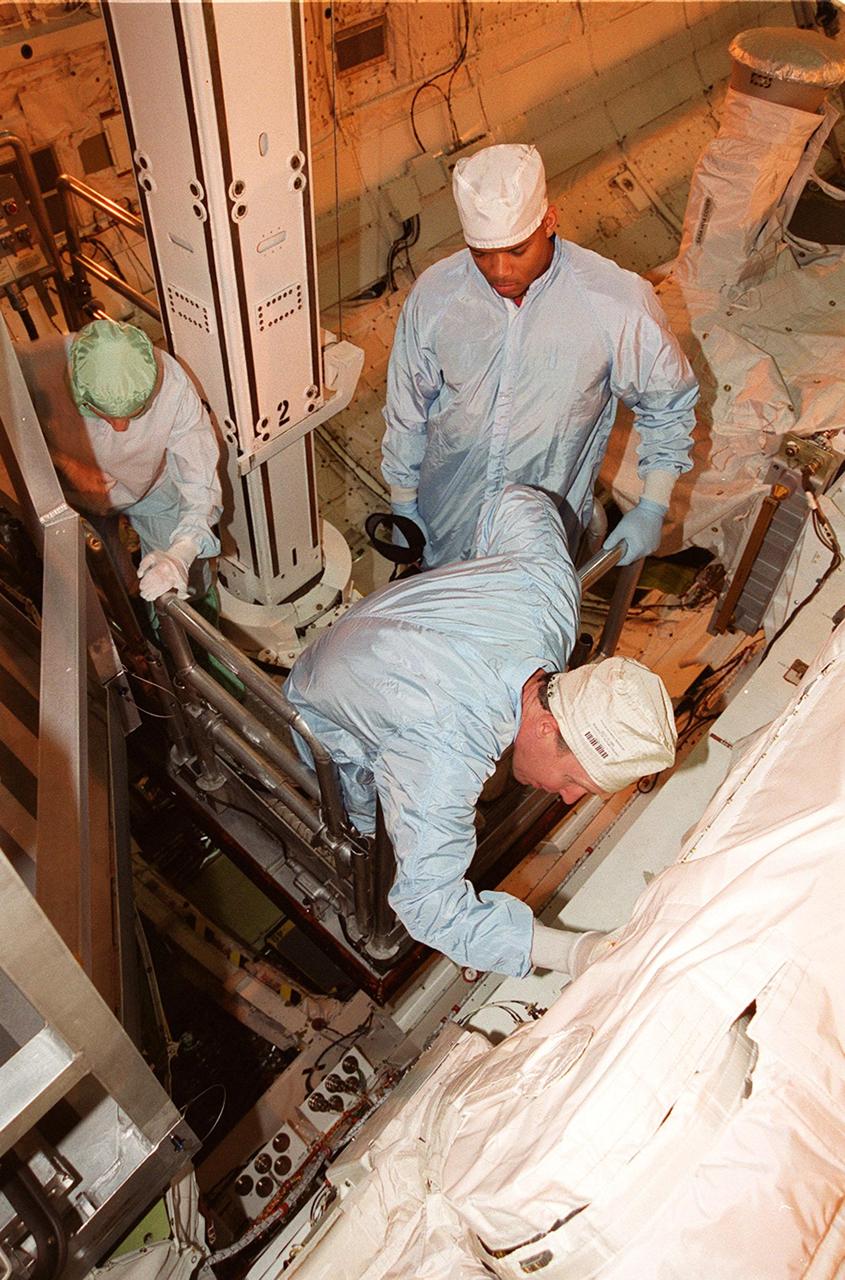
KENNEDY SPACE CENTER, FLA. -- Working on the Orbiter Docking System of orbiter Atlantis are Mission Specialists Tom Jones (leaning over) and Robert Curbeam. They and the rest of the crew are at KSC for Crew Equipment Interface Test activities. Launch on mission STS-98 is scheduled for Jan. 18, 2001. It will be transporting the U.S. Lab, Destiny, to the International Space Station with five system racks already installed inside of the module. After delivery of electronics in the lab, electrically powered attitude control for Control Moment Gyroscopes will be activated
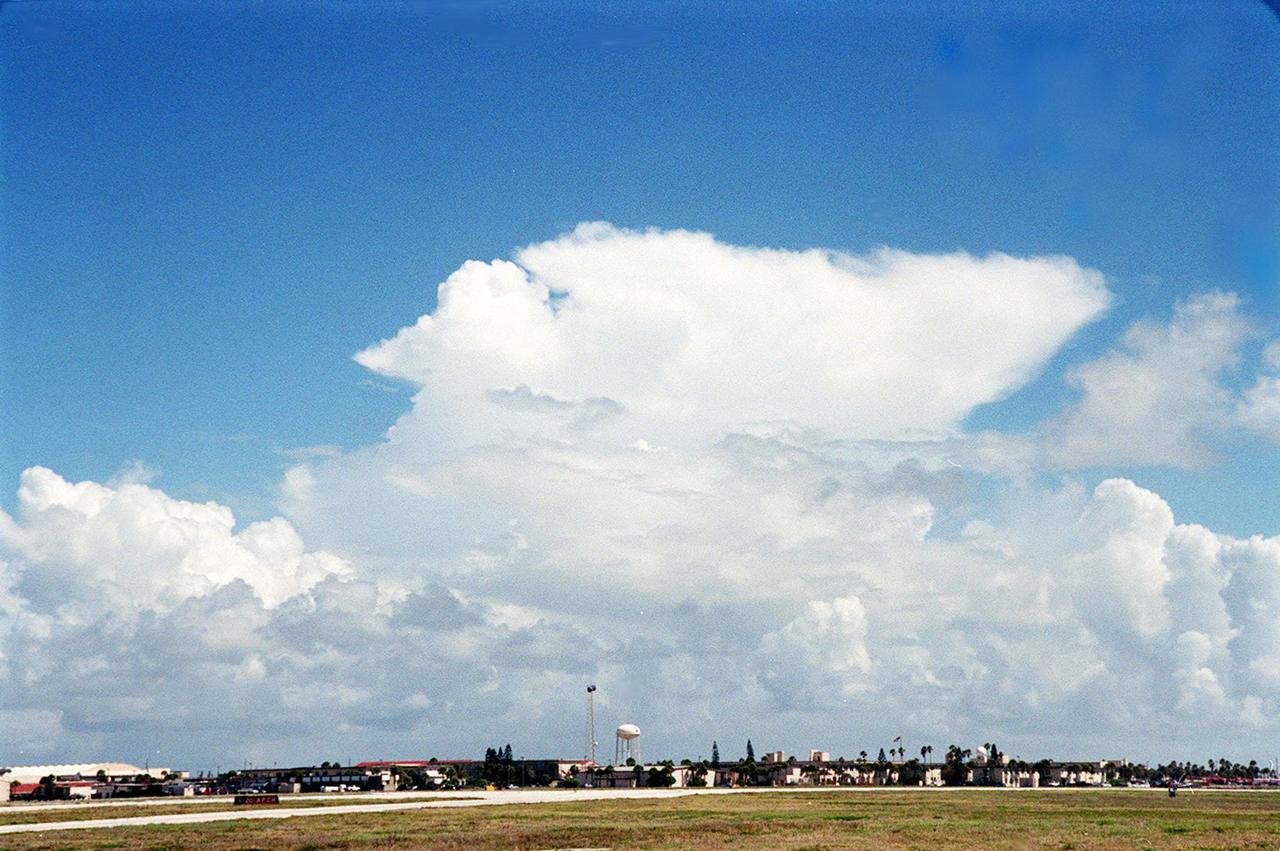
This anvil-shaped cloud over the Central Florida coast is part of a NASA study measuring electric fields in this type of cloud. A specially equipped Cessna Citation aircraft is being flown into anvil clouds in the KSC area . The weather study could lead to improved lightning avoidance rules and fewer launch scrubs for the Space Shuttle and other launch vehicles on the Eastern and Western ranges.; More information about the study can be found in <a href="http://www-pao.ksc.nasa.gov/kscpao/release/2000/56-00.htm">Release No. 56-00</a>
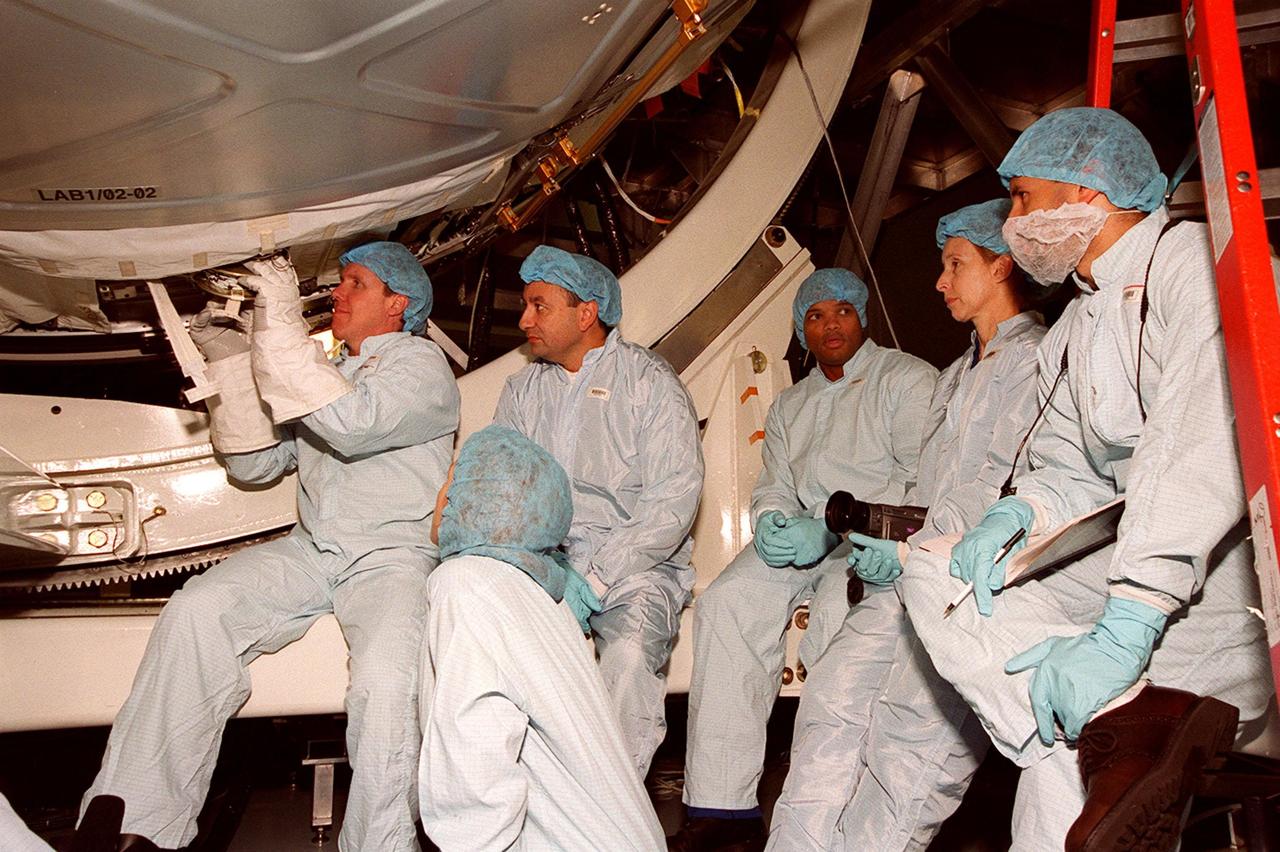
While trainers (bottom and right) look on, STS-98 Mission Specialist Thomas Jones practices handling a piece of equipment on the U.S. Lab, Destiny, while wearing the gloves he will wear in space. Watching next to him are other crew members Pilot Mark Polansky and Mission Specialists Robert Curbeam and Marsha Ivins. They are taking part in Crew Equipment Interface Test activities to become familiar with equipment they will be handling during the mission. With launch scheduled for Jan. 18, 2001, the STS-98 mission will be transporting the Lab to the International Space Station with five system racks already installed inside of the module. After delivery of electronics in the lab, electrically powered attitude control for Control Moment Gyroscopes will be activated
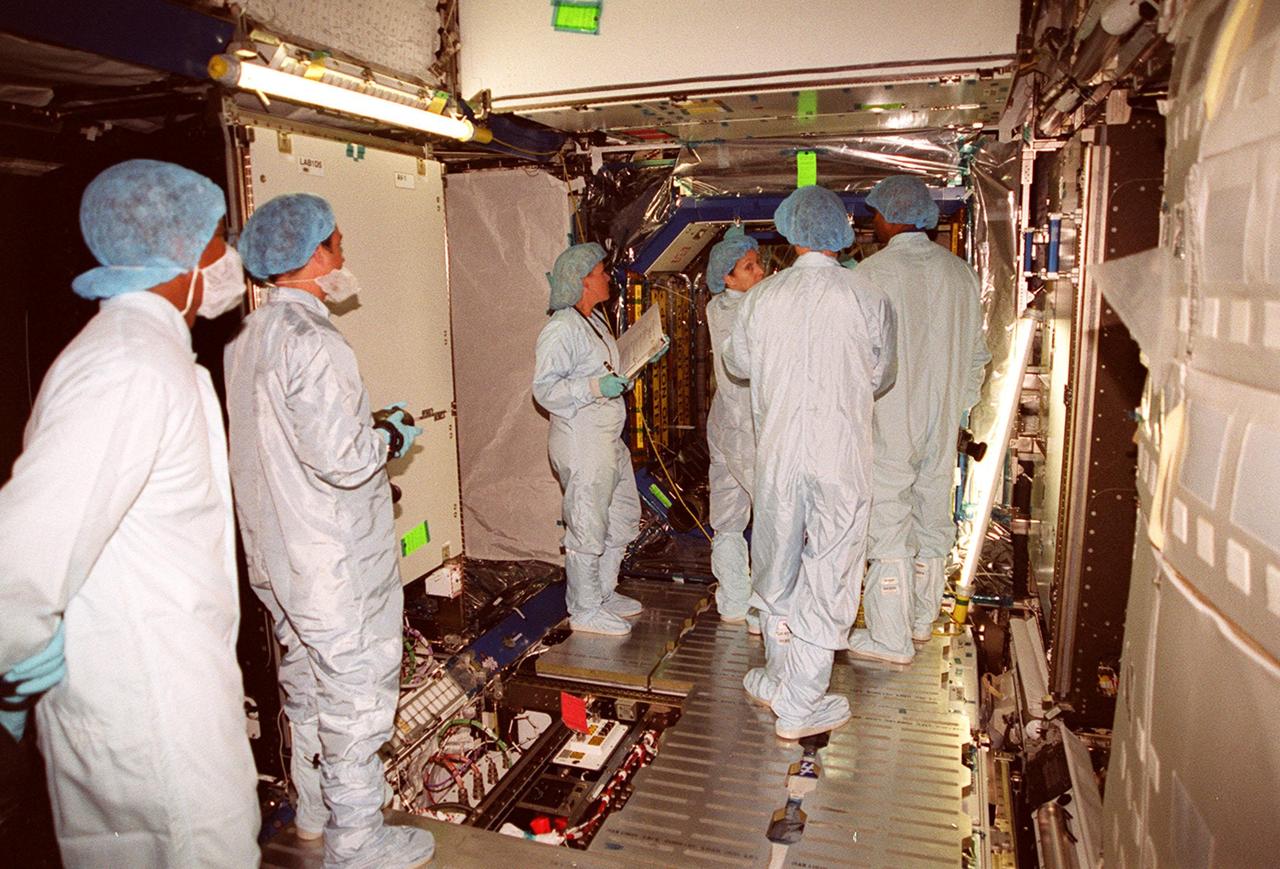
In the Space Station Processing Facility, members of the STS-98 crew check out equipment in the U.S. Lab, Destiny, with the help of workers. In the background, looking over her shoulder, is Mission Specialist Marsha Ivins. Others in the crew are Commander Ken Cockrell, Pilot Mark Polansky and Mission Specialists Robert Curbeam and Thomas Jones. The crew is taking part in Crew Equipment Interface Test activities, becoming familiar with equipment it will be handling during the mission. The mission will be transporting the Lab to the International Space Station with five system racks already installed inside of the module. With delivery of electronics in the lab, electrically powered attitude control for Control Moment Gyroscopes will be activated. The STS-98 launch is scheduled for Jan. 18, 2001
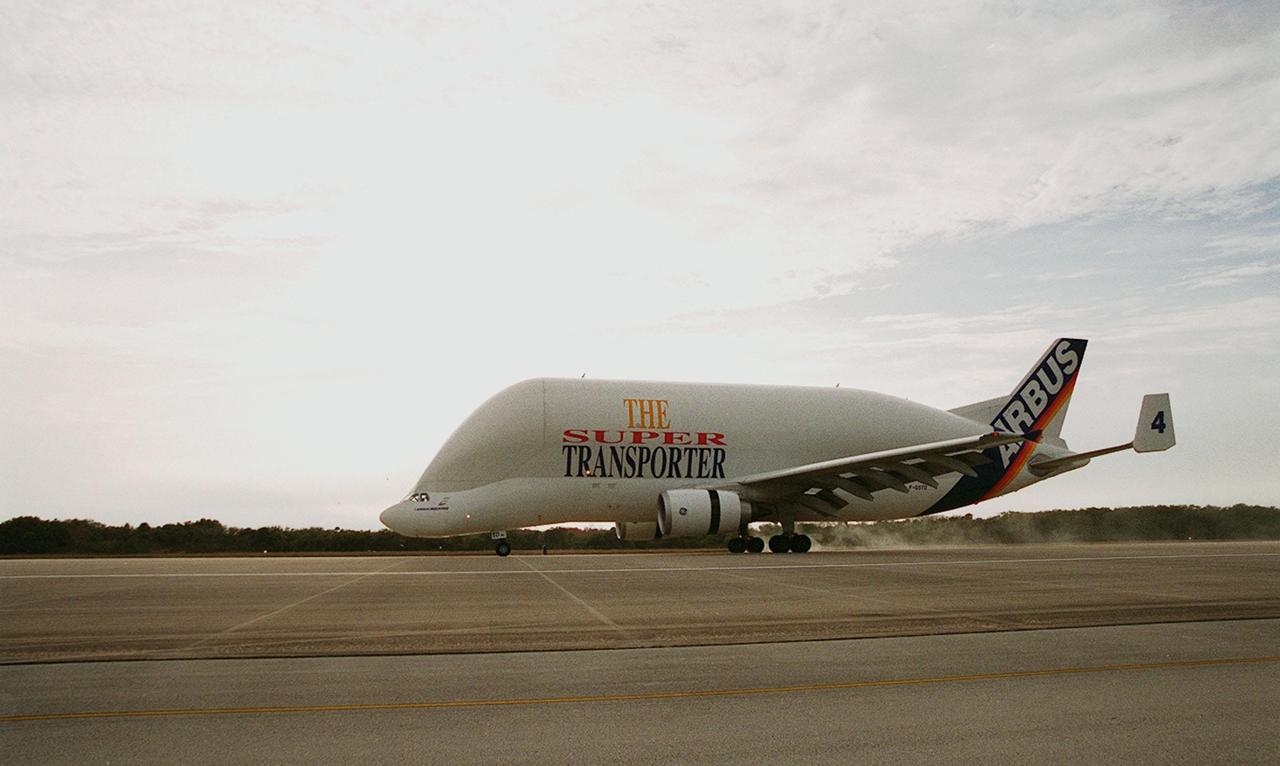
An Airbus “Beluga” air cargo plane, The Super Transporter, lands at KSC’s Shuttle Landing Facility. Its cargo, from the factory of Alenia Aerospazio in Turin, Italy, is the Italian Space Agency’s Multi-Purpose Logistics Module Donatello, the third of three for the International Space Station. The module will be transported to the Space Station Processing Facility for processing. Among the activities for the payload test team are integrated electrical tests with other Station elements in the SSPF, leak tests, electrical and software compatibility tests with the Space Shuttle (using the Cargo Integrated Test equipment) and an Interface Verification Test once the module is installed in the Space Shuttle’s payload bay at the launch pad. The most significant mechanical task to be performed on Donatello in the SSPF is the installation and outfitting of the racks for carrying the various experiments and cargo
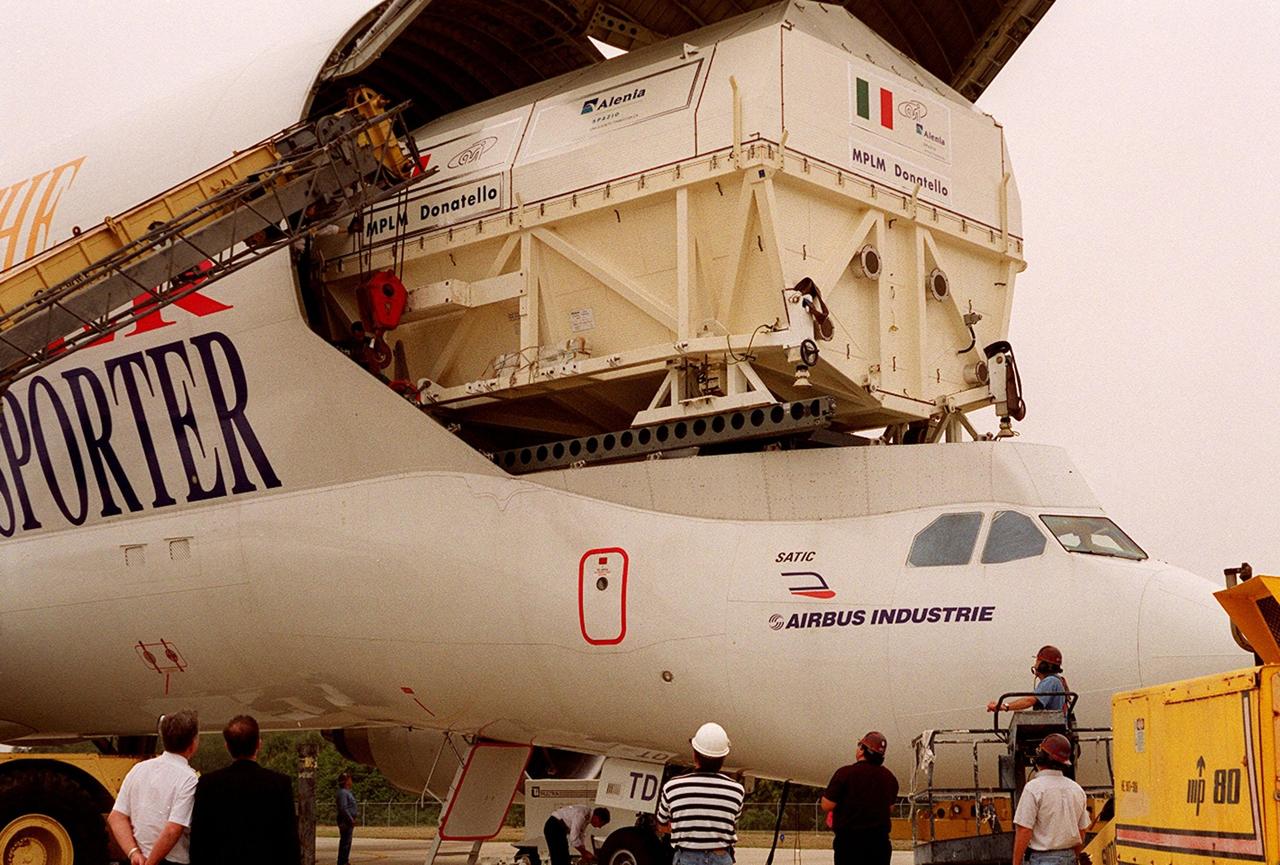
At the KSC <a href="../../subjects/slf.htm"> Shuttle Landing Facility</a>, the Italian Space Agency’s <a href="../../subjects/mplm.htm"> Multi-Purpose Logistics Module</a> Donatello rolls out of the Airbus “Beluga” air cargo plane that brought it from the factory of Alenia Aerospazio in Turin, Italy. The third of three for the International Space Station, the module will be transported to the <a href="../../subjects/sspf.htm"> Space Station Processing Facility</a> for processing. Among the activities for the payload test team are integrated electrical tests with other Station elements in the SSPF, leak tests, electrical and software compatibility tests with the Space Shuttle (using the Cargo Integrated Test equipment) and an Interface Verification Test once the module is installed in the Space Shuttle’s payload bay at the launch pad. The most significant mechanical task to be performed on Donatello in the SSPF is the installation and outfitting of the racks for carrying the various experiments and cargo
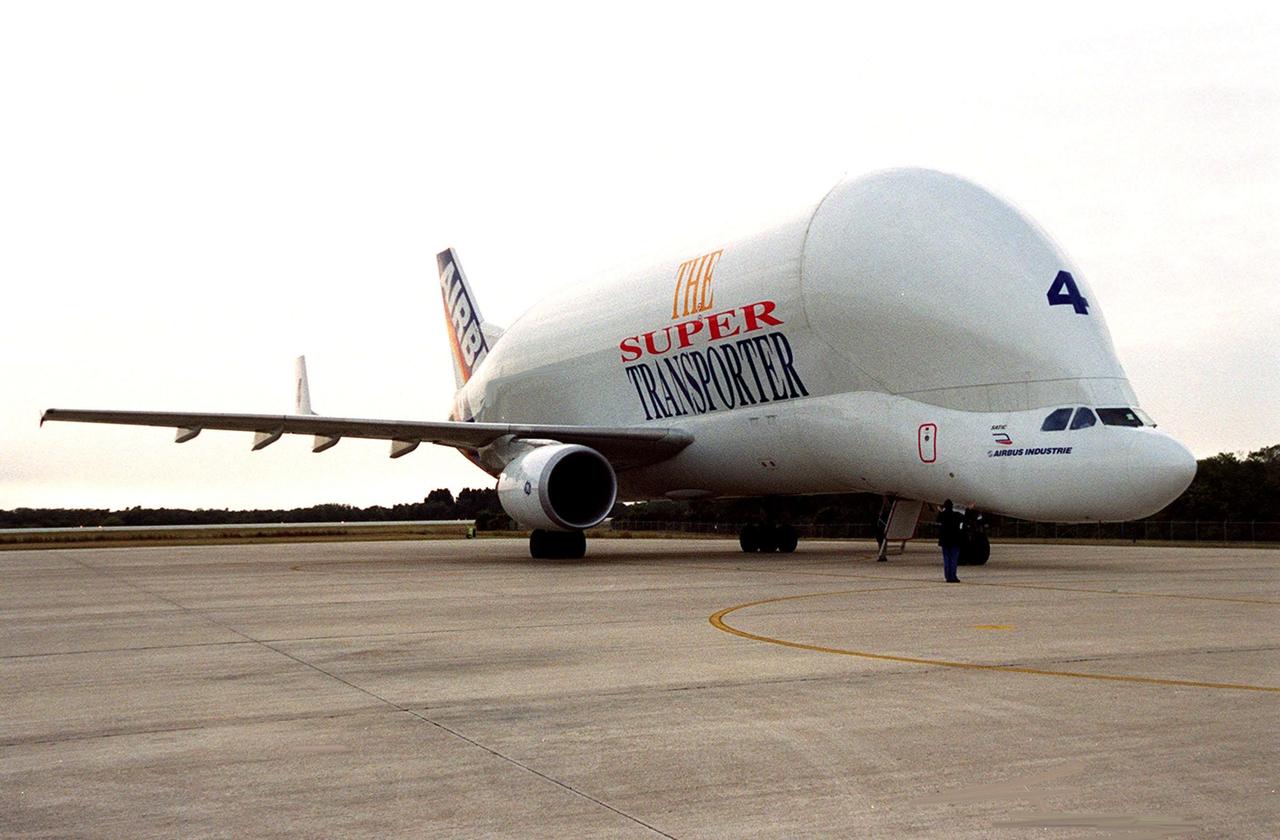
An Airbus “Beluga” air cargo plane, The Super Transporter, taxis onto the parking apron at KSC’s Shuttle Landing Facility. Its cargo, from the factory of Alenia Aerospazio in Turin, Italy, is the Italian Space Agency’s Multi-Purpose Logistics Module Donatello, the third of three for the International Space Station. The module will be transported to the Space Station Processing Facility for processing. Among the activities for the payload test team are integrated electrical tests with other Station elements in the SSPF, leak tests, electrical and software compatibility tests with the Space Shuttle (using the Cargo Integrated Test equipment) and an Interface Verification Test once the module is installed in the Space Shuttle’s payload bay at the launch pad. The most significant mechanical task to be performed on Donatello in the SSPF is the installation and outfitting of the racks for carrying the various experiments and cargo
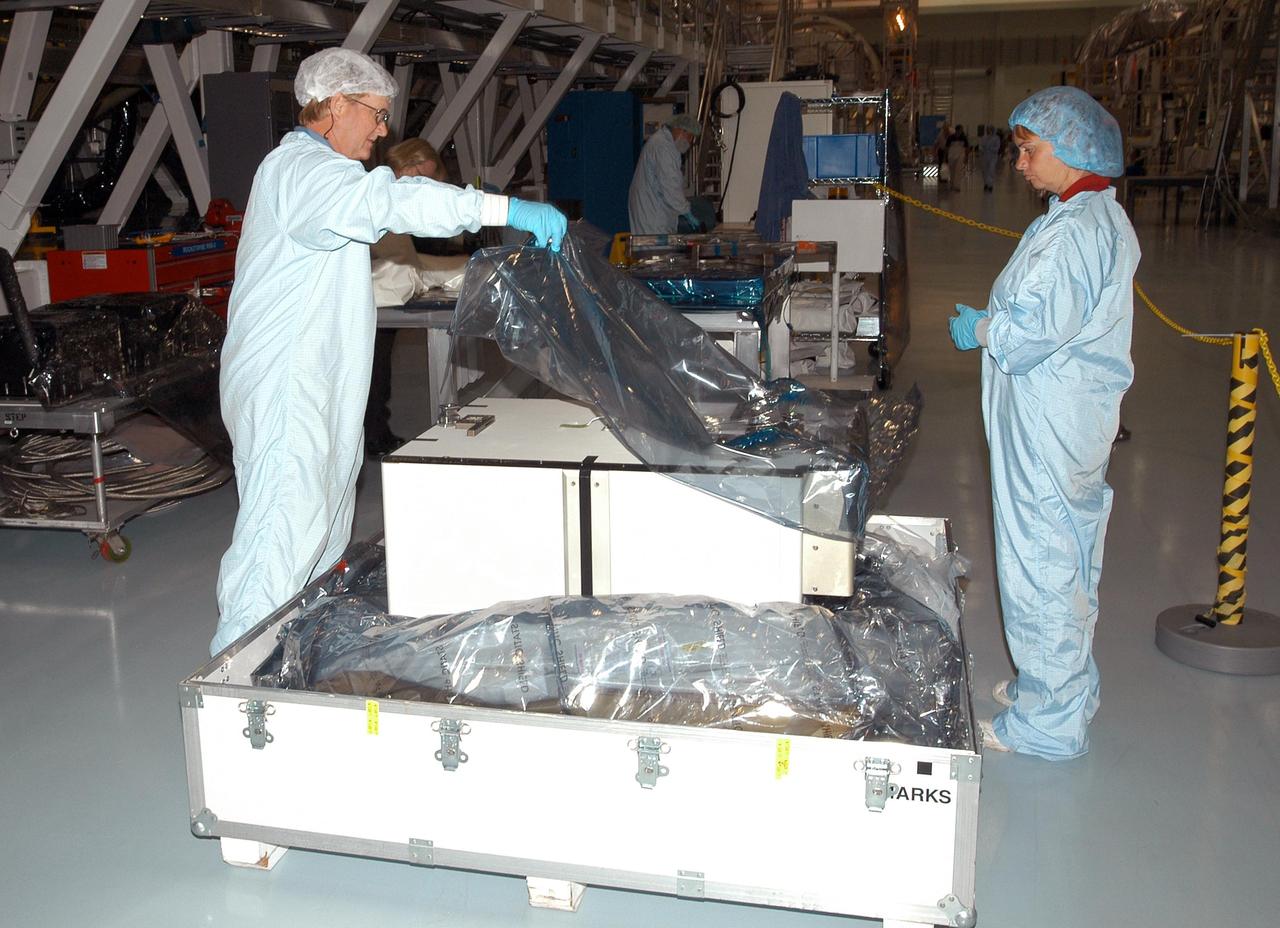
KENNEDY SPACE CENTER, FLA. - Unpacking of the Pump Flow Control Subsystem (PFCS) begins in the Space Station Processing Facility. The PFCS pumps and controls the liquid ammonia used to cool the various Orbital Replacement Units on the Integrated Equipment Assembly that make up the S6 Photo-Voltaic Power Module on the International Space Station (ISS). The fourth starboard truss segment, the S6 Truss measures 112 feet long by 39 feet wide. Its solar arrays are mounted on a “blanket” that can be folded like an accordion for delivery to the ISS. Once in orbit, astronauts will deploy the blankets to their full size. When completed, the Station's electrical power system will use eight photovoltaic solar arrays to convert sunlight to electricity. Delivery of the S6 Truss, the last power module truss segment, is targeted for mission STS-119.

KENNEDY SPACE CENTER, FLA. - In the Space Station Processing Facility, astronaut Tracy Caldwell (left) assists a technician check out the Pump Flow Control Subsystem (PFCS) before it is installed on the upper deck of the S6 Truss. The PFCS pumps and controls the liquid ammonia used to cool the various Orbital Replacement Units on the Integrated Equipment Assembly that make up the S6 Photo-Voltaic Power Module on the International Space Station (ISS). The fourth starboard truss segment, the S6 Truss measures 112 feet long by 39 feet wide. The solar arrays are mounted on a “blanket” that can be folded like an accordion for delivery to the ISS. Once in orbit, astronauts will deploy the blankets to their full size. When completed, the Station's electrical power system (EPS) will use eight photovoltaic solar arrays to convert sunlight to electricity. Delivery of the S6 Truss, the last power module truss segment, is targeted for mission STS-119.
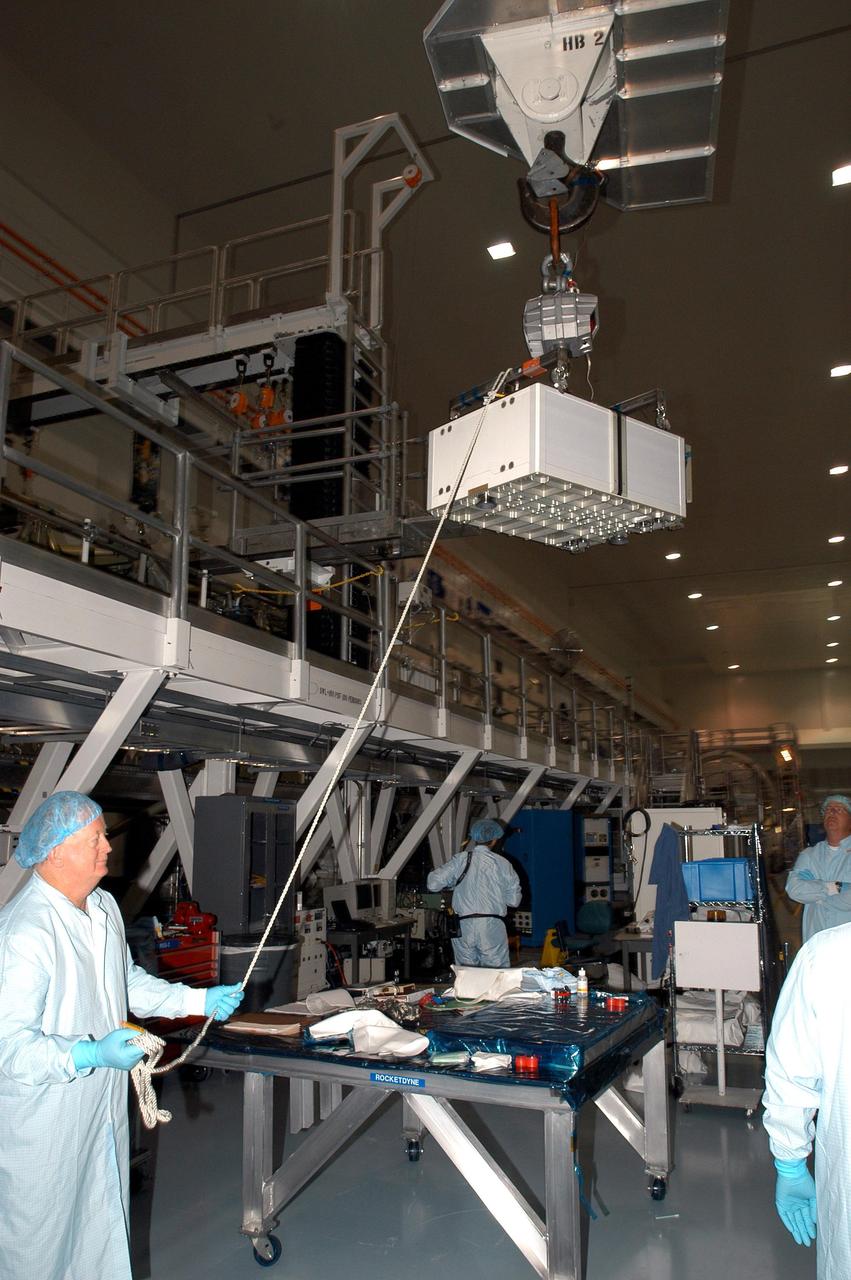
KENNEDY SPACE CENTER, FLA. - In the Space Station Processing Facility, a technician steadies the Pump Flow Control Subsystem (PFCS) as it is lifted and moved toward the S6 Truss. The PFCS pumps and controls the liquid ammonia used to cool the various Orbital Replacement Units on the Integrated Equipment Assembly that make up the S6 Photo-Voltaic Power Module on the International Space Station (ISS). The fourth starboard truss segment, the S6 Truss measures 112 feet long by 39 feet wide. Its solar arrays are mounted on a “blanket” that can be folded like an accordion for delivery to the ISS. Once in orbit, astronauts will deploy the blankets to their full size. When completed, the Station's electrical power system (EPS) will use eight photovoltaic solar arrays to convert sunlight to electricity. Delivery of the S6 Truss, the last power module truss segment, is targeted for mission STS-119.
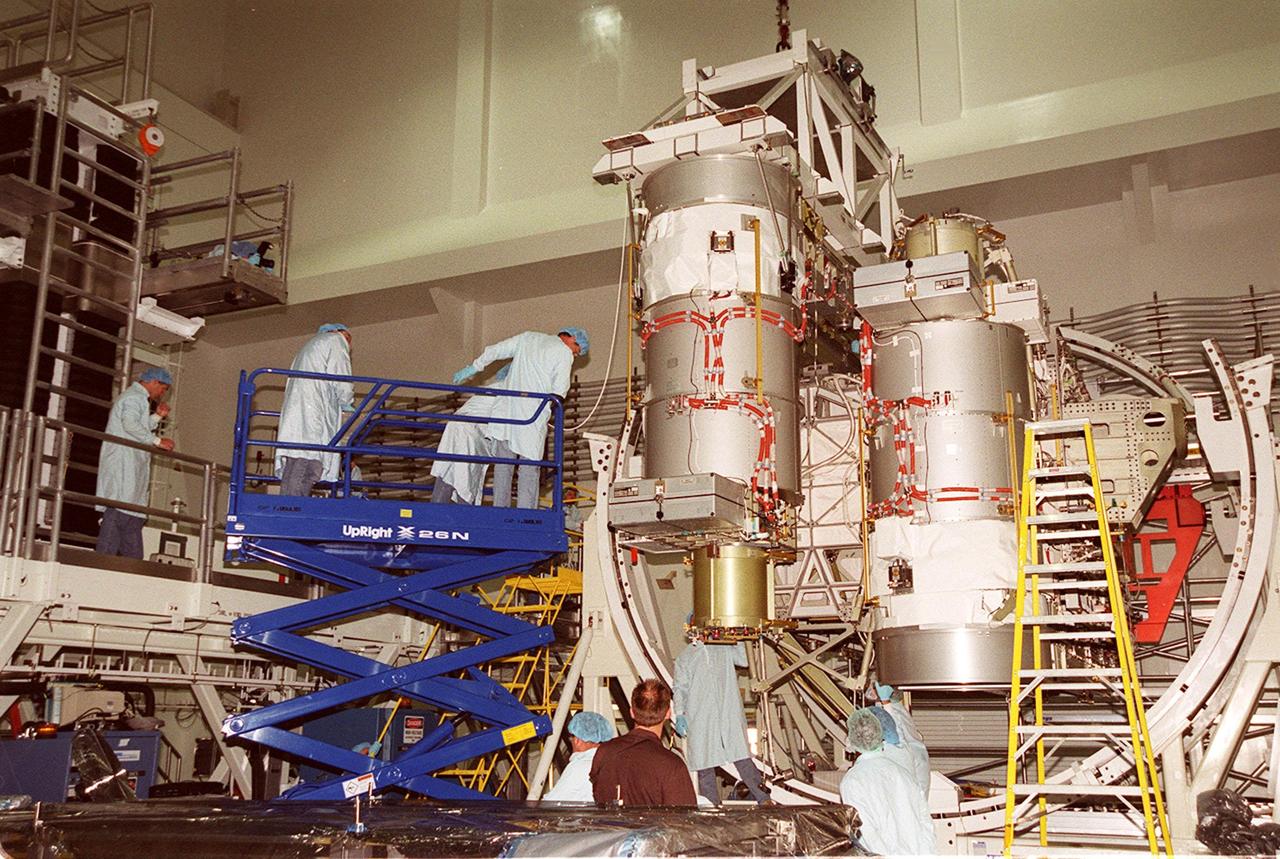
Workers in the Space Station Processing Facility give close attention to the placement of a solar array on the Integrated Equipment Assembly. Solar Array Wing-3 is already in place. Components of the International Space Station, the arrays are scheduled to be launched on mission STS-97 in late November along with the P6 truss. The Station’s electrical power system (EPS) will use eight photovoltaic solar arrays to convert sunlight to electricity. Each of the eight solar arrays will be 112 feet long by 39 feet wide. The solar arrays are mounted on a “blanket” that can be folded like an accordion for delivery. Once in orbit, astronauts will deploy the blankets to their full size. Gimbals will be used to rotate the arrays so that they will face the Sun to provide maximum power to the Space Station
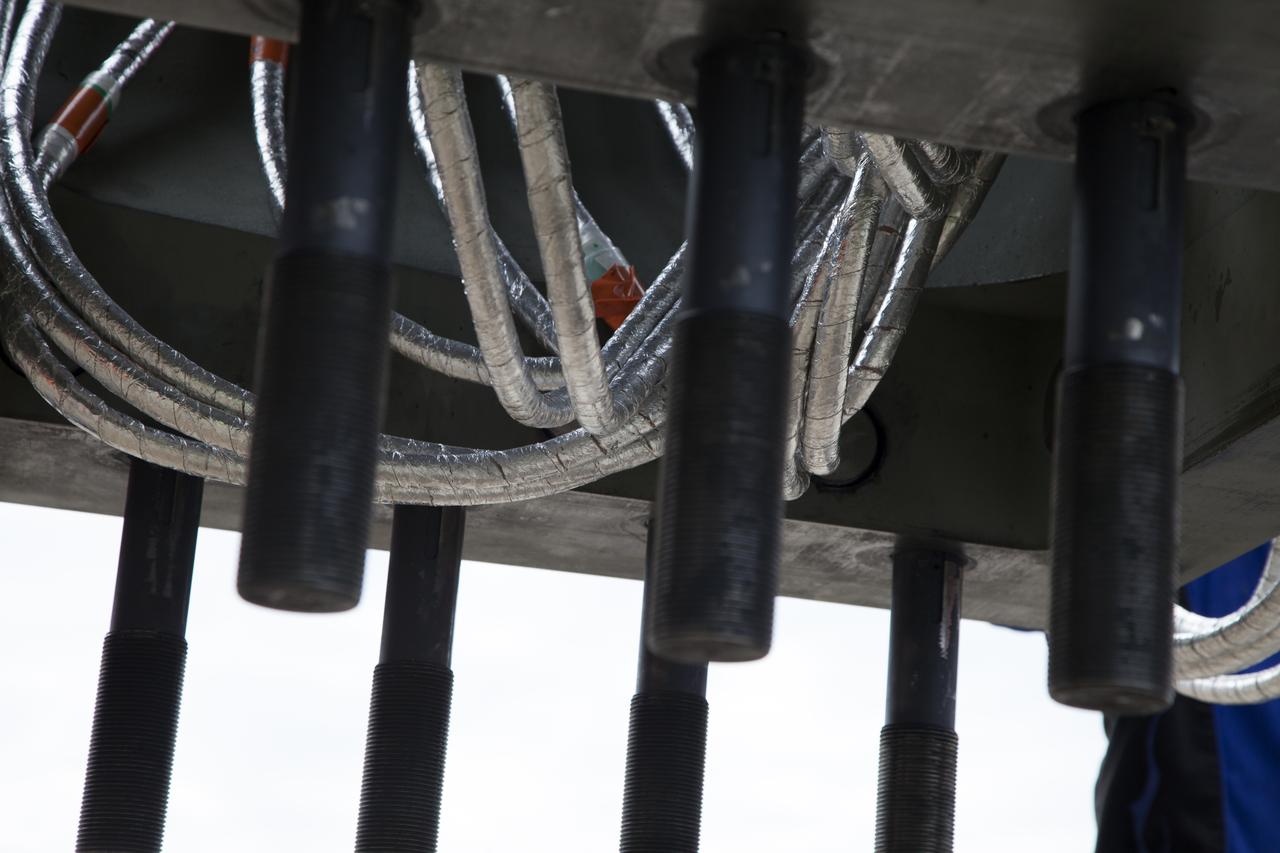
A view from underneath one of the vertical support posts for NASA's Space Launch System rocket. Two after skirt electrical umbilicals (ASEUs) and the first of the vertical support post were transported by flatbed truck from the Launch Equipment Test Facility to the Mobile Launcher Yard as NASA's Kennedy Space Center in Florida. The ASEUs and the VSP underwent a series of tests to confirm they are functioning properly and ready to support the SLS for launch. The ASEUs will connect to the SLS rocket at the bottom outer edge of each booster and provide electrical power and data connections to the rocket until it lifts off from the launch pad. The eight VSPs will support the load of the solid rocket boosters, with four posts for each of the boosters. The center’s Engineering Directorate and the Ground Systems Development and Operations Program are overseeing processing and testing of the umbilicals.
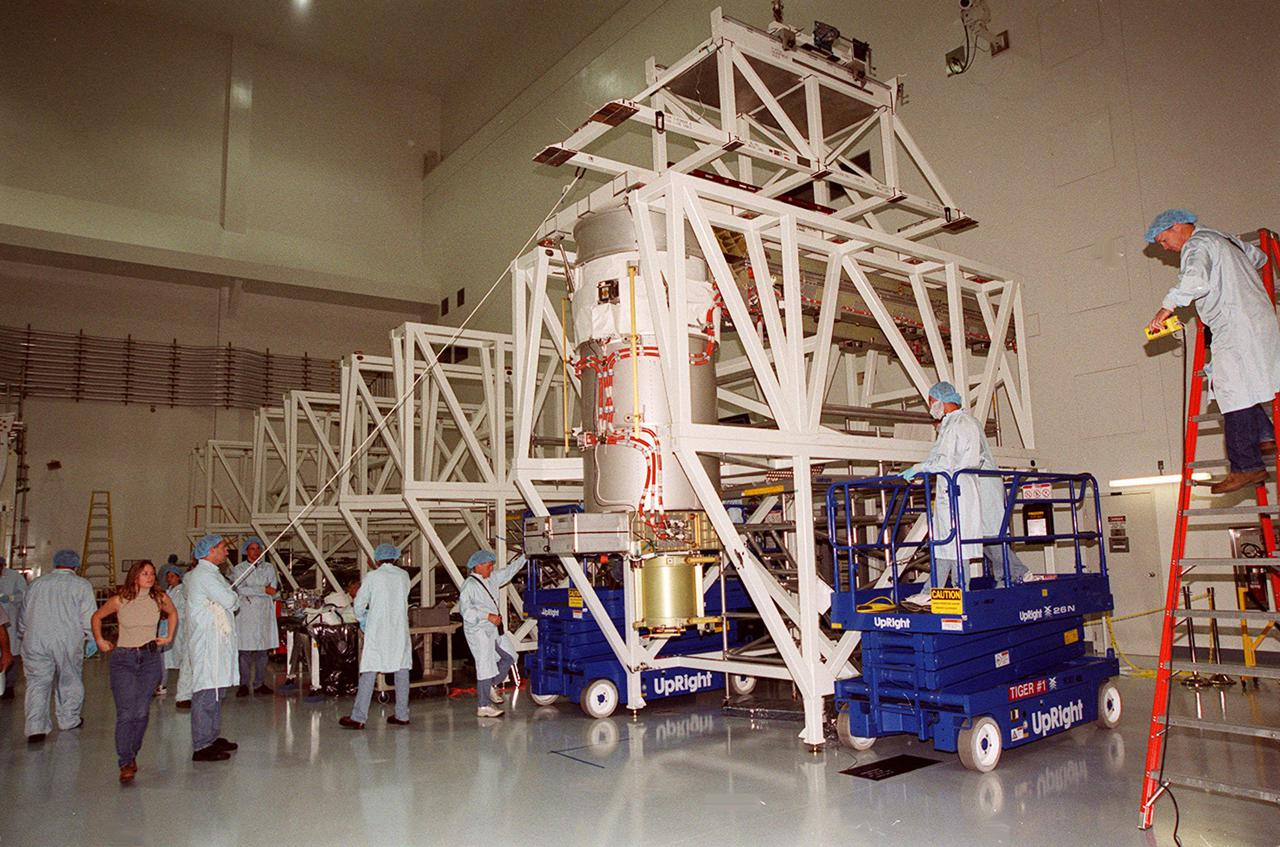
Workers in the Space Station Processing Facility get ready to attach an overhead crane (center top) to the solar array below it to move the array for installation onto the Integrated Equipment Assembly (IEA). A component of the International Space Station, the solar array is the second one being installed on the IEA. The arrays are scheduled to be launched on mission STS-97 in late November along with the P6 truss. The Station’s electrical power system (EPS) will use eight photovoltaic solar arrays to convert sunlight to electricity. Each of the eight solar arrays will be 112 feet long by 39 feet wide. The solar arrays are mounted on a “blanket” that can be folded like an accordion for delivery. Once in orbit, astronauts will deploy the blankets to their full size. Gimbals will be used to rotate the arrays so that they will face the Sun to provide maximum power to the Space Station
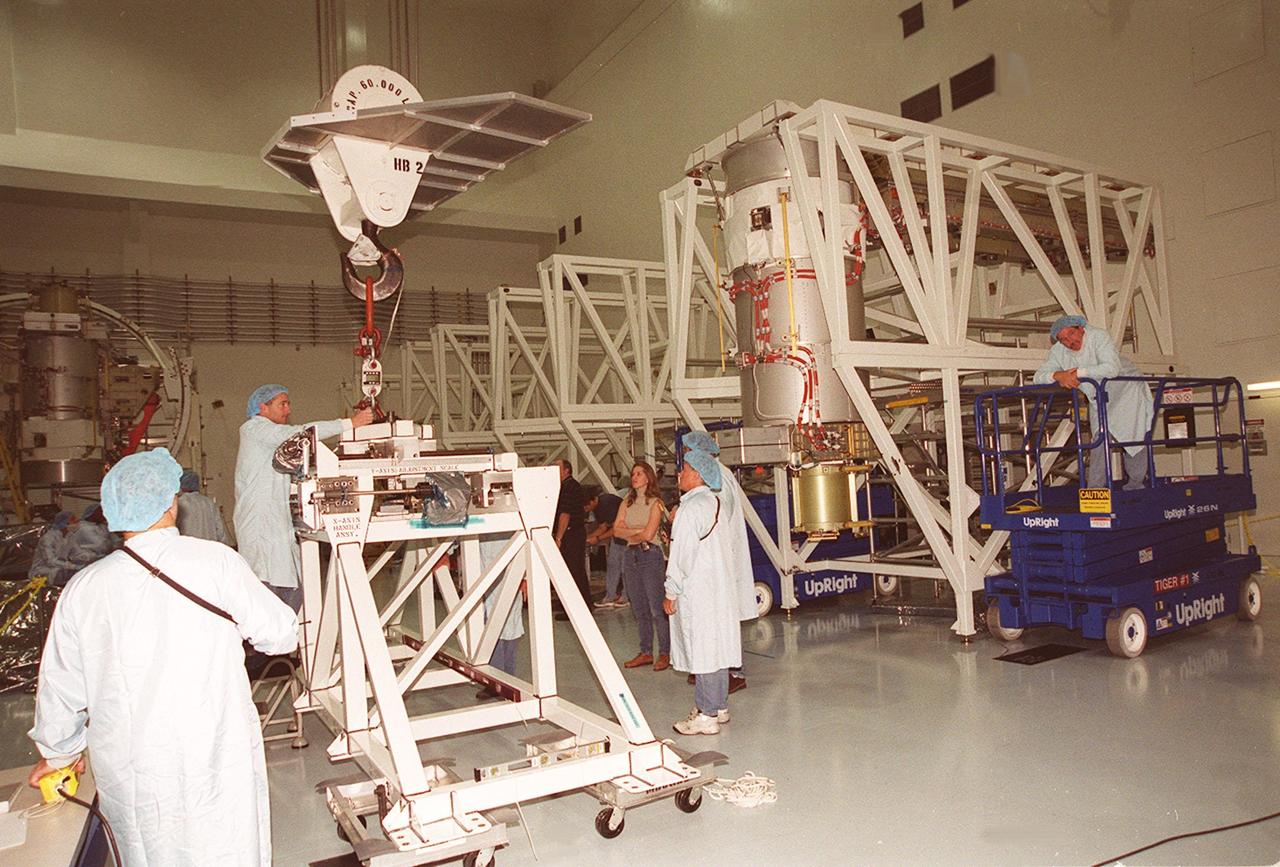
Workers in the Space Station Processing Facility prepare an overhead crane they will use to move a solar array, a component of the International Space Station, for installation onto the Integrated Equipment Assembly. The solar array is the second one being installed. They are scheduled to be launched on mission STS-97 in late November along with the P6 truss. The Station’s electrical power system (EPS) will use eight photovoltaic solar arrays to convert sunlight to electricity. Each of the eight solar arrays will be 112 feet long by 39 feet wide. The solar arrays are mounted on a “blanket” that can be folded like an accordion for delivery. Once in orbit, astronauts will deploy the blankets to their full size. Gimbals will be used to rotate the arrays so that they will face the Sun to provide maximum power to the Space Station
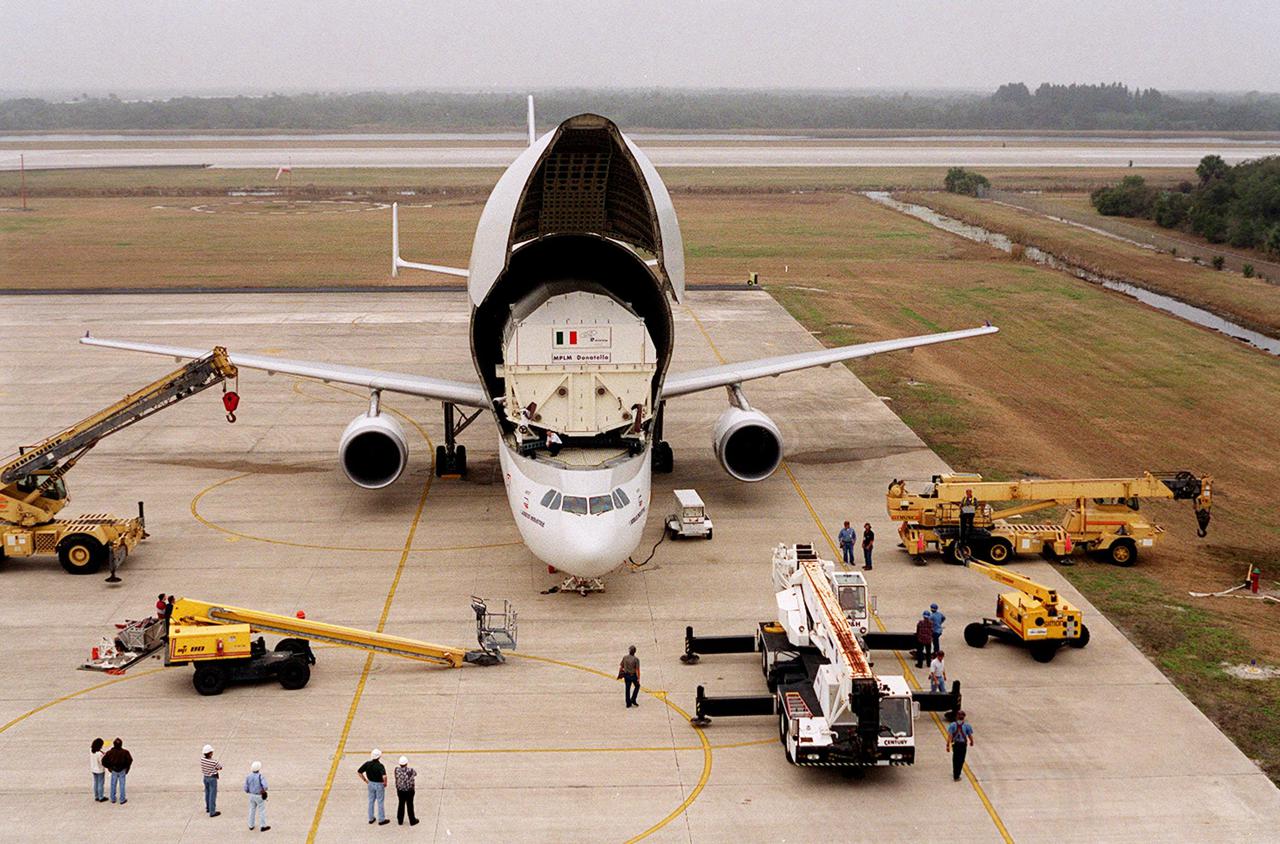
At the KSC <a href='.._.._subjects_slf.htm'> Shuttle Landing Facility<_a>, an Airbus “Beluga” air cargo plane opens to reveal its cargo, the Italian Space Agency’s <a href='.._.._subjects_mplm.htm'> Multi-Purpose Logistics Module<_a> Donatello, from the factory of Alenia Aerospazio in Turin, Italy. The third of three for the International Space Station, the module will be transported to the <a href='.._.._subjects_sspf.htm'> Space Station Processing Facility<_a> for processing. Among the activities for the payload test team are integrated electrical tests with other Station elements in the SSPF, leak tests, electrical and software compatibility tests with the Space Shuttle (using the Cargo Integrated Test equipment) and an Interface Verification Test once the module is installed in the Space Shuttle’s payload bay at the launch pad. The most significant mechanical task to be performed on Donatello in the SSPF is the installation and outfitting of the racks for carrying the various experiments and cargo
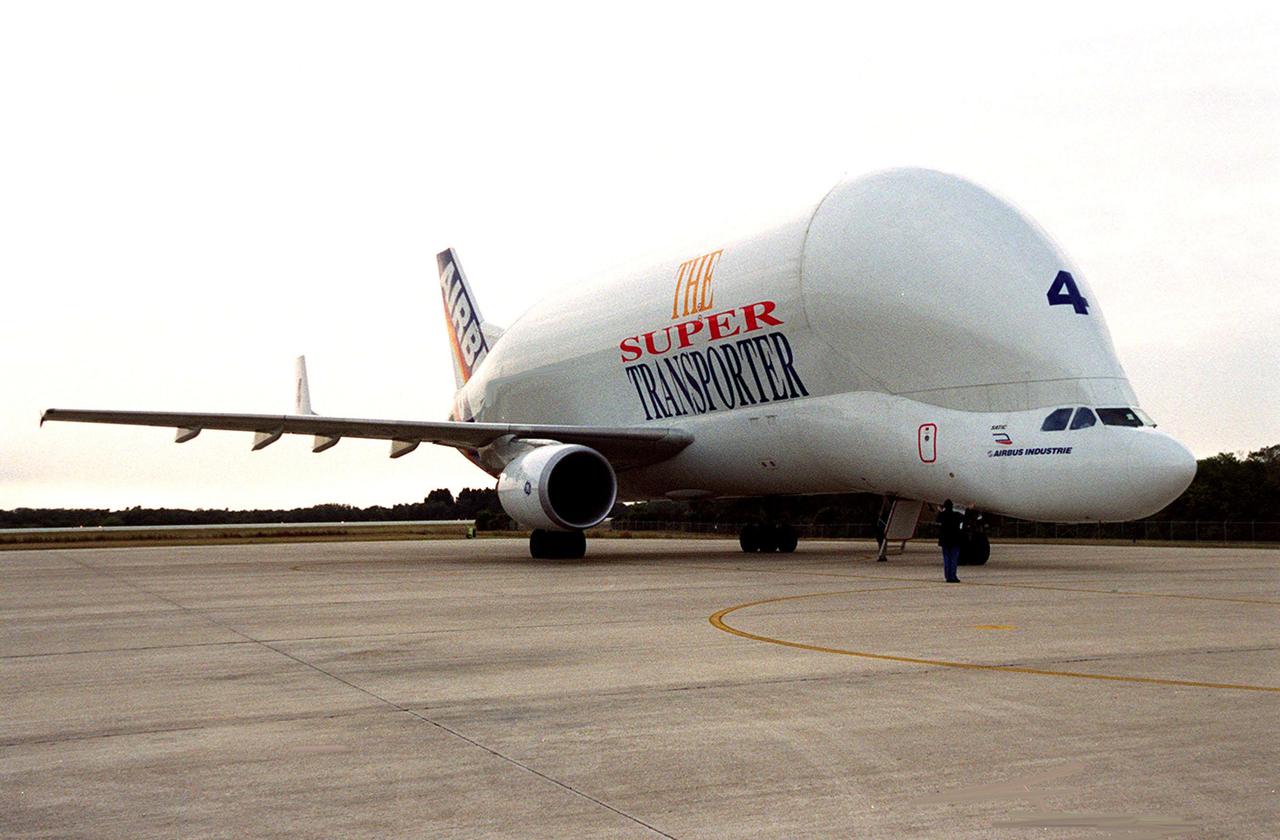
An Airbus “Beluga” air cargo plane, The Super Transporter, taxis onto the parking apron at KSC’s Shuttle Landing Facility. Its cargo, from the factory of Alenia Aerospazio in Turin, Italy, is the Italian Space Agency’s Multi-Purpose Logistics Module Donatello, the third of three for the International Space Station. The module will be transported to the Space Station Processing Facility for processing. Among the activities for the payload test team are integrated electrical tests with other Station elements in the SSPF, leak tests, electrical and software compatibility tests with the Space Shuttle (using the Cargo Integrated Test equipment) and an Interface Verification Test once the module is installed in the Space Shuttle’s payload bay at the launch pad. The most significant mechanical task to be performed on Donatello in the SSPF is the installation and outfitting of the racks for carrying the various experiments and cargo
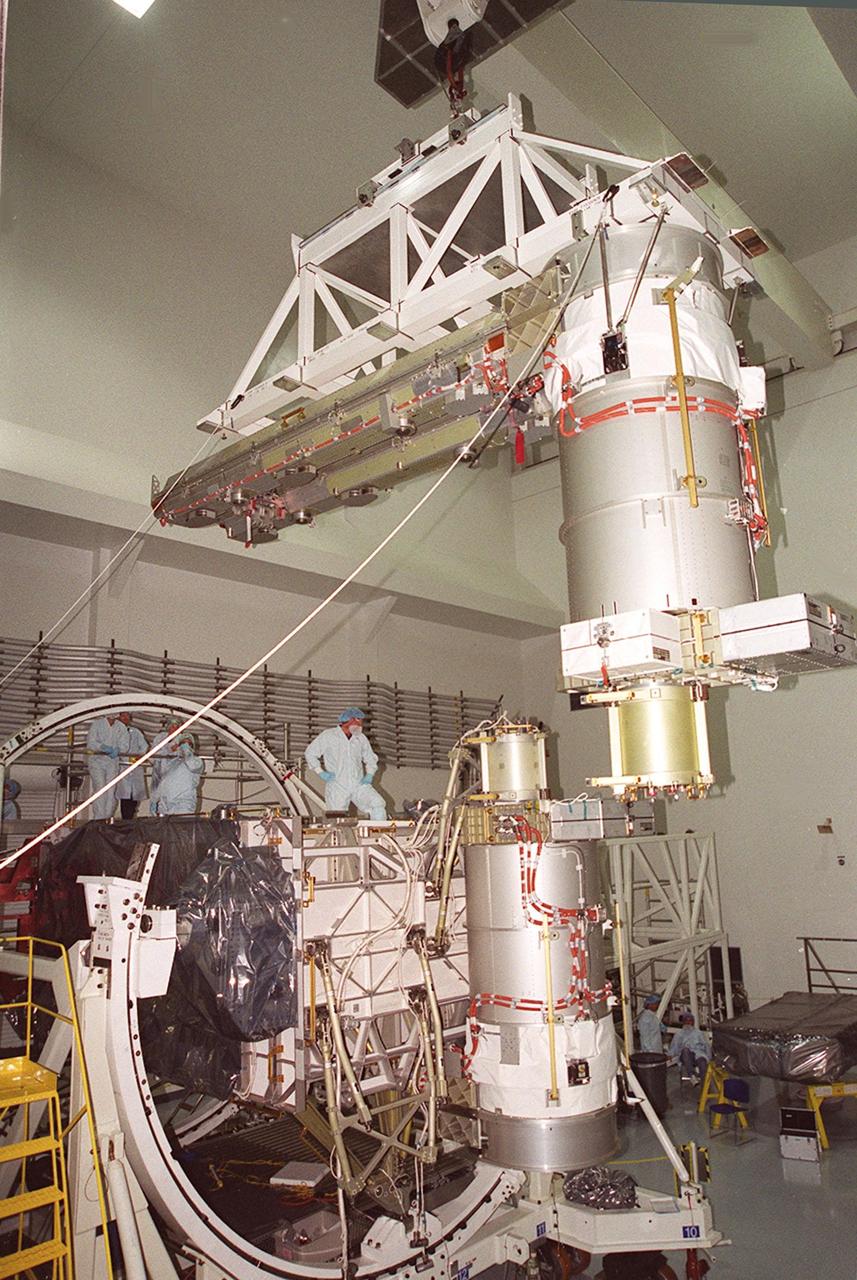
In the Space Station Processing Facility, the overhead crane carrying a solar array arrives at the Integrated Equipment Assembly (IEA) on which it will be installed. Solar Array Wing-3 is already in place. Components of the International Space Station, the arrays are scheduled to be launched on mission STS-97 in late November along with the P6 truss. The Station’s electrical power system (EPS) will use eight photovoltaic solar arrays to convert sunlight to electricity. Each of the eight solar arrays will be 112 feet long by 39 feet wide. The solar arrays are mounted on a “blanket” that can be folded like an accordion for delivery. Once in orbit, astronauts will deploy the blankets to their full size. Gimbals will be used to rotate the arrays so that they will face the Sun to provide maximum power to the Space Station