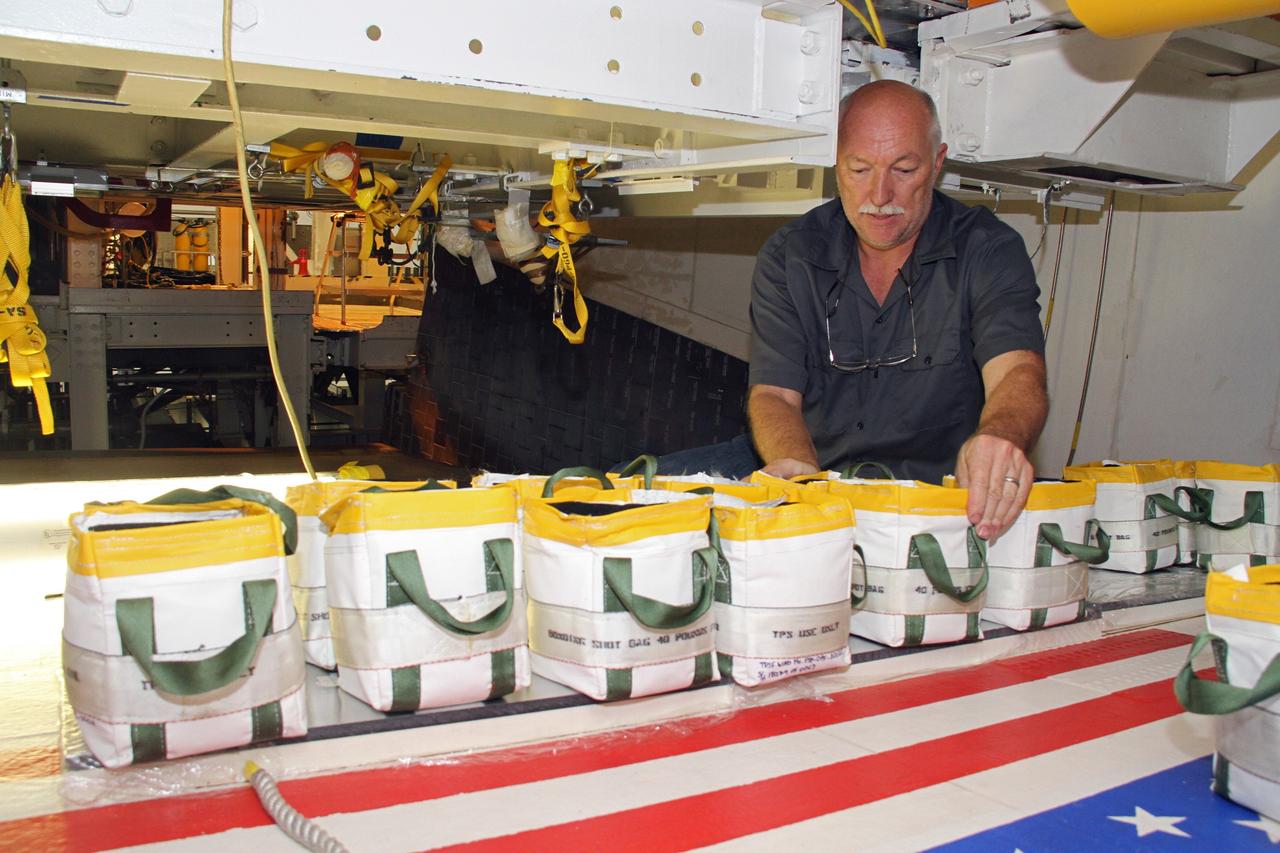
CAPE CANAVERAL, Fla. – Mike Williams, a thermal protection system technician with United Space Alliance, arranges weights atop a freshly installed section of tile on the right wing of space shuttle Endeavour at NASA's Kennedy Space Center in Florida. The weights will hold the section in place while the adhesive hardens beneath. Ongoing transition and retirement activities are preparing the spacecraft for public display at the California Science Center in Los Angeles. Endeavour flew 25 missions during its 19-year career. Photo credit: NASA/Cory Huston
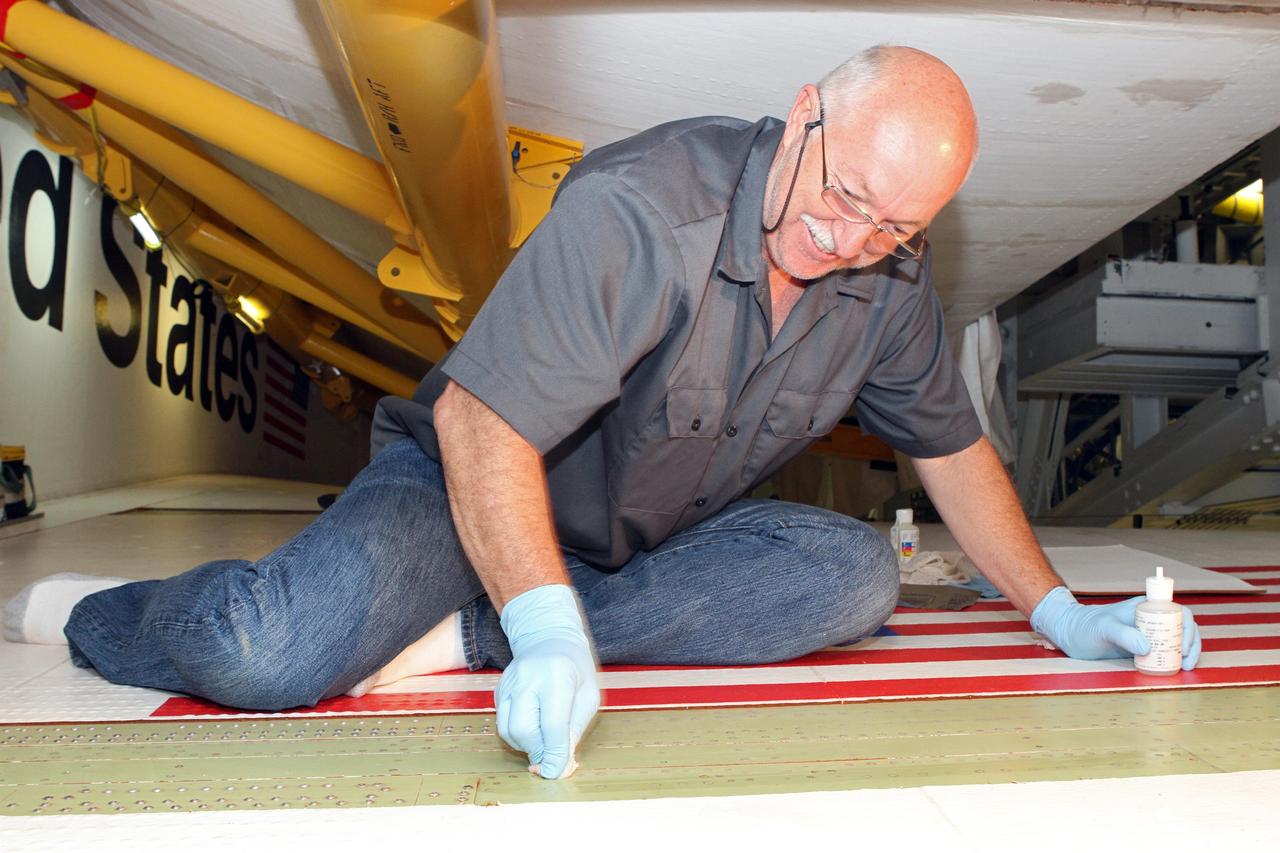
CAPE CANAVERAL, Fla. – Inside Orbiter Processing Facility-2 at NASA's Kennedy Space Center in Florida, Mike Williams, a thermal protection system technician with United Space Alliance, crouches on space shuttle Endeavour's right wing as he prepares the wing surface for tile bonding. Ongoing transition and retirement activities are preparing the spacecraft for public display at the California Science Center in Los Angeles. Endeavour flew 25 missions during its 19-year career. Photo credit: NASA/Cory Huston
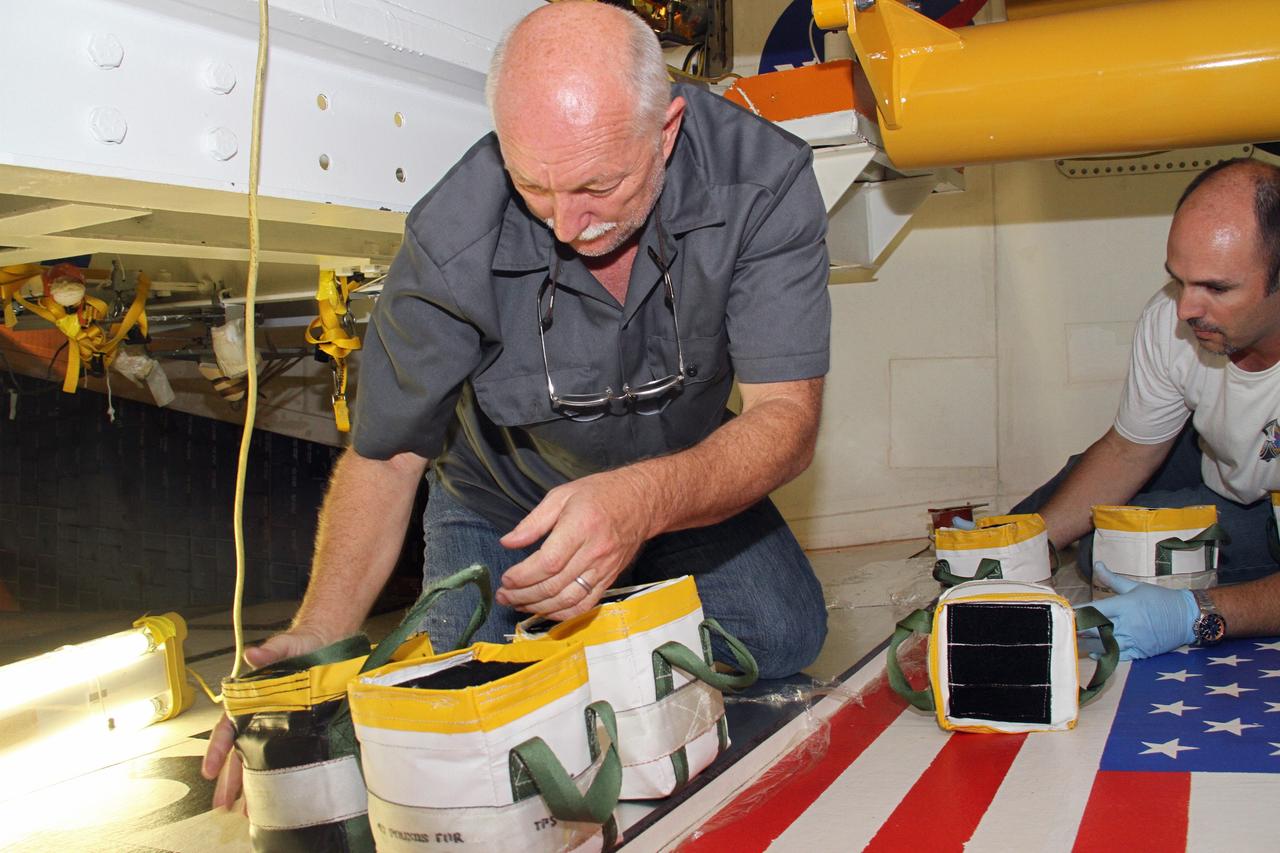
CAPE CANAVERAL, Fla. – Mike Williams, left, a thermal protection system technician, and Jeremy Schwarz, right, quality assurance technician, both with United Space Alliance, set weights atop a newly installed section of tile on the right wing of space shuttle Endeavour at NASA's Kennedy Space Center in Florida. The weights will hold the section in place while the adhesive hardens beneath. Ongoing transition and retirement activities are preparing the spacecraft for public display at the California Science Center in Los Angeles. Endeavour flew 25 missions during its 19-year career. Photo credit: NASA/Cory Huston
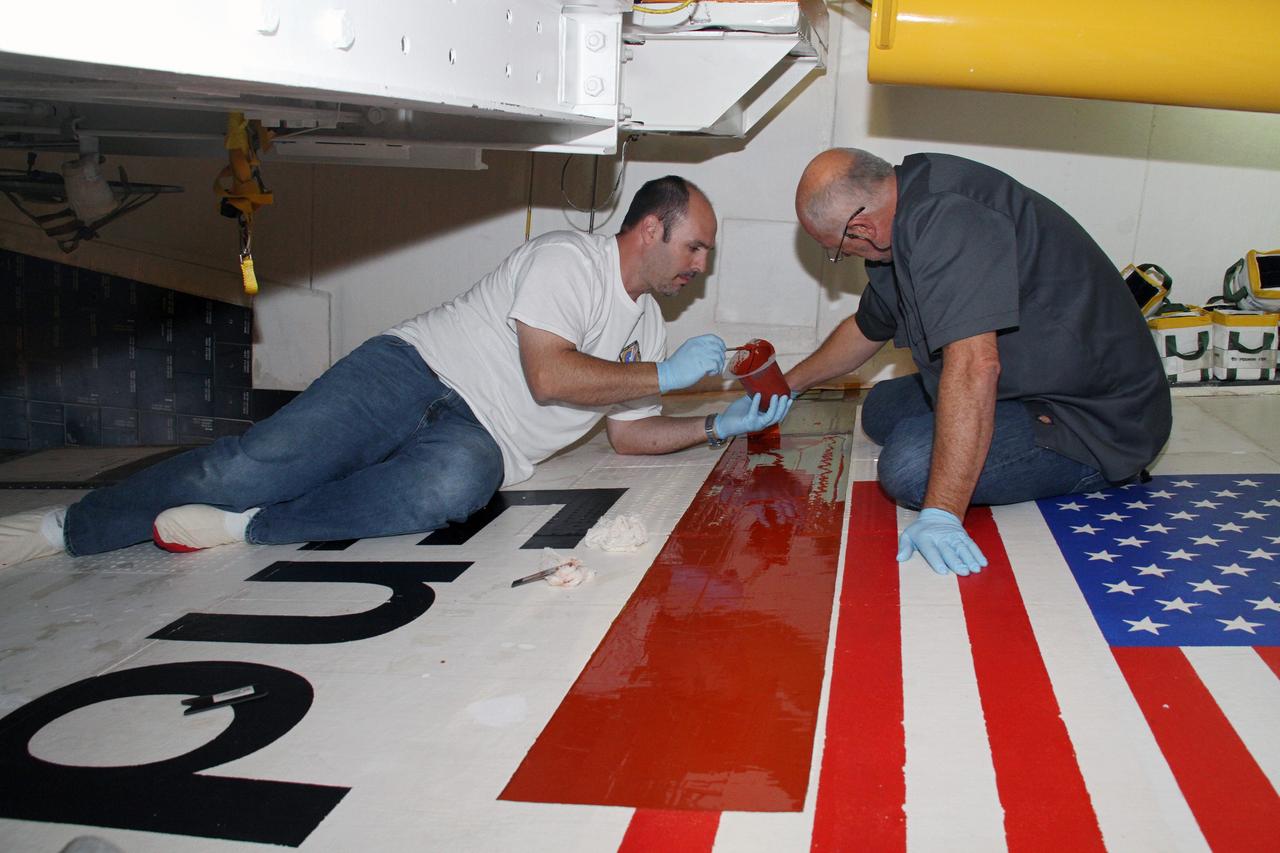
CAPE CANAVERAL, Fla. – Jeremy Schwarz, left, quality assurance technician, and Mike Williams, right, a thermal protection system technician, both with United Space Alliance, apply adhesive to space shuttle Endeavour's right wing. The work is being done in preparation for tile bonding. Endeavour is inside Orbiter Processing Facility-2 at NASA's Kennedy Space Center in Florida. Ongoing transition and retirement activities are preparing the spacecraft for public display at the California Science Center in Los Angeles. Endeavour flew 25 missions during its 19-year career. Photo credit: NASA/Cory Huston
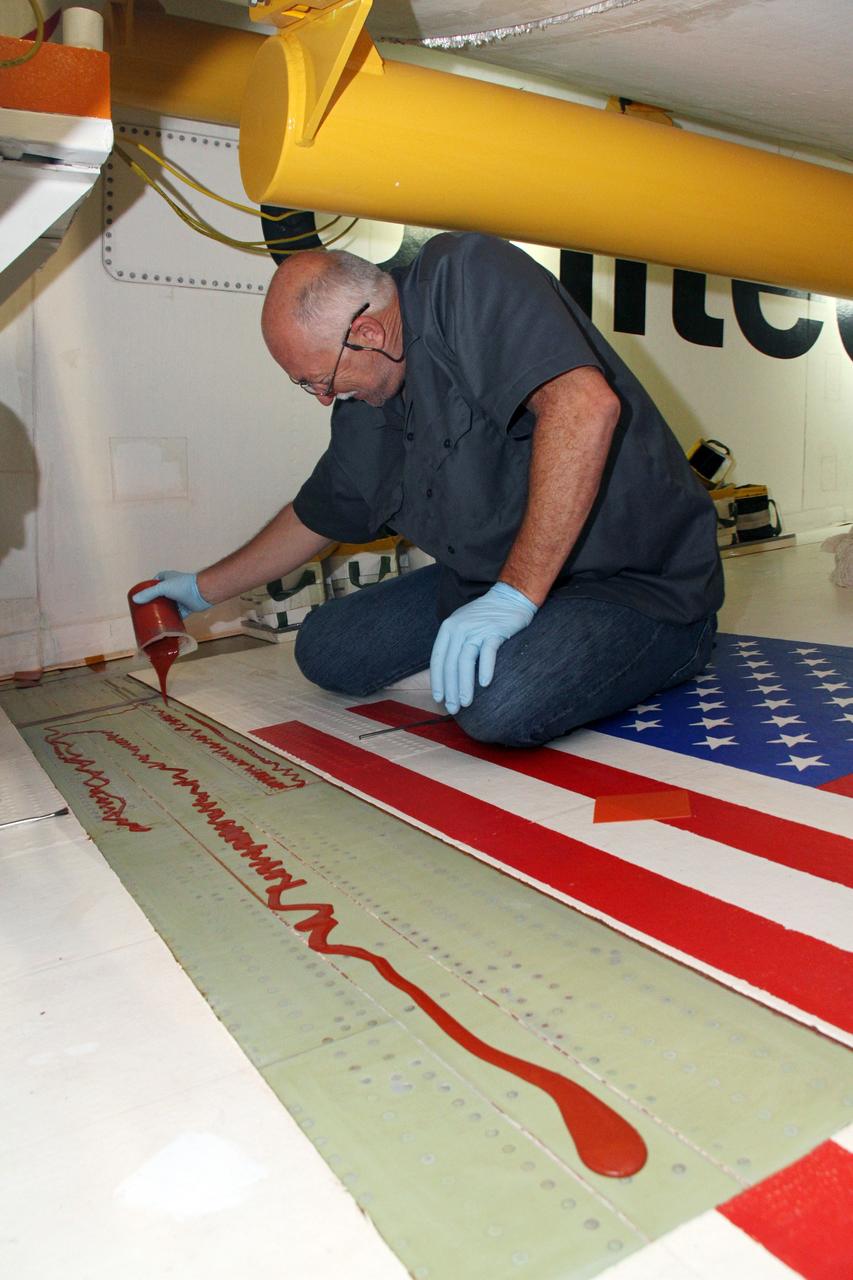
CAPE CANAVERAL, Fla. – Inside Orbiter Processing Facility-2 at NASA's Kennedy Space Center in Florida, Mike Williams, a thermal protection system technician with United Space Alliance, applies adhesive to the right wing of space shuttle Endeavour in preparation for tile bonding. Ongoing transition and retirement activities are preparing the spacecraft for public display at the California Science Center in Los Angeles. Endeavour flew 25 missions during its 19-year career. Photo credit: NASA/Cory Huston
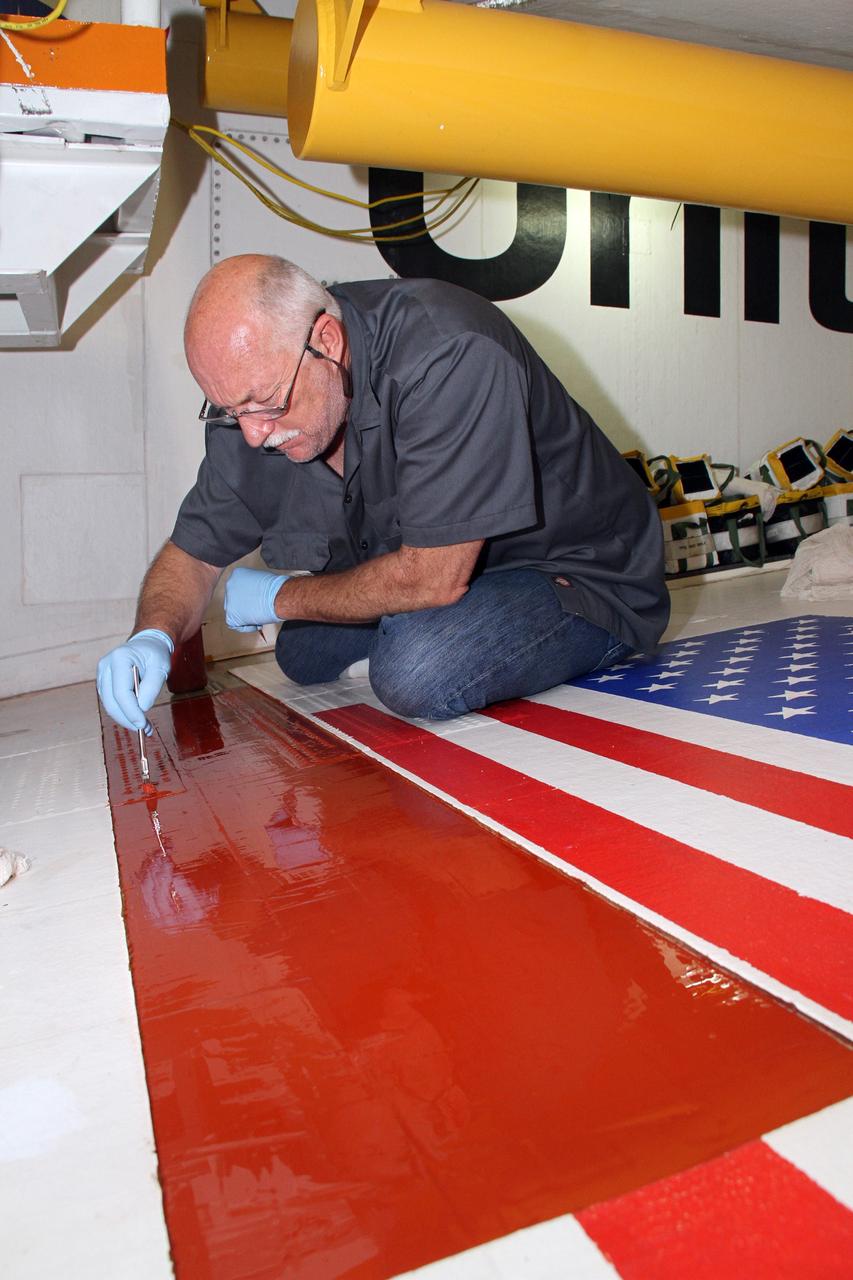
CAPE CANAVERAL, Fla. – Inside Orbiter Processing Facility-2 at NASA's Kennedy Space Center in Florida, Mike Williams, a thermal protection system technician with United Space Alliance, puts the finishing touches on a layer of adhesive applied to the right wing of space shuttle Endeavour. The work is being done in preparation for tile bonding. Ongoing transition and retirement activities are preparing the spacecraft for public display at the California Science Center in Los Angeles. Endeavour flew 25 missions during its 19-year career. Photo credit: NASA/Cory Huston
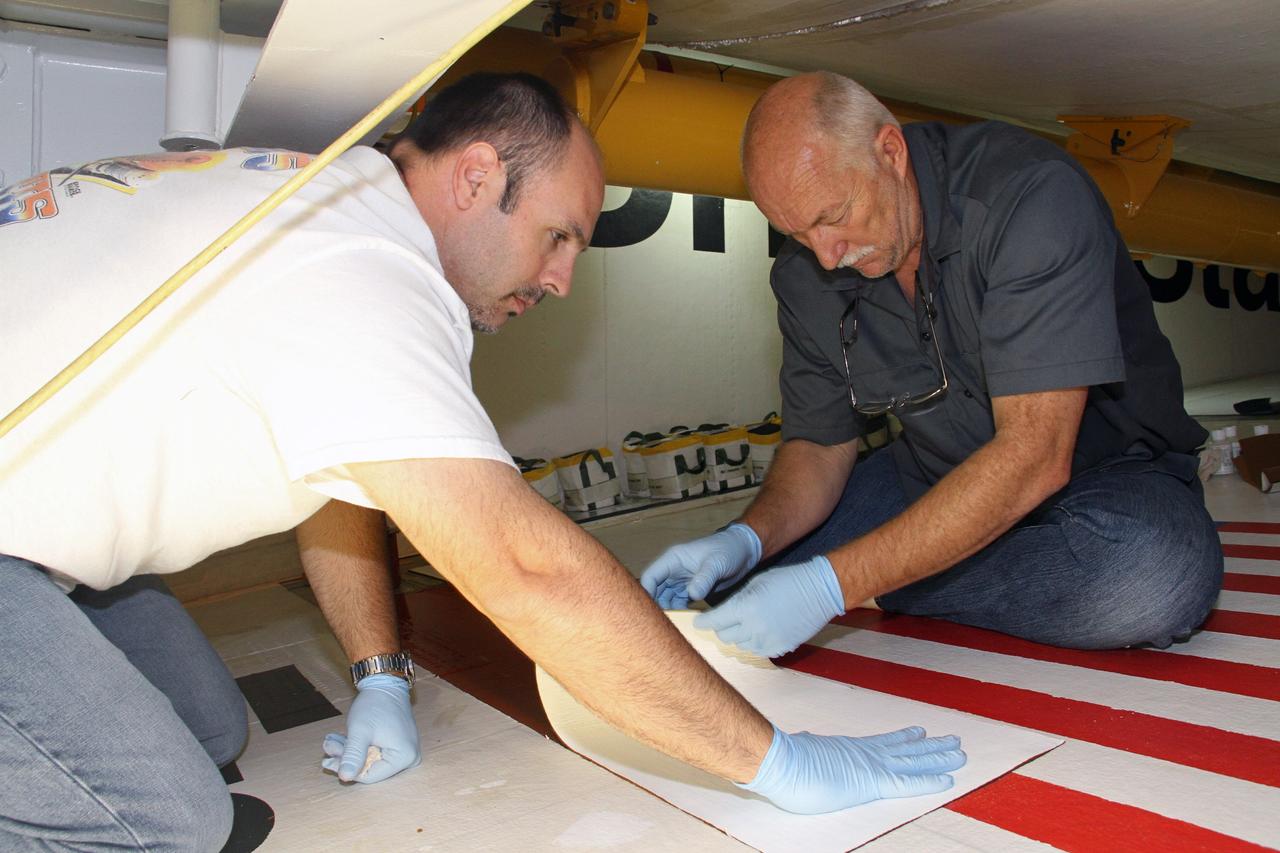
CAPE CANAVERAL, Fla. – Jeremy Schwarz, left, quality assurance technician, and Mike Williams, right, a thermal protection system technician, both with United Space Alliance, affix a section of tile to the right wing of space shuttle Endeavour at NASA's Kennedy Space Center in Florida. Ongoing transition and retirement activities are preparing the spacecraft for public display at the California Science Center in Los Angeles. Endeavour flew 25 missions during its 19-year career. Photo credit: NASA/Cory Huston
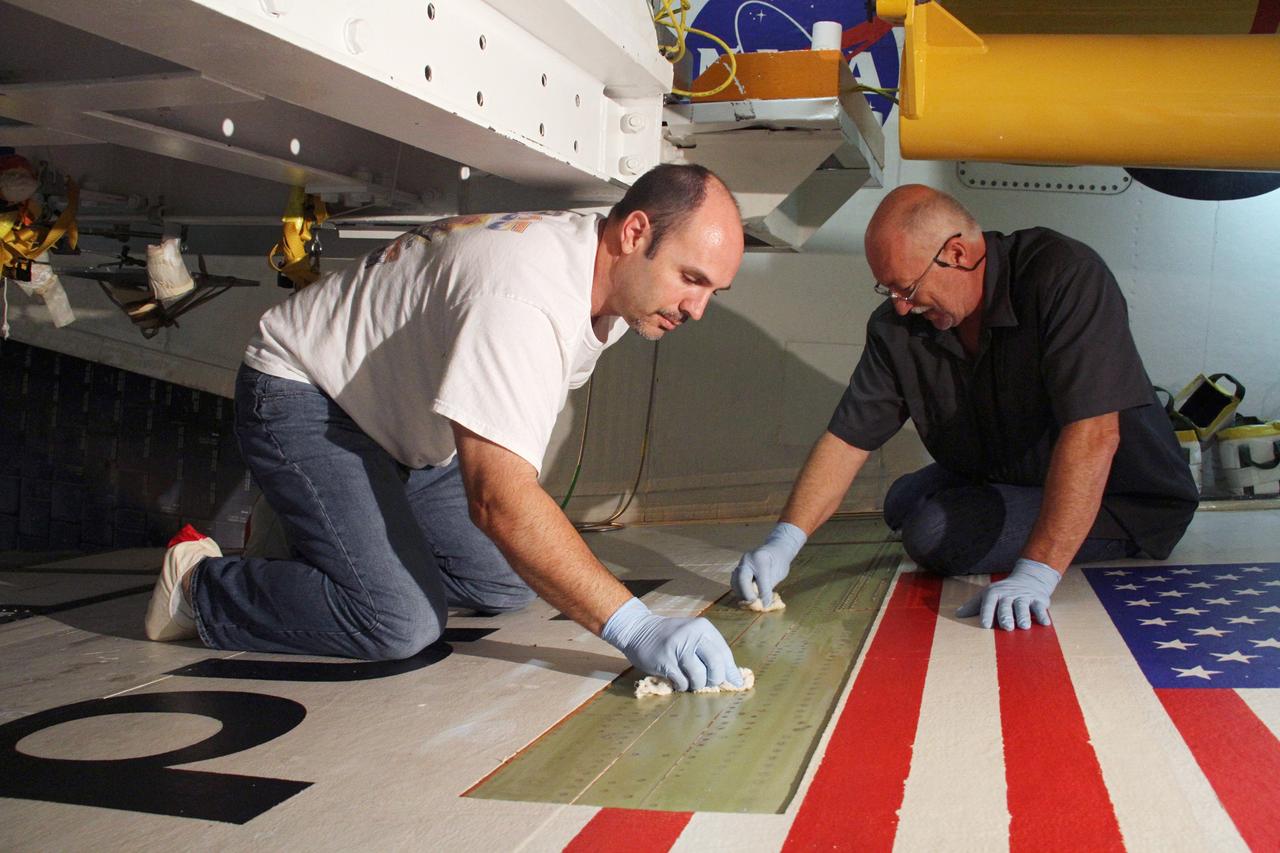
CAPE CANAVERAL, Fla. – Jeremy Schwarz, left, quality assurance technician, and Mike Williams, right, a thermal protection system technician, both with United Space Alliance, prepare the right wing of space shuttle Endeavour for tile bonding. Endeavour is inside Orbiter Processing Facility-2 at NASA's Kennedy Space Center in Florida. Ongoing transition and retirement activities are preparing the spacecraft for public display at the California Science Center in Los Angeles. Endeavour flew 25 missions during its 19-year career. Photo credit: NASA/Cory Huston
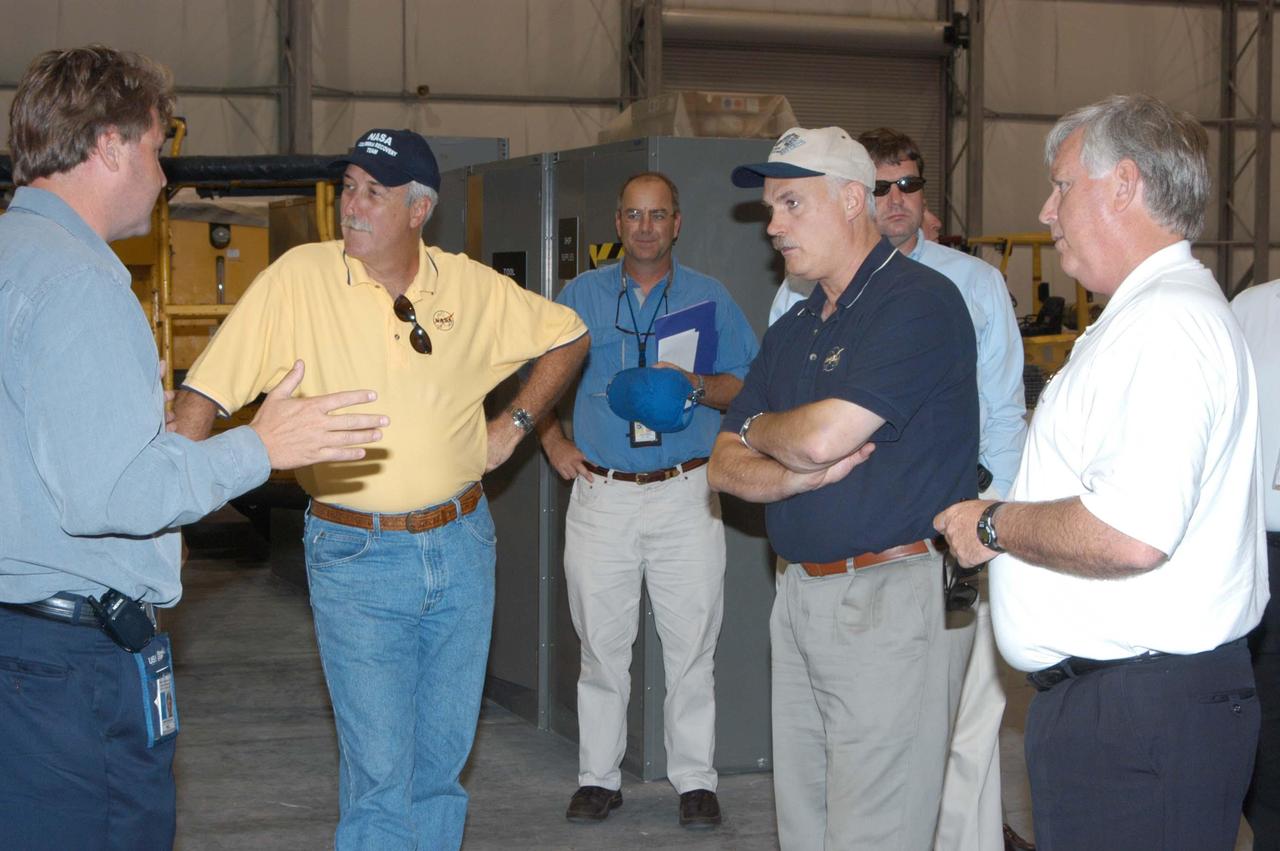
KENNEDY SPACE CENTER, FLA. - From left, Martin Wilson, manager of Thermal Protection System (TPS) operations for United Space Alliance, briefs NASA Administrator Sean O’Keefe, KSC Director of the Spaceport Services Scott Kerr, NASA Associate Administrator of the Space Operations Mission Directorate William Readdy, and Center Director James Kennedy (right) on the temporary tile shop set up in the RLV hangar. O’Keefe and Readdy are visiting KSC to survey the damage sustained by KSC facilities from Hurricane Frances. The Thermal Protection System Facility (TPSF), which creates the TPS tiles, blankets and all the internal thermal control systems for the Space Shuttles, is almost totally unserviceable at this time after losing approximately 35 percent of its roof in the storm, which blew across Central Florida Sept. 4-5. Undamaged equipment was removed from the TPSF and stored in the hangar. NASA’s three Space Shuttle orbiters -- Discovery, Atlantis and Endeavour - along with the Shuttle launch pads, all of the critical flight hardware for the orbiters and the International Space Station, and NASA’s Swift spacecraft, awaiting launch in October, were well protected and unharmed.
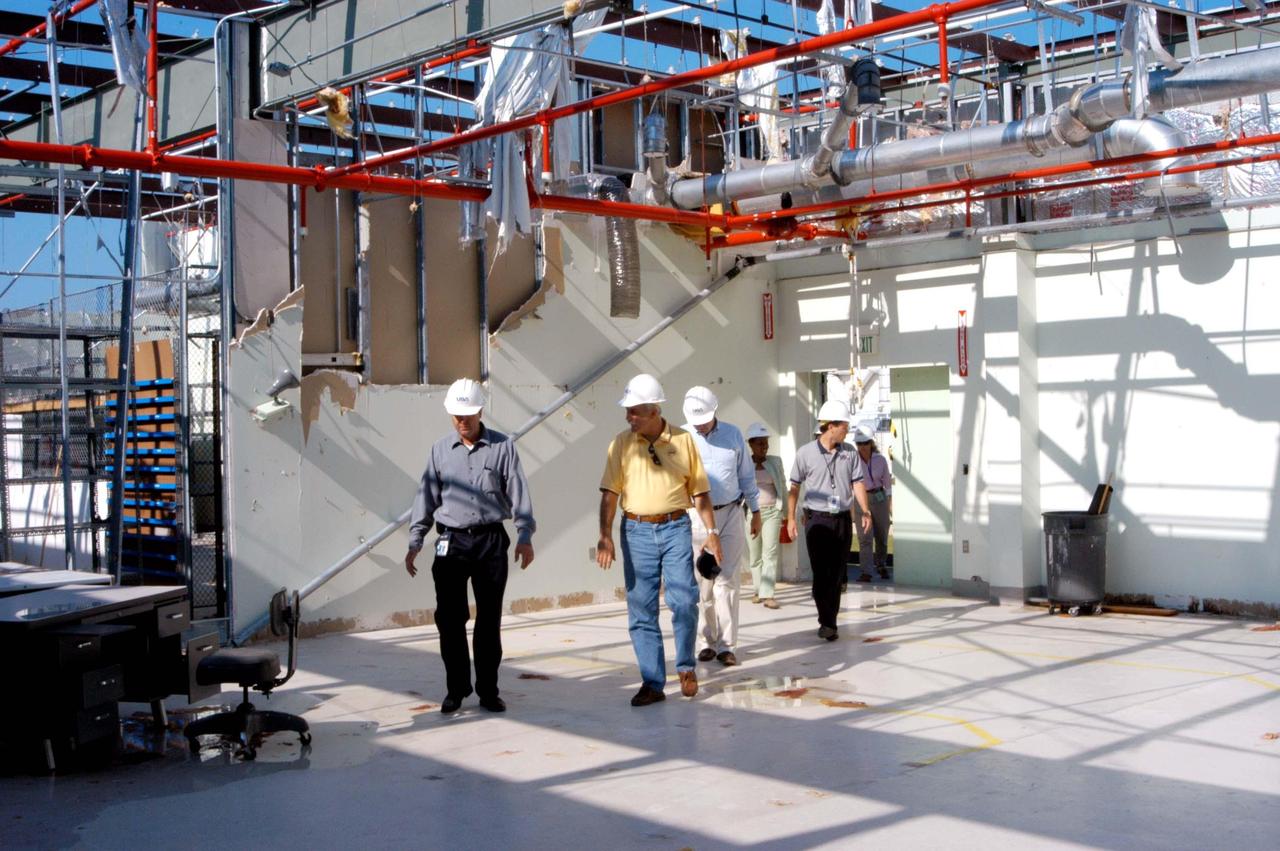
KENNEDY SPACE CENTER, FLA. - Martin Wilson (far left), manager of Thermal Protection System (TPS) operations for United Space Alliance (USA), leads NASA Administrator Sean O’Keefe (second from left) on a tour of the hurricane-ravaged Thermal Protection System Facility. The TPSF, which creates the TPS tiles, blankets and all the internal thermal control systems for the Space Shuttles, is almost totally unserviceable at this time after losing approximately 35 percent of its roof in the storm, which blew across Central Florida Sept. 4-5. Undamaged equipment was removed from the TPSF and stored in the RLV hangar. O’Keefe and NASA Associate Administrator of Space Operations Mission Directorate William Readdy are visiting KSC to survey the damage sustained by KSC facilities from the hurricane. The Labor Day storm also caused significant damage to the Vehicle Assembly Building and Processing Control Center. Additionally, the Operations and Checkout Building, Vertical Processing Facility, Hangar AE, Hangar S and Hangar AF Small Parts Facility each received substantial damage. However, well-protected and unharmed were NASA’s three Space Shuttle orbiters - Discovery, Atlantis and Endeavour - along with the Shuttle launch pads, all of the critical flight hardware for the orbiters and the International Space Station, and NASA’s Swift spacecraft that is awaiting launch in October.
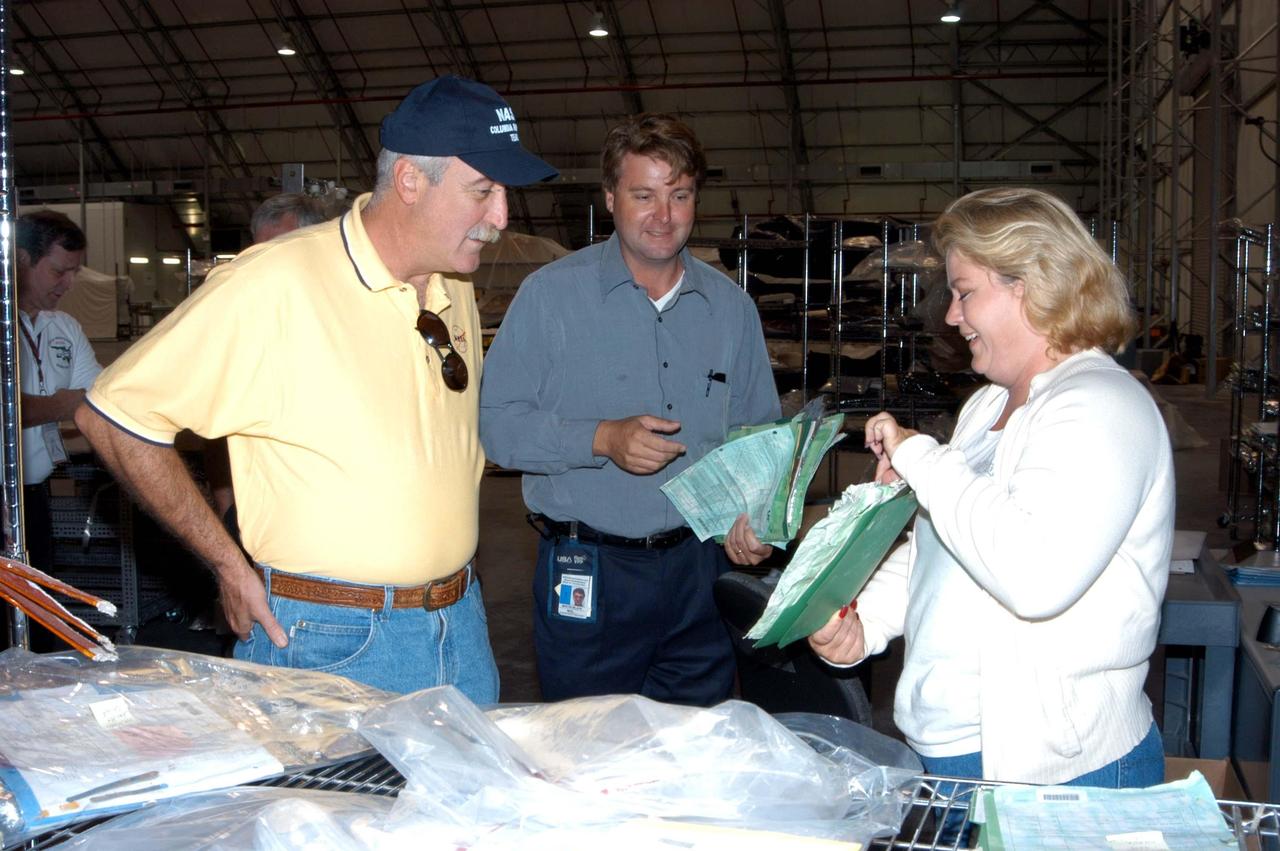
KENNEDY SPACE CENTER, FLA. - - United Space Alliance technician Shelly Kipp (right) shows some of the material salvaged from the storm-ravaged Thermal Protection System Facility (TPSF) to NASA Administrator Sean O’Keefe (left). Martin Wilson (center), manager of TPS operations for USA, looks on. The TPSF, which creates the TPS tiles, blankets and all the internal thermal control systems for the Space Shuttles, is almost totally unserviceable at this time after losing approximately 35 percent of its roof during Hurricane Frances, which blew across Central Florida Sept. 4-5. O’Keefe and NASA Associate Administrator of Space Operations Mission Directorate William Readdy are visiting KSC to survey the damage sustained by KSC facilities from the hurricane. Undamaged equipment was removed from the TPSF and stored in the RLV hangar. The Labor Day storm also caused significant damage to the Vehicle Assembly Building and Processing Control Center. Additionally, the Operations and Checkout Building, Vertical Processing Facility, Hangar AE, Hangar S and Hangar AF Small Parts Facility each received substantial damage. However, well-protected and unharmed were NASA’s three Space Shuttle orbiters -- Discovery, Atlantis and Endeavour - along with the Shuttle launch pads, all of the critical flight hardware for the orbiters and the International Space Station, and NASA’s Swift spacecraft that is awaiting launch in October.
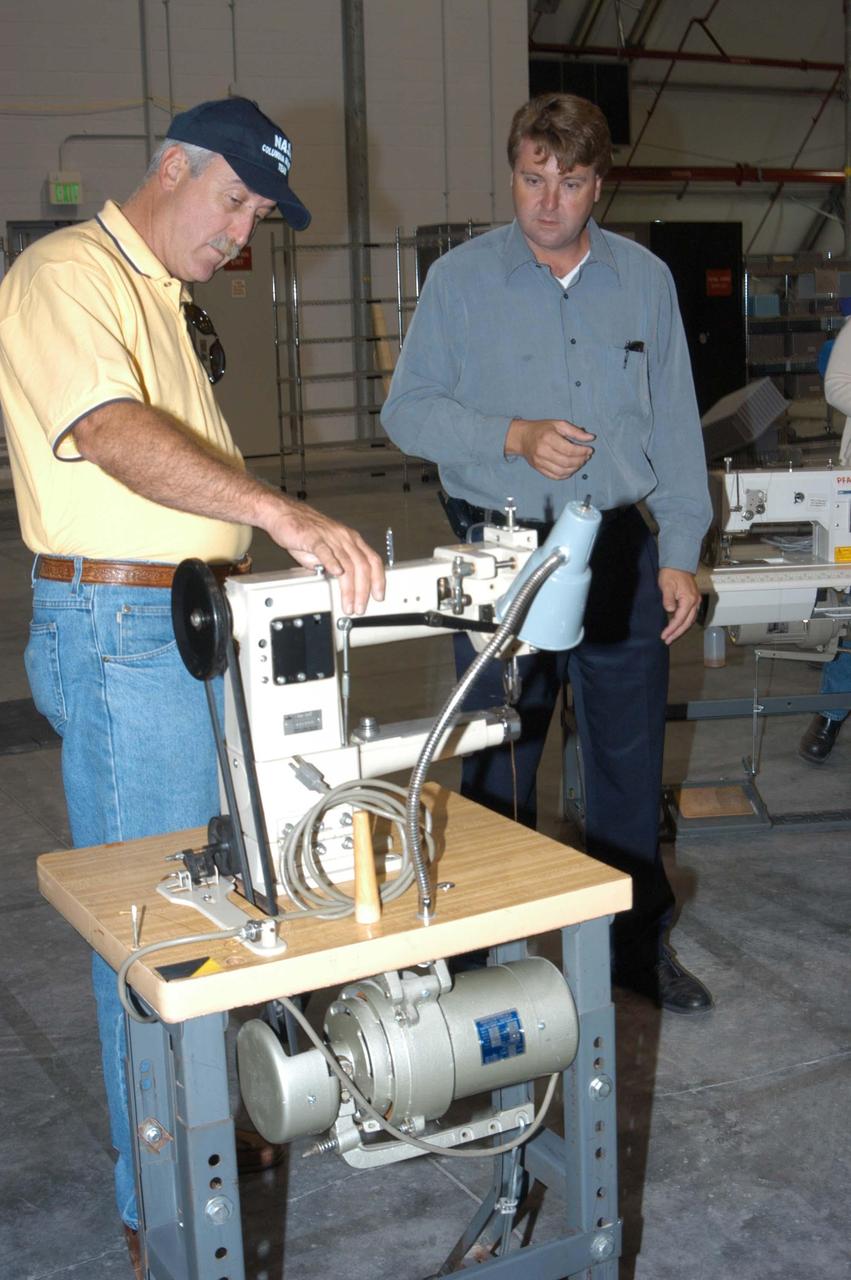
KENNEDY SPACE CENTER, FLA. - NASA Administrator Sean O’Keefe looks at equipment moved from the Thermal Protection System Facility to the RLV Hangar. AT right is Martin Wilson, manager of TPS operations for United Space Alliance. O’Keefe and NASA Associate Administrator of Space Operations Mission Directorate William Readdy are visiting KSC to survey the damage sustained by KSC facilities from Hurricane Frances. The Thermal Protection System Facility (TPSF), which creates the TPS tiles, blankets and all the internal thermal control systems for the Space Shuttles, is almost totally unserviceable at this time after losing approximately 35 percent of its roof in the storm, which blew across Central Florida Sept. 4-5. Undamaged equipment was removed from the TPSF and stored in the hangar. The Labor Day storm also caused significant damage to the Vehicle Assembly Building and Processing Control Center. Additionally, the Operations and Checkout Building, Vertical Processing Facility, Hangar AE, Hangar S and Hangar AF Small Parts Facility each received substantial damage. However, well-protected and unharmed were NASA’s three Space Shuttle orbiters -- Discovery, Atlantis and Endeavour - along with the Shuttle launch pads, all of the critical flight hardware for the orbiters and the International Space Station, and NASA’s Swift spacecraft that is awaiting launch in October.
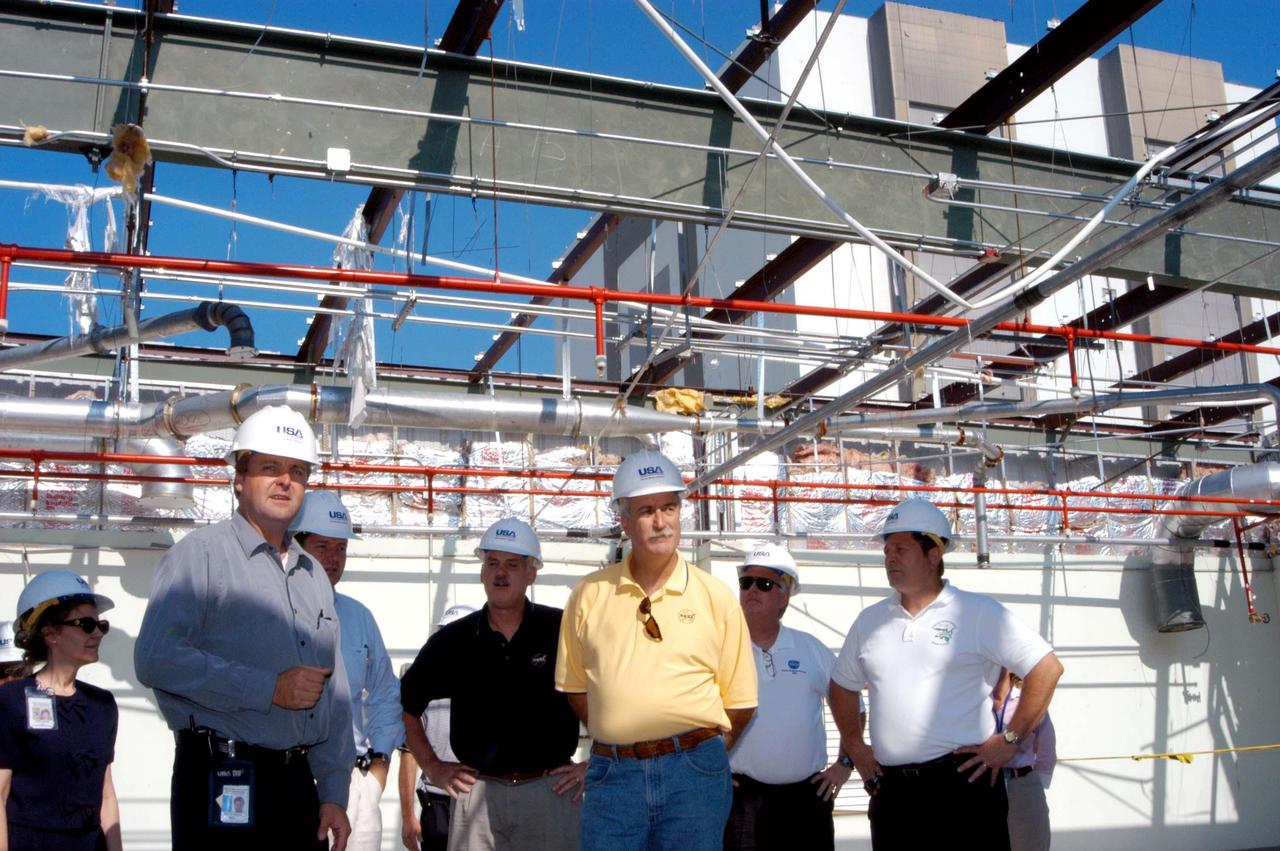
KENNEDY SPACE CENTER, FLA. - Martin Wilson (left, in foreground), manager of Thermal Protection System (TPS) operations for United Space Alliance (USA), gives a tour of the hurricane-ravaged Thermal Protection System Facility to (from center) NASA Associate Administrator of Space Operations Mission Directorate William Readdy, NASA Administrator Sean O’Keefe, Center Director James Kennedy and Director of Shuttle Processing Michael E. Wetmore. The TPSF, which creates the TPS tiles, blankets and all the internal thermal control systems for the Space Shuttles, is almost totally unserviceable at this time after losing approximately 35 percent of its roof during Hurricane Frances, which blew across Central Florida Sept. 4-5. O’Keefe and Readdy are visiting KSC to survey the damage sustained by KSC facilities from the hurricane. The Labor Day storm also caused significant damage to the Vehicle Assembly Building and Processing Control Center. Additionally, the Operations and Checkout Building, Vertical Processing Facility, Hangar AE, Hangar S and Hangar AF Small Parts Facility each received substantial damage. However, well-protected and unharmed were NASA’s three Space Shuttle orbiters - Discovery, Atlantis and Endeavour - along with the Shuttle launch pads, all of the critical flight hardware for the orbiters and the International Space Station, and NASA’s Swift spacecraft that is awaiting launch in October.
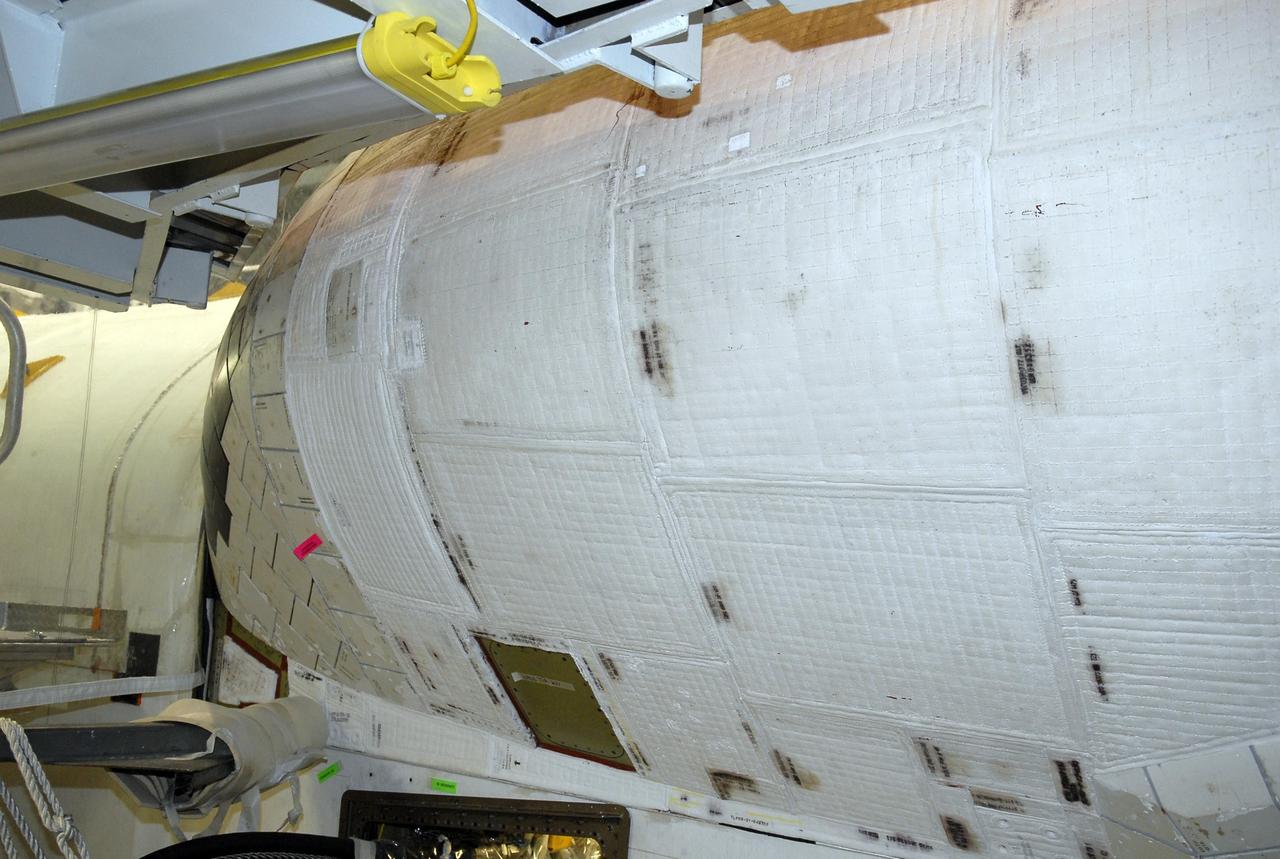
KENNEDY SPACE CENTER, FLA. -- Another view of the area of orbiter Endeavour's orbital maneuvering system, or OMS, pod where the tear occurred on Atlantis during launch of mission STS-117 on June 8, 2007. Repair is under consideration following testing at KSC and Houston. The test articles each feature three tiles (Low Temperature Reusable Surface Insulation, or LRSI) affixed next to two FIB blankets, simulating the thermal protection system set-up on Atlantis' OMS pod in the vicinity of the in-flight anomaly. These test articles were flown to Texas the morning of June 14. The TPS team at KSC has also provided a total of 22 FIB samples for other testing and analysis. Photo credit: NASA/Kim Shiflett
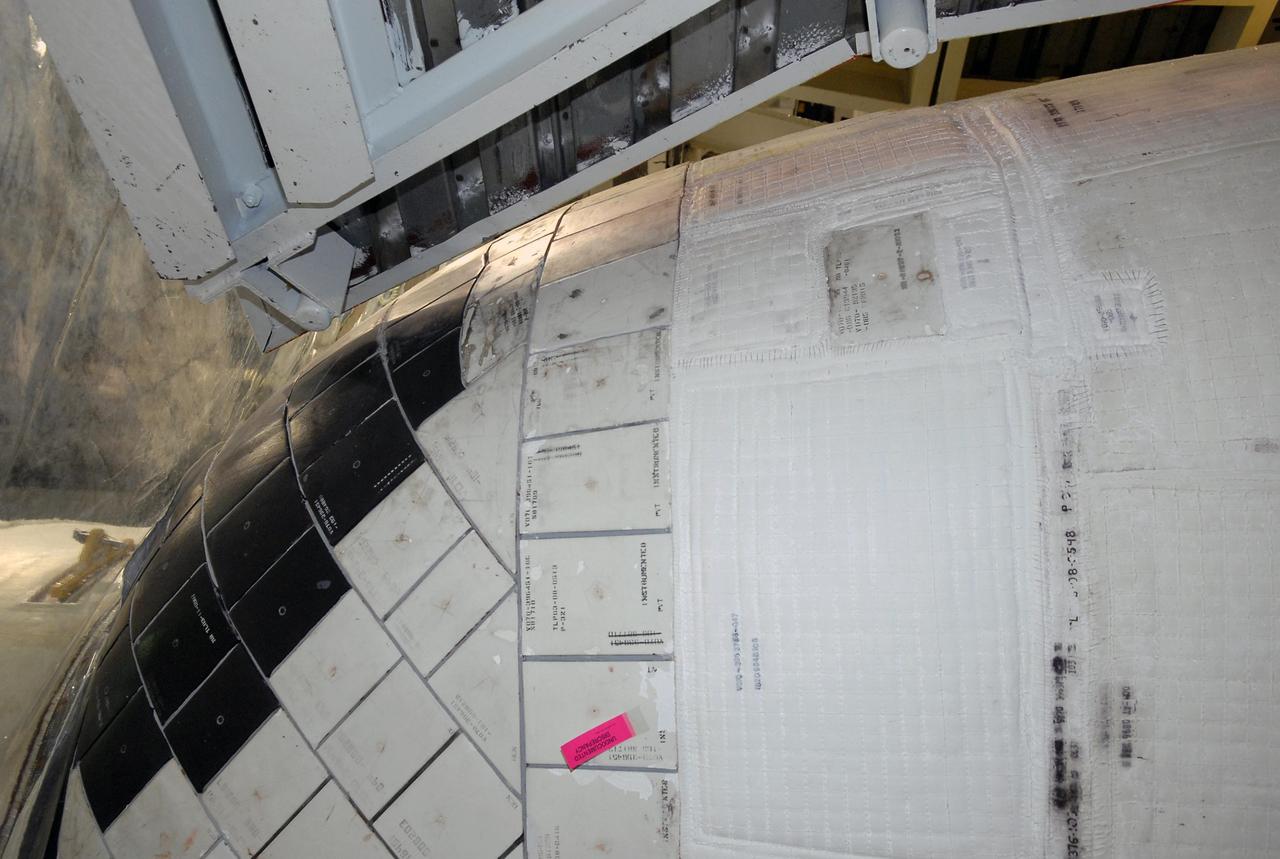
KENNEDY SPACE CENTER, FLA. -- Another view of the area of orbiter Endeavour's orbital maneuvering system, or OMS, pod where the tear occurred on Atlantis during launch of mission STS-117 on June 8, 2007. Repair is under consideration following testing at KSC and Houston. The test articles each feature three tiles (Low Temperature Reusable Surface Insulation, or LRSI) affixed next to two FIB blankets, simulating the thermal protection system set-up on Atlantis' OMS pod in the vicinity of the in-flight anomaly. These test articles were flown to Texas the morning of June 14. The TPS team at KSC has also provided a total of 22 FIB samples for other testing and analysis. Photo credit: NASA/Kim Shiflett
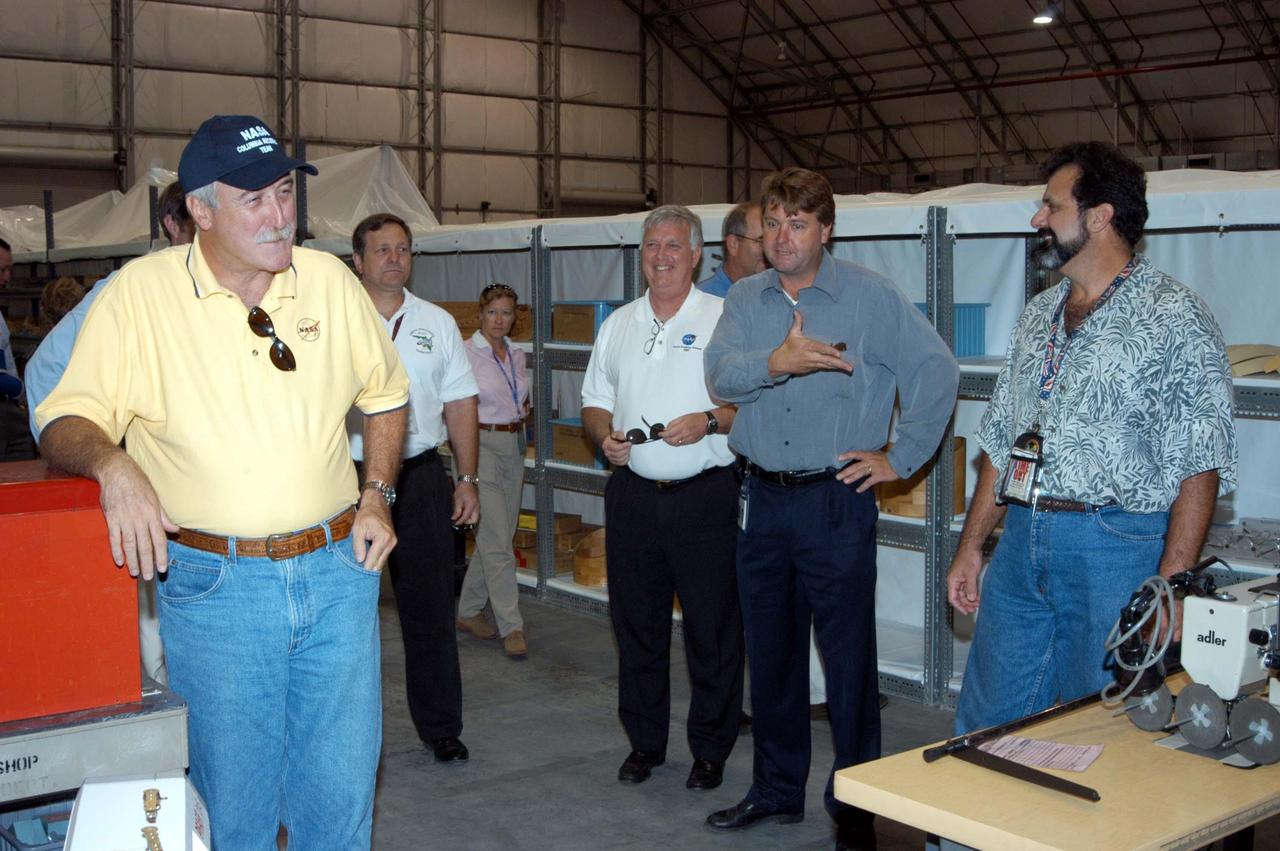
KENNEDY SPACE CENTER, FLA. - Martin Wilson (second from right), manager of Thermal Protection System (TPS) operations for United Space Alliance (USA) , introduces Kevin Harrington, manager of Soft Goods Production in the TPSF, during a briefing to (from left) NASA Administrator Sean O’Keefe, KSC Director of Shuttle Processing Michael E. Wetmore, Center Director James Kennedy and KSC Director of the Spaceport Services Scott Kerr (behind Kennedy), on the temporary tile shop set up in the RLV hangar. O’Keefe and NASA Associate Administrator of Space Operations Mission Directorate William Readdy are visiting KSC to survey the damage sustained by KSC facilities from Hurricane Frances. The Thermal Protection System Facility (TPSF), which creates the TPS tiles, blankets and all the internal thermal control systems for the Space Shuttles, is almost totally unserviceable at this time after losing approximately 35 percent of its roof in the storm, which blew across Central Florida Sept. 4-5. The Labor Day storm also caused significant damage to the Vehicle Assembly Building and Processing Control Center. Additionally, the Operations and Checkout Building, Vertical Processing Facility, Hangar AE, Hangar S and Hangar AF Small Parts Facility each received substantial damage. Undamaged equipment was removed from the TPSF and stored in the hangar. However, well-protected and unharmed were NASA’s three Space Shuttle orbiters -- Discovery, Atlantis and Endeavour - along with the Shuttle launch pads, all of the critical flight hardware for the orbiters and the International Space Station, and NASA’s Swift spacecraft that is awaiting launch in October.
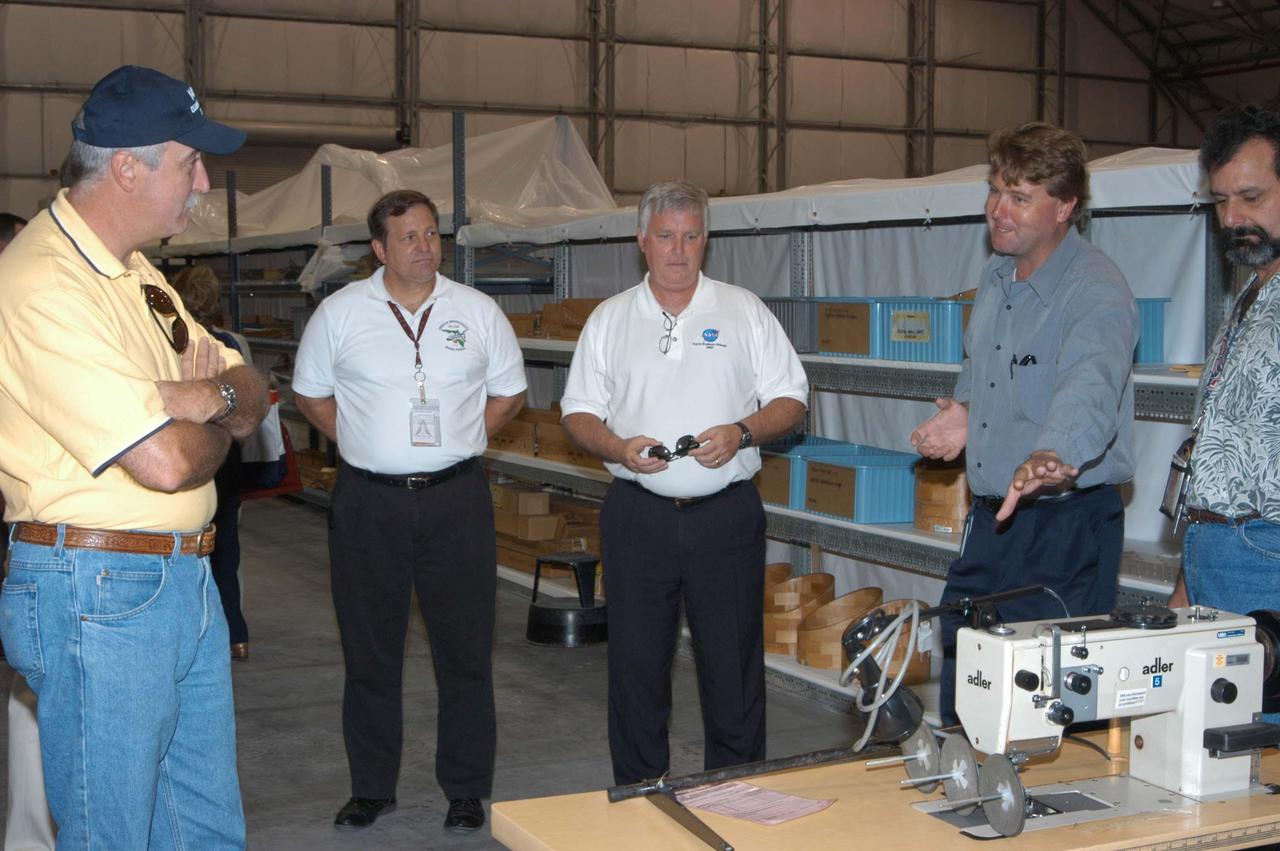
KENNEDY SPACE CENTER, FLA. - Martin Wilson (second from right), manager of Thermal Protection System (TPS) operations for United Space Alliance (USA), briefs NASA Administrator Sean O’Keefe, KSC Director of Shuttle Processing Michael E. Wetmore and Center Director James Kennedy about the temporary tile shop set up in the RLV hangar. At far right is USA Manager of Soft Goods Production in the TPSF, Kevin Harrington. O’Keefe and NASA Associate Administrator of Space Operations Mission Directorate William Readdy are visiting KSC to survey the damage sustained by KSC facilities from Hurricane Frances. The Thermal Protection System Facility (TPSF), which creates the TPS tiles, blankets and all the internal thermal control systems for the Space Shuttles, is almost totally unserviceable at this time after losing approximately 35 percent of its roof in the storm, which blew across Central Florida Sept. 4-5. Undamaged equipment was removed from the TPSF and stored in the hangar. The Labor Day storm also caused significant damage to the Vehicle Assembly Building and Processing Control Center. Additionally, the Operations and Checkout Building, Vertical Processing Facility, Hangar AE, Hangar S and Hangar AF Small Parts Facility each received substantial damage. However, well-protected and unharmed were NASA’s three Space Shuttle orbiters -- Discovery, Atlantis and Endeavour - along with the Shuttle launch pads, all of the critical flight hardware for the orbiters and the International Space Station, and NASA’s Swift spacecraft that is awaiting launch in October.
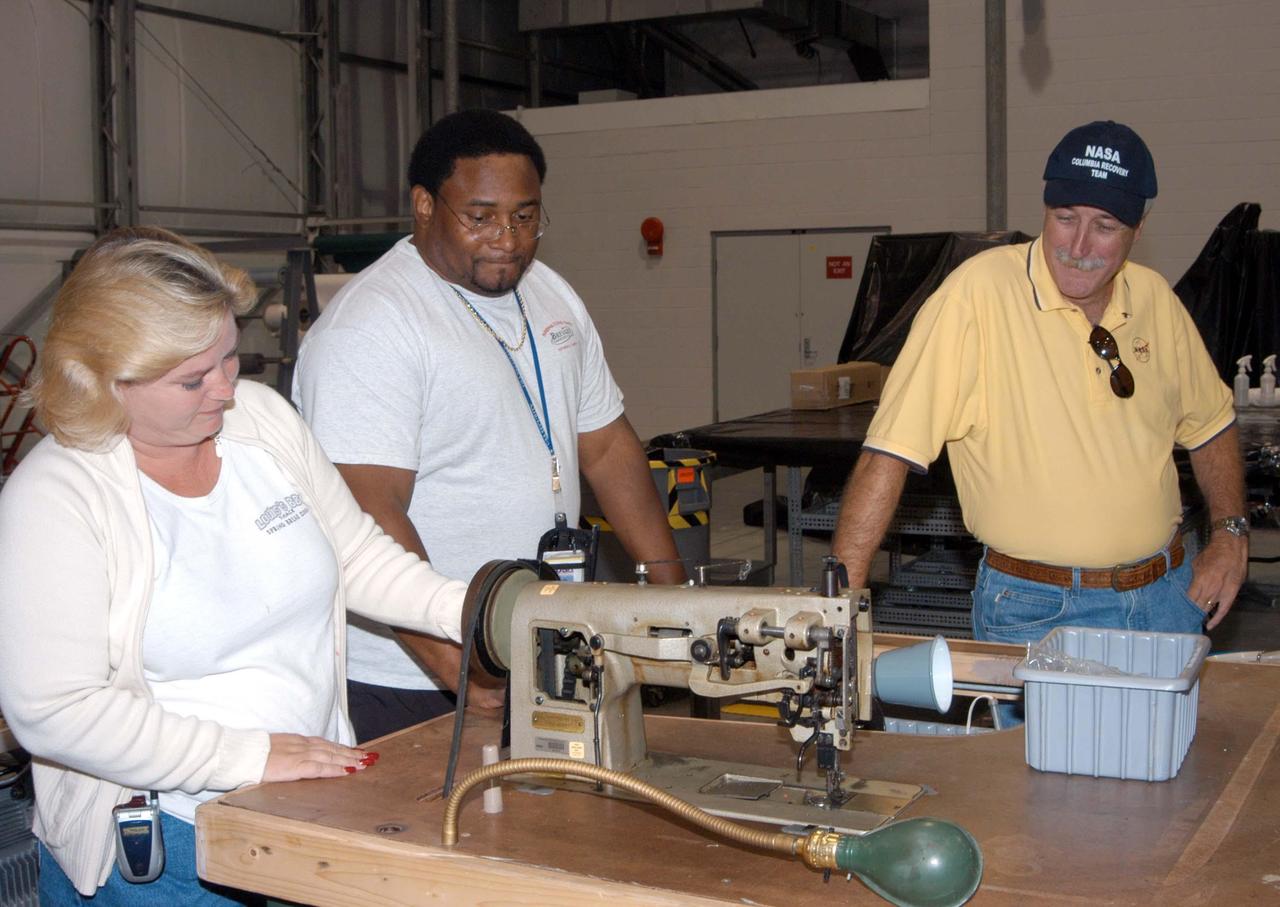
KENNEDY SPACE CENTER, FLA. - - NASA Administrator Sean O’Keefe (right) looks at equipment moved from the Thermal Protection System Facility to the RLV Hangar. At left are United Space Alliance technicians Shelly Kipp and Eric Moss. O’Keefe and NASA Associate Administrator of Space Operations Mission Directorate William Readdy are visiting KSC to survey the damage sustained by KSC facilities from Hurricane Frances. The Thermal Protection System Facility (TPSF), which creates the TPS tiles, blankets and all the internal thermal control systems for the Space Shuttles, is almost totally unserviceable at this time after losing approximately 35 percent of its roof in the storm, which blew across Central Florida Sept. 4-5. Undamaged equipment was removed from the TPSF and stored in the hangar. The Labor Day storm also caused significant damage to the Vehicle Assembly Building and Processing Control Center. Additionally, the Operations and Checkout Building, Vertical Processing Facility, Hangar AE, Hangar S and Hangar AF Small Parts Facility each received substantial damage. However, well-protected and unharmed were NASA’s three Space Shuttle orbiters - Discovery, Atlantis and Endeavour - along with the Shuttle launch pads, all of the critical flight hardware for the orbiters and the International Space Station, and NASA’s Swift spacecraft that is awaiting launch in October.
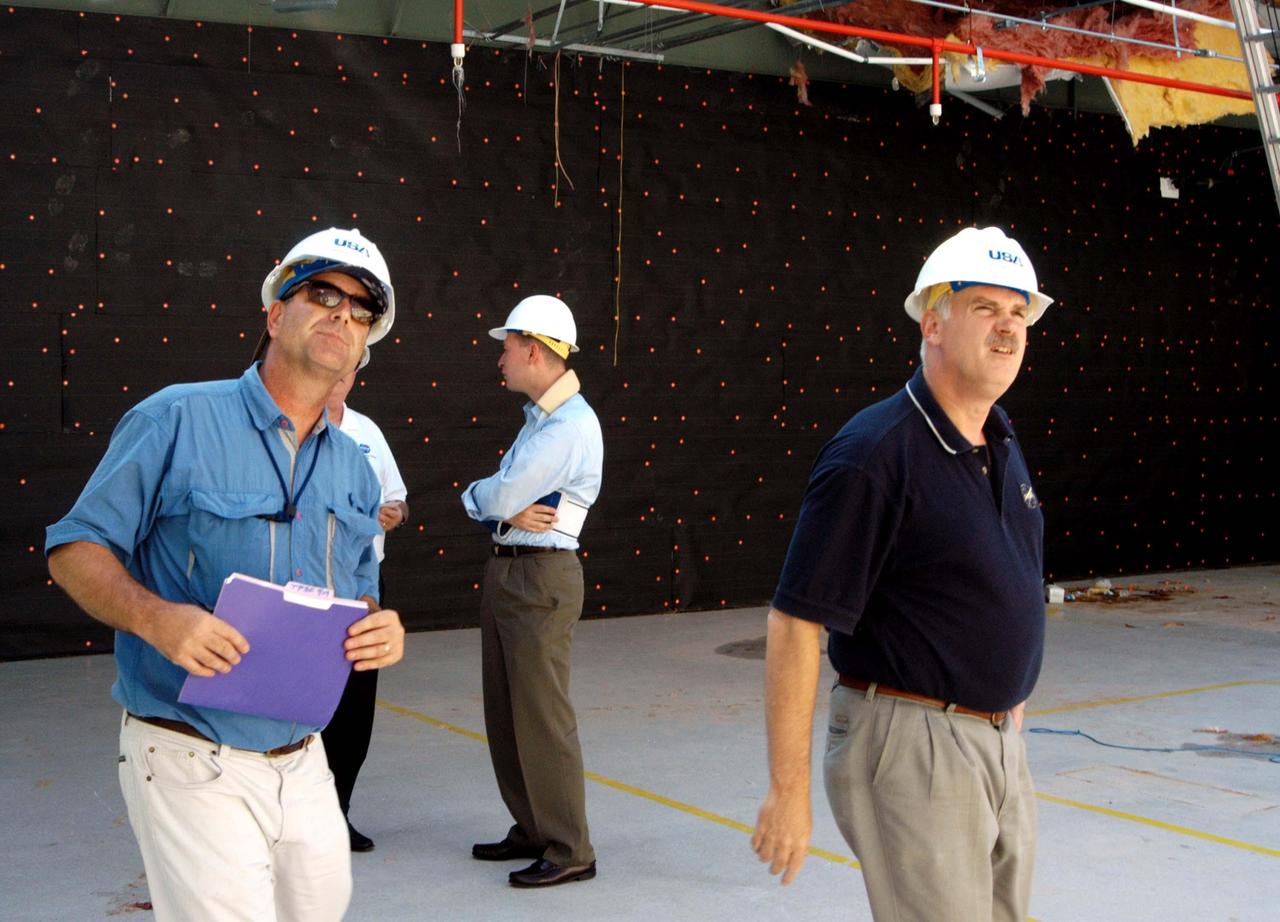
KENNEDY SPACE CENTER, FLA. - Looking at damage inside the hurricane-ravaged Thermal Protection System Facility are KSC Director of Spaceport Services Scott Kerr (left) and NASA Associate Administrator of Space Operations Mission Directorate William Readdy (right). The TPSF, which creates the TPS tiles, blankets and all the internal thermal control systems for the Space Shuttles, is almost totally unserviceable at this time after losing approximately 35 percent of its roof during Hurricane Frances, which blew across Central Florida Sept. 4-5. Readdy and NASA Administrator Sean O’Keefe are visiting KSC to survey the damage sustained by KSC facilities from the hurricane. The Labor Day storm also caused significant damage to the Vehicle Assembly Building and Processing Control Center. Additionally, the Operations and Checkout Building, Vertical Processing Facility, Hangar AE, Hangar S and Hangar AF Small Parts Facility each received substantial damage. However, well-protected and unharmed were NASA’s three Space Shuttle orbiters - Discovery, Atlantis and Endeavour - along with the Shuttle launch pads, all of the critical flight hardware for the orbiters and the International Space Station, and NASA’s Swift spacecraft that is awaiting launch in October.
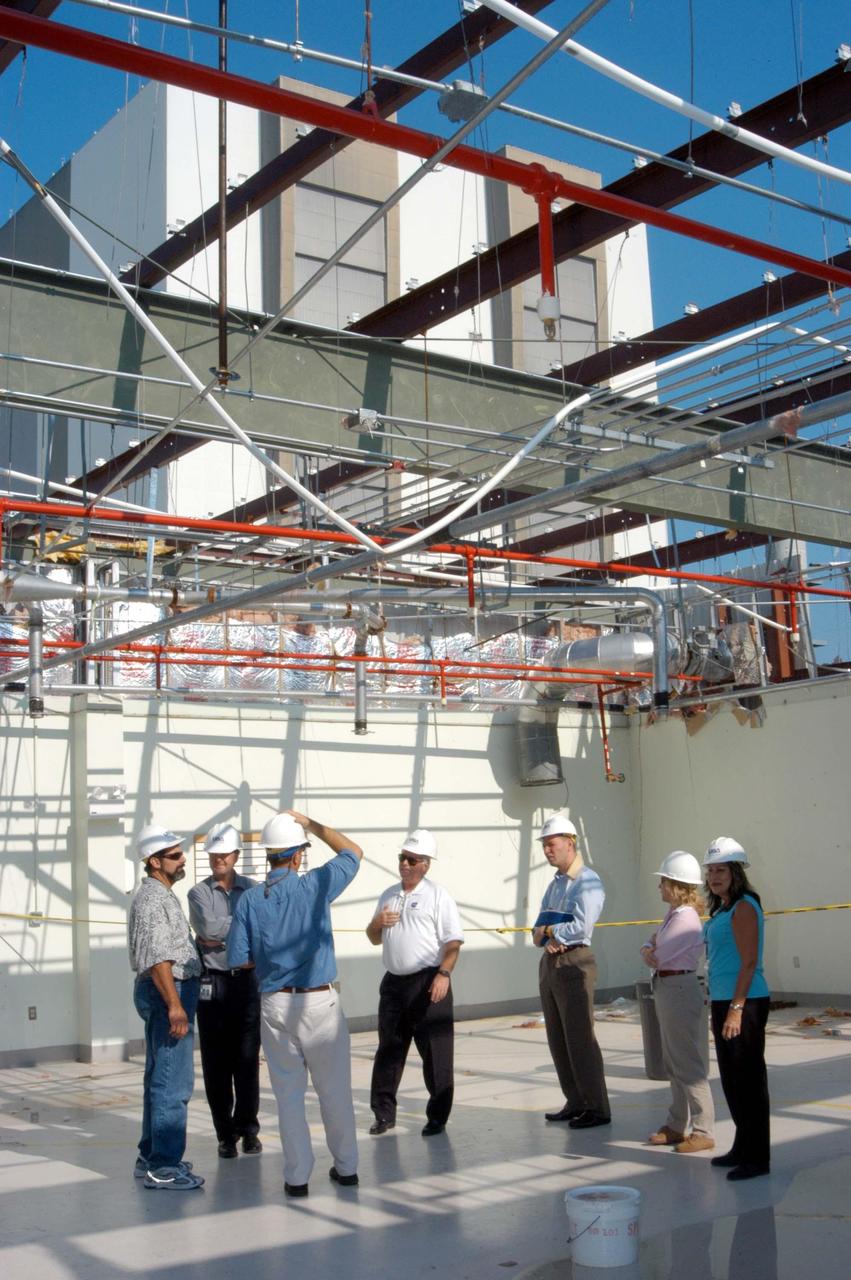
KENNEDY SPACE CENTER, FLA. - Looking at damage on the second floor of the hurricane-ravaged Thermal Protection System Facility (TPSF) are (from left) Kevin Harrington, manager of Soft Goods Production, TPSF ; Martin Wilson, manager of Thermal Protection System operations for USA; Scott Kerr, KSC director of Spaceport Services; and James Kennedy, Center director. The TPSF, which creates the TPS tiles, blankets and all the internal thermal control systems for the Space Shuttles, is almost totally unserviceable at this time after losing approximately 35 percent of its roof during Hurricane Frances, which blew across Central Florida Sept. 4-5. Undamaged equipment was removed from the TPSF and stored in the RLV hangar. NASA Administrator Sean O’Keefe and NASA Associate Administrator of Space Operations Mission Directorate William Readdy are visiting KSC to survey the damage sustained by KSC facilities from the hurricane. The Labor Day storm also caused significant damage to the Vehicle Assembly Building and Processing Control Center. Additionally, the Operations and Checkout Building, Vertical Processing Facility, Hangar AE, Hangar S and Hangar AF Small Parts Facility each received substantial damage. However, well-protected and unharmed were NASA’s three Space Shuttle orbiters - Discovery, Atlantis and Endeavour - along with the Shuttle launch pads, all of the critical flight hardware for the orbiters and the International Space Station, and NASA’s Swift spacecraft that is awaiting launch in October.