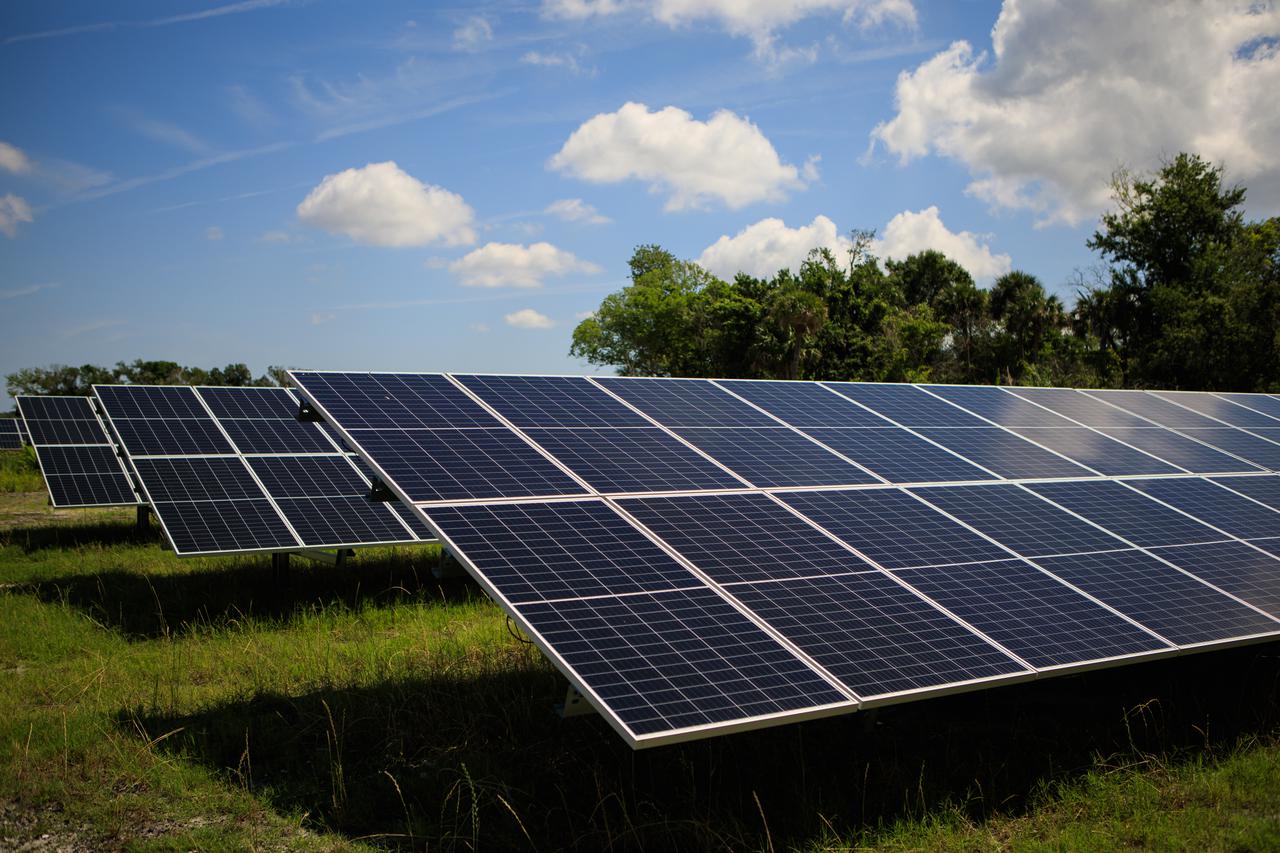
In this view are solar panels that are part of Florida Power and Light’s (FPL) new Discovery Solar Energy Center – a 74.5-megawatt solar site, spanning 491 acres at NASA’s Kennedy Space Center in Florida. The site contains about 250,000 solar panels in total, producing enough energy to power approximately 15,000 homes. Harnessing energy from the Sun, the panels do not directly power anything at Kennedy, but rather, send energy directly to FPL's electricity grid for distribution to existing customers. Construction began in spring 2020, and the energy center became fully operational on May 30, 2021.
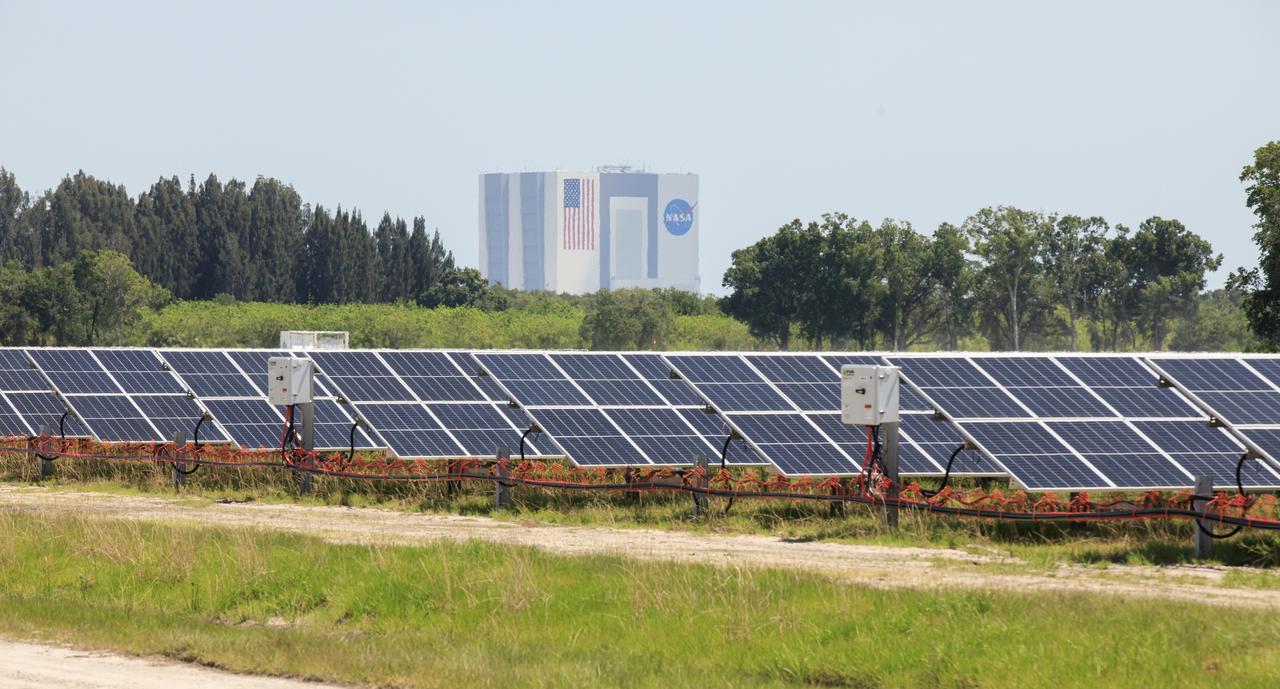
With the iconic Vehicle Assembly Building serving as the backdrop, a portion of the solar panels that make up Florida Power and Light’s (FPL) new Discovery Solar Energy Center is seen at NASA’s Kennedy Space Center in Florida. The 74.5-megawatt solar site spans 491 acres at Kennedy and contains about 250,000 solar panels. Harnessing energy from the Sun, the panels produce enough energy to power approximately 15,000 homes. The panels do not directly power anything at Kennedy, and instead, send energy directly to FPL’s electricity grid for distribution to existing customers. Construction began in spring 2020, and the energy center became fully operational on May 30, 2021.
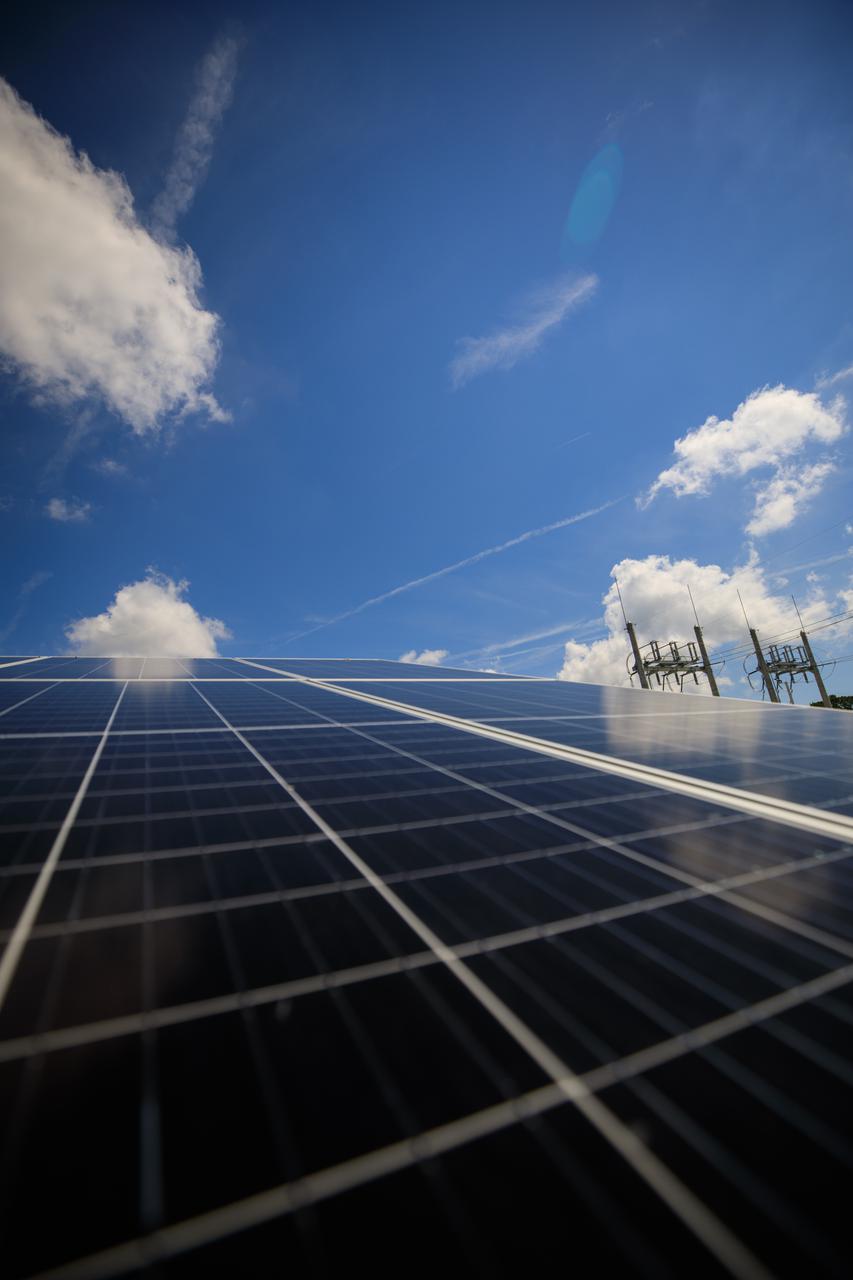
Seen here is an up-close view of solar panels that are part of Florida Power and Light’s (FPL) new Discovery Solar Energy Center – a 74.5-megawatt solar site, spanning 491 acres at NASA’s Kennedy Space Center in Florida. The site contains about 250,000 solar panels in total, producing enough energy to power approximately 15,000 homes. Harnessing energy from the Sun, the panels do not directly power anything at Kennedy, but rather, send energy directly to FPL's electricity grid for distribution to existing customers. Construction began in spring 2020, and the energy center became fully operational on May 30, 2021.
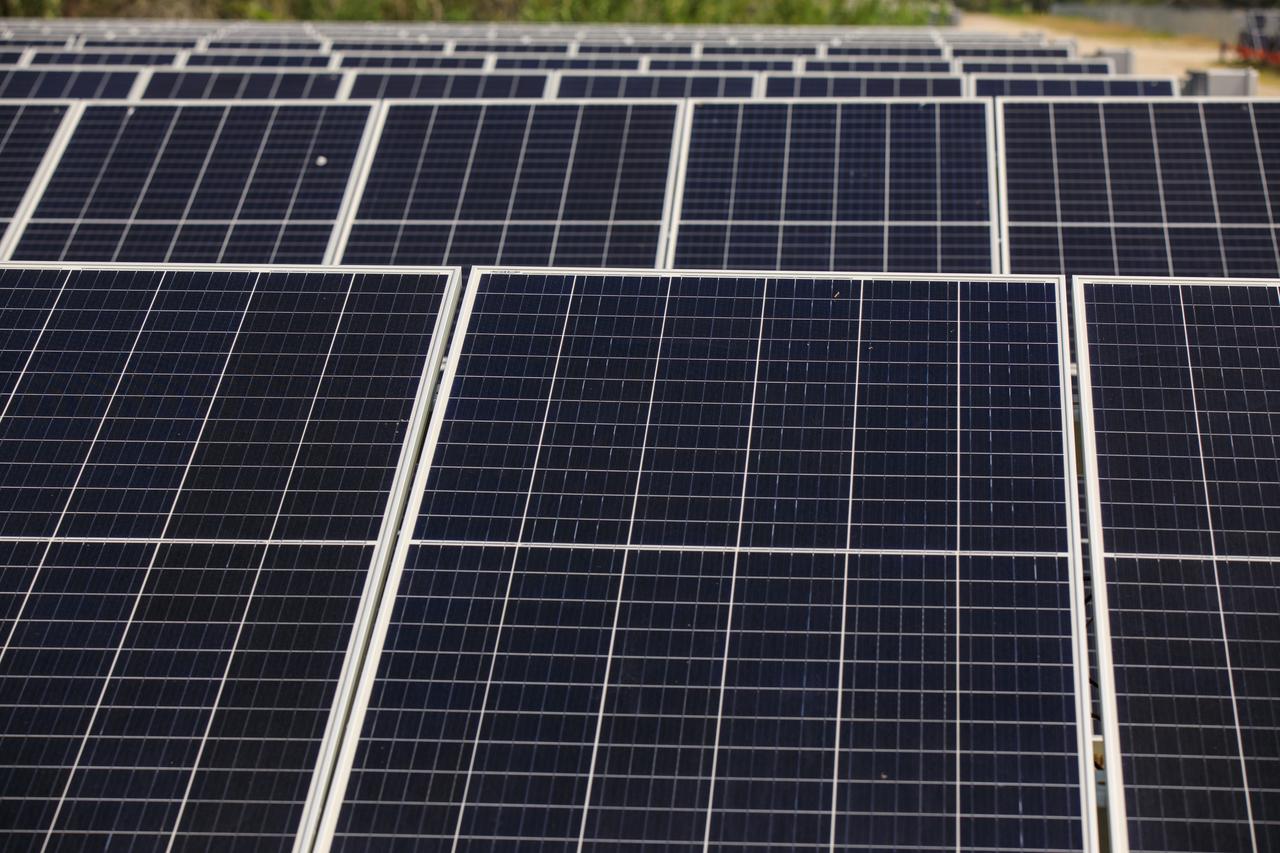
Seen here is an up-close view of solar panels that are part of Florida Power and Light’s (FPL) new Discovery Solar Energy Center – a 74.5-megawatt solar site, spanning 491 acres at NASA’s Kennedy Space Center in Florida. The site contains about 250,000 solar panels in total, producing enough energy to power approximately 15,000 homes. Harnessing energy from the Sun, the panels do not directly power anything at Kennedy, but rather, send energy directly to FPL's electricity grid for distribution to existing customers. Construction began in spring 2020, and the energy center became fully operational on May 30, 2021.
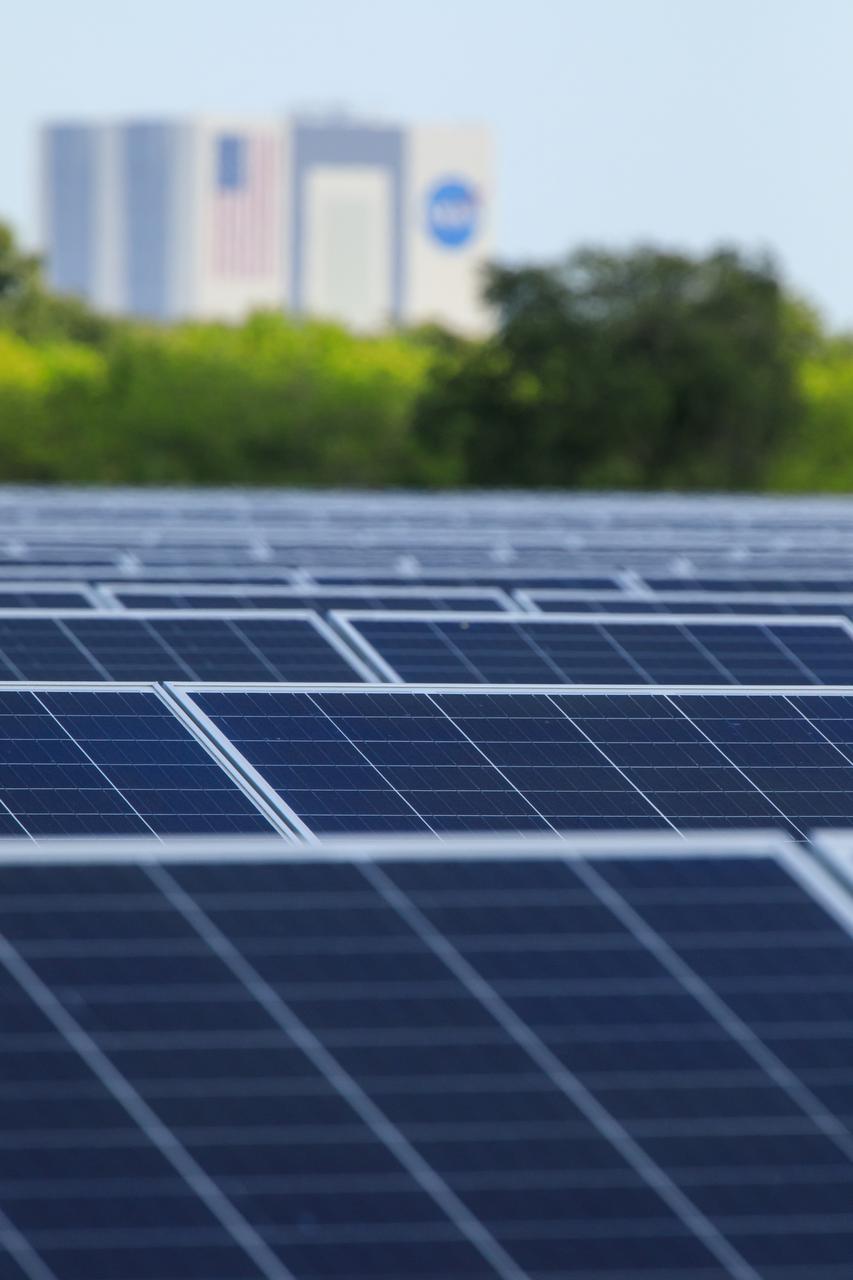
Seen here, with the iconic Vehicle Assembly Building in the background, is an up-close view of solar panels that are part of Florida Power and Light’s (FPL) new Discovery Solar Energy Center at NASA’s Kennedy Space Center in Florida. The 74.5-megawatt solar site spans 491 acres at Kennedy and contains about 250,000 solar panels. Harnessing energy from the Sun, the panels produce enough energy to power approximately 15,000 homes. The panels do not directly power anything at Kennedy, and instead, send energy directly to FPL’s electricity grid for distribution to existing customers. Construction began in spring 2020, and the energy center became fully operational on May 30, 2021.
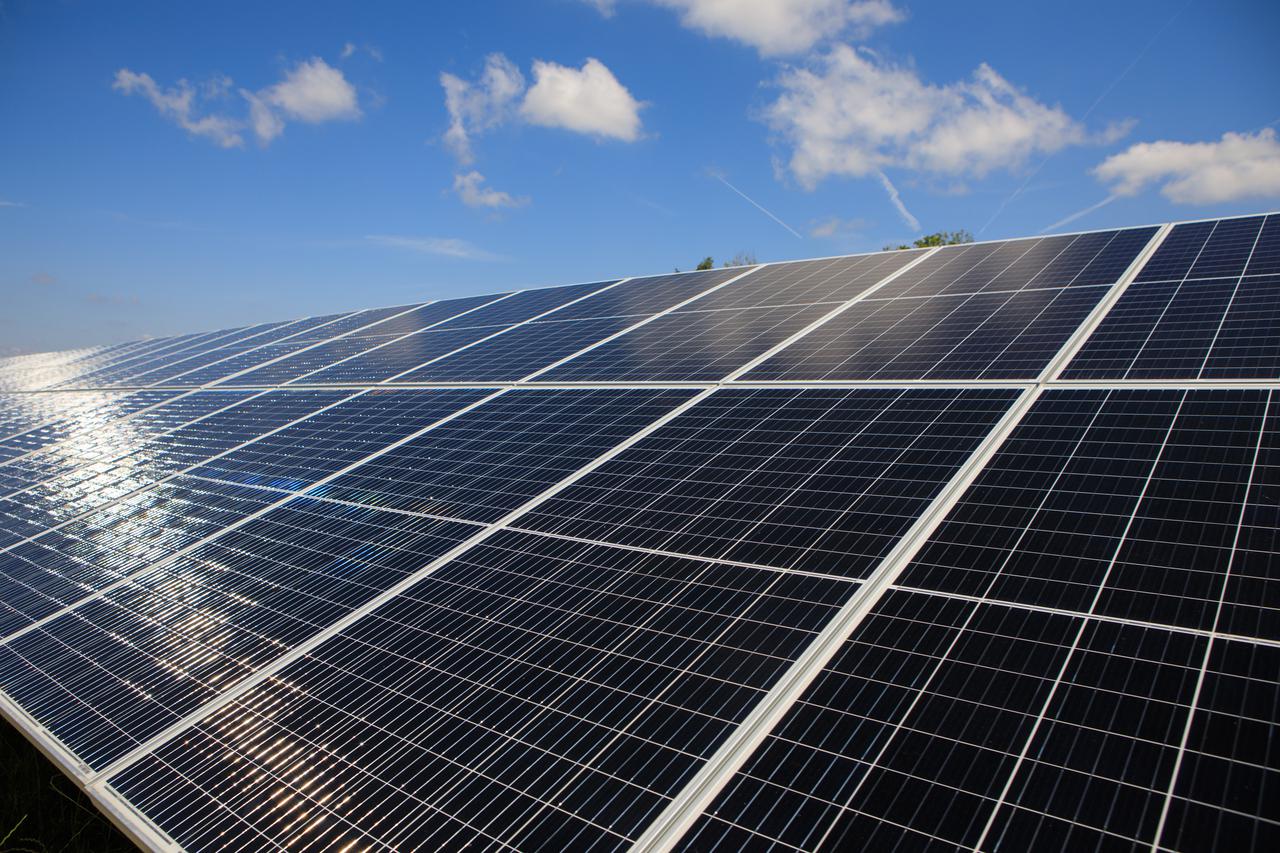
Seen here is an up-close view of solar panels that are part of Florida Power and Light’s (FPL) new Discovery Solar Energy Center – a 74.5-megawatt solar site, spanning 491 acres at NASA’s Kennedy Space Center in Florida. The site contains about 250,000 solar panels in total, producing enough energy to power approximately 15,000 homes. Harnessing energy from the Sun, the panels do not directly power anything at Kennedy, but rather, send energy directly to FPL's electricity grid for distribution to existing customers. Construction began in spring 2020, and the energy center became fully operational on May 30, 2021.
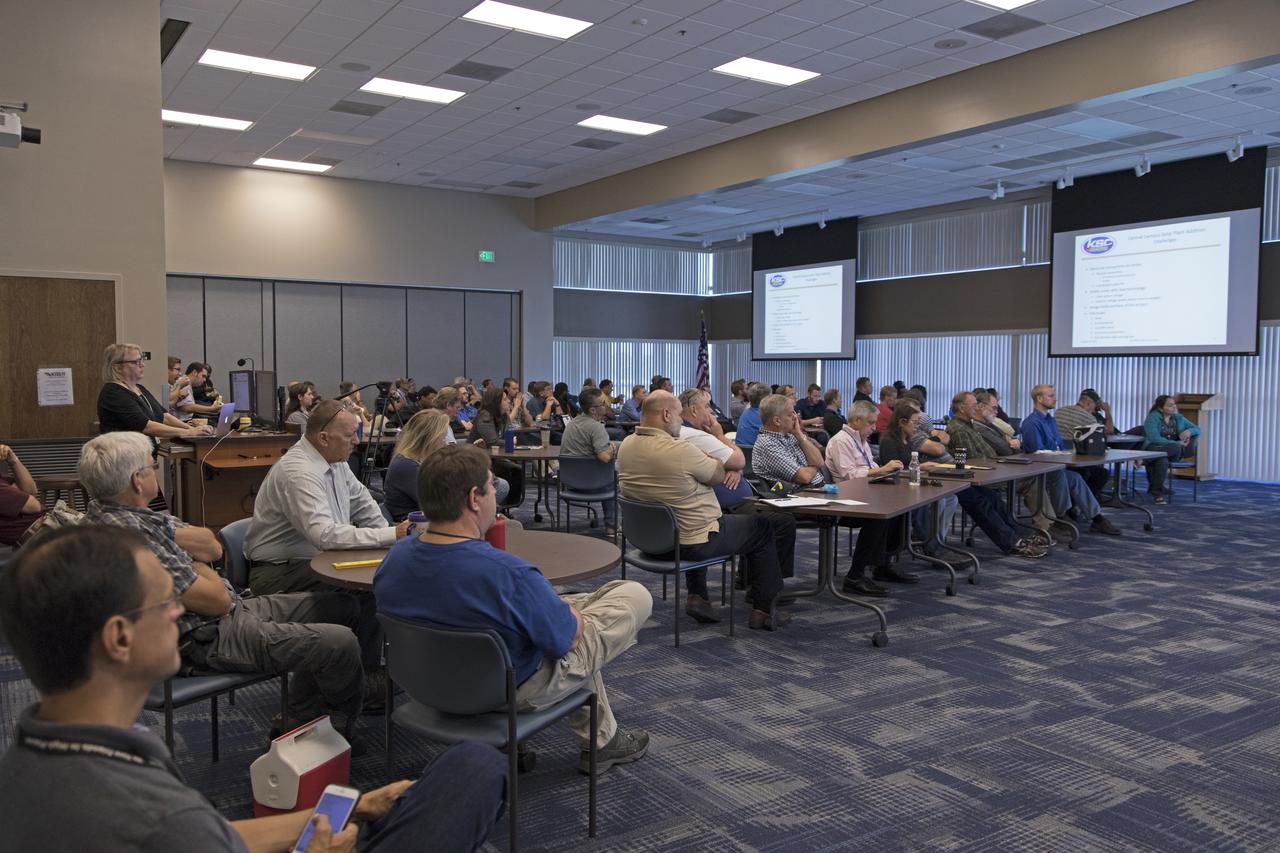
NASA Kennedy Space Center employees attend the Energy Action Day event held in the center's Space Station Processing Facility. Part of Energy Awareness Month, the event featured subject matter experts in the area of solar energy, its connections to the space program and options for residential solar power.

NASA Kennedy Space Center's Sam Ball, third from left, speaks during the Energy Action Day employee event held in NASA Kennedy Space Center's Space Station Processing Facility. Part of Energy Awareness Month, the event featured subject matter experts in the area of solar energy, its connections to the space program and options for residential solar power. From left to right are Nick Murdock, energy and water program manager at Kennedy; Chuck Tatro of NASA's Launch Services Program; Ball; Anuj Chokshi of FPL; Bill McMullen of Southern Power; John Sherwin of the Florida Solar Energy Center in Cocoa; and Lorraine Koss of the Brevard County Solar Co-op.
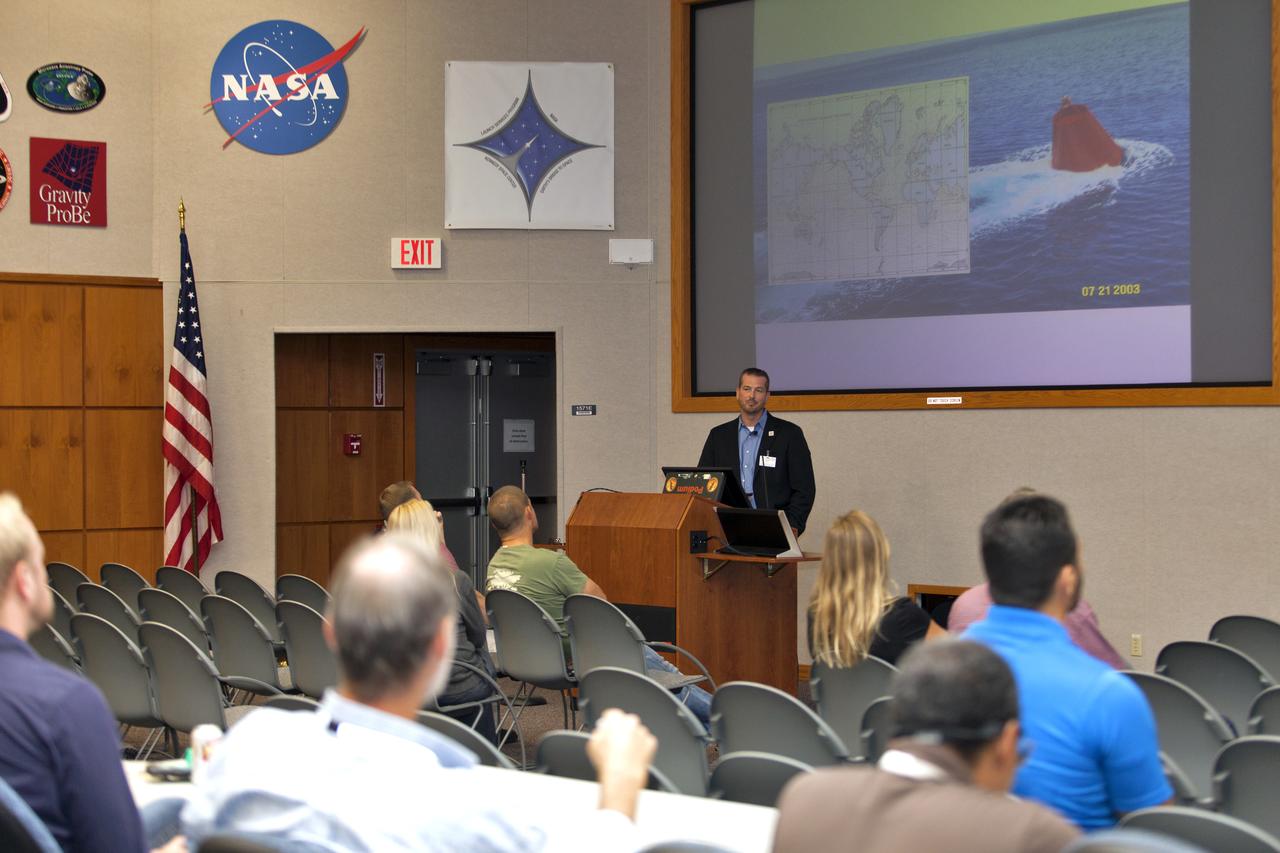
Guest speaker Gabriel Alsenas discusses ocean renewable energy sources with NASA Kennedy Space Center employees in the spaceport’s Mission Briefing Room on Thursday, Oct. 11, 2018. Alsenas is director of the Southeast National Marine Renewable Energy Center at Florida Atlantic University in Boca Raton. The “lunch and learn” event is one of two scheduled during October in conjunction with Energy Awareness Month, which aims to recognize the importance of energy management for our national prosperity, security and environmental sustainability.
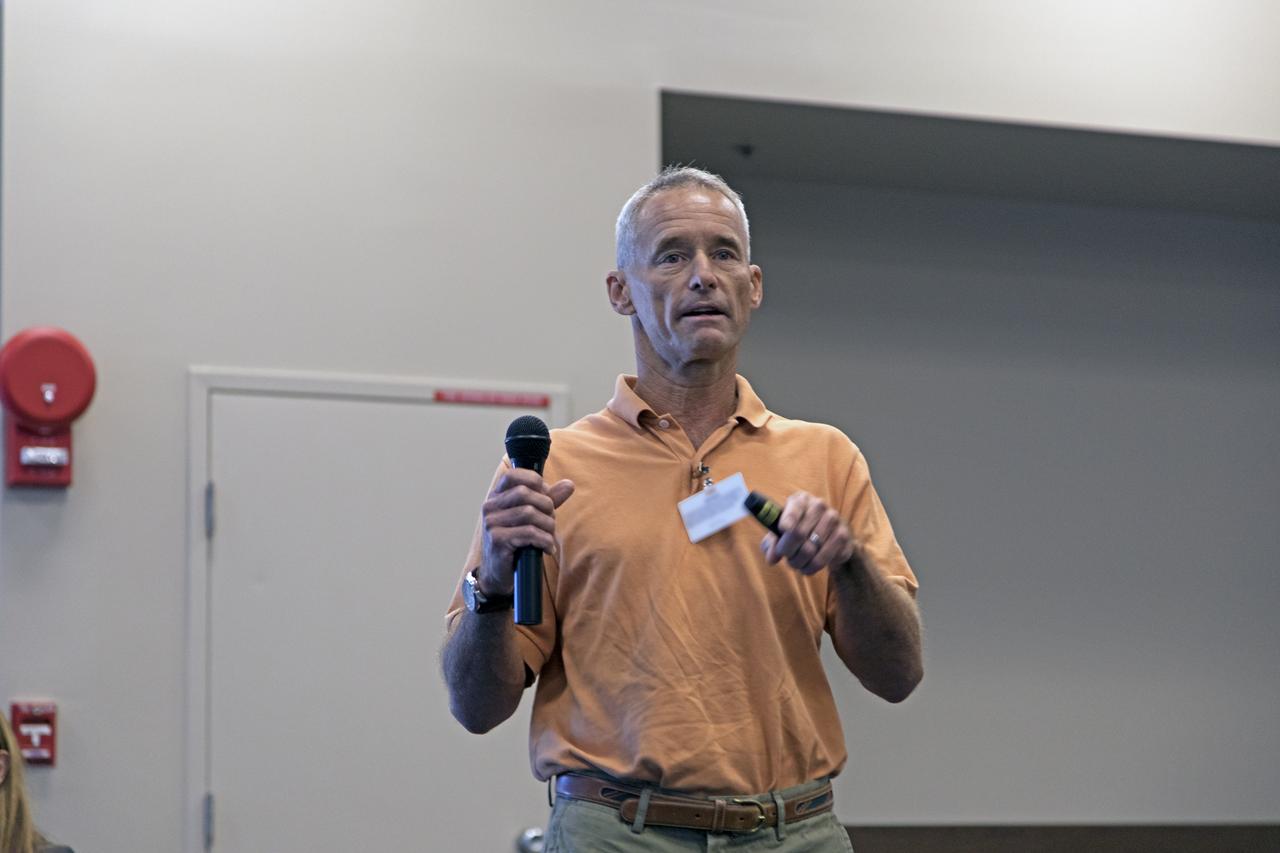
John Sherwin of the Florida Solar Energy Center in Cocoa speaks during the Energy Action Day employee event held in NASA Kennedy Space Center's Space Station Processing Facility. Part of Energy Awareness Month, the event featured subject matter experts in the area of solar energy, its connections to the space program and options for residential solar power.
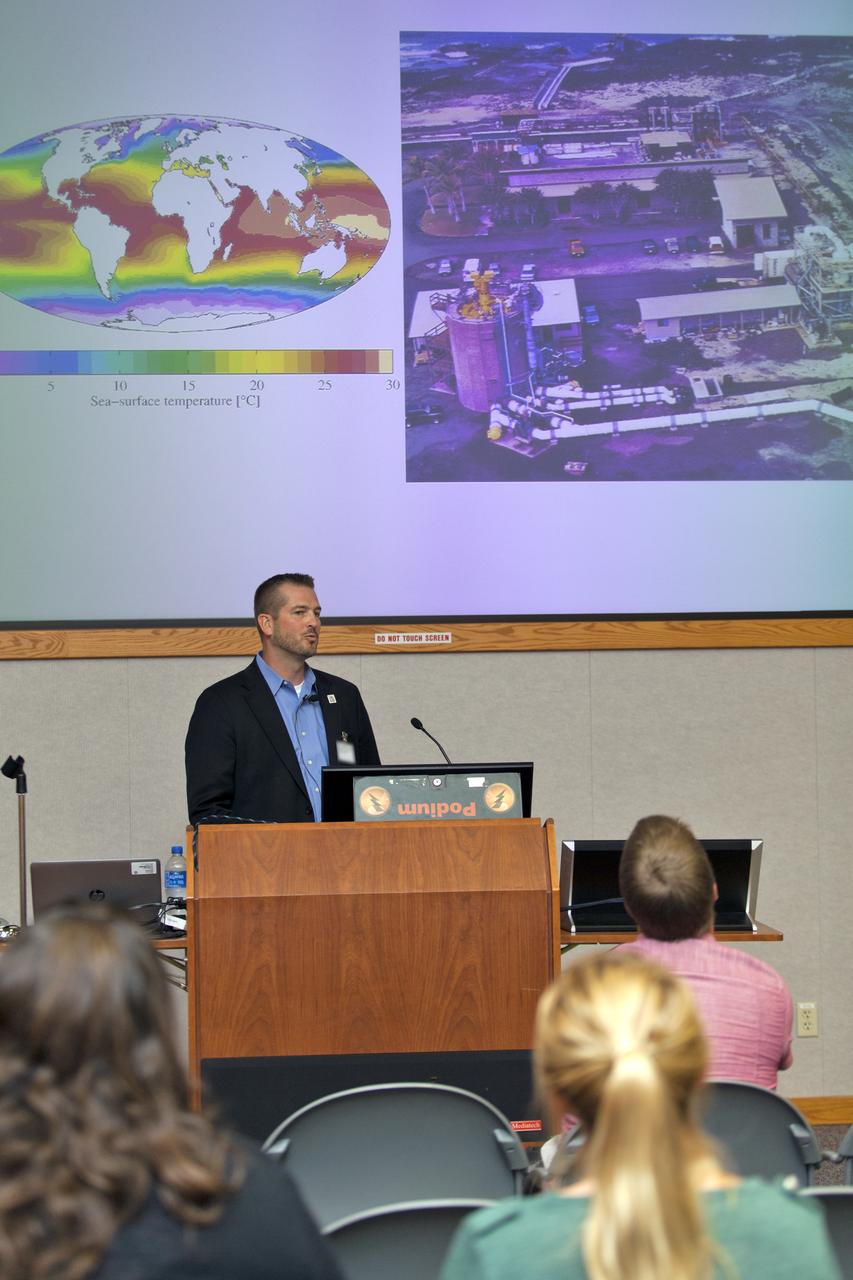
Guest speaker Gabriel Alsenas discusses ocean renewable energy sources with NASA Kennedy Space Center employees in the spaceport’s Mission Briefing Room on Thursday, Oct. 11, 2018. Alsenas is director of the Southeast National Marine Renewable Energy Center at Florida Atlantic University in Boca Raton. The “lunch and learn” event is one of two scheduled during October in conjunction with Energy Awareness Month, which aims to recognize the importance of energy management for our national prosperity, security and environmental sustainability.

Guest speaker Gabriel Alsenas discusses ocean renewable energy sources with NASA Kennedy Space Center employees in the spaceport’s Mission Briefing Room on Thursday, Oct. 11, 2018. Alsenas is director of the Southeast National Marine Renewable Energy Center at Florida Atlantic University in Boca Raton. The “lunch and learn” event is one of two scheduled during October in conjunction with Energy Awareness Month, which aims to recognize the importance of energy management for our national prosperity, security and environmental sustainability.
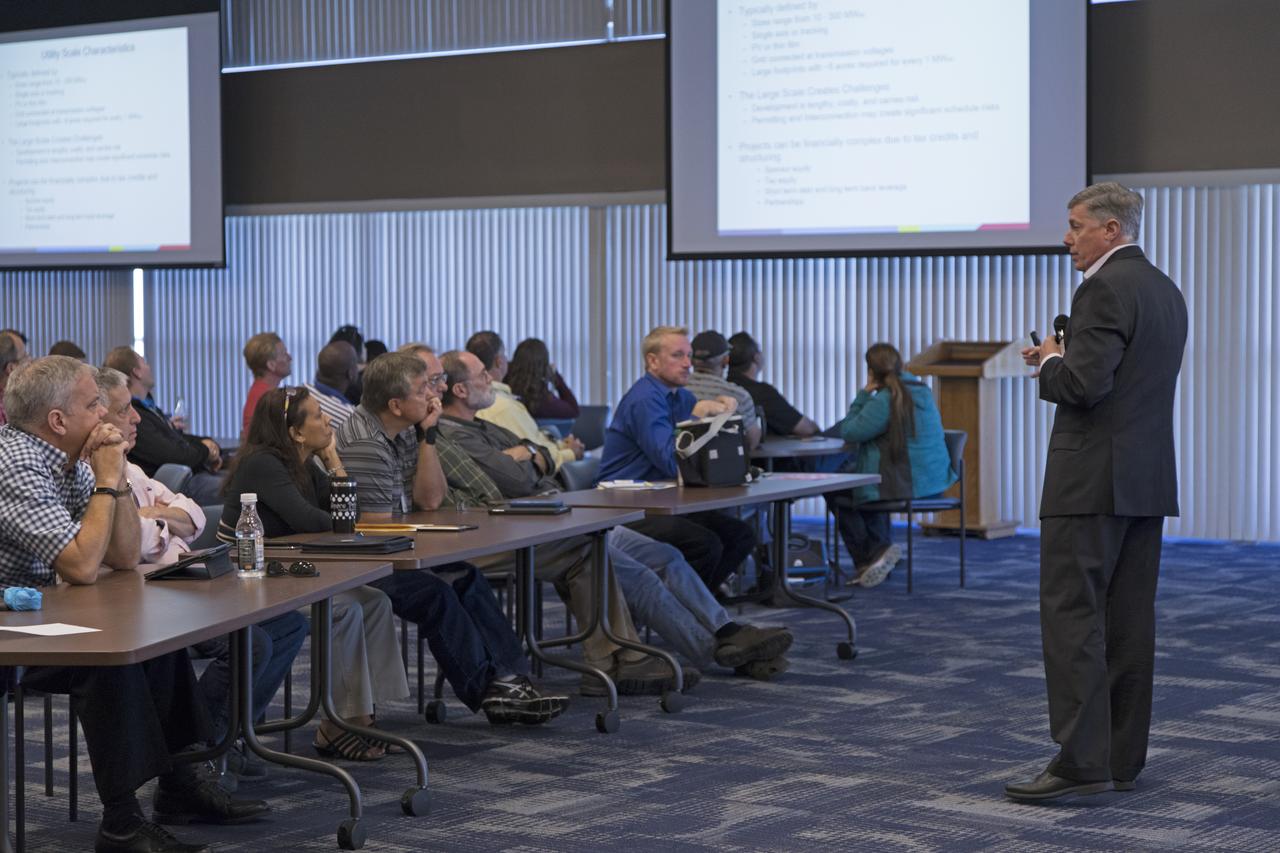
Bill McCullen of Southern Power speaks to NASA Kennedy Space Center employees during the Energy Action Day event held in Kennedy's Space Station Processing Facility. Part of Energy Awareness Month, the event featured subject matter experts in the area of solar energy, its connections to the space program and options for residential solar power.
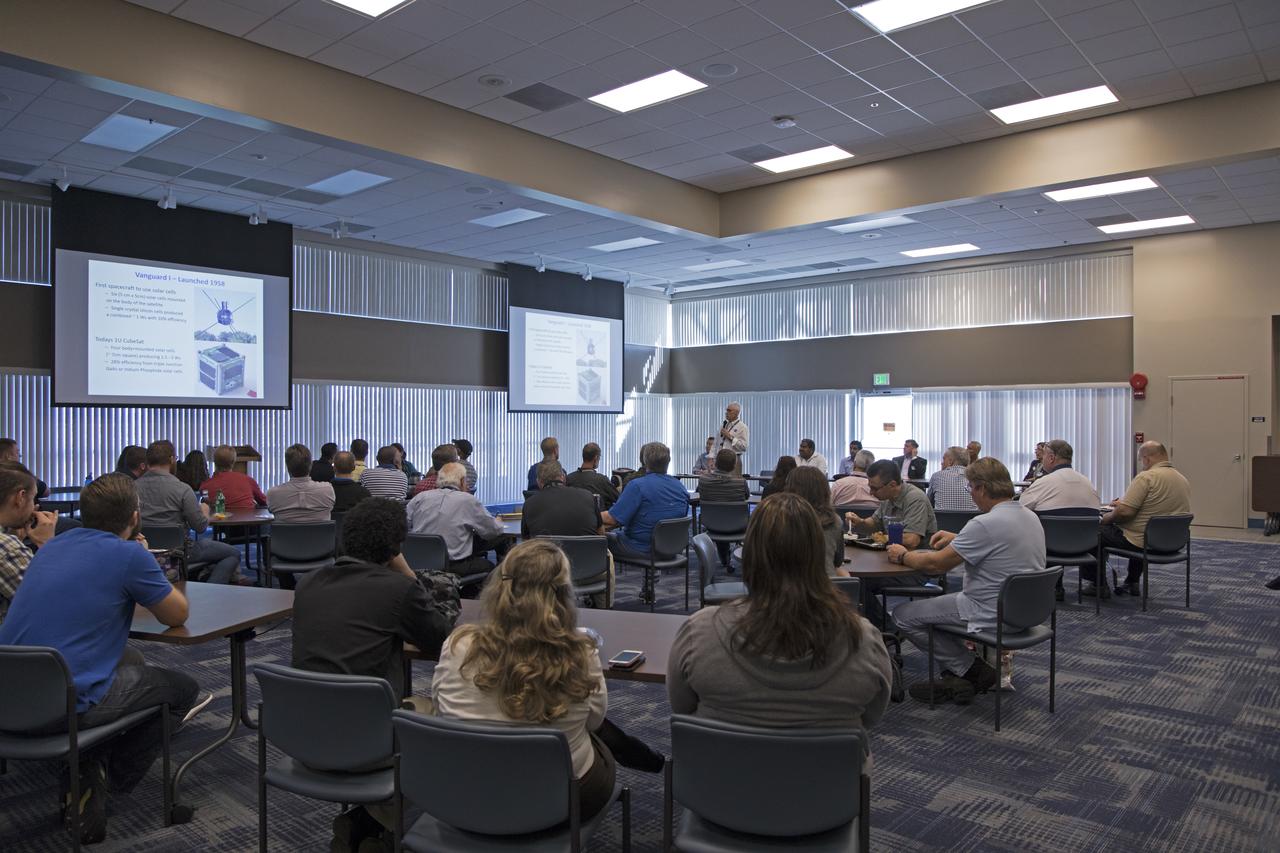
Chuck Tatro of NASA's Launch Services Program discusses the use of solar arrays on space science missions during the Energy Action Day employee event held in Kennedy Space Center's Space Station Processing Facility. Part of Energy Awareness Month, the event featured subject matter experts in the area of solar energy, its connections to the space program and options for residential solar power.
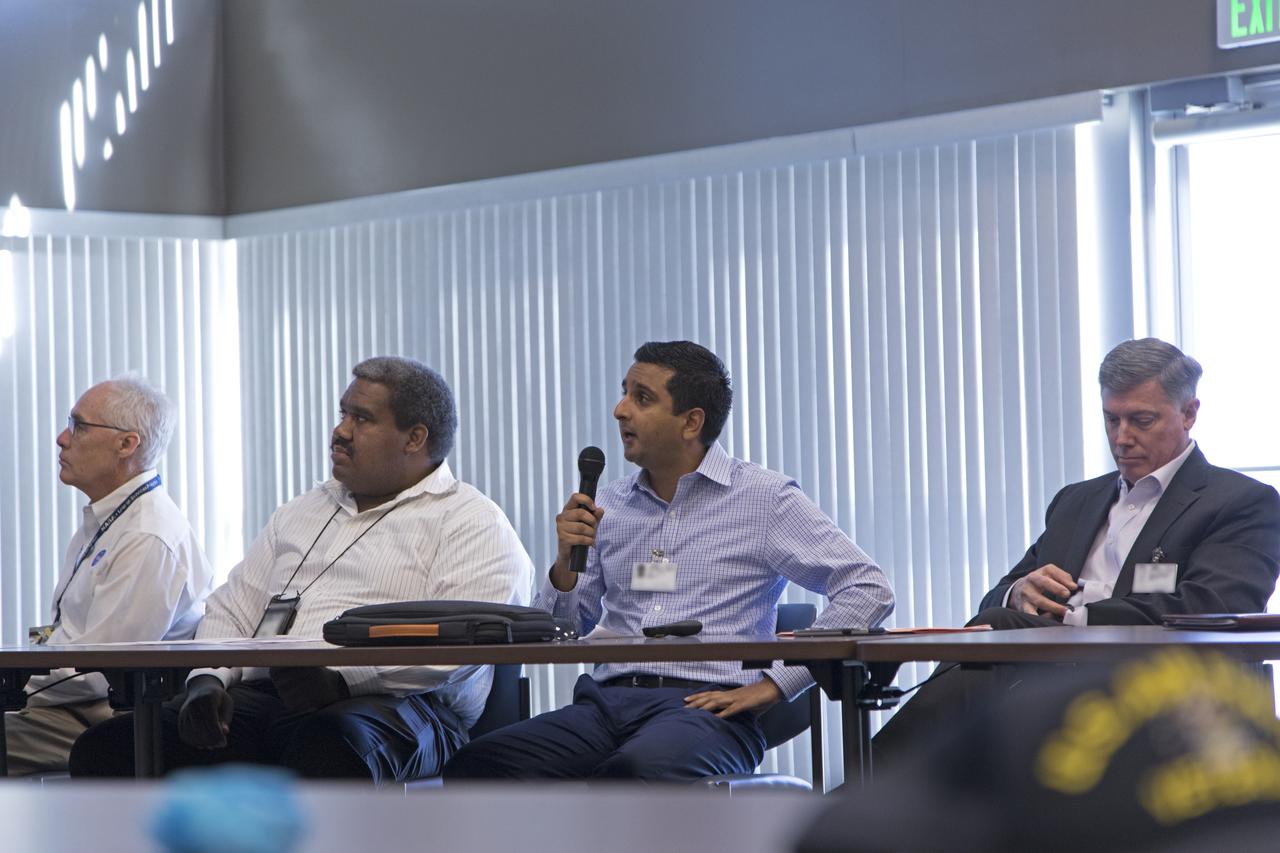
Anuj Chokshi of FPL, center, speaks during the Energy Action Day employee event held in NASA Kennedy Space Center's Space Station Processing Facility. Part of Energy Awareness Month, the event featured subject matter experts in the area of solar energy, its connections to the space program and options for residential solar power. From left to right are Chuck Tatro of NASA's Launch Services Program; Sam Ball of NASA Kennedy's Engineering directorate; Chokshi; and Bill McMullen of Southern Power.
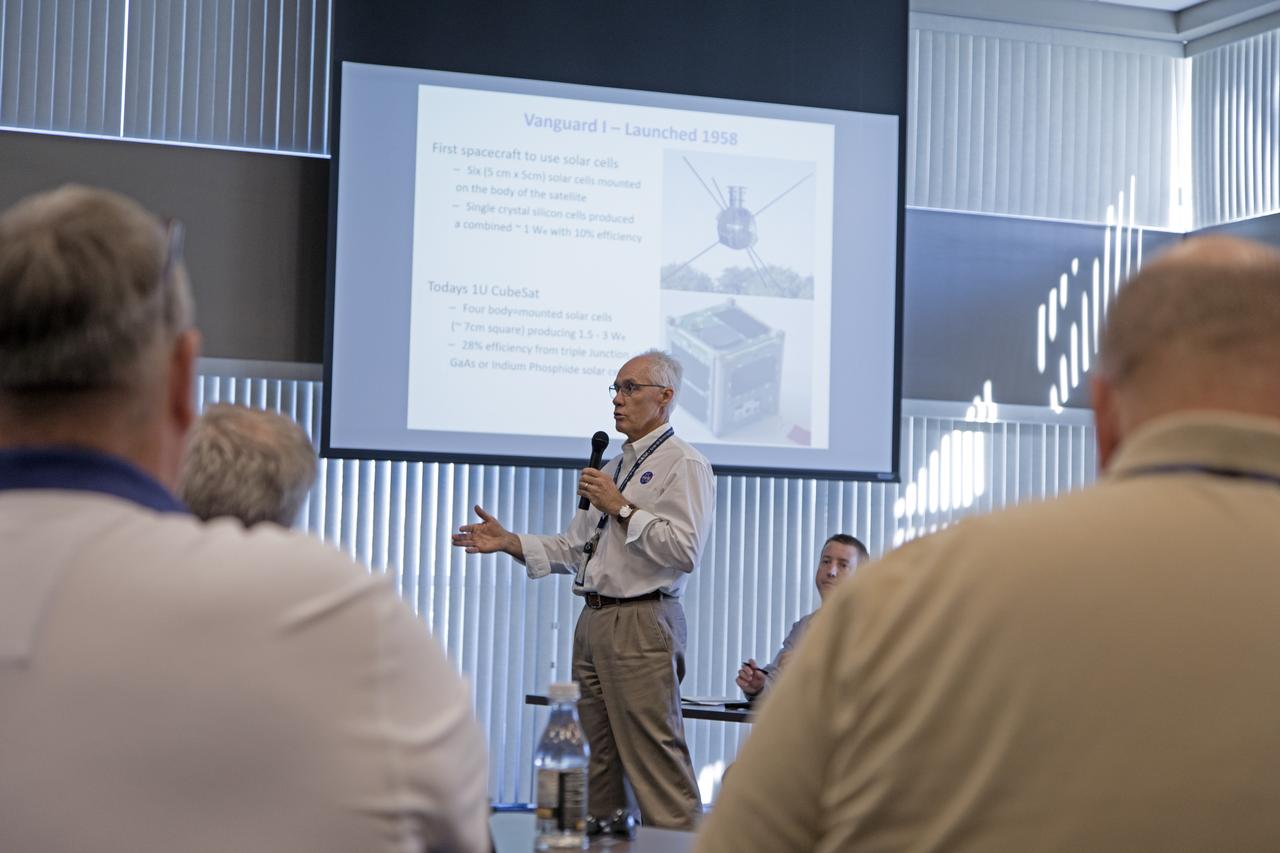
Chuck Tatro of NASA's Launch Services Program discusses the use of solar arrays on space science missions during the Energy Action Day employee event held in Kennedy Space Center's Space Station Processing Facility. Part of Energy Awareness Month, the event featured subject matter experts in the area of solar energy, its connections to the space program and options for residential solar power.
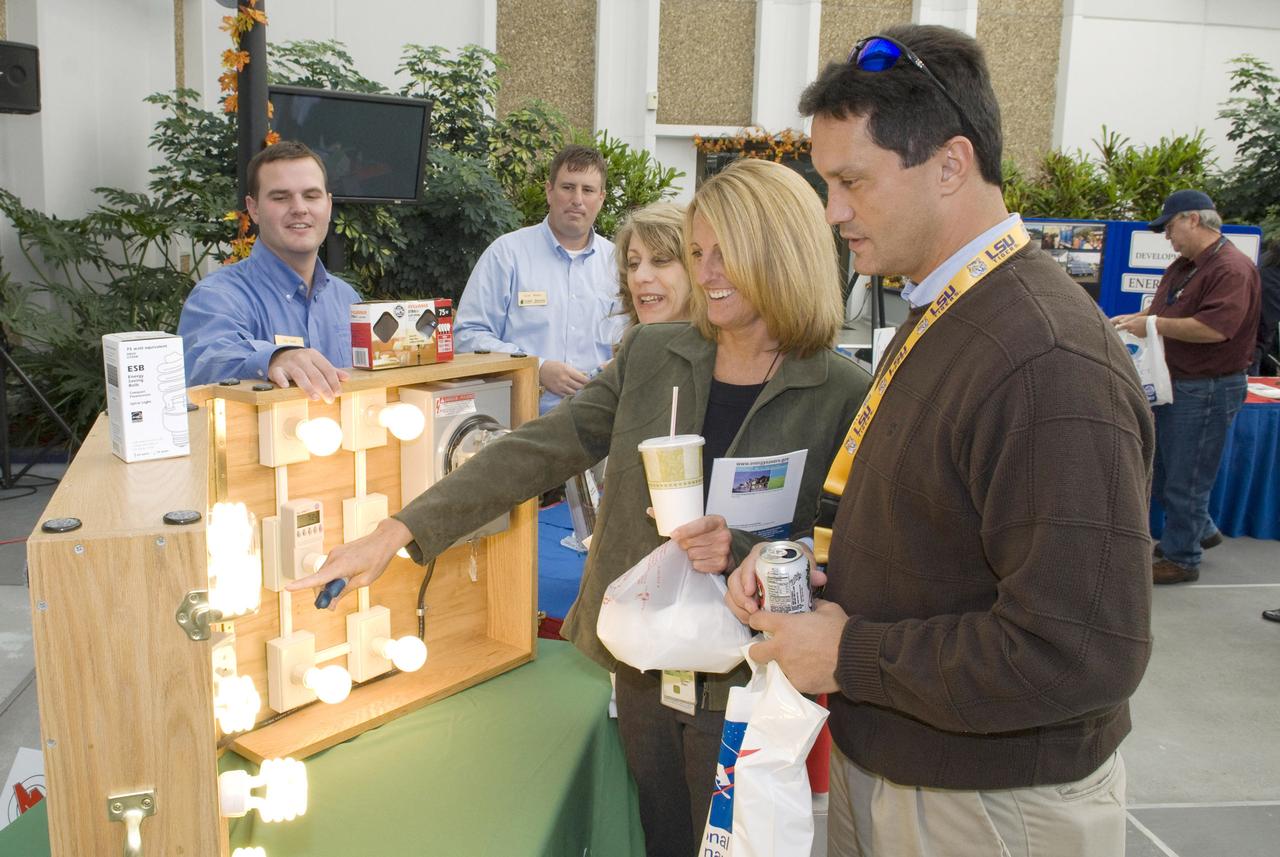
Stennis Space Center employees Maria Etheridge (l to r), Linda Sauland Maurice Prevost visit a Coast Electric Power Association display featuring energy-efficient light bulbs during 2009 Energy Awareness Day activities on Oct. 20. The exhibit was one of several energy-efficiency and energy-awareness displays on-site for employees to visit. Vendors included Mississippi Power Company, Coast Electric Power Association, Mississippi Development Authority - Energy Division,Jacobs FOSC Environmental, Southern Energy Technologies, and Siemens Building Technologies.
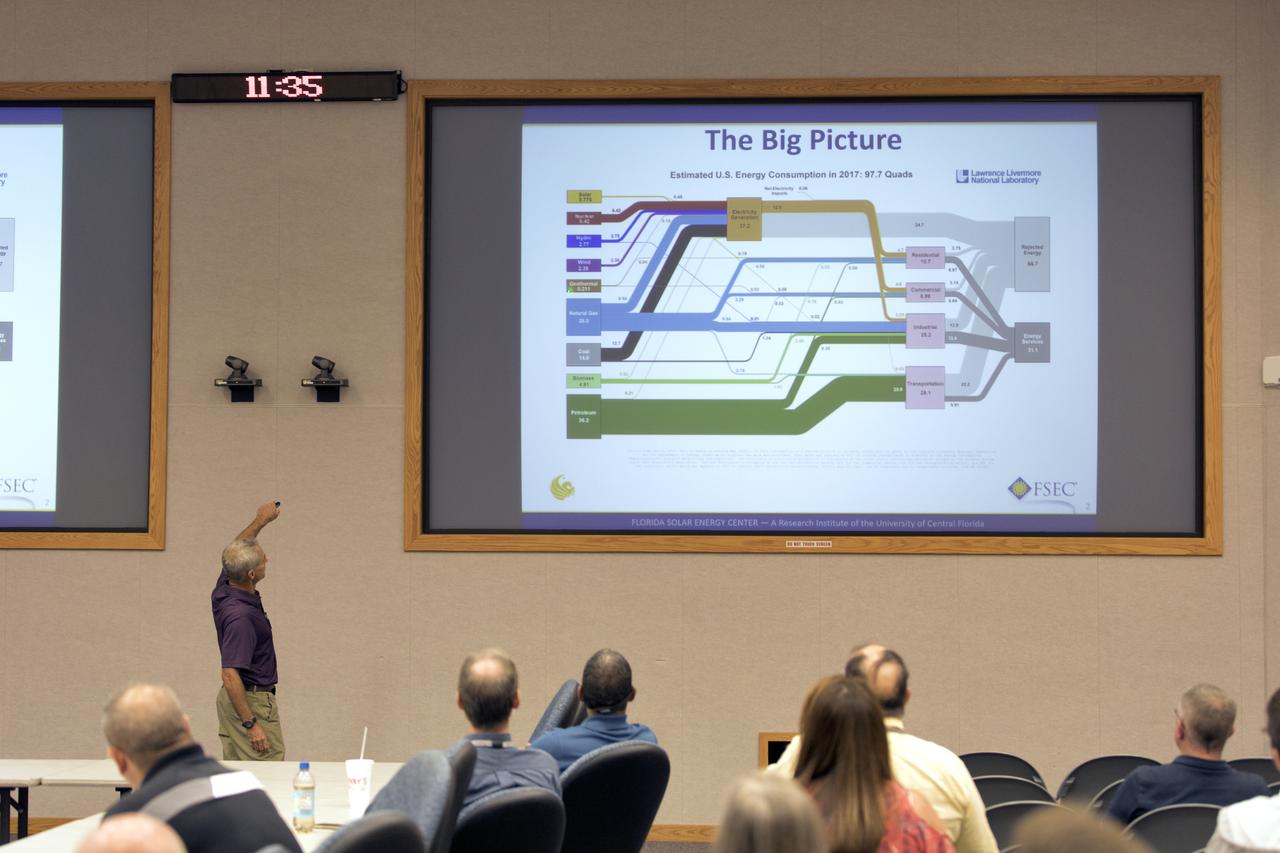
Guest speaker John Sherwin shares a presentation featuring residential solar and home energy-saving methods during a “lunch and learn” held Tuesday, Oct. 23, 2018, for employees at NASA’s Kennedy Space Center in Florida. Sherwin is the director of the Photovoltaic System Certification and Testing Program at the Florida Solar Energy Center in Cocoa. The event was one of two held during October in conjunction with Energy Awareness Month, which aims to recognize the importance of energy management for our national prosperity, security and environmental sustainability.
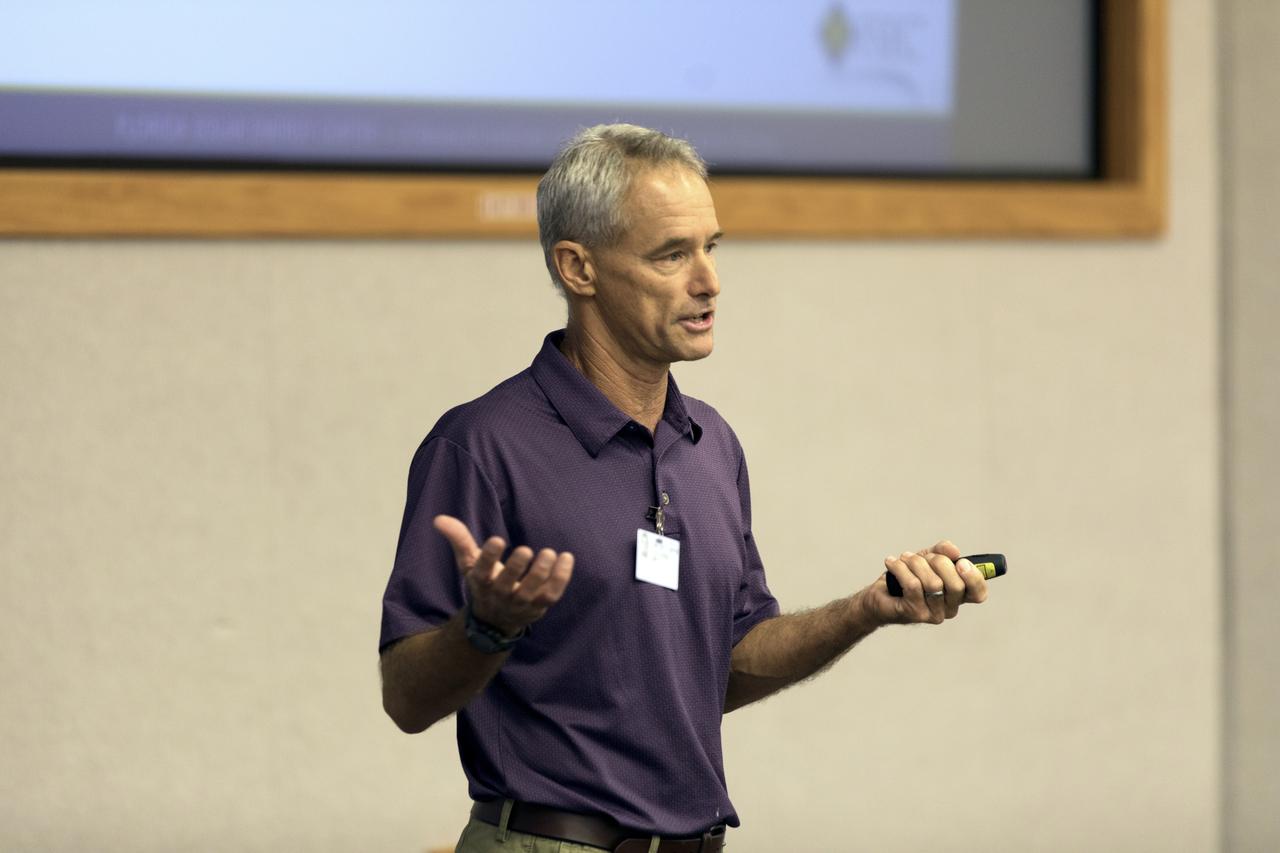
Guest speaker John Sherwin explains residential solar and home energy-saving methods during a “lunch and learn” held Tuesday, Oct. 23, 2018, for employees at NASA’s Kennedy Space Center in Florida. Sherwin is the director of the Photovoltaic System Certification and Testing Program at the Florida Solar Energy Center in Cocoa. The event was one of two held during October in conjunction with Energy Awareness Month, which aims to recognize the importance of energy management for our national prosperity, security and environmental sustainability.
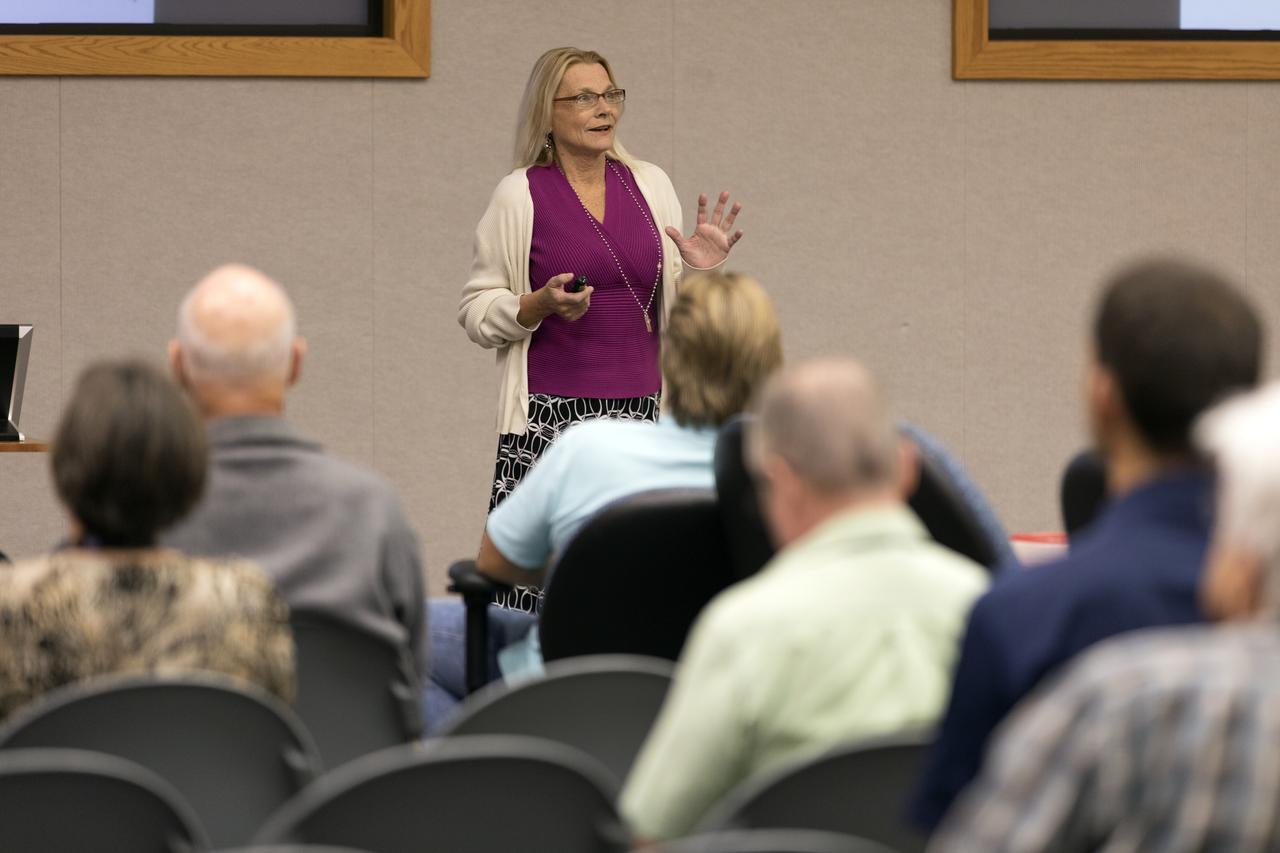
Guest speaker Robin Thomas discusses energy resilience and the Ascension Island wind turbine generator project during a “lunch and learn” held Tuesday, Oct. 23, 2018, for employees at NASA’s Kennedy Space Center in Florida. Thomas is a resource efficiency manager working with the U.S. Air Force 45th Space Wing’s Civil Engineering Squadron based at Patrick Air Force Base. The event was one of two held during October in conjunction with Energy Awareness Month, which aims to recognize the importance of energy management for our national prosperity, security and environmental sustainability.
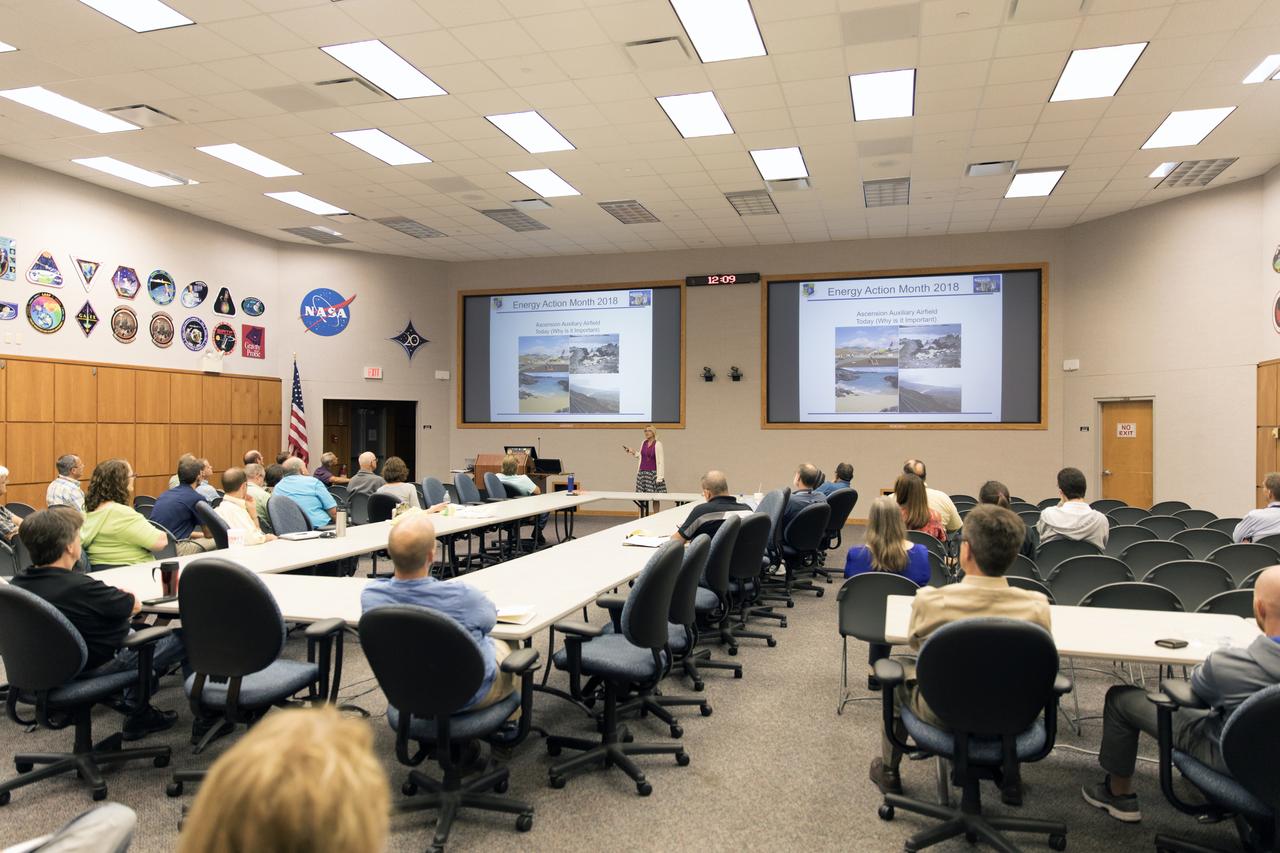
Guest speaker Robin Thomas shares a presentation focusing on energy resilience and the Ascension Island wind turbine generator project during a “lunch and learn” held Tuesday, Oct. 23, 2018, for employees at NASA’s Kennedy Space Center in Florida. Thomas is a resource efficiency manager working with the U.S. Air Force 45th Space Wing’s Civil Engineering Squadron based at Patrick Air Force Base. The event was one of two held during October in conjunction with Energy Awareness Month, which aims to recognize the importance of energy management for our national prosperity, security and environmental sustainability.
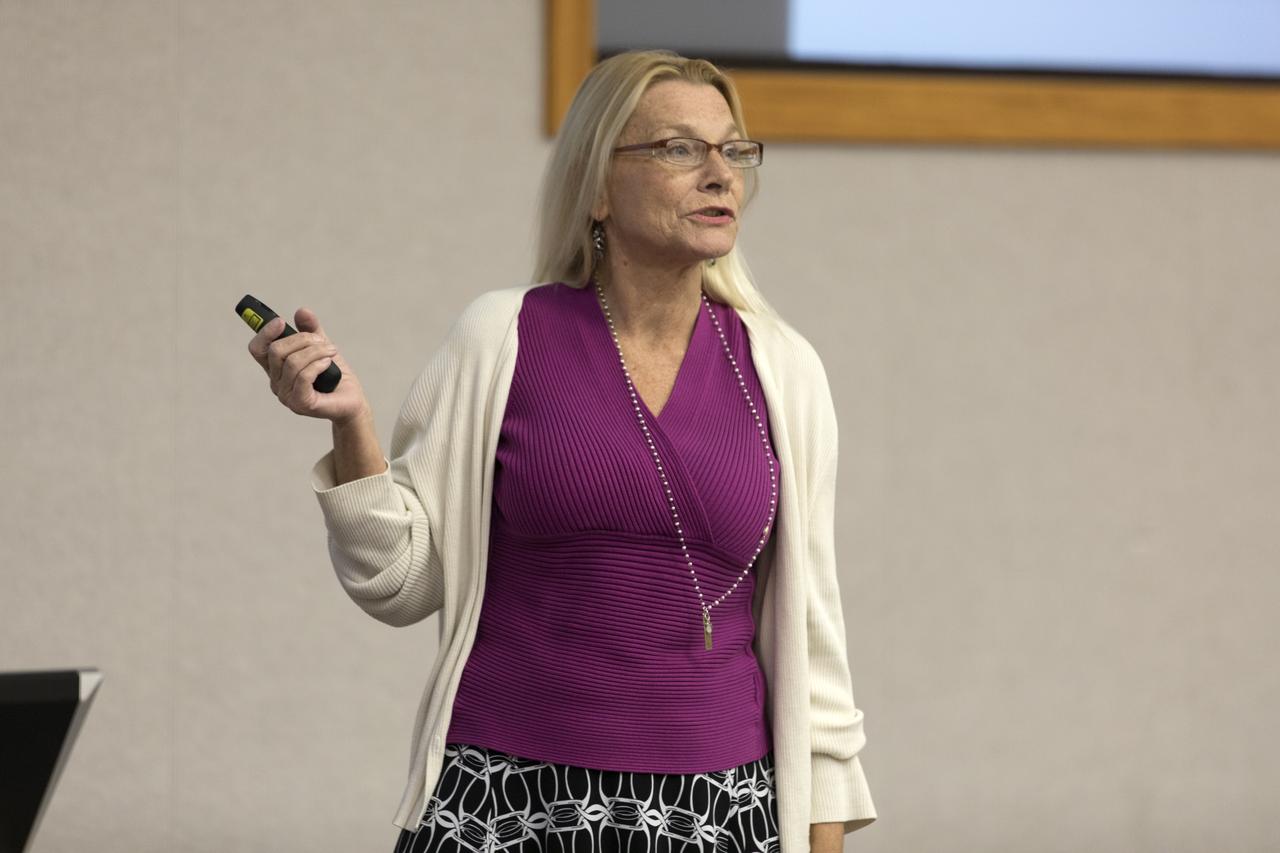
Guest speaker Robin Thomas discusses energy resilience and the Ascension Island wind turbine generator project during a “lunch and learn” held Tuesday, Oct. 23, 2018, for employees at NASA’s Kennedy Space Center in Florida. Thomas is a resource efficiency manager working with the U.S. Air Force 45th Space Wing’s Civil Engineering Squadron based at Patrick Air Force Base. The event was one of two held during October in conjunction with Energy Awareness Month, which aims to recognize the importance of energy management for our national prosperity, security and environmental sustainability.
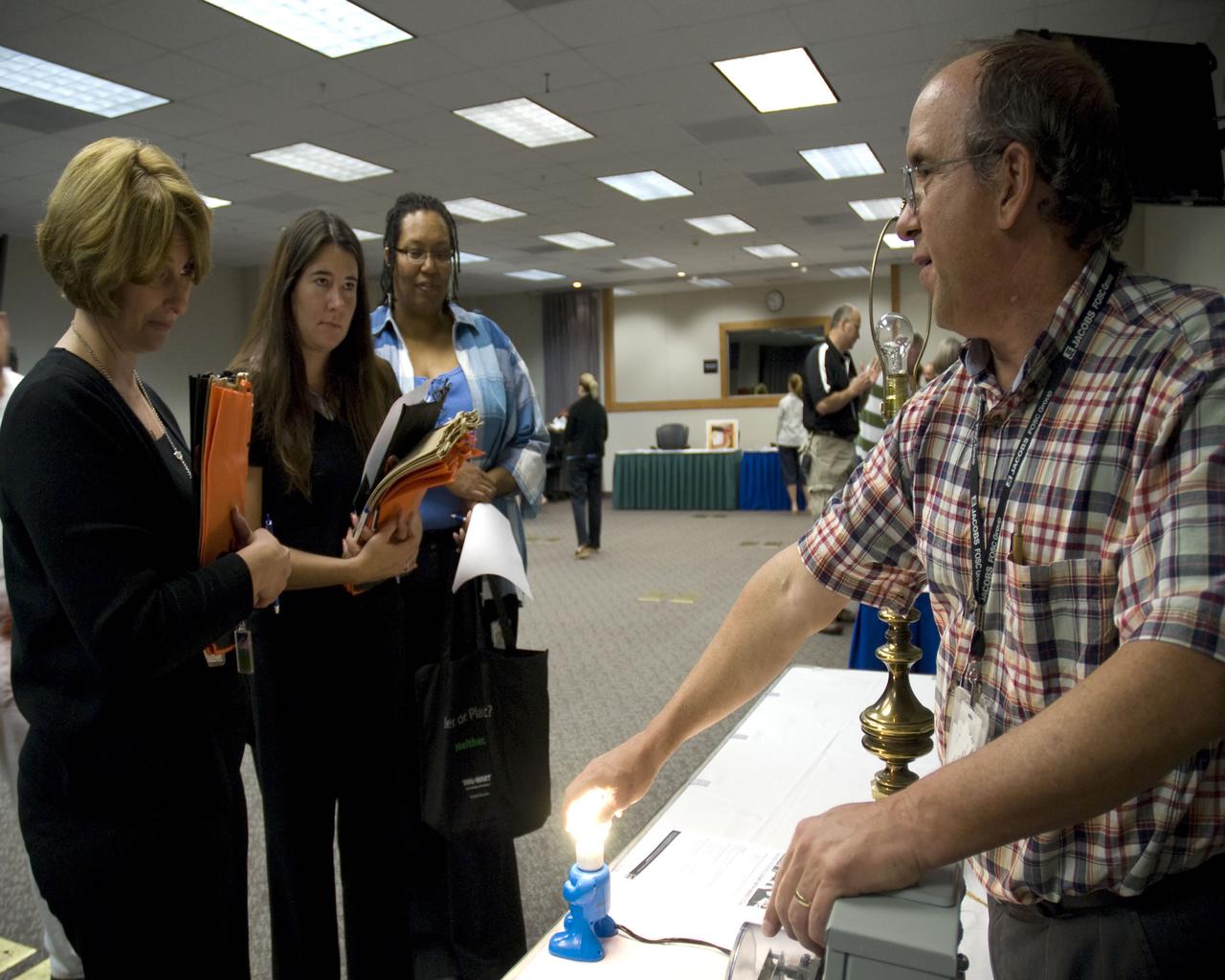
Donnie Thompson, site energy manager for the Jacobs Technology FOSC Group, demonstrates the efficiency of fluorescent bulbs during Energy Awareness Day at Stennis on Sept. 30.
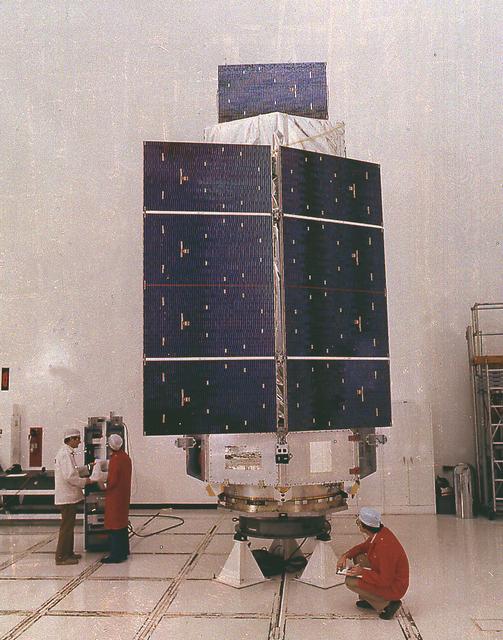
Managed by the Marshall Space Flight Center and built by TRW, the third High Energy Astronomy Observatory was launched September 20, 1979. HEAO-3 was designed to study gamma-rays and cosmic ray particles.
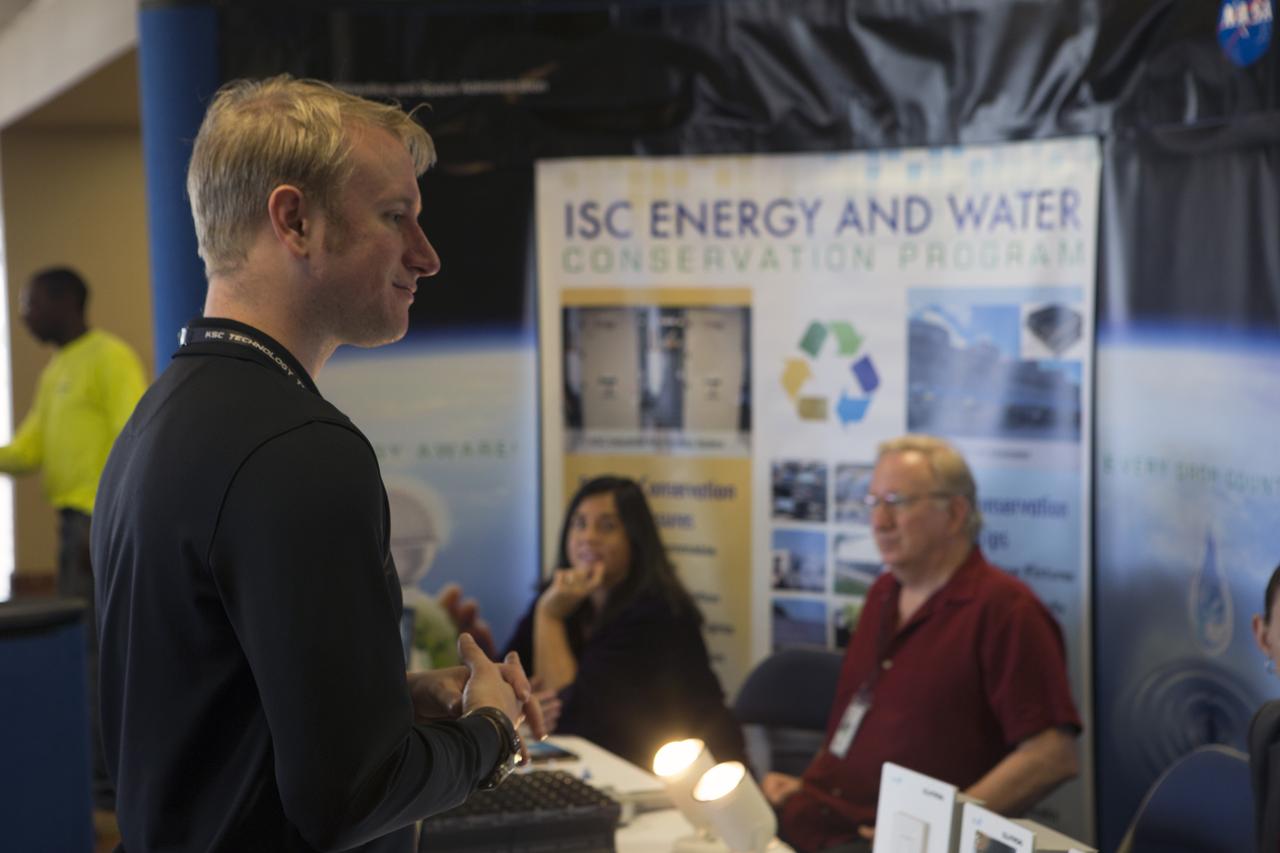
Cory Taylor, an energy and water conservation specialist at Kennedy Space Center, absorbs information at the Multi-Function Facility on Oct. 20. Every third Thursday of October, civil servants, contractors and several energy utilities promote the awareness of our sustainability goals at Kennedy Space Center and at home. Photo credit: Cory Huston
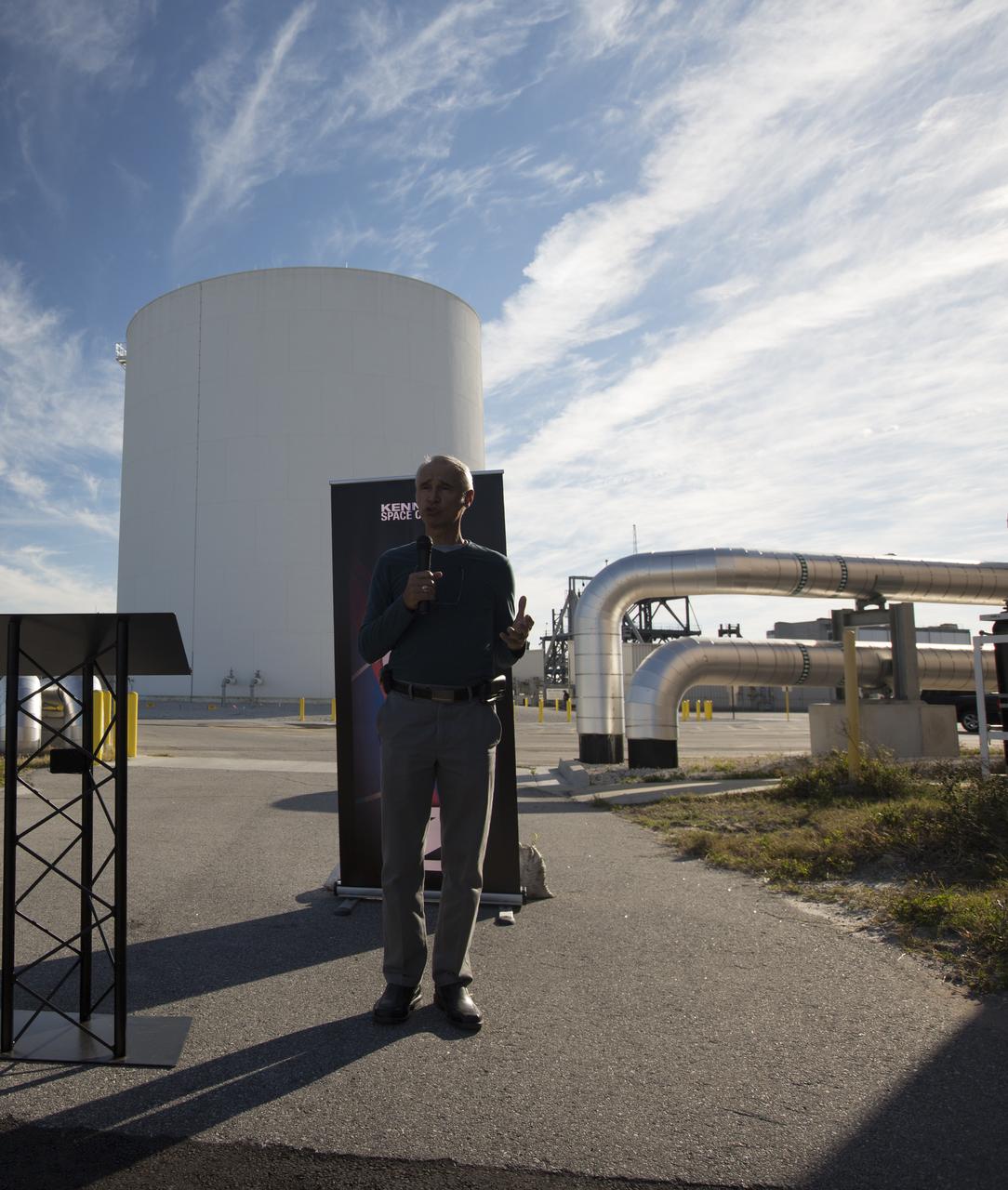
Ismael H. Otero, NASA Kennedy Space Center's project manager on the thermal energy program, addresses the news media and NASA Social about the new Thermal Energy Storage (TES) tank Feb. 17. The TES tank works like a giant battery and is saving the center utility cost. These savings will be applied to new sustainable projects at Kennedy.
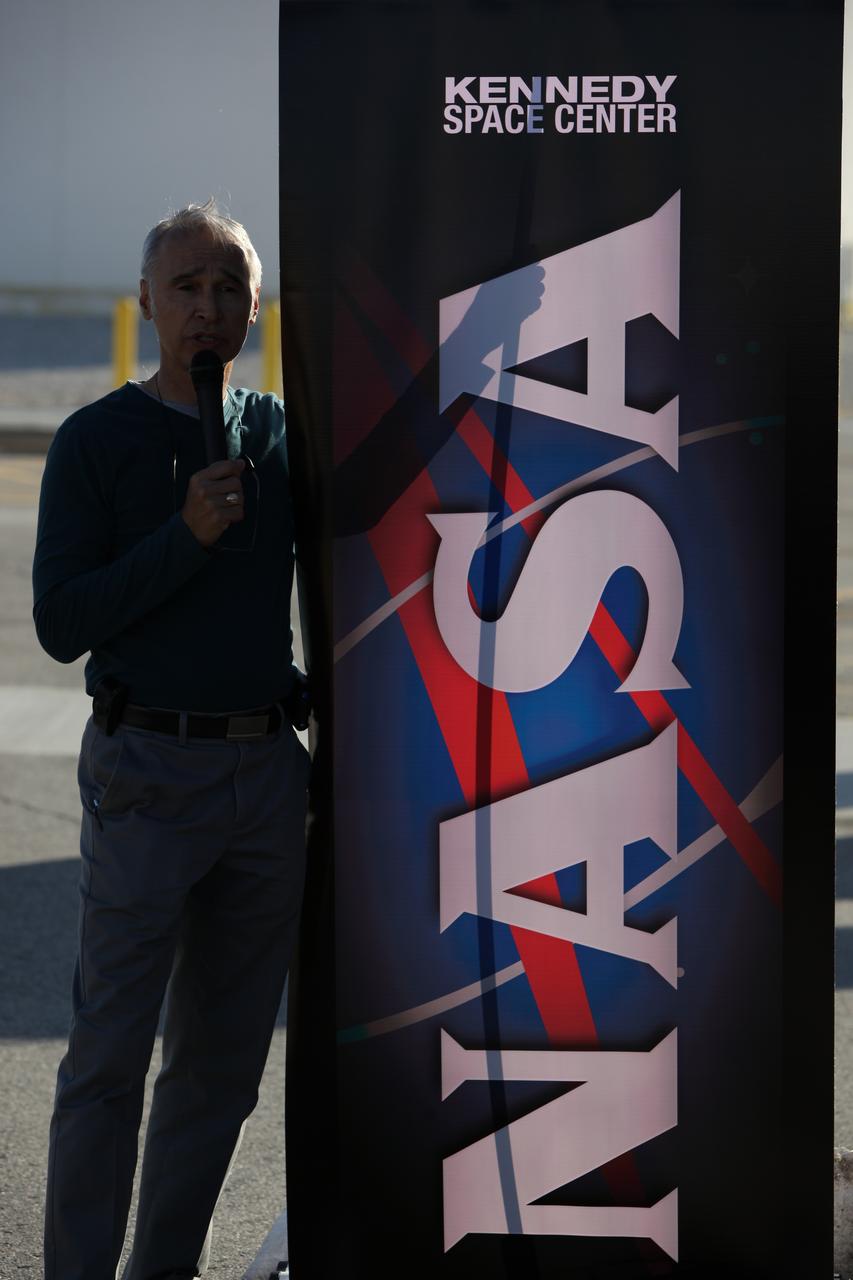
Ismael H. Otero, NASA Kennedy Space Center's project manager on the thermal energy program, addresses the news media and NASA Social about the new Thermal Energy Storage (TES) tank Feb. 17. The TES tank works like a giant battery and is saving the center utility cost. These savings will be applied to new sustainable projects at Kennedy.
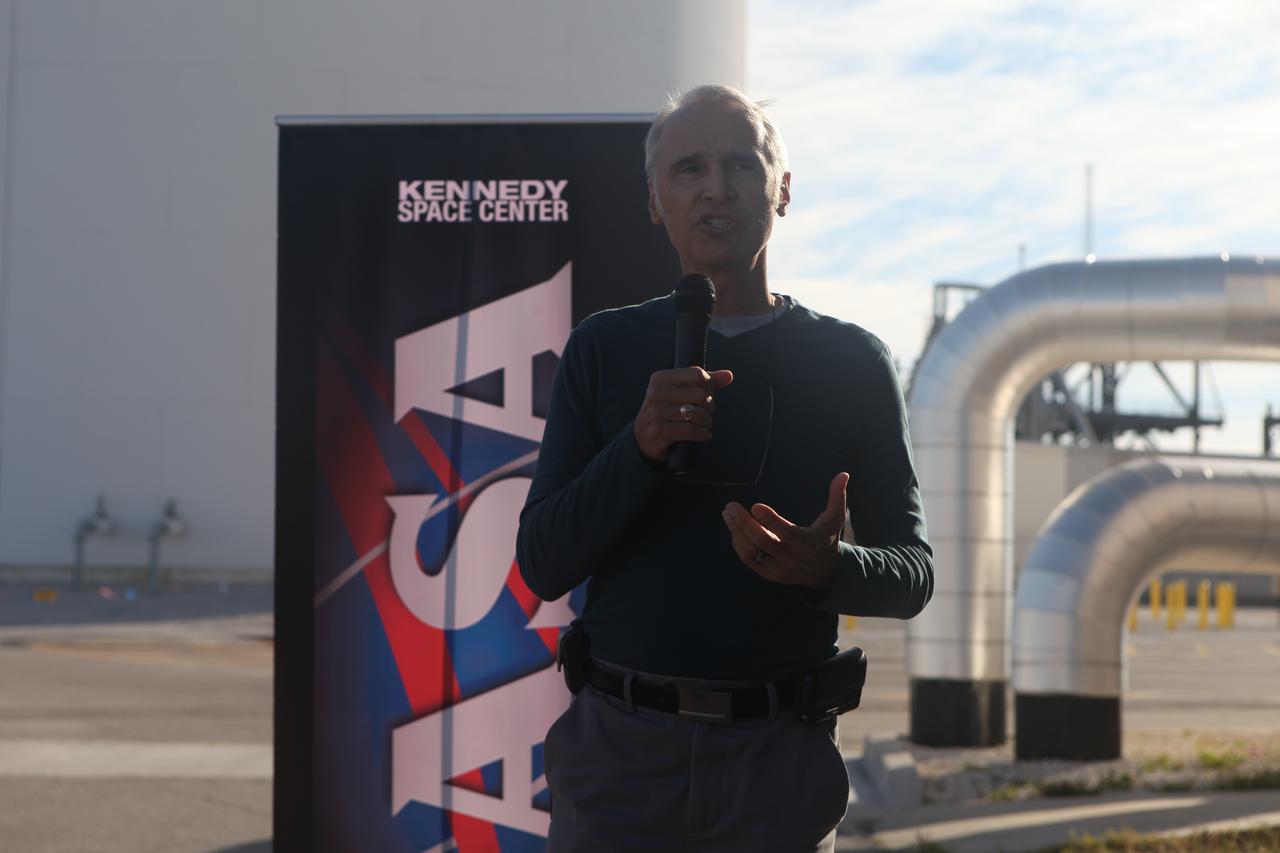
Ismael H. Otero, NASA Kennedy Space Center's project manager on the thermal energy program, addresses the news media and NASA Social about the new Thermal Energy Storage (TES) tank Feb. 17. The TES tank works like a giant battery and is saving the center utility cost. These savings will be applied to new sustainable projects at Kennedy.
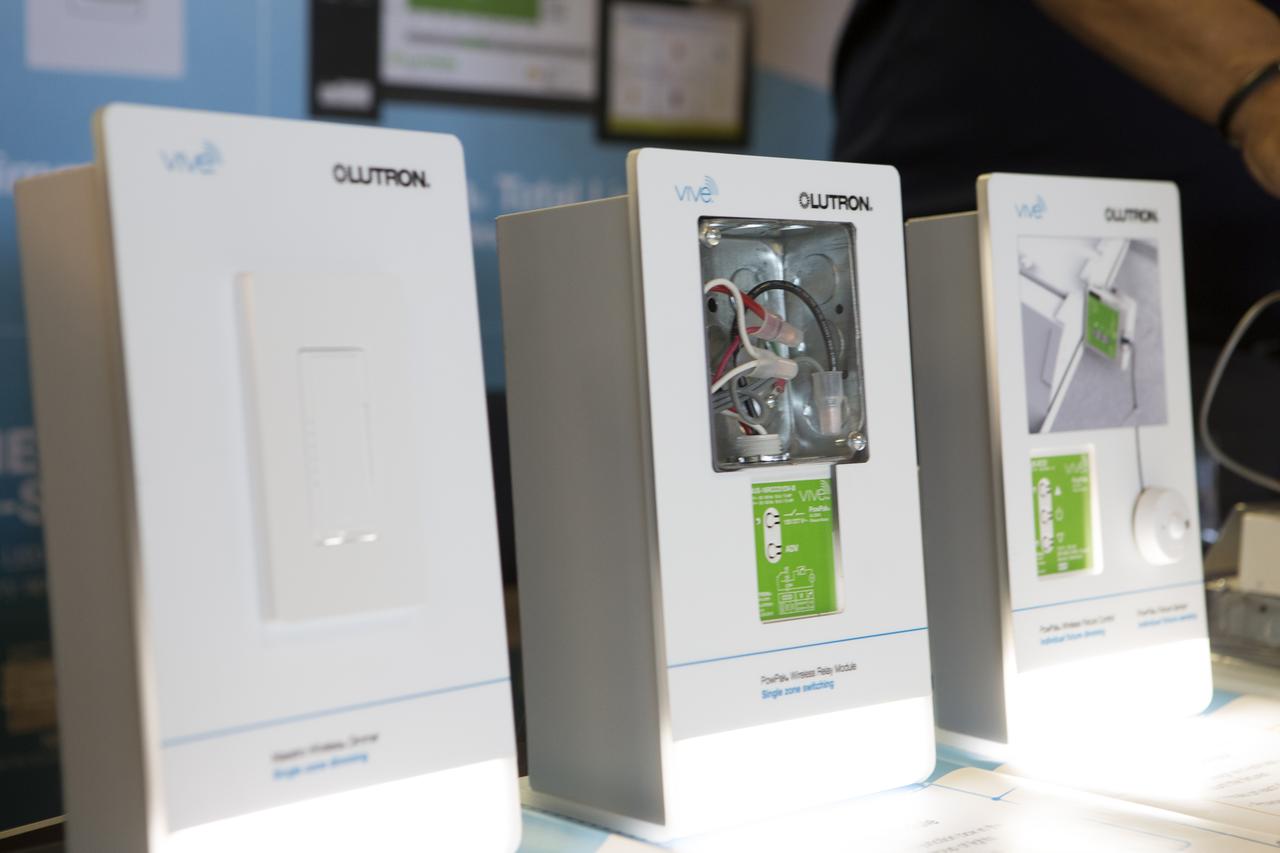
Shown are some of the devices from Lutron Electronics Co., a lighting control company, during Energy Awareness Day at the Multi-Function Facility on Oct. 20. Every third Thursday of October, civil servants, contractors and several energy utilities promote the awareness of our sustainability goals at Kennedy Space Center and at home. Photo credit: Cory Huston
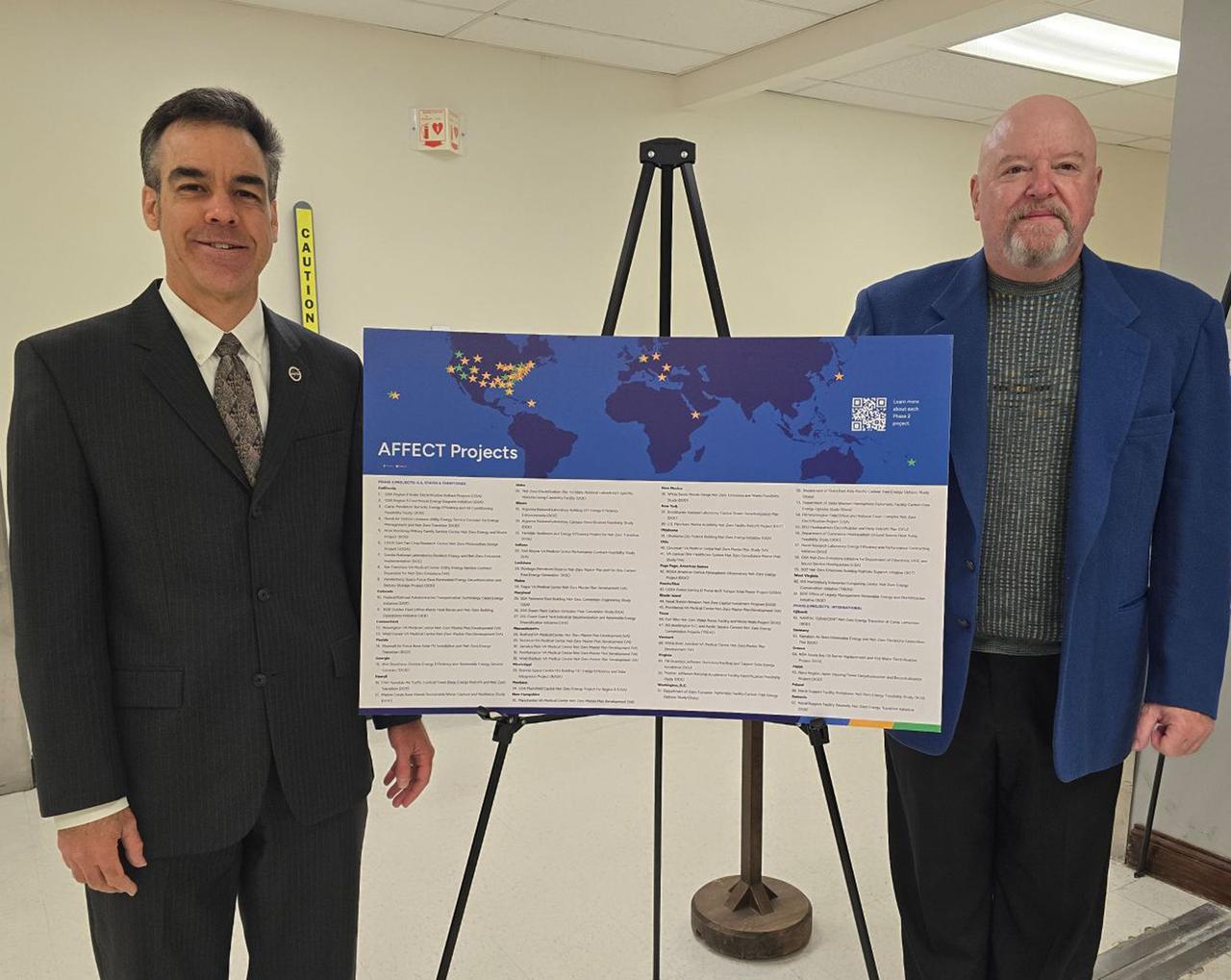
NASA Energy Program Manager for Facility Projects Wayne Thalasinos, left, stands with NASA Stennis Sustainability Team Lead Alvin Askew at the U.S. Department of Energy in Washington, D.C., on Oct. 30. The previous day, the Department of Energy announced NASA Stennis will receive a $1.95 million grant for an energy conservation project at the south Mississippi center. The Stennis Sustainability Team consists of NASA personnel and contract support. NASA members include Askew, Missy Ferguson and Teenia Perry. Contract members include Jordan McQueen (Synergy-Achieving Consolidated Operations and Maintenance); Michelle Bain (SACOM); Matt Medick (SACOM); Thomas Mitchell (SACOM); Lincoln Gros (SACOM), and Erik Tucker (Leidos).
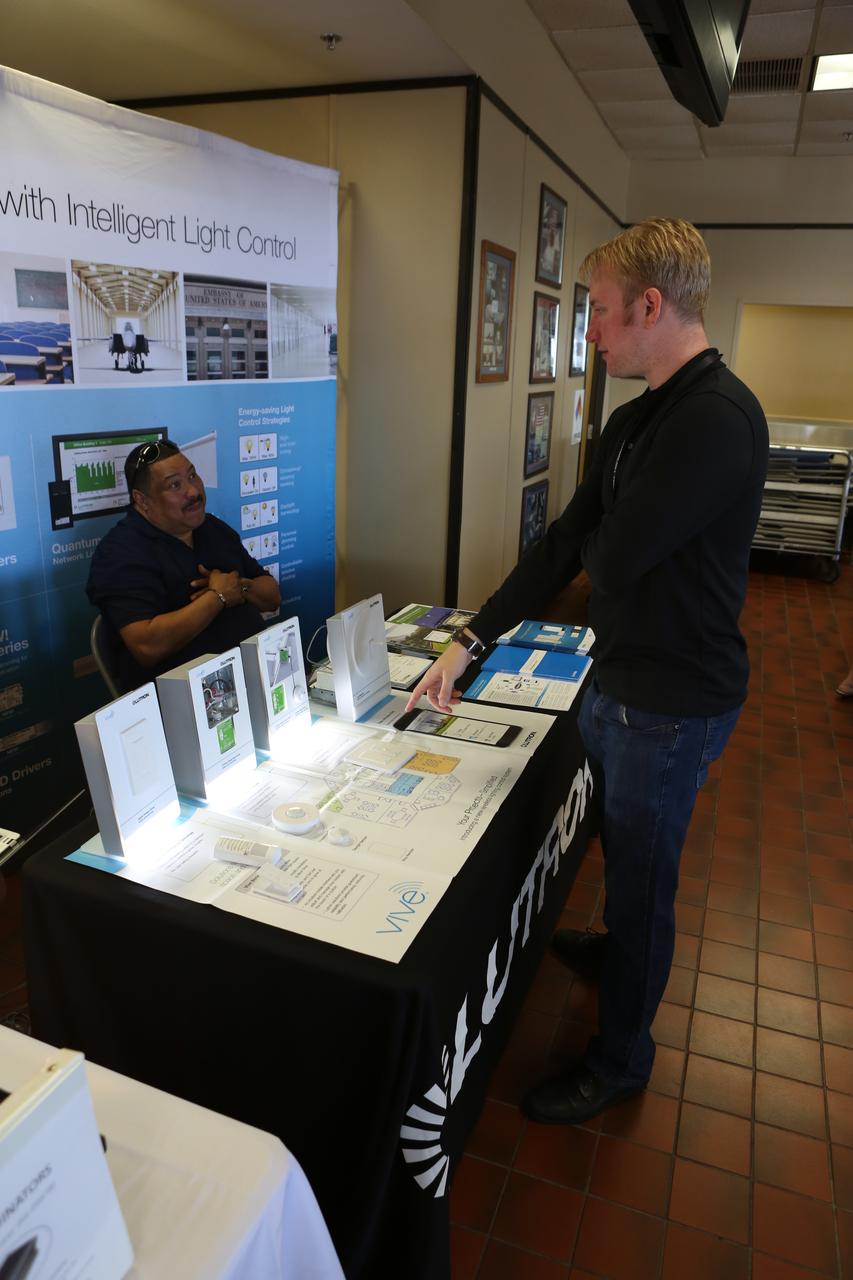
Cory Taylor, an energy and water conservation specialist at Kennedy Space Center, absorbs information from Mark Gonzalez, a sales engineer with MC2 during Energy Awareness Day at the Multi-Function Facility on Oct. 20. Every third Thursday of October, civil servants, contractors and several energy utilities promote the awareness of our sustainability goals at Kennedy Space Center and at home. Photo credit: Cory Huston
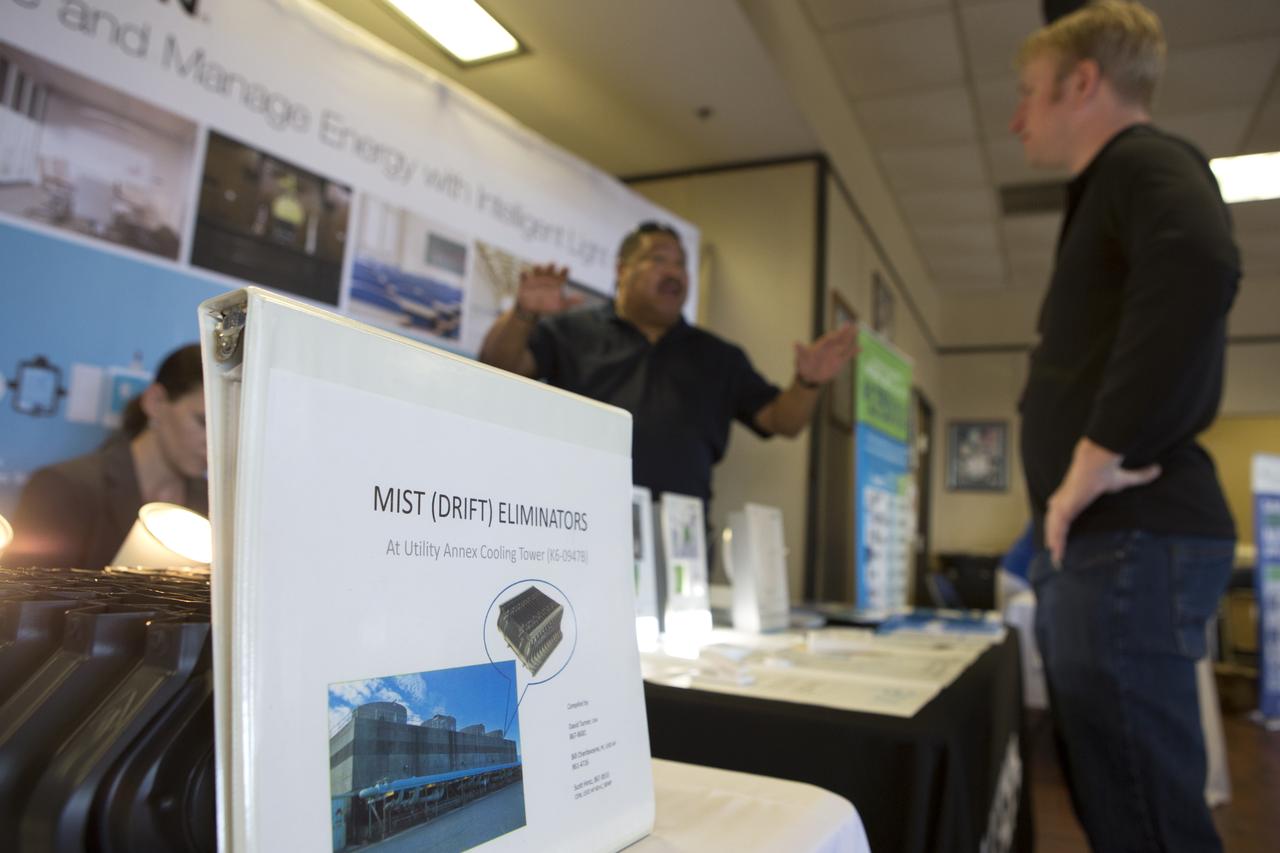
Cory Taylor, an energy and water conservation specialist at Kennedy Space Center, absorbs information from Mark Gonzalez, a sales engineer with MC2 during Energy Awareness Day at the Multi-Function Facility on Oct. 20. Every third Thursday of October, civil servants, contractors and several energy utilities promote the awareness of our sustainability goals at Kennedy Space Center and at home. Photo credit: Cory Huston
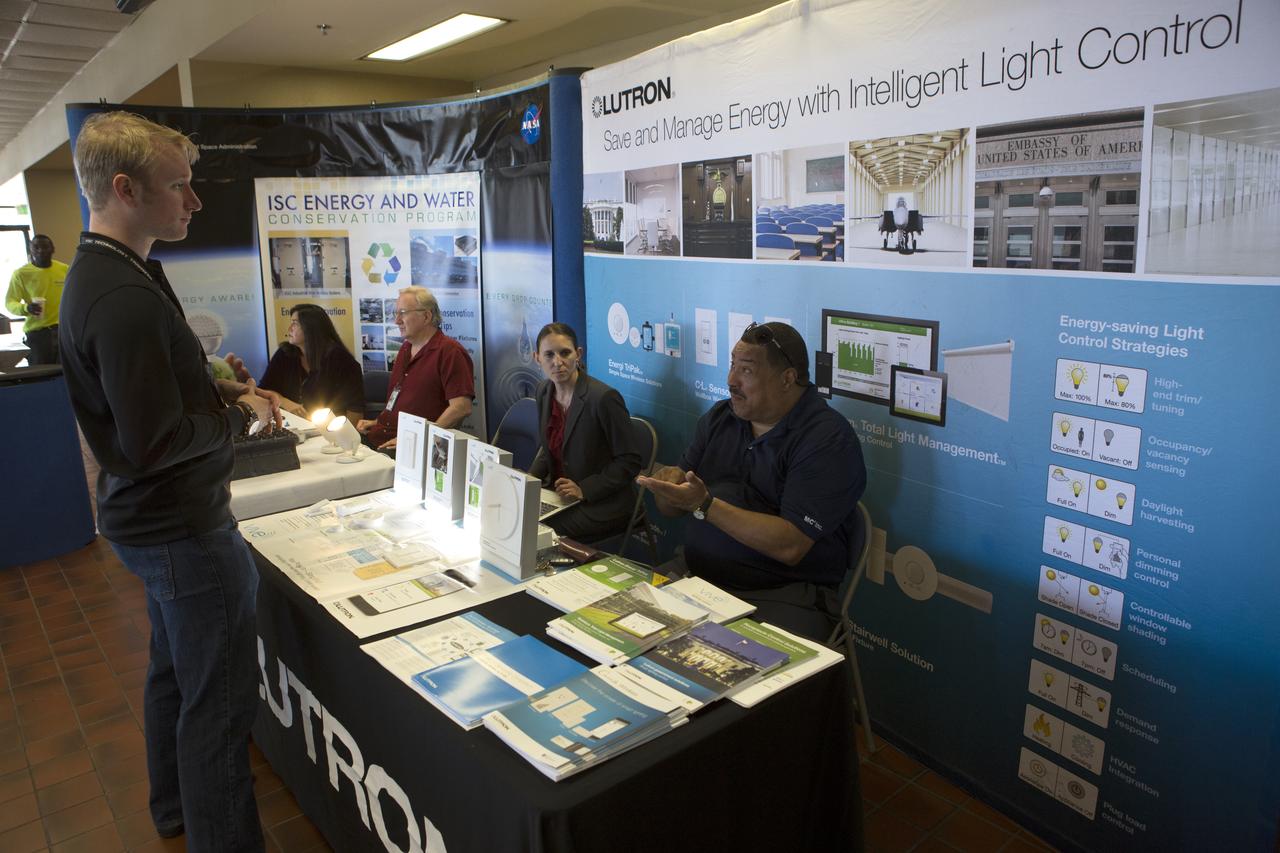
Cory Taylor, an energy and water conservation specialist at Kennedy Space Center, absorbs information from Mark Gonzalez, a sales engineer with MC2 during Energy Awareness Day at the Multi-Function Facility on Oct. 20. Every third Thursday of October, civil servants, contractors and several energy utilities promote the awareness of our sustainability goals at Kennedy Space Center and at home. Photo credit: Cory Huston
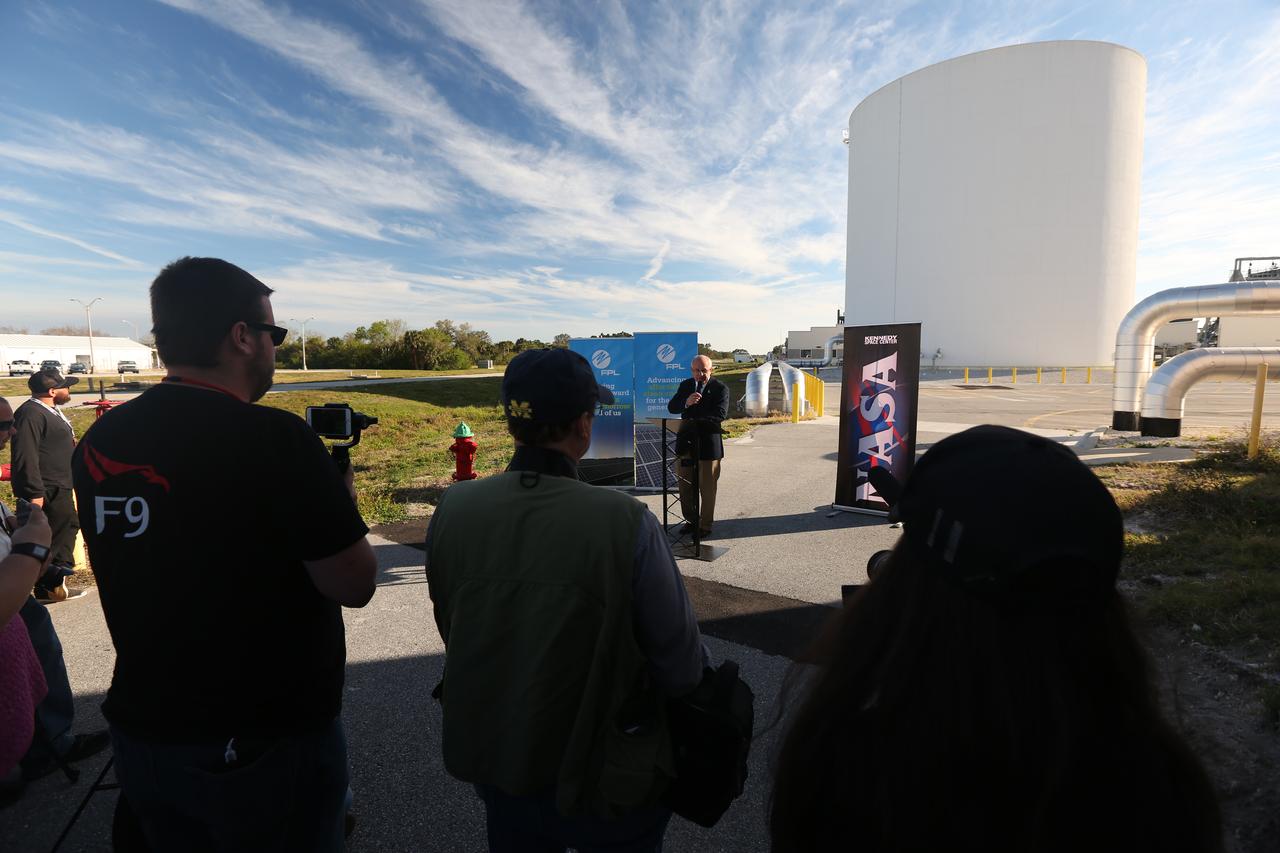
Bart Gaetjens, Florida Power & Light's FPL area external affairs manager, addresses the news media and NASA Social about the new Thermal Energy Storage (TES) tank Feb. 17. The TES tank works like a giant battery and is saving the center utility cost. These savings will be applied to new sustainable projects at Kennedy.
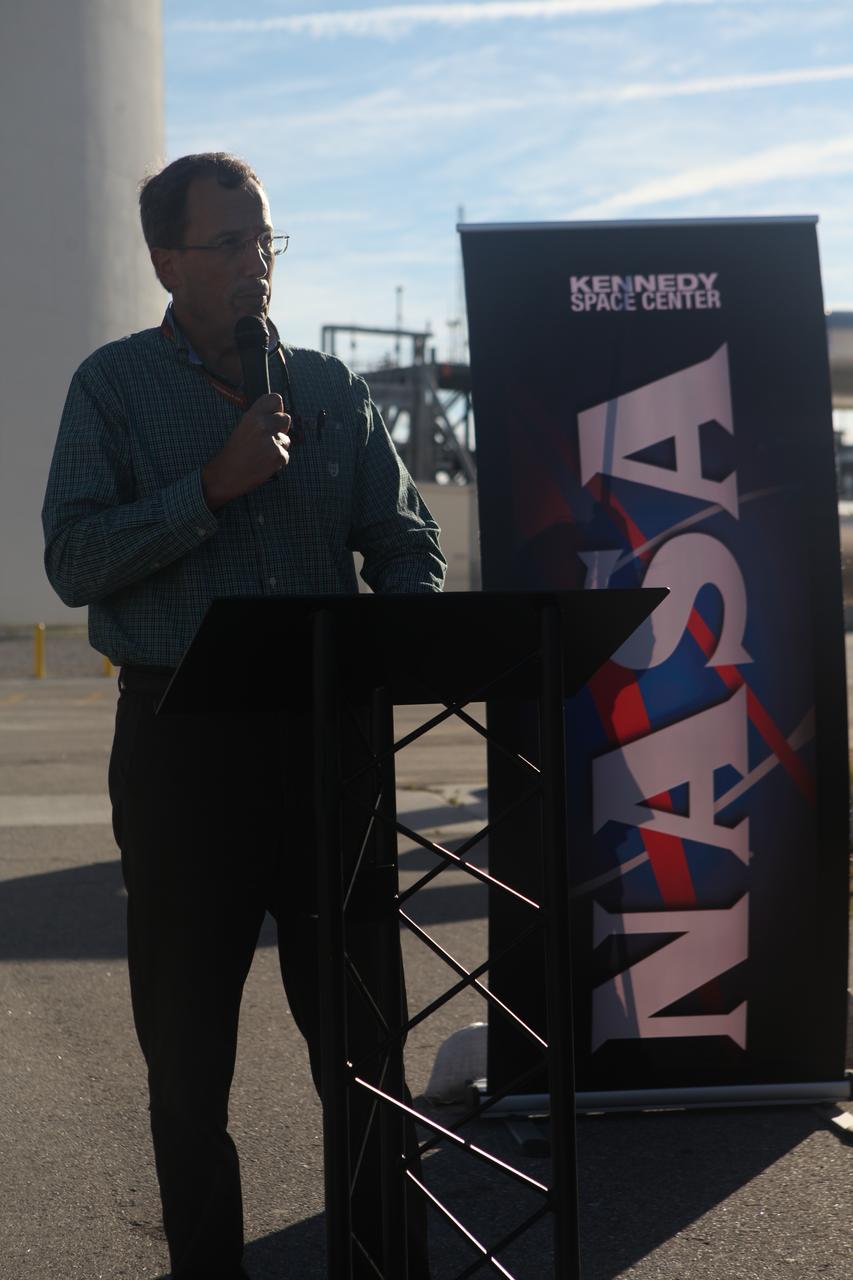
Sustainability Team Lead Dan Clark addresses the news media and NASA Social about the new Thermal Energy Storage (TES) tank at NASA's Kennedy Space Center Feb. 17. The TES tank works like a giant battery and is saving the center utility cost. These savings will be applied to new sustainable projects at Kennedy.
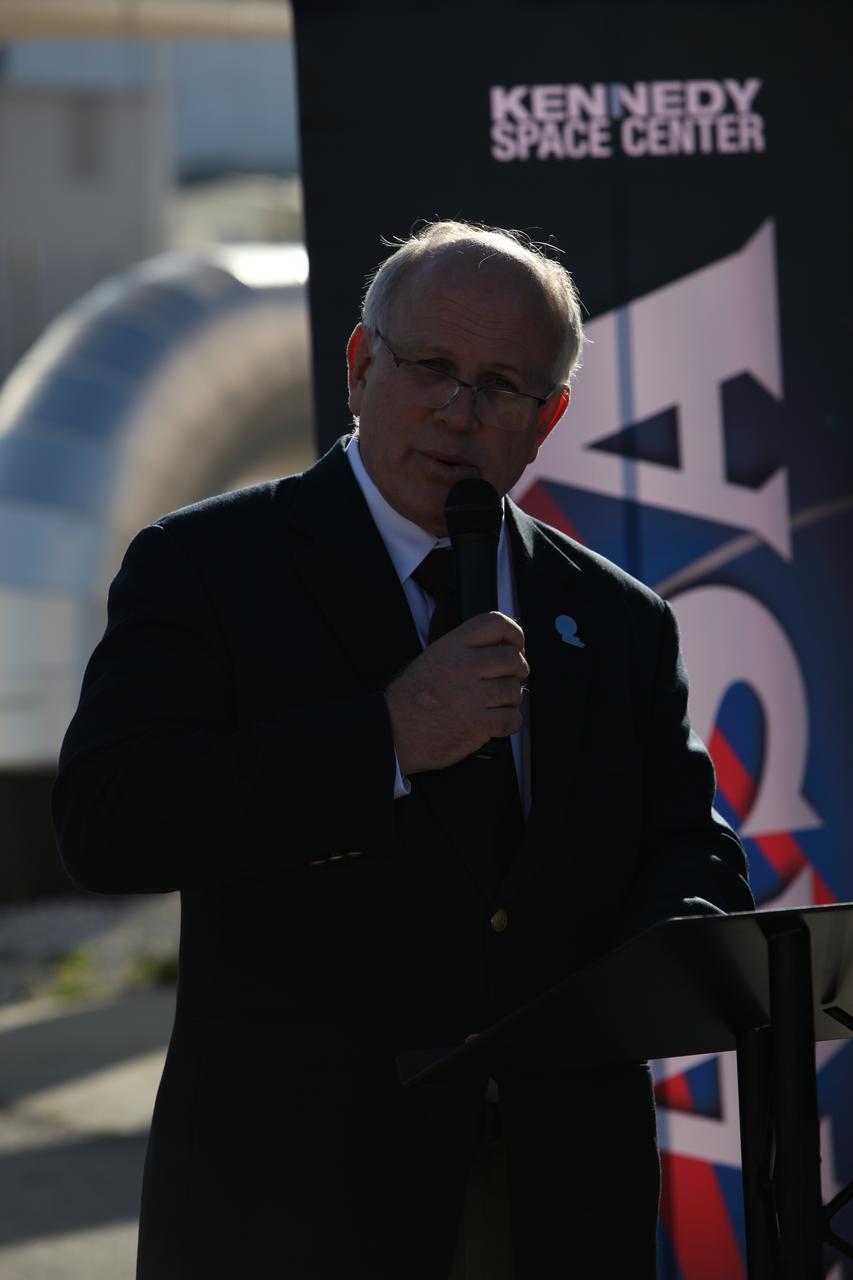
Bart Gaetjens, Florida Power & Light's FPL area external affairs manager, addresses the news media and NASA Social about the new Thermal Energy Storage (TES) tank Feb. 17. The TES tank works like a giant battery and is saving the center utility cost. These savings will be applied to new sustainable projects at Kennedy.

Michelle Sipe Exaros, with Lutron Electronics Co., is seen behind pamphlets and brochures of information during Energy Awareness Day at the Multi-Function Facility on Oct. 20. Every third Thursday of October, civil servants, contractors and several energy utilities promote the awareness of our sustainability goals at Kennedy Space Center and at home. Photo credit: Cory Huston

The launch of an Atlas/Centaur launch vehicle is shown in this photograph. The Atlas/Centaur, launched on November 13, 1978, carried the High Energy Astronomy Observatory (HEAO)-2 into the required orbit. The second observatory, the HEAO-2 (nicknamed the Einstein Observatory in honor of the centernial of the birth of Albert Einstein) carried the first telescope capable of producing actual photographs of x-ray objects.

This photograph was taken during the assembly of the High Energy Astronomy Observatory (HEAO)-2 at TRW, Inc., the prime contractor for the HEAOs. The HEAO-2, the first imaging and largest x-ray telescope built to date, was capable of producing actual photographs of x-ray objects. TRW, Inc. designed and developed the HEAO, under the project management of the Marshall Space Flight Center. The HEAO-2 was originally identified as HEAO-B but the designation was changed once the spacecraft achieved orbit.

This photograph shows the High Energy Astronomy Observatory (HEAO)-1 being assembled at TRW Systems of Redondo Beach, California. The HEAO was designed and developed by TRW, Inc. under the project management of the Marshall Space Flight Center. The first observatory, designated HEAO-1, was launched on August 12, 1977 aboard an Atlas/Centaur launch vehicle and was designed to survey the sky for additional x-ray and gamma-ray sources as well as pinpointing their positions. The HEAO-1 was originally identified as HEAO-A but the designation was changed once the spacecraft achieved orbit.

This Atlas/Centaur launch vehicle, carrying the High Energy Astronomy Observatory (HEAO)-3, lifted off on September 20, 1979. The HEAO-3's mission was to survey and map the celestial sphere for gamma-ray flux and make detailed measurements of cosmic-ray particles. It carried three scientific experiments: a gamma-ray spectrometer, a cosmic-ray isotope experiment, and a heavy cosmic-ray nuclei experiment. The HEAO-3 was originally identified as HEAO-C but the designation was changed once the spacecraft achieved orbit.

This picture is of an Atlas/Centaur launch vehicle, carrying the High Energy Astronomy Observatory (HEAO)-1, on Launch Complex 36 at the Air Force Eastern Test Range prior to launch on August 12, 1977. The Kennedy Space Center managed the launch operations that included a pre-aunch checkout, launch, and flight, up through the observatory separation in orbit.

This schematic details the third High Energy Astronomy Observatory (HEAO)-3. The HEAO-3's mission was to survey and map the celestial sphere for gamma-ray flux and make detailed measurements of cosmic-ray particles. It carried three scientific experiments: a gamma-ray spectrometer, a cosmic-ray isotope experiment, and a heavy cosmic-ray nuclei experiment. The HEAO-3 was originally identified as HEAO-C but the designation was changed once the spacecraft achieved orbit.
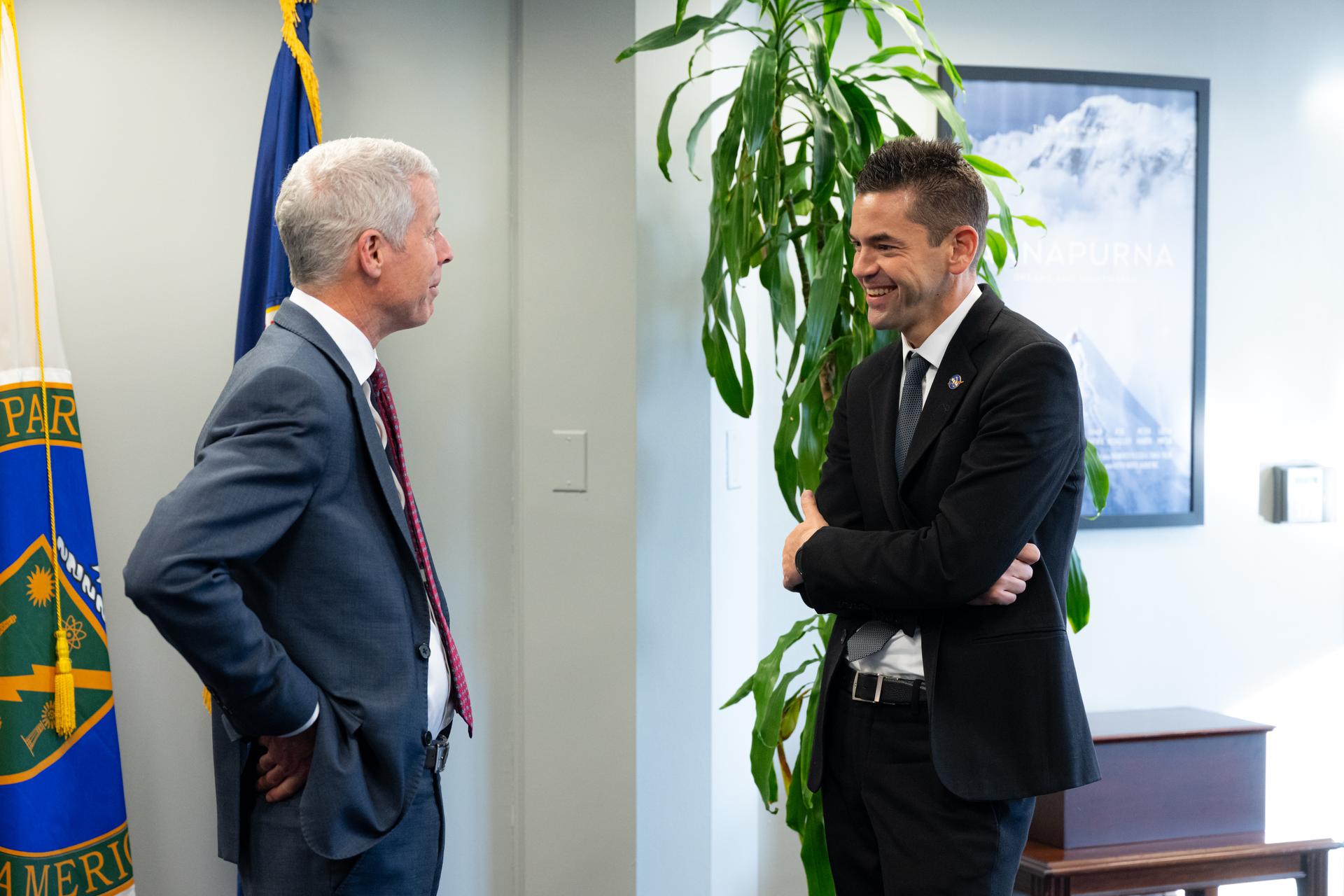
U.S. Department of Energy Secretary Chris Wright, left, speaks to NASA Administrator Jared Isaacman, right, Thursday, Jan. 8, 2026, at the Department of Energy Headquarters in Washington. The DOE and NASA signed a memorandum of understanding to support the research and development of a fission surface power system for use on the Moon and future NASA missions to Mars. Photo Credit: (NASA/John Kraus)
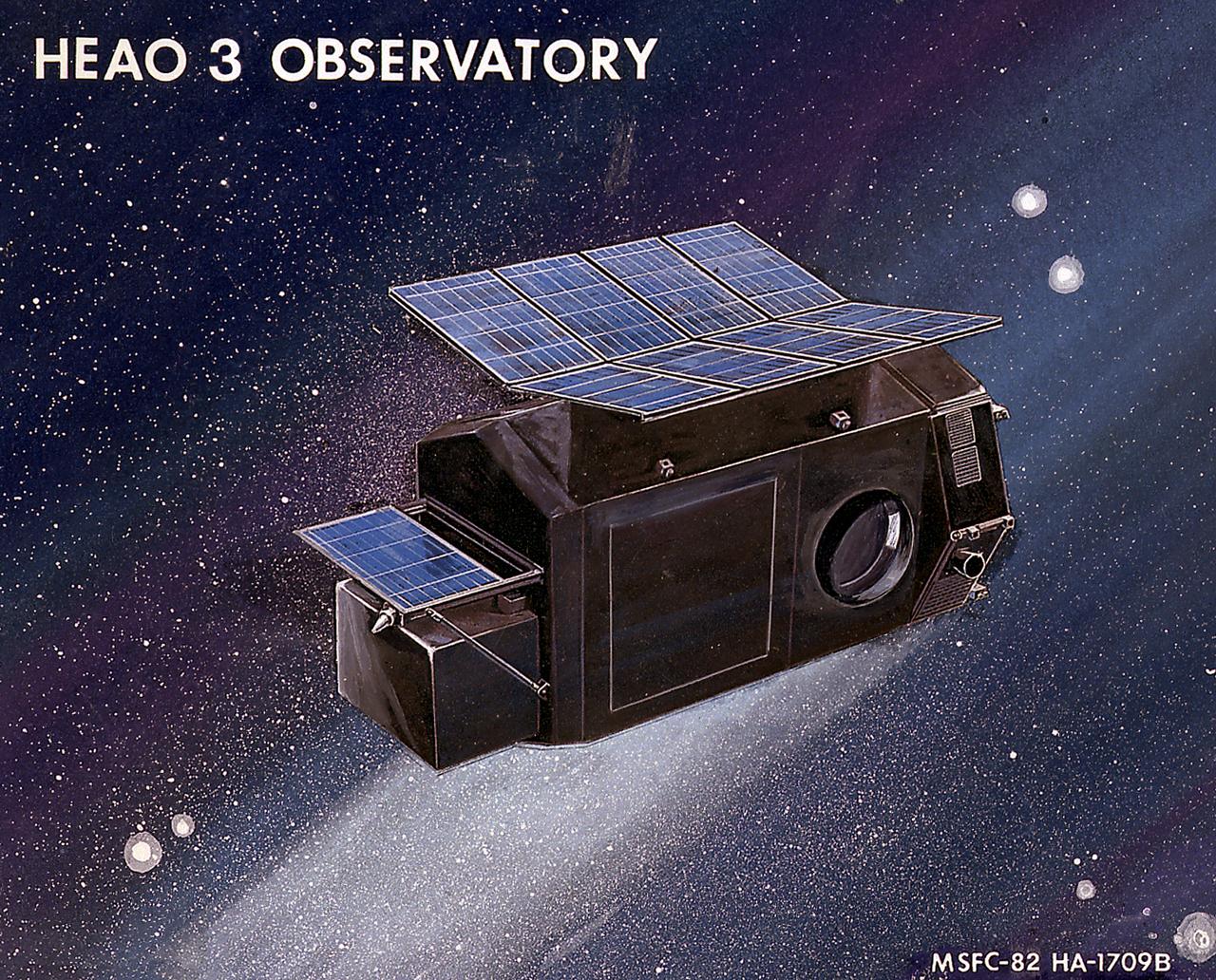
This artist's concept depicts the third observatory, the High Energy Astronomy Observatory (HEAO)-3 in orbit. Designed and developed by TRW, Inc. under the direction of the Marshall Space Flight Center, the HEAO-3's mission was to survey and map the celestial sphere for gamma-ray flux and make detailed measurements of cosmic-ray particles. It carried three scientific experiments: a gamma-ray spectrometer, a cosmic-ray isotope experiment, and a heavy cosmic-ray nuclei experiment. The HEAO-3 was originally identified as HEAO-C but the designation was changed once the spacecraft achieved orbit.
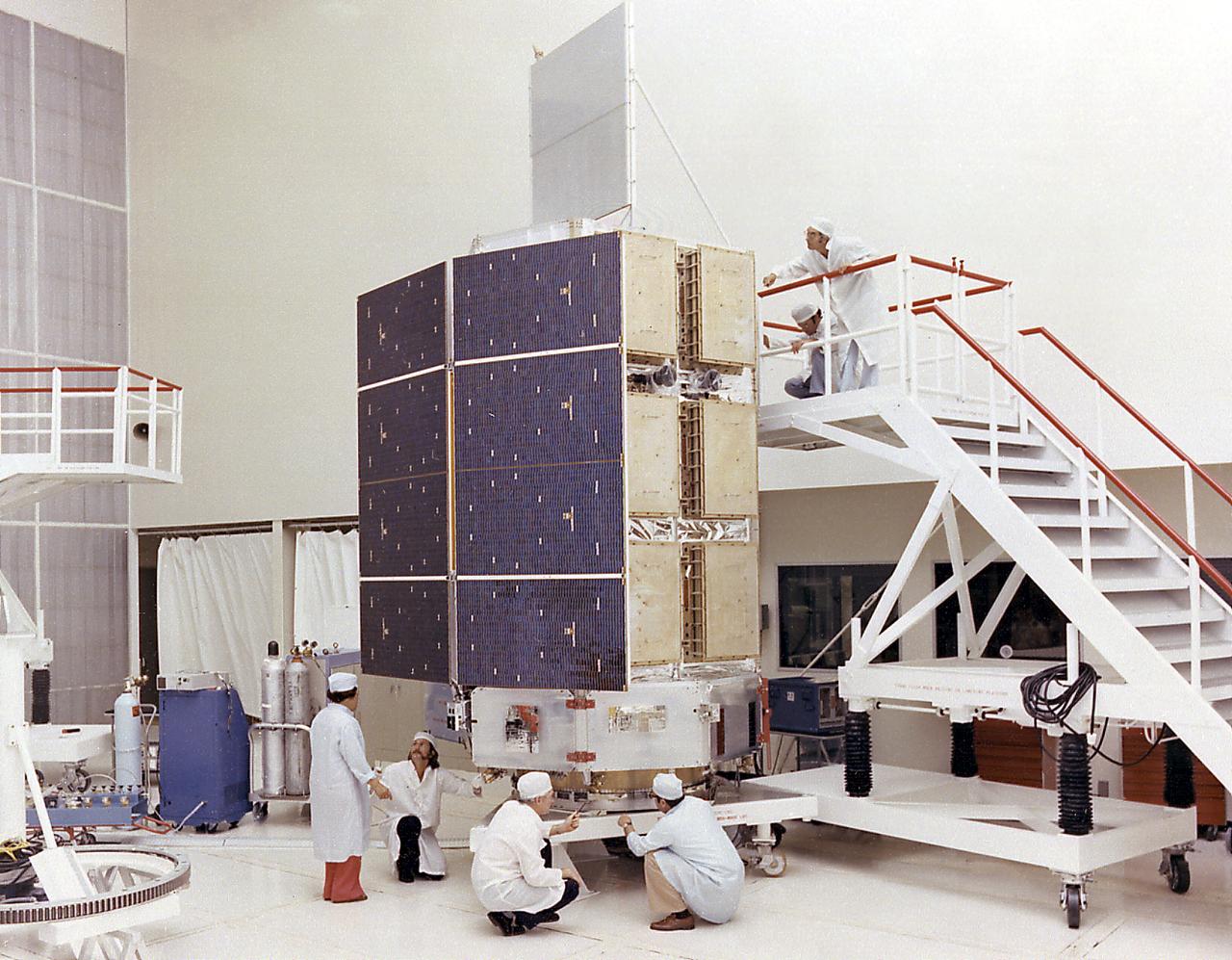
This photograph shows the High Energy Astronomy Observatory (HEAO)-3 being assembled at TRW, Inc. Designed and developed by TRW, Inc. under the direction of the Marshall Space Flight Center, the objectives of the HEAO-3 were to survey and map the celestial sphere for gamma-ray flux and make detailed measurements of cosmic-ray particles. It carried three scientific experiments: a gamma-ray spectrometer, a cosmic-ray isotope experiment, and a heavy cosmic-ray nuclei experiment. The HEAO-3 was originally identified as HEAO-C but the designation was changed once the spacecraft achieved orbit. The Marshall Space Flight Center had the project management responsibilities for the HEAO missions.
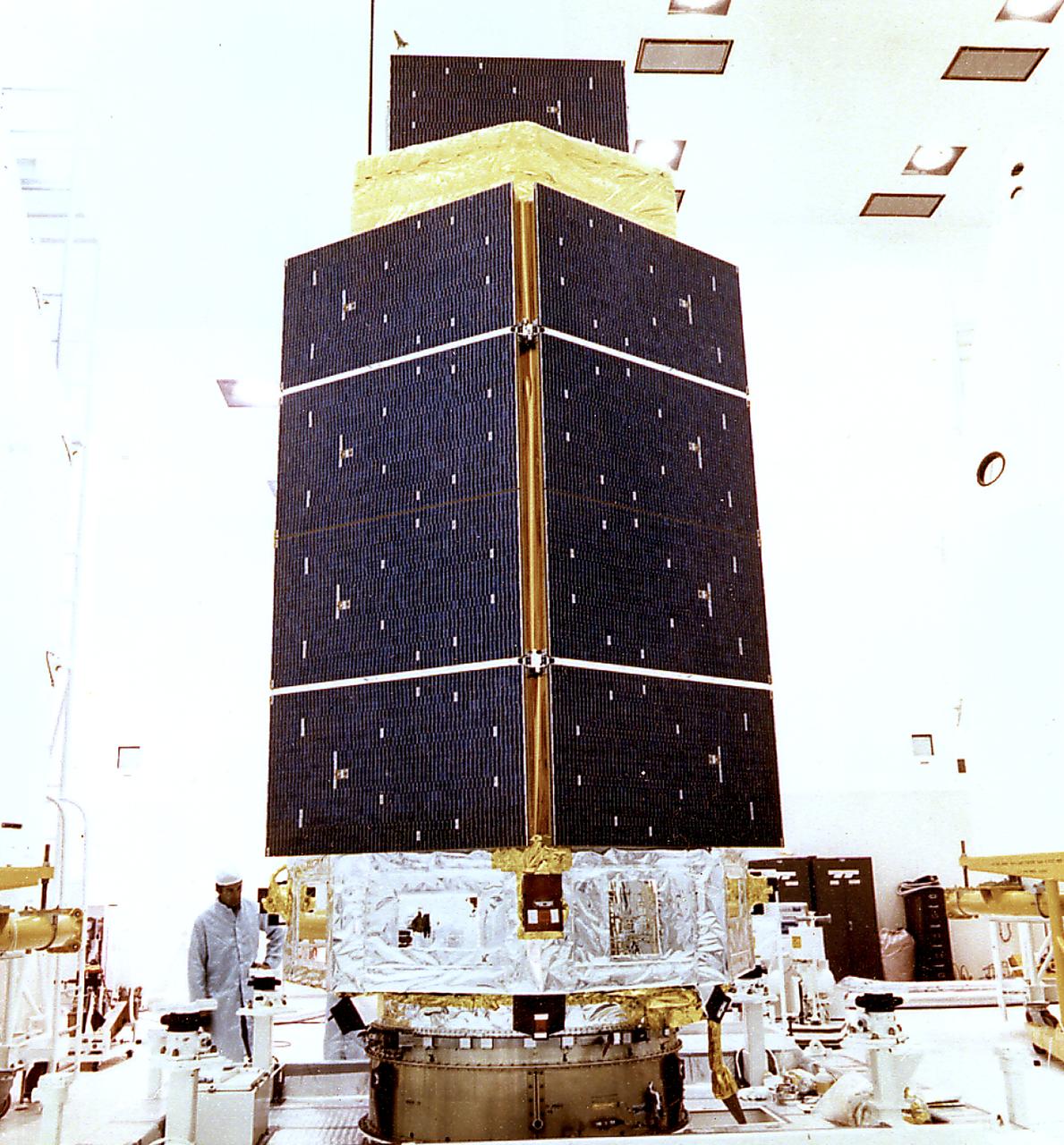
This photograph shows the High Energy Astronomy Observatory (HEAO)-3 being prepared for encapsulation. Designed and developed by TRW, Inc. under the direction of the Marshall Space Flight Center, the objectives of the HEAO-3 were to survey and map the celestial sphere for gamma-ray flux and make detailed measurements of cosmic-ray particles. It carried three scientific experiments: a gamma-ray spectrometer, a cosmic-ray isotope experiment, and a heavy cosmic-ray nuclei experiment. The HEAO-3 was originally identified as HEAO-C but the designation was changed once the spacecraft achieved orbit. The Marshall Space Flight Center had the project management responsibilities for the HEAO missions.
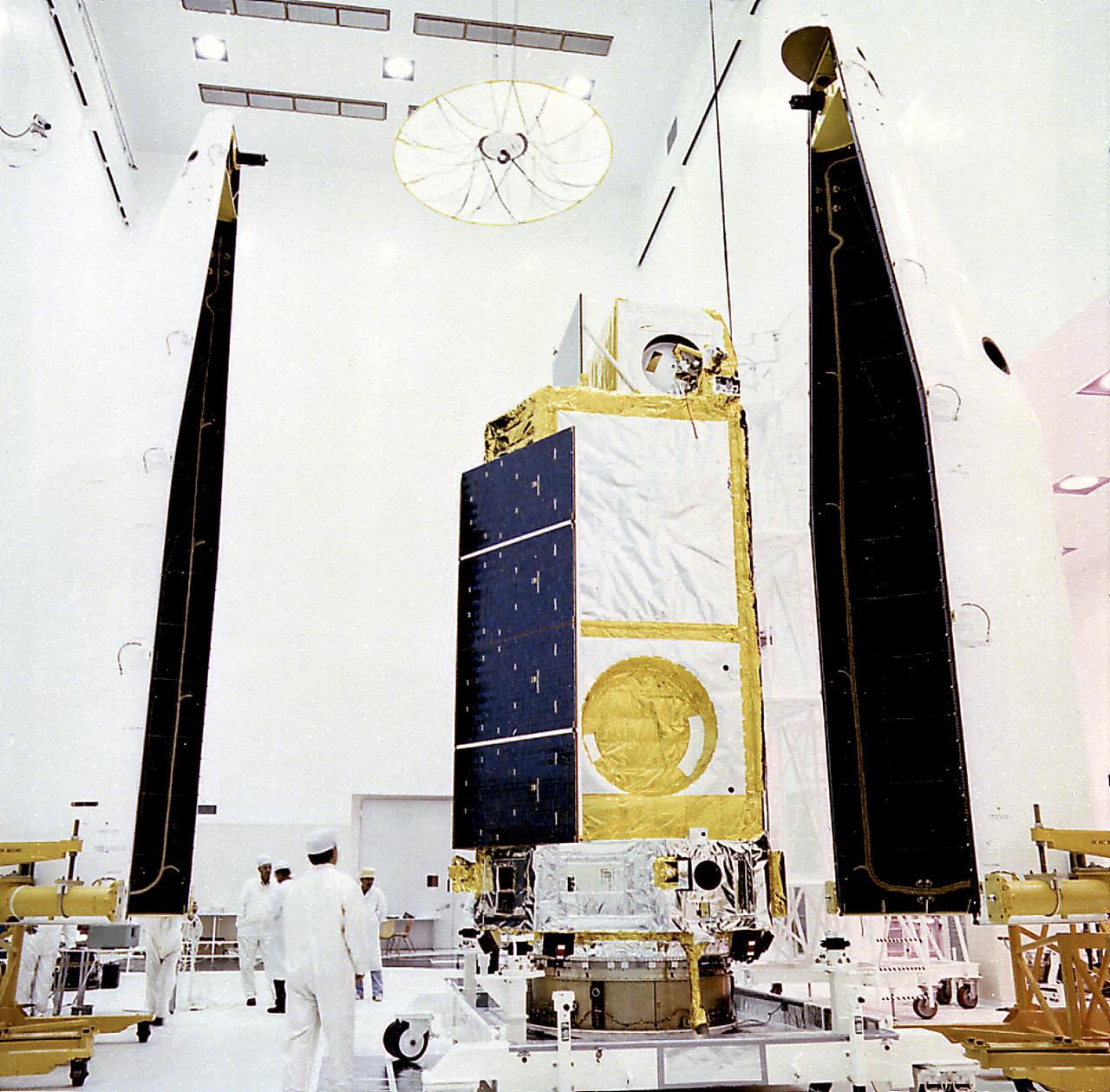
This photograph was taken during encapsulation of the High Energy Astronomy Observatory (HEAO)-3. Designed and developed by TRW, Inc. under the direction of the Marshall Space Flight Center, the objectives of the HEAO-3 were to survey and map the celestial sphere for gamma-ray flux and make detailed measurements of cosmic-ray particles. It carried three scientific experiments: a gamma-ray spectrometer, a cosmic-ray isotope experiment, and a heavy cosmic-ray nuclei experiment. The HEAO-3 was originally identified as HEAO-C but the designation was changed once the spacecraft achieved orbit. The Marshall Space Flight Center had the project management responsibilities for the HEAO missions.
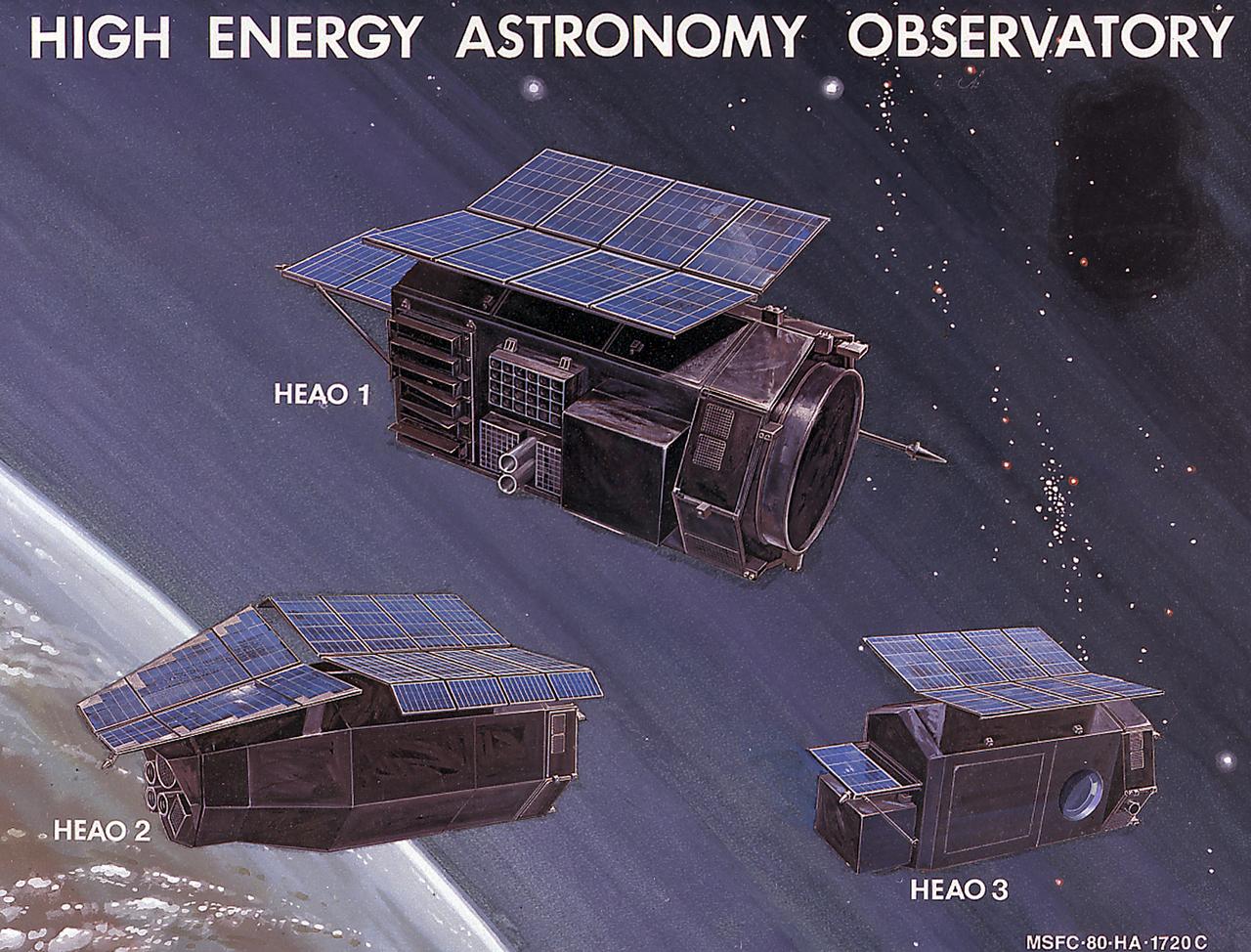
The family of High Energy Astronomy Observatory (HEAO) instruments consisted of three unmarned scientific observatories capable of detecting the x-rays emitted by the celestial bodies with high sensitivity and high resolution. The celestial gamma-ray and cosmic-ray fluxes were also collected and studied to learn more about the mysteries of the universe. High-Energy rays cannot be studied by Earth-based observatories because of the obscuring effects of the atmosphere that prevent the rays from reaching the Earth's surface. They had been observed initially by sounding rockets and balloons, and by small satellites that do not possess the needed instrumentation capabilities required for high data resolution and sensitivity. The HEAO carried the instrumentation necessary for this capability. In this photograph, an artist's concept of three HEAO spacecraft is shown: HEAO-1, launched on August 12, 1977; HEAO-2, launched on November 13, 1978; and HEAO-3, launched on September 20. 1979.
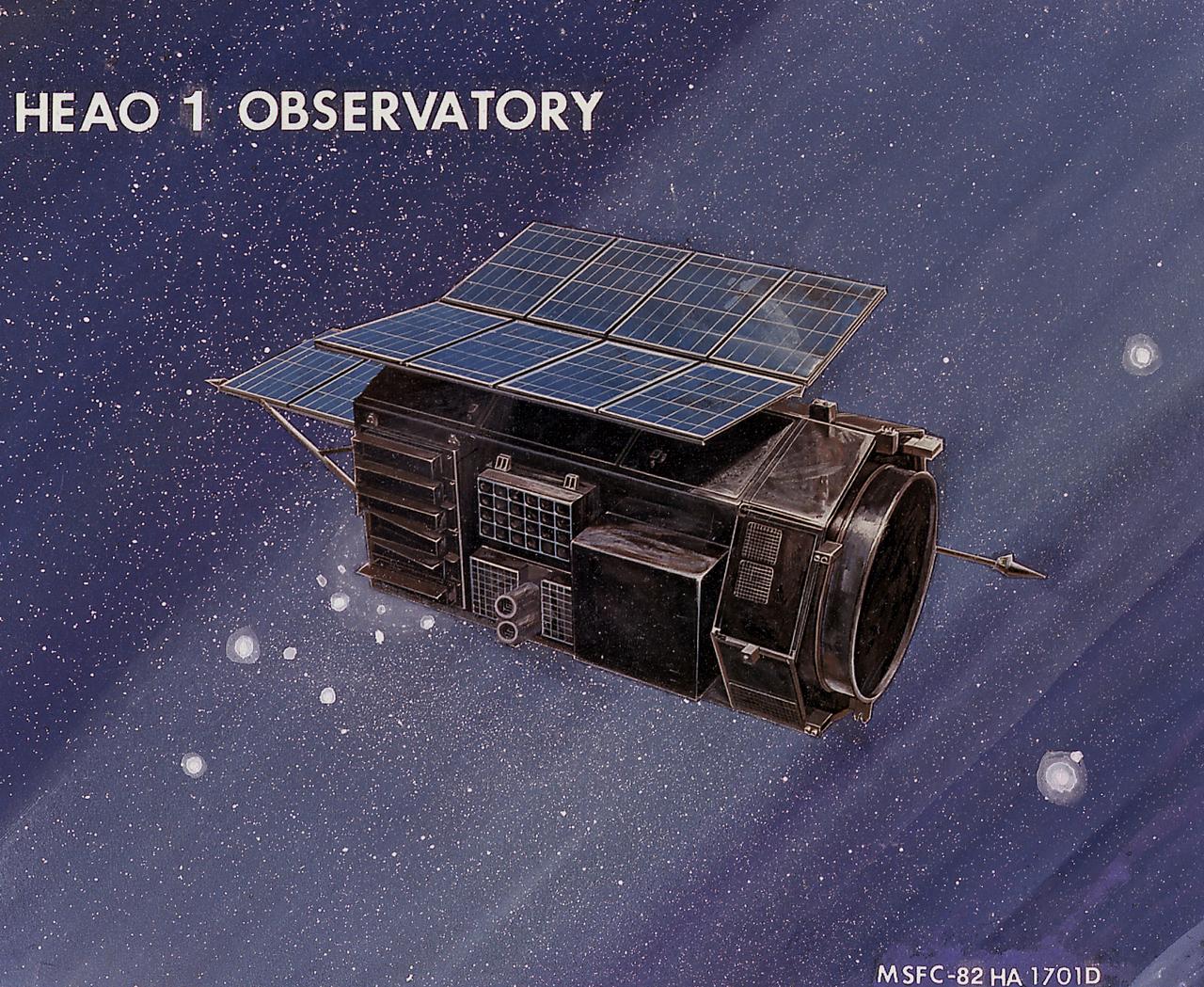
This artist's conception depicts the High Energy Astronomy Observatory (HEAO)-1 in orbit. The first observatory, designated HEAO-1, was launched on August 12, 1977 aboard an Atlas/Centaur launch vehicle and was designed to survey the sky for additional x-ray and gamma-ray sources as well as pinpointing their positions. The HEAO-1 was originally identified as HEAO-A but the designation was changed once the spacecraft achieved orbit. The HEAO project involved the launching of three unmarned scientific observatories into low Earth orbit between 1977 and 1979 to study some of the most intriguing mysteries of the universe; pulsars, black holes, neutron stars, and super nova. Hardware support for the imaging instruments was provided by American Science and Engineeing. The HEAO spacecraft were built by TRW, Inc. under project management of the Marshall Space Flight Center.

Like the Crab Nebula, the Vela Supernova Remnant has a radio pulsar at its center. In this image taken by the High Energy Astronomy Observatory (HEAO)-2/Einstein Observatory, the pulsar appears as a point source surrounded by weak and diffused emissions of x-rays. HEAO-2's computer processing system was able to record and display the total number of x-ray photons (a tiny bundle of radiant energy used as the fundamental unit of electromagnetic radiation) on a scale along the margin of the picture. The HEAO-2, the first imaging and largest x-ray telescope built to date, was capable of producing actual photographs of x-ray objects. Shortly after launch, the HEAO-2 was nicknamed the Einstein Observatory by its scientific experimenters in honor of the centernial of the birth of Albert Einstein, whose concepts of relativity and gravitation have influenced much of modern astrophysics, particularly x-ray astronomy. The HEAO-2, designed and developed by TRW, Inc. under the project management of the Marshall Space Flight Center, was launched aboard an Atlas/Centaur launch vehicle on November 13, 1978.
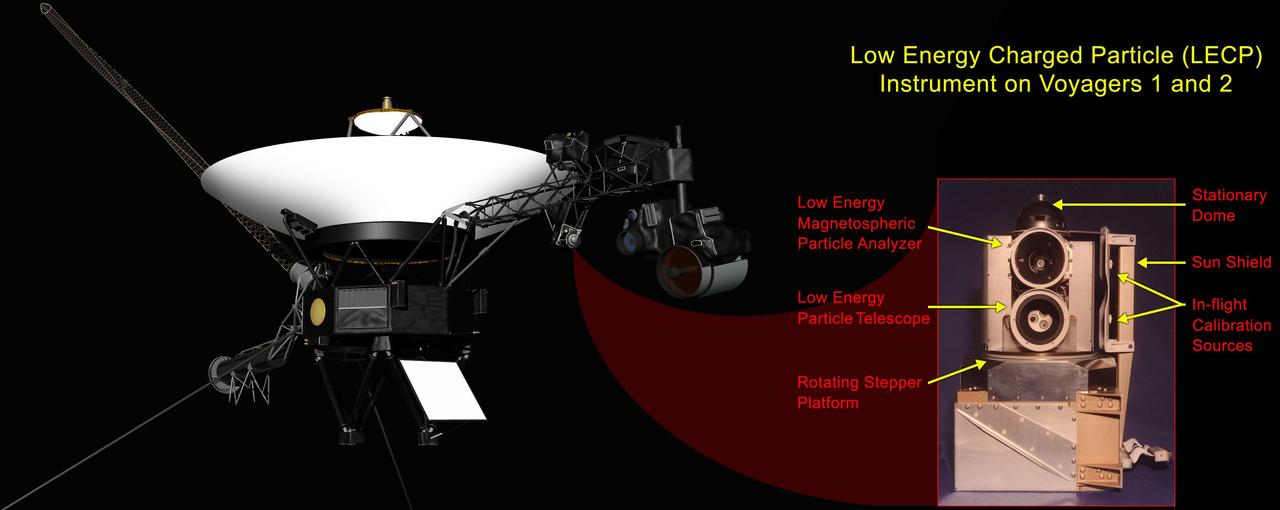
This graphic shows the NASA Voyager 1 spacecraft and the location of its low-energy charged particle instrument. A labeled close-up of the low-energy charged particle instrument appears as the inset image.

NASA release July 27, 2011 These jets, known as spicules, were captured in an SDO image on April 25, 2010. Combined with the energy from ripples in the magnetic field, they may contain enough energy to power the solar wind that streams from the sun toward Earth at 1.5 million miles per hour. Credit: NASA/SDO/AIA Like giant strands of seaweed some 32,000 miles high, material shooting up from the sun sways back and forth with the atmosphere. In the ocean, it's moving water that pulls the seaweed along for a ride; in the sun's corona, magnetic field ripples called Alfvén waves cause the swaying. For years these waves were too difficult to detect directly, but NASA's Solar Dynamics Observatory (SDO) is now able to track the movements of this solar "seaweed" and measure how much energy is carried by the Alfvén waves. The research shows that the waves carry more energy than previously thought, and possibly enough to drive two solar phenomena whose causes remain points of debate: the intense heating of the corona to some 20 times hotter than the sun's surface and solar winds that blast up to 1.5 million miles per hour. "SDO has amazing resolution so you can actually see individual waves," says Scott McIntosh at the National Center for Atmospheric Research in Boulder, Colo. "Now we can see that instead of these waves having about 1000th the energy needed as we previously thought, it has the equivalent of about 1100W light bulb for every 11 square feet of the sun's surface, which is enough to heat the sun's atmosphere and drive the solar wind." To read more go to: <a href="http://www.nasa.gov/mission_pages/sdo/news/alfven-waves.html" rel="nofollow">www.nasa.gov/mission_pages/sdo/news/alfven-waves.html</a> <b><a href="http://www.nasa.gov/centers/goddard/home/index.html" rel="nofollow">NASA Goddard Space Flight Center</a></b> enables NASA’s mission through four scientific endeavors: Earth Science, Heliophysics, Solar System Exploration, and Astrophysics. Goddard plays a leading role in NASA’s accomplishments by contributing compelling scientific knowledge to advance the Agency’s mission. <b>Follow us on <a href="http://twitter.com/NASA_GoddardPix" rel="nofollow">Twitter</a></b> <b>Like us on <a href="http://www.facebook.com/pages/Greenbelt-MD/NASA-Goddard/395013845897?ref=tsd" rel="nofollow">Facebook</a></b> <b>Find us on <a href="http://web.stagram.com/n/nasagoddard/?vm=grid" rel="nofollow">Instagram</a></b>

This supernova in the constellation Cassiopeia was observed by Tycho Brahe in 1572. In this x-ray image from the High Energy Astronomy Observatory (HEAO-2/Einstein Observatory produced by nearly a day of exposure time, the center region appears filled with emissions that can be resolved into patches or knots of material. However, no central pulsar or other collapsed object can be seen. The HEAO-2, the first imaging and largest x-ray telescope built to date, was capable of producing actual photographs of x-ray objects. Shortly after launch, the HEAO-2 was nicknamed the Einstein Observatory by its scientific experimenters in honor of the centernial of the birth of Albert Einstein, whose concepts of relativity and gravitation have influenced much of modern astrophysics, particularly x-ray astronomy. The HEAO-2, designed and developed by TRW, Inc. under the project management of the Marshall Space Flight Center, was launched aboard an Atlas/Centaur launch vehicle on November 13, 1978.

This is an x-ray image of the Crab Nebula taken with the High Energy Astronomy Observatory (HEAO)-2/Einstein Observatory. The image is demonstrated by a pulsar, which appears as a bright point due to its pulsed x-ray emissions. The strongest region of diffused emissions comes from just northwest of the pulsar, and corresponds closely to the region of brightest visible-light emission. The HEAO-2, the first imaging and largest x-ray telescope built to date, was capable of producing actual photographs of x-ray objects. Shortly after launch, the HEAO-2 was nicknamed the Einstein Observatory by its scientific experimenters in honor of the centernial of the birth of Albert Einstein, whose concepts of relativity and gravitation have influenced much of modern astrophysics, particularly x-ray astronomy. The HEAO-2, designed and developed by TRW, Inc. under the project management of the Marshall Space Flight Center, was launched aboard an Atlas/Centaur launch vehicle on November 13, 1978.

This artist's concept depicts the High Energy Astronomy Observatory (HEAO)-2 in orbit. The HEAO-2, the first imaging and largest x-ray telescope built to date, was capable of producing actual photographs of x-ray objects. Shortly after launch, the HEAO-2 was nicknamed the Einstein Observatory by its scientific experimenters in honor of the centernial of the birth of Albert Einstein, whose concepts of relativity and gravitation have influenced much of modern astrophysics, particularly x-ray astronomy. The HEAO-2, designed and developed by TRW, Inc. under the project management of the Marshall Space Flight Center, was launched aboard an Atlas/Centaur launch vehicle on November 13, 1978. The HEAO-2 was originally identified as HEAO-B but the designation was changed once the spacecraft achieved orbit.

This x-ray photograph of the Supernova remnant Cassiopeia A, taken with the High Energy Astronomy Observatory (HEAO) 2/Einstein Observatory, shows that the regions with fast moving knots of material in the expanding shell are bright and clear. A faint x-ray halo, just outside the bright shell, is interpreted as a shock wave moving ahead of the expanding debris. The HEAO-2, the first imaging and largest x-ray telescope built to date, was capable of producing actual photographs of x-ray objects. Shortly after launch, the HEAO-2 was nicknamed the Einstein Observatory by its scientific experimenters in honor of the centernial of the birth of Albert Einstein, whose concepts of relativity and gravitation have influenced much of modern astrophysics, particularly x-ray astronomy. The HEAO-2, designed and developed by TRW, Inc. under the project management of the Marshall Space Flight Center, was launched aboard an Atlas/Centaur launch vehicle on November 13, 1978.

Both of the High Energy Astronomy Observatory (HEAO) 2/Einstein Observatory imaging devices were used to observe the Great Nebula in Andromeda, M31. This image is a wide field x-ray view of the center region of M31 by the HEAO-2's Imaging Proportional Counter. The HEAO-2, the first imaging and largest x-ray telescope built to date, was capable of producing actual photographs of x-ray objects. Shortly after launch, the HEAO-2 was nicknamed the Einstein Observatory by its scientific experimenters in honor of the centernial of the birth of Albert Einstein, whose concepts of relativity and gravitation have influenced much of modern astrophysics, particularly x-ray astronomy. The HEAO-2, designed and developed by TRW, Inc. under the project management of the Marshall Space Flight Center, was launched aboard an Atlas/Centaur launch vehicle on November 13, 1978.
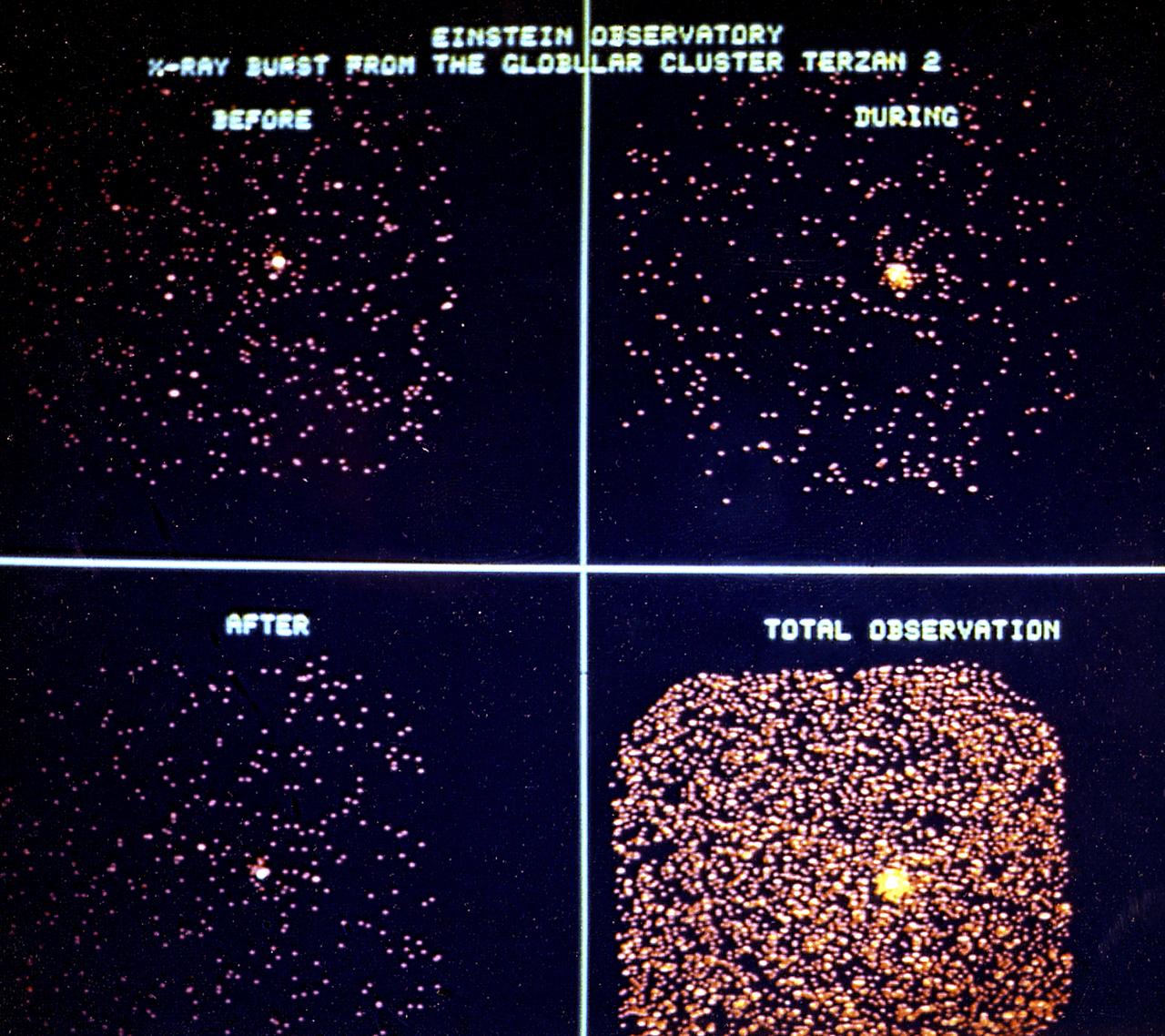
The dramatic change in x-ray emission from the Terzan 2 cluster is shown in this series of 2.5-minute exposures taken with the High Energy Astronomy Observatory (HEAO)-2/Einstein Observatory immediately before, during, and after the burst. Total exposure (20 minutes) of the object, including the outburst, is shown in the fourth photograph. These images represent the first observation of an x-ray burst in progress. The actual burst lasted 50 seconds. Among the rarest, and most bizarre, phenomena observed by x-ray astronomers are the so-called cosmic bursters (x-ray sources that suddenly and dramatically increase in intensity then subside). These sudden bursts of intense x-ray radiation apparently come from compact objects with a diameter smaller than 30 miles (48 kilometers). Yet, despite their minuscule size, a typical x-ray burster can release more x-ray energy in a single brief burst than our Sun does in an entire week. The HEAO-2, the first imaging and largest x-ray telescope built to date, was capable of producing actual photographs of x-ray objects. Shortly after launch, the HEAO-2 was nicknamed the Einstein Observatory by its scientific experimenters in honor of the centernial of the birth of Albert Einstein, whose concepts of relativity and gravitation have influenced much of modern astrophysics, particularly x-ray astronomy. The HEAO was designed and developed by TRW, Inc. under the project management of the Marshall Space Flight Center.
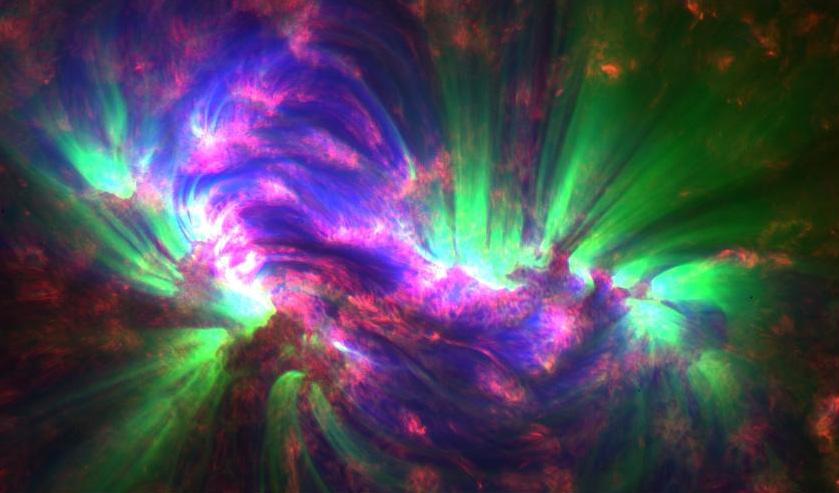
NASA release July 27, 2011 These jets, known as spicules, were captured in an SDO image on April 25, 2010. Combined with the energy from ripples in the magnetic field, they may contain enough energy to power the solar wind that streams from the sun toward Earth at 1.5 million miles per hour. Credit: NASA/SDO/AIA To see a full disk view go here: <a href="http://www.flickr.com/photos/gsfc/5982663752/in/photostream/">www.flickr.com/photos/gsfc/5982663752/in/photostream/</a> <b><a href="http://www.nasa.gov/centers/goddard/home/index.html" rel="nofollow">NASA Goddard Space Flight Center</a></b> enables NASA’s mission through four scientific endeavors: Earth Science, Heliophysics, Solar System Exploration, and Astrophysics. Goddard plays a leading role in NASA’s accomplishments by contributing compelling scientific knowledge to advance the Agency’s mission. <b>Follow us on <a href="http://twitter.com/NASA_GoddardPix" rel="nofollow">Twitter</a></b> <b>Like us on <a href="http://www.facebook.com/pages/Greenbelt-MD/NASA-Goddard/395013845897?ref=tsd" rel="nofollow">Facebook</a></b> <b>Find us on <a href="http://web.stagram.com/n/nasagoddard/?vm=grid" rel="nofollow">Instagram</a></b>

A high content of hydrogen in Mars southern polar region is apparent in this global map of high-energy neutrons measured by NASA Mars Odyssey spacecraft.
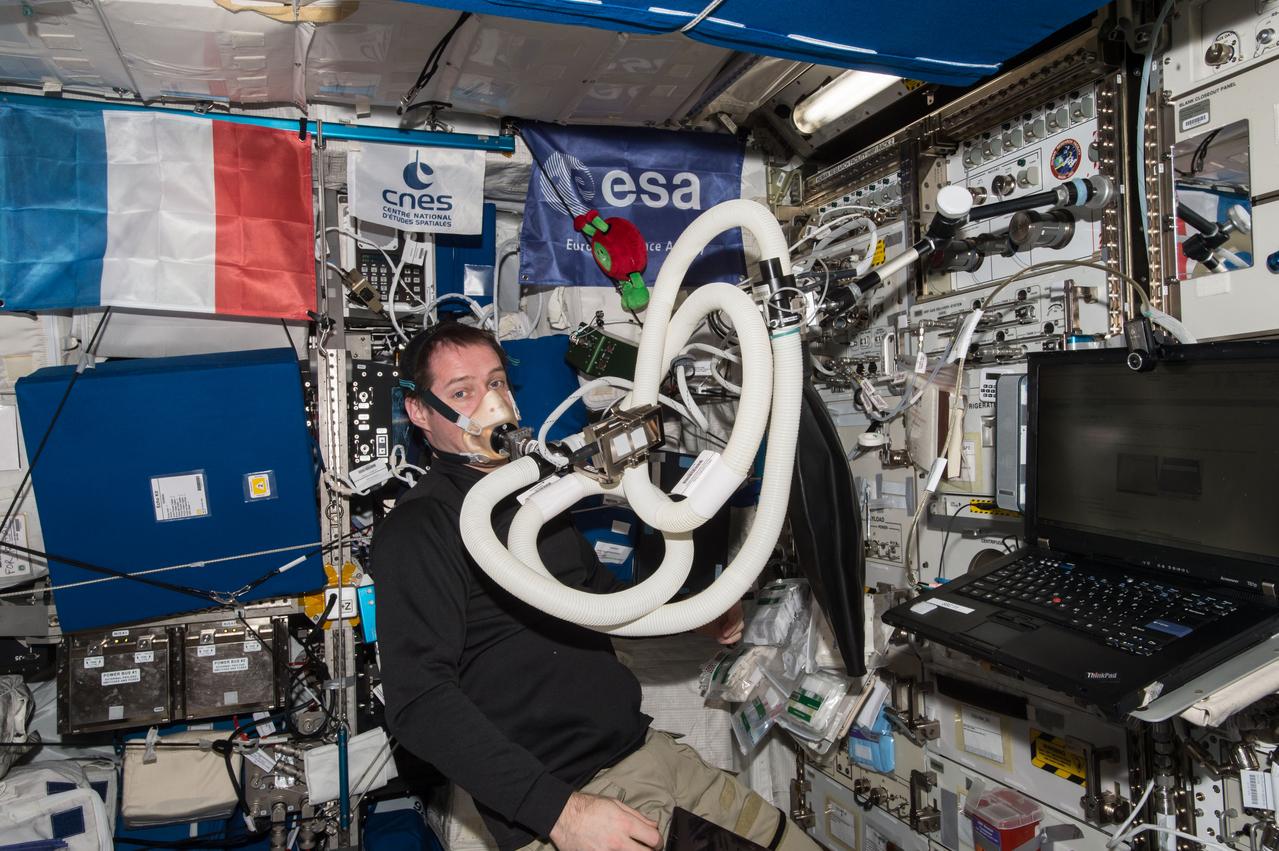
iss050e055526 (3/8/2017) --- European Space Agency (ESA) astronaut Thomas Pesquet utilizing the Pulmonary Function System (PFS) to perform a series of Oxygen Uptake Measurements (OUMs) after prescribed meals and scheduled fluid collections, in the Columbus Module. The Energy investigation measures an Astronaut's Energy Requirements for Long-Term Space Flight, a crucial factor needed for sending the correct amount of the right types of food with space crews.

This image is an x-ray view of Eta Carinae Nebula showing bright stars taken with the High Energy Astronomy Observatory (HEAO)-2/Einstein Observatory. The Eta Carinae Nebula is a large and complex cloud of gas, crisscrossed with dark lanes of dust, some 6,500 light years from Earth. Buried deep in this cloud are many bright young stars and a very peculiar variable star. The HEAO-2, the first imaging and largest x-ray telescope built to date, was capable of producing actual photographs of x-ray objects. Shortly after launch, the HEAO-2 was nicknamed the Einstein Observatory by its scientific experimenters in honor of the centernial of the birth of Albert Einstein, whose concepts of relativity and gravitation have influenced much of modern astrophysics, particularly x-ray astronomy. The HEAO-2, designed and developed by TRW, Inc. under the project management of the Marshall Space Flight Center, was launched aboard an Atlas/Centaur launch vehicle on November 13, 1978.
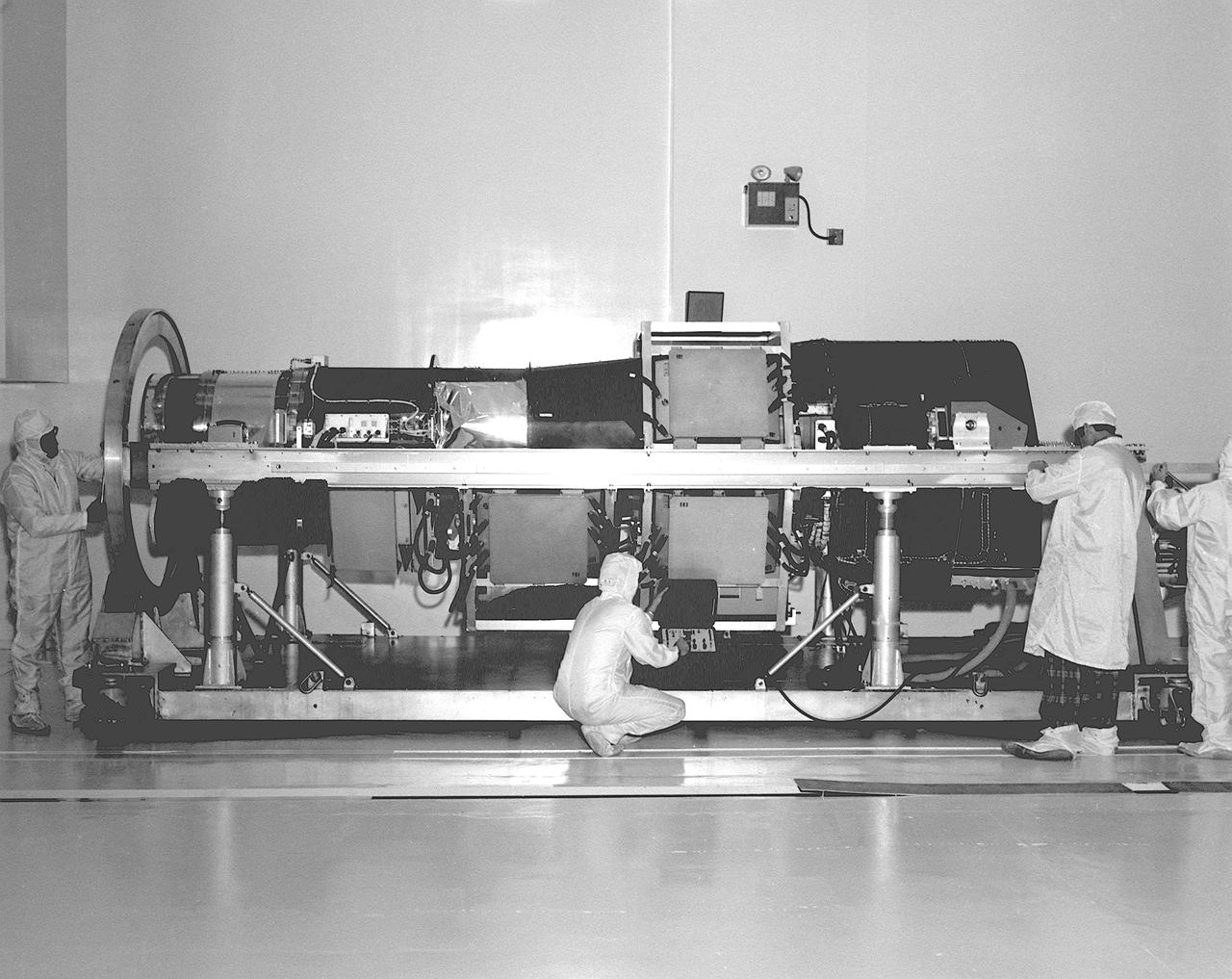
This photograph is of the High Energy Astronomy Observatory (HEAO)-2 telescope being checked by engineers in the X-Ray Calibration Facility at the Marshall Space Flight Center (MSFC). The MSFC was heavily engaged in the technical and scientific aspects, testing and calibration, of the HEAO-2 telescope. The HEAO-2 was the first imaging and largest x-ray telescope built to date. The X-Ray Calibration Facility was built in 1976 for testing MSFC's HEAO-2. The facility is the world's largest, most advanced laboratory for simulating x-ray emissions from distant celestial objects. It produced a space-like environment in which components related to x-ray telescope imaging are tested and the quality of their performance in space is predicted. The original facility contained a 1,000-foot long by 3-foot diameter vacuum tube (for the x-ray path) cornecting an x-ray generator and an instrument test chamber. Recently, the facility was upgraded to evaluate the optical elements of NASA's Hubble Space Telescope, Chandra X-Ray Observatory and Compton Gamma-Ray Observatory.

This image of the suspected Black Hole, Cygnus X-1, was the first object seen by the High Energy Astronomy Observatory (HEAO)-2/Einstein Observatory. According to the theories to date, one concept of a black hole is a star, perhaps 10 times more massive than the Sun, that has entered the last stages of stelar evolution. There is an explosion triggered by nuclear reactions after which the star's outer shell of lighter elements and gases is blown away into space and the heavier elements in the stellar core begin to collapse upon themselves. Once this collapse begins, the inexorable force of gravity continues to compact the material until it becomes so dense it is squeezed into a mere point and nothing can escape from its extreme gravitational field, not even light. The HEAO-2, the first imaging and largest x-ray telescope built to date, was capable of producing actual photographs of x-ray objects. Shortly after launch, the HEAO-2 was nicknamed the Einstein Observatory by its scientific experimenters in honor of the centernial of the birth of Albert Einstein, whose concepts of relativity and gravitation have influenced much of modern astrophysics, particularly x-ray astronomy.
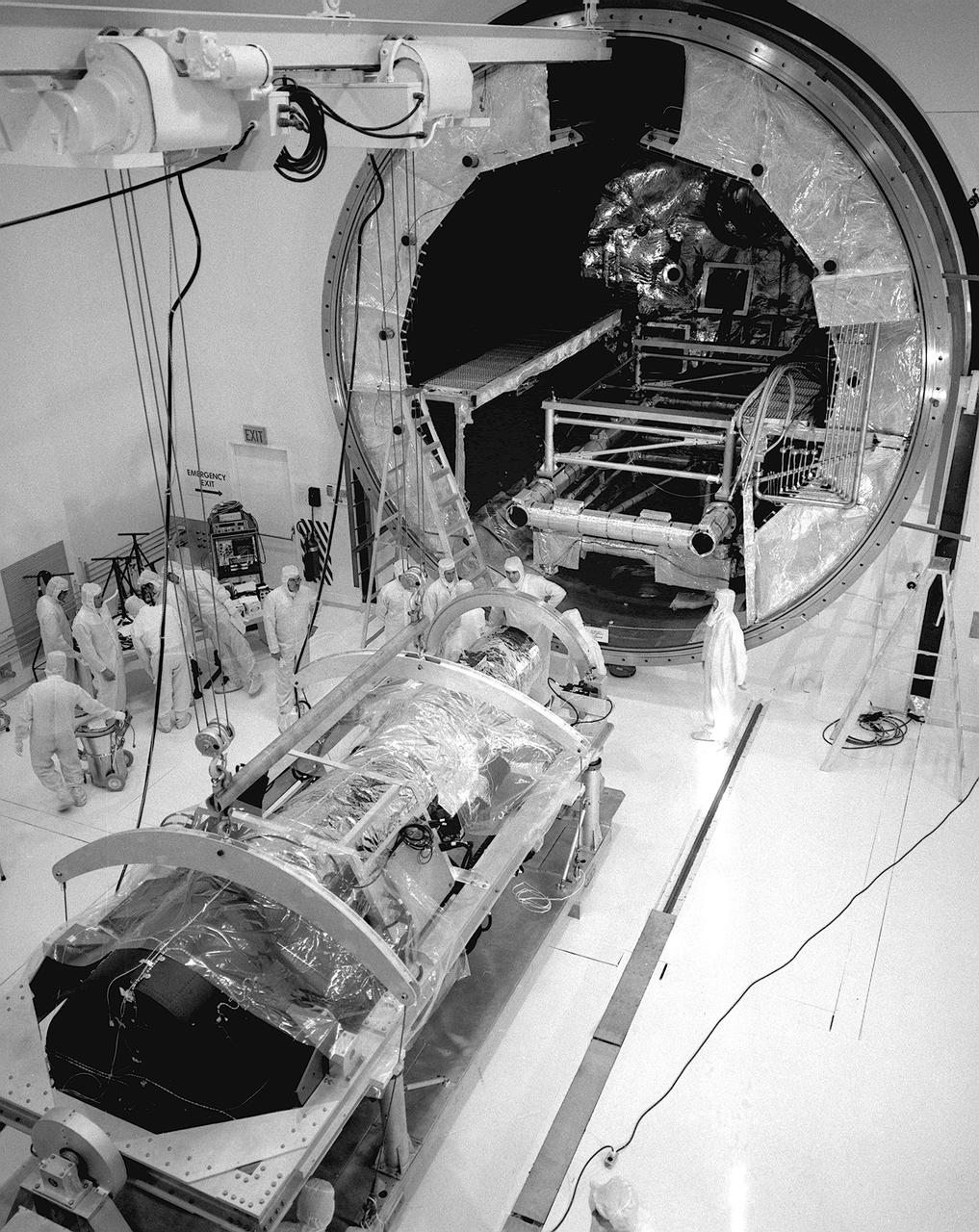
This photograph is of the High Energy Astronomy Observatory (HEAO)-2 telescope being evaluated by engineers in the clean room of the X-Ray Calibration Facility at the Marshall Space Flight Center (MSFC). The MSFC was heavily engaged in the technical and scientific aspects, testing and calibration, of the HEAO-2 telescope The HEAO-2 was the first imaging and largest x-ray telescope built to date. The X-Ray Calibration Facility was built in 1976 for testing MSFC's HEAO-2. The facility is the world's largest, most advanced laboratory for simulating x-ray emissions from distant celestial objects. It produced a space-like environment in which components related to x-ray telescope imaging are tested and the quality of their performance in space is predicted. The original facility contained a 1,000-foot long by 3-foot diameter vacuum tube (for the x-ray path) cornecting an x-ray generator and an instrument test chamber. Recently, the facility was upgraded to evaluate the optical elements of NASA's Hubble Space Telescope, Chandra X-Ray Observatory and Compton Gamma-Ray Observatory.
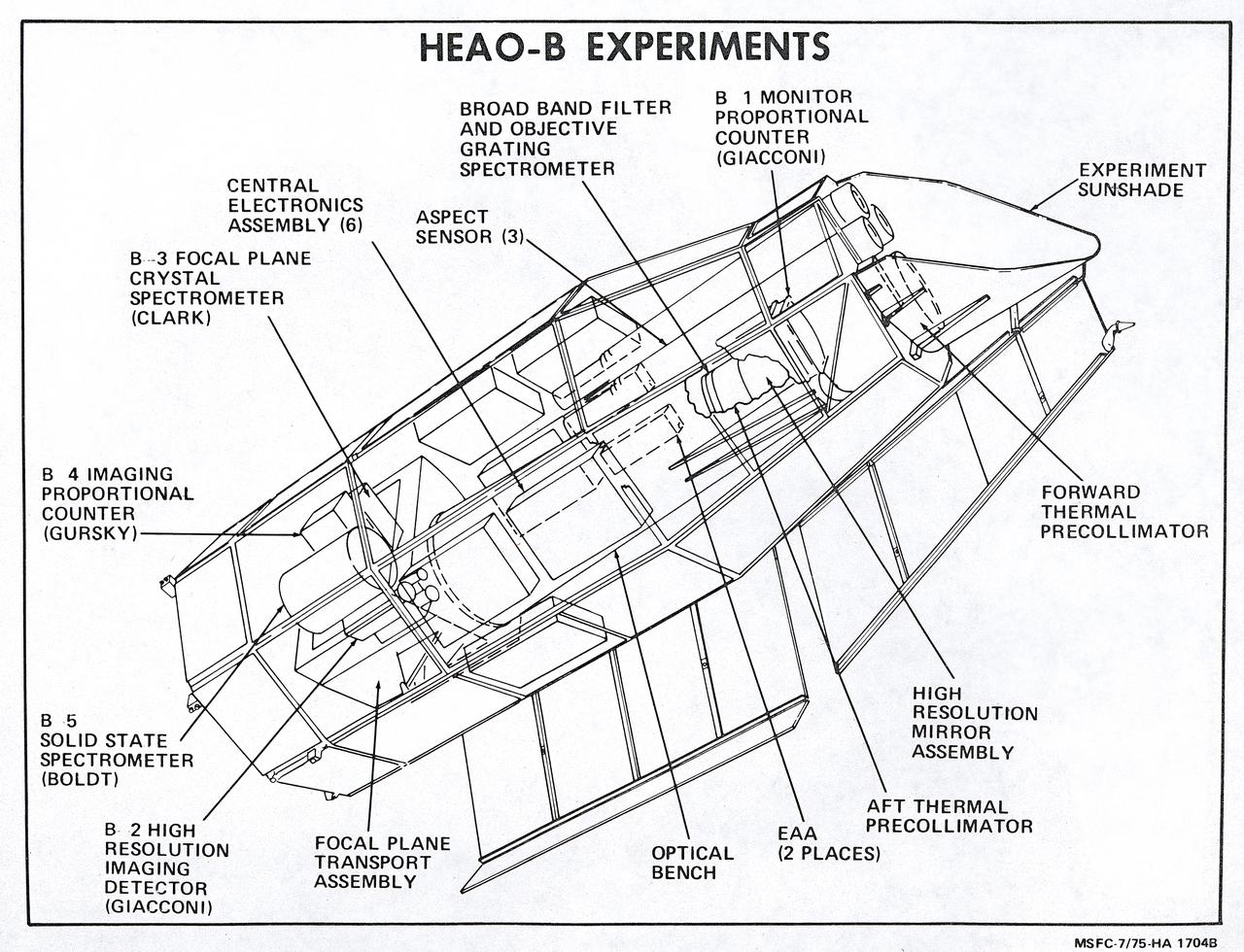
This illustration is a schematic of the High Energy Astronomy Observatory (HEAO)-2 and its experiments. It shows the focal plane instruments (at the right) plus the associated electronics for operating the telescope as it transmitted its observations to the ground. A fifth instrument, the Monitor Proportional Counter, is located near the front of the telescope. Four separate astronomical instruments are located at the focus of this telescope and they could be interchanged for different types of observations as the observatory pointed at interesting areas of the Sky. Two of these instruments produced images; a High Resolution Imaging Detector and an Imaging Proportional Counter. The other two instruments, the Solid State Spectrometer and the Crystal Spectrometer, measured the spectra of x-ray objects. A fifth instrument, the Monitor Proportional Counter, continuously viewed space independently to study a wider band of x-ray wavelengths and to examine the rapid time variations in the sources. The HEAO-2 was nicknamed the Einstein Observatory by its scientific experimenters in honor of the centernial of the birth of Albert Einstein, whose concepts of relativity and gravitation have influenced much of modern astrophysics, particularly x-ray astronomy. The HEAO-2, designed and developed by TRW, Inc. under the project management of the Marshall Space Flight Center, was launched aboard an Atlas/Centaur launch vehicle on November 13, 1978. The HEAO-2 was originally identified as HEAO-B but the designation was changed once the spacecraft achieved orbit.

This image is an observation of Quasar 3C 273 by the High Energy Astronomy Observatory (HEAO)-2/Einstein Observatory. It reveals the presence of a new source (upper left) with a red shift that indicates that it is about 10 billion light years away. Quasars are mysterious, bright, star-like objects apparently located at the very edge of the visible universe. Although no bigger than our solar system, they radiate as much visible light as a thousand galaxies. Quasars also emit radio signals and were previously recognized as x-ray sources. The HEAO-2, the first imaging and largest x-ray telescope built to date, was capable of producing actual photographs of x-ray objects. Shortly after launch, the HEAO-2 was nicknamed the Einstein Observatory by its scientific experimenters in honor of the centernial of the birth of Albert Einstein, whose concepts of relativity and gravitation have influenced much of modern astrophysics, particularly x-ray astronomy. The HEAO-2 was designed and developed by TRW, Inc. under the project management of the Marshall Space Flight Center.
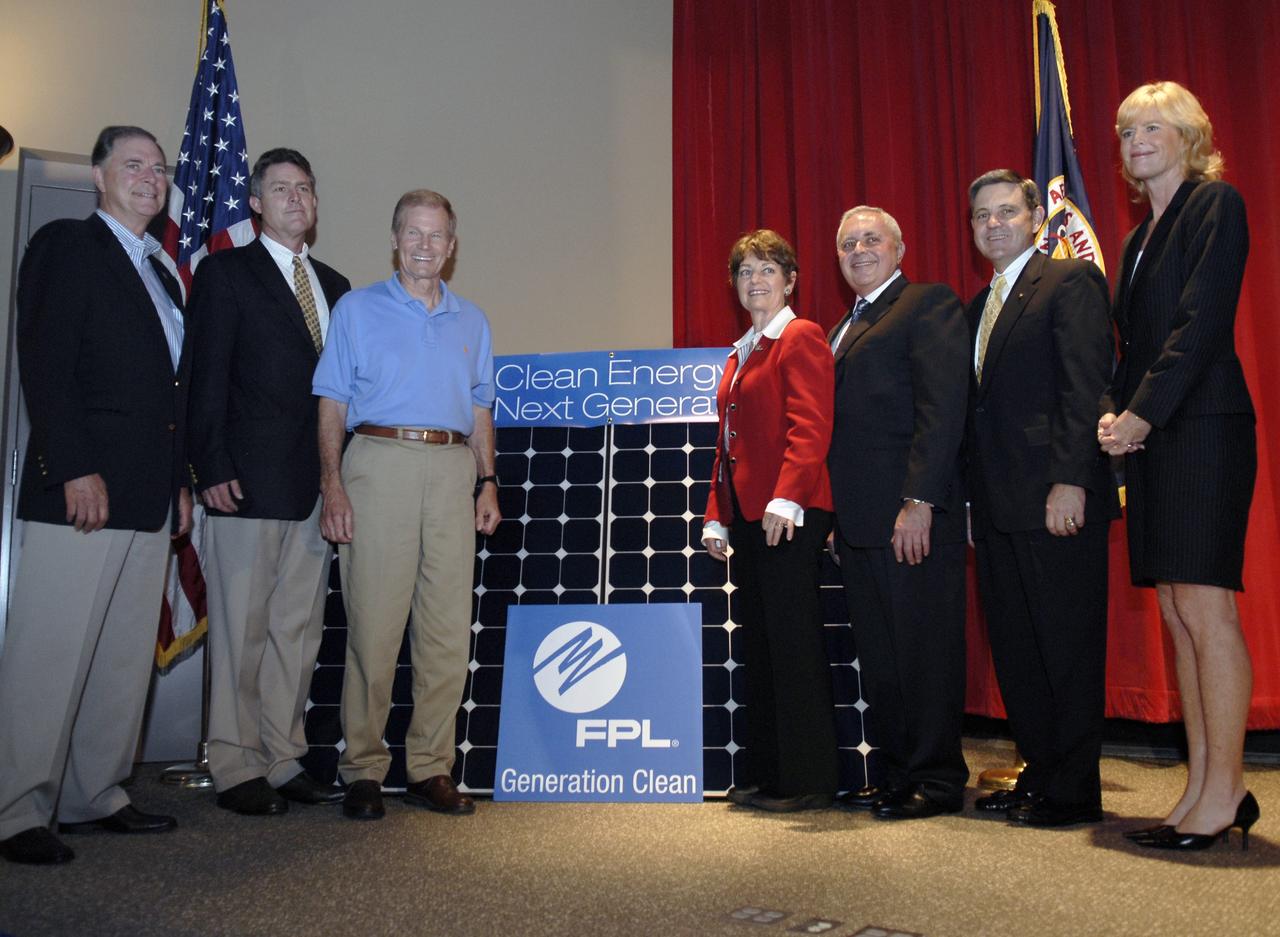
CAPE CANAVERAL, Fla. – Gathering on stage for the groundbreaking ceremony for the joint NASA and Florida Power & Light, or FPL, solar power project at NASA's Kennedy Space Center are Florida Rep. Bill Posey, Eric Draper, deputy director of Audubon of Florida, Sen. Bill Nelson, Florida Rep. Suzanne Kosmas, Armando Olivera, president and CEO of FPL, Center Director Bob Cabana and Pam Rauch, vice president of External Affairs for FPL. FPL, Florida's largest electric utility, will build and maintain two solar photovoltaic power generation systems at Kennedy. One will produce an estimated 10 megawatts of emissions-free power for FPL customers, which is enough energy to serve roughly 1,100 homes. The second is a one-megawatt solar power facility that will provide renewable energy directly to Kennedy. The FPL facilities at NASA will help provide Florida residents and America's space program with new sources of clean energy that will cut reliance on fossil fuels and improve the environment by reducing greenhouse gas emissions. The one megawatt facility also will help NASA meet its goal for use of power generated from renewable energy. Photo credit: NASA/Kim Shiflett
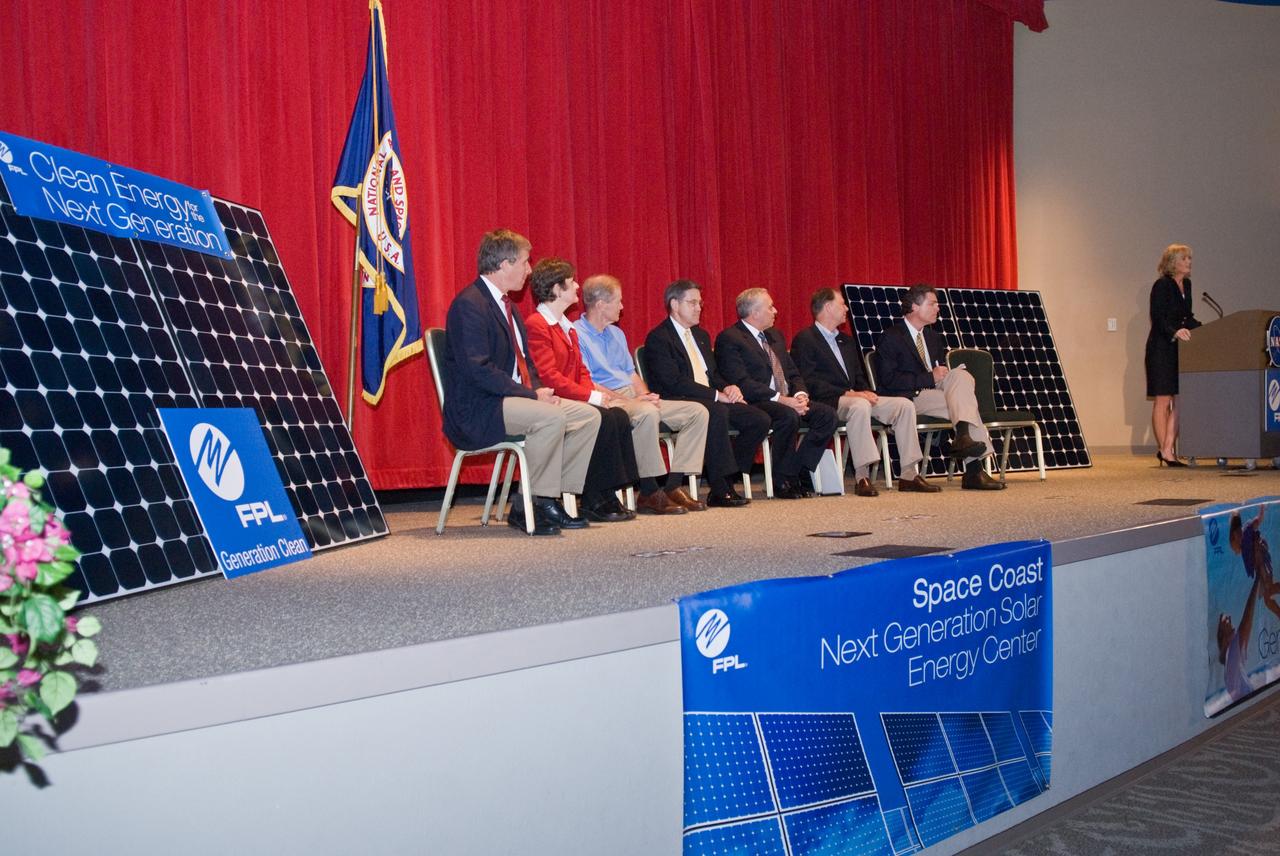
CAPE CANAVERAL, Fla. – Pam Rauch, vice president of External Affairs for Florida Power & Light, or FPL, speaks to guests at the groundbreaking ceremony for the joint NASA and FPL solar power project at NASA's Kennedy Space Center. Others on the stage are Ed Smeloff with SunPower Corporation, Florida Rep. Suzanne Kosmas, Sen. Bill Nelson, Center Director Bob Cabana, Armando Olivera, president and CEO of FPL, Florida Rep. Bill Posey and Eric Draper, deputy director of Audubon of Florida. FPL, Florida's largest electric utility, will build and maintain two solar photovoltaic power generation systems at Kennedy. One will produce an estimated 10 megawatts of emissions-free power for FPL customers, which is enough energy to serve roughly 1,100 homes. The second is a one-megawatt solar power facility that will provide renewable energy directly to Kennedy. The FPL facilities at NASA will help provide Florida residents and America's space program with new sources of clean energy that will cut reliance on fossil fuels and improve the environment by reducing greenhouse gas emissions. The one megawatt facility also will help NASA meet its goal for use of power generated from renewable energy. Photo credit: NASA/Kim Shiflett
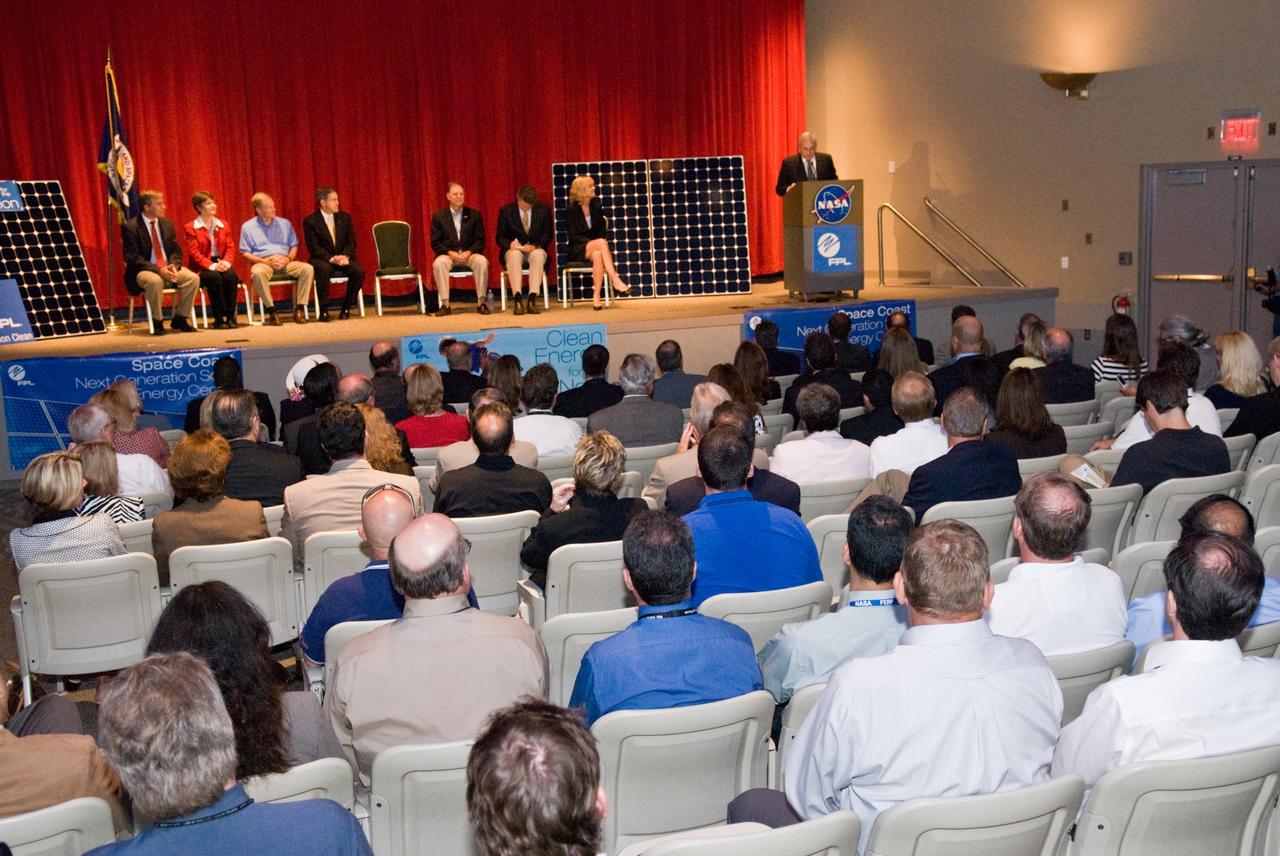
CAPE CANAVERAL, Fla. – Armando Olivera, president and CEO of Florida Power & Light, or FPL, speaks to guests at the groundbreaking ceremony for the joint NASA and FPL solar power project at NASA's Kennedy Space Center. Others on the stage are, from left, Ed Smeloff with SunPower Corporation, Florida Rep. Suzanne Kosmas, Sen. Bill Nelson, Center Director Bob Cabana, Florida Rep. Bill Posey, Eric Draper, deputy director of Audubon of Florida, and Pam Rauch, vice president of External Affairs for FPL. FPL, Florida's largest electric utility, will build and maintain two solar photovoltaic power generation systems at Kennedy. One will produce an estimated 10 megawatts of emissions-free power for FPL customers, which is enough energy to serve roughly 1,100 homes. The second is a one-megawatt solar power facility that will provide renewable energy directly to Kennedy. The FPL facilities at NASA will help provide Florida residents and America's space program with new sources of clean energy that will cut reliance on fossil fuels and improve the environment by reducing greenhouse gas emissions. The one megawatt facility also will help NASA meet its goal for use of power generated from renewable energy. Photo credit: NASA/Kim Shiflett
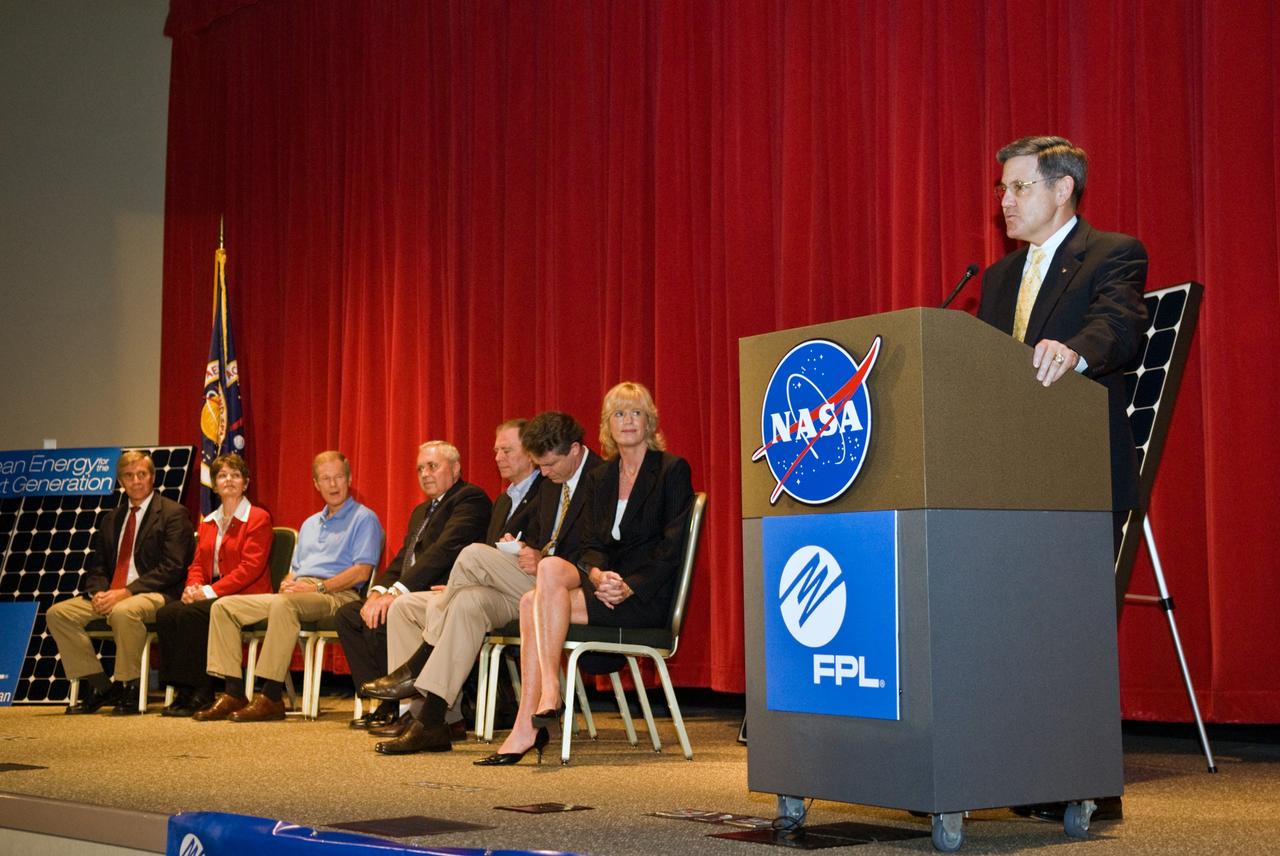
CAPE CANAVERAL, Fla. – Center Director of NASA's Kennedy Space Center in Florida, Bob Cabana addresses guests at the groundbreaking ceremony for the joint NASA and Florida Power & Light, or FPL, solar power project at Kennedy. Others on the stage are (from left) Ed Smeloff with SunPower Corporation, Florida Rep. Suzanne Kosmas, Sen. Bill Nelson, Armando Olivera, president and CEO of FPL, Florida Rep. Bill Posey, Eric Draper, deputy director of Audubon of Florida, and Pam Rauch, vice president of External Affairs for FPL. FPL, Florida's largest electric utility, will build and maintain two solar photovoltaic power generation systems at Kennedy. One will produce an estimated 10 megawatts of emissions-free power for FPL customers, which is enough energy to serve roughly 1,100 homes. The second is a one-megawatt solar power facility that will provide renewable energy directly to Kennedy. The FPL facilities at NASA will help provide Florida residents and America's space program with new sources of clean energy that will cut reliance on fossil fuels and improve the environment by reducing greenhouse gas emissions. The one megawatt facility also will help NASA meet its goal for use of power generated from renewable energy. Photo credit: NASA/Kim Shiflett
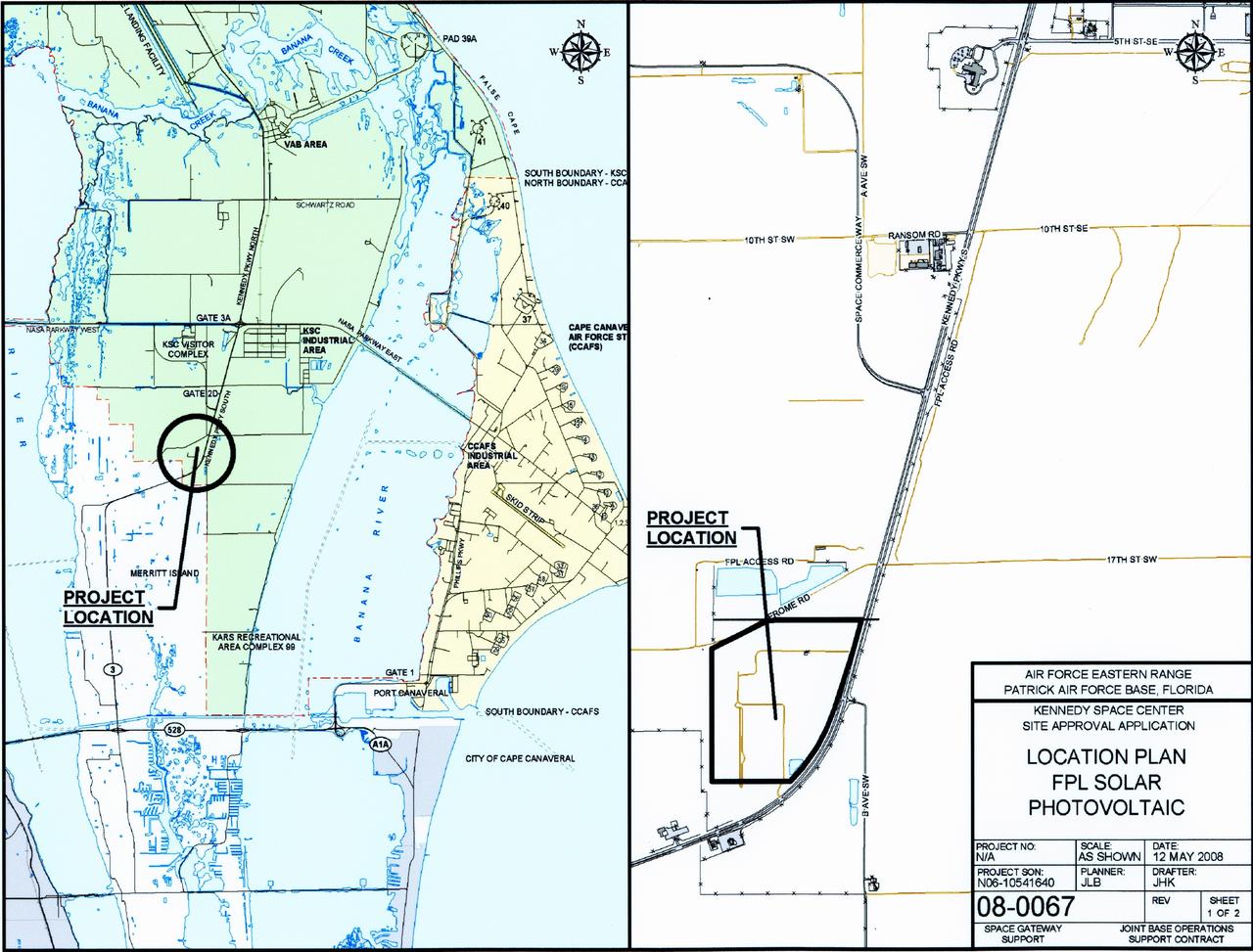
CAPE CANAVERAL, Fla. – These maps show one of the locations of the proposed solar power systems that NASA and Florida Power & Light Company are beginning to construct on NASA's Kennedy Space Center as part of a public-private partnership that promotes a clean-energy future. A groundbreaking ceremony took place on May 27 at the Kennedy Space Center Visitor Complex. FPL, Florida's largest electric utility, will build and maintain two solar photovoltaic power generation systems at Kennedy. One will produce an estimated 10 megawatts of emissions-free power for FPL customers, which is enough energy to serve roughly 1,100 homes. The second is a one-megawatt solar power facility that will provide renewable energy directly to Kennedy. The FPL facilities at NASA will help provide Florida residents and America's space program with new sources of clean energy that will cut reliance on fossil fuels and improve the environment by reducing greenhouse gas emissions. The one megawatt facility also will help NASA meet its goal for use of power generated from renewable energy. Photo courtesy of FPL

CAPE CANAVERAL, Fla. – An aerial view of the site in the Industrial Area of NASA's Kennedy Space Center in Florida where a solar power system will be built. The solar power systems are being constructed by NASA and Florida Power & Light Company as part of a public-private partnership that promotes a clean-energy future. A groundbreaking ceremony took place on May 27 at the Kennedy Space Center Visitor Complex. FPL, Florida's largest electric utility, will build and maintain two solar photovoltaic power generation systems at Kennedy. One will produce an estimated 10 megawatts of emissions-free power for FPL customers, which is enough energy to serve roughly 1,100 homes. The second, which will be built on the pictured location, is a one-megawatt solar power facility that will provide renewable energy directly to Kennedy. The FPL facilities at NASA will help provide Florida residents and America's space program with new sources of clean energy that will cut reliance on fossil fuels and improve the environment by reducing greenhouse gas emissions. The one megawatt facility also will help NASA meet its goal for use of power generated from renewable energy. Photo credit: NASA/Kim Shiflett
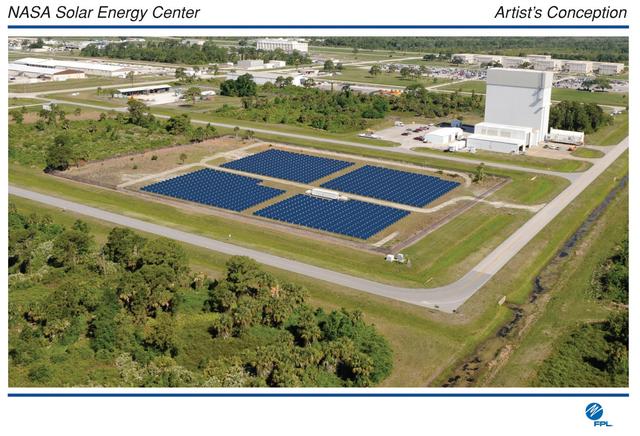
CAPE CANAVERAL, Fla. – This is a rendering of one of two proposed solar power systems that NASA and Florida Power & Light Company are beginning to construct on NASA's Kennedy Space Center as part of a public-private partnership that promotes a clean-energy future. A groundbreaking ceremony took place on May 27 at the Kennedy Space Center Visitor Complex. FPL, Florida's largest electric utility, will build and maintain two solar photovoltaic power generation systems at Kennedy. One will produce an estimated 10 megawatts of emissions-free power for FPL customers, which is enough energy to serve roughly 1,100 homes. The second is a one-megawatt solar power facility that will provide renewable energy directly to Kennedy. The FPL facilities at NASA will help provide Florida residents and America's space program with new sources of clean energy that will cut reliance on fossil fuels and improve the environment by reducing greenhouse gas emissions. The one megawatt facility also will help NASA meet its goal for use of power generated from renewable energy. Photo courtesy of FPL
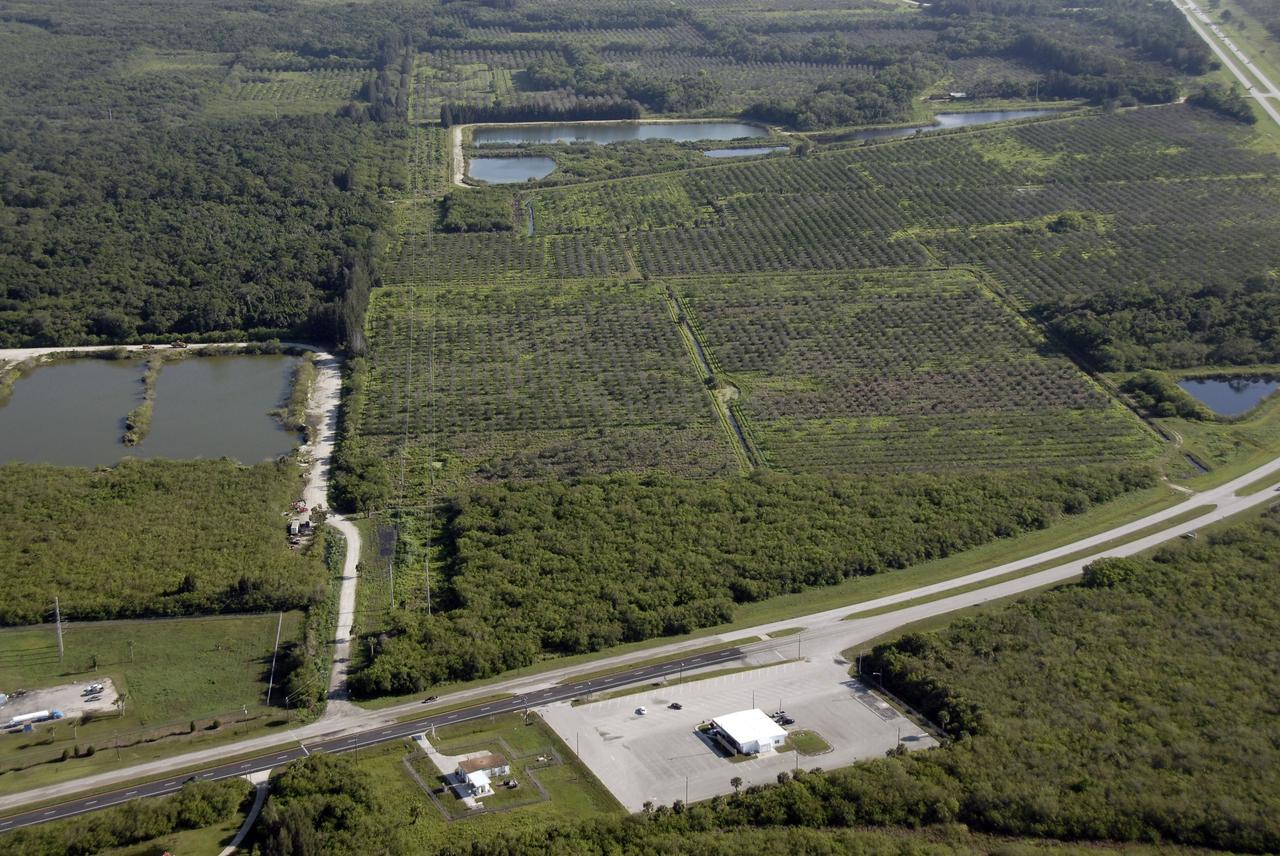
CAPE CANAVERAL, Fla. – An aerial view of the site on S.R. 3 on NASA's Kennedy Space Center in Florida where a solar power system will be built. The solar power systems are being constructed by NASA and Florida Power & Light Company as part of a public-private partnership that promotes a clean-energy future. A groundbreaking ceremony took place on May 27 at the Kennedy Space Center Visitor Complex. FPL, Florida's largest electric utility, will build and maintain two solar photovoltaic power generation systems at Kennedy. One, which will be built on the pictured location, will produce an estimated 10 megawatts of emissions-free power for FPL customers, which is enough energy to serve roughly 1,100 homes. The second is a one-megawatt solar power facility that will provide renewable energy directly to Kennedy. The FPL facilities at NASA will help provide Florida residents and America's space program with new sources of clean energy that will cut reliance on fossil fuels and improve the environment by reducing greenhouse gas emissions. The one megawatt facility also will help NASA meet its goal for use of power generated from renewable energy. Photo credit: NASA/Kim Shiflett
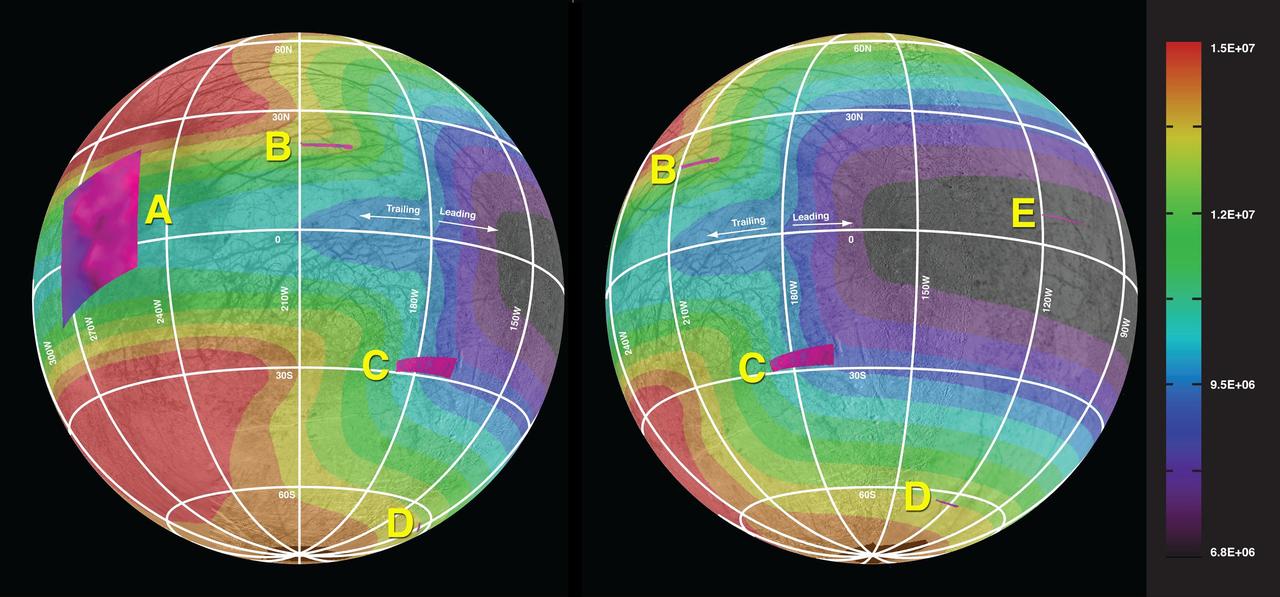
This graphic of Jupiter moon Europa maps a relationship between the amount of energy deposited onto the moon from charged-particle bombardment and chemical contents of ice deposits.
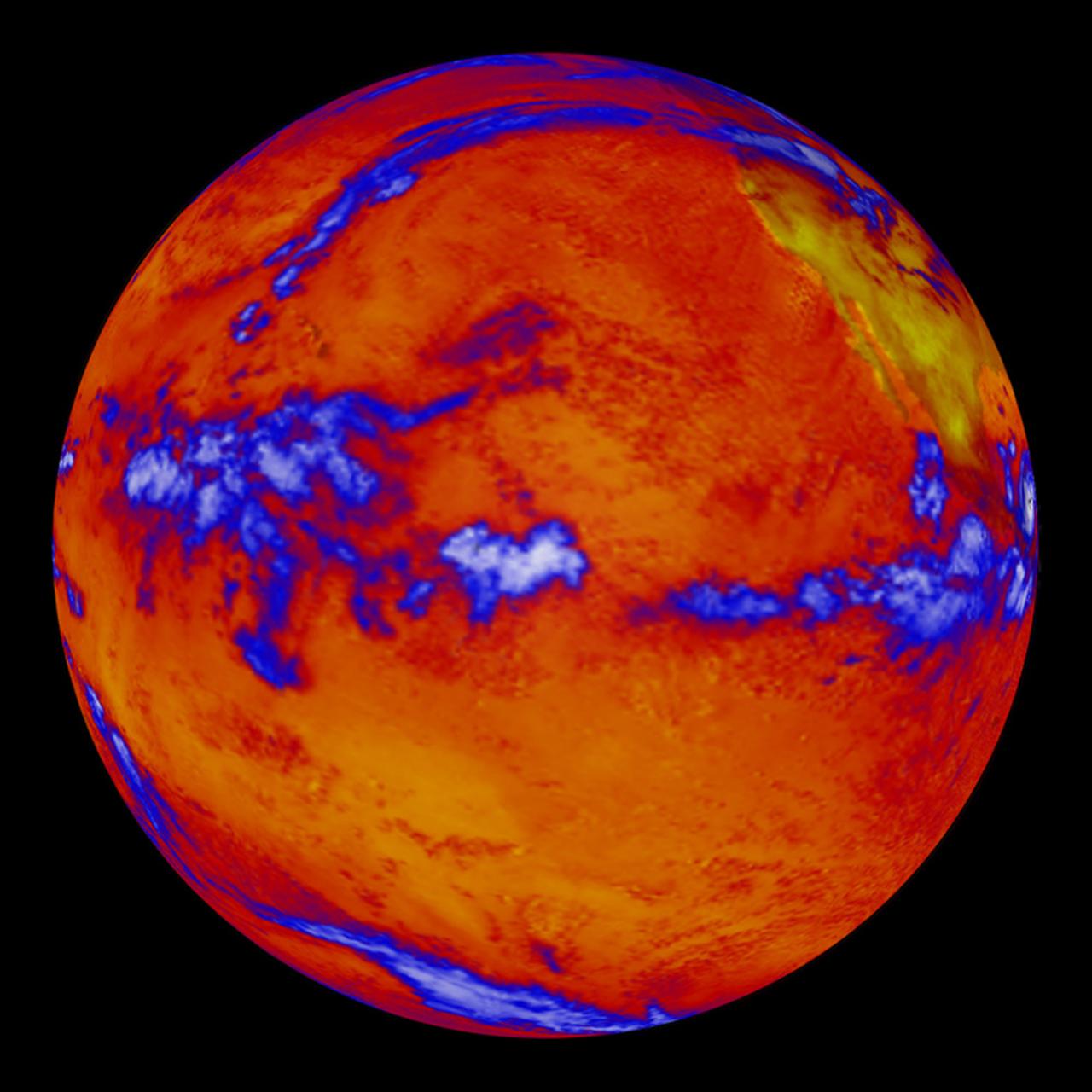
Absorption of solar energy heats up our planet's surface and atmosphere making life for us possible. But the energy carnot stay bound up in the Earth's environment forever. If it did, the Earth would be as hot as the sun. Instead, as the surface and atmosphere warm, they emit thermal long wave radiation, some of which escapes into space and allows the Earth to cool. This false color image of the Earth was produced by the Clouds and the Earth's Radiant Energy System (CERES) instrument flying aboard NASA's Terra spacecraft. The image shows where more or less heat, in the form of long-wave radiation, is emanating from the top of the Earth's atmosphere. As one can see in the image, the thermal radiation leaving the oceans is fairly uniform. The blue swaths represent thick clouds, the tops of which are so high they are among the coldest places on Earth. In the American Southwest, which can be seen in the upper right hand corner of the globe, there is often little cloud cover to block outgoing radiation and relatively little water to absorb solar energy making the amount of outgoing radiation in this area exceeding that of the oceans. Recently, NASA researchers discovered that incoming solar radiation and outgoing thermal radiation increased in the tropics from the 1980s to the 1990s. They believe the unexpected change has to do with apparent change in circulation patterns around the globe, which effectively reduce the amount of water vapor and cloud cover in the upper reaches of the atmosphere. Without the clouds, more sunlight was allowed to enter the tropical zones and more thermal energy was allowed to leave. The findings may have big implications for climate change and future global warming. (Image courtesy NASA Goddard)
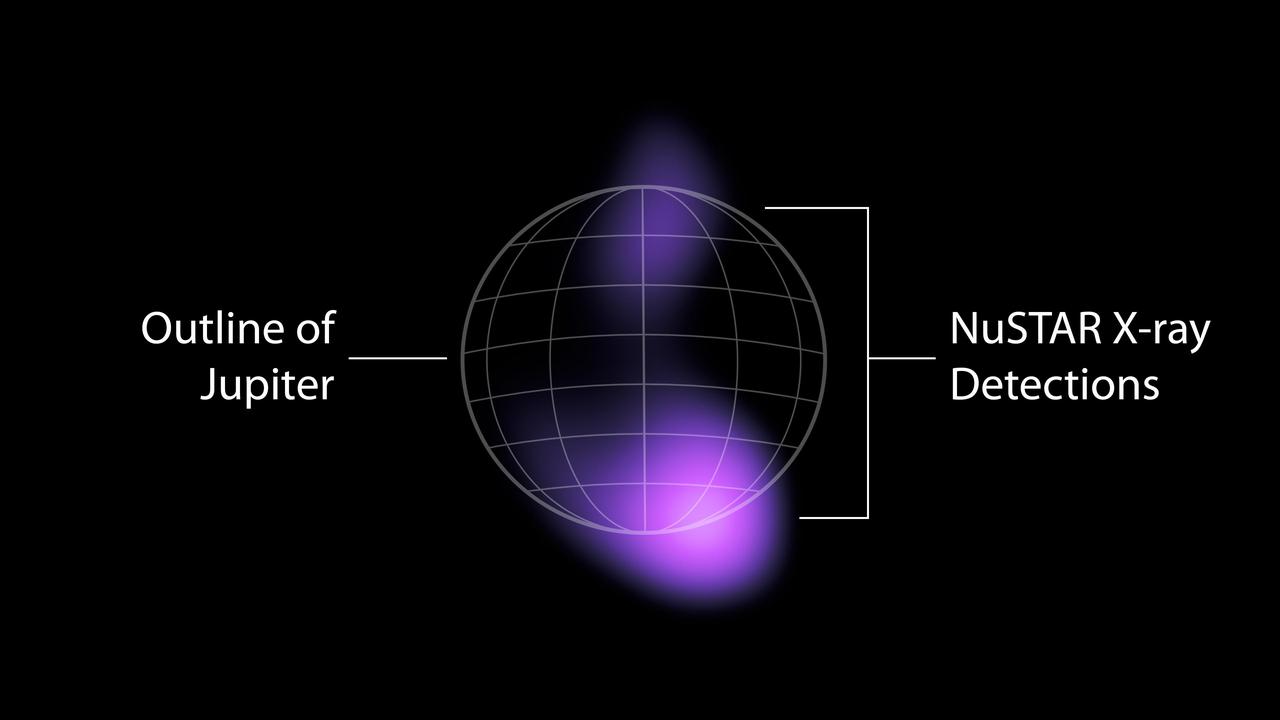
The areas where high-energy X-rays were detected by NASA's NuSTAR (Nuclear Spectroscopic Telescope Array) from the auroras near Jupiter's north and south poles are shown in purple in this graphic. The emissions are the highest-energy light ever seen at Jupiter and the highest-energy light ever detected from a planet in our solar system other than Earth. The light comes from accelerated electrons colliding with the atmosphere. NuSTAR cannot pinpoint the source of the light with high precision, but can only find that it is coming from somewhere in the purple-colored regions. X-rays are a form of light, but with much higher energies and shorter wavelengths than the visible light human eyes can see. NASA's Chandra X-ray Observatory and the ESA (European Space Agency) XMM-Newton observatory have both studied X-rays from Jupiter's auroras – produced when volcanos on Jupiter's moon Io shower the planet with ions (atoms stripped of their electrons). Jupiter's powerful magnetic field accelerates the particles and funnels them toward the planet's poles, where they collide with its atmosphere and release energy in the form of light, including X-rays. Electrons from Io are also accelerated by the planet's magnetic field, according to observations by the Jovian Auroral Distributions Experiment (JADE) and Jupiter Energetic-particle Detector Instrument (JEDI) on NASA's Juno spacecraft, which arrived at Jupiter in 2016. Researchers suspected that those electrons should produce even higher-energy X-rays than those observed by Chandra and XMM-Newton, and the NuSTAR detections confirm that hypothesis. The high-energy X-rays are relatively faint, and required a week of NuSTAR observations to detect. Scientists have detected X-rays in Earth's auroras with even higher energies than what NuSTAR saw at Jupiter, but those emissions can only be spotted by small satellites or high-altitude balloons that get extremely close to the locations in the atmosphere that generate those X-rays. https://photojournal.jpl.nasa.gov/catalog/PIA25131
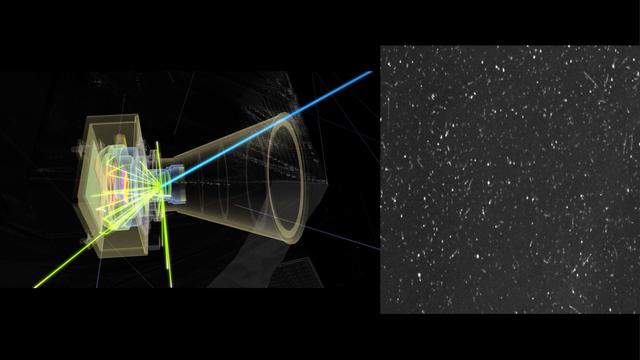
This animation gives an X-ray view of the Juno spacecraft's Stellar Reference Unit (SRU) star camera (left) as it is bombarded by high-energy particles in Jupiter's inner radiation belts. Even though the SRU camera head is six times more heavily shielded than Juno's radiation vault, the highest-energy particles in Jupiter's extreme radiation environment can still penetrate, striking the imaging sensor inside. The signatures from high-energy electron and ion hits appear as dots, squiggles, and streaks (right) in the images collected by the SRU, like static on a television screen. Juno's Radiation Monitoring Investigation collects SRU images and uses image processing to extract these radiation-induced noise signatures to profile the radiation levels encountered by Juno during its close flybys of Jupiter. Animation available at https://photojournal.jpl.nasa.gov/catalog/PIA24436
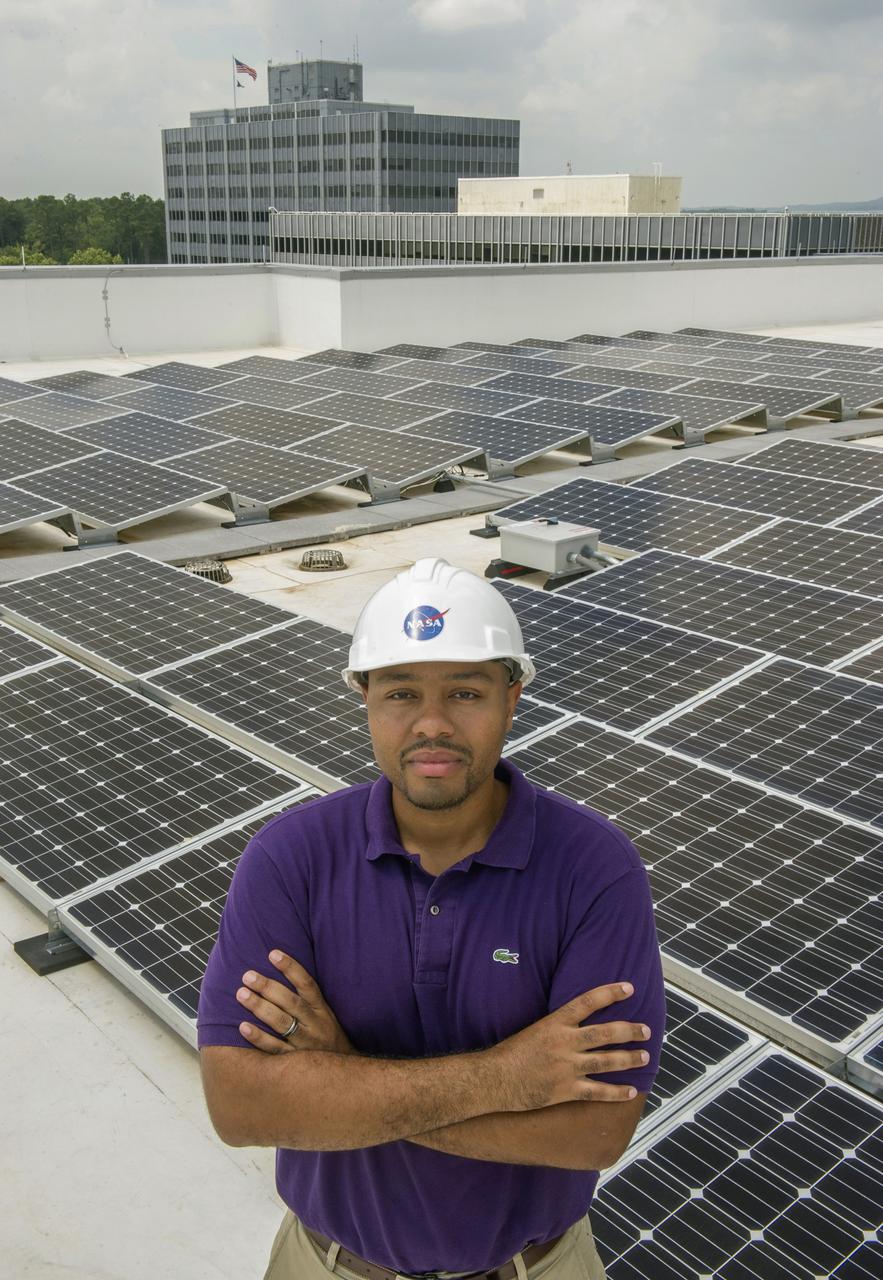
BYRON L. WILLIAMS, FACILITIES MECHANICAL ENGINEER, STANDING ON THE ROOF OF BUILDING 4220 IN FRONT OF THE SOLAR ENERGY PANELS.
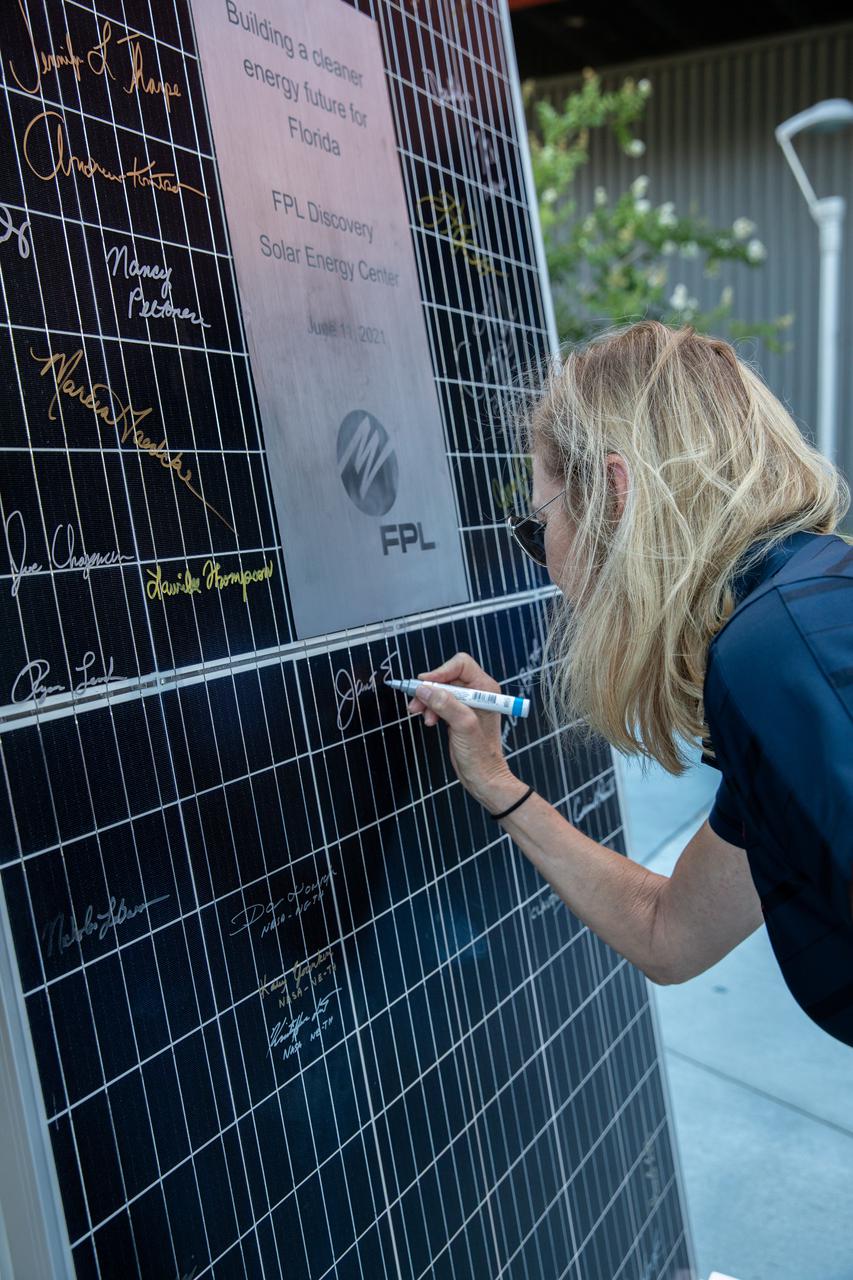
As part of a ribbon-cutting ceremony held on June 11, 2021, Janet Petro, acting director of NASA’s Kennedy Space Center in Florida, signs a solar panel which will be put on display at the Visitor Complex to commemorate the Florida Power and Light’s (FPL) Discovery Solar Energy Center becoming operational at the center. Discovery Solar Energy Center is a 74.5-megawatt solar site, spanning 491 acres at the spaceport. The site contains about 250,000 solar panels in total, producing enough energy to power approximately 15,000 homes. Harnessing energy from the Sun, the panels do not directly power anything at Kennedy, but rather, send energy directly to FPL's electricity grid for distribution to existing customers. Construction began in spring 2020, and the energy center became fully operational on May 30, 2021.
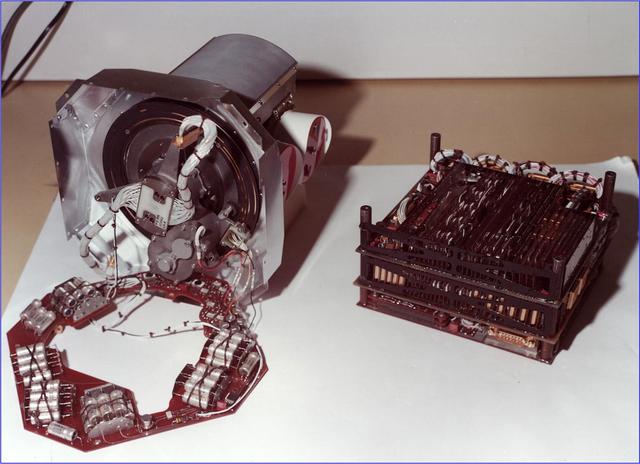
This image shows the low-energy charged particle instrument before it was installed on one of NASA Voyager spacecraft in 1977. The instrument includes a stepper motor that turns the platform on which the sensors are mounted.
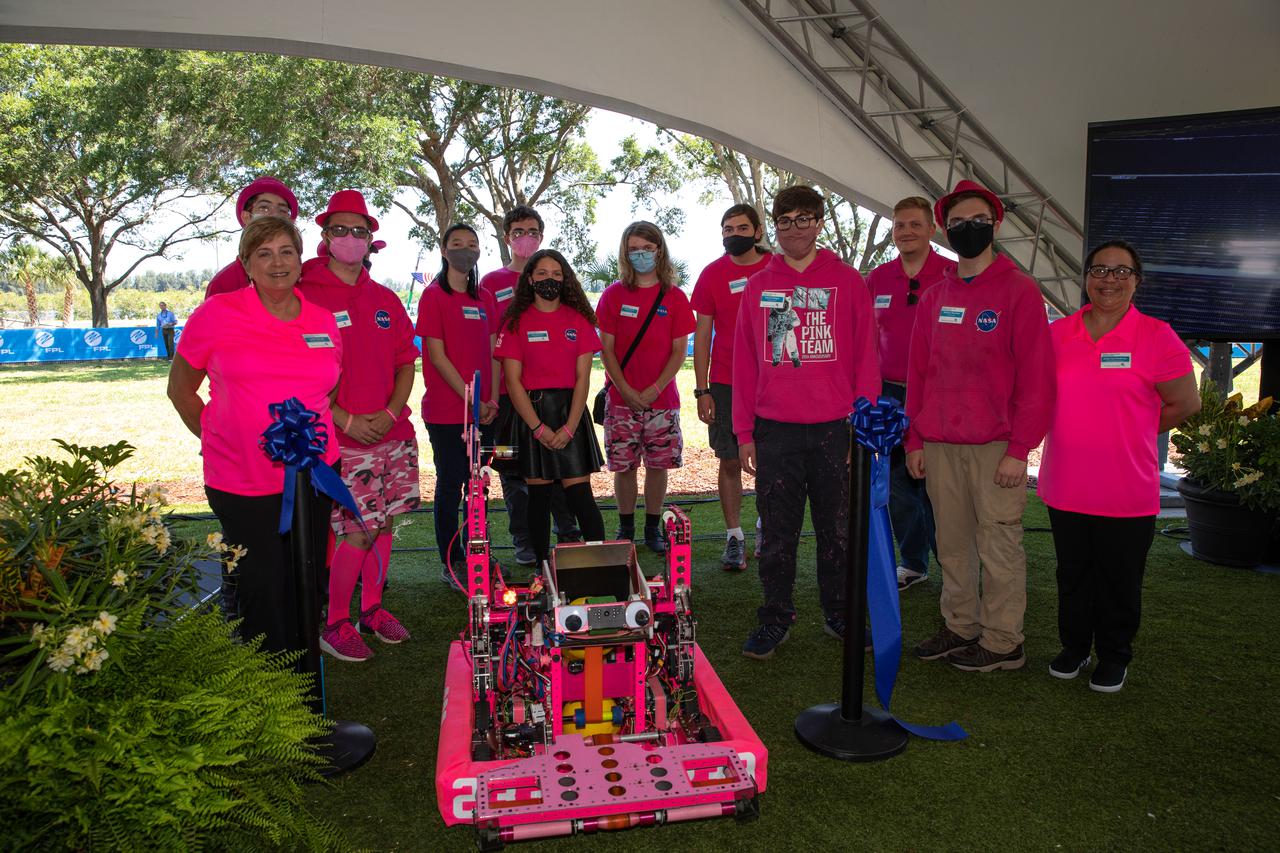
Students and faculty from Rockledge High School’s Pink Team, a robotics team mentored by NASA engineers, pose for a photo at NASA’s Kennedy Space Center Visitor Complex in Florida on June 11, 2021. Using the school’s 2021 competition robot – affectionately named “Pinky” – the Pink Team re-engineered their robot to carry a large pair of scissors to cut the ceremonial ribbon for the Florida Power and Light’s (FPL) Discovery Solar Energy Center becoming operational at the center. Discovery Solar Energy Center is a 74.5-megawatt solar site, spanning 491 acres at the spaceport. The site contains about 250,000 solar panels in total, producing enough energy to power approximately 15,000 homes. Harnessing energy from the Sun, the panels do not directly power anything at Kennedy, but rather, send energy directly to FPL's electricity grid for distribution to existing customers. Construction began in spring 2020, and the energy center became fully operational on May 30, 2021.
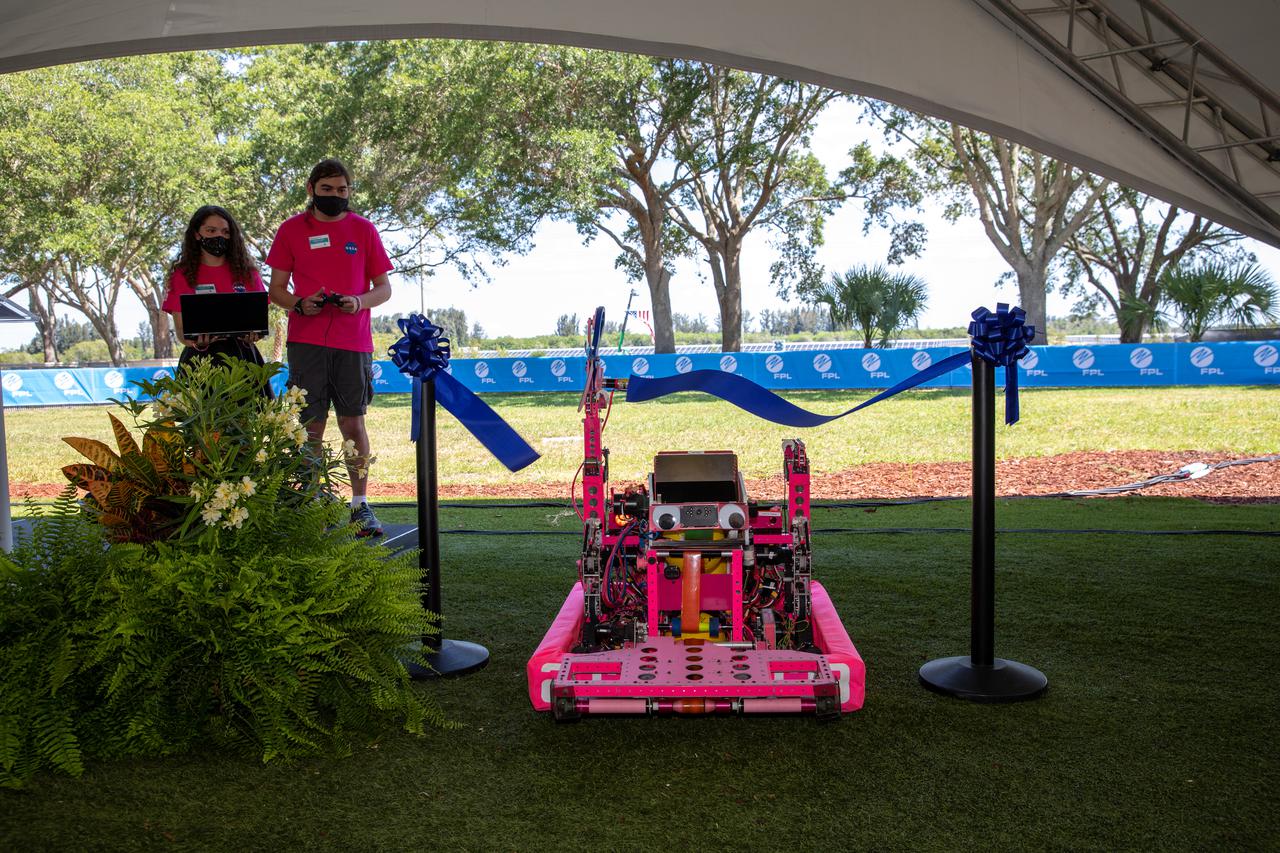
Students from Rockledge High School’s Pink Team, a robotics team mentored by NASA engineers, control the school’s 2021 competition robot – affectionately named “Pinky” – as it cuts the ceremonial ribbon to commemorate the Florida Power and Light’s (FPL) Discovery Solar Energy Center becoming operational at NASA’s Kennedy Space Center in Florida on June 11, 2021. The Pink Team re-engineered their robot to carry a large pair of scissors specifically for the ceremony, which took place at the center’s Visitor Complex. Discovery Solar Energy Center is a 74.5-megawatt solar site, spanning 491 acres at the spaceport. The site contains about 250,000 solar panels in total, producing enough energy to power approximately 15,000 homes. Harnessing energy from the Sun, the panels do not directly power anything at Kennedy, but rather, send energy directly to FPL's electricity grid for distribution to existing customers. Construction began in spring 2020, and the energy center became fully operational on May 30, 2021.
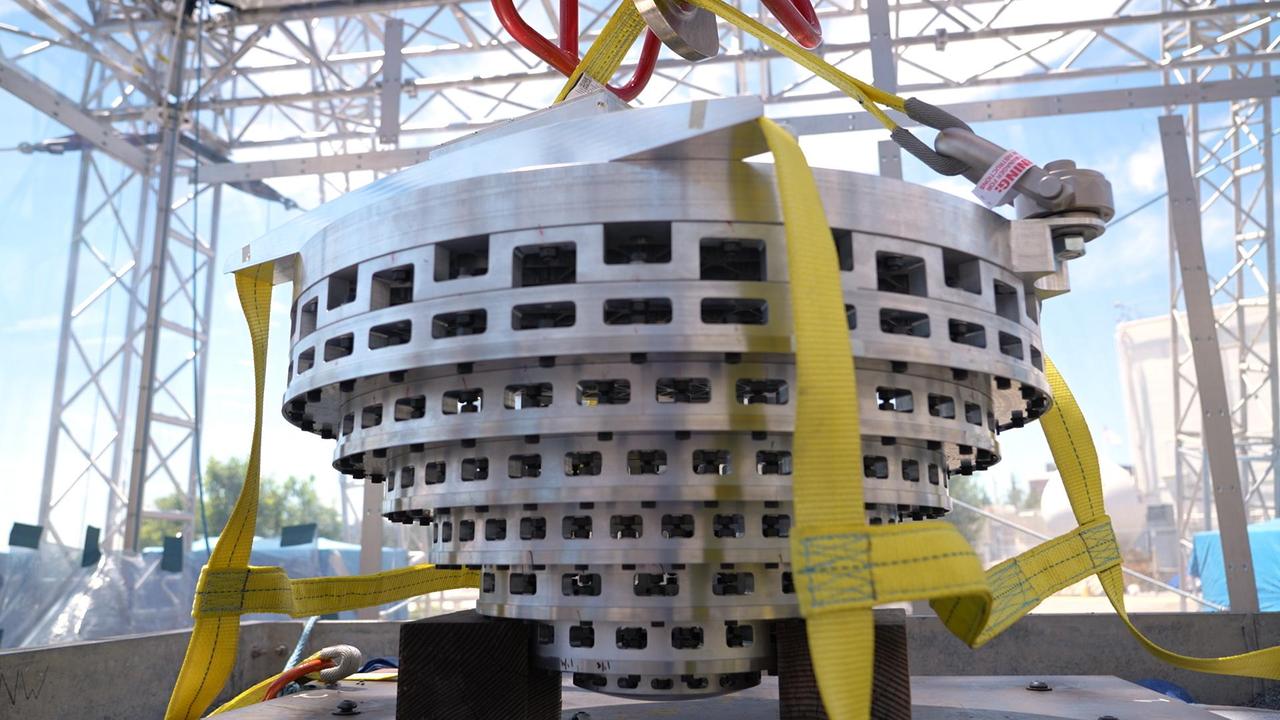
This prototype of a collapsible Mars lander base is part of SHIELD (Simplified High Impact Energy Landing Device), a project aimed at developing spacecraft that would intentionally crash land on the Red Planet, using an accordion-like, collapsible base that acts like the crumple zone of a car to absorb the energy of a hard impact. The design could drastically reduce the cost of landing on Mars by simplifying the harrowing entry, descent, and landing process and expanding options for possible landing sites. Developed at NASA's Jet Propulsion Laboratory in Southern California, the prototype was attached to a drop tower on Aug. 12, 2022, at JPL. https://photojournal.jpl.nasa.gov/catalog/PIA25420
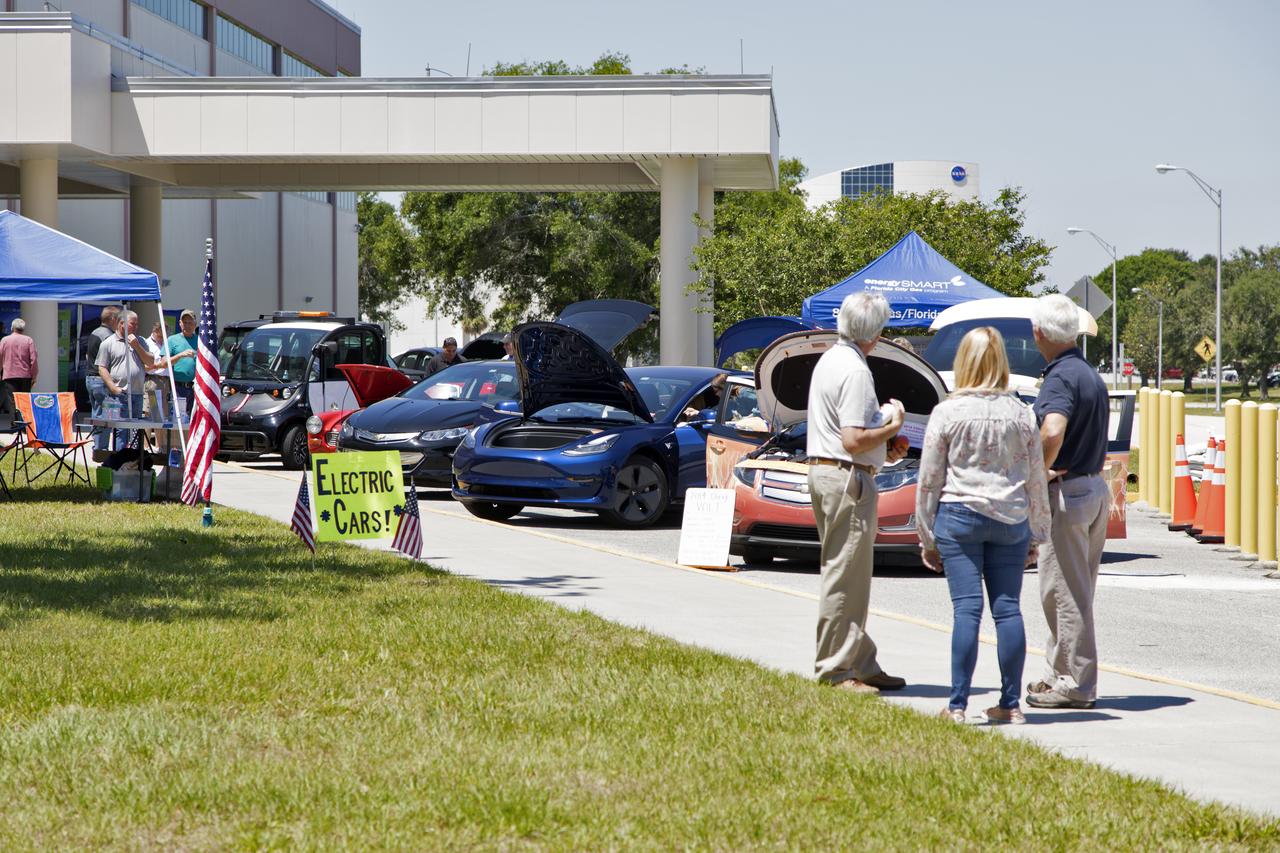
An array of electric vehicles are on display for Kennedy Space Center employees during the center’s annual Earth Day celebration. The two-day event featured approximately 50 exhibitors offering information on a variety of topics, including electric vehicles, sustainable lighting, renewable energy, Florida-friendly landscaping tips, Florida’s biking trails and more.
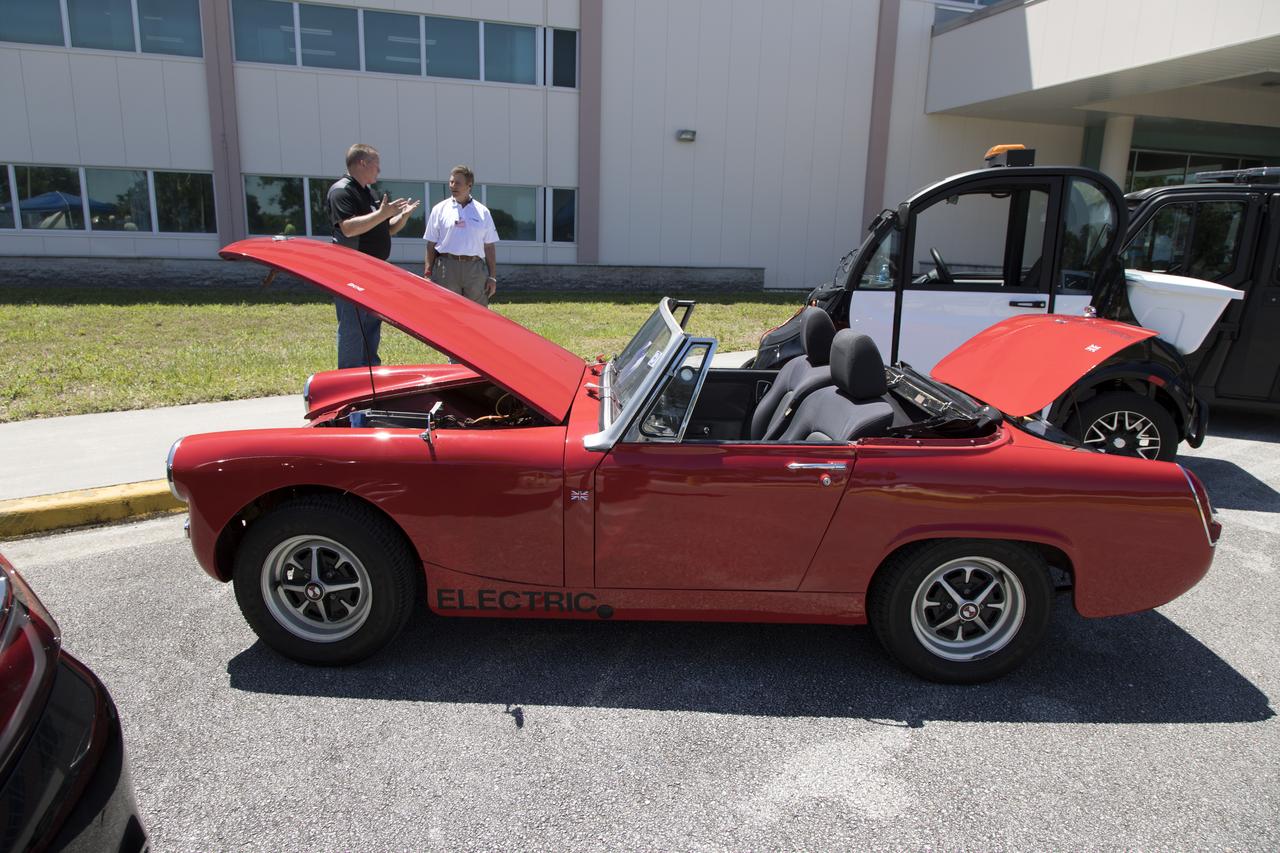
Employees discuss one of the electric vehicles on display during Kennedy Space Center’s annual Earth Day celebration. The two-day event featured approximately 50 exhibitors offering information on a variety of topics, including electric vehicles, sustainable lighting, renewable energy, Florida-friendly landscaping tips, Florida’s biking trails and more.
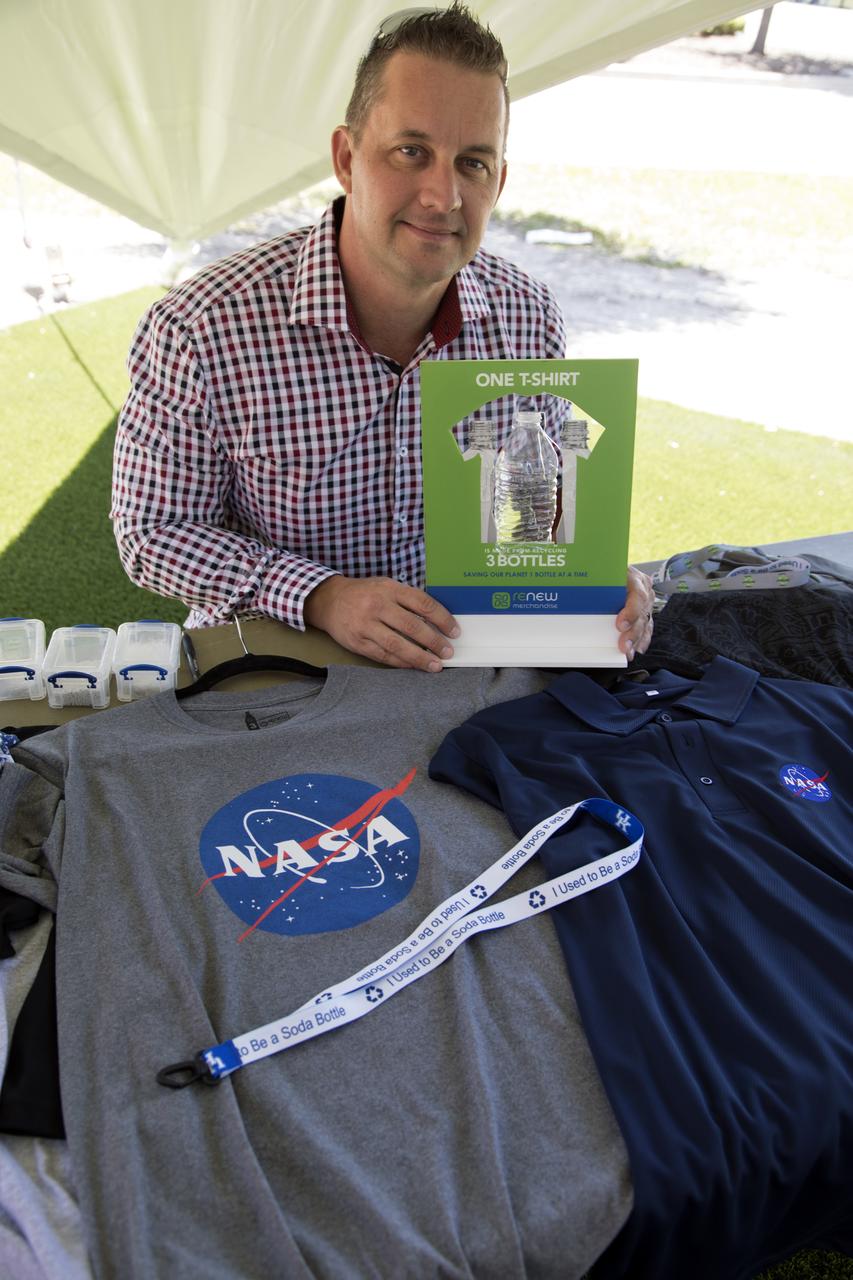
David Bell of Renew Merchandise was one of 50 exhibitors offering information on a variety of topics, including electric vehicles, sustainable lighting, renewable energy, Florida-friendly landscaping tips, Florida’s biking trails and more. The event took place during the annual Earth Day celebration at the Kennedy Space Center Visitor Complex, guests have an opportunity to learn more about energy awareness, the environment and sustainability.
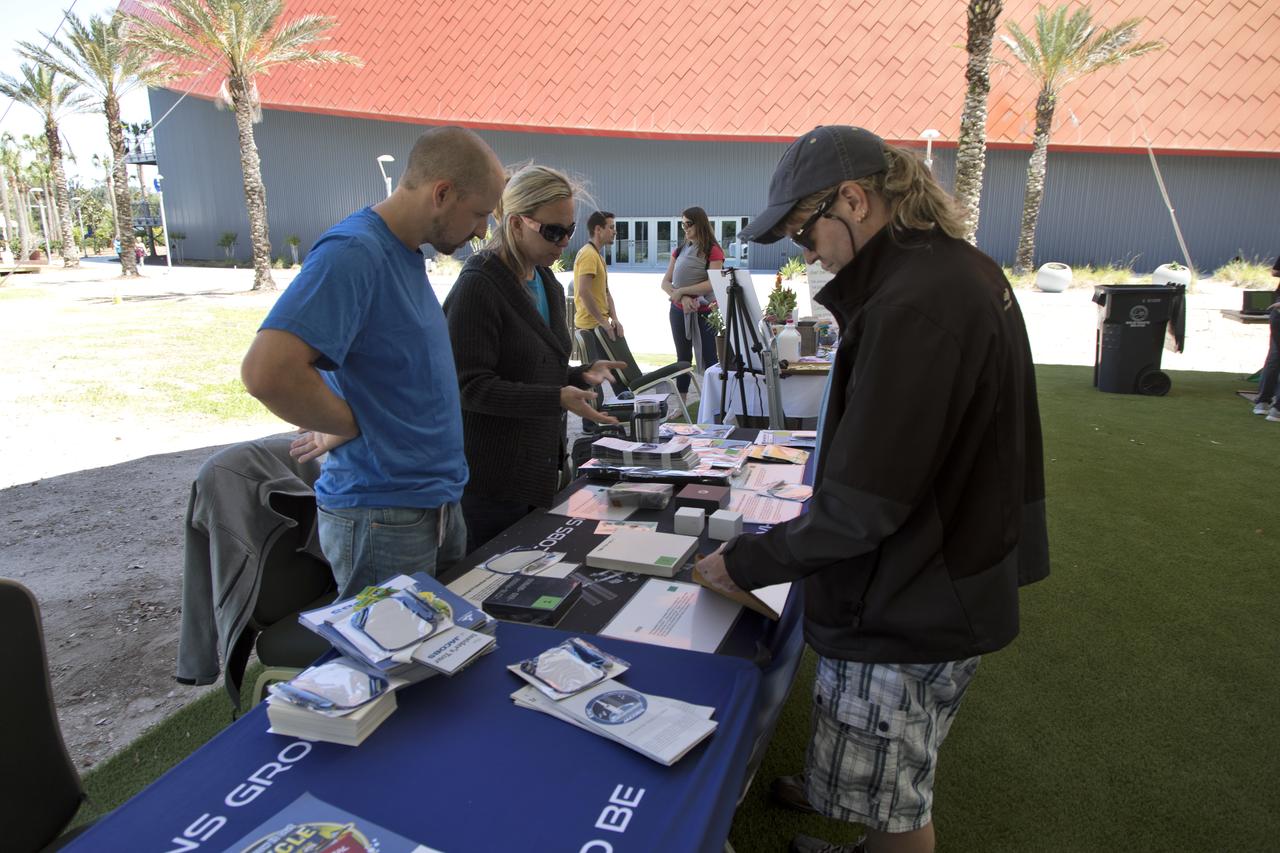
During the annual Earth Day celebration at the Kennedy Space Center Visitor Complex, guests have an opportunity to learn more about energy awareness, the environment and sustainability. The two-day event featured approximately 50 exhibitors offering information on a variety of topics, including electric vehicles, sustainable lighting, renewable energy, Florida-friendly landscaping tips, Florida’s biking trails and more.
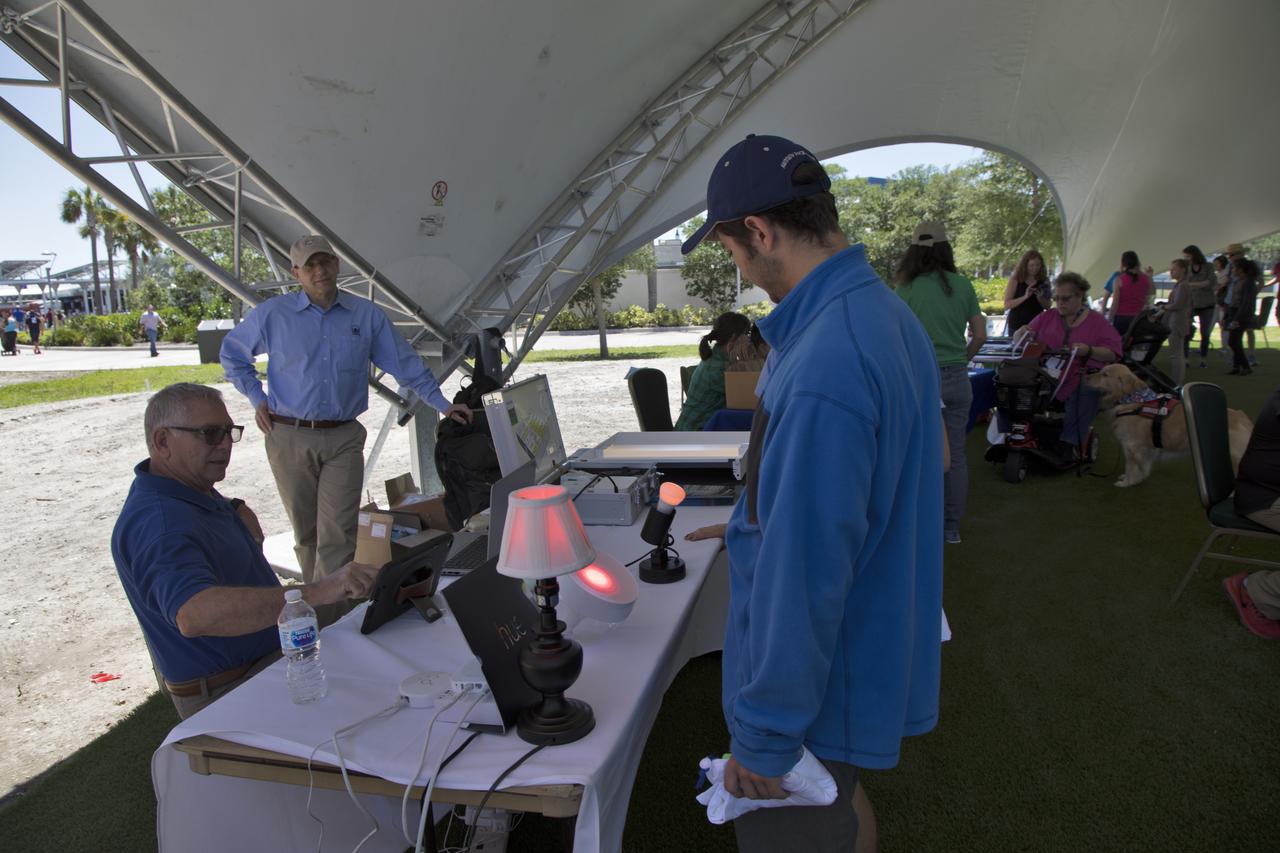
During the annual Earth Day celebration at the Kennedy Space Center Visitor Complex, guests have an opportunity to learn more about energy awareness, the environment and sustainability. The two-day event featured approximately 50 exhibitors offering information on a variety of topics, including electric vehicles, sustainable lighting, renewable energy, Florida-friendly landscaping tips, Florida’s biking trails and more.
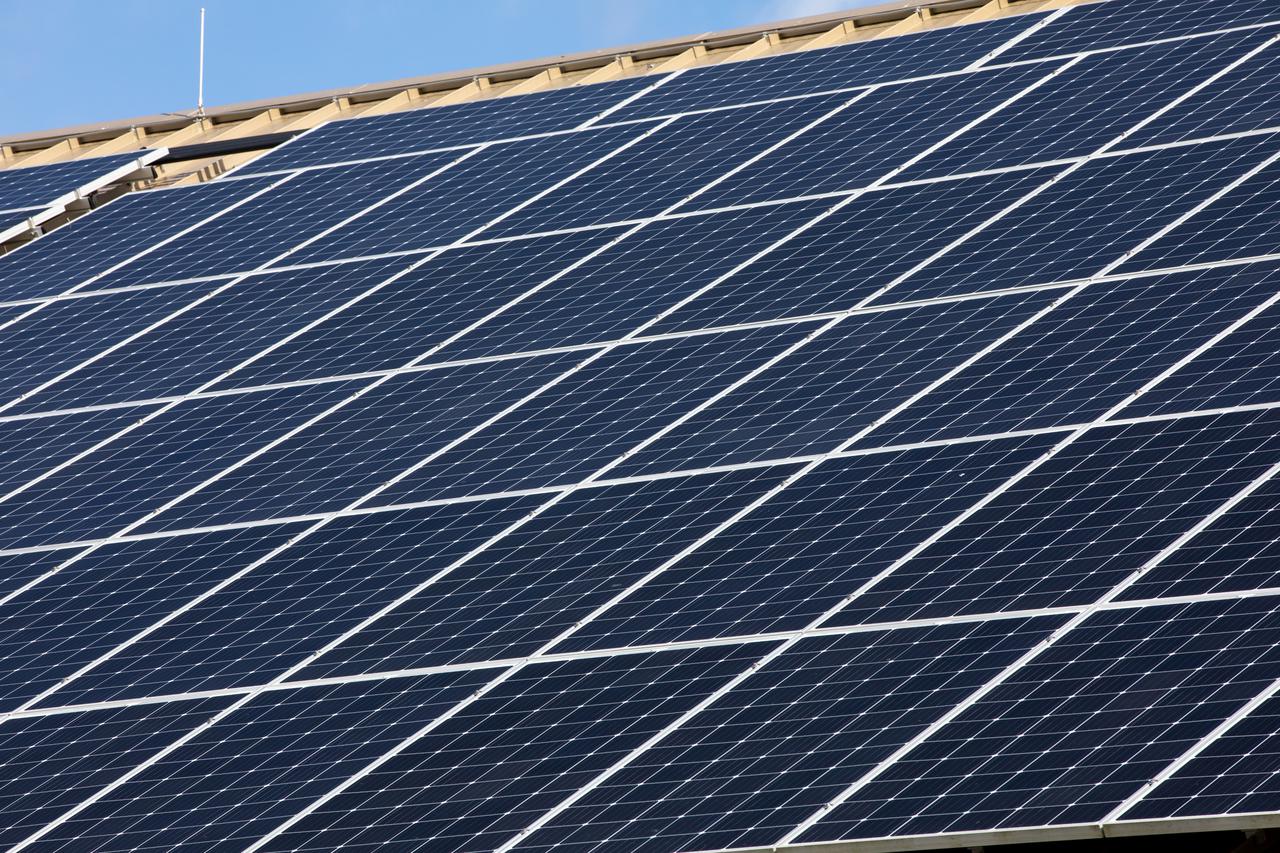
The Electrical Maintenance Facility (EMF) at NASA's Kennedy Space Center in Florida has solar panels capable of producing 125 kilowatts. Installation of the panels began in August 2019 and by February 2020, the panels were up and running, generating enough power to supply the facility. The addition of the solar panels has turned the EMF into a "net positive" facility, meaning it now produces more energy than it consumes.
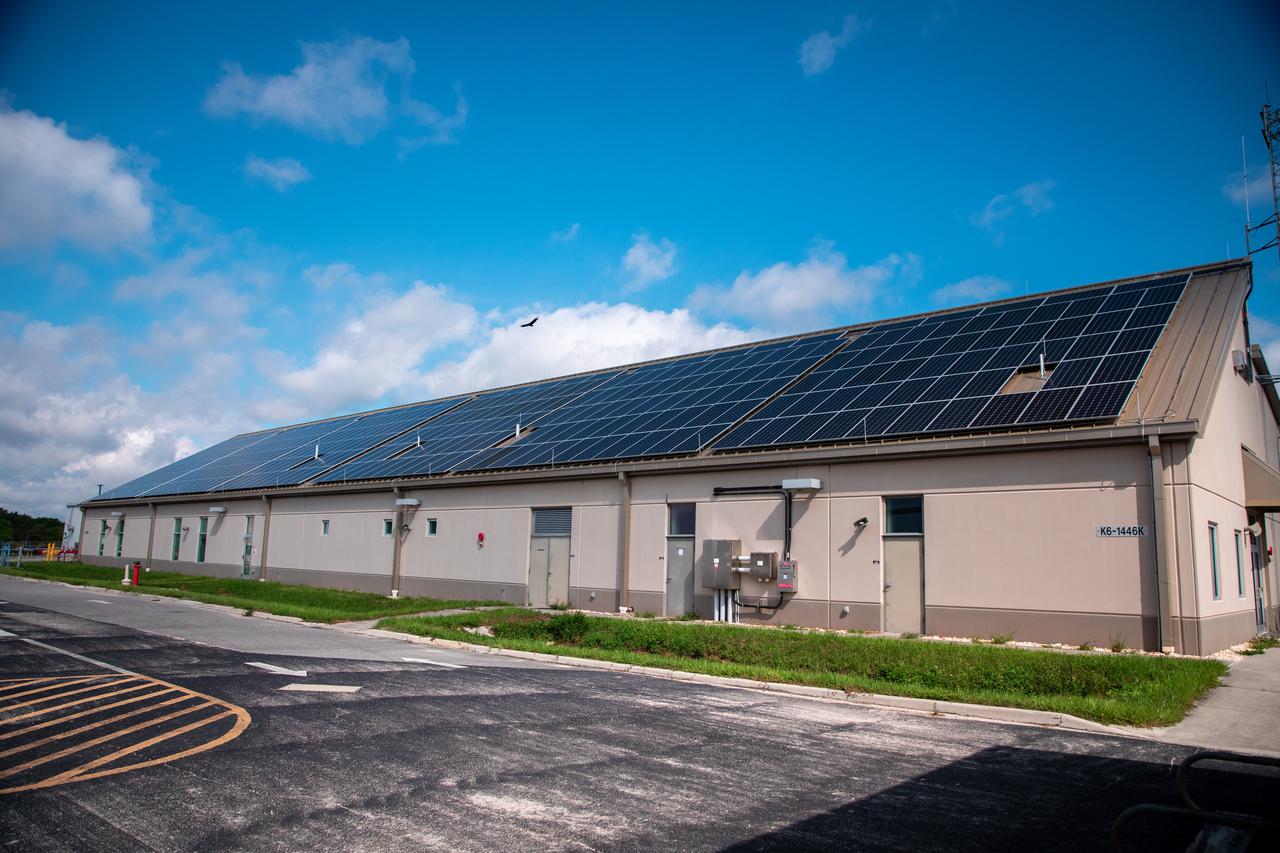
The Electrical Maintenance Facility (EMF) at NASA's Kennedy Space Center in Florida has solar panels capable of producing 125 kilowatts. Installation of the panels began in August 2019 and by February 2020, the panels were up and running, generating enough power to supply the facility. The addition of the solar panels has turned the EMF into a "net positive" facility, meaning it now produces more energy than it consumes.
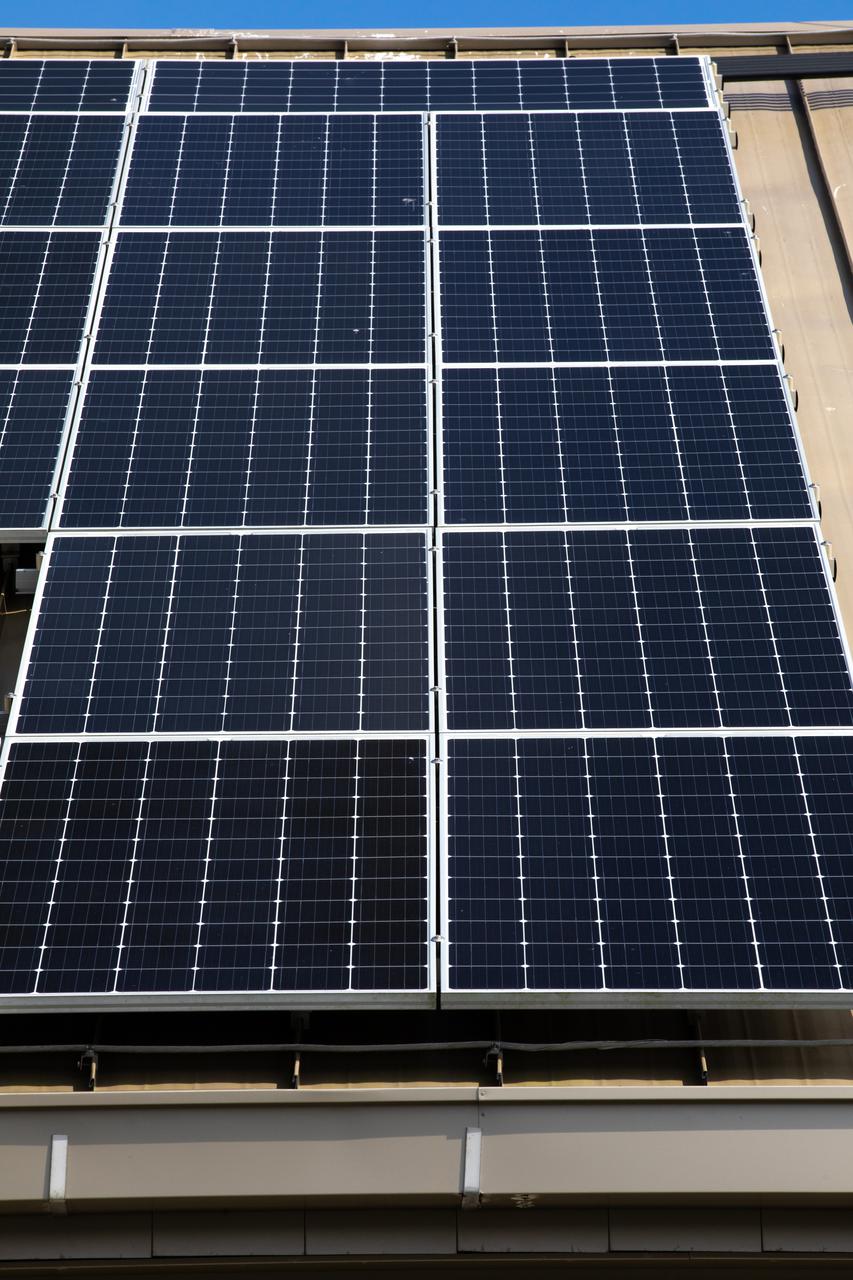
The Electrical Maintenance Facility (EMF) at NASA's Kennedy Space Center in Florida has solar panels capable of producing 125 kilowatts. Installation of the panels began in August 2019 and by February 2020, the panels were up and running, generating enough power to supply the facility. The addition of the solar panels has turned the EMF into a "net positive" facility, meaning it now produces more energy than it consumes.
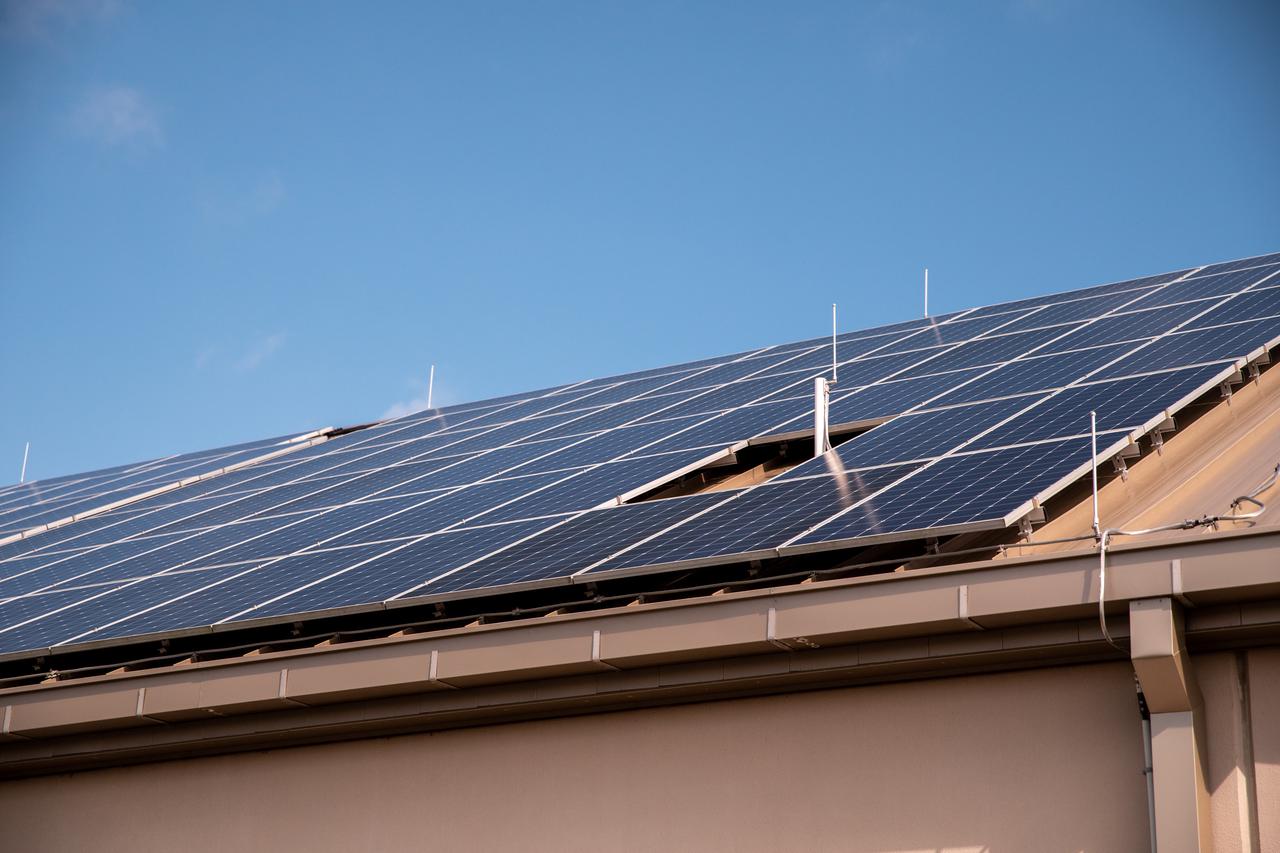
The Electrical Maintenance Facility (EMF) at NASA's Kennedy Space Center in Florida has solar panels capable of producing 125 kilowatts. Installation of the panels began in August 2019 and by February 2020, the panels were up and running, generating enough power to supply the facility. The addition of the solar panels has turned the EMF into a "net positive" facility, meaning it now produces more energy than it consumes.

The Electrical Maintenance Facility (EMF) at NASA's Kennedy Space Center in Florida has solar panels capable of producing 125 kilowatts. Installation of the panels began in August 2019 and by February 2020, the panels were up and running, generating enough power to supply the facility. The addition of the solar panels has turned the EMF into a "net positive" facility, meaning it now produces more energy than it consumes.
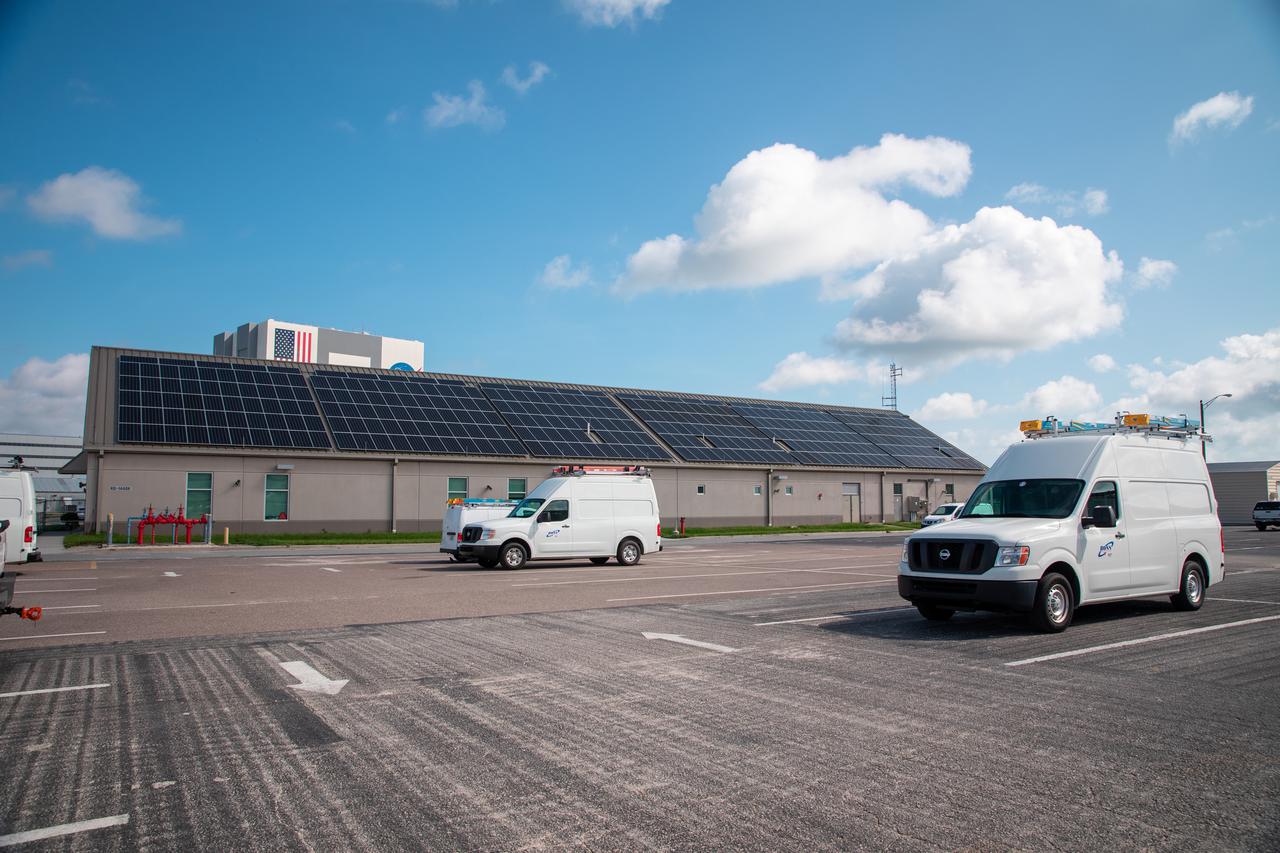
The Electrical Maintenance Facility (EMF) at NASA's Kennedy Space Center in Florida has solar panels capable of producing 125 kilowatts. Installation of the panels began in August 2019 and by February 2020, the panels were up and running, generating enough power to supply the facility. The addition of the solar panels has turned the EMF into a "net positive" facility, meaning it now produces more energy than it consumes.
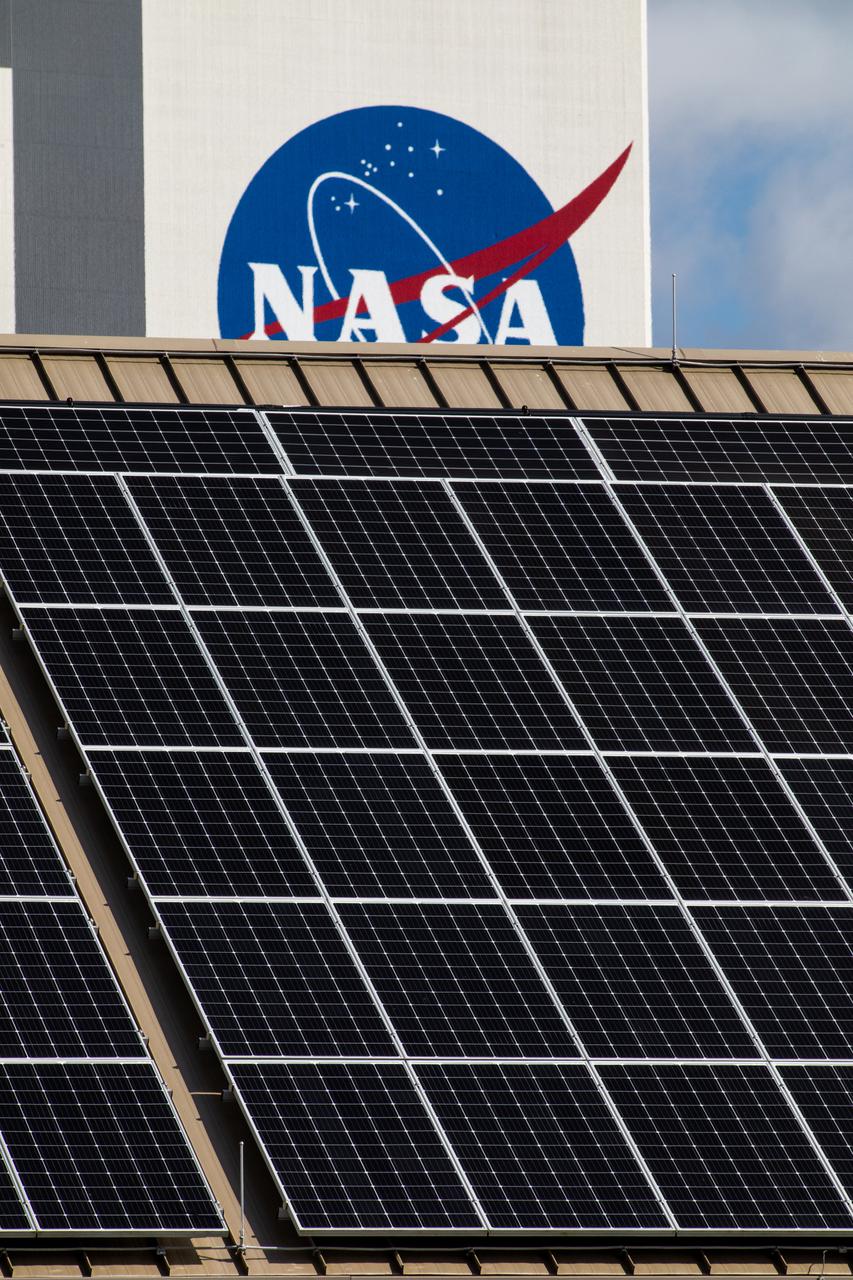
The Electrical Maintenance Facility (EMF) at NASA's Kennedy Space Center in Florida has solar panels capable of producing 125 kilowatts. Installation of the panels began in August 2019 and by February 2020, the panels were up and running, generating enough power to supply the facility. The addition of the solar panels has turned the EMF into a "net positive" facility, meaning it now produces more energy than it consumes.
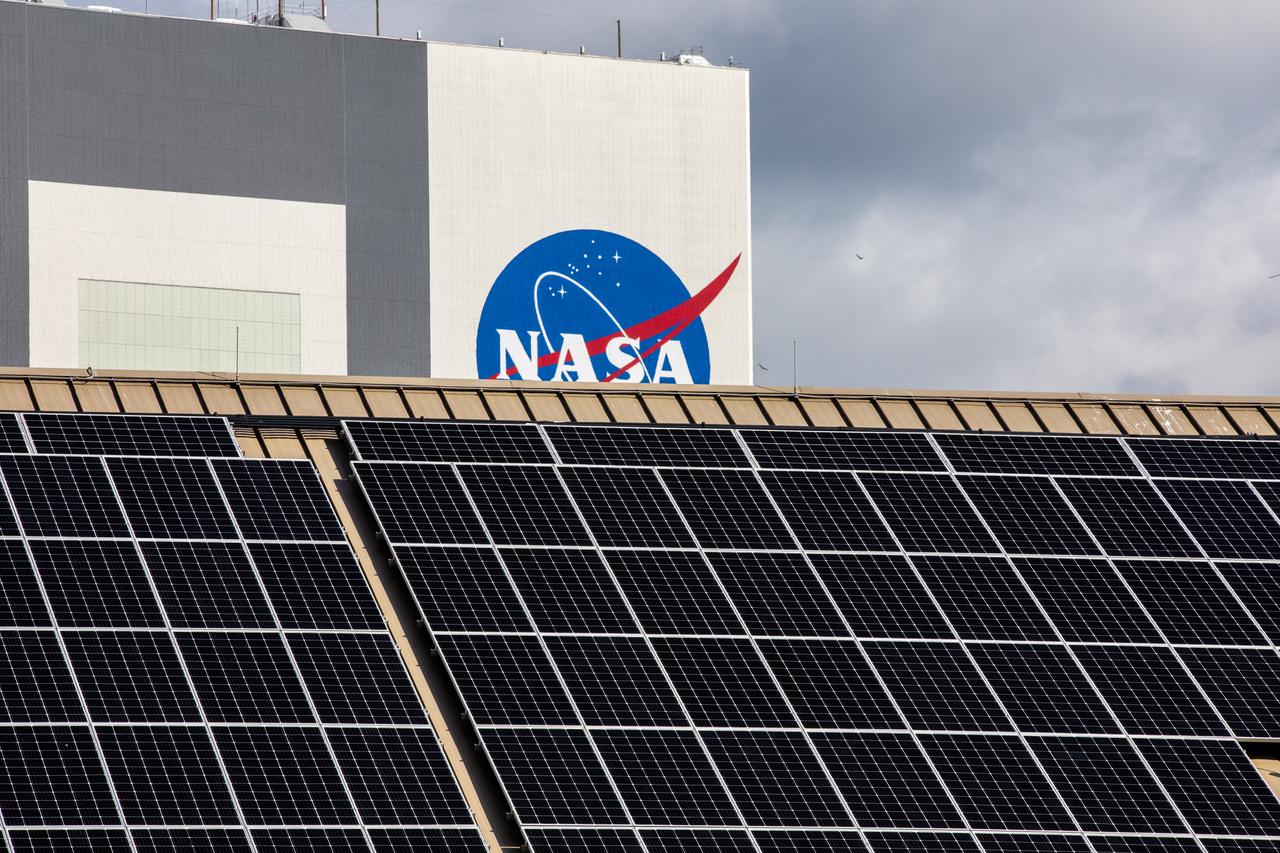
The Electrical Maintenance Facility (EMF) at NASA's Kennedy Space Center in Florida has solar panels capable of producing 125 kilowatts. Installation of the panels began in August 2019 and by February 2020, the panels were up and running, generating enough power to supply the facility. The addition of the solar panels has turned the EMF into a "net positive" facility, meaning it now produces more energy than it consumes.
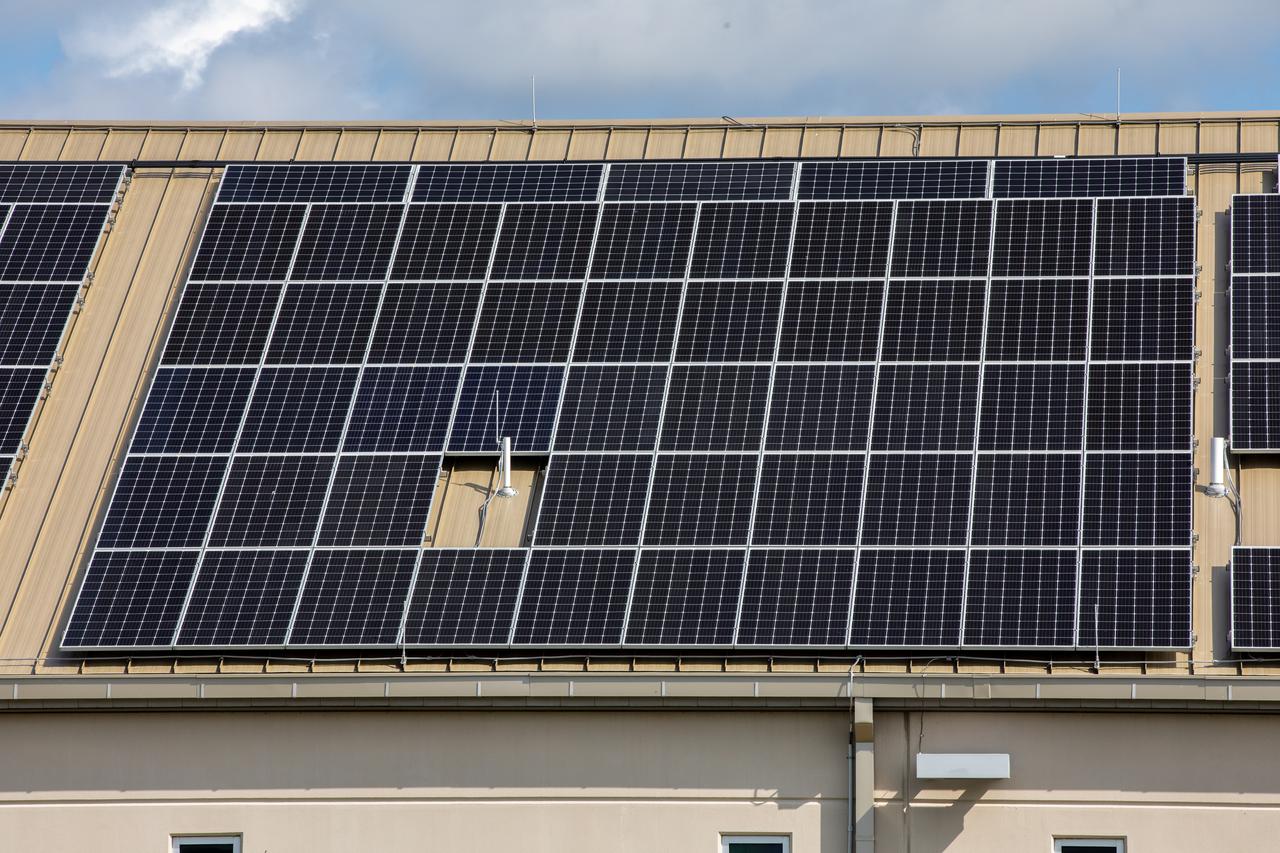
The Electrical Maintenance Facility (EMF) at NASA's Kennedy Space Center in Florida has solar panels capable of producing 125 kilowatts. Installation of the panels began in August 2019 and by February 2020, the panels were up and running, generating enough power to supply the facility. The addition of the solar panels has turned the EMF into a "net positive" facility, meaning it now produces more energy than it consumes.