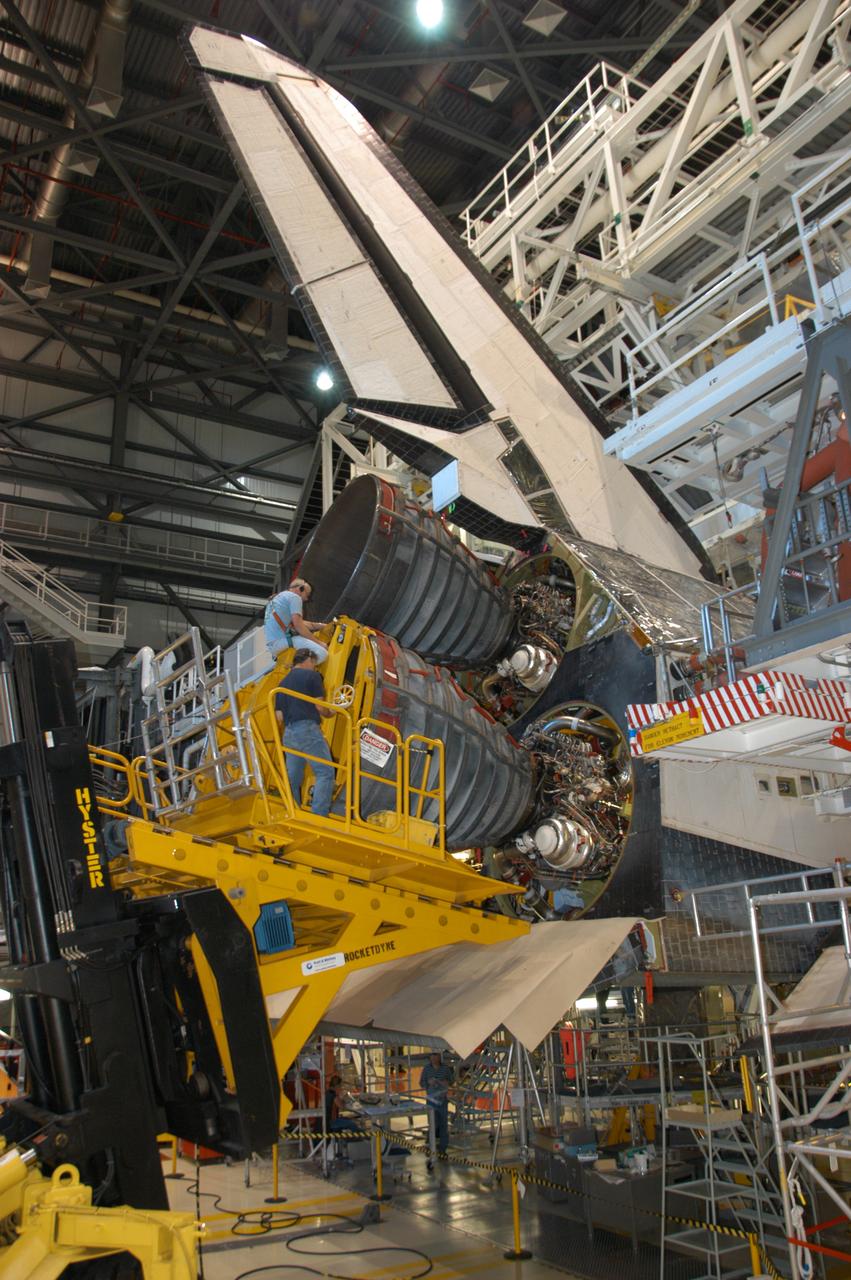
In Orbiter Processing Facility bay 2, technicians on a Hyster forklift install space shuttle main engine no. 3 into Endeavour. Each space shuttle main engine is 14 feet long, weighs about 6,700 pounds, and is 7.5 feet in diameter at the end of the nozzle. The orbiter is scheduled for mission STS-118, targeted for launch on June 28. The mission will be the 22nd flight to the International Space Station, carrying another starboard array, S5, for installation.
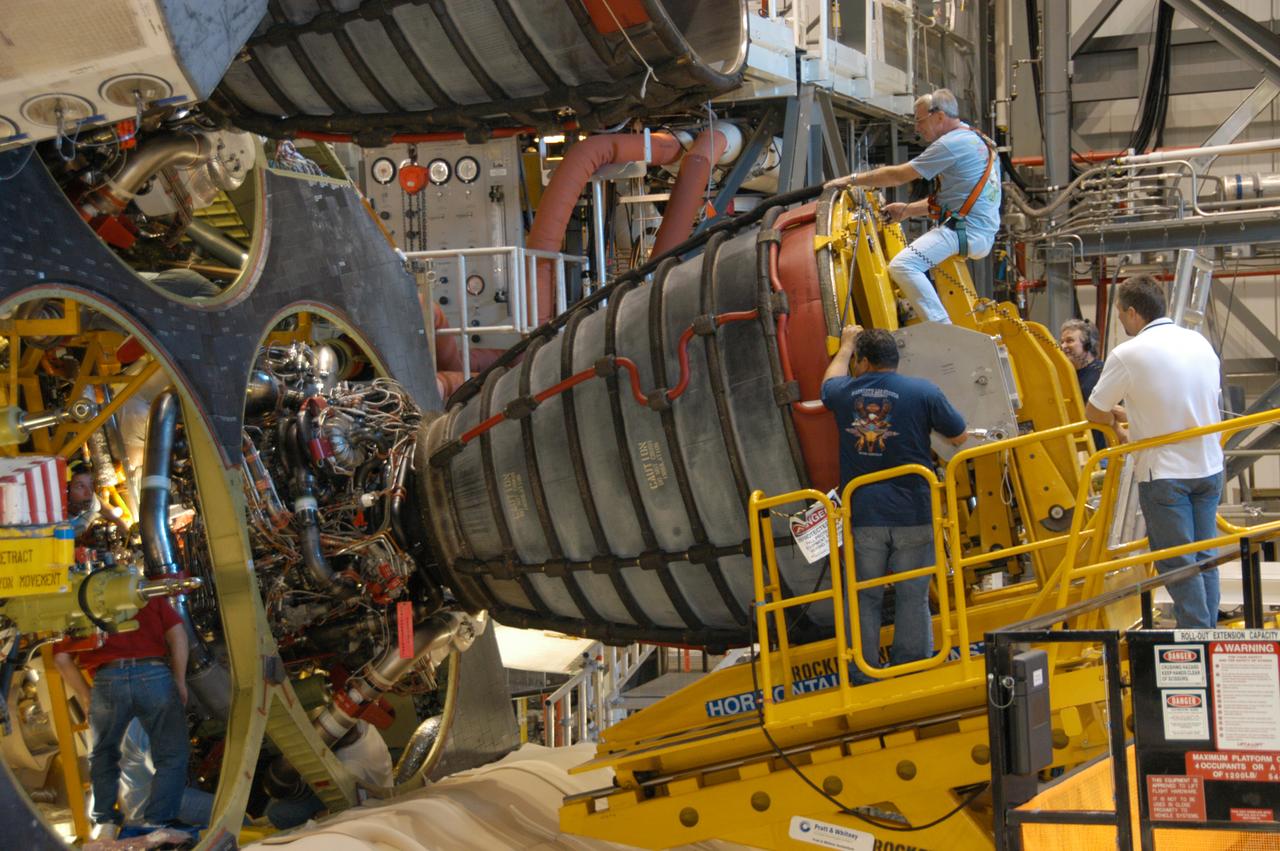
In Orbiter Processing Facility bay 2, technicians on a Hyster forklift maneuver space shuttle main engine no. 3 into place on Endeavour. Each space shuttle main engine is 14 feet long, weighs about 6,700 pounds, and is 7.5 feet in diameter at the end of the nozzle. The orbiter is scheduled for mission STS-118, targeted for launch on June 28. The mission will be the 22nd flight to the International Space Station, carrying another starboard array, S5, for installation.

In Orbiter Processing Facility bay 2, technicians on a Hyster forklift maneuver space shuttle main engine no. 3 into place on Endeavour. Each space shuttle main engine is 14 feet long, weighs about 6,700 pounds, and is 7.5 feet in diameter at the end of the nozzle. The orbiter is scheduled for mission STS-118, targeted for launch on June 28. The mission will be the 22nd flight to the International Space Station, carrying another starboard array, S5, for installation.
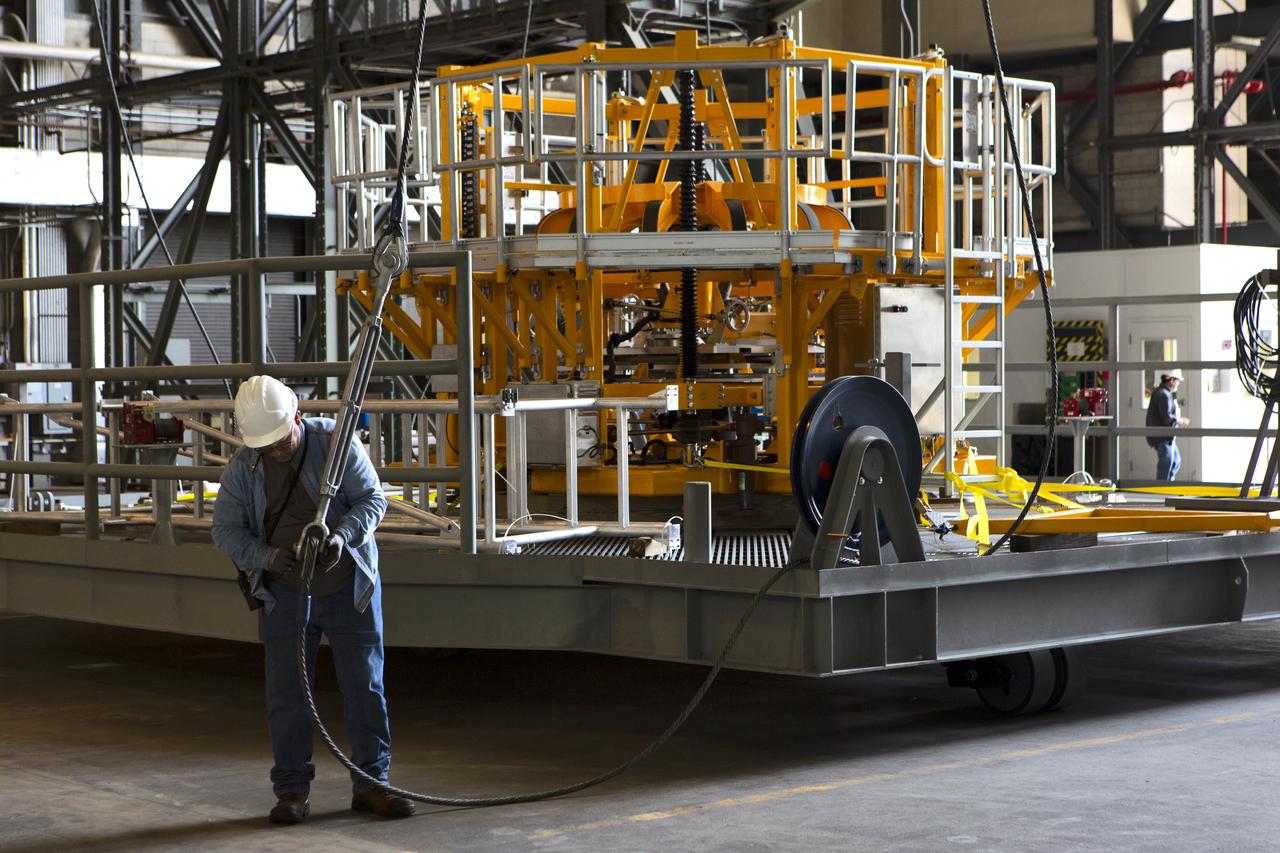
The engine vertical installer for NASA’s Space Launch System (SLS) is inside the Vehicle Assembly at NASA’s Kennedy Space Center in Florida on April 25, 2019. Preparations are underway to lift the engine installer up and into High Bay 3. The engine installer arrived from the manufacturer, Precision Fabrication and Cleaning in Canaveral Groves, Florida. The new ground support equipment will be ready for preflight processing in the event one of the four RS-25 engines on the core stage of the SLS rocket needs to be replaced. During launch of the SLS and Orion spacecraft, the four core stage engines will provide the thrust needed to lift the rocket and Orion spacecraft off Launch Pad 39B at Kennedy for Exploration Mission-1. The uncrewed Orion will travel on a three-week test mission thousands of miles beyond the Moon and back to Earth for a splashdown in the Pacific Ocean.
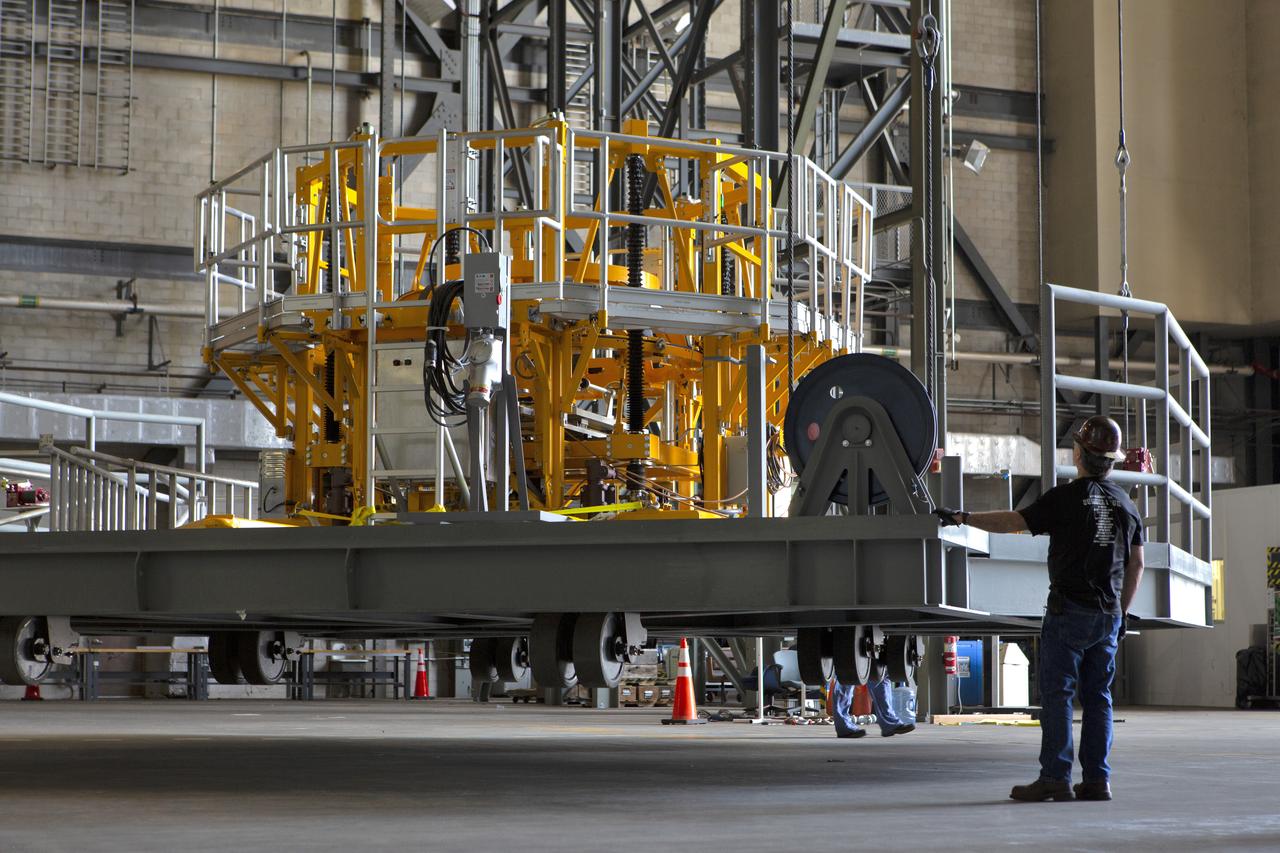
The engine vertical installer for NASA’s Space Launch System (SLS) is inside the Vehicle Assembly at NASA’s Kennedy Space Center in Florida on April 25, 2019. The engine installer is being lifted up by crane for transfer to High Bay 3. The engine installer arrived from the manufacturer, Precision Fabrication and Cleaning in Canaveral Groves, Florida. The new ground support equipment will be ready for preflight processing in the event one of the four RS-25 engines on the core stage of the SLS rocket needs to be replaced. During launch of the SLS and Orion spacecraft, the four core stage engines will provide the thrust needed to lift the rocket and Orion spacecraft off Launch Pad 39B at Kennedy for Exploration Mission-1. The uncrewed Orion will travel on a three-week test mission thousands of miles beyond the Moon and back to Earth for a splashdown in the Pacific Ocean.
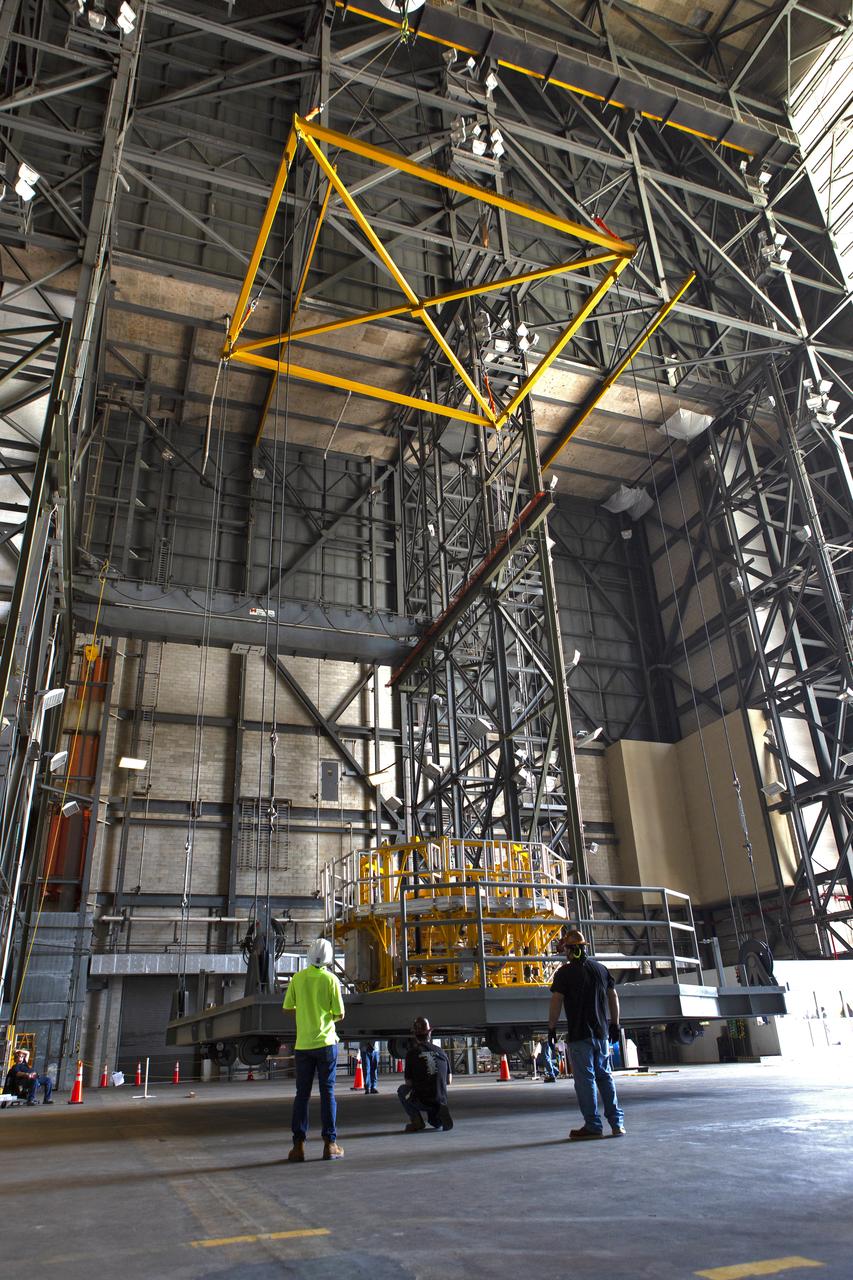
The engine vertical installer for NASA’s Space Launch System (SLS) is inside the Vehicle Assembly at NASA’s Kennedy Space Center in Florida on April 25, 2019. The engine installer is being lifted up by crane for transfer to High Bay 3. The engine installer arrived from the manufacturer, Precision Fabrication and Cleaning in Canaveral Groves, Florida. The new ground support equipment will be ready for preflight processing in the event one of the four RS-25 engines on the core stage of the SLS rocket needs to be replaced. During launch of the SLS and Orion spacecraft, the four core stage engines will provide the thrust needed to lift the rocket and Orion spacecraft off Launch Pad 39B at Kennedy for Exploration Mission-1. The uncrewed Orion will travel on a three-week test mission thousands of miles beyond the Moon and back to Earth for a splashdown in the Pacific Ocean.
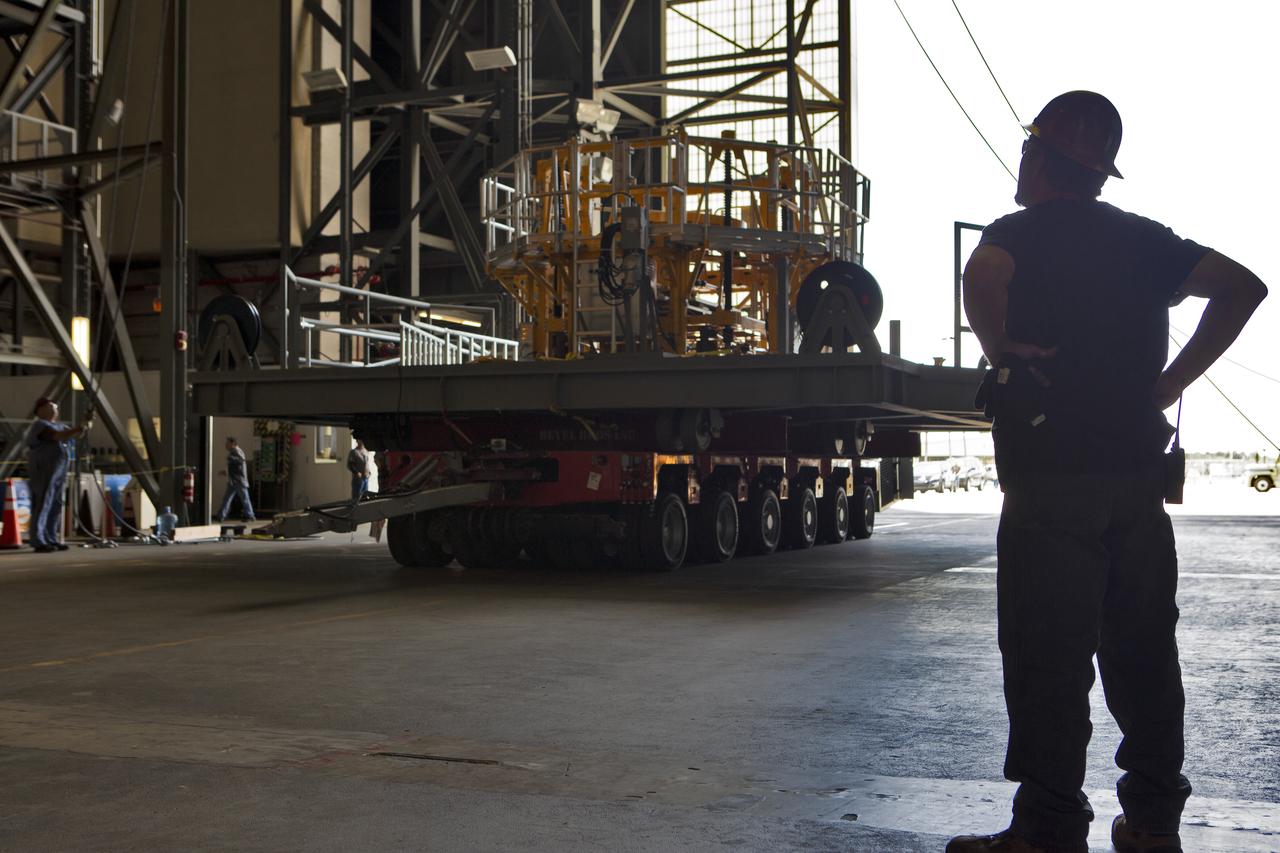
The engine vertical installer for NASA’s Space Launch System (SLS) is inside the Vehicle Assembly at NASA’s Kennedy Space Center in Florida on April 25, 2019. The engine installer will be lifted up by crane for transfer to High Bay 3. The engine installer arrived from the manufacturer, Precision Fabrication and Cleaning in Canaveral Groves, Florida. The new ground support equipment will be ready for preflight processing in the event one of the four RS-25 engines on the core stage of the SLS rocket needs to be replaced. During launch of the SLS and Orion spacecraft, the four core stage engines will provide the thrust needed to lift the rocket and Orion spacecraft off Launch Pad 39B at Kennedy for Exploration Mission-1. The uncrewed Orion will travel on a three-week test mission thousands of miles beyond the Moon and back to Earth for a splashdown in the Pacific Ocean.

The engine vertical installer for NASA’s Space Launch System (SLS) arrives inside the Vehicle Assembly at NASA’s Kennedy Space Center in Florida on April 25, 2019. The engine installer arrived from the manufacturer, Precision Fabrication and Cleaning in Canaveral Groves, Florida. The new ground support equipment will be ready for preflight processing in the event one of the four RS-25 engines on the core stage of the SLS rocket needs to be replaced. During launch of the SLS and Orion spacecraft, the four core stage engines will provide the thrust needed to lift the rocket and Orion spacecraft off Launch Pad 39B at Kennedy for Exploration Mission-1. The uncrewed Orion will travel on a three-week test mission thousands of miles beyond the Moon and back to Earth for a splashdown in the Pacific Ocean.
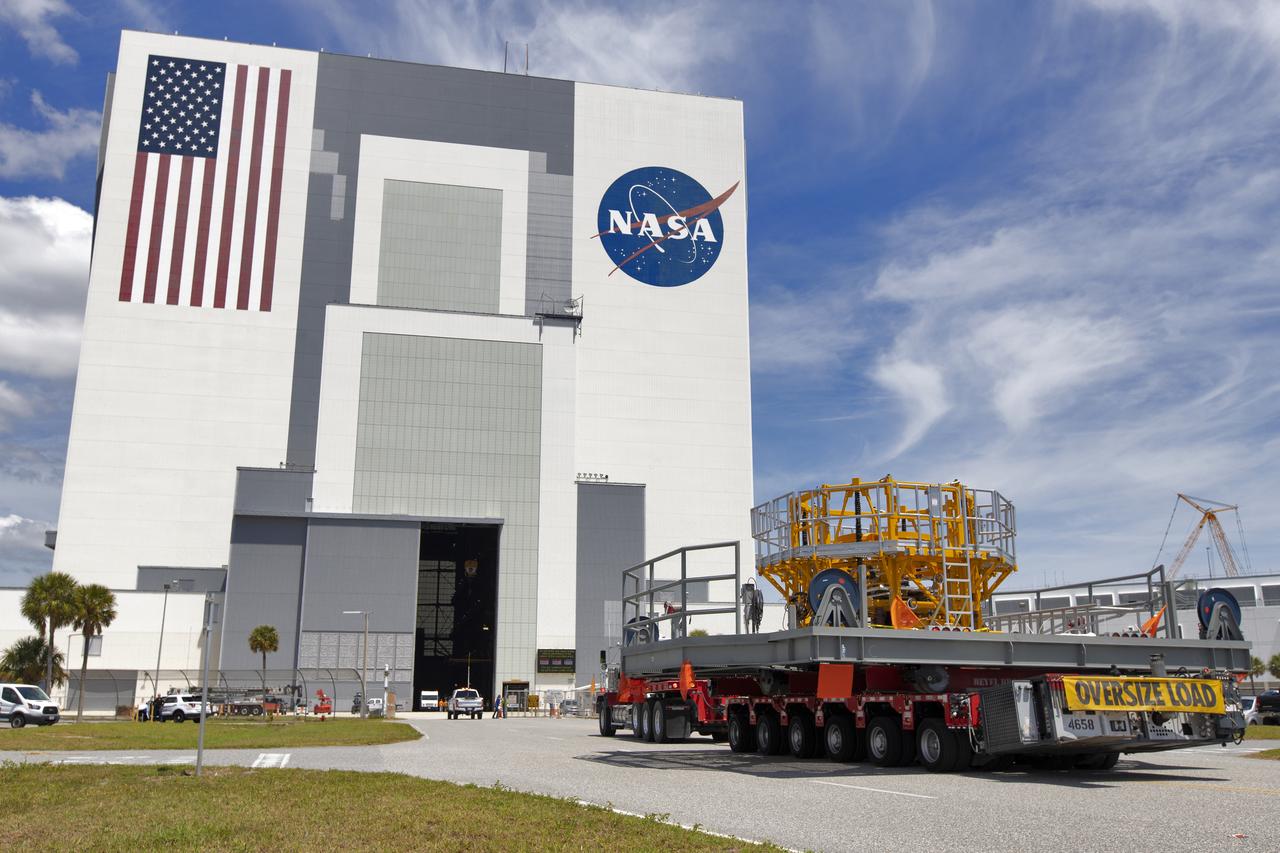
The engine vertical installer for NASA’s Space Launch System (SLS) arrives at the Vehicle Assembly at NASA’s Kennedy Space Center in Florida on April 25, 2019. The engine installer arrived from the manufacturer, Precision Fabrication and Cleaning in Canaveral Groves, Florida. The new ground support equipment will be ready for preflight processing in the event one of the four RS-25 engines on the core stage of the SLS rocket needs to be replaced. During launch of the SLS and Orion spacecraft, the four core stage engines will provide the thrust needed to lift the rocket and Orion spacecraft off Launch Pad 39B at Kennedy for Exploration Mission-1. The uncrewed Orion will travel on a three-week test mission thousands of miles beyond the Moon and back to Earth for a splashdown in the Pacific Ocean.
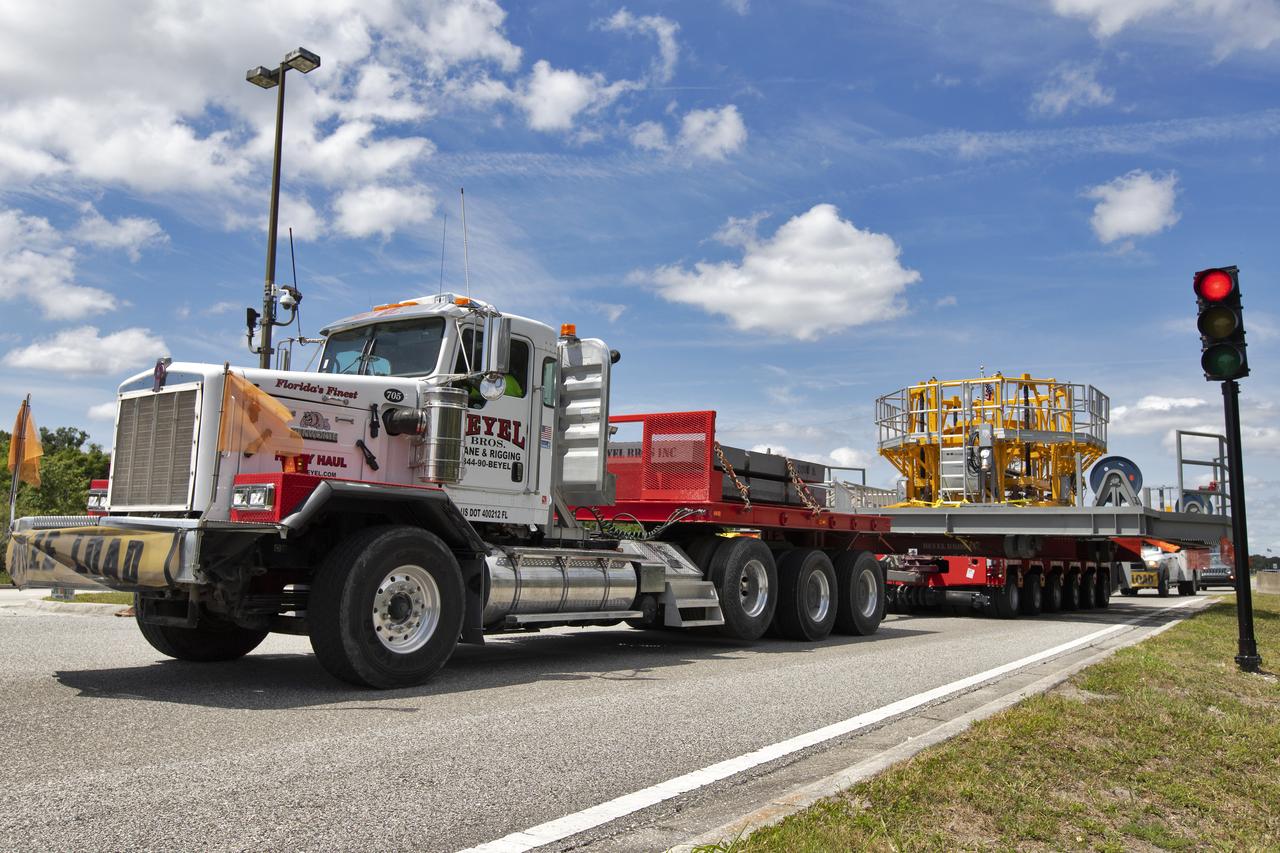
The engine vertical installer for NASA’s Space Launch System (SLS) arrives by large transport truck at NASA’s Kennedy Space Center in Florida on April 25, 2019. The engine installer arrived from the manufacturer, Precision Fabrication and Cleaning in Canaveral Groves, Florida. The new ground support equipment will be delivered to the Vehicle Assembly where it will be ready for preflight processing in the event one of the four RS-25 engines on the core stage of the SLS rocket needs to be replaced. During launch of the SLS and Orion spacecraft, the four core stage engines will provide the thrust needed to lift the rocket and Orion spacecraft off Launch Pad 39B at Kennedy for Exploration Mission-1. The uncrewed Orion will travel on a three-week test mission thousands of miles beyond the Moon and back to Earth for a splashdown in the Pacific Ocean.
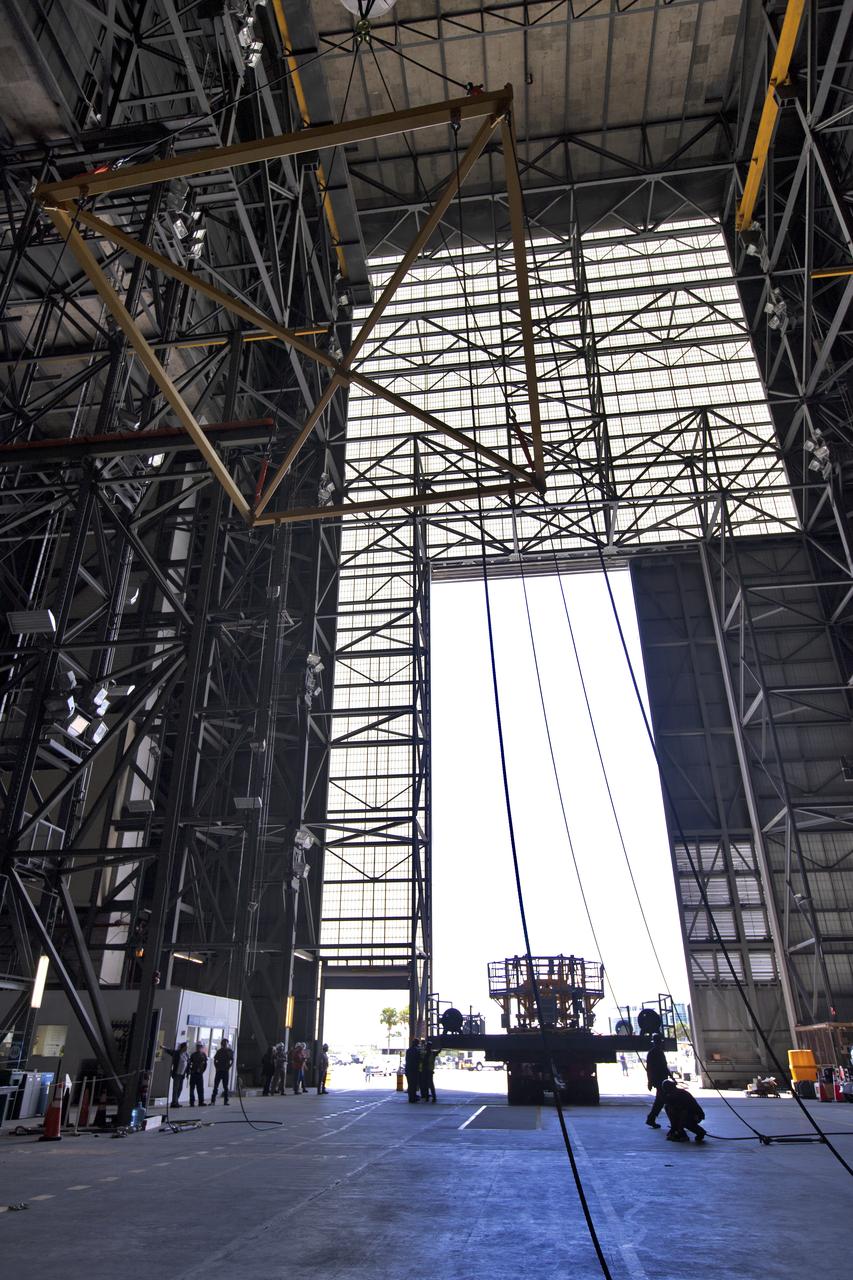
The engine vertical installer for NASA’s Space Launch System (SLS) arrives inside the Vehicle Assembly at NASA’s Kennedy Space Center in Florida on April 25, 2019. The engine installer arrived from the manufacturer, Precision Fabrication and Cleaning in Canaveral Groves, Florida. The new ground support equipment will be ready for preflight processing in the event one of the four RS-25 engines on the core stage of the SLS rocket needs to be replaced. During launch of the SLS and Orion spacecraft, the four core stage engines will provide the thrust needed to lift the rocket and Orion spacecraft off Launch Pad 39B at Kennedy for Exploration Mission-1. The uncrewed Orion will travel on a three-week test mission thousands of miles beyond the Moon and back to Earth for a splashdown in the Pacific Ocean.
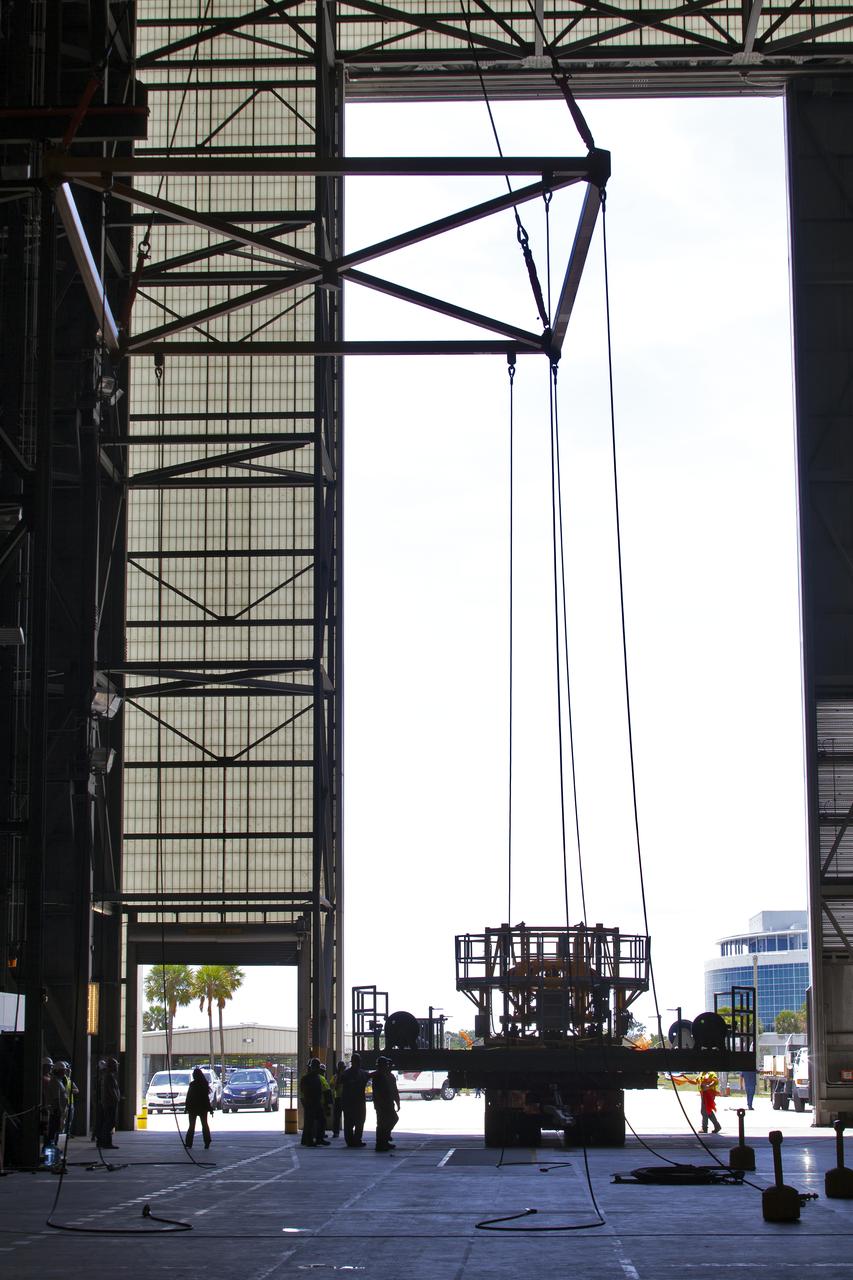
The engine vertical installer for NASA’s Space Launch System (SLS) is being lifted by crane in the Vehicle Assembly Building at NASA’s Kennedy Space Center in Florida on April 25, 2019. The engine installer arrived from the manufacturer, Precision Fabrication and Cleaning in Canaveral Groves, Florida. The new ground support equipment will be transferred into High Bay 3 where it will be ready for preflight processing in the event one of the four RS-25 engines on the core stage of the SLS rocket needs to be replaced. During launch of the SLS and Orion spacecraft, the four core stage engines will provide the thrust needed to lift the rocket and Orion spacecraft off Launch Pad 39B at Kennedy for Exploration Mission-1. The uncrewed Orion will travel on a three-week test mission thousands of miles beyond the Moon and back to Earth for a splashdown in the Pacific Ocean.
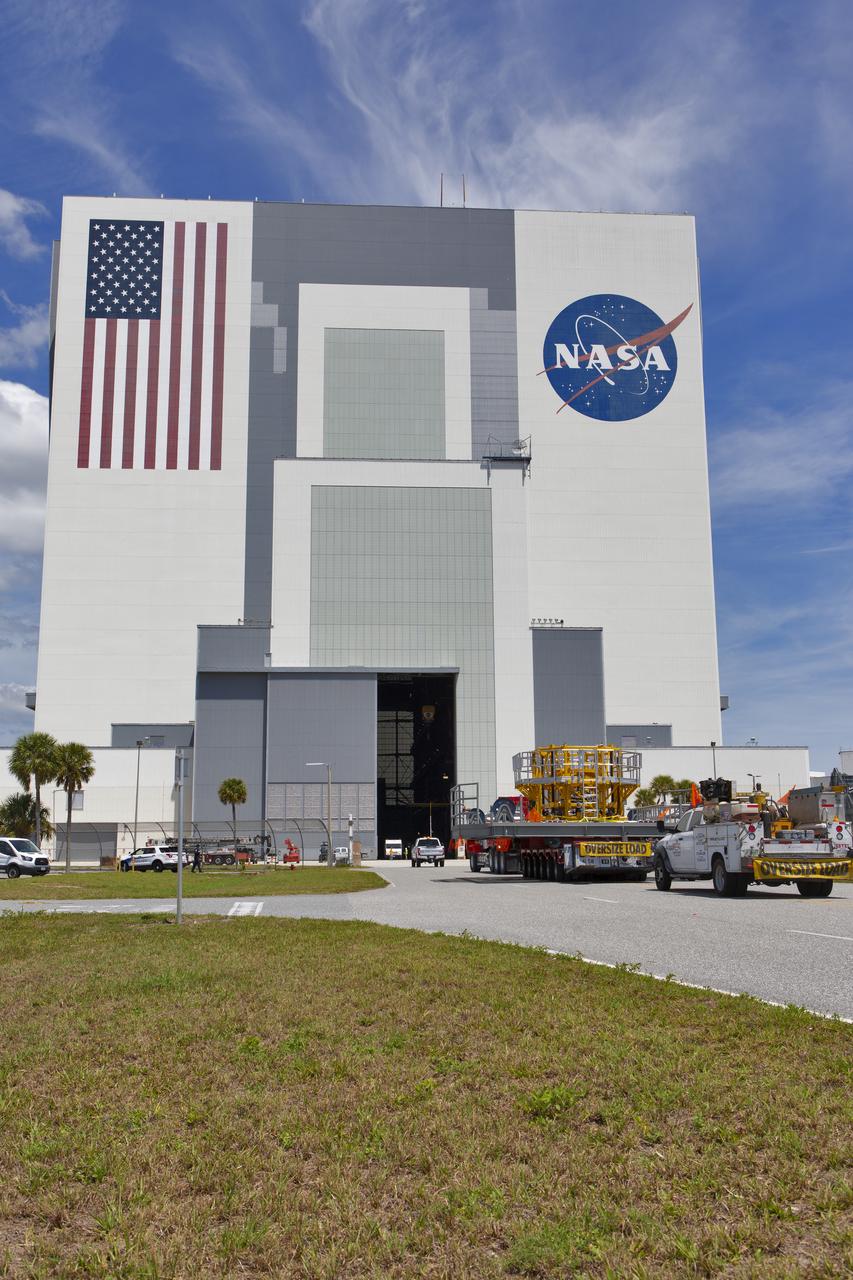
The engine vertical installer for NASA’s Space Launch System (SLS) arrives by large transport truck at the Vehicle Assembly Building at NASA’s Kennedy Space Center in Florida on April 25, 2019. The engine installer arrived from the manufacturer, Precision Fabrication and Cleaning in Canaveral Groves, Florida. The new ground support equipment will be ready for preflight assembly in the event one of the four RS-25 engines on the core stage of the SLS rocket needs to be replaced. During launch of the SLS and Orion spacecraft, the four core stage engines will provide the thrust needed to lift the rocket and Orion spacecraft off Launch Pad 39B at Kennedy for Exploration Mission-1. The uncrewed Orion will travel on a three-week test mission thousands of miles beyond the Moon and back to Earth for a splashdown in the Pacific Ocean.
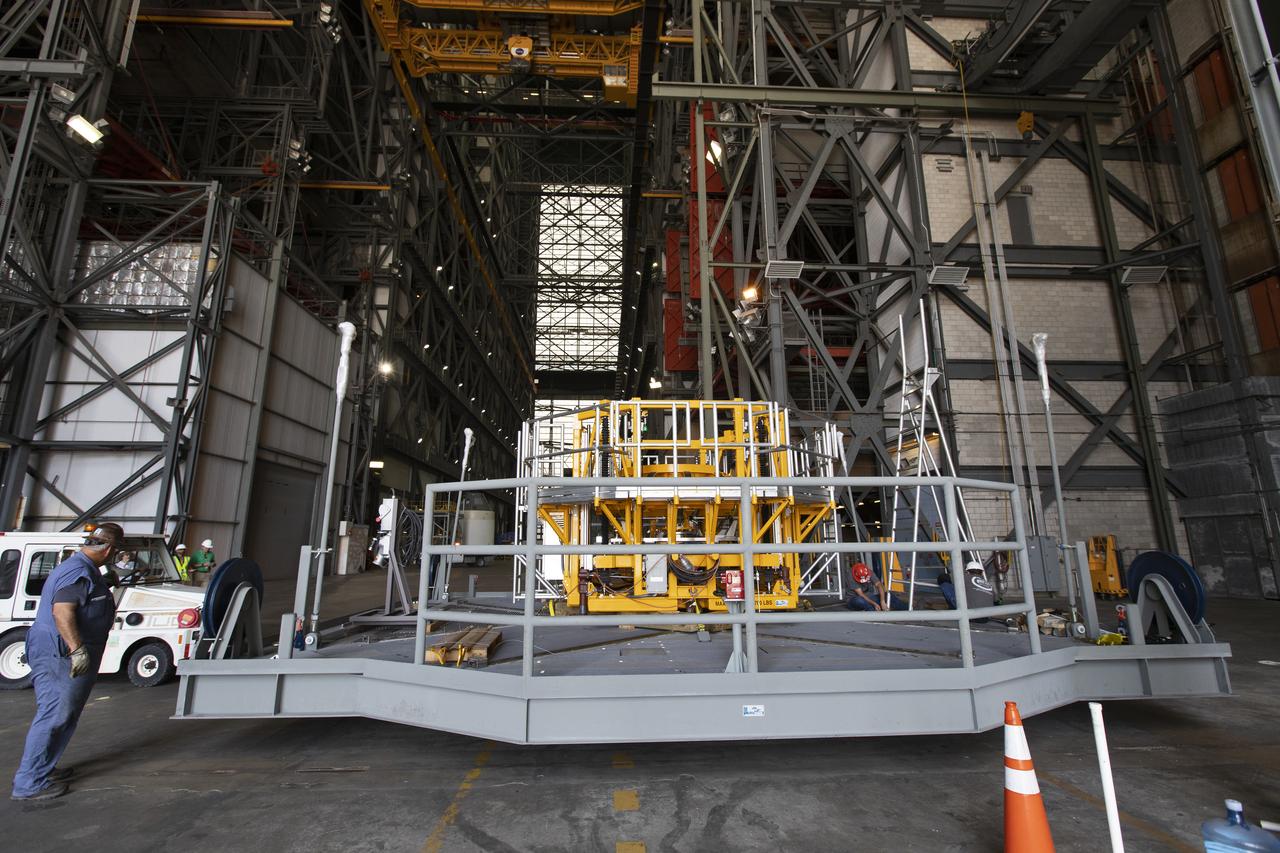
The engine vertical installer for NASA’s Space Launch System (SLS) arrives inside the Vehicle Assembly at NASA’s Kennedy Space Center in Florida on April 25, 2019. The engine installer arrived from the manufacturer, Precision Fabrication and Cleaning in Canaveral Groves, Florida. The new ground support equipment will be ready for preflight processing in the event one of the four RS-25 engines on the core stage of the SLS rocket needs to be replaced. During launch of the SLS and Orion spacecraft, the four core stage engines will provide the thrust needed to lift the rocket and Orion spacecraft off Launch Pad 39B at Kennedy for Exploration Mission-1. The uncrewed Orion will travel on a three-week test mission thousands of miles beyond the Moon and back to Earth for a splashdown in the Pacific Ocean.
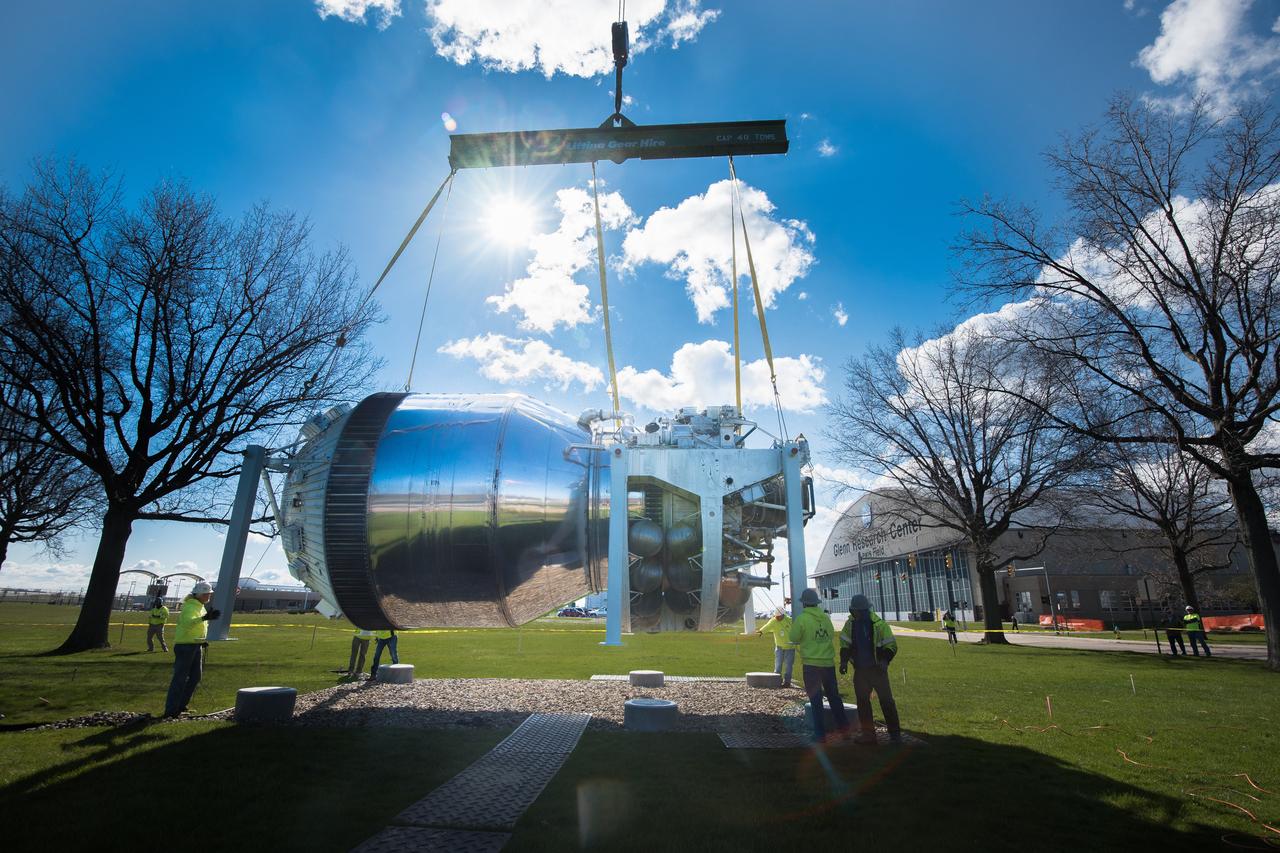
The 6,600 pound Centaur test article is a rare artifact recently transported from the U.S. Space and Rocket Center in Alabama. Centaur, developed at NASA Glenn Research Center in the late 1950s, was the world's first high-energy upper stage, burning liquid hydrogen (LH2) and liquid oxygen (LOX), and has enabled the launch of some of NASA's most important scientific missions over its 50-year history. In this image, technicians prepare to mount the hardware on a permanent display stand close to the main entrance at NASA Glenn Research Center.
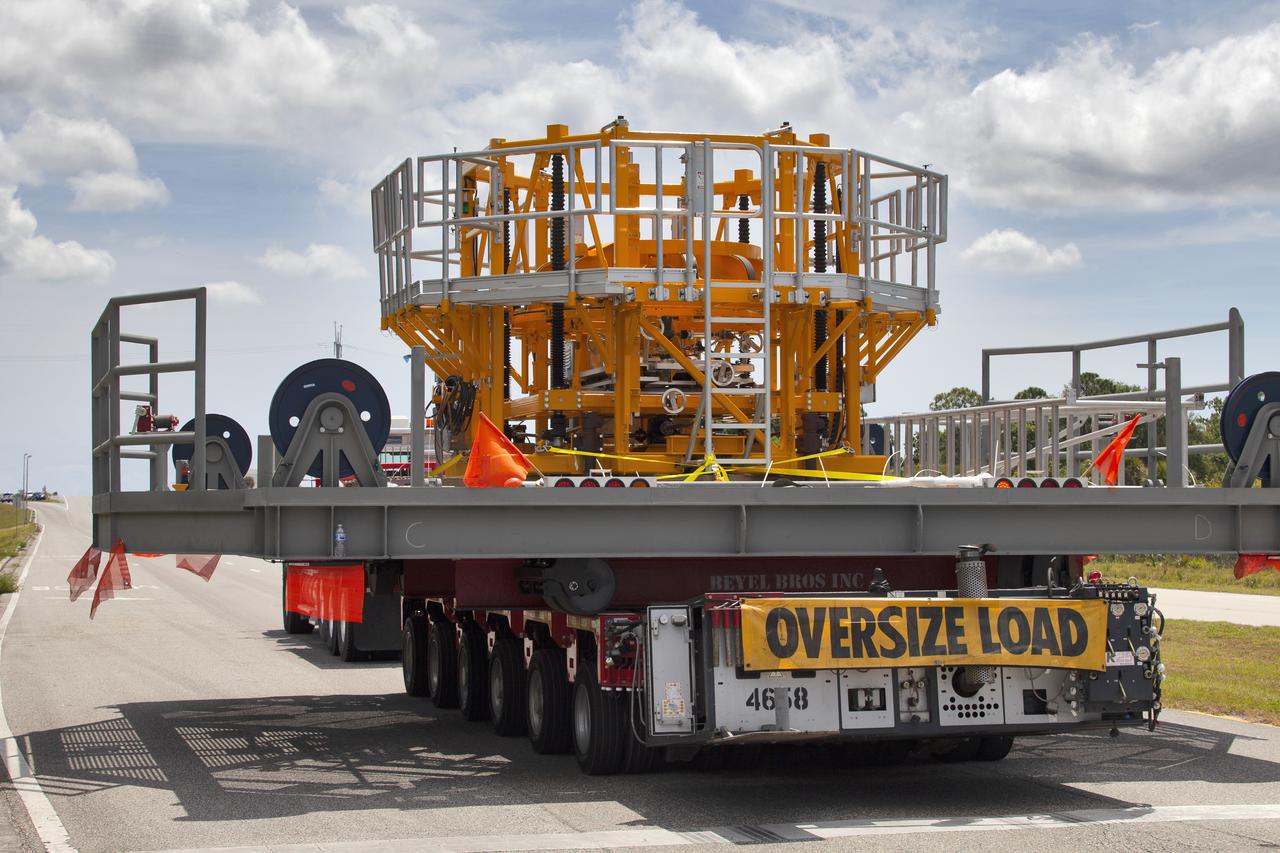
The engine vertical installer for NASA’s Space Launch System (SLS) arrives by large transport truck at NASA’s Kennedy Space Center in Florida on April 25, 2019, from the manufacturer, Precision Fabrication and Cleaning in Canaveral Groves, Florida. The new ground support equipment will be delivered to the Vehicle Assembly Building where it will be ready for preflight assembly in the event one of the four RS-25 engines on the core stage of the SLS rocket needs to be replaced. During launch of the SLS and Orion spacecraft, the four core stage engines will provide the thrust needed to lift the rocket and Orion spacecraft off Launch Pad 39B at Kennedy for Exploration Mission-1. The uncrewed Orion will travel on a three-week test mission thousands of miles beyond the Moon and back to Earth for a splashdown in the Pacific Ocean.
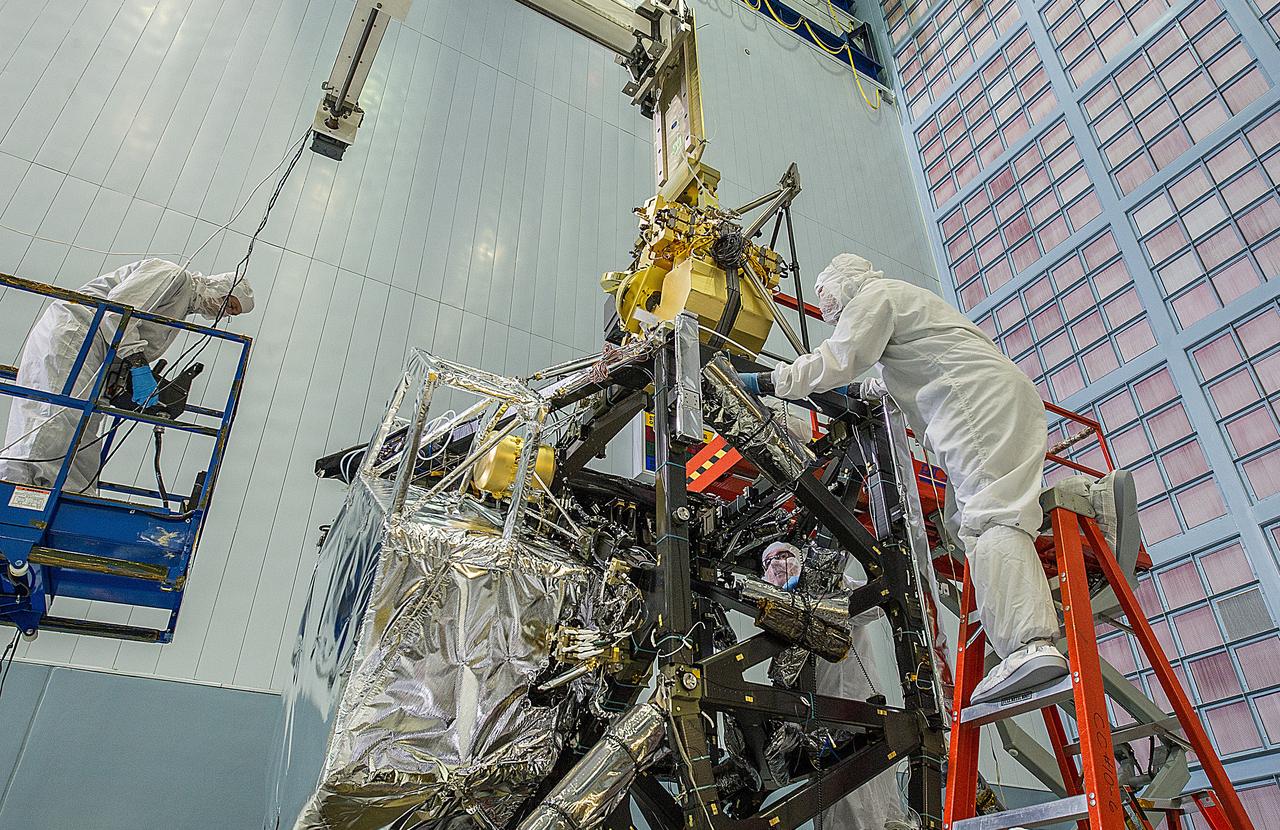
nside the world's largest clean room at NASA's Goddard Space Flight Center in Greenbelt, Md., engineers worked tirelessly to install another essential part of the James Webb Space Telescope - the Near Infrared Camera into the heart of the telescope. To complete this installation, the engineers needed to carefully move NIRCam inside the heart or ISIM, or Integrated Science Instrument Module that will house all of the science instruments. "Installing NIRCam into the center of the structure is nerve wracking because of the tight clearances," said Marcia J. Rieke, Professor of Astronomy at the University of Arizona, and principal investigator for the NIRCam. "I'm glad nothing bumped, and all the bolts are in place." NIRCam is a unique machine because in addition to being one of the four science instruments on the Webb, it also serves as the wavefront sensor, which means it will provide vital information for shaping the telescope mirrors and aligning its optics so that they can function properly and see into the distant universe. The NIRCam instrument will operate at very cold temperatures, and will be tested to ensure that it will be able to withstand the environment of space. The NIRCam is Webb's primary imager that will cover the infrared wavelength range 0.6 to 5 microns. It will detect light from the earliest stars and galaxies in the process of formation, the population of stars in nearby galaxies, as well as young stars and exoplanets in the Milky Way. NIRCam is provided by the University of Arizona and Lockheed Martin Advanced Technology Center. Webb is an international project led by NASA with its partners the European Space Agency and the Canadian Space Agency. The James Webb Space Telescope is the successor to NASA's Hubble Space Telescope. It will be the most powerful space telescope ever built. For more information about the Webb telescope, visit: <a href="http://www.jwst.nasa.gov" rel="nofollow">www.jwst.nasa.gov</a> or <a href="http://www.nasa.gov/webb" rel="nofollow">www.nasa.gov/webb</a> Credit: NASA/Goddard/Chris Gunn <b><a href="http://www.nasa.gov/audience/formedia/features/MP_Photo_Guidelines.html" rel="nofollow">NASA image use policy.</a></b> <b><a href="http://www.nasa.gov/centers/goddard/home/index.html" rel="nofollow">NASA Goddard Space Flight Center</a></b> enables NASA’s mission through four scientific endeavors: Earth Science, Heliophysics, Solar System Exploration, and Astrophysics. Goddard plays a leading role in NASA’s accomplishments by contributing compelling scientific knowledge to advance the Agency’s mission. <b>Follow us on <a href="http://twitter.com/NASAGoddardPix" rel="nofollow">Twitter</a></b> <b>Like us on <a href="http://www.facebook.com/pages/Greenbelt-MD/NASA-Goddard/395013845897?ref=tsd" rel="nofollow">Facebook</a></b> <b>Find us on <a href="http://instagram.com/nasagoddard?vm=grid" rel="nofollow">Instagram</a></b>

These photos and videos show how technicians at NASA’s Michoud Assembly Facility in New Orleans installed the third and fourth RS-25 engines onto the core stage for the agency’s SLS (Space Launch System) rocket that will help power NASA’s first crewed Artemis mission to the Moon. Technicians added the first engine to the SLS core stage Sept. 11. The second engine was installed onto the stage Sept. 15 with the third and fourth engines following Sept. 19 and Sept. 20. Engineers consider the engines to be “soft” mated to the rocket stage. Technicians with NASA, Aerojet Rocketdyne, an L3Harris Technologies company and the RS-25 engines lead contractor, along with Boeing, the core stage lead contractor, will now focus efforts on the complex tax of fully securing the engines to the stage and integrating the propulsion and electrical systems within the structure. NASA is working to land the first woman and first person of color on the Moon under Artemis. SLS is part of NASA’s backbone for deep space exploration, along with Orion and the Gateway in orbit around the Moon. SLS is the only rocket that can send Orion, astronauts, and supplies to the Moon in a single mission.
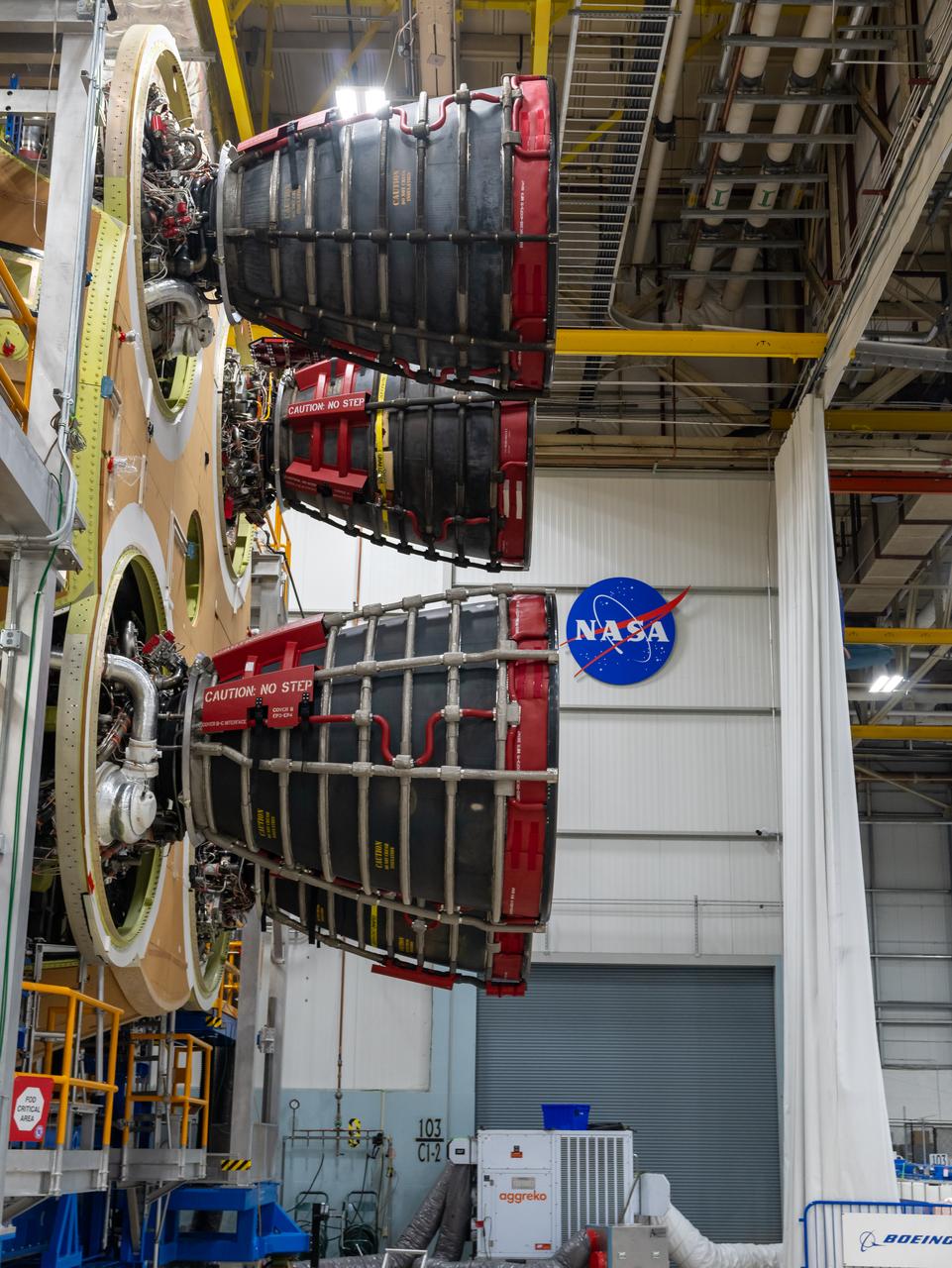
These photos and videos show how technicians at NASA’s Michoud Assembly Facility in New Orleans installed the third and fourth RS-25 engines onto the core stage for the agency’s SLS (Space Launch System) rocket that will help power NASA’s first crewed Artemis mission to the Moon. Technicians added the first engine to the SLS core stage Sept. 11. The second engine was installed onto the stage Sept. 15 with the third and fourth engines following Sept. 19 and Sept. 20. Engineers consider the engines to be “soft” mated to the rocket stage. Technicians with NASA, Aerojet Rocketdyne, an L3Harris Technologies company and the RS-25 engines lead contractor, along with Boeing, the core stage lead contractor, will now focus efforts on the complex tax of fully securing the engines to the stage and integrating the propulsion and electrical systems within the structure. NASA is working to land the first woman and first person of color on the Moon under Artemis. SLS is part of NASA’s backbone for deep space exploration, along with Orion and the Gateway in orbit around the Moon. SLS is the only rocket that can send Orion, astronauts, and supplies to the Moon in a single mission.
These photos and videos show how technicians at NASA’s Michoud Assembly Facility in New Orleans installed the third and fourth RS-25 engines onto the core stage for the agency’s SLS (Space Launch System) rocket that will help power NASA’s first crewed Artemis mission to the Moon. Technicians added the first engine to the SLS core stage Sept. 11. The second engine was installed onto the stage Sept. 15 with the third and fourth engines following Sept. 19 and Sept. 20. Engineers consider the engines to be “soft” mated to the rocket stage. Technicians with NASA, Aerojet Rocketdyne, an L3Harris Technologies company and the RS-25 engines lead contractor, along with Boeing, the core stage lead contractor, will now focus efforts on the complex tax of fully securing the engines to the stage and integrating the propulsion and electrical systems within the structure. NASA is working to land the first woman and first person of color on the Moon under Artemis. SLS is part of NASA’s backbone for deep space exploration, along with Orion and the Gateway in orbit around the Moon. SLS is the only rocket that can send Orion, astronauts, and supplies to the Moon in a single mission.
These photos and videos show how technicians at NASA’s Michoud Assembly Facility in New Orleans installed the third and fourth RS-25 engines onto the core stage for the agency’s SLS (Space Launch System) rocket that will help power NASA’s first crewed Artemis mission to the Moon. Technicians added the first engine to the SLS core stage Sept. 11. The second engine was installed onto the stage Sept. 15 with the third and fourth engines following Sept. 19 and Sept. 20. Engineers consider the engines to be “soft” mated to the rocket stage. Technicians with NASA, Aerojet Rocketdyne, an L3Harris Technologies company and the RS-25 engines lead contractor, along with Boeing, the core stage lead contractor, will now focus efforts on the complex tax of fully securing the engines to the stage and integrating the propulsion and electrical systems within the structure. NASA is working to land the first woman and first person of color on the Moon under Artemis. SLS is part of NASA’s backbone for deep space exploration, along with Orion and the Gateway in orbit around the Moon. SLS is the only rocket that can send Orion, astronauts, and supplies to the Moon in a single mission.

Engineers and technicians at NASA’s Michoud Assembly Facility in New Orleans have structurally mated the first of four RS-25 engines to the core stage for NASA’s Space Launch System rocket that will help power the first Artemis mission to the Moon. Integration of the RS-25 engine to the recently completed core stage structure is a collaborative, multistep process for NASA and its partners Boeing, the core stage lead contractor, and Aerojet Rocketdyne, the RS-25 engine lead contractor. To complete the installation, the technicians will now integrate the propulsion and electrical systems. The installation process will be repeated for each of the four RS-25 engines. Offering more payload mass, volume capability and energy to speed missions through space, the SLS rocket, along with NASA’s Gateway in lunar orbit and Orion, is part of NASA’s backbone for deep space exploration and the Artemis lunar program. No other rocket is capable of carrying astronauts in Orion around the Moon in a single mission.

Engineers and technicians at NASA’s Michoud Assembly Facility in New Orleans have structurally mated the first of four RS-25 engines to the core stage for NASA’s Space Launch System rocket that will help power the first Artemis mission to the Moon. Integration of the RS-25 engine to the recently completed core stage structure is a collaborative, multistep process for NASA and its partners Boeing, the core stage lead contractor, and Aerojet Rocketdyne, the RS-25 engine lead contractor. To complete the installation, the technicians will now integrate the propulsion and electrical systems. The installation process will be repeated for each of the four RS-25 engines. Offering more payload mass, volume capability and energy to speed missions through space, the SLS rocket, along with NASA’s Gateway in lunar orbit and Orion, is part of NASA’s backbone for deep space exploration and the Artemis lunar program. No other rocket is capable of carrying astronauts in Orion around the Moon in a single mission.

Engineers and technicians at NASA’s Michoud Assembly Facility in New Orleans have structurally mated the first of four RS-25 engines to the core stage for NASA’s Space Launch System rocket that will help power the first Artemis mission to the Moon. Integration of the RS-25 engine to the recently completed core stage structure is a collaborative, multistep process for NASA and its partners Boeing, the core stage lead contractor, and Aerojet Rocketdyne, the RS-25 engine lead contractor. To complete the installation, the technicians will now integrate the propulsion and electrical systems. The installation process will be repeated for each of the four RS-25 engines. Offering more payload mass, volume capability and energy to speed missions through space, the SLS rocket, along with NASA’s Gateway in lunar orbit and Orion, is part of NASA’s backbone for deep space exploration and the Artemis lunar program. No other rocket is capable of carrying astronauts in Orion around the Moon in a single mission.
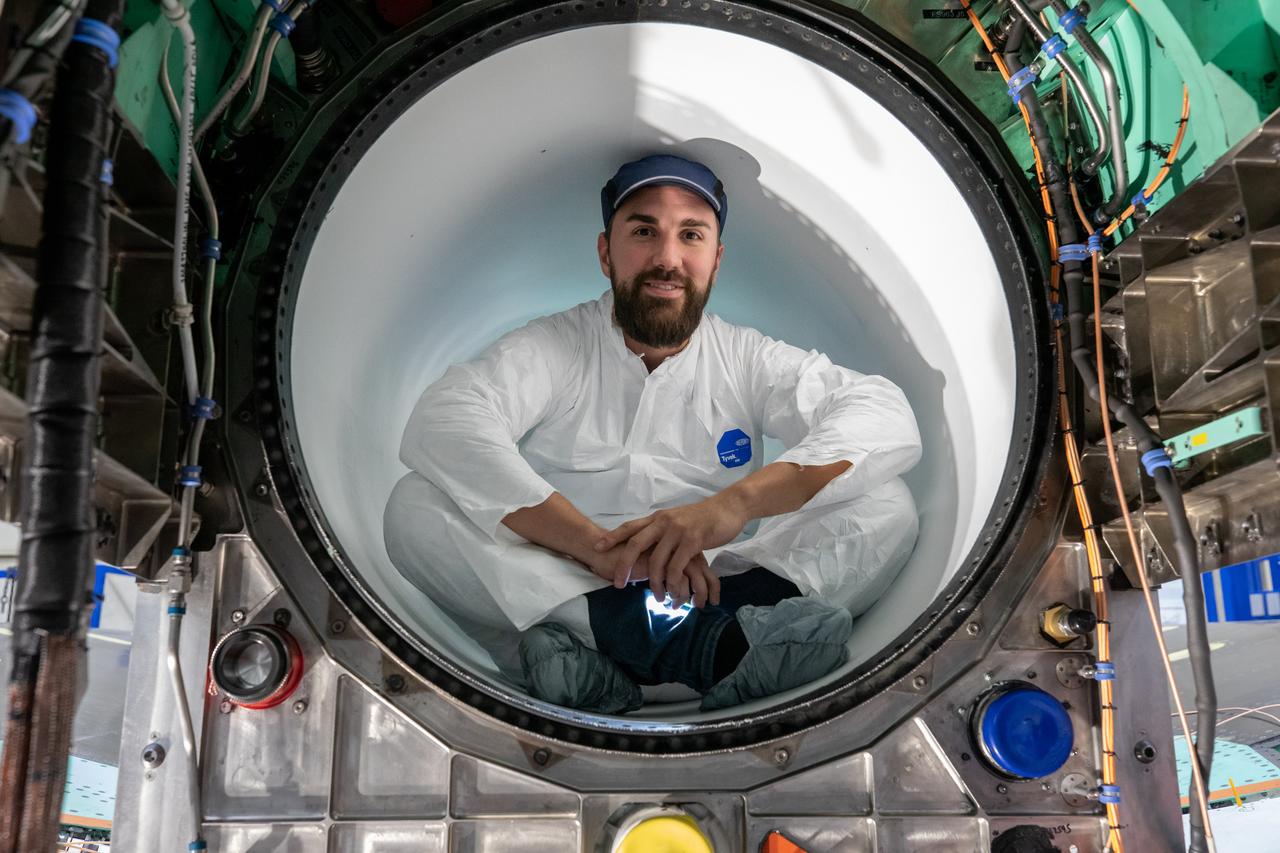
A Lockheed Martin Skunk Works technician takes a break for a photo. Note that the technician is wearing protective clean gear while sitting inside the X-59 engine inlet. Wearing this gear reduces the chance of any foreign objects from damaging the engine inlet.
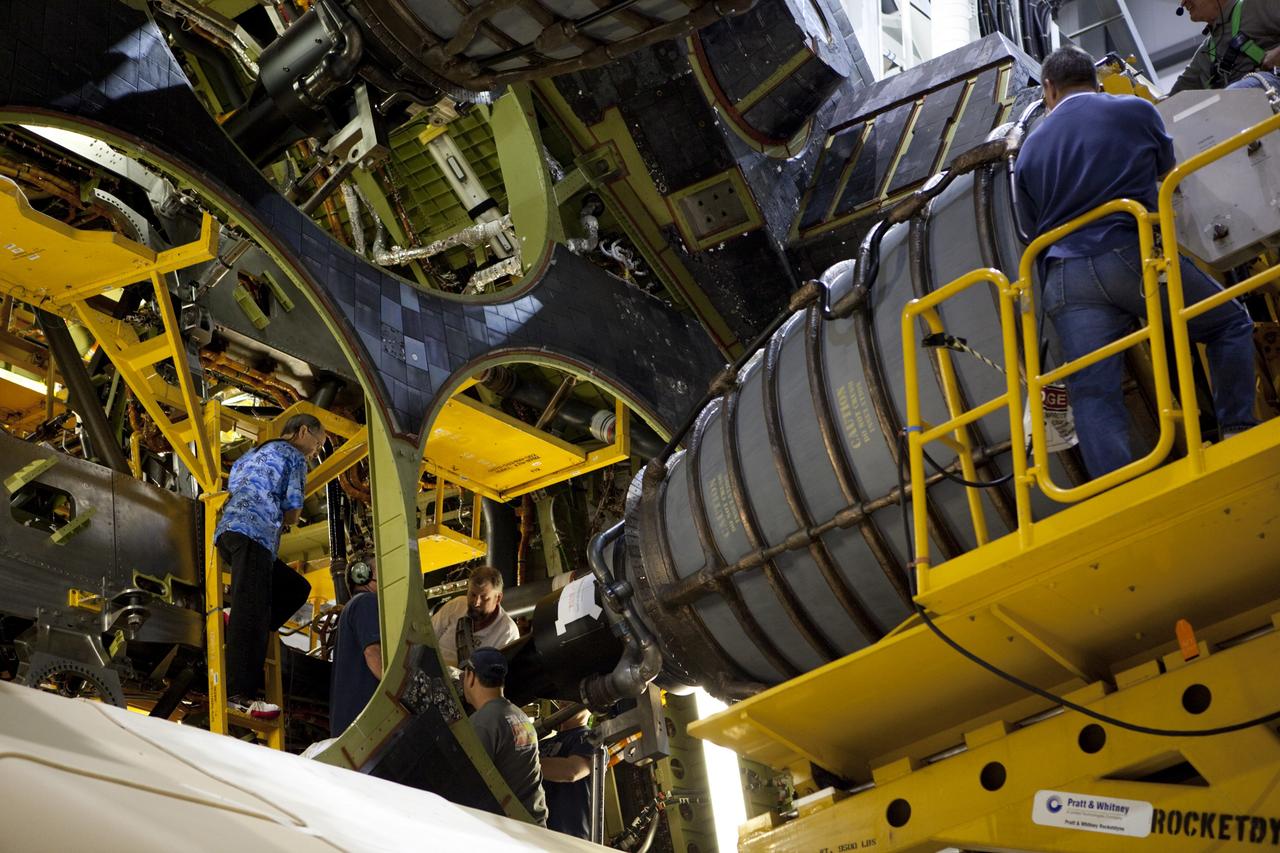
CAPE CANAVERAL, Fla. – Inside Orbiter Processing Facility Bay 2 at NASA’s Kennedy Space Center in Florida, technicians work inside the aft compartment of the space shuttle Endeavour as replica shuttle main engine RSME number 3 is installed on the space shuttle Endeavour. The work is part of Transition and Retirement of the remaining space shuttles, Endeavour and Atlantis. Endeavour is being prepared for public display at the California Science Center in Los Angeles. Its ferry flight to California is targeted for mid-September. Endeavour was the last space shuttle added to NASA’s orbiter fleet. Over the course of its 19-year career, Endeavour spent 299 days in space during 25 missions. For more information, visit http://www.nasa.gov/transition Photo credit: NASA/ Dimitri Gerondidakis
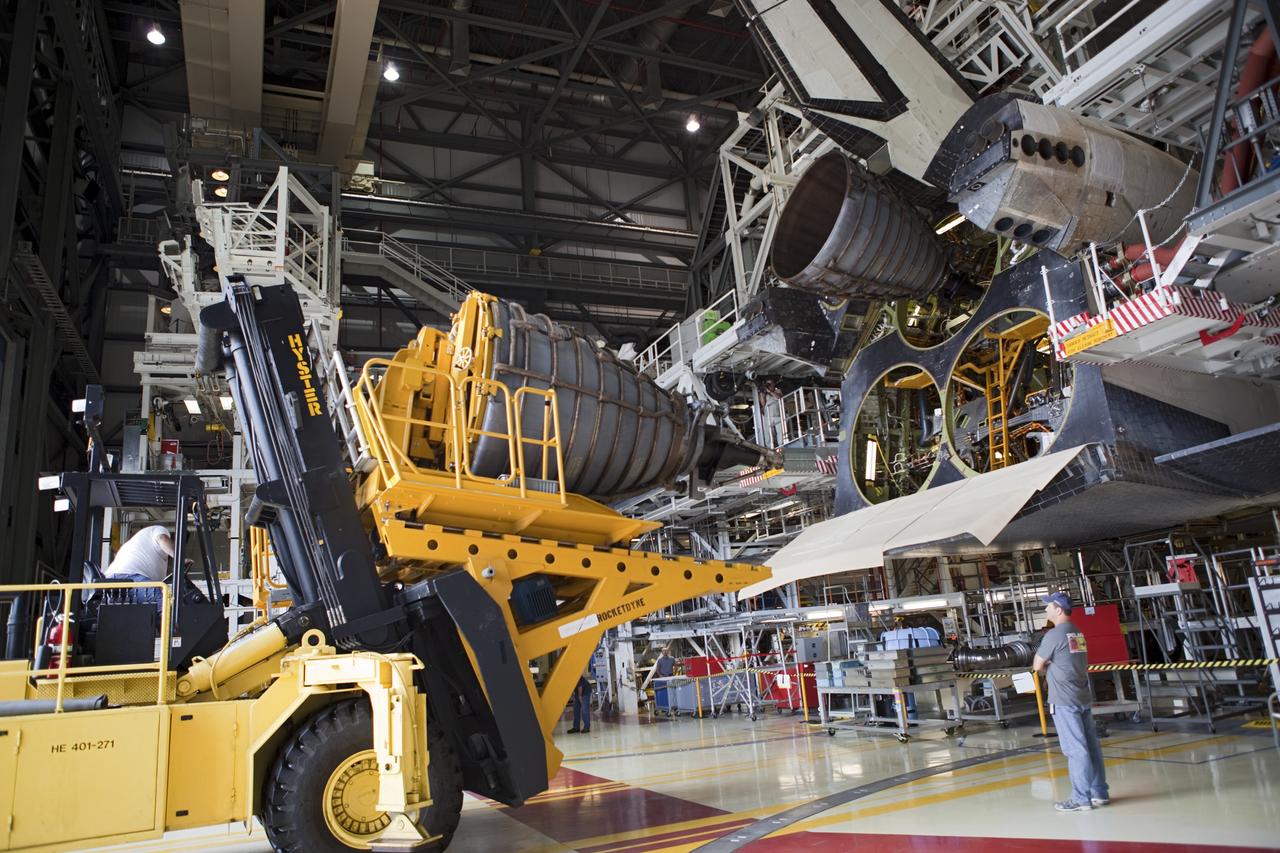
CAPE CANAVERAL, Fla. – Technicians keep a close watch as the Hyster forklift arrives at Orbiter Processing Facility Bay 2 at NASA’s Kennedy Space Center in Florida. Replica shuttle main engine RSME number 3 is being delivered for installation on space shuttle Endeavour. The work is part of Transition and Retirement of the remaining space shuttles, Endeavour and Atlantis. Endeavour is being prepared for public display at the California Science Center in Los Angeles. Its ferry flight to California is targeted for mid-September. Endeavour was the last space shuttle added to NASA’s orbiter fleet. Over the course of its 19-year career, Endeavour spent 299 days in space during 25 missions. For more information, visit http://www.nasa.gov/transition Photo credit: NASA/ Dimitri Gerondidakis
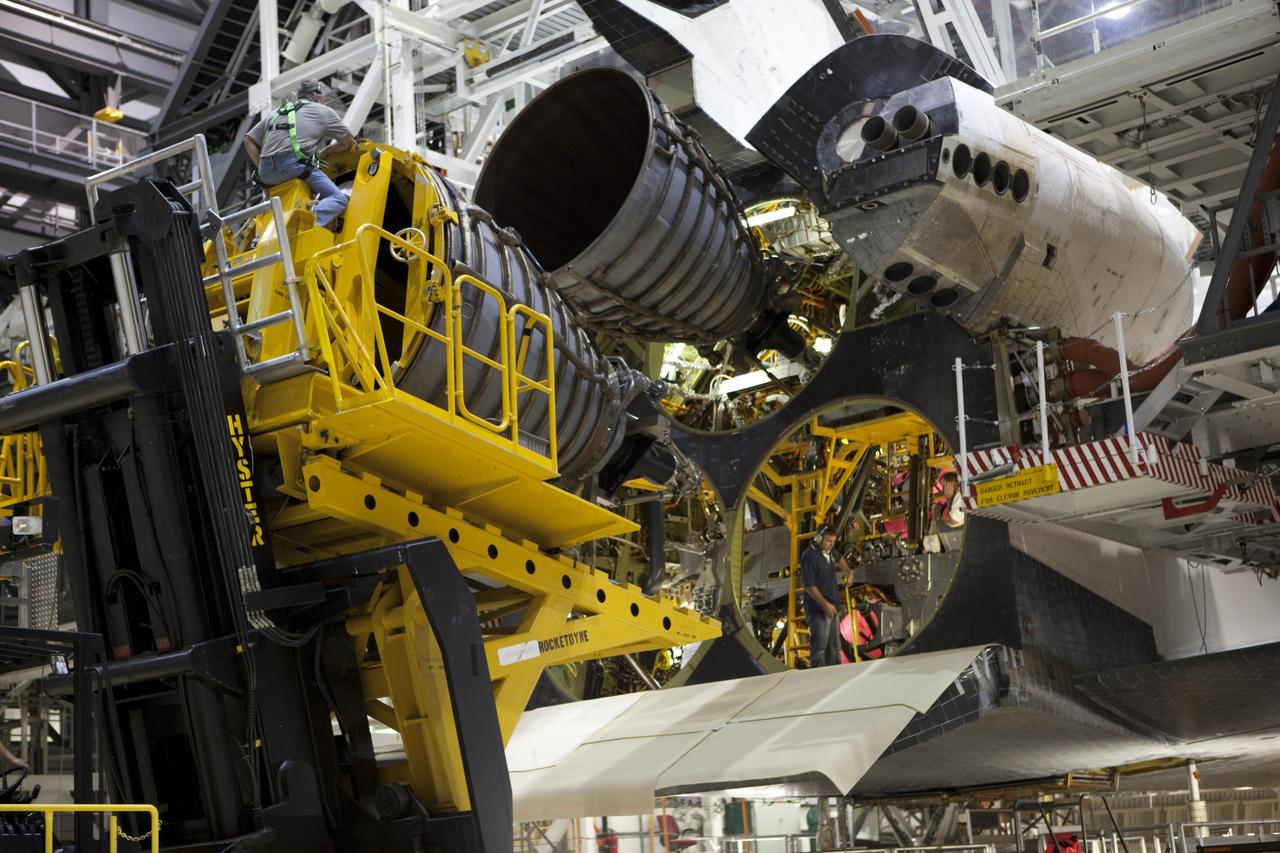
CAPE CANAVERAL, Fla. – In Orbiter Processing Facility Bay 2 at NASA’s Kennedy Space Center in Florida, technicians use the Hyster forklift to install replica shuttle main engine RSME number 1 on the space shuttle Endeavour. The work is part of Transition and Retirement of the remaining space shuttles, Endeavour and Atlantis. Endeavour is being prepared for public display at the California Science Center in Los Angeles. Its ferry flight to California is targeted for mid-September. Endeavour was the last space shuttle added to NASA’s orbiter fleet. Over the course of its 19-year career, Endeavour spent 299 days in space during 25 missions. For more information, visit http://www.nasa.gov/transition Photo credit: NASA/Charisse Nahser
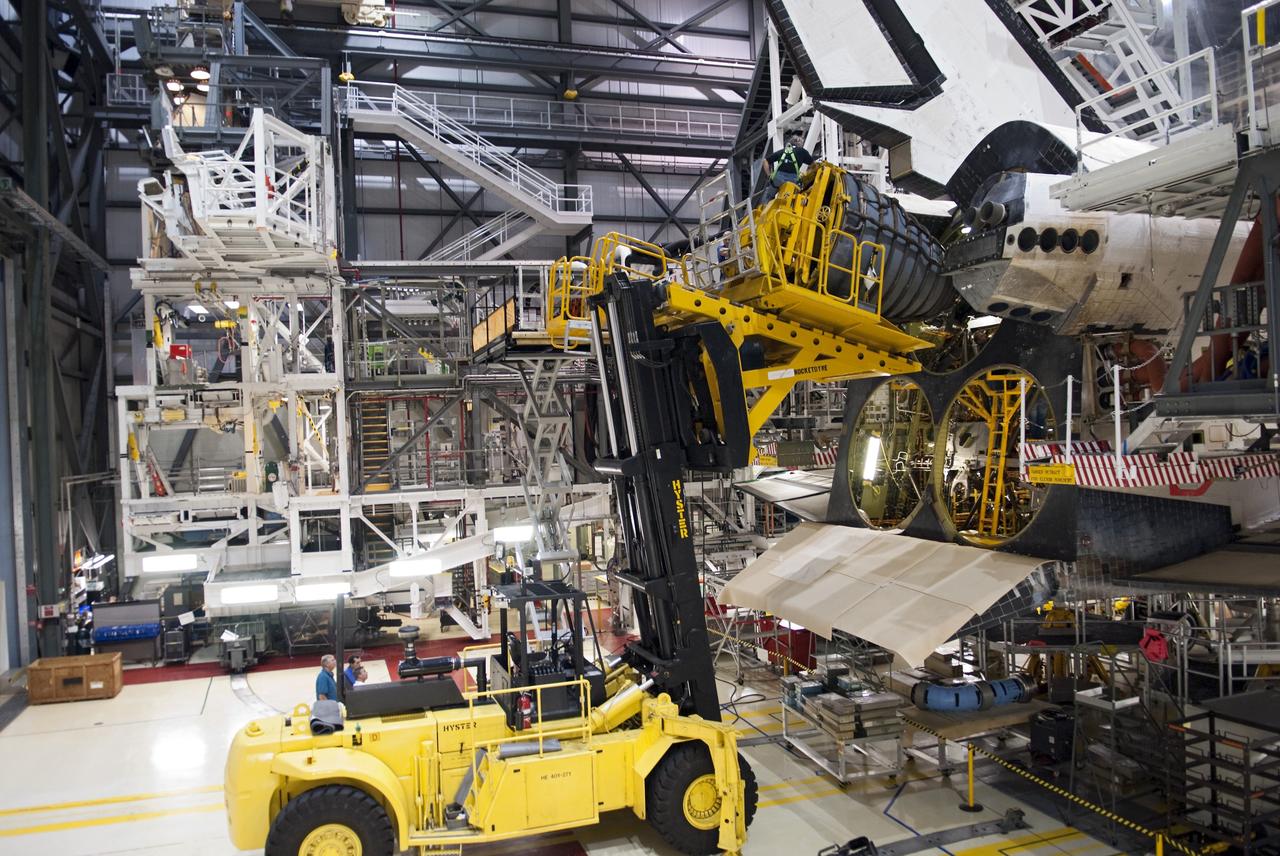
CAPE CANAVERAL, Fla. – In Orbiter Processing Facility Bay 2 at NASA’s Kennedy Space Center in Florida, technicians move the Hyster forklift into position for installation of replica shuttle main engine RSME number 3 on the space shuttle Endeavour. The work is part of Transition and Retirement of the remaining space shuttles, Endeavour and Atlantis. Endeavour is being prepared for public display at the California Science Center in Los Angeles. Its ferry flight to California is targeted for mid-September. Endeavour was the last space shuttle added to NASA’s orbiter fleet. Over the course of its 19-year career, Endeavour spent 299 days in space during 25 missions. For more information, visit http://www.nasa.gov/transition Photo credit: NASA/ Dimitri Gerondidakis
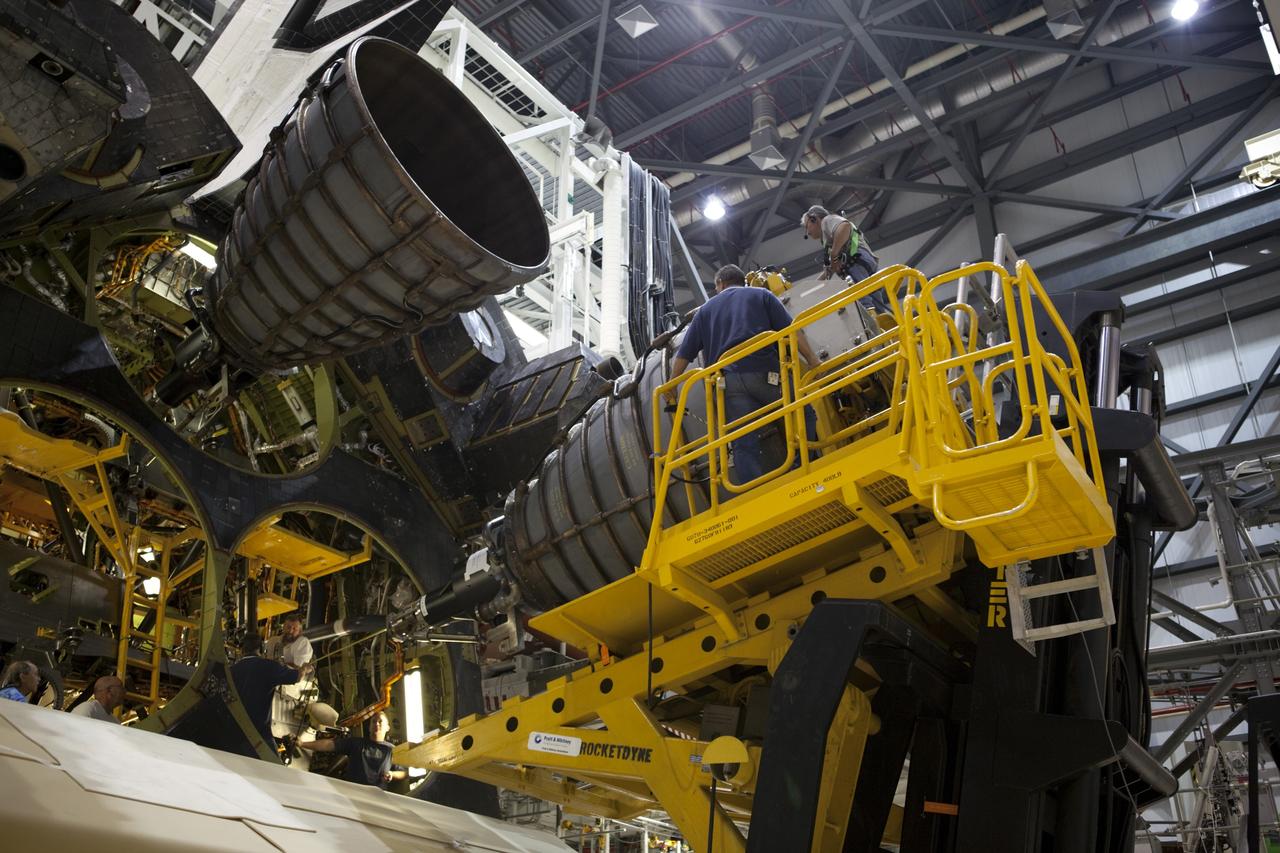
CAPE CANAVERAL, Fla. – In Orbiter Processing Facility Bay 2 at NASA’s Kennedy Space Center in Florida, technicians move the Hyster forklift into position for installation of replica shuttle main engine RSME number 3 on the space shuttle Endeavour. The work is part of Transition and Retirement of the remaining space shuttles, Endeavour and Atlantis. Endeavour is being prepared for public display at the California Science Center in Los Angeles. Its ferry flight to California is targeted for mid-September. Endeavour was the last space shuttle added to NASA’s orbiter fleet. Over the course of its 19-year career, Endeavour spent 299 days in space during 25 missions. For more information, visit http://www.nasa.gov/transition Photo credit: NASA/ Dimitri Gerondidakis
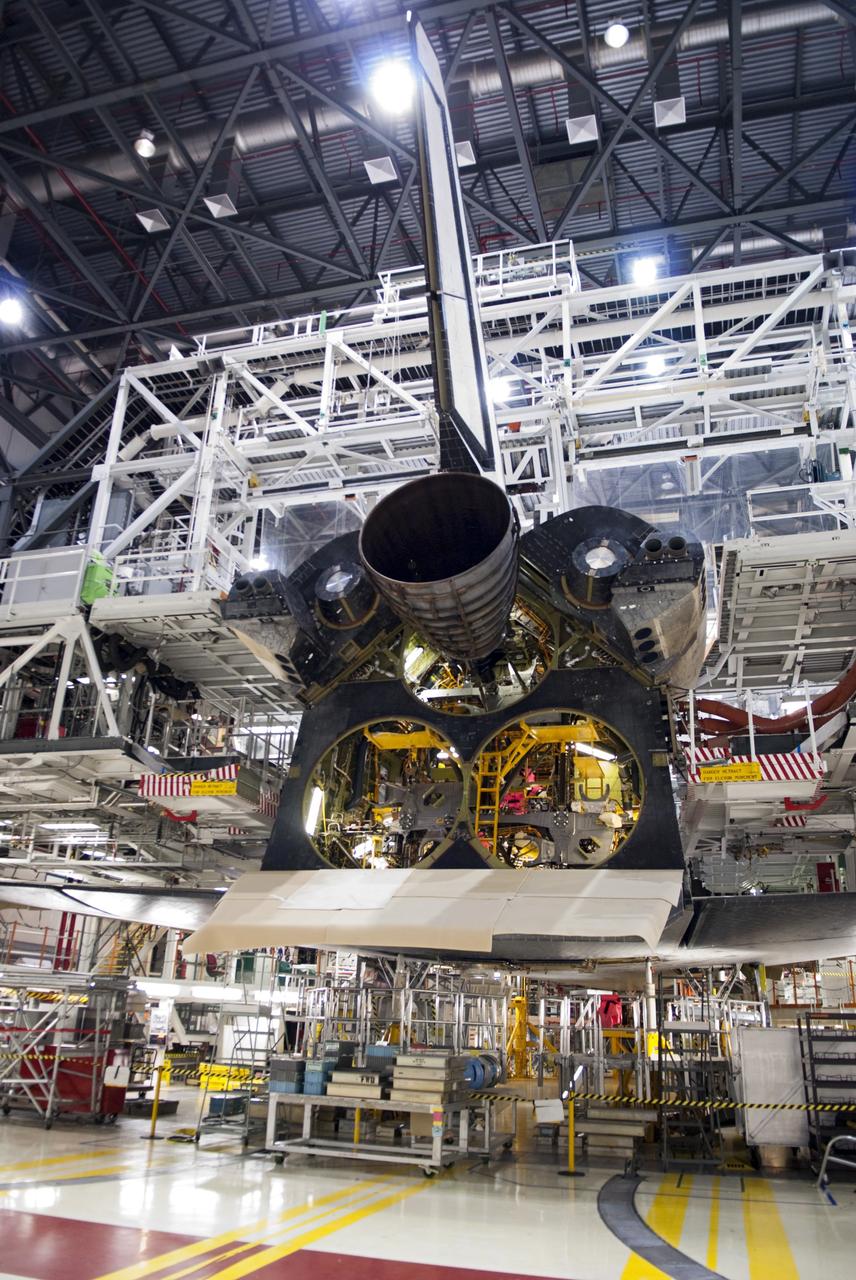
CAPE CANAVERAL, Fla. - In a view from the floor of Orbiter Processing Facility Bay 2 at NASA’s Kennedy Space Center in Florida, replica shuttle main engine RSME number 1 has been installed on space shuttle Endeavour. The orbiter is surrounded by work platforms allowing access to all areas of the spacecraft. The work is part of Transition and Retirement of the remaining space shuttles, Endeavour and Atlantis. Endeavour is being prepared for public display at the California Science Center in Los Angeles. Its ferry flight to California is targeted for mid-September. Endeavour was the last space shuttle added to NASA’s orbiter fleet. Over the course of its 19-year career, Endeavour spent 299 days in space during 25 missions. For more information, visit http://www.nasa.gov/transition Photo credit: NASA/Charisse Nahser
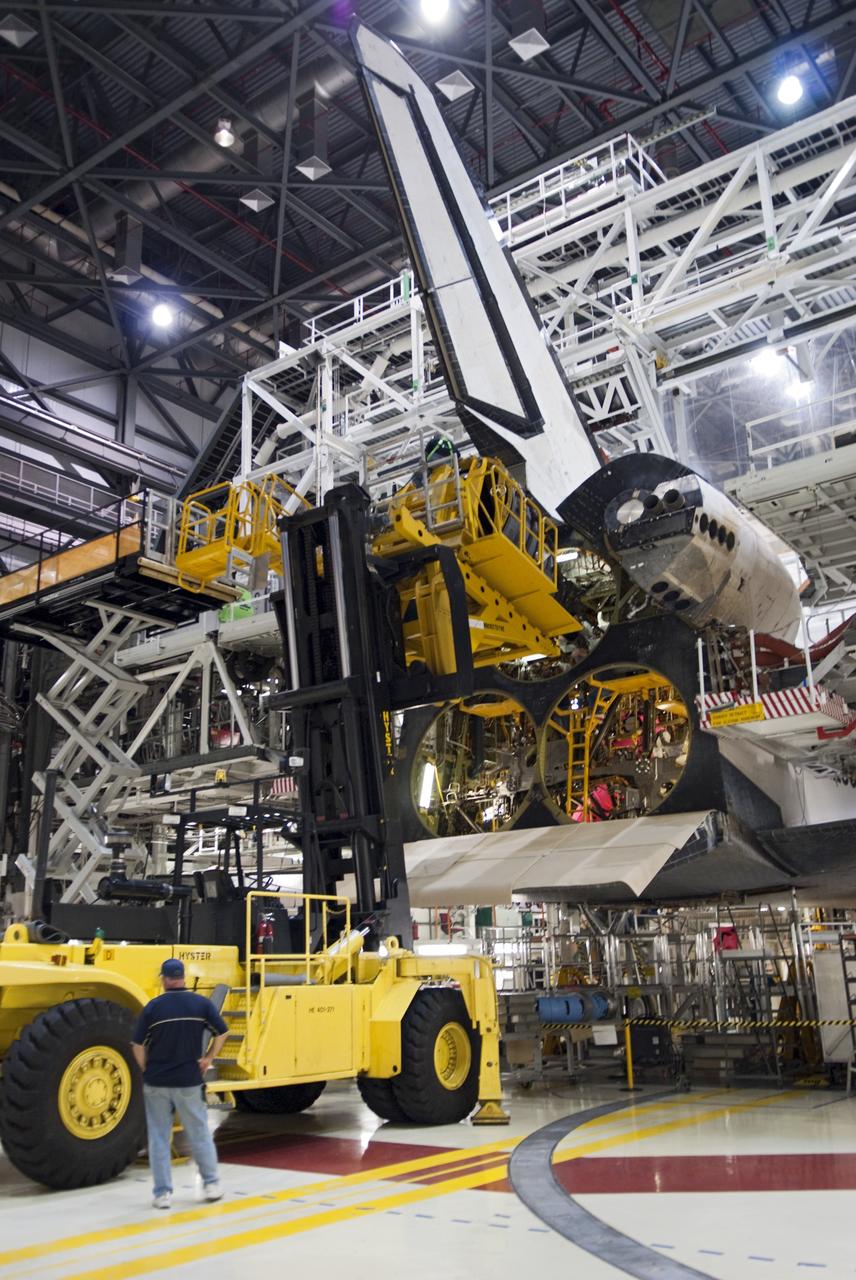
CAPE CANAVERAL, Fla. – In Orbiter Processing Facility Bay 2 at NASA’s Kennedy Space Center in Florida, technicians use the Hyster forklift to install replica shuttle main engine RSME number 1 on the space shuttle Endeavour. The work is part of Transition and Retirement of the remaining space shuttles, Endeavour and Atlantis. Endeavour is being prepared for public display at the California Science Center in Los Angeles. Its ferry flight to California is targeted for mid-September. Endeavour was the last space shuttle added to NASA’s orbiter fleet. Over the course of its 19-year career, Endeavour spent 299 days in space during 25 missions. For more information, visit http://www.nasa.gov/transition Photo credit: NASA/Charisse Nahser
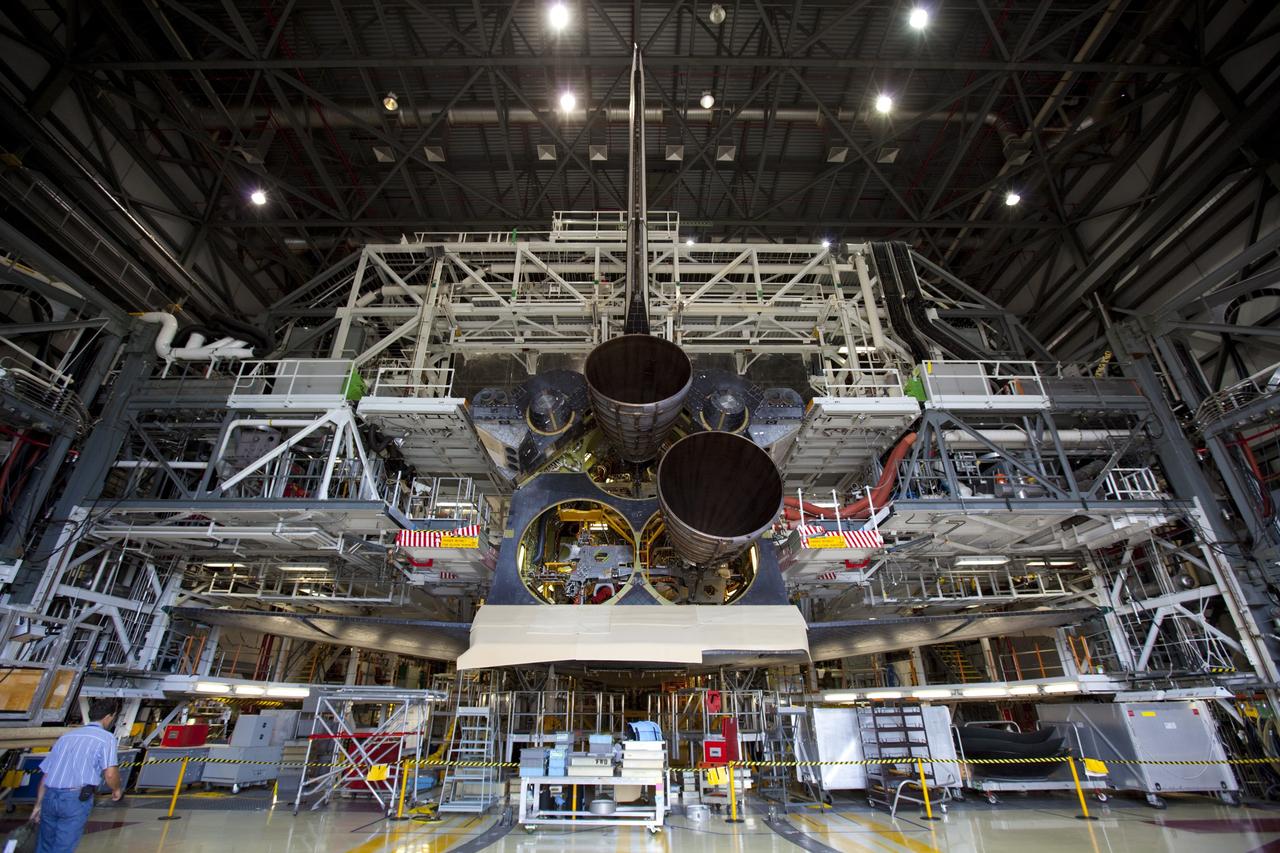
CAPE CANAVERAL, Fla. - In this wide-angle view inside Orbiter Processing Facility Bay 2 at NASA’s Kennedy Space Center in Florida, replica shuttle main engines 3 RSME has been installed on the space shuttle Endeavour. The orbiter is surrounded by work platforms allowing access to all areas of the spacecraft. The work is part of Transition and Retirement of the remaining space shuttles, Endeavour and Atlantis. Endeavour is being prepared for public display at the California Science Center in Los Angeles. Its ferry flight to California is targeted for mid-September. Endeavour was the last space shuttle added to NASA’s orbiter fleet. Over the course of its 19-year career, Endeavour spent 299 days in space during 25 missions. For more information, visit http://www.nasa.gov/transition Photo credit: NASA/ Dimitri Gerondidakis
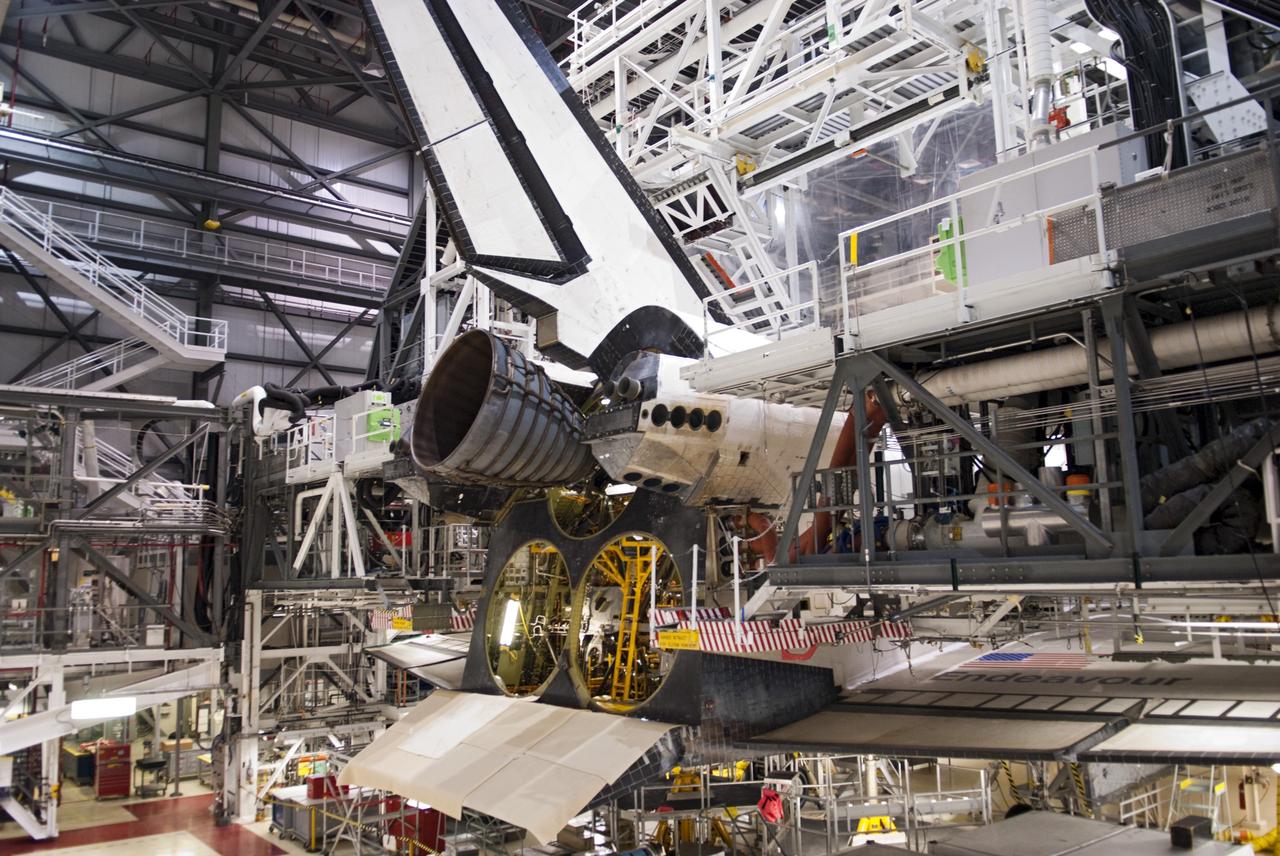
CAPE CANAVERAL, Fla. – In Orbiter Processing Facility Bay 2 at NASA’s Kennedy Space Center in Florida, replica shuttle main engine RSME number 1 has been installed on space shuttle Endeavour. The orbiter is surrounded by work platforms allowing access to all areas of the spacecraft. The work is part of Transition and Retirement of the remaining space shuttles, Endeavour and Atlantis. Endeavour is being prepared for public display at the California Science Center in Los Angeles. Its ferry flight to California is targeted for mid-September. Endeavour was the last space shuttle added to NASA’s orbiter fleet. Over the course of its 19-year career, Endeavour spent 299 days in space during 25 missions. For more information, visit http://www.nasa.gov/transition Photo credit: NASA/Charisse Nahser
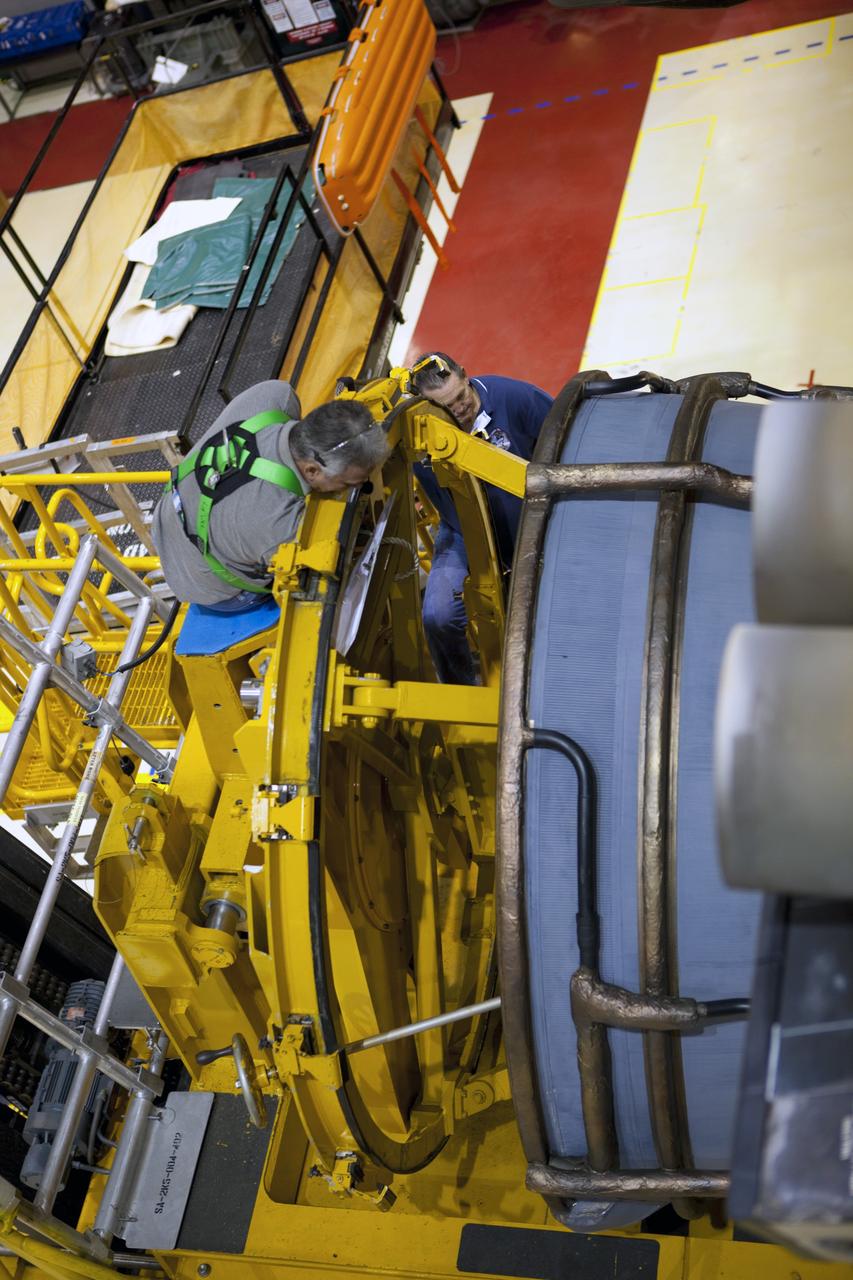
CAPE CANAVERAL, Fla. – In Orbiter Processing Facility Bay 2 at NASA’s Kennedy Space Center in Florida, technicians use the Hyster forklift to install replica shuttle main engine RSME number 3 on the space shuttle Endeavour. The work is part of Transition and Retirement of the remaining space shuttles, Endeavour and Atlantis. Endeavour is being prepared for public display at the California Science Center in Los Angeles. Its ferry flight to California is targeted for mid-September. Endeavour was the last space shuttle added to NASA’s orbiter fleet. Over the course of its 19-year career, Endeavour spent 299 days in space during 25 missions. For more information, visit http://www.nasa.gov/transition Photo credit: NASA/ Dimitri Gerondidakis
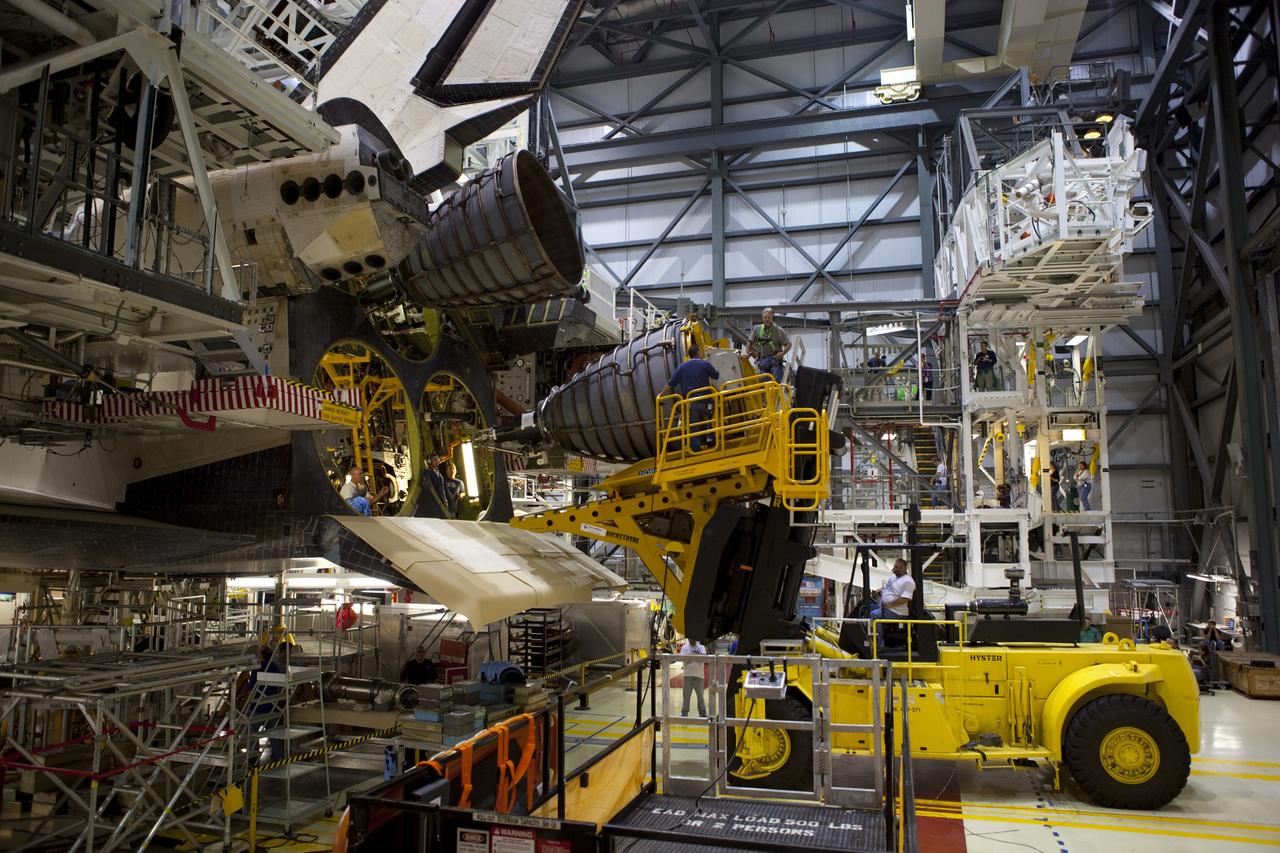
CAPE CANAVERAL, Fla. – In Orbiter Processing Facility Bay 1 at NASA’s Kennedy Space Center in Florida, technicians work with the Hyster forklift as replica shuttle main engine RSME number 3 is installed on the space shuttle Endeavour. The work is part of Transition and Retirement of the remaining space shuttles, Endeavour and Atlantis. Endeavour is being prepared for public display at the California Science Center in Los Angeles. Its ferry flight to California is targeted for mid-September. Endeavour was the last space shuttle added to NASA’s orbiter fleet. Over the course of its 19-year career, Endeavour spent 299 days in space during 25 missions. For more information, visit http://www.nasa.gov/transition Photo credit: NASA/ Dimitri Gerondidakis
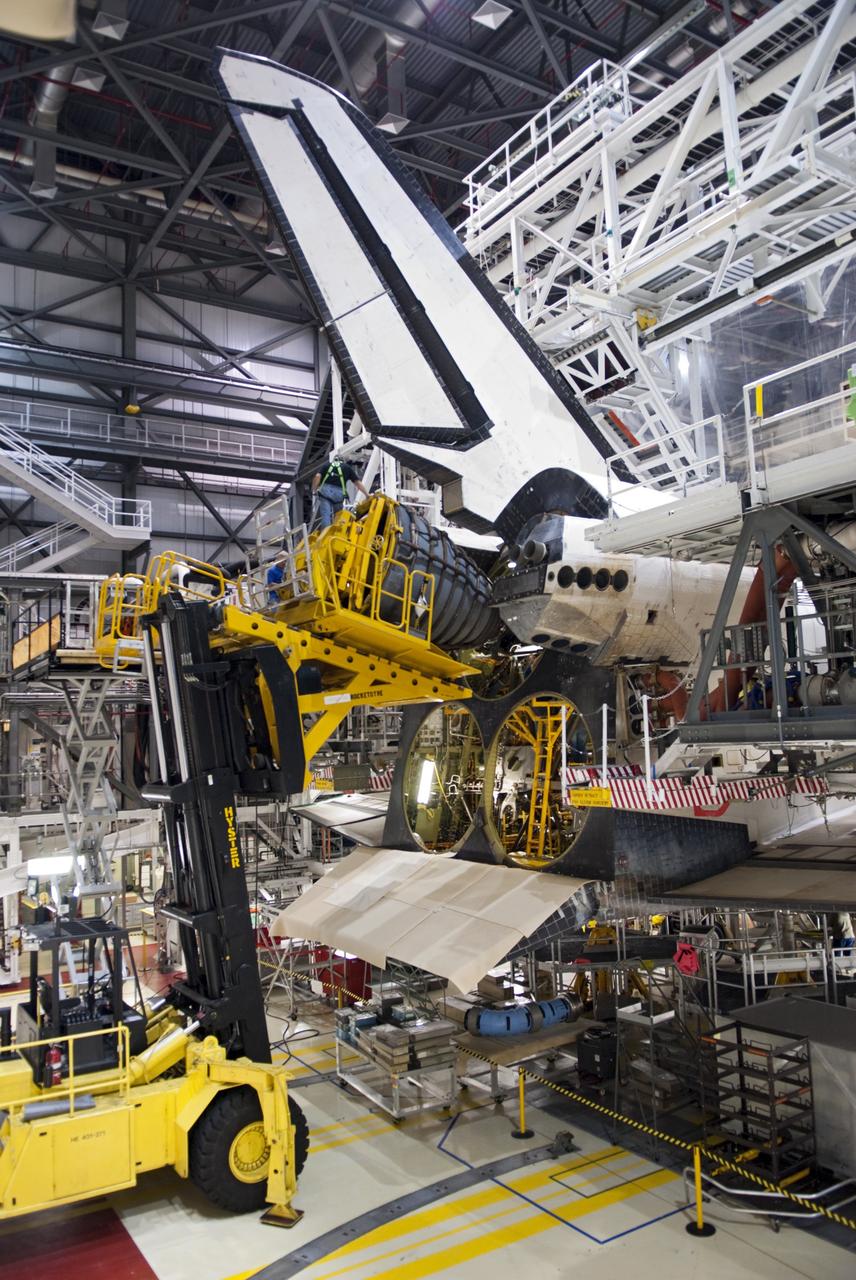
CAPE CANAVERAL, Fla. – In Orbiter Processing Facility Bay 2 at NASA’s Kennedy Space Center in Florida, technicians use the Hyster forklift to install replica shuttle main engine RSME number 1 on the space shuttle Endeavour. The work is part of Transition and Retirement of the remaining space shuttles, Endeavour and Atlantis. Endeavour is being prepared for public display at the California Science Center in Los Angeles. Its ferry flight to California is targeted for mid-September. Endeavour was the last space shuttle added to NASA’s orbiter fleet. Over the course of its 19-year career, Endeavour spent 299 days in space during 25 missions. For more information, visit http://www.nasa.gov/transition Photo credit: NASA/Charisse Nahser
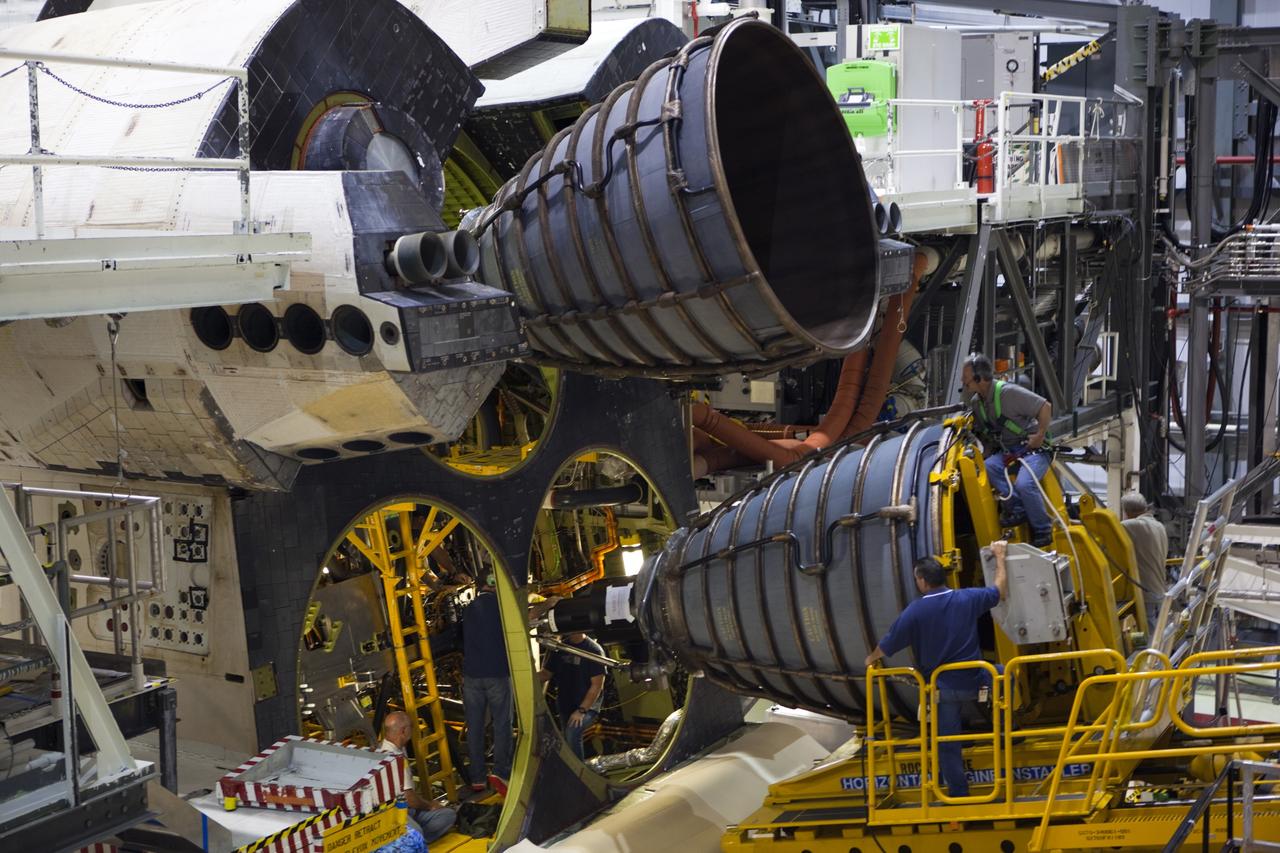
CAPE CANAVERAL, Fla. – In Orbiter Processing Facility Bay 2 at NASA’s Kennedy Space Center in Florida, technicians use the Hyster forklift to install replica shuttle main engine RSME number 3 on the space shuttle Endeavour. The work is part of Transition and Retirement of the remaining space shuttles, Endeavour and Atlantis. Endeavour is being prepared for public display at the California Science Center in Los Angeles. Its ferry flight to California is targeted for mid-September. Endeavour was the last space shuttle added to NASA’s orbiter fleet. Over the course of its 19-year career, Endeavour spent 299 days in space during 25 missions. For more information, visit http://www.nasa.gov/transition Photo credit: NASA/ Dimitri Gerondidakis
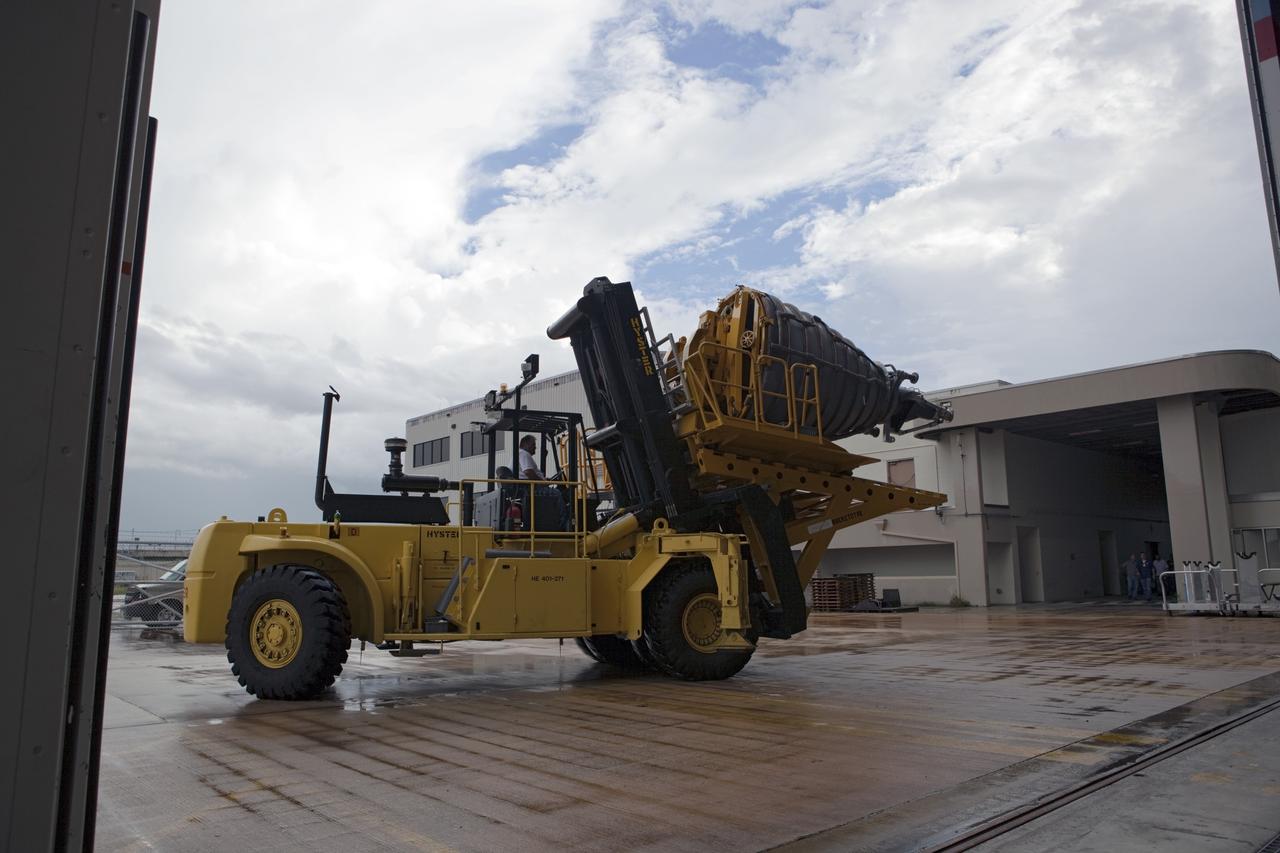
CAPE CANAVERAL, Fla. – At NASA’s Kennedy Space Center in Florida, the Hyster forklift is used to deliver replica shuttle main engine RSME number 3 to Orbiter Processing Facility Bay 2 for installation on space shuttle Endeavour. The work is part of Transition and Retirement of the remaining space shuttles, Endeavour and Atlantis. Endeavour is being prepared for public display at the California Science Center in Los Angeles. Its ferry flight to California is targeted for mid-September. Endeavour was the last space shuttle added to NASA’s orbiter fleet. Over the course of its 19-year career, Endeavour spent 299 days in space during 25 missions. For more information, visit http://www.nasa.gov/transition Photo credit: NASA/ Dimitri Gerondidakis
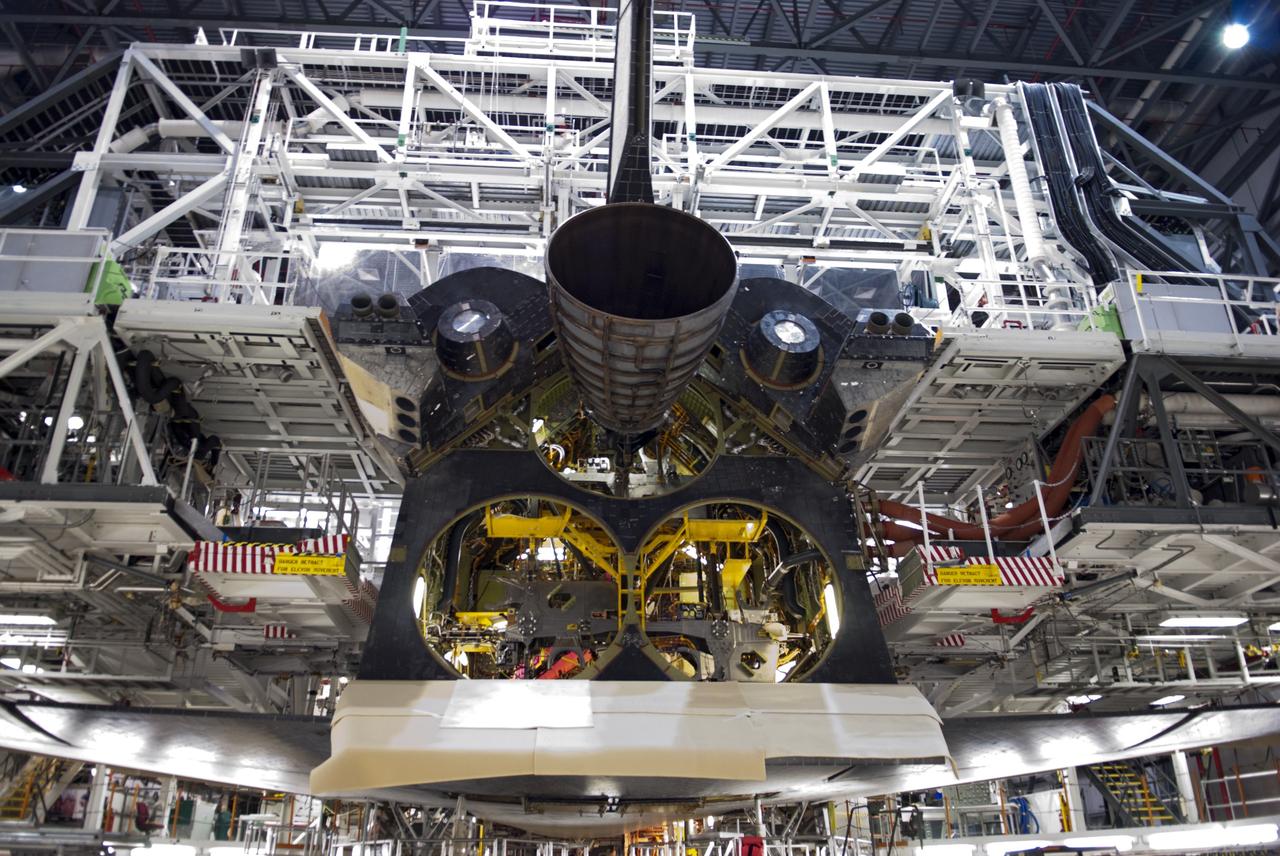
CAPE CANAVERAL, Fla. - In Orbiter Processing Facility Bay 2 at NASA’s Kennedy Space Center in Florida, replica shuttle main engine RSME number 1 has been installed on space shuttle Endeavour. The orbiter is surrounded by work platforms allowing access to all areas of the spacecraft. The work is part of Transition and Retirement of the remaining space shuttles, Endeavour and Atlantis. Endeavour is being prepared for public display at the California Science Center in Los Angeles. Its ferry flight to California is targeted for mid-September. Endeavour was the last space shuttle added to NASA’s orbiter fleet. Over the course of its 19-year career, Endeavour spent 299 days in space during 25 missions. For more information, visit http://www.nasa.gov/transition Photo credit: NASA/Charisse Nahser
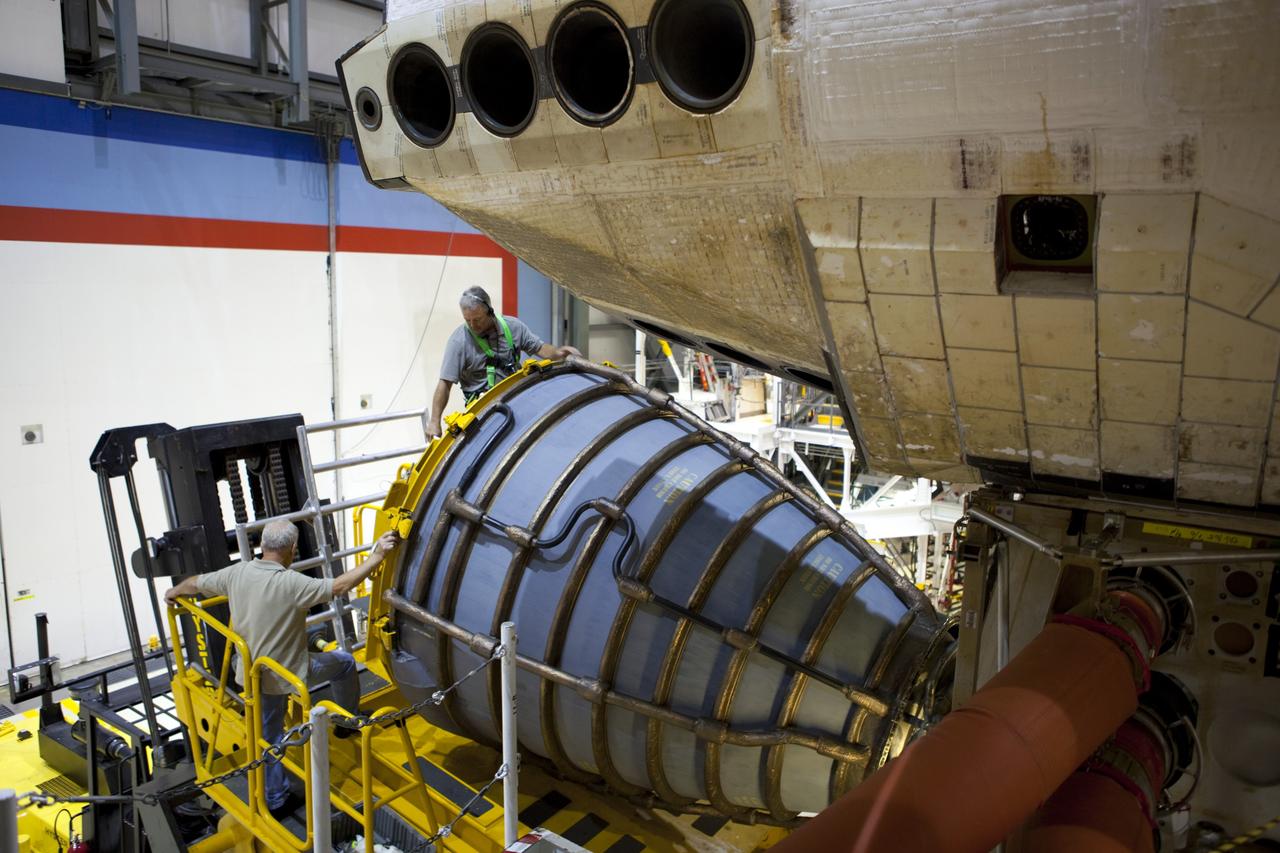
CAPE CANAVERAL, Fla. – In Orbiter Processing Facility Bay 2 at NASA’s Kennedy Space Center in Florida, technicians install replica shuttle main engine RSME number 3 on the space shuttle Endeavour. The work is part of Transition and Retirement of the remaining space shuttles, Endeavour and Atlantis. Endeavour is being prepared for public display at the California Science Center in Los Angeles. Its ferry flight to California is targeted for mid-September. Endeavour was the last space shuttle added to NASA’s orbiter fleet. Over the course of its 19-year career, Endeavour spent 299 days in space during 25 missions. For more information, visit http://www.nasa.gov/transition Photo credit: NASA/ Dimitri Gerondidakis

CAPE CANAVERAL, Fla. - In Orbiter Processing Facility Bay 2 at NASA’s Kennedy Space Center in Florida, replica shuttle main engines 3 RSME has been installed on the space shuttle Endeavour. The orbiter is surrounded by work platforms allowing access to all areas of the spacecraft. The work is part of Transition and Retirement of the remaining space shuttles, Endeavour and Atlantis. Endeavour is being prepared for public display at the California Science Center in Los Angeles. Its ferry flight to California is targeted for mid-September. Endeavour was the last space shuttle added to NASA’s orbiter fleet. Over the course of its 19-year career, Endeavour spent 299 days in space during 25 missions. For more information, visit http://www.nasa.gov/transition Photo credit: NASA/ Dimitri Gerondidakis
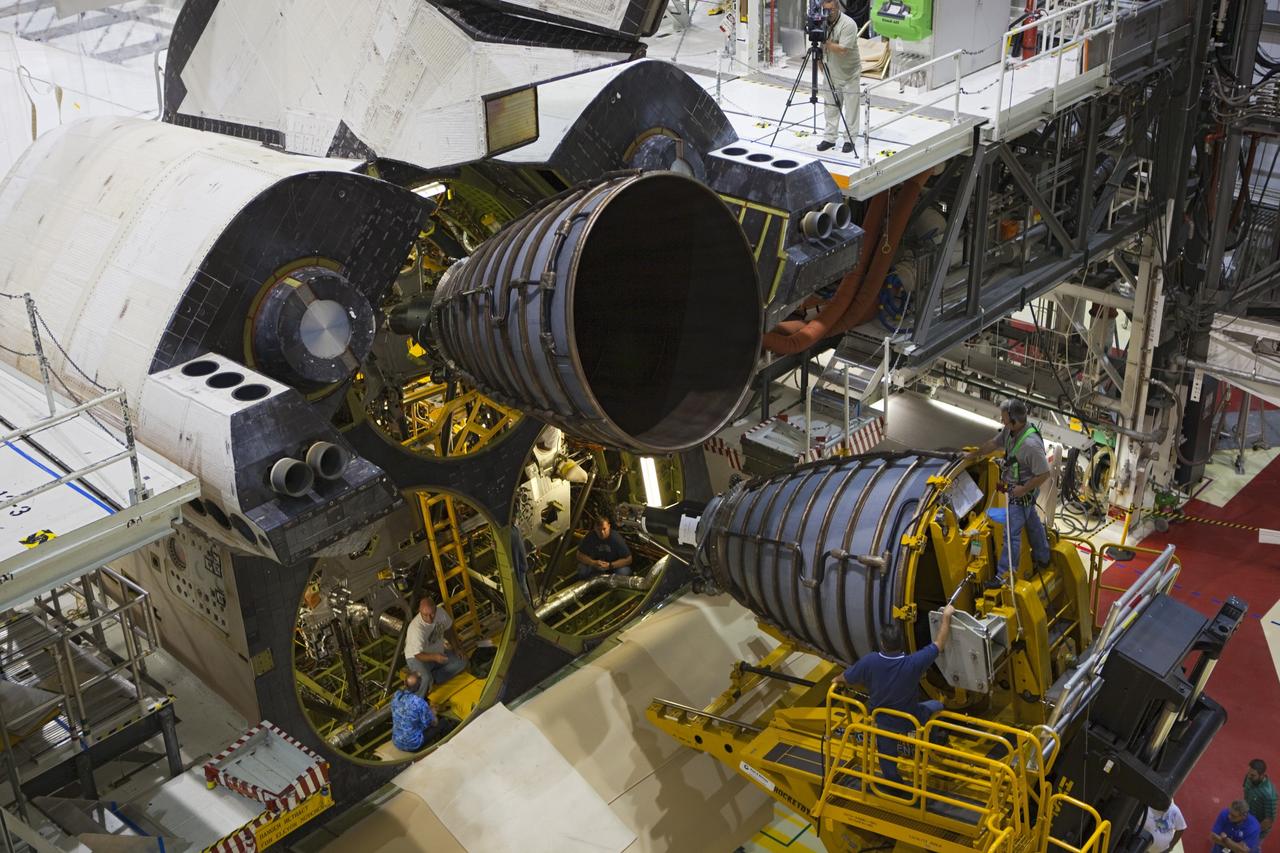
CAPE CANAVERAL, Fla. – In an overhead view, technicians work inside the aft compartment of the space shuttle Endeavour during installation of replica shuttle main engine RSME number 3 in Orbiter Processing Facility Bay 2 at NASA’s Kennedy Space Center in Florida. The work is part of Transition and Retirement of the remaining space shuttles, Endeavour and Atlantis. Endeavour is being prepared for public display at the California Science Center in Los Angeles. Its ferry flight to California is targeted for mid-September. Endeavour was the last space shuttle added to NASA’s orbiter fleet. Over the course of its 19-year career, Endeavour spent 299 days in space during 25 missions. For more information, visit http://www.nasa.gov/transition Photo credit: NASA/ Dimitri Gerondidakis
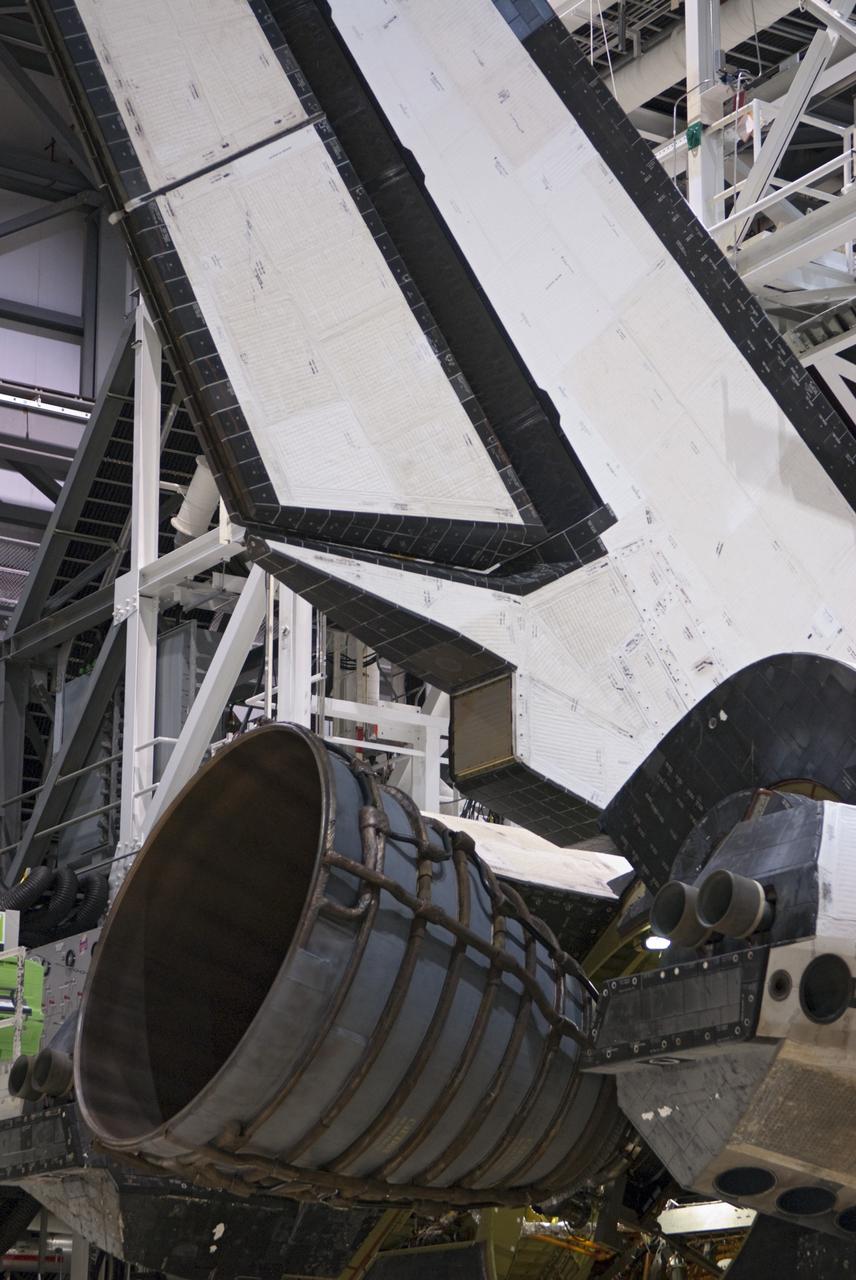
CAPE CANAVERAL, Fla. – A close-up view of replica shuttle main engine RSME number 1 recently installed on space shuttle Endeavour in Orbiter Processing Facility Bay 2 at NASA’s Kennedy Space Center in Florida. The work is part of Transition and Retirement of the remaining space shuttles, Endeavour and Atlantis. Endeavour is being prepared for public display at the California Science Center in Los Angeles. Its ferry flight to California is targeted for mid-September. Endeavour was the last space shuttle added to NASA’s orbiter fleet. Over the course of its 19-year career, Endeavour spent 299 days in space during 25 missions. For more information, visit http://www.nasa.gov/transition Photo credit: NASA/Charisse Nahser
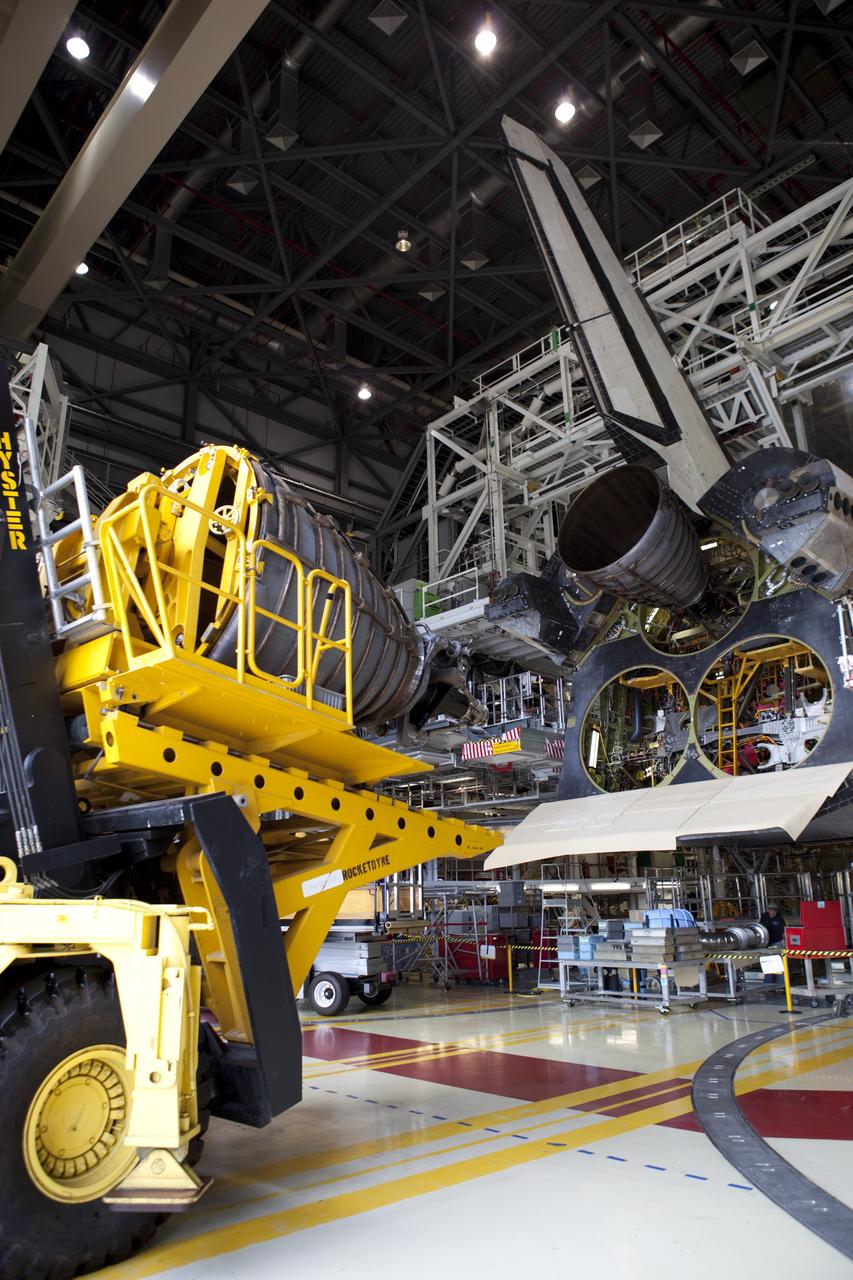
CAPE CANAVERAL, Fla. – At NASA’s Kennedy Space Center in Florida, the Hyster forklift arrives at Orbiter Processing Facility Bay 2 delivering replica shuttle main engine RSME number 3 for installation on space shuttle Endeavour. The work is part of Transition and Retirement of the remaining space shuttles, Endeavour and Atlantis. Endeavour is being prepared for public display at the California Science Center in Los Angeles. Its ferry flight to California is targeted for mid-September. Endeavour was the last space shuttle added to NASA’s orbiter fleet. Over the course of its 19-year career, Endeavour spent 299 days in space during 25 missions. For more information, visit http://www.nasa.gov/transition Photo credit: NASA/ Dimitri Gerondidakis
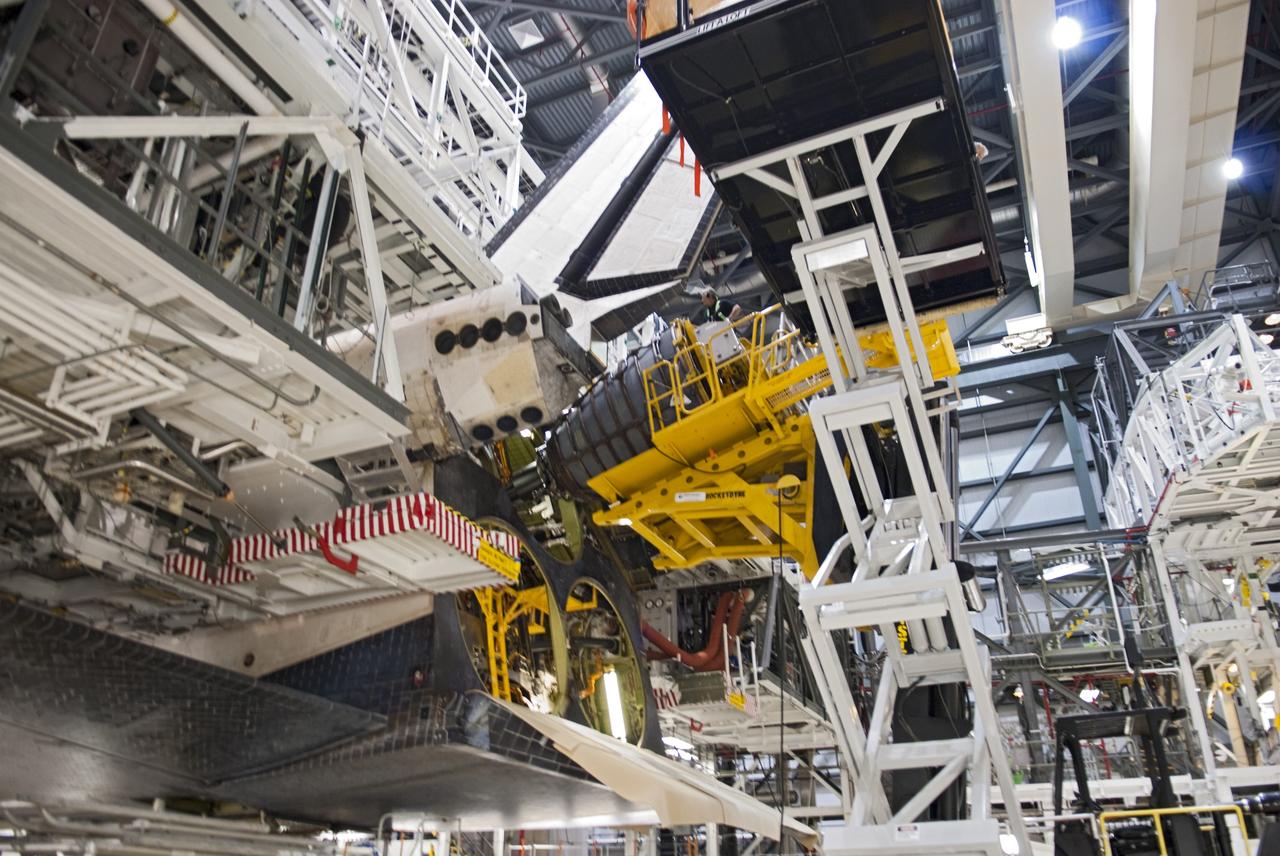
CAPE CANAVERAL, Fla. – In Orbiter Processing Facility Bay 2 at NASA’s Kennedy Space Center in Florida, technicians use the Hyster forklift to install replica shuttle main engine RSME number 1 on the space shuttle Endeavour. The work is part of Transition and Retirement of the remaining space shuttles, Endeavour and Atlantis. Endeavour is being prepared for public display at the California Science Center in Los Angeles. Its ferry flight to California is targeted for mid-September. Endeavour was the last space shuttle added to NASA’s orbiter fleet. Over the course of its 19-year career, Endeavour spent 299 days in space during 25 missions. For more information, visit http://www.nasa.gov/transition Photo credit: NASA/Charisse Nahser
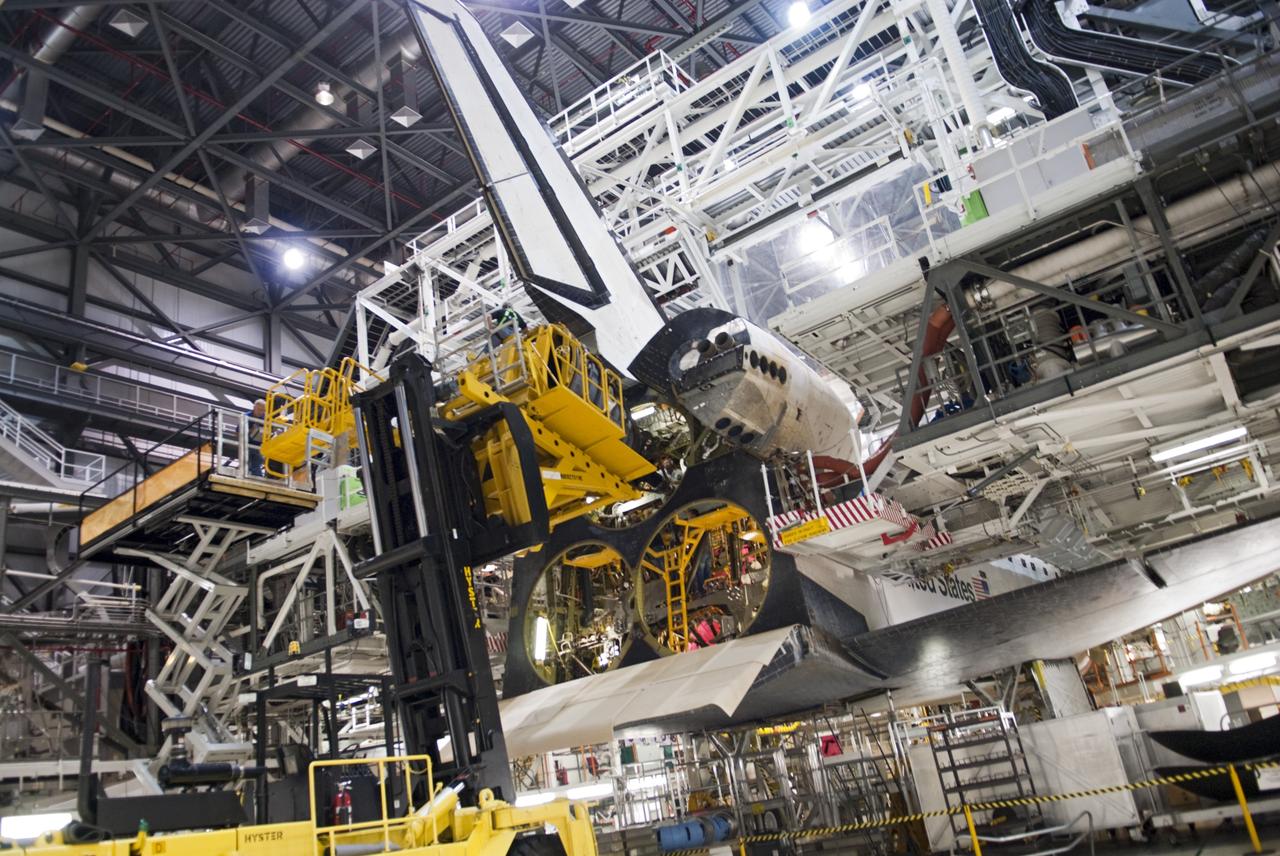
CAPE CANAVERAL, Fla. – In Orbiter Processing Facility Bay 2 at NASA’s Kennedy Space Center in Florida, technicians use the Hyster forklift to install replica shuttle main engine RSME number 1 on the space shuttle Endeavour. The orbiter is surrounded by work platforms allowing access to all areas of the spacecraft. The work is part of Transition and Retirement of the remaining space shuttles, Endeavour and Atlantis. Endeavour is being prepared for public display at the California Science Center in Los Angeles. Its ferry flight to California is targeted for mid-September. Endeavour was the last space shuttle added to NASA’s orbiter fleet. Over the course of its 19-year career, Endeavour spent 299 days in space during 25 missions. For more information, visit http://www.nasa.gov/transition Photo credit: NASA/Charisse Nahser
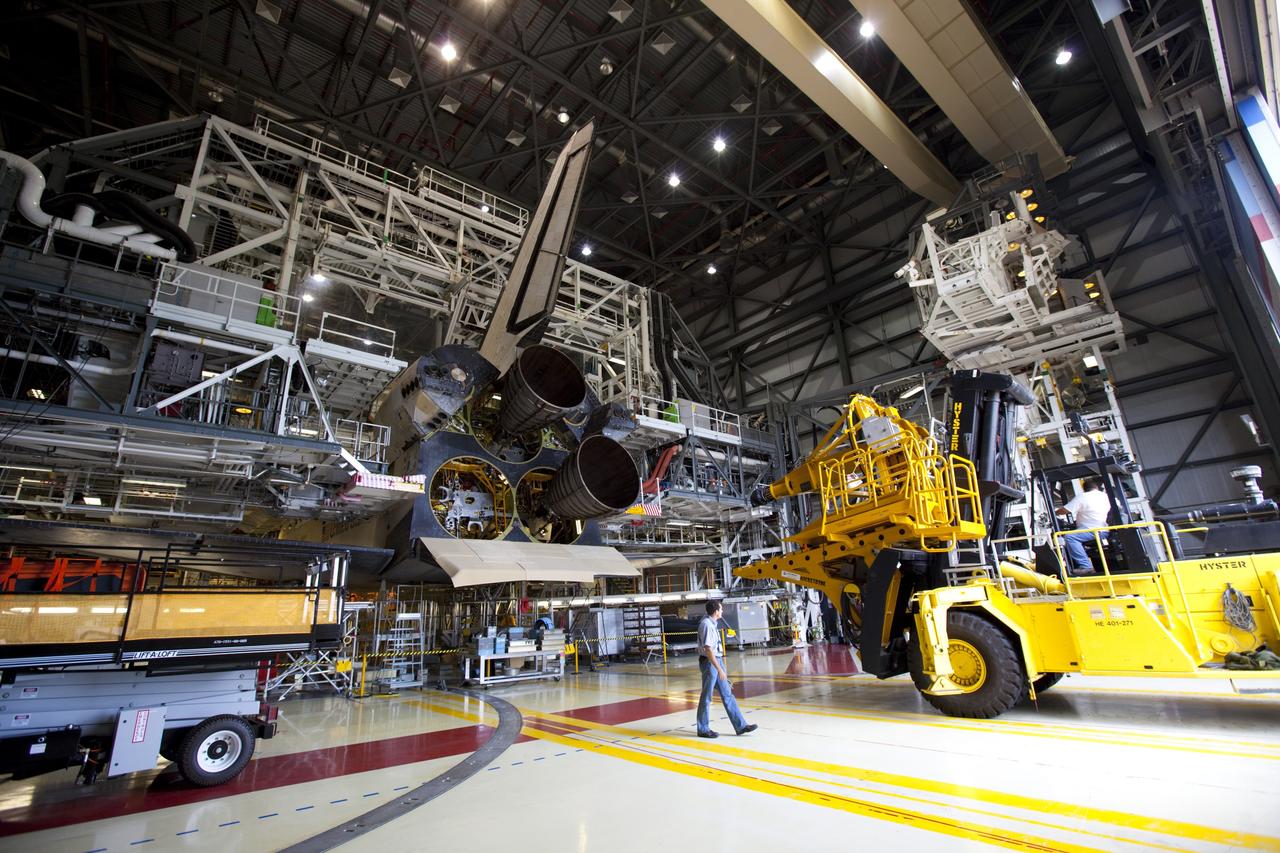
CAPE CANAVERAL, Fla. – Technicians keep a close watch as the Hyster forklift backs away from the space shuttle Endeavour following installation of replica shuttle main engine RSME number 3 inside Orbiter Processing Facility Bay 2 at NASA’s Kennedy Space Center in Florida. The orbiter is surrounded by work platforms allowing access to all areas of the spacecraft. The work is part of Transition and Retirement of the remaining space shuttles, Endeavour and Atlantis. Endeavour is being prepared for public display at the California Science Center in Los Angeles. Its ferry flight to California is targeted for mid-September. Endeavour was the last space shuttle added to NASA’s orbiter fleet. Over the course of its 19-year career, Endeavour spent 299 days in space during 25 missions. For more information, visit http://www.nasa.gov/transition Photo credit: NASA/ Dimitri Gerondidakis
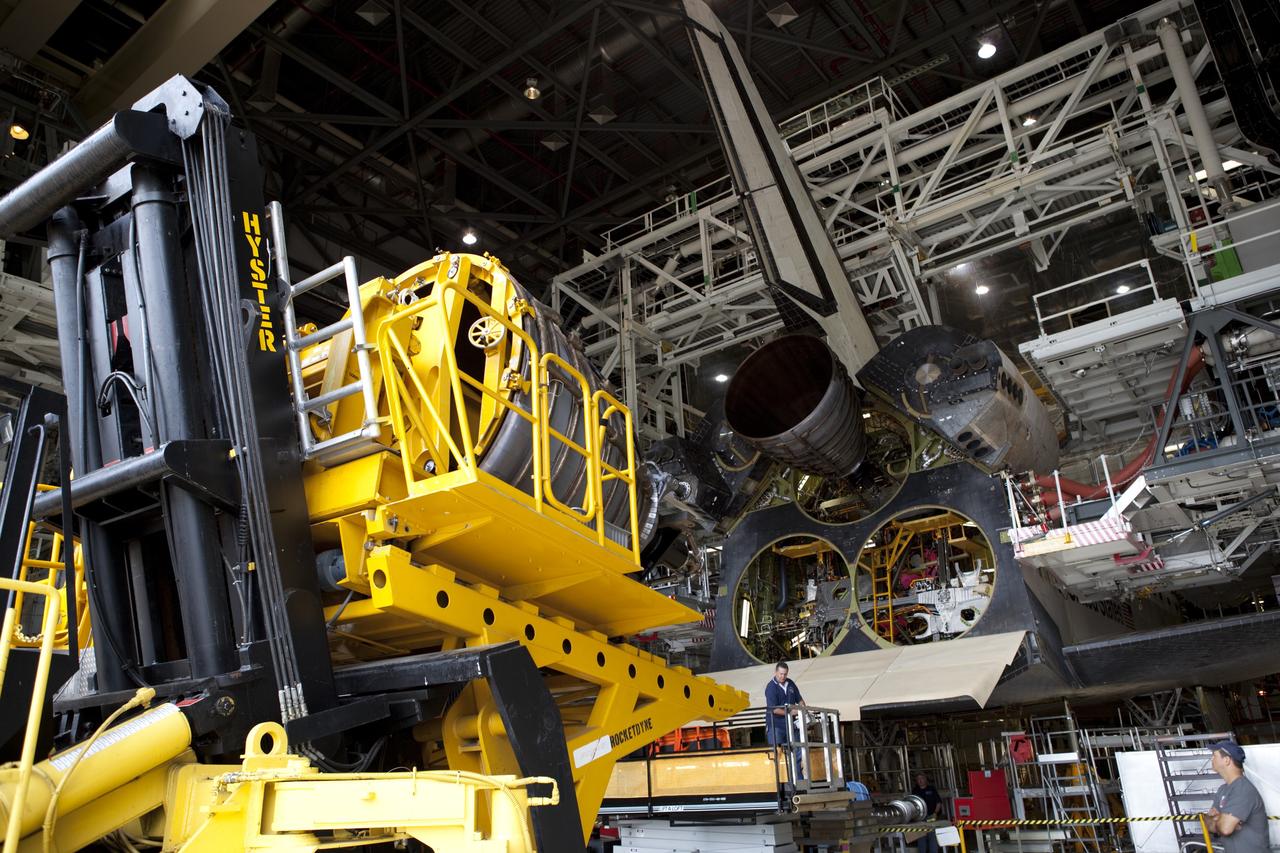
CAPE CANAVERAL, Fla. – At NASA’s Kennedy Space Center in Florida, the Hyster forklift arrives at Orbiter Processing Facility Bay 2 delivering replica shuttle main engine RSME number 3 for installation on space shuttle Endeavour. The work is part of Transition and Retirement of the remaining space shuttles, Endeavour and Atlantis. Endeavour is being prepared for public display at the California Science Center in Los Angeles. Its ferry flight to California is targeted for mid-September. Endeavour was the last space shuttle added to NASA’s orbiter fleet. Over the course of its 19-year career, Endeavour spent 299 days in space during 25 missions. For more information, visit http://www.nasa.gov/transition Photo credit: NASA/ Dimitri Gerondidakis
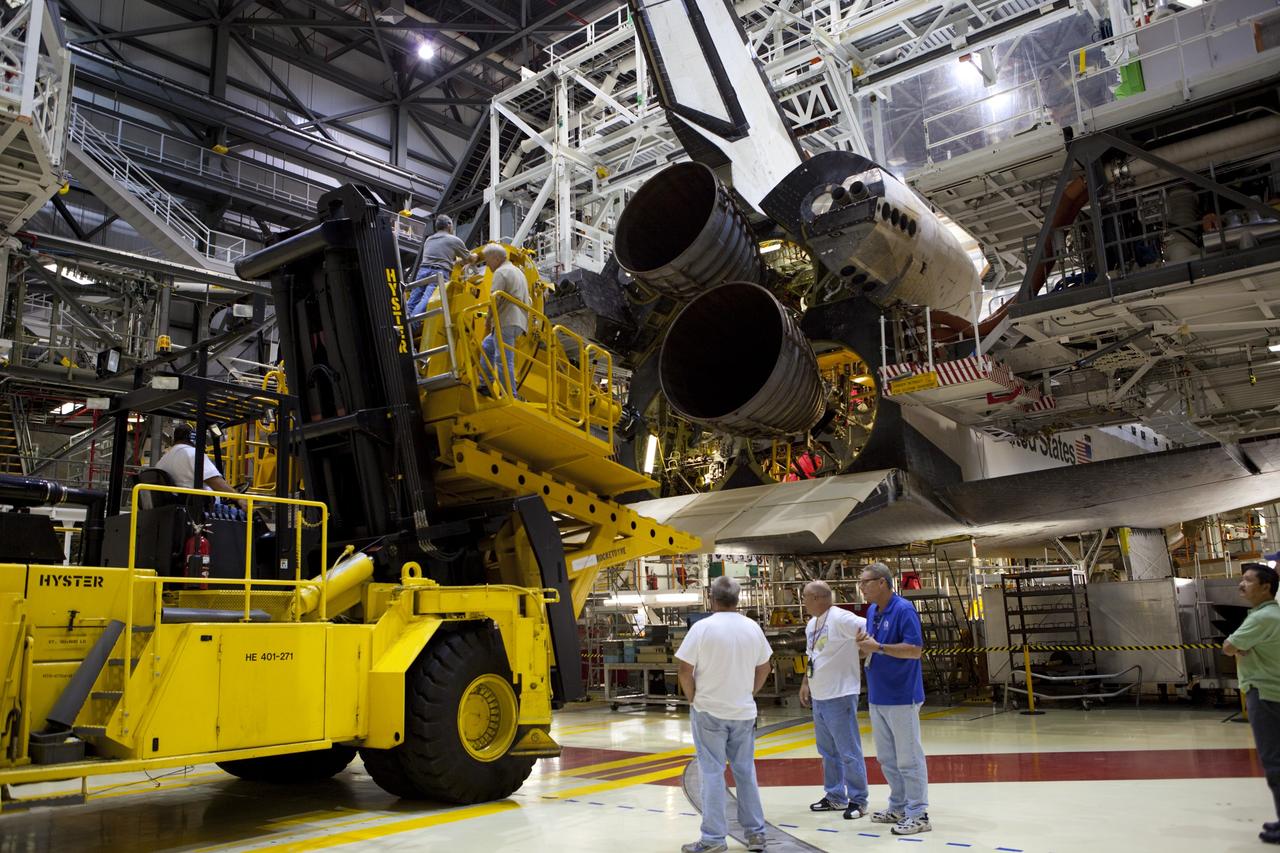
CAPE CANAVERAL, Fla. – Technicians keep a close watch as the Hyster forklift backs away from the space shuttle Endeavour following installation of replica shuttle main engine RSME number 3 inside Orbiter Processing Facility Bay 2 at NASA’s Kennedy Space Center in Florida. The work is part of Transition and Retirement of the remaining space shuttles, Endeavour and Atlantis. Endeavour is being prepared for public display at the California Science Center in Los Angeles. Its ferry flight to California is targeted for mid-September. Endeavour was the last space shuttle added to NASA’s orbiter fleet. Over the course of its 19-year career, Endeavour spent 299 days in space during 25 missions. For more information, visit http://www.nasa.gov/transition Photo credit: NASA/ Dimitri Gerondidakis
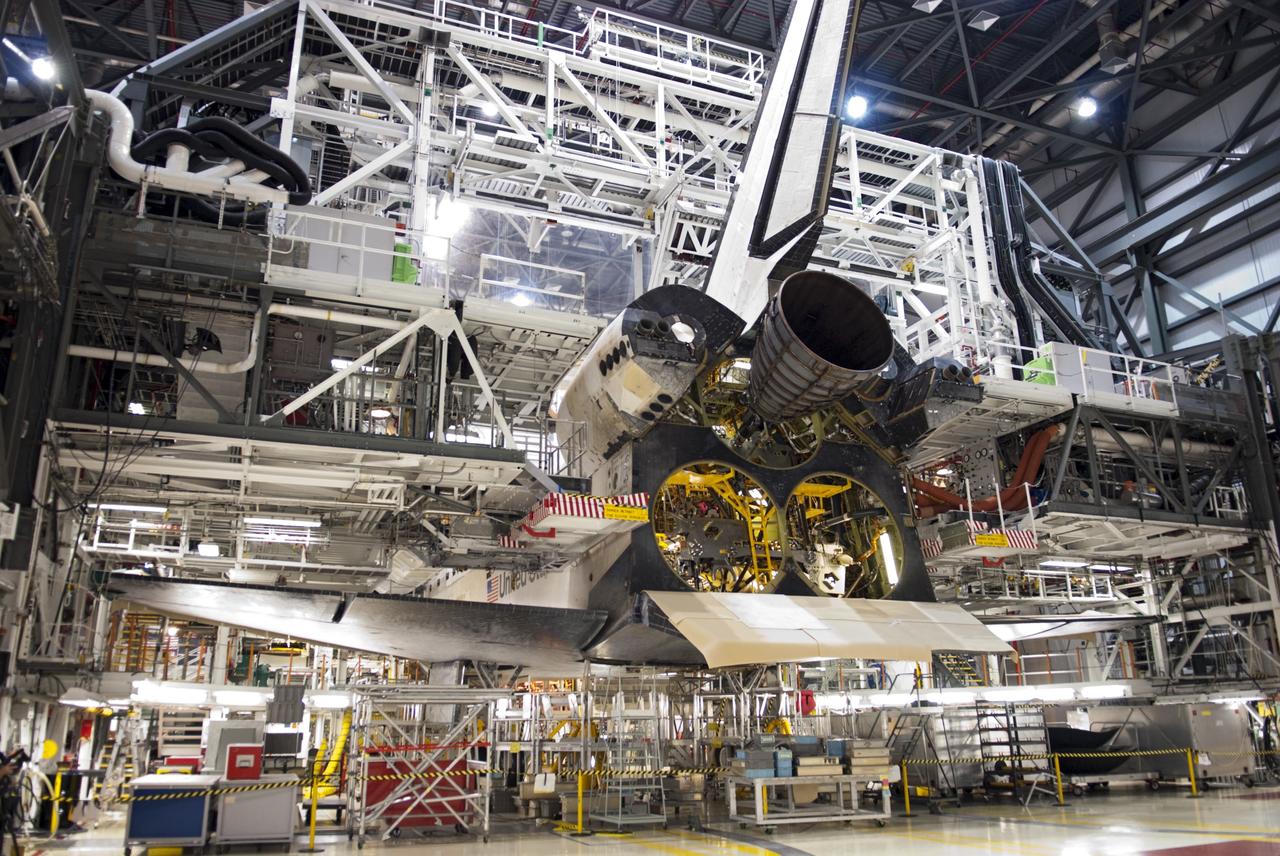
CAPE CANAVERAL, Fla. - In Orbiter Processing Facility Bay 2 at NASA’s Kennedy Space Center in Florida, replica shuttle main engine RSME number 1 has been installed on space shuttle Endeavour. The orbiter is surrounded by work platforms allowing access to all areas of the spacecraft. The work is part of Transition and Retirement of the remaining space shuttles, Endeavour and Atlantis. Endeavour is being prepared for public display at the California Science Center in Los Angeles. Its ferry flight to California is targeted for mid-September. Endeavour was the last space shuttle added to NASA’s orbiter fleet. Over the course of its 19-year career, Endeavour spent 299 days in space during 25 missions. For more information, visit http://www.nasa.gov/transition Photo credit: NASA/Charisse Nahser
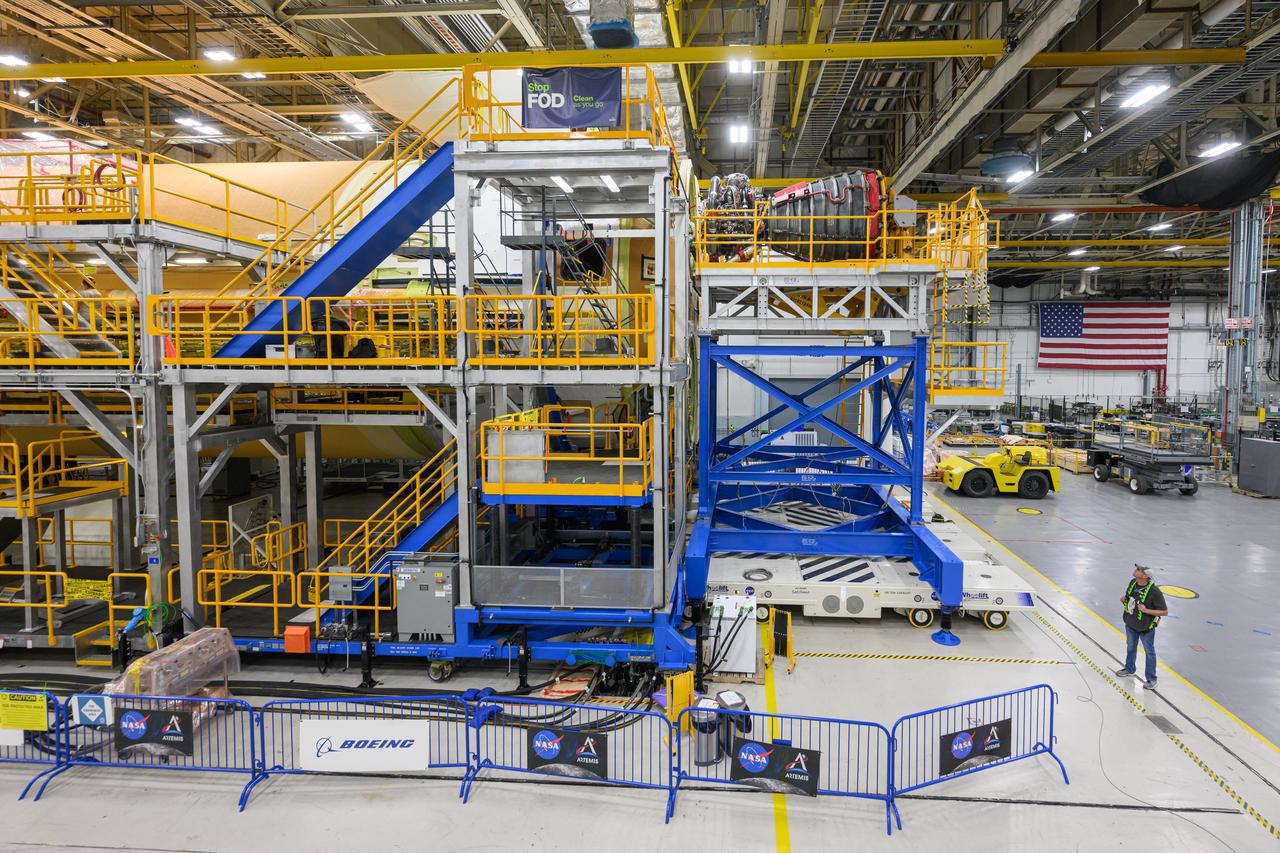
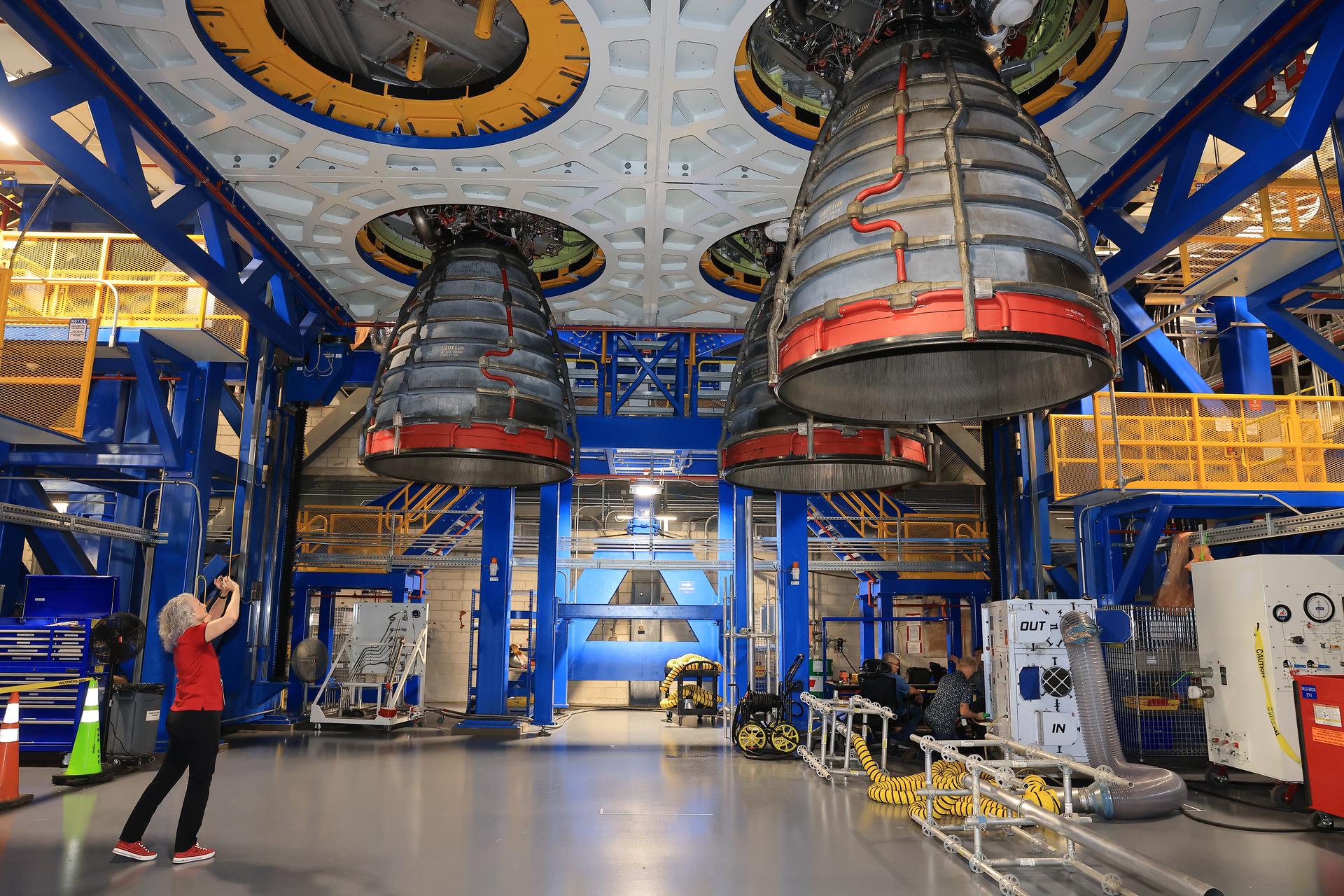
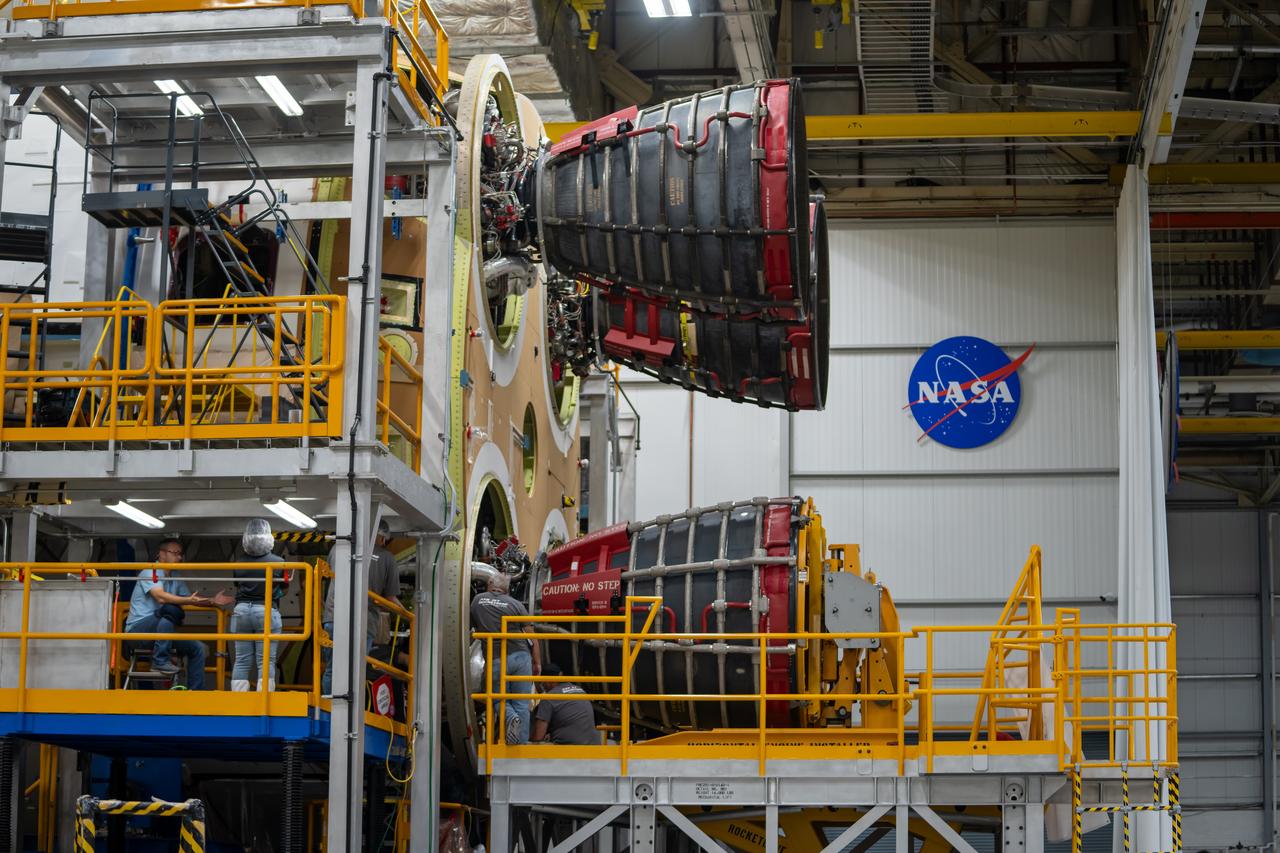
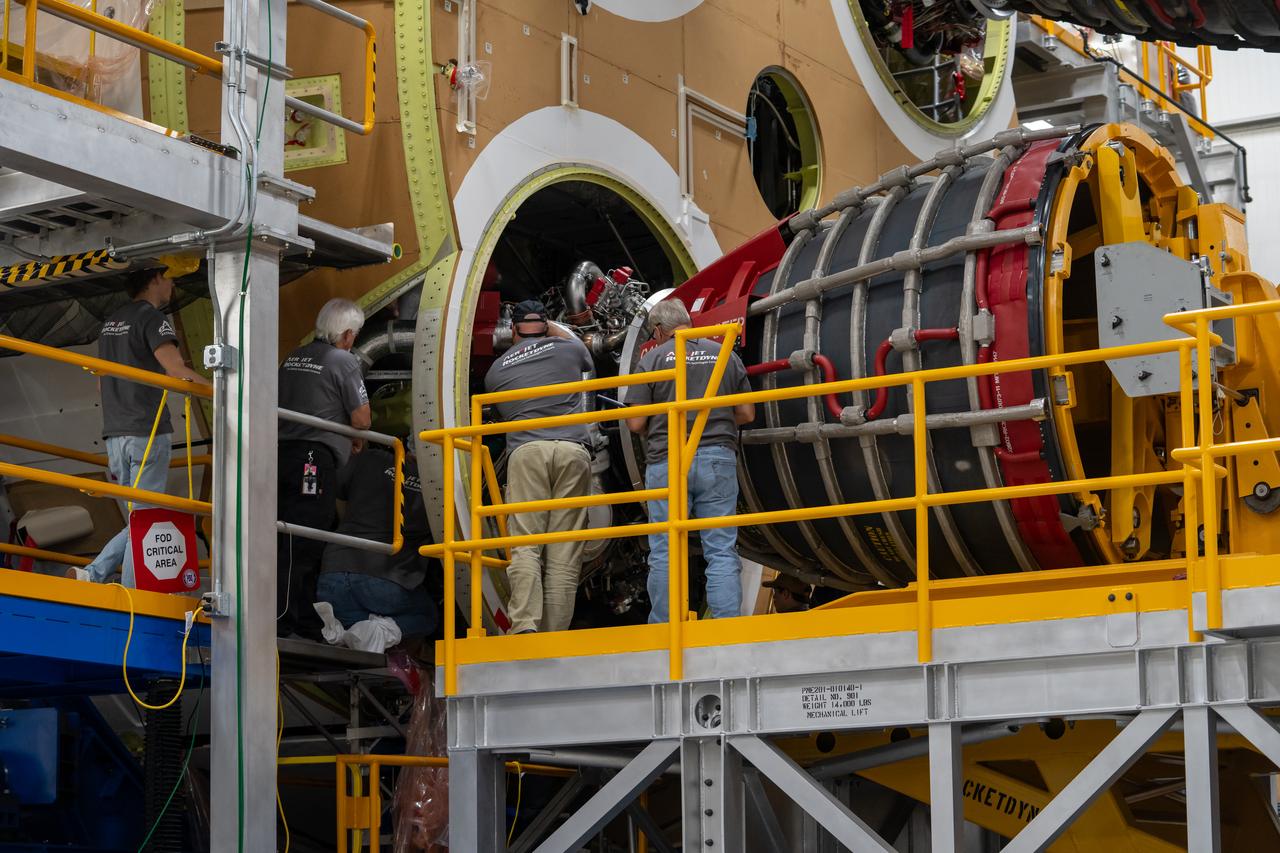
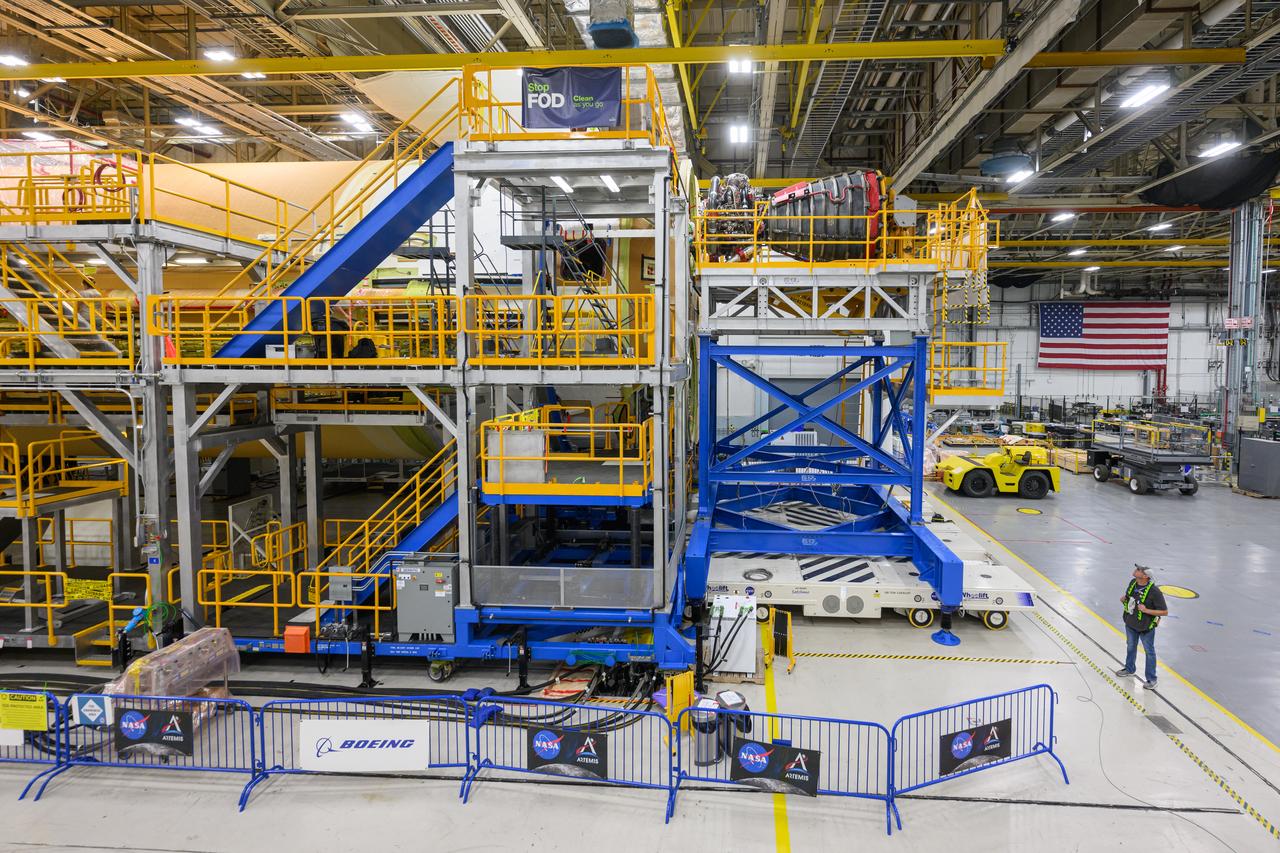
Technicians install three of four RS-25 SLS (Space Launch System) rocket engines on the work stand for integration with the Artemis III core stage rocket on Friday, Aug. 28, 2026, inside the Vehicle Assembly Building at NASA’s Kennedy Space Center in Florida. During Artemis III, the four RS-25 engines will launch the Orion spacecraft and its crew of four into low Earth orbit, generating more than two million pounds of thrust at liftoff.
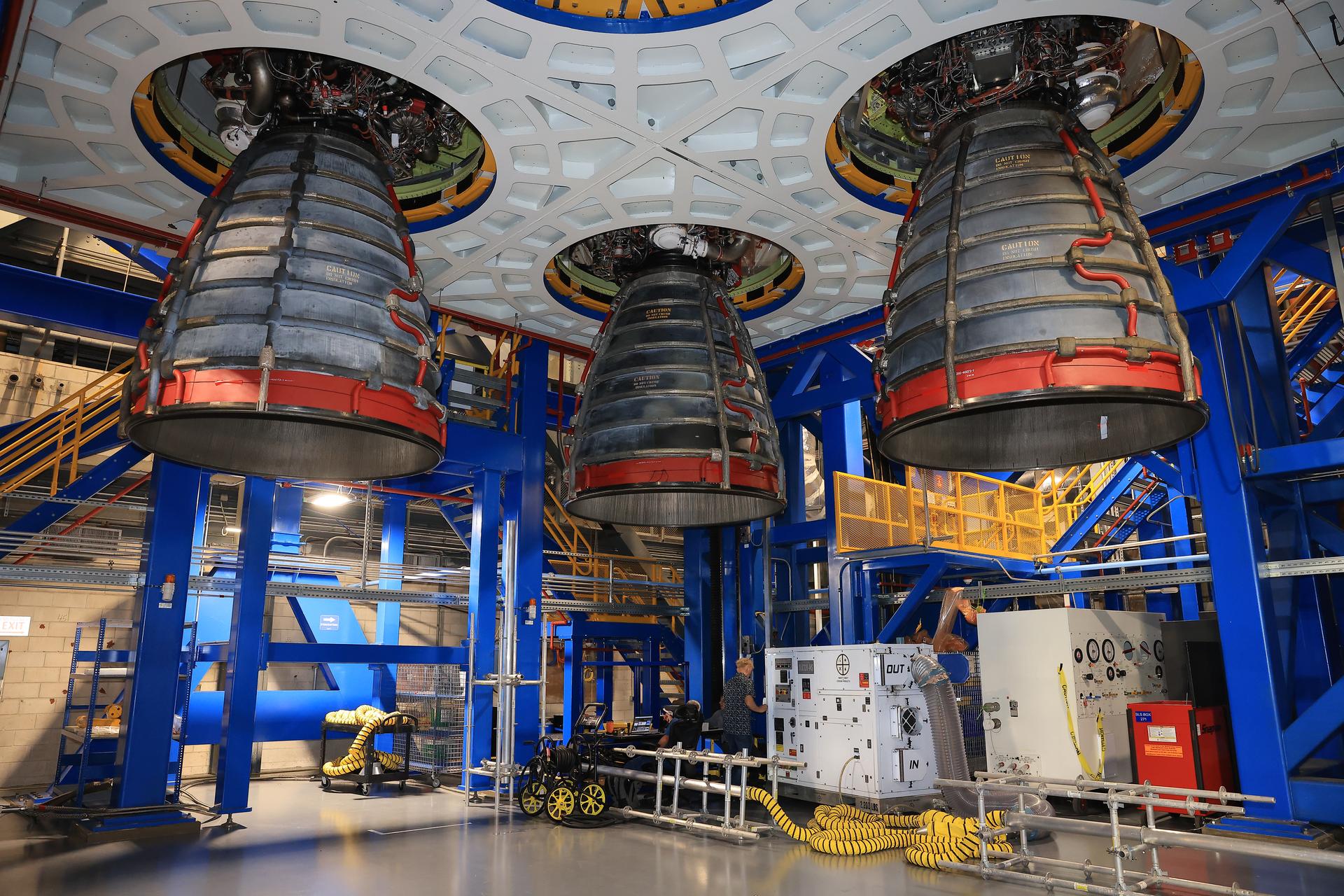
Technicians install three of four RS-25 SLS (Space Launch System) rocket engines on the work stand for integration with the Artemis III core stage rocket on Friday, Aug. 28, 2026, inside the Vehicle Assembly Building at NASA’s Kennedy Space Center in Florida. During Artemis III, the four RS-25 engines will launch the Orion spacecraft and its crew of four into low Earth orbit, generating more than two million pounds of thrust at liftoff.
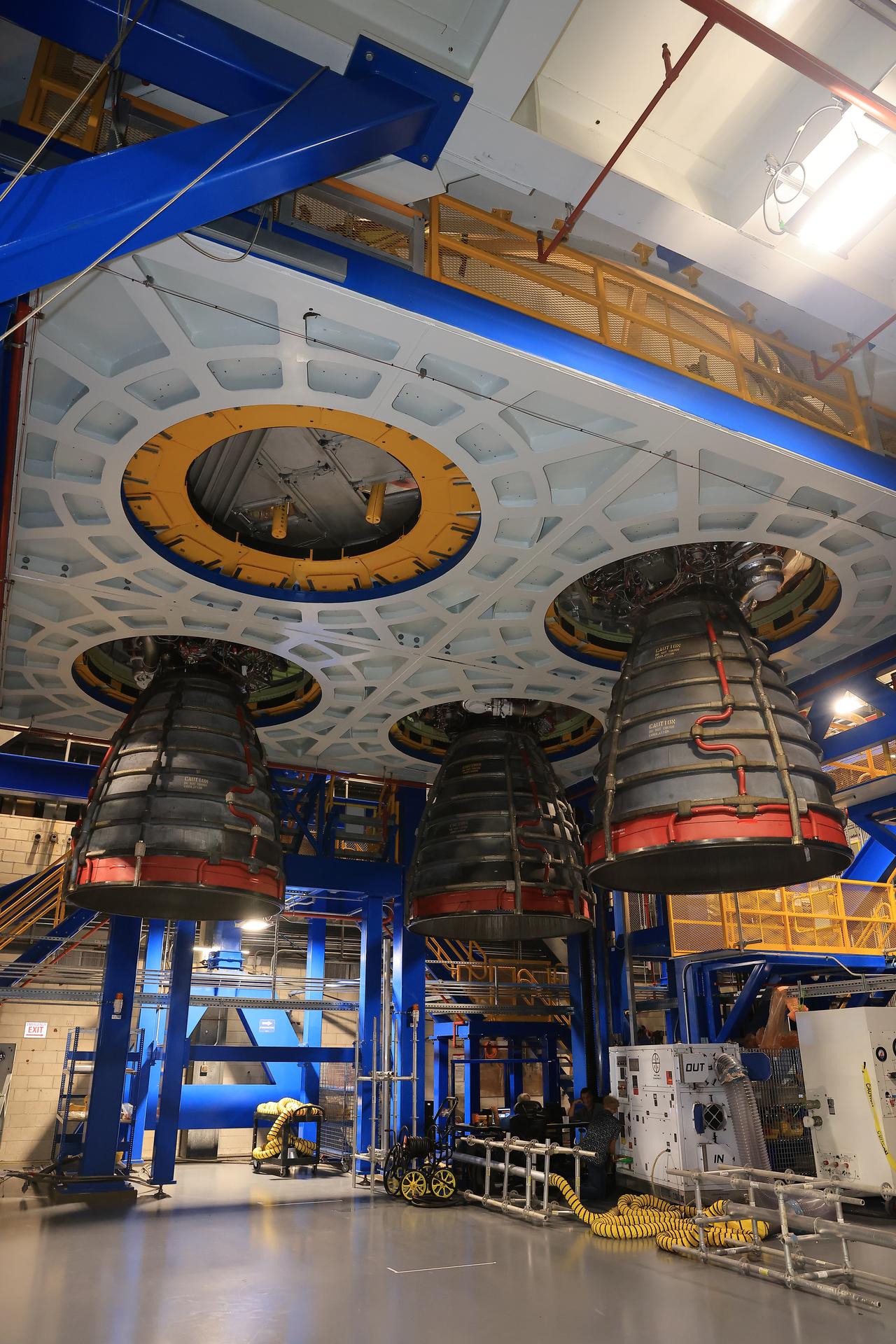
Technicians install three of four RS-25 SLS (Space Launch System) rocket engines on the work stand for integration with the Artemis III core stage rocket on Friday, Aug. 28, 2026, inside the Vehicle Assembly Building at NASA’s Kennedy Space Center in Florida. During Artemis III, the four RS-25 engines will launch the Orion spacecraft and its crew of four into low Earth orbit, generating more than two million pounds of thrust at liftoff.
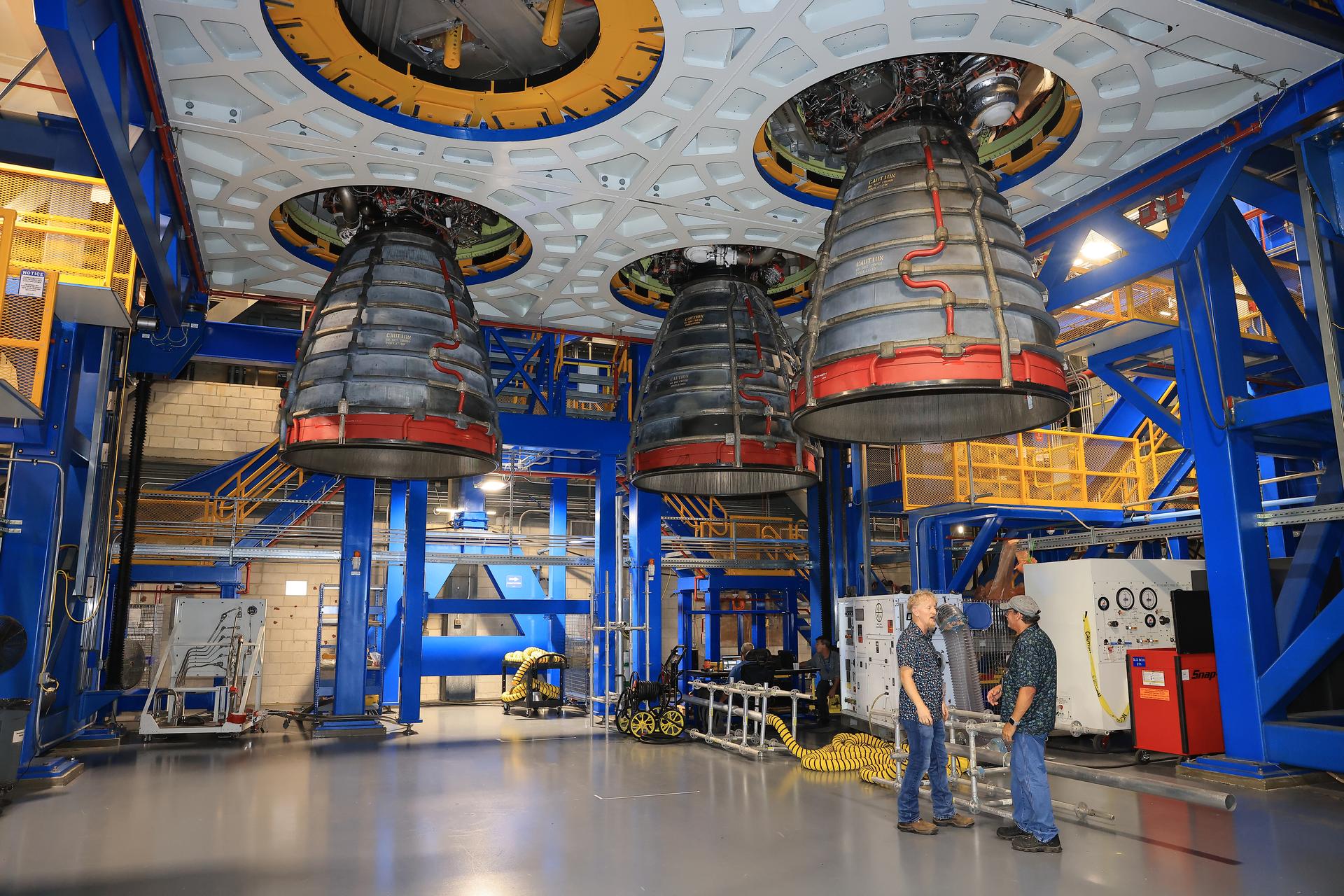
Technicians install three of four RS-25 SLS (Space Launch System) rocket engines on the work stand for integration with the Artemis III core stage rocket on Friday, Aug. 28, 2026, inside the Vehicle Assembly Building at NASA’s Kennedy Space Center in Florida. During Artemis III, the four RS-25 engines will launch the Orion spacecraft and its crew of four into low Earth orbit, generating more than two million pounds of thrust at liftoff.
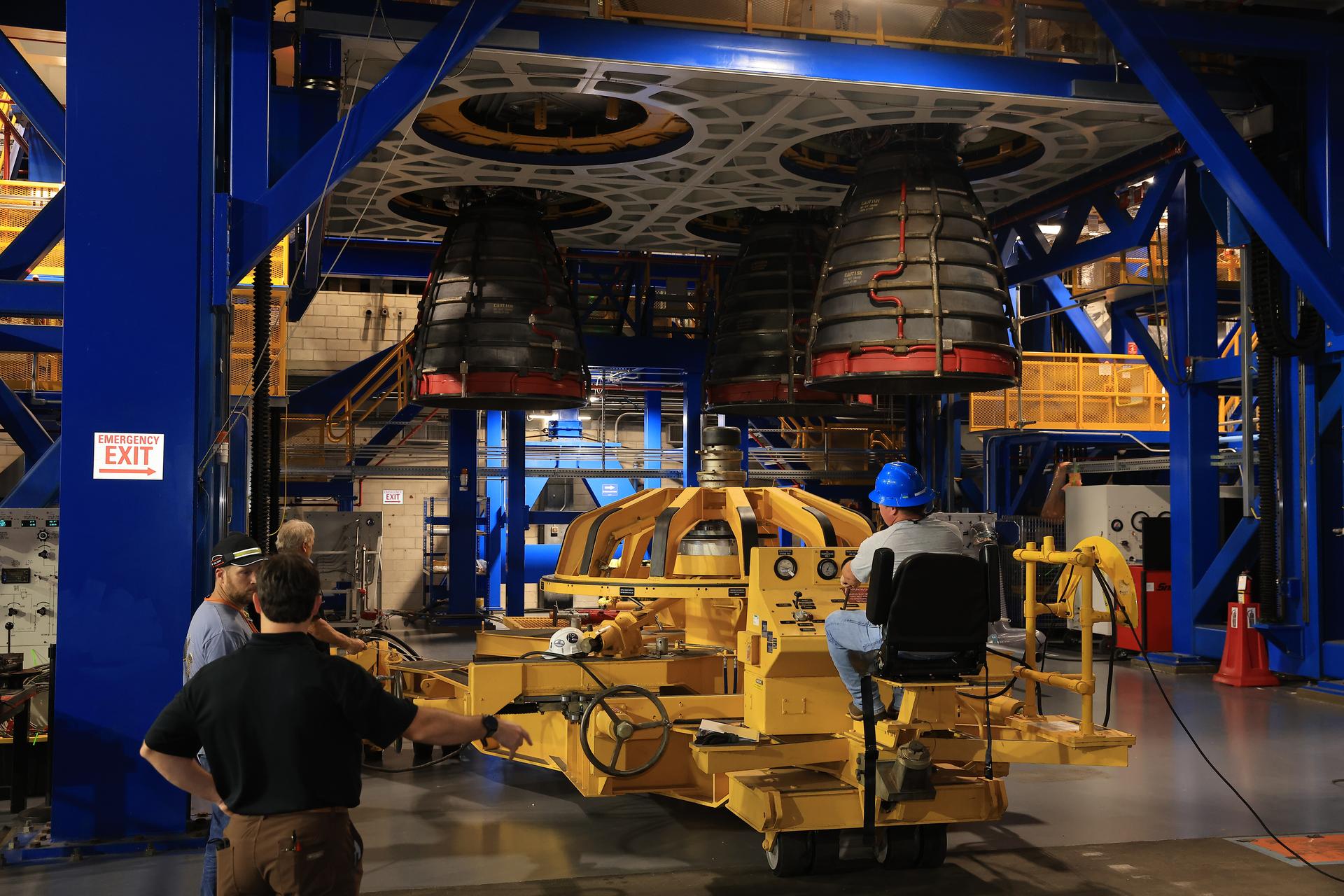
Technicians install three of four RS-25 SLS (Space Launch System) rocket engines on the work stand for integration with the Artemis III core stage rocket on Friday, Aug. 28, 2026, inside the Vehicle Assembly Building at NASA’s Kennedy Space Center in Florida. During Artemis III, the four RS-25 engines will launch the Orion spacecraft and its crew of four into low Earth orbit, generating more than two million pounds of thrust at liftoff.
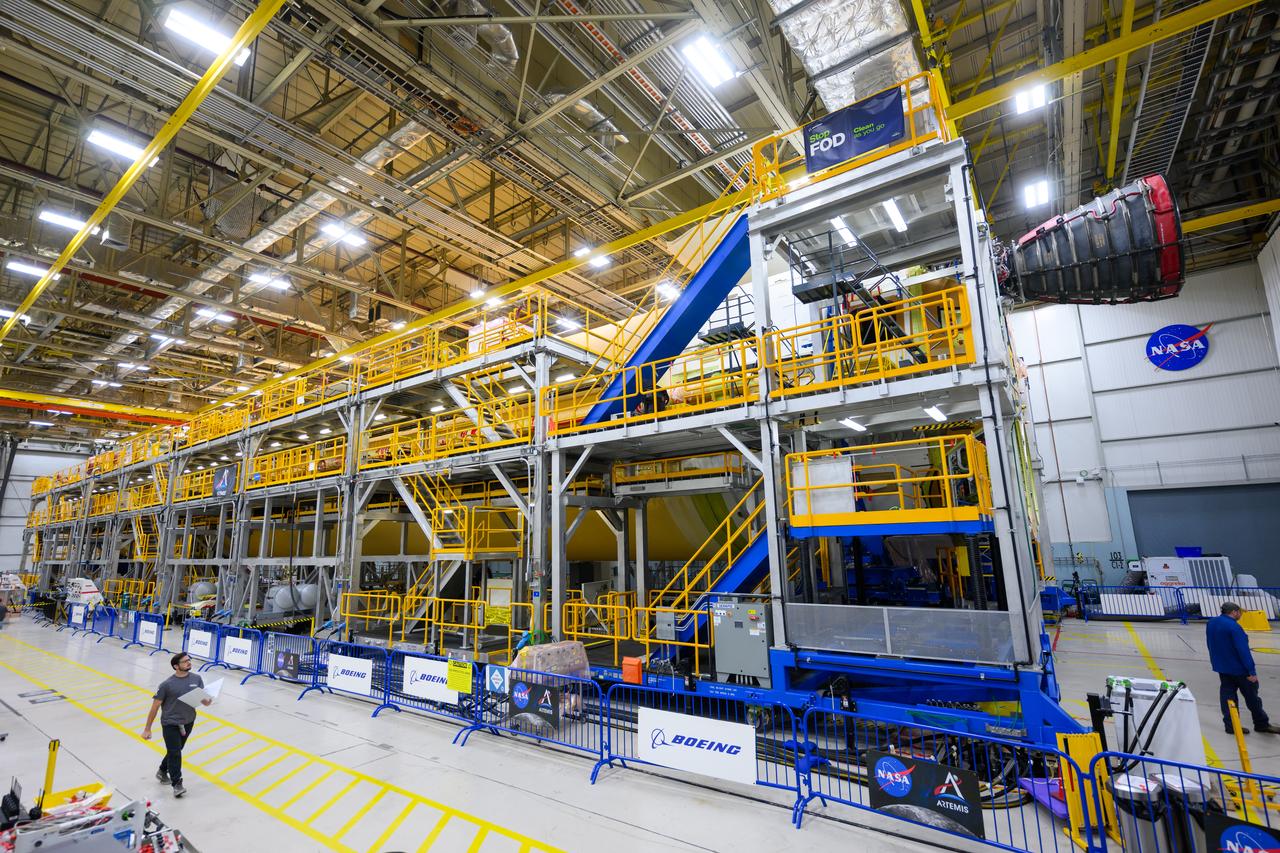
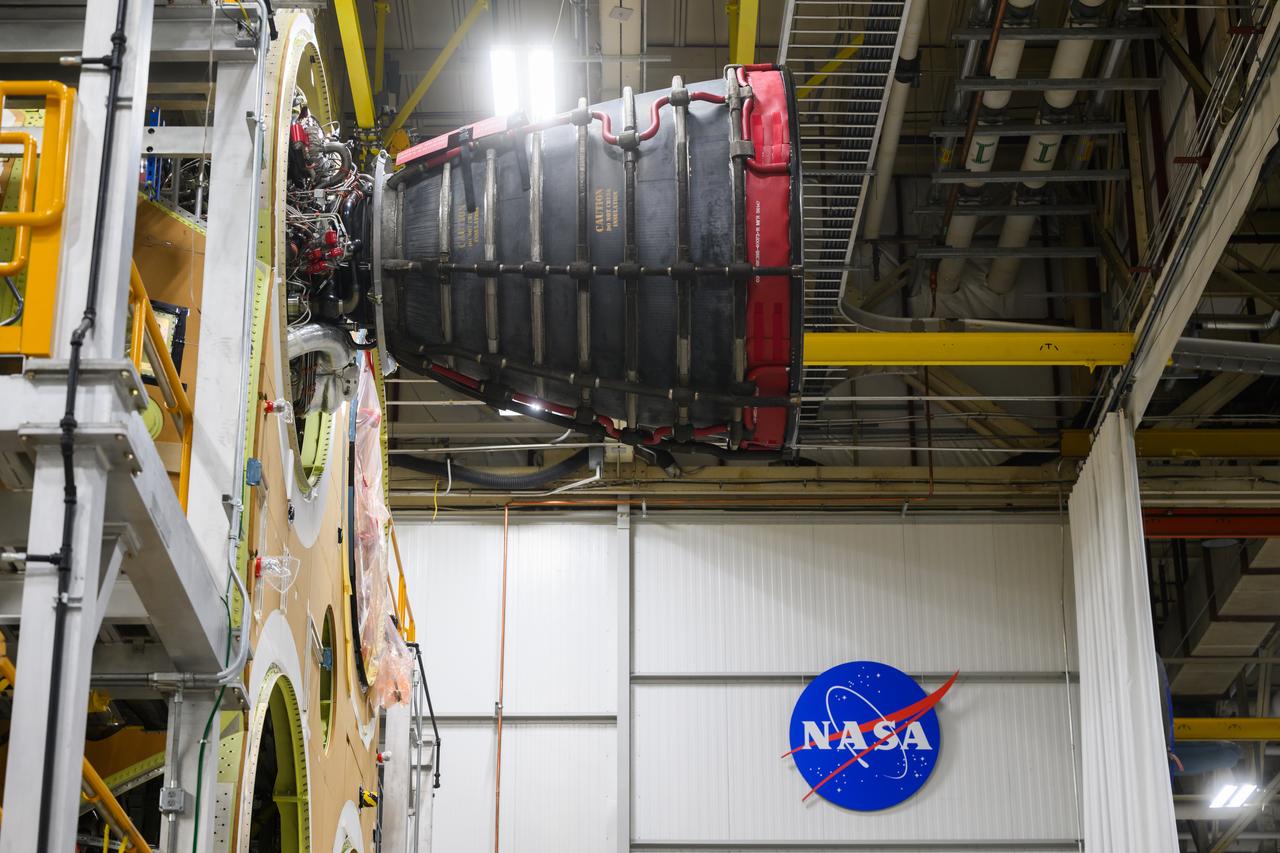

This photo shows the second RS-25 engine attached to the core stage for NASA’s Space Launch System rocket for the agency’s Artemis I mission to the Moon. Engineers and technicians at NASA’s Michoud Assembly Facility in New Orleans structurally mated the second of four engines to the stage on Oct. 30 and are currently integrating the propulsion and electrical systems within the structure to complete the installation. Integration of the RS-25 engines to the recently completed core stage structure is a collaborative, multistep process for NASA and its partners Boeing, the core stage lead contractor, and Aerojet Rocketdyne, the RS-25 engines lead contractor. The four RS-25 engines for Artemis I are modified heritage flight hardware from the Space Shuttle Program, ensuring high performance and reliability to power NASA’s next generation lunar missions. Each engine also has a special identification number, and NASA keeps a history of which engines are used on each mission. The second engine, Engine 2045, has flown on several shuttle missions, including the mission that returned NASA astronaut John Glenn to space in 1998 as well as the first and only shuttle launch to occur on Independence Day in 2006. Offering more payload mass, volume capability and energy to speed missions through space, the SLS rocket, along with NASA’s Gateway in lunar orbit and Orion, is part of NASA’s backbone for deep space exploration and the Artemis lunar program. No other rocket is capable of carrying astronauts in Orion around the Moon in a single mission.

This photo shows the second RS-25 engine attached to the core stage for NASA’s Space Launch System rocket for the agency’s Artemis I mission to the Moon. Engineers and technicians at NASA’s Michoud Assembly Facility in New Orleans structurally mated the second of four engines to the stage on Oct. 30 and are currently integrating the propulsion and electrical systems within the structure to complete the installation. Integration of the RS-25 engines to the recently completed core stage structure is a collaborative, multistep process for NASA and its partners Boeing, the core stage lead contractor, and Aerojet Rocketdyne, the RS-25 engines lead contractor. The four RS-25 engines for Artemis I are modified heritage flight hardware from the Space Shuttle Program, ensuring high performance and reliability to power NASA’s next generation lunar missions. Each engine also has a special identification number, and NASA keeps a history of which engines are used on each mission. The second engine, Engine 2045, has flown on several shuttle missions, including the mission that returned NASA astronaut John Glenn to space in 1998 as well as the first and only shuttle launch to occur on Independence Day in 2006. Offering more payload mass, volume capability and energy to speed missions through space, the SLS rocket, along with NASA’s Gateway in lunar orbit and Orion, is part of NASA’s backbone for deep space exploration and the Artemis lunar program. No other rocket is capable of carrying astronauts in Orion around the Moon in a single mission.
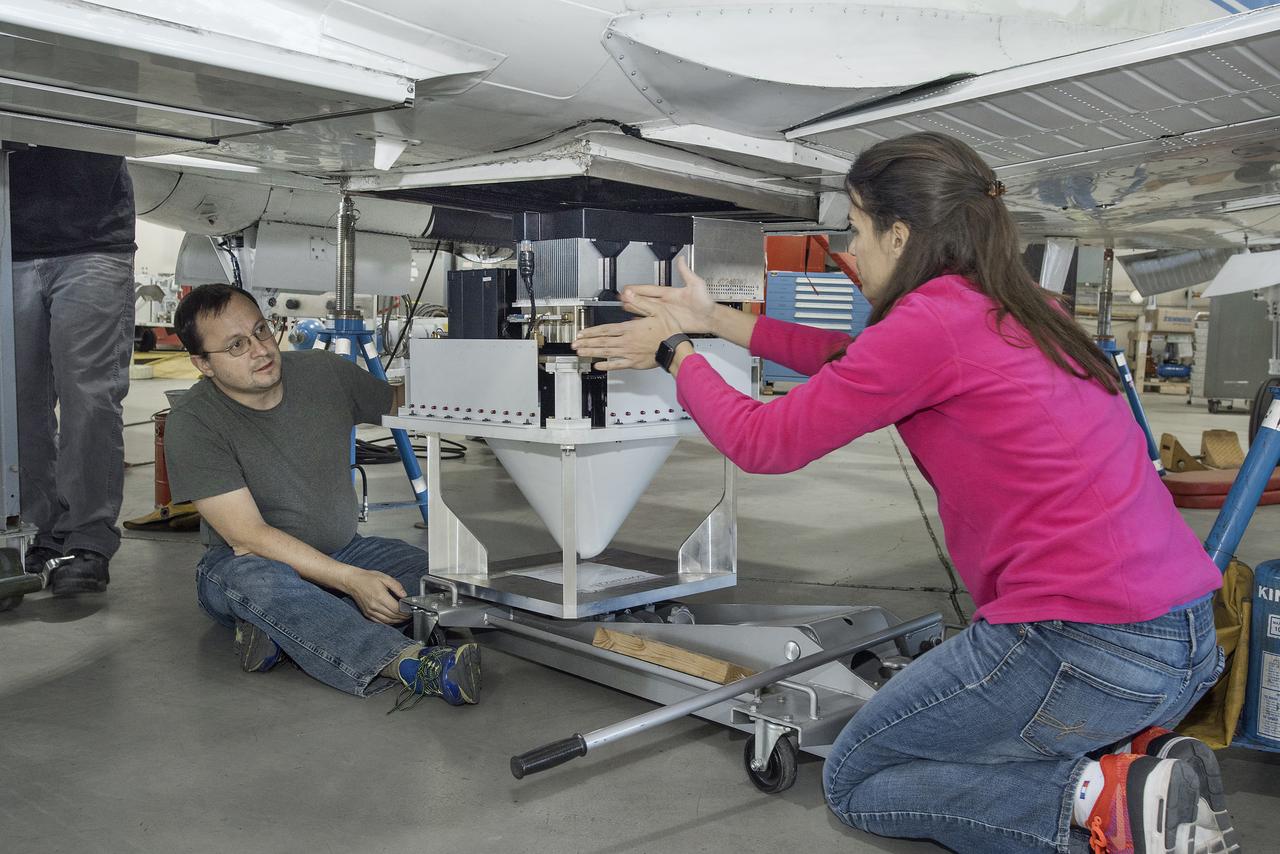
Engineers Raquel Rodriguez Monje and Fabien Nicaise discuss placement of the DopplerScatt radar instrument on the NASA B200 before its final installation onto the aircraft’s fuselage.

Here is an image of the X-59’s 13-foot General Electric F414 engine as the team prepares for a fit check. Making sure components, like the aircraft’s hydraulic lines, which help control functions like brakes or landing gear, and wiring of the engine, fit properly is essential to the aircraft’s safety. Once complete, the X-59 aircraft will demonstrate the ability to fly supersonic while reducing the loud sonic boom to a quiet sonic thump and help enable commercial supersonic air travel over land.
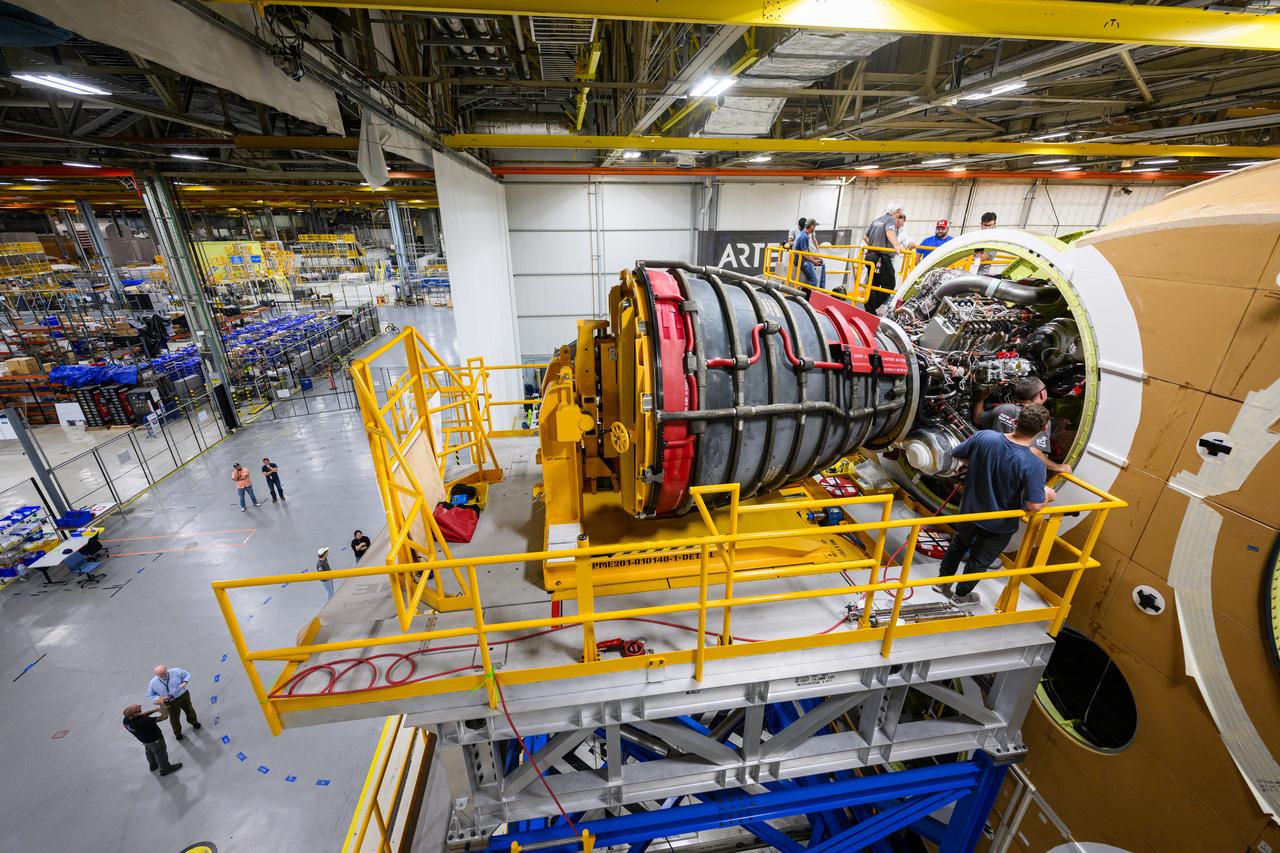
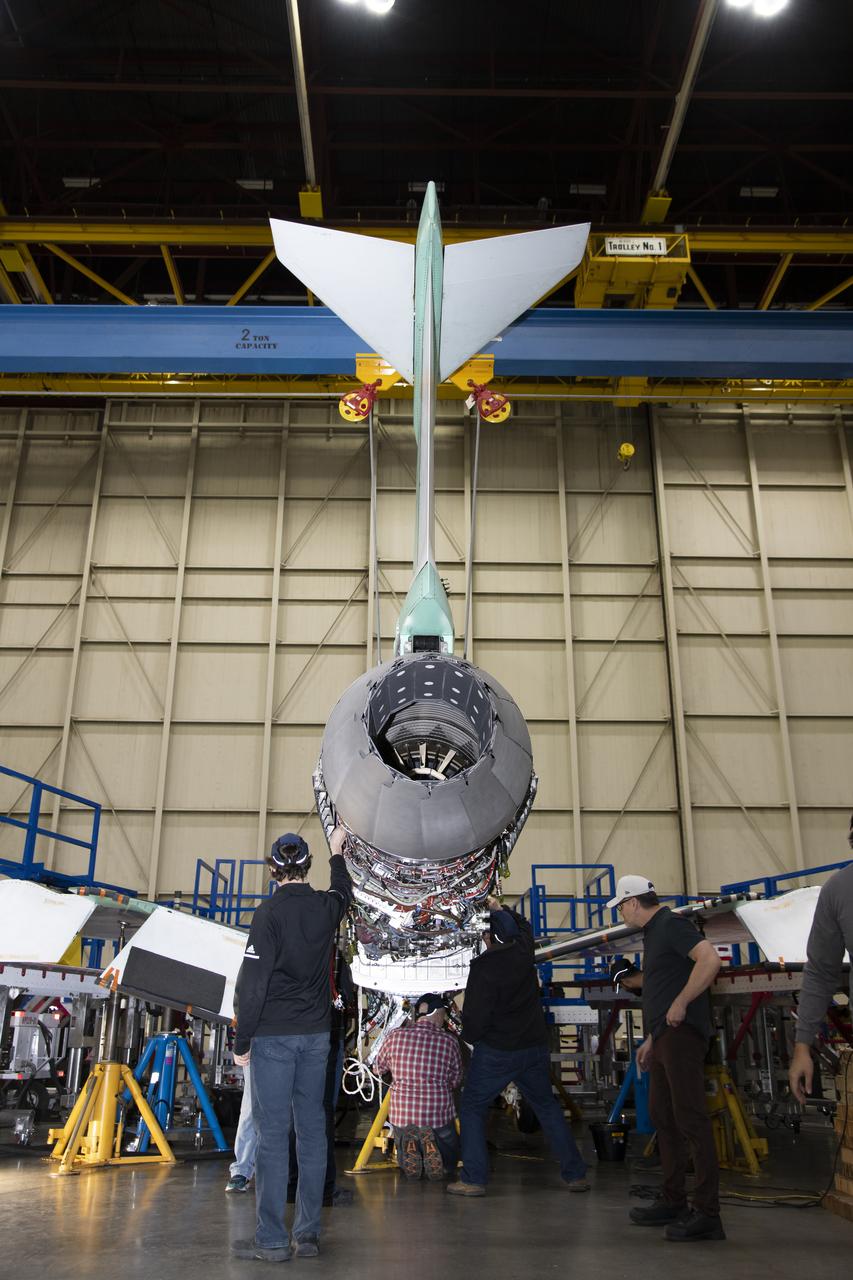
The engine that will power NASA's quiet supersonic X-59 in flight is installed, marking a major milestone in the experimental aircraft's journey toward first flight. The installation of the F414-GE-100 engine at Lockheed Martin's Skunk Works facility brings the vehicle close to the completion of its assembly.
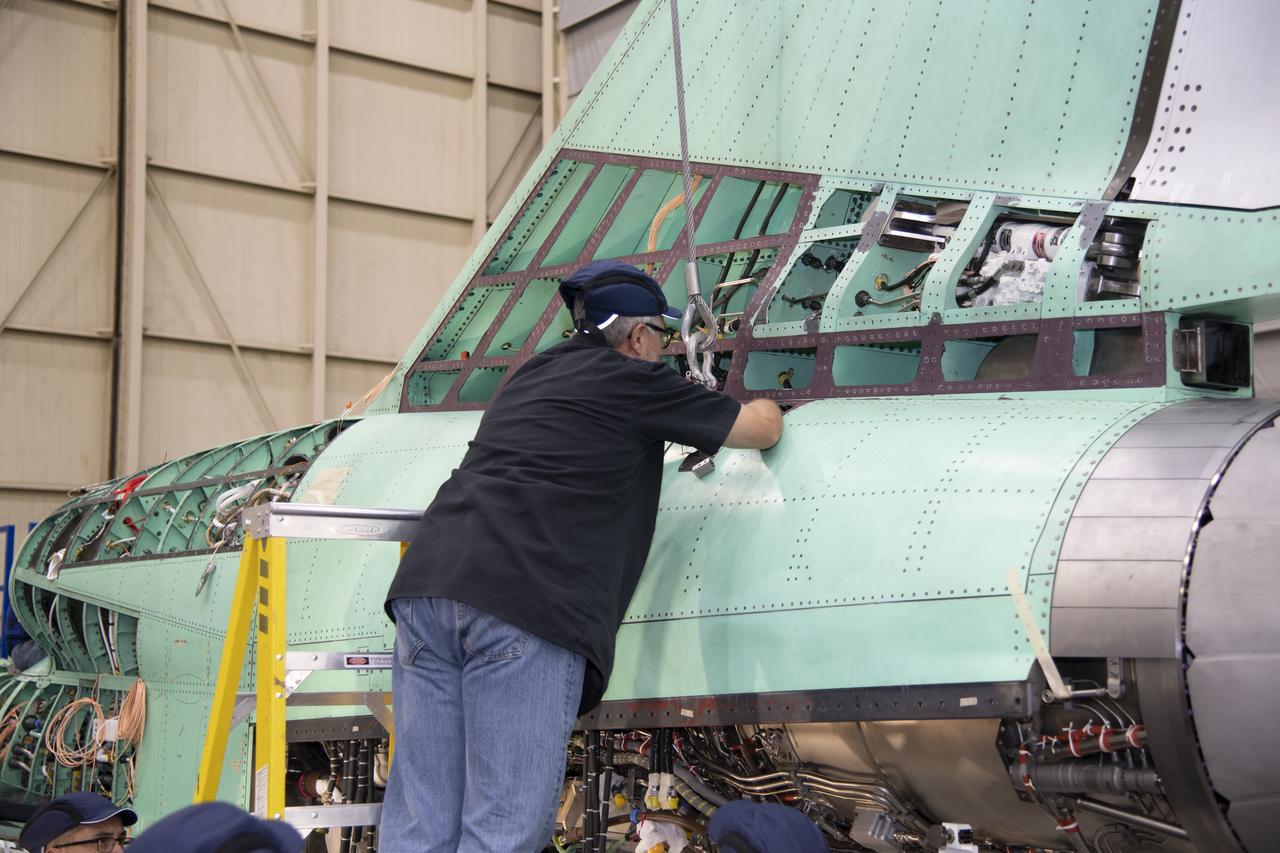
The engine that will power NASA's quiet supersonic X-59 in flight is installed, marking a major milestone in the experimental aircraft's journey toward first flight. The installation of the F414-GE-100 engine at Lockheed Martin's Skunk Works facility brings the vehicle close to the completion of its assembly.
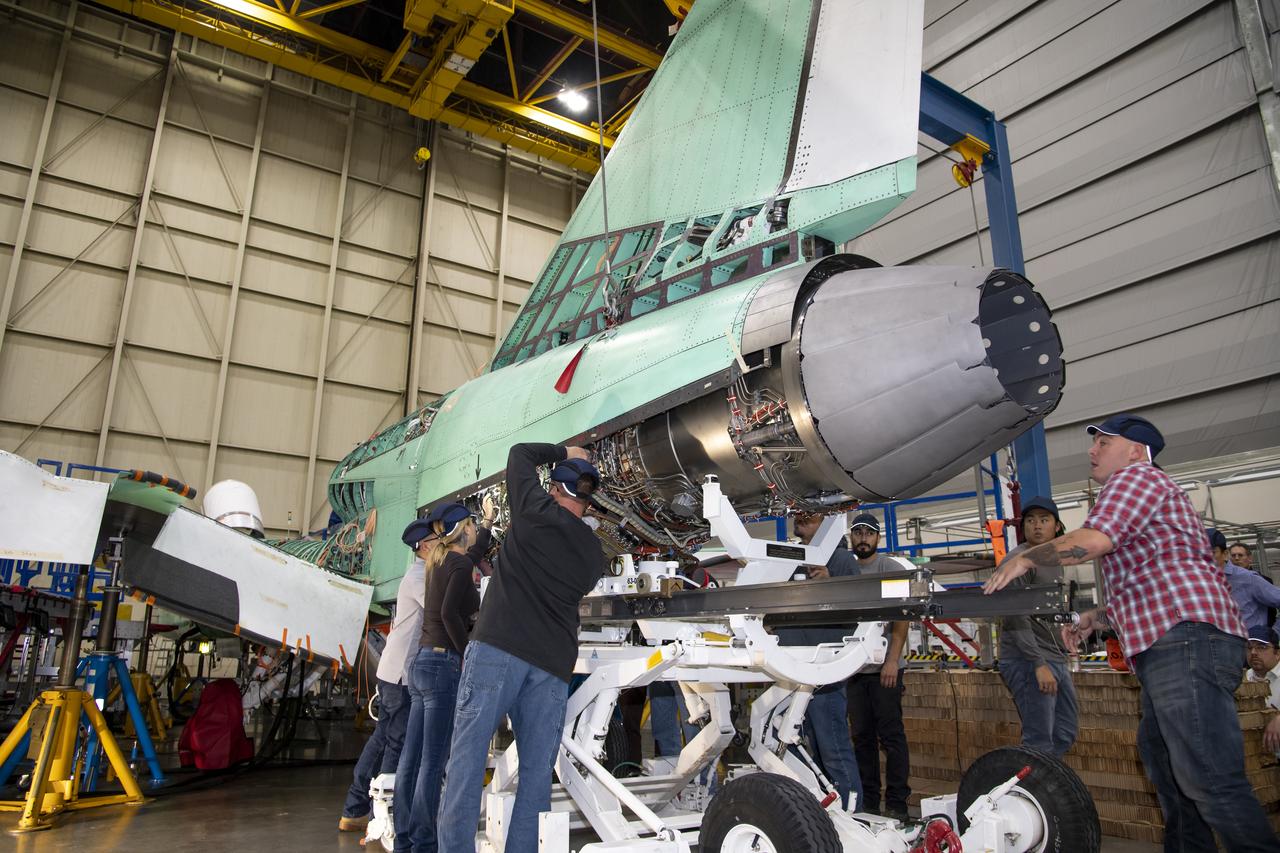
The engine that will power NASA's quiet supersonic X-59 in flight is installed, marking a major milestone in the experimental aircraft's journey toward first flight. The installation of the F414-GE-100 engine at Lockheed Martin's Skunk Works facility brings the vehicle close to the completion of its assembly.
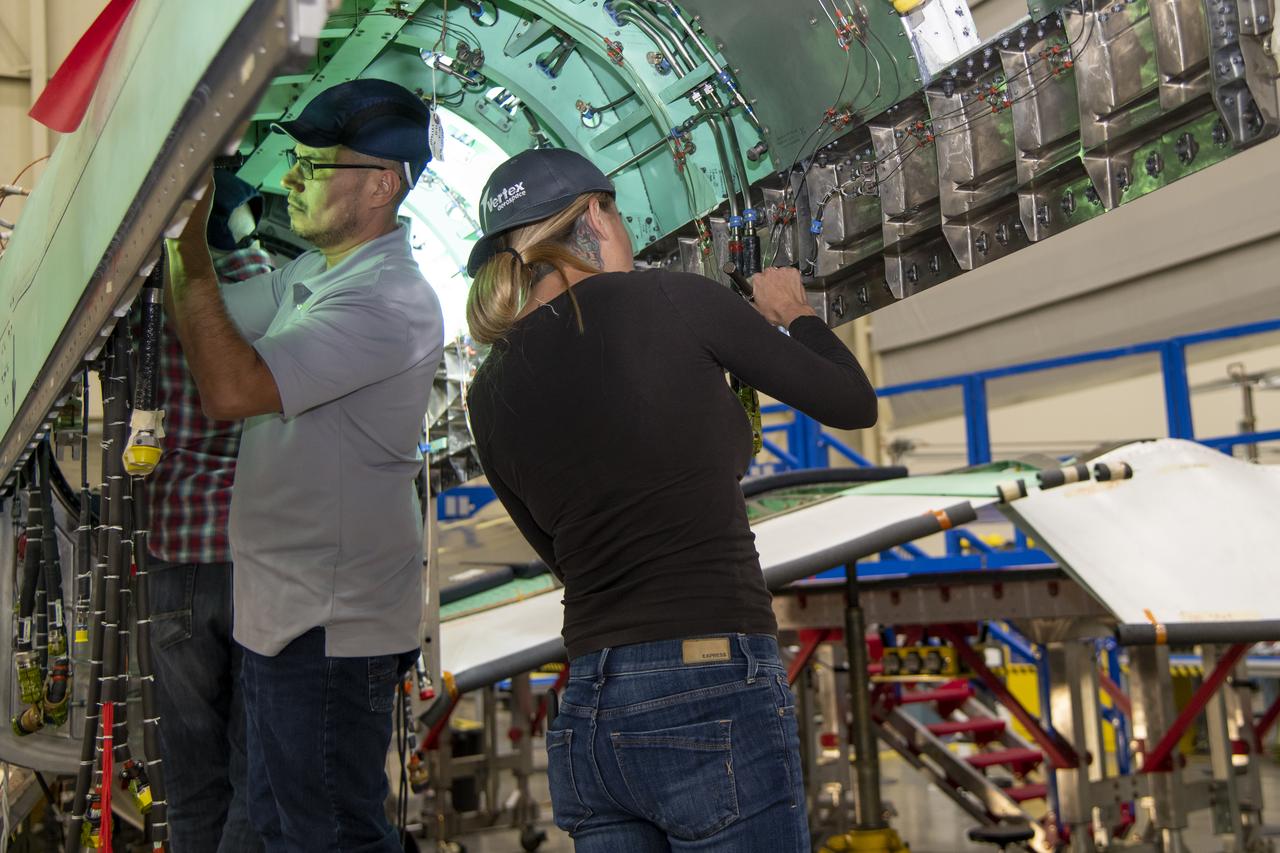
The engine that will power NASA’s quiet supersonic X-59 in flight is installed, marking a major milestone in the experimental aircraft’s journey toward first flight. The installation of the F414-GE-100 engine at Lockheed Martin’s Skunk Works facility brings the vehicle close to the completion of its assembly.
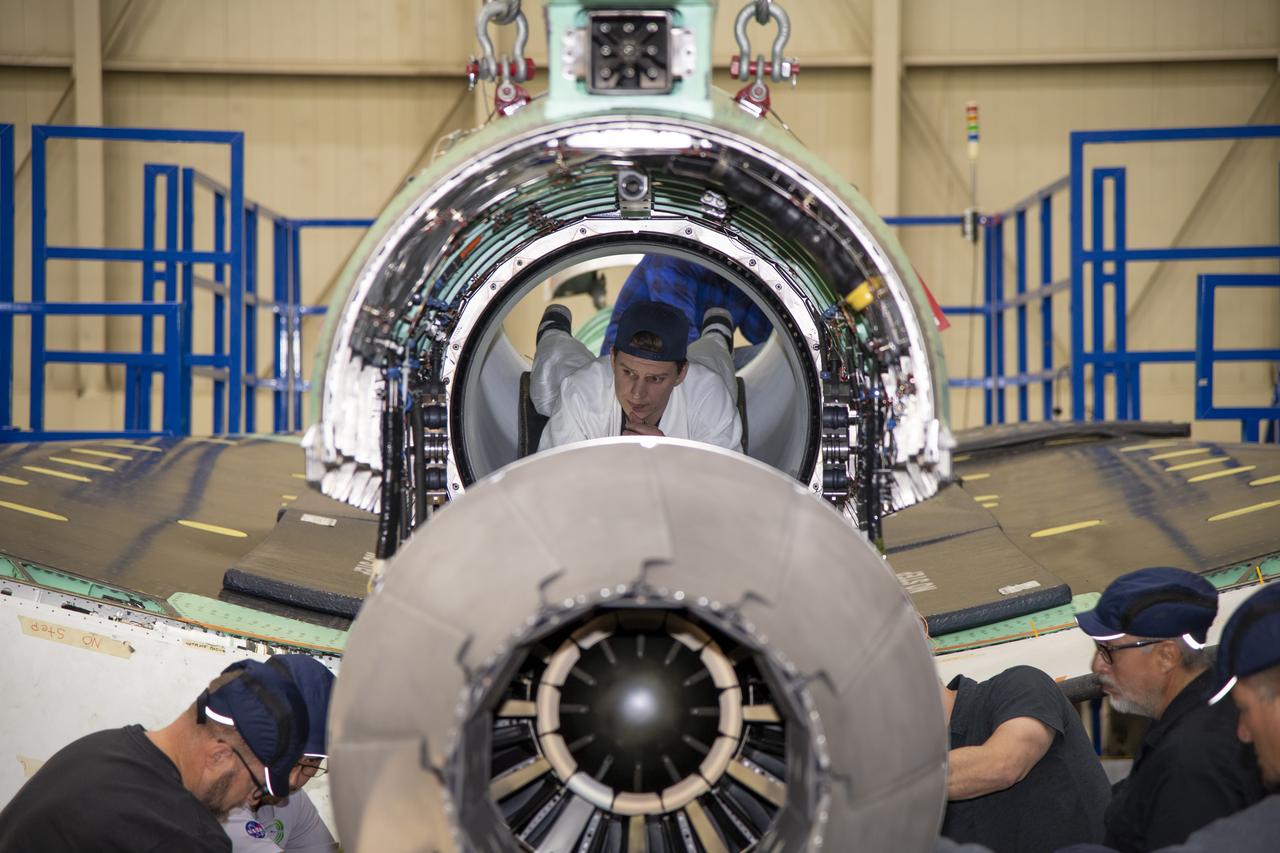
The engine that will power NASA’s quiet supersonic X-59 in flight is installed, marking a major milestone in the experimental aircraft’s journey toward first flight. The installation of the F414-GE-100 engine at Lockheed Martin’s Skunk Works facility brings the vehicle close to the completion of its assembly.
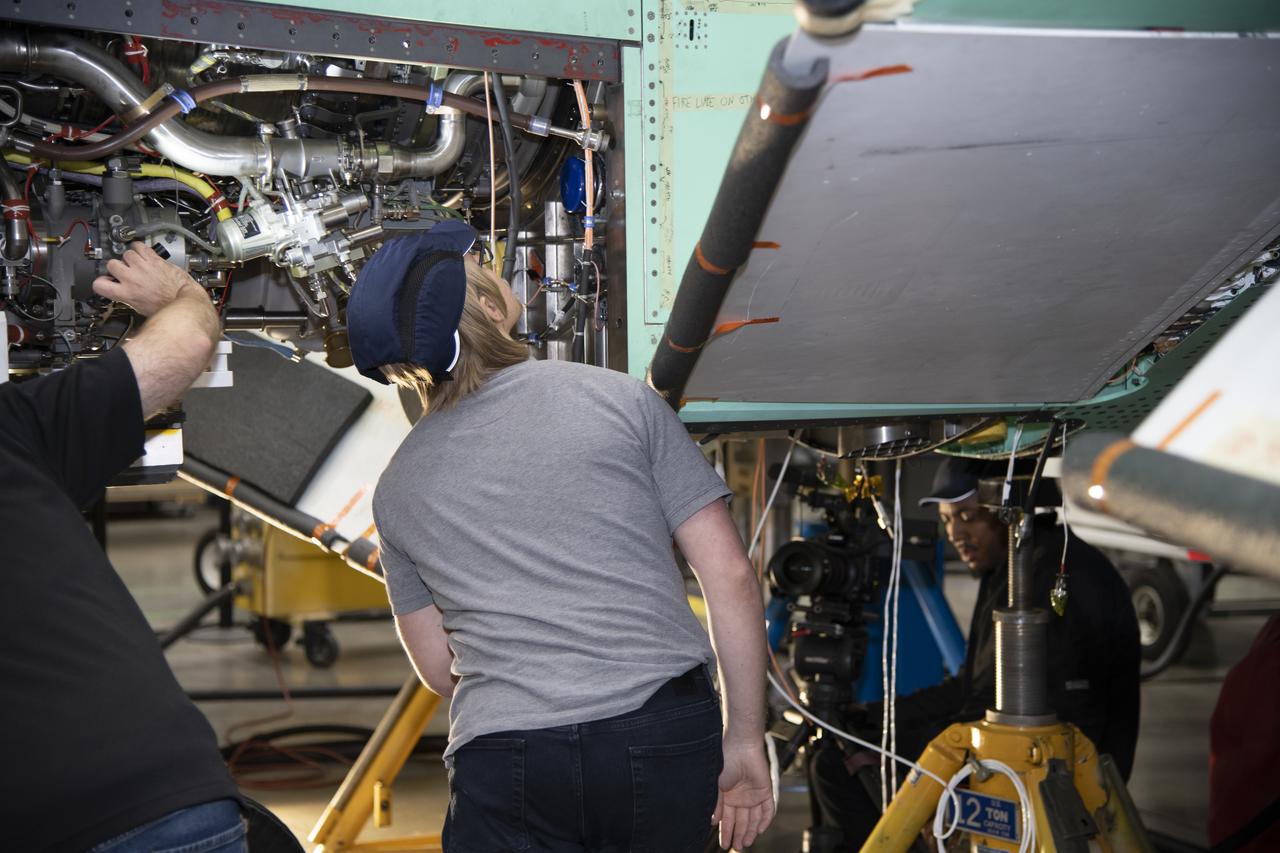
The engine that will power NASA’s quiet supersonic X-59 in flight is installed, marking a major milestone in the experimental aircraft’s journey toward first flight. The installation of the F414-GE-100 engine at Lockheed Martin’s Skunk Works facility brings the vehicle close to the completion of its assembly.
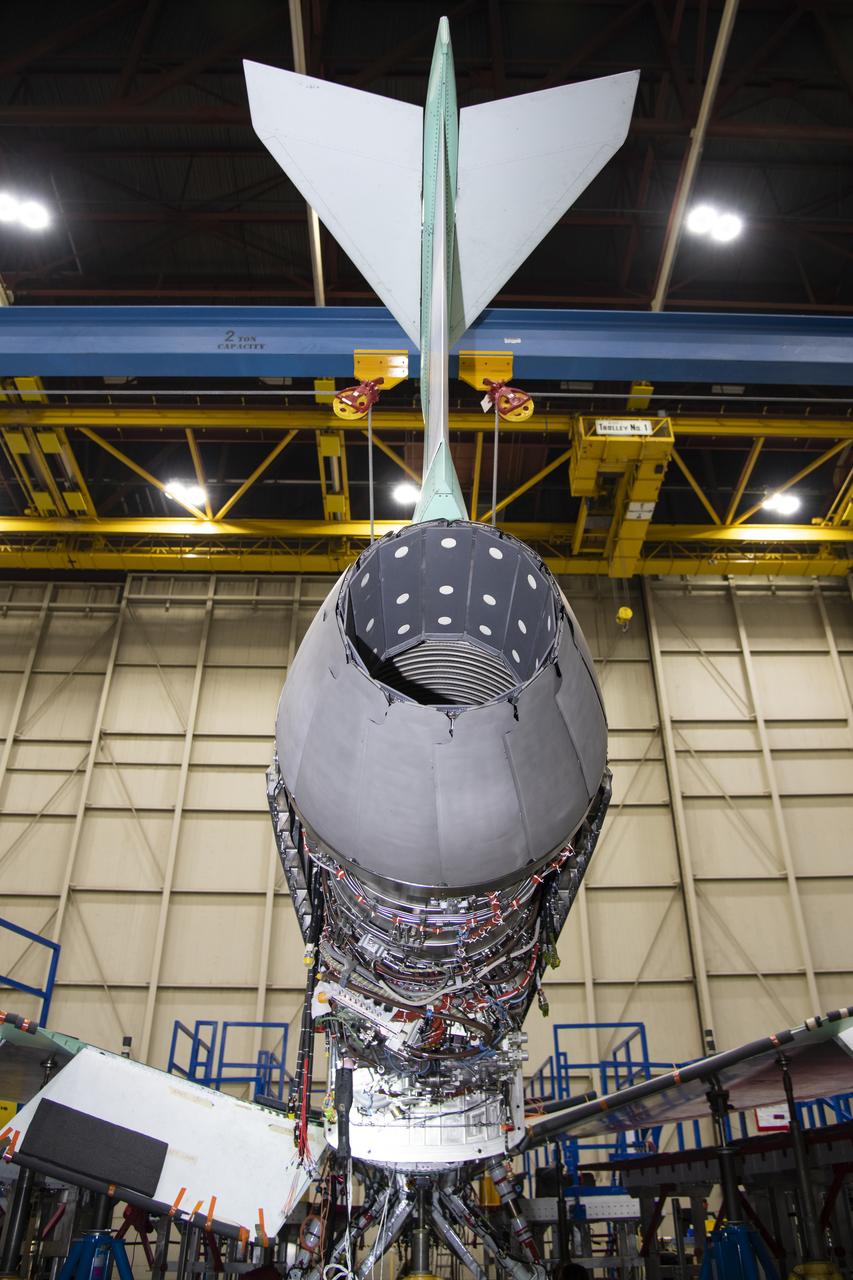
The engine that will power NASA's quiet supersonic X-59 in flight is installed, marking a major milestone in the experimental aircraft's journey toward first flight. The installation of the F414-GE-100 engine at Lockheed Martin's Skunk Works facility brings the vehicle close to the completion of its assembly.
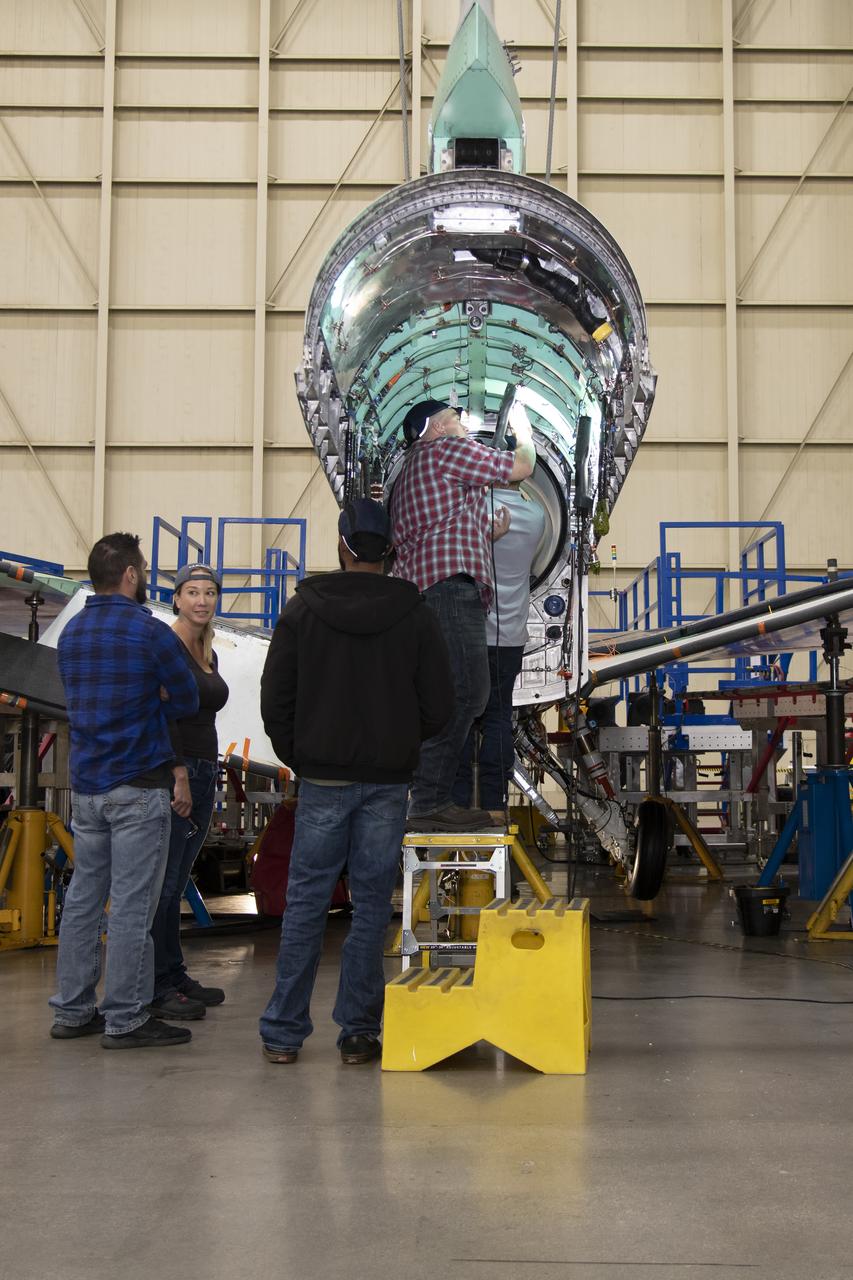
The engine that will power NASA’s quiet supersonic X-59 in flight is installed, marking a major milestone in the experimental aircraft’s journey toward first flight. The installation of the F414-GE-100 engine at Lockheed Martin’s Skunk Works facility brings the vehicle close to the completion of its assembly.

These photos and videos show how technicians at NASA’s Michoud Assembly Facility in New Orleans installed the second of four RS-25 engines onto the core stage for the agency’s SLS (Space Launch System) rocket that will help power NASA’s first crewed Artemis mission to the Moon. Crews added the second engine, with the serial number E2047 in position one, to the stage Sept. 15. The serial number for the engine installed Sept. 11 in position two on the core stage is E2059. Engineers consider the engines to be “soft” mated to the rocket stage. Following soft mate of all four engines, technicians with NASA, Aerojet Rocketdyne, an L3Harris Technologies company and the RS-25 engines lead contractor, along with Boeing, the core stage lead contractor, will fully secure the engines to the stage and integrate the propulsion and electrical systems within the structure. All four RS-25 engines are located at the base of the core stage within the engine section. NASA is working to land the first woman and first person of color on the Moon under Artemis. SLS is part of NASA’s backbone for deep space exploration, along with Orion and the Gateway in orbit around the Moon. SLS is the only rocket that can send Orion, astronauts, and supplies to the Moon in a single mission.
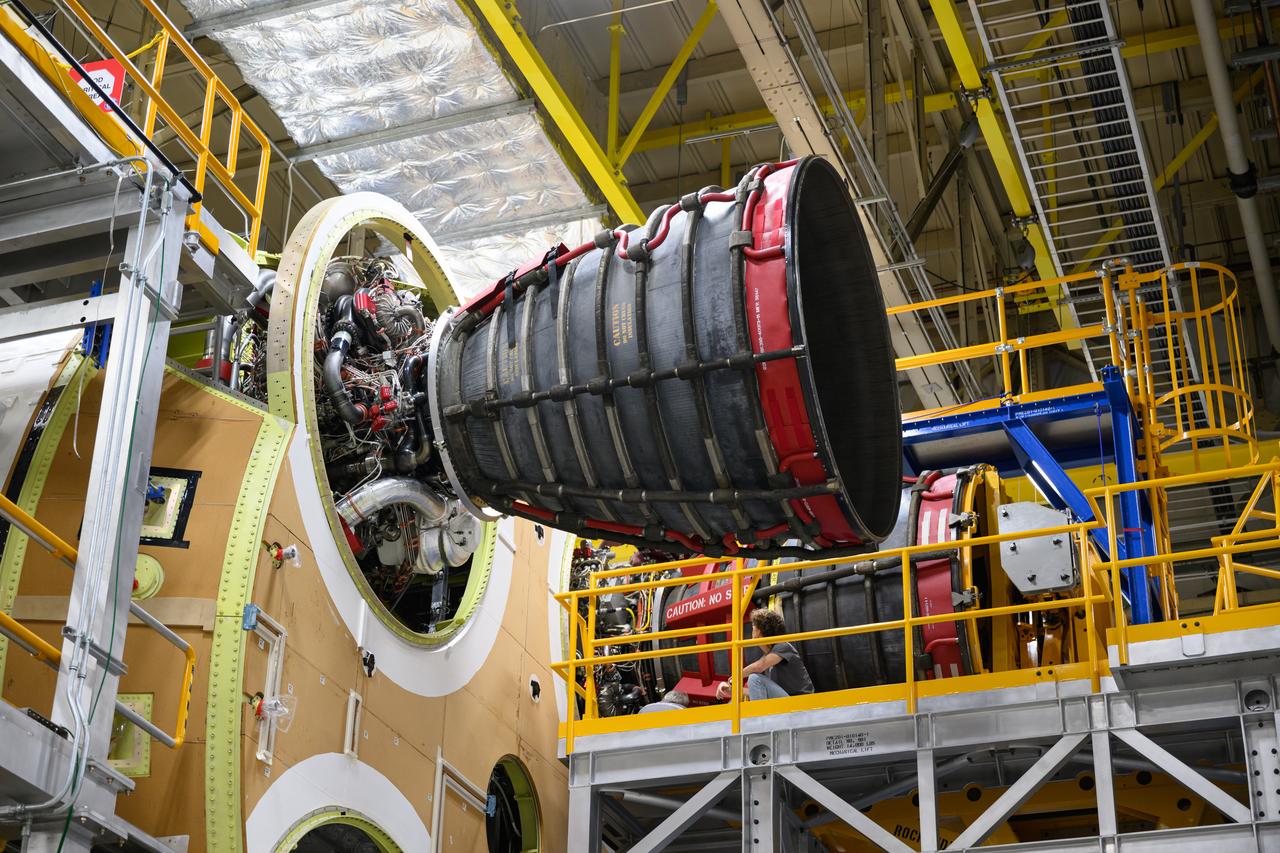
These photos and videos show how technicians at NASA’s Michoud Assembly Facility in New Orleans installed the second of four RS-25 engines onto the core stage for the agency’s SLS (Space Launch System) rocket that will help power NASA’s first crewed Artemis mission to the Moon. Crews added the second engine, with the serial number E2047 in position one, to the stage Sept. 15. The serial number for the engine installed Sept. 11 in position two on the core stage is E2059. Engineers consider the engines to be “soft” mated to the rocket stage. Following soft mate of all four engines, technicians with NASA, Aerojet Rocketdyne, an L3Harris Technologies company and the RS-25 engines lead contractor, along with Boeing, the core stage lead contractor, will fully secure the engines to the stage and integrate the propulsion and electrical systems within the structure. All four RS-25 engines are located at the base of the core stage within the engine section. NASA is working to land the first woman and first person of color on the Moon under Artemis. SLS is part of NASA’s backbone for deep space exploration, along with Orion and the Gateway in orbit around the Moon. SLS is the only rocket that can send Orion, astronauts, and supplies to the Moon in a single mission.
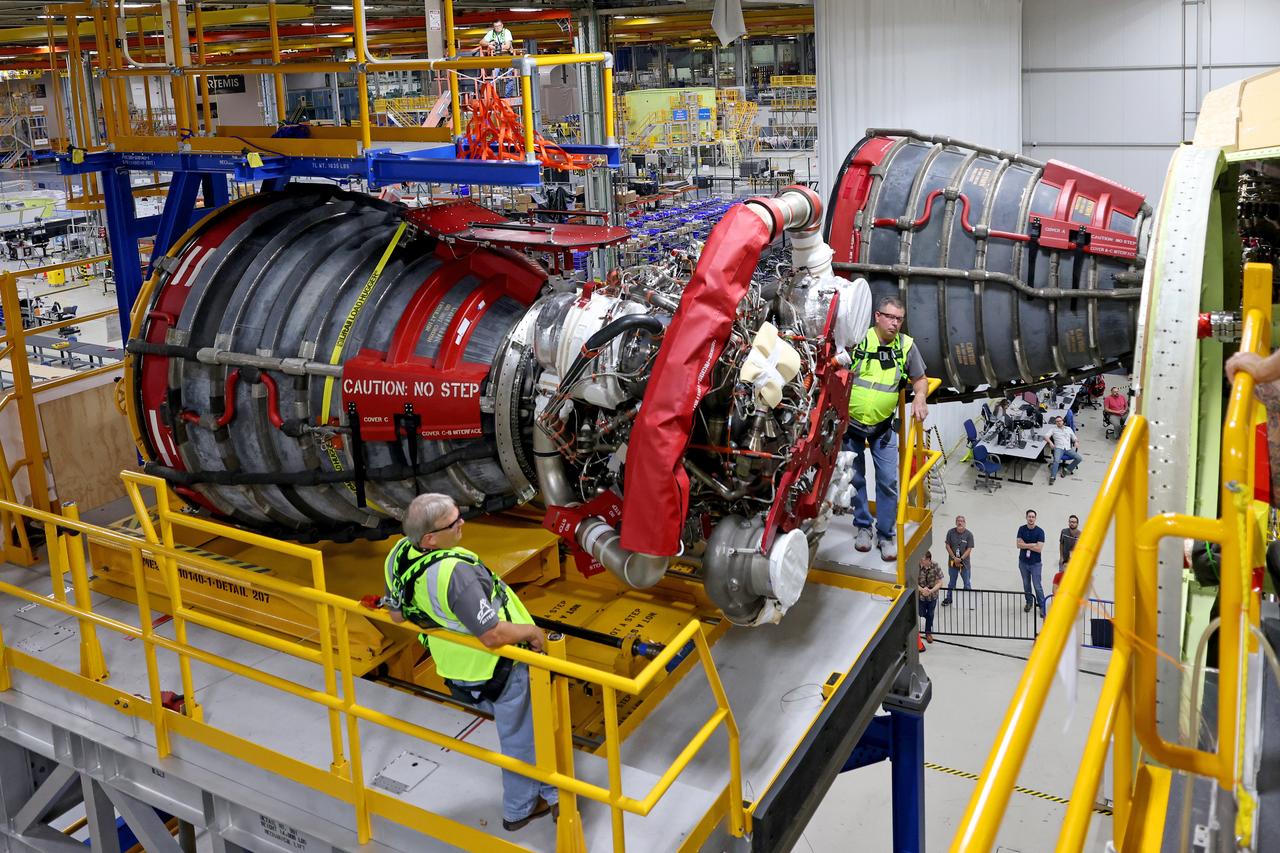
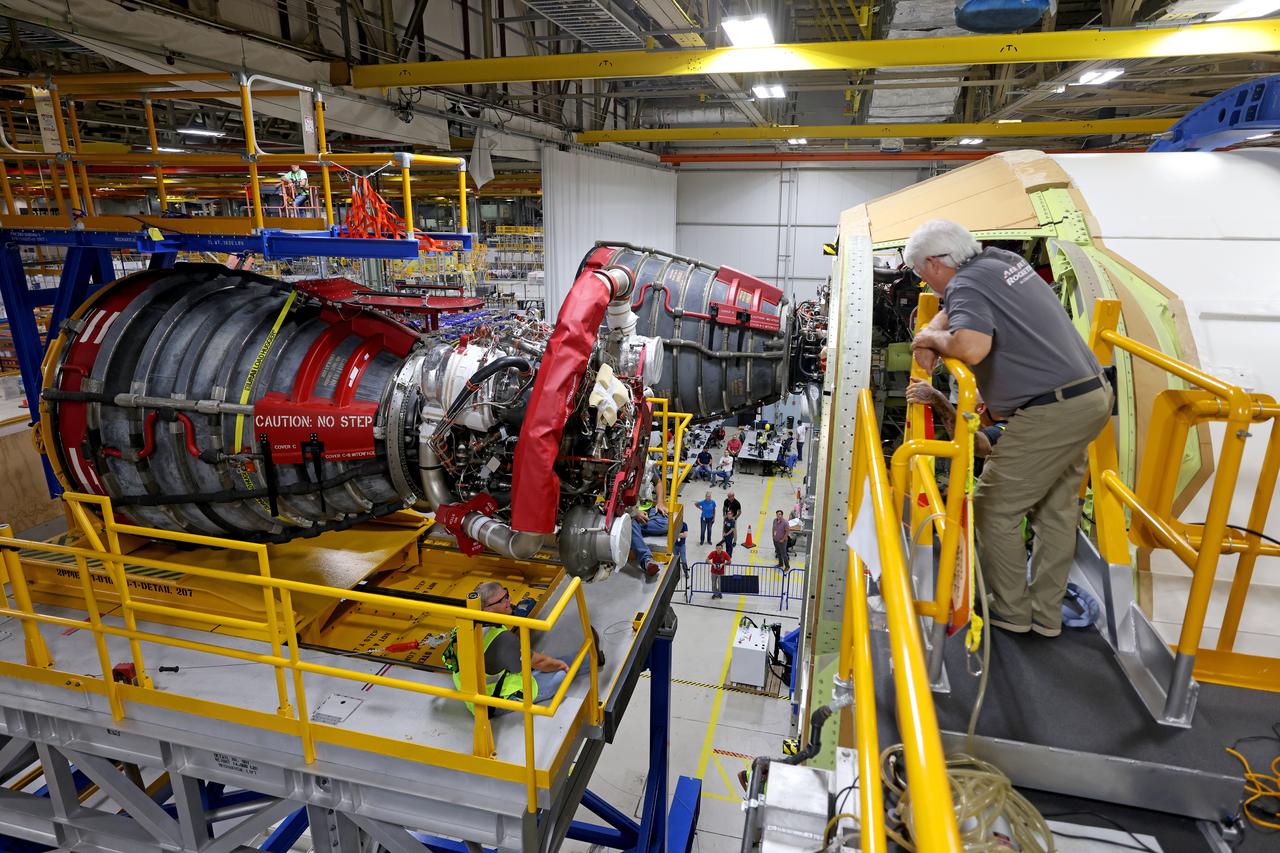
These photos and videos show how technicians at NASA’s Michoud Assembly Facility in New Orleans installed the second of four RS-25 engines onto the core stage for the agency’s SLS (Space Launch System) rocket that will help power NASA’s first crewed Artemis mission to the Moon. Crews added the second engine, with the serial number E2047 in position one, to the stage Sept. 15. The serial number for the engine installed Sept. 11 in position two on the core stage is E2059. Engineers consider the engines to be “soft” mated to the rocket stage. Following soft mate of all four engines, technicians with NASA, Aerojet Rocketdyne, an L3Harris Technologies company and the RS-25 engines lead contractor, along with Boeing, the core stage lead contractor, will fully secure the engines to the stage and integrate the propulsion and electrical systems within the structure. All four RS-25 engines are located at the base of the core stage within the engine section. NASA is working to land the first woman and first person of color on the Moon under Artemis. SLS is part of NASA’s backbone for deep space exploration, along with Orion and the Gateway in orbit around the Moon. SLS is the only rocket that can send Orion, astronauts, and supplies to the Moon in a single mission.
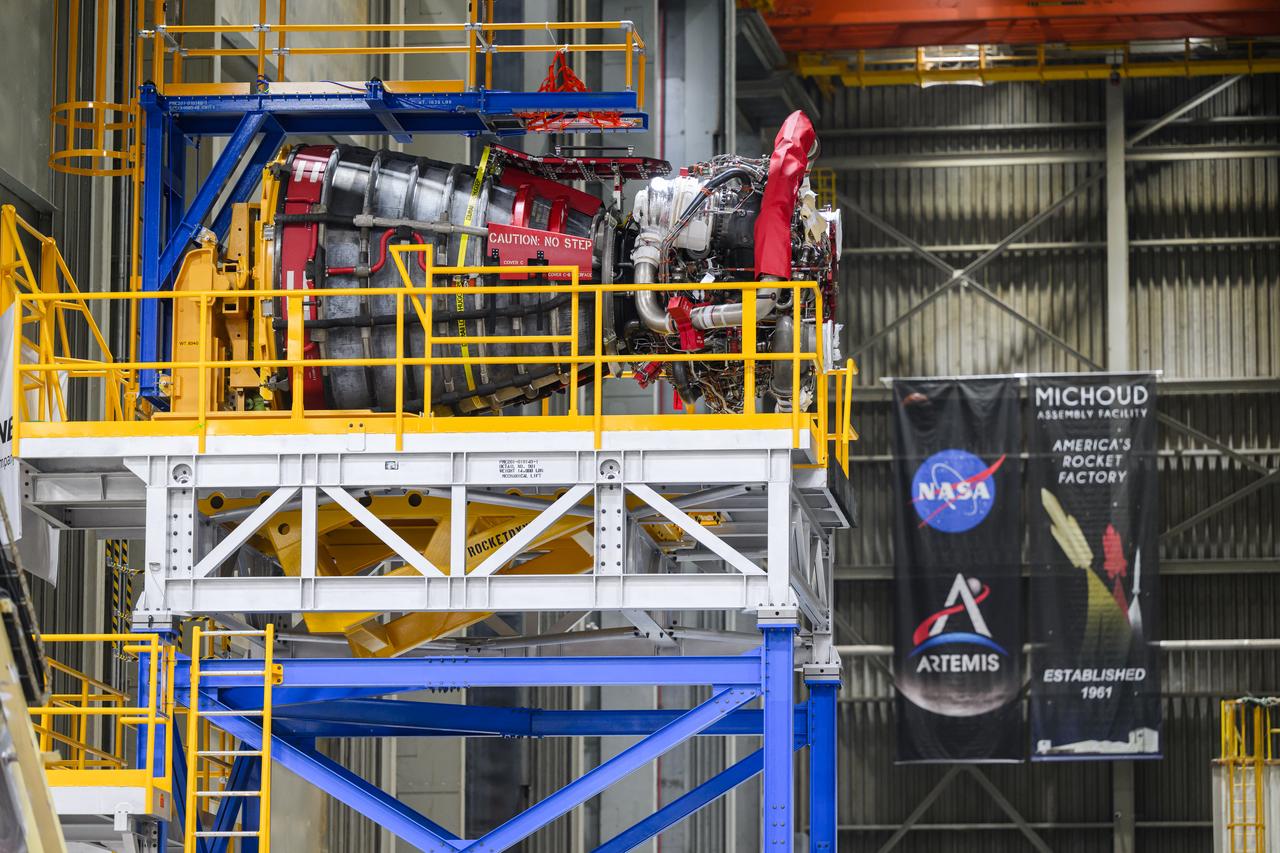
These photos and videos show how technicians at NASA’s Michoud Assembly Facility in New Orleans installed the second of four RS-25 engines onto the core stage for the agency’s SLS (Space Launch System) rocket that will help power NASA’s first crewed Artemis mission to the Moon. Crews added the second engine, with the serial number E2047 in position one, to the stage Sept. 15. The serial number for the engine installed Sept. 11 in position two on the core stage is E2059. Engineers consider the engines to be “soft” mated to the rocket stage. Following soft mate of all four engines, technicians with NASA, Aerojet Rocketdyne, an L3Harris Technologies company and the RS-25 engines lead contractor, along with Boeing, the core stage lead contractor, will fully secure the engines to the stage and integrate the propulsion and electrical systems within the structure. All four RS-25 engines are located at the base of the core stage within the engine section. NASA is working to land the first woman and first person of color on the Moon under Artemis. SLS is part of NASA’s backbone for deep space exploration, along with Orion and the Gateway in orbit around the Moon. SLS is the only rocket that can send Orion, astronauts, and supplies to the Moon in a single mission.
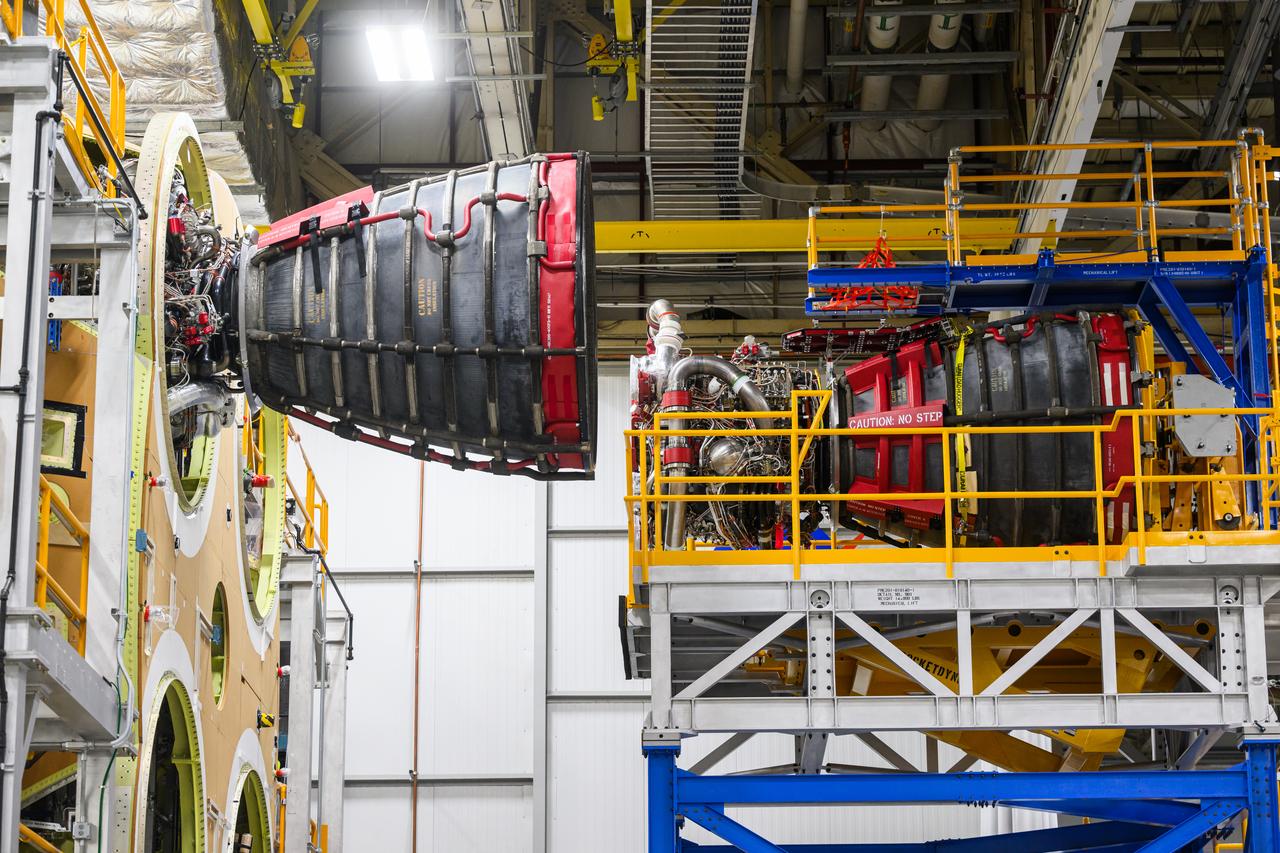
These photos and videos show how technicians at NASA’s Michoud Assembly Facility in New Orleans installed the second of four RS-25 engines onto the core stage for the agency’s SLS (Space Launch System) rocket that will help power NASA’s first crewed Artemis mission to the Moon. Crews added the second engine, with the serial number E2047 in position one, to the stage Sept. 15. The serial number for the engine installed Sept. 11 in position two on the core stage is E2059. Engineers consider the engines to be “soft” mated to the rocket stage. Following soft mate of all four engines, technicians with NASA, Aerojet Rocketdyne, an L3Harris Technologies company and the RS-25 engines lead contractor, along with Boeing, the core stage lead contractor, will fully secure the engines to the stage and integrate the propulsion and electrical systems within the structure. All four RS-25 engines are located at the base of the core stage within the engine section. NASA is working to land the first woman and first person of color on the Moon under Artemis. SLS is part of NASA’s backbone for deep space exploration, along with Orion and the Gateway in orbit around the Moon. SLS is the only rocket that can send Orion, astronauts, and supplies to the Moon in a single mission.

These photos show how technicians at NASA’s Michoud Assembly Facility in New Orleans installed the second of four RS-25 engines onto the core stage for the agency’s SLS (Space Launch System) rocket that will help power NASA’s first crewed Artemis mission to the Moon. Crews added the second engine, with the serial number E2047 in position one, to the stage Sept. 15. The serial number for the engine installed Sept. 11 in position two on the core stage is E2059. Engineers consider the engines to be “soft” mated to the rocket stage. Following soft mate of all four engines, technicians with NASA, Aerojet Rocketdyne, an L3Harris Technologies company and the RS-25 engines lead contractor, along with Boeing, the core stage lead contractor, will fully secure the engines to the stage and integrate the propulsion and electrical systems within the structure. All four RS-25 engines are located at the base of the core stage within the engine section. NASA is working to land the first woman and first person of color on the Moon under Artemis. SLS is part of NASA’s backbone for deep space exploration, along with Orion and the Gateway in orbit around the Moon. SLS is the only rocket that can send Orion, astronauts, and supplies to the Moon in a single mission.
These photos and videos show how technicians at NASA’s Michoud Assembly Facility in New Orleans installed the second of four RS-25 engines onto the core stage for the agency’s SLS (Space Launch System) rocket that will help power NASA’s first crewed Artemis mission to the Moon. Crews added the second engine, with the serial number E2047 in position one, to the stage Sept. 15. The serial number for the engine installed Sept. 11 in position two on the core stage is E2059. Engineers consider the engines to be “soft” mated to the rocket stage. Following soft mate of all four engines, technicians with NASA, Aerojet Rocketdyne, an L3Harris Technologies company and the RS-25 engines lead contractor, along with Boeing, the core stage lead contractor, will fully secure the engines to the stage and integrate the propulsion and electrical systems within the structure. All four RS-25 engines are located at the base of the core stage within the engine section. NASA is working to land the first woman and first person of color on the Moon under Artemis. SLS is part of NASA’s backbone for deep space exploration, along with Orion and the Gateway in orbit around the Moon. SLS is the only rocket that can send Orion, astronauts, and supplies to the Moon in a single mission.
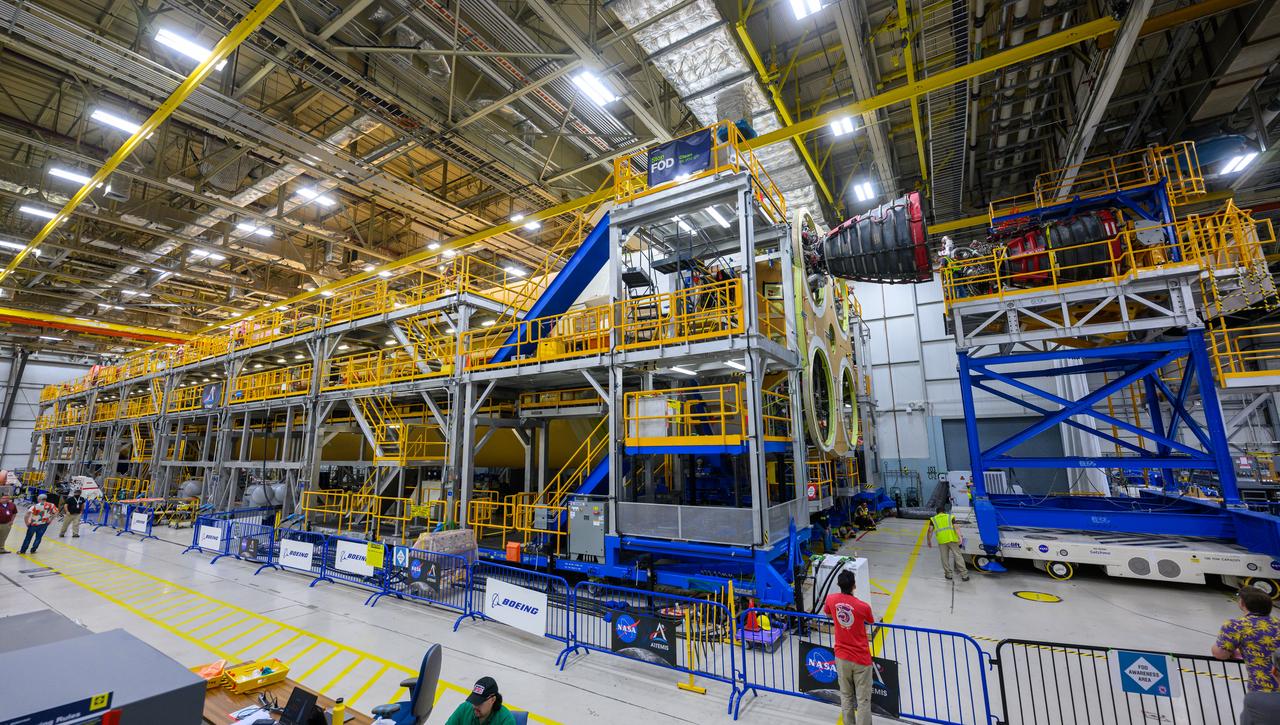
These photos and videos show how technicians at NASA’s Michoud Assembly Facility in New Orleans installed the second of four RS-25 engines onto the core stage for the agency’s SLS (Space Launch System) rocket that will help power NASA’s first crewed Artemis mission to the Moon. Crews added the second engine, with the serial number E2047 in position one, to the stage Sept. 15. The serial number for the engine installed Sept. 11 in position two on the core stage is E2059. Engineers consider the engines to be “soft” mated to the rocket stage. Following soft mate of all four engines, technicians with NASA, Aerojet Rocketdyne, an L3Harris Technologies company and the RS-25 engines lead contractor, along with Boeing, the core stage lead contractor, will fully secure the engines to the stage and integrate the propulsion and electrical systems within the structure. All four RS-25 engines are located at the base of the core stage within the engine section. NASA is working to land the first woman and first person of color on the Moon under Artemis. SLS is part of NASA’s backbone for deep space exploration, along with Orion and the Gateway in orbit around the Moon. SLS is the only rocket that can send Orion, astronauts, and supplies to the Moon in a single mission.
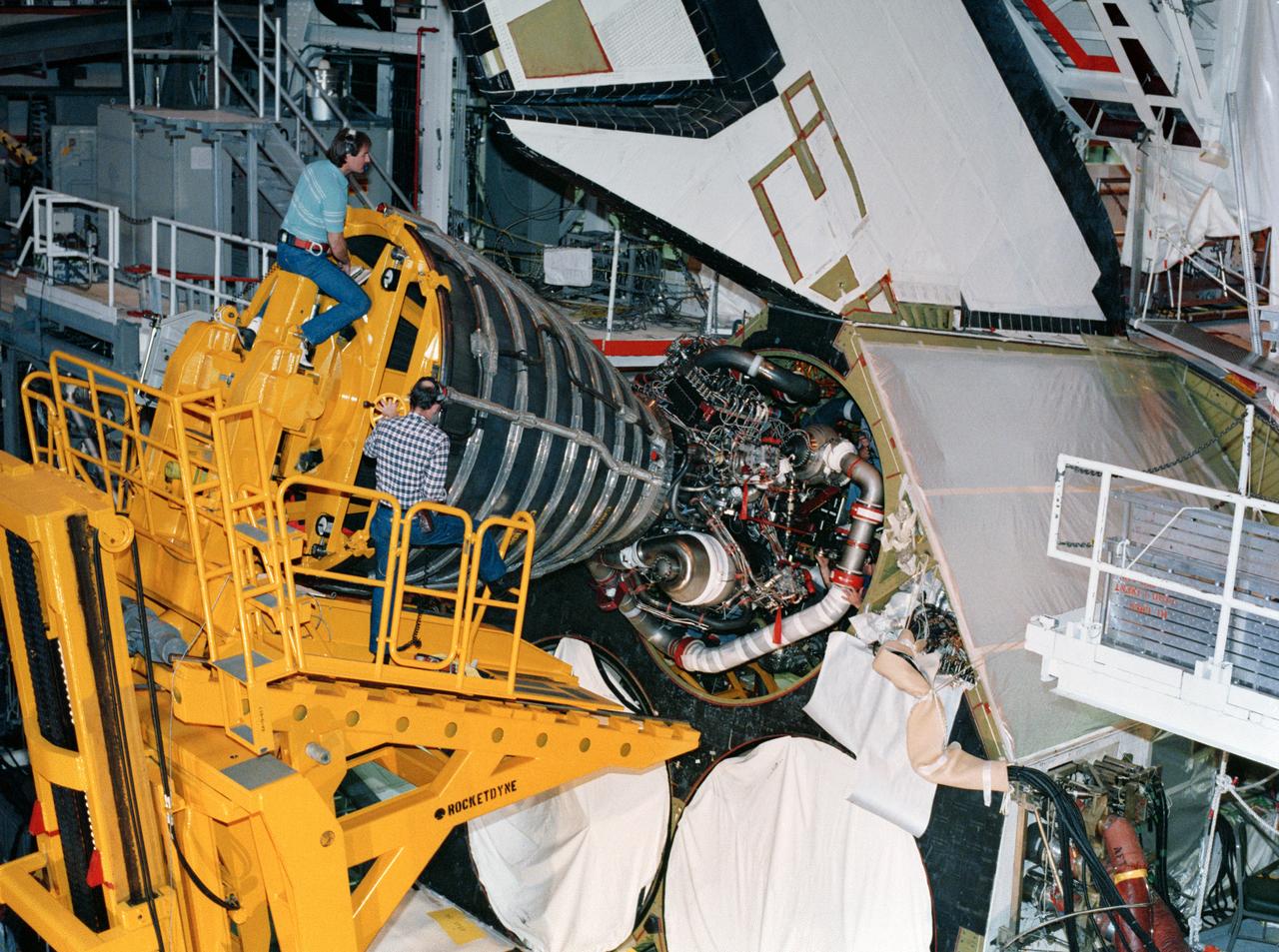
S88-29076 (10 Jan 1988) --- KSC employees work together to carefully guide a 7,000 pound main engine into the number one position in Discovery's aft compartment. Because of the engine's weight and size, special handling equipment is needed to perform the installation. Discovery is currently being prepared for the upcoming STS-26 mission in bay 1 of the Orbiter Processing Facility. This engine, 2019, arrived at KSC on Jan. 6 and was installed Jan. 10. The other two engines are scheduled to be installed later this month. The shuttle's three main liquid fueled engines provide the main propulsion for the orbiter vehicle. The cluster of three engines operate in parallel with the solid rocket boosters during the initial ascent.
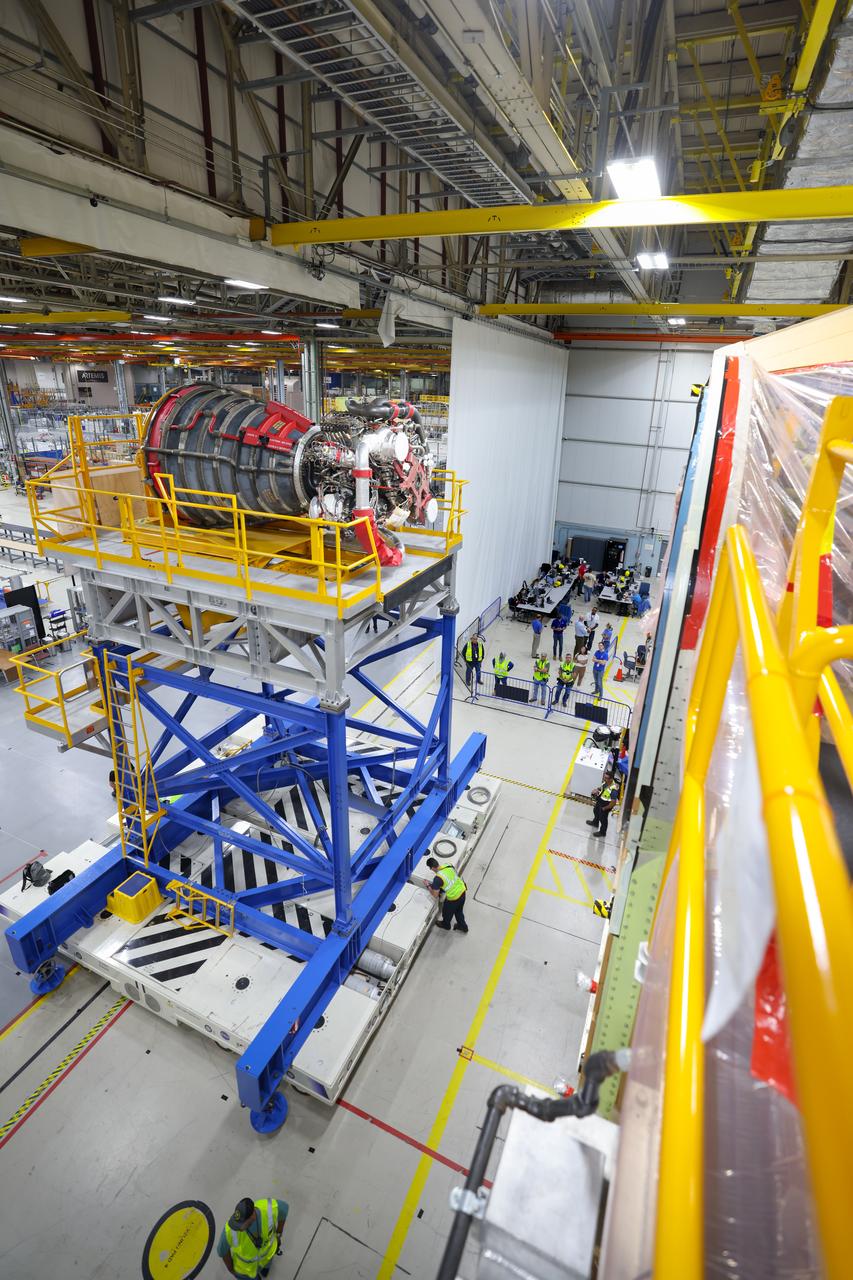
Technicians at NASA’s Michoud Assembly Facility in New Orleans have installed the first of four RS-25 engines on the core stage of the agency’s SLS (Space Launch System) rocket that will help power NASA’s first crewed Artemis mission to the Moon. The Sept. 11 engine installation follows the joining of all five major structures that make up the SLS core stage earlier this spring. NASA, lead RS-25 engines contractor Aerojet Rocketdyne, an L3 Harris Technologies company, and Boeing, the core stage lead contractor, will continue integrating the remaining three engines into the stage and installing the propulsion and electrical systems within the structure. All four RS-25 engines are located at the base of the core stage within the engine section. NASA is working to land the first woman and first person of color on the Moon under Artemis. SLS is part of NASA’s backbone for deep space exploration, along with Orion and the Gateway in orbit around the Moon. SLS is the only rocket that can send Orion, astronauts, and supplies to the Moon in a single mission.
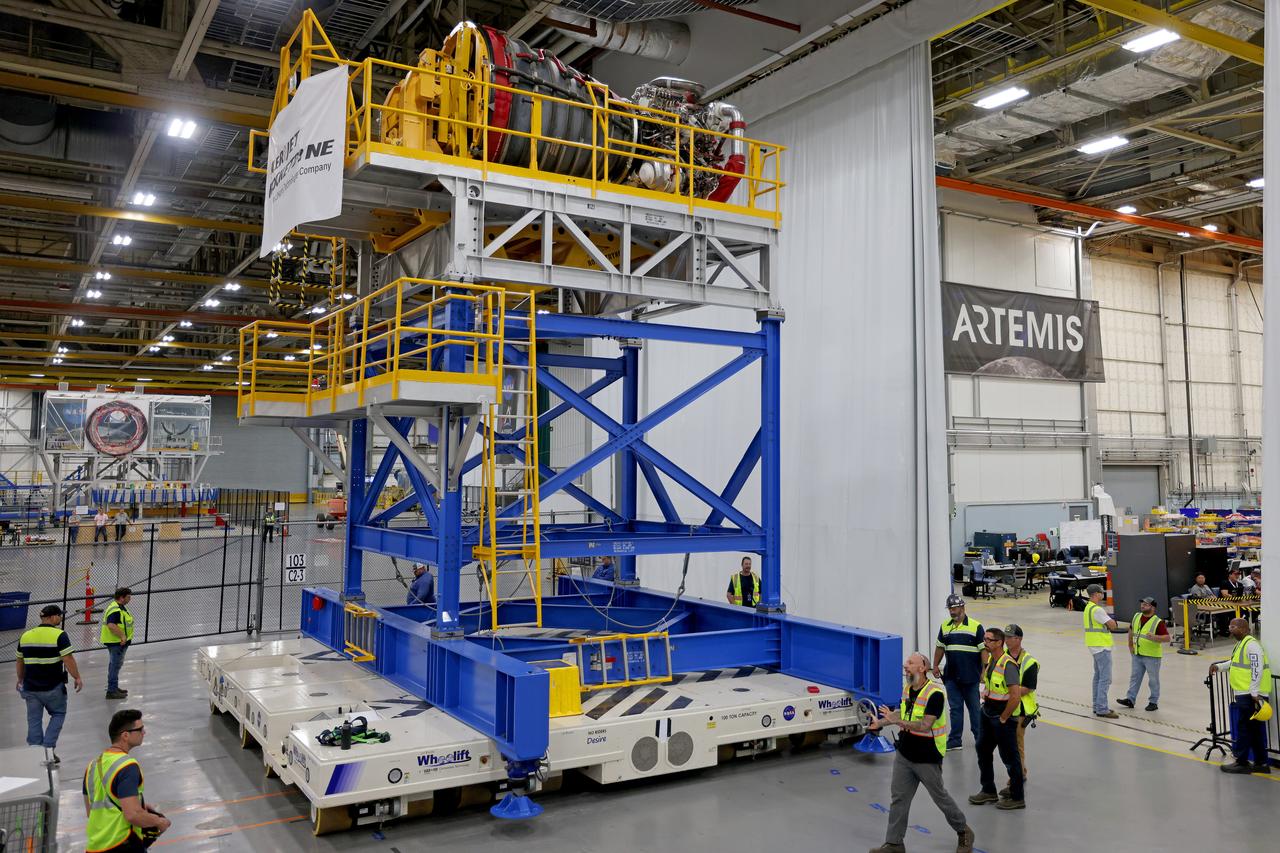
Technicians at NASA’s Michoud Assembly Facility in New Orleans have installed the first of four RS-25 engines on the core stage of the agency’s SLS (Space Launch System) rocket that will help power NASA’s first crewed Artemis mission to the Moon. The Sept. 11 engine installation follows the joining of all five major structures that make up the SLS core stage earlier this spring. NASA, lead RS-25 engines contractor Aerojet Rocketdyne, an L3 Harris Technologies company, and Boeing, the core stage lead contractor, will continue integrating the remaining three engines into the stage and installing the propulsion and electrical systems within the structure. All four RS-25 engines are located at the base of the core stage within the engine section. NASA is working to land the first woman and first person of color on the Moon under Artemis. SLS is part of NASA’s backbone for deep space exploration, along with Orion and the Gateway in orbit around the Moon. SLS is the only rocket that can send Orion, astronauts, and supplies to the Moon in a single mission.
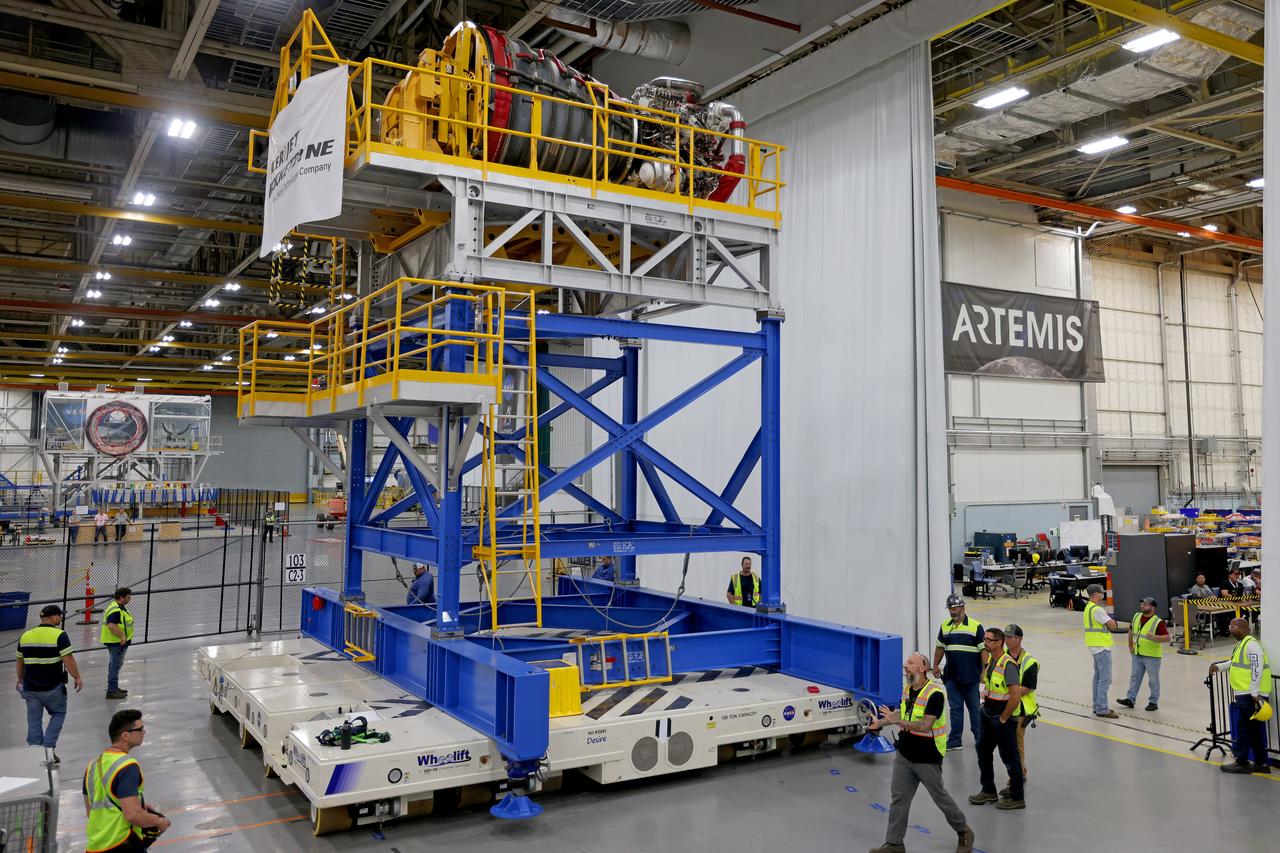
Technicians at NASA’s Michoud Assembly Facility in New Orleans have installed the first of four RS-25 engines on the core stage of the agency’s SLS (Space Launch System) rocket that will help power NASA’s first crewed Artemis mission to the Moon. The Sept. 11 engine installation follows the joining of all five major structures that make up the SLS core stage earlier this spring. NASA, lead RS-25 engines contractor Aerojet Rocketdyne, an L3 Harris Technologies company, and Boeing, the core stage lead contractor, will continue integrating the remaining three engines into the stage and installing the propulsion and electrical systems within the structure. All four RS-25 engines are located at the base of the core stage within the engine section. NASA is working to land the first woman and first person of color on the Moon under Artemis. SLS is part of NASA’s backbone for deep space exploration, along with Orion and the Gateway in orbit around the Moon. SLS is the only rocket that can send Orion, astronauts, and supplies to the Moon in a single mission.
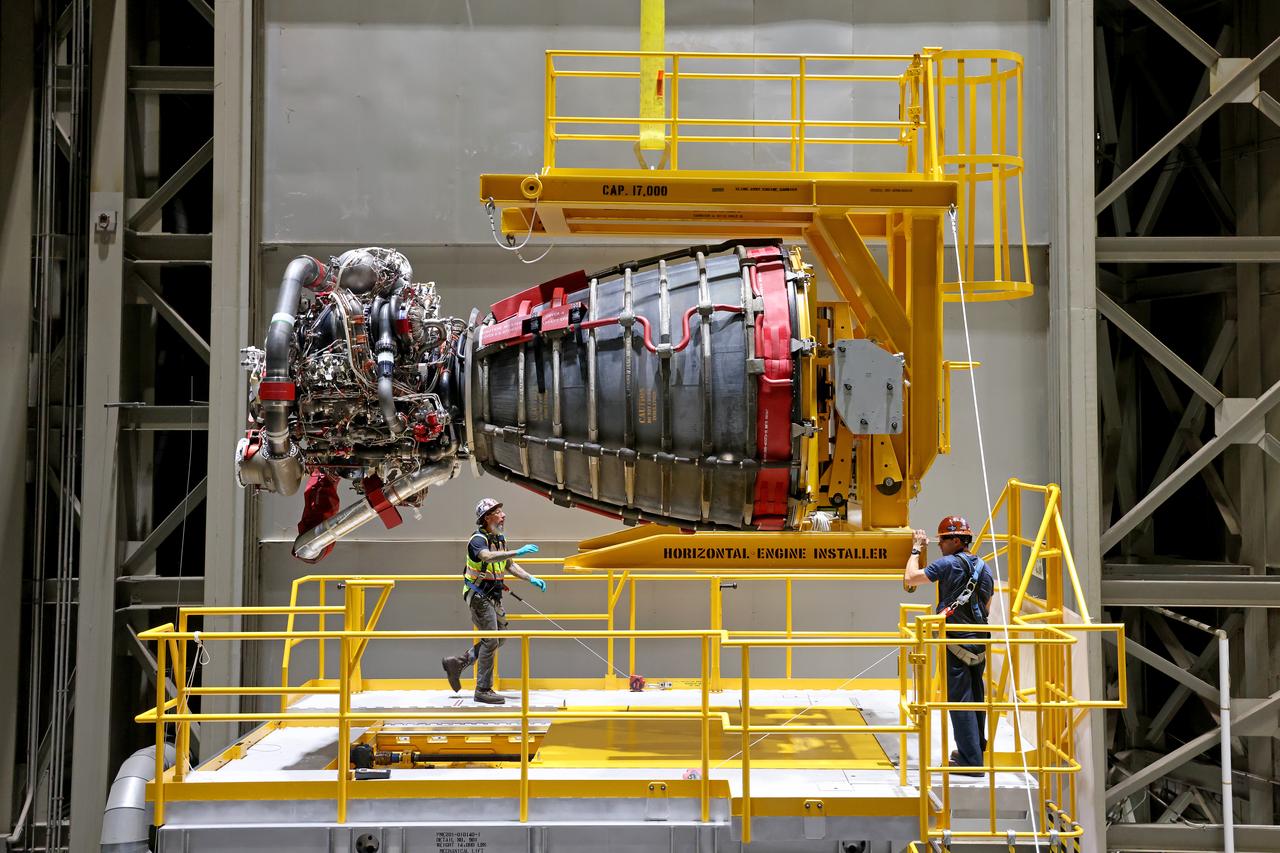
Technicians at NASA’s Michoud Assembly Facility in New Orleans have installed the first of four RS-25 engines on the core stage of the agency’s SLS (Space Launch System) rocket that will help power NASA’s first crewed Artemis mission to the Moon. The Sept. 11 engine installation follows the joining of all five major structures that make up the SLS core stage earlier this spring. NASA, lead RS-25 engines contractor Aerojet Rocketdyne, an L3 Harris Technologies company, and Boeing, the core stage lead contractor, will continue integrating the remaining three engines into the stage and installing the propulsion and electrical systems within the structure. All four RS-25 engines are located at the base of the core stage within the engine section. NASA is working to land the first woman and first person of color on the Moon under Artemis. SLS is part of NASA’s backbone for deep space exploration, along with Orion and the Gateway in orbit around the Moon. SLS is the only rocket that can send Orion, astronauts, and supplies to the Moon in a single mission.
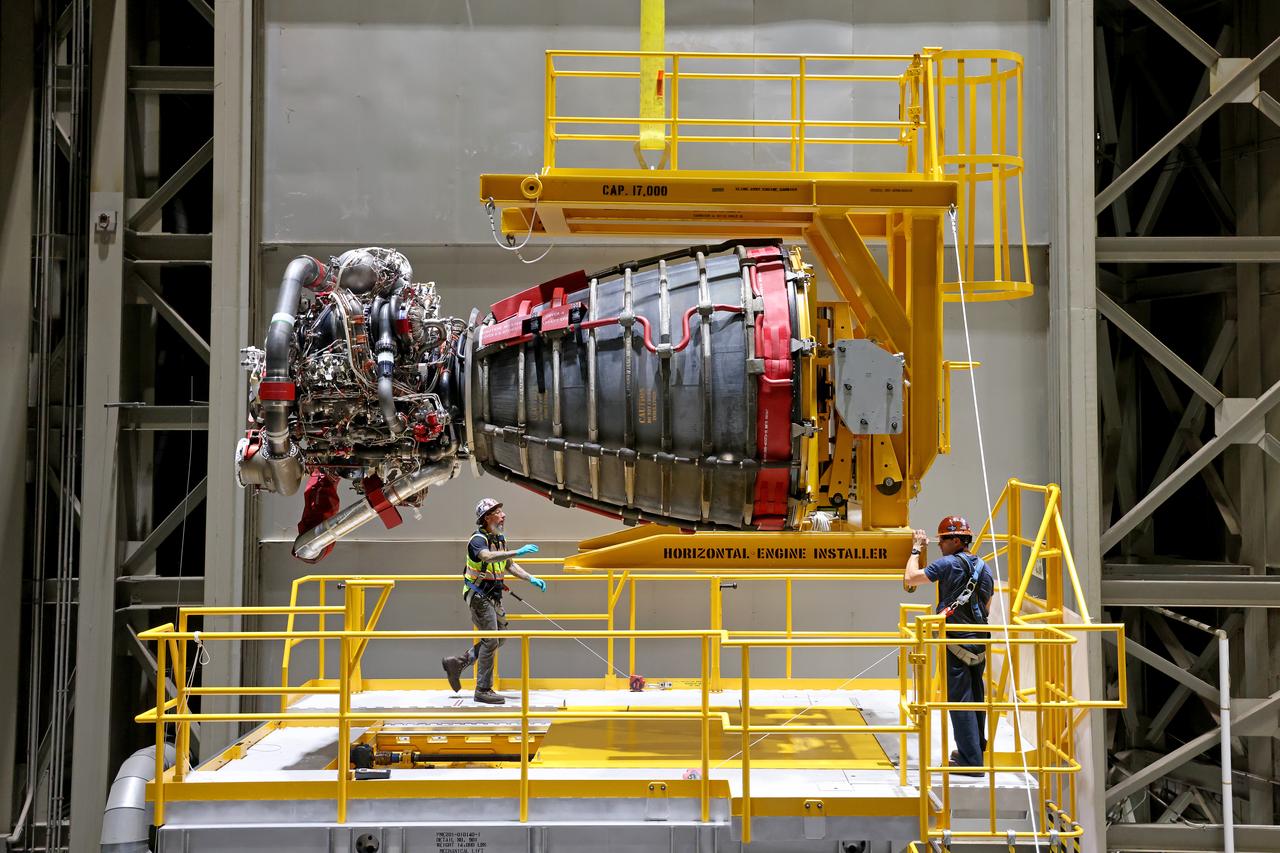
Technicians at NASA’s Michoud Assembly Facility in New Orleans have installed the first of four RS-25 engines on the core stage of the agency’s SLS (Space Launch System) rocket that will help power NASA’s first crewed Artemis mission to the Moon. The Sept. 11 engine installation follows the joining of all five major structures that make up the SLS core stage earlier this spring. NASA, lead RS-25 engines contractor Aerojet Rocketdyne, an L3 Harris Technologies company, and Boeing, the core stage lead contractor, will continue integrating the remaining three engines into the stage and installing the propulsion and electrical systems within the structure. All four RS-25 engines are located at the base of the core stage within the engine section. NASA is working to land the first woman and first person of color on the Moon under Artemis. SLS is part of NASA’s backbone for deep space exploration, along with Orion and the Gateway in orbit around the Moon. SLS is the only rocket that can send Orion, astronauts, and supplies to the Moon in a single mission.
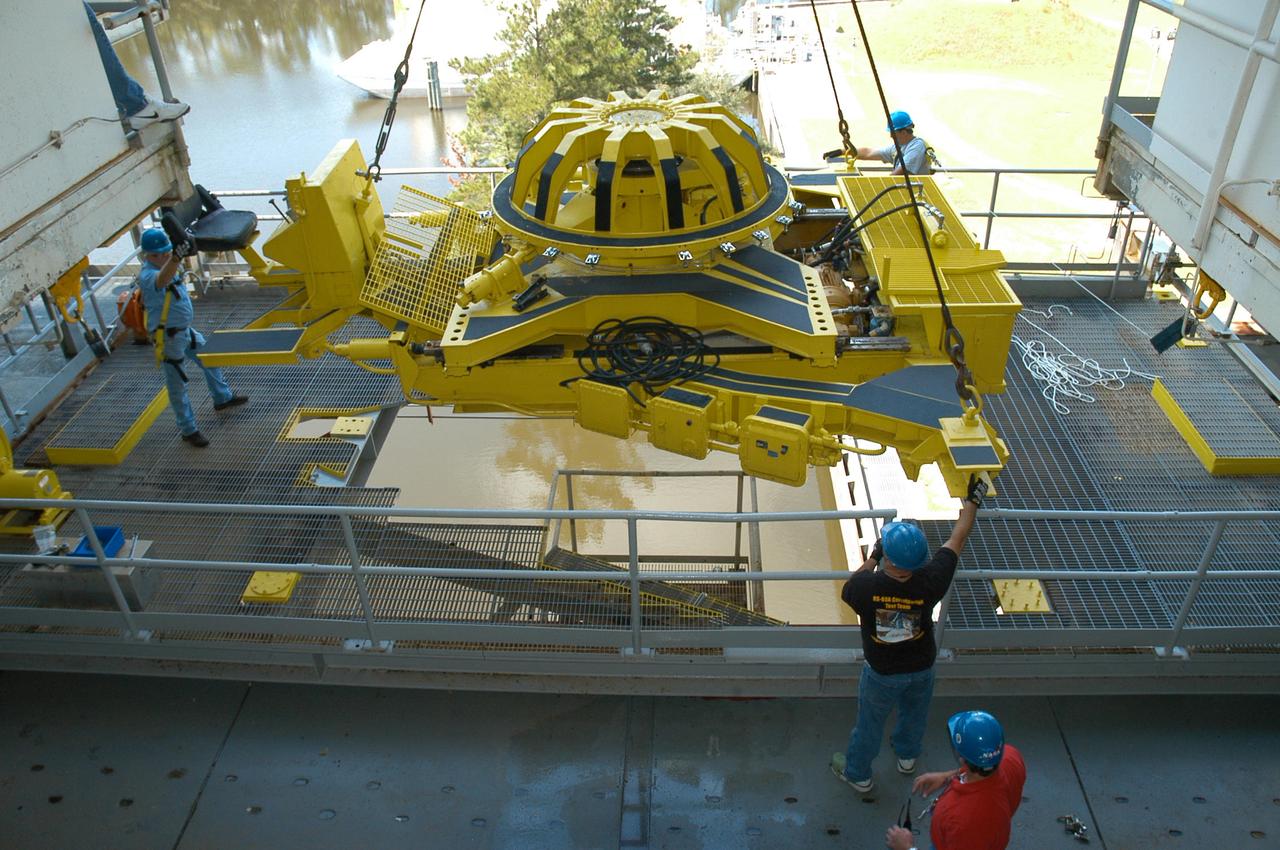
Employees maneuver a vertical engine installer into place on the A-1 Test Stand at Stennis Space Center on Sept. 23. Installation of the equipment was a milestone event as the historic stand underwent modifications for testing the powerpack component of NASA's new J-2X rocket engine in development.
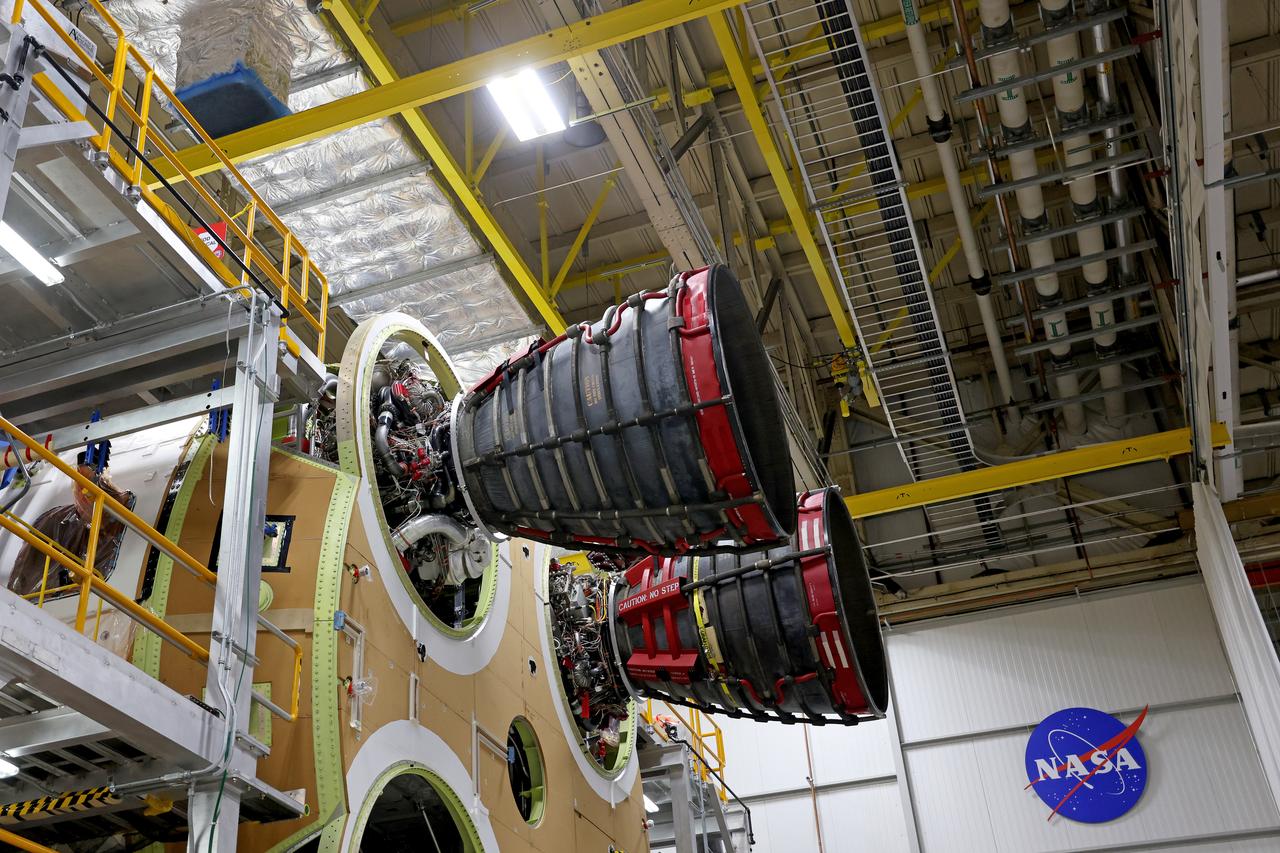
These photos and videos show how technicians at NASA’s Michoud Assembly Facility in New Orleans installed the second of four RS-25 engines onto the core stage for the agency’s SLS (Space Launch System) rocket that will help power NASA’s first crewed Artemis mission to the Moon. Crews added the second engine, with the serial number E2047 in position one, to the stage Sept. 15. The serial number for the engine installed Sept. 11 in position two on the core stage is E2059. Engineers consider the engines to be “soft” mated to the rocket stage. Following soft mate of all four engines, technicians with NASA, Aerojet Rocketdyne, an L3Harris Technologies company and the RS-25 engines lead contractor, along with Boeing, the core stage lead contractor, will fully secure the engines to the stage and integrate the propulsion and electrical systems within the structure. All four RS-25 engines are located at the base of the core stage within the engine section. NASA is working to land the first woman and first person of color on the Moon under Artemis. SLS is part of NASA’s backbone for deep space exploration, along with Orion and the Gateway in orbit around the Moon. SLS is the only rocket that can send Orion, astronauts, and supplies to the Moon in a single mission.

The engine that will power NASA’s quiet supersonic X-59 in flight is installed, marking a major milestone in the experimental aircraft’s journey toward first flight. The installation of the F414-GE-100 engine at Lockheed Martin’s Skunk Works facility brings the vehicle close to the completion of its assembly.

The engine that will power NASA’s quiet supersonic X-59 in flight is installed, marking a major milestone in the experimental aircraft’s journey toward first flight. The installation of the F414-GE-100 engine at Lockheed Martin’s Skunk Works facility brings the vehicle close to the completion of its assembly.
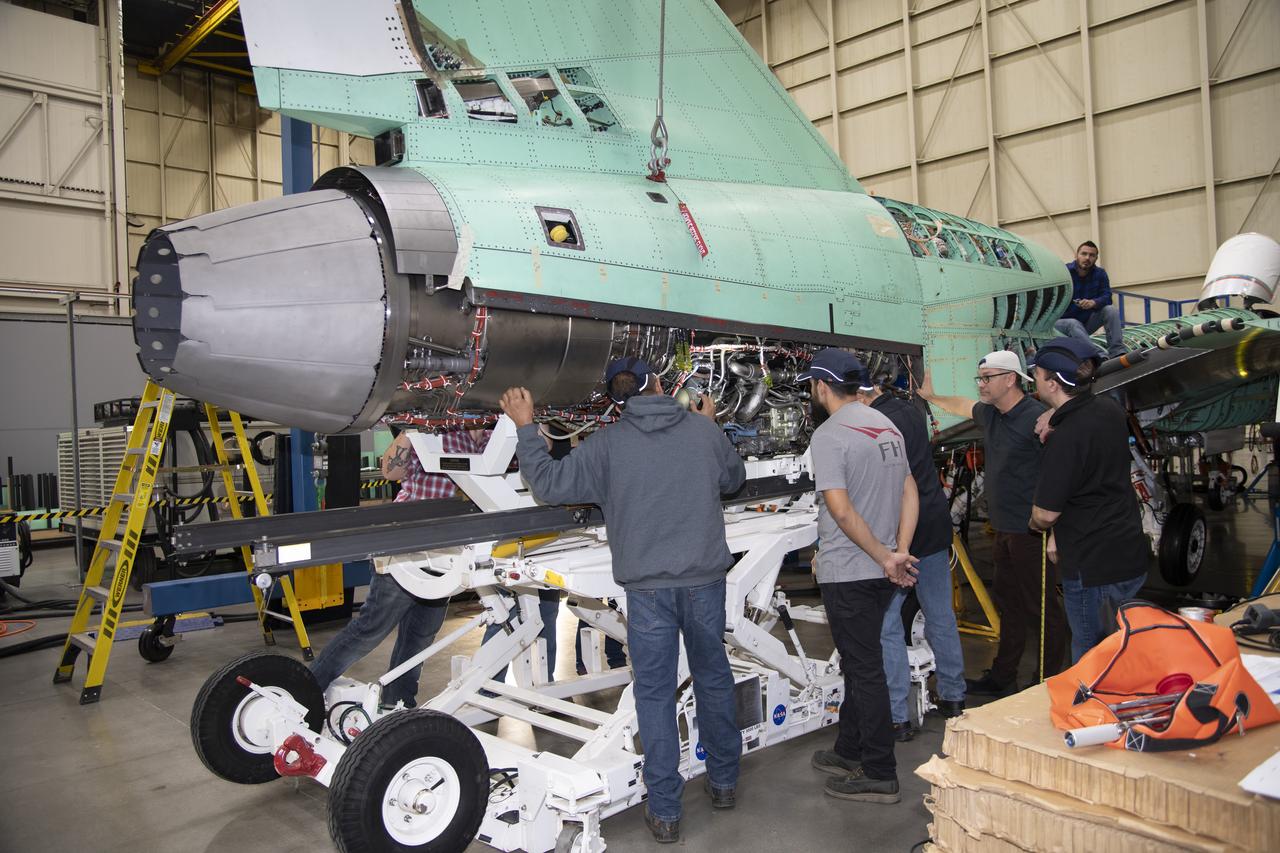
The engine that will power NASA’s quiet supersonic X-59 in flight is installed, marking a major milestone in the experimental aircraft’s journey toward first flight. The installation of the F414-GE-100 engine at Lockheed Martin’s Skunk Works facility brings the vehicle close to the completion of its assembly.
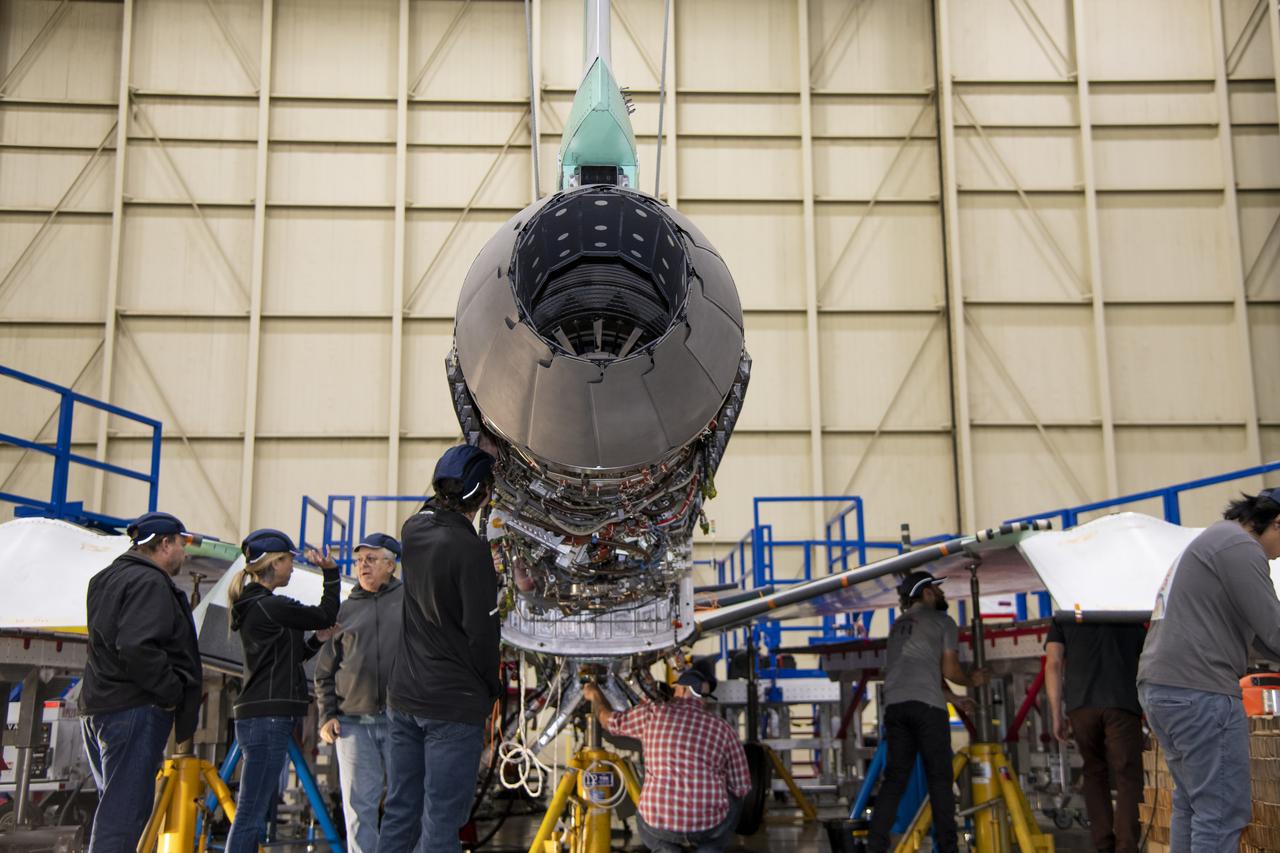
The engine that will power NASA’s quiet supersonic X-59 in flight is installed, marking a major milestone in the experimental aircraft’s journey toward first flight. The installation of the F414-GE-100 engine at Lockheed Martin’s Skunk Works facility brings the vehicle close to the completion of its assembly.
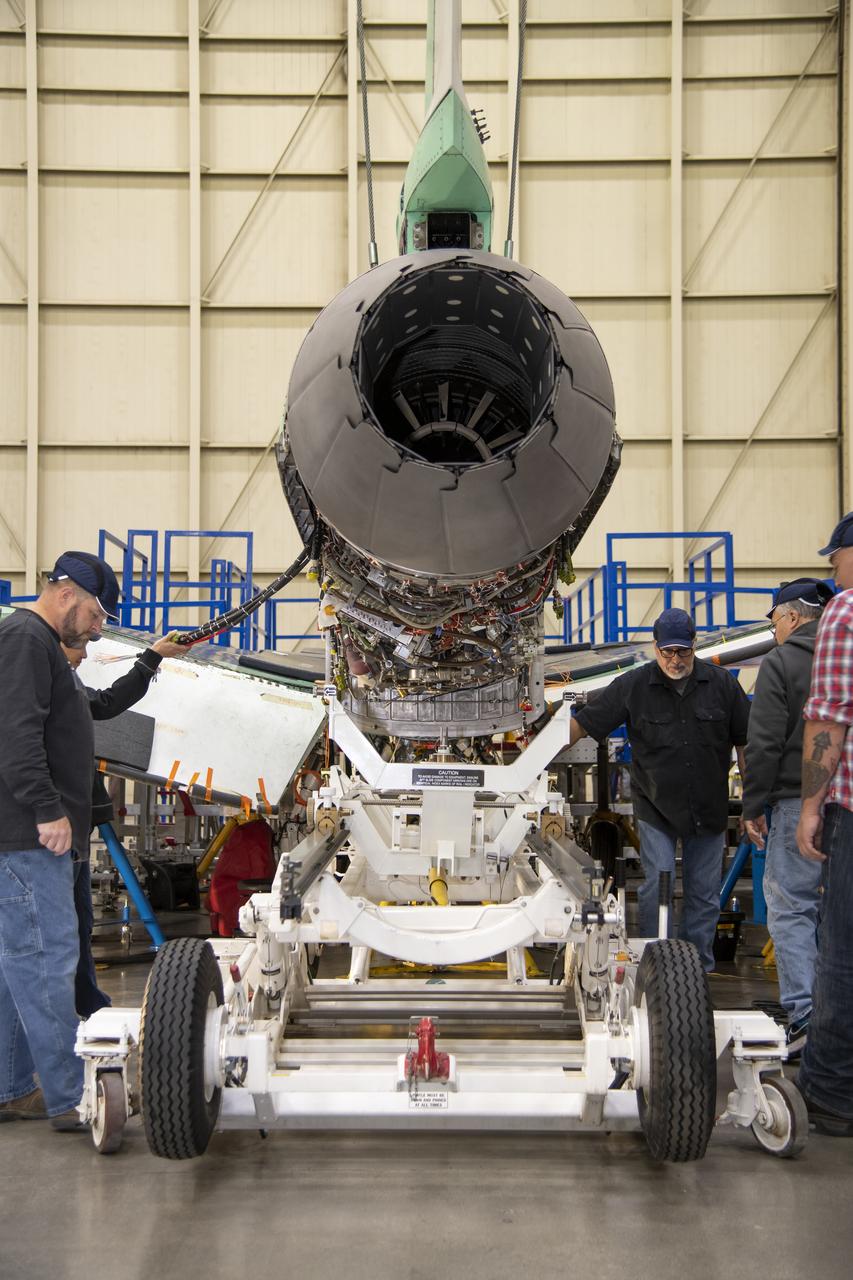
The engine that will power NASA’s quiet supersonic X-59 in flight is installed, marking a major milestone in the experimental aircraft’s journey toward first flight. The installation of the F414-GE-100 engine at Lockheed Martin’s Skunk Works facility brings the vehicle close to the completion of its assembly.
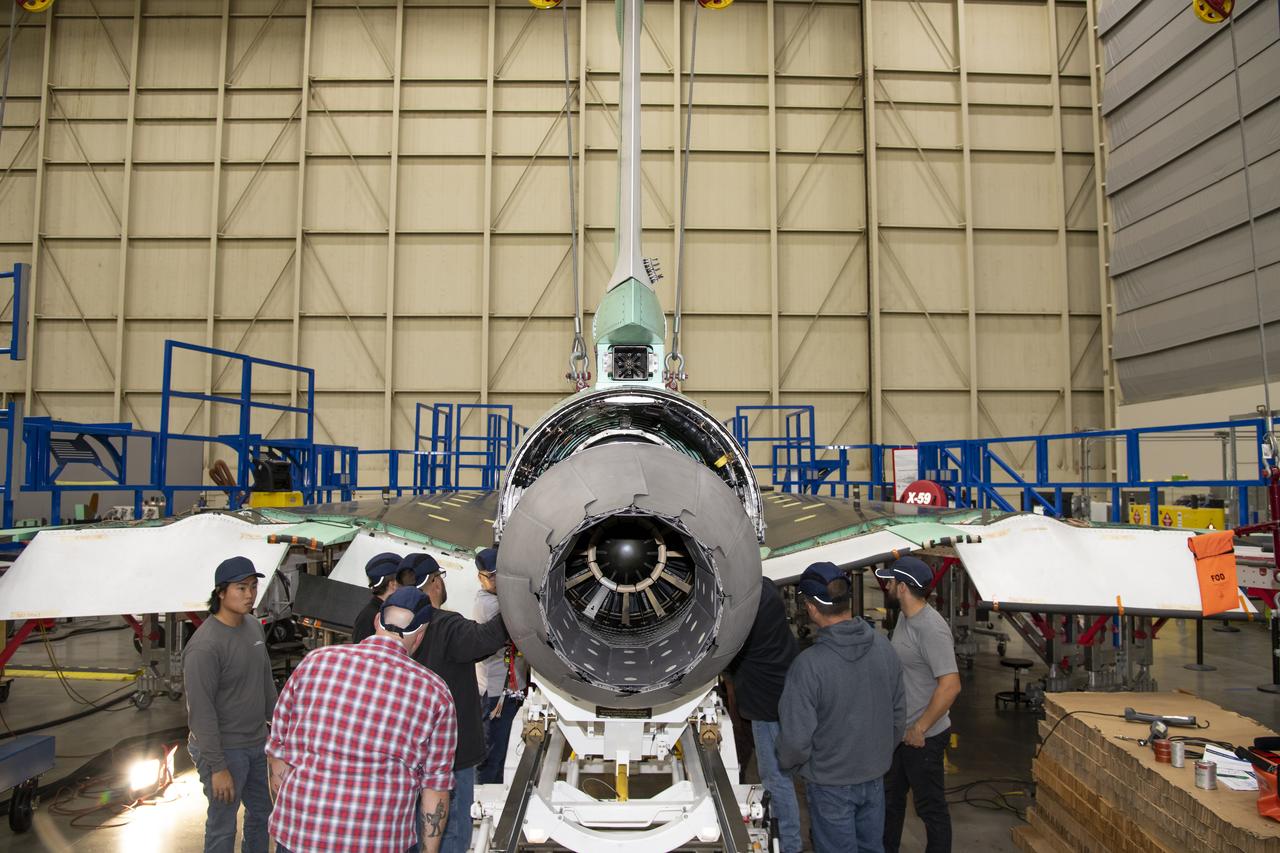
The engine that will power NASA’s quiet supersonic X-59 in flight is installed, marking a major milestone in the experimental aircraft’s journey toward first flight. The installation of the F414-GE-100 engine at Lockheed Martin’s Skunk Works facility brings the vehicle close to the completion of its assembly.
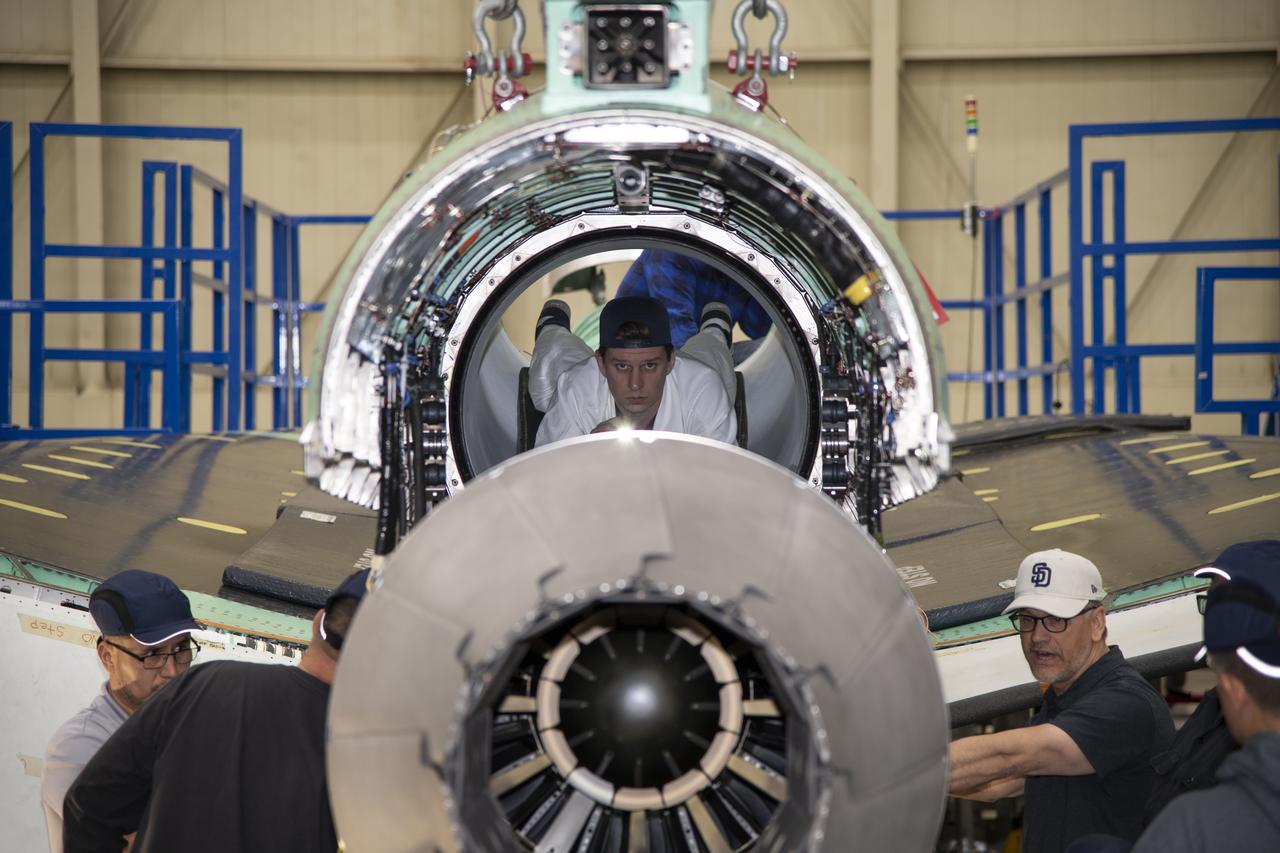
The engine that will power NASA’s quiet supersonic X-59 in flight is installed, marking a major milestone in the experimental aircraft’s journey toward first flight. The installation of the F414-GE-100 engine at Lockheed Martin’s Skunk Works facility brings the vehicle close to the completion of its assembly.
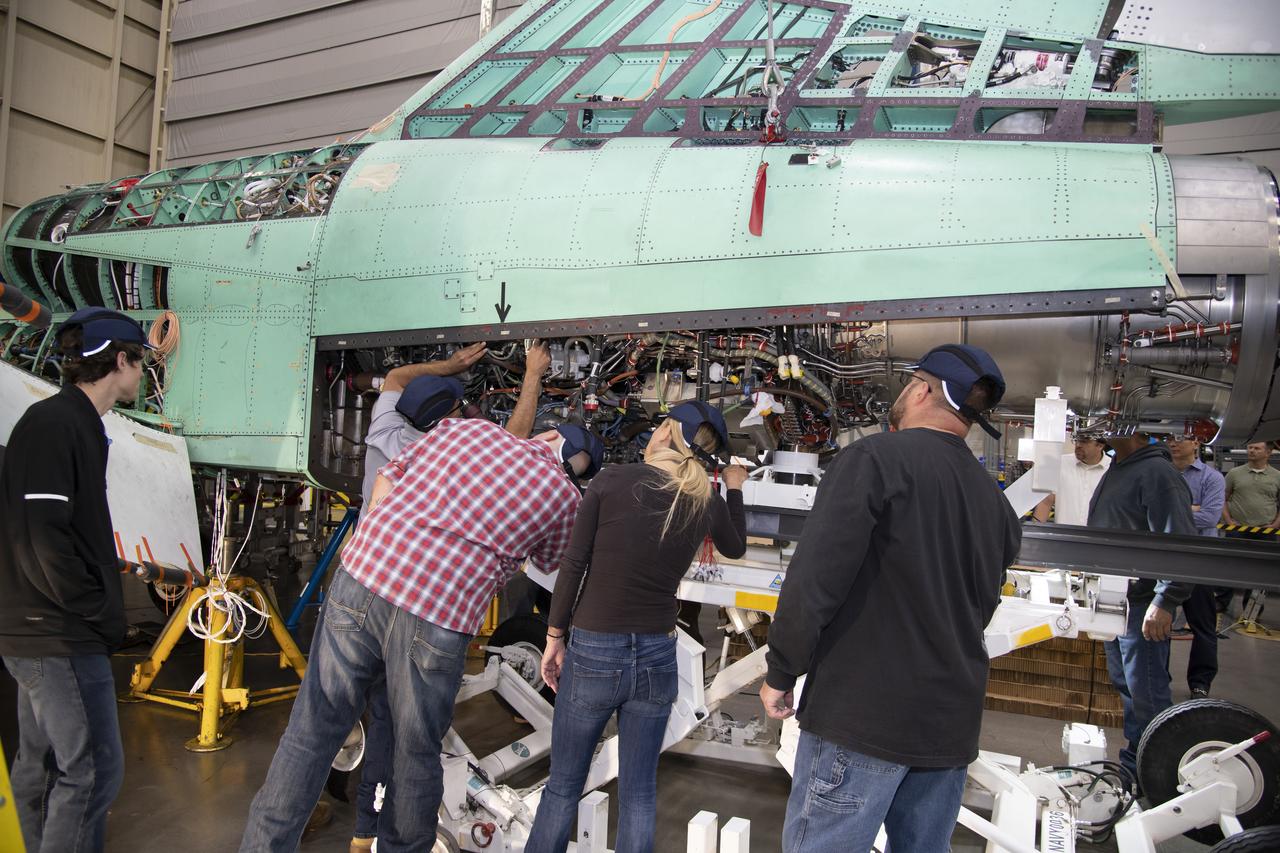
The engine that will power NASA’s quiet supersonic X-59 in flight is installed, marking a major milestone in the experimental aircraft’s journey toward first flight. The installation of the F414-GE-100 engine at Lockheed Martin’s Skunk Works facility brings the vehicle close to the completion of its assembly.
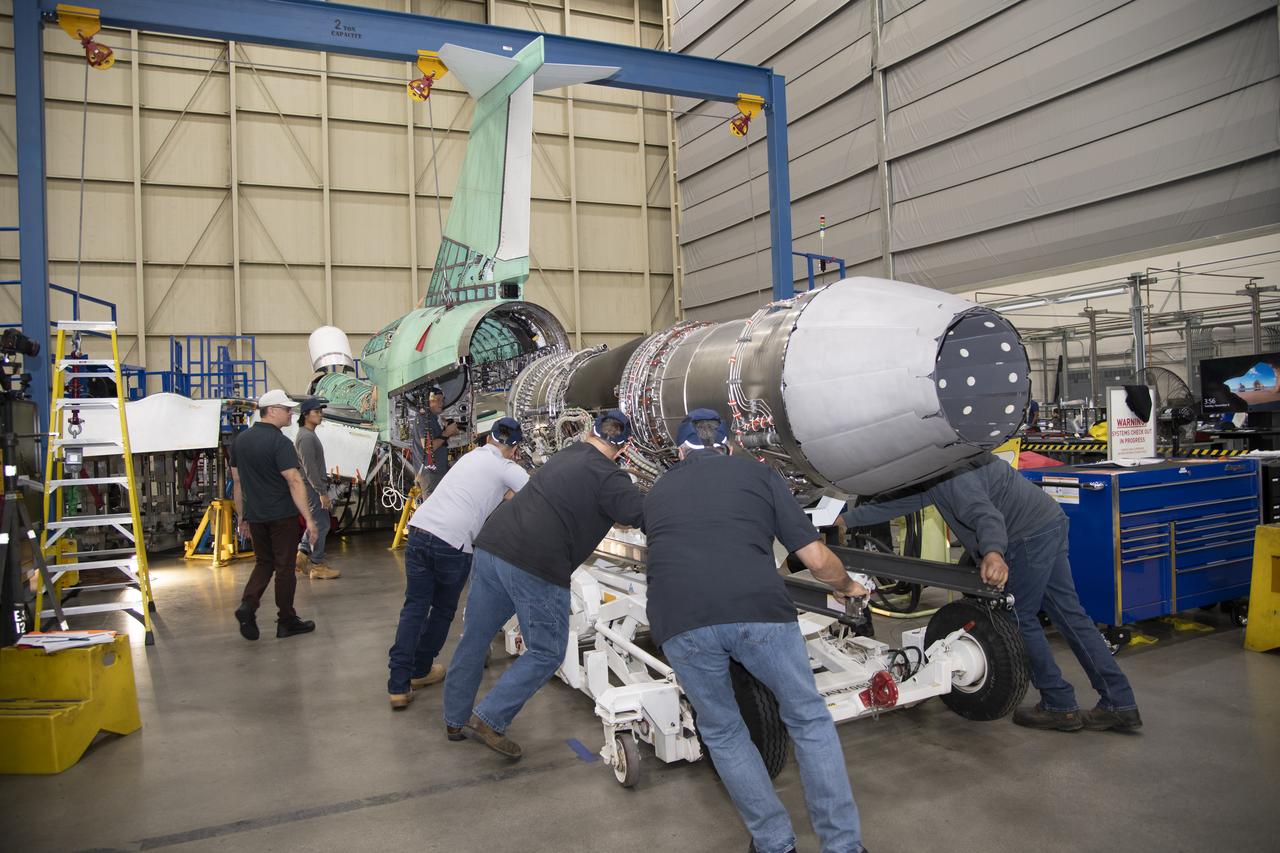
The engine that will power NASA’s quiet supersonic X-59 in flight is installed, marking a major milestone in the experimental aircraft’s journey toward first flight. The installation of the F414-GE-100 engine at Lockheed Martin’s Skunk Works facility brings the vehicle close to the completion of its assembly.
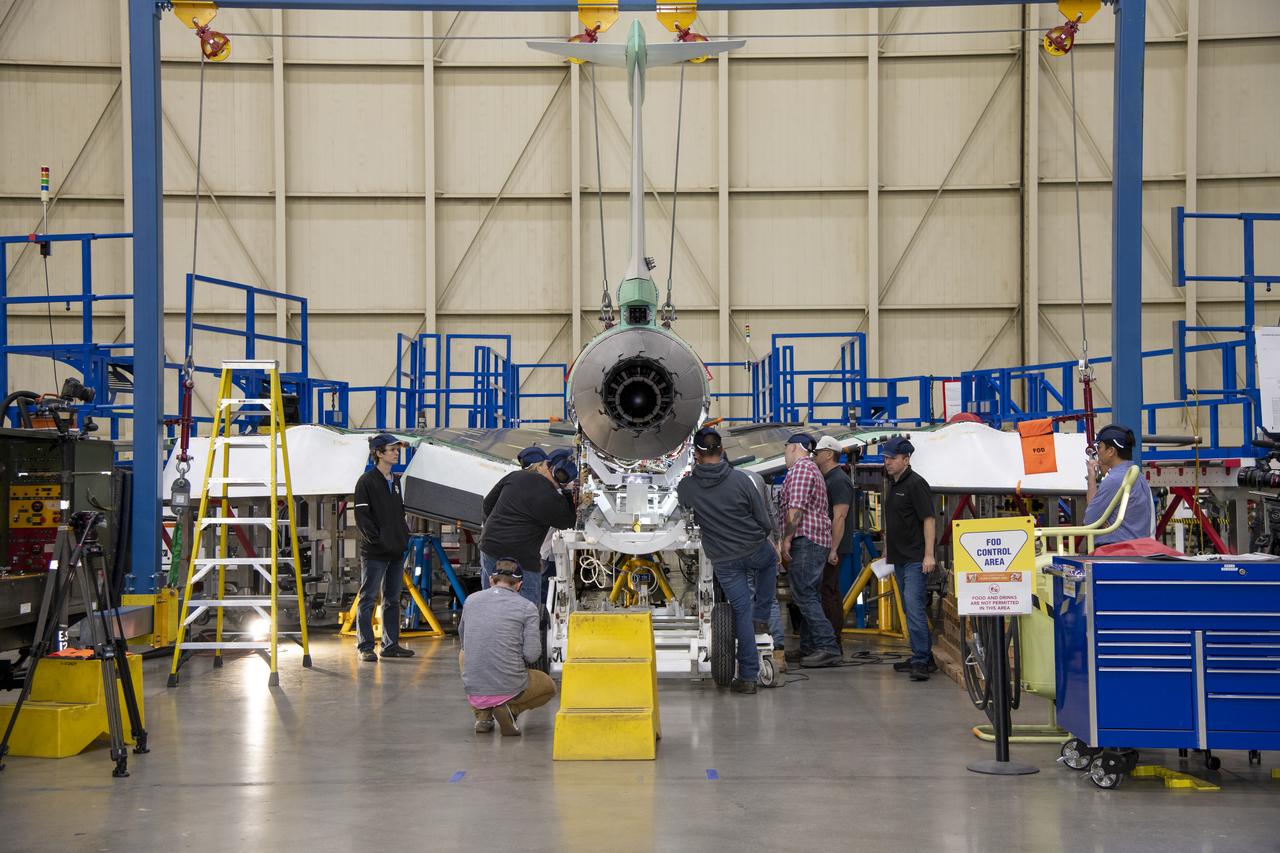
The engine that will power NASA’s quiet supersonic X-59 in flight is installed, marking a major milestone in the experimental aircraft’s journey toward first flight. The installation of the F414-GE-100 engine at Lockheed Martin’s Skunk Works facility brings the vehicle close to the completion of its assembly.
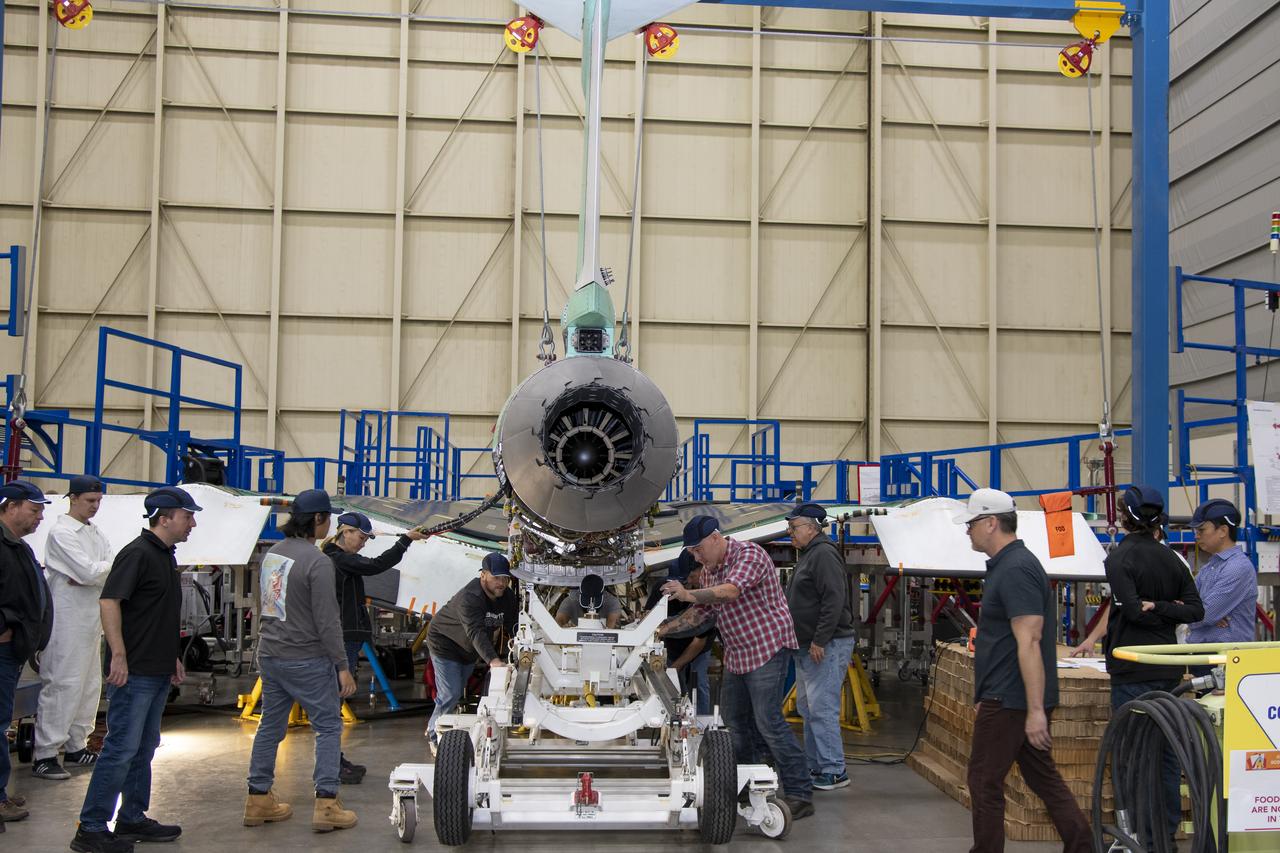
The engine that will power NASA’s quiet supersonic X-59 in flight is installed, marking a major milestone in the experimental aircraft’s journey toward first flight. The installation of the F414-GE-100 engine at Lockheed Martin’s Skunk Works facility brings the vehicle close to the completion of its assembly.