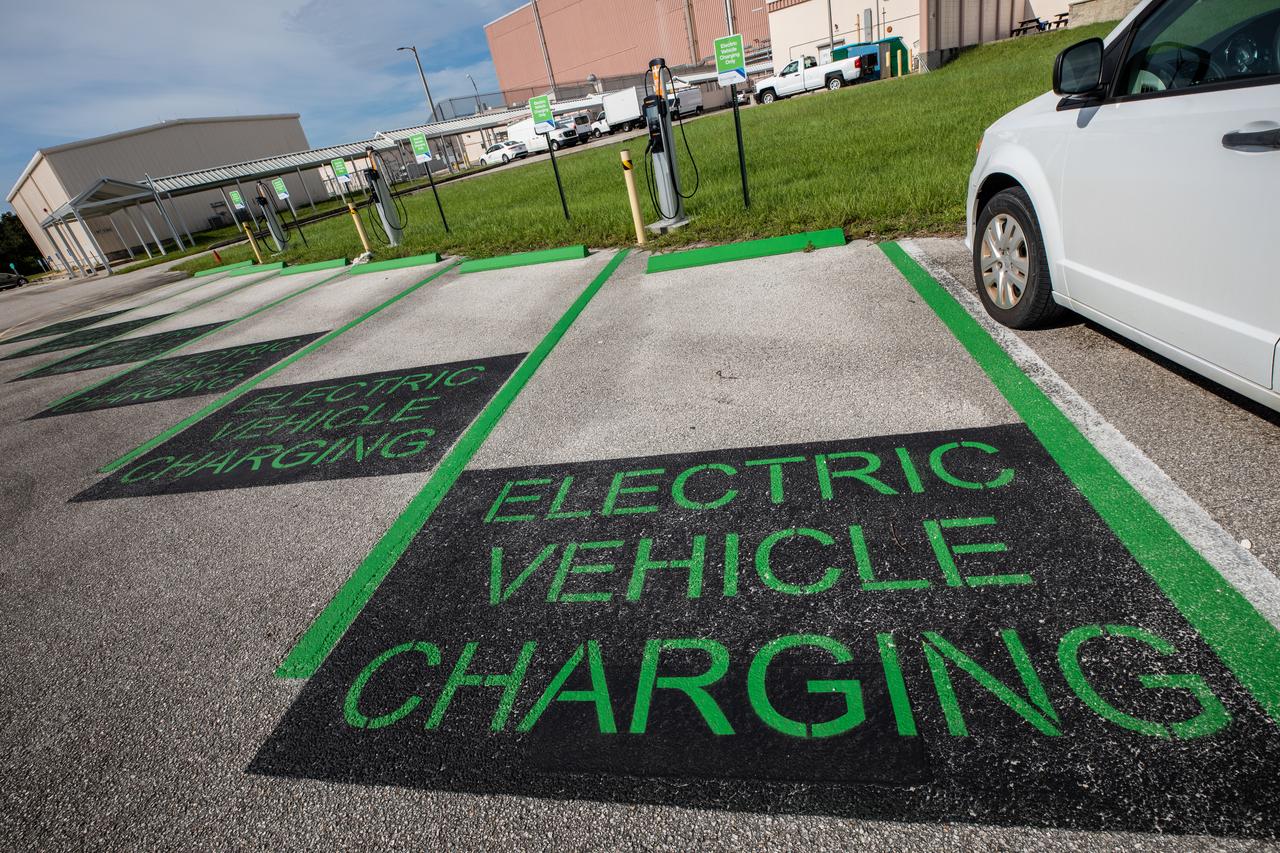
Several newly installed electric vehicle (EV) charging stations are in view near the Neil Armstrong Operations and Checkout Building at NASA’s Kennedy Space Center in Florida on Sept. 14, 2022. Part of a partnership between Kennedy and Florida Power & Light (FPL) to bring 23 EV charging stations to the spaceport, the ChargePoint CT4000, Level 2 chargers are capable of charging electric vehicles at a rate of 15-30 miles of range per hour. This partnership was set up under FPL’s EV program and provides a charging infrastructure that includes a simple way for businesses and employees to pay for usage.
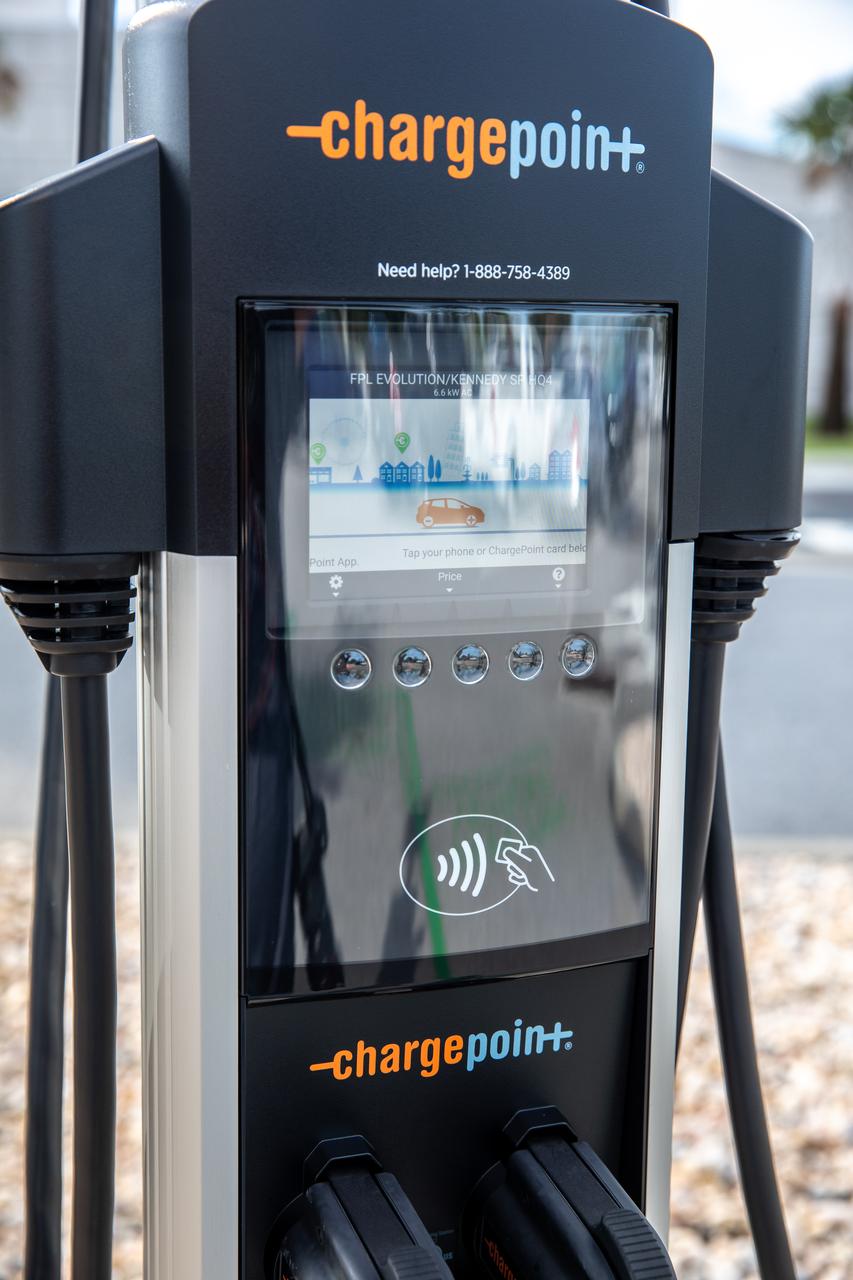
A newly installed electric vehicle (EV) charging station is in view near the Central Campus Headquarters Building at NASA’s Kennedy Space Center in Florida on Sept. 14, 2022. Part of a partnership between Kennedy and Florida Power & Light (FPL) to bring 23 EV charging stations to the spaceport, the ChargePoint CT4000, Level 2 chargers are capable of charging electric vehicles at a rate of 15-30 miles of range per hour. This partnership was set up under FPL’s EV program and provides a charging infrastructure that includes a simple way for businesses and employees to pay for usage.
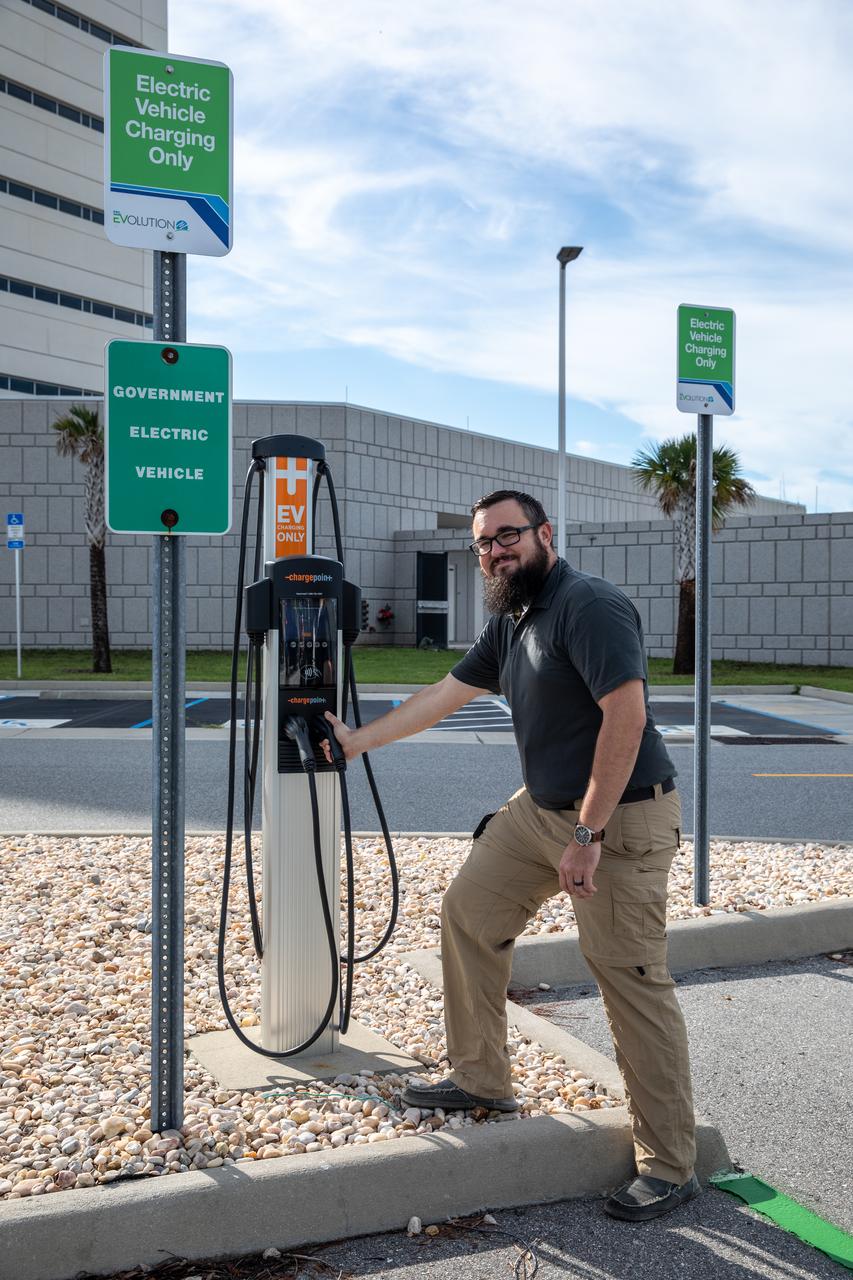
Spencer Davis, a NASA Traffic Management specialist in the Spaceport Integration Directorate at NASA’s Kennedy Space Center in Florida, stands near a newly installed electric vehicle (EV) charging station near the Central Campus Headquarters Building at Kennedy on Sept. 14, 2022. Part of a partnership between Kennedy and Florida Power & Light (FPL) to bring 23 EV charging stations to the spaceport, the ChargePoint CT4000, Level 2 chargers are capable of charging electric vehicles at a rate of 15-30 miles of range per hour. This partnership was set up under FPL’s EV program and provides a charging infrastructure that includes a simple way for businesses and employees to pay for usage.
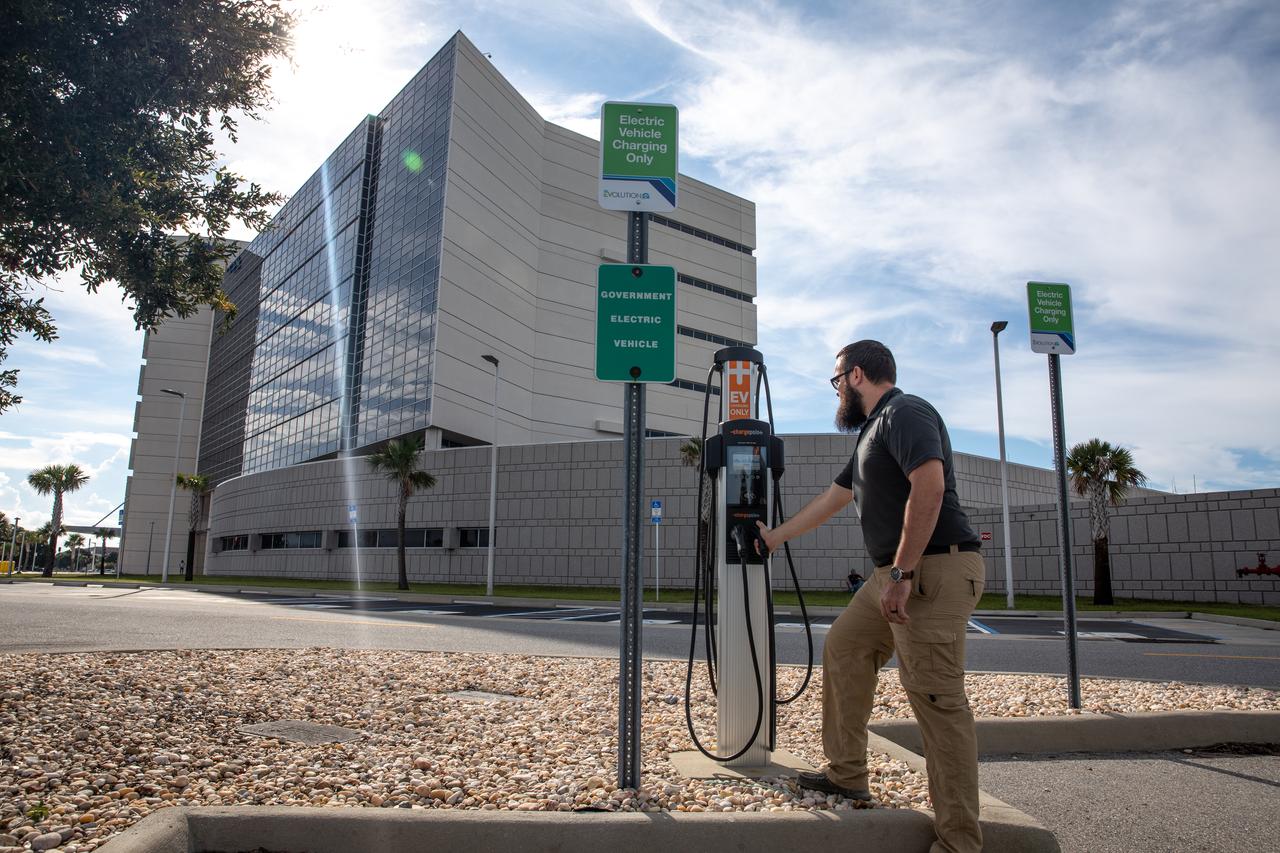
Spencer Davis, a NASA Traffic Management specialist in the Spaceport Integration Directorate at NASA’s Kennedy Space Center in Florida, stands near a newly installed electric vehicle (EV) charging station near the Central Campus Headquarters Building at Kennedy on Sept. 14, 2022. Part of a partnership between Kennedy and Florida Power & Light (FPL) to bring 23 EV charging stations to the spaceport, the ChargePoint CT4000, Level 2 chargers are capable of charging electric vehicles at a rate of 15-30 miles of range per hour. This partnership was set up under FPL’s EV program and provides a charging infrastructure that includes a simple way for businesses and employees to pay for usage.
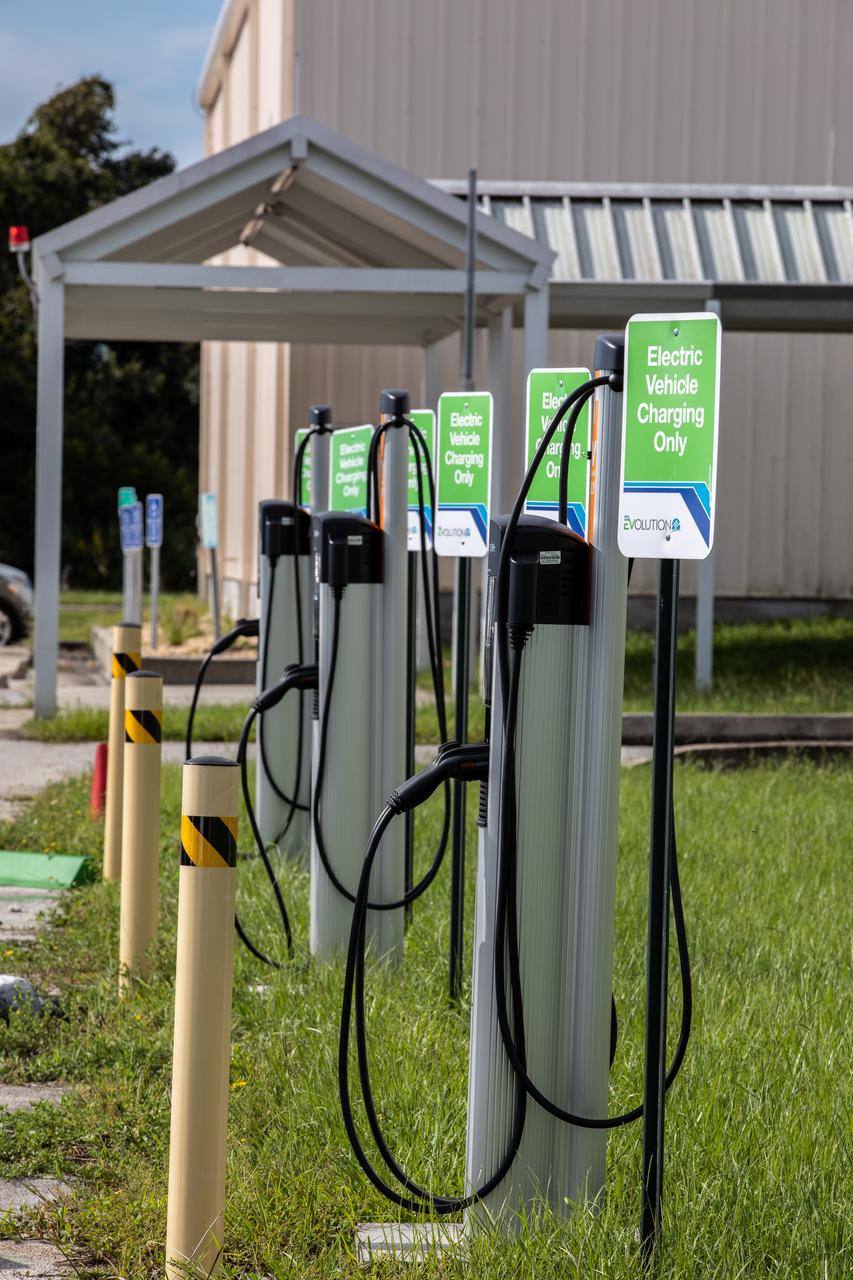
Several newly installed electric vehicle (EV) charging stations are in view near the Neil Armstrong Operations and Checkout Building at NASA’s Kennedy Space Center in Florida on Sept. 14, 2022. Part of a partnership between Kennedy and Florida Power & Light (FPL) to bring 23 EV charging stations to the spaceport, the ChargePoint CT4000, Level 2 chargers are capable of charging electric vehicles at a rate of 15-30 miles of range per hour. This partnership was set up under FPL’s EV program and provides a charging infrastructure that includes a simple way for businesses and employees to pay for usage.
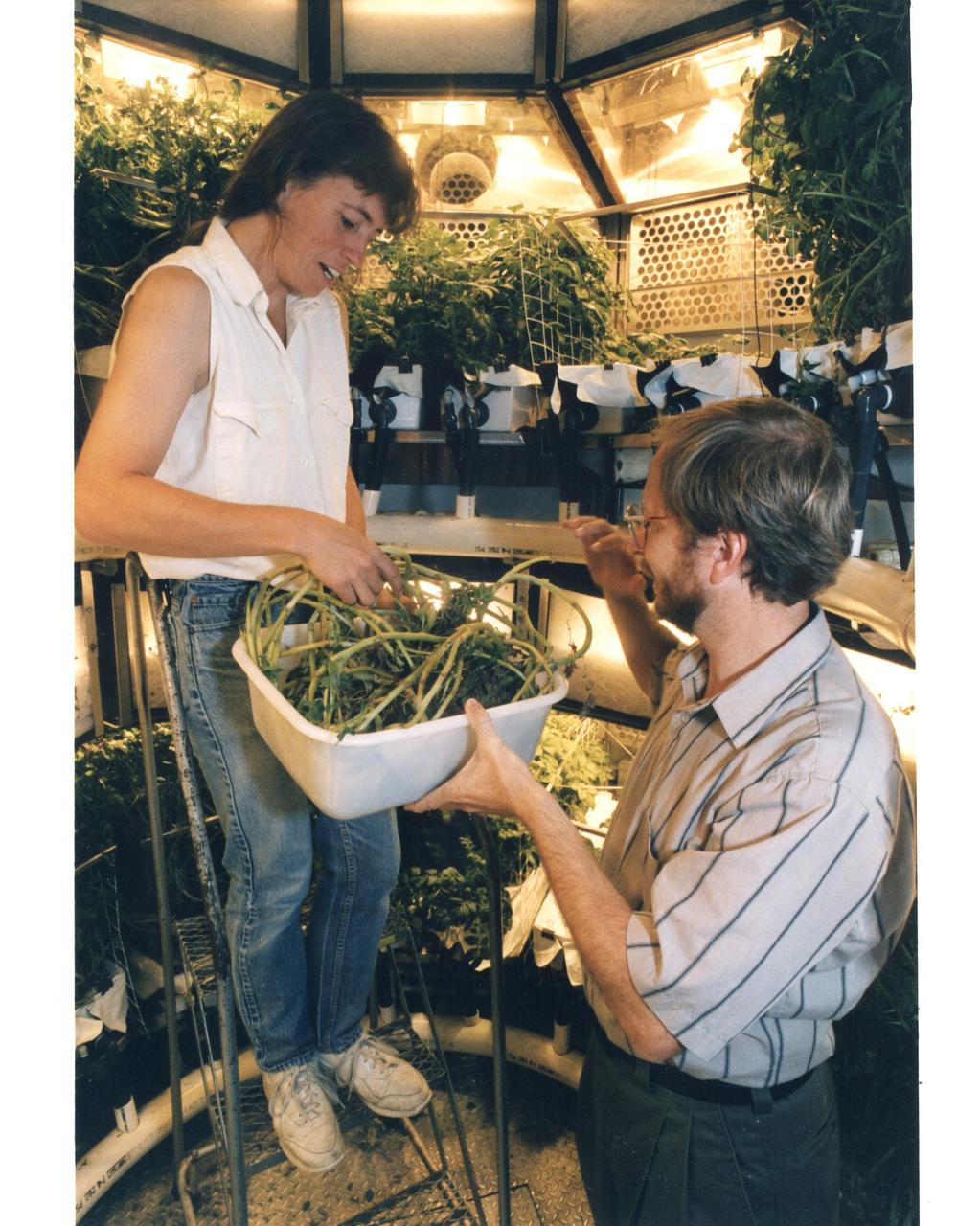
Original photo and caption dated August 14, 1995: <i>"KSC plant physiologist Dr. Gary Stutte (right) and Cheryl Mackowiak harvest potatoes grown in the Biomass Production Chamber of the Controlled Enviornment Life Support System (CELSS in Hangar L at Cape Canaveral Air Station. During a 418-day "human rated" experiment, potato crops grown in the chamber provided the equivalent of a continuous supply of the oxygen for one astronaut, along with 55 percent of that long-duration space flight crew member's caloric food requirements and enough purified water for four astronauts while absorbing their expelled carbon dioxide. The experiment provided data that will help demonstarte the feasibility of the CELSS operating as a bioregenerative life support system for lunar and deep-space missions that can operate independently without the need to carry consumables such as air, water and food, while not requiring the expendable air and water system filters necessary on today's human-piloted spacecraft."</i