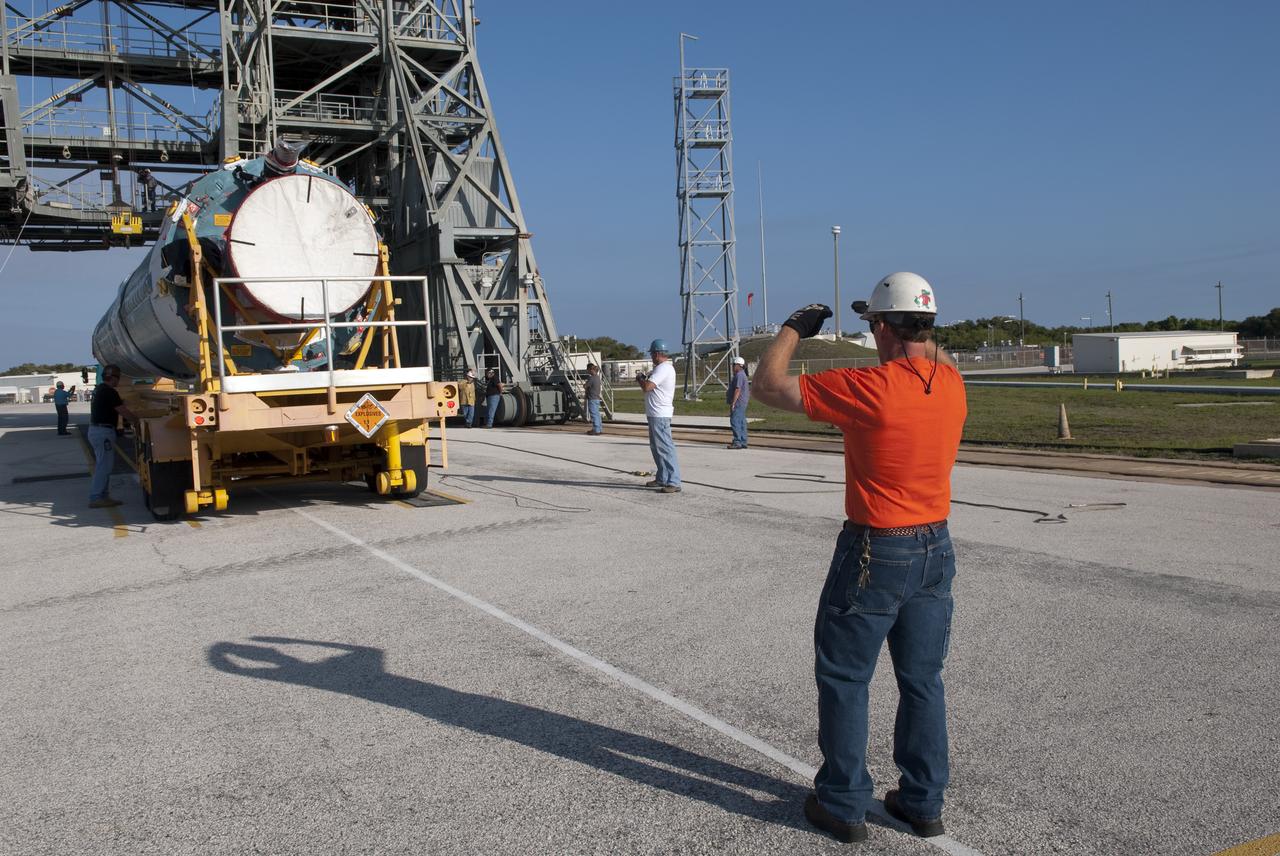
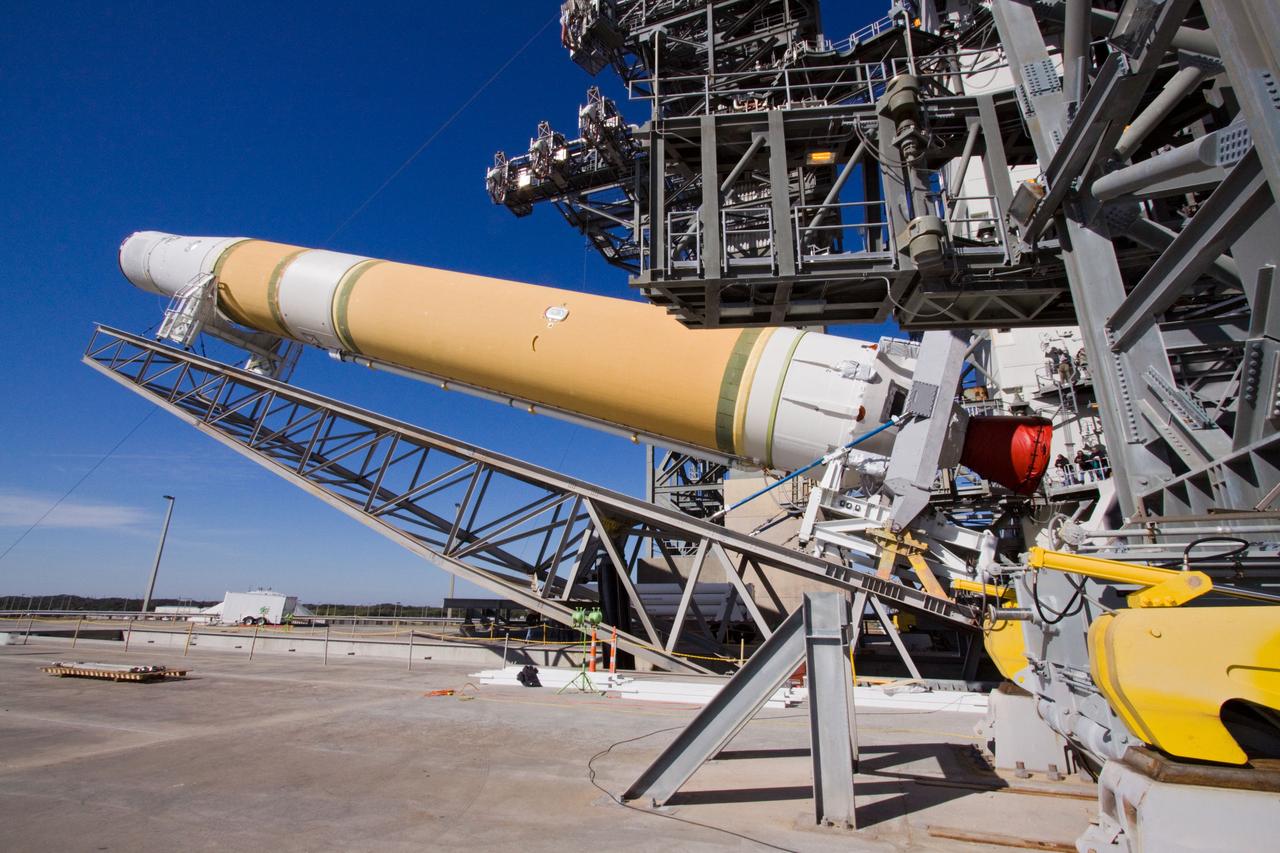
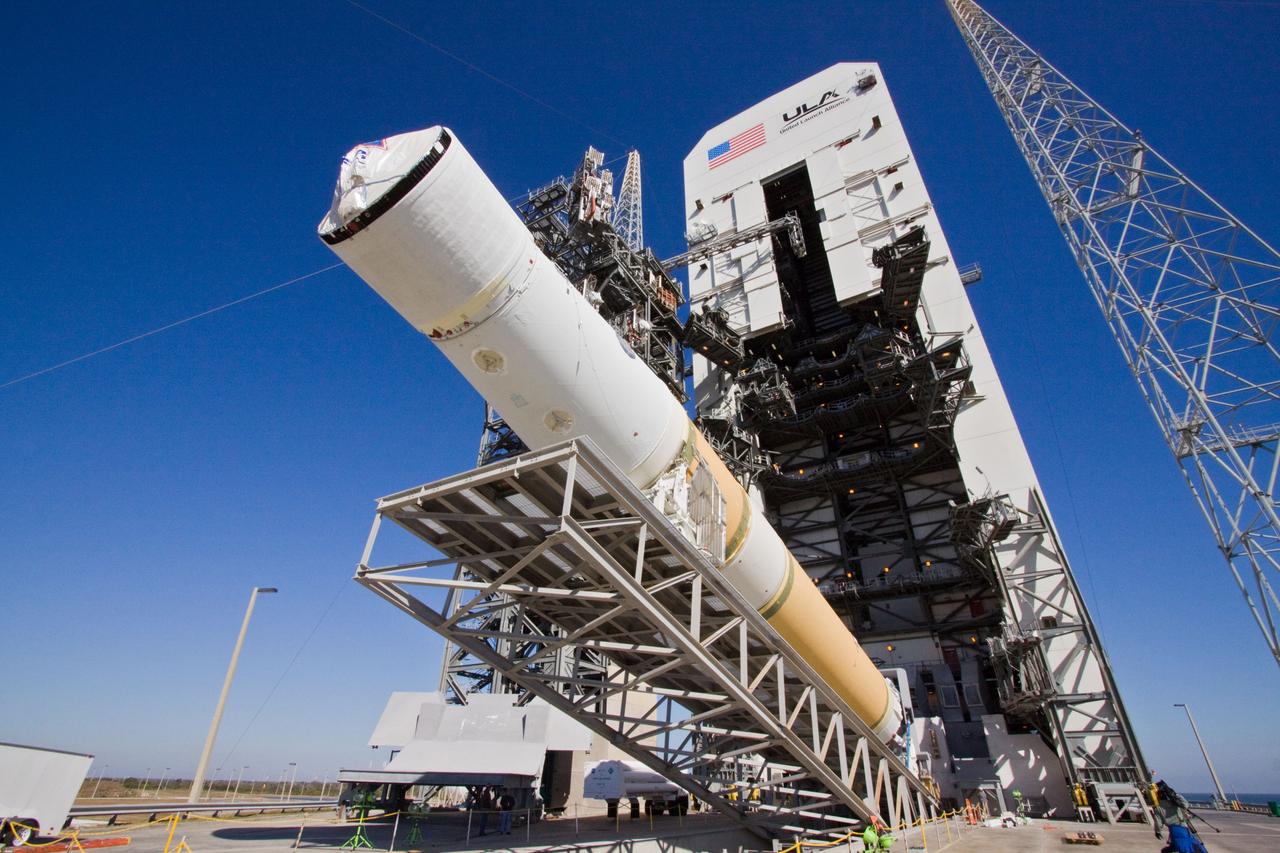
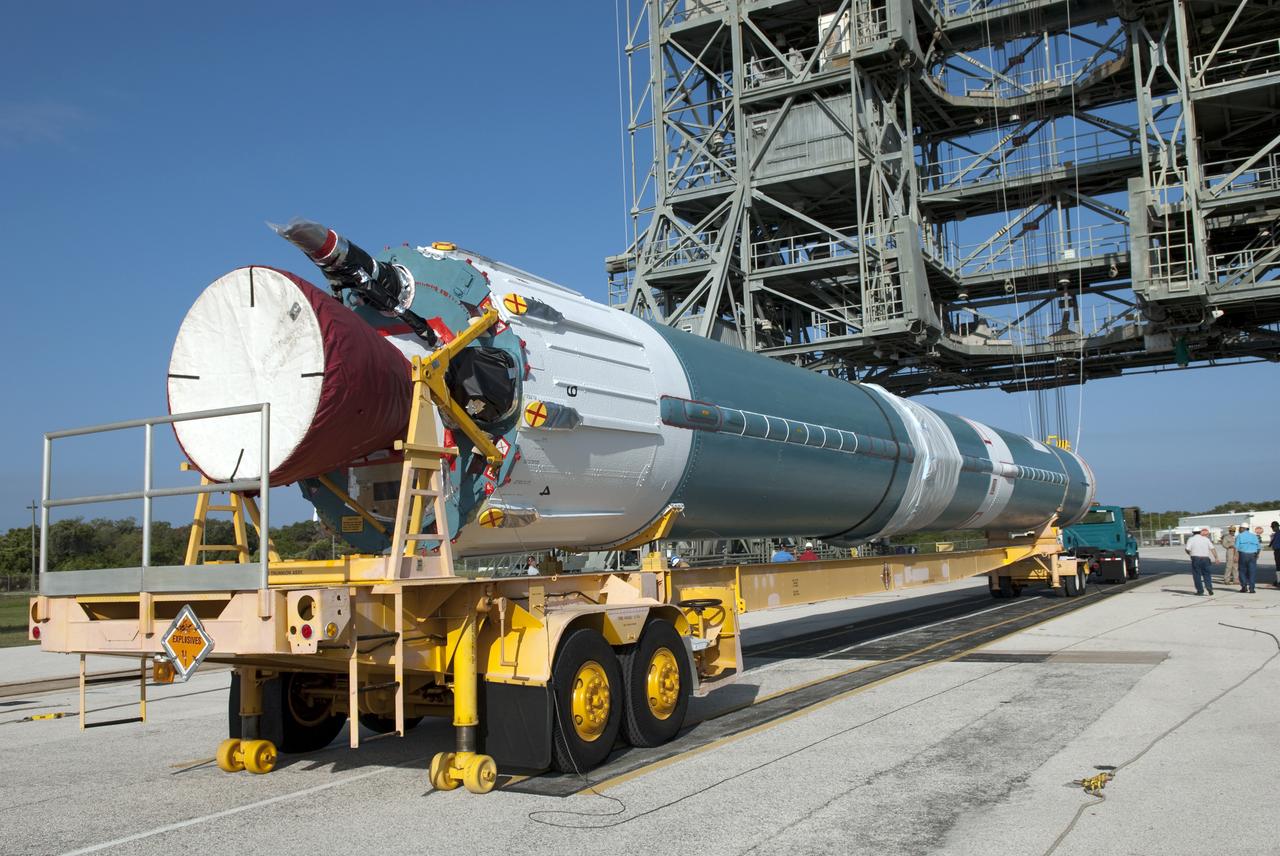
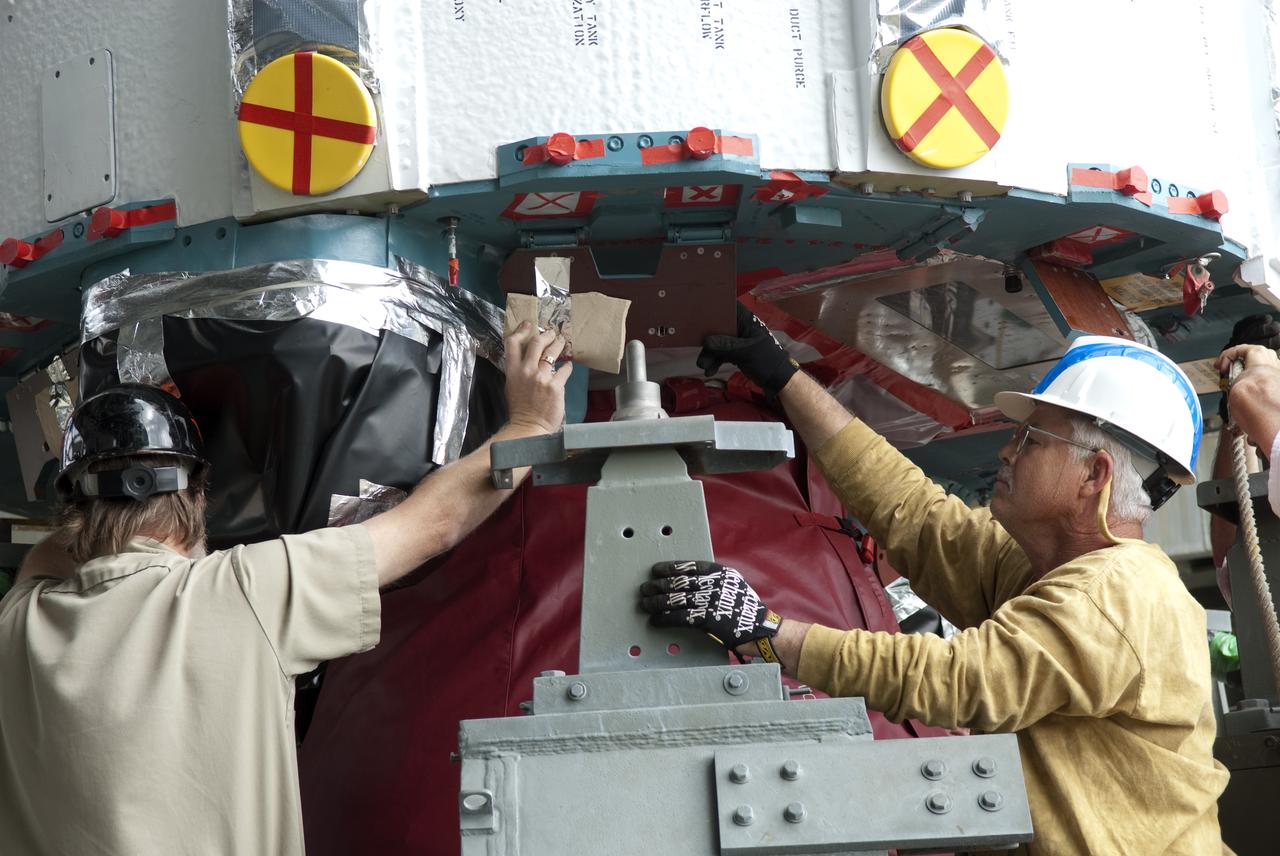
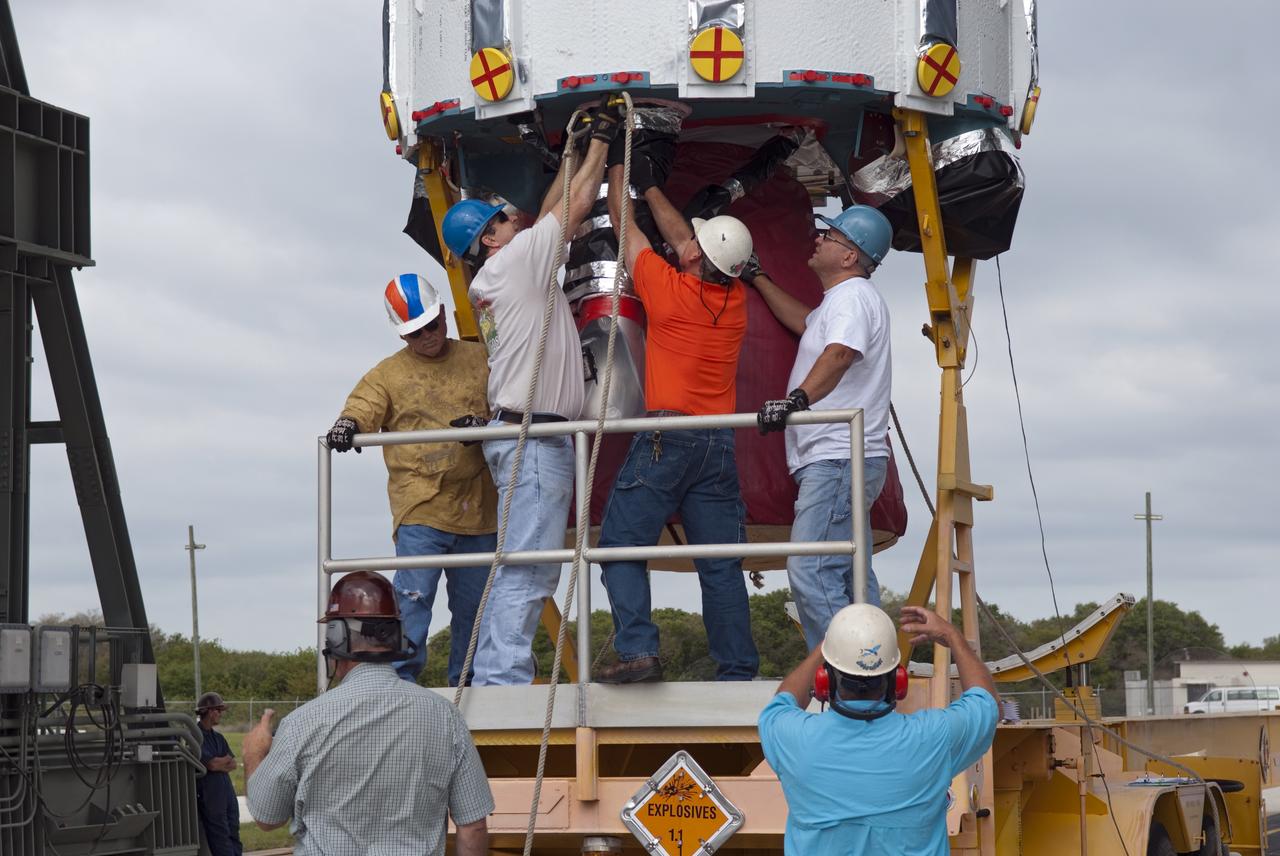
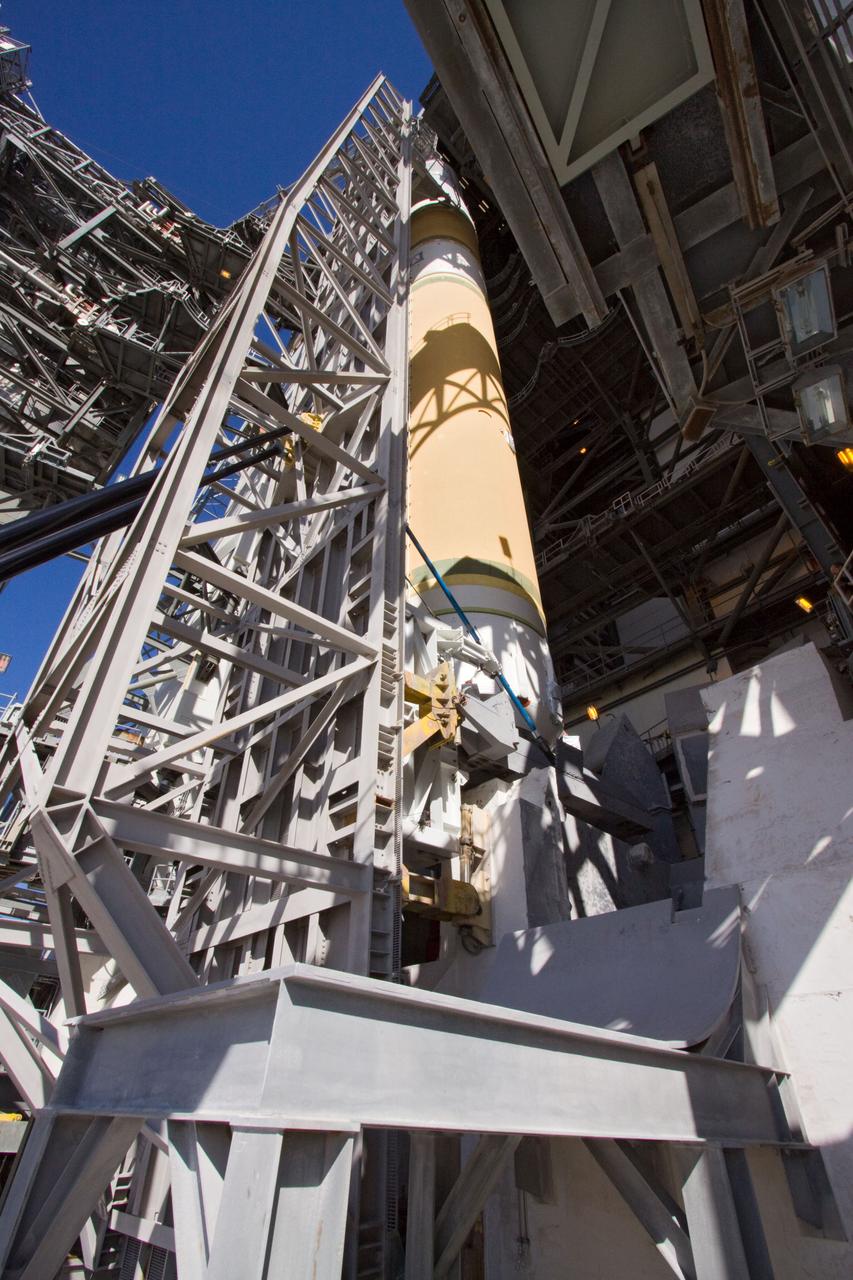
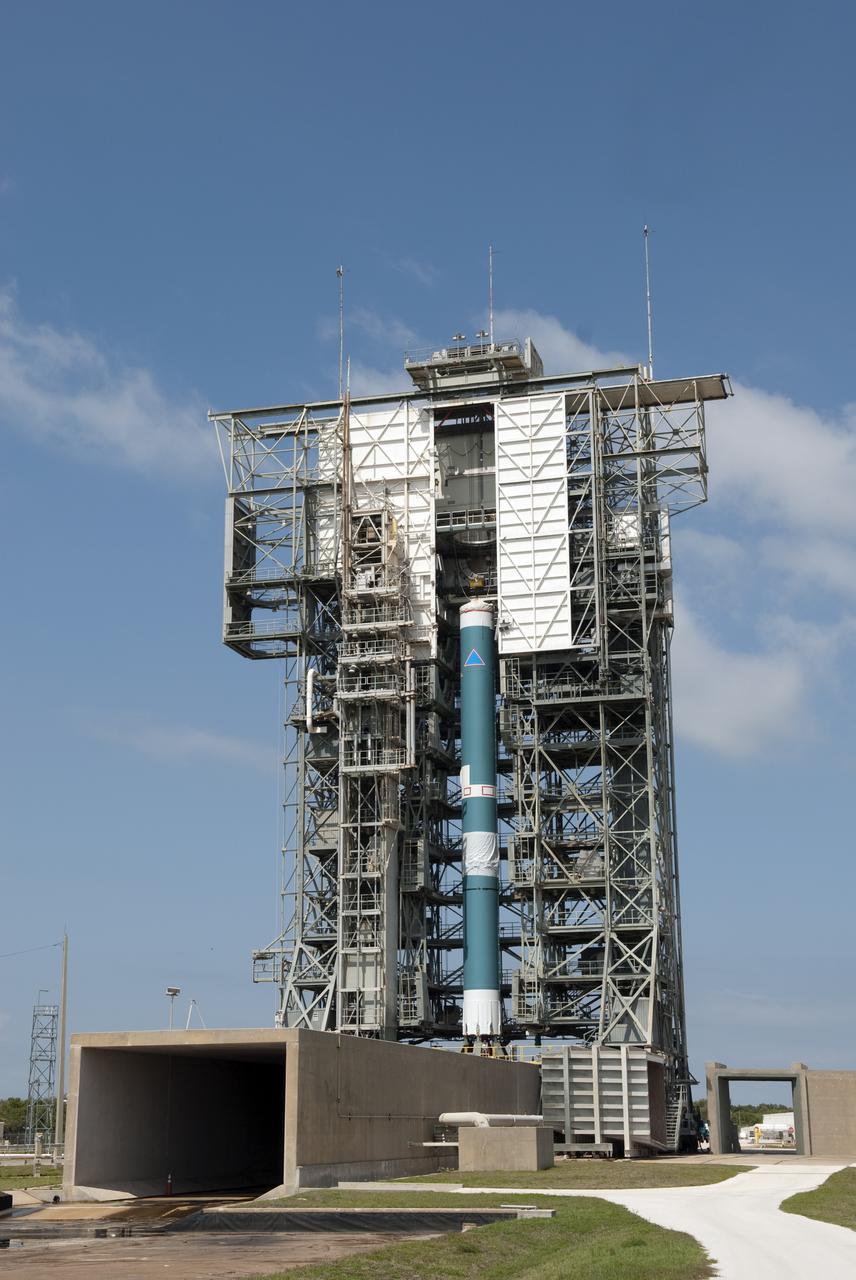
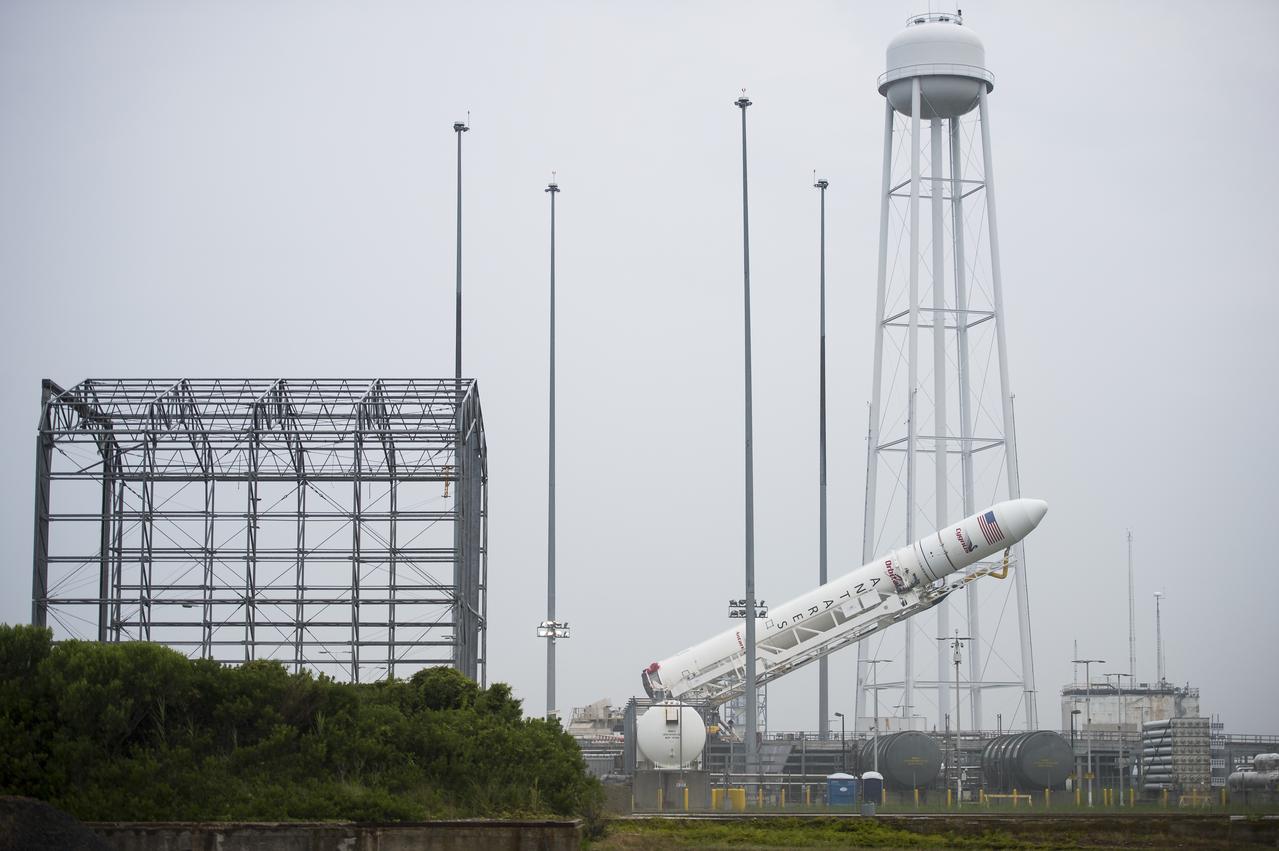
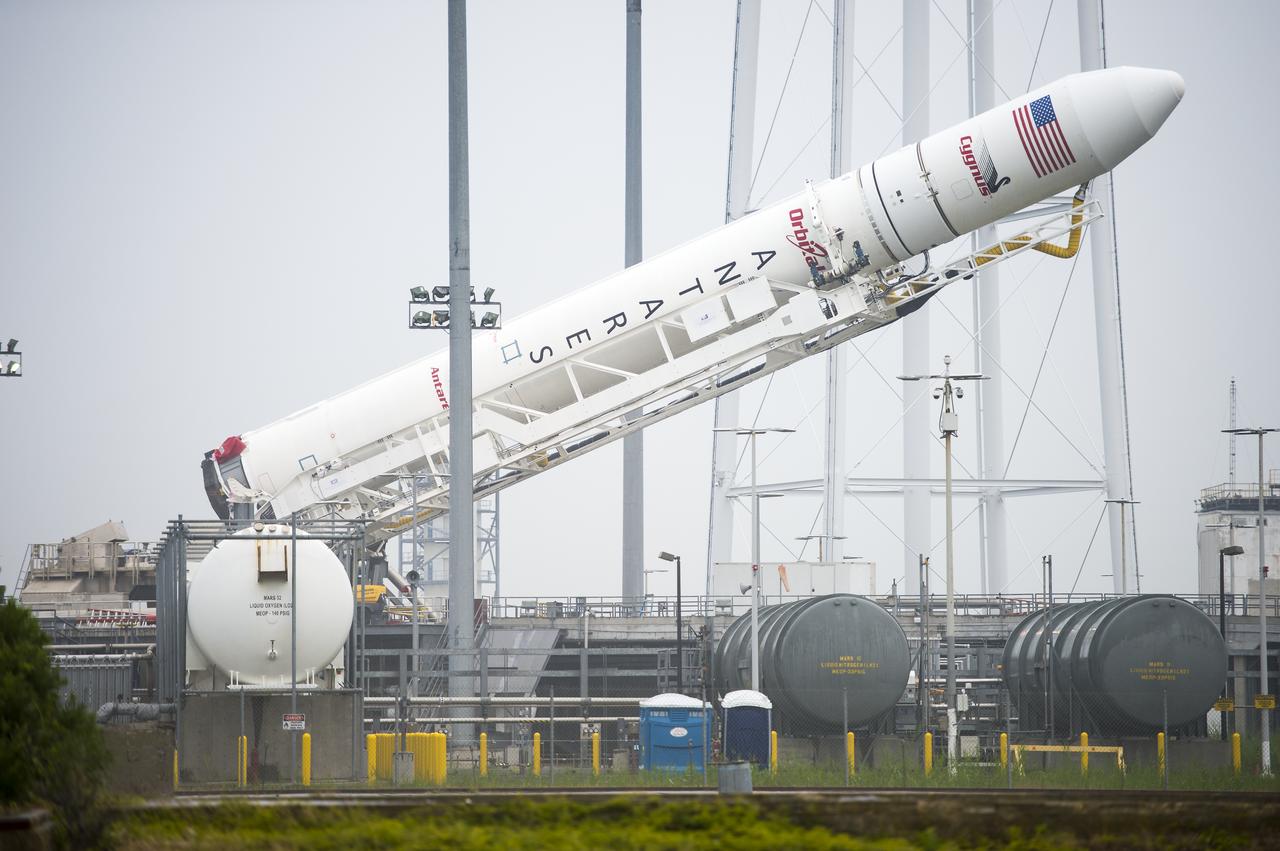
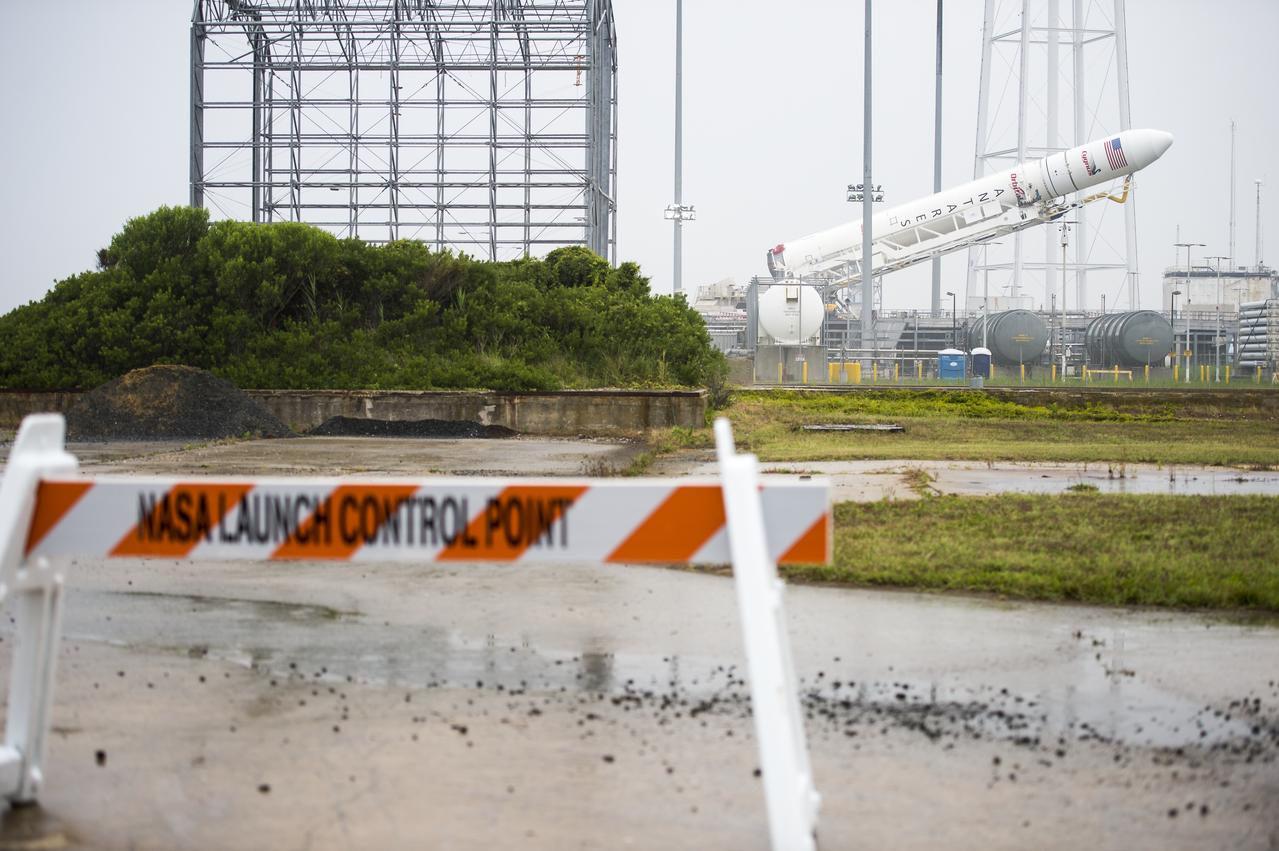
The Orbital Sciences Corporation Antares rocket, with the Cygnus spacecraft onboard, is raised at launch Pad-0A, Thursday, July 10, 2014, at NASA's Wallops Flight Facility in Virginia. The Antares will launch with the Cygnus spacecraft filled with over 3,000 pounds of supplies for the International Space Station, including science experiments, experiment hardware, spare parts, and crew provisions. The Orbital-2 mission is Orbital Sciences' second contracted cargo delivery flight to the space station for NASA. Photo Credit: (NASA/Aubrey Gemignani)
Antares Rocket Erection
The Orbital Sciences Corporation Antares rocket, with the Cygnus spacecraft onboard, is raised at launch Pad-0A, Thursday, July 10, 2014, at NASA's Wallops Flight Facility in Virginia. The Antares will launch with the Cygnus spacecraft filled with over 3,000 pounds of supplies for the International Space Station, including science experiments, experiment hardware, spare parts, and crew provisions. The Orbital-2 mission is Orbital Sciences' second contracted cargo delivery flight to the space station for NASA. Photo Credit: (NASA/Aubrey Gemignani)
Antares Rocket Erection
The Orbital Sciences Corporation Antares rocket, with the Cygnus spacecraft onboard, is raised at launch Pad-0A, Thursday, July 10, 2014, at NASA's Wallops Flight Facility in Virginia. The Antares will launch with the Cygnus spacecraft filled with over 3,000 pounds of supplies for the International Space Station, including science experiments, experiment hardware, spare parts, and crew provisions. The Orbital-2 mission is Orbital Sciences' second contracted cargo delivery flight to the space station for NASA. Photo Credit: (NASA/Aubrey Gemignani)
Antares Rocket Erection
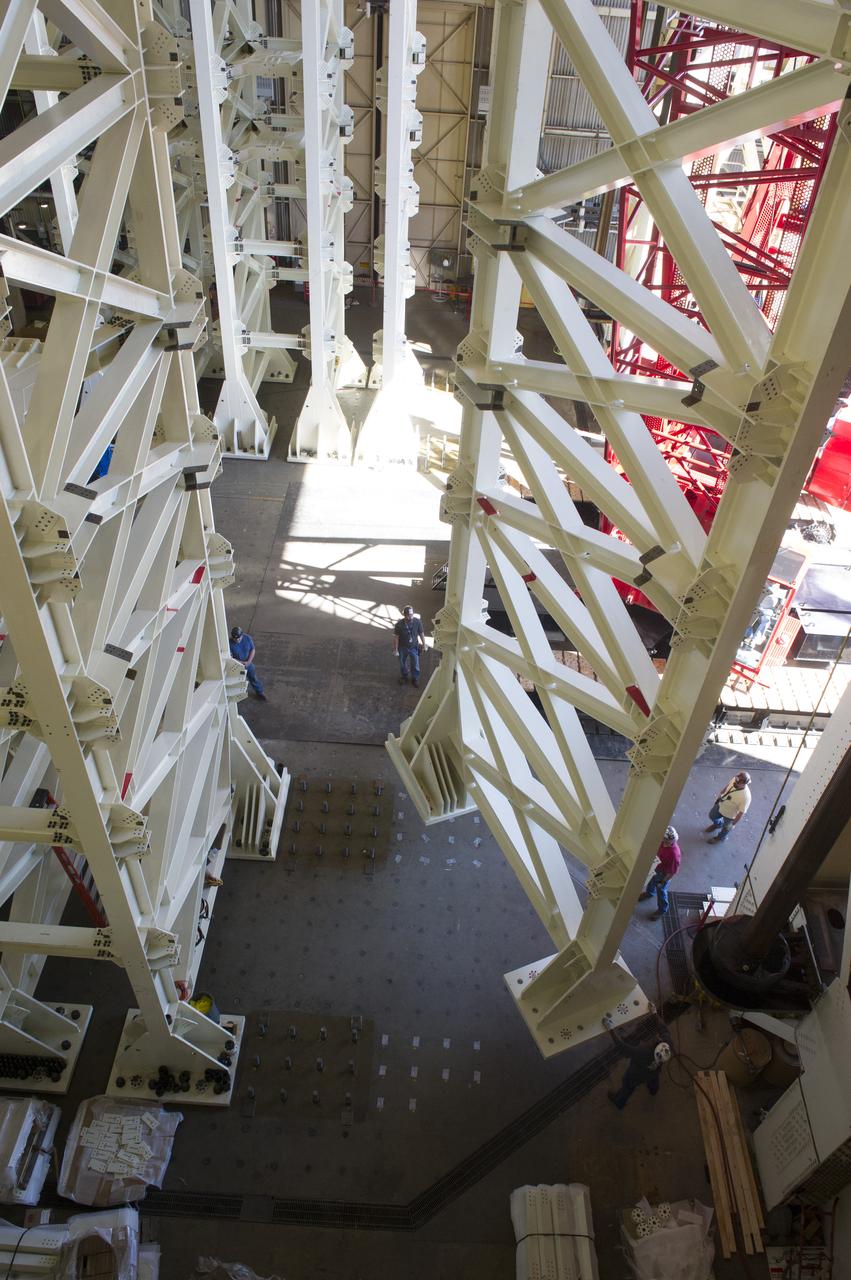
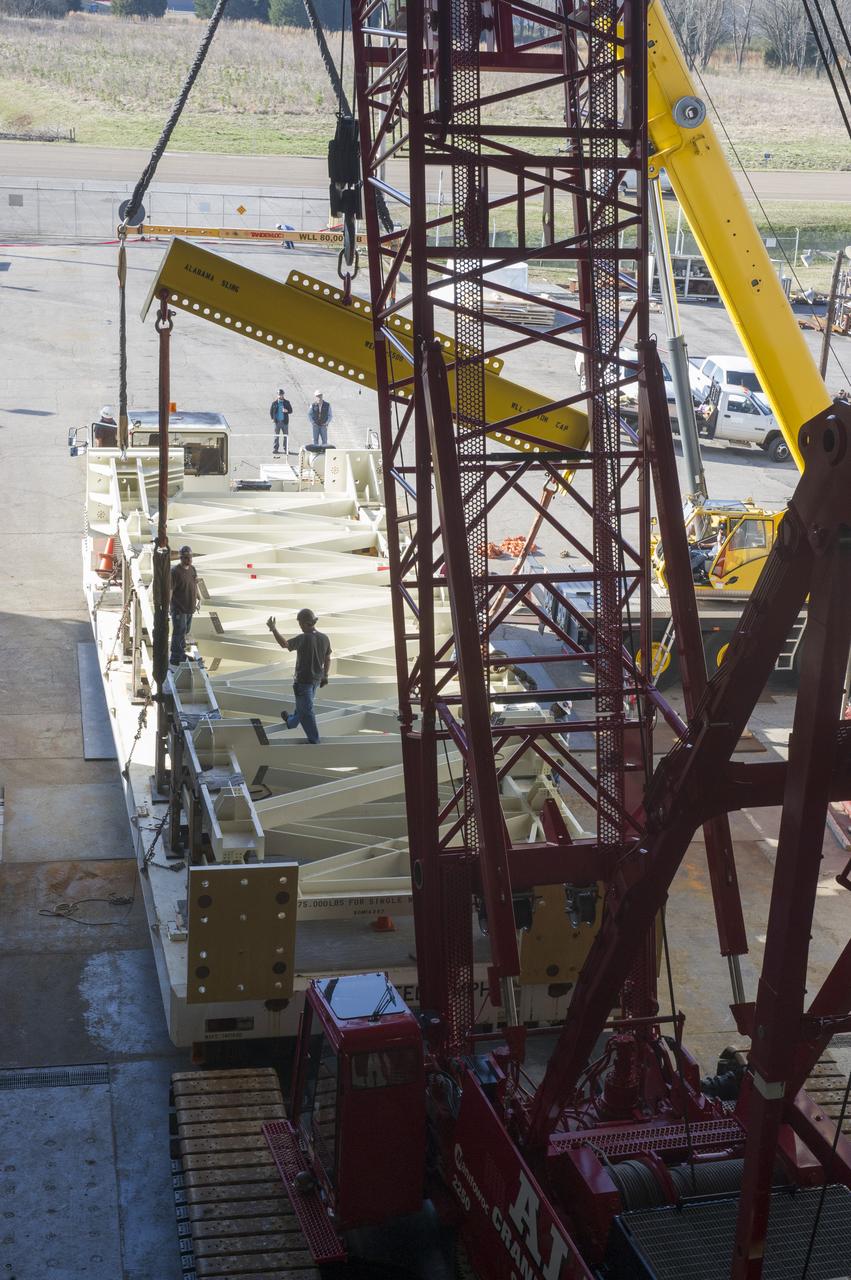
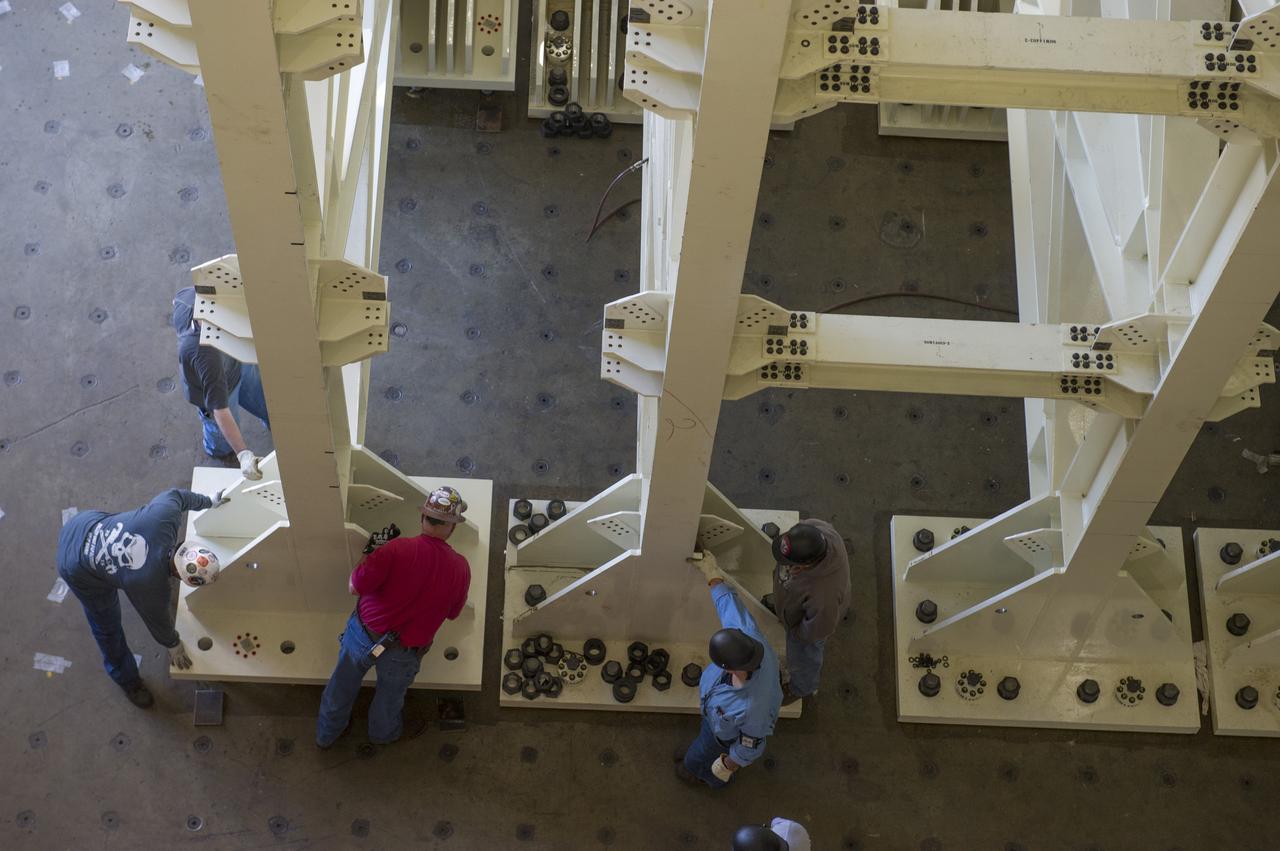
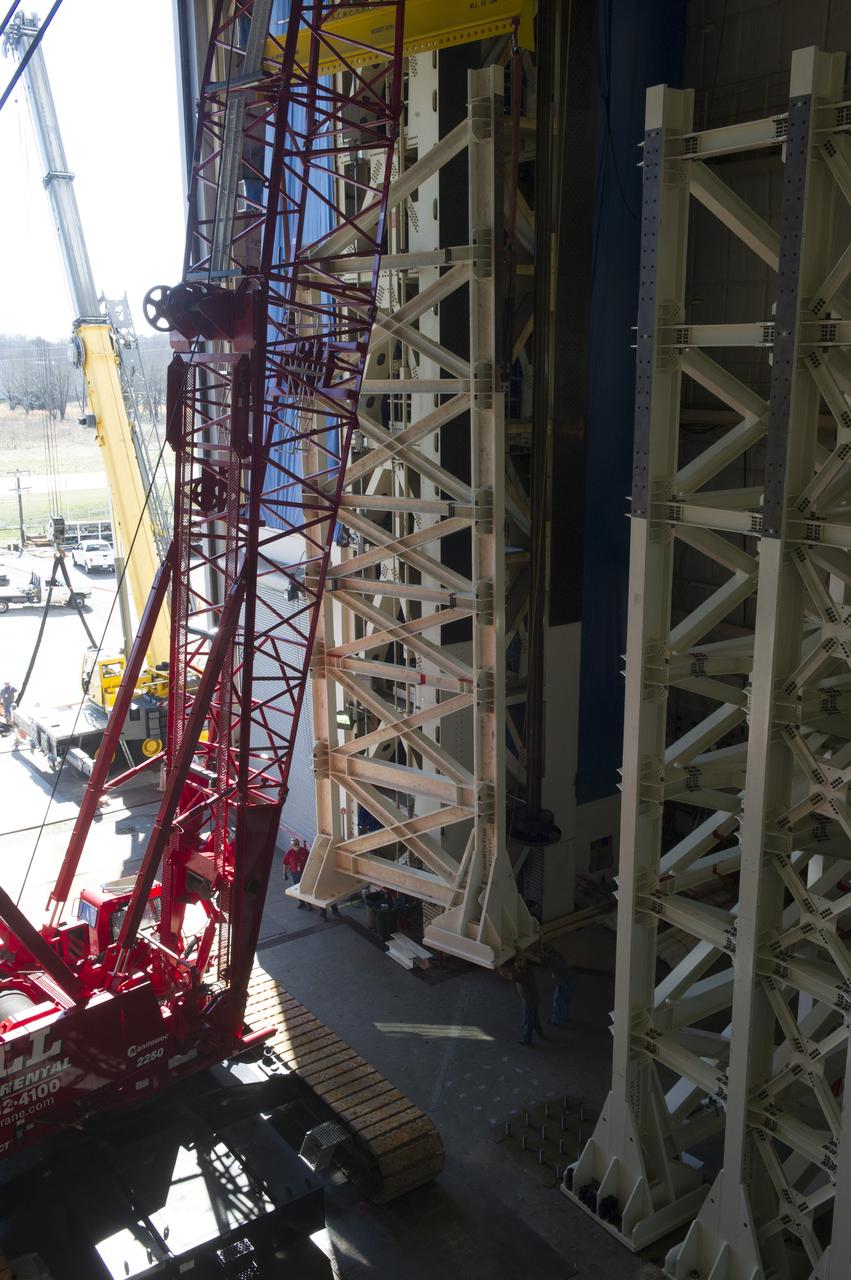
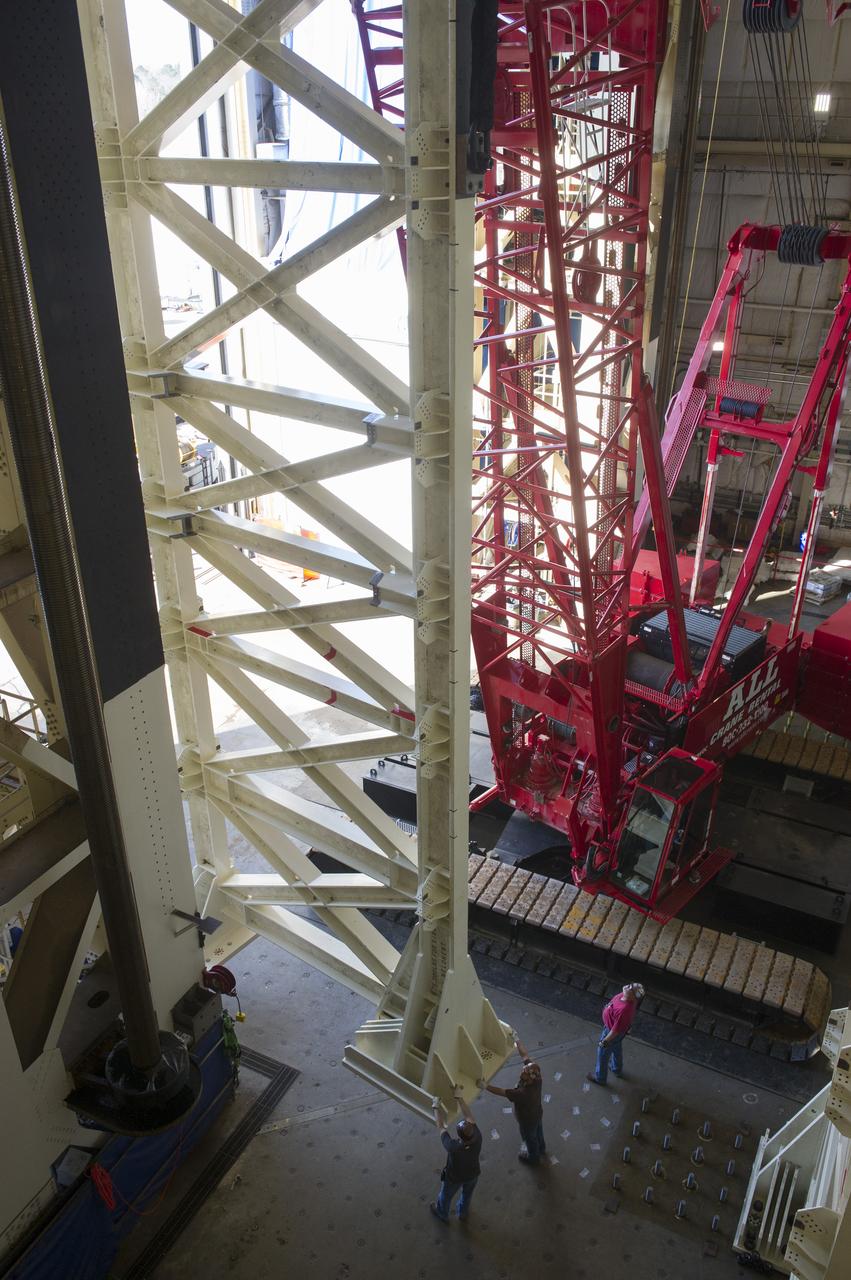
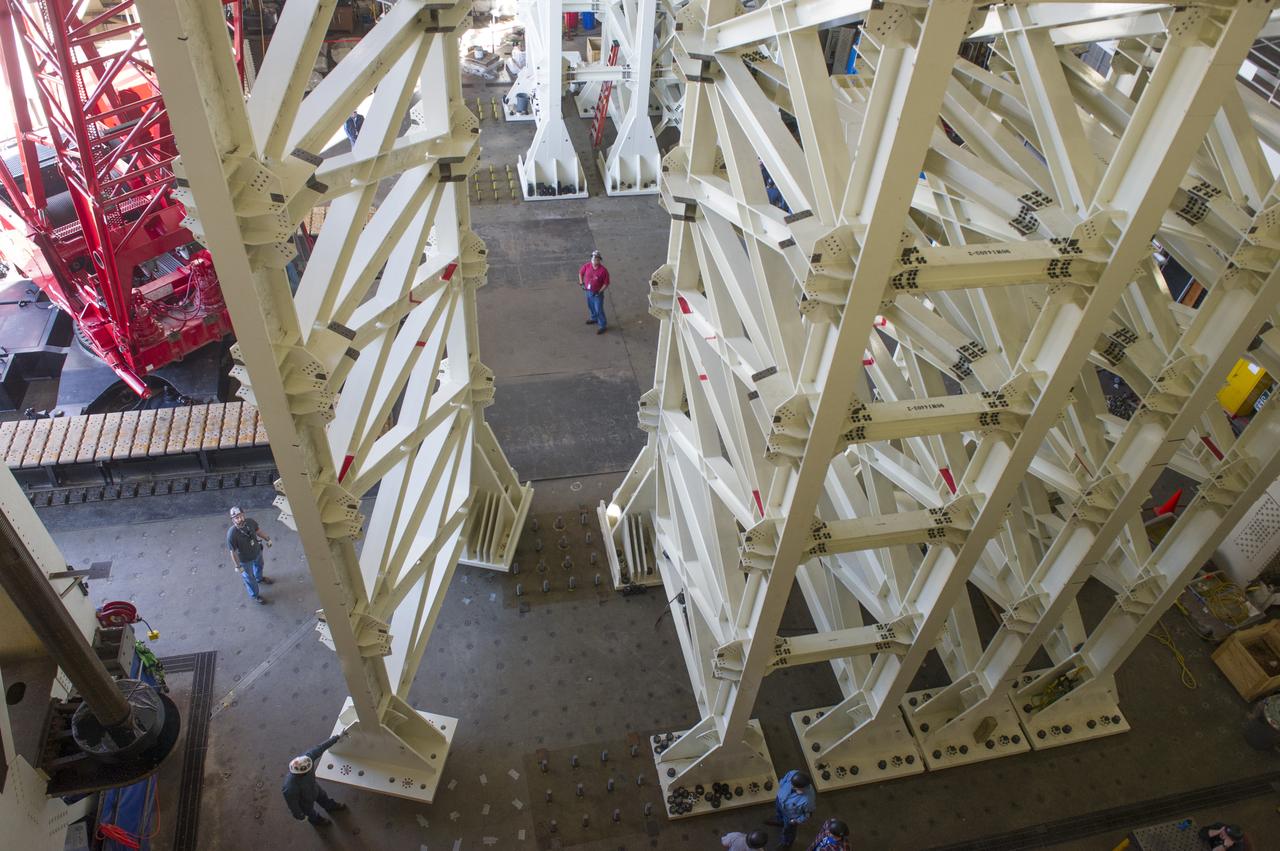
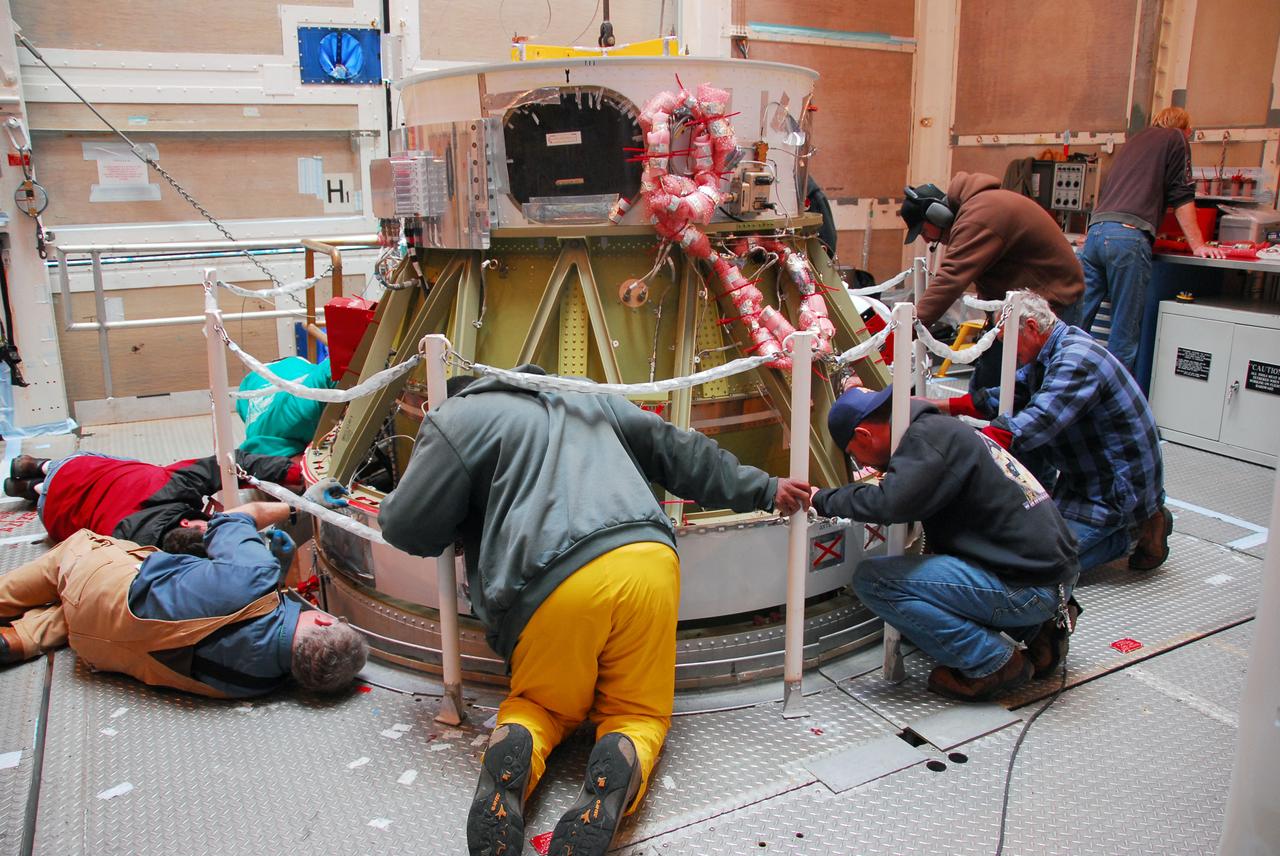
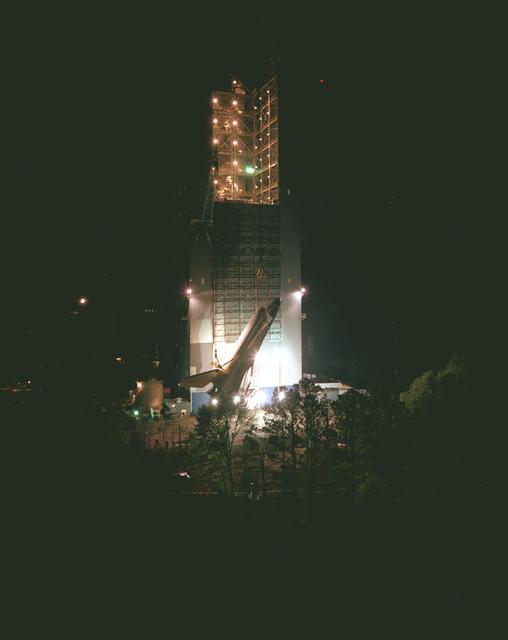
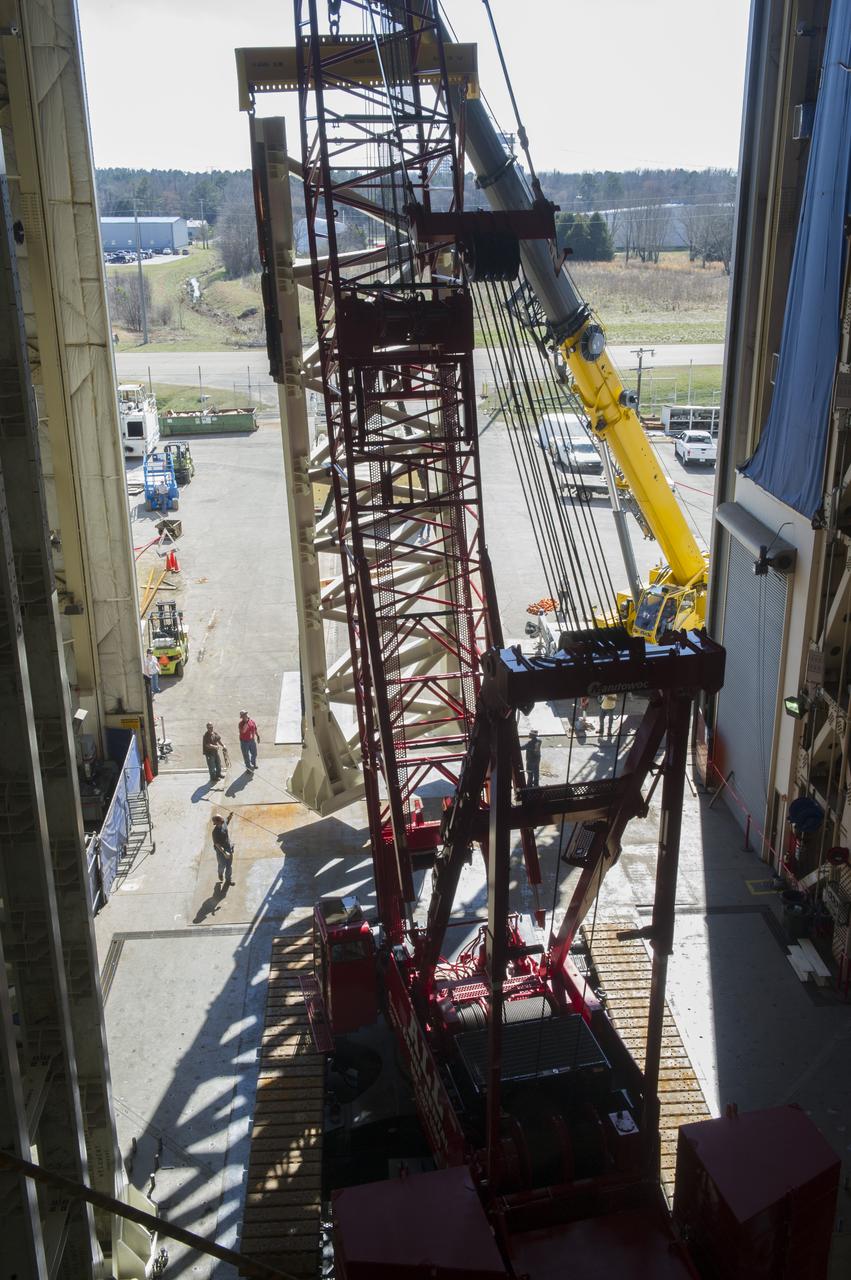
ERECTION OF TWO SLS INTERTANK, (IT), SPECIAL TEST EQUIPMENT, (STE), TOWER PANELS IN BLDG 4619
WEST TOWER PANEL ERECTION
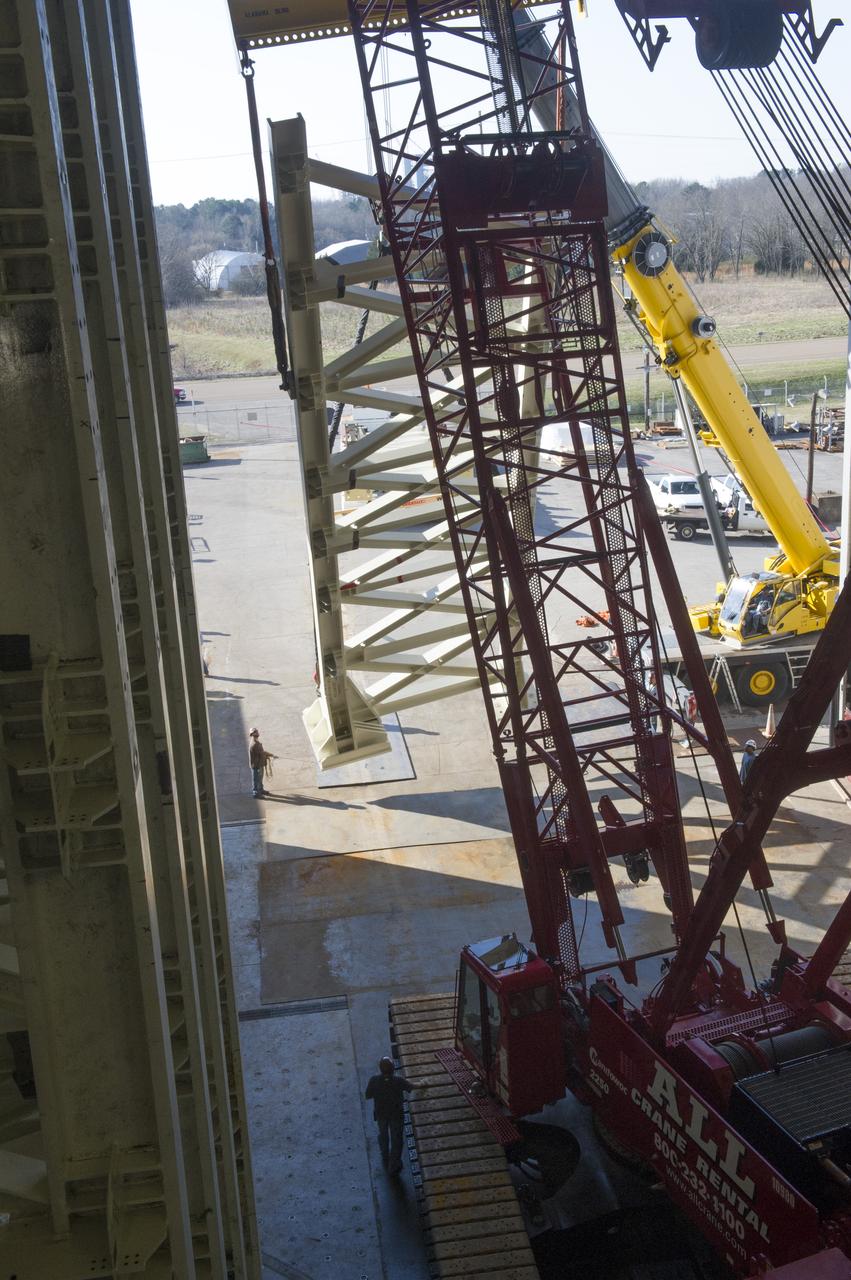
ERECTION OF TWO SLS INTERTANK, (IT), SPECIAL TEST EQUIPMENT, (STE), TOWER PANELS IN BLDG 4619
WEST TOWER PANEL ERECTION
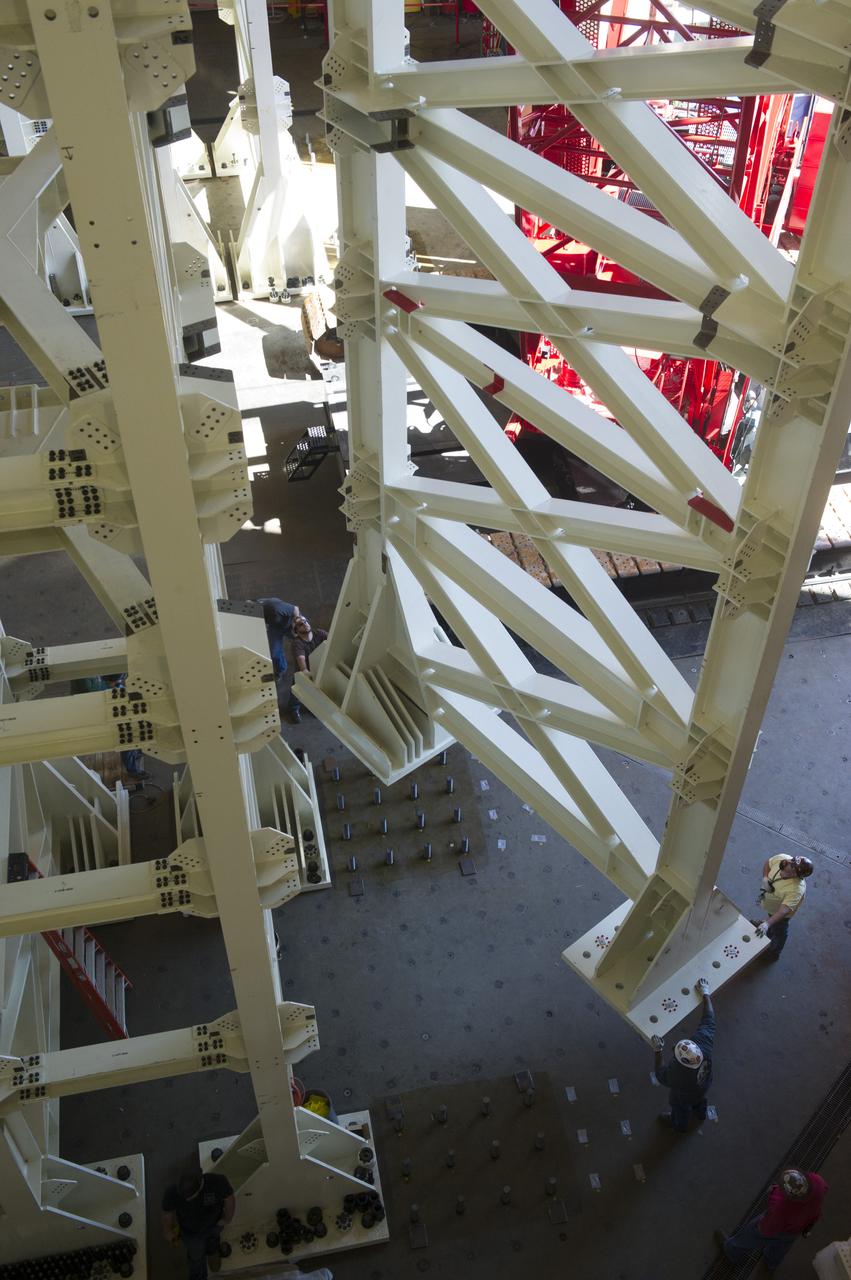
ERECTION OF TWO SLS INTERTANK, (IT), SPECIAL TEST EQUIPMENT, (STE), TOWER PANELS IN BLDG 4619
EAST TOWER PANEL ERECTION
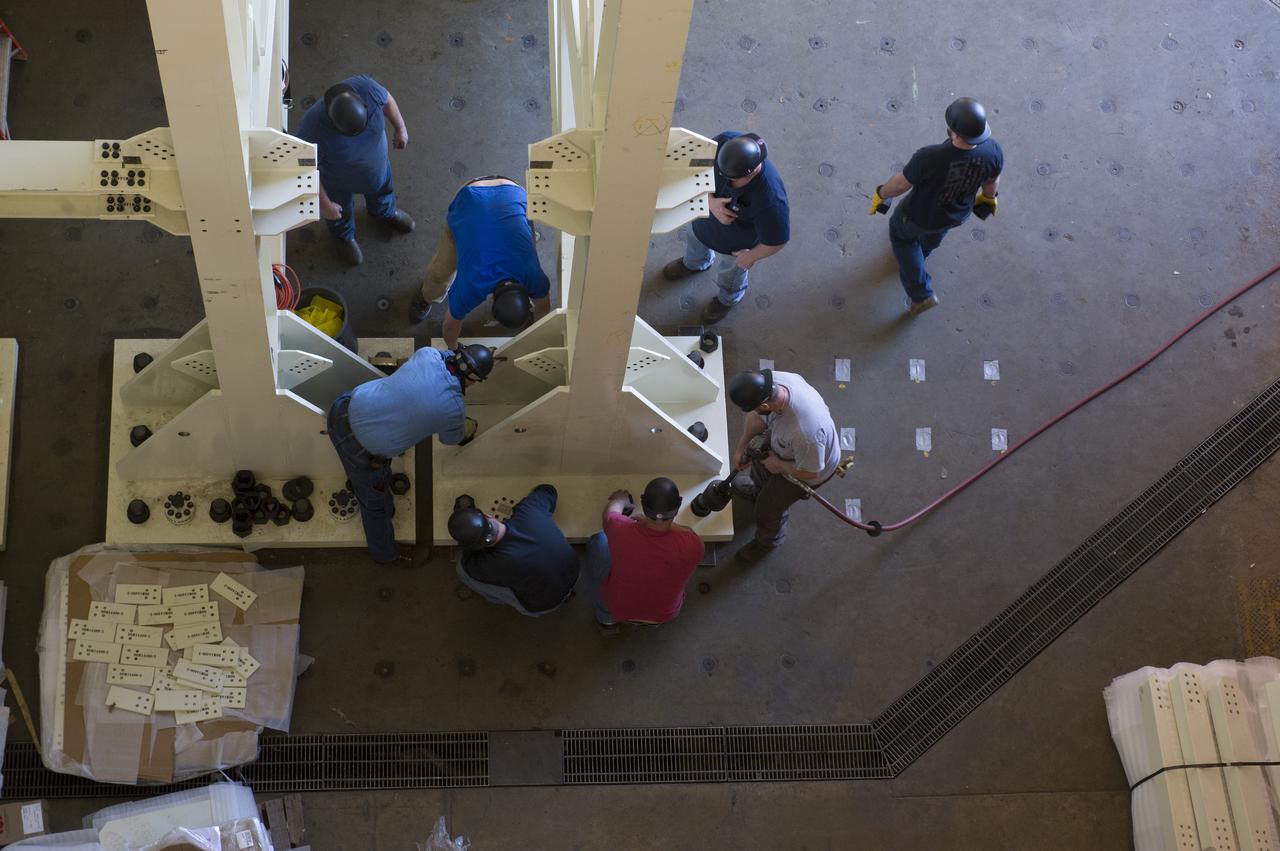
ERECTION OF TWO SLS INTERTANK, (IT), SPECIAL TEST EQUIPMENT, (STE), TOWER PANELS IN BLDG 4619
EAST TOWER PANEL ERECTION
ERECTION OF TWO SLS INTERTANK, (IT), SPECIAL TEST EQUIPMENT, (STE), TOWER PANELS IN BLDG 4619
WEST TOWER PANEL ERECTION
ERECTION OF TWO SLS INTERTANK, (IT), SPECIAL TEST EQUIPMENT, (STE), TOWER PANELS IN BLDG 4619
EAST TOWER PANEL ERECTION
ERECTION OF TWO SLS INTERTANK, (IT), SPECIAL TEST EQUIPMENT, (STE), TOWER PANELS IN BLDG 4619
EAST TOWER PANEL ERECTION
ERECTION OF TWO SLS INTERTANK, (IT), SPECIAL TEST EQUIPMENT, (STE), TOWER PANELS IN BLDG 4619
WEST TOWER PANEL ERECTION
ERECTION OF TWO SLS INTERTANK, (IT), SPECIAL TEST EQUIPMENT, (STE), TOWER PANELS IN BLDG 4619
WEST TOWER PANEL ERECTION
ERECTION OF TWO SLS INTERTANK, (IT), SPECIAL TEST EQUIPMENT, (STE), TOWER PANELS IN BLDG 4619
EAST TOWER PANEL ERECTION
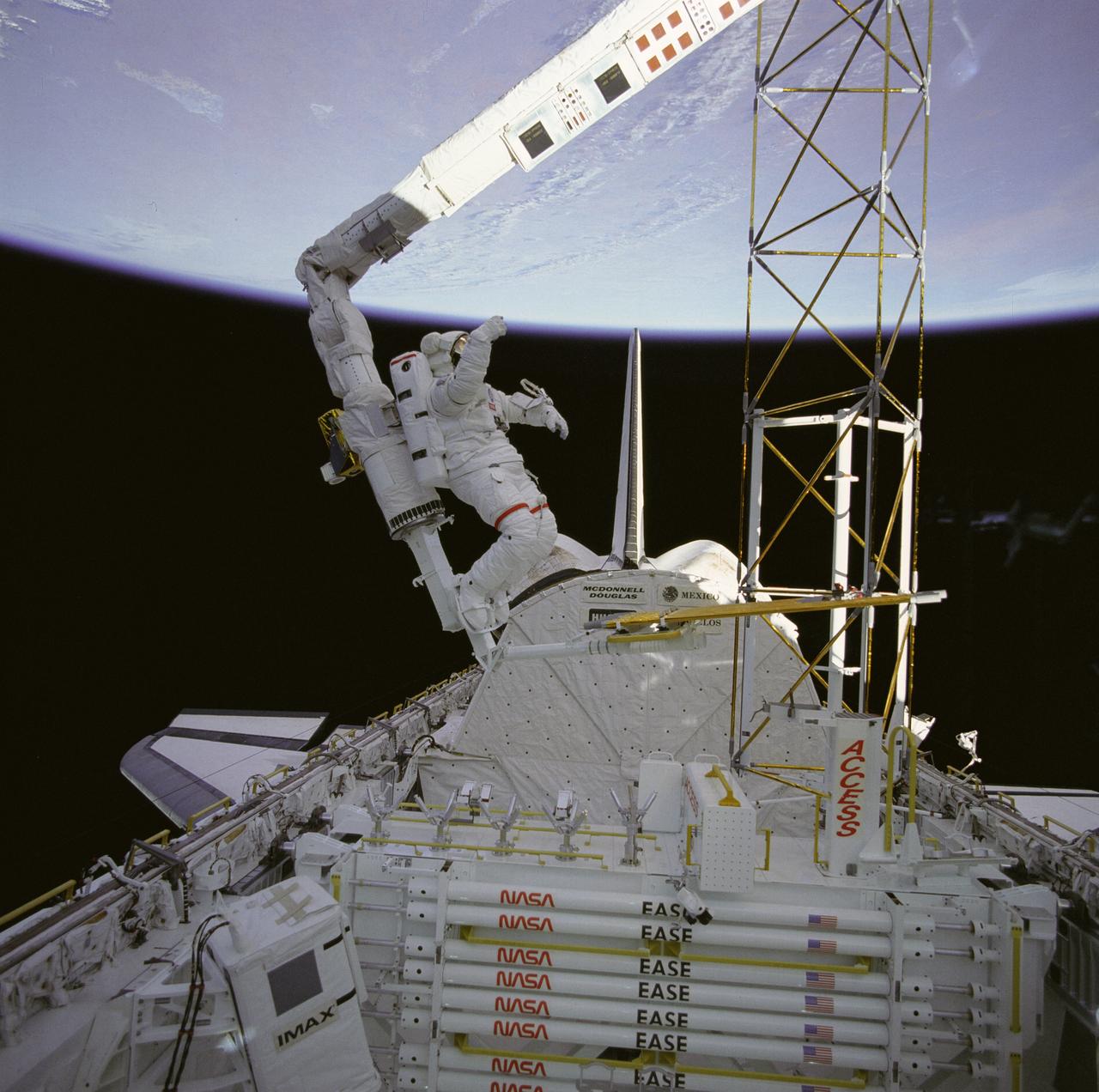
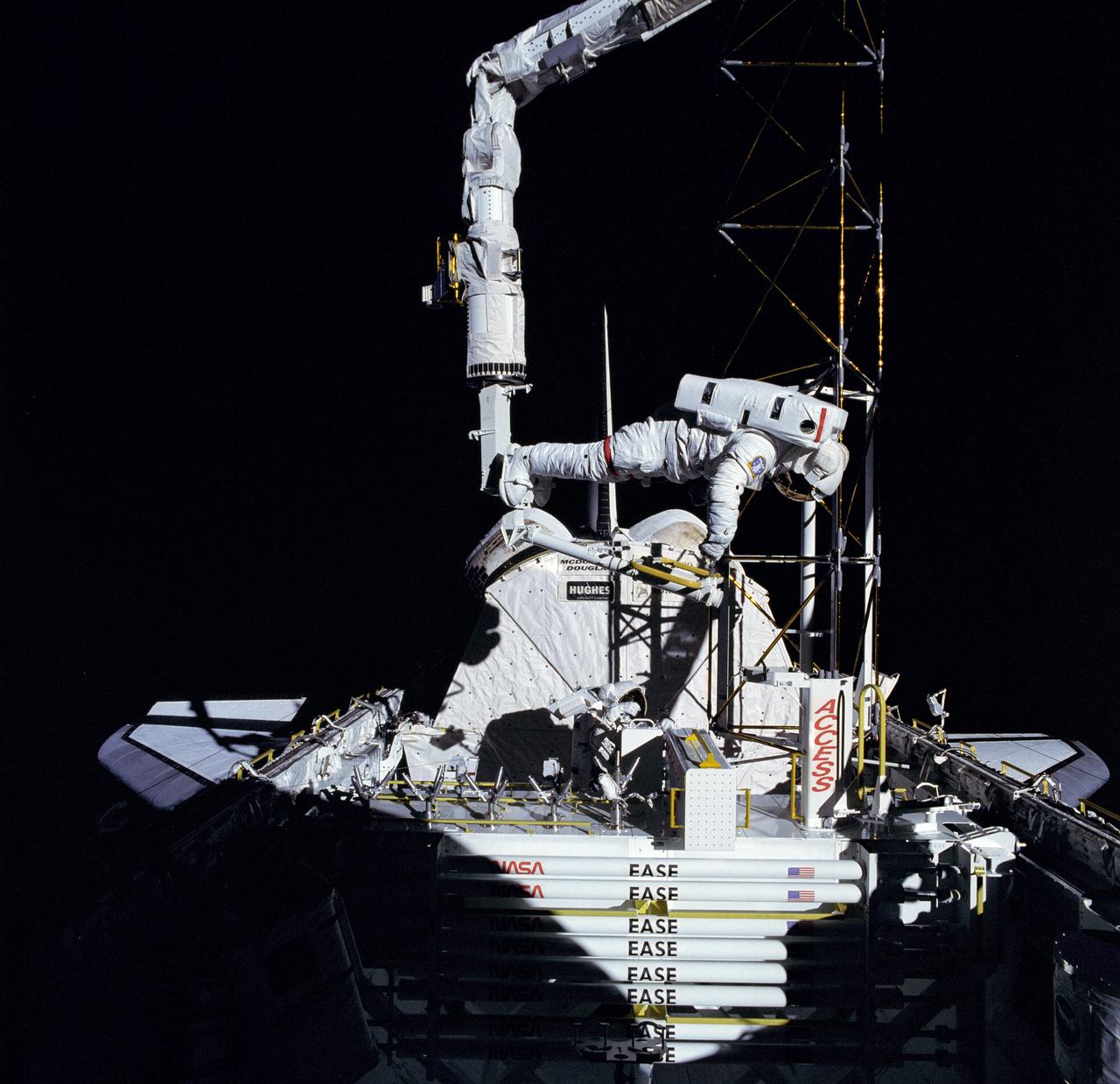
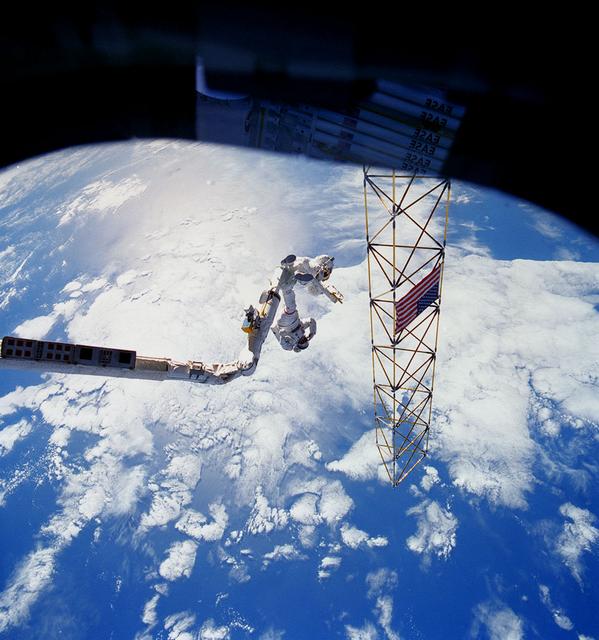
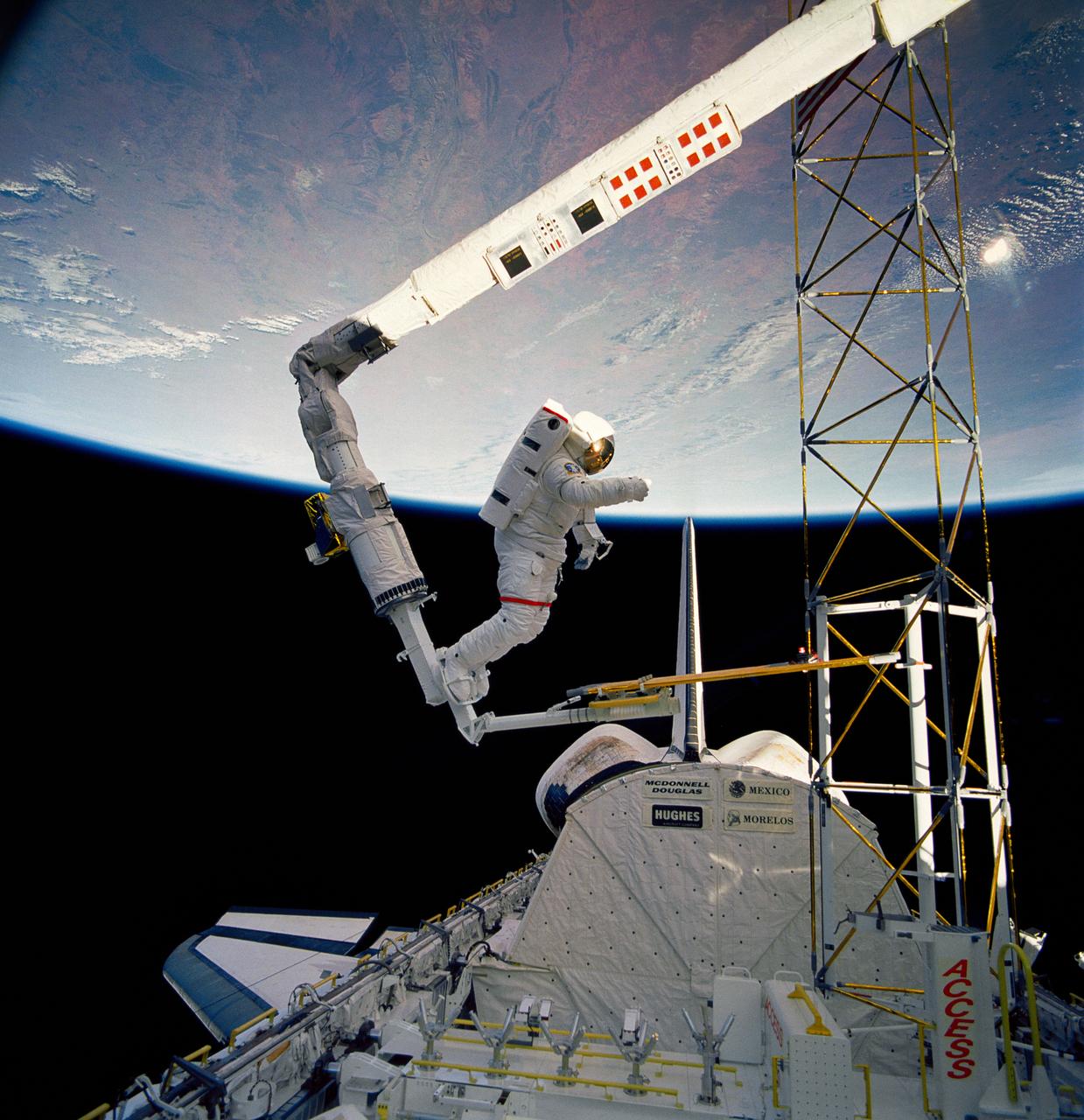
The crew assigned to the STS-61B mission included Bryan D. O’Conner, pilot; Brewster H. Shaw, commander; Charles D. Walker, payload specialist; mission specialists Jerry L. Ross, Mary L. Cleave, and Sherwood C. Spring; and Rodolpho Neri Vela, payload specialist.  Launched aboard the Space Shuttle Atlantis November 28, 1985 at 7:29:00 pm (EST), the STS-61B mission’s primary payload included three communications satellites: MORELOS-B (Mexico); AUSSAT-2 (Australia); and SATCOM KU-2 (RCA Americom). Two experiments were conducted to test assembling erectable structures in space: EASE (Experimental Assembly of Structures in Extravehicular Activity), and ACCESS (Assembly Concept for Construction of Erectable Space Structure). In a joint venture between NASA/Langley Research Center in Hampton, Virginia and the Marshall Space Flight Center (MSFC),  EASE and ACCESS were developed and demonstrated at MSFC's Neutral Buoyancy Simulator (NBS). In this STS-61B onboard photo astronaut Ross, located on the Manipulator Foot Restraint (MFR) over the cargo bay, erects ACCESS. The primary objective of this experiment was to test the structural assembly concepts for suitability as the framework for larger space structures and to identify ways to improve the productivity of space construction.
Space Shuttle Projects
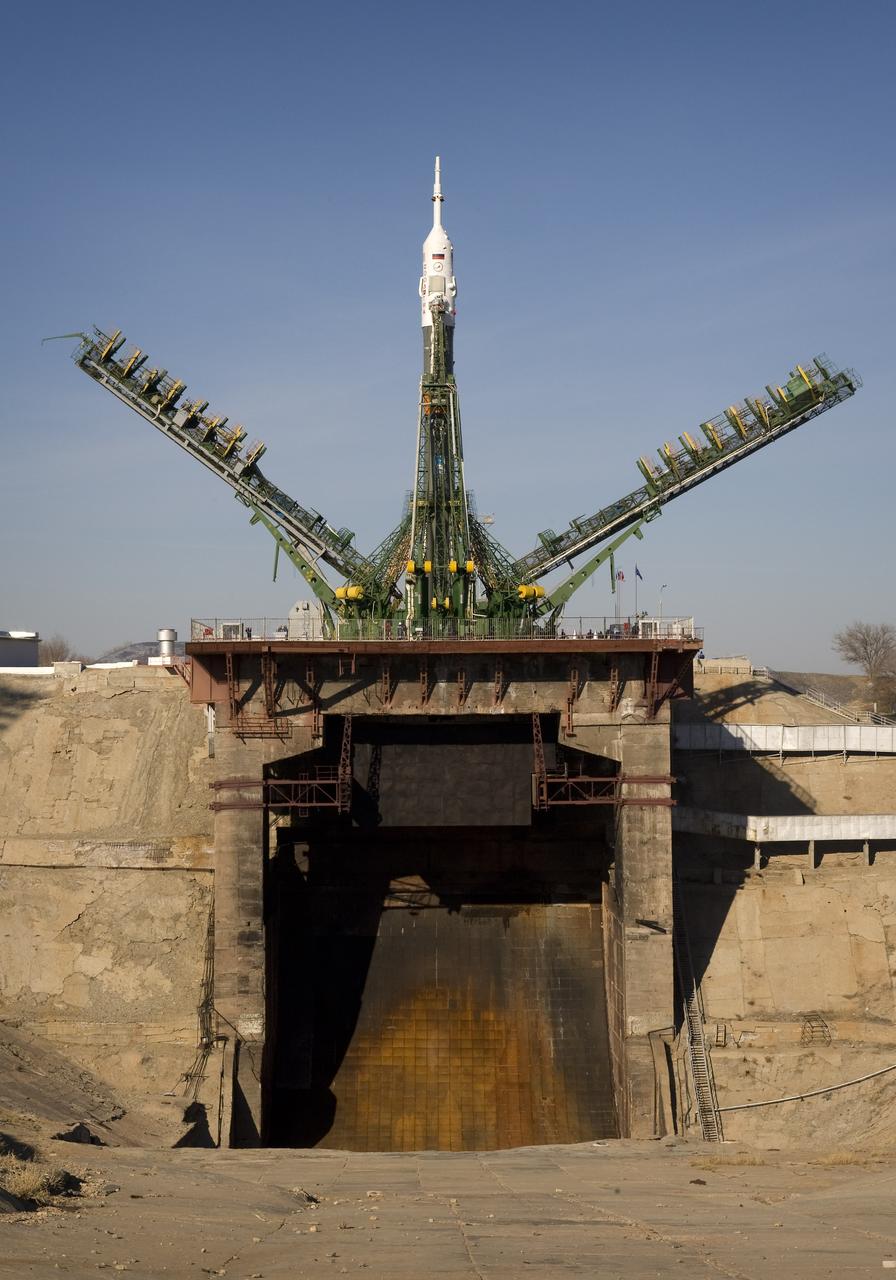
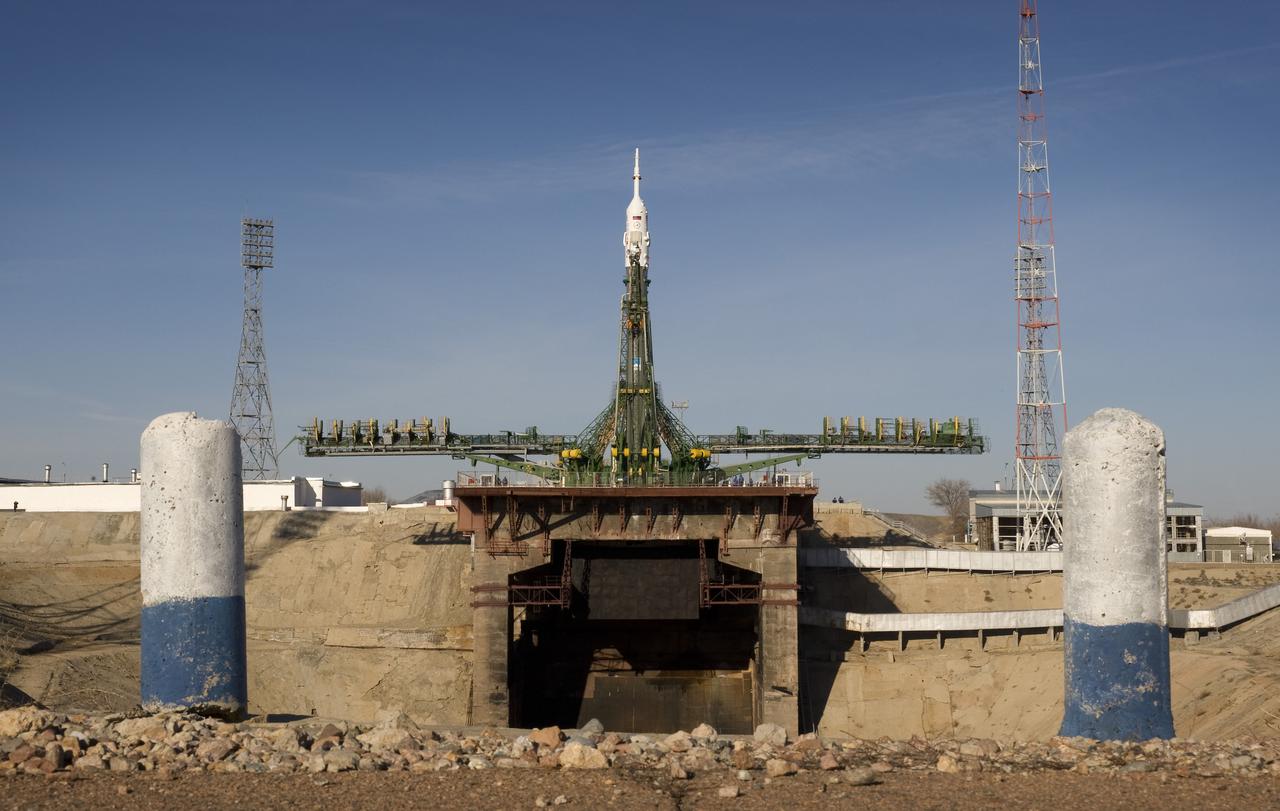
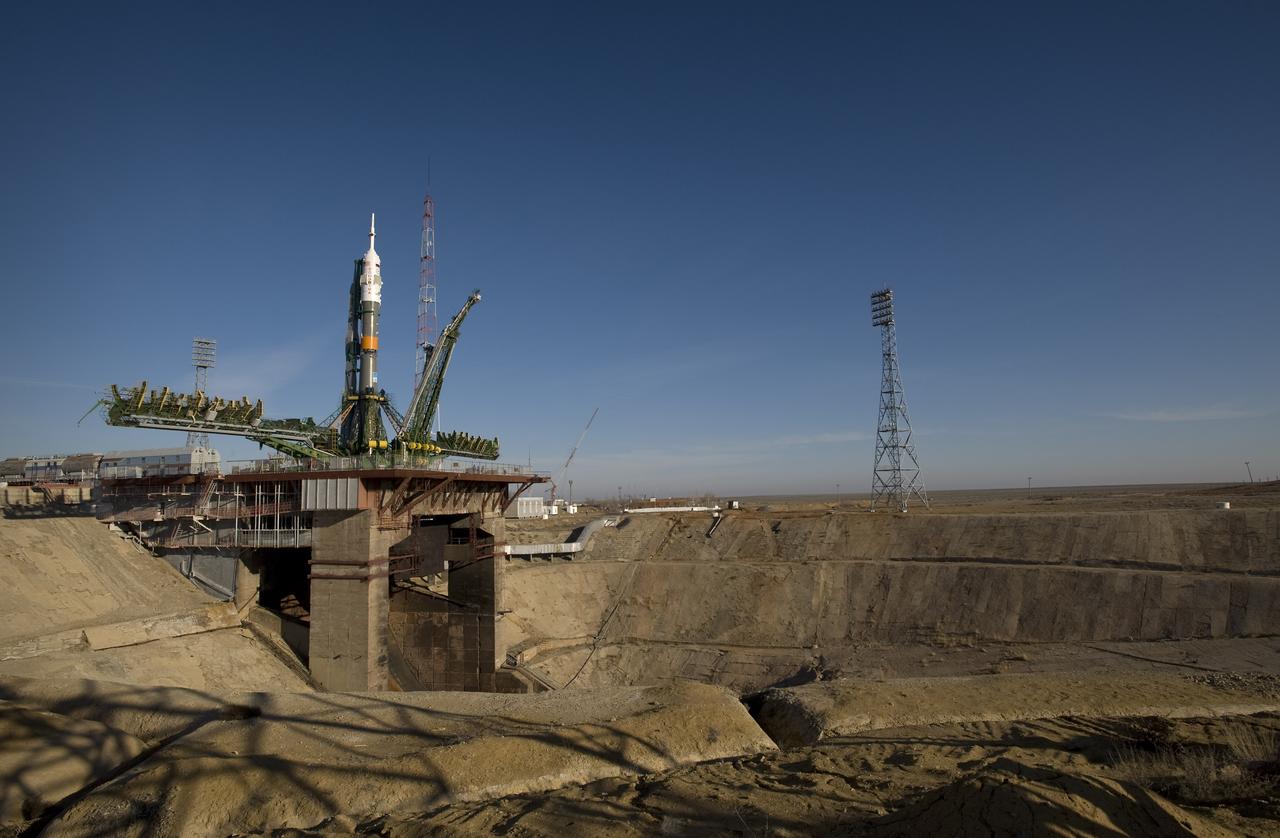
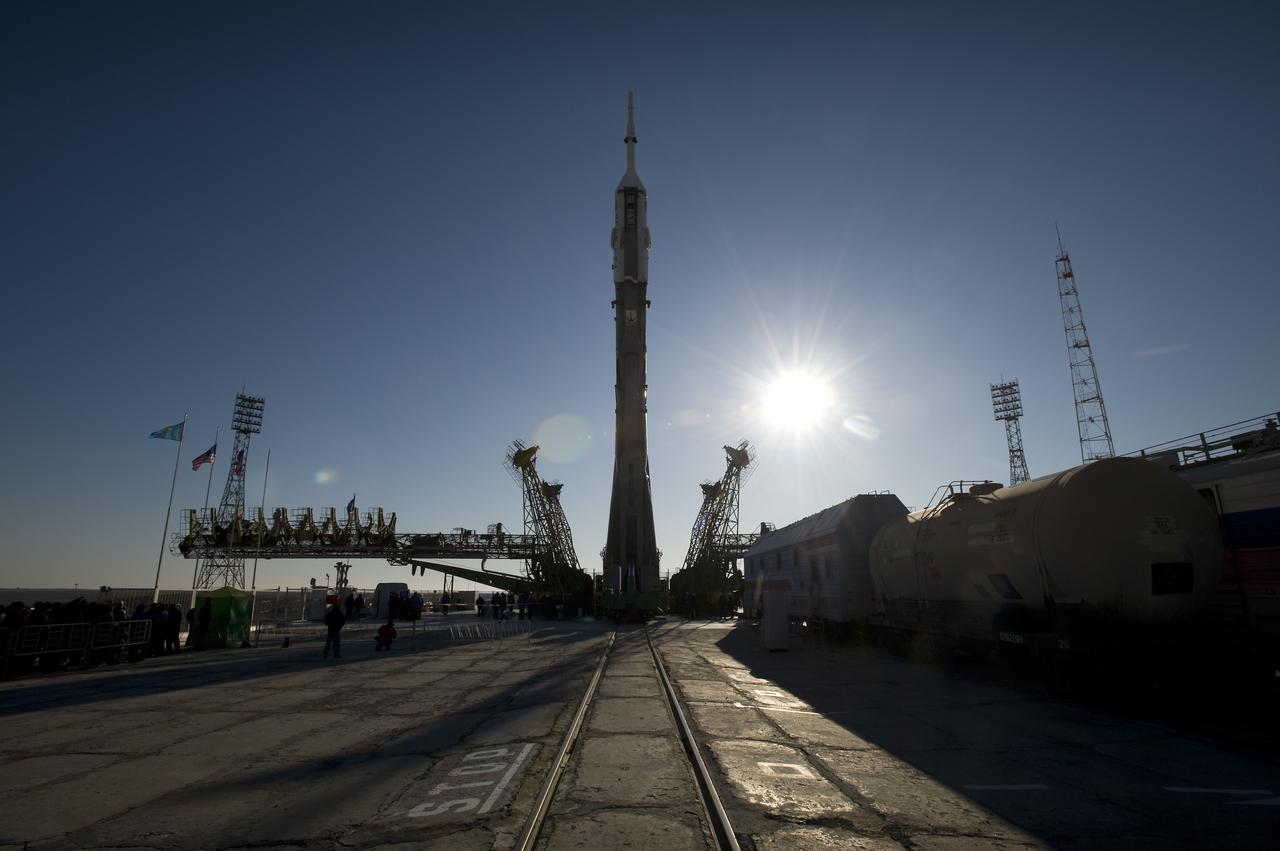
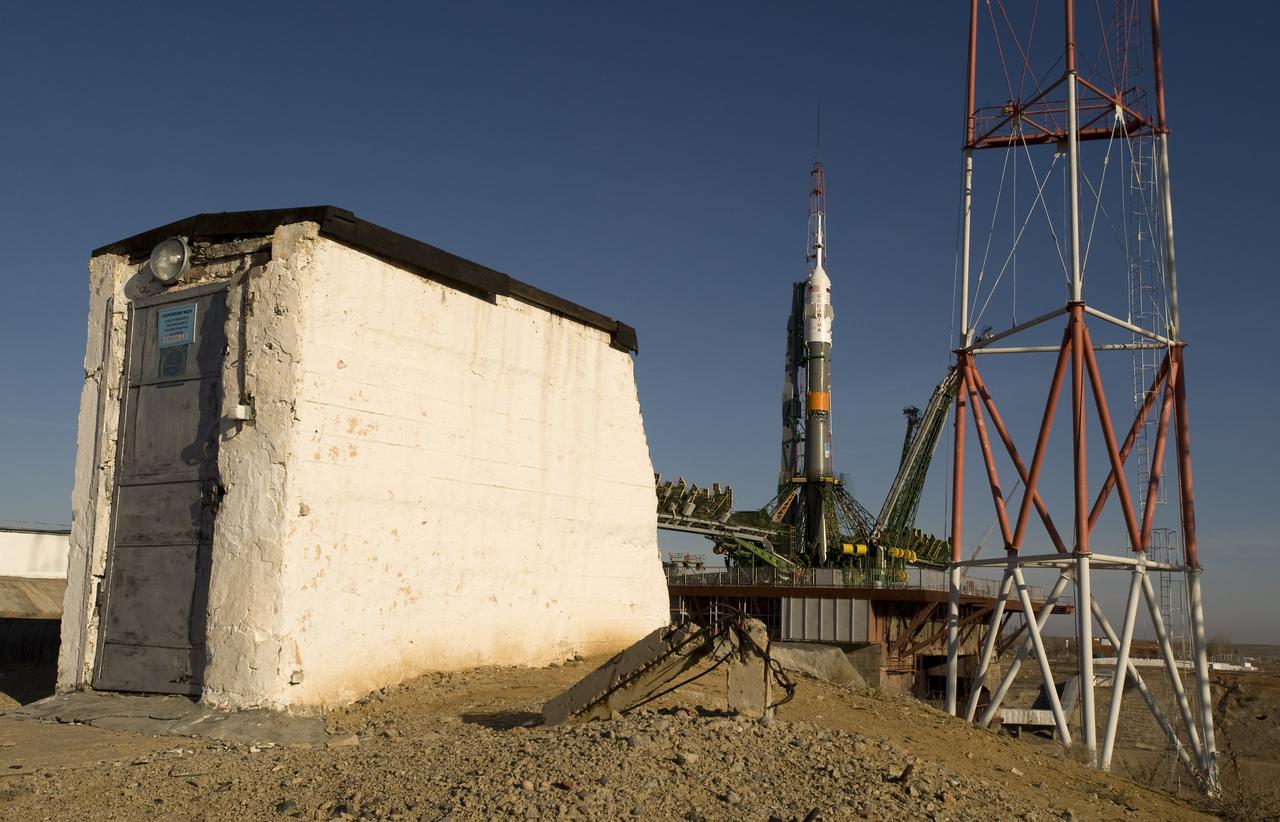
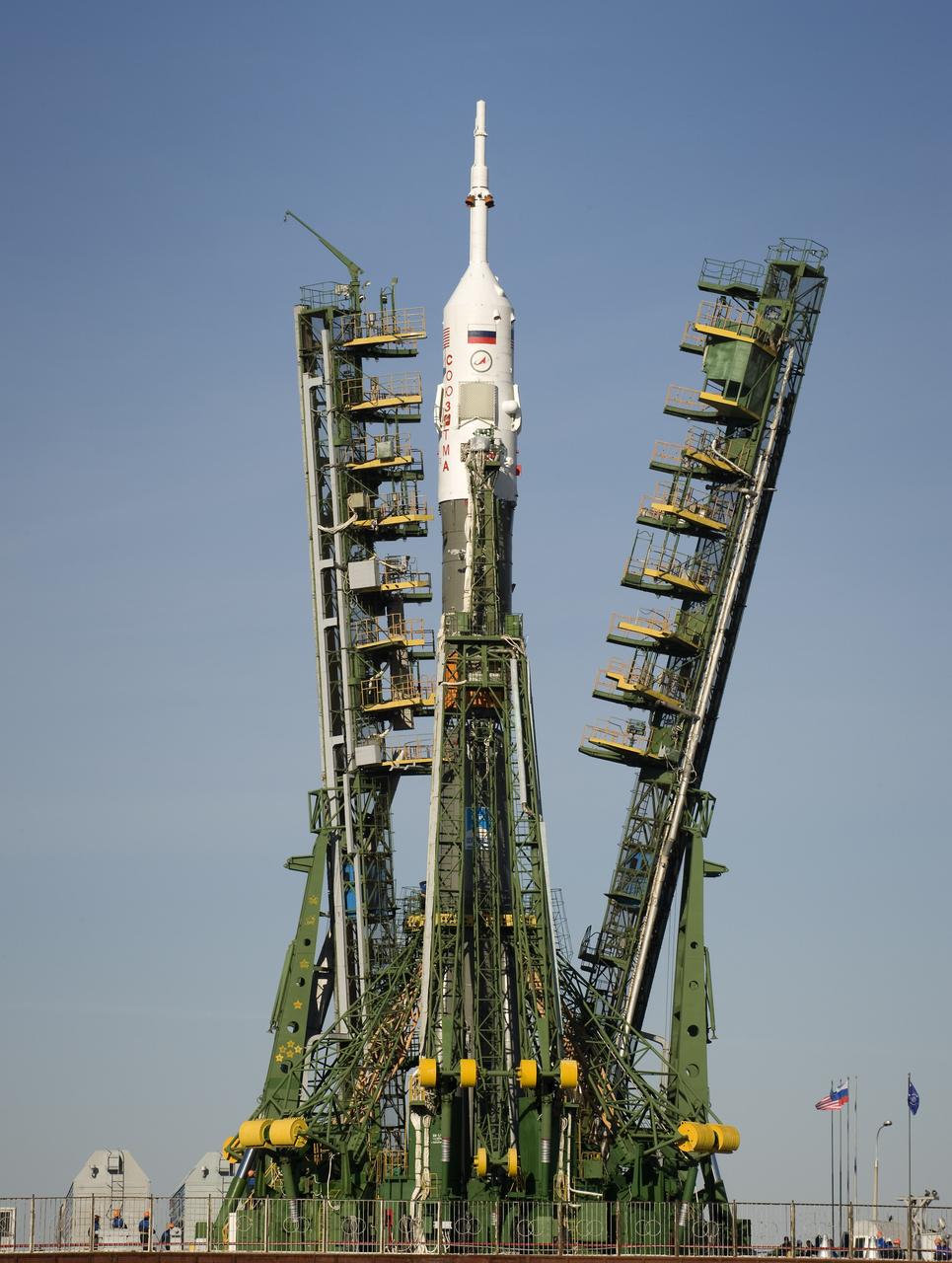
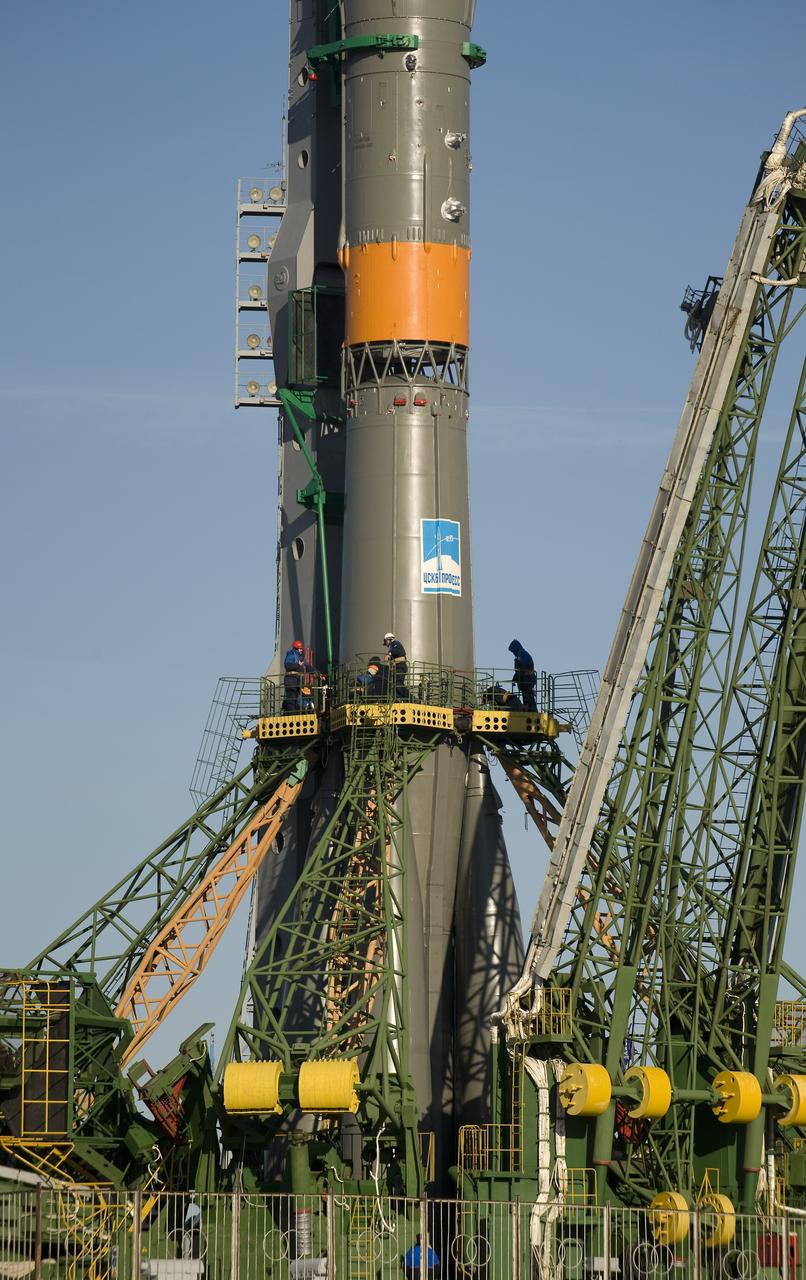
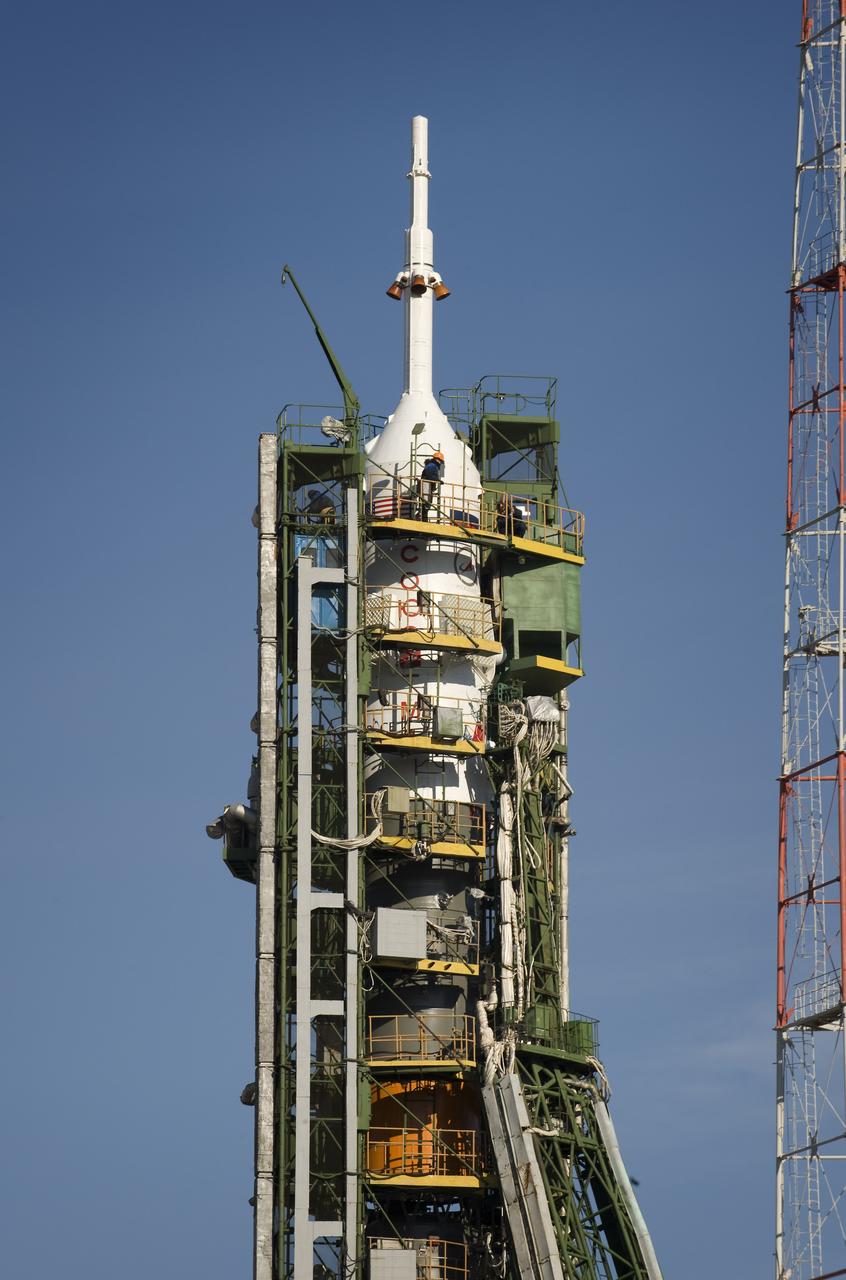
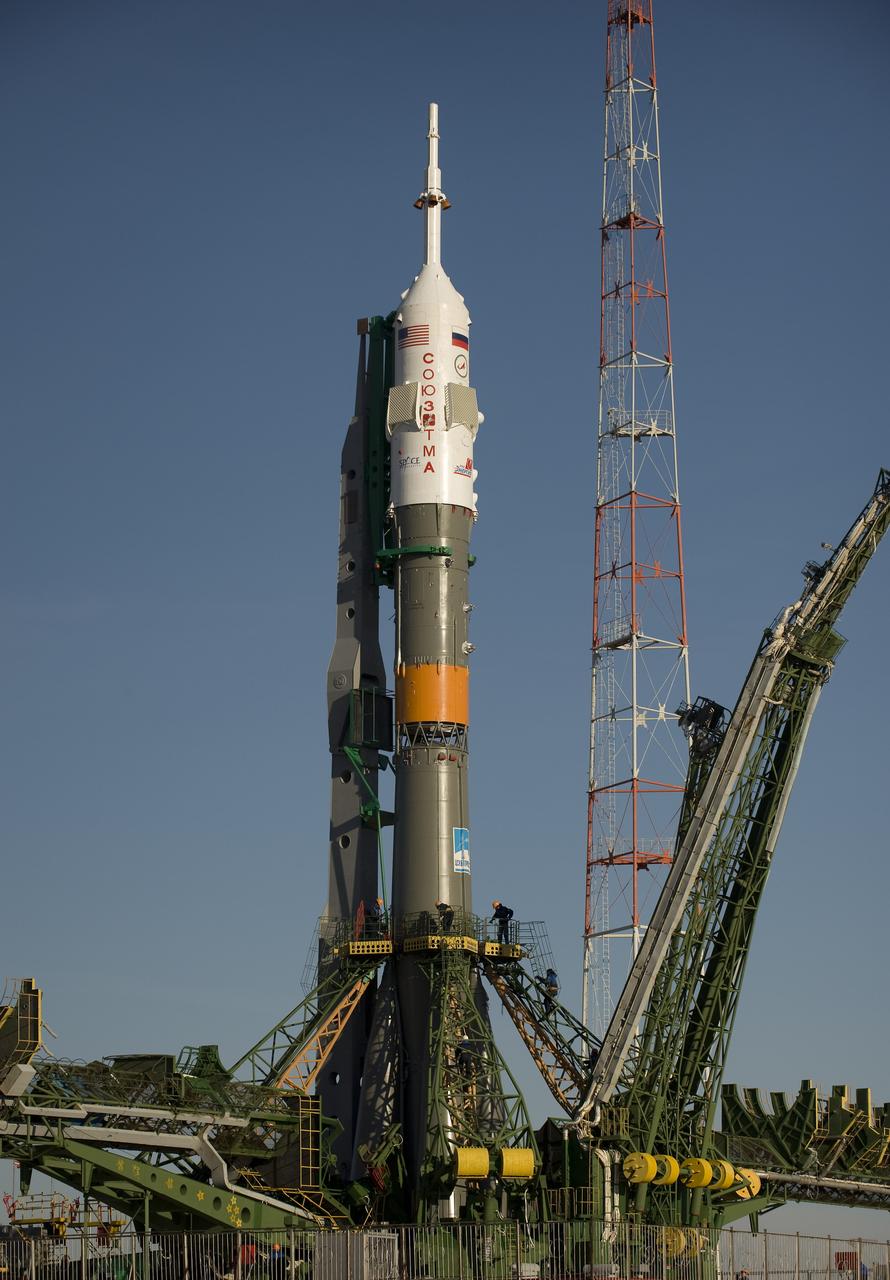
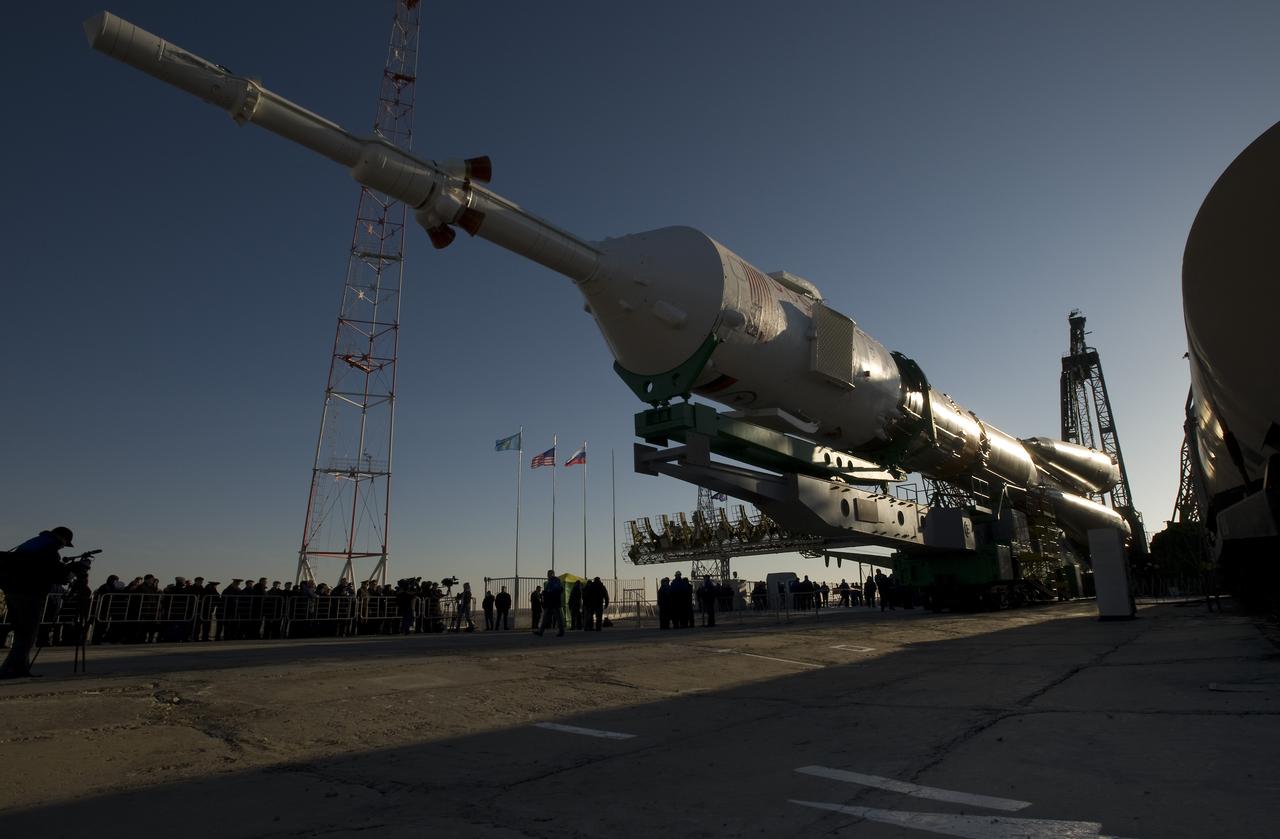
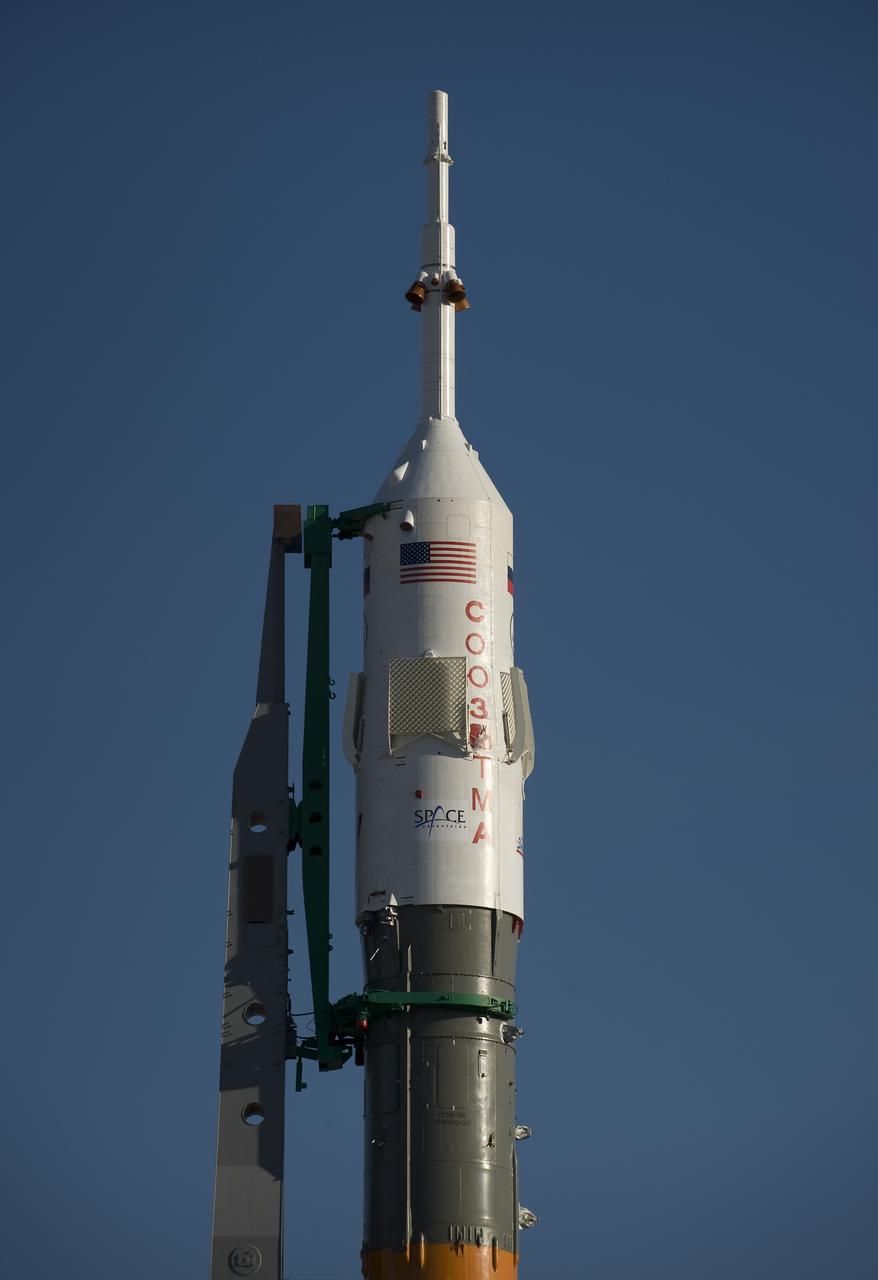
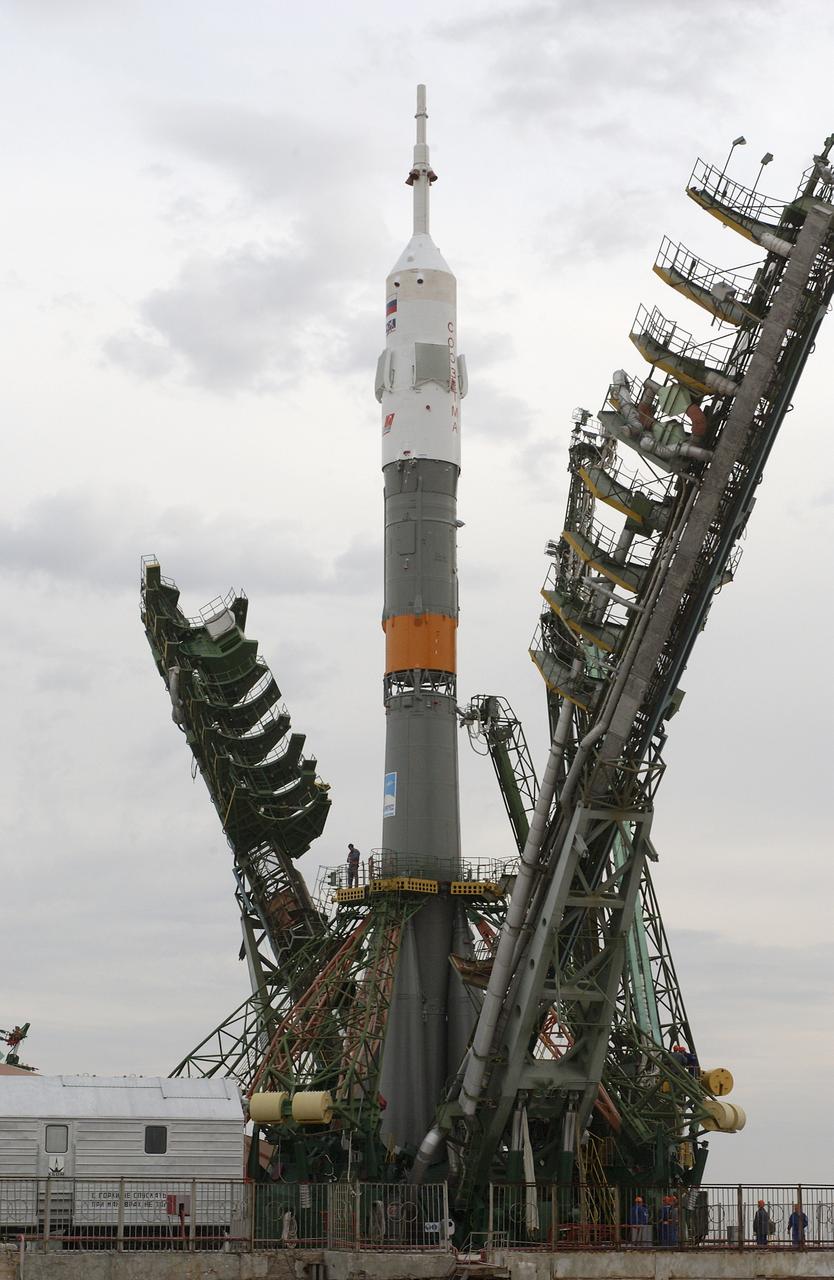
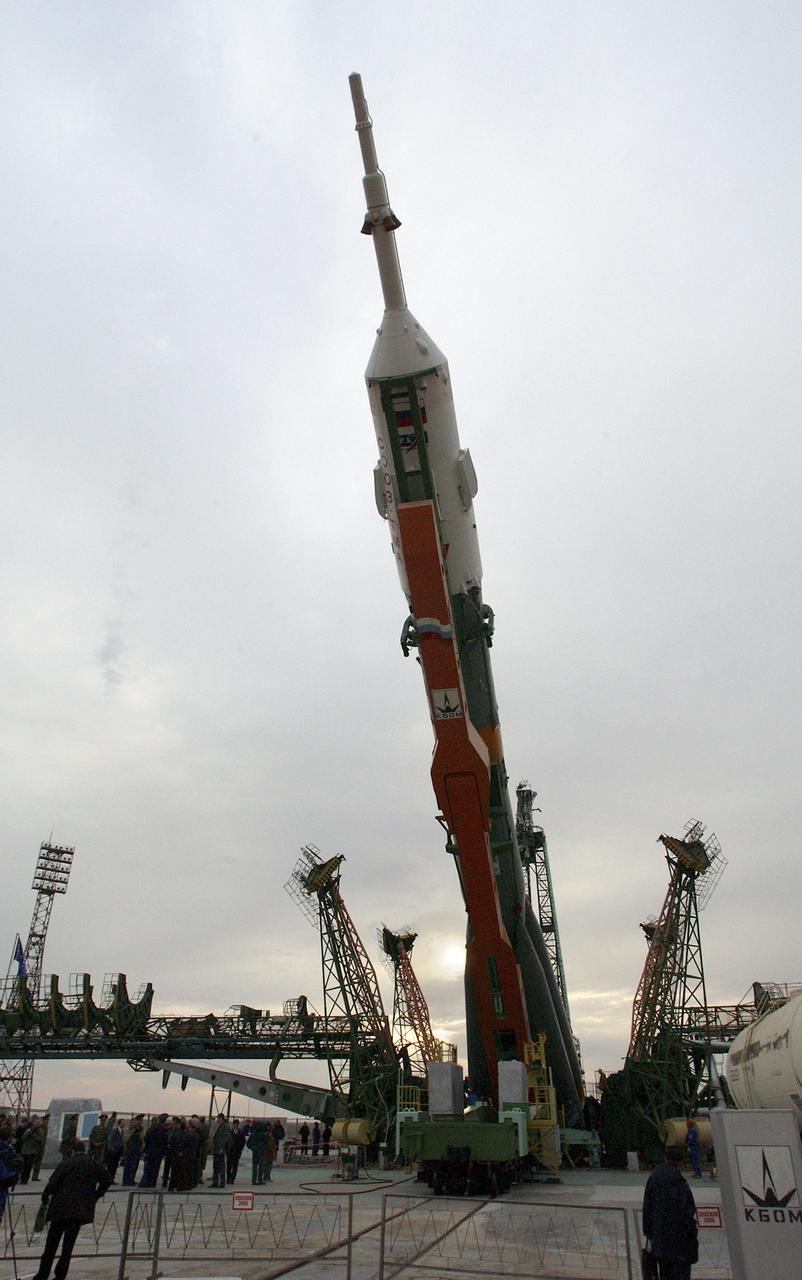
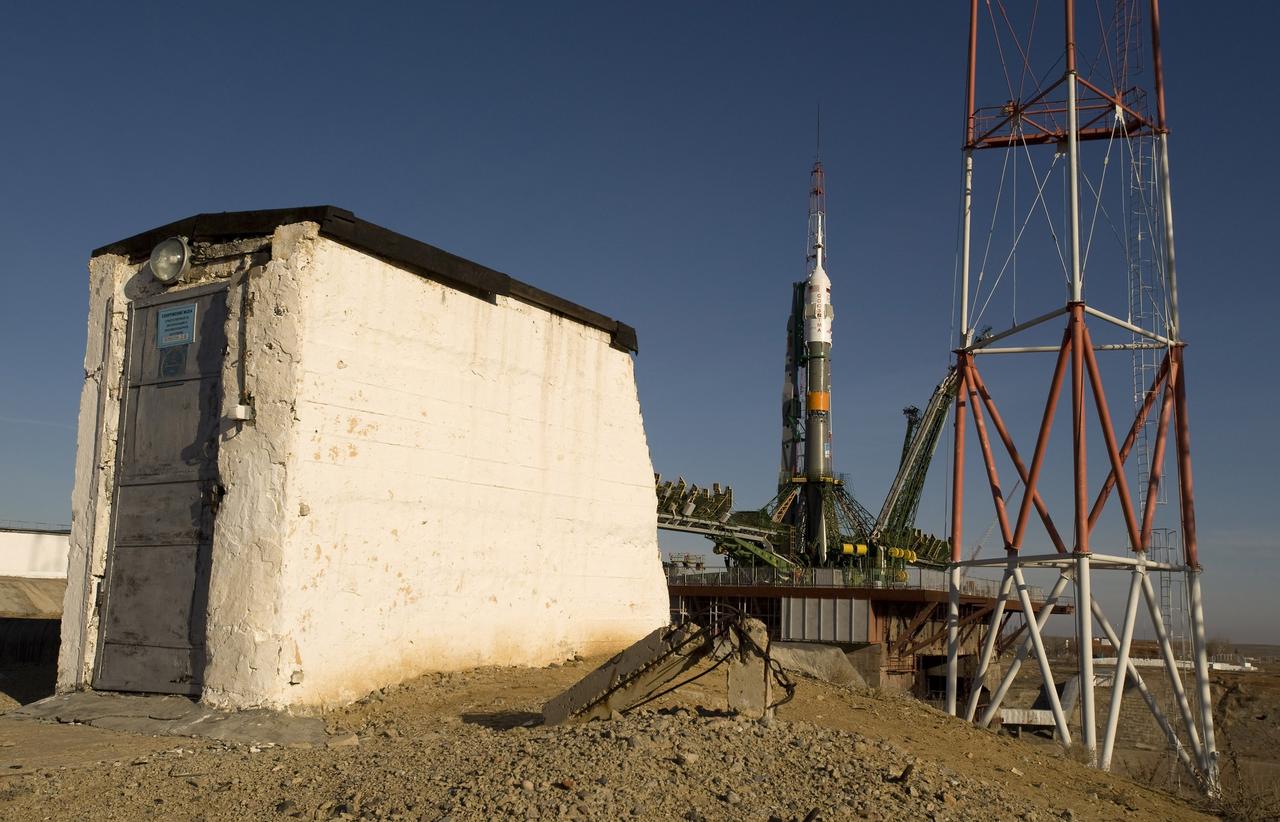
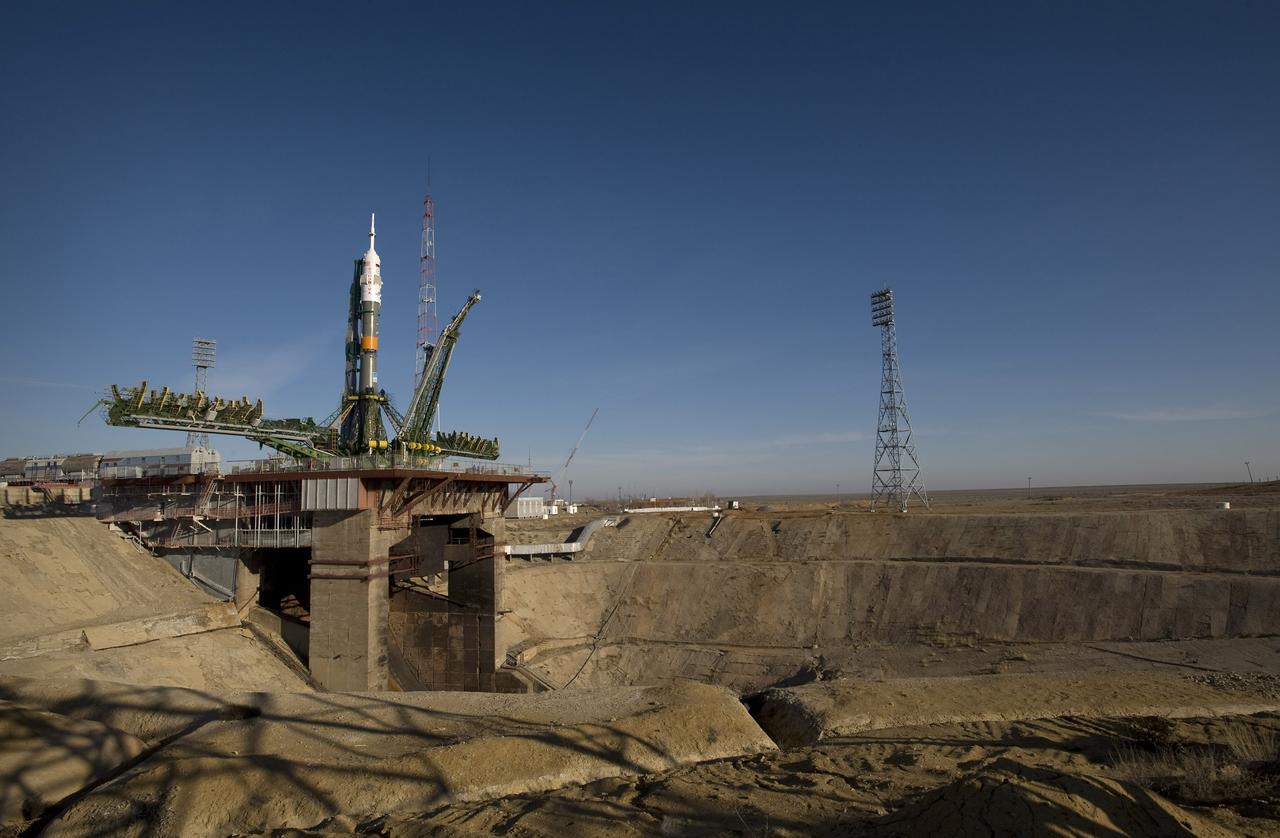
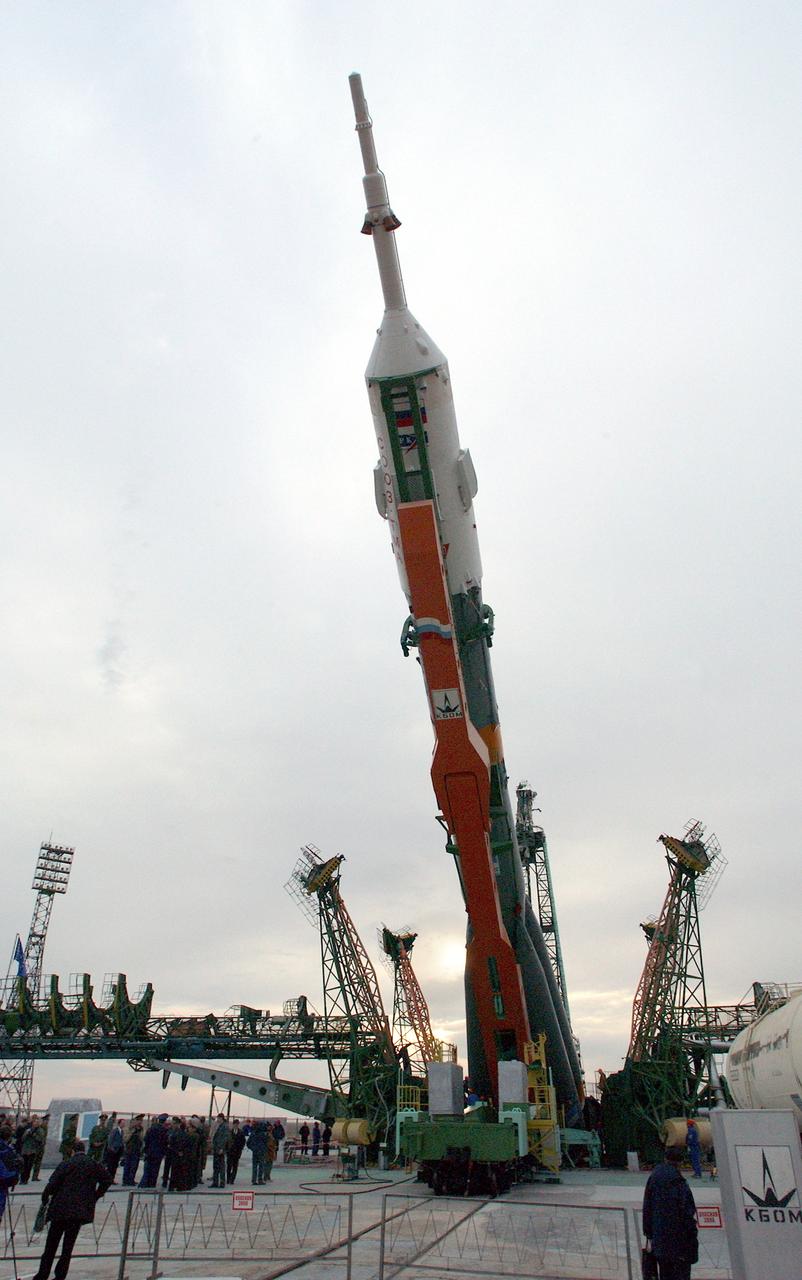
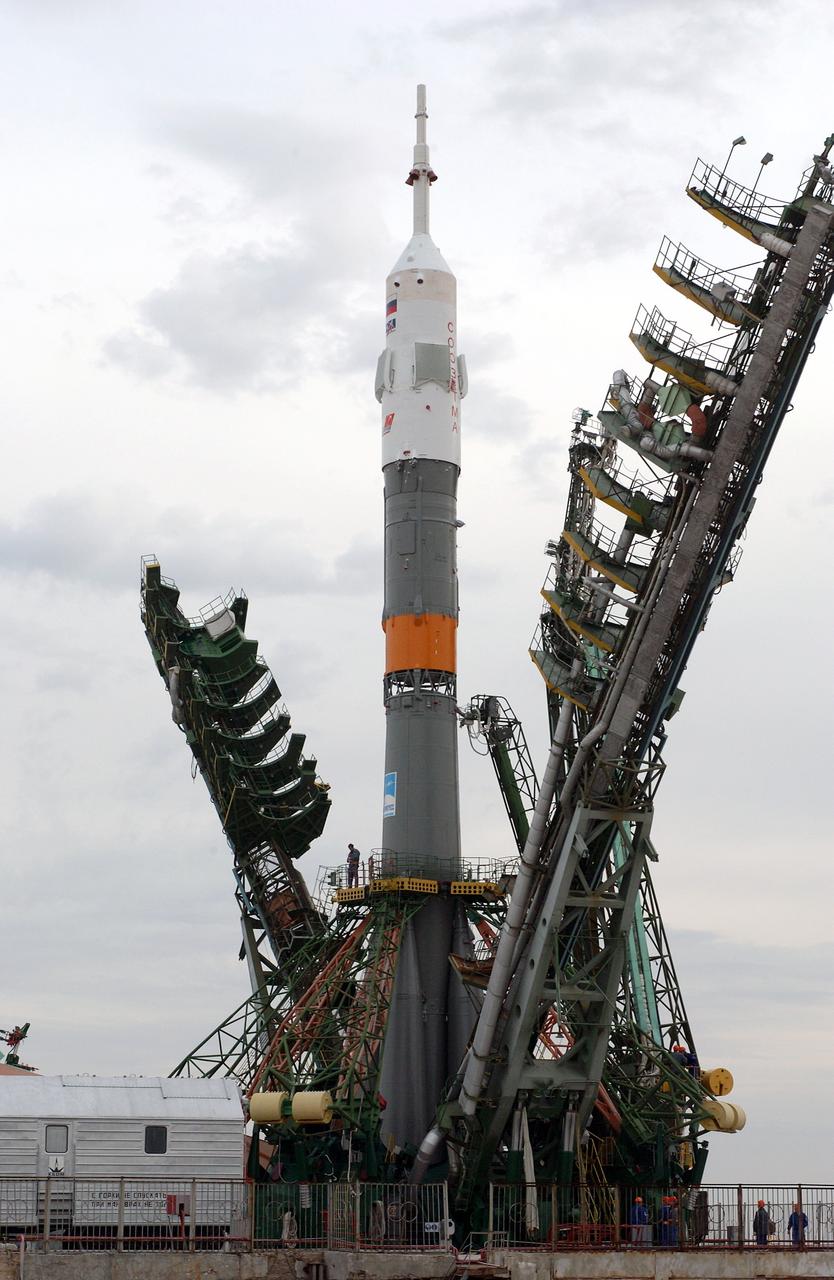
The Soyuz rocket is erected into position at the launch pad Tuesday, March 24, 2009 at the Baikonur Cosmodrome in Kazakhstan.  The Soyuz is scheduled to launch the crew of Expedition 19 and a spaceflight participant on March 26, 2009.  Photo Credit: (NASA/Bill Ingalls)
Expedition 19 Soyuz Erection
The Soyuz rocket is erected into position at the launch pad Tuesday, March 24, 2009 at the Baikonur Cosmodrome in Kazakhstan.  The Soyuz is scheduled to launch the crew of Expedition 19 and a spaceflight participant on March 26, 2009.  Photo Credit: (NASA/Bill Ingalls)
Expedition 19 Soyuz Erection
The Soyuz rocket is erected into position at the launch pad Tuesday, March 24, 2009 at the Baikonur Cosmodrome in Kazakhstan.  The Soyuz is scheduled to launch the crew of Expedition 19 and a spaceflight participant on March 26, 2009.  Photo Credit: (NASA/Bill Ingalls)
Expedition 19 Soyuz Erection
The Soyuz rocket is erected into position at the launch pad Tuesday, March 24, 2009 at the Baikonur Cosmodrome in Kazakhstan.  The Soyuz is scheduled to launch the crew of Expedition 19 and a spaceflight participant on March 26, 2009.  Photo Credit: (NASA/Bill Ingalls)
Expedition 19 Soyuz Erection
The Soyuz rocket is erected into position at the launch pad Tuesday, March 24, 2009 at the Baikonur Cosmodrome in Kazakhstan.  The Soyuz is scheduled to launch the crew of Expedition 19 and a spaceflight participant on March 26, 2009.  Photo Credit: (NASA/Bill Ingalls)
Expedition 19 Soyuz Erection
The Soyuz rocket is erected into position at the launch pad Tuesday, March 24, 2009 at the Baikonur Cosmodrome in Kazakhstan.  The Soyuz is scheduled to launch the crew of Expedition 19 and a spaceflight participant on March 26, 2009.  Photo Credit: (NASA/Bill Ingalls)
Expedition 19 Soyuz Erection
The Soyuz rocket is erected into position at the launch pad Tuesday, March 24, 2009 at the Baikonur Cosmodrome in Kazakhstan.  The Soyuz is scheduled to launch the crew of Expedition 19 and a spaceflight participant on March 26, 2009.  Photo Credit: (NASA/Bill Ingalls)
Expedition 19 Soyuz Erection
The Soyuz rocket is erected into position at the launch pad Tuesday, March 24, 2009 at the Baikonur Cosmodrome in Kazakhstan.  The Soyuz is scheduled to launch the crew of Expedition 19 and a spaceflight participant on March 26, 2009.  Photo Credit: (NASA/Bill Ingalls)
Expedition 19 Soyuz Erection
The Soyuz rocket is erected into position at the launch pad Tuesday, March 24, 2009 at the Baikonur Cosmodrome in Kazakhstan.  The Soyuz is scheduled to launch the crew of Expedition 19 and a spaceflight participant on March 26, 2009.  Photo Credit: (NASA/Bill Ingalls)
Expedition 19 Soyuz Erection
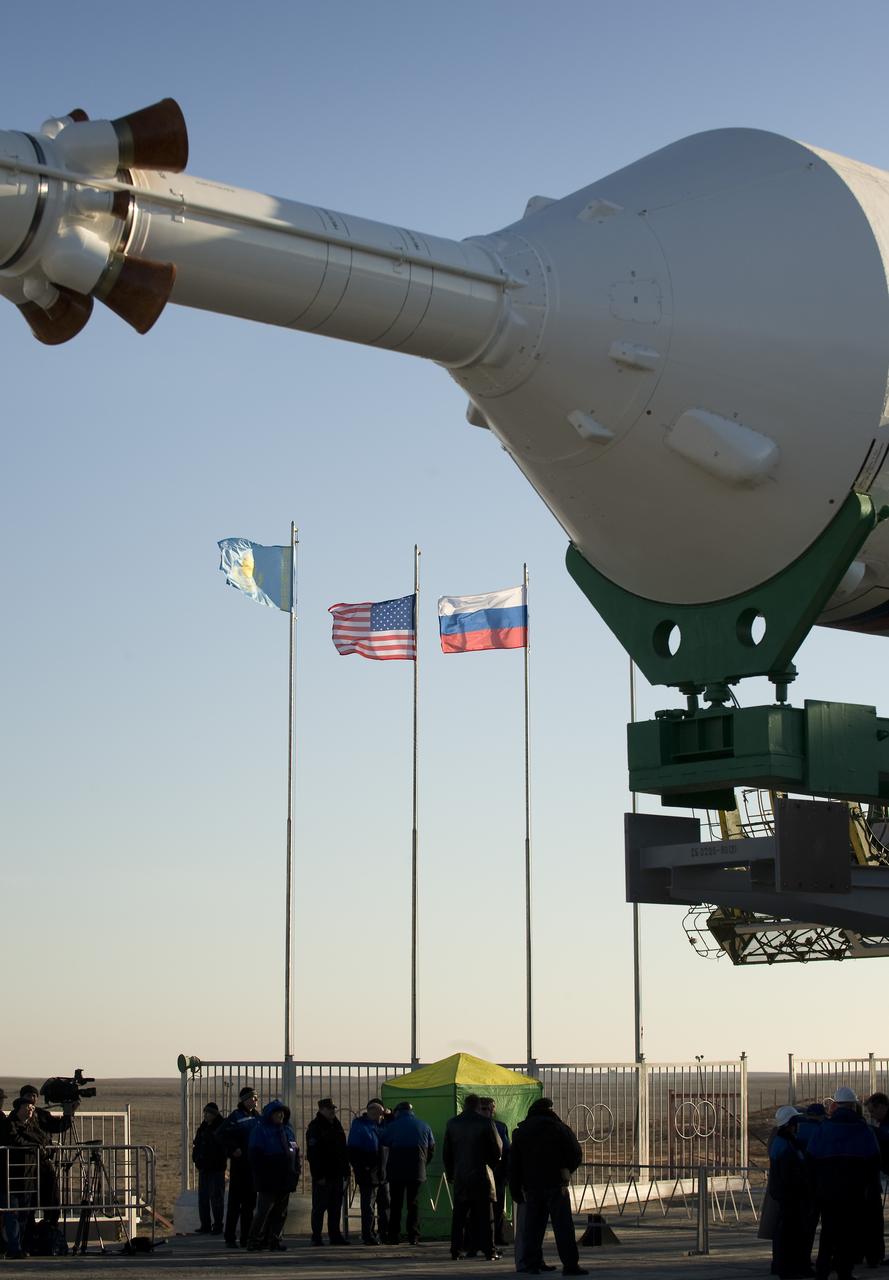
The flags of Kazakhstan, the United States of America and Russia are seen in the background as the Soyuz rocket is prepared to be erected into position at the launch pad Tuesday, March 24, 2009 at the Baikonur Cosmodrome in Kazakhstan.  The Soyuz is scheduled to launch the crew of Expedition 19 and a spaceflight participant on March 26, 2009.  Photo Credit: (NASA/Bill Ingalls)
Expedition 19 Soyuz Erection
The Soyuz rocket is prepared to be erected into position at the launch pad Tuesday, March 24, 2009 at the Baikonur Cosmodrome in Kazakhstan.  The Soyuz is scheduled to launch the crew of Expedition 19 and a spaceflight participant on March 26, 2009.  Photo Credit: (NASA/Bill Ingalls)
Expedition 19 Soyuz Erection
The Soyuz rocket is erected into position at the launch pad Tuesday, March 24, 2009 at the Baikonur Cosmodrome in Kazakhstan.  The Soyuz is scheduled to launch the crew of Expedition 19 and a spaceflight participant on March 26, 2009.  Photo Credit: (NASA/Bill Ingalls)
Expedition 19 Soyuz Erection
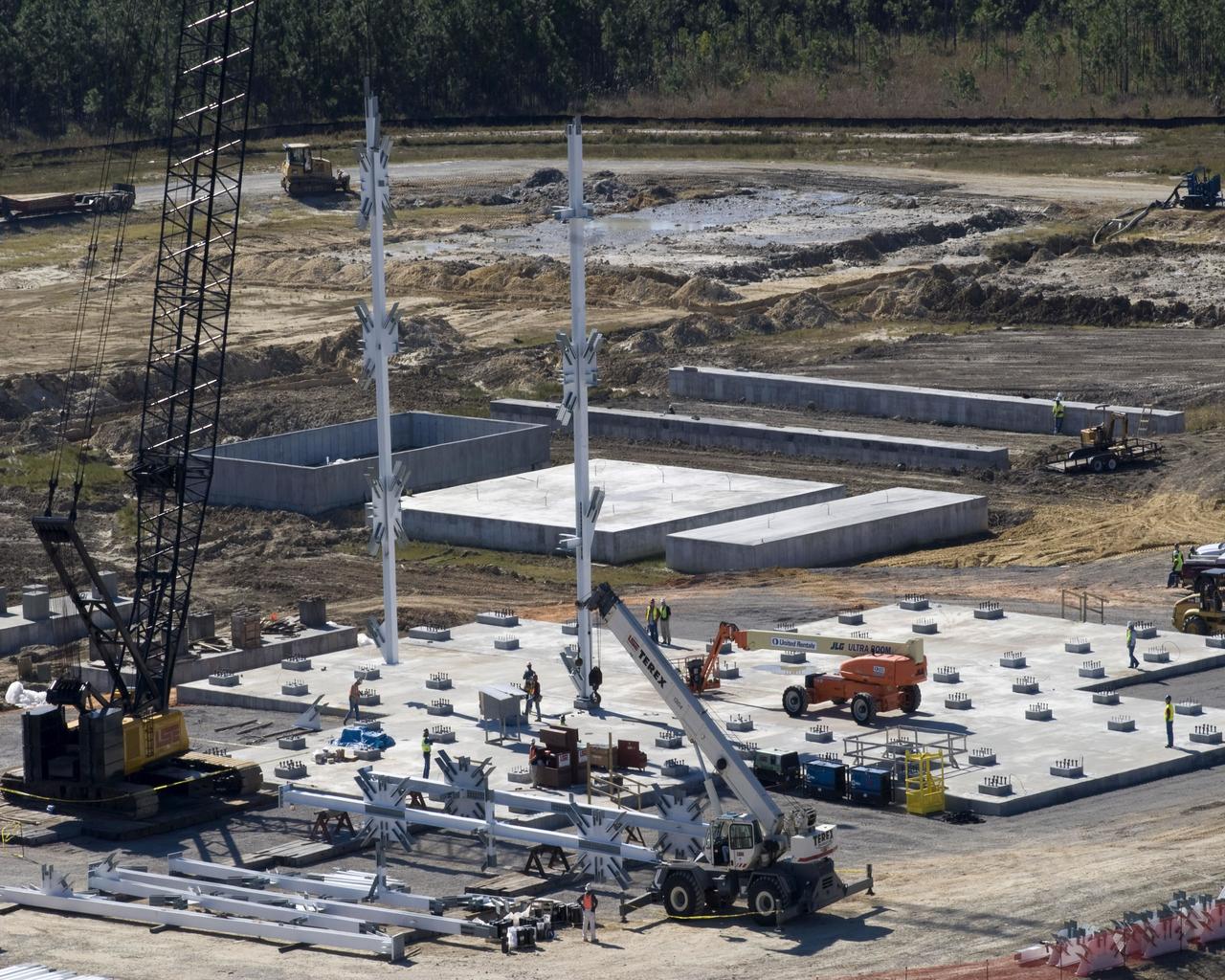
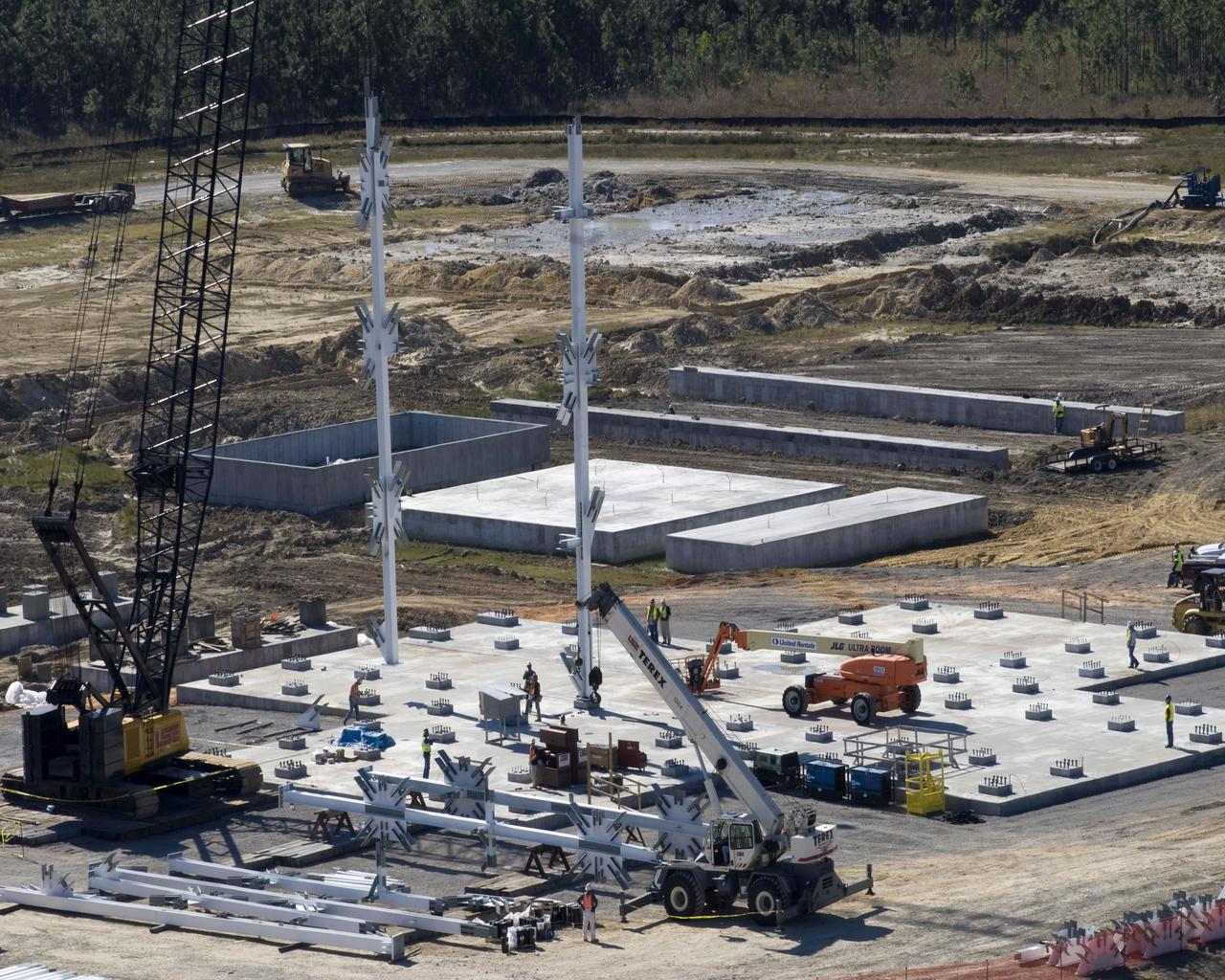
Workers erect the first fabricated steel girders to arrive at the A-3 Test Stand at Stennis Space Center. Steel work began at the construction site Oct. 29 and is scheduled to continue into next spring.
Steel erected at A-3 Test Stand
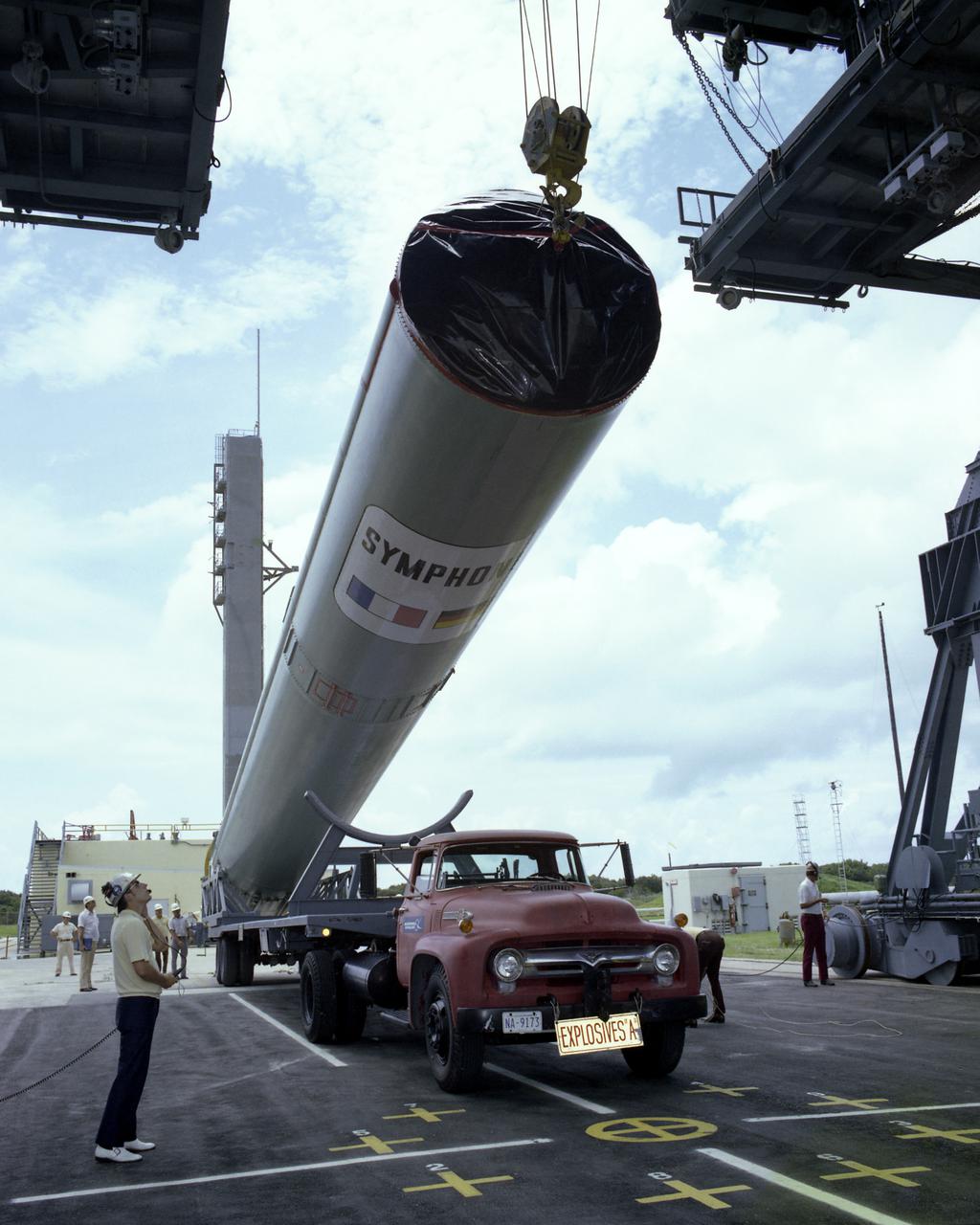
Erection of 1st Stage of Delta Vehicle for SYMPHONIE-B Mission. Complex 17A, CCAFS, June 30, 1975.
Erection of Delta Vehicle for SYMPHONIE-B Mission.
The crew assigned to the STS-61B mission included Bryan D. O’Conner, pilot; Brewster H. Shaw, commander; Charles D. Walker, payload specialist; mission specialists Jerry L. Ross, Mary L. Cleave, and Sherwood C. Spring; and Rodolpho Neri Vela, payload specialist.  Launched aboard the Space Shuttle Atlantis November 28, 1985 at 7:29:00 pm (EST), the STS-61B mission’s primary payload included three communications satellites: MORELOS-B (Mexico); AUSSAT-2 (Australia); and SATCOM KU-2 (RCA Americom). Two experiments were conducted to test assembling erectable structures in space: EASE (Experimental Assembly of Structures in Extravehicular Activity), and ACCESS (Assembly Concept for Construction of Erectable Space Structure). In a joint venture between NASA/Langley Research Center in Hampton, Virginia, and the Marshall Space Flight Center (MSFC), EASE and ACCESS were developed and demonstrated at MSFC's Neutral Buoyancy Simulator (NBS). In this STS-61B onboard photo, astronaut Ross works on ACCESS high above the orbiter. The primary objective of these experiments was to test the structural assembly concepts for suitability as the framework for larger space structures and to identify ways to improve the productivity of space construction.
Space Shuttle Projects
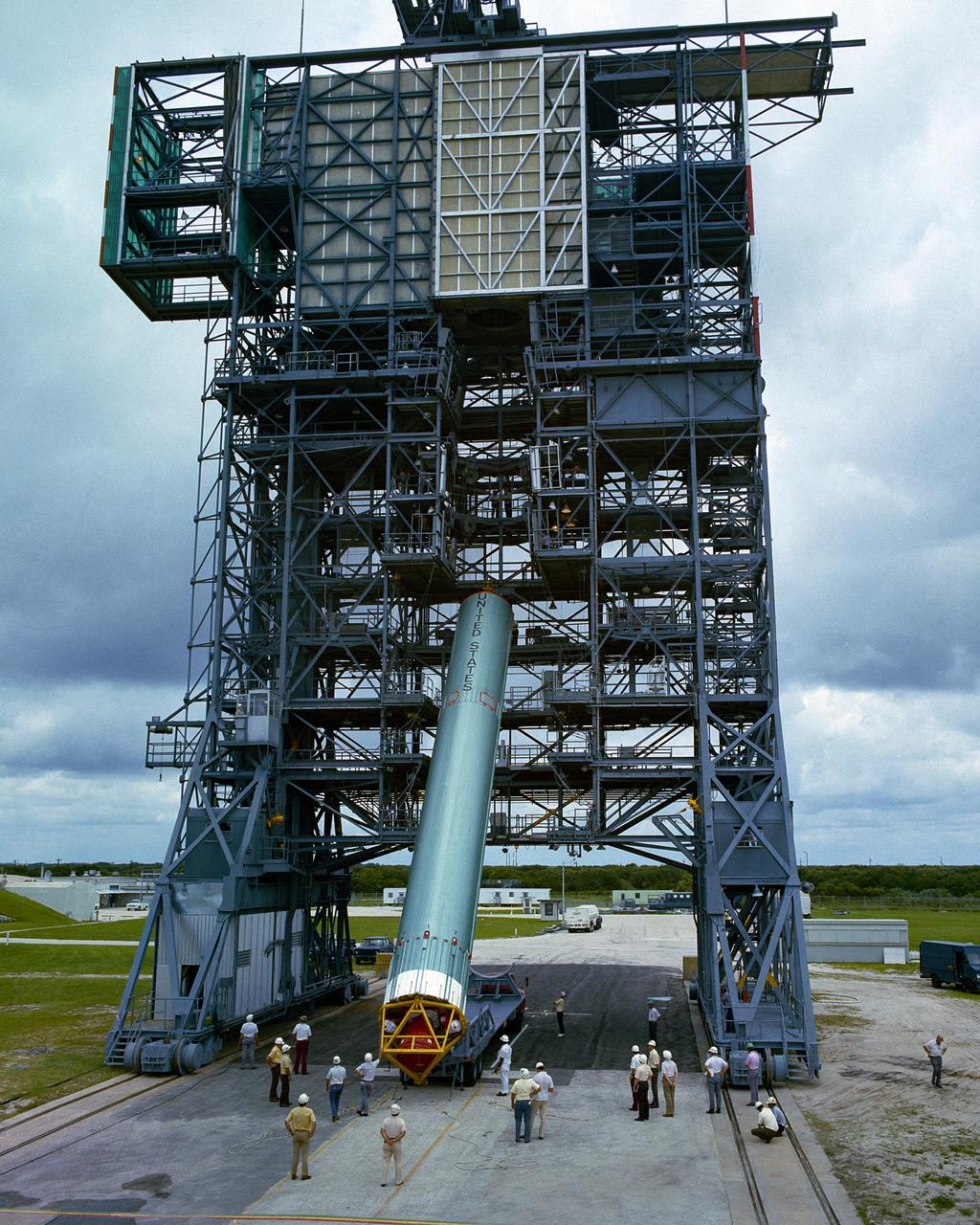
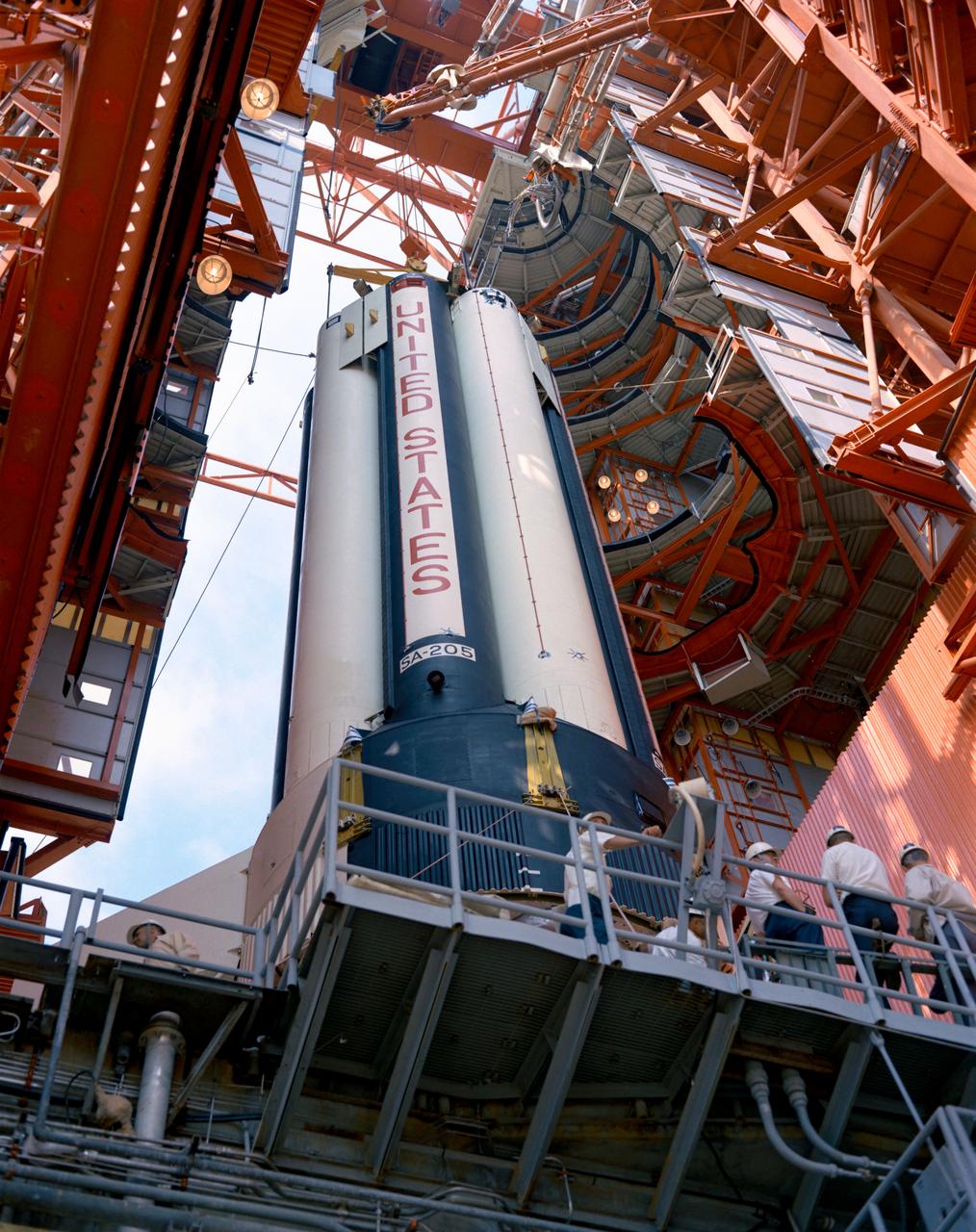
S68-29781 (22 April 1968) --- Low angle view at the Kennedy Space Center's Pad 34 showing the erection of the first stage of the Saturn 205 launch vehicle. The two-stage Saturn IB will be the launch vehicle for the first unmanned Apollo space mission, Apollo 7 (Spacecraft 101/Saturn 205).
Prelaunch - Apollo VII (Erection of First Stage) - KSC
The crew assigned to the STS-61B mission included Bryan D. O’Conner, pilot; Brewster H. Shaw, commander; Charles D. Walker, payload specialist; mission specialists Jerry L. Ross, Mary L. Cleave, and Sherwood C. Spring; and Rodolpho Neri Vela, payload specialist.  Launched aboard the Space Shuttle Atlantis November 28, 1985 at 7:29:00 pm (EST), the STS-61B mission’s primary payload included three communications satellites: MORELOS-B (Mexico); AUSSAT-2 (Australia); and SATCOM KU-2 (RCA Americom). Two experiments were conducted to test assembling erectable structures in space: EASE (Experimental Assembly of Structures in Extravehicular Activity), and ACCESS (Assembly Concept for Construction of Erectable Space Structure). In a joint venture between NASA/Langley Research Center in Hampton, Virginia and the Marshall Space Flight Center (MSFC), EASE and ACCESS were developed and demonstrated at MSFC's Neutral Buoyancy Simulator (NBS). The primary objective of this experiment was to test the structural assembly concepts for suitability as the framework for larger space structures and to identify ways to improve the productivity of space construction. In this STS-61B onboard photo, astronaut Ross was working on the ACCESS  experiment during an Extravehicular Activity (EVA).
Space Shuttle Projects
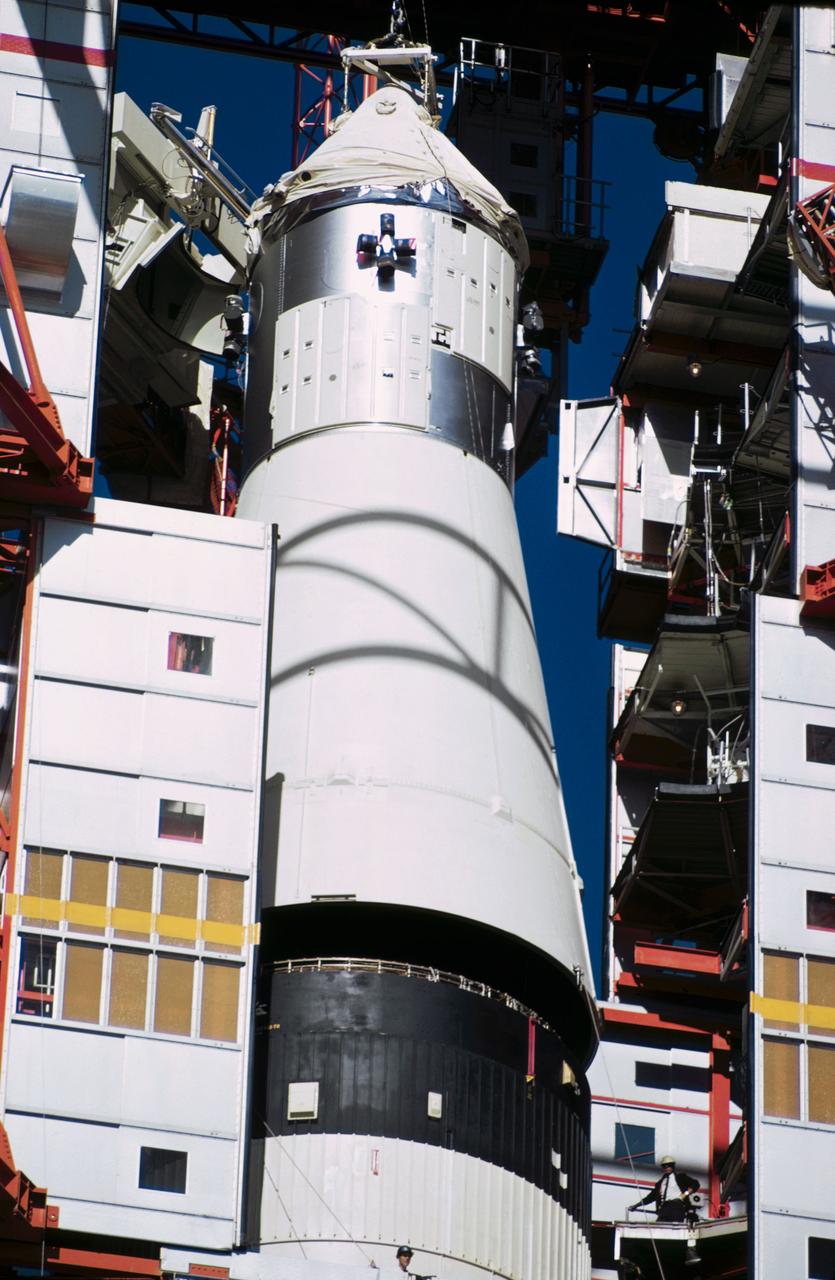
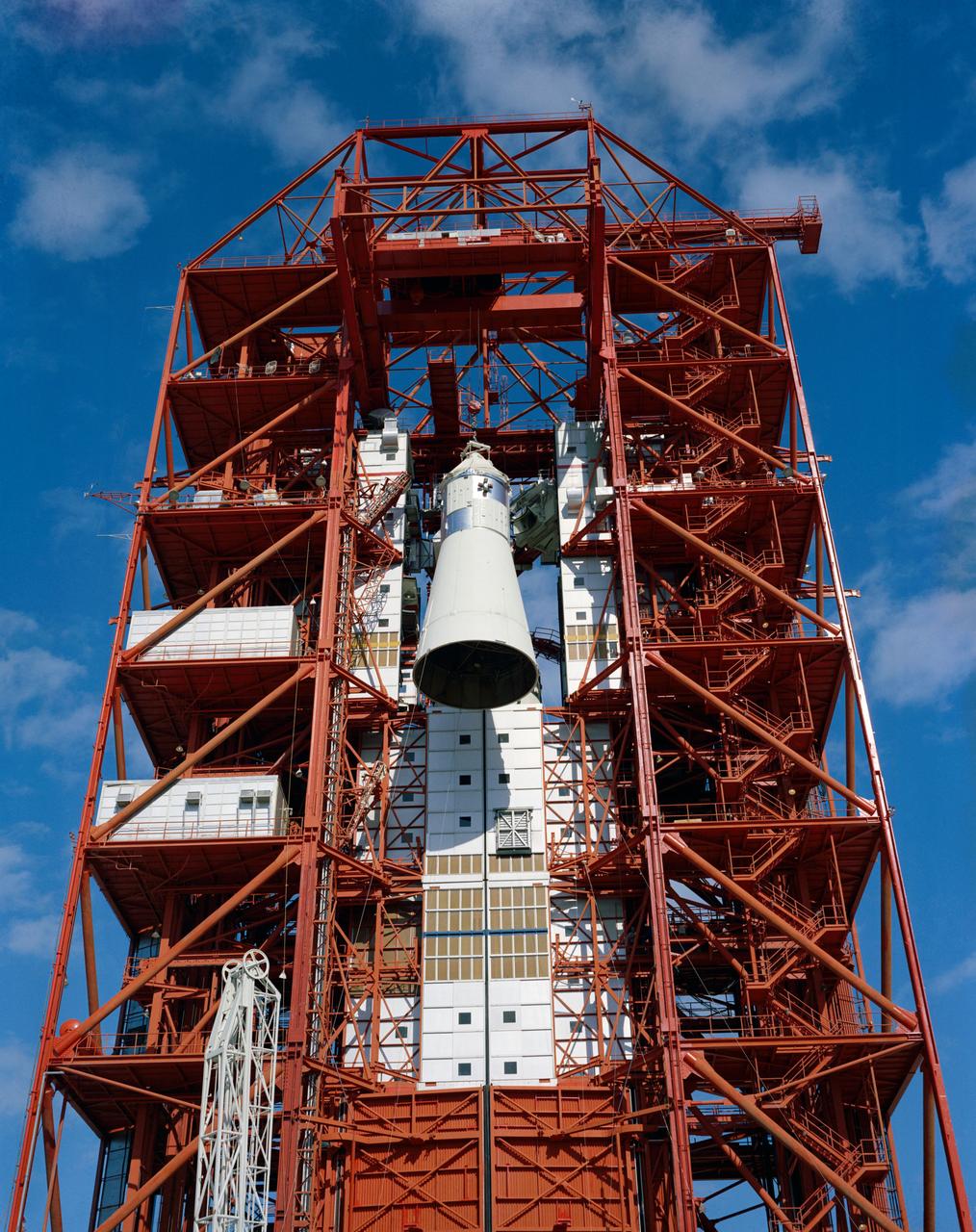
S67-17042 (1967) --- Apollo Spacecraft 012 is hoisted to the top of the gantry at Pad 34 during the Apollo/Saturn Mission 204 erection. S/C 012 will be mated with the uprated Saturn I launch vehicle.
APOLLO SPACECRAFT (A/S)-012 - PAD 34 - SATURN 204 ERECTION - MATING - CAPE
This is an STS-61B onboard photo of astronauts Ross and Spring on the Remote Manipulator System (RMS) as they approach the erected Assembly Concept for Construction of Erectable Space Structure (ACCESS).
Space Shuttle Projects
AQUARIUS - Second Stage Erection
2011-2453
AQUARIUS - Second Stage Erection
2011-2450
AQUARIUS - Second Stage Erection
2011-2449
AQUARIUS - Second Stage Erection
2011-2456
Titan/Cassini erection of K3
KSC-97PC917
AQUARIUS - Second Stage Erection
2011-2455
AQUARIUS - Second Stage Erection
2011-2457
AQUARIUS - Second Stage Erection
2011-2451
AQUARIUS - Second Stage Erection
2011-2452
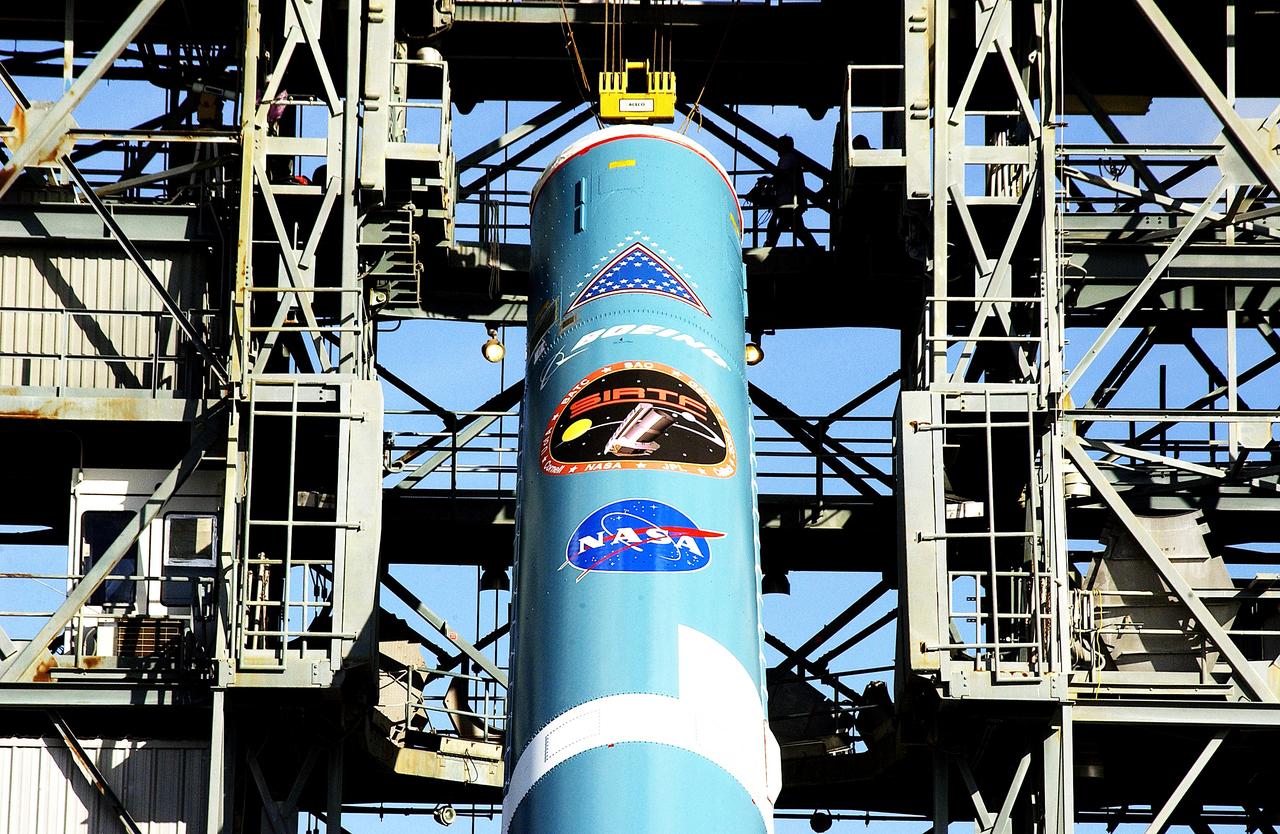
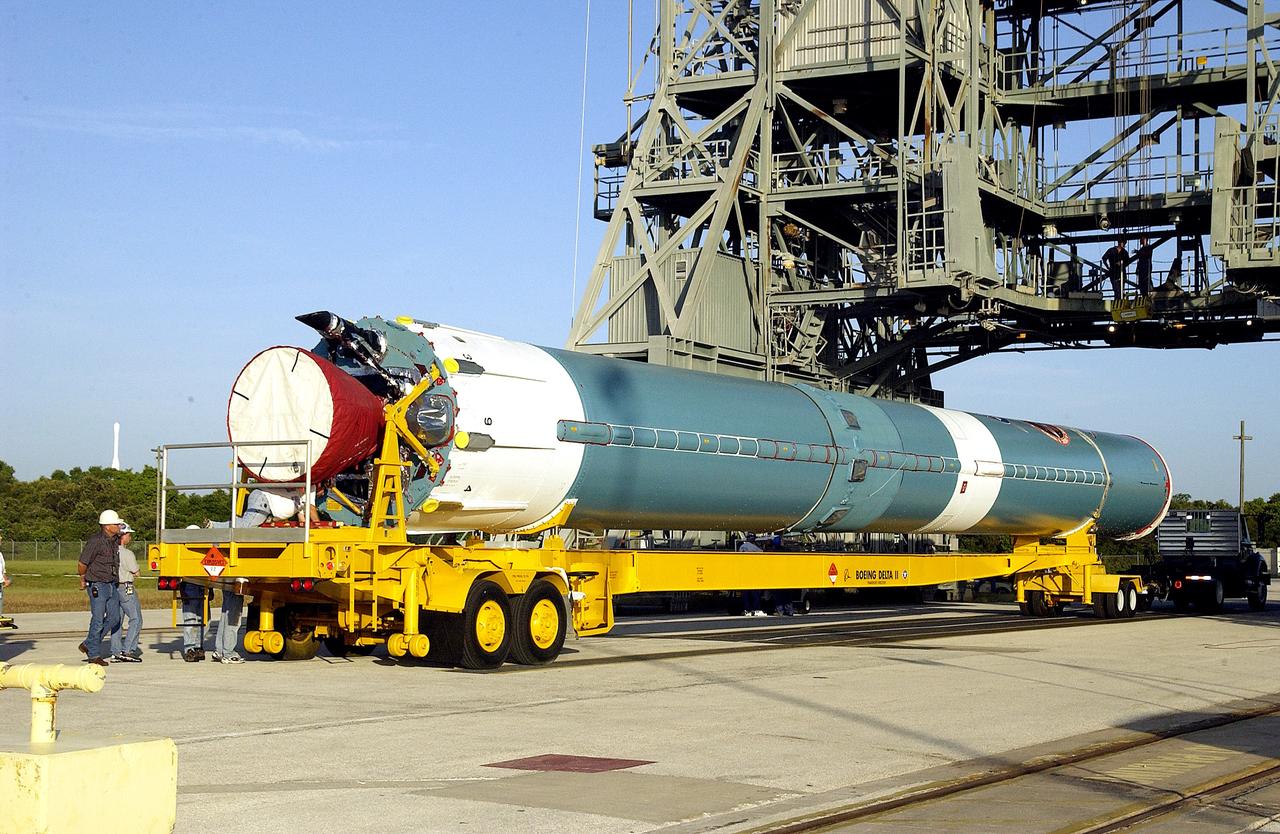
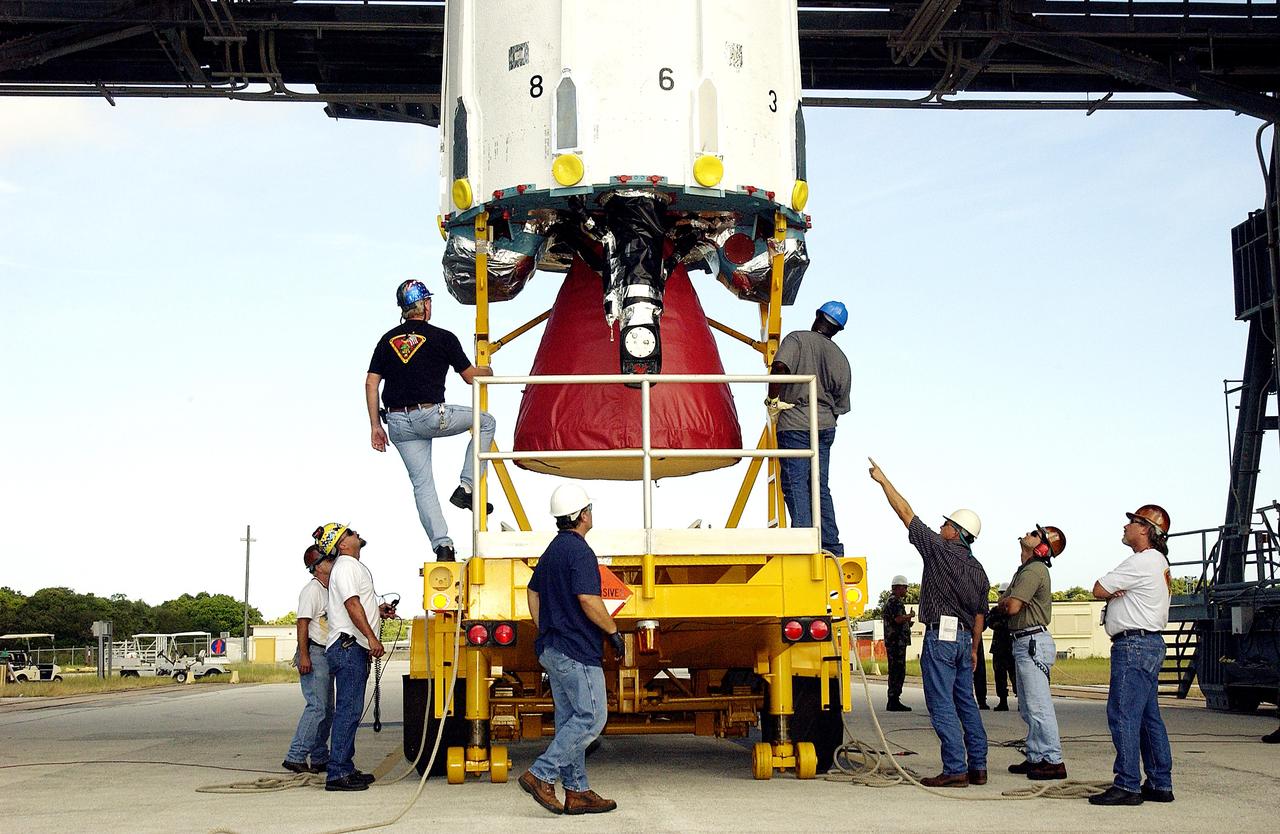
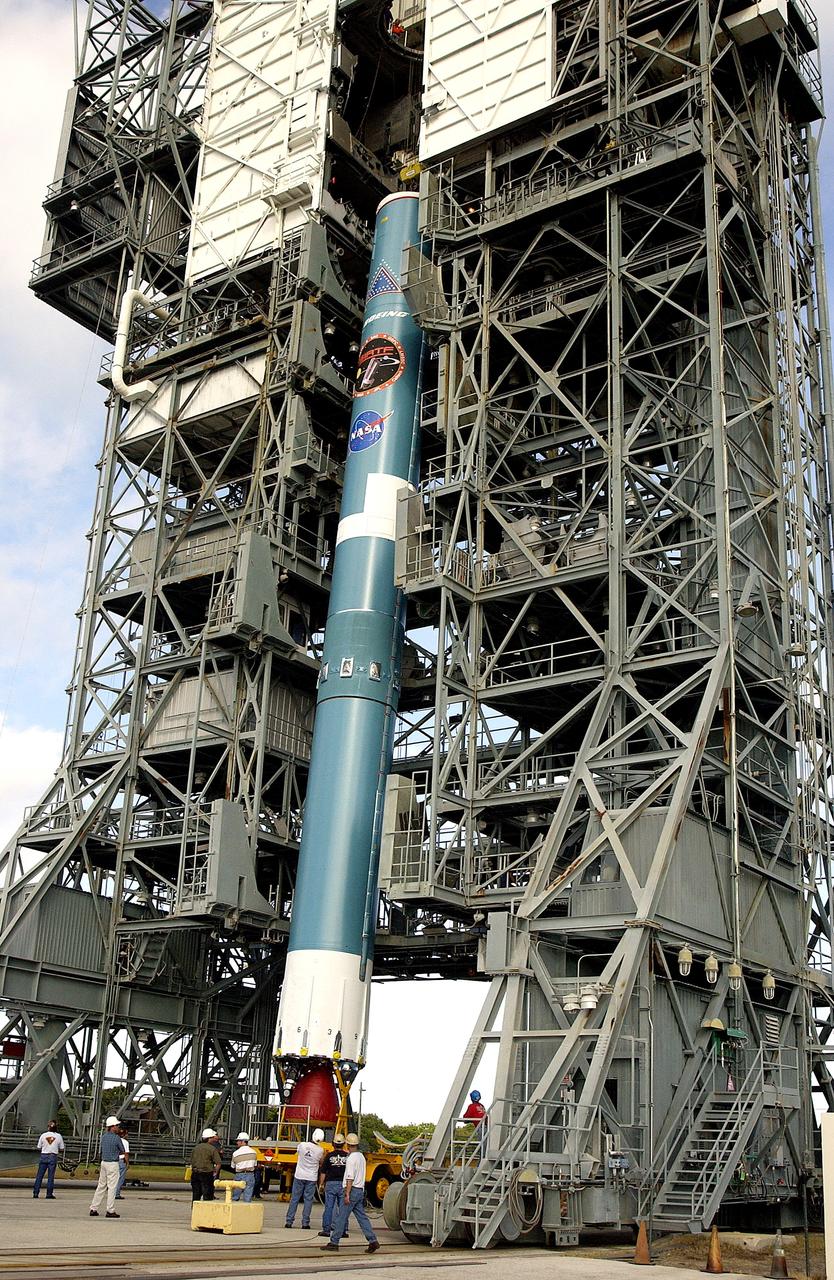
KENNEDY SPACE CENTER, FLA. -   On Launch Complex 17-B, Cape Canaveral Air Force Station, the first stage of a Delta II rocket is nearly erect for its move into the mobile service tower.  The rocket is being erected to launch the Space InfraRed Telescope Facility (SIRTF).  Consisting of an 0.85-meter telescope and three cryogenically cooled science instruments, SIRTF is one of NASA's largest infrared telescopes to be launched.  SIRTF will obtain images and spectra by detecting the infrared energy, or heat, radiated by objects in space. Most of this infrared radiation is blocked by the Earth's atmosphere and cannot be observed from the ground.
KENNEDY SPACE CENTER, FLA. - On Launch Complex 17-B, Cape Canaveral Air Force Station, the first stage of a Delta II rocket is nearly erect for its move into the mobile service tower. The rocket is being erected to launch the Space InfraRed Telescope Facility (SIRTF). Consisting of an 0.85-meter telescope and three cryogenically cooled science instruments, SIRTF is one of NASA's largest infrared telescopes to be launched. SIRTF will obtain images and spectra by detecting the infrared energy, or heat, radiated by objects in space. Most of this infrared radiation is blocked by the Earth's atmosphere and cannot be observed from the ground.
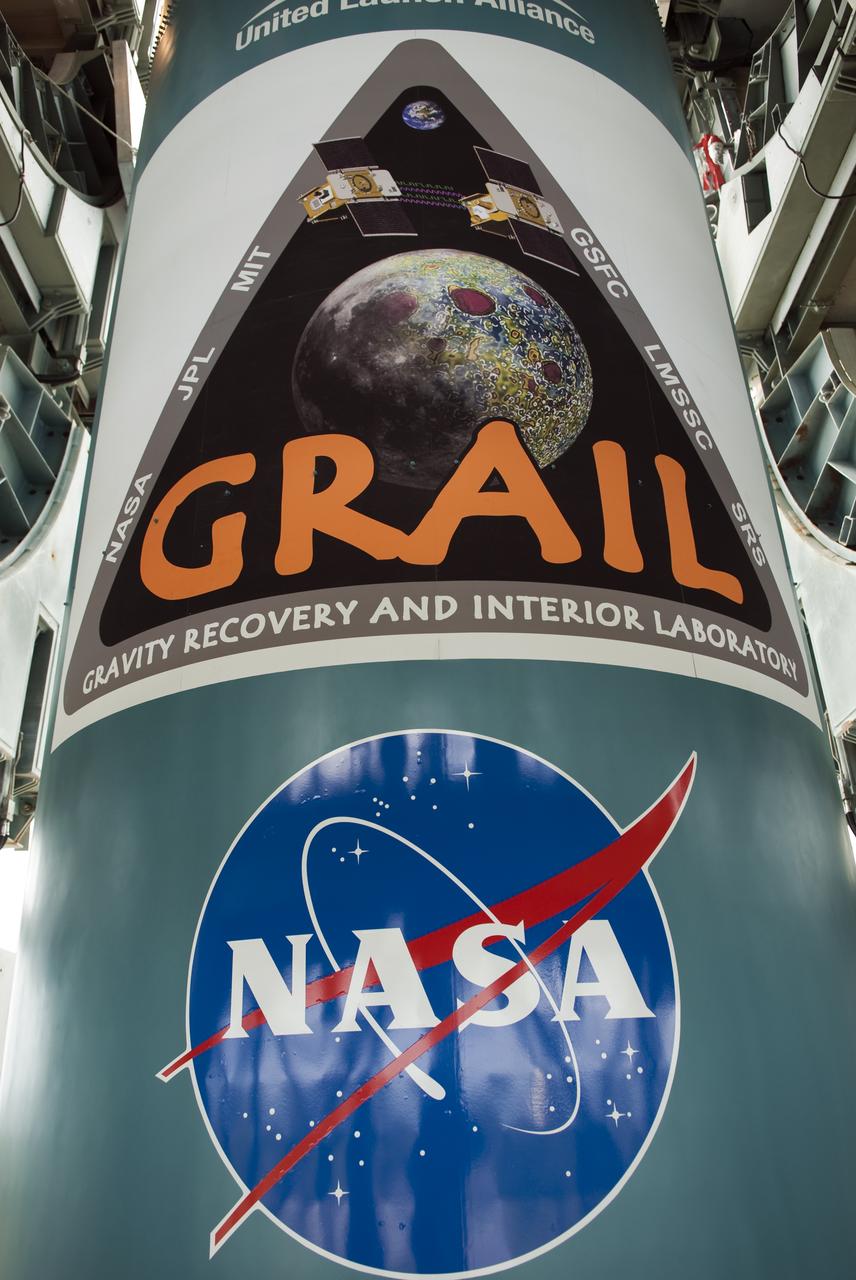
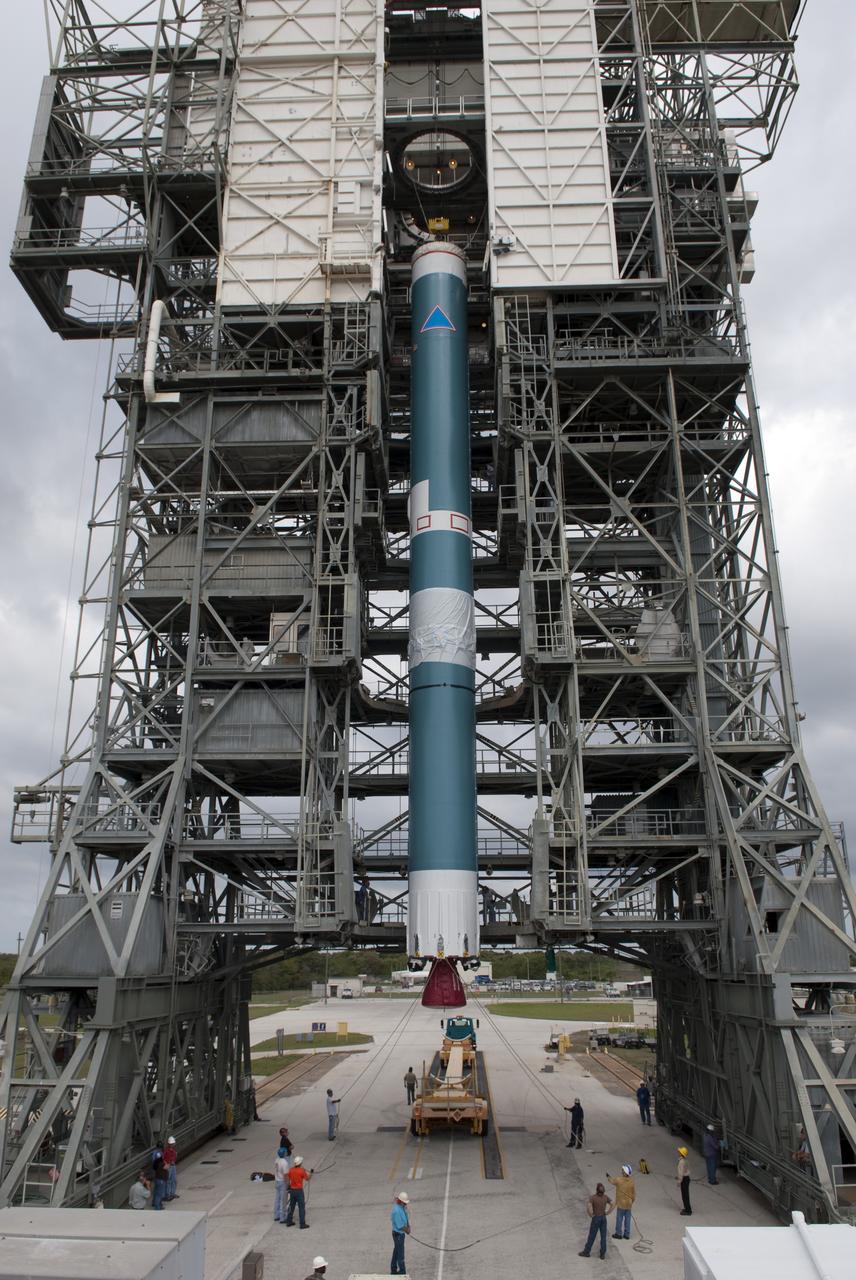
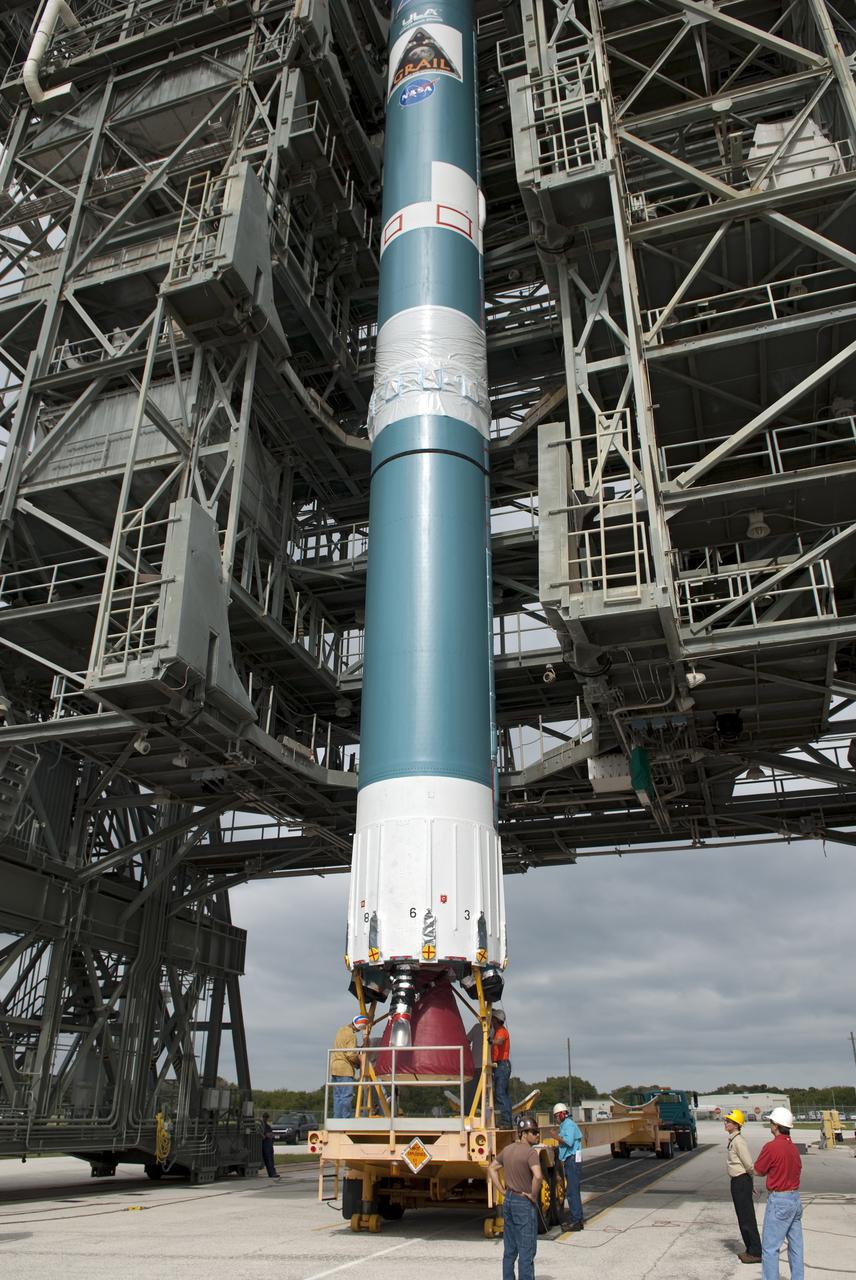
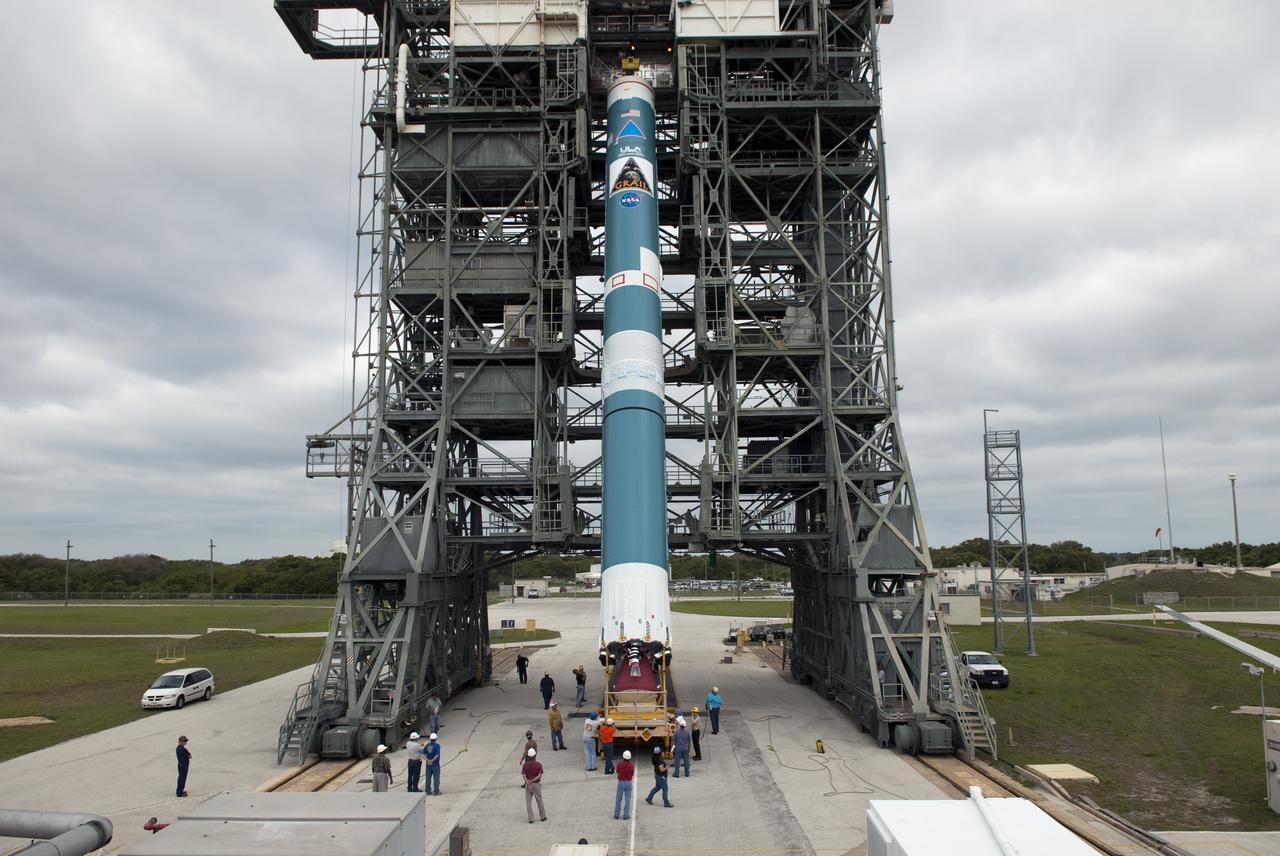
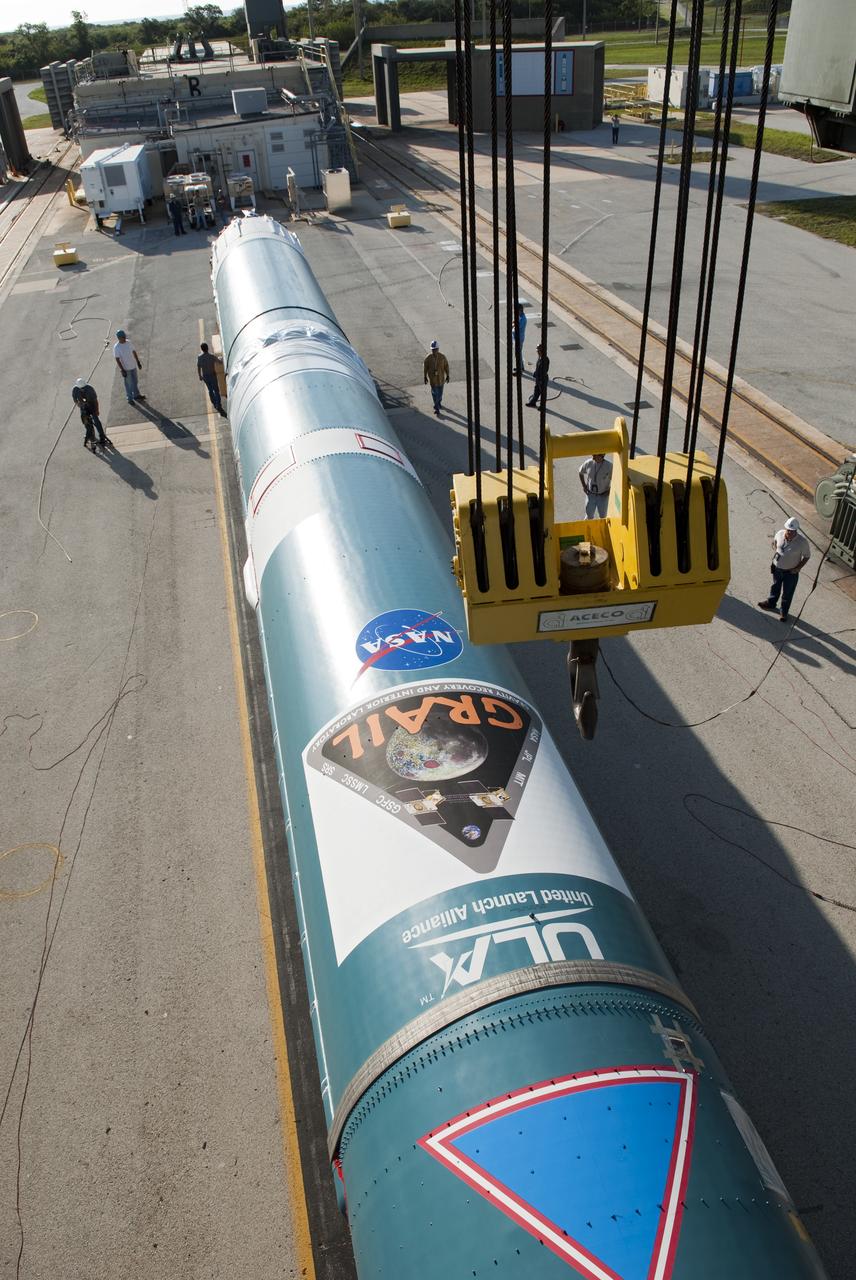
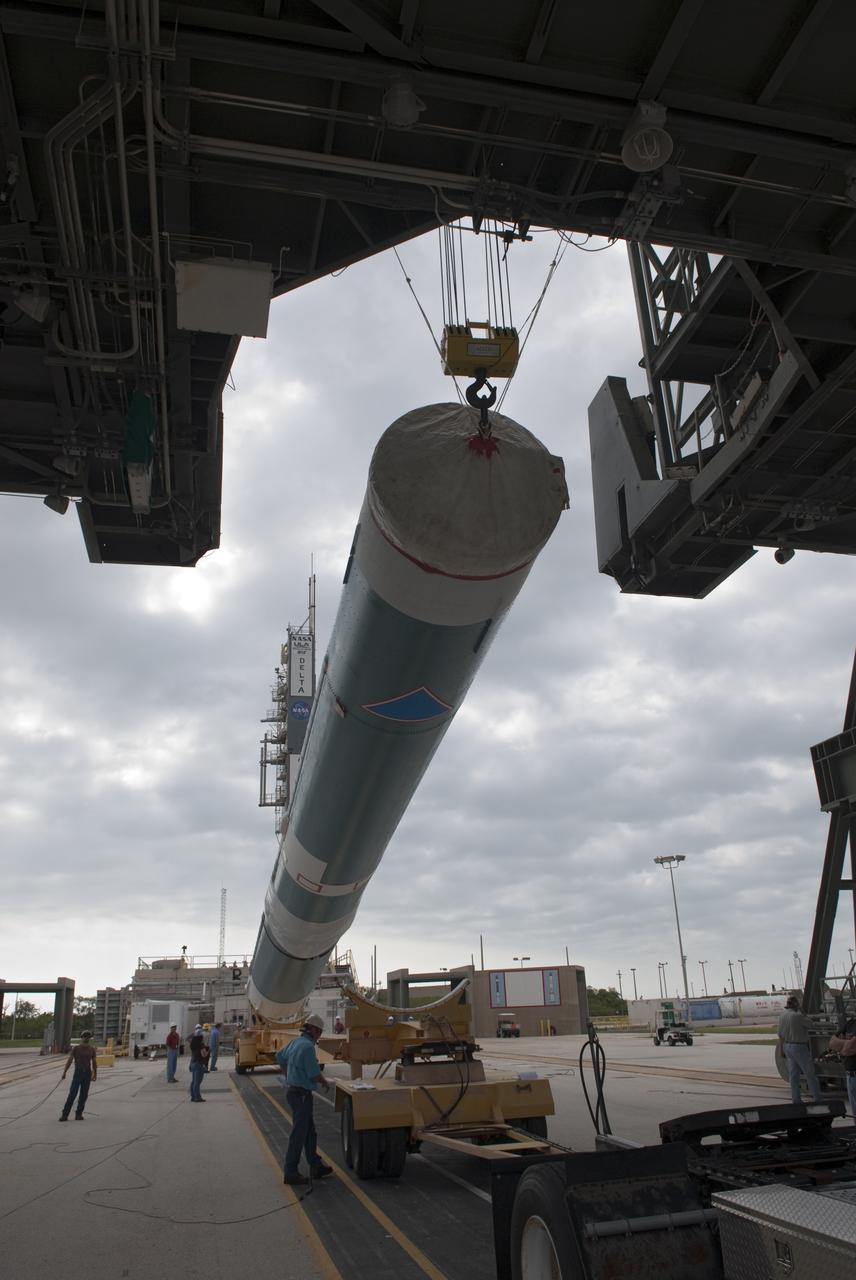
GRAIL - 1st Stage Booster Arrival & Erection
2011-2798
GRAIL - 1st Stage Booster Arrival & Erection
2011-2795
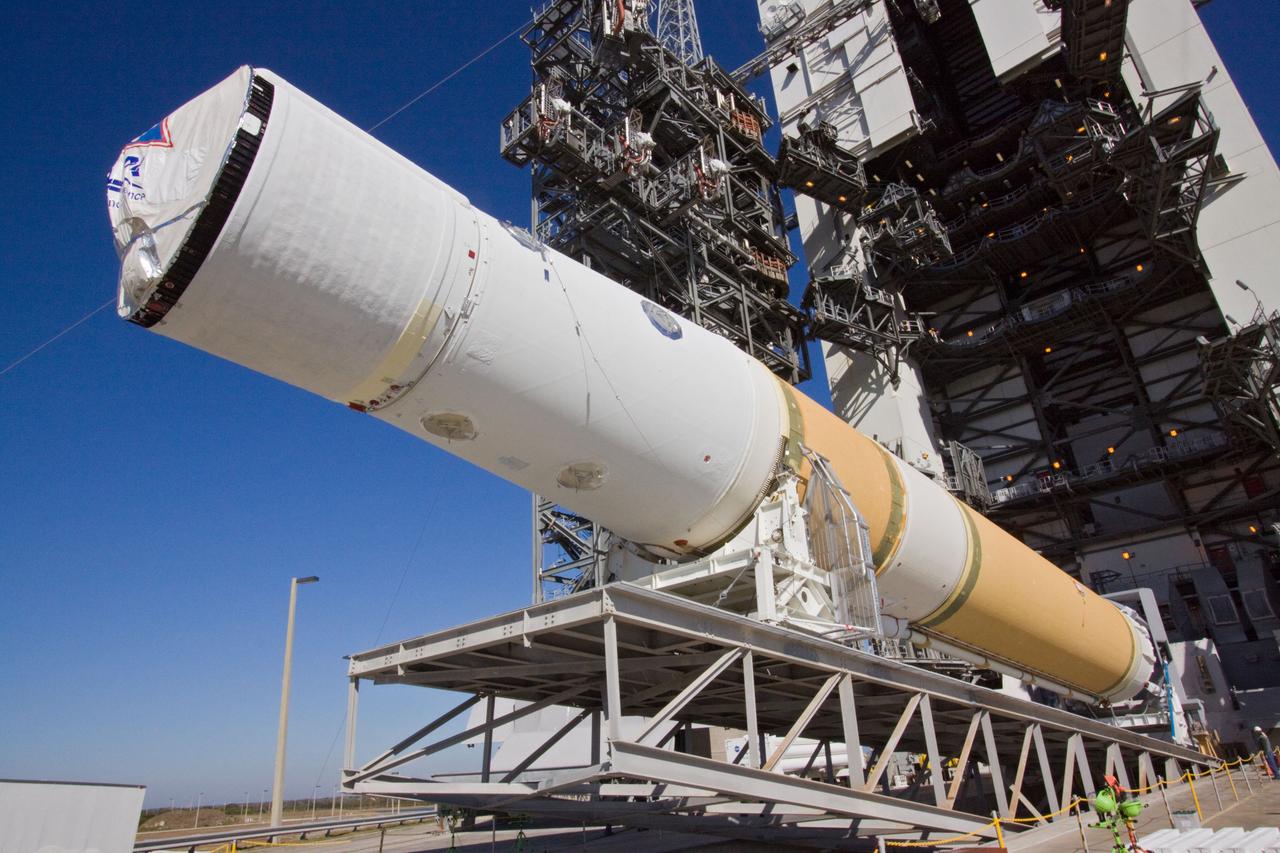
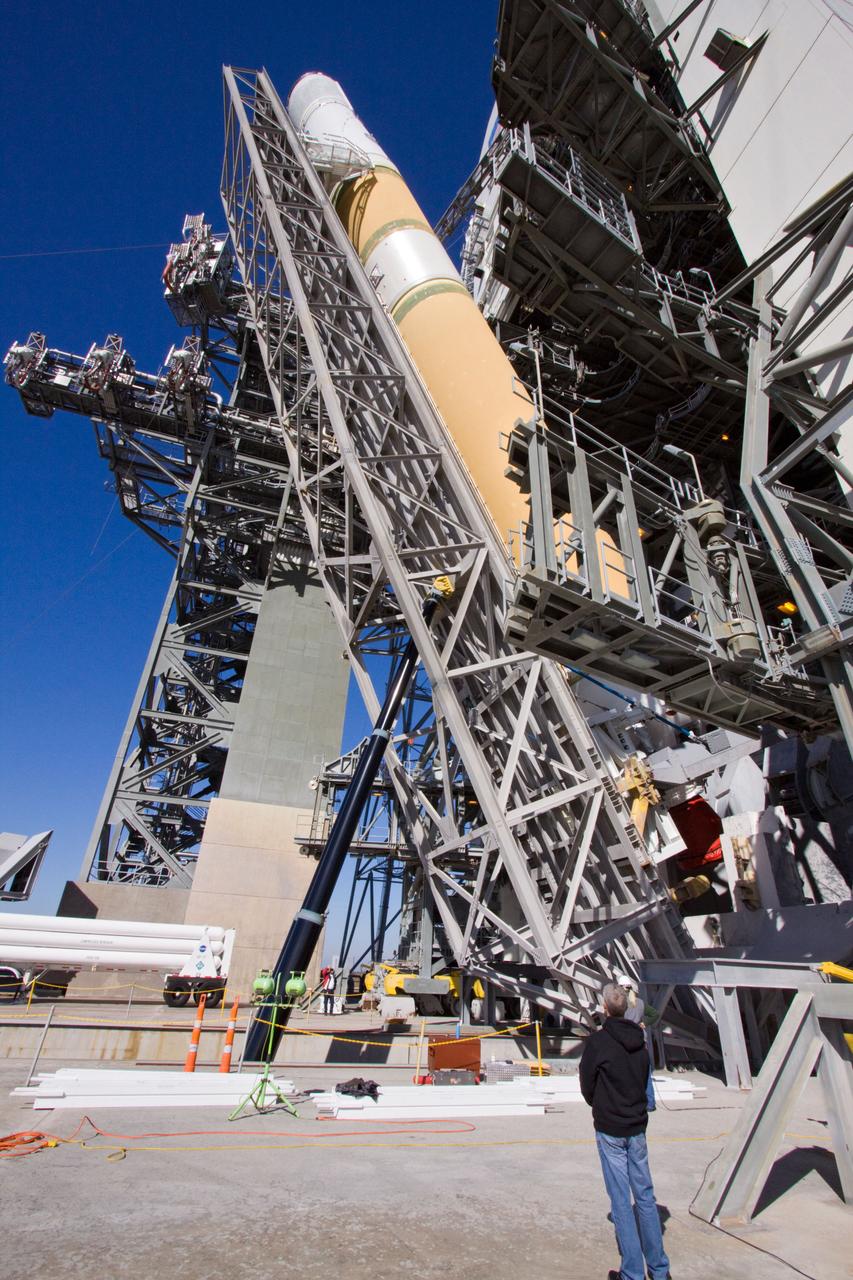
GOES-P DELTA IV BOOSTER ERECTION
2010-1219
GRAIL - 1st Stage Booster Arrival & Erection
2011-2788
GOES-P DELTA IV BOOSTER ERECTION
2010-1221
GOES-P DELTA IV BOOSTER ERECTION
2010-1220
GRAIL - 1st Stage Booster Arrival & Erection
2011-2789
GRAIL - 1st Stage Booster Arrival & Erection
2011-2797
GRAIL - 1st Stage Booster Arrival & Erection
2011-2794
GOES-P DELTA IV BOOSTER ERECTION
2010-1224
GRAIL - 1st Stage Booster Arrival & Erection
2011-2800
GOES-P DELTA IV BOOSTER ERECTION
2010-1225
GRAIL - 1st Stage Booster Arrival & Erection
2011-2793
GOES-P DELTA IV BOOSTER ERECTION
2010-1223
GRAIL - 1st Stage Booster Arrival & Erection
2011-2792
GOES-P DELTA IV BOOSTER ERECTION
2010-1222
GRAIL - 1st Stage Booster Arrival & Erection
2011-2786
GRAIL - 1st Stage Booster Arrival & Erection
2011-2799
GOES-P DELTA IV BOOSTER ERECTION
2010-1226
GRAIL - 1st Stage Booster Arrival & Erection
2011-2787
GRAIL - 1st Stage Booster Arrival & Erection
2011-2790
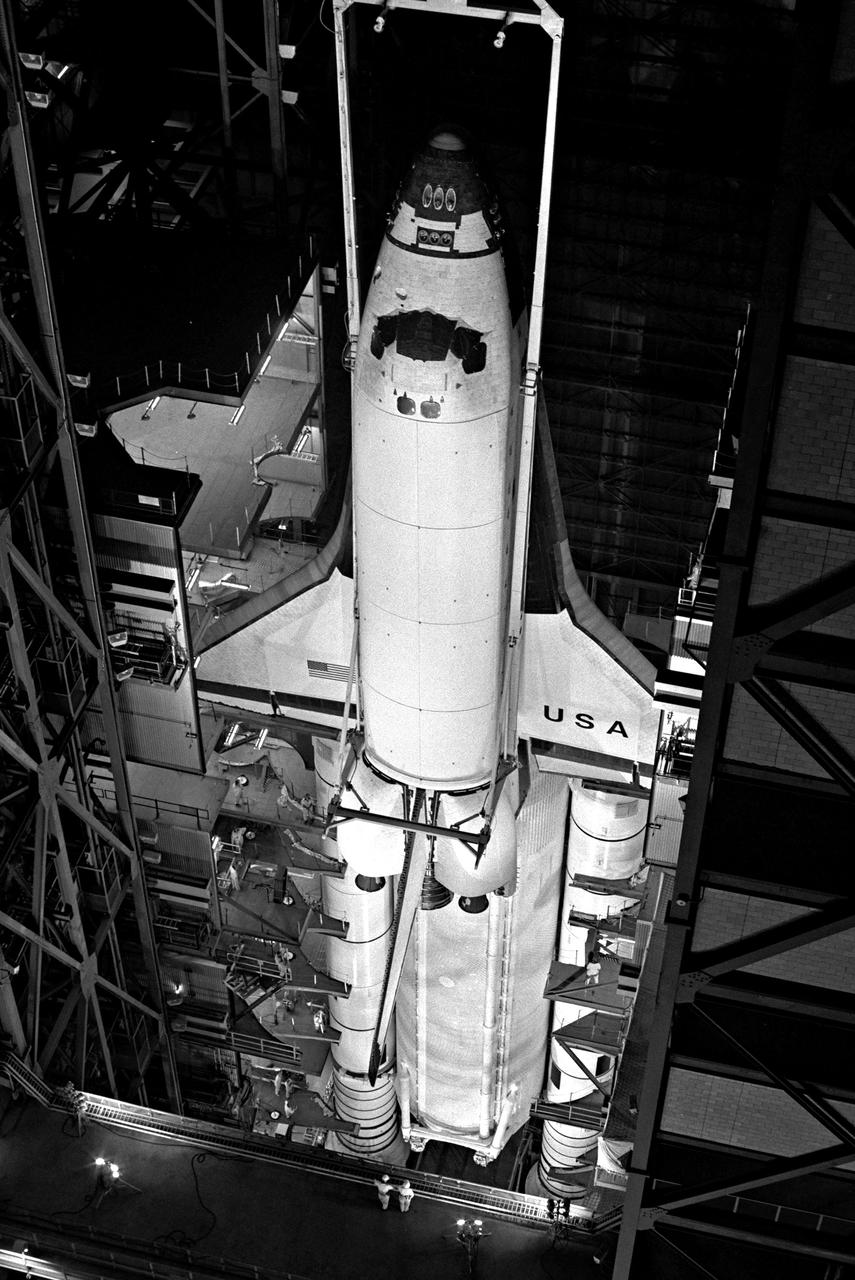
KENNEDY SPACE CENTER, FLA. - Shuttle Orbiter Columbia erection and mate in the Vehicle Assembly Building (VAB).
KSC-80p-0292
S67-15885 (1967) --- Apollo Spacecraft 012 is hoisted to the top of the gantry at Pad 34 during the Apollo/Saturn Mission 204 erection.
APOLLO SPACECRAFT (A/S)- 012 - GANTRY - PAD 34 - CAPE
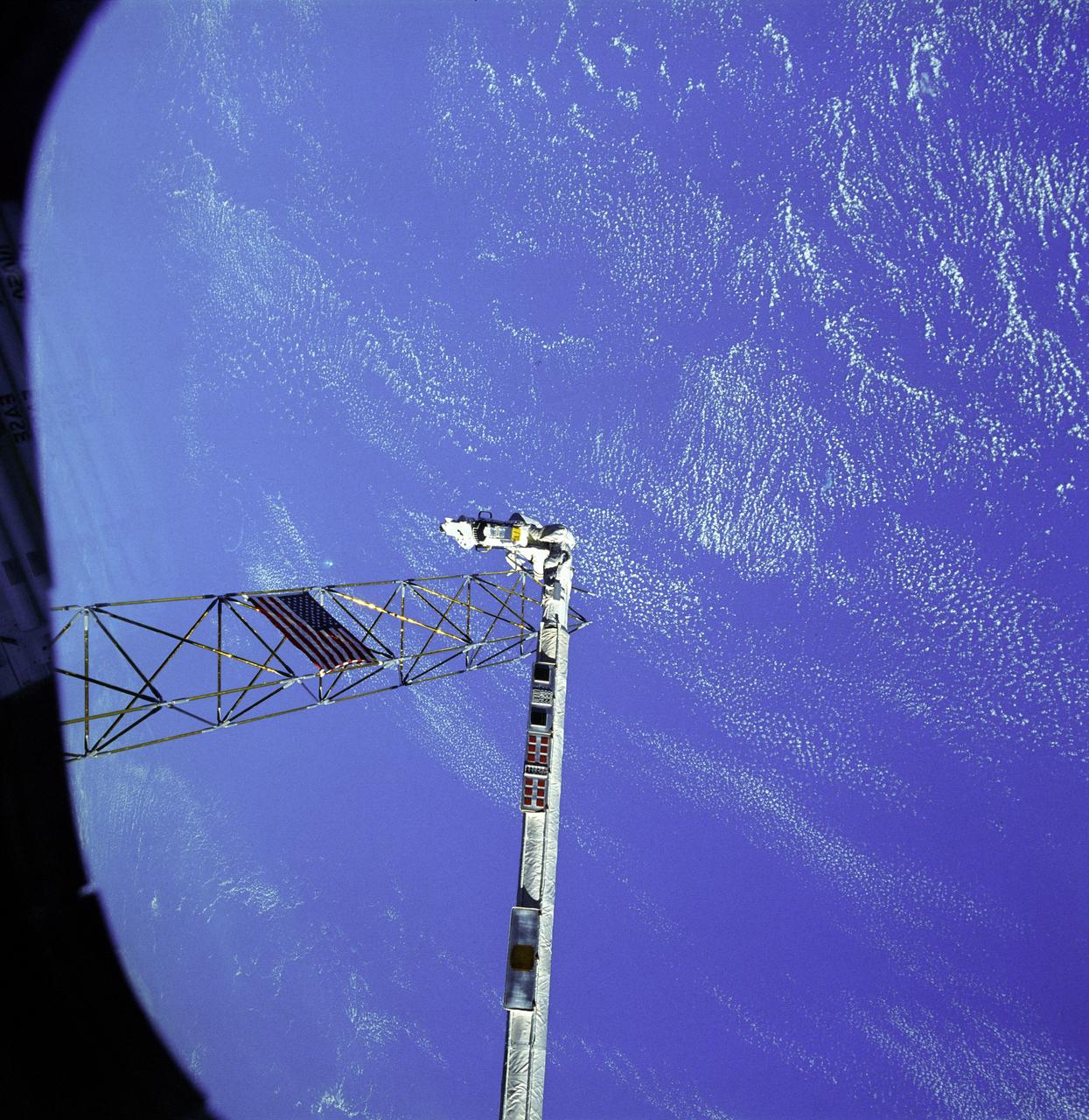
61B-41-019 (26 Nov. ? 3 Dec. 1985) --- Astronaut Jerry L. Ross, one of NASA flight 6l-B's mission specialists, approaches a tower device just erected by Ross and astronaut Sherwood (Woody) C. Spring during the second of two extravehicular activities. The tower was called Assembly Concept for Construction of Erectable Space Structures. Ross is secured on a foot restraint device connected to the Canadian-built remote manipulator system (RMS) arm aboard the Earth orbiting Atlantis.
Astronaut Jerry Ross on RMS holds on to ACCESS device
Fabricated steel began arriving by truck Oct. 24 for construction of the A-3 Test Stand that will be used to test the engine for the nation's next generation of moon rockets. Within days workers from Lafayette Steel Erector Inc. began assembling the 16 steel stages needed on the foundation and footings poured in the previous year.
Steel erected at A-3 Test Stand
CAPE CANAVERAL, Fla. -- Erection of the first stage of the Delta launch vehicle for Symphonie-B at Complex 17-A on Cape Canaveral Air Force Station.  Photo credit: NASA
KSC-75PC-0345
The Soyuz rocket is erected at the launch pad at the Baikonur Cosmodrome in Baikonur, Kazakhstan, Thursday, April 24, 2003. Expedition 7 is scheduled to launch onboard the Soyuz on Saturday April 26, 2003. Photo credit: (NASA/Bill Ingalls)
Expedition 7 Rollout
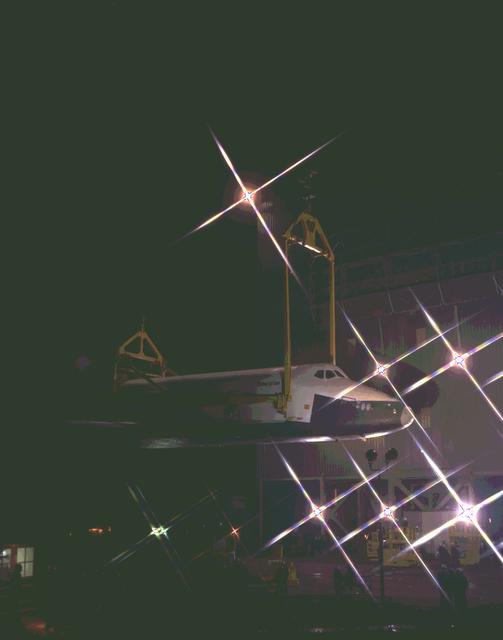
Shown here is the Shuttle Orbiter Enterprise being erected, just prior to installation into the Marshall Space Flight Center (MSFC) Dynamic Test Stand, for a Mated Vertical Ground Vibration Test (MVGVT).
Space Shuttle Projects
The Soyuz rocket is erected at the launch pad at the Baikonur Cosmodrome in Baikonur, Kazakhstan, Thursday, April 24, 2003. Expedition 7 is scheduled to launch onboard the Soyuz on Saturday April 26, 2003. Photo credit: (NASA/Bill Ingalls)
Expedition 7 Rollout
April 24, 2003, Baikonur Cosmodrome, Kazakhstan.  The Soyuz rocket is erected at the launch pad.  Expedition Seven is scheduled to launch onboard the Soyuz this Saturday April 26, 2003.  Photo Credit: "NASA/Bill Ingalls"
03pd1272
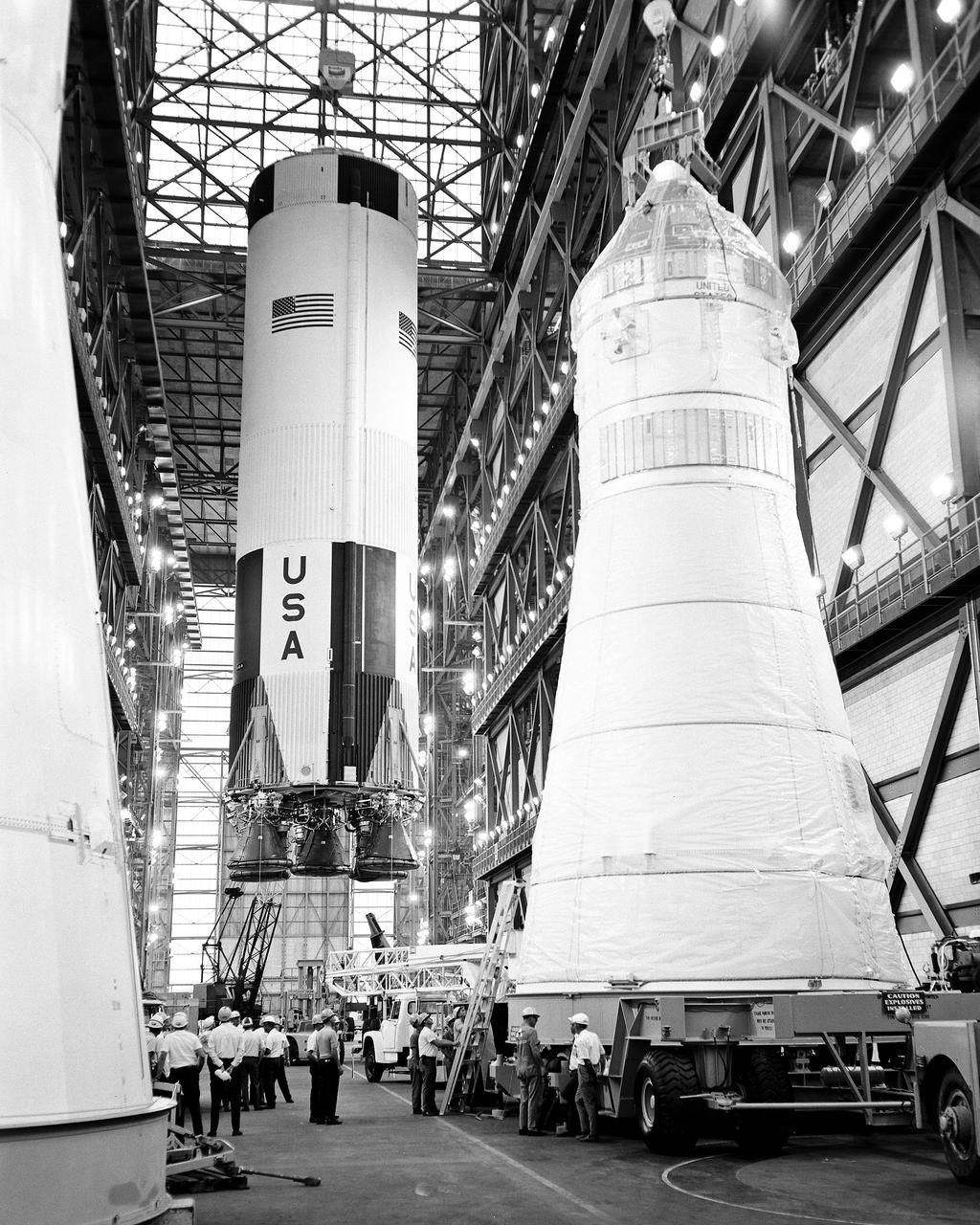
CAPE CANAVERAL, Fla. – The first stage of the Apollo 10 Saturn V space vehicle is hoisted above the transfer aisle in preparation for erection on a mobile launcher within High Bay 2 of the Vehicle Assembly Building. The erection of the 138-foot-long stage marked the first use of mobile launcher 3 and high bay 2. Apollo 10 will be piloted by astronauts Thomas Stafford, John Young and Eugene Cernan. In the foreground are the mated command, service and lunar modules the latter enclosed within the adapter for the Apollo 9 flight of James McDivitt, David Scott and Russel Schweickart.    Photo credit: NASA
KSC-68P-0575
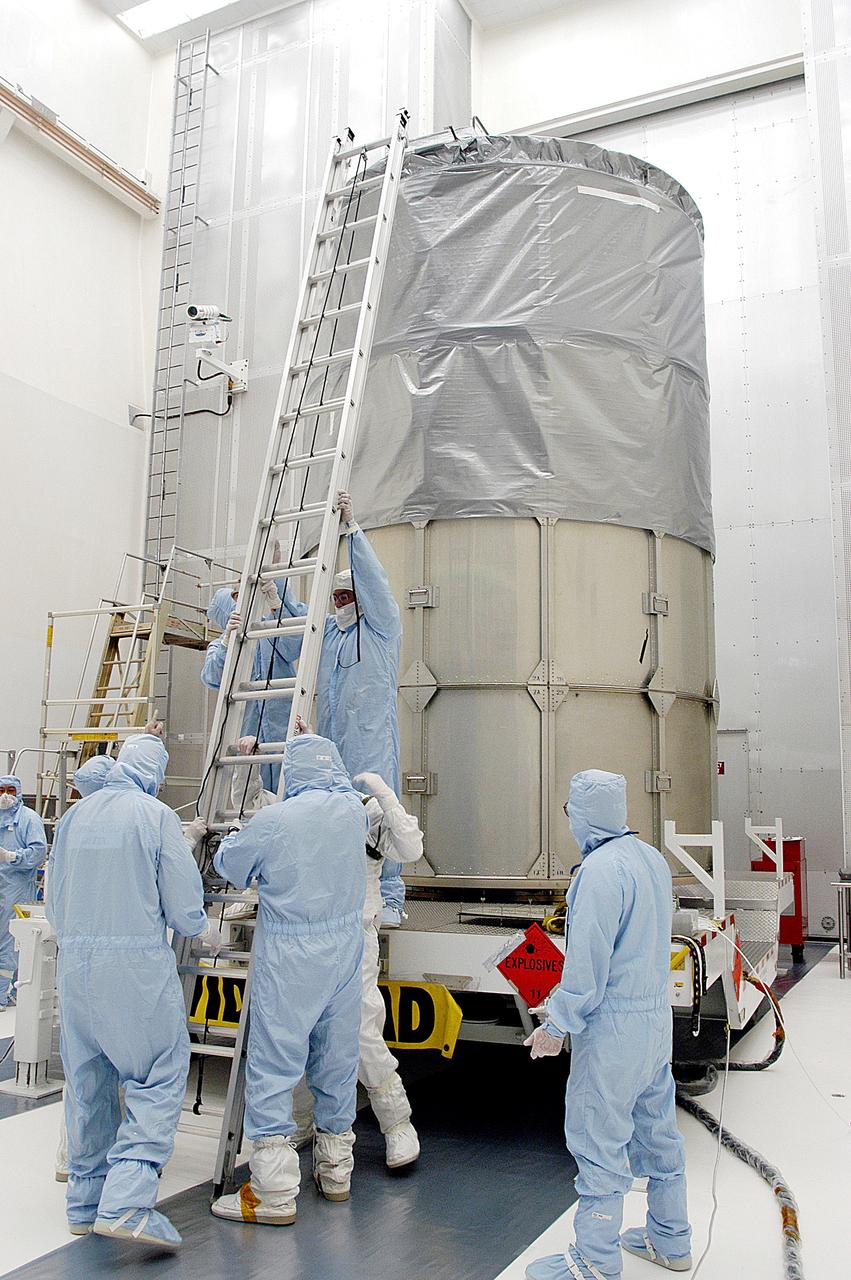
KENNEDY SPACE CENTER, FLA. -  Workers in NASA Spacecraft Hangar AE erect a ladder to reach the top of the Space Infrared Telescope Facility (SIRTF), which has been returned to the hangar from the launch pad.   SIRTF will remain in the clean room until it returns to the pad in early August.  One of NASA's largest infrared telescopes to be launched, SIRTF will obtain images and spectra by detecting the infrared energy, or heat, radiated by objects in space.
KENNEDY SPACE CENTER, FLA. - Workers in NASA Spacecraft Hangar AE erect a ladder to reach the top of the Space Infrared Telescope Facility (SIRTF), which has been returned to the hangar from the launch pad. SIRTF will remain in the clean room until it returns to the pad in early August. One of NASA's largest infrared telescopes to be launched, SIRTF will obtain images and spectra by detecting the infrared energy, or heat, radiated by objects in space.
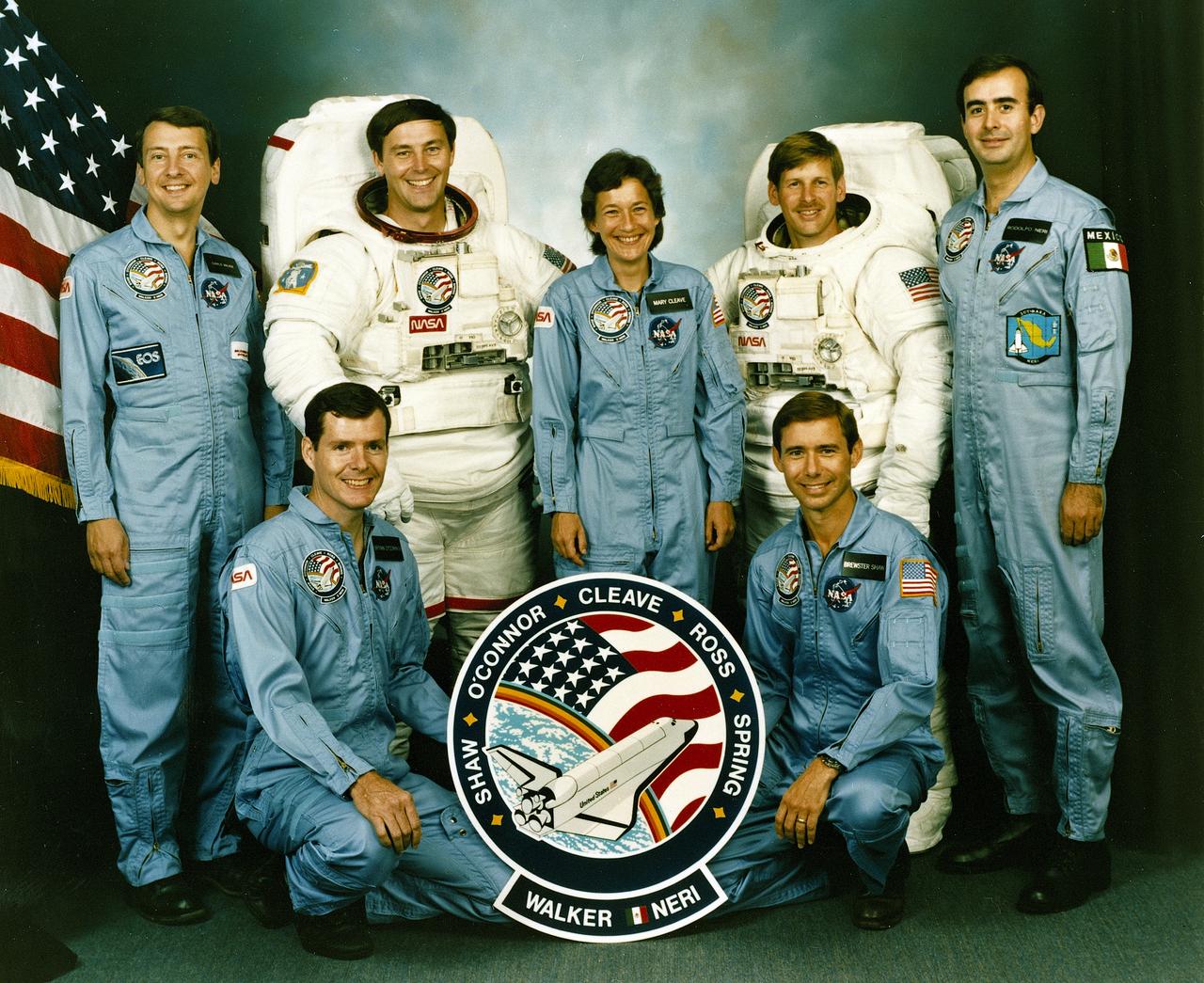
The crew assigned to the STS-61B mission included (kneeling left to right) Bryan D. O’conner, pilot; and Brewster H. Shaw, commander. On the back row, left to right, are Charles D. Walker, payload specialist; mission specialists Jerry L. Ross, Mary L. Cleave, and Sherwood C. Spring; and Rodolpho Neri Vela, payload specialist.  Launched aboard the Space Shuttle Atlantis November 28, 1985 at 7:29:00 pm (EST), the STS-61B mission’s primary payload included three communications satellites: MORELOS-B (Mexico); AUSSAT-2 (Autralia); and SATCOM KU-2 (RCA Americom. Two experiments were conducted to test assembling erectable structures in space: EASE (Experimental Assembly of Structures in Extravehicular Activity), and ACCESS (Assembly Concept for Construction of Erectable Space Structure). In a joint venture between NASA/Langley Research Center in Hampton, VA and Marshall Space Flight Center (MSFC), the Assembly Concept for Construction of Erectable Space Structures (ACCESS) was developed and demonstrated at MSFC's Neutral Buoyancy Simulator (NBS). The primary objective of this experiment was to test the ACCESS structural assembly concept for suitability as the framework for larger space structures and to identify ways to improve the productivity of space construction.
n/a
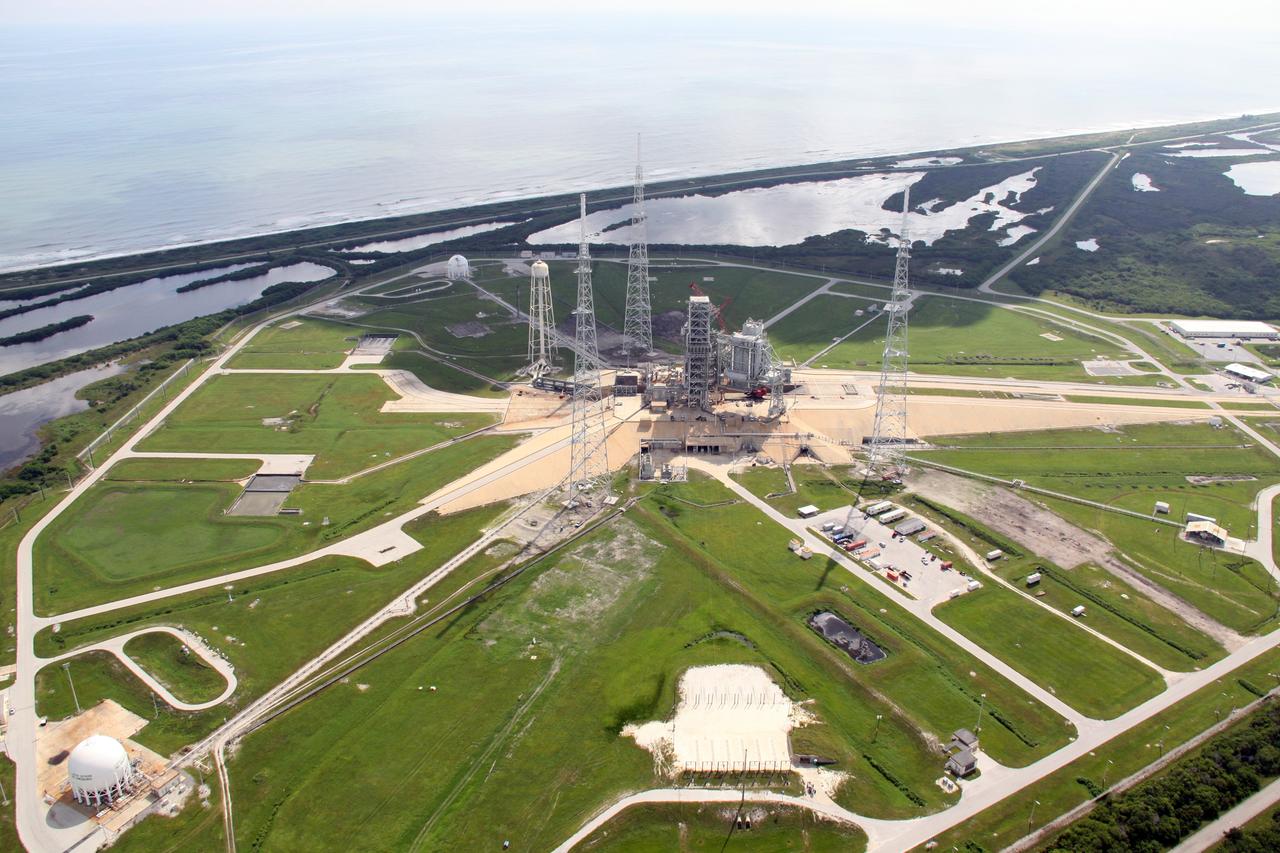
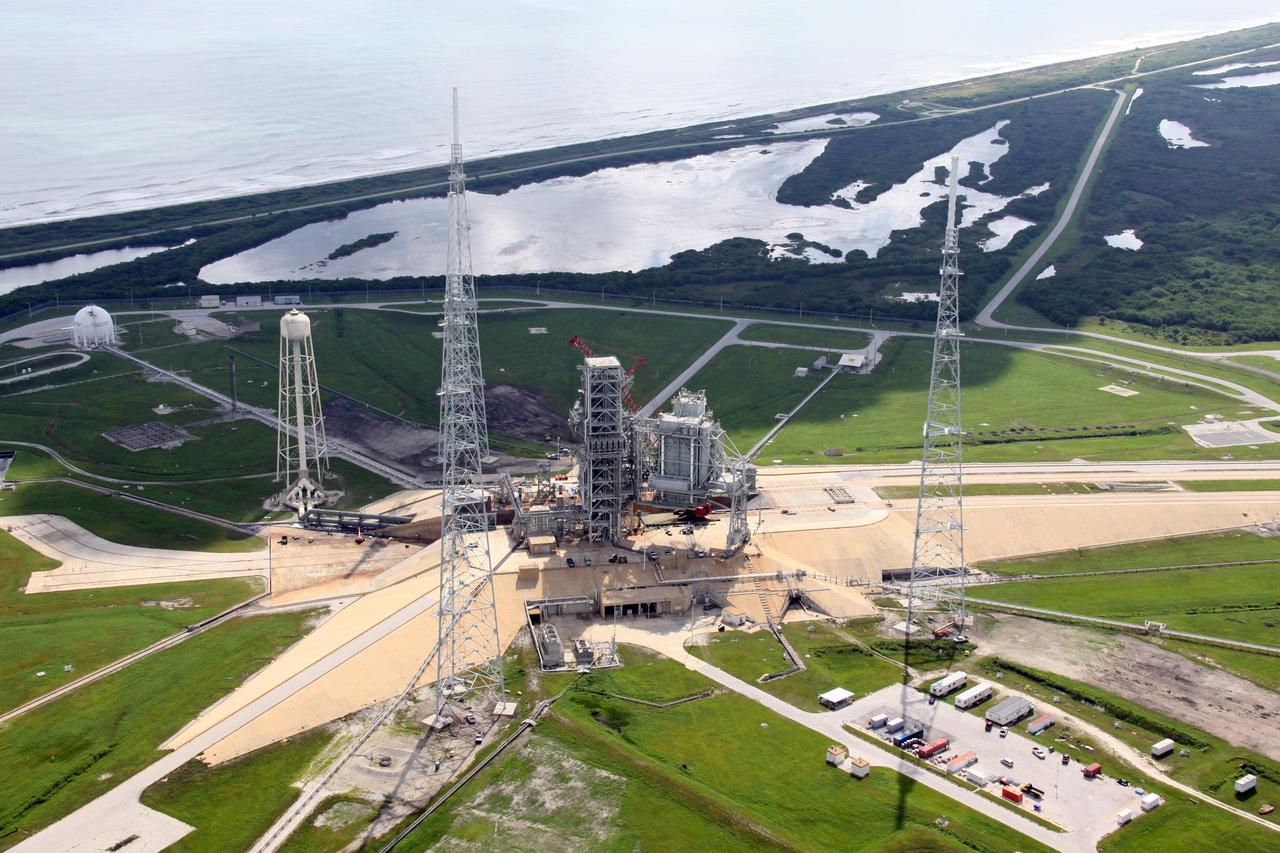
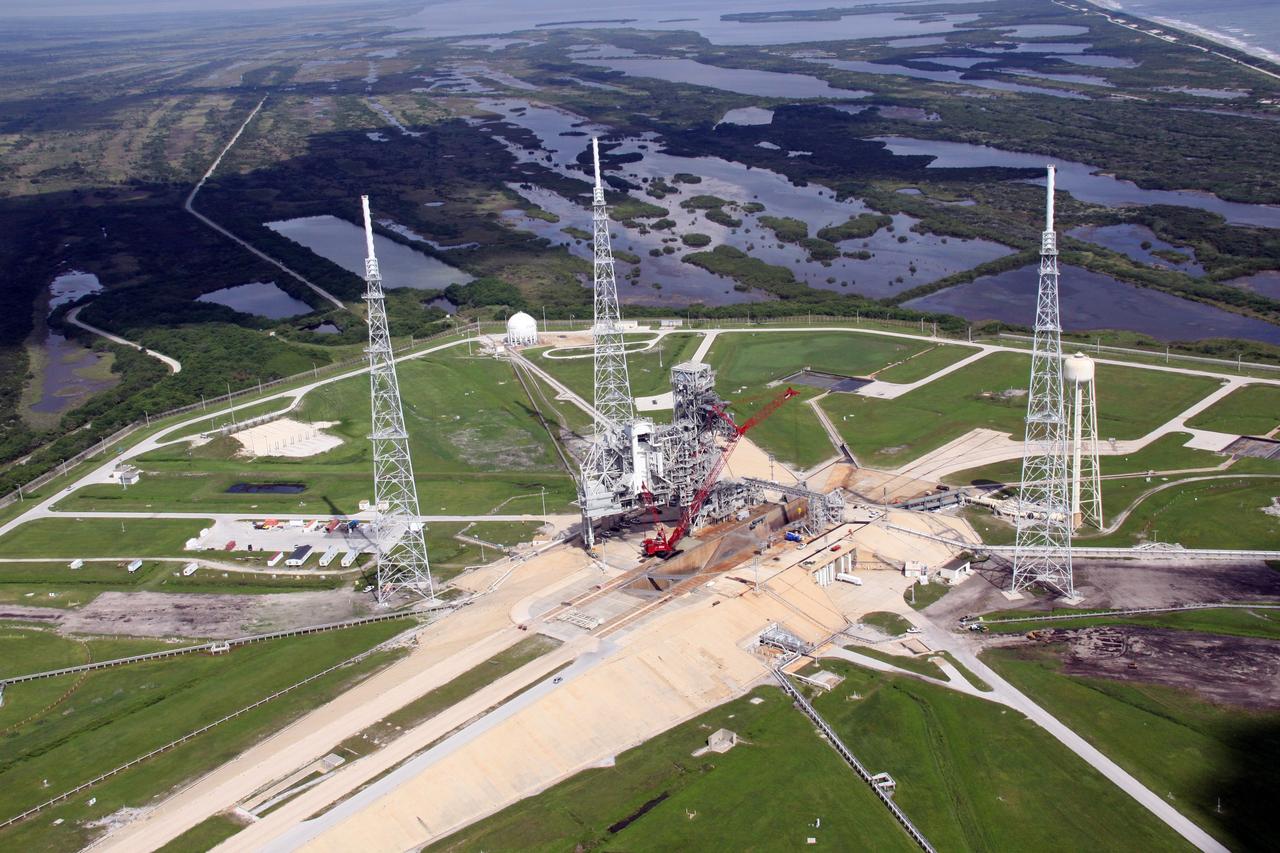
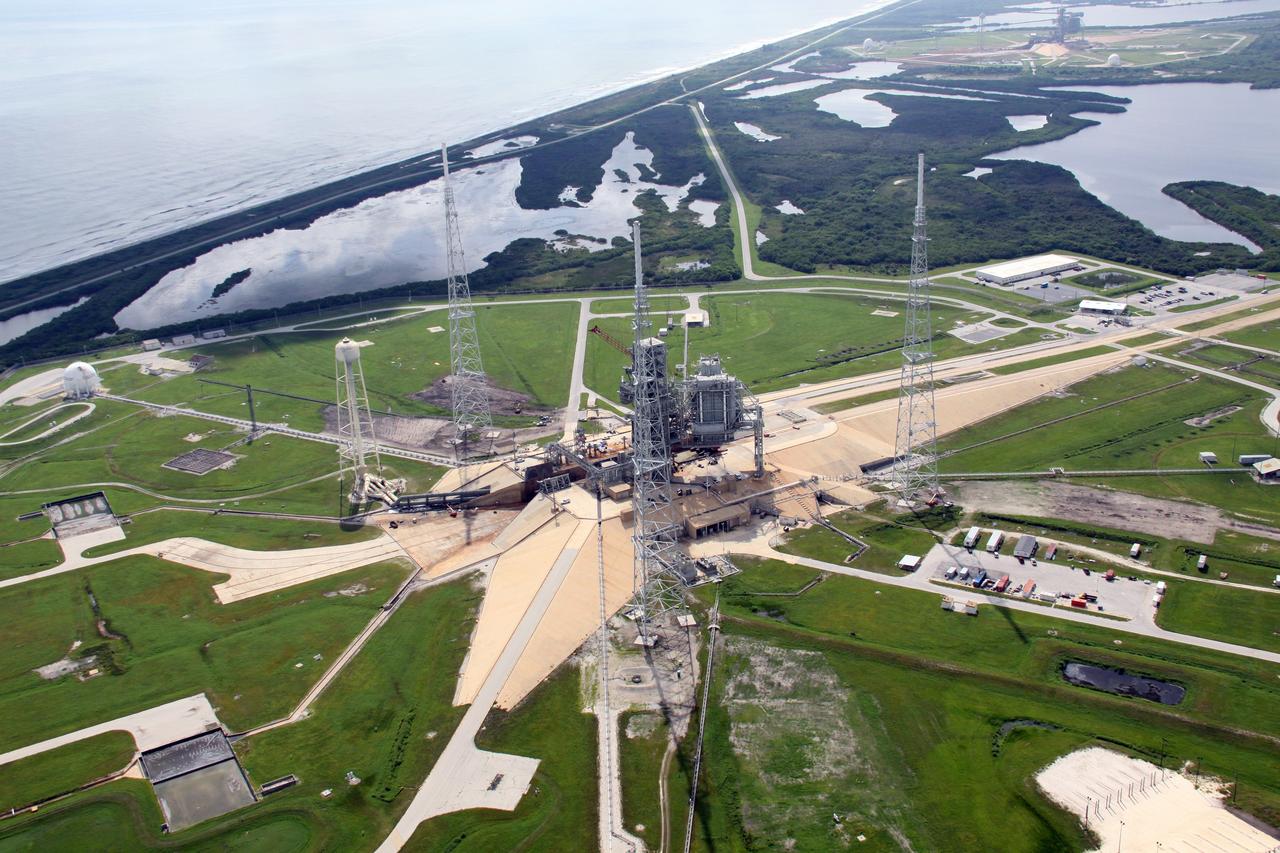
CAPE CANAVERAL, Fla. –  An aerial view of NASA Kennedy Space Center's Launch Pad 39B. The pad is surrounded by lightning towers erected for NASA's Constellation Program, which will use the pad for Ares rocket launches.  At the top is the Atlantic Ocean.  Photo credit: NASA/Troy Cryder
KSC-2009-5003
CAPE CANAVERAL, Fla. –  An aerial view of NASA Kennedy Space Center's Launch Pad 39B. The pad is surrounded by lightning towers erected for NASA's Constellation Program, which will use the pad for Ares rocket launches.  At the top is the Atlantic Ocean.   Photo credit: NASA/Troy Cryder
KSC-2009-5002
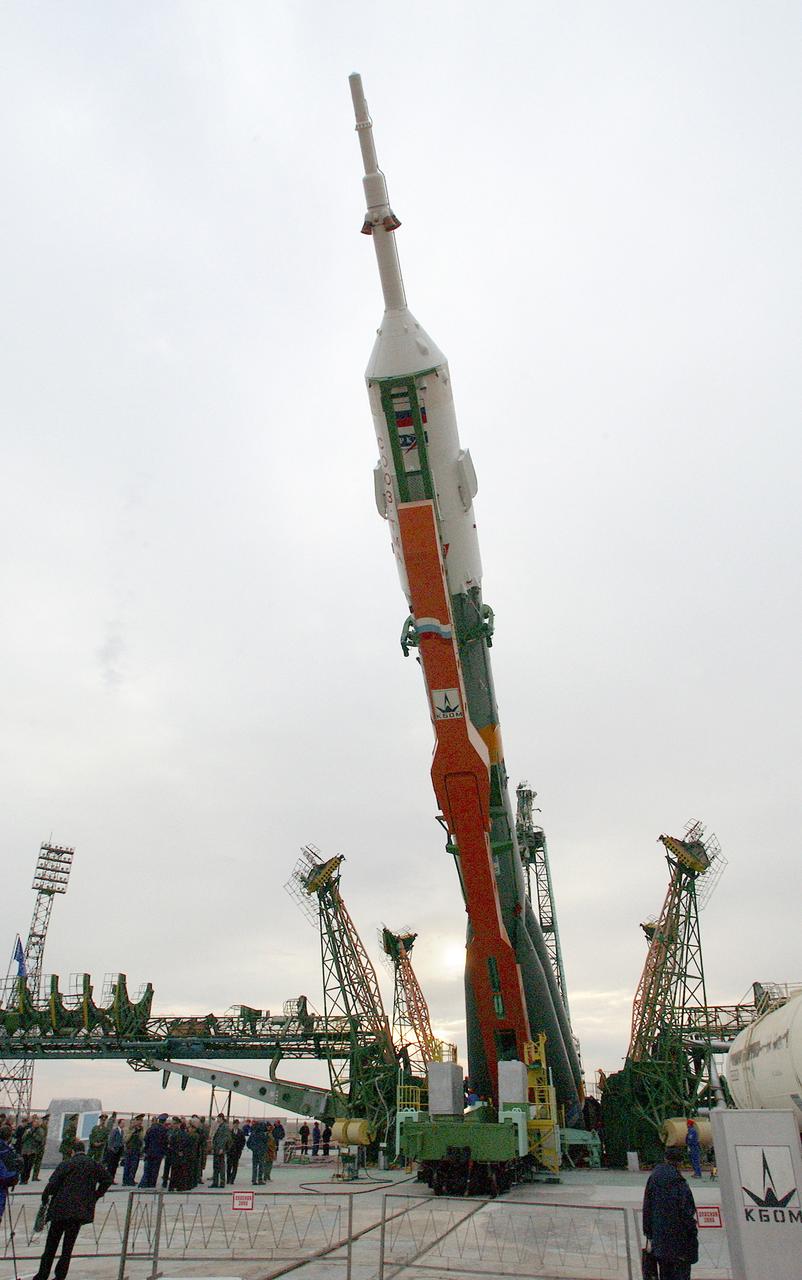
CAPE CANAVERAL, Fla. – The Soyuz rocket is erected into position at the launch pad March 24, 2009, at the Baikonur Cosmodrome in Kazakhstan.  The Soyuz is scheduled to launch the crew of Expedition 19 and a spaceflight participant on March 26, 2009.  Photo credit: NASA/Bill Ingalls
KSC-2009-2271
JOHNSON SPACE CENTER, HOUSTON, TEXAS  - Surrounded by Man's footprints on the lunar surface, Apollo 11 Lunar Module Pilot Edwin E. Aldrin Jr. erects a solar wind experiment near the Tranquility Base established by the Lunar Module, Eagle.
KSC-as11-40-5964
CAPE CANAVERAL, Fla. –  An aerial view of NASA Kennedy Space Center's Launch Pad 39B. The pad is surrounded by lightning towers erected for NASA's Constellation Program, which will use the pad for Ares rocket launches.  Photo credit: NASA/Troy Cryder
KSC-2009-5004
CAPE CANAVERAL, Fla. – The Soyuz rocket is erected into position at the launch pad March 24, 2009, at the Baikonur Cosmodrome in Kazakhstan.  The Soyuz is scheduled to launch the crew of Expedition 19 and a spaceflight participant on March 26, 2009.  Photo credit: NASA/Bill Ingalls
KSC-2009-2272
JSC2003-E-31961 (24 April 2003) --- The Soyuz rocket is erected at the launch pad at the Baikonur Cosmodrome, Kazakhstan. Expedition Seven is scheduled to launch onboard the Soyuz on Saturday April 26, 2003. Photo credit: NASA/Bill Ingalls.
jsc2003e31961
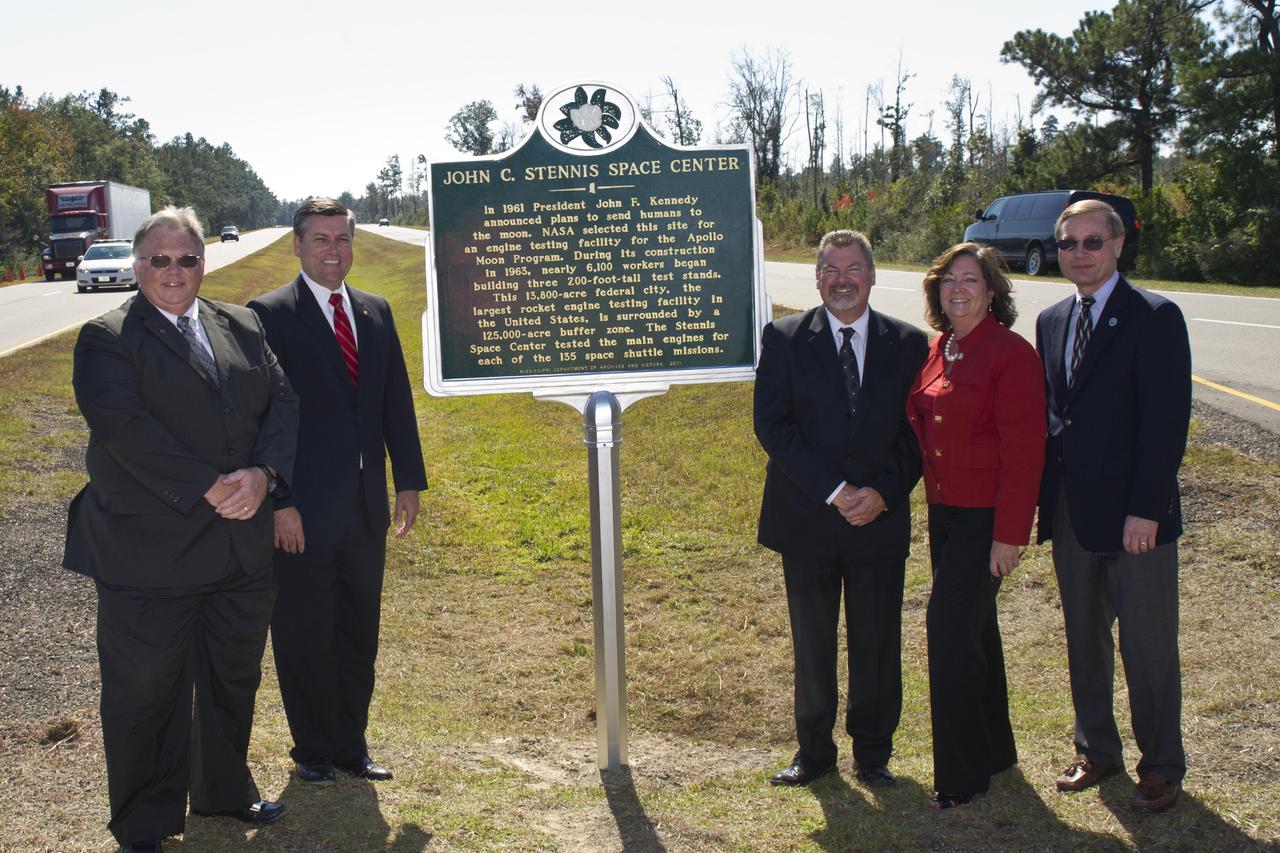
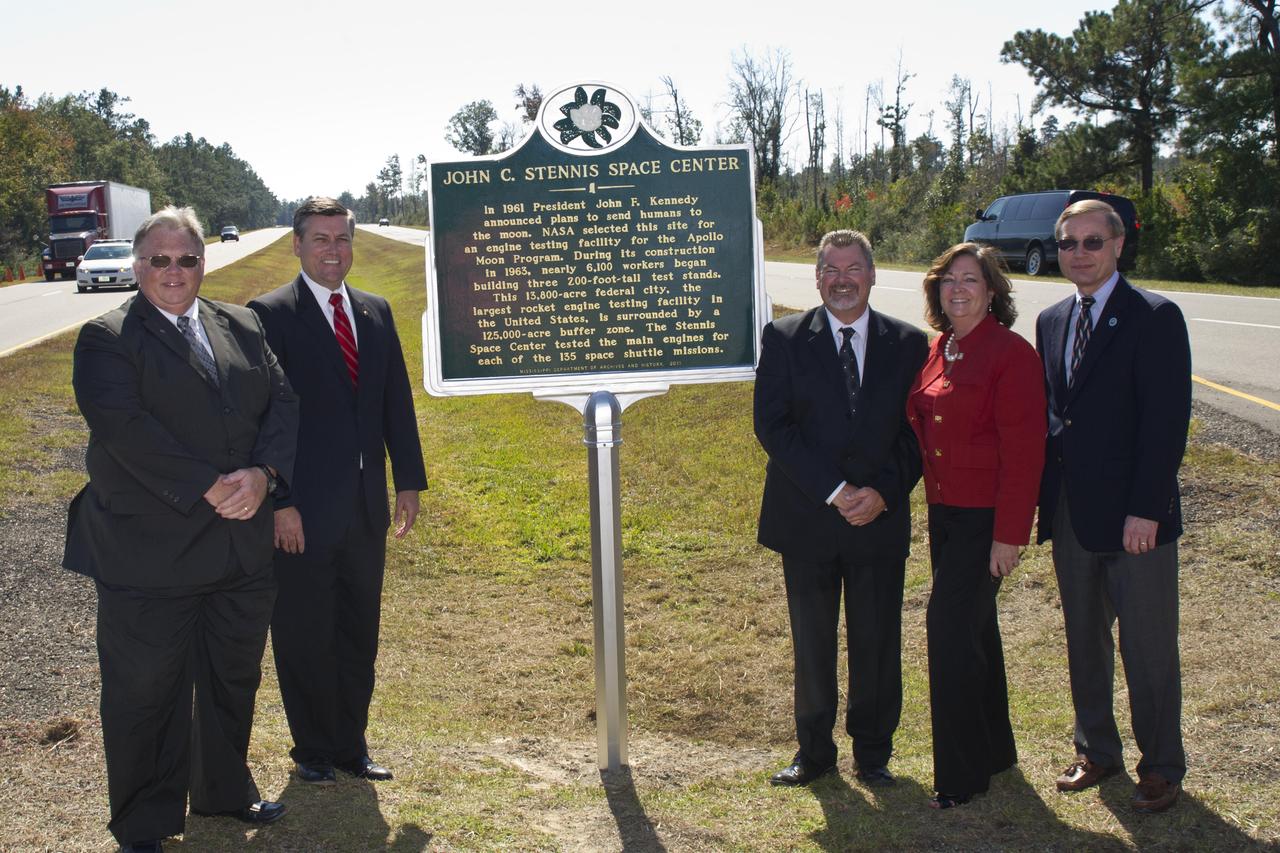
Stennis Space Center Director Patrick Scheuermann (second from left) stands at the historical marker erected by the state of Mississippi in honor of the 50th anniversary of the NASA facility. Joining Scheuermann are: (l to r) Ron Magee, Al Watkins, Tish Williams and Ken P'Pool.
Stennis historical marker
Stennis Space Center Director Patrick Scheuermann (second from left) stands at the historical marker erected by the state of Mississippi in honor of the 50th anniversary of the NASA facility. Joining Scheuermann are: (l to r) Ron Magee, Al Watkins, Tish Williams and Ken P'Pool.
Stennis historical marker
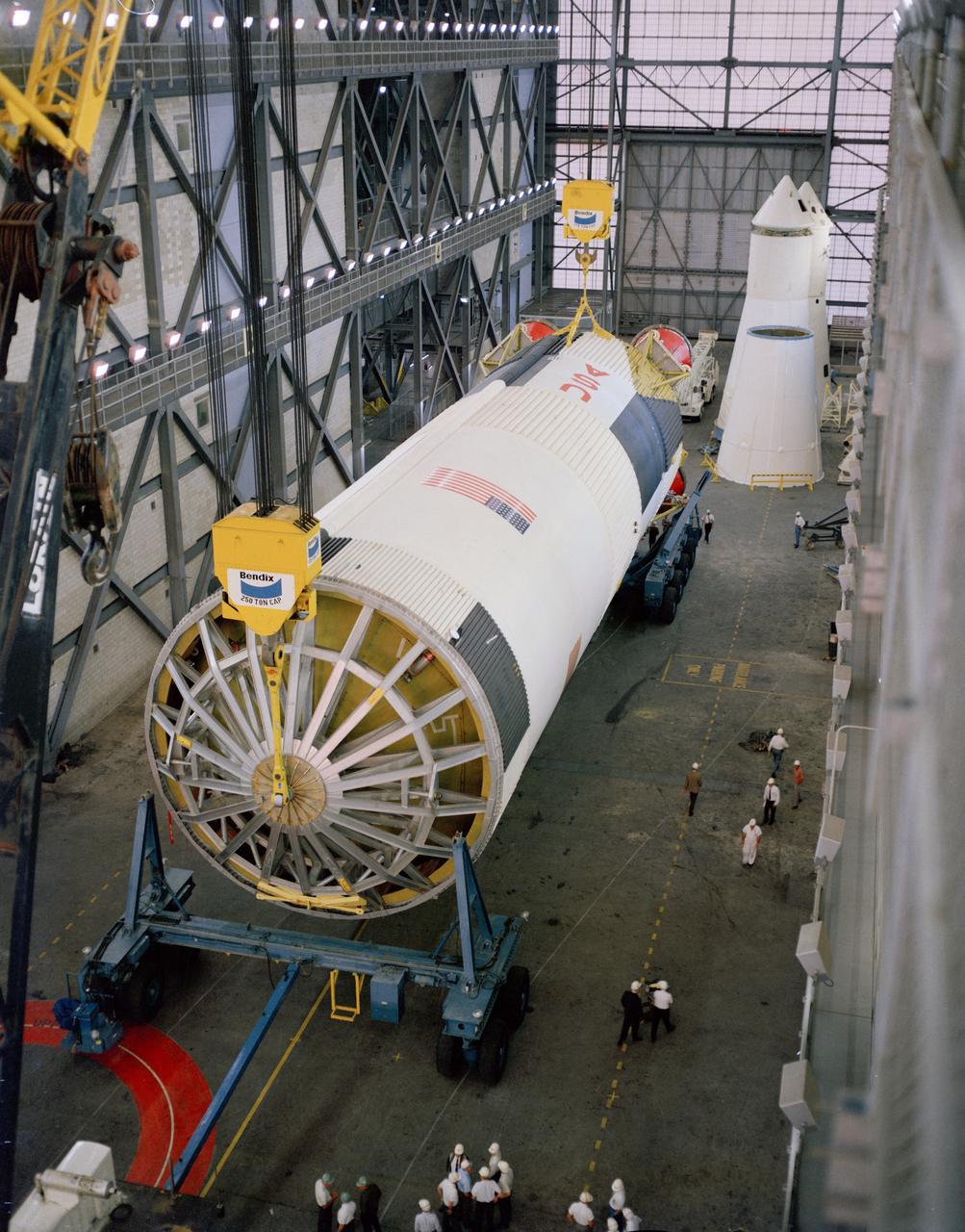
S68-55034 (3 Dec. 1968) --- The first (S-1C) stage of the Saturn 505 launch vehicle being prepared for erection in the high bay area of the Kennedy Space Center's (KSC) Vehicle Assembly Building (VAB). Saturn 505 is the launch vehicle for the Apollo 10 mission.
First stage of Saturn launch vehicle in KSC Vehicle Assembly Building
CAPE CANAVERAL, Fla. – An aerial view of NASA Kennedy Space Center's Launch Pad 39B. The pad is surrounded by lightning towers erected for NASA's Constellation Program, which will use the pad for Ares rocket launches.  At the top is the Atlantic Ocean. Photo credit: NASA/Troy Cryder
KSC-2009-5005
In preparation for the Mated Vertical Ground Vibration Test (MVGVT), the Shuttle Orbiter Enterprise is being erected just prior to installation into the Marshall Space Flight Center's Dynamic Test Stand for testing. This particular view is from Test Stand 500.
Space Shuttle Projects
JSC2003-E-31962 (24 April 2003) --- The Soyuz rocket is erected at the launch pad at the Baikonur Cosmodrome, Kazakhstan. Expedition Seven is scheduled to launch onboard the Soyuz on Saturday April 26, 2003. Photo credit: NASA/Bill Ingalls.
jsc2003e31962
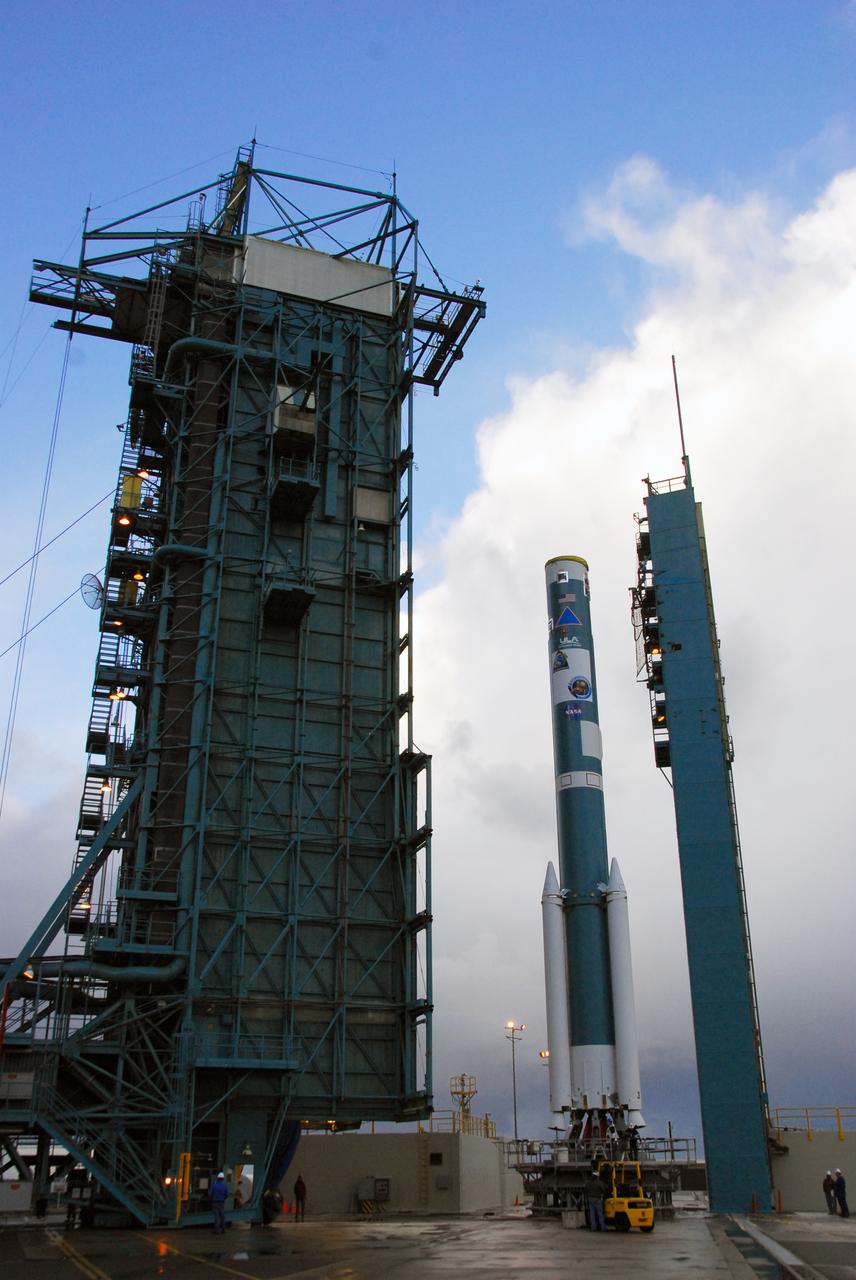
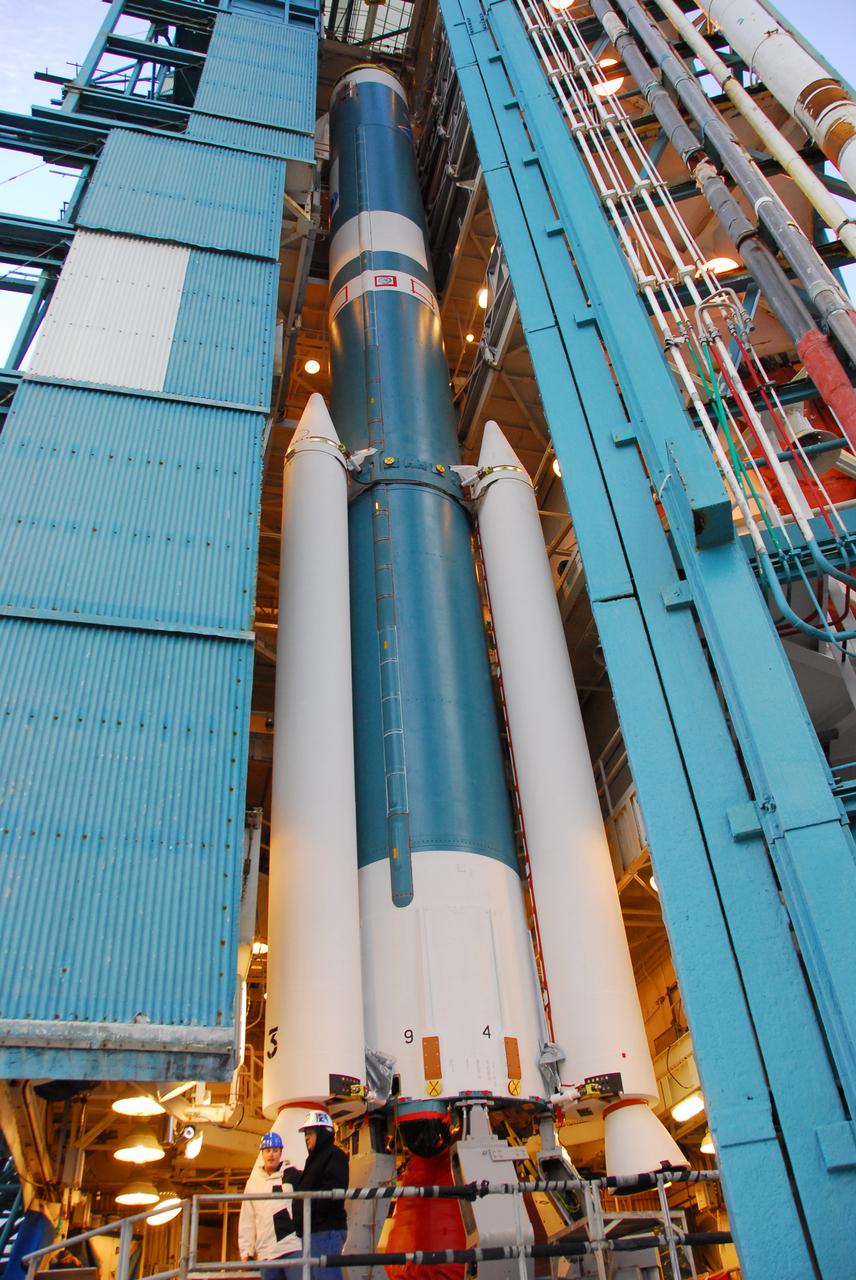
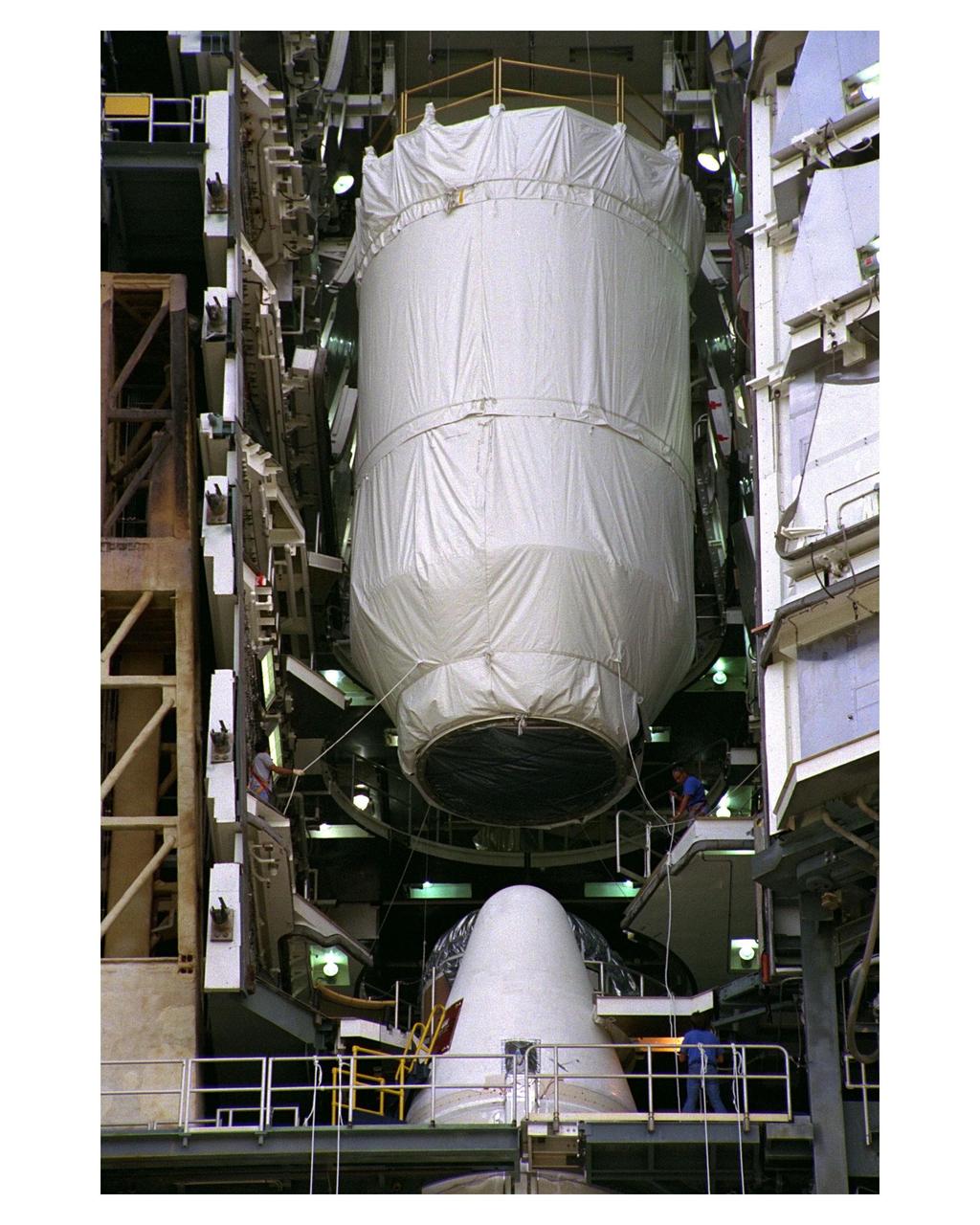
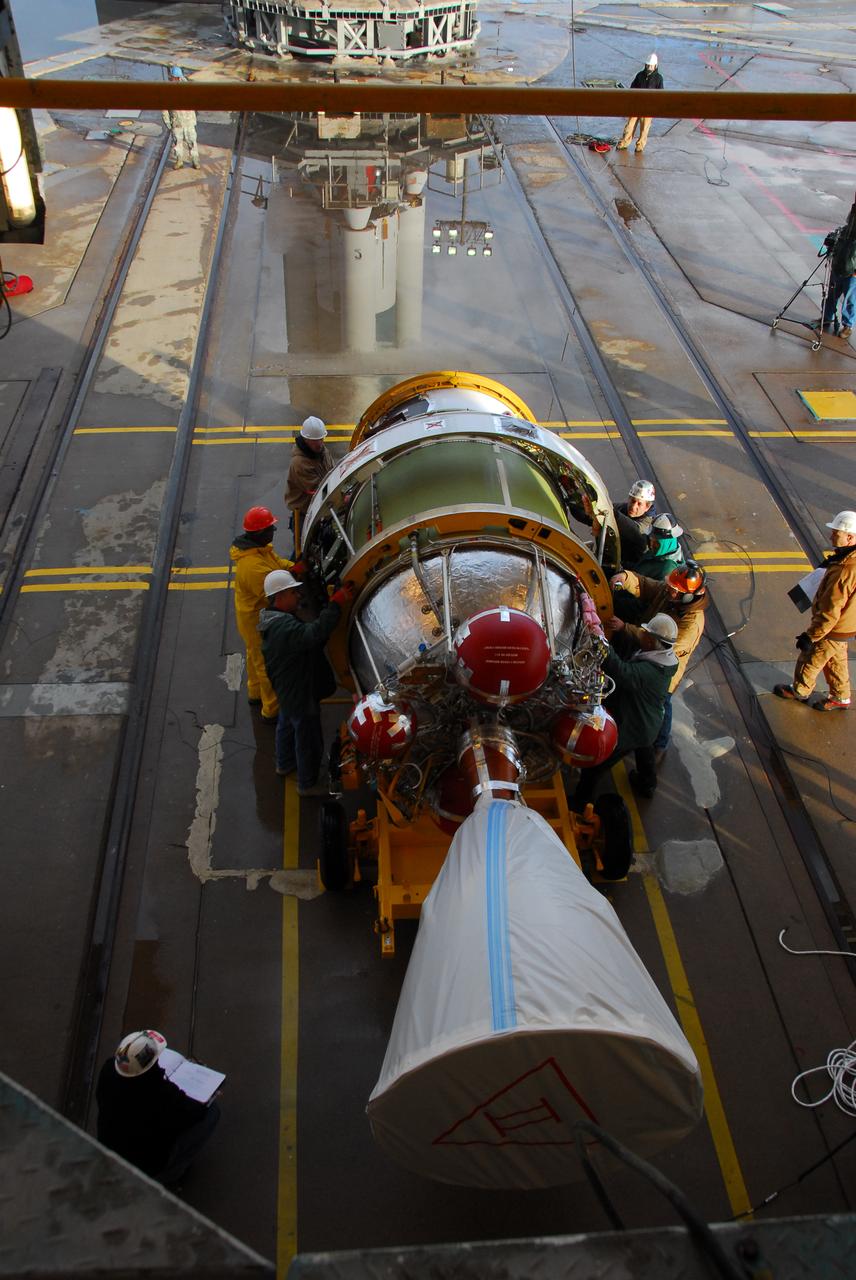
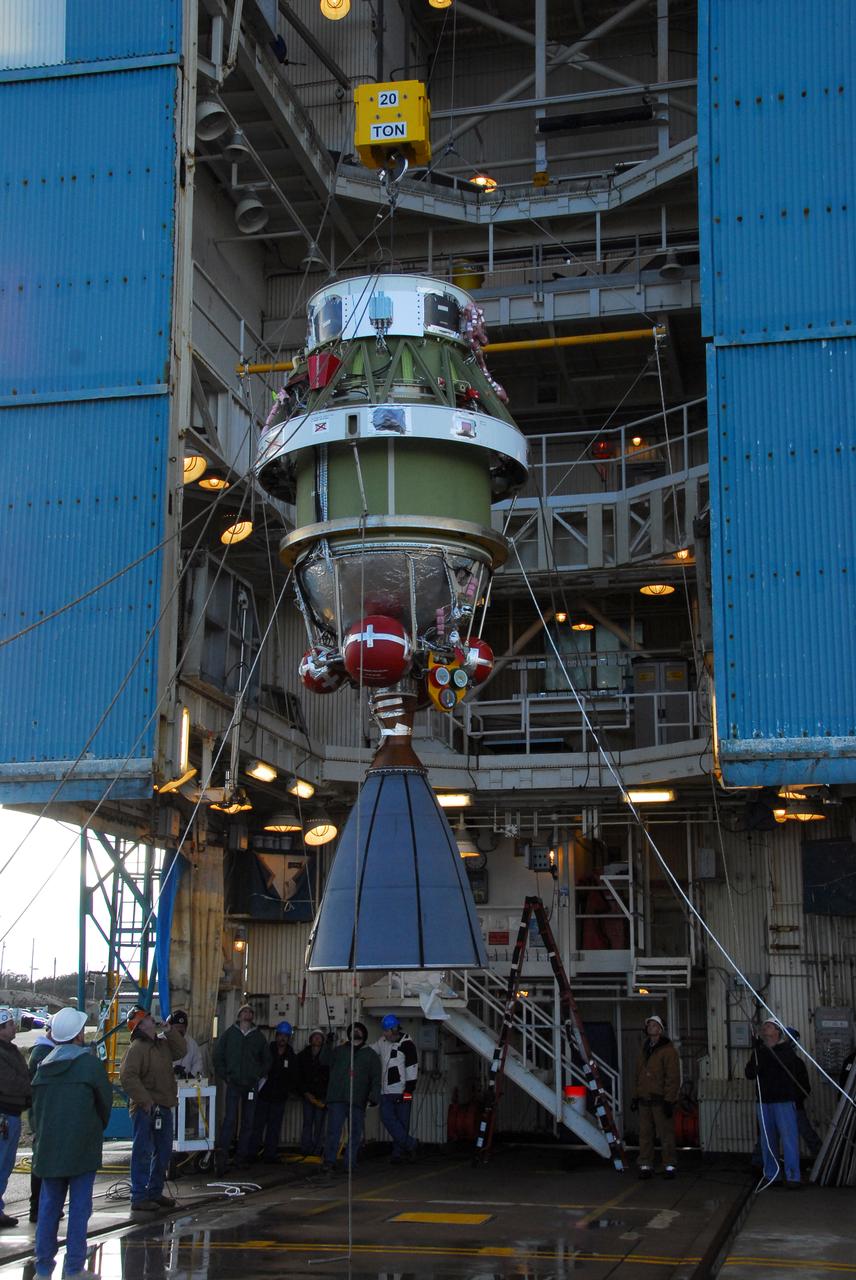
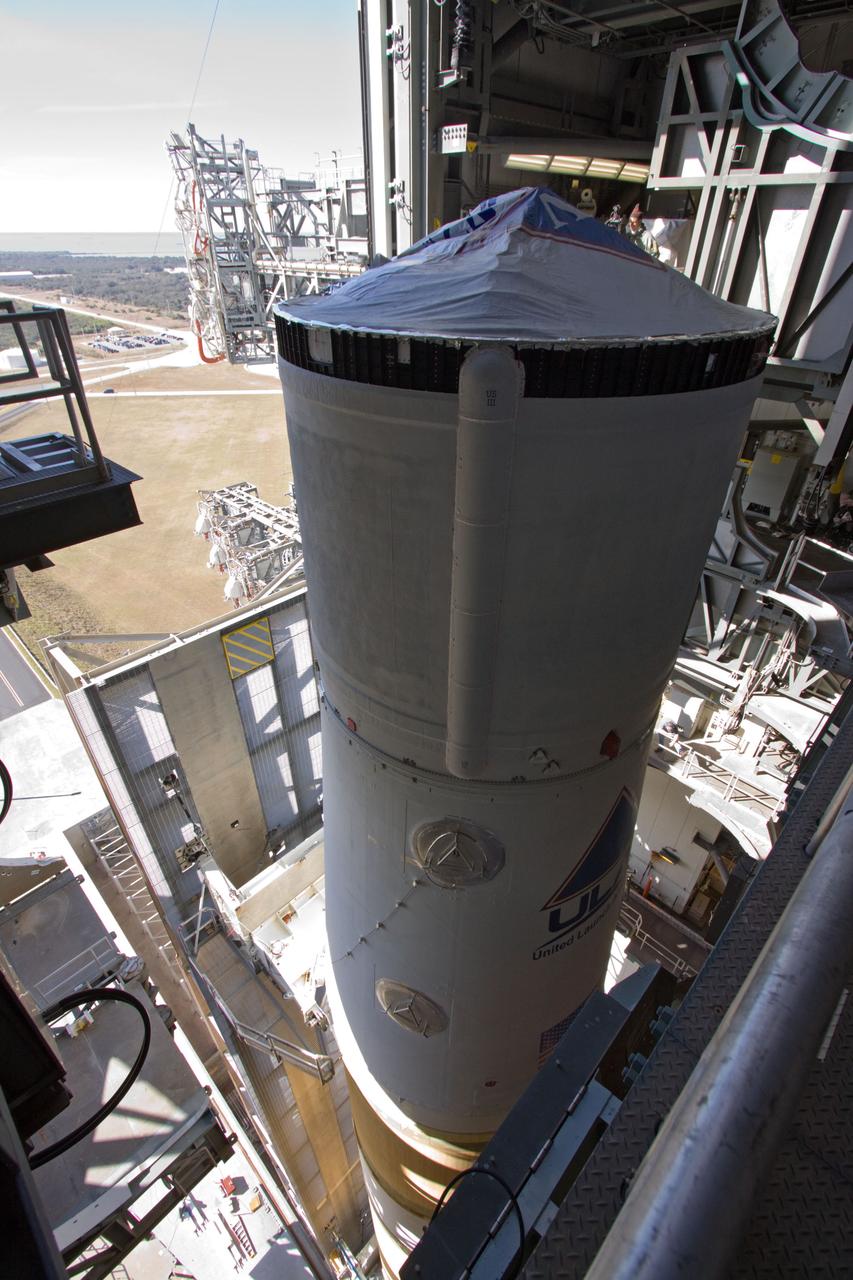
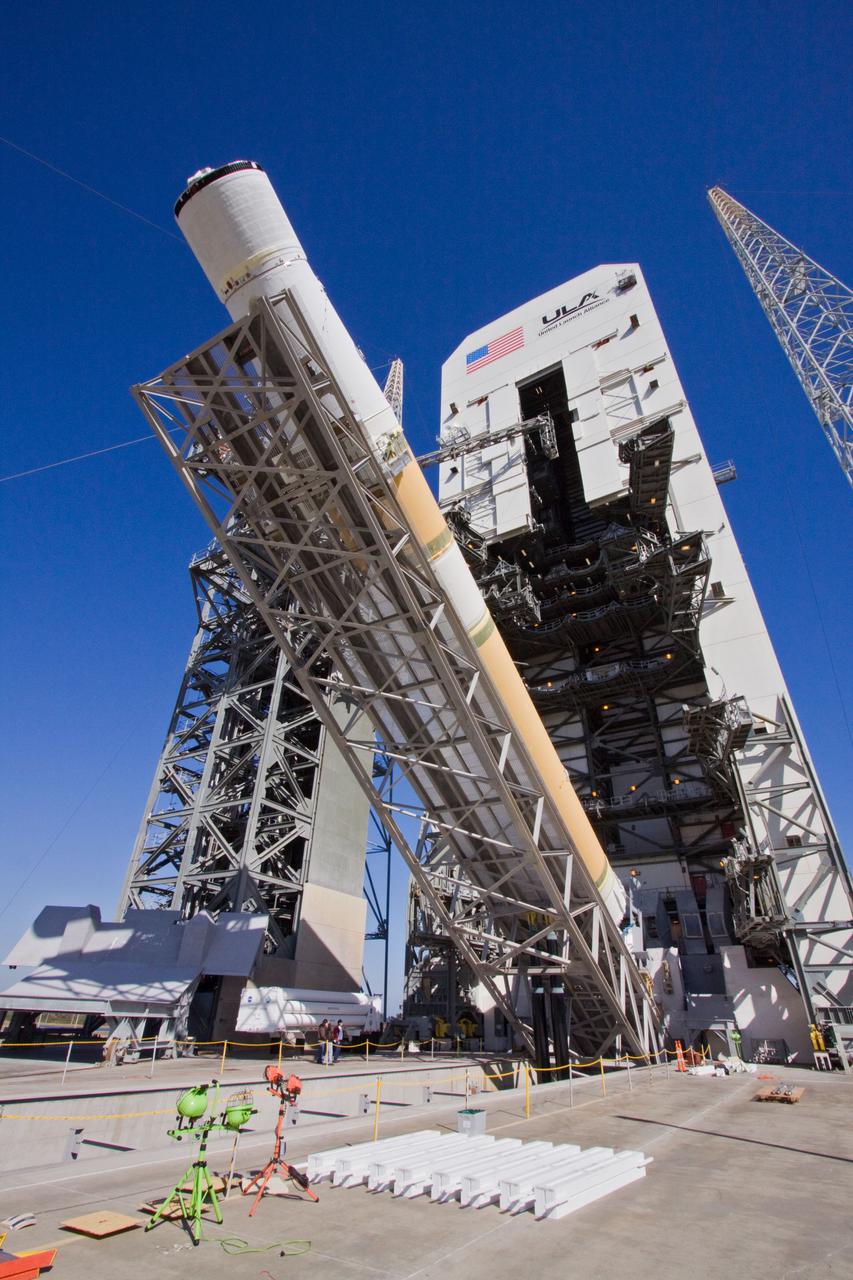
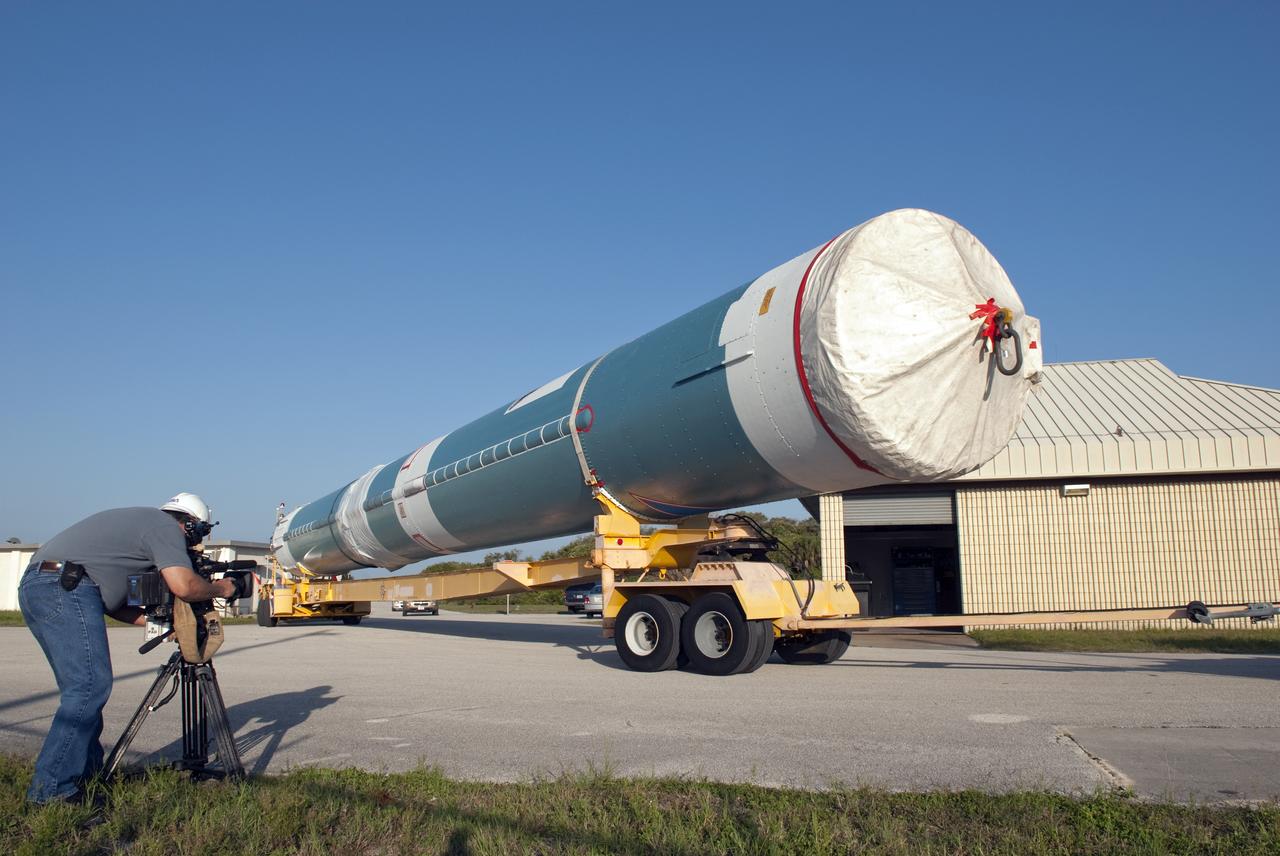
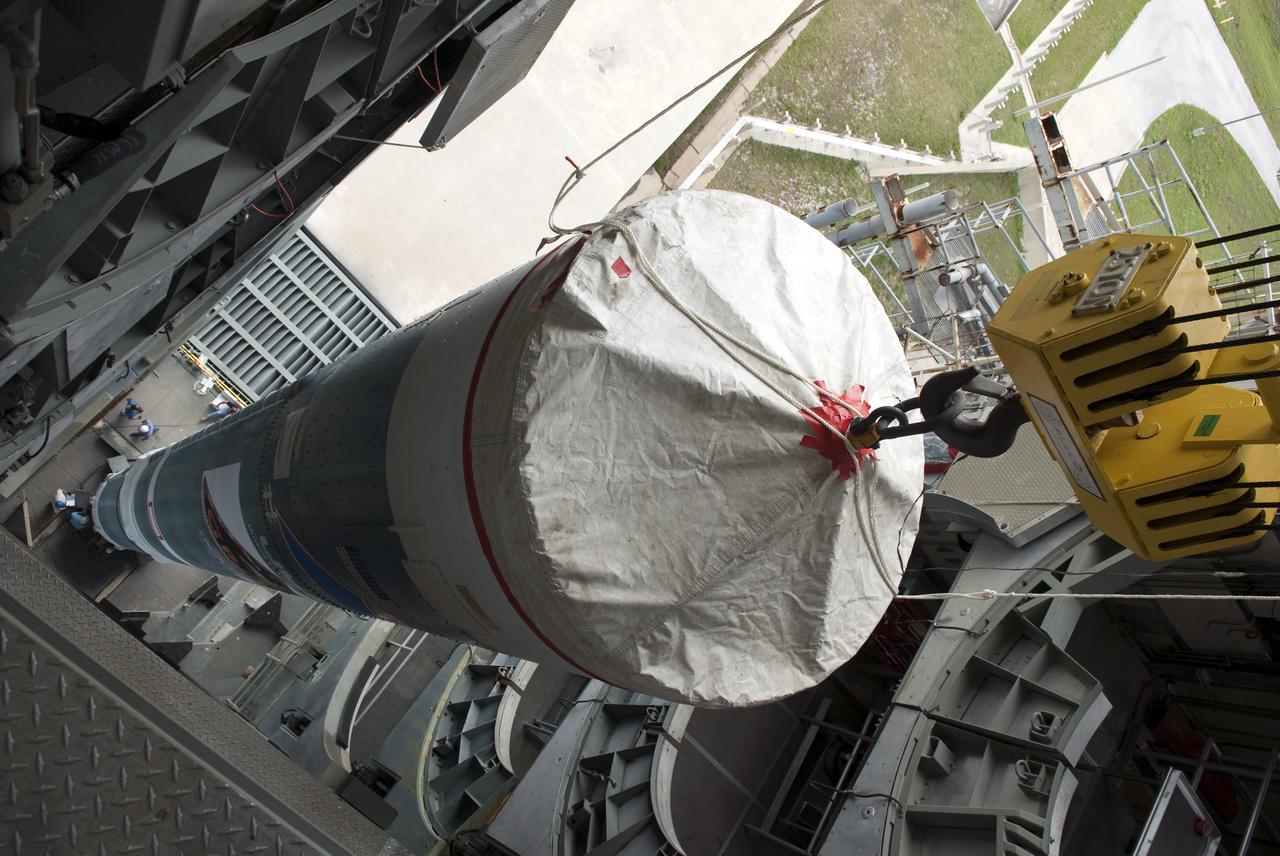
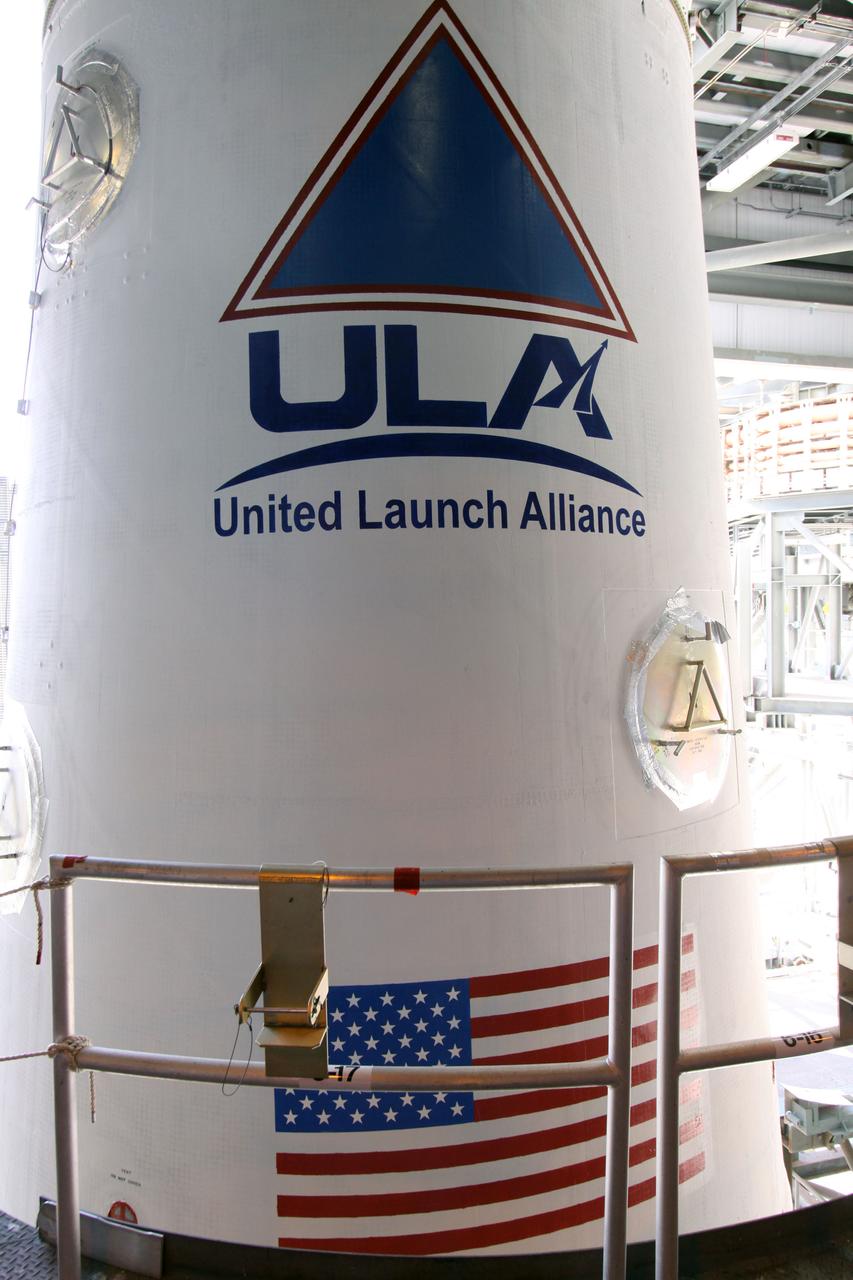
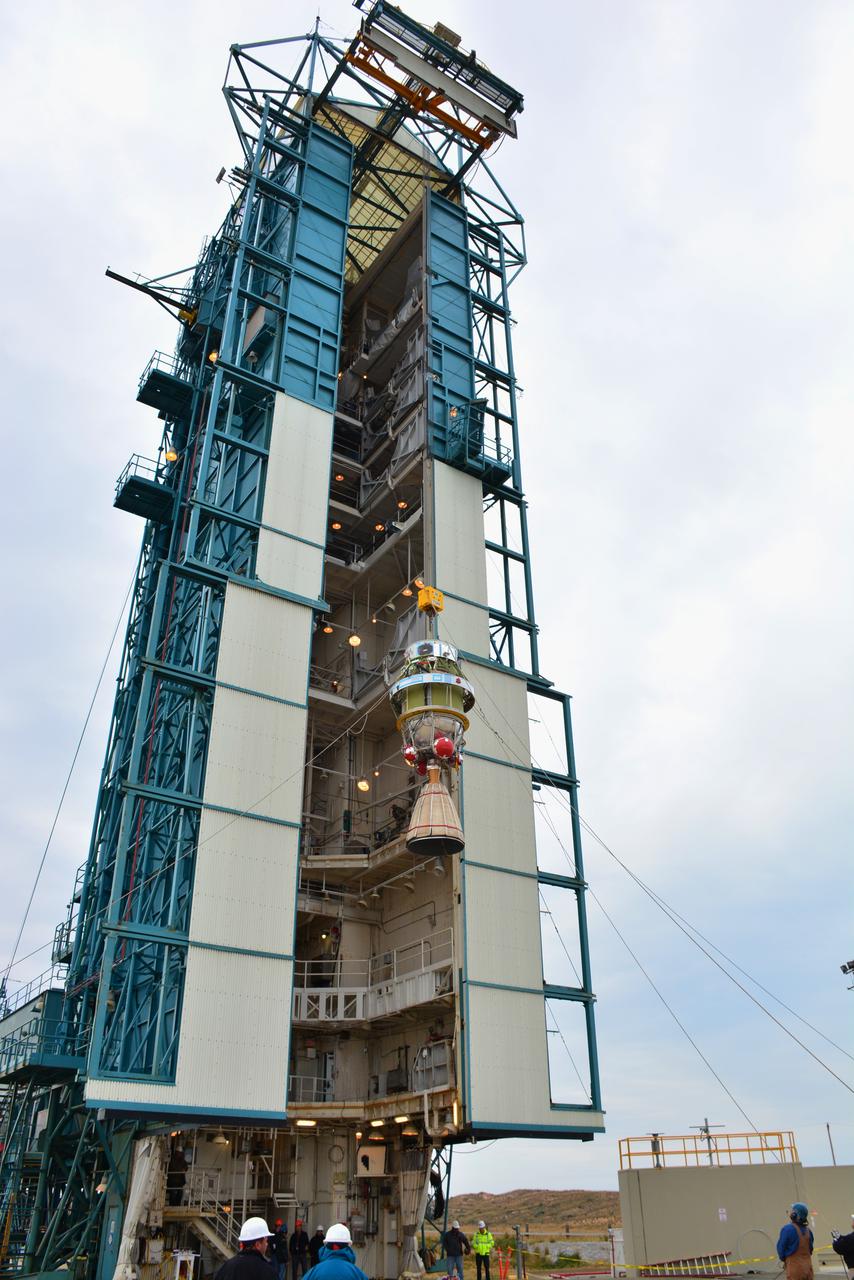
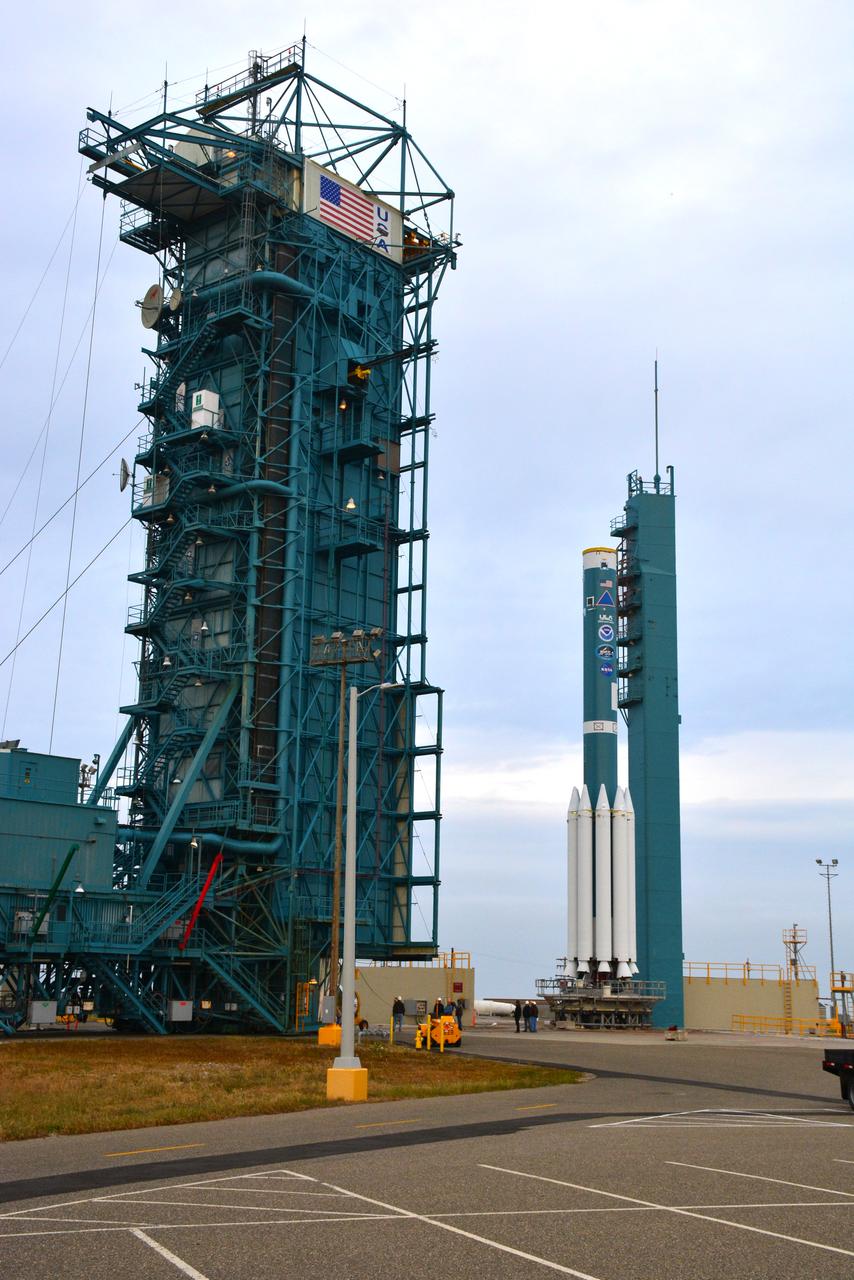
At Vandenberg Air Force Base in California, a United Launch Alliance Delta II second stage is hoisted into the gantry at Space Launch Complex 2. It will be mounted atop first stage of the rocket as preparations continue for the launch of the Joint Polar Satellite System-1 (JPSS-1) later this year. JPSS, a next-generation environmental satellite system, is a collaborative program between the National Oceanic and Atmospheric Administration (NOAA) and NASA.
Delta II JPSS-1 Second Stage Erection
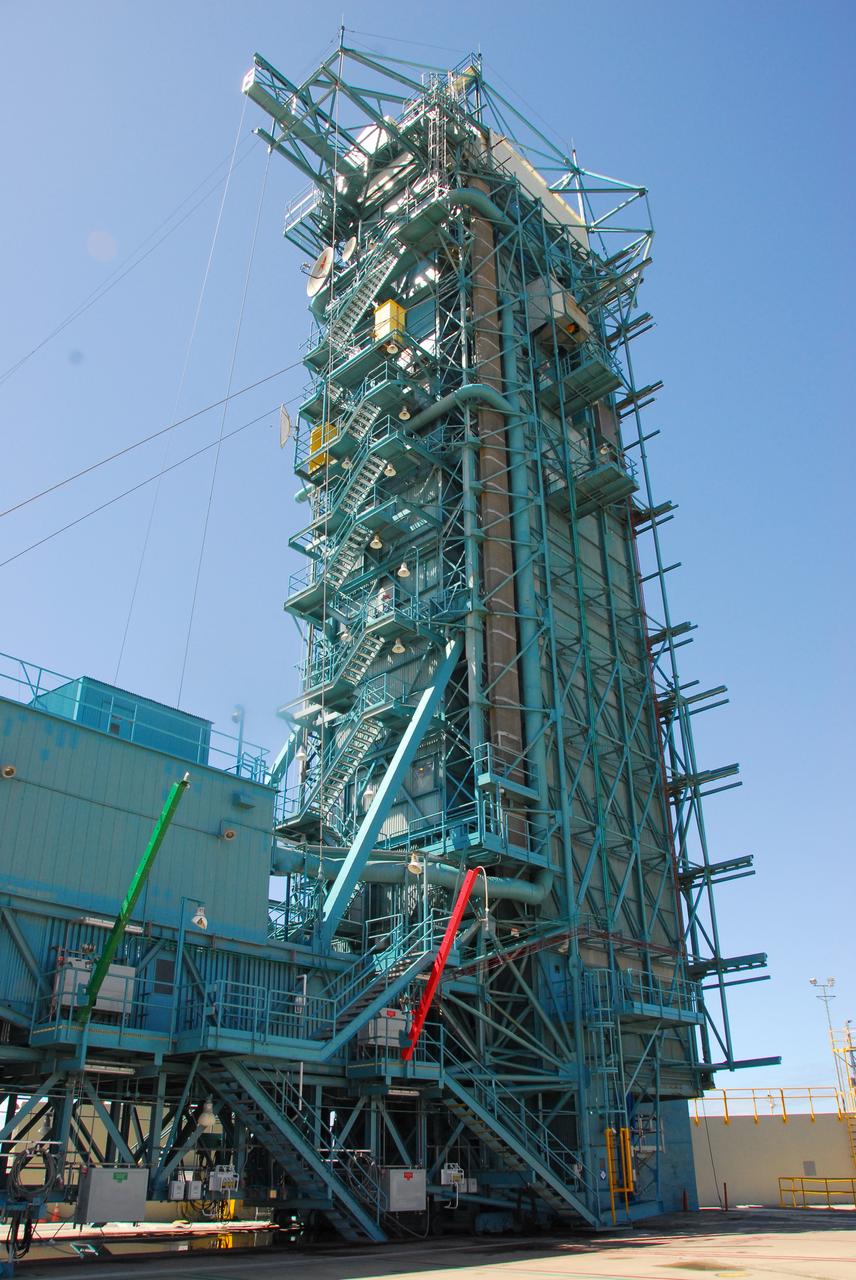
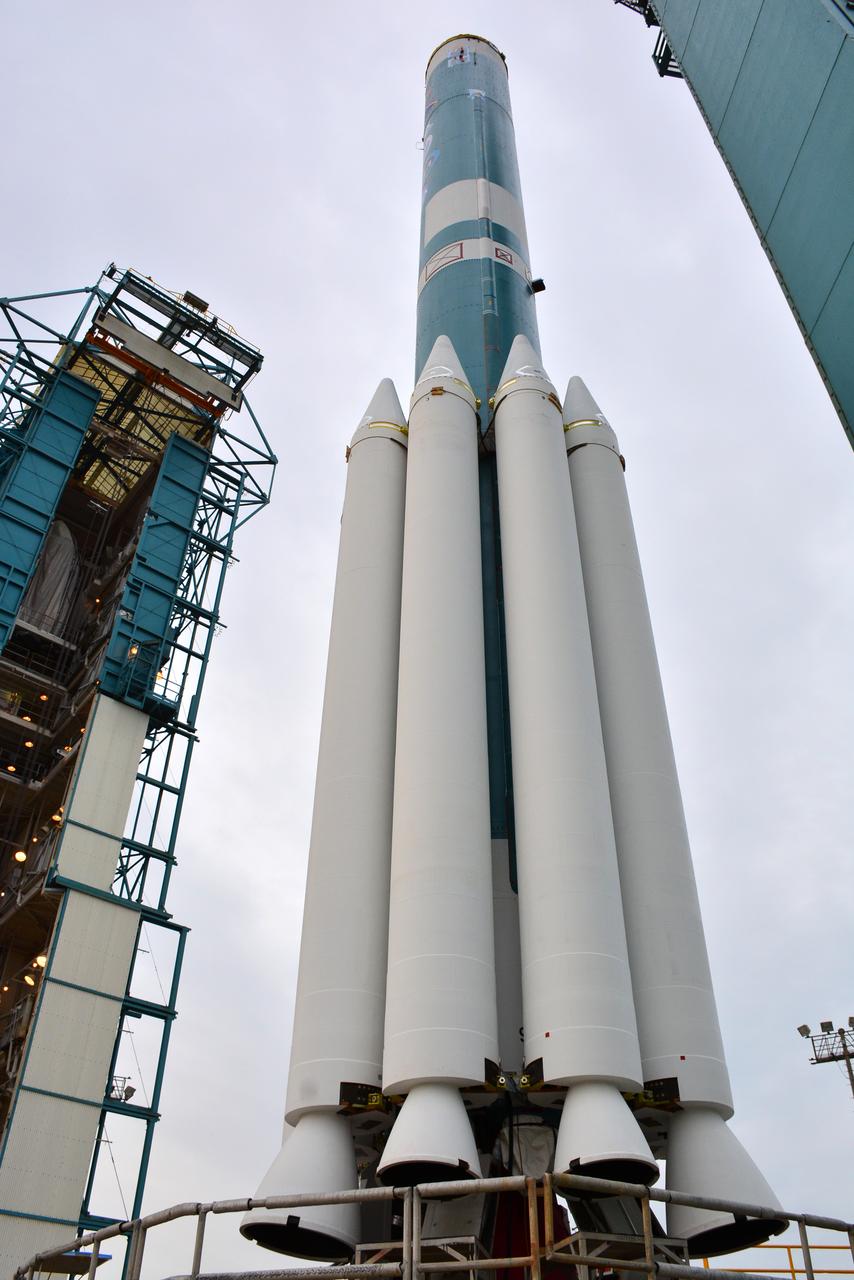
The United Launch Alliance Delta II rocket stands on Space Launch Complex 2 at Vandenberg Air Force Base in California. It is scheduled to launch the Joint Polar Satellite System-1 (JPSS-1) later this year. JPSS, a next-generation environmental satellite system, is a collaborative program between the National Oceanic and Atmospheric Administration (NOAA) and NASA.
Delta II JPSS-1 Second Stage Erection
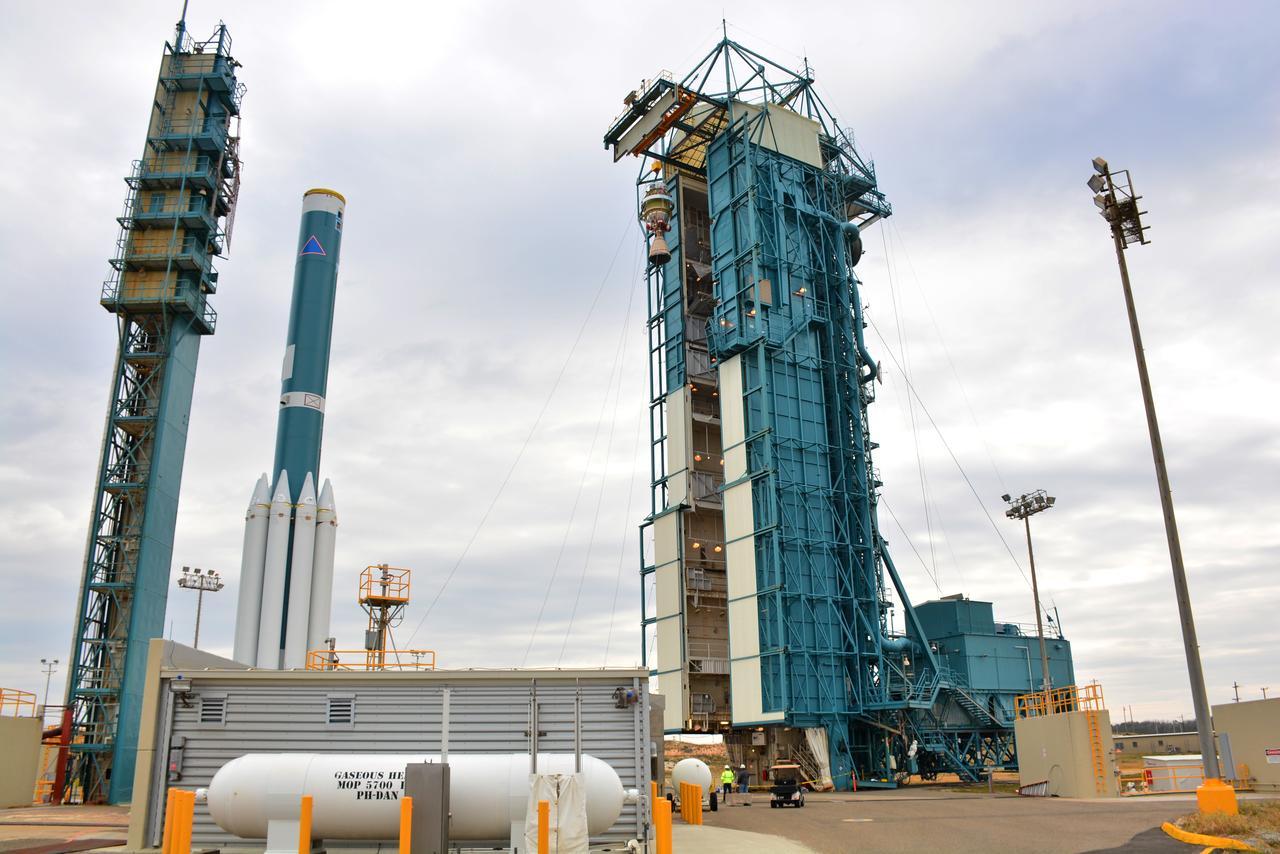
The United Launch Alliance Delta II rocket stands on Space Launch Complex 2 at Vandenberg Air Force Base in California. It is scheduled to launch the Joint Polar Satellite System-1 (JPSS-1) later this year. JPSS, a next-generation environmental satellite system, is a collaborative program between the National Oceanic and Atmospheric Administration (NOAA) and NASA.
Delta II JPSS-1 Second Stage Erection
At Vandenberg Air Force Base in California, a United Launch Alliance Delta II second stage is hoisted into the gantry at Space Launch Complex 2. It will be mounted atop first stage of the rocket, seen on the left, as preparations continue for the launch of the Joint Polar Satellite System-1 (JPSS-1) later this year. JPSS, a next-generation environmental satellite system, is a collaborative program between the National Oceanic and Atmospheric Administration (NOAA) and NASA.
Delta II JPSS-1 Second Stage Erection
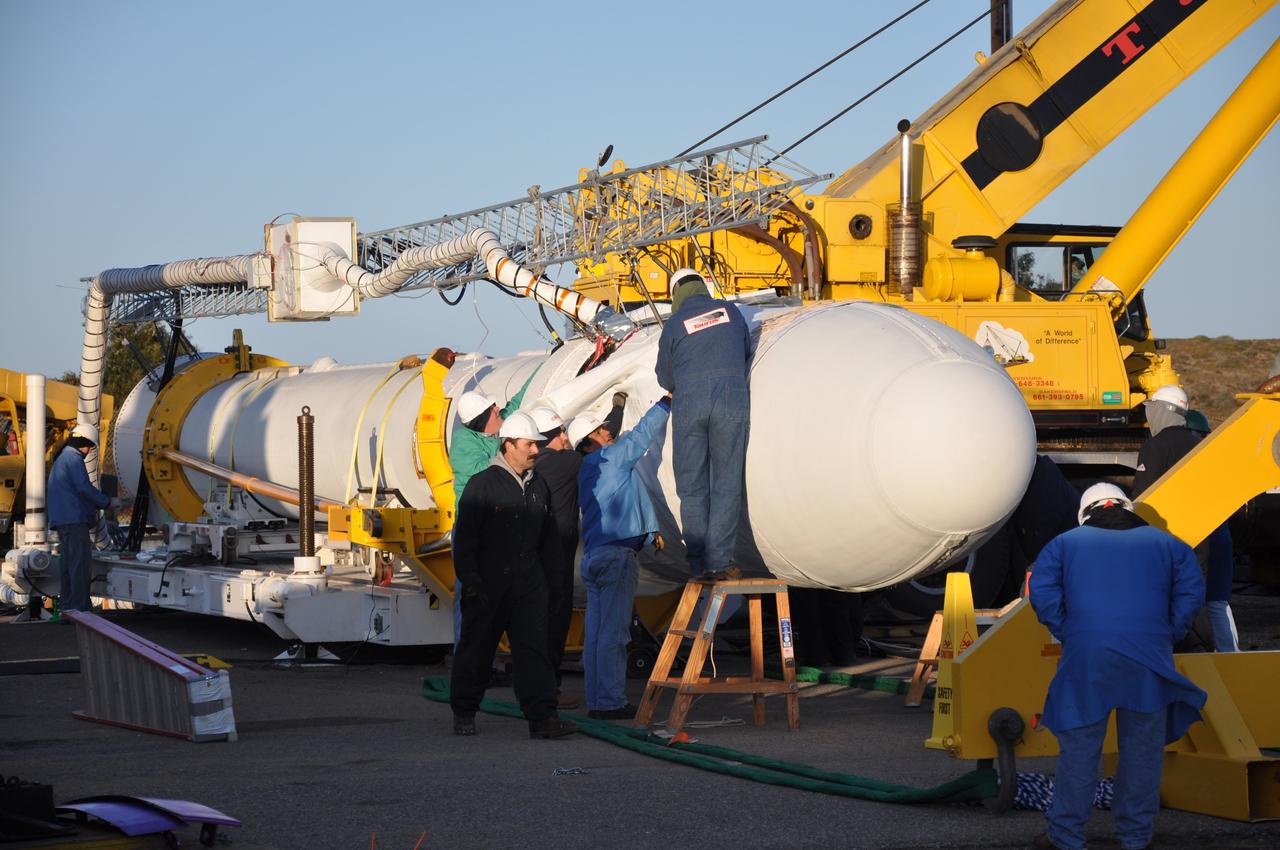
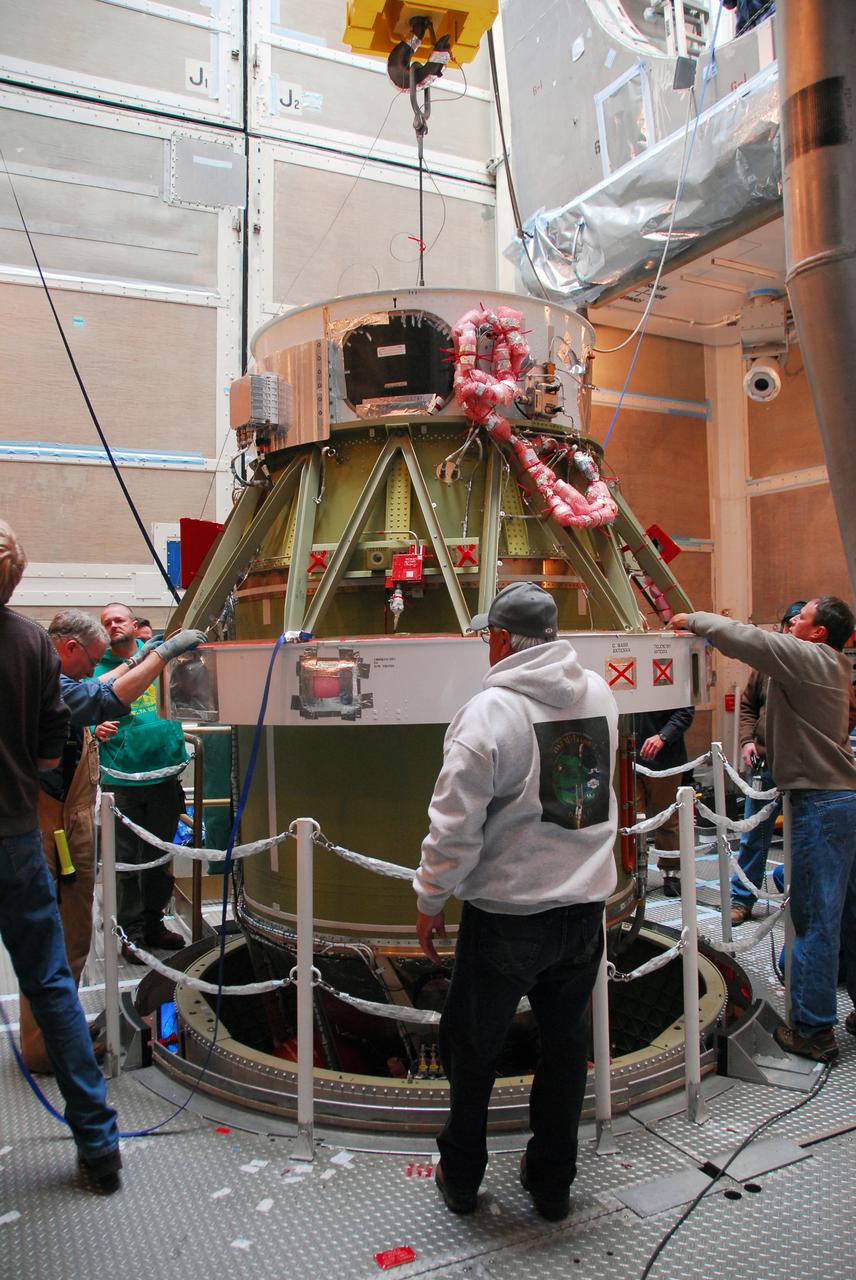
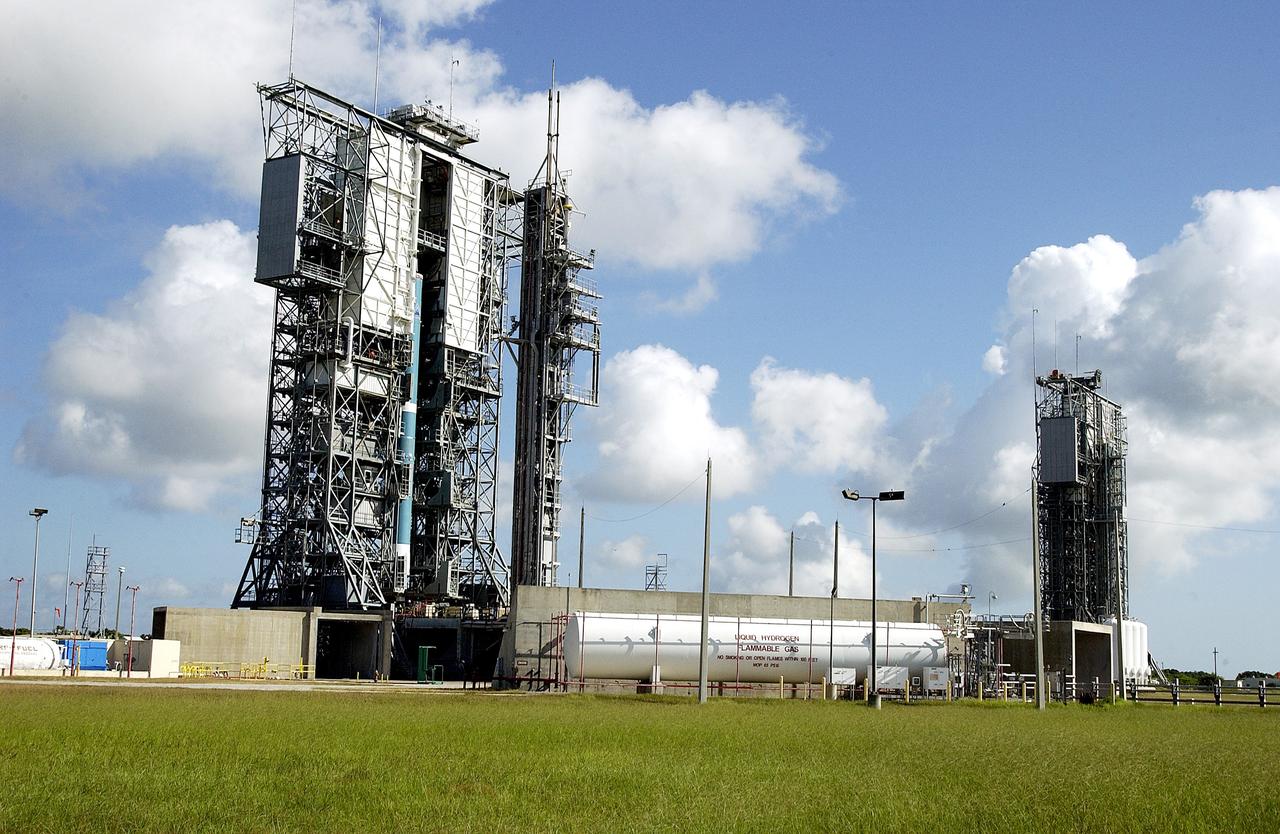
VANDENBERG AIR FORCE BASE, Calif. --  On Launch Complex 576-E at Vandenberg Air Force Base in California, workers prepare NASA's Orbiting Carbon Observatory, or OCO, upper stack for attachment to the Stage 0.  Orbital Sciences workers put the non-flight environmental shield over the fairing prior to erection.  A portion of the umbilical tower (above it) is attached to the upper stack. The umbilical tower will be erected along with the upper stack. The spacecraft is scheduled for launch aboard Orbital Sciences' Taurus XL rocket Feb. 24 from Vandenberg. The spacecraft will collect precise global measurements of carbon dioxide (CO2) in the Earth's atmosphere. Scientists will analyze OCO data to improve our understanding of the natural processes and human activities that regulate the abundance and distribution of this important greenhouse gas.   Photo credit: NASA/Randy Beaudoin, VAFB
KSC-2009-1680
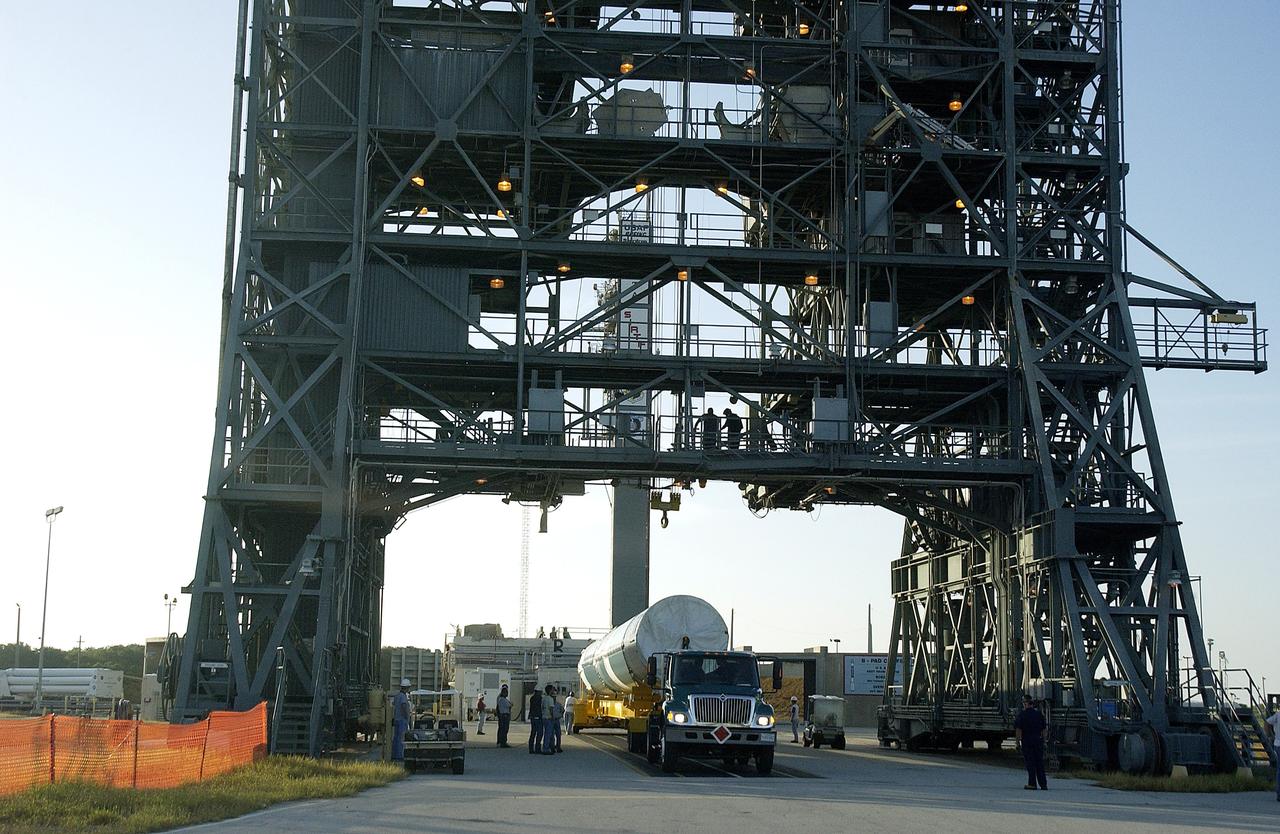
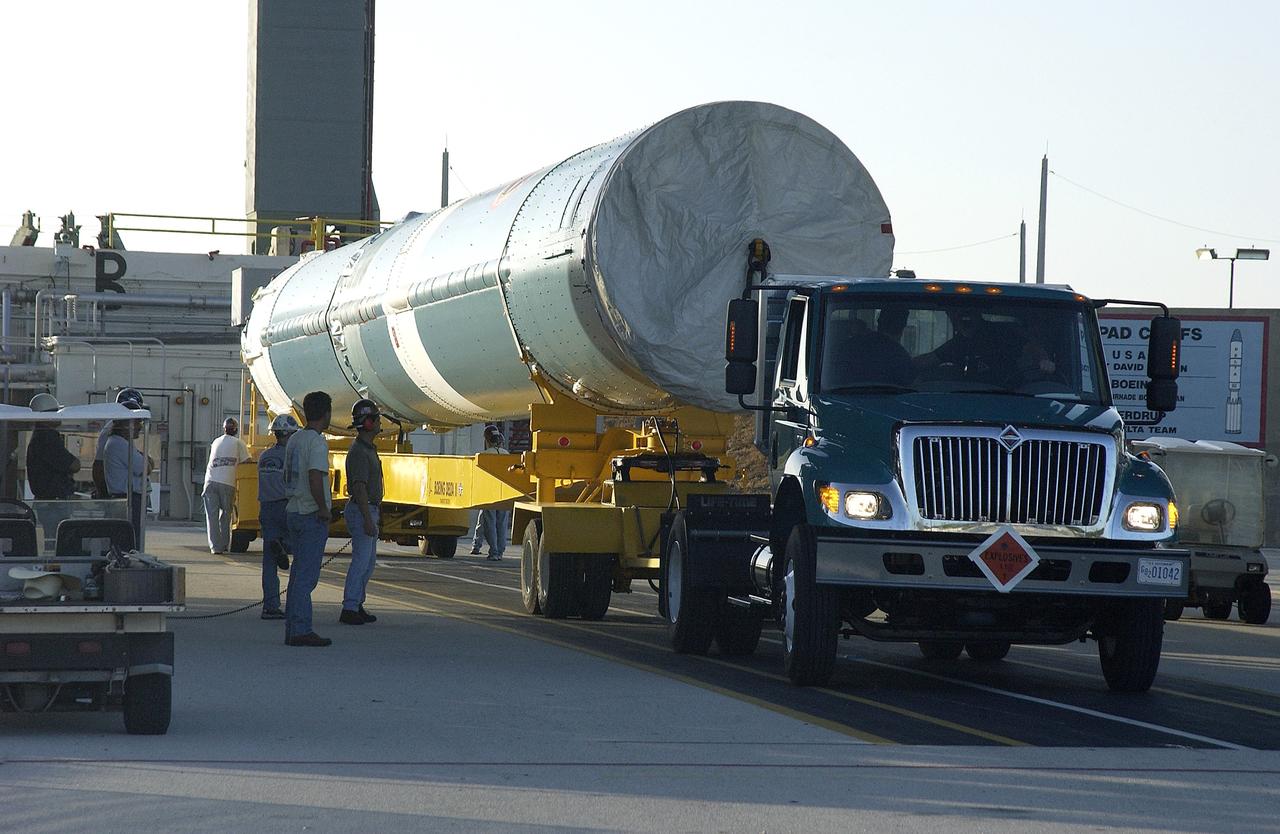
KENNEDY SPACE CENTER, FLA. -   On Launch Complex 17-B, Cape Canaveral Air Force Station, the first stage of a Delta II rocket arrives at the pad.  The rocket is being erected to launch the Space InfraRed Telescope Facility (SIRTF).  Consisting of an 0.85-meter telescope and three cryogenically cooled science instruments, SIRTF is one of NASA's largest infrared telescopes to be launched.  SIRTF will obtain images and spectra by detecting the infrared energy, or heat, radiated by objects in space. Most of this infrared radiation is blocked by the Earth's atmosphere and cannot be observed from the ground.
KENNEDY SPACE CENTER, FLA. - On Launch Complex 17-B, Cape Canaveral Air Force Station, the first stage of a Delta II rocket arrives at the pad. The rocket is being erected to launch the Space InfraRed Telescope Facility (SIRTF). Consisting of an 0.85-meter telescope and three cryogenically cooled science instruments, SIRTF is one of NASA's largest infrared telescopes to be launched. SIRTF will obtain images and spectra by detecting the infrared energy, or heat, radiated by objects in space. Most of this infrared radiation is blocked by the Earth's atmosphere and cannot be observed from the ground.
KENNEDY SPACE CENTER, FLA. -   On Launch Complex 17-B, Cape Canaveral Air Force Station, the first stage of a Delta II rocket waits to be lifted up and moved into the mobile service tower.  The rocket is being erected to launch the Space InfraRed Telescope Facility (SIRTF).  Consisting of an 0.85-meter telescope and three cryogenically cooled science instruments, SIRTF is one of NASA's largest infrared telescopes to be launched.  SIRTF will obtain images and spectra by detecting the infrared energy, or heat, radiated by objects in space. Most of this infrared radiation is blocked by the Earth's atmosphere and cannot be observed from the ground.
KENNEDY SPACE CENTER, FLA. - On Launch Complex 17-B, Cape Canaveral Air Force Station, the first stage of a Delta II rocket waits to be lifted up and moved into the mobile service tower. The rocket is being erected to launch the Space InfraRed Telescope Facility (SIRTF). Consisting of an 0.85-meter telescope and three cryogenically cooled science instruments, SIRTF is one of NASA's largest infrared telescopes to be launched. SIRTF will obtain images and spectra by detecting the infrared energy, or heat, radiated by objects in space. Most of this infrared radiation is blocked by the Earth's atmosphere and cannot be observed from the ground.
KENNEDY SPACE CENTER, FLA. -  Workers on Launch Complex 17-B, Cape Canaveral Air Force Station, prepare the first stage of a Delta II rocket for its lift up the mobile service tower.  The rocket is being erected to launch the Space InfraRed Telescope Facility (SIRTF).  Consisting of an 0.85-meter telescope and three cryogenically cooled science instruments, SIRTF is one of NASA's largest infrared telescopes to be launched.  SIRTF will obtain images and spectra by detecting the infrared energy, or heat, radiated by objects in space. Most of this infrared radiation is blocked by the Earth's atmosphere and cannot be observed from the ground.
KENNEDY SPACE CENTER, FLA. - Workers on Launch Complex 17-B, Cape Canaveral Air Force Station, prepare the first stage of a Delta II rocket for its lift up the mobile service tower. The rocket is being erected to launch the Space InfraRed Telescope Facility (SIRTF). Consisting of an 0.85-meter telescope and three cryogenically cooled science instruments, SIRTF is one of NASA's largest infrared telescopes to be launched. SIRTF will obtain images and spectra by detecting the infrared energy, or heat, radiated by objects in space. Most of this infrared radiation is blocked by the Earth's atmosphere and cannot be observed from the ground.
KENNEDY SPACE CENTER, FLA. -   On Launch Complex 17-B, Cape Canaveral Air Force Station, the first stage of a Delta II rocket is moved into the mobile service tower.  The rocket is being erected to launch the Space InfraRed Telescope Facility (SIRTF).  Consisting of an 0.85-meter telescope and three cryogenically cooled science instruments, SIRTF is one of NASA's largest infrared telescopes to be launched.  SIRTF will obtain images and spectra by detecting the infrared energy, or heat, radiated by objects in space. Most of this infrared radiation is blocked by the Earth's atmosphere and cannot be observed from the ground.
KENNEDY SPACE CENTER, FLA. - On Launch Complex 17-B, Cape Canaveral Air Force Station, the first stage of a Delta II rocket is moved into the mobile service tower. The rocket is being erected to launch the Space InfraRed Telescope Facility (SIRTF). Consisting of an 0.85-meter telescope and three cryogenically cooled science instruments, SIRTF is one of NASA's largest infrared telescopes to be launched. SIRTF will obtain images and spectra by detecting the infrared energy, or heat, radiated by objects in space. Most of this infrared radiation is blocked by the Earth's atmosphere and cannot be observed from the ground.
KENNEDY SPACE CENTER, FLA. -  On Launch Complex 17-B, Cape Canaveral Air Force Station, the first stage of a Delta II rocket is lifted up the mobile service tower.  In the background is pad 17-A.   The rocket is being erected to launch the Space InfraRed Telescope Facility (SIRTF).  Consisting of an 0.85-meter telescope and three cryogenically cooled science instruments, SIRTF is one of NASA's largest infrared telescopes to be launched.  SIRTF will obtain images and spectra by detecting the infrared energy, or heat, radiated by objects in space. Most of this infrared radiation is blocked by the Earth's atmosphere and cannot be observed from the ground.
KENNEDY SPACE CENTER, FLA. - On Launch Complex 17-B, Cape Canaveral Air Force Station, the first stage of a Delta II rocket is lifted up the mobile service tower. In the background is pad 17-A. The rocket is being erected to launch the Space InfraRed Telescope Facility (SIRTF). Consisting of an 0.85-meter telescope and three cryogenically cooled science instruments, SIRTF is one of NASA's largest infrared telescopes to be launched. SIRTF will obtain images and spectra by detecting the infrared energy, or heat, radiated by objects in space. Most of this infrared radiation is blocked by the Earth's atmosphere and cannot be observed from the ground.
KENNEDY SPACE CENTER, FLA. -   On Launch Complex 17-B, Cape Canaveral Air Force Station, the first stage of a Delta II rocket waits to be lifted up into the mobile service tower.  The rocket is being erected to launch the Space InfraRed Telescope Facility (SIRTF).  Consisting of an 0.85-meter telescope and three cryogenically cooled science instruments, SIRTF is one of NASA's largest infrared telescopes to be launched.  SIRTF will obtain images and spectra by detecting the infrared energy, or heat, radiated by objects in space. Most of this infrared radiation is blocked by the Earth's atmosphere and cannot be observed from the ground.
KENNEDY SPACE CENTER, FLA. - On Launch Complex 17-B, Cape Canaveral Air Force Station, the first stage of a Delta II rocket waits to be lifted up into the mobile service tower. The rocket is being erected to launch the Space InfraRed Telescope Facility (SIRTF). Consisting of an 0.85-meter telescope and three cryogenically cooled science instruments, SIRTF is one of NASA's largest infrared telescopes to be launched. SIRTF will obtain images and spectra by detecting the infrared energy, or heat, radiated by objects in space. Most of this infrared radiation is blocked by the Earth's atmosphere and cannot be observed from the ground.