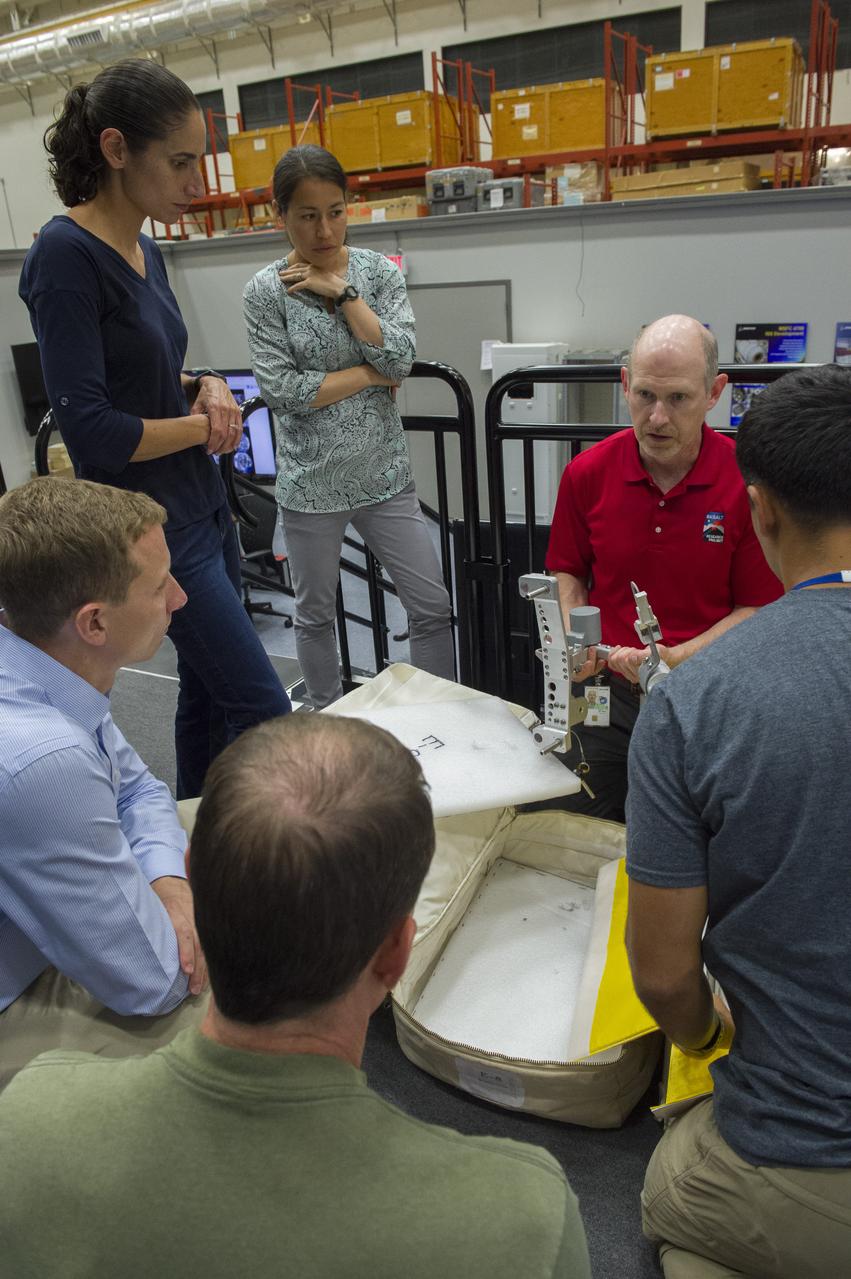
Boeing trainers conduct simulations inside the Boeing Exploration Habitat Demonstrator with astronauts to evaluate the internal layout and ergonomics, to support efficient work-life balance aboard a deep space ship.
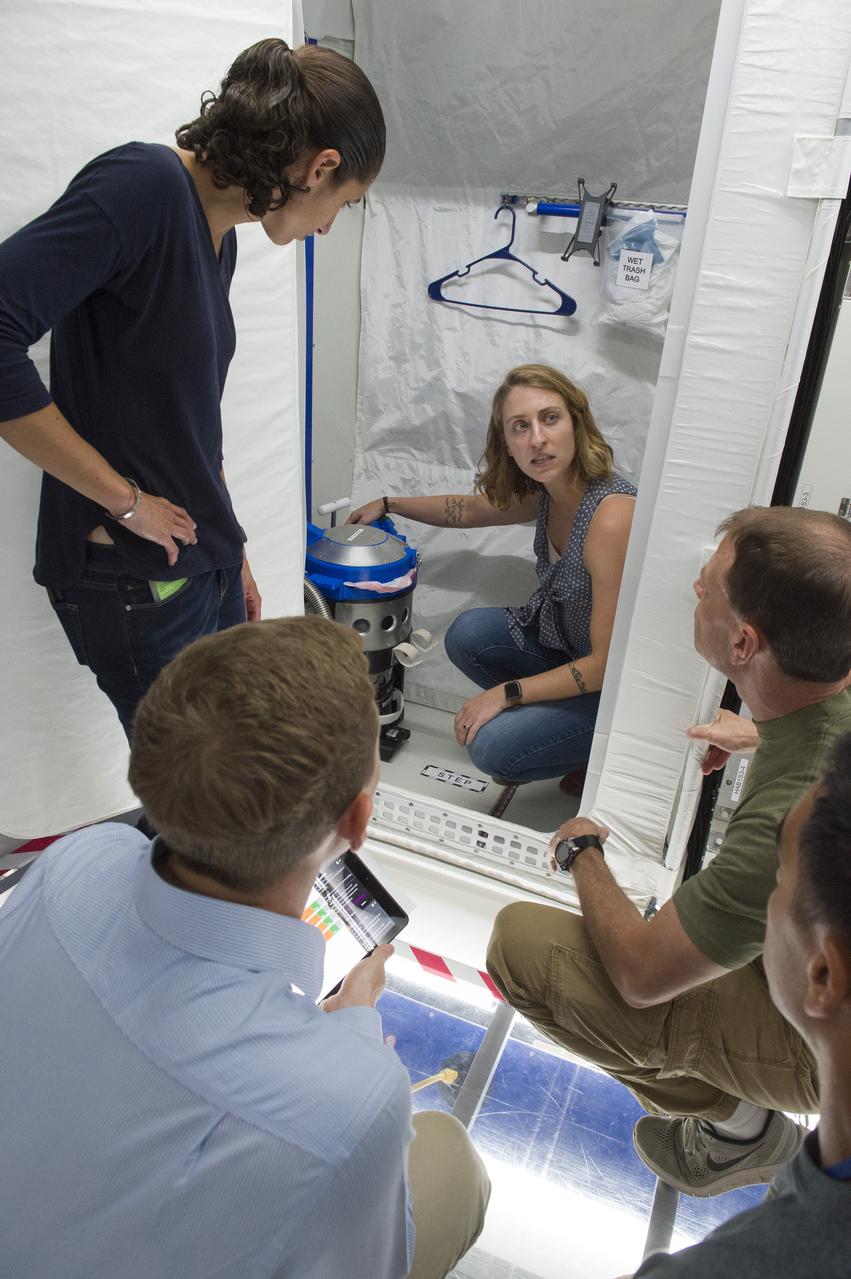
Boeing trainers conduct simulations inside the Boeing Exploration Habitat Demonstrator with astronauts to evaluate the internal layout and ergonomics, to support efficient work-life balance aboard a deep space ship.
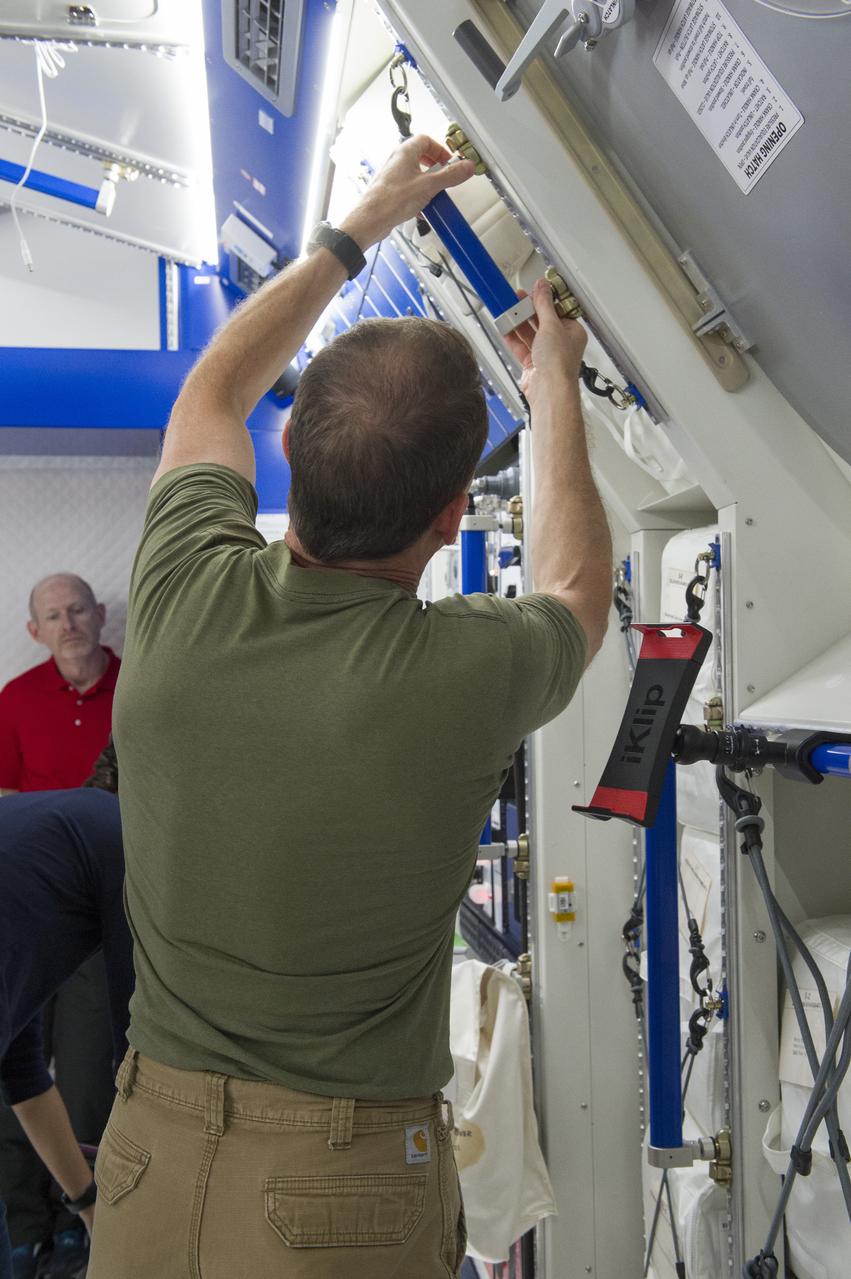
Boeing trainers conduct simulations inside the Boeing Exploration Habitat Demonstrator with astronauts to evaluate the internal layout and ergonomics, to support efficient work-life balance aboard a deep space ship.
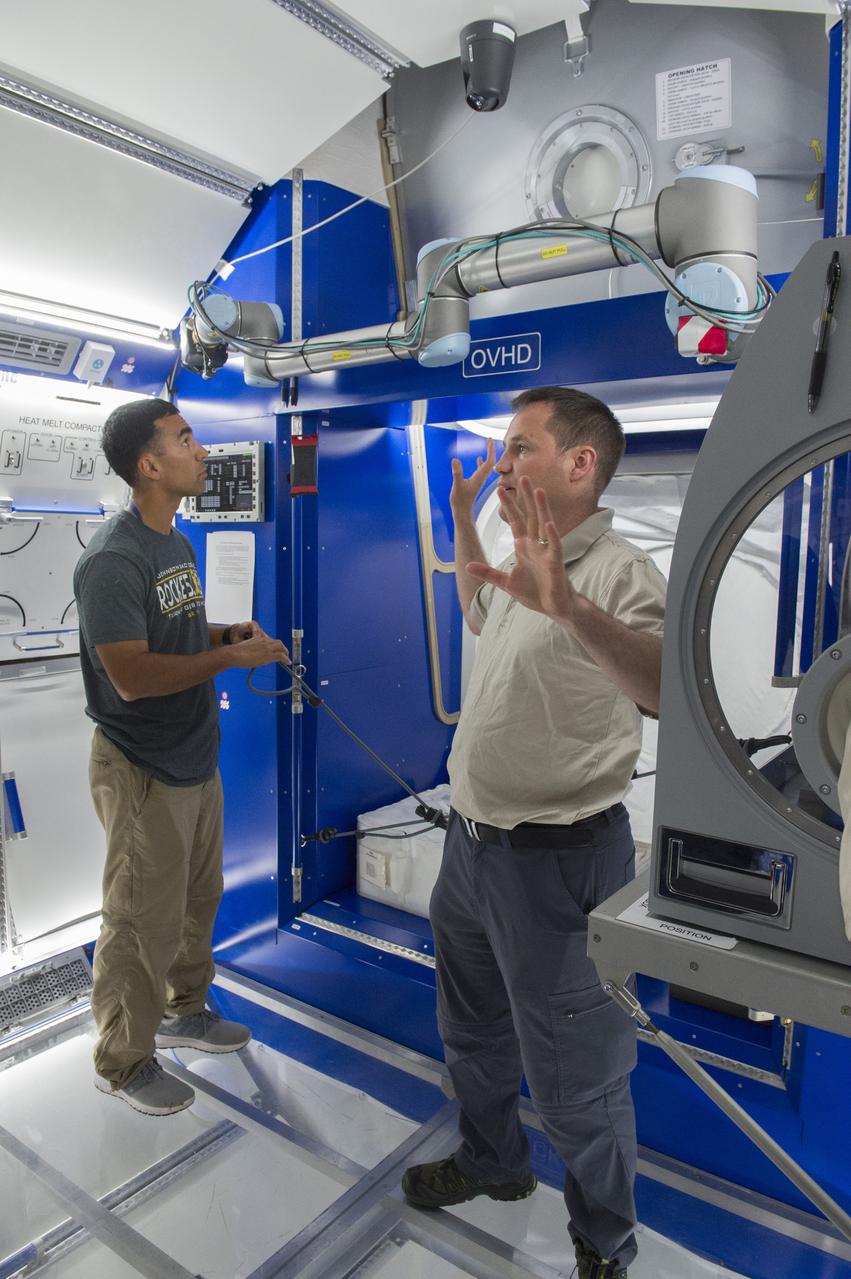
Boeing trainers conduct simulations inside the Boeing Exploration Habitat Demonstrator with astronauts to evaluate the internal layout and ergonomics, to support efficient work-life balance aboard a deep space ship.
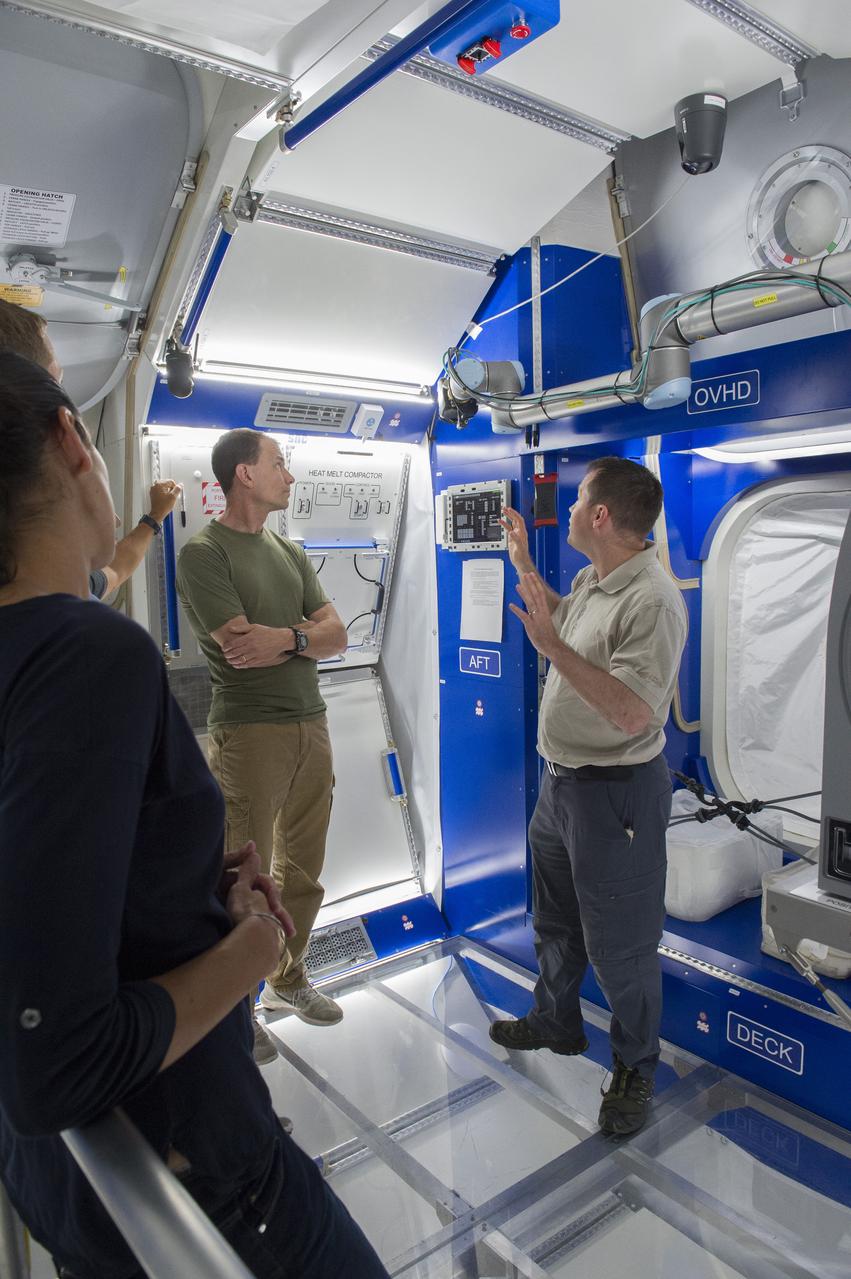
Boeing trainers conduct simulations inside the Boeing Exploration Habitat Demonstrator with astronauts to evaluate the internal layout and ergonomics, to support efficient work-life balance aboard a deep space ship.
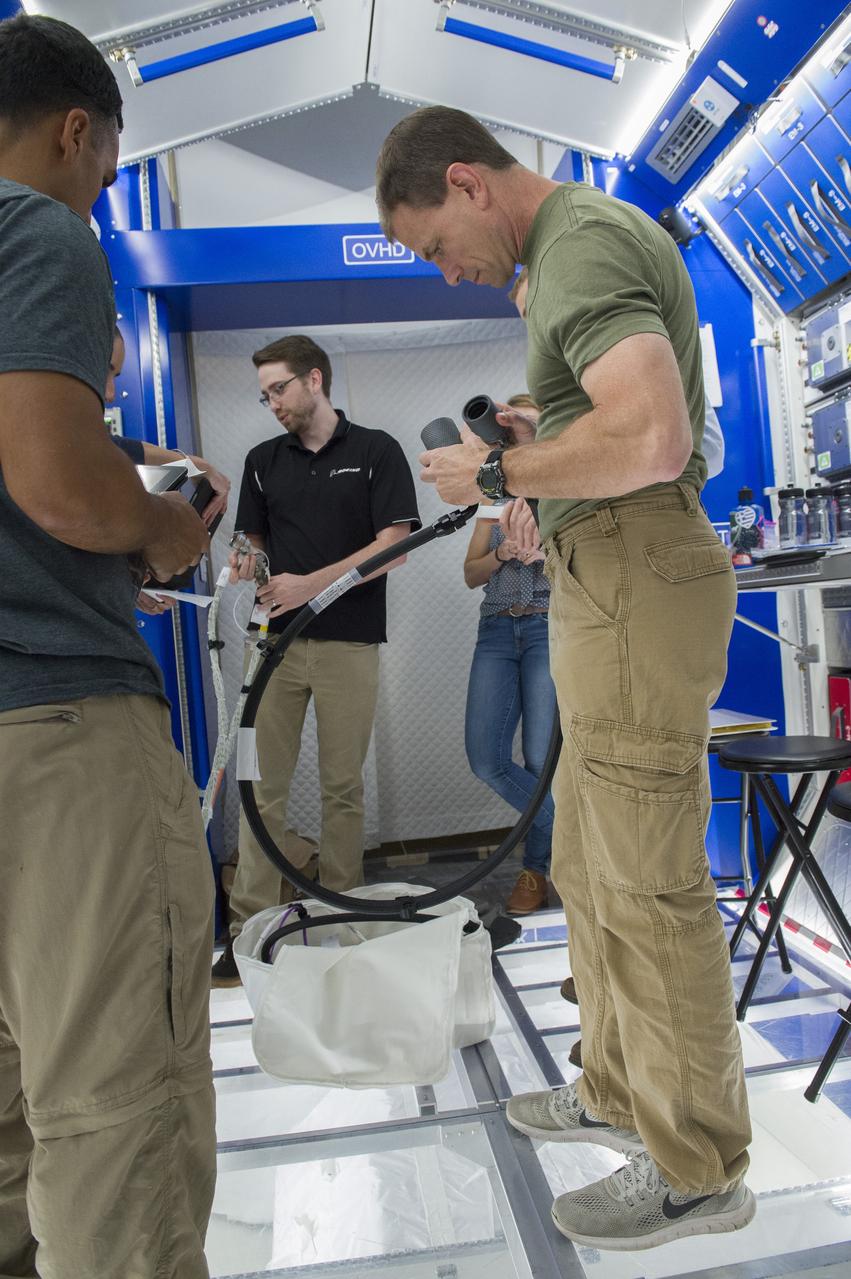
Boeing trainers conduct simulations inside the Boeing Exploration Habitat Demonstrator with astronauts to evaluate the internal layout and ergonomics, to support efficient work-life balance aboard a deep space ship.
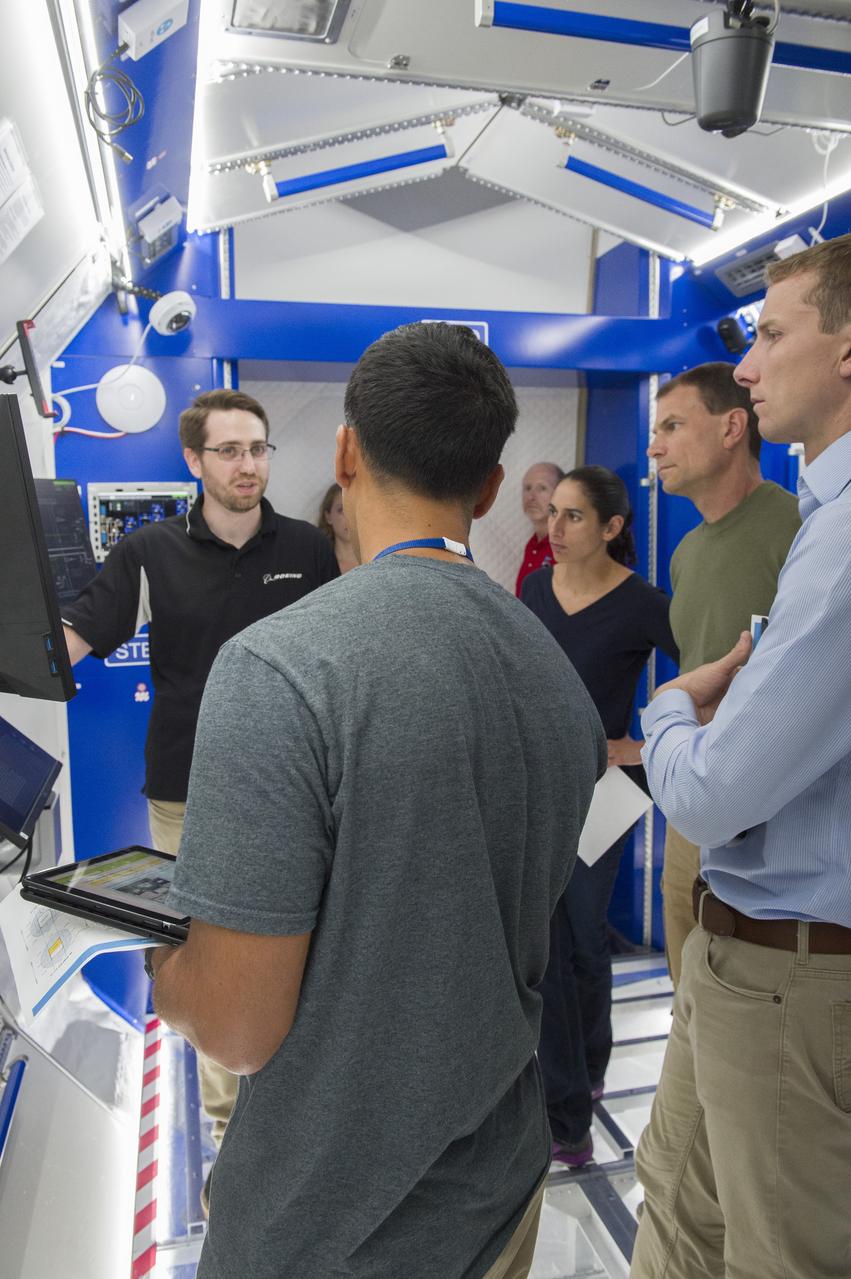
Boeing trainers conduct simulations inside the Boeing Exploration Habitat Demonstrator with astronauts to evaluate the internal layout and ergonomics, to support efficient work-life balance aboard a deep space ship.
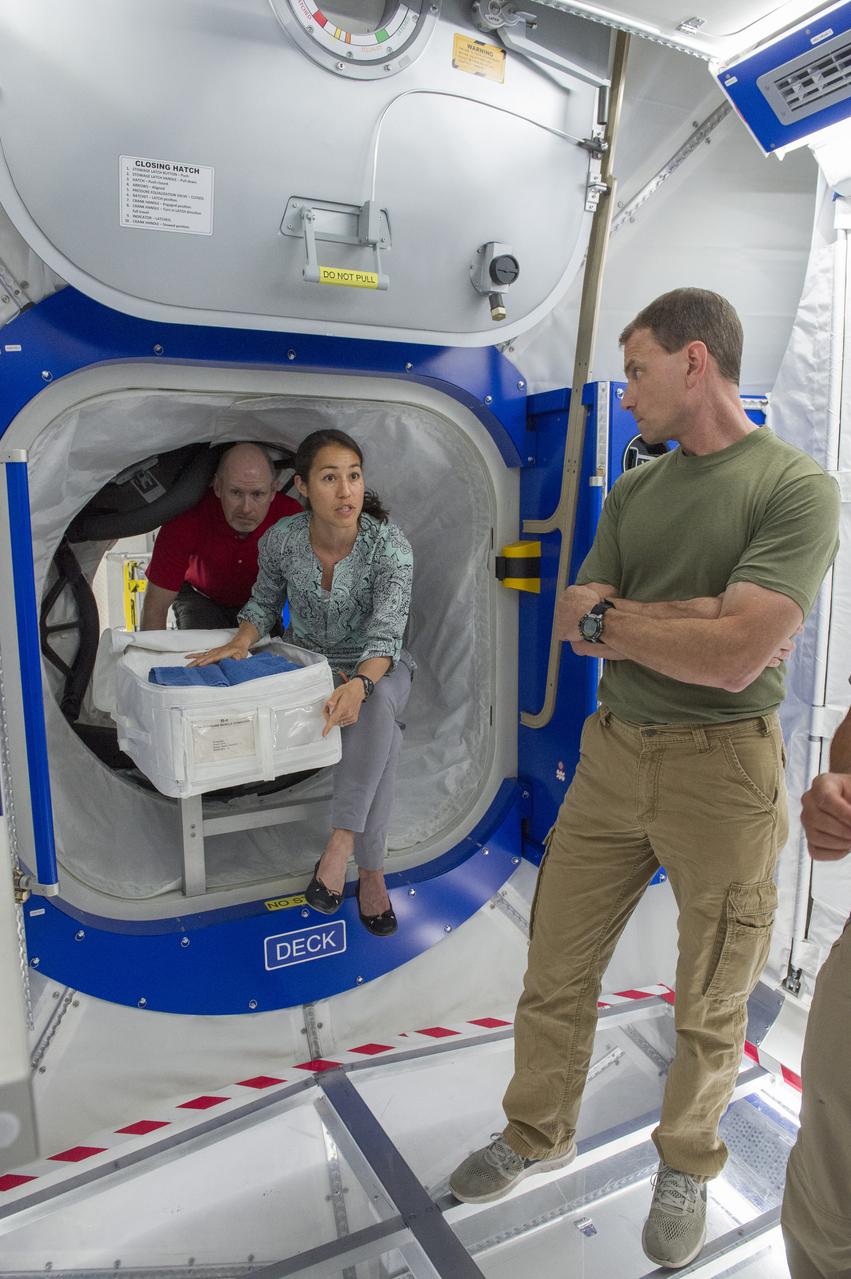
Boeing trainers conduct simulations inside the Boeing Exploration Habitat Demonstrator with astronauts to evaluate the internal layout and ergonomics, to support efficient work-life balance aboard a deep space ship.
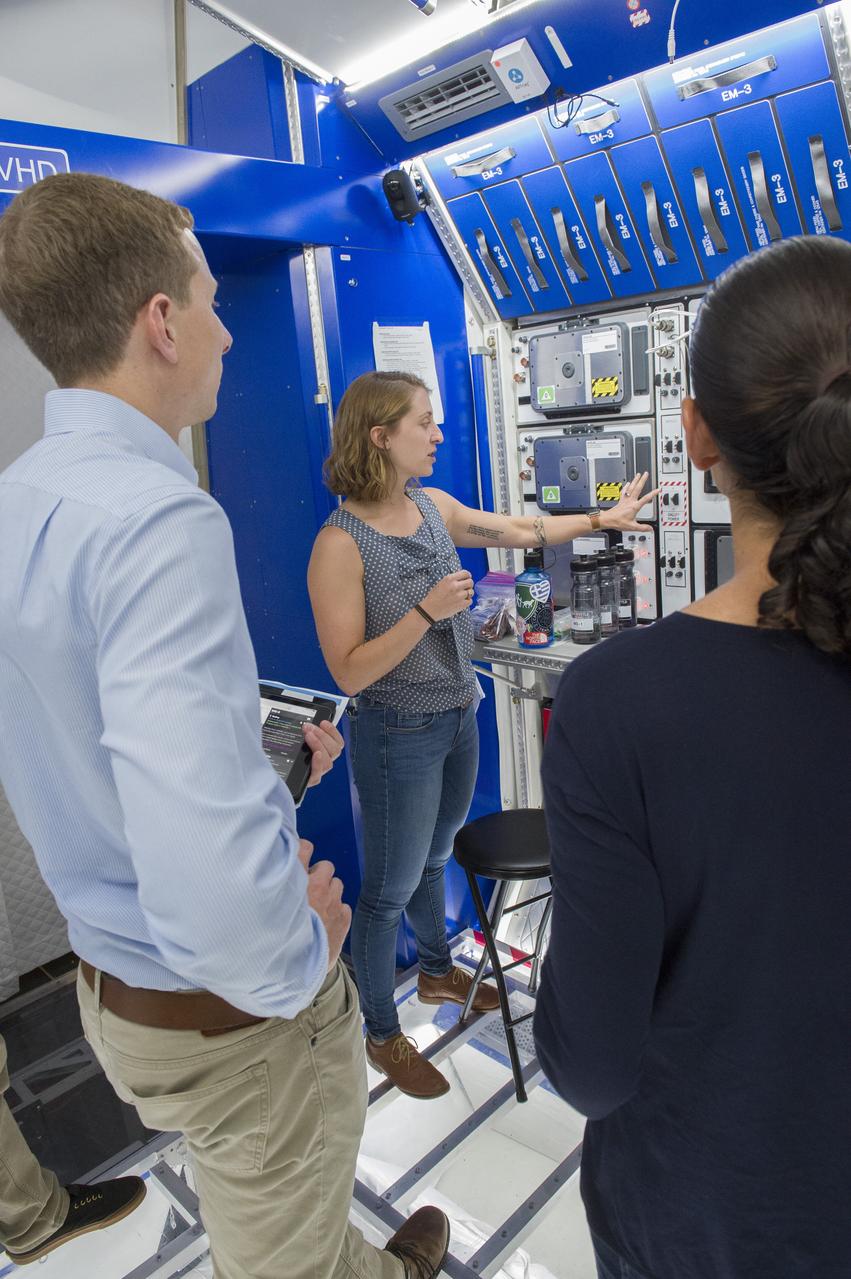
Boeing trainers conduct simulations inside the Boeing Exploration Habitat Demonstrator with astronauts to evaluate the internal layout and ergonomics, to support efficient work-life balance aboard a deep space ship.
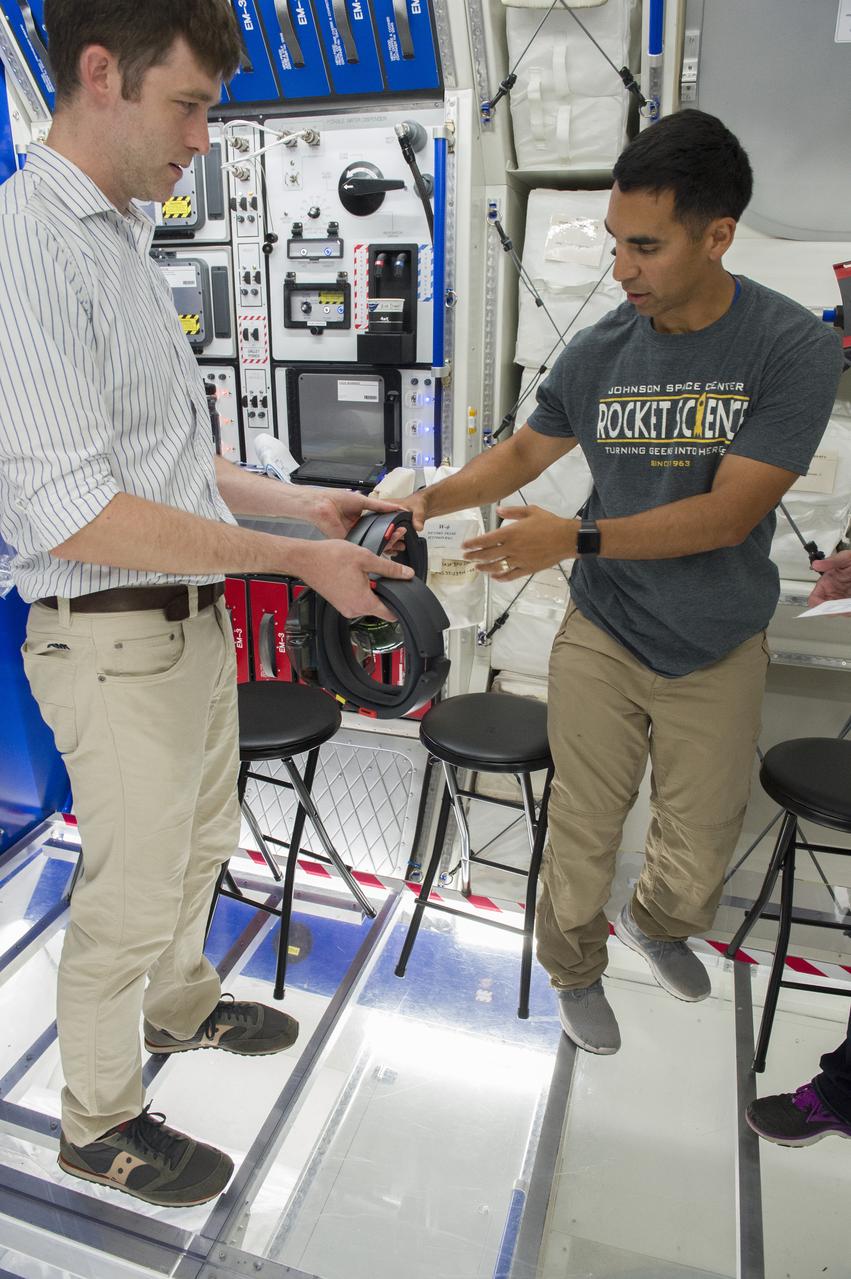
Boeing trainers conduct simulations inside the Boeing Exploration Habitat Demonstrator with astronauts to evaluate the internal layout and ergonomics, to support efficient work-life balance aboard a deep space ship.
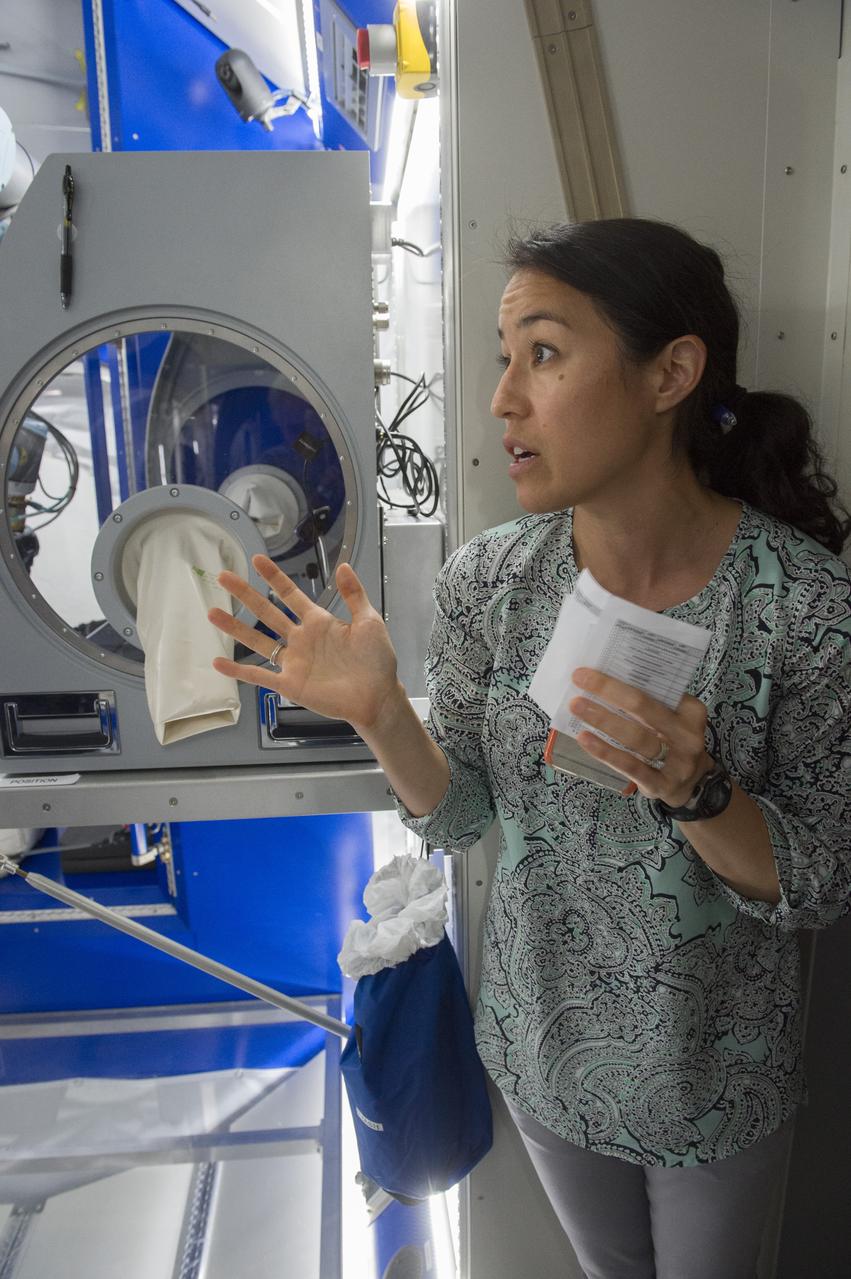
Boeing trainers conduct simulations inside the Boeing Exploration Habitat Demonstrator with astronauts to evaluate the internal layout and ergonomics, to support efficient work-life balance aboard a deep space ship.
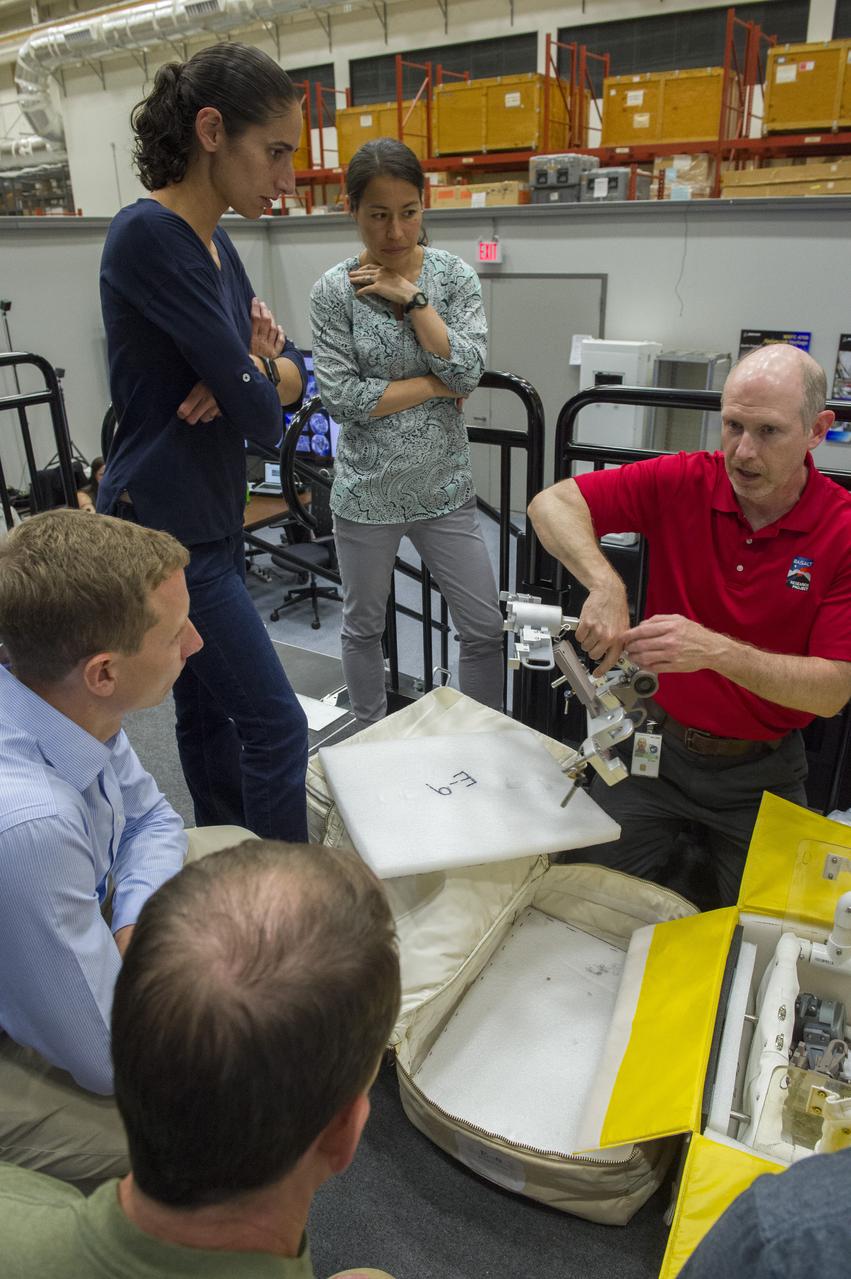
Boeing trainers conduct simulations inside the Boeing Exploration Habitat Demonstrator with astronauts to evaluate the internal layout and ergonomics, to support efficient work-life balance aboard a deep space ship.
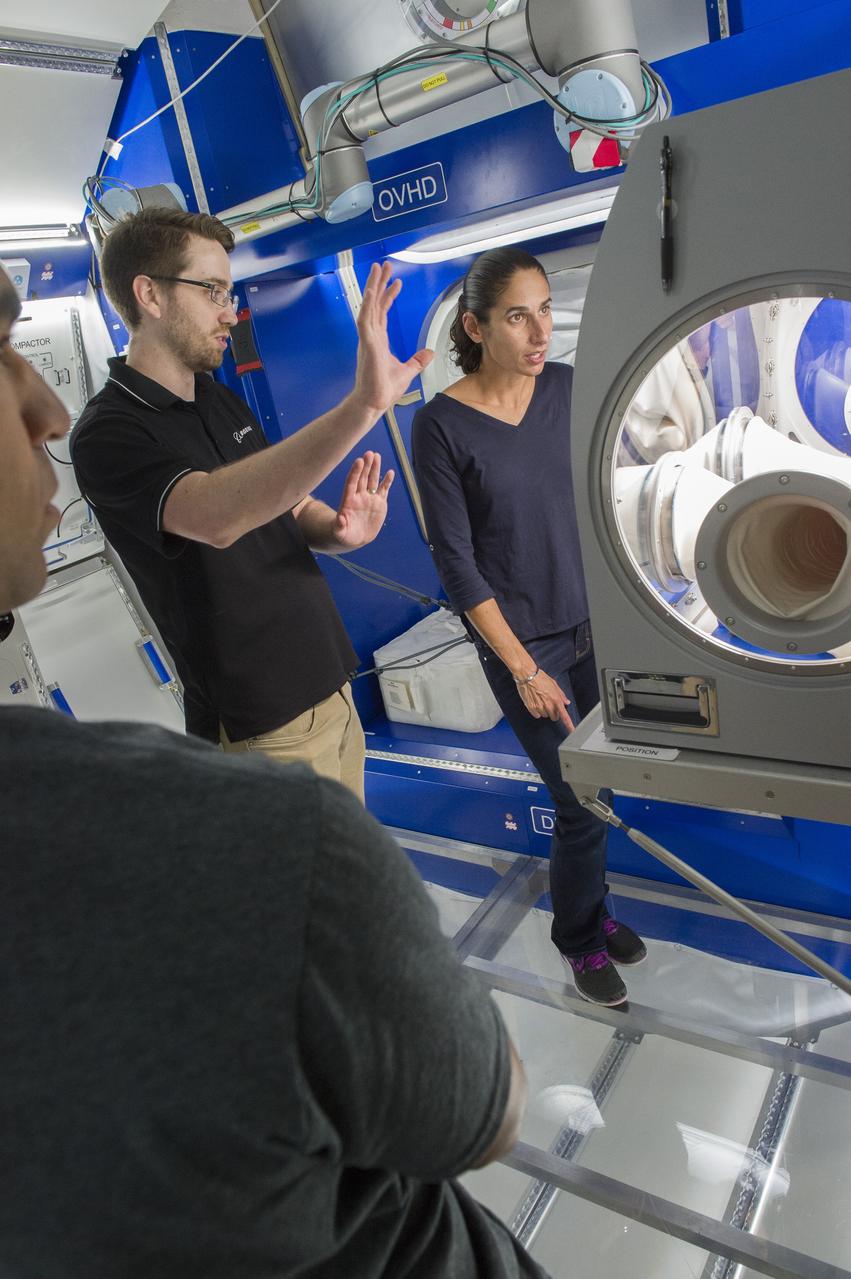
Boeing trainers conduct simulations inside the Boeing Exploration Habitat Demonstrator with astronauts to evaluate the internal layout and ergonomics, to support efficient work-life balance aboard a deep space ship.
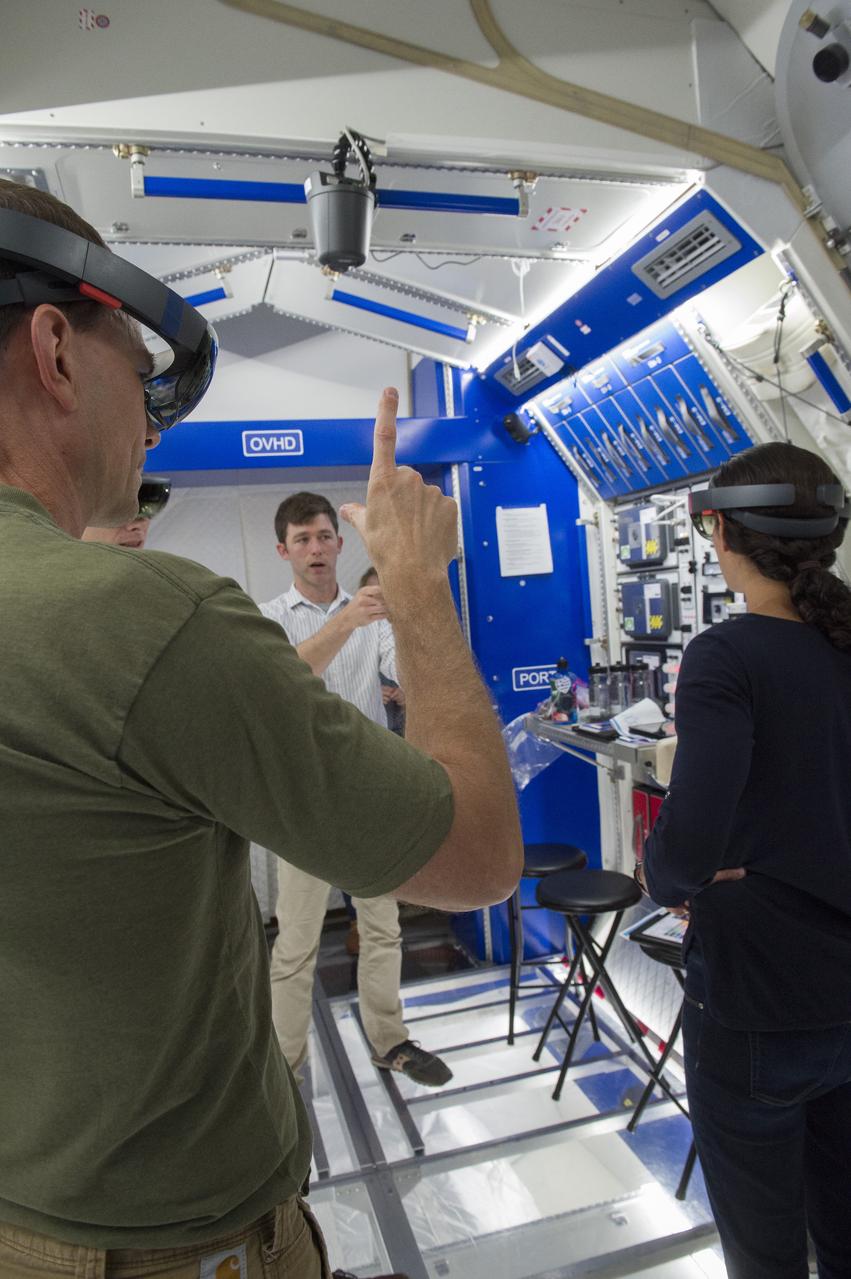
Boeing trainers conduct simulations inside the Boeing Exploration Habitat Demonstrator with astronauts to evaluate the internal layout and ergonomics, to support efficient work-life balance aboard a deep space ship.
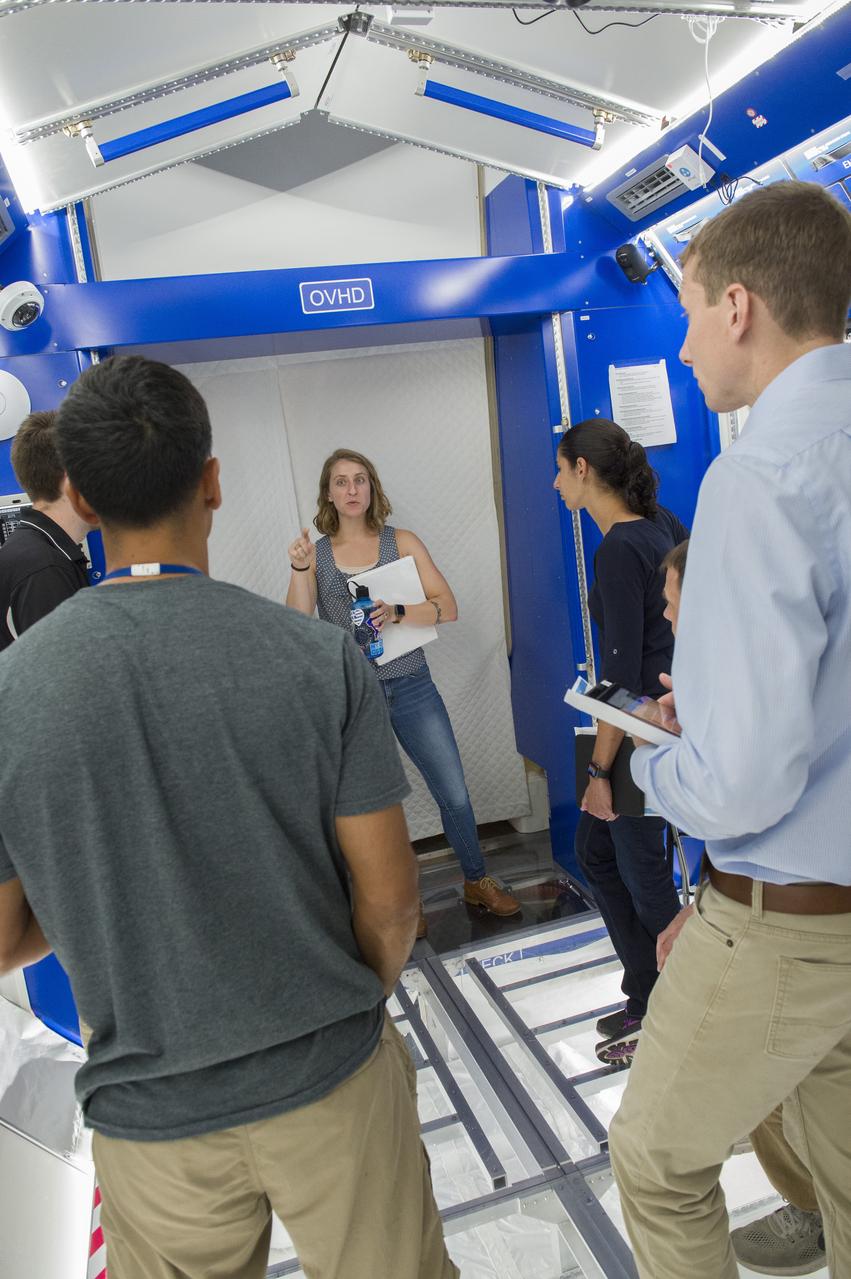
Boeing trainers conduct simulations inside the Boeing Exploration Habitat Demonstrator with astronauts to evaluate the internal layout and ergonomics, to support efficient work-life balance aboard a deep space ship.
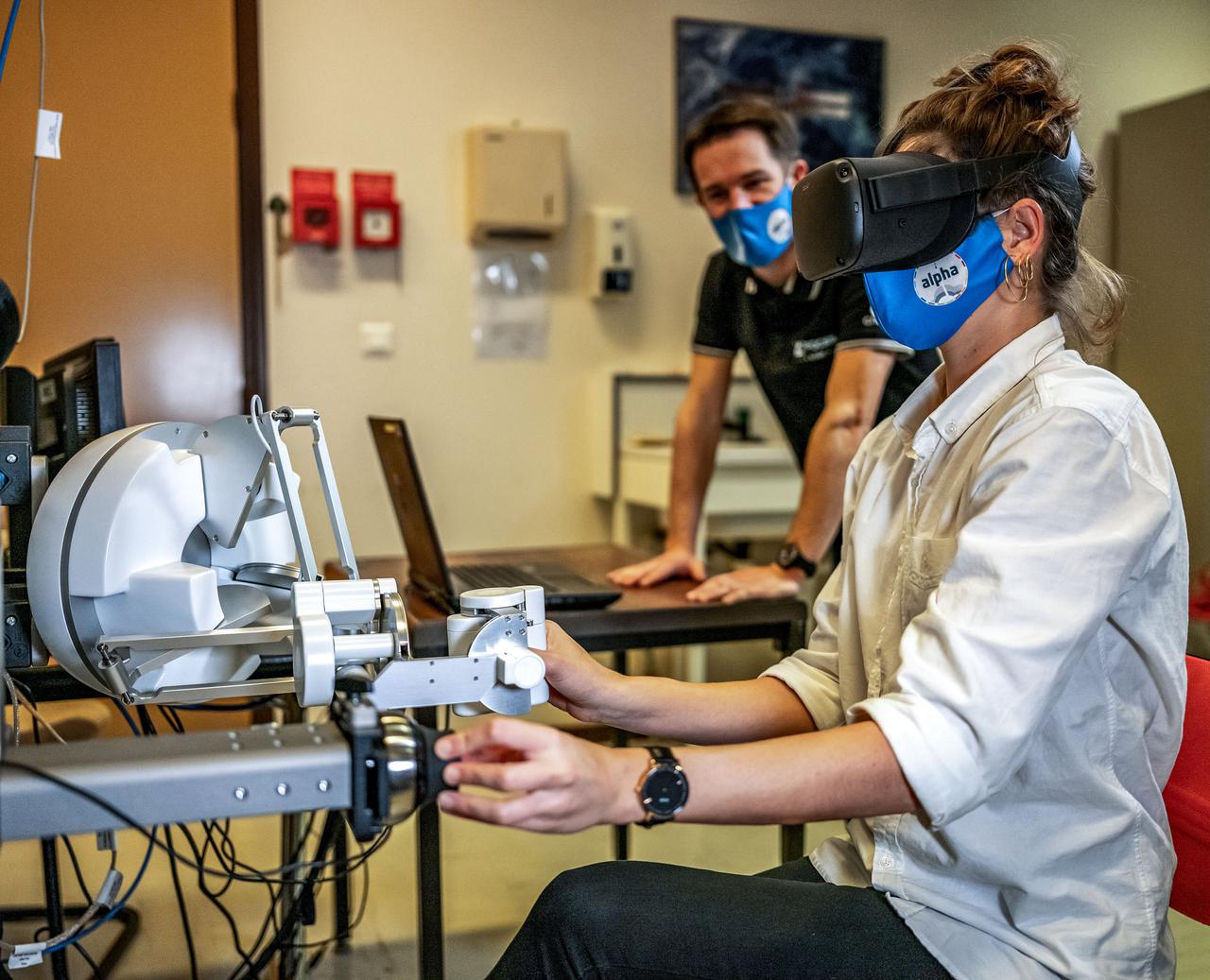
jsc2021e019398 (12/9/2020) --- Simulation of the Pilote experiment. In order to test the ergonomics of a multisensory interface for controlling robotic arms and spacecraft, it is necessary to perform the trials in microgravity. Performing the test on Earth would lead to a design of a work station using terrestrial ergonomic principles that do not correspond to conditions experienced on a spacecraft in orbit. The Pilote investigation tests the effectiveness of novel control schemes for the remote operation of robotic arms and space vehicles, using virtual reality and a new class of user-machine interfaces based on haptics. Image courtesy of CNES/DE PRADA Thierry.
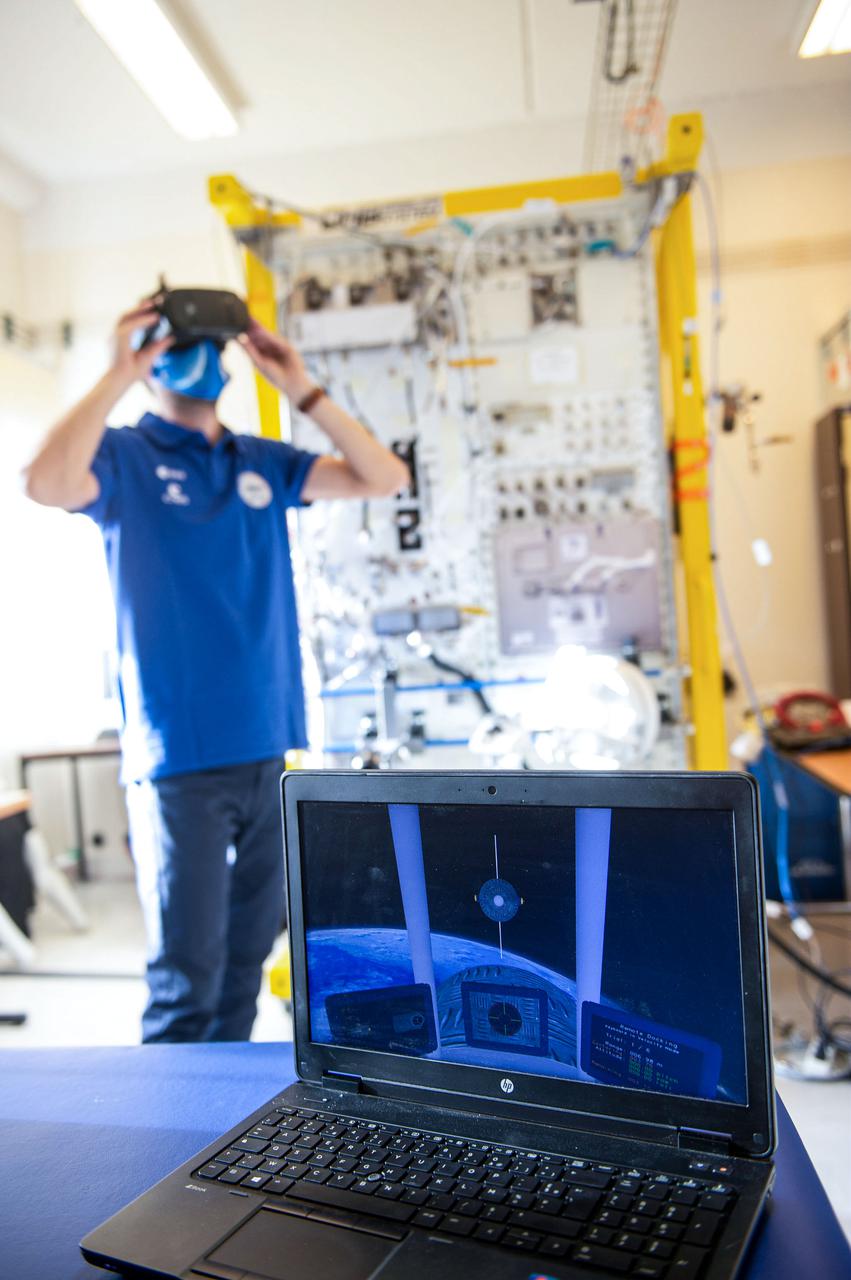
jsc2021e019400 (1/12/2021) --- Simulation of the Pilote experiment. In order to test the ergonomics of a multisensory interface for controlling robotic arms and spacecraft, it is necessary to perform the trials in microgravity. Performing the test on Earth would lead to a design of a work station using terrestrial ergonomic principles that do not correspond to conditions experienced on a spacecraft in orbit. The Pilote investigation tests the effectiveness of novel control schemes for the remote operation of robotic arms and space vehicles, using virtual reality and a new class of user-machine interfaces based on haptics. Image courtesy of CNES/GRIMAULT Emmanuel.
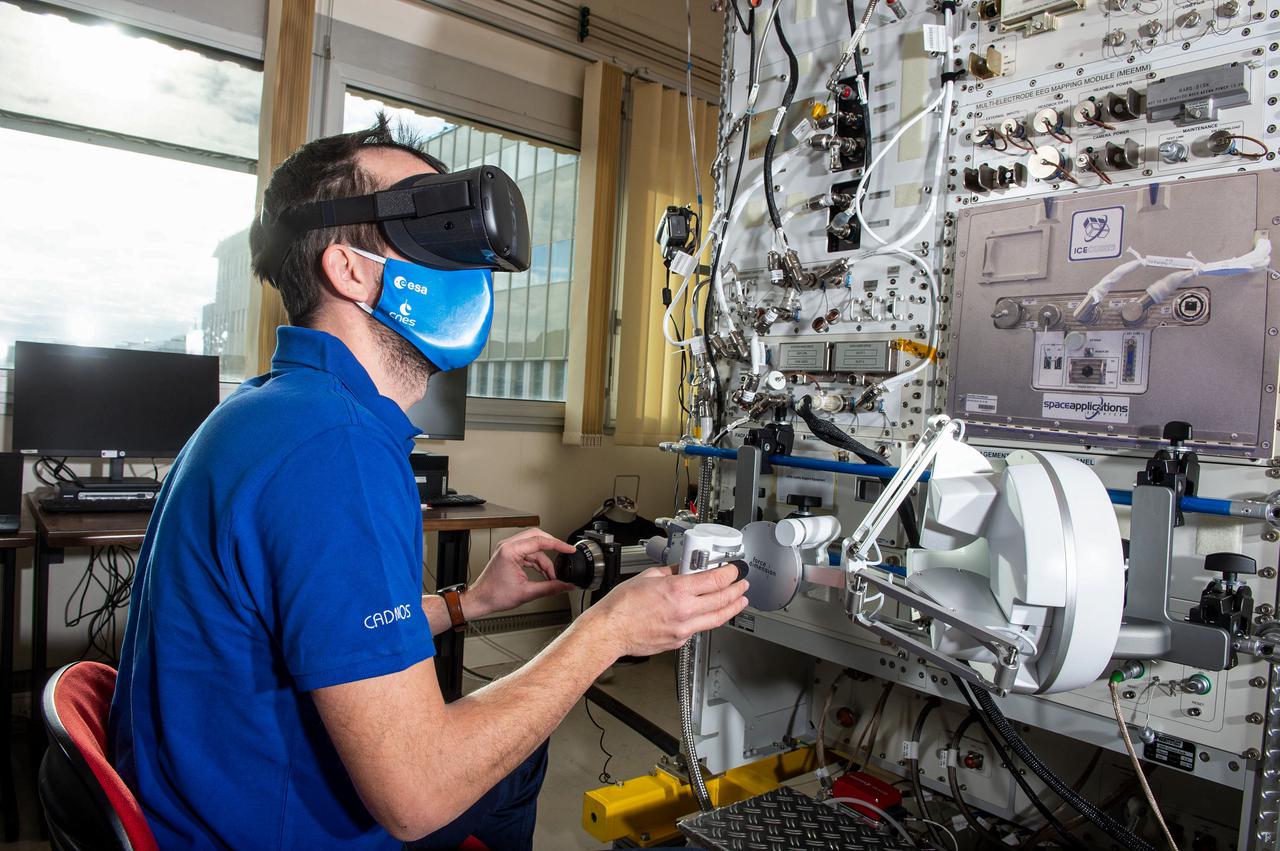
jsc2021e019399 (1/12/2021) --- Simulation of the Pilote experiment. In order to test the ergonomics of a multisensory interface for controlling robotic arms and spacecraft, it is necessary to perform the trials in microgravity. Performing the test on Earth would lead to a design of a work station using terrestrial ergonomic principles that do not correspond to conditions experienced on a spacecraft in orbit. The Pilote investigation tests the effectiveness of novel control schemes for the remote operation of robotic arms and space vehicles, using virtual reality and a new class of user-machine interfaces based on haptics. Image courtesy of CNES/GRIMAULT Emmanuel.

jsc2021e019401 (1/19/2021) --- A preflight macro shot of SIGMA-7 interface for Pilote experiment, In order to test the ergonomics of a multisensory interface for controlling robotic arms and spacecraft, it is necessary to perform the trials in microgravity. Performing the test on Earth would lead to a design of a work station using terrestrial ergonomic principles that do not correspond to conditions experienced on a spacecraft in orbit. The Pilote investigation tests the effectiveness of novel control schemes for the remote operation of robotic arms and space vehicles, using virtual reality and a new class of user-machine interfaces based on haptics. Image courtesy of CNES/DE PRADA Thierry.
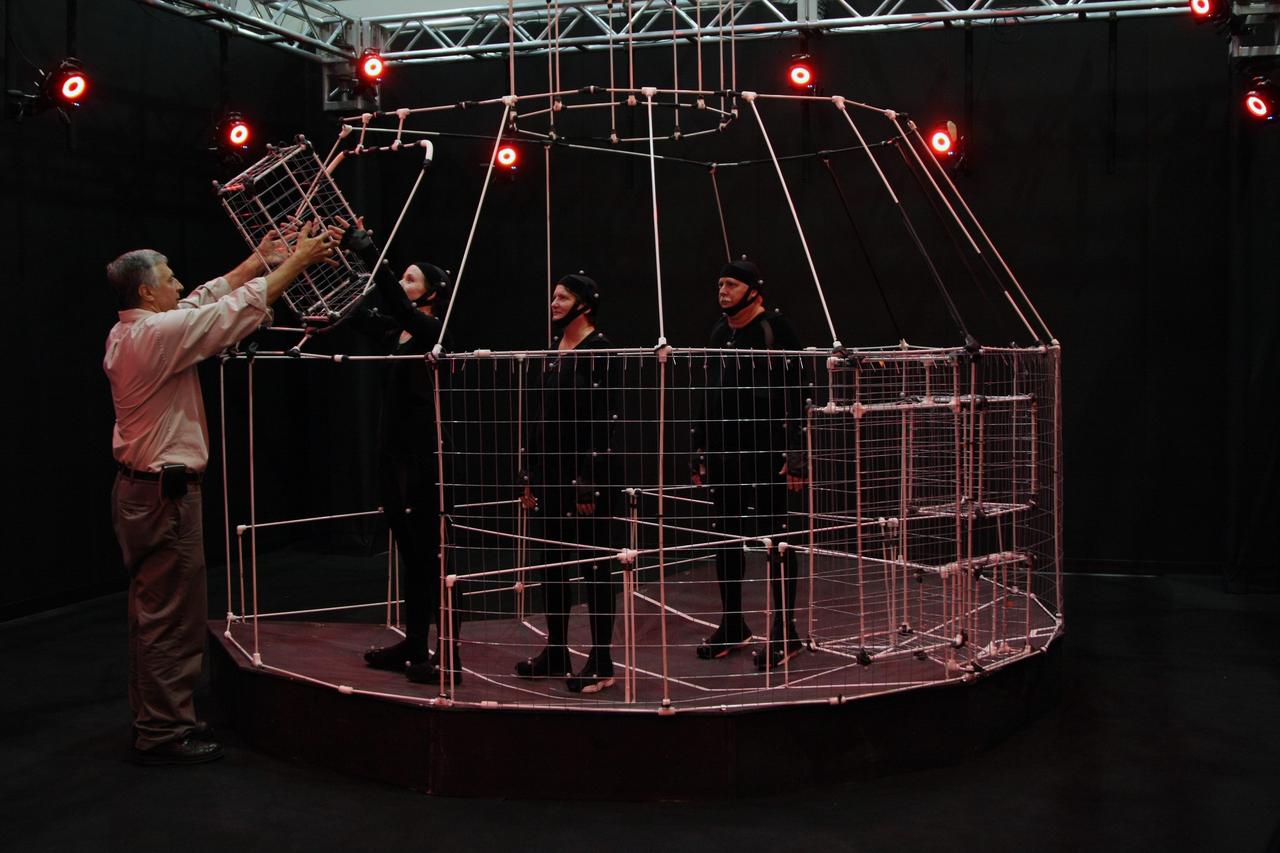
CAPE CANAVERAL, Fla. – Professor Peter Voci, NYIT MOCAP (Motion Capture) team director, (left) hands a component of the Orion Crew Module mockup to one of three technicians inside the mockup. The technicians wear motion capture suits. The motion tracking aims to improve efficiency of assembly processes and identify potential ergonomic risks for technicians assembling the mockup. The work is being performed in United Space Alliance's Human Engineering Modeling and Performance Lab in the RLV Hangar at NASA's Kennedy Space Center. The motion tracking aims to improve efficiency of assembly processes and identify potential ergonomic risks for technicians assembling the mockup. The work is being performed in United Space Alliance's Human Engineering Modeling and Performance Lab in the RLV Hangar at NASA's Kennedy Space Center. Part of NASA's Constellation Program, the Orion spacecraft will return humans to the moon and prepare for future voyages to Mars and other destinations in our solar system.
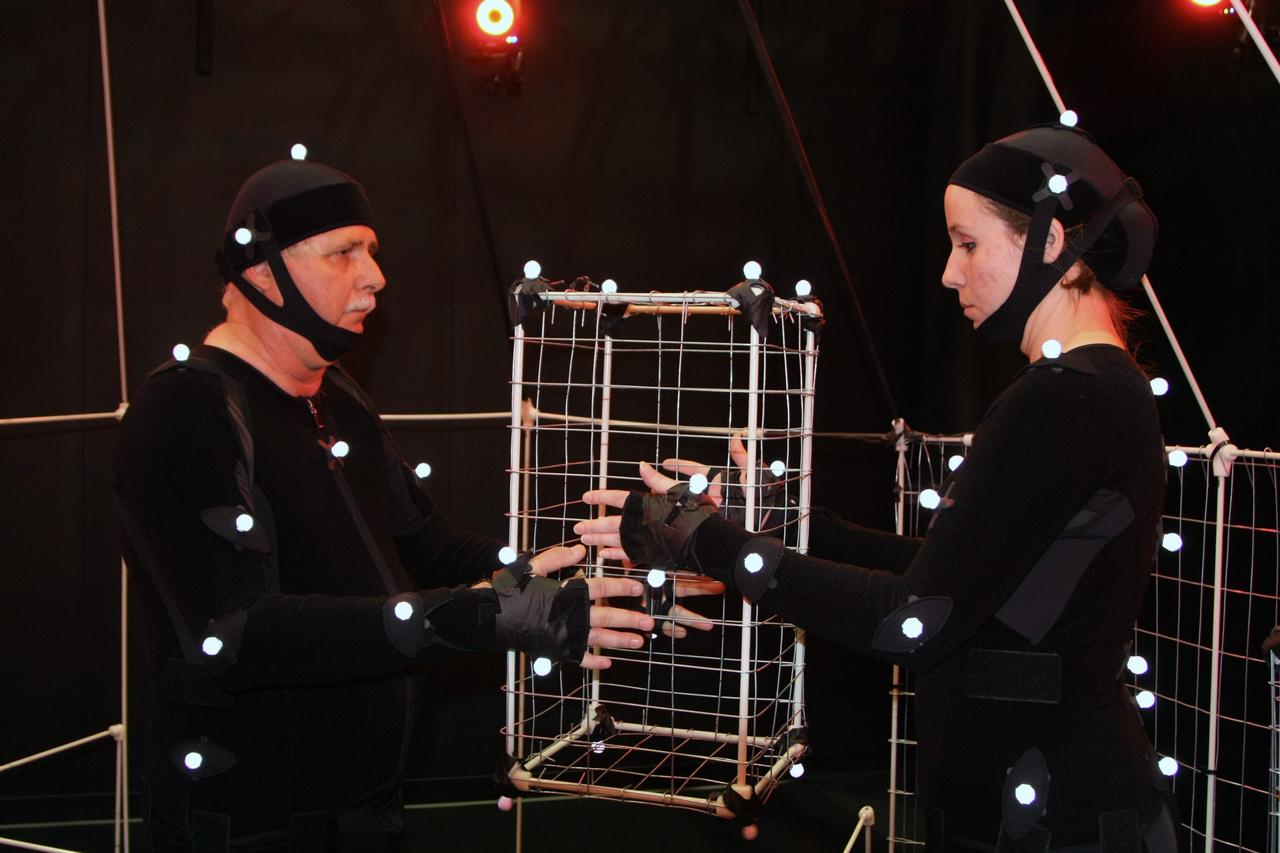
CAPE CANAVERAL, Fla. – A United Space Alliance technician (right) hands off a component of the Orion Crew Module mockup to one of the other technicians inside the mockup. The technicians wear motion capture suits. The motion tracking aims to improve efficiency of assembly processes and identify potential ergonomic risks for technicians assembling the mockup, which was created and built at the New York Institute of Technology by a team led by Prof. Peter Voci, MFA Director at the College of Arts and Sciences. The motion tracking aims to improve efficiency of assembly processes and identify potential ergonomic risks for technicians assembling the mockup. The work is being performed in United Space Alliance's Human Engineering Modeling and Performance Lab in the RLV Hangar at NASA's Kennedy Space Center. Part of NASA's Constellation Program, the Orion spacecraft will return humans to the moon and prepare for future voyages to Mars and other destinations in our solar system.
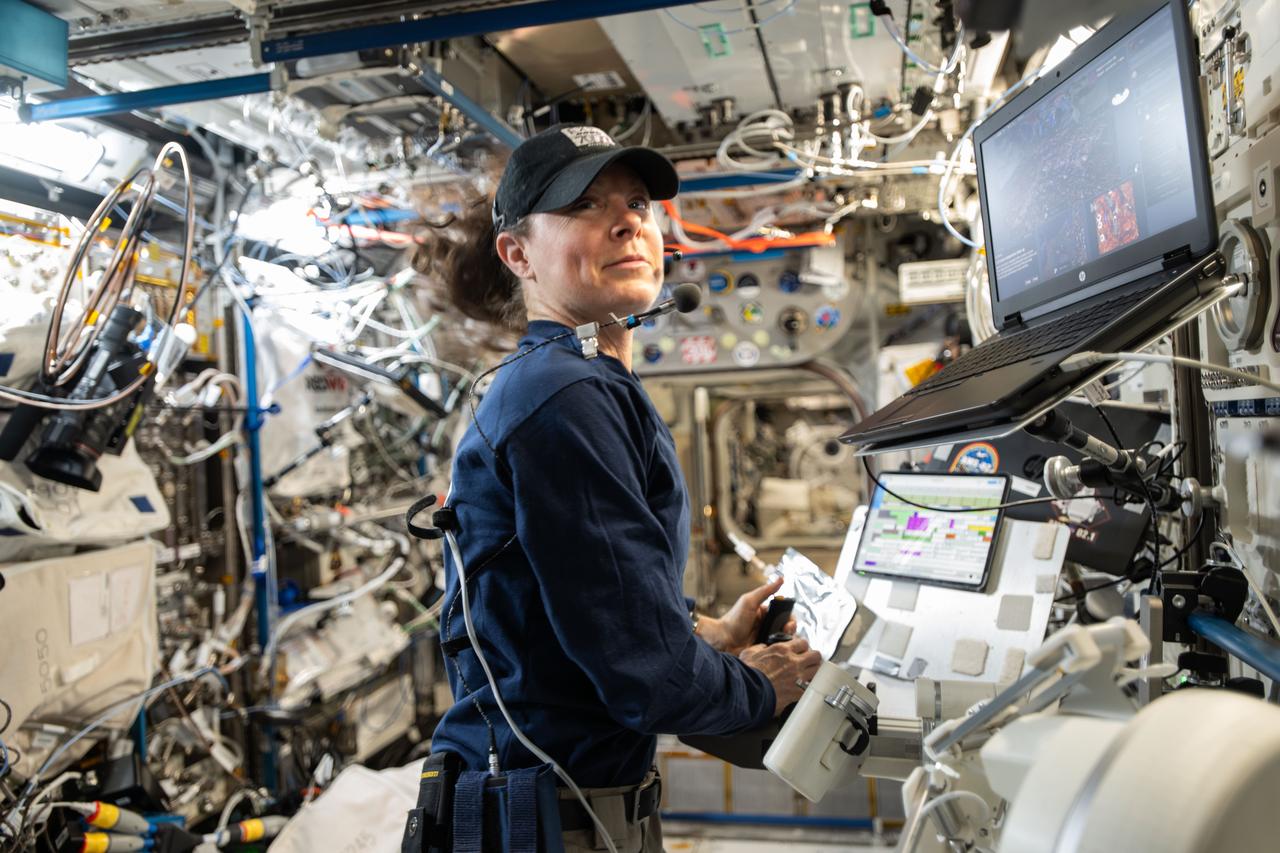
iss071e297582 (July 9, 2024) --- NASA astronaut and Expedition 71 Flight Engineer Tracy C. Dyson is pictured inside the International Space Station's Columbus laboratory module. She was exploring ways to control a robot on the ground from a spacecraft. Dyson coordinated with robotics engineers on Earth remotely manipulating a robot using a computer while testing its ergonomic features and haptic feedback for conditions such as wind and gravity. Results may inform future exploration missions to the Moon, Mars, and beyond.
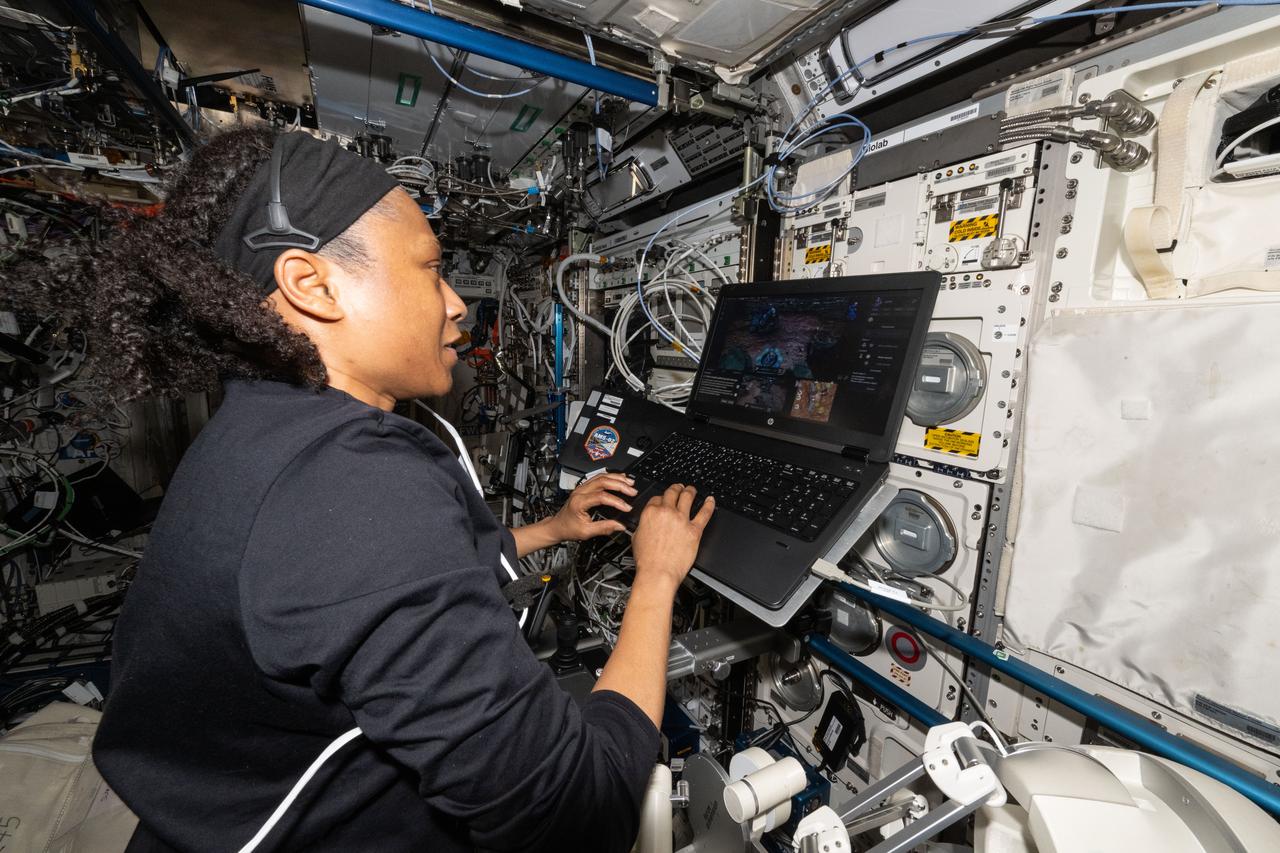
iss071e318587 (July 10, 2024) --- NASA astronaut and Expedition 71 Flight Engineer Jeanette Epps is pictured inside the International Space Station's Columbus laboratory module. She was exploring ways to control a robot on the ground from a spacecraft. Epps coordinated with robotics engineers on Earth remotely manipulating a robot using a computer while testing its ergonomic features and haptic feedback for conditions such as wind and gravity. Results may inform future exploration missions to the Moon, Mars, and beyond.
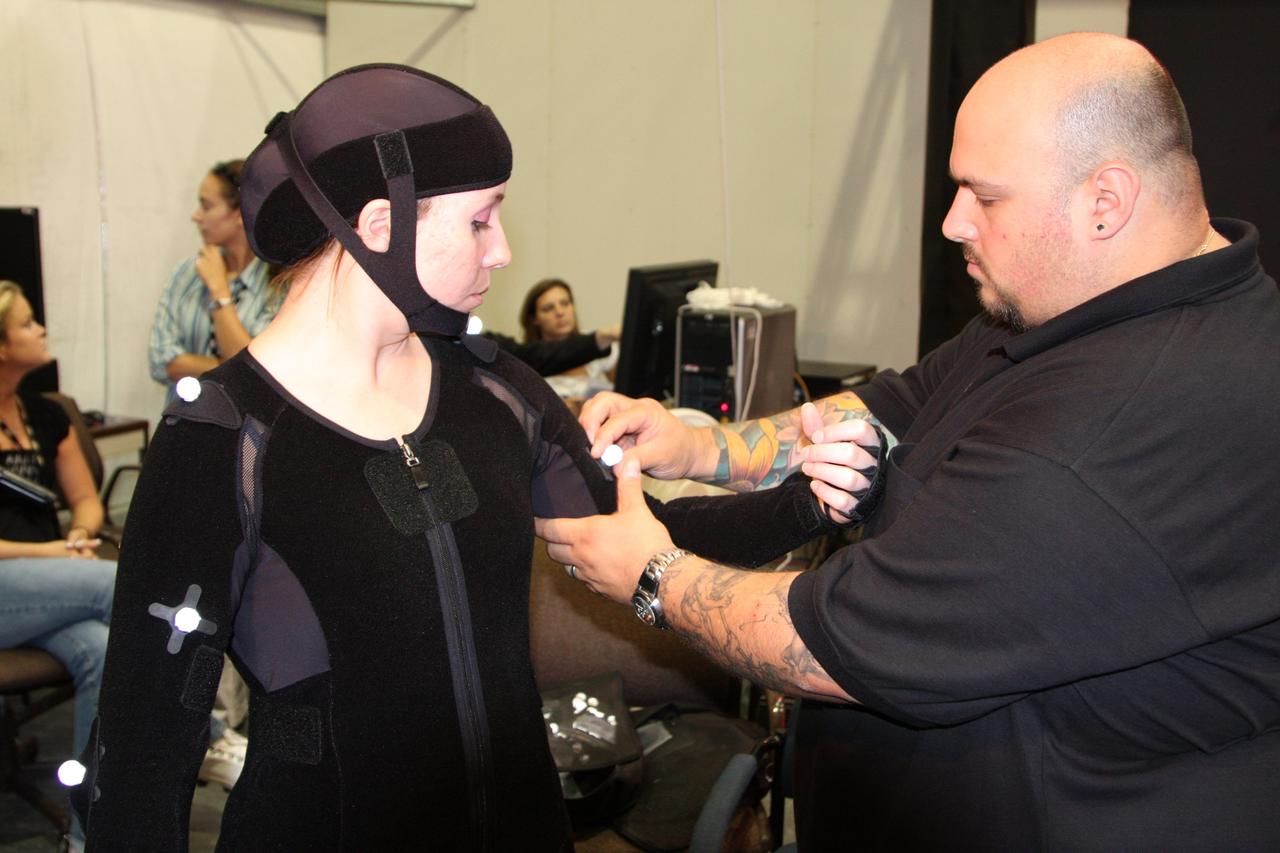
CAPE CANAVERAL, Fla. – NYIT MOCAP (Motion Capture) team Project Manager Jon Squitieri attaches a retro reflective marker to a motion capture suit worn by a technician who will be assembling the Orion Crew Module mockup. The motion tracking aims to improve efficiency of assembly processes and identify potential ergonomic risks for technicians assembling the mockup. The work is being performed in United Space Alliance's Human Engineering Modeling and Performance Lab in the RLV Hangar at NASA's Kennedy Space Center. Part of NASA's Constellation Program, the Orion spacecraft will return humans to the moon and prepare for future voyages to Mars and other destinations in our solar system.
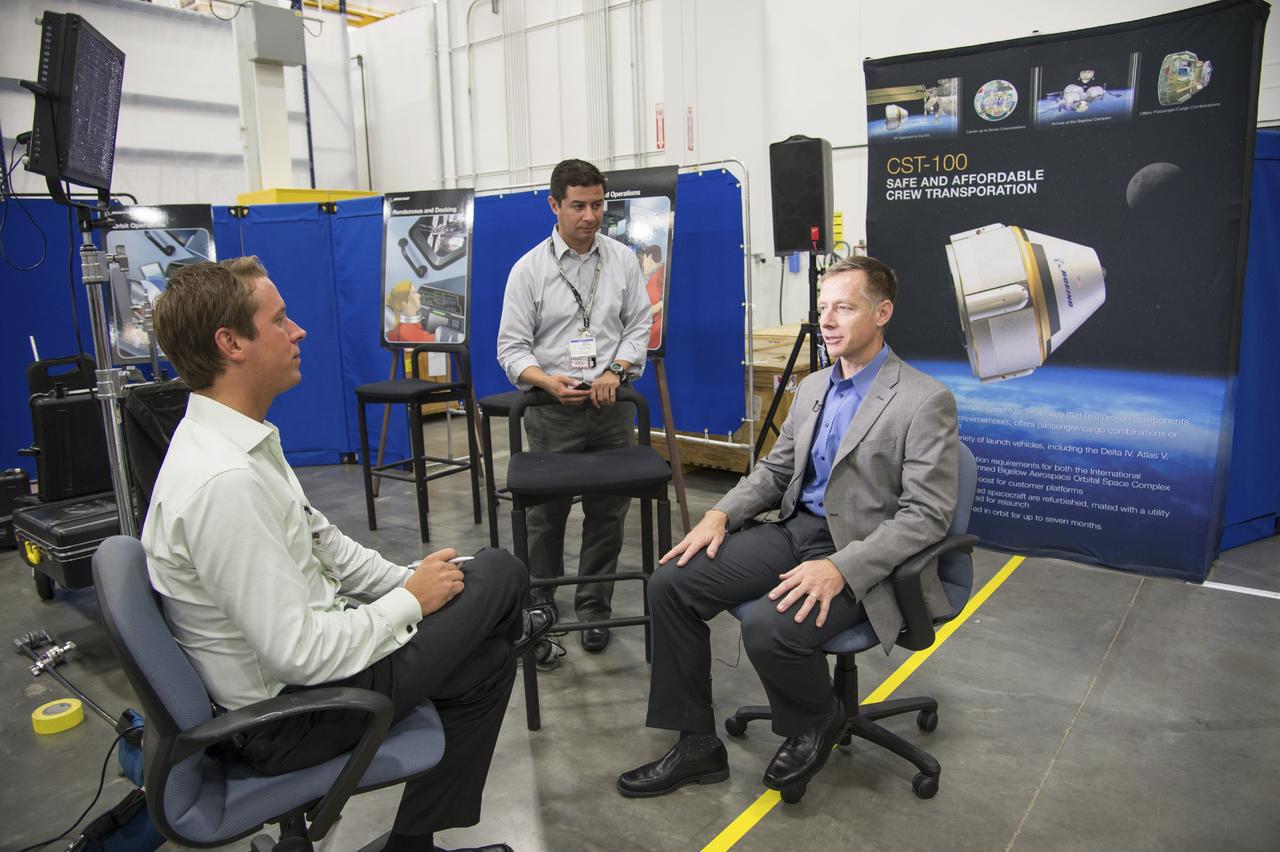
HOUSTON - JSC2013e068248 - Chris Ferguson, director of Crew and Mission Operations for The Boeing Company, is interviewed by the media during the unveiling of a CST-100 mock-up at the company's Houston Product Support Center. This test version is optimized to support five crew members and will allow the company to evaluate crew safety, interfaces, communications, maneuverability and ergonomics. Boeing's CST-100 is being designed to transport crew members or a mix of crew and cargo to low-Earth-orbit destinations, including the International Space Station. Boeing is one of three aerospace industry partners working with CCP during its Commercial Crew Integrated Capability, or CCiCap, initiative, which is intended to make commercial human spaceflight services available for government and commercial customers. To learn more about CCP, visit http://www.nasa.gov/commercialcrew. Photo credit: NASA/Robert Markowitz
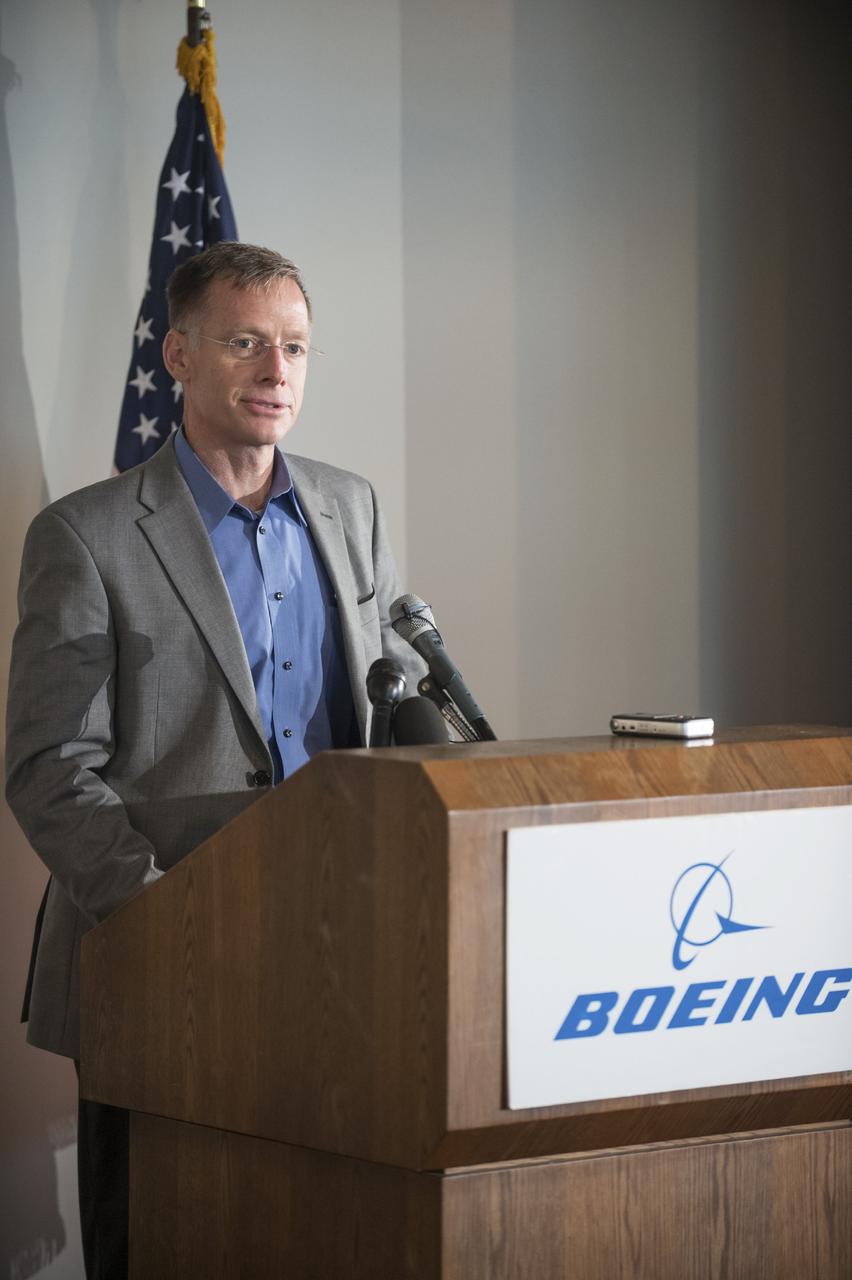
HOUSTON - JSC2013e068300 - Chris Ferguson, director of Crew and Mission Operations for The Boeing Company and former NASA astronaut, addresses the media before the unveiling of a CST-100 mock-up at the company's Houston Product Support Center. This test version is optimized to support five crew members and will allow the company to evaluate crew safety, interfaces, communications, maneuverability and ergonomics. Boeing's CST-100 is being designed to transport crew members or a mix of crew and cargo to low-Earth-orbit destinations. The evaluation is part of the ongoing work supporting Boeing's funded Space Act Agreement with NASA's Commercial Crew Program, or CCP, during the agency's Commercial Crew Integrated Capability, or CCiCap, initiative. CCiCap is intended to make commercial human spaceflight services available for government and commercial customers. To learn more about CCP, visit http://www.nasa.gov/commercialcrew. Photo credit: NASA/Robert Markowitz
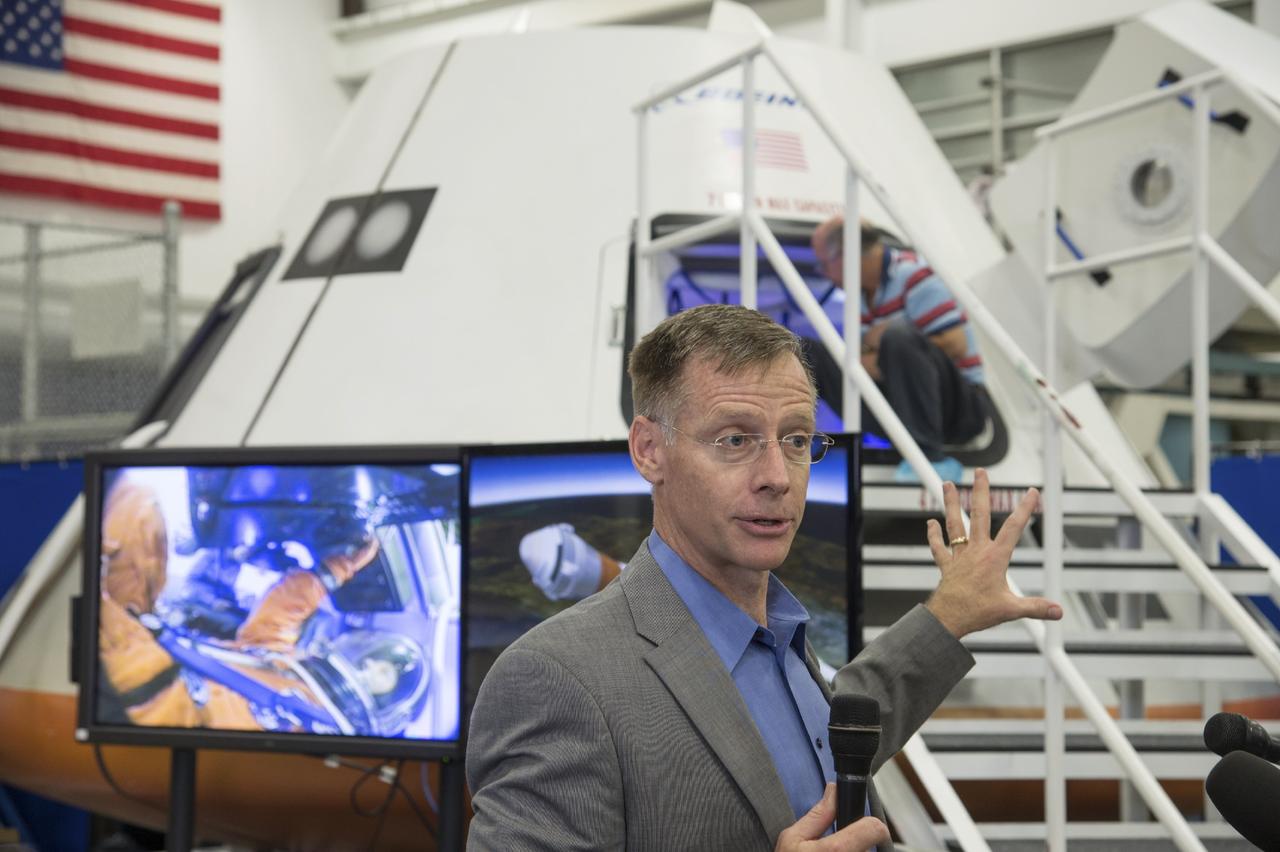
HOUSTON - JSC2013e068310 - Chris Ferguson, director of Crew and Mission Operations for The Boeing Company and former NASA astronaut, discusses the fit check evaluation of the CST-100 mock-up with the media during its unveiling at the company's Houston Product Support Center. This test version is optimized to support five crew members and will allow the company to evaluate crew safety, interfaces, communications, maneuverability and ergonomics. Boeing's CST-100 is being designed to transport crew members or a mix of crew and cargo to low-Earth-orbit destinations. The evaluation is part of the ongoing work supporting Boeing's funded Space Act Agreement with NASA's Commercial Crew Program, or CCP, during the agency's Commercial Crew Integrated Capability, or CCiCap, initiative. CCiCap is intended to make commercial human spaceflight services available for government and commercial customers. To learn more about CCP, visit http://www.nasa.gov/commercialcrew. Photo credit: NASA/Robert Markowitz
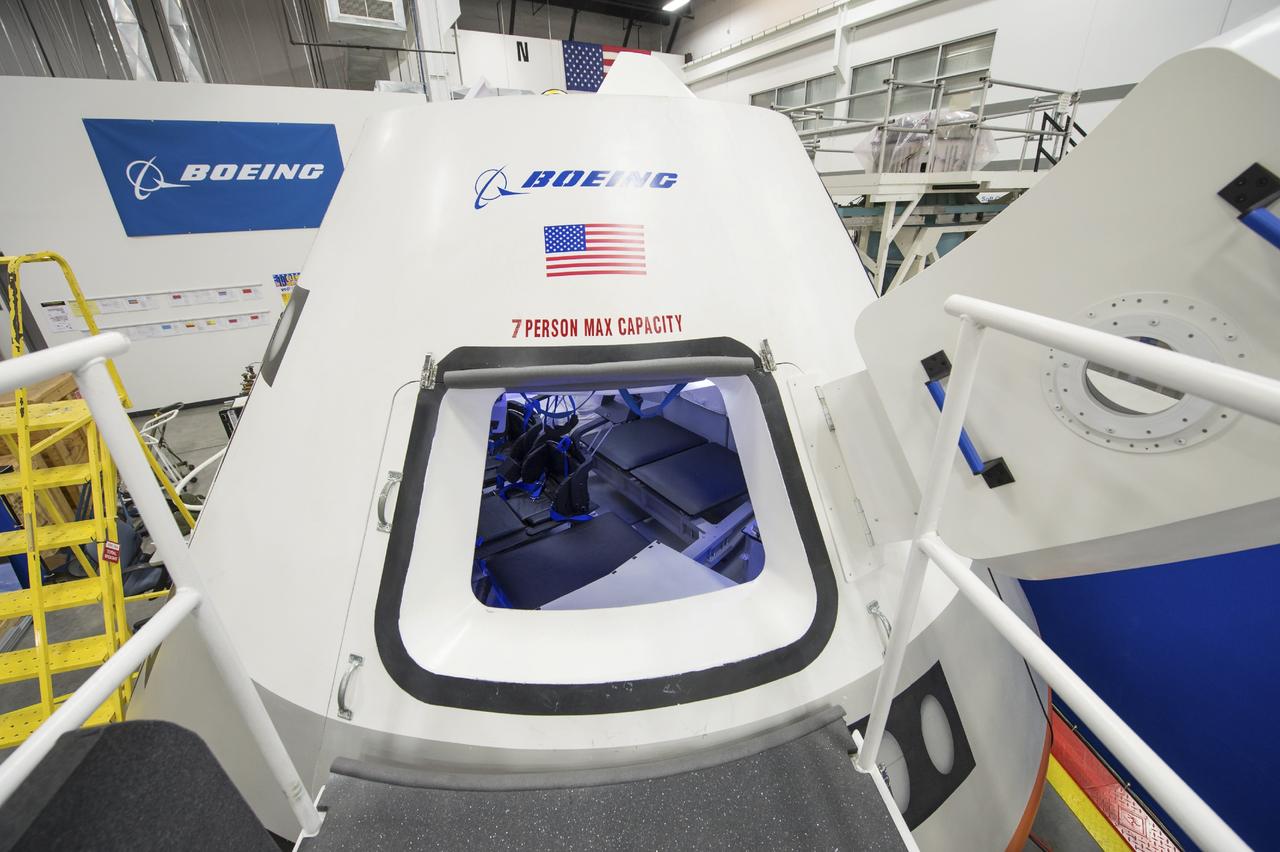
HOUSTON - JSC2013e068247 - The Boeing Company unveils its fully outfitted CST-100 mock-up at the company's Houston Product Support Center in Texas. This test version is optimized to support five crew members and will allow the company to evaluate crew safety, interfaces, communications, maneuverability and ergonomics. Boeing's CST-100 is designed being to transport crew members or a mix of crew and cargo to low-Earth-orbit destinations, including the International Space Station. Boeing is one of three aerospace industry partners working with CCP during its Commercial Crew Integrated Capability, or CCiCap, initiative, which is intended to make commercial human spaceflight services available for government and commercial customers. To learn more about CCP, visit www.nasa.gov/commercialcrew. Photo credit: NASA/Robert Markowitz
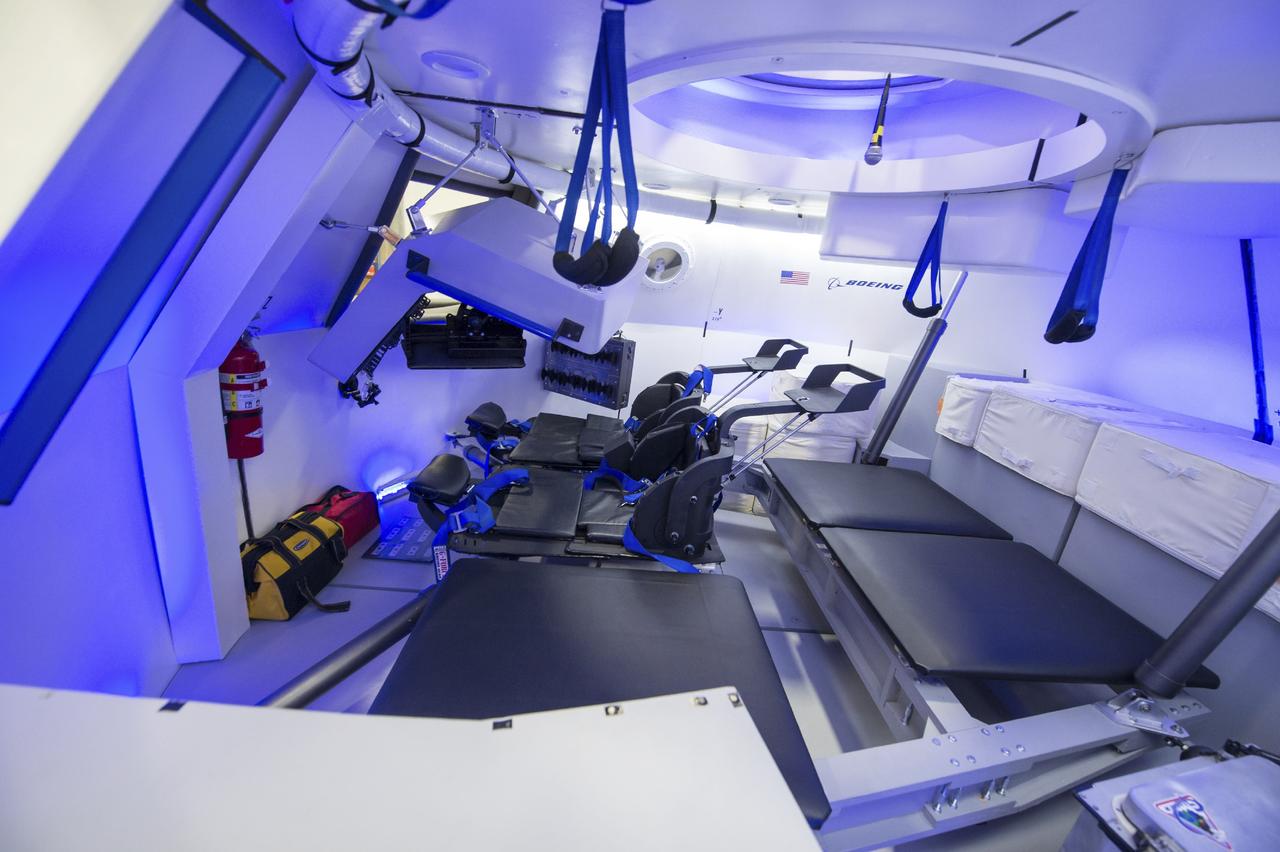
HOUSTON - JSC2013e068244 - The Boeing Company unveils the interior of its fully outfitted CST-100 mock-up at the company's Houston Product Support Center in Texas. This test version is optimized to support five crew members and will allow the company to evaluate crew safety, interfaces, communications, maneuverability and ergonomics. Boeing's CST-100 is being designed to transport crew members or a mix of crew and cargo to low-Earth-orbit destinations, including the International Space Station. Boeing is one of three aerospace industry partners working with CCP during its Commercial Crew Integrated Capability, or CCiCap, initiative, which is intended to make commercial human spaceflight services available for government and commercial customers. To learn more about CCP, visit http://www.nasa.gov/commercialcrew. Photo credit: NASA/Robert Markowitz
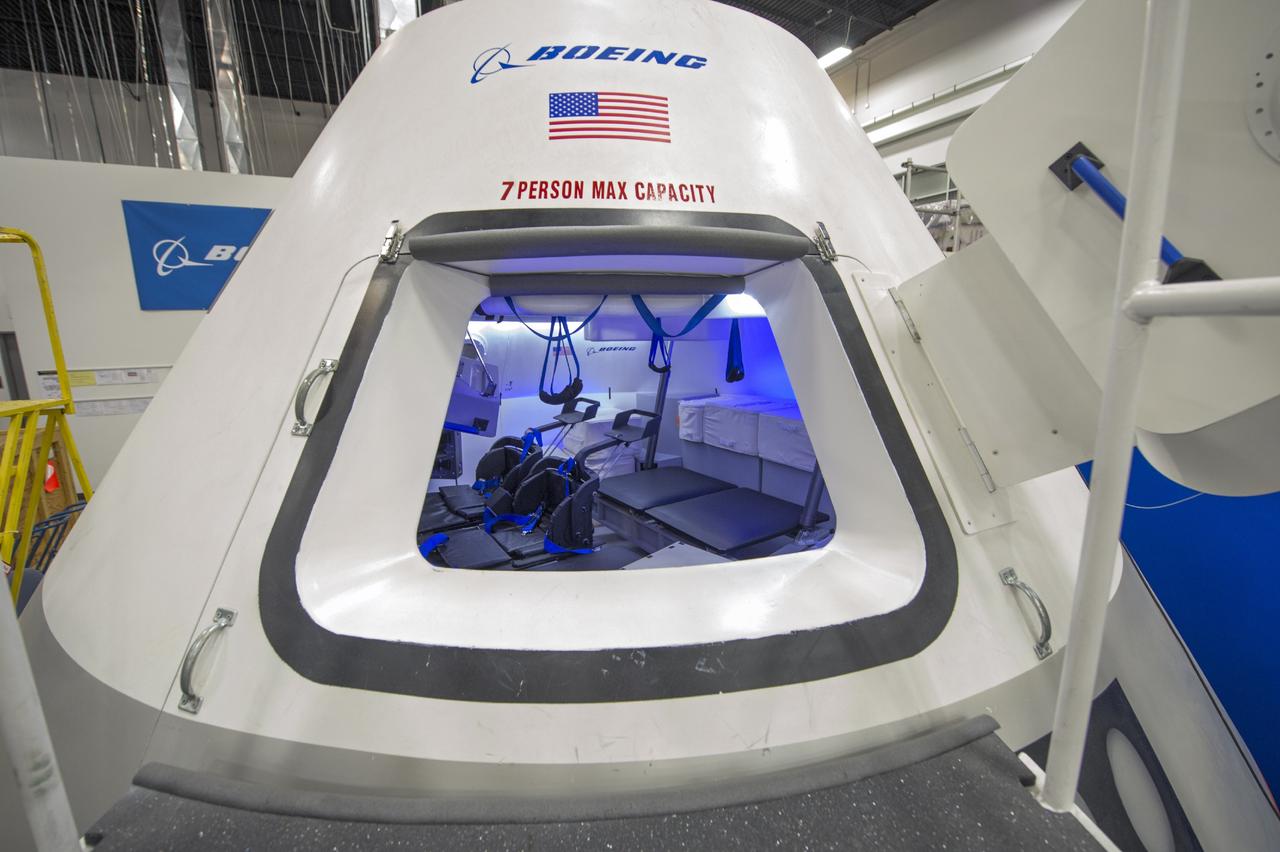
HOUSTON - The Boeing Company unveils its fully outfitted CST-100 mock-up at the company's Houston Product Support Center in Texas. This test version is optimized to support five crew members and will allow the company to evaluate crew safety, interfaces, communications, maneuverability and ergonomics. Boeing's CST-100 is being designed to transport crew members or a mix of crew and cargo to low-Earth-orbit destinations, including the International Space Station. Boeing is one of three aerospace industry partners working with CCP during its Commercial Crew Integrated Capability, or CCiCap, initiative, which is intended to make commercial human spaceflight services available for government and commercial customers. To learn more about CCP, visit http://www.nasa.gov/commercialcrew. Photo credit: NASA/Robert Markowitz
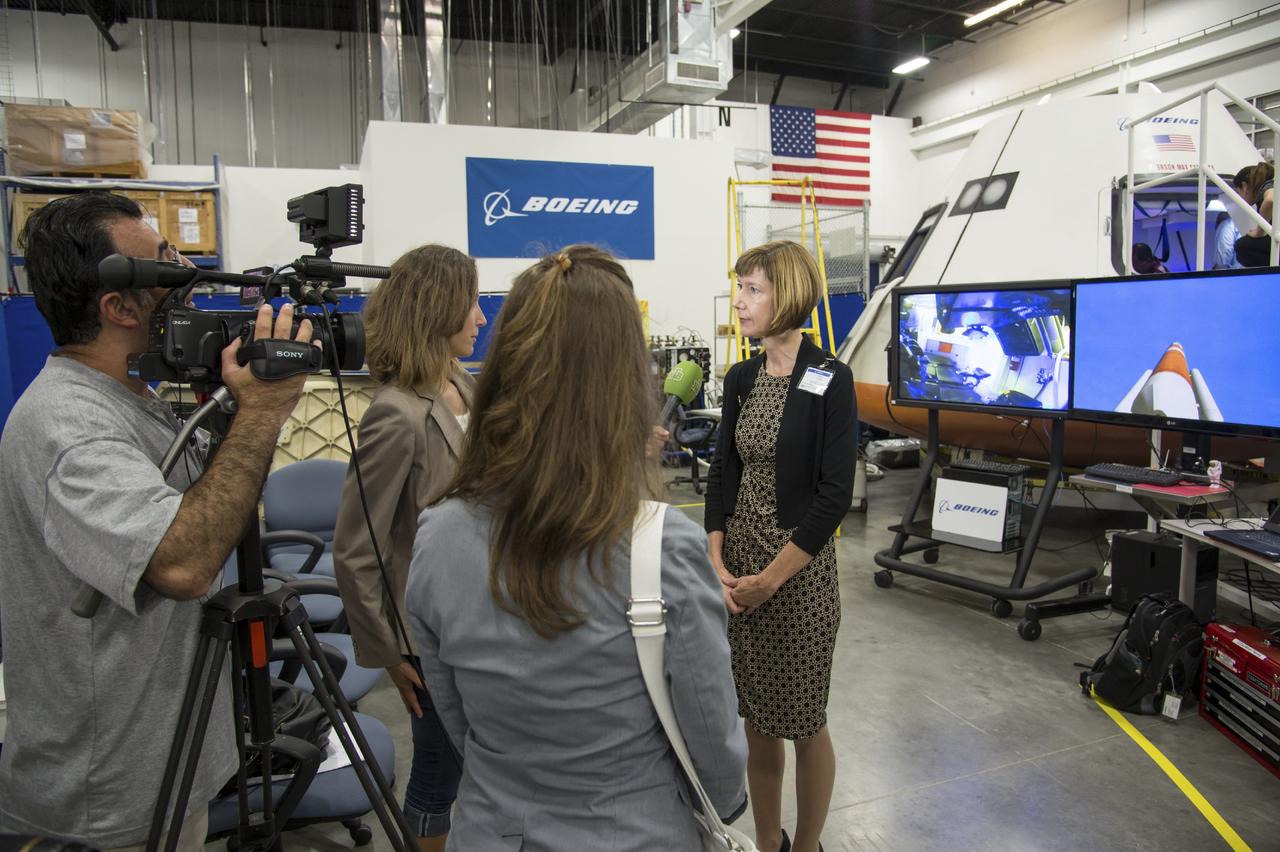
HOUSTON - JSC2013e068324 - Kathy Lueders, NASA deputy manager for the Commercial Crew Program, is interviewed by the media during the unveiling of a CST-100 mock-up at the company's Houston Product Support Center. This test version is optimized to support five crew members and will allow the company to evaluate crew safety, interfaces, communications, maneuverability and ergonomics. Boeing's CST-100 is being designed to transport crew members or a mix of crew and cargo to low-Earth-orbit destinations. The evaluation is part of the ongoing work supporting Boeing's funded Space Act Agreement with NASA's Commercial Crew Program, or CCP, during the agency's Commercial Crew Integrated Capability, or CCiCap, initiative. CCiCap is intended to make commercial human spaceflight services available for government and commercial customers. To learn more about CCP, visit http://www.nasa.gov/commercialcrew. Photo credit: NASA/Robert Markowitz
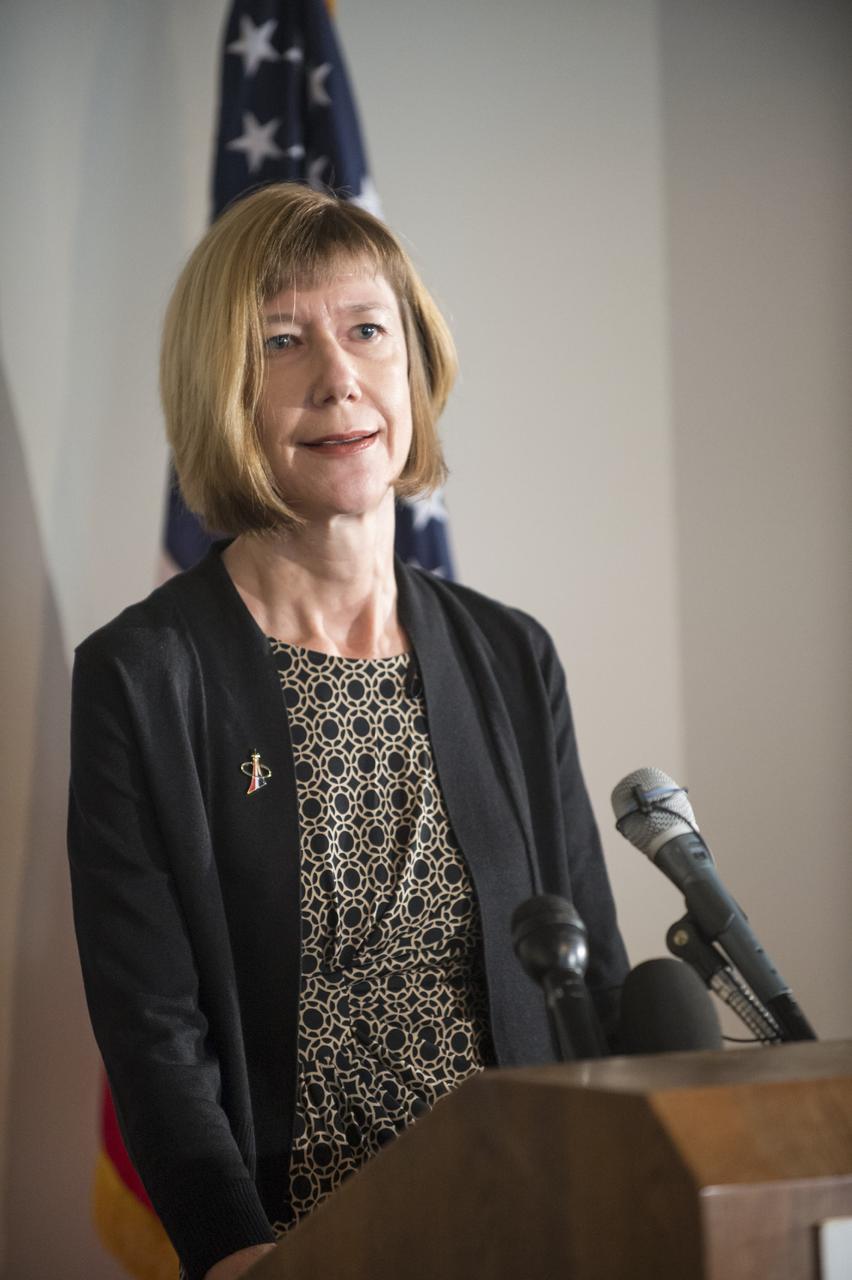
HOUSTON - JSC2013e068290 - Kathy Lueders, NASA deputy manager for the Commercial Crew Program, addresses the media before the unveiling of a CST-100 mock-up at the company's Houston Product Support Center. This test version is optimized to support five crew members and will allow the company to evaluate crew safety, interfaces, communications, maneuverability and ergonomics. Boeing's CST-100 is being designed to transport crew members or a mix of crew and cargo to low-Earth-orbit destinations. The evaluation is part of the ongoing work supporting Boeing's funded Space Act Agreement with NASA's Commercial Crew Program, or CCP, during the agency's Commercial Crew Integrated Capability, or CCiCap, initiative. CCiCap is intended to make commercial human spaceflight services available for government and commercial customers. To learn more about CCP, visit http://www.nasa.gov/commercialcrew. Photo credit: NASA/Robert Markowitz
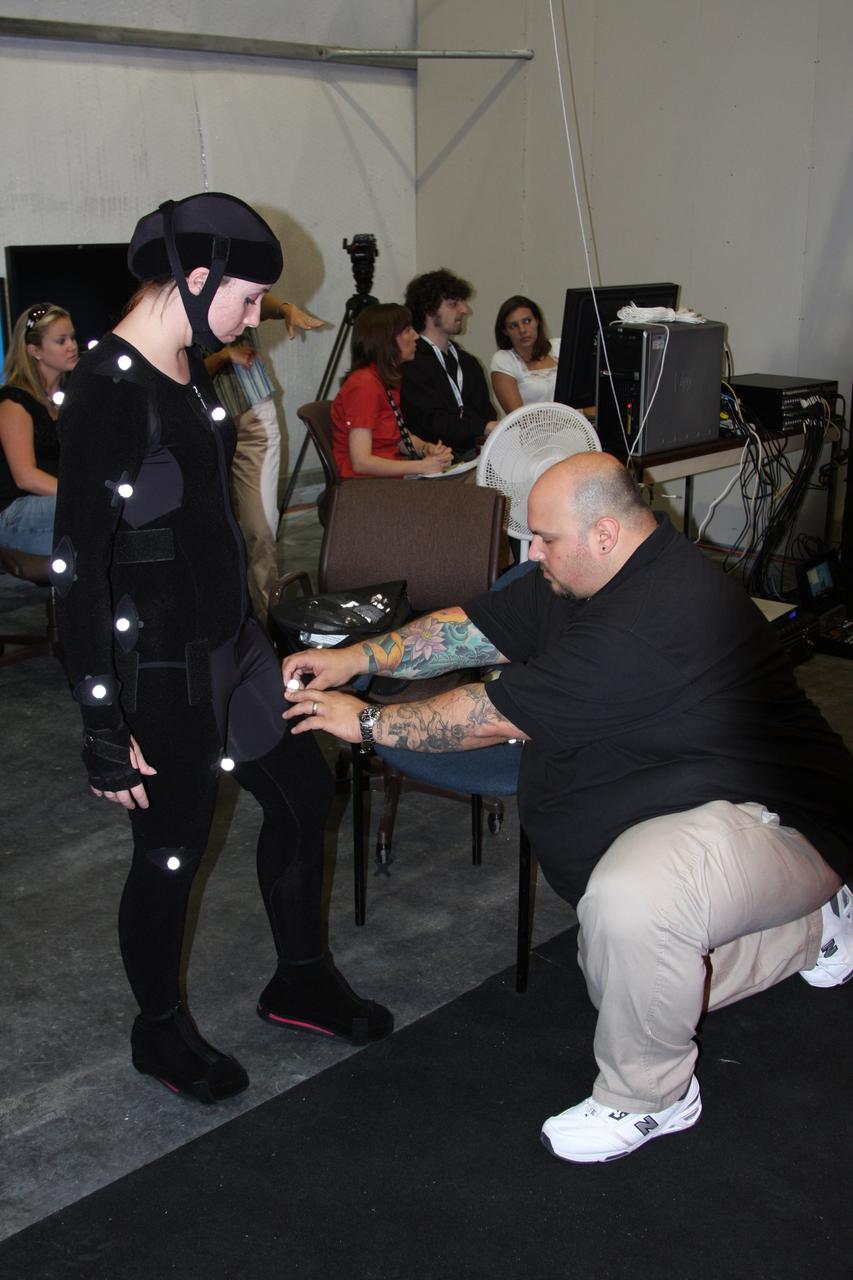
CAPE CANAVERAL, Fla. –David Voci, NYIT MOCAP (Motion Capture) team co-director (seated at the workstation in the background) prepares to direct a motion capture session assisted by Kennedy Advanced Visualizations Environment staff led by Brad Lawrence (not pictured) and by Lora Ridgwell from United Space Alliance Human Factors (foreground, left). Ridgwell will help assemble the Orion Crew Module mockup. The motion tracking aims to improve efficiency of assembly processes and identify potential ergonomic risks for technicians assembling the mockup. The work is being performed in United Space Alliance's Human Engineering Modeling and Performance Lab in the RLV Hangar at NASA's Kennedy Space Center. Part of NASA's Constellation Program, the Orion spacecraft will return humans to the moon and prepare for future voyages to Mars and other destinations in our solar system.
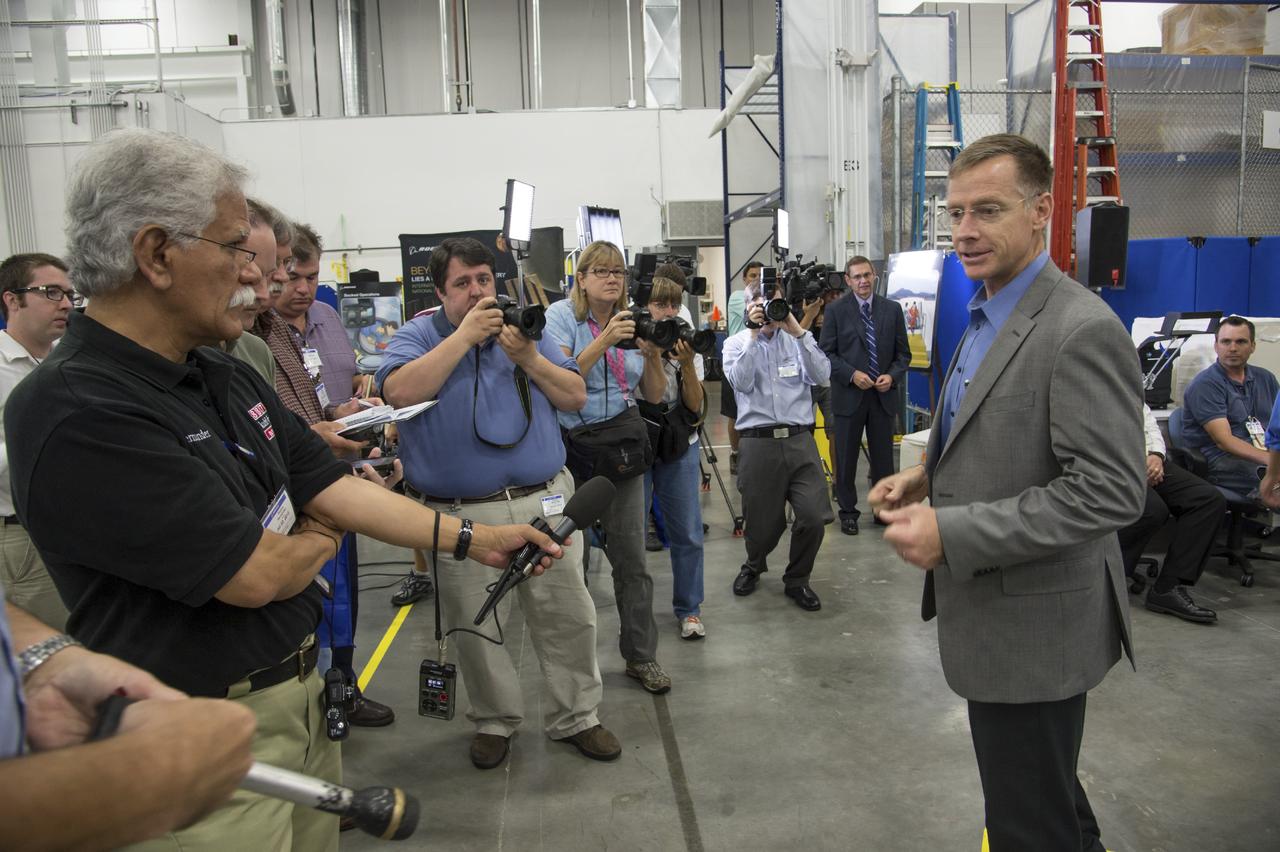
HOUSTON - JSC2013e068304 - Chris Ferguson, director of Crew and Mission Operations for The Boeing Company and former NASA astronaut, is interviewed by the media during the unveiling of a CST-100 mock-up at the company's Houston Product Support Center. This test version is optimized to support five crew members and will allow the company to evaluate crew safety, interfaces, communications, maneuverability and ergonomics. Boeing's CST-100 is being designed to transport crew members or a mix of crew and cargo to low-Earth-orbit destinations. The evaluation is part of the ongoing work supporting Boeing's funded Space Act Agreement with NASA's Commercial Crew Program, or CCP, during the agency's Commercial Crew Integrated Capability, or CCiCap, initiative. CCiCap is intended to make commercial human spaceflight services available for government and commercial customers. To learn more about CCP, visit http://www.nasa.gov/commercialcrew. Photo credit: NASA/Robert Markowitz
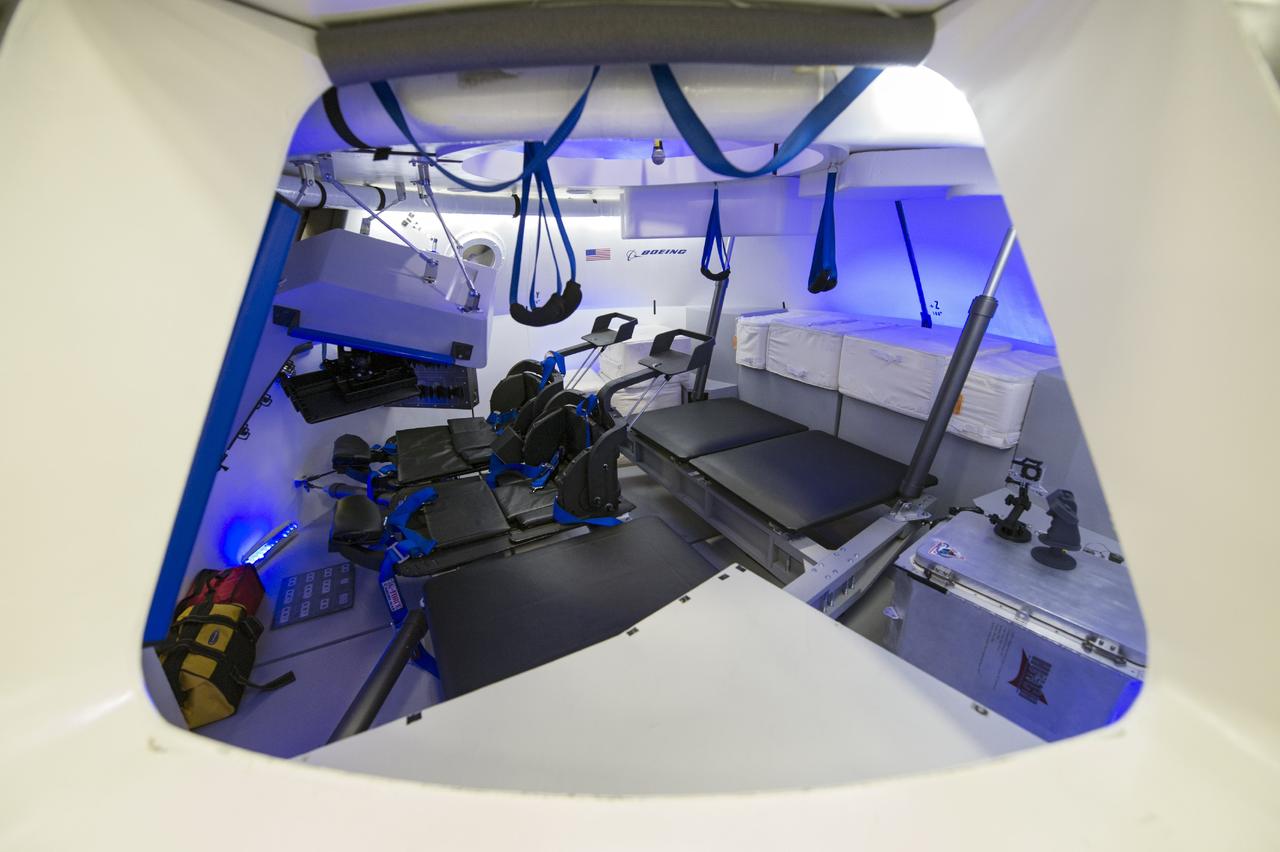
HOUSTON - The Boeing Company unveils its fully outfitted CST-100 mock-up at the company's Houston Product Support Center in Texas. This test version is optimized to support five crew members and will allow the company to evaluate crew safety, interfaces, communications, maneuverability and ergonomics. Boeing's CST-100 is designed being to transport crew members or a mix of crew and cargo to low-Earth-orbit destinations, including the International Space Station. Boeing is one of three aerospace industry partners working with CCP during its Commercial Crew Integrated Capability, or CCiCap, initiative, which is intended to make commercial human spaceflight services available for government and commercial customers. To learn more about CCP, visit www.nasa.gov/commercialcrew. Photo credit: NASA/Robert Markowitz
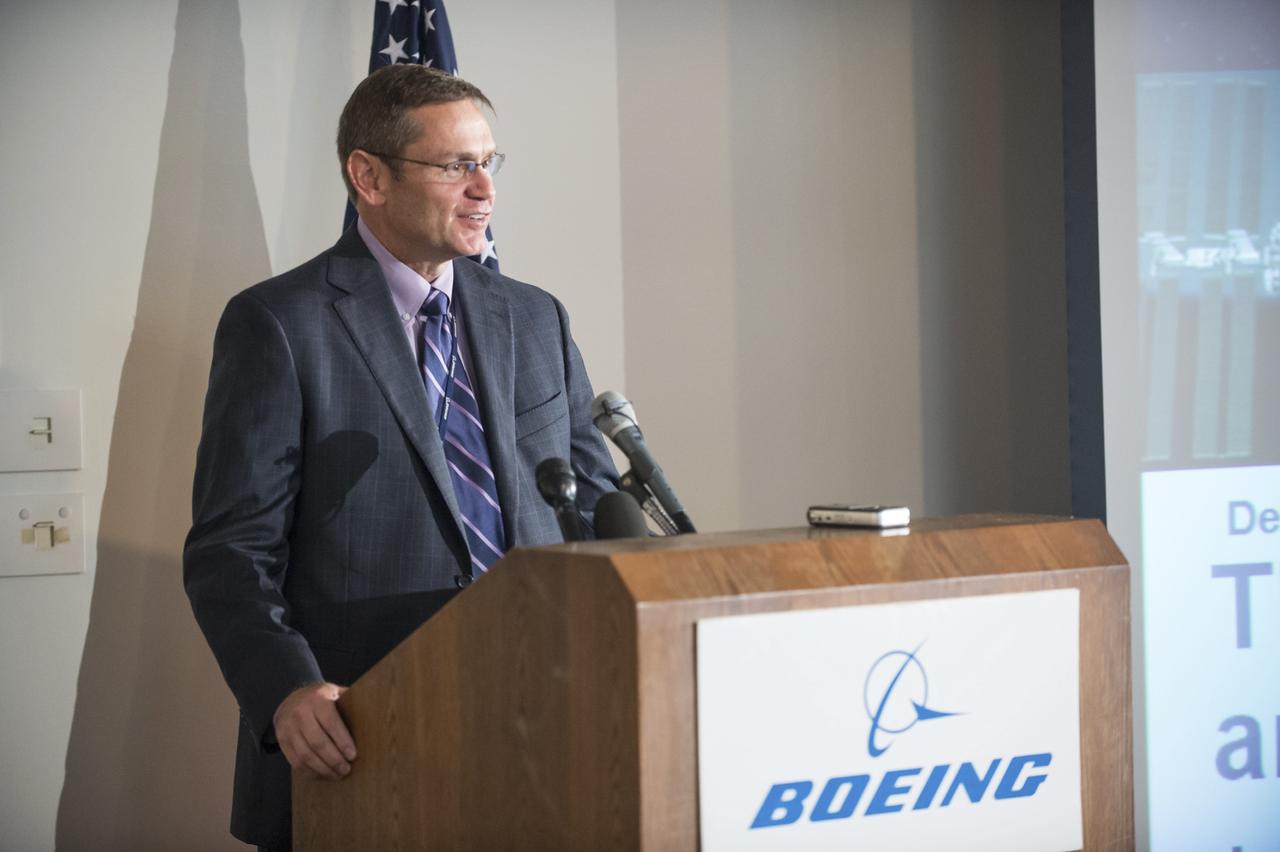
HOUSTON - JSC2013e068284 - John Elbon, vice president for Space Exploration for The Boeing Company, addresses the media before the unveiling of a CST-100 mock-up at the company's Houston Product Support Center. This test version is optimized to support five crew members and will allow the company to evaluate crew safety, interfaces, communications, maneuverability and ergonomics. Boeing's CST-100 is being designed to transport crew members or a mix of crew and cargo to low-Earth-orbit destinations. The evaluation is part of the ongoing work supporting Boeing's funded Space Act Agreement with NASA's Commercial Crew Program, or CCP, during the agency's Commercial Crew Integrated Capability, or CCiCap, initiative. CCiCap is intended to make commercial human spaceflight services available for government and commercial customers. To learn more about CCP, visit http://www.nasa.gov/commercialcrew. Photo credit: NASA/Robert Markowitz
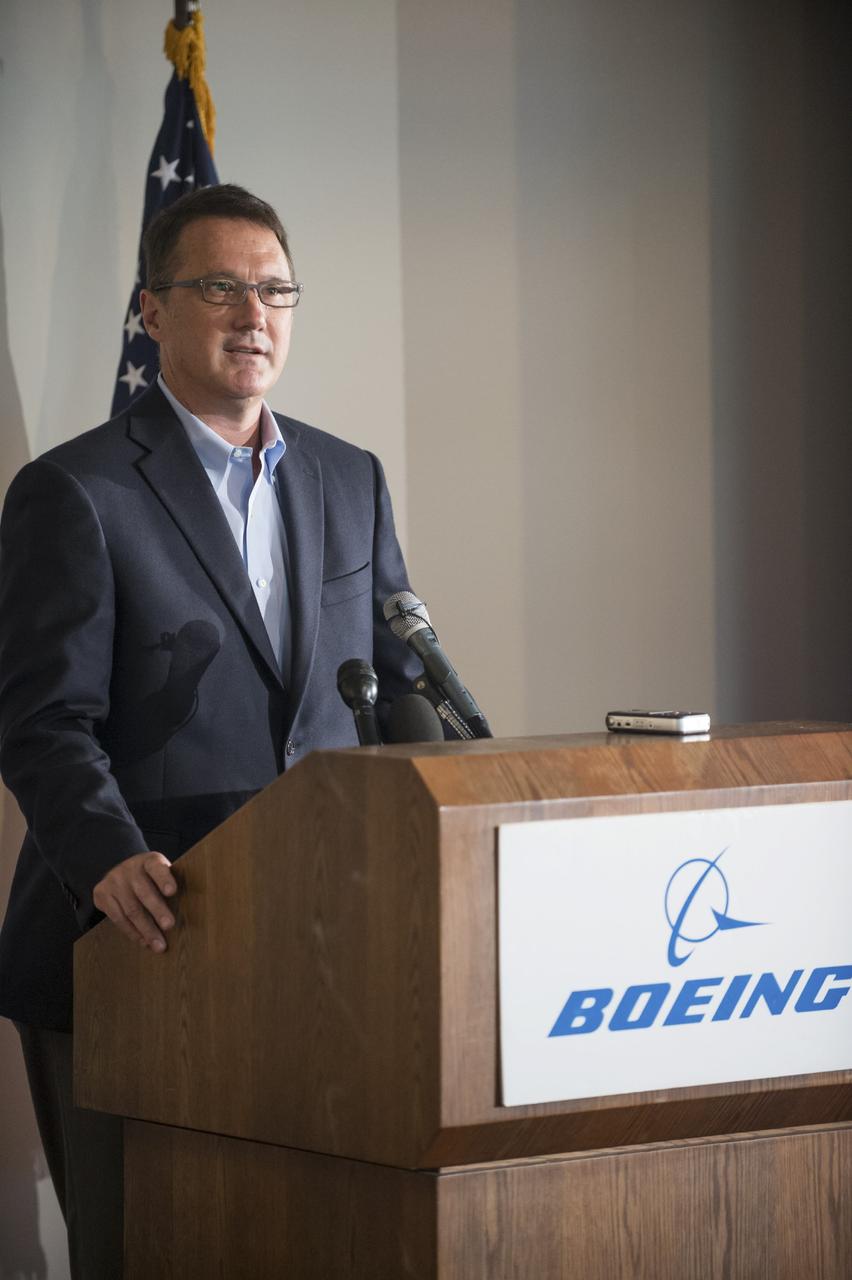
HOUSTON - JSC2013e068296 - John Mulholland, vice president and program manager, Commercial Crew, for The Boeing Company, addresses the media before the unveiling of a CST-100 mock-up at the company's Houston Product Support Center. This test version is optimized to support five crew members and will allow the company to evaluate crew safety, interfaces, communications, maneuverability and ergonomics. Boeing's CST-100 is being designed to transport crew members or a mix of crew and cargo to low-Earth-orbit destinations. The evaluation is part of the ongoing work supporting Boeing's funded Space Act Agreement with NASA's Commercial Crew Program, or CCP, during the agency's Commercial Crew Integrated Capability, or CCiCap, initiative. CCiCap is intended to make commercial human spaceflight services available for government and commercial customers. To learn more about CCP, visit http://www.nasa.gov/commercialcrew. Photo credit: NASA/Robert Markowitz
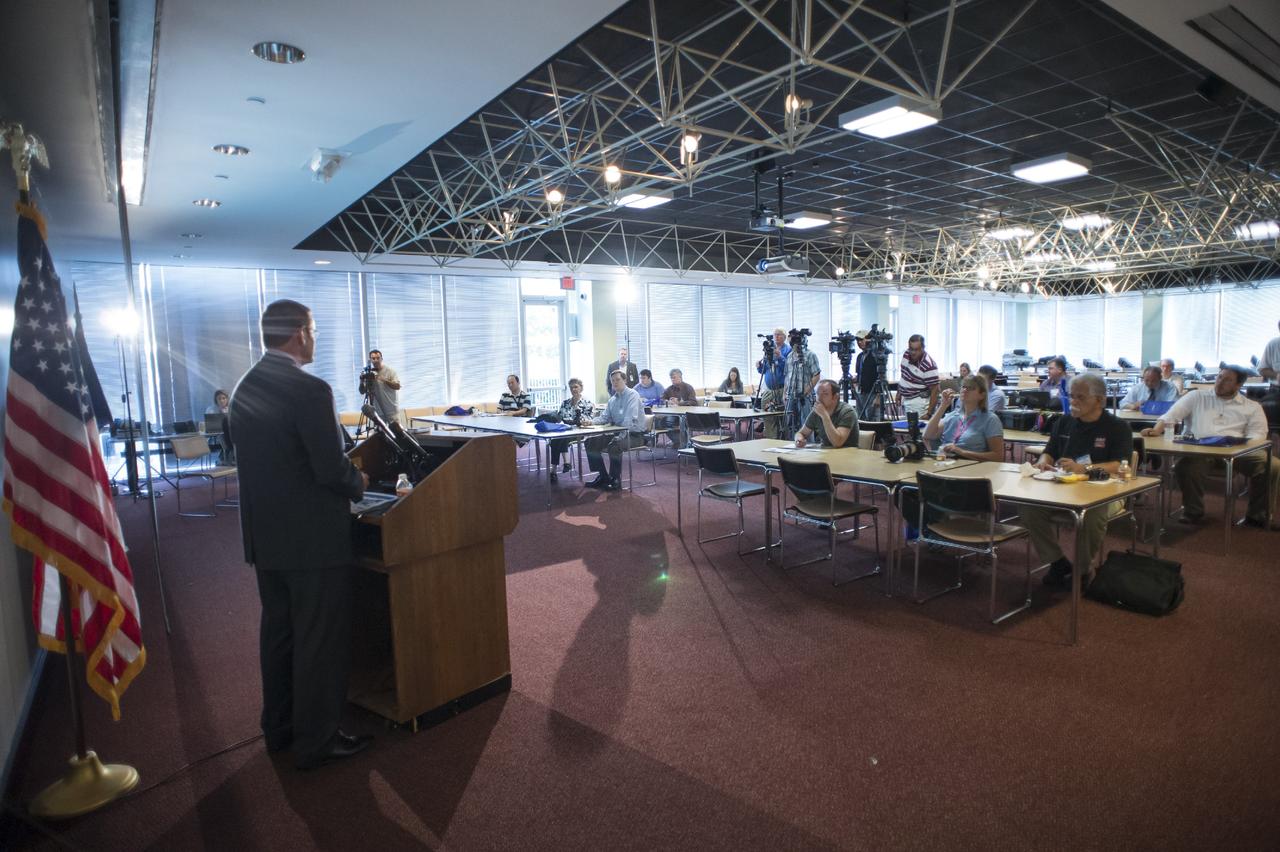
HOUSTON - JSC2013e068287 - John Elbon, vice president for Space Exploration for The Boeing Company, addresses the media before the unveiling of a CST-100 mock-up at the company's Houston Product Support Center. This test version is optimized to support five crew members and will allow the company to evaluate crew safety, interfaces, communications, maneuverability and ergonomics. Boeing's CST-100 is being designed to transport crew members or a mix of crew and cargo to low-Earth-orbit destinations. The evaluation is part of the ongoing work supporting Boeing's funded Space Act Agreement with NASA's Commercial Crew Program, or CCP, during the agency's Commercial Crew Integrated Capability, or CCiCap, initiative. CCiCap is intended to make commercial human spaceflight services available for government and commercial customers. To learn more about CCP, visit http://www.nasa.gov/commercialcrew. Photo credit: NASA/Robert Markowitz
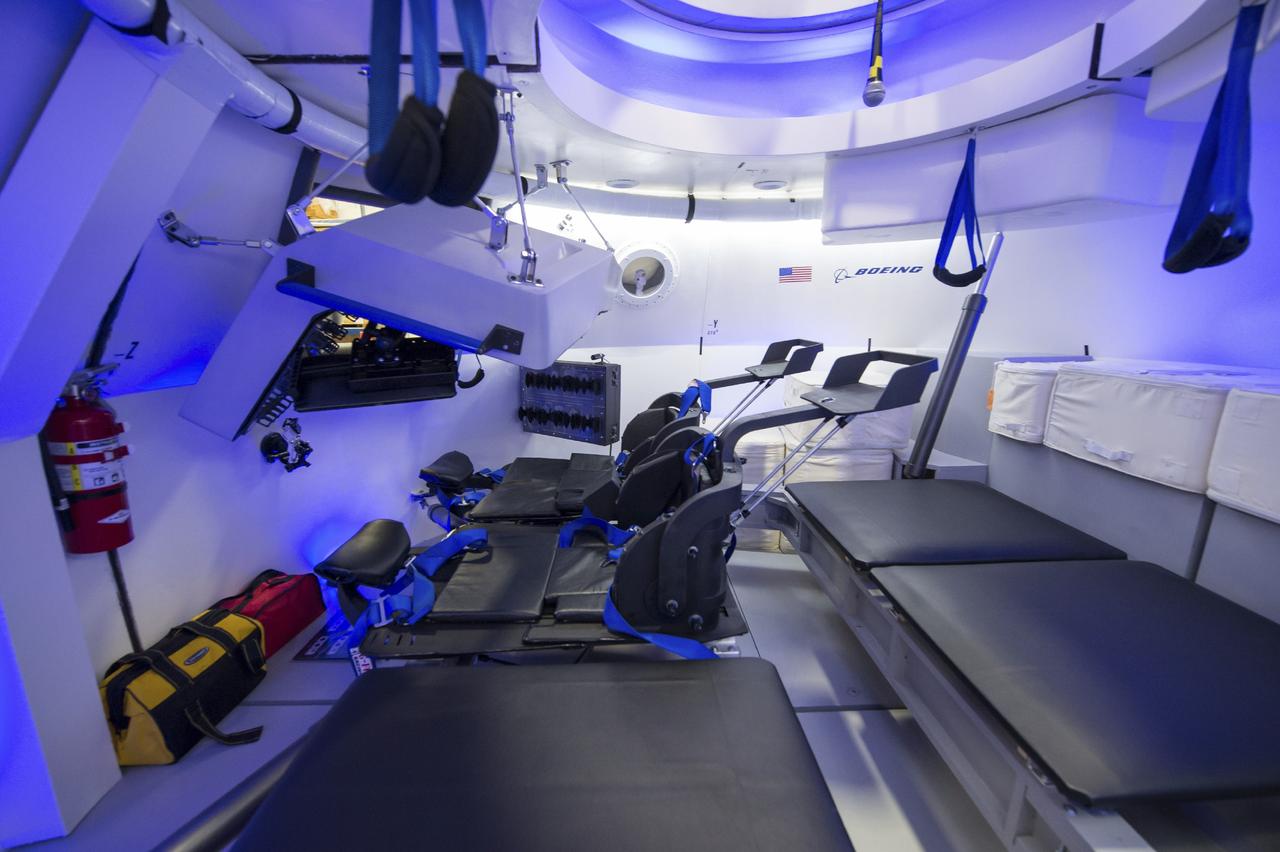
HOUSTON - JSC2013e068245 - The Boeing Company unveils the interior its fully outfitted CST-100 mock-up at the company's Houston Product Support Center in Texas. This test version is optimized to support five crew members and will allow the company to evaluate crew safety, interfaces, communications, maneuverability and ergonomics. Boeing's CST-100 is being designed to transport crew members or a mix of crew and cargo to low-Earth-orbit destinations, including the International Space Station. Boeing is one of three aerospace industry partners working with CCP during its Commercial Crew Integrated Capability, or CCiCap, initiative, which is intended to make commercial human spaceflight services available for government and commercial customers. To learn more about CCP, visit http://www.nasa.gov/commercialcrew. Photo credit: NASA/Robert Markowitz