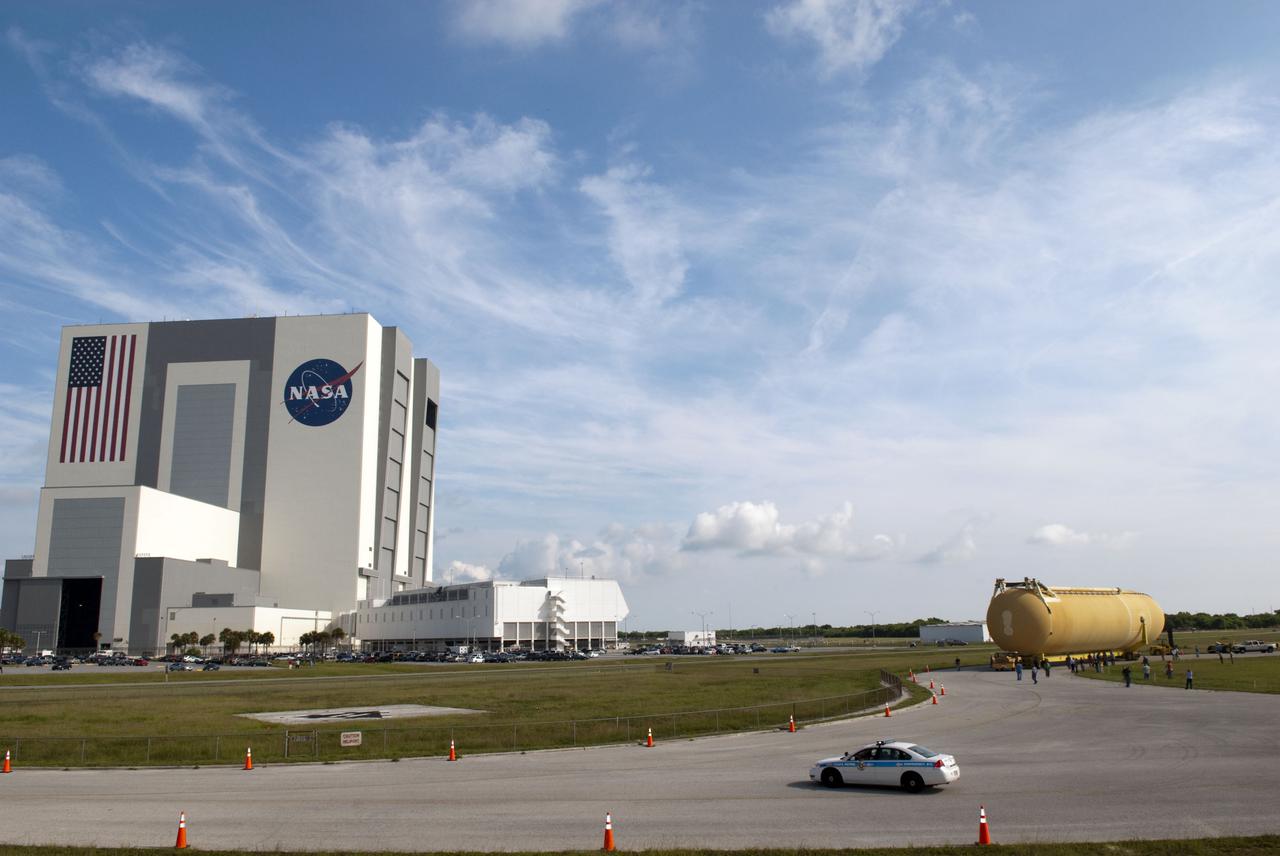
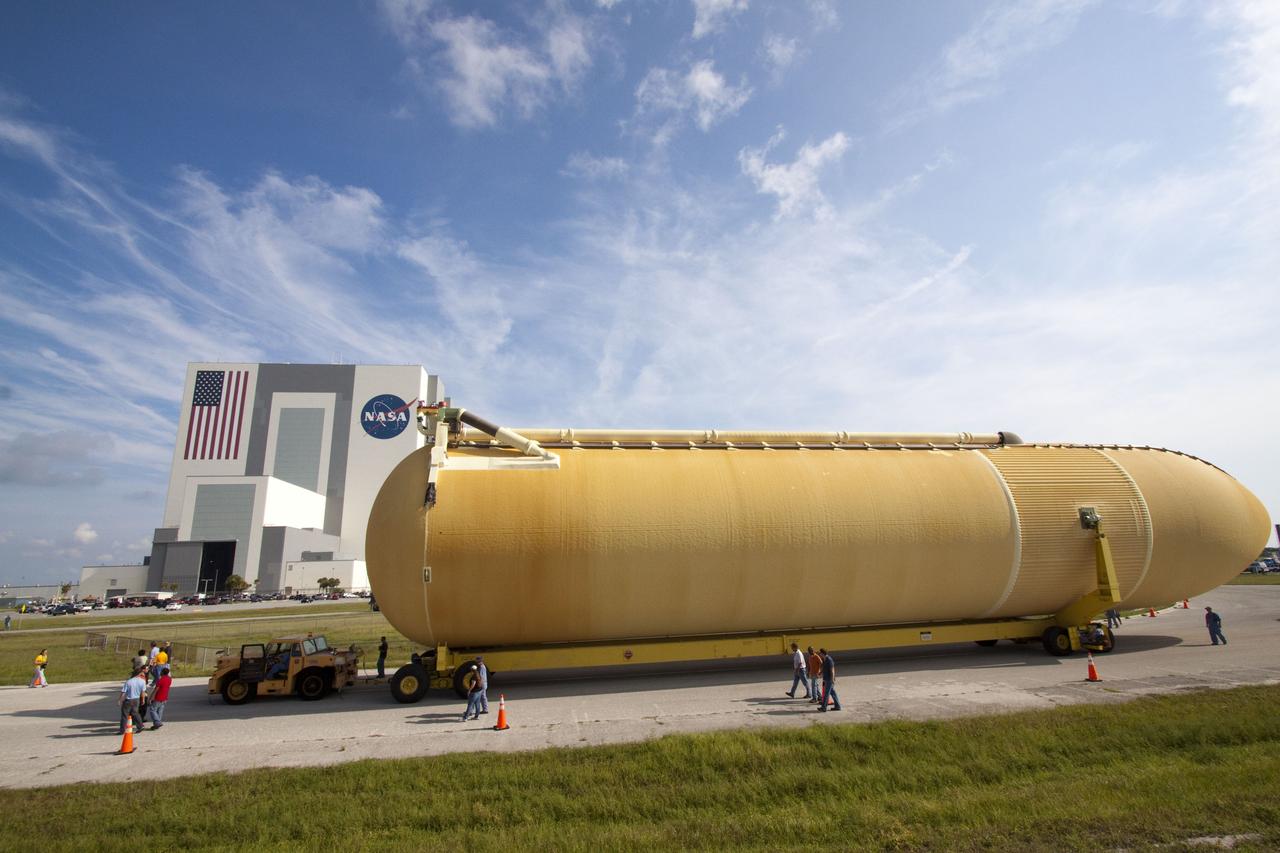
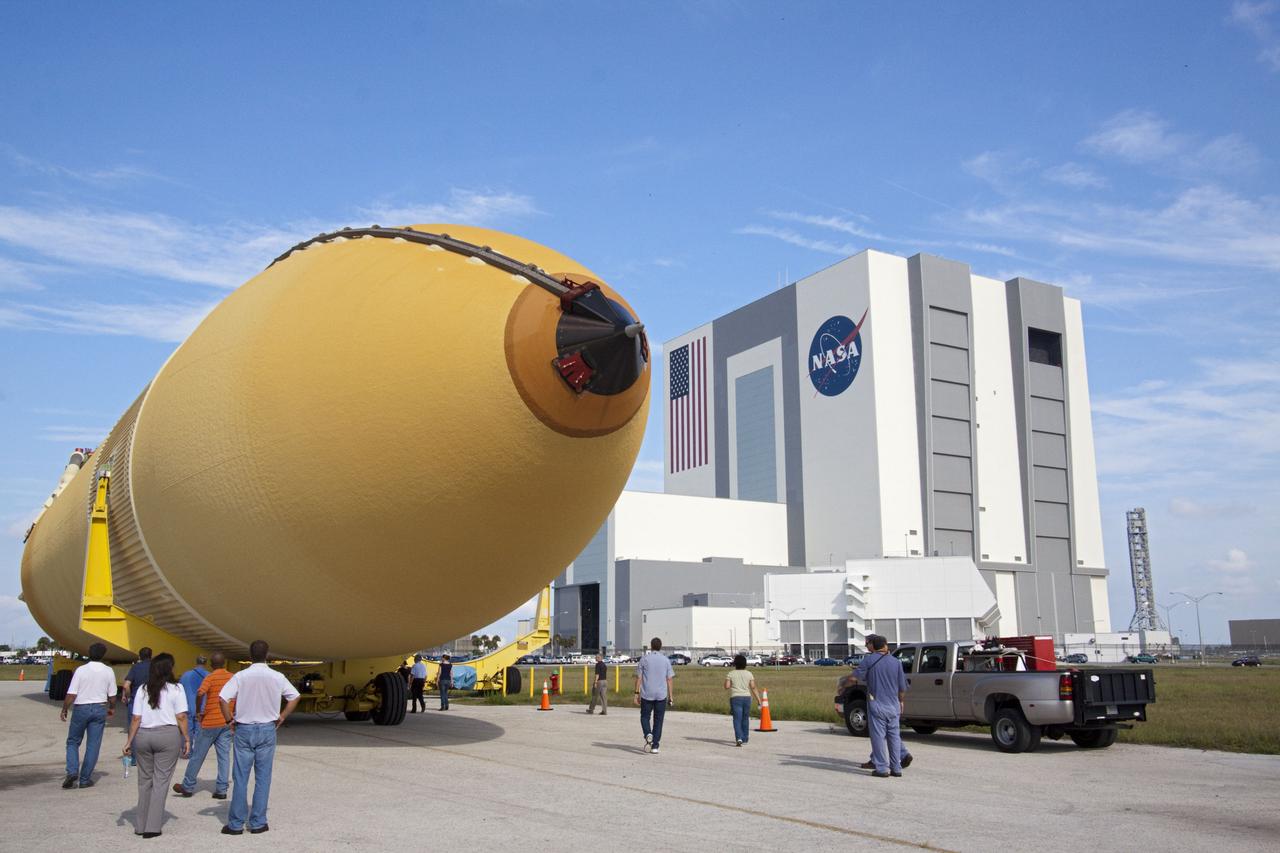
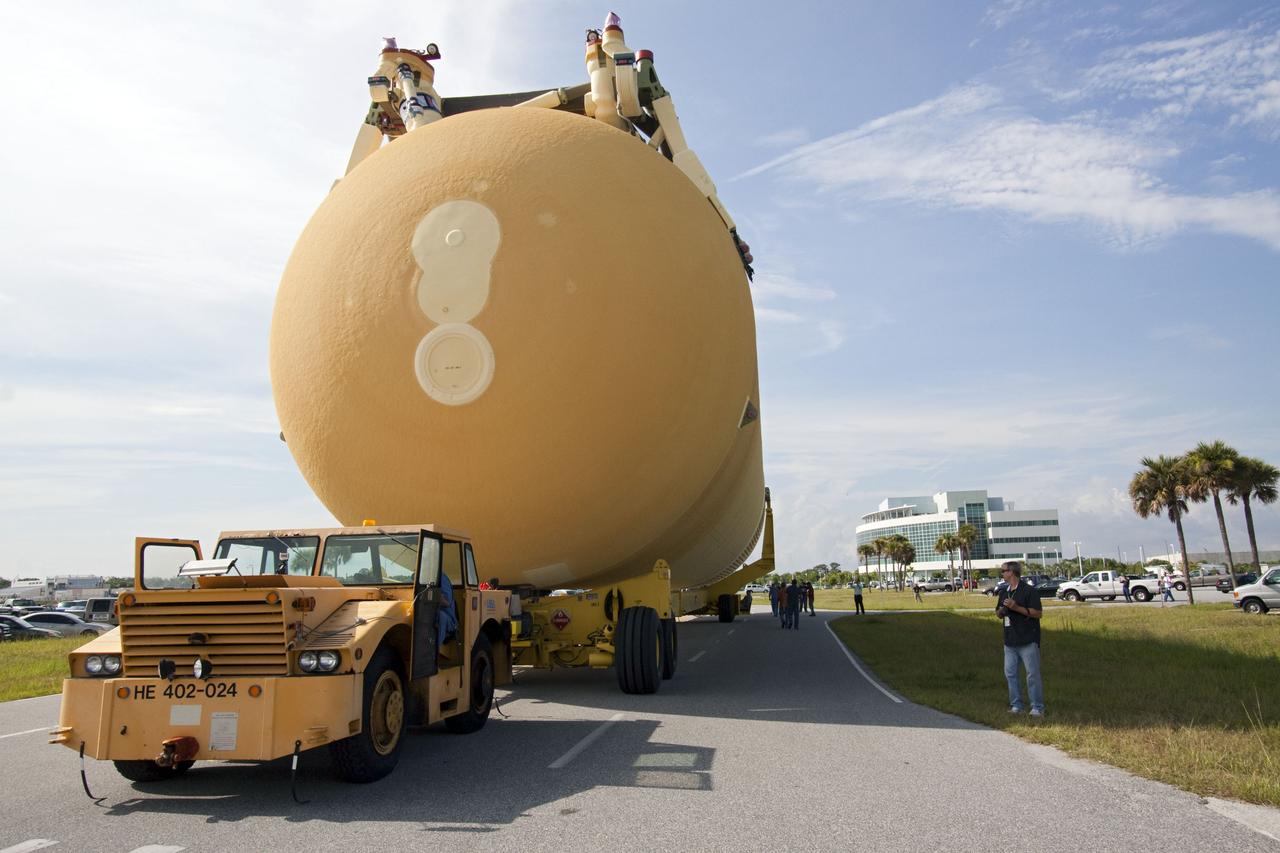
CAPE CANAVERAL, Fla. -- At NASA's Kennedy Space Center in Florida, External Tank-138 is being transported to the Vehicle Assembly Building. The external fuel tank arrived in Florida on July 13, from NASA's Michoud Assembly Facility near New Orleans. ET-138, the last newly manufactured tank, was originally designated to fly on Endeavour's STS-134 mission to the International Space Station, but later reassigned to fly on space shuttle Atlantis' final mission, STS-135. For information, visit www.nasa.gov_shuttle. Photo credit: NASA_Jim Grossmann
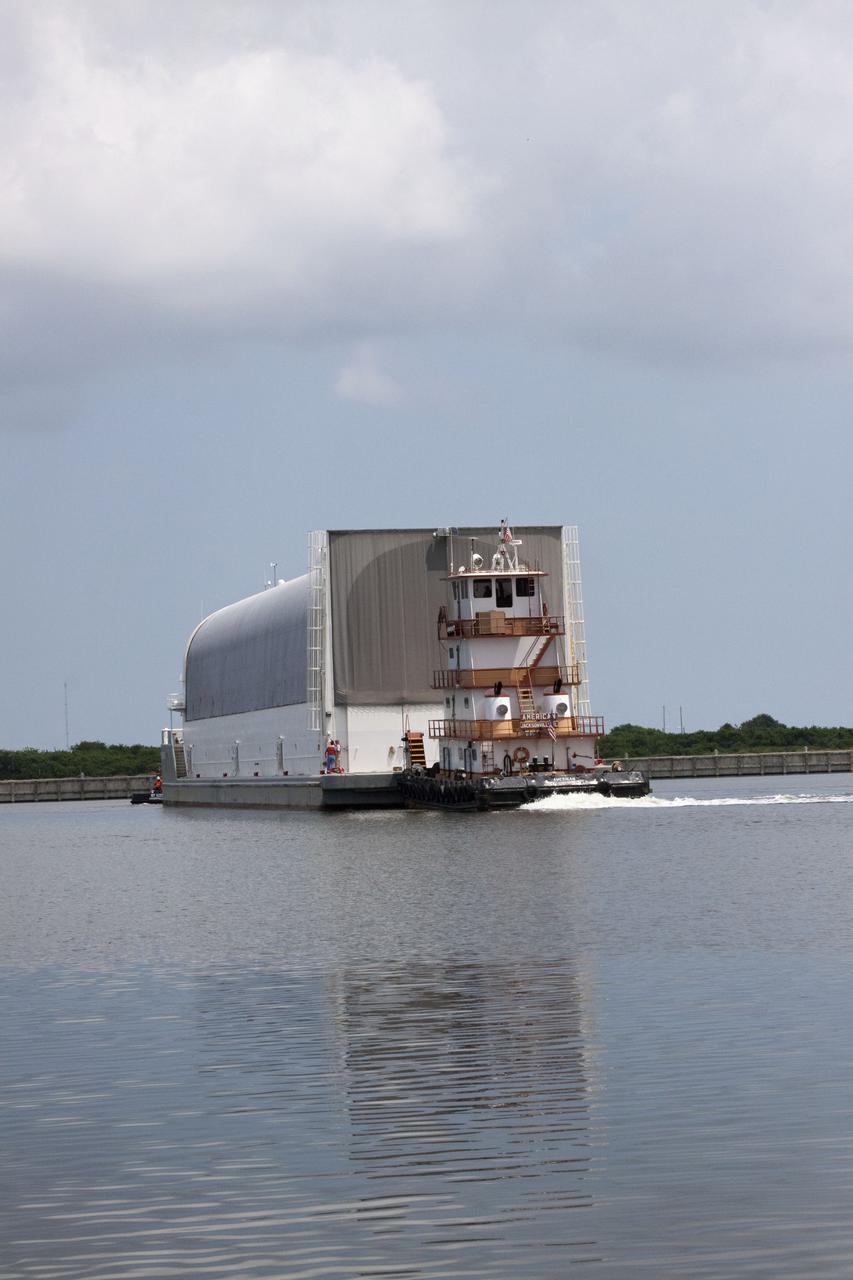
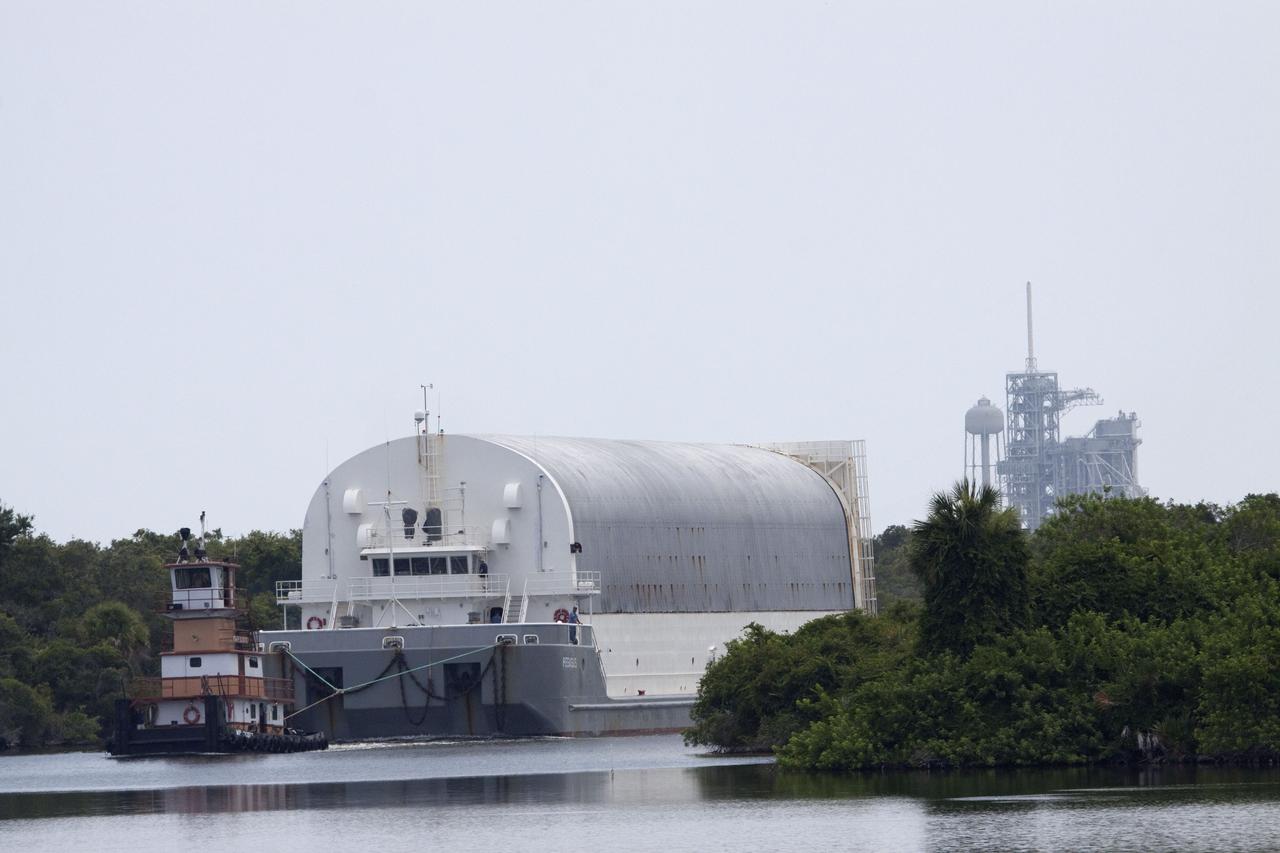
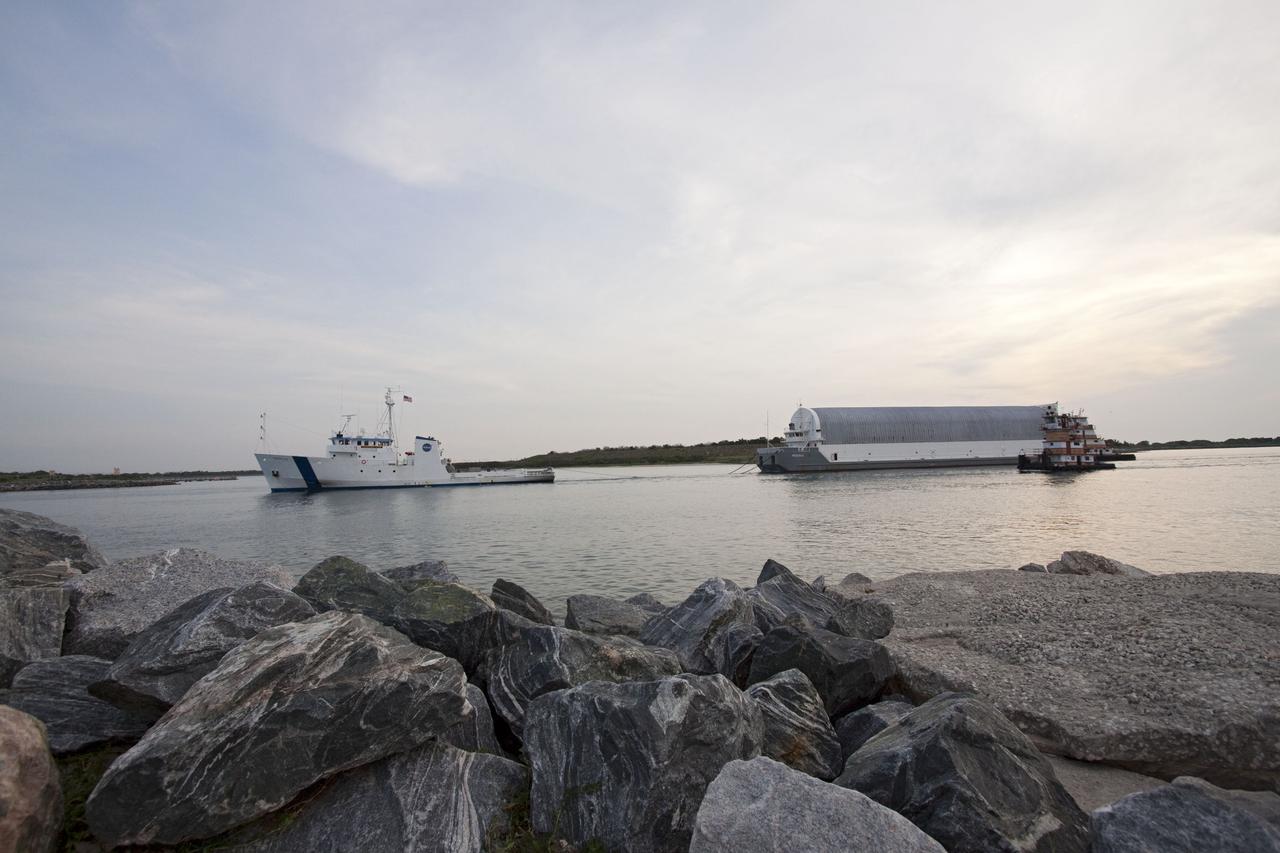
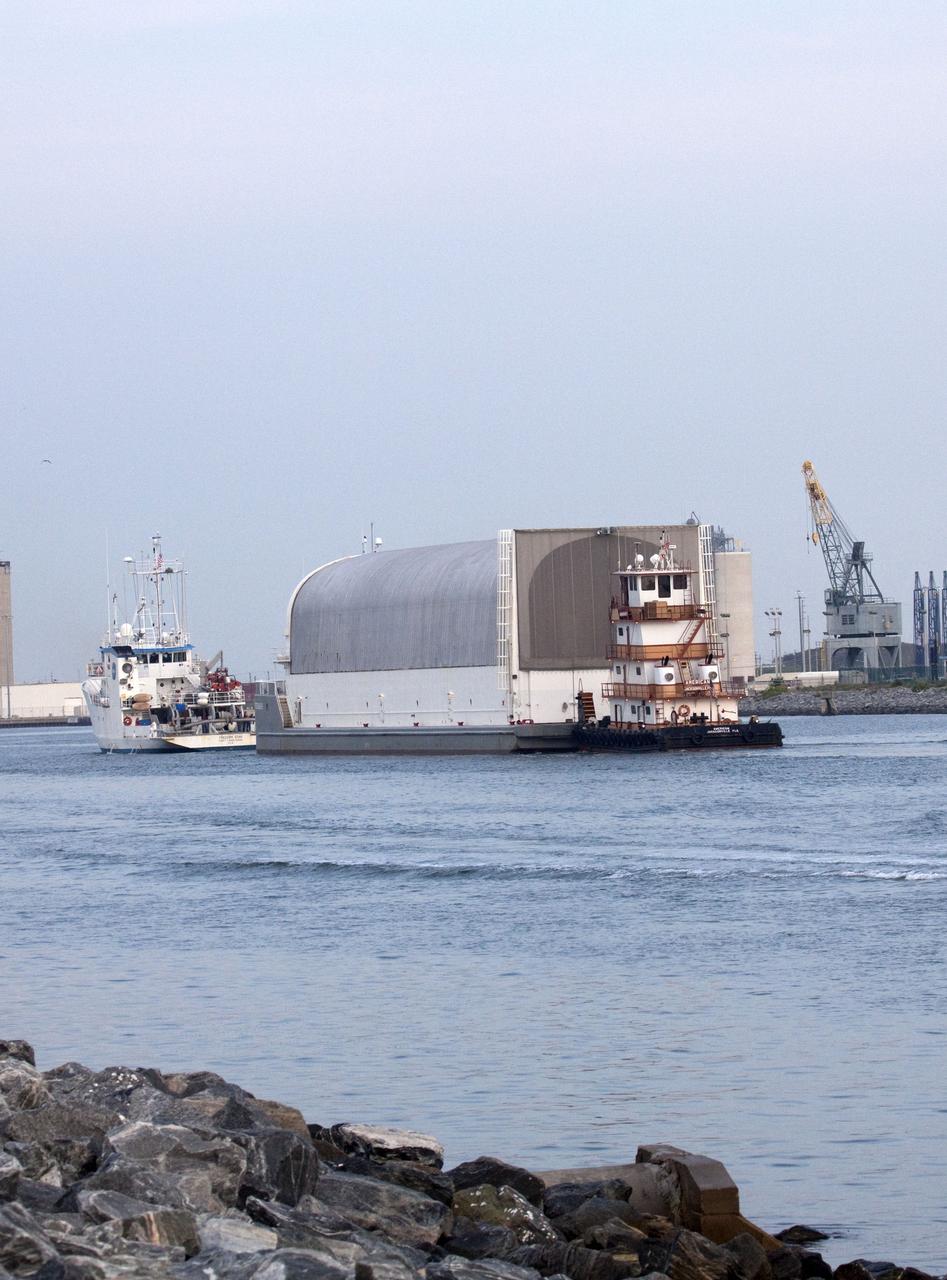
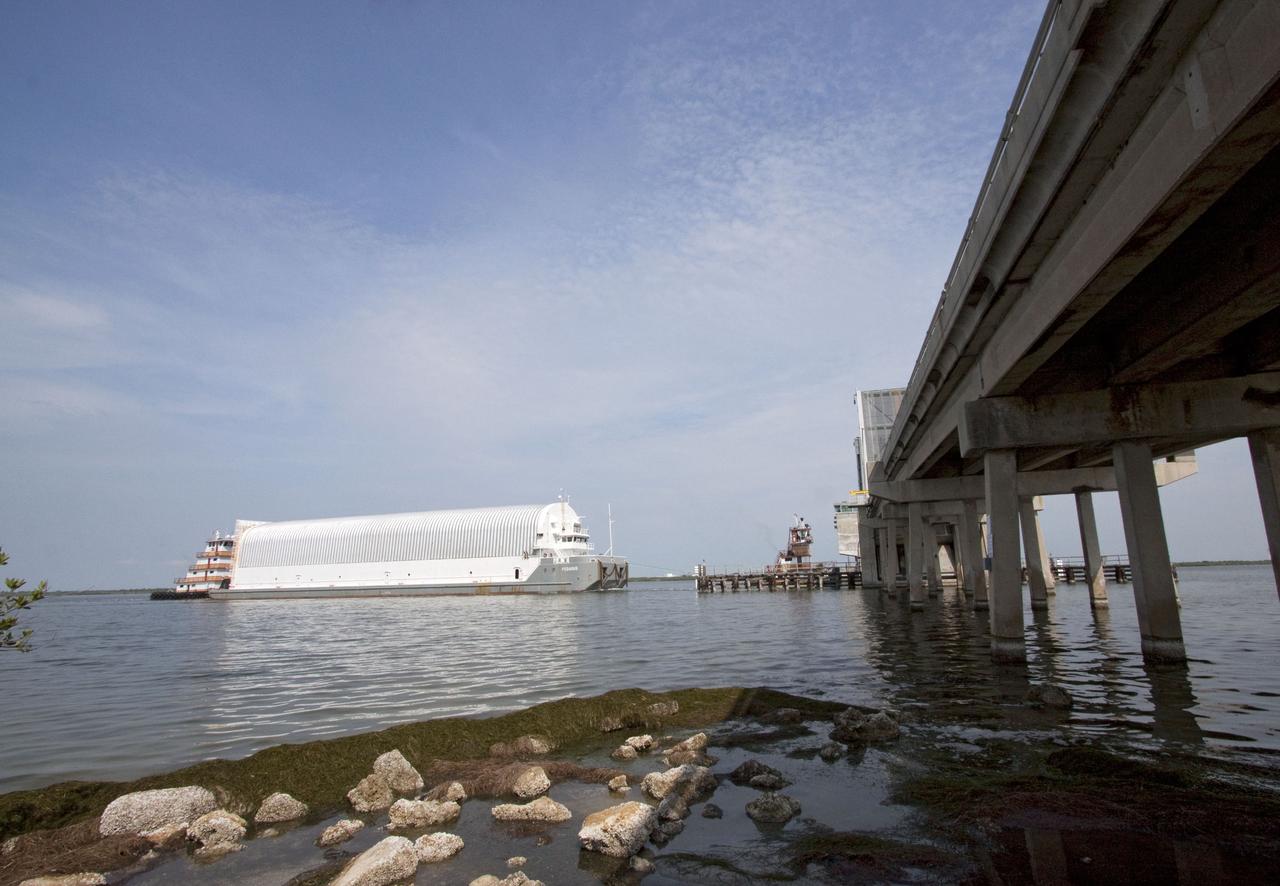
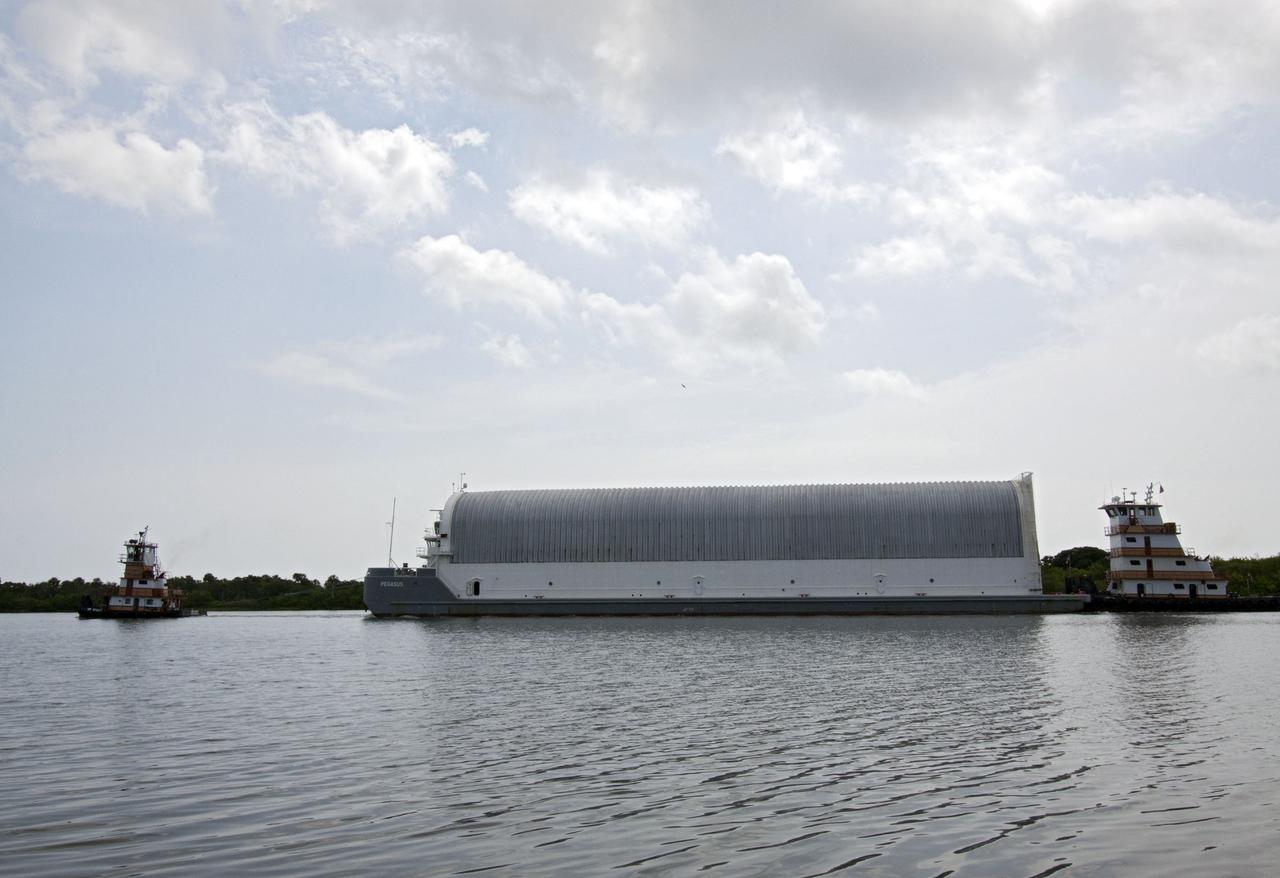
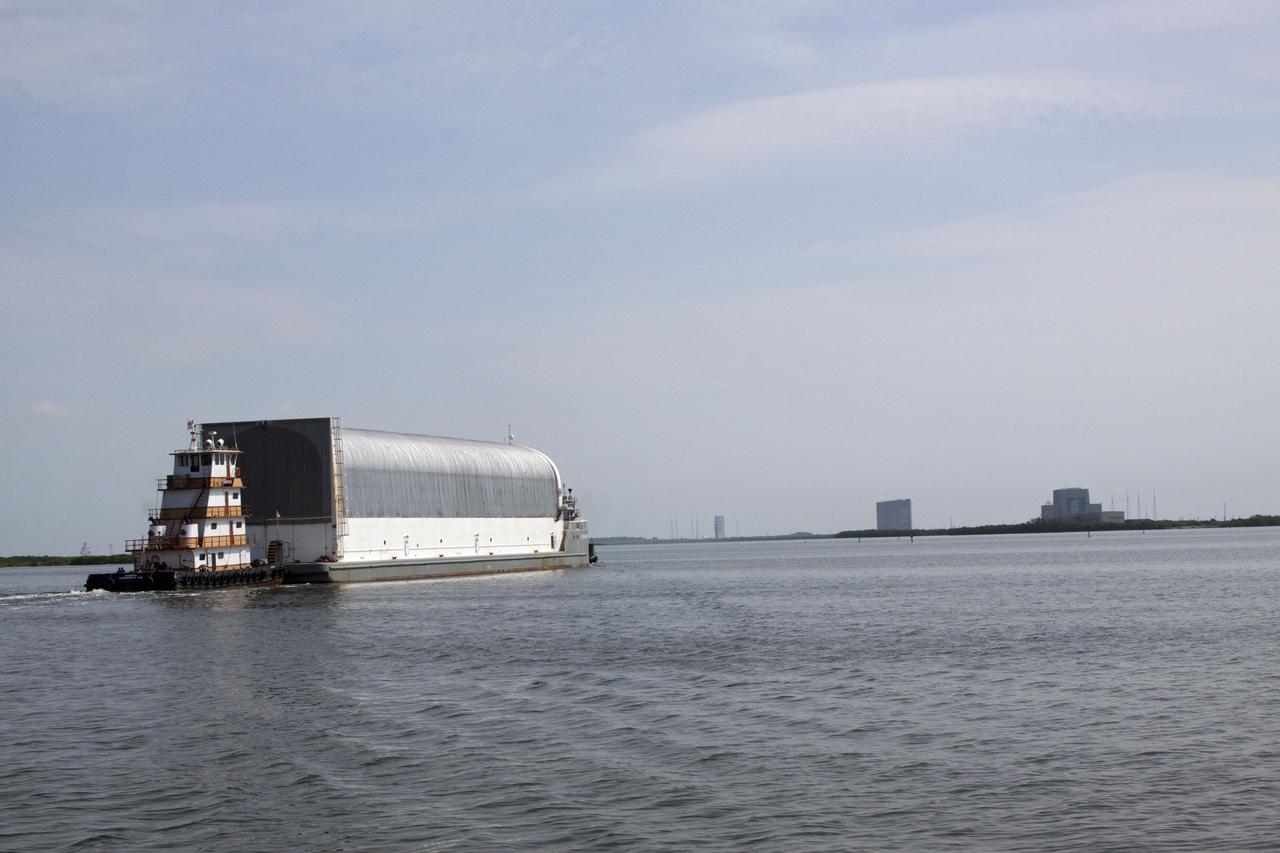
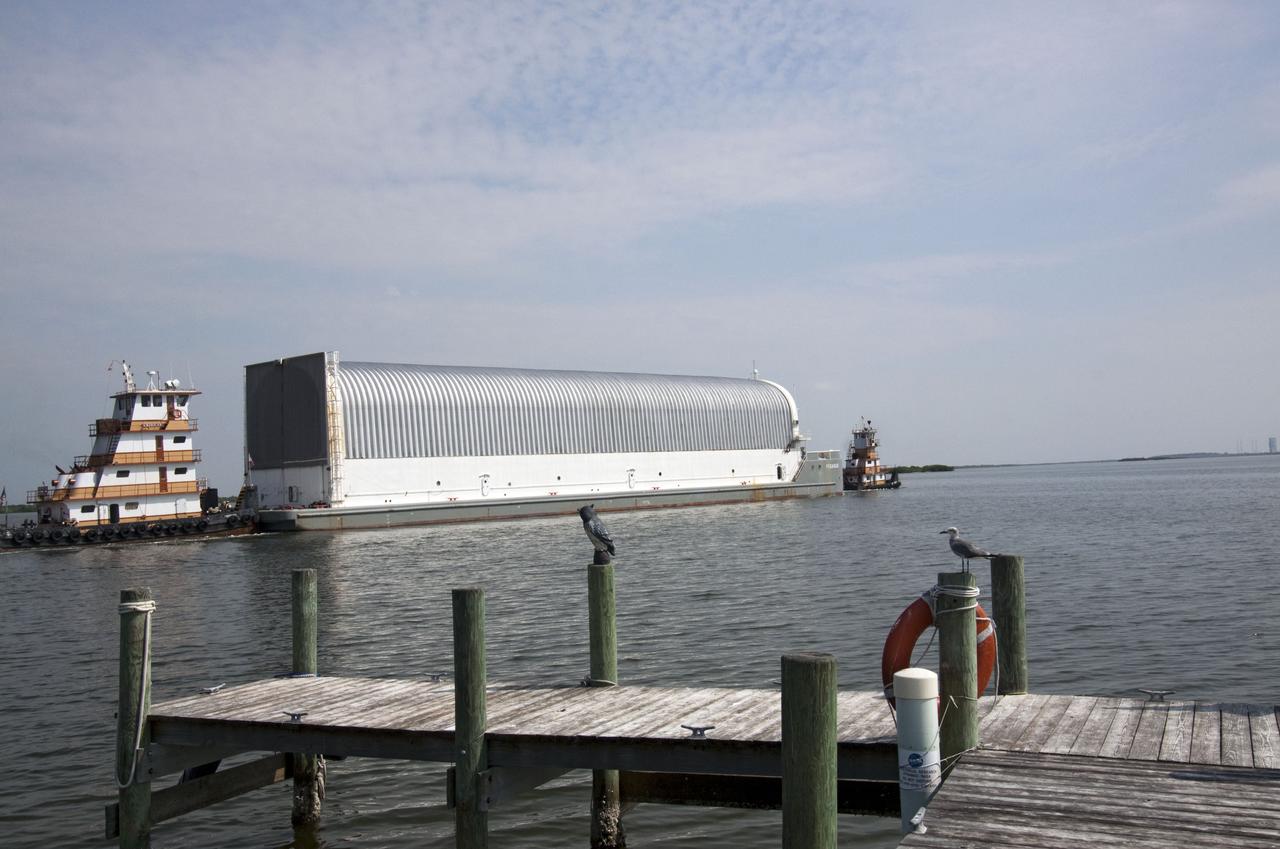
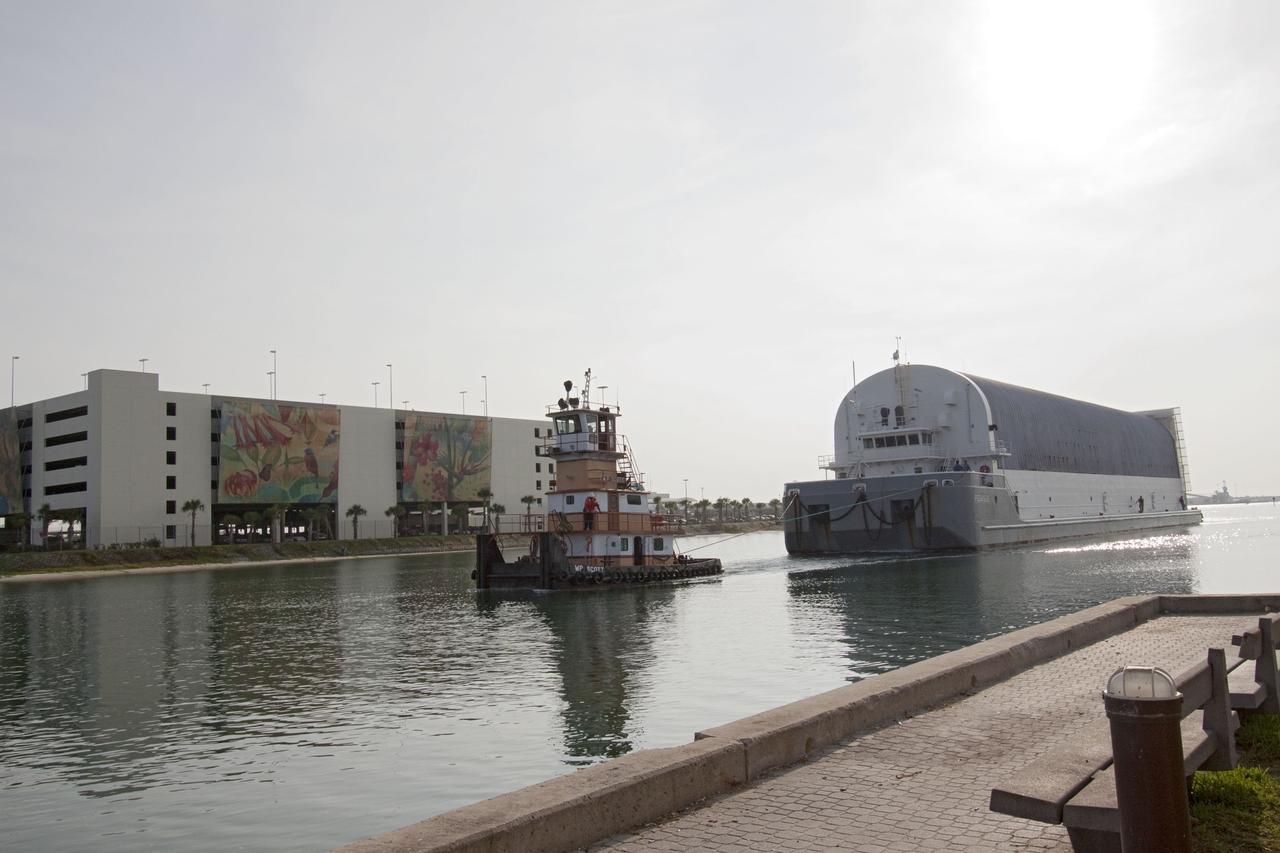
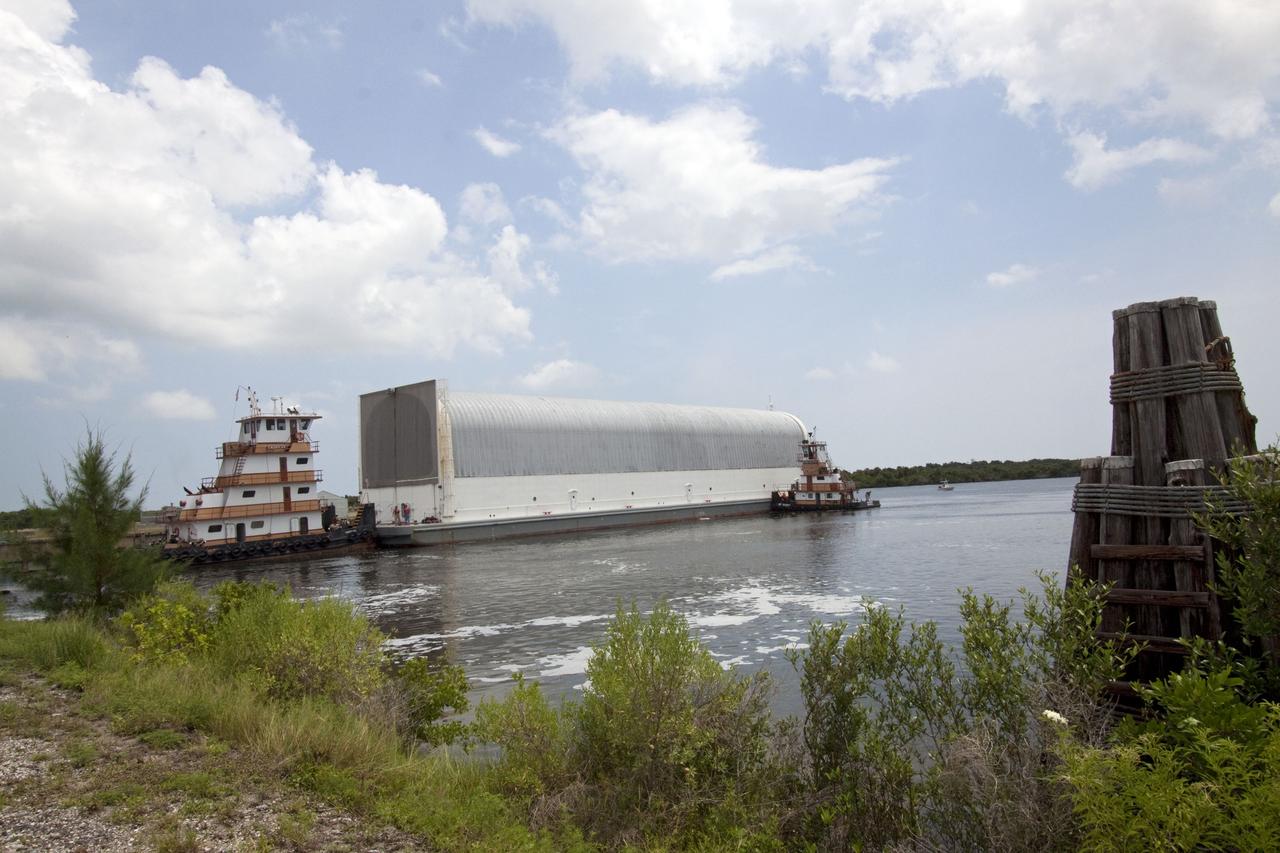
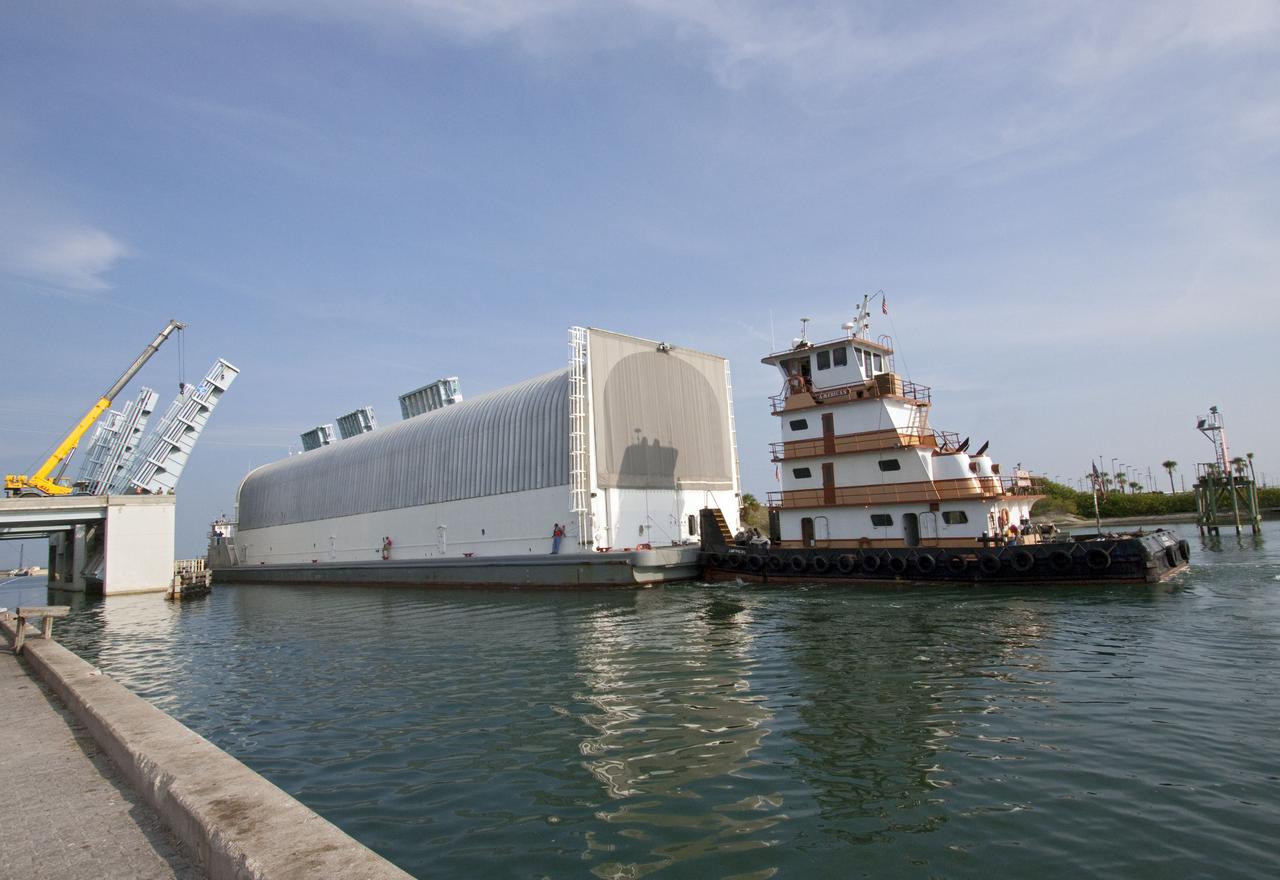
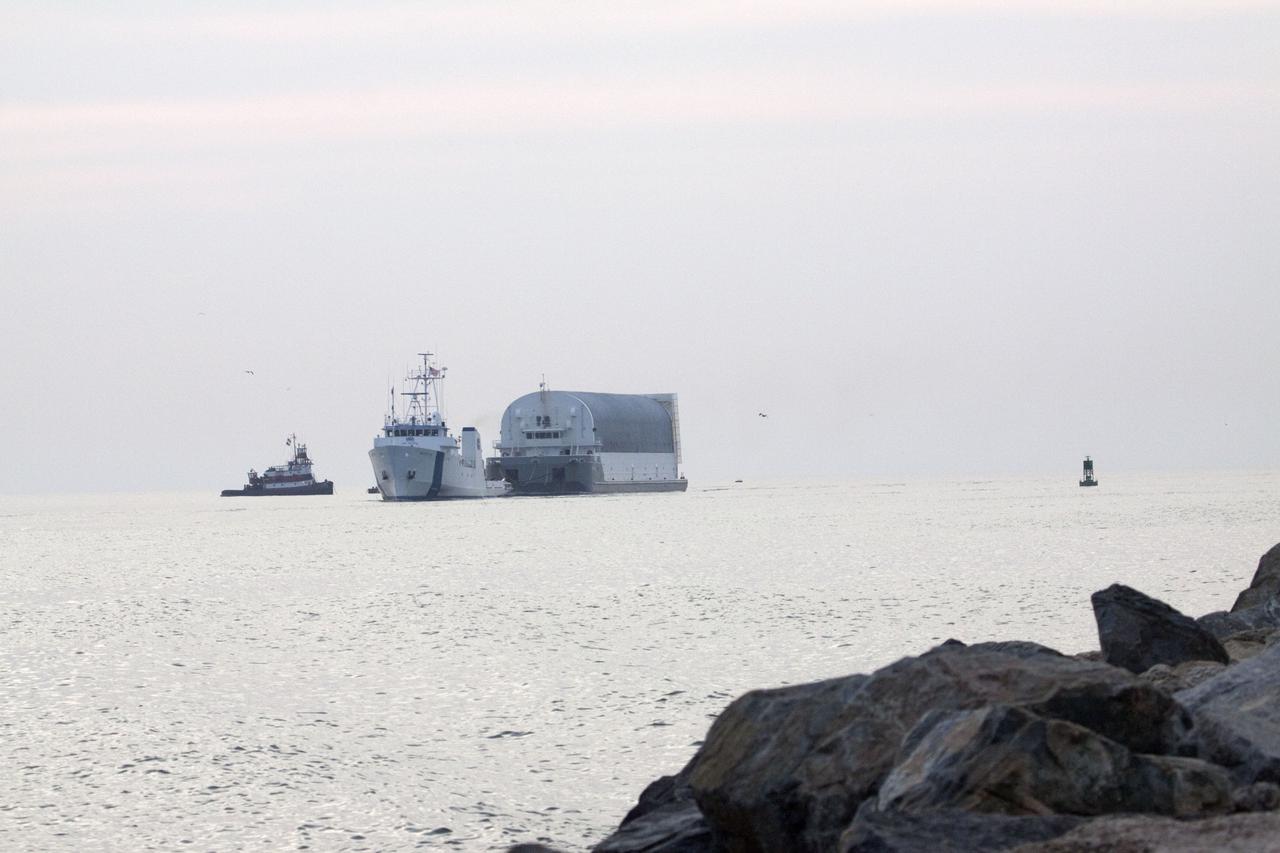
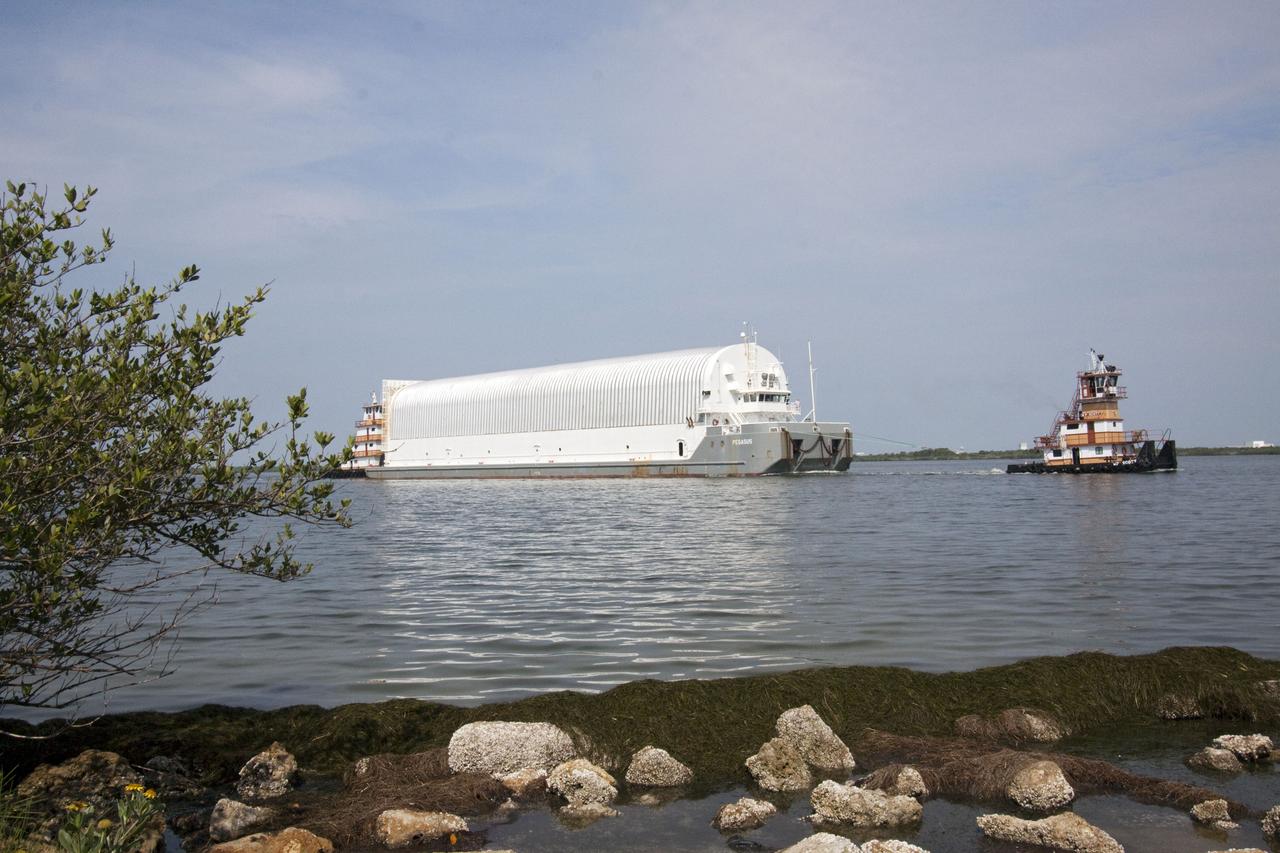
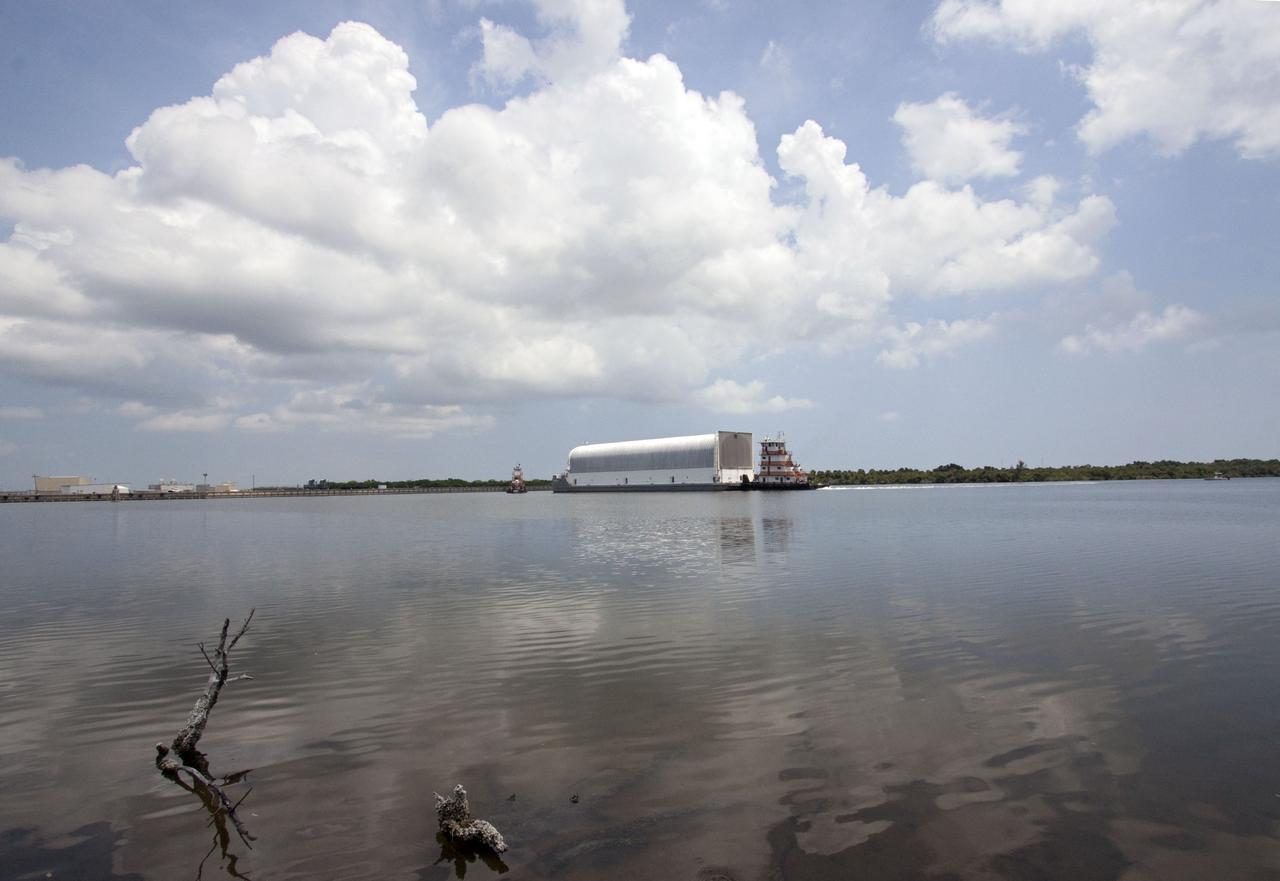
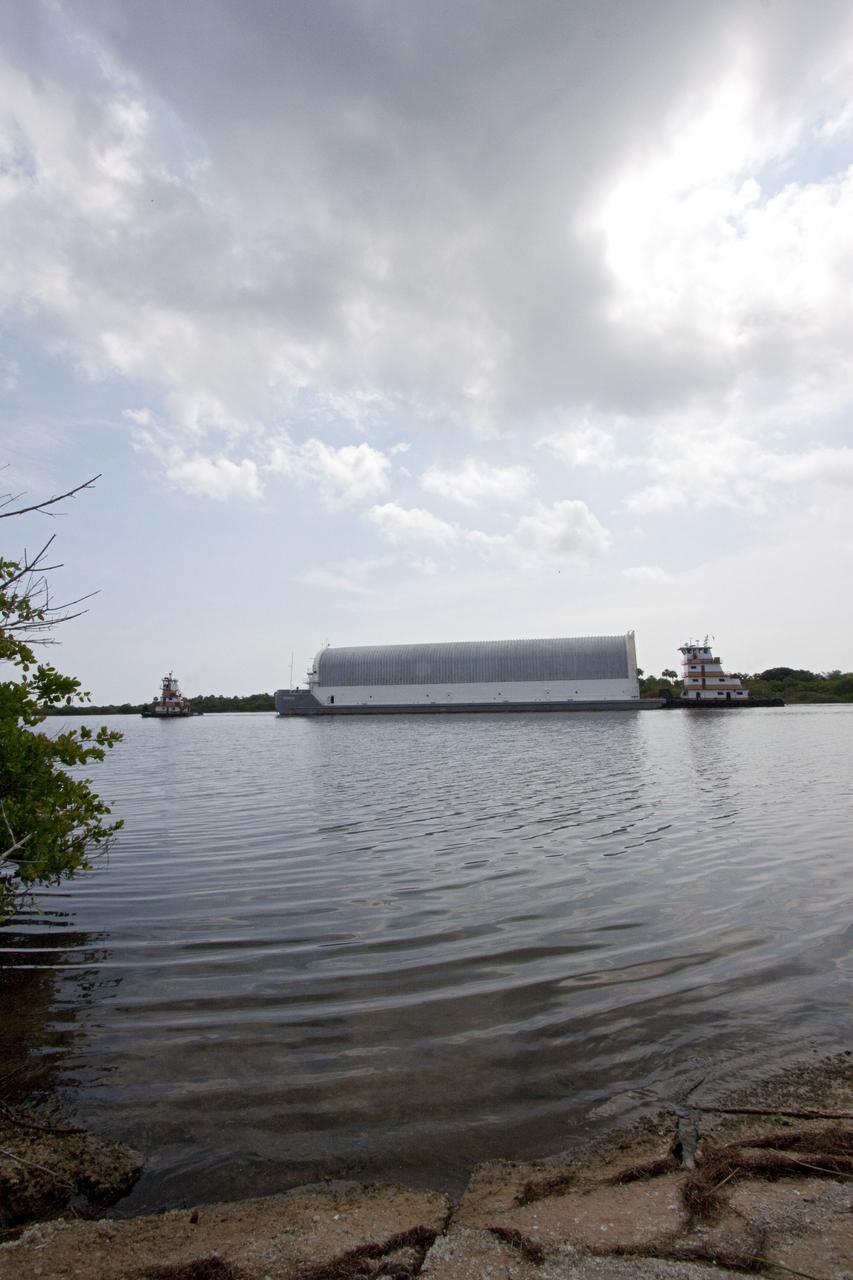
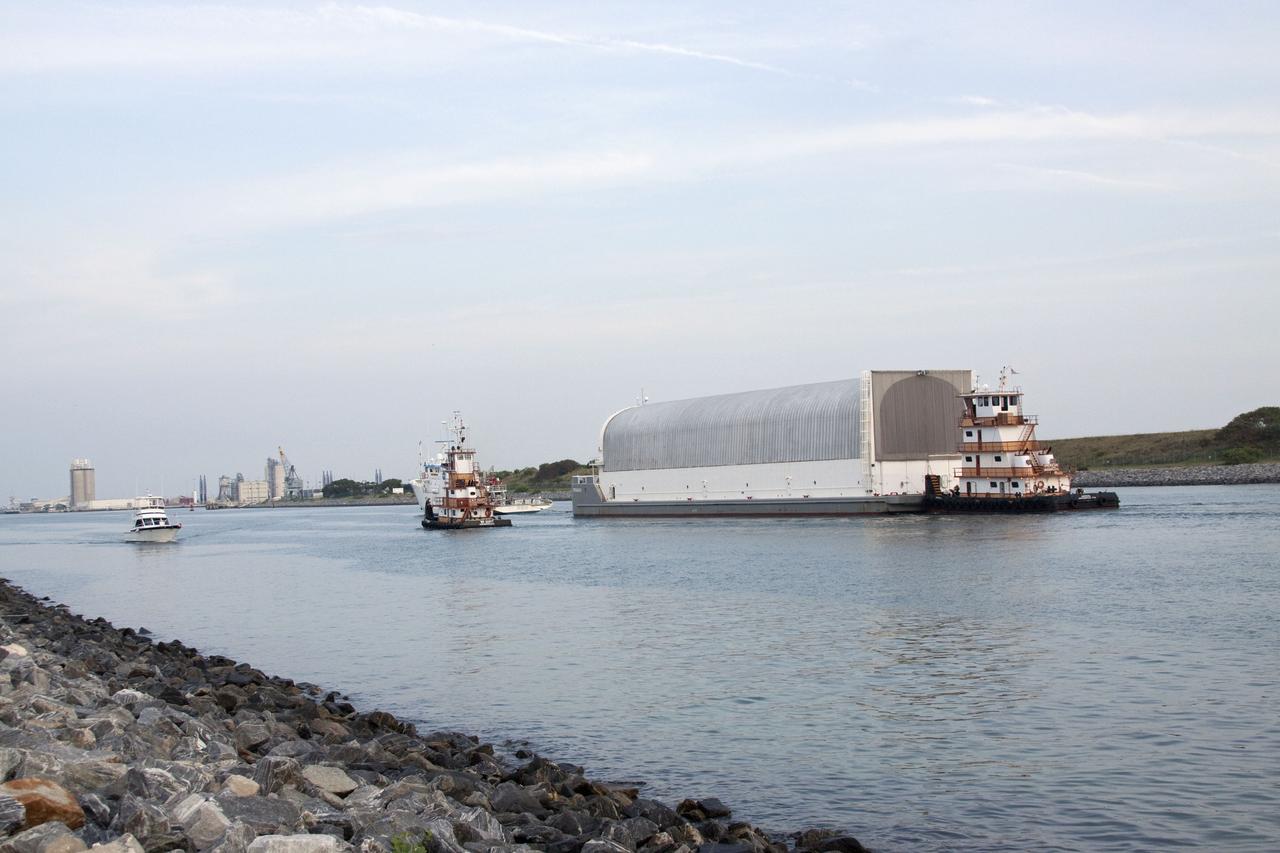
CAPE CANAVERAL, Fla. -- Tugboats safely deliver NASA's Pegasus barge, carrying External Tank-138 to the turn basin at NASA's Kennedy Space Center in Florida. ET-138, the last newly manufactured tank, was originally designated to fly on Endeavour's STS-134 mission to the International Space Station, but later reassigned to fly on space shuttle Atlantis' final mission, STS-135. For information, visit www.nasa.gov_shuttle. Photo credit: NASA_Jack Pfaller
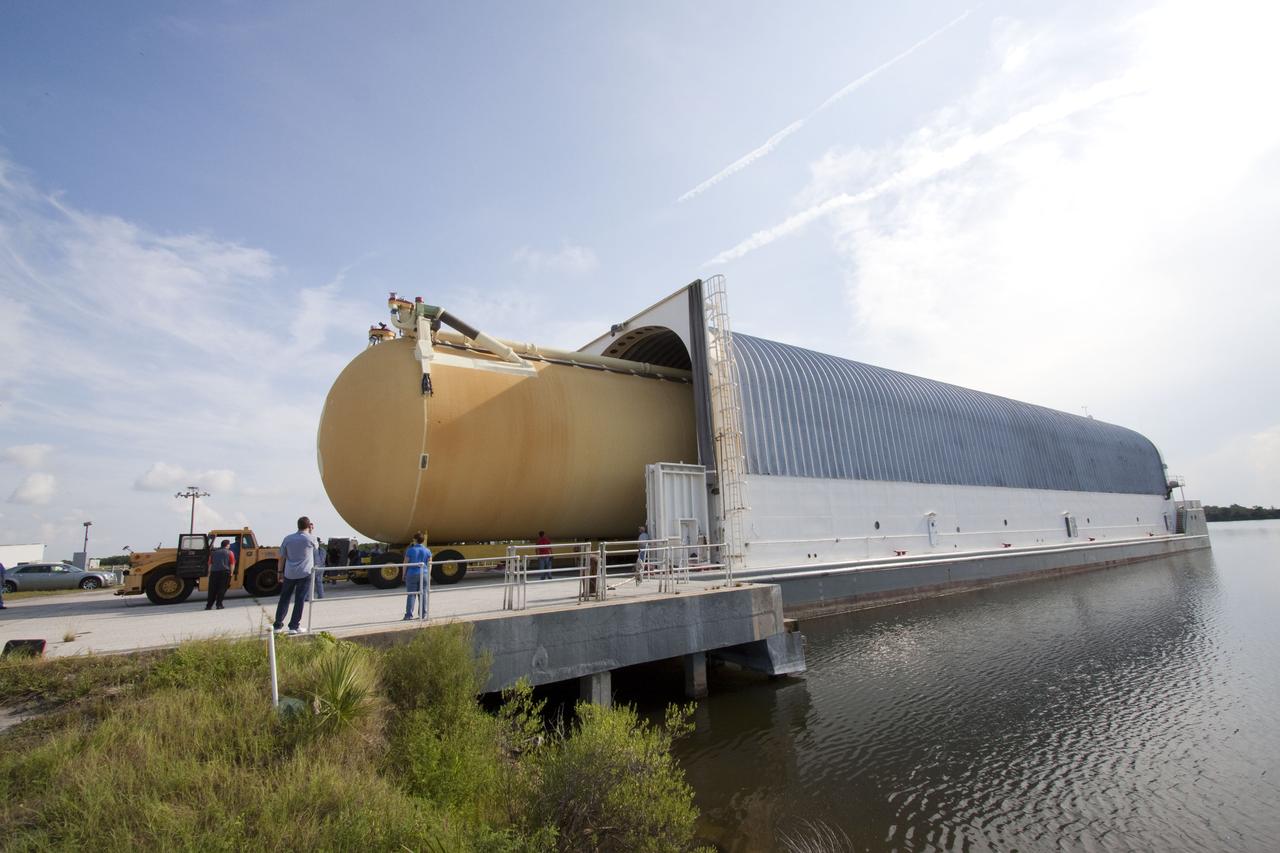
CAPE CANAVERAL, Fla. -- At NASA's Kennedy Space Center in Florida, workers prepare External Tank-138 for offload from the Pegasus barge docked in the turn basin near the Vehicle Assembly Building. The external fuel tank arrived in Florida on July 13, from NASA's Michoud Assembly Facility near New Orleans. ET-138, the last newly manufactured tank, was originally designated to fly on Endeavour's STS-134 mission to the International Space Station, but later reassigned to fly on space shuttle Atlantis' final mission, STS-135. For information, visit www.nasa.gov_shuttle. Photo credit: NASA_Jack Pfaller
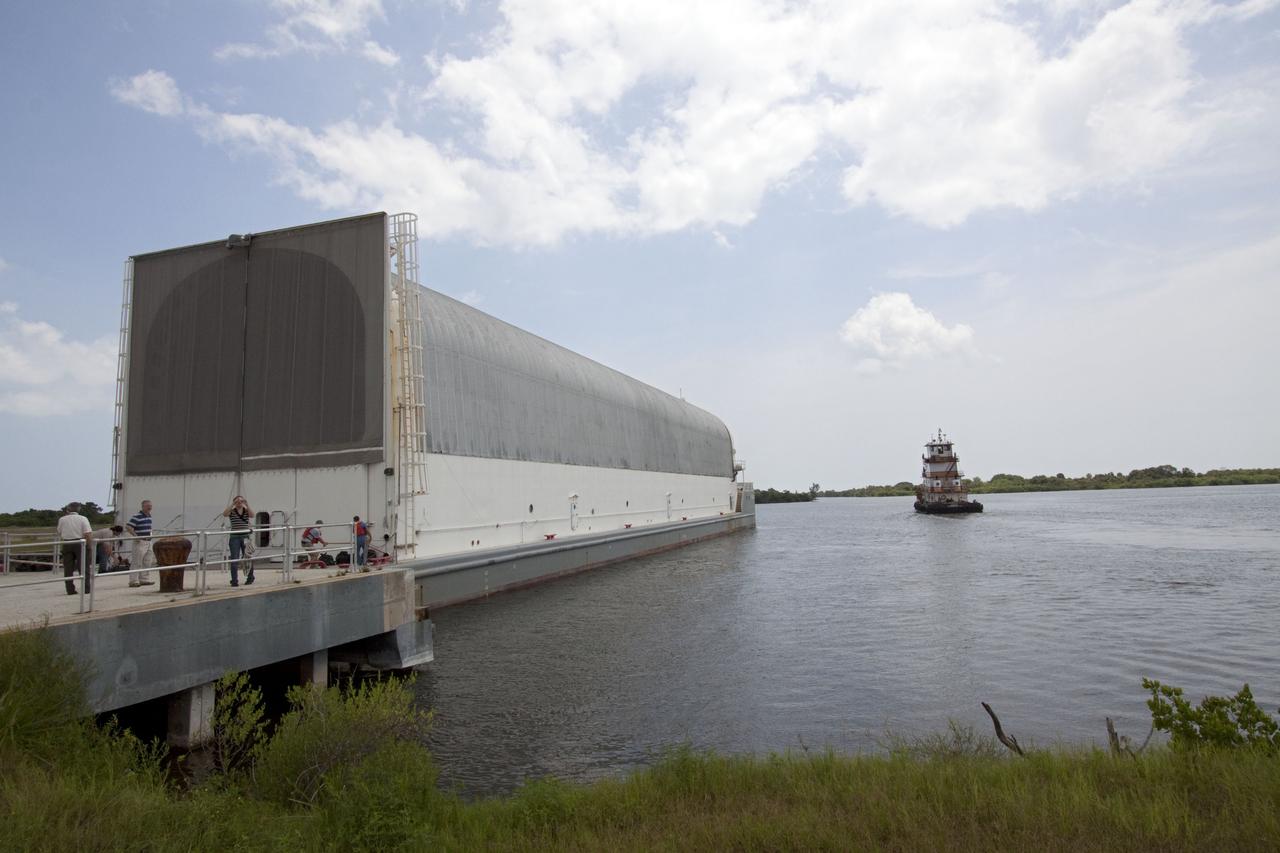
CAPE CANAVERAL, Fla. -- At NASA's Kennedy Space Center in Florida, preparations are under way to offload External Tank-138 from the Pegasus barge docked in the turn basin near the Vehicle Assembly Building. The external fuel tank arrived in Florida on July 13, from NASA's Michoud Assembly Facility near New Orleans. ET-138, the last newly manufactured tank, was originally designated to fly on Endeavour's STS-134 mission to the International Space Station, but later reassigned to fly on space shuttle Atlantis' final mission, STS-135. For information, visit www.nasa.gov_shuttle. Photo credit: NASA_Jim Grossmann
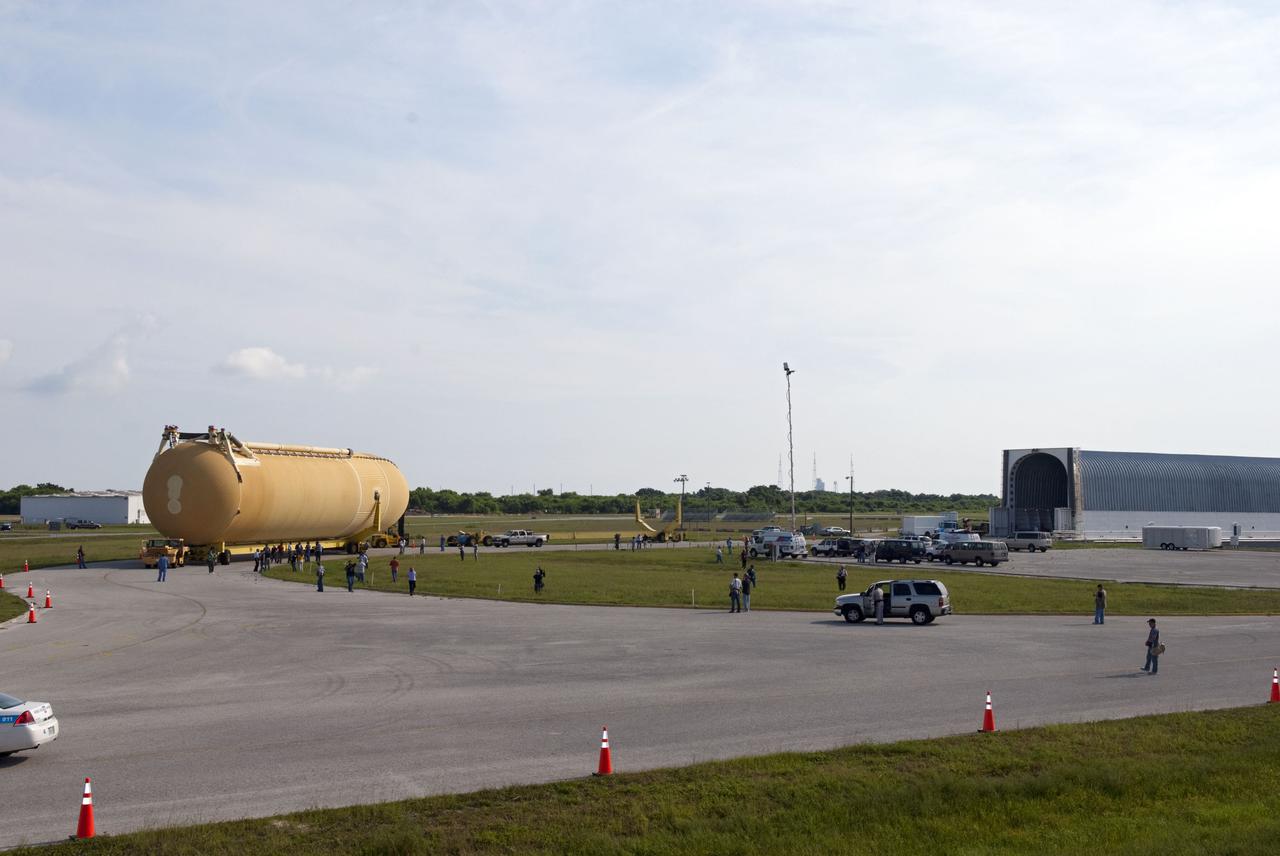
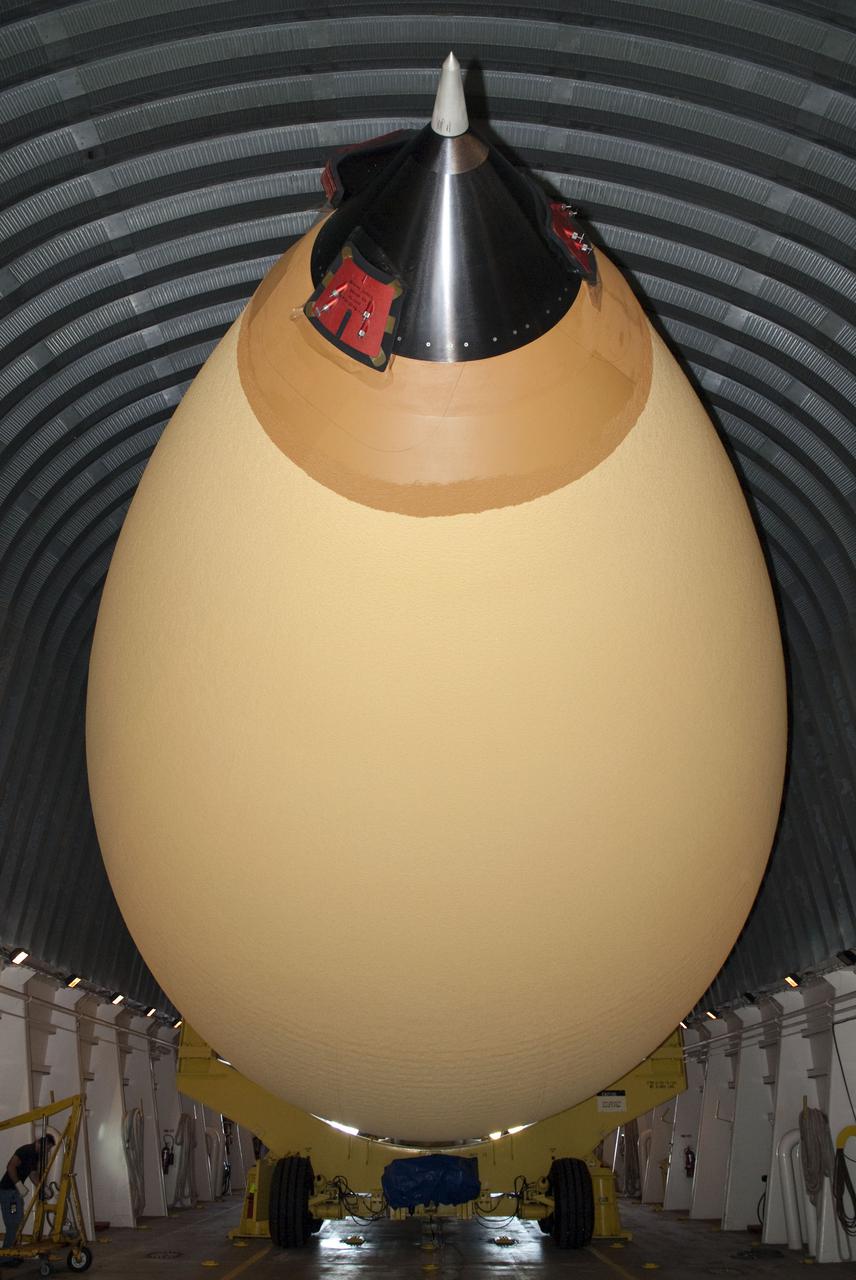
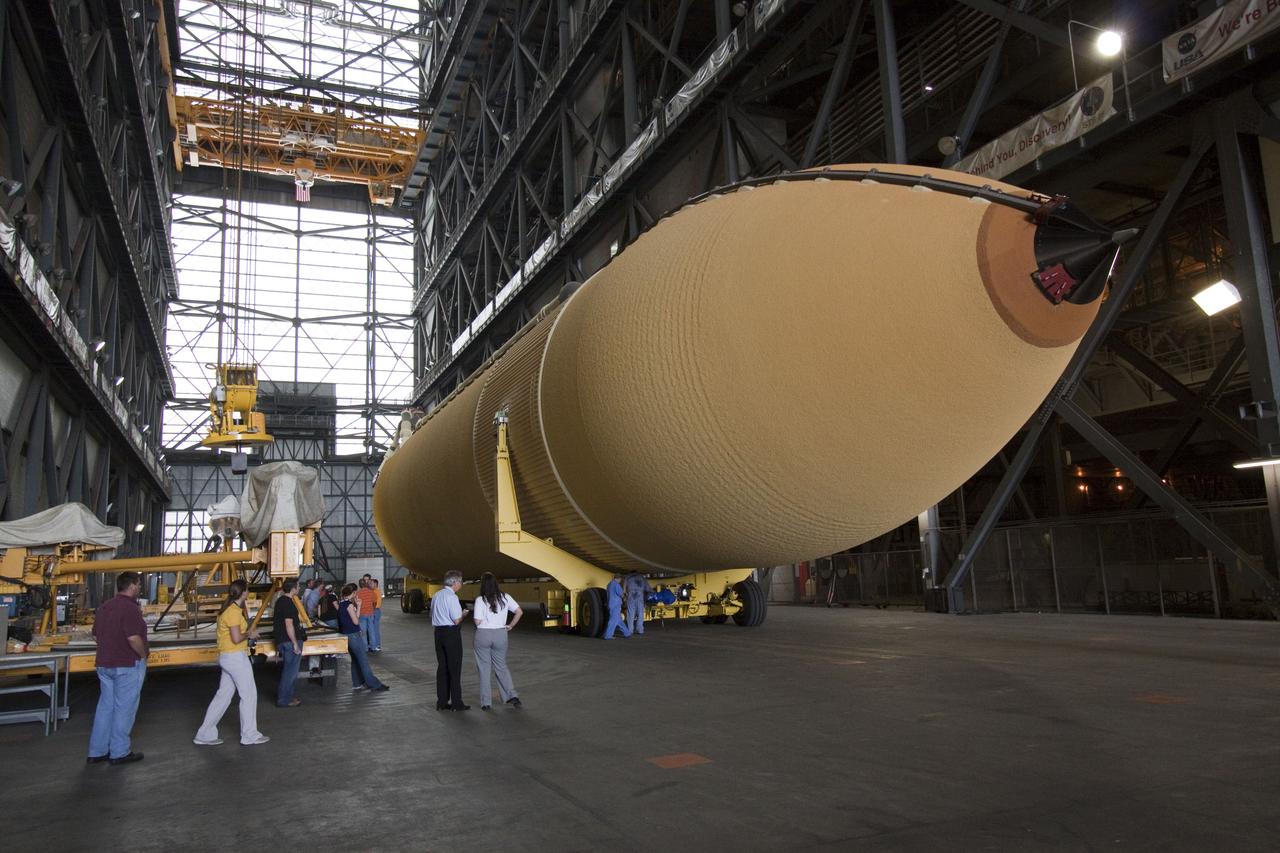
CAPE CANAVERAL, Fla. -- At NASA's Kennedy Space Center in Florida, workers accompany the newly offloaded External Tank-138 from the Pegasus barge docked in the turn basin. The external fuel tank arrived in Florida on July 13, from NASA's Michoud Assembly Facility near New Orleans. ET-138, the last newly manufactured tank, was originally designated to fly on Endeavour's STS-134 mission to the International Space Station, but later reassigned to fly on space shuttle Atlantis' final mission, STS-135. For information, visit www.nasa.gov_shuttle. Photo credit: NASA_Jim Grossmann
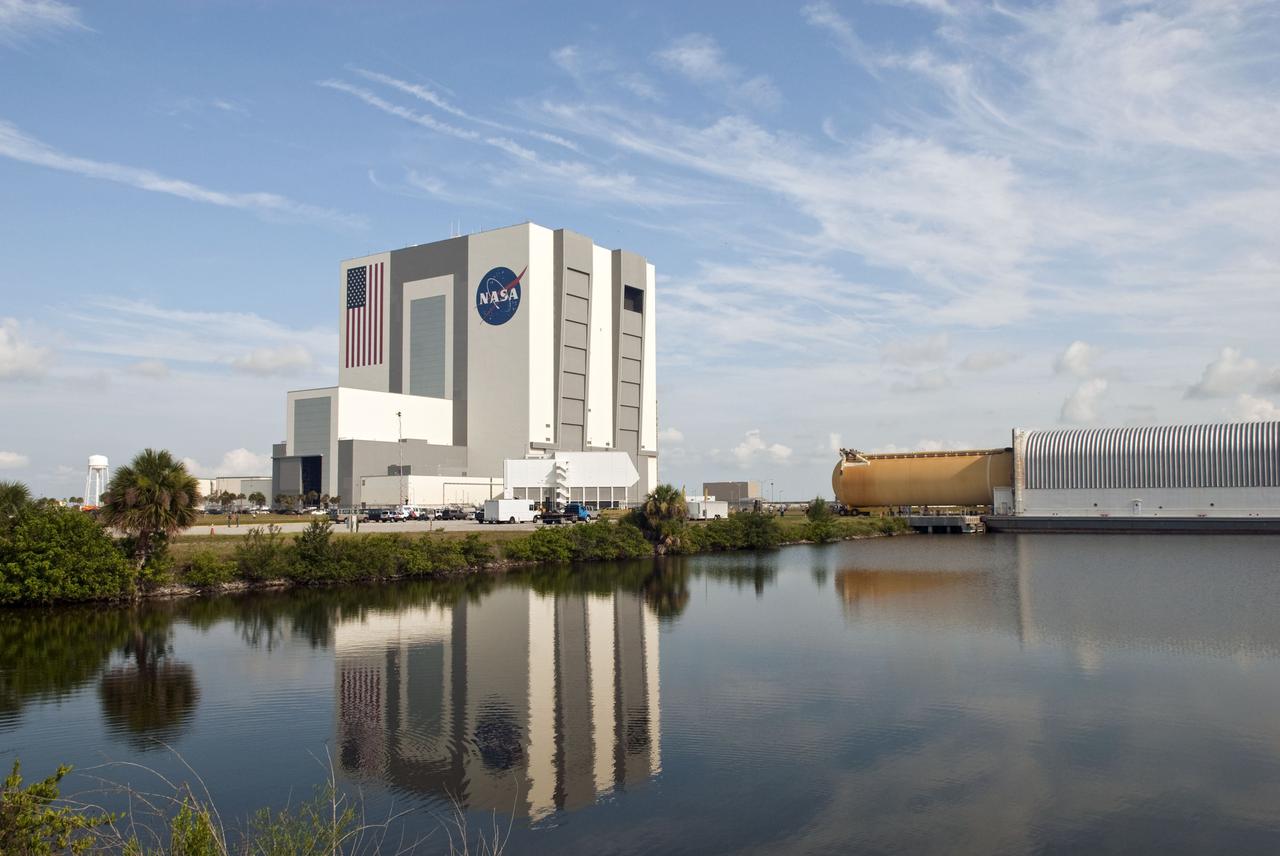
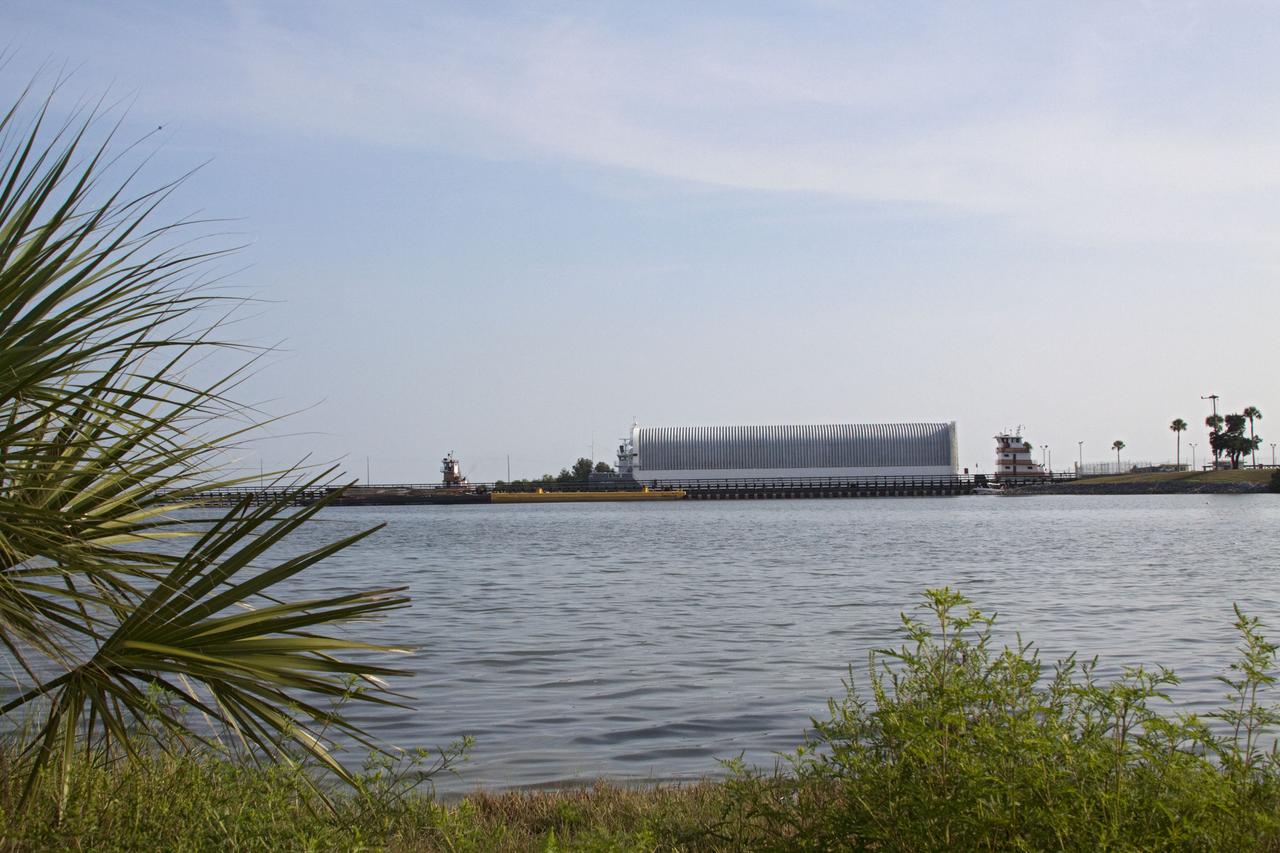
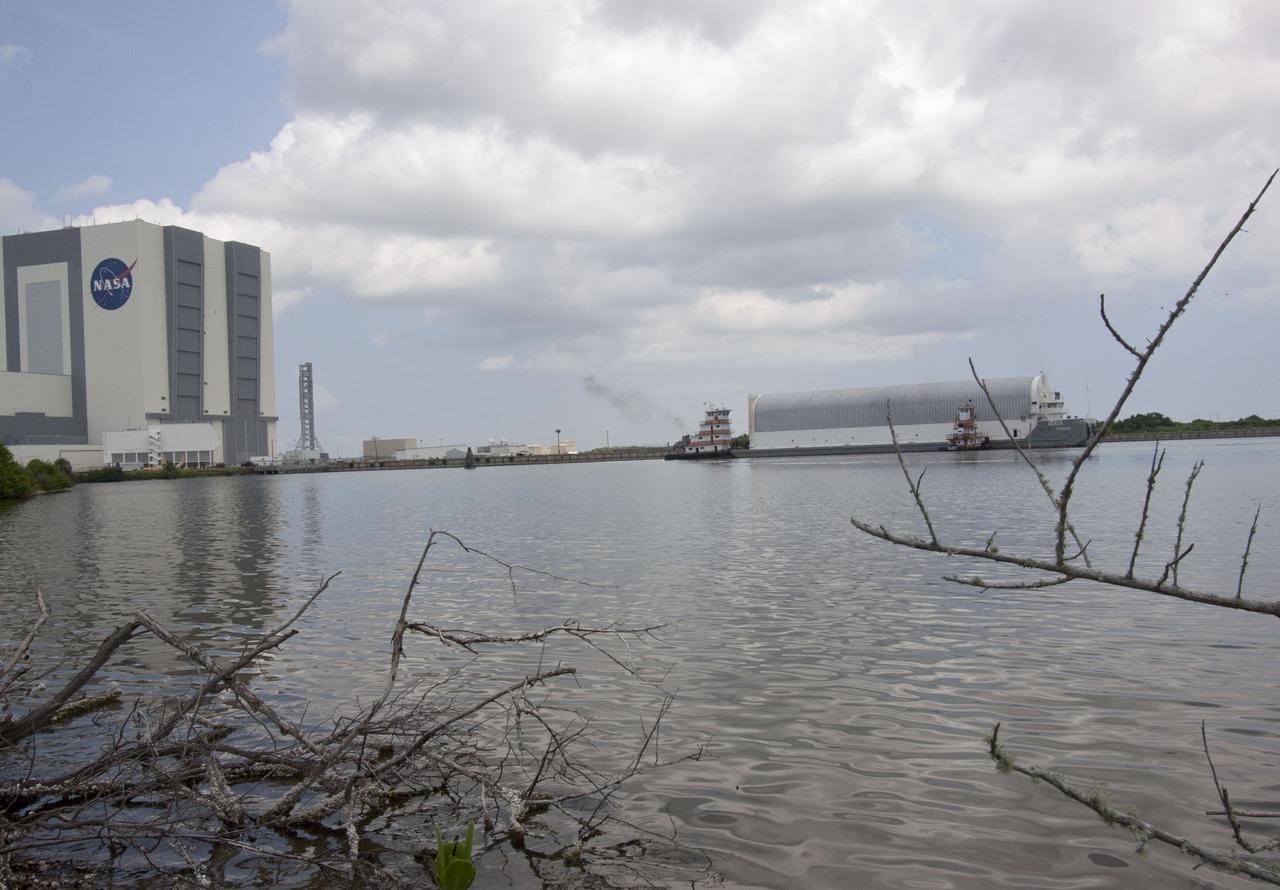
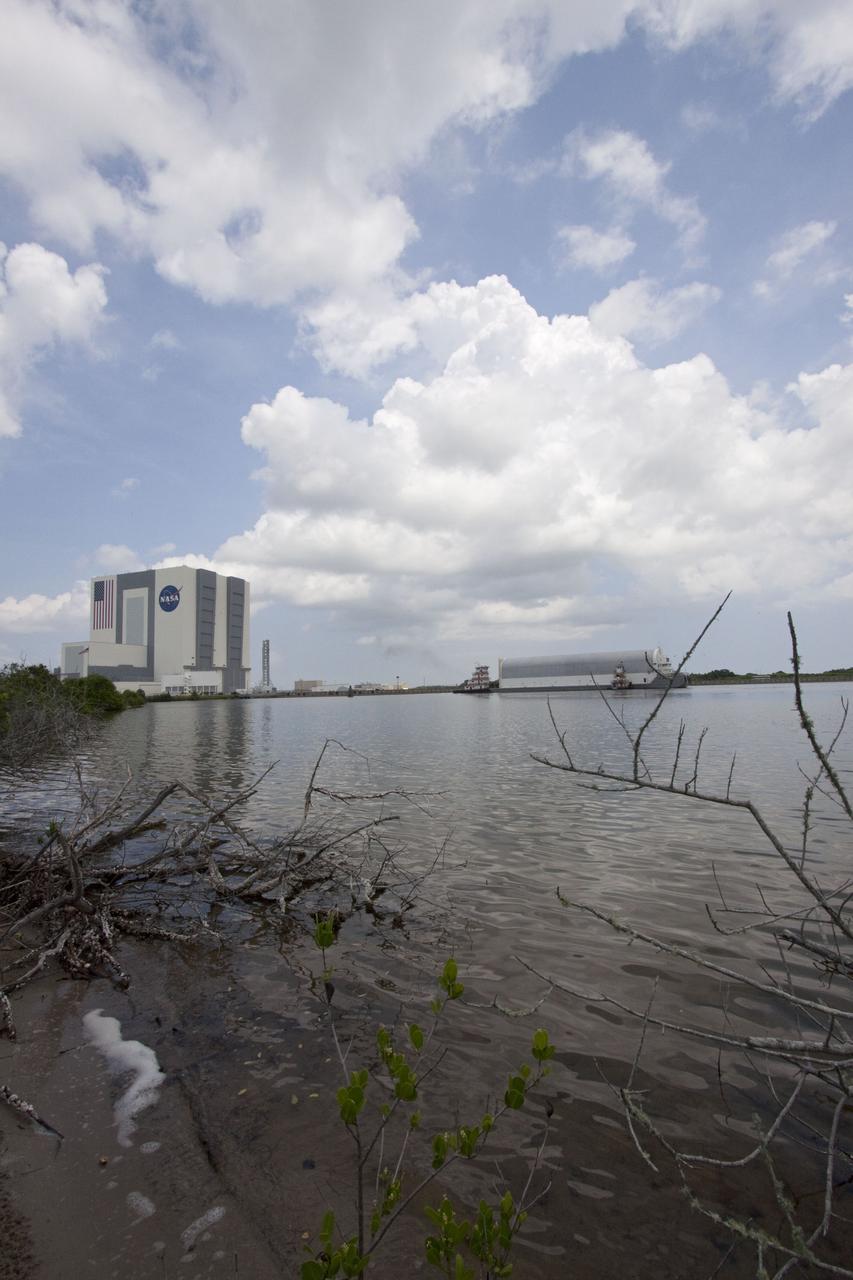
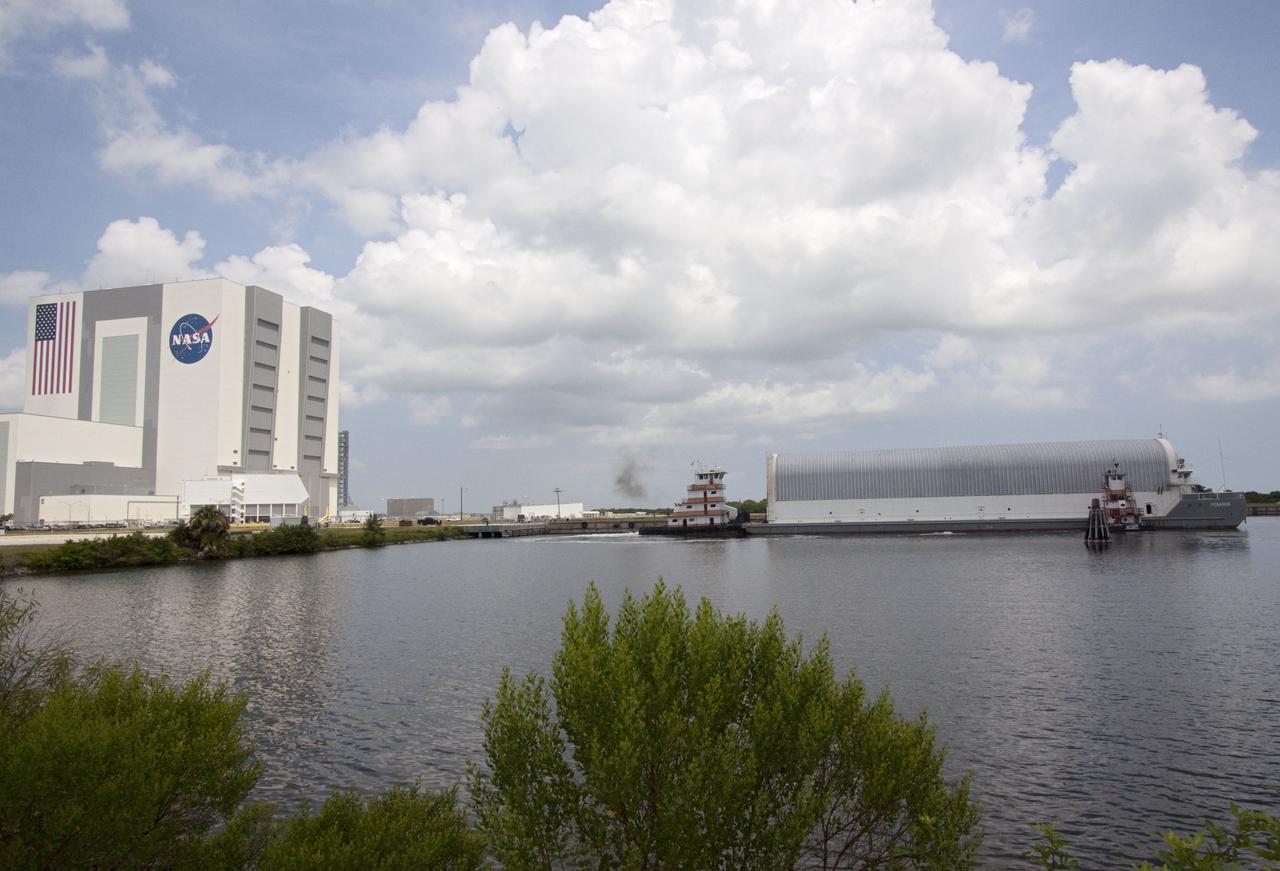
CAPE CANAVERAL, Fla. -- Viewed from across the turn basin in the Launch Complex 39 area at NASA's Kennedy Space Center in Florida, External Tank-138 is being offloaded from the Pegasus barge near the Vehicle Assembly Building. The external fuel tank arrived in Florida on July 13, from NASA's Michoud Assembly Facility near New Orleans. ET-138, the last newly manufactured tank, was originally designated to fly on Endeavour's STS-134 mission to the International Space Station, but later reassigned to fly on space shuttle Atlantis' final mission, STS-135. For information, visit www.nasa.gov_shuttle. Photo credit: NASA_Jim Grossmann
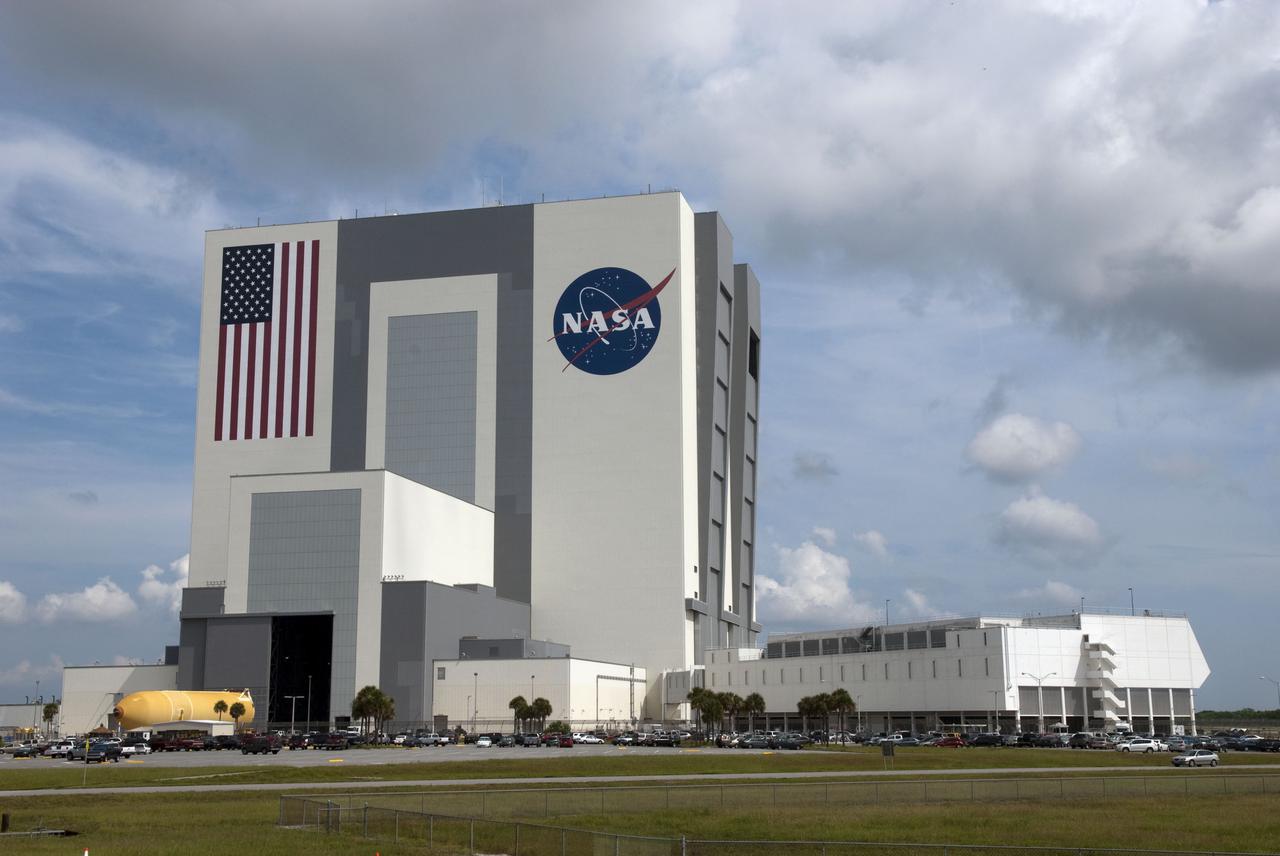
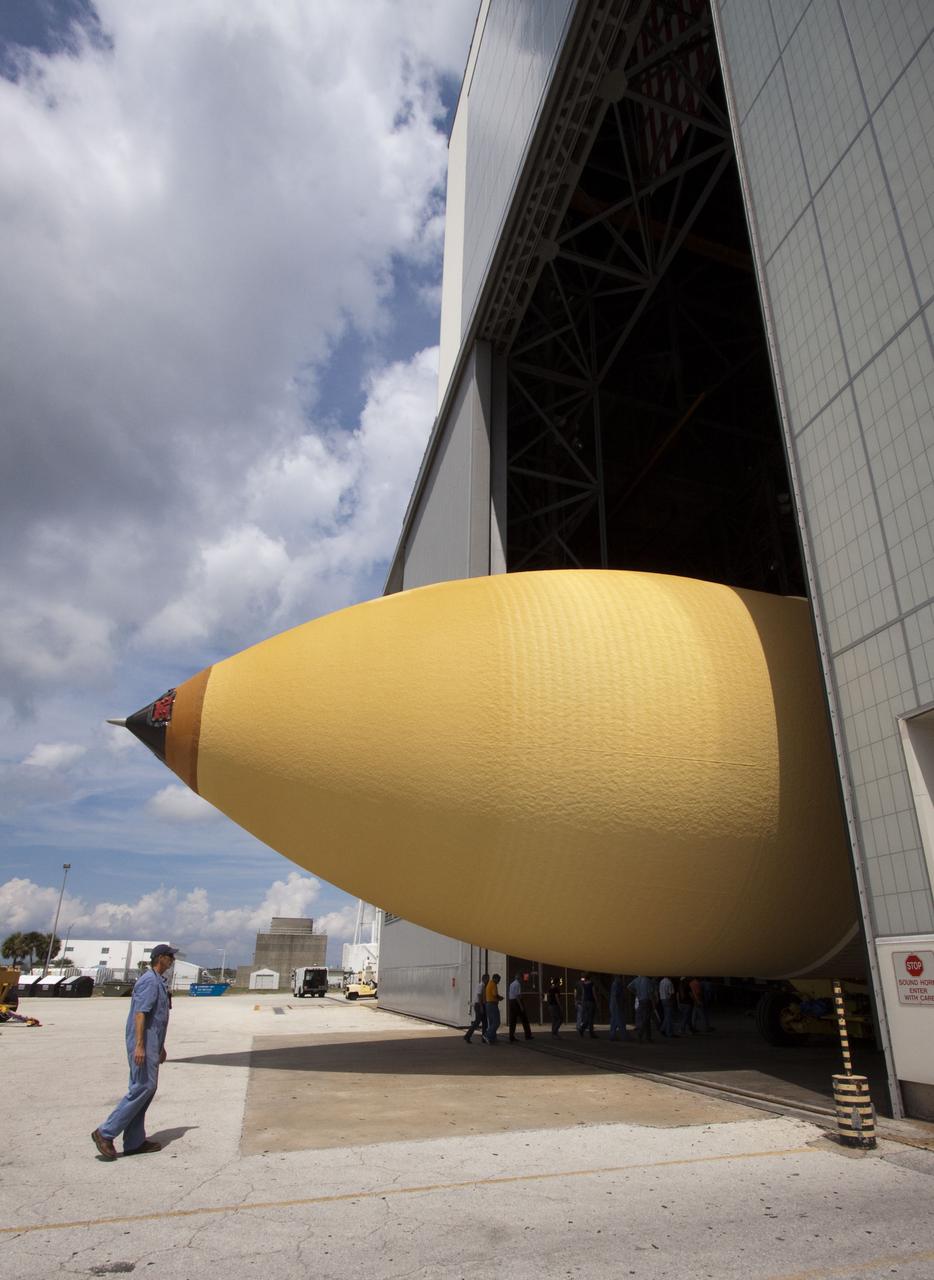
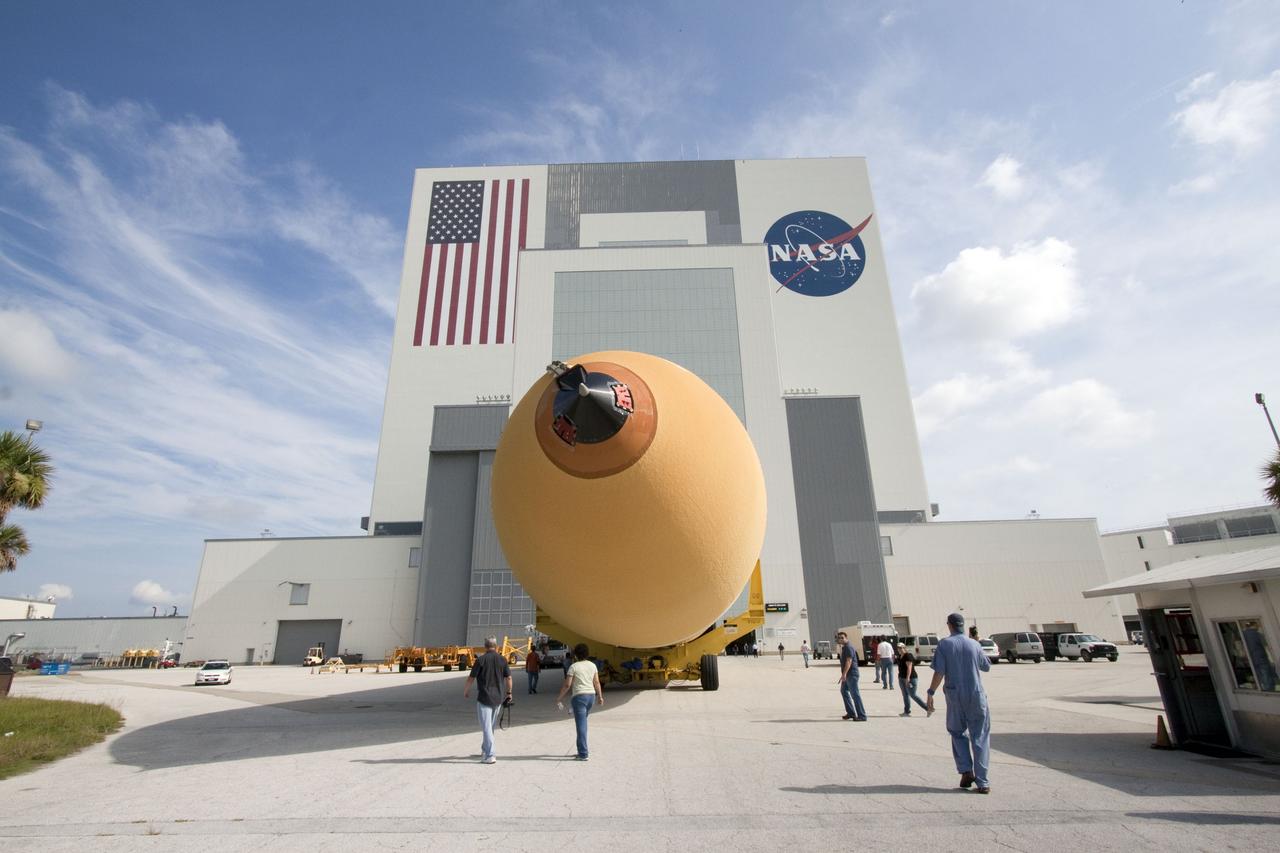
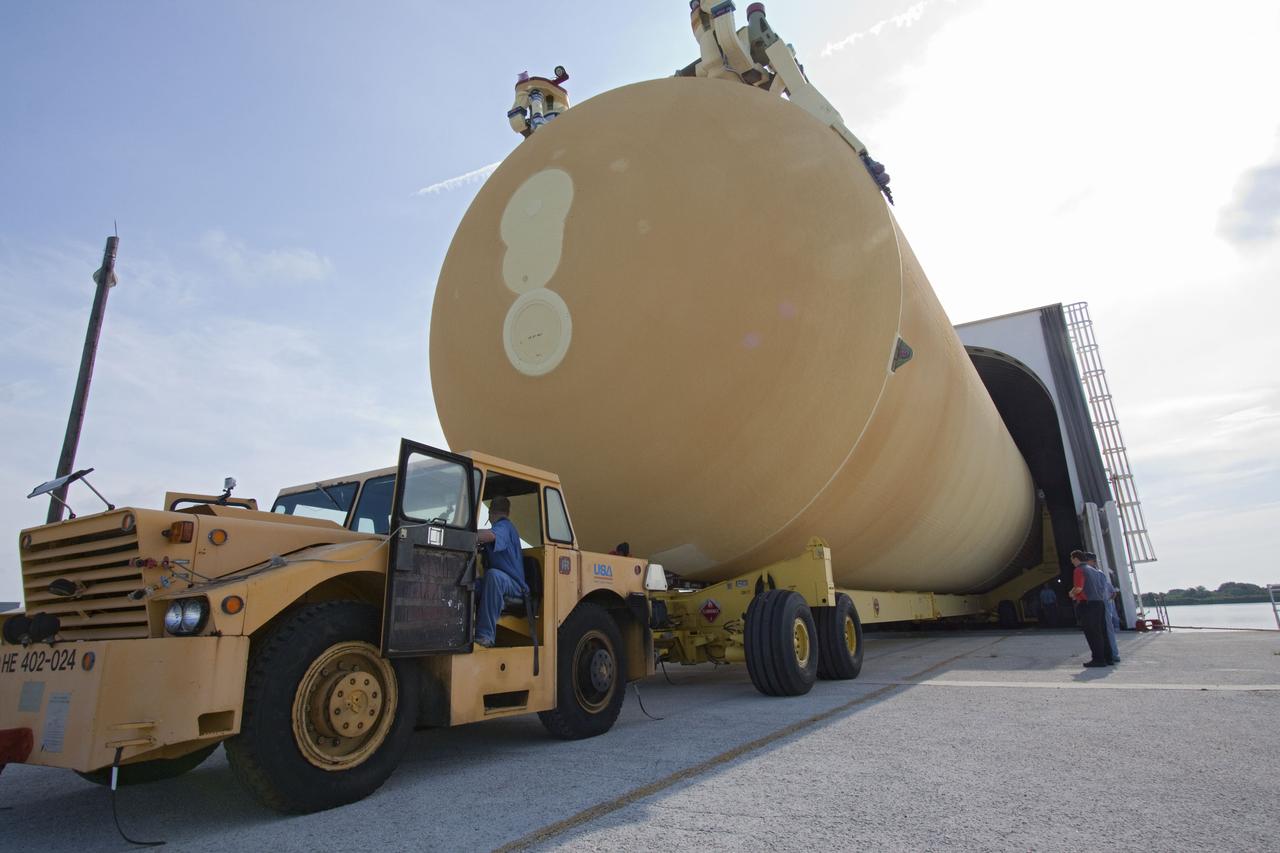
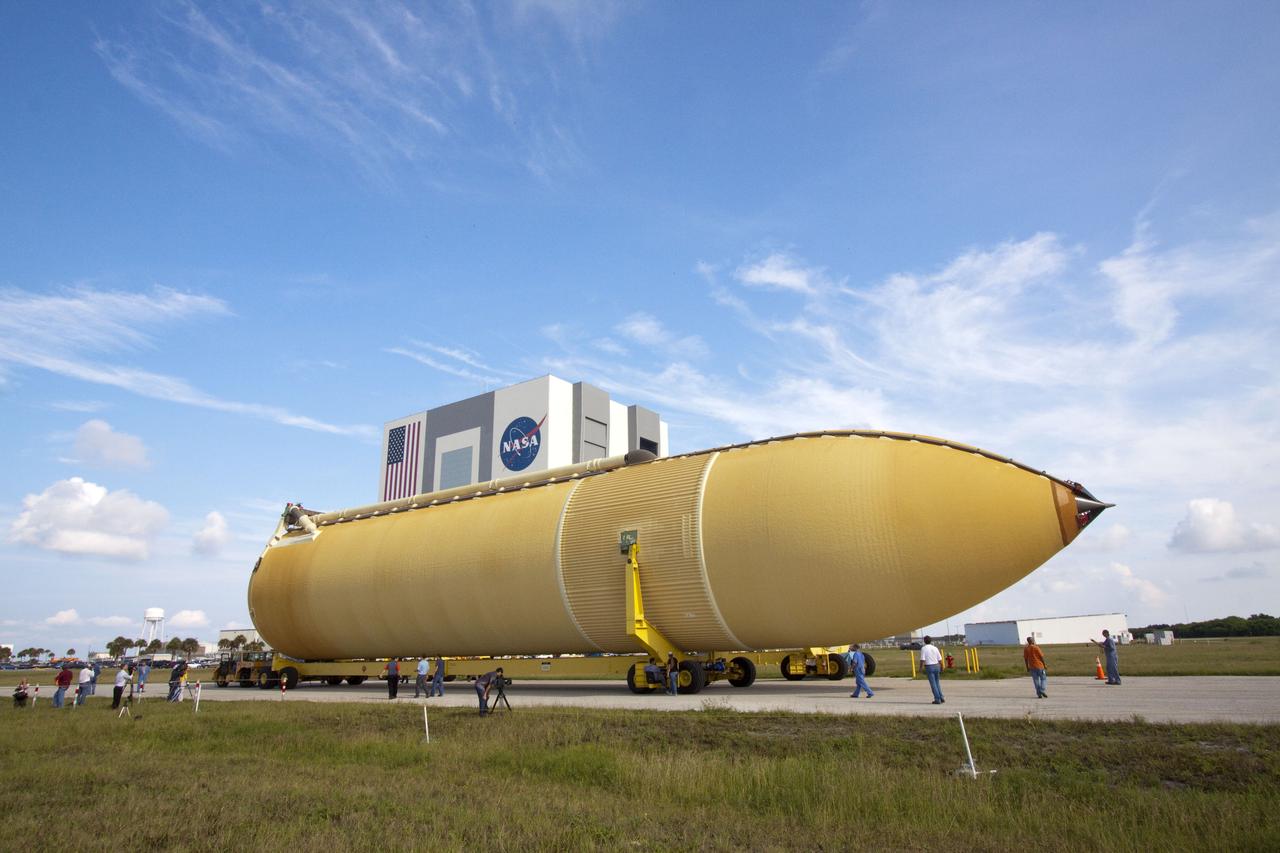
CAPE CANAVERAL, Fla. -- At NASA's Kennedy Space Center in Florida, External Tank-138 approaches the massive door of the Vehicle Assembly Building. The external fuel tank arrived in Florida on July 13, from NASA's Michoud Assembly Facility near New Orleans. ET-138, the last newly manufactured tank, was originally designated to fly on Endeavour's STS-134 mission to the International Space Station, but later reassigned to fly on space shuttle Atlantis' final mission, STS-135. For information, visit www.nasa.gov_shuttle. Photo credit: NASA_Jim Grossmann
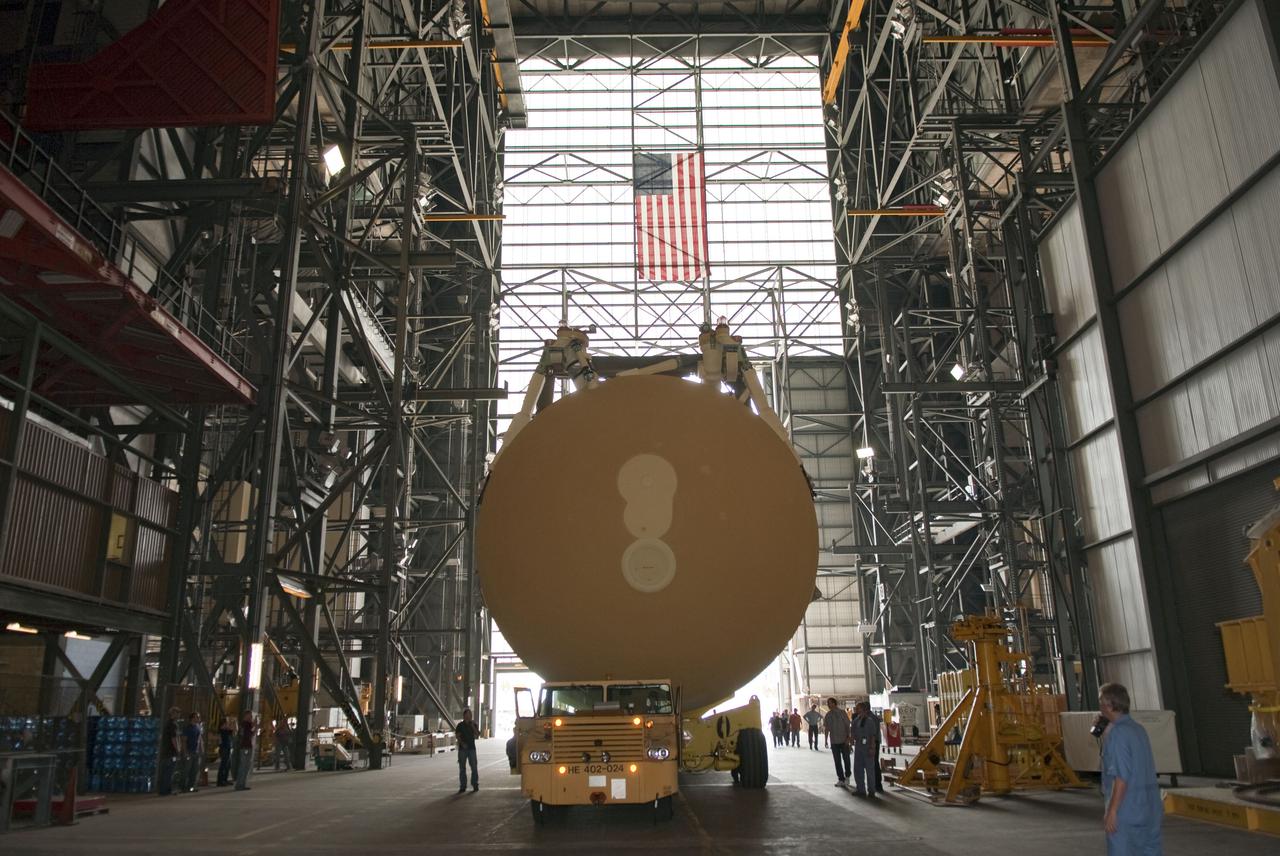
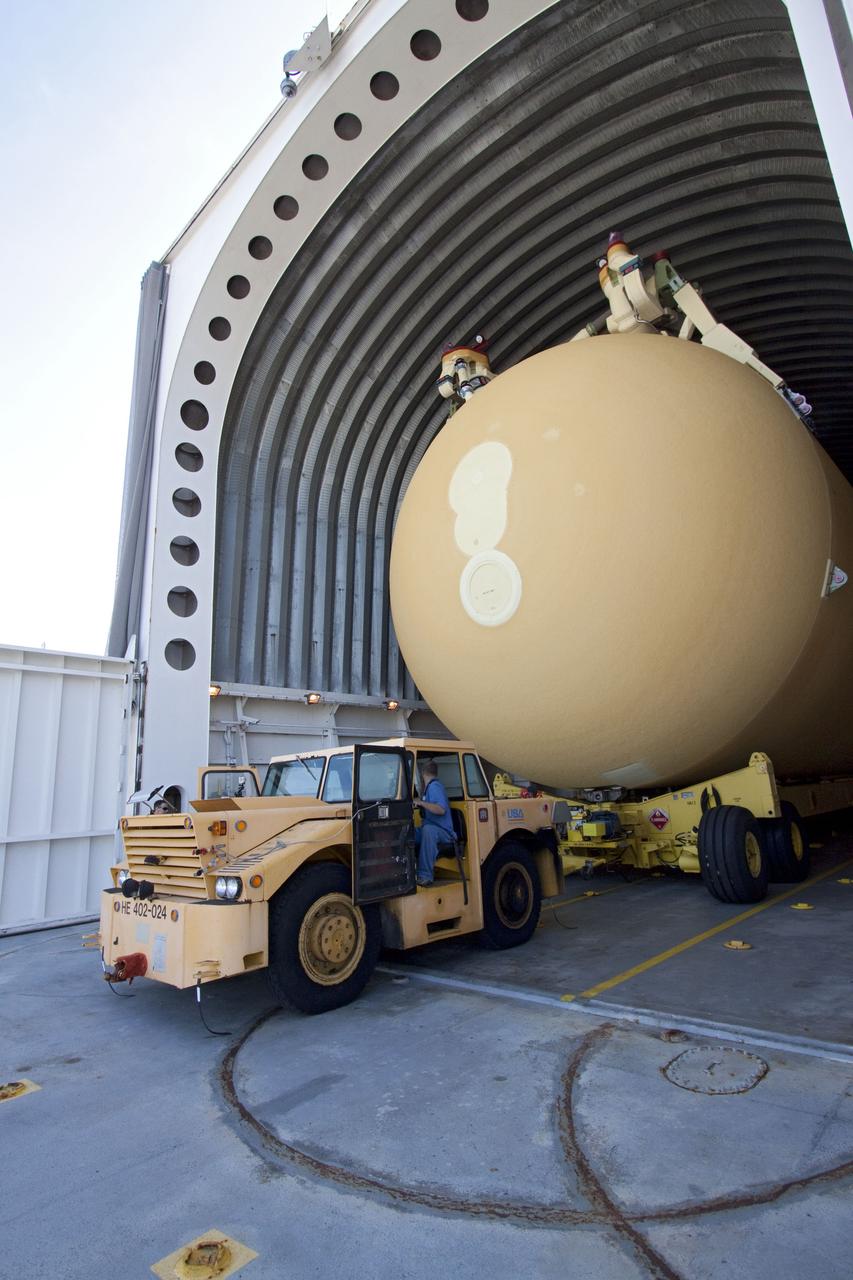
CAPE CANAVERAL, Fla. -- At NASA's Kennedy Space Center in Florida, External Tank-138 is being towed through the massive doors into the transfer aisle of the Vehicle Assembly Building. The external fuel tank arrived in Florida on July 13, from NASA's Michoud Assembly Facility near New Orleans. ET-138, the last newly manufactured tank, was originally designated to fly on Endeavour's STS-134 mission to the International Space Station, but later reassigned to fly on space shuttle Atlantis' final mission, STS-135. For information, visit www.nasa.gov_shuttle. Photo credit: NASA_Jim Grossmann
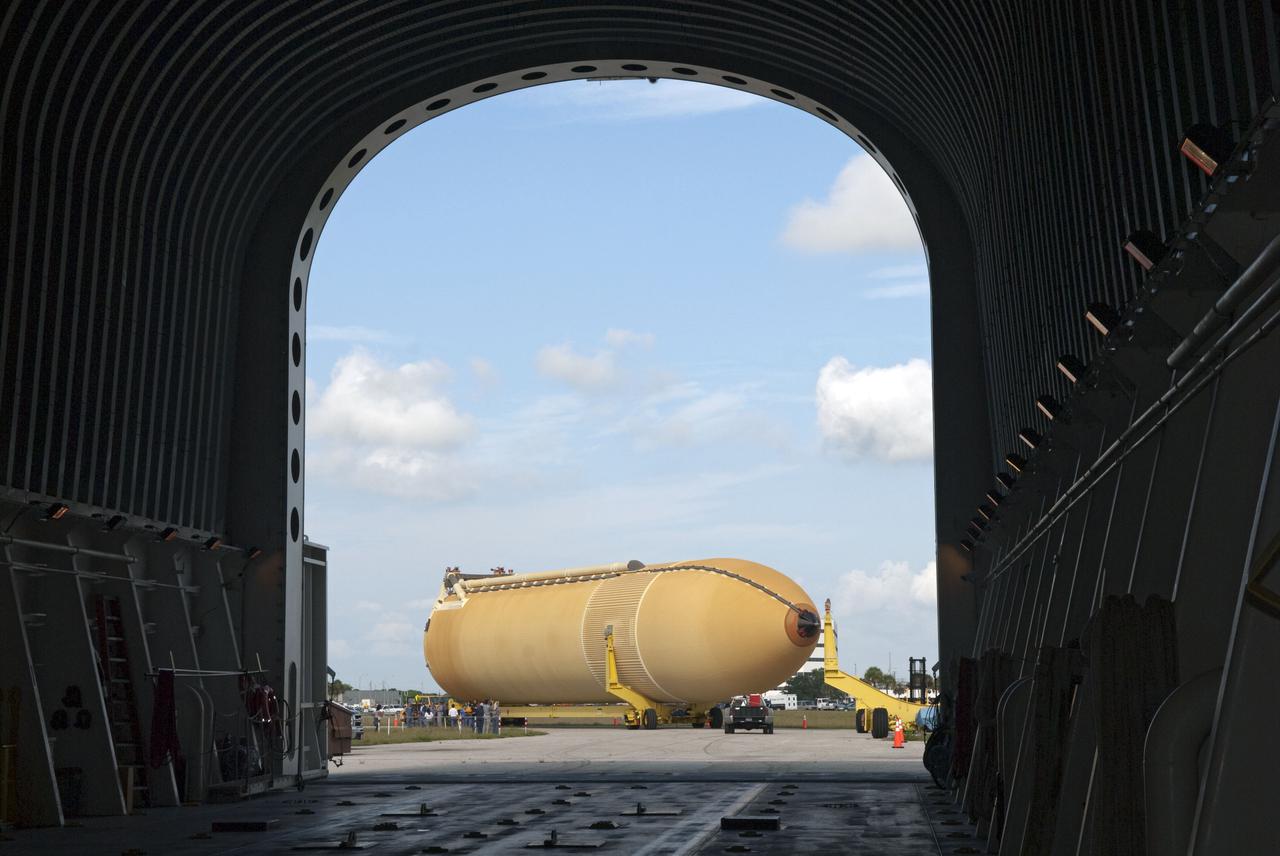
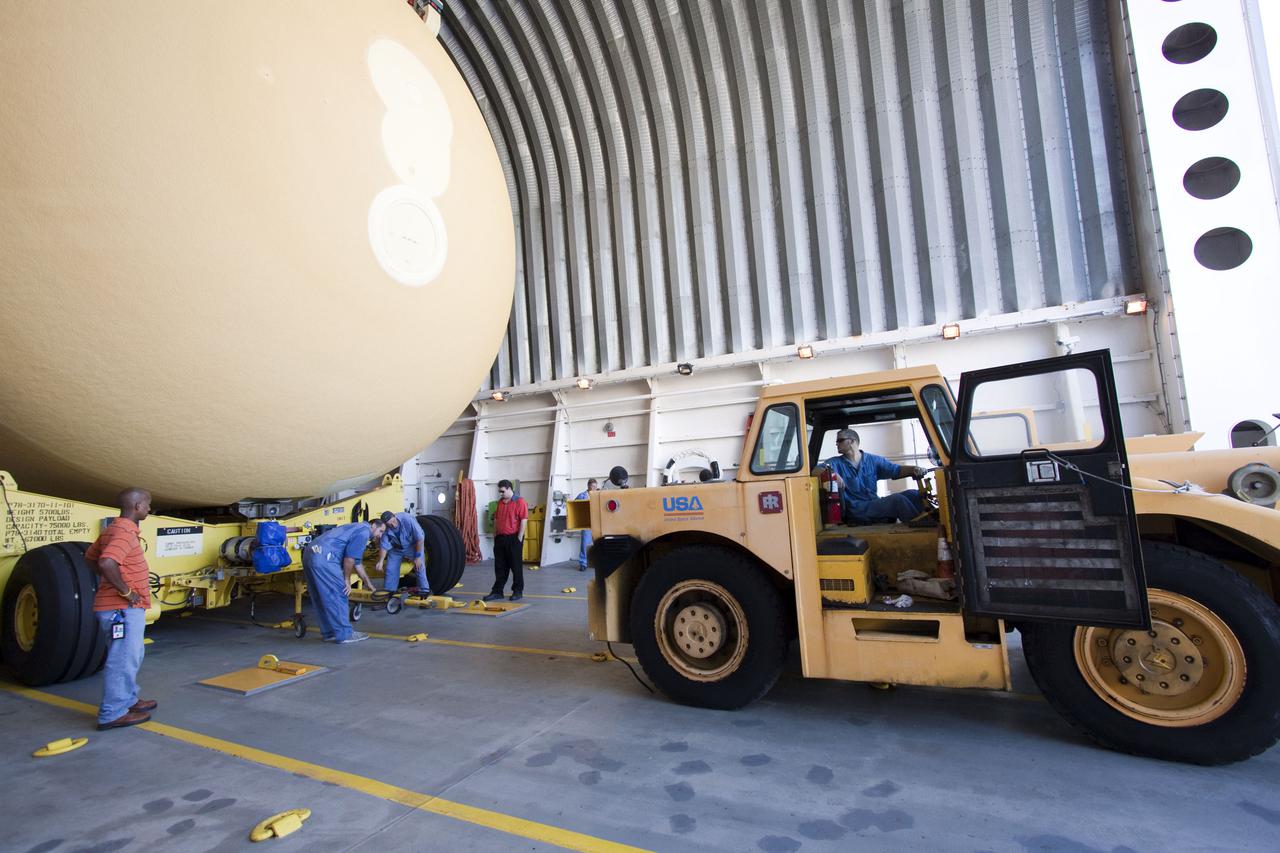
CAPE CANAVERAL, Fla. -- Viewed from inside the Pegasus barge docked in the turn basin at NASA's Kennedy Space Center in Florida, workers accompany the newly offloaded External Tank-138. The external fuel tank arrived in Florida on July 13, from NASA's Michoud Assembly Facility near New Orleans. ET-138, the last newly manufactured tank, was originally designated to fly on Endeavour's STS-134 mission to the International Space Station, but later reassigned to fly on space shuttle Atlantis' final mission, STS-135. For information, visit www.nasa.gov_shuttle. Photo credit: NASA_Jim Grossmann
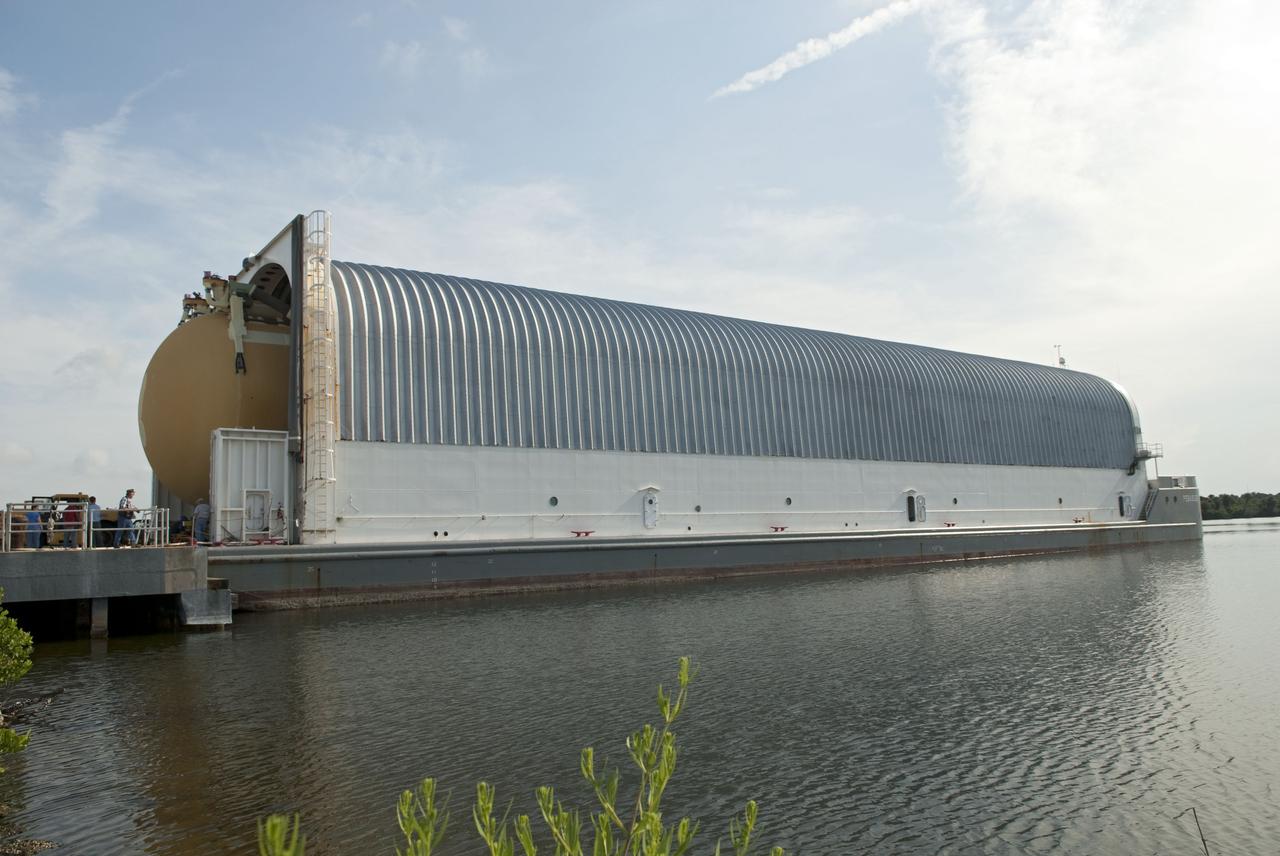
CAPE CANAVERAL, Fla. -- At NASA's Kennedy Space Center in Florida, External Tank-138 is being offloaded from the Pegasus barge docked in the turn basin. The external fuel tank arrived in Florida on July 13, from NASA's Michoud Assembly Facility near New Orleans. ET-138, the last newly manufactured tank, was originally designated to fly on Endeavour's STS-134 mission to the International Space Station, but later reassigned to fly on space shuttle Atlantis' final mission, STS-135. For information, visit www.nasa.gov_shuttle. Photo credit: NASA_Jim Grossmann
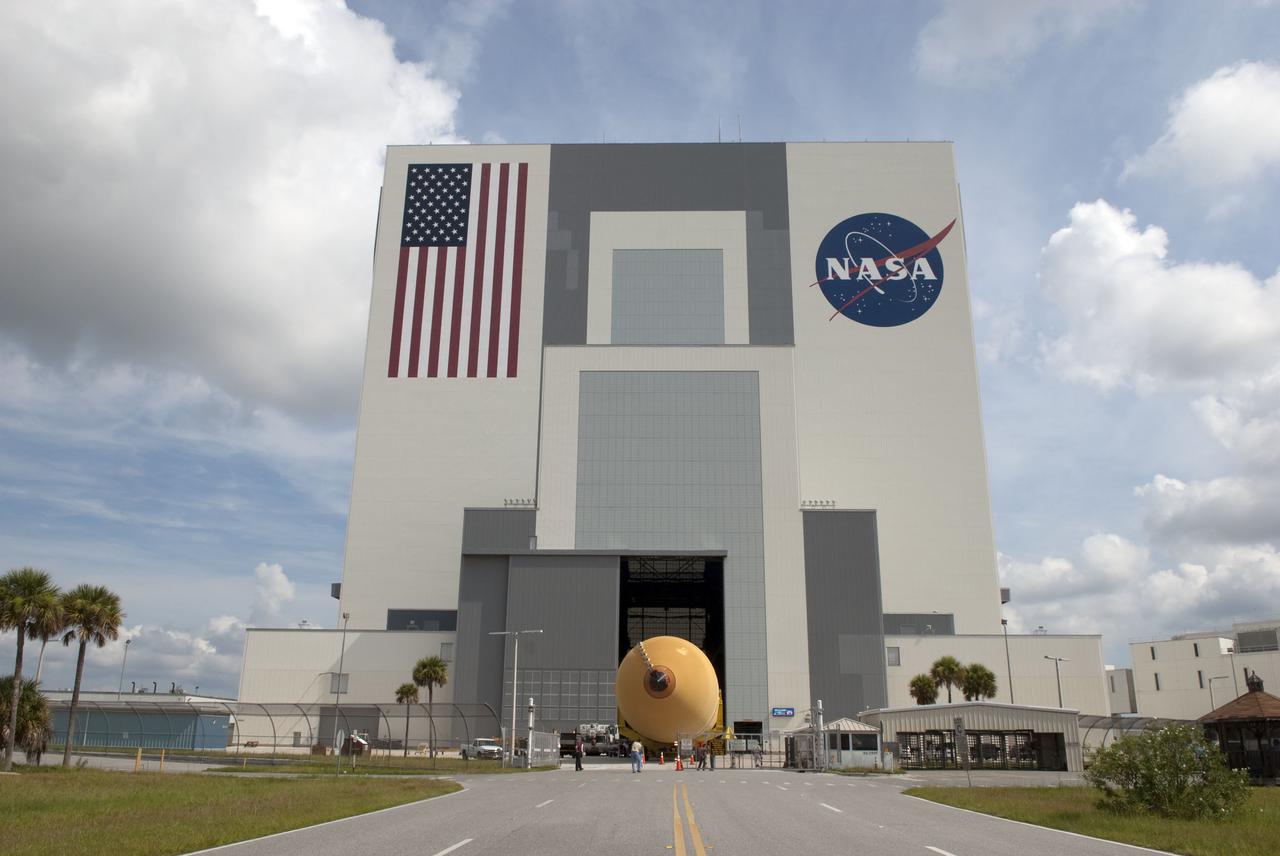
CAPE CANAVERAL, Fla. -- At NASA's Kennedy Space Center in Florida, the massive open door of the Vehicle Assembly Building welcomes External Tank-138.The external fuel tank arrived in Florida on July 13, from NASA's Michoud Assembly Facility near New Orleans. ET-138, the last newly manufactured tank, was originally designated to fly on Endeavour's STS-134 mission to the International Space Station, but later reassigned to fly on space shuttle Atlantis' final mission, STS-135. For information, visit www.nasa.gov_shuttle. Photo credit: NASA_Jim Grossmann
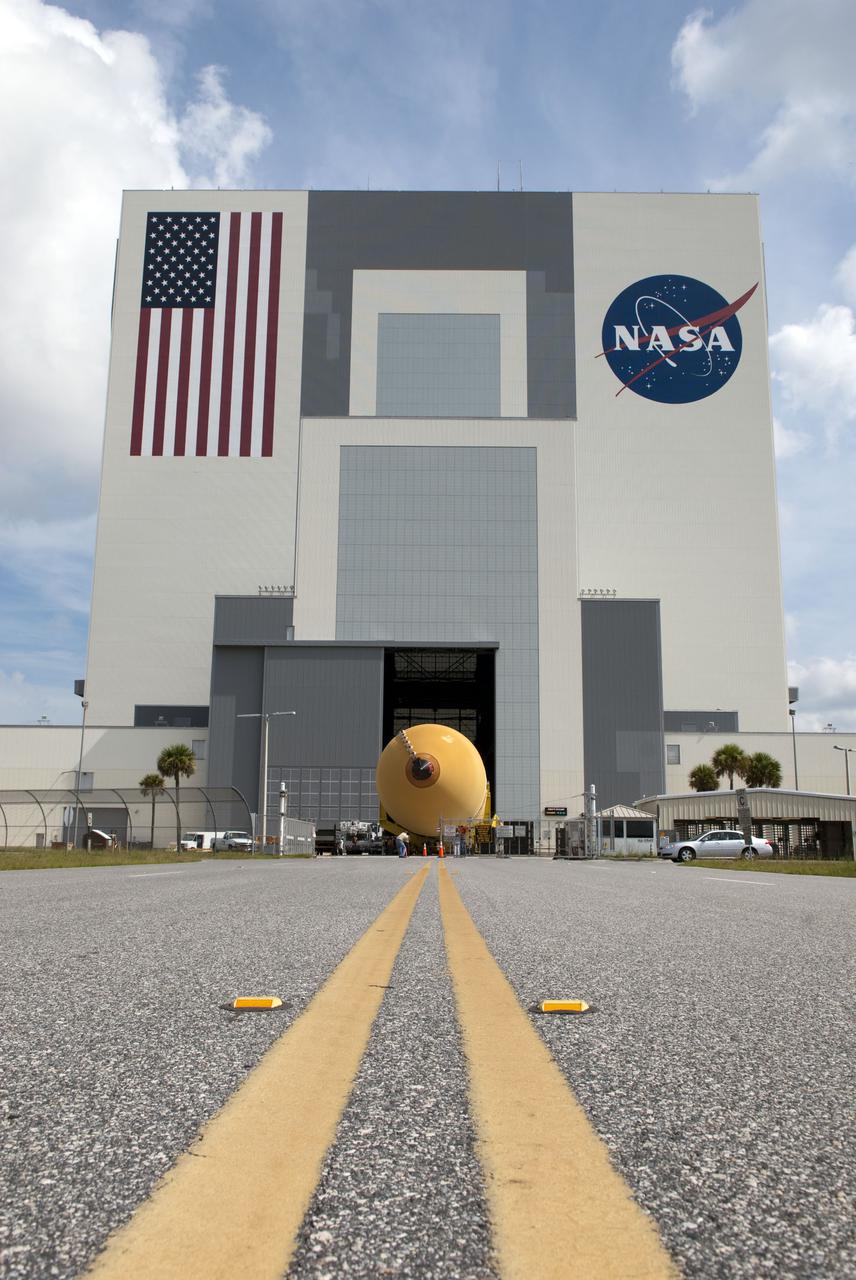
CAPE CANAVERAL, Fla. -- At NASA's Kennedy Space Center in Florida, the massive open door of the Vehicle Assembly Building welcomes External Tank-138. The external fuel tank arrived in Florida on July 13, from NASA's Michoud Assembly Facility near New Orleans. ET-138, the last newly manufactured tank, was originally designated to fly on Endeavour's STS-134 mission to the International Space Station, but later reassigned to fly on space shuttle Atlantis' final mission, STS-135. For information, visit www.nasa.gov_shuttle. Photo credit: NASA_Jim Grossmann
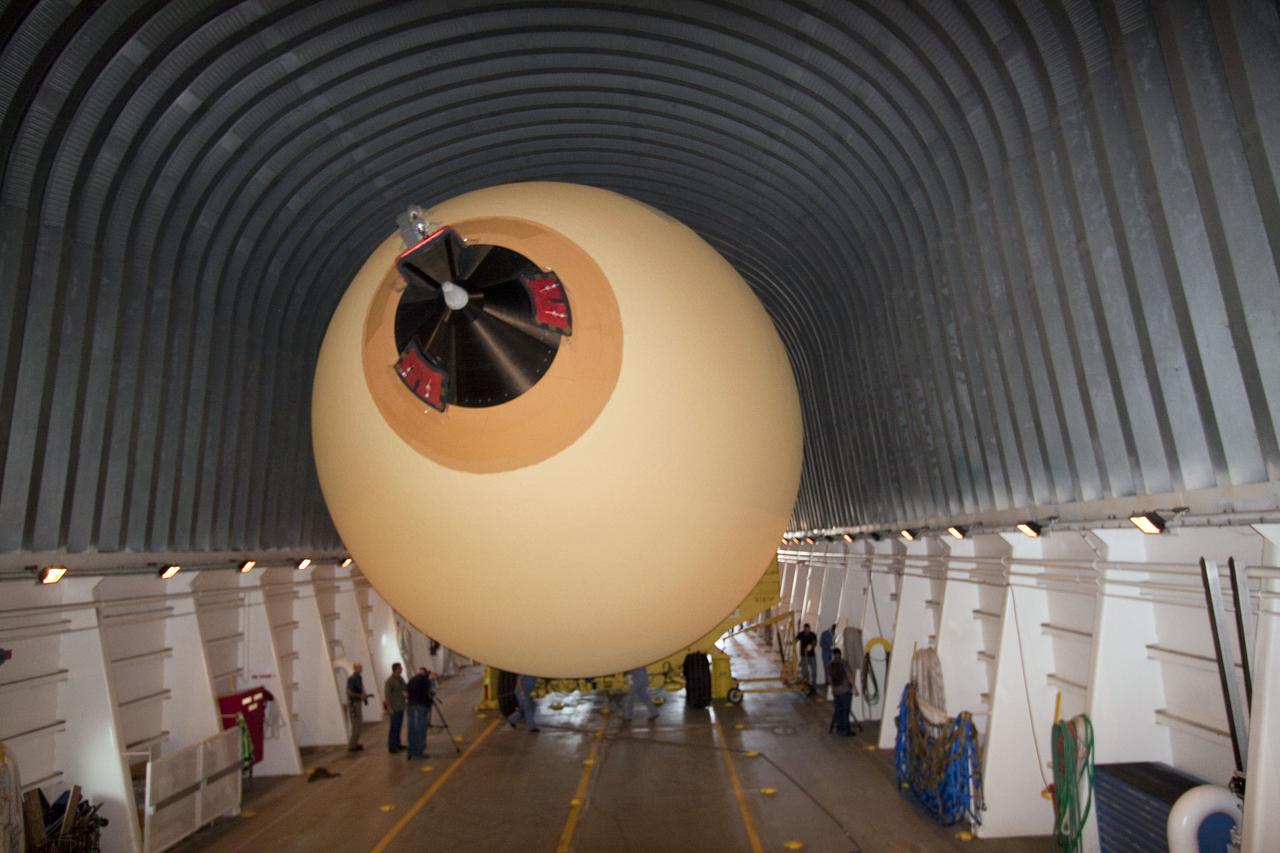
CAPE CANAVERAL, Fla. -- At NASA's Kennedy Space Center in Florida, preparations are under way to offload External Tank-138 from the Pegasus barge docked in the turn basin near the Vehicle Assembly Building. The external fuel tank arrived in Florida on July 13, from NASA's Michoud Assembly Facility near New Orleans. ET-138, the last newly manufactured tank, was originally designated to fly on Endeavour's STS-134 mission to the International Space Station, but later reassigned to fly on space shuttle Atlantis' final mission, STS-135. For information, visit www.nasa.gov_shuttle. Photo credit: NASA_Jack Pfaller
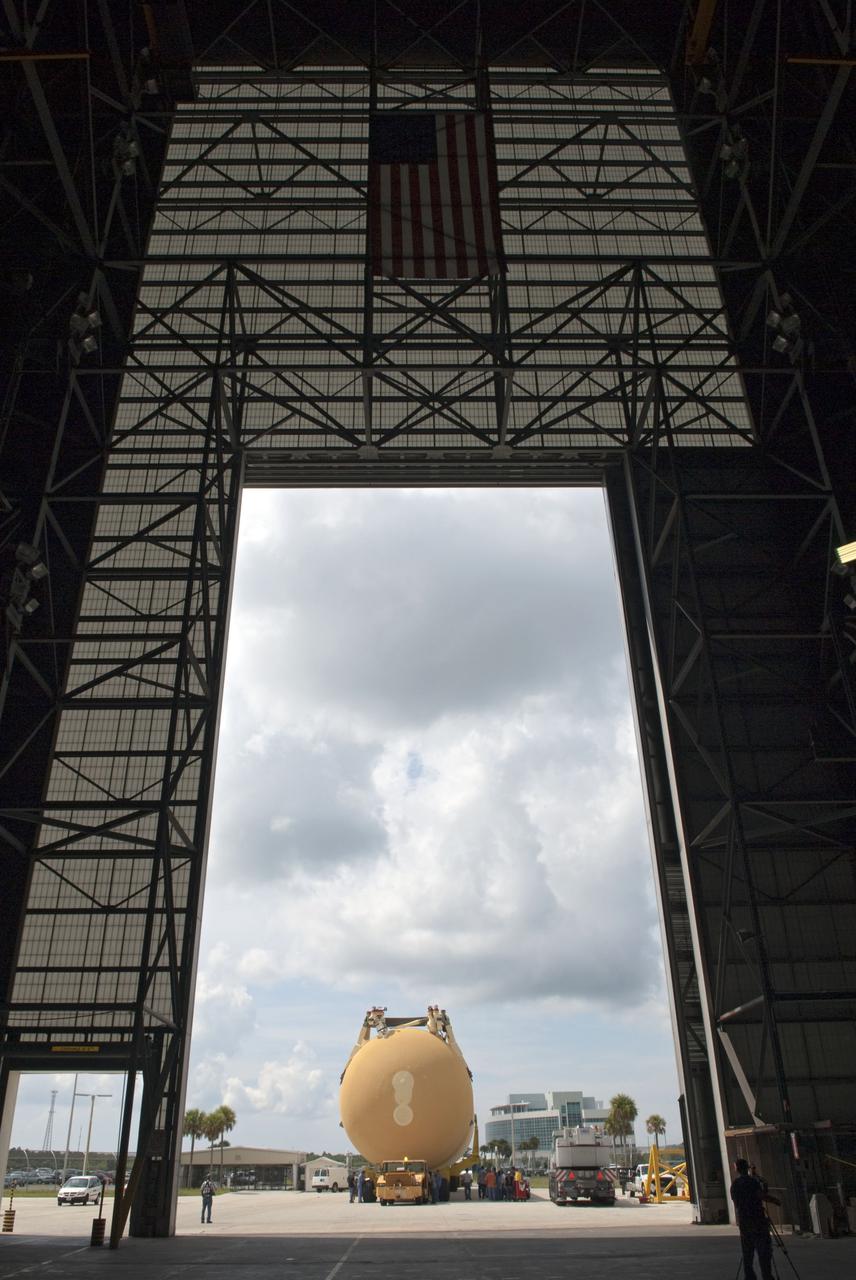
CAPE CANAVERAL, Fla. -- Viewed from inside the Vehicle Assembly Building at NASA's Kennedy Space Center in Florida, External Tank-138 is being towed toward the massive door of the building. The external fuel tank arrived in Florida on July 13, from NASA's Michoud Assembly Facility near New Orleans. ET-138, the last newly manufactured tank, was originally designated to fly on Endeavour's STS-134 mission to the International Space Station, but later reassigned to fly on space shuttle Atlantis' final mission, STS-135. For information, visit www.nasa.gov_shuttle. Photo credit: NASA_Jim Grossmann
STS-134 ET-138 LIFT TO TEST CELL
STS-134 ET-138 LIFT TO TEST CELL
STS-134 ET-138 LIFT TO TEST CELL
STS-134 ET-138 LIFT TO TEST CELL
STS-134 ET-138 LIFT TO TEST CELL
STS-135 ET-138 External Tank Mated to SRB's
STS-135 ET-138 External Tank Mated to SRB's
STS-134 ET-138 OFFLOAD FROM PEGASUS BARGE - XFER TO VAB
STS-134 ET-138 ARRIVAL AT LC39 TURN BASIN
STS-134 ET-138 ARRIVAL THRU PORT CANAVERAL
STS-135 ET-138 External Tank Mated to SRB's
STS-135 ET-138 External Tank Mated to SRB's
STS-134 ET-138 ARRIVAL THRU PORT CANAVERAL
STS-135 ET-138 External Tank Mated to SRB's
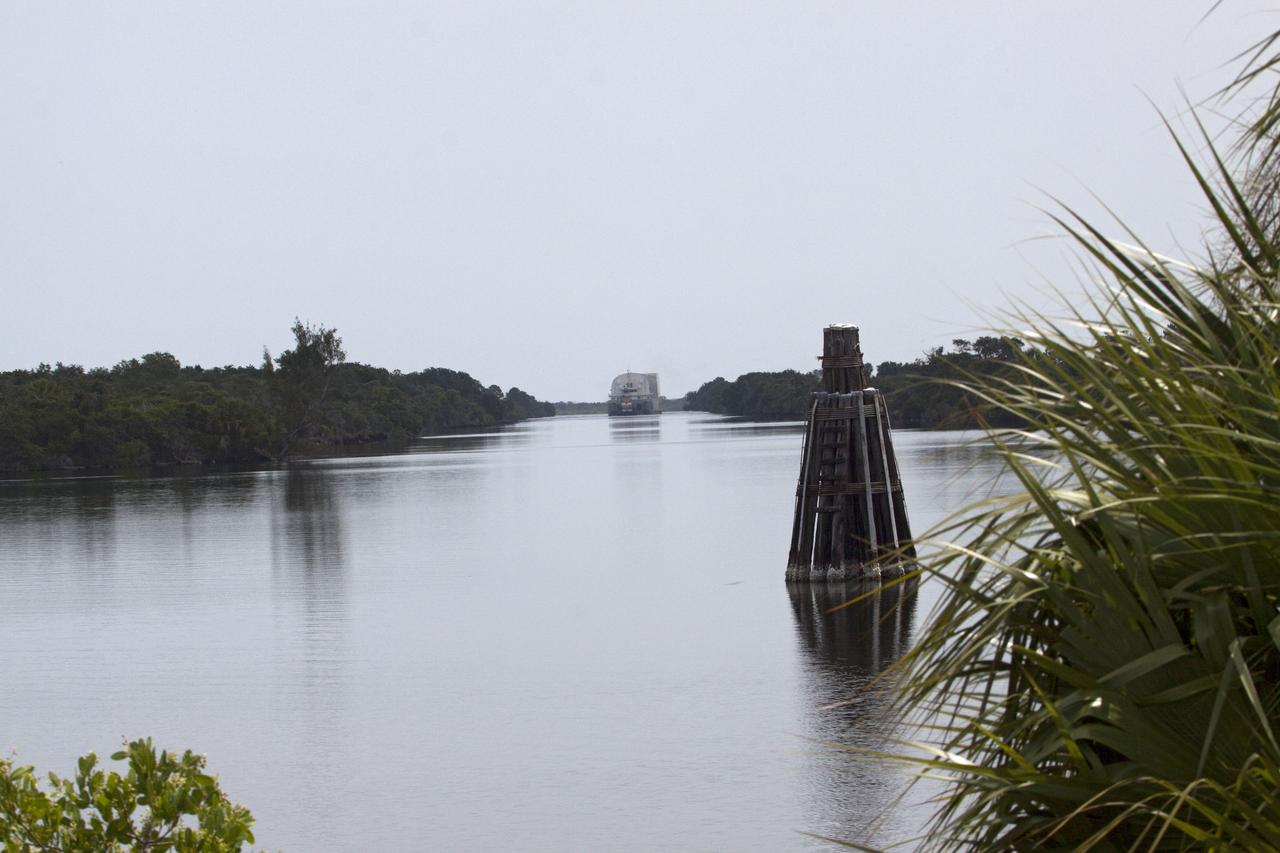
STS-134 ET-138 ARRIVAL AT LC39 TURN BASIN
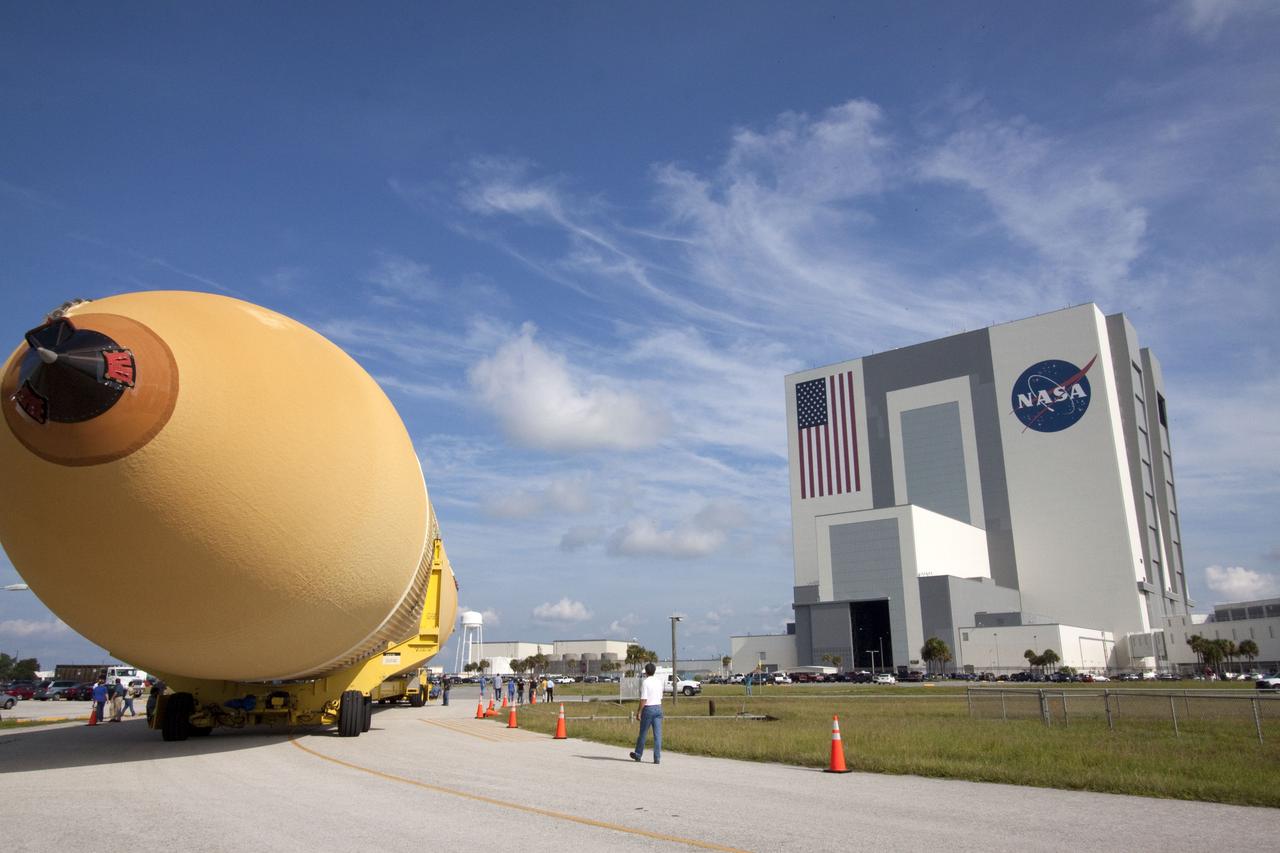
STS-134 ET-138 OFFLOAD FROM PEGASUS BARGE - XFER TO VAB
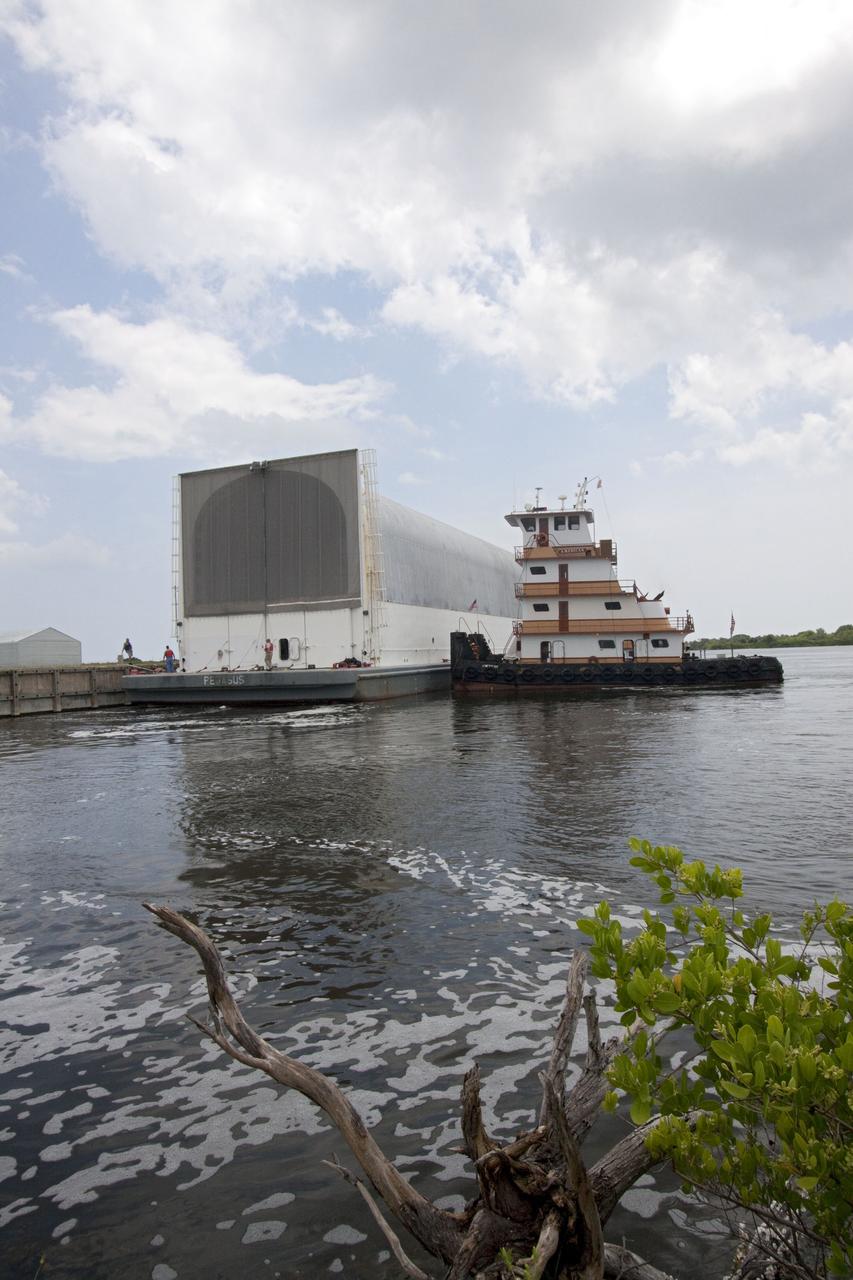
STS-134 ET-138 ARRIVAL AT LC39 TURN BASIN
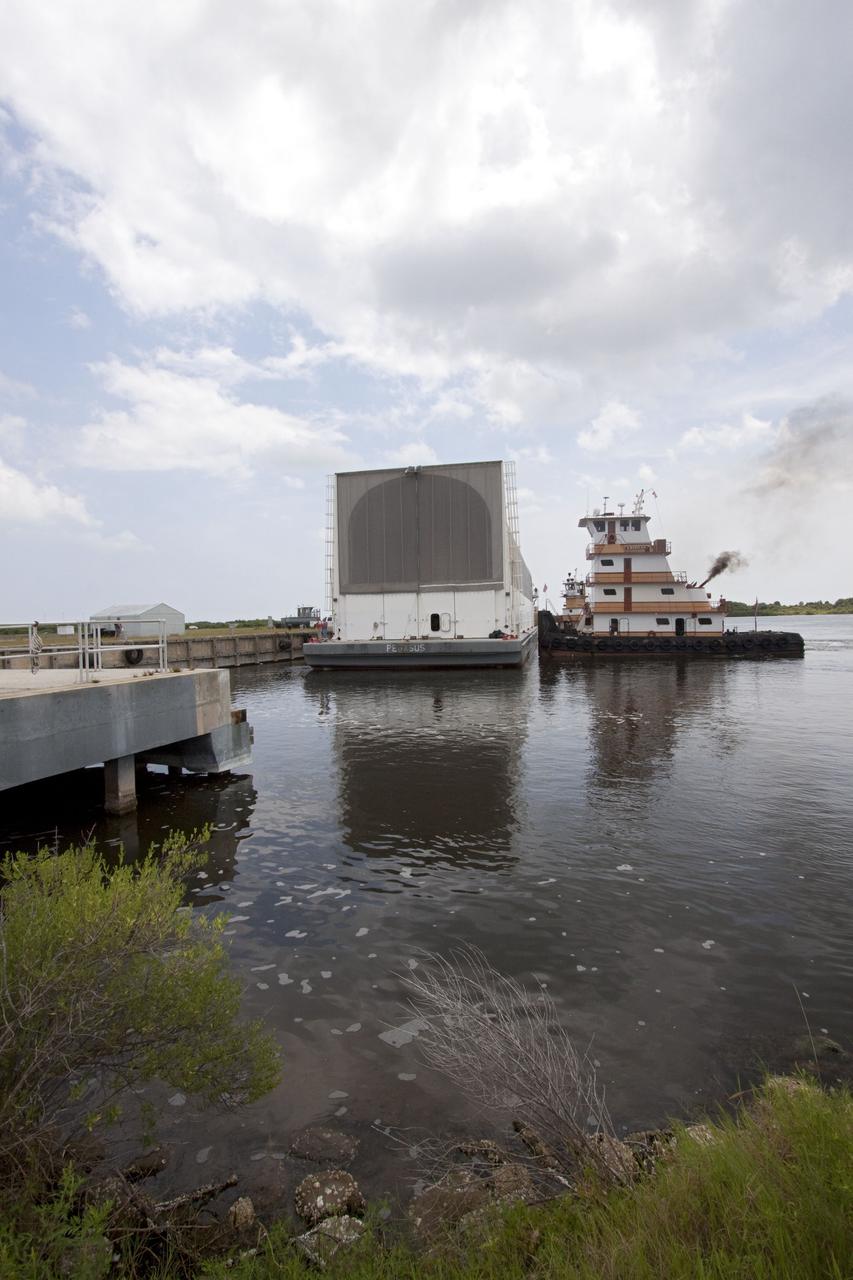
STS-134 ET-138 ARRIVAL AT LC39 TURN BASIN
STS-134 ET-138 ARRIVAL THRU PORT CANAVERAL
STS-134 ET-138 ARRIVAL THRU PORT CANAVERAL
STS-134 ET-138 OFFLOAD FROM PEGASUS BARGE - XFER TO VAB
STS-134 ET-138 ARRIVAL THRU PORT CANAVERAL
STS-134 ET-138 OFFLOAD FROM PEGASUS BARGE - XFER TO VAB
STS-135 ET-138 External Tank Mated to SRB's
STS-134 ET-138 ARRIVAL THRU PORT CANAVERAL
STS-134 ET-138 ARRIVAL THRU PORT CANAVERAL
STS-134 ET-138 ARRIVAL AT LC39 TURN BASIN
STS-134 ET-138 ARRIVAL THRU PORT CANAVERAL
STS-134 ET-138 ARRIVAL AT LC39 TURN BASIN
STS-134 ET-138 OFFLOAD FROM PEGASUS BARGE - XFER TO VAB
STS-135 ET-138 External Tank Mated to SRB's
STS-135 ET-138 External Tank Mated to SRB's
STS-135 ET-138 External Tank Mated to SRB's
STS-134 ET-138 ARRIVAL AT LC39 TURN BASIN
STS-134 ET-138 ARRIVAL AT LC39 TURN BASIN
STS-134 ET-138 OFFLOAD FROM PEGASUS BARGE - XFER TO VAB
STS-134 ET-138 ARRIVAL THRU PORT CANAVERAL
STS-134 ET-138 ARRIVAL AT LC39 TURN BASIN
STS-134 ET-138 OFFLOAD FROM PEGASUS BARGE - XFER TO VAB
STS-135 ET-138 External Tank Mated to SRB's
STS-134 ET-138 ARRIVAL THRU PORT CANAVERAL
STS-135 ET-138 External Tank Mated to SRB's
STS-135 ET-138 External Tank Mated to SRB's
STS-134 ET-138 ARRIVAL THRU PORT CANAVERAL
STS-134 ET-138 OFFLOAD FROM PEGASUS BARGE - XFER TO VAB
STS-135 ET-138 External Tank Mated to SRB's
STS-134 ET-138 ARRIVAL AT LC39 TURN BASIN
STS-135 ET-138 External Tank Mated to SRB's
STS-134 ET-138 OFFLOAD FROM PEGASUS BARGE - XFER TO VAB
STS-134 ET-138 OFFLOAD FROM PEGASUS BARGE - XFER TO VAB
STS-134 ET-138 OFFLOAD FROM PEGASUS BARGE - XFER TO VAB
STS-135 ET-138 External Tank Mated to SRB's
STS-134 ET-138 ARRIVAL THRU PORT CANAVERAL
STS-134 ET-138 ARRIVAL THRU PORT CANAVERAL
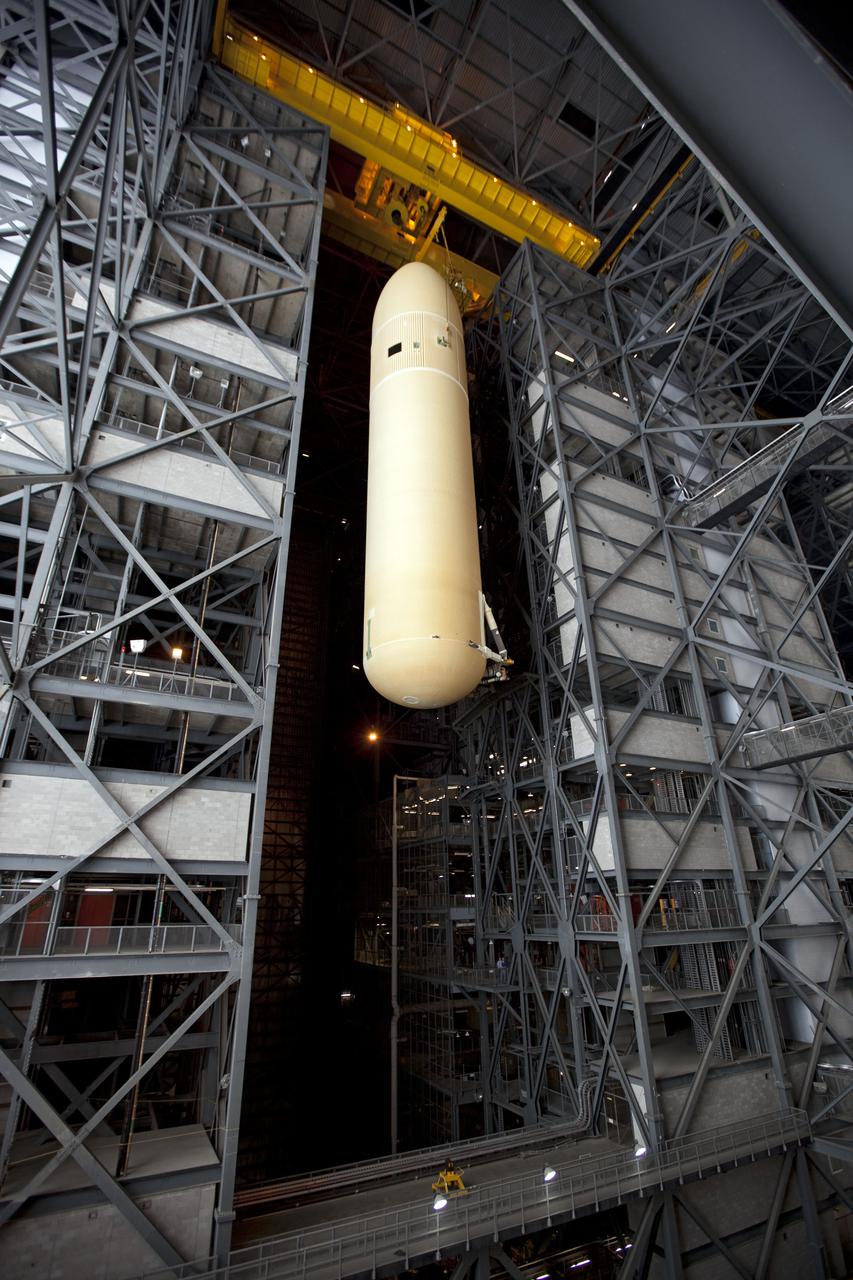
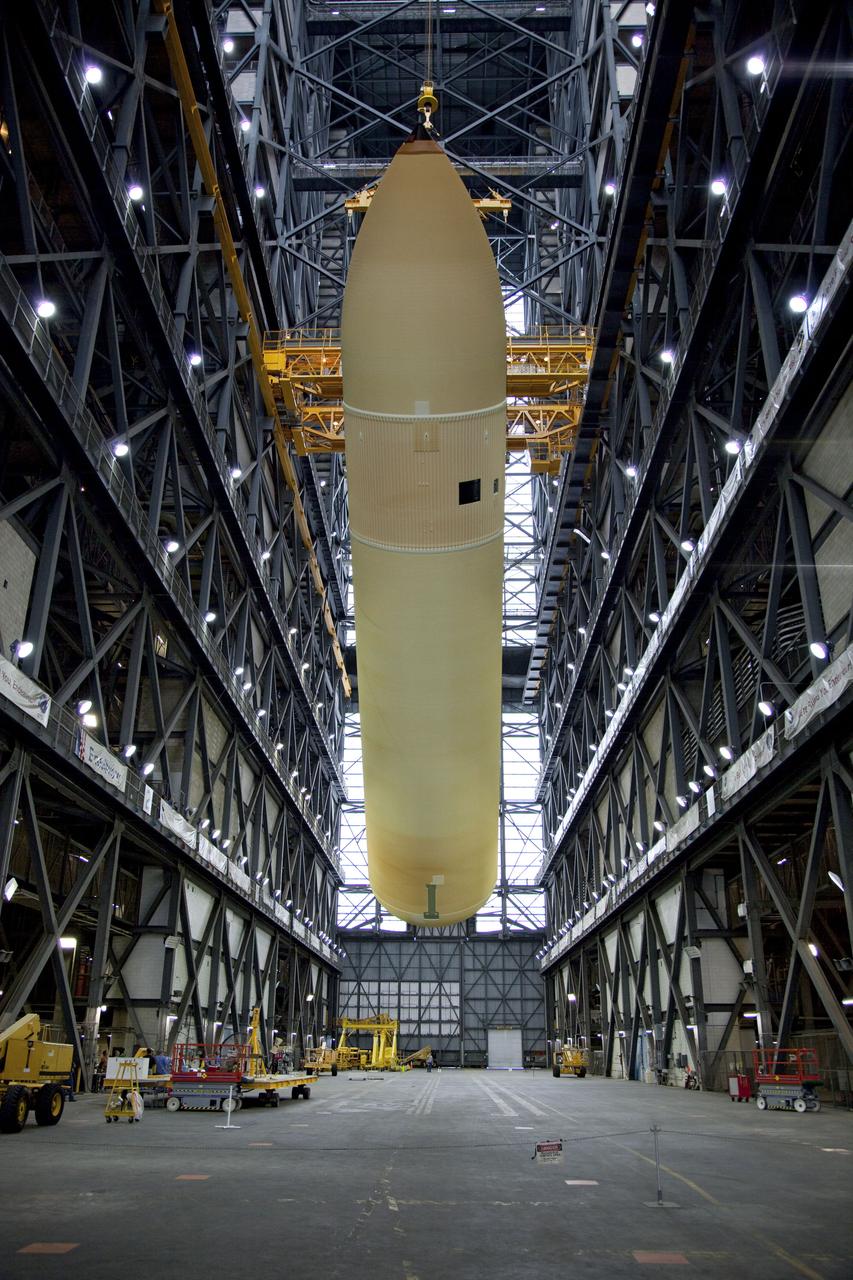
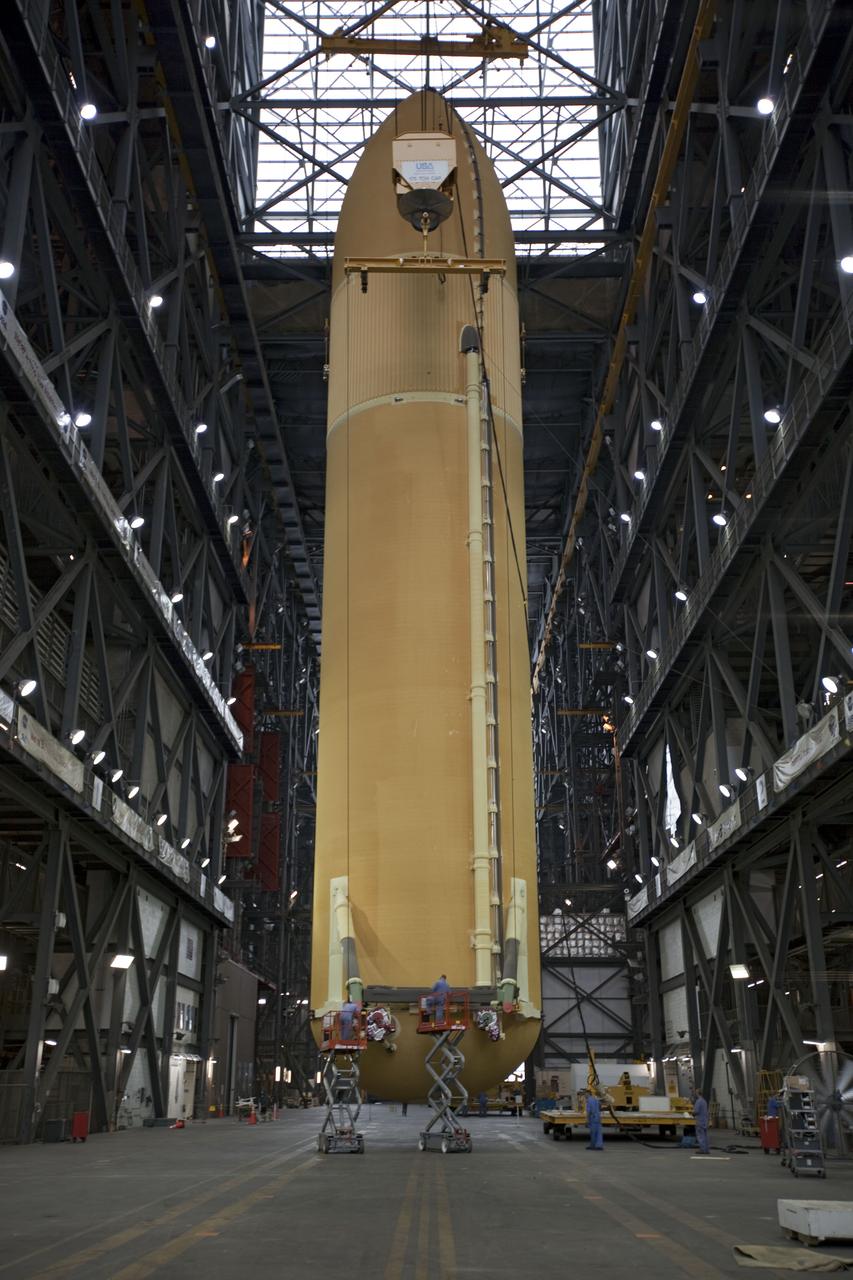
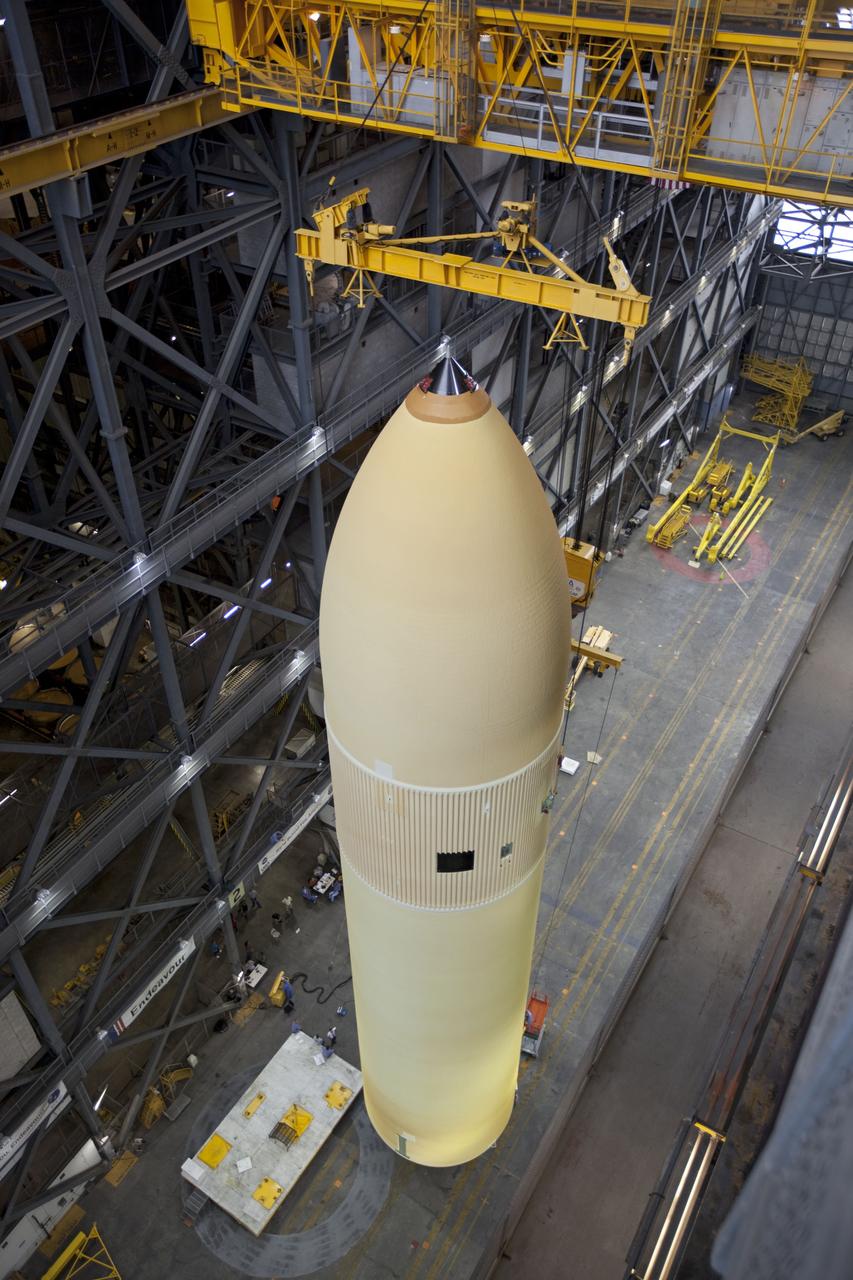
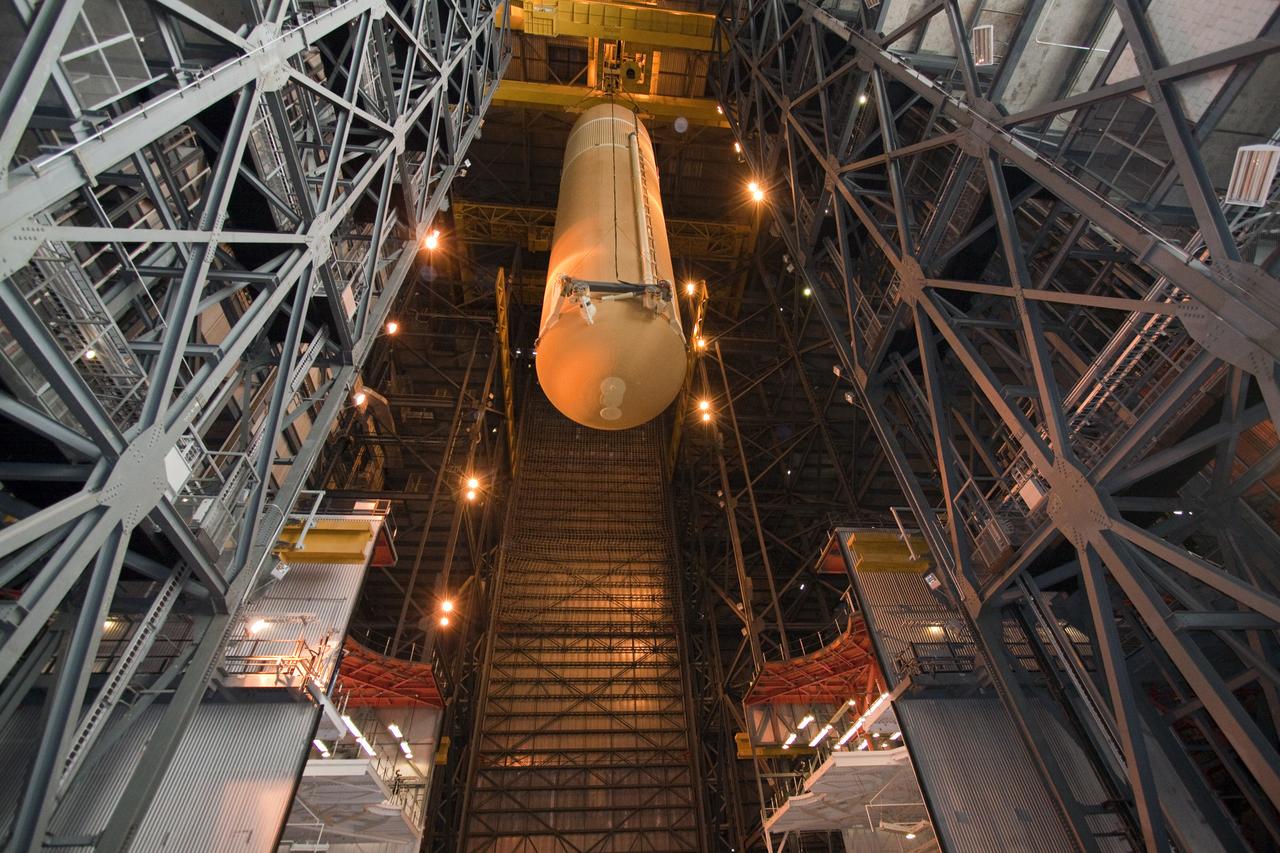
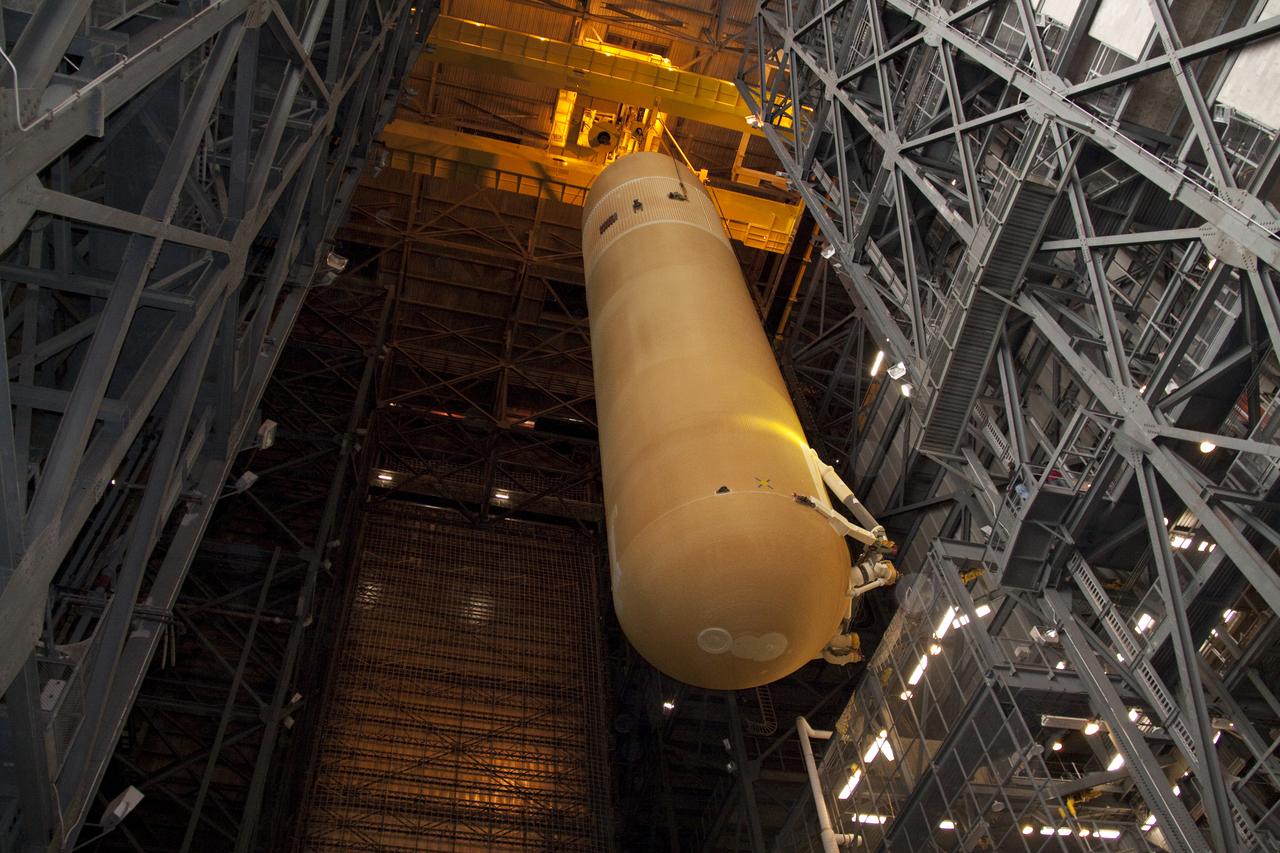
CAPE CANAVERAL, Fla. -- External Tank-138 is lifted high above the transfer aisle in the Vehicle Assembly Building at NASA's Kennedy Space Center in Florida, prior to its move to a test cell where it will be checked before launch. ET-138, the last newly manufactured tank, was originally designated to fly on Endeavour's STS-134 mission to the International Space Station, but later reassigned to fly on space shuttle Atlantis' final mission, STS-135. For information, visit www.nasa.gov_shuttle. Photo credit: NASA_Dimitri Gerondidakis
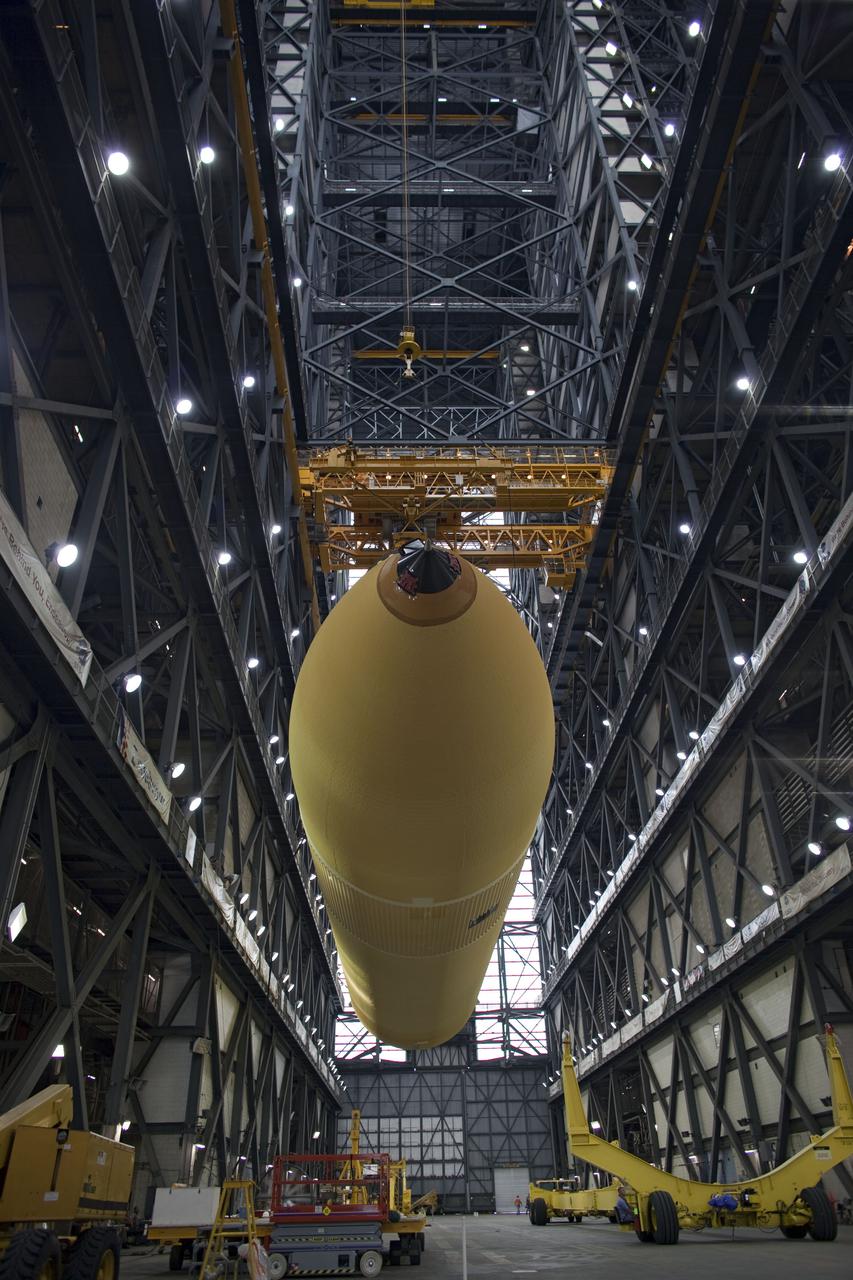
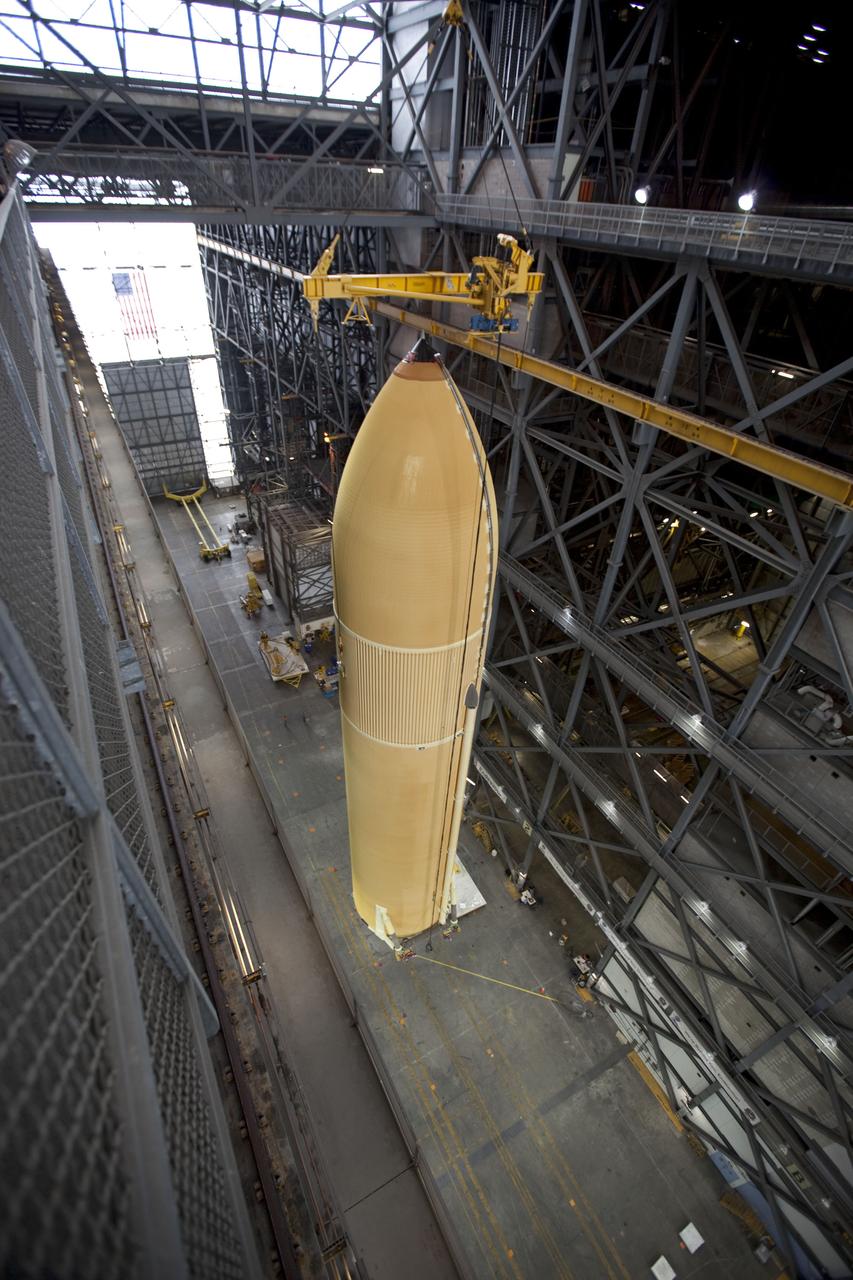
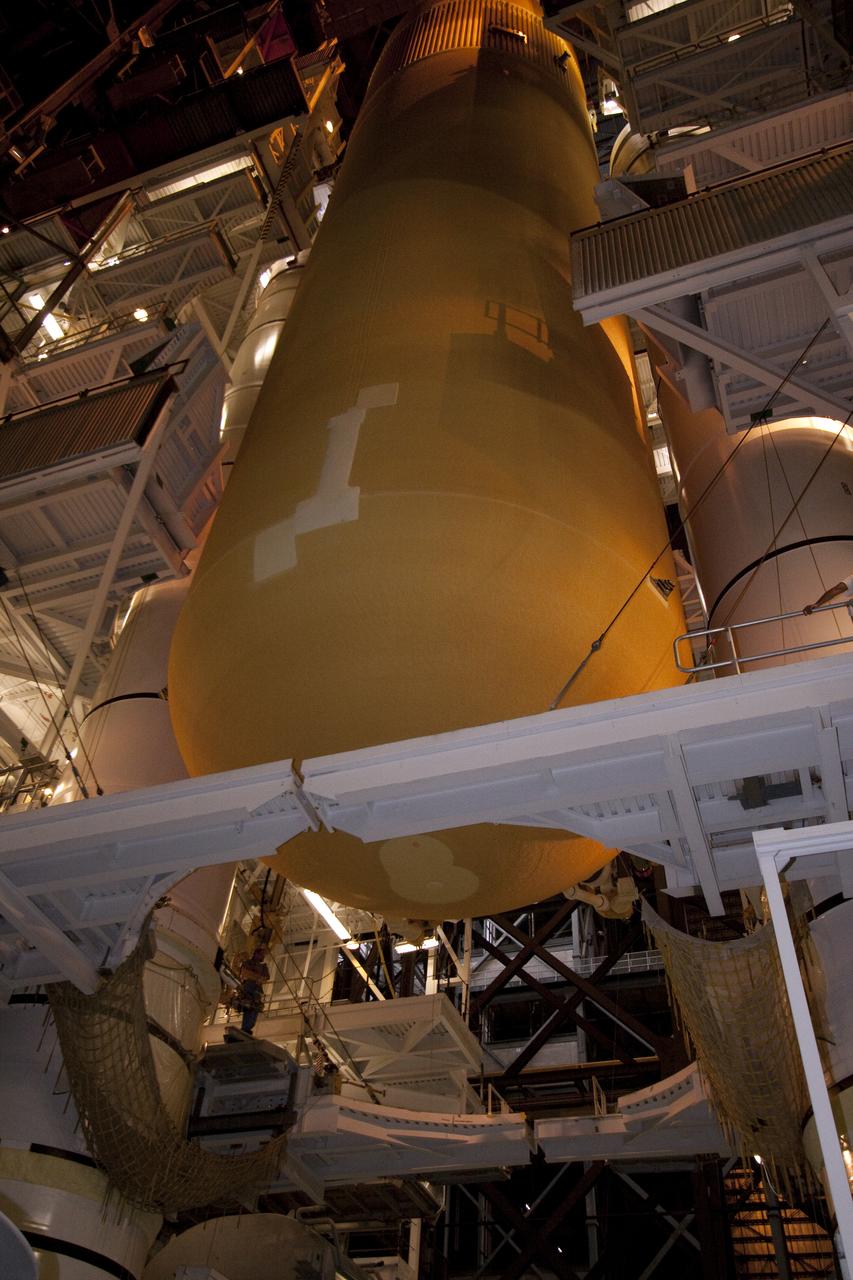
CAPE CANAVERAL, Fla. -- In the Vehicle Assembly Building at NASA's Kennedy Space Center in Florida, External Tank-138 is lifted above the transfer aisle. The external fuel tank is being moved into a test cell where it will be checked out before launch. ET-138, the last newly manufactured tank, was originally designated to fly on Endeavour's STS-134 mission to the International Space Station, but later reassigned to fly on space shuttle Atlantis' final mission, STS-135. For information, visit www.nasa.gov_shuttle. Photo credit: NASA_Dimitri Gerondidakis
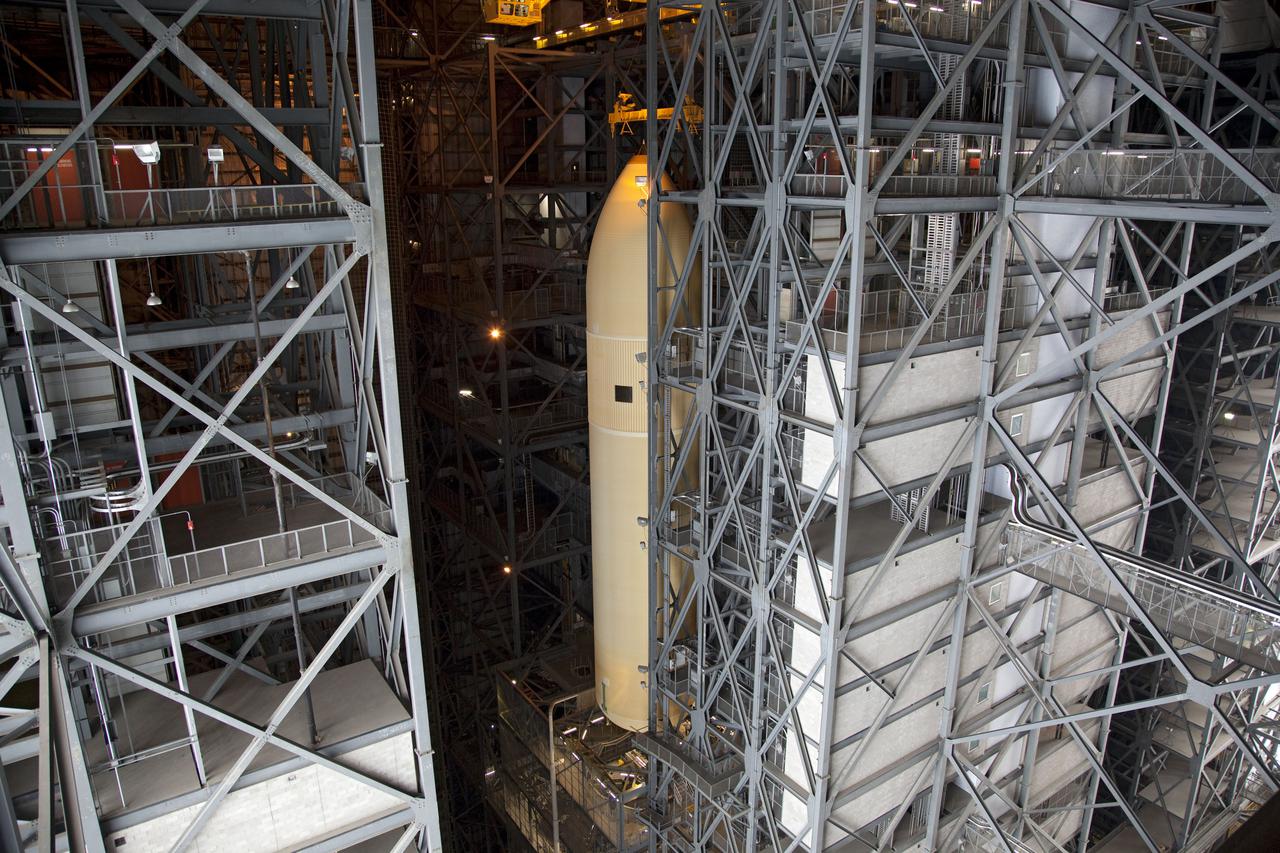
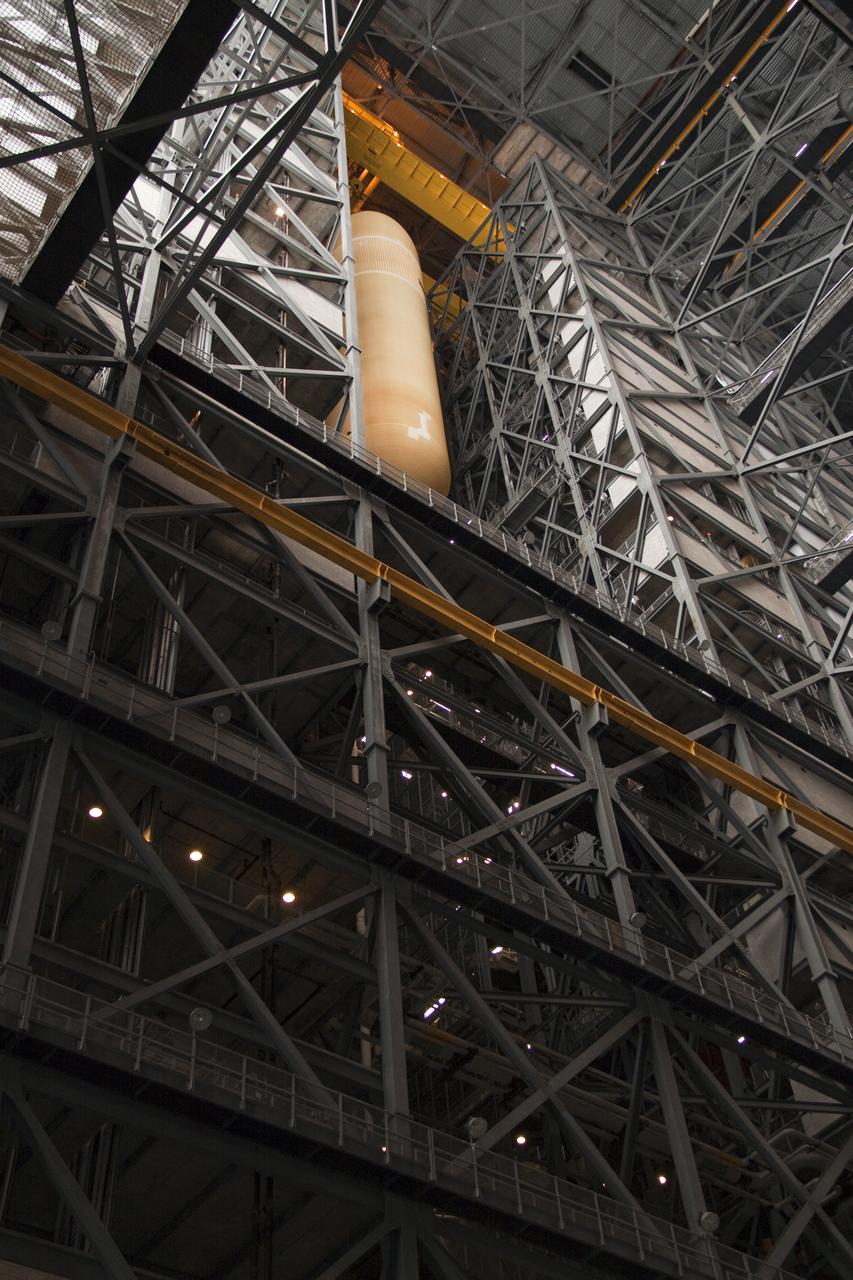
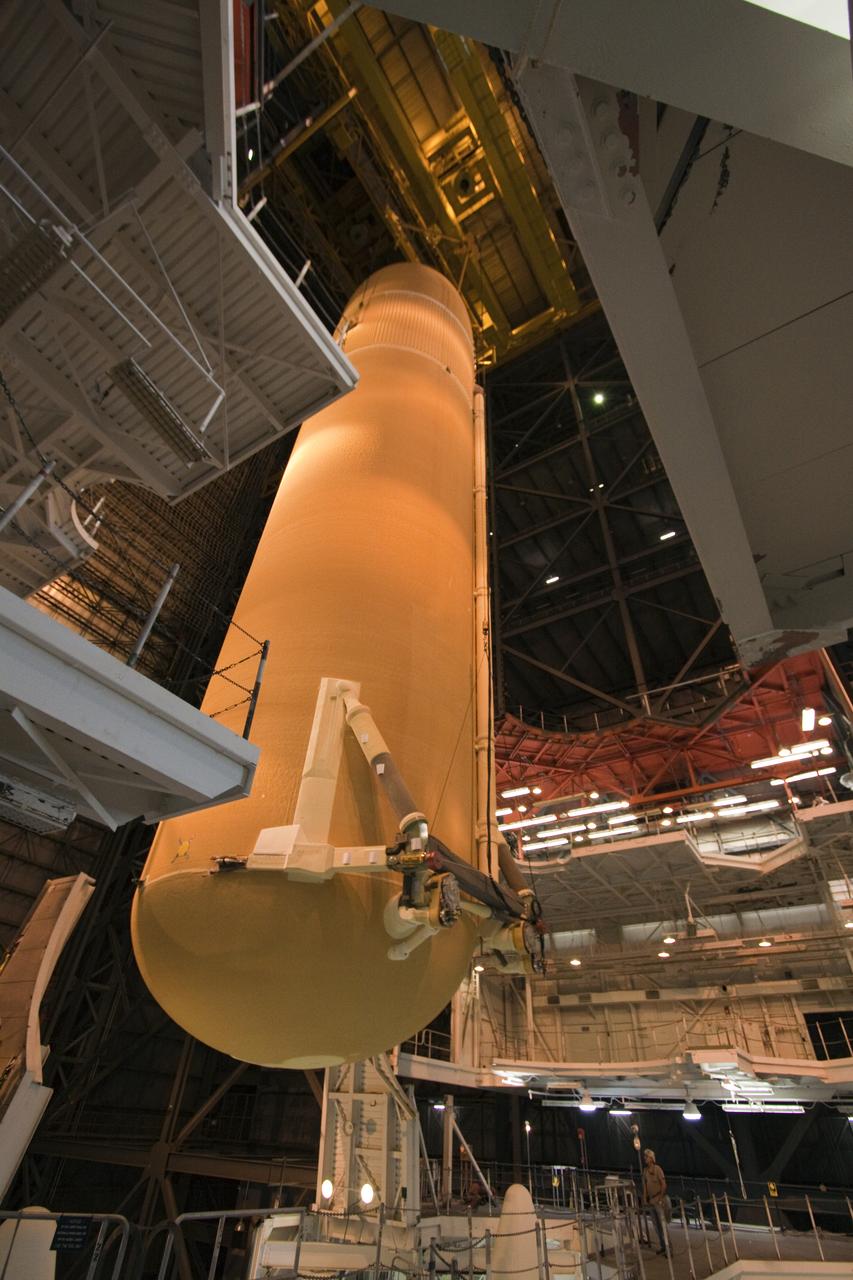
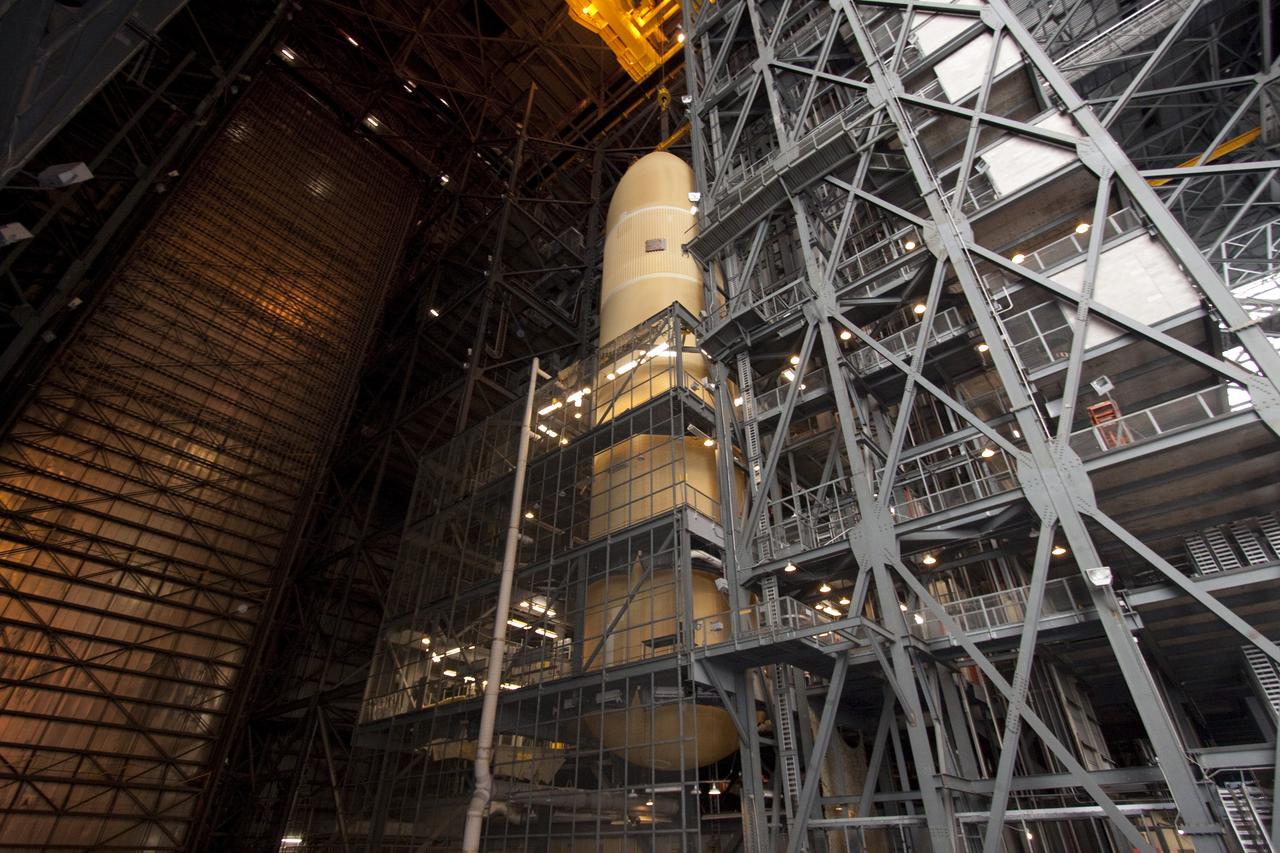
CAPE CANAVERAL, Fla. -- At NASA's Kennedy Space Center in Florida, External Tank-138 has been lifted into the upper levels of a high bay in the Vehicle Assembly Building. It will then be lowered onto a test stand and checked before launch. ET-138, the last newly manufactured tank, was originally designated to fly on Endeavour's STS-134 mission to the International Space Station, but later reassigned to fly on space shuttle Atlantis' final mission, STS-135. For information, visit www.nasa.gov_shuttle. Photo credit: NASA_Dimitri Gerondidakis
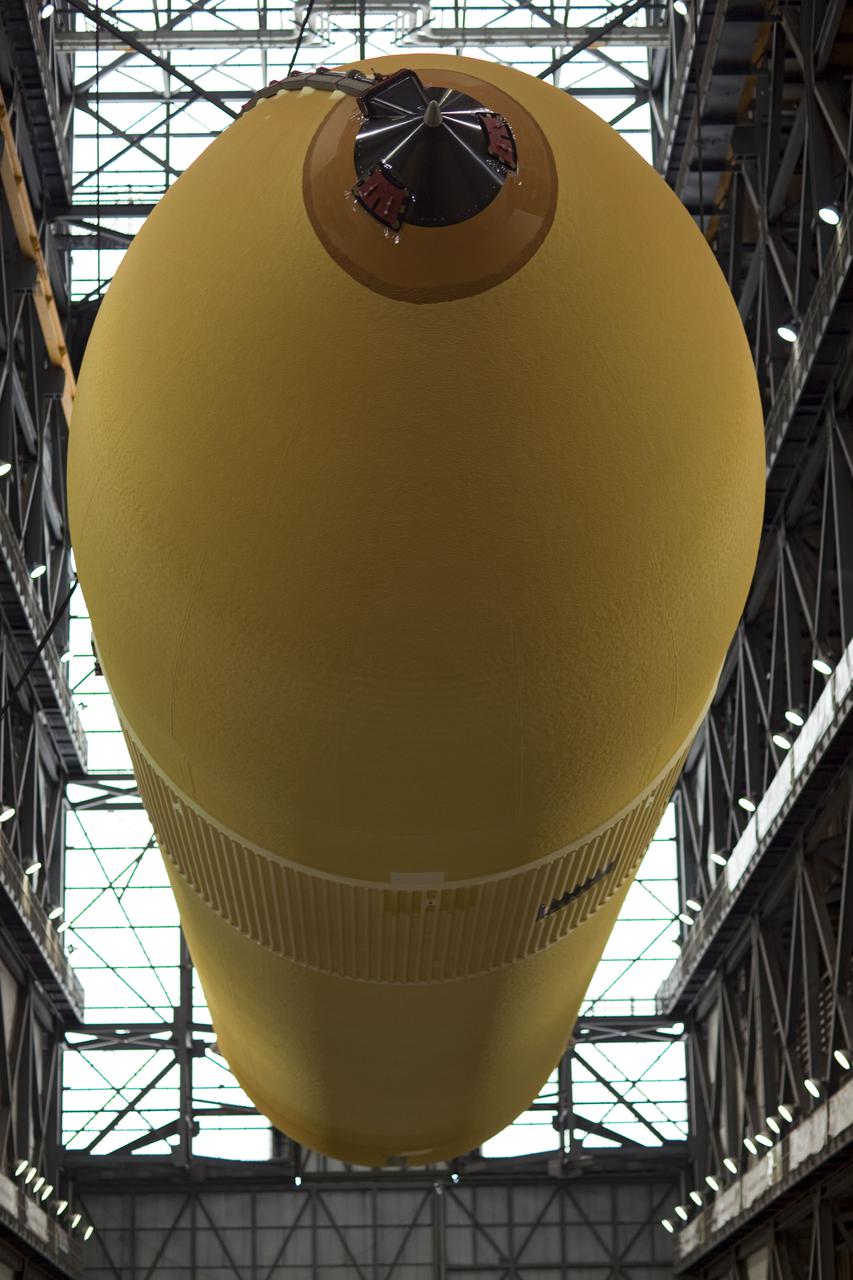
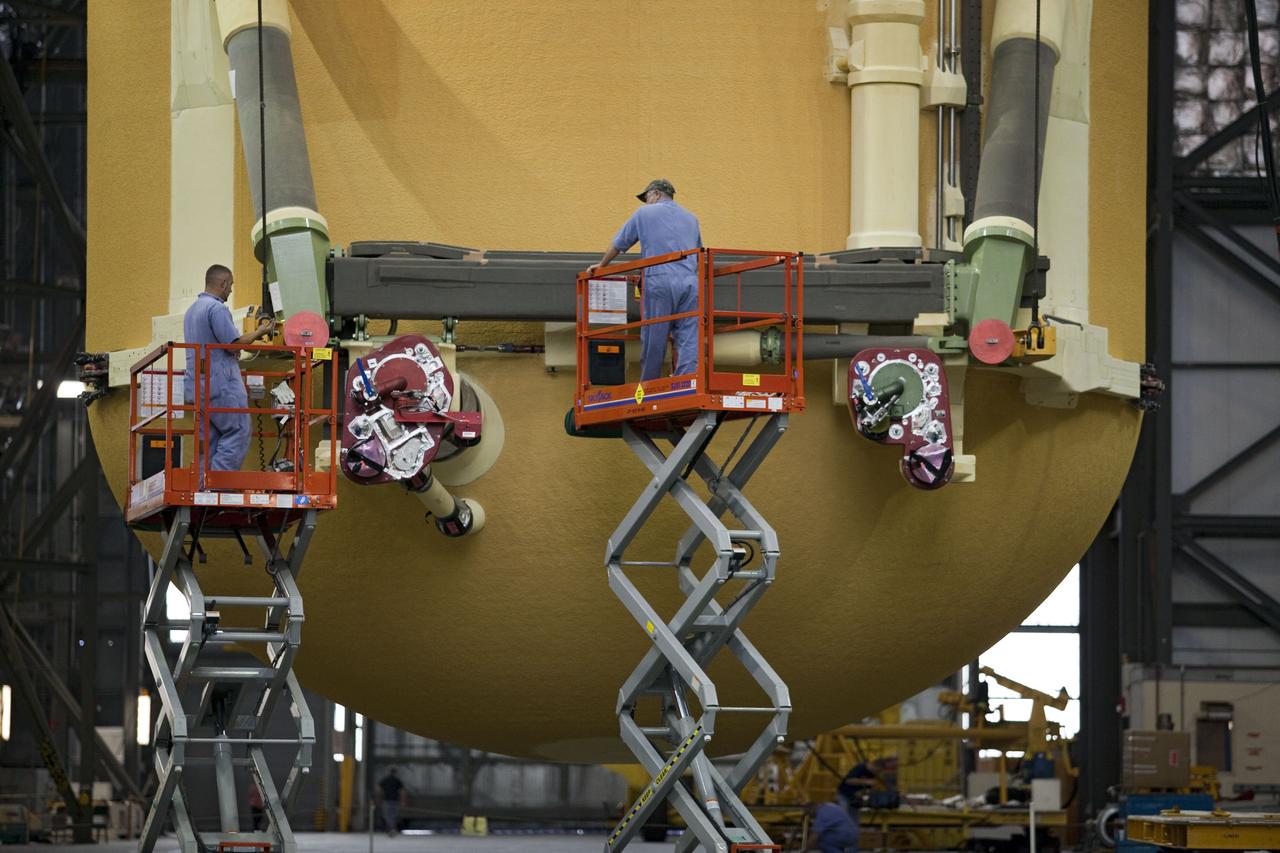
CAPE CANAVERAL, Fla. -- A close-up view of External Tank-138 being lifted above the transfer aisle in the Vehicle Assembly Building at NASA's Kennedy Space Center in Florida. The external fuel tank is being moved into a test cell where it will be checked out before launch. ET-138, the last newly manufactured tank, was originally designated to fly on Endeavour's STS-134 mission to the International Space Station, but later reassigned to fly on space shuttle Atlantis' final mission, STS-135. For information, visit www.nasa.gov_shuttle. Photo credit: NASA_Dimitri Gerondidakis
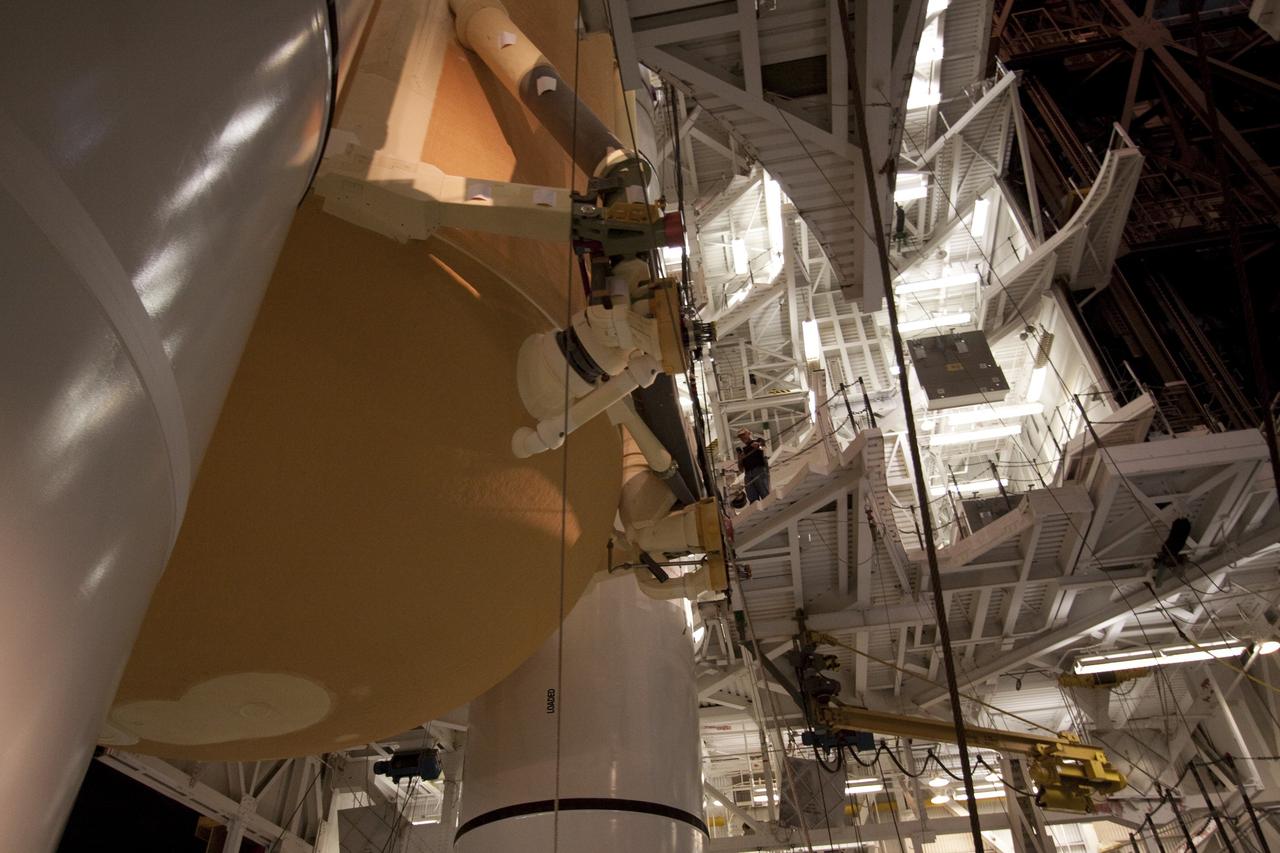
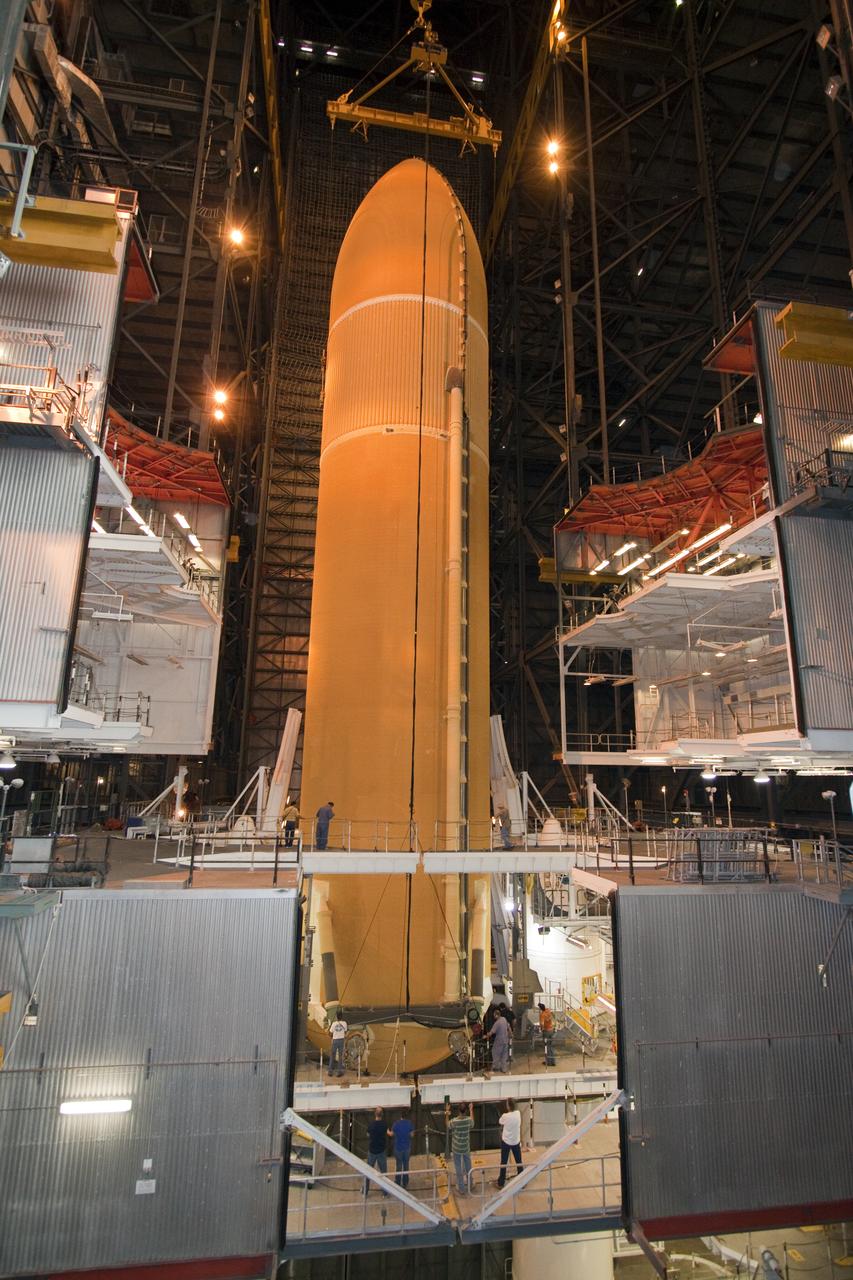
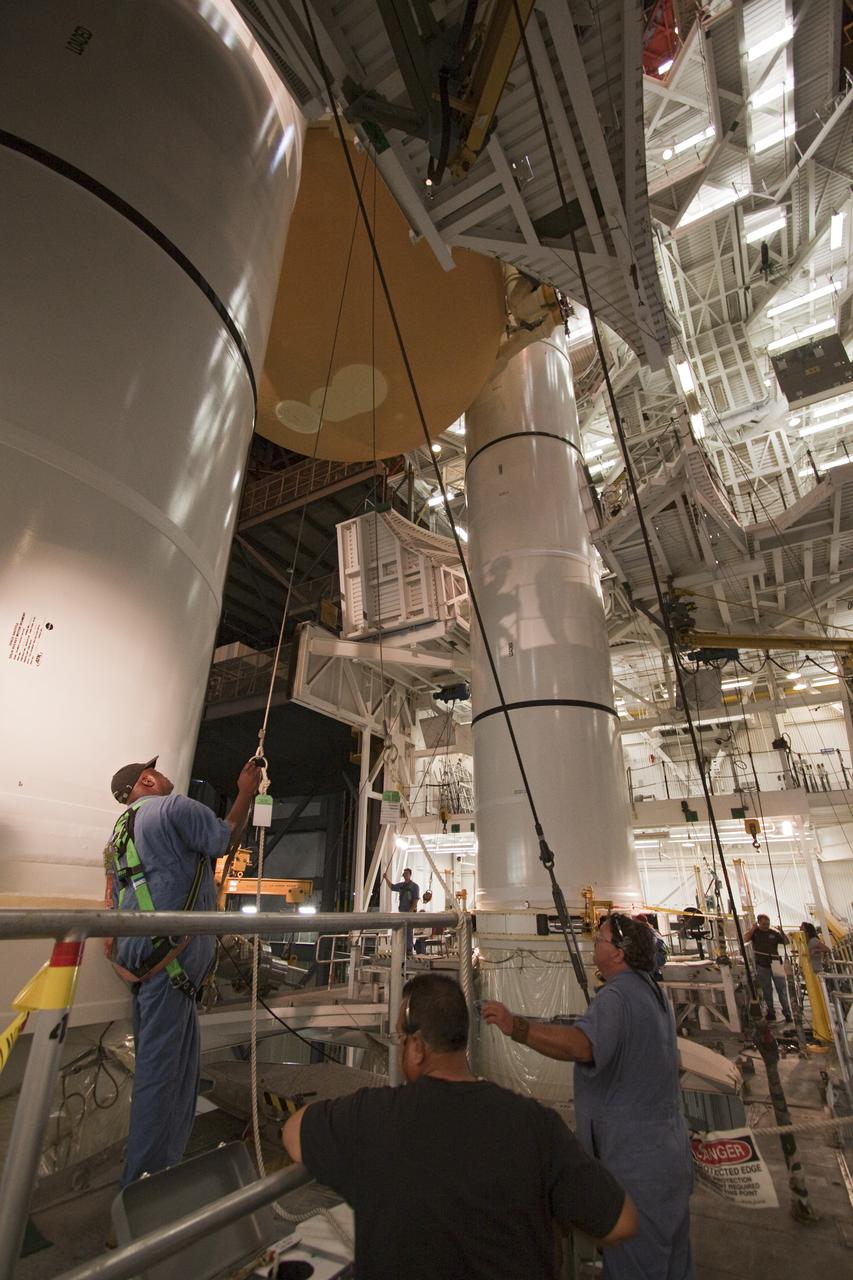
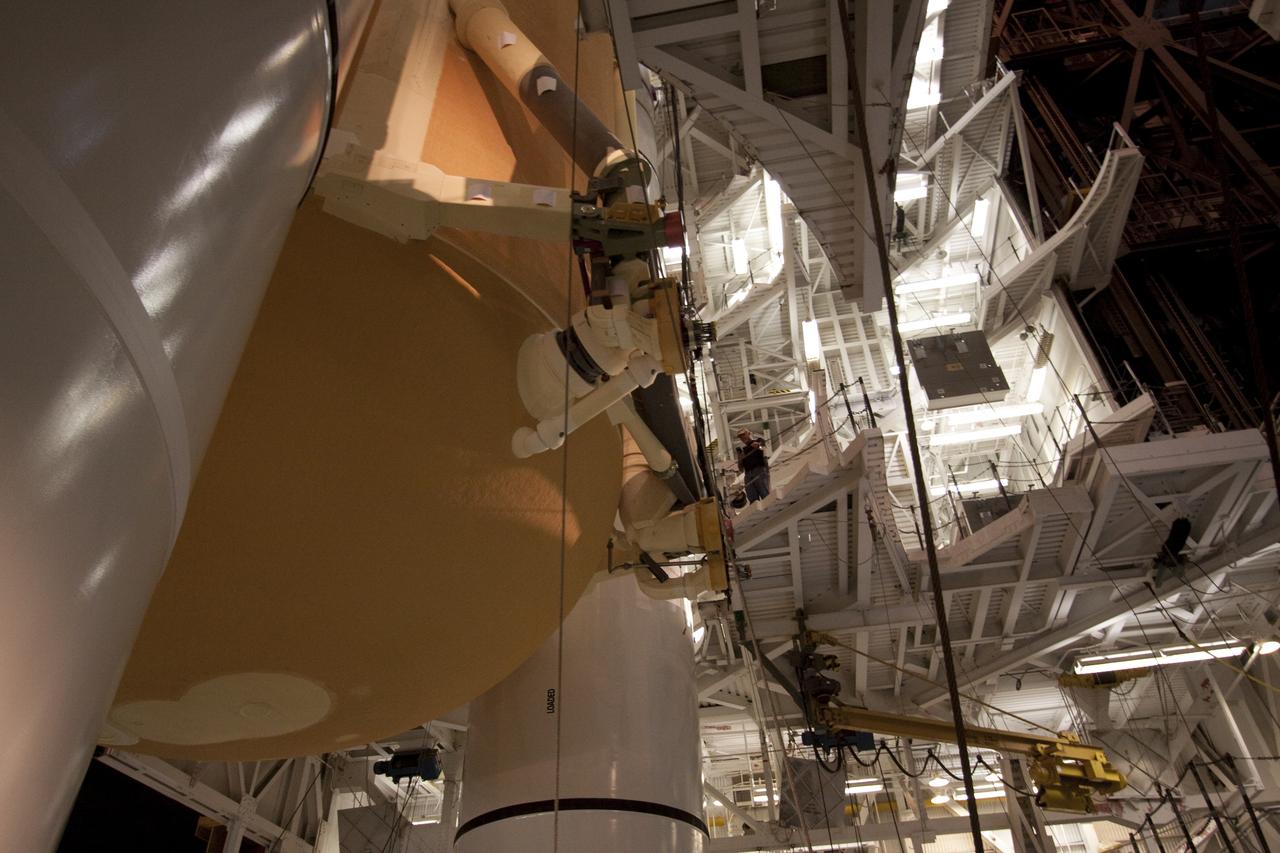
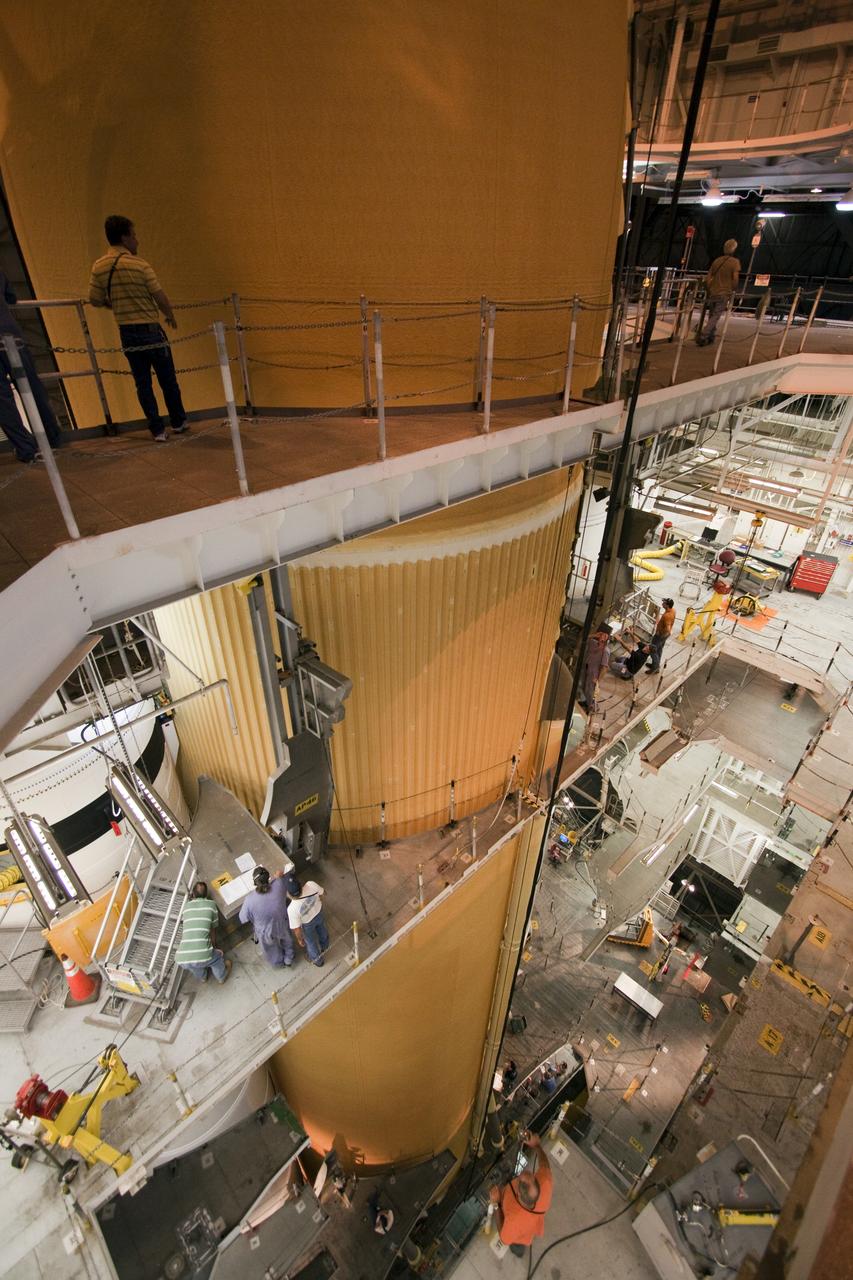
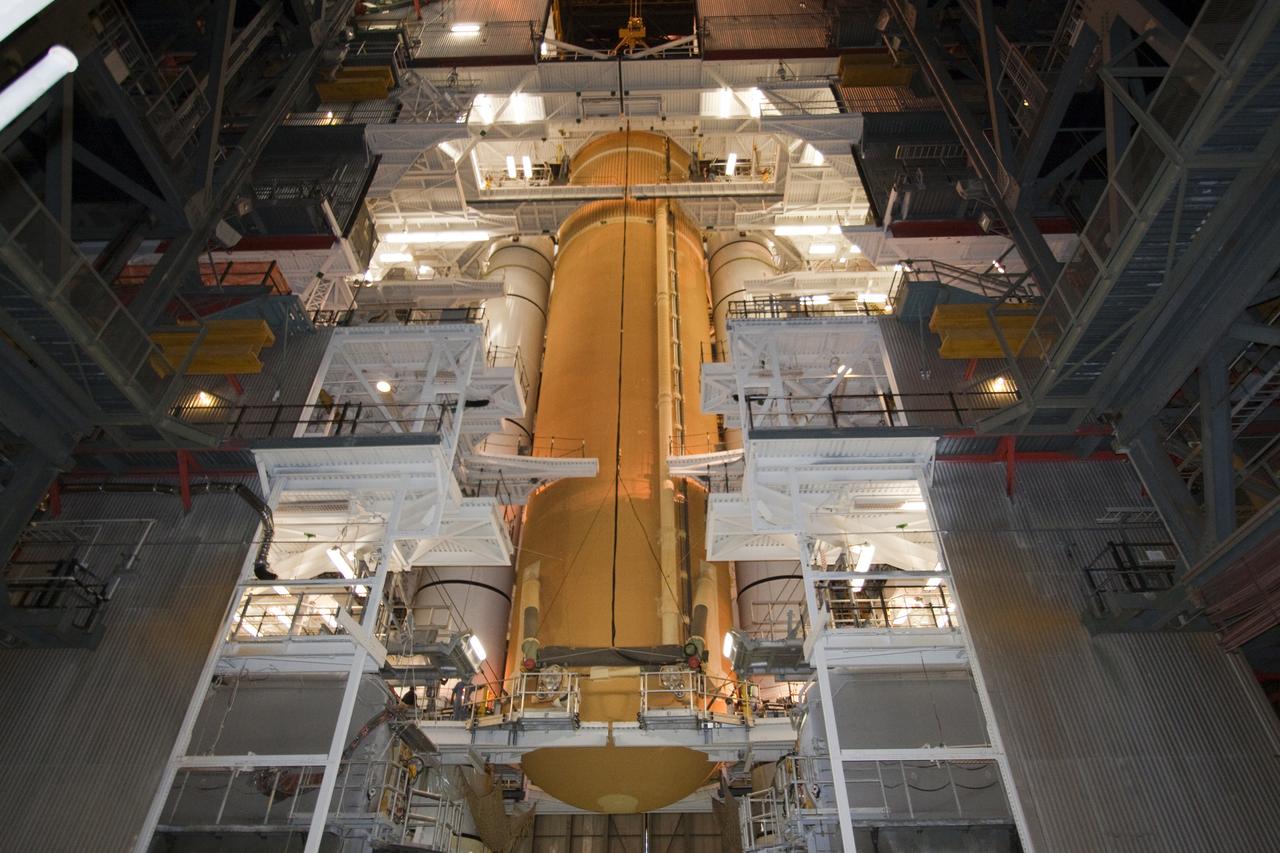
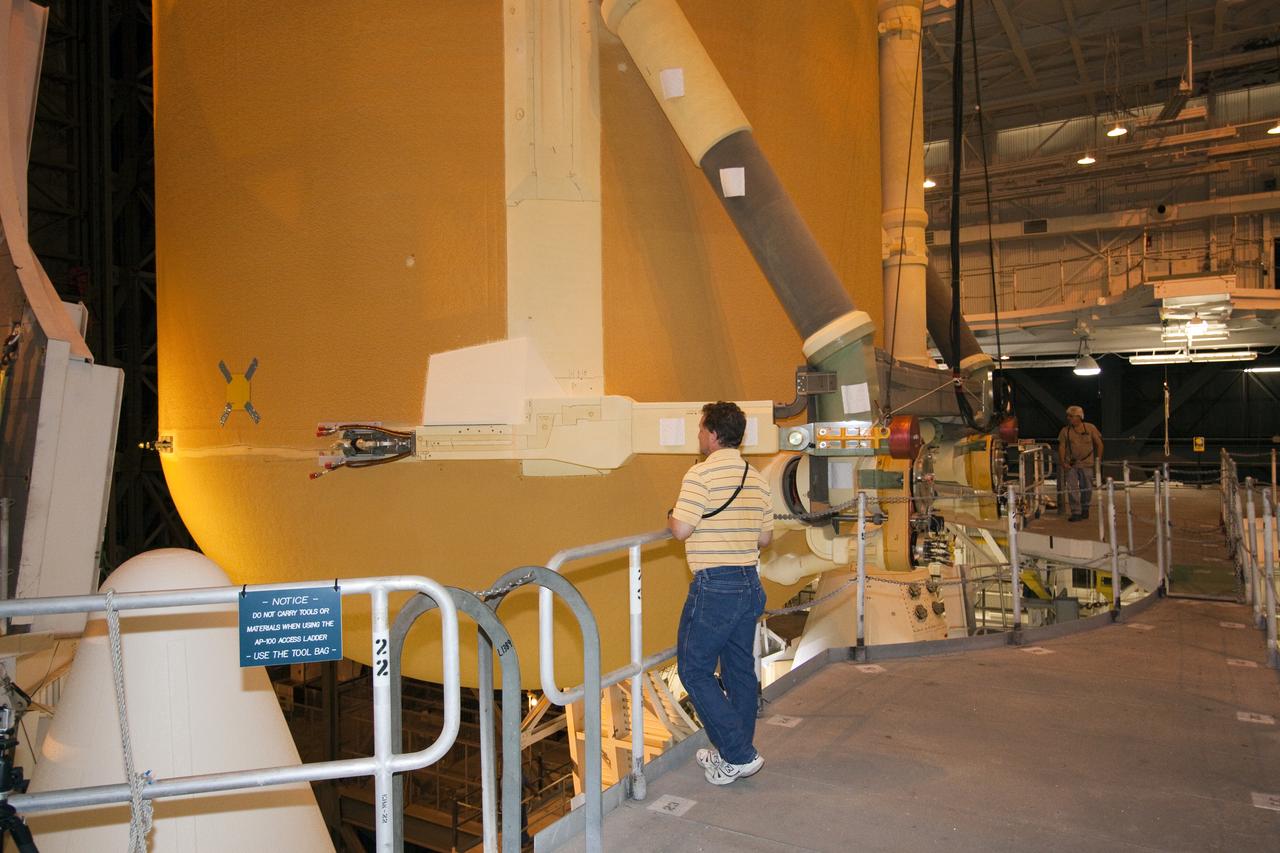
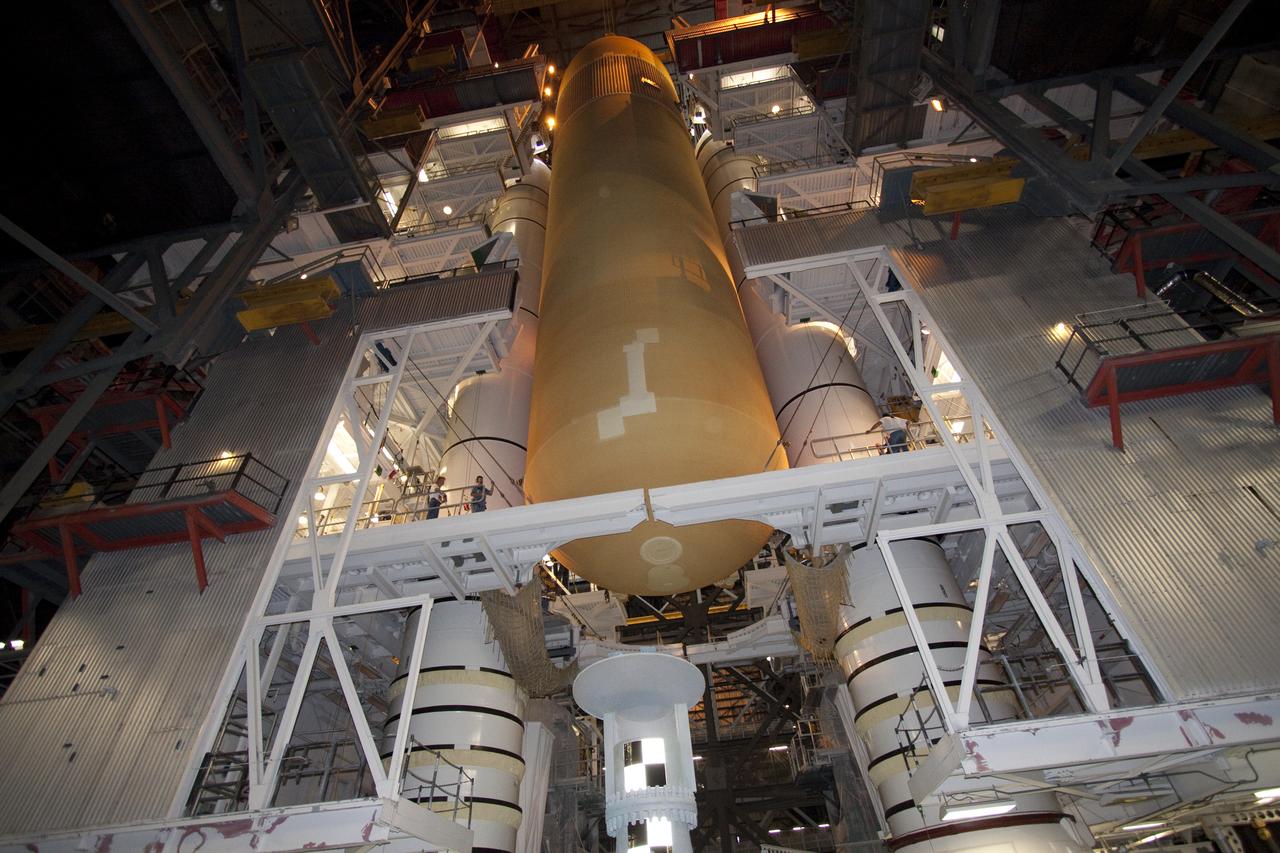
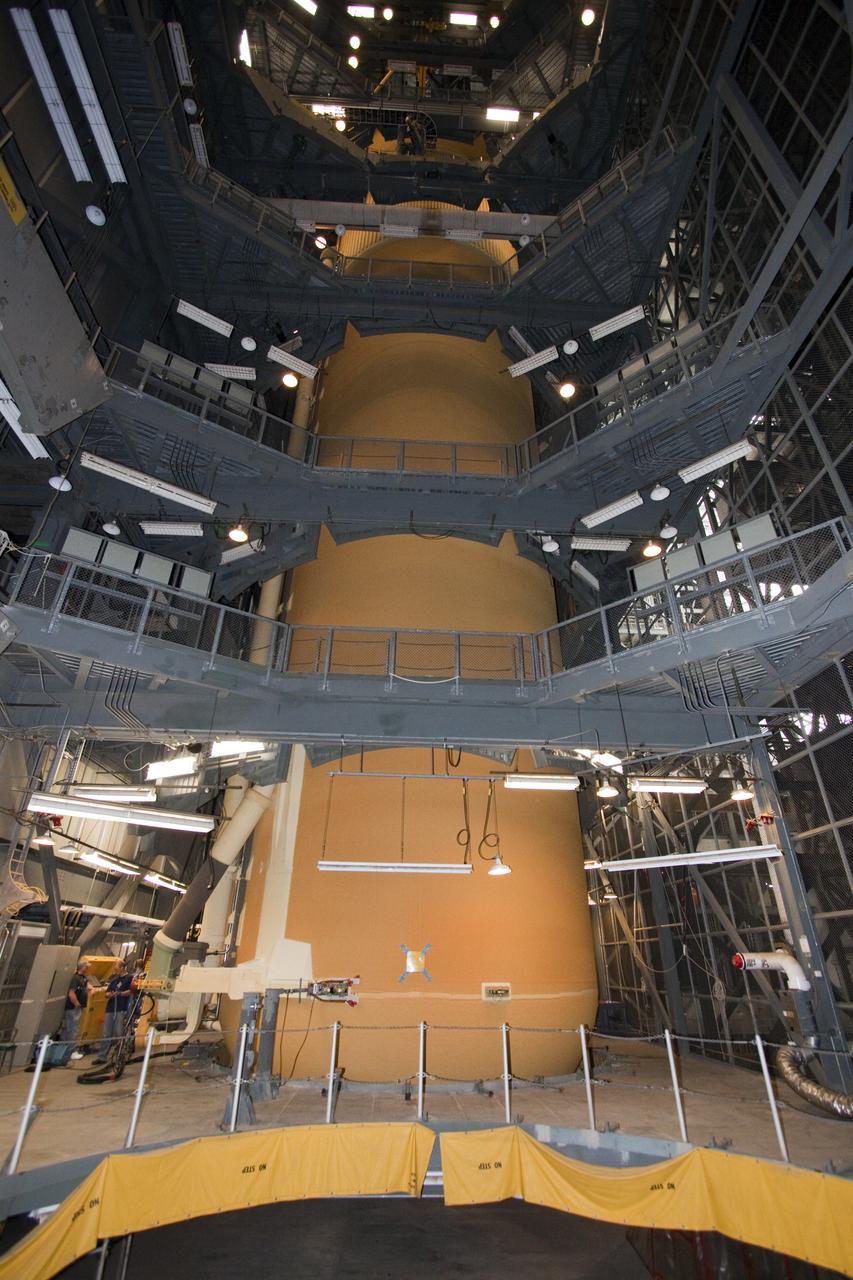
CAPE CANAVERAL, Fla. - In the Vehicle Assembly Building (VAB) at NASA's Kennedy Space Center in Florida, workers guide external fuel tank, ET-138, for space shuttle Atlantis' STS-135 mission, as it is lowered into high bay-1 between the twin solid rocket boosters on the mobile launcher platform. Shuttle Atlantis' move, or "rollover," from Orbiter Processing Facility-1 to the VAB is targeted for May 10. Once there it will be mated with the external tank and boosters. Atlantis and its crew of four will deliver the Raffaello multipurpose logistics module packed with supplies and spare parts to the International Space Station. STS-135 is targeted to launch June 28, and will be the last spaceflight for the Space Shuttle Program. Photo credit: NASA/Jack Pfaller
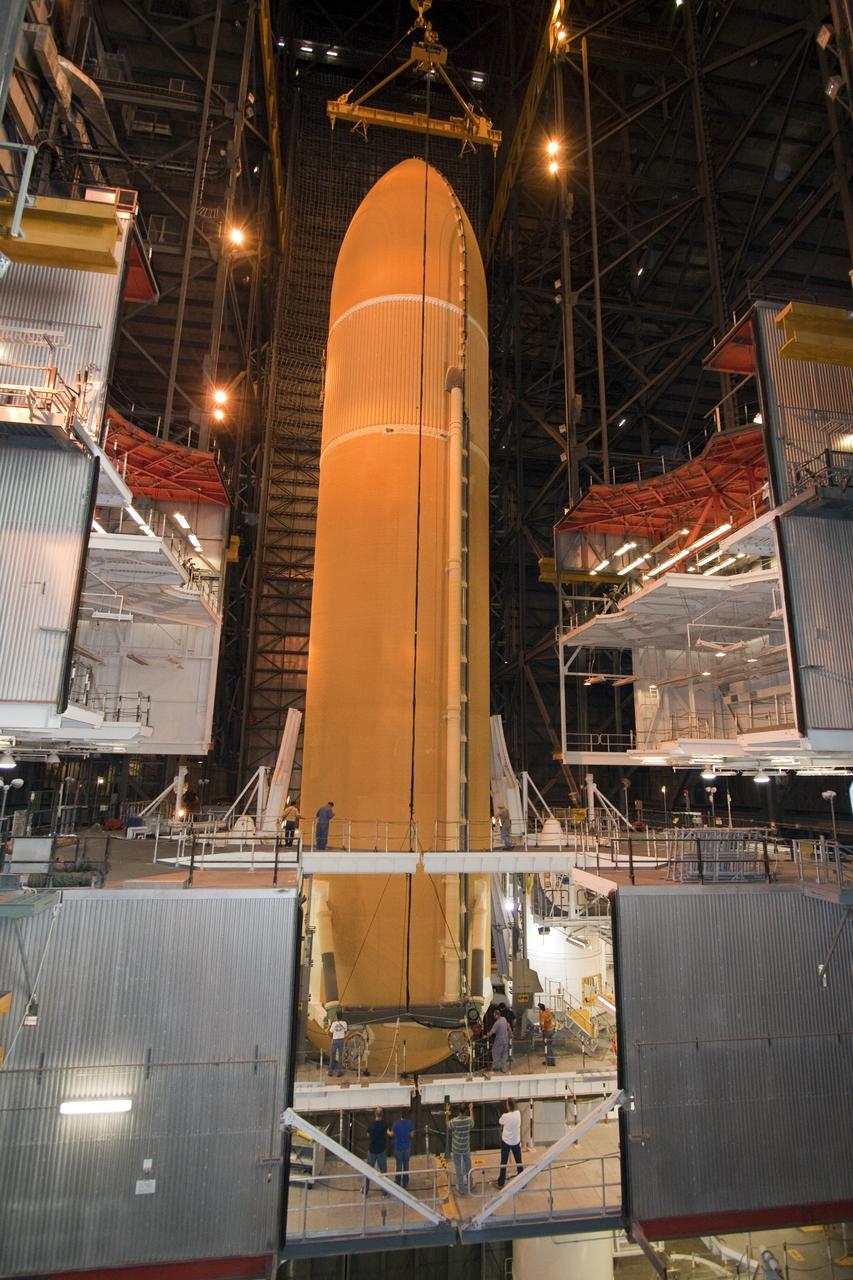
CAPE CANAVERAL, Fla. - In the Vehicle Assembly Building (VAB) at NASA's Kennedy Space Center in Florida, workers monitor the progress of external fuel tank, ET-138, for space shuttle Atlantis' STS-135 mission, as it is lowered into high bay-1 between the twin solid rocket boosters on the mobile launcher platform. Shuttle Atlantis' move, or "rollover," from Orbiter Processing Facility-1 to the VAB is targeted for May 10. Once there it will be mated with the external tank and boosters. Atlantis and its crew of four will deliver the Raffaello multipurpose logistics module packed with supplies and spare parts to the International Space Station. STS-135 is targeted to launch June 28, and will be the last spaceflight for the Space Shuttle Program. Photo credit: NASA/Jack Pfaller
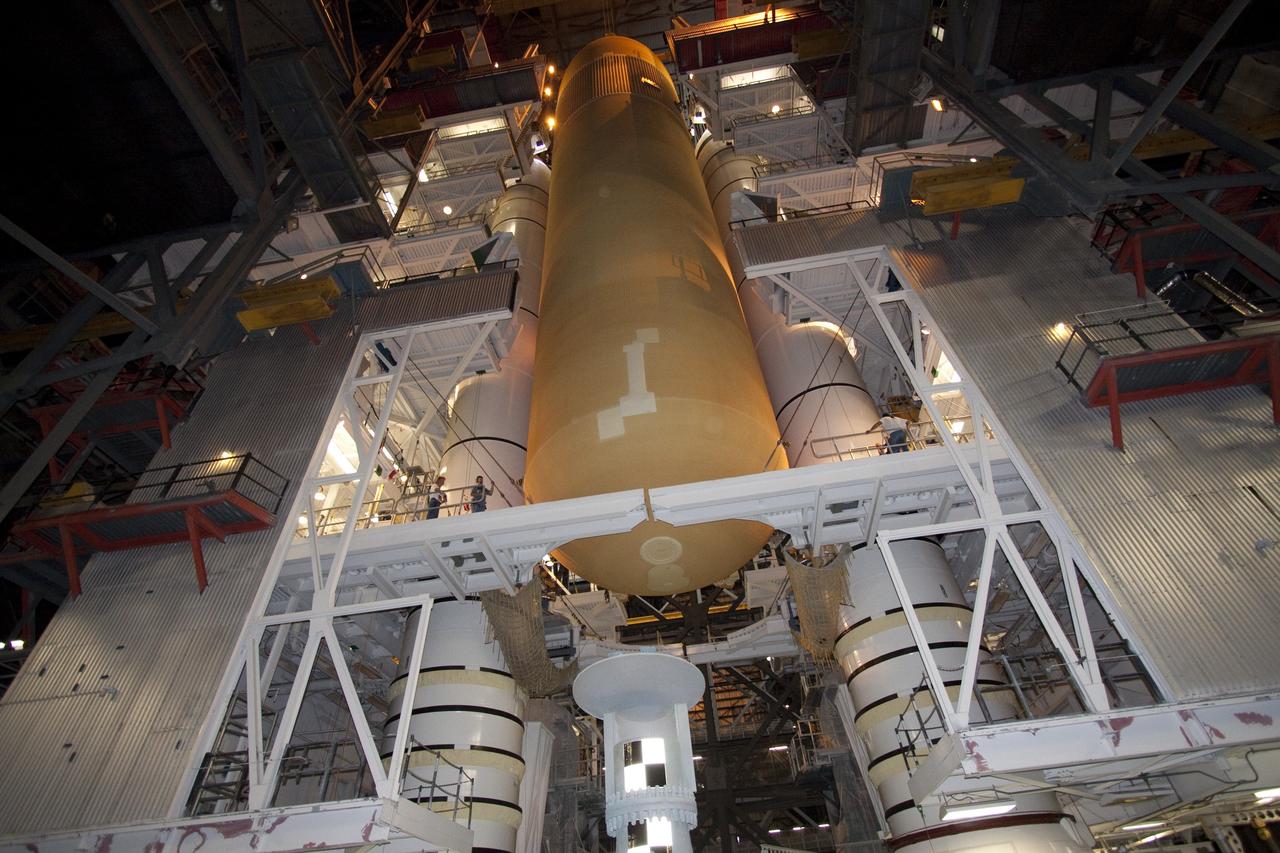
CAPE CANAVERAL, Fla. - In the Vehicle Assembly Building (VAB) at NASA's Kennedy Space Center in Florida, workers monitor the progress of external fuel tank, ET-138, for space shuttle Atlantis' STS-135 mission, as it is lowered into high bay-1 between the twin solid rocket boosters on the mobile launcher platform. Shuttle Atlantis' move, or "rollover," from Orbiter Processing Facility-1 to the VAB is targeted for May 10. Once there it will be mated with the external tank and boosters. Atlantis and its crew of four will deliver the Raffaello multipurpose logistics module packed with supplies and spare parts to the International Space Station. STS-135 is targeted to launch June 28, and will be the last spaceflight for the Space Shuttle Program. Photo credit: NASA/Jack Pfaller

CAPE CANAVERAL, Fla. - In the Vehicle Assembly Building (VAB) at NASA's Kennedy Space Center in Florida, external fuel tank, ET-138, for space shuttle Atlantis' STS-135 mission, is lifted from its test cell for transfer to high bay-1 for joining with the twin solid rocket boosters on the mobile launcher platform. Shuttle Atlantis' move, or "rollover," from Orbiter Processing Facility-1 to the VAB is targeted for May 10. Once there it will be mated with the external tank and boosters. Atlantis and its crew of four will deliver the Raffaello multipurpose logistics module packed with supplies and spare parts to the International Space Station. STS-135 is targeted to launch June 28, and will be the last spaceflight for the Space Shuttle Program. Photo credit: NASA/Jack Pfaller
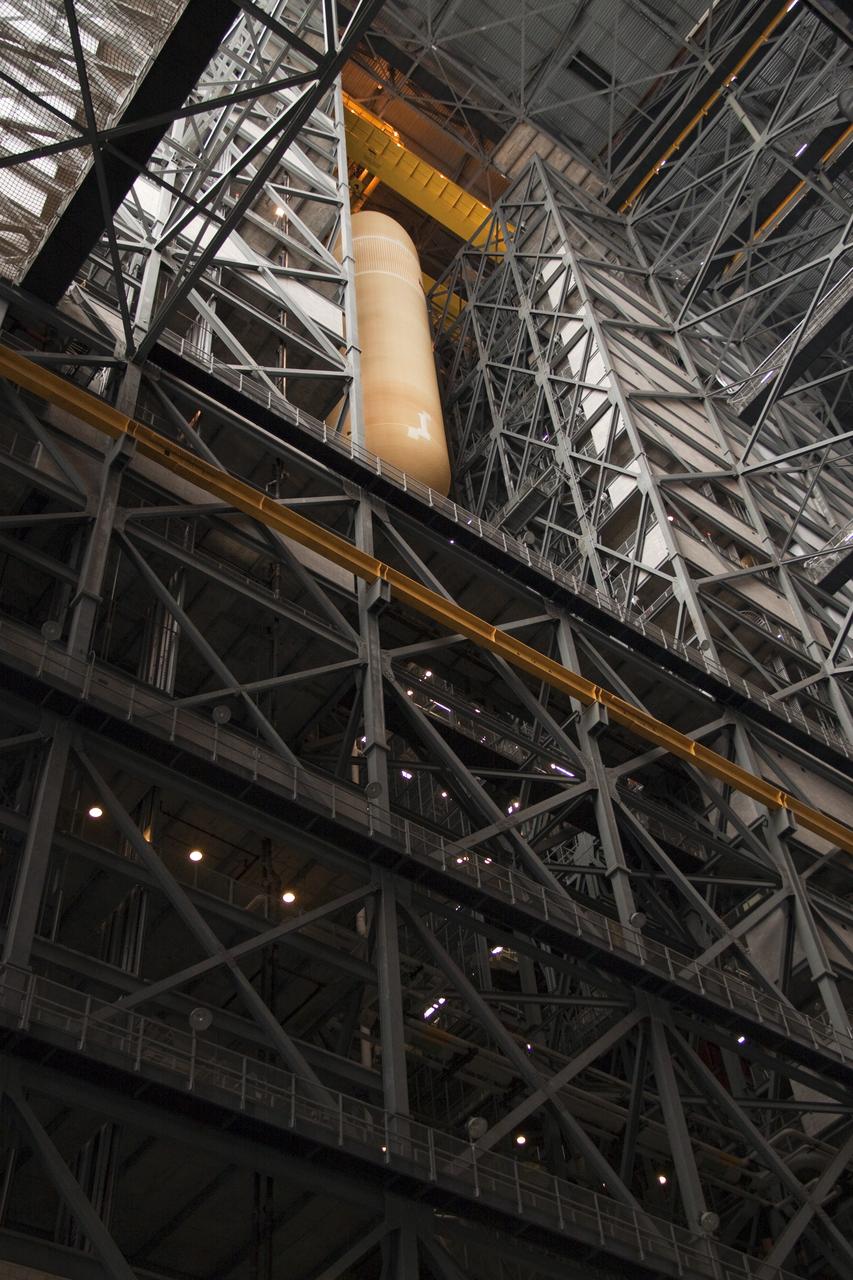
CAPE CANAVERAL, Fla. - In the Vehicle Assembly Building (VAB) at NASA's Kennedy Space Center in Florida, external fuel tank, ET-138, for space shuttle Atlantis' STS-135 mission, is transferred to high bay-1 for joining with the twin solid rocket boosters on the mobile launcher platform. Shuttle Atlantis' move, or "rollover," from Orbiter Processing Facility-1 to the VAB is targeted for May 10. Once there it will be mated with the external tank and boosters. Atlantis and its crew of four will deliver the Raffaello multipurpose logistics module packed with supplies and spare parts to the International Space Station. STS-135 is targeted to launch June 28, and will be the last spaceflight for the Space Shuttle Program. Photo credit: NASA/Jack Pfaller

CAPE CANAVERAL, Fla. - In the Vehicle Assembly Building (VAB) at NASA's Kennedy Space Center in Florida, external fuel tank, ET-138, for space shuttle Atlantis' STS-135 mission, is lifted from its test cell for transfer to high bay-1 for joining with the twin solid rocket boosters on the mobile launcher platform. Shuttle Atlantis' move, or "rollover," from Orbiter Processing Facility-1 to the VAB is targeted for May 10. Once there it will be mated with the external tank and boosters. Atlantis and its crew of four will deliver the Raffaello multipurpose logistics module packed with supplies and spare parts to the International Space Station. STS-135 is targeted to launch June 28, and will be the last spaceflight for the Space Shuttle Program. Photo credit: NASA/Jack Pfaller
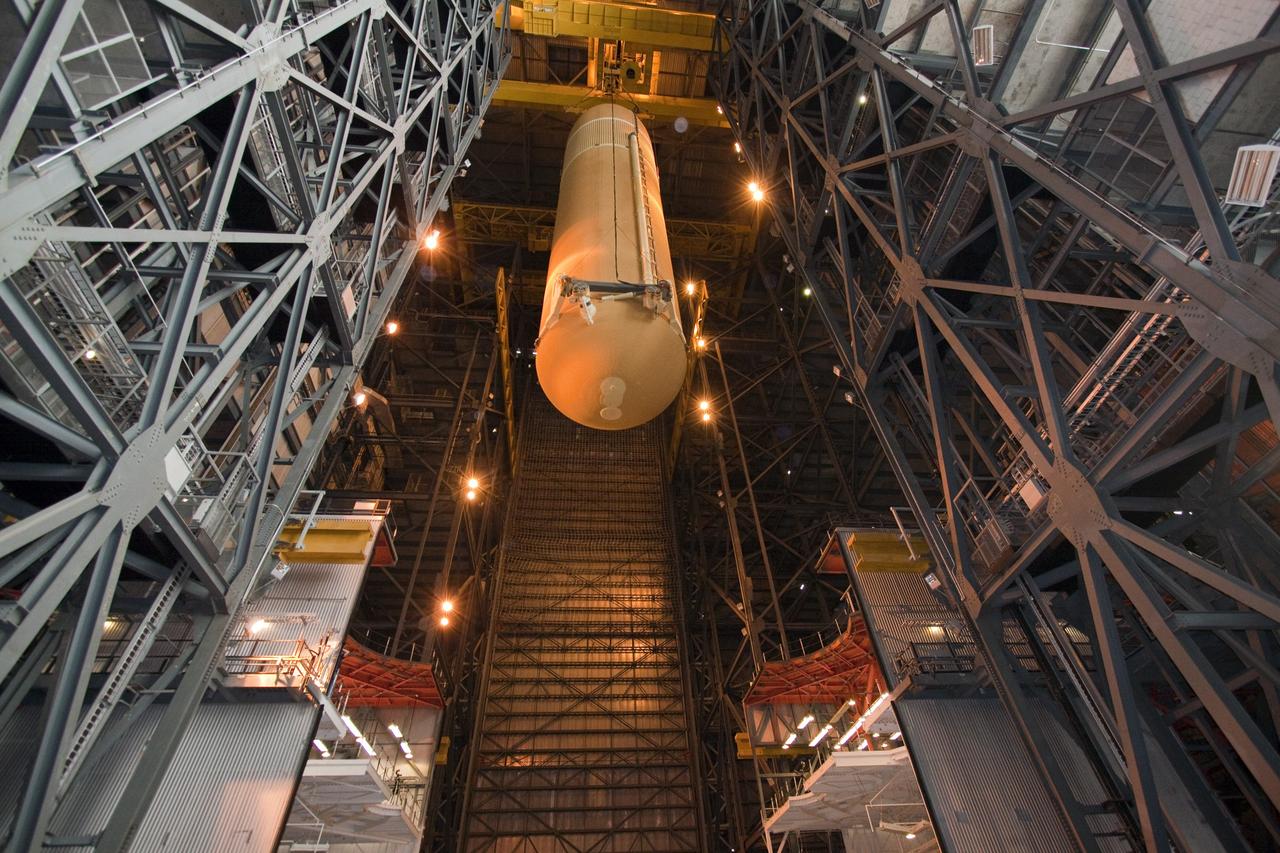
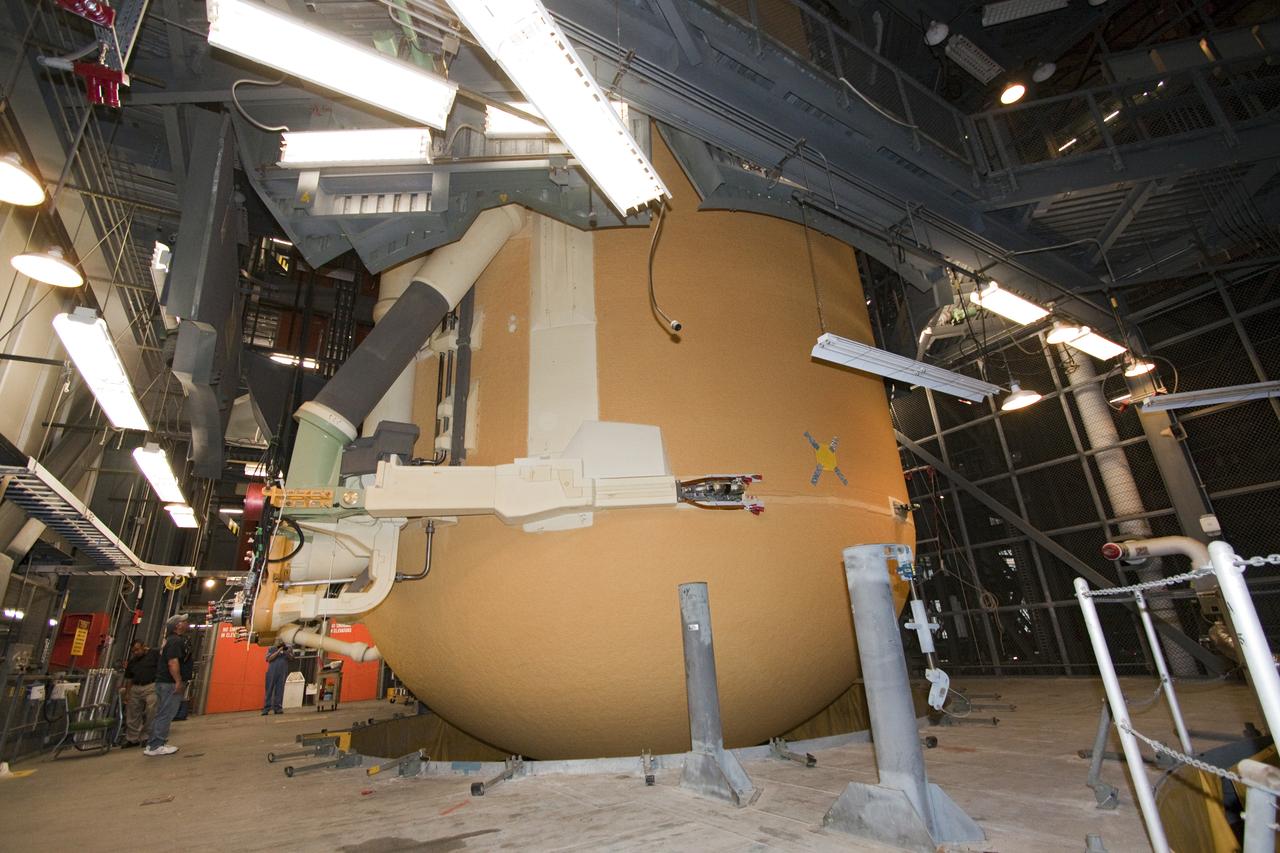
CAPE CANAVERAL, Fla. - In the Vehicle Assembly Building (VAB) at NASA's Kennedy Space Center in Florida, external fuel tank, ET-138, for space shuttle Atlantis' STS-135 mission, is lowered into high bay-1 for joining with the twin solid rocket boosters on the mobile launcher platform. Shuttle Atlantis' move, or "rollover," from Orbiter Processing Facility-1 to the VAB is targeted for May 10. Once there it will be mated with the external tank and boosters. Atlantis and its crew of four will deliver the Raffaello multipurpose logistics module packed with supplies and spare parts to the International Space Station. STS-135 is targeted to launch June 28, and will be the last spaceflight for the Space Shuttle Program. Photo credit: NASA/Jack Pfaller
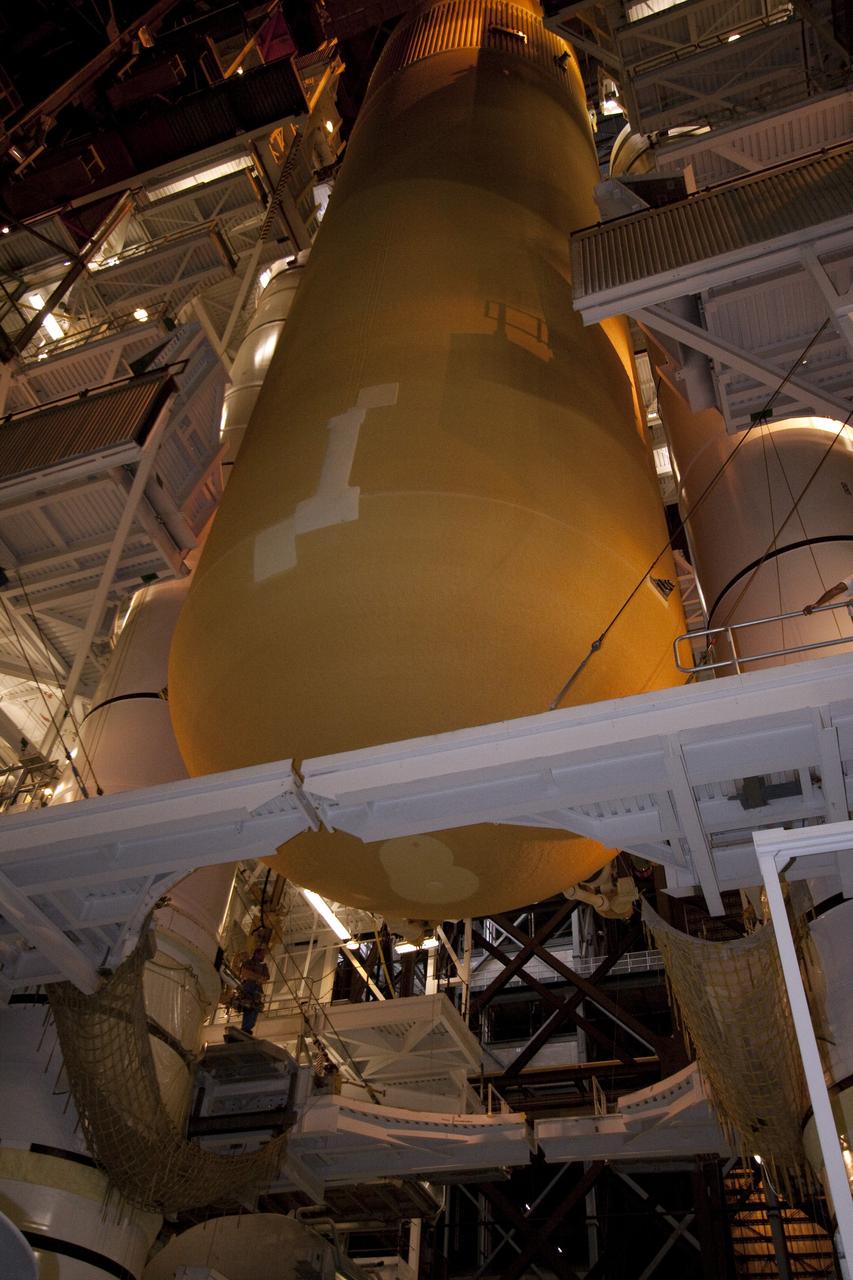
CAPE CANAVERAL, Fla. - In the Vehicle Assembly Building (VAB) at NASA's Kennedy Space Center in Florida, external fuel tank, ET-138, for space shuttle Atlantis' STS-135 mission, is being lowered between the twin solid rocket boosters on the mobile launcher platform in high bay-1. Shuttle Atlantis' move, or "rollover," from Orbiter Processing Facility-1 to the VAB is targeted for May 10. Once there it will be mated with the external tank and boosters. Atlantis and its crew of four will deliver the Raffaello multipurpose logistics module packed with supplies and spare parts to the International Space Station. STS-135 is targeted to launch June 28, and will be the last spaceflight for the Space Shuttle Program. Photo credit: NASA/Jack Pfaller
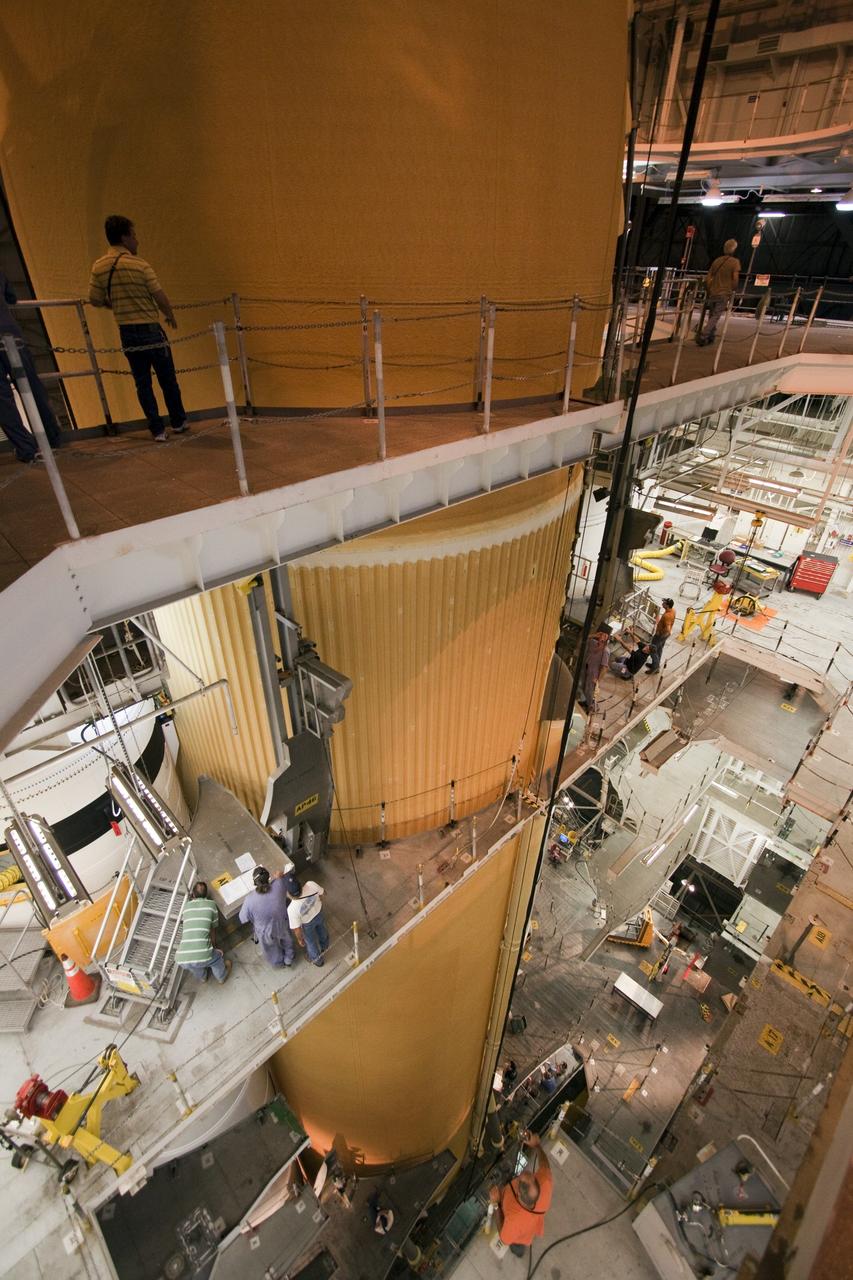
CAPE CANAVERAL, Fla. - In the Vehicle Assembly Building (VAB) at NASA's Kennedy Space Center in Florida, workers monitor the progress of external fuel tank, ET-138, for space shuttle Atlantis' STS-135 mission, as it is positioned between the twin solid rocket boosters on the mobile launcher platform in high bay-1. Shuttle Atlantis' move, or "rollover," from Orbiter Processing Facility-1 to the VAB is targeted for May 10. Once there it will be mated with the external tank and boosters. Atlantis and its crew of four will deliver the Raffaello multipurpose logistics module packed with supplies and spare parts to the International Space Station. STS-135 is targeted to launch June 28, and will be the last spaceflight for the Space Shuttle Program. Photo credit: NASA/Jack Pfaller
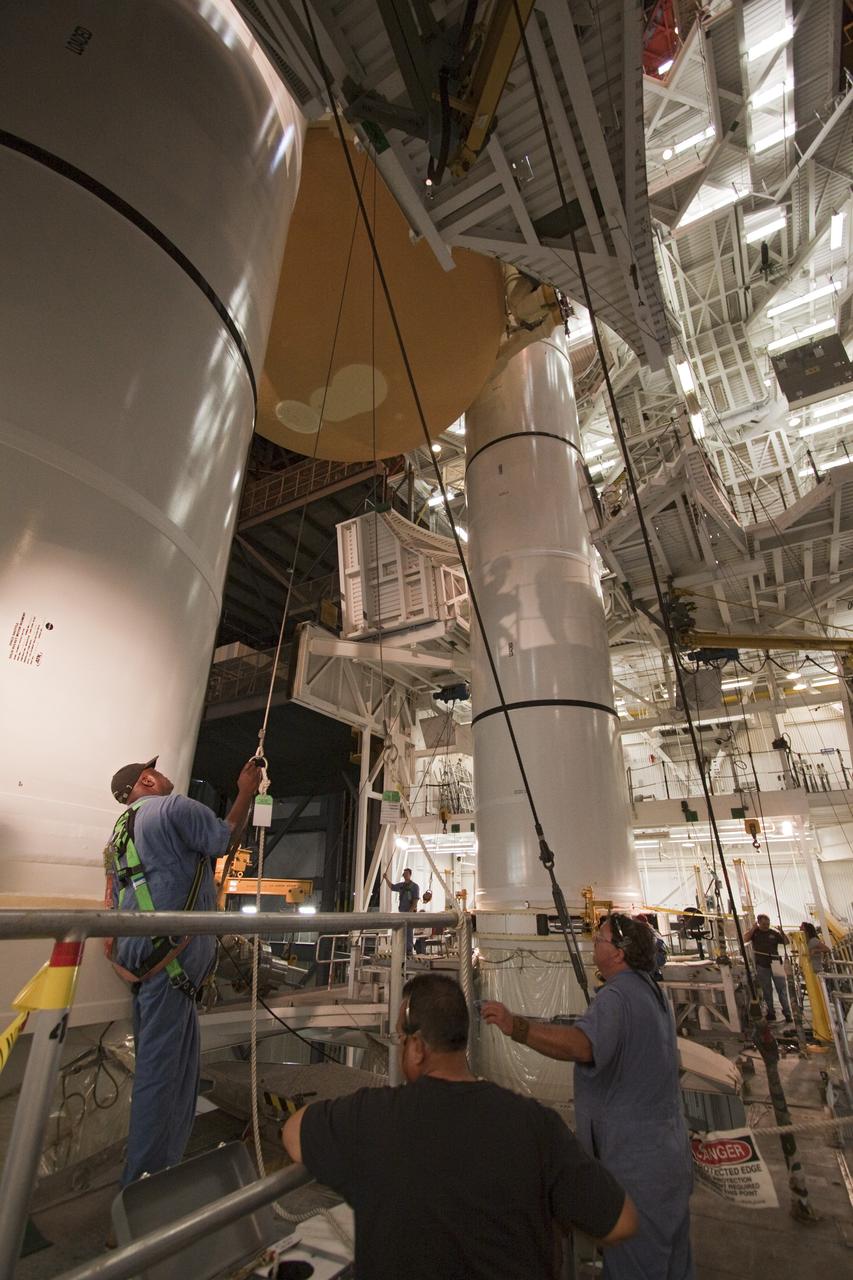
CAPE CANAVERAL, Fla. - In the Vehicle Assembly Building (VAB) at NASA's Kennedy Space Center in Florida, workers guide external fuel tank, ET-138, for space shuttle Atlantis' STS-135 mission, as it is lowered into high bay-1 between the twin solid rocket boosters on the mobile launcher platform. Shuttle Atlantis' move, or "rollover," from Orbiter Processing Facility-1 to the VAB is targeted for May 10. Once there it will be mated with the external tank and boosters. Atlantis and its crew of four will deliver the Raffaello multipurpose logistics module packed with supplies and spare parts to the International Space Station. STS-135 is targeted to launch June 28, and will be the last spaceflight for the Space Shuttle Program. Photo credit: NASA/Jack Pfaller

CAPE CANAVERAL, Fla. - In the Vehicle Assembly Building (VAB) at NASA's Kennedy Space Center in Florida, external fuel tank for space shuttle Atlantis' STS-135 mission, ET-138, is prepared for transfer from its test cell to high bay-1 for joining with the twin solid rocket boosters on the mobile launcher platform. Shuttle Atlantis' move, or "rollover," from Orbiter Processing Facility-1 to the VAB is targeted for May 10. Once there it will be mated with the external tank and boosters. Atlantis and its crew of four will deliver the Raffaello multipurpose logistics module packed with supplies and spare parts to the International Space Station. STS-135 is targeted to launch June 28, and will be the last spaceflight for the Space Shuttle Program. Photo credit: NASA/Jack Pfaller
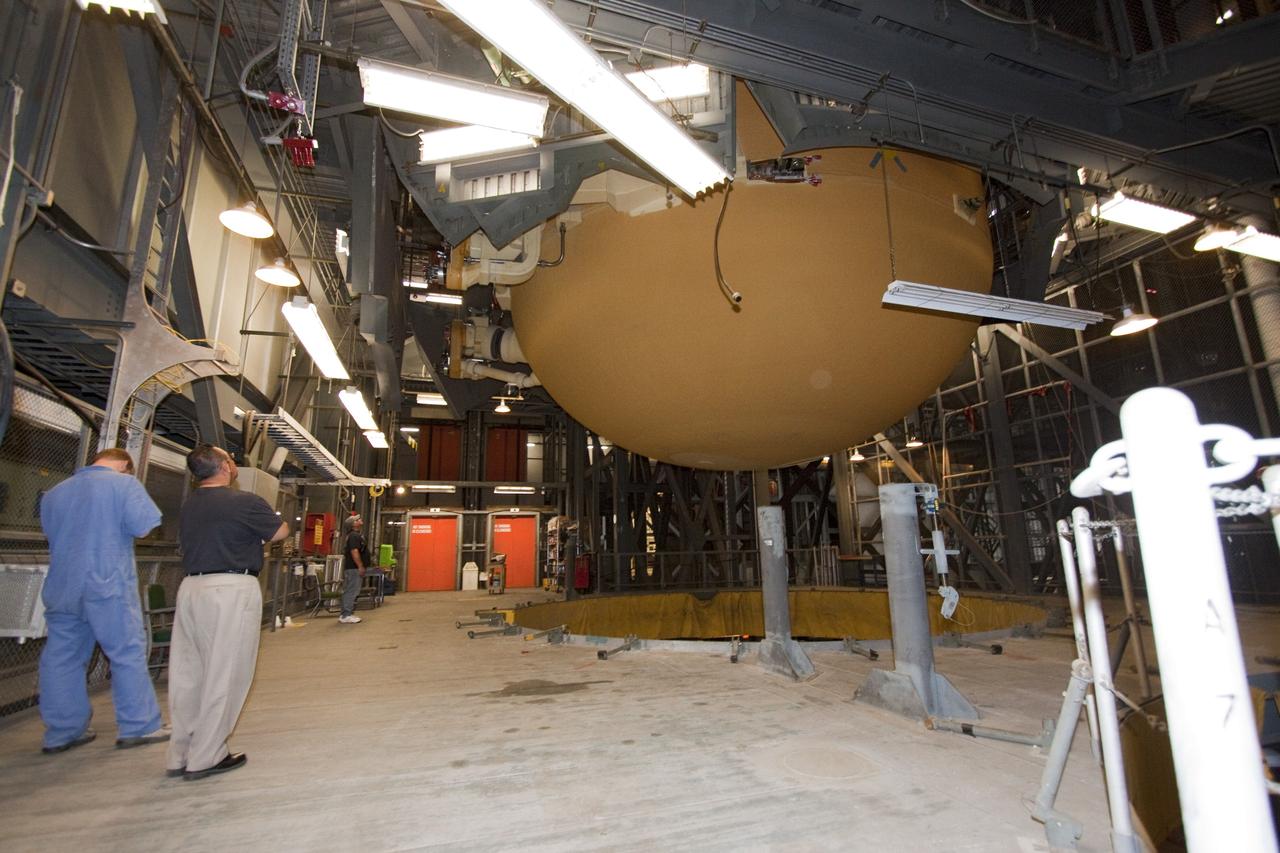
CAPE CANAVERAL, Fla. - In the Vehicle Assembly Building (VAB) at NASA's Kennedy Space Center in Florida, workers monitor the progress of external fuel tank, ET-138, for space shuttle Atlantis' STS-135 mission, as it is lifted from its test cell for transfer to high bay-1 for joining with the twin solid rocket boosters on the mobile launcher platform. Shuttle Atlantis' move, or "rollover," from Orbiter Processing Facility-1 to the VAB is targeted for May 10. Once there it will be mated with the external tank and boosters. Atlantis and its crew of four will deliver the Raffaello multipurpose logistics module packed with supplies and spare parts to the International Space Station. STS-135 is targeted to launch June 28, and will be the last spaceflight for the Space Shuttle Program. Photo credit: NASA/Jack Pfaller
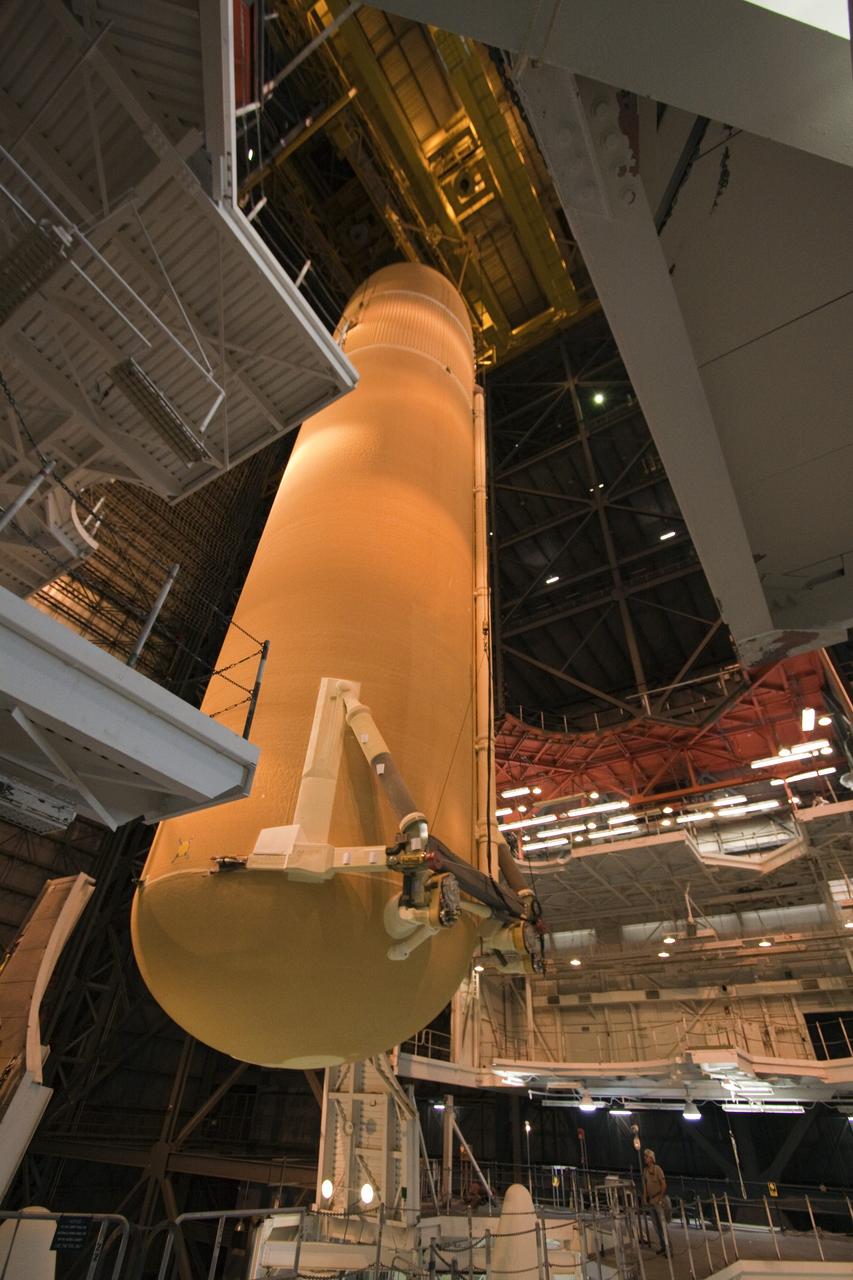
CAPE CANAVERAL, Fla. - In the Vehicle Assembly Building (VAB) at NASA's Kennedy Space Center in Florida, external fuel tank, ET-138, for space shuttle Atlantis' STS-135 mission, is lowered into high bay-1 for joining with the twin solid rocket boosters on the mobile launcher platform. Shuttle Atlantis' move, or "rollover," from Orbiter Processing Facility-1 to the VAB is targeted for May 10. Once there it will be mated with the external tank and boosters. Atlantis and its crew of four will deliver the Raffaello multipurpose logistics module packed with supplies and spare parts to the International Space Station. STS-135 is targeted to launch June 28, and will be the last spaceflight for the Space Shuttle Program. Photo credit: NASA/Jack Pfaller
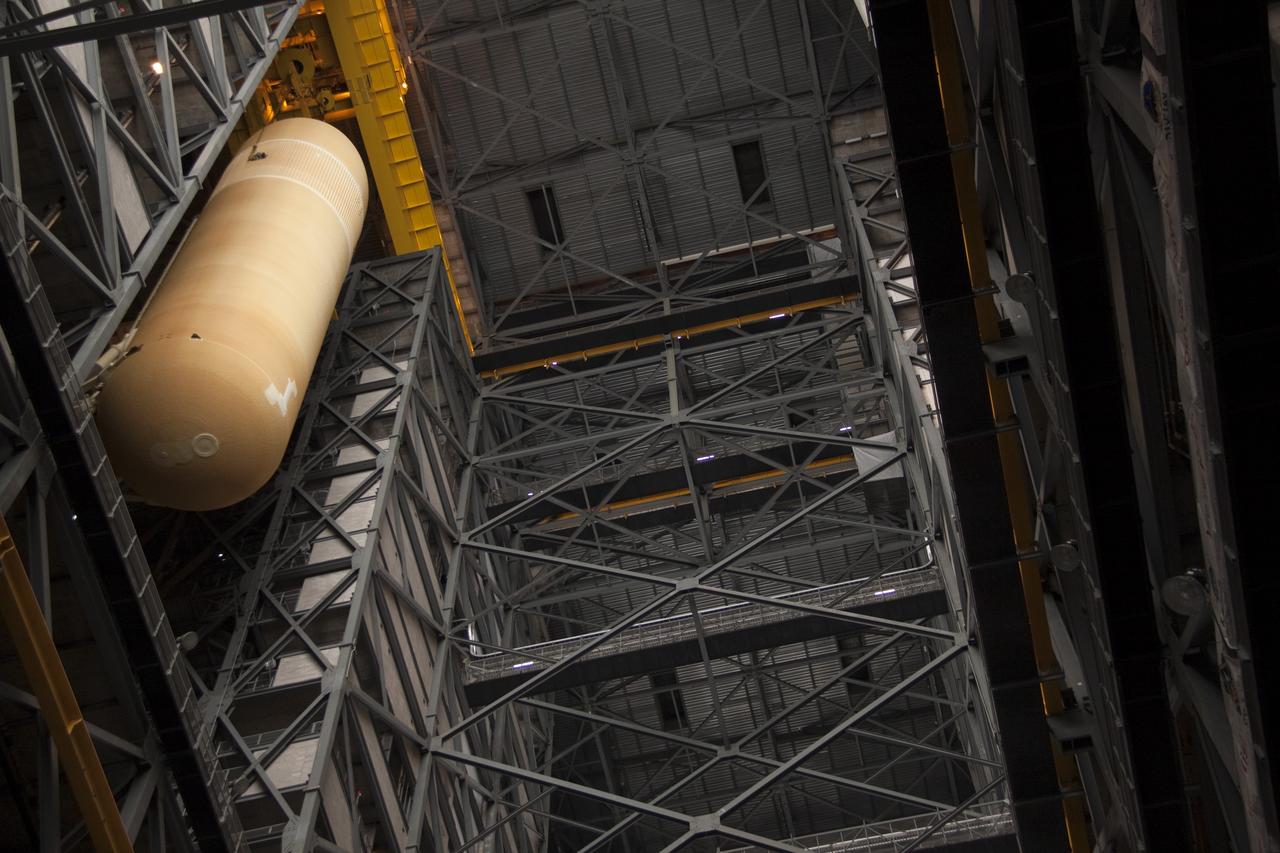
CAPE CANAVERAL, Fla. - In the Vehicle Assembly Building (VAB) at NASA's Kennedy Space Center in Florida, external fuel tank, ET-138, for space shuttle Atlantis' STS-135 mission, is lowered into high bay-1 for joining with the twin solid rocket boosters on the mobile launcher platform. Shuttle Atlantis' move, or "rollover," from Orbiter Processing Facility-1 to the VAB is targeted for May 10. Once there it will be mated with the external tank and boosters. Atlantis and its crew of four will deliver the Raffaello multipurpose logistics module packed with supplies and spare parts to the International Space Station. STS-135 is targeted to launch June 28, and will be the last spaceflight for the Space Shuttle Program. Photo credit: NASA/Jack Pfaller

CAPE CANAVERAL, Fla. - In the Vehicle Assembly Building (VAB) at NASA's Kennedy Space Center in Florida, external fuel tank for space shuttle Atlantis' STS-135 mission, ET-138, is prepared for transfer from its test cell to high bay-1 for joining with the twin solid rocket boosters on the mobile launcher platform. Shuttle Atlantis' move, or "rollover," from Orbiter Processing Facility-1 to the VAB is targeted for May 10. Once there it will be mated with the external tank and boosters. Atlantis and its crew of four will deliver the Raffaello multipurpose logistics module packed with supplies and spare parts to the International Space Station. STS-135 is targeted to launch June 28, and will be the last spaceflight for the Space Shuttle Program. Photo credit: NASA/Jack Pfaller
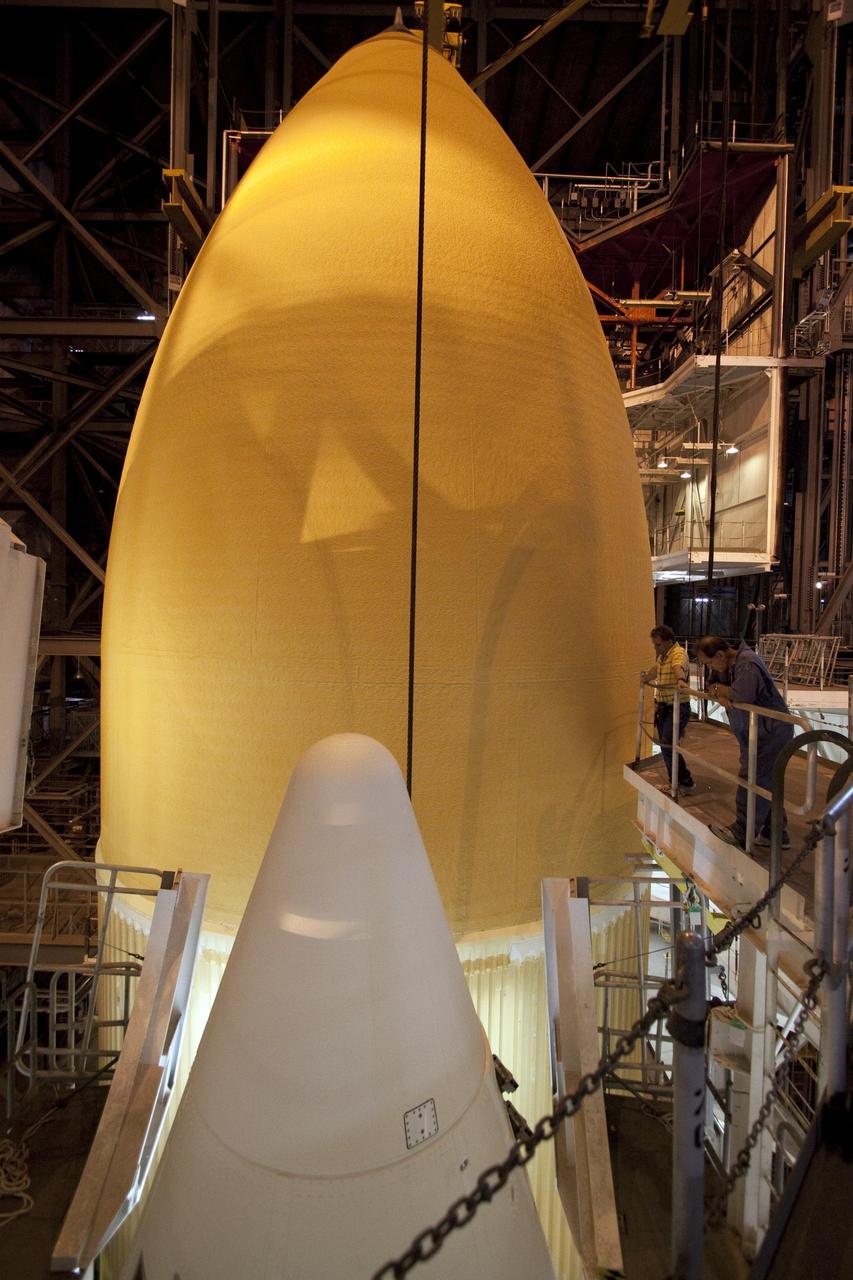
CAPE CANAVERAL, Fla. - In the Vehicle Assembly Building (VAB) at NASA's Kennedy Space Center in Florida, external fuel tank, ET-138, for space shuttle Atlantis' STS-135 mission, is positioned between the twin solid rocket boosters on the mobile launcher platform in high bay-1. Shuttle Atlantis' move, or "rollover," from Orbiter Processing Facility-1 to the VAB is targeted for May 10. Once there it will be mated with the external tank and boosters. Atlantis and its crew of four will deliver the Raffaello multipurpose logistics module packed with supplies and spare parts to the International Space Station. STS-135 is targeted to launch June 28, and will be the last spaceflight for the Space Shuttle Program. Photo credit: NASA/Jack Pfaller
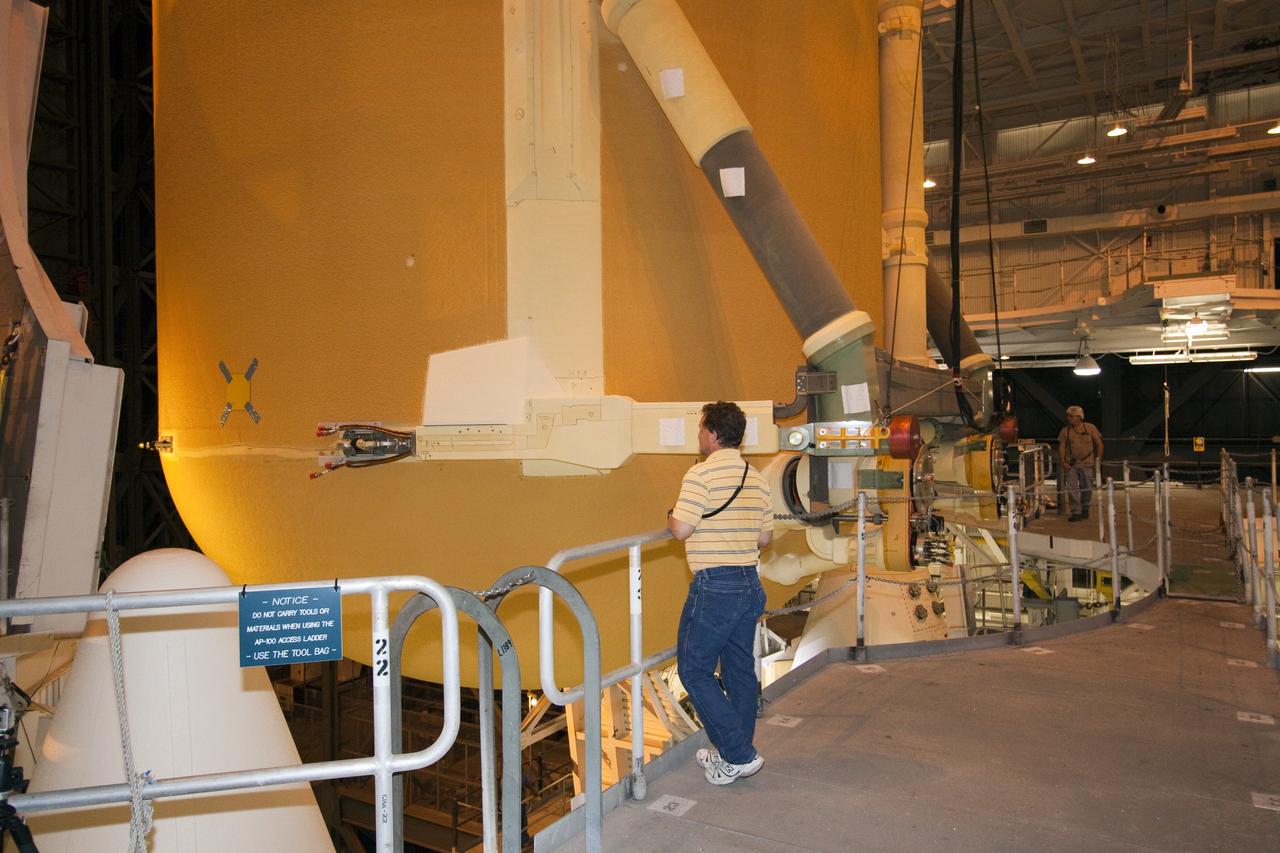
CAPE CANAVERAL, Fla. - In the Vehicle Assembly Building (VAB) at NASA's Kennedy Space Center in Florida, workers monitor the progress of external fuel tank, ET-138, for space shuttle Atlantis' STS-135 mission, as it is lowered into high bay-1 between the twin solid rocket boosters on the mobile launcher platform. Shuttle Atlantis' move, or "rollover," from Orbiter Processing Facility-1 to the VAB is targeted for May 10. Once there it will be mated with the external tank and boosters. Atlantis and its crew of four will deliver the Raffaello multipurpose logistics module packed with supplies and spare parts to the International Space Station. STS-135 is targeted to launch June 28, and will be the last spaceflight for the Space Shuttle Program. Photo credit: NASA/Jack Pfaller
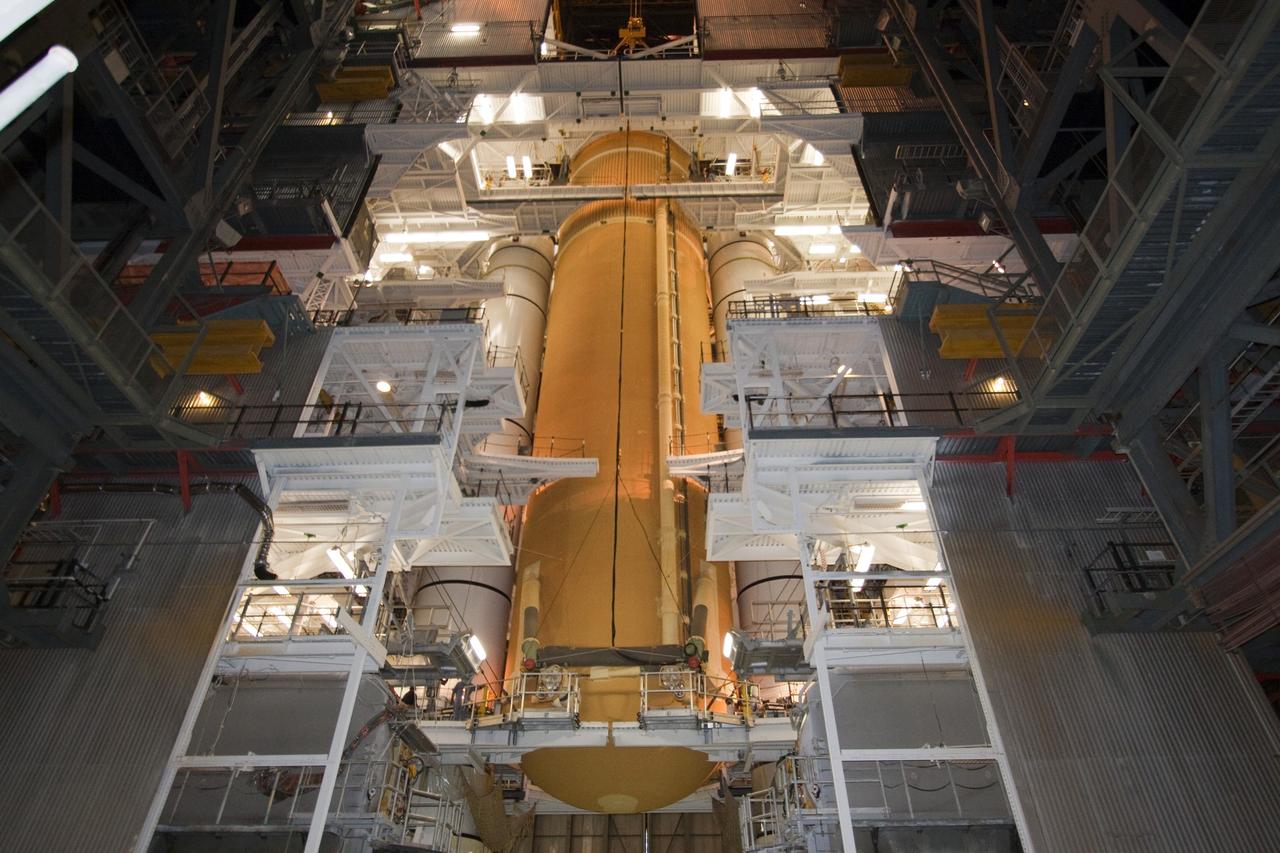
CAPE CANAVERAL, Fla. - In the Vehicle Assembly Building (VAB) at NASA's Kennedy Space Center in Florida, external fuel tank, ET-138, for space shuttle Atlantis' STS-135 mission, is positioned between the twin solid rocket boosters on the mobile launcher platform in high bay-1. Shuttle Atlantis' move, or "rollover," from Orbiter Processing Facility-1 to the VAB is targeted for May 10. Once there it will be mated with the external tank and boosters. Atlantis and its crew of four will deliver the Raffaello multipurpose logistics module packed with supplies and spare parts to the International Space Station. STS-135 is targeted to launch June 28, and will be the last spaceflight for the Space Shuttle Program. Photo credit: NASA/Jack Pfaller
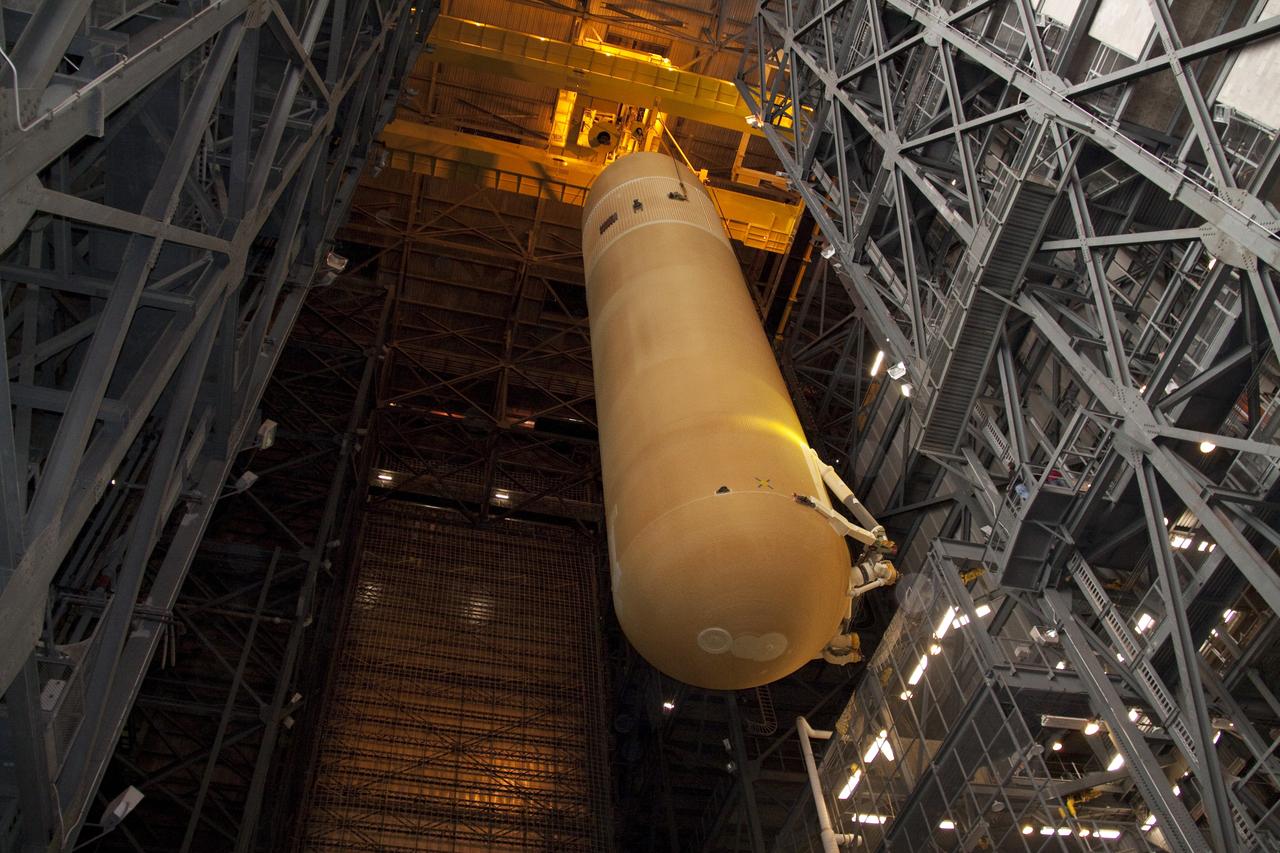
CAPE CANAVERAL, Fla. - In the Vehicle Assembly Building (VAB) at NASA's Kennedy Space Center in Florida, external fuel tank, ET-138, for space shuttle Atlantis' STS-135 mission, is transferred to high bay-1 for joining with the twin solid rocket boosters on the mobile launcher platform. Shuttle Atlantis' move, or "rollover," from Orbiter Processing Facility-1 to the VAB is targeted for May 10. Once there it will be mated with the external tank and boosters. Atlantis and its crew of four will deliver the Raffaello multipurpose logistics module packed with supplies and spare parts to the International Space Station. STS-135 is targeted to launch June 28, and will be the last spaceflight for the Space Shuttle Program. Photo credit: NASA/Jack Pfaller
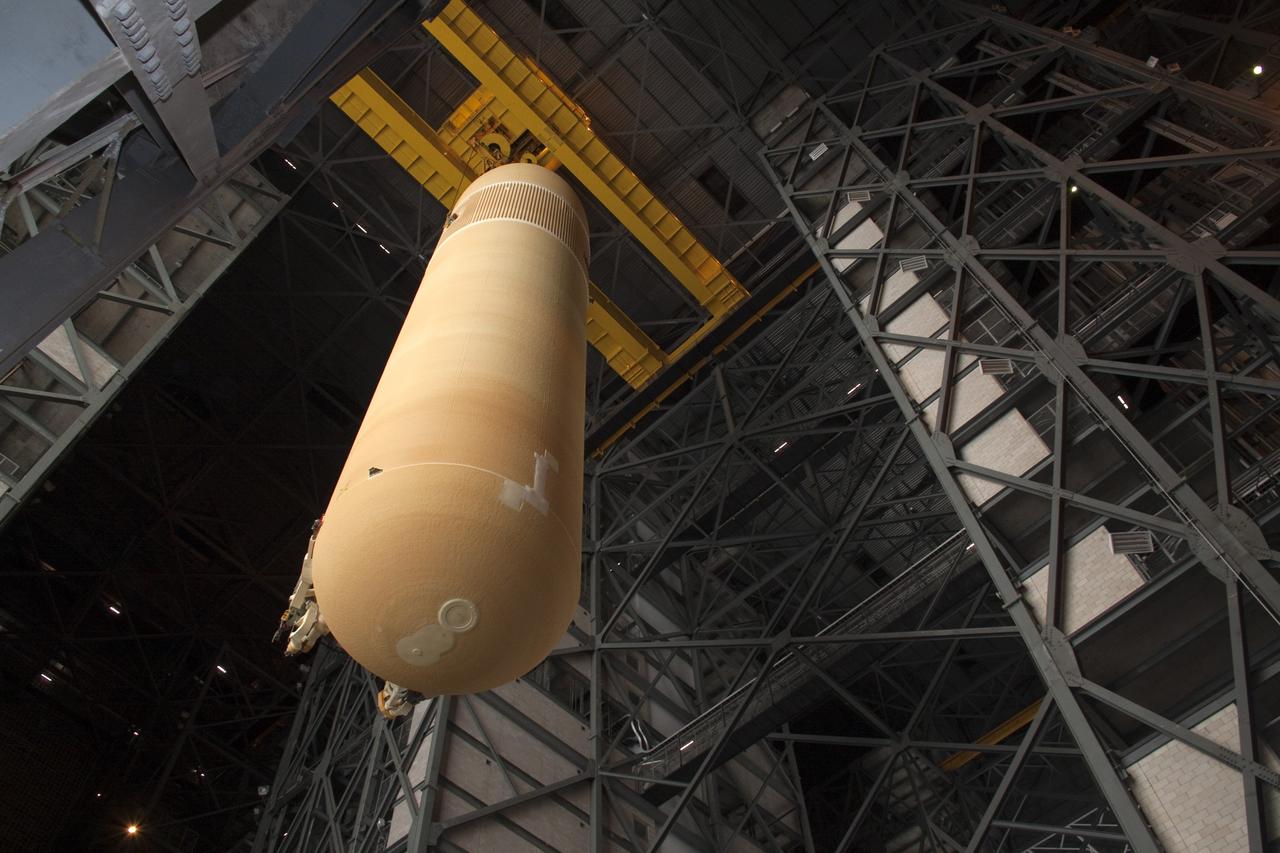
CAPE CANAVERAL, Fla. - In the Vehicle Assembly Building (VAB) at NASA's Kennedy Space Center in Florida, external fuel tank, ET-138, for space shuttle Atlantis' STS-135 mission, is lowered into high bay-1 for joining with the twin solid rocket boosters on the mobile launcher platform. Shuttle Atlantis' move, or "rollover," from Orbiter Processing Facility-1 to the VAB is targeted for May 10. Once there it will be mated with the external tank and boosters. Atlantis and its crew of four will deliver the Raffaello multipurpose logistics module packed with supplies and spare parts to the International Space Station. STS-135 is targeted to launch June 28, and will be the last spaceflight for the Space Shuttle Program. Photo credit: NASA/Jack Pfaller
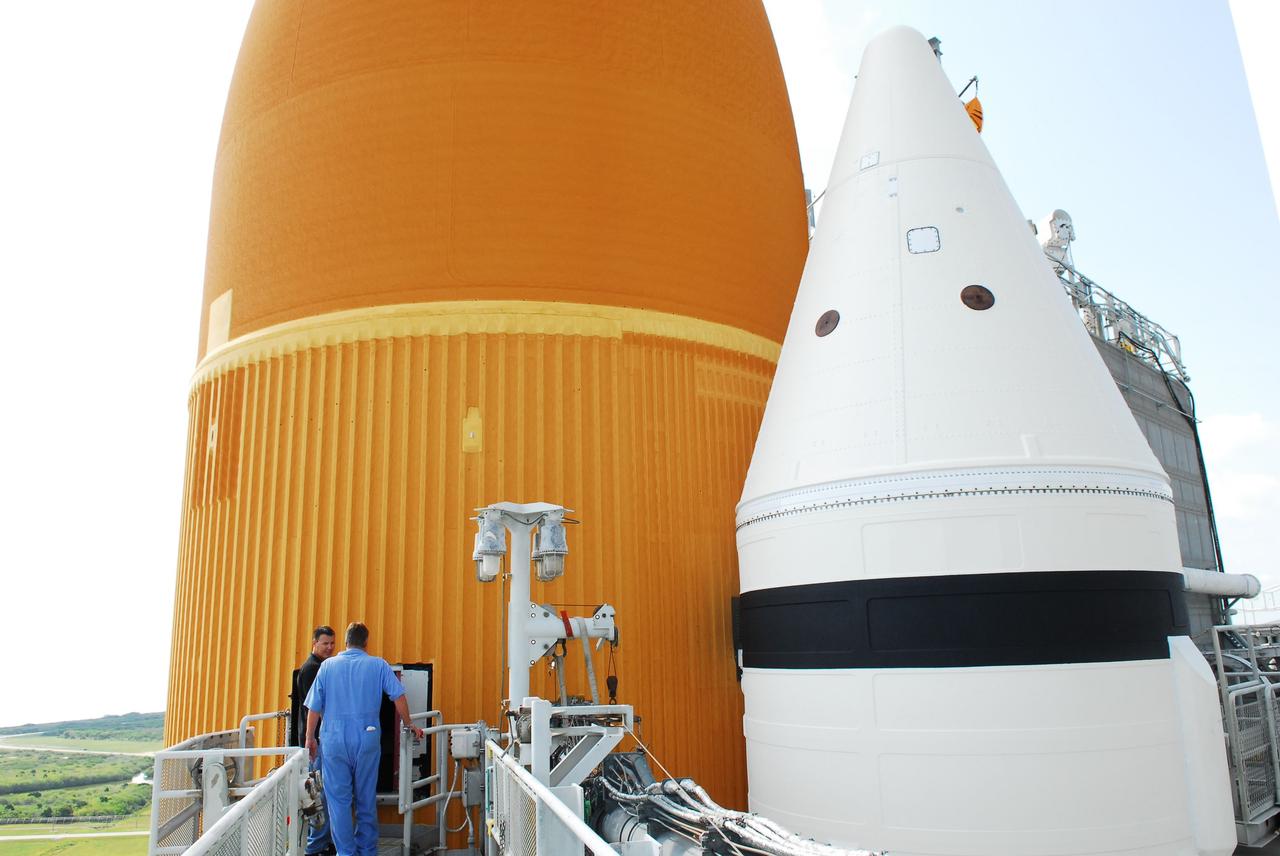
CAPE CANAVERAL, Fla. -- At NASA's Kennedy Space Center in Florida, technicians prepare to conduct Computed Radiography (CR) X-ray scans of 50 support beams, called stringers, on the shuttle-facing side of Atlantis' external tank at Launch Pad 39A. The hi-tech images will be taken of the tops and bottoms of the 21-foot long beams, which are located on the tank's intertank section. The scans follow a June 15th tanking test when the launch team filled then drained the tank of about 535,000 gallons of liquid hydrogen and liquid oxygen, just like for a launch. Earlier this year, managers directed teams to make the same stringer modifications to Atlantis' tank, ET-138, as they had after small cracks in the support beams of shuttle Discovery's STS-133 mission external tank were discovered. The scans will confirm there are no issues with Atlantis' tank. STS-135 Commander Chris Ferguson, Pilot Doug Hurley and Mission Specialists Sandy Magnus and Rex Walheim are targeted to lift off on space shuttle Atlantis July 8, taking with them the MPLM packed with supplies, logistics and spare parts to the International Space Station. The STS-135 mission also will fly a system to investigate the potential for robotically refueling existing satellites and return a failed ammonia pump module to help NASA better understand the failure mechanism and improve pump designs for future systems. STS-135 will be the 33rd flight of Atlantis, the 37th shuttle mission to the space station, and the 135th and final mission of NASA's Space Shuttle Program. For more information visit, www.nasa.gov/mission_pages/shuttle/shuttlemissions/sts135/index.html. Photo credit: NASA/Jim Grossmann
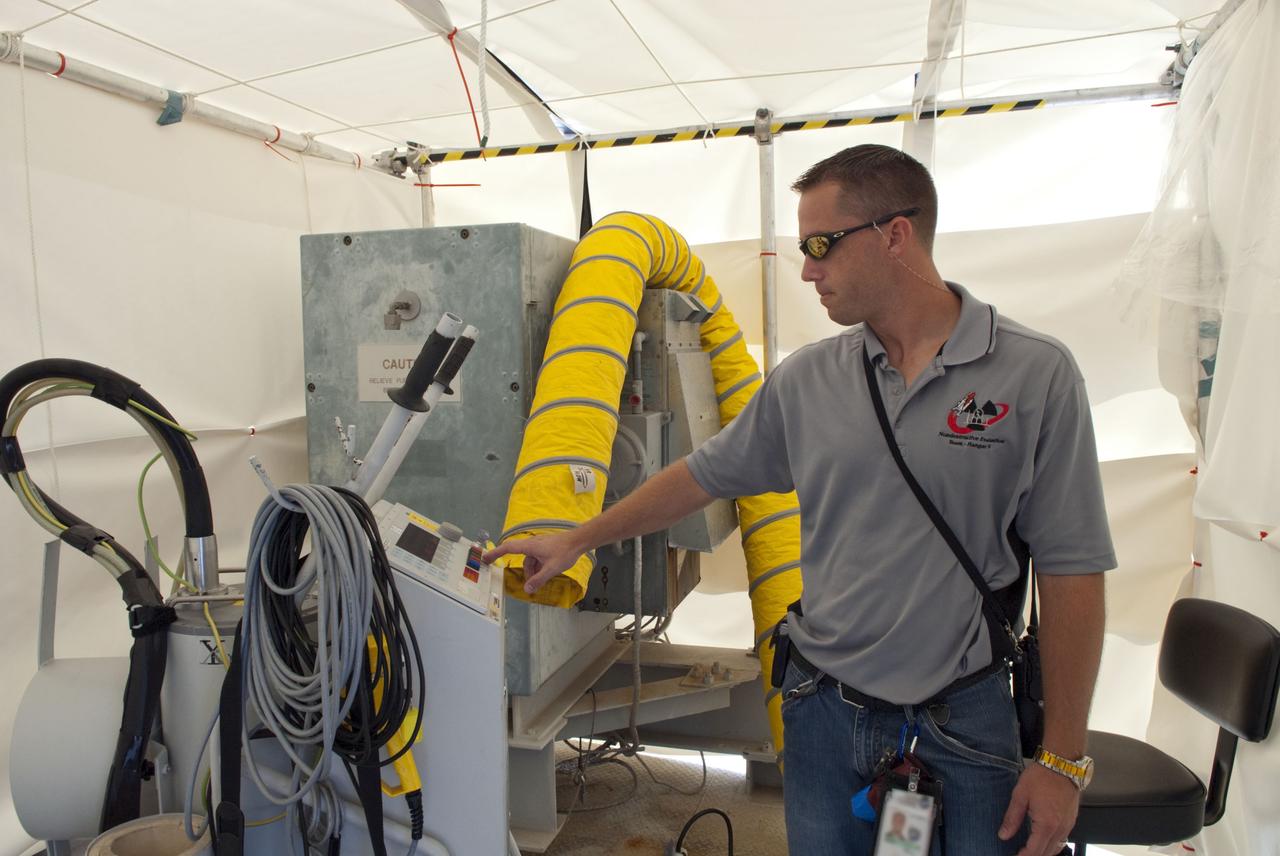
CAPE CANAVERAL, Fla. -- At NASA's Kennedy Space Center in Florida, technicians conduct Computed Radiography (CR) X-ray scans of 50 support beams, called stringers, on the shuttle-facing side of Atlantis' external tank at Launch Pad 39A. The hi-tech images will be taken of the tops and bottoms of the 21-foot long beams, which are located on the tank's intertank section. The scans follow a June 15th tanking test when the launch team filled then drained the tank of about 535,000 gallons of liquid hydrogen and liquid oxygen, just like for a launch. Earlier this year, managers directed teams to make the same stringer modifications to Atlantis' tank, ET-138, as they had after small cracks in the support beams of shuttle Discovery's STS-133 mission external tank were discovered. The scans will confirm there are no issues with Atlantis' tank. STS-135 Commander Chris Ferguson, Pilot Doug Hurley and Mission Specialists Sandy Magnus and Rex Walheim are targeted to lift off on space shuttle Atlantis July 8, taking with them the MPLM packed with supplies, logistics and spare parts to the International Space Station. The STS-135 mission also will fly a system to investigate the potential for robotically refueling existing satellites and return a failed ammonia pump module to help NASA better understand the failure mechanism and improve pump designs for future systems. STS-135 will be the 33rd flight of Atlantis, the 37th shuttle mission to the space station, and the 135th and final mission of NASA's Space Shuttle Program. For more information visit, www.nasa.gov/mission_pages/shuttle/shuttlemissions/sts135/index.html. Photo credit: NASA/Jim Grossmann
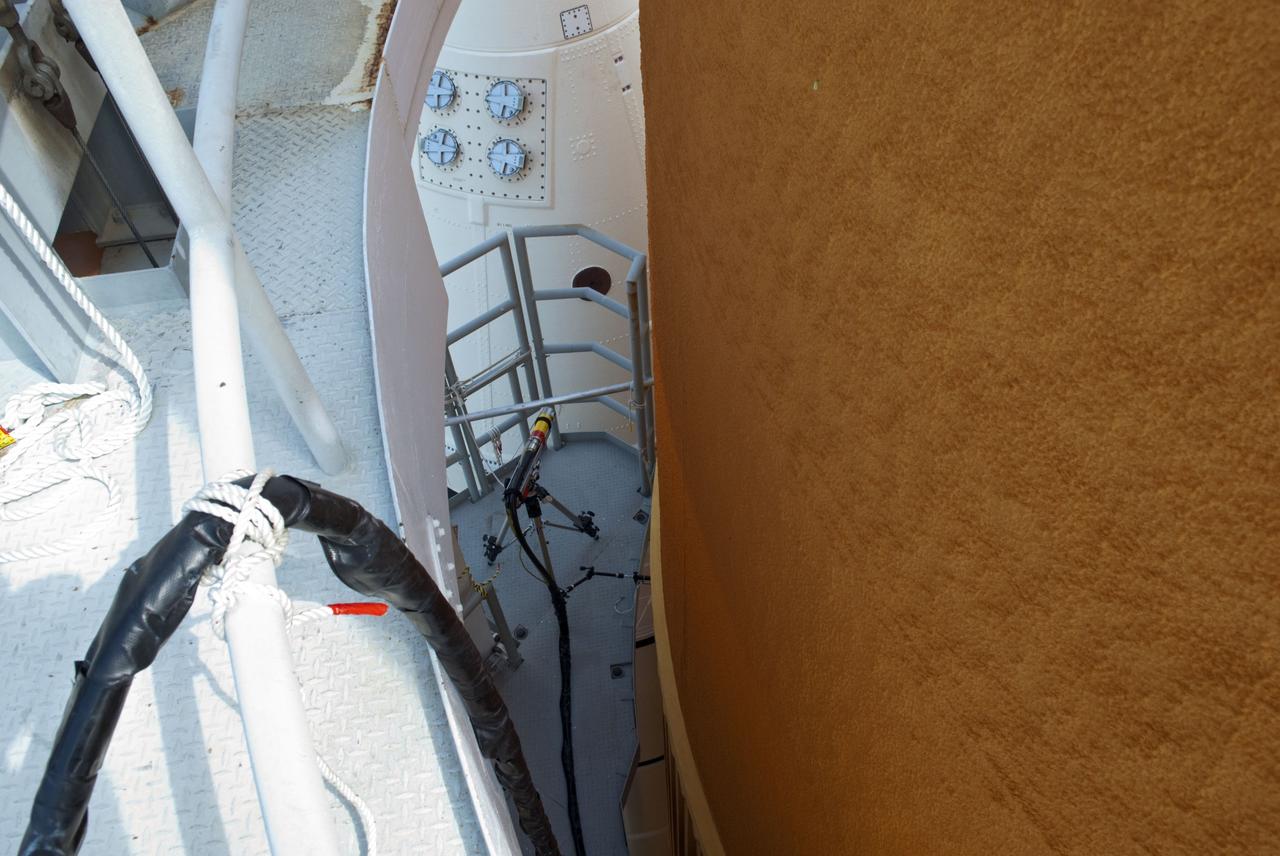
CAPE CANAVERAL, Fla. -- At NASA's Kennedy Space Center in Florida, technicians conduct Computed Radiography (CR) X-ray scans of 50 support beams, called stringers, on the shuttle-facing side of Atlantis' external tank at Launch Pad 39A. The hi-tech images will be taken of the tops and bottoms of the 21-foot long beams, which are located on the tank's intertank section. The scans follow a June 15th tanking test when the launch team filled then drained the tank of about 535,000 gallons of liquid hydrogen and liquid oxygen, just like for a launch. Earlier this year, managers directed teams to make the same stringer modifications to Atlantis' tank, ET-138, as they had after small cracks in the support beams of shuttle Discovery's STS-133 mission external tank were discovered. The scans will confirm there are no issues with Atlantis' tank. STS-135 Commander Chris Ferguson, Pilot Doug Hurley and Mission Specialists Sandy Magnus and Rex Walheim are targeted to lift off on space shuttle Atlantis July 8, taking with them the MPLM packed with supplies, logistics and spare parts to the International Space Station. The STS-135 mission also will fly a system to investigate the potential for robotically refueling existing satellites and return a failed ammonia pump module to help NASA better understand the failure mechanism and improve pump designs for future systems. STS-135 will be the 33rd flight of Atlantis, the 37th shuttle mission to the space station, and the 135th and final mission of NASA's Space Shuttle Program. For more information visit, www.nasa.gov/mission_pages/shuttle/shuttlemissions/sts135/index.html. Photo credit: NASA/Jim Grossmann
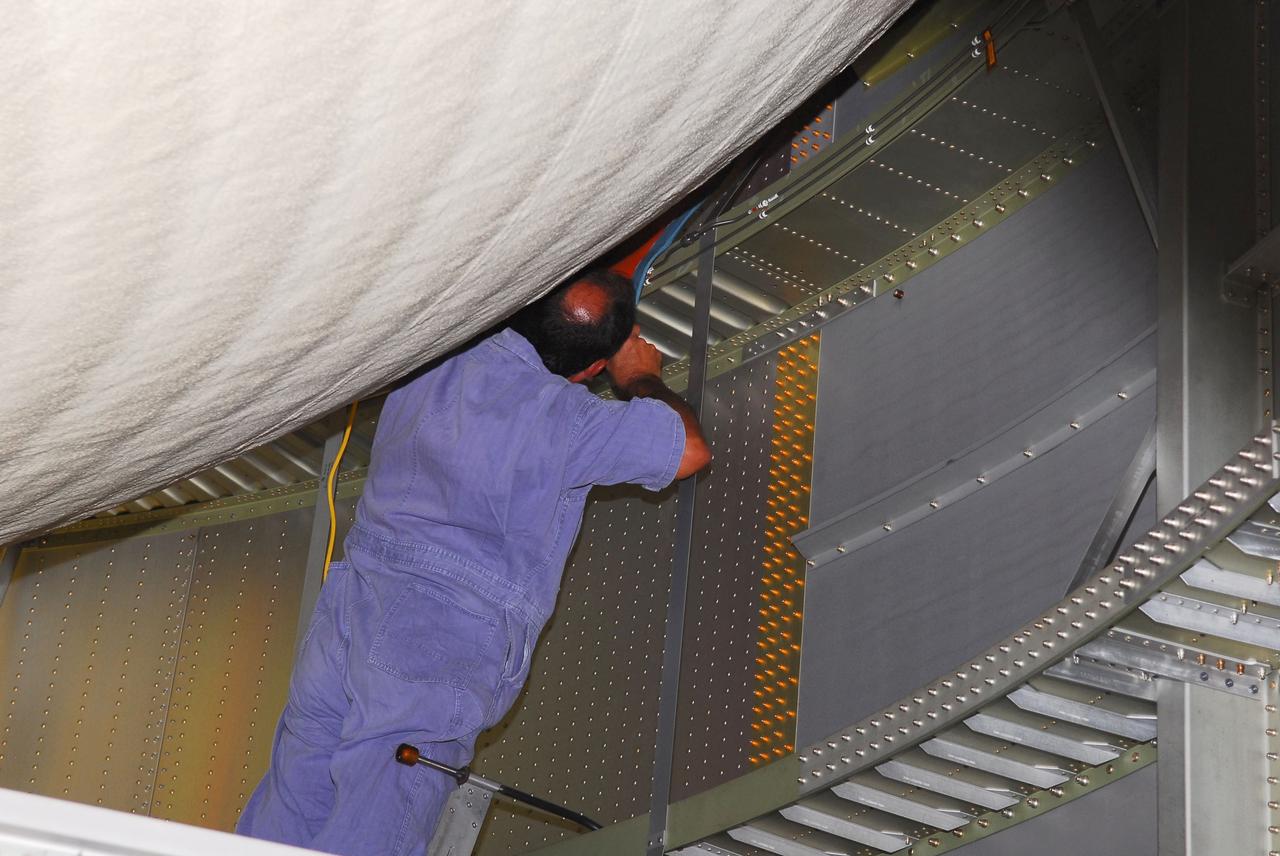
CAPE CANAVERAL, Fla. -- At NASA's Kennedy Space Center in Florida, technicians conduct Computed Radiography (CR) X-ray scans of 50 support beams, called stringers, on the shuttle-facing side of Atlantis' external tank at Launch Pad 39A. The hi-tech images will be taken of the tops and bottoms of the 21-foot long beams, which are located on the tank's intertank section. Here, a technician prepares an image plate inside the outertank. The scans follow a June 15th tanking test when the launch team filled then drained the tank of about 535,000 gallons of liquid hydrogen and liquid oxygen, just like for a launch. Earlier this year, managers directed teams to make the same stringer modifications to Atlantis' tank, ET-138, as they had after small cracks in the support beams of shuttle Discovery's STS-133 mission external tank were discovered. The scans will confirm there are no issues with Atlantis' tank. STS-135 Commander Chris Ferguson, Pilot Doug Hurley and Mission Specialists Sandy Magnus and Rex Walheim are targeted to lift off on space shuttle Atlantis July 8, taking with them the MPLM packed with supplies, logistics and spare parts to the International Space Station. The STS-135 mission also will fly a system to investigate the potential for robotically refueling existing satellites and return a failed ammonia pump module to help NASA better understand the failure mechanism and improve pump designs for future systems. STS-135 will be the 33rd flight of Atlantis, the 37th shuttle mission to the space station, and the 135th and final mission of NASA's Space Shuttle Program. For more information visit, www.nasa.gov/mission_pages/shuttle/shuttlemissions/sts135/index.html. Photo credit: NASA/Jim Grossmann

CAPE CANAVERAL, Fla. -- At NASA's Kennedy Space Center in Florida, technicians conduct Computed Radiography (CR) X-ray scans of 50 support beams, called stringers, on the shuttle-facing side of Atlantis' external tank at Launch Pad 39A. The hi-tech images will be taken of the tops and bottoms of the 21-foot long beams, which are located on the tank's intertank section. The scans follow a June 15th tanking test when the launch team filled then drained the tank of about 535,000 gallons of liquid hydrogen and liquid oxygen, just like for a launch. Earlier this year, managers directed teams to make the same stringer modifications to Atlantis' tank, ET-138, as they had after small cracks in the support beams of shuttle Discovery's STS-133 mission external tank were discovered. The scans will confirm there are no issues with Atlantis' tank. STS-135 Commander Chris Ferguson, Pilot Doug Hurley and Mission Specialists Sandy Magnus and Rex Walheim are targeted to lift off on space shuttle Atlantis July 8, taking with them the MPLM packed with supplies, logistics and spare parts to the International Space Station. The STS-135 mission also will fly a system to investigate the potential for robotically refueling existing satellites and return a failed ammonia pump module to help NASA better understand the failure mechanism and improve pump designs for future systems. STS-135 will be the 33rd flight of Atlantis, the 37th shuttle mission to the space station, and the 135th and final mission of NASA's Space Shuttle Program. For more information visit, www.nasa.gov/mission_pages/shuttle/shuttlemissions/sts135/index.html. Photo credit: NASA/Jim Grossmann
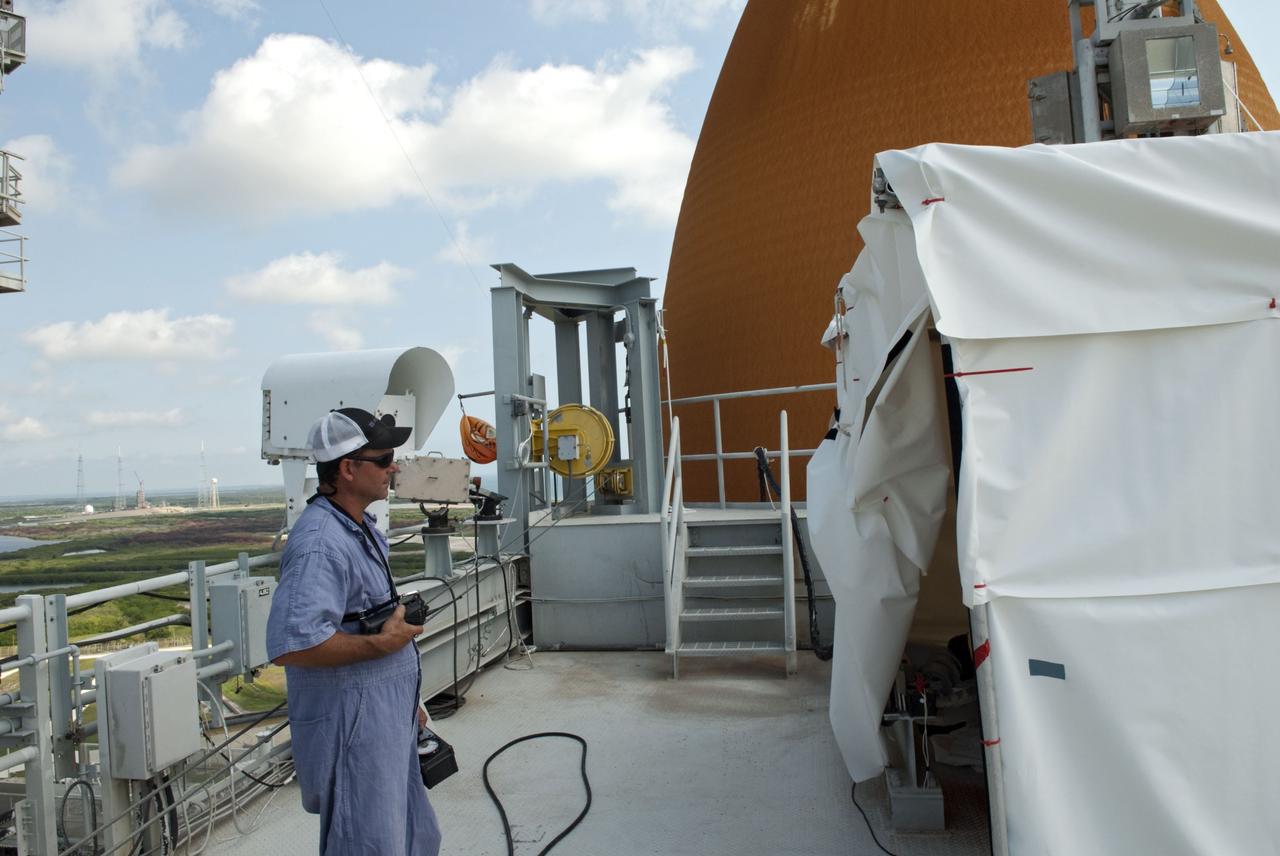
CAPE CANAVERAL, Fla. -- At NASA's Kennedy Space Center in Florida, technicians conduct Computed Radiography (CR) X-ray scans of 50 support beams, called stringers, on the shuttle-facing side of Atlantis' external tank at Launch Pad 39A. The hi-tech images will be taken of the tops and bottoms of the 21-foot long beams, which are located on the tank's intertank section. The scans follow a June 15th tanking test when the launch team filled then drained the tank of about 535,000 gallons of liquid hydrogen and liquid oxygen, just like for a launch. Earlier this year, managers directed teams to make the same stringer modifications to Atlantis' tank, ET-138, as they had after small cracks in the support beams of shuttle Discovery's STS-133 mission external tank were discovered. The scans will confirm there are no issues with Atlantis' tank. STS-135 Commander Chris Ferguson, Pilot Doug Hurley and Mission Specialists Sandy Magnus and Rex Walheim are targeted to lift off on space shuttle Atlantis July 8, taking with them the MPLM packed with supplies, logistics and spare parts to the International Space Station. The STS-135 mission also will fly a system to investigate the potential for robotically refueling existing satellites and return a failed ammonia pump module to help NASA better understand the failure mechanism and improve pump designs for future systems. STS-135 will be the 33rd flight of Atlantis, the 37th shuttle mission to the space station, and the 135th and final mission of NASA's Space Shuttle Program. For more information visit, www.nasa.gov/mission_pages/shuttle/shuttlemissions/sts135/index.html. Photo credit: NASA/Jim Grossmann
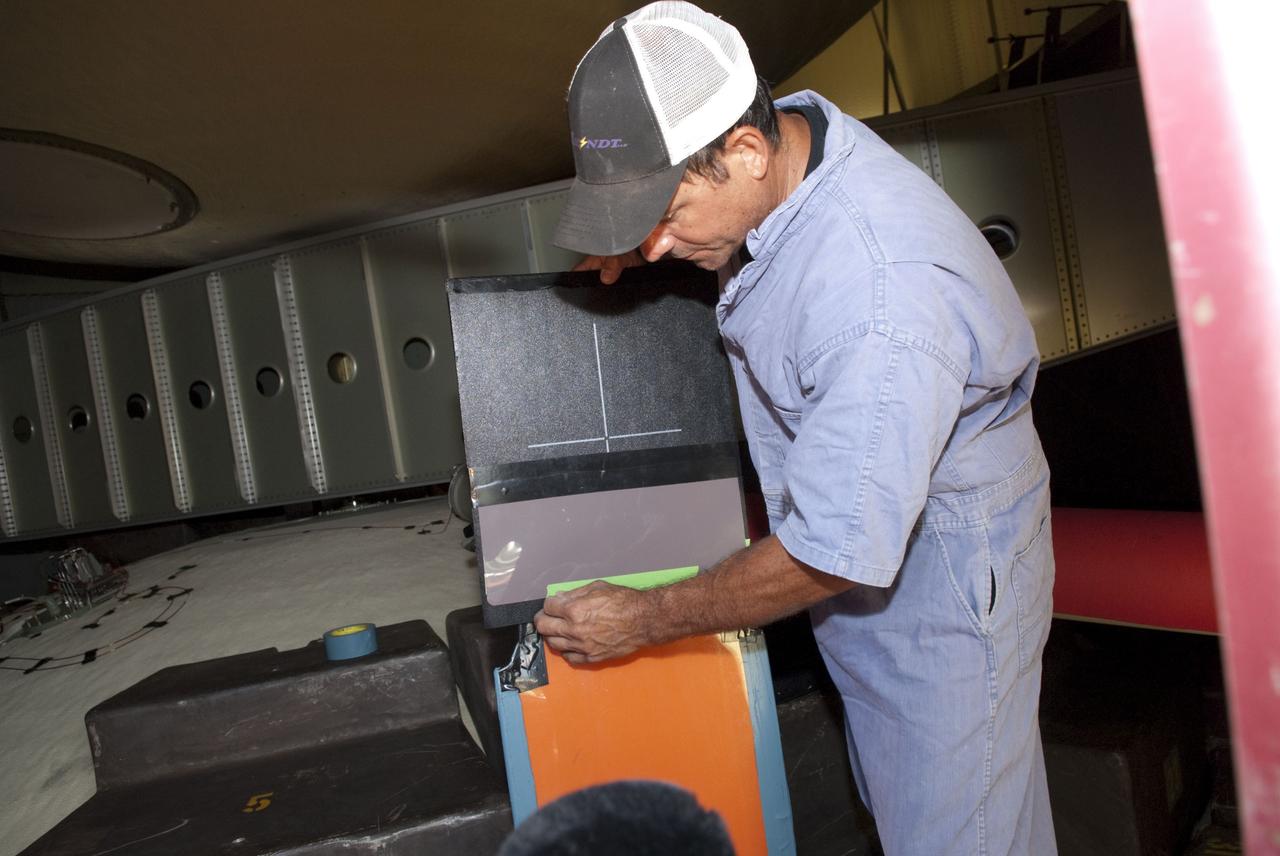
CAPE CANAVERAL, Fla. -- At NASA's Kennedy Space Center in Florida, technicians prepare to conduct Computed Radiography (CR) X-ray scans of 50 support beams, called stringers, on the shuttle-facing side of Atlantis' external tank at Launch Pad 39A. The hi-tech images will be taken of the tops and bottoms of the 21-foot long beams, which are located on the tank's intertank section. Here, a technician prepares an image plate inside the outertank. The scans follow a June 15th tanking test when the launch team filled then drained the tank of about 535,000 gallons of liquid hydrogen and liquid oxygen, just like for a launch. Earlier this year, managers directed teams to make the same stringer modifications to Atlantis' tank, ET-138, as they had after small cracks in the support beams of shuttle Discovery's STS-133 mission external tank were discovered. The scans will confirm there are no issues with Atlantis' tank. STS-135 Commander Chris Ferguson, Pilot Doug Hurley and Mission Specialists Sandy Magnus and Rex Walheim are targeted to lift off on space shuttle Atlantis July 8, taking with them the MPLM packed with supplies, logistics and spare parts to the International Space Station. The STS-135 mission also will fly a system to investigate the potential for robotically refueling existing satellites and return a failed ammonia pump module to help NASA better understand the failure mechanism and improve pump designs for future systems. STS-135 will be the 33rd flight of Atlantis, the 37th shuttle mission to the space station, and the 135th and final mission of NASA's Space Shuttle Program. For more information visit, www.nasa.gov/mission_pages/shuttle/shuttlemissions/sts135/index.html. Photo credit: NASA/Jim Grossmann
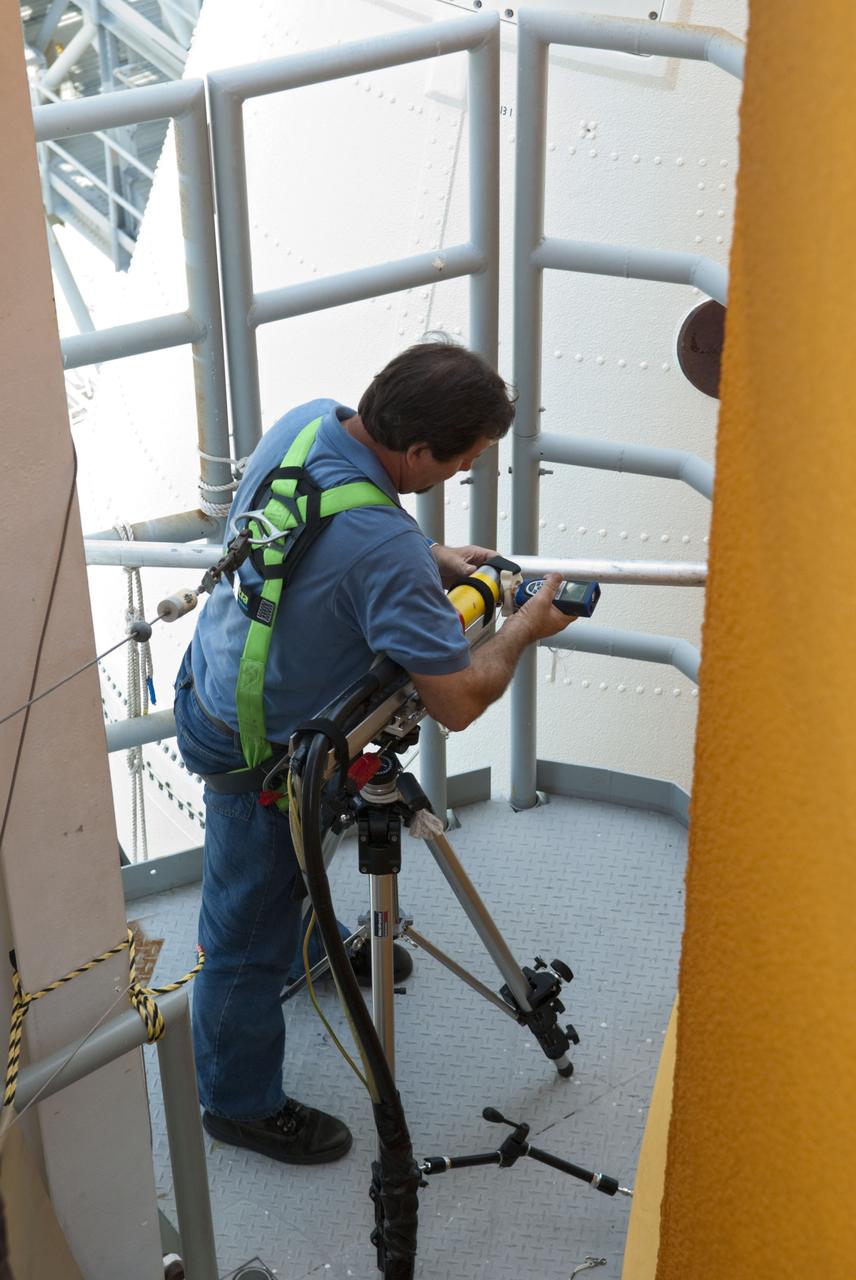
CAPE CANAVERAL, Fla. -- At NASA's Kennedy Space Center in Florida, technicians conduct Computed Radiography (CR) X-ray scans of 50 support beams, called stringers, on the shuttle-facing side of Atlantis' external tank at Launch Pad 39A. The hi-tech images will be taken of the tops and bottoms of the 21-foot long beams, which are located on the tank's intertank section. The scans follow a June 15th tanking test when the launch team filled then drained the tank of about 535,000 gallons of liquid hydrogen and liquid oxygen, just like for a launch. Earlier this year, managers directed teams to make the same stringer modifications to Atlantis' tank, ET-138, as they had after small cracks in the support beams of shuttle Discovery's STS-133 mission external tank were discovered. The scans will confirm there are no issues with Atlantis' tank. STS-135 Commander Chris Ferguson, Pilot Doug Hurley and Mission Specialists Sandy Magnus and Rex Walheim are targeted to lift off on space shuttle Atlantis July 8, taking with them the MPLM packed with supplies, logistics and spare parts to the International Space Station. The STS-135 mission also will fly a system to investigate the potential for robotically refueling existing satellites and return a failed ammonia pump module to help NASA better understand the failure mechanism and improve pump designs for future systems. STS-135 will be the 33rd flight of Atlantis, the 37th shuttle mission to the space station, and the 135th and final mission of NASA's Space Shuttle Program. For more information visit, www.nasa.gov/mission_pages/shuttle/shuttlemissions/sts135/index.html. Photo credit: NASA/Jim Grossmann