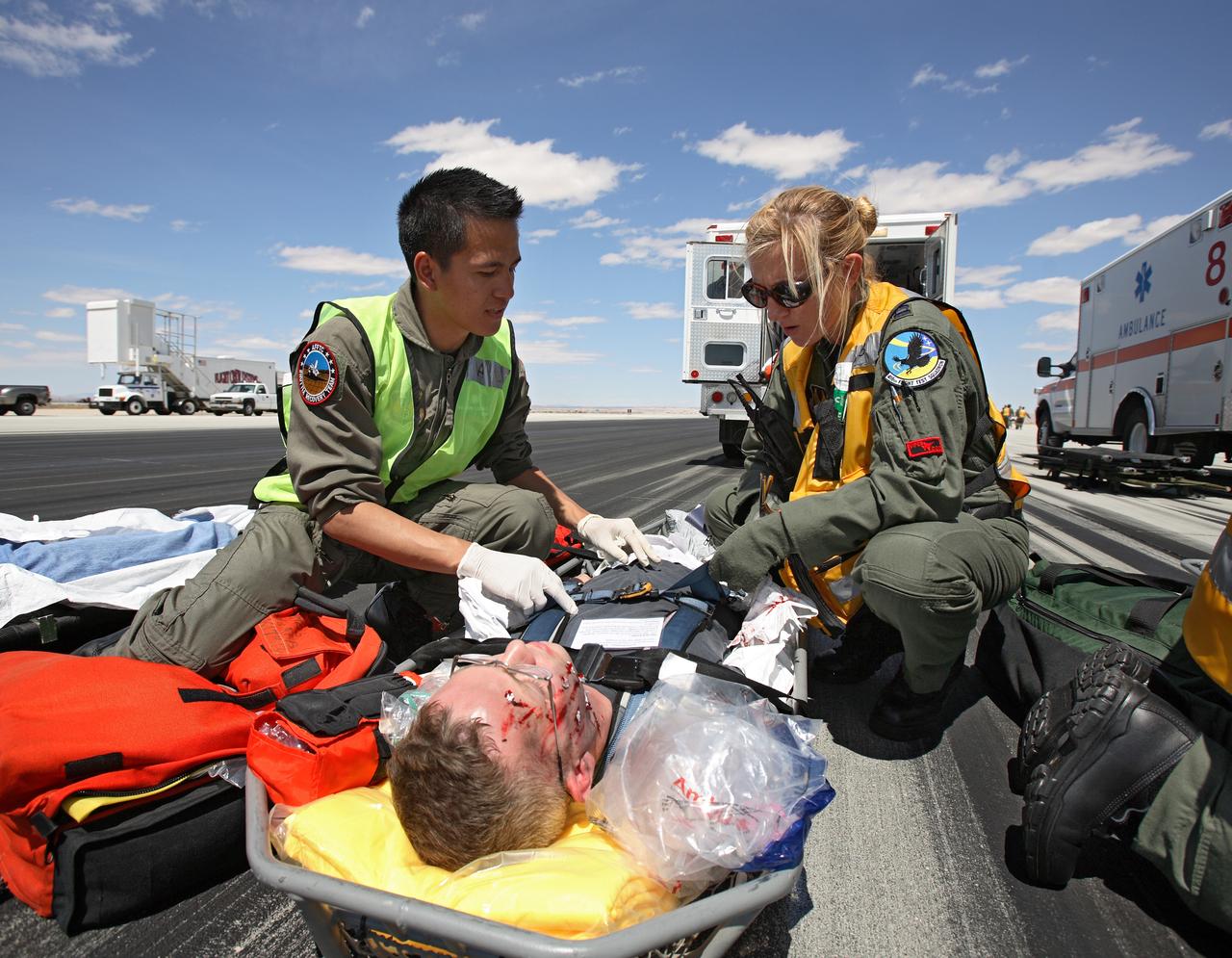
Complete with makeup to simulate facial injuries, a volunteer "astronaut" is tended to by aeromedical rescue staff after evacuation from the shuttle mockup. (USAF photo # 070505-F-1287F-145)
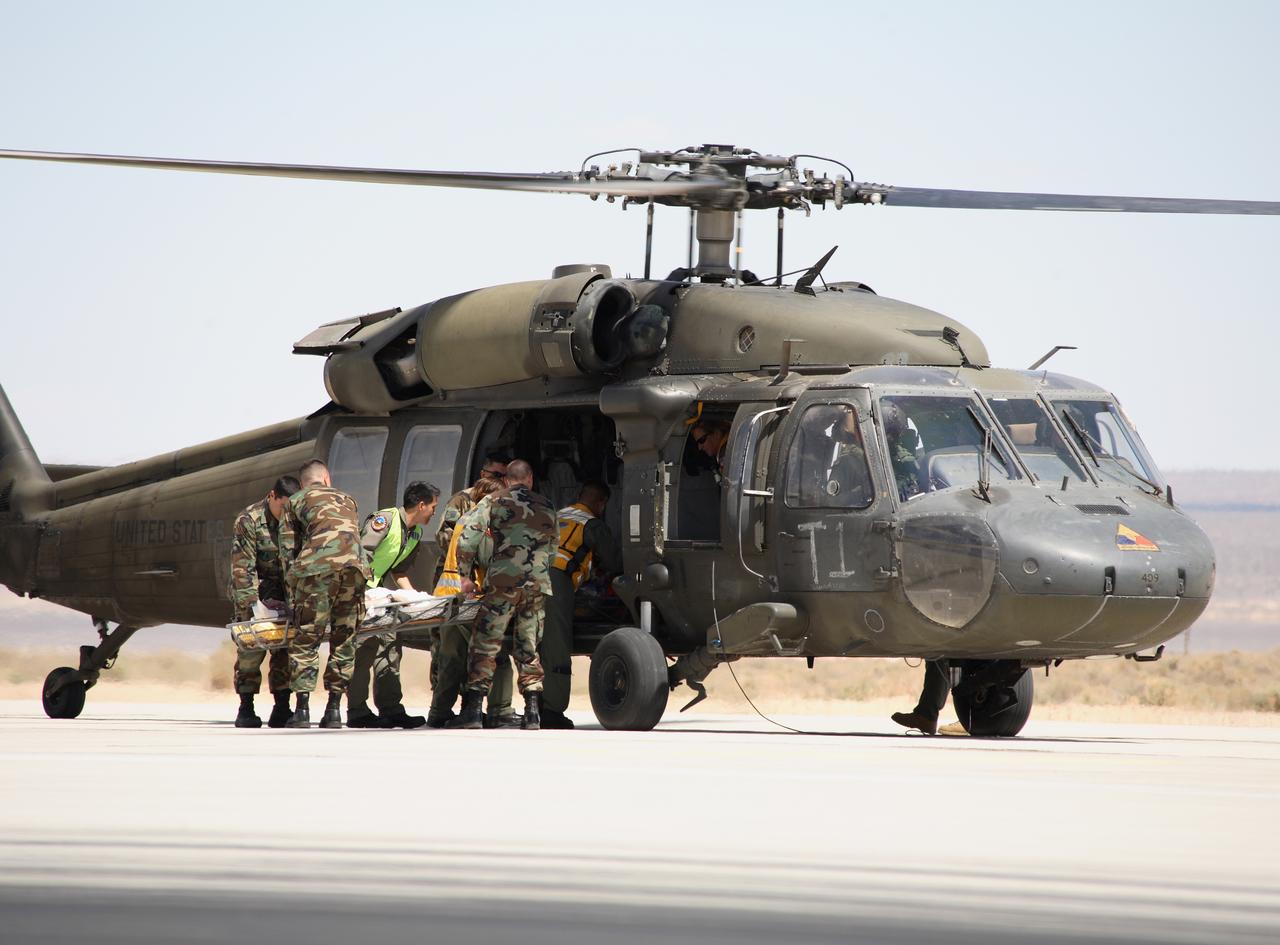
Air Force rescue team members load the volunteer "injured astronaut" on a stretcher into a Blackhawk helicopter for evacuation to a hospital during the exercise. (USAF photo # 070505-F-1287F-166)
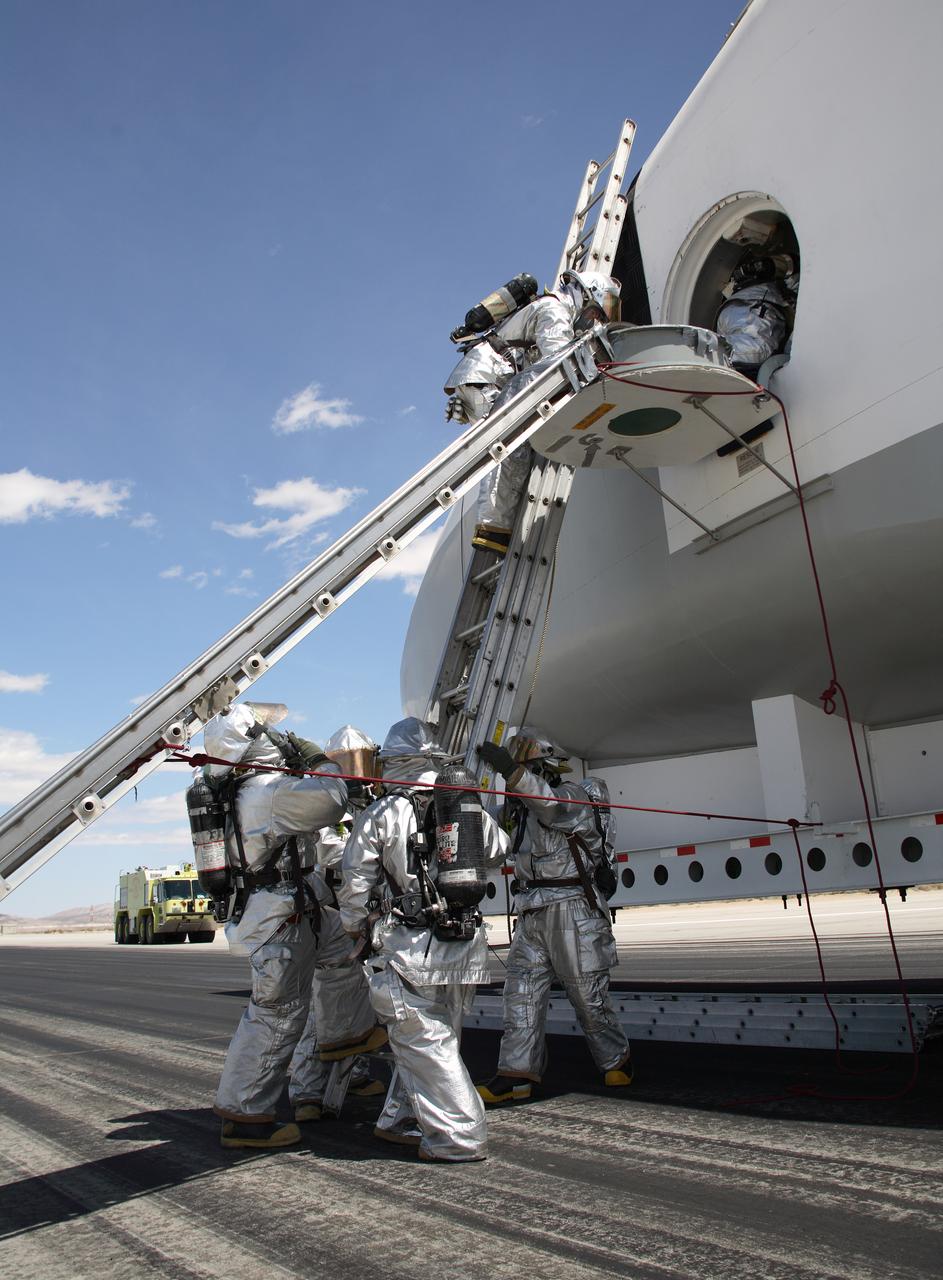
Air Force fire/rescue crew enter the space shuttle cabin mockup hatch to evacuate the shuttle crew during a shuttle rescue training exercise at Edwards AFB. (USAF photo # 070505-F-1287F-118)

Photos of the Emergency Evacuation Water Test at the CCP Crew Access Arm in Oak Hill, for Boeing/ULA.
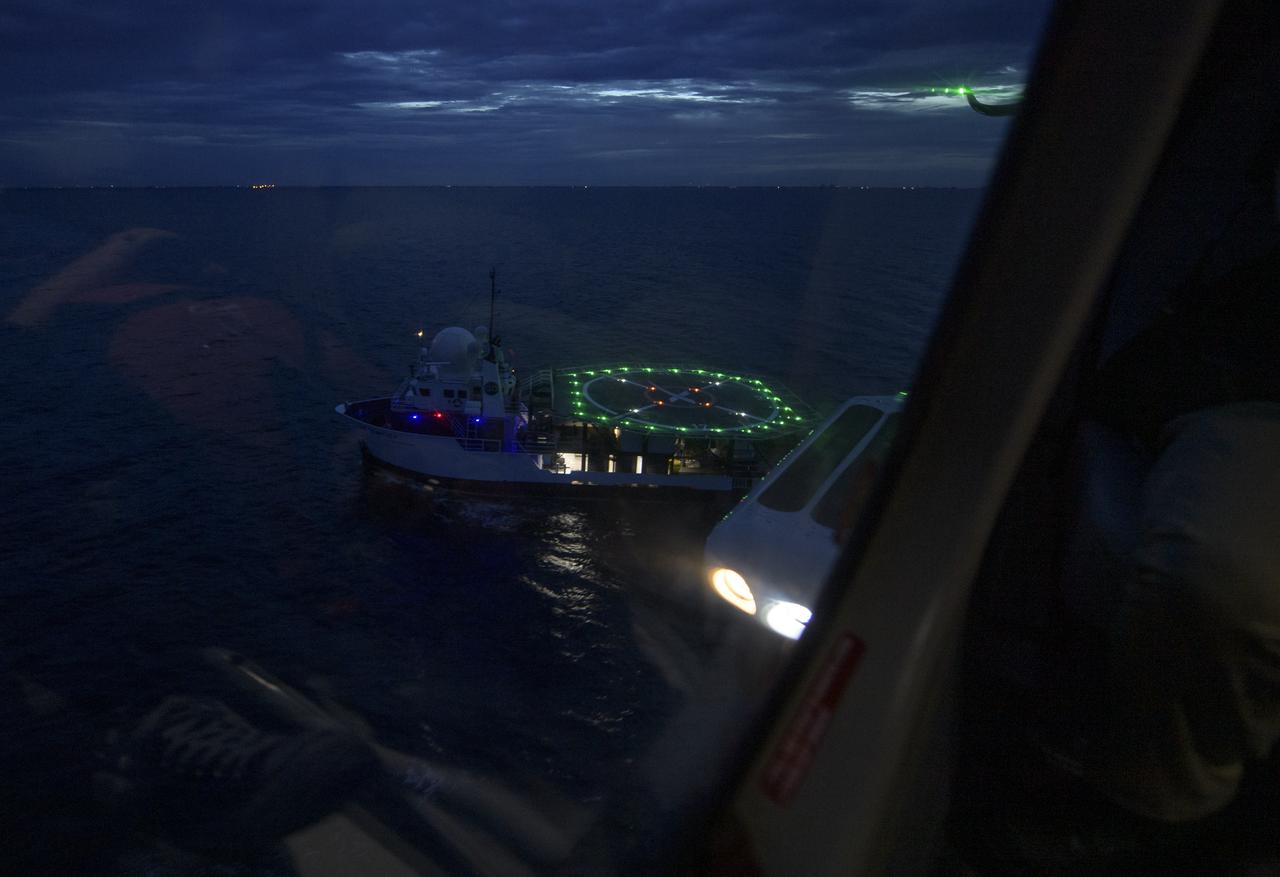
The GO Searcher ship is seen from a helicopter during practice for a medical emergency evacuation, Friday, August 15, 2019 in the Atlantic Ocean off the coast of Cape Canaveral, Florida. Teams from NASA and SpaceX gathered to refine procedures for emergency situations. SpaceX will use the GO Searcher ship during the Demo-2 mission to recover NASA astronauts returning from the International Space Station in their Crew Dragon spacecraft. Photo Credit: (NASA/Bill Ingalls)
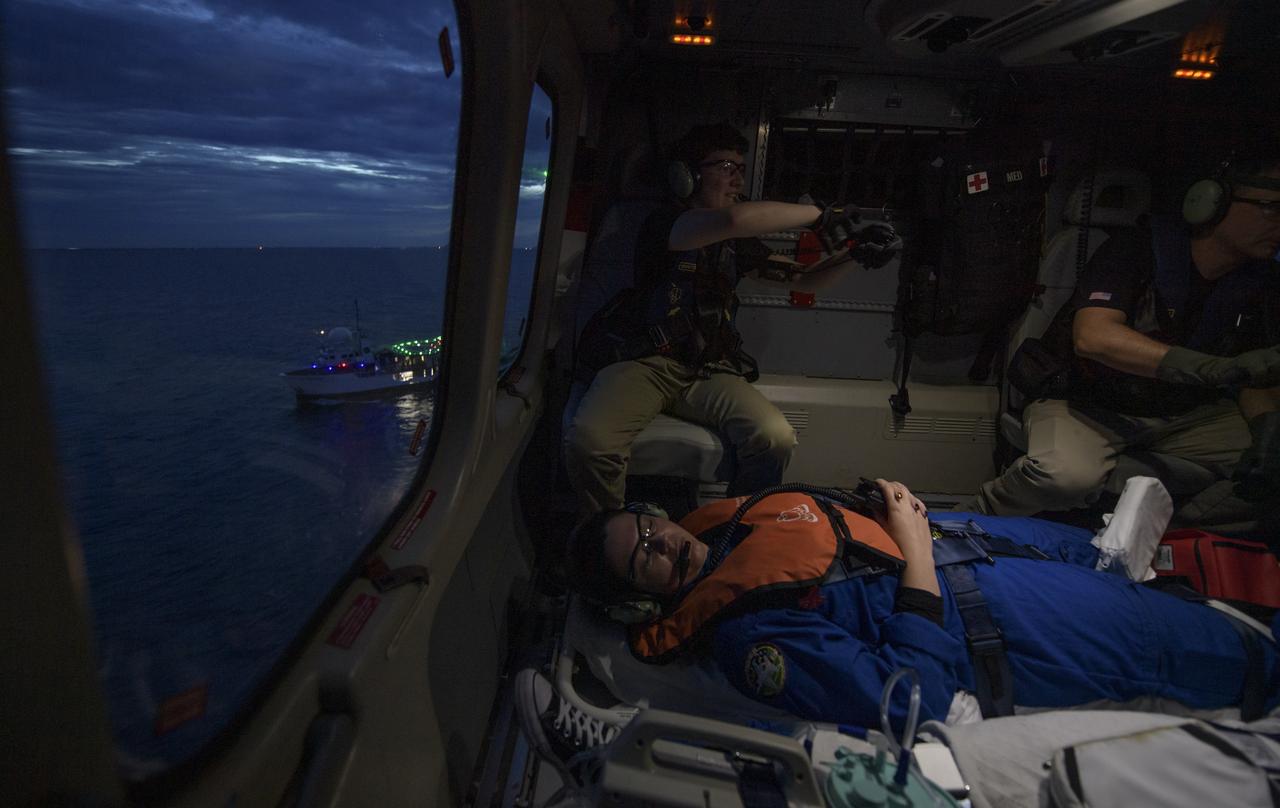
Teams from NASA and SpaceX practice medical emergency evacuations from the GO Searcher ship via helicopter, Friday, August 15, 2019 in the Atlantic Ocean off the coast of Cape Canaveral, Florida. The teams gathered to refine procedures for emergency situations. SpaceX will use the GO Searcher ship during the Demo-2 mission to recover NASA astronauts returning from the International Space Station in their Crew Dragon spacecraft. Photo Credit: (NASA/Bill Ingalls)
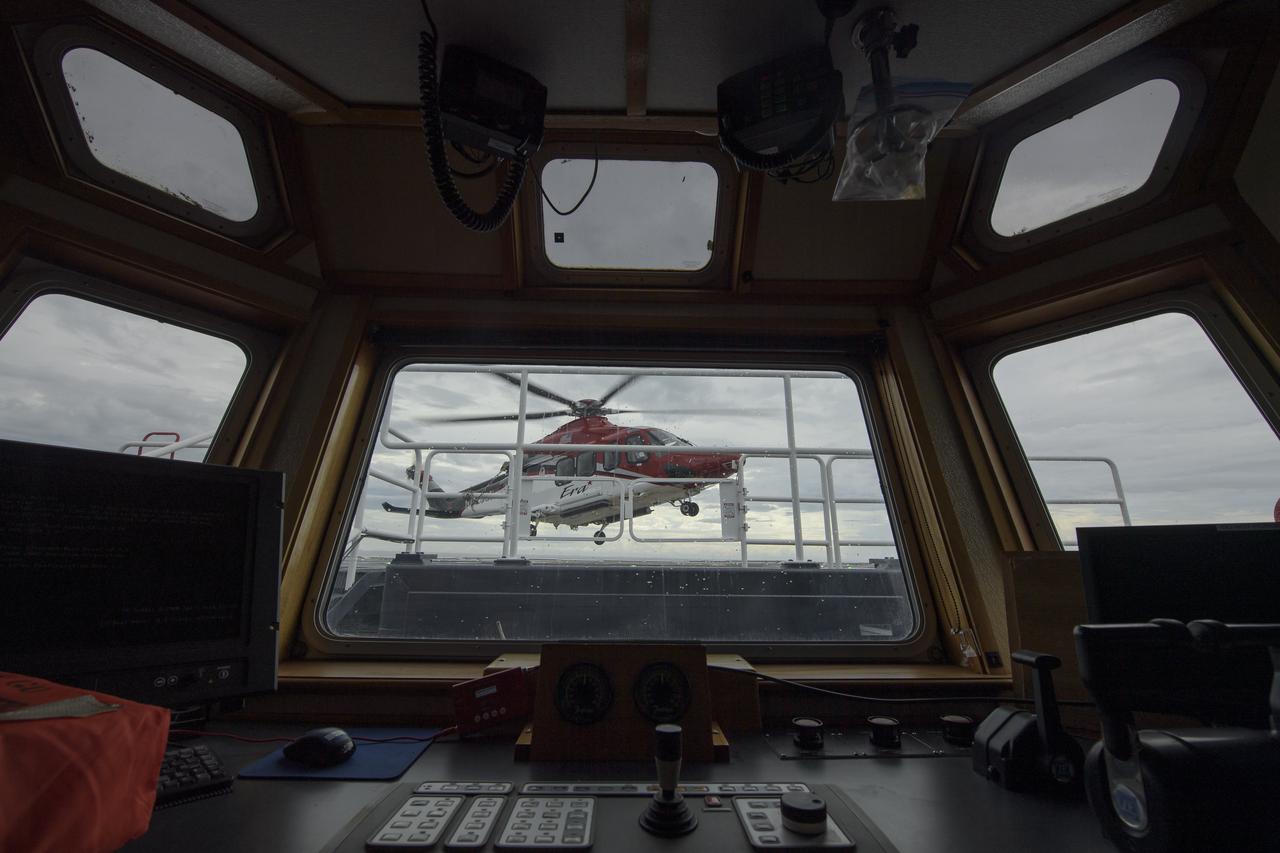
A helicopter equipped for air medical operations lands on the GO Searcher ship as teams from NASA and SpaceX practice procedures for medical emergency evacuation, Friday, August 15, 2019 in the Atlantic Ocean off the coast of Cape Canaveral, Florida. SpaceX will use the GO Searcher ship during the Demo-2 mission to recover NASA astronauts returning from the International Space Station in their Crew Dragon spacecraft. Photo Credit: (NASA/Bill Ingalls)
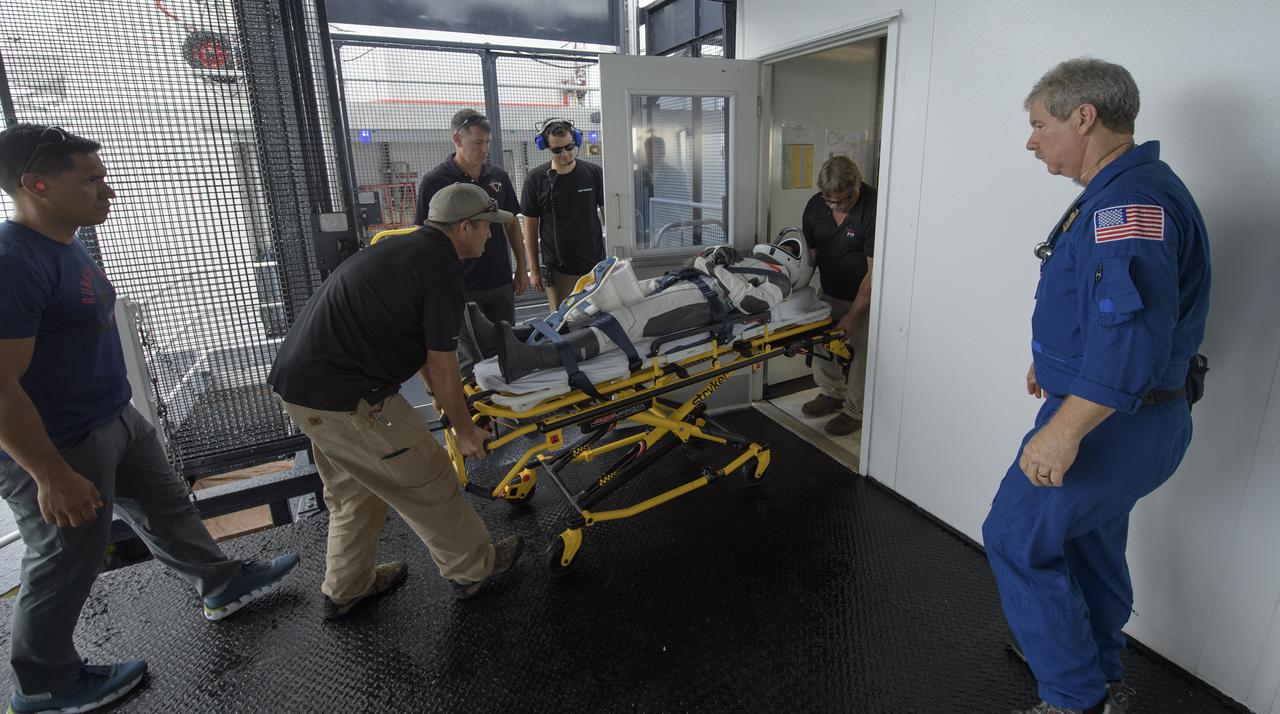
Teams from NASA and SpaceX practice procedures for medical emergency evacuation onboard the GO Searcher ship, Friday, August 15, 2019 in the Atlantic Ocean off the coast of Cape Canaveral, Florida. SpaceX will use the GO Searcher ship during the Demo-2 mission to recover NASA astronauts returning from the International Space Station in their Crew Dragon spacecraft. Photo Credit: (NASA/Bill Ingalls)
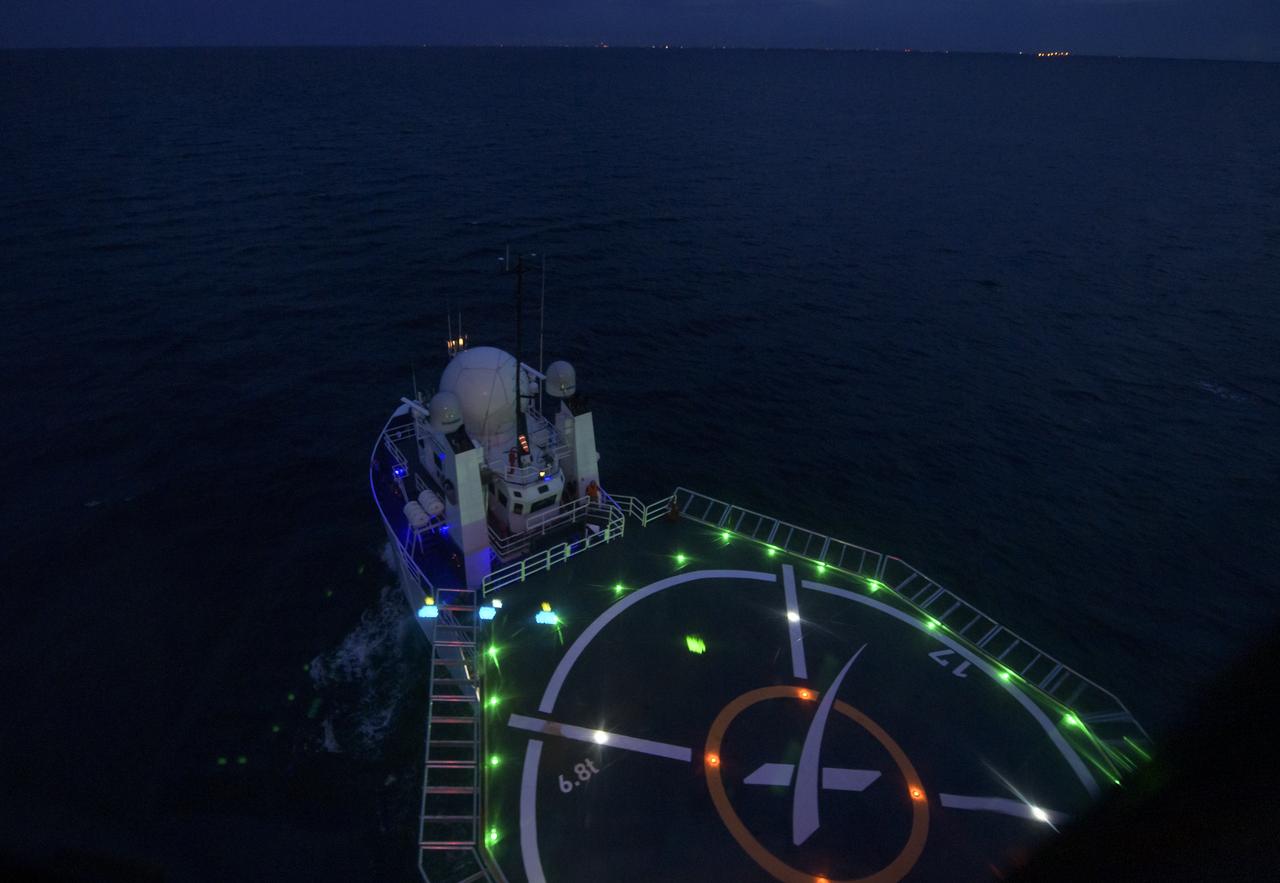
The GO Searcher ship is seen from a helicopter during practice for a medical emergency evacuation, Friday, August 15, 2019 in the Atlantic Ocean off the coast of Cape Canaveral, Florida. Teams from NASA and SpaceX gathered to refine procedures for emergency situations. SpaceX will use the GO Searcher ship during the Demo-2 mission to recover NASA astronauts returning from the International Space Station in their Crew Dragon spacecraft. Photo Credit: (NASA/Bill Ingalls)
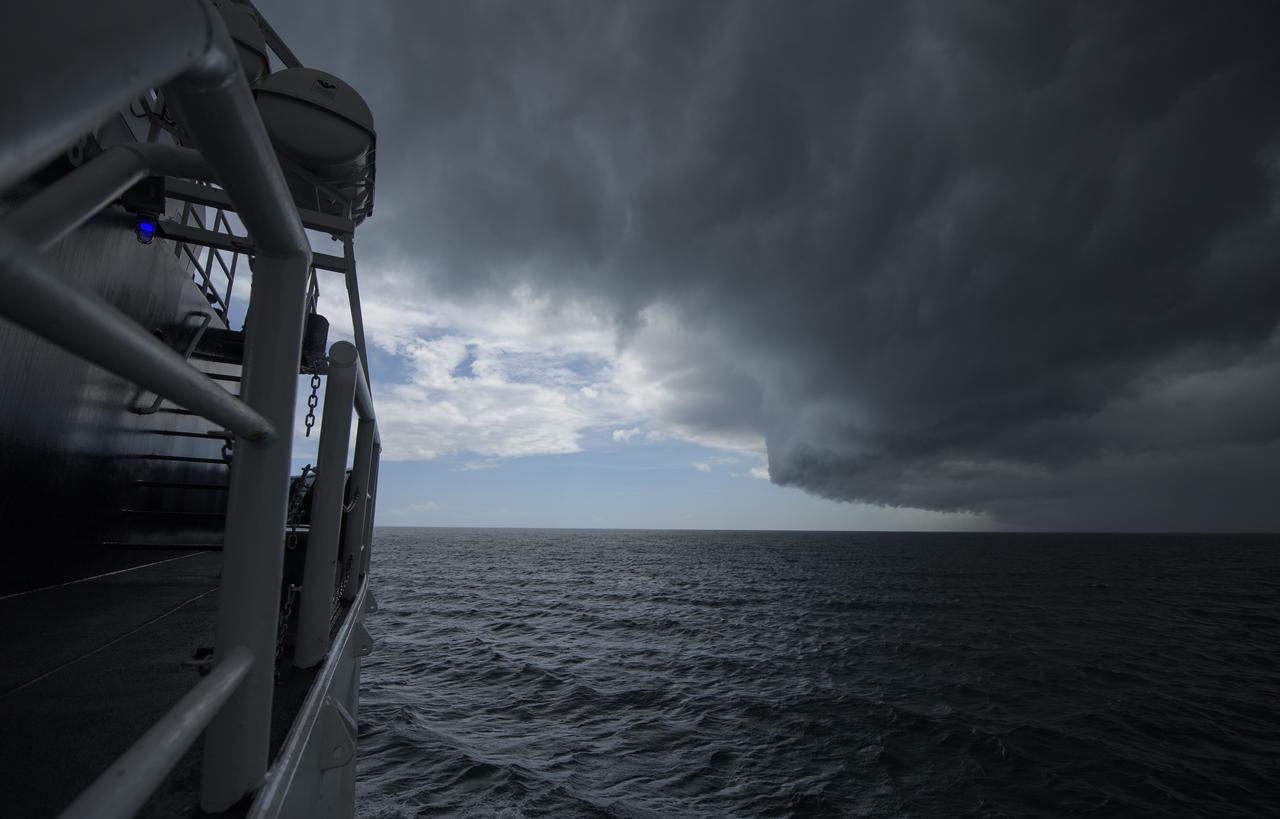
A quick moving storm passes as teams from NASA and SpaceX practice procedures for medical emergency evacuation onboard the GO Searcher ship, Friday, August 15, 2019 in the Atlantic Ocean off the coast of Cape Canaveral, Florida. SpaceX will use the GO Searcher ship during the Demo-2 mission to recover NASA astronauts returning from the International Space Station in their Crew Dragon spacecraft. Photo Credit: (NASA/Bill Ingalls)
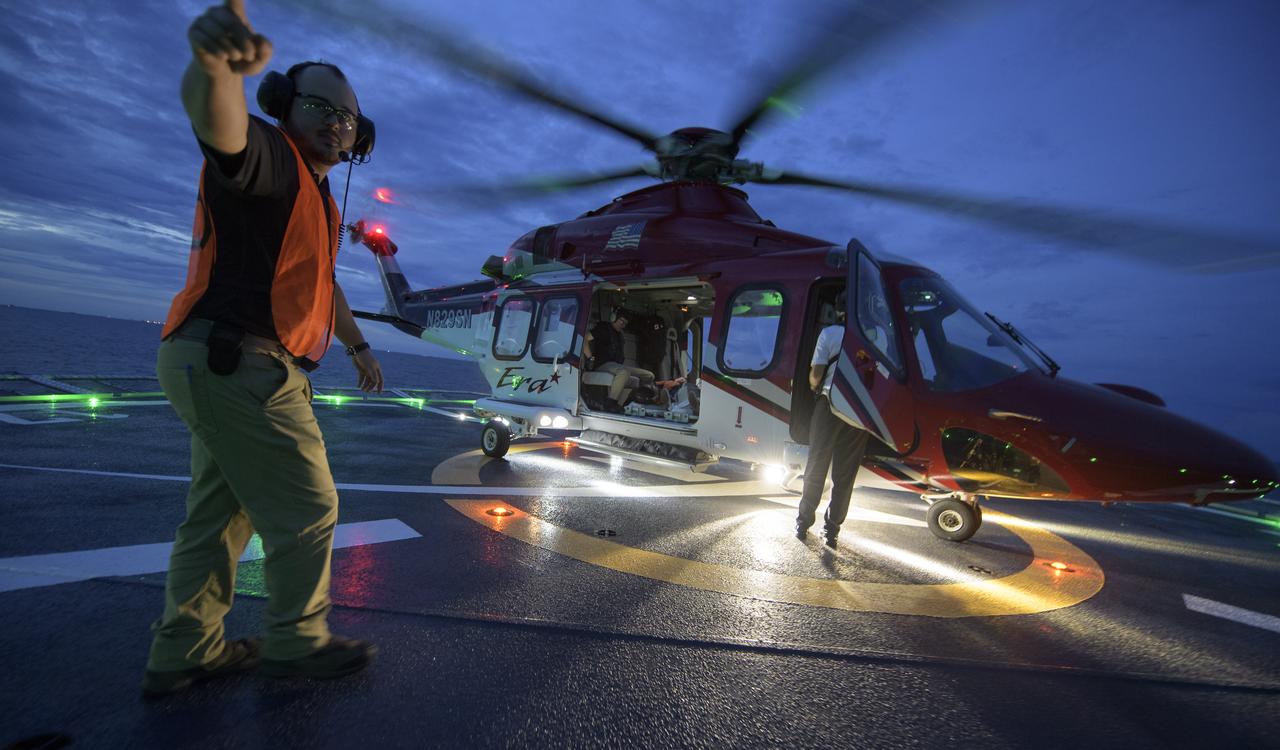
Teams from NASA and SpaceX practice procedures for medical emergency evacuation onboard the GO Searcher ship, Friday, August 15, 2019 in the Atlantic Ocean off the coast of Cape Canaveral, Florida. SpaceX will use the GO Searcher ship during the Demo-2 mission to recover NASA astronauts returning from the International Space Station in their Crew Dragon spacecraft. Photo Credit: (NASA/Bill Ingalls)
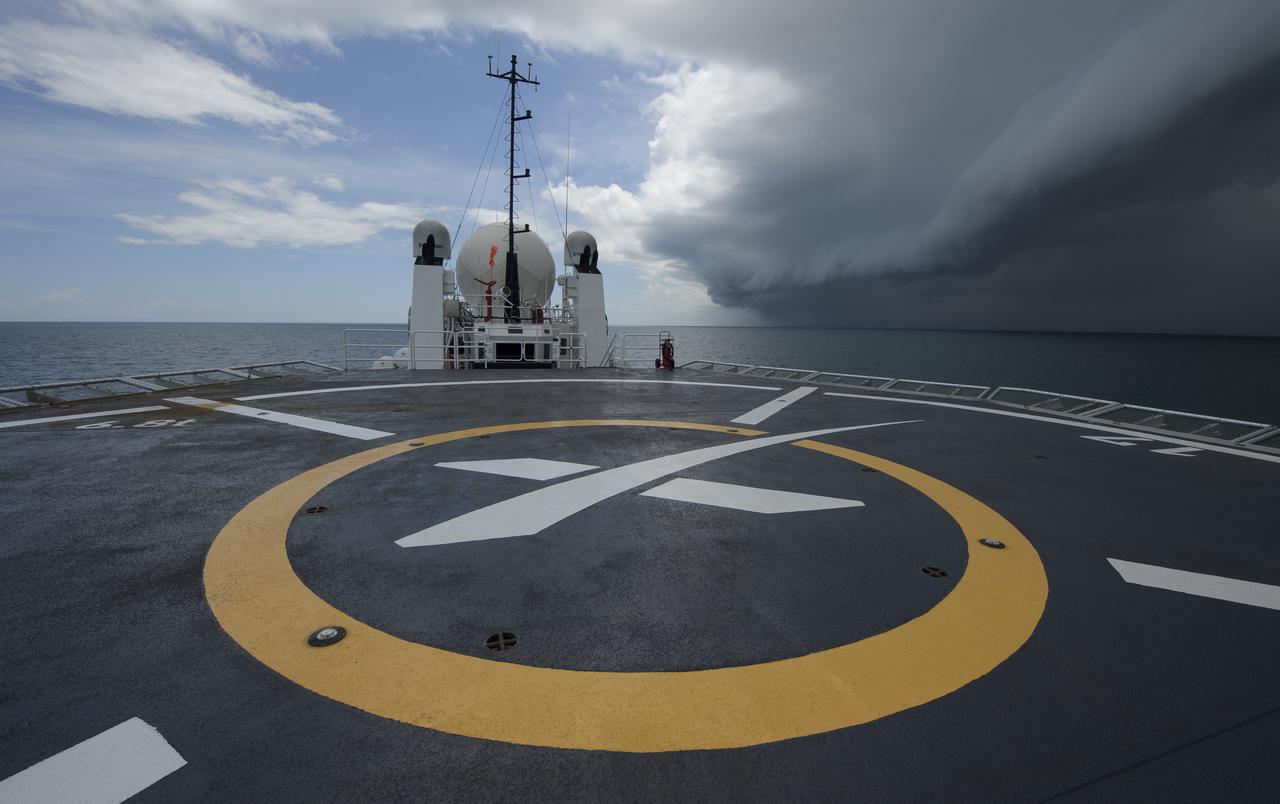
A quick moving storm passes as teams from NASA and SpaceX practice procedures for medical emergency evacuation onboard the GO Searcher ship, Friday, August 15, 2019 in the Atlantic Ocean off the coast of Cape Canaveral, Florida. SpaceX will use the GO Searcher ship during the Demo-2 mission to recover NASA astronauts returning from the International Space Station in their Crew Dragon spacecraft. Photo Credit: (NASA/Bill Ingalls)
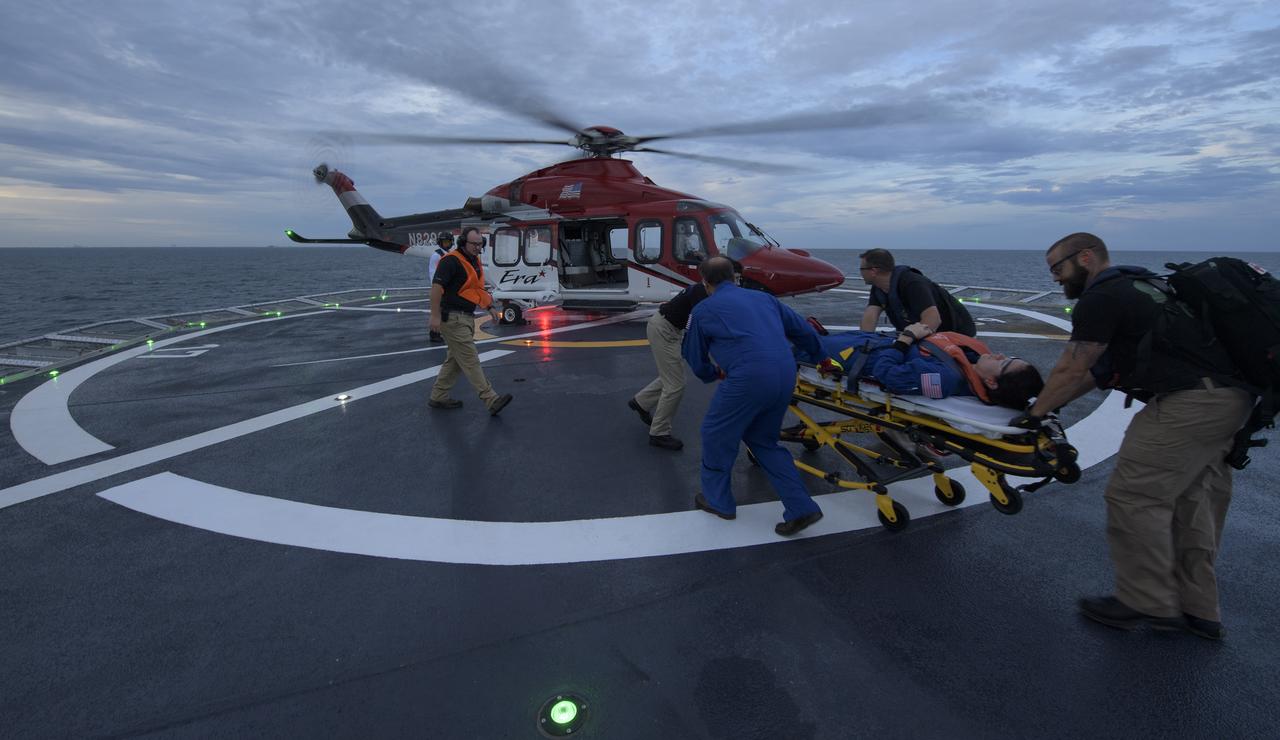
Teams from NASA and SpaceX practice procedures for medical emergency evacuation onboard the GO Searcher ship, Friday, August 15, 2019 in the Atlantic Ocean off the coast of Cape Canaveral, Florida. SpaceX will use the GO Searcher ship during the Demo-2 mission to recover NASA astronauts returning from the International Space Station in their Crew Dragon spacecraft. Photo Credit: (NASA/Bill Ingalls)
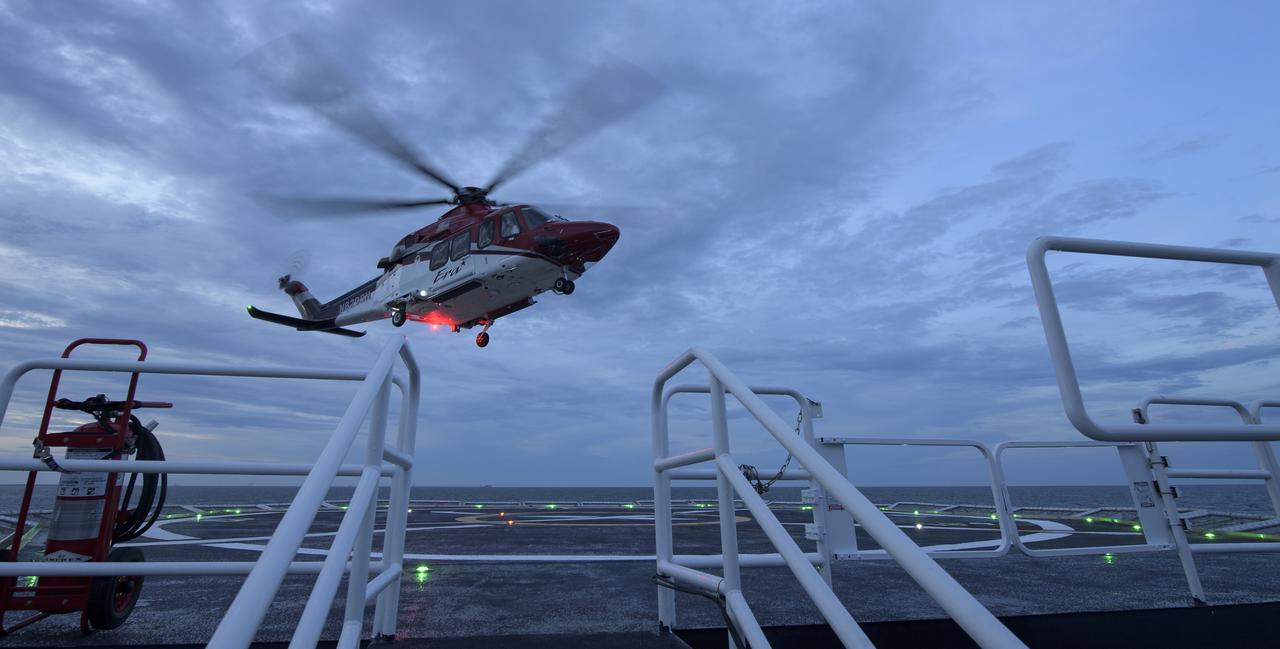
A helicopter equipped for air medical operations takes off from the GO Searcher ship as teams from NASA and SpaceX practice procedures for medical emergency evacuation, Friday, August 15, 2019 in the Atlantic Ocean off the coast of Cape Canaveral, Florida. SpaceX will use the GO Searcher ship during the Demo-2 mission to recover NASA astronauts returning from the International Space Station in their Crew Dragon spacecraft. Photo Credit: (NASA/Bill Ingalls)
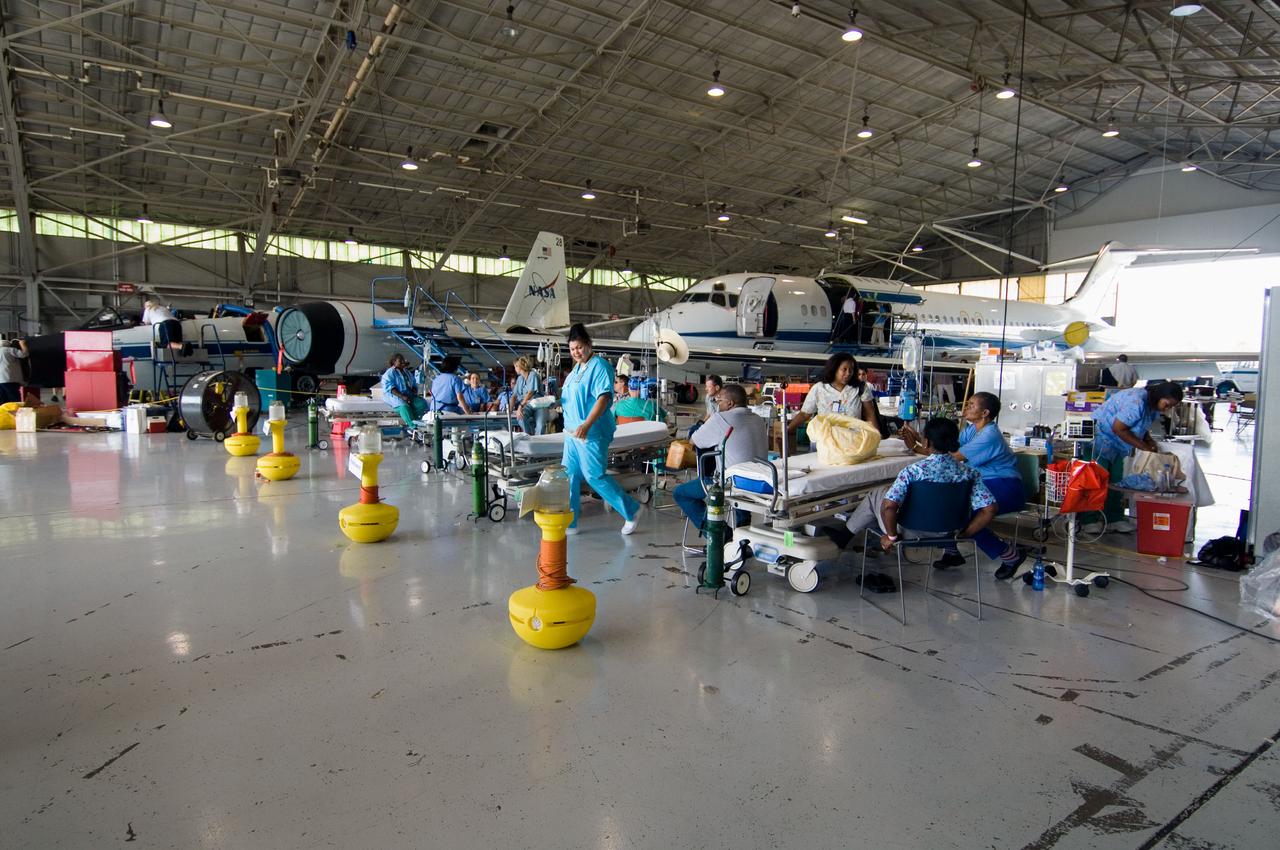
JSC2005-E-36144 (2 September 2005) --- NASA Johnson Space Center Aircraft Operations Hangar 990 at Ellington Field, Houston, has been used as a triage location this week for medical patients evacuated by air from New Orleans to pass through on their way to Houston-area medical facilities. Hundreds of patients have passed through the location so far, as the transfer operations, led by the Veterans Administration and supported by NASA and other agencies, continue.
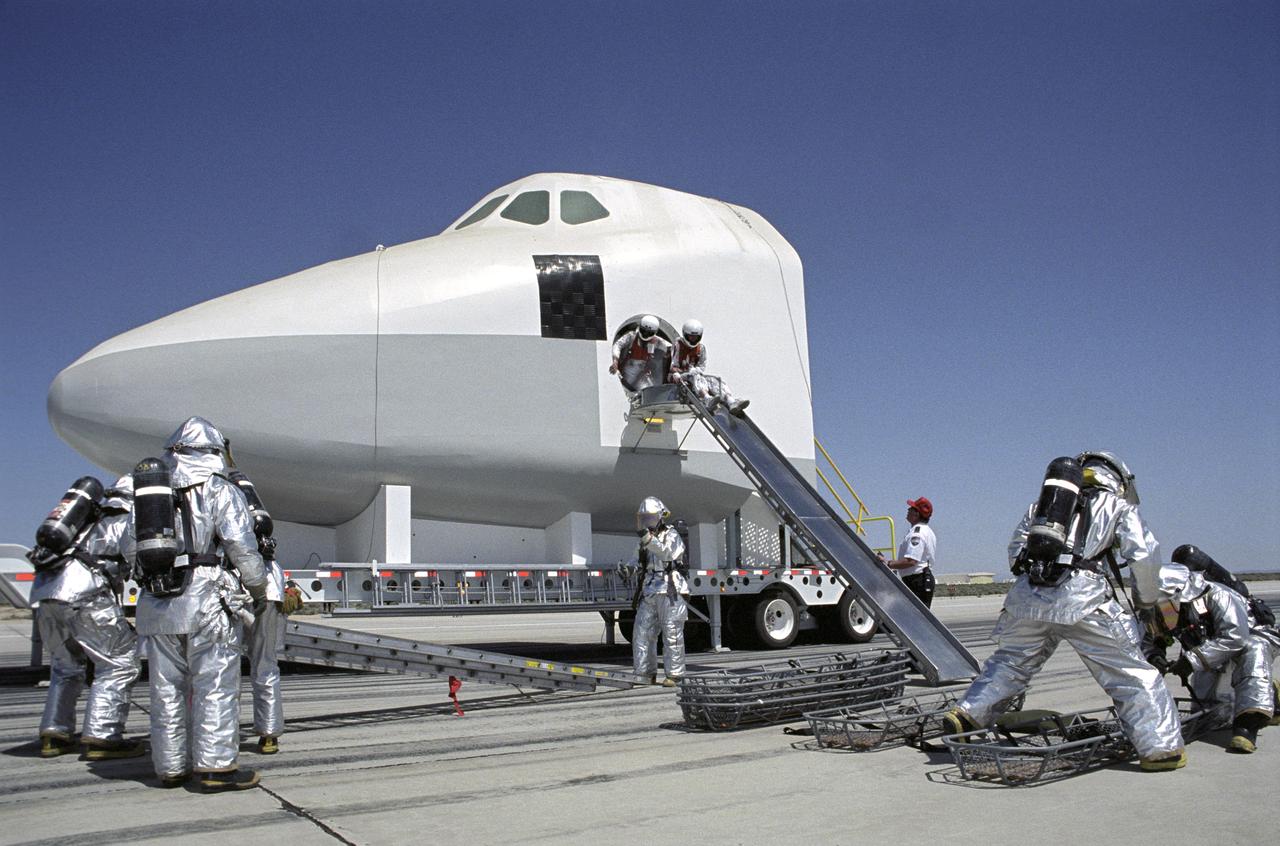
While fire-rescue personnel prepare evacuation litters, two stand-in "astronauts" prepare to use an exit slide from a Shuttle mockup during a rescue training exercise.
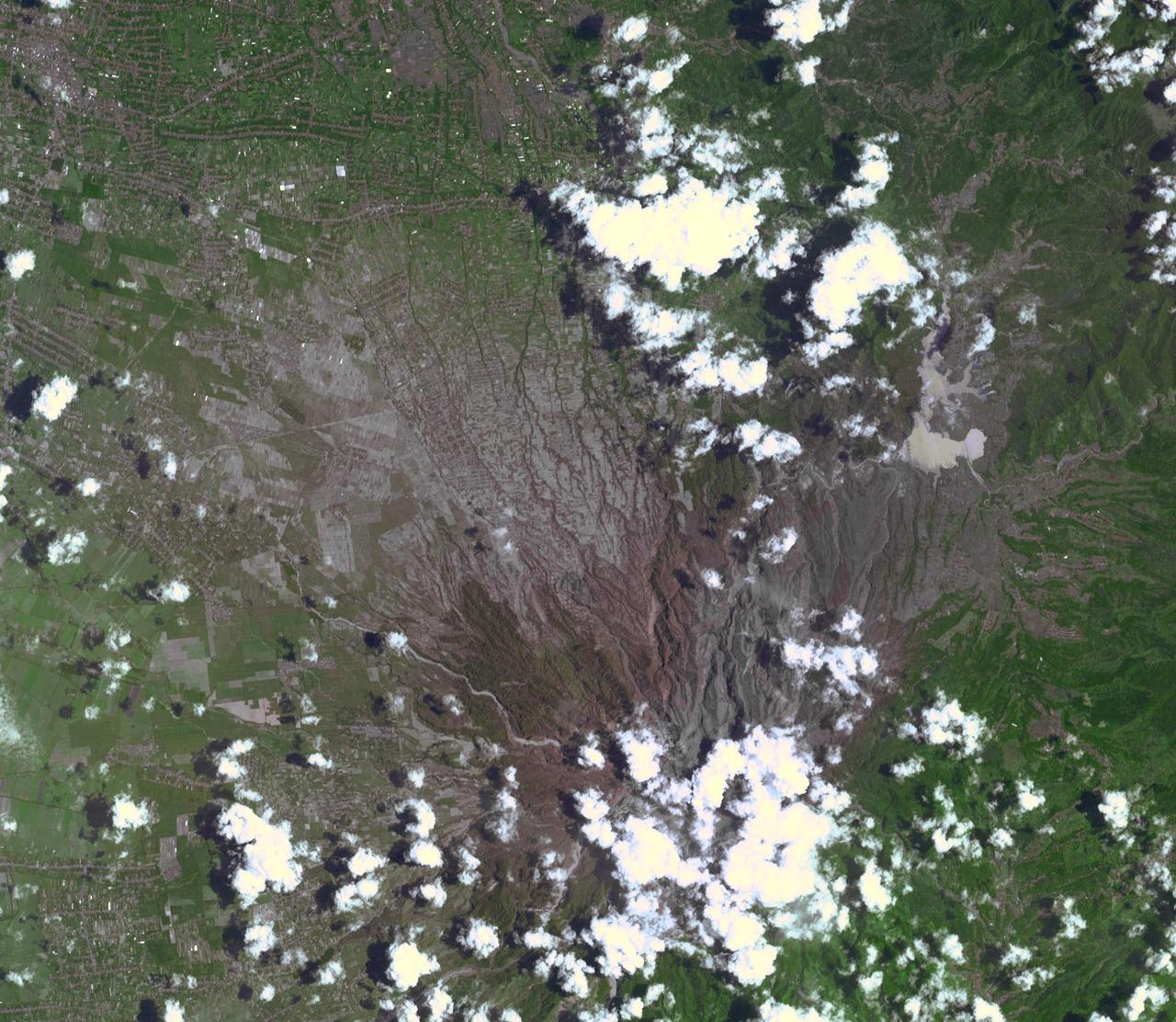
On Feb. 13, 2014, violent eruption of Kelud stratovolcano in Java, Indonesia sent volcanic ash covering an area of 70,000 square miles, prompting the evacuation of tens of thousands of people. This image is from NASA Terra spacecraft.
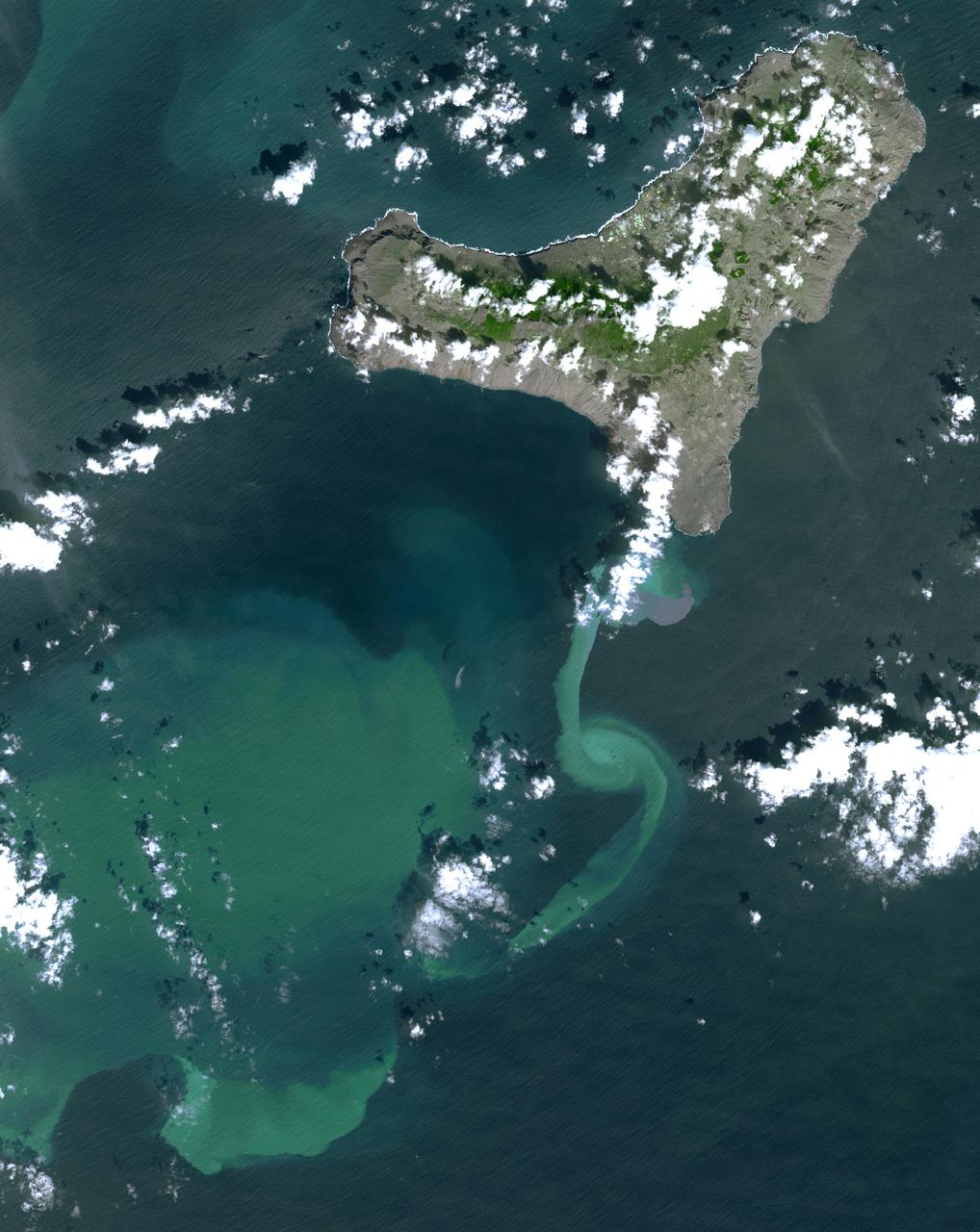
In July 2011, volcanic tremors began on the Island of El Hierro in the Canary Islands; by September, many tourists evacuated the resort island, fearing a volcanic eruption. This image is from NASA Terra spacecraft.
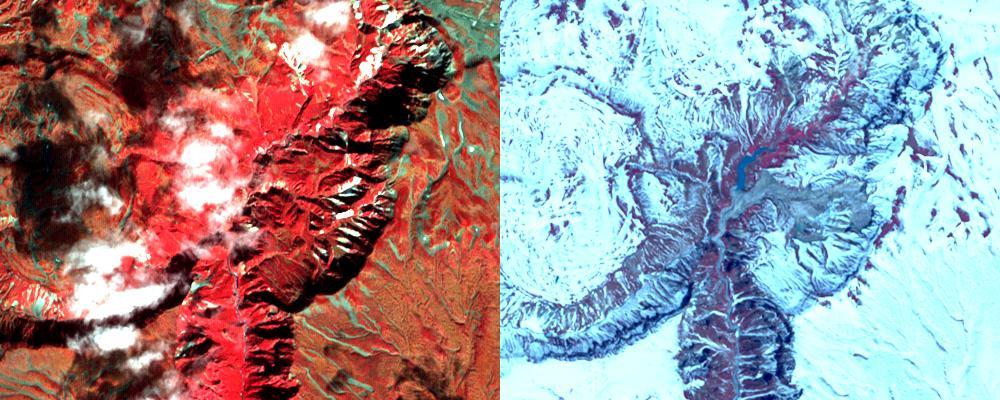
A devastating mudslide in the world-renowned Geyser Valley on the Kamchatka Peninsula virtually obliterated the natural wonder, forcing the emergency evacuation of visitors and national park personnel. This image was acquired by NASA Terra spacecraft.

On Jan. 16, 2014, NASA Terra satellite passed over Glendora, Calif., where a large wildfire has claimed several homes, causing mandatory evacuations and prompting an air quality alert by public health officials.
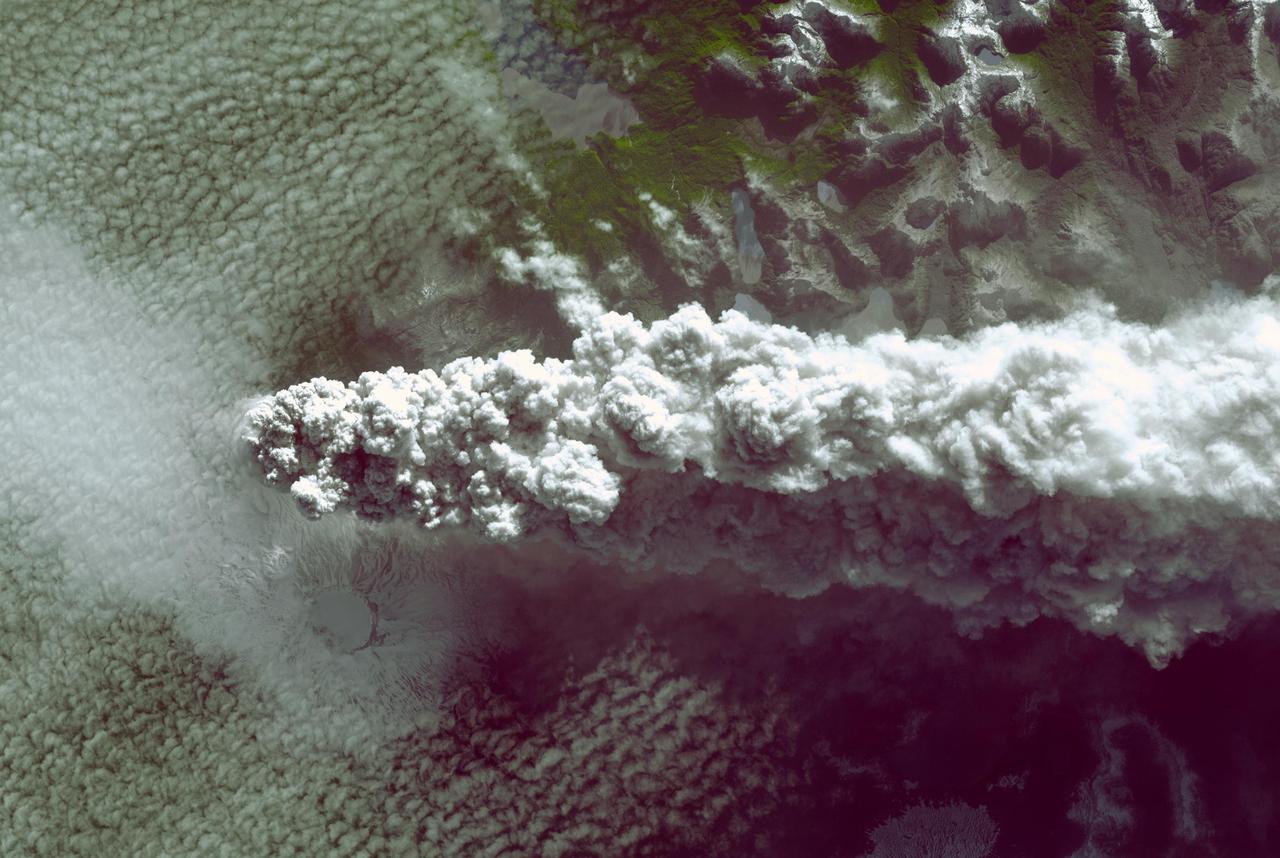
Southern Chile Puyehue volcano came to life on June 4, 2011, after decades of dormancy. Winds spread the ash column eastward over neighboring Argentina, leading to the evacuation of thousands of residents. This image is from NASA Terra spacecraft.
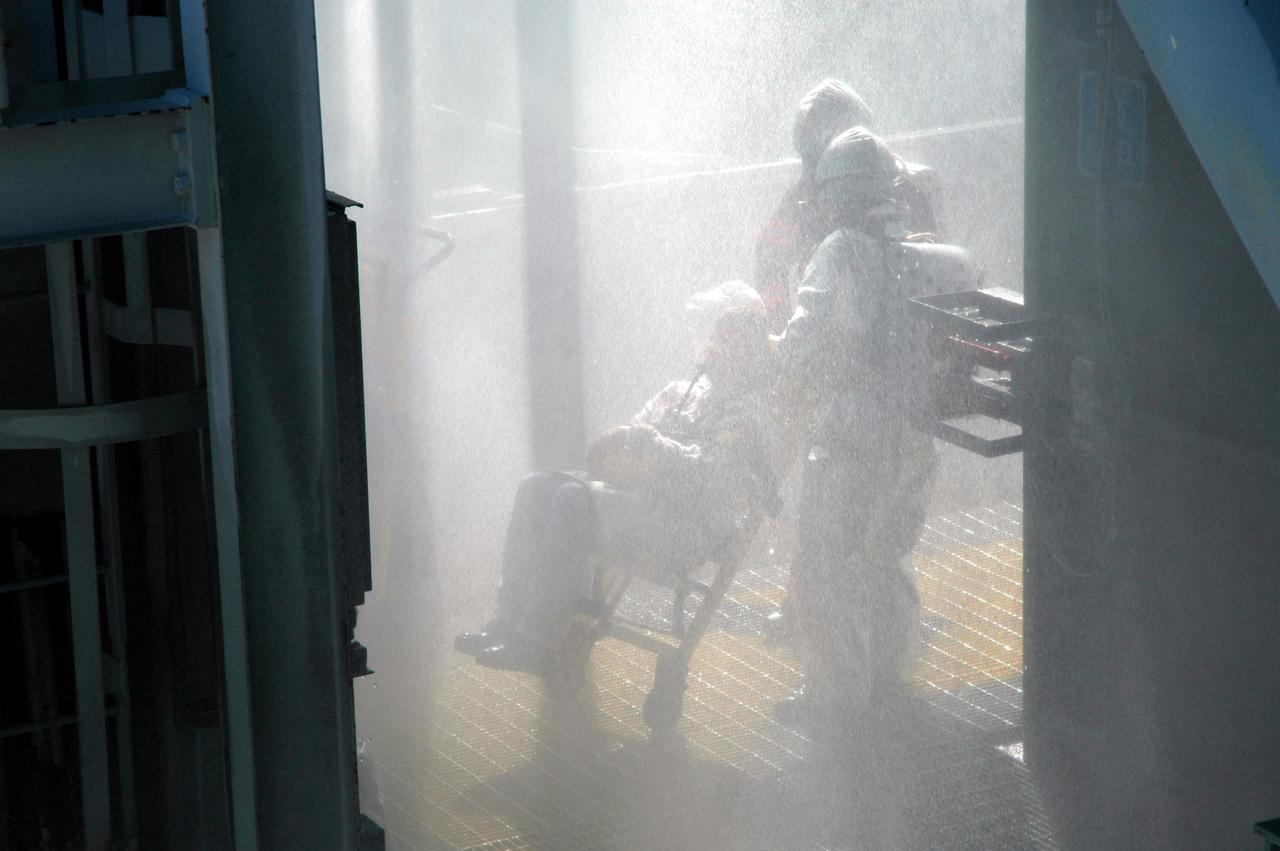
KENNEDY SPACE CENTER, FLA. - On Launch Pad 39A, astronaut-suited workers take part in an emergency egress scenario. The four-hour exercise simulated normal launch countdown operations, with the added challenge of a fictitious event causing an evacuation of the vehicle and launch pad. It tested the team’s rescue approaches on the Fixed Service Structure, slidewire basket evacuation, triage care and transportation of injured personnel to hospitals, as well as communications and coordination.
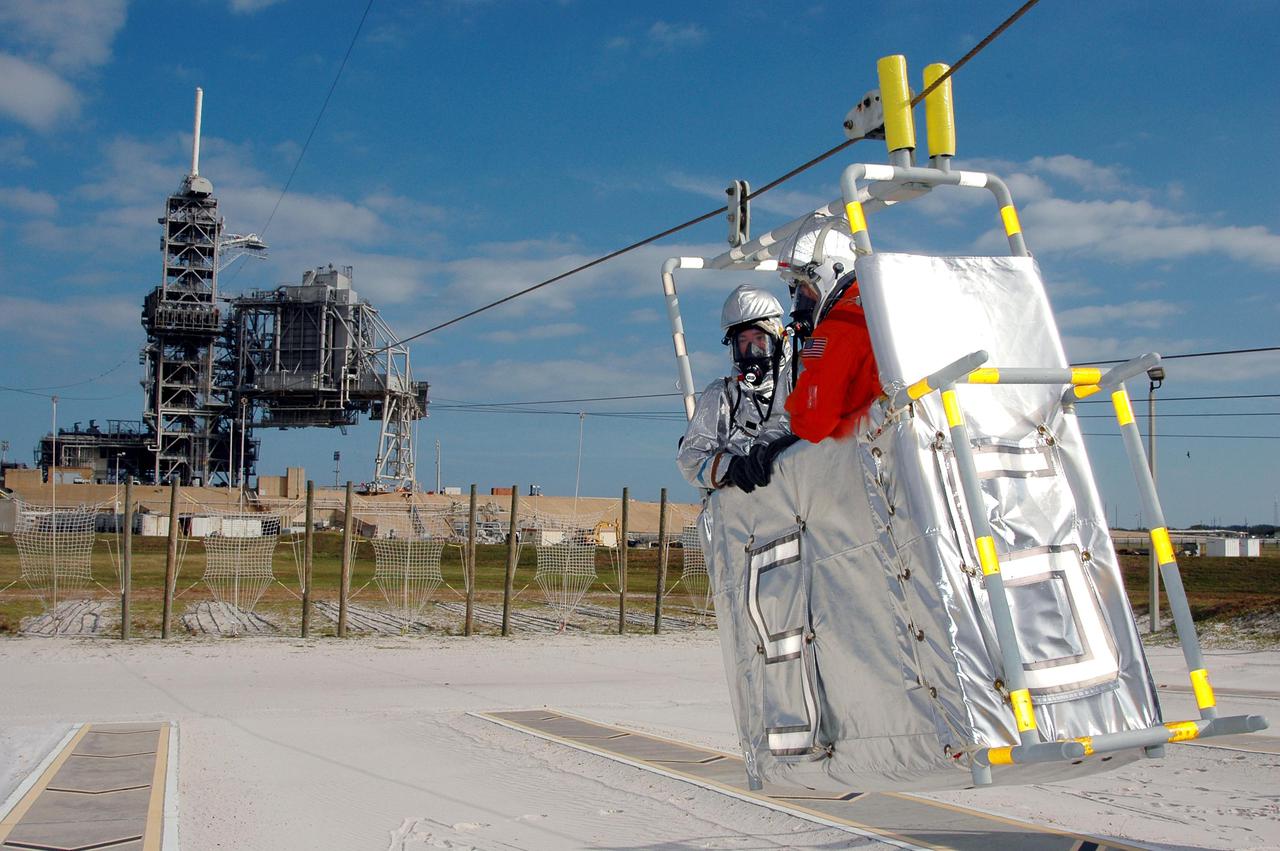
KENNEDY SPACE CENTER, FLA. - On Launch Pad 39A, a rescue team member and astronaut-suited worker approach landing in a slidewire basket reaching from the Fixed Service Structure in the background during an emergency egress scenario. The four-hour exercise simulated normal launch countdown operations, with the added challenge of a fictitious event causing an evacuation of the vehicle and launch pad. It tested the team’s rescue approaches on the Fixed Service Structure, slidewire basket evacuation, triage care and transportation of injured personnel to hospitals, as well as communications and coordination.

jsc2011e002625 (01/11/2011)--- Training was performed at the Johnson Space Center to familiarize crew with emergency evacuation procedures from the shuttle system. Engineers at JSC (including Susana Tapia Harper & Alma Stephane Tapia) donned Advanced Crew Escape Space Suit System (ACES) suits while the astronaut crew practiced mock evacuations. NASA photo by James Blair
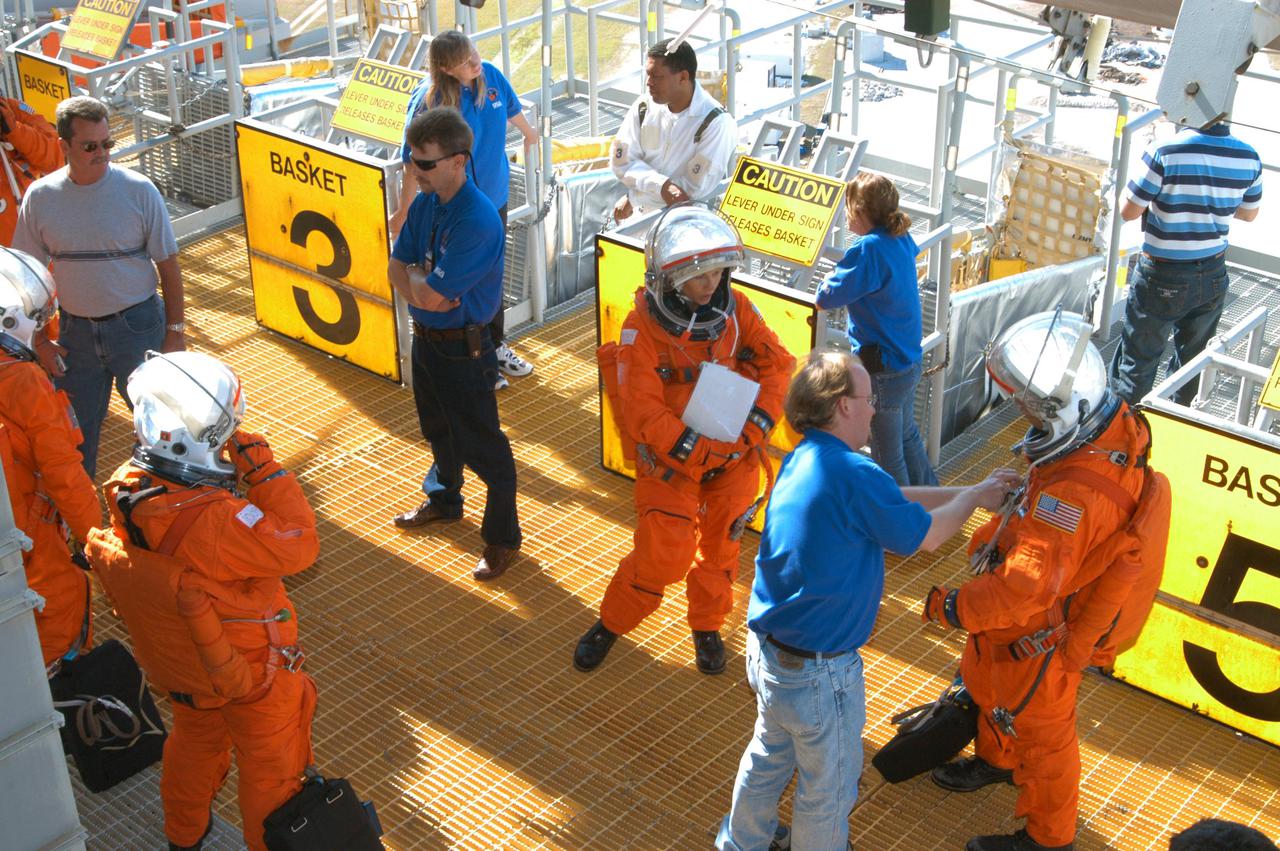
KENNEDY SPACE CENTER, FLA. - On Launch Pad 39-A, team members (in blue) help astronaut-suited co-workers near the slidewire baskets prepare for an emergency egress scenario. The four-hour exercise simulated normal launch countdown operations, with the added challenge of a fictitious event causing an evacuation of the vehicle and launch pad. It tested the team’s rescue approaches on the Fixed Service Structure, slidewire basket evacuation, triage care and transportation of injured personnel to hospitals, as well as communications and coordination.
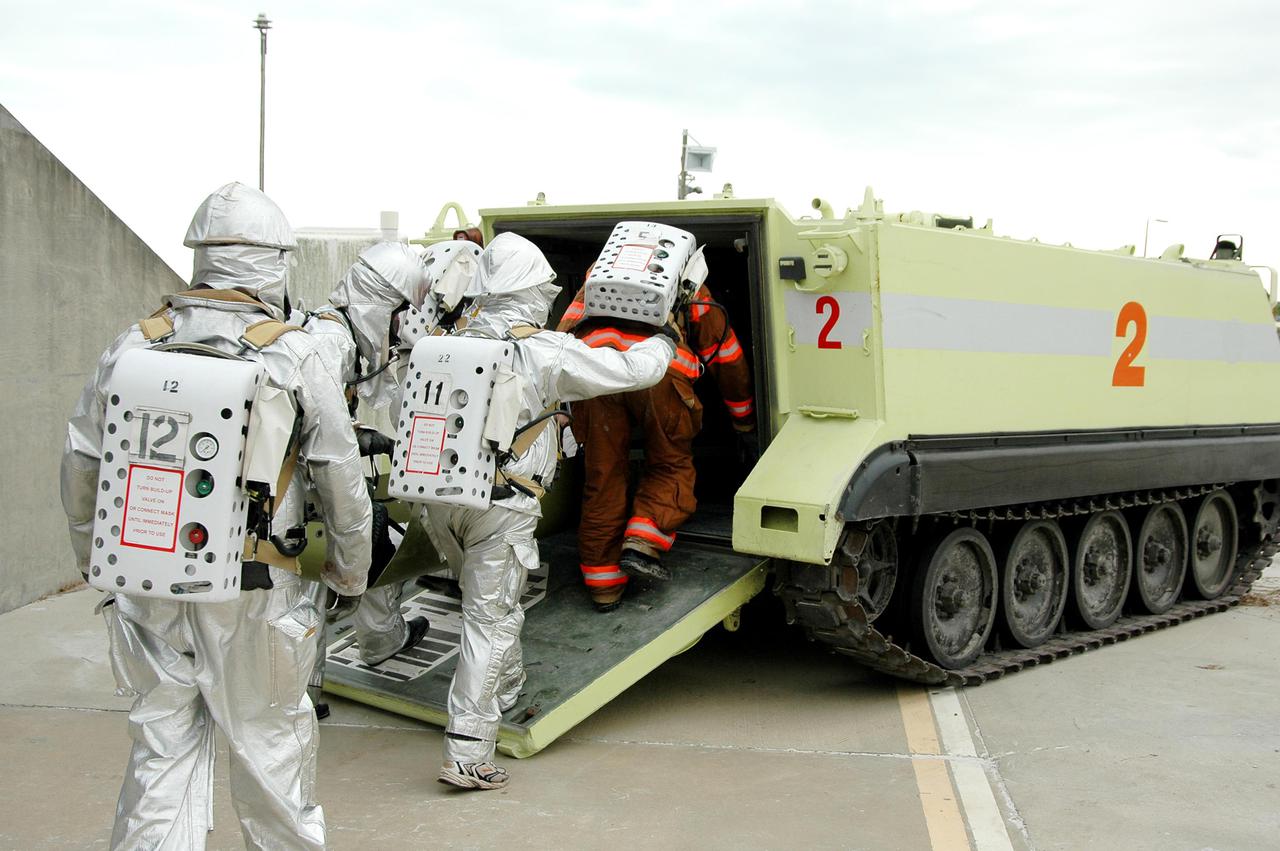
KENNEDY SPACE CENTER, FLA. - During a simulated launch countdown_emergency simulation on Launch Pad 39A, the rescue team helps astronaut-suited workers climb into an M-113 armored personnel carrier for transport away from the pad. The four-hour exercise simulated normal launch countdown operations, with the added challenge of a fictitious event causing an evacuation of the vehicle and launch pad. It tested the team’s rescue approaches on the Fixed Service Structure, slidewire basket evacuation, triage care and transportation of injured personnel to hospitals, as well as communications and coordination.
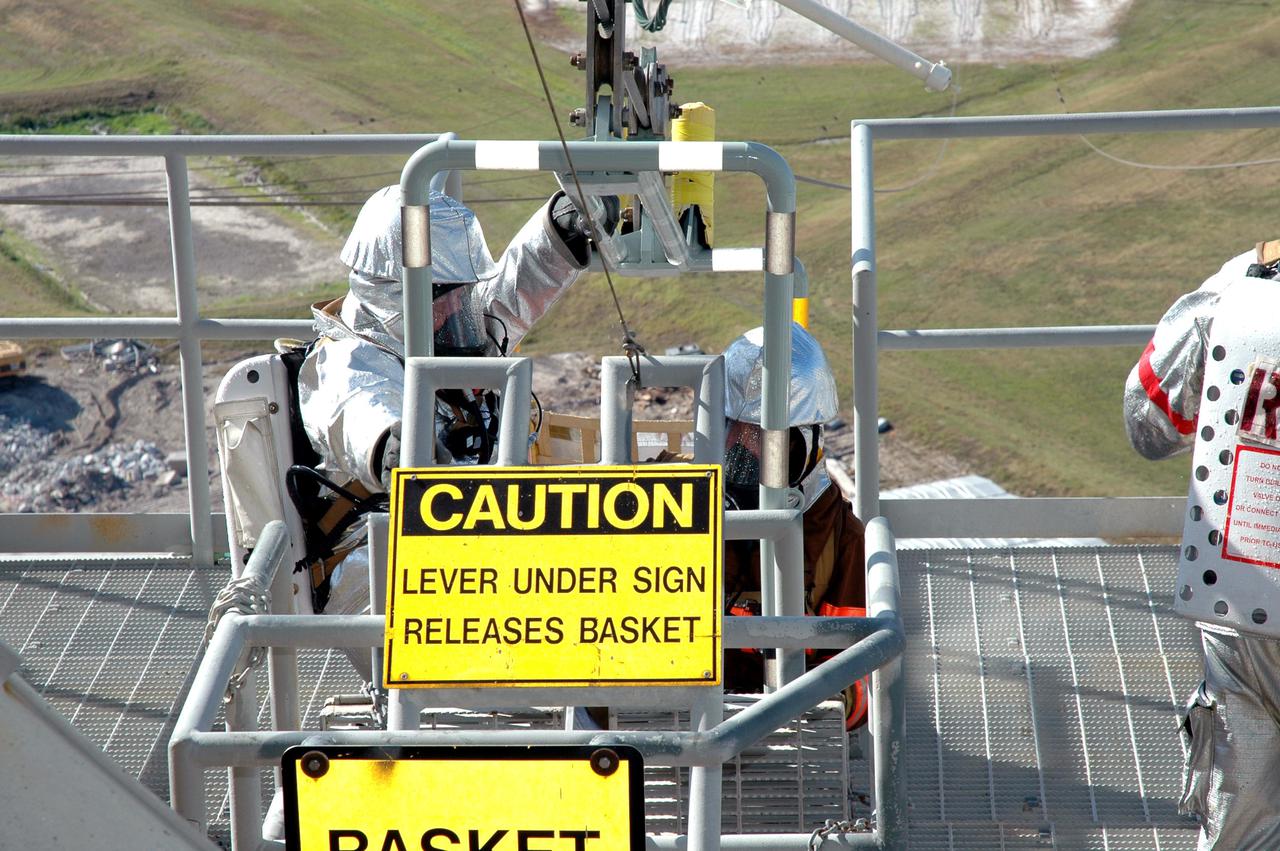
KENNEDY SPACE CENTER, FLA. - On Launch Pad 39A, a rescue force climbs into slidewire baskets on the Fixed Service Structure during an emergency egress scenario. The four-hour exercise simulated normal launch countdown operations, with the added challenge of a fictitious event causing an evacuation of the vehicle and launch pad. It tested the team’s rescue approaches on the Fixed Service Structure, slidewire basket evacuation, triage care and transportation of injured personnel to hospitals, as well as communications and coordination.
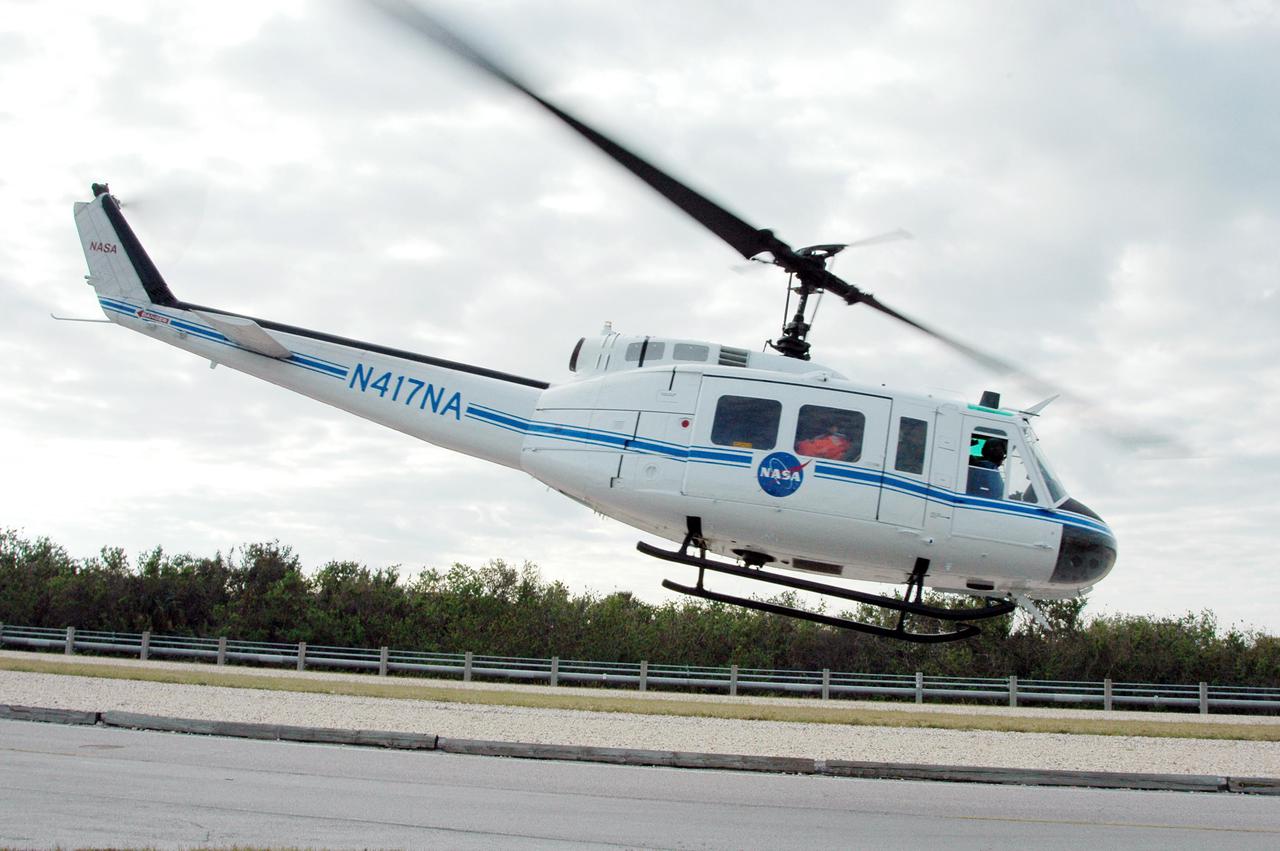
KENNEDY SPACE CENTER, FLA. - During a simulated launch countdown_emergency simulation on Launch Pad 39A, the NASA helicopter leaves the scene with “injured” astronaut-suited workers, heading to a hospital. Pad team members participated in the four-hour exercise simulating normal launch countdown operations, with the added challenge of a fictitious event causing an evacuation of the vehicle and launch pad. The simulation tested the team’s rescue approaches on the Fixed Service Structure, slidewire basket evacuation, triage care and transportation of injured personnel to hospitals, as well as communications and coordination.
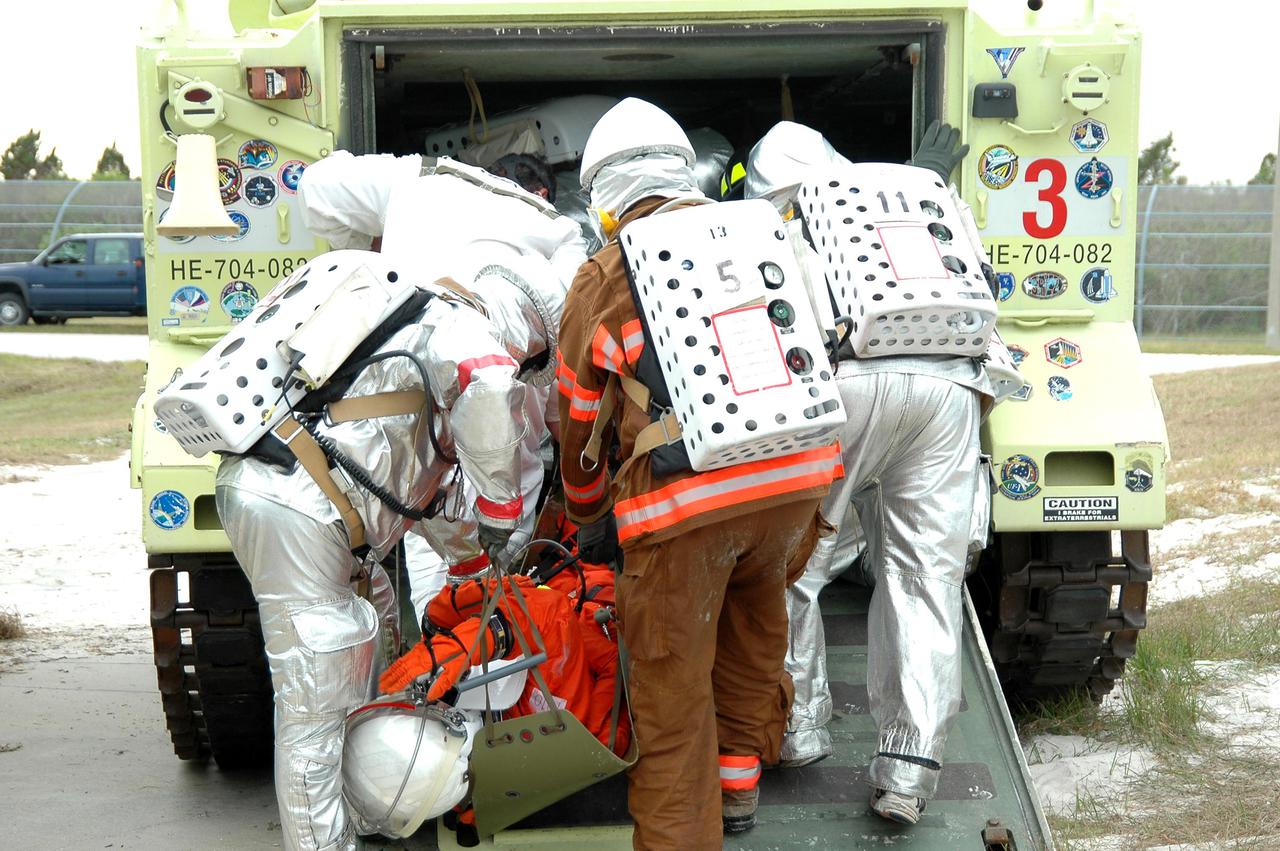
KENNEDY SPACE CENTER, FLA. - During a simulated launch countdown_emergency simulation on Launch Pad 39A, the rescue team carries “injured” astronaut-suited workers into an M-113 armored personnel carrier for transport away from the pad. The four-hour exercise simulated normal launch countdown operations, with the added challenge of a fictitious event causing an evacuation of the vehicle and launch pad. It tested the team’s rescue approaches on the Fixed Service Structure, slidewire basket evacuation, triage care and transportation of injured personnel to hospitals, as well as communications and coordination.
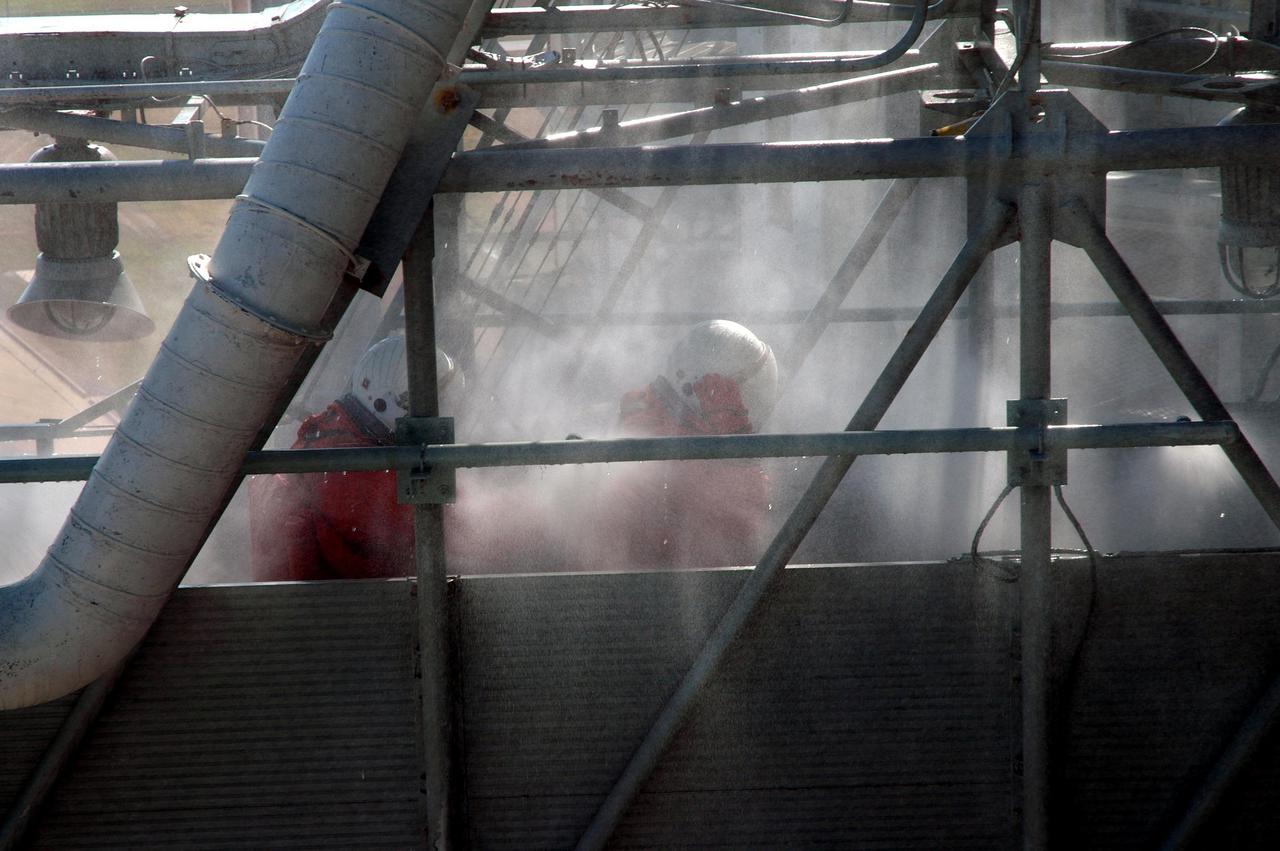
KENNEDY SPACE CENTER, FLA. - On Launch Pad 39A, astronaut-suited workers take part in an emergency egress scenario. The four-hour exercise simulated normal launch countdown operations, with the added challenge of a fictitious event causing an evacuation of the vehicle and launch pad. It tested the team’s rescue approaches on the Fixed Service Structure, slidewire basket evacuation, triage care and transportation of injured personnel to hospitals, as well as communications and coordination.
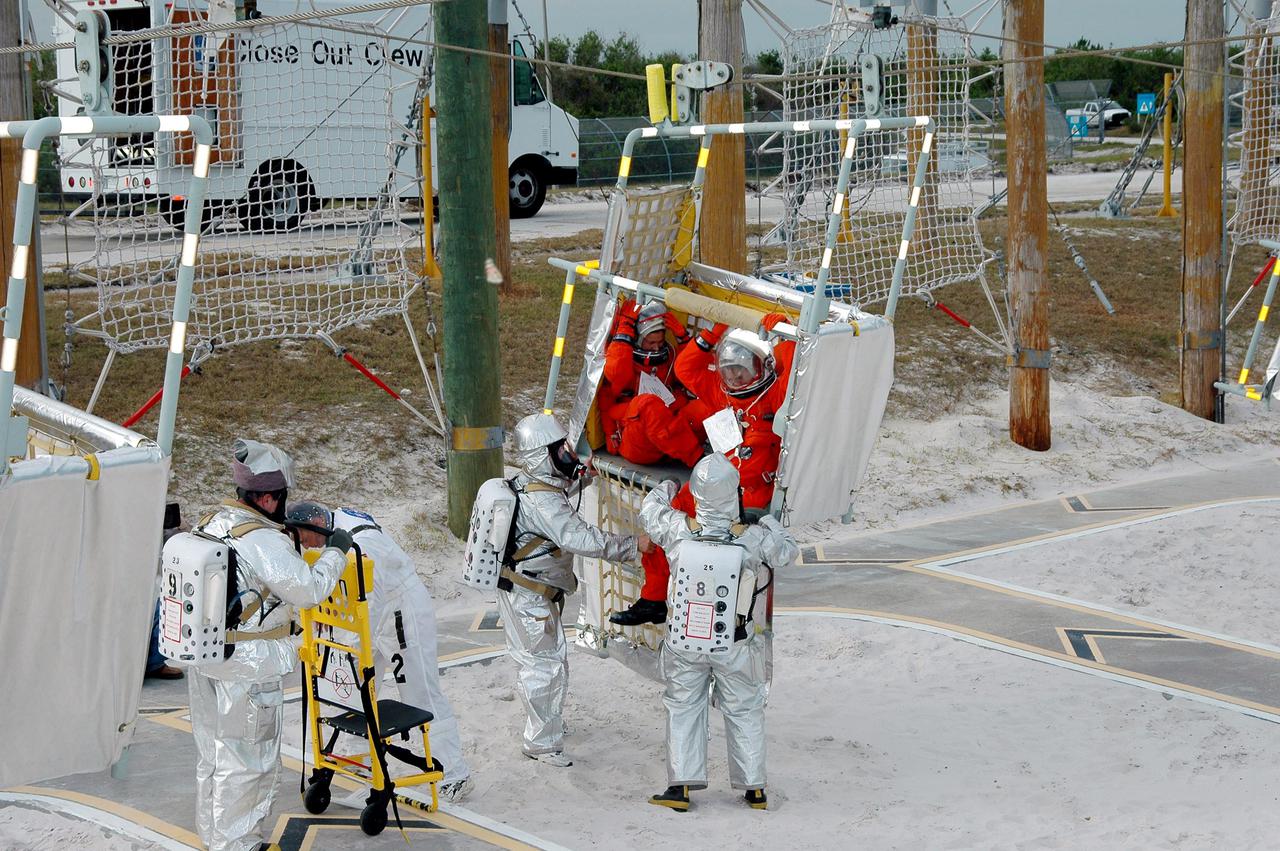
KENNEDY SPACE CENTER, FLA. - On Launch Pad 39A, rescue team members and astronaut-suited workers exit a slidewire basket during an emergency egress scenario. The four-hour exercise simulated normal launch countdown operations, with the added challenge of a fictitious event causing an evacuation of the vehicle and launch pad. It tested the team’s rescue approaches on the Fixed Service Structure, slidewire basket evacuation, triage care and transportation of injured personnel to hospitals, as well as communications and coordination.
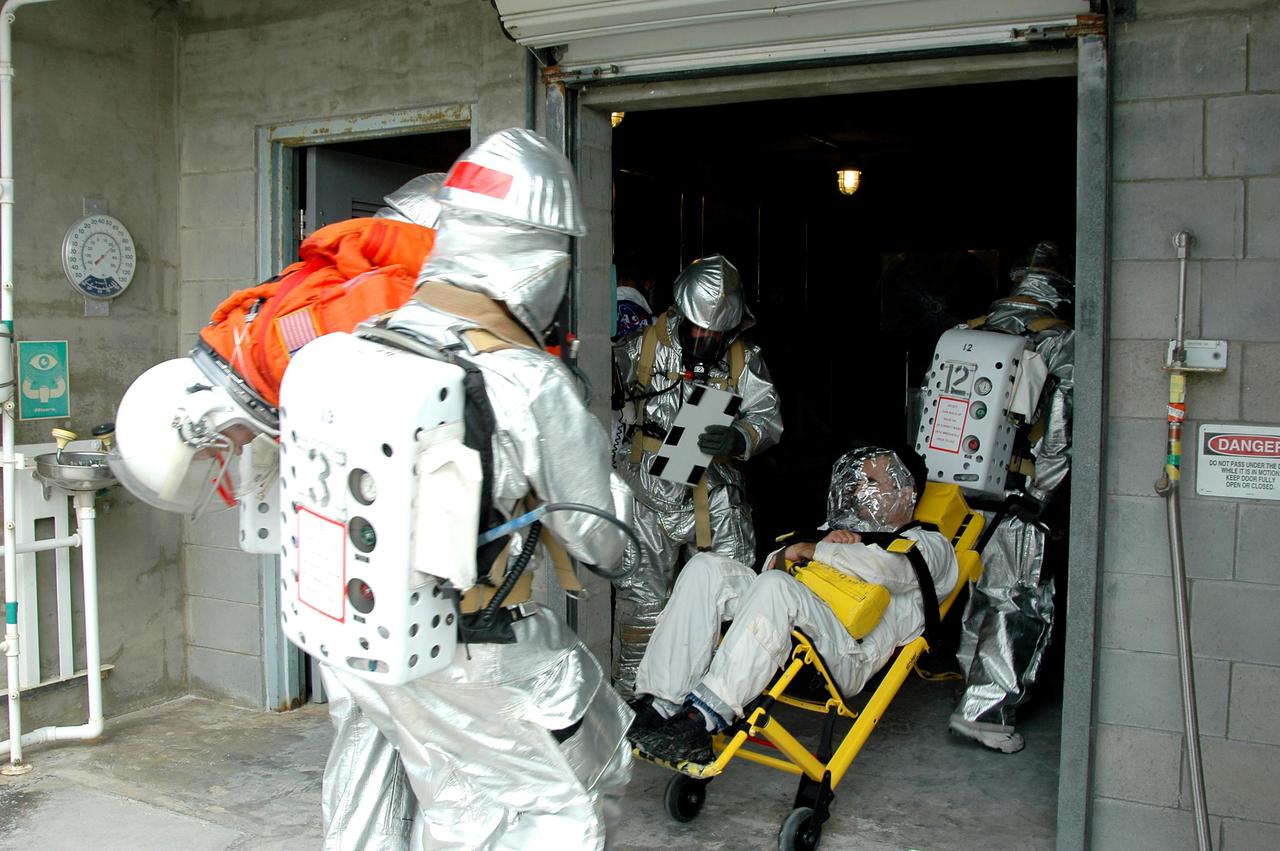
KENNEDY SPACE CENTER, FLA. - During a simulated launch countdown_emergency simulation on Launch Pad 39A, the rescue team takes “injured” astronaut-suited workers into the pad bunker. The four-hour exercise simulated normal launch countdown operations, with the added challenge of a fictitious event causing an evacuation of the vehicle and launch pad. It tested the team’s rescue approaches on the Fixed Service Structure, slidewire basket evacuation, triage care and transportation of injured personnel to hospitals, as well as communications and coordination.
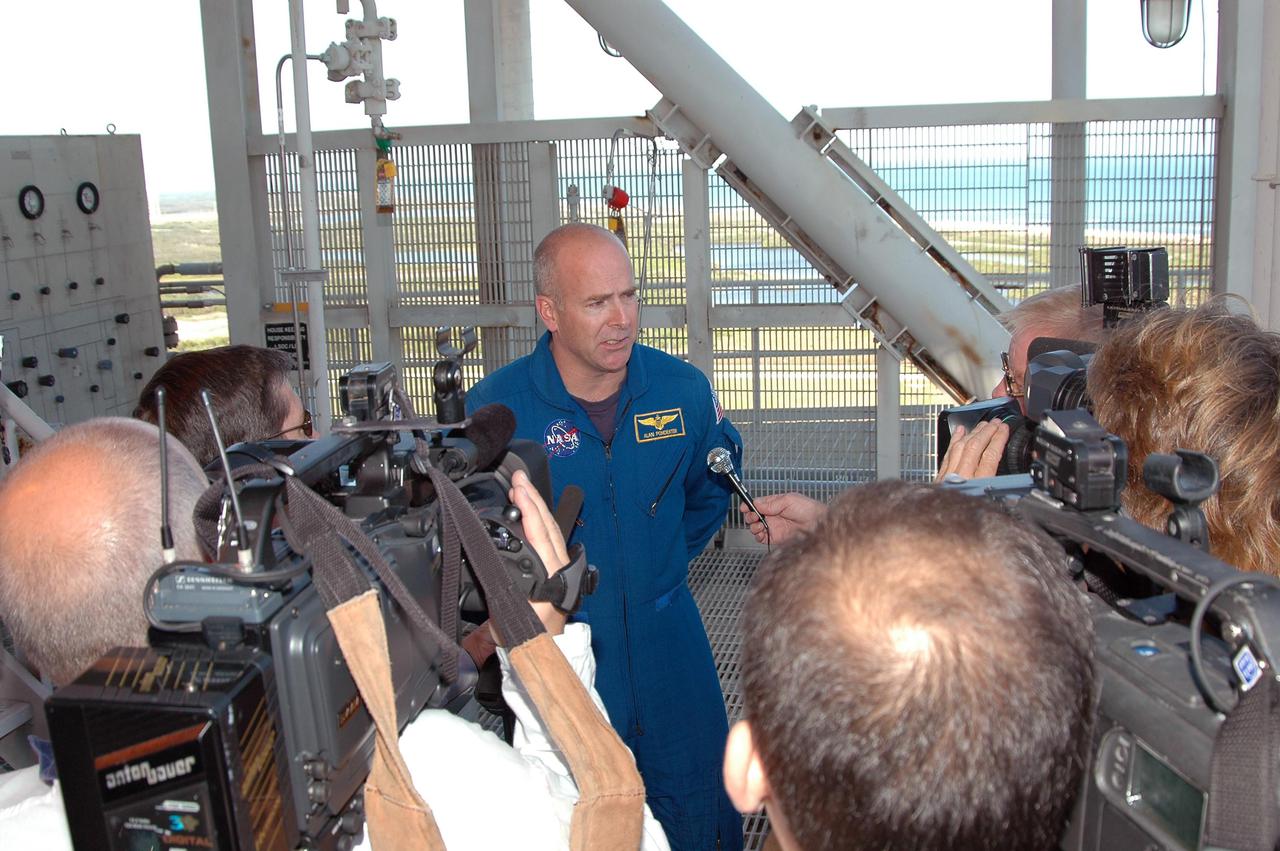
KENNEDY SPACE CENTER, FLA. - Prior to a simulated launch countdown_emergency simulation on Launch Pad 39A, the media photograph and interview astronaut Alan G. Poindexter. Pad team members participated in the four-hour exercise simulating normal launch countdown operations, with the added challenge of a fictitious event causing an evacuation of the vehicle and launch pad. The simulation tested the team’s rescue approaches on the Fixed Service Structure, slidewire basket evacuation, triage care and transportation of injured personnel to hospitals, as well as communications and coordination.
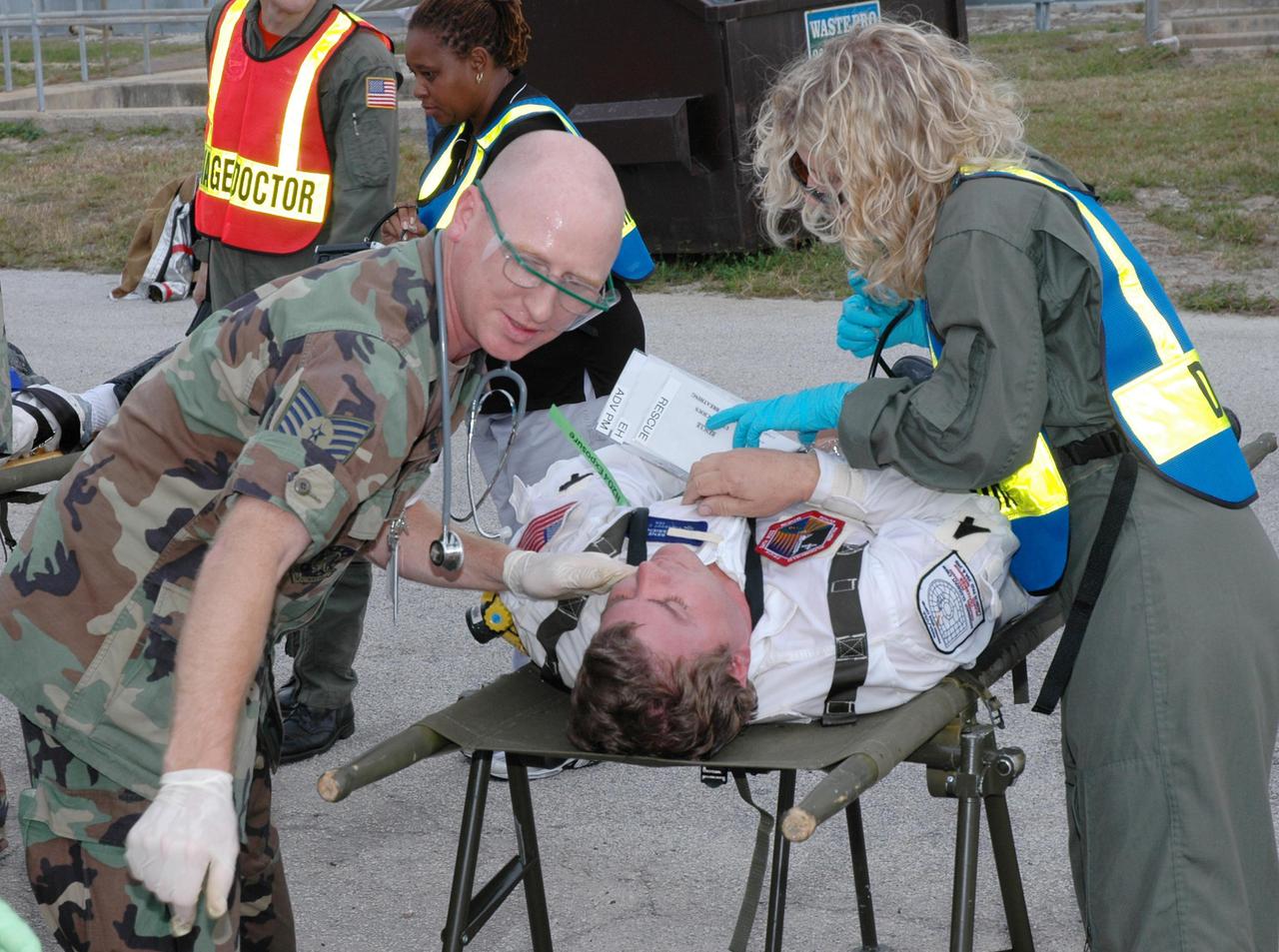
KENNEDY SPACE CENTER, FLA. - During a simulated launch countdown_emergency simulation on Launch Pad 39A, the rescue team performs triage on “injured” astronaut-suited workers. Pad team members participated in the four-hour exercise simulating normal launch countdown operations, with the added challenge of a fictitious event causing an evacuation of the vehicle and launch pad. The simulation tested the team’s rescue approaches on the Fixed Service Structure, slidewire basket evacuation, triage care and transportation of injured personnel to hospitals, as well as communications and coordination.

jsc2011e002624 (01/11/2011)--- Training was performed at the Johnson Space Center to familiarize crew with emergency evacuation procedures from the shuttle system. Engineers at JSC (including Susana Tapia Harper & Alma Stephane Tapia) donned Advanced Crew Escape Space Suit System (ACES) suits while the astronaut crew practiced mock evacuations. NASA photo by James Blair

jsc2011e003126 (01/11/2011)--- Training was performed at the Johnson Space Center (JSC) to familiarize crew with emergency evacuation procedures from the shuttle system. Engineers at JSC (including Susana Tapia Harper & Alma Stephane Tapia) donned Advanced Crew Escape Space Suit System (ACES) suits while the astronaut crew practiced mock evacuations. NASA photo by Tom Murray
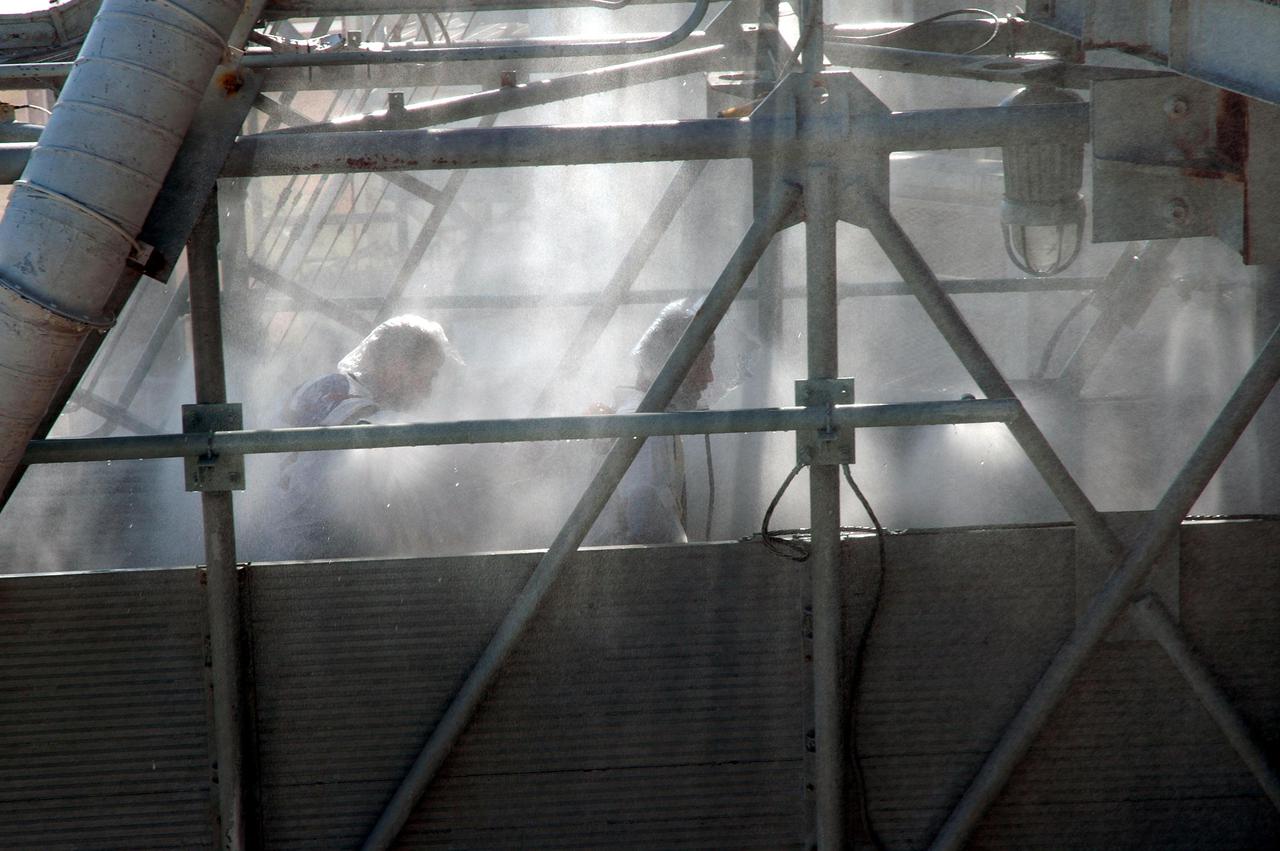
KENNEDY SPACE CENTER, FLA. - On Launch Pad 39A, astronaut-suited workers take part in an emergency egress scenario. The four-hour exercise simulated normal launch countdown operations, with the added challenge of a fictitious event causing an evacuation of the vehicle and launch pad. It tested the team’s rescue approaches on the Fixed Service Structure, slidewire basket evacuation, triage care and transportation of injured personnel to hospitals, as well as communications and coordination.
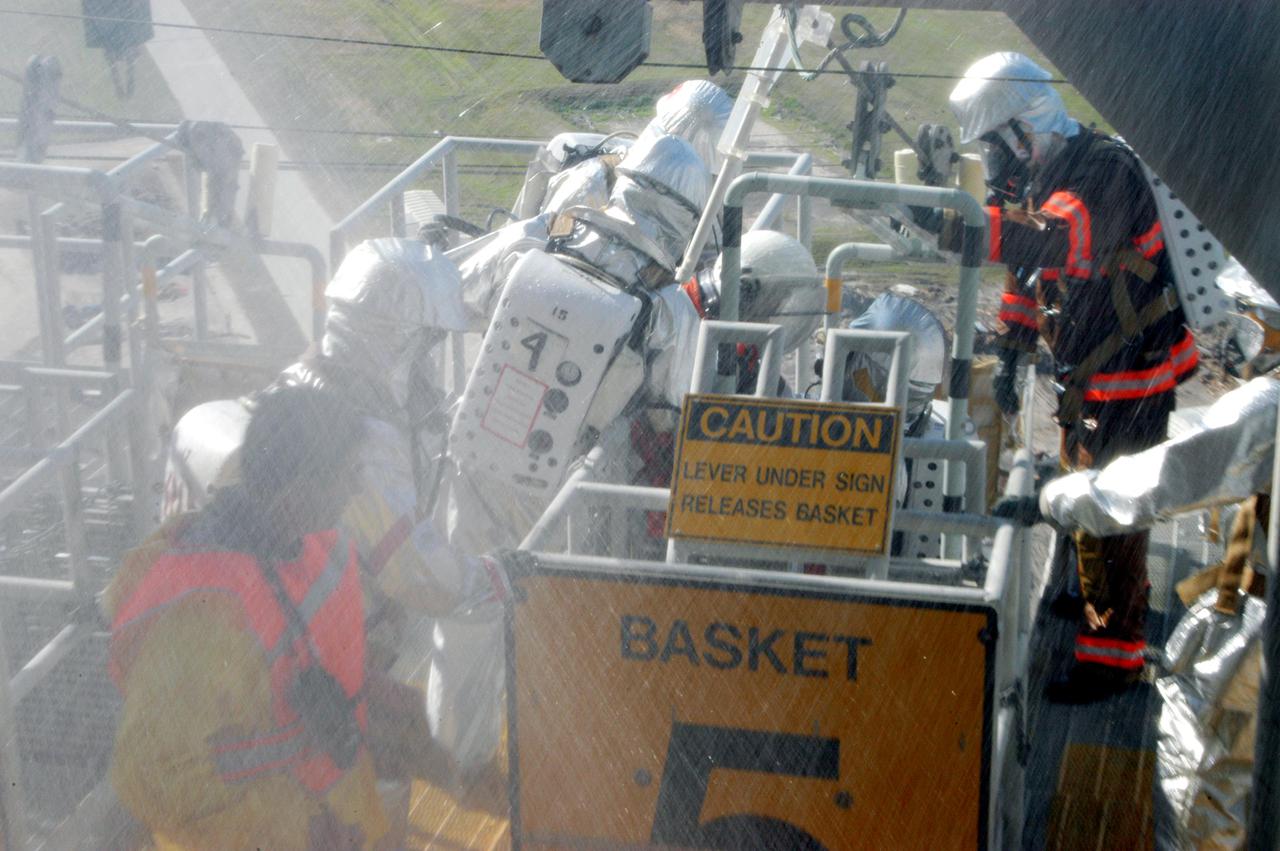
KENNEDY SPACE CENTER, FLA. - On Launch Pad 39-A, a rescue force helps co-workers as part of an emergency egress scenario. The four-hour exercise simulated normal launch countdown operations, with the added challenge of a fictitious event causing an evacuation of the vehicle and launch pad. It tested the team’s rescue approaches on the Fixed Service Structure, slidewire basket evacuation, triage care and transportation of injured personnel to hospitals, as well as communications and coordination.

jsc2011e002655 (01/11/2011)--- Training was performed at the Johnson Space Center to familiarize crew with emergency evacuation procedures from the shuttle system. Engineers at JSC (including Susana Tapia Harper & Alma Stephane Tapia) donned Advanced Crew Escape Space Suit System (ACES) suits while the astronaut crew practiced mock evacuations. NASA photo by James Blair
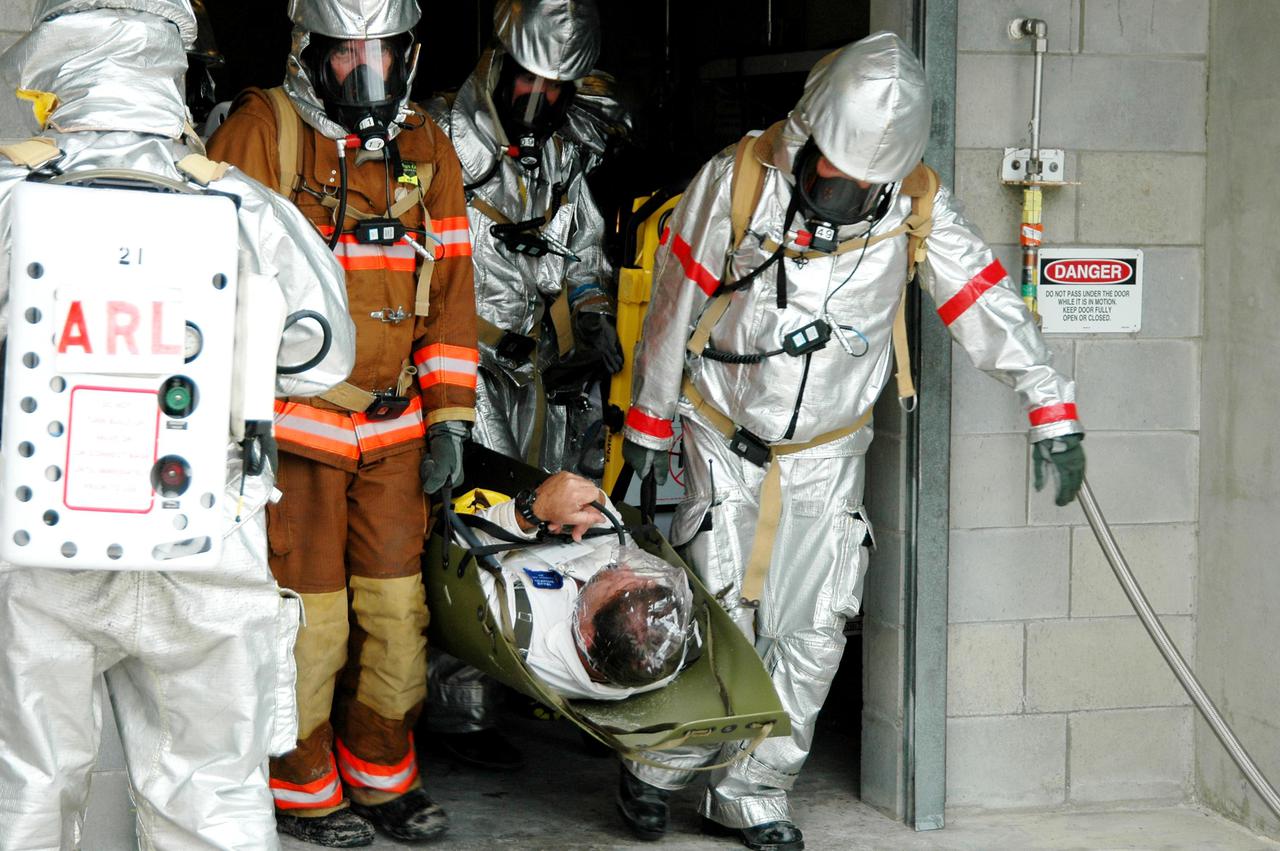
KENNEDY SPACE CENTER, FLA. - During a simulated launch countdown_emergency simulation on Launch Pad 39A, the rescue team carries “injured” astronaut-suited workers out of the pad bunker. The four-hour exercise simulated normal launch countdown operations, with the added challenge of a fictitious event causing an evacuation of the vehicle and launch pad. It tested the team’s rescue approaches on the Fixed Service Structure, slidewire basket evacuation, triage care and transportation of injured personnel to hospitals, as well as communications and coordination.
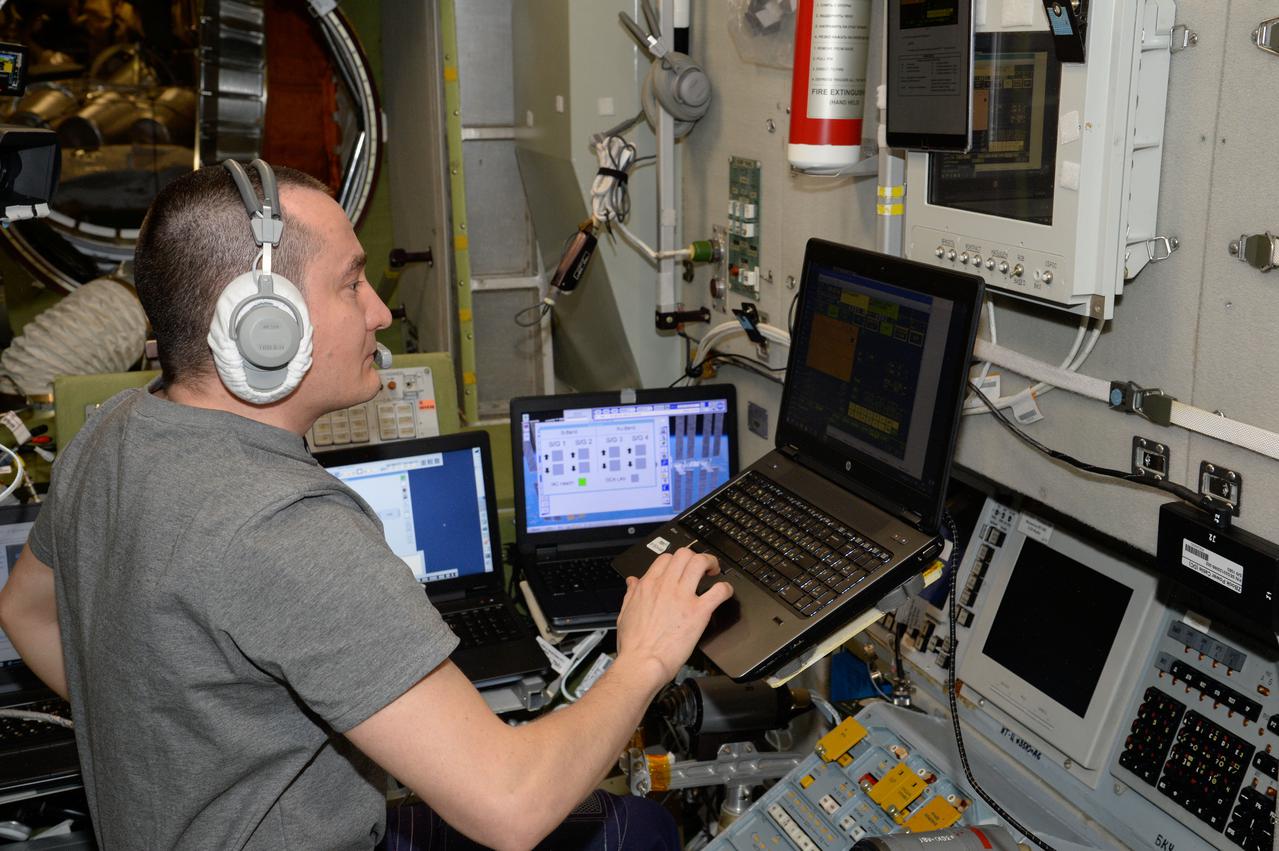
iss065e158154 (July 7, 2021) --- Roscosmos cosmonaut and Expedition 65 Flight Engineer Pyotr Dubrov practices an emergency Soyuz crew ship evacuation drill on a computer during inside the International Space Station's Zvezda service module.
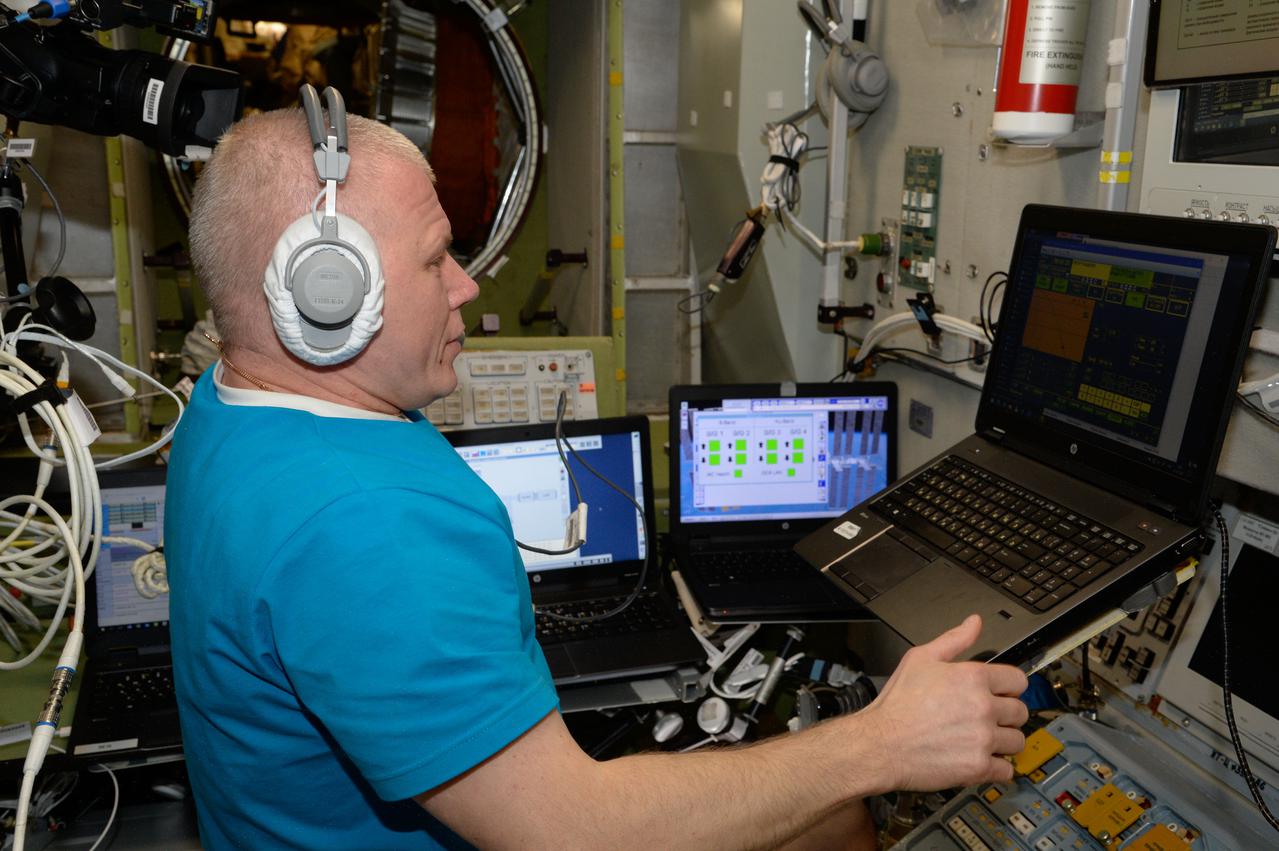
iss065e158152 (July 7, 2021) --- Roscosmos cosmonaut and Expedition 65 Flight Engineer Oleg Novitskiy practices an emergency Soyuz crew ship evacuation drill on a computer during inside the International Space Station's Zvezda service module.
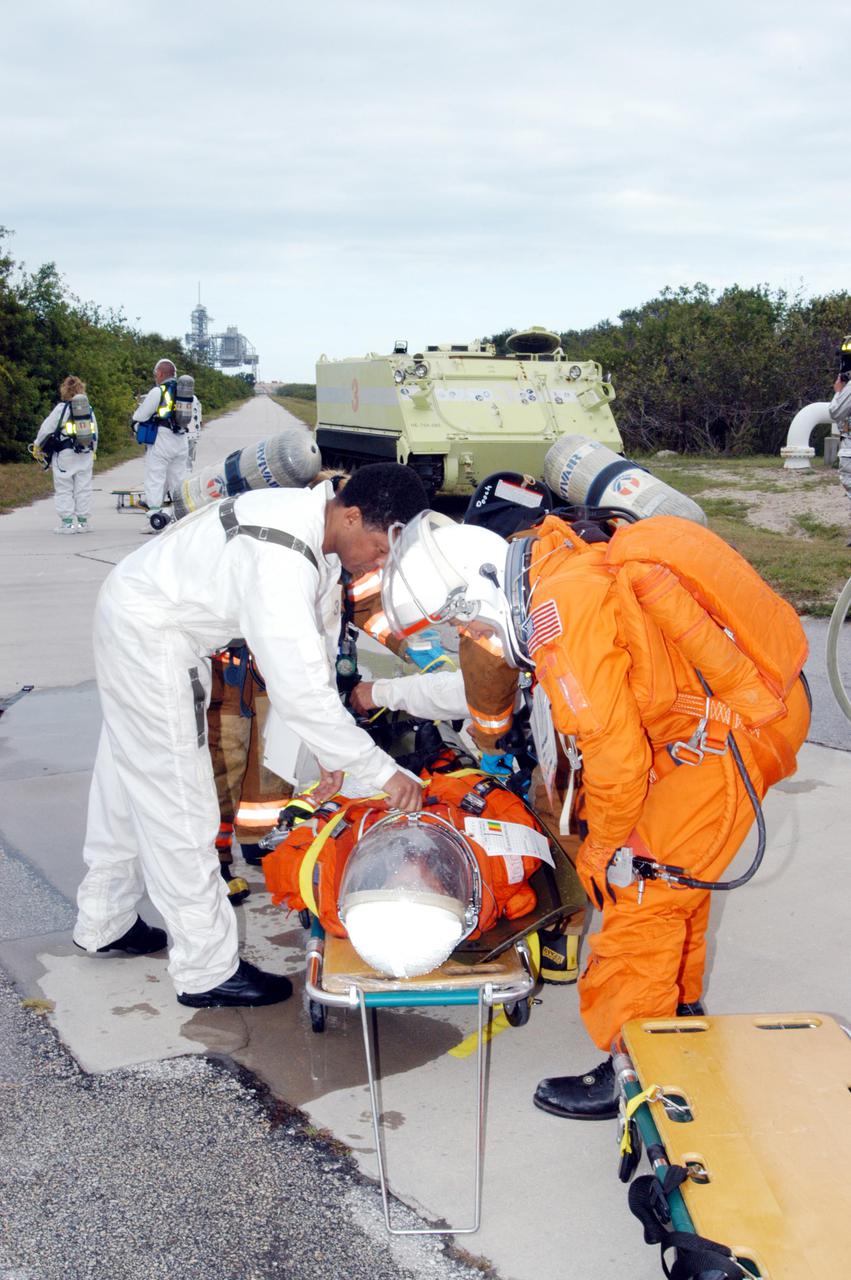
KENNEDY SPACE CENTER, FLA. - During a simulated launch countdown_emergency simulation on Launch Pad 39A, the rescue team moves “injured” astronaut-suited workers out of the M-113 armored personnel carriers that transported them away from the pad (seen in the distance). Pad team members participated in the four-hour exercise simulating normal launch countdown operations, with the added challenge of a fictitious event causing an evacuation of the vehicle and launch pad. The simulation tested the team’s rescue approaches on the Fixed Service Structure, slidewire basket evacuation, triage care and transportation of injured personnel to hospitals, as well as communications and coordination.
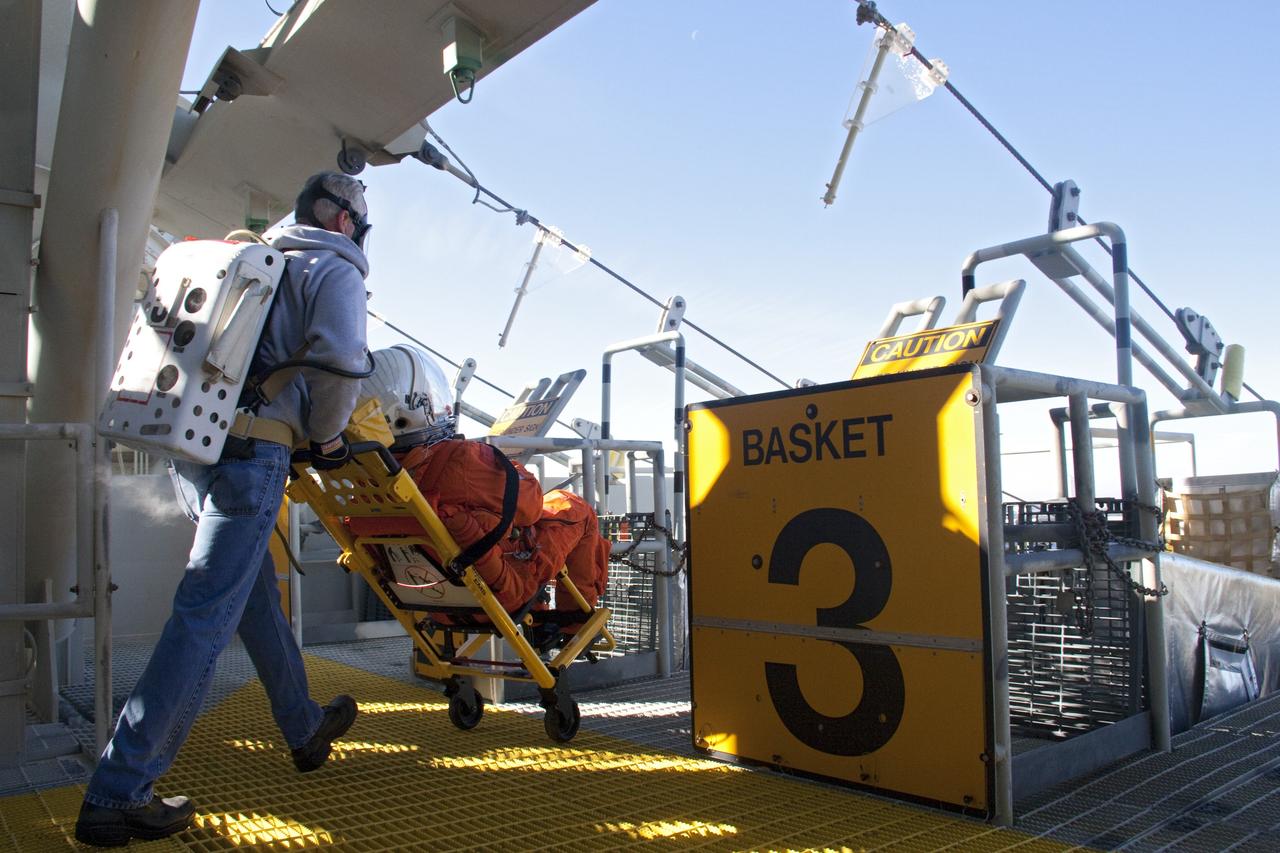
CAPE CANAVERAL, Fla. -- At NASA's Kennedy Space Center in Florida, members of an emergency escape training team perform a simulated evacuation exercise at Launch Pad 39A. For several days, volunteers portraying astronauts, take part in training exercises which allow teams to practice emergency response procedures, including helicopter evacuation to local hospitals. Training normally involves NASA fire rescue personnel, personnel from the Air Force's 920th Rescue Wing, and medical trauma teams from central Florida hospitals, and is required every 18 months to certify Fire Rescue and Closeout Crew personnel. Photo credit: NASA/Troy Cryder
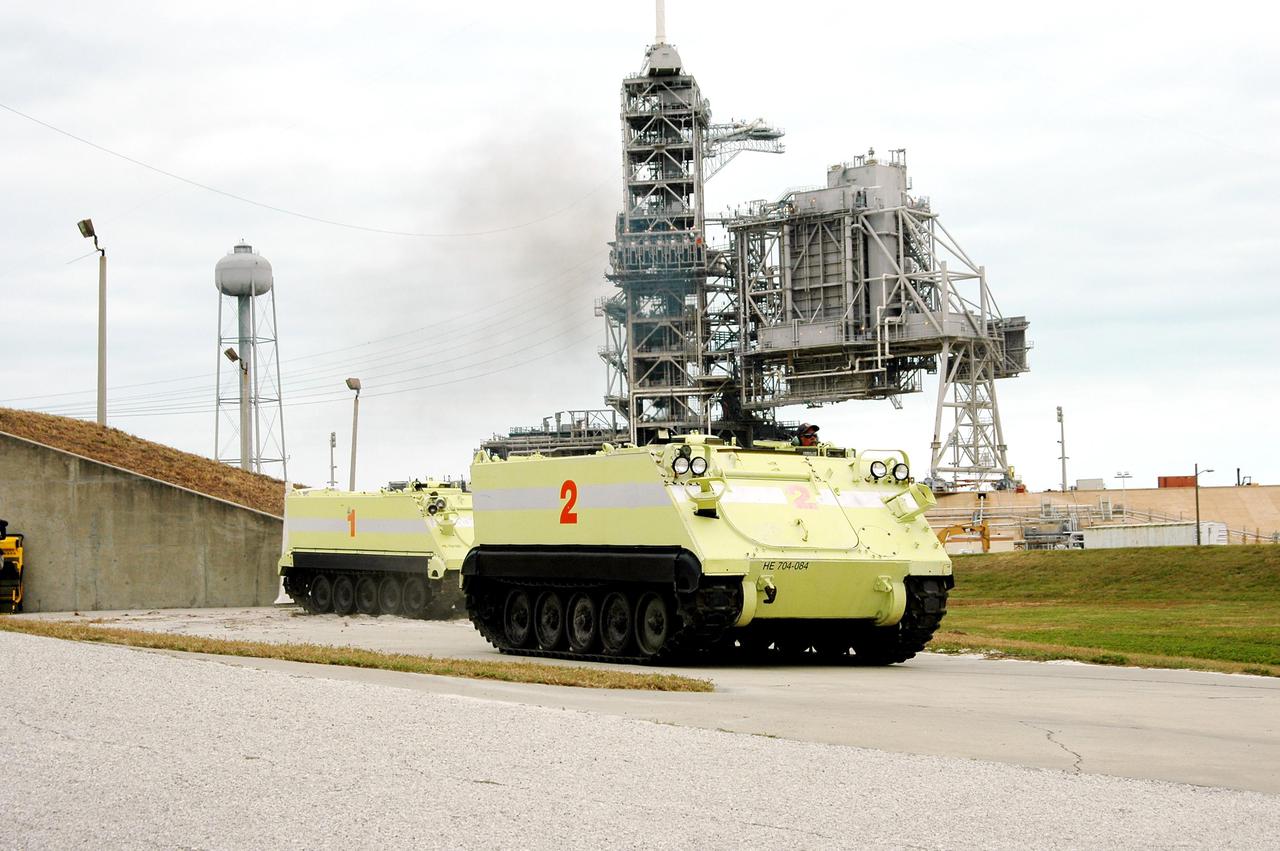
KENNEDY SPACE CENTER, FLA. - During a simulated launch countdown_emergency simulation on Launch Pad 39A, M-113 armored personnel carriers transport workers away from the pad. In the background are the Fixed (tall) and Rotating Service Structures. To the left is the water tower that holds 300,000 gallons used during liftoffs.The four-hour exercise simulated normal launch countdown operations, with the added challenge of a fictitious event causing an evacuation of the vehicle and launch pad. It tested the team’s rescue approaches on the Fixed Service Structure, slidewire basket evacuation, triage care and transportation of injured personnel to hospitals, as well as communications and coordination.
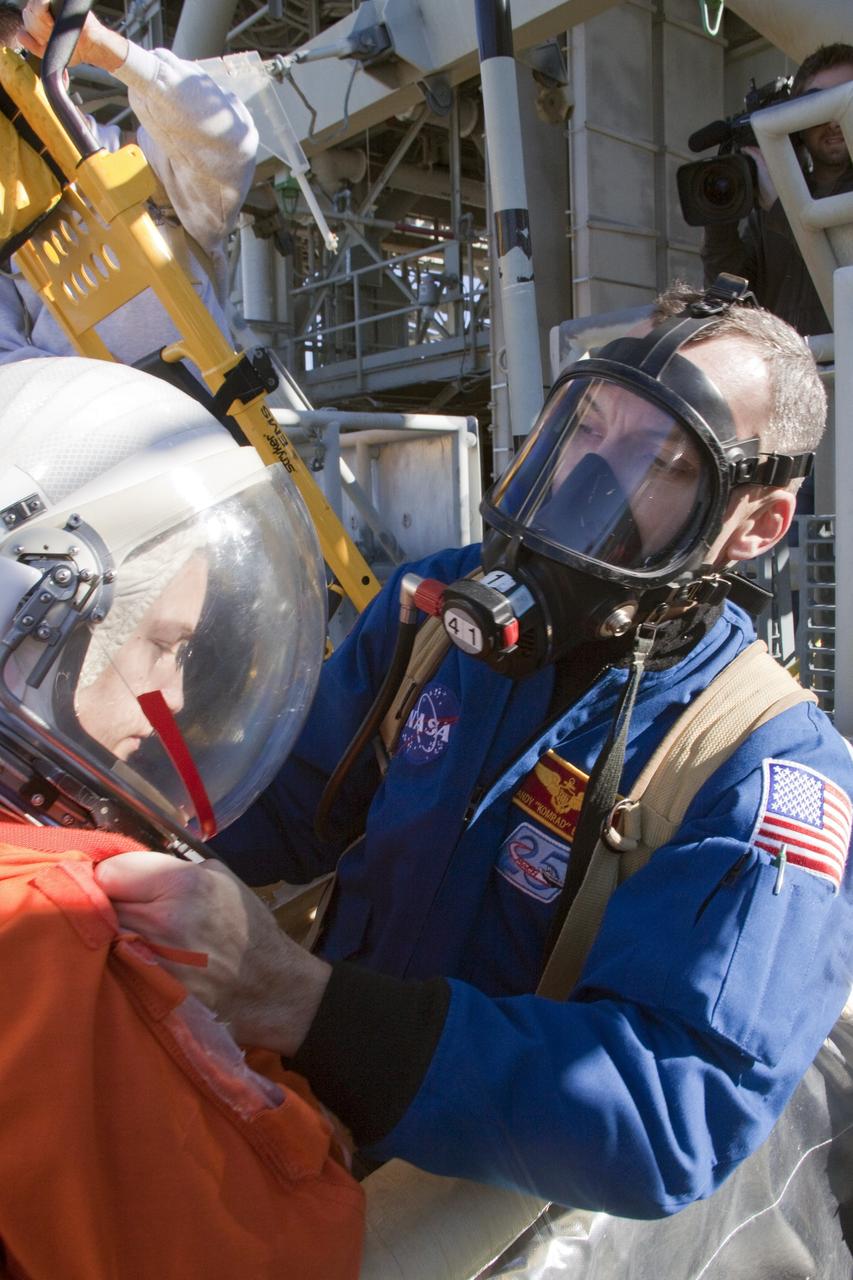
CAPE CANAVERAL, Fla. -- At NASA's Kennedy Space Center in Florida, members of an emergency escape training team perform a simulated evacuation exercise at Launch Pad 39A. For several days, volunteers portraying astronauts, take part in training exercises which allow teams to practice emergency response procedures, including helicopter evacuation to local hospitals. Training normally involves NASA fire rescue personnel, personnel from the Air Force's 920th Rescue Wing, and medical trauma teams from central Florida hospitals, and is required every 18 months to certify Fire Rescue and Closeout Crew personnel. Photo credit: NASA/Troy Cryder

CAPE CANAVERAL, Fla. -- At NASA's Kennedy Space Center in Florida, members of an emergency escape training team perform a simulated evacuation exercise at Launch Pad 39A. For several days, volunteers portraying astronauts, take part in training exercises which allow teams to practice emergency response procedures, including helicopter evacuation to local hospitals. Training normally involves NASA fire rescue personnel, personnel from the Air Force's 920th Rescue Wing, and medical trauma teams from central Florida hospitals, and is required every 18 months to certify Fire Rescue and Closeout Crew personnel. Photo credit: NASA/Troy Cryder
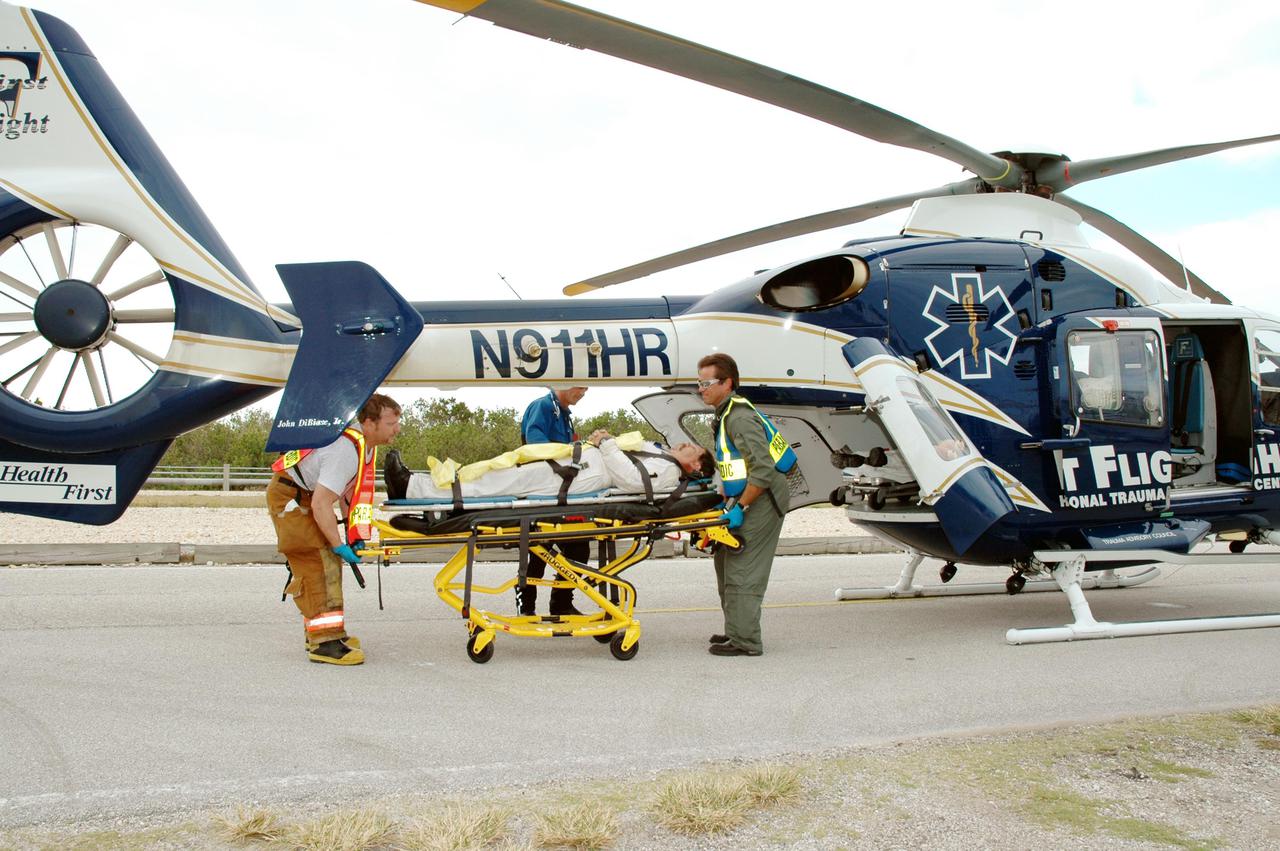
KENNEDY SPACE CENTER, FLA. - During a simulated launch countdown_emergency simulation on Launch Pad 39A, astronaut-suited workers are placed in a medical-rescue helicopter for transport to a hospital participating in the simulation. Pad team members took part in the four-hour exercise simulating normal launch countdown operations, with the added challenge of a fictitious event causing an evacuation of the vehicle and launch pad. The simulation tested the team’s rescue approaches on the Fixed Service Structure, slidewire basket evacuation, triage care and transportation of injured personnel to hospitals, as well as communications and coordination.
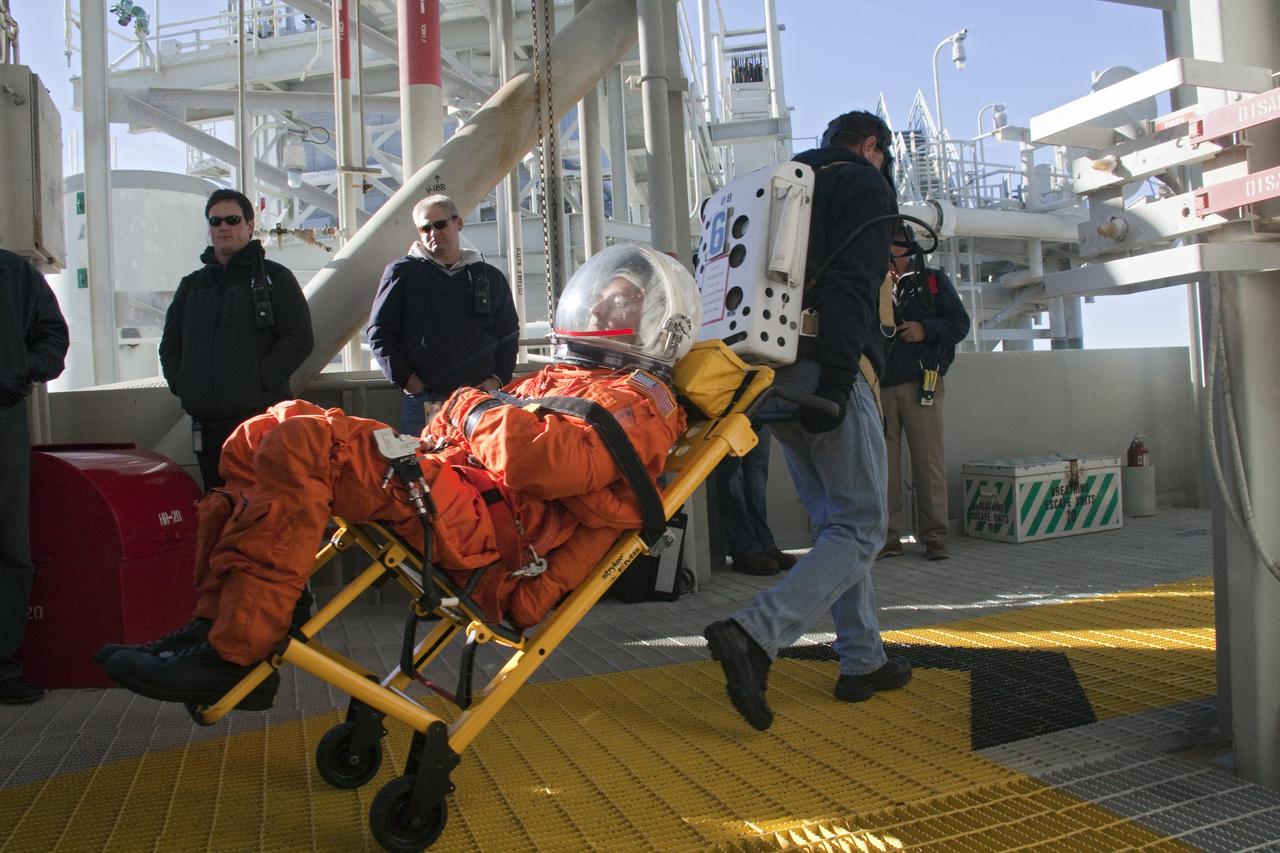
CAPE CANAVERAL, Fla. -- At NASA's Kennedy Space Center in Florida, members of an emergency escape training team perform a simulated evacuation exercise at Launch Pad 39A. For several days, volunteers portraying astronauts, take part in training exercises which allow teams to practice emergency response procedures, including helicopter evacuation to local hospitals. Training normally involves NASA fire rescue personnel, personnel from the Air Force's 920th Rescue Wing, and medical trauma teams from central Florida hospitals, and is required every 18 months to certify Fire Rescue and Closeout Crew personnel. Photo credit: NASA/Troy Cryder
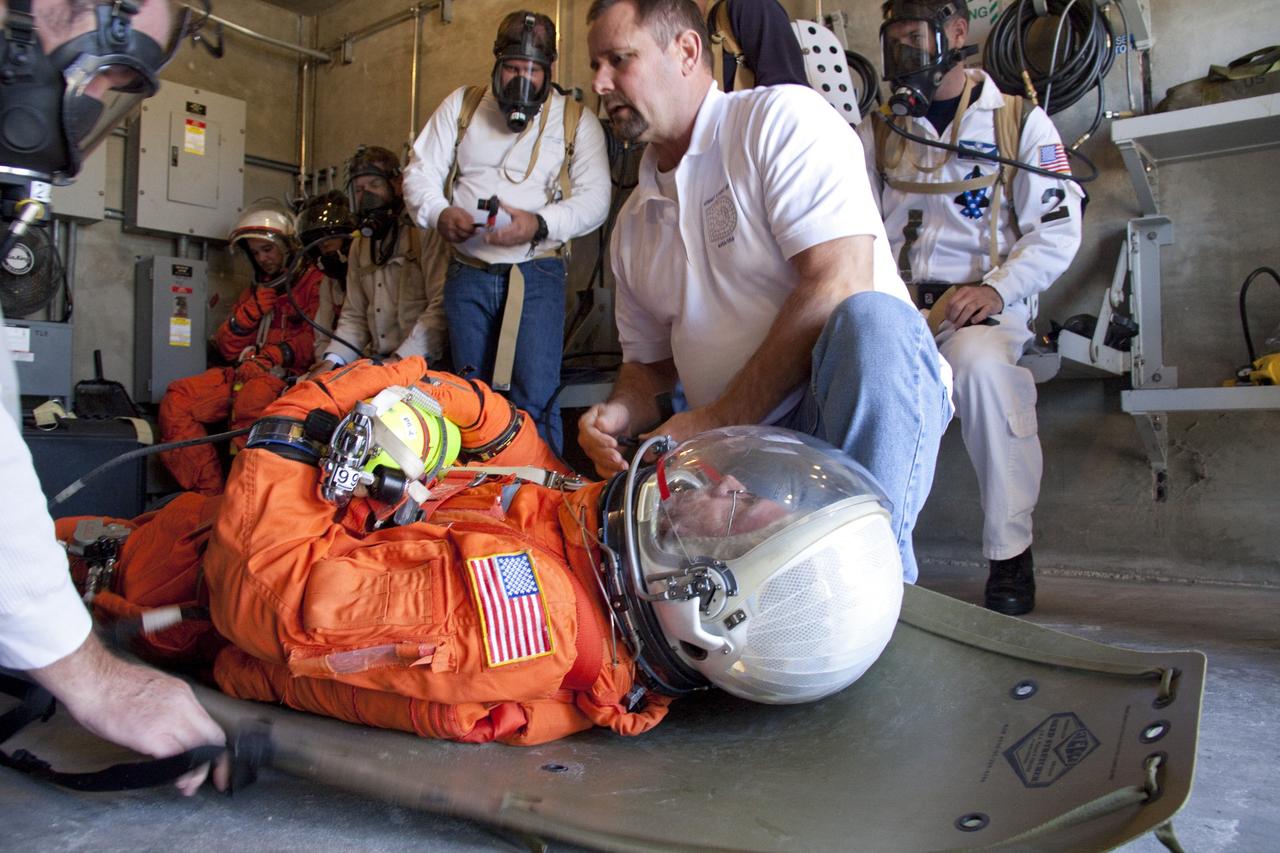
CAPE CANAVERAL, Fla. -- On Launch Pad 39A at NASA's Kennedy Space Center in Florida, members of an emergency escape training team perform a simulated evacuation exercise in the bunkers behind the slidewire basket landing site. For several days, volunteers portraying astronauts, take part in training exercises which allow teams to practice emergency response procedures, including helicopter evacuation to local hospitals. Training normally involves NASA fire rescue personnel, personnel from the Air Force's 920th Rescue Wing, and medical trauma teams from central Florida hospitals, and is required every 18 months to certify Fire Rescue and Closeout Crew personnel. Photo credit: NASA/Troy Cryder
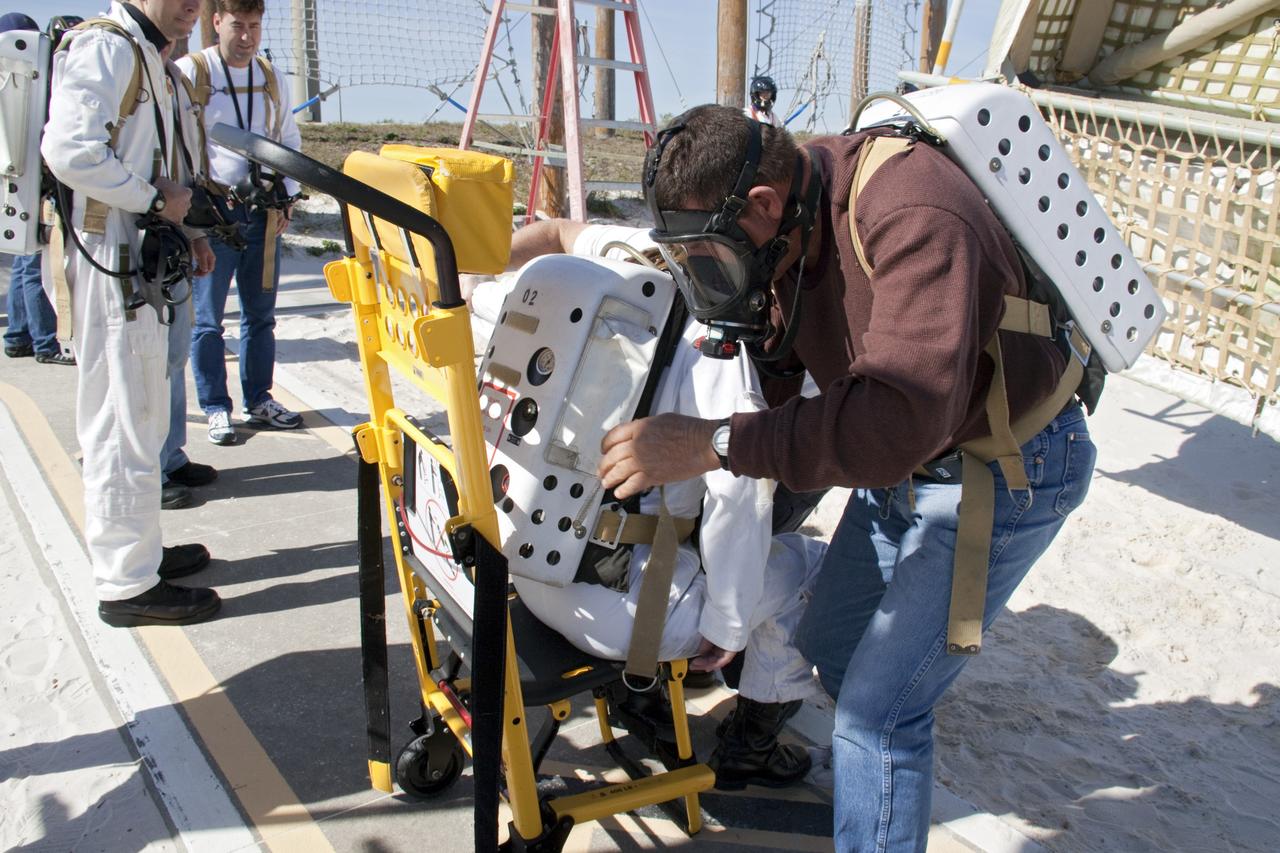
CAPE CANAVERAL, Fla. -- On Launch Pad 39A at NASA's Kennedy Space Center in Florida, members of an emergency escape training team perform a simulated evacuation exercise at the slidewire basket landing site. For several days, volunteers portraying astronauts, take part in training exercises which allow teams to practice emergency response procedures, including helicopter evacuation to local hospitals. Training normally involves NASA fire rescue personnel, personnel from the Air Force's 920th Rescue Wing, and medical trauma teams from central Florida hospitals, and is required every 18 months to certify Fire Rescue and Closeout Crew personnel. Photo credit: NASA/Troy Cryder
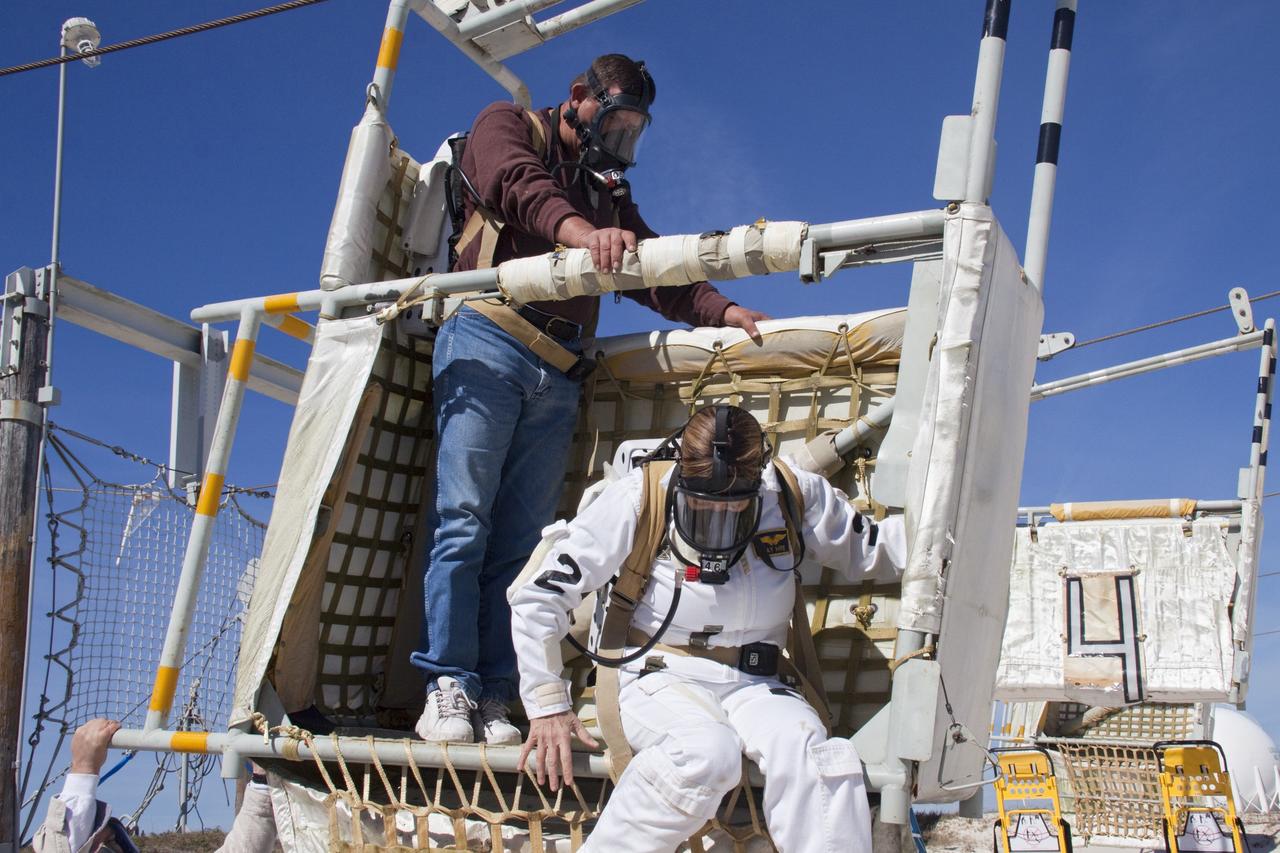
CAPE CANAVERAL, Fla. -- On Launch Pad 39A at NASA's Kennedy Space Center in Florida, members of an emergency escape training team perform a simulated evacuation exercise at the slidewire basket landing site. For several days, volunteers portraying astronauts, take part in training exercises which allow teams to practice emergency response procedures, including helicopter evacuation to local hospitals. Training normally involves NASA fire rescue personnel, personnel from the Air Force's 920th Rescue Wing, and medical trauma teams from central Florida hospitals, and is required every 18 months to certify Fire Rescue and Closeout Crew personnel. Photo credit: NASA/Troy Cryder
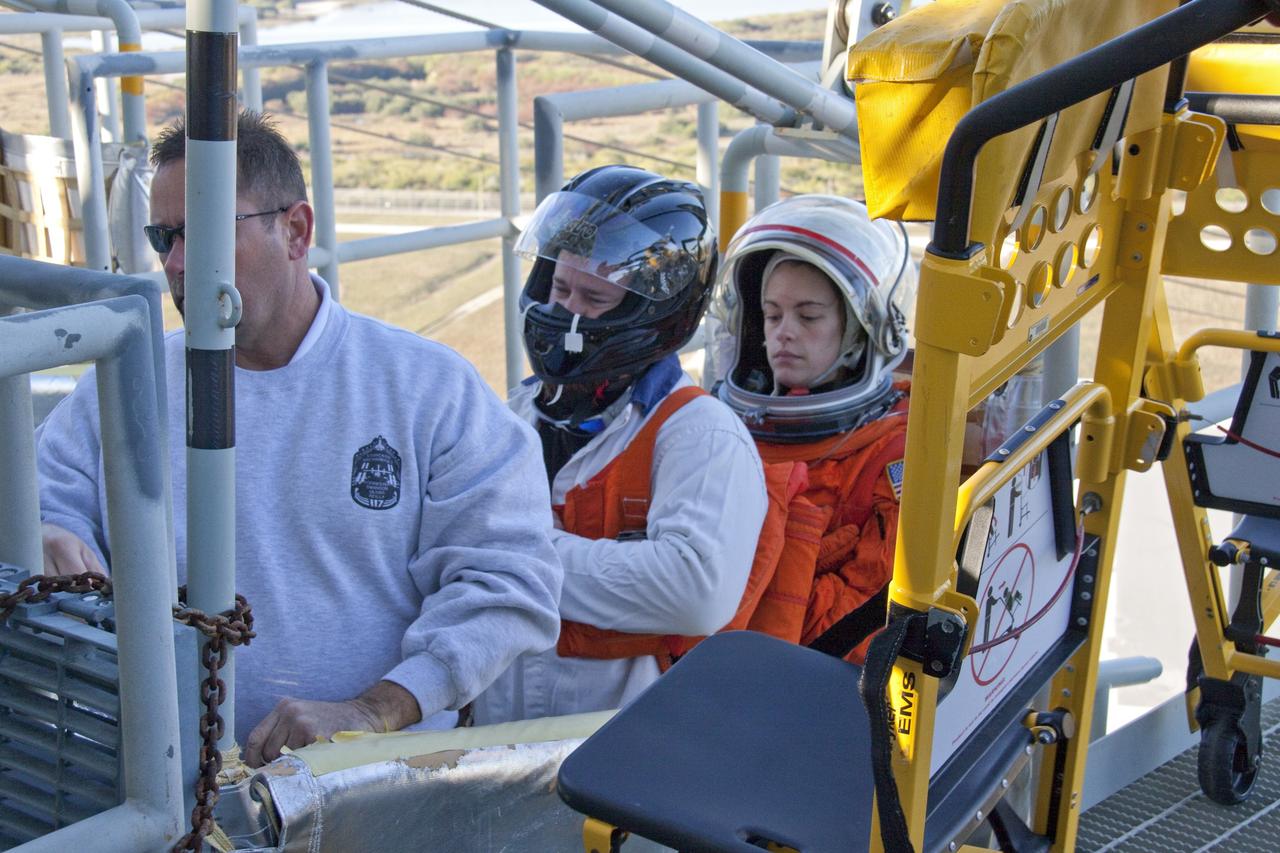
CAPE CANAVERAL, Fla. -- At NASA's Kennedy Space Center in Florida, members of an emergency escape training team perform a simulated evacuation exercise at Launch Pad 39A. For several days, volunteers portraying astronauts, take part in training exercises which allow teams to practice emergency response procedures, including helicopter evacuation to local hospitals. Training normally involves NASA fire rescue personnel, personnel from the Air Force's 920th Rescue Wing, and medical trauma teams from central Florida hospitals, and is required every 18 months to certify Fire Rescue and Closeout Crew personnel. Photo credit: NASA/Troy Cryder
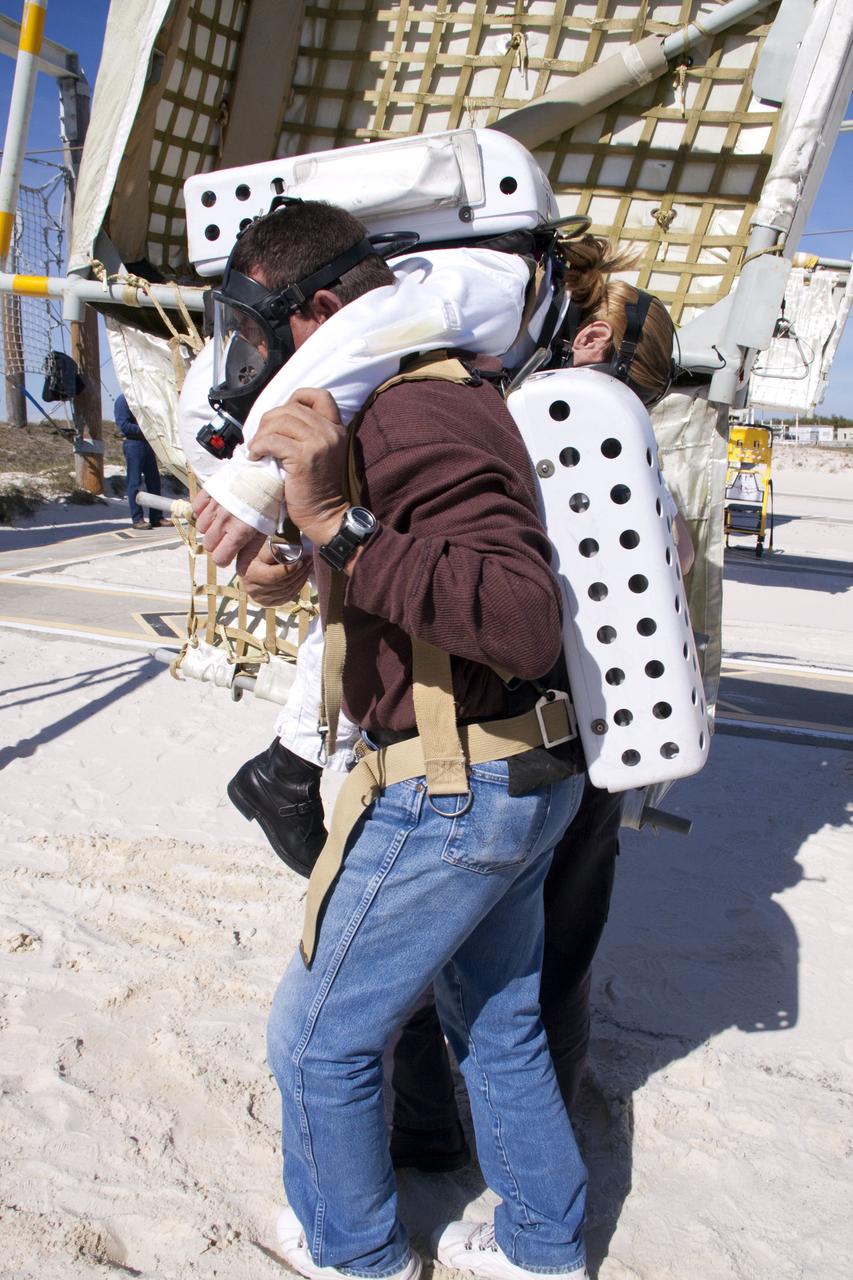
CAPE CANAVERAL, Fla. -- On Launch Pad 39A at NASA's Kennedy Space Center in Florida, members of an emergency escape training team perform a simulated evacuation exercise at the slidewire basket landing site. For several days, volunteers portraying astronauts, take part in training exercises which allow teams to practice emergency response procedures, including helicopter evacuation to local hospitals. Training normally involves NASA fire rescue personnel, personnel from the Air Force's 920th Rescue Wing, and medical trauma teams from central Florida hospitals, and is required every 18 months to certify Fire Rescue and Closeout Crew personnel. Photo credit: NASA/Troy Cryder
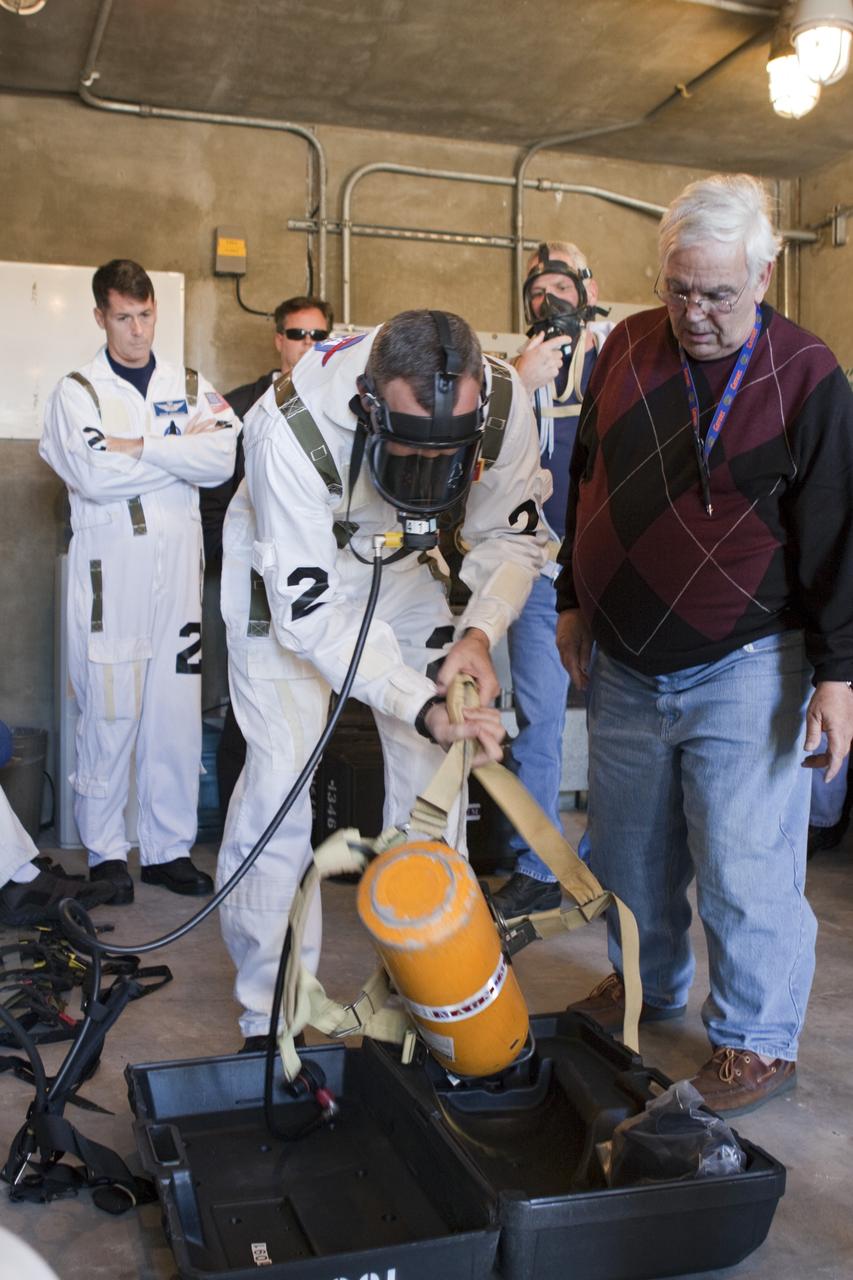
CAPE CANAVERAL, Fla. -- At NASA's Kennedy Space Center in Florida, members of an emergency escape training team suit up in the bunkers below Launch Pad 39A prior to the start of a simulated evacuation exercise. For several days, volunteers portraying astronauts, take part in training exercises which allow teams to practice emergency response procedures, including helicopter evacuation to local hospitals. Training normally involves NASA fire rescue personnel, personnel from the Air Force's 920th Rescue Wing, and medical trauma teams from central Florida hospitals, and is required every 18 months to certify Fire Rescue and Closeout Crew personnel. Photo credit: NASA/Troy Cryder
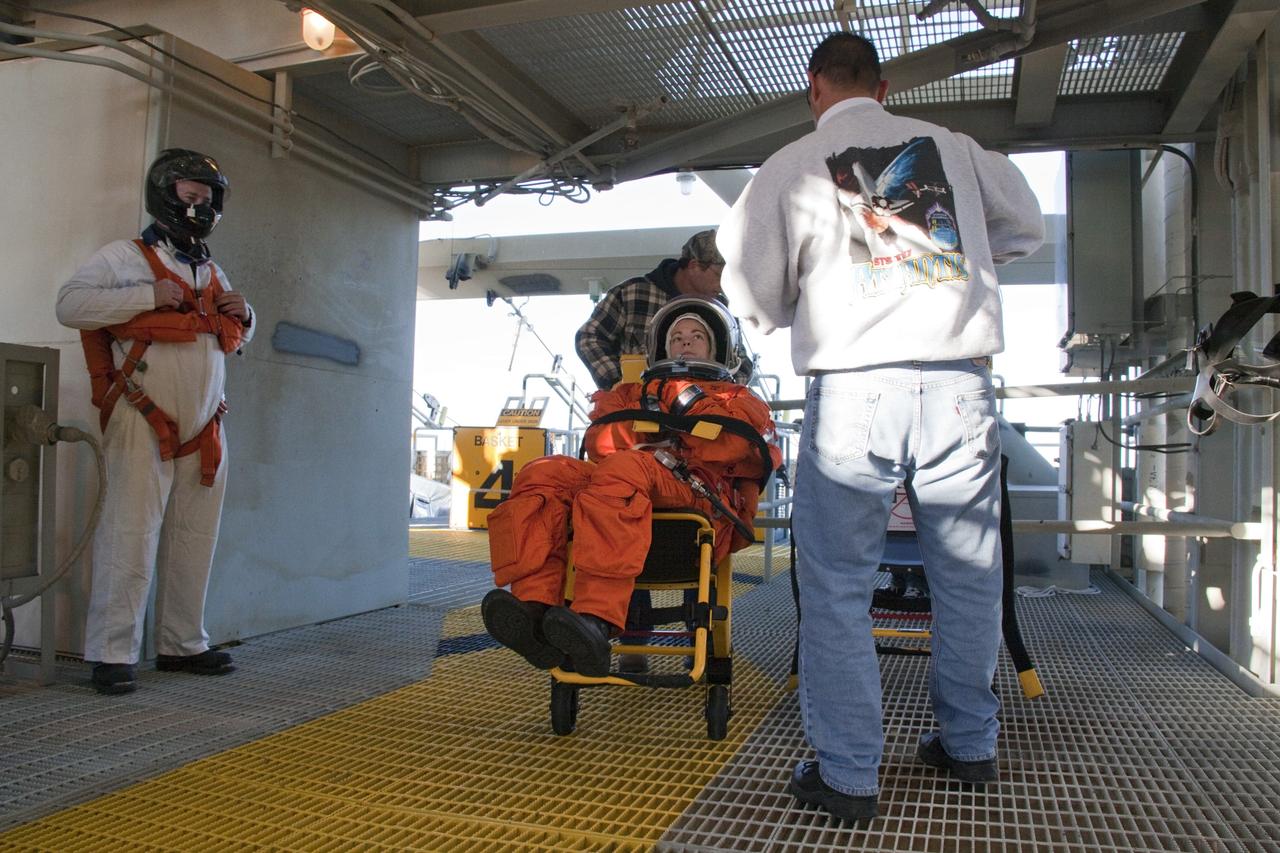
CAPE CANAVERAL, Fla. -- At NASA's Kennedy Space Center in Florida, members of an emergency escape training team perform a simulated evacuation exercise at Launch Pad 39A. For several days, volunteers portraying astronauts, take part in training exercises which allow teams to practice emergency response procedures, including helicopter evacuation to local hospitals. Training normally involves NASA fire rescue personnel, personnel from the Air Force's 920th Rescue Wing, and medical trauma teams from central Florida hospitals, and is required every 18 months to certify Fire Rescue and Closeout Crew personnel. Photo credit: NASA/Troy Cryder
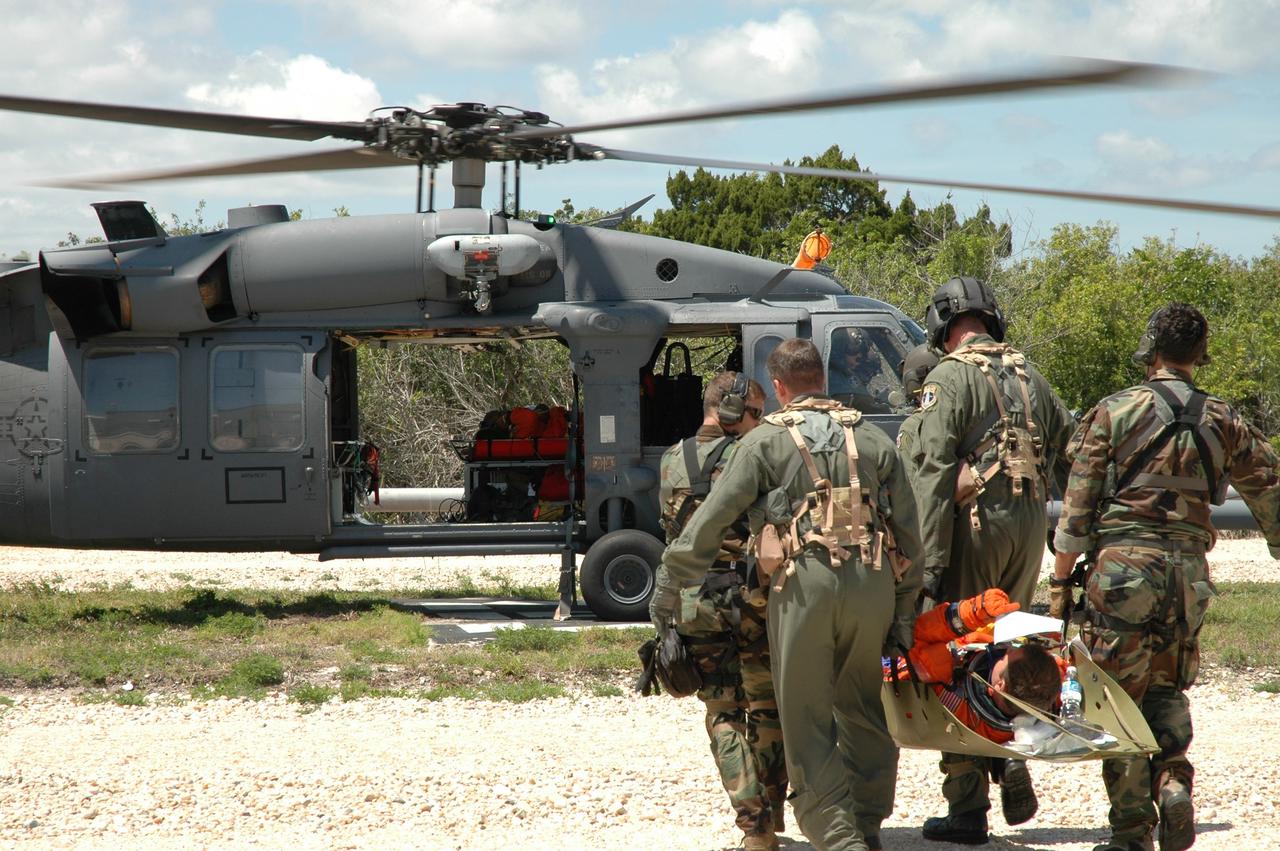
CAPE CANAVERAL, Fla. -- A group of NASA and contractor workers from Kennedy Space Center and other NASA centers, along with the Department of Defense, participate in a flight crew evacuation drill, also referred to as the Mode II/IV Simulation, from Launch Pad 39B. During the exercise, an emergency condition during launch countdown was simulated and participants did their parts to perform an emergency egress of the flight and ground crew. Fire Rescue and Closeout Crew workers transported the flight and ground crews to a triage site. Simulated injuries were treated and those with serious injuries were evacuated by helicopter to local hospitals. Photo credit: NASA/Jim Grossmann
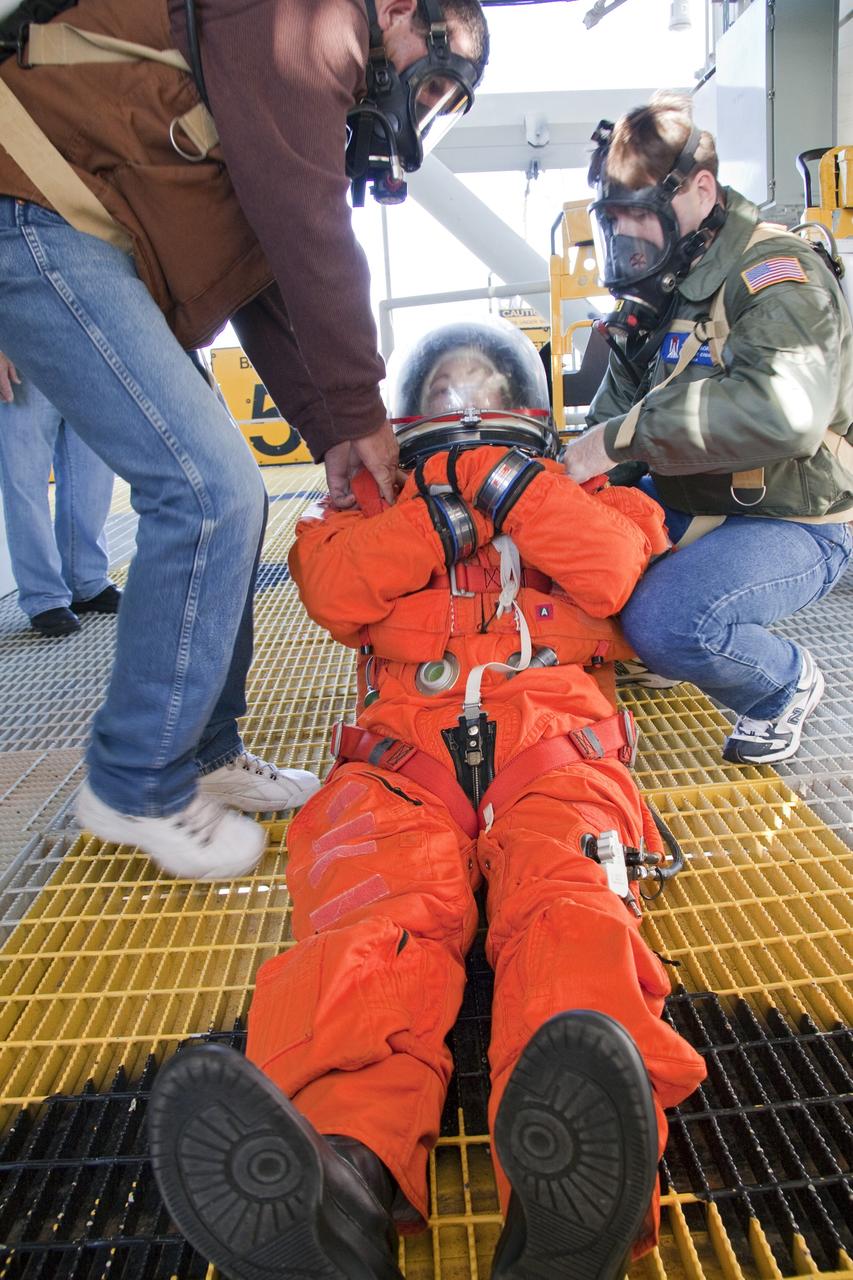
CAPE CANAVERAL, Fla. -- At NASA's Kennedy Space Center in Florida, members of an emergency escape training team perform a simulated evacuation exercise at Launch Pad 39A. For several days, volunteers portraying astronauts, take part in training exercises which allow teams to practice emergency response procedures, including helicopter evacuation to local hospitals. Training normally involves NASA fire rescue personnel, personnel from the Air Force's 920th Rescue Wing, and medical trauma teams from central Florida hospitals, and is required every 18 months to certify Fire Rescue and Closeout Crew personnel. Photo credit: NASA/Troy Cryder
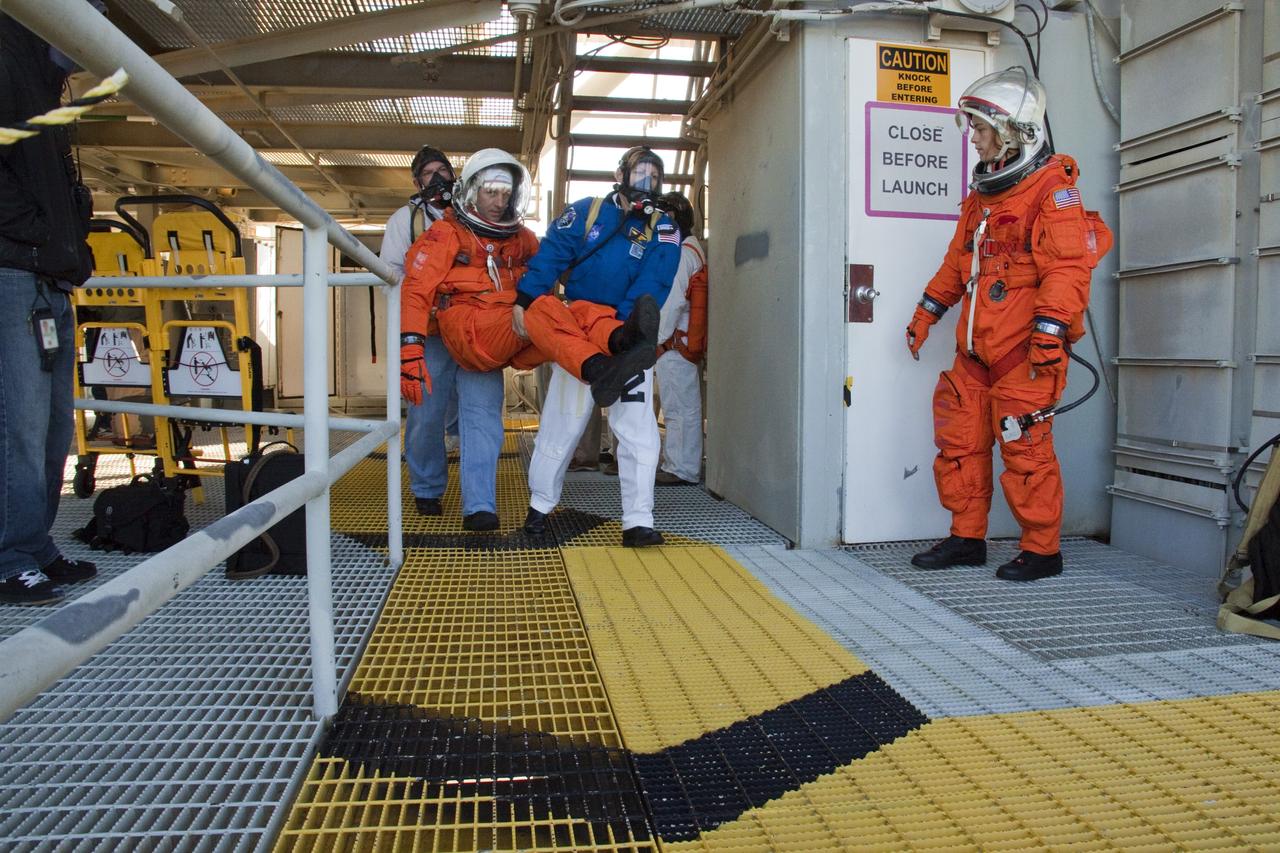
CAPE CANAVERAL, Fla. -- At NASA's Kennedy Space Center in Florida, members of an emergency escape training team perform a simulated evacuation exercise at Launch Pad 39A. For several days, volunteers portraying astronauts, take part in training exercises which allow teams to practice emergency response procedures, including helicopter evacuation to local hospitals. Training normally involves NASA fire rescue personnel, personnel from the Air Force's 920th Rescue Wing, and medical trauma teams from central Florida hospitals, and is required every 18 months to certify Fire Rescue and Closeout Crew personnel. Photo credit: NASA/Troy Cryder
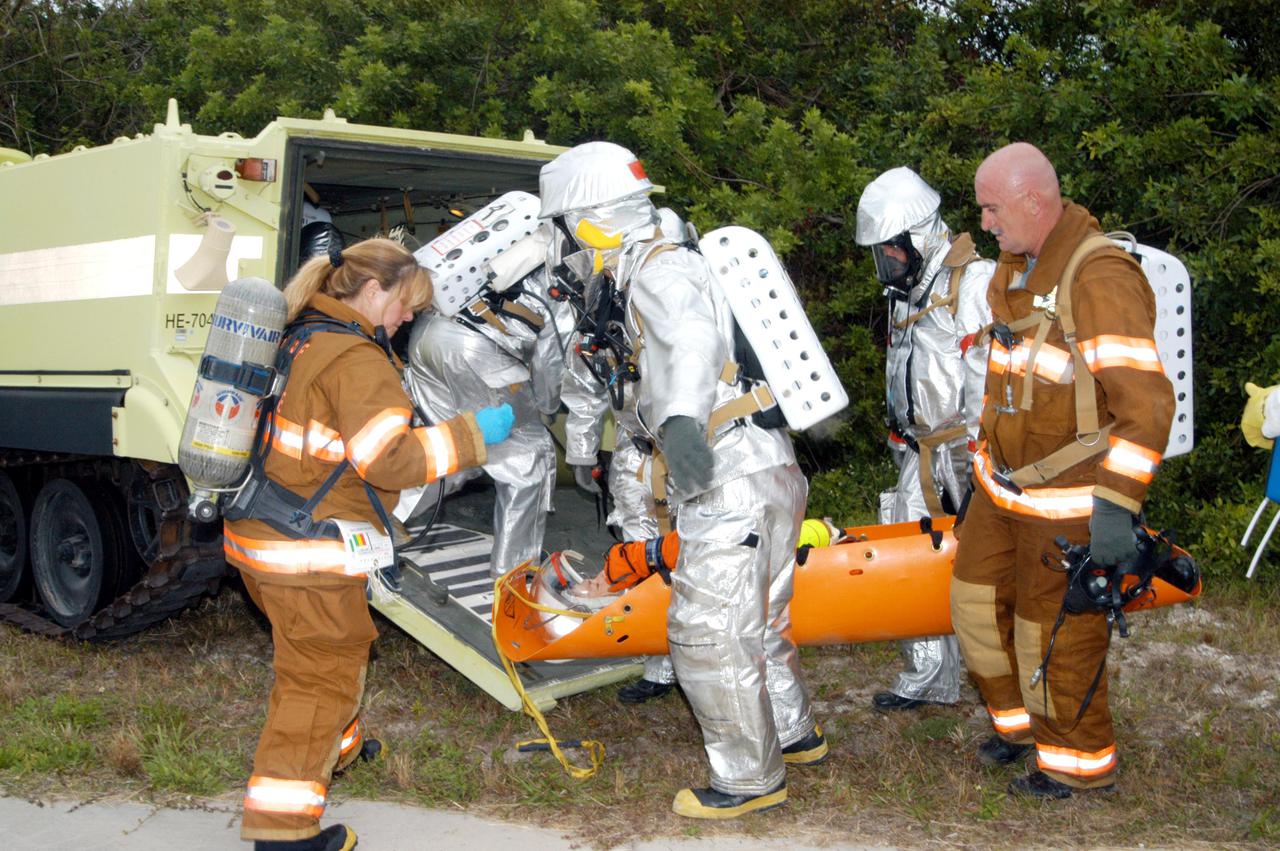
KENNEDY SPACE CENTER, FLA. - During a simulated launch countdown_emergency simulation on Launch Pad 39A, the rescue team moves “injured” astronaut-suited workers out of the M-113 armored personnel carriers that transported them away from the pad (seen in the distance). Pad team members participated in the four-hour exercise simulating normal launch countdown operations, with the added challenge of a fictitious event causing an evacuation of the vehicle and launch pad. The simulation tested the team’s rescue approaches on the Fixed Service Structure, slidewire basket evacuation, triage care and transportation of injured personnel to hospitals, as well as communications and coordination.
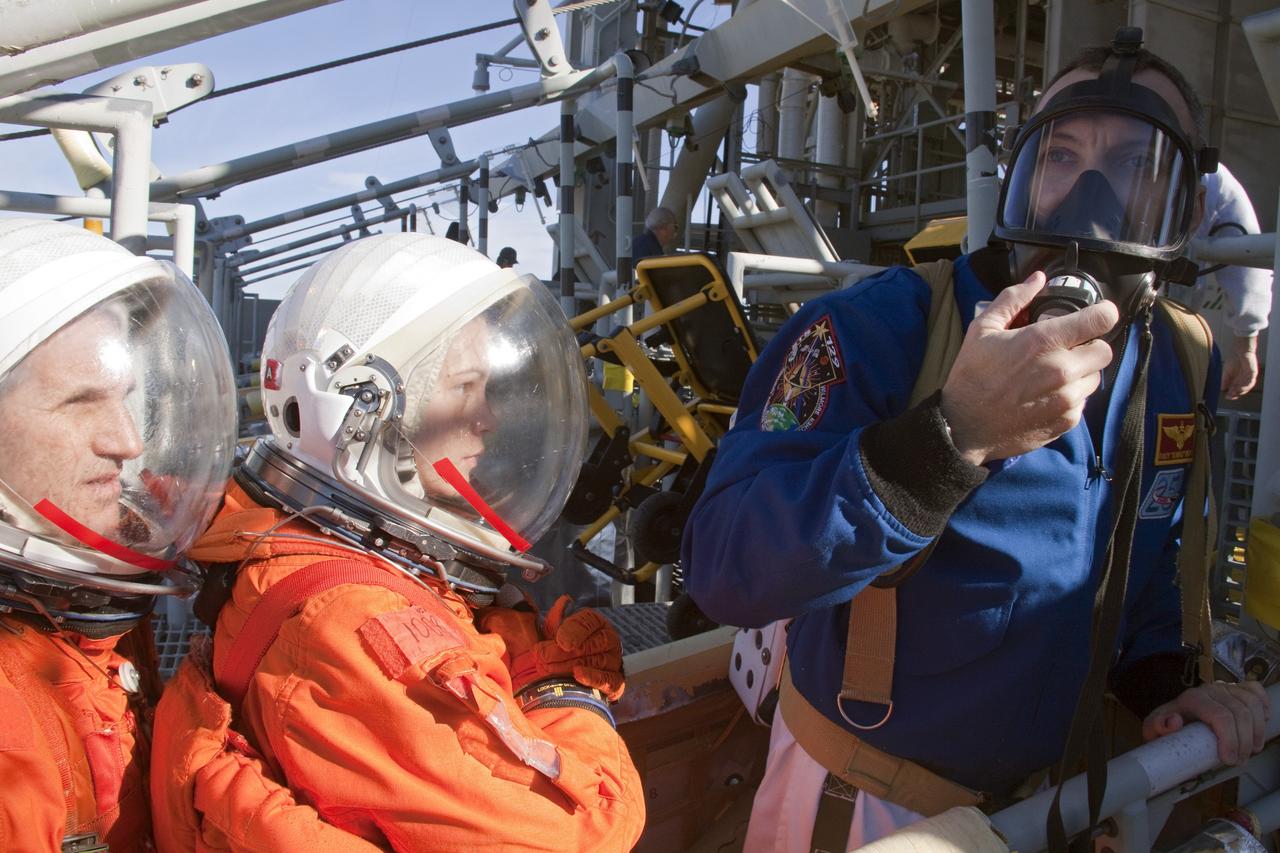
CAPE CANAVERAL, Fla. -- At NASA's Kennedy Space Center in Florida, members of an emergency escape training team perform a simulated evacuation exercise at Launch Pad 39A. For several days, volunteers portraying astronauts, take part in training exercises which allow teams to practice emergency response procedures, including helicopter evacuation to local hospitals. Training normally involves NASA fire rescue personnel, personnel from the Air Force's 920th Rescue Wing, and medical trauma teams from central Florida hospitals, and is required every 18 months to certify Fire Rescue and Closeout Crew personnel. Photo credit: NASA/Troy Cryder
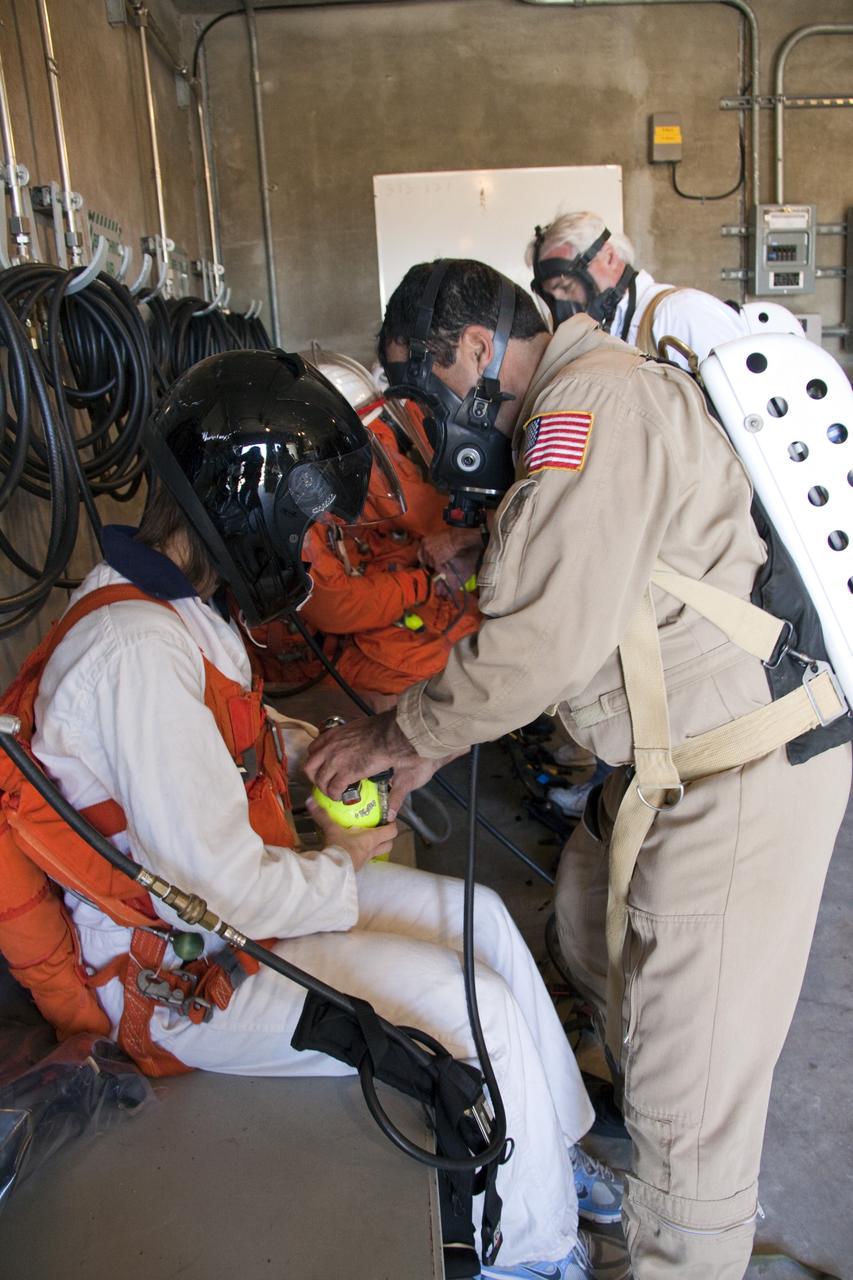
CAPE CANAVERAL, Fla. -- On Launch Pad 39A at NASA's Kennedy Space Center in Florida, members of an emergency escape training team perform a simulated evacuation exercise in the bunkers behind the slidewire basket landing site. For several days, volunteers portraying astronauts, take part in training exercises which allow teams to practice emergency response procedures, including helicopter evacuation to local hospitals. Training normally involves NASA fire rescue personnel, personnel from the Air Force's 920th Rescue Wing, and medical trauma teams from central Florida hospitals, and is required every 18 months to certify Fire Rescue and Closeout Crew personnel. Photo credit: NASA/Troy Cryder
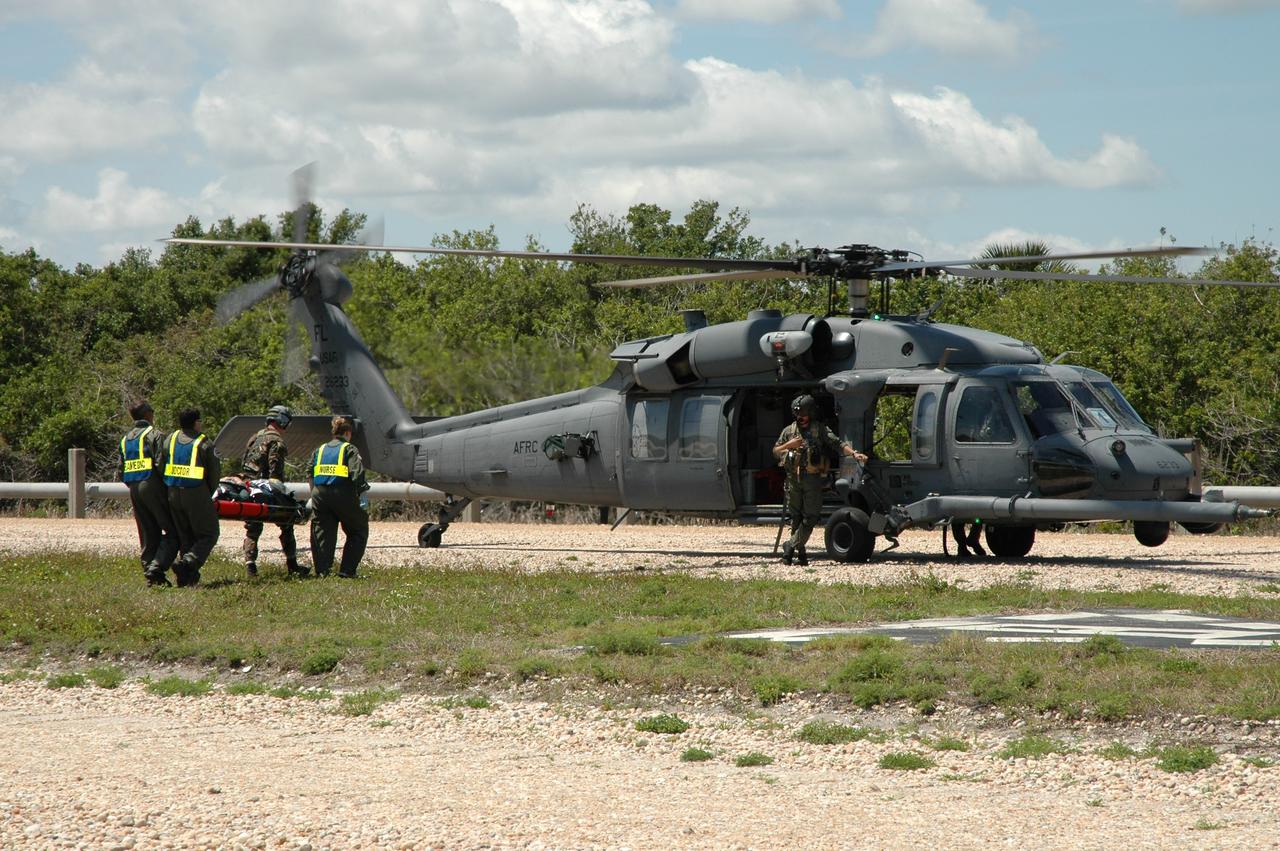
CAPE CANAVERAL, Fla. -- A group of NASA and contractor workers from Kennedy Space Center and other NASA centers, along with the Department of Defense, participate in a flight crew evacuation drill, also referred to as the Mode II/IV Simulation, from Launch Pad 39B. During the exercise, an emergency condition during launch countdown was simulated and participants did their parts to perform an emergency egress of the flight and ground crew. Fire Rescue and Closeout Crew workers transported the flight and ground crews to a triage site. Simulated injuries were treated and those with serious injuries were evacuated by helicopter to local hospitals. Photo credit: NASA/Jim Grossmann
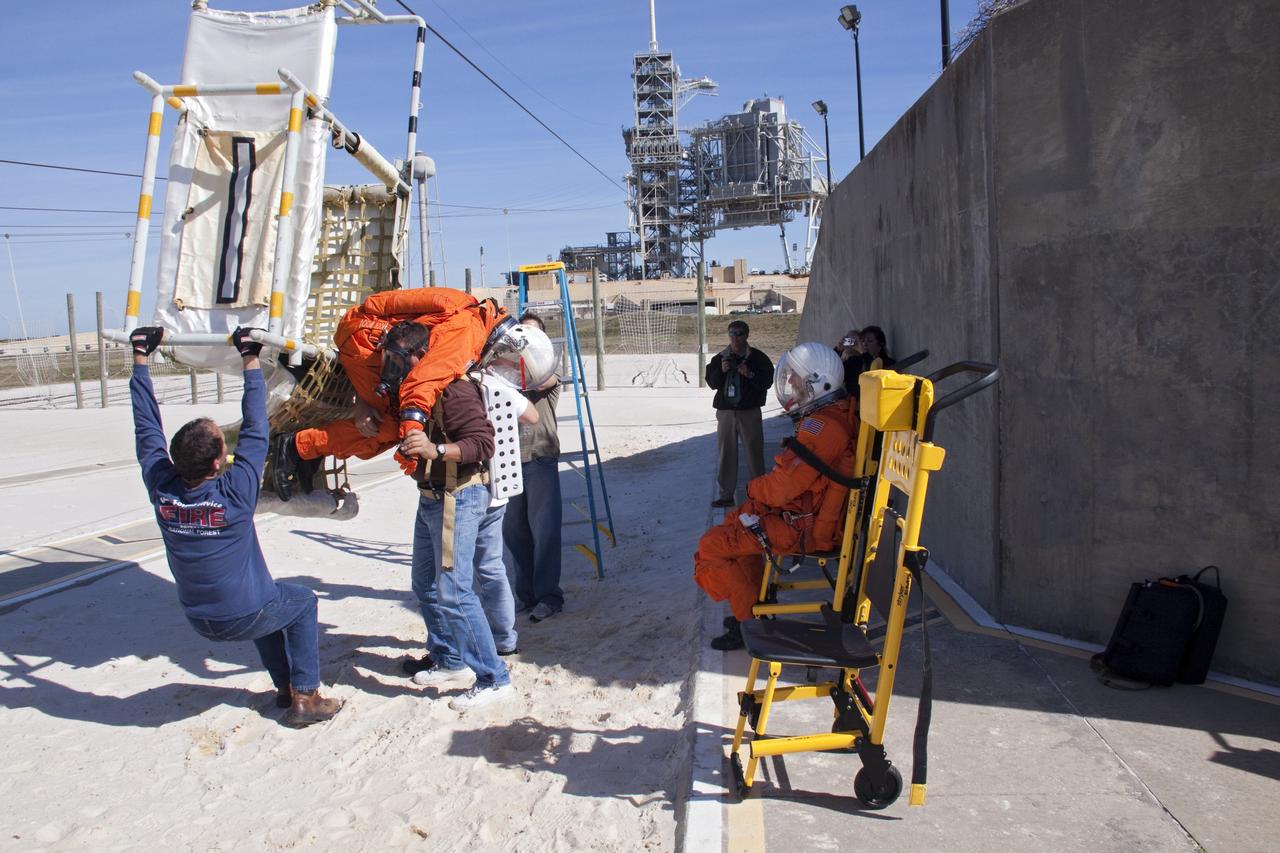
CAPE CANAVERAL, Fla. -- On Launch Pad 39A at NASA's Kennedy Space Center in Florida, members of an emergency escape training team perform a simulated evacuation exercise in the bunkers behind the slidewire basket landing site. For several days, volunteers portraying astronauts, take part in training exercises which allow teams to practice emergency response procedures, including helicopter evacuation to local hospitals. Training normally involves NASA fire rescue personnel, personnel from the Air Force's 920th Rescue Wing, and medical trauma teams from central Florida hospitals, and is required every 18 months to certify Fire Rescue and Closeout Crew personnel. Photo credit: NASA/Troy Cryder
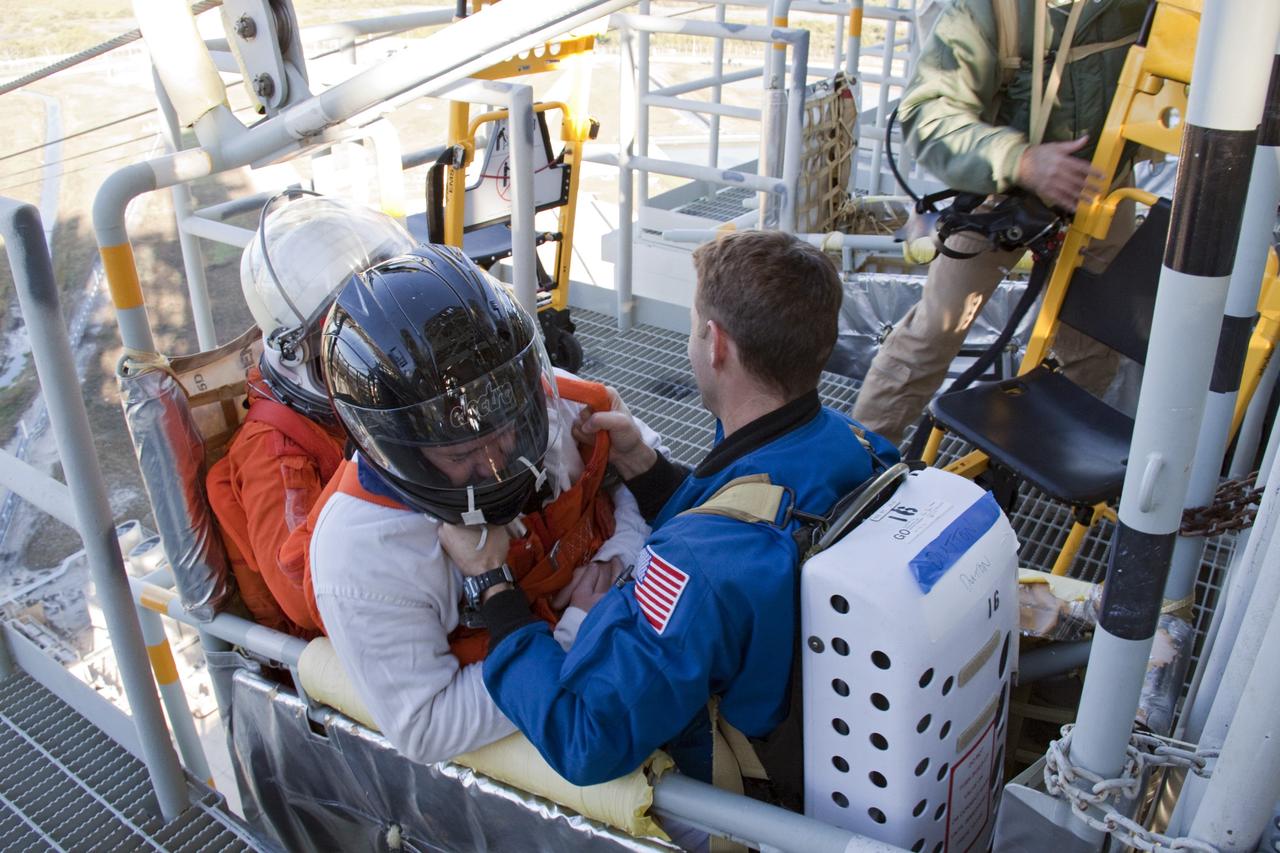
CAPE CANAVERAL, Fla. -- At NASA's Kennedy Space Center in Florida, members of an emergency escape training team perform a simulated evacuation exercise at Launch Pad 39A. For several days, volunteers portraying astronauts, take part in training exercises which allow teams to practice emergency response procedures, including helicopter evacuation to local hospitals. Training normally involves NASA fire rescue personnel, personnel from the Air Force's 920th Rescue Wing, and medical trauma teams from central Florida hospitals, and is required every 18 months to certify Fire Rescue and Closeout Crew personnel. Photo credit: NASA/Troy Cryder
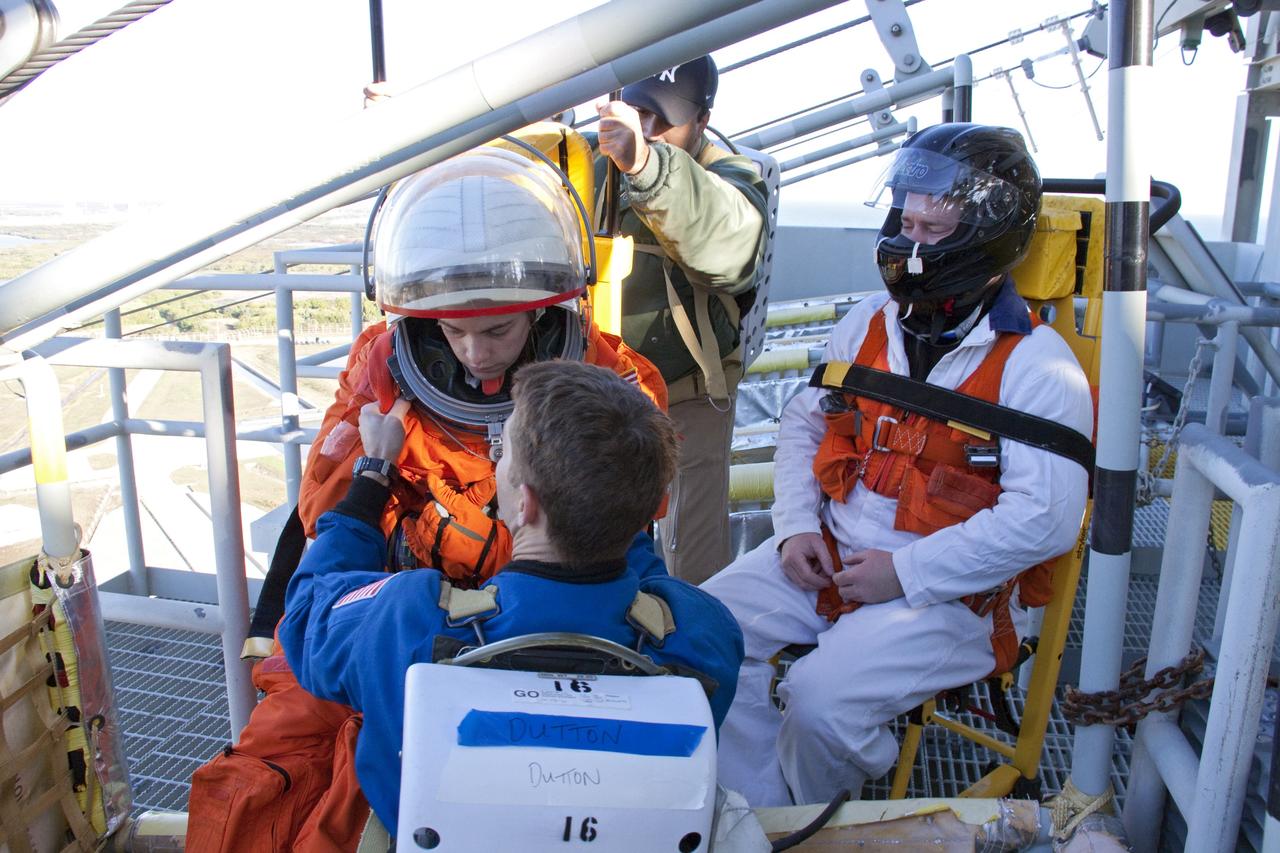
CAPE CANAVERAL, Fla. -- At NASA's Kennedy Space Center in Florida, members of an emergency escape training team perform a simulated evacuation exercise at Launch Pad 39A. For several days, volunteers portraying astronauts, take part in training exercises which allow teams to practice emergency response procedures, including helicopter evacuation to local hospitals. Training normally involves NASA fire rescue personnel, personnel from the Air Force's 920th Rescue Wing, and medical trauma teams from central Florida hospitals, and is required every 18 months to certify Fire Rescue and Closeout Crew personnel. Photo credit: NASA/Troy Cryder
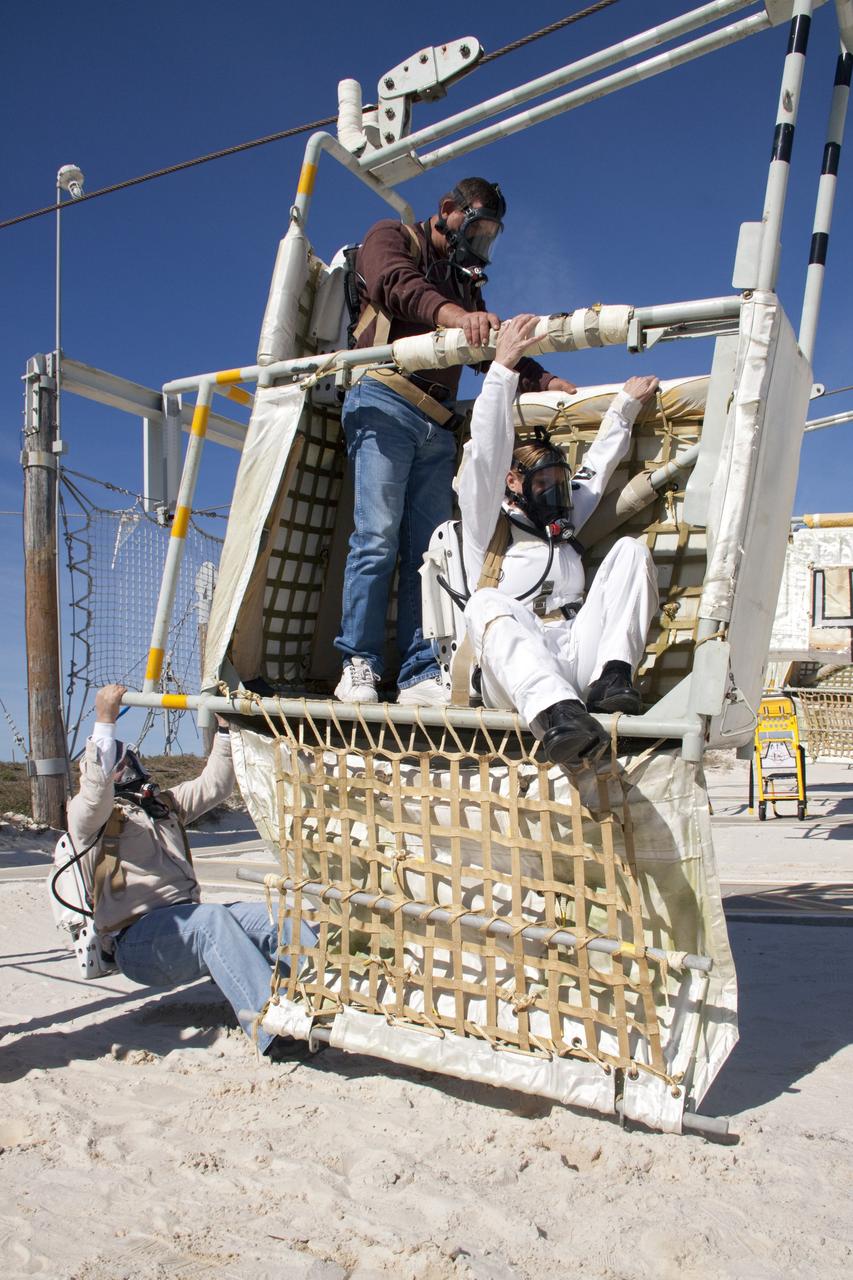
CAPE CANAVERAL, Fla. -- On Launch Pad 39A at NASA's Kennedy Space Center in Florida, members of an emergency escape training team perform a simulated evacuation exercise at the slidewire basket landing site. For several days, volunteers portraying astronauts, take part in training exercises which allow teams to practice emergency response procedures, including helicopter evacuation to local hospitals. Training normally involves NASA fire rescue personnel, personnel from the Air Force's 920th Rescue Wing, and medical trauma teams from central Florida hospitals, and is required every 18 months to certify Fire Rescue and Closeout Crew personnel. Photo credit: NASA/Troy Cryder
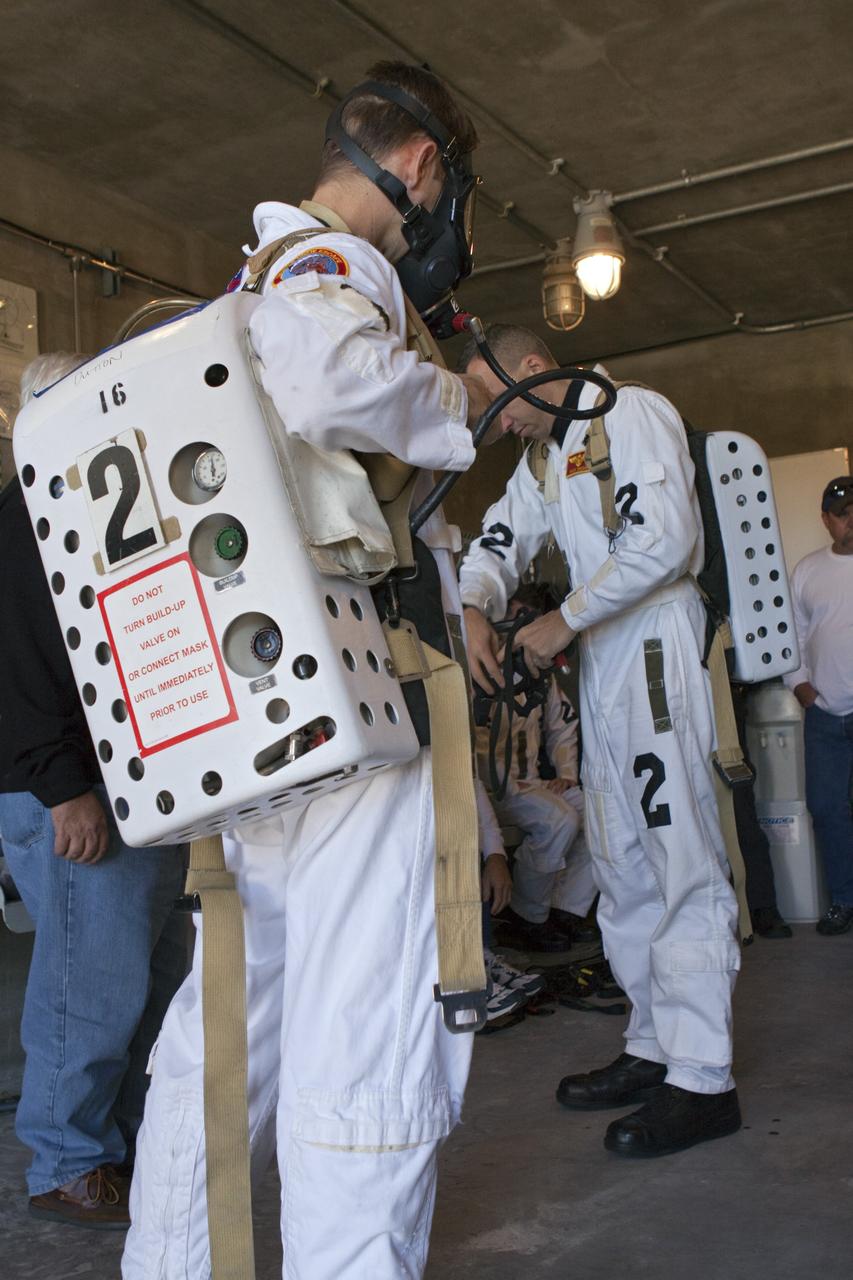
CAPE CANAVERAL, Fla. -- At NASA's Kennedy Space Center in Florida, members of an emergency escape training team suit up in the bunkers below Launch Pad 39A prior to the start of a simulated evacuation exercise. For several days, volunteers portraying astronauts, take part in training exercises which allow teams to practice emergency response procedures, including helicopter evacuation to local hospitals. Training normally involves NASA fire rescue personnel, personnel from the Air Force's 920th Rescue Wing, and medical trauma teams from central Florida hospitals, and is required every 18 months to certify Fire Rescue and Closeout Crew personnel. Photo credit: NASA/Troy Cryder
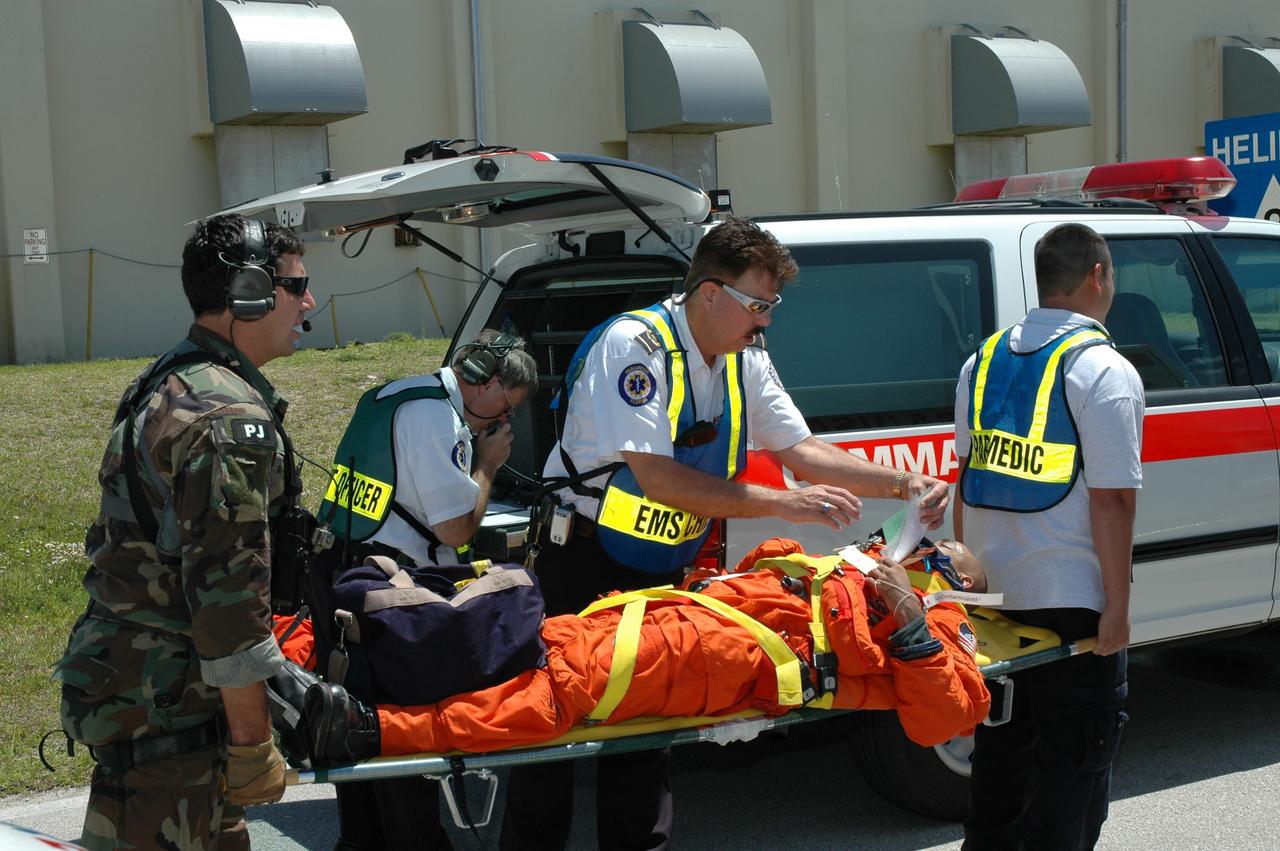
CAPE CANAVERAL, Fla. -- A group of NASA and contractor workers from Kennedy Space Center and other NASA centers, along with the Department of Defense, participate in a flight crew evacuation drill, also referred to as the Mode II/IV Simulation, from Launch Pad 39B. During the exercise, an emergency condition during launch countdown was simulated and participants did their parts to perform an emergency egress of the flight and ground crew. Fire Rescue and Closeout Crew workers transported the flight and ground crews to a triage site. Simulated injuries were treated and those with serious injuries were evacuated by helicopter to local hospitals. Photo credit: NASA/Jim Grossmann
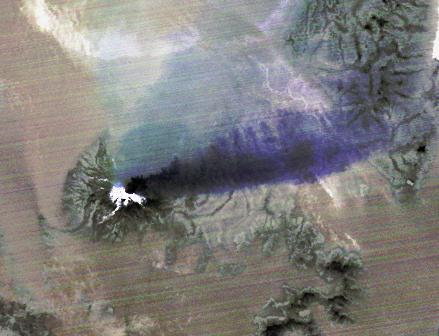
The April 18, 2015 eruption of Calbuco Volcano in Chile, as seen by NASA Terra spacecraft, led to the evacuation of thousands of citizens near the summit, blanketed nearby towns with a layer of ash, and disrupted air traffic. One week later, on April 26, the Advanced Spaceborne Thermal Emission and Reflection Radiometer (ASTER) instrument on NASA's Terra spacecraft acquired this nighttime thermal infrared image of Calbuco. Hot eruptive material at the summit appears in white (hot), with a purple plume streaming to the right, indicating that it is ash-laden. The image covers an area of 3.1 by 4.1 miles (5 by 6.6 kilometers), and is located at 41.3 degrees south, 72.5 degrees west. http://photojournal.jpl.nasa.gov/catalog/PIA19382
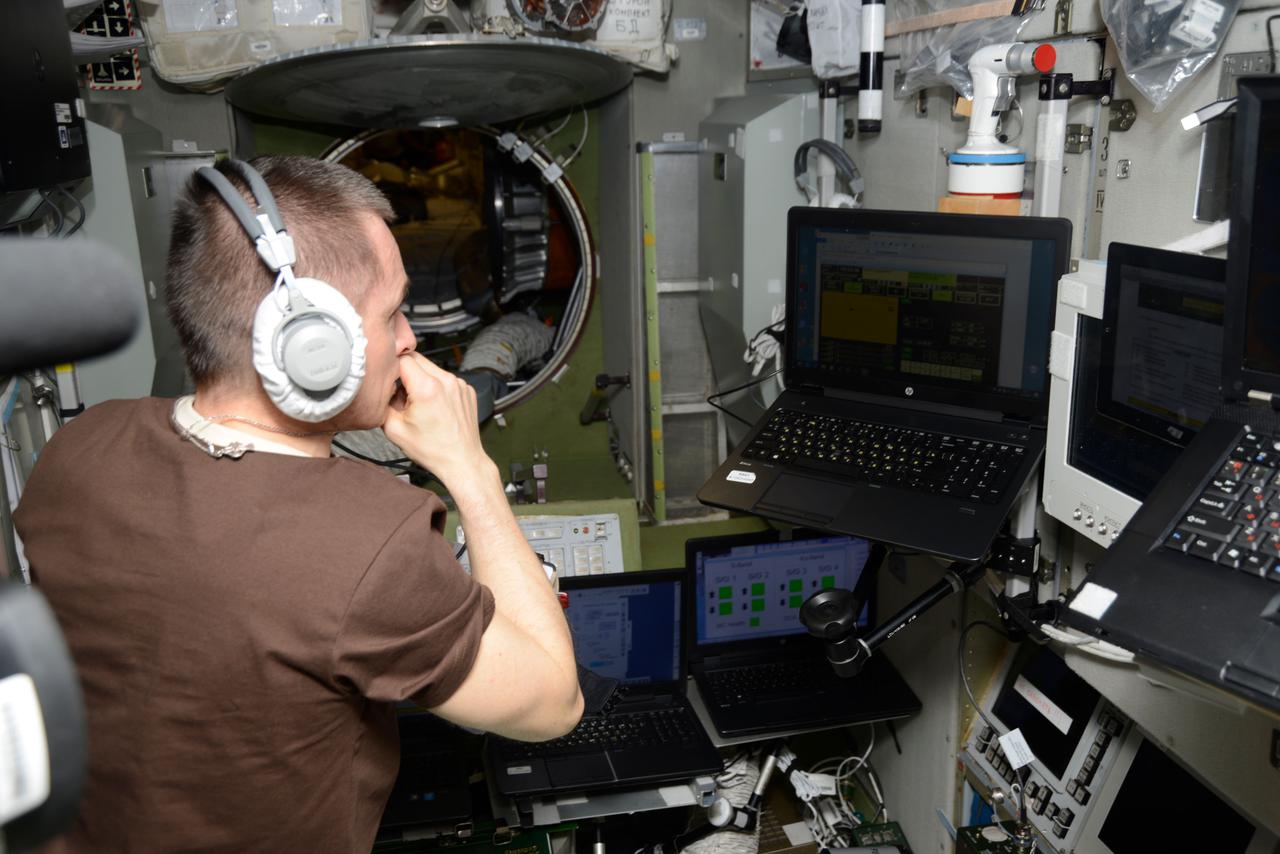
iss064e024157 (Jan. 19, 2021) --- Roscosmos cosmonaut and Expedition 64 Commander Sergey Ryzhikov reviews emergency escape procedures on a computer in the unlikely event the crew would have to evacuate the station and quickly undock inside their Soyuz crew ship.
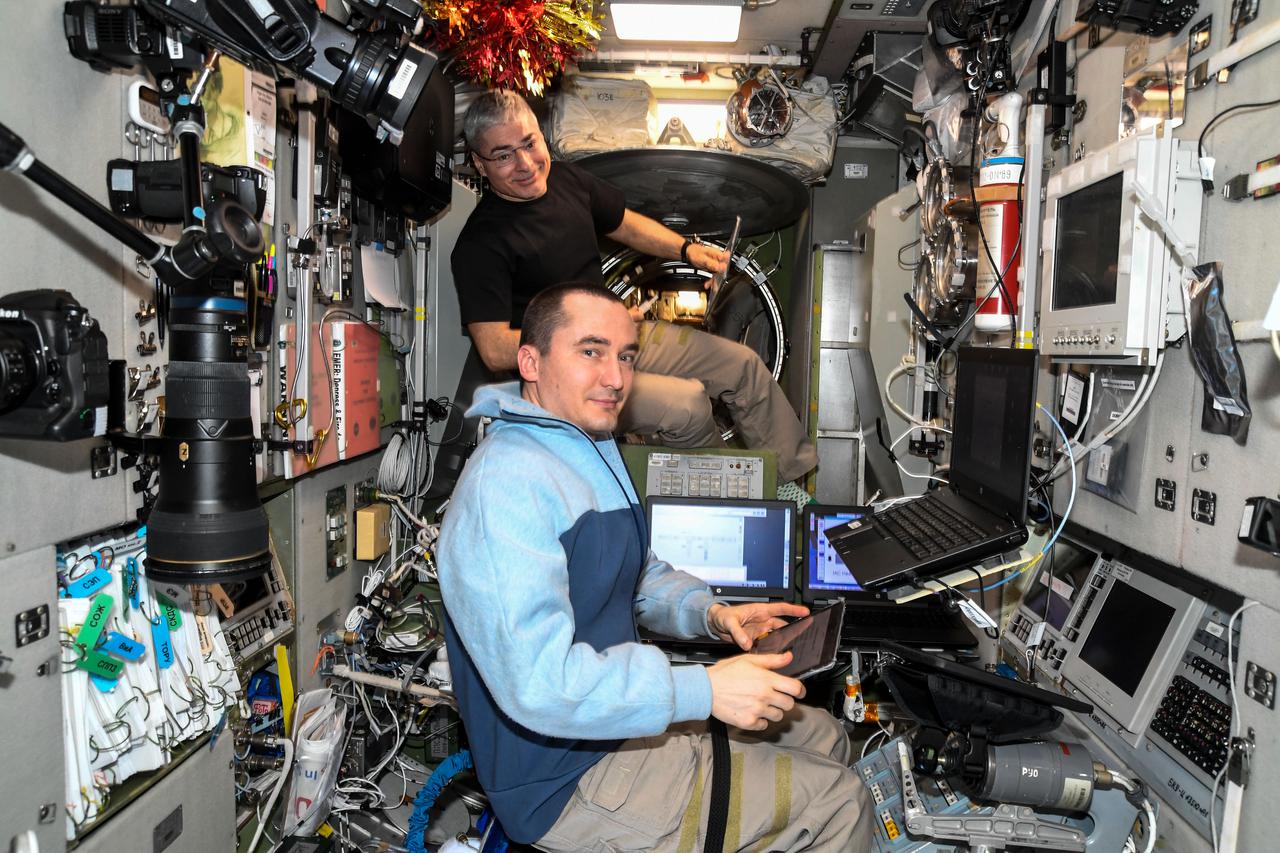
iss066e097093 (Dec. 28, 2021) --- NASA astronaut Mark Vande Hei (background) and Roscosmos cosmonaut Pyotr Dubrov train on a computer for the emergency evacuation procedures they would use in the unlikely event they would have to quickly board the Soyuz MS-19 crew ship, undock and return to Earth.
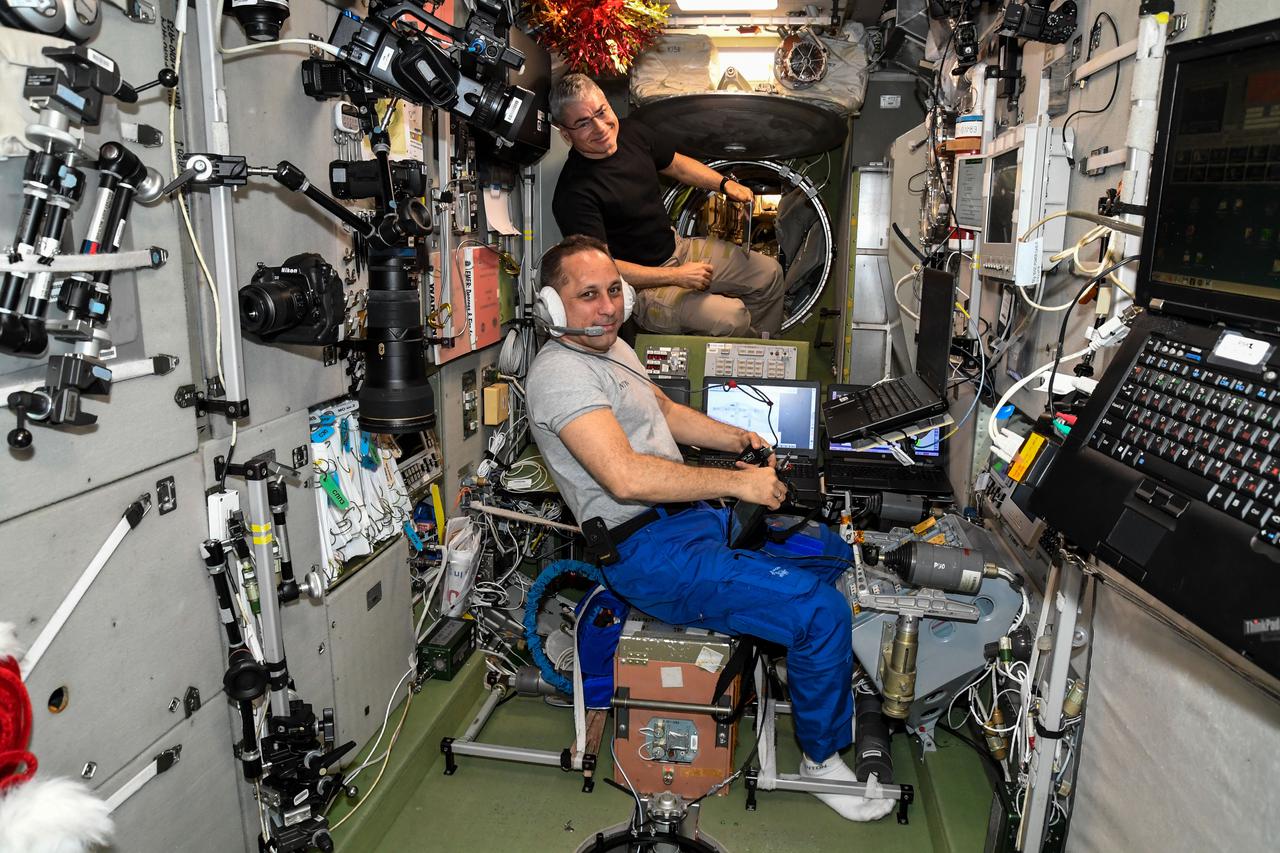
iss066e097096 (Dec. 28, 2021) --- NASA astronaut Mark Vande Hei (background) and Roscosmos cosmonaut Anton Shkaplerov train on a computer for the emergency evacuation procedures they would use in the unlikely event they would have to quickly board the Soyuz MS-19 crew ship, undock and return to Earth.
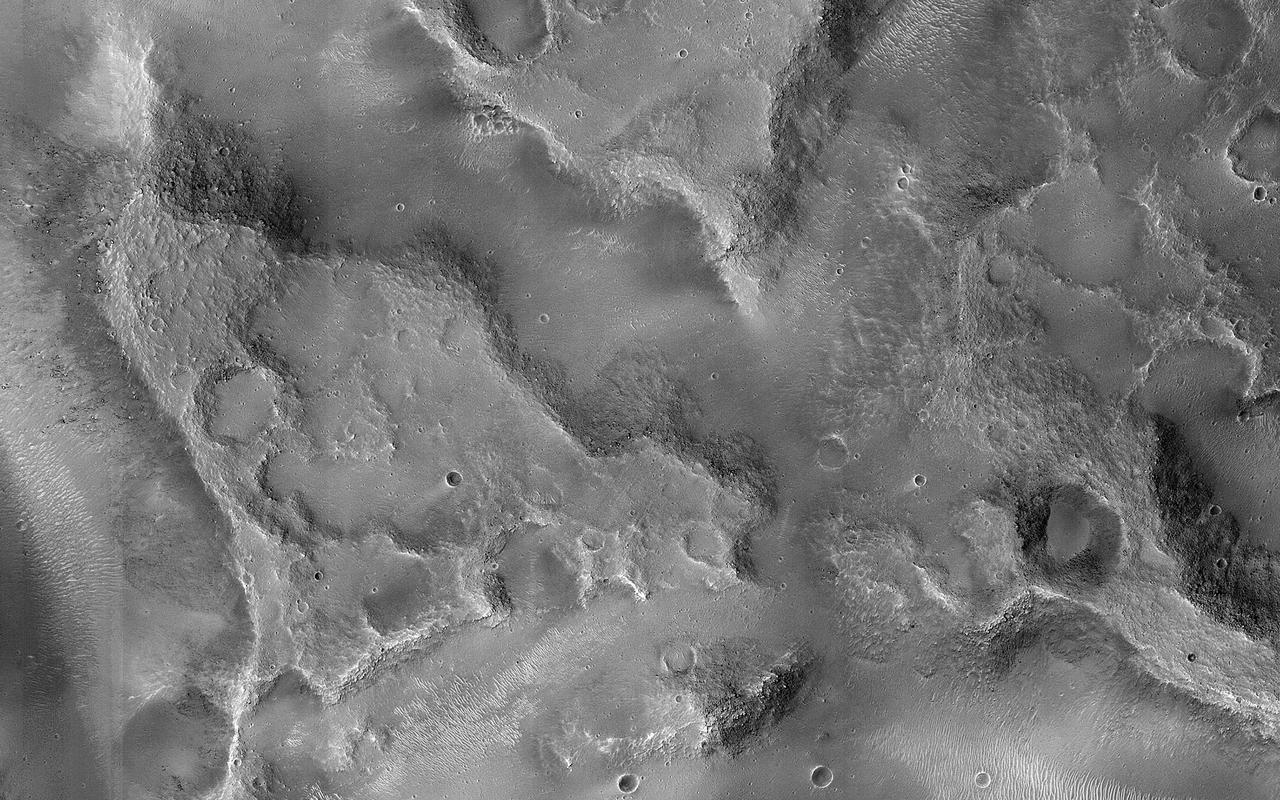
This crater in Xanthe Terra is filled with material deposited by wind or water after the crater formed. The material later fractured into discrete flat blocks. This fracturing may have occurred due to collapse over a subsurface cavity from where ground water evacuated, or under a sub-ice lake. https://photojournal.jpl.nasa.gov/catalog/PIA24388
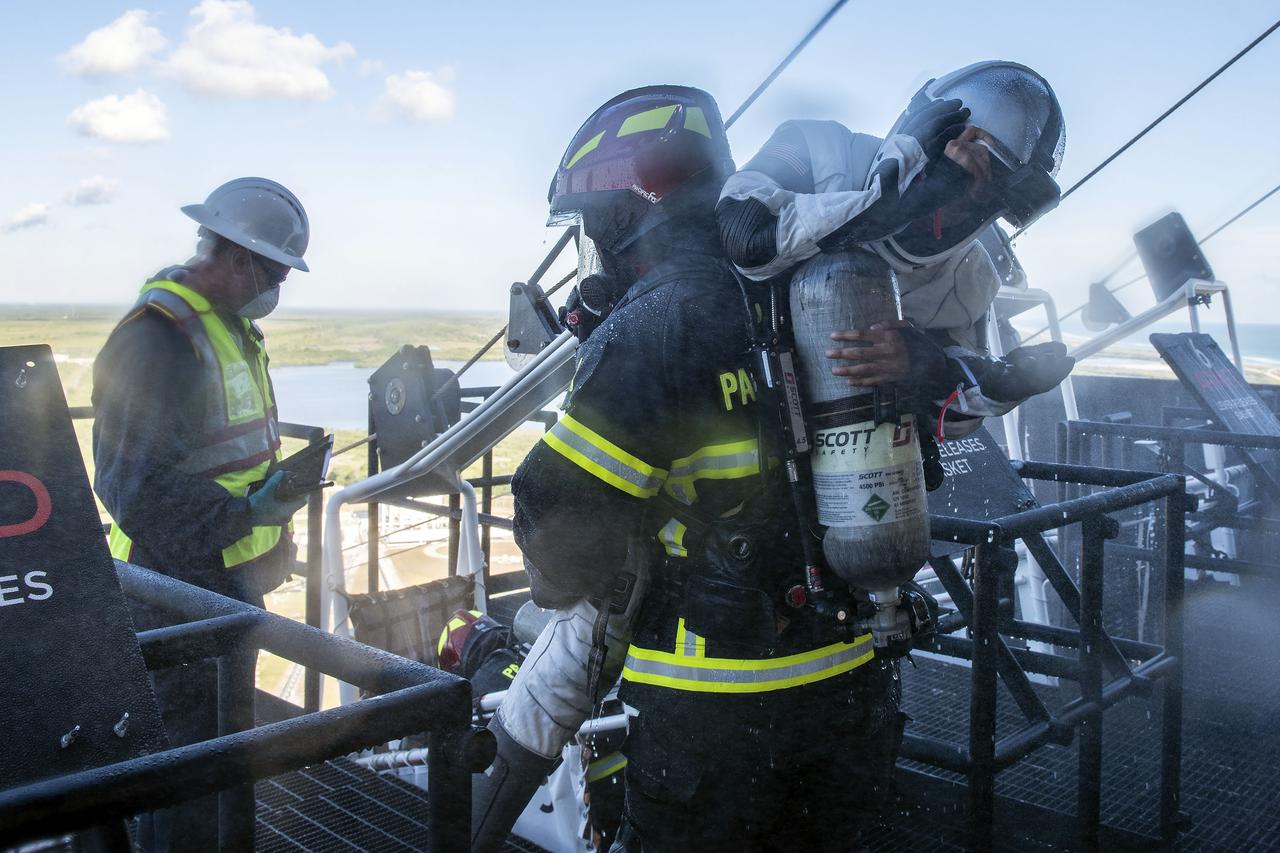
On Friday, April 3, 2020, NASA and SpaceX completed an end-to-end demonstration of the teams’ ability to safely evacuate crew members from the Fixed Service Structure during an emergency situation at Launch Complex 39A at NASA’s Kennedy Space Center in Florida.
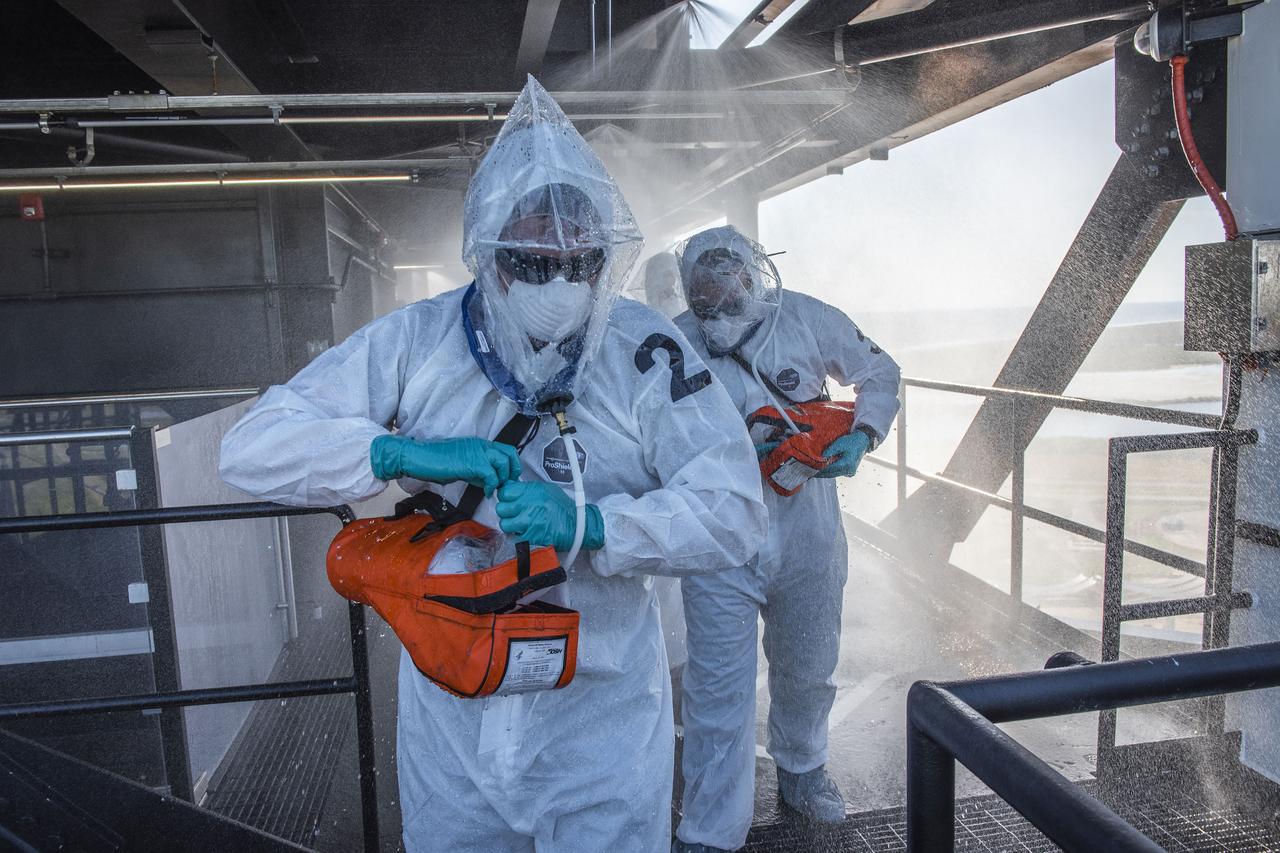
On Friday, April 3, 2020, NASA and SpaceX completed an end-to-end demonstration of the teams’ ability to safely evacuate crew members from the Fixed Service Structure during an emergency situation at Launch Complex 39A at NASA’s Kennedy Space Center in Florida.
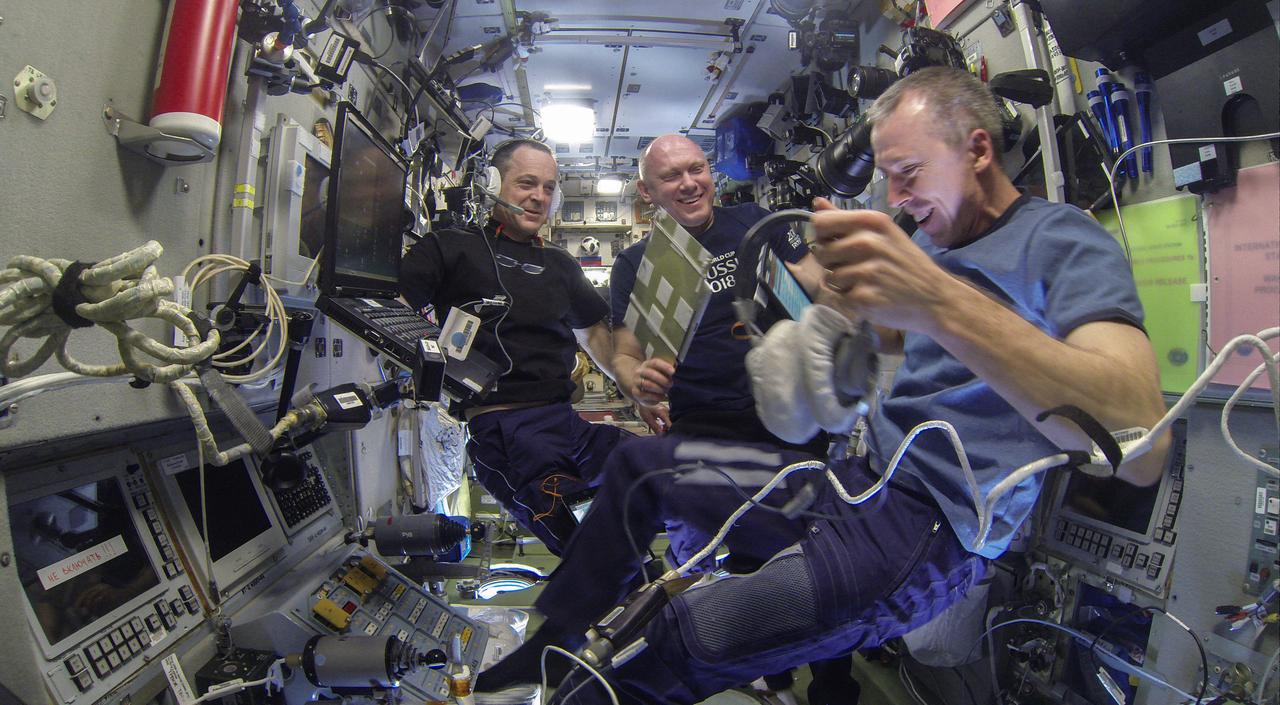
iss056e025298 (June 20, 2018) --- Expedition 55-56 crewmates (from left) Ricky Arnold (NASA), Oleg Artemyev (Roscosmos) and Drew Feustel (NASA) are gathered in the Zvezda service module practicing the evacuation of the International Space Station in the unlikely event an emergency would require the crew to enter their Soyuz spacecraft and return to Earth.

On Friday, April 3, 2020, NASA and SpaceX completed an end-to-end demonstration of the teams’ ability to safely evacuate crew members from the Fixed Service Structure during an emergency situation at Launch Complex 39A at NASA’s Kennedy Space Center in Florida.
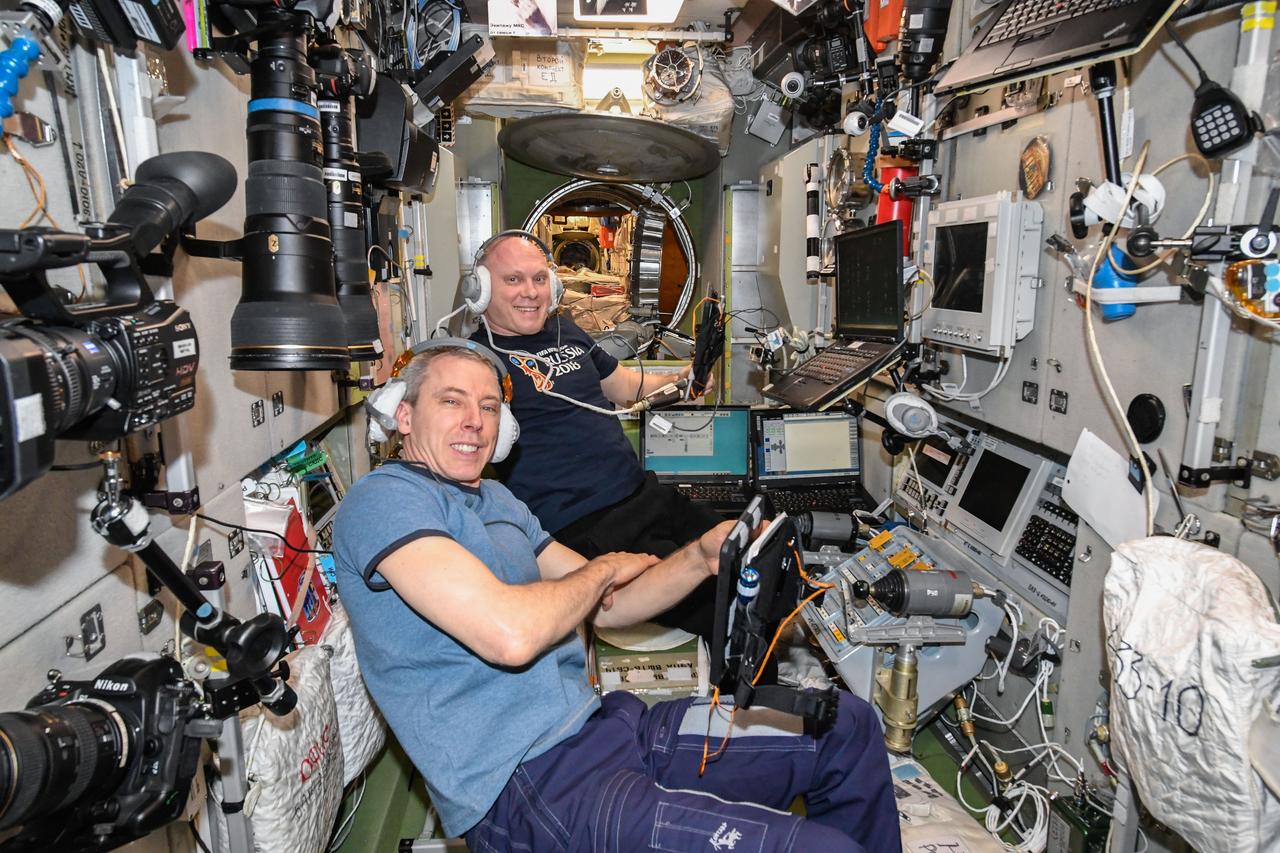
iss056e025296 (June 20, 2018) --- Expedition 55-56 crewmates Drew Feustel (foreground) and Oleg Artemyev and are gathered in the Zvzeda service module practicing the evacuation of the International Space Station in the unlikely event an emergency would require the crew to enter their Soyuz spacecraft and return to Earth.
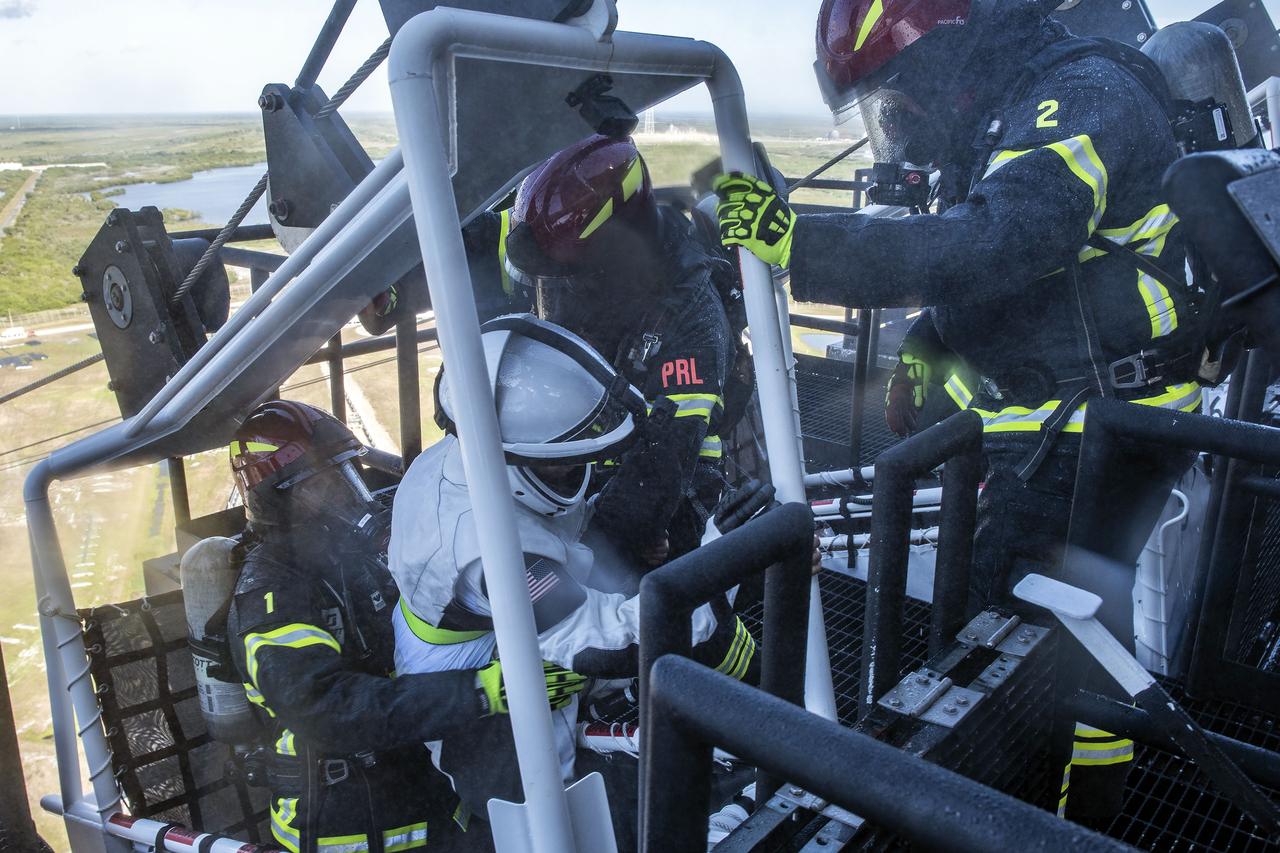
On Friday, April 3, 2020, NASA and SpaceX completed an end-to-end demonstration of the teams’ ability to safely evacuate crew members from the Fixed Service Structure during an emergency situation at Launch Complex 39A at NASA’s Kennedy Space Center in Florida.
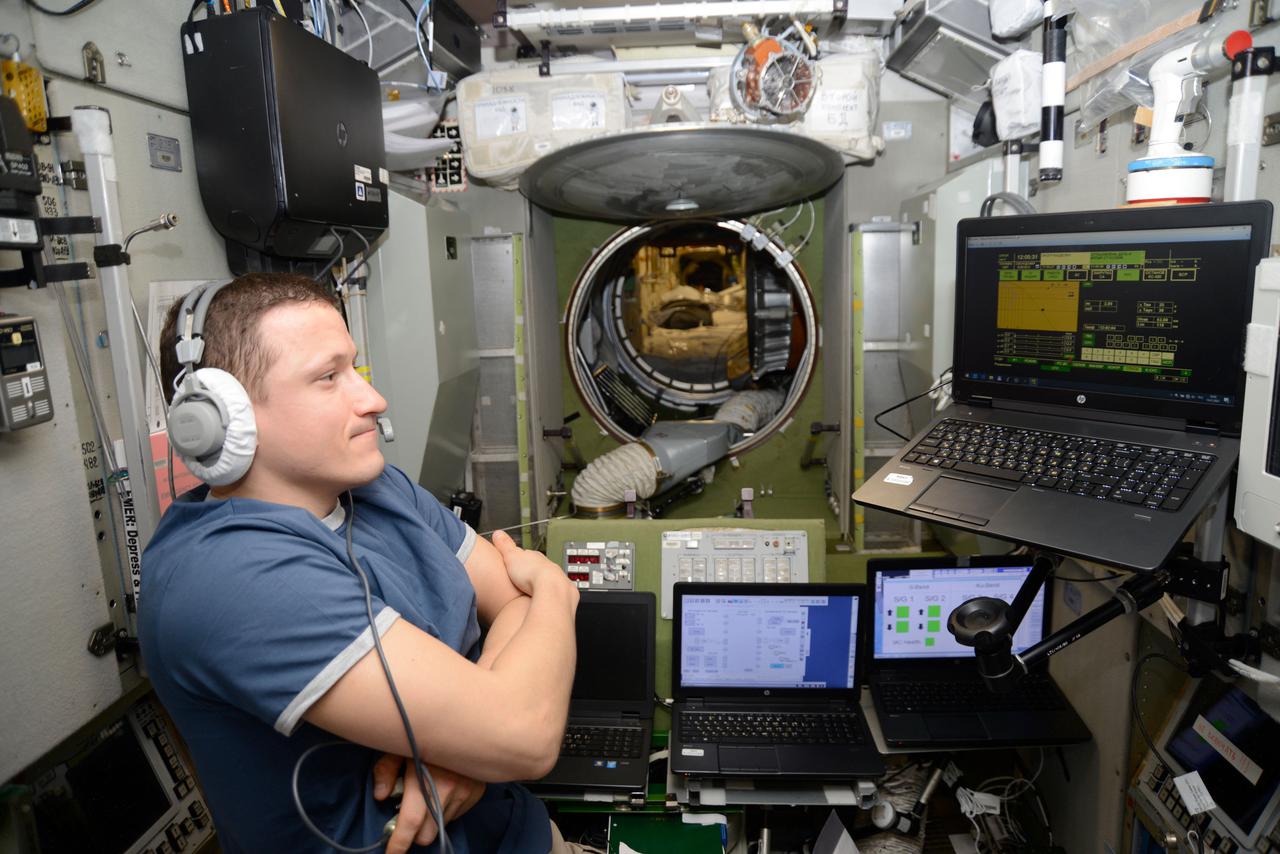
iss064e024167 (Jan. 19, 2021) --- Roscosmos cosmonaut and Expedition 64 Flight Engineer Sergey Kud-Sverchkov reviews emergency escape procedures on a computer in the unlikely event the crew would have to evacuate the station and quickly undock inside their Soyuz crew ship.
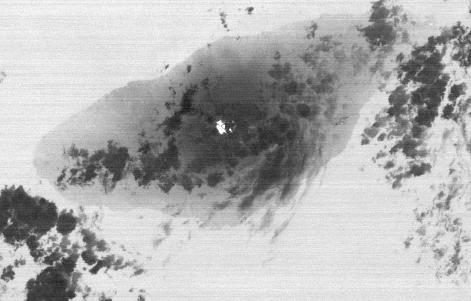
On Sept. 28, 2017, Manaro Voui volcano on Ambae island in Vanuatu began spewing ash in a moderate eruption, prompting authorities to order the evacuation of all 11,000 residents. This nighttime thermal infrared image from the Advanced Spaceborne Thermal Emission and Reflection Radiometer (ASTER), acquired on Oct. 7, shows a hot spot (white) on the volcano's summit crater, but no large eruption. Cold clouds are dark gray, the warmer island is gray, and the ocean, (warmer than the island), is light gray. The image covers an area of 17 by 26 miles (27 by 42.4 kilometers), and is centered at 15.4 degrees south, 167.8 degrees east. https://photojournal.jpl.nasa.gov/catalog/PIA22045
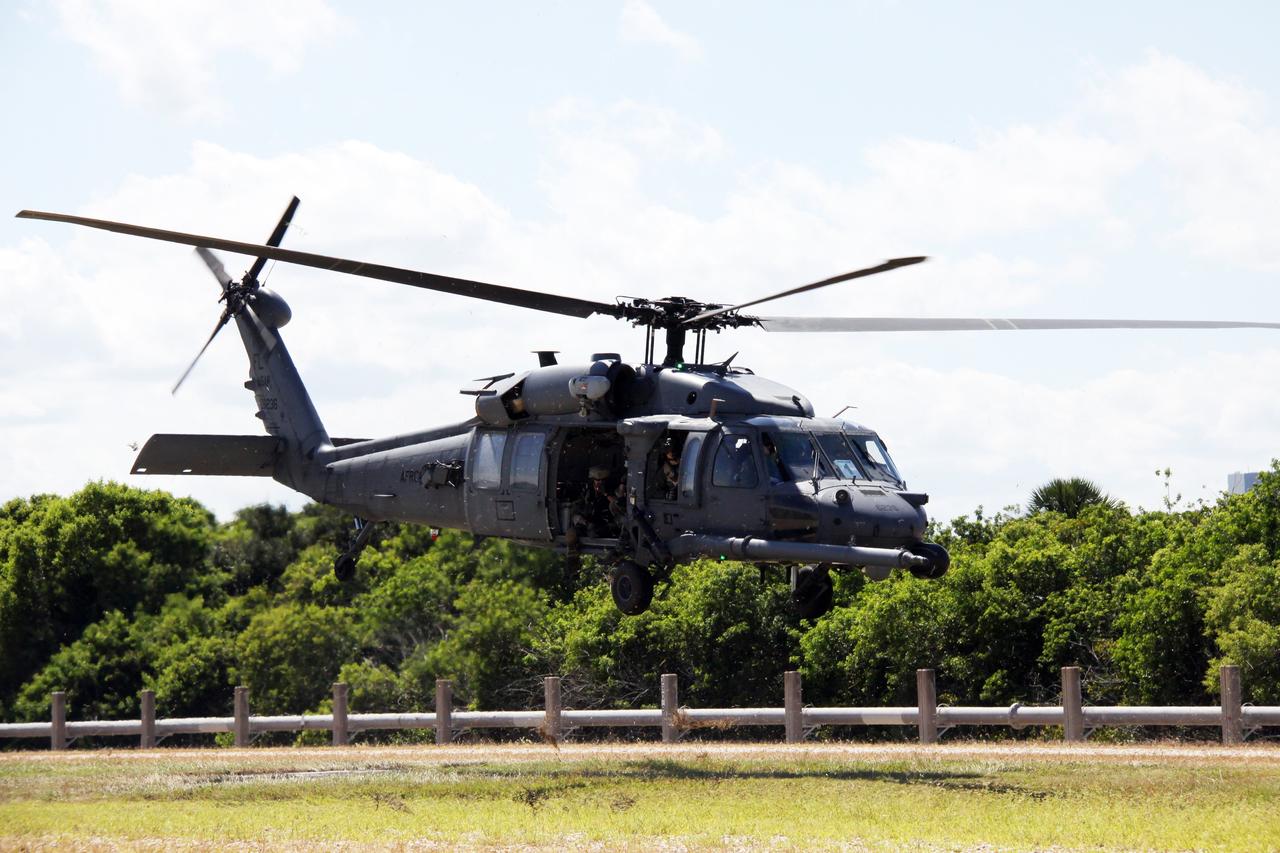
CAPE CANAVERAL, Fla. – An Air Force helicopter takes off while participating in a Mode II-IV exercise at NASA's Kennedy Space Center in Florida. The exercise allows teams to practice an emergency response at Launch Pad 39A, including helicopter evacuation to local hospitals. The exercise allows teams to practice an emergency response at Launch Pad 39A, including helicopter evacuation to local hospitals. The exercise involves NASA fire rescue personnel, volunteers portraying astronauts with simulated injuries, helicopters and personnel from the Air Force’s 920th Rescue Wing and medical trauma teams at three central Florida hospitals. The Space Shuttle Program and U.S. Air Force are conducting the emergency simulation. Photo credit: NASA/Troy Cryder
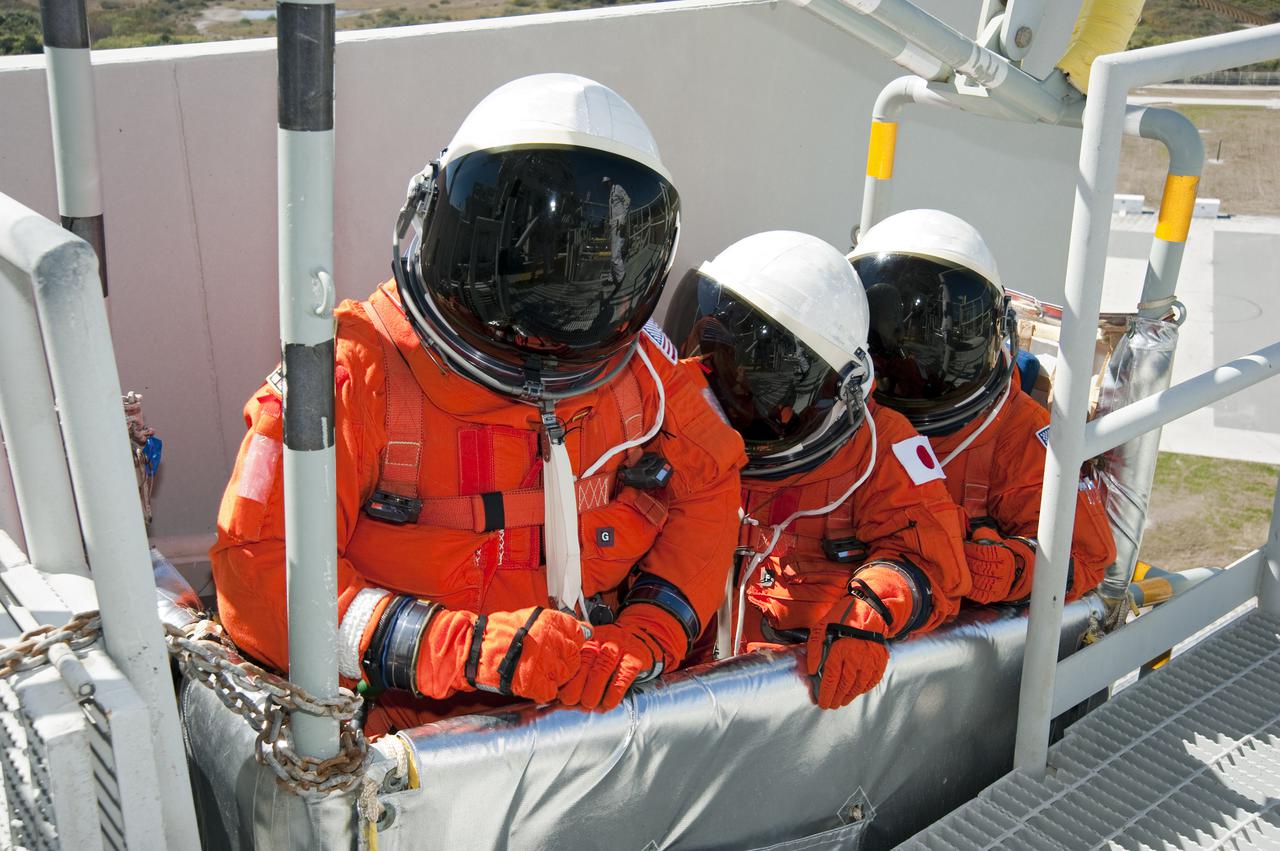
CAPE CANAVERAL, Fla. - At Launch Pad 39A at NASA's Kennedy Space Center in Florida, STS-131 crew members position themselves inside a slidewire basket as they practice emergency evacuation procedures at the pad. Evacuation from the pad's 195-foot level is made possible by seven baskets suspended from seven slidewires that extend from the fixed service structure to a landing zone 1,200 feet west of the pad. The crew members of space shuttle Discovery's STS-131 mission are participating in training related to their launch dress rehearsal, the Terminal Countdown Demonstration Test. The seven-member crew will deliver the multi-purpose logistics module Leonardo, filled with resupply stowage platforms and racks, to the International Space Station aboard Discovery. Targeted for launch on April 5, STS-131 will be the 33rd shuttle mission to the station and the 131st shuttle mission overall. For information on the STS-131 mission and crew, visit http:__www.nasa.gov_mission_pages_shuttle_shuttlemissions_sts131_index.html. Photo credit: NASA_Kim Shiflett
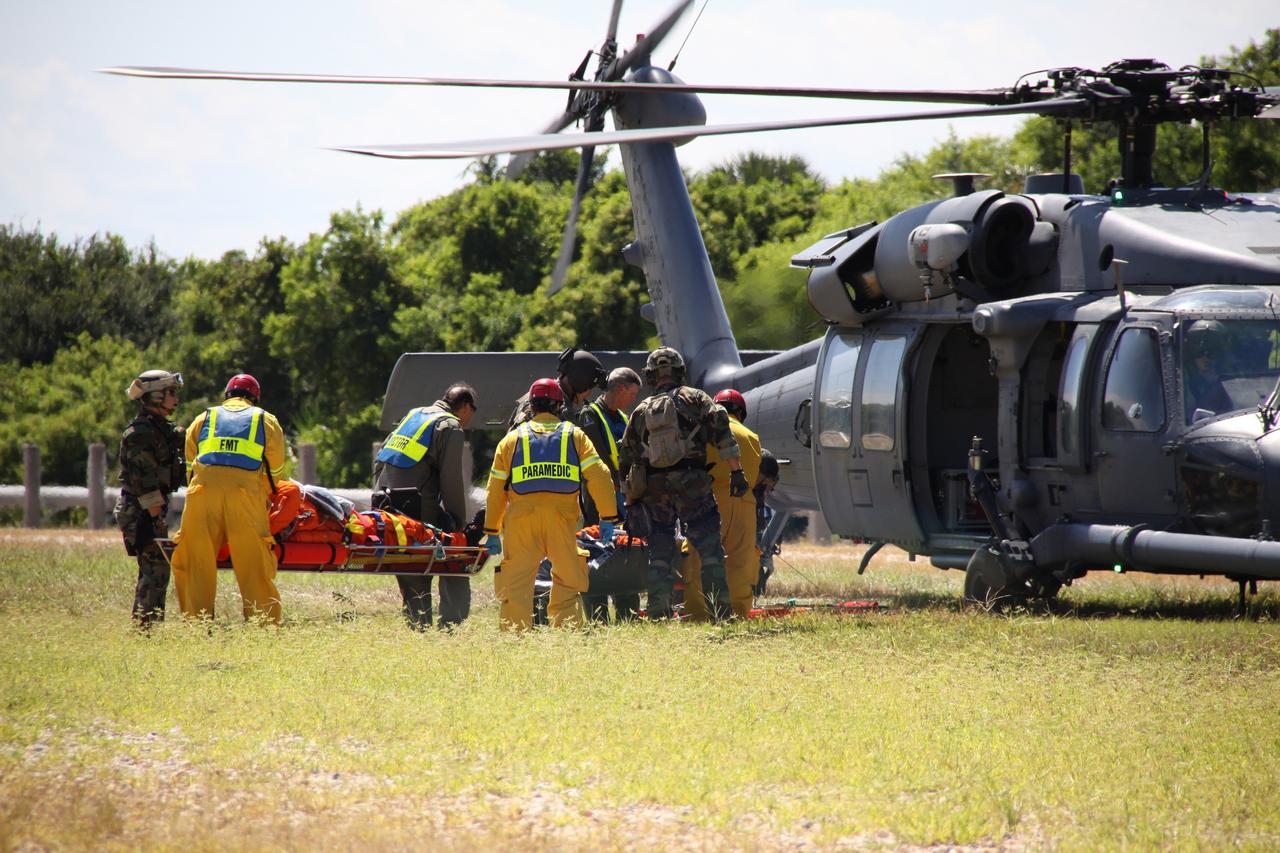
CAPE CANAVERAL, Fla. – At NASA's Kennedy Space Center in Florida, volunteers portraying astronauts are transported to helicopters as part of a Mode II-IV exercise that allows teams to practice an emergency response at Launch Pad 39A, including helicopter evacuation to local hospitals. The exercise allows teams to practice an emergency response at Launch Pad 39A, including helicopter evacuation to local hospitals. The exercise involves NASA fire rescue personnel, volunteers portraying astronauts with simulated injuries, helicopters and personnel from the Air Force’s 920th Rescue Wing and medical trauma teams at three central Florida hospitals. The Space Shuttle Program and U.S. Air Force are conducting the emergency simulation. Photo credit: NASA/Troy Cryder
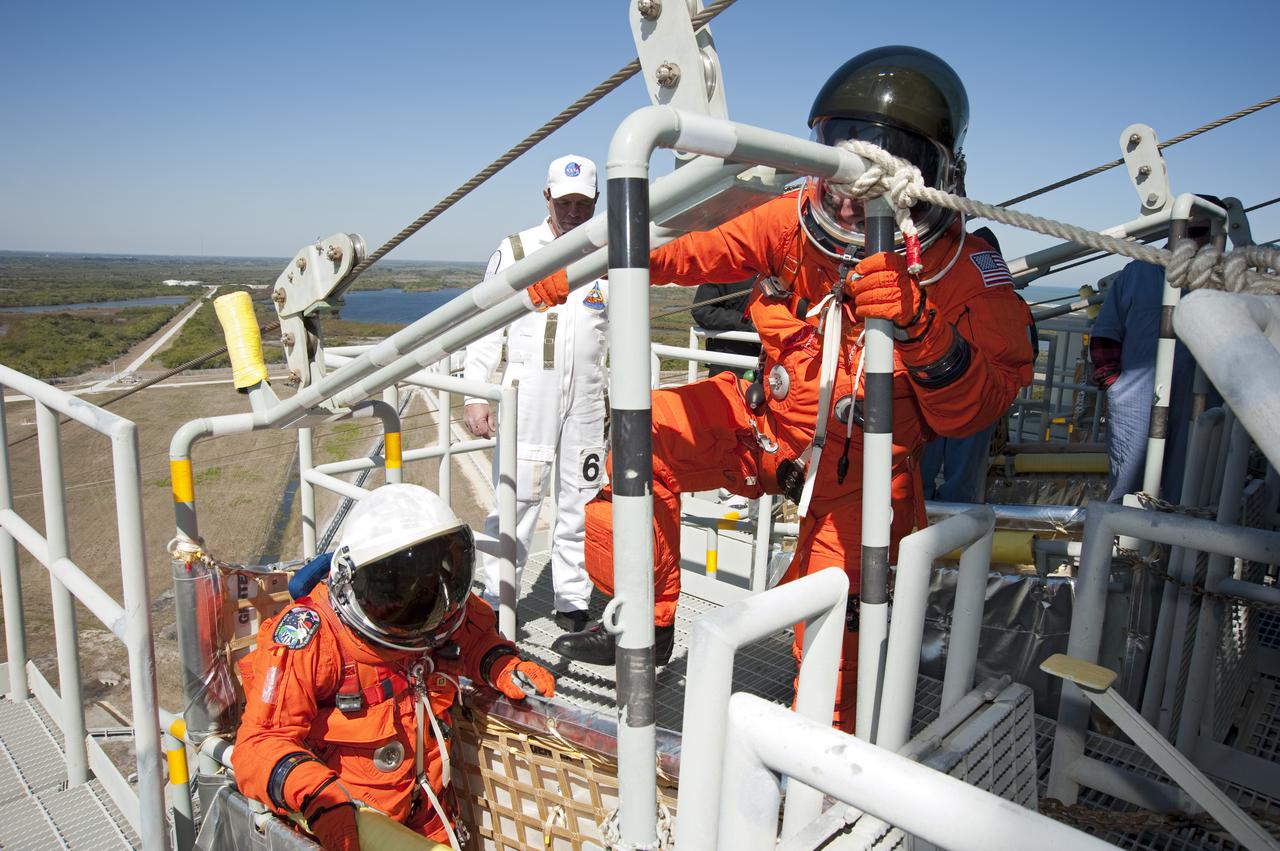
CAPE CANAVERAL, Fla. - At Launch Pad 39A at NASA's Kennedy Space Center in Florida, STS-131 Commander Alan Poindexter hops into a slidewire basket during practice for an emergency evacuation of the pad. Evacuation from the pad's 195-foot level is made possible by seven baskets suspended from seven slidewires that extend from the fixed service structure to a landing zone 1,200 feet west of the pad. The crew members of space shuttle Discovery's STS-131 mission are participating in training related to their launch dress rehearsal, the Terminal Countdown Demonstration Test. The seven-member crew will deliver the multi-purpose logistics module Leonardo, filled with resupply stowage platforms and racks, to the International Space Station aboard Discovery. Targeted for launch on April 5, STS-131 will be the 33rd shuttle mission to the station and the 131st shuttle mission overall. For information on the STS-131 mission and crew, visit http:__www.nasa.gov_mission_pages_shuttle_shuttlemissions_sts131_index.html. Photo credit: NASA_Kim Shiflett
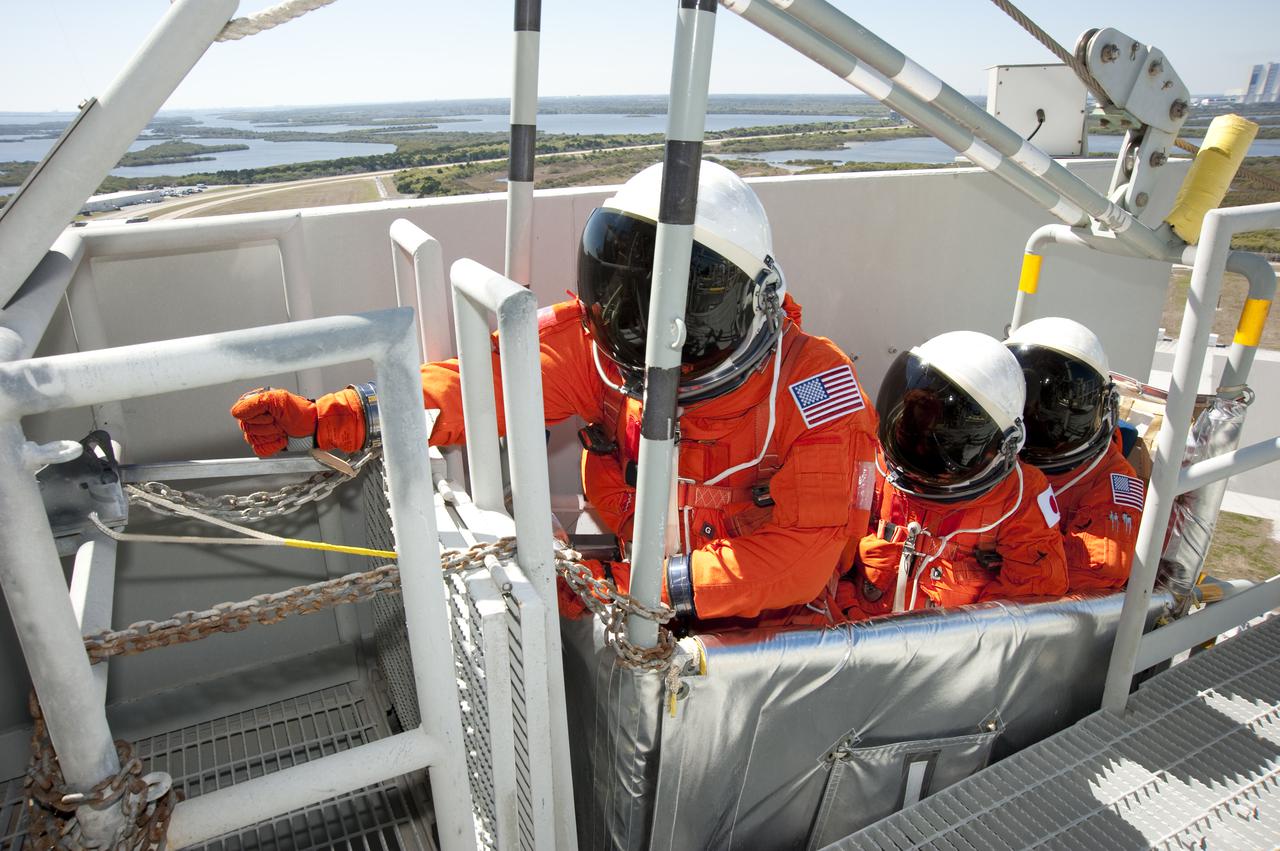
CAPE CANAVERAL, Fla. - At Launch Pad 39A at NASA's Kennedy Space Center in Florida, STS-131 crew members practice pad emergency evacuation procedures inside a slidewire basket. Evacuation from the pad's 195-foot level is made possible by seven baskets suspended from seven slidewires that extend from the fixed service structure to a landing zone 1,200 feet west of the pad. The crew members of space shuttle Discovery's STS-131 mission are participating in training related to their launch dress rehearsal, the Terminal Countdown Demonstration Test. The seven-member crew will deliver the multi-purpose logistics module Leonardo, filled with resupply stowage platforms and racks, to the International Space Station aboard Discovery. Targeted for launch on April 5, STS-131 will be the 33rd shuttle mission to the station and the 131st shuttle mission overall. For information on the STS-131 mission and crew, visit http:__www.nasa.gov_mission_pages_shuttle_shuttlemissions_sts131_index.html. Photo credit: NASA_Kim Shiflett
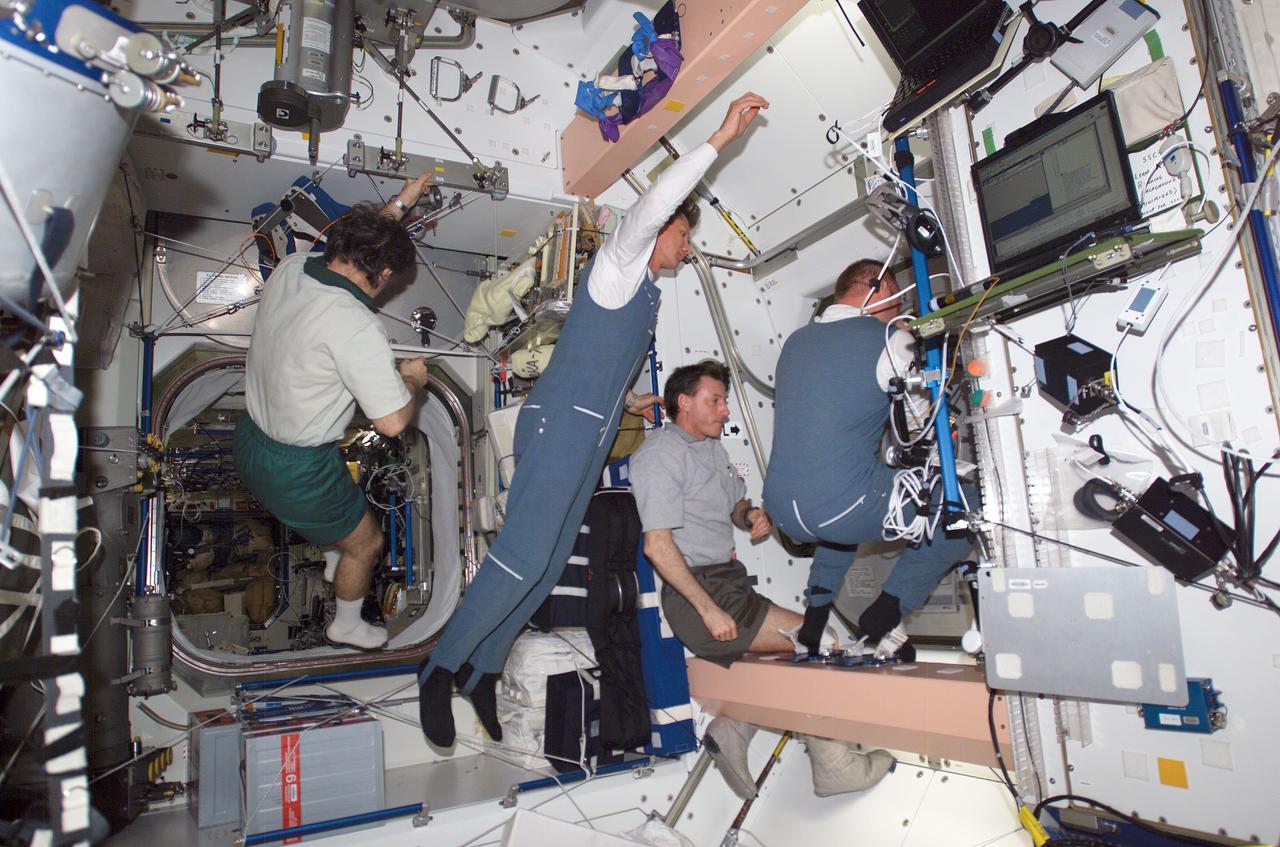
ISS008-E-21967 (21 April 2004) --- The five crewmembers onboard the International Space Station (ISS) went through the usual contingency evacuation drill, to acquaint the visitors with the general layout and sharpen their readiness for possible Station evacuation in the two Soyuz vehicles in case of an emergency. Pictured in the Unity node are cosmonauts Alexander Y. Kaleri (left), Expedition 8 flight engineer; Gennady I. Padalka, Expedition 9 commander, both representing Russia’s Federal Space Agency; astronauts C. Michael Foale, Expedition 8 commander and NASA ISS science officer; and Edward M. (Mike) Fincke, Expedition 9 NASA ISS science officer and flight engineer. European Space Agency (ESA) astronaut Andre Kuipers of the Netherlands is out of frame.
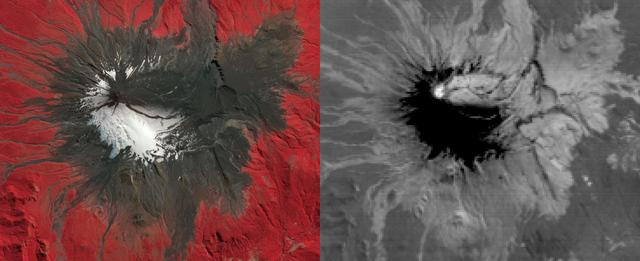
On March 3, 2015, Chile's Villarrica volcano erupted, forcing the evacuation of thousands of people. The eruption deposited a layer of ash over the volcano's eastern slope, blanketing and darkening the normal winter snow cover. The eruption and its effects were captured by the Advanced Spaceborne Thermal Emission and Reflection Radiometer (ASTER) instrument on NASA's Terra spacecraft on March 9. Black flows on the other flanks are mud and ash flows. Vegetation is displayed in red colors. The thermal infrared image shows hot spots (white colored) at the summit crater, indicating continuing volcanic activity. The ash blanket is warmer (brighter) than the cold snow (black). The image covers an area of 13.5 by 16.5 kilometers, and is located at 39.4 degrees south, 71.9 degrees west. http://photojournal.jpl.nasa.gov/catalog/PIA19241
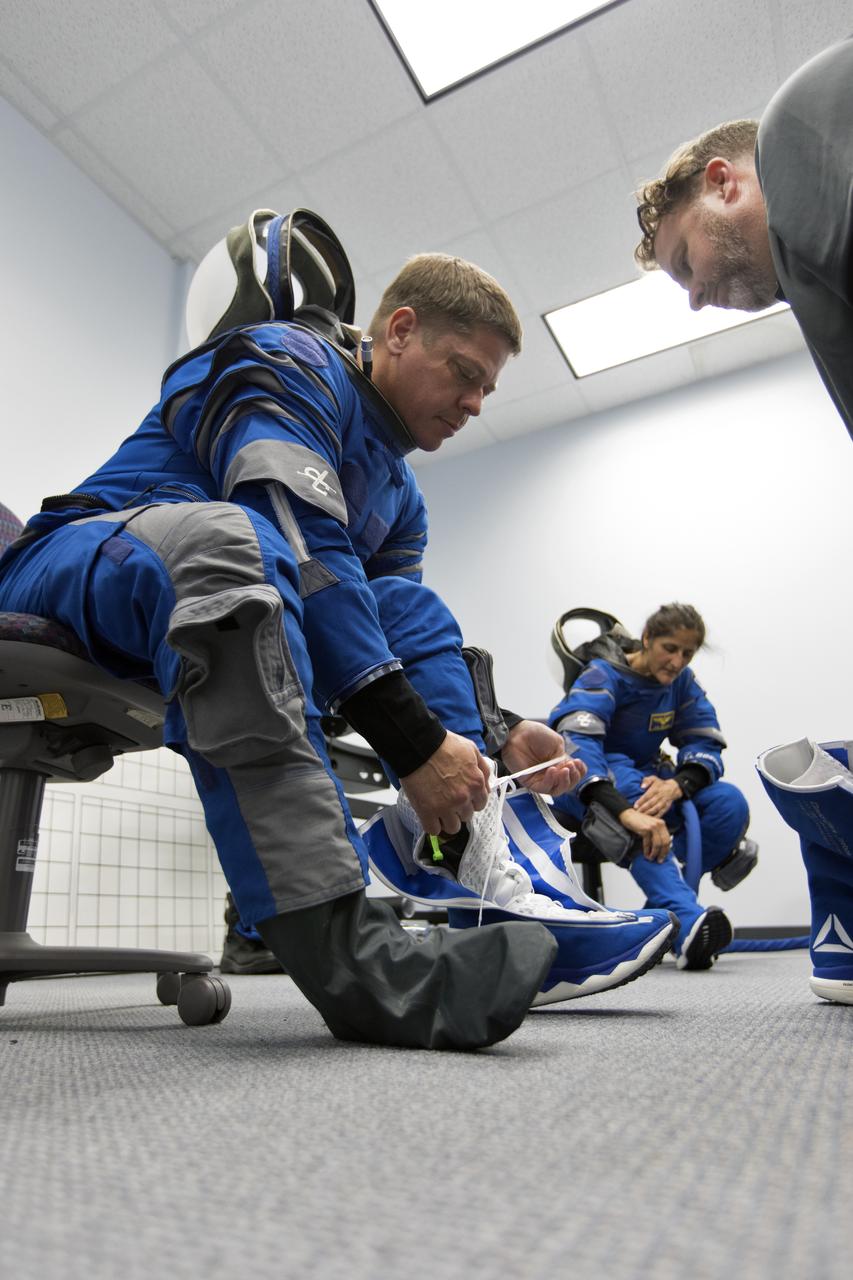
NASA astronauts Bob Behnken and Suni Williams get suited up for a Boeing/United Launch Alliance emergency egress system demonstration at Cape Canaveral Air Force Station’s Launch Complex 41 in Florida on June 19, 2018. Behnken and other astronauts tested the system, which is designed to evacuate them safely in the unlikely event of an emergency on the launch pad on launch day. The Boeing CST-100 Starliner will launch on a ULA Atlas V rocket, carrying astronauts to the International Space Station.
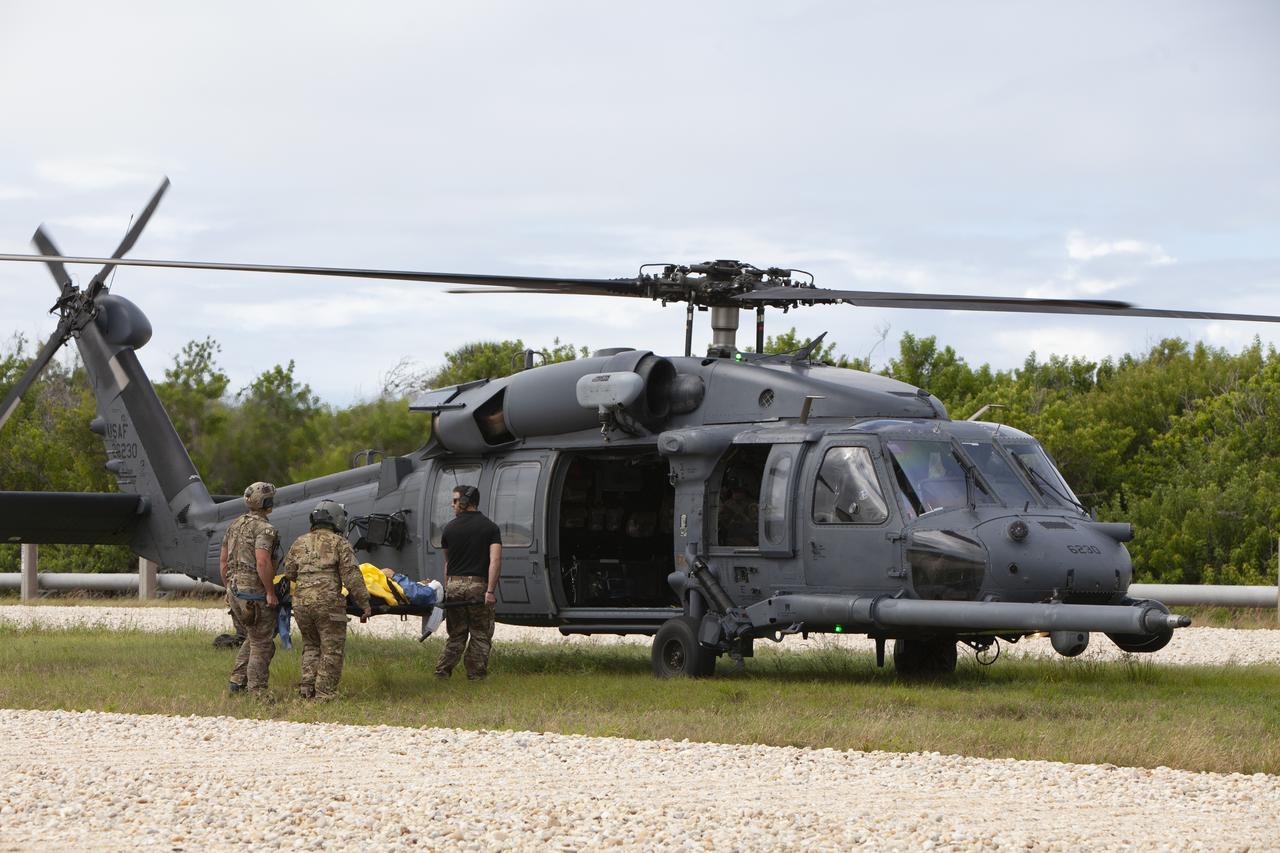
Teams from NASA, the Department of Defense Human Space Flight Support and SpaceX conduct a joint medical triage and medical evacuation (medevac) training exercise at NASA’s Kennedy Space Center in Florida. It was the second of two emergency medical services simulations performed before commercial crew flight tests, which are scheduled for 2019. As NASA’s Commercial Crew Program prepares to begin launching astronauts once again from American soil, teams are sharpening their launch day operations procedures, including responses during the unlikely event of an emergency.

iss061e092861 (Dec. 19, 2019) --- Expedition 61 Flight Engineers (clockwise from bottom) Andrew Morgan and Jessica Meir of NASA and cosmonaut Oleg Skripochka of Roscosmos brush up on their emergency response skills. The three crewmates practiced quickly entering their Soyuz crew ship and simulated emergency undocking and descent procedures in the unlikely event they would need to evacuate the station.
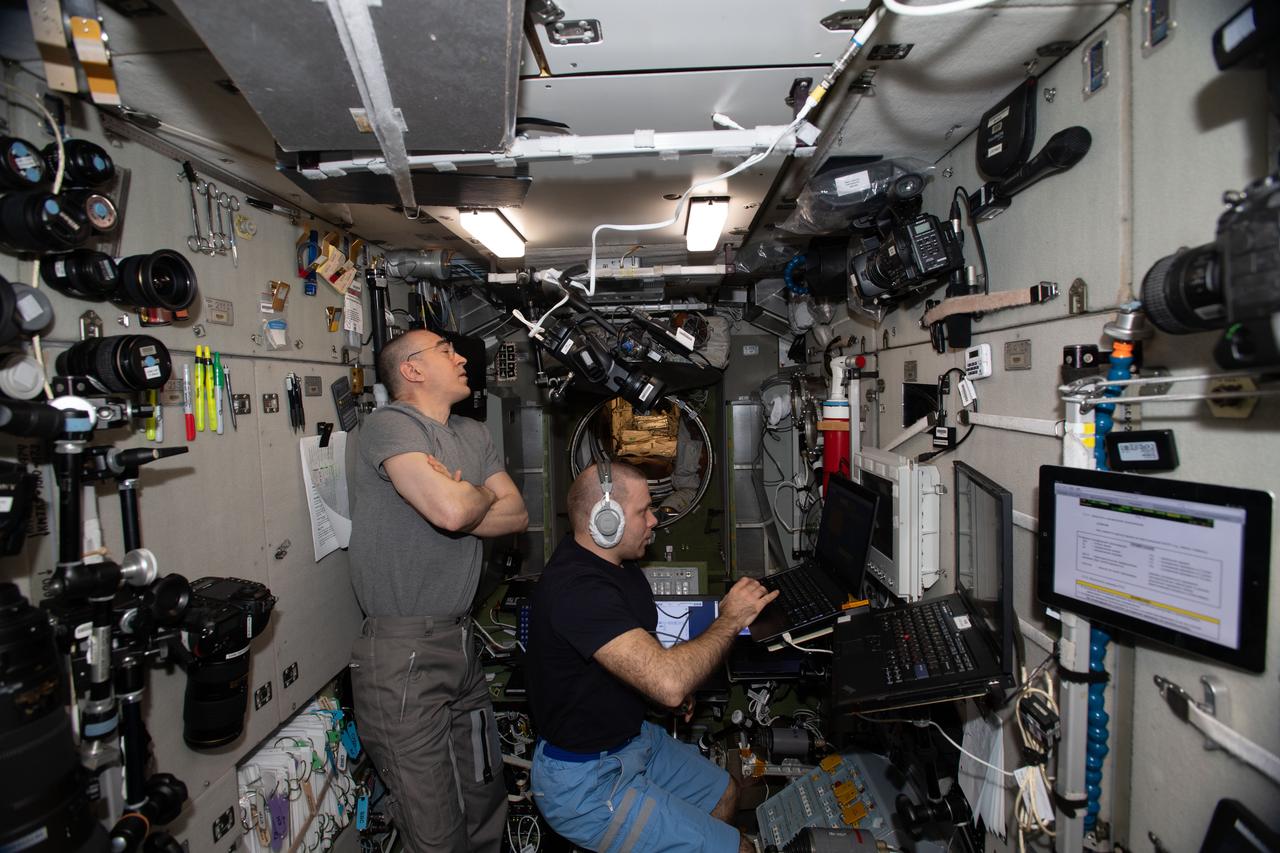
iss063e041665 (July 9, 2020) --- Roscosmos Flight Engineers (from left) Anatoly Ivanishin and Ivan Vagner practice a simulated emergency evacuation of the International Space Station on a computer inside the Zvezda service module. The duo with Expedition 63 Commander Chris Cassidy (out of frame) spent the afternoon reviewing procedures for quickly entering their Soyuz MS-16 crew ship for a rapid undocking and Earth re-entry.
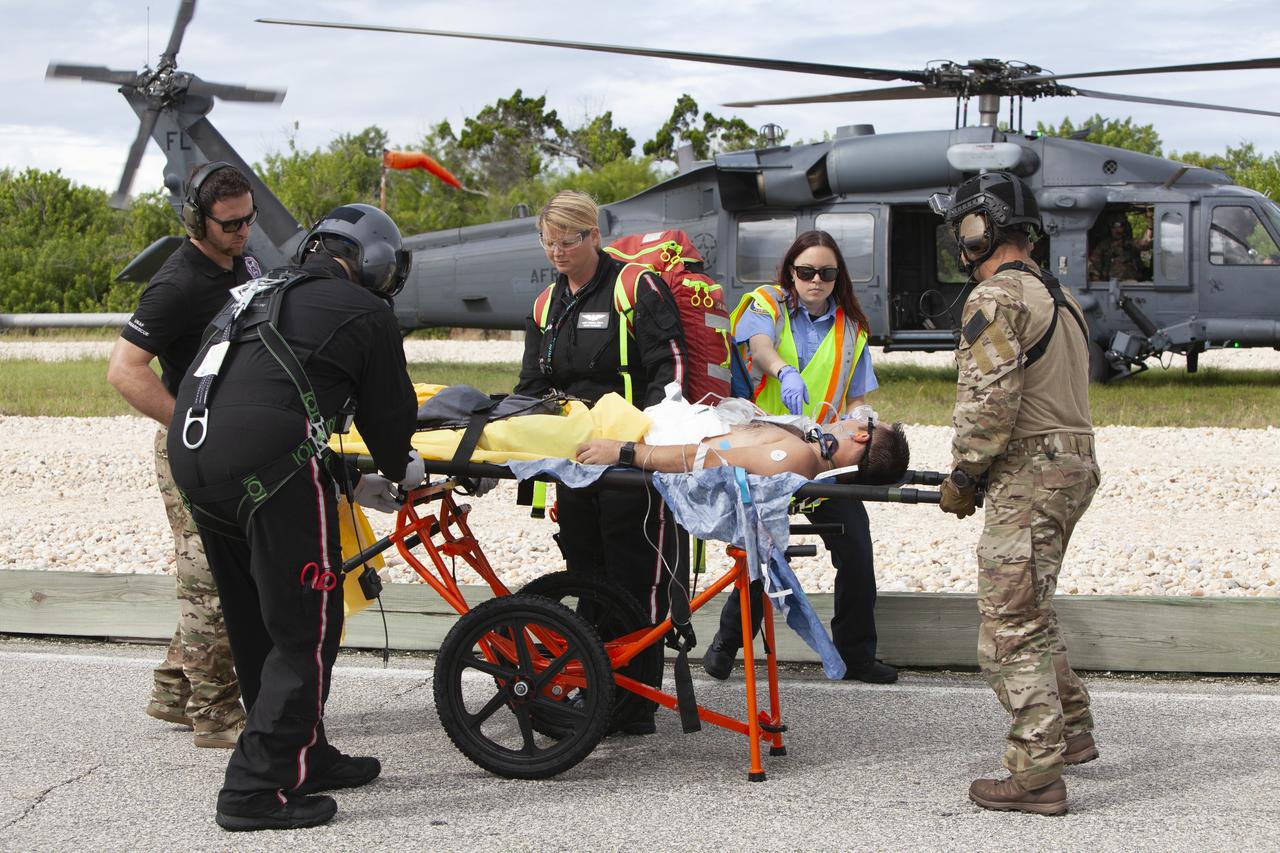
Teams from NASA, the Department of Defense Human Space Flight Support and SpaceX conduct a joint medical triage and medical evacuation (medevac) training exercise at NASA’s Kennedy Space Center in Florida. It was the second of two emergency medical services simulations performed before commercial crew flight tests, which are scheduled for 2019. As NASA’s Commercial Crew Program prepares to begin launching astronauts once again from American soil, teams are sharpening their launch day operations procedures, including responses during the unlikely event of an emergency.
![ISS036-E-017943 (11 July 2013) --- One of the Expedition 36 crew members aboard the International Space Station photographed this image of Typhoon Soulik just east of northern Taiwan The city of Guangzhou can be seen along the coast. [Editor?s update: Thousands of people were evacuated in Taiwan; and the entire island was declared an "alert zone," as Typhoon Soulik made landfall early on July 13 (local time), pounding the country with powerful winds and heavy rain].](https://images-assets.nasa.gov/image/iss036e017943/iss036e017943~medium.jpg)
ISS036-E-017943 (11 July 2013) --- One of the Expedition 36 crew members aboard the International Space Station photographed this image of Typhoon Soulik just east of northern Taiwan The city of Guangzhou can be seen along the coast. [Editor?s update: Thousands of people were evacuated in Taiwan; and the entire island was declared an "alert zone," as Typhoon Soulik made landfall early on July 13 (local time), pounding the country with powerful winds and heavy rain].
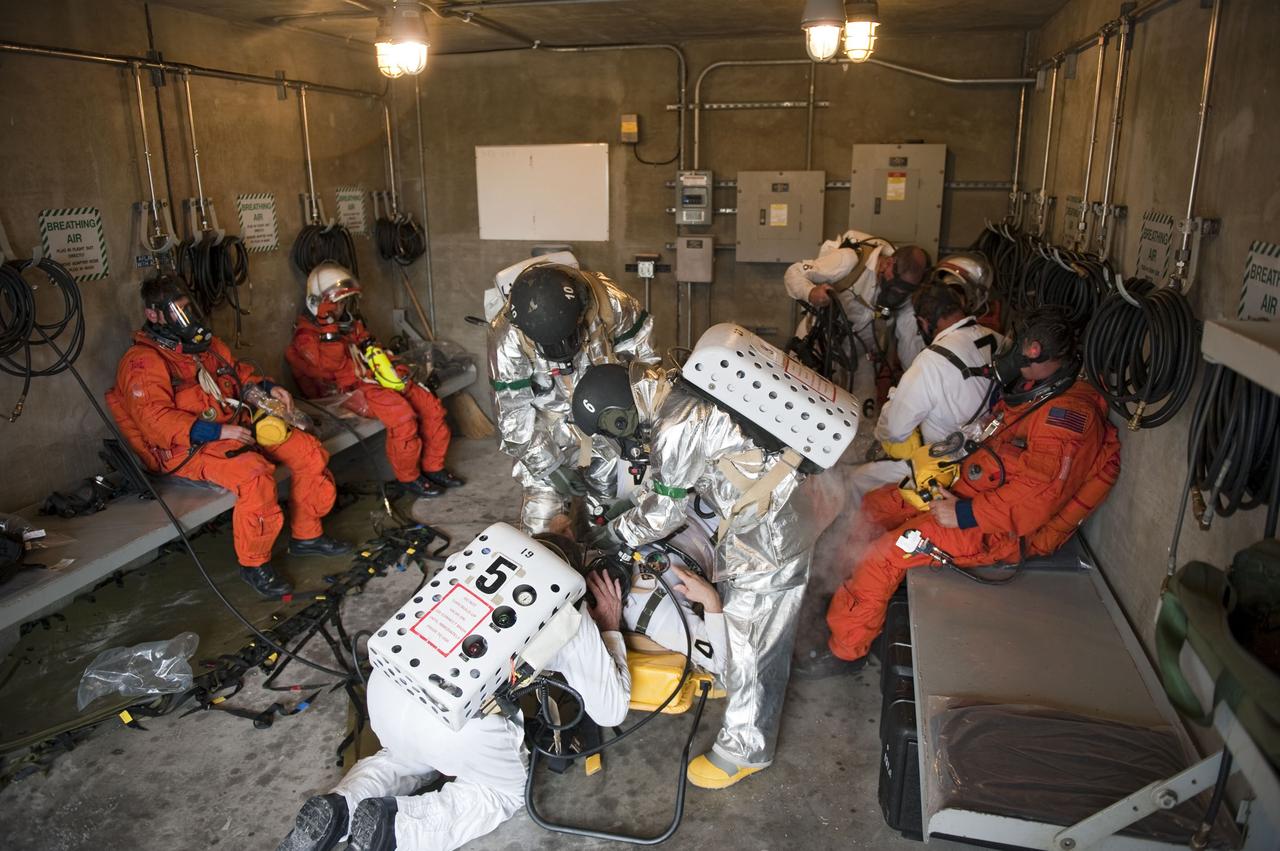
CAPE CANAVERAL, Fla. – An emergency exit, or Mode II/IV, exercise is under way in a bunker of Launch Pad 39A at NASA's Kennedy Space Center in Florida. The exercise involves NASA fire rescue personnel, volunteers portraying astronauts with simulated injuries, helicopters and personnel from the Air Force’s 920th Rescue Wing, and medical trauma teams at three Central Florida hospitals. The drill allows teams to practice an emergency response at the launch pad, including helicopter evacuation to local hospitals. Photo credit: NASA/Kim Shiflett
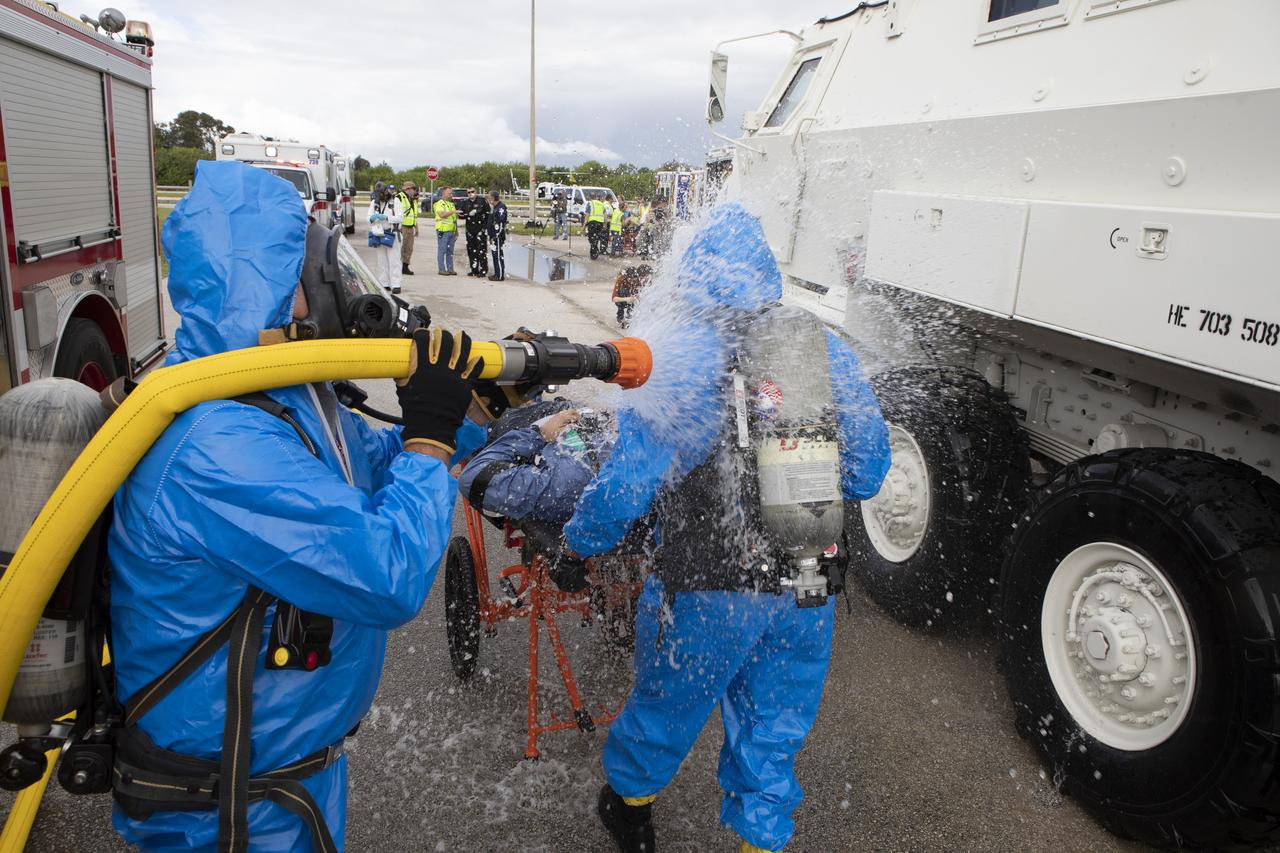
Teams from NASA, the Department of Defense Human Space Flight Support and SpaceX conduct a joint medical triage and medical evacuation (medevac) training exercise at NASA’s Kennedy Space Center in Florida. It was the second of two emergency medical services simulations performed before commercial crew flight tests, which are scheduled for 2019. As NASA’s Commercial Crew Program prepares to begin launching astronauts once again from American soil, teams are sharpening their launch day operations procedures, including responses during the unlikely event of an emergency.
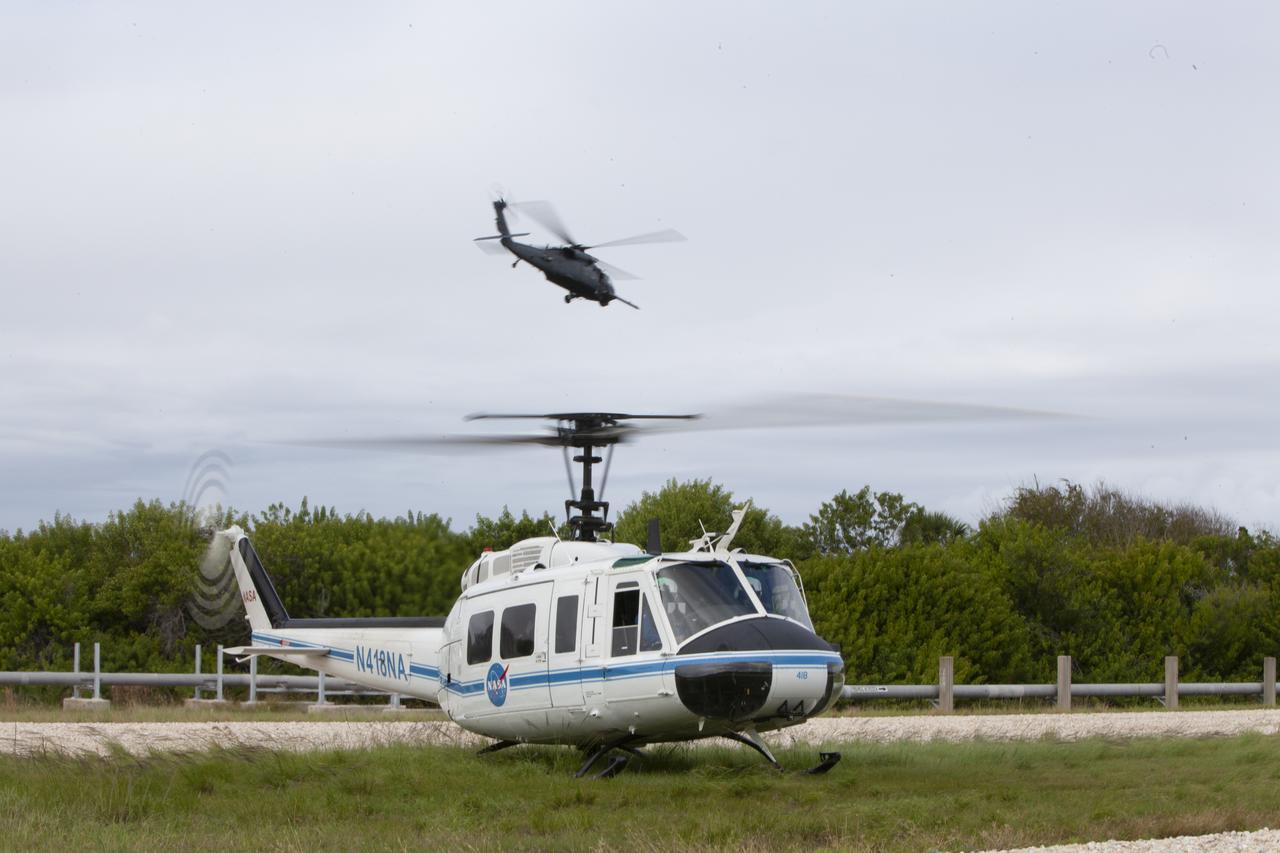
Teams from NASA, the Department of Defense Human Space Flight Support and SpaceX conduct a joint medical triage and medical evacuation (medevac) training exercise at NASA’s Kennedy Space Center in Florida. It was the second of two emergency medical services simulations performed before commercial crew flight tests, which are scheduled for 2019. As NASA’s Commercial Crew Program prepares to begin launching astronauts once again from American soil, teams are sharpening their launch day operations procedures, including responses during the unlikely event of an emergency.
![ISS036-E-017957 (11 July 2013) --- One of the Expedition 36 crew members aboard the International Space Station photographed this image of Typhoon Soulik just east of northern Taiwan in the Pacific Ocean. [Editor?s update: Thousands of people were evacuated in Taiwan; and the entire island was declared an "alert zone," as Typhoon Soulik made landfall early on July 13 (local time), pounding the country with powerful winds and heavy rain].](https://images-assets.nasa.gov/image/iss036e017957/iss036e017957~medium.jpg)
ISS036-E-017957 (11 July 2013) --- One of the Expedition 36 crew members aboard the International Space Station photographed this image of Typhoon Soulik just east of northern Taiwan in the Pacific Ocean. [Editor?s update: Thousands of people were evacuated in Taiwan; and the entire island was declared an "alert zone," as Typhoon Soulik made landfall early on July 13 (local time), pounding the country with powerful winds and heavy rain].
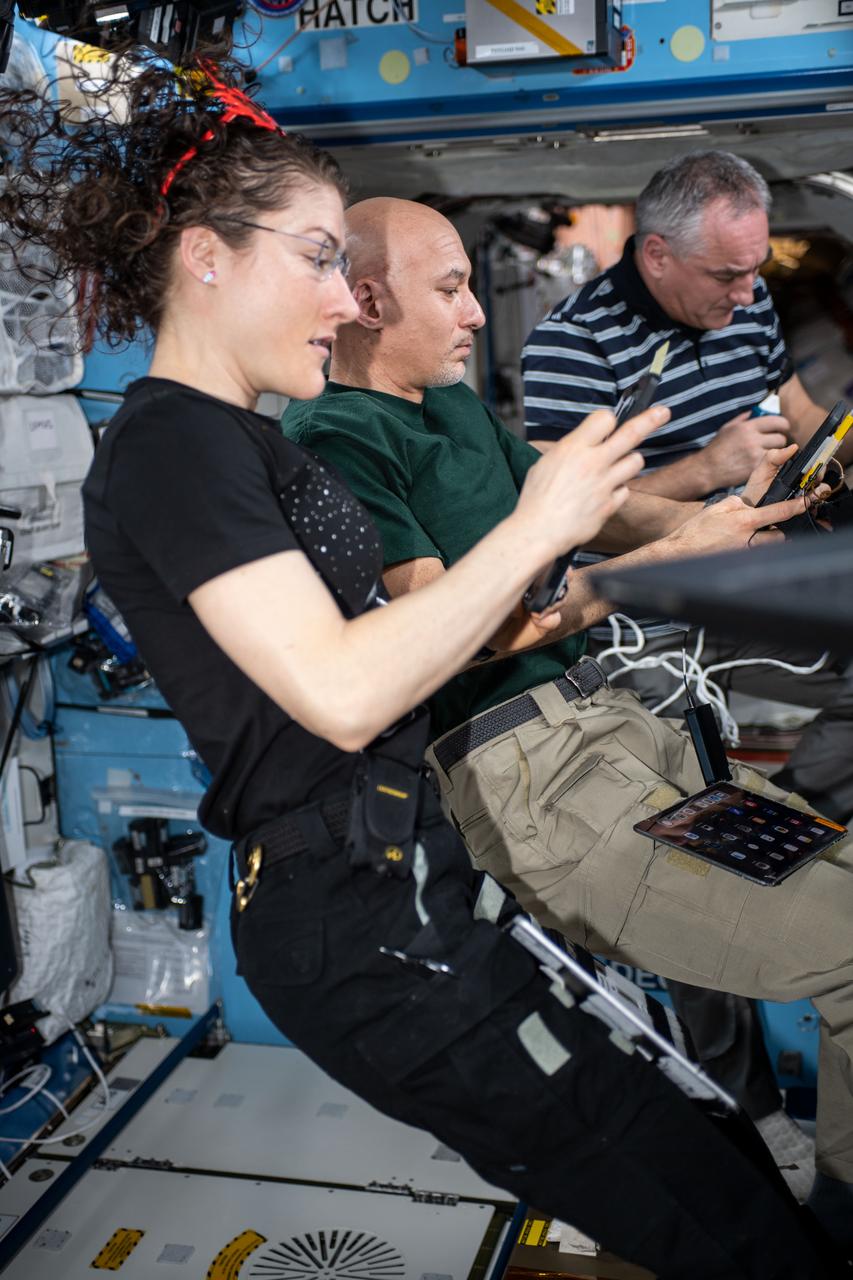
iss061e026185 (Oct. 31, 2019) --- NASA astronaut Christina Koch, Commander Luca Parmitano of ESA (European Space Agency) and Roscosmos cosmonaut Alexander Skvortsov brush up on their emergency response skills in the unlikely event they would need to evacuate the station in their Soyuz crew ship. The trio practiced quickly entering their Soyuz crew ship and simulated emergency undocking and descent procedures.