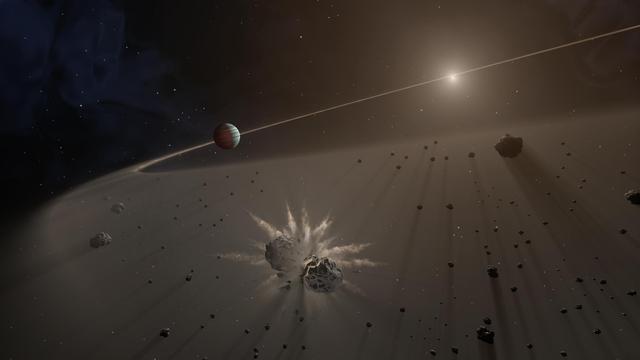
This artist's rendering shows a giant exoplanet causing small bodies to collide in a disk of dust. A study in The Astronomical Journal finds that giant exoplanets with long-period orbits are more likely to be found around young stars that have a disk of dust and debris than those without disks. The study focused on planets more than five times the mass of Jupiter. The astronomers are conducting the largest survey to date of stars with dusty debris disks, and finding the best evidence yet that giant planets are responsible for keeping that material in check. https://photojournal.jpl.nasa.gov/catalog/PIA22082
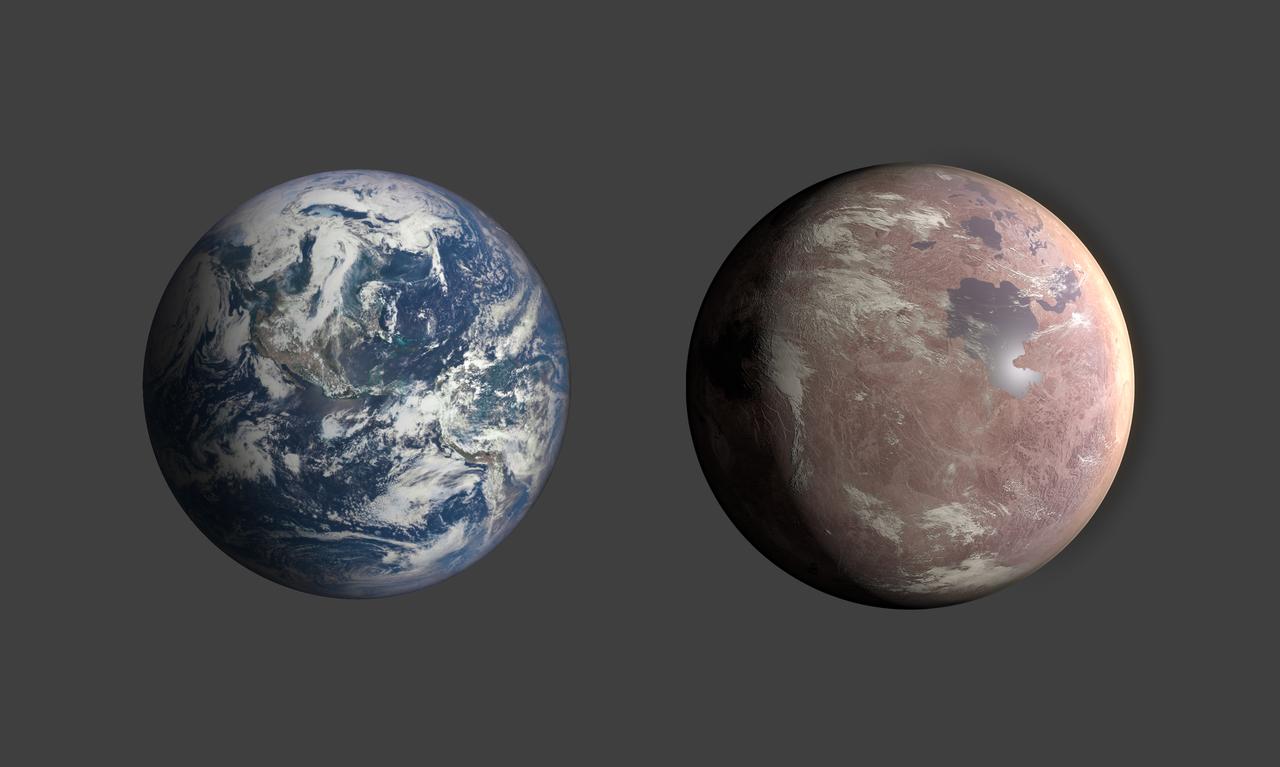
A comparison of Earth and Kepler-1649c, an exoplanet only 1.06 times Earth's radius Credit: NASA/Ames Research Center/Daniel Rutter
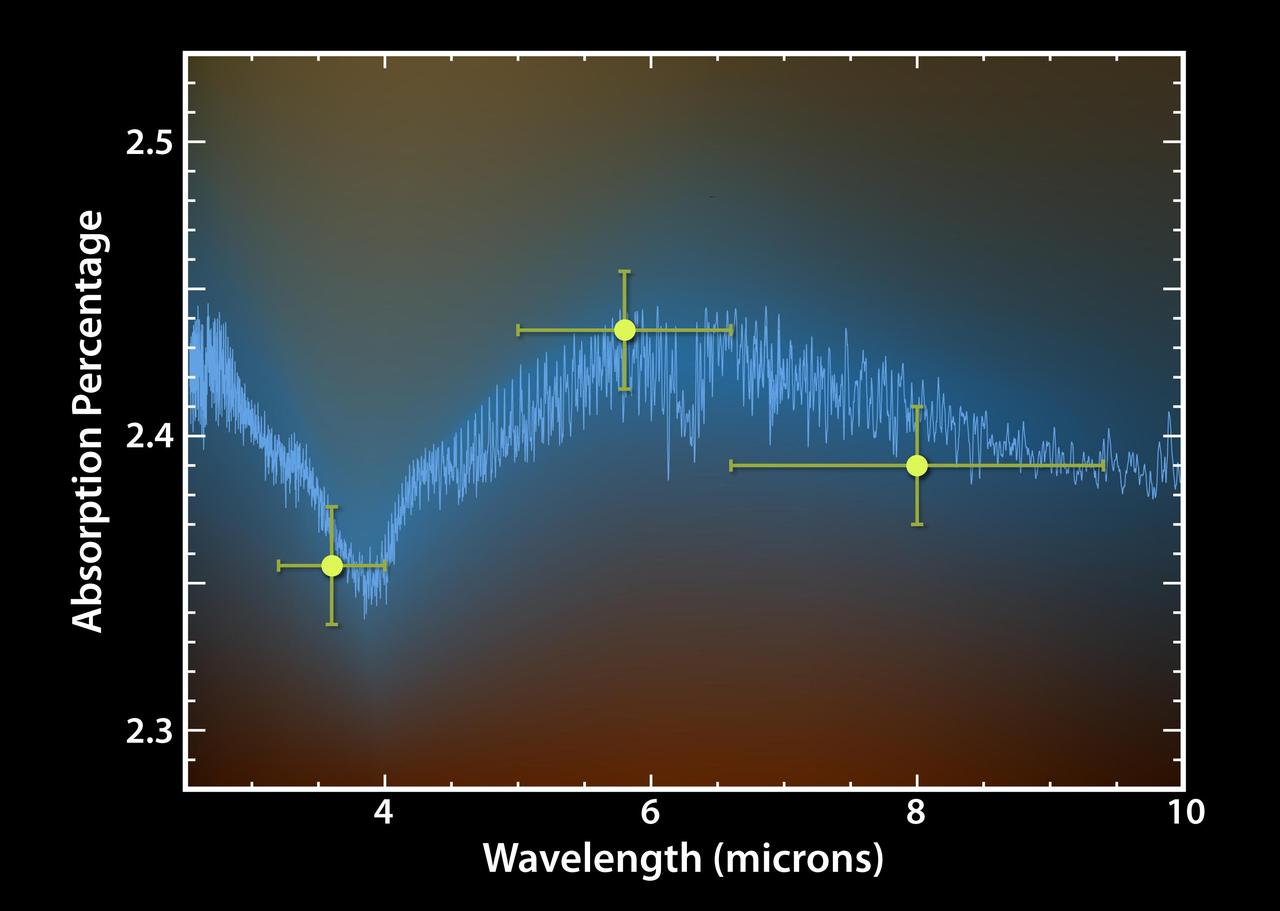
This plot of data from NASA Spitzer Space Telescope tells astronomers that a toasty gas exoplanet, or a planet beyond our solar system, contains water vapor.
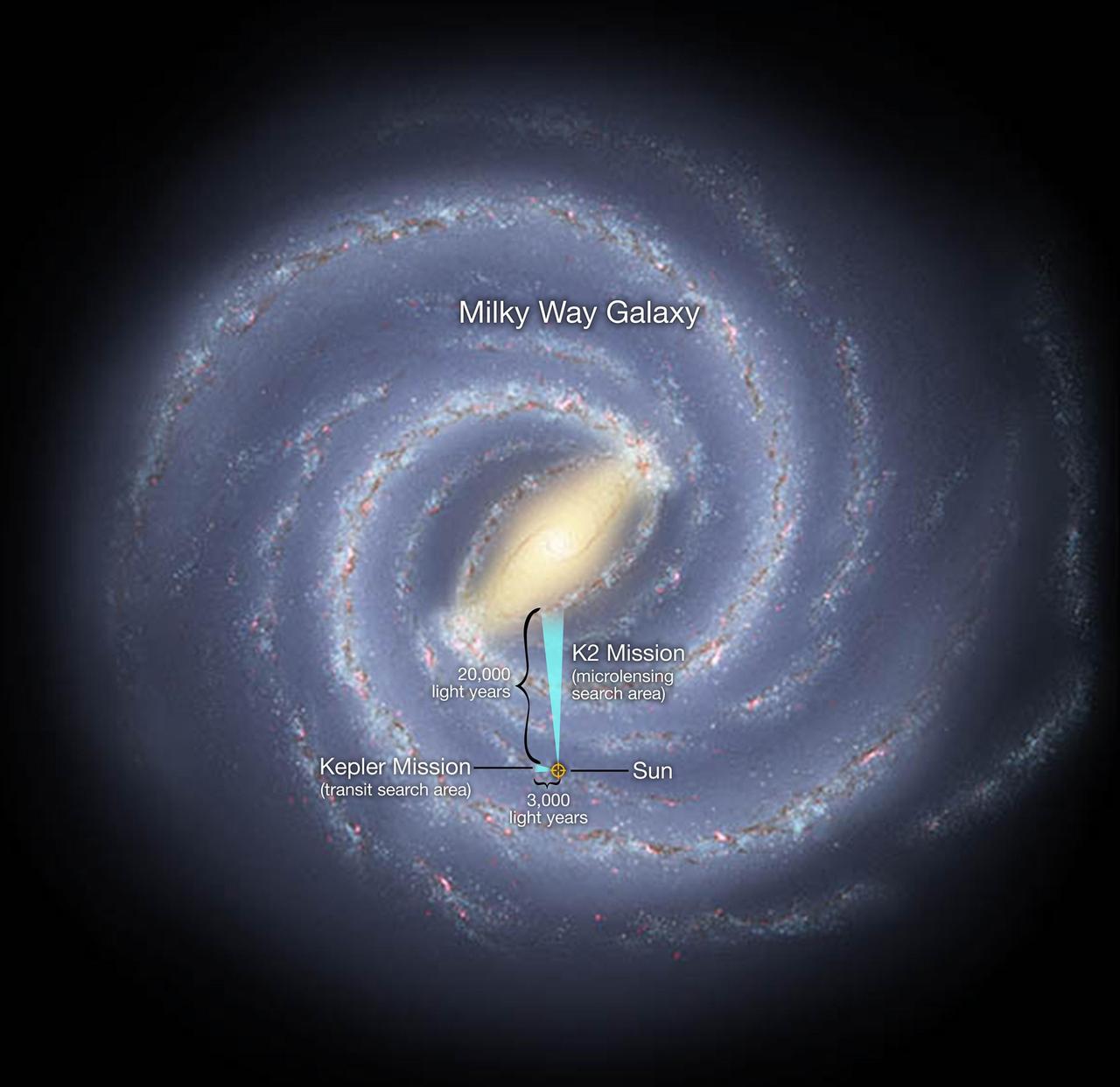
In a global experiment in exoplanet observation, the K2 mission and Earth-based observatories on six continents will survey millions of stars toward the center of our Milky Way galaxy.

A model of the Transiting Exoplanet Survey Satellite (TESS) and a spare camera lens are seen during a media briefing, Wednesday, March 28, 2018 at NASA Headquarters in Washington. Photo Credit: (NASA/Bill Ingalls)

A model of the Transiting Exoplanet Survey Satellite (TESS) and a spare camera lens are seen during a media briefing, Wednesday, March 28, 2018 at NASA Headquarters in Washington. Photo Credit: (NASA/Bill Ingalls)

NASA Astrophysics Division director Paul Hertz is seen during a media briefing where he and other astrophysics experts are discussing the upcoming launch of NASA’s next planet hunter, the Transiting Exoplanet Survey Satellite (TESS), Wednesday, March 28, 2018 at NASA Headquarters in Washington. Photo Credit: (NASA/Bill Ingalls)

Jeff Volosin, TESS project manager, NASA’s Goddard Space Flight Center, holds a spare camera lens and a model of the Transiting Exoplanet Survey Satellite (TESS) during a media briefing, Wednesday, March 28, 2018 at NASA Headquarters in Washington. Photo Credit: (NASA/Bill Ingalls)

Sara Seager, TESS deputy director of science, MIT discusses the upcoming launch of NASA’s next planet hunter, the Transiting Exoplanet Survey Satellite (TESS), Wednesday, March 28, 2018 at NASA Headquarters in Washington. Photo Credit: (NASA/Bill Ingalls)

NASA Public Affairs Officer Felicia Chou moderates a media briefing where astrophysics experts discuss the upcoming launch of NASA’s next planet hunter, the Transiting Exoplanet Survey Satellite (TESS), Wednesday, March 28, 2018 at NASA Headquarters in Washington. Photo Credit: (NASA/Bill Ingalls)

George Ricker, TESS principal investigator, MIT Kavli Institute for Astrophysics and Space Research, discusses the upcoming launch of NASA’s next planet hunter, the Transiting Exoplanet Survey Satellite (TESS), Wednesday, March 28, 2018 at NASA Headquarters in Washington. Photo Credit: (NASA/Bill Ingalls)
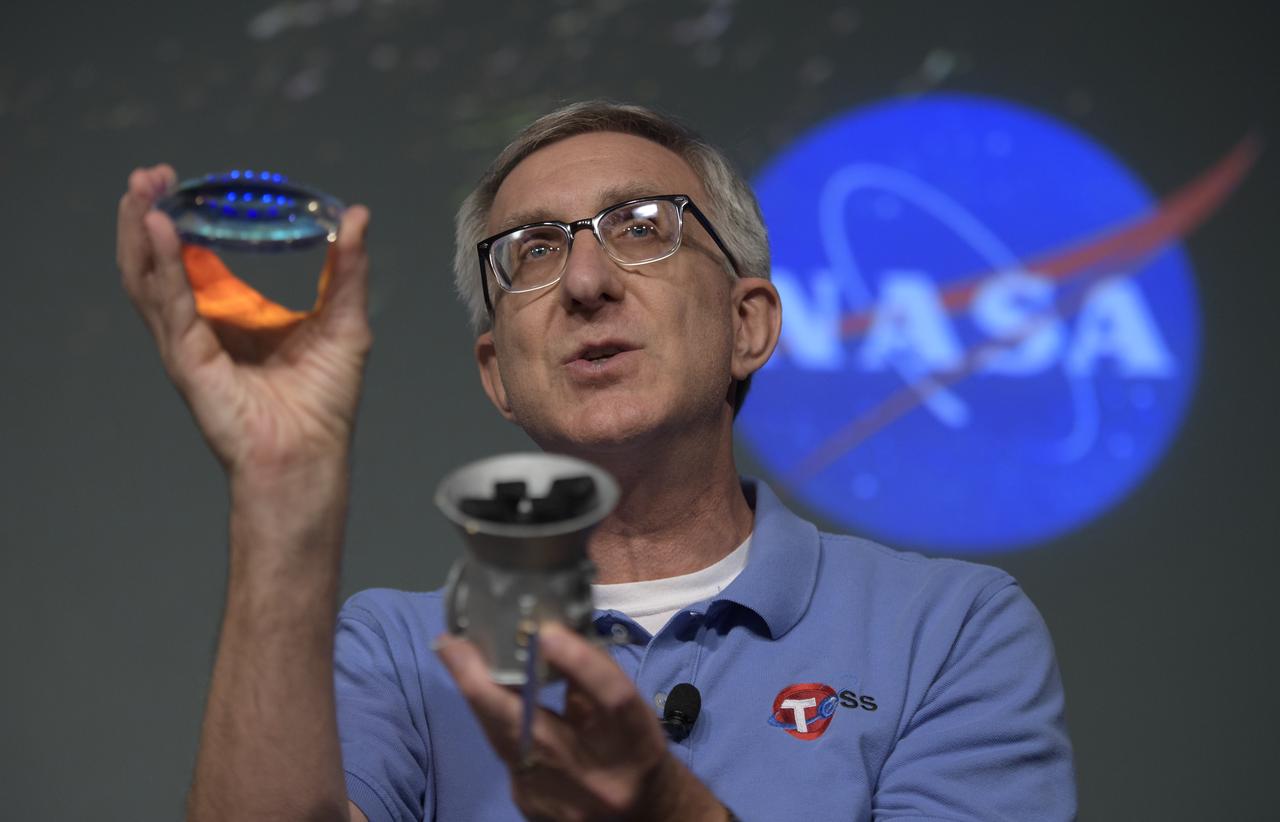
Jeff Volosin, TESS project manager, NASA’s Goddard Space Flight Center, holds a spare camera lens and a model of the Transiting Exoplanet Survey Satellite (TESS) during a media briefing, Wednesday, March 28, 2018 at NASA Headquarters in Washington. Photo Credit: (NASA/Bill Ingalls)

Sara Seager, TESS deputy director of science, MIT discusses the upcoming launch of NASA’s next planet hunter, the Transiting Exoplanet Survey Satellite (TESS), Wednesday, March 28, 2018 at NASA Headquarters in Washington. Photo Credit: (NASA/Bill Ingalls)

Sara Seager, TESS deputy director of science, MIT discusses the upcoming launch of NASA’s next planet hunter, the Transiting Exoplanet Survey Satellite (TESS), Wednesday, March 28, 2018 at NASA Headquarters in Washington. Photo Credit: (NASA/Bill Ingalls)

NASA Public Affairs Officer Felicia Chou moderates a media briefing where astrophysics experts discuss the upcoming launch of NASA’s next planet hunter, the Transiting Exoplanet Survey Satellite (TESS), Wednesday, March 28, 2018 at NASA Headquarters in Washington. Photo Credit: (NASA/Bill Ingalls)

NASA Astrophysics Division director Paul Hertz, left, and Sara Seager, TESS deputy director of science, MIT, discuss the upcoming launch of NASA’s next planet hunter, the Transiting Exoplanet Survey Satellite (TESS), Wednesday, March 28, 2018 at NASA Headquarters in Washington. Photo Credit: (NASA/Bill Ingalls)

Jeff Volosin, TESS project manager, NASA’s Goddard Space Flight Center, holds a model of the Transiting Exoplanet Survey Satellite (TESS) during a media briefing, Wednesday, March 28, 2018 at NASA Headquarters in Washington. Photo Credit: (NASA/Bill Ingalls)
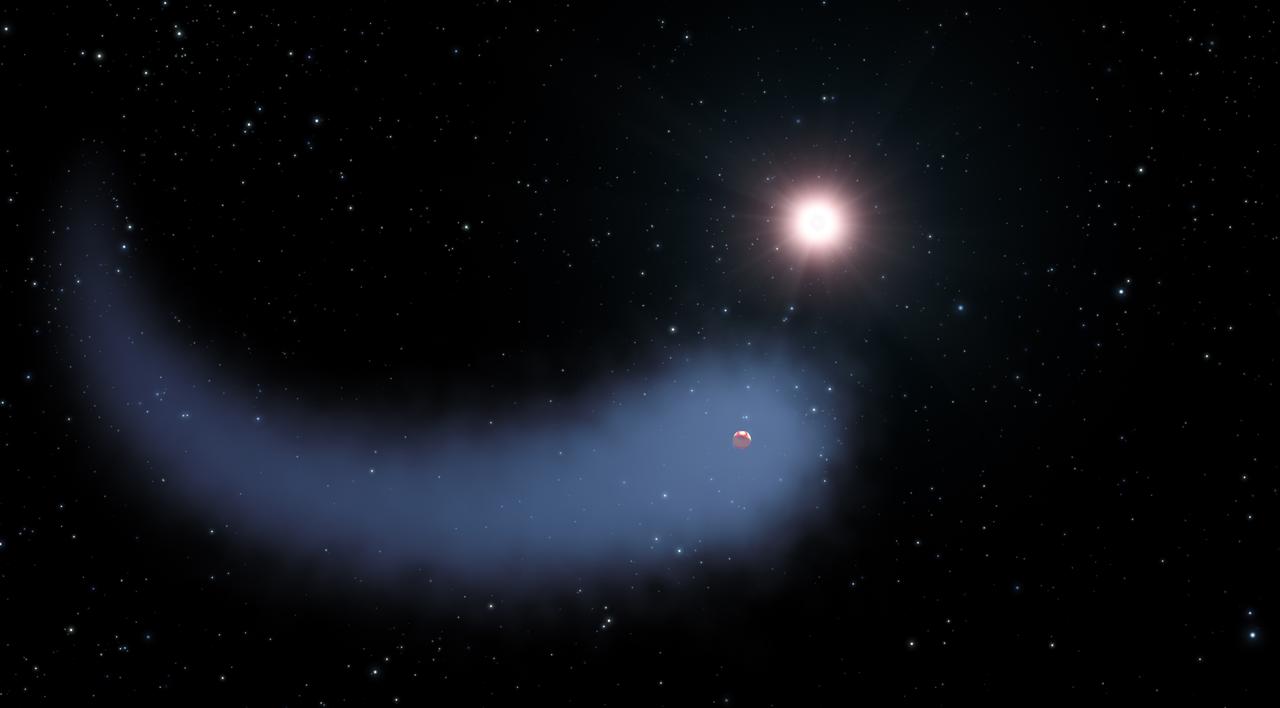
Astronomers using NASA’s Hubble Space Telescope have discovered an immense cloud of hydrogen dubbed “The Behemoth” bleeding from a planet orbiting a nearby star. The enormous, comet-like feature is about 50 times the size of the parent star. The hydrogen is evaporating from a warm, Neptune-sized planet, due to extreme radiation from the star. This phenomenon has never been seen around an exoplanet so small. It may offer clues to how other planets with hydrogen-enveloped atmospheres could have their outer layers evaporated by their parent star, leaving behind solid, rocky cores. Hot, rocky planets such as these that roughly the size of Earth are known as Hot-Super Earths. “This cloud is very spectacular, though the evaporation rate does not threaten the planet right now,” explains the study’s leader, David Ehrenreich of the Observatory of the University of Geneva in Switzerland. “But we know that in the past, the star, which is a faint red dwarf, was more active. This means that the planet evaporated faster during its first billion years of existence because of the strong radiation from the young star. Overall, we estimate that it may have lost up to 10 percent of its atmosphere over the past several billion years.” Caption: This artist's concept shows "The Behemoth," an enormous comet-like cloud of hydrogen bleeding off of a warm, Neptune-sized planet just 30 light-years from Earth. Also depicted is the parent star, which is a faint red dwarf named GJ 436. The hydrogen is evaporating from the planet due to extreme radiation from the star. A phenomenon this large has never before been seen around any exoplanet. Credits: NASA, ESA, and G. Bacon (STScI)
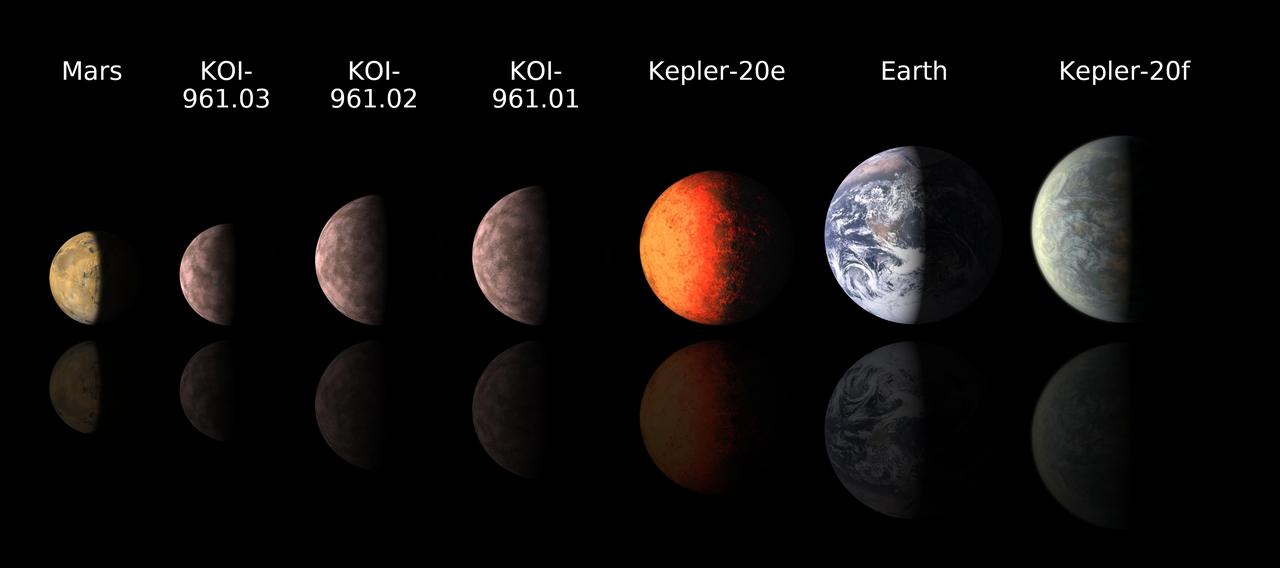
Astronomers using data from NASA Kepler mission and ground-based telescopes recently discovered the three smallest exoplanets known to circle another star, called KOI-961.01, KOI-961.02 and KOI-961.03.
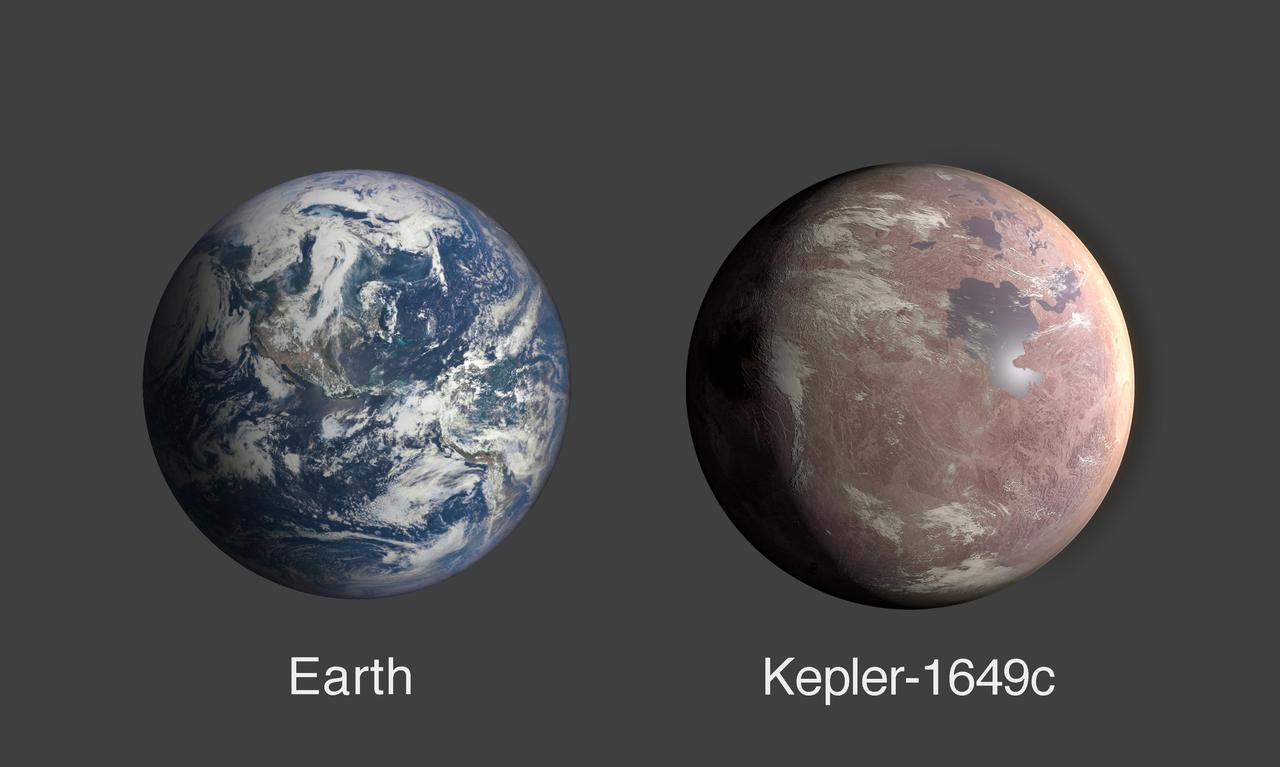
This graphic compares the size of Earth and Kepler-1649c, an exoplanet only 1.06 times larger than Earth by radius. https://photojournal.jpl.nasa.gov/catalog/PIA23774
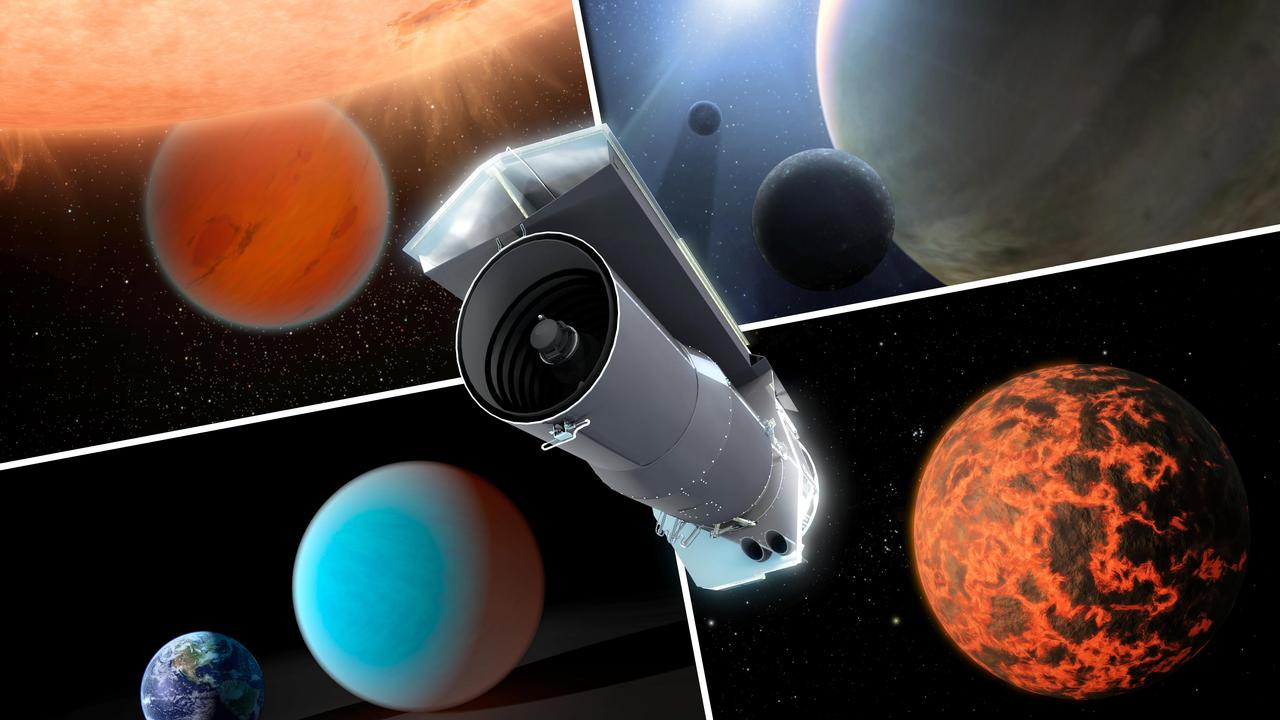
This artist concept shows NASA Spitzer Space Telescope surrounded by examples of exoplanets the telescope has examined in over its ten years in space.
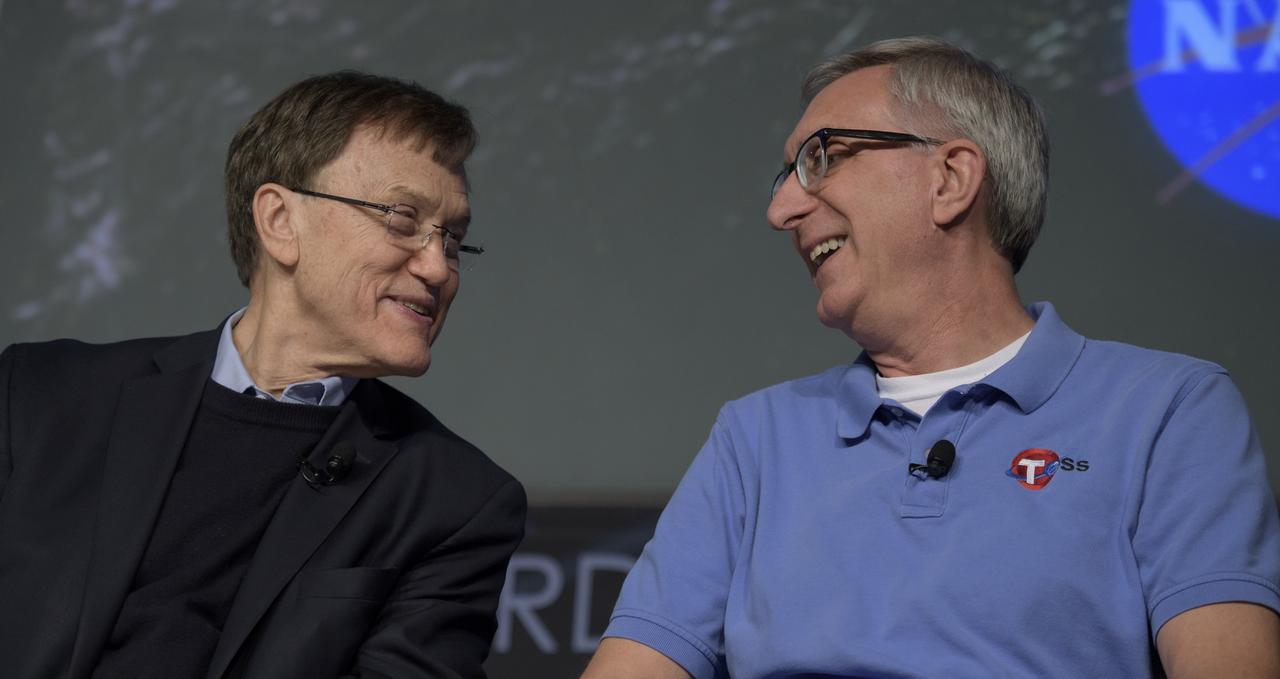
George Ricker, TESS principal investigator, MIT Kavli Institute for Astrophysics and Space Research, left, and Jeff Volosin, TESS project manager, NASA’s Goddard Space Flight Center, discuss the upcoming launch of NASA’s next planet hunter, the Transiting Exoplanet Survey Satellite (TESS), Wednesday, March 28, 2018 at NASA Headquarters in Washington. Photo Credit: (NASA/Bill Ingalls)

George Ricker, TESS principal investigator, MIT Kavli Institute for Astrophysics and Space Research, is seen during a media briefing where he and other experts discuss the upcoming launch of NASA’s next planet hunter, the Transiting Exoplanet Survey Satellite (TESS), Wednesday, March 28, 2018 at NASA Headquarters in Washington. Photo Credit: (NASA/Bill Ingalls)

NASA social media specialist Kindra Thomas shares questions submitted from social media during a media briefing where astrophysics experts discussed the upcoming launch of NASA’s next planet hunter, the Transiting Exoplanet Survey Satellite (TESS), Wednesday, March 28, 2018 at NASA Headquarters in Washington. Photo Credit: (NASA/Bill Ingalls)
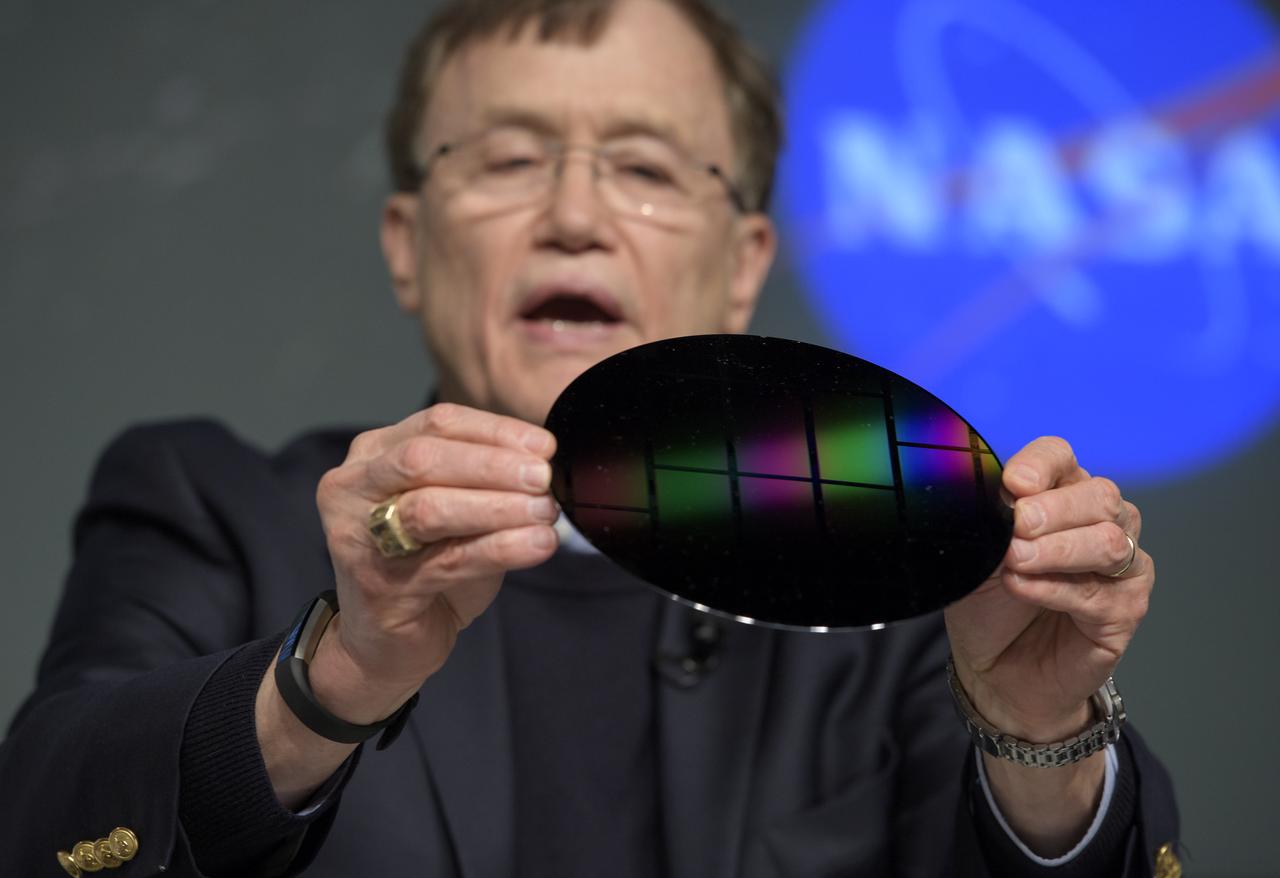
George Ricker, TESS principal investigator, MIT Kavli Institute for Astrophysics and Space Research, is seen during a media briefing holding one of the wafers from which the Transiting Exoplanet Survey Satellite (TESS) camera charge coupled device (CCD) were fabricated, Wednesday, March 28, 2018 at NASA Headquarters in Washington. Photo Credit: (NASA/Bill Ingalls)
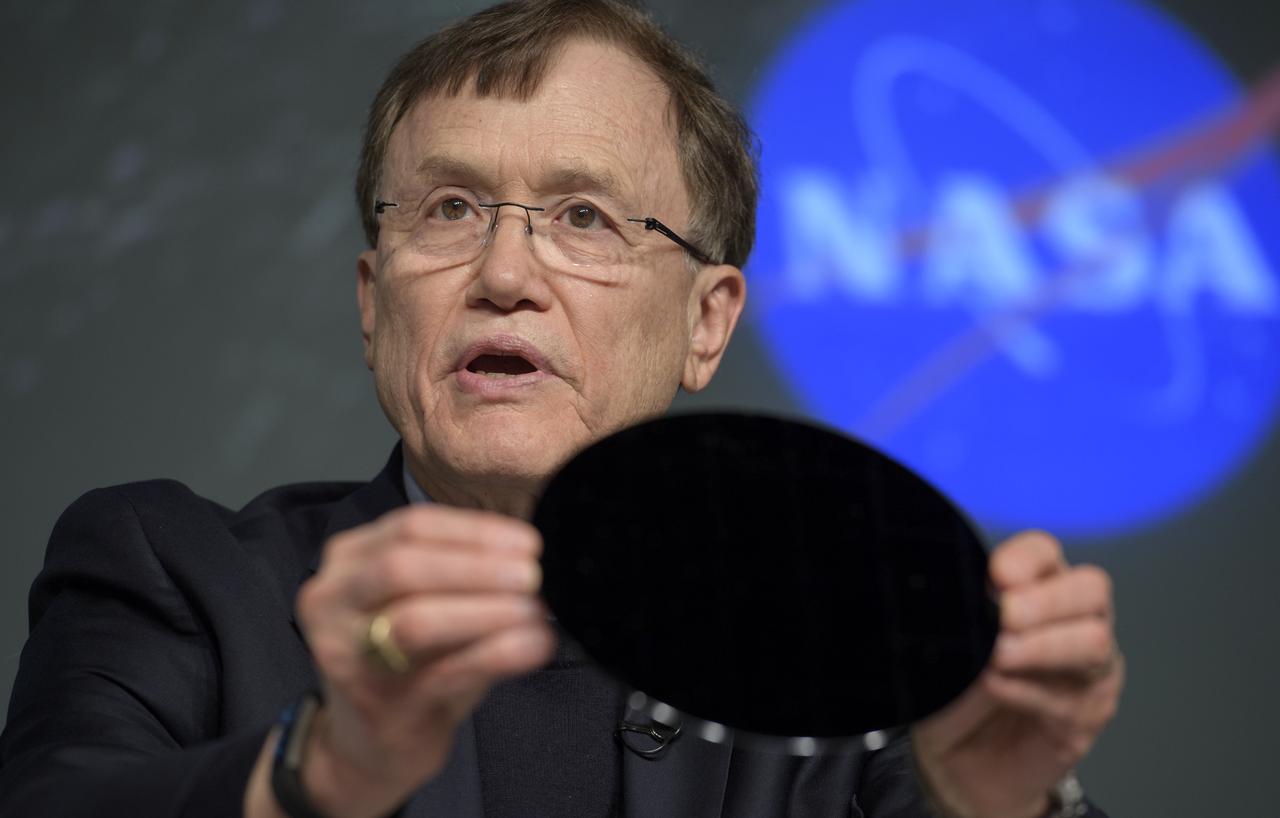
George Ricker, TESS principal investigator, MIT Kavli Institute for Astrophysics and Space Research, is seen during a media briefing holding one of the wafers from which the Transiting Exoplanet Survey Satellite (TESS) camera charge coupled device (CCD) were fabricated, Wednesday, March 28, 2018 at NASA Headquarters in Washington. Photo Credit: (NASA/Bill Ingalls)
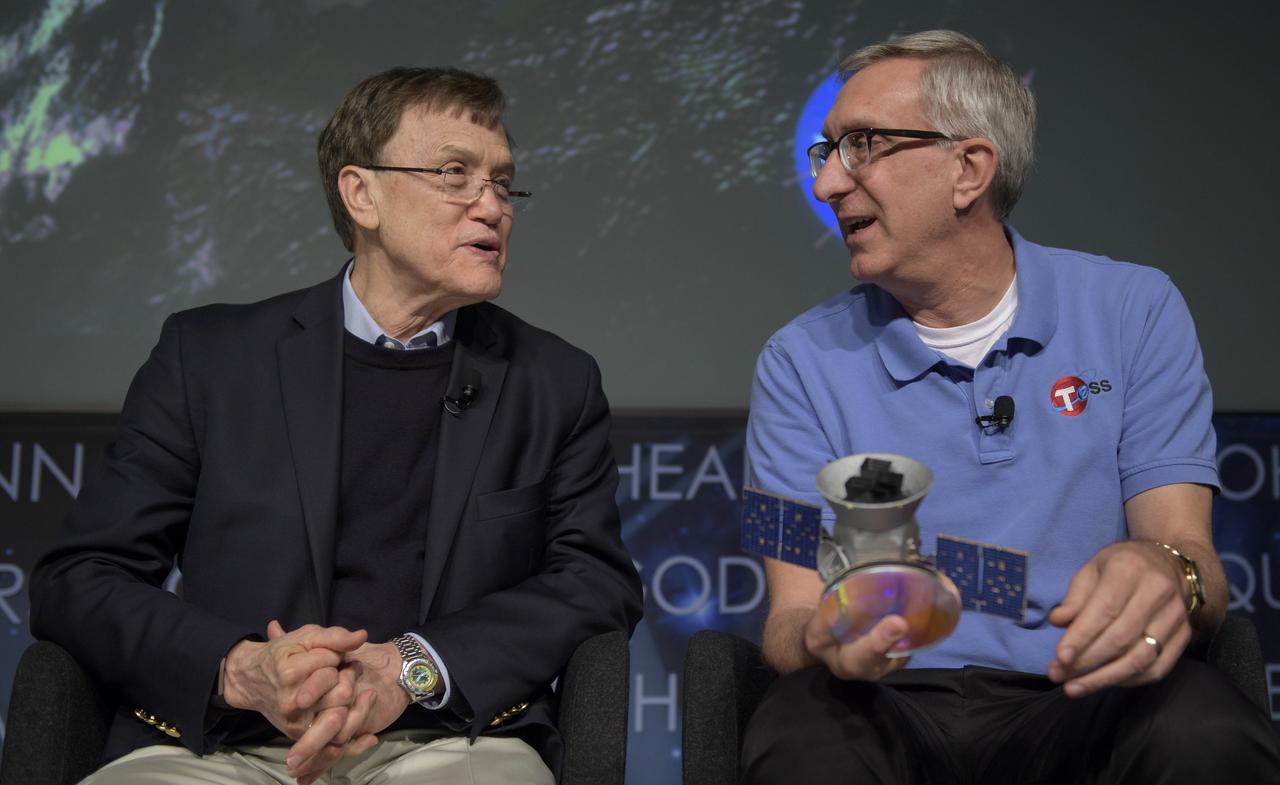
George Ricker, TESS principal investigator, MIT Kavli Institute for Astrophysics and Space Research, left, and Jeff Volosin, TESS project manager, NASA’s Goddard Space Flight Center discuss the upcoming launch of NASA’s next planet hunter, the Transiting Exoplanet Survey Satellite (TESS), Wednesday, March 28, 2018 at NASA Headquarters in Washington. Photo Credit: (NASA/Bill Ingalls)

This illustration shows three possible interiors of the seven rocky exoplanets in the TRAPPIST-1 system, based on precision measurements of the planet densities. Overall the TRAPPIST-1 worlds have remarkably similar densities, which suggests they may share the same ratio of common planet-forming elements. The planet densities are slightly lower than those of Earth or Venus, which could mean they contain fractionally less iron (a highly dense material) or more low-density materials, such as water or oxygen. In the first model (left), the interior of the planet is composed of rock mixed with iron bound to oxygen. There is no solid iron core, which is the case with Earth and the other rocky planets in our own solar system. The second model shows an overall composition similar to Earth's, in which the densest materials have settled to the center of the planet, forming an iron-rich core proportionally smaller than Earth's core. A variation is shown in the third panel, where a larger, denser core could be balanced by an extensive low-density ocean on the planet's surface. However, this scenario can be applied only to the outer four planets in the TRAPPIST-1 system. On the inner three planets, any oceans would vaporize due to the higher temperatures near their star, and a different composition model is required. Since all seven planets have remarkably similar densities, it is more likely that all the planets share a similar bulk composition, making this fourth scenario unlikely but not impossible. The high-precision mass and diameter measurements of the exoplanets in the TRAPPIST-1 system have allowed astronomers to calculate the overall densities of these worlds with an unprecedented degree of accuracy in exoplanet research. Density measurements are a critical first step in determining the composition and structure of exoplanets, but they must be interpreted through the lens of scientific models of planetary structure. https://photojournal.jpl.nasa.gov/catalog/PIA24372

Astronomers have discovered one of the most distant planets known, a gas giant about 13,000 light-years from Earth, called OGLE-2014-BLG-0124L. The planet was discovered using a technique called microlensing, and the help of NASA's Spitzer Space Telescope and the Optical Gravitational Lensing Experiment, or OGLE. In this artist's illustration, planets discovered with microlensing are shown in yellow. The farthest lies in the center of our galaxy, 25,000 light-years away. Most of the known exoplanets, numbering in the thousands, have been discovered by NASA's Kepler space telescope, which uses a different strategy called the transit method. Kepler's cone-shaped field of view is shown in pink/orange. Ground-based telescopes, which use the transit and other planet-hunting methods, have discovered many exoplanets close to home, as shown by the pink/orange circle around the sun. http://photojournal.jpl.nasa.gov/catalog/PIA19333
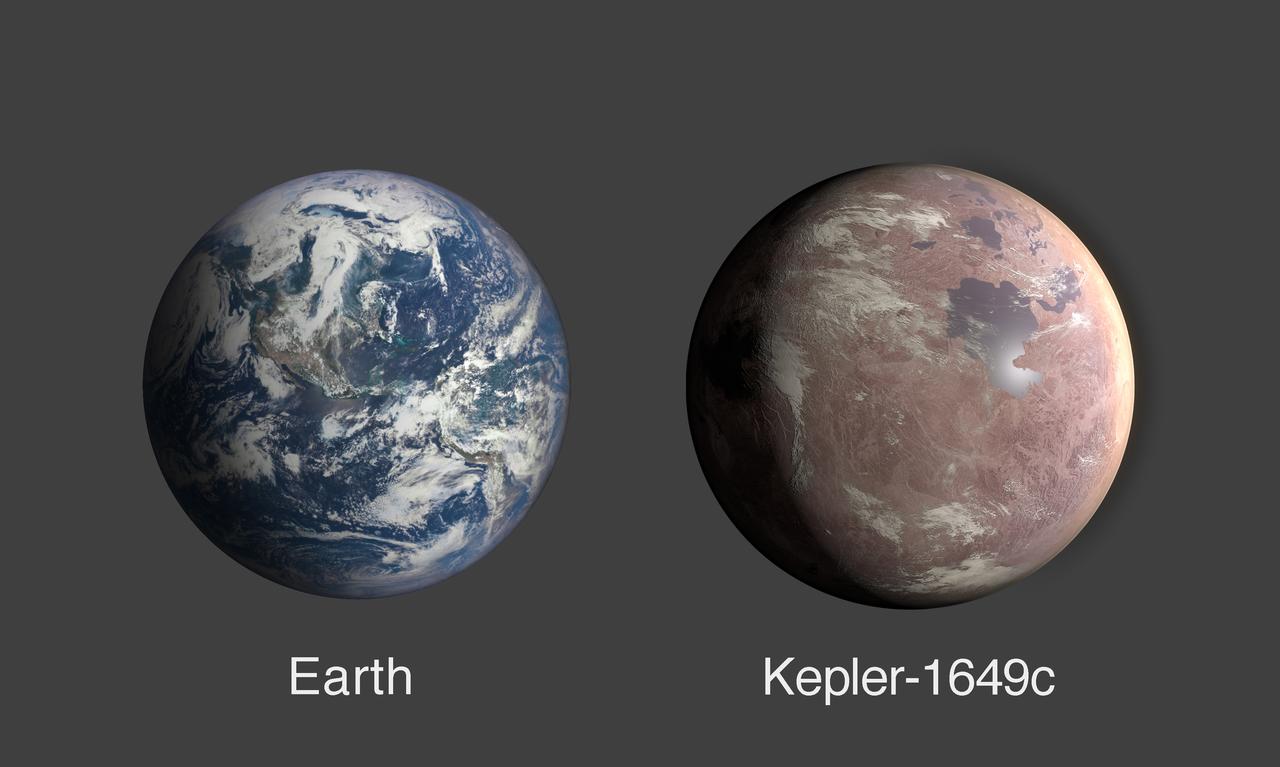
A comparison of Earth and Kepler-1649c, an exoplanet only 1.06 times Earth's radius. Labeled Art Credit: NASA/Ames Research Center/Daniel Rutter
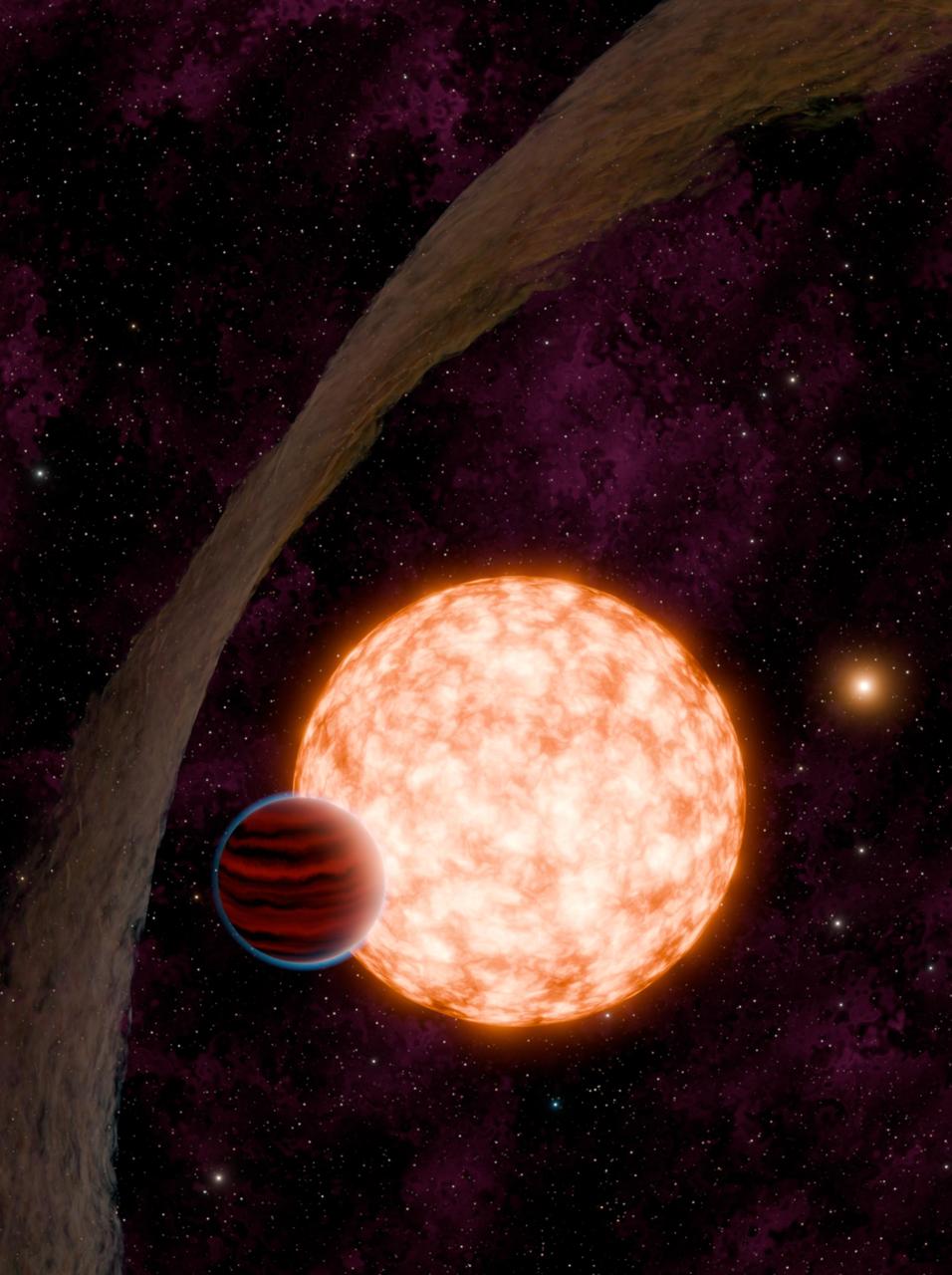
Artist's concept of a young, newly discovered planet, exposed to observation by a warped debris disk. https://photojournal.jpl.nasa.gov/catalog/PIA26601
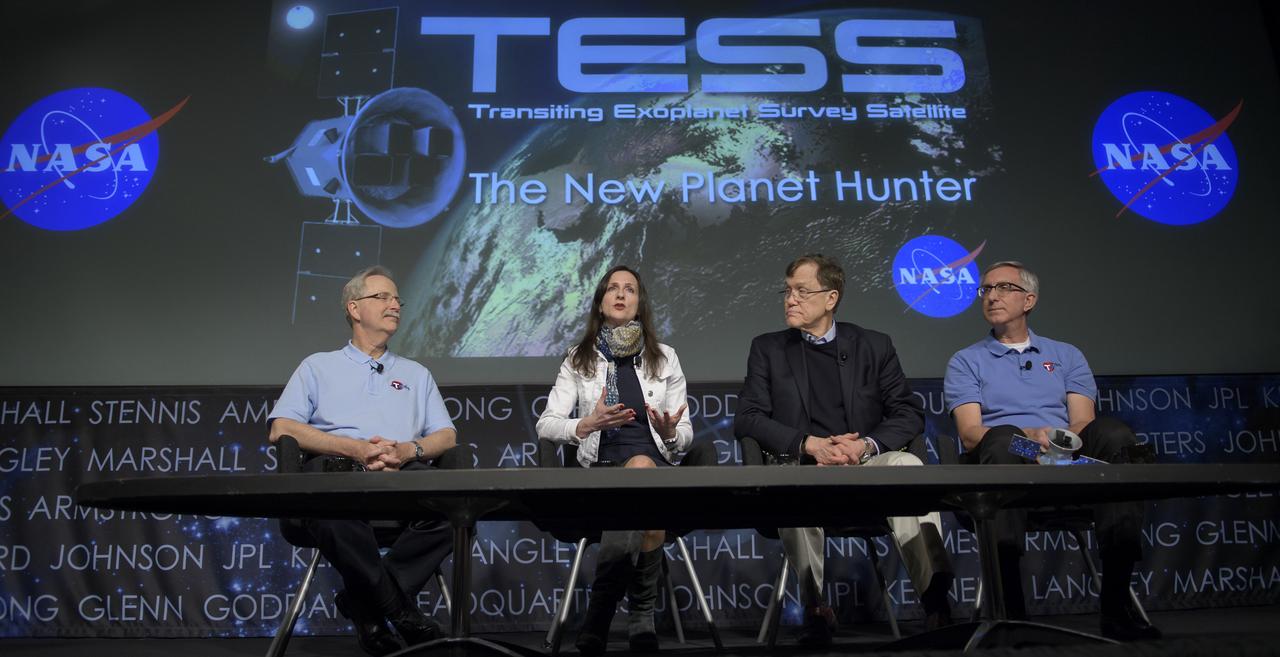
NASA Astrophysics Division director Paul Hertz, left, Sara Seager, TESS deputy director of science, MIT, George Ricker, TESS principal investigator, MIT Kavli Institute for Astrophysics and Space Research, and Jeff Volosin, TESS project manager, NASA’s Goddard Space Flight Center, right, discuss the upcoming launch of NASA’s next planet hunter, the Transiting Exoplanet Survey Satellite (TESS), Wednesday, March 28, 2018 at NASA Headquarters in Washington. Photo Credit: (NASA/Bill Ingalls)
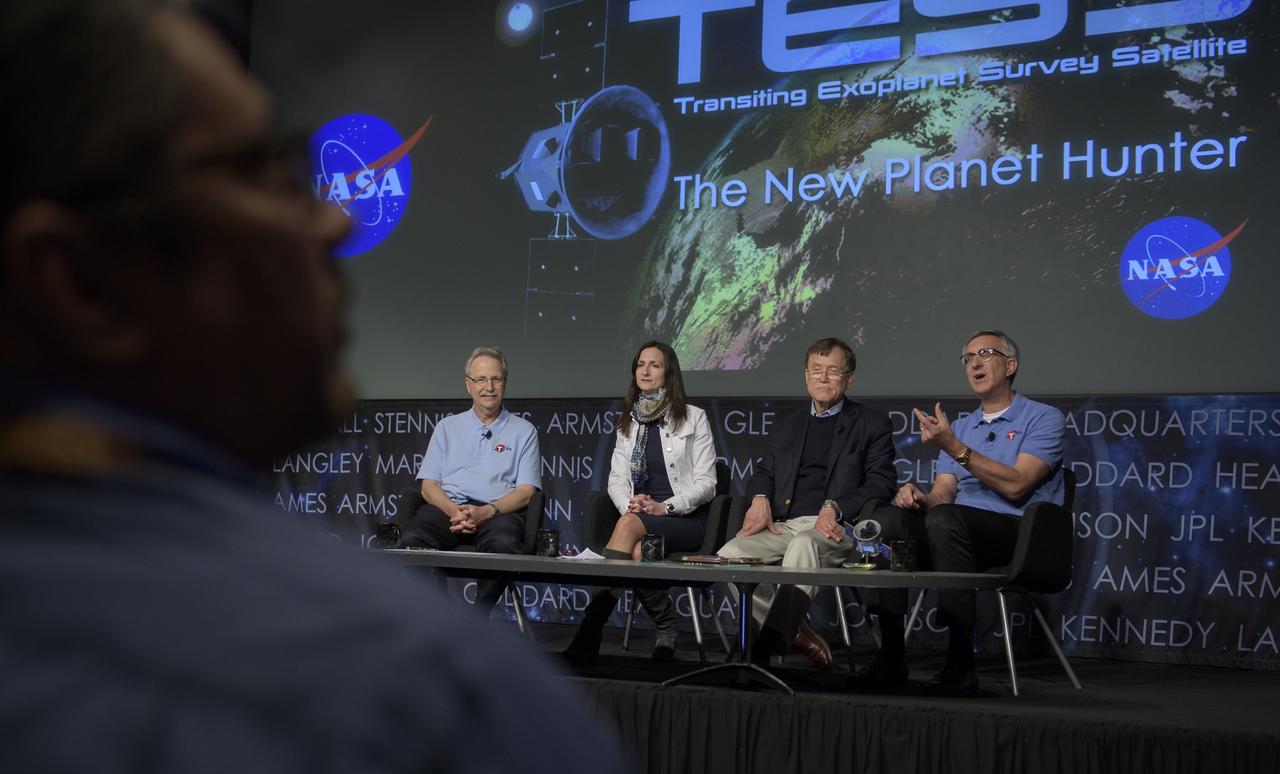
NASA Astrophysics Division director Paul Hertz, left, Sara Seager, TESS deputy director of science, MIT, George Ricker, TESS principal investigator, MIT Kavli Institute for Astrophysics and Space Research, and Jeff Volosin, TESS project manager, NASA’s Goddard Space Flight Center, right, discuss the upcoming launch of NASA’s next planet hunter, the Transiting Exoplanet Survey Satellite (TESS), Wednesday, March 28, 2018 at NASA Headquarters in Washington. Photo Credit: (NASA/Bill Ingalls)
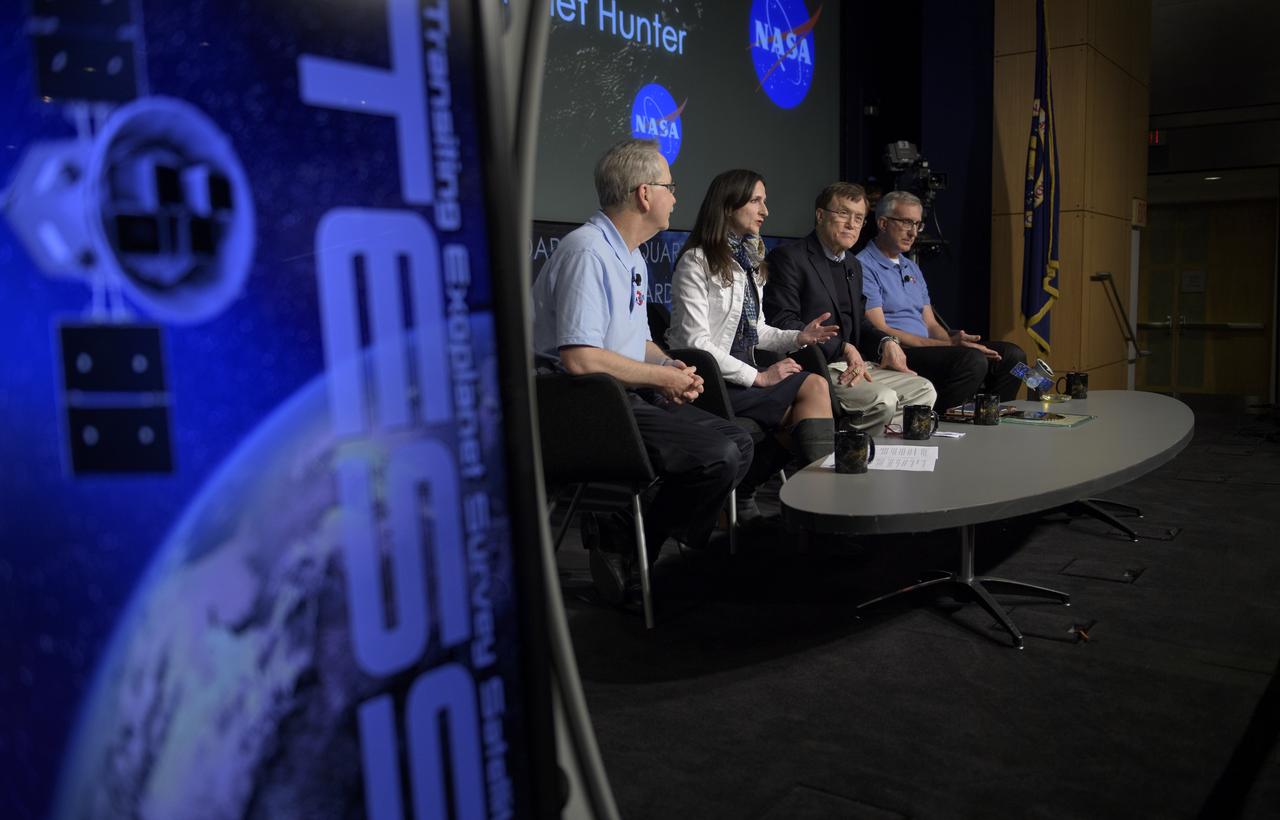
NASA Astrophysics Division director Paul Hertz, left, Sara Seager, TESS deputy director of science, MIT, George Ricker, TESS principal investigator, MIT Kavli Institute for Astrophysics and Space Research, and Jeff Volosin, TESS project manager, NASA’s Goddard Space Flight Center, right, discuss the upcoming launch of NASA’s next planet hunter, the Transiting Exoplanet Survey Satellite (TESS), Wednesday, March 28, 2018 at NASA Headquarters in Washington. Photo Credit: (NASA/Bill Ingalls)
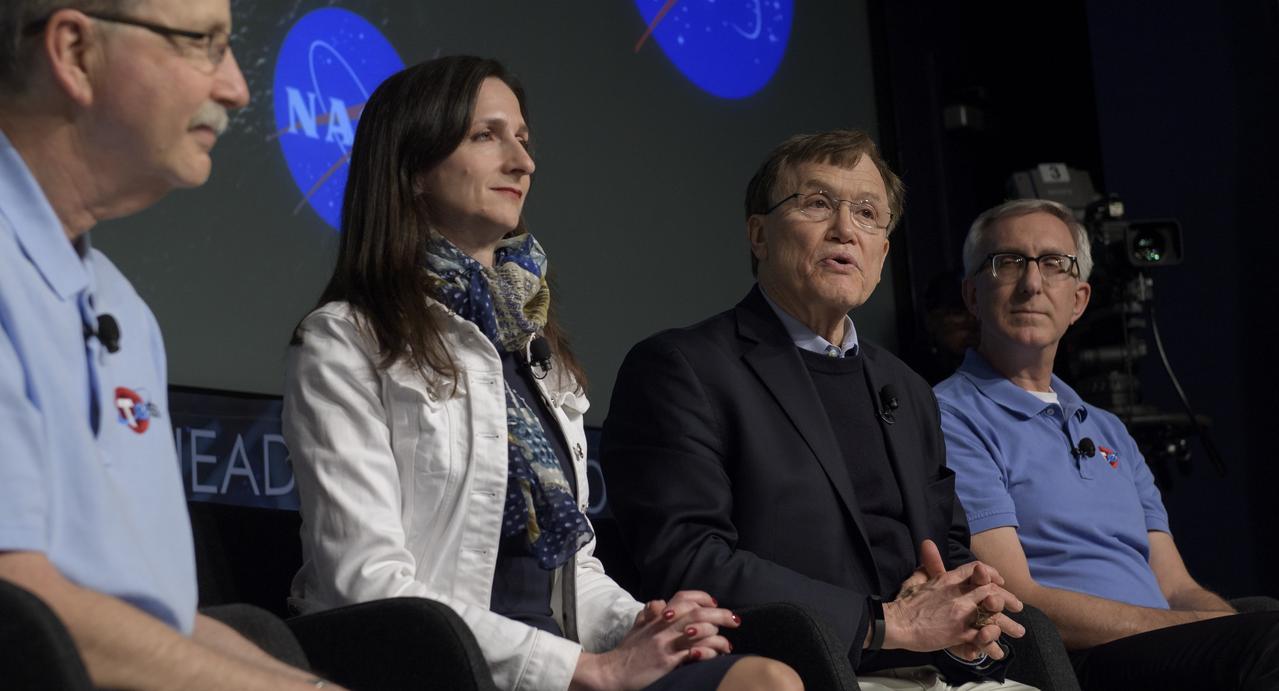
NASA Astrophysics Division director Paul Hertz, left, Sara Seager, TESS deputy director of science, MIT, George Ricker, TESS principal investigator, MIT Kavli Institute for Astrophysics and Space Research, and Jeff Volosin, TESS project manager, NASA’s Goddard Space Flight Center, right, discuss the upcoming launch of NASA’s next planet hunter, the Transiting Exoplanet Survey Satellite (TESS), Wednesday, March 28, 2018 at NASA Headquarters in Washington. Photo Credit: (NASA/Bill Ingalls)
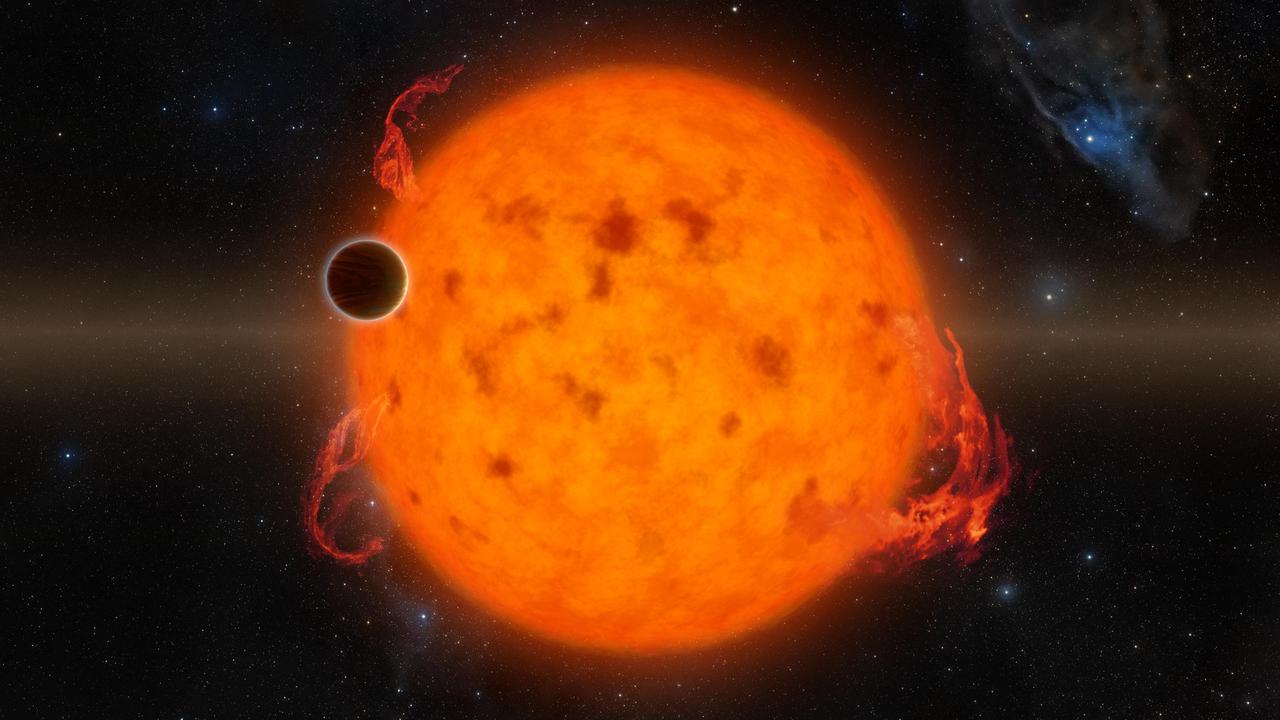
K2-33b, shown in this illustration, is one of the youngest exoplanets detected to date using NASA Kepler Space Telescope. It makes a complete orbit around its star in about five days. These two characteristics combined provide exciting new directions for planet-formation theories. K2-33b could have formed on a farther out orbit and quickly migrated inward. Alternatively, it could have formed in situ, or in place. http://photojournal.jpl.nasa.gov/catalog/PIA20690

Caption: Glowing a dark magenta, the newly discovered exoplanet GJ 504b weighs in with about four times Jupiter's mass, making it the lowest-mass planet ever directly imaged around a star like the sun. Credit: NASA/Goddard/S. Wiessinger Using infrared data from the Subaru Telescope in Hawaii, an international team of astronomers has imaged a giant planet around the bright star GJ 504. Several times the mass of Jupiter and similar in size, the new world, dubbed GJ 504b, is the lowest-mass planet ever detected around a star like the sun using direct imaging techniques. "If we could travel to this giant planet, we would see a world still glowing from the heat of its formation with a color reminiscent of a dark cherry blossom, a dull magenta," said Michael McElwain, a member of the discovery team at NASA's Goddard Space Flight Center in Greenbelt, Md. "Our near-infrared camera reveals that its color is much more blue than other imaged planets, which may indicate that its atmosphere has fewer clouds." Read more: <a href="http://1.usa.gov/15Ba6fI" rel="nofollow">1.usa.gov/15Ba6fI</a> <b><a href="http://www.nasa.gov/audience/formedia/features/MP_Photo_Guidelines.html" rel="nofollow">NASA image use policy.</a></b> <b><a href="http://www.nasa.gov/centers/goddard/home/index.html" rel="nofollow">NASA Goddard Space Flight Center</a></b> enables NASA’s mission through four scientific endeavors: Earth Science, Heliophysics, Solar System Exploration, and Astrophysics. Goddard plays a leading role in NASA’s accomplishments by contributing compelling scientific knowledge to advance the Agency’s mission. <b>Follow us on <a href="http://twitter.com/NASA_GoddardPix" rel="nofollow">Twitter</a></b> <b>Like us on <a href="http://www.facebook.com/pages/Greenbelt-MD/NASA-Goddard/395013845897?ref=tsd" rel="nofollow">Facebook</a></b> <b>Find us on <a href="http://instagram.com/nasagoddard?vm=grid" rel="nofollow">Instagram</a></b>
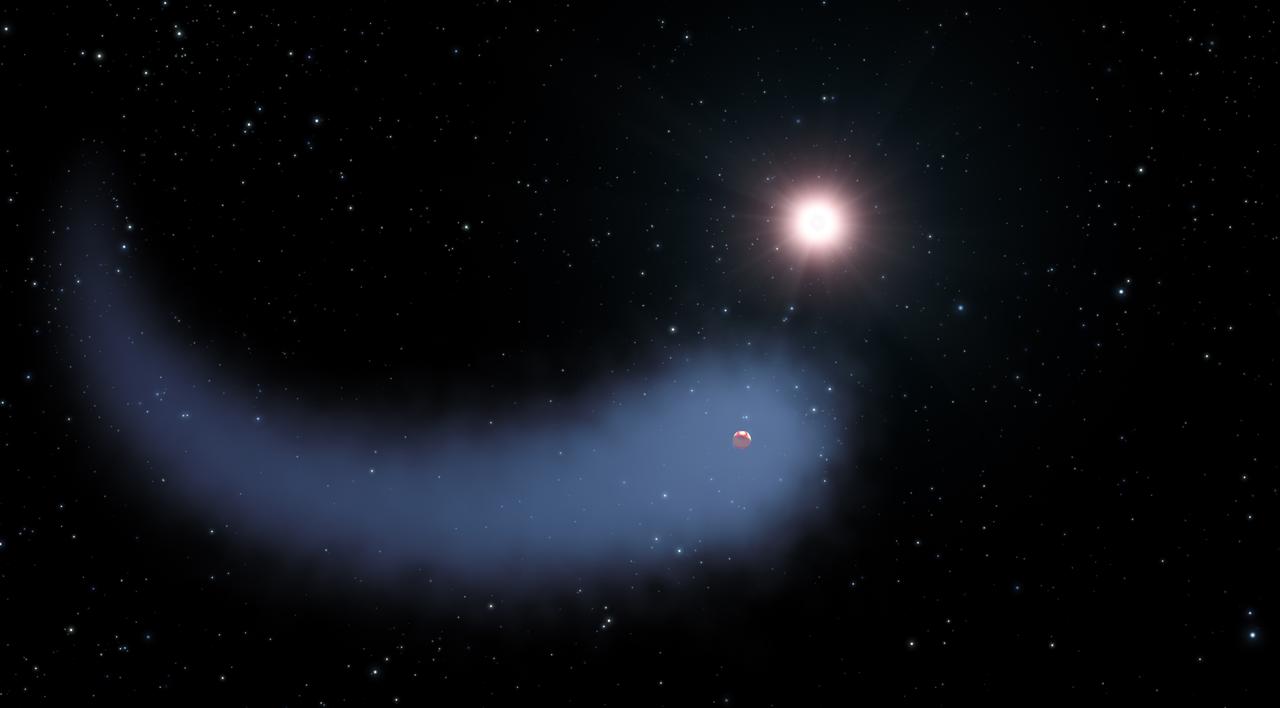
Astronomers using NASA’s Hubble Space Telescope have discovered an immense cloud of hydrogen dubbed “The Behemoth” bleeding from a planet orbiting a nearby star. The enormous, comet-like feature is about 50 times the size of the parent star. The hydrogen is evaporating from a warm, Neptune-sized planet, due to extreme radiation from the star. This phenomenon has never been seen around an exoplanet so small. It may offer clues to how other planets with hydrogen-enveloped atmospheres could have their outer layers evaporated by their parent star, leaving behind solid, rocky cores. Hot, rocky planets such as these that roughly the size of Earth are known as Hot-Super Earths. “This cloud is very spectacular, though the evaporation rate does not threaten the planet right now,” explains the study’s leader, David Ehrenreich of the Observatory of the University of Geneva in Switzerland. “But we know that in the past, the star, which is a faint red dwarf, was more active. This means that the planet evaporated faster during its first billion years of existence because of the strong radiation from the young star. Overall, we estimate that it may have lost up to 10 percent of its atmosphere over the past several billion years.” Read more: <a href="http://www.nasa.gov/feature/goddard/hubble-sees-a-behemoth-bleeding-atmosphere-around-a-warm-exoplanet" rel="nofollow">www.nasa.gov/feature/goddard/hubble-sees-a-behemoth-bleed...</a> Caption: This artist's concept shows "The Behemoth," an enormous comet-like cloud of hydrogen bleeding off of a warm, Neptune-sized planet just 30 light-years from Earth. Also depicted is the parent star, which is a faint red dwarf named GJ 436. The hydrogen is evaporating from the planet due to extreme radiation from the star. A phenomenon this large has never before been seen around any exoplanet. Credits: NASA, ESA, and G. Bacon (STScI) <b><a href="http://www.nasa.gov/audience/formedia/features/MP_Photo_Guidelines.html" rel="nofollow">NASA image use policy.</a></b> <b><a href="http://www.nasa.gov/centers/goddard/home/index.html" rel="nofollow">NASA Goddard Space Flight Center</a></b> enables NASA’s mission through four scientific endeavors: Earth Science, Heliophysics, Solar System Exploration, and Astrophysics. Goddard plays a leading role in NASA’s accomplishments by contributing compelling scientific knowledge to advance the Agency’s mission. <b>Follow us on <a href="http://twitter.com/NASAGoddardPix" rel="nofollow">Twitter</a></b> <b>Like us on <a href="http://www.facebook.com/pages/Greenbelt-MD/NASA-Goddard/395013845897?ref=tsd" rel="nofollow">Facebook</a></b> <b>Find us on <a href="http://instagrid.me/nasagoddard/?vm=grid" rel="nofollow">Instagram</a></b>

“We like to say that Archean Earth is the most alien planet we have geochemical data for,” For astronomers trying to understand which distant planets might have habitable conditions, the role of atmospheric haze has been hazy. To help sort it out, a team of researchers has been looking to Earth – specifically Earth during the Archean era, an epic 1-1/2-billion-year period early in our planet’s history. Read more: <a href="http://go.nasa.gov/2kTBhPU" rel="nofollow">go.nasa.gov/2kTBhPU</a> Caption: When haze built up in the atmosphere of Archean Earth, the young planet might have looked like this artist's interpretation - a pale orange dot. A team led by Goddard scientists thinks the haze was self-limiting, cooling the surface by about 36 degrees Fahrenheit (20 Kelvins) – not enough to cause runaway glaciation. The team’s modeling suggests that atmospheric haze might be helpful for identifying earthlike exoplanets that could be habitable. Credits: NASA’s Goddard Space Flight Center/Francis Reddy
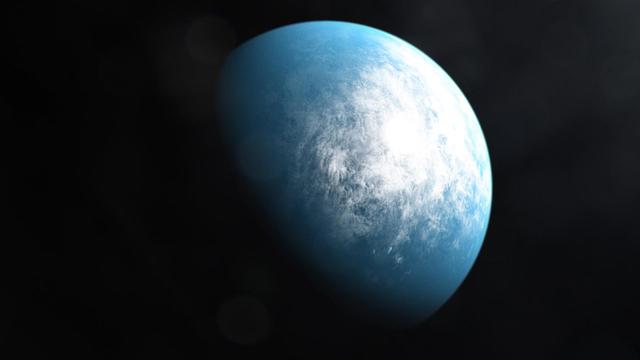
TOI 700, a planetary system 100 light-years away in the constellation Dorado, is home to TOI 700 d, the first Earth-size habitable-zone planet discovered by NASA's Transiting Exoplanet Survey Satellite. https://photojournal.jpl.nasa.gov/catalog/PIA23408

The super-Earth exoplanet 55 Cancri e, depicted with its star in this artist's concept, likely has an atmosphere thicker than Earth's, with ingredients that could be similar to those of Earth's atmosphere, according to a 2017 study using data from NASA's Spitzer Space Telescope. Scientists say the planet may be entirely covered in lava. The planet is so close to its star that one face of the planet consistently faces the star, resulting in a dayside and a nightside. https://photojournal.jpl.nasa.gov/catalog/PIA22069

This artist concept shows NASA planet-hunting Kepler spacecraft operating in a new mission profile called K2. Using publicly available data, astronomers have confirmed K2 first exoplanet discovery proving Kepler can still find planets.

WASP-18b is an exoplanet located 325 light-years from Earth. The planet's mass is 10 times that of Jupiter, and it orbits its star once every 23 hours. A 2017 study found that this planet has a stratosphere that's loaded with carbon dioxide, but has no signs of water. A stratosphere is a layer of atmosphere in which temperature increases with higher altitudes. The study used NASA's Spitzer and Hubble space telescopes. https://photojournal.jpl.nasa.gov/catalog/PIA22087
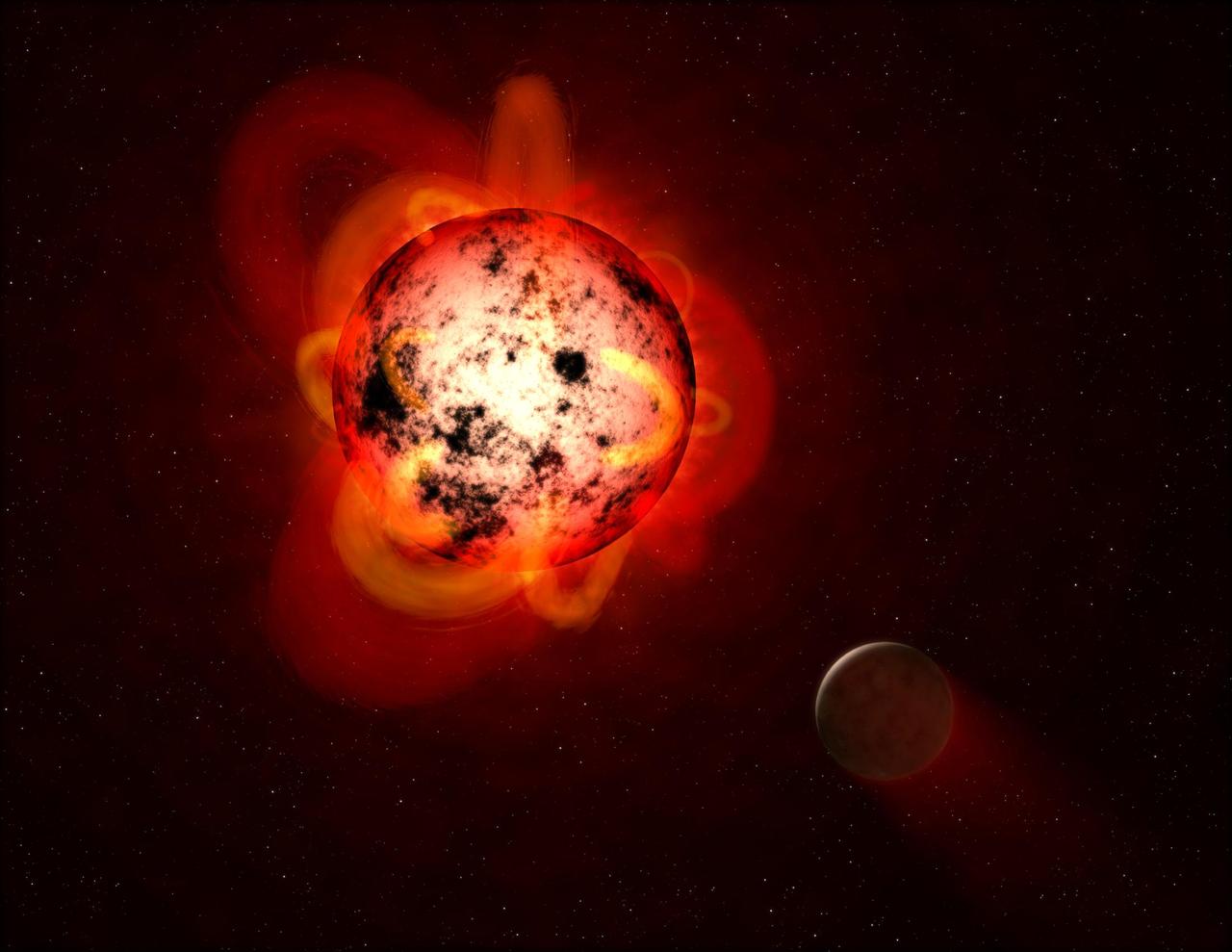
This illustration shows a red dwarf star orbited by a hypothetical exoplanet. Red dwarfs tend to be magnetically active, displaying gigantic arcing prominences and a wealth of dark sunspots. Red dwarfs also erupt with intense flares that could strip a nearby planet's atmosphere over time, or make the surface inhospitable to life as we know it. By mining data from the Galaxy Evolution Explorer (GALEX) spacecraft, a team of astronomers identified dozens of flares at a range of durations and strengths. The team measured events with less total energy than many previously detected flares from red dwarfs. This is important because, although individually less energetic and therefore less hostile to life, smaller flares might be much more frequent and add up over time to produce a cumulative effect on an orbiting planet. https://photojournal.jpl.nasa.gov/catalog/PIA21473
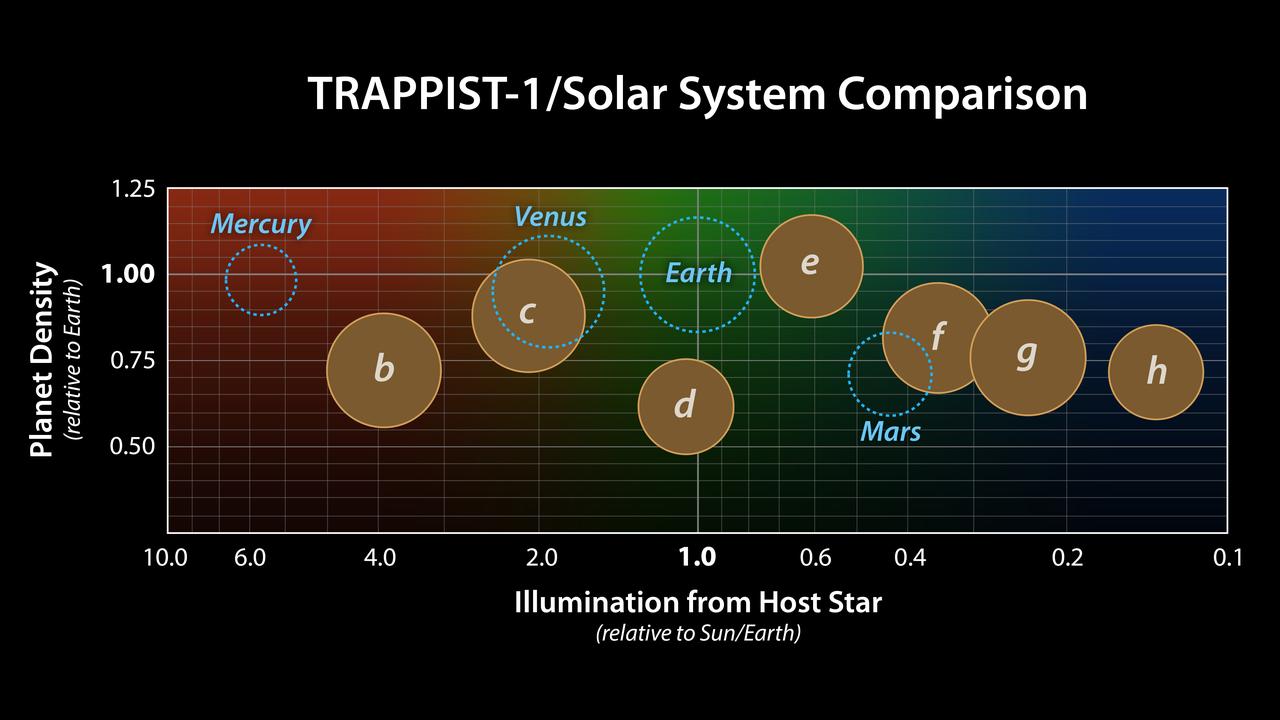
This graph presents known properties of the seven TRAPPIST-1 exoplanets (labeled b through h), showing how they stack up to the inner rocky worlds in our own solar system. The horizontal axis shows the level of illumination that each planet receives from its host star. TRAPPIST-1 is a mere 9 percent the mass of our Sun, and its temperature is much cooler. But because the TRAPPIST-1 planets orbit so closely to their star, they receive comparable levels of light and heat to Earth and its neighboring planets. The vertical axis shows the densities of the planets. Density, calculated based on a planet's mass and volume, is the first important step in understanding a planet's composition. The plot shows that the TRAPPIST-1 planet densities range from being similar to Earth and Venus at the upper end, down to values comparable to Mars at the lower end. The relative sizes of the planets are indicated by the circles. The masses and densities of the TRAPPIST-1 planets were determined by careful measurements of slight variations in the timings of their orbits using extensive observations made by NASA's Spitzer and Kepler space telescopes, in combination with data from Hubble and a number of ground-based telescopes. These measurements are the most precise to date for any system of exoplanets. By comparing these measurements with theoretical models of how planets form and evolve, researchers have determined that they are all rocky in overall composition. Estimates suggest the lower-density planets could have large quantities of water -- as much as 5 percent by mass for TRAPPIST-1d. Earth, in comparison, has only about 0.02 percent of its mass in the form of water. https://photojournal.jpl.nasa.gov/catalog/PIA22095
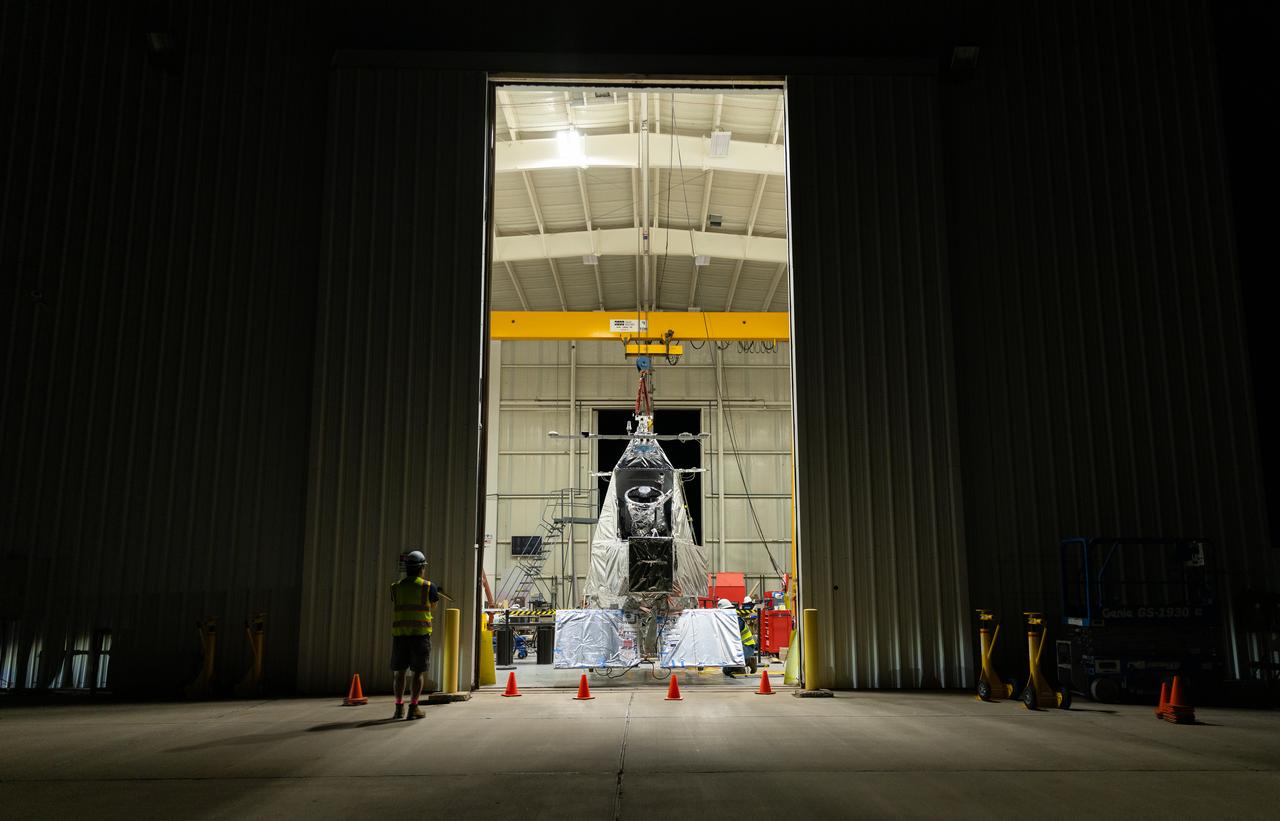
NASA Goddard astrophysicist Kyle Helson looks at EXCITE (EXoplanet Climate Infrared TElescope) as it dangles from the ceiling of a hangar at NASA’s Columbia Scientific Balloon Facility in Fort Sumner, New Mexico.
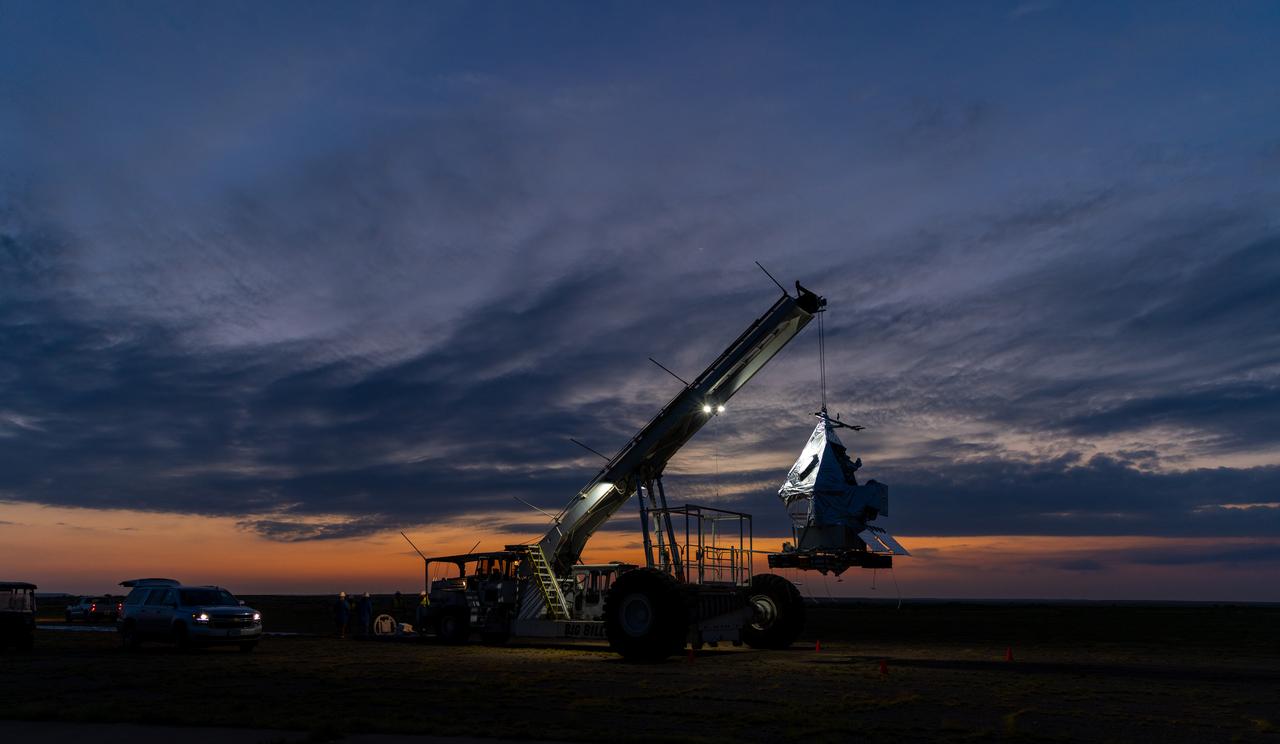
NASA Goddard astrophysicist Kyle Helson looks at EXCITE (EXoplanet Climate Infrared TElescope) as it dangles from the ceiling of a hangar at NASA’s Columbia Scientific Balloon Facility in Fort Sumner, New Mexico.

This still from a video shows illustrations of the seven Earth-size planets of TRAPPIST-1, an exoplanet system about 40 light-years away, based on data current as of February 2018. Each planet is shown in sequence, starting with the innermost TRAPPIST-1b and ending with the outermost TRAPPIST-1h. The video presents the planets' relative sizes as well as the relative scale of the central star as seen from each planet. The art highlights possibilities for how the surfaces of these intriguing worlds might look based on their newly calculated properties. The seven planets of TRAPPIST-1 are all Earth-sized and terrestrial. TRAPPIST-1 is an ultra-cool dwarf star in the constellation Aquarius, and its planets orbit very close to it. In the background, slightly distorted versions our familiar constellations, including Orion and Taurus, are shown as they would appear from the location of TRAPPIST-1 (backdrop image courtesy California Academy of Sciences/Dan Tell). An animation is available at https://photojournal.jpl.nasa.gov/catalog/PIA22098

This artist's concept shows exoplanet Kepler-1649c orbiting around its host red dwarf star. This exoplanet is in its star's habitable zone (the distance where liquid water could exist on the planet's surface) and is the closest to Earth in size and temperature found yet in Kepler's data. https://photojournal.jpl.nasa.gov/catalog/PIA23689
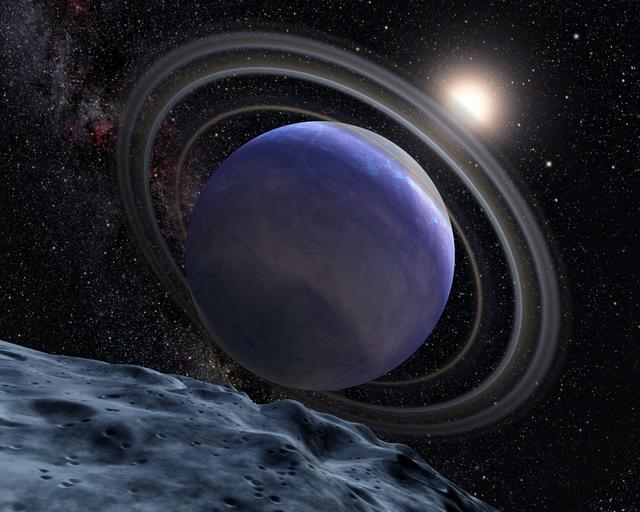
Release Date April 1, 2009 This is an artistic illustration of the giant planet HR 8799b. The planet was first discovered in 2007 at the Gemini North observatory. It was identified in the NICMOS archival data in a follow-up search of NICMOS archival data to see if Hubble had also serendipitously imaged it. The planet is young and hot, at a temperature of 1500 degrees Fahrenheit. It is slightly larger than Jupiter and may be at least seven times more massive. Analysis of the NICMOS data suggests the planet has water vapor in its atmosphere and is only partially cloud covered. It is not known if the planet has rings or moons, but circumplanetary debris is common among the outer planets of our solar system. Credit: NASA/Goddard Space Flight Center/ESA/G. Bacon (STScI) To learn more about the Hubble Space Telescope go here: <a href="http://www.nasa.gov/mission_pages/hubble/main/index.html" rel="nofollow">www.nasa.gov/mission_pages/hubble/main/index.html</a>
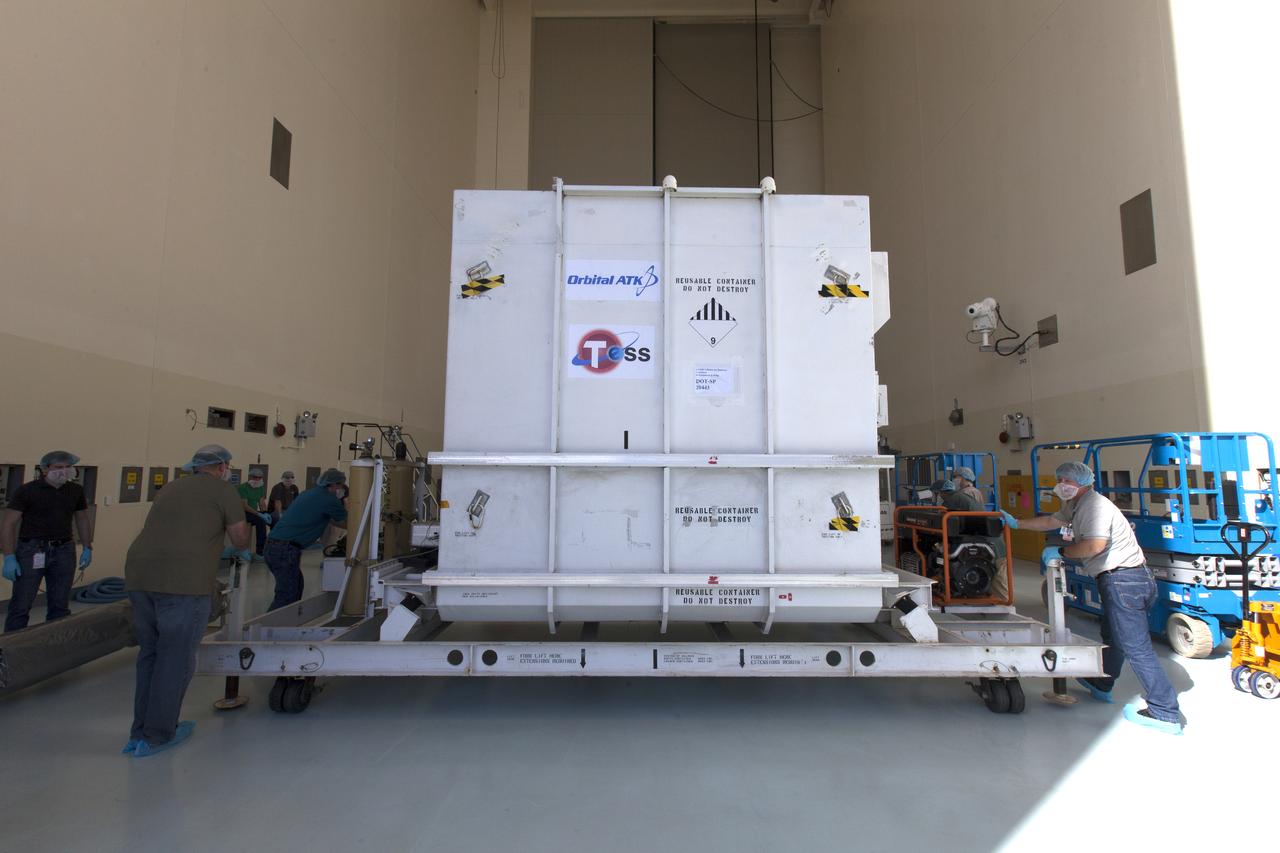
NASA's Transiting Exoplanet Survey Satellite (TESS), inside its shipping container, is moved into Payload Hazardous Servicing Facility (PHSF) at the agency's Kennedy Space Center in Florida. Inside the PHSF, the satellite will be processed and prepared for its flight. TESS is scheduled to launch atop a SpaceX Falcon 9 rocket from Space Launch Complex 40 at Cape Canaveral Air Force Station. TESS is the next step in NASA's search for planets outside our solar system, known as exoplanets. TESS is a NASA Astrophysics Explorer mission led and operated by MIT in Cambridge, Massachusetts, and managed by NASA’s Goddard Space Flight Center in Greenbelt, Maryland. Dr. George Ricker of MIT’s Kavli Institute for Astrophysics and Space Research serves as principal investigator for the mission. Additional partners include Orbital ATK, NASA’s Ames Research Center, the Harvard-Smithsonian Center for Astrophysics and the Space Telescope Science Institute. More than a dozen universities, research institutes and observatories worldwide are participants in the mission. NASA’s Launch Services Program is responsible for launch management.
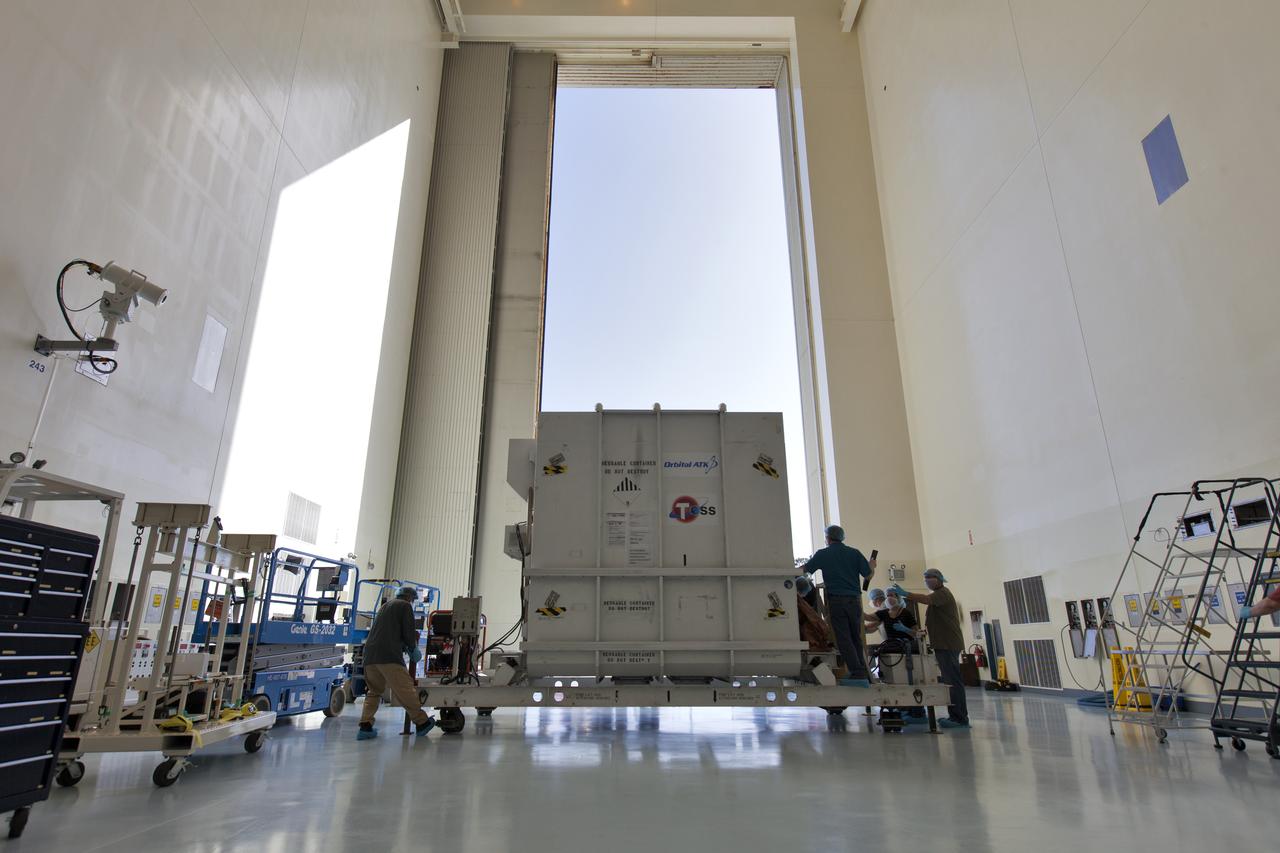
The shipping container with NASA's Transiting Exoplanet Survey Satellite (TESS) inside, is moved into the Payload Hazardous Servicing Facility (PHSF) at the agency's Kennedy Space Center in Florida. Inside the PHSF, the satellite will be processed and prepared for its flight. TESS is scheduled to launch atop a SpaceX Falcon 9 rocket from Space Launch Complex 40 at Cape Canaveral Air Force Station. TESS is the next step in NASA's search for planets outside our solar system, known as exoplanets. TESS is a NASA Astrophysics Explorer mission led and operated by MIT in Cambridge, Massachusetts, and managed by NASA’s Goddard Space Flight Center in Greenbelt, Maryland. Dr. George Ricker of MIT’s Kavli Institute for Astrophysics and Space Research serves as principal investigator for the mission. Additional partners include Orbital ATK, NASA’s Ames Research Center, the Harvard-Smithsonian Center for Astrophysics and the Space Telescope Science Institute. More than a dozen universities, research institutes and observatories worldwide are participants in the mission. NASA’s Launch Services Program is responsible for launch management.
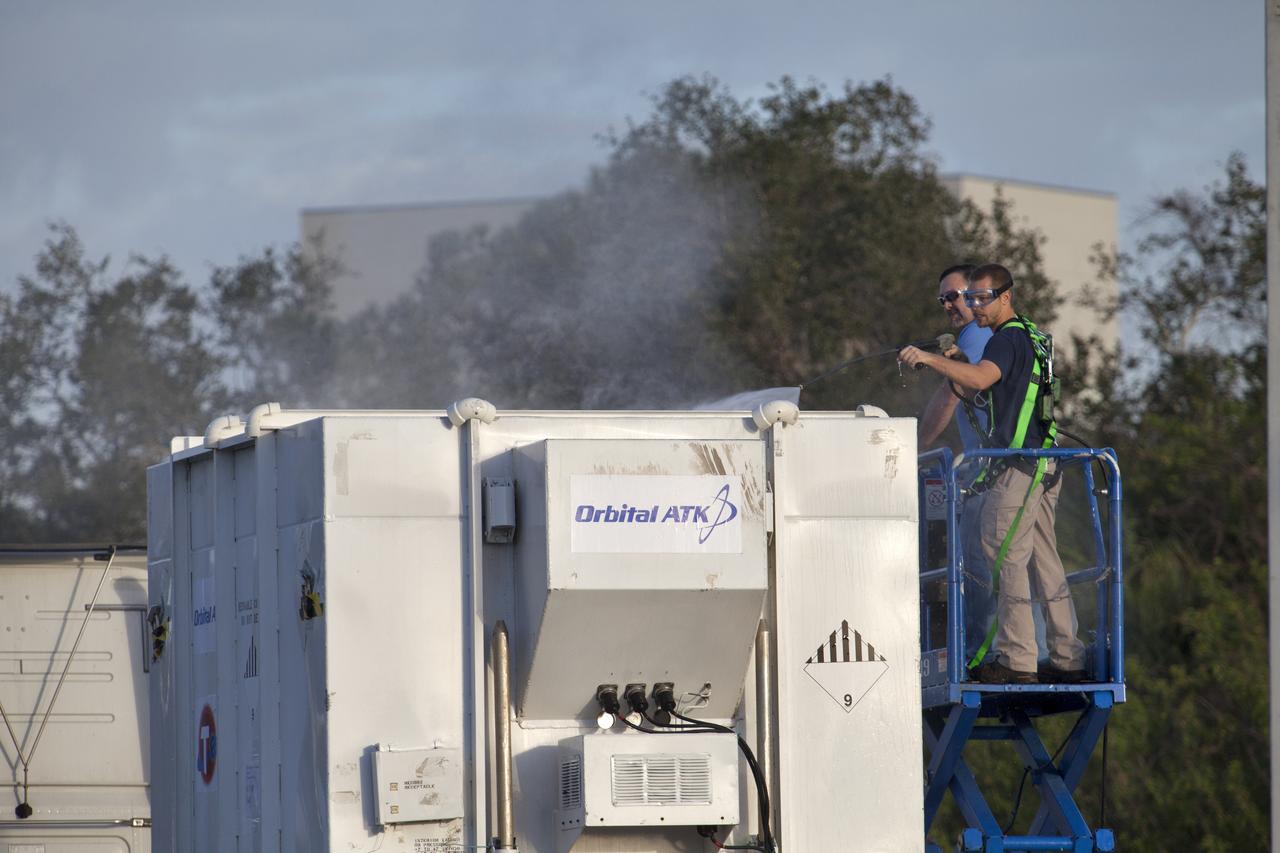
NASA's Transiting Exoplanet Survey Satellite (TESS) container is pressure washed at the Multi-Payload Processing Facility at the agency's Kennedy Space Center in Florida. Tess will be moved to the Payload Hazardous Servicing Facility to be processed and prepared for flight. TESS is scheduled to launch atop a SpaceX Falcon 9 rocket from Space Launch Complex 40 at Cape Canaveral Air Force Station. TESS is the next step in NASA's search for planets outside our solar system, known as exoplanets. TESS is a NASA Astrophysics Explorer mission led and operated by MIT in Cambridge, Massachusetts, and managed by NASA’s Goddard Space Flight Center in Greenbelt, Maryland. Dr. George Ricker of MIT’s Kavli Institute for Astrophysics and Space Research serves as principal investigator for the mission. Additional partners include Orbital ATK, NASA’s Ames Research Center, the Harvard-Smithsonian Center for Astrophysics and the Space Telescope Science Institute. More than a dozen universities, research institutes and observatories worldwide are participants in the mission. NASA’s Launch Services Program is responsible for launch management.
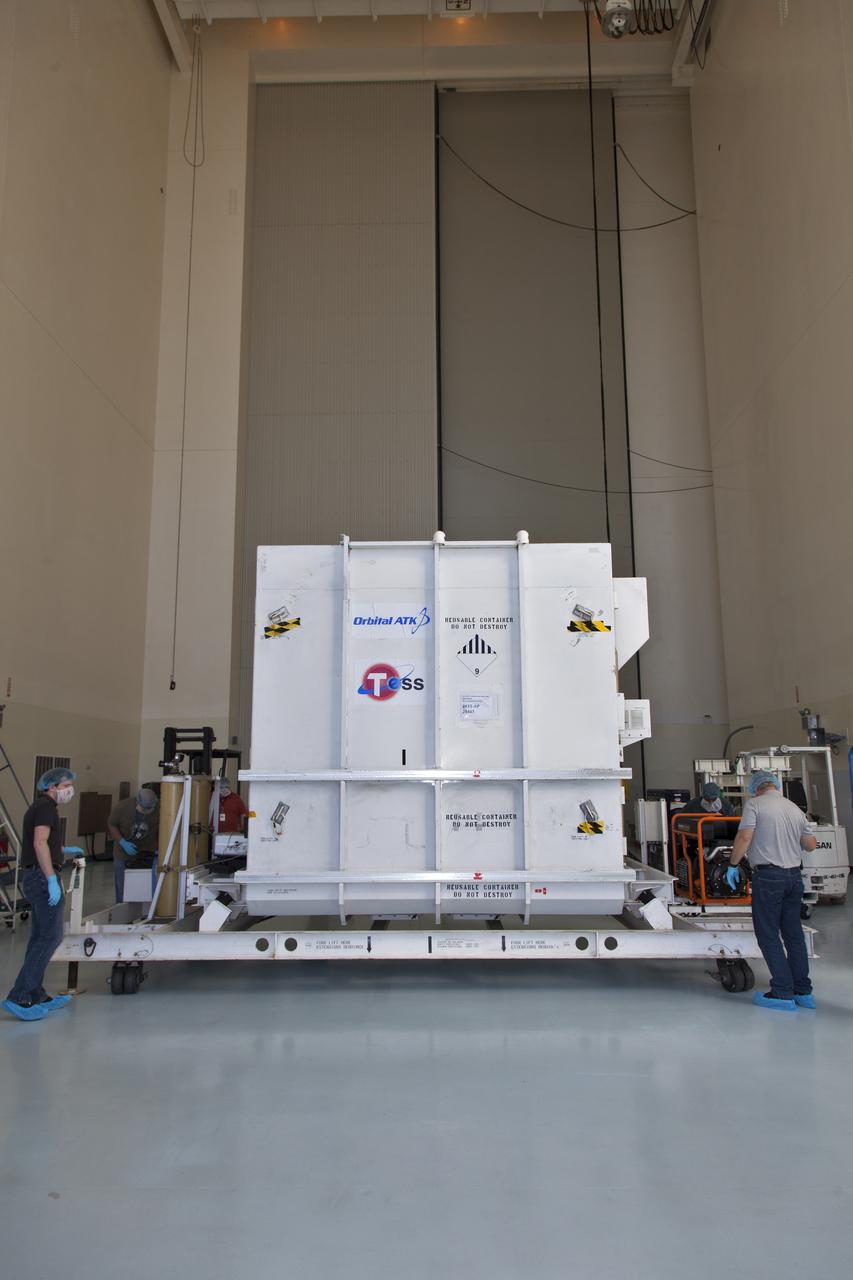
The shipping container with NASA's Transiting Exoplanet Survey Satellite (TESS) inside, is moved into the Payload Hazardous Servicing Facility (PHSF) at the agency's Kennedy Space Center in Florida. Inside the PHSF, the satellite will be processed and prepared for its flight. TESS is scheduled to launch atop a SpaceX Falcon 9 rocket from Space Launch Complex 40 at Cape Canaveral Air Force Station. TESS is the next step in NASA's search for planets outside our solar system, known as exoplanets. TESS is a NASA Astrophysics Explorer mission led and operated by MIT in Cambridge, Massachusetts, and managed by NASA’s Goddard Space Flight Center in Greenbelt, Maryland. Dr. George Ricker of MIT’s Kavli Institute for Astrophysics and Space Research serves as principal investigator for the mission. Additional partners include Orbital ATK, NASA’s Ames Research Center, the Harvard-Smithsonian Center for Astrophysics and the Space Telescope Science Institute. More than a dozen universities, research institutes and observatories worldwide are participants in the mission. NASA’s Launch Services Program is responsible for launch management.
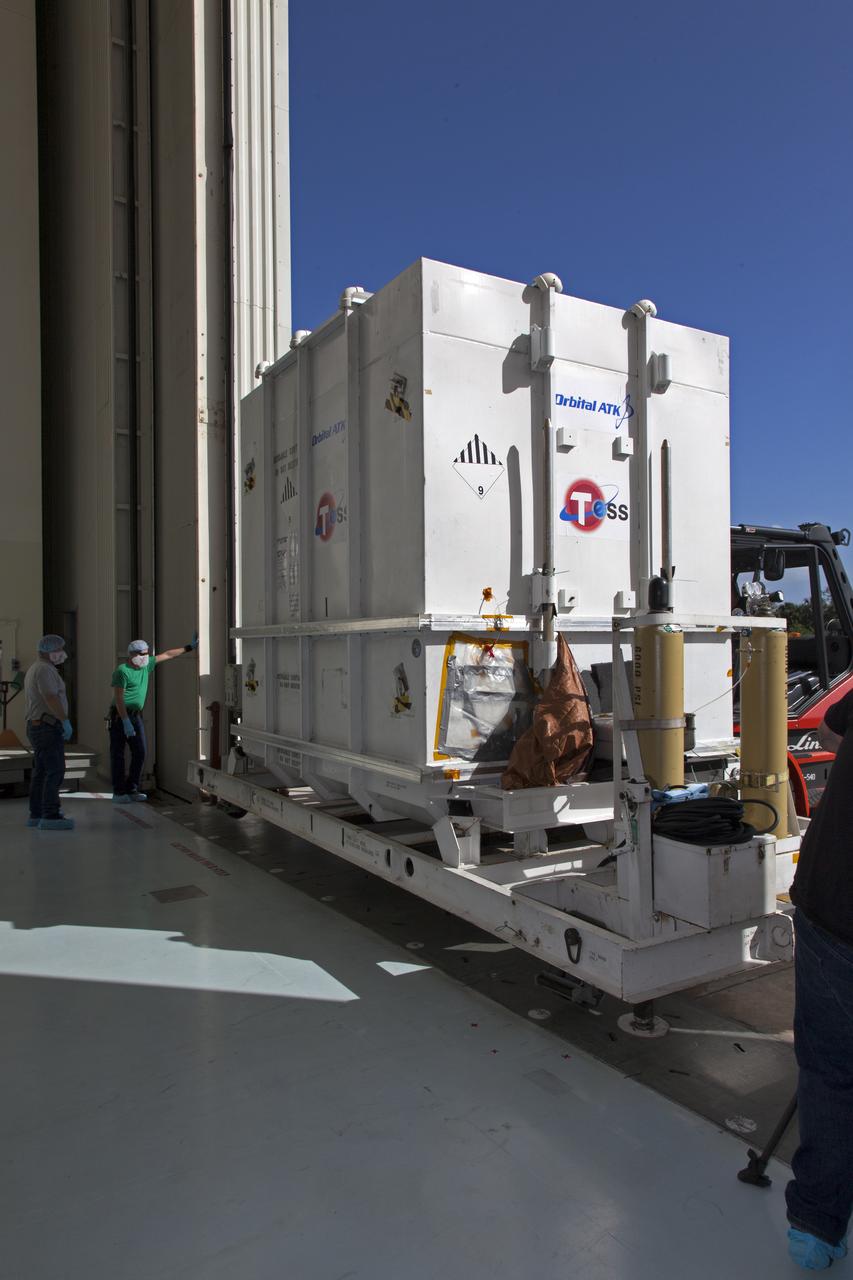
The shipping container with NASA's Transiting Exoplanet Survey Satellite (TESS) inside, is moved into the Payload Hazardous Servicing Facility (PHSF) at the agency's Kennedy Space Center in Florida. Inside the PHSF, the satellite will be processed and prepared for its flight. TESS is scheduled to launch atop a SpaceX Falcon 9 rocket from Space Launch Complex 40 at Cape Canaveral Air Force Station. TESS is the next step in NASA's search for planets outside our solar system, known as exoplanets. TESS is a NASA Astrophysics Explorer mission led and operated by MIT in Cambridge, Massachusetts, and managed by NASA’s Goddard Space Flight Center in Greenbelt, Maryland. Dr. George Ricker of MIT’s Kavli Institute for Astrophysics and Space Research serves as principal investigator for the mission. Additional partners include Orbital ATK, NASA’s Ames Research Center, the Harvard-Smithsonian Center for Astrophysics and the Space Telescope Science Institute. More than a dozen universities, research institutes and observatories worldwide are participants in the mission. NASA’s Launch Services Program is responsible for launch management.
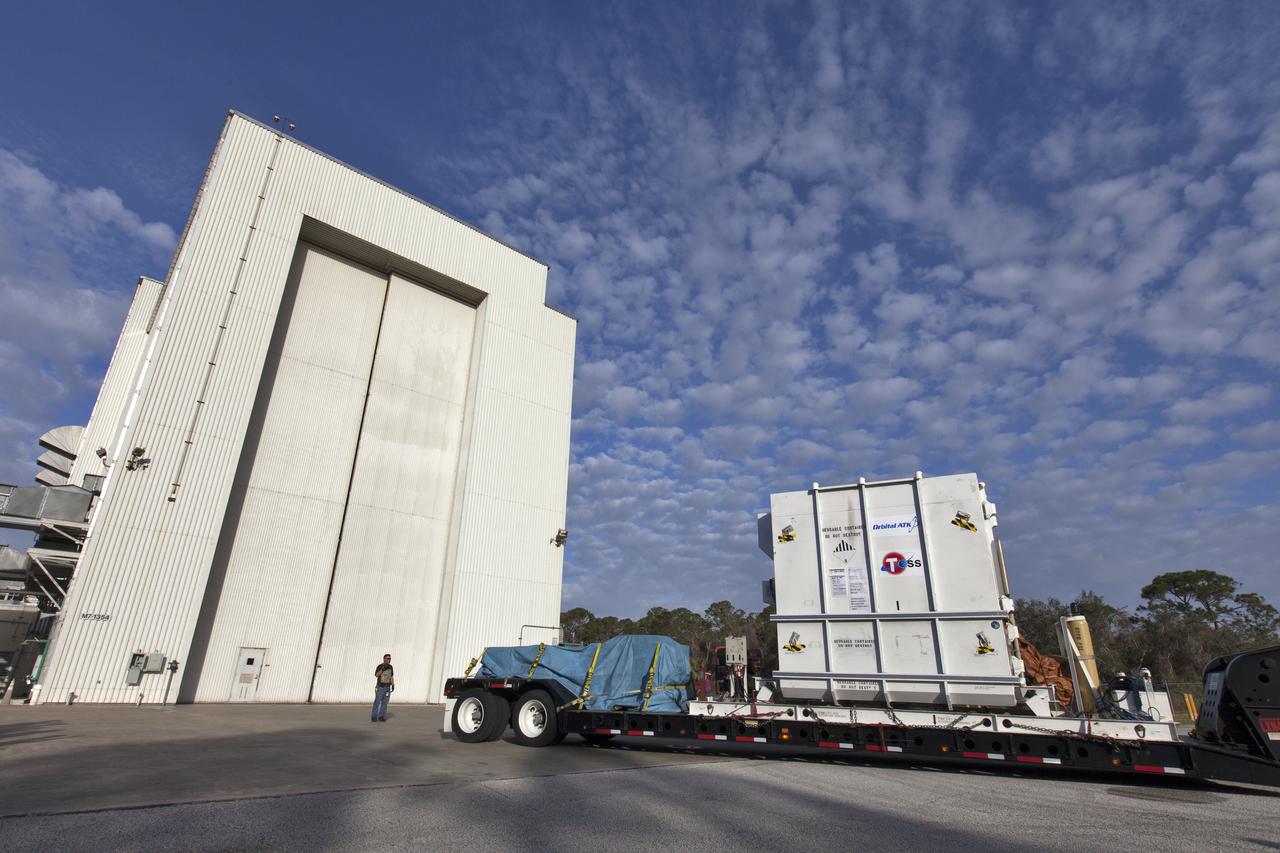
NASA's Transiting Exoplanet Survey Satellite (TESS), inside its shipping container, is backed in on flatbed truck to the Payload Hazardous Servicing Facility (PHSF) at the agency's Kennedy Space Center in Florida. Inside the PHSF, the satellite will be processed and prepared for its flight. TESS is scheduled to launch atop a SpaceX Falcon 9 rocket from Space Launch Complex 40 at Cape Canaveral Air Force Station. TESS is the next step in NASA's search for planets outside our solar system, known as exoplanets. TESS is a NASA Astrophysics Explorer mission led and operated by MIT in Cambridge, Massachusetts, and managed by NASA’s Goddard Space Flight Center in Greenbelt, Maryland. Dr. George Ricker of MIT’s Kavli Institute for Astrophysics and Space Research serves as principal investigator for the mission. Additional partners include Orbital ATK, NASA’s Ames Research Center, the Harvard-Smithsonian Center for Astrophysics and the Space Telescope Science Institute. More than a dozen universities, research institutes and observatories worldwide are participants in the mission. NASA’s Launch Services Program is responsible for launch management.

The varying brightness of an exoplanet called 55 Cancri e is shown in this plot of infrared data captured by NASA Spitzer Space Telescope.

This illustration shows the seven Earth-size planets of TRAPPIST-1, an exoplanet system about 40 light-years away, based on data current as of February 2018. The image shows the planets' relative sizes but does not represent their orbits to scale. The art highlights possibilities for how the surfaces of these intriguing worlds might look based on their newly calculated properties. The seven planets of TRAPPIST-1 are all Earth-sized and terrestrial. TRAPPIST-1 is an ultra-cool dwarf star in the constellation Aquarius, and its planets orbit very close to it. In the background, slightly distorted versions the familiar constellations of Orion and Taurus are shown as they would appear from the location of TRAPPIST-1 (courtesy of California Academy of Sciences/Dan Tell). https://photojournal.jpl.nasa.gov/catalog/PIA22097

Our solar system now is tied for most number of planets around a single star, with the recent discovery of an eighth planet circling Kepler-90, a Sun-like star 2,545 light years from Earth. The planet was discovered in data from NASA's Kepler Space Telescope. The newly-discovered Kepler-90i -- a sizzling hot, rocky planet that orbits its star once every 14.4 days -- was found using machine learning from Google. Machine learning is an approach to artificial intelligence in which computers "learn." In this case, computers learned to identify planets by finding in Kepler data instances where the telescope recorded changes in starlight caused by planets beyond our solar system, known as exoplanets. https://photojournal.jpl.nasa.gov/catalog/PIA22192
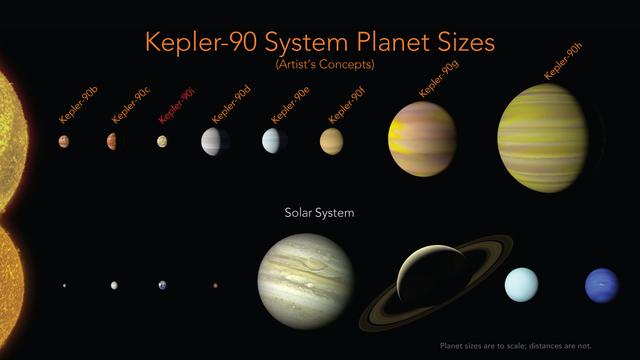
Our solar system now is tied for most number of planets around a single star, with the recent discovery of an eighth planet circling Kepler-90, a Sun-like star 2,545 light years from Earth. The planet was discovered in data from NASA's Kepler Space Telescope. This artist's concept depicts the Kepler-90 system compared with our own solar system. The newly-discovered Kepler-90i -- a sizzling hot, rocky planet that orbits its star once every 14.4 days -- was found using machine learning from Google. Machine learning is an approach to artificial intelligence in which computers "learn." In this case, computers learned to identify planets by finding in Kepler data instances where the telescope recorded changes in starlight caused by planets beyond our solar system, known as exoplanets. https://photojournal.jpl.nasa.gov/catalog/PIA22193
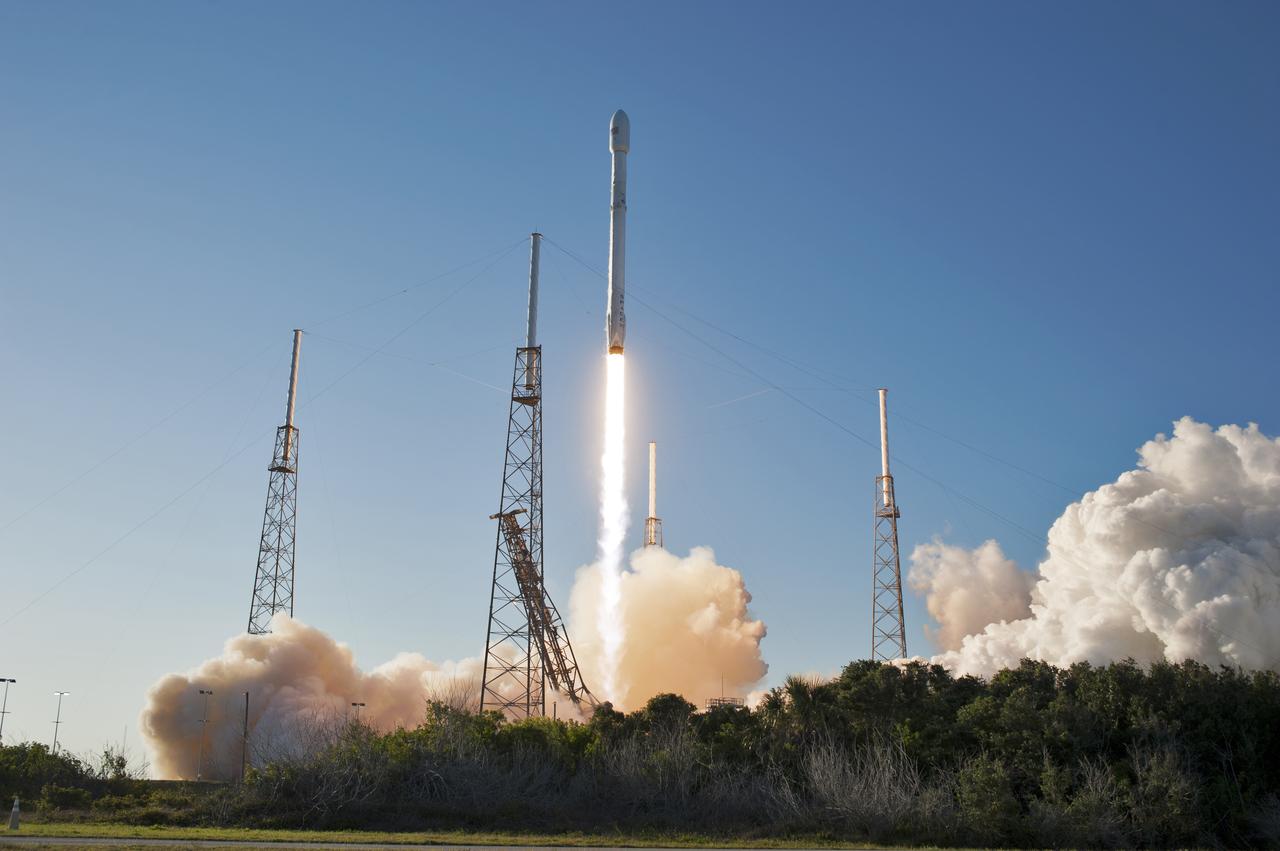
A SpaceX Falcon 9 rocket lifts off from Space Launch Complex 40 at Cape Canaveral Air Force Station in Florida, carrying NASA's Transiting Exoplanet Survey Satellite (TESS). Liftoff was at 6:51 p.m. EDT. TESS will search for planets outside of our solar system. The mission will find exoplanets that periodically block part of the light from their host stars, events called transits. The satellite will survey the nearest and brightest stars for two years to search for transiting exoplanets.

A SpaceX Falcon 9 rocket lifts off from Space Launch Complex 40 at Cape Canaveral Air Force Station in Florida, carrying NASA's Transiting Exoplanet Survey Satellite (TESS). Liftoff was at 6:51 p.m. EDT. TESS will search for planets outside of our solar system. The mission will find exoplanets that periodically block part of the light from their host stars, events called transits. The satellite will survey the nearest and brightest stars for two years to search for transiting exoplanets.
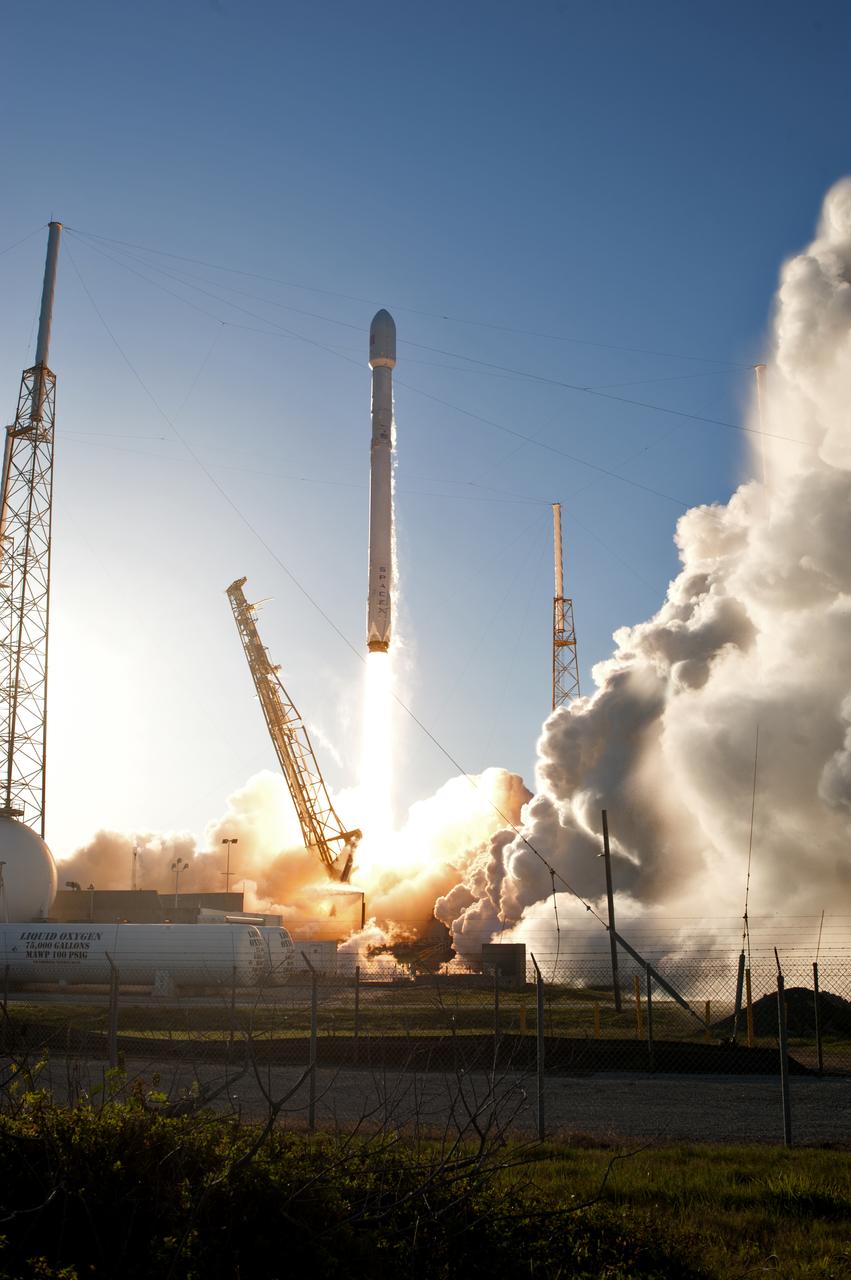
A SpaceX Falcon 9 rocket lifts off from Space Launch Complex 40 at Cape Canaveral Air Force Station in Florida, carrying NASA's Transiting Exoplanet Survey Satellite (TESS). Liftoff was at 6:51 p.m. EDT. TESS will search for planets outside of our solar system. The mission will find exoplanets that periodically block part of the light from their host stars, events called transits. The satellite will survey the nearest and brightest stars for two years to search for transiting exoplanets.
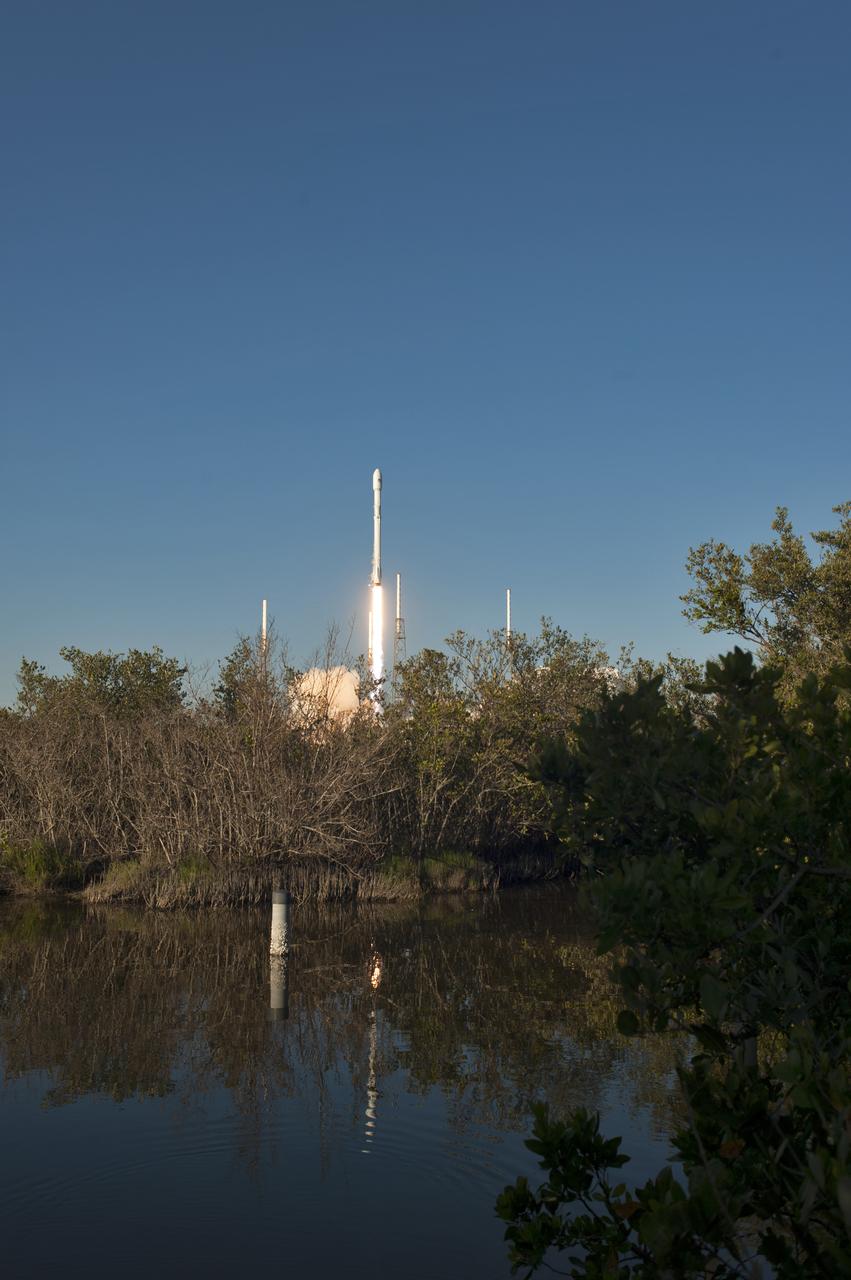
A SpaceX Falcon 9 rocket lifts off from Space Launch Complex 40 at Cape Canaveral Air Force Station in Florida, carrying NASA's Transiting Exoplanet Survey Satellite (TESS). Liftoff was at 6:51 p.m. EDT. TESS will search for planets outside of our solar system. The mission will find exoplanets that periodically block part of the light from their host stars, events called transits. The satellite will survey the nearest and brightest stars for two years to search for transiting exoplanets.
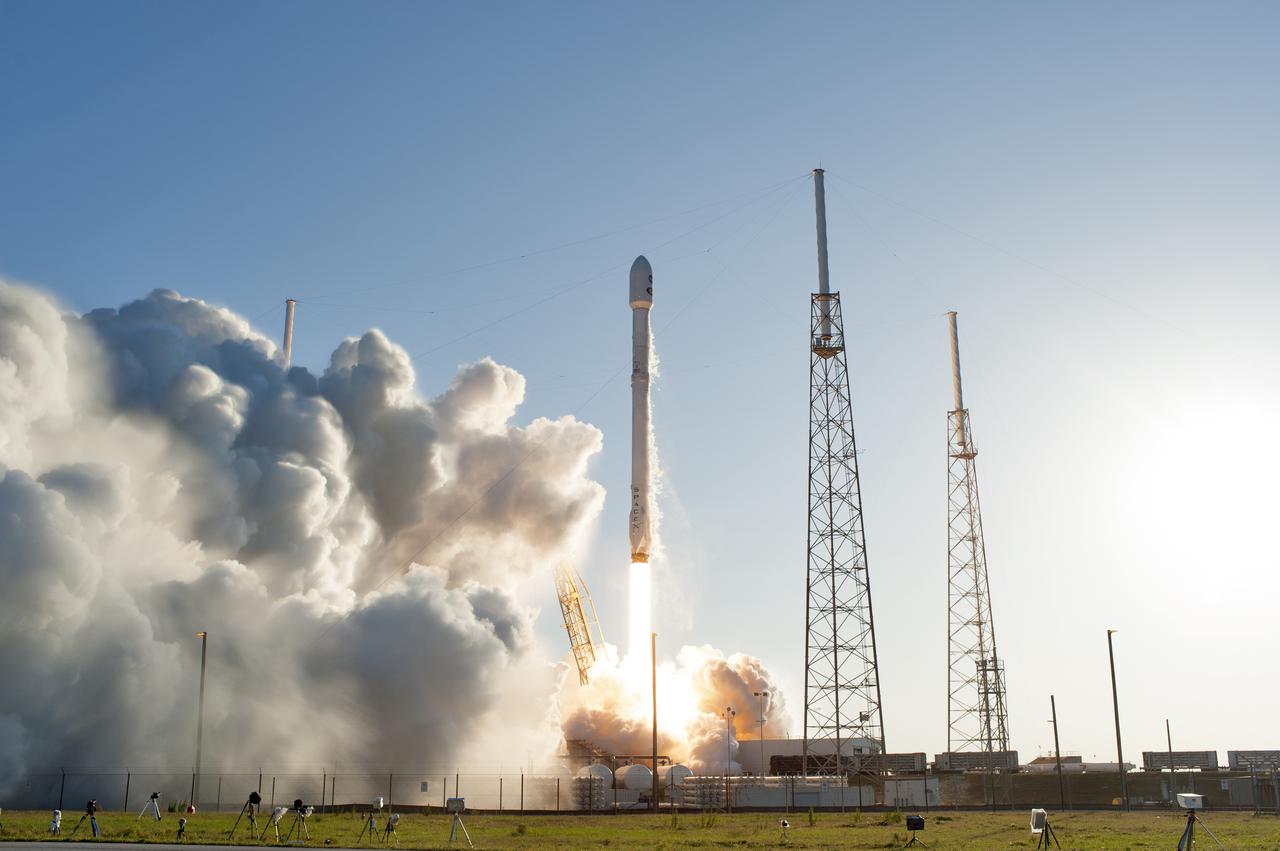
A SpaceX Falcon 9 rocket lifts off from Space Launch Complex 40 at Cape Canaveral Air Force Station in Florida, carrying NASA's Transiting Exoplanet Survey Satellite (TESS). Liftoff was at 6:51 p.m. EDT. TESS will search for planets outside of our solar system. The mission will find exoplanets that periodically block part of the light from their host stars, events called transits. The satellite will survey the nearest and brightest stars for two years to search for transiting exoplanets.
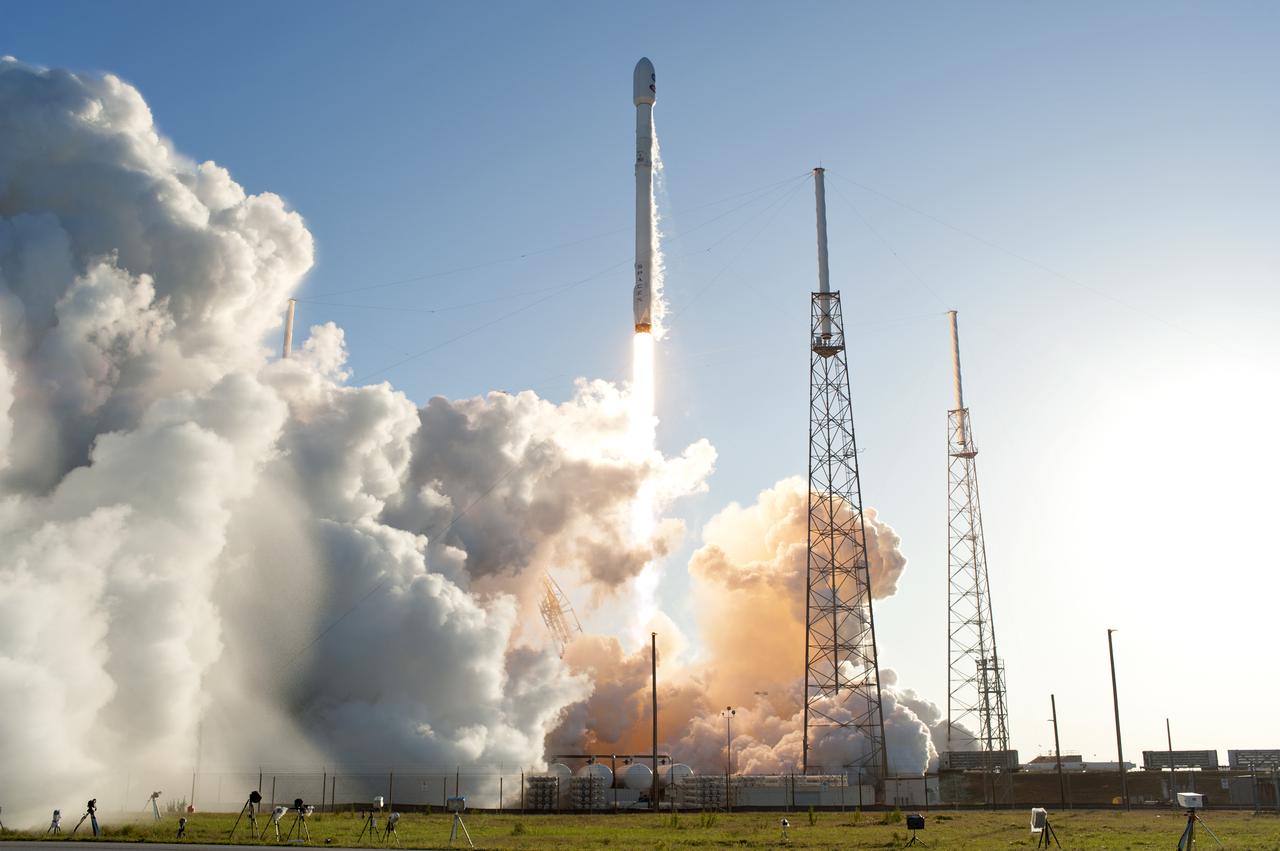
A SpaceX Falcon 9 rocket lifts off from Space Launch Complex 40 at Cape Canaveral Air Force Station in Florida, carrying NASA's Transiting Exoplanet Survey Satellite (TESS). Liftoff was at 6:51 p.m. EDT. TESS will search for planets outside of our solar system. The mission will find exoplanets that periodically block part of the light from their host stars, events called transits. The satellite will survey the nearest and brightest stars for two years to search for transiting exoplanets.
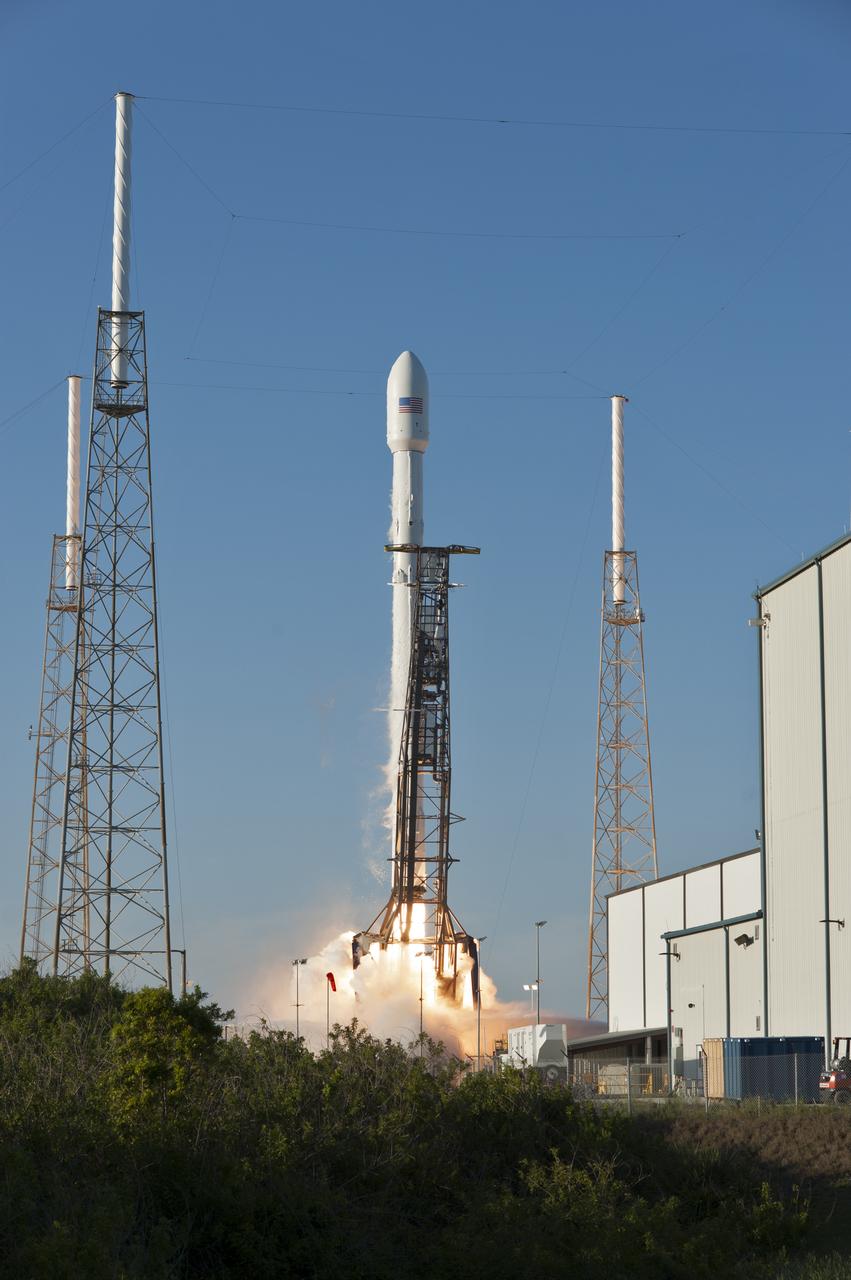
A SpaceX Falcon 9 rocket lifts off from Space Launch Complex 40 at Cape Canaveral Air Force Station in Florida, carrying NASA's Transiting Exoplanet Survey Satellite (TESS). Liftoff was at 6:51 p.m. EDT. TESS will search for planets outside of our solar system. The mission will find exoplanets that periodically block part of the light from their host stars, events called transits. The satellite will survey the nearest and brightest stars for two years to search for transiting exoplanets.

This artist's concept shows what exoplanet Kepler-1649c could look like on its surface. The planet is the closest to Earth in size and temperature found yet in data from the Kepler space telescope. https://photojournal.jpl.nasa.gov/catalog/PIA23690

This plot tells astronomers that a fifth planet is in orbit around the star 55 Cancri, making the star the record-holder for hosting the most known exoplanets.
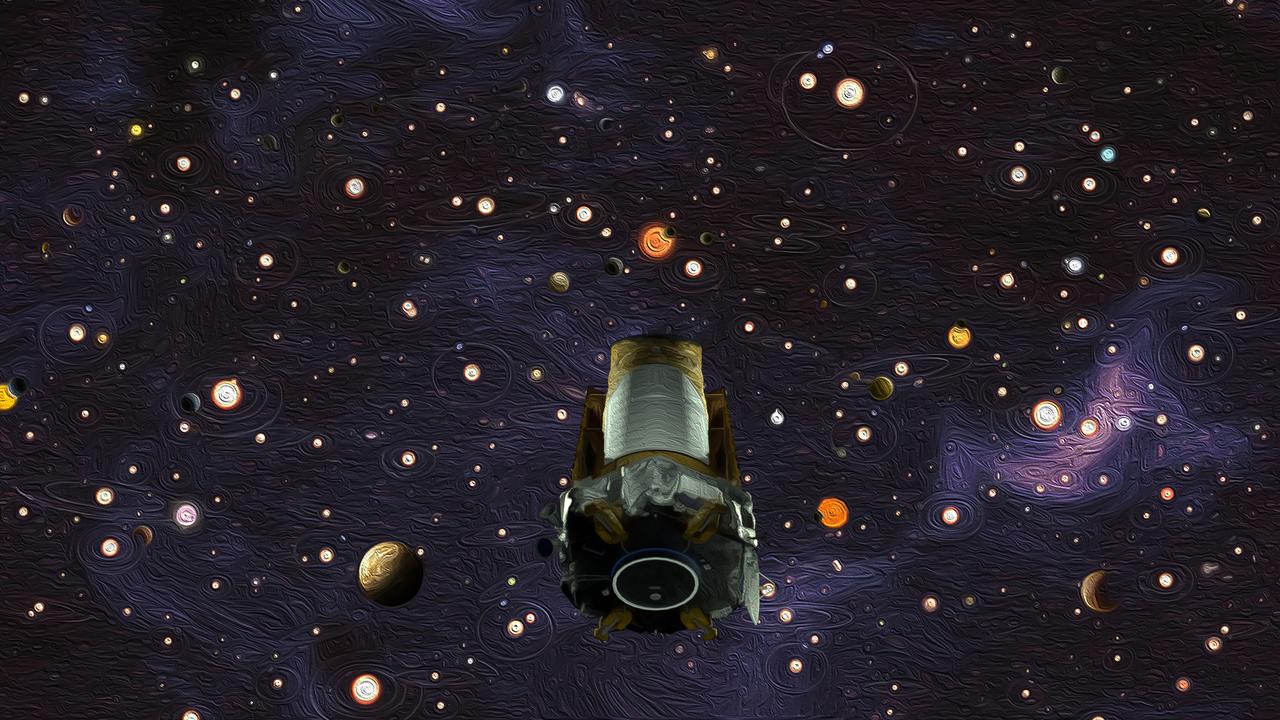
After nine years in deep space collecting data that revealed our night sky to be filled with billions of hidden planets, more planets even than stars, NASA’s Kepler space telescope has run out of fuel needed for further science operations. Illustration depicting the Kepler spacecraft in a sky filled with exoplanets and planetary systems.
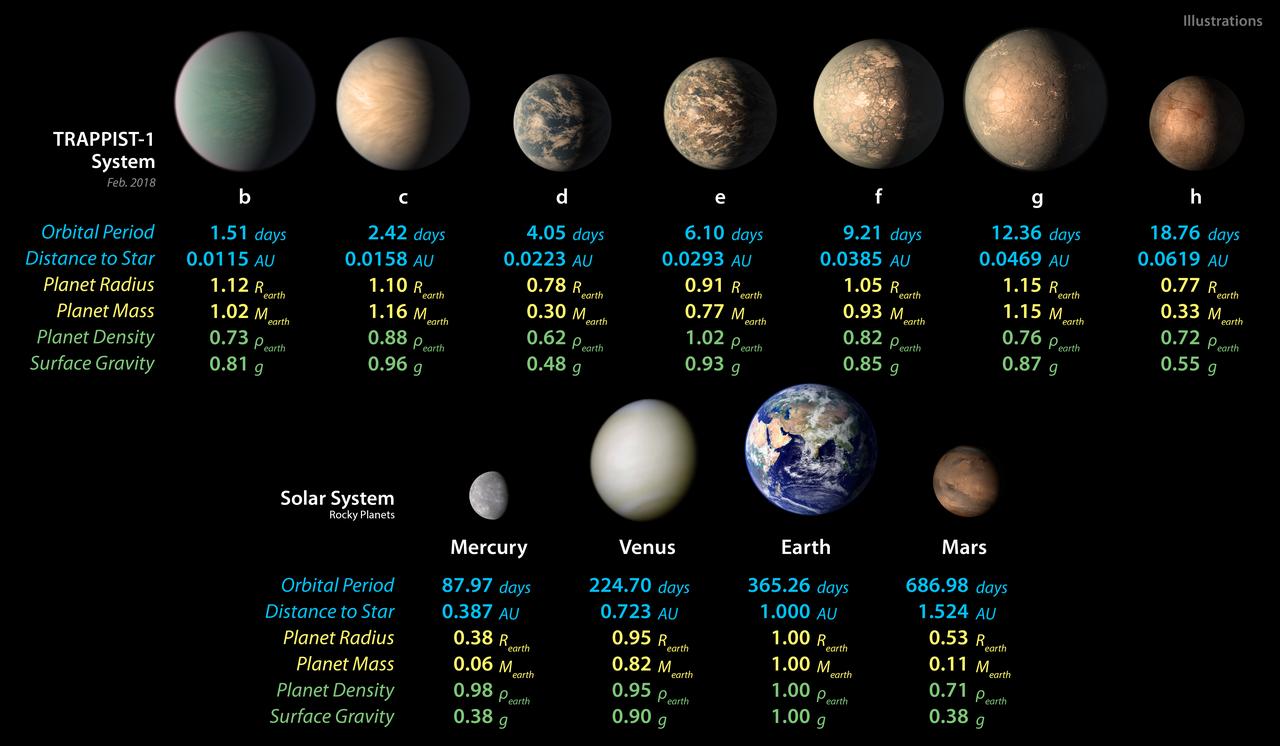
This chart shows, on the top row, artist concepts of the seven planets of TRAPPIST-1 with their orbital periods, distances from their star, radii, masses, densities and surface gravity as compared to those of Earth. These numbers are current as of February 2018. On the bottom row, the same numbers are displayed for the bodies of our inner solar system: Mercury, Venus, Earth and Mars. The TRAPPIST-1 planets orbit their star extremely closely, with periods ranging from 1.5 to only about 20 days. This is much shorter than the period of Mercury, which orbits our sun in about 88 days. The masses and densities of the TRAPPIST-1 planets were determined by careful measurements of slight variations in the timings of their orbits using extensive observations made by NASA's Spitzer and Kepler space telescopes, in combination with data from Hubble and a number of ground-based telescopes. These measurements are the most precise to date for any system of exoplanets. In this illustration, the relative sizes of the planets are all shown to scale. https://photojournal.jpl.nasa.gov/catalog/PIA22094

NASA and industry leaders speak to NASA Social participants about the agency's Transiting Exoplanet Survey Satellite (TESS) in the Press Site auditorium at Kennedy Space Center in Florida. Speaking to the group from center, are Martin Still, TESS Program Scientist, NASA Headquarters, and Jessie Christiansen, Staff scientist, NASA Exoplanet Science Institute, California Institute of Technology. At far left is Jason Townsend, NASA Communications. TESS is the next step in the search for planets outside of our solar system. The mission will find exoplanets that periodically block part of the light from their host stars, events called transits. The satellite will survey the nearest and brightest stars for two years to search for transiting exoplanets. TESS will launch on a SpaceX Falcon 9 rocket from Space Launch Complex 40 at Cape Canaveral Air Force Station no earlier than 6:32 p.m. EDT on Monday, April 16.
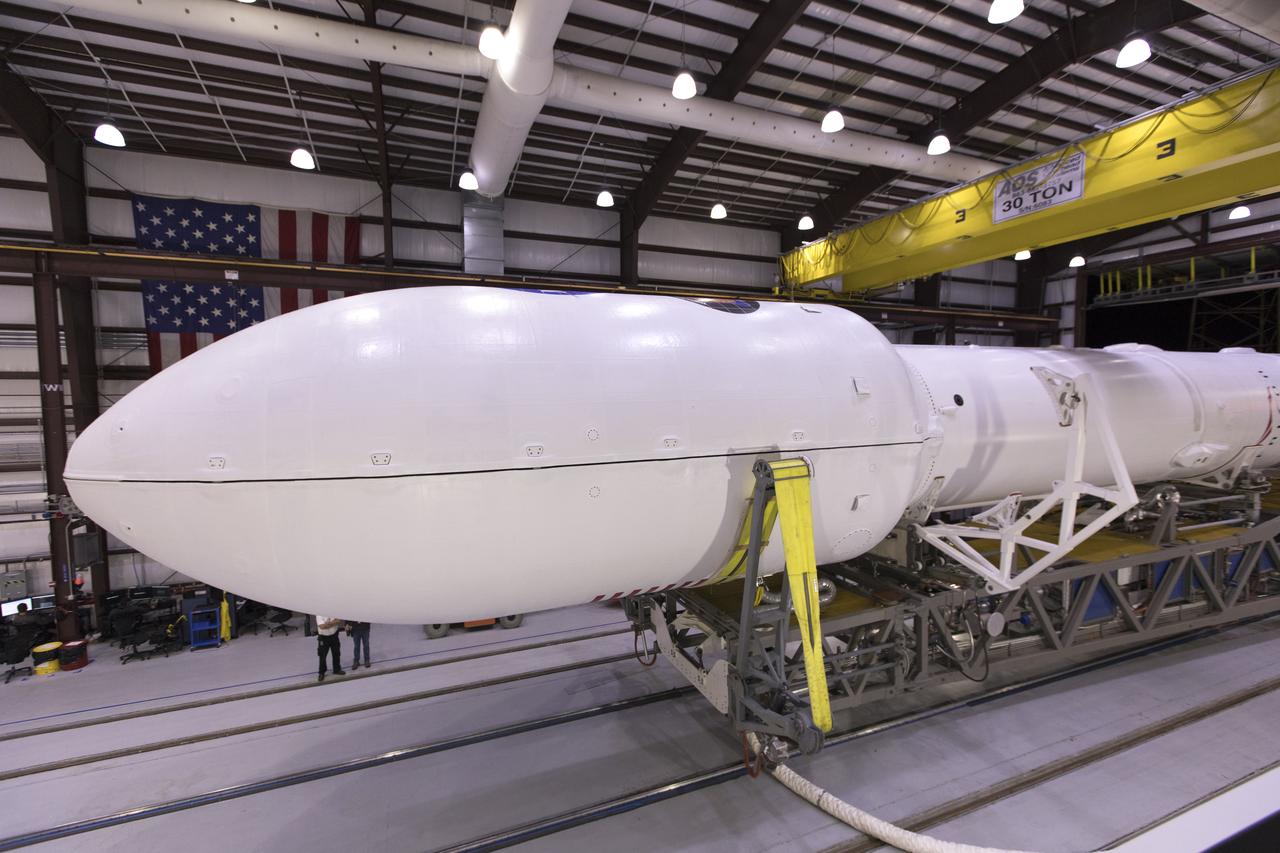
The SpaceX Falcon 9 rocket is ready to roll out to Space Launch Complex 40 at Cape Canaveral Air Force Station in Florida, with NASA's Transiting Exoplanet Survey Satellite (TESS) secured in its payload fairing. TESS will launch on the Falcon 9 no earlier than 6:51 p.m. EDT on April 18. TESS will search for planets outside of our solar system. The mission will find exoplanets that periodically block part of the light from their host stars, events called transits. The satellite will survey the nearest and brightest stars for two years to search for transiting exoplanets.

In Kennedy Space Center's Press Site auditorium, members of the media participate in a mission briefing on NASA's Transiting Exoplanet Survey Satellite (TESS). Josh Finch, NASA Communications, moderates the briefing. TESS is the next step in the search for planets outside of our solar system. The mission will find exoplanets that periodically block part of the light from their host stars, events called transits. The satellite will survey the nearest and brightest stars for two years to search for transiting exoplanets. TESS will launch on a SpaceX Falcon 9 rocket from Space Launch Complex 40 at Cape Canaveral Air Force Station no earlier than 6:32 p.m. EDT on Monday, April 16.
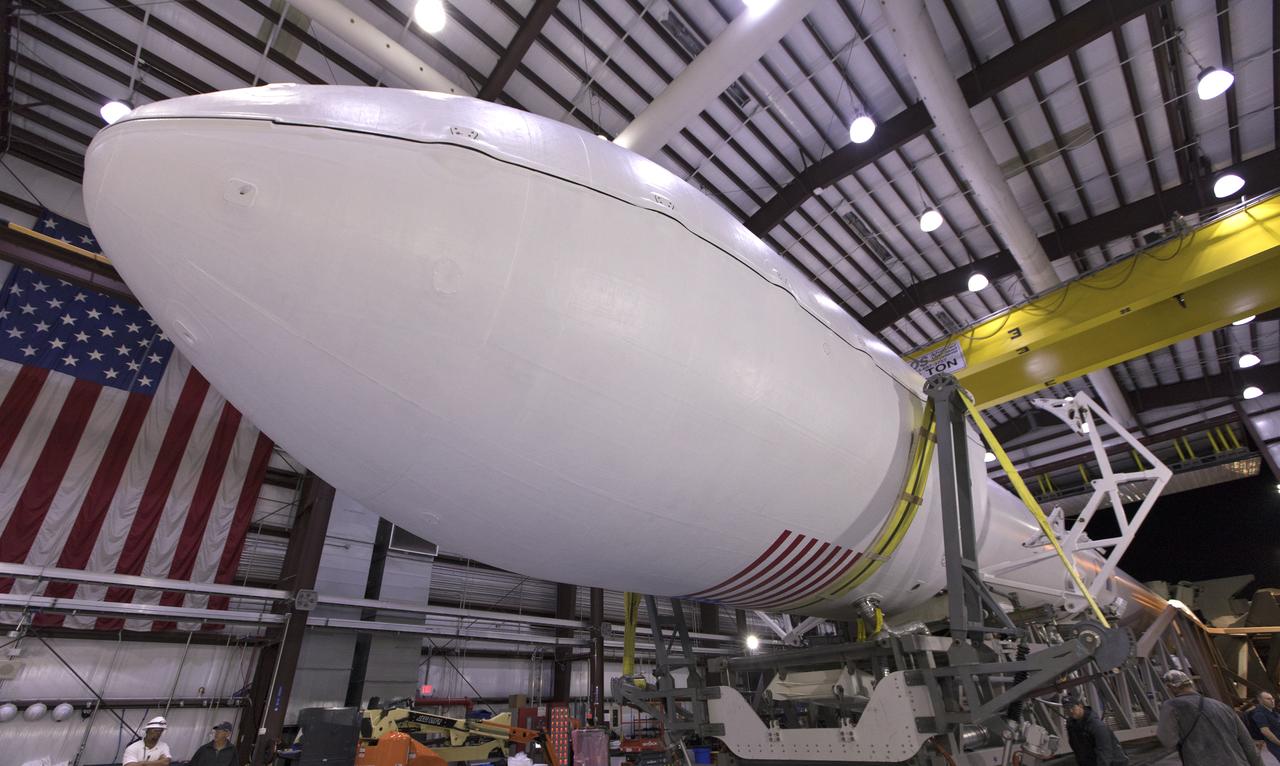
The SpaceX Falcon 9 rocket is ready to roll out to Space Launch Complex 40 at Cape Canaveral Air Force Station in Florida, with NASA's Transiting Exoplanet Survey Satellite (TESS) secured in its payload fairing. TESS will launch on the Falcon 9 no earlier than 6:51 p.m. EDT on April 18. TESS will search for planets outside of our solar system. The mission will find exoplanets that periodically block part of the light from their host stars, events called transits. The satellite will survey the nearest and brightest stars for two years to search for transiting exoplanets.

A hypothetical planet is depicted in this artist concept moving through the habitable zone and then further out into a long, cold winter.

An illustration of Kepler-1649c orbiting around its host red dwarf star. This newly discovered exoplanet is in its star’s habitable zone and is the closest to Earth in size and temperature found yet in Kepler's data. Credits: NASA/Ames Research Center/Daniel Rutter
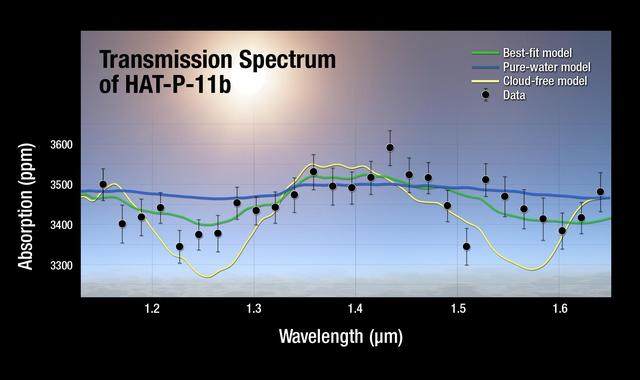
A plot of the transmission spectrum for exoplanet HAT-P-11b, with data from NASA Kepler, Hubble and Spitzer observatories combined. The results show a robust detection of water absorption in the Hubble data.
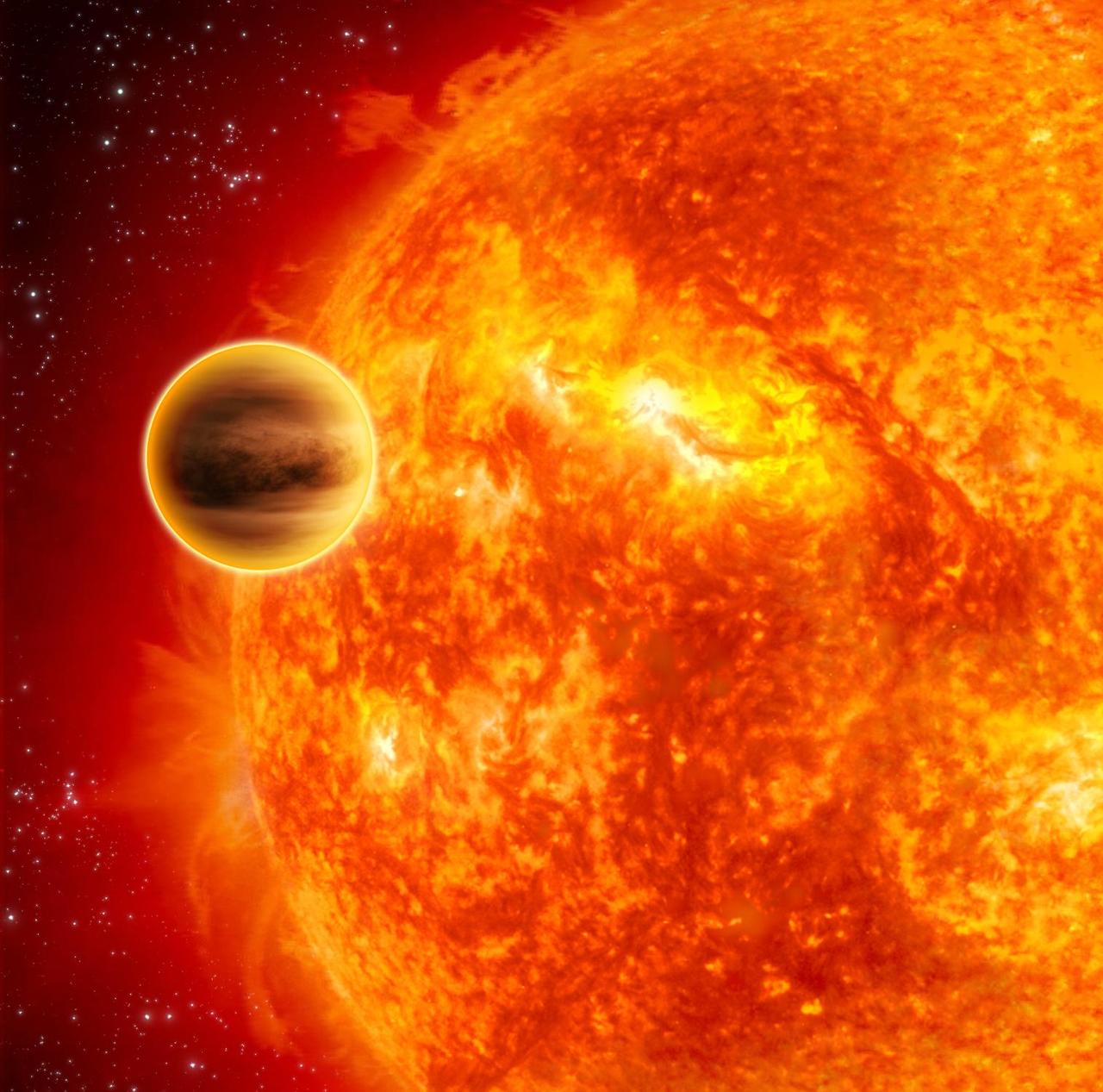
This artist impression shows a gas-giant exoplanet transiting across the face of its star. Infrared analysis by NASA Spitzer Space Telescope of this type of system provided the breakthrough.
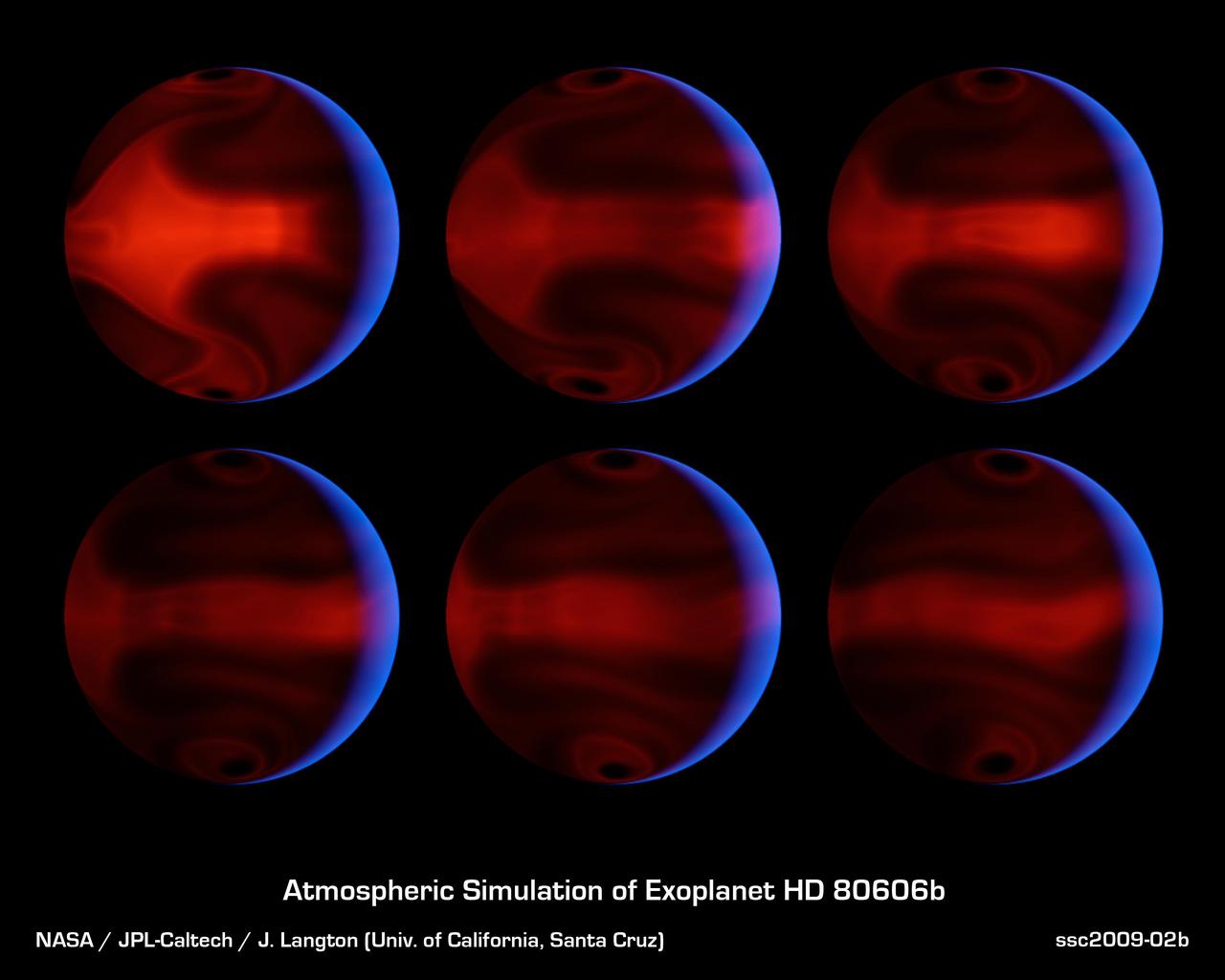
These computer-generated images from NASA Spitzer Space Telescope chart the development of severe weather patterns on the highly eccentric exoplanet HD 80606b during the days after its closest approach to its parent star.
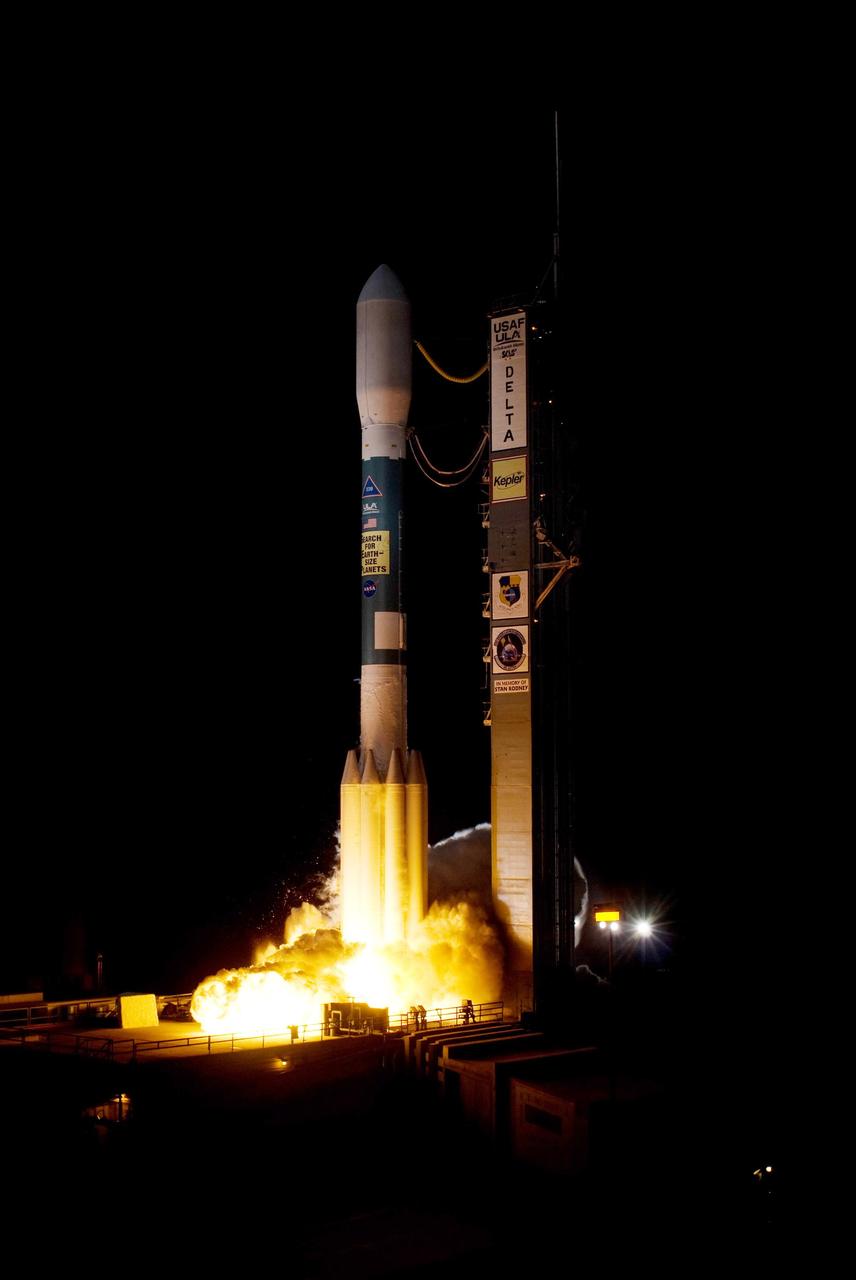
On March 6, 2009, NASA Kepler Space Telescope rocketed into the night skies above Cape Canaveral Air Force Station in Florida to find planets around other stars, called exoplanets, in search of potentially habitable worlds.
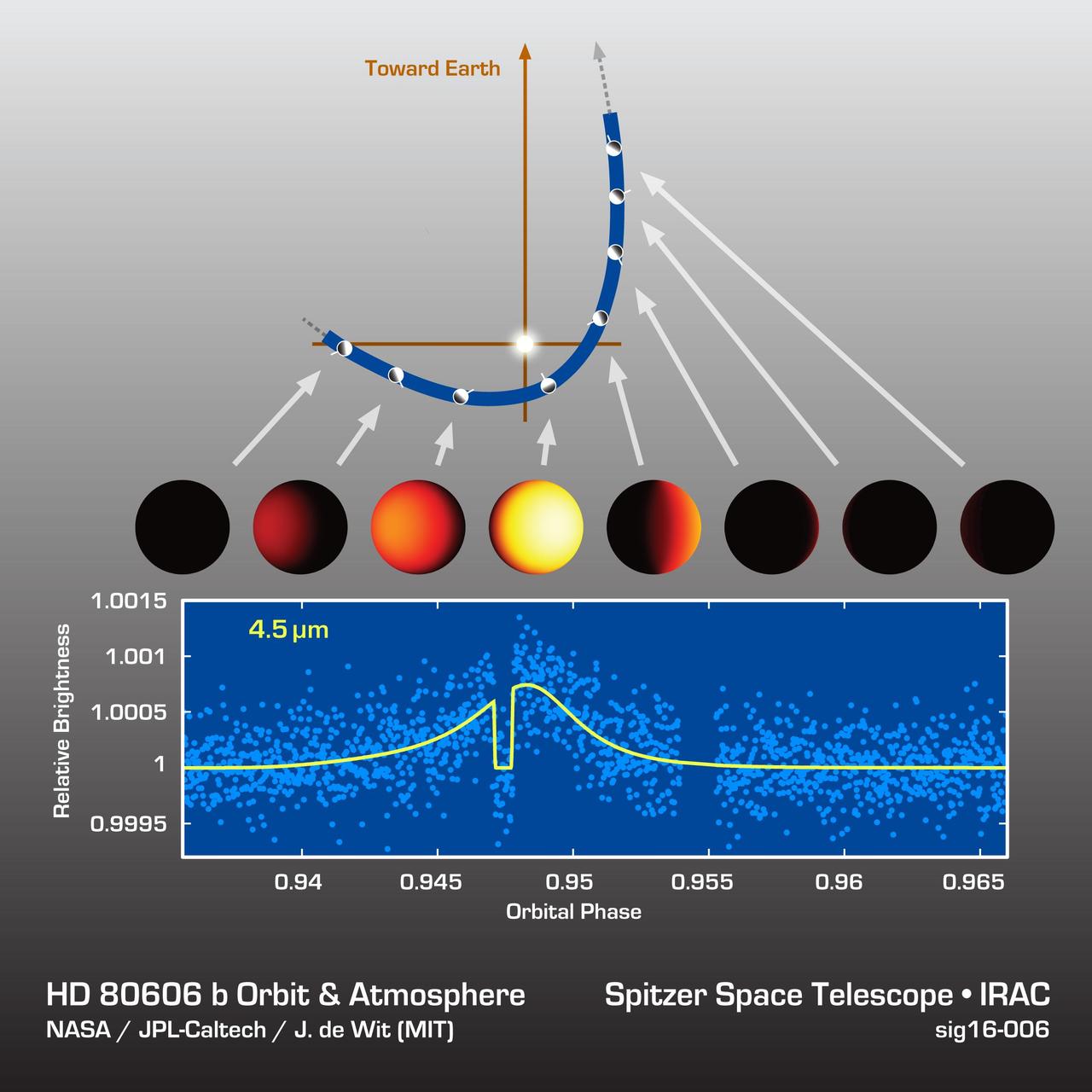
Astronomers watched an exoplanet called HD 80606b heat up and cool off during its sizzling-hot orbit around its star. The results are shown in this data plot from NASA Spitzer Space Telescope.
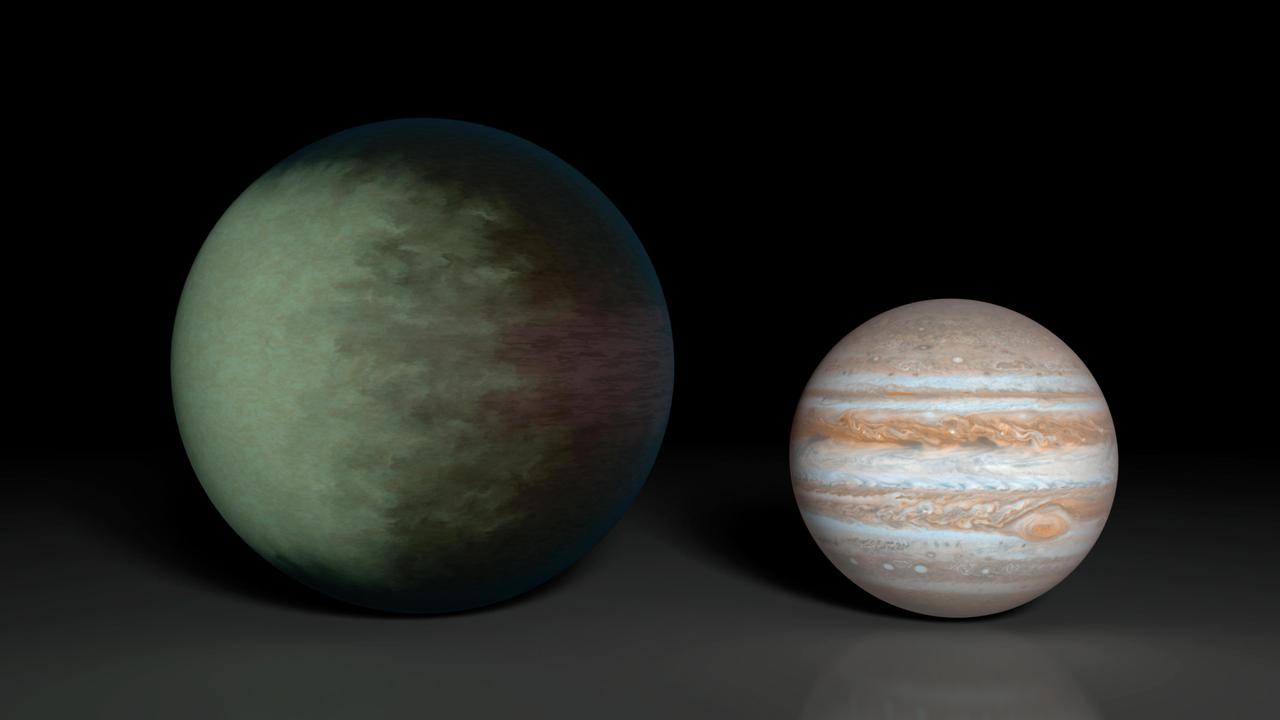
Kepler-7b right, which is 1.5 times the radius of Jupiter left, is the first exoplanet to have its clouds mapped. The cloud map was produced using data from NASA Kepler and Spitzer space telescopes.

This figure charts 30 hours of observations taken by NASA Spitzer Space Telescope of a strongly irradiated exoplanet an planet orbiting a star beyond our own. Spitzer measured changes in the planet heat, or infrared light.
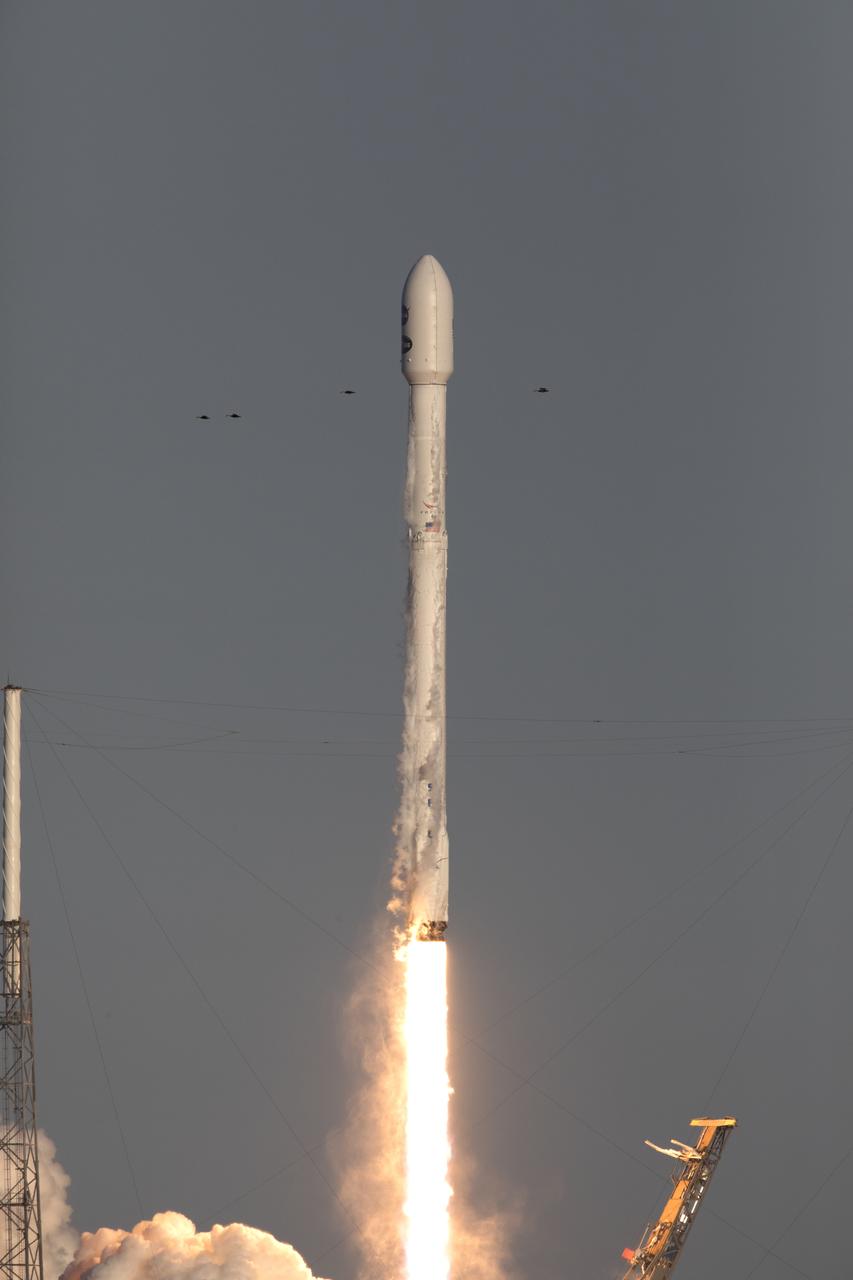
A SpaceX Falcon 9 rocket lifts off from Space Launch Complex 40 at Cape Canaveral Air Force Station in Florida, carrying NASA's Transiting Exoplanet Survey Satellite (TESS). Liftoff was at 6:51 p.m. EDT. TESS will search for planets outside of our solar system. The mission will find exoplanets that periodically block part of the light from their host stars, events called transits. The satellite will survey the nearest and brightest stars for two years to search for transiting exoplanets.
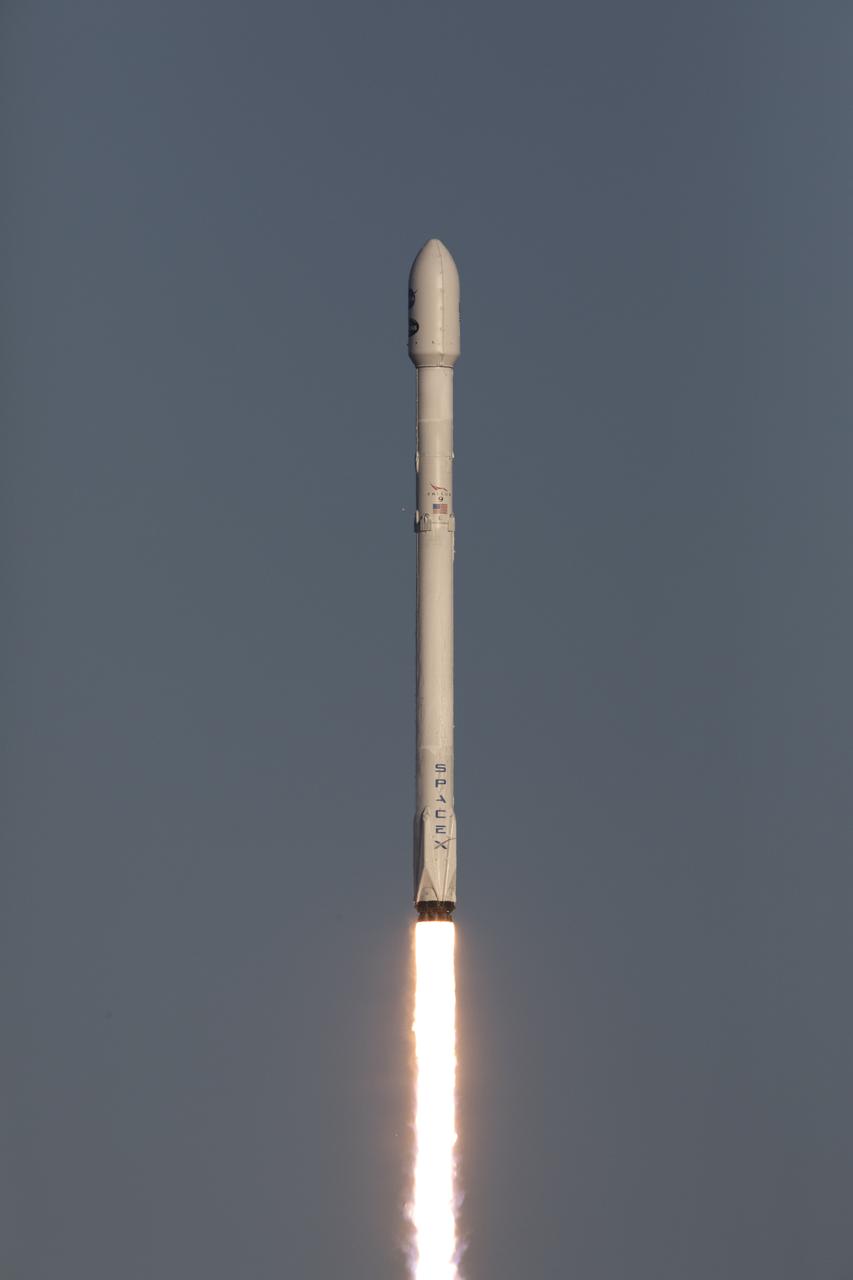
A SpaceX Falcon 9 rocket lifts off from Space Launch Complex 40 at Cape Canaveral Air Force Station in Florida, carrying NASA's Transiting Exoplanet Survey Satellite (TESS). Liftoff was at 6:51 p.m. EDT. TESS will search for planets outside of our solar system. The mission will find exoplanets that periodically block part of the light from their host stars, events called transits. The satellite will survey the nearest and brightest stars for two years to search for transiting exoplanets.
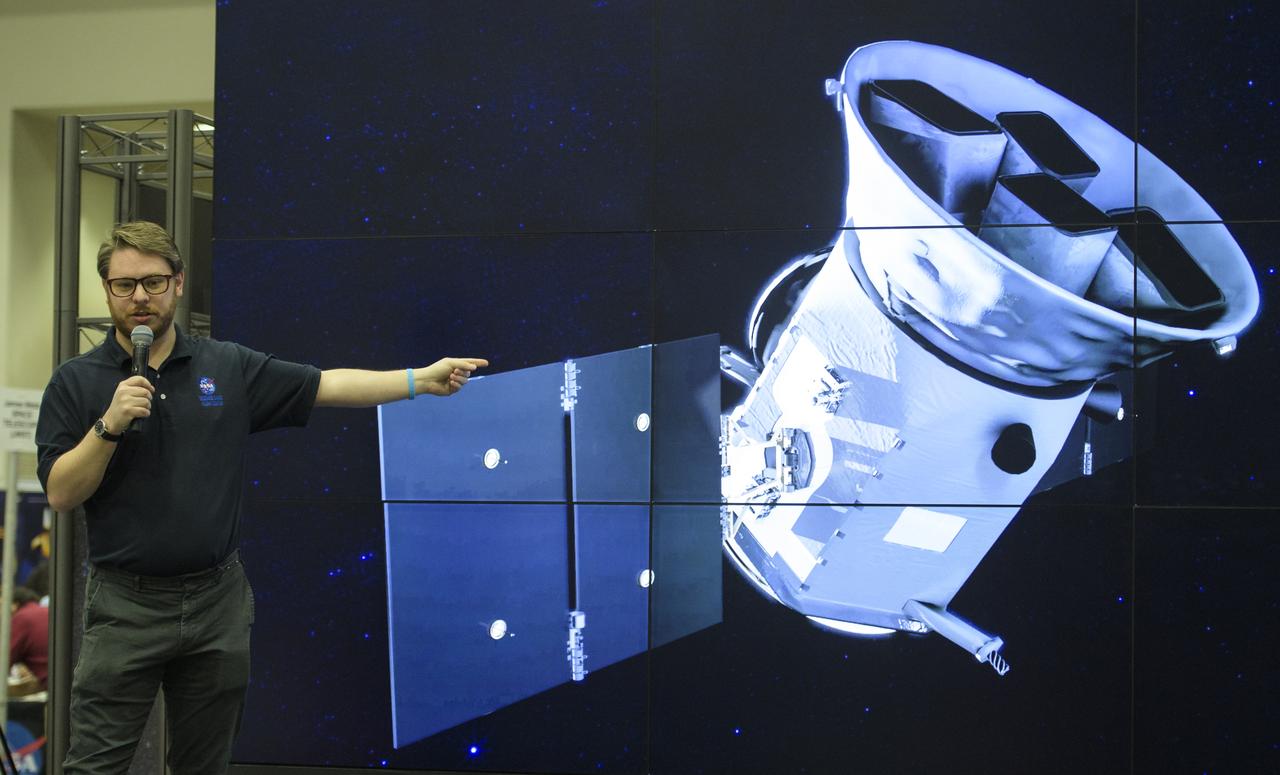
Tom Barclay, Director of the Kepler/K2 Guest Observer Office at NASA's Ames Research Center, speaks about exoplanets and NASA's next exoplanet mission, the Transiting Exoplanet Survey Satellite, during Sneak Peek Friday at the USA Science and Engineering Festival, Friday, April 6, 2018 at the Walter E. Washington Convention Center in Washington, DC. The festival is open to the public April 7-8. Photo Credit: (NASA/Joel Kowsky)
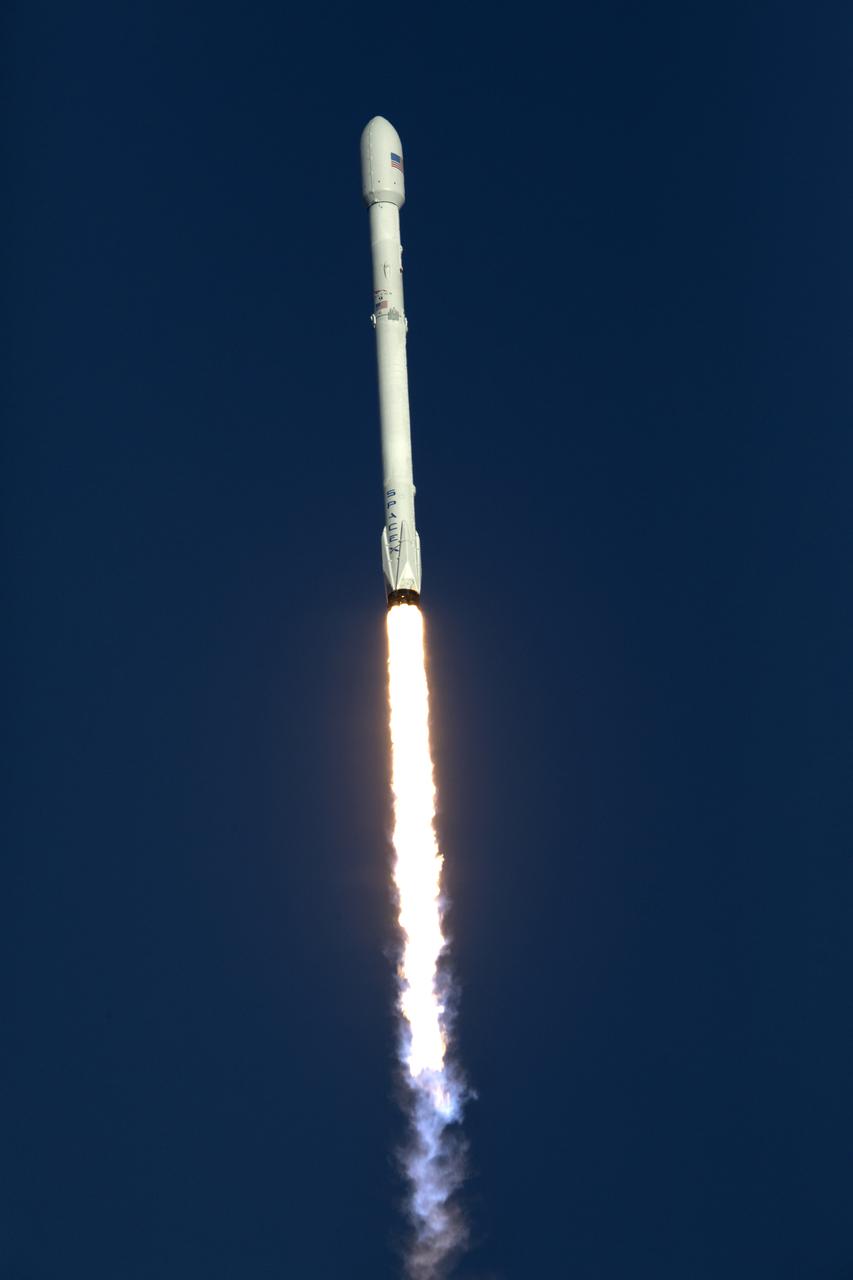
A SpaceX Falcon 9 rocket soars upward after lifting off from Space Launch Complex 40 at Cape Canaveral Air Force Station in Florida, carrying NASA's Transiting Exoplanet Survey Satellite (TESS). Liftoff was at 6:51 p.m. EDT. TESS will search for planets outside of our solar system. The mission will find exoplanets that periodically block part of the light from their host stars, events called transits. The satellite will survey the nearest and brightest stars for two years to search for transiting exoplanets.
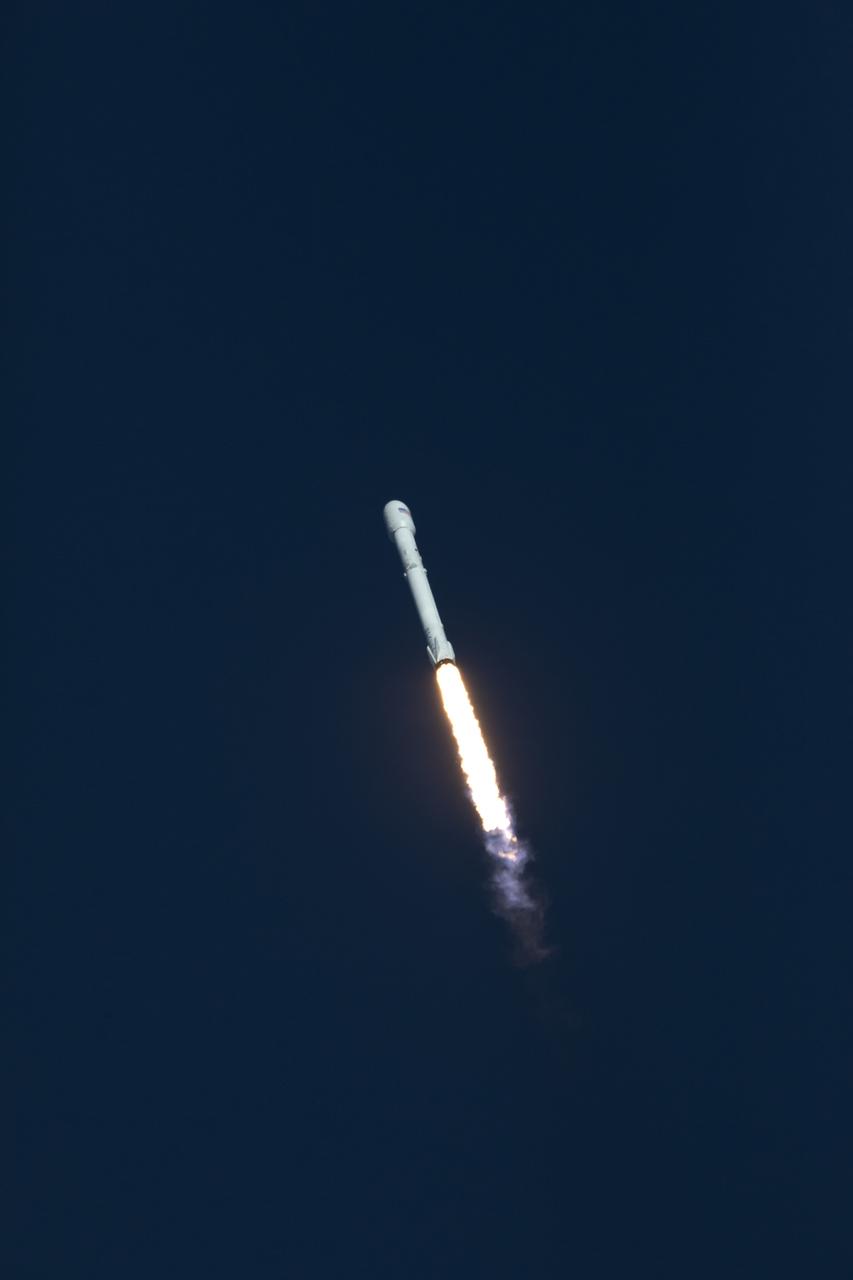
A SpaceX Falcon 9 rocket soars upward after lifting off from Space Launch Complex 40 at Cape Canaveral Air Force Station in Florida, carrying NASA's Transiting Exoplanet Survey Satellite (TESS). Liftoff was at 6:51 p.m. EDT. TESS will search for planets outside of our solar system. The mission will find exoplanets that periodically block part of the light from their host stars, events called transits. The satellite will survey the nearest and brightest stars for two years to search for transiting exoplanets.

A SpaceX Falcon 9 rocket lifts off from Space Launch Complex 40 at Cape Canaveral Air Force Station in Florida, carrying NASA's Transiting Exoplanet Survey Satellite (TESS). Liftoff was at 6:51 p.m. EDT. TESS will search for planets outside of our solar system. The mission will find exoplanets that periodically block part of the light from their host stars, events called transits. The satellite will survey the nearest and brightest stars for two years to search for transiting exoplanets.
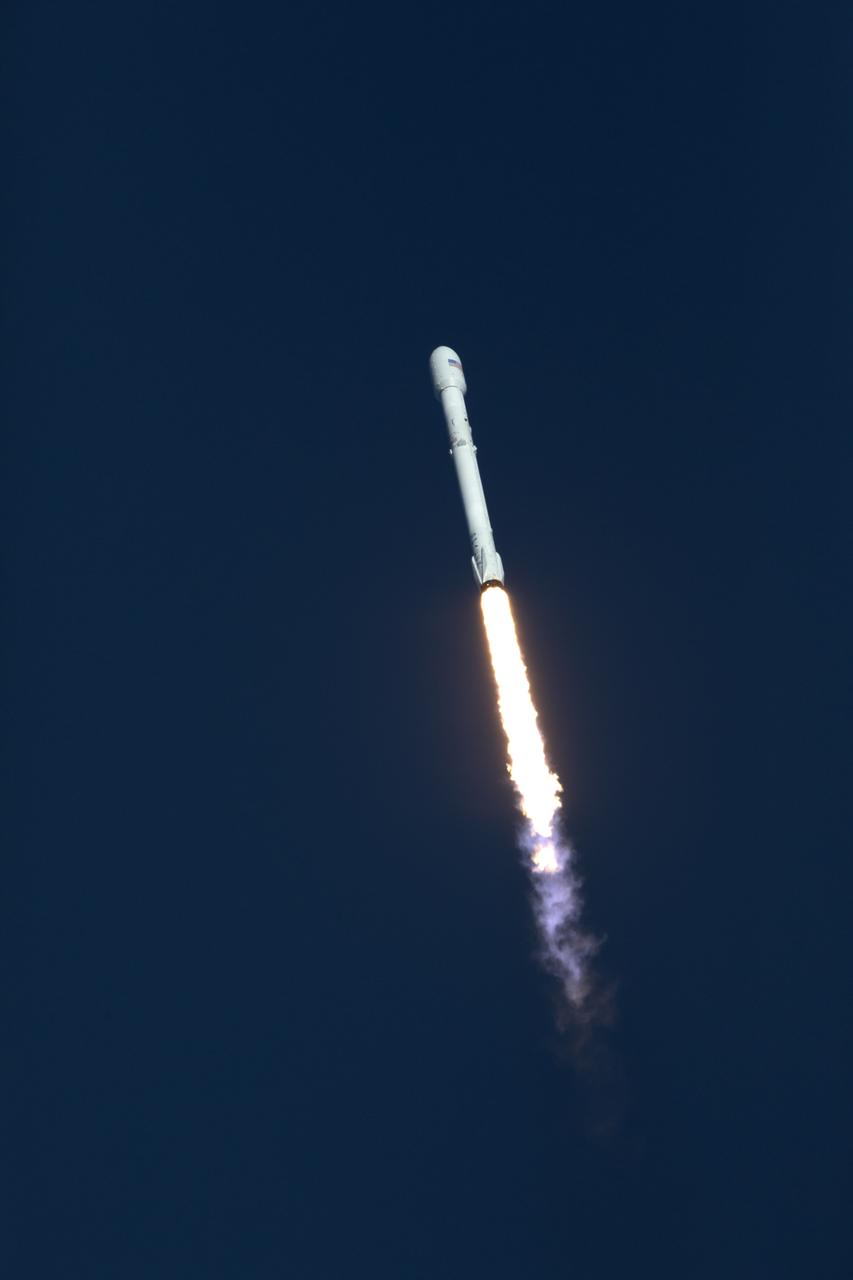
A SpaceX Falcon 9 rocket soars upward after lifting off from Space Launch Complex 40 at Cape Canaveral Air Force Station in Florida, carrying NASA's Transiting Exoplanet Survey Satellite (TESS). Liftoff was at 6:51 p.m. EDT. TESS will search for planets outside of our solar system. The mission will find exoplanets that periodically block part of the light from their host stars, events called transits. The satellite will survey the nearest and brightest stars for two years to search for transiting exoplanets.
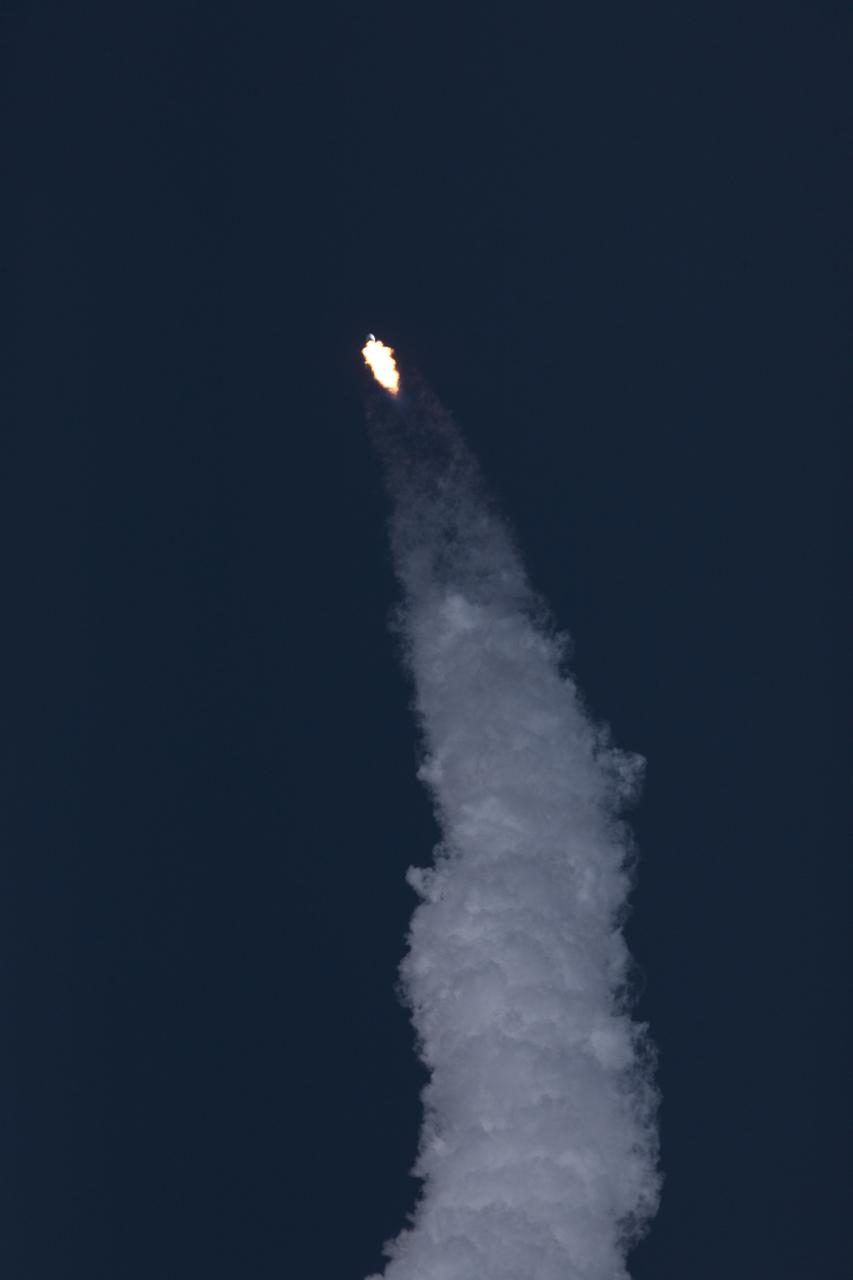
A SpaceX Falcon 9 rocket soars upward after lifting off from Space Launch Complex 40 at Cape Canaveral Air Force Station in Florida, carrying NASA's Transiting Exoplanet Survey Satellite (TESS). Liftoff was at 6:51 p.m. EDT. TESS will search for planets outside of our solar system. The mission will find exoplanets that periodically block part of the light from their host stars, events called transits. The satellite will survey the nearest and brightest stars for two years to search for transiting exoplanets.
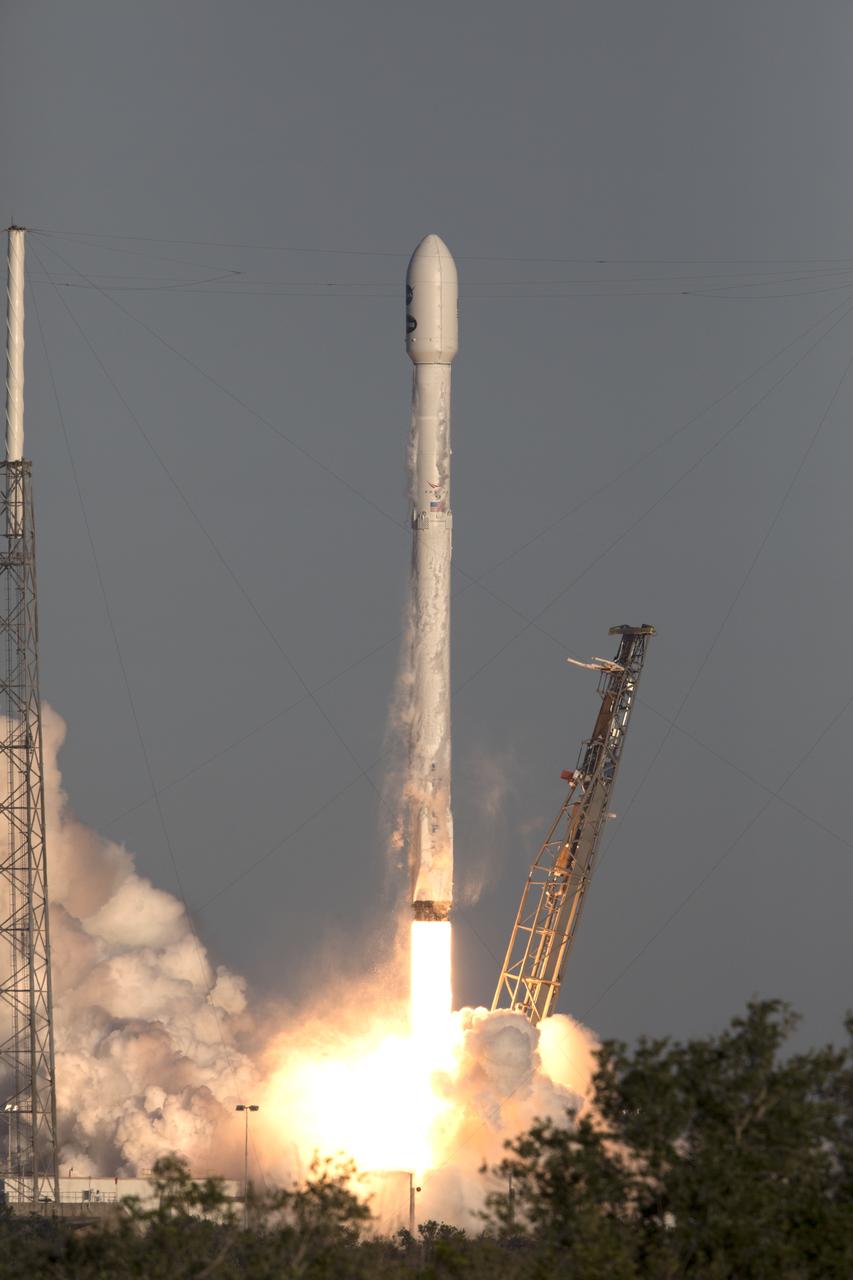
A SpaceX Falcon 9 rocket lifts off from Space Launch Complex 40 at Cape Canaveral Air Force Station in Florida, carrying NASA's Transiting Exoplanet Survey Satellite (TESS). Liftoff was at 6:51 p.m. EDT. TESS will search for planets outside of our solar system. The mission will find exoplanets that periodically block part of the light from their host stars, events called transits. The satellite will survey the nearest and brightest stars for two years to search for transiting exoplanets.
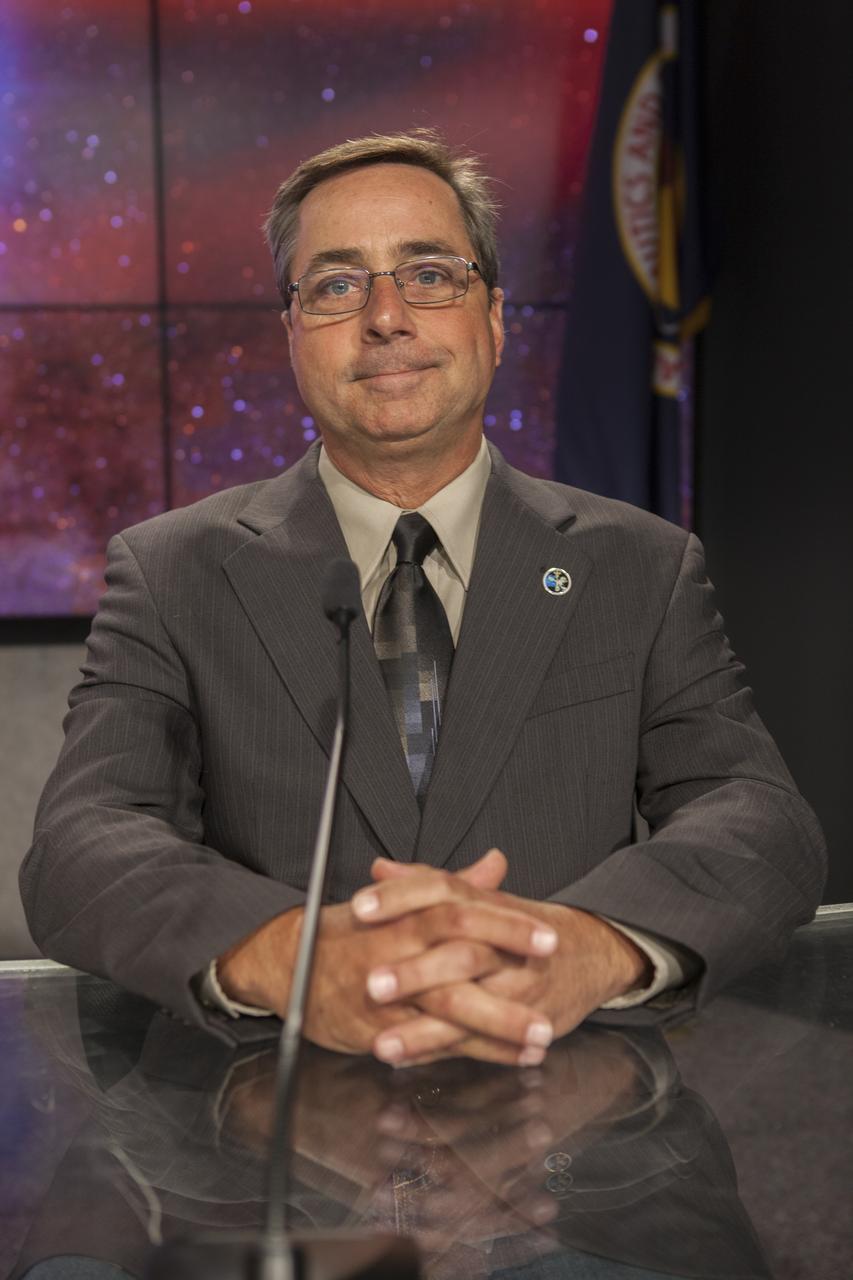
In Kennedy Space Center's Press Site auditorium, members of the media participate in a mission briefing on NASA's Transiting Exoplanet Survey Satellite (TESS). Mike McAleenan, weather officer, 45th Weather Squadron, gives a weather update and answers questions during the briefing. TESS is the next step in the search for planets outside of our solar system. The mission will find exoplanets that periodically block part of the light from their host stars, events called transits. The satellite will survey the nearest and brightest stars for two years to search for transiting exoplanets. TESS will launch on a SpaceX Falcon 9 rocket from Space Launch Complex 40 at Cape Canaveral Air Force Station no earlier than 6:32 p.m. EDT on Monday, April 16.

NASA and science investigators from MIT participate in a science briefing for the agency's Transiting Exoplanet Survey Satellite (TESS) in the Press Site auditorium at Kennedy Space Center in Florida. Claire Saravia, NASA Communications, moderated the briefing. TESS is the next step in the search for planets outside of our solar system. The mission will find exoplanets that periodically block part of the light from their host stars, events called transits. The satellite will survey the nearest and brightest stars for two years to search for transiting exoplanets. TESS will launch on a SpaceX Falcon 9 rocket from Space Launch Complex 40 at Cape Canaveral Air Force Station no earlier than 6:32 p.m. EDT on Monday, April 16.
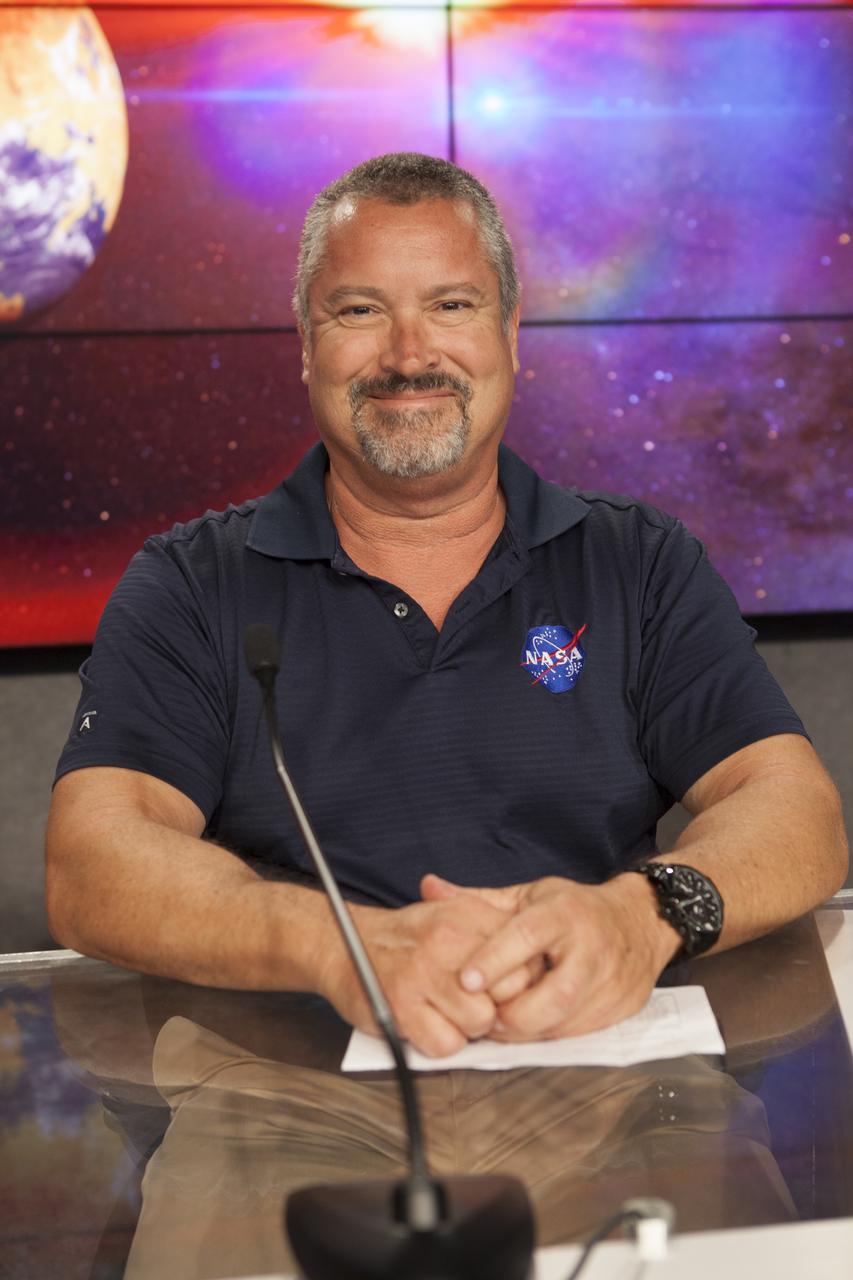
In Kennedy Space Center's Press Site auditorium, members of the media participate in a mission briefing on NASA's Transiting Exoplanet Survey Satellite (TESS). Omar Baez, launch director, NASA’s Launch Services Program, answers questions during the briefing. TESS is the next step in the search for planets outside of our solar system. The mission will find exoplanets that periodically block part of the light from their host stars, events called transits. The satellite will survey the nearest and brightest stars for two years to search for transiting exoplanets. TESS will launch on a SpaceX Falcon 9 rocket from Space Launch Complex 40 at Cape Canaveral Air Force Station no earlier than 6:32 p.m. EDT on Monday, April 16.

In Kennedy Space Center's Press Site auditorium, members of the media participate in a mission briefing on NASA's Transiting Exoplanet Survey Satellite (TESS). Sandra Connelly, deputy associate administrator of programs, NASA’s Science Mission Directorate, answers questions during the briefing. TESS is the next step in the search for planets outside of our solar system. The mission will find exoplanets that periodically block part of the light from their host stars, events called transits. The satellite will survey the nearest and brightest stars for two years to search for transiting exoplanets. TESS will launch on a SpaceX Falcon 9 rocket from Space Launch Complex 40 at Cape Canaveral Air Force Station no earlier than 6:32 p.m. EDT on Monday, April 16.
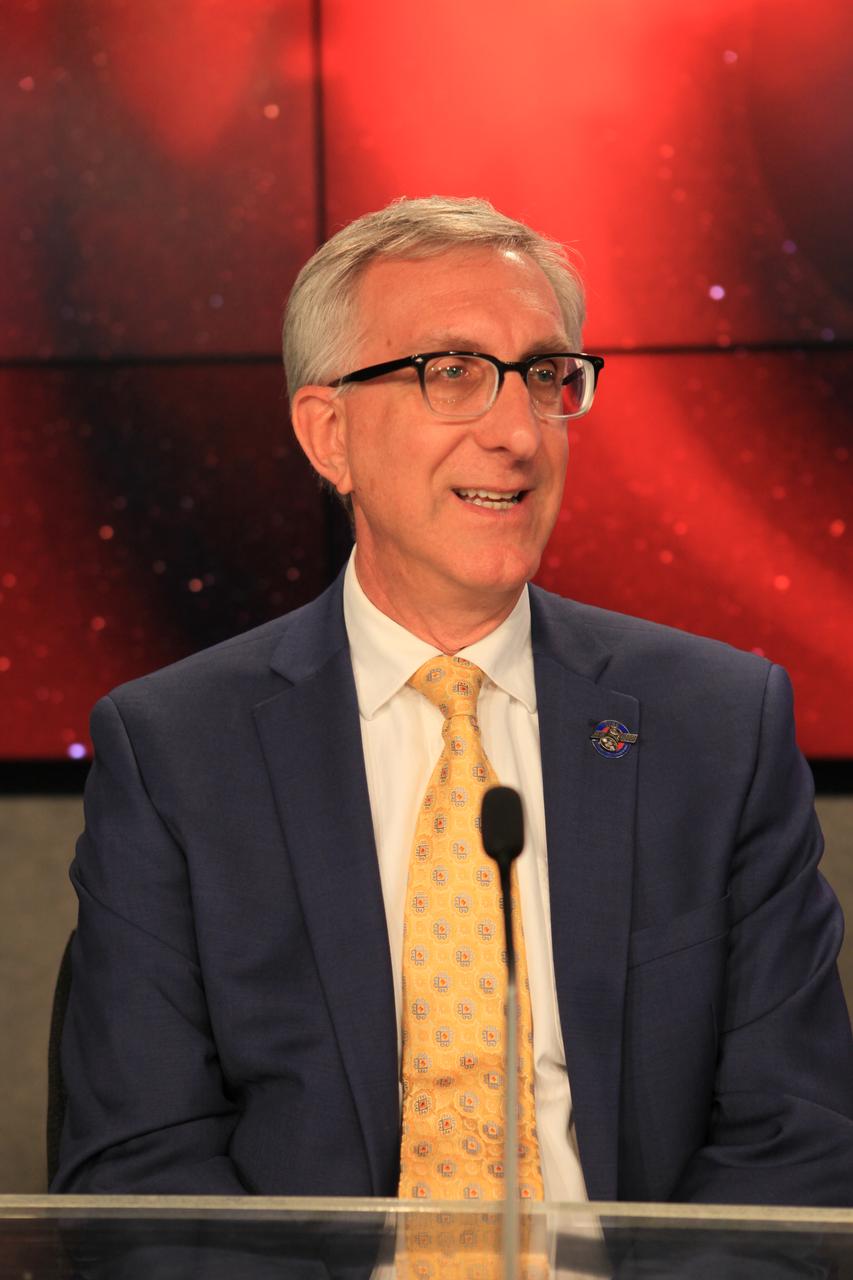
In Kennedy Space Center's Press Site auditorium, members of the media participate in a mission briefing on NASA's Transiting Exoplanet Survey Satellite (TESS). Jeff Volosin, TESS project manager, NASA’s Goddard Space Flight Center, answers questions during the briefing. TESS is the next step in the search for planets outside of our solar system. The mission will find exoplanets that periodically block part of the light from their host stars, events called transits. The satellite will survey the nearest and brightest stars for two years to search for transiting exoplanets. TESS will launch on a SpaceX Falcon 9 rocket from Space Launch Complex 40 at Cape Canaveral Air Force Station no earlier than 6:32 p.m. EDT on Monday, April 16.
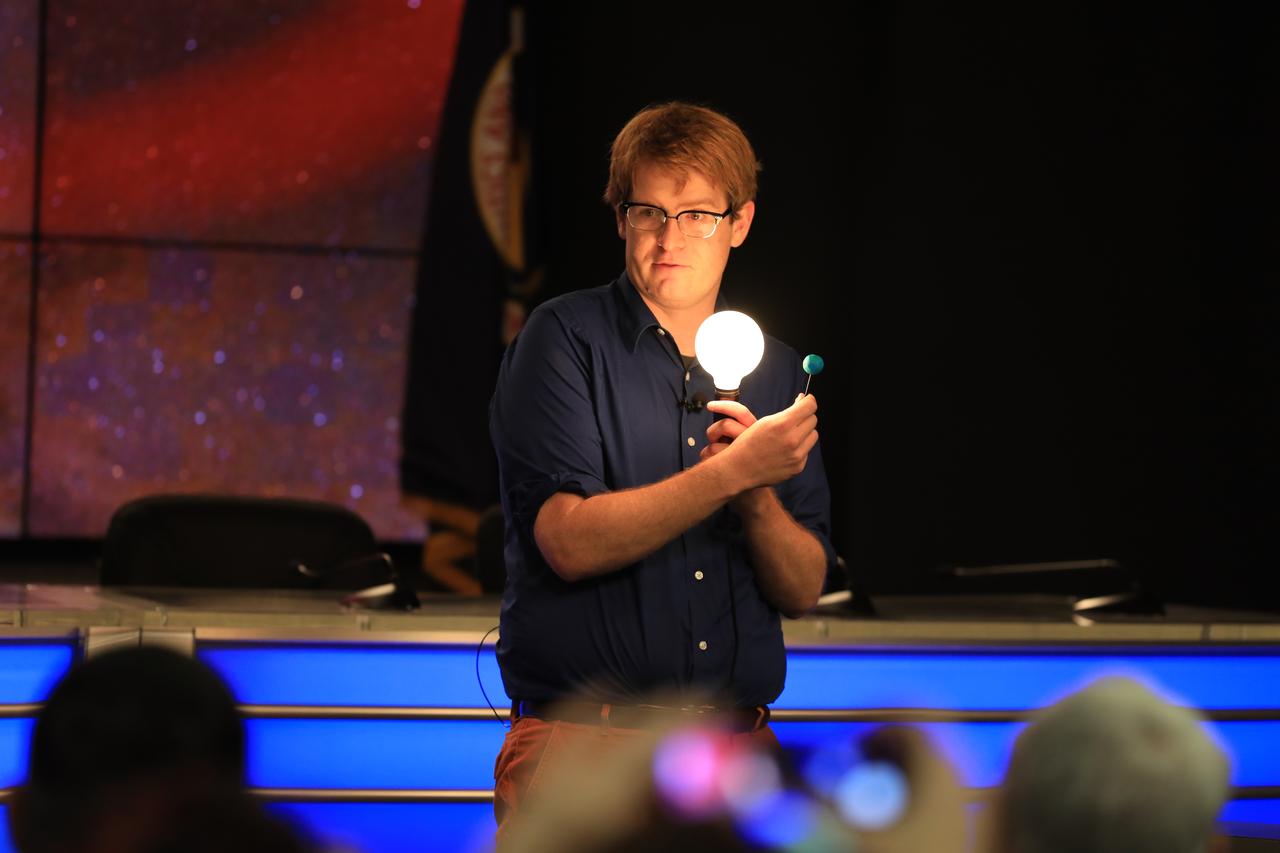
NASA and industry leaders speak to NASA Social participants about the agency's Transiting Exoplanet Survey Satellite (TESS) in the Press Site auditorium at Kennedy Space Center in Florida. Speaking to the group is Zach Berta-Thompson, assistant professor, University of Colorado Boulder. TESS is the next step in the search for planets outside of our solar system. The mission will find exoplanets that periodically block part of the light from their host stars, events called transits. The satellite will survey the nearest and brightest stars for two years to search for transiting exoplanets. TESS will launch on a SpaceX Falcon 9 rocket from Space Launch Complex 40 at Cape Canaveral Air Force Station no earlier than 6:32 p.m. EDT on Monday, April 16.
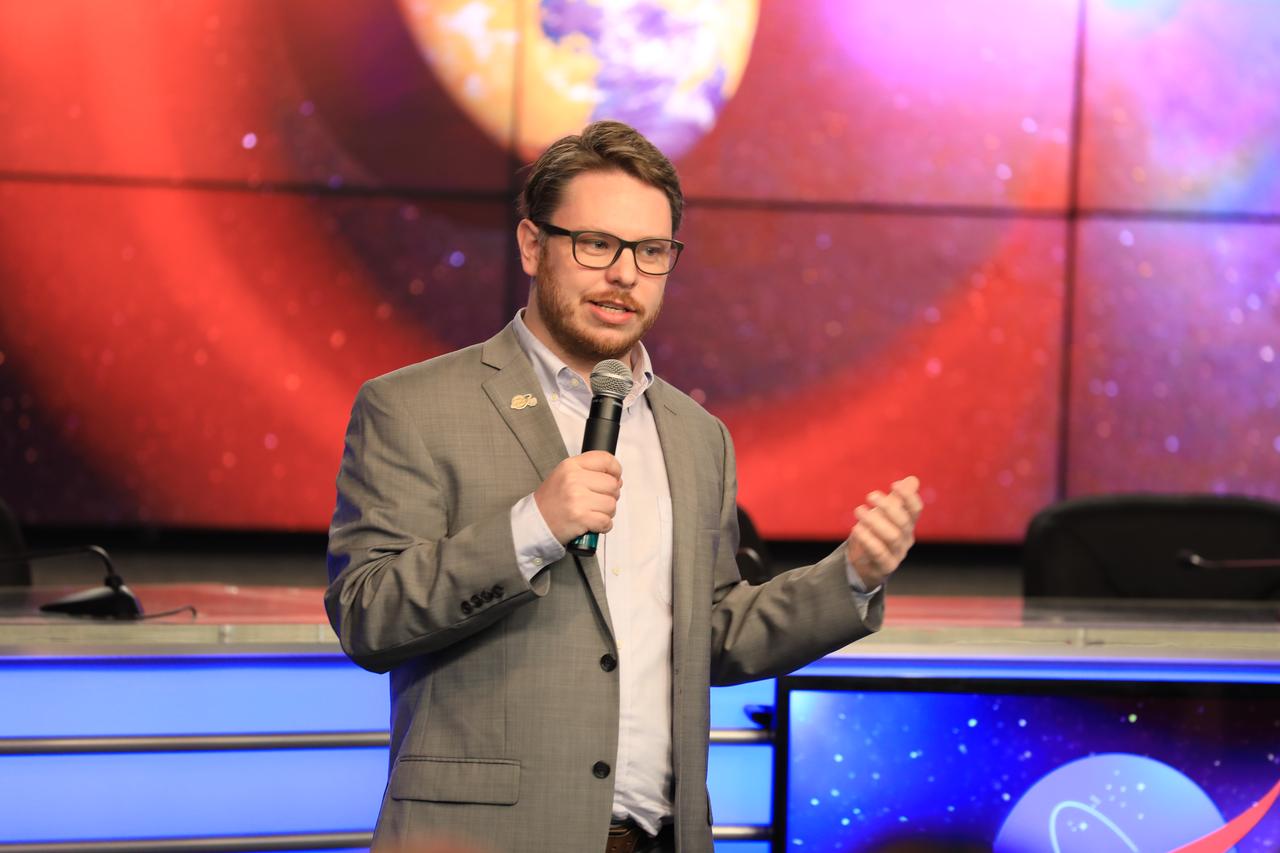
NASA and industry leaders speak to NASA Social participants about the agency's Transiting Exoplanet Survey Satellite (TESS) in the Press Site auditorium at Kennedy Space Center in Florida. Speaking to the group is Tom Barclay, TESS scientist, NASA’s Goddard Space Flight Center. TESS is the next step in the search for planets outside of our solar system. The mission will find exoplanets that periodically block part of the light from their host stars, events called transits. The satellite will survey the nearest and brightest stars for two years to search for transiting exoplanets. TESS will launch on a SpaceX Falcon 9 rocket from Space Launch Complex 40 at Cape Canaveral Air Force Station no earlier than 6:32 p.m. EDT on Monday, April 16.