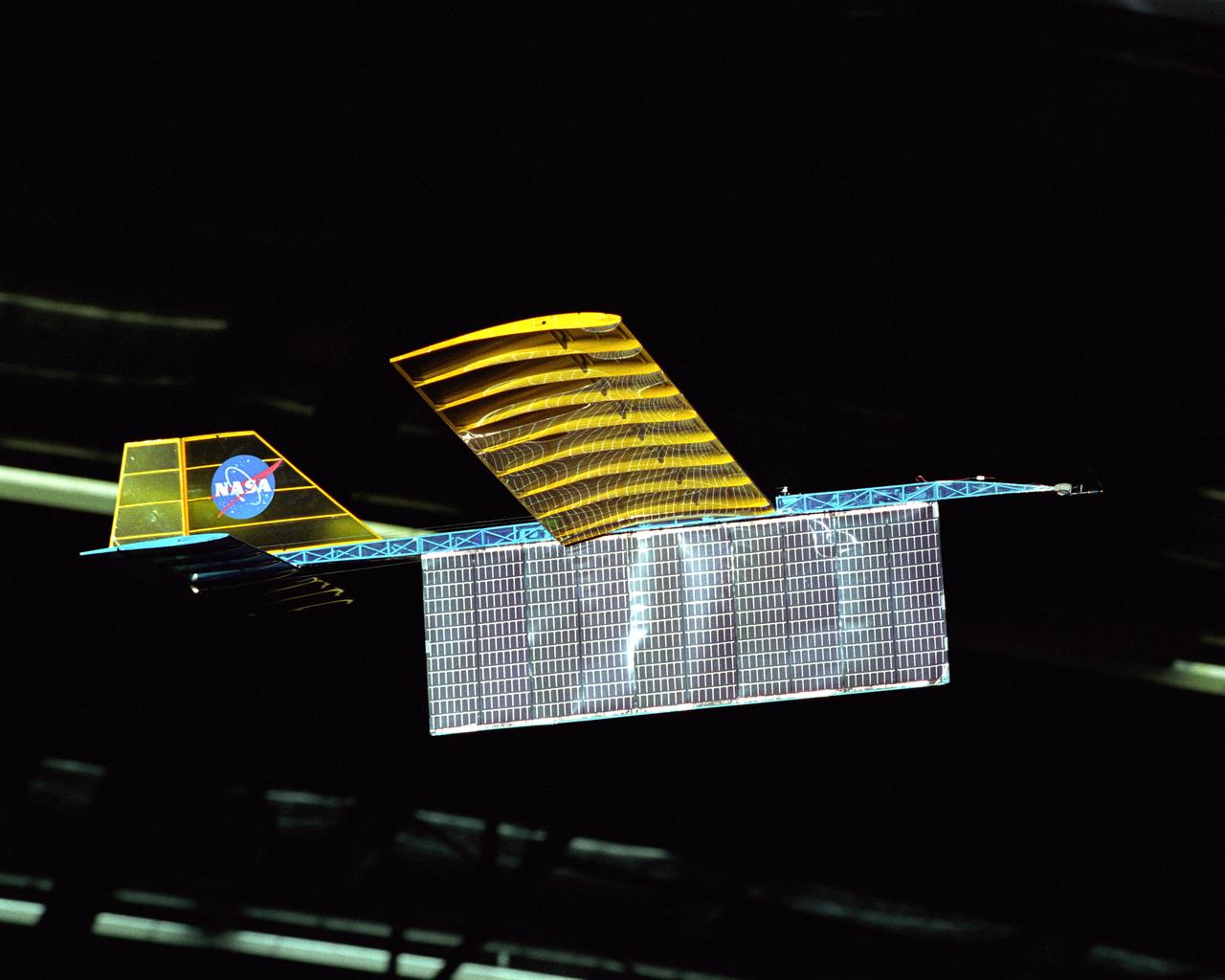
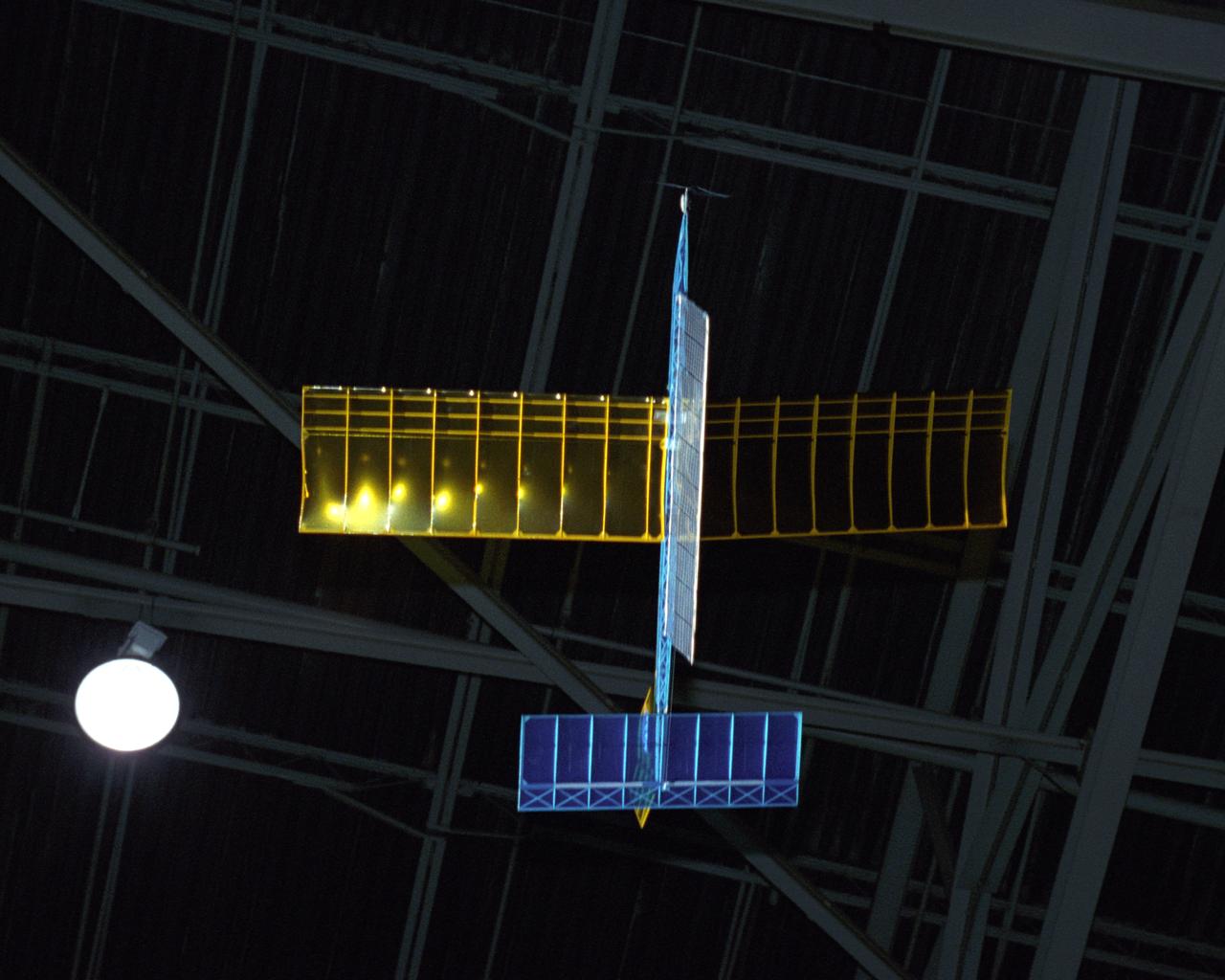
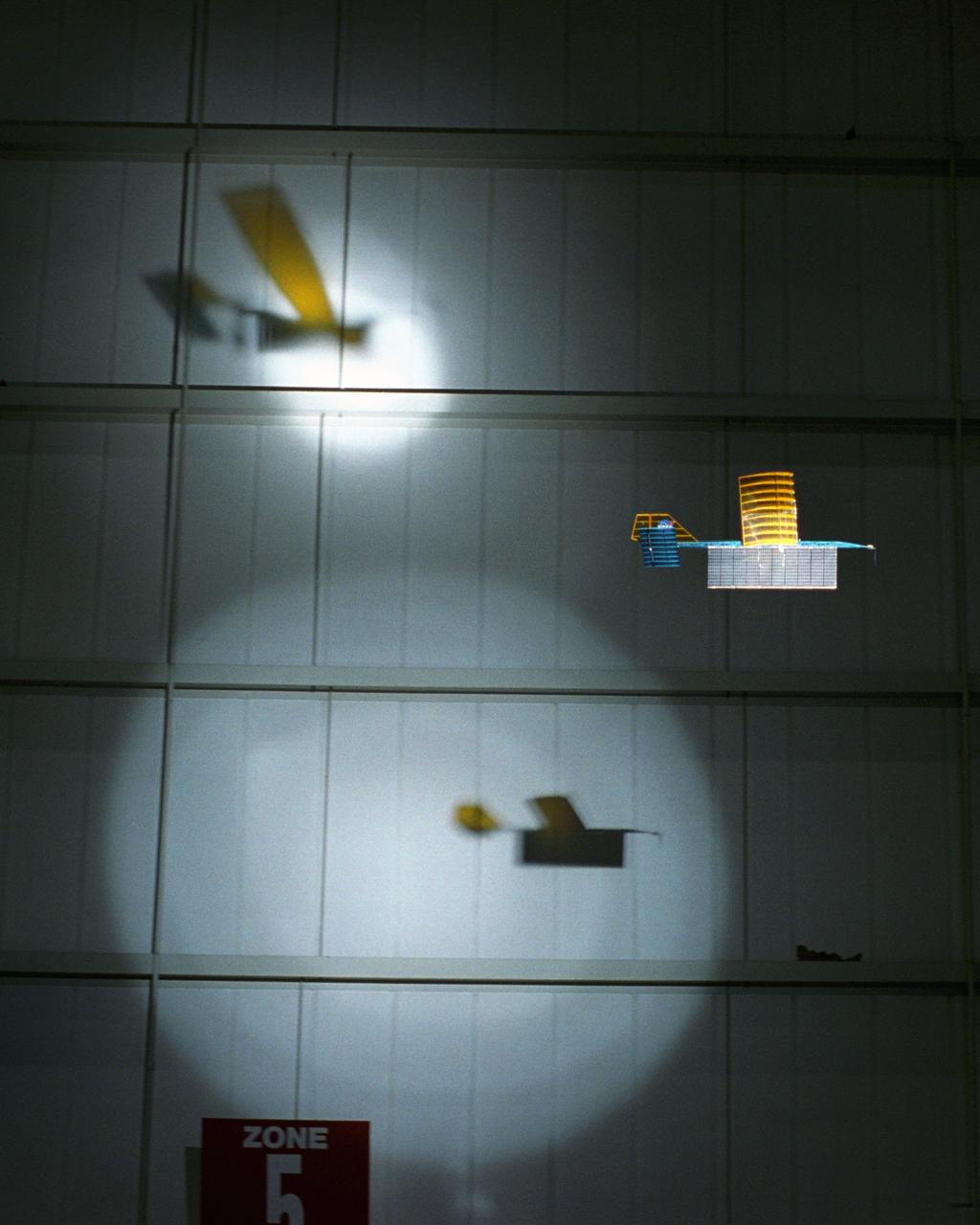
An experimental radio-controlled model aircraft is seen here in flight powered only by light energy beamed to it by a spotlight.
An experimental radio-controlled model aircraft is seen here in flight, powered only by light energy beamed to it by a spotlight.
An experimental radio-controlled model aircraft is seen here in flight powered only by light energy beamed to it by a spotlight.
An experimental radio-controlled model aircraft casts a unique shadow as it flies inside a Dryden hangar using only a spotlight as an energy source.
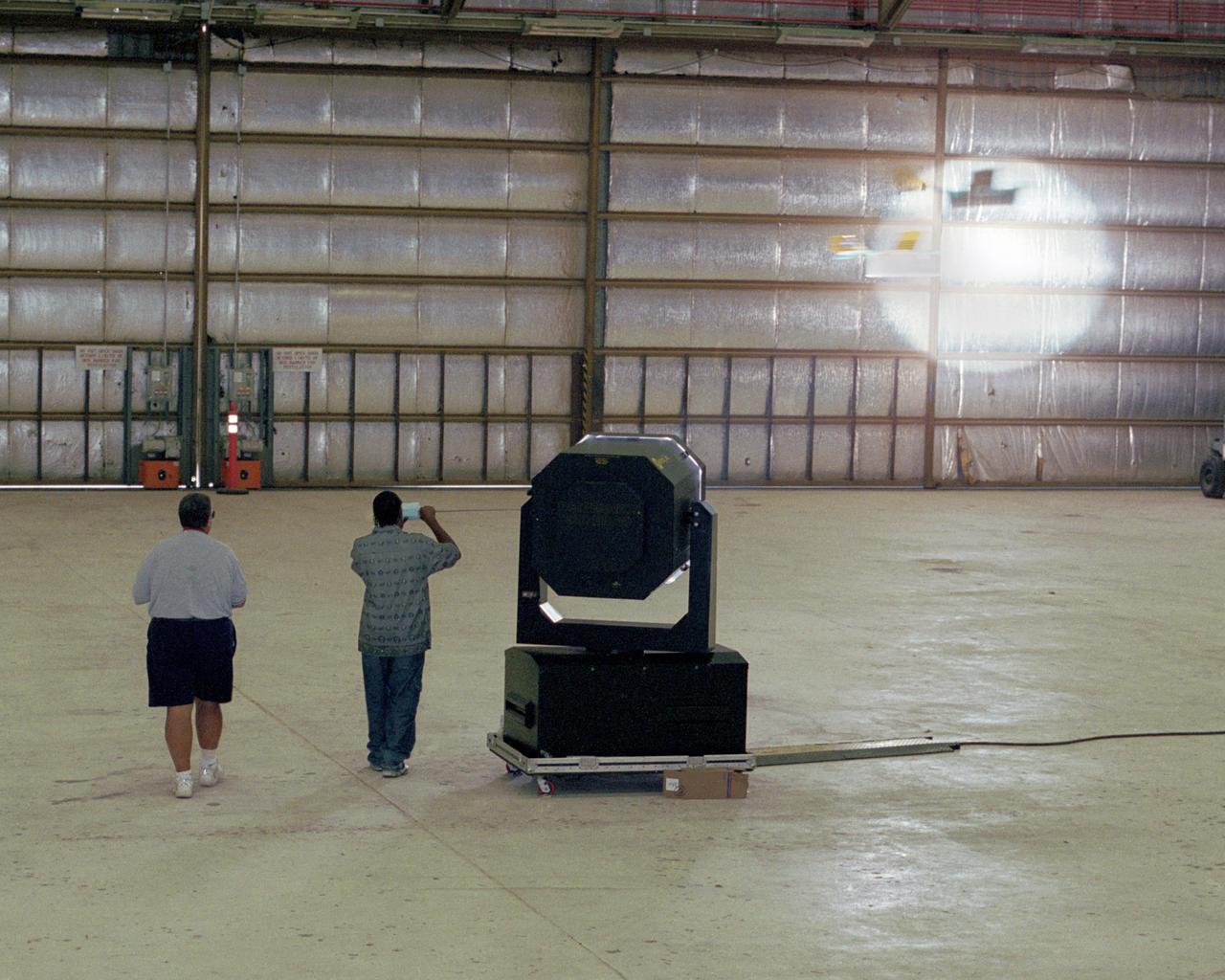
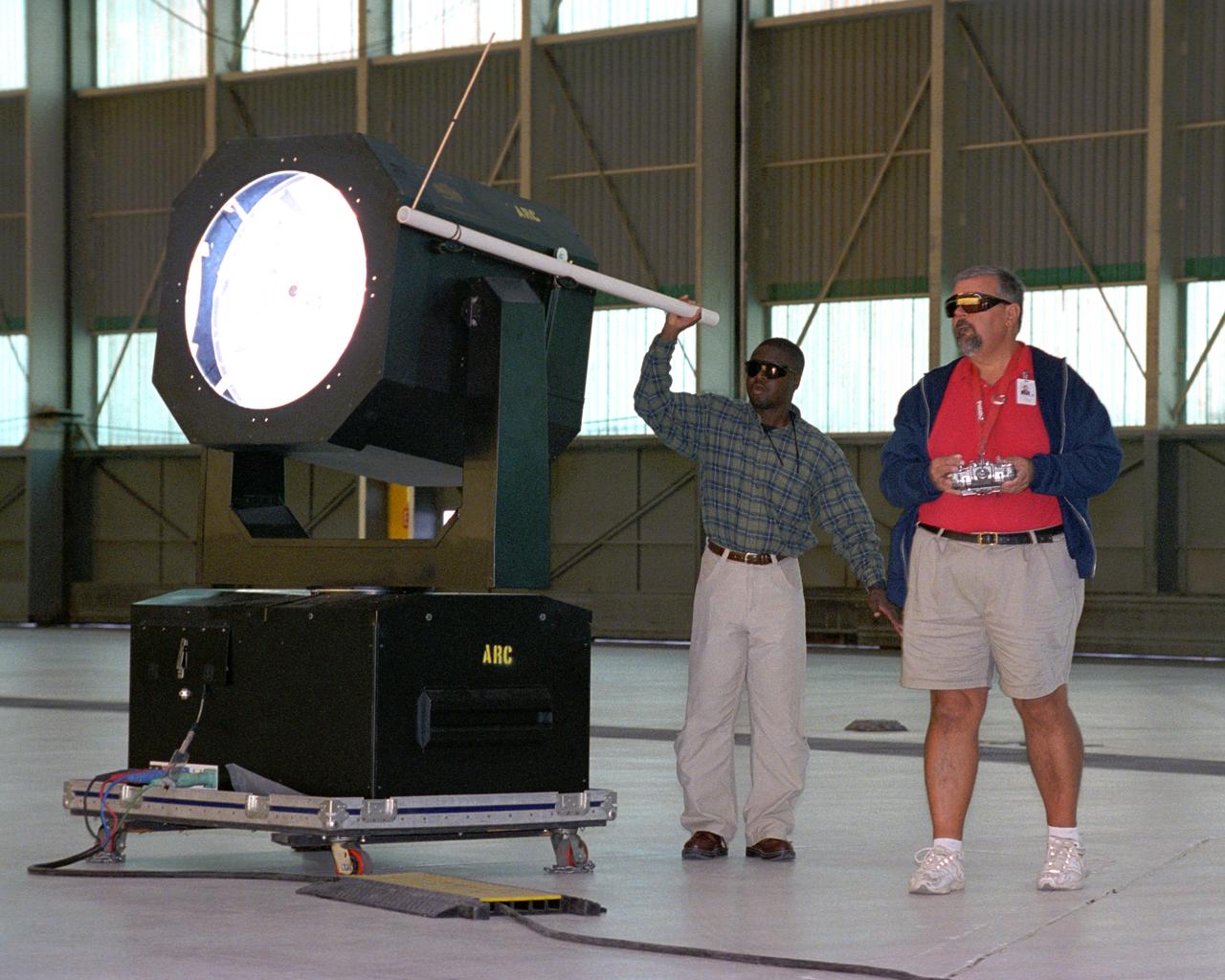
Dryden Model Shop's Tony Frakowiak remotely flies an experimental model aircraft being powered by a spotlight operated by student intern Derrick Barrett.
An experimental radio-controlled model aircraft casts two unique shadows as it flies inside a Dryden hangar using two spotlights as energy sources. This phase of testing was used to develop procedures and operations for "handing off" the aircraft between different sources of power.
An experimental radio-controlled model aircraft casts two unique shadows as it flies inside a Dryden hangar using two spotlights as energy sources.
Dryden Model Shop's Tony Frakowiak remotely flies an experimental model aircraft being powered by a spotlight operated by Dryden aerospace engineer (code RA) Ryan Warner.
Dryden Model Shop's Tony Frakowiak remotely flies an experimental model aircraft being powered by a spotlight operated by Dryden aerospace engineer (Code RA) Ryan Warner.
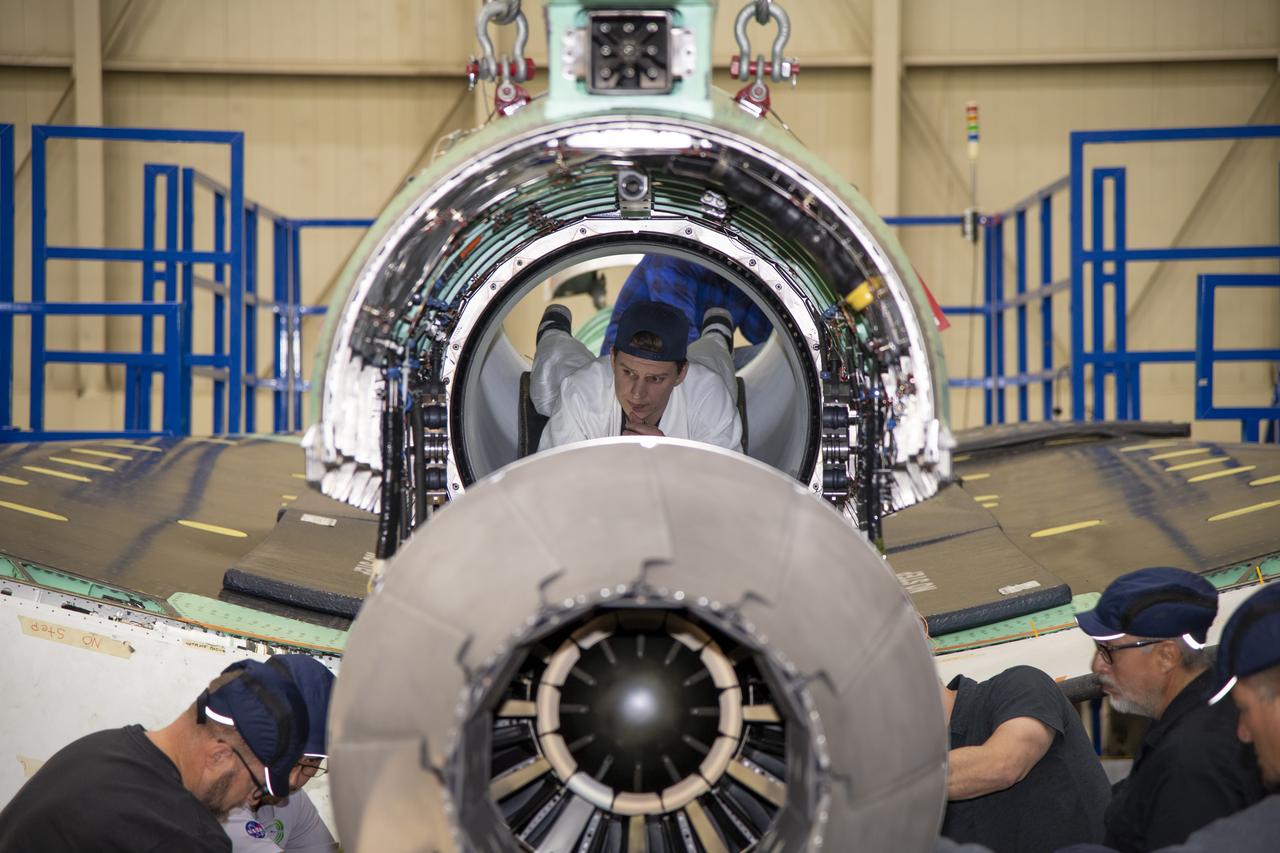
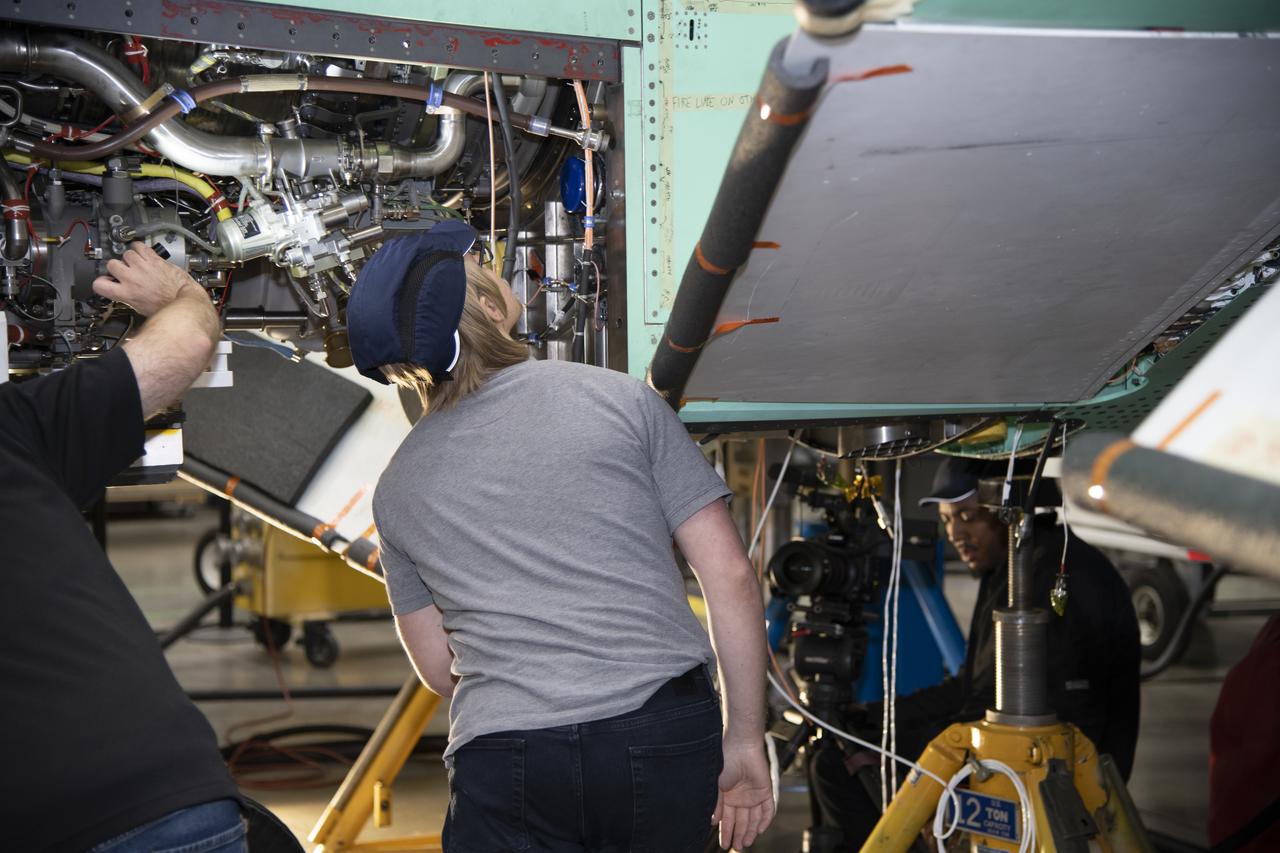
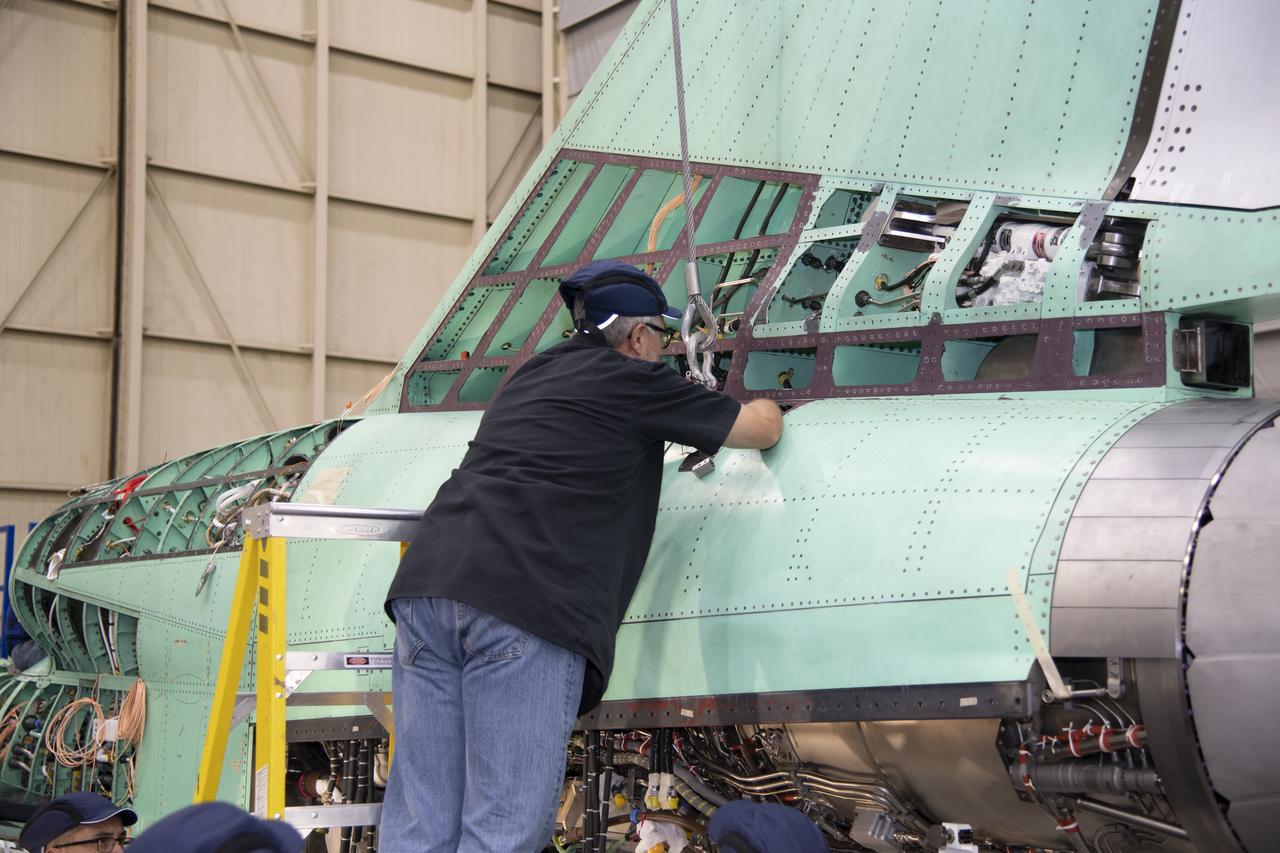
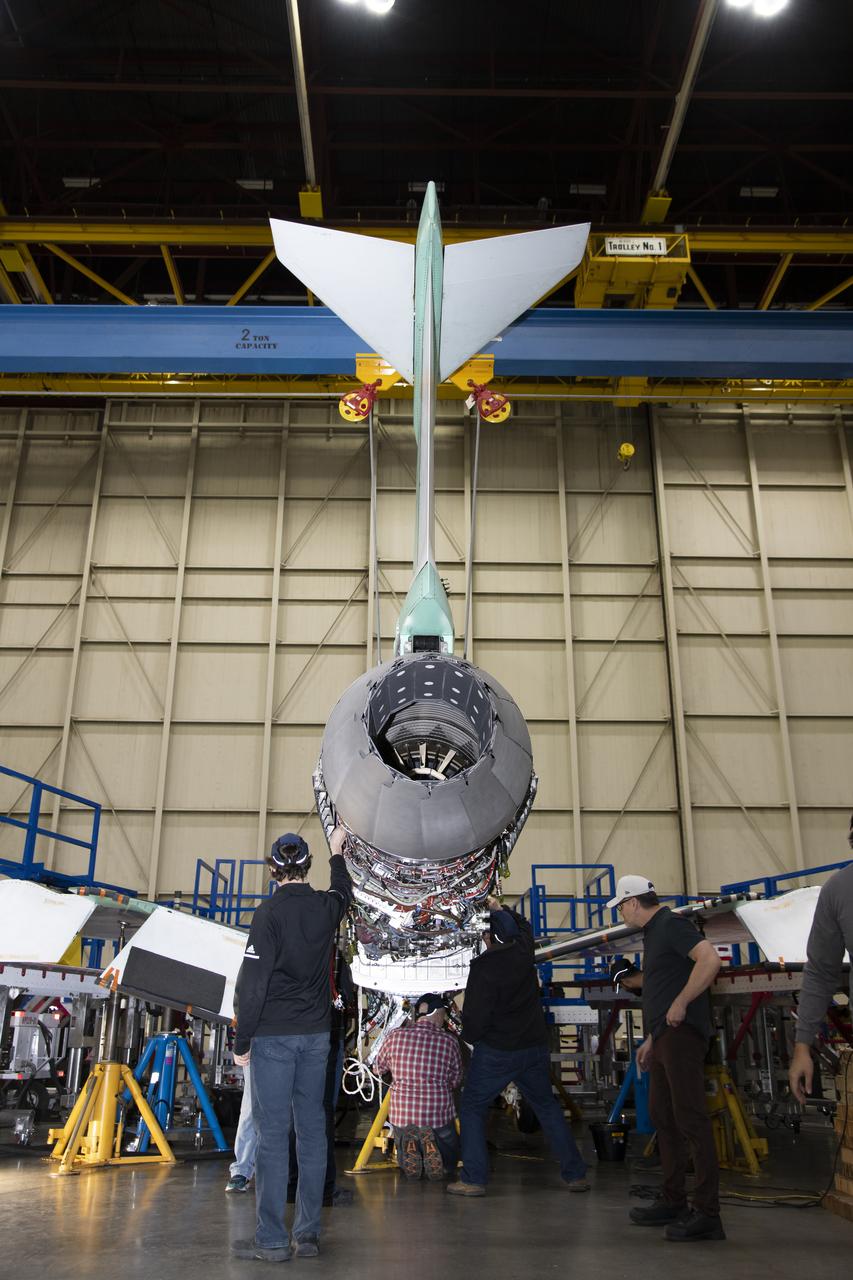
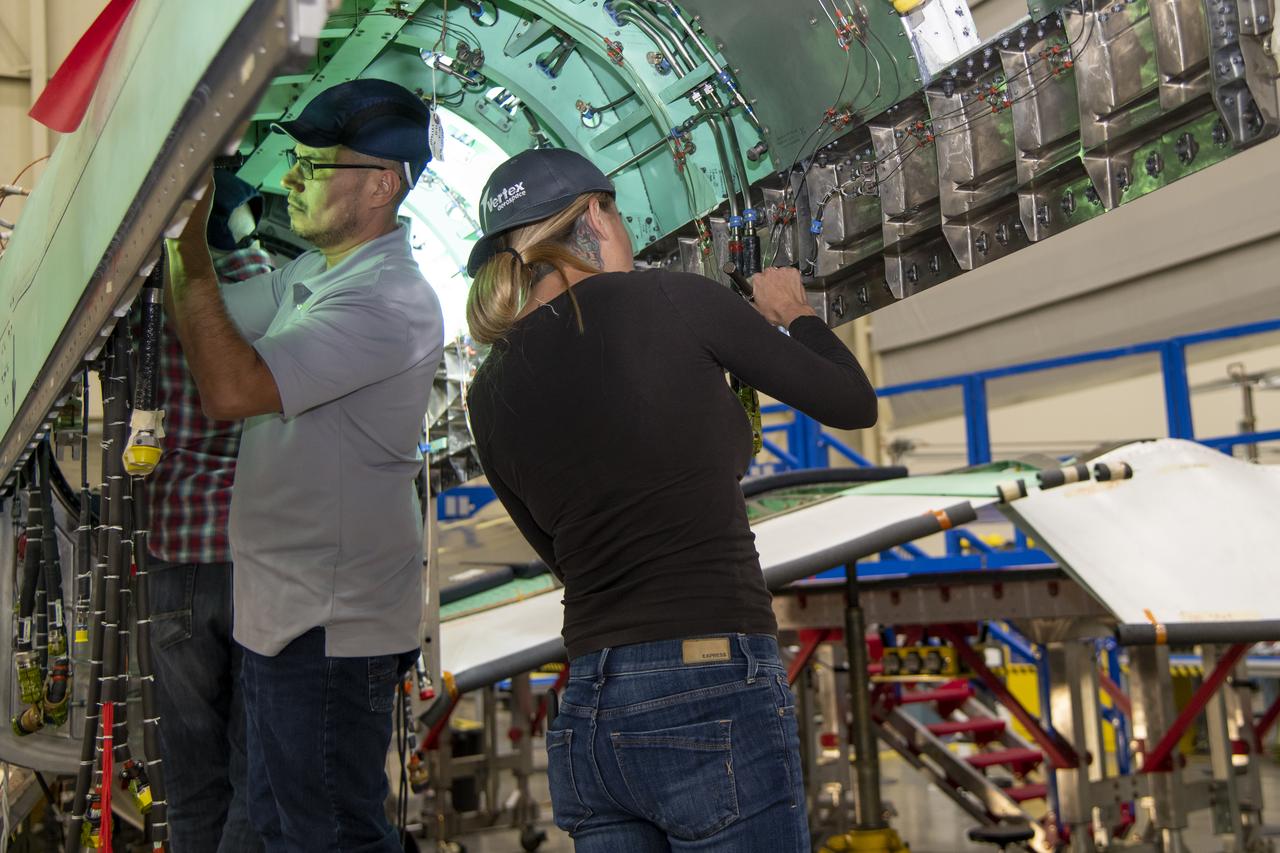
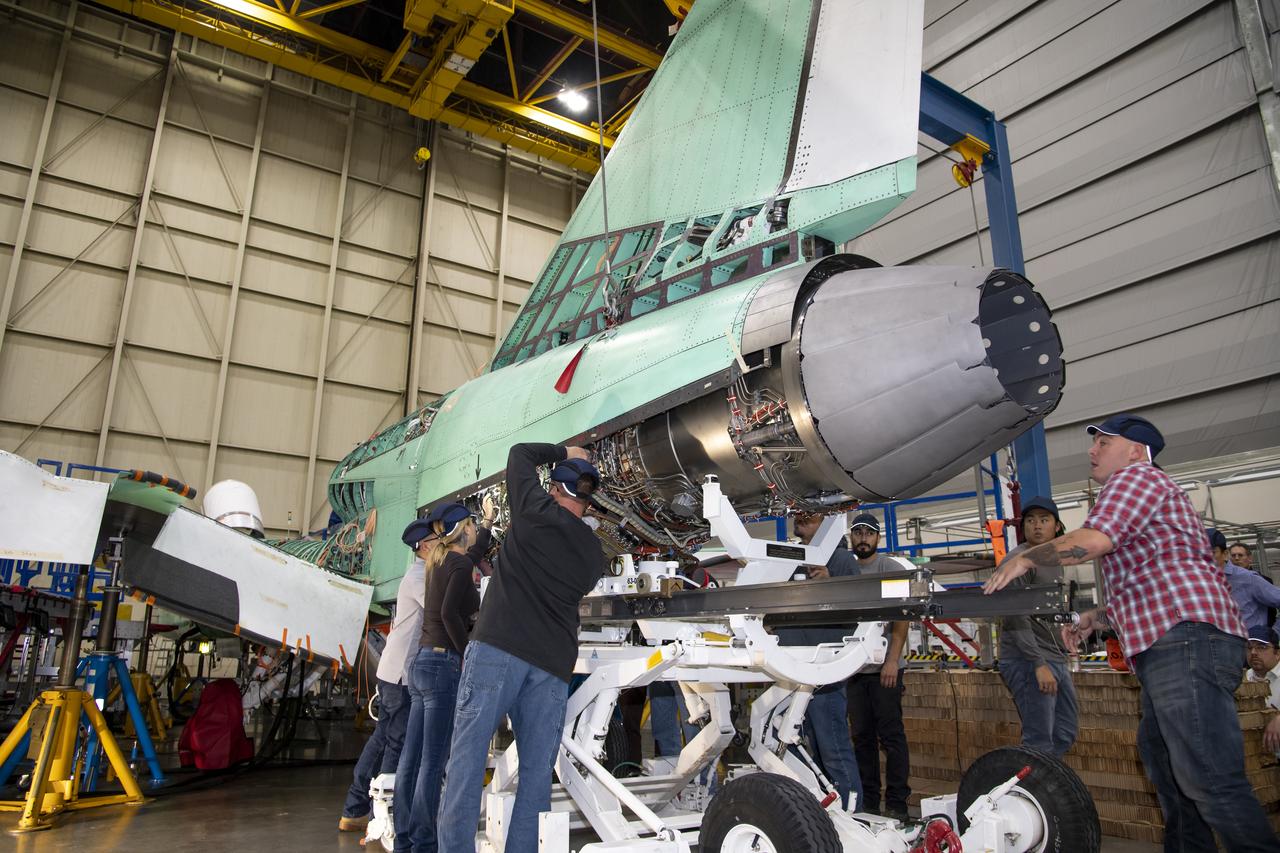
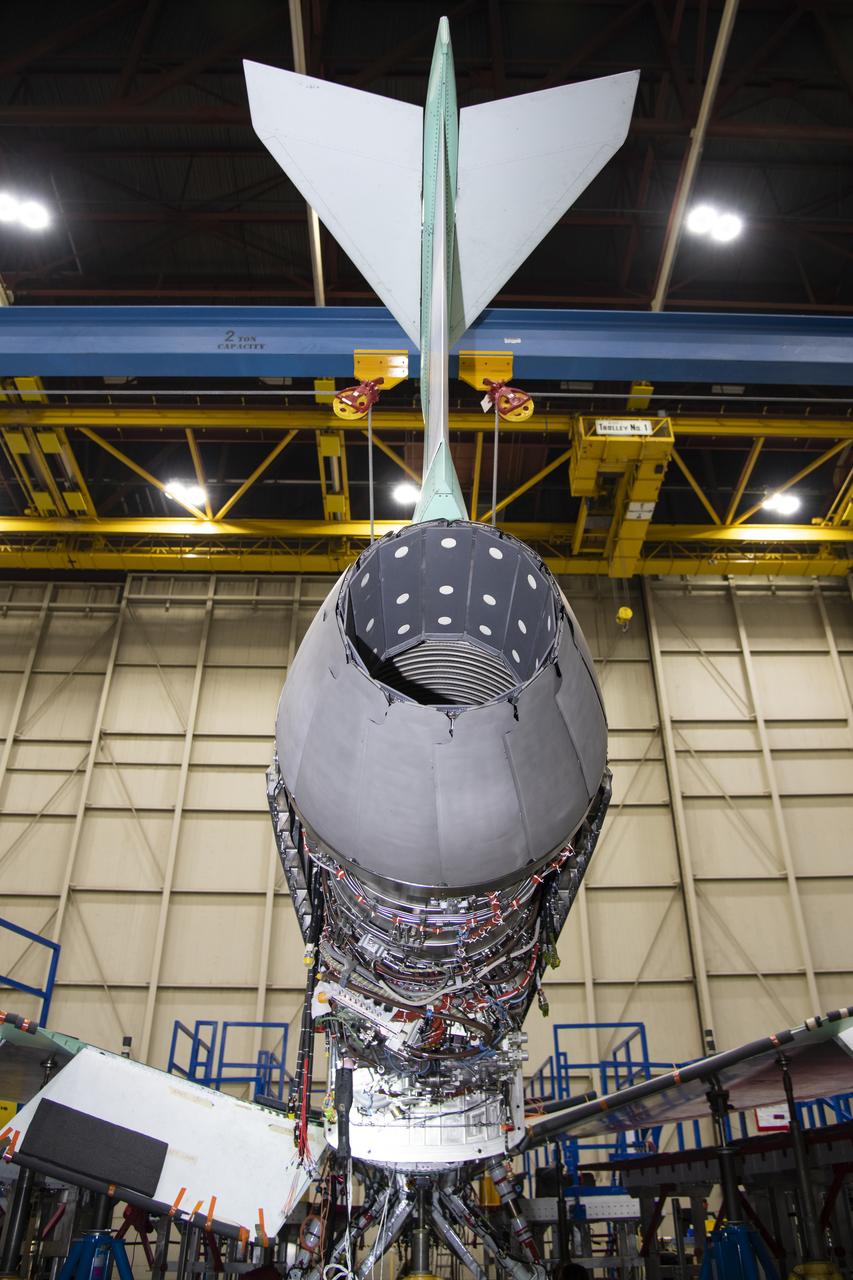
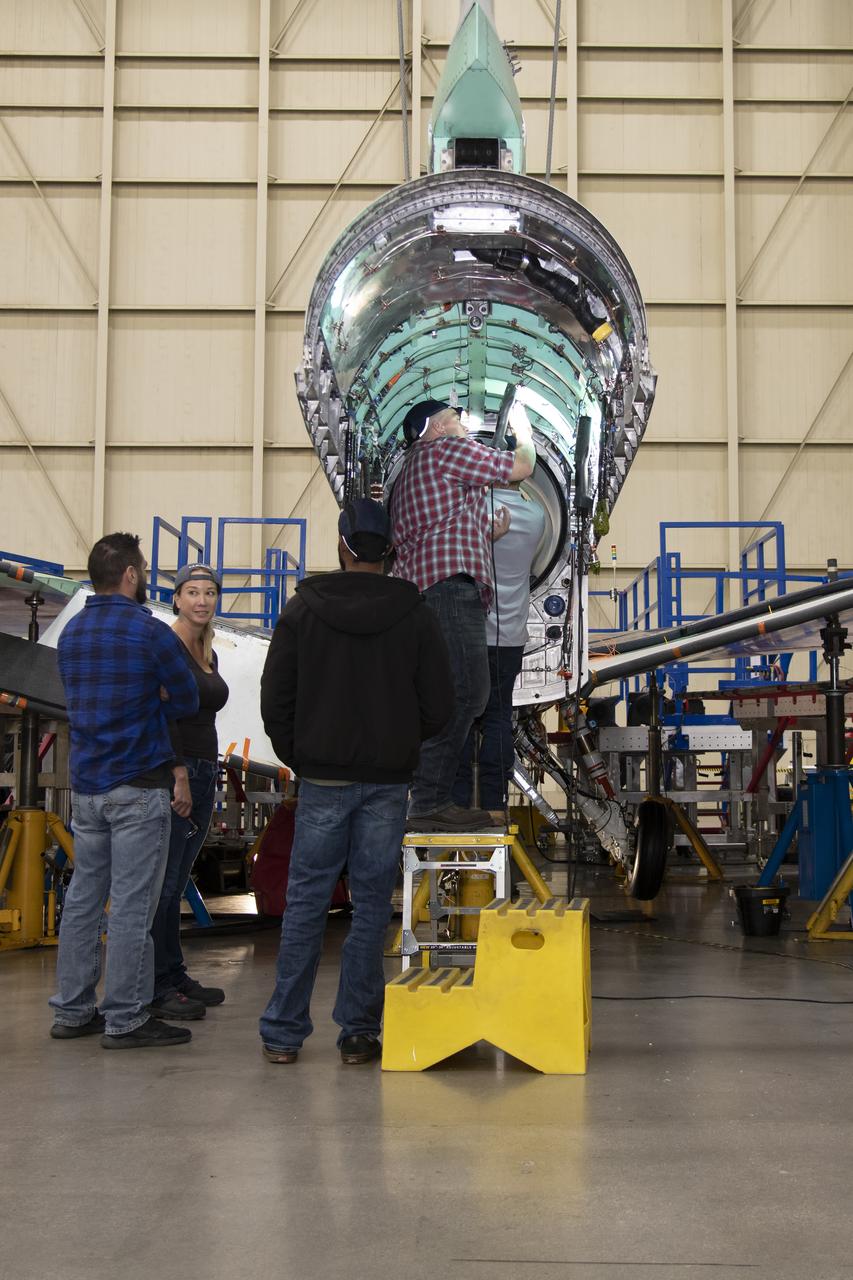
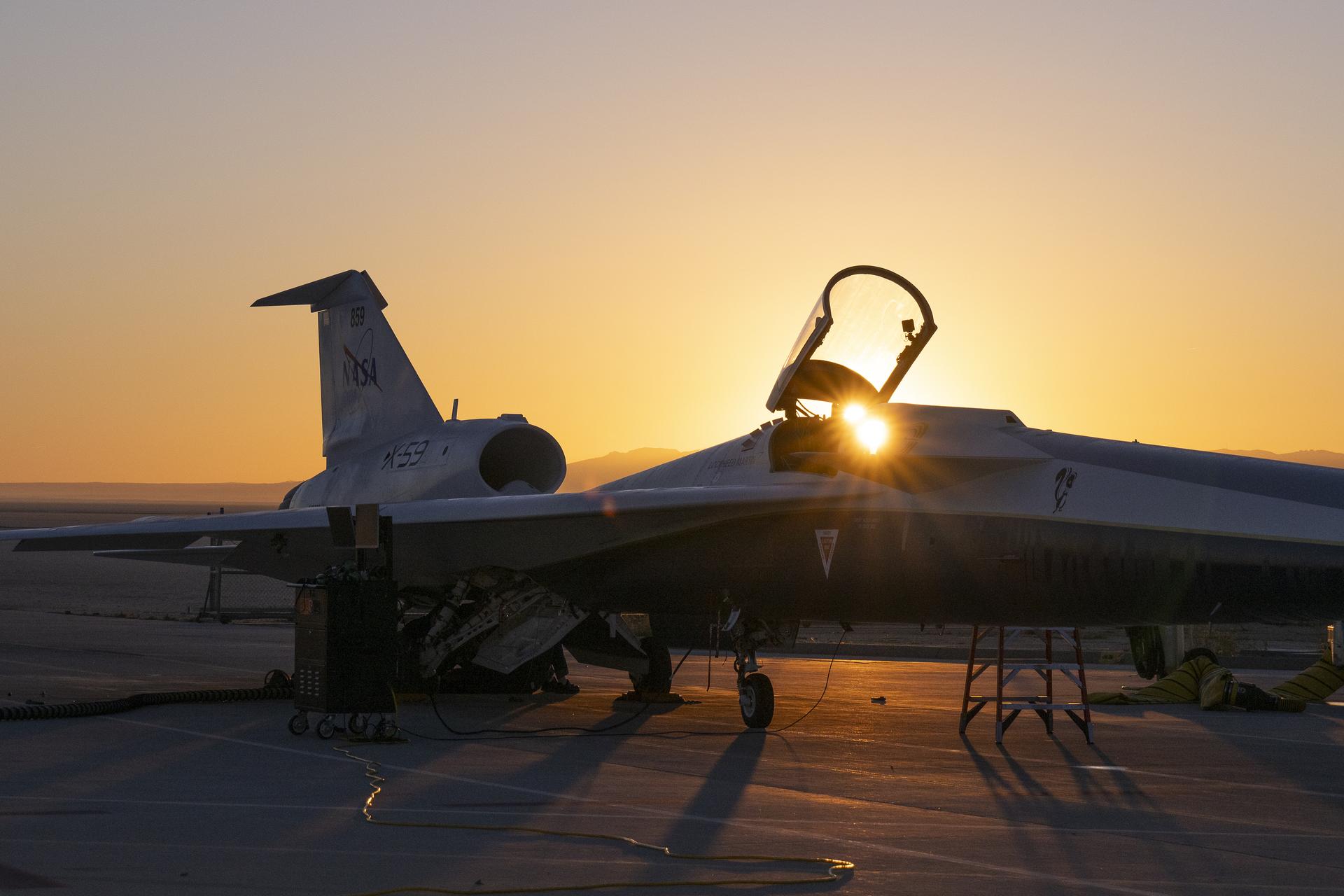
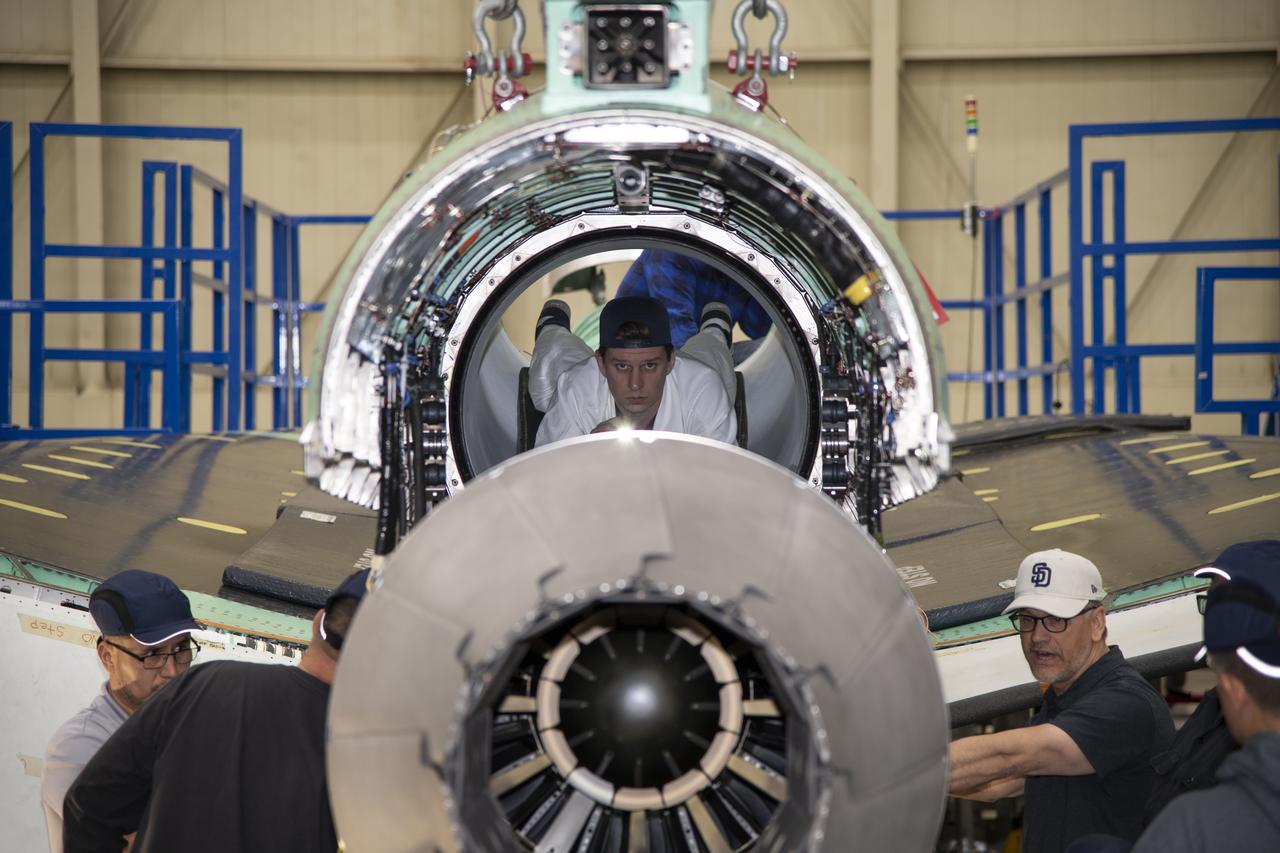
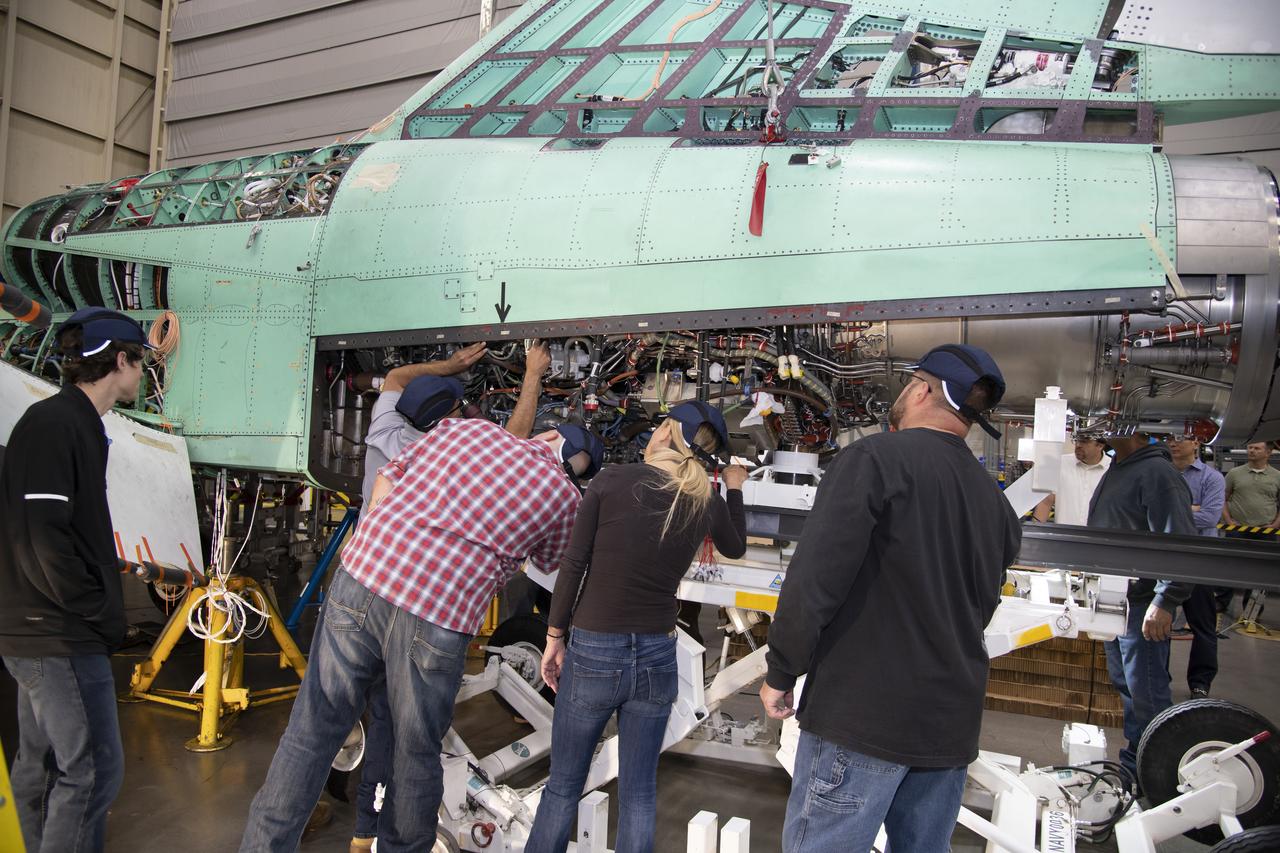
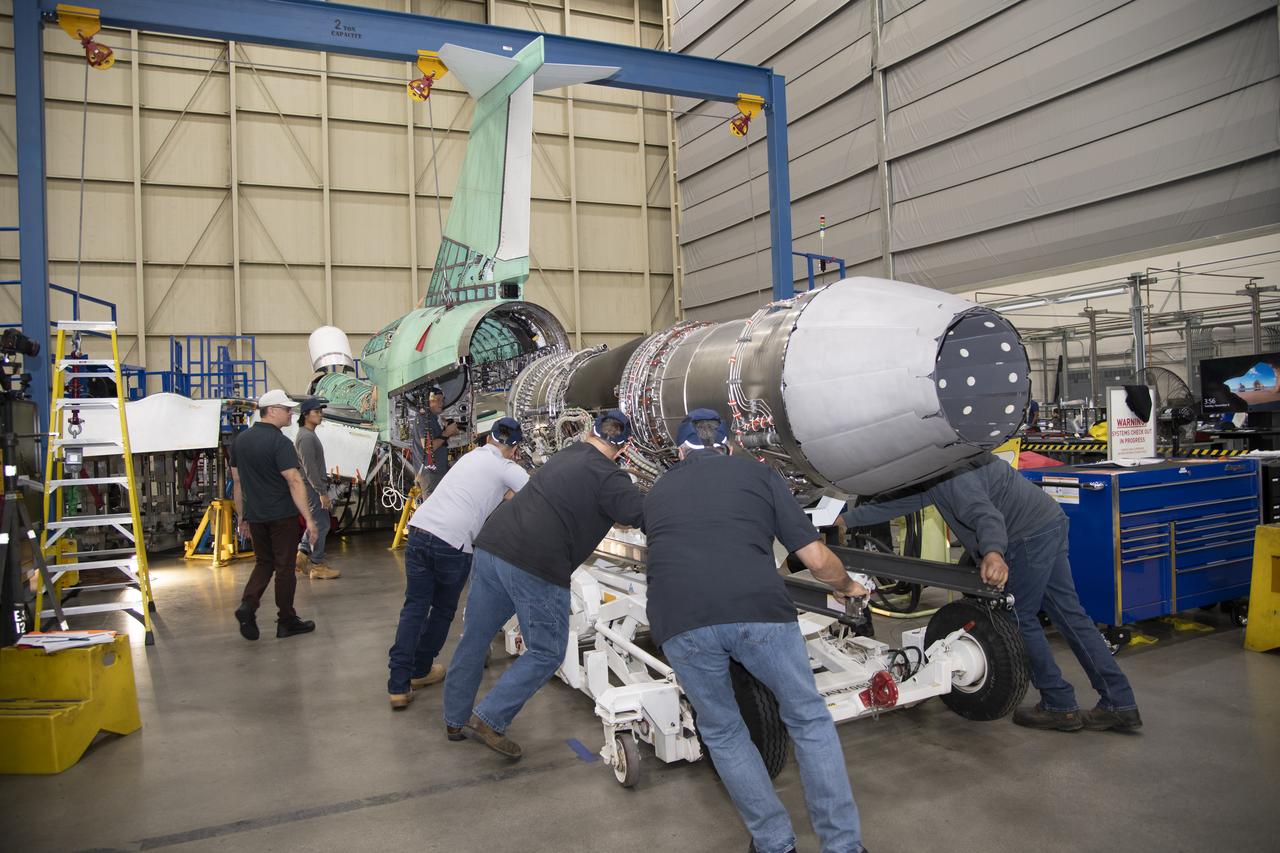
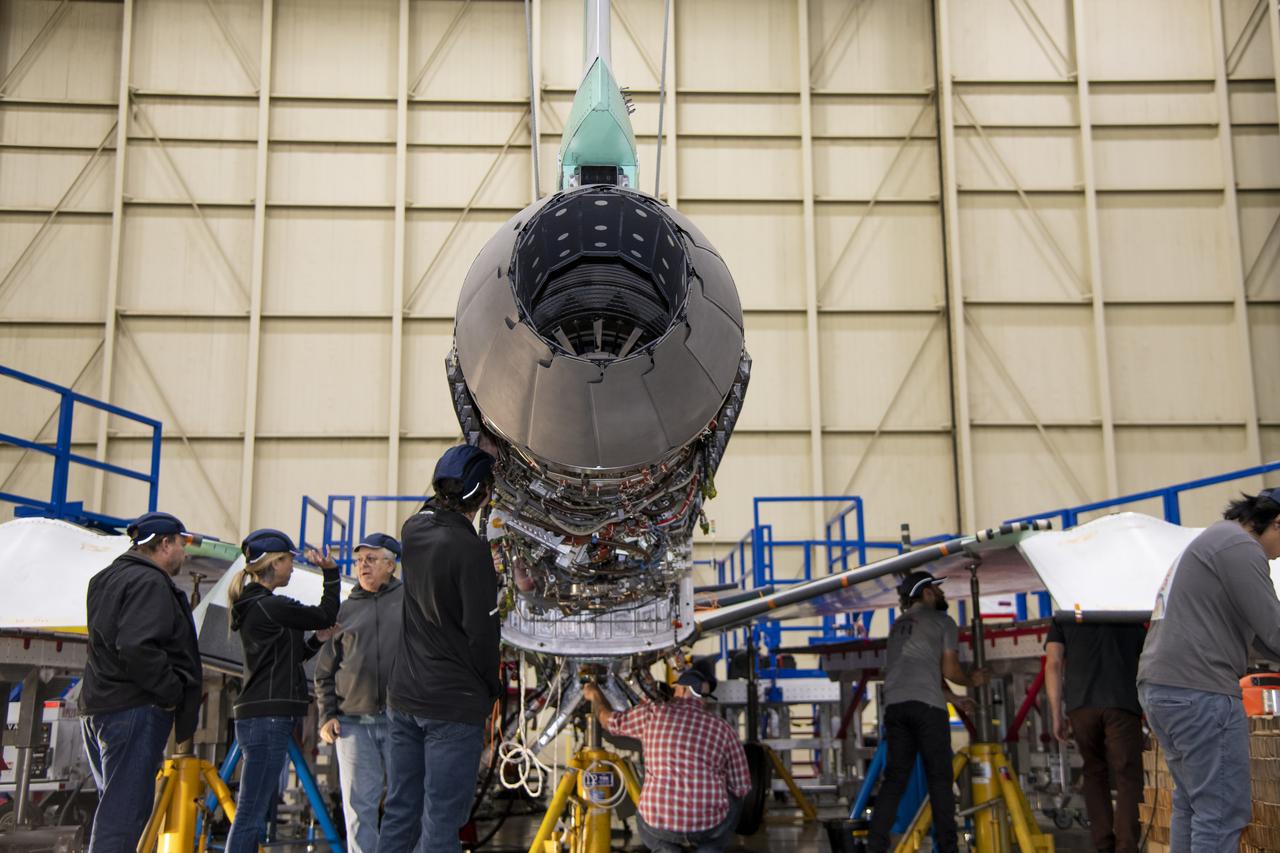
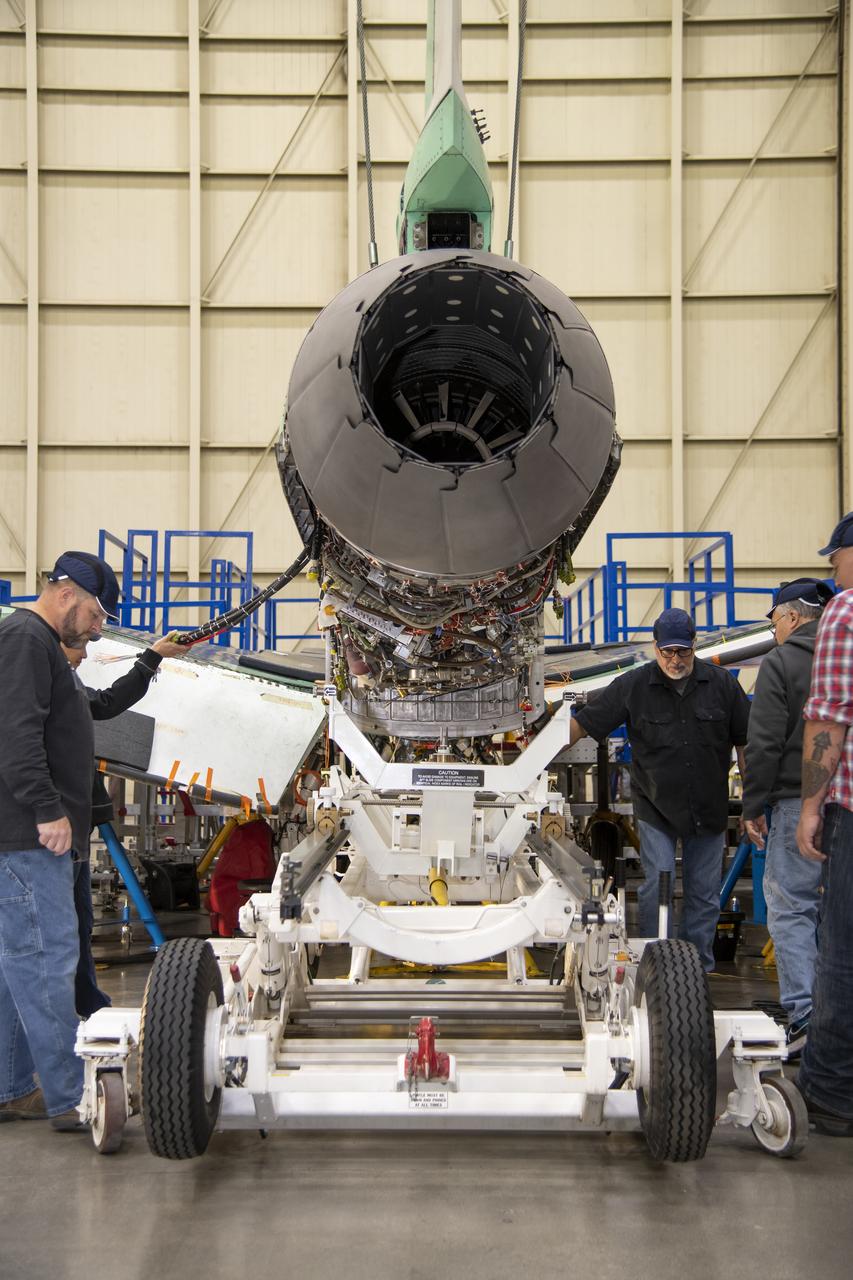
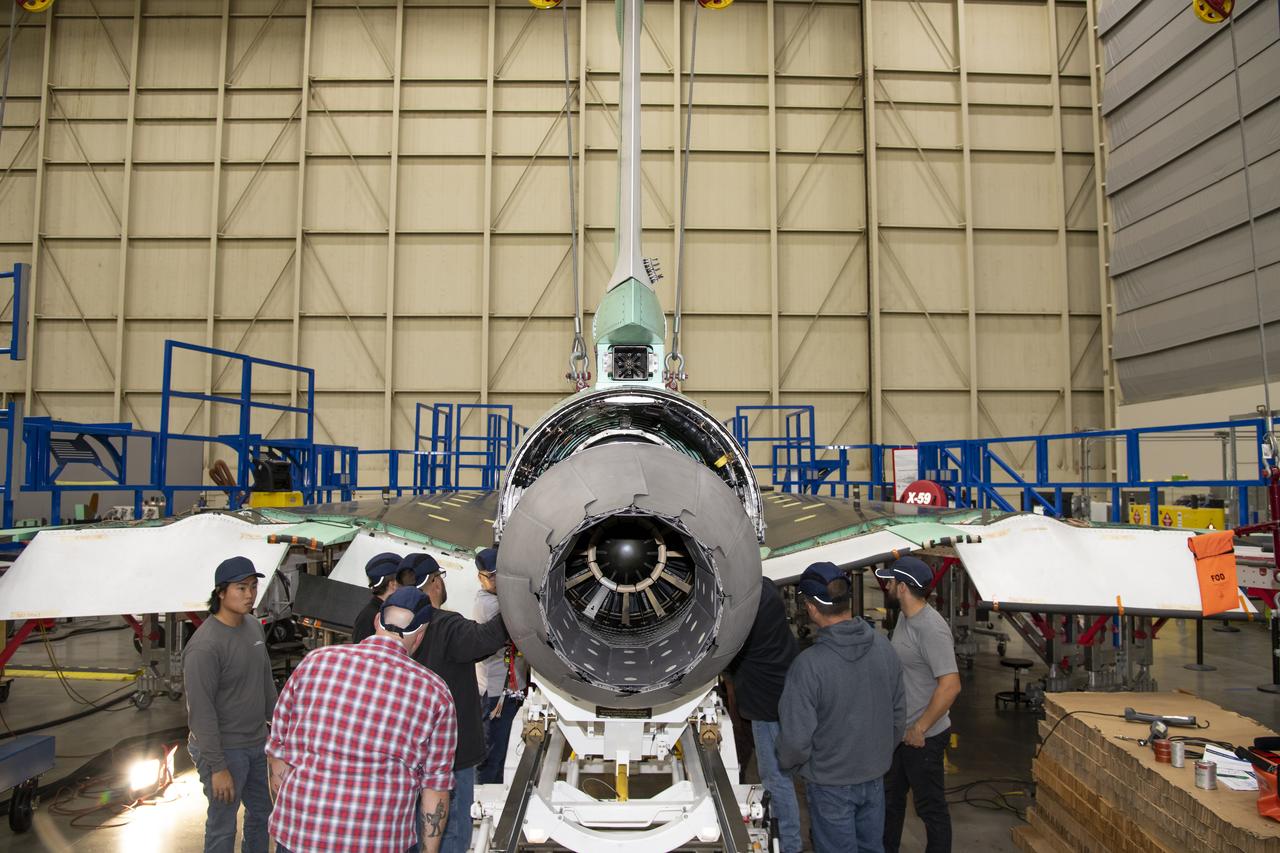
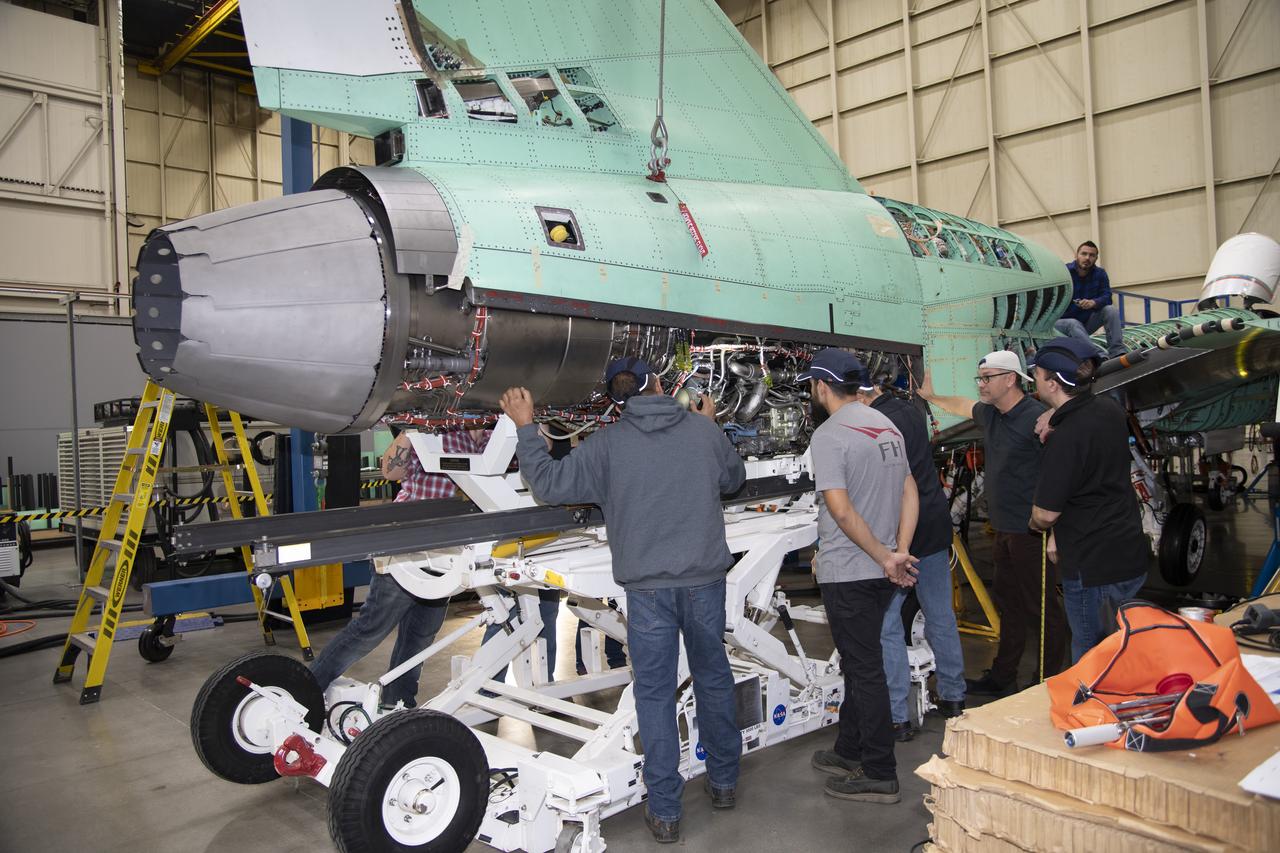
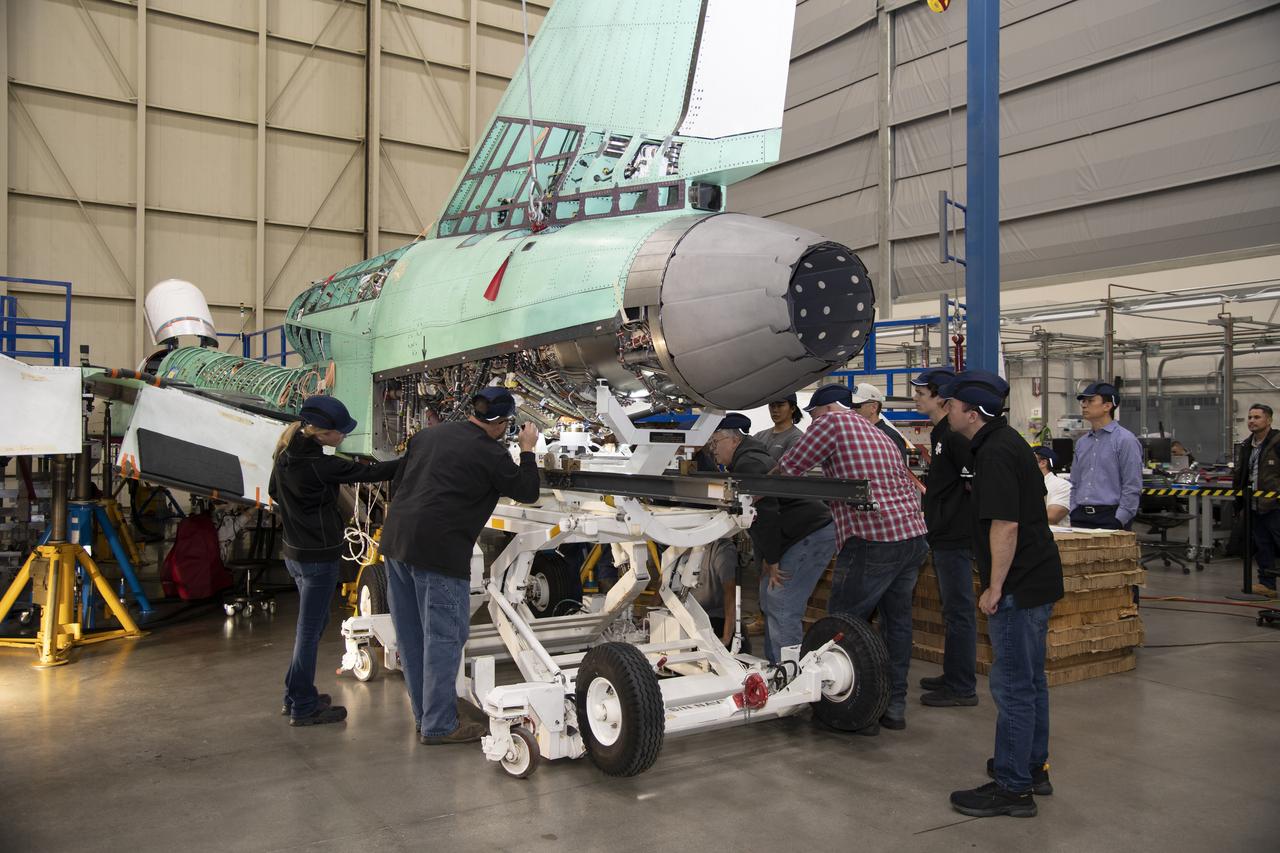
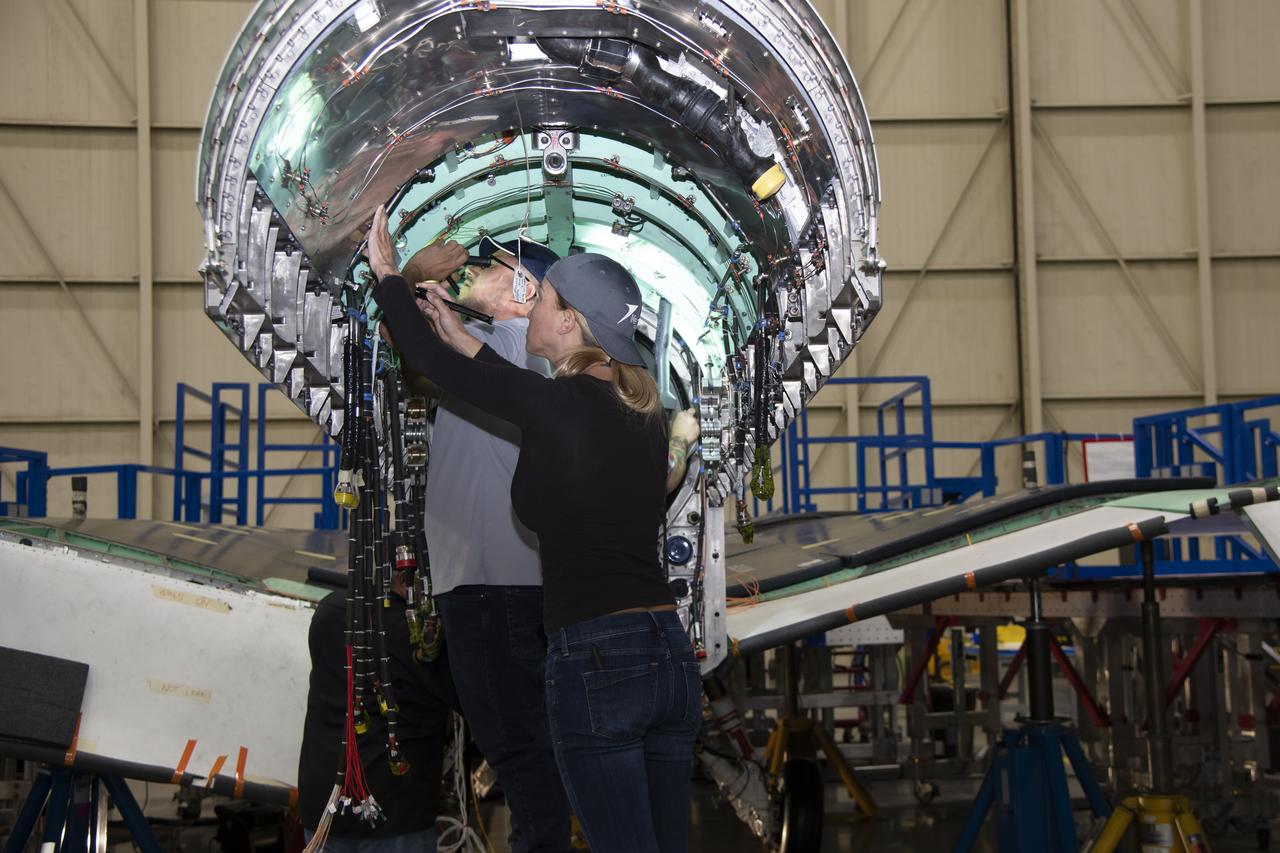
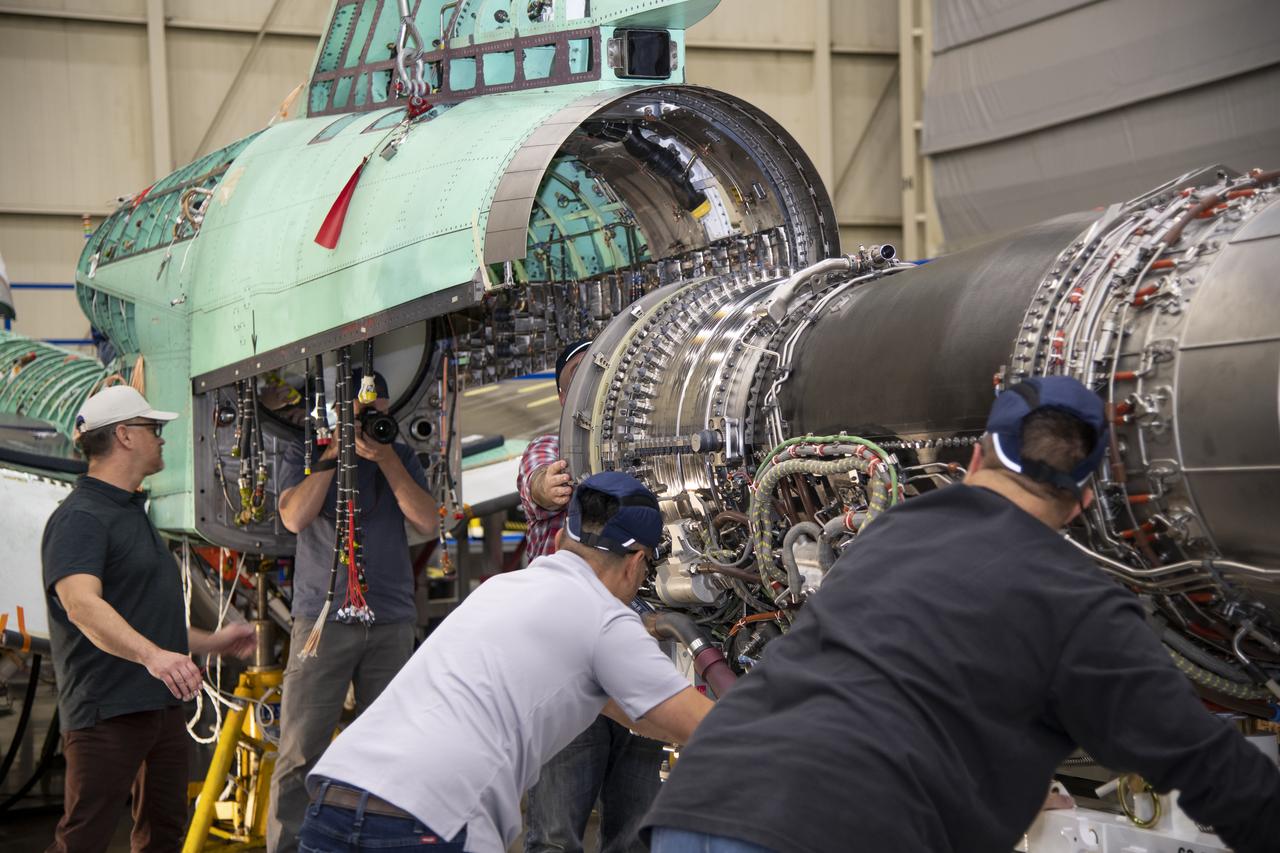
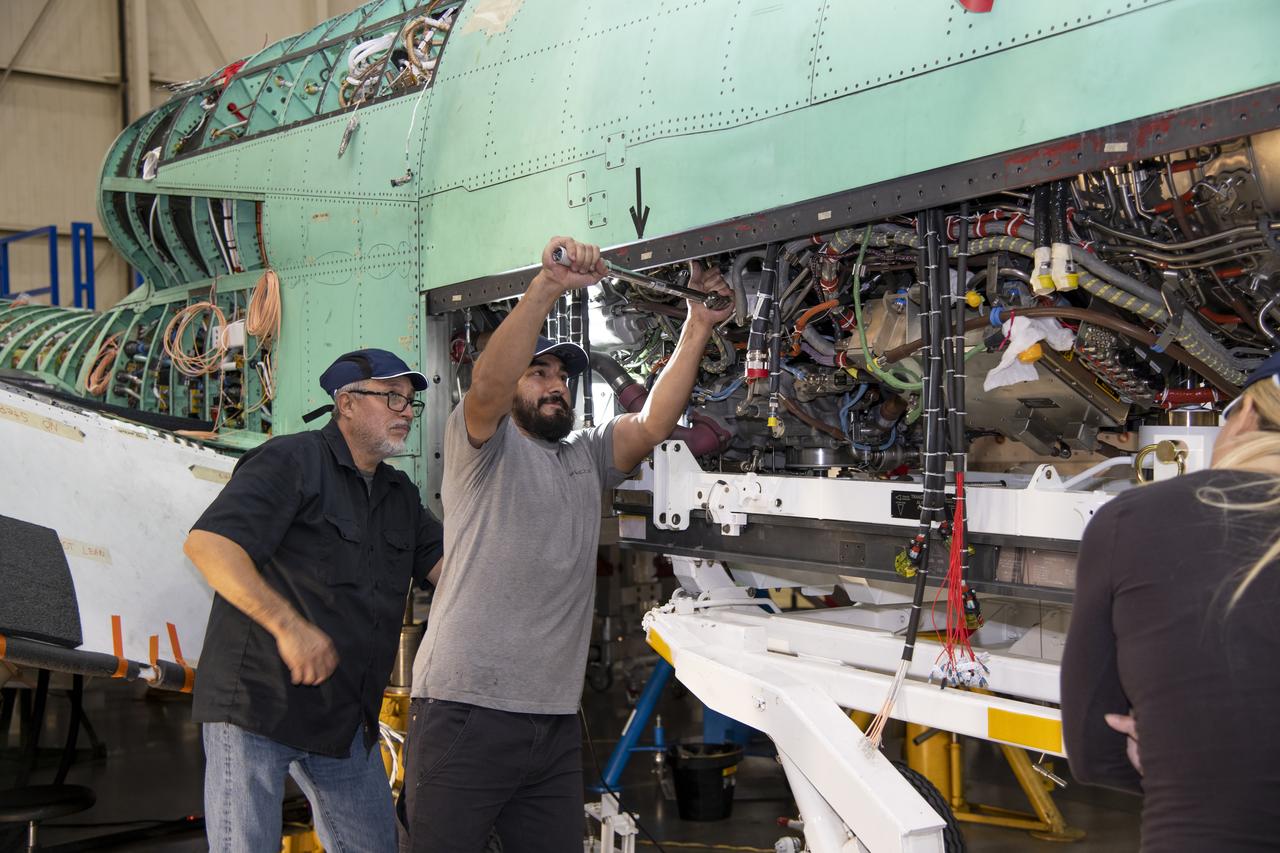
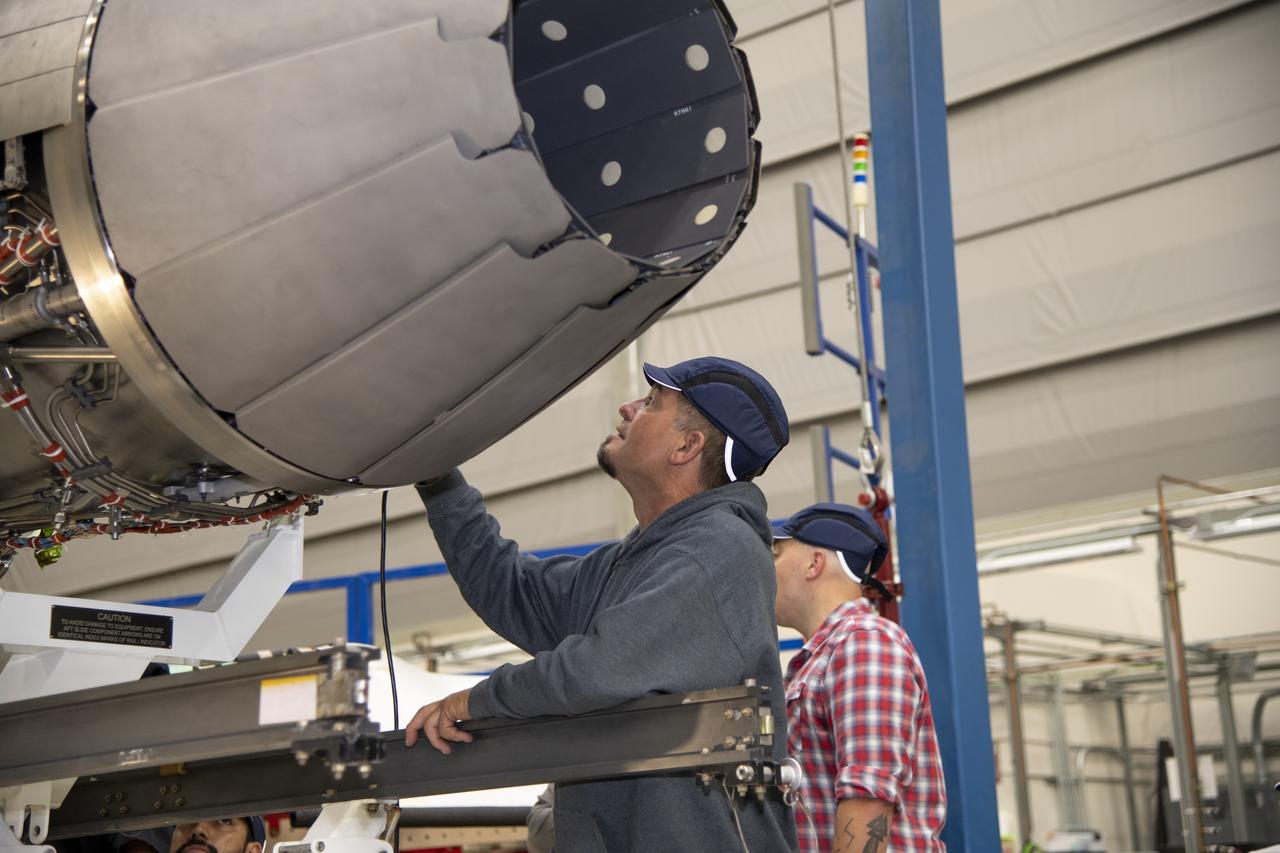
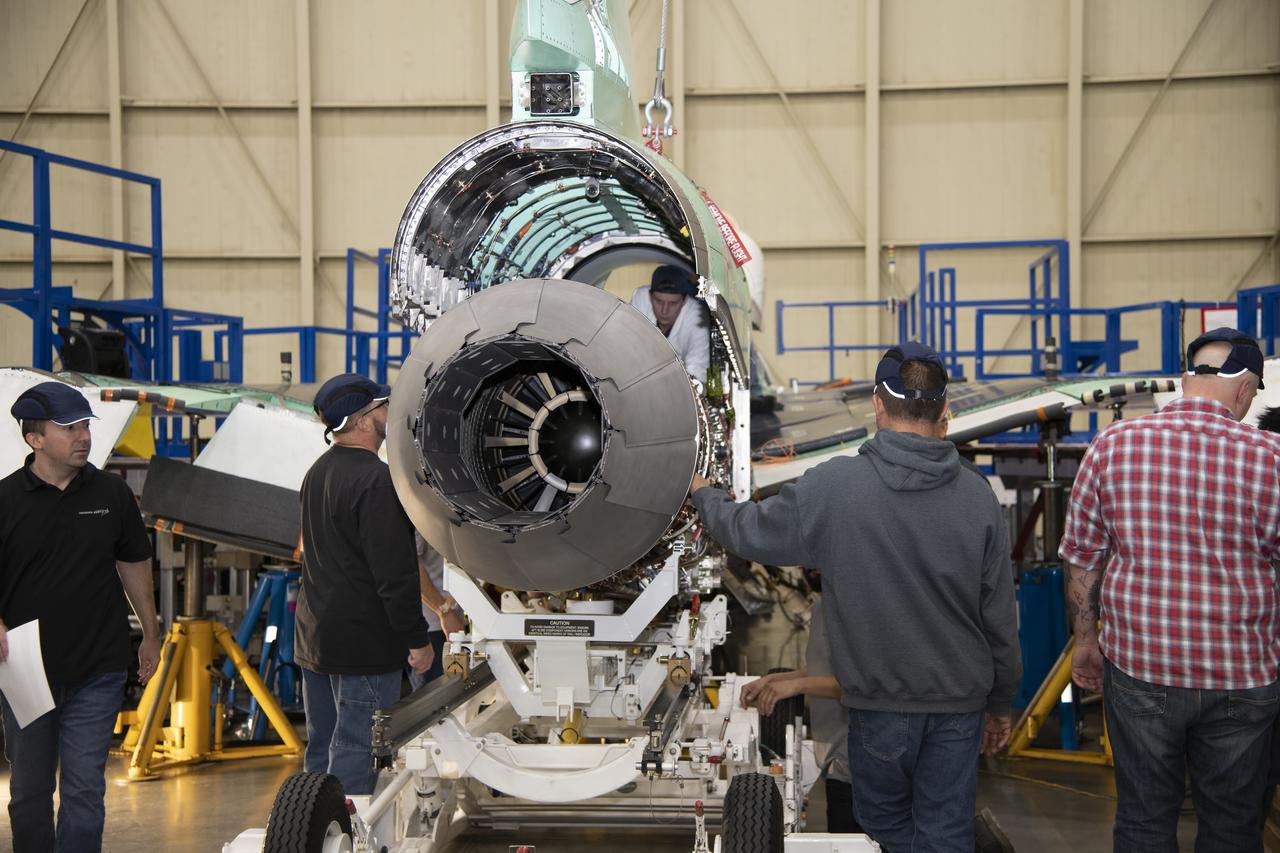
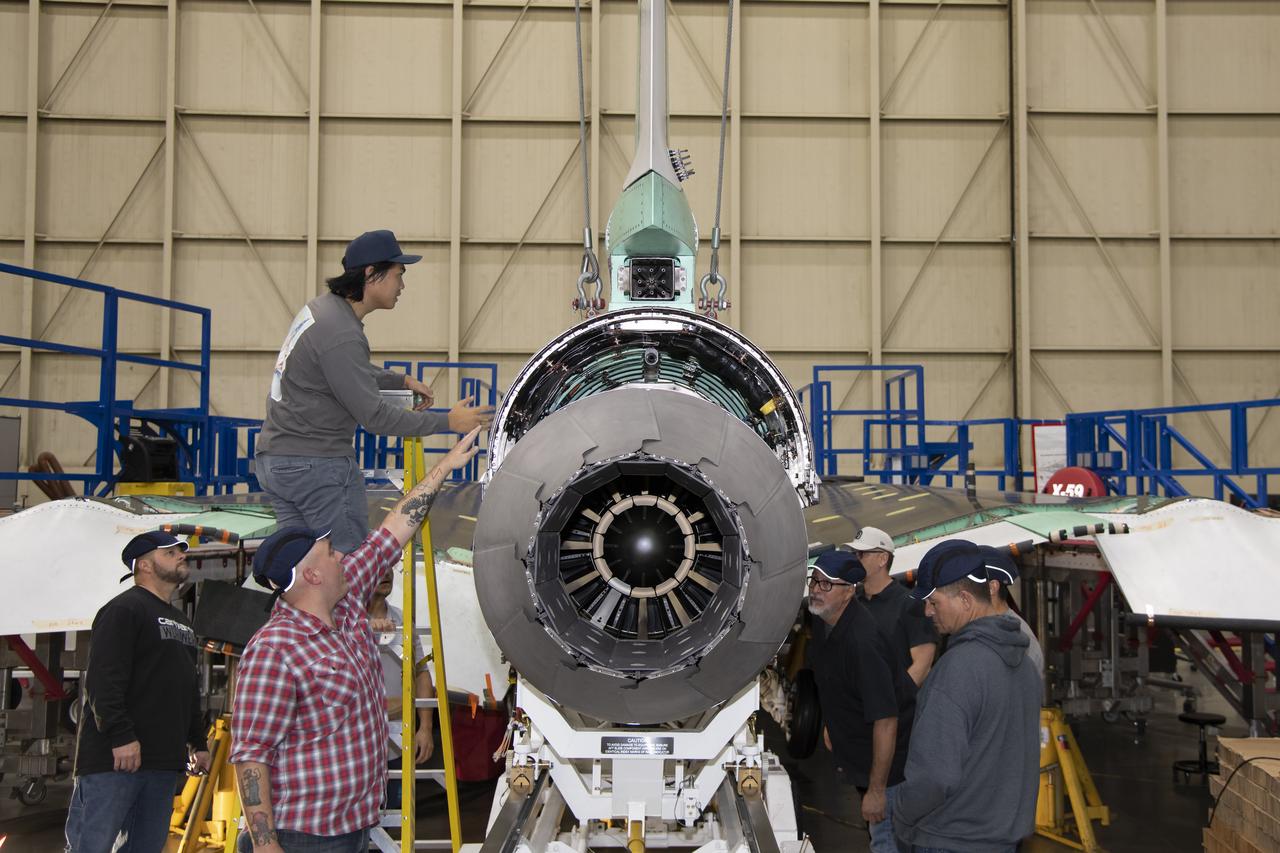
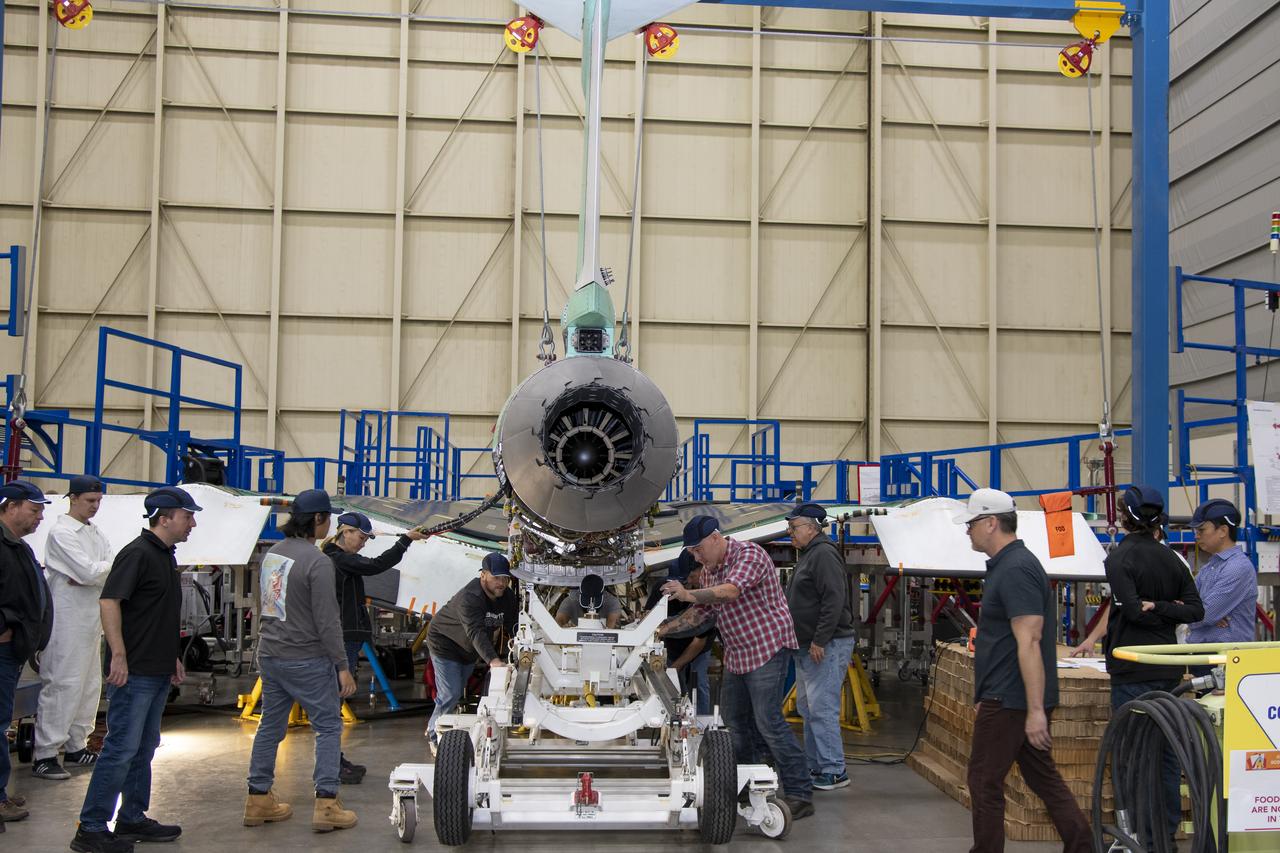
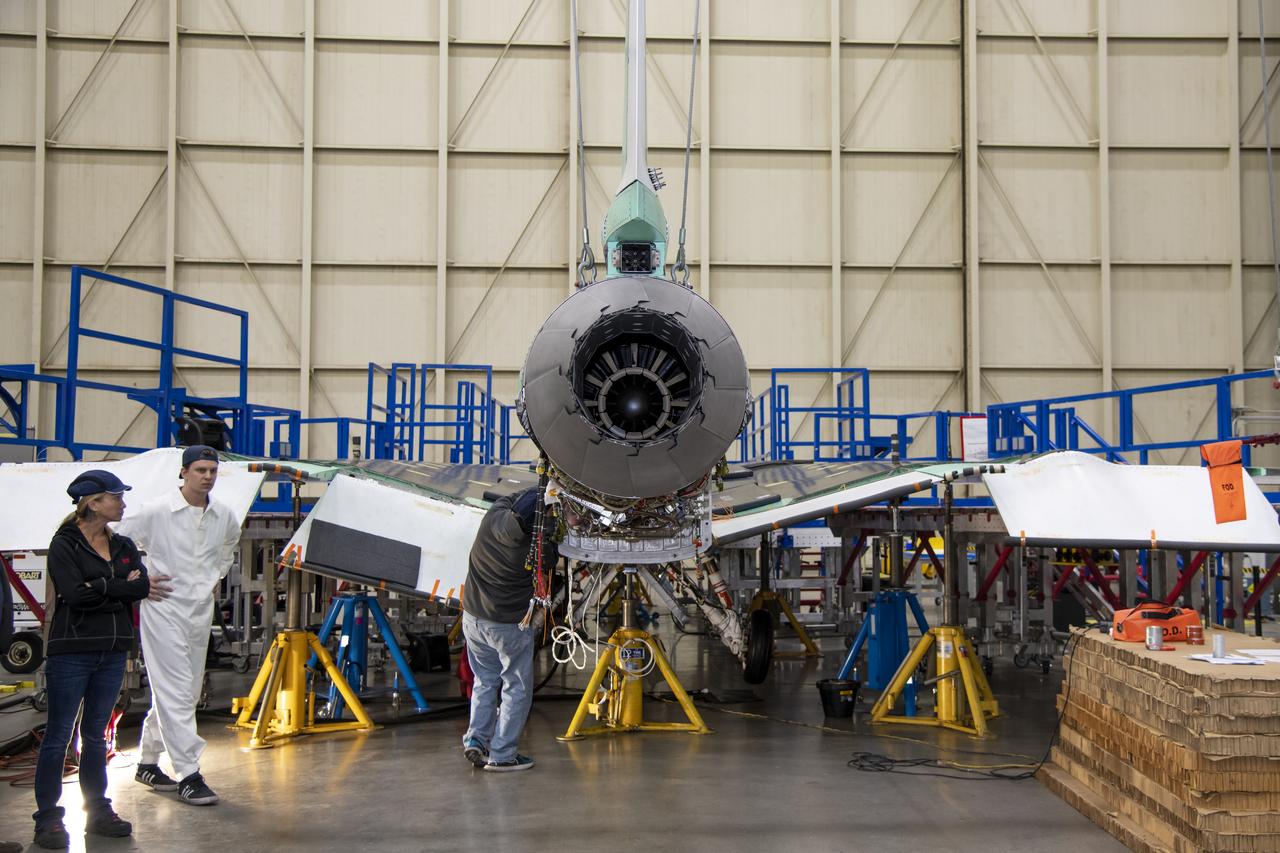
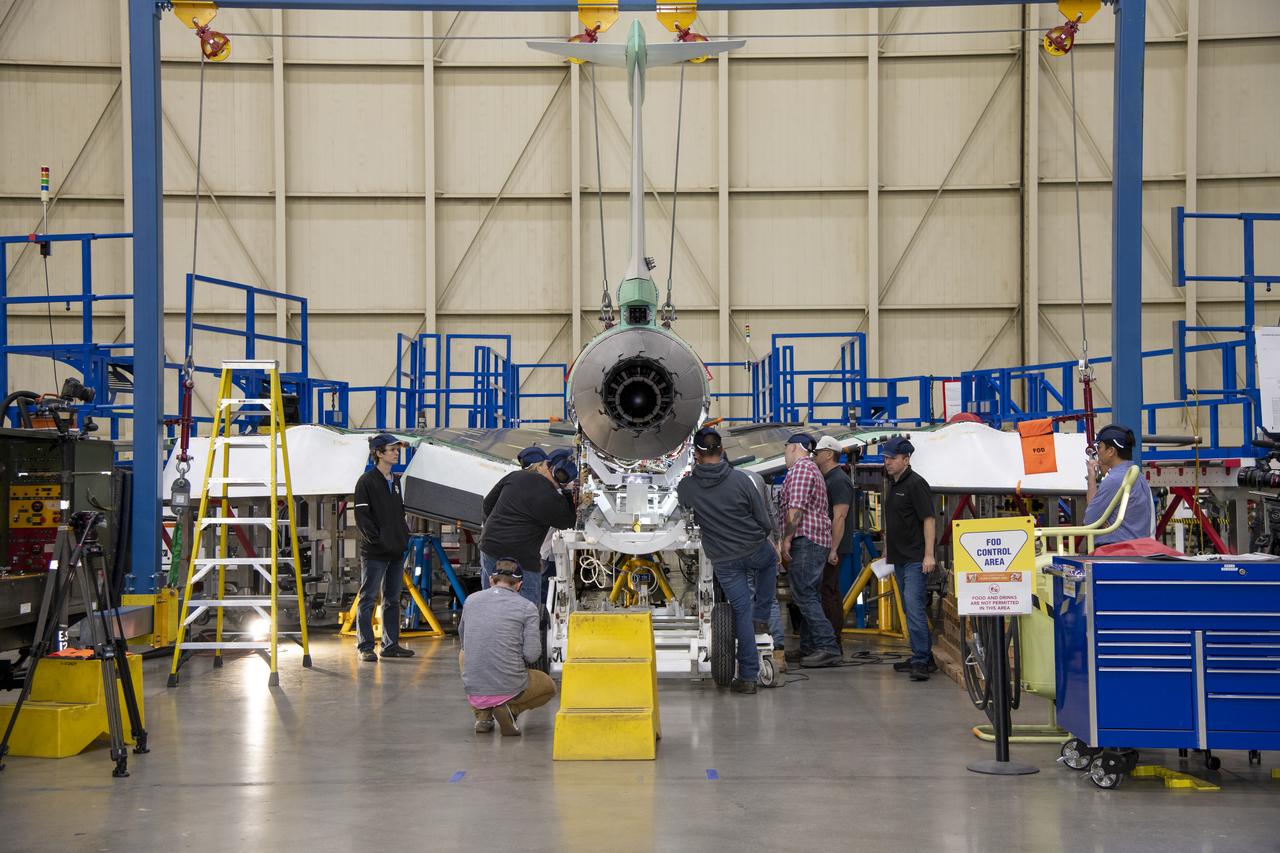
The engine that will power NASA’s quiet supersonic X-59 in flight is installed, marking a major milestone in the experimental aircraft’s journey toward first flight. The installation of the F414-GE-100 engine at Lockheed Martin’s Skunk Works facility brings the vehicle close to the completion of its assembly.
Engine Installed on NASA’s X-59 Experimental Aircraft
The engine that will power NASA's quiet supersonic X-59 in flight is installed, marking a major milestone in the experimental aircraft's journey toward first flight. The installation of the F414-GE-100 engine at Lockheed Martin's Skunk Works facility brings the vehicle close to the completion of its assembly.
Engine Installed on NASA's X-59 Experimental Aircraft
The engine that will power NASA's quiet supersonic X-59 in flight is installed, marking a major milestone in the experimental aircraft's journey toward first flight. The installation of the F414-GE-100 engine at Lockheed Martin's Skunk Works facility brings the vehicle close to the completion of its assembly.
Engine Installed on NASA's X-59 Experimental Aircraft
The engine that will power NASA’s quiet supersonic X-59 in flight is installed, marking a major milestone in the experimental aircraft’s journey toward first flight. The installation of the F414-GE-100 engine at Lockheed Martin’s Skunk Works facility brings the vehicle close to the completion of its assembly.
Engine Installed on NASA’s X-59 Experimental Aircraft
The engine that will power NASA’s quiet supersonic X-59 in flight is installed, marking a major milestone in the experimental aircraft’s journey toward first flight. The installation of the F414-GE-100 engine at Lockheed Martin’s Skunk Works facility brings the vehicle close to the completion of its assembly.
Engine Installed on NASA’s X-59 Experimental Aircraft
The engine that will power NASA's quiet supersonic X-59 in flight is installed, marking a major milestone in the experimental aircraft's journey toward first flight. The installation of the F414-GE-100 engine at Lockheed Martin's Skunk Works facility brings the vehicle close to the completion of its assembly.
Engine Installed on NASA's X-59 Experimental Aircraft'
The engine that will power NASA's quiet supersonic X-59 in flight is installed, marking a major milestone in the experimental aircraft's journey toward first flight. The installation of the F414-GE-100 engine at Lockheed Martin's Skunk Works facility brings the vehicle close to the completion of its assembly.
Engine Installed on NASA's X-59 Experimental Aircraft
The engine that will power NASA’s quiet supersonic X-59 in flight is installed, marking a major milestone in the experimental aircraft’s journey toward first flight. The installation of the F414-GE-100 engine at Lockheed Martin’s Skunk Works facility brings the vehicle close to the completion of its assembly.
Engine Installed on NASA’s X-59 Experimental Aircraft
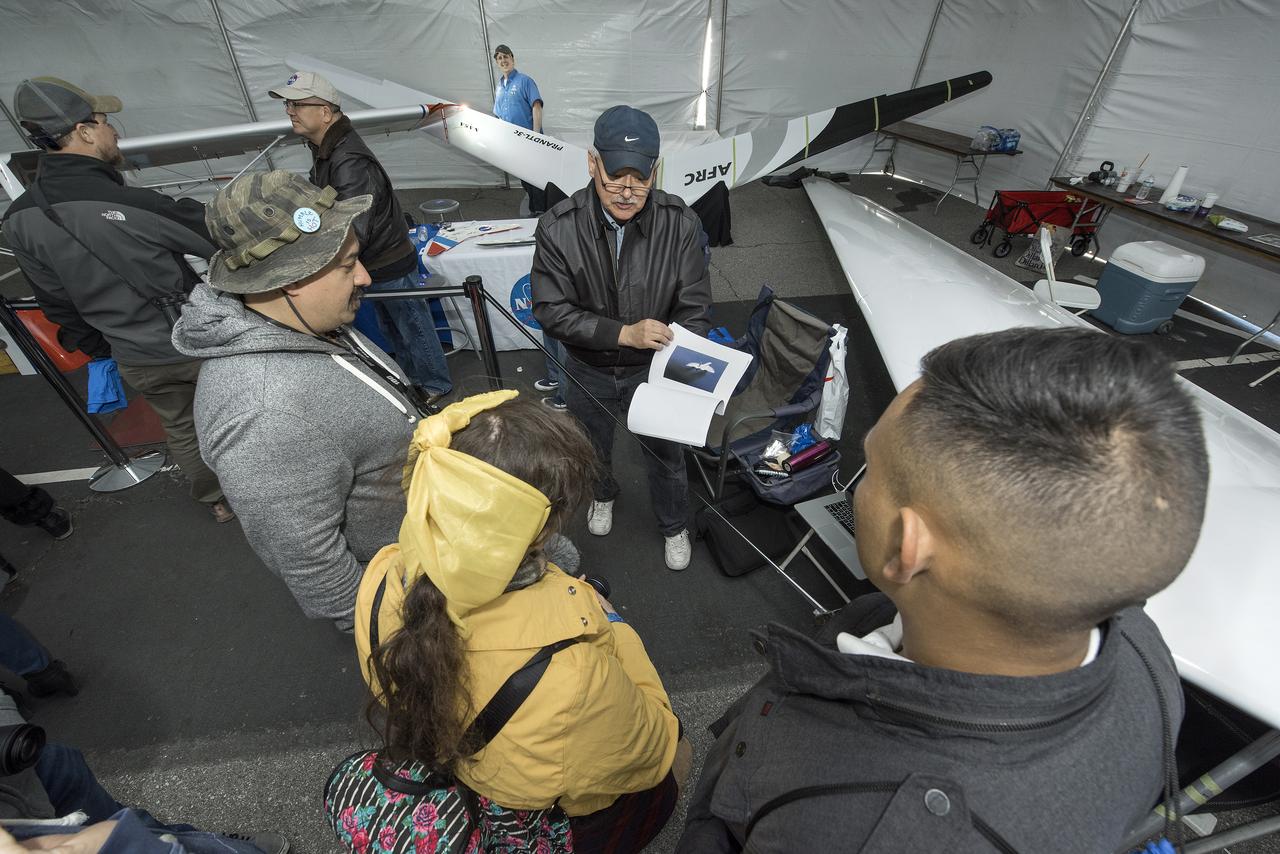
Al Bowers explains the Prandtl experimental aircraft and how its wing twist could redefine the efficiency of aircraft.
NASA Armstrong Supported 2018 Los Angeles County Air Show
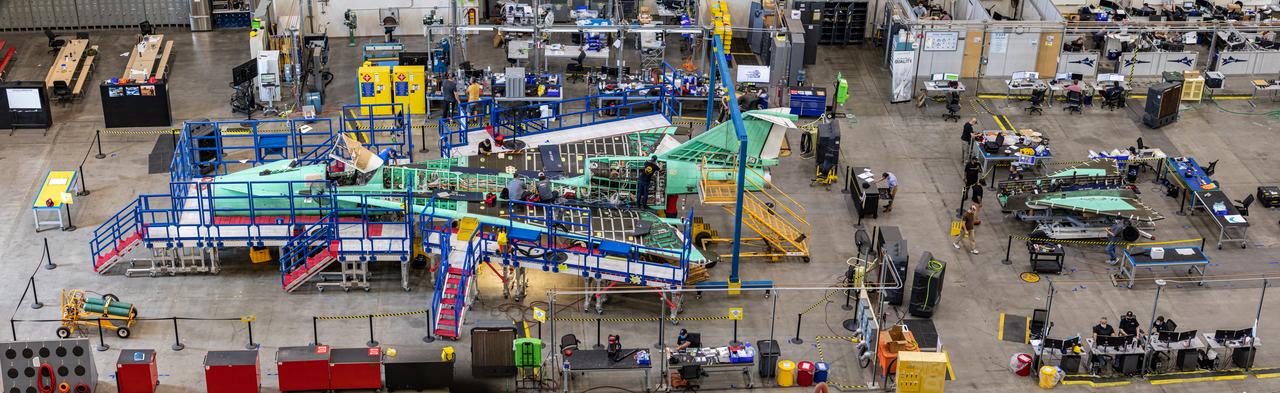
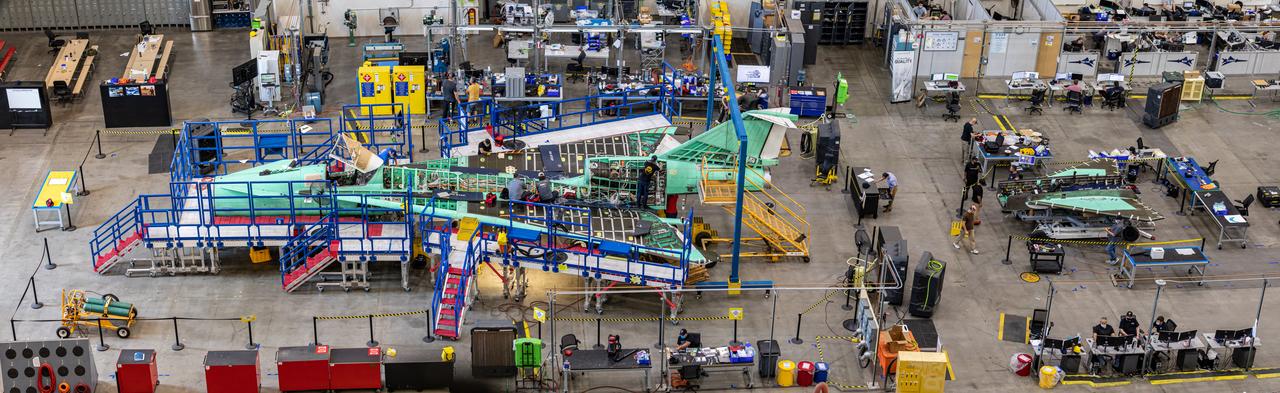
This overhead view of the X-59 shows the aircraft at Lockheed Martin Skunk Works in Palmdale, California. During the assembly of this experimental aircraft, the team often has to remove components to effectively and safely assemble other sections of the aircraft. In this image, the nose is not attached and the horizontal stabilators are shown behind the tail. The X-59 is the centerpiece of NASA’s Quesst mission which plans to produce data that will help enable commercial supersonic air travel over land.
FTIS Sensors and From Above
This overhead view of the X-59 shows the aircraft at Lockheed Martin Skunk Works in Palmdale, California. During the assembly of this experimental aircraft, the team often has to remove components to effectively and safely assemble other sections of the aircraft. In this image, the nose is not attached and the horizontal stabilators are shown behind the tail. The X-59 is the centerpiece of NASA’s Quesst mission which plans to produce data that will help enable commercial supersonic air travel over land.
FTIS Sensors and From Above
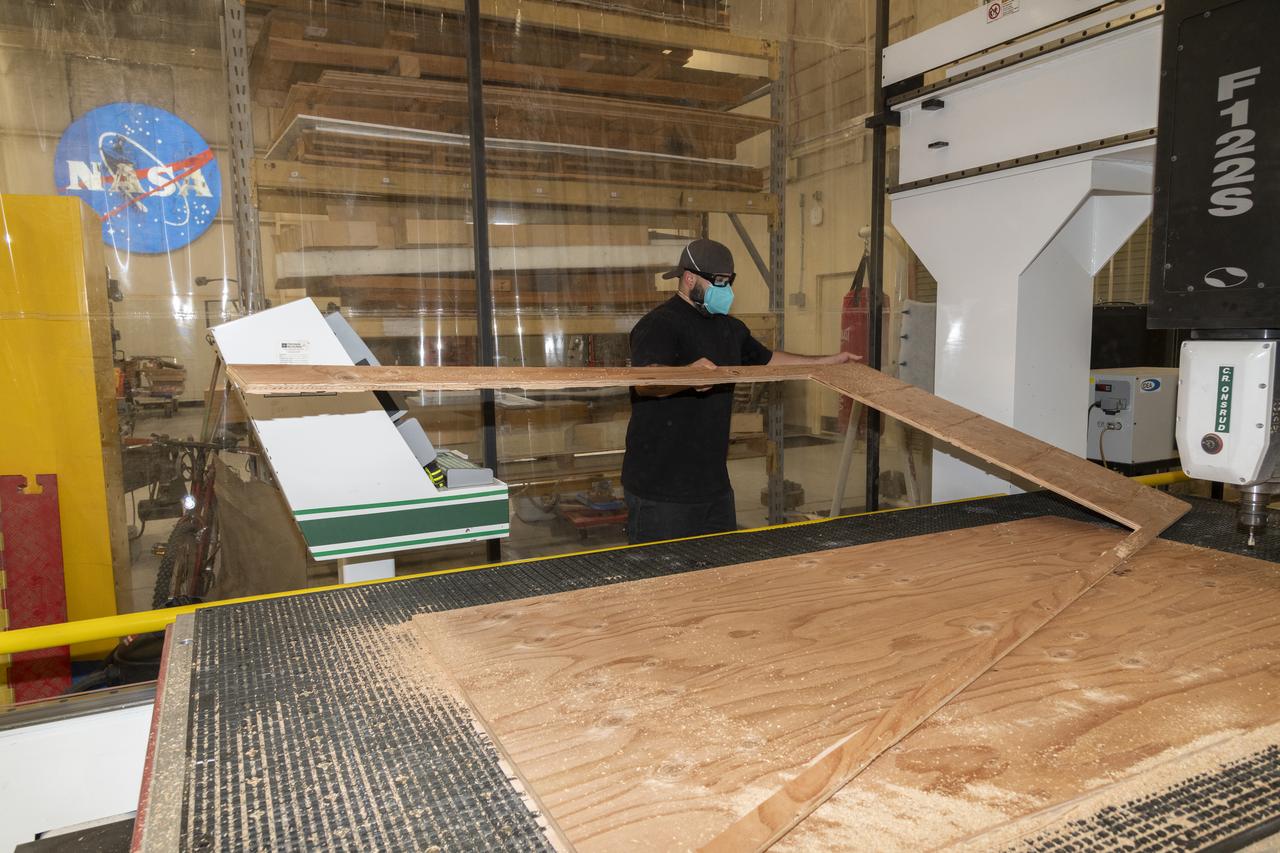
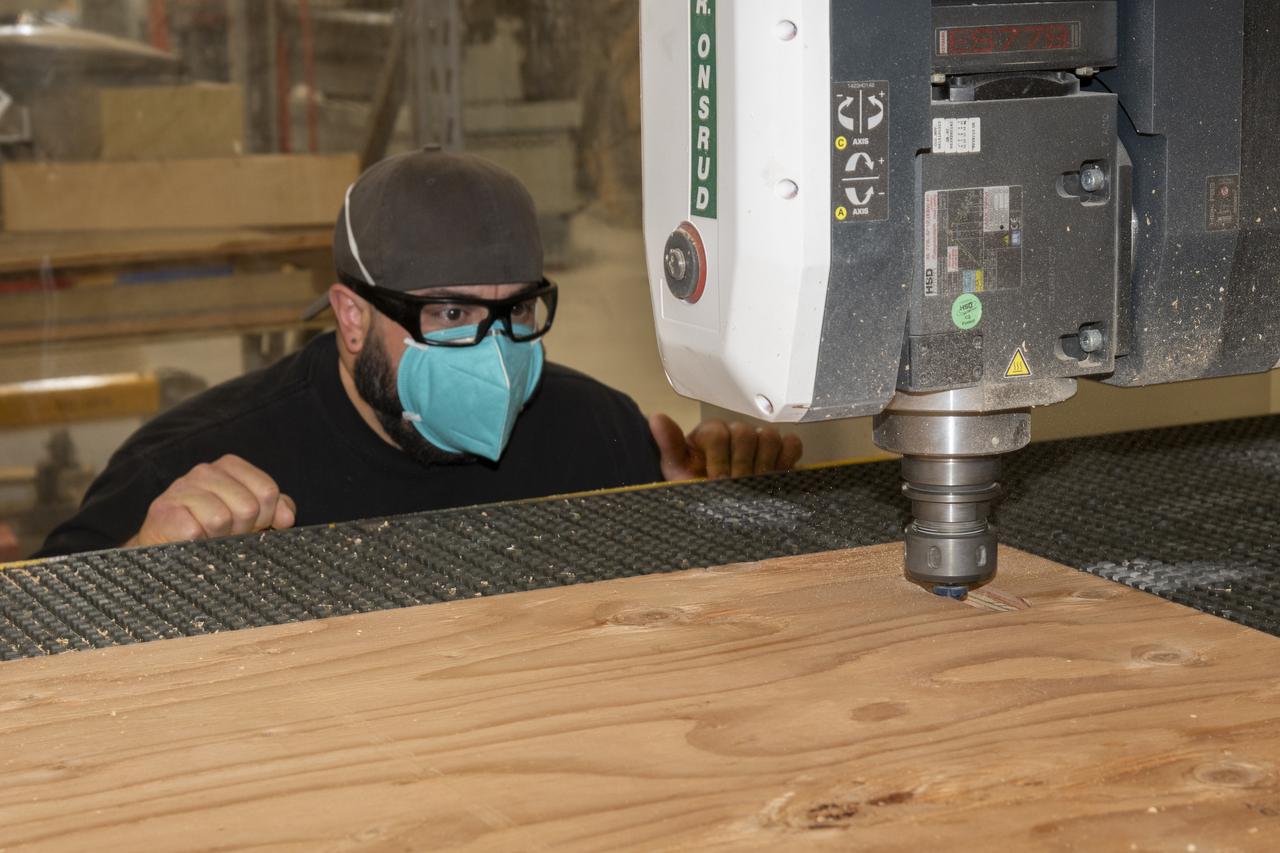
Eric Garza, an engineering technician in the Experimental Fabrication Shop at NASA’s Armstrong Flight Research Center in Edwards, California, cuts plywood to size for temporary floorboards for the X-66 experimental demonstrator aircraft on Aug. 26, 2024.
Experimental Fabrication Shop Creates Floorboards for X-66
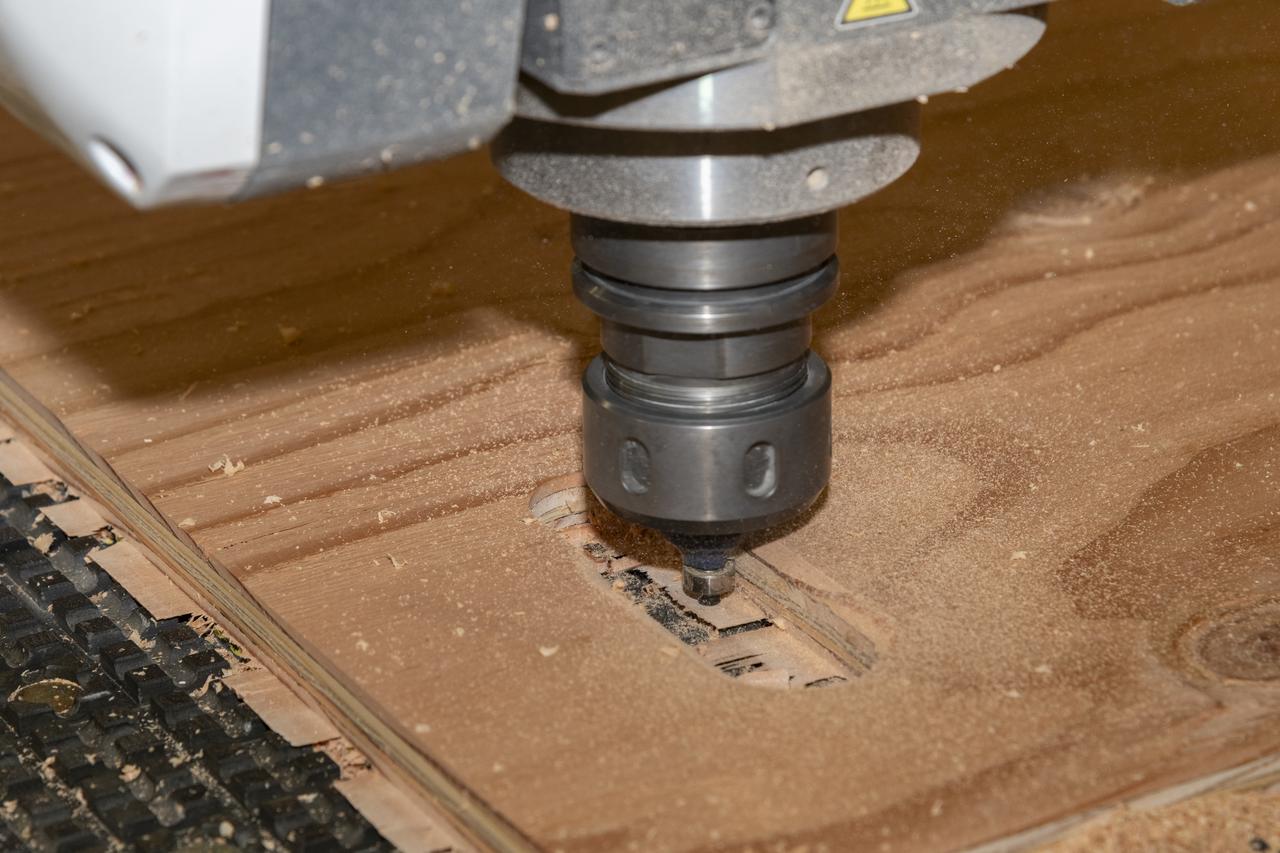
A wood router cuts precise holes in plywood for temporary floorboards on Aug. 26, 2024, in the Experimental Fabrication Shop at NASA’s Armstrong Flight Research Center in Edwards, California. The flooring was designed for the X-66 experimental demonstrator aircraft.
Experimental Fabrication Shop Creates Floorboards for X-66
Eric Garza, an engineering technician in the Experimental Fabrication Shop at NASA’s Armstrong Flight Research Center in Edwards, California, observes a wood router cut holes for temporary floorboards on Aug. 26, 2024. The flooring was designed for the X-66 experimental demonstrator aircraft. 
Experimental Fabrication Shop Creates Floorboards for X-66
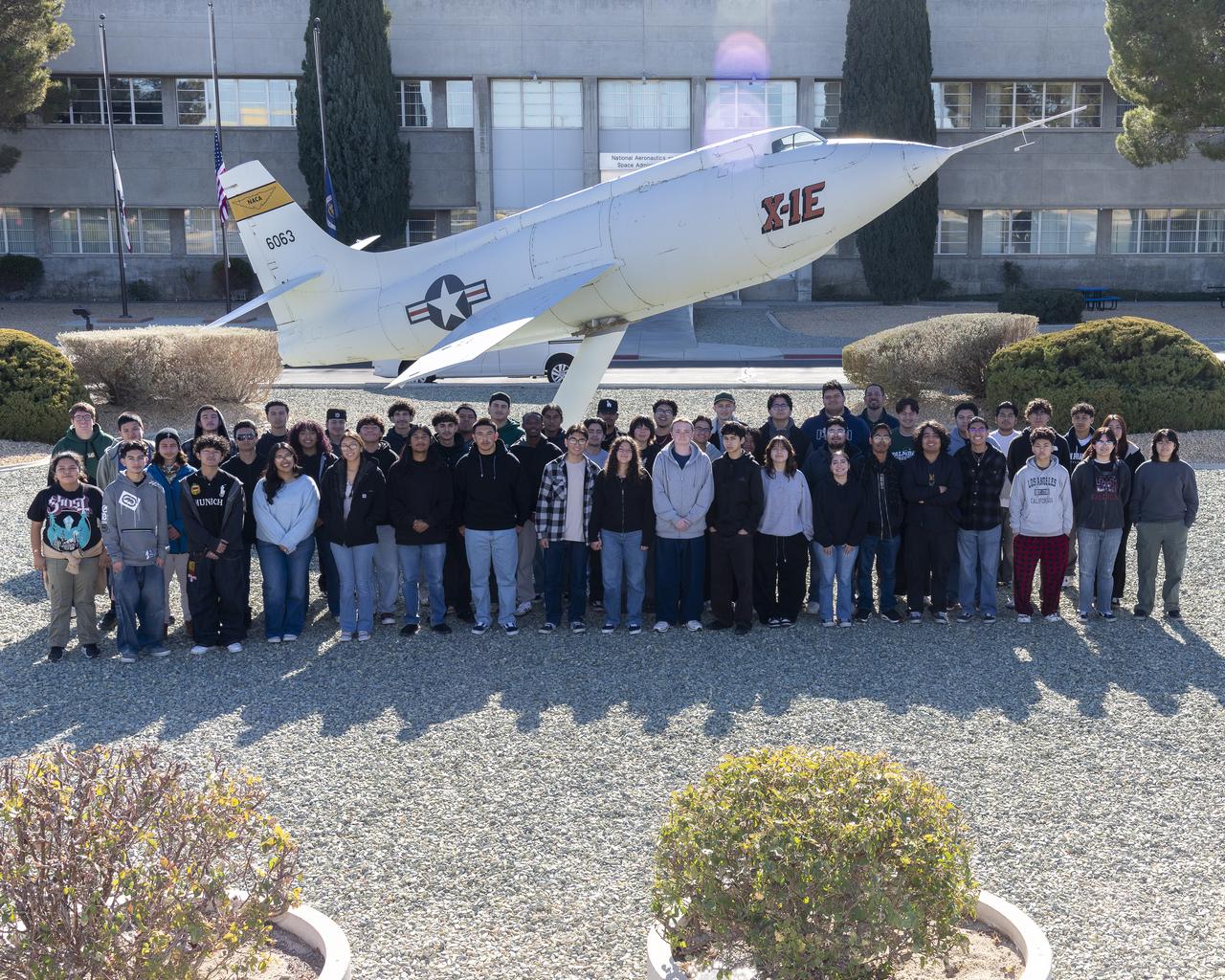
The engineering club from Palmdale High School in Palmdale, California, visits NASA’s Armstrong Research Flight Center in Edwards, California. The students took a group photo in front of the historic X-1E aircraft on display at the center.
Engineering Club Visits NASA Armstrong
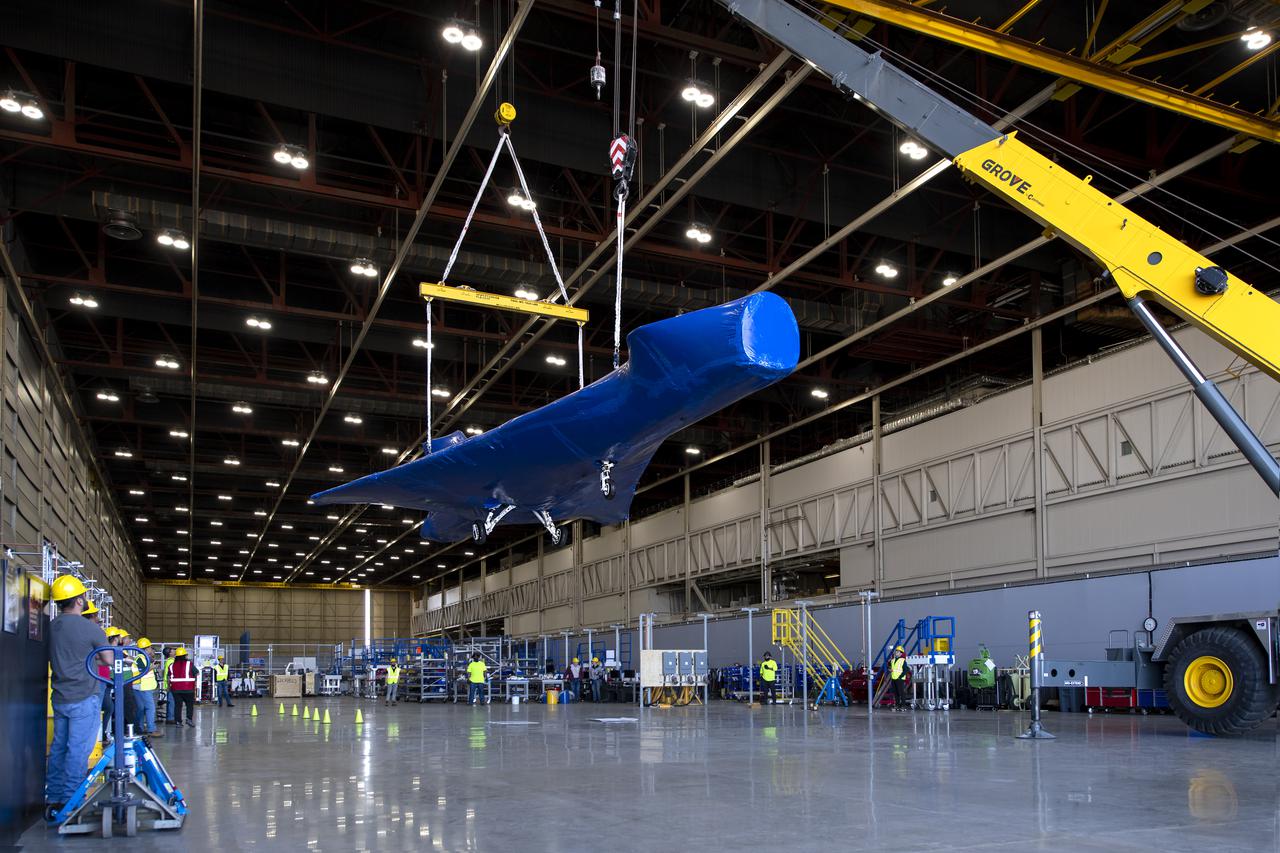
The X-59, NASA’s quiet supersonic technology experimental aircraft, is suspended in the air at Lockheed Martin’s Skunk Works facility in Palmdale, California, following several months of critical ground testing in Ft. Worth, Texas
X-59 Arrives Back in California After Critical Ground Tests
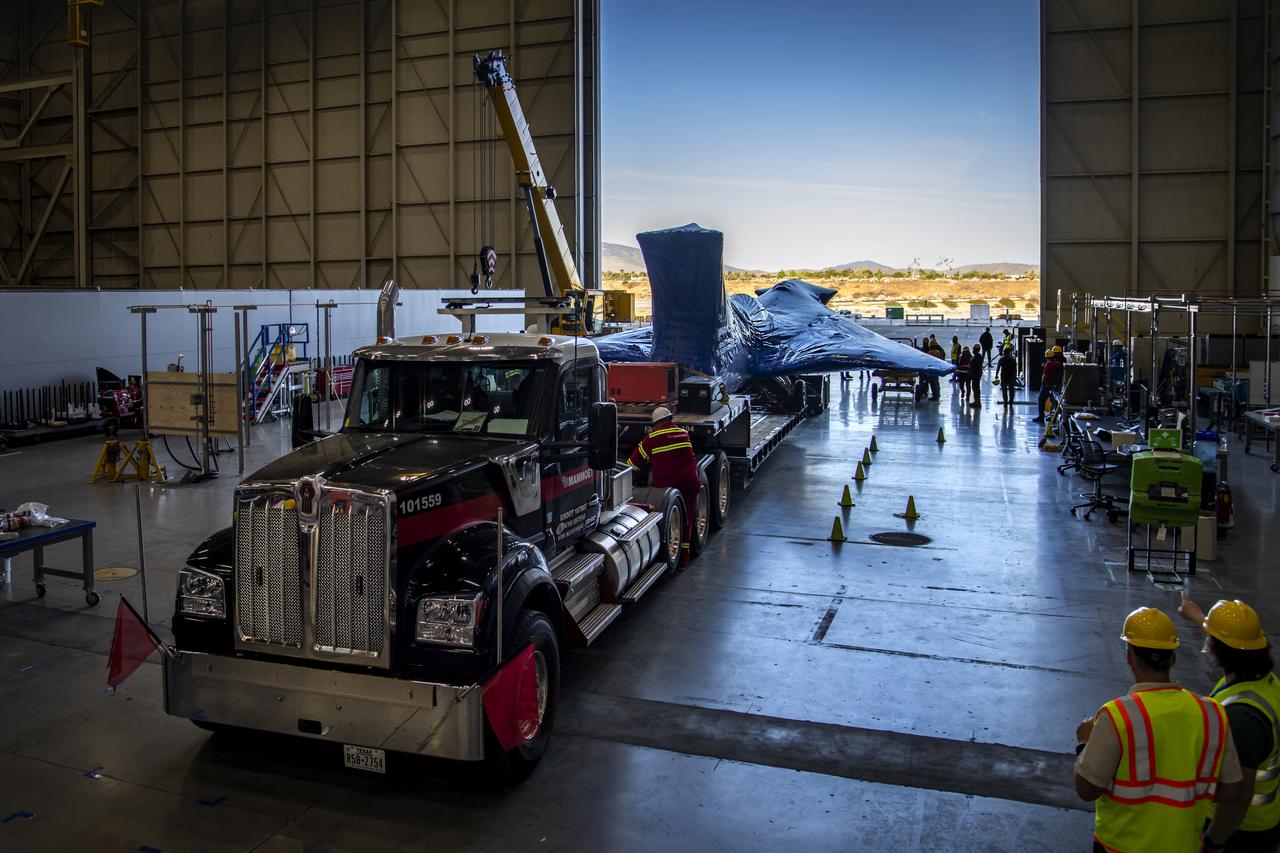
The X-59, NASA’s quiet supersonic technology experimental aircraft, arrives back at Lockheed Martin’s Skunk Works facility in Palmdale, California, following several months of critical ground testing in Ft. Worth, Texas
X-59 Arrives Back in California After Critical Ground Tests
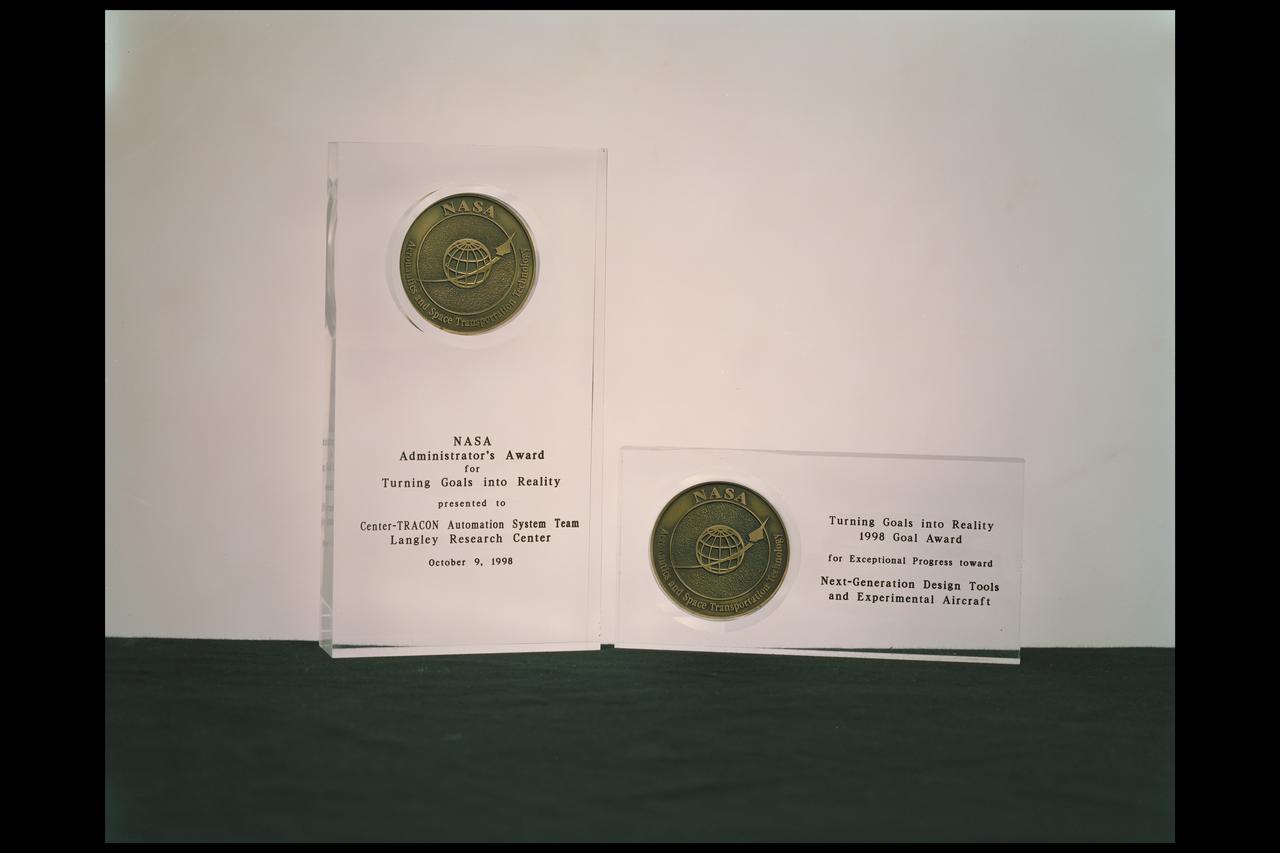
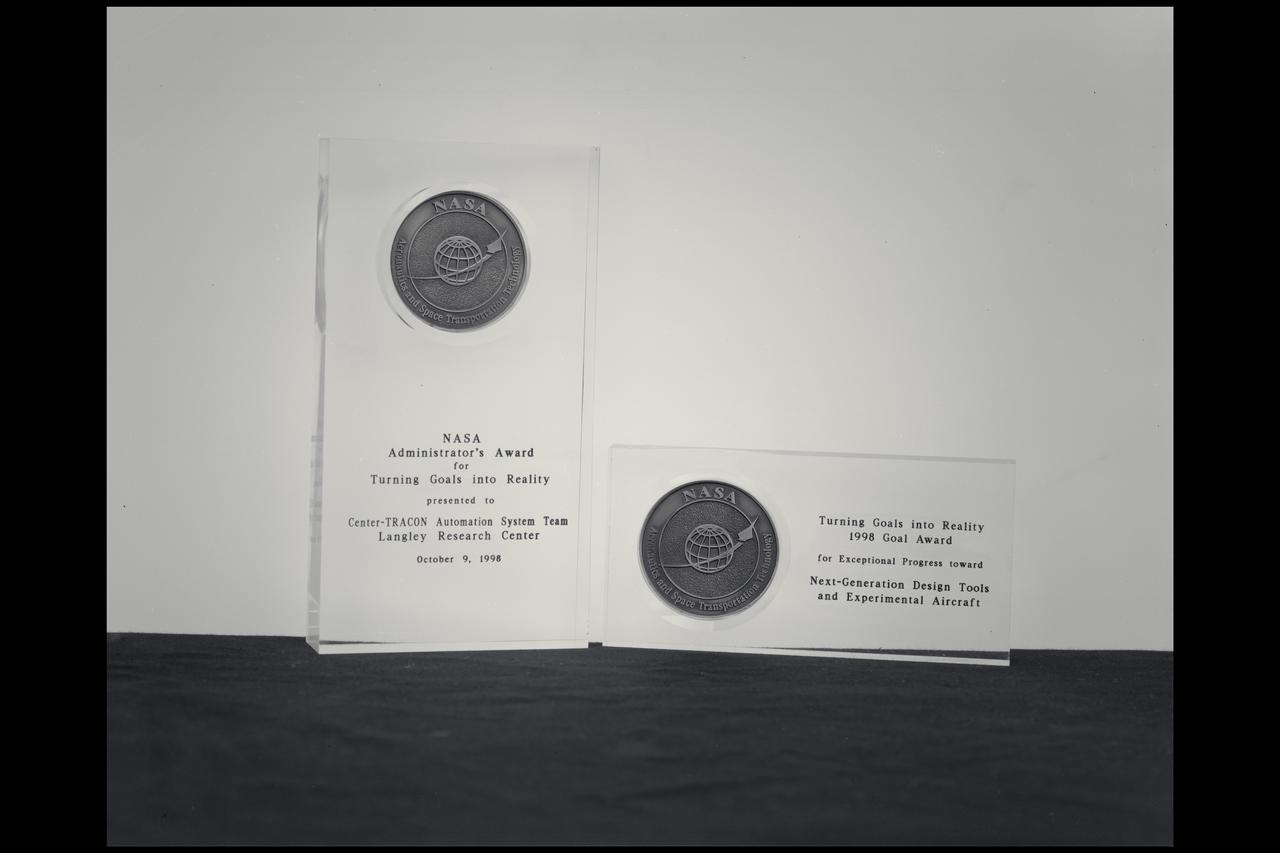
Administrator award (two) Center-Tracon Automation system Team Langley Res. CTR and Goal Award 1998, Next-Genreation Design Tools and Experimental Aircraft- acrylic
ARC-1998-AC98-0242-2
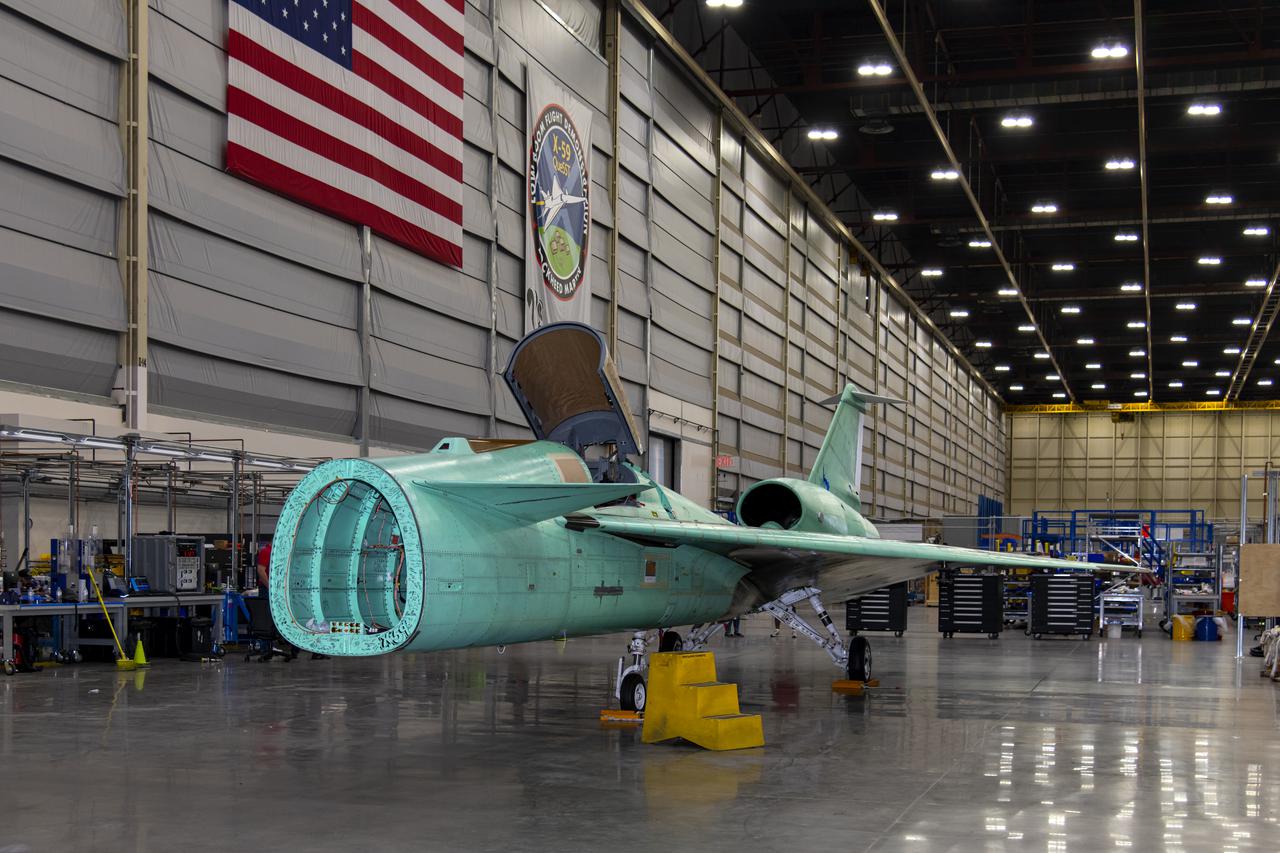
The X-59, NASA's quiet supersonic technology experimental aircraft, sits in Lockheed Martin's Skunk Works facility in Palmdale, California, following its return from several months of critical ground testing in Ft. Worth, Texas
X-59 Arrives Back in California After Critical Ground Tests
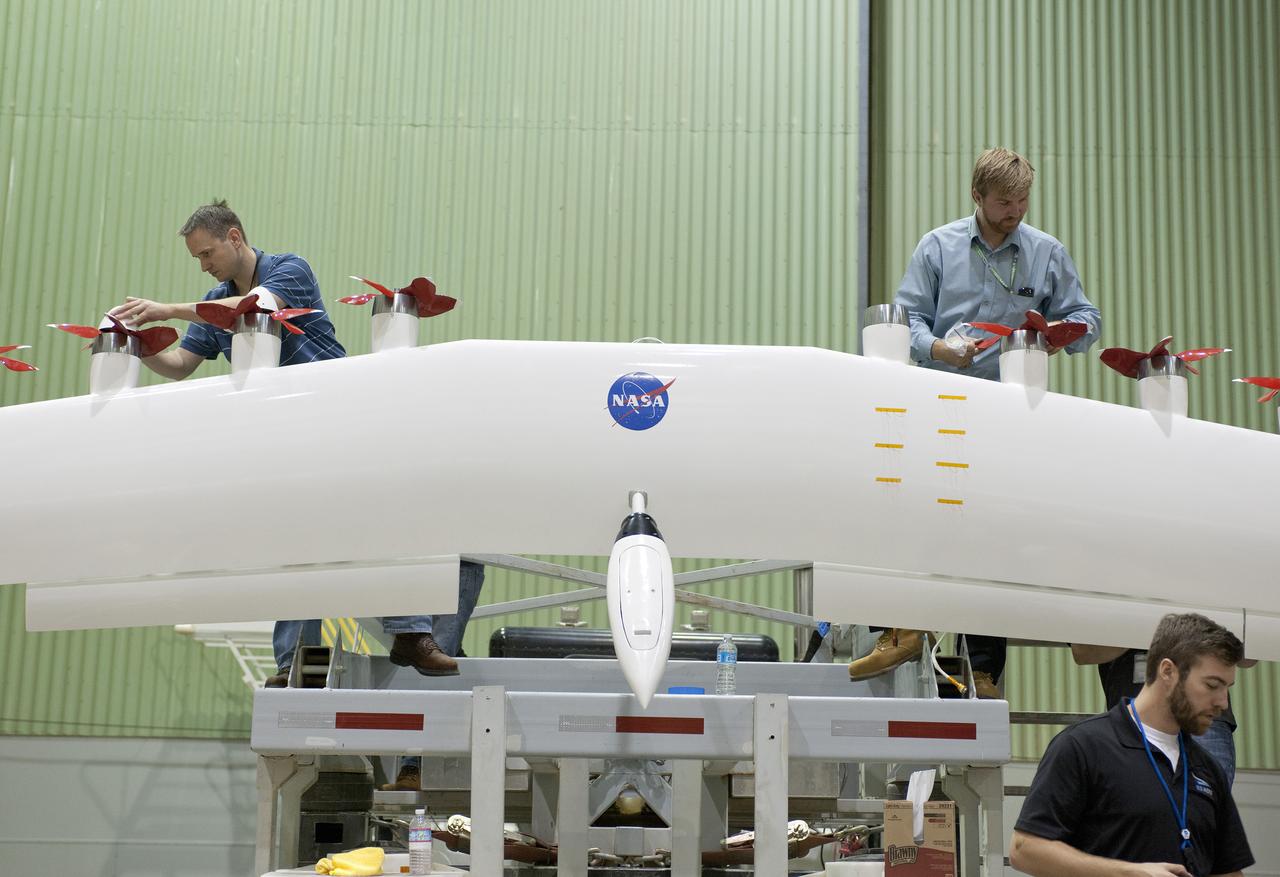
Engineers work on a wing with electric motors that is part of an integrated experimental testbed. From left are Sean Clarke, left, Kurt Papathakis at upper right and Anthony Cash in the foreground.
Piloted, Electric Propulsion-Powered Experimental Aircraft Underway
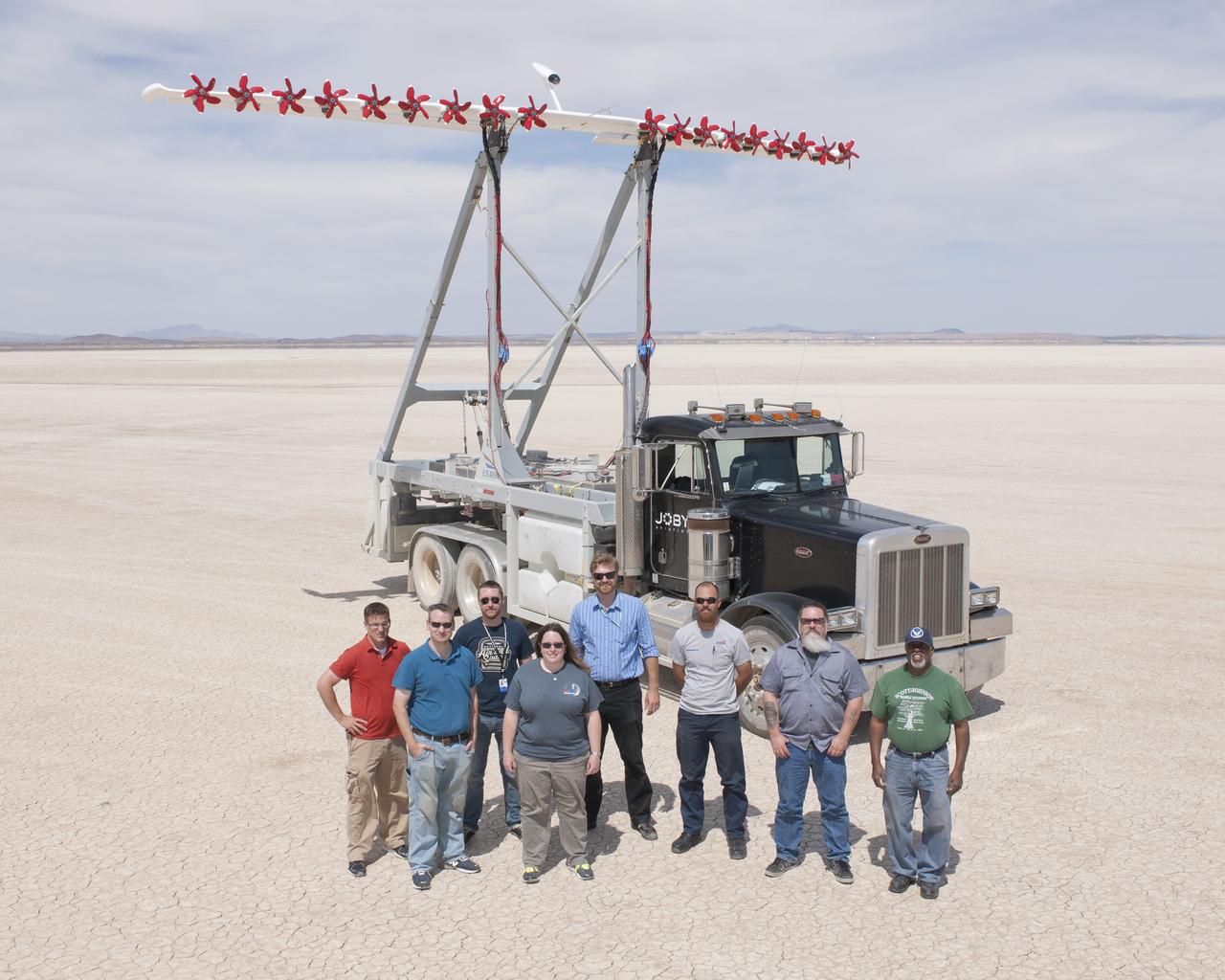
Team members of the Leading Edge Asynchronous Propeller Technology Ground Test team include from left Brian Soukup, Sean Clarke, Douglas Howe, Dena Gruca, Kurt Papathakis, Jason Denman, Vincent Bayne and Freddie Graham.
Piloted, Electric Propulsion-Powered Experimental Aircraft Underway
Engineers gather aerodynamic data on the integrated experimental testbed without the electric motor propellers.
Piloted, Electric Propulsion-Powered Experimental Aircraft Underway
Experimental study on material flammability and flame spreading in partial gravity aboard the DC-9 aircraft, based at GRC. Pictured in the center is John Yaniec, the DC-9 test director, who is coordinating reduced-gravity maneuver timing between the experimenters and the cockpit and ensuring safe behavior of the research cadre.  Pictured on the left is crew member Jerry Auschuetz who is monitoring the experiment.  Floating on the right is researcher Kurt Sacksteder.
GRC-1996-C-01538
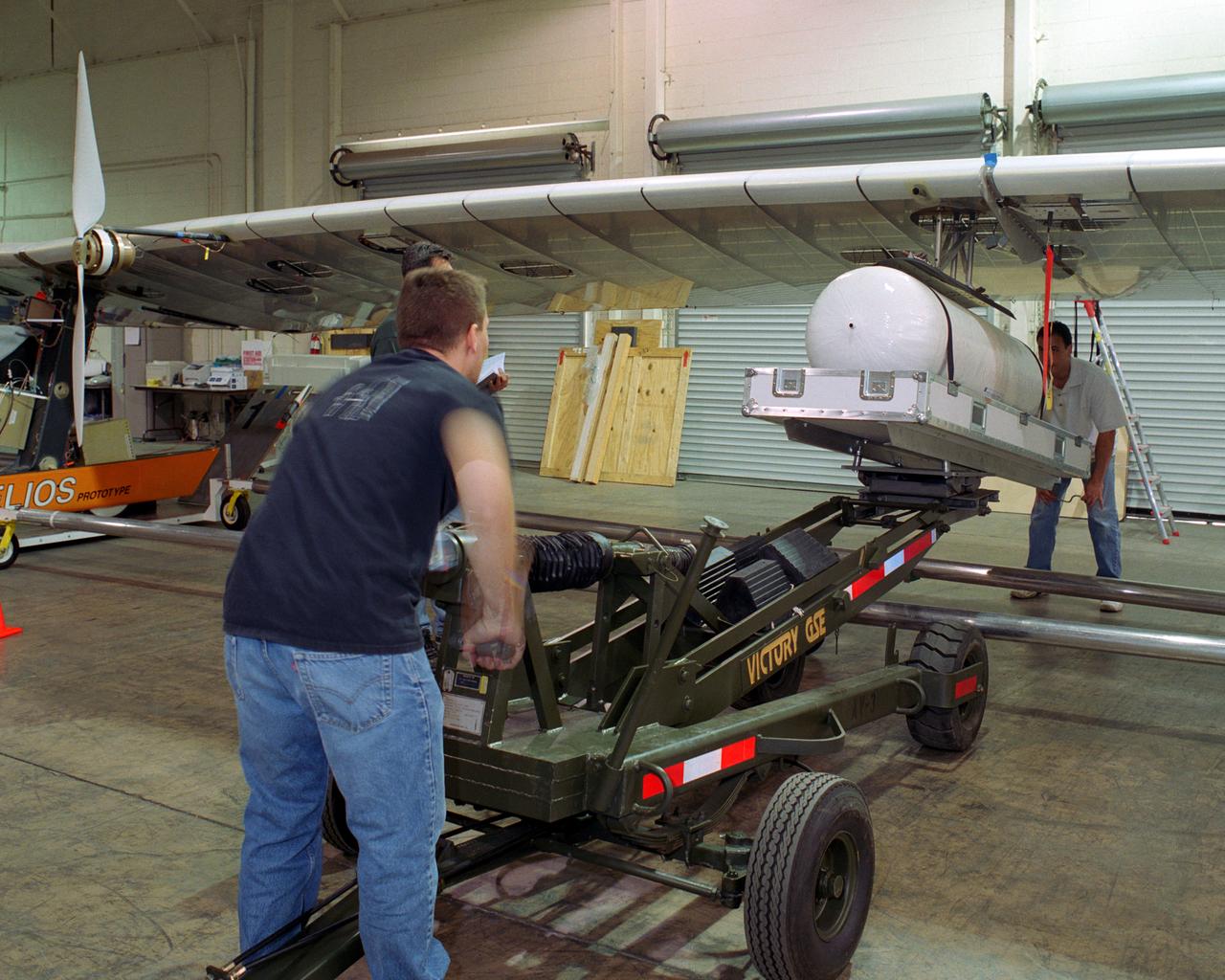
Technicians for AeroVironment, Inc., jack up a pressure tank to the wing of the Helios Prototype solar-electric flying wing. The tank carries pressurized hydrogen to fuel an experimental fuel cell system that powered the aircraft at night during an almost two-day long-endurance flight demonstration in the summer of 2003.
EC03-0058-6
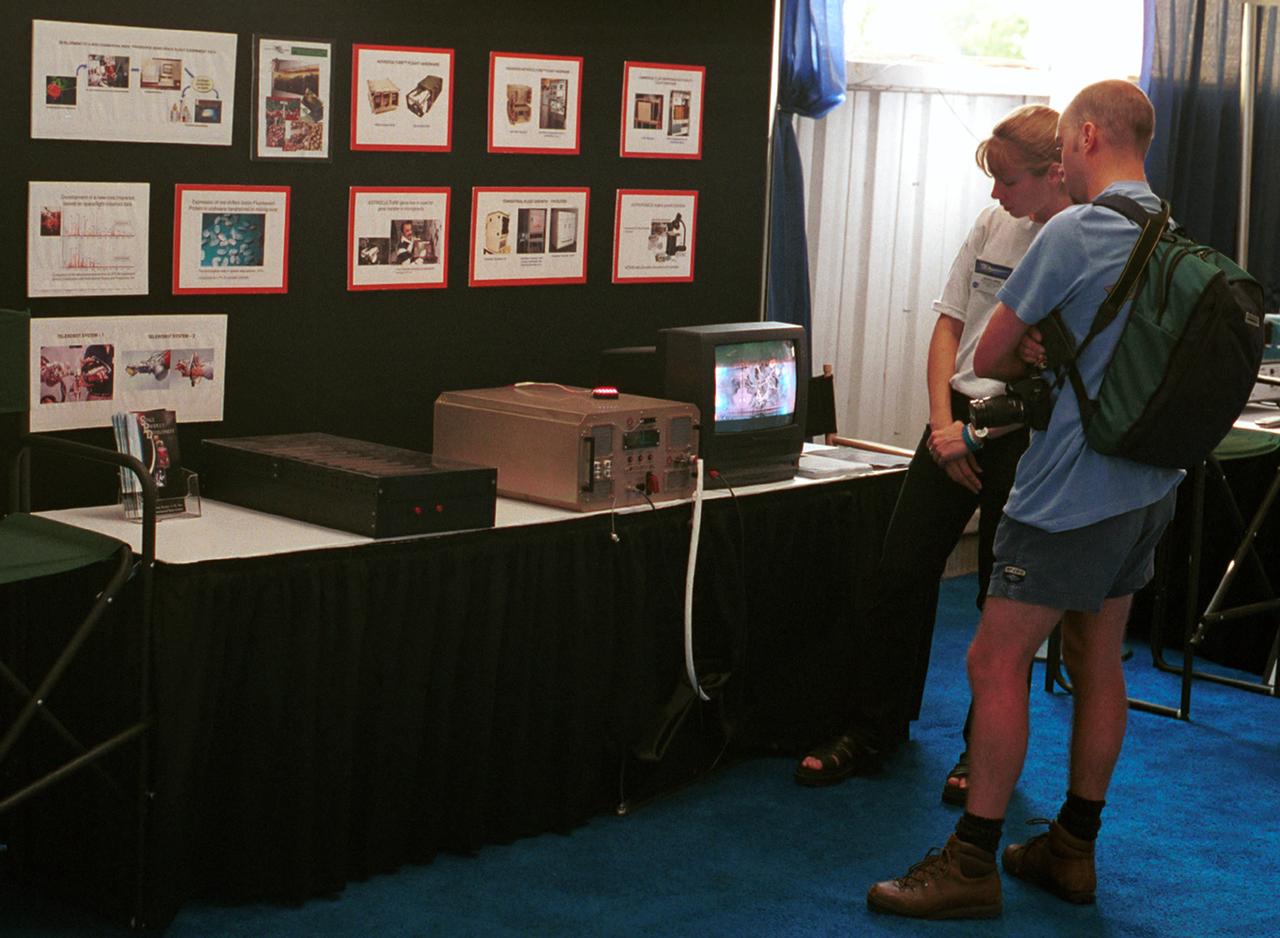
Two visitors watch a TV monitor showing plant growth inside a growth chamber designed for operation aboard the Space Shuttle as part of NASA's Space Product Development program. The exhibit, featuring work by the Wisconsin Center for Space Automation and Robotics, was at AirVenture 2000 sponsored by the Experimental Aircraft Association in Oshkosh, WI.
Microgravity
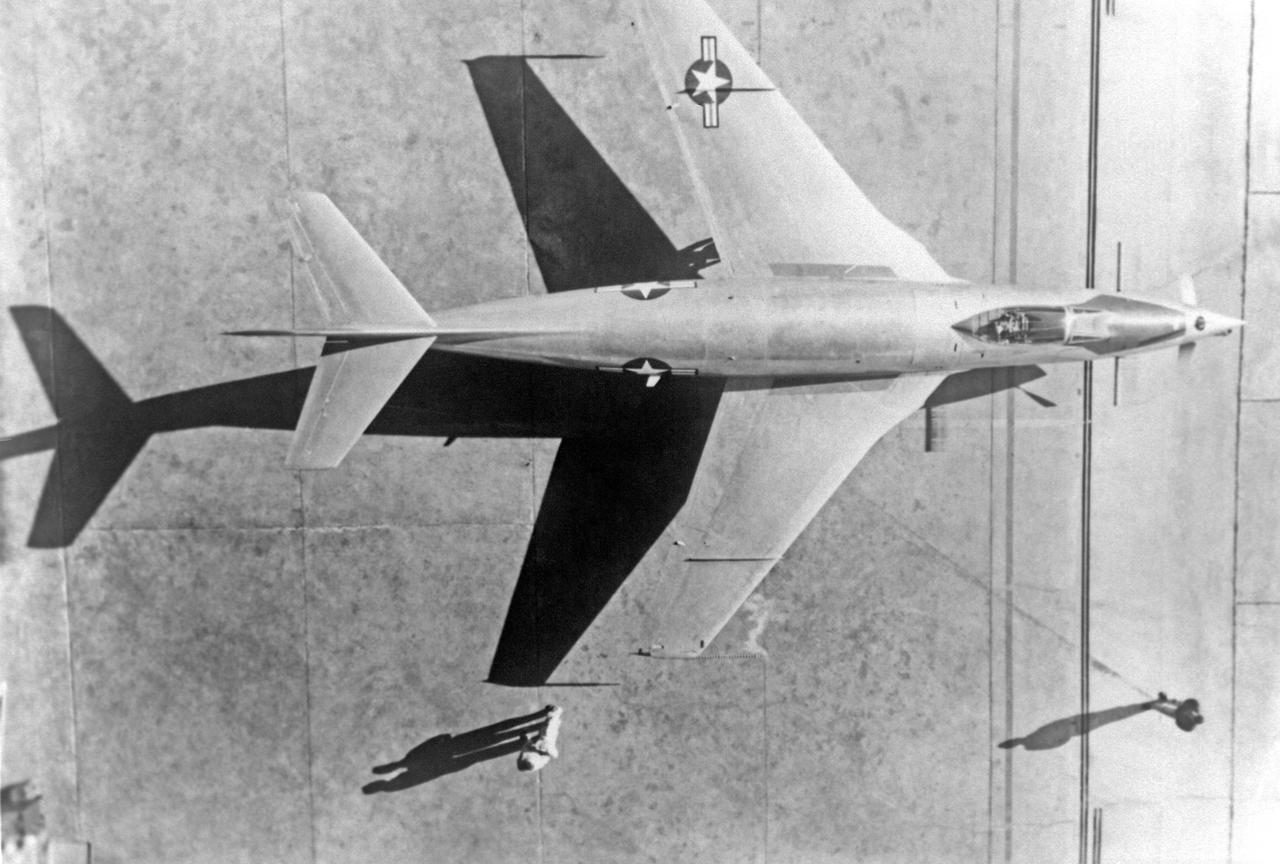
91,591  Overhead view. McDonnell XF-88B Experimental Jet Fighter. Langley used this aircraft in the mid-1950s to explore the potential of a supersonic propeller. Photographed in Engineer in Charge A History of the Langley Aeronautical Laboratory, 1917-1958 by James R. Hansen. Page 508. **Note see L57-2259 for eye level view.
McDonnell XF-88B Experimental Jet Fighter
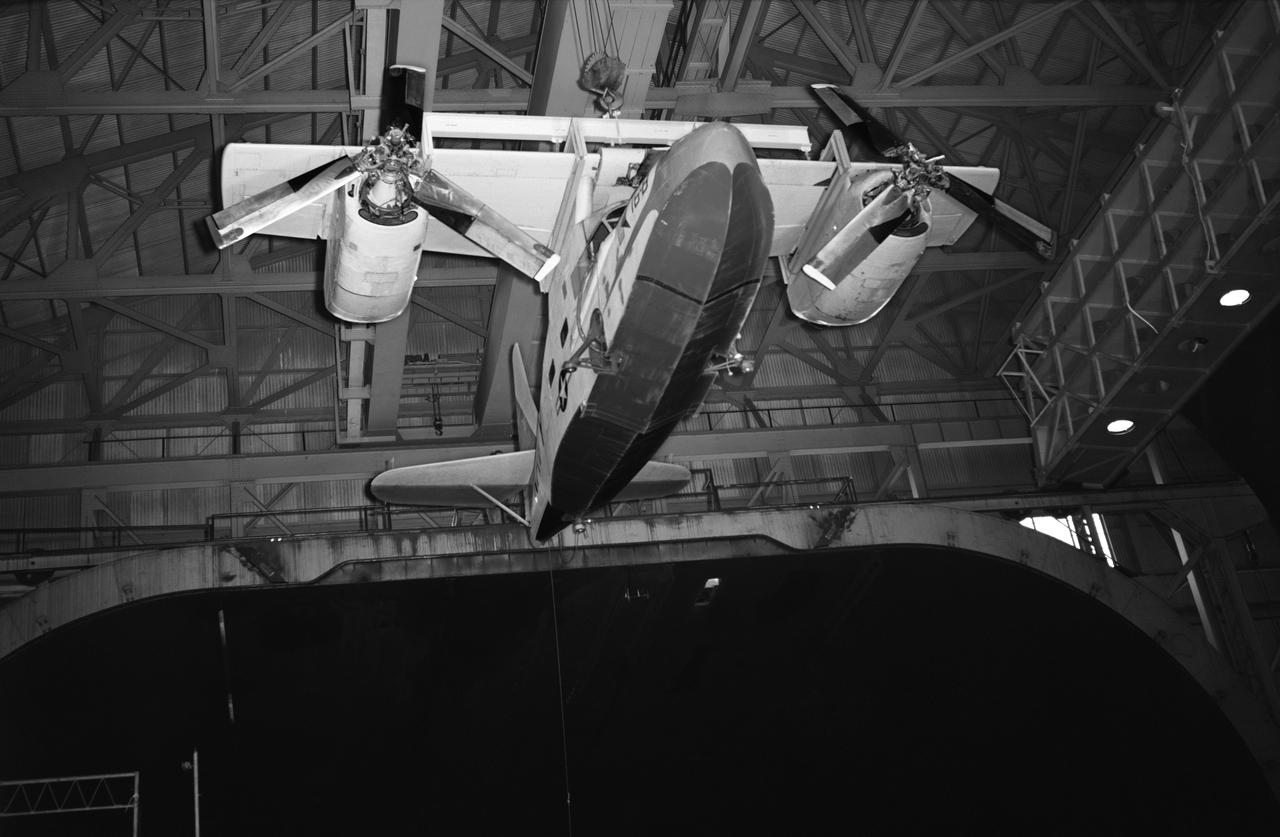
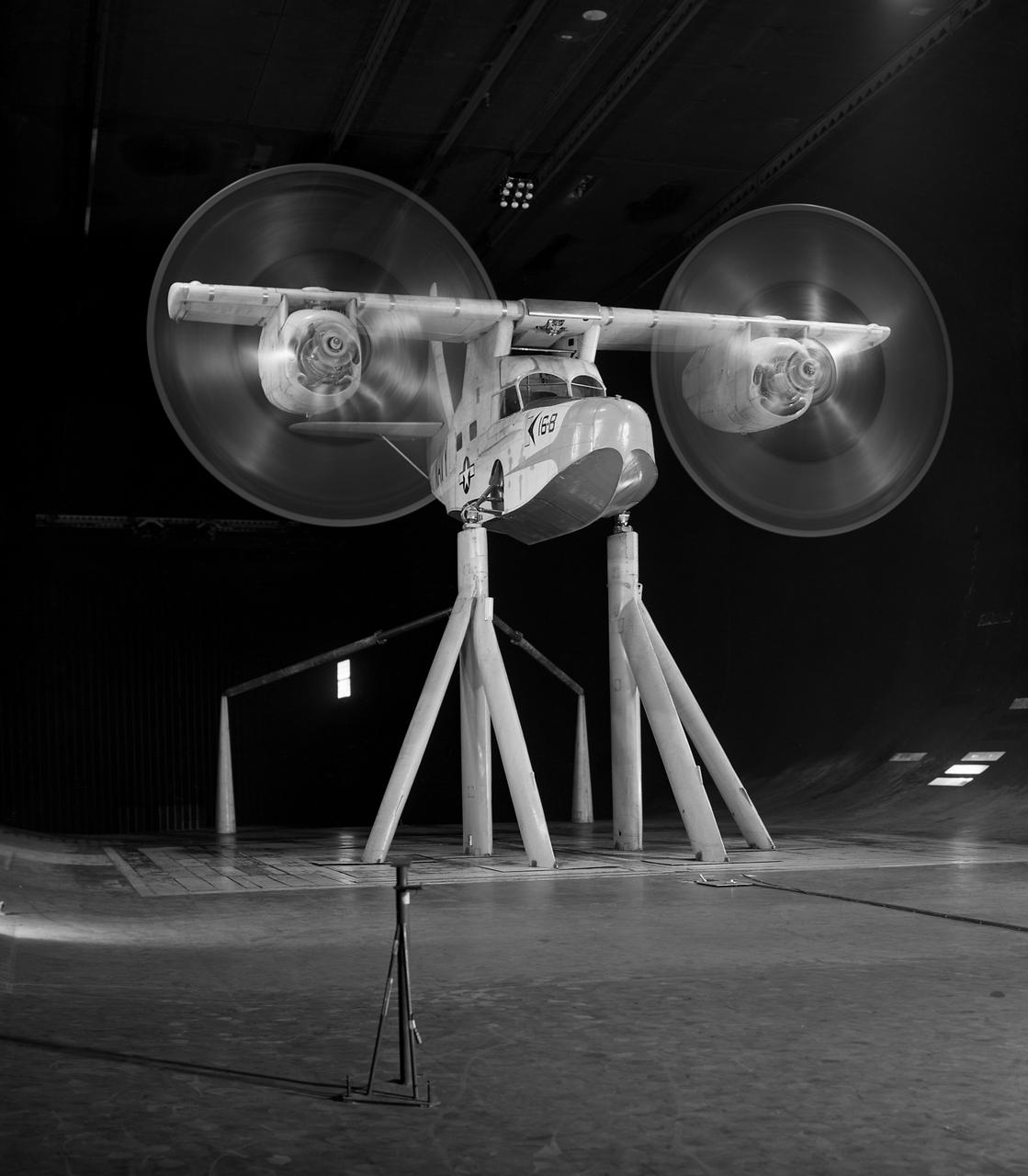
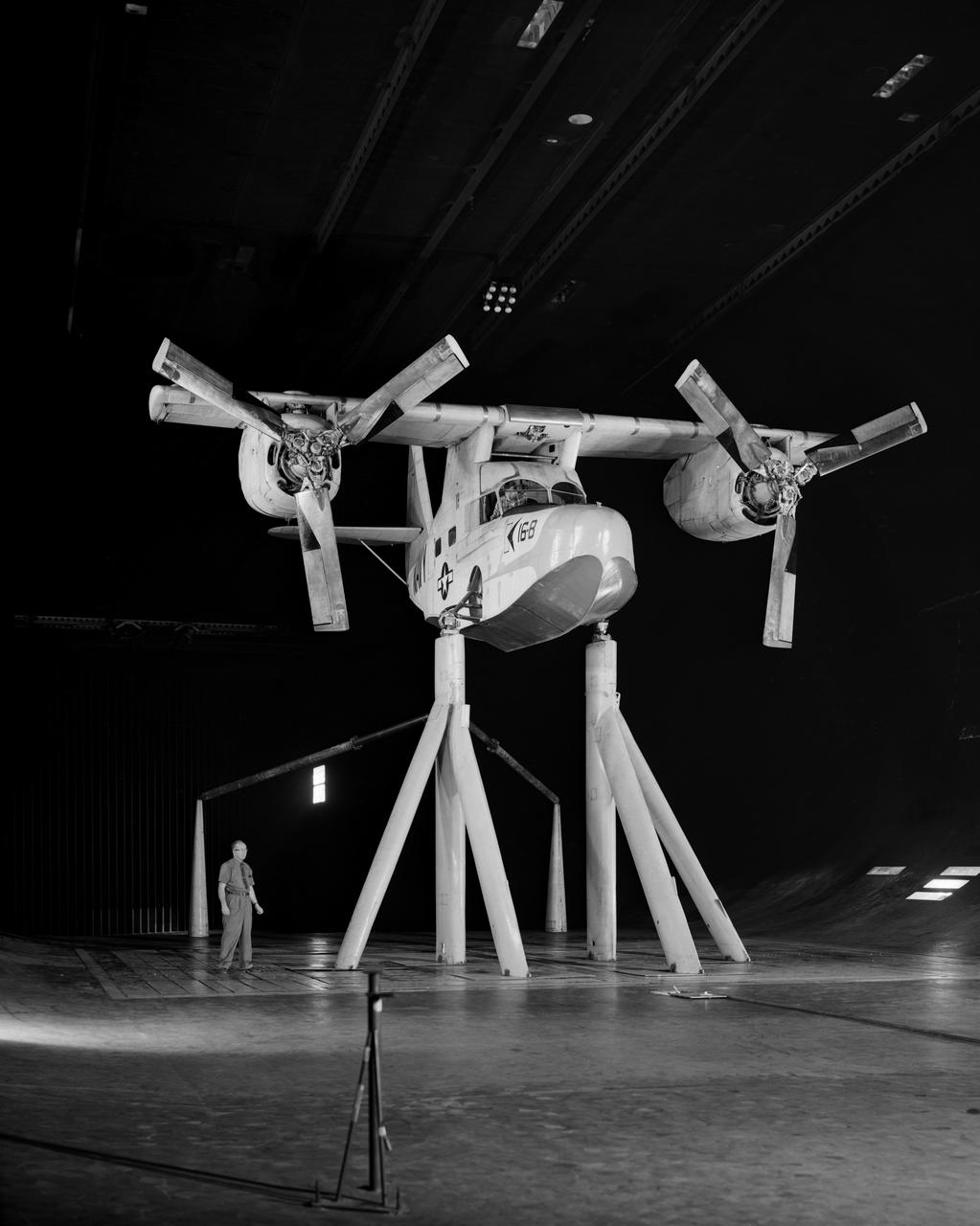
Test No. 175  Kaman K-16 in 40x80 Foot Wind Tunnel at Ames Research Center. Pictured with two Kaman employees.  3/4 Front view of Airplane.  Kaman K-16B was an experimental tilt wing aircraft, it used the fuselage of a JRF-5 and was powered by two General Electric YT58-GE-2A engines.
Kaman K-16 in 40x80 Foot Wind Tunnel at Ames Research Center.
Test No. 175  Kaman K-16 in 40x80 Foot Wind Tunnel at Ames Research Center.  Kaman K-16B was an experimental tilt wing aircraft, it used the fuselage of a JRF-5 and was powered by two General Electric YT58-GE-2A engines.
Kaman K-16 in 40x80 Foot Wind Tunnel at Ames Research Center.
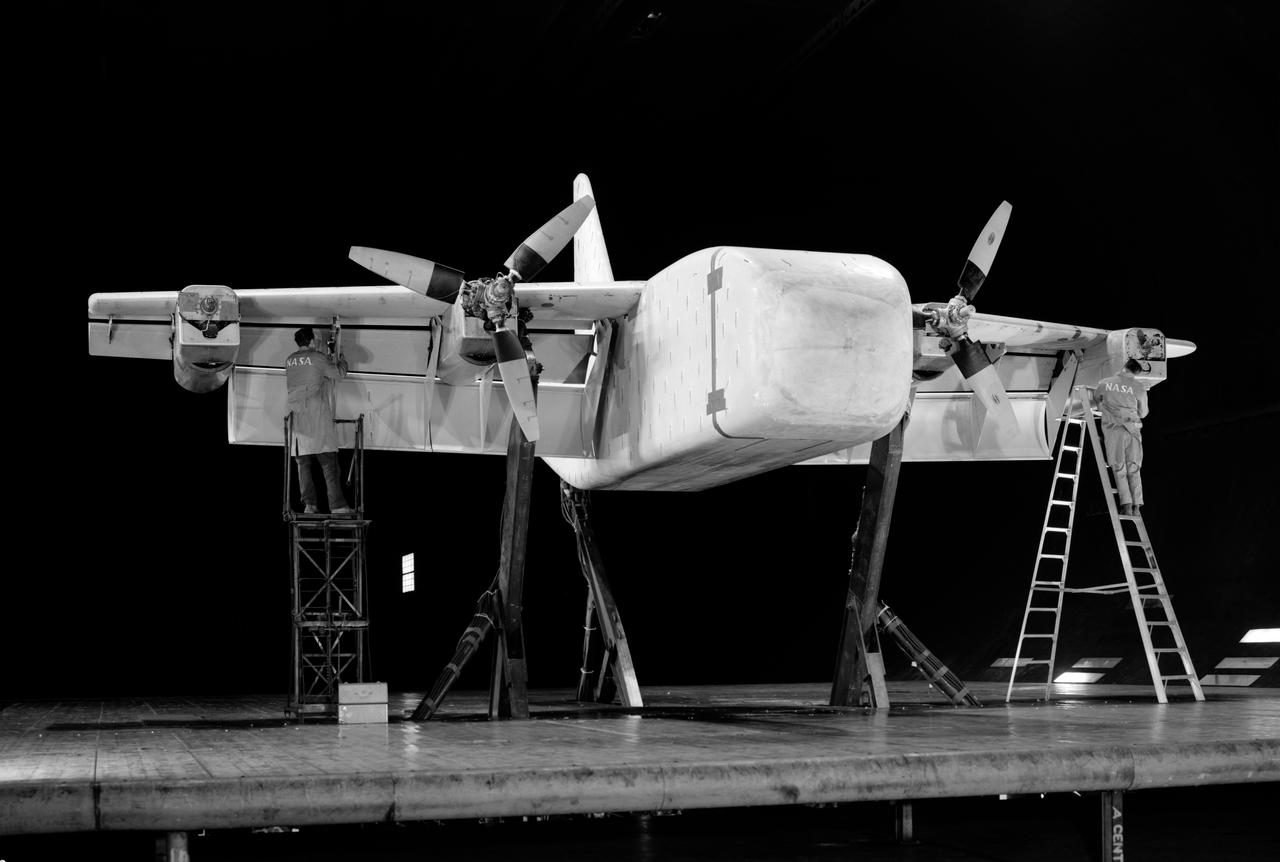
3/4 front right side only with Tim Wills on right and Charles Greco, mechanic. Large flaps on Variable height struts.  XC-142 was a tri-service tiltwing experimental aircraft designed to investigate the operational suitability of vertical/short takeoff and landing (V/STOL) transports.
XC-142 Tilt Wing; 0.6 Scale Model in the 40x80 Foot Wind Tunnel at NASA Ames Research Center.
Test No. 175  Kaman K-16 being lowered into the 40x80 foot wind tunnel at NASA's Ames Research Center, viewed from the front. Kaman K-16B was an experimental tilt wing aircraft, it used the fuselage of a JRF-5 and was powered by two General Electric YT58-GE-2A engines.
Kaman K-16 in 40x80 Foot Wind Tunnel at Ames Research Center.
NASA Administrators Award for:  1. 'Turning Goals into Reality' presented to Center TRACON Automation System Team, Langley Research Center October 9, 1998 2. 'Turning Goals into Reality 1998 Goal Award for  Excetptional Progress toward Next-Generation Design Tools and Experimental Aircraft  acrylic
ARC-1998-A98-0242-1
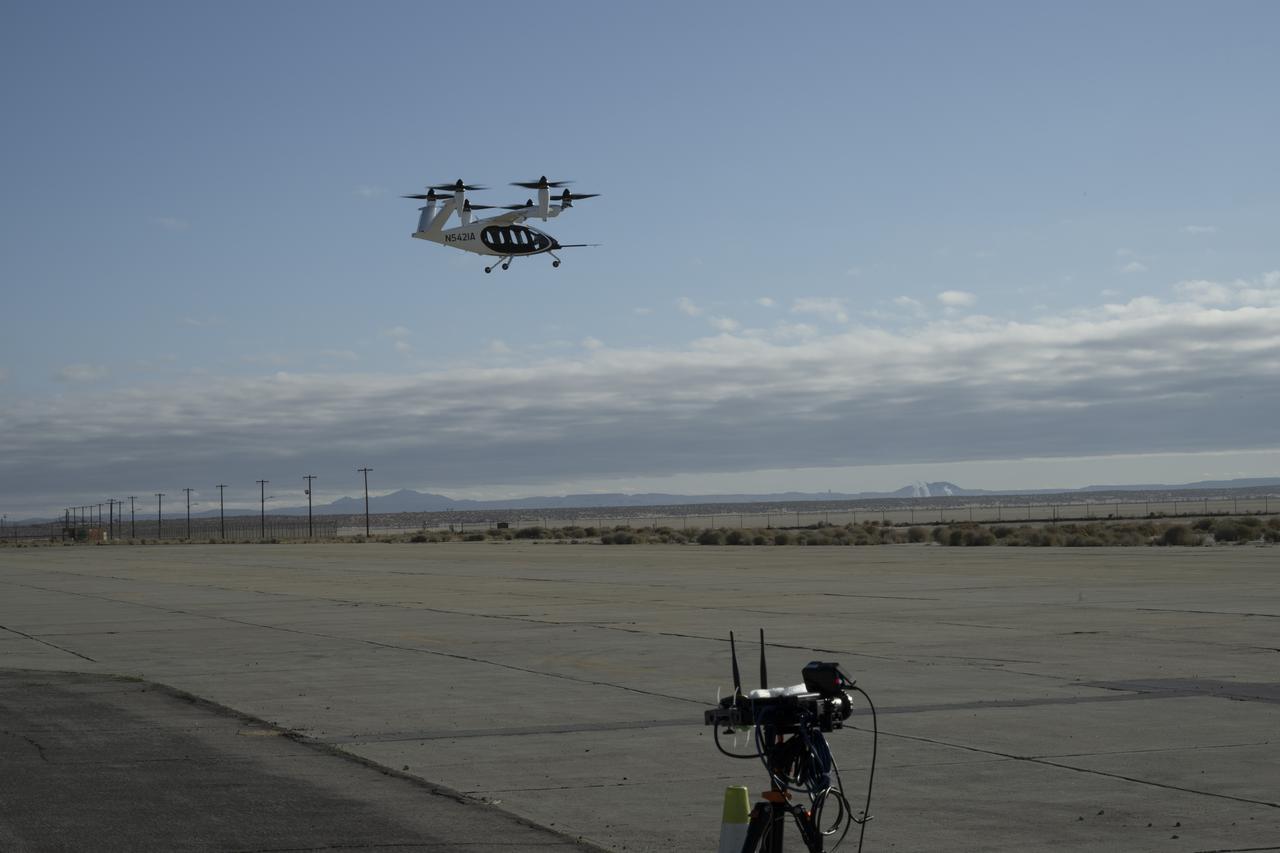
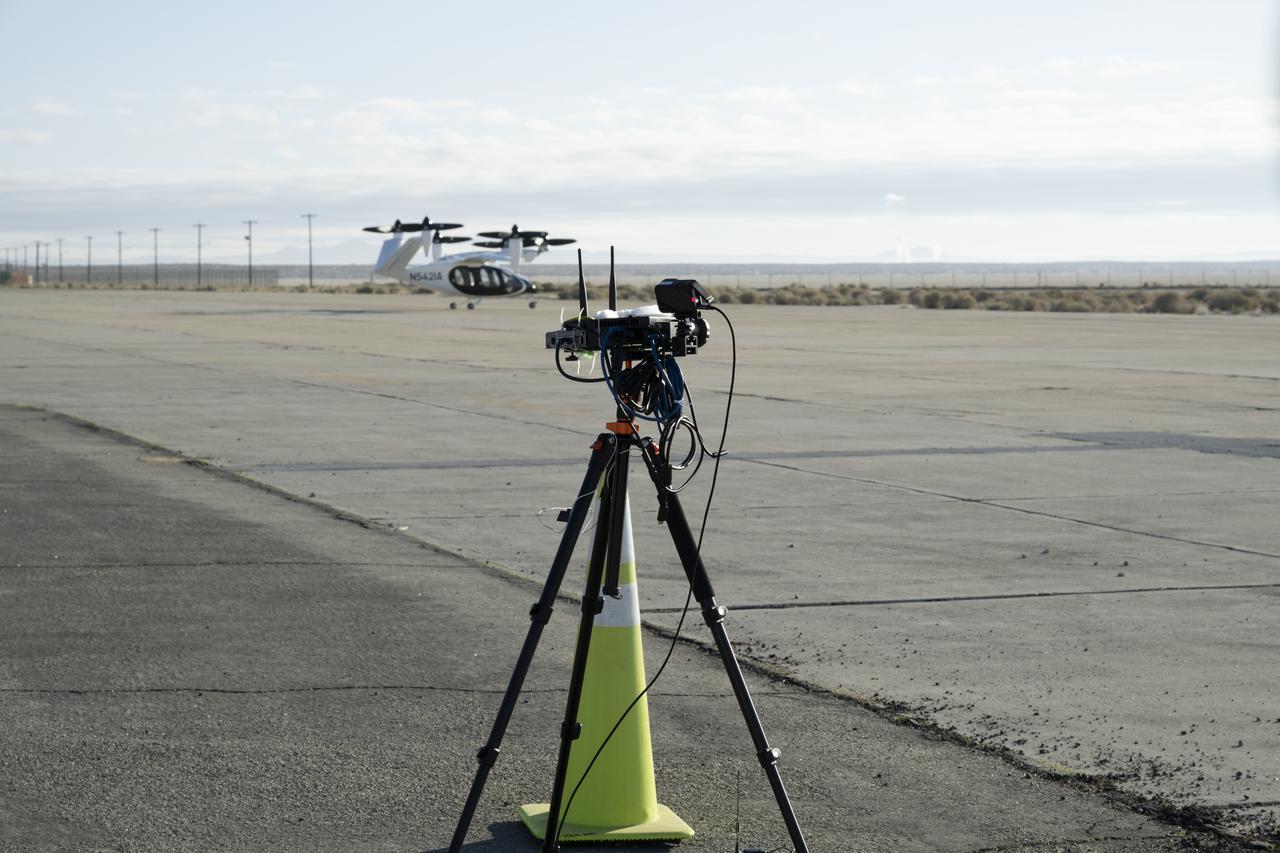
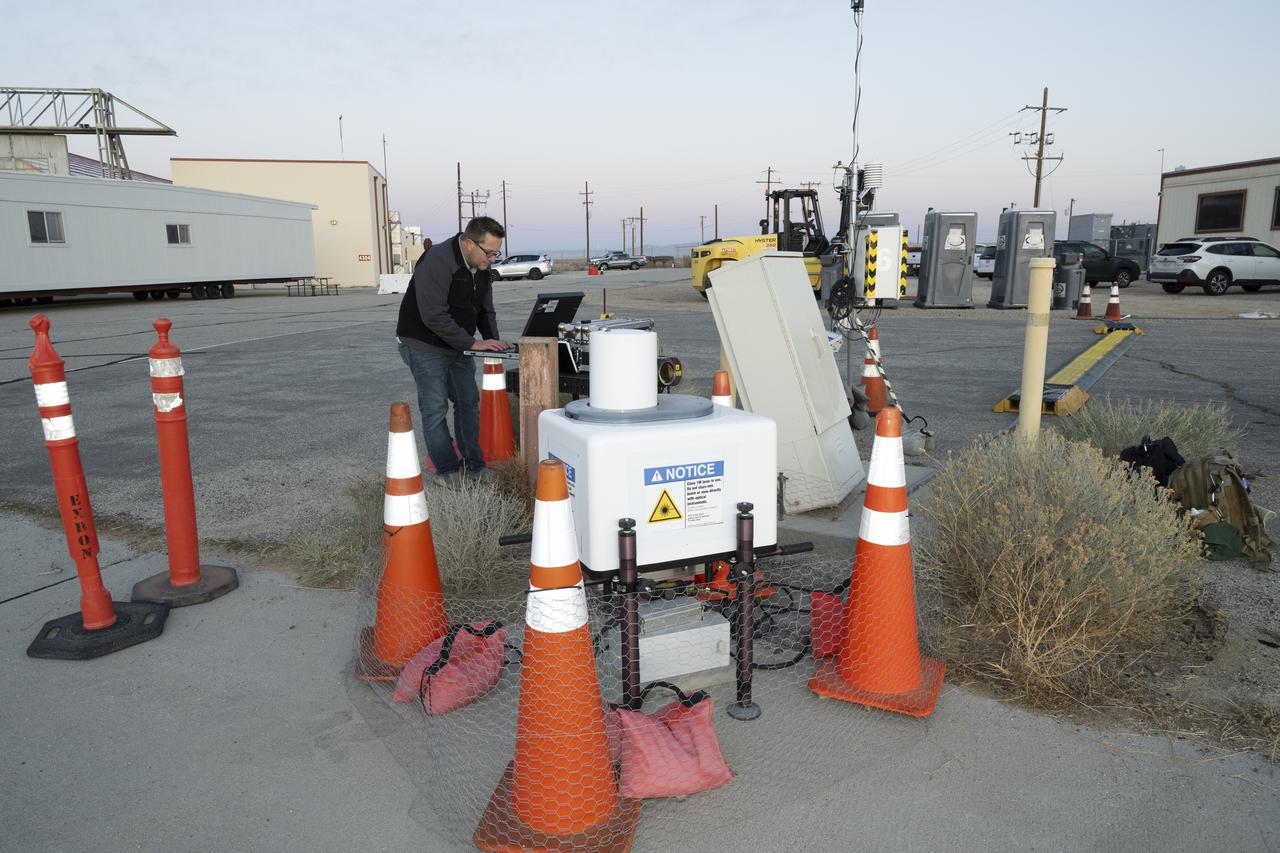
One of multiple NASA distributed sensing ground nodes is set up in the foreground while an experimental air taxi aircraft owned by Joby Aviation prepares to take off in the background near NASA’s Armstrong Flight Research Center in Edwards, California, on March 12, 2025. NASA is collecting information during this study to help advance future air taxi flights, especially those occurring in cities, to track aircraft moving through traffic corridors and around landing zones. 
NASA and Joby Research Near NASA’s Armstrong Flight Research Center
One of multiple NASA distributed sensing ground nodes is set up in the foreground while an experimental air taxi aircraft owned by Joby Aviation hovers in the background near NASA’s Armstrong Flight Research Center in Edwards, California, on March 12, 2025. NASA is collecting information during this study to help advance future air taxi flights, especially those occurring in cities, to track aircraft moving through traffic corridors and around landing zones.
NASA and Joby Research Near NASA’s Armstrong Flight Research Center
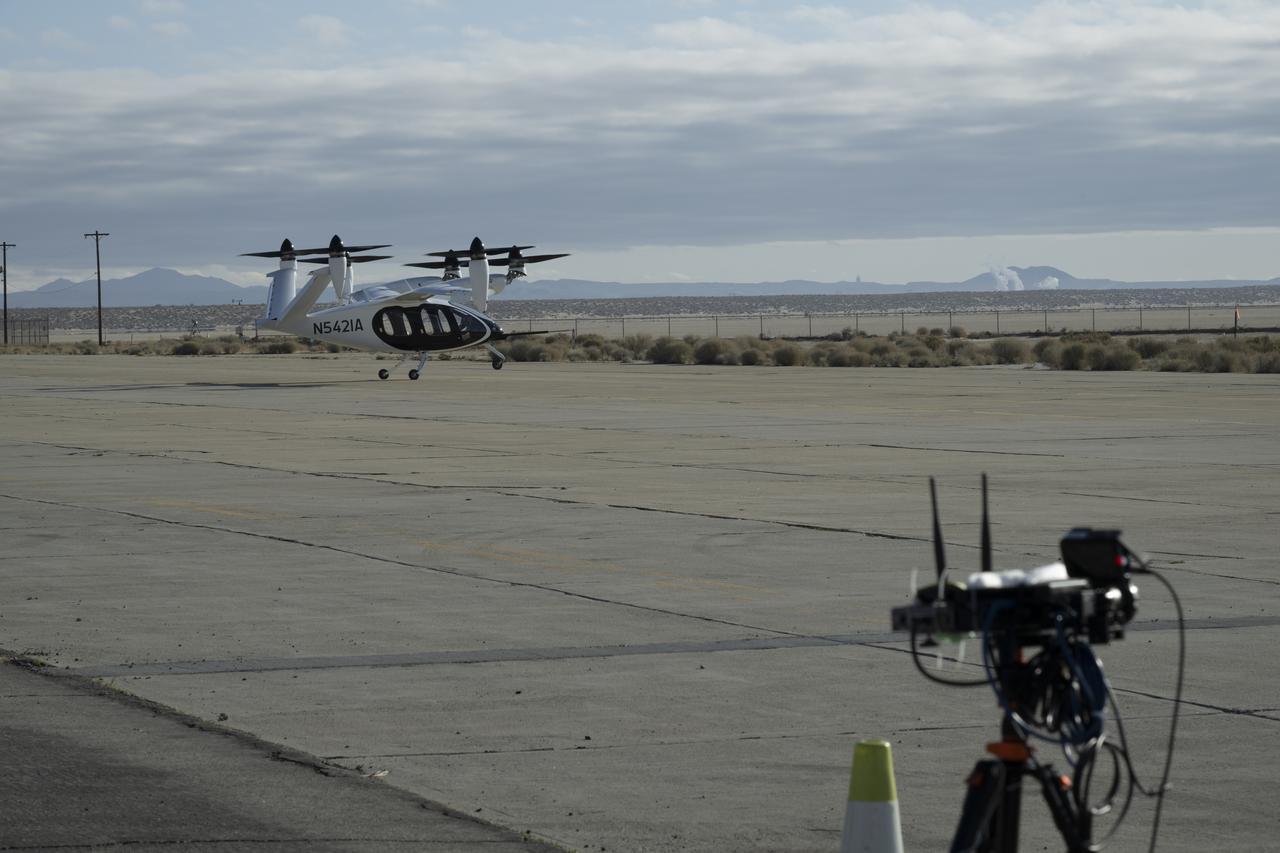
One of several NASA distributed sensing ground nodes is set up in the foreground while an experimental air taxi aircraft owned by Joby Aviation sits in the background near NASA’s Armstrong Flight Research Center in Edwards, California, on March 12, 2025. NASA is collecting information during this study to help advance future air taxi flights, especially those occurring in cities, to track aircraft moving through traffic corridors and around landing zones.
NASA and Joby Research Near NASA’s Armstrong Flight Research Center
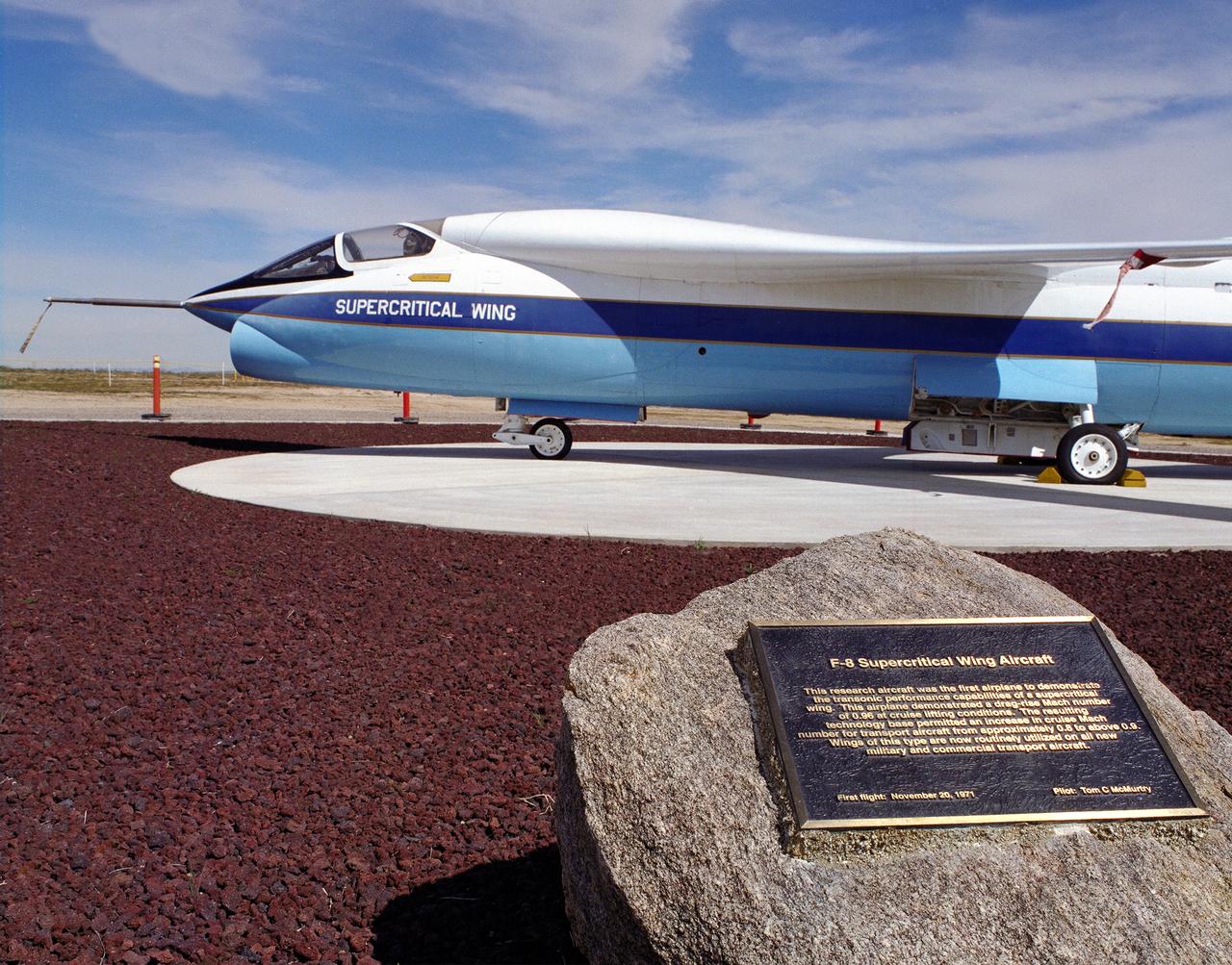
A Vought F-8A Crusader was selected by NASA as the testbed aircraft (designated TF-8A) to install an experimental Supercritical Wing (SCW) in place of the conventional wing. The unique design of the Supercritical Wing reduces the effect of shock waves on the upper surface near Mach 1, which in turn reduces drag.  In the photograph the TF-8A Crusader with the Supercritical Wing is shown on static display in front of the NASA Dryden Flight Research Center, Edwards, California. The F-8 SCW aircraft, along with the F-8 Digital Fly-By-Wire aircraft were placed on display on May 27, 1992, at a conference marking the 20th anniversary of the start of the two programs.
F-8 SCW on display stand
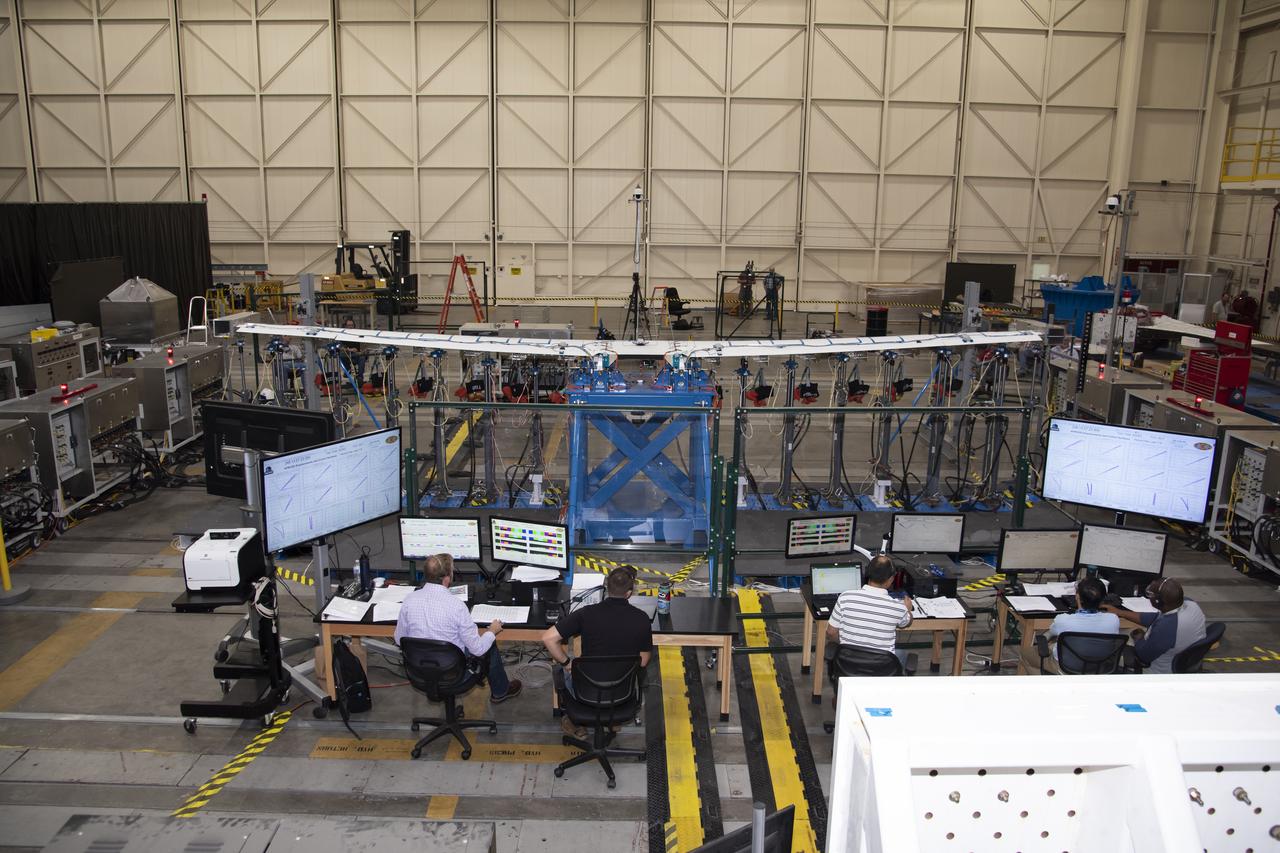
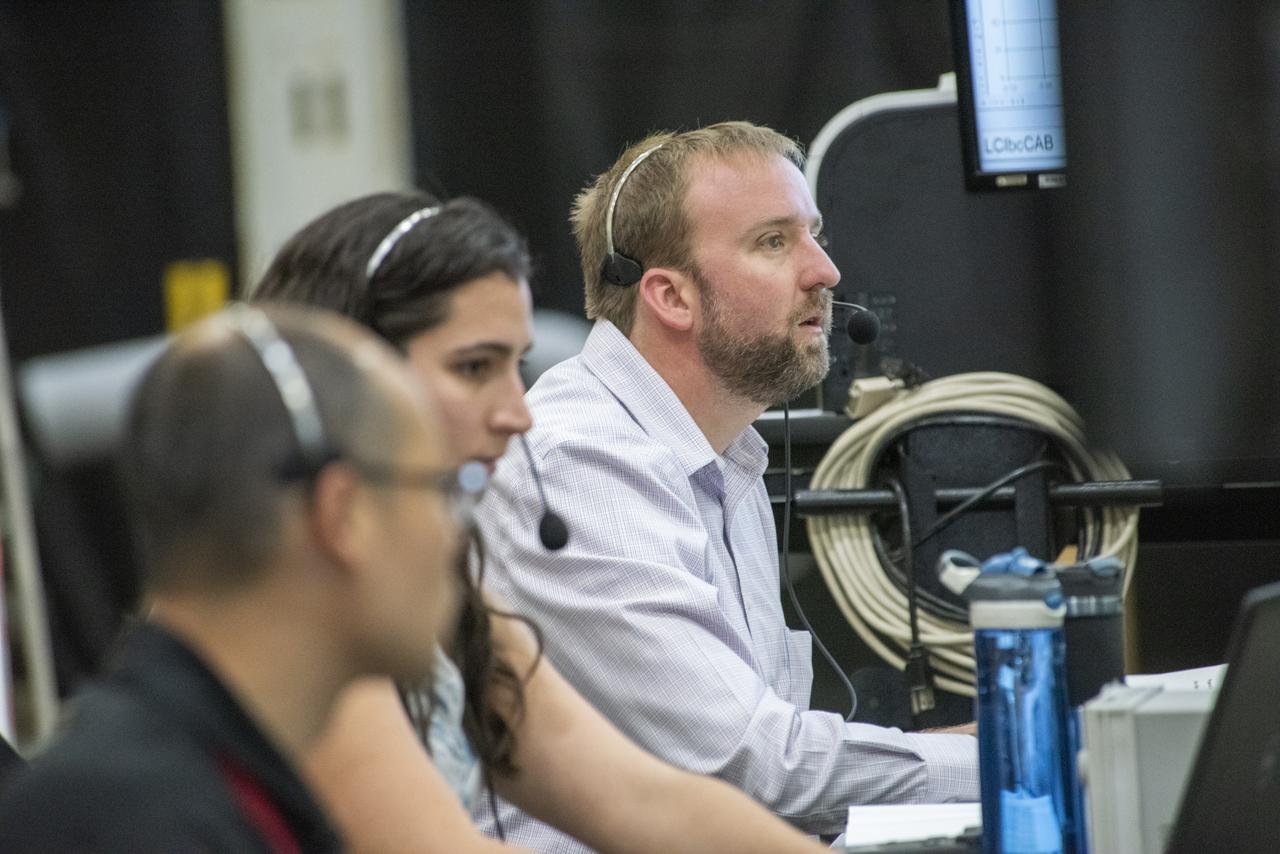
Wesley Li, Kirsten Boogaard and test conductor Eric Miller observe testing of the X-57 distributed electric aircraft wing at NASA's Armstrong Flight Research Center in California. Tests increased confidence in the wing's durability and calibrated installed strain gauges for inflight load monitoring of the wing.
NASA Armstrong Prepares for X-57 Flight Tests
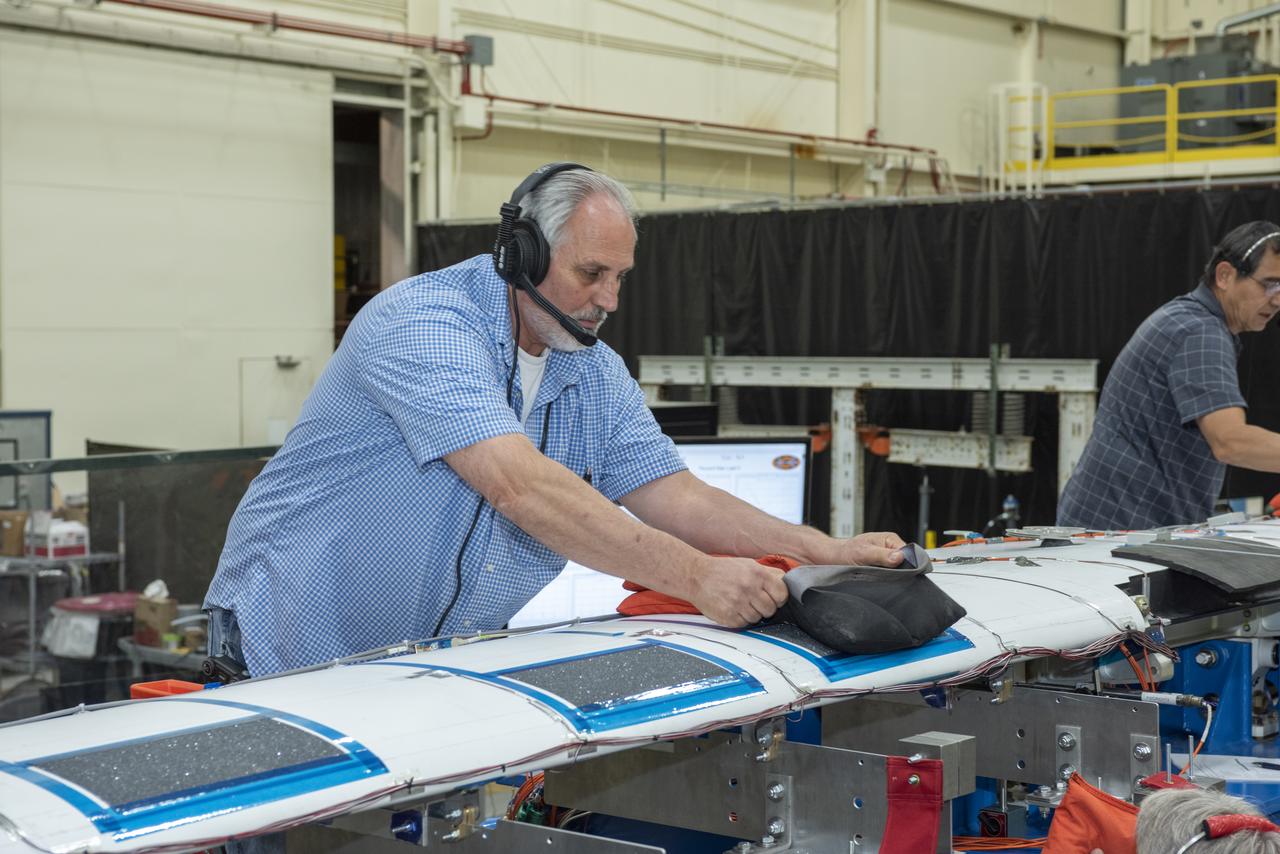
Ted Powers and Ronnie Haraguchi apply shot bags to the wing of the X-57 distributed electric aircraft wing at NASA’s Armstrong Flight Research Center in California. Tests increased confidence in the wing’s durability and calibrated installed strain gauges for inflight load monitoring of the wing.
NASA Armstrong Prepares for X-57 Flight Tests
The X-57 distributed electric aircraft wing that will fly in the final configuration of the flight tests completed its testing at NASA's Armstrong Flight Research Center in California. The test above researched the wing's structure under stress of 120% of the design limit. Tests increased confidence in the wing's durability and calibrated installed strain gauges for inflight load monitoring of the wing. From left to right are Eric Miller, Tony Cash, Welsey Li, Shun-fat Lung and Ashante Jordan.
NASA Armstrong Prepares for X-57 Flight Tests
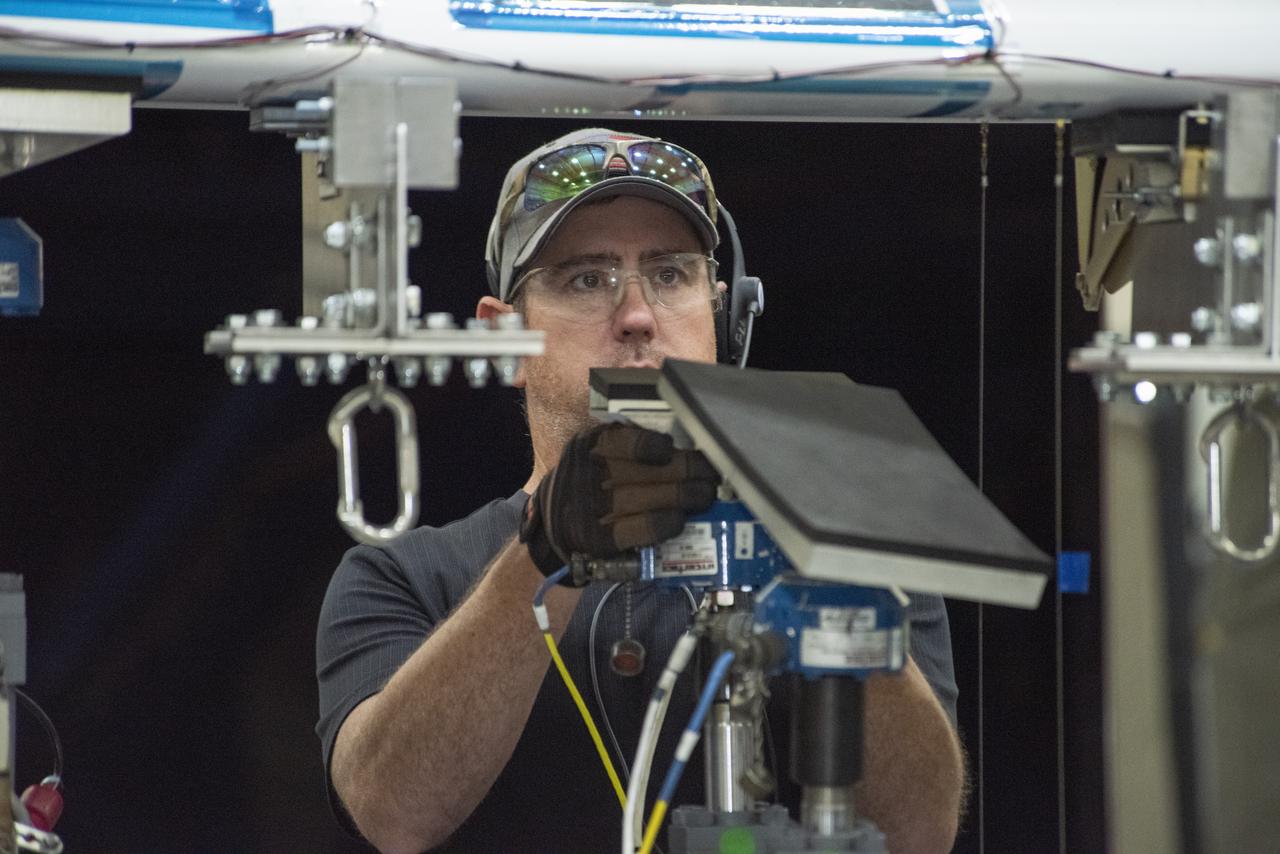
Ray Sadler adjusts hydraulic actuators with pads to the wing of the X-57 distributed electric aircraft wing at NASA's Armstrong Flight Research Center in California. Tests increased confidence in the wing's durability and calibrated installed strain gauges for inflight load monitoring of the wing.
NASA Armstrong Prepares for X-57 Flight Tests
The engine that will power NASA’s quiet supersonic X-59 in flight is installed, marking a major milestone in the experimental aircraft’s journey toward first flight. The installation of the F414-GE-100 engine at Lockheed Martin’s Skunk Works facility brings the vehicle close to the completion of its assembly.
Engine Installed on NASA’s X-59 Experimental Aircraft
The engine that will power NASA’s quiet supersonic X-59 in flight is installed, marking a major milestone in the experimental aircraft’s journey toward first flight. The installation of the F414-GE-100 engine at Lockheed Martin’s Skunk Works facility brings the vehicle close to the completion of its assembly.
Engine Installed on NASA’s X-59 Experimental Aircraft
The engine that will power NASA’s quiet supersonic X-59 in flight is installed, marking a major milestone in the experimental aircraft’s journey toward first flight. The installation of the F414-GE-100 engine at Lockheed Martin’s Skunk Works facility brings the vehicle close to the completion of its assembly.
Engine Installed on NASA’s X-59 Experimental Aircraft
The engine that will power NASA’s quiet supersonic X-59 in flight is installed, marking a major milestone in the experimental aircraft’s journey toward first flight. The installation of the F414-GE-100 engine at Lockheed Martin’s Skunk Works facility brings the vehicle close to the completion of its assembly.
Engine Installed on NASA’s X-59 Experimental Aircraft
The engine that will power NASA’s quiet supersonic X-59 in flight is installed, marking a major milestone in the experimental aircraft’s journey toward first flight. The installation of the F414-GE-100 engine at Lockheed Martin’s Skunk Works facility brings the vehicle close to the completion of its assembly.
Engine Installed on NASA’s X-59 Experimental Aircraft
The engine that will power NASA’s quiet supersonic X-59 in flight is installed, marking a major milestone in the experimental aircraft’s journey toward first flight. The installation of the F414-GE-100 engine at Lockheed Martin’s Skunk Works facility brings the vehicle close to the completion of its assembly.
Engine Installed on NASA’s X-59 Experimental Aircraft
The engine that will power NASA’s quiet supersonic X-59 in flight is installed, marking a major milestone in the experimental aircraft’s journey toward first flight. The installation of the F414-GE-100 engine at Lockheed Martin’s Skunk Works facility brings the vehicle close to the completion of its assembly.
Engine Installed on NASA’s X-59 Experimental Aircraft
The engine that will power NASA’s quiet supersonic X-59 in flight is installed, marking a major milestone in the experimental aircraft’s journey toward first flight. The installation of the F414-GE-100 engine at Lockheed Martin’s Skunk Works facility brings the vehicle close to the completion of its assembly.
Engine Installed on NASA’s X-59 Experimental Aircraft
The engine that will power NASA’s quiet supersonic X-59 in flight is installed, marking a major milestone in the experimental aircraft’s journey toward first flight. The installation of the F414-GE-100 engine at Lockheed Martin’s Skunk Works facility brings the vehicle close to the completion of its assembly.
Engine Installed on NASA’s X-59 Experimental Aircraft
The engine that will power NASA’s quiet supersonic X-59 in flight is installed, marking a major milestone in the experimental aircraft’s journey toward first flight. The installation of the F414-GE-100 engine at Lockheed Martin’s Skunk Works facility brings the vehicle close to the completion of its assembly.
Engine Installed on NASA’s X-59 Experimental Aircraft
The engine that will power NASA’s quiet supersonic X-59 in flight is installed, marking a major milestone in the experimental aircraft’s journey toward first flight. The installation of the F414-GE-100 engine at Lockheed Martin’s Skunk Works facility brings the vehicle close to the completion of its assembly.
Engine Installed on NASA’s X-59 Experimental Aircraft
The engine that will power NASA’s quiet supersonic X-59 in flight is installed, marking a major milestone in the experimental aircraft’s journey toward first flight. The installation of the F414-GE-100 engine at Lockheed Martin’s Skunk Works facility brings the vehicle close to the completion of its assembly.
Engine Installed on NASA’s X-59 Experimental Aircraft
The engine that will power NASA’s quiet supersonic X-59 in flight is installed, marking a major milestone in the experimental aircraft’s journey toward first flight. The installation of the F414-GE-100 engine at Lockheed Martin’s Skunk Works facility brings the vehicle close to the completion of its assembly.
Engine Installed on NASA’s X-59 Experimental Aircraft
The engine that will power NASA’s quiet supersonic X-59 in flight is installed, marking a major milestone in the experimental aircraft’s journey toward first flight. The installation of the F414-GE-100 engine at Lockheed Martin’s Skunk Works facility brings the vehicle close to the completion of its assembly.
Engine Installed on NASA’s X-59 Experimental Aircraft
The engine that will power NASA’s quiet supersonic X-59 in flight is installed, marking a major milestone in the experimental aircraft’s journey toward first flight. The installation of the F414-GE-100 engine at Lockheed Martin’s Skunk Works facility brings the vehicle close to the completion of its assembly.
Engine Installed on NASA’s X-59 Experimental Aircraft
The engine that will power NASA’s quiet supersonic X-59 in flight is installed, marking a major milestone in the experimental aircraft’s journey toward first flight. The installation of the F414-GE-100 engine at Lockheed Martin’s Skunk Works facility brings the vehicle close to the completion of its assembly.
Engine Installed on NASA’s X-59 Experimental Aircraft
The engine that will power NASA’s quiet supersonic X-59 in flight is installed, marking a major milestone in the experimental aircraft’s journey toward first flight. The installation of the F414-GE-100 engine at Lockheed Martin’s Skunk Works facility brings the vehicle close to the completion of its assembly.
Engine Installed on NASA’s X-59 Experimental Aircraft
The engine that will power NASA’s quiet supersonic X-59 in flight is installed, marking a major milestone in the experimental aircraft’s journey toward first flight. The installation of the F414-GE-100 engine at Lockheed Martin’s Skunk Works facility brings the vehicle close to the completion of its assembly.
Engine Installed on NASA’s X-59 Experimental Aircraft
The engine that will power NASA’s quiet supersonic X-59 in flight is installed, marking a major milestone in the experimental aircraft’s journey toward first flight. The installation of the F414-GE-100 engine at Lockheed Martin’s Skunk Works facility brings the vehicle close to the completion of its assembly.
Engine Installed on NASA’s X-59 Experimental Aircraft
The engine that will power NASA’s quiet supersonic X-59 in flight is installed, marking a major milestone in the experimental aircraft’s journey toward first flight. The installation of the F414-GE-100 engine at Lockheed Martin’s Skunk Works facility brings the vehicle close to the completion of its assembly.
Engine Installed on NASA’s X-59 Experimental Aircraft
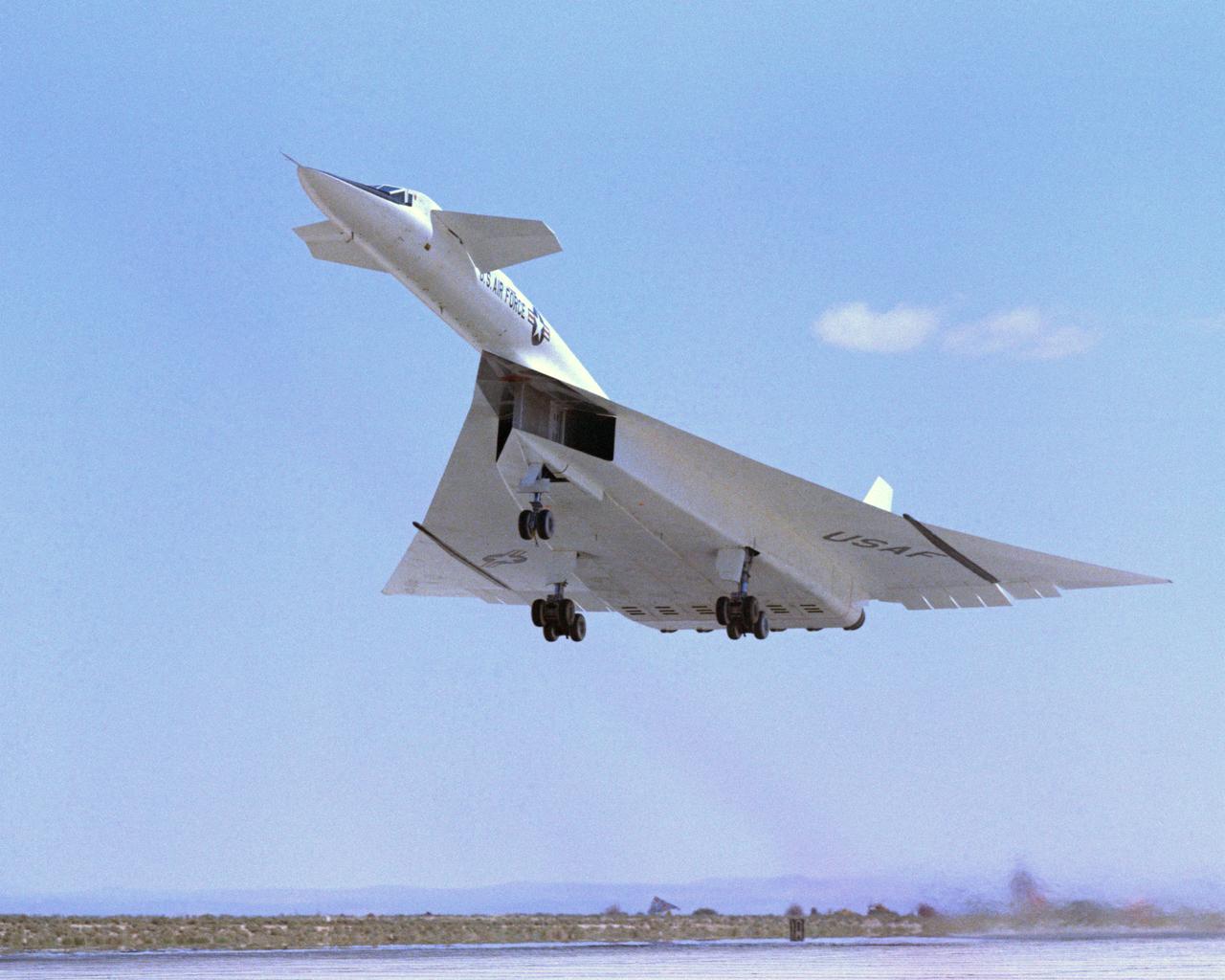
Viewed from the front the #1 XB-70A (62-0001) is shown climbing out during take-off. Most flights were scheduled during the morning hours to take advantage of the cooler ambient air temperatures for improved propulsion efficiencies. The wing tips are extended straight out to provide a maximum lifting wing surface. The XB-70A, capable of flying three times the speed of sound, was the world's largest experimental aircraft in the 1960s. Two XB-70A aircraft were built. Ship #1 was flown by NASA in a high speed flight research program.
XB-70A during take-off
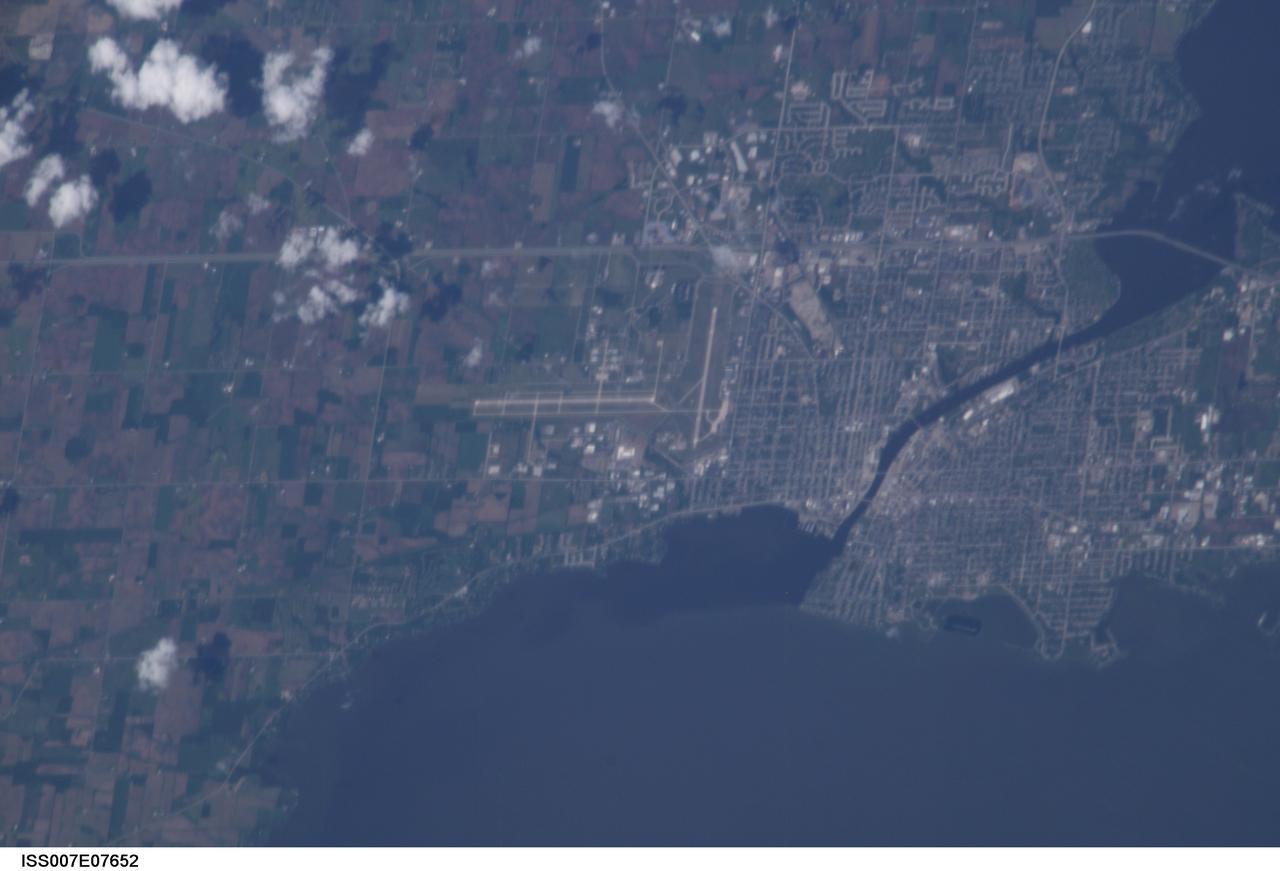
ISS007-E-07652 (July 2003) --- Part of Oshkosh, Wisconsin, site of a very popular air show, held around this time of year, was photographed by a crew member aboard the International Space Station during its seventh habitation mission.  The airfield near  Lake Winnebago hosts the mid-summer  fly-in event sponsored by the Experimental Aircraft Association (EAA).
Earth Observations taken by the Expedition Seven crew
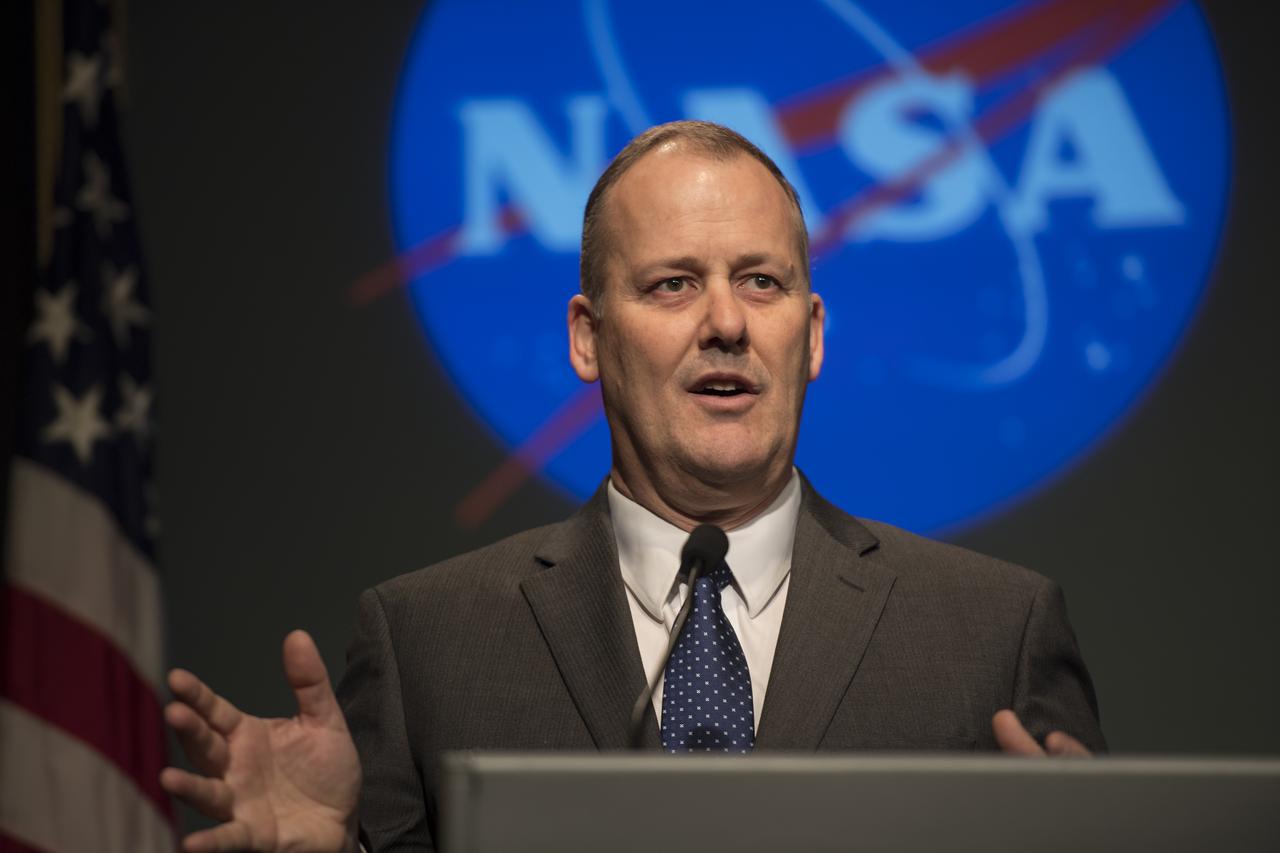
Dave Richardson, director, Air Vehicle Design and Technologies, Lockheed Martin Skunk Works, speaks after the announcement that Lockheed Martin won the contract to develop the first X-plane at a briefing, Tuesday, April 3, 2018 at NASA Headquarters in Washington. This new experimental aircraft will cut cross country travel times in half by flying faster than the speed of sound without creating a sonic boom, enabling travel from New York to Los Angeles in two hours. Photo Credit: (NASA/Aubrey Gemignani)
Low Boom Flight Demonstrator Briefing
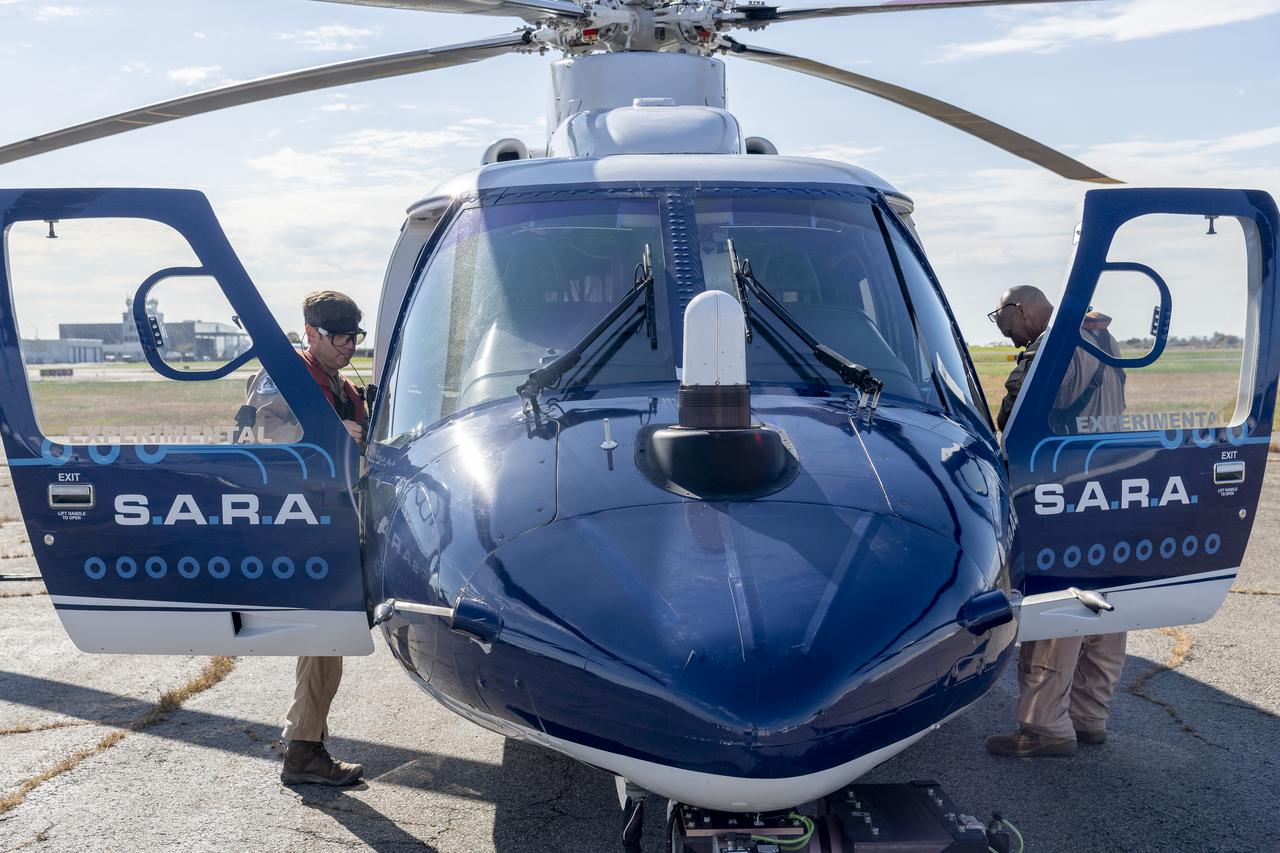
NASA pilot Scott Howe, left, and Sikorsky safety pilot Brent Davis, prepare to board Sikorsky’s SARA S-76B experimental aircraft at Sikorsky Memorial Airport, Bridgeport, Connecticut on Tuesday, Oct. 24, 2023. In addition to Sikorsky’s MATRIX autonomous flight technology, SARA is also outfitted with multiple NASA autonomous flight software systems the pilots and test team will evaluate during their flights over Long Island Sound.
NASA’s Advanced Air Mobility Autonomous Flight Software Put to the Test on Sikorsky Experimental Helicopters
F-111B Fighter, Variable Sweep wings, wings swept forward, landing gear down.  Slat experiments. The General Dynamics/Grumman F-111B was a long-range carrier-based interceptor aircraft that was planned to be a follow-on to the F-4 Phantom II. The F-111B was developed in the 1960s by General Dynamics in conjunction with Grumman for the United States Navy (USN) as part of the joint Tactical Fighter Experimental (TFX) with the United States Air Force (USAF) to produce a common fighter for the services that could perform a variety of missions.
The General Dynamics/Grumman F-111B in the 40x80 Foot Wind Tunnel at Ames.
Dr. Richard DeLombard of NASA's Glenn Research Center, hands the relase line for the Microgravity Demonstrator to a visitor for her to start a short experiment showing the effects of microgravity on candle flames. Combustion physics will be a major line of investigation for NASA aboard the International Space Station (ISS). The Microgravity Demonstrator is frequently used at shows and schools to illustrate how phenomena change in microgravity. The exhibit was part of the NASA outreach activity at AirVenture 2000 sponsored by the Experimental Aircraft Association in Oshkosh, WI
Microgravity
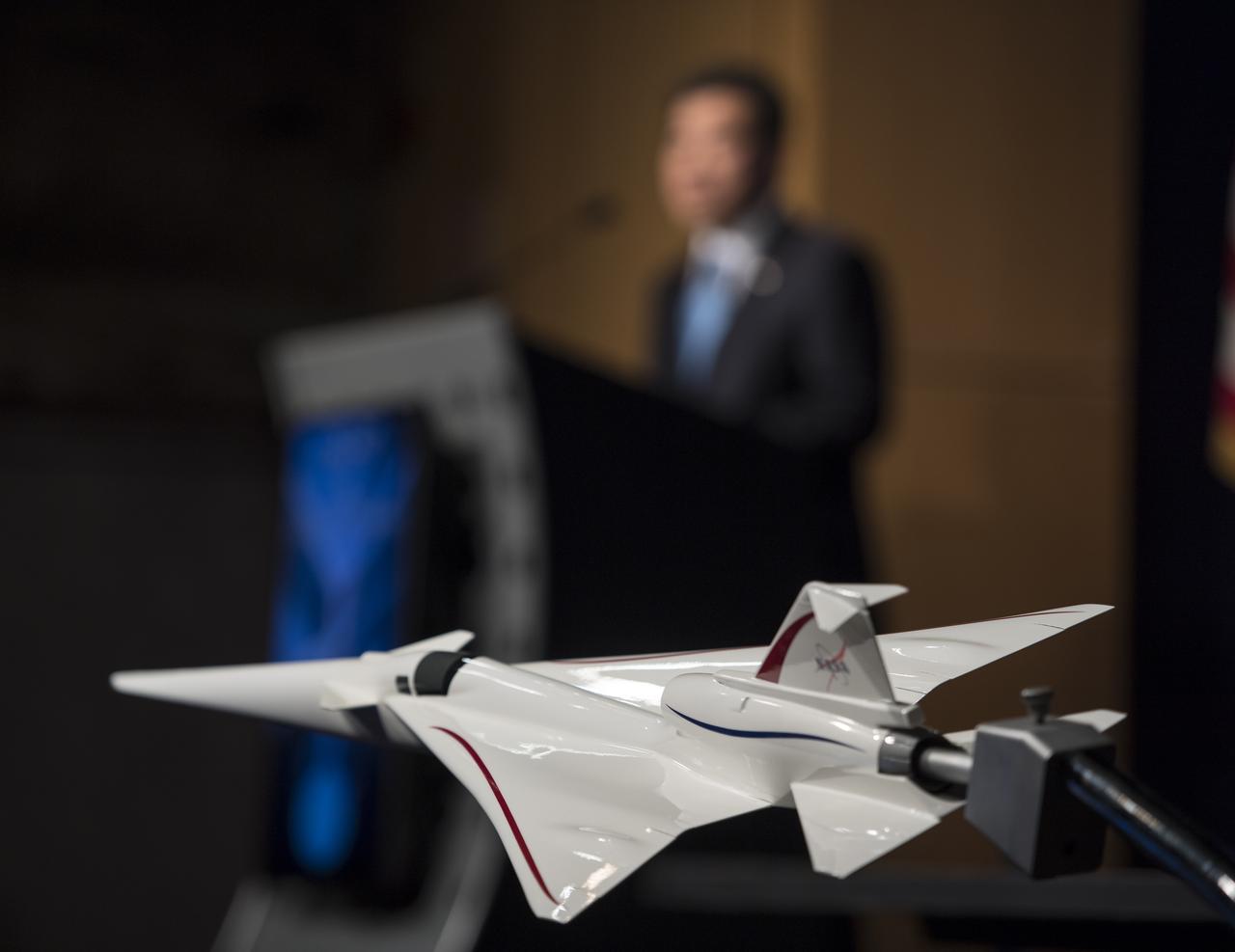
A model of the first Low Boom Flight Demonstrator is seen at a briefing on Tuesday, April 3, 2018 at NASA Headquarters in Washington. This new experimental aircraft will cut cross country travel times in half by flying faster than the speed of sound without creating a sonic boom, enabling travel from New York to Los Angeles in two hours. Photo Credit: (NASA/Aubrey Gemignani)
Low Boom Flight Demonstrator Briefing
NASA representatives prepare for another day's work answering questions and handing out posters at AirVenture 2000. Part of their demonstrations included a training model of the Middeck Glovebox used aboard the Space Shuttle and Russian Mir Space Station. This and several other devices were used to explain to the public the kinds of research that have been conducted aboard the Space Shuttle and that will continue aboard the International Space Station (ISS). The exhibit was part of the NASA outreach activity at AirVenture 2000 sponsored by the Experimental Aircraft Association in Oshkosh, WI.
Microgravity
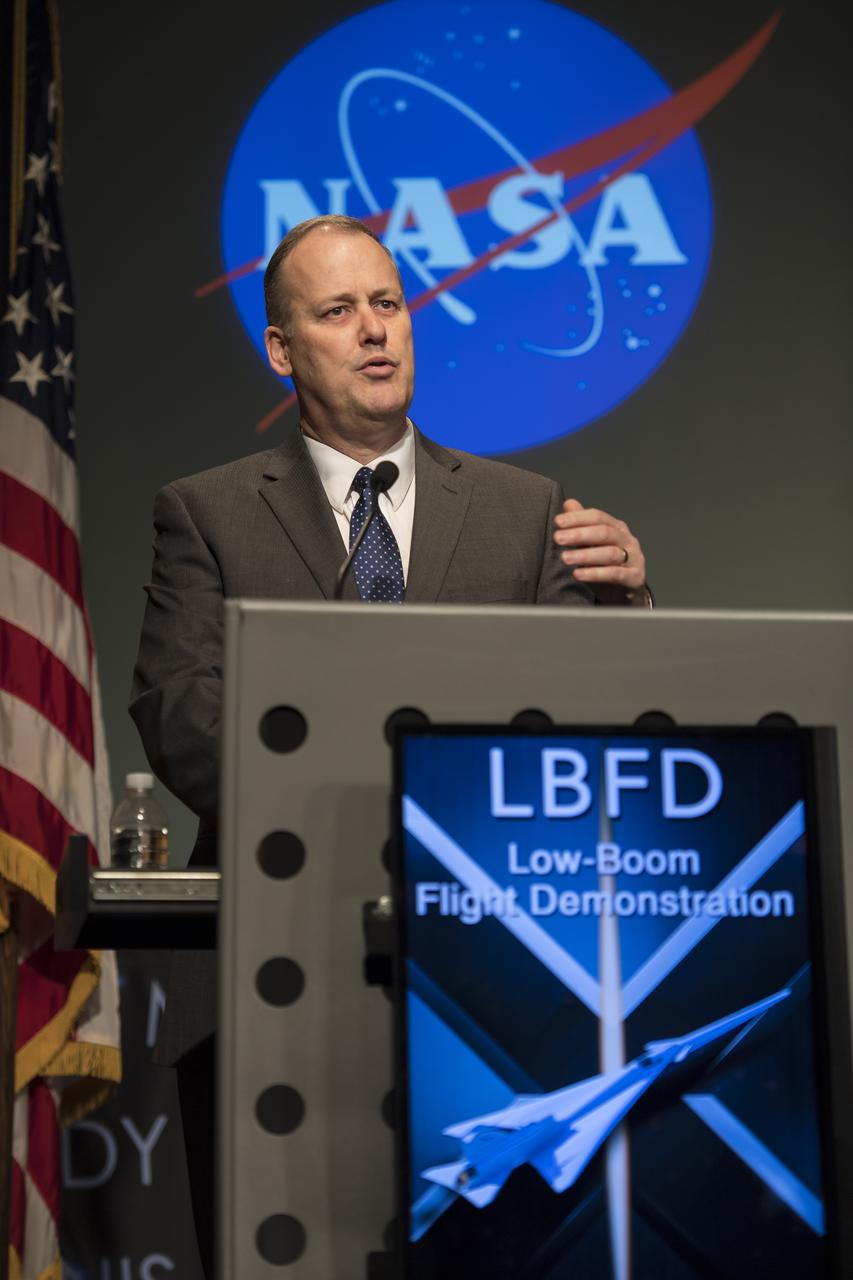
Dr. Ed Waggoner, program director, Integrated Aviation Systems Program, NASA, speaks at a briefing on the Low Boom Flight Demonstrator, Tuesday, April 3, 2018 at NASA Headquarters in Washington. This new experimental aircraft will cut cross country travel times in half by flying faster than the speed of sound without creating a sonic boom, enabling travel from New York to Los Angeles in two hours. Photo Credit: (NASA/Aubrey Gemignani)
Low Boom Flight Demonstrator Briefing
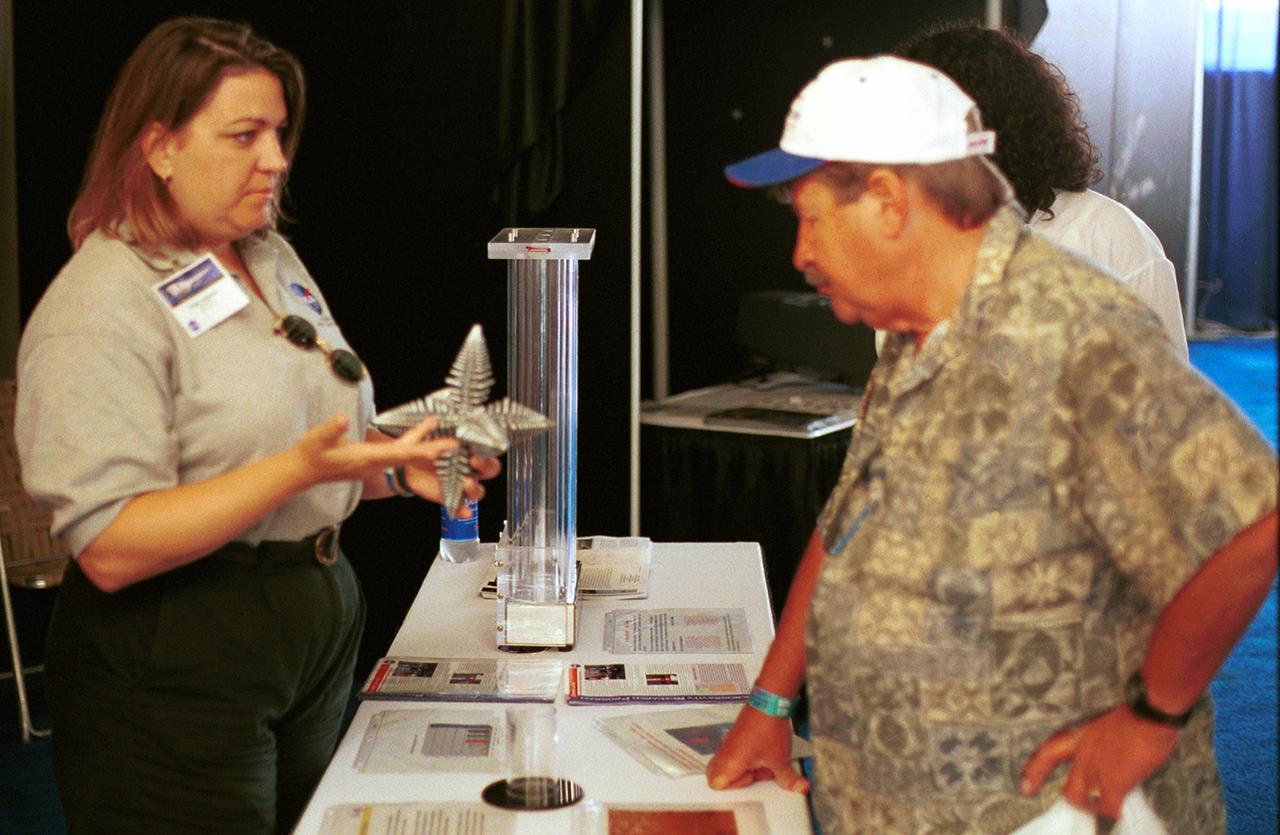
Angie Jackman, a NASA project manager in microgravity research, explains a model of a dendrite to a visitor to the NASA exhibit at AirVenture 2000 sponsored by the Experimental Aircraft Association in Oshkosh, WI. The model depicts microscopic dendrites that grow as molten metals solidify. NASA sponsored three experiments aboard the Space Shuttle that used the microgravity environment to study the formation of large (1 to 4 mm) dendrites without Earth's gravity disrupting their growth. Three advanced follow-on experiments, managed by Jackman, are being developed for the International Space Station (ISS).
Microgravity
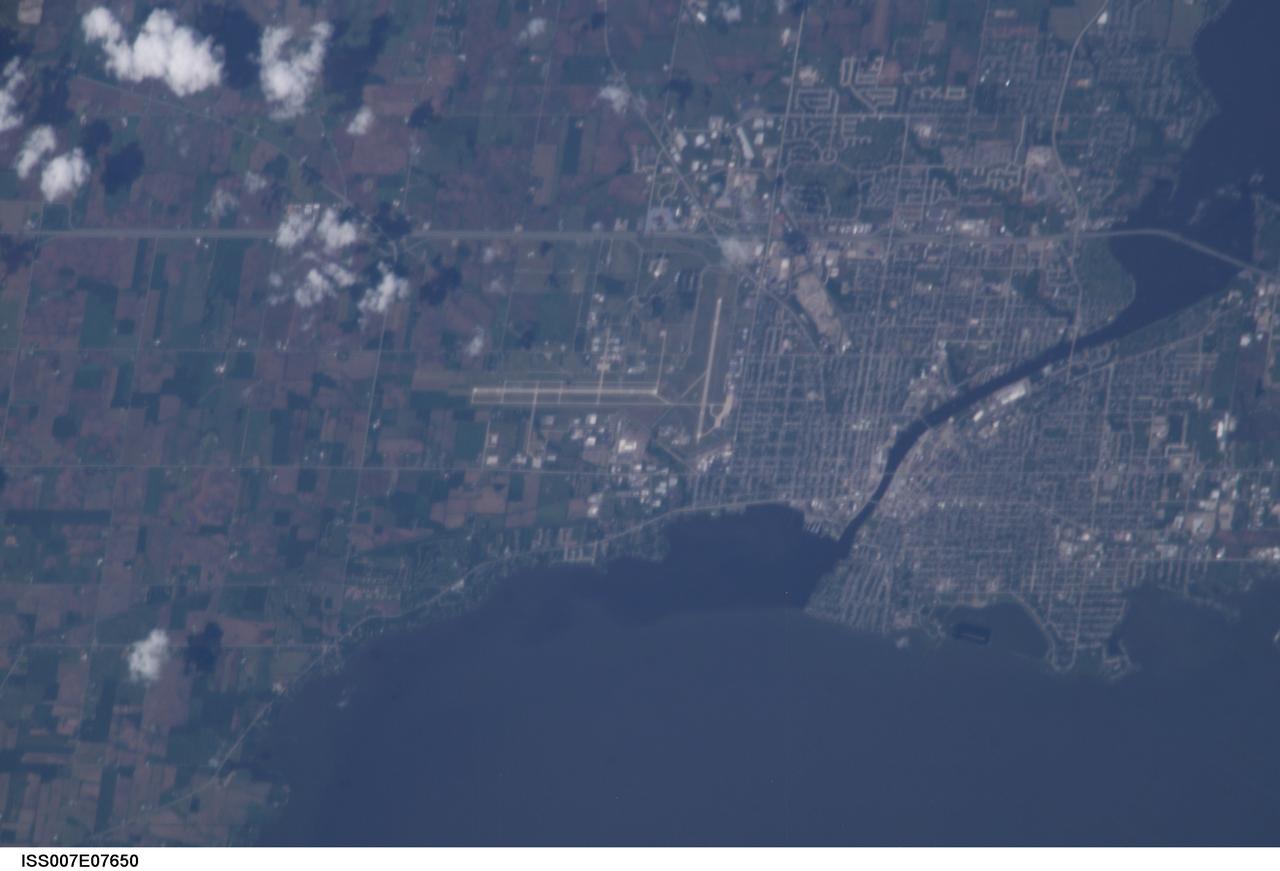
ISS007-E-07650 (July 2003) --- Part of Oshkosh, Wisconsin, site of a very popular air show, held around this time of year, was photographed by a crew member aboard the International Space Station during its seventh habitation mission.  The airfield near  Lake Winnebago hosts the mid-summer  fly-in event sponsored by the Experimental Aircraft Association (EAA).
Earth Observations taken by the Expedition Seven crew
Used as a directional indicator the compass rose guides pilots flying test and experimental aircraft like the Pilatus PC-12 in the vast airspace over NASA’s Armstrong Flight Research Center in Edwards, California. This Pilatus PC-12 based out of NASA’s Glenn Research Center in Cleveland is being flown for a series of familiarization flights for NASA’s Armstrong pilots and crew. These familiarization flights supported communication, navigation and surveillance evaluations for Advanced Air Mobility research.
NASA Pilatus PC-12 cuts through the desert skies over NASA’s Armstrong Flight Research Center in Edwards, California with the compass rose in the background on Sept. 18, 2024.
Dr. Jaiwon Shin, associate administrator for the Aeronautics Research Mission Directorate, NASA, announces Lockheed Martin as the winner of the contract to develop a Low Boom Flight Demonstrator at a briefing, Tuesday, April 3, 2018 at NASA Headquarters in Washington. This new experimental aircraft will cut cross country travel times in half by flying faster than the speed of sound without creating a sonic boom, enabling travel from New York to Los Angeles in two hours. Photo Credit: (NASA/Aubrey Gemignani)
Low Boom Flight Demonstrator Briefing
Dave Richardson, director, Air Vehicle Design and Technologies, Lockheed Martin Skunk Works, speaks after the announcement that Lockheed Martin won the contract to develop the first X-plane at a briefing, Tuesday, April 3, 2018 at NASA Headquarters in Washington. This new experimental aircraft will cut cross country travel times in half by flying faster than the speed of sound without creating a sonic boom, enabling travel from New York to Los Angeles in two hours. Photo Credit: (NASA/Aubrey Gemignani)
Low Boom Flight Demonstrator Briefing
Dr. Jaiwon Shin, associate administrator for the Aeronautics Research Mission Directorate, NASA, announces Lockheed Martin as the winner of the contract to develop a Low Boom Flight Demonstrator at a briefing, Tuesday, April 3, 2018 at NASA Headquarters in Washington. This new experimental aircraft will cut cross country travel times in half by flying faster than the speed of sound without creating a sonic boom, enabling travel from New York to Los Angeles in two hours. Photo Credit: (NASA/Aubrey Gemignani)
Low Boom Flight Demonstrator Briefing
NASA aeronautical meteorologist Luke Bard adjusts one of several wind lidar (light detection and ranging) sensors near NASA’s Armstrong Flight Research Center in Edwards, California, on March 12, 2025, in preparation to collect data from Joby Aviation’s experimental air taxi aircraft. NASA is collecting information during this study to help advance weather-tolerant air taxi operations for the entire industry
NASA and Joby Research Near NASA’s Armstrong Flight Research Center
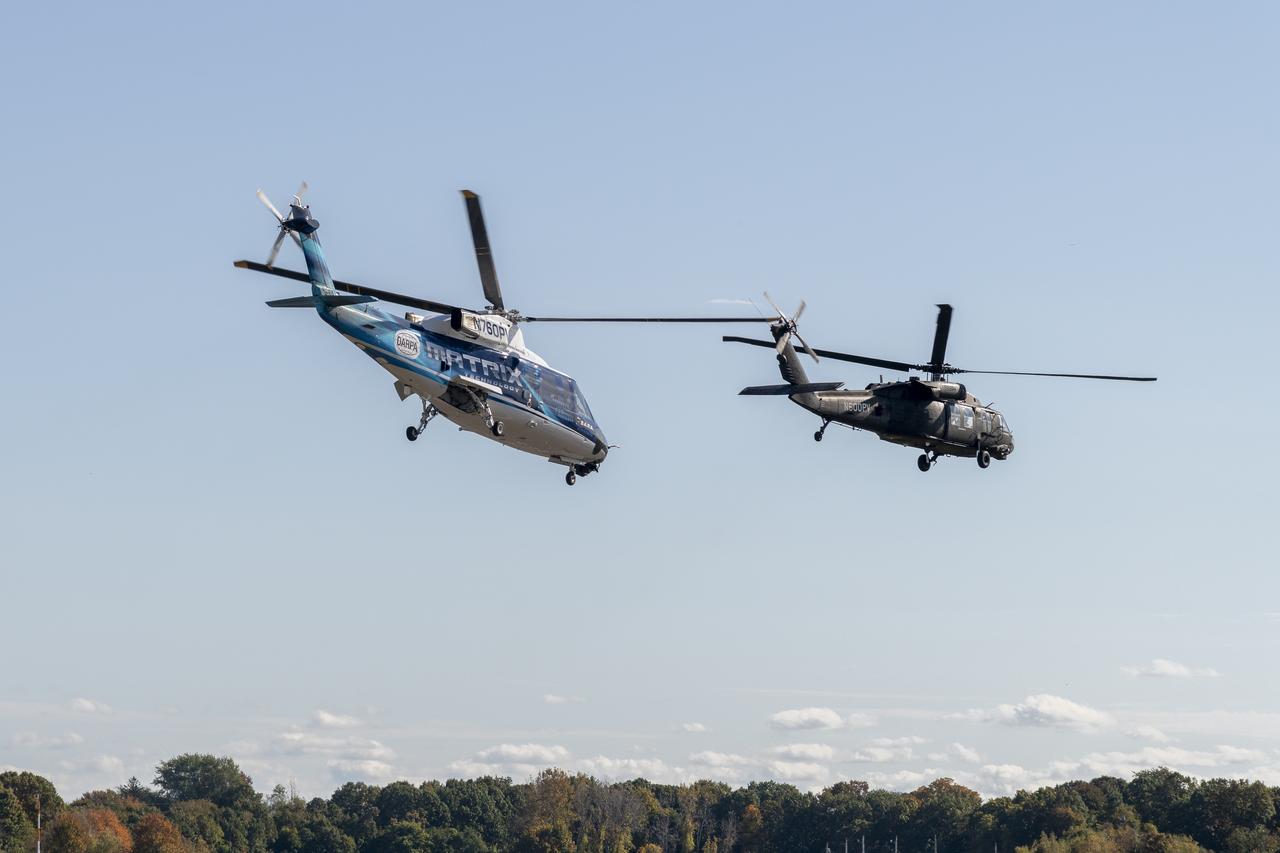
NASA pilots along with Sikorsky safety pilots take off in Sikorsky’s SARA S-76B, left, and Black Hawk Optionally Piloted Vehicle from Sikorsky Memorial Airport, Bridgeport, Connecticut on Tuesday, Oct. 24, 2023. NASA is using these experimental aircraft to test and evaluate multiple autonomous flight software systems designed for Advanced Air Mobility concepts.
NASA’s Advanced Air Mobility Autonomous Flight Software Put to the Test on Sikorsky Experimental Helicopters
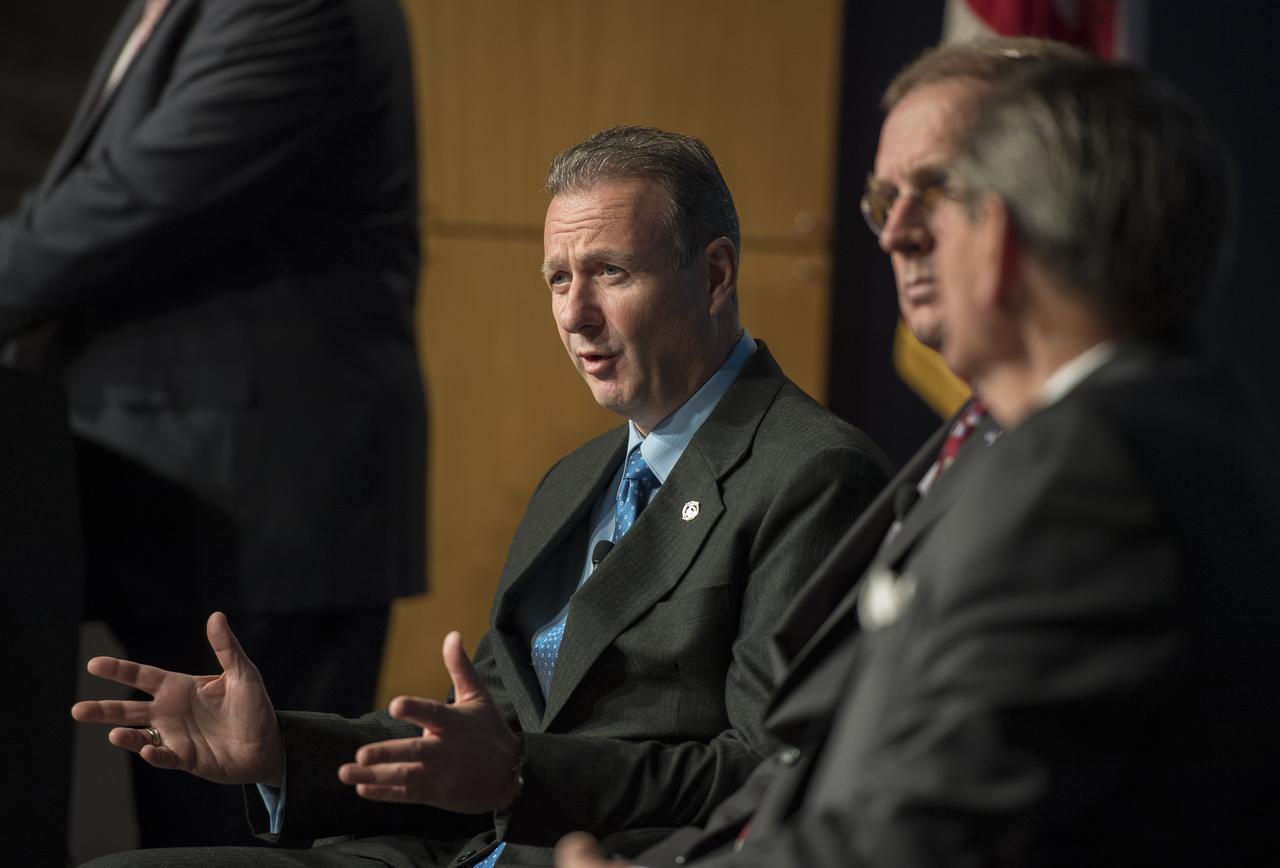
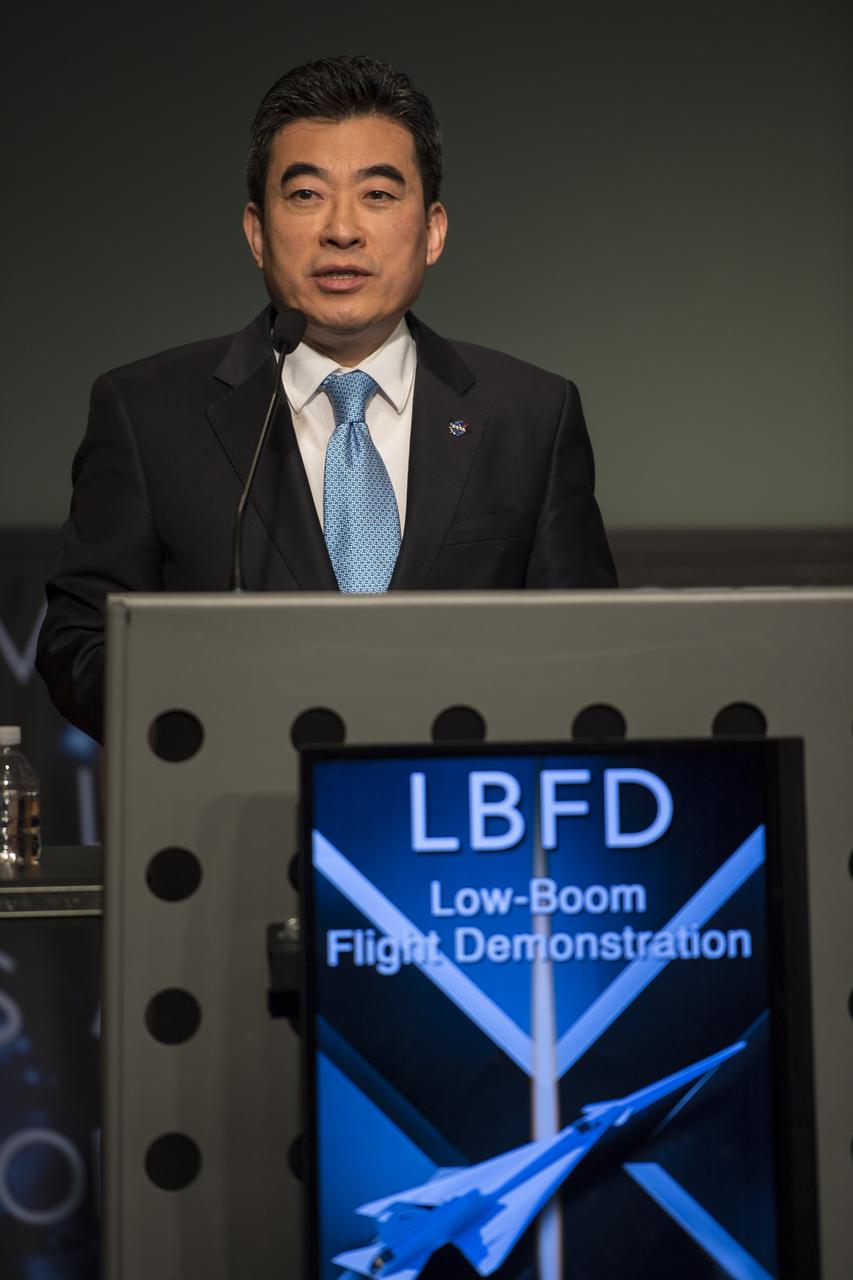
Peter Iosifidis, program manager, Low-Boom Flight Demonstrator, Lockheed Martin Skunk Works, speaks on a panel at a briefing after Lockheed Martin was awarded the contract to develop the first X-plane, Tuesday, April 3, 2018 at NASA Headquarters in Washington. This new experimental aircraft will cut cross country travel times in half by flying faster than the speed of sound without creating a sonic boom, enabling travel from New York to Los Angeles in two hours. Photo Credit: (NASA/Aubrey Gemignani)
Low Boom Flight Demonstrator Briefing
NASA representatives prepare for another day's work answering questions and handing out posters at AirVenture 2000. Part of their demonstrations included a training model of the Middeck Glovebox used aboard the Space Shuttle and Russian Mir Space Station. This and several other devices were used to explain to the public the kinds of research that have been conducted aboard the Space Shuttle and that will continue aboard the International Space Station (ISS). The exhibit was part of the NASA outreach activity at AirVenture 2000 sponsored by the Experimental Aircraft Association in Oshkosh, WI.
Microgravity
Ultra High Bypass Integrated System Test Testing of an Ultra High Bypass Ratio Turbofan model in the 9-by 15-Foot Low Speed Wind Tunnel. Pratt & Whitney designed the experimental engine to meet new efficiency and noise reduction targets for commercial aircraft set by NASA and the Federal Aviation Administration. The 9-by 15 tests analyzed two noise reduction technologies.
Ultra High Bypass Ratio Turbofan model in the 9-by 15-Foot Low Speed Wind Tunnel
J.D. Harrington, public affairs officer, Aeronautics Mission Directorate, NASA, speaks at a briefing on the Low Boom Flight Demonstrator, Tuesday, April 3, 2018 at NASA Headquarters in Washington. This new experimental aircraft will cut cross country travel times in half by flying faster than the speed of sound without creating a sonic boom, enabling travel from New York to Los Angeles in two hours. Photo Credit: (NASA/Aubrey Gemignani)
Low Boom Flight Demonstrator Briefing
Peter Iosifidis, program manager, Low-Boom Flight Demonstrator, Lockheed Martin Skunk Works, speaks on a panel at a briefing after Lockheed Martin was awarded the contract to develop the first X-plane, Tuesday, April 3, 2018 at NASA Headquarters in Washington. This new experimental aircraft will cut cross country travel times in half by flying faster than the speed of sound without creating a sonic boom, enabling travel from New York to Los Angeles in two hours. Photo Credit: (NASA/Aubrey Gemignani)
Low Boom Flight Demonstrator Briefing
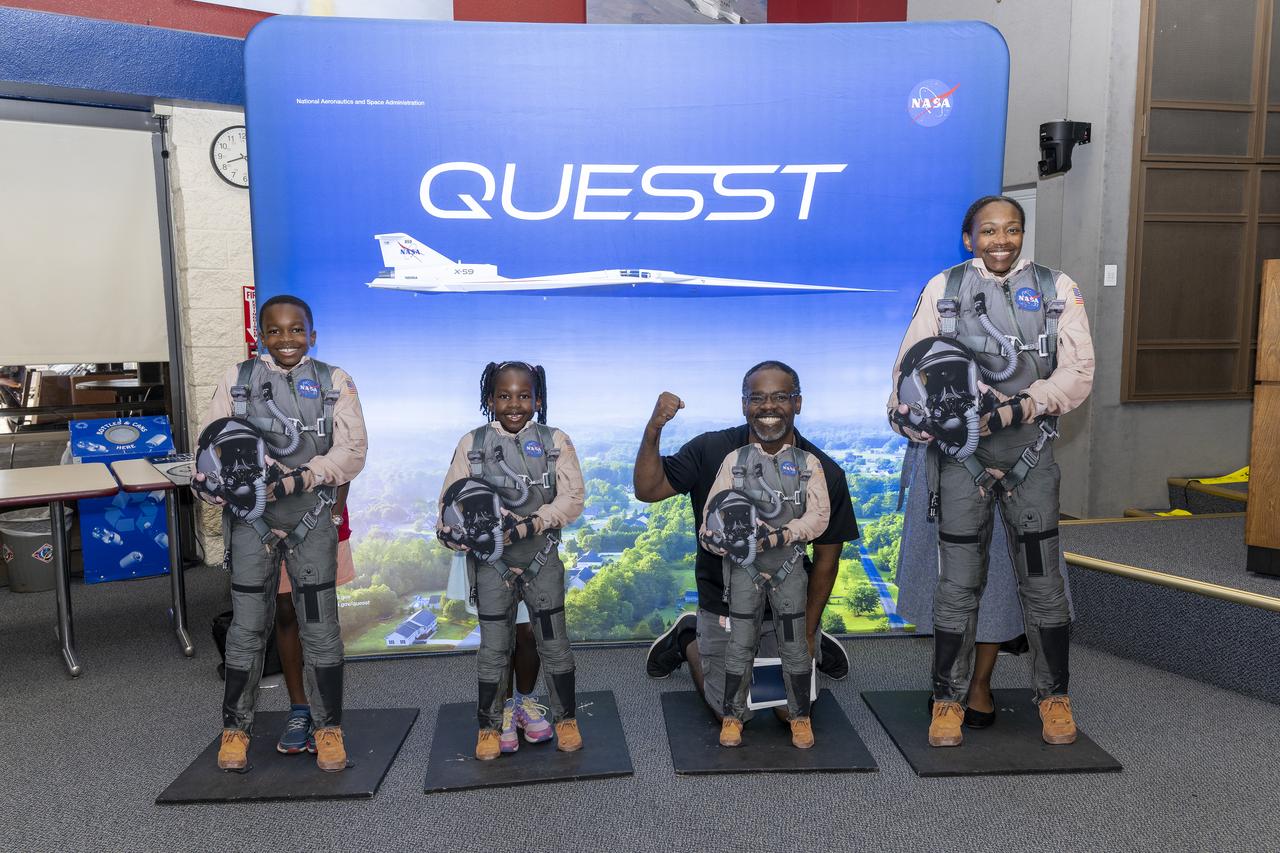
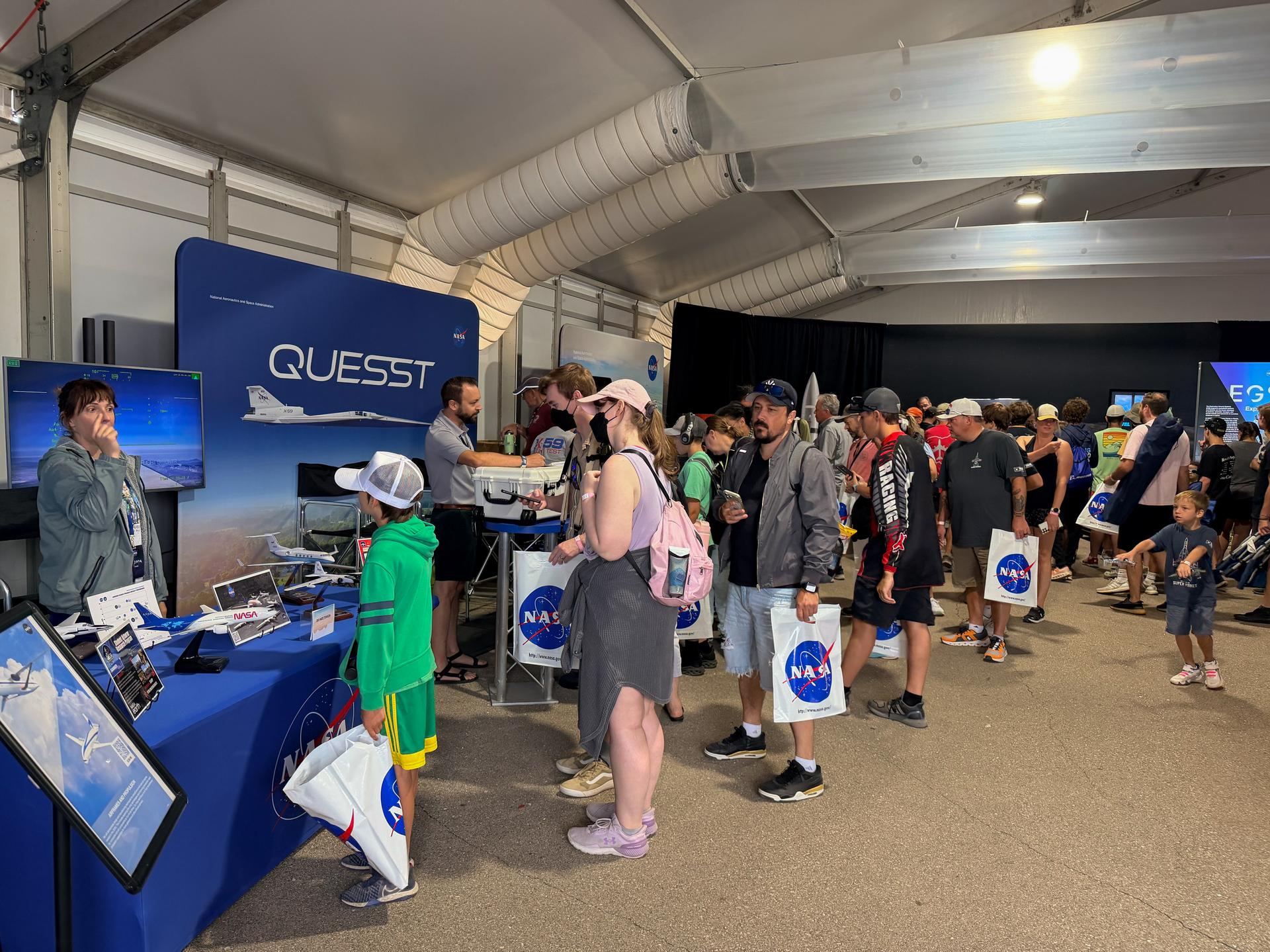
During Bring Kids to Work Day at NASA’s Armstrong Flight Research Center in Edwards, California, on June 17, 2025, participants pose with flight suit cutouts in front of NASA’s Quesst display. NASA's Quesst mission, which features the agency’s X-59 quiet supersonic experimental aircraft, will demonstrate technology to fly supersonic, or faster than the speed of sound, without generating loud sonic booms.
NASA Armstrong Bring Kids to Work Day 2025
A flight engineer at the National Advisory Committee for Aeronautics (NACA) Aircraft Engine Research Laboratory monitors test equipment in the rear of the Lockheed RA–29 Hudson. Lockheed manufactured several variations of the light bomber in the late 1930s. The Hudson was one of the few military aircraft models available in large quantities during the early years of World War II, and both the US and British air forces utilized it as a patrol aircraft. The RA–29s were soon superseded by newer aircraft, but continued to serve as crew trainers, light cargo carriers and staff transports.       The NACA flight engineers in the Planning and Analysis Section were responsible for working with researchers to install and monitor the experimental equipment on the NACA’s research aircraft. This process could require weeks or months. When larger aircraft, like the RA–29 Hudson, were utilized the flight engineers often participated in the flights.    The NACA acquired their RA–29 in November 1943, and used the aircraft for fuel blend studies and instrumentation development. The Hudson also frequently served as a transportation vehicle for the staff and visitors. The RA–29 was transferred from the NACA in July 1945.
NACA Flight Engineer in a Lockheed RA–29 Hudson
The Pathfinder aircraft has set a new unofficial world record for high-altitude flight of over 71,500 feet for solar-powered aircraft at the U.S. Navy's Pacific Missile Range Facility, Kauai, Hawaii. Pathfinder was designed and manufactured by AeroVironment, Inc, of Simi Valley, California, and was operated by the firm under a jointly sponsored research agreement with NASA's Dryden Flight Research Center, Edwards, California. Pathfinder's record-breaking flight occurred July 7, 1997. The aircraft took off at 11:34 a.m. PDT, passed its previous record altitude of 67,350 feet at about 5:45 p.m. and then reached its new record altitude at 7 p.m. The mission ended with a perfect nighttime landing at 2:05 a.m. PDT July 8. The new record is the highest altitude ever attained by a propellor-driven aircraft. Before Pathfinder, the altitude record for propellor-driven aircraft was 67,028 feet, set by the experimental Boeing Condor remotely piloted aircraft.
Pathfinder aircraft liftoff on altitude record setting flight of 71,500 feet
The National Aeronautics and Space Administration's Systems Research Aircraft (SRA), a highly modified F-18 jet fighter, on an early research flight over Rogers Dry Lake. The former Navy aircraft was flown by NASA's Dryden Flight Research Center at Edwards Air Force Base, California, to evaluate a number of experimental aerospace technologies in a multi-year, joint NASA/DOD/industry program. Among the more than 20 experiments flight-tested were several involving fiber optic sensor systems. Experiments developed by McDonnell-Douglas and Lockheed-Martin centered on installation and maintenace techniques for various types of fiber-optic hardware proposed for use in military and commercial aircraft, while a Parker-Hannifin experiment focused on alternative fiber-optic designs for postion measurement sensors as well as operational experience in handling optical sensor systems.  Other experiments flown on this testbed aircraft included electronically-controlled control surface actuators, flush air data collection systems, "smart" skin antennae and laser-based systems. Incorporation of one or more of these technologies in future aircraft and spacecraft could result in signifigant savings in weight, maintenance and overall cost.
EC93-42065-6
The National Aeronautics and Space Administration's Systems Research Aircraft (SRA), a highly modified F-18 jet fighter, during a research flight. The former Navy aircraft was flown by NASA's Dryden Flight Research Center at Edwards Air Force Base, California, to evaluate a number of experimental aerospace technologies in a multi-year, joint NASA/DOD/industry program. Among the more than 20 experiments flight-tested were several involving fiber optic sensor systems. Experiments developed by McDonnell-Douglas and Lockheed-Martin centered on installation and maintenace techniques for various types of fiber-optic hardware proposed for use in military and commercial aircraft, while a Parker-Hannifin experiment focused in alternative fiber-optic designs for position measurement sensors as well as operational experience in handling optical sensor systems.  Other experiments flown on this testbed aircraft included electronically-controlled control surface actuators, flush air data collection systems, "smart" skin antennae and laser-based systems. Incorporation of one or more of these technologies in future aircraft and spacecraft could result in signifigant savings in weight, maintenance and overall cost.
EC91-436-8
Teddy Tzanetos, project manager for NASA's Ingenuity Mars Helicopter, addresses members of the team during their final shift at the agency's Jet Propulsion Laboratory on April 16, 2024. The team for the first aircraft on another world gathered to review a transmission that confirmed the operation of a software patch allowing Ingenuity to act as a stationary testbed and collect data that could benefit future explorers of the Red Planet.  Originally designed as short-lived technology demonstration mission that would perform up to five experimental test flights over 30 days, the first aircraft on another world operated from the Martian surface for almost three years, flew more than 14 times farther than planned, and logged more than two hours of total flight time. Its 72nd and final flight was Jan. 18, 2024.  https://photojournal.jpl.nasa.gov/catalog/PIA26316
Ingenuity Project Manager Says Goodbye
Ingenuity team lead Josh Anderson celebrates with Perseverance rover deputy project manager Steve Lee during the final shift for engineers working on NASA's Ingenuity Mars Helicopter at the agency's Jet Propulsion Laboratory on April 16, 2024. The team for the first aircraft on another world gathered to review a transmission that confirmed a software patch allowing Ingenuity to act as a stationary testbed and collect data that could benefit future explorers of the Red Planet.  Originally designed as short-lived technology demonstration mission that would perform up to five experimental test flights over 30 days, the first aircraft on another world operated from the Martian surface for almost three years, flew more than 14 times farther than planned, and logged more than two hours of total flight time. Its 72nd and final flight was Jan. 18, 2024.  https://photojournal.jpl.nasa.gov/catalog/PIA26317
Ingenuity Fist Bump
Engineers from NASA's Armstrong Flight Research Center and Empirical Systems Aerospace prepare a cruise motor controller, planned to be used on NASA's all-electric X-57 Maxwell, for vibration testing at Armstrong's environmental lab. Testing the cruise motor controller at various vibration levels, based on baseline flight testing in the project's first phase, helps ensure that the hardware will withstand similar vibration in flight conditions. X-57, NASAs first all-electric experimental aircraft, or X-plane, will fly in its first all-electric configuration in 2020.
Engineers Prepare X-57 Cruise Motor Controller for Vibration Testing
Engineers from NASA's Armstrong Flight Research Center and Empirical Systems Aerospace prepare a cruise motor controller, planned to be used on NASA's all-electric X-57 Maxwell, for vibration testing at Armstrong's environmental lab. Testing the cruise motor controller at various vibration levels, based on baseline flight testing in the project's first phase, helps ensure that the hardware will withstand similar vibration in flight conditions. X-57, NASA's first all-electric experimental aircraft, or X-plane, will fly in its first all-electric configuration in 2020.
Engineers Prepare X-57 Cruise Motor Controller for Vibration Testing
Engineers from NASA's Armstrong Flight Research Center and Empirical Systems Aerospace prepare a cruise motor controller, planned to be used on NASA's all-electric X-57 Maxwell, for vibration testing at Armstrong's environmental lab. Testing the cruise motor controller at various vibration levels, based on baseline flight testing in the project's first phase, helps ensure that the hardware will withstand similar vibration in flight conditions. X-57, NASA's first all-electric experimental aircraft, or X-plane, will fly in its first all-electric configuration in 2020.
Engineers Prepare X-57 Cruise Motor Controller for Vibration Testing
Engineers from NASA's Armstrong Flight Research Center and Empirical Systems Aerospace prepare a cruise motor controller, planned to be used on NASA's all-electric X-57 Maxwell, for vibration testing at Armstrong's environmental lab. Testing the cruise motor controller at various vibration levels, based on baseline flight testing in the project's first phase, helps ensure that the hardware will withstand similar vibration in flight conditions. X-57, NASA's first all-electric experimental aircraft, or X-plane, will fly in its first all-electric configuration in 2020.
Engineers Prepare X-57 Cruise Motor Controller for Vibration Testing
Paul Luz (right), an aerospace flight system engineer at NASA's Marshall Space Flight Center (MSFC), discusses microgravity research with a visitor at AirVenture 2000. Part of the NASA exhibits included demonstration of knowledge gained from micorgravity research aboard the Space Shuttle. These include liquid metal (Liquid metal demonstrator is three plastic drop tubes at center) and dendritic growth (in front of Luz), both leading to improvements in processes on Earth. The exhibit was part of the NASA outreach activity at AirVenture 2000 sponsored by the Experimental Aircraft Association in Oshkosh, WI.
Microgravity
Engineers from NASA's Armstrong Flight Research Center and Empirical Systems Aerospace prepare a cruise motor controller, planned to be used on NASA's all-electric X-57 Maxwell, for vibration testing at Armstrong's environmental lab. Testing the cruise motor controller at various vibration levels, based on baseline flight testing in the project's first phase, helps ensure that the hardware will withstand similar vibration in flight conditions. X-57, NASA's first all-electric experimental aircraft, or X-plane, will fly in its first all-electric configuration in 2020.
Engineers Prepare X-57 Cruise Motor Controller for Vibration Testing