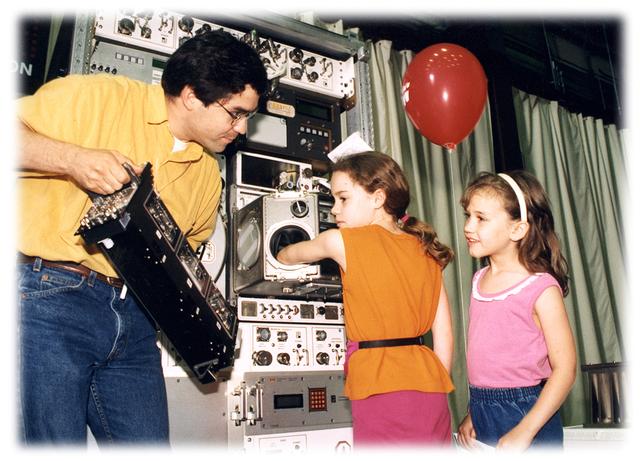
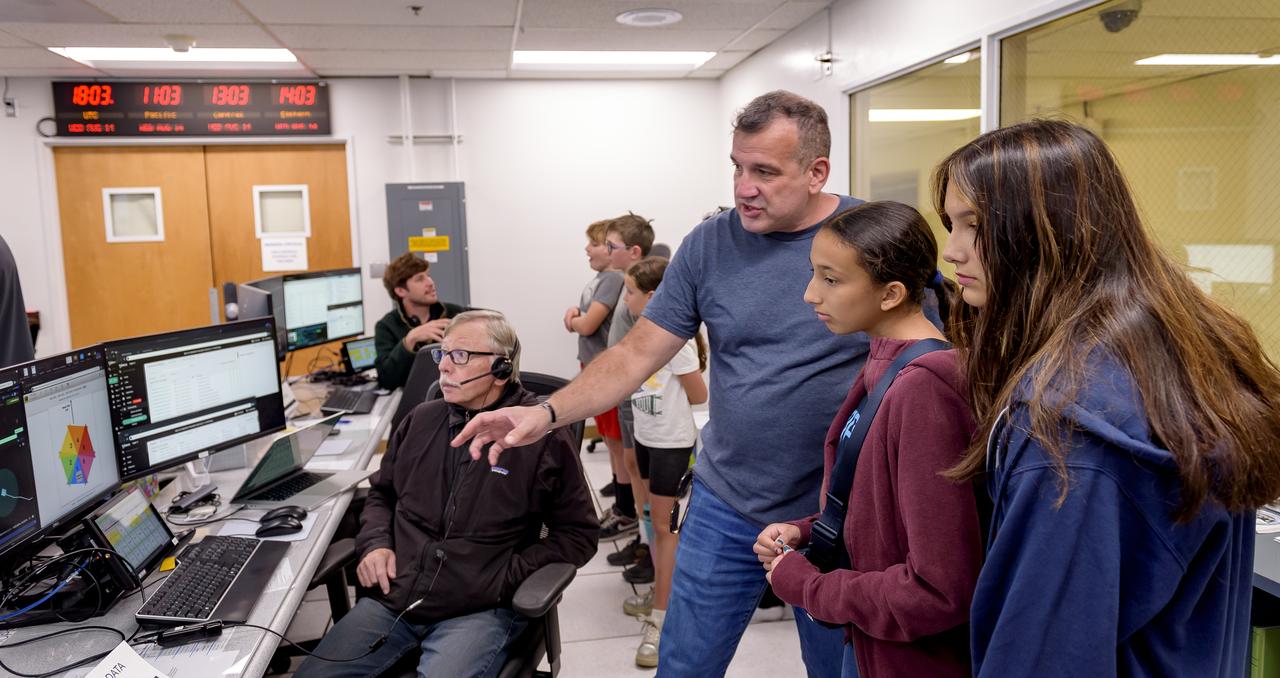
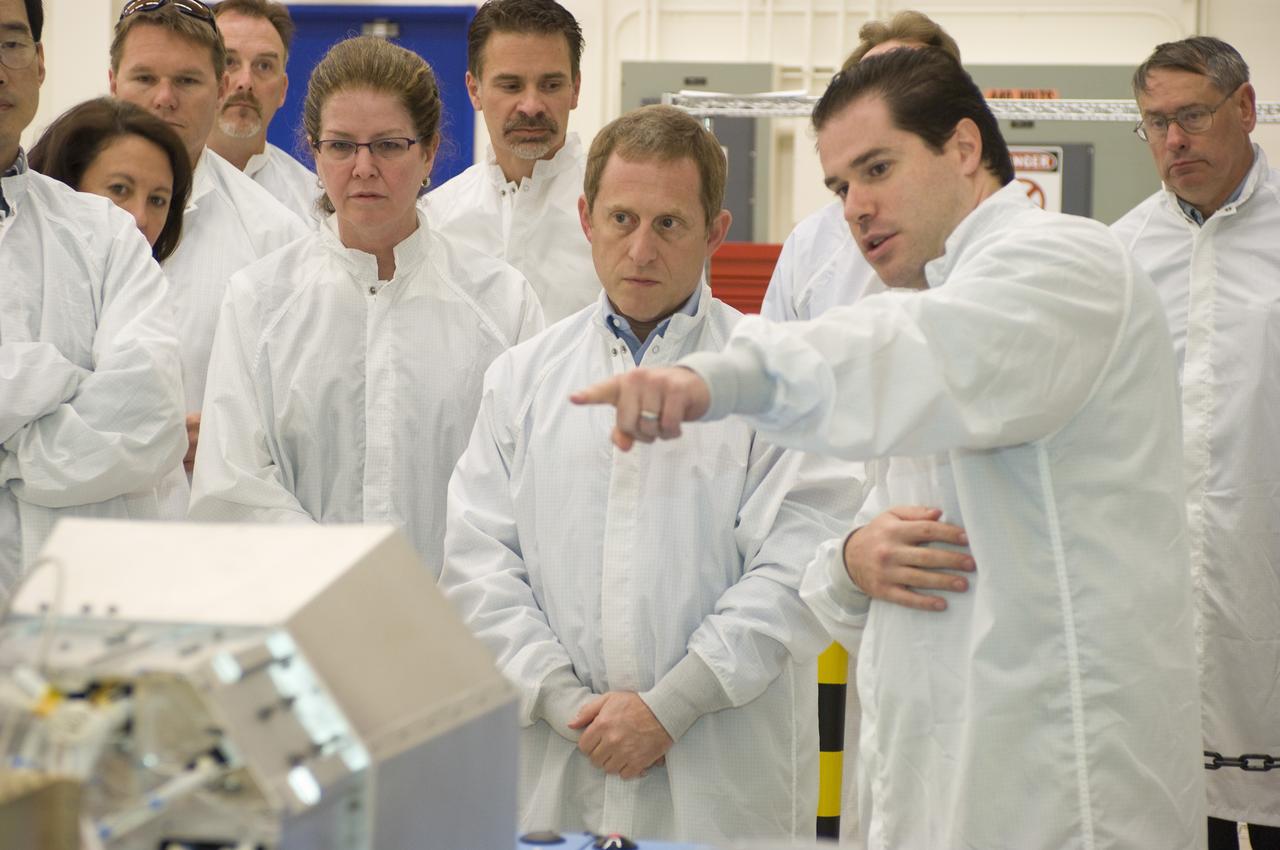
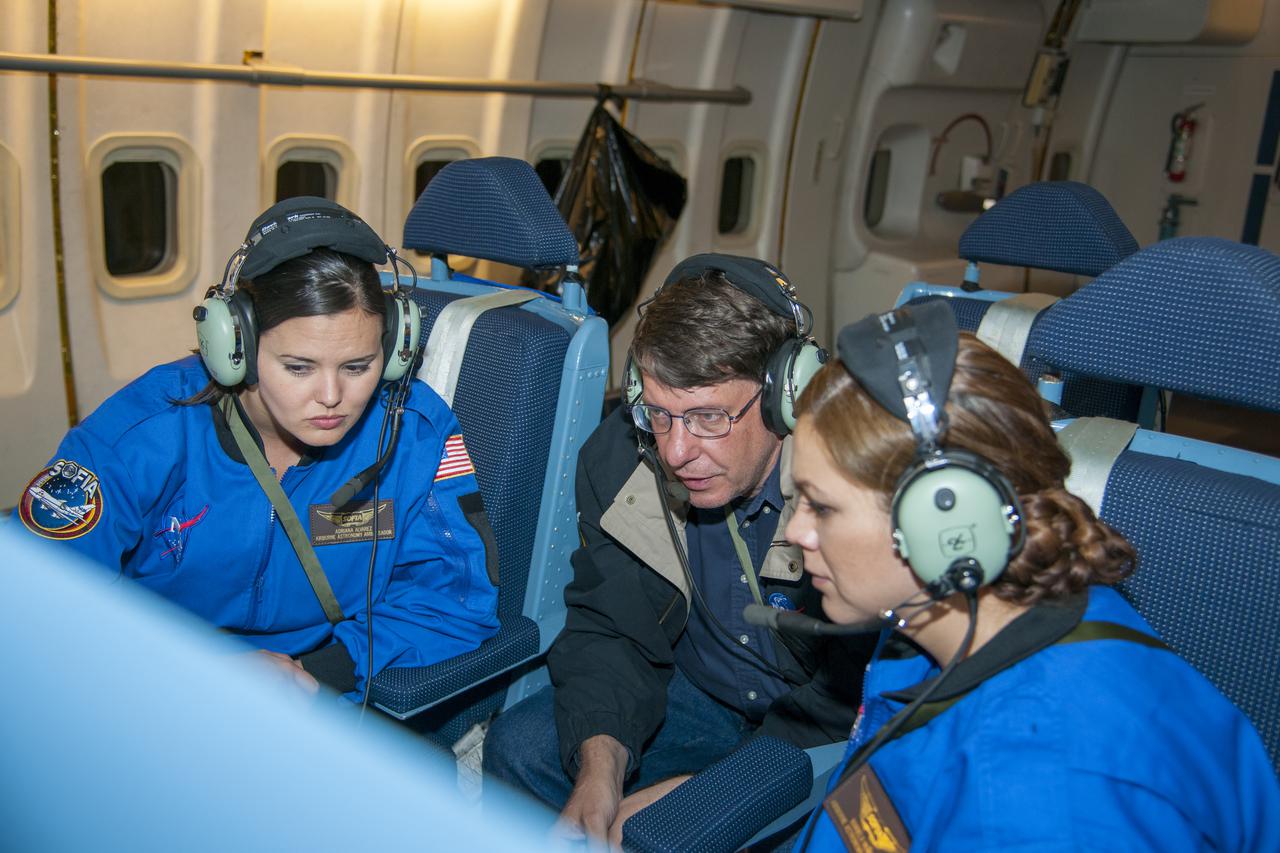
Dana Backamn explains SOFIA’s observations during a flight with Airborne Astronomy Ambassador educators Adriana Alvarez and Mariela Muñoz.
SOFIA Observations Explained
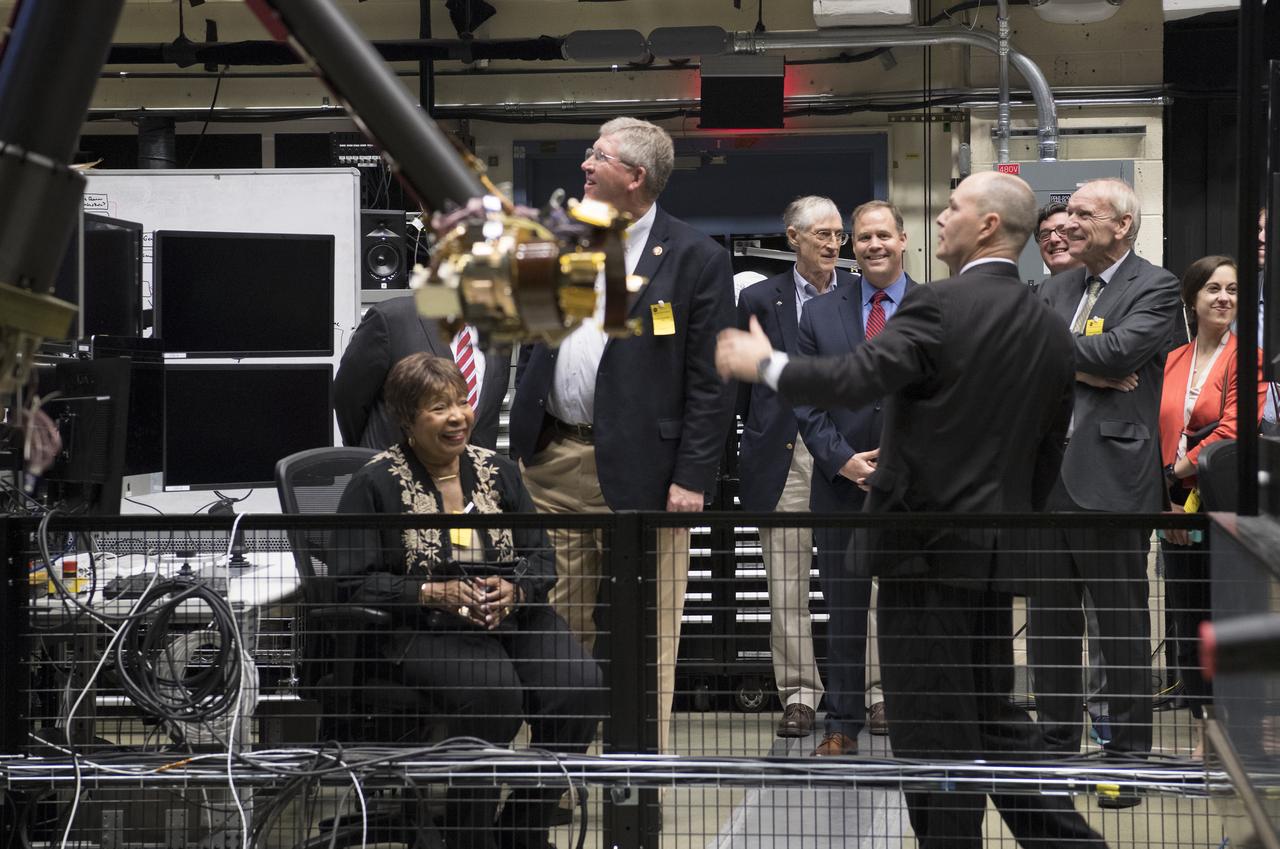
Bridenstine walks along with AFRC Center Director David McBride as McBride explains the aeronautical research happening at the center as well as discussing the capabilities used for agency missions.
Armstrong Center Director McBride provides NASA Administrator Bridenstine first tour of the California Armstrong Flight Research Center.
INTERN RYAN CONNELLY EXPLAINS HISTORY AND WORKINGS OF RS-25 ENGINE TO FELLOW INTERNS
INTERN RYAN CONNELLY EXPLAINS HISTORY AND WORKINGS OF RS-25 ENGI
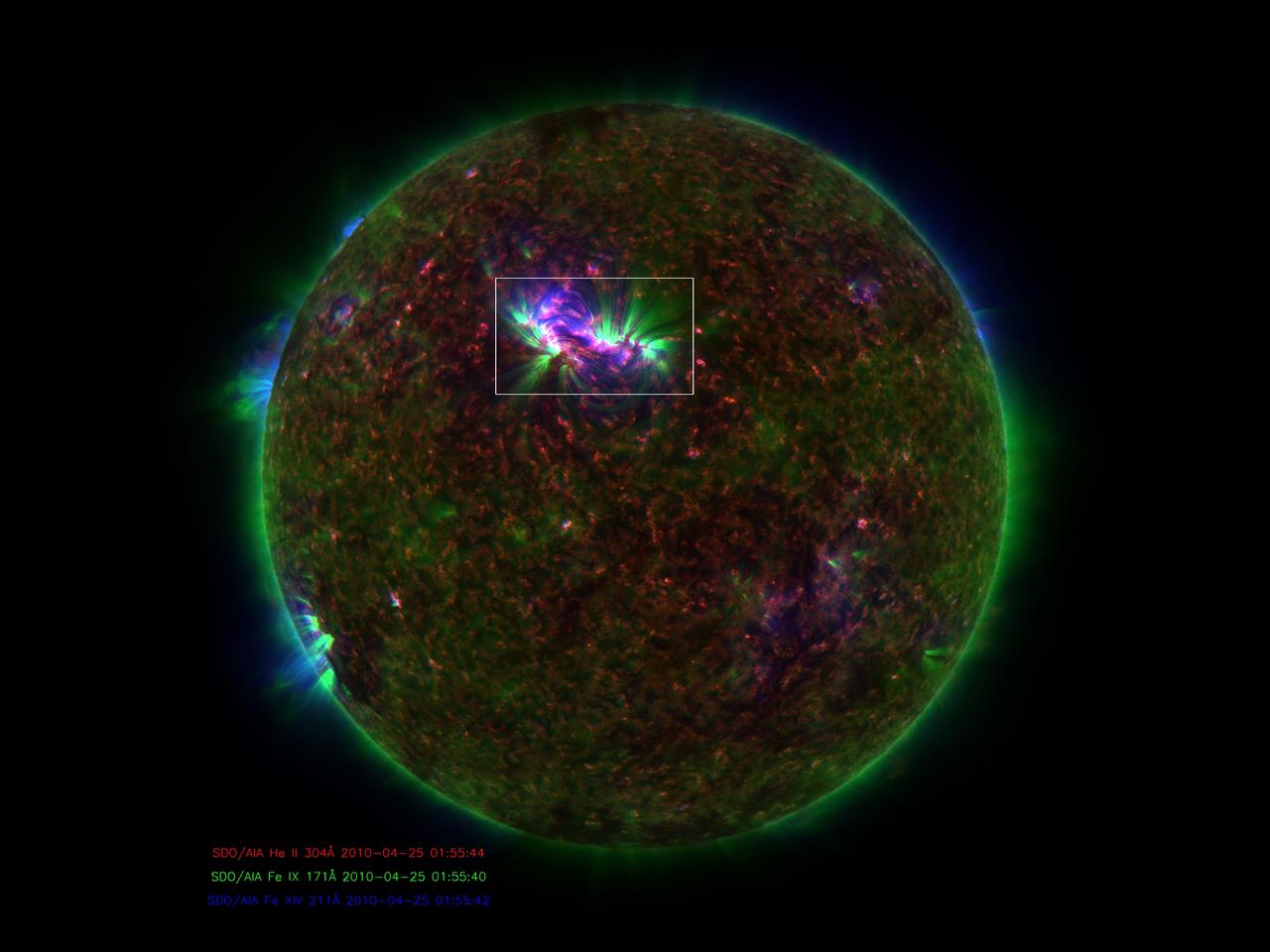
NASA image release January 6, 2010  Caption: Spicules on the sun, as observed by the Solar Dynamics Observatory. These bursts of gas jet off the surface of the sun at 150,000 miles per hour and contain gas that reaches temperatures over a million degrees.  GREENBELT, Md. -- Observations from NASA's Solar Dynamics Observatory (SDO) and the Japanese satellite Hinode show that some gas in the giant, fountain-like jets in the sun's atmosphere known as spicules can reach temperatures of millions of degrees. The finding offers a possible new framework for how the sun's high atmosphere gets so much hotter than the surface of the sun.   What makes the high atmosphere, or corona, so hot – over a million degrees, compared to the sun surface's 10,000 degrees Fahrenheit -- remains a poorly understood aspect of the sun's complicated space weather system. That weather system can reach Earth, causing auroral lights and, if strong enough, disrupting Earth's communications and power systems. Understanding such phenomena, therefore, is an important step towards better protecting our satellites and power grids.   &quot;The traditional view is that all the heating happens higher up in the corona,&quot; says Dean Pesnell, who is SDO's project scientist at NASA's Goddard Space Flight Center in Greenbelt, Md. &quot;The suggestion in this paper is that cool gas is being ejected from the sun's surface in spicules and getting heated on its way to the corona.&quot;  Spicules were first named in the 1940s, but were hard to study in detail until recently, says Bart De Pontieu of Lockheed Martin's Solar and Astrophysics Laboratory, Palo Alto, Calif. who is the lead author on a paper on this subject in the January 7, 2011 issue of Science magazine.   In visible light, spicules can be seen to send large masses of so-called plasma – the electromagnetic gas that surrounds the sun – up through the lower solar atmosphere or photosphere. The amount of material sent up is stunning, some 100 times as much as streams away from the sun in the solar wind towards the edges of the solar system. But nobody knew if they contained hot gas.  &quot;Heating of spicules to the necessary hot temperatures has never been observed, so their role in coronal heating had been dismissed as unlikely,&quot; says De Pontieu.   Now, De Pontieu's team -- which included researchers at Lockheed Martin, the High Altitude Observatory of the National Center for Atmospheric Research (NCAR) in Colorado and the University of Oslo, Norway -- was able to combine images from SDO and Hinode to produce a more complete picture of the gas inside these gigantic fountains.   The scientists found that a large fraction of the gas is heated to a hundred thousand degrees, while a small fraction is heated to millions of degrees. Time-lapsed images show that this material spews up into the corona, with most falling back down towards the surface of the sun. However, the small fraction of the gas that is heated to millions of degrees does not immediately return to the surface. Given the large number of spicules on the Sun, and the amount of material in the spicules, the scientists believe that if even some of that super hot plasma stays aloft it would make a contribution to coronal heating.   Astrophysicist Jonathan Cirtain, who is the U.S. project scientist for Hinode at NASA's Marshall Space Flight Center, Huntsville, Ala., says that incorporating such new information helps address an important question that reaches far beyond the sun. &quot;This breakthrough in our understanding of the mechanisms which transfer energy from the solar photosphere to the corona addresses one of the most compelling questions in stellar astrophysics: How is the atmosphere of a star heated?&quot; he says. &quot;This is a fantastic discovery, and demonstrates the muscle of the NASA Heliophysics System Observatory, comprised of numerous instruments on multiple observatories.&quot;  Hinode is the second mission in NASA's Solar Terrestrial Probes program, the goal of which is to improve understanding of fundamental solar and space physics processes. The mission is led by the Japan Aerospace Exploration Agency (JAXA) and the National Astronomical Observatory of Japan (NAOJ). The collaborative mission includes the U.S., the United Kingdom, Norway and Europe. NASA Marshall manages Hinode U.S. science operations and oversaw development of the scientific instrumentation provided for the mission by NASA, academia and industry. The Lockheed Martin Advanced Technology Center is the lead U.S. investigator for the Solar Optical Telescope on Hinode.  SDO is the first mission in a NASA science program called Living With a Star, the goal of which is to develop the scientific understanding necessary to address those aspects of the sun-Earth system that directly affect our lives and society. NASA Goddard built, operates, and manages the SDO spacecraft for NASA's Science Mission Directorate in Washington.   To learn more go to: <a href="http://www.nasa.gov/mission_pages/sdo/news/news20110106-spicules.html" rel="nofollow">www.nasa.gov/mission_pages/sdo/news/news20110106-spicules...</a>  Credit: NASA Goddard/SDO/AIA  <b><a href="http://www.nasa.gov/centers/goddard/home/index.html" rel="nofollow">NASA Goddard Space Flight Center</a></b> enables NASA’s mission through four scientific endeavors: Earth Science, Heliophysics, Solar System Exploration, and Astrophysics. Goddard plays a leading role in NASA’s accomplishments by contributing compelling scientific knowledge to advance the Agency’s mission.  <b>Follow us on <a href="http://twitter.com/NASA_GoddardPix" rel="nofollow">Twitter</a></b>  <b>Join us on <a href="http://www.facebook.com/pages/Greenbelt-MD/NASA-Goddard/395013845897?ref=tsd" rel="nofollow">Facebook</a></b>
Hotspots in Fountains on the Sun's Surface Help Explain Coronal Heating Mystery
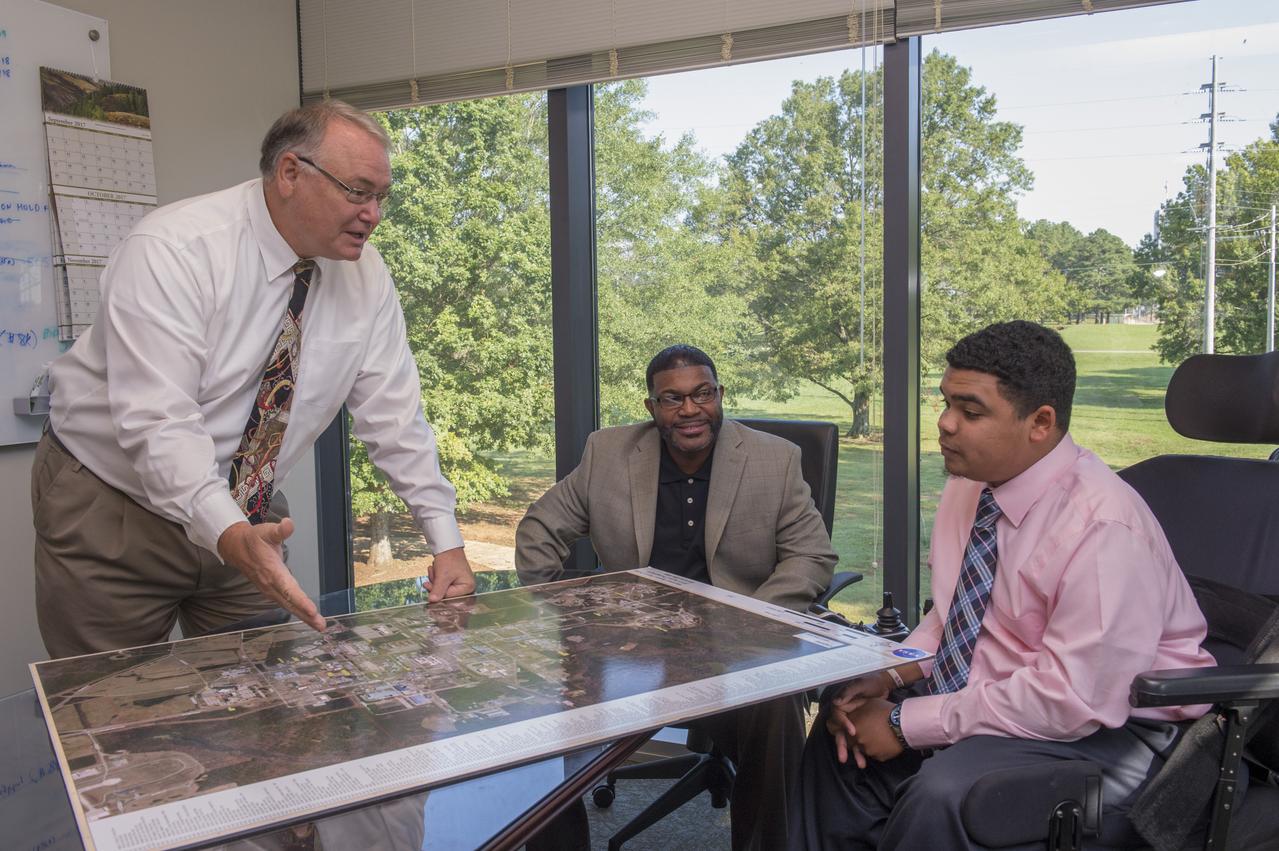
Farley Davis and Edward Ahmad explain map of MSFC  to Fall Job Shadowing Student Deshon Washington, a student at Alabama A&M University.
Farley Davis and Edward Ahmad explain map of MSFC to Fall Job S
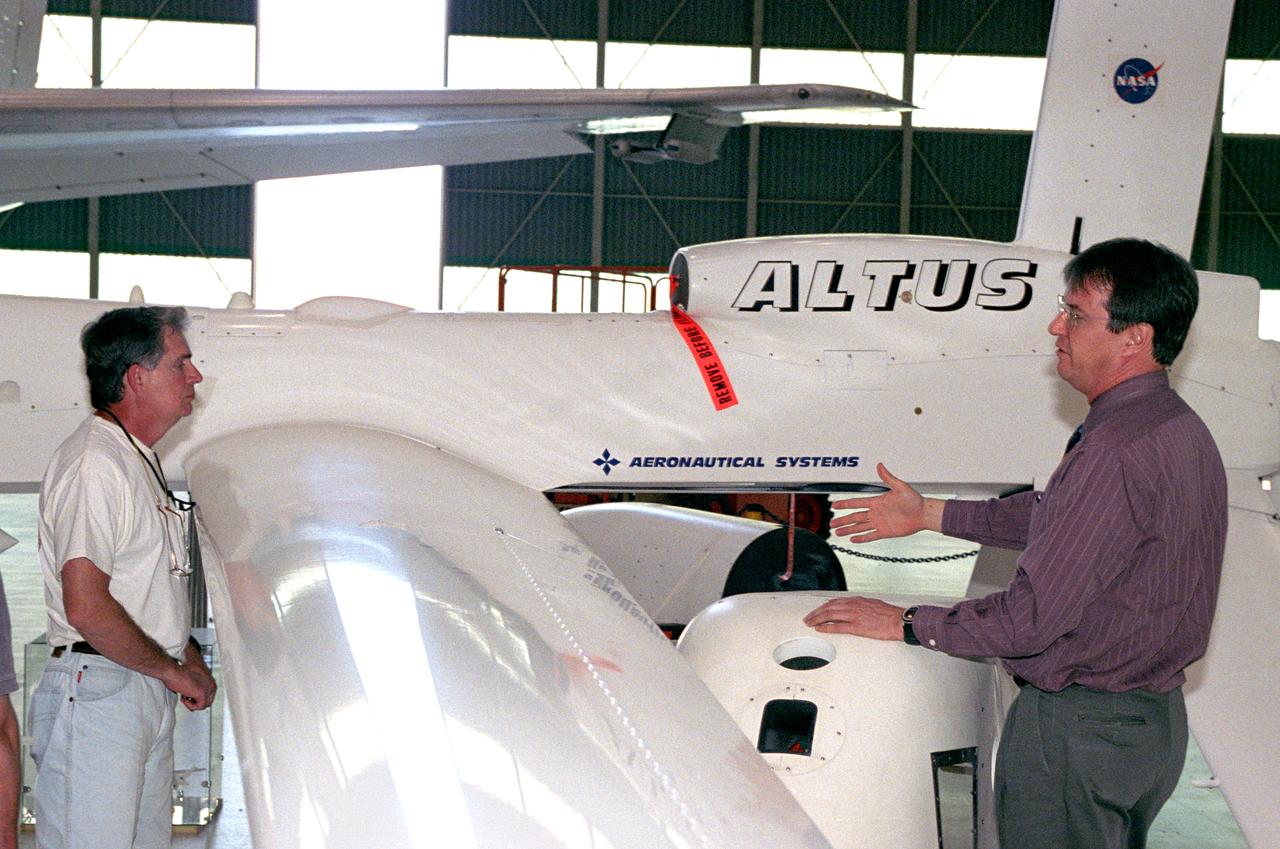
David Bushman, unmanned aerial vehicle (UAV) mission manager in NASA Dryden's Airborne Science Program, explains the capabilities of the Altus UAV to Charles Hudgins of NASA Langley's Chemistry and Dynamics Branch.
Dryden's David Bushman explains the capabilities of the Altus UAV to NASA Langley's Charles Hudgins
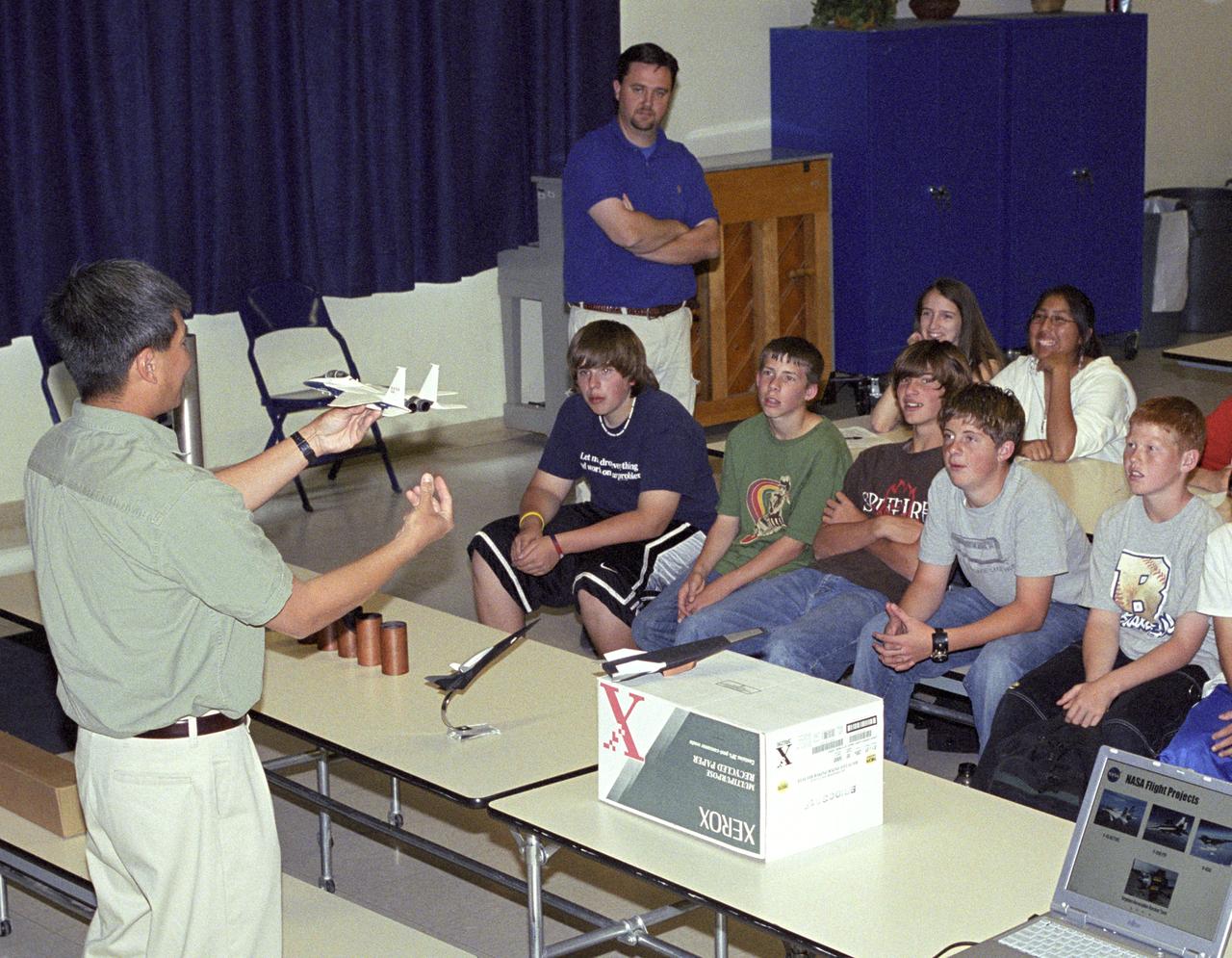
NASA Dryden aerospace engineer Trong Bui explains the dynamics of flight to a group of Edwards Middle School students during a recent Career Day presentation.
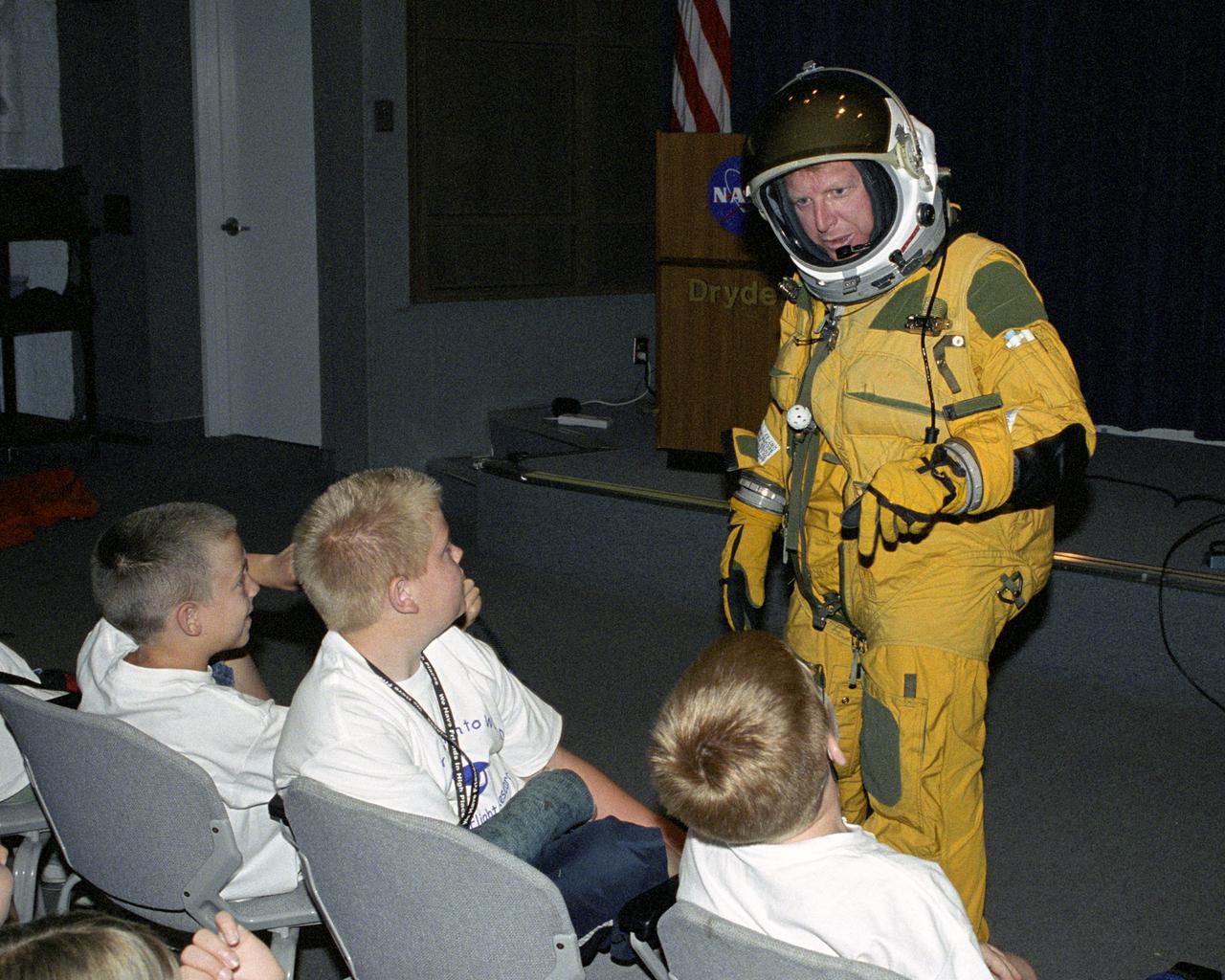
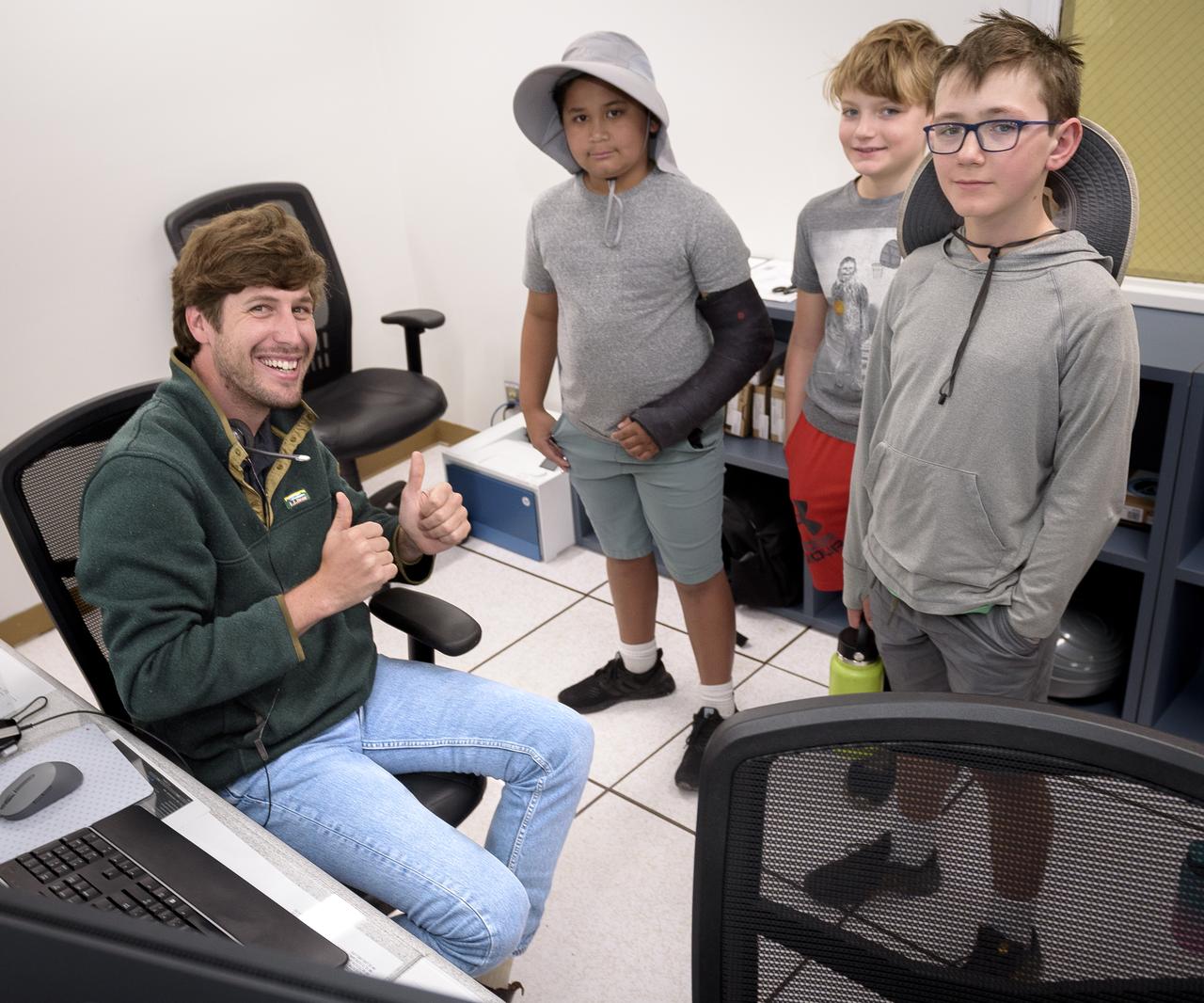
NASA Dryden historian Christian Gelzer explains functions of the high-altitude pressure suit he is wearing to (left to right) Brandon Blankenship and Garrett Clay of Lancaster and Eddie Patterson of Tehachapi during Take Your Children to Work Day activities at NASA Dryden Flight Research Center June 22.
Dryden historian Christian Gelzer explains functions of a high-altitude pressure suit to (left to right) Brandon Blankenship, Garrett Clay and Eddie Patterson
This infographic explains a popular theory of active supermassive black holes, referred to as the unified model -- and how new data from NASA WISE, is at conflict with the model.
Unified, or Doughnut, Theory of Active, Black Holes
This infographic explains how NASA Spitzer Space Telescope can be used in tandem with a telescope on the ground to measure the distances to planets discovered using the microlensing technique.  http://photojournal.jpl.nasa.gov/catalog/PIA19332
Infographic: Finding Planets With Microlensing
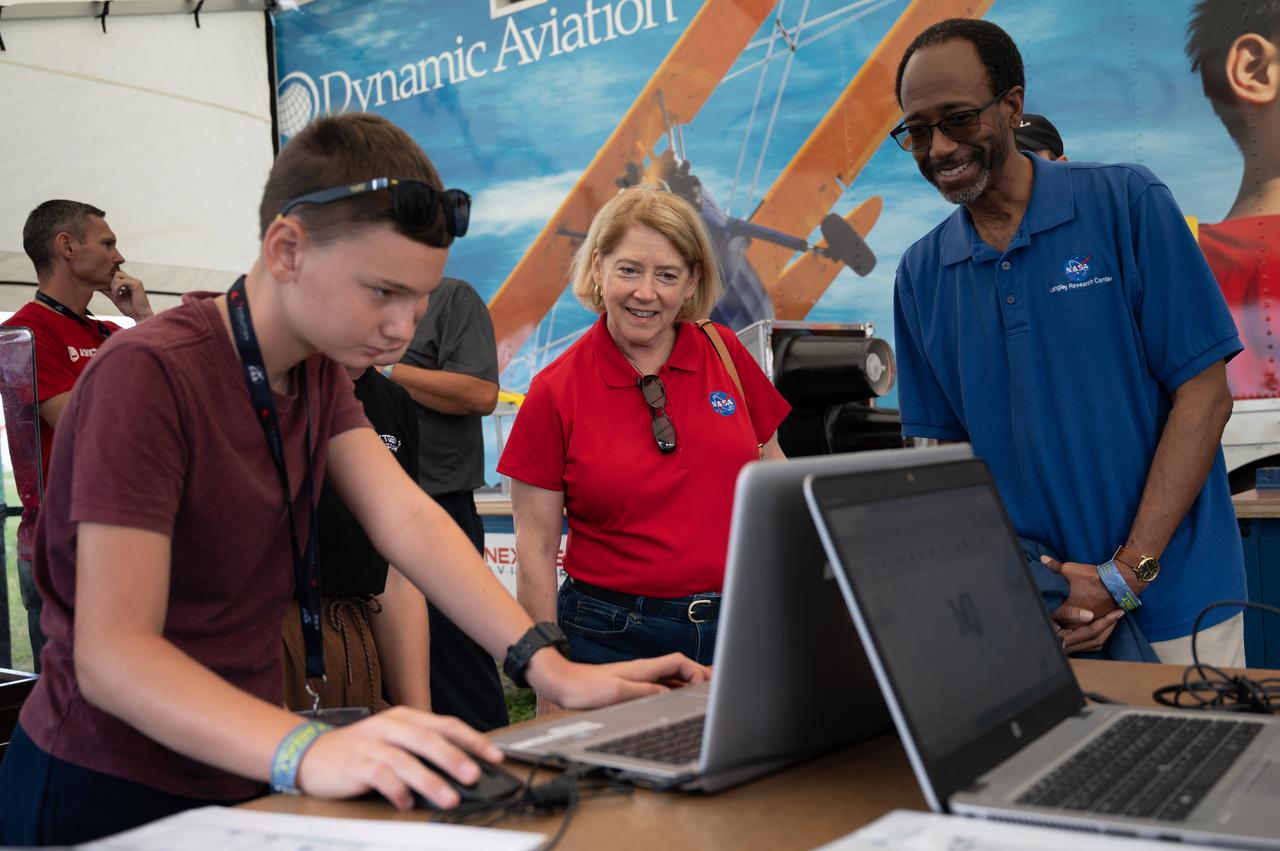
Deputy Administrator Pam Melroy tours the NEXTGEN Aviators exhibit on Thursday, July 28, 2022, at EAA AirVenture. Here Silas Webb explains his CAD aircraft design with the help of Kala Dougan.
AirVenture 2022
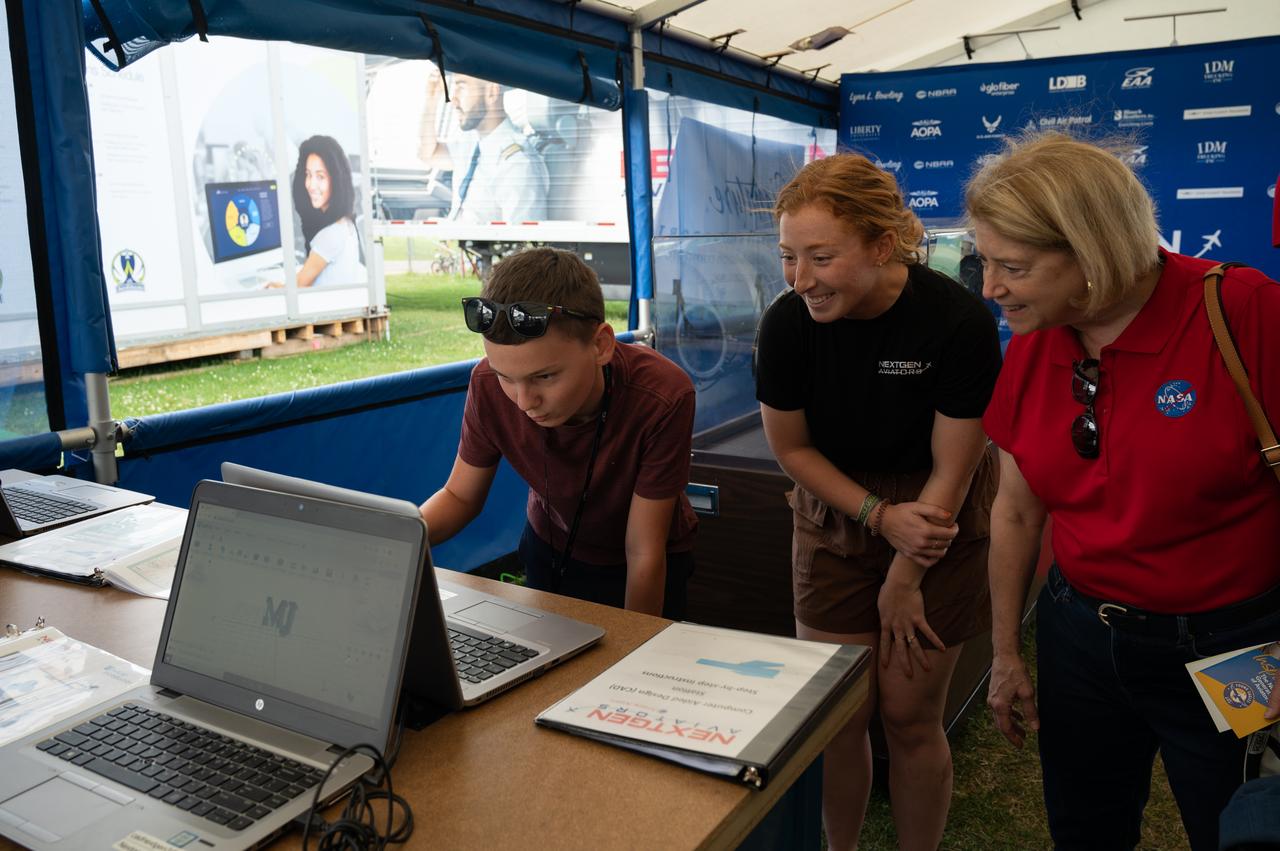
Silas Webb explains his CAD aircraft design to Deputy Administrator Pam Melroy and Langley Director Clayton Turner on Thursday, July 28, 2022, at the NEXTGEN Aviators exhibit at AirVenture Oshkosh.
NHQ20220811ARMD13
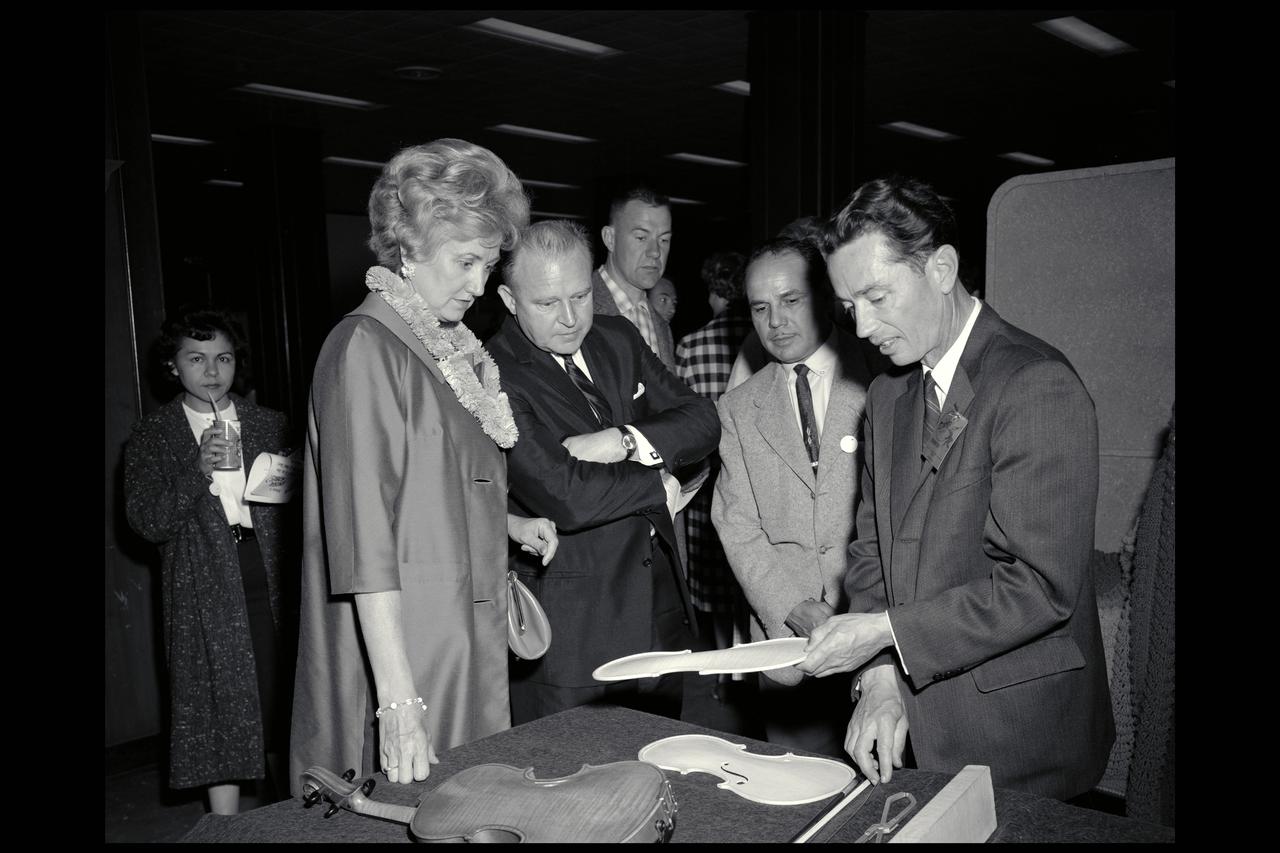
Ames Soiree: R.T. Jones explains his violin making hobby
ARC-1962-A-42742-2
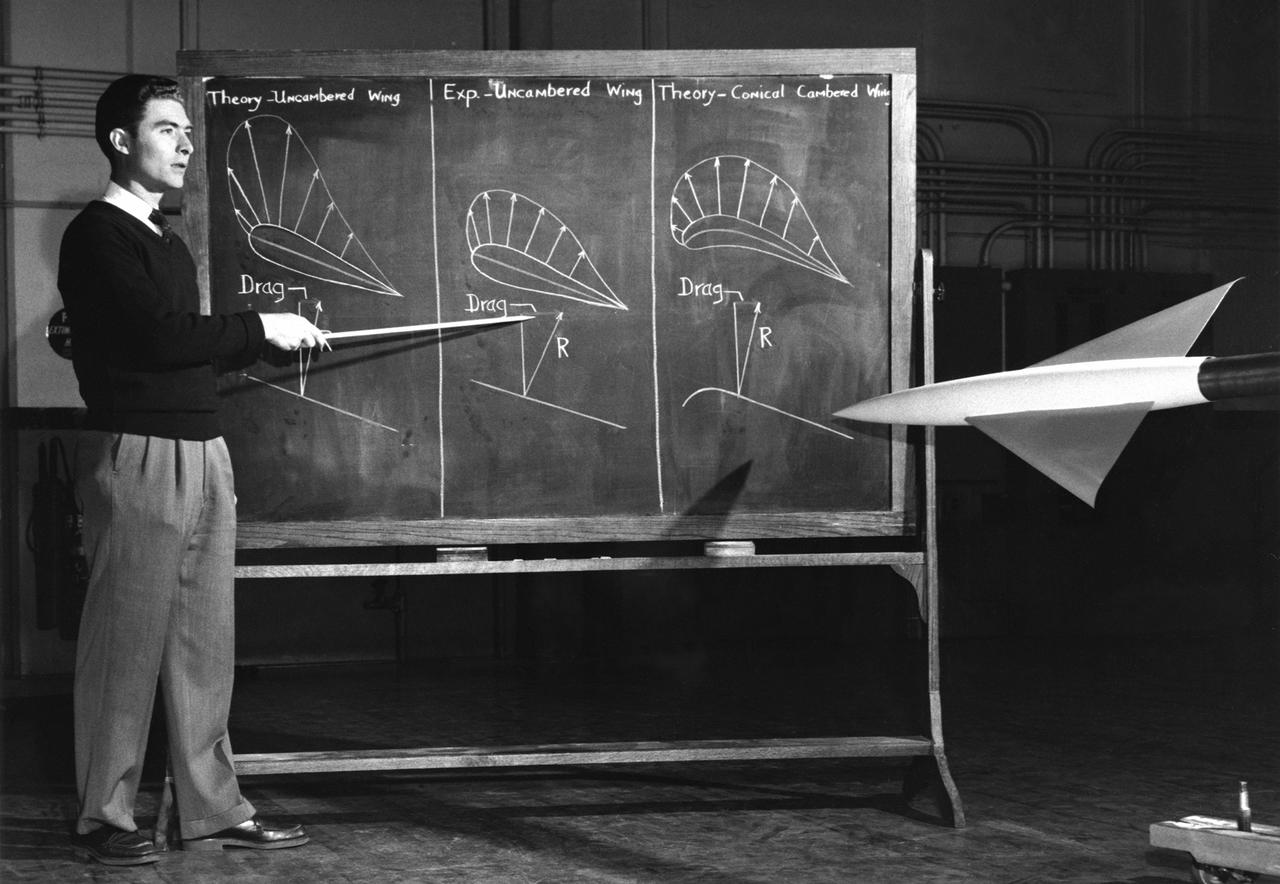
NACA Photographer John W. Boyd explaining the efficiencies of conical camber
ARC-1957-A-22498
John H. Wolfe, Pioneer Project Scientist, explains observations made by Pioneer 10 as it traversed the Jovian system
ARC-1973-A73-4898
AARON STANFIELD EXPLAINS CONSTRUCTION OF SCALE MODEL OF SLS MOBILE LAUNCH PLATFORM AND CRAWLER TO PATRICK SCHEUERMANN AND TODD CANNON
MSFC center director, Patrick Scheuermann, tours the center model shop
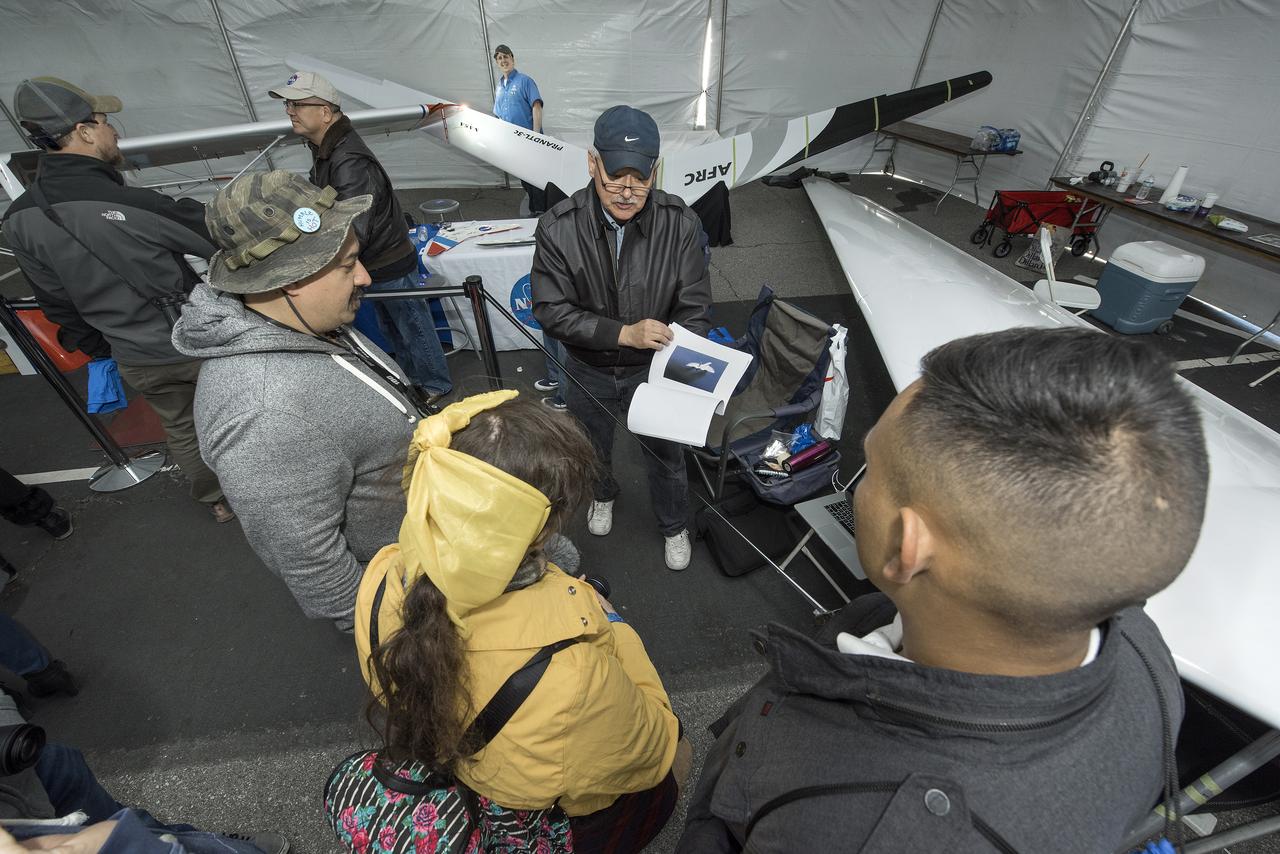
Al Bowers explains the Prandtl experimental aircraft and how its wing twist could redefine the efficiency of aircraft.
NASA Armstrong Supported 2018 Los Angeles County Air Show
John H. Wolfe, Pioneer Project Scientist, explains observations made by Pioneer 10 as it traversed the Jovian system
ARC-1973-A73-4895
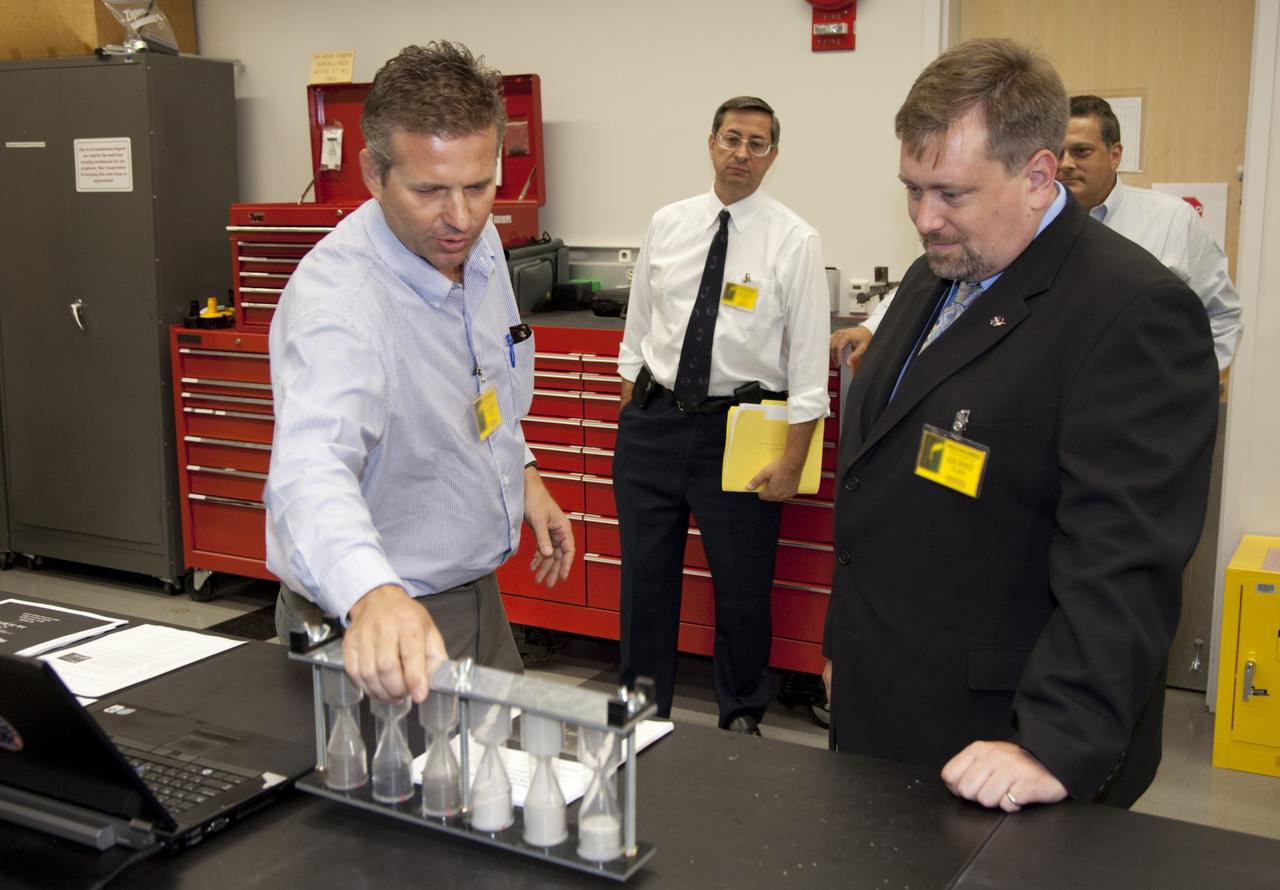
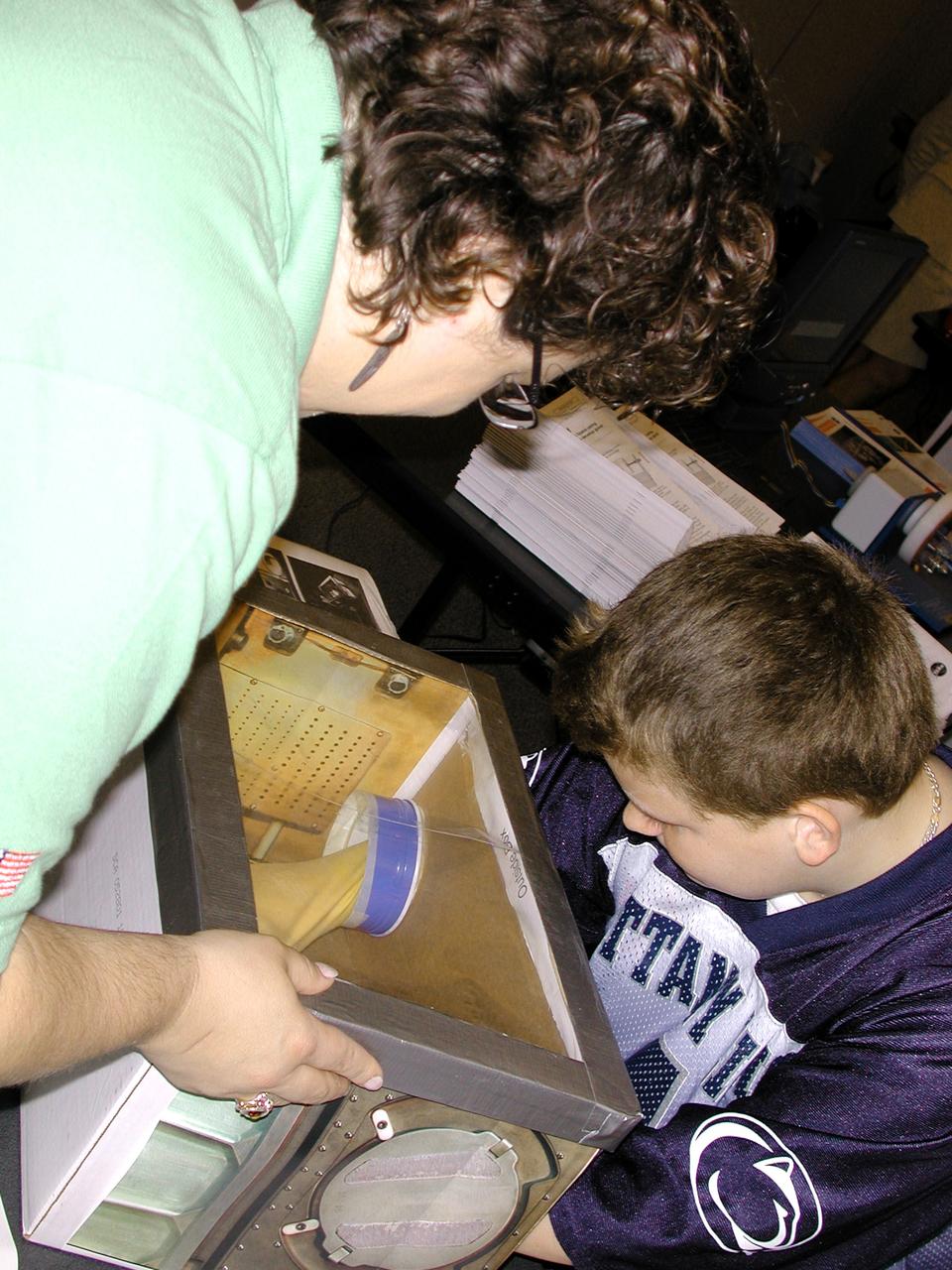
Glovebox Systems Engineer, Sam Ortega, explains how the microgravity glovebox works to 2 young MSFC Open House visitors.
Microgravity
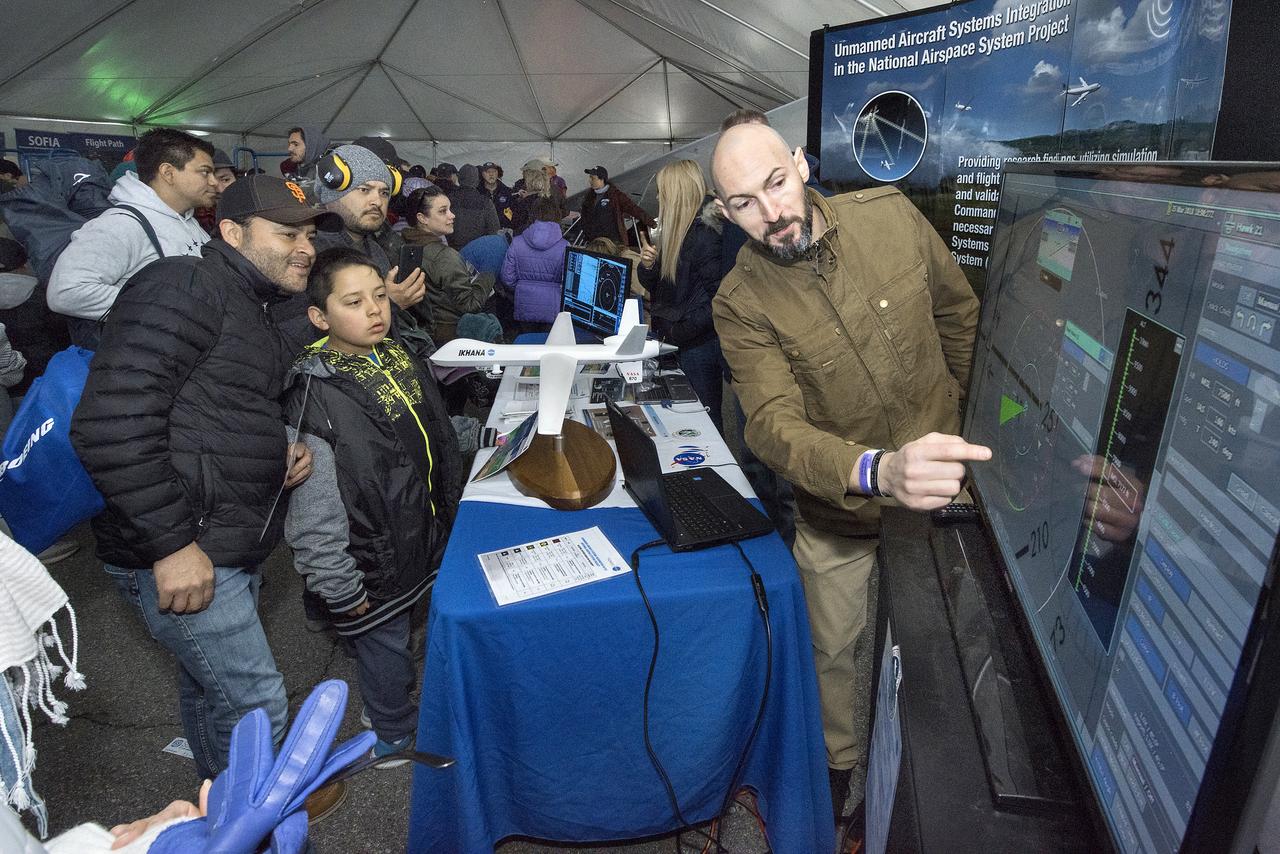
Zack Roberts from NASA’s Ames Research Center explains elements of the Unmanned Aircraft Systems Integration into the National Airspace System.
NASA Armstrong Supported 2018 Los Angeles County Air Show
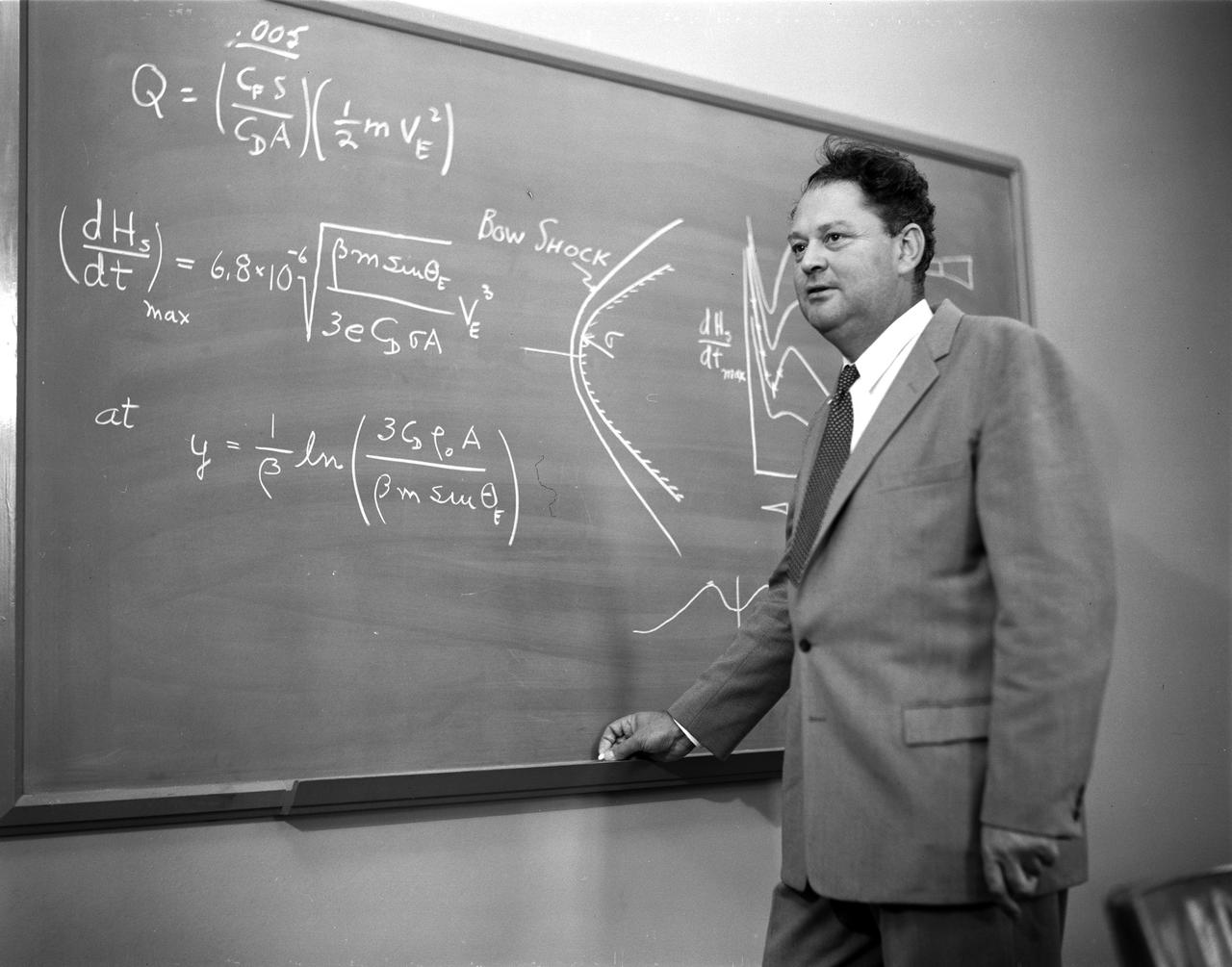
Portrait of NASA Ames Engineer H. Julian 'Harvey' Allen explaining blunt nose principle.
ARC-1957-A-22664
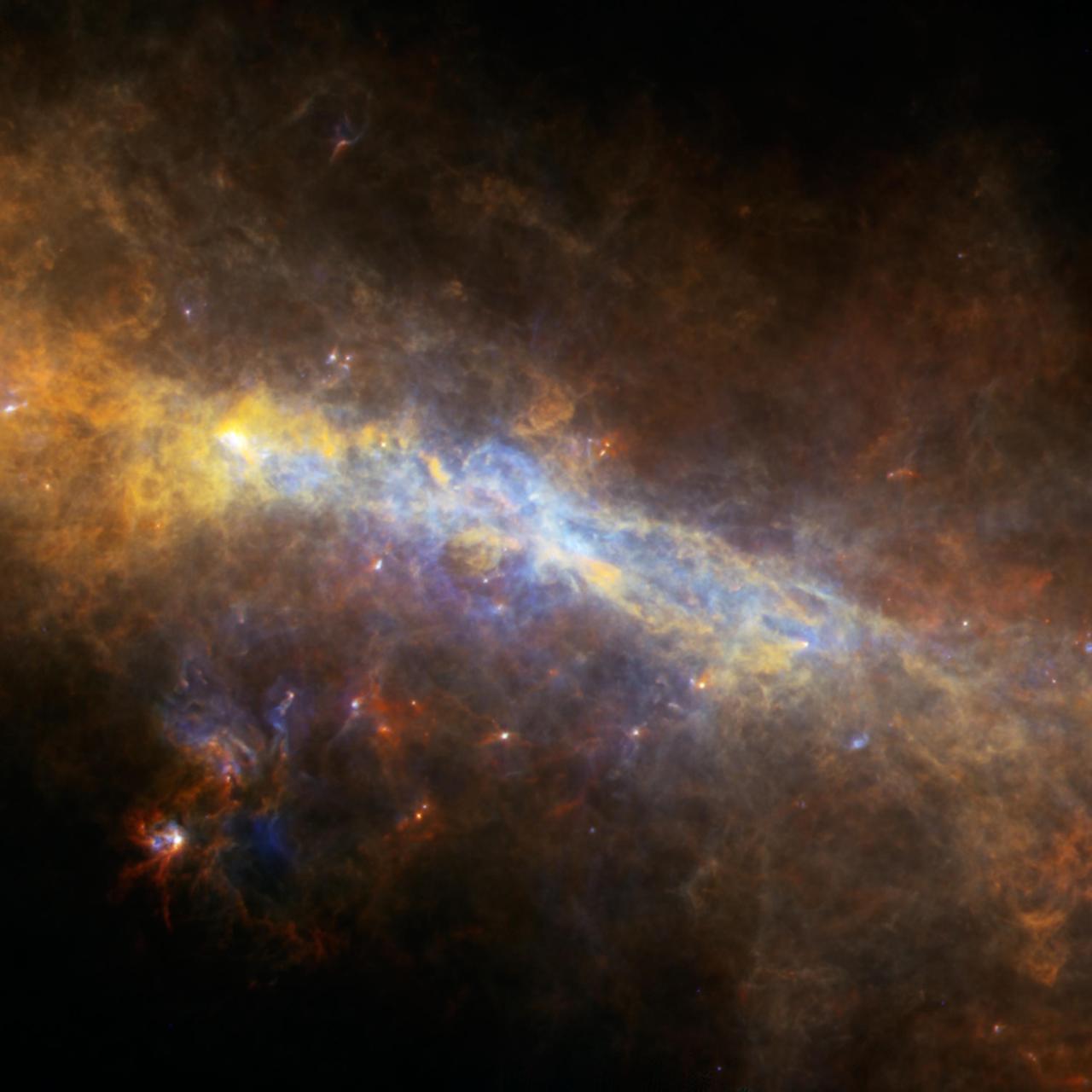
This image from ESA Herschel Space Observatory reveals a suspected ring at the center of our galaxy is warped for reasons scientists cannot explain. The ring is twisted so that part of it rises above and below the plane of our Milky Way galaxy.
The Case of the Warped Galactic Ring
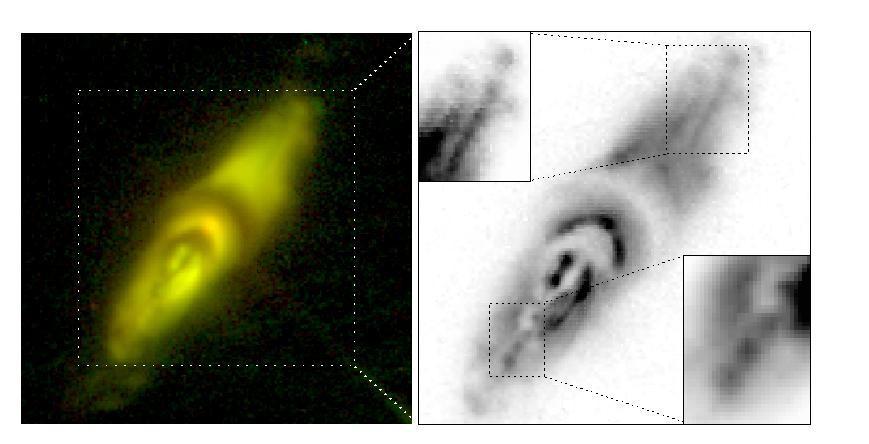
This image of a dying star, protoplanetary nebula IRAS22036+5306, containing strange, complex structures may help explain the death throes of stars and defy our current understanding of physics. Taken by NASA Wide Field and Planetary Camera 2.
Hubble View of a Dying Star
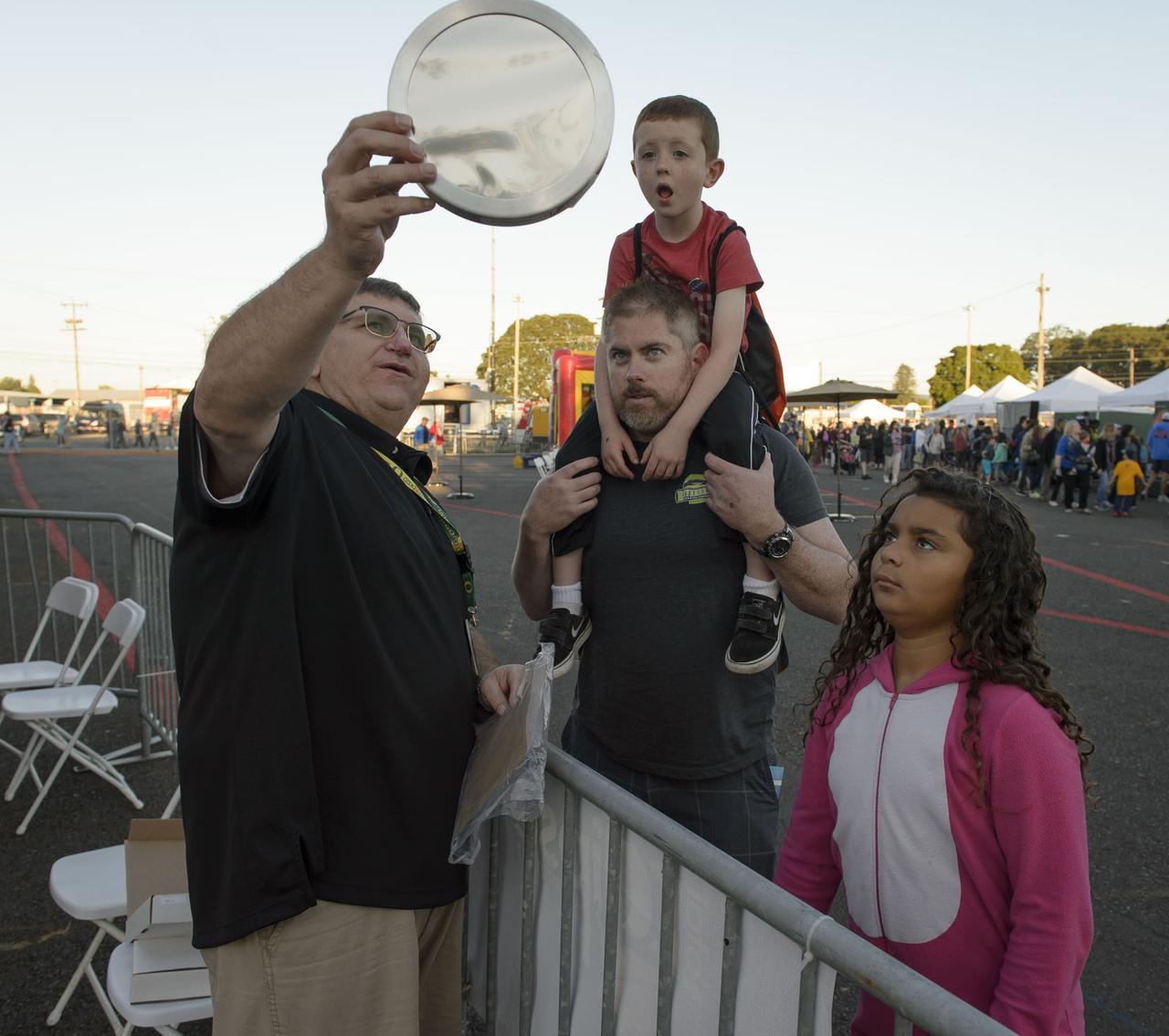
Bill Moede, Howard Video Productions, of the NASA Ames Video group explains how the filter that will be used on the camera to safely photograph the sun during the eclipse.
ACD17-0154-009
Jim Bridenstine and congressional staff visited Goddard on May 6, 2019.  Here Ben Reed explains robotic arm in Satellite Servicing facility.
GSFC_20190506_2019-15065_027
Maxime Faget explains a model of the Apollo Spacecraft to members of the Korean National Assembly.( 19431 thru 19432 );                                        MSC, HOUSTON, TX                                   B&W
VISITORS - TOUR - KOREAN NATIONAL ASSEMBLY - MSC
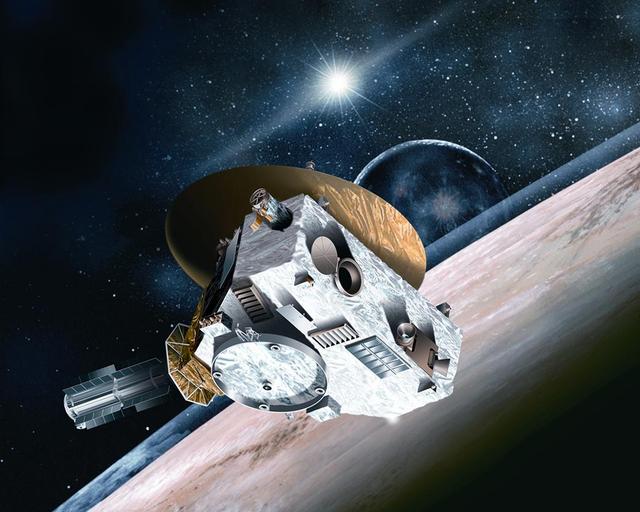
This artist concept shows NASA fleet of observatories busily gathering data before and after July 14, 2015 to help piece together what we know about Pluto, and what features New Horizons data might help explain.  What's icy, has "wobbly" potato-shaped moons, and is arguably the world's favorite dwarf planet? The answer is Pluto, and NASA's New Horizons is speeding towards the edge of our solar system for a July 14 flyby. It won't be making observations alone; NASA's fleet of observatories will be busy gathering data before and after to help piece together what we know about Pluto, and what features New Horizons data might help explain.   http://photojournal.jpl.nasa.gov/catalog/PIA19703
NASA Missions Have Their Eyes Peeled on Pluto Artist Concept
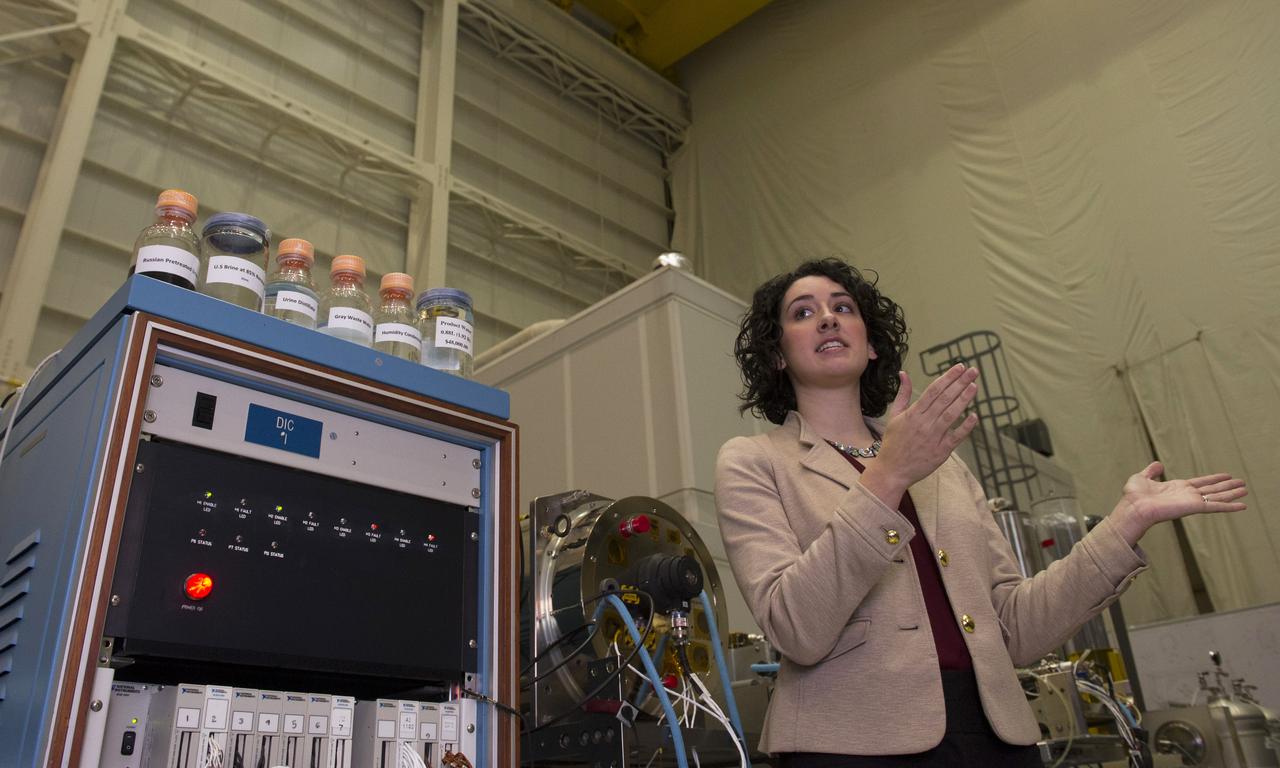
JENNIFER PRUITT, LEAD DESIGN ENGINEER FOR THE INTERNATIONAL SPACE STATION URINE PROCESSING ASSEMBLY AT MARSHALL, BRIEFS A GROUP OF MORE THAN 20 SOCIAL AND TRADITIONAL MEDIA REPRESENTATIVES ABOUT HER WORK TO IMPROVE THE RECYCLING OF WATER FOR ASTRONAUTS. THE TOUR OF MARSHALL WORK SUPPORTING NASA'S JOURNEY TO MARS WAS PART OF AGENCY-WIDE "STATE OF NASA" EVENTS FEB. 2. THE TOUR ALSO INCLUDED A LOOK AT OXYGEN RECYCLING EFFORTS, A SPACE LAUNCH SYSTEM CORE STAGE SIMULATOR AND A CHANCE TO TALK WITH MARSHALL DIRECTOR PATRICK SCHEUERMANN AND DEPUTY DIRECTOR TERESA VANHOOSER.
Jennifer Pruitt, explains ECLSS to media representatives
This artist's concept animation shows a brown dwarf with bands of clouds, thought to resemble those seen on Neptune and the other outer planets in the solar system.  By using NASA's Spitzer Space Telescope, astronomers have found that the varying glow of brown dwarfs over time can be explained by bands of patchy clouds rotating at different speeds.   Videos are available at https://photojournal.jpl.nasa.gov/catalog/PIA21752
Brown Dwarf Weather (Artist's Concept)
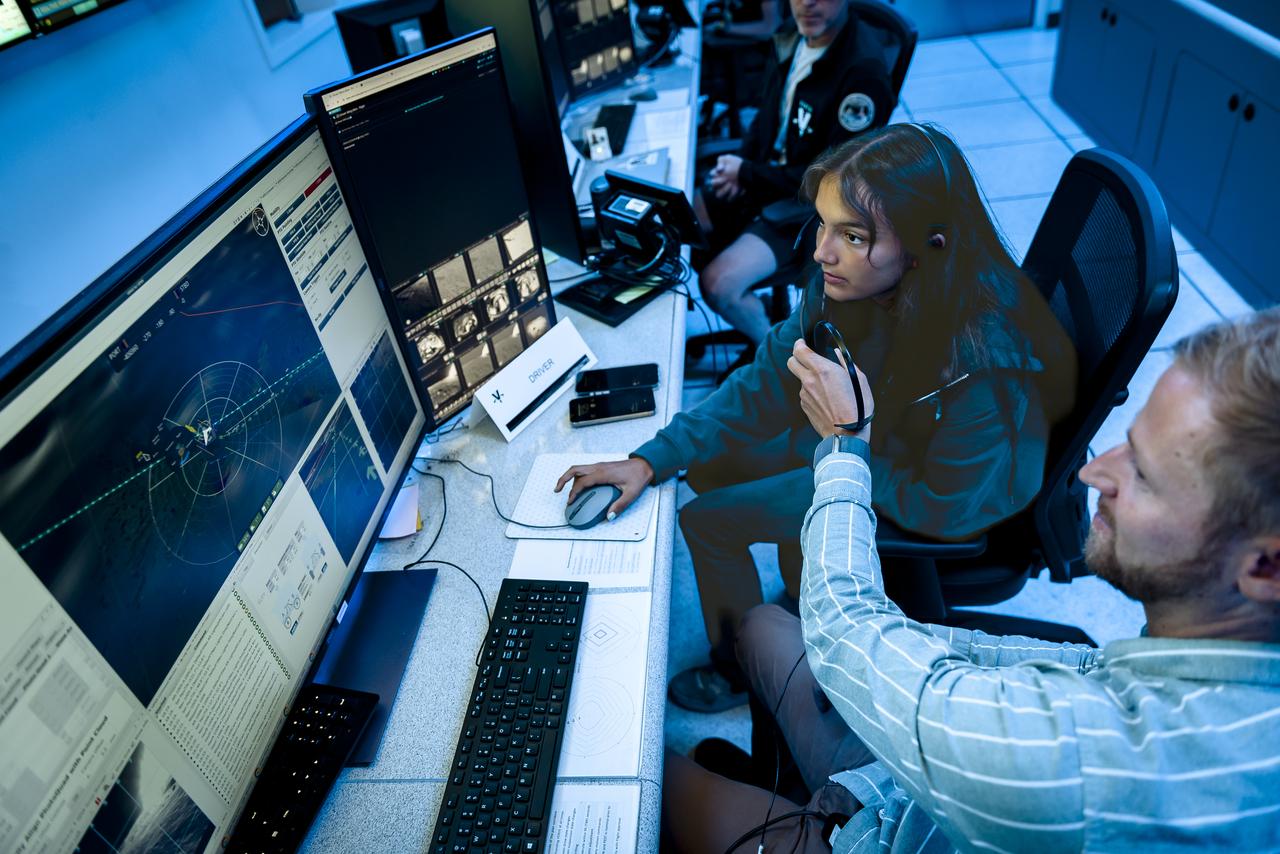
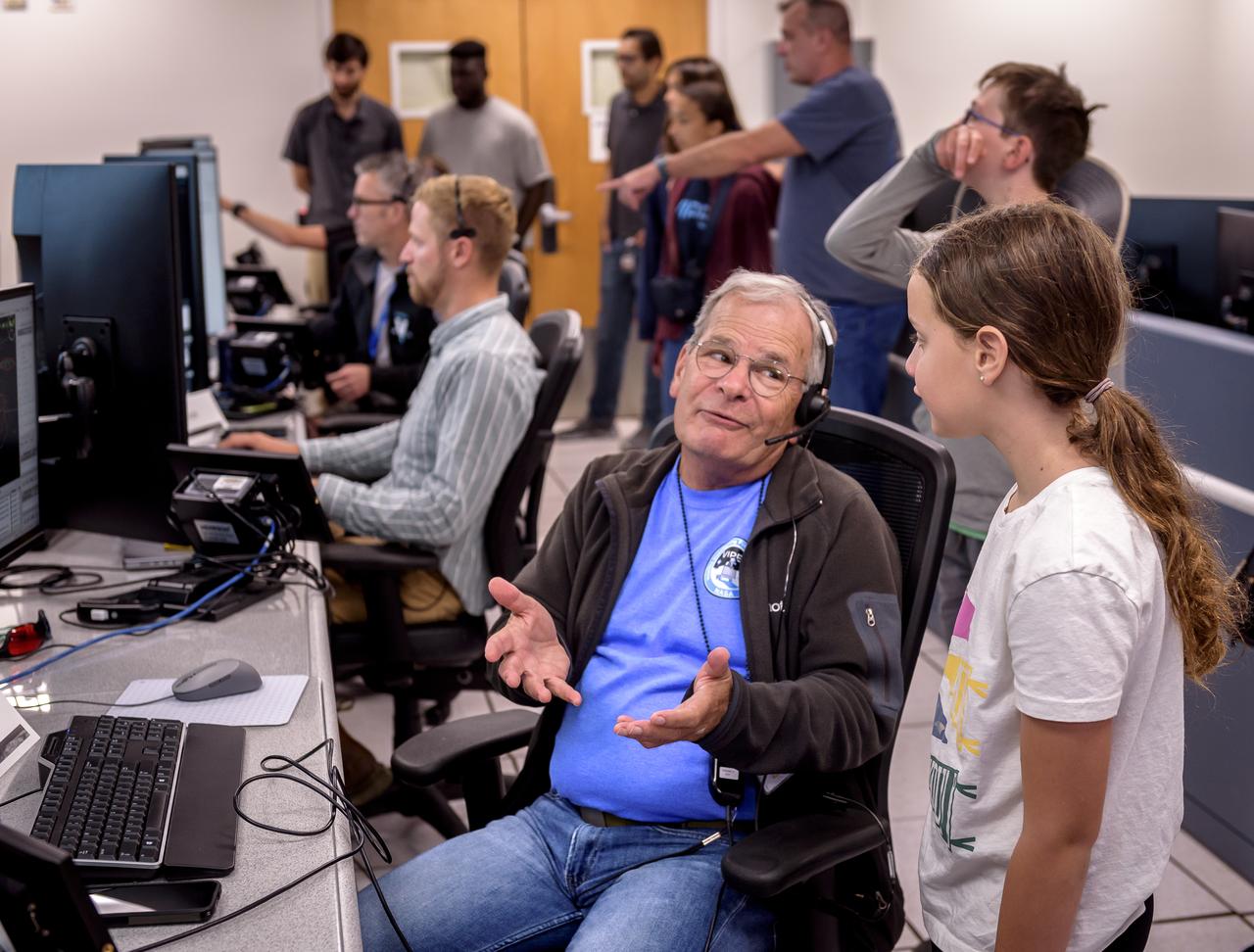
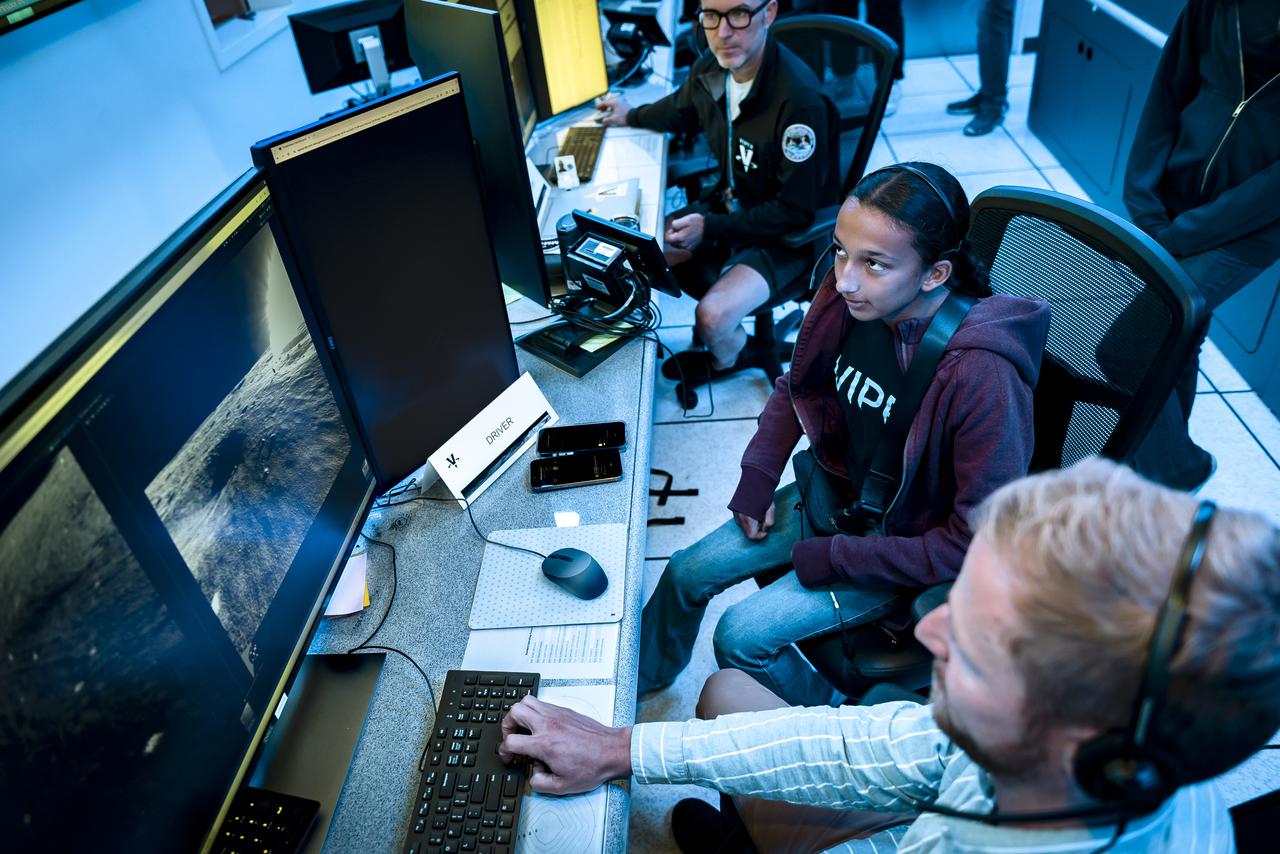
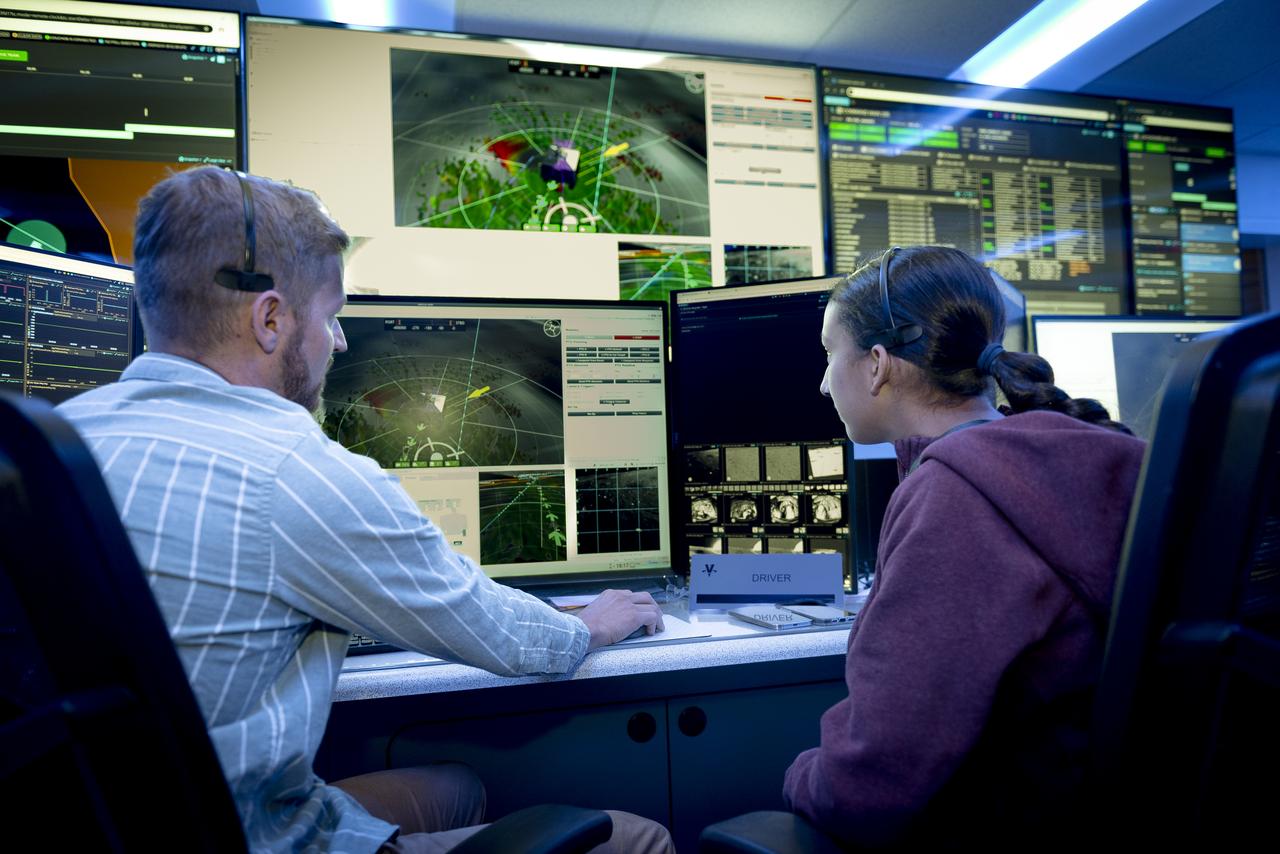
Arno Rogg explains the Volatiles Investigating Polar Exploration Rover (VIPER) mission to visitors in the Multi-Mission Operations Center (MMOC), N240, during VIPER Family Day.
VIPER Family Day
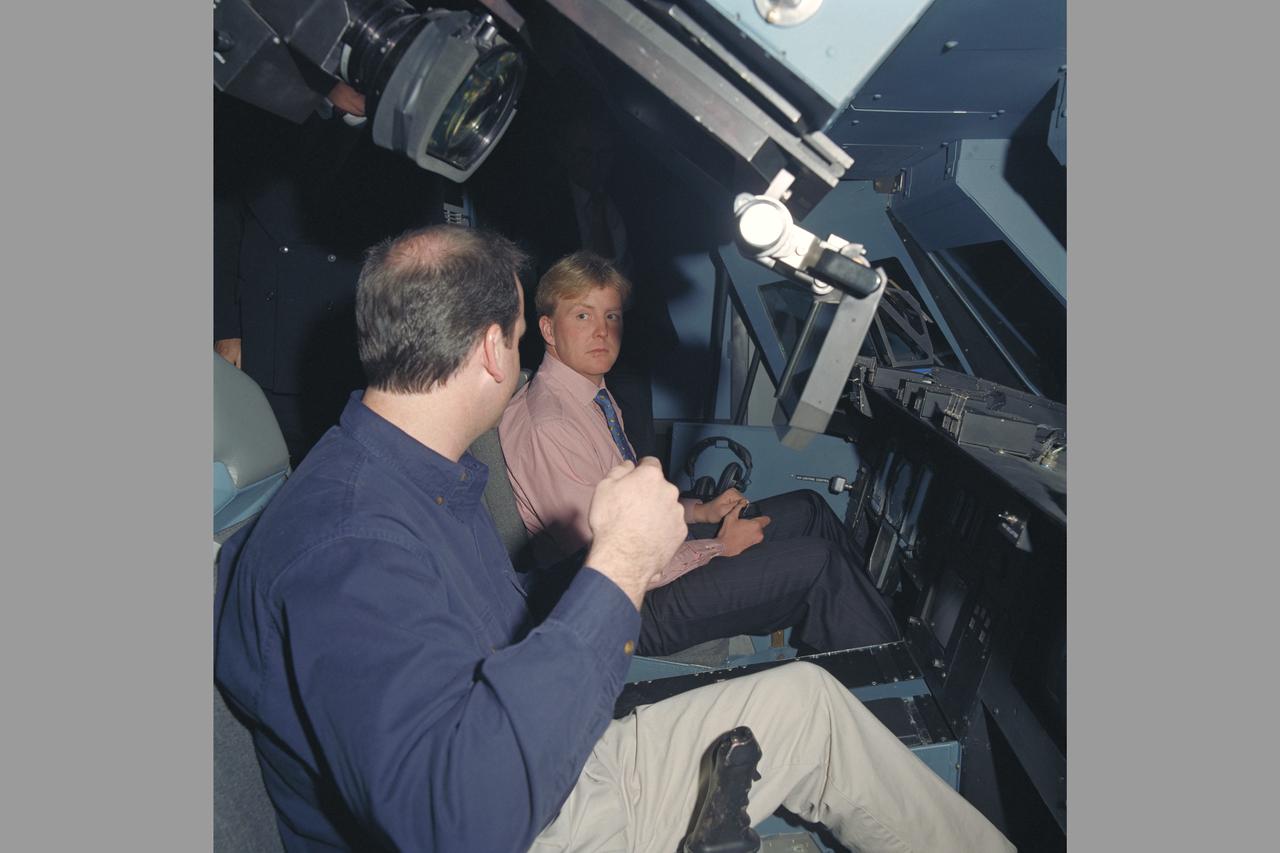
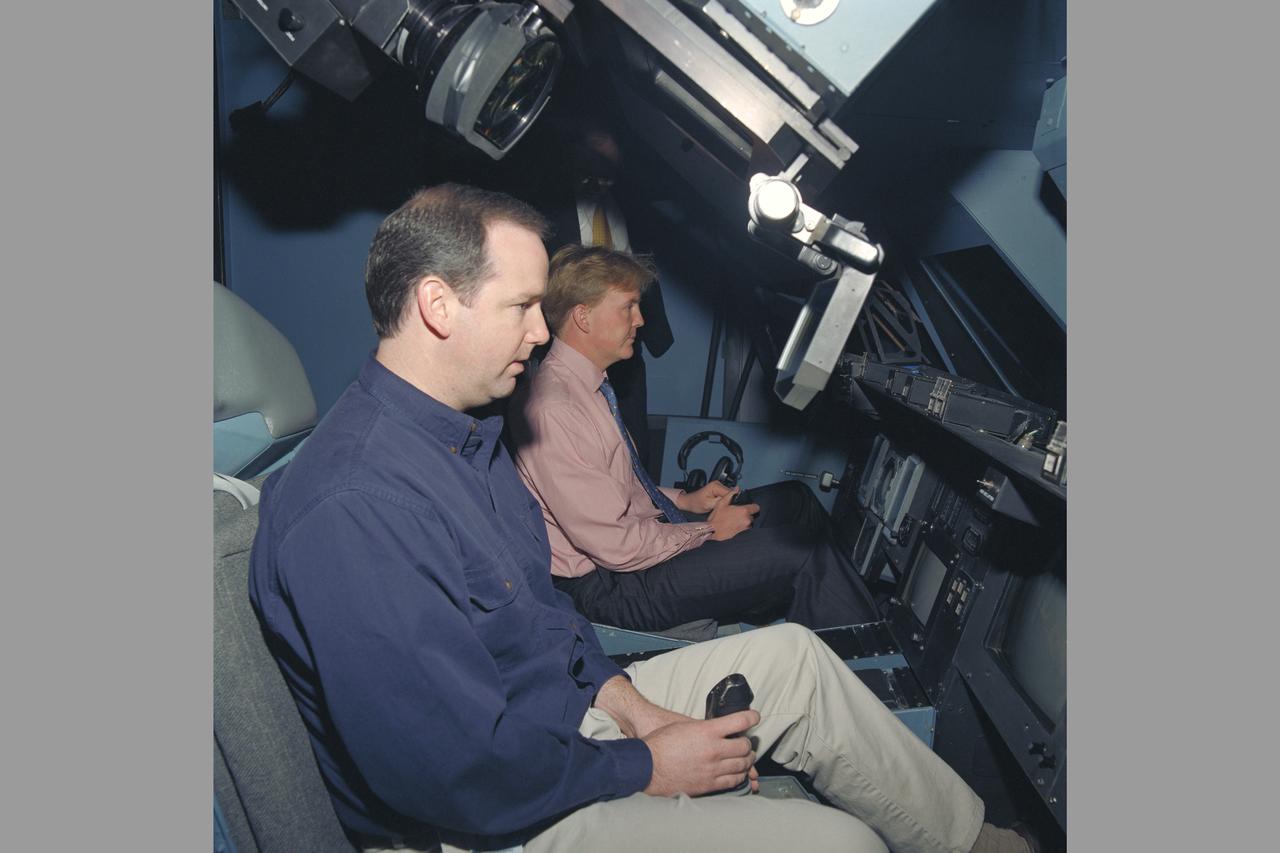
Prince Willem-Alexander van Oranje (Crown Prince of the Netherlands) visits Ames. Shown here with Chris Sweeney (Ames) as he explains the control in the VMS S-cab
ARC-1999-AC99-0013-10
Jasper Wolfe, left, explains the Volatiles Investigating Polar Exploration Rover (VIPER) mission to visitors in the Multi-Mission Operations Center (MMOC), N240, for VIPER Family Day.
VIPER Family Day
Rick Elphic, NSS instrument principal investigator, left, explains the Volatiles Investigating Polar Exploration Rover (VIPER) mission to visitors in the Multi-Mission Operations Center (MMOC), N240, during VIPER Family Day.
VIPER Family Day
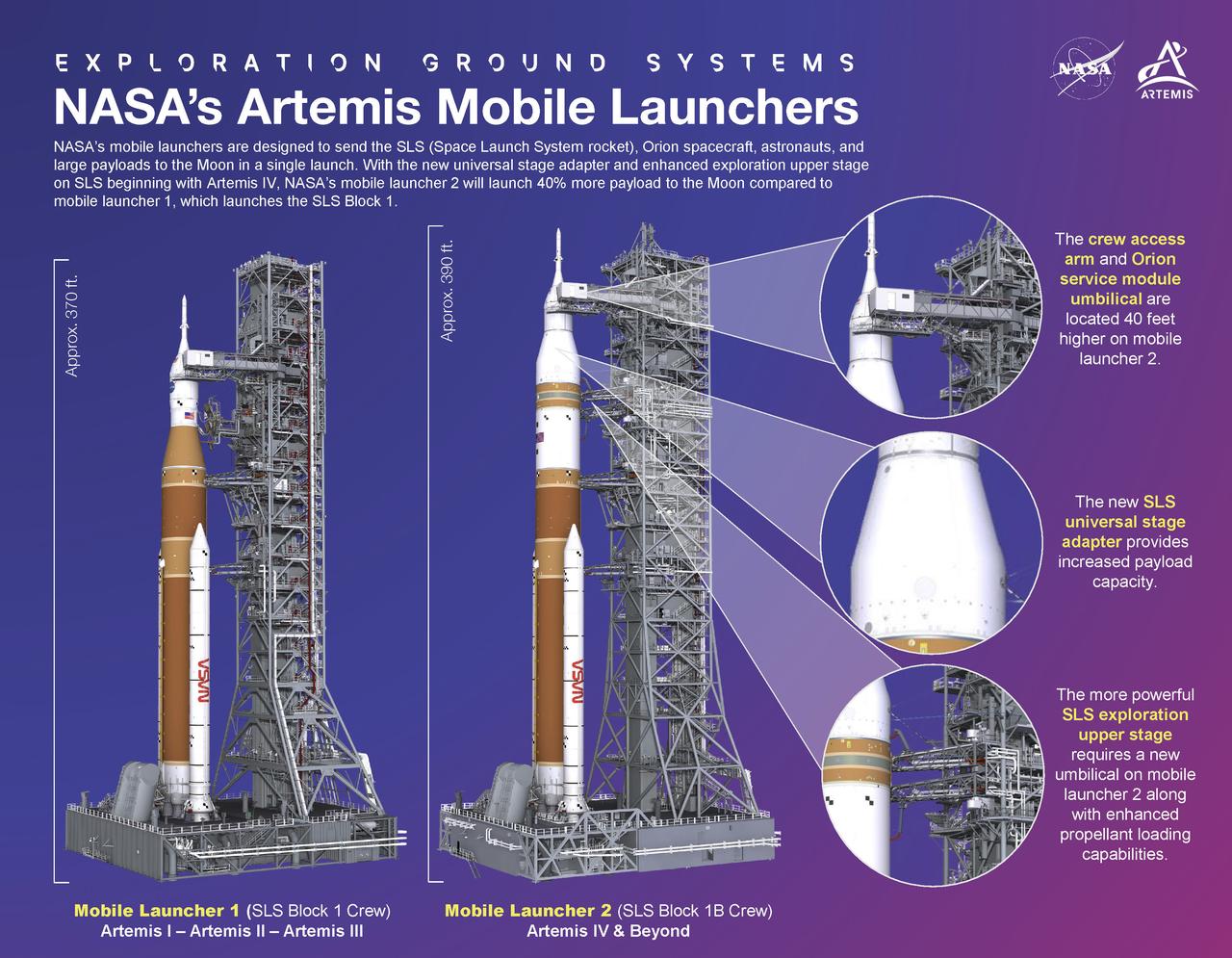
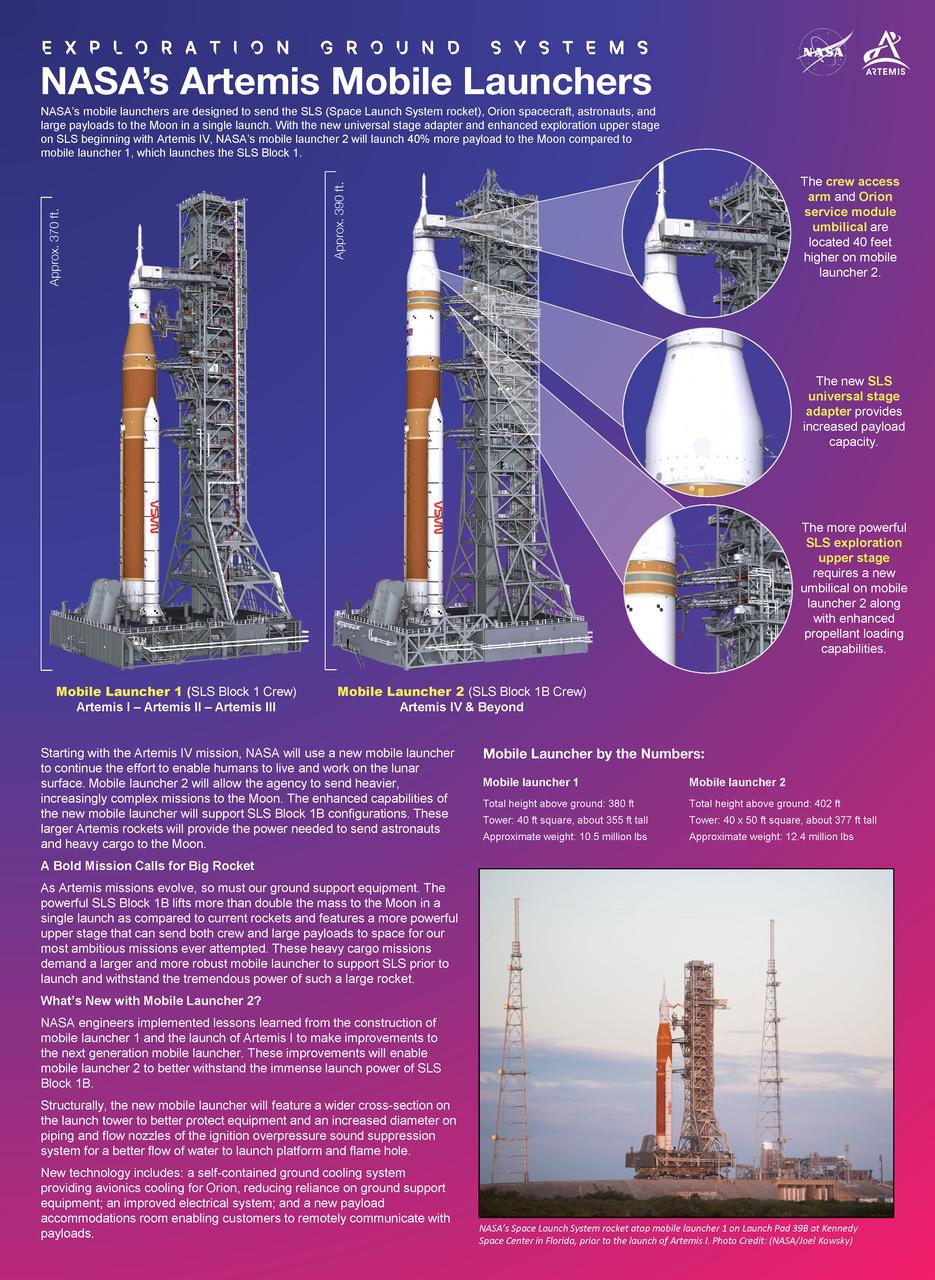
This infographic explains NASA’s mobile launchers designed for the agency's Artemis missions to send the Space Launch System rocket, Orion spacecraft, and large payloads to the Moon in a single launch.
ML-1 and ML-2 Comparison Infographic
Arno Rogg explains the Volatiles Investigating Polar Exploration Rover (VIPER) mission to visitors in the Multi-Mission Operations Center (MMOC), N240, during VIPER Family Day.
VIPER Family Day
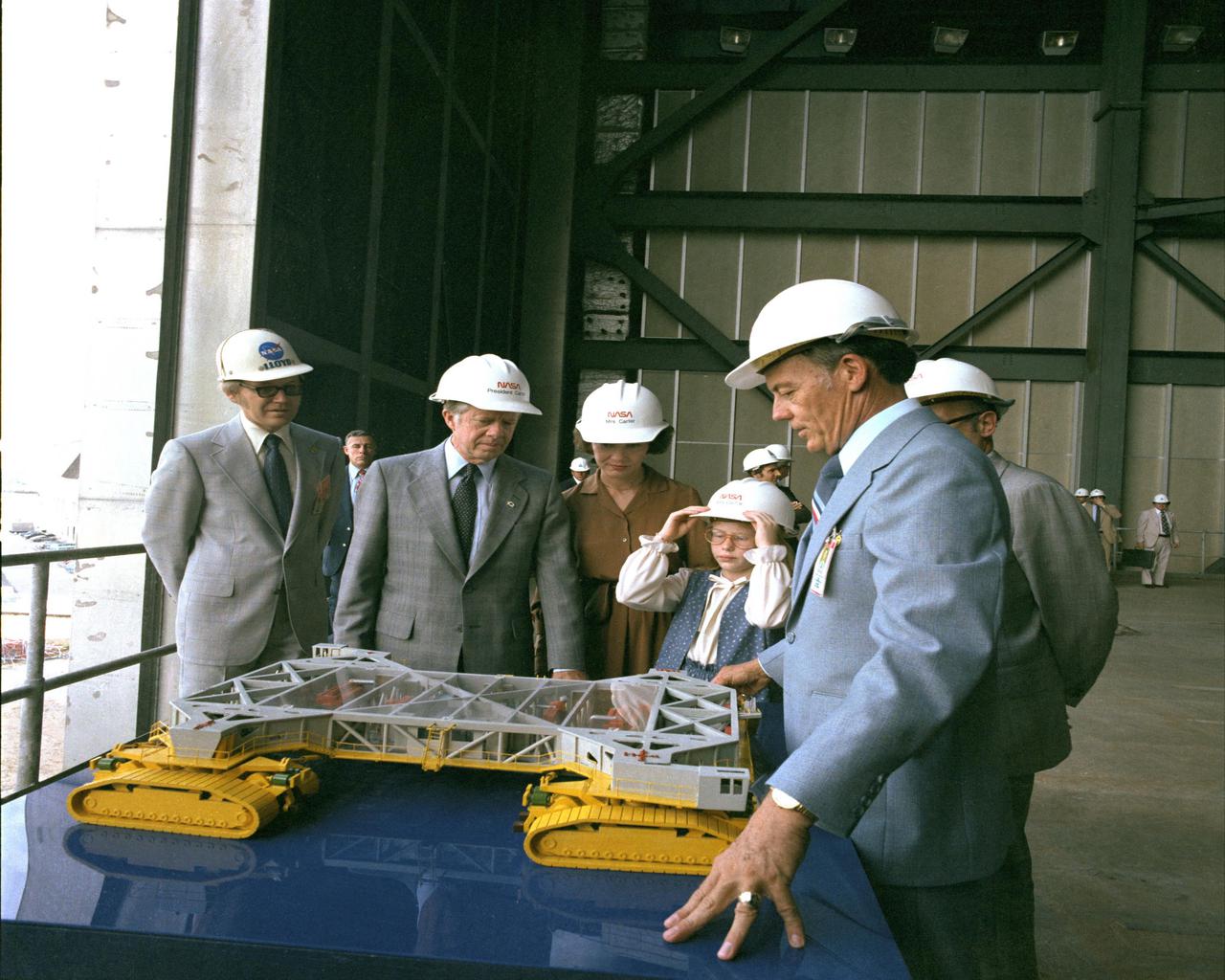
KENNEDY SPACE CENTER, FLA. --  President Jimmy Carter, with wife Rosalynn and daughter Amy, listen to Center Director Lee R. Scherer explain a model of the crawler transporter during their tour of the Kennedy Space Center.
KSC-78pc-0468
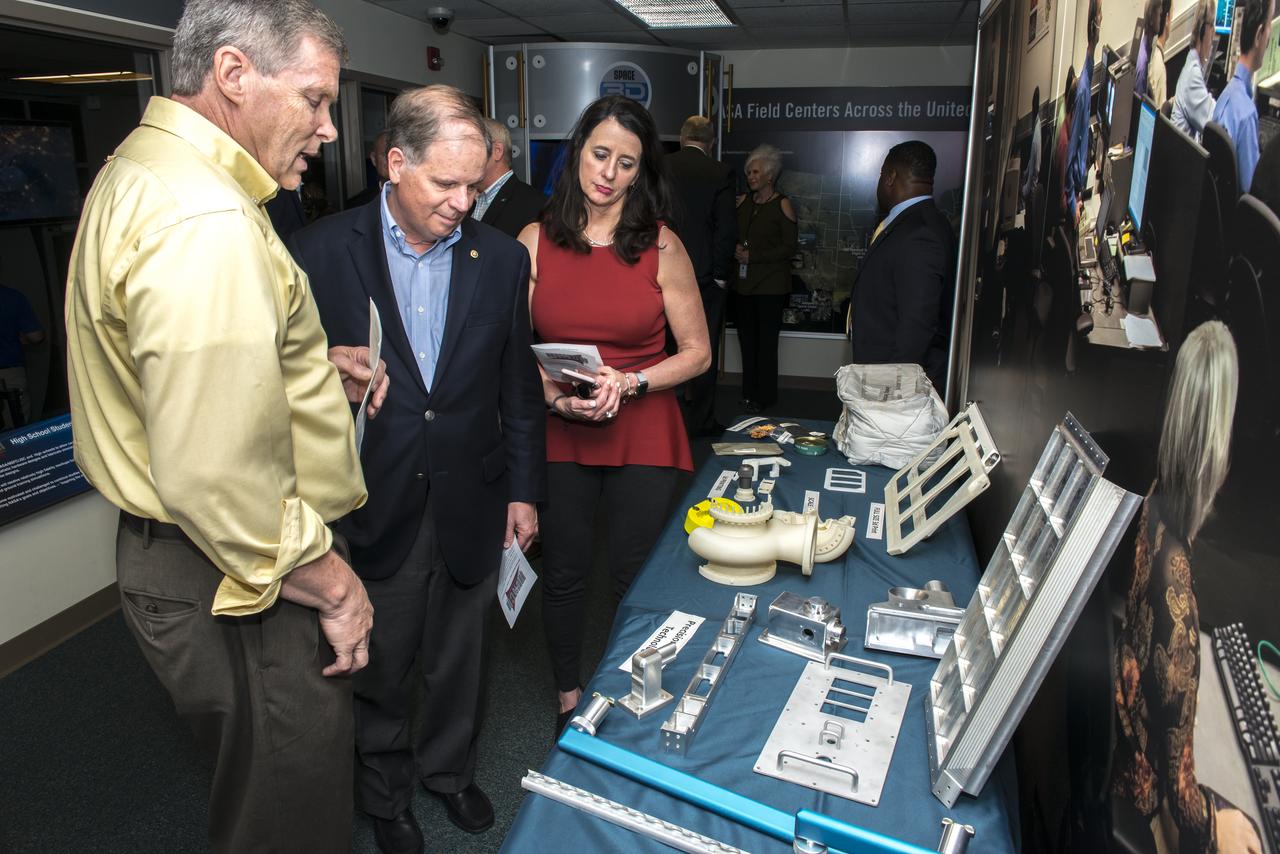
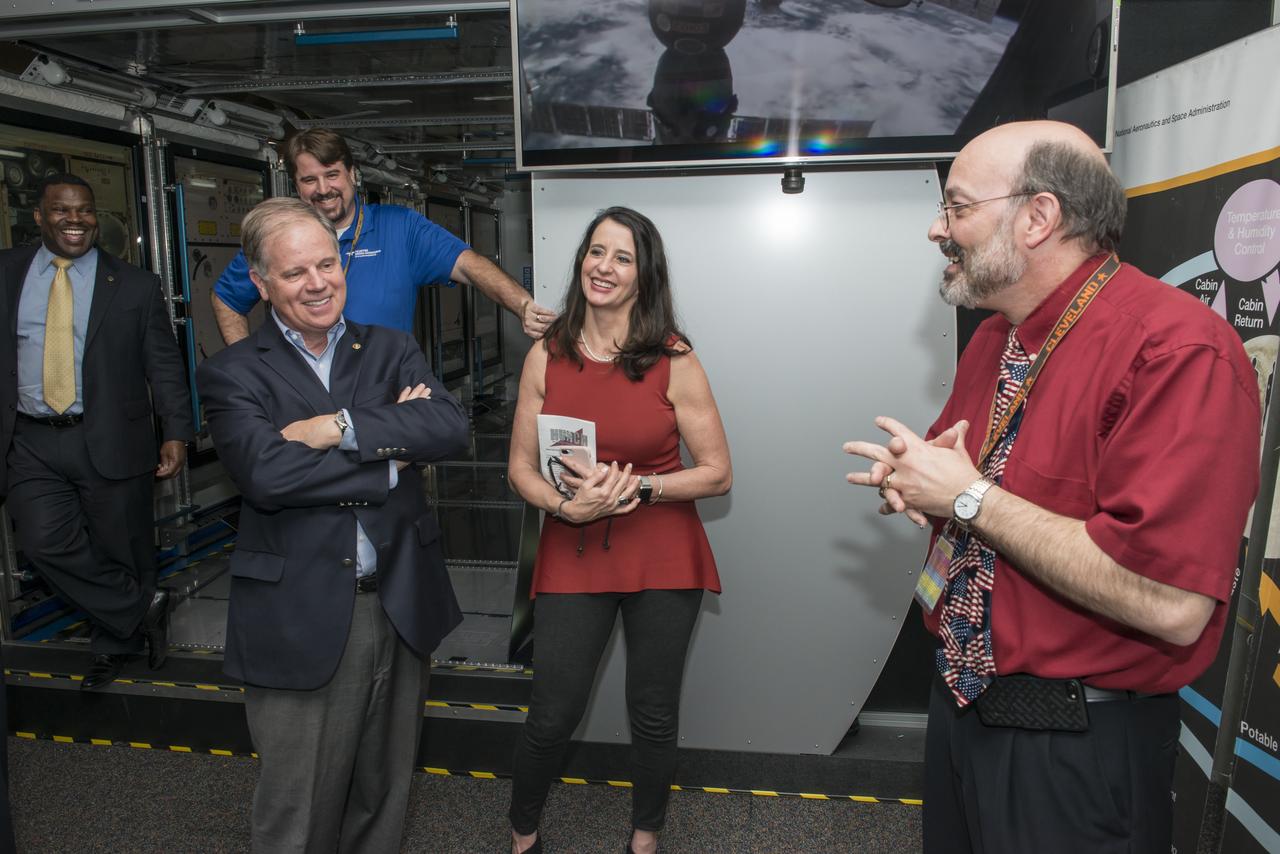
During Senator Doug Jones (D-Al.) tour of MSFC facilities Marshall engineer Bob Zeek explains the High School Students United with NASA to Create Hardware (HUNCH) program to Senator Jones and his wife, Louise.
Senator Doug Jones (D-AL) Tour of MSFC Facilities
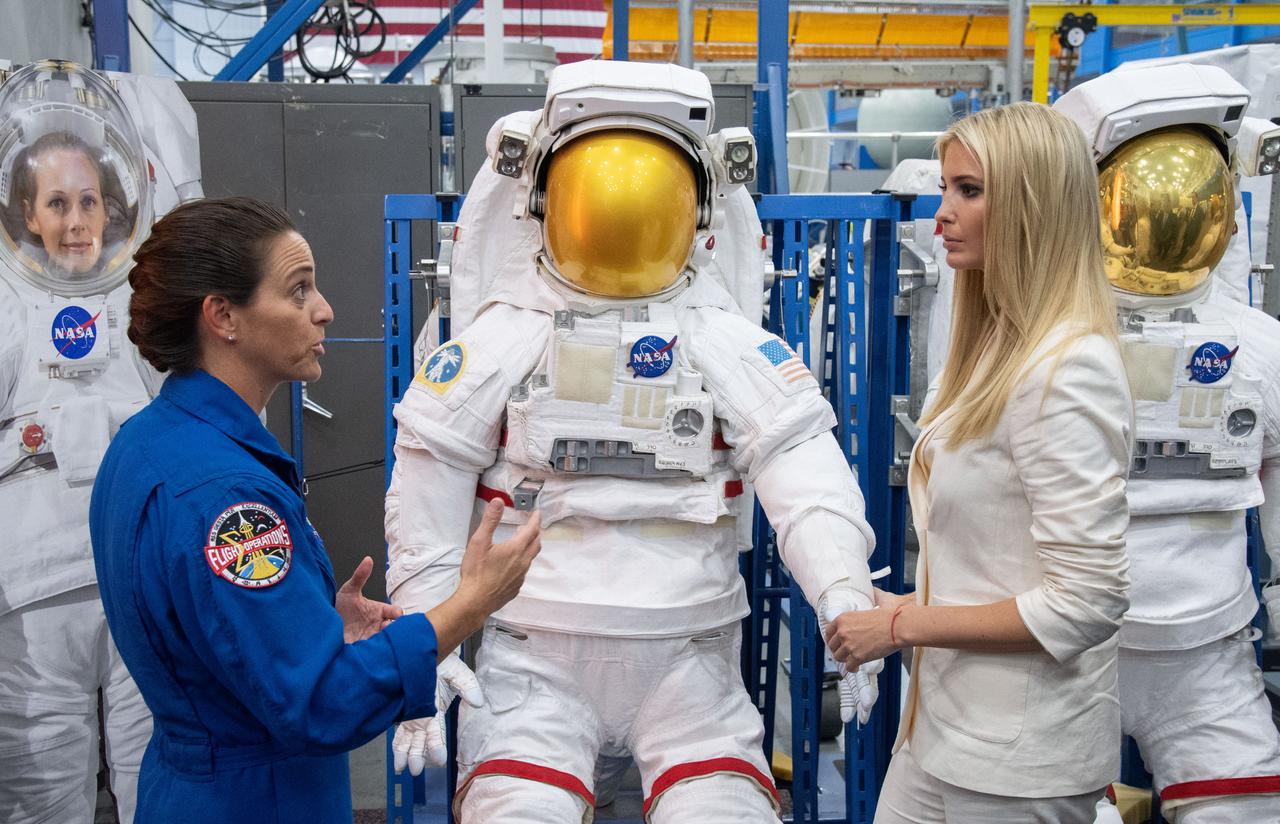
jsc2018e083423 – (Sept. 20, 2018) – NASA Astronaut Nicole Mann explains how spacesuits work to Advisor to the President Ivanka Trump during a visit to NASA’s Johnson Space Center.
jsc2018e083423
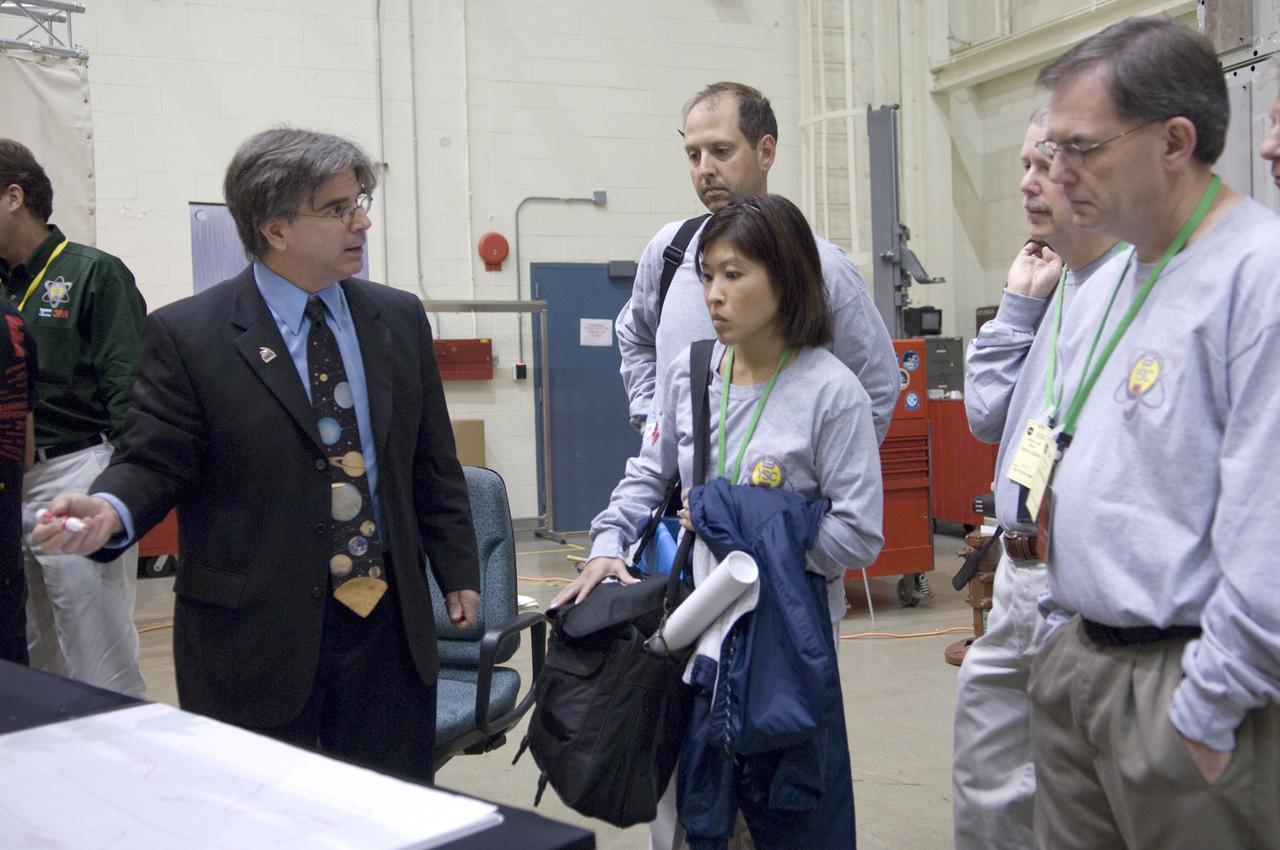
Young Scientist Challenge YSC was held at Goddard on October 5-6, 2008 sponsored by 3M.  It gave students the opportunity to demonstrate their scientific and engineering skills by participating in live demonstrations.  Jim Garvin explains Mars
G-2008-0813-024
Arno Rogg explains the Volatiles Investigating Polar Exploration Rover (VIPER) mission to visitors in the Multi-Mission Operations Center (MMOC), N240, during VIPER Family Day.
VIPER Family Day
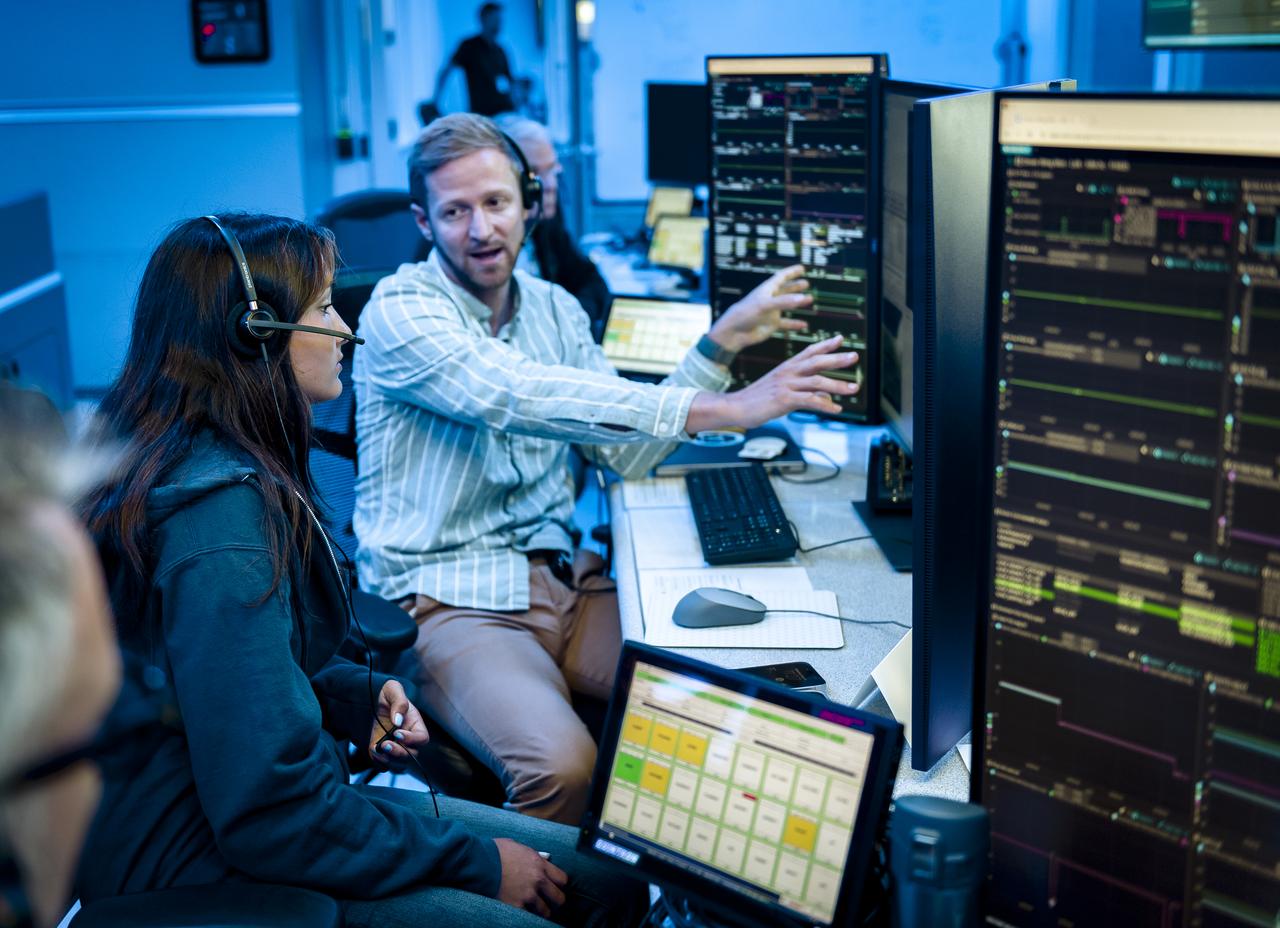
Chris Provencher explains the Volatiles Investigating Polar Exploration Rover (VIPER) mission to his family in the Multi-Mission Operations Center (MMOC), N240, for VIPER Family Day. Dennis Heher is seated at the control console at the left.
VIPER Family Day
Arno Rogg explains the Volatiles Investigating Polar Exploration Rover (VIPER) mission to visitors in the Multi-Mission Operations Center (MMOC), N240, during VIPER Family Day.
VIPER Family Day
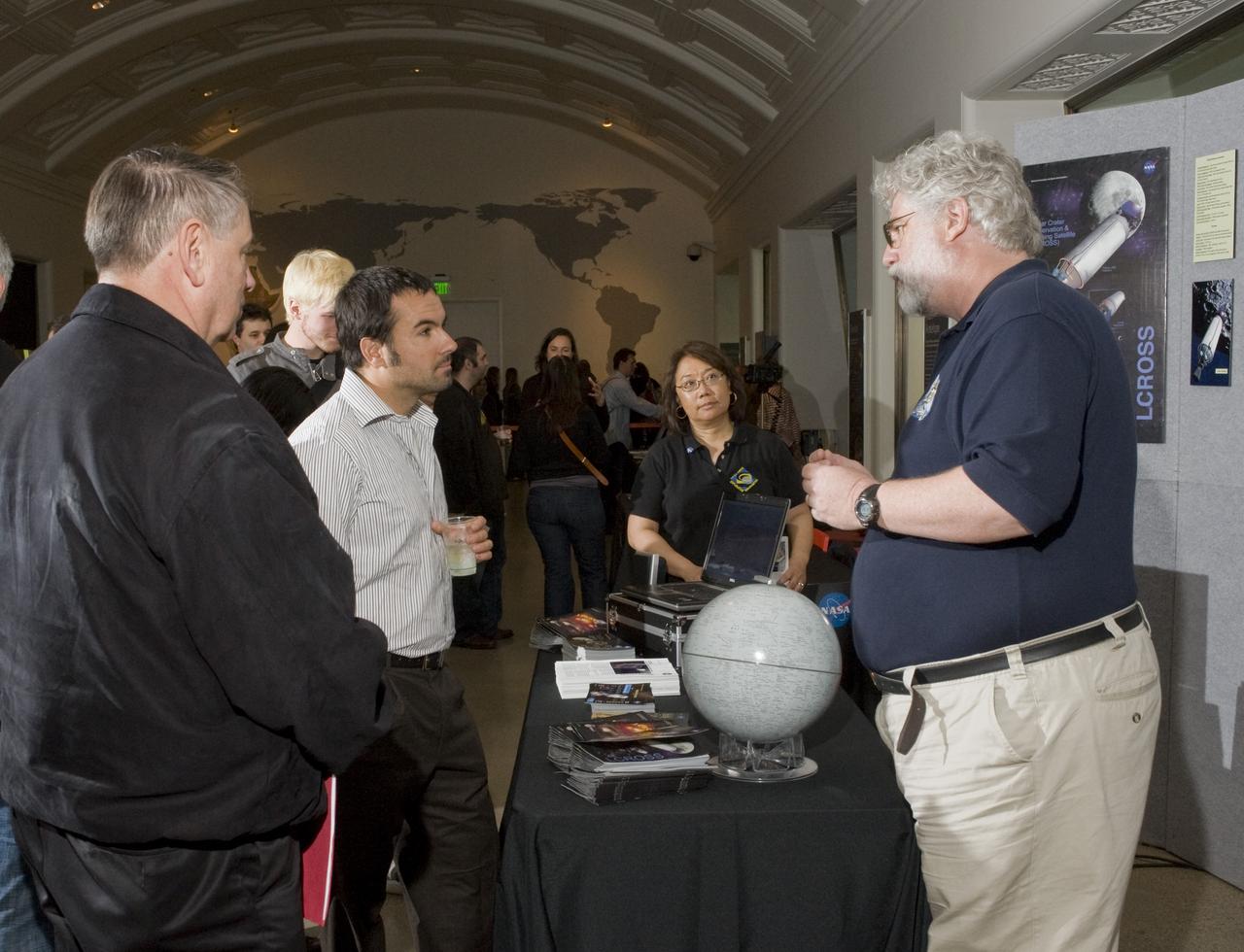
Yuri's Night 2009 held at the California Acaemy of Sciences in San Francisco, California Ames Center Director Pete Worden listens in on Brian Day, Planners,  part of the Ames LCROSS team explain the intent of the mission.
ARC-2009-ACD09-0054-012
This infographic explains NASA’s mobile launchers designed for the agency's Artemis missions to send the Space Launch System rocket, Orion spacecraft, and large payloads to the Moon in a single launch.
ML-1 and ML-2 Comparison Infographic
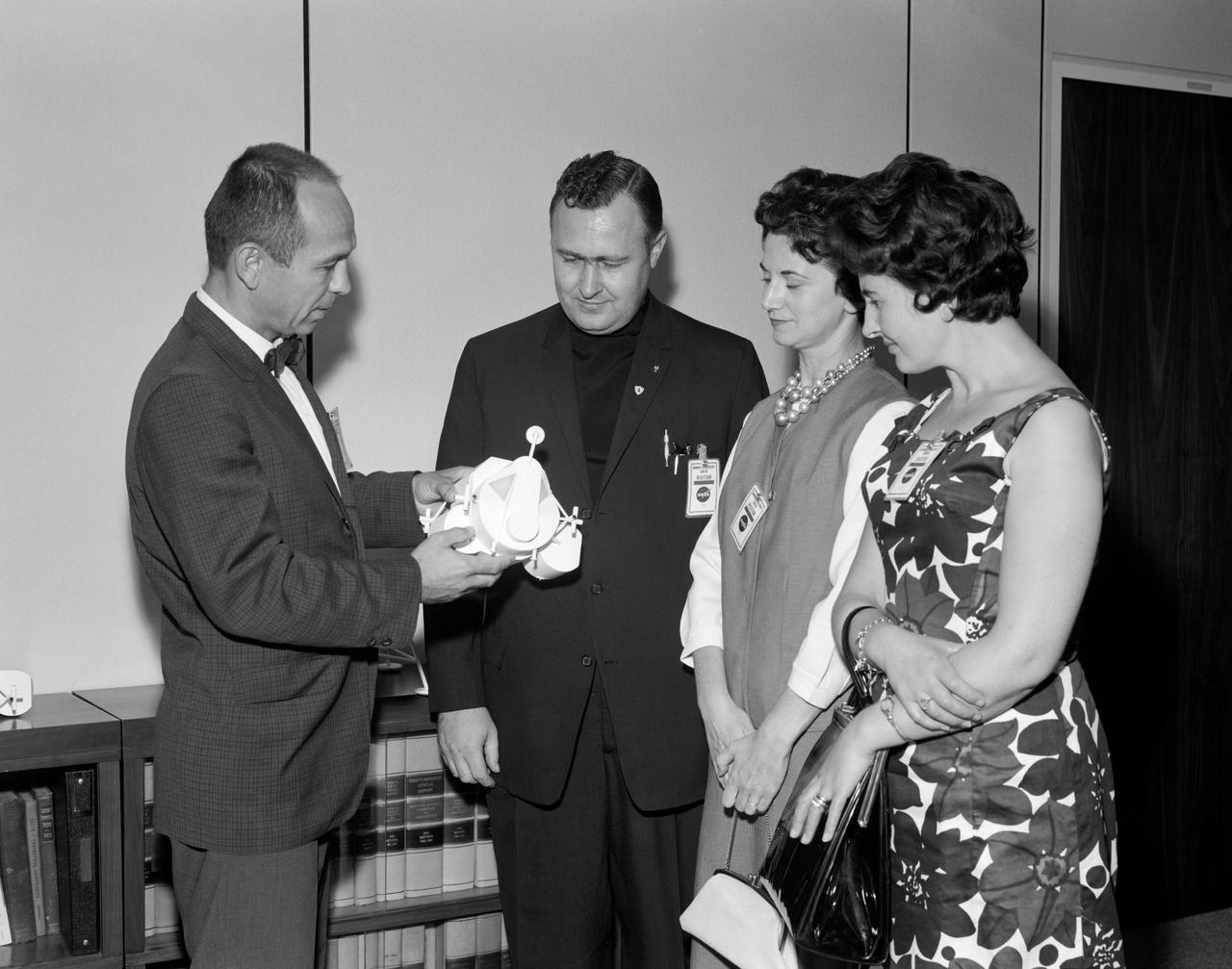
S64-31226 (1964) ---  Maxime A. Faget, Assistant Director for Engineering and Development, at Manned Spacecraft Center, explains the function of the Lunar Module to Father Patrick J. OBrien, sister-in-law to Father O
Tour - Father Patrick O
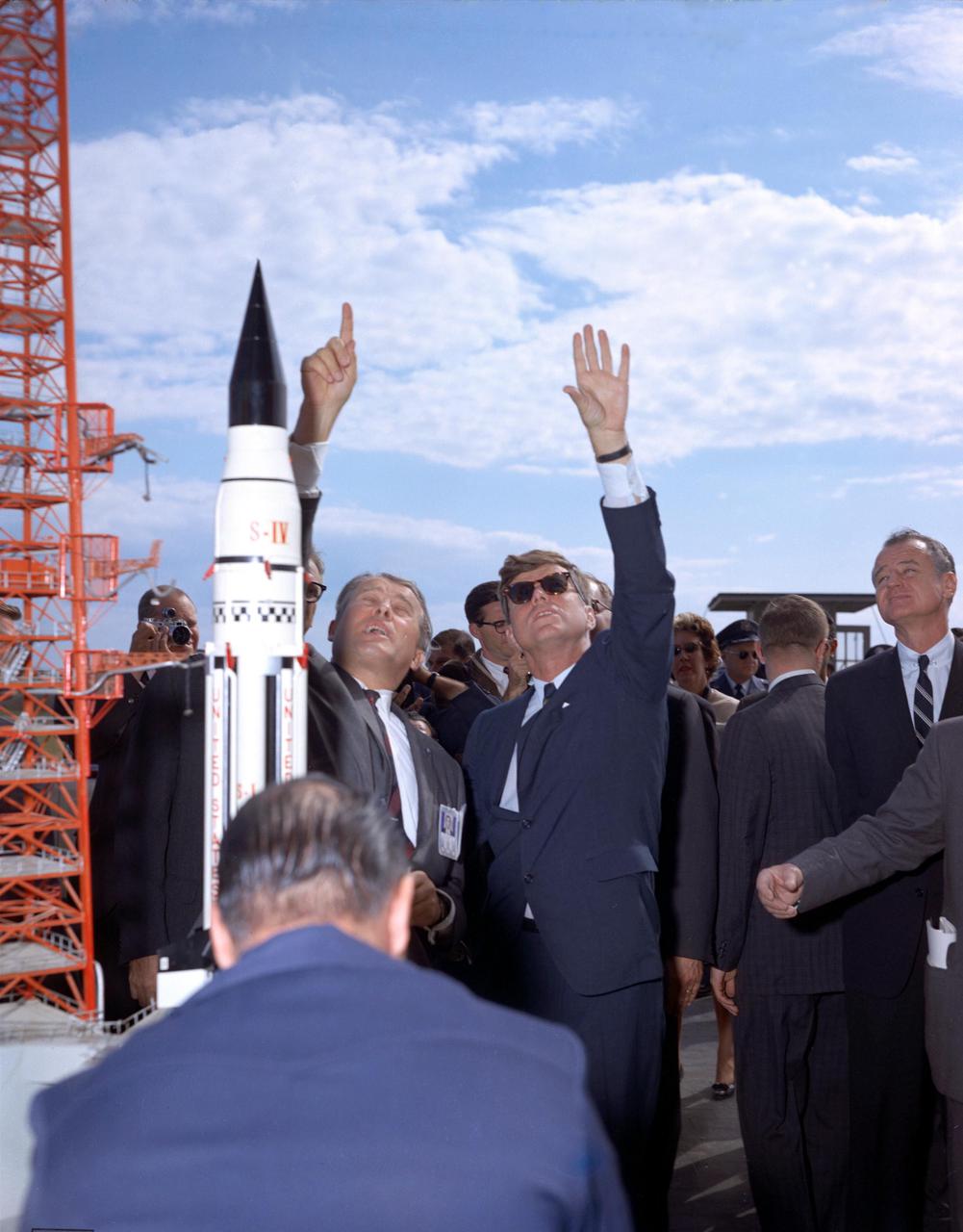
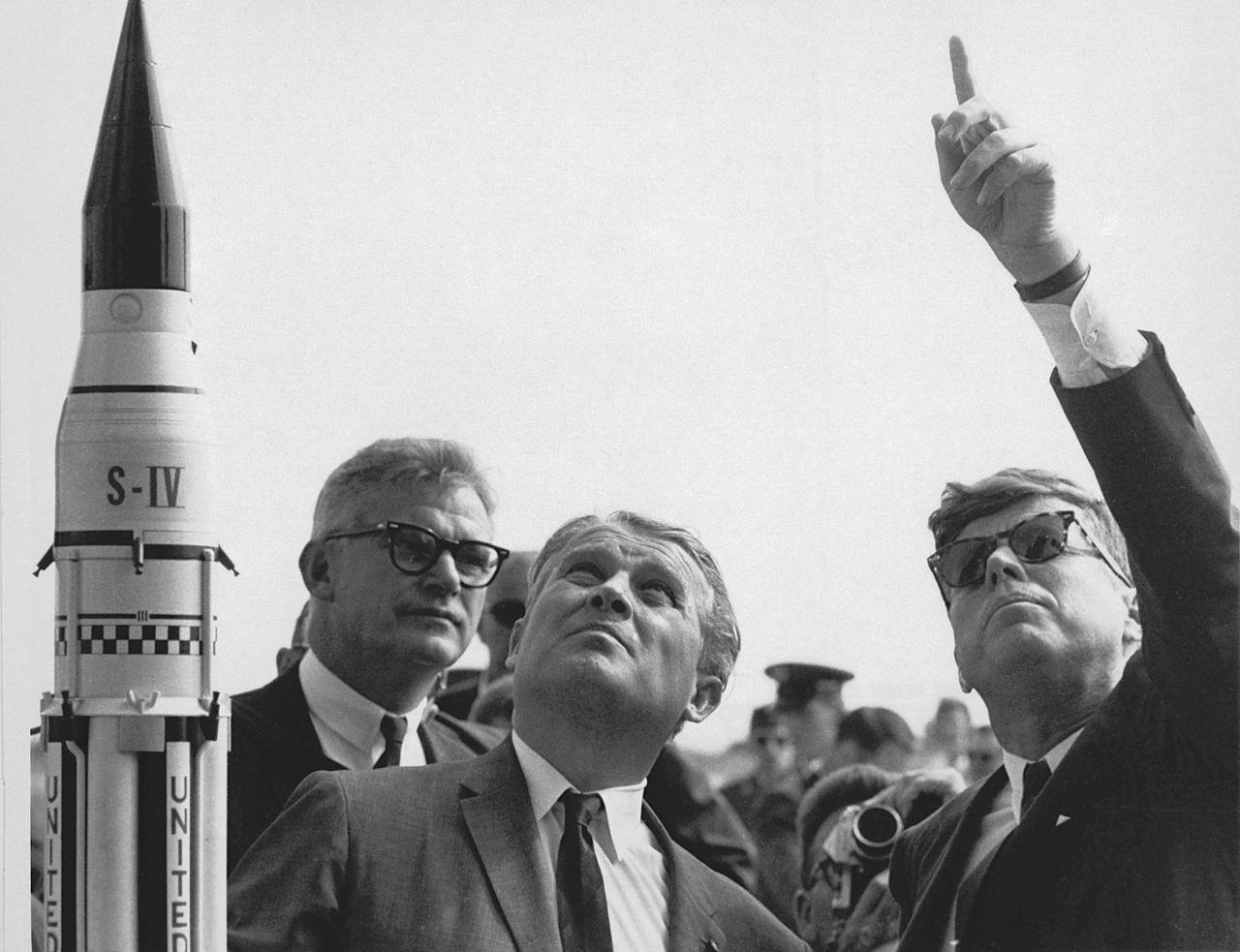
KENNEDY SPACE CENTER, FLA. -- Dr. Werner Von Braun explains the Saturn system to President John F. Kennedy at Complex 37 while President Kennedy is on tour at the Cape Canaveral Missile Test Annex.
KSC-63pc-0095
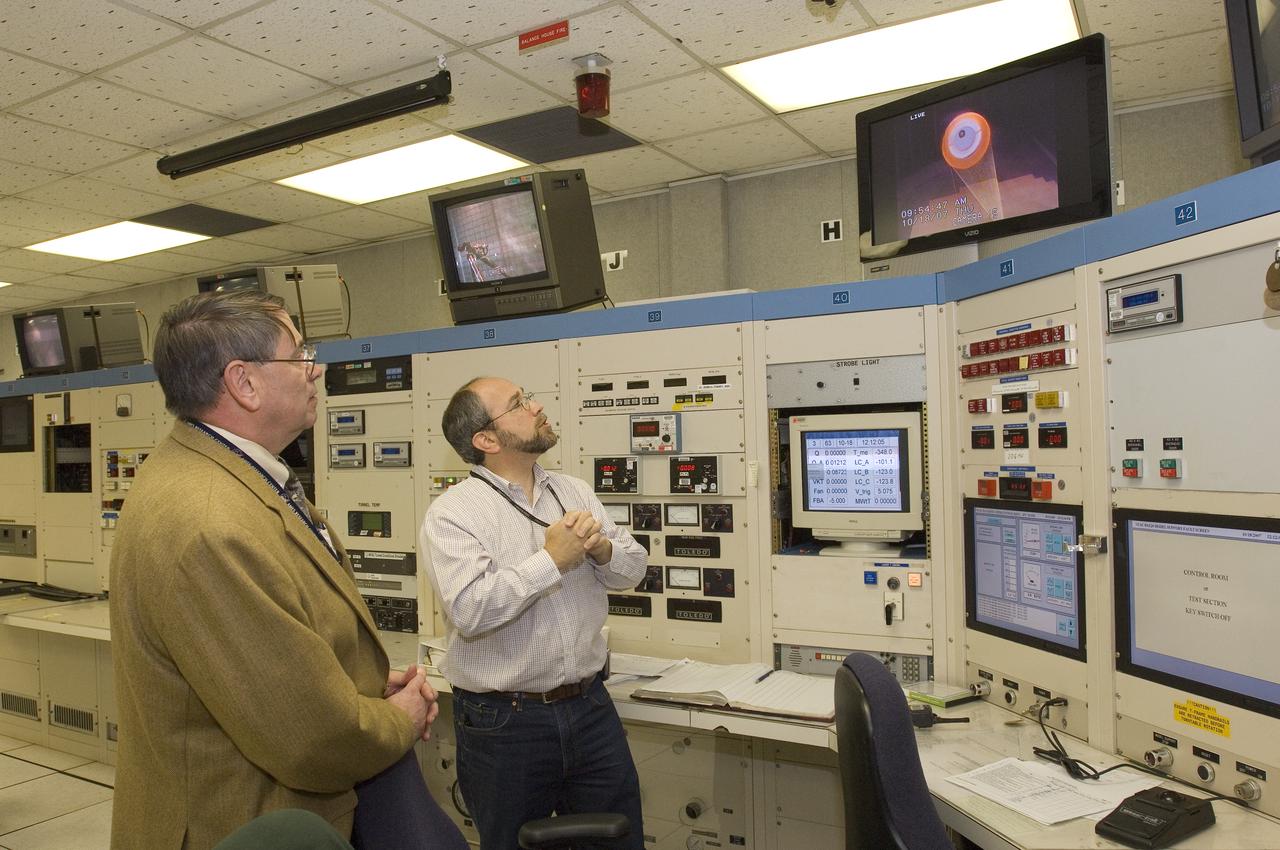
Ames Center Director S. Pete Worden visits the NFAC 80x120ft wind tunnel control room during a Parachute deployment test. Joe Sacco explains test procedure to Worden (on left).
ARC-2007-ACD07-0200-002
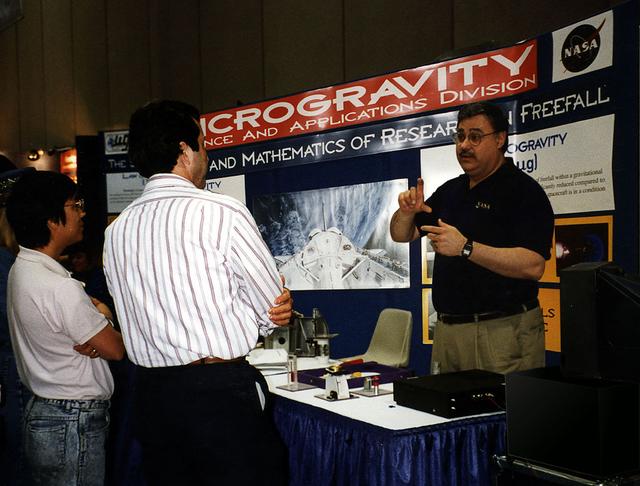
Dr. Michael Wargo, program scientist for materials science at NASA headquarters, explains the math and physics principles associated with freefall research to attendees at the arnual conference of the National Council of Teachers of Mathematics.
Microgravity
KENNEDY SPACE CENTER, FLA. -- Dr. Werner Von Braun explains the Saturn system to President John F. Kennedy at Complex 37 who was on tour at the Cape Canaveral Missile Test Annex (CCMTA).
KSC-64p-0145
Prince Willem-Alexander van Oranje (Crown Prince of the Netherlands) visits Ames. Shown here with Chris Sweeney (Ames) as he explains the control in the VMS S-cab
ARC-1999-AC99-0013-9
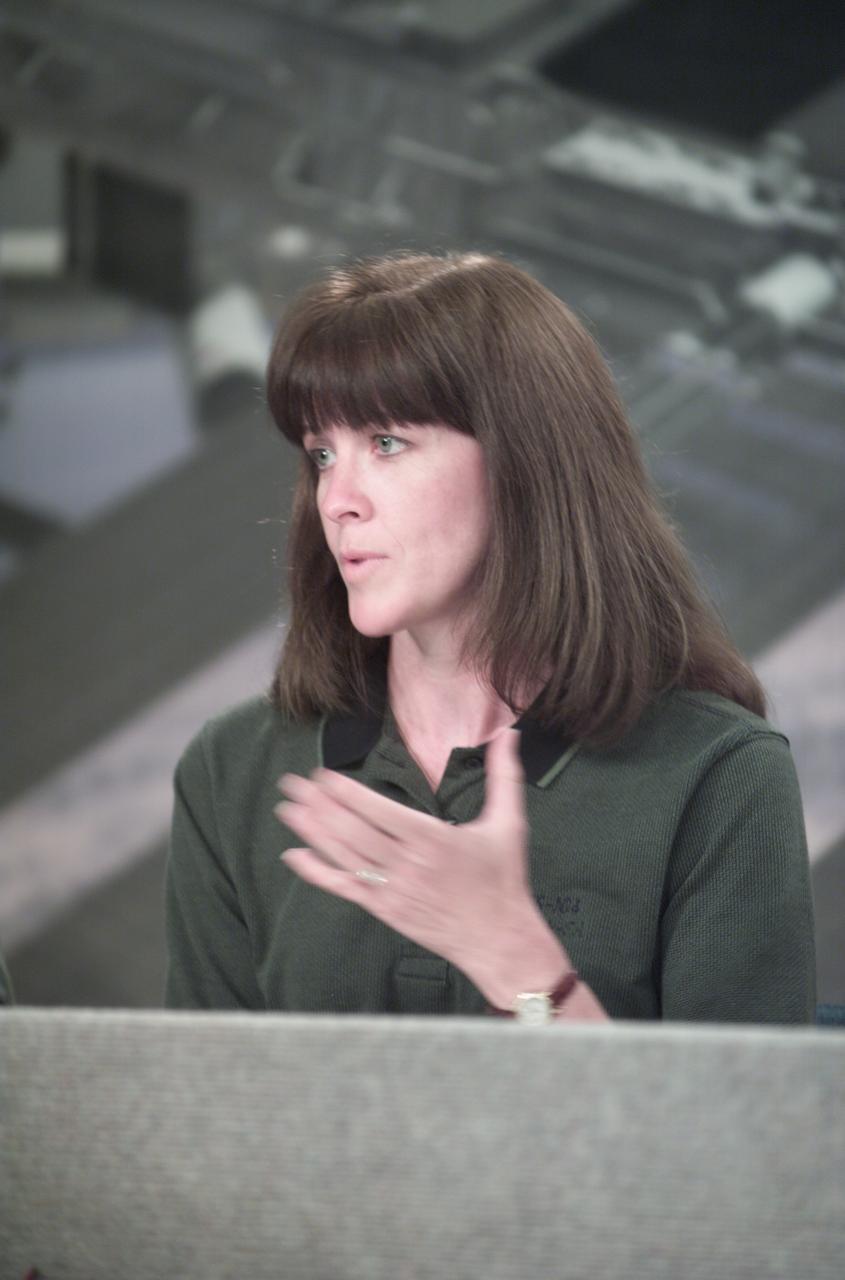
JSC2001-E-19298 (25 June 2001) --- Astronaut Janet L. Kavandi, STS-104 mission specialist, explains some of her anticipated duties during a pre-flight press conference at Johnson Space Center (JSC).
JSC2001E19298
Artist: Ken Hodges Composite image explaining Objective and Motivation for Galileo Probe Heat Loads: Galileo Probe descending into Jupiters Atmosphere shows heat shield separation with parachute deployed.   (Ref. JPL P-19180)
ARC-1981-AC81-0174
KENNEDY SPACE CENTER, FLA. - New methods of environmental cleanup are explained to government and business representatives, scientists and engineers during a presentation at Launch Complex 34-A, Cape Canaveral Spaceport.  Making the presentation is Mike Annable with the University of Florida.
KSC-02pd1678
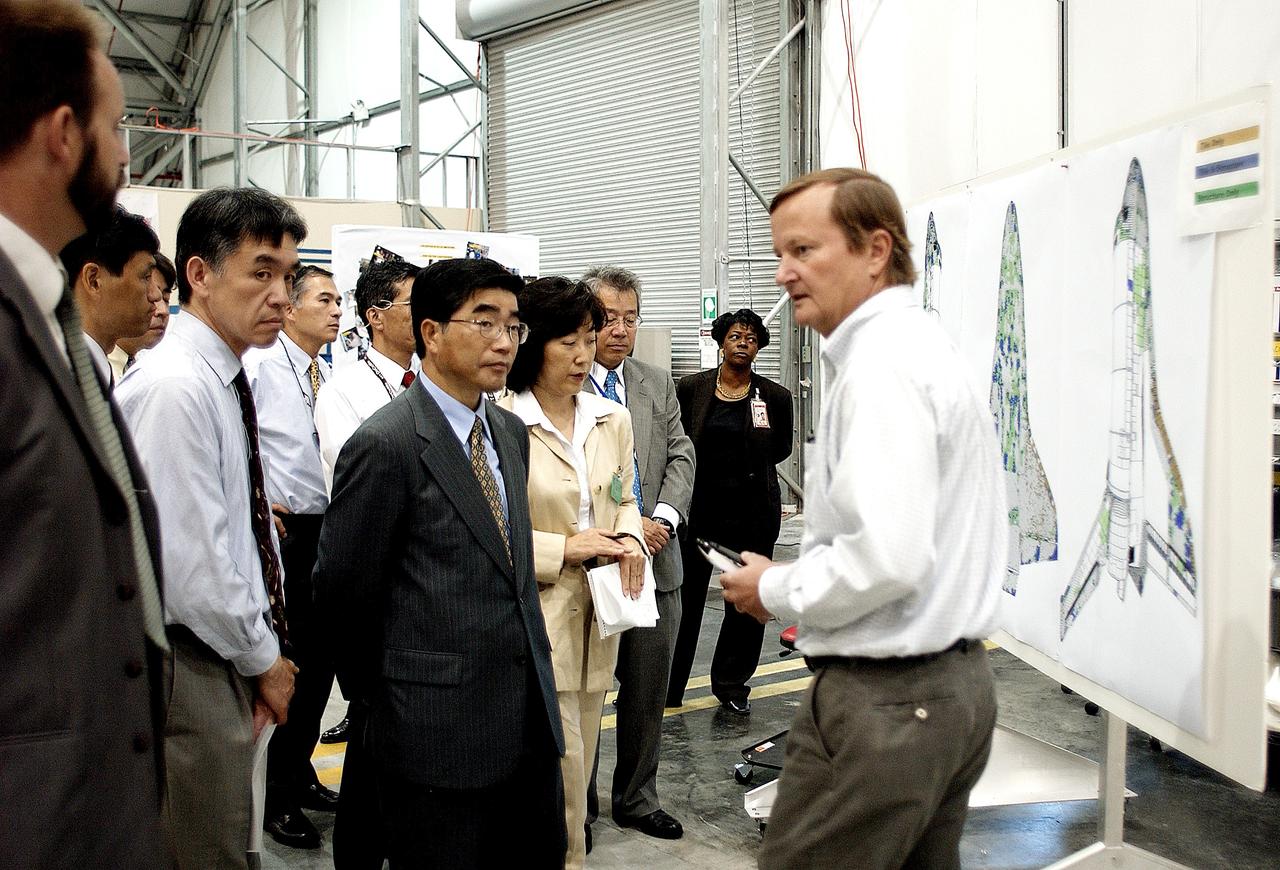
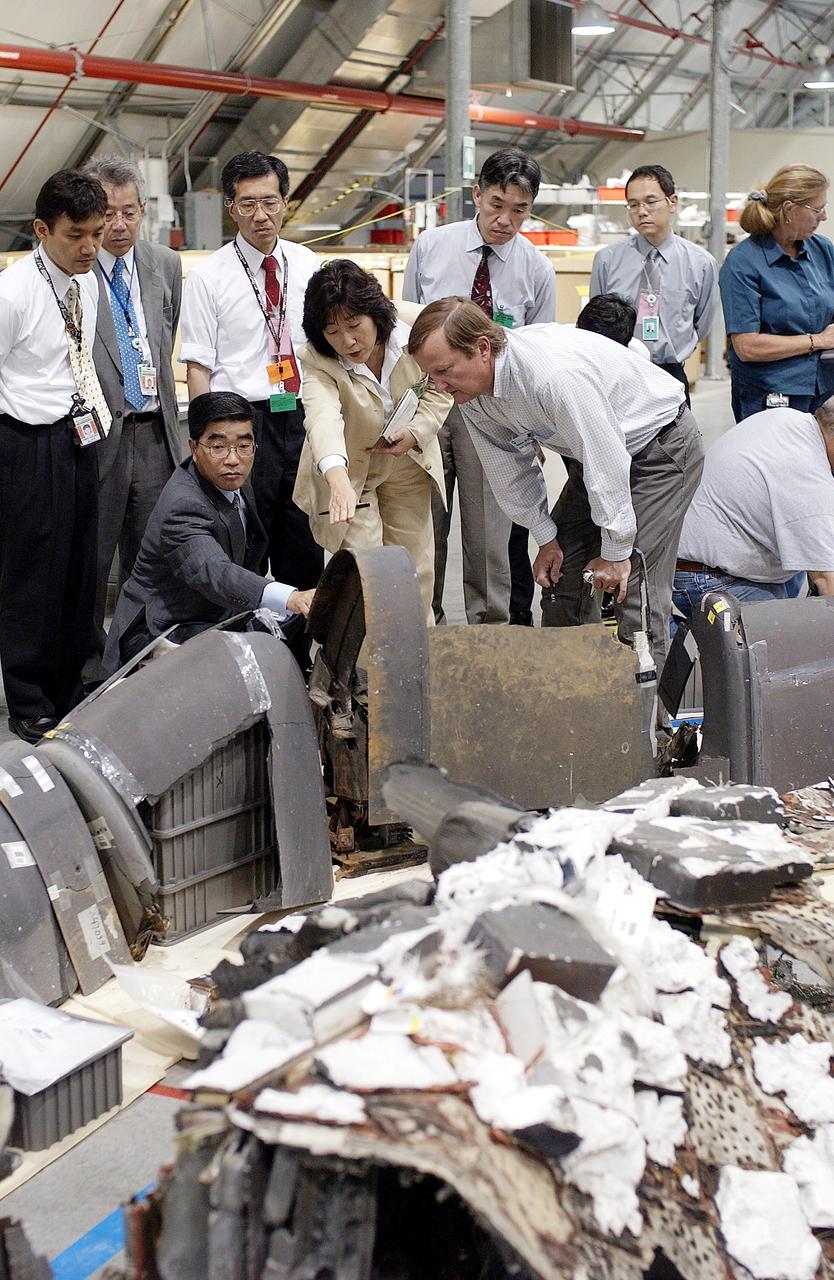
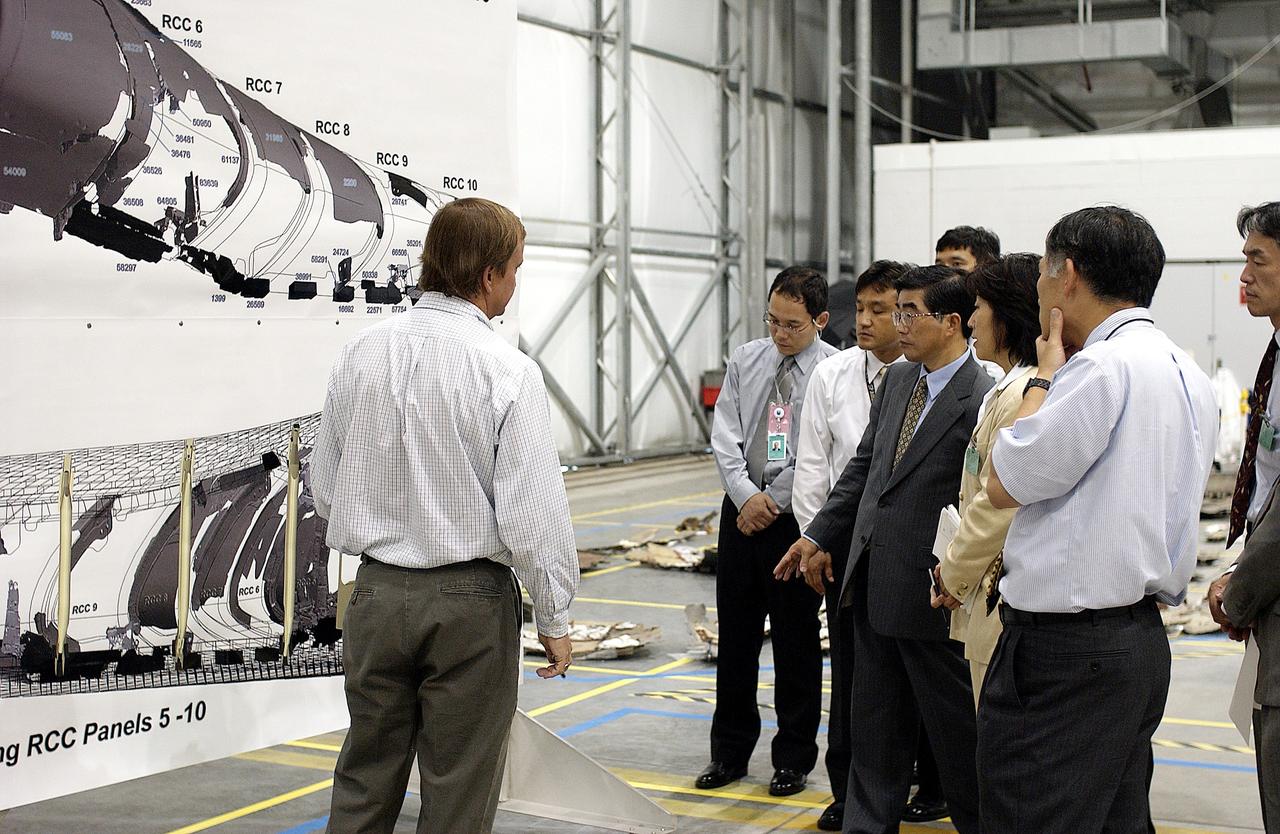
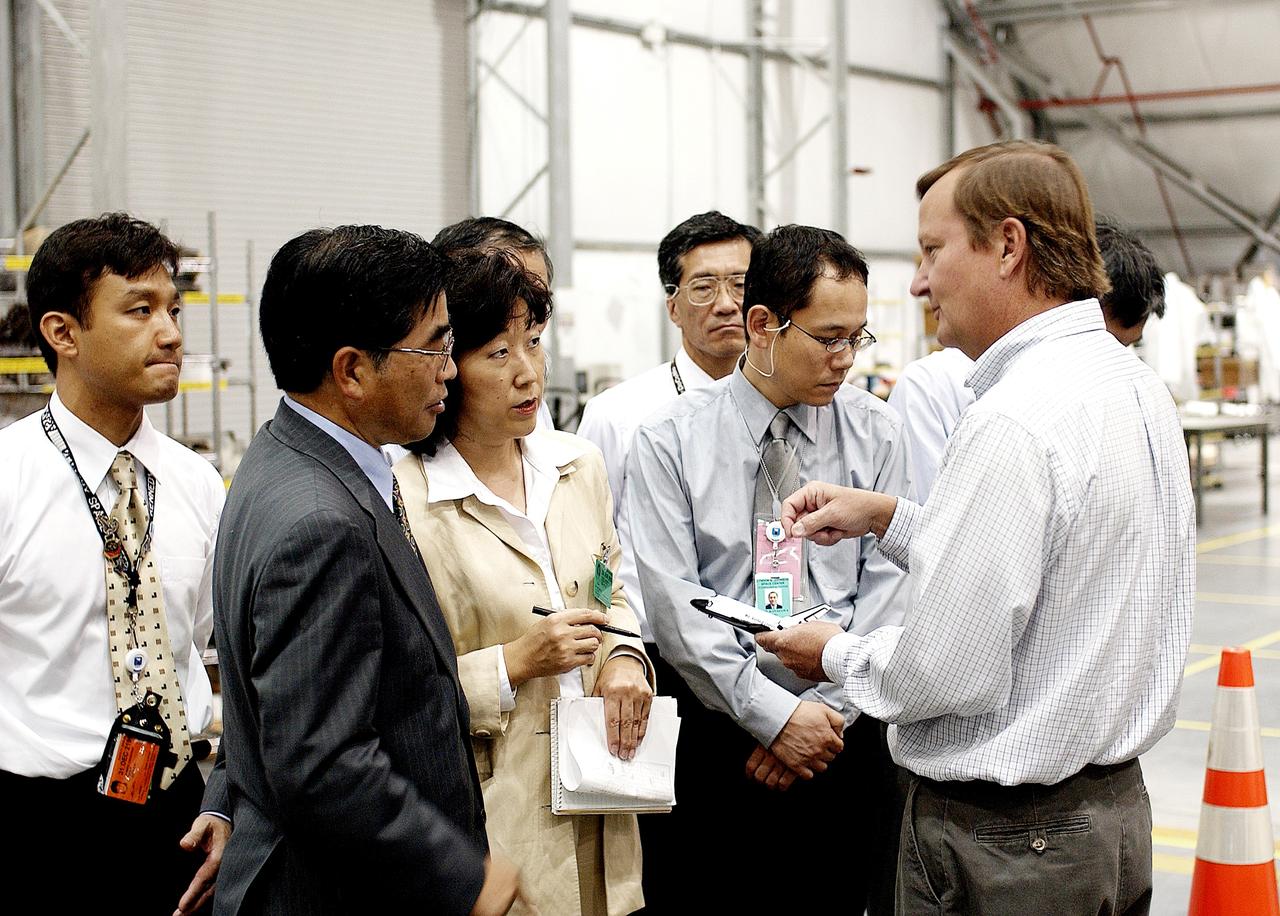
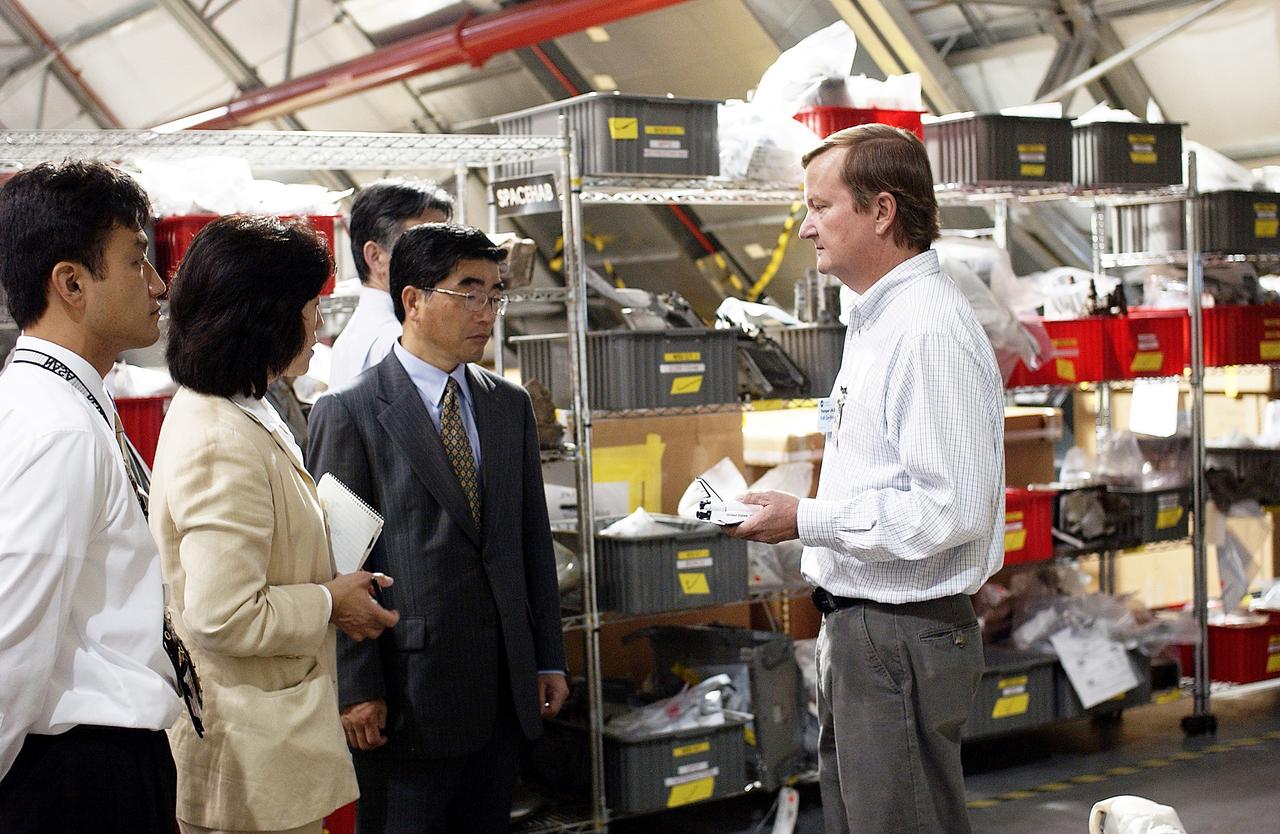
KENNEDY SPACE CENTER, FLA. -  Shuttle Launch Director Mike Leinbach (second from left) explains recovery and reconstruction efforts of Columbia to the Executive Director of NASDA Koji Yamamoto (fourth from left) and others visiting the Columbia Debris Hangar.   Mr. Yamamoto is at KSC for a welcome ceremony involving the arrival of the newest Space Station module, the Japanese Experiment Module/pressurized module.
KENNEDY SPACE CENTER, FLA. - Shuttle Launch Director Mike Leinbach (second from left) explains recovery and reconstruction efforts of Columbia to the Executive Director of NASDA Koji Yamamoto (fourth from left) and others visiting the Columbia Debris Hangar. Mr. Yamamoto is at KSC for a welcome ceremony involving the arrival of the newest Space Station module, the Japanese Experiment Module/pressurized module.
KENNEDY SPACE CENTER, FLA. -  On a KSC visit, Executive Director of NASDA Koji Yamamoto (kneeling, left) reaches out to a piece of Columbia debris in the Columbia Debris Hangar.  At right is Shuttle Launch Director Mike Leinbach, who is explaining recovery and reconstruction efforts.  Mr. Yamamoto is at KSC for a welcome ceremony involving the arrival of the newest Space Station module, the Japanese Experiment Module/pressurized module.
KENNEDY SPACE CENTER, FLA. - On a KSC visit, Executive Director of NASDA Koji Yamamoto (kneeling, left) reaches out to a piece of Columbia debris in the Columbia Debris Hangar. At right is Shuttle Launch Director Mike Leinbach, who is explaining recovery and reconstruction efforts. Mr. Yamamoto is at KSC for a welcome ceremony involving the arrival of the newest Space Station module, the Japanese Experiment Module/pressurized module.
KENNEDY SPACE CENTER, FLA. -  Shuttle Launch Director Mike Leinbach (right) explains recovery and reconstruction efforts of Columbia to the Executive Director of NASDA Koji Yamamoto (center, foreground) and others visiting the Columbia Debris Hangar.   Mr. Yamamoto is at KSC for a welcome ceremony involving the arrival of the newest Space Station module, the Japanese Experiment Module/pressurized module.
KENNEDY SPACE CENTER, FLA. - Shuttle Launch Director Mike Leinbach (right) explains recovery and reconstruction efforts of Columbia to the Executive Director of NASDA Koji Yamamoto (center, foreground) and others visiting the Columbia Debris Hangar. Mr. Yamamoto is at KSC for a welcome ceremony involving the arrival of the newest Space Station module, the Japanese Experiment Module/pressurized module.
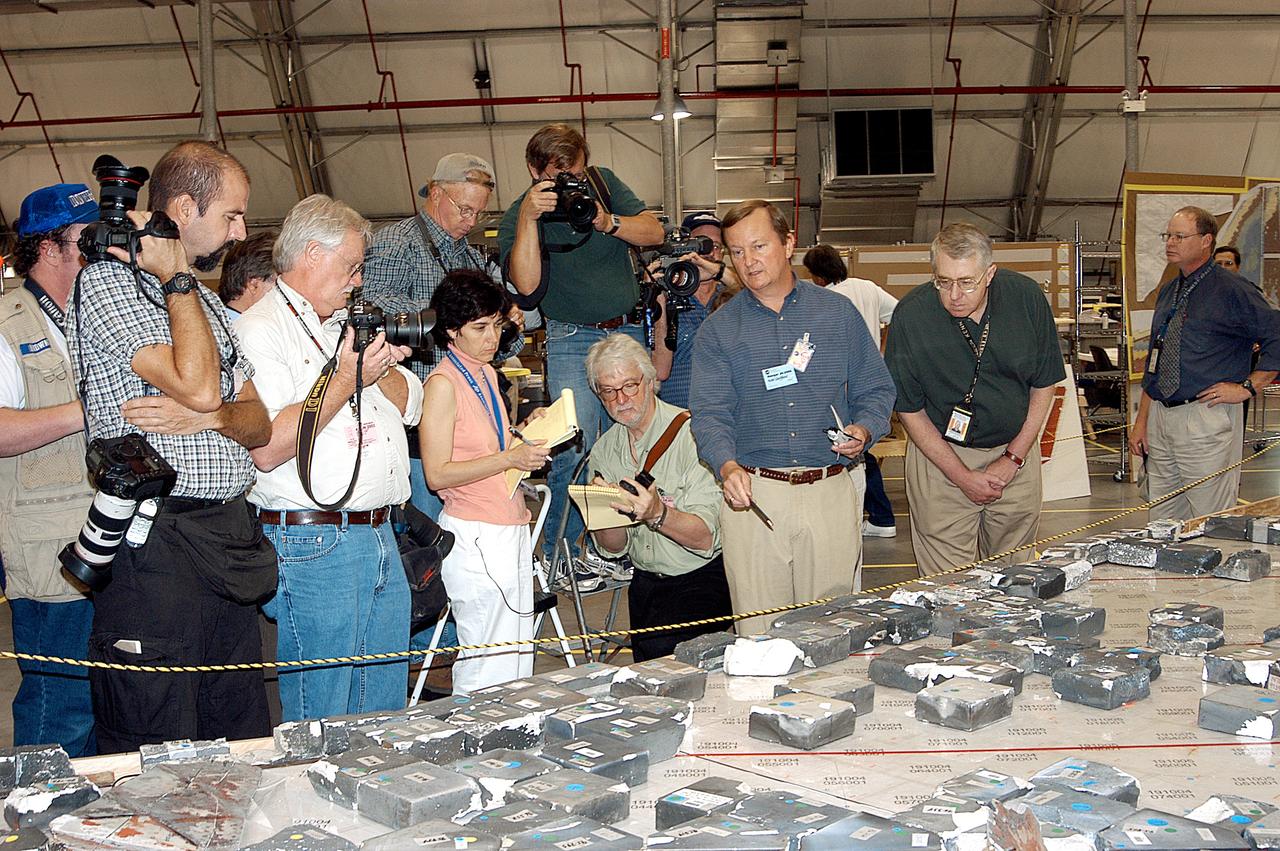
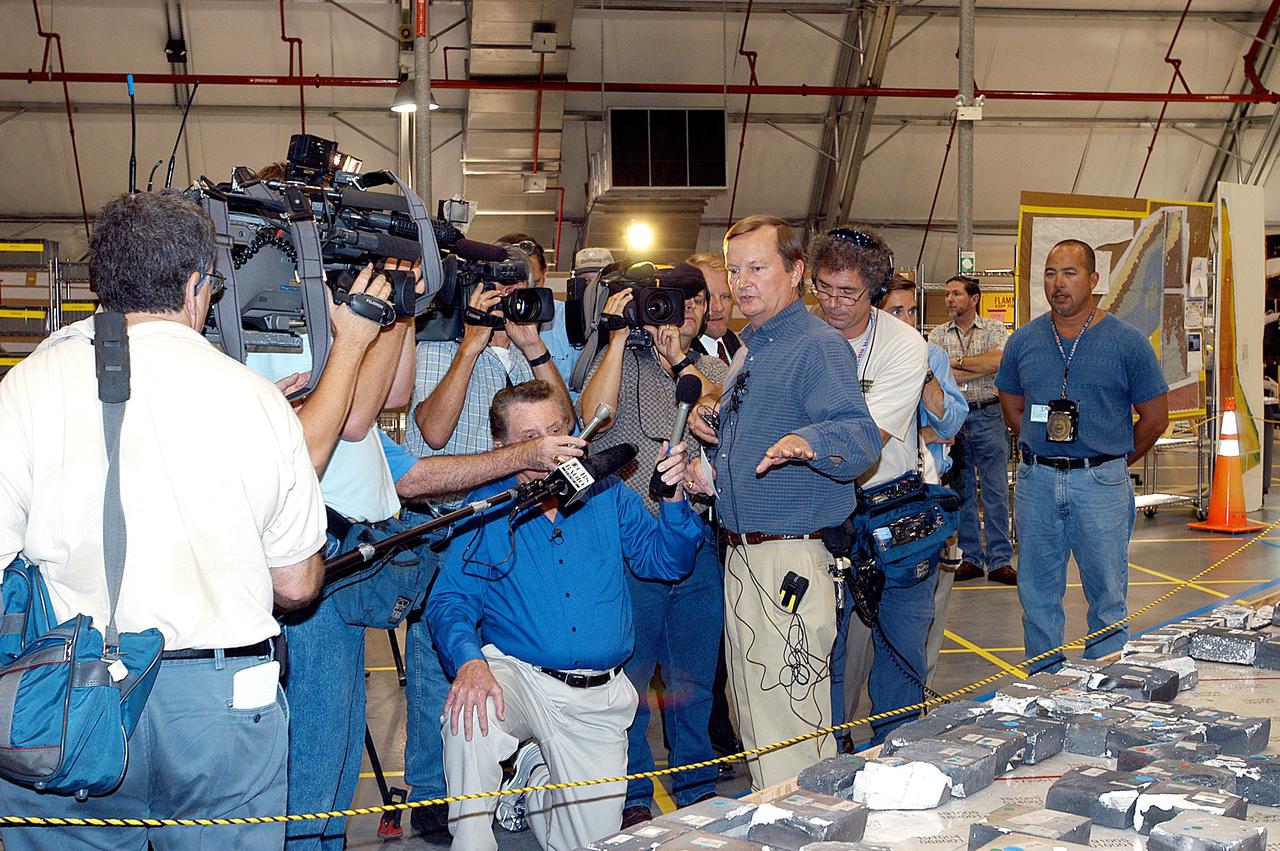
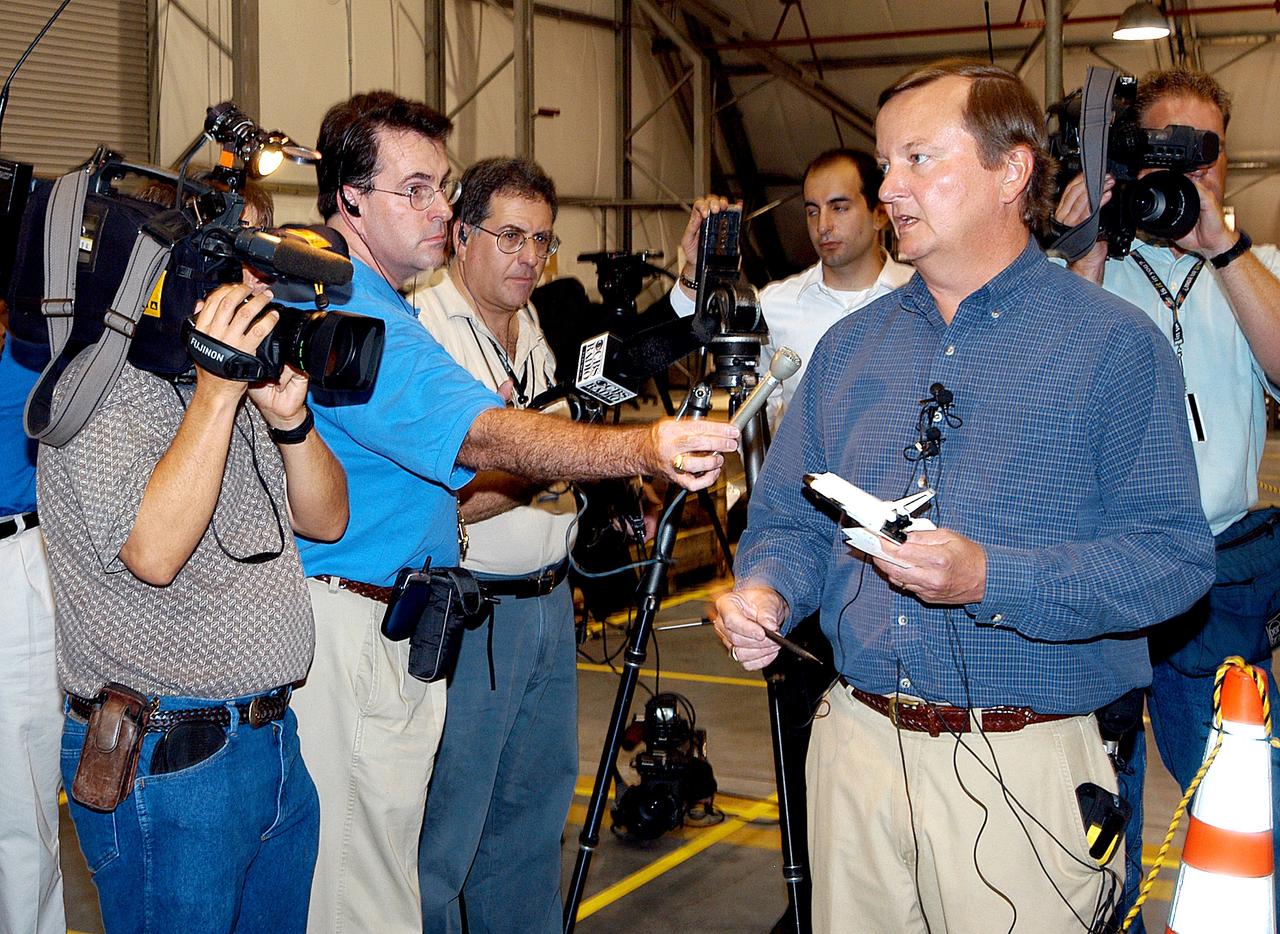
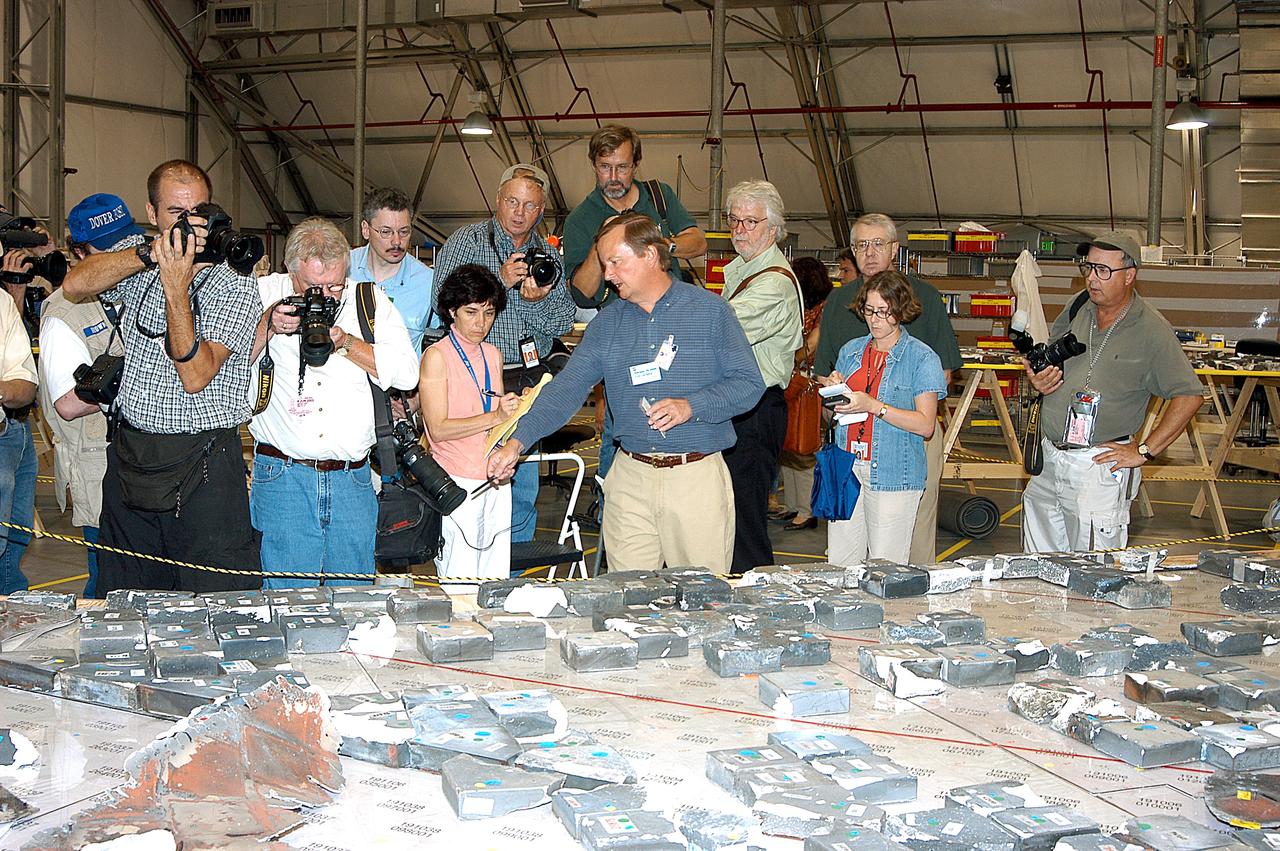
KENNEDY SPACE CENTER, FLA. - In the Columbia Debris Hangar,  Shuttle Launch Director Mike Leinbach  points to some of the tiles recovered from the orbiter as he explains to the media about activities that have taken place since the Columbia accident on Feb. 1, 2003.  STS-107 debris recovery and reconstruction operations are winding down.  To date, nearly 84,000 pieces of debris have been recovered and sent to KSC. That represents about 38 percent of the dry weight of Columbia, equaling almost 85,000 pounds.
KENNEDY SPACE CENTER, FLA. - In the Columbia Debris Hangar, Shuttle Launch Director Mike Leinbach points to some of the tiles recovered from the orbiter as he explains to the media about activities that have taken place since the Columbia accident on Feb. 1, 2003. STS-107 debris recovery and reconstruction operations are winding down. To date, nearly 84,000 pieces of debris have been recovered and sent to KSC. That represents about 38 percent of the dry weight of Columbia, equaling almost 85,000 pounds.
KENNEDY SPACE CENTER, FLA. - In the Columbia Debris Hangar,  Shuttle Launch Director Mike Leinbach  points to some of the debris as he explains to the media about activities that have taken place since the Columbia accident on Feb. 1, 2003.  STS-107 debris recovery and reconstruction operations are winding down.  To date, nearly 84,000 pieces of debris have been recovered and sent to KSC. That represents about 38 percent of the dry weight of Columbia, equaling almost 85,000 pounds.
KENNEDY SPACE CENTER, FLA. - In the Columbia Debris Hangar, Shuttle Launch Director Mike Leinbach points to some of the debris as he explains to the media about activities that have taken place since the Columbia accident on Feb. 1, 2003. STS-107 debris recovery and reconstruction operations are winding down. To date, nearly 84,000 pieces of debris have been recovered and sent to KSC. That represents about 38 percent of the dry weight of Columbia, equaling almost 85,000 pounds.
KENNEDY SPACE CENTER, FLA. -  In the Columbia Debris Hangar,  Shuttle Launch Director Mike Leinbach  (center) points to some of the tiles recovered from the orbiter as he explains to the media about activities that have taken place since the Columbia accident on Feb. 1, 2003.  STS-107 debris recovery and reconstruction operations are winding down.  To date, nearly 84,000 pieces of debris have been recovered and sent to KSC. That represents about 38 percent of the dry weight of Columbia, equaling almost 85,000 pounds.
KENNEDY SPACE CENTER, FLA. - In the Columbia Debris Hangar, Shuttle Launch Director Mike Leinbach (center) points to some of the tiles recovered from the orbiter as he explains to the media about activities that have taken place since the Columbia accident on Feb. 1, 2003. STS-107 debris recovery and reconstruction operations are winding down. To date, nearly 84,000 pieces of debris have been recovered and sent to KSC. That represents about 38 percent of the dry weight of Columbia, equaling almost 85,000 pounds.
KENNEDY SPACE CENTER, FLA. -    Shuttle Launch Director Mike Leinbach (left) explains recovery and reconstruction efforts of Columbia to the Executive Director of NASDA Koji Yamamoto (second from left) and others visiting the Columbia Debris Hangar.   Mr. Yamamoto is at KSC for a welcome ceremony involving the arrival of the newest Space Station module, the Japanese Experiment Module/pressurized module.
KENNEDY SPACE CENTER, FLA. - Shuttle Launch Director Mike Leinbach (left) explains recovery and reconstruction efforts of Columbia to the Executive Director of NASDA Koji Yamamoto (second from left) and others visiting the Columbia Debris Hangar. Mr. Yamamoto is at KSC for a welcome ceremony involving the arrival of the newest Space Station module, the Japanese Experiment Module/pressurized module.
KENNEDY SPACE CENTER, FLA. -  In the Columbia Debris Hangar,  Shuttle Launch Director Mike Leinbach  points to some of the tiles recovered from the orbiter as he explains to the media about activities that have taken place since the Columbia accident on Feb. 1, 2003.  STS-107 debris recovery and reconstruction operations are winding down.  To date, nearly 84,000 pieces of debris have been recovered and sent to KSC. That represents about 38 percent of the dry weight of Columbia, equaling almost 85,000 pounds.
KENNEDY SPACE CENTER, FLA. - In the Columbia Debris Hangar, Shuttle Launch Director Mike Leinbach points to some of the tiles recovered from the orbiter as he explains to the media about activities that have taken place since the Columbia accident on Feb. 1, 2003. STS-107 debris recovery and reconstruction operations are winding down. To date, nearly 84,000 pieces of debris have been recovered and sent to KSC. That represents about 38 percent of the dry weight of Columbia, equaling almost 85,000 pounds.
KENNEDY SPACE CENTER, FLA. - In the Columbia Debris Hangar,  Shuttle Launch Director Mike Leinbach  points to some of the debris as he explains to the media about activities that have taken place since the Columbia accident on Feb. 1, 2003.  STS-107 debris recovery and reconstruction operations are winding down.  To date, nearly 84,000 pieces of debris have been recovered and sent to KSC. That represents about 38 percent of the dry weight of Columbia, equaling almost 85,000 pounds.
KENNEDY SPACE CENTER, FLA. - In the Columbia Debris Hangar, Shuttle Launch Director Mike Leinbach points to some of the debris as he explains to the media about activities that have taken place since the Columbia accident on Feb. 1, 2003. STS-107 debris recovery and reconstruction operations are winding down. To date, nearly 84,000 pieces of debris have been recovered and sent to KSC. That represents about 38 percent of the dry weight of Columbia, equaling almost 85,000 pounds.
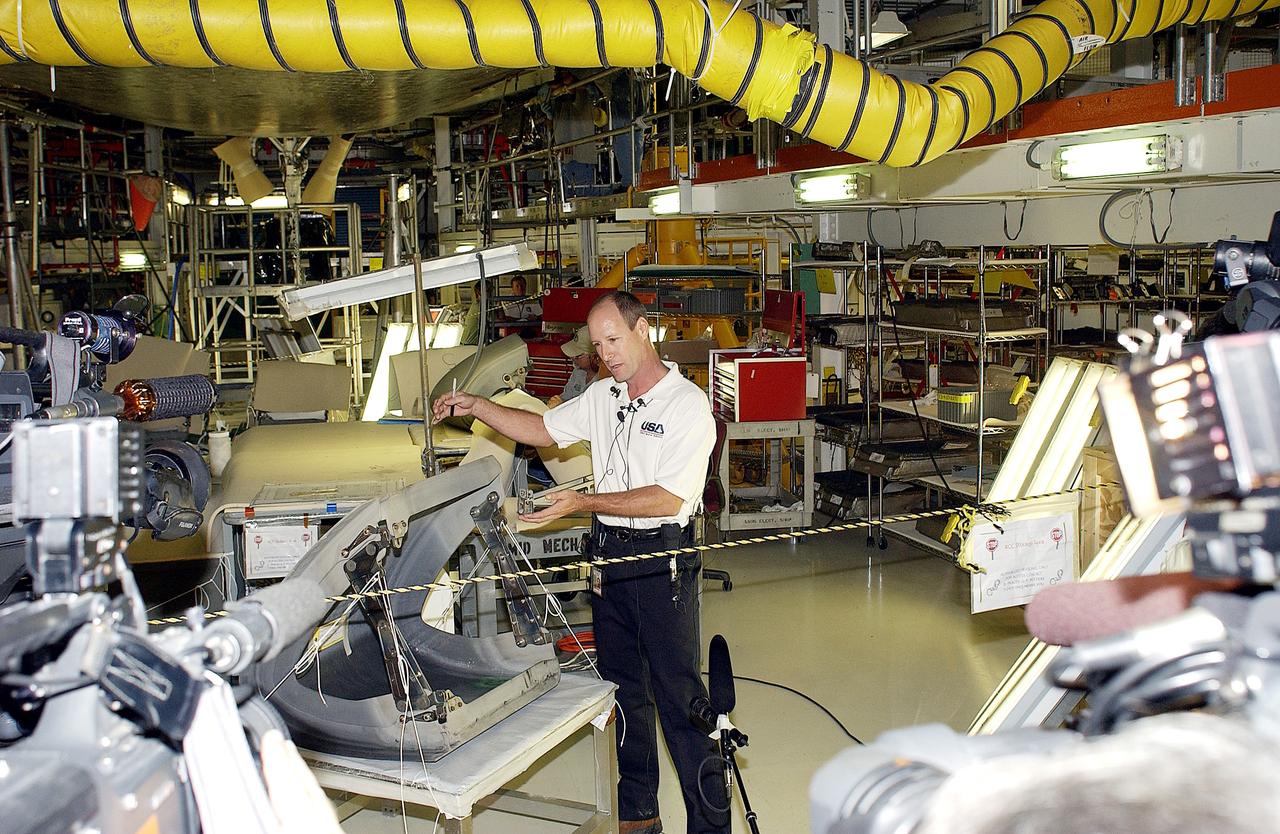
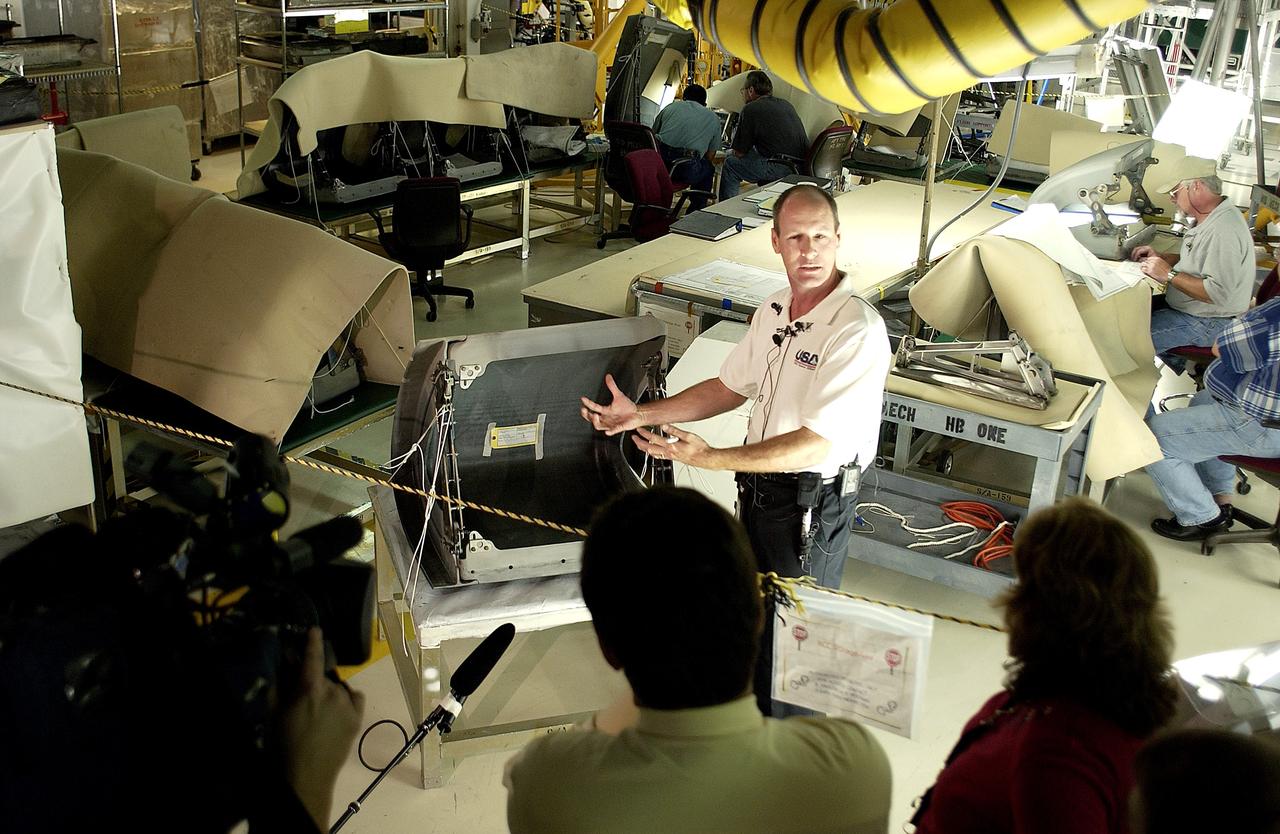
KENNEDY SPACE CENTER, FLA. -  In the Orbiter Processing Facility, Rick Beckwith (center), an orbiter engineer with United Space Alliance, explains to the media the reinstallation of the Reinforced Carbon-Carbon panels on the orbiter Atlantis’ wing leading edge.  The media was invited to tour the OPF at KSC and to see the orbiter Atlantis as it is being prepared for Return to Flight.  Both local and national reporters representing print and TV networks were able to see work in progress on Atlantis, also including wiring inspections and checks of the engines in the Orbital Maneuvering System.
KENNEDY SPACE CENTER, FLA. - In the Orbiter Processing Facility, Rick Beckwith (center), an orbiter engineer with United Space Alliance, explains to the media the reinstallation of the Reinforced Carbon-Carbon panels on the orbiter Atlantis’ wing leading edge. The media was invited to tour the OPF at KSC and to see the orbiter Atlantis as it is being prepared for Return to Flight. Both local and national reporters representing print and TV networks were able to see work in progress on Atlantis, also including wiring inspections and checks of the engines in the Orbital Maneuvering System.
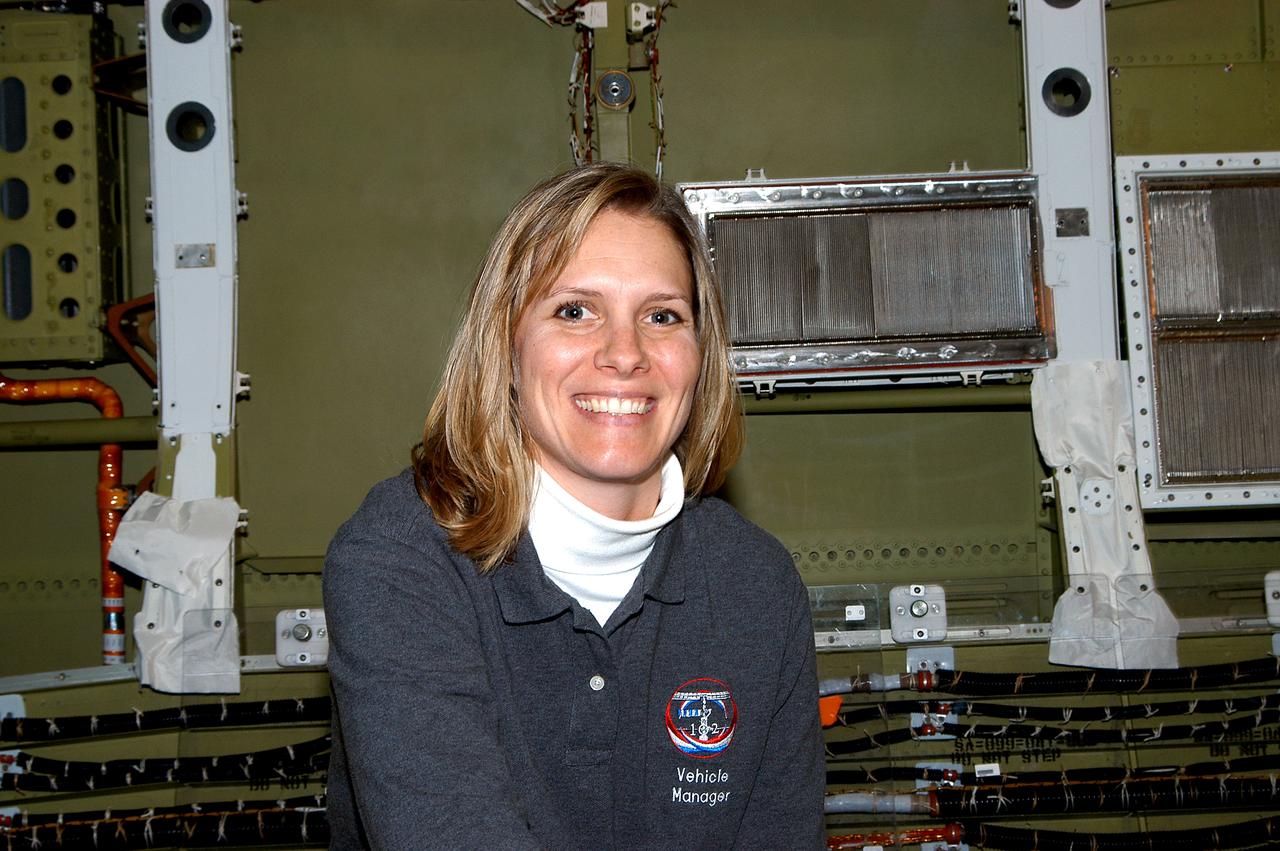
KENNEDY SPACE CENTER, FLA. -  NASA Vehicle Manager for Discovery, Stephanie Stilson poses for a photo after working with a KSC Web team who were filming a special feature for the KSC Web.  Stilson explained her role in the recent Orbiter Major Modification period, which included inspection, modifications and reservicing of most systems onboard. The work on Discovery also included the installation of a Multifunction Electronic Display Subsystem (MEDS) - a state-of-the-art “glass cockpit.”  The orbiter is now being prepared for eventual launch on a future mission.
KENNEDY SPACE CENTER, FLA. - NASA Vehicle Manager for Discovery, Stephanie Stilson poses for a photo after working with a KSC Web team who were filming a special feature for the KSC Web. Stilson explained her role in the recent Orbiter Major Modification period, which included inspection, modifications and reservicing of most systems onboard. The work on Discovery also included the installation of a Multifunction Electronic Display Subsystem (MEDS) - a state-of-the-art “glass cockpit.” The orbiter is now being prepared for eventual launch on a future mission.
KENNEDY SPACE CENTER, FLA. -  In the Orbiter Processing Facility (OPF), Rick Beckwith, an orbiter engineer with United Space Alliance, explains to the media the reinstallation of the Reinforced Carbon-Carbon panels on the orbiter Atlantis’ wing leading edge.  The media was invited to tour the OPF at KSC and to see the orbiter Atlantis as it is being prepared for Return to Flight.  Both local and national reporters representing print and TV networks were able to see work in progress on Atlantis, also including wiring inspections and checks of the engines in the Orbital Maneuvering System.
KENNEDY SPACE CENTER, FLA. - In the Orbiter Processing Facility (OPF), Rick Beckwith, an orbiter engineer with United Space Alliance, explains to the media the reinstallation of the Reinforced Carbon-Carbon panels on the orbiter Atlantis’ wing leading edge. The media was invited to tour the OPF at KSC and to see the orbiter Atlantis as it is being prepared for Return to Flight. Both local and national reporters representing print and TV networks were able to see work in progress on Atlantis, also including wiring inspections and checks of the engines in the Orbital Maneuvering System.
KENNEDY SPACE CENTER, FLA. -  Shuttle Launch Director Mike Leinbach (right) explains recovery and reconstruction efforts of Columbia to the Executive Director of NASDA Koji Yamamoto (third from left) and others visiting the Columbia Debris Hangar.   Mr. Yamamoto is at KSC for a welcome ceremony involving the arrival of the newest Space Station module, the Japanese Experiment Module/pressurized module.
KENNEDY SPACE CENTER, FLA. - Shuttle Launch Director Mike Leinbach (right) explains recovery and reconstruction efforts of Columbia to the Executive Director of NASDA Koji Yamamoto (third from left) and others visiting the Columbia Debris Hangar. Mr. Yamamoto is at KSC for a welcome ceremony involving the arrival of the newest Space Station module, the Japanese Experiment Module/pressurized module.
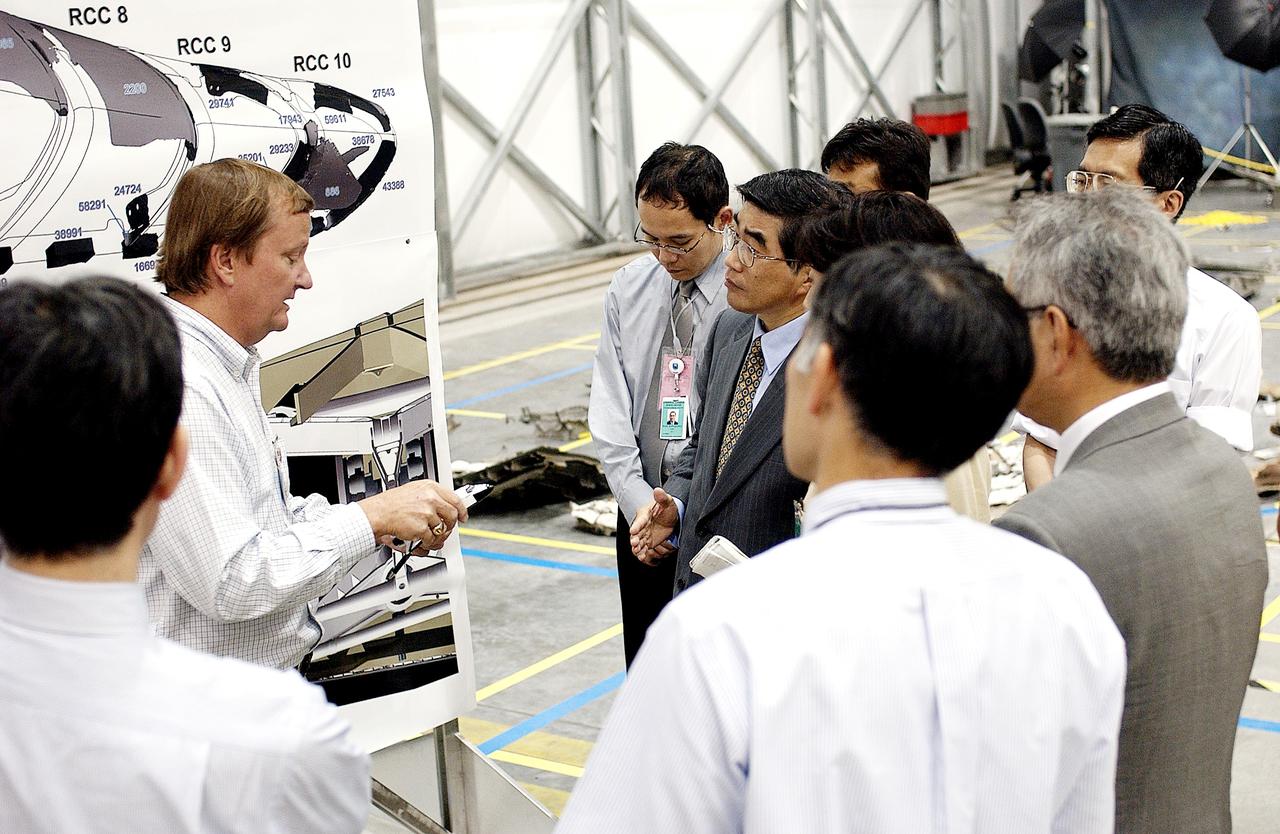
KENNEDY SPACE CENTER, FLA. -   Shuttle Launch Director Mike Leinbach (right) explains recovery and reconstruction efforts of Columbia to the Executive Director of NASDA Koji Yamamoto (second from left) and others visiting the Columbia Debris Hangar.   Mr. Yamamoto is at KSC for a welcome ceremony involving the arrival of the newest Space Station module, the Japanese Experiment Module/pressurized module.
KENNEDY SPACE CENTER, FLA. - Shuttle Launch Director Mike Leinbach (right) explains recovery and reconstruction efforts of Columbia to the Executive Director of NASDA Koji Yamamoto (second from left) and others visiting the Columbia Debris Hangar. Mr. Yamamoto is at KSC for a welcome ceremony involving the arrival of the newest Space Station module, the Japanese Experiment Module/pressurized module.
KENNEDY SPACE CENTER, FLA. -  In the Orbiter Processing Facility (OPF), Rick Beckwith, an orbiter engineer with United Space Alliance, explains to the media the reinstallation of the Reinforced Carbon-Carbon panels on Atlantis’ wing leading edge.  The media was invited to tour the OPF at KSC and to see the orbiter Atlantis as it is being prepared for Return to Flight.  Both local and national reporters representing print and TV networks were able to see work in progress on Atlantis, also including wiring inspections and checks of the engines in the Orbital Maneuvering System.
KENNEDY SPACE CENTER, FLA. - In the Orbiter Processing Facility (OPF), Rick Beckwith, an orbiter engineer with United Space Alliance, explains to the media the reinstallation of the Reinforced Carbon-Carbon panels on Atlantis’ wing leading edge. The media was invited to tour the OPF at KSC and to see the orbiter Atlantis as it is being prepared for Return to Flight. Both local and national reporters representing print and TV networks were able to see work in progress on Atlantis, also including wiring inspections and checks of the engines in the Orbital Maneuvering System.
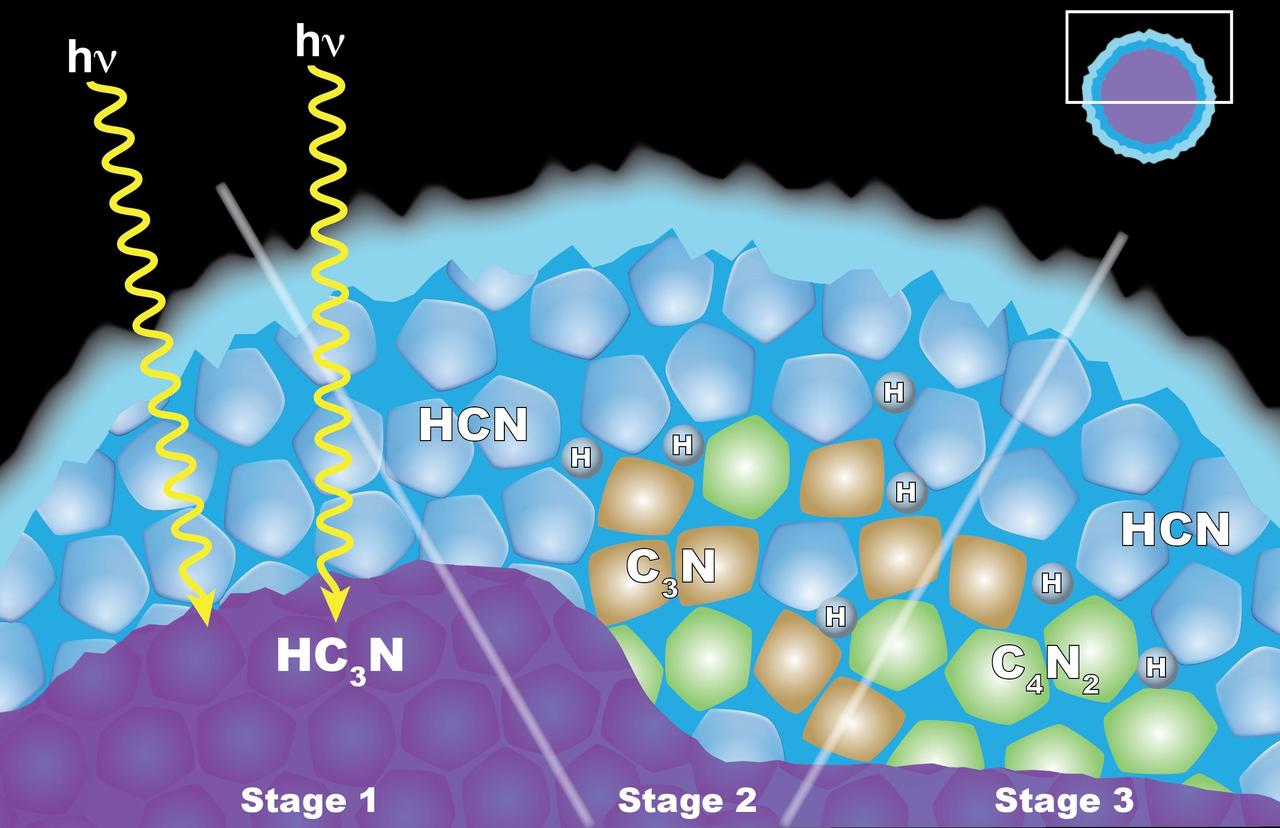
Scientists from NASA's Cassini mission suggested in a 2016 paper that the appearance of a cloud of dicyanoacetylene (C4N2) ice in Titan's stratosphere may be explained by "solid-state" chemistry taking place inside ice particles. The particles have an inner layer of cyanoacetylene (HC3N) ice coated with an outer layer of hydrogen cyanide (HCN) ice. Left: When a photon of light penetrates the outer shell, it can interact with the HC3N, producing C3N and H. Center: The C3N then reacts with HCN to yield C4N2 and H (shown at right). Another reaction that also yields C4N2 ice and H also is possible, but the researchers think it is less likely.  http://photojournal.jpl.nasa.gov/catalog/PIA20715
"Solid State" Chemistry in Titan Ice Particles
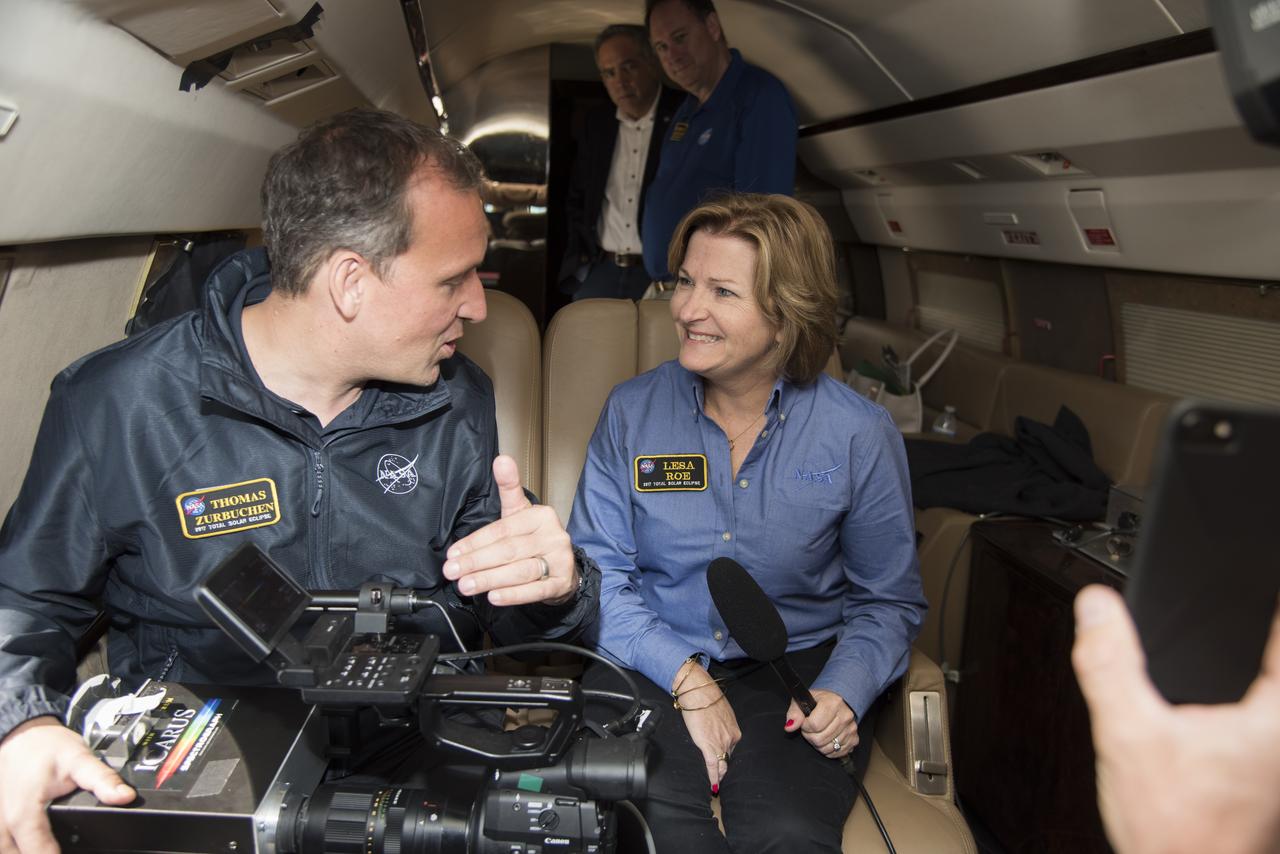
NASA's Thomas Zurbuchen, AA for science mission directorate explains to Lesa Roe, acting deputy administrator, how the spectrograph showing different colors correlate to different elements, such as helium, in the Sun's atmosphere. Photo Credit: (NASA/Carla Thomas)
2017 Total Solar Eclipse
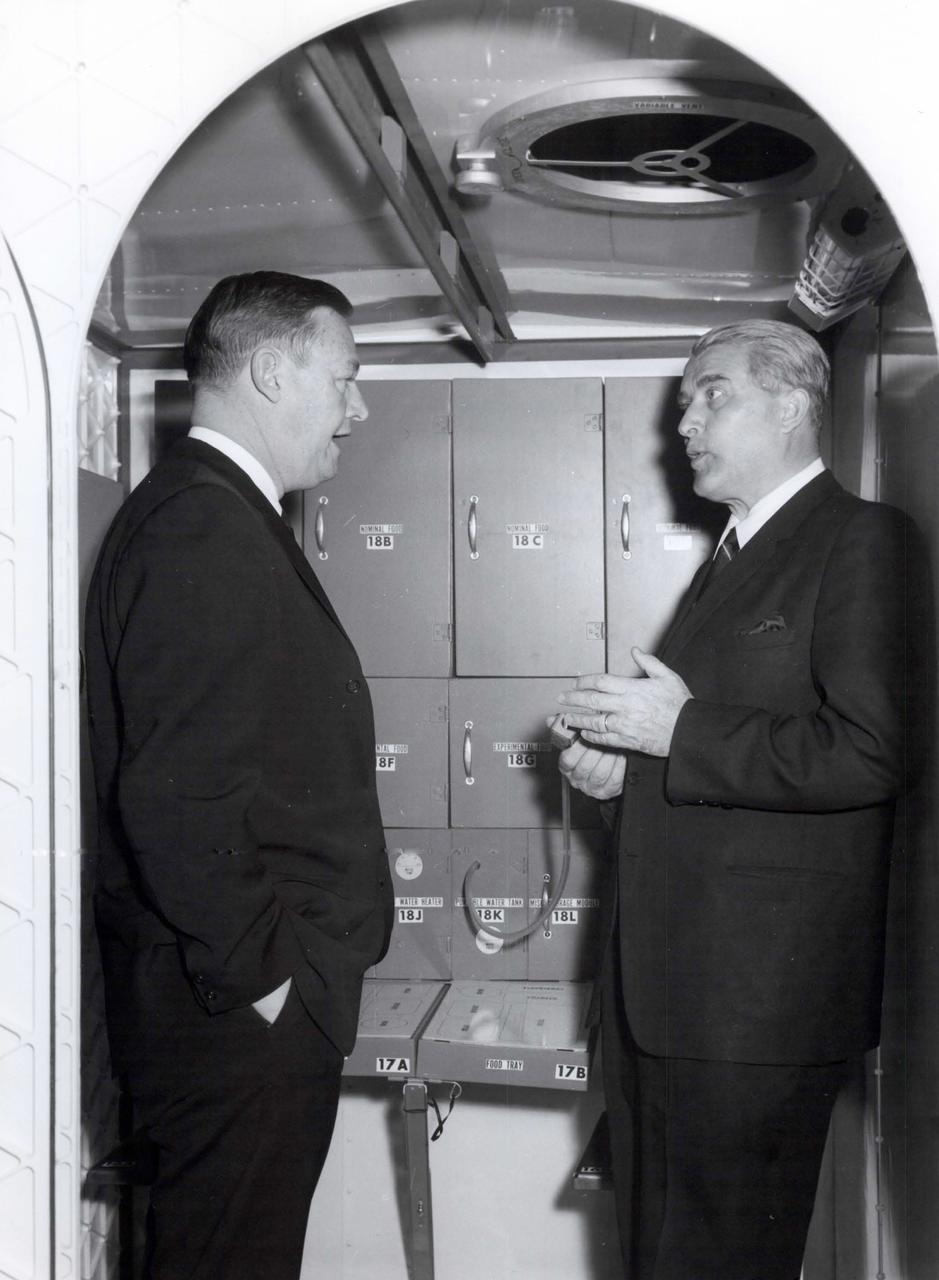
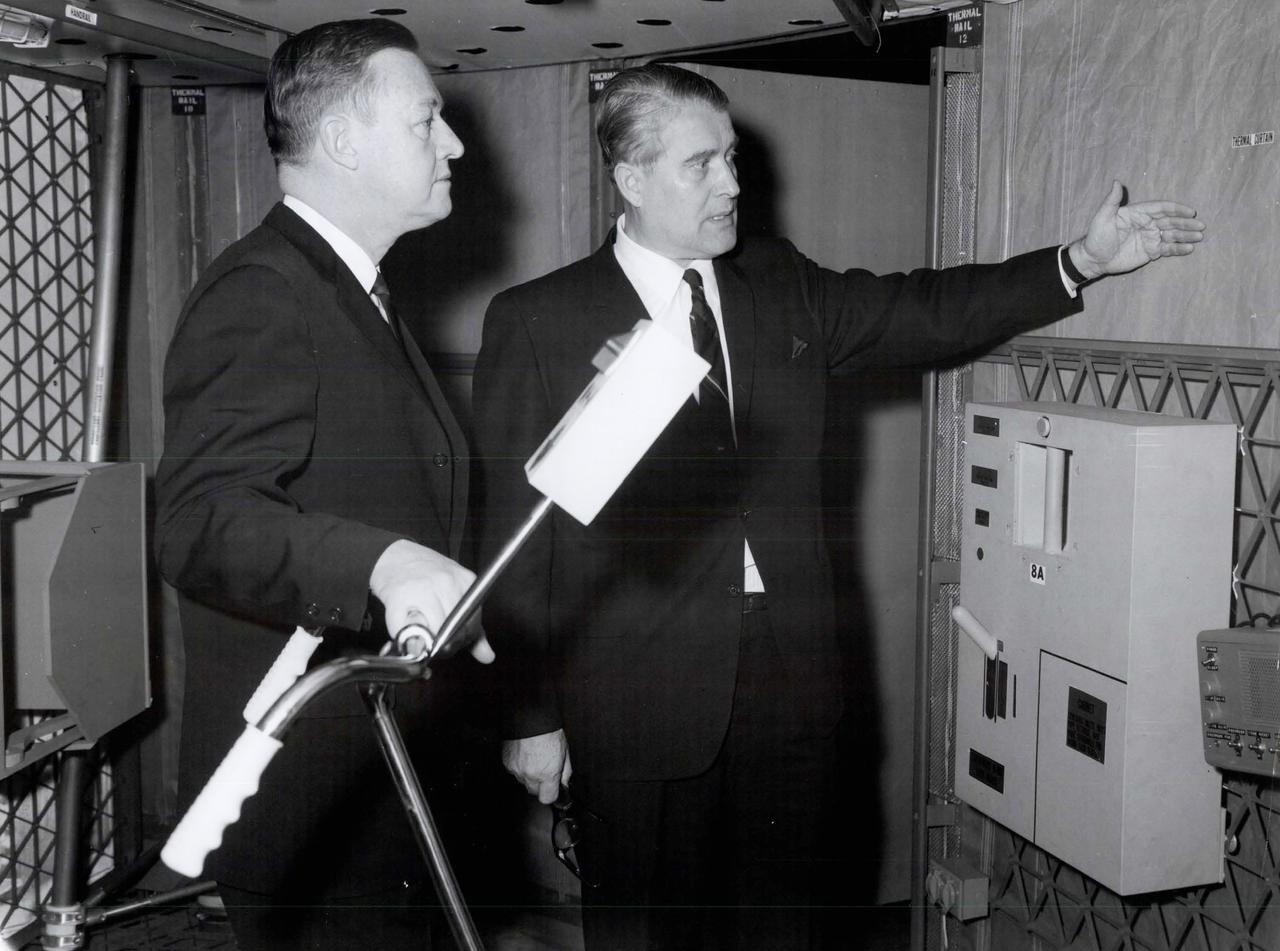
Dr. Wernher von Braun, Director of the Marshall Space Flight Center, explains the purpose of a thermal curtain in the mockup of a Saturn I workshop to U.S. Representative Armistead Seldon of Alabama. The Congressman visited the Marshall Center on March 2, 1968 to tour the workshop and to visit Marshall Center facilities.
Wernher von Braun
CAPE CANAVERAL, Fla. – David Reed, left, explains an innovation developed at NASA's Kennedy Space Center to Mason Peck, center, NASA's chief Technologist, during Pecks' tour of the Space Life Sciences Laboratory at Kennedy. Peck toured the lab facility during a visit to the space center. Photo credit: NASA/Frankie Martin
KSC-2012-4082
Teachers, students, and parents listen as scientists explain what is different about the microgravity envirornment of space and why it is a valuable tool for research. This was part of the outreach session of the Pan Pacific Microgravity Conference on May 2, 2001, at the California Science Center.
Microgravity
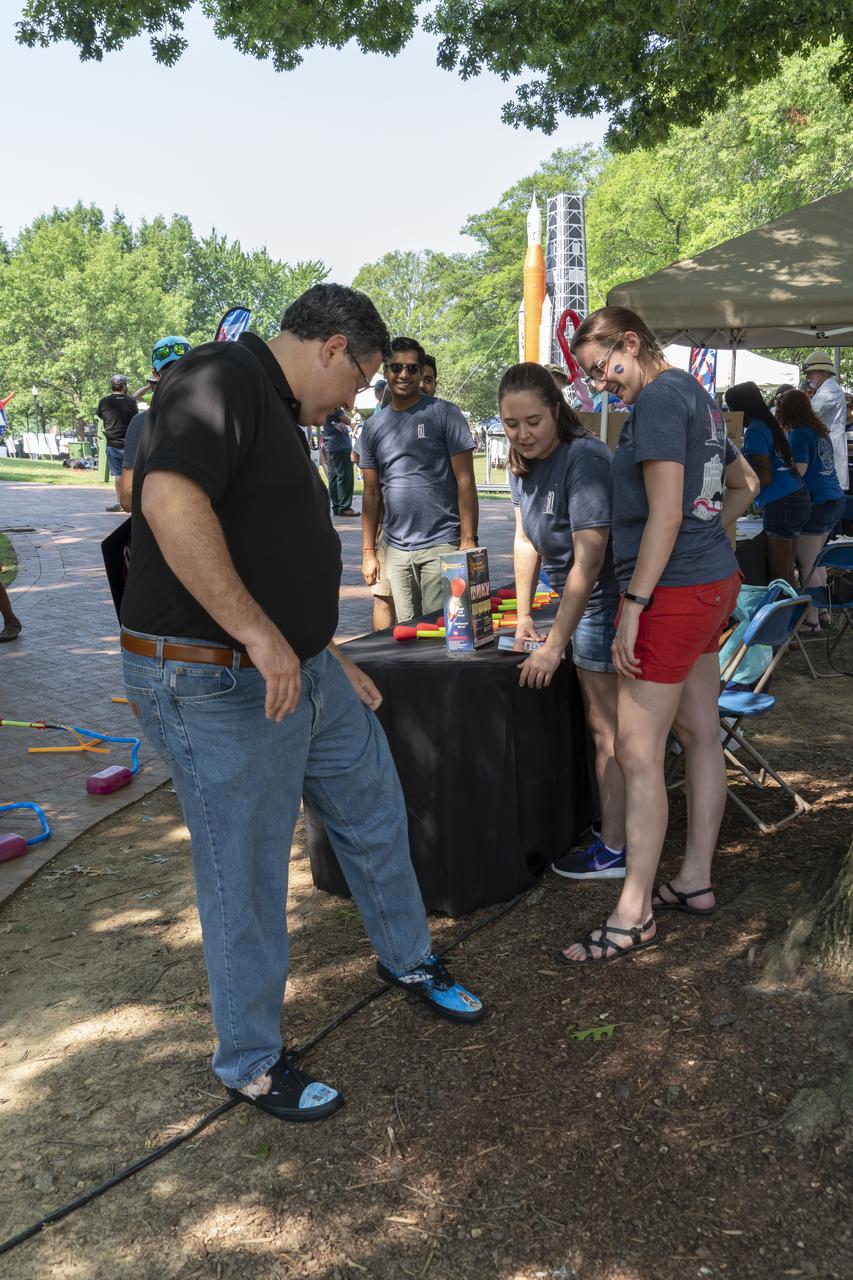
NASA's Marshall Space Flight Center showcased it's various projects for the public in Huntsville, Alabama's Big Spring Park. Exhibits were displayed by all of the various directorates of the Center with employee volunteers explaining all aspects of their projects. Adding to the festivities was the attendance of retired NASA astronaut Robert "Hoot" Gibson.
2018 NASA in the Park Celebration
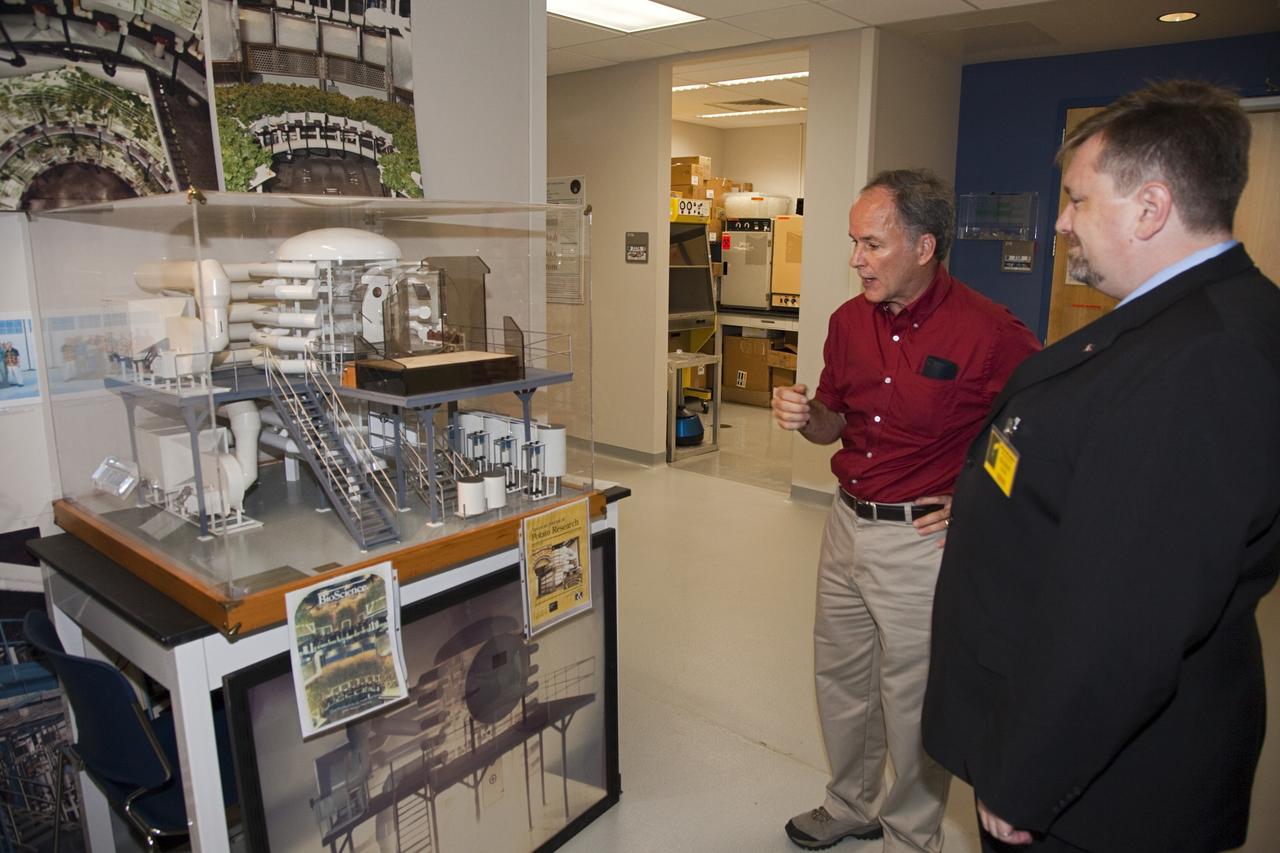
CAPE CANAVERAl, Fla. - Dr. Ray Wheeler, left, explains a plant experiment to Dr. Mason Peck, NASA's chief Technologist, during a tour of the Space Life Sciences Laboratory at Kennedy. Peck toured the lab facility during a visit to the space center. Photo credit: NASA/Frankie Martin
KSC-2012-4088
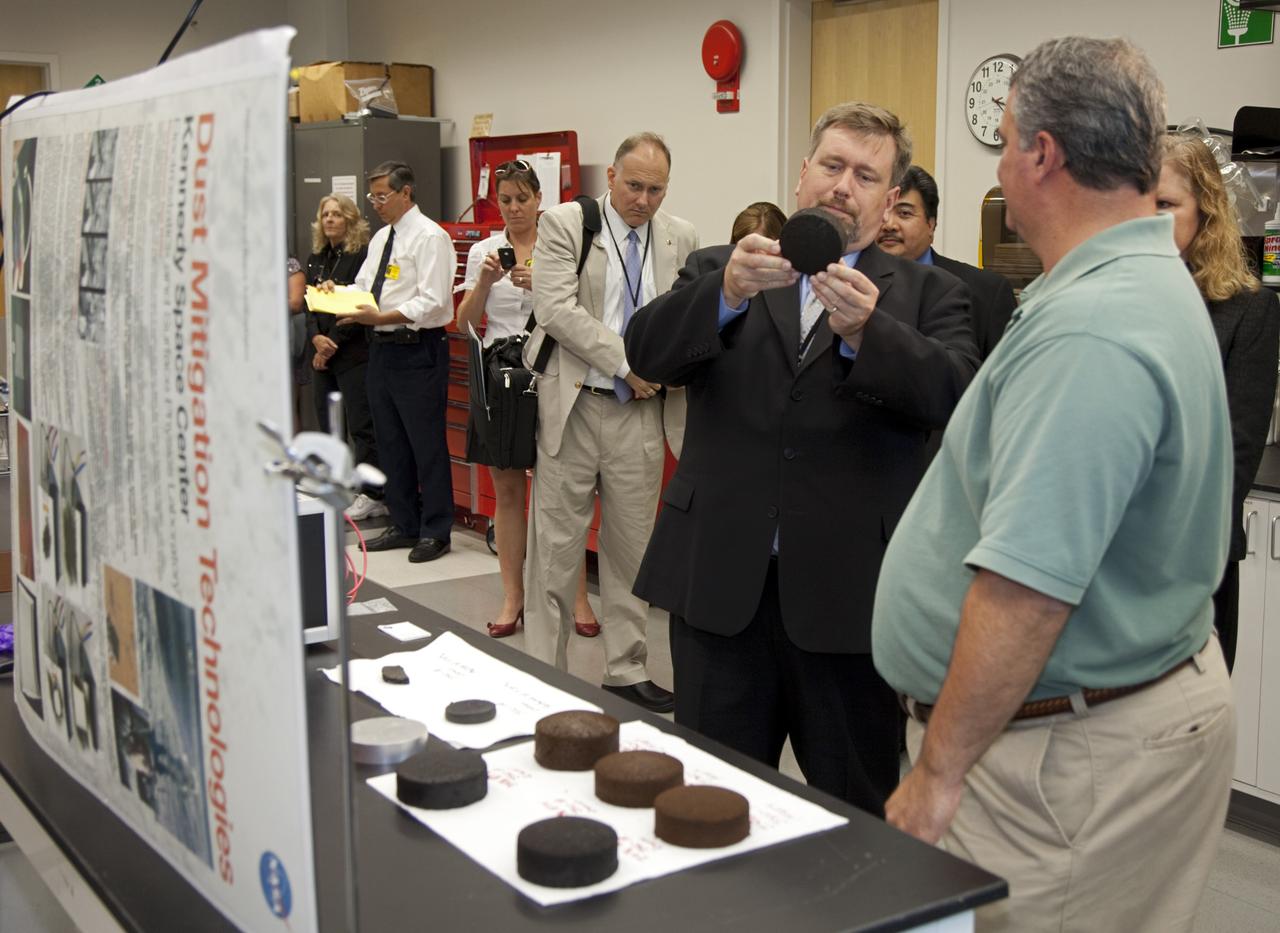
CAPE CANAVERAl, Fla. - Robert Mueller, left, explains differences in lunar, Martian and Earth soil using simulants to Dr. Mason Peck, NASA's chief Technologist, during a tour of the Space Life Sciences Laboratory at Kennedy. Peck toured the lab facility during a visit to the space center. Photo credit: NASA/Frankie Martin
KSC-2012-4085
Senator Doug Jones (D-Al.) and wife Louise are presented an overview of the Environmental Control and Life Support System (ECLSS) which was developed at Marshall Space flight Center. Marshall engineer Keith Parrish explains the steps in converting waste fluids generated on the International Space Station (ISS) into purified drinking water.
Senator Doug Jones (D-AL) Tour of MSFC Facilities
NASA's Thomas Zurbuchen, AA for science mission directorate explains to Lesa Roe, acting deputy administrator, how the spectrograph showing different colors correlate to different elements, such as helium, in the Sun's atmosphere. Photo Credit: (NASA/Carla Thomas)
2017 Total Solar Eclipse
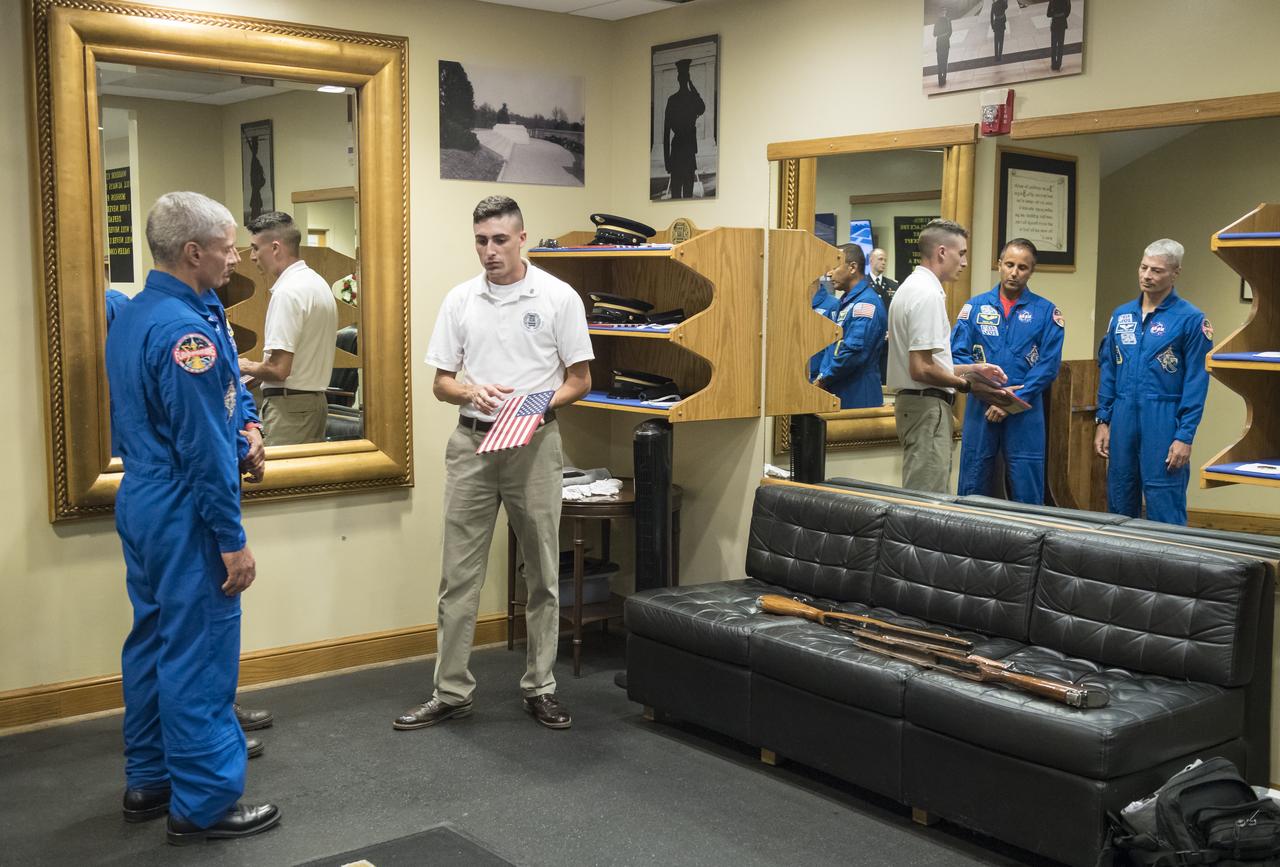
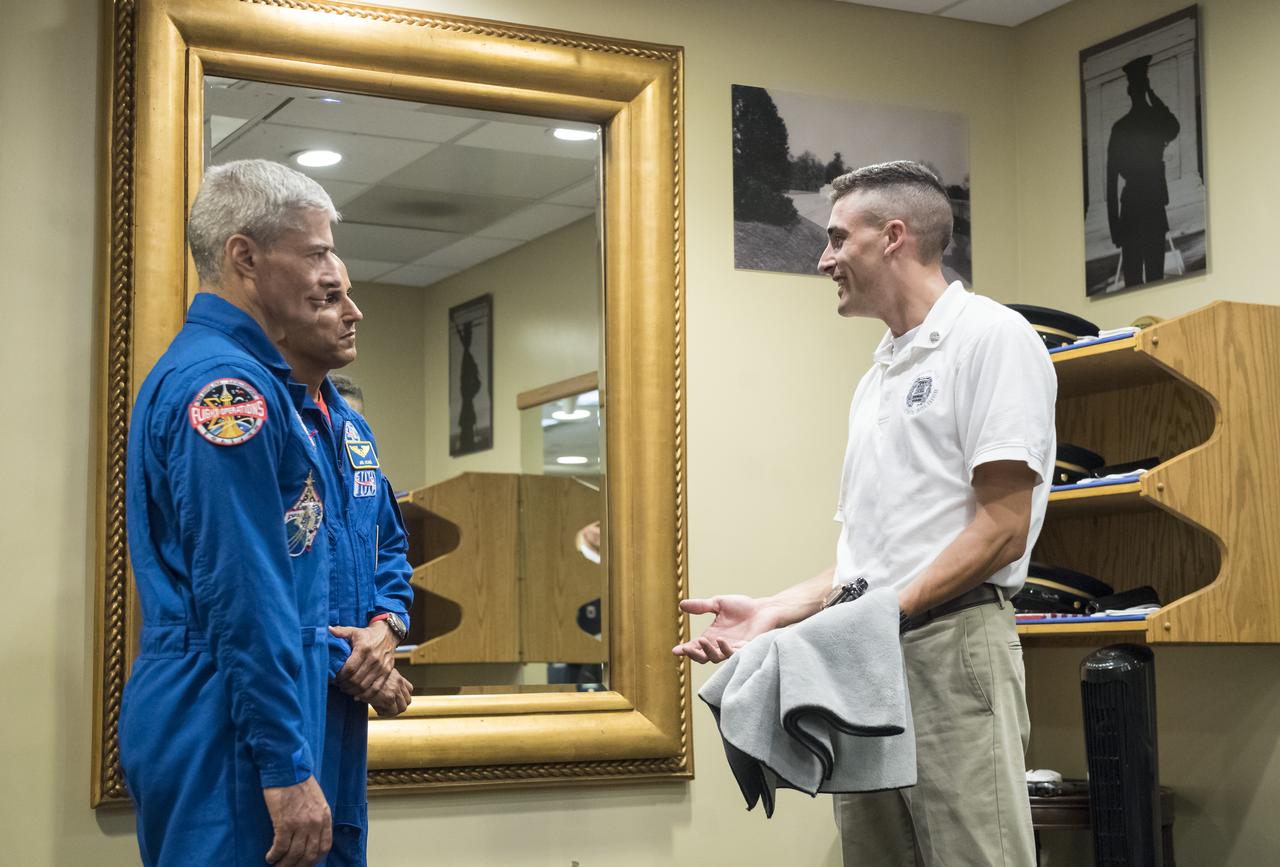
NASA astronauts Mark Vande Hei, left, and Joe Acaba, center, listen as Sergeant Craig Hudson explains the tradition of the Honor Guard at the Tomb of the Unknowns, Friday, June 15, 2018 at the Arlington National Cemetery in Arlington, Va. Photo Credit: (NASA/Aubrey Gemignani)
Astronauts Vande Hei and Acaba at the Arlington National Cemeter
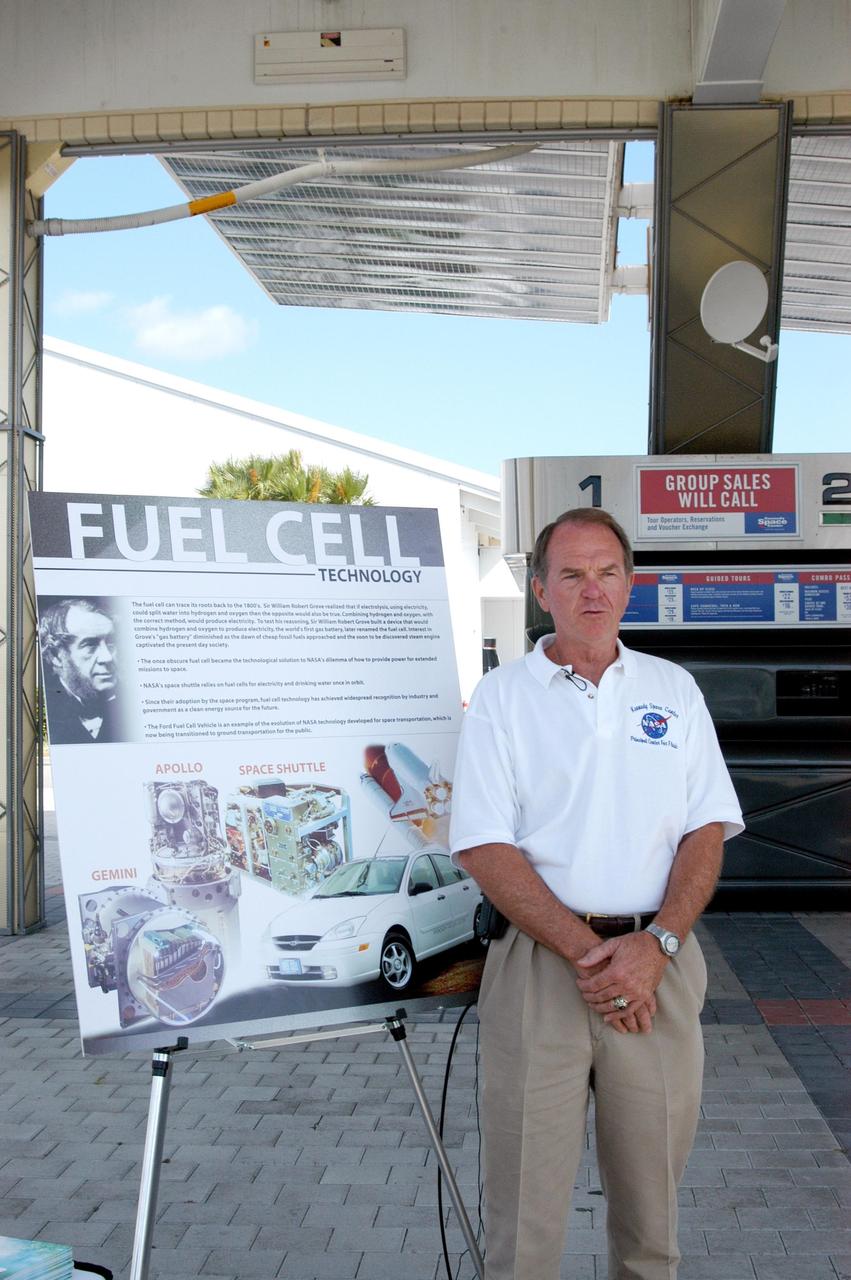
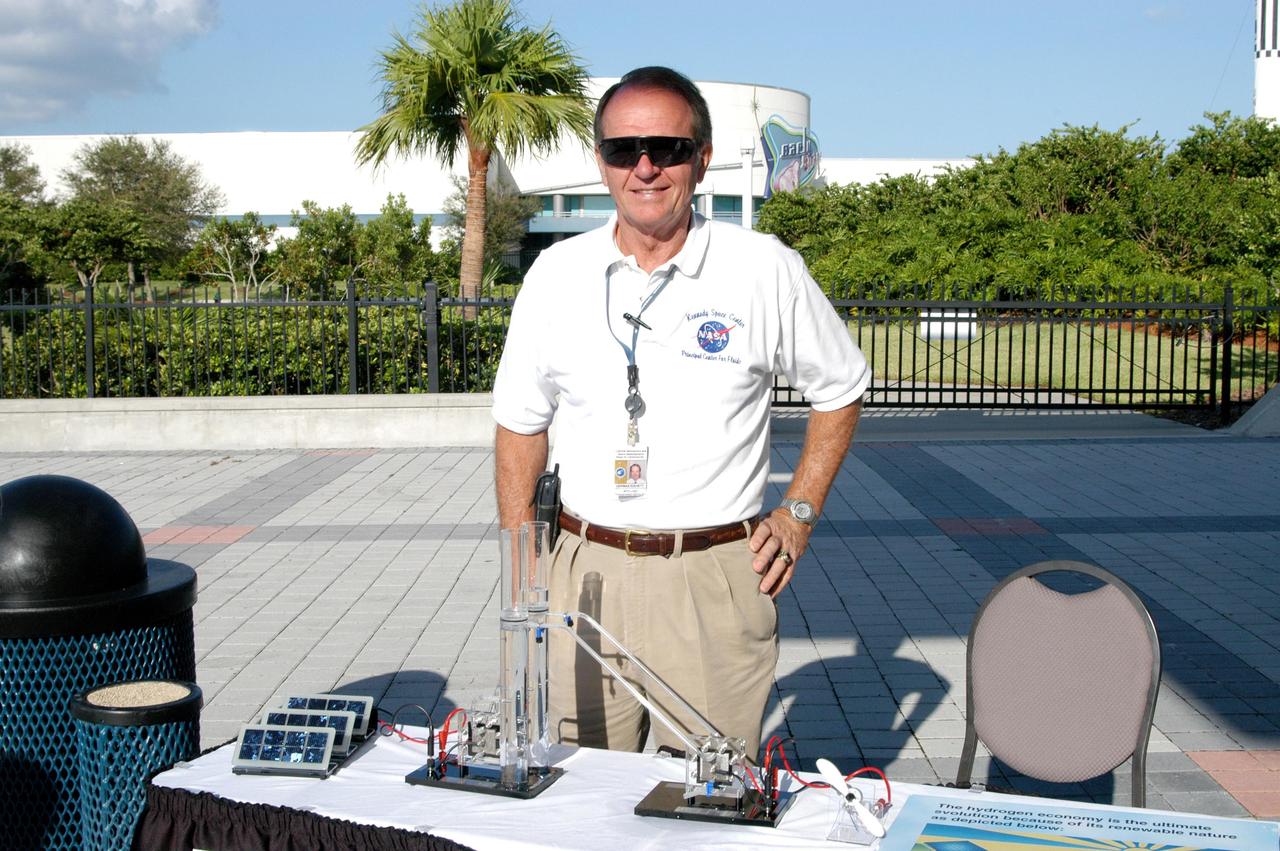
KENNEDY SPACE CENTER, FLA. - Herman Everett explains the use of hydrogen in a fuel cell vehicle during an exhibit by the Ford Motor Company of their modified Ford Focus.   The exhibit was a response to inquiries about fuel cell vehicles during KSC’s Environmental and Energy Awareness week in April 2004.
KSC-04pd1973
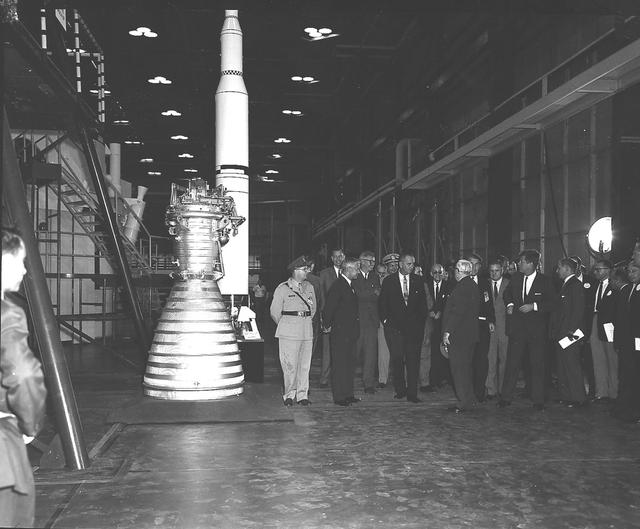
Marshall Space Flight Center Director Dr. Wernher von Braun explains a detail from a Saturn IB mockup and engine to President John F. Kennedy, Vice President Lyndon Johnson and other guests, September 11, 1962.
Wernher von Braun
CAPE CANAVERAl, Fla. - Robert Mueller, left, explains differences in lunar, Martian and Earth soil using simulants to Dr. Mason Peck, NASA's chief Technologist, during a tour of the Space Life Sciences Laboratory at Kennedy. Peck toured the lab facility during a visit to the space center. Photo credit: NASA/Frankie Martin
KSC-2012-4086
KENNEDY SPACE CENTER, FLA. - New methods of environmental cleanup are explained to government and business representatives, scientists and engineers during a presentation at Launch Complex 34-A, Cape Canaveral Spaceport.  Making the presentation is Megan Gaberell with Battelle Memorial Institute.
KSC-02pd1677
Bob Conway, NASA Safety Center deputy director, explains key factors in a safe work environment include organizational culture and climate. He presented during Safety Day on April 4, 2024, at NASA’s Armstrong Flight Research Center in Edwards, California.
NASA Values Safety and Reducing Risk
CAPE CANAVERAl, Fla. - Dr. Ray Wheeler, left, explains plant growth experimentation facilities to Dr. Mason Peck, NASA's chief Technologist, during a tour of the Space Life Sciences Laboratory at Kennedy. Peck toured the lab facility during a visit to the space center. Photo credit: NASA/Frankie Martin
KSC-2012-4089
NASA astronauts Mark Vande Hei, left, and Joe Acaba, center, listen as Sergeant Craig Hudson explains the tradition of the Honor Guard at the Tomb of the Unknowns, Friday, June 15, 2018 at the Arlington National Cemetery in Arlington, Va. Photo Credit: (NASA/Aubrey Gemignani)
Astronauts Vande Hei and Acaba at the Arlington National Cemeter
NASA astronauts Mark Vande Hei, left, and Joe Acaba, center, listen as Sergeant Craig Hudson explains the tradition of the Honor Guard at the Tomb of the Unknowns, Friday, June 15, 2018 at the Arlington National Cemetery in Arlington, Va. Photo Credit: (NASA/Aubrey Gemignani)
Astronauts Vande Hei and Acaba at the Arlington National Cemeter
CAPE CANAVERAl, Fla. - Dr. Mason Peck, center, NASA's chief Technologist, listens as Michael Hogue, right, explains an innovation during Pecks' tour of the Space Life Sciences Laboratory at Kennedy. Peck toured the lab facility during a visit to the space center. Photo credit: NASA/Frankie Martin
KSC-2012-4083
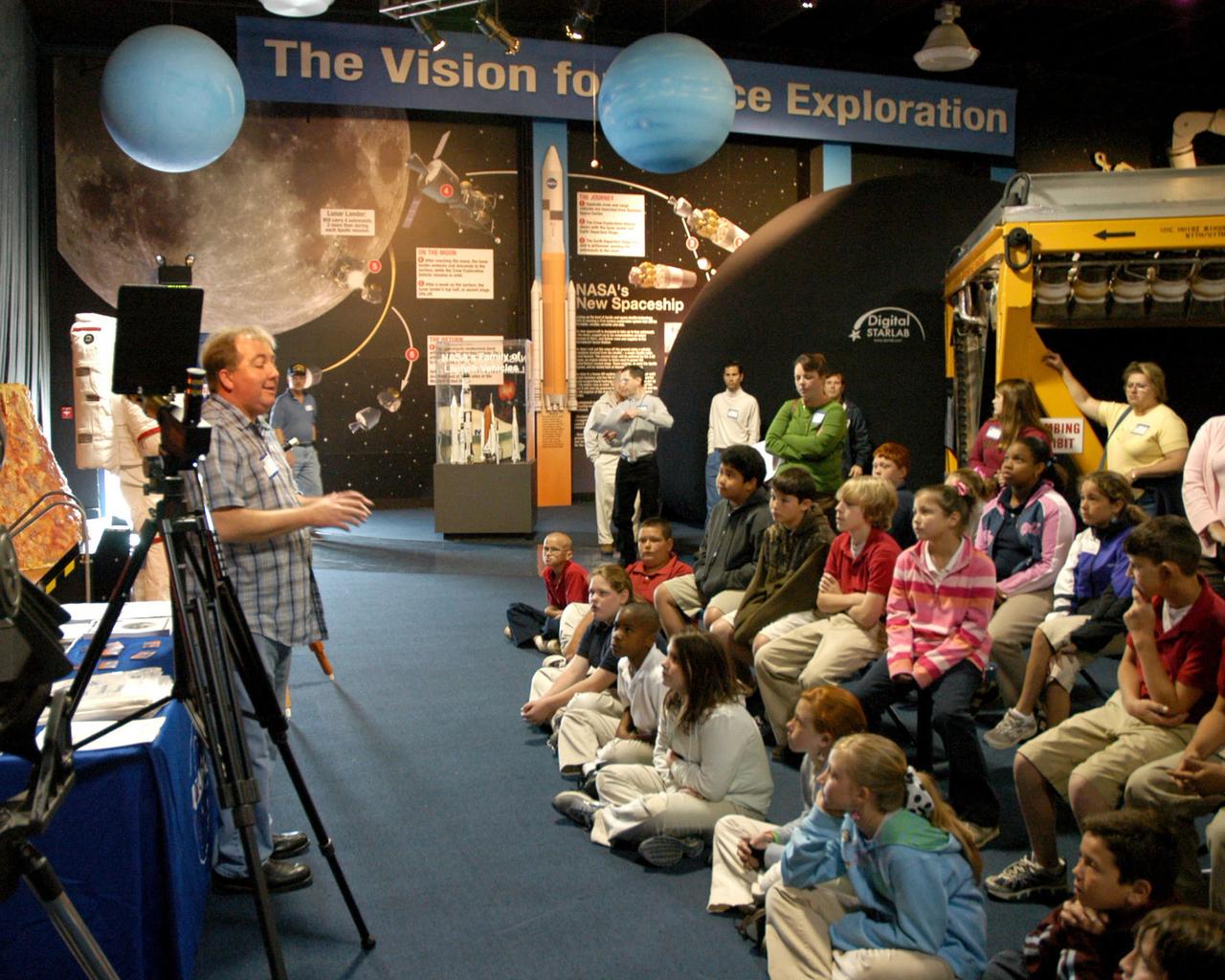
Michael Sandras, a member of the Pontchartrain Astronomical Society, explains his solar telescope to students of Second Street in Bay St. Louis, Hancock County and Nicholson elementary schools in StenniSphere's Millennium Hall on April 10. The students participated in several hands-on activities at Stennis Space Center's Sun-Earth Day celebration.
Sun-Earth Day
JPL Director Michael Watkins, standing, explains the history of NASA's Jet Propulsion Laboratory and the use of the Mission Support Area to Vice President Mike Pence during a tour of JPL, Saturday, April 28, 2018 in Pasadena, California. Photo Credit: (NASA/Bill Ingalls)
Vice President Pence Tours Jet Propulsion Laboratory
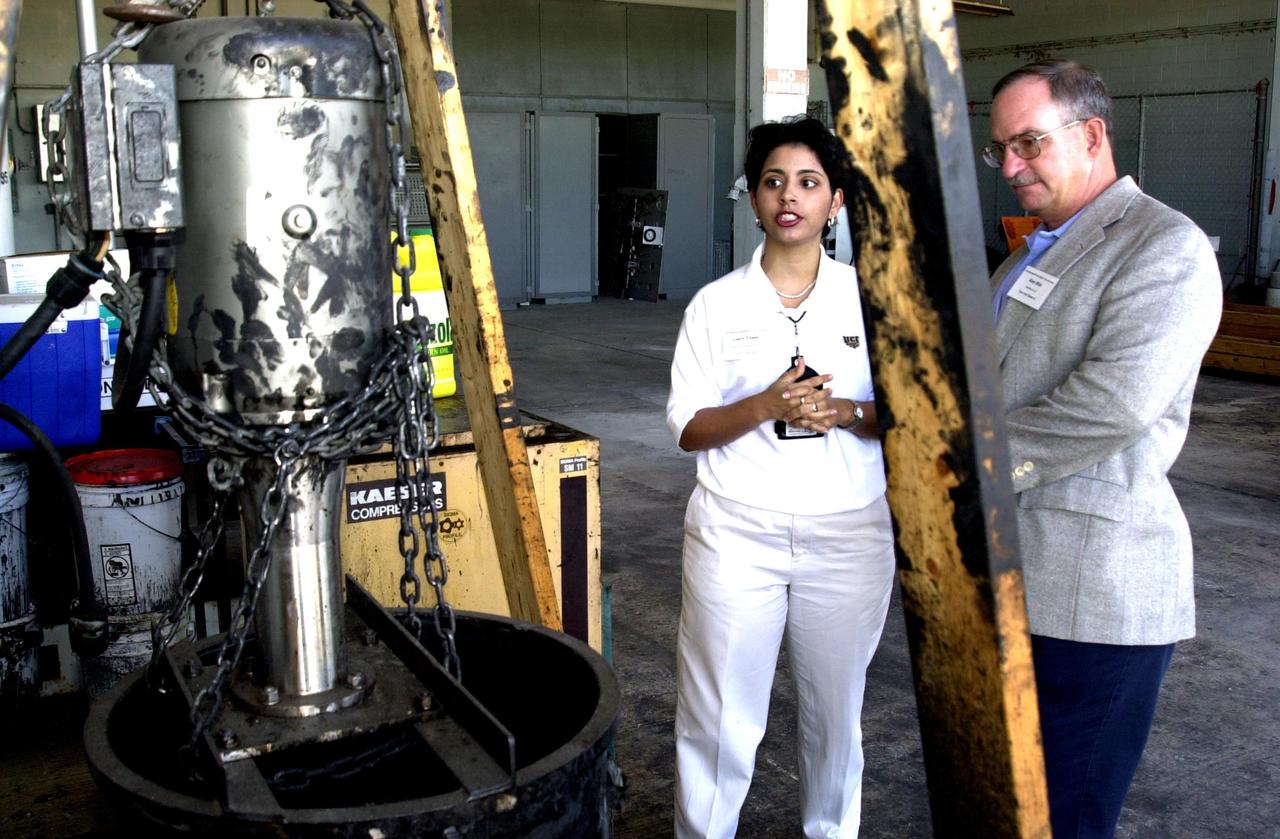
KENNEDY SPACE CENTER, FLA. -- New methods of environmental cleanup are explained during a presentation to government and business representatives, scientists and engineers at Launch Complex 34-A, Cape Canaveral Spaceport.    At left is Laura Filipek, a University of Central Florida graduate chemistry student involved in the science.
KSC-02pd1680
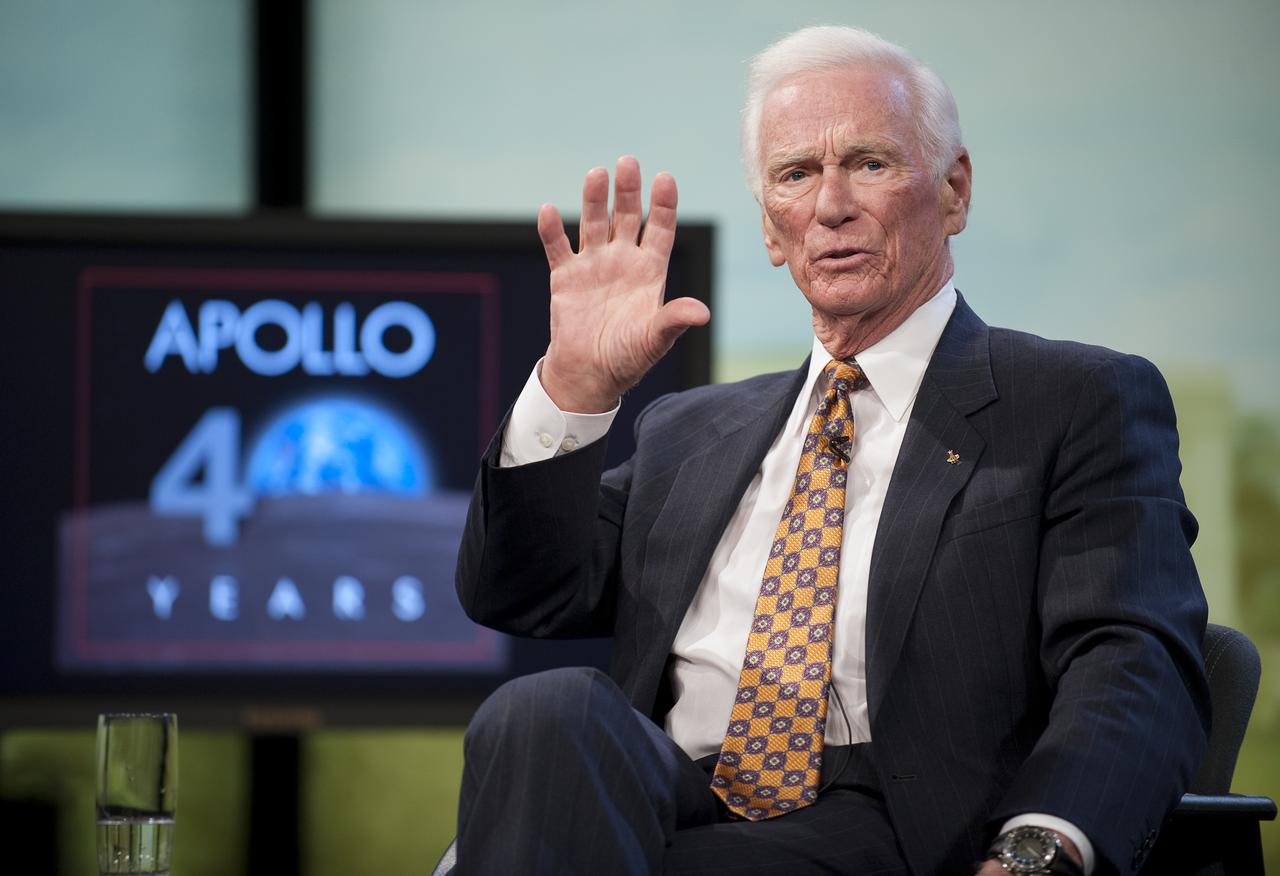
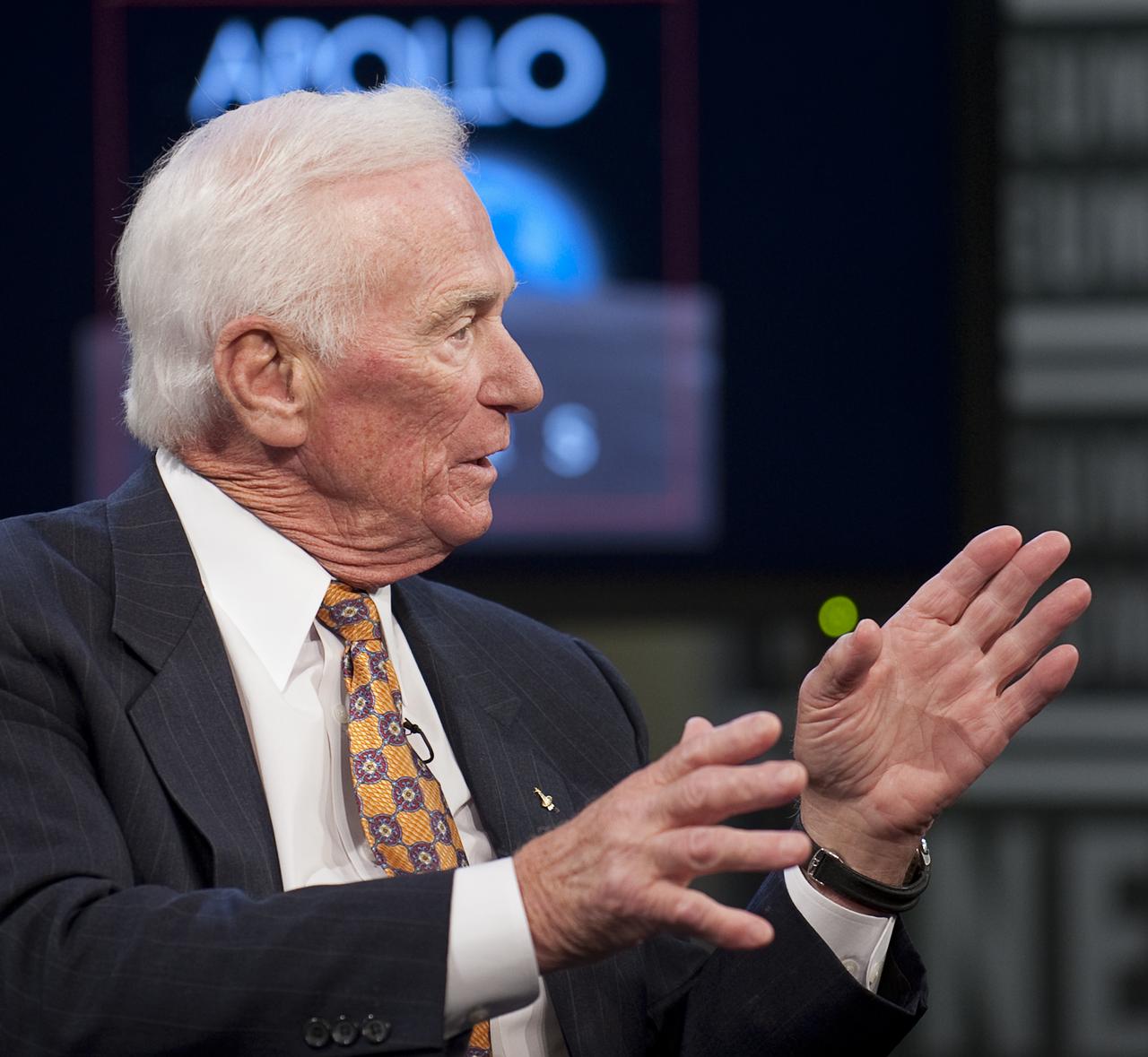
NASA Apollo 10 Astronaut Gene Cernan explains how wonderful the Earth looked from the Moon during a Newseum TV program celebrating the 40th anniversary of Apollo 10, Monday, May 18, 2009, in Washington.  Photo Credit (NASA/Bill Ingalls)
Apollo 10 40th Anniversary Program
Senator Doug Jones (D-Al.) and wife Louise are presented an overview of the Environmental Control and Life Support System (ECLSS) which was developed at Marshall Space flight Center. Marshall engineer Keith Parrish explains the steps in converting waste fluids generated on the International Space Station (ISS) into purified drinking water.
Senator Doug Jones (D-AL) Tour of MSFC Facilities
LCROSS flight hardware in clean room at Ames N-240:   Tony Colaprete NASA Ames P.I. explains the progress of the LCROSS project to Alan Stern, NASA Associate Administrator of the Science Mission Directorate (SMD) as he tours the Lab during his visit to Ames to meet with and talk to the Ames scientists and employees.
ARC-2007-ACD07-0073-202
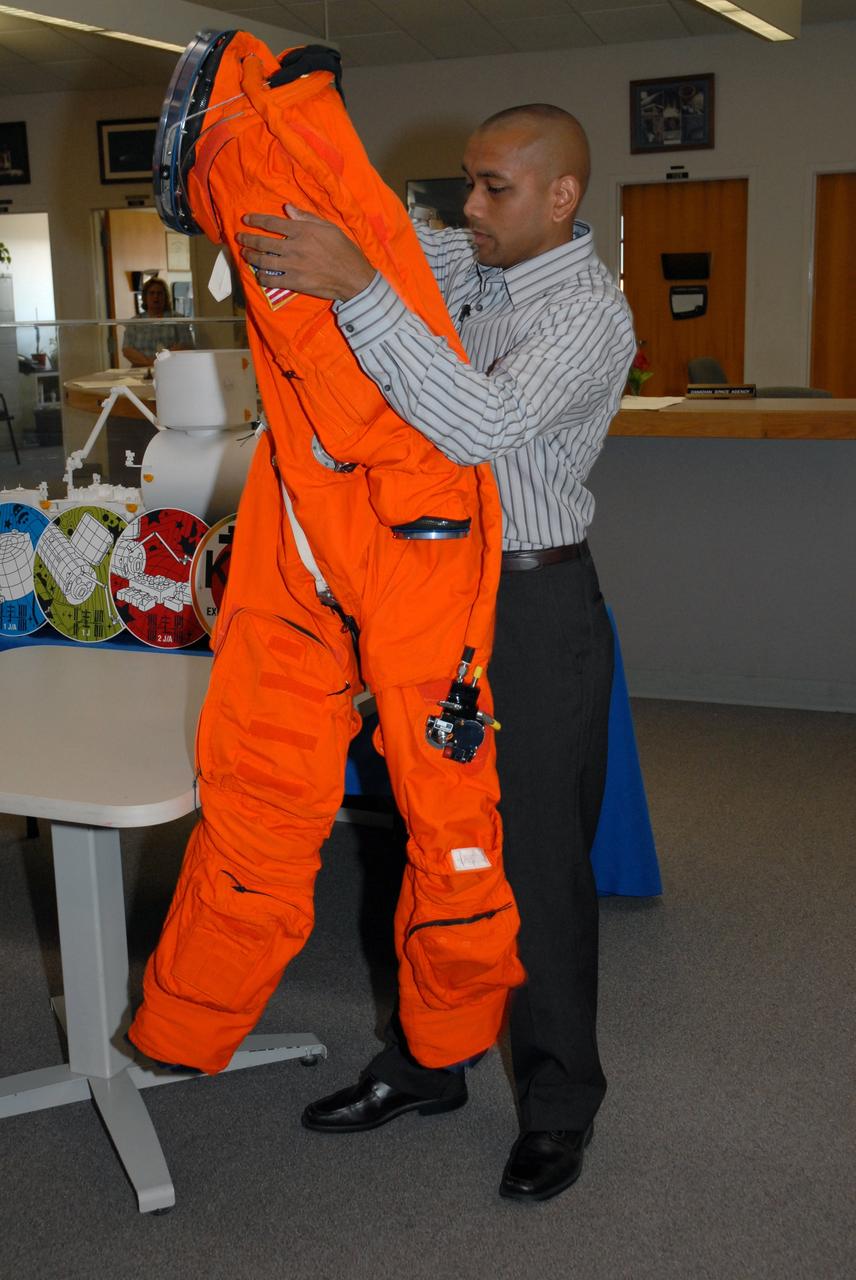
CAPE CANAVERAL, Fla. --   In the NASA News Center at NASA's Kennedy Space Center, Shuttle Crew Escape System Manager KC Chhipwadia demonstrates the launch and entry suit used by shuttle crews during their missions.  He explains that entry into the suit is from the back.  Photo credit:  NASA/Amanda Diller
KSC-08pd1484
NASA Apollo 10 Astronaut Gene Cernan explains the importance of the nations space program for future generations during a Newseum TV program celebrating the 40th anniversary of Apollo 10, Monday, May 18, 2009, in Washington.  Photo Credit (NASA/Bill Ingalls)
Apollo 10 40th Anniversary Program
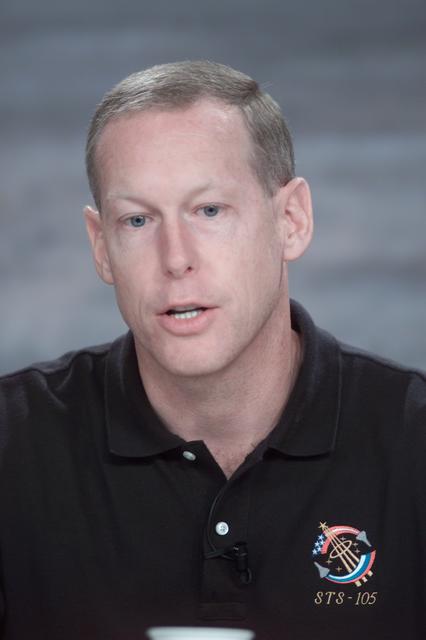
JSC2001-E-23201 (26 July 2001) --- Astronaut Patrick G. Forrester, STS-105 mission specialist, explains some of his anticipated duties during a joint shuttle-station pre-flight press conference at Johnson Space Center (JSC).
STS-106 and Expedition 3 Briefing
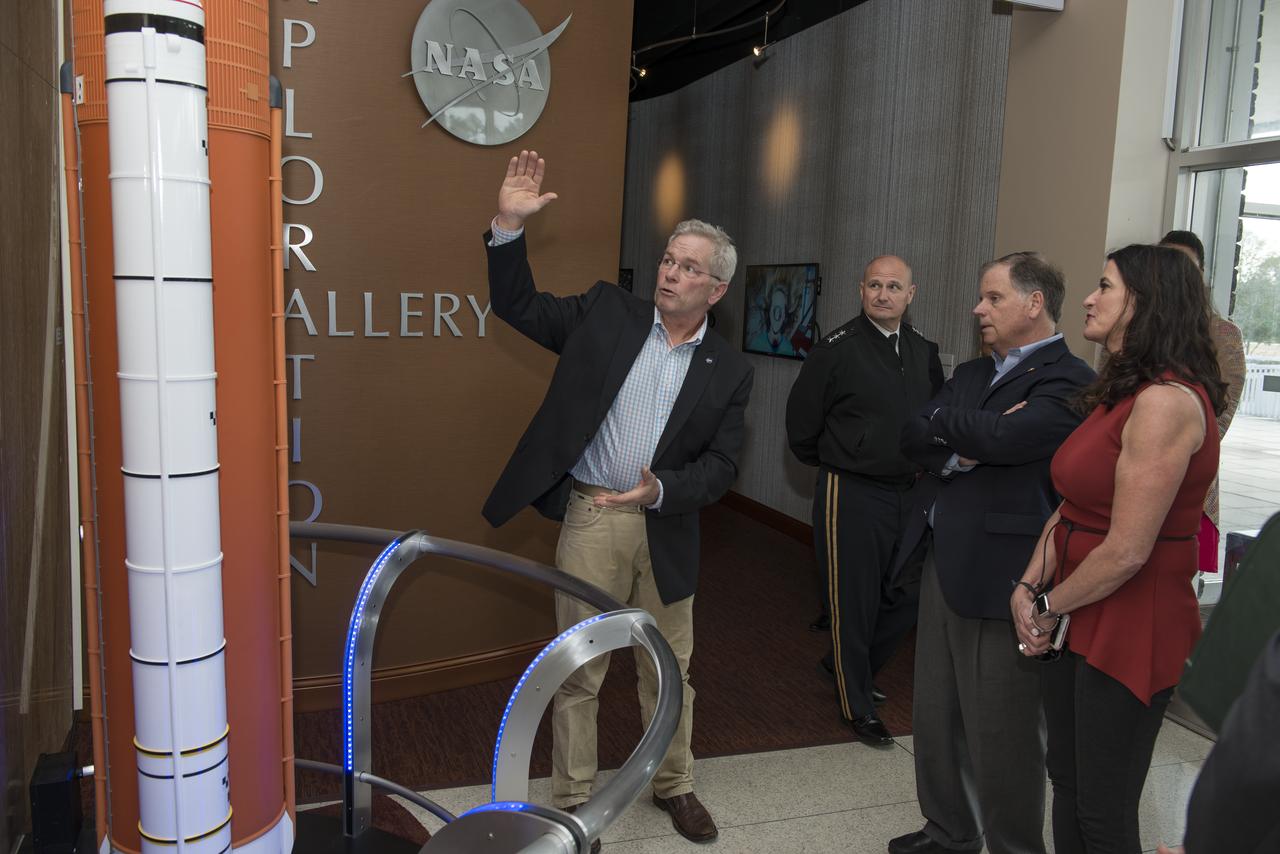
Senator Doug Jones (D-AL.) and wife, Louise, tour Marshall Space Flight facilities. Steve Doering, manager, Stages Element, Space Launch System (SLS) program at MSFC, explains the stages of the SLS rocket with the scale model rocket located in the lobby of building 4200.
Senator Doug Jones (D-AL) Tour of MSFC Facilities
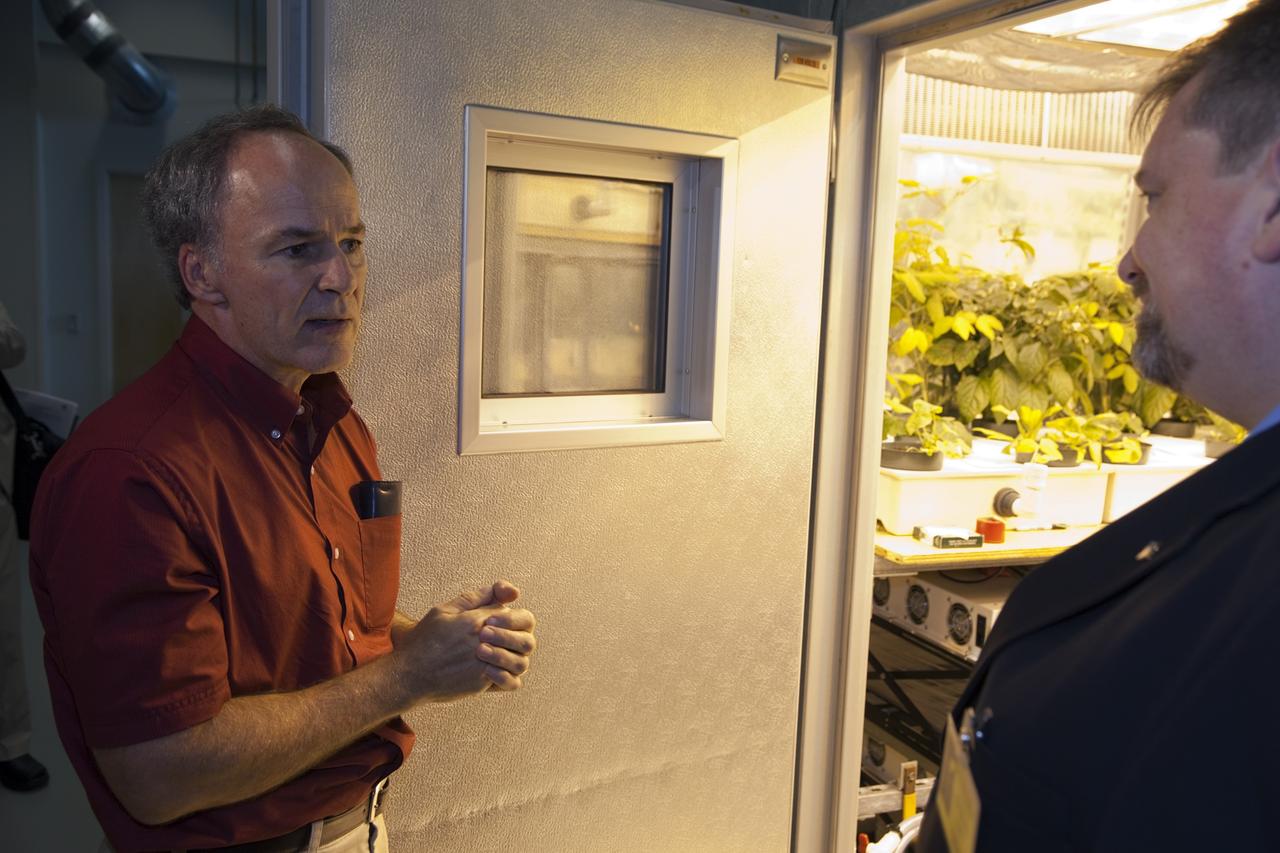
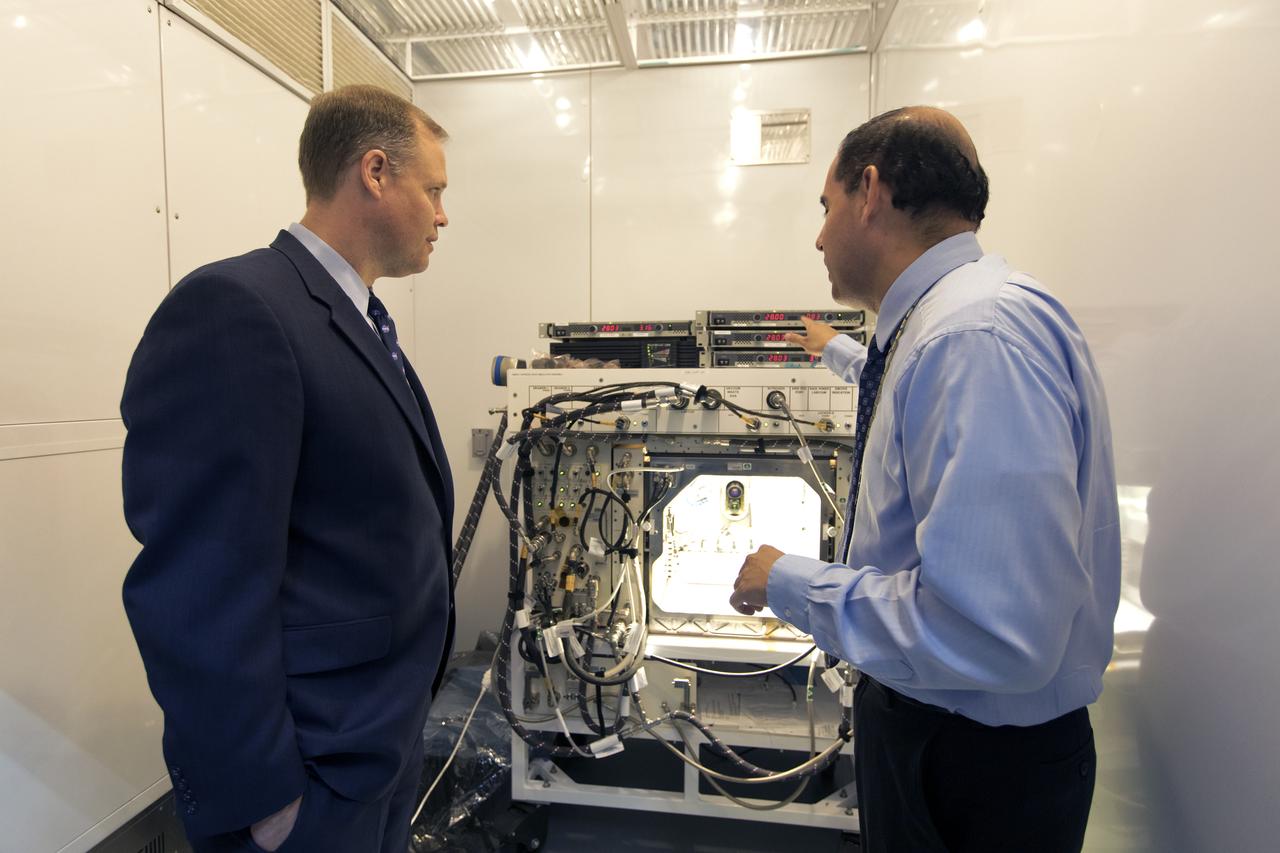
NASA Administrator Jim Bridenstine, left, tours the Space Station Processing Facility at NASA's Kennedy Space Center in Florida, on Aug. 7, 2018. Bryan Onate, at right, Advanced Plant Habitat (APH) project manager, explains a component of the APH control system. Bridenstine also received updates on research and technology accomplishments.
NASA Administrator Jim Bridenstine Visits KSC - SSPF
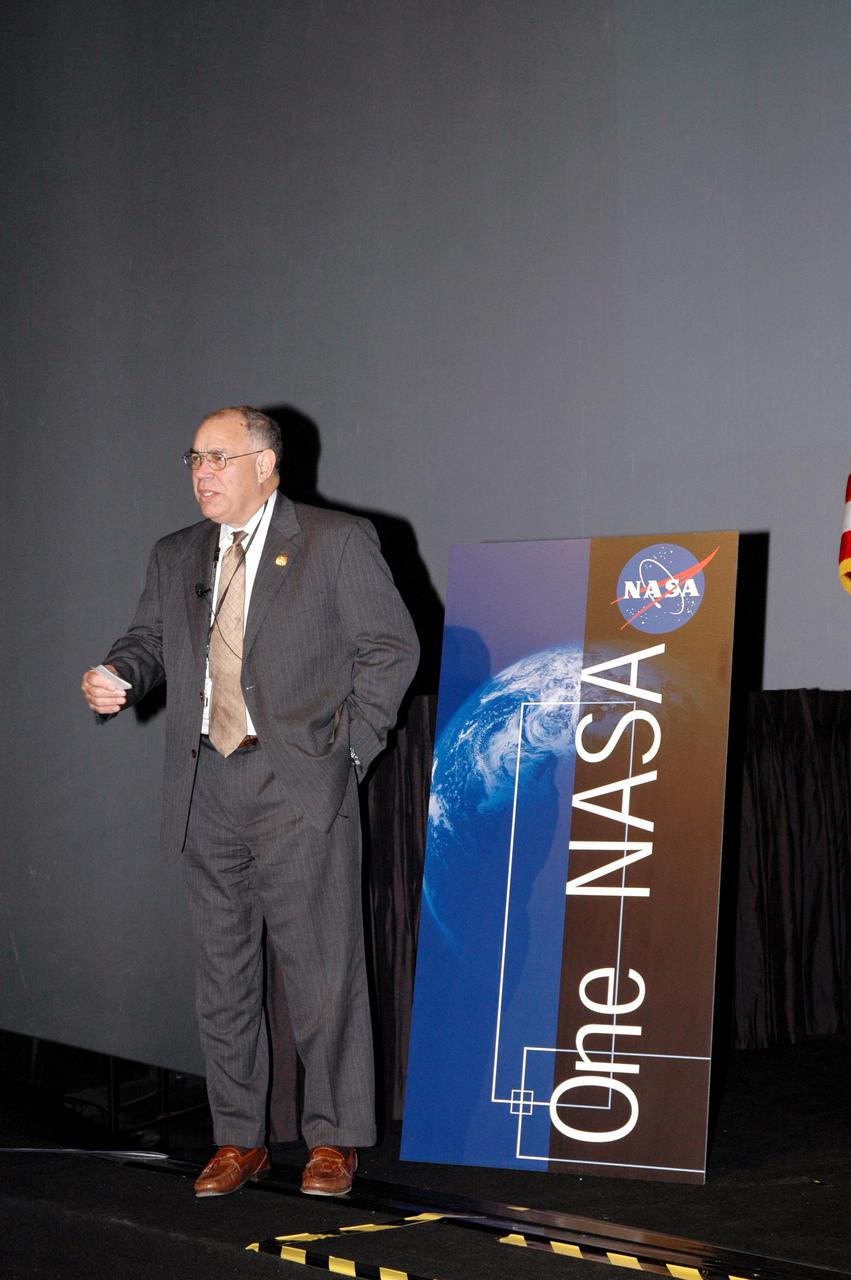
KENNEDY SPACE CENTER, FLA. -  NASA Deputy Administrator Fred Gregory updates attendees of the One NASA Leader-Led Workshop about the Agency’s Transformation and implementation strategies. The workshop included senior leadership in the Agency.  Other speakers explained Kennedy’s role in the Vision for Space Exploration.
KSC-04pd-2633