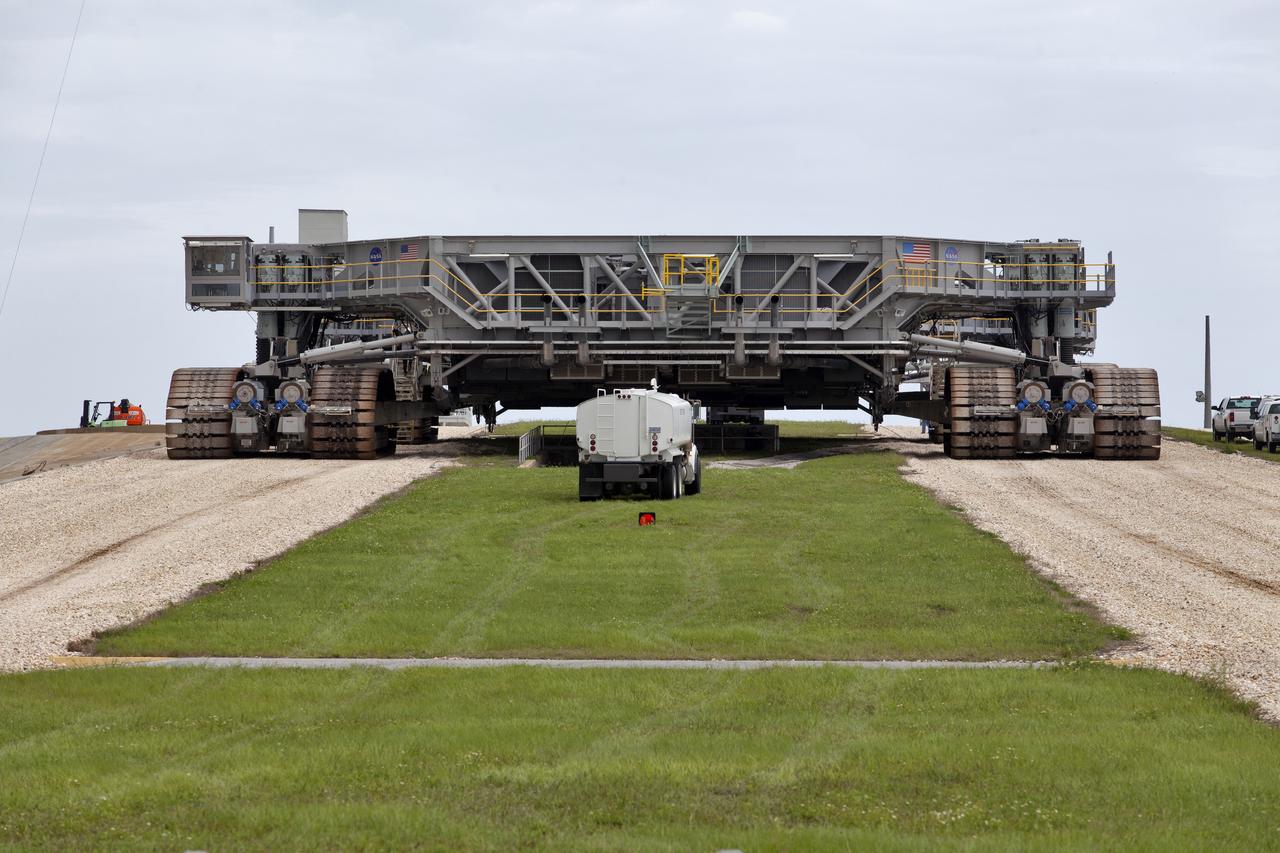
Crawler-transporter 2 (CT-2) moves slowly up the ramp to the surface of Launch Pad 39B for a fit check on May 22, 2018, at NASA's Kennedy Space Center in Florida. The test drive to the pad confirms that all of the recent modifications to CT-2 and Pad 39B are operational to support the launch of the agency's Space Launch System rocket and Orion spacecraft on Exploration Mission-1. Exploration Ground Systems managed the modifications and upgrades to CT-2 and Pad 39B to prepare for EM-1 and deep space exploration missions.
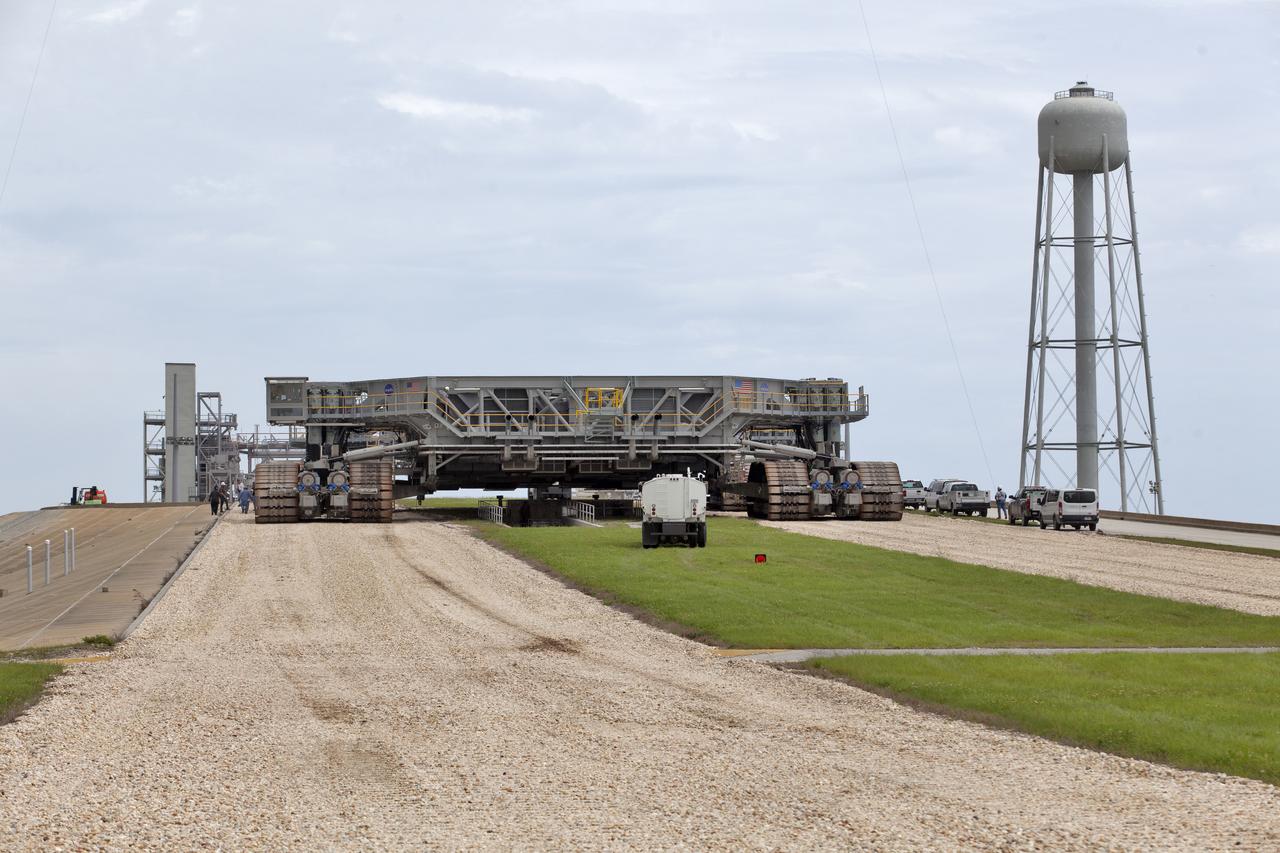
Crawler-transporter 2 (CT-2) moves slowly up the ramp to the surface of Launch Pad 39B for a fit check on May 22, 2018, at NASA's Kennedy Space Center in Florida. The test drive to the pad confirms that all of the recent modifications to CT-2 and Pad 39B are operational to support the launch of the agency's Space Launch System rocket and Orion spacecraft on Exploration Mission-1. Exploration Ground Systems managed the modifications and upgrades to CT-2 and Pad 39B to prepare for EM-1 and deep space exploration missions.
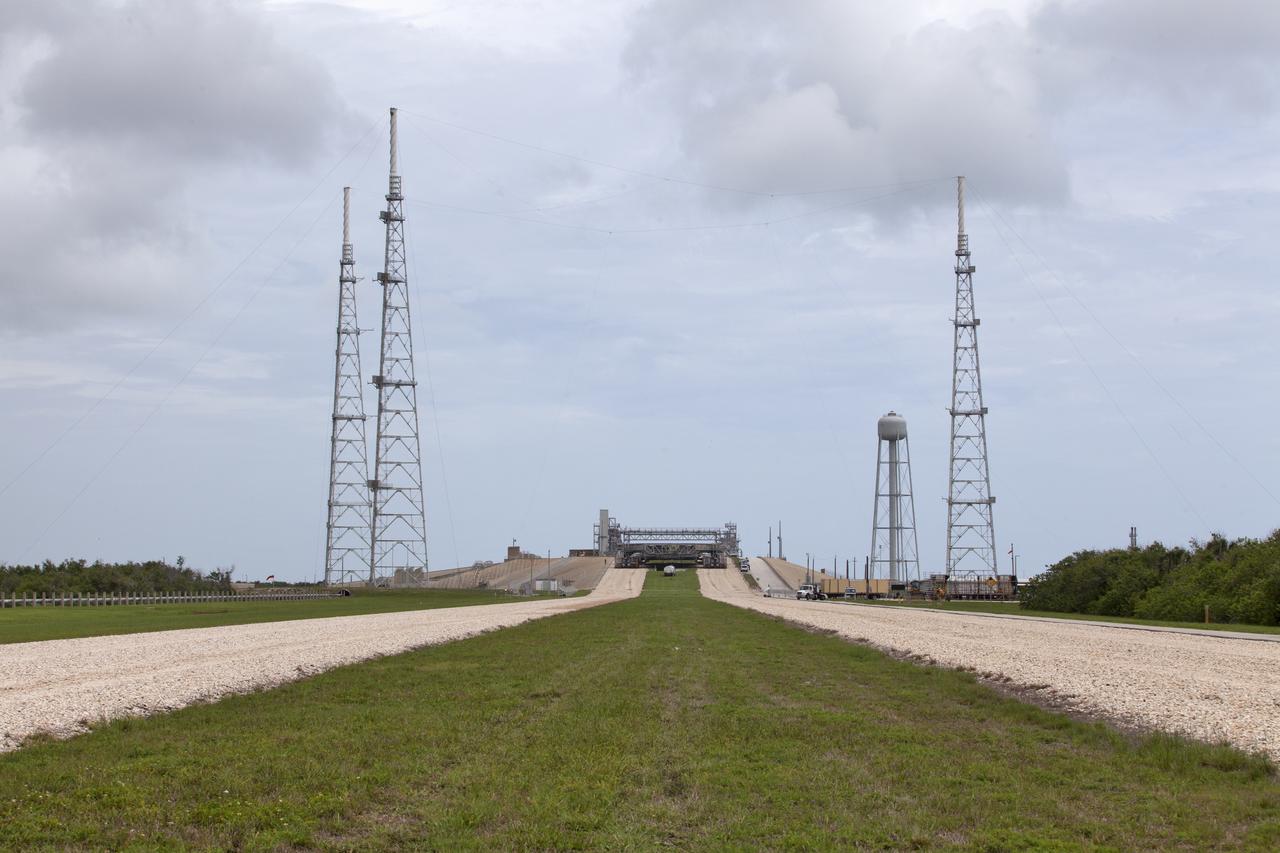
Crawler-transporter 2 (CT-2) moves slowly up the ramp to the surface of Launch Pad 39B for a fit check on May 22, 2018, at NASA's Kennedy Space Center in Florida. The test drive to the pad confirms that all of the recent modifications to CT-2 and Pad 39B are operational to support the launch of the agency's Space Launch System rocket and Orion spacecraft on Exploration Mission-1. Exploration Ground Systems managed the modifications and upgrades to CT-2 and Pad 39B to prepare for EM-1 and deep space exploration missions.
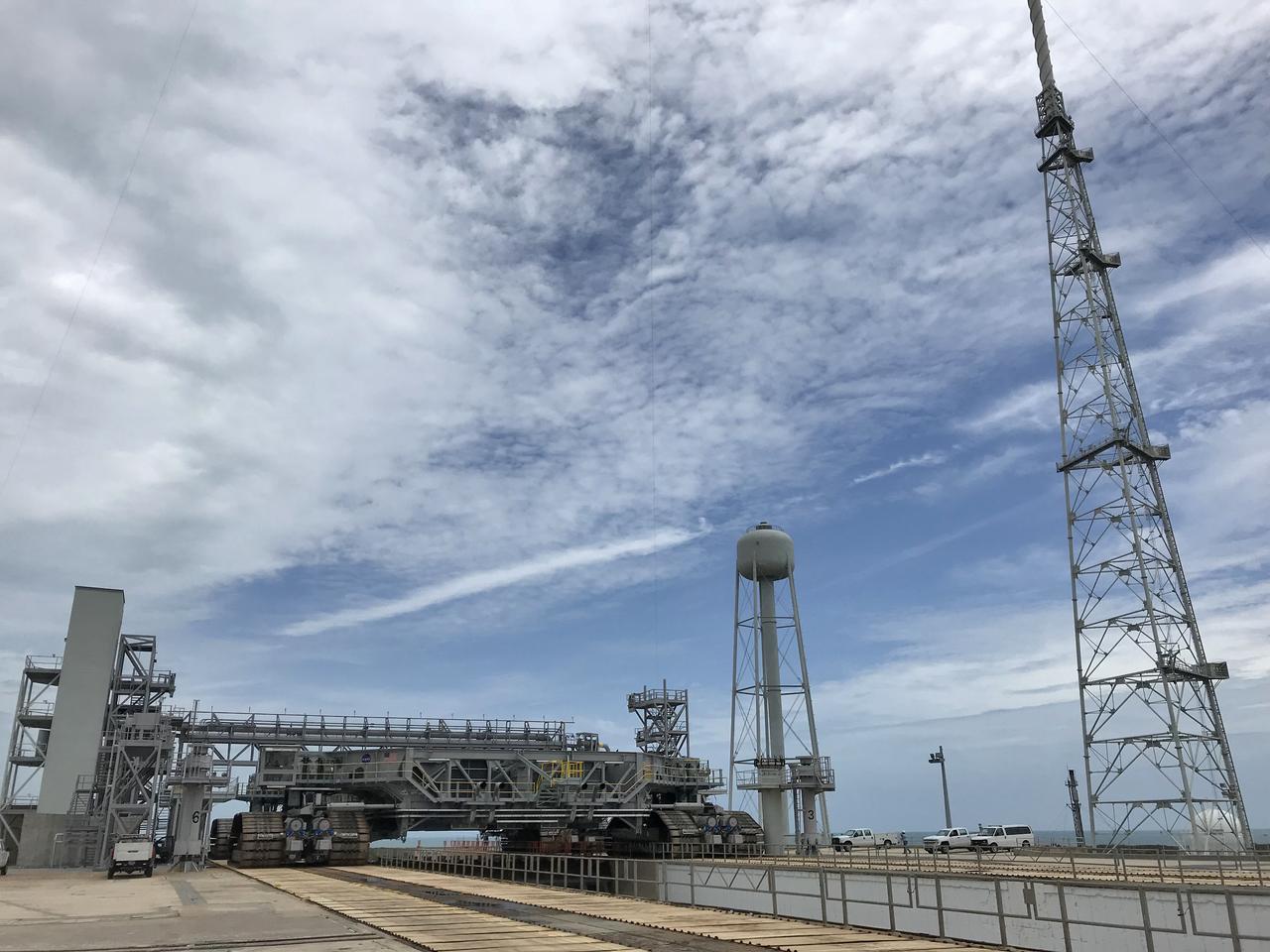
Crawler-transporter 2 (CT-2) arrives on the surface of Launch Pad 39B for a fit check on May 22, 2018, at NASA's Kennedy Space Center in Florida. The test drive to the pad confirms that all of the recent modifications to CT-2 and Pad 39B are operational to support the launch of the agency's Space Launch System rocket and Orion spacecraft on Exploration Mission-1. In view, at right, is one of three lightning protection towers positioned around Pad 39B. Exploration Ground Systems managed the modifications and upgrades to CT-2 and Pad 39B to prepare for EM-1 and deep space exploration missions.
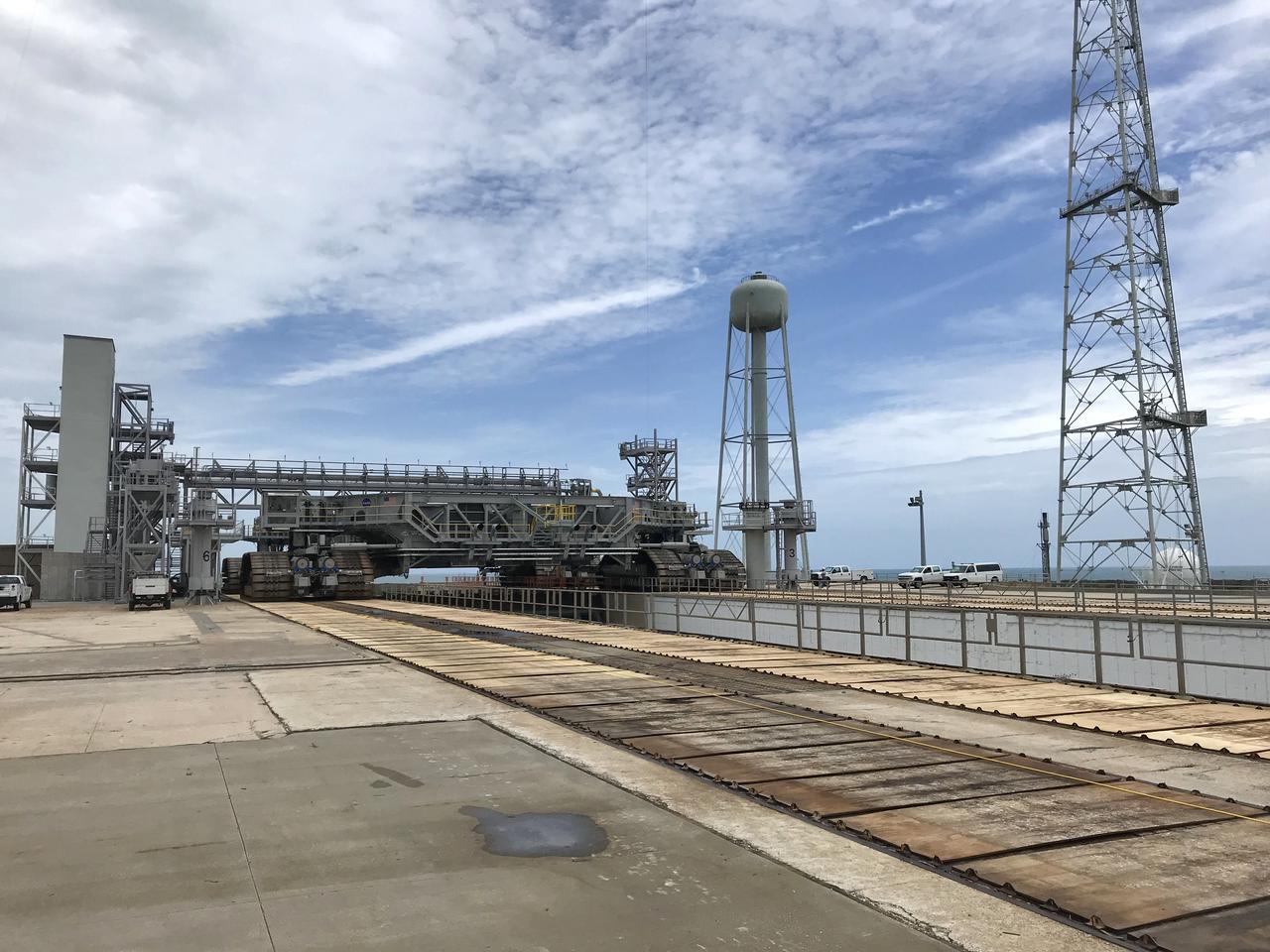
Crawler-transporter 2 (CT-2) arrives on the surface of Launch Pad 39B for a fit check on May 22, 2018, at NASA's Kennedy Space Center in Florida. The test drive to the pad confirms that all of the recent modifications to CT-2 and Pad 39B are operational to support the launch of the agency's Space Launch System rocket and Orion spacecraft on Exploration Mission-1. In view, at right, is one of three lightning protection towers positioned around Pad 39B. Exploration Ground Systems managed the modifications and upgrades to CT-2 and Pad 39B to prepare for EM-1 and deep space exploration missions.
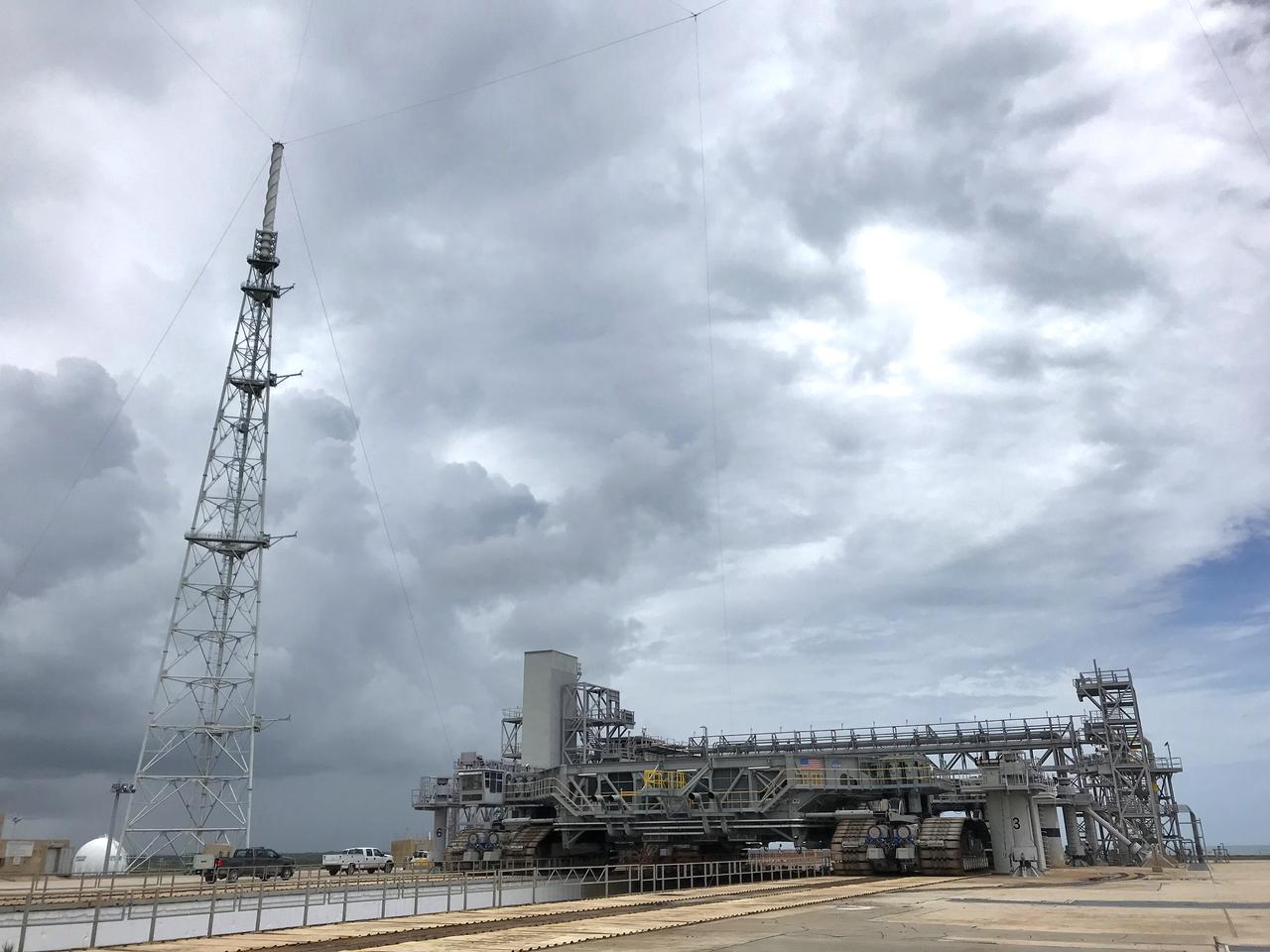
Crawler-transporter 2 (CT-2) arrives on the surface of Launch Pad 39B for a fit check on May 22, 2018, at NASA's Kennedy Space Center in Florida. The test drive to the pad confirms that all of the recent modifications to CT-2 and Pad 39B are operational to support the launch of the agency's Space Launch System rocket and Orion spacecraft on Exploration Mission-1. In view, at left, is one of three lightning protection towers positioned around Pad 39B. Exploration Ground Systems managed the modifications and upgrades to CT-2 and Pad 39B to prepare for EM-1 and deep space exploration missions.
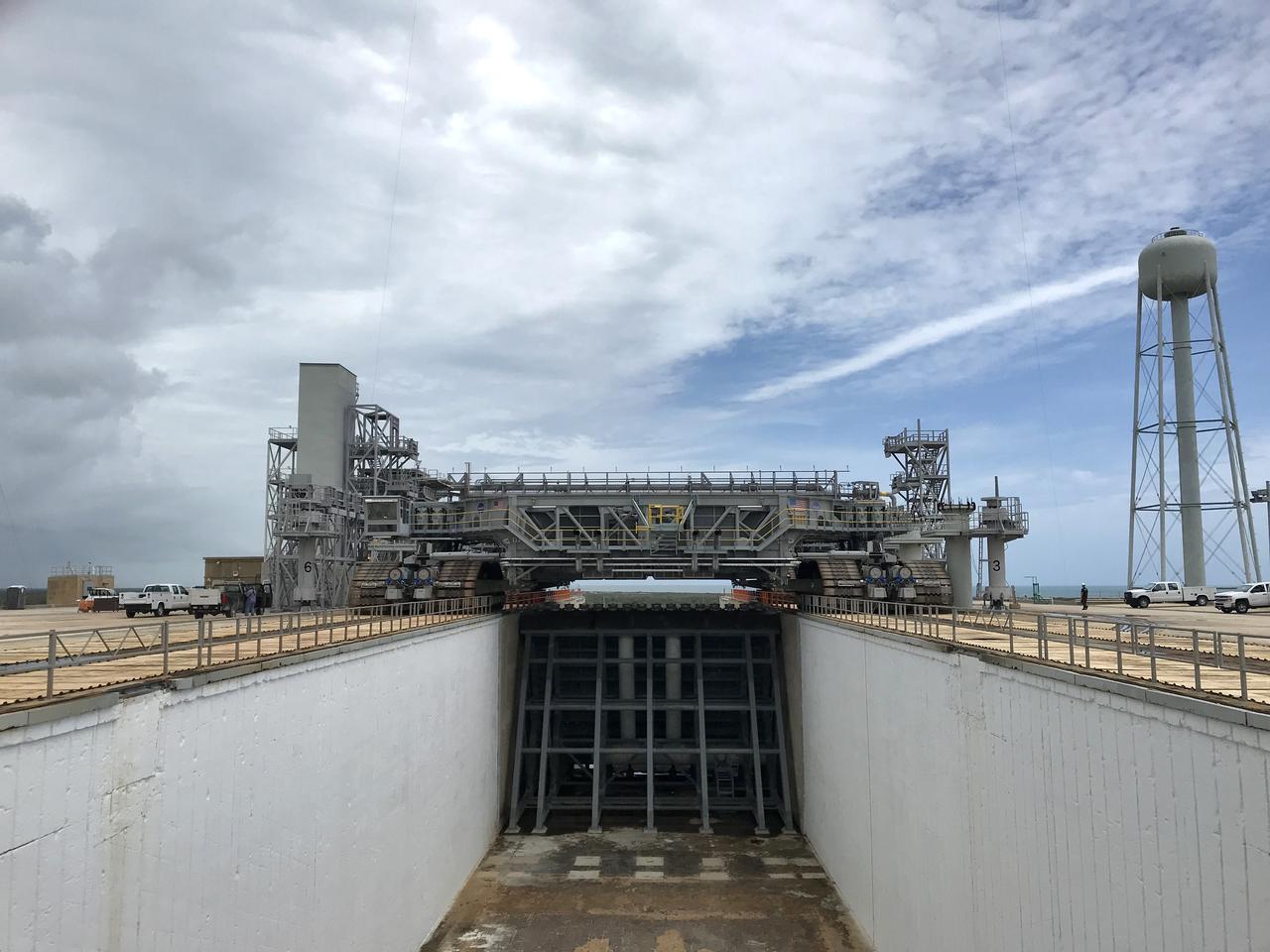
Crawler-transporter 2 (CT-2) arrives on the surface of Launch Pad 39B for a fit check on May 22, 2018, at NASA's Kennedy Space Center in Florida. The test drive to the pad confirms that all of the recent modifications to CT-2 and Pad 39B are operational to support the launch of the agency's Space Launch System rocket and Orion spacecraft on Exploration Mission-1. In view is the south side of the flame trench and the south side of the recently installed new main flame deflector. Exploration Ground Systems managed the modifications and upgrades to CT-2 and Pad 39B to prepare for EM-1 and deep space exploration missions.
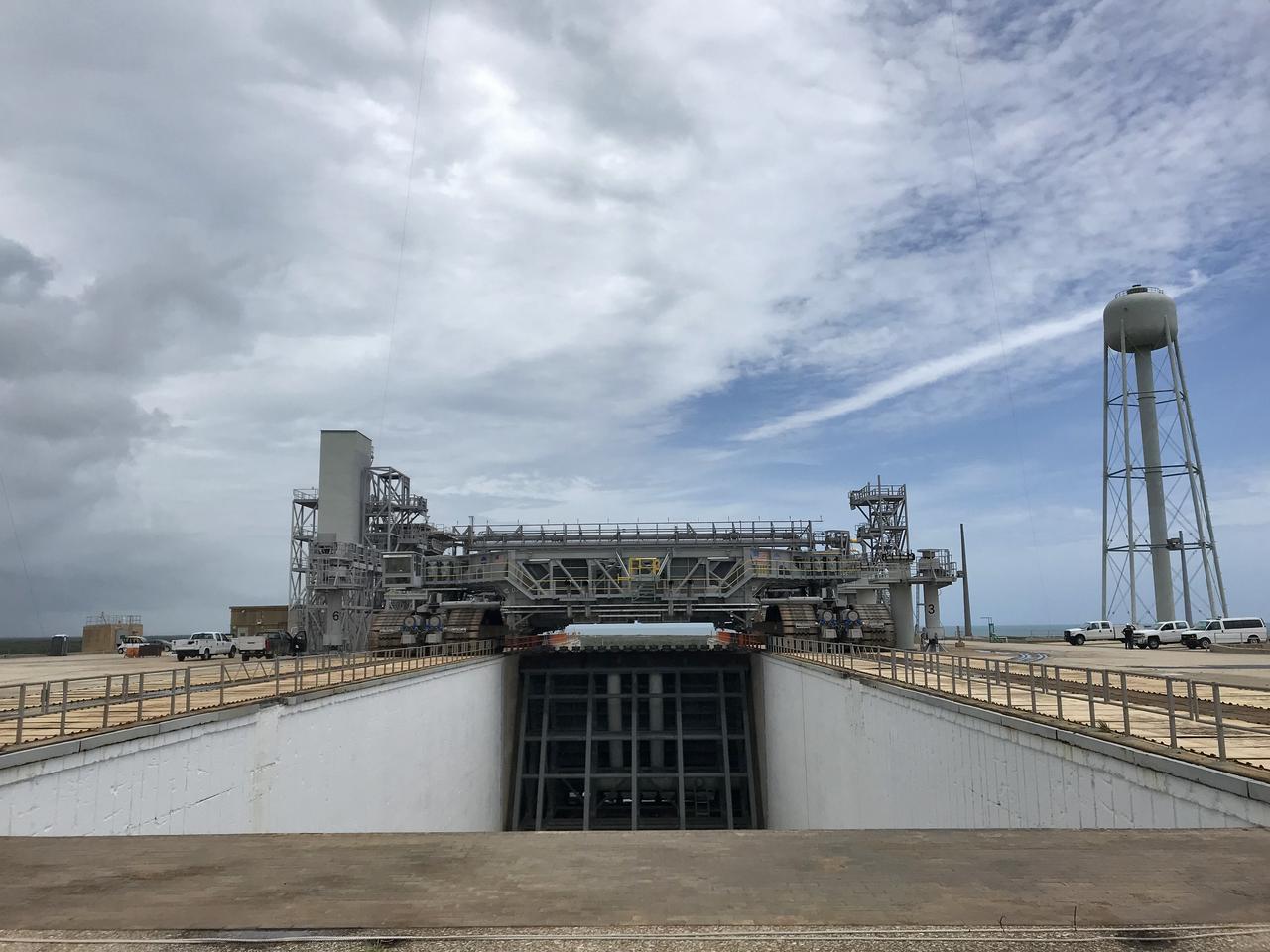
Crawler-transporter 2 (CT-2) arrives on the surface of Launch Pad 39B for a fit check on May 22, 2018, at NASA's Kennedy Space Center in Florida. The test drive to the pad confirms that all of the recent modifications to CT-2 and Pad 39B are operational to support the launch of the agency's Space Launch System rocket and Orion spacecraft on Exploration Mission-1. In view is the south side of the flame trench and the south side of the recently installed new main flame deflector. Exploration Ground Systems managed the modifications and upgrades to CT-2 and Pad 39B to prepare for EM-1 and deep space exploration missions.
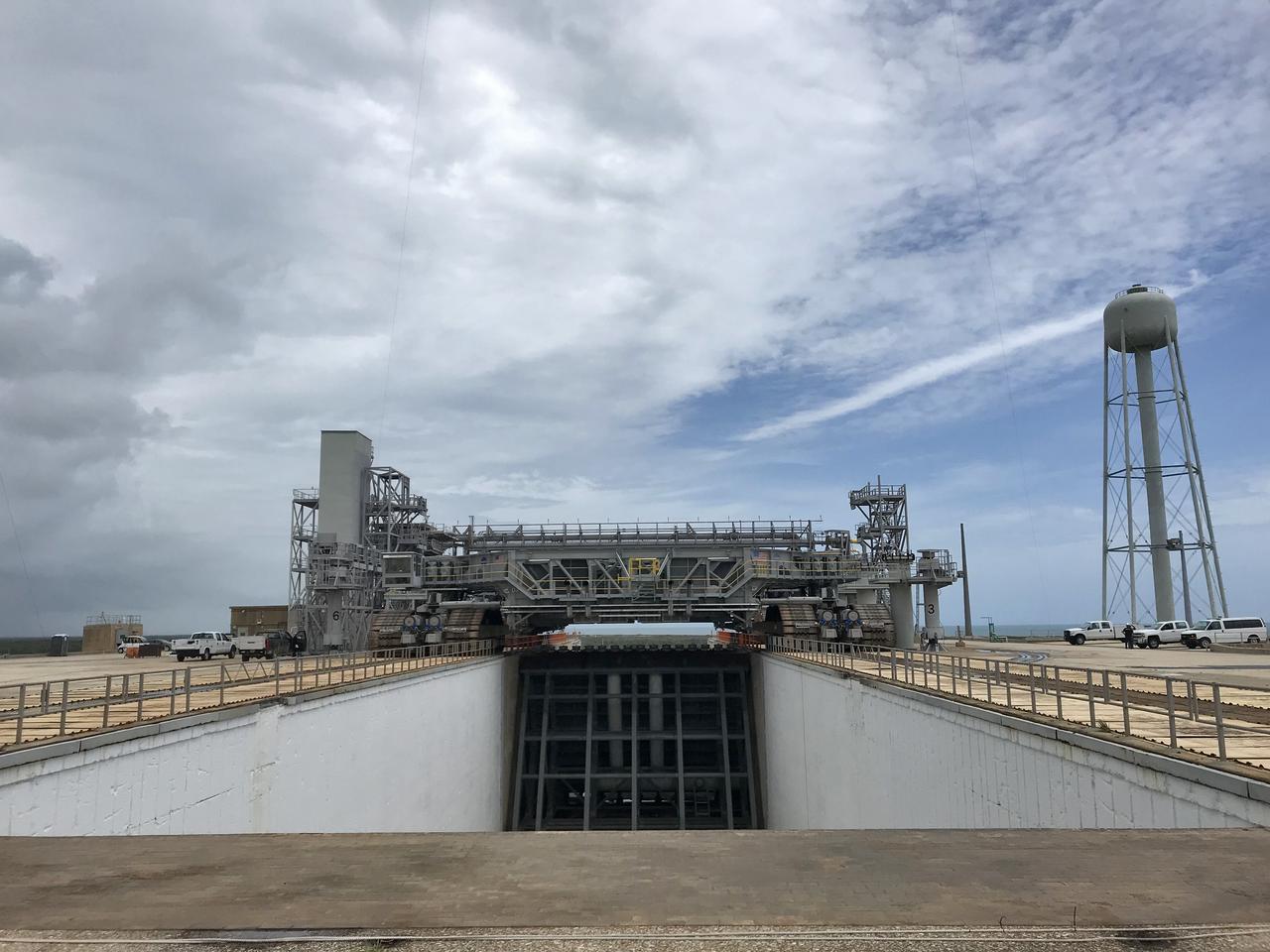
Crawler-transporter 2 (CT-2) arrives on the surface of Launch Pad 39B for a fit check on May 22, 2018, at NASA's Kennedy Space Center in Florida. The test drive to the pad confirms that all of the recent modifications to CT-2 and Pad 39B are operational to support the launch of the agency's Space Launch System rocket and Orion spacecraft on Exploration Mission-1. In view is the south side of the flame trench and the south side of the recently installed new main flame deflector. Exploration Ground Systems managed the modifications and upgrades to CT-2 and Pad 39B to prepare for EM-1 and deep space exploration missions.
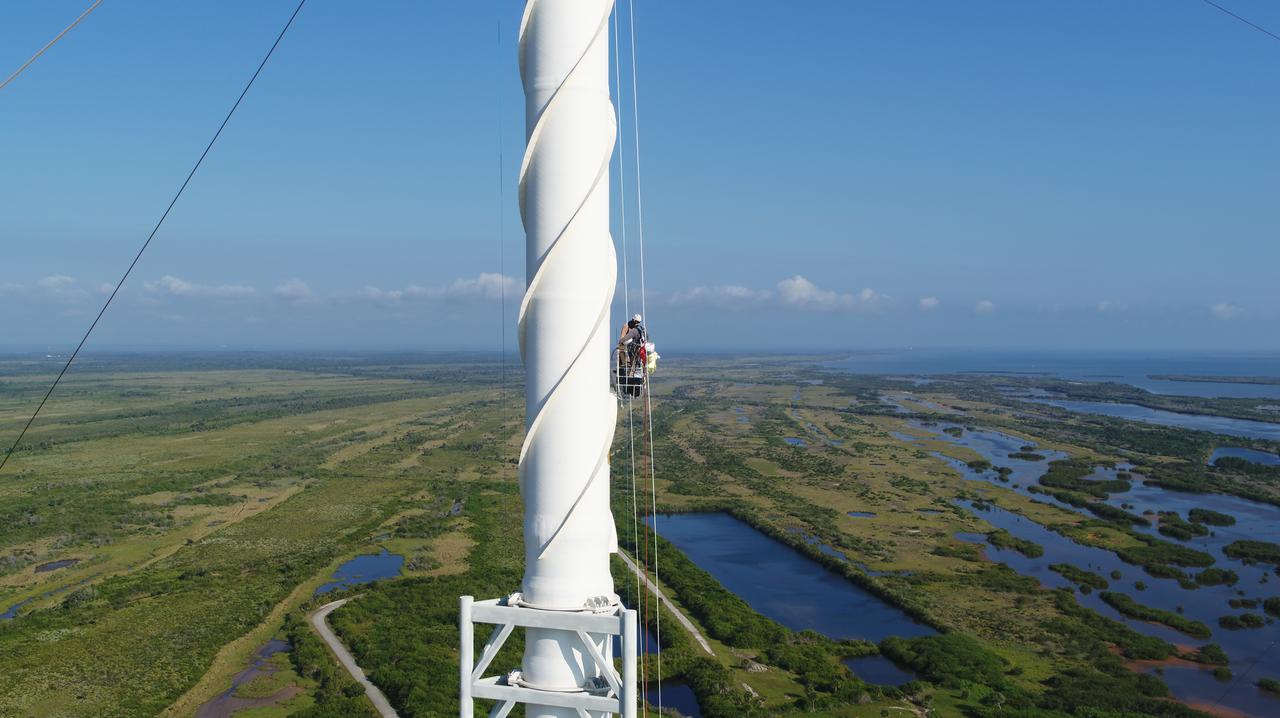
Workers prepare the surface of one of the three lightning protection system towers for painting at Exploration Ground Systems’ Launch Complex 39B at NASA’s Kennedy Space Center in Florida on May 30, 2019. The old paint was removed by the most recent hurricane. Pad 39B is the site of future launches of the agency’s Space Launch System rocket with the Orion spacecraft on Artemis missions. The 600-foot-tall lightning towers will help prevent lightning strikes at the pad during prelaunch and launch activities.
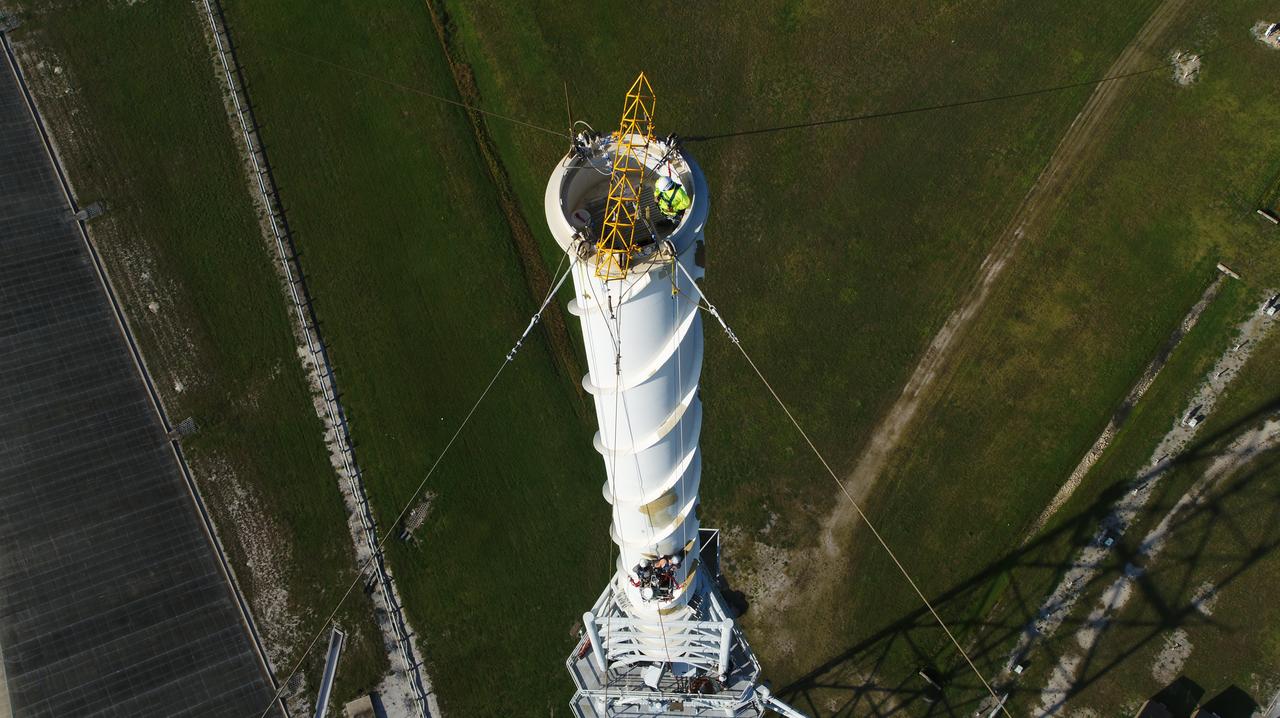
An aerial view shows workers preparing the surface of one of the three lightning protection system towers for painting at Exploration Ground Systems’ Launch Complex 39B at NASA’s Kennedy Space Center in Florida on May 30, 2019. The old paint was removed by the most recent hurricane. Pad 39B is the site of future launches of the agency’s Space Launch System rocket with the Orion spacecraft on Artemis missions. The 600-foot-tall lightning towers will help prevent lightning strikes at the pad during prelaunch and launch activities.
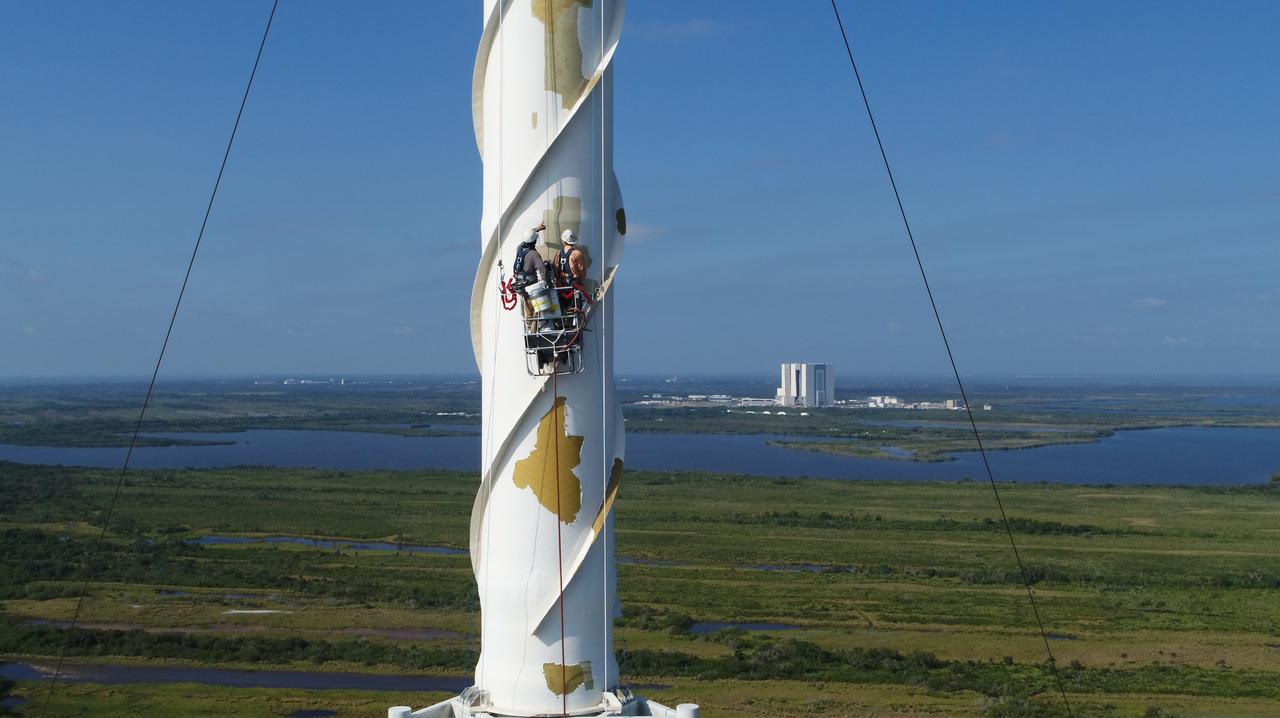
An aerial view shows workers preparing the surface of one of the three lightning protection system towers for painting at Exploration Ground Systems’ Launch Complex 39B at NASA’s Kennedy Space Center in Florida on May 30, 2019. The old paint was removed by the most recent hurricane. Pad 39B is the site of future launches of the agency’s Space Launch System rocket with the Orion spacecraft on Artemis missions. The 600-foot-tall lightning towers will help prevent lightning strikes at the pad during prelaunch and launch activities.
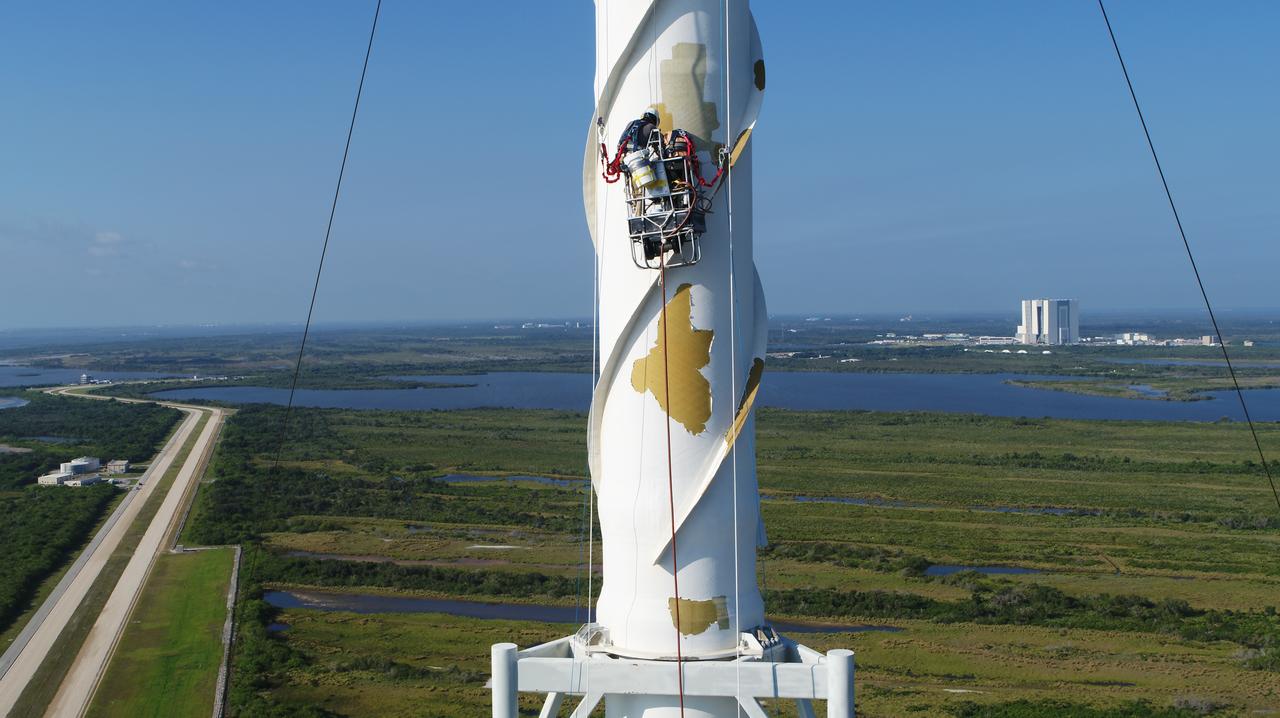
Workers prepare the surface of one of the three lightning protection system towers for painting at Exploration Ground Systems’ Launch Complex 39B at NASA’s Kennedy Space Center in Florida on May 30, 2019. The old paint was removed by the most recent hurricane. Pad 39B is the site of future launches of the agency’s Space Launch System rocket with the Orion spacecraft on Artemis missions. The 600-foot-tall lightning towers will help prevent lightning strikes at the pad during prelaunch and launch activities.
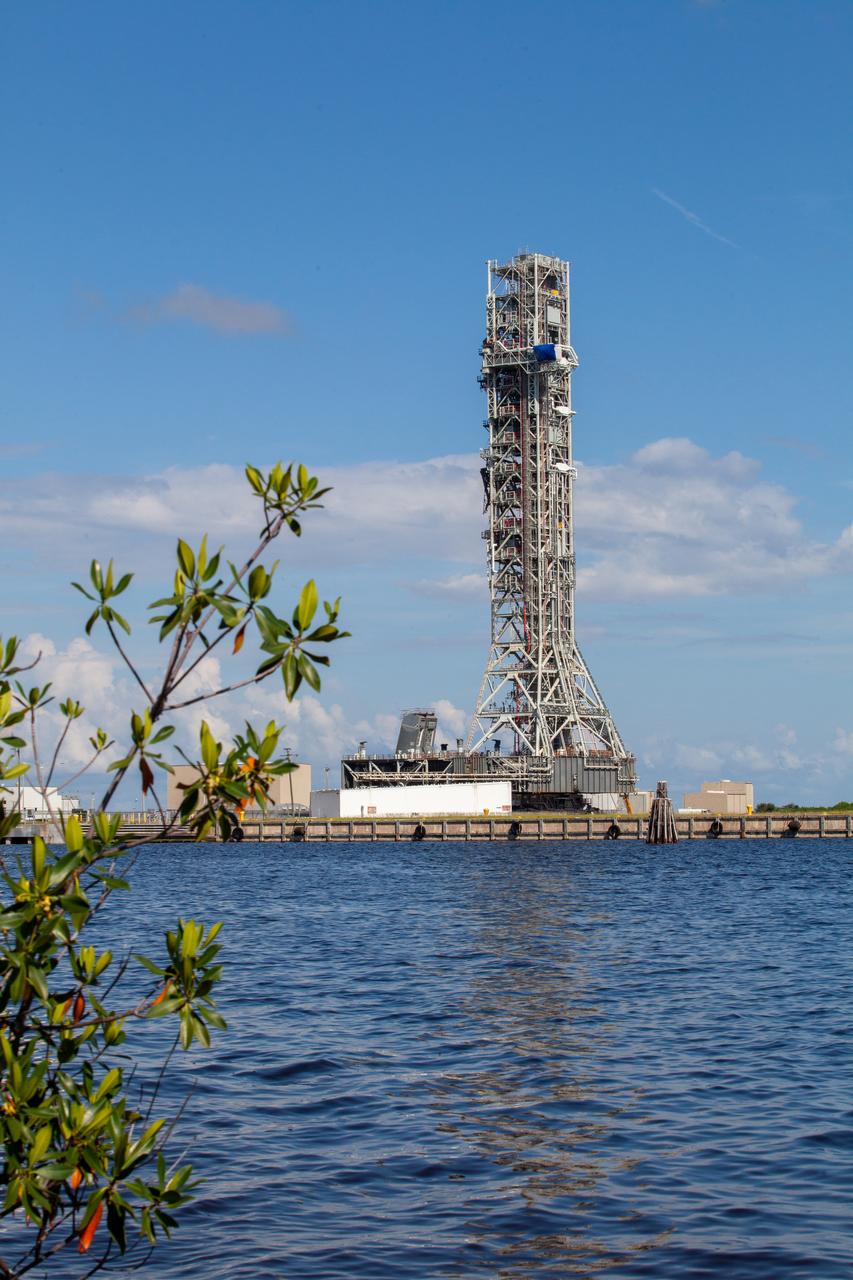
The mobile launcher for NASA’s Artemis missions rolls toward Launch Pad 39B at Kennedy Space Center in Florida on Sept. 10, 2019, after spending a week and a half inside due to the approach of Hurricane Dorian. The nearly 400-foot-tall structure was moved from Launch Pad 39B to the Vehicle Assembly Building for safekeeping on Aug. 30. The storm passed about 70 miles east of the spaceport during the overnight hours Tuesday, Sept. 3, and Wednesday, Sept. 4. NASA’s Exploration Ground Systems is moving the mobile launcher back to the launch pad, where teams will complete testing and checkout on the launcher in the coming weeks for the Artemis I mission.
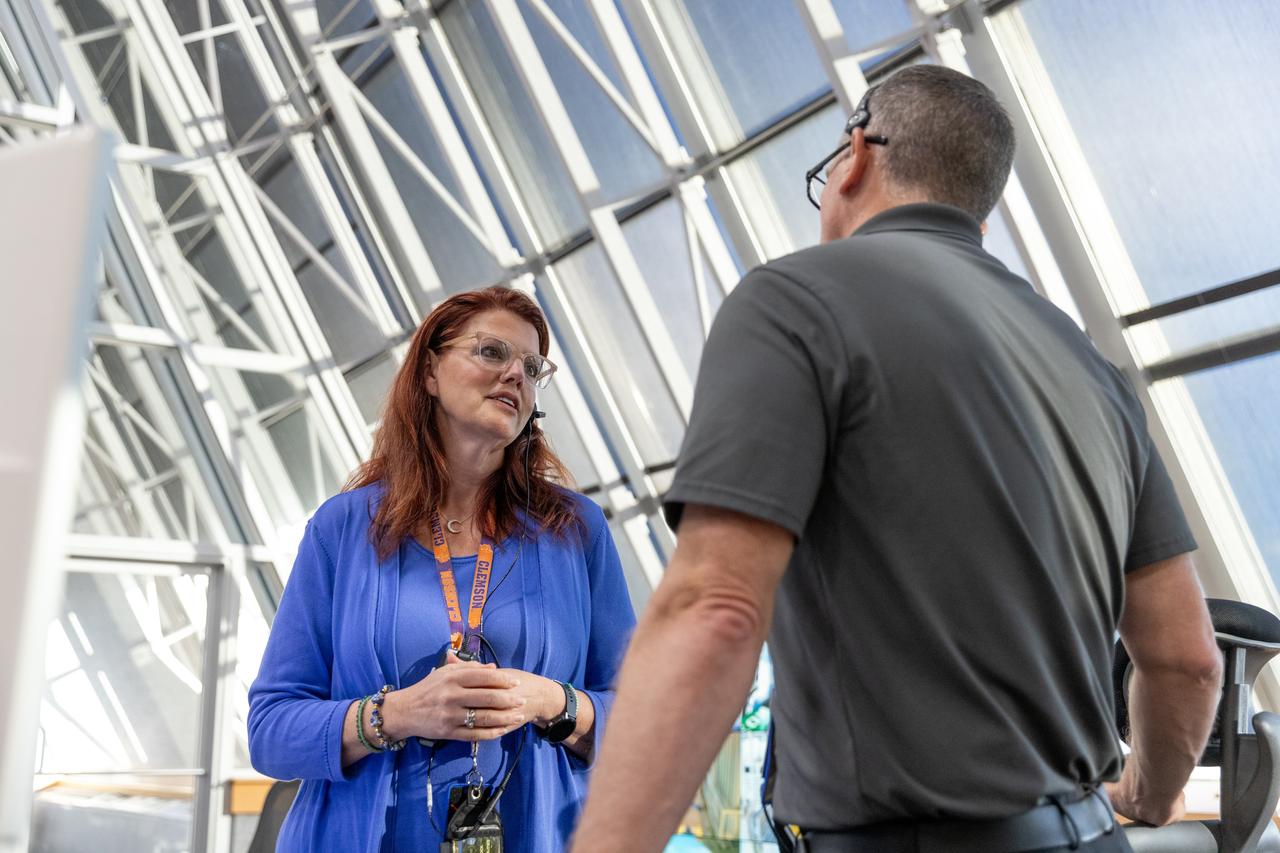
Charlie Blackwell-Thompson, Artemis launch director, Exploration Ground Systems at NASA’s Kennedy Space Center in Florida, participates in an emergency escape or egress demonstration simulation for the Artemis II mission inside Firing Room 1 in the Launch Control Center at NASA’s Kennedy on Monday, Aug. 12, 2024. Other members of the closeout crew, pad rescue team, and the Exploration Ground Systems Program performed emergency egress demonstrations during a series of integrated system verification tests at Launch Pad 39B in preparation for the Artemis II launch.
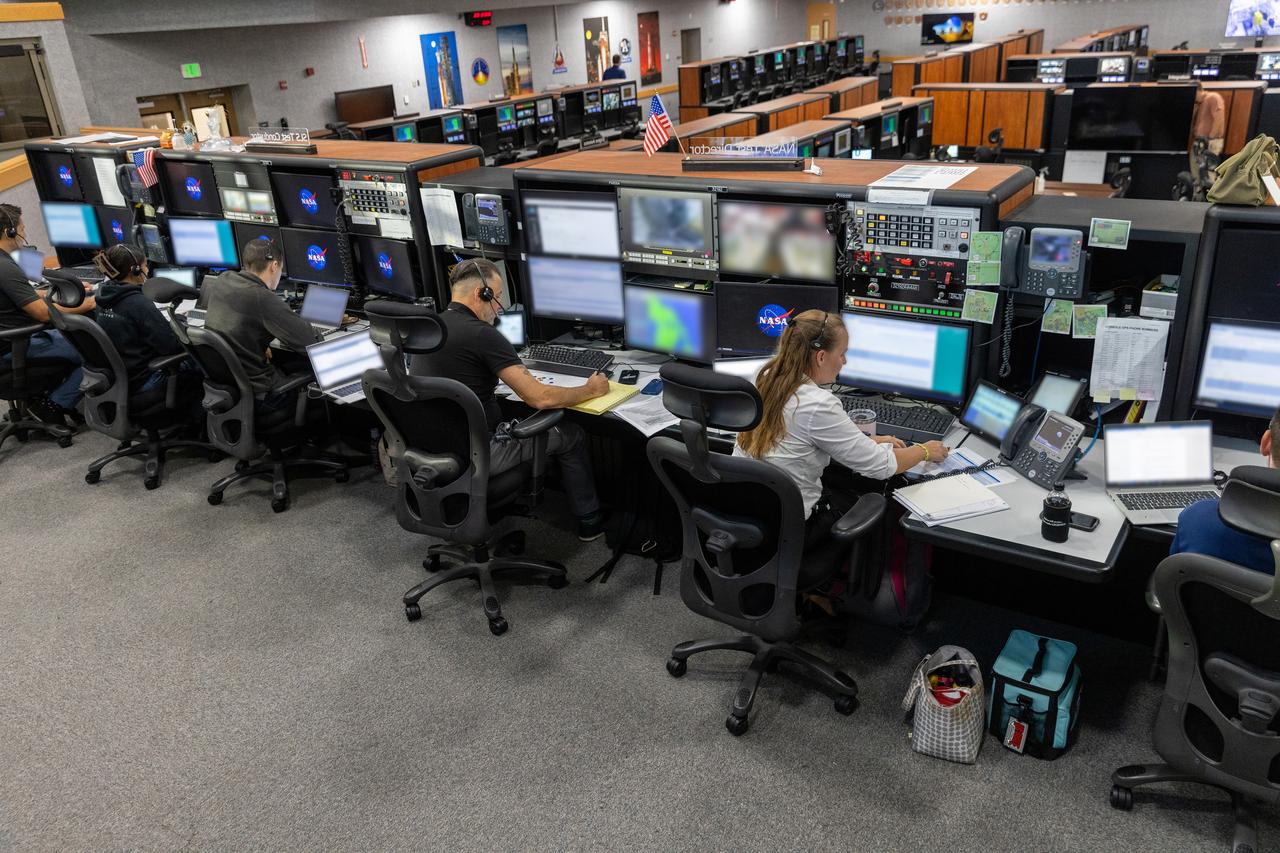
Members of the Artemis II launch team, including personnel with NASA’s Exploration Ground Systems participate in an emergency escape or egress demonstration simulation for the Artemis II mission inside Firing Room 1 in the Launch Control Center at NASA’s Kennedy on Monday, Aug. 12, 2024. Other members of the closeout crew, pad rescue team, and the Exploration Ground Systems Program performed emergency egress demonstrations during a series of integrated system verification tests at Launch Pad 39B in preparation for the Artemis II launch.
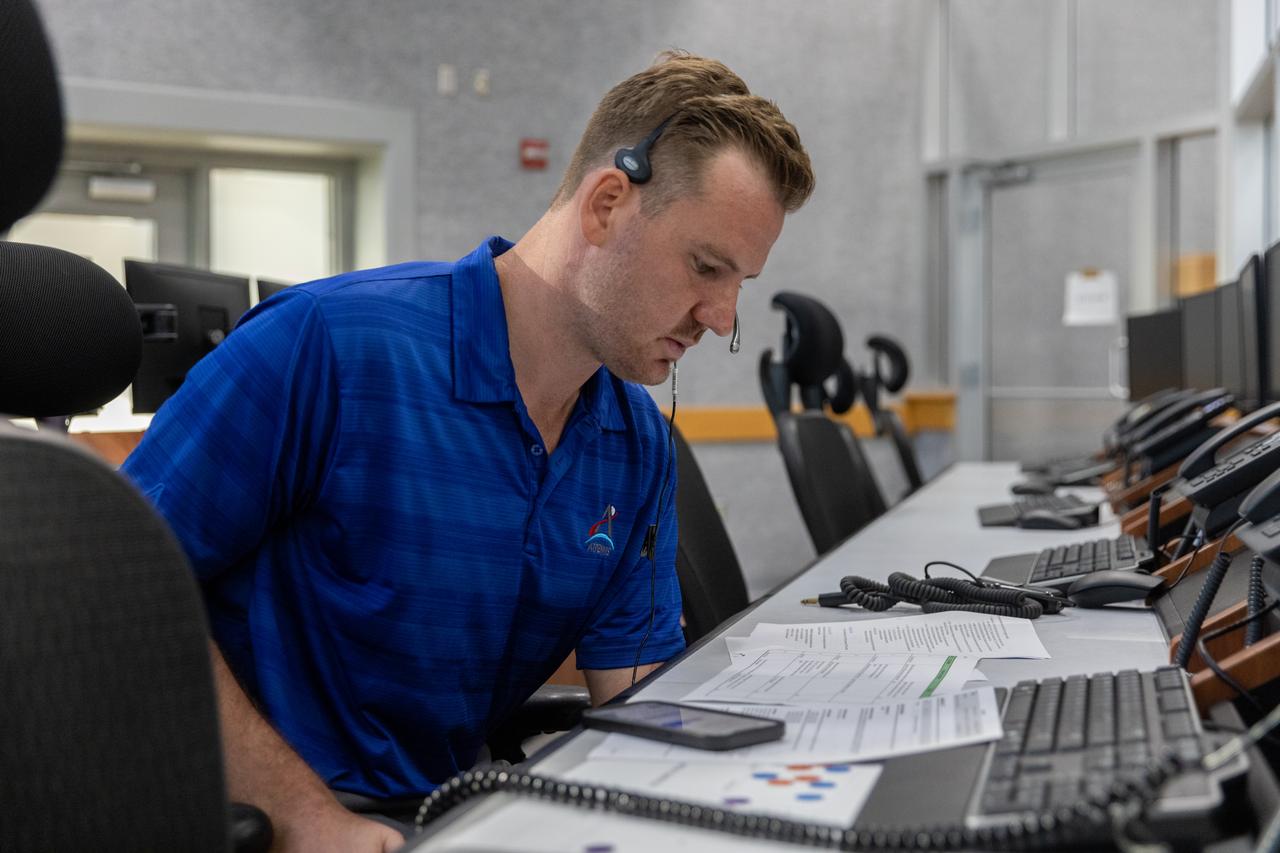
Joseph Pavicic, operations project engineer, Exploration Ground Systems at NASA’s Kennedy Space Center in Florida, participates in an emergency escape or egress demonstration simulation for the Artemis II mission inside Firing Room 1 in the Launch Control Center at NASA’s Kennedy on Monday, Aug. 12, 2024. Other members of the closeout crew, pad rescue team, and the Exploration Ground Systems Program performed emergency egress demonstrations during a series of integrated system verification tests at Launch Pad 39B in preparation for the Artemis II launch.
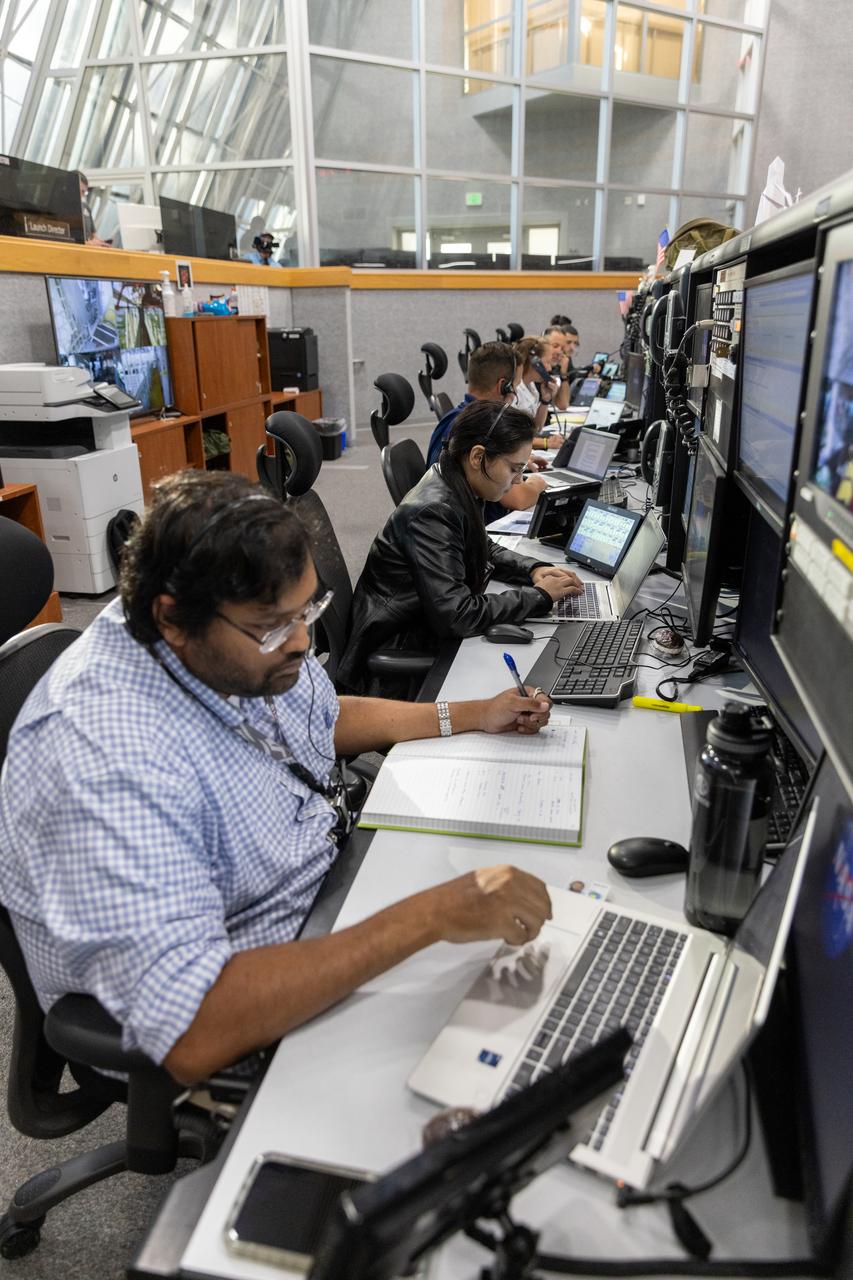
Members of the Artemis II launch team, including personnel with NASA’s Exploration Ground Systems participate in an emergency escape or egress demonstration simulation for the Artemis II mission inside Firing Room 1 in the Launch Control Center at NASA’s Kennedy on Monday, Aug. 12, 2024. Other members of the closeout crew, pad rescue team, and the Exploration Ground Systems Program performed emergency egress demonstrations during a series of integrated system verification tests at Launch Pad 39B in preparation for the Artemis II launch.
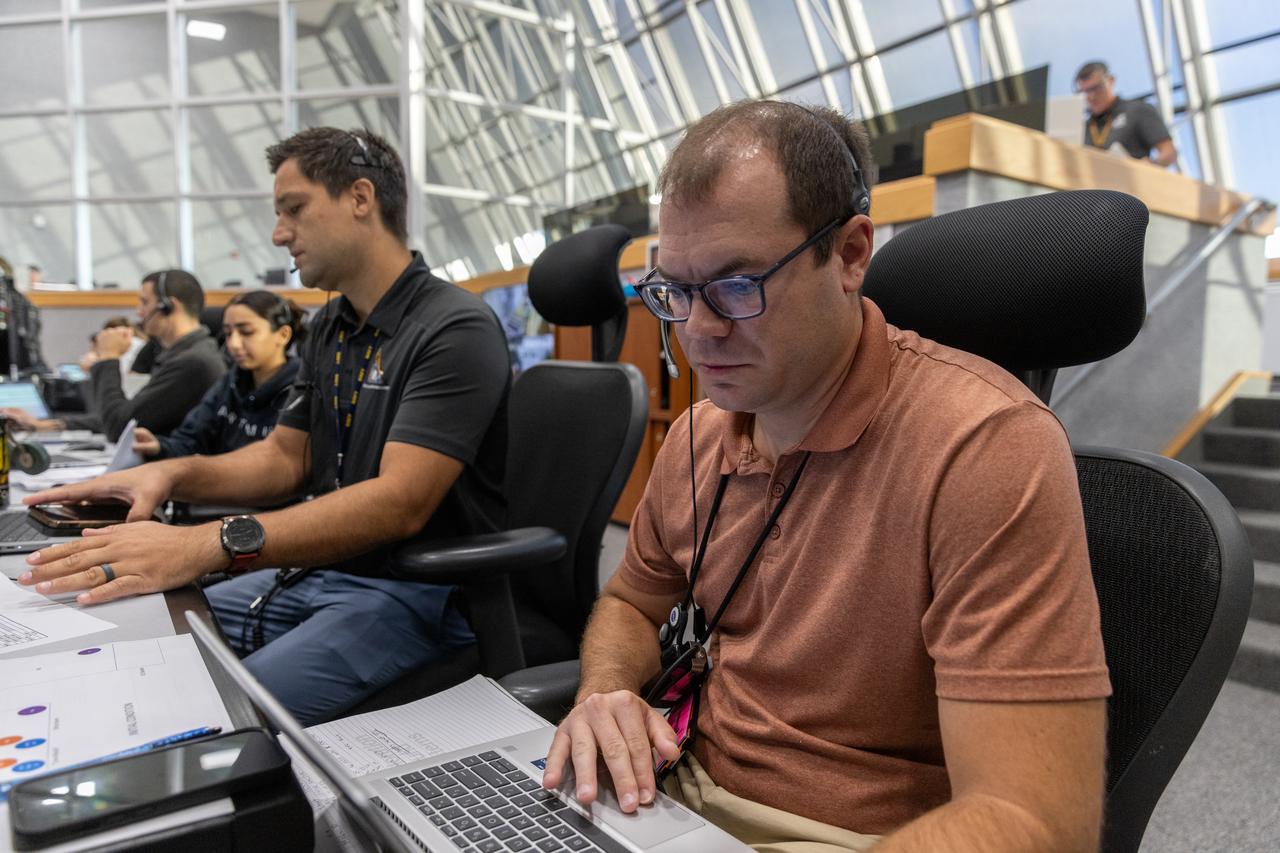
Jeremy Graeber, Artemis assistant launch director, Exploration Ground Systems at NASA’s Kennedy Space Center in Florida, participates in an emergency escape or egress demonstration simulation for the Artemis II mission inside Firing Room 1 in the Launch Control Center at NASA’s Kennedy on Monday, Aug. 12, 2024. Other members of the closeout crew, pad rescue team, and the Exploration Ground Systems Program performed emergency egress demonstrations during a series of integrated system verification tests at Launch Pad 39B in preparation for the Artemis II launch.

Charlie Blackwell-Thompson, Artemis launch director, Exploration Ground Systems at NASA’s Kennedy Space Center in Florida, participates in an emergency escape or egress demonstration simulation for the Artemis II mission inside Firing Room 1 in the Launch Control Center at NASA’s Kennedy on Monday, Aug. 12, 2024. Other members of the closeout crew, pad rescue team, and the Exploration Ground Systems Program performed emergency egress demonstrations during a series of integrated system verification tests at Launch Pad 39B in preparation for the Artemis II launch.
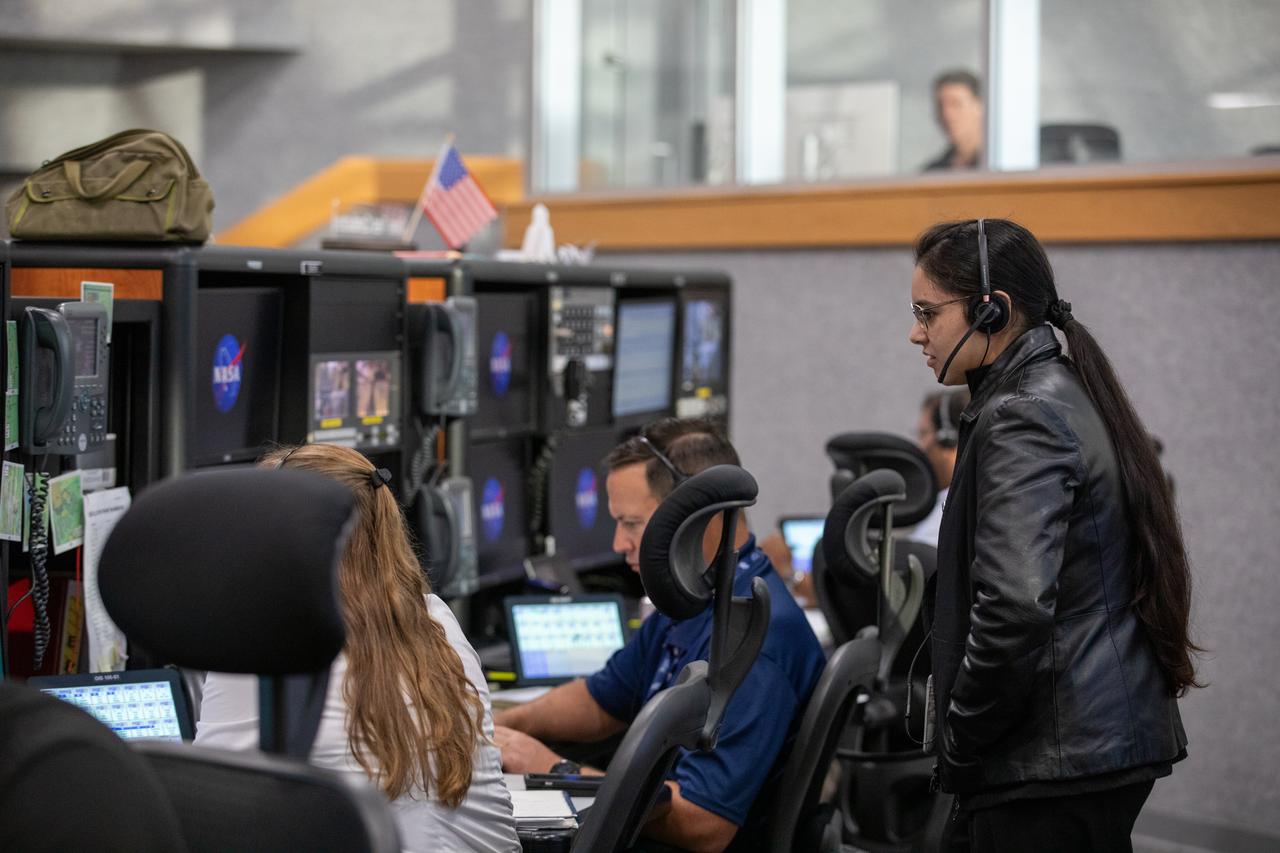
Members of the Artemis II launch team, including personnel with NASA’s Exploration Ground Systems participate in an emergency escape or egress demonstration simulation for the Artemis II mission inside Firing Room 1 in the Launch Control Center at NASA’s Kennedy on Monday, Aug. 12, 2024. Other members of the closeout crew, pad rescue team, and the Exploration Ground Systems Program performed emergency egress demonstrations during a series of integrated system verification tests at Launch Pad 39B in preparation for the Artemis II launch.
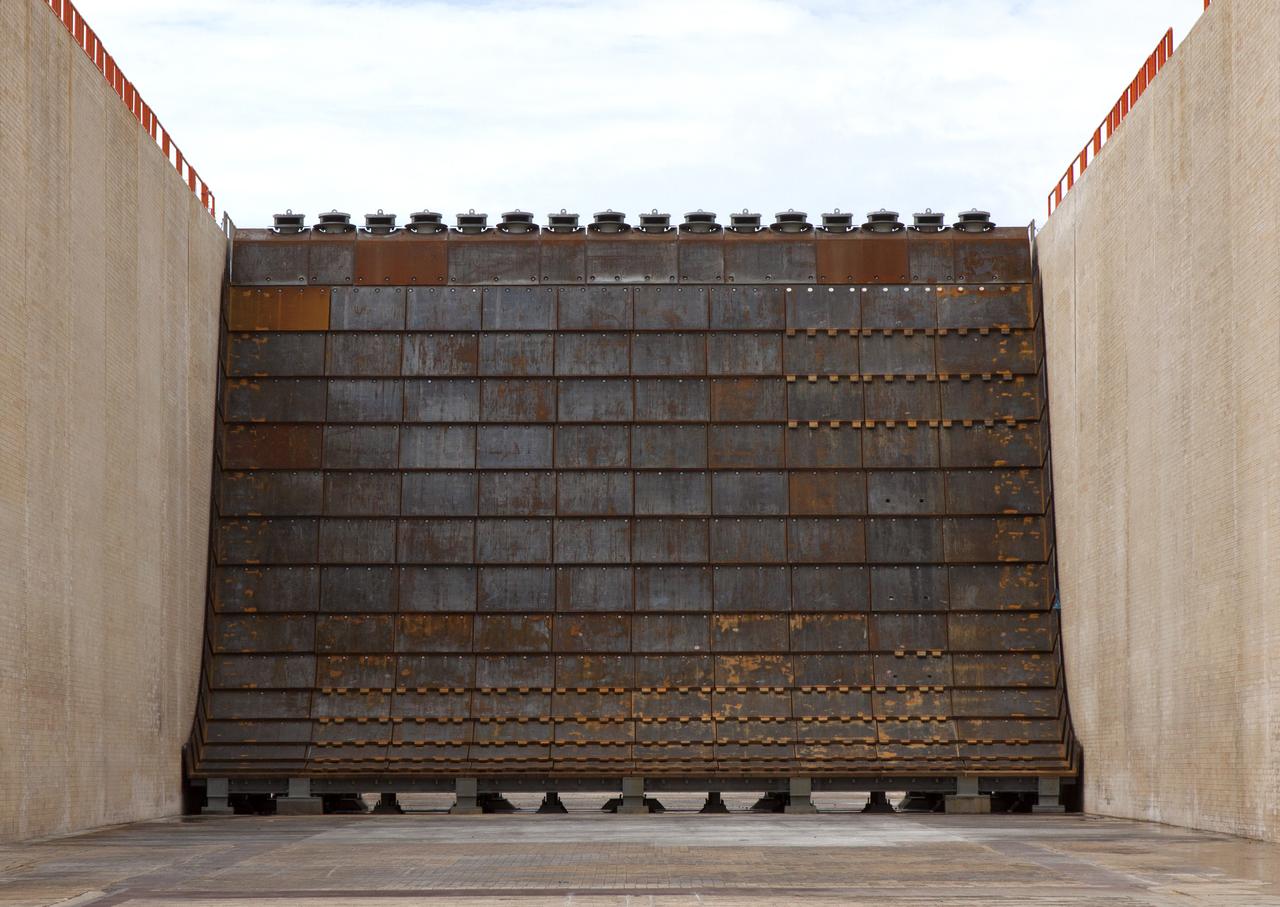
Construction is complete on the main flame deflector in the flame trench at Launch Complex 39B at NASA's Kennedy Space Center in Florida. The flame deflector will safely deflect the plume exhaust from NASA's Space Launch System rocket during launch. It will divert the rocket's exhaust, pressure and intense heat to the north at liftoff. The Exploration Ground Systems Program at Kennedy is refurbishing the pad to support the launch of the SLS rocket and Orion on Exploration Mission-1, and helping to transform the space center into a multi-user spaceport.
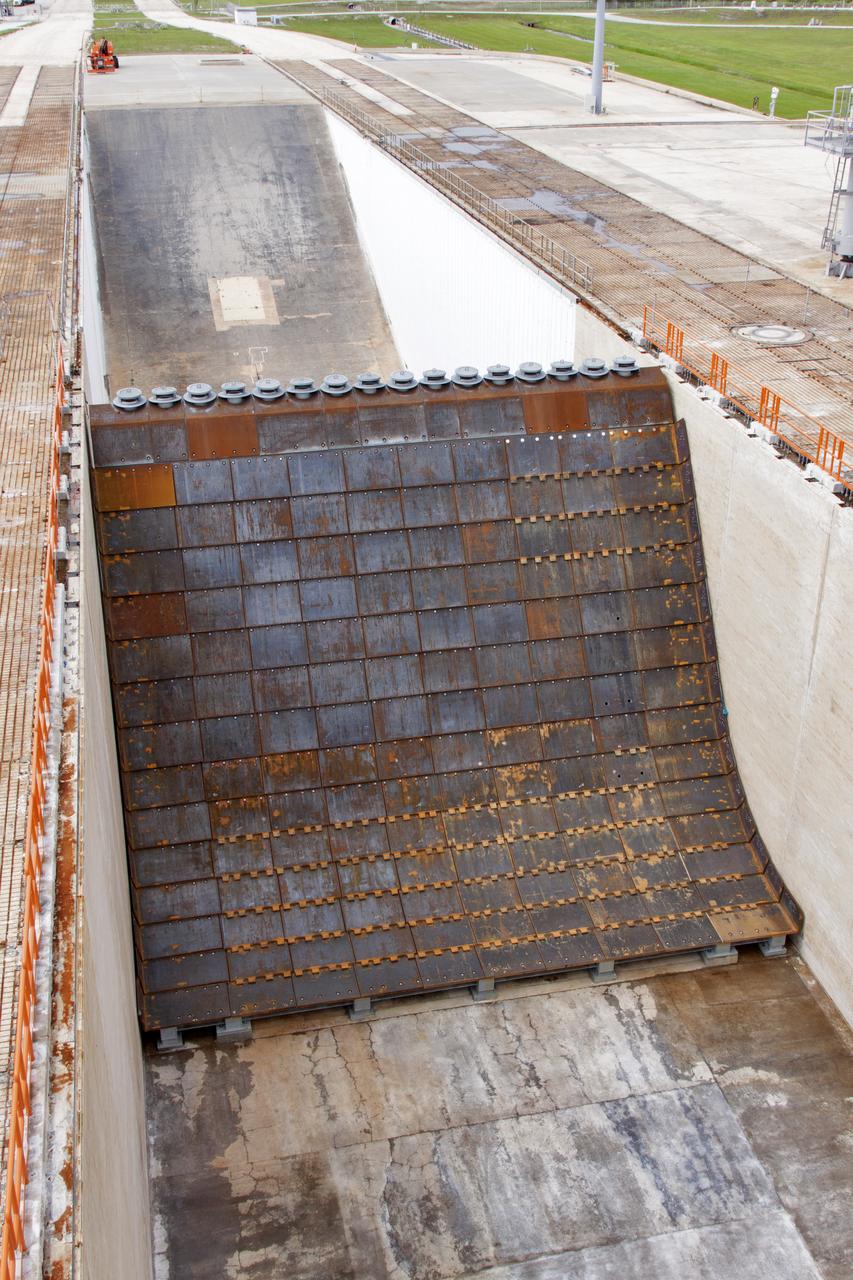
Construction is complete on the main flame deflector in the flame trench at Launch Complex 39B at NASA's Kennedy Space Center in Florida. The flame deflector will safely deflect the plume exhaust from NASA's Space Launch System rocket during launch. It will divert the rocket's exhaust, pressure and intense heat to the north at liftoff. The Exploration Ground Systems Program at Kennedy is refurbishing the pad to support the launch of the SLS rocket and Orion on Exploration Mission-1, and helping to transform the space center into a multi-user spaceport.
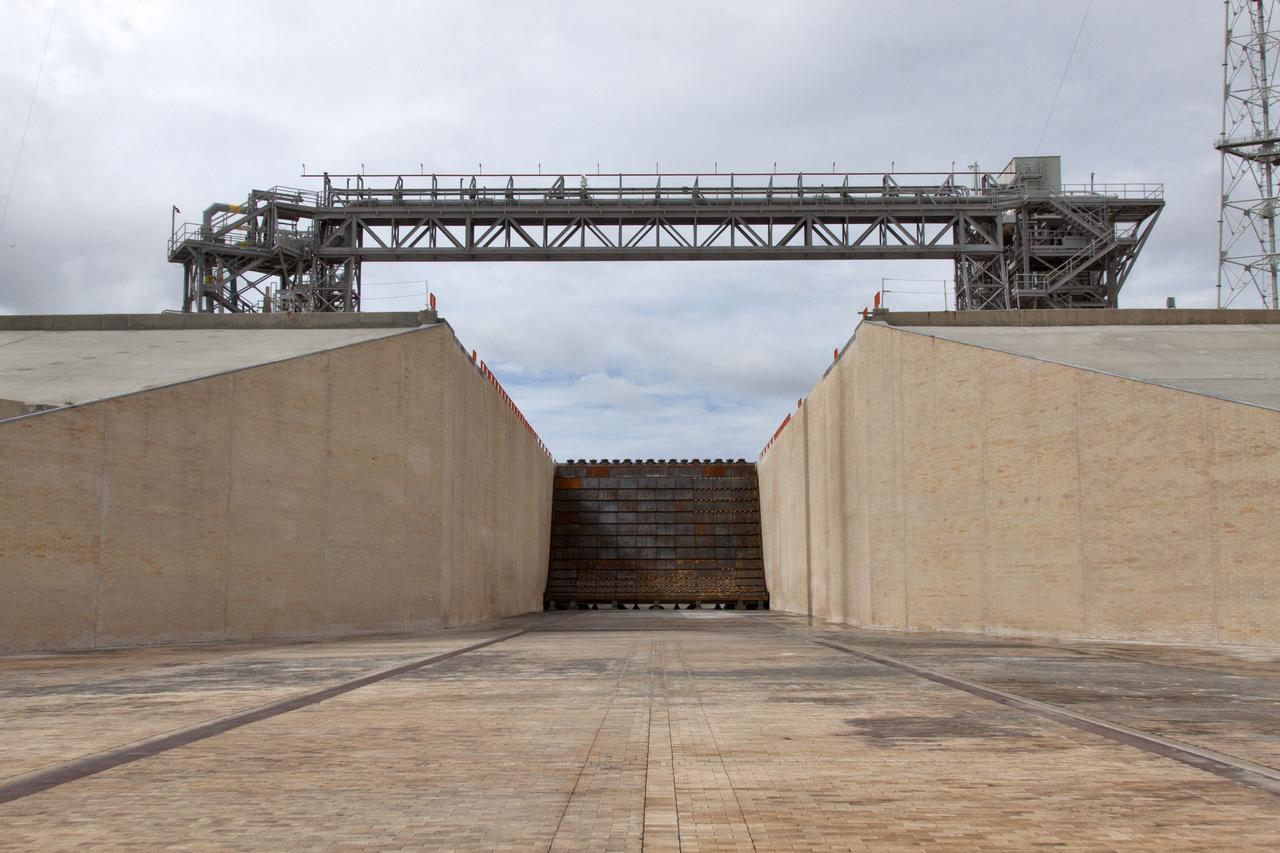
Construction is complete on the main flame deflector in the flame trench at Launch Complex 39B at NASA's Kennedy Space Center in Florida. The flame deflector will safely deflect the plume exhaust from NASA's Space Launch System rocket during launch. It will divert the rocket's exhaust, pressure and intense heat to the north at liftoff. The Exploration Ground Systems Program at Kennedy is refurbishing the pad to support the launch of the SLS rocket and Orion on Exploration Mission-1, and helping to transform the space center into a multi-user spaceport.
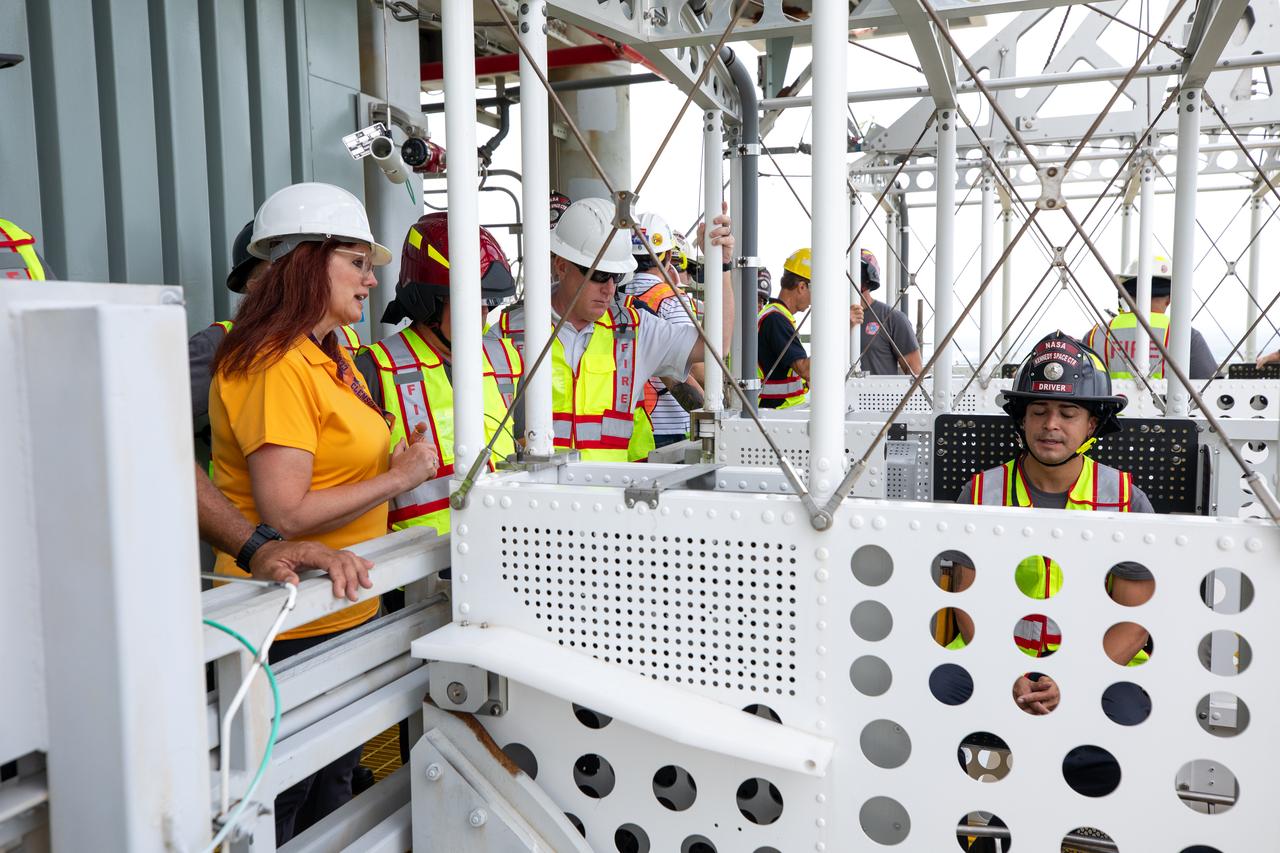
Teams with NASA’s Exploration Ground Systems Program, as well as NASA’s pad rescue team, conduct training inside the Artemis emergency egress baskets at Launch Pad 39B as part of the Artemis emergency egress demonstration training at the agency’s Kennedy Space Center in Florida on Thursday, Aug. 8, 2024. The baskets, similar to gondolas on ski lifts, are used in the case of a pad abort emergency to enable astronauts and other pad personnel a way to quickly escape away from the mobile launcher to the base of the pad and where waiting emergency transport vehicles will then drive them away.
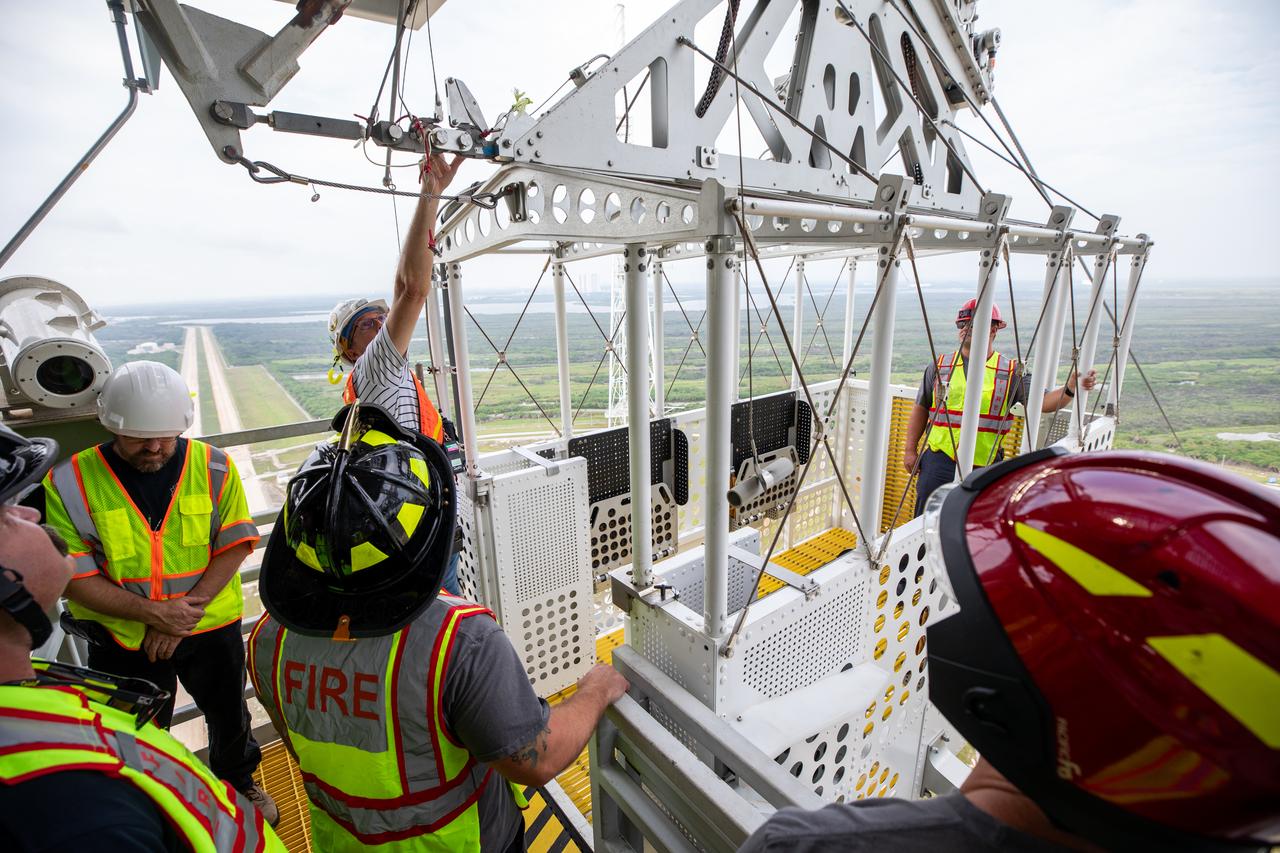
Teams with NASA’s Exploration Ground Systems Program, as well as NASA’s pad rescue team, conduct training inside the Artemis emergency egress baskets at Launch Pad 39B as part of the Artemis emergency egress demonstration training at the agency’s Kennedy Space Center in Florida on Thursday, Aug. 8, 2024. The baskets, similar to gondolas on ski lifts, are used in the case of a pad abort emergency to enable astronauts and other pad personnel a way to quickly escape away from the mobile launcher to the base of the pad and where waiting emergency transport vehicles will then drive them away.

Teams with NASA’s Exploration Ground Systems Program, as well as NASA’s pad rescue team, conduct training inside the Artemis emergency egress baskets at Launch Pad 39B as part of the Artemis emergency egress demonstration training at the agency’s Kennedy Space Center in Florida on Thursday, Aug. 8, 2024. The baskets, similar to gondolas on ski lifts, are used in the case of a pad abort emergency to enable astronauts and other pad personnel a way to quickly escape away from the mobile launcher to the base of the pad and where waiting emergency transport vehicles will then drive them away.
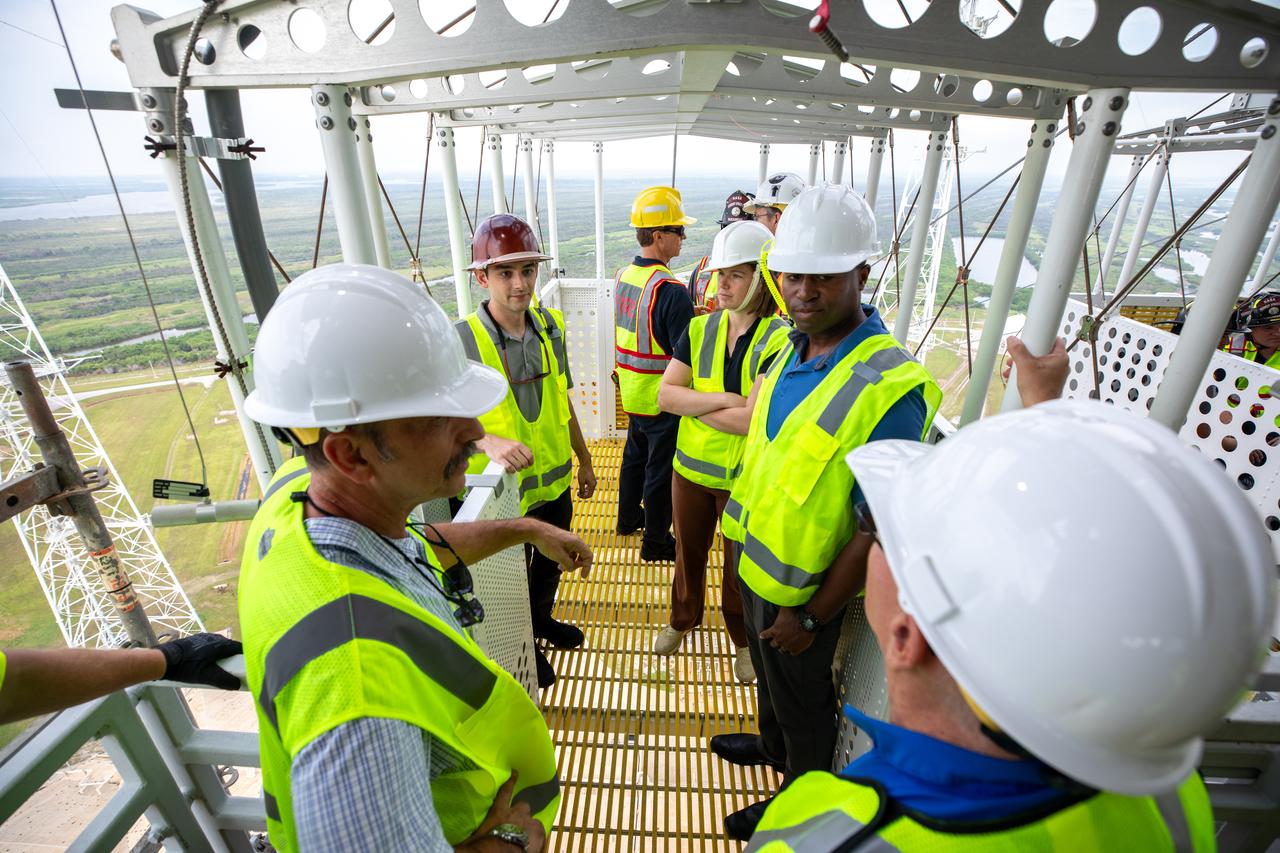
Teams with NASA’s Exploration Ground Systems Program, as well as NASA’s pad rescue team, conduct training inside the Artemis emergency egress baskets at Launch Pad 39B as part of the Artemis emergency egress demonstration training at the agency’s Kennedy Space Center in Florida on Thursday, Aug. 8, 2024. The baskets, similar to gondolas on ski lifts, are used in the case of a pad abort emergency to enable astronauts and other pad personnel a way to quickly escape away from the mobile launcher to the base of the pad and where waiting emergency transport vehicles will then drive them away.
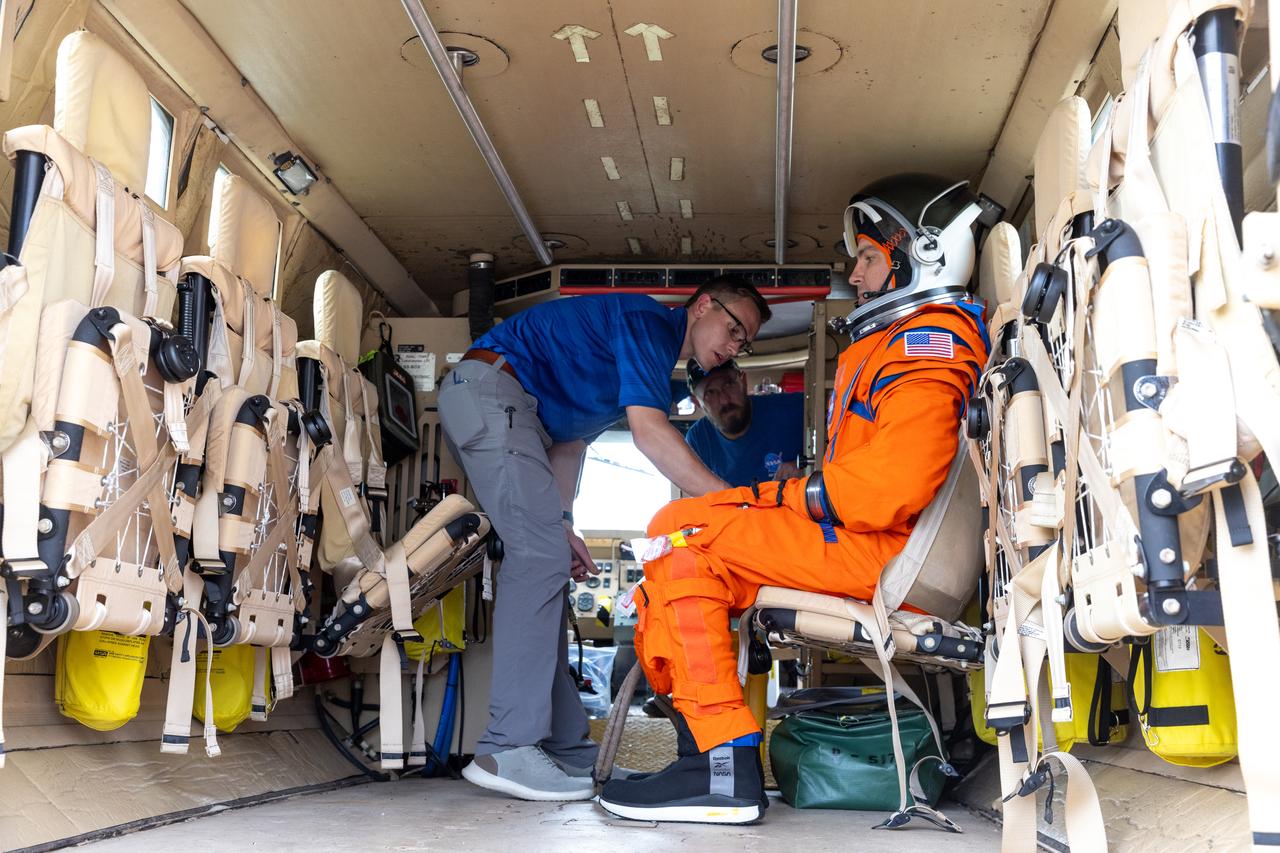
Teams with NASA’s Exploration Ground Systems Program, including an astronaut stand-in, participate in a series of integrated system verification and validation tests inside a mine-resistant ambush protected vehicle, or MRAP, at Launch Pad 39B at the agency’s Kennedy Space Center in Florida on Thursday, Aug. 8, 2024. Originally designed for military applications, the 45,000-pound MRAP offers a mobile bunker for astronauts and ground crews in the unlikely event they have to get away from the launch pad quickly in an emergency.
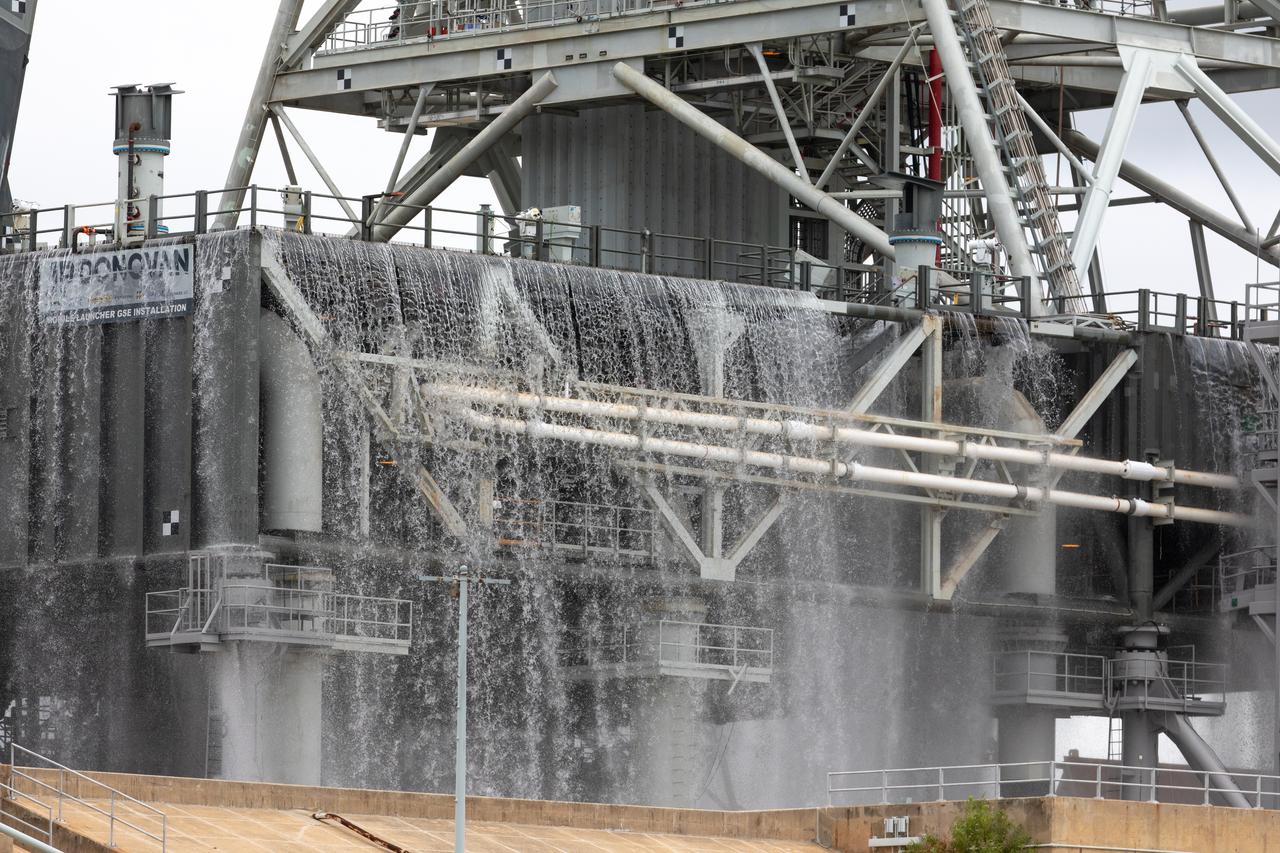
A flow test of the Ignition Overpressure Protection and Sound Suppression water deluge system is underway on the mobile launcher at Launch Pad 39B at NASA's Kennedy Space Center in Florida, on July 25, 2019. The testing is part of a series of tests that Exploration Ground System is doing to verify the system is ready for the new Space Launch System rocket. Modifications were made to the pad after a previous wet flow test, increasing the performance of the system. During the launch of Artemis 1 and subsequent missions, this water deluge system will release about 450,000 gallons of water across the mobile launcher and Flame Deflector to reduce the extreme heat and energy generated by the rocket during ignition and liftoff.
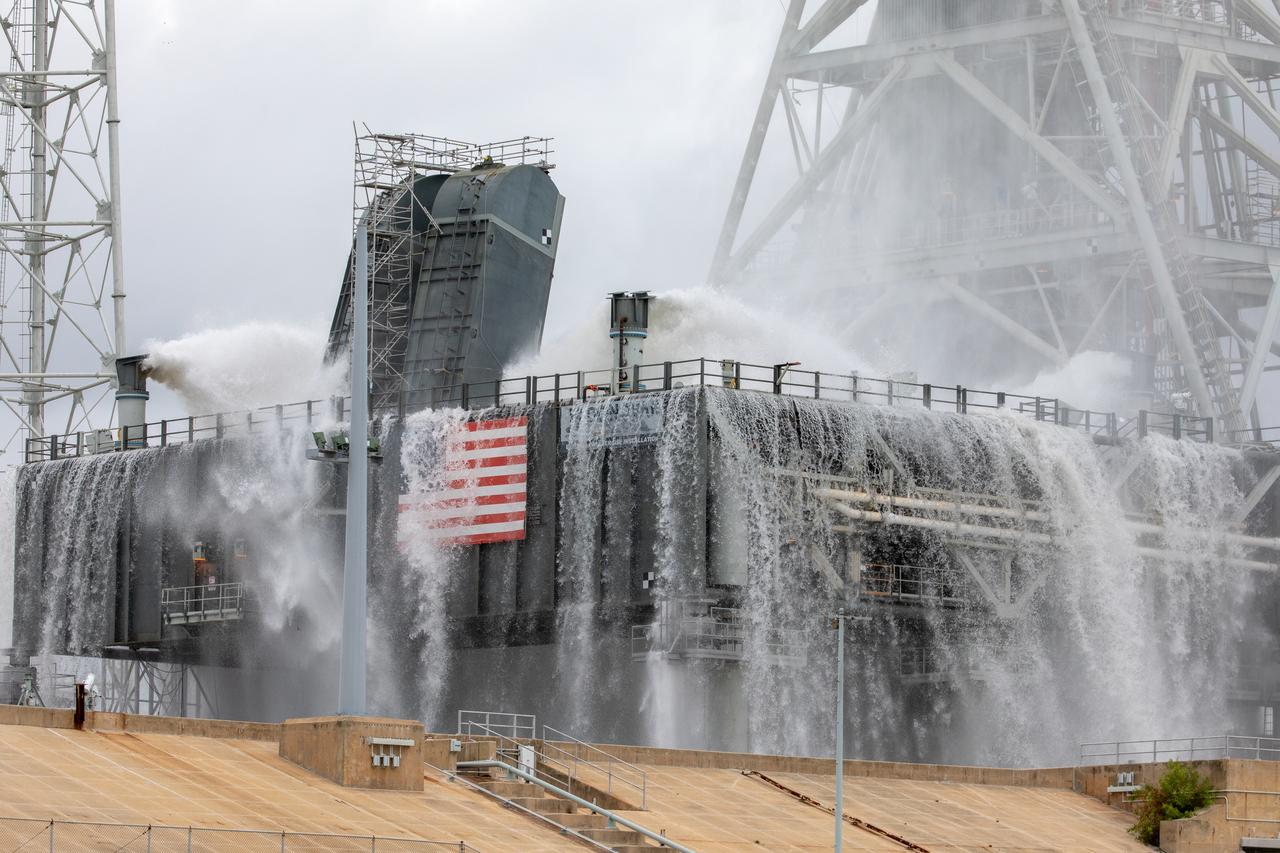
A flow test of the Ignition Overpressure Protection and Sound Suppression water deluge system is underway on the mobile launcher at Launch Pad 39B at NASA's Kennedy Space Center in Florida, on July 25, 2019. The testing is part of a series of tests that Exploration Ground System is doing to verify the system is ready for the new Space Launch System rocket. Modifications were made to the pad after a previous wet flow test, increasing the performance of the system. During the launch of Artemis 1 and subsequent missions, this water deluge system will release about 450,000 gallons of water across the mobile launcher and Flame Deflector to reduce the extreme heat and energy generated by the rocket during ignition and liftoff.
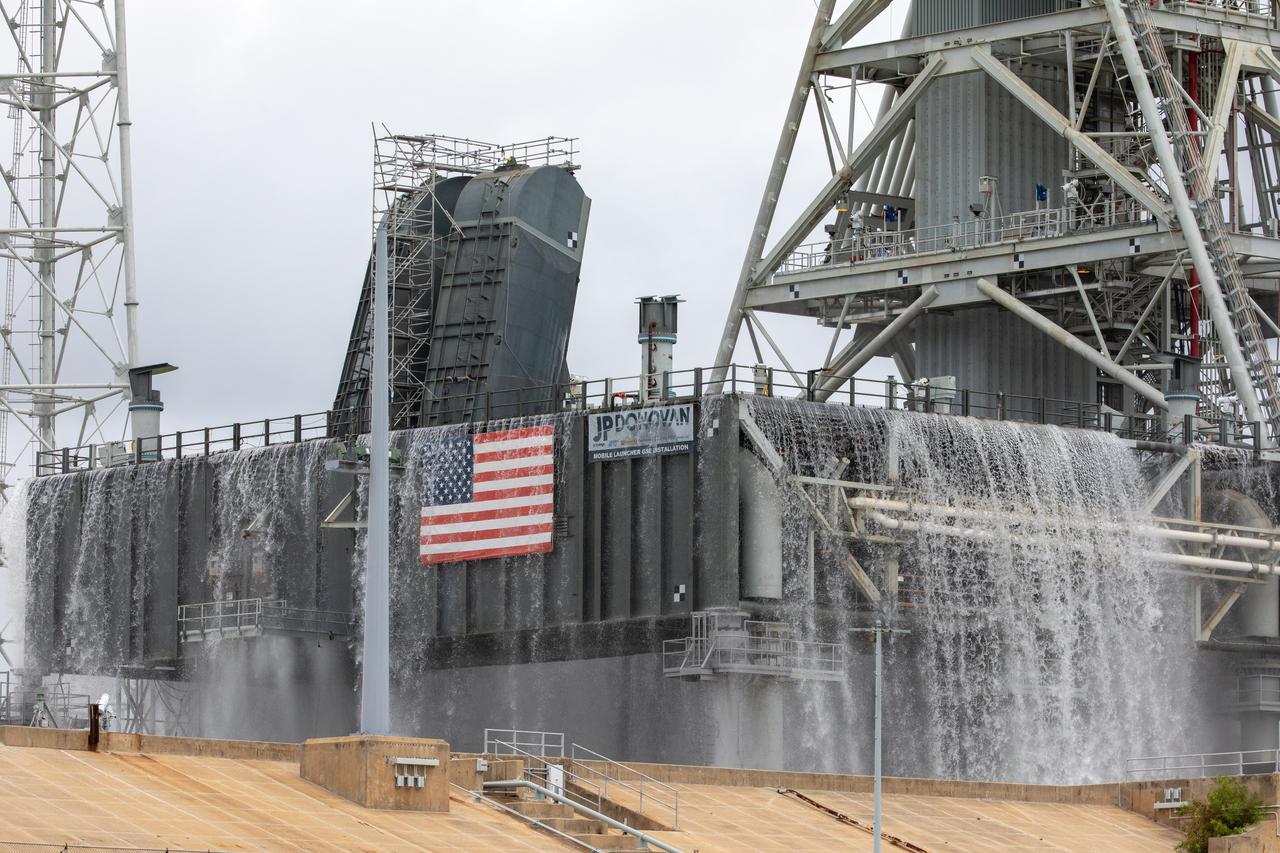
A flow test of the Ignition Overpressure Protection and Sound Suppression water deluge system is underway on the mobile launcher at Launch Pad 39B at NASA's Kennedy Space Center in Florida, on July 25, 2019. The testing is part of a series of tests that Exploration Ground System is doing to verify the system is ready for the new Space Launch System rocket. Modifications were made to the pad after a previous wet flow test, increasing the performance of the system. During the launch of Artemis 1 and subsequent missions, this water deluge system will release about 450,000 gallons of water across the mobile launcher and Flame Deflector to reduce the extreme heat and energy generated by the rocket during ignition and liftoff.
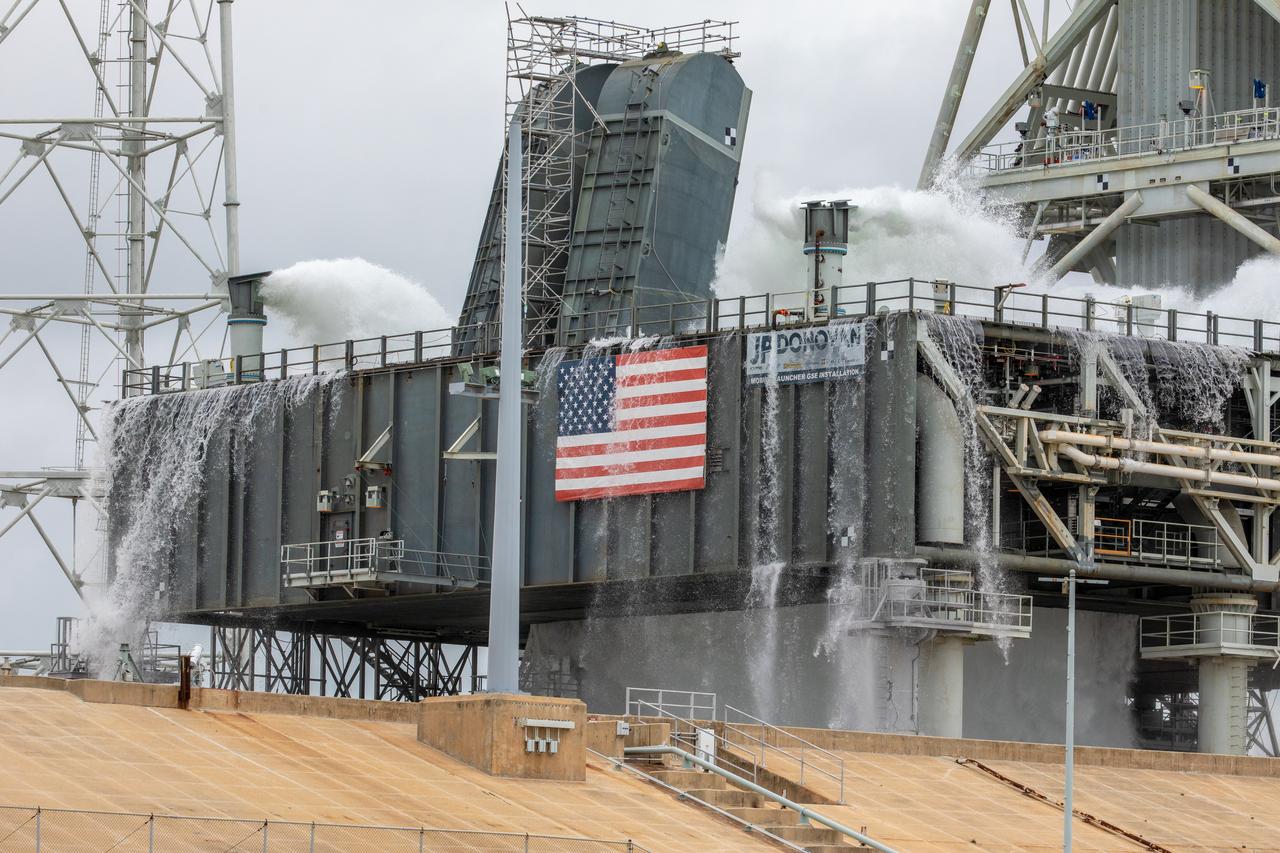
A flow test of the Ignition Overpressure Protection and Sound Suppression water deluge system begins on the mobile launcher at Launch Pad 39B at NASA's Kennedy Space Center in Florida, on July 25, 2019. The testing is part of a series of tests that Exploration Ground System is doing to verify the system is ready for the new Space Launch System rocket. Modifications were made to the pad after a previous wet flow test, increasing the performance of the system. During the launch of Artemis 1 and subsequent missions, this water deluge system will release about 450,000 gallons of water across the mobile launcher and Flame Deflector to reduce the extreme heat and energy generated by the rocket during ignition and liftoff.

A flow test of the Ignition Overpressure Protection and Sound Suppression water deluge system is underway on the mobile launcher at Launch Pad 39B at NASA's Kennedy Space Center in Florida, on July 25, 2019. The testing is part of a series of tests that Exploration Ground System is doing to verify the system is ready for the new Space Launch System rocket. Modifications were made to the pad after a previous wet flow test, increasing the performance of the system. During the launch of Artemis 1 and subsequent missions, this water deluge system will release about 450,000 gallons of water across the mobile launcher and Flame Deflector to reduce the extreme heat and energy generated by the rocket during ignition and liftoff.
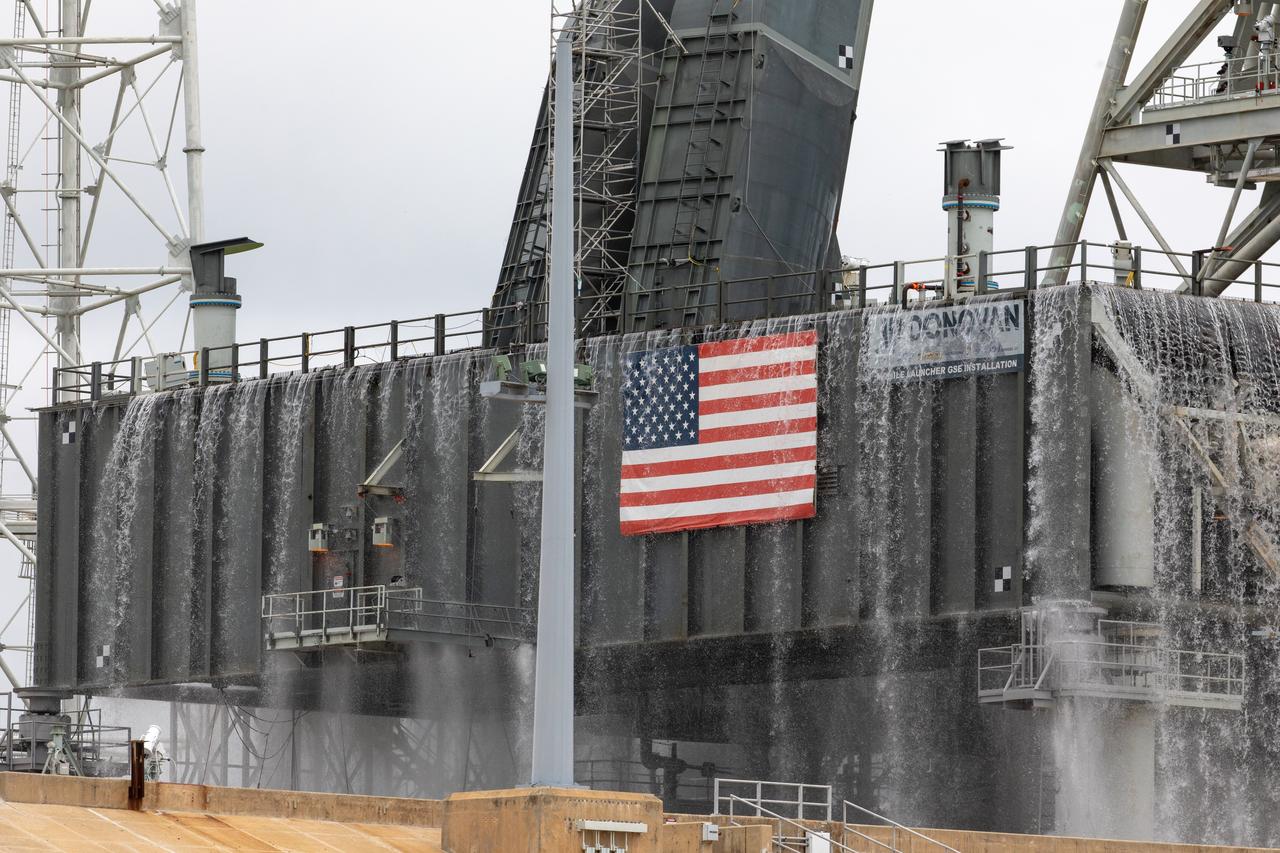
A flow test of the Ignition Overpressure Protection and Sound Suppression water deluge system is underway on the mobile launcher at Launch Pad 39B at NASA's Kennedy Space Center in Florida, on July 25, 2019. The testing is part of a series of tests that Exploration Ground System is doing to verify the system is ready for the new Space Launch System rocket. Modifications were made to the pad after a previous wet flow test, increasing the performance of the system. During the launch of Artemis 1 and subsequent missions, this water deluge system will release about 450,000 gallons of water across the mobile launcher and Flame Deflector to reduce the extreme heat and energy generated by the rocket during ignition and liftoff.
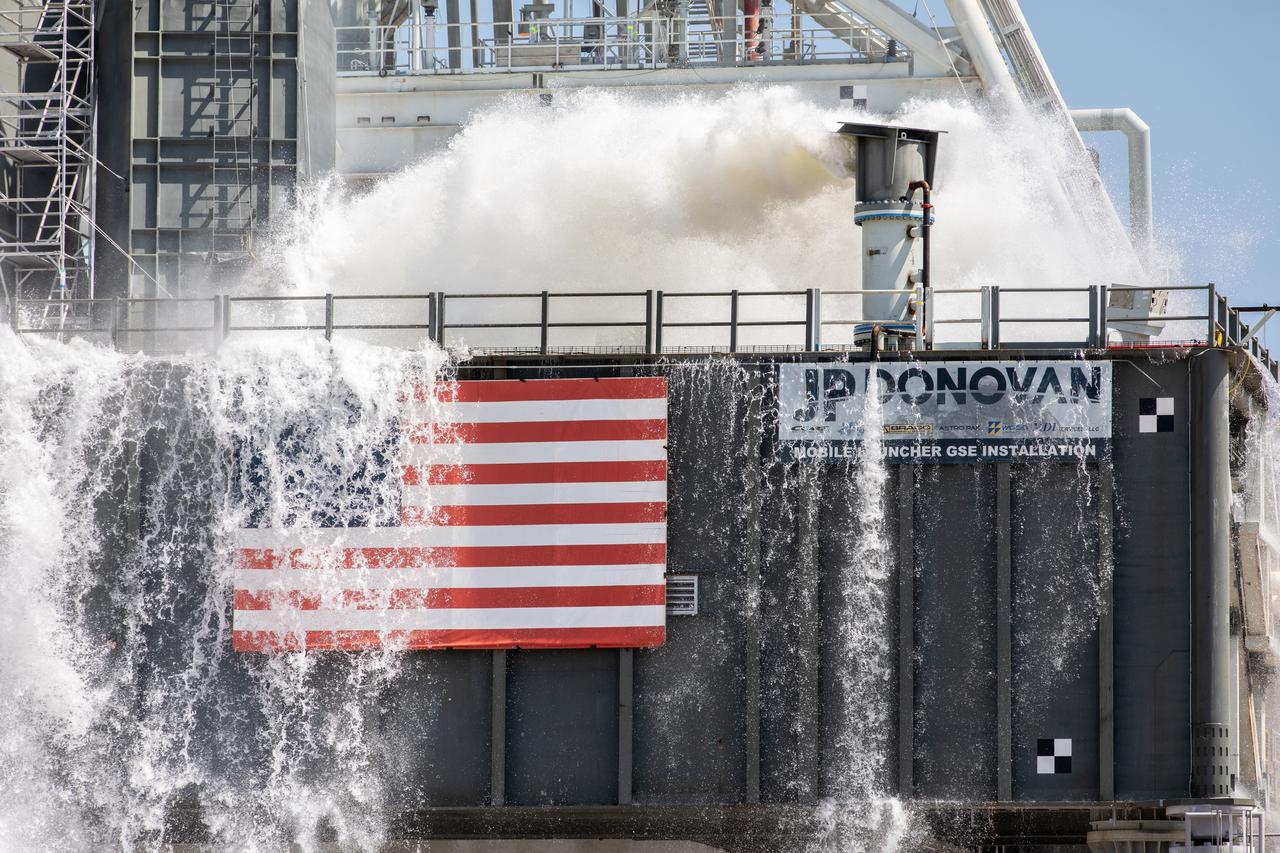
NASA’s Exploration Ground Systems conducts a water flow test with the mobile launcher at Kennedy Space Center’s Pad 39B in Florida on July 2, 2019. It is the first of nine tests to verify the sound suppression system is ready for launch of NASA’s Space Launch System for the first Artemis mission. During launch, 400,000 gallons of water will rush onto the pad to help protect the rocket, NASA’s Orion Spacecraft, mobile launcher, and launch pad from the extreme acoustic and temperature environment.
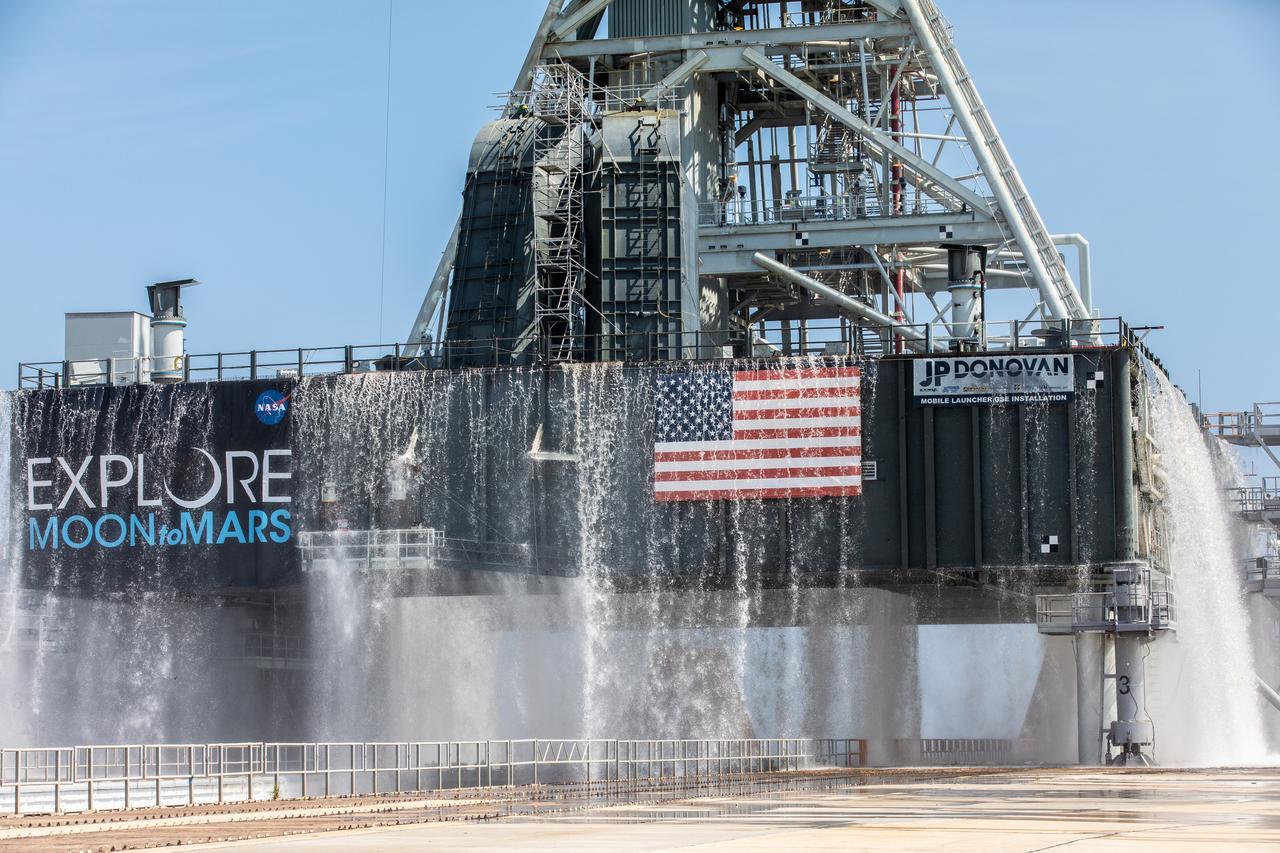
NASA’s Exploration Ground Systems conducts a water flow test with the mobile launcher at Kennedy Space Center’s Pad 39B in Florida on July 2, 2019. It is the first of nine tests to verify the sound suppression system is ready for launch of NASA’s Space Launch System for the first Artemis mission. During launch, 400,000 gallons of water will rush onto the pad to help protect the rocket, NASA’s Orion Spacecraft, mobile launcher, and launch pad from the extreme acoustic and temperature environment.
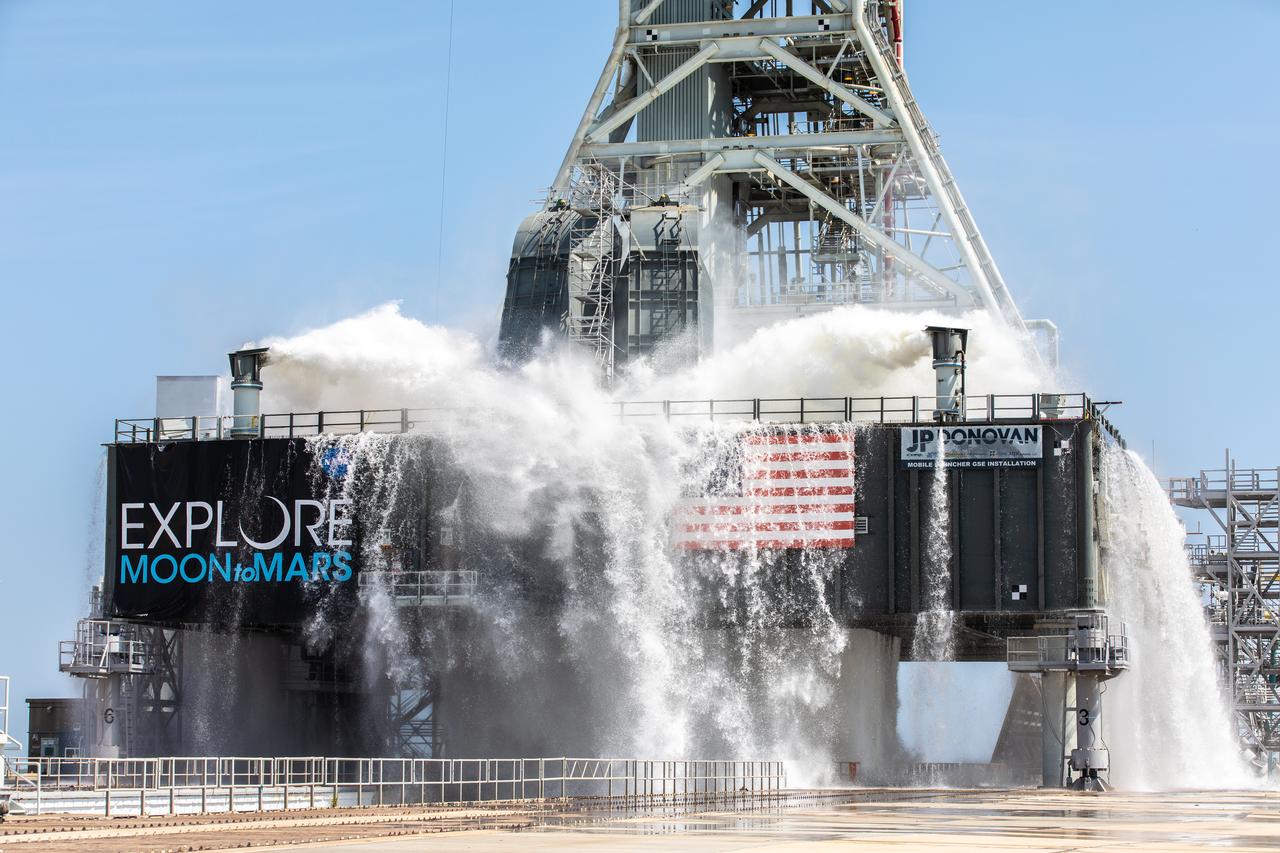
NASA’s Exploration Ground Systems conducts a water flow test with the mobile launcher at Kennedy Space Center’s Pad 39B in Florida on July 2, 2019. It is the first of nine tests to verify the sound suppression system is ready for launch of NASA’s Space Launch System for the first Artemis mission. During launch, 400,000 gallons of water will rush onto the pad to help protect the rocket, NASA’s Orion Spacecraft, mobile launcher, and launch pad from the extreme acoustic and temperature environment.
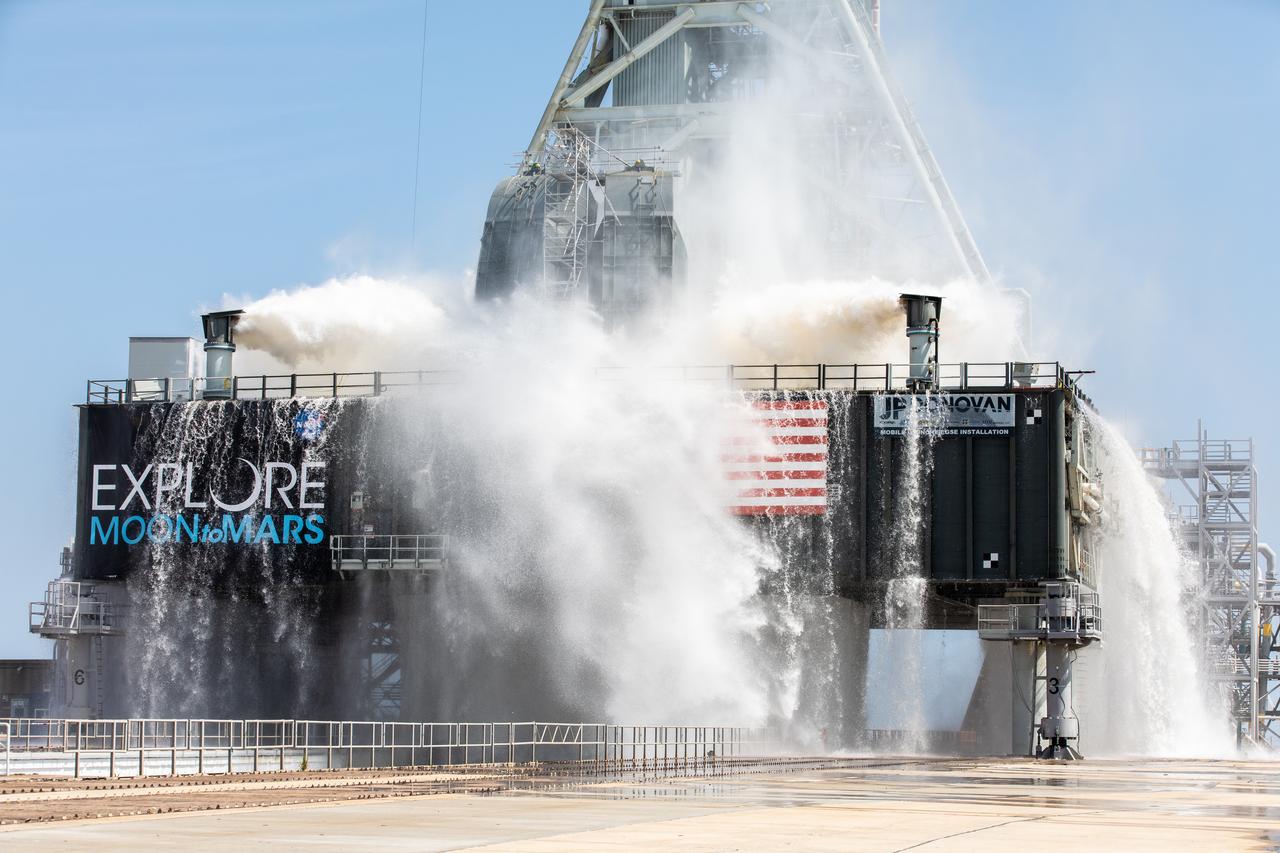
NASA’s Exploration Ground Systems conducts a water flow test with the mobile launcher at Kennedy Space Center’s Pad 39B in Florida on July 2, 2019. It is the first of nine tests to verify the sound suppression system is ready for launch of NASA’s Space Launch System for the first Artemis mission. During launch, 400,000 gallons of water will rush onto the pad to help protect the rocket, NASA’s Orion Spacecraft, mobile launcher, and launch pad from the extreme acoustic and temperature environment.
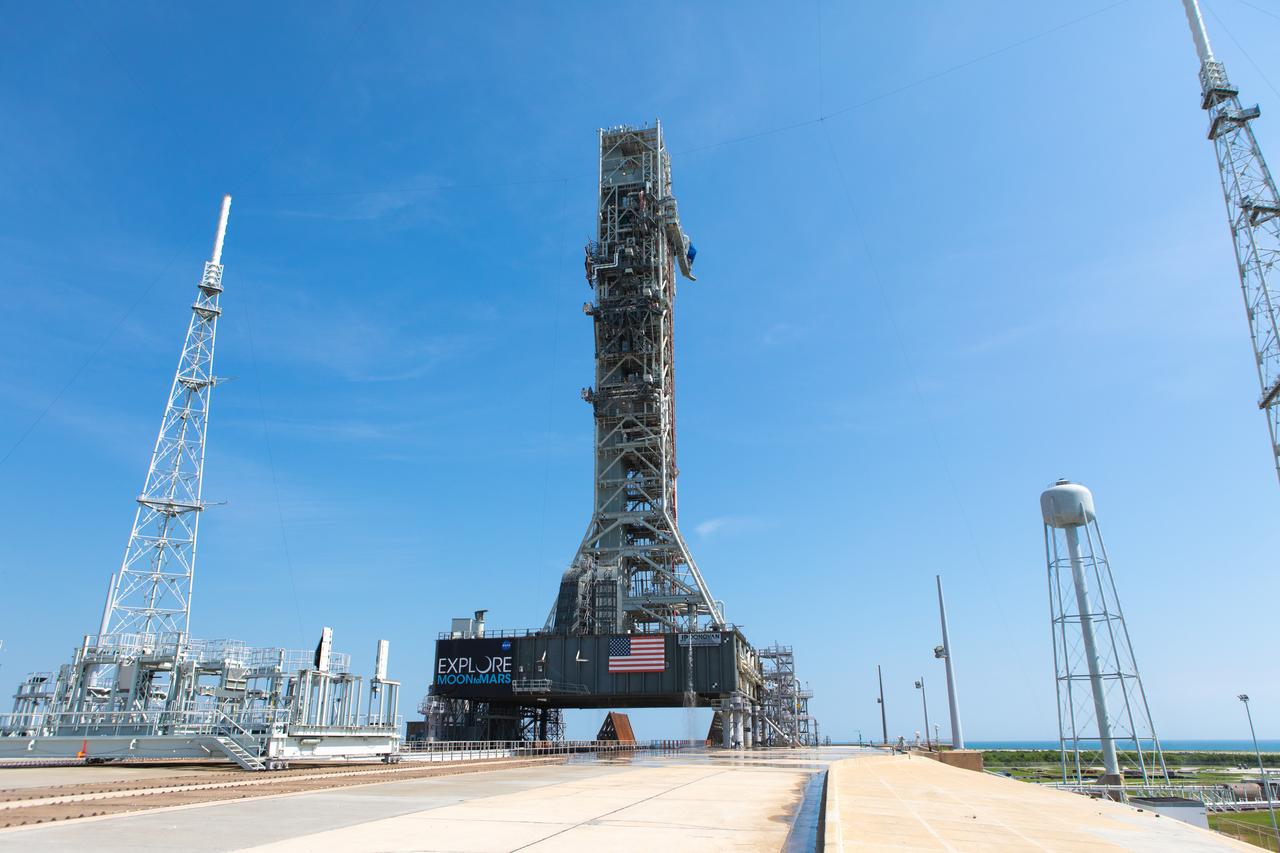
NASA’s Exploration Ground Systems conducts a water flow test with the mobile launcher at Kennedy Space Center’s Pad 39B in Florida on July 2, 2019. It is the first of nine tests to verify the sound suppression system is ready for launch of NASA’s Space Launch System for the first Artemis mission. During launch, 400,000 gallons of water will rush onto the pad to help protect the rocket, NASA’s Orion Spacecraft, mobile launcher, and launch pad from the extreme acoustic and temperature environment.
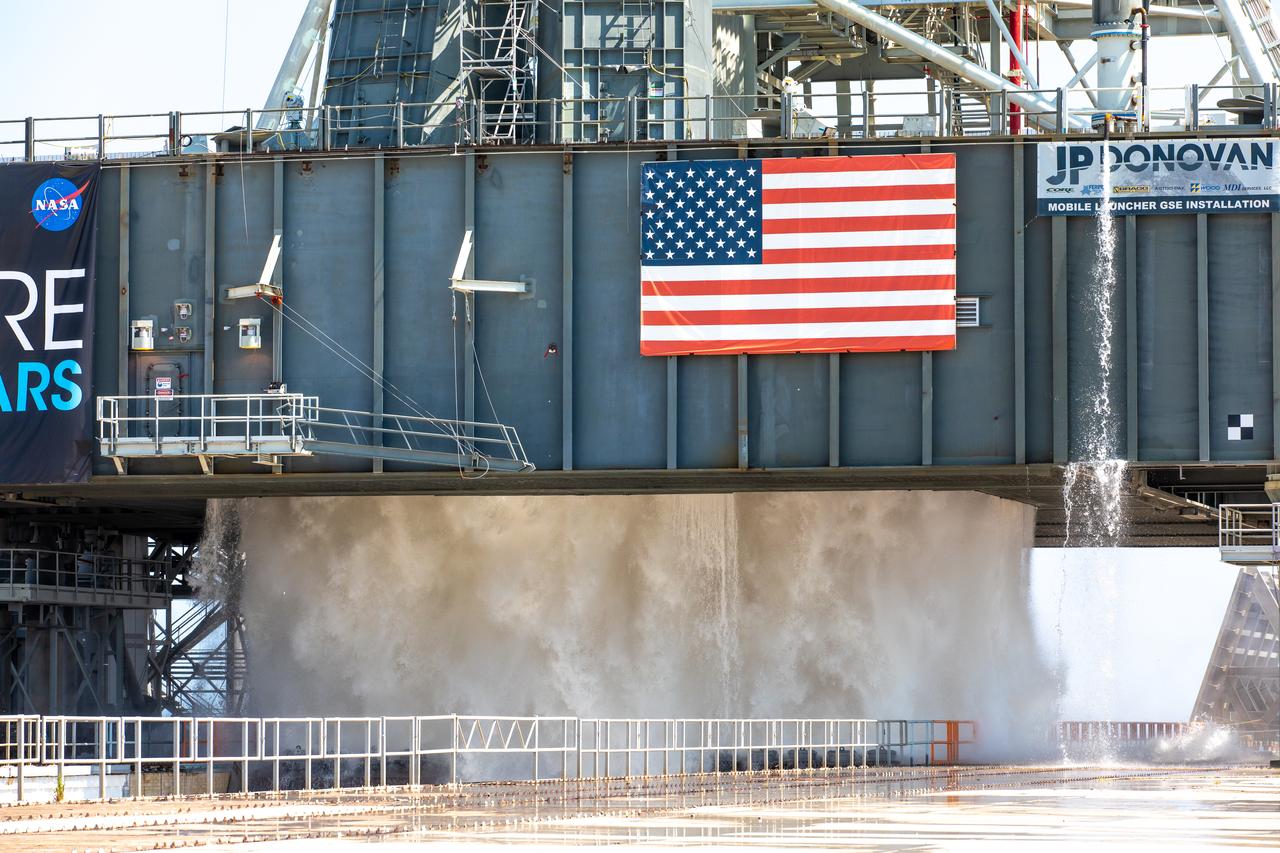
NASA’s Exploration Ground Systems conducts a water flow test with the mobile launcher at Kennedy Space Center’s Pad 39B in Florida on July 2, 2019. It is the first of nine tests to verify the sound suppression system is ready for launch of NASA’s Space Launch System for the first Artemis mission. During launch, 400,000 gallons of water will rush onto the pad to help protect the rocket, NASA’s Orion Spacecraft, mobile launcher, and launch pad from the extreme acoustic and temperature environment.
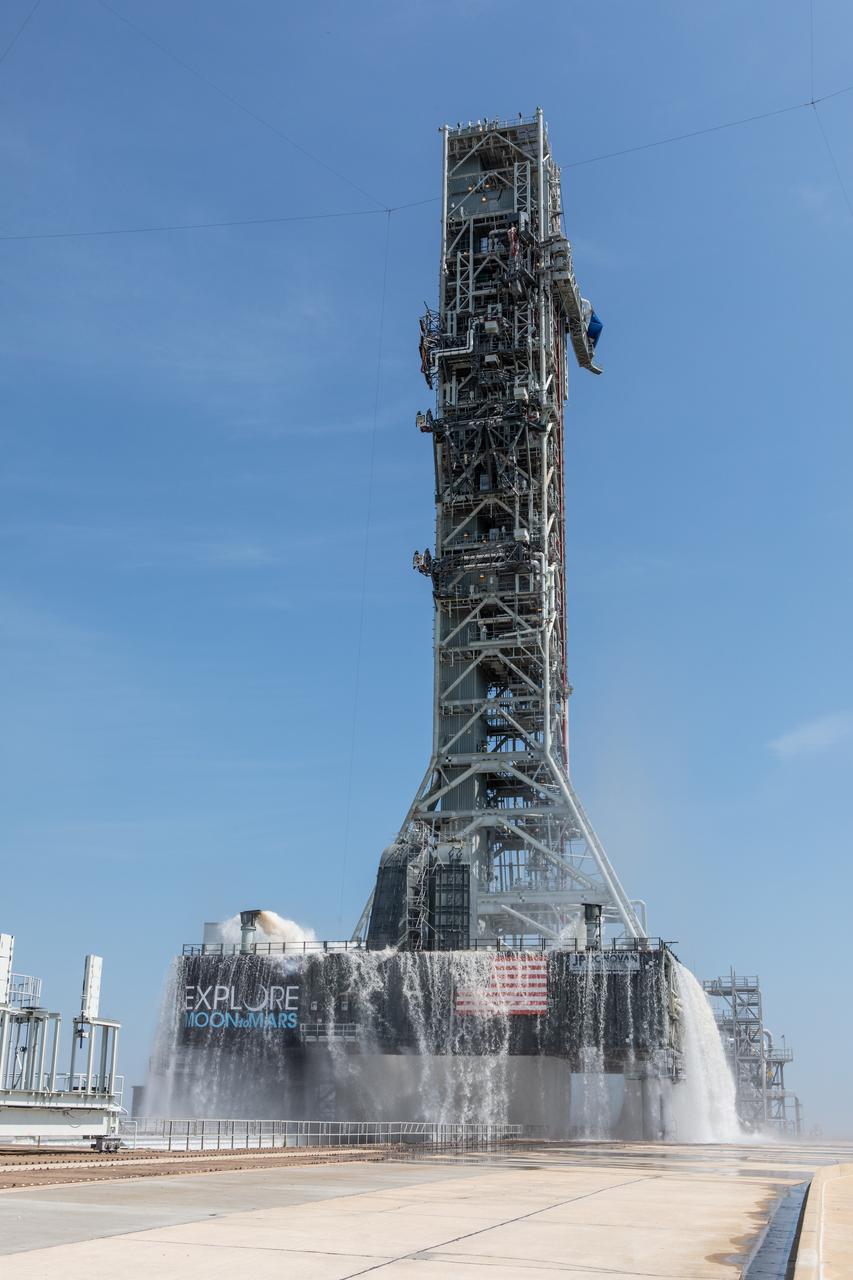
NASA’s Exploration Ground Systems conducts a water flow test with the mobile launcher at Kennedy Space Center’s Pad 39B in Florida on July 2, 2019. It is the first of nine tests to verify the sound suppression system is ready for launch of NASA’s Space Launch System for the first Artemis mission. During launch, 400,000 gallons of water will rush onto the pad to help protect the rocket, NASA’s Orion Spacecraft, mobile launcher, and launch pad from the extreme acoustic and temperature environment.
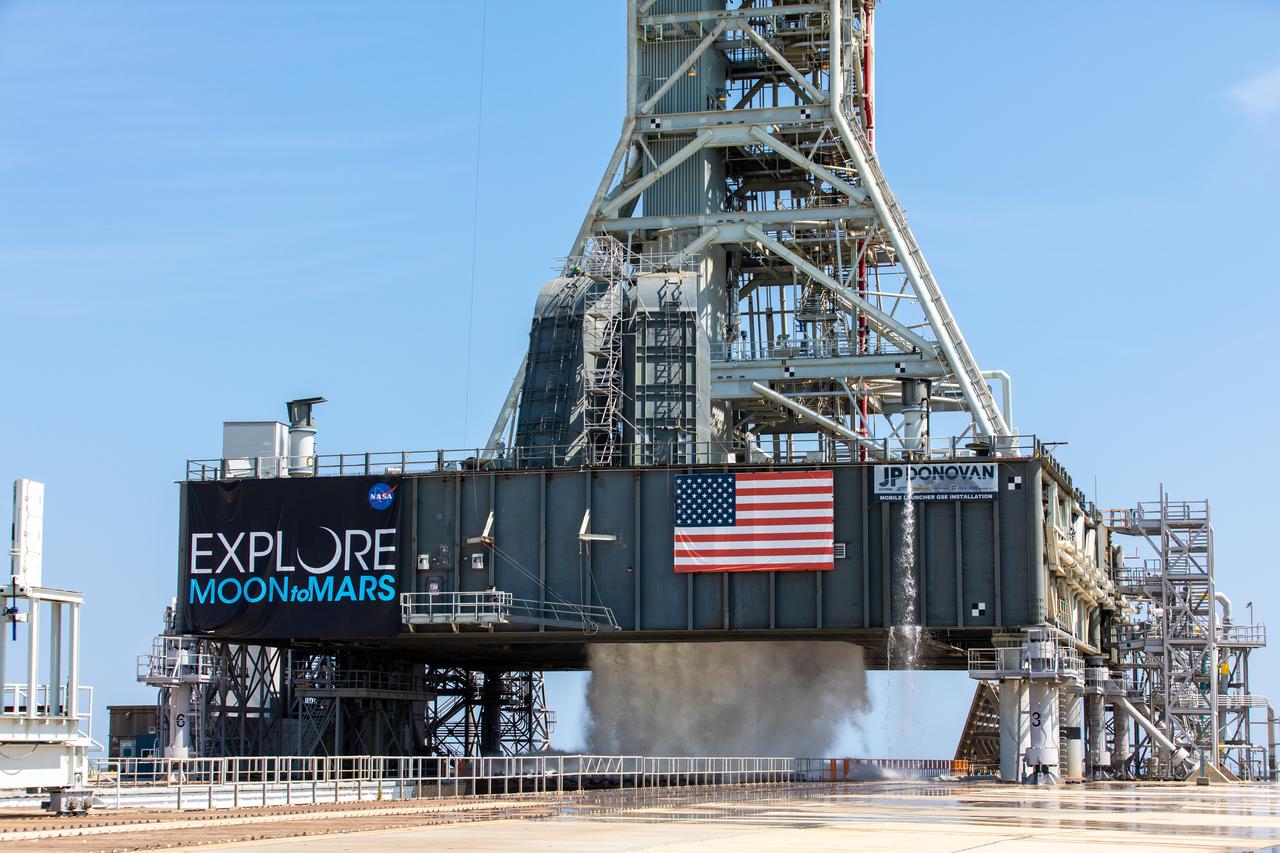
NASA’s Exploration Ground Systems conducts a water flow test with the mobile launcher at Kennedy Space Center’s Pad 39B in Florida on July 2, 2019. It is the first of nine tests to verify the sound suppression system is ready for launch of NASA’s Space Launch System for the first Artemis mission. During launch, 400,000 gallons of water will rush onto the pad to help protect the rocket, NASA’s Orion Spacecraft, mobile launcher, and launch pad from the extreme acoustic and temperature environment.
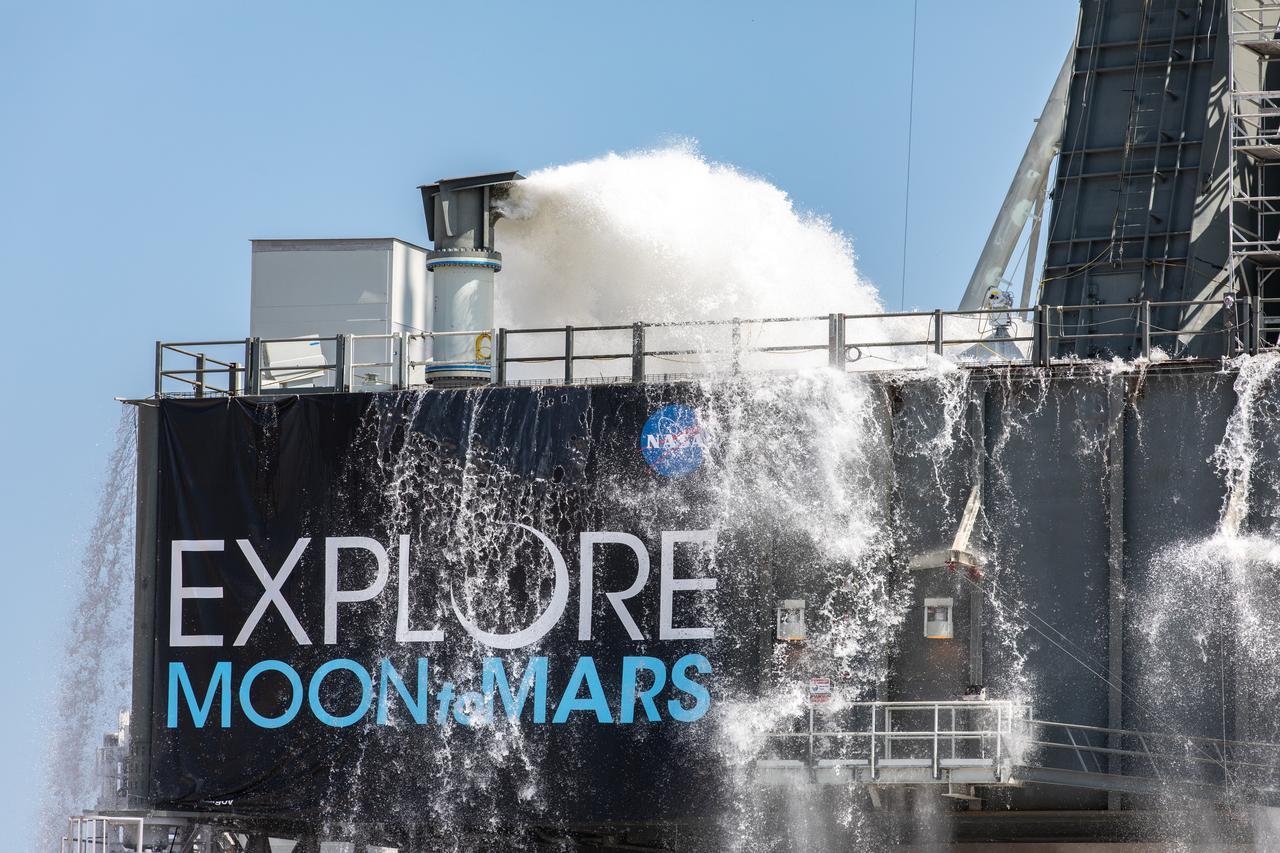
NASA’s Exploration Ground Systems conducts a water flow test with the mobile launcher at Kennedy Space Center’s Pad 39B in Florida on July 2, 2019. It is the first of nine tests to verify the sound suppression system is ready for launch of NASA’s Space Launch System for the first Artemis mission. During launch, 400,000 gallons of water will rush onto the pad to help protect the rocket, NASA’s Orion Spacecraft, mobile launcher, and launch pad from the extreme acoustic and temperature environment.
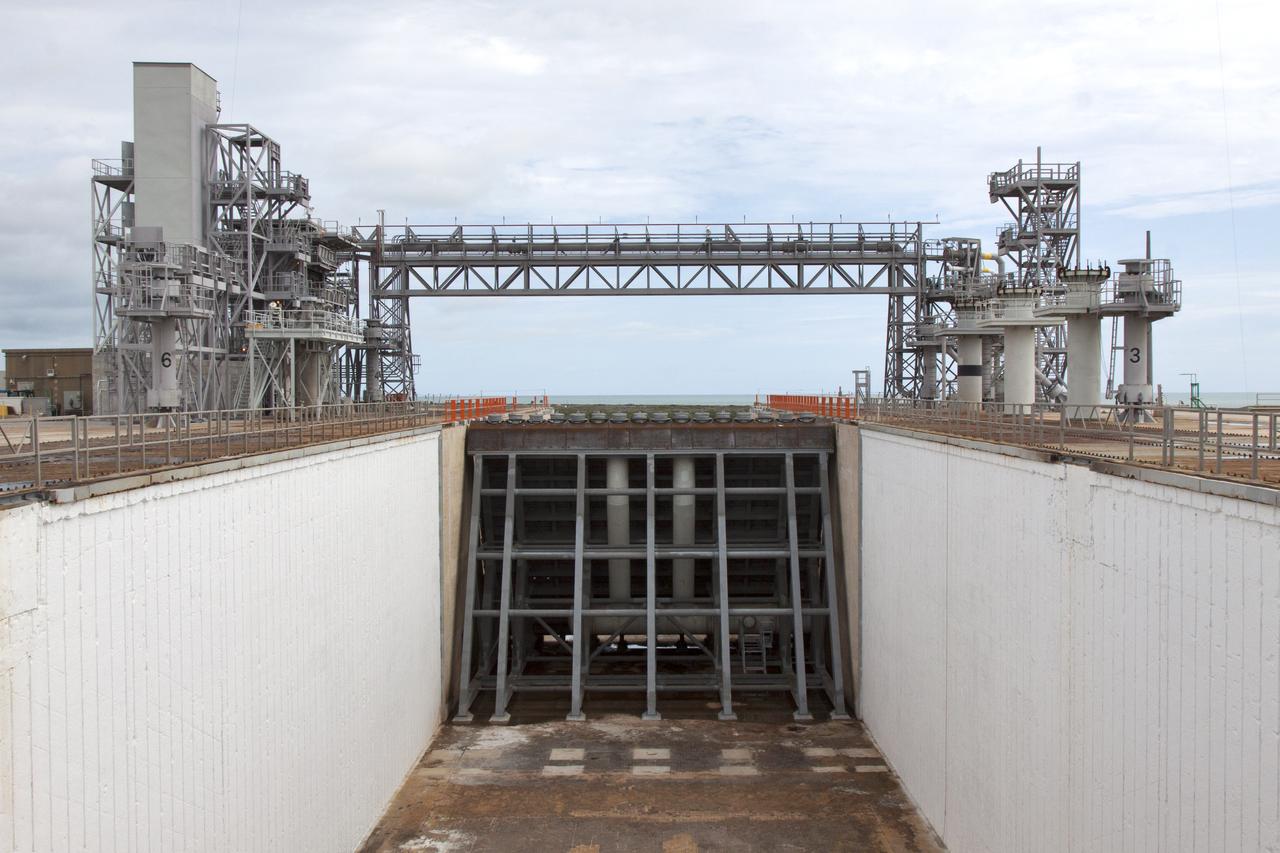
Construction is complete on the main flame deflector in the flame trench at Launch Complex 39B at NASA's Kennedy Space Center in Florida. The flame deflector will safely deflect the plume exhaust from NASA's Space Launch System rocket during launch. It will divert the rocket's exhaust, pressure and intense heat to the north at liftoff. In view is the south side of the main flame deflector. The Exploration Ground Systems Program at Kennedy is refurbishing the pad to support the launch of the SLS rocket and Orion on Exploration Mission-1, and helping to transform the space center into a multi-user spaceport.
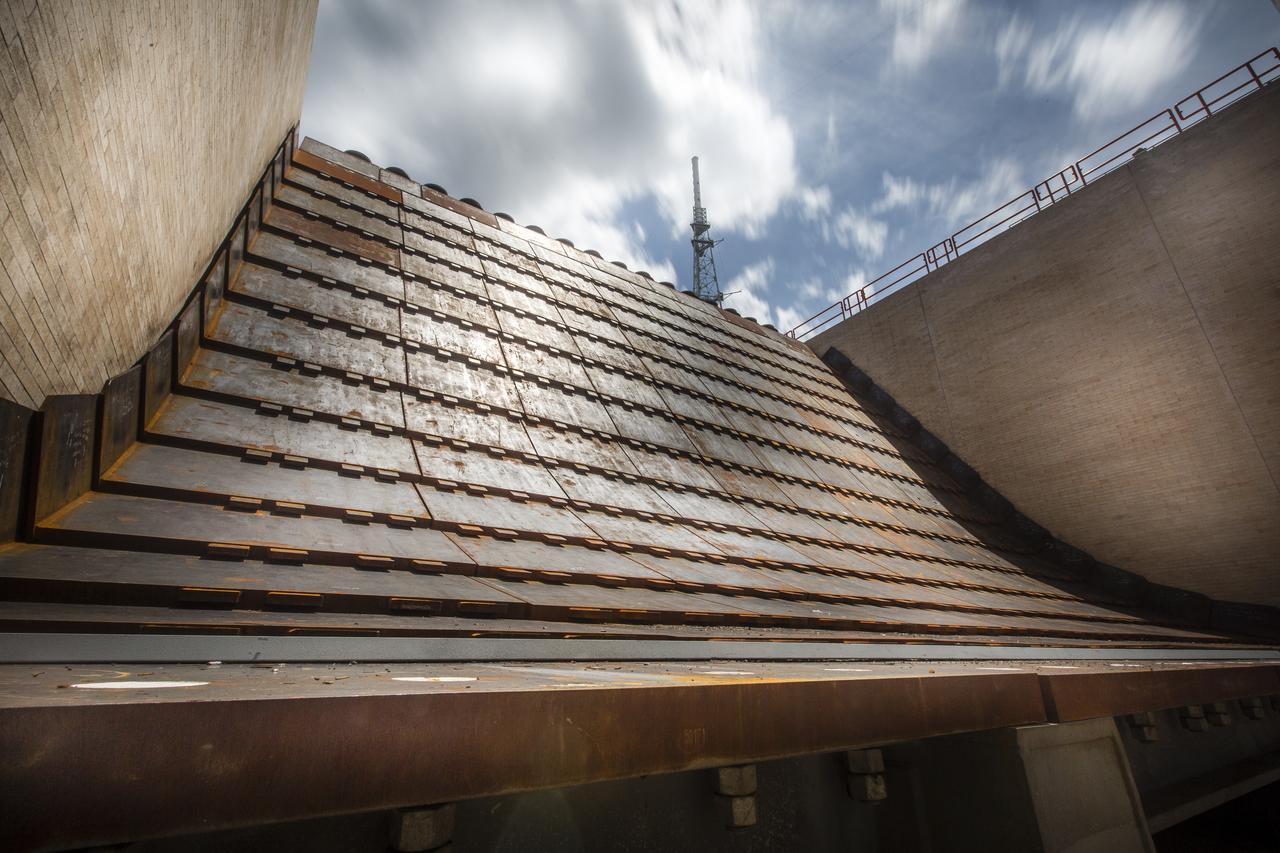
A close-up view of the flame trench and flame deflector at Launch Pad 39B at NASA's Kennedy Space Center in Florida on July 26, 2018. The launch pad has undergone upgrades and modifications to accommodate NASA's Space Launch System and Orion spacecraft for Exploration Mission-1 and other deep space missions. New heat-resistant bricks have been installed on the walls and a new flame deflector is in place. The clean pad concept is designed to support NASA and commercial launch providers at the multi-user spaceport.
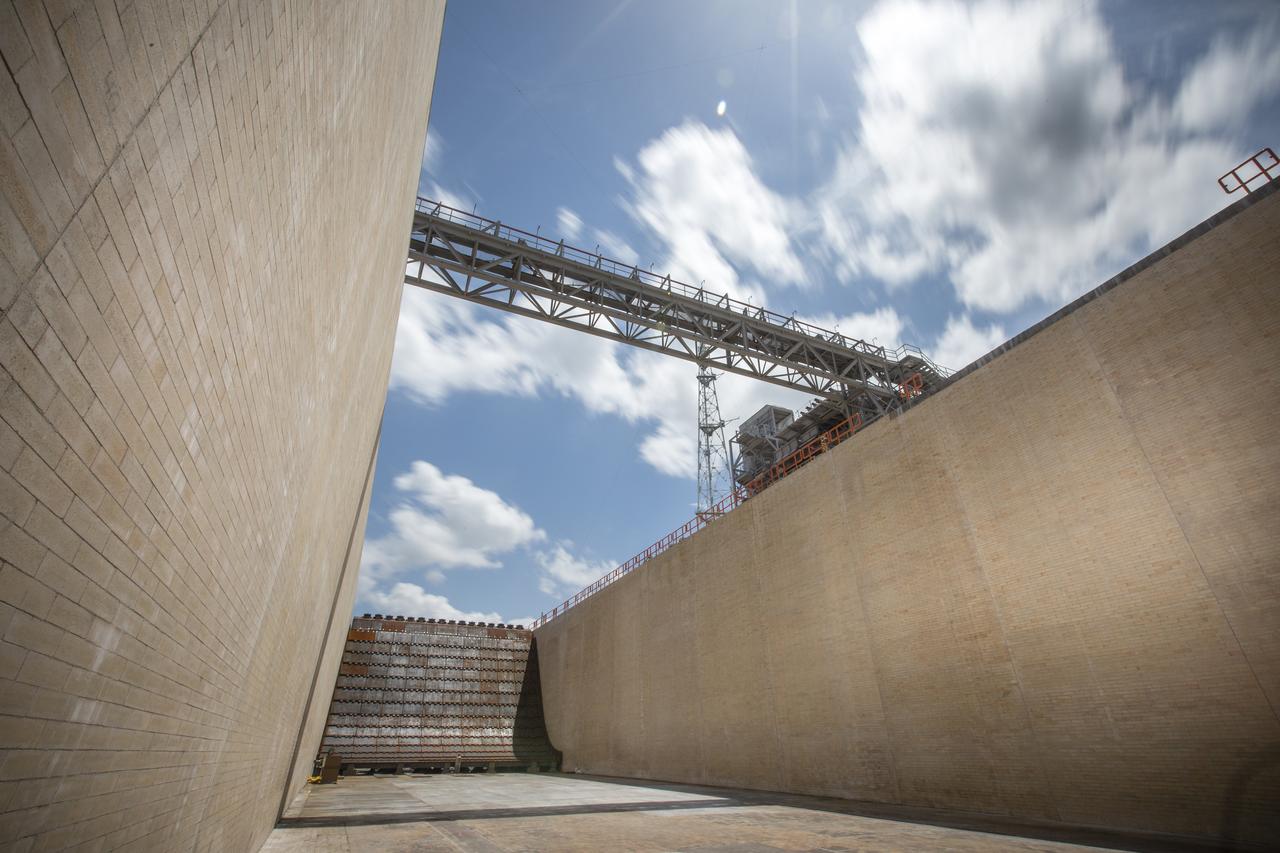
A close-up view of the flame trench and flame deflector at Launch Pad 39B at NASA's Kennedy Space Center in Florida on July 26, 2018. The launch pad has undergone upgrades and modifications to accommodate NASA's Space Launch System and Orion spacecraft for Exploration Mission-1 and other deep space missions. New heat-resistant bricks have been installed on the walls and a new flame deflector is in place. The clean pad concept is designed to support NASA and commercial launch providers at the multi-user spaceport.
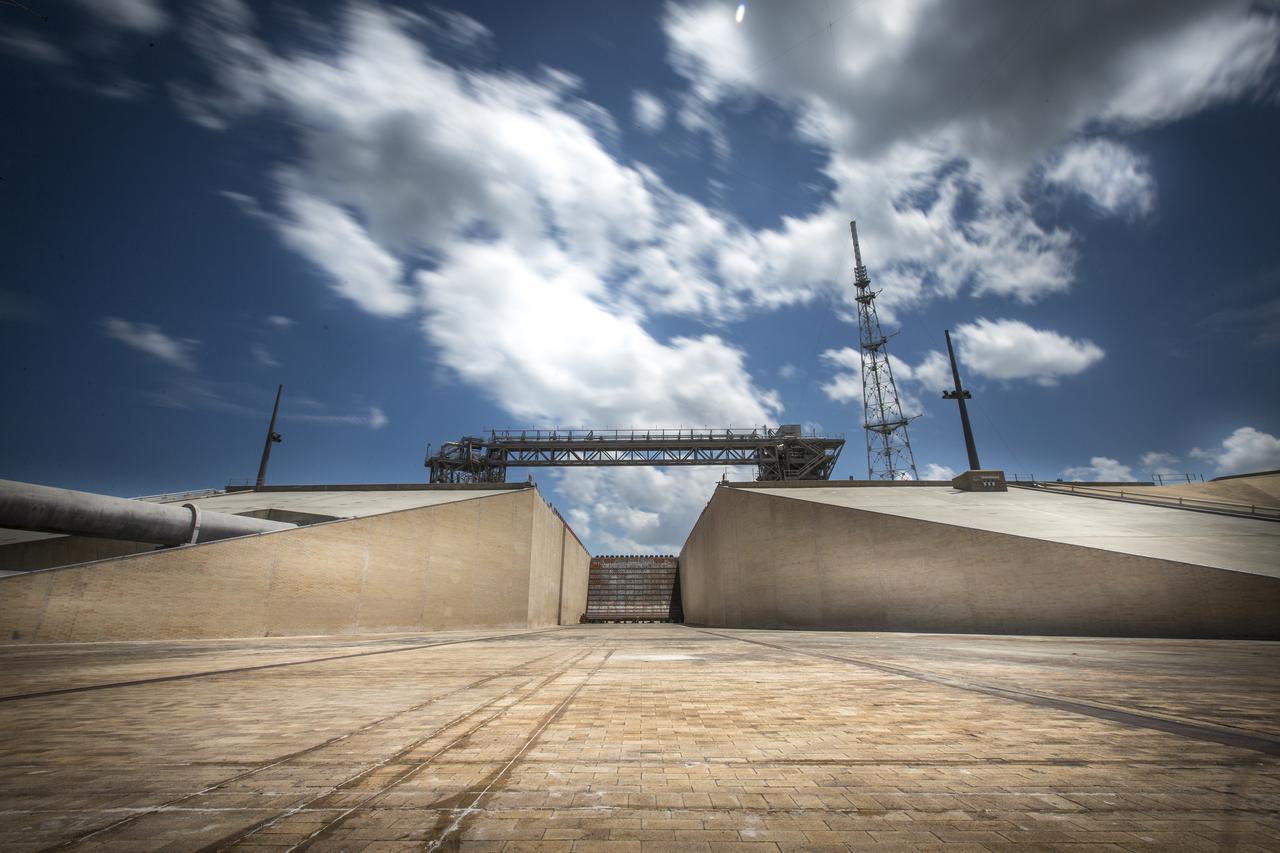
The flame trench and flame deflector are in view at Launch Pad 39B at NASA's Kennedy Space Center in Florida on July 26, 2018. The launch pad has undergone upgrades and modifications to accommodate NASA's Space Launch System and Orion spacecraft for Exploration Mission-1 and other deep space missions. New heat-resistant bricks have been installed on the walls and a new flame deflector is in place. The clean pad concept is designed to support NASA and commercial launch providers at the multi-user spaceport.
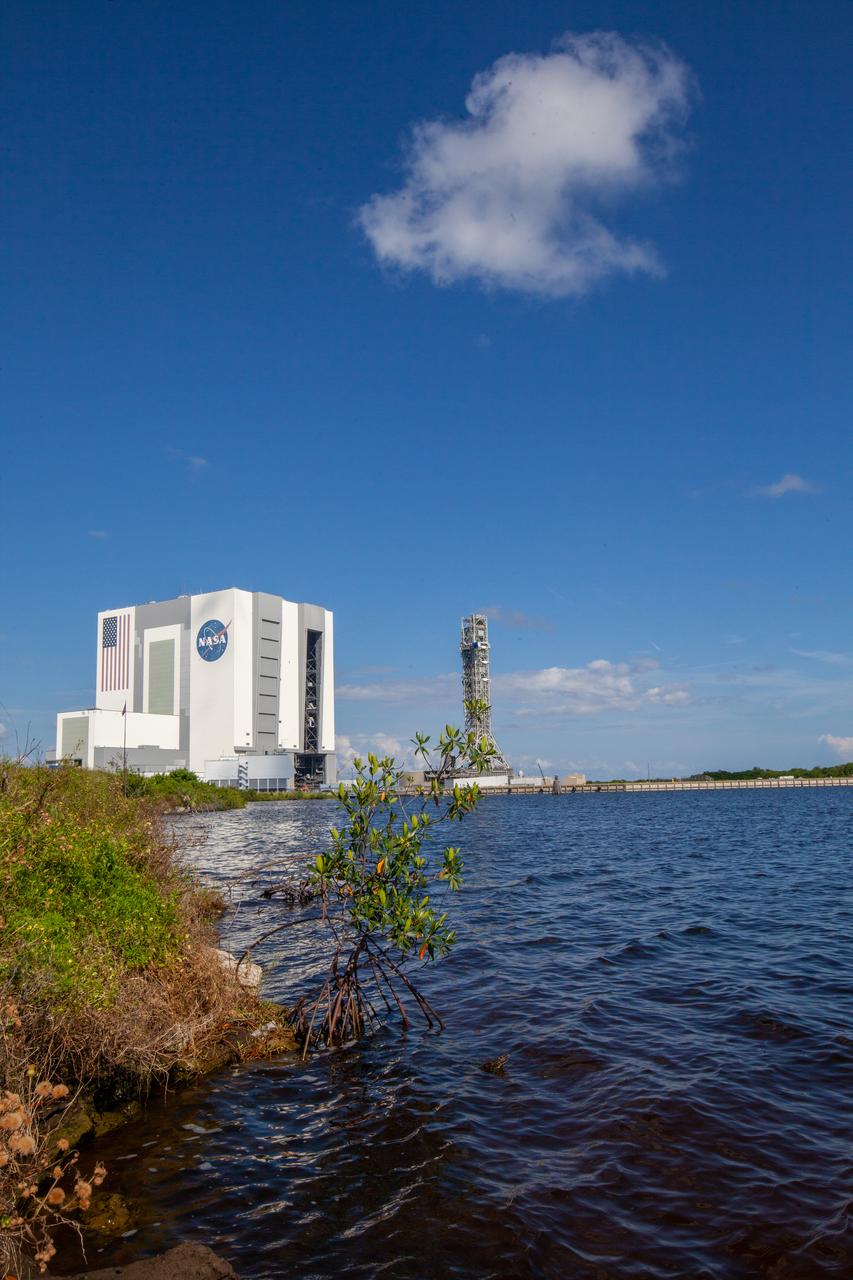
The mobile launcher for NASA’s Artemis missions rolls out of the Vehicle Assembly Building (VAB) at Kennedy Space Center in Florida on Sept. 10, 2019, after spending a week and a half inside due to the approach of Hurricane Dorian. The nearly 400-foot-tall structure was moved from Launch Pad 39B to the VAB for safekeeping on Aug. 30. The storm passed about 70 miles east of the spaceport during the overnight hours Tuesday, Sept. 3, and Wednesday, Sept. 4. NASA’s Exploration Ground Systems is moving the mobile launcher back to the launch pad, where teams will complete testing and checkout on the launcher in the coming weeks for the Artemis I mission.
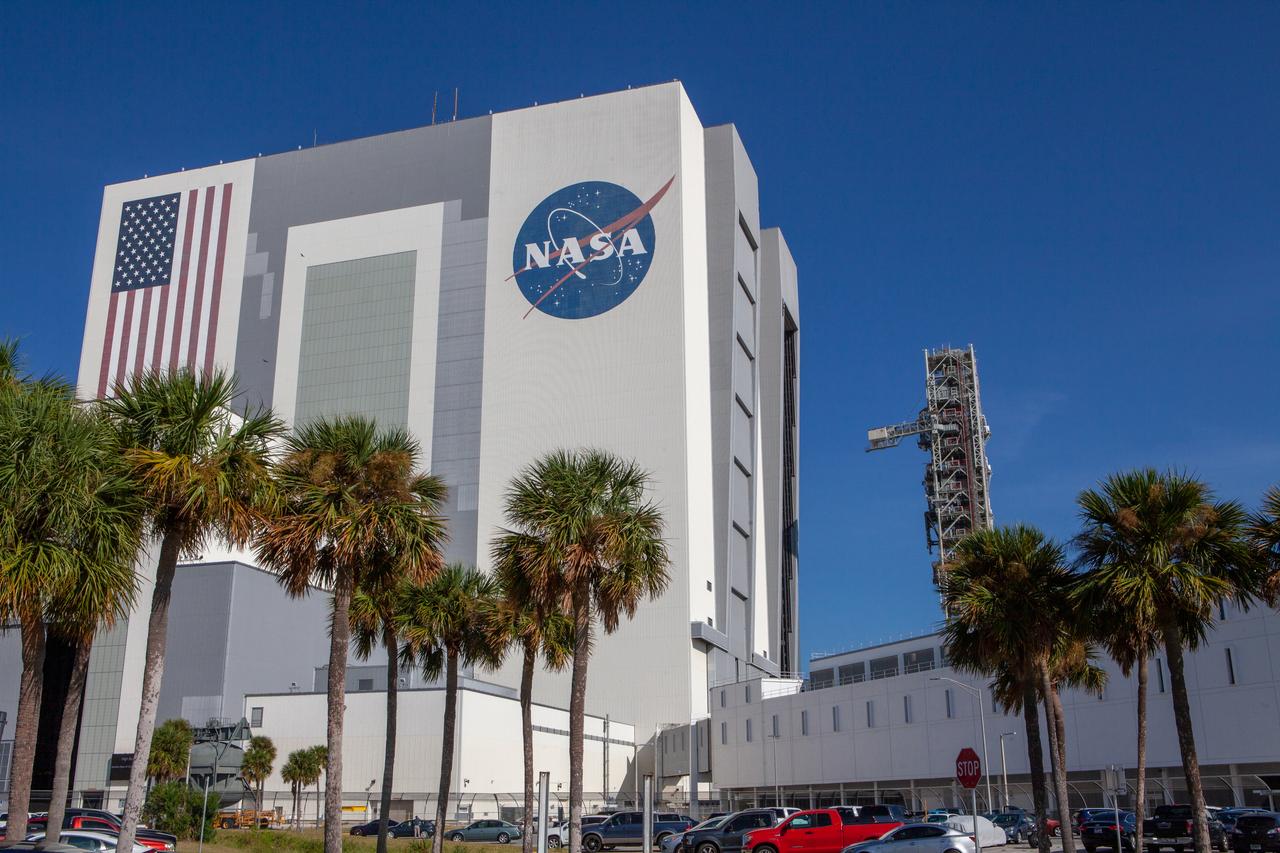
The mobile launcher for NASA’s Artemis missions rolls out of the Vehicle Assembly Building (VAB) and past the Launch Control Center at Kennedy Space Center in Florida on Sept. 10, 2019, after spending a week and a half inside due to the approach of Hurricane Dorian. The nearly 400-foot-tall structure was moved from Launch Pad 39B to the VAB for safekeeping on Aug. 30. The storm passed about 70 miles east of the spaceport during the overnight hours Tuesday, Sept. 3, and Wednesday, Sept. 4. NASA’s Exploration Ground Systems is moving the mobile launcher back to the launch pad, where teams will complete testing and checkout on the launcher in the coming weeks for the Artemis I mission.
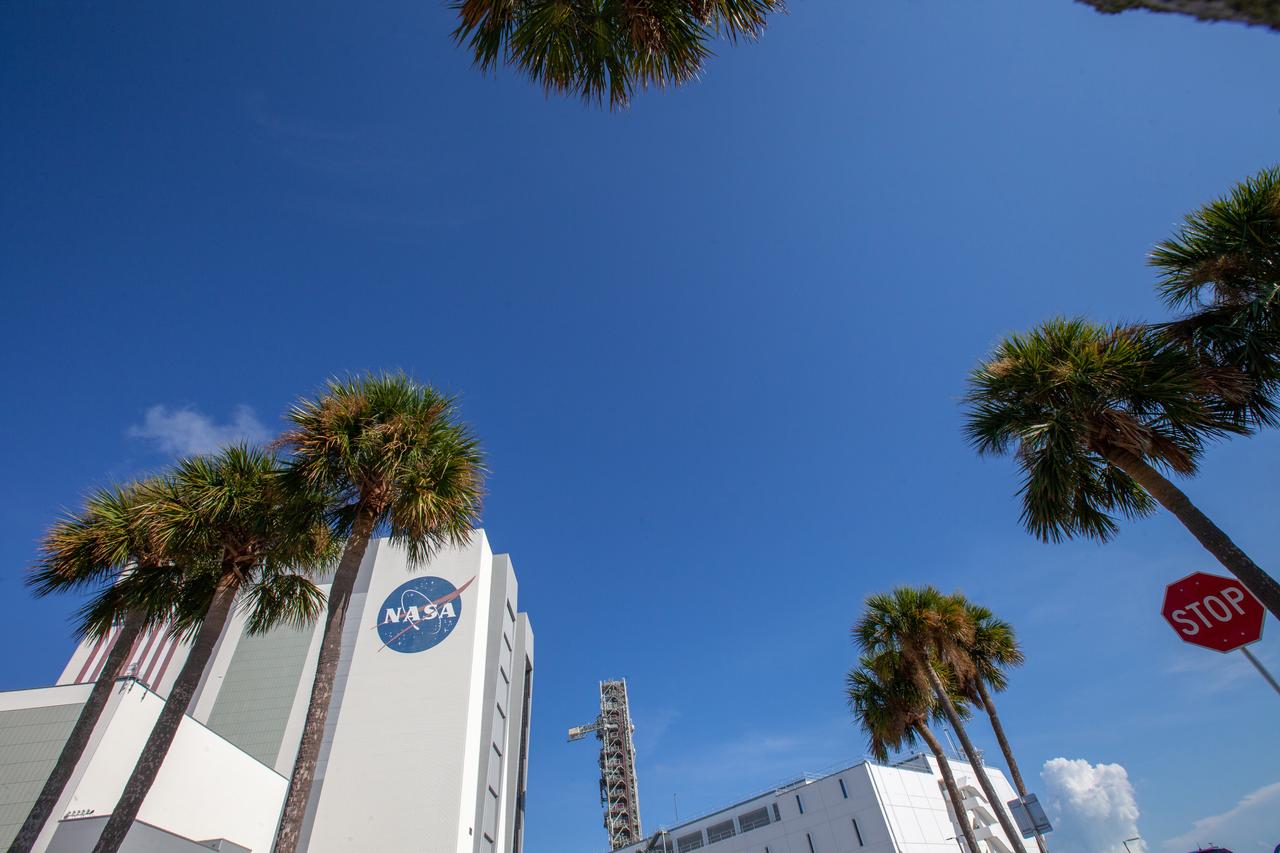
The mobile launcher for NASA’s Artemis missions rolls out of the Vehicle Assembly Building (VAB) at Kennedy Space Center in Florida on Sept. 10, 2019, after spending a week and a half inside due to the approach of Hurricane Dorian. The nearly 400-foot-tall structure was moved from Launch Pad 39B to the VAB for safekeeping on Aug. 30. The storm passed about 70 miles east of the spaceport during the overnight hours Tuesday, Sept. 3, and Wednesday, Sept. 4. NASA’s Exploration Ground Systems is moving the mobile launcher back to the launch pad, where teams will complete testing and checkout on the launcher in the coming weeks for the Artemis I mission.
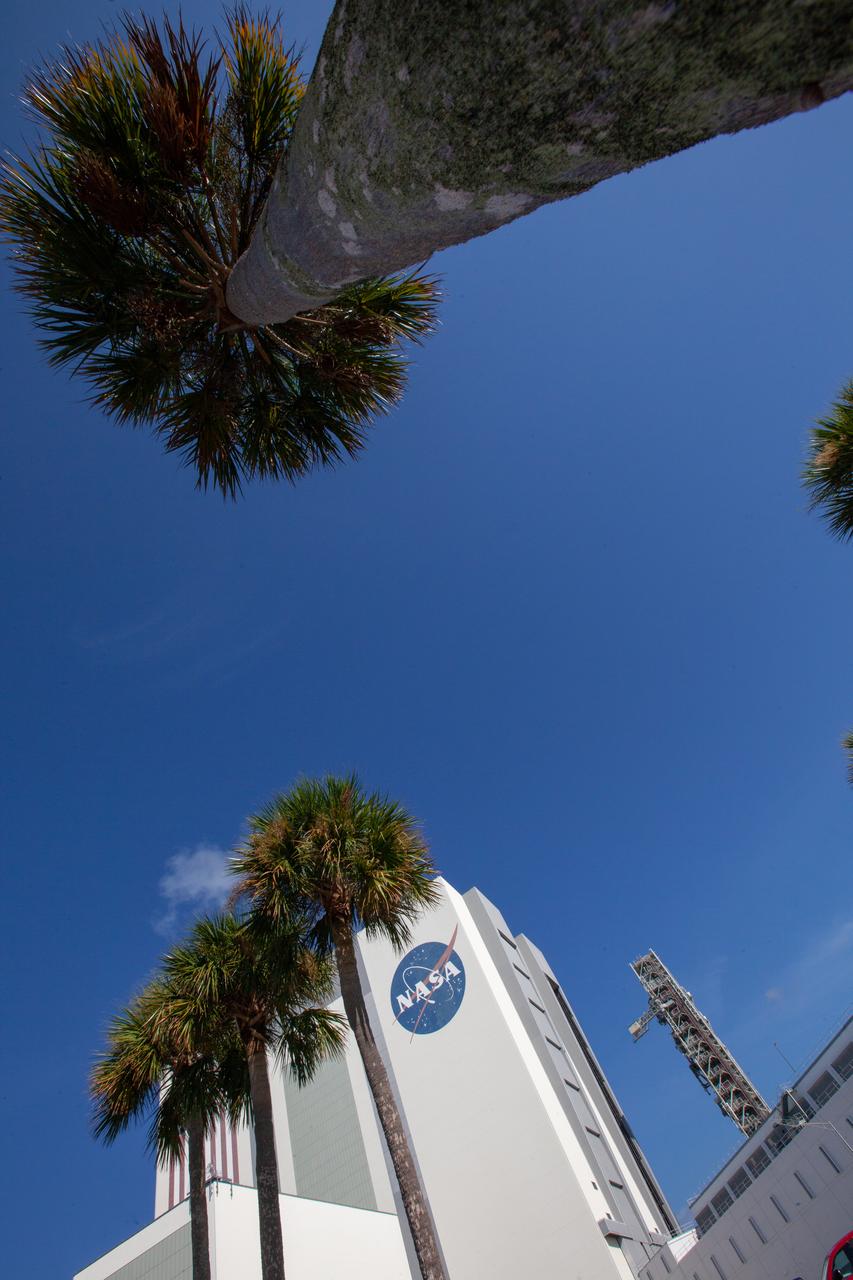
The mobile launcher for NASA’s Artemis missions rolls out of the Vehicle Assembly Building (VAB) at Kennedy Space Center in Florida on Sept. 10, 2019, after spending a week and a half inside due to the approach of Hurricane Dorian. The nearly 400-foot-tall structure was moved from Launch Pad 39B to the VAB for safekeeping on Aug. 30. The storm passed about 70 miles east of the spaceport during the overnight hours Tuesday, Sept. 3, and Wednesday, Sept. 4. NASA’s Exploration Ground Systems is moving the mobile launcher back to the launch pad, where teams will complete testing and checkout on the launcher in the coming weeks for the Artemis I mission.

The mobile launcher for NASA’s Artemis missions rolls out of the Vehicle Assembly Building (VAB) at Kennedy Space Center in Florida on Sept. 10, 2019, after spending a week and a half inside due to the approach of Hurricane Dorian. The nearly 400-foot-tall structure was moved from Launch Pad 39B to the VAB for safekeeping on Aug. 30. The storm passed about 70 miles east of the spaceport during the overnight hours Tuesday, Sept. 3, and Wednesday, Sept. 4. NASA’s Exploration Ground Systems is moving the mobile launcher back to the launch pad, where teams will complete testing and checkout on the launcher in the coming weeks for the Artemis I mission.
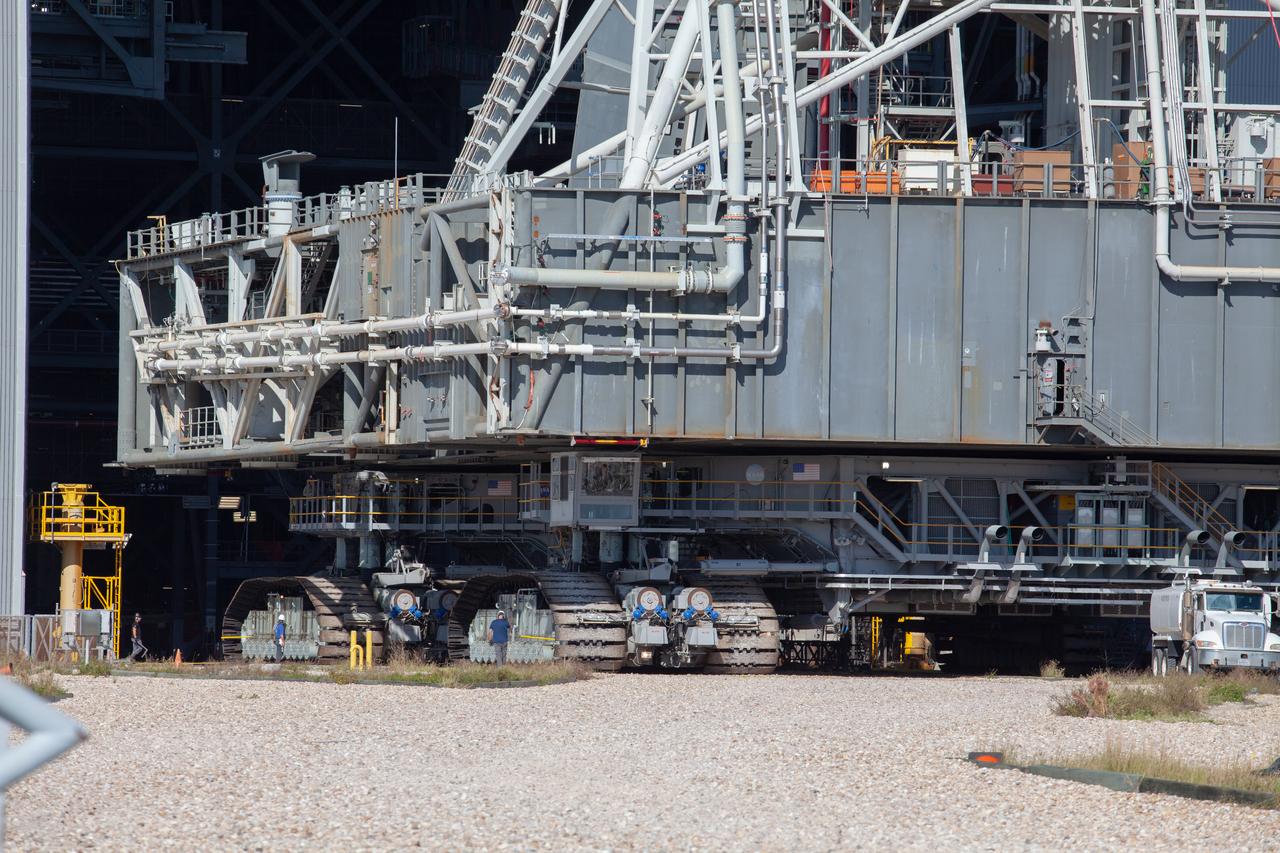
Crawler-transporter 2 carries the mobile launcher for NASA’s Artemis missions out of the Vehicle Assembly Building (VAB) at Kennedy Space Center in Florida on Sept. 10, 2019, after spending a week and a half inside due to the approach of Hurricane Dorian. The nearly 400-foot-tall structure was moved from Launch Pad 39B to the VAB for safekeeping on Aug. 30. The storm passed about 70 miles east of the spaceport during the overnight hours Tuesday, Sept. 3, and Wednesday, Sept. 4. NASA’s Exploration Ground Systems is moving the mobile launcher back to the launch pad, where teams will complete testing and checkout on the launcher in the coming weeks for the Artemis I mission.
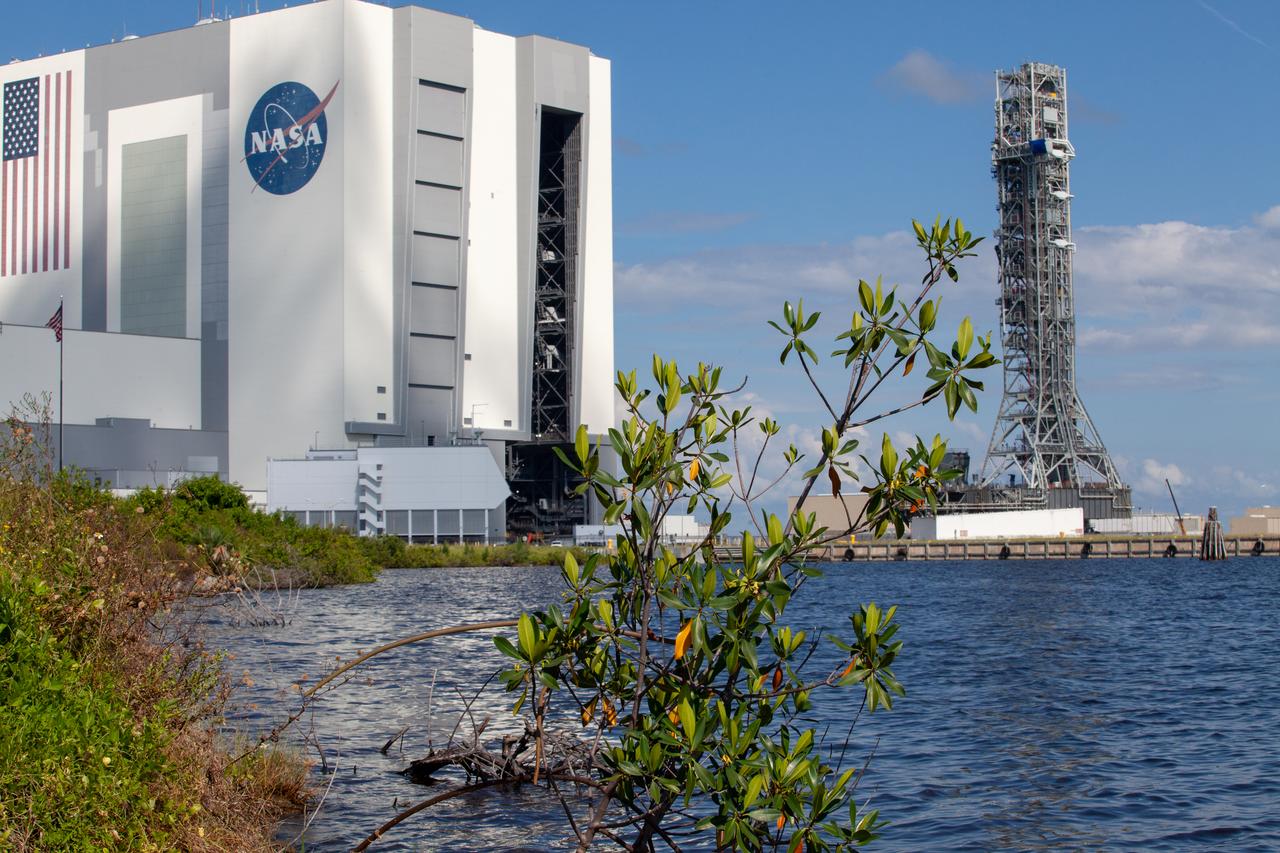
The mobile launcher for NASA’s Artemis missions rolls out of the Vehicle Assembly Building (VAB) at Kennedy Space Center in Florida on Sept. 10, 2019, after spending a week and a half inside due to the approach of Hurricane Dorian. The nearly 400-foot-tall structure was moved from Launch Pad 39B to the VAB for safekeeping on Aug. 30. The storm passed about 70 miles east of the spaceport during the overnight hours Tuesday, Sept. 3, and Wednesday, Sept. 4. NASA’s Exploration Ground Systems is moving the mobile launcher back to the launch pad, where teams will complete testing and checkout on the launcher in the coming weeks for the Artemis I mission.
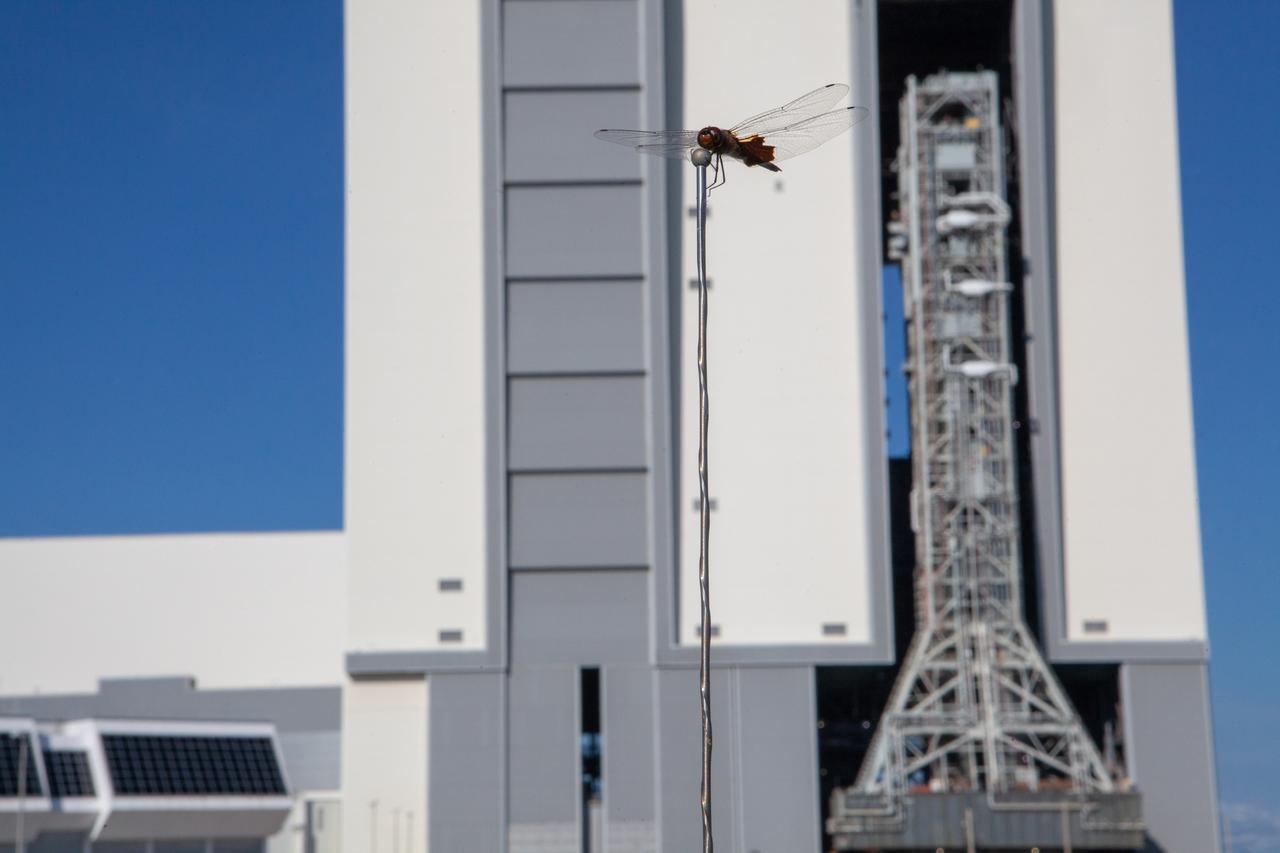
The mobile launcher for NASA’s Artemis missions rolls out of the Vehicle Assembly Building (VAB) at Kennedy Space Center in Florida on Sept. 10, 2019, after spending a week and a half inside due to the approach of Hurricane Dorian. The nearly 400-foot-tall structure was moved from Launch Pad 39B to the VAB for safekeeping on Aug. 30. The storm passed about 70 miles east of the spaceport during the overnight hours Tuesday, Sept. 3, and Wednesday, Sept. 4. NASA’s Exploration Ground Systems is moving the mobile launcher back to the launch pad, where teams will complete testing and checkout on the launcher in the coming weeks for the Artemis I mission.
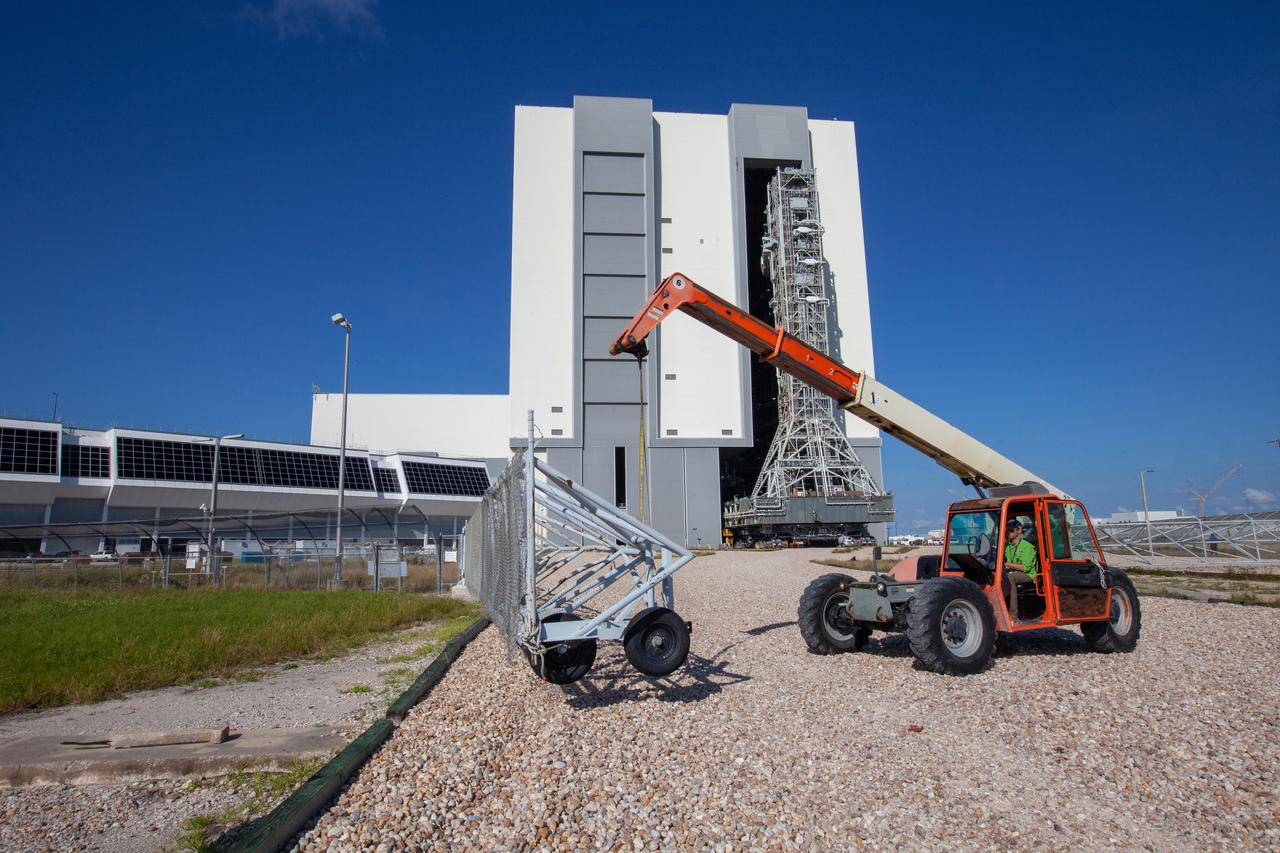
The crawlerway gate is opened as the mobile launcher for NASA’s Artemis missions rolls out of the Vehicle Assembly Building (VAB) at Kennedy Space Center in Florida on Sept. 10, 2019, after spending a week and a half inside due to the approach of Hurricane Dorian. The nearly 400-foot-tall structure was moved from Launch Pad 39B to the VAB for safekeeping on Aug. 30. The storm passed about 70 miles east of the spaceport during the overnight hours Tuesday, Sept. 3, and Wednesday, Sept. 4. NASA’s Exploration Ground Systems is moving the mobile launcher back to the launch pad, where teams will complete testing and checkout on the launcher in the coming weeks for the Artemis I mission.
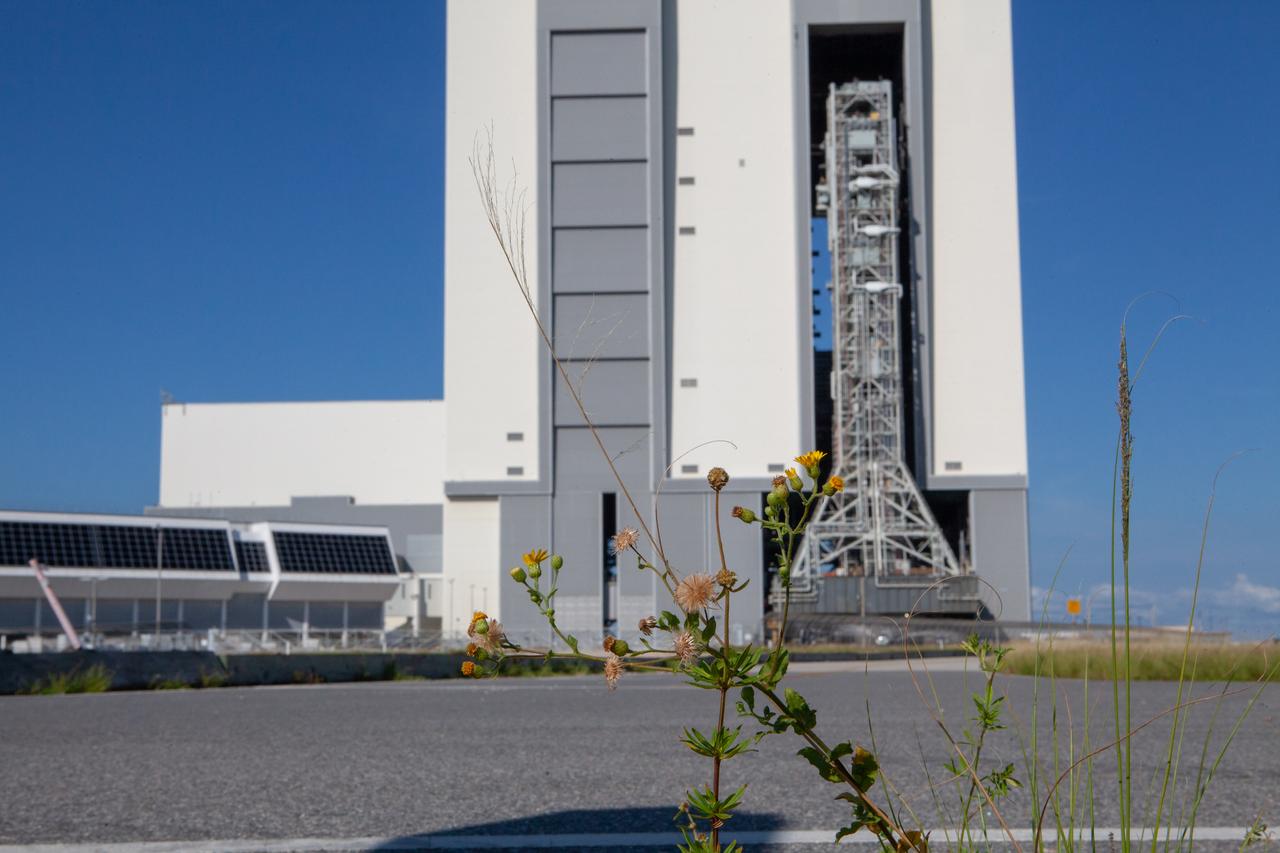
The mobile launcher for NASA’s Artemis missions rolls out of the Vehicle Assembly Building (VAB) at Kennedy Space Center in Florida on Sept. 10, 2019, after spending a week and a half inside due to the approach of Hurricane Dorian. The nearly 400-foot-tall structure was moved from Launch Pad 39B to the VAB for safekeeping on Aug. 30. The storm passed about 70 miles east of the spaceport during the overnight hours Tuesday, Sept. 3, and Wednesday, Sept. 4. NASA’s Exploration Ground Systems is moving the mobile launcher back to the launch pad, where teams will complete testing and checkout on the launcher in the coming weeks for the Artemis I mission.
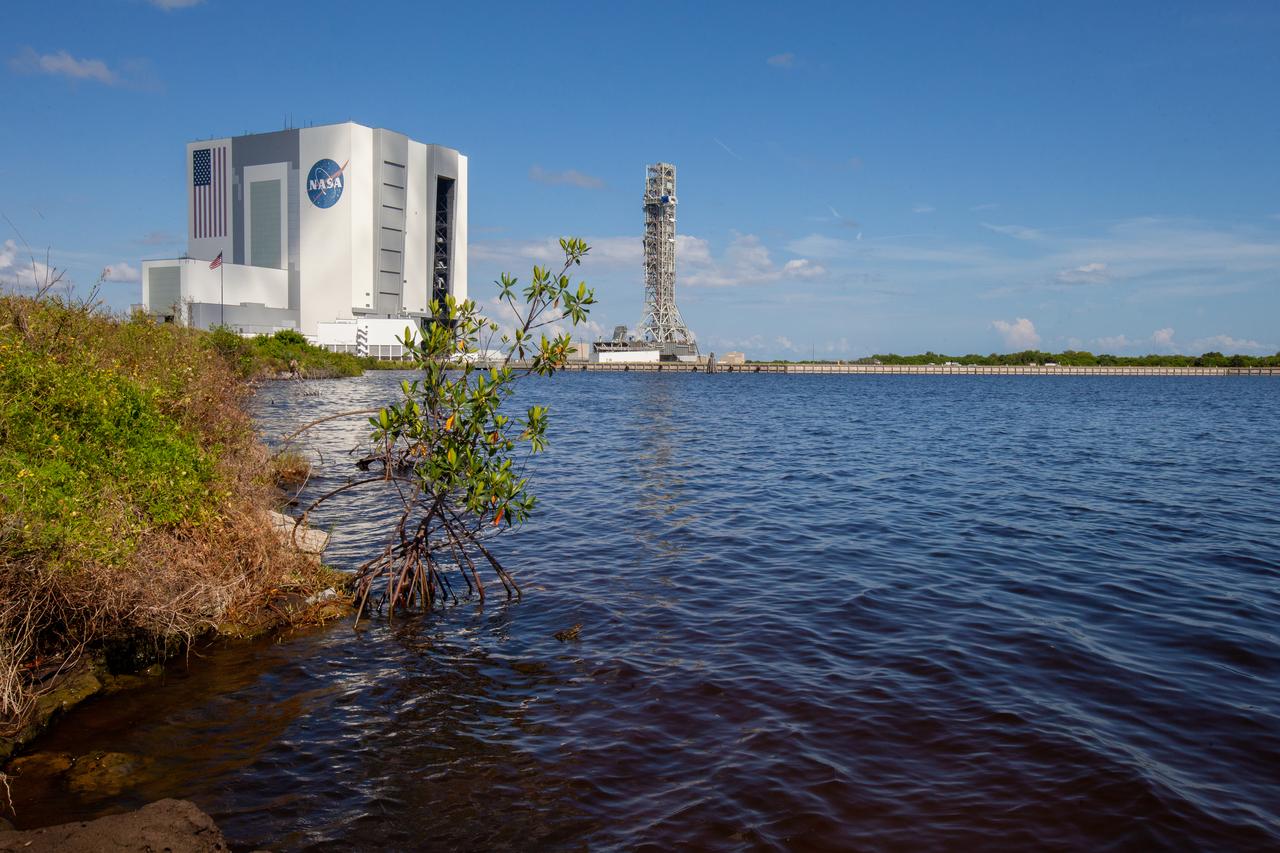
The mobile launcher for NASA’s Artemis missions rolls out of the Vehicle Assembly Building (VAB) at Kennedy Space Center in Florida on Sept. 10, 2019, after spending a week and a half inside due to the approach of Hurricane Dorian. The nearly 400-foot-tall structure was moved from Launch Pad 39B to the VAB for safekeeping on Aug. 30. The storm passed about 70 miles east of the spaceport during the overnight hours Tuesday, Sept. 3, and Wednesday, Sept. 4. NASA’s Exploration Ground Systems is moving the mobile launcher back to the launch pad, where teams will complete testing and checkout on the launcher in the coming weeks for the Artemis I mission.
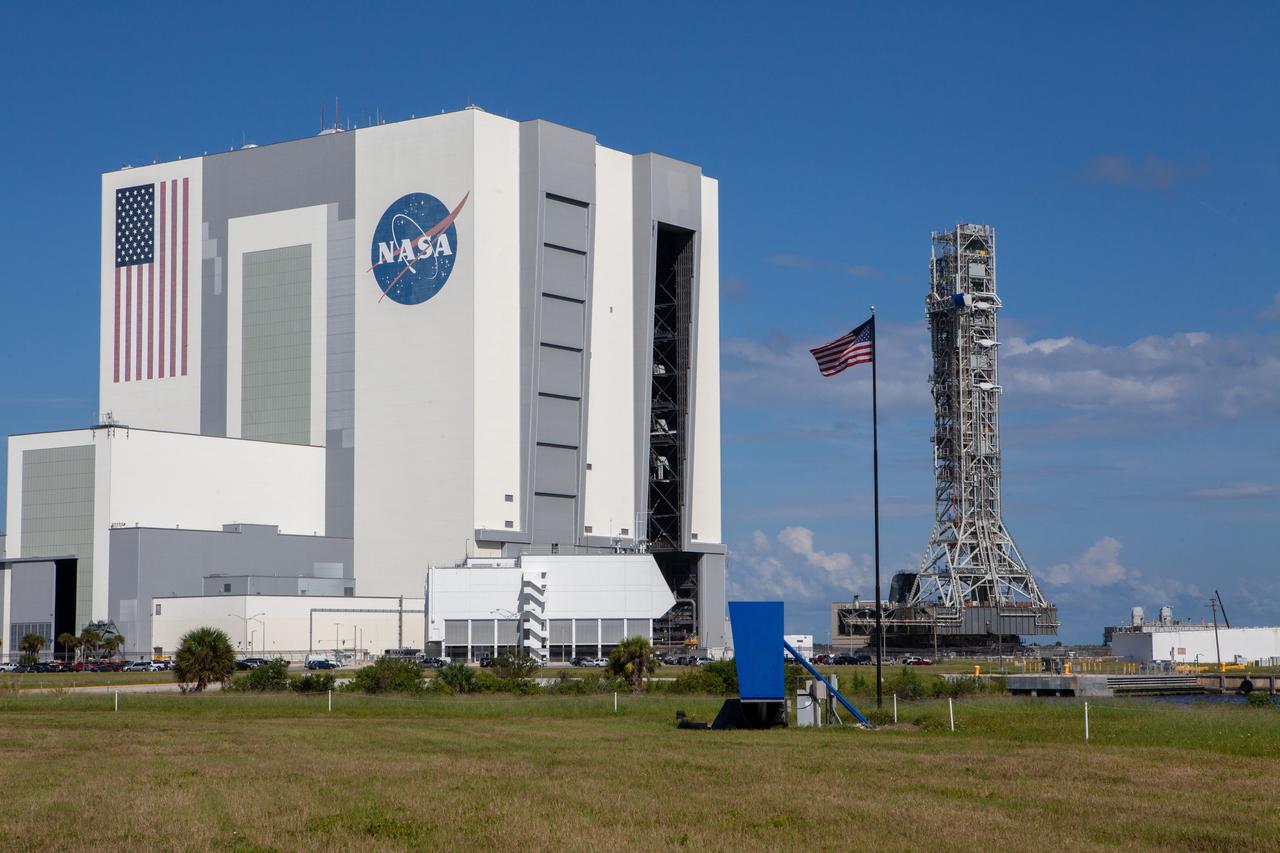
The mobile launcher for NASA’s Artemis missions rolls out of the Vehicle Assembly Building (VAB) at Kennedy Space Center in Florida on Sept. 10, 2019, after spending a week and a half inside due to the approach of Hurricane Dorian. The nearly 400-foot-tall structure was moved from Launch Pad 39B to the VAB for safekeeping on Aug. 30. The storm passed about 70 miles east of the spaceport during the overnight hours Tuesday, Sept. 3, and Wednesday, Sept. 4. NASA’s Exploration Ground Systems is moving the mobile launcher back to the launch pad, where teams will complete testing and checkout on the launcher in the coming weeks for the Artemis I mission.
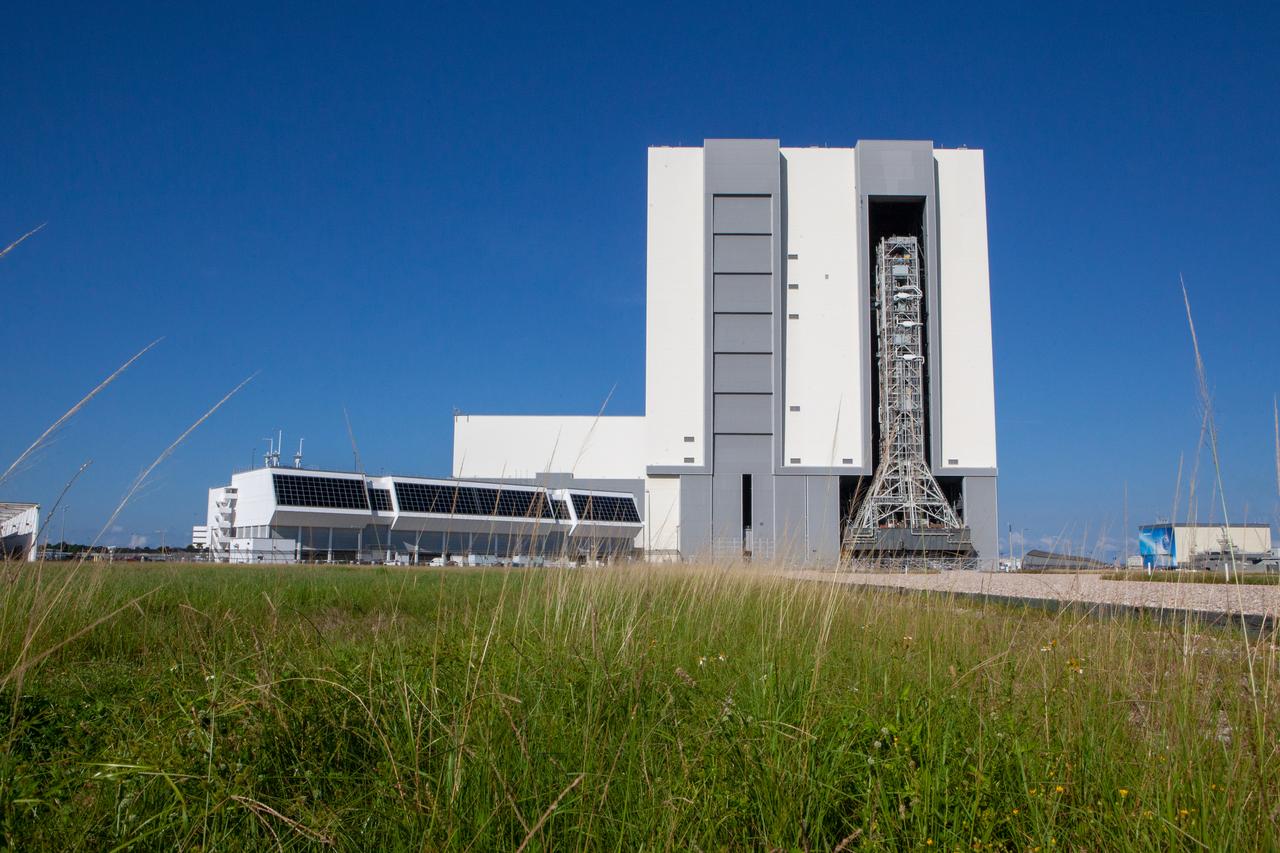
The mobile launcher for NASA’s Artemis missions rolls out of the Vehicle Assembly Building (VAB) at Kennedy Space Center in Florida on Sept. 10, 2019, after spending a week and a half inside due to the approach of Hurricane Dorian. The nearly 400-foot-tall structure was moved from Launch Pad 39B to the VAB for safekeeping on Aug. 30. The storm passed about 70 miles east of the spaceport during the overnight hours Tuesday, Sept. 3, and Wednesday, Sept. 4. NASA’s Exploration Ground Systems is moving the mobile launcher back to the launch pad, where teams will complete testing and checkout on the launcher in the coming weeks for the Artemis I mission.
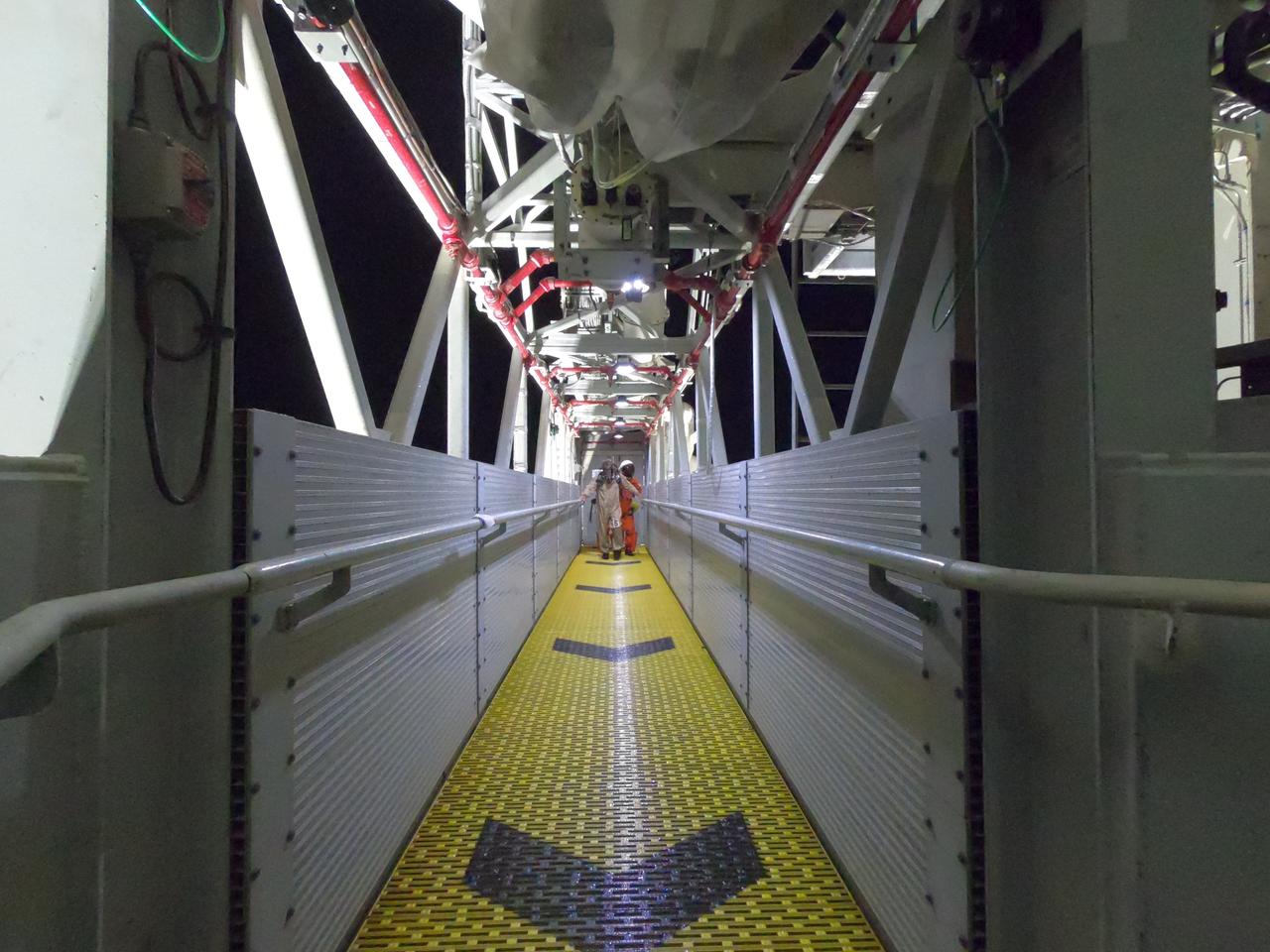
Teams at NASA’s Kennedy Space Center in Florida practice the Artemis mission emergency escape or egress procedures during a series of integrated system verification and validation tests at Launch Pad 39B on Tuesday, Aug. 13, 2024. Members of the closeout crew, pad rescue team, and the Exploration Ground Systems Program – who also suited up as astronauts – practiced the process of getting inside and out of the emergency egress baskets. While the crew and other personnel will ride the emergency egress baskets to the terminus area in a real emergency, no one rode the baskets for this test. Instead, teams tested the baskets during separate occasions by using water tanks filled to different levels to replicate simulate the weight of passengers.
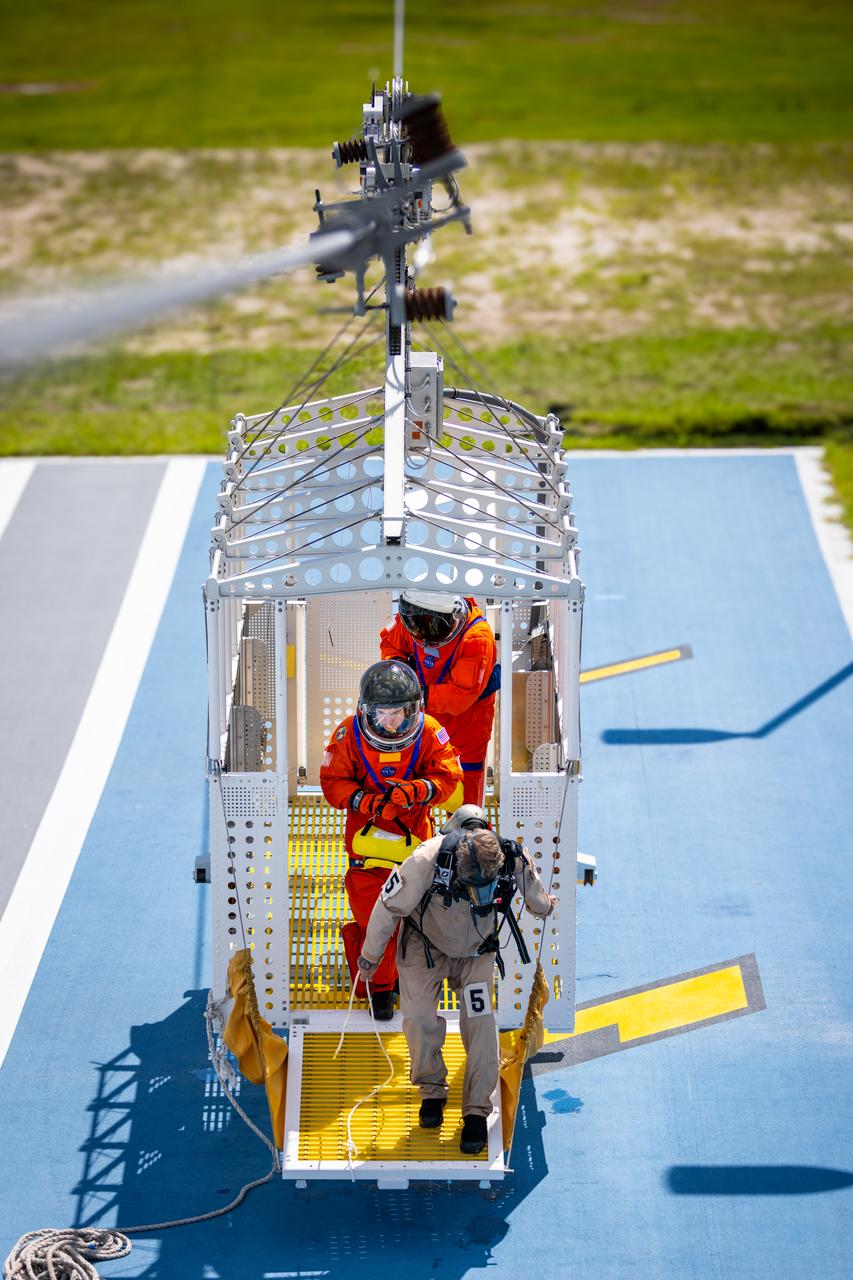
Teams at NASA’s Kennedy Space Center in Florida practice the Artemis mission emergency escape or egress procedures during a series of integrated system verification and validation tests at Launch Pad 39B on Monday, Aug. 12, 2024. Members of the closeout crew, pad rescue team and the Exploration Ground Systems Program practiced the process of getting inside and out of the emergency egress baskets. While the crew and other personnel will ride the emergency egress baskets to the terminus area in a real emergency, no one rode the baskets for this test. Instead, teams tested the baskets during separate occasions by using water tanks filled to different levels to replicate simulate the weight of passengers.
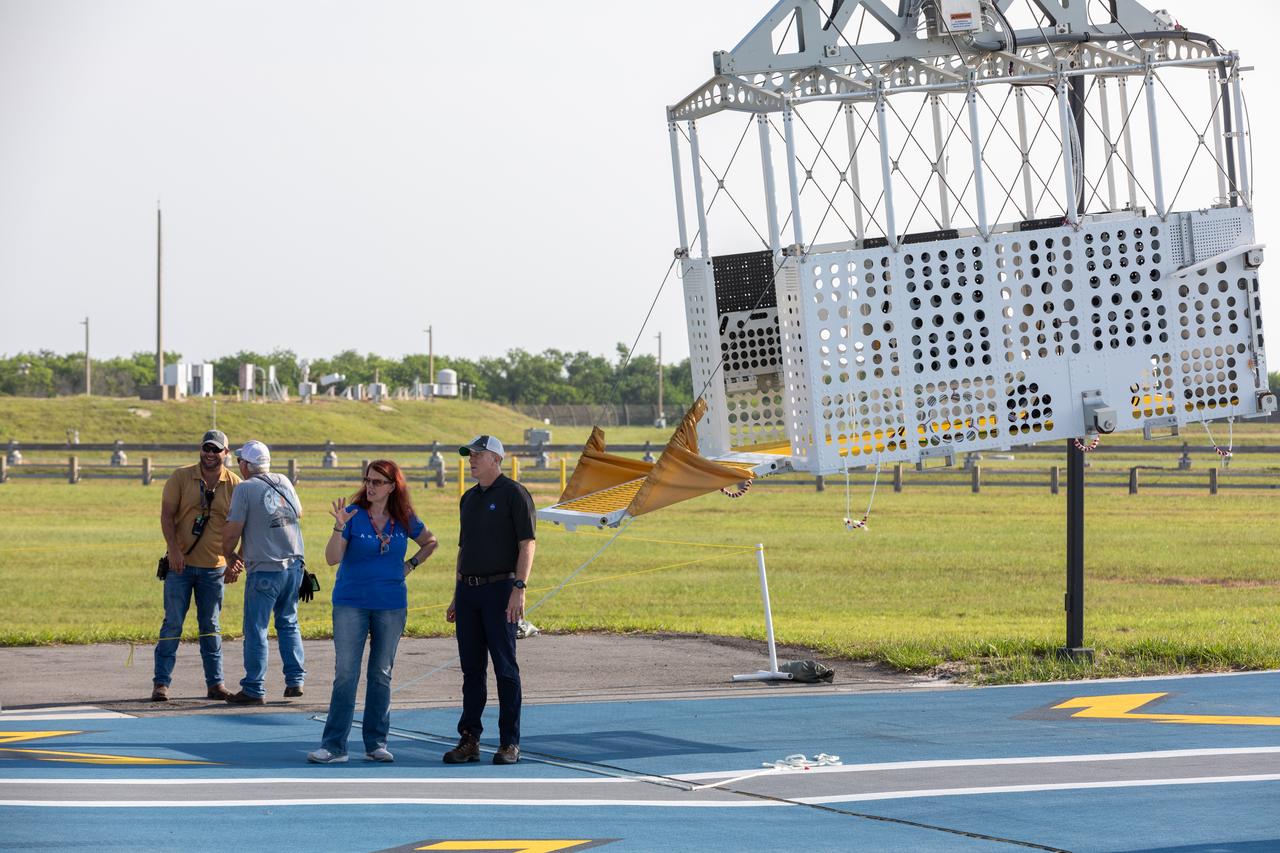
Teams at NASA’s Kennedy Space Center in Florida practice the Artemis mission emergency procedures during a series of integrated system verification and validation tests at Launch Pad 39B on Friday, Aug. 9, 2024. Members of the closeout crew, pad rescue team, and the Exploration Ground Systems Program practiced the process of getting inside and out of the emergency egress baskets. While the crew and other personnel will ride the emergency egress baskets to the terminus area in a real emergency, no one rode the baskets for this test. Instead, teams tested the baskets during separate occasions by using water tanks filled to different levels to replicate simulate the weight of passengers.
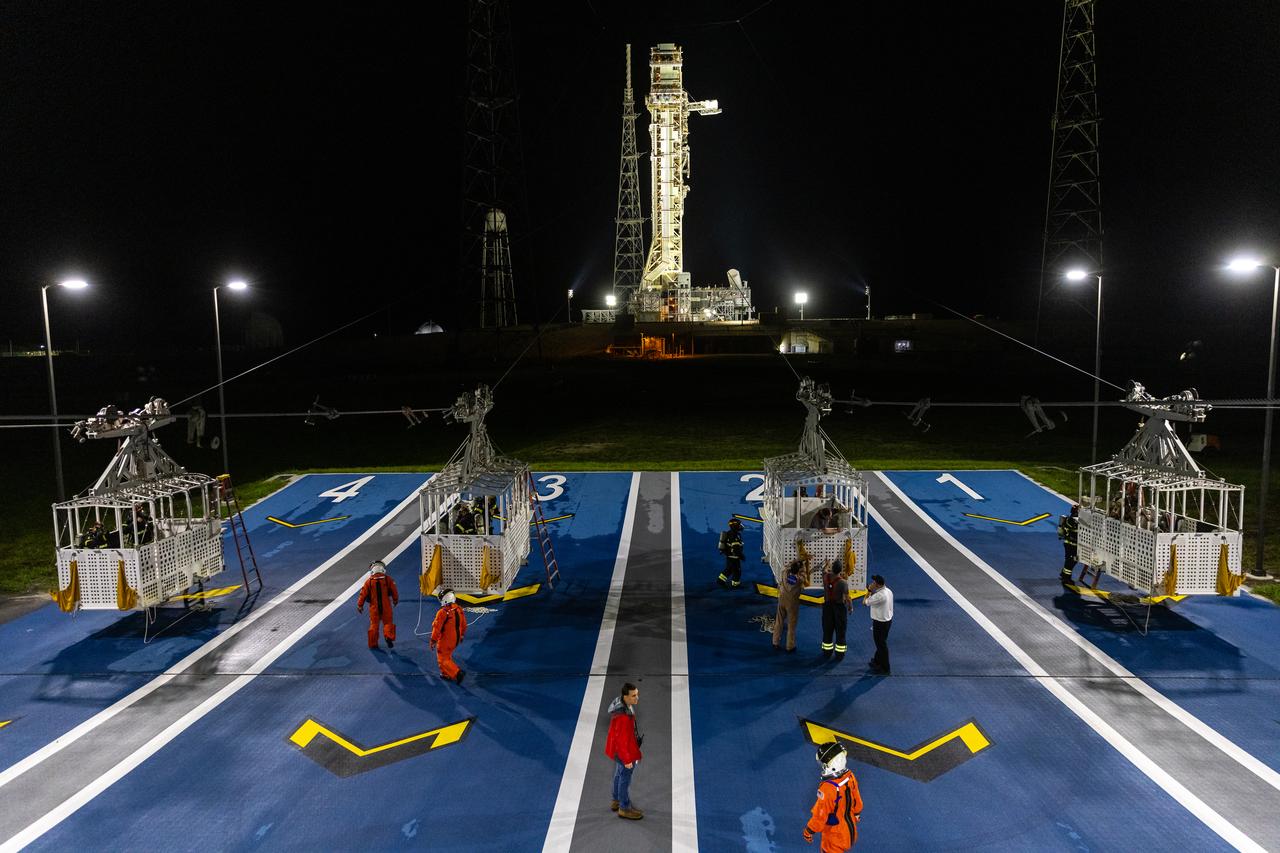
Teams at NASA’s Kennedy Space Center in Florida practice the Artemis mission emergency escape or egress procedures during a series of integrated system verification and validation tests at Launch Pad 39B on Tuesday, Aug. 13, 2024. Members of the closeout crew, pad rescue team and the Exploration Ground Systems Program practiced the process of getting inside and out of the emergency egress baskets. While the crew and other personnel will ride the emergency egress baskets to the terminus area in a real emergency, no one rode the baskets for this test. Instead, teams tested the baskets during separate occasions by using water tanks filled to different levels to replicate simulate the weight of passengers.

Teams at NASA’s Kennedy Space Center in Florida practice the Artemis mission emergency escape or egress procedures during a series of integrated system verification and validation tests at Launch Pad 39B on Monday, Aug. 12, 2024. Members of the closeout crew, pad rescue team and the Exploration Ground Systems Program practiced the process of getting inside and out of the emergency egress baskets. While the crew and other personnel will ride the emergency egress baskets to the terminus area in a real emergency, no one rode the baskets for this test. Instead, teams tested the baskets during separate occasions by using water tanks filled to different levels to replicate simulate the weight of passengers.
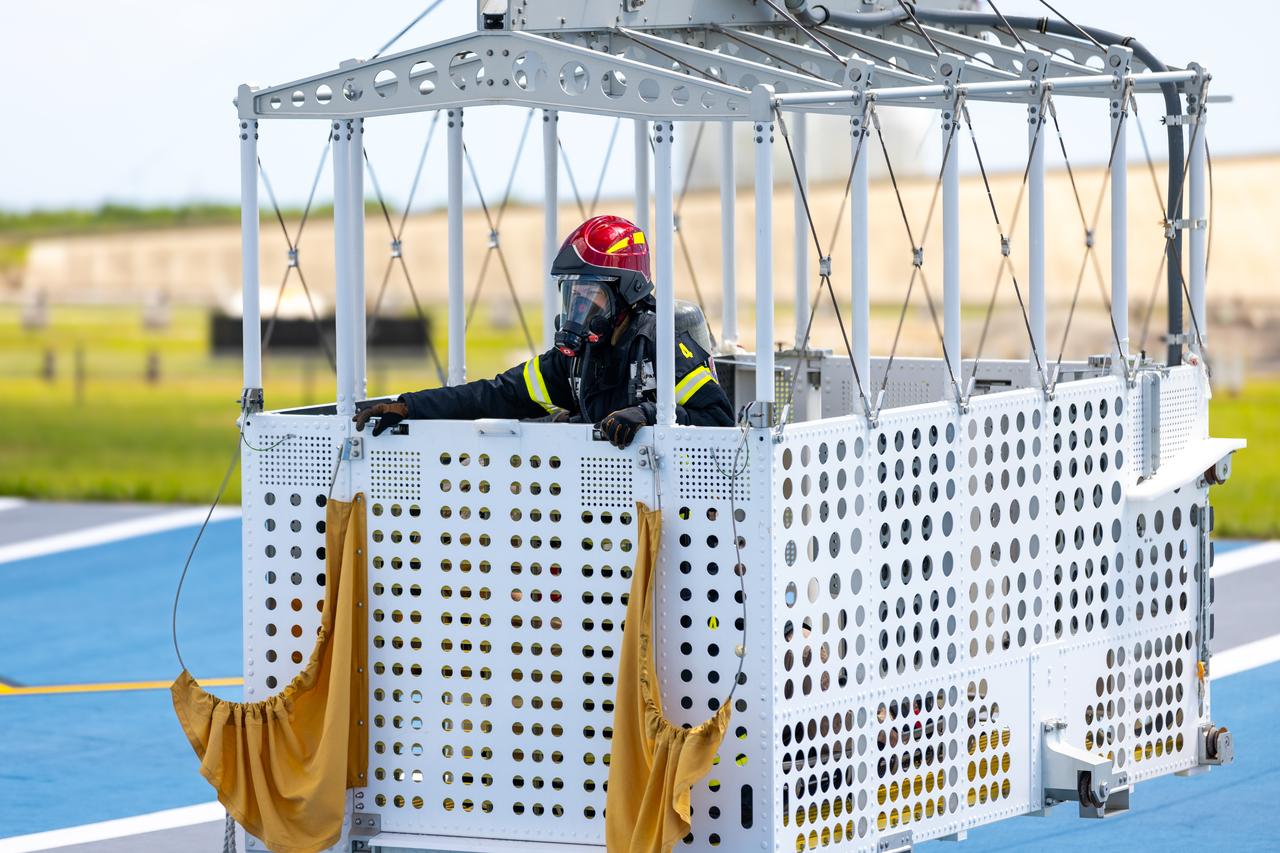
Teams at NASA’s Kennedy Space Center in Florida practice the Artemis mission emergency escape or egress procedures during a series of integrated system verification and validation tests at Launch Pad 39B on Monday, Aug. 12, 2024. Members of the closeout crew, pad rescue team and the Exploration Ground Systems Program practiced the process of getting inside and out of the emergency egress baskets. While the crew and other personnel will ride the emergency egress baskets to the terminus area in a real emergency, no one rode the baskets for this test. Instead, teams tested the baskets during separate occasions by using water tanks filled to different levels to replicate simulate the weight of passengers.
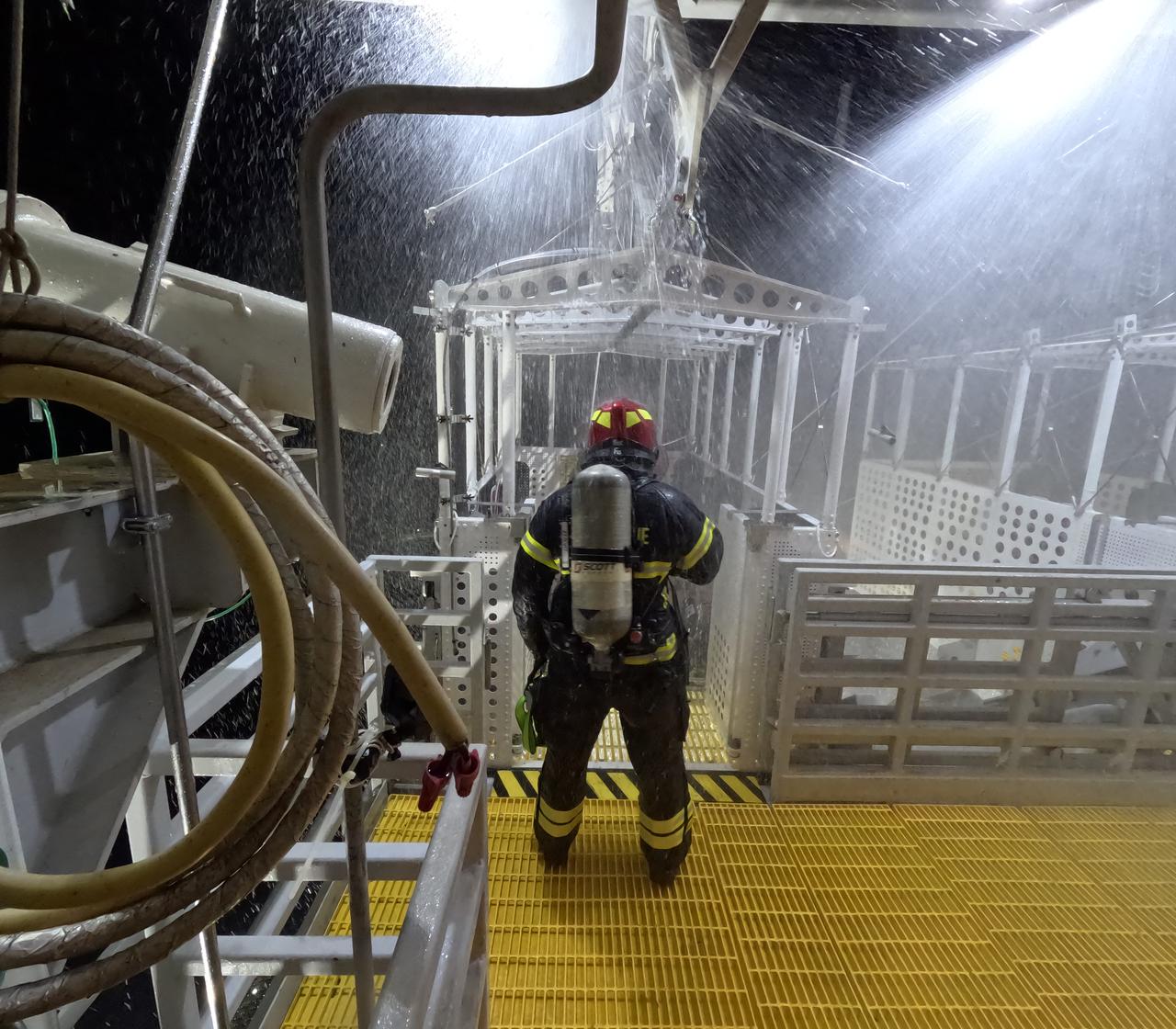
Teams at NASA’s Kennedy Space Center in Florida practice the Artemis mission emergency escape or egress procedures during a series of integrated system verification and validation tests at Launch Pad 39B on Tuesday, Aug. 13, 2024. Members of the closeout crew, pad rescue team, and the Exploration Ground Systems Program – who also suited up as astronauts – practiced the process of getting inside and out of the emergency egress baskets. While the crew and other personnel will ride the emergency egress baskets to the terminus area in a real emergency, no one rode the baskets for this test. Instead, teams tested the baskets during separate occasions by using water tanks filled to different levels to replicate simulate the weight of passengers.
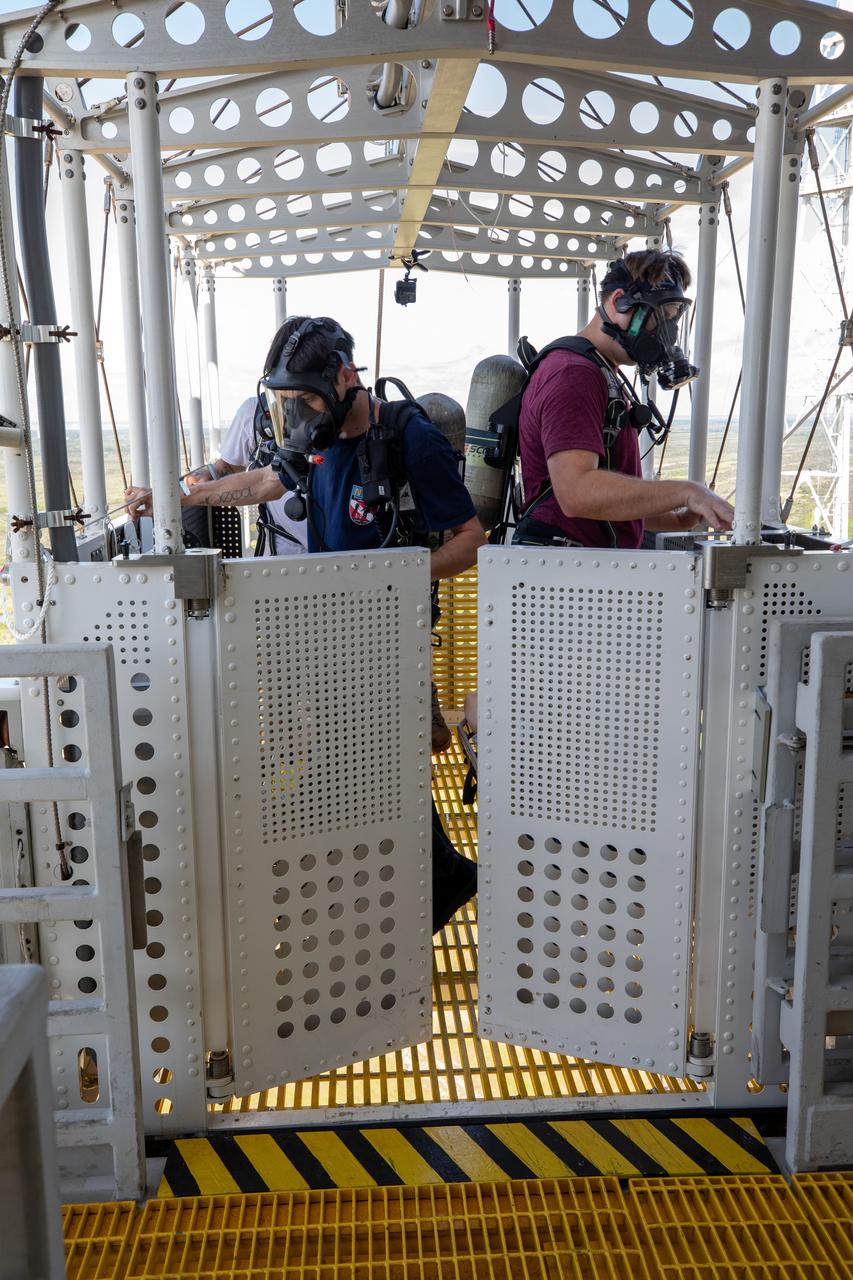
Teams at NASA’s Kennedy Space Center in Florida practice the Artemis mission emergency escape or egress procedures during a series of integrated system verification and validation tests at Launch Pad 39B on Sunday, Aug. 11, 2024. Members of the closeout crew, pad rescue team and the Exploration Ground Systems Program practiced the process of getting inside and out of the emergency egress baskets. While the crew and other personnel will ride the emergency egress baskets to the terminus area in a real emergency, no one rode the baskets for this test. Instead, teams tested the baskets during separate occasions by using water tanks filled to different levels to replicate simulate the weight of passengers.
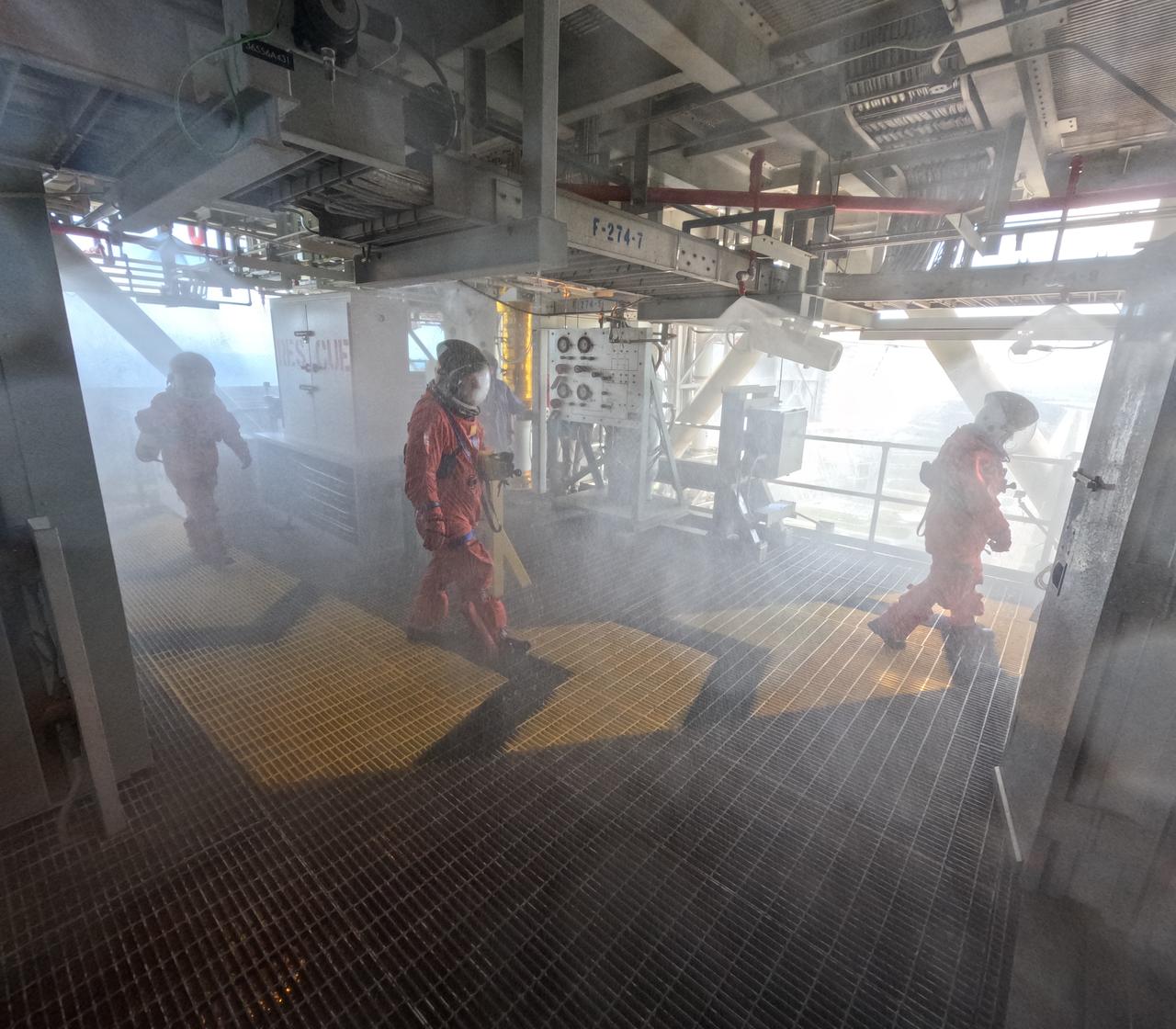
Teams at NASA’s Kennedy Space Center in Florida practice the Artemis mission emergency escape or egress procedures during a series of integrated system verification and validation tests at Launch Pad 39B on Sunday, Aug. 11, 2024. Members of the closeout crew, simulated flight crew, pad rescue team, and the Exploration Ground Systems Program practiced the process of getting inside and out of the emergency egress baskets. While the crew and other personnel will ride the emergency egress baskets to the terminus area in a real emergency, no one rode the baskets for this test. Instead, teams tested the baskets during separate occasions by using water tanks filled to different levels to replicate simulate the weight of passengers.
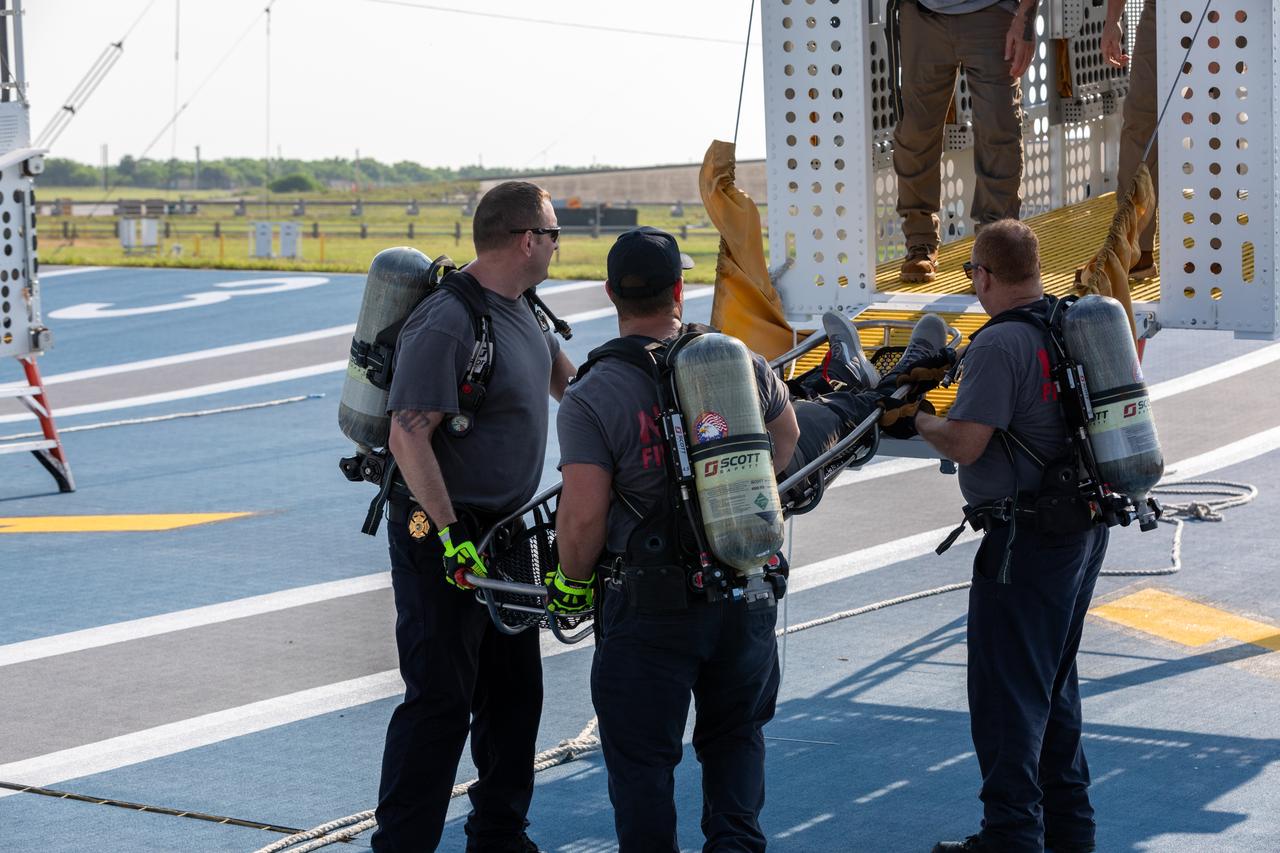
Teams at NASA’s Kennedy Space Center in Florida practice the Artemis mission emergency procedures during a series of integrated system verification and validation tests at Launch Pad 39B on Friday, Aug. 9, 2024. Members of the closeout crew, pad rescue team, and the Exploration Ground Systems Program practiced the process of getting inside and out of the emergency egress baskets. While the crew and other personnel will ride the emergency egress baskets to the terminus area in a real emergency, no one rode the baskets for this test. Instead, teams tested the baskets during separate occasions by using water tanks filled to different levels to replicate simulate the weight of passengers.
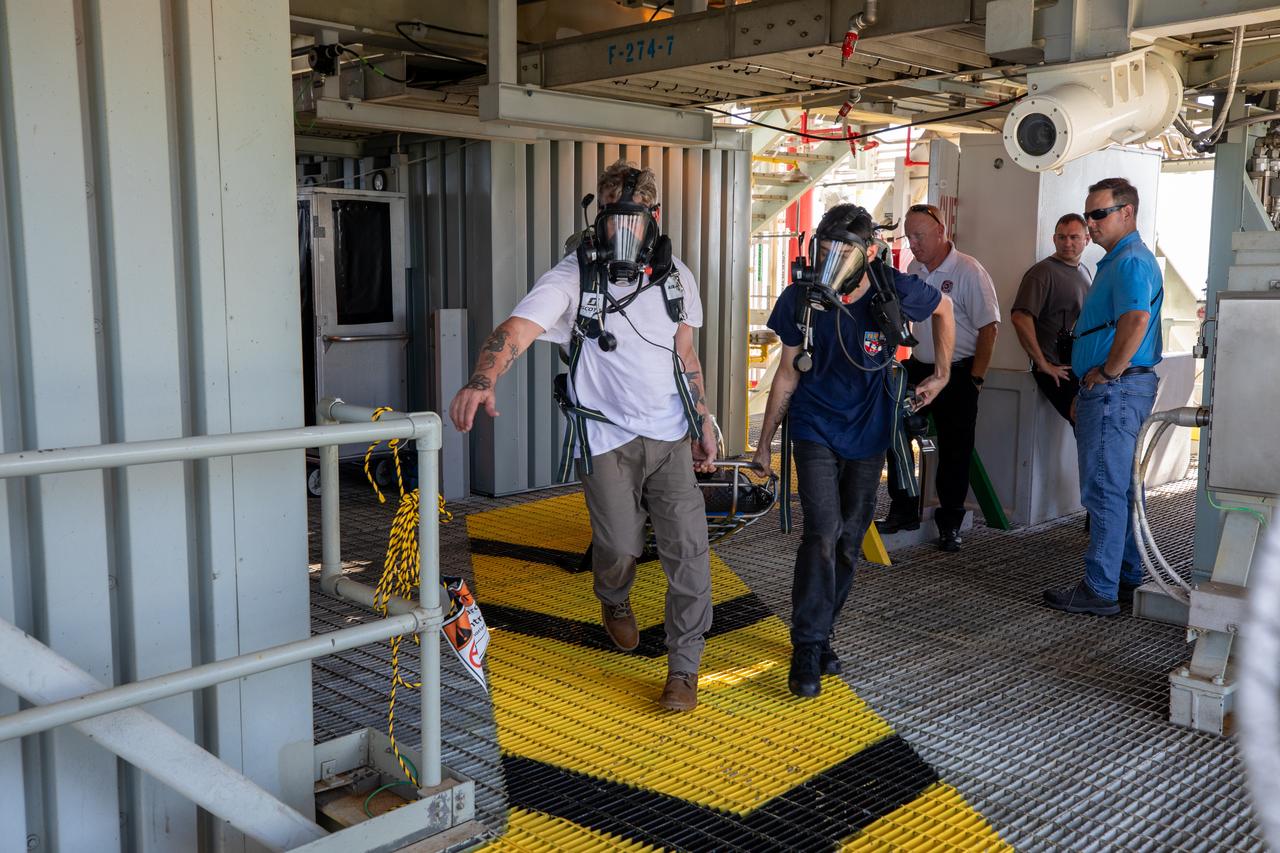
Teams at NASA’s Kennedy Space Center in Florida practice the Artemis mission emergency escape or egress procedures during a series of integrated system verification and validation tests at Launch Pad 39B on Sunday, Aug. 11, 2024. Members of the closeout crew, pad rescue team and the Exploration Ground Systems Program practiced the process of getting inside and out of the emergency egress baskets. While the crew and other personnel will ride the emergency egress baskets to the terminus area in a real emergency, no one rode the baskets for this test. Instead, teams tested the baskets during separate occasions by using water tanks filled to different levels to replicate simulate the weight of passengers.
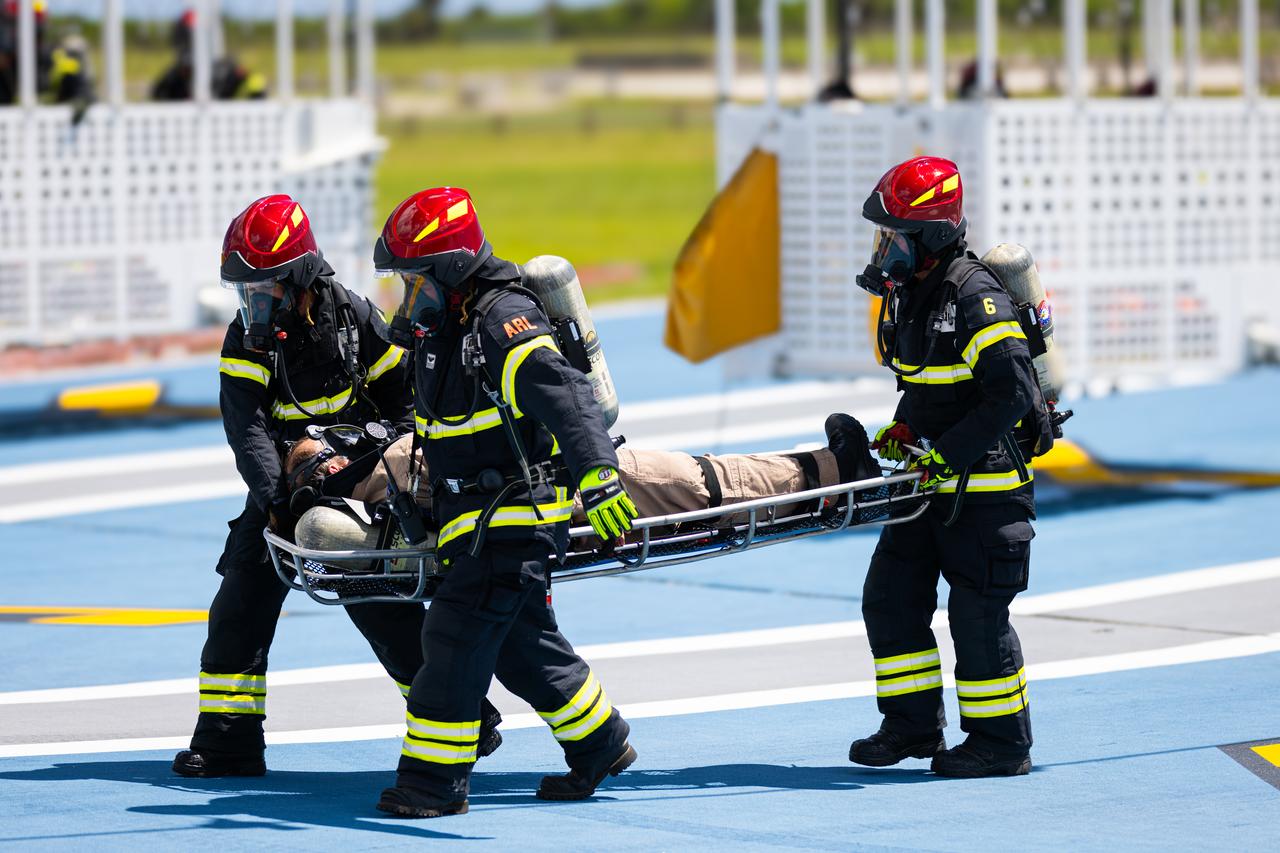
Teams at NASA’s Kennedy Space Center in Florida practice the Artemis mission emergency escape or egress procedures during a series of integrated system verification and validation tests at Launch Pad 39B on Monday, Aug. 12, 2024. Members of the closeout crew, pad rescue team and the Exploration Ground Systems Program practiced the process of getting inside and out of the emergency egress baskets. While the crew and other personnel will ride the emergency egress baskets to the terminus area in a real emergency, no one rode the baskets for this test. Instead, teams tested the baskets during separate occasions by using water tanks filled to different levels to replicate simulate the weight of passengers.
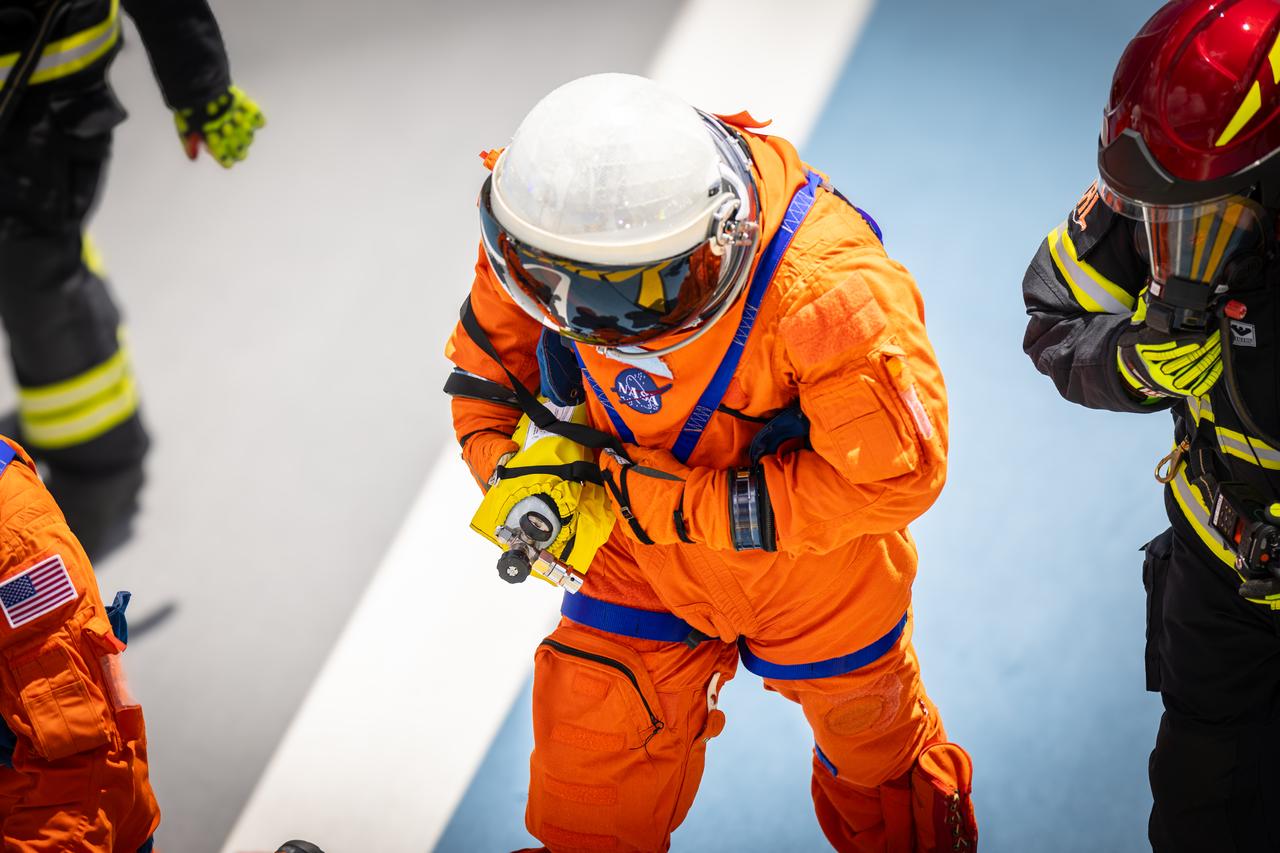
Teams at NASA’s Kennedy Space Center in Florida practice the Artemis mission emergency escape or egress procedures during a series of integrated system verification and validation tests at Launch Pad 39B on Monday, Aug. 12, 2024. Members of the closeout crew, pad rescue team and the Exploration Ground Systems Program practiced the process of getting inside and out of the emergency egress baskets. While the crew and other personnel will ride the emergency egress baskets to the terminus area in a real emergency, no one rode the baskets for this test. Instead, teams tested the baskets during separate occasions by using water tanks filled to different levels to replicate simulate the weight of passengers.
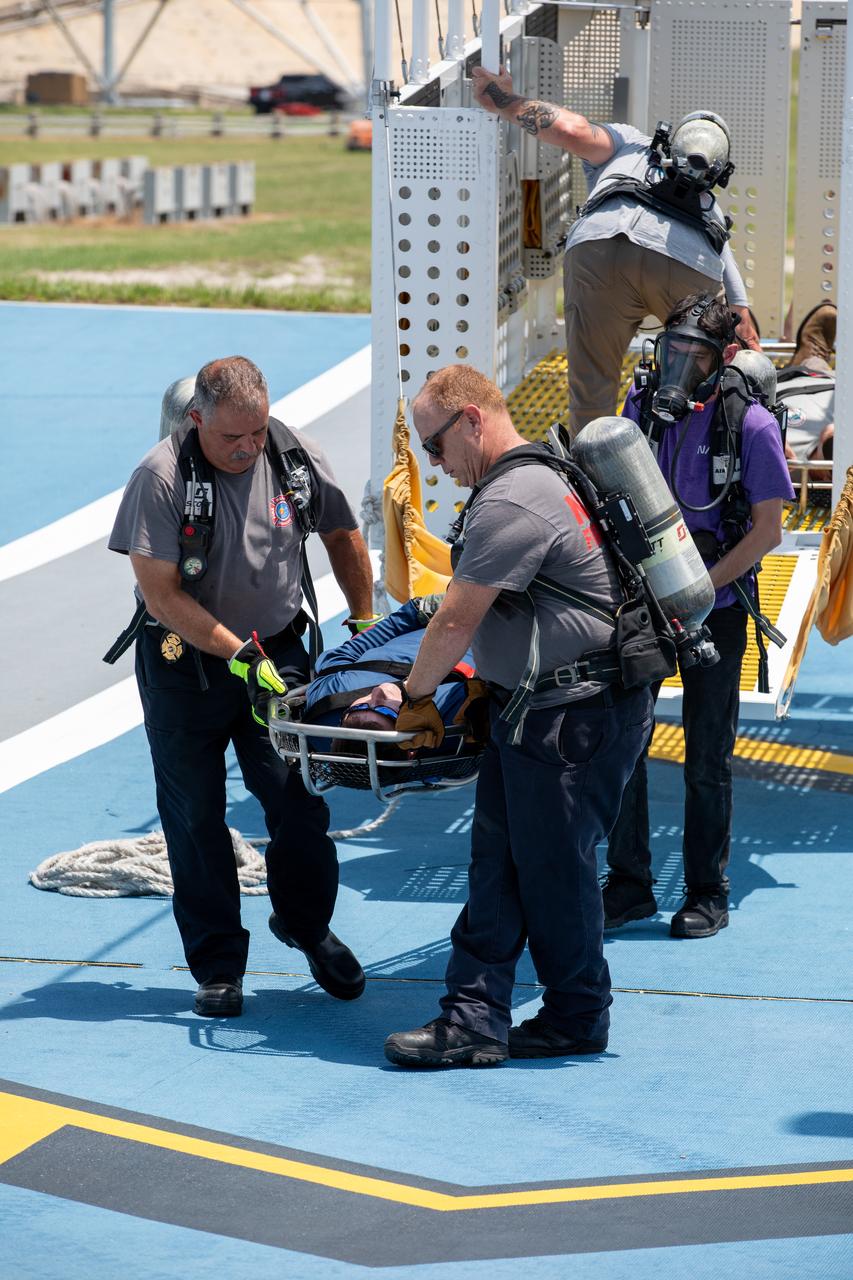
Teams at NASA’s Kennedy Space Center in Florida practice the Artemis mission emergency escape or egress procedures during a series of integrated system verification and validation tests at Launch Complex 39B on Friday, Aug. 9, 2024. Members of the closeout crew, pad rescue team, and the Exploration Ground Systems Program practiced the process of getting in and out of the emergency egress baskets then down to the launch pad where they would be transported to emergency transport vehicles and driven to safety. Prior to this test and throughout the course of several months, teams conducted several basket release demonstrations to validate the system.

Teams at NASA’s Kennedy Space Center in Florida practice the Artemis mission emergency escape or egress procedures during a series of integrated system verification and validation tests at Launch Pad 39B on Sunday, Aug. 11, 2024. Members of the closeout crew, pad rescue team and the Exploration Ground Systems Program practiced the process of getting inside and out of the emergency egress baskets. While the crew and other personnel will ride the emergency egress baskets to the terminus area in a real emergency, no one rode the baskets for this test. Instead, teams tested the baskets during separate occasions by using water tanks filled to different levels to replicate simulate the weight of passengers.
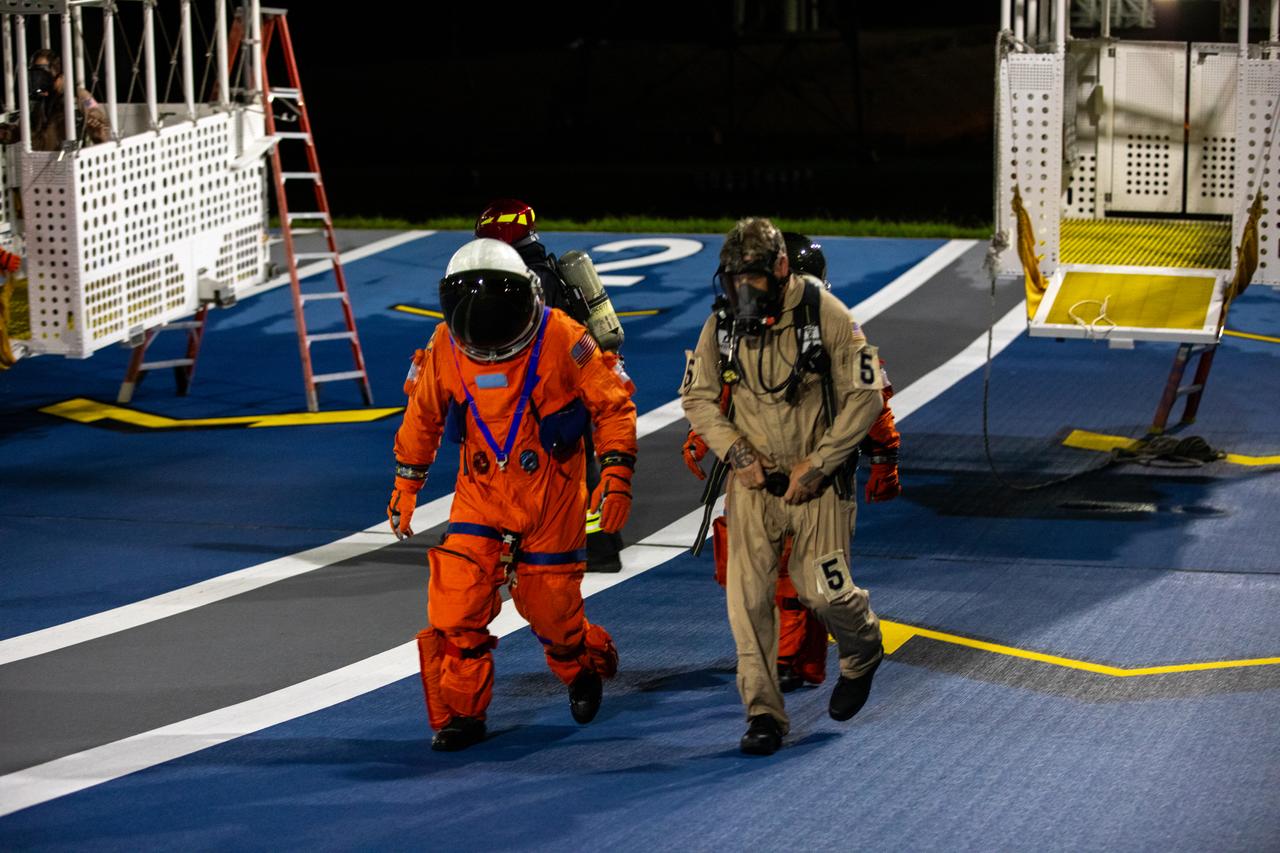
Teams at NASA’s Kennedy Space Center in Florida practice the Artemis mission emergency escape or egress procedures during a series of integrated system verification and validation tests at Launch Pad 39B on Tuesday, Aug. 13, 2024. Members of the closeout crew, pad rescue team and the Exploration Ground Systems Program practiced the process of getting inside and out of the emergency egress baskets. While the crew and other personnel will ride the emergency egress baskets to the terminus area in a real emergency, no one rode the baskets for this test. Instead, teams tested the baskets during separate occasions by using water tanks filled to different levels to replicate simulate the weight of passengers.
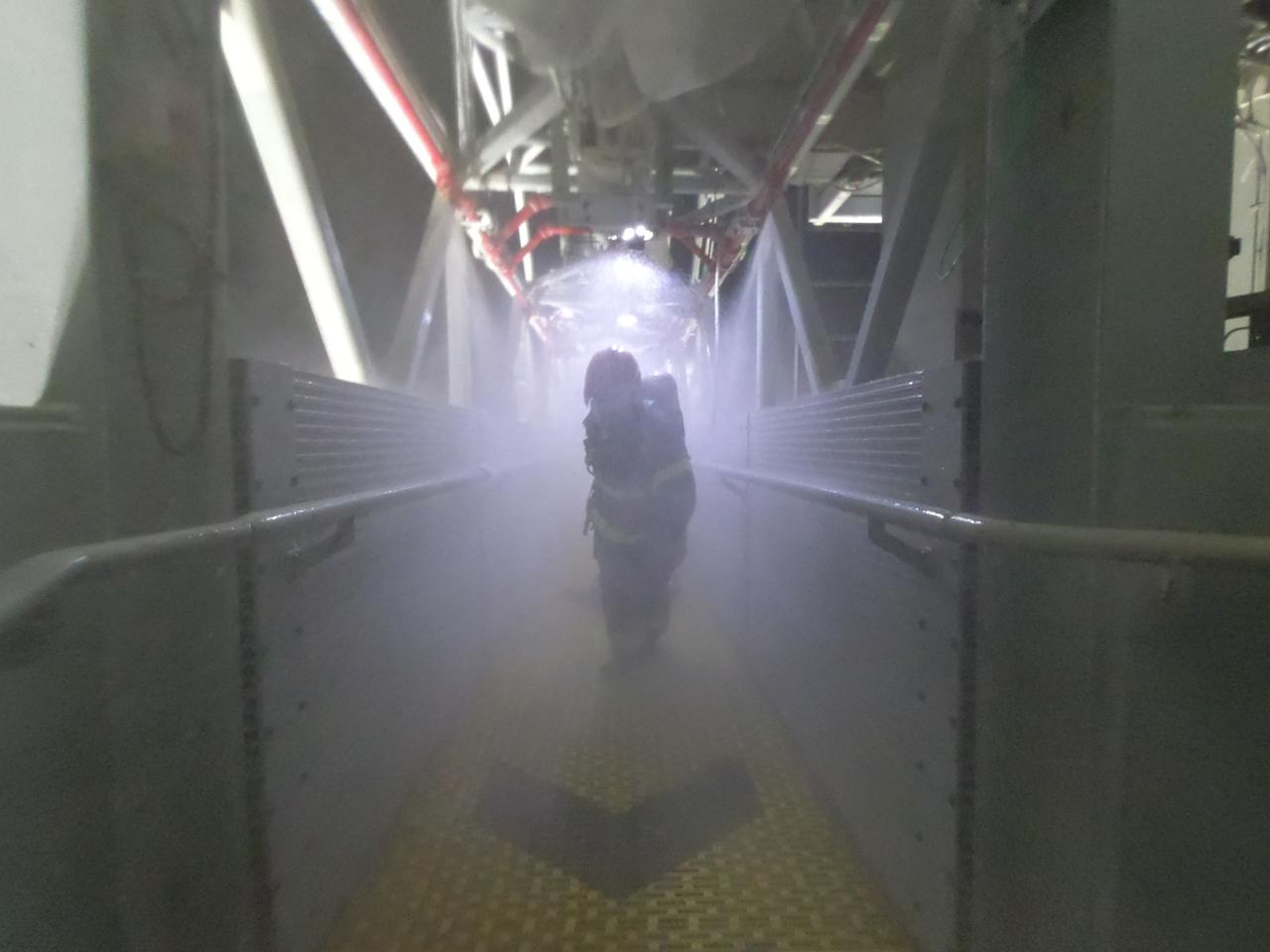
Teams at NASA’s Kennedy Space Center in Florida practice the Artemis mission emergency escape or egress procedures during a series of integrated system verification and validation tests at Launch Pad 39B on Tuesday, Aug. 13, 2024. Members of the closeout crew, pad rescue team, and the Exploration Ground Systems Program – who also suited up as astronauts – practiced the process of getting inside and out of the emergency egress baskets. While the crew and other personnel will ride the emergency egress baskets to the terminus area in a real emergency, no one rode the baskets for this test. Instead, teams tested the baskets during separate occasions by using water tanks filled to different levels to replicate simulate the weight of passengers.
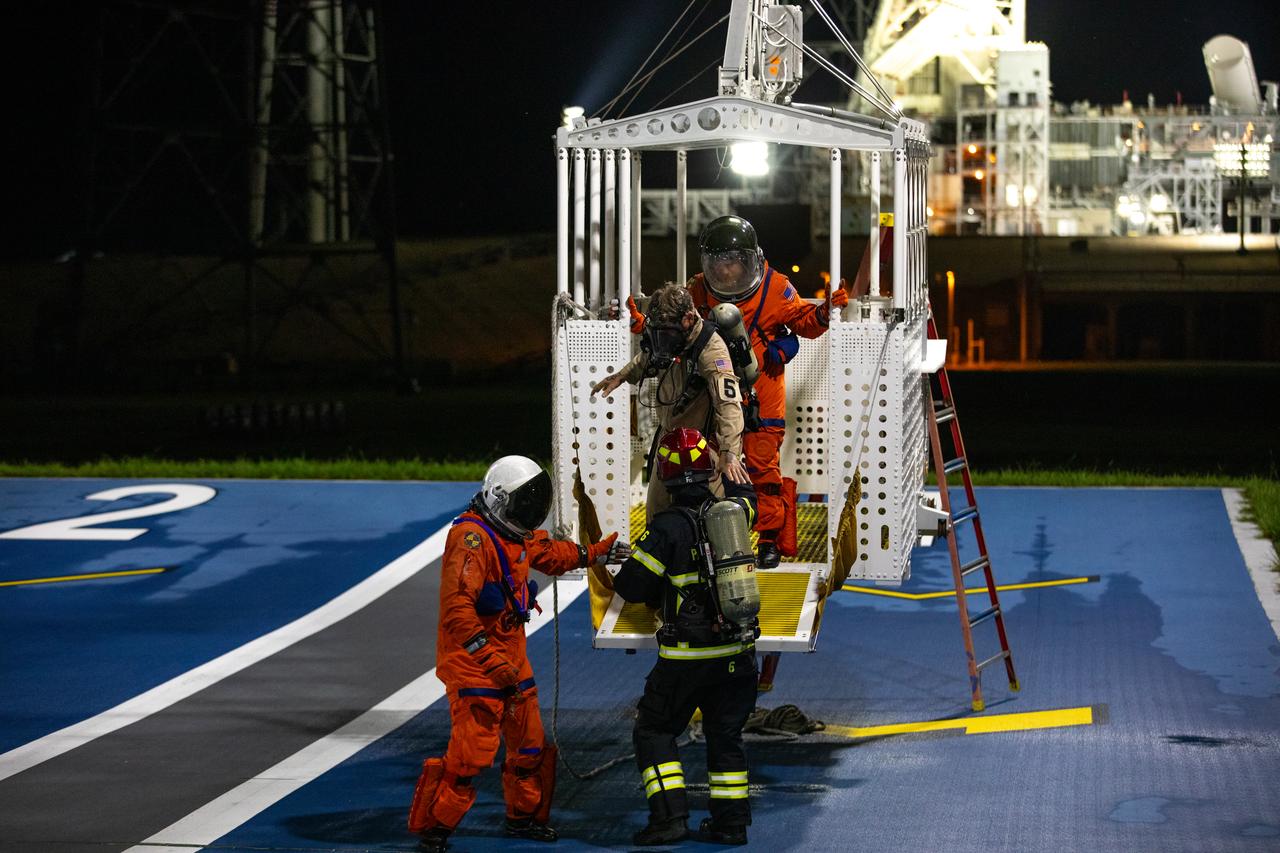
Teams at NASA’s Kennedy Space Center in Florida practice the Artemis mission emergency escape or egress procedures during a series of integrated system verification and validation tests at Launch Pad 39B on Tuesday, Aug. 13, 2024. Members of the closeout crew, pad rescue team and the Exploration Ground Systems Program practiced the process of getting inside and out of the emergency egress baskets. While the crew and other personnel will ride the emergency egress baskets to the terminus area in a real emergency, no one rode the baskets for this test. Instead, teams tested the baskets during separate occasions by using water tanks filled to different levels to replicate simulate the weight of passengers.
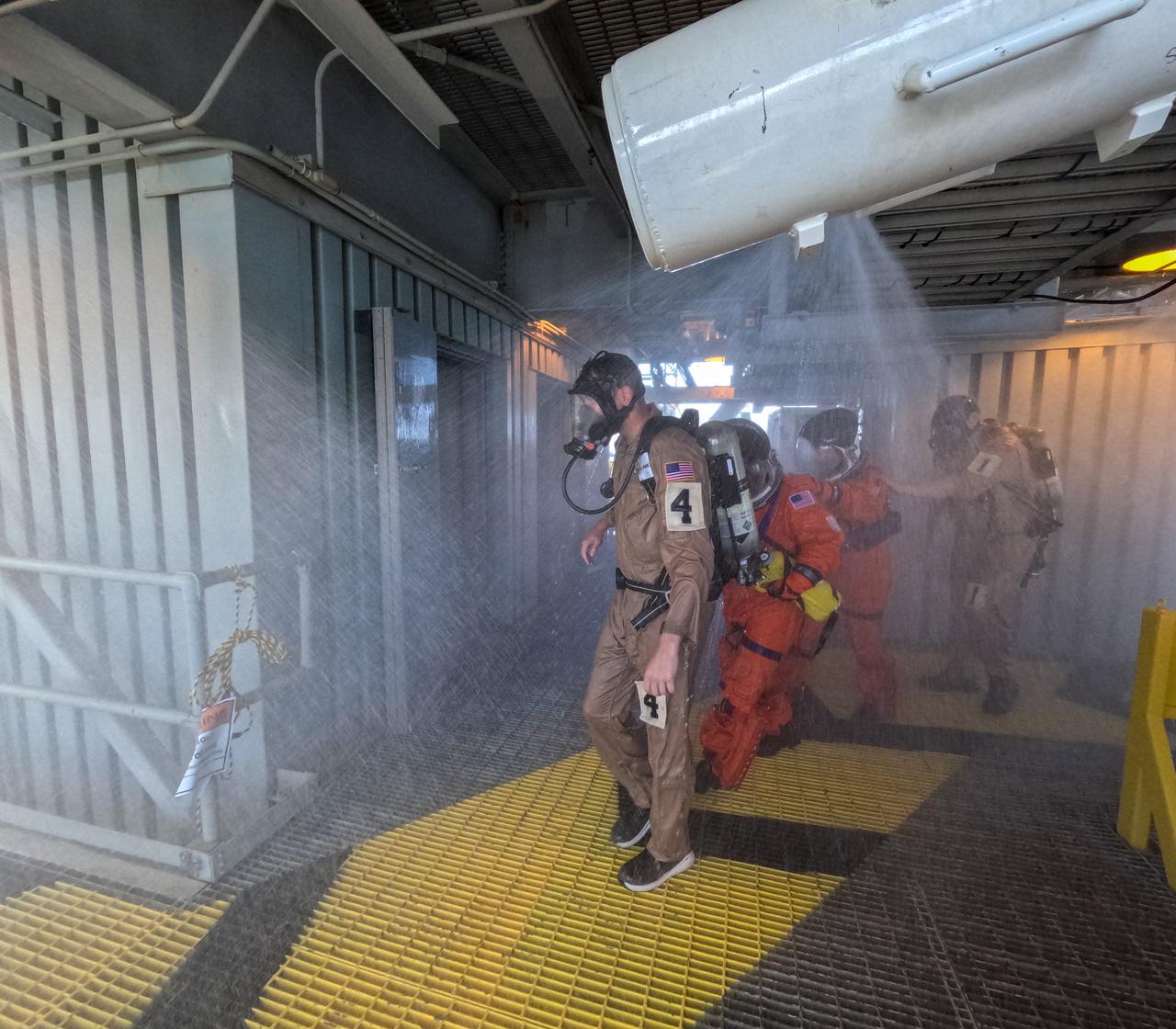
Teams at NASA’s Kennedy Space Center in Florida practice the Artemis mission emergency escape or egress procedures during a series of integrated system verification and validation tests at Launch Pad 39B on Sunday, Aug. 11, 2024. Members of the closeout crew, simulated flight crew, pad rescue team, and the Exploration Ground Systems Program practiced the process of getting inside and out of the emergency egress baskets. While the crew and other personnel will ride the emergency egress baskets to the terminus area in a real emergency, no one rode the baskets for this test. Instead, teams tested the baskets during separate occasions by using water tanks filled to different levels to replicate simulate the weight of passengers.
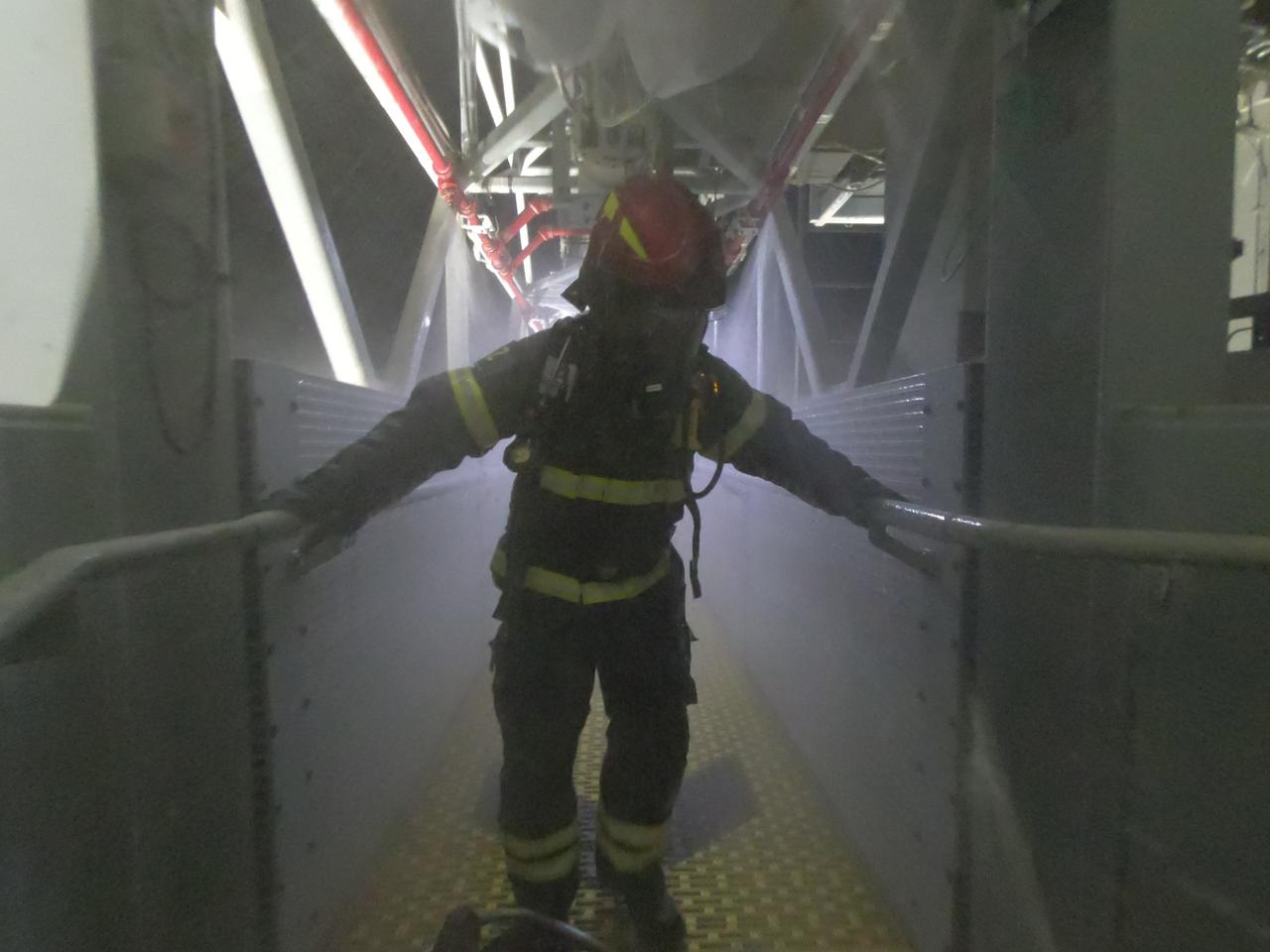
Teams at NASA’s Kennedy Space Center in Florida practice the Artemis mission emergency escape or egress procedures during a series of integrated system verification and validation tests at Launch Pad 39B on Tuesday, Aug. 13, 2024. Members of the closeout crew, pad rescue team, and the Exploration Ground Systems Program – who also suited up as astronauts – practiced the process of getting inside and out of the emergency egress baskets. While the crew and other personnel will ride the emergency egress baskets to the terminus area in a real emergency, no one rode the baskets for this test. Instead, teams tested the baskets during separate occasions by using water tanks filled to different levels to replicate simulate the weight of passengers.
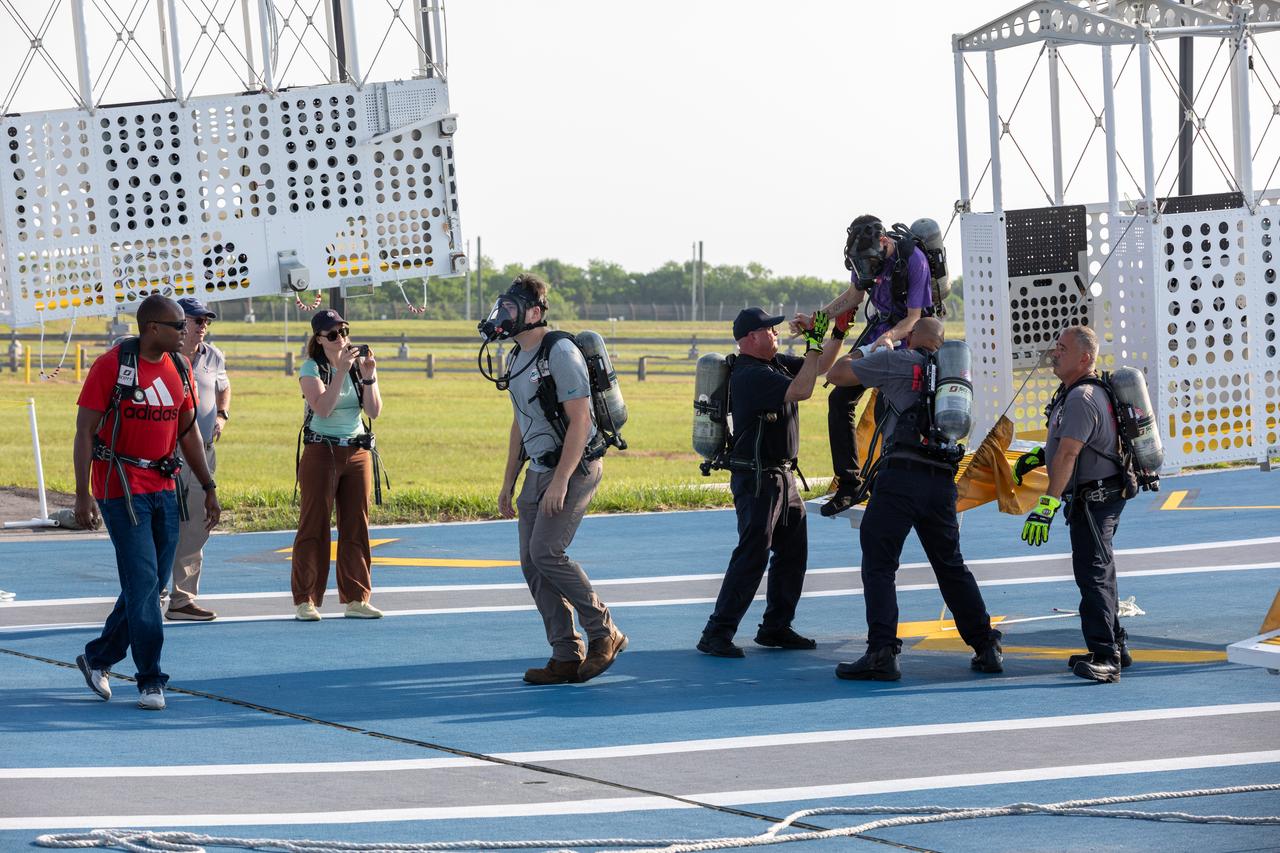
Teams at NASA’s Kennedy Space Center in Florida practice the Artemis mission emergency procedures during a series of integrated system verification and validation tests at Launch Pad 39B on Friday, Aug. 9, 2024. Members of the closeout crew, pad rescue team, and the Exploration Ground Systems Program practiced the process of getting inside and out of the emergency egress baskets. While the crew and other personnel will ride the emergency egress baskets to the terminus area in a real emergency, no one rode the baskets for this test. Instead, teams tested the baskets during separate occasions by using water tanks filled to different levels to replicate simulate the weight of passengers.
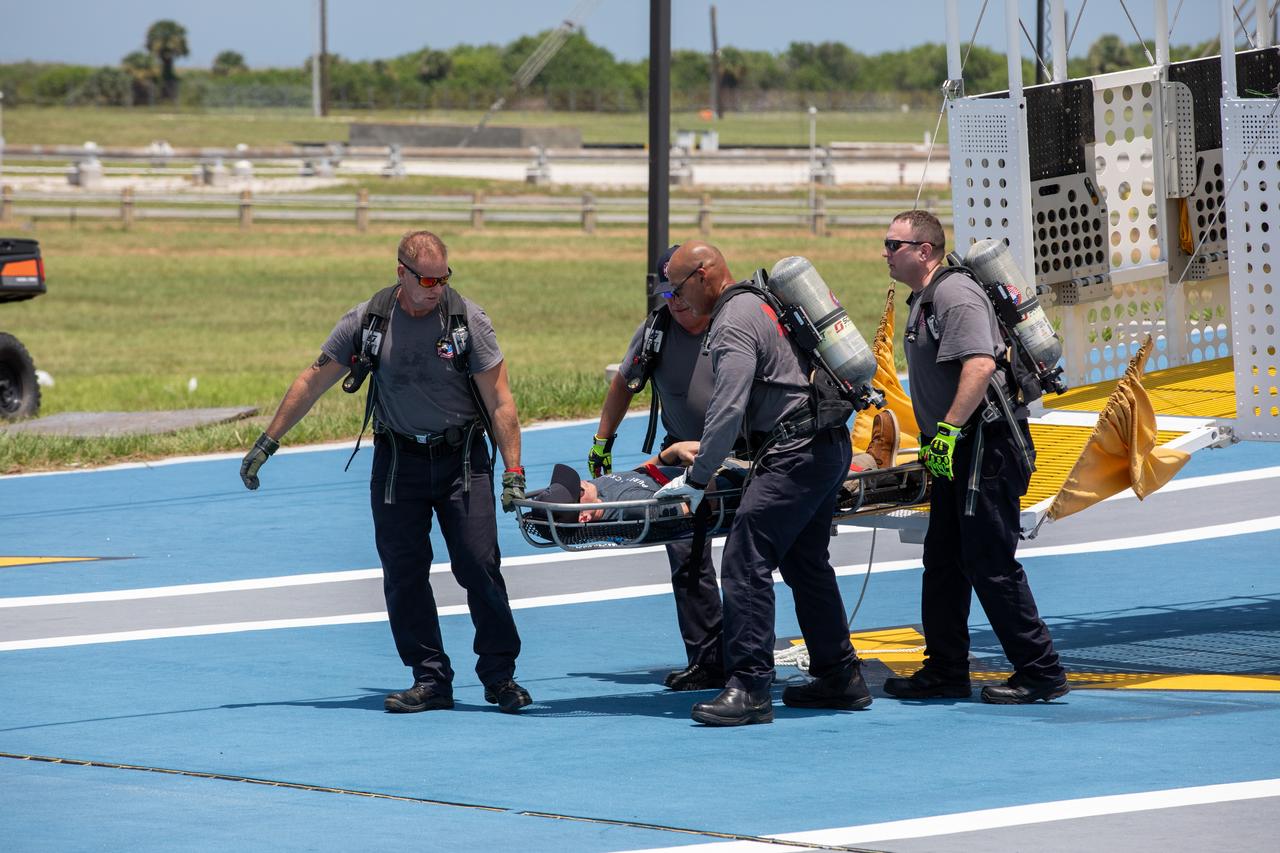
Teams at NASA’s Kennedy Space Center in Florida practice the Artemis mission emergency escape or egress procedures during a series of integrated system verification and validation tests at Launch Complex 39B on Friday, Aug. 9, 2024. Members of the closeout crew, pad rescue team, and the Exploration Ground Systems Program practiced the process of getting in and out of the emergency egress baskets then down to the launch pad where they would be transported to emergency transport vehicles and driven to safety. Prior to this test and throughout the course of several months, teams conducted several basket release demonstrations to validate the system.
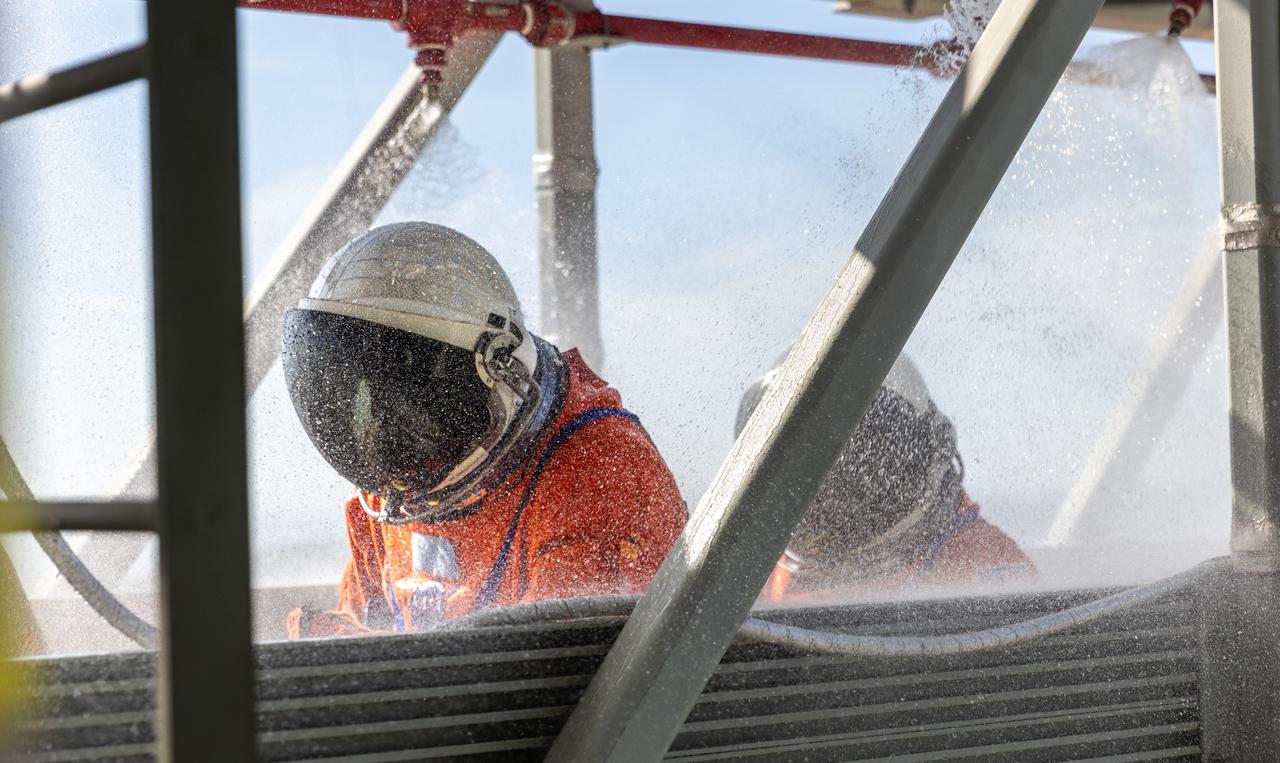
Teams at NASA’s Kennedy Space Center in Florida practice the Artemis mission emergency escape or egress procedures during a series of integrated system verification and validation tests at Launch Pad 39B on Monday, Aug. 12, 2024. Members of the closeout crew, pad rescue team and the Exploration Ground Systems Program practiced the process of getting inside and out of the emergency egress baskets. While the crew and other personnel will ride the emergency egress baskets to the terminus area in a real emergency, no one rode the baskets for this test. Instead, teams tested the baskets during separate occasions by using water tanks filled to different levels to replicate simulate the weight of passengers.
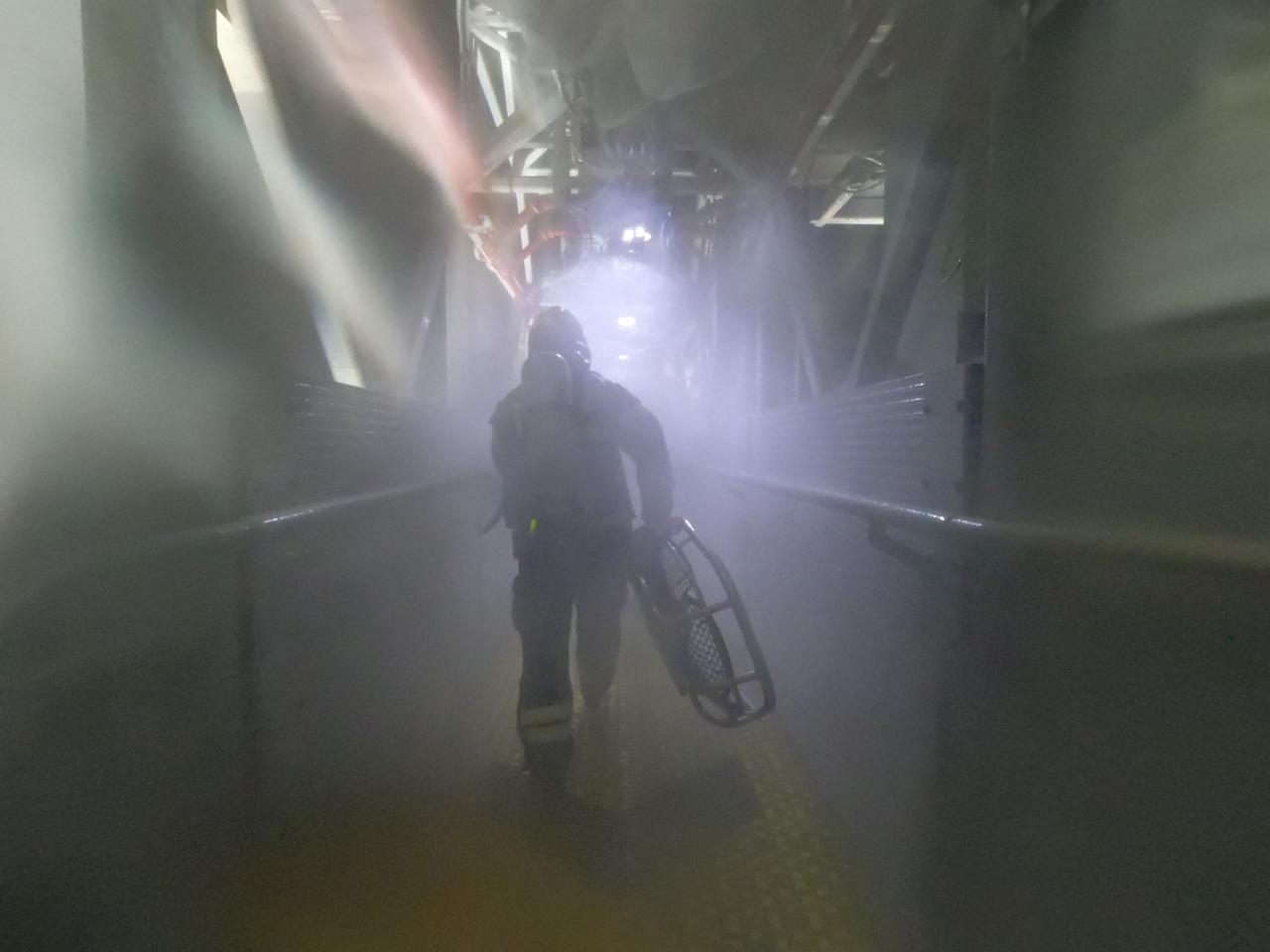
Teams at NASA’s Kennedy Space Center in Florida practice the Artemis mission emergency escape or egress procedures during a series of integrated system verification and validation tests at Launch Pad 39B on Tuesday, Aug. 13, 2024. Members of the closeout crew, pad rescue team, and the Exploration Ground Systems Program – who also suited up as astronauts – practiced the process of getting inside and out of the emergency egress baskets. While the crew and other personnel will ride the emergency egress baskets to the terminus area in a real emergency, no one rode the baskets for this test. Instead, teams tested the baskets during separate occasions by using water tanks filled to different levels to replicate simulate the weight of passengers.
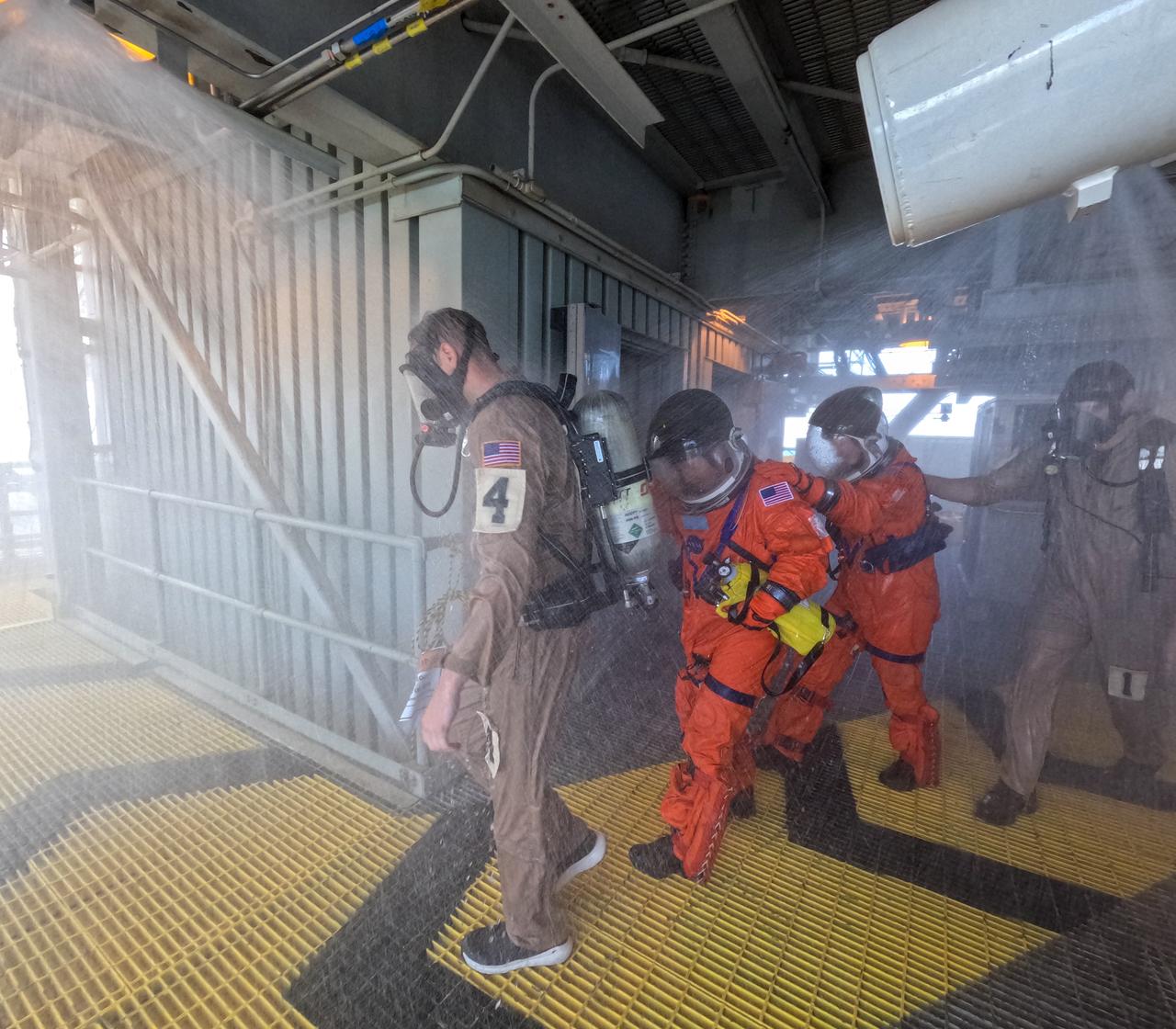
Teams at NASA’s Kennedy Space Center in Florida practice the Artemis mission emergency escape or egress procedures during a series of integrated system verification and validation tests at Launch Pad 39B on Sunday, Aug. 11, 2024. Members of the closeout crew, simulated flight crew, pad rescue team, and the Exploration Ground Systems Program practiced the process of getting inside and out of the emergency egress baskets. While the crew and other personnel will ride the emergency egress baskets to the terminus area in a real emergency, no one rode the baskets for this test. Instead, teams tested the baskets during separate occasions by using water tanks filled to different levels to replicate simulate the weight of passengers.
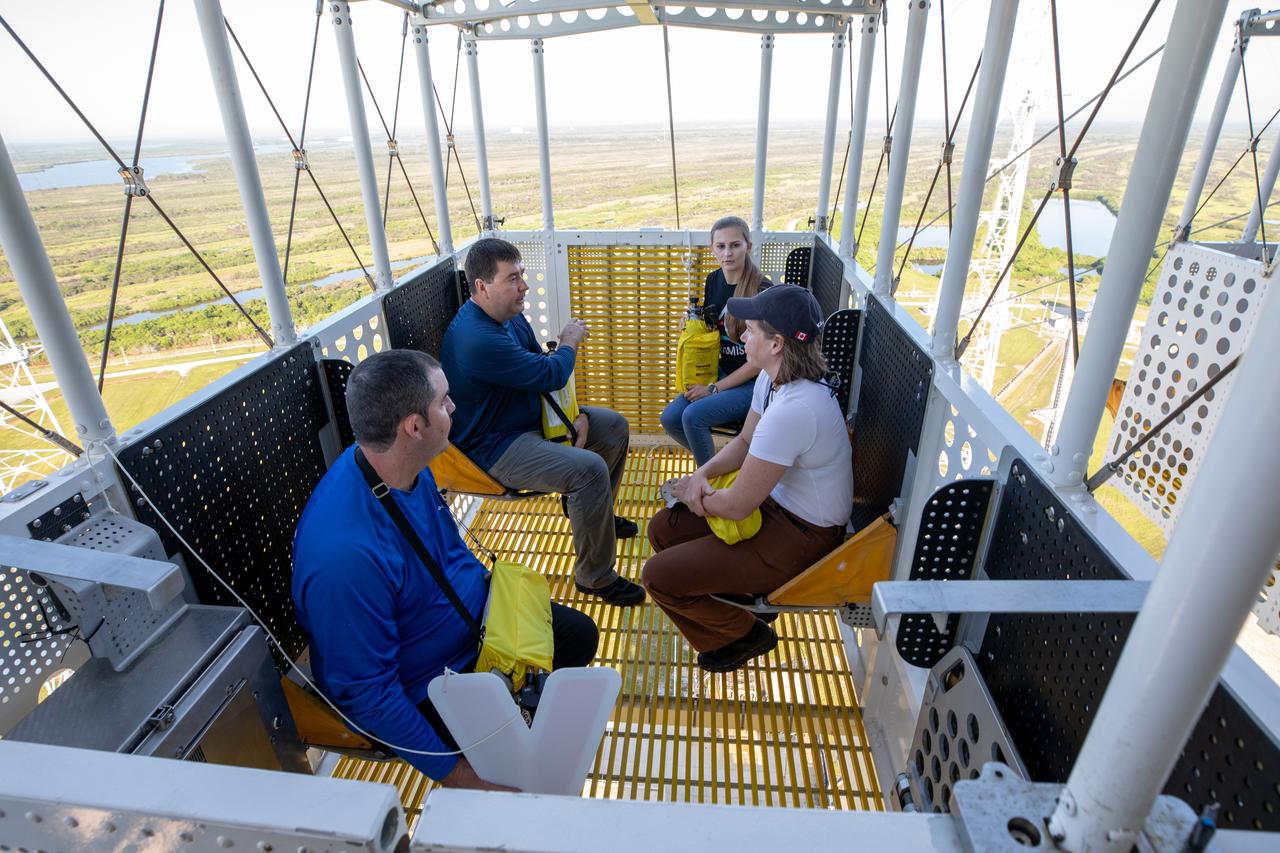
Teams at NASA’s Kennedy Space Center in Florida practice the Artemis mission emergency escape or egress procedures during a series of integrated system verification and validation tests at Launch Pad 39B on Sunday, Aug. 11, 2024. Members of the closeout crew, pad rescue team and the Exploration Ground Systems Program practiced the process of getting inside and out of the emergency egress baskets. While the crew and other personnel will ride the emergency egress baskets to the terminus area in a real emergency, no one rode the baskets for this test. Instead, teams tested the baskets during separate occasions by using water tanks filled to different levels to replicate simulate the weight of passengers.
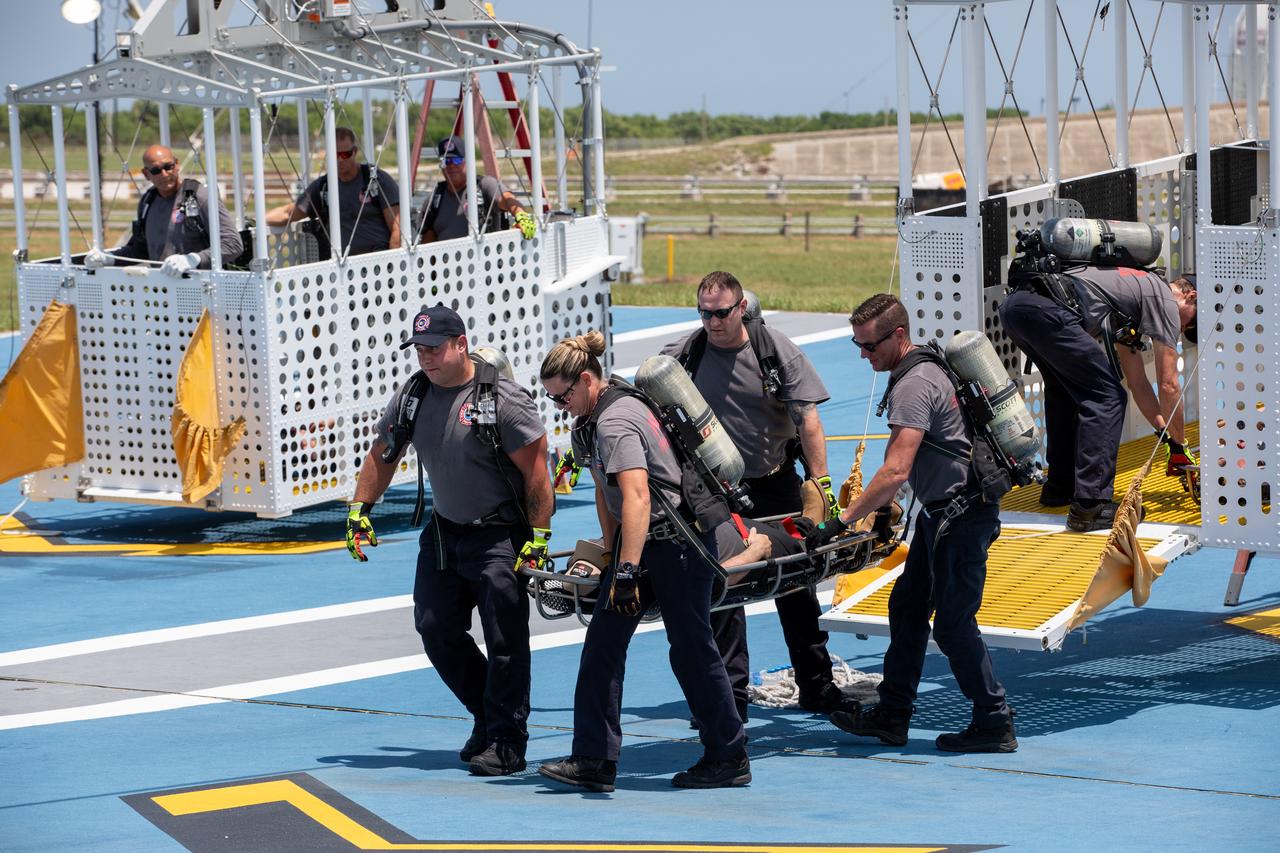
Teams at NASA’s Kennedy Space Center in Florida practice the Artemis mission emergency escape or egress procedures during a series of integrated system verification and validation tests at Launch Complex 39B on Friday, Aug. 9, 2024. Members of the closeout crew, pad rescue team, and the Exploration Ground Systems Program practiced the process of getting in and out of the emergency egress baskets then down to the launch pad where they would be transported to emergency transport vehicles and driven to safety. Prior to this test and throughout the course of several months, teams conducted several basket release demonstrations to validate the system.
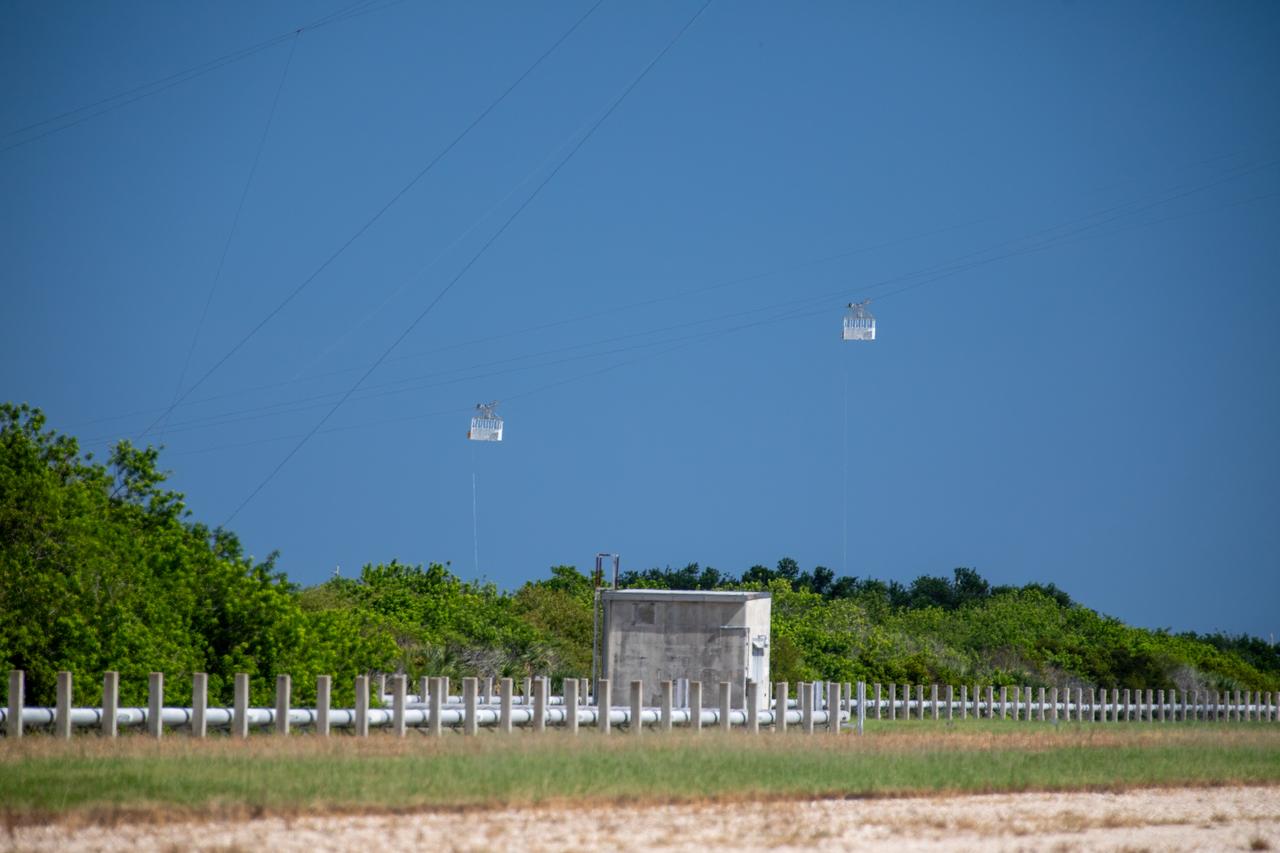
Teams at NASA’s Kennedy Space Center in Florida practice the Artemis mission emergency escape or egress procedures during a series of integrated system verification and validation tests at Launch Complex 39B on Monday, Aug. 12, 2024. Members of the closeout crew, pad rescue team, and the Exploration Ground Systems Program practiced the process of getting in and out of the emergency egress baskets then down to the launch pad where they would be transported to emergency transport vehicles and driven to safety. Prior to this test and throughout the course of several months, teams conducted basket release demonstrations to validate the system.
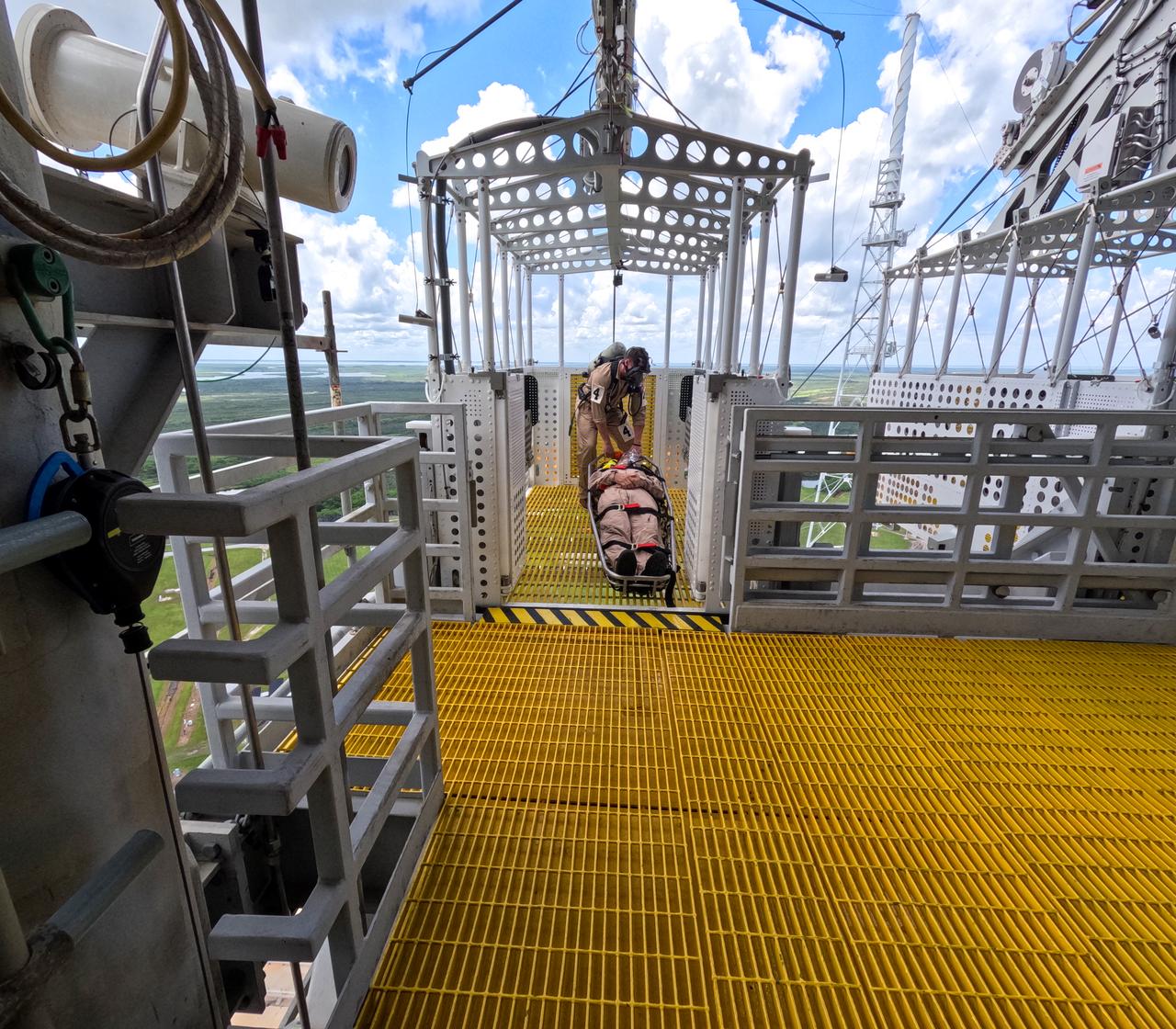
Teams at NASA’s Kennedy Space Center in Florida practice the Artemis mission emergency escape or egress procedures during a series of integrated system verification and validation tests at Launch Pad 39B on Sunday, Aug. 11, 2024. Members of the closeout crew, pad rescue team and the Exploration Ground Systems Program practiced the process of getting inside and out of the emergency egress baskets. While the crew and other personnel will ride the emergency egress baskets to the terminus area in a real emergency, no one rode the baskets for this test. Instead, teams tested the baskets during separate occasions by using water tanks filled to different levels to replicate simulate the weight of passengers.
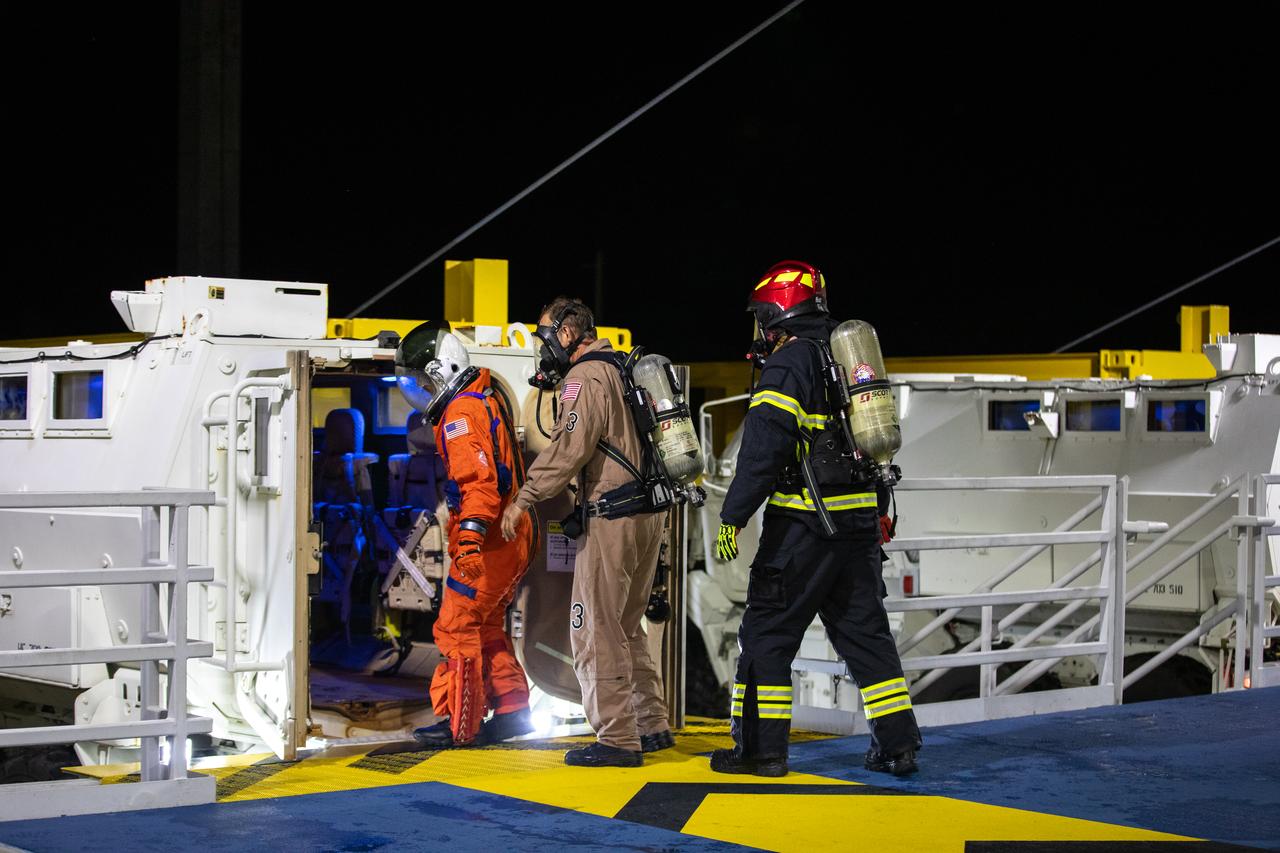
Teams at NASA’s Kennedy Space Center in Florida practice the Artemis mission emergency escape or egress procedures during a series of integrated system verification and validation tests at Launch Pad 39B on Tuesday, Aug. 13, 2024. Members of the closeout crew, pad rescue team and the Exploration Ground Systems Program practiced the process of getting inside and out of the emergency egress baskets. While the crew and other personnel will ride the emergency egress baskets to the terminus area in a real emergency, no one rode the baskets for this test. Instead, teams tested the baskets during separate occasions by using water tanks filled to different levels to replicate simulate the weight of passengers.
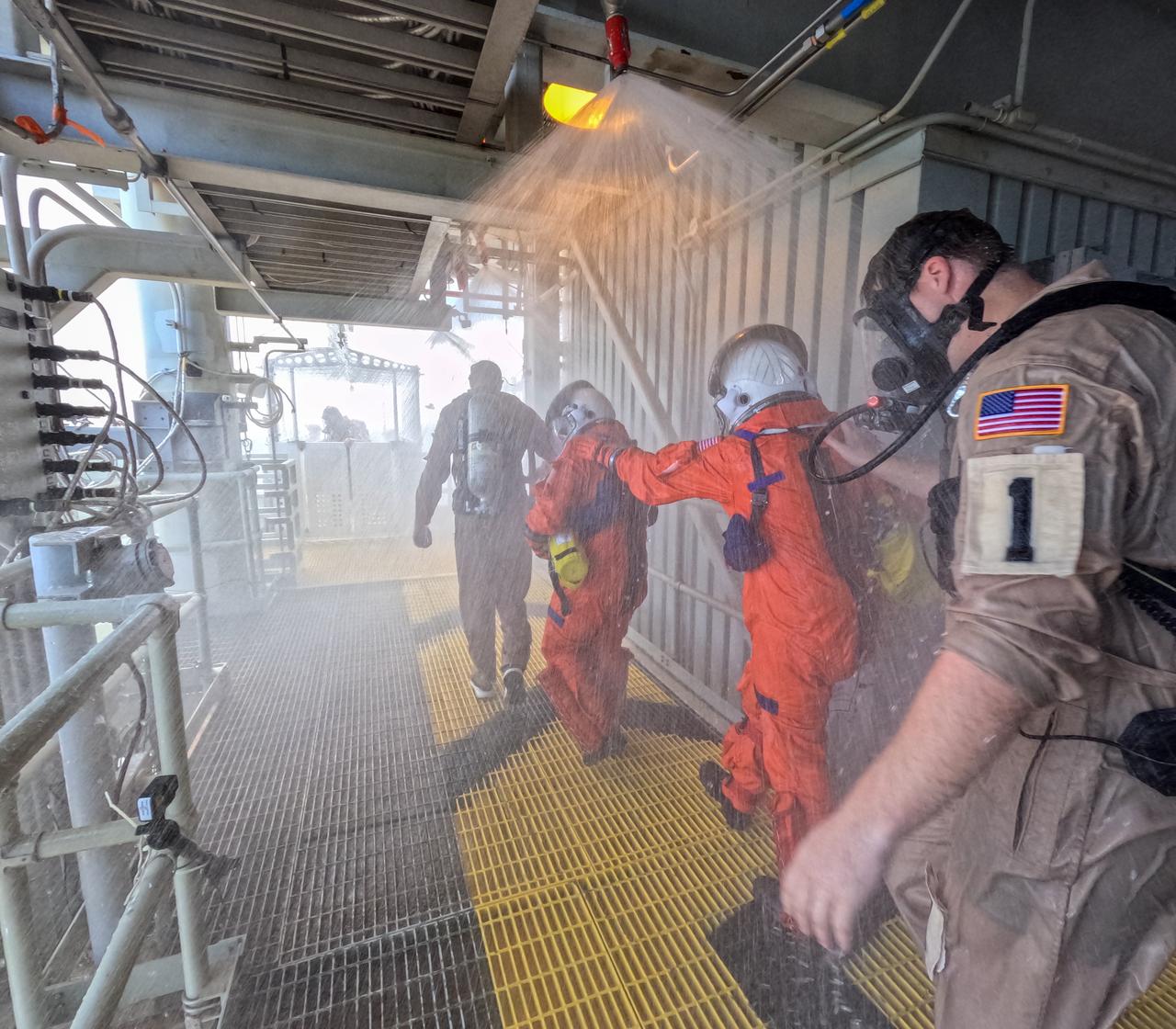
Teams at NASA’s Kennedy Space Center in Florida practice the Artemis mission emergency escape or egress procedures during a series of integrated system verification and validation tests at Launch Pad 39B on Sunday, Aug. 11, 2024. Members of the closeout crew, simulated flight crew, pad rescue team, and the Exploration Ground Systems Program practiced the process of getting inside and out of the emergency egress baskets. While the crew and other personnel will ride the emergency egress baskets to the terminus area in a real emergency, no one rode the baskets for this test. Instead, teams tested the baskets during separate occasions by using water tanks filled to different levels to replicate simulate the weight of passengers.
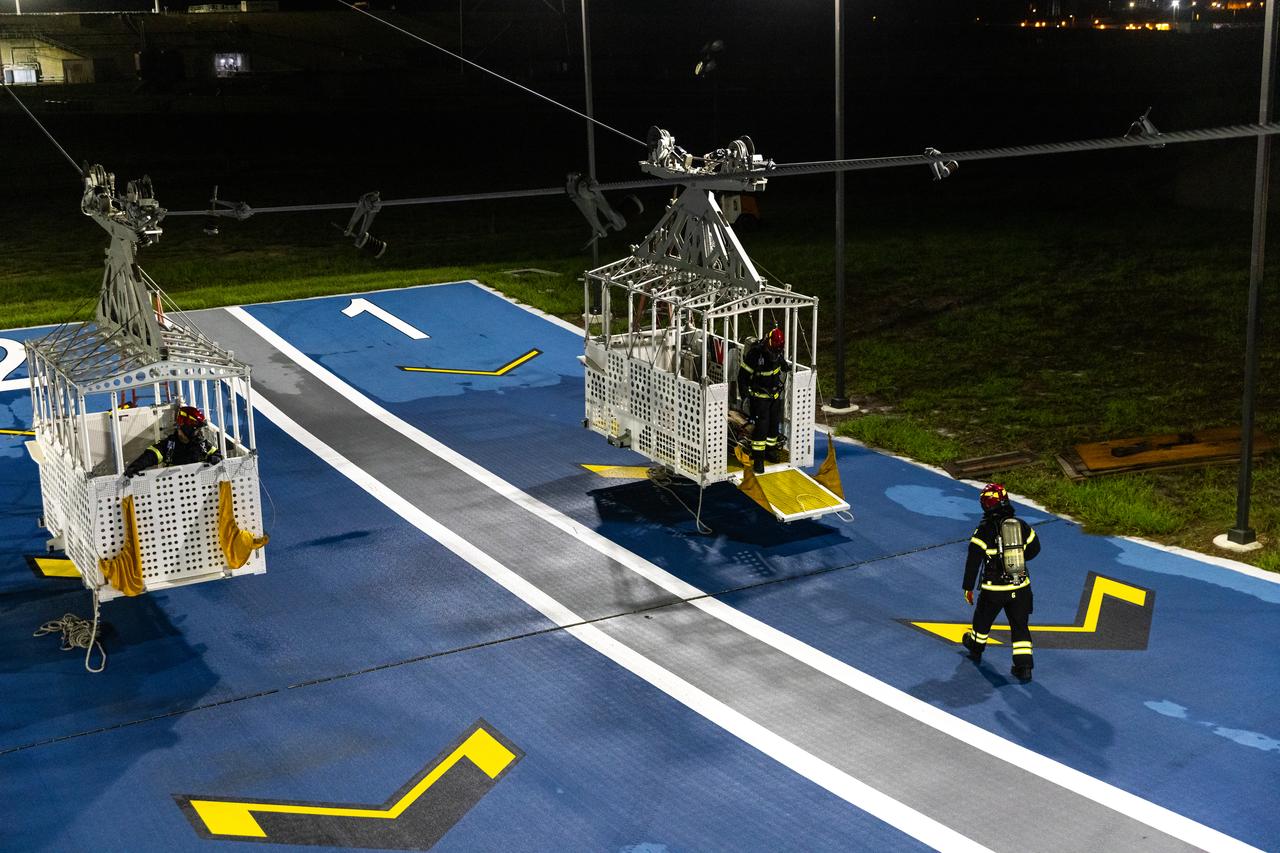
Teams at NASA’s Kennedy Space Center in Florida practice the Artemis mission emergency escape or egress procedures during a series of integrated system verification and validation tests at Launch Pad 39B on Tuesday, Aug. 13, 2024. Members of the closeout crew, pad rescue team and the Exploration Ground Systems Program practiced the process of getting inside and out of the emergency egress baskets. While the crew and other personnel will ride the emergency egress baskets to the terminus area in a real emergency, no one rode the baskets for this test. Instead, teams tested the baskets during separate occasions by using water tanks filled to different levels to replicate simulate the weight of passengers.
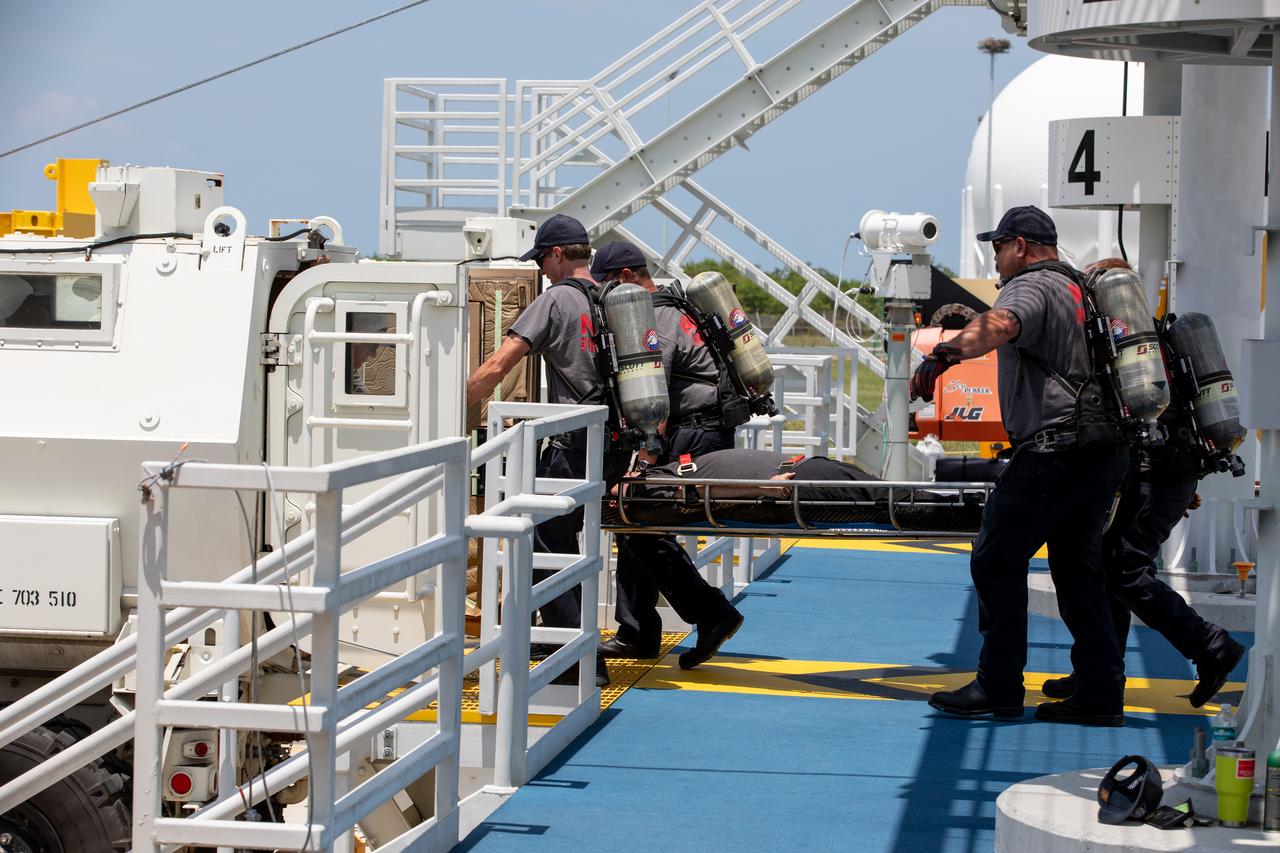
Teams at NASA’s Kennedy Space Center in Florida practice the Artemis mission emergency escape or egress procedures during a series of integrated system verification and validation tests at Launch Complex 39B on Friday, Aug. 9, 2024. Members of the closeout crew, pad rescue team, and the Exploration Ground Systems Program practiced the process of getting in and out of the emergency egress baskets then down to the launch pad where they would be transported to emergency transport vehicles and driven to safety. Prior to this test and throughout the course of several months, teams conducted several basket release demonstrations to validate the system.
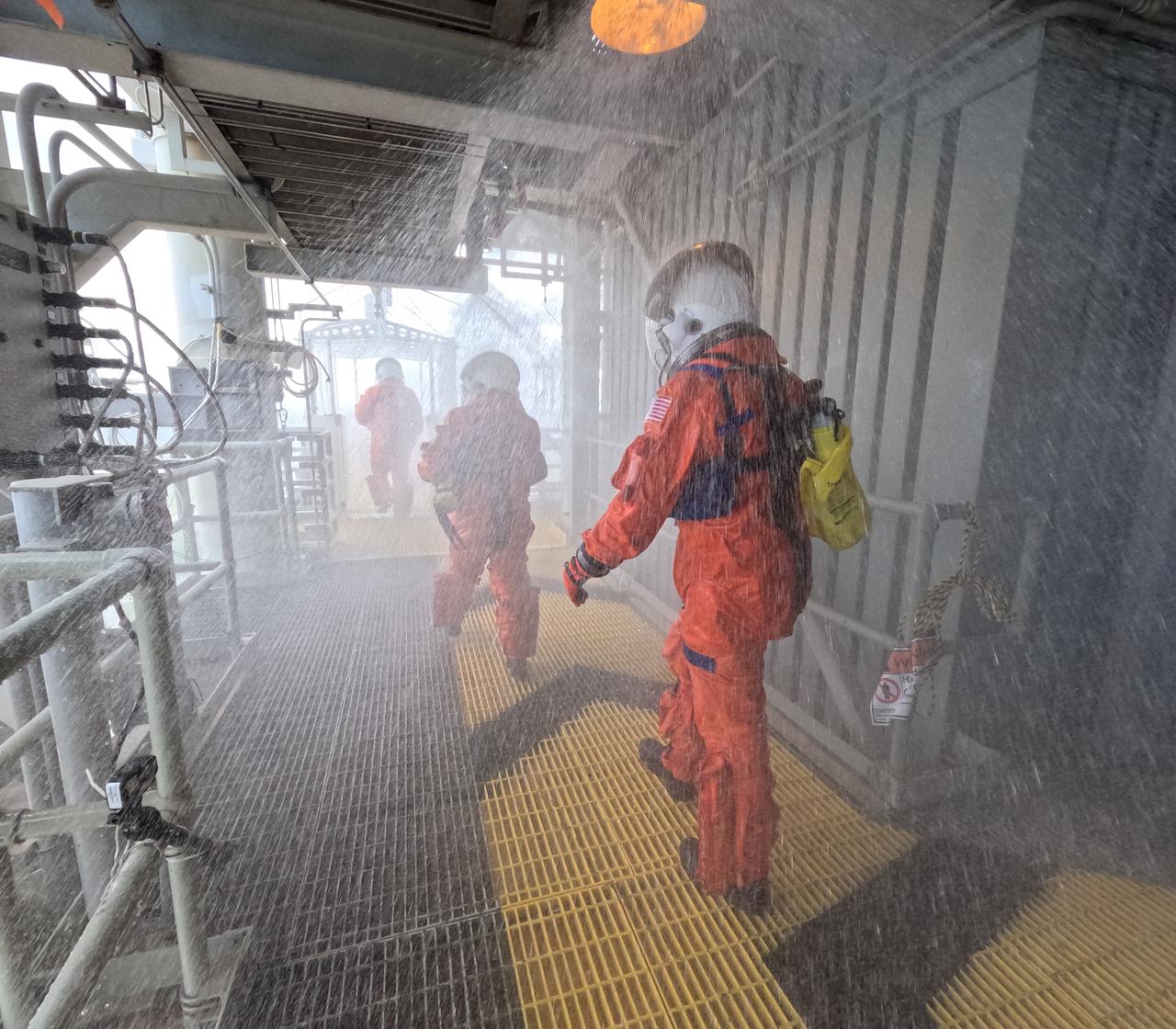
Teams at NASA’s Kennedy Space Center in Florida practice the Artemis mission emergency escape or egress procedures during a series of integrated system verification and validation tests at Launch Pad 39B on Sunday, Aug. 11, 2024. Members of the closeout crew, simulated flight crew, pad rescue team, and the Exploration Ground Systems Program practiced the process of getting inside and out of the emergency egress baskets. While the crew and other personnel will ride the emergency egress baskets to the terminus area in a real emergency, no one rode the baskets for this test. Instead, teams tested the baskets during separate occasions by using water tanks filled to different levels to replicate simulate the weight of passengers.
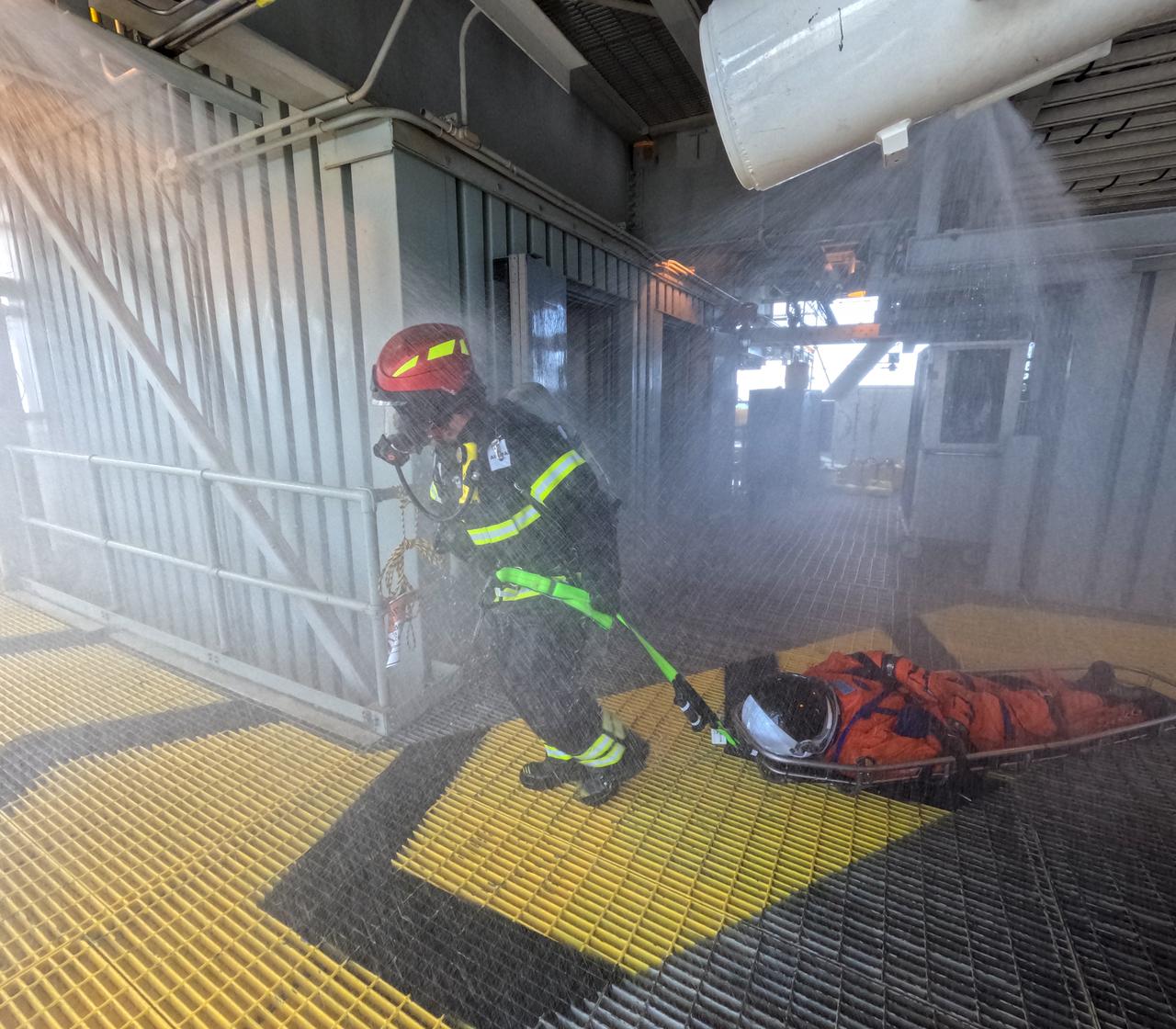
Teams at NASA’s Kennedy Space Center in Florida practice the Artemis mission emergency escape or egress procedures during a series of integrated system verification and validation tests at Launch Pad 39B on Sunday, Aug. 11, 2024. Members of the closeout crew, simulated flight crew, pad rescue team, and the Exploration Ground Systems Program practiced the process of getting inside and out of the emergency egress baskets. While the crew and other personnel will ride the emergency egress baskets to the terminus area in a real emergency, no one rode the baskets for this test. Instead, teams tested the baskets during separate occasions by using water tanks filled to different levels to replicate simulate the weight of passengers.
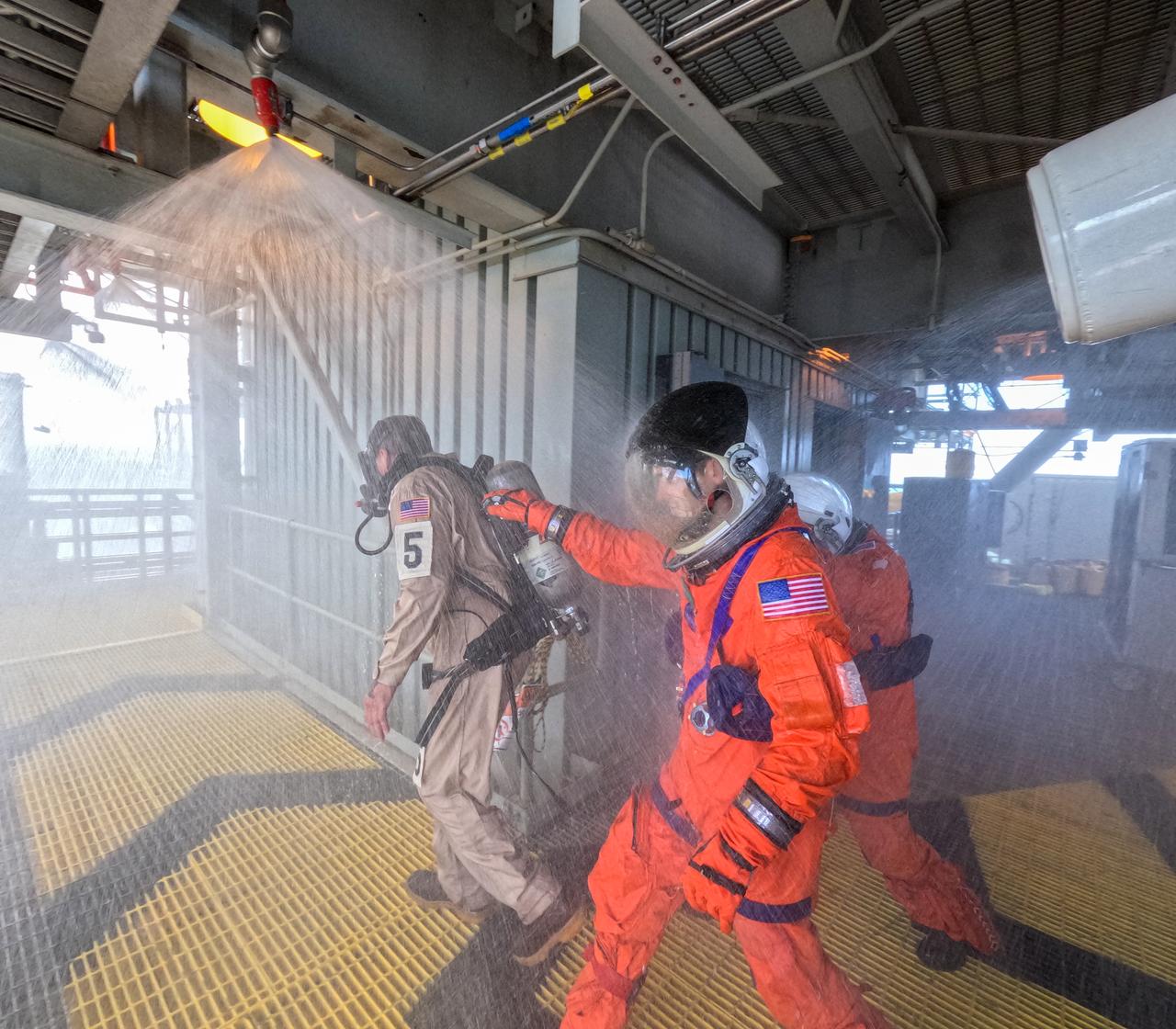
Teams at NASA’s Kennedy Space Center in Florida practice the Artemis mission emergency escape or egress procedures during a series of integrated system verification and validation tests at Launch Pad 39B on Sunday, Aug. 11, 2024. Members of the closeout crew, simulated flight crew, pad rescue team, and the Exploration Ground Systems Program practiced the process of getting inside and out of the emergency egress baskets. While the crew and other personnel will ride the emergency egress baskets to the terminus area in a real emergency, no one rode the baskets for this test. Instead, teams tested the baskets during separate occasions by using water tanks filled to different levels to replicate simulate the weight of passengers.
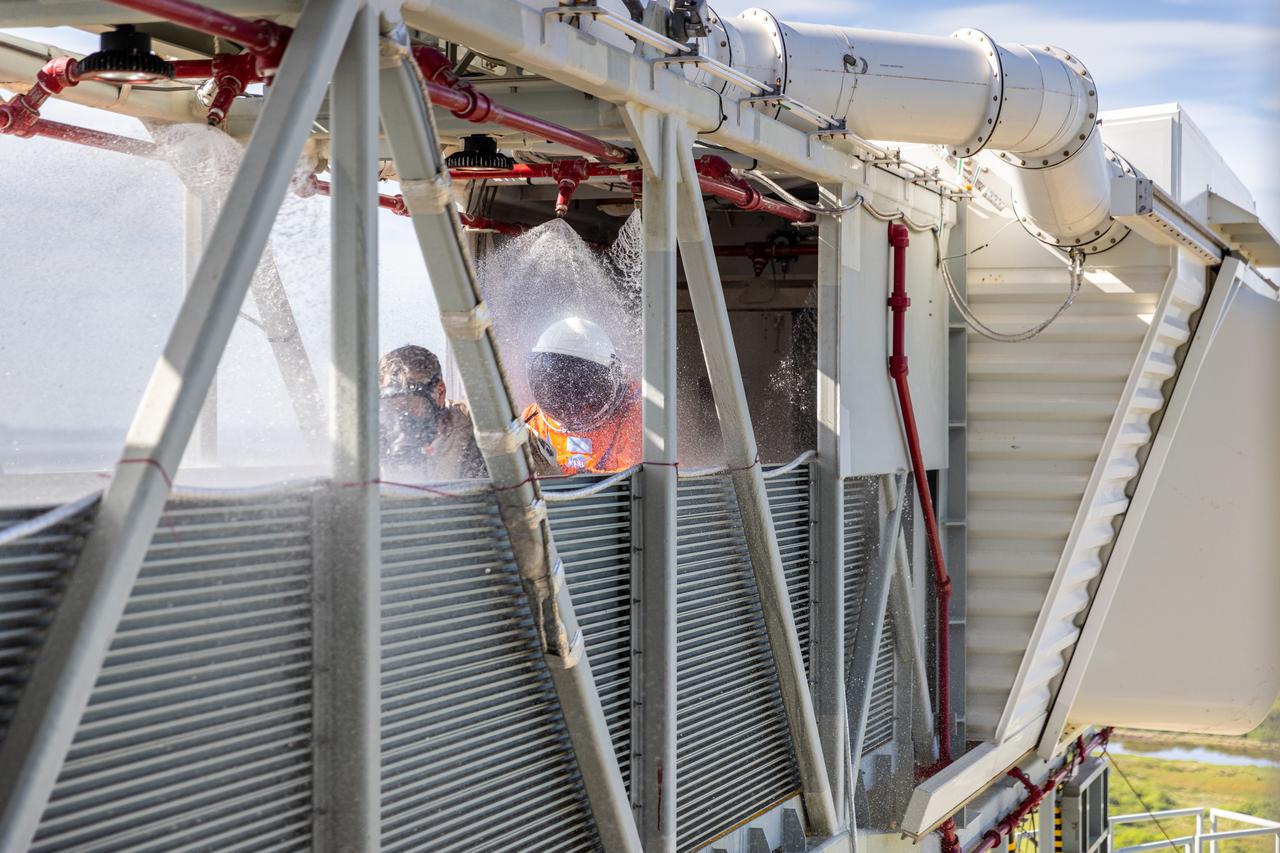
Teams at NASA’s Kennedy Space Center in Florida practice the Artemis mission emergency escape or egress procedures during a series of integrated system verification and validation tests at Launch Pad 39B on Monday, Aug. 12, 2024. Members of the closeout crew, pad rescue team and the Exploration Ground Systems Program practiced the process of getting inside and out of the emergency egress baskets. While the crew and other personnel will ride the emergency egress baskets to the terminus area in a real emergency, no one rode the baskets for this test. Instead, teams tested the baskets during separate occasions by using water tanks filled to different levels to replicate simulate the weight of passengers.
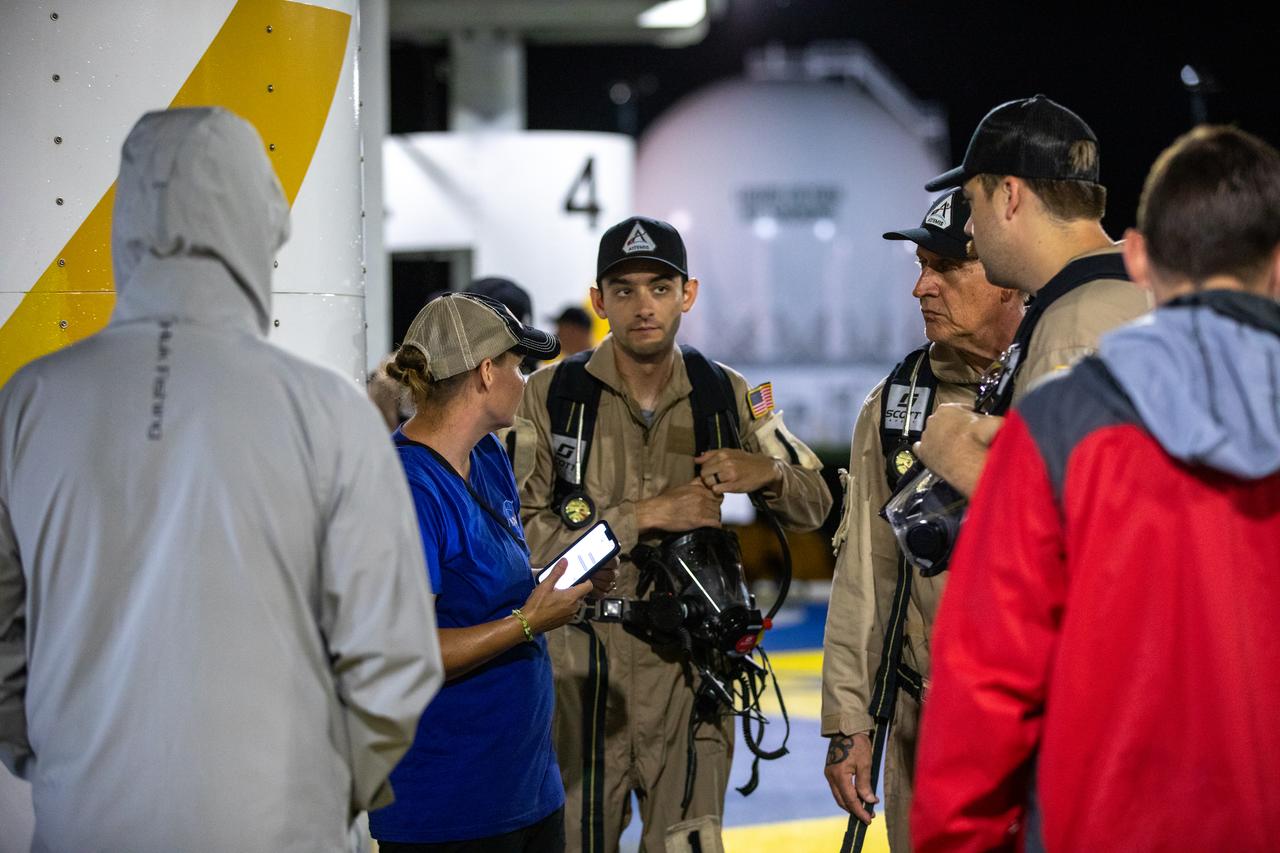
Teams at NASA’s Kennedy Space Center in Florida practice the Artemis mission emergency escape or egress procedures during a series of integrated system verification and validation tests at Launch Pad 39B on Tuesday, Aug. 13, 2024. Members of the closeout crew, pad rescue team and the Exploration Ground Systems Program practiced the process of getting inside and out of the emergency egress baskets. While the crew and other personnel will ride the emergency egress baskets to the terminus area in a real emergency, no one rode the baskets for this test. Instead, teams tested the baskets during separate occasions by using water tanks filled to different levels to replicate simulate the weight of passengers.
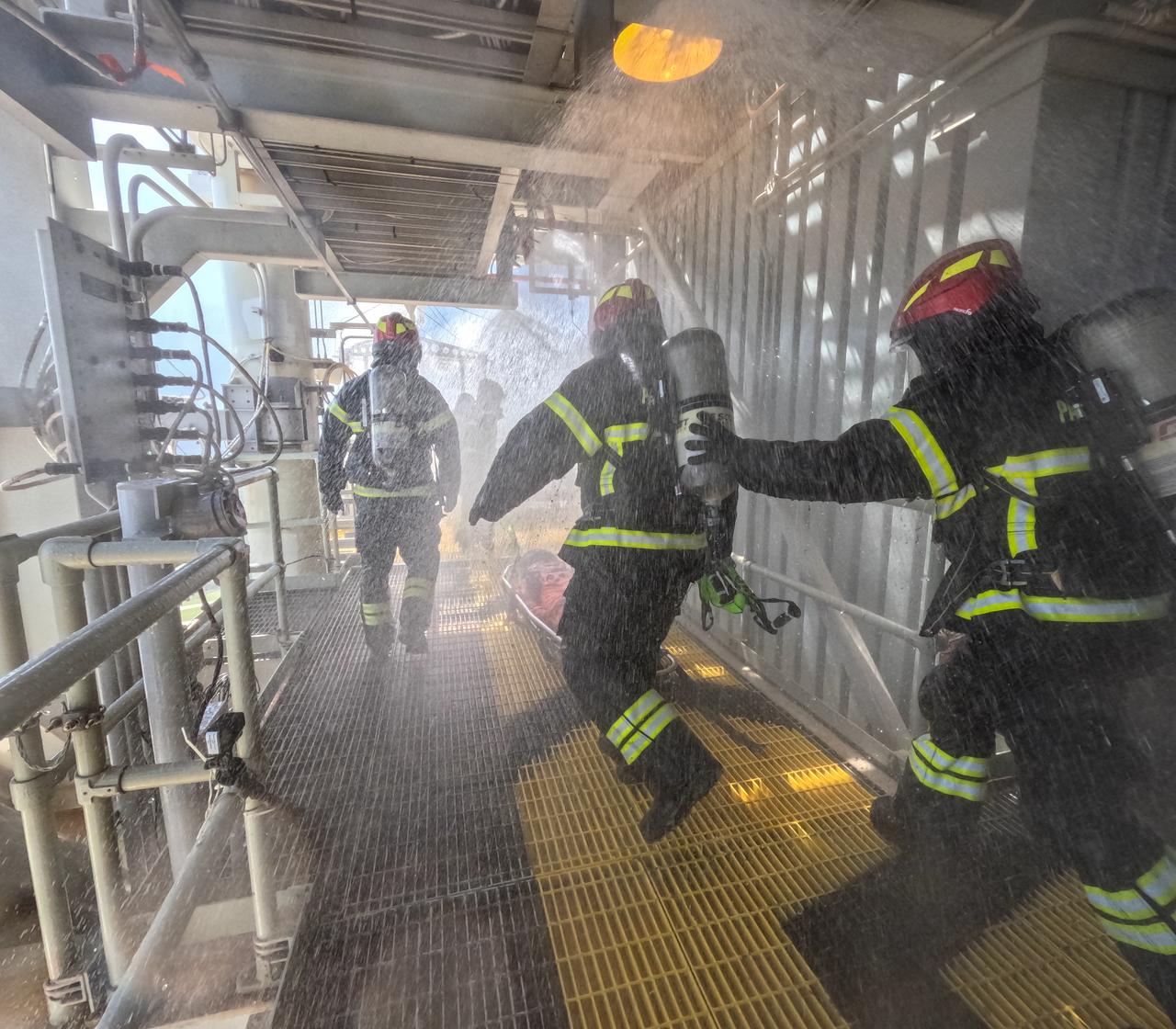
Teams at NASA’s Kennedy Space Center in Florida practice the Artemis mission emergency escape or egress procedures during a series of integrated system verification and validation tests at Launch Pad 39B on Sunday, Aug. 11, 2024. Members of the closeout crew, pad rescue team and the Exploration Ground Systems Program practiced the process of getting inside and out of the emergency egress baskets. While the crew and other personnel will ride the emergency egress baskets to the terminus area in a real emergency, no one rode the baskets for this test. Instead, teams tested the baskets during separate occasions by using water tanks filled to different levels to replicate simulate the weight of passengers.