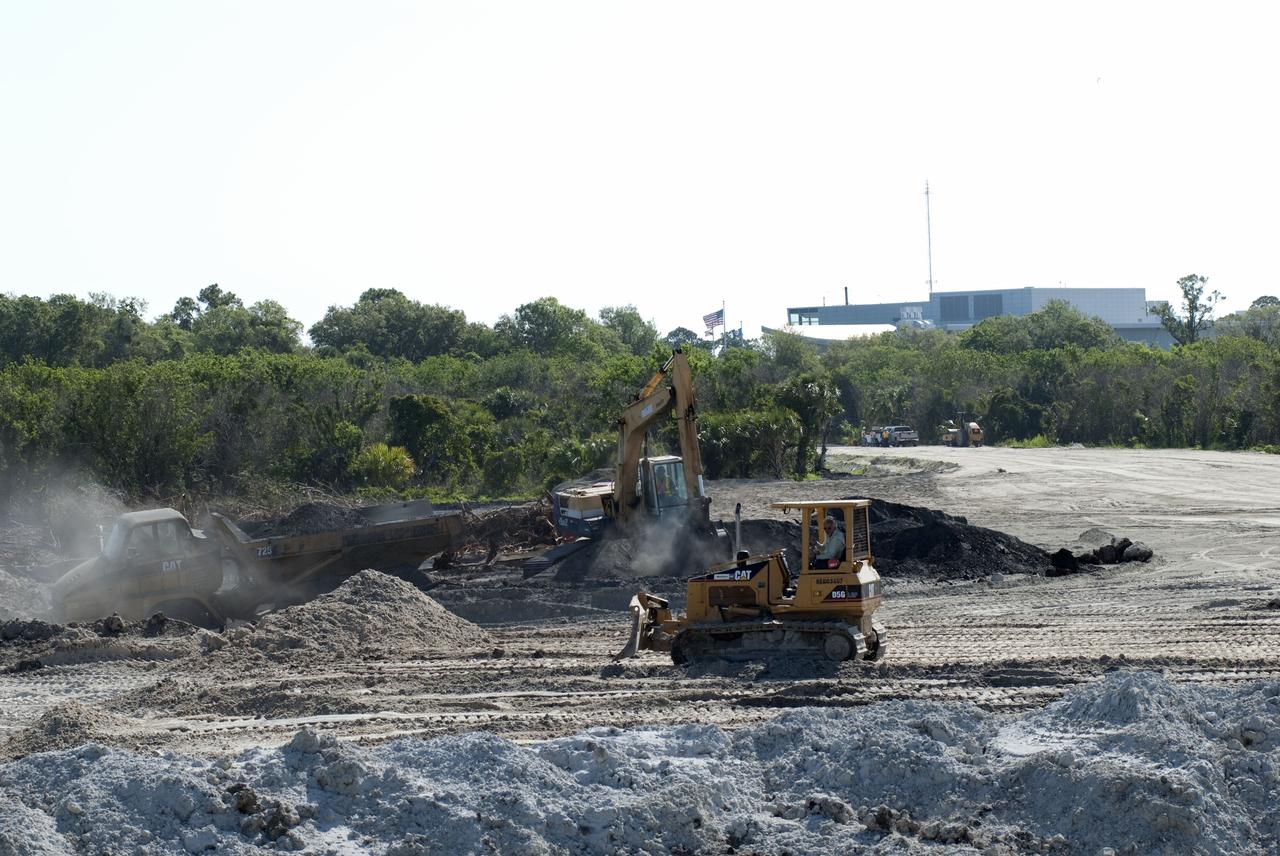
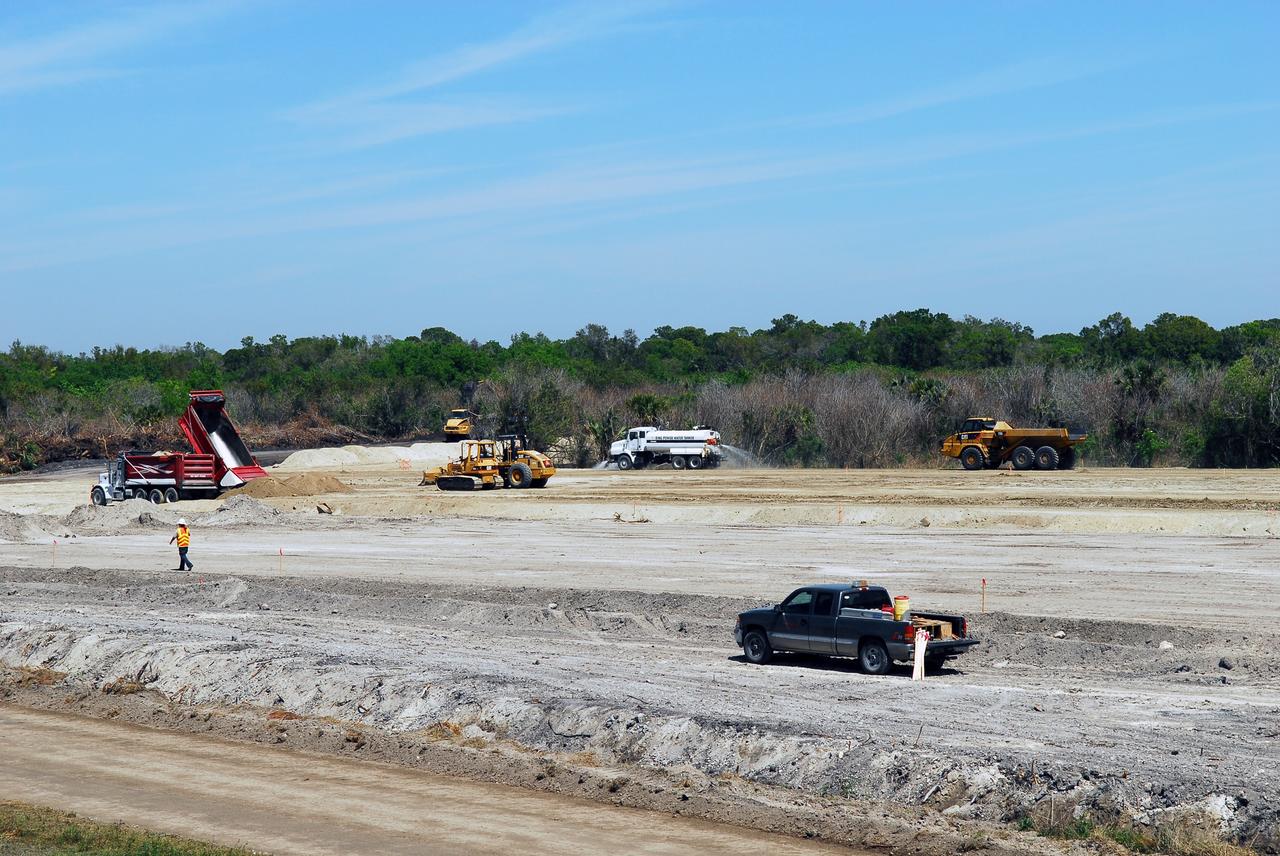
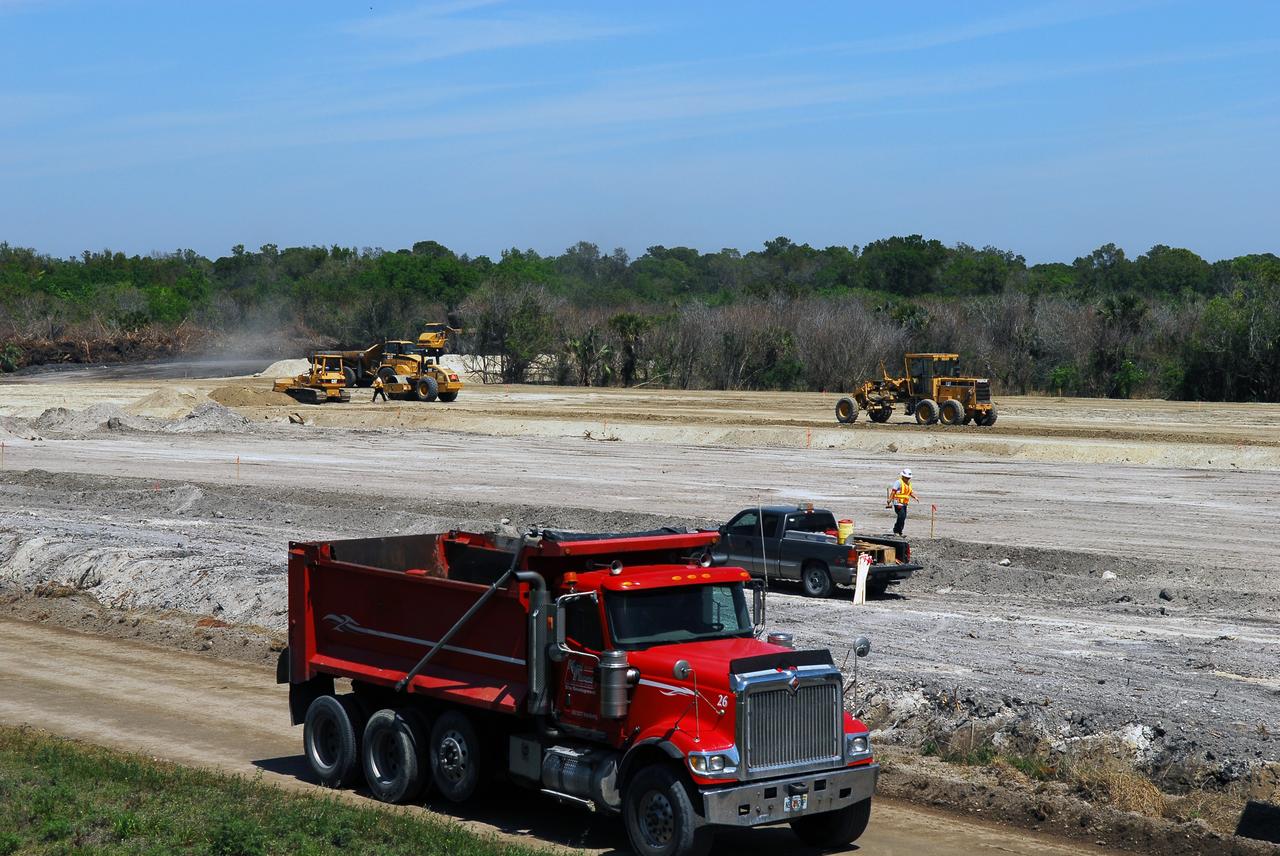
CAPE CANAVERAL, Fla. -- Crews continue to clear land and prepare for the construction of a new road at the Exploration Park site near the Space Life Sciences Laboratory (SLSL) at NASA's Kennedy Space Center in Florida. The first phase will encompass 60 acres just outside Kennedy’s security gates. Nine buildings will provide 350,000-square feet of work space, including educational, office, research and lab, and high-bay facilities. Each building is expected to be certified in the U.S. Green Building Council’s Leadership in Environmental and Energy Design (LEED). Exploration Park is designed to be a strategically located complex, adjacent to the SLSL, for servicing diverse tenants and uses that will engage in activities to support space-related activities of NASA, other government agencies and the U.S. commercial space industry. It also is expected to bring new aerospace work to the Space Coast. The SLSL will be the anchor facility for the park, which is expected to open its first new facility in early 2012. Photo credit: NASA/Jim Grossmann
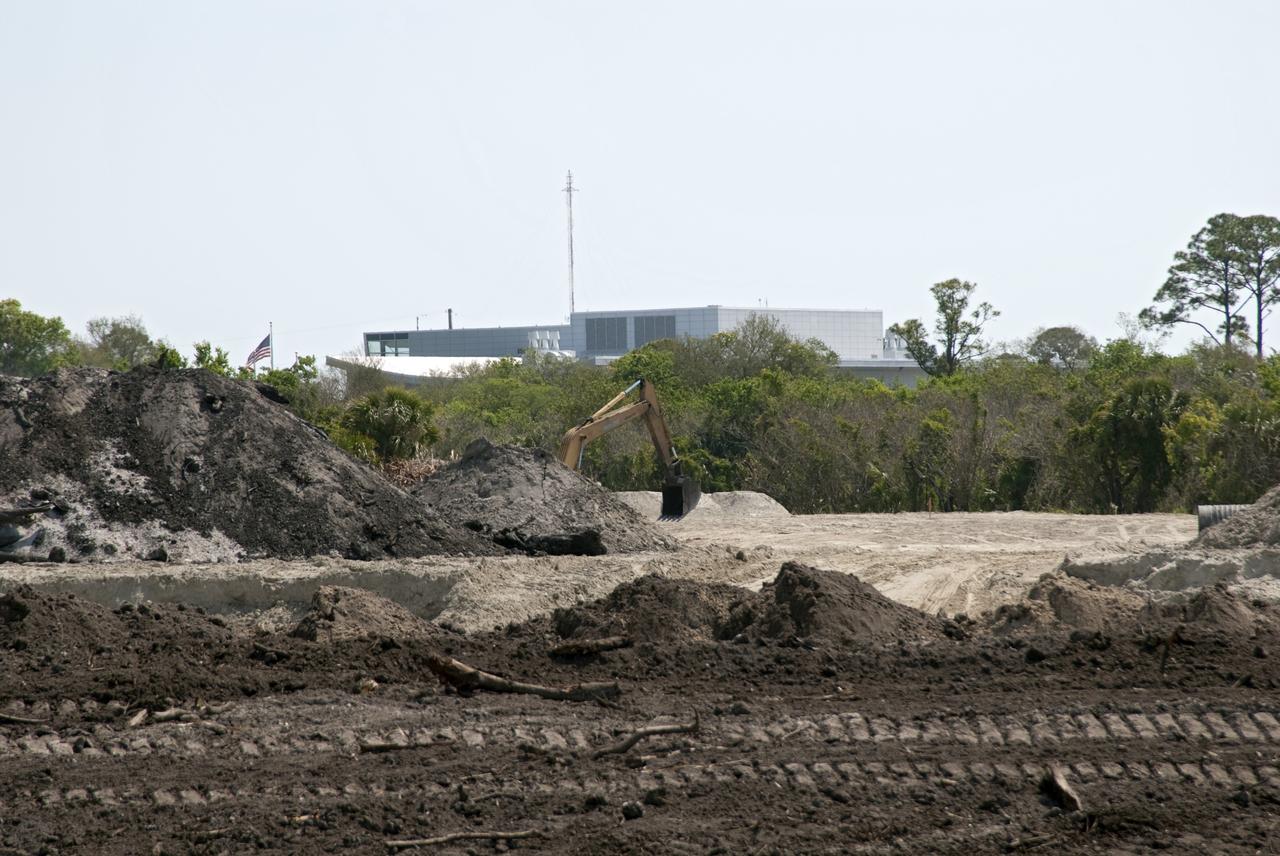
CAPE CANAVERAL, Fla. -- Crews continue to clear land and prepare for the construction of a new road at the Exploration Park site near the Space Life Sciences Laboratory (SLSL) at NASA's Kennedy Space Center in Florida. The first phase will encompass 60 acres just outside Kennedy’s security gates. Nine buildings will provide 350,000-square feet of work space, including educational, office, research and lab, and high-bay facilities. Each building is expected to be certified in the U.S. Green Building Council’s Leadership in Environmental and Energy Design (LEED). Exploration Park is designed to be a strategically located complex, adjacent to the SLSL, for servicing diverse tenants and uses that will engage in activities to support space-related activities of NASA, other government agencies and the U.S. commercial space industry. It also is expected to bring new aerospace work to the Space Coast. The SLSL will be the anchor facility for the park, which is expected to open its first new facility in early 2012. Photo credit: NASA/Jim Grossmann
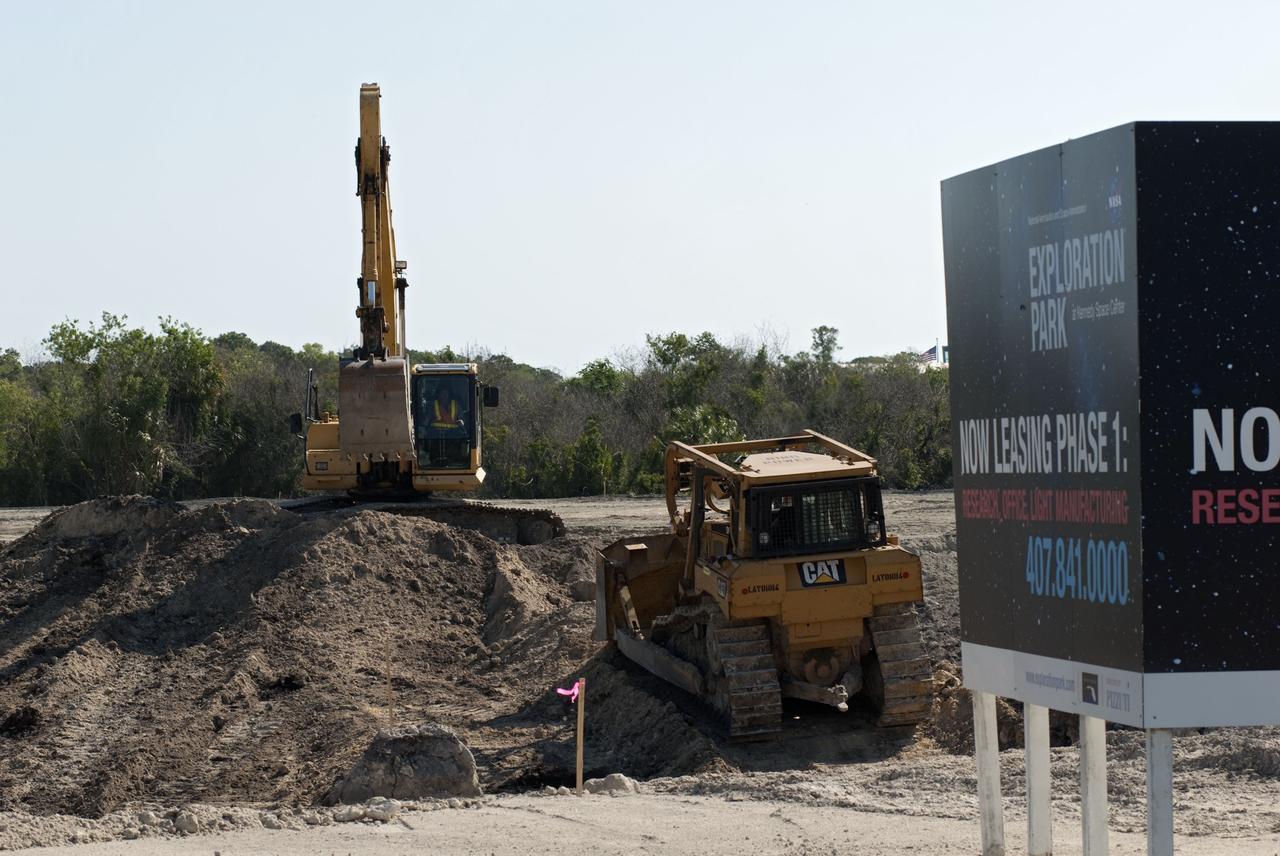
CAPE CANAVERAL, Fla. -- Crews continue to clear land and prepare for the construction of a new road at the Exploration Park site near the Space Life Sciences Laboratory (SLSL) at NASA's Kennedy Space Center in Florida. The first phase will encompass 60 acres just outside Kennedy’s security gates. Nine buildings will provide 350,000-square feet of work space, including educational, office, research and lab, and high-bay facilities. Each building is expected to be certified in the U.S. Green Building Council’s Leadership in Environmental and Energy Design (LEED). Exploration Park is designed to be a strategically located complex, adjacent to the SLSL, for servicing diverse tenants and uses that will engage in activities to support space-related activities of NASA, other government agencies and the U.S. commercial space industry. It also is expected to bring new aerospace work to the Space Coast. The SLSL will be the anchor facility for the park, which is expected to open its first new facility in early 2012. Photo credit: NASA/Jim Grossmann
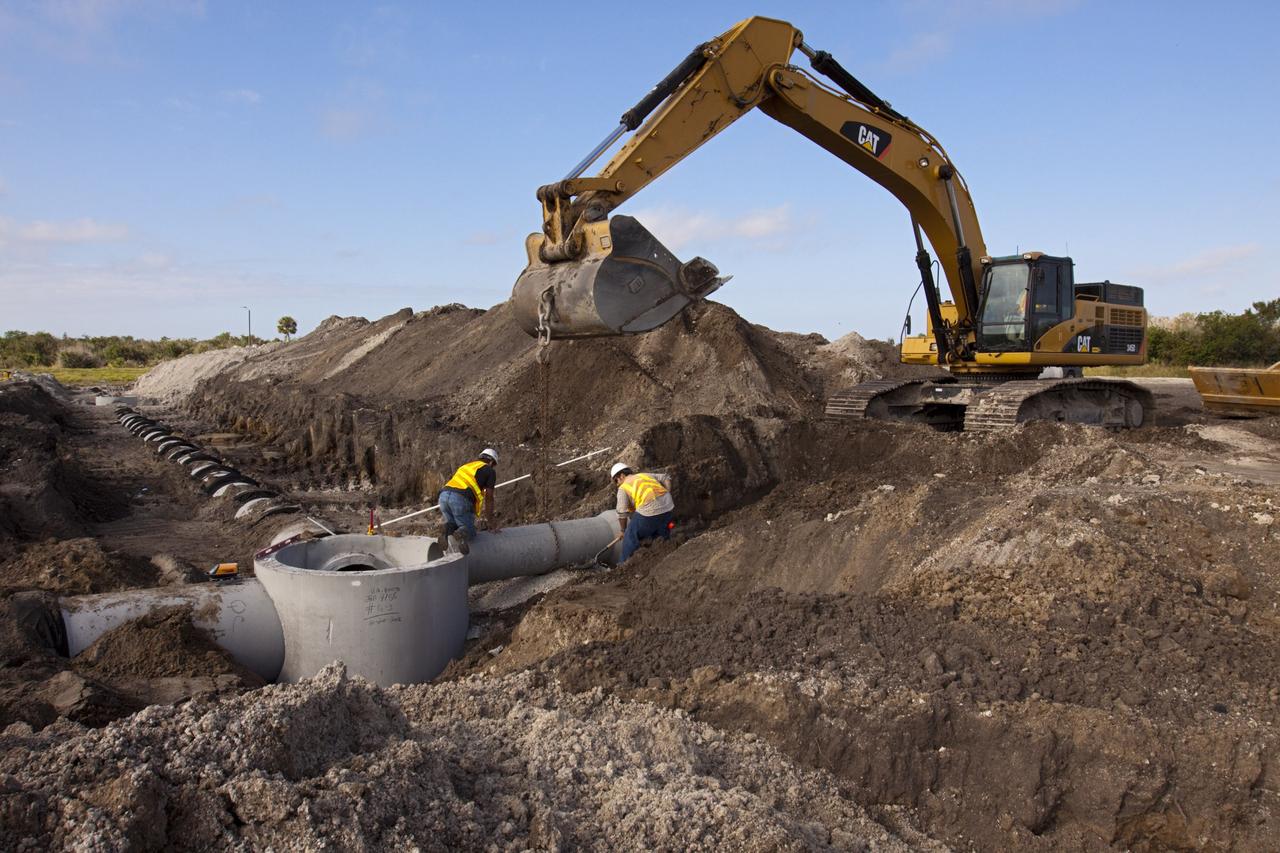
CAPE CANAVERAL, Fla. – Construction work progresses on Phase I of Exploration Park at NASA’s Kennedy Space Center in Florida. Exploration Park is near the Space Life Sciences Laboratory (SLSL). The first phase encompasses 60 acres just outside Kennedy’s security gates. Nine buildings will provide 350,000-square feet of work space, including educational, office, research and lab, and high-bay facilities. Each building is expected to be certified in the U.S. Green Building Council’s Leadership in Environmental and Energy Design (LEED). Exploration Park is designed to be a strategically located complex, adjacent to the SLSL, for servicing diverse tenants and uses that will engage in activities to support space-related activities of NASA, other government agencies and the U.S. commercial space industry. The SLSL will be the anchor facility for the park. Photo credit: NASA/Kim Shiflett
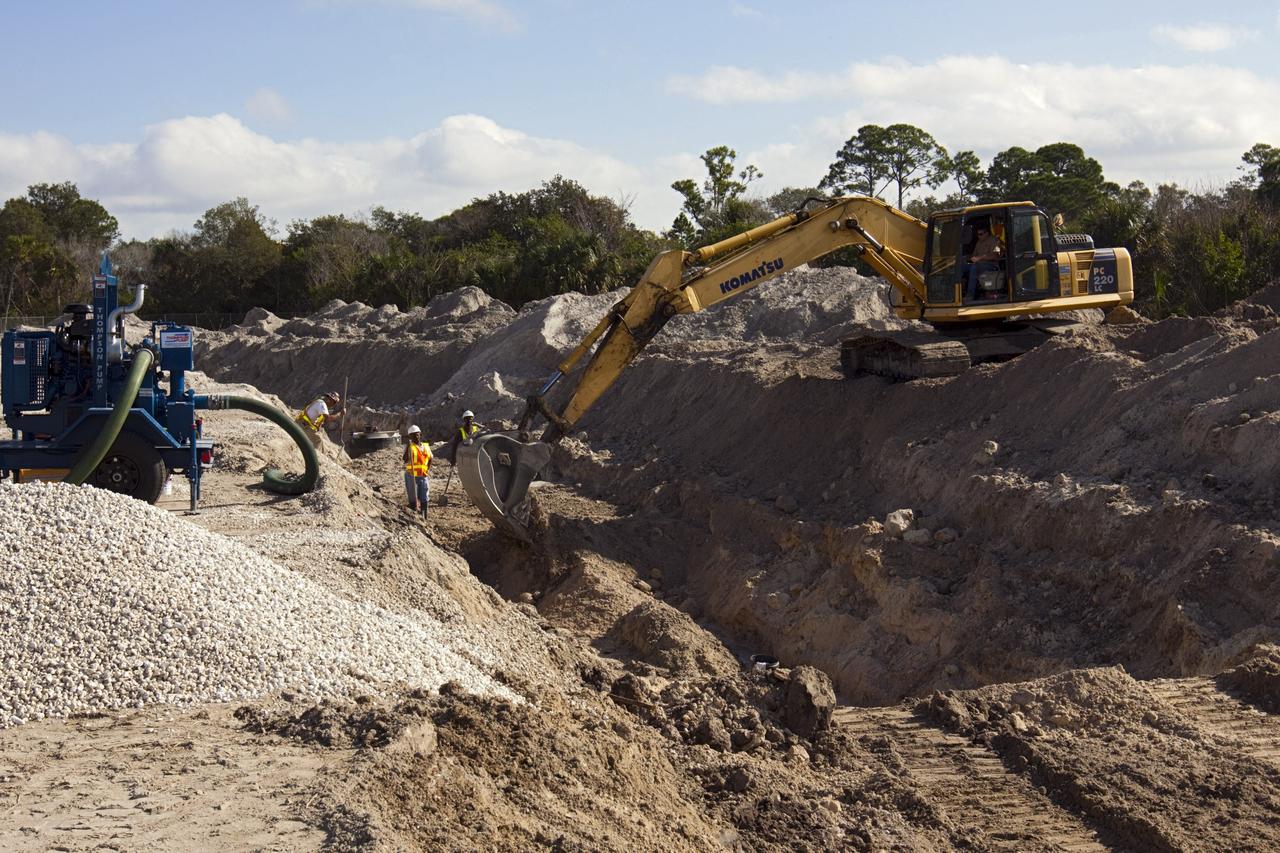
CAPE CANAVERAL, Fla. – Construction work progresses on Phase I of Exploration Park at NASA’s Kennedy Space Center in Florida. Exploration Park is near the Space Life Sciences Laboratory (SLSL). The first phase encompasses 60 acres just outside Kennedy’s security gates. Nine buildings will provide 350,000-square feet of work space, including educational, office, research and lab, and high-bay facilities. Each building is expected to be certified in the U.S. Green Building Council’s Leadership in Environmental and Energy Design (LEED). Exploration Park is designed to be a strategically located complex, adjacent to the SLSL, for servicing diverse tenants and uses that will engage in activities to support space-related activities of NASA, other government agencies and the U.S. commercial space industry. The SLSL will be the anchor facility for the park. Photo credit: NASA/Kim Shiflett
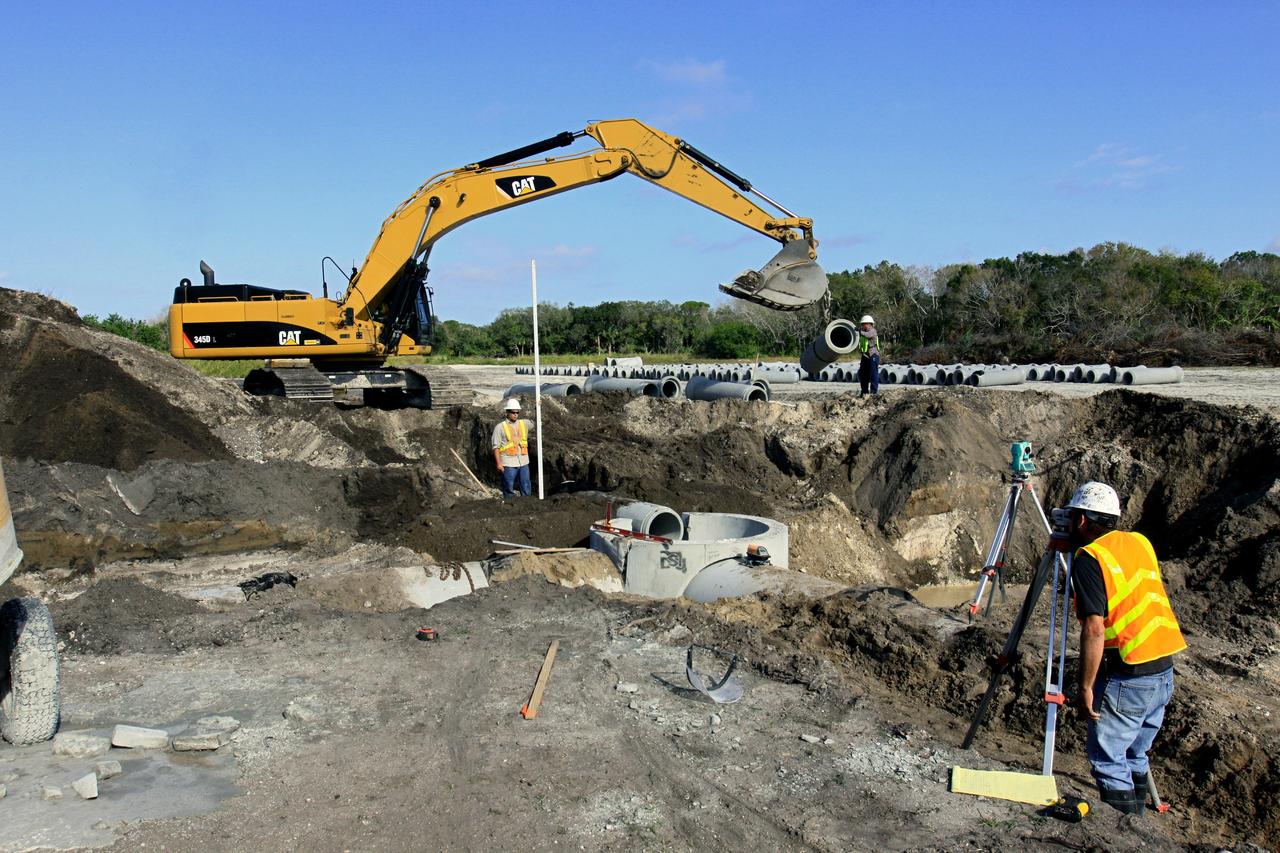
CAPE CANAVERAL, Fla. – Construction work progresses on Phase I of Exploration Park at NASA’s Kennedy Space Center in Florida. Exploration Park is near the Space Life Sciences Laboratory (SLSL). The first phase encompasses 60 acres just outside Kennedy’s security gates. Nine buildings will provide 350,000-square feet of work space, including educational, office, research and lab, and high-bay facilities. Each building is expected to be certified in the U.S. Green Building Council’s Leadership in Environmental and Energy Design (LEED). Exploration Park is designed to be a strategically located complex, adjacent to the SLSL, for servicing diverse tenants and uses that will engage in activities to support space-related activities of NASA, other government agencies and the U.S. commercial space industry. The SLSL will be the anchor facility for the park. Photo credit: NASA/Kim Shiflett
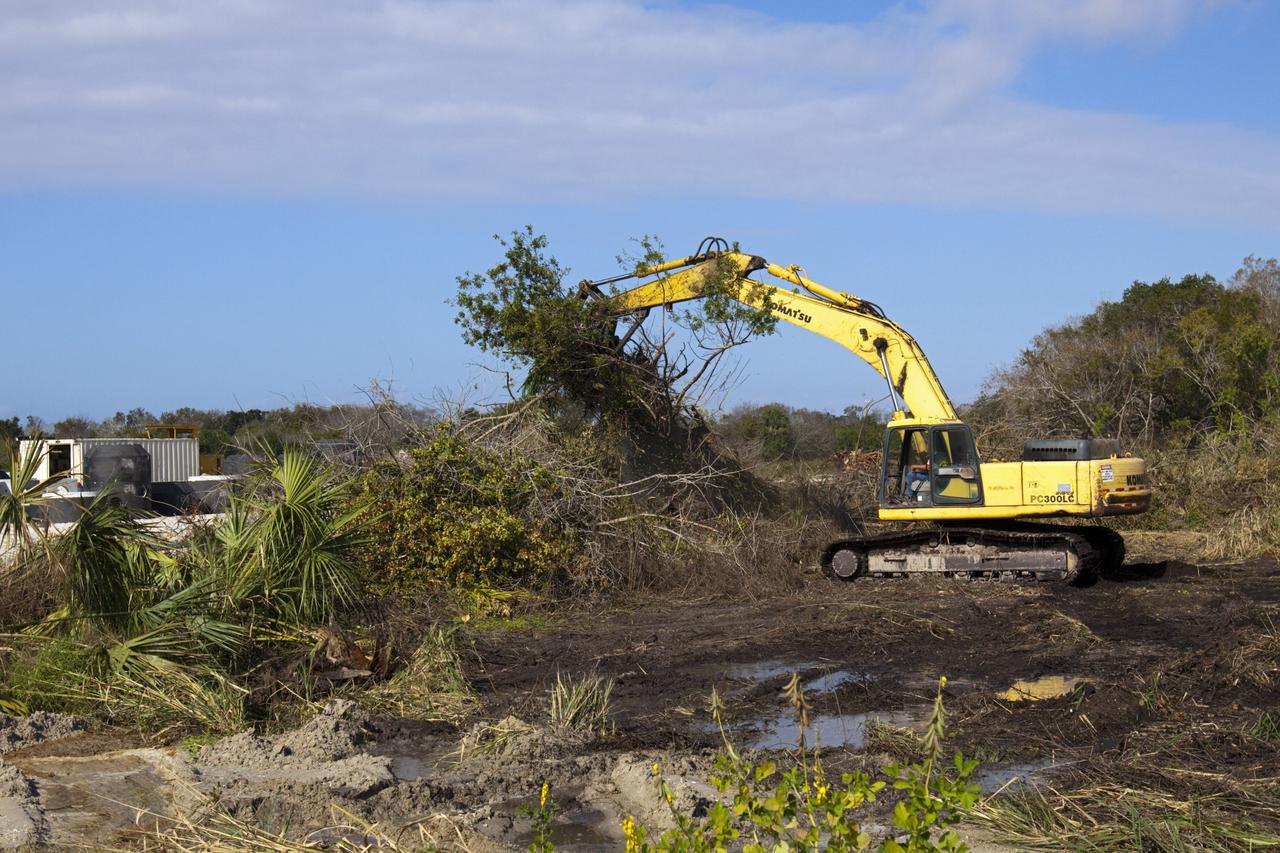
CAPE CANAVERAL, Fla. – Land is cleared as construction work progresses on Phase I of Exploration Park at NASA’s Kennedy Space Center in Florida. Exploration Park is near the Space Life Sciences Laboratory (SLSL). The first phase encompasses 60 acres just outside Kennedy’s security gates. Nine buildings will provide 350,000-square feet of work space, including educational, office, research and lab, and high-bay facilities. Each building is expected to be certified in the U.S. Green Building Council’s Leadership in Environmental and Energy Design (LEED). Exploration Park is designed to be a strategically located complex, adjacent to the SLSL, for servicing diverse tenants and uses that will engage in activities to support space-related activities of NASA, other government agencies and the U.S. commercial space industry. The SLSL will be the anchor facility for the park. Photo credit: NASA/Kim Shiflett
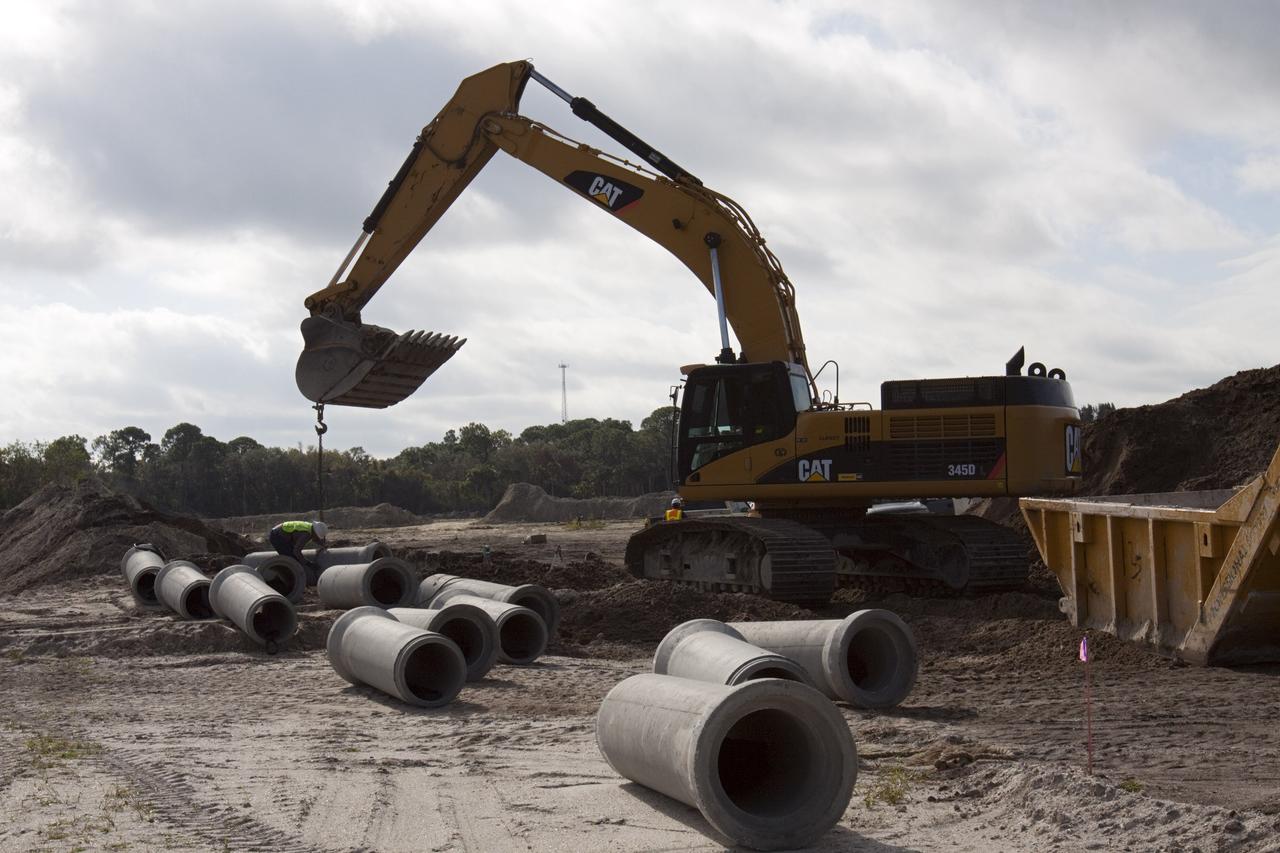
CAPE CANAVERAL, Fla. – Construction work progresses on Phase I of Exploration Park at NASA’s Kennedy Space Center in Florida. Exploration Park is near the Space Life Sciences Laboratory (SLSL). The first phase encompasses 60 acres just outside Kennedy’s security gates. Nine buildings will provide 350,000-square feet of work space, including educational, office, research and lab, and high-bay facilities. Each building is expected to be certified in the U.S. Green Building Council’s Leadership in Environmental and Energy Design (LEED). Exploration Park is designed to be a strategically located complex, adjacent to the SLSL, for servicing diverse tenants and uses that will engage in activities to support space-related activities of NASA, other government agencies and the U.S. commercial space industry. The SLSL will be the anchor facility for the park. Photo credit: NASA/Kim Shiflett

CAPE CANAVERAL, Fla. -- The Exploration Park site near the Space Life Sciences Laboratory (SLSL) at NASA's Kennedy Space Center in Florida. The first phase will encompass 60 acres just outside Kennedy’s security gates. Nine buildings will provide 350,000-square feet of work space, including educational, office, research and lab, and high-bay facilities. Each building is expected to be certified in the U.S. Green Building Council’s Leadership in Environmental and Energy Design (LEED). Exploration Park is designed to be a strategically located complex, adjacent to the SLSL, for servicing diverse tenants and uses that will engage in activities to support space-related activities of NASA, other government agencies and the U.S. commercial space industry. The SLSL will be the anchor facility for the park. Photo credit: NASA/Kim Shiflett
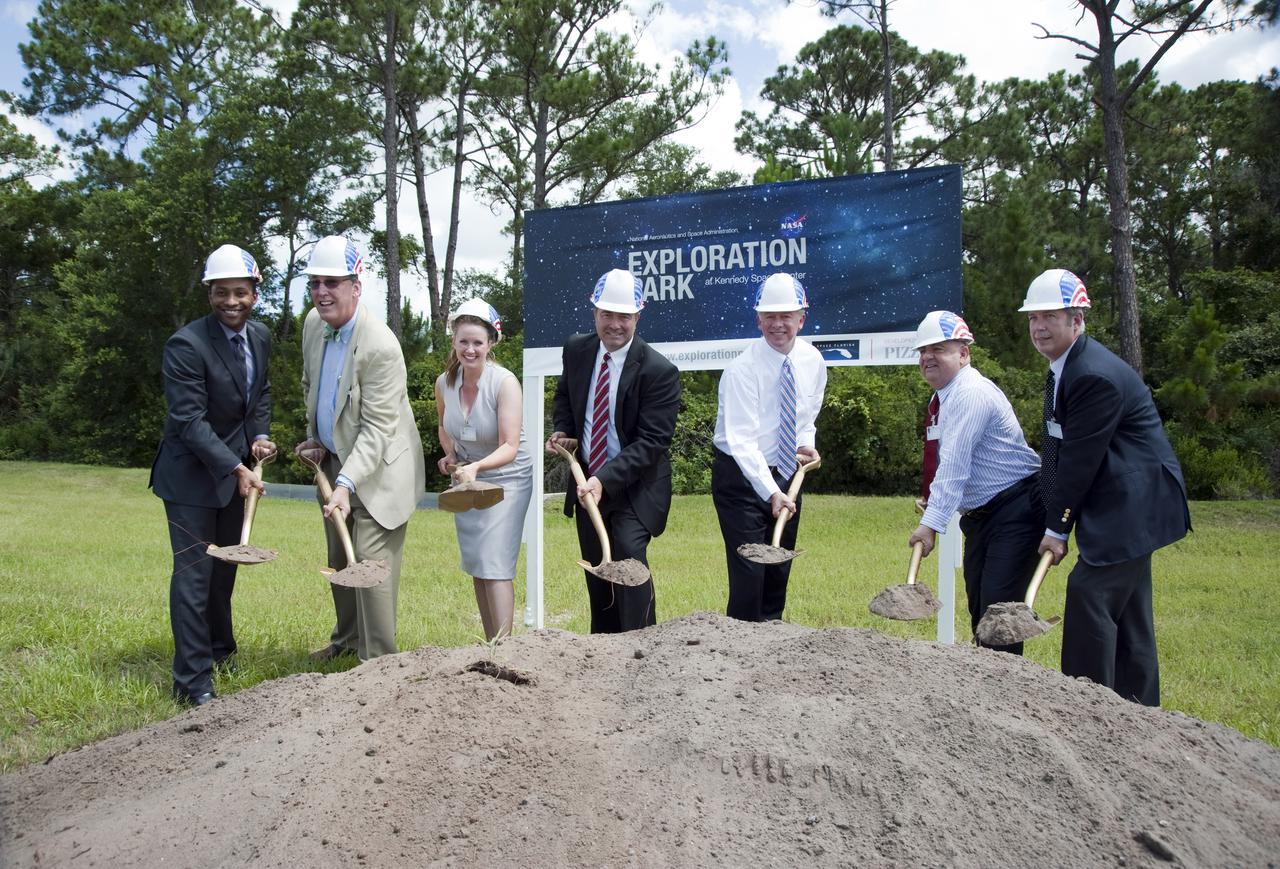
CAPE CANAVERAL, Fla. – At NASA's Kennedy Space Center in Florida, The Pizzuti Companies Naeem Coleman, left, Mike Bird, Stephanie Moreton and Tom Harmer, Florida Lt. Gov. Jeff Kottkamp, and The Pizzuti Companies Ron Pizzuti and Jim Russell break ground on Exploration Park outside of the Space Life Sciences Laboratory, or SLSL. Exploration Park is designed to be a strategically located complex, adjacent to the SLSL, for servicing diverse tenants and uses that will engage in activities to support space-related activities of NASA, other government agencies and the U.S. commercial space industry, as well as bring new aerospace work to the Space Coast. The SLSL will be the anchor facility for the park, which is expected to open its first new facility in early 2012. Photo Credit: NASA_Kim Shiflett
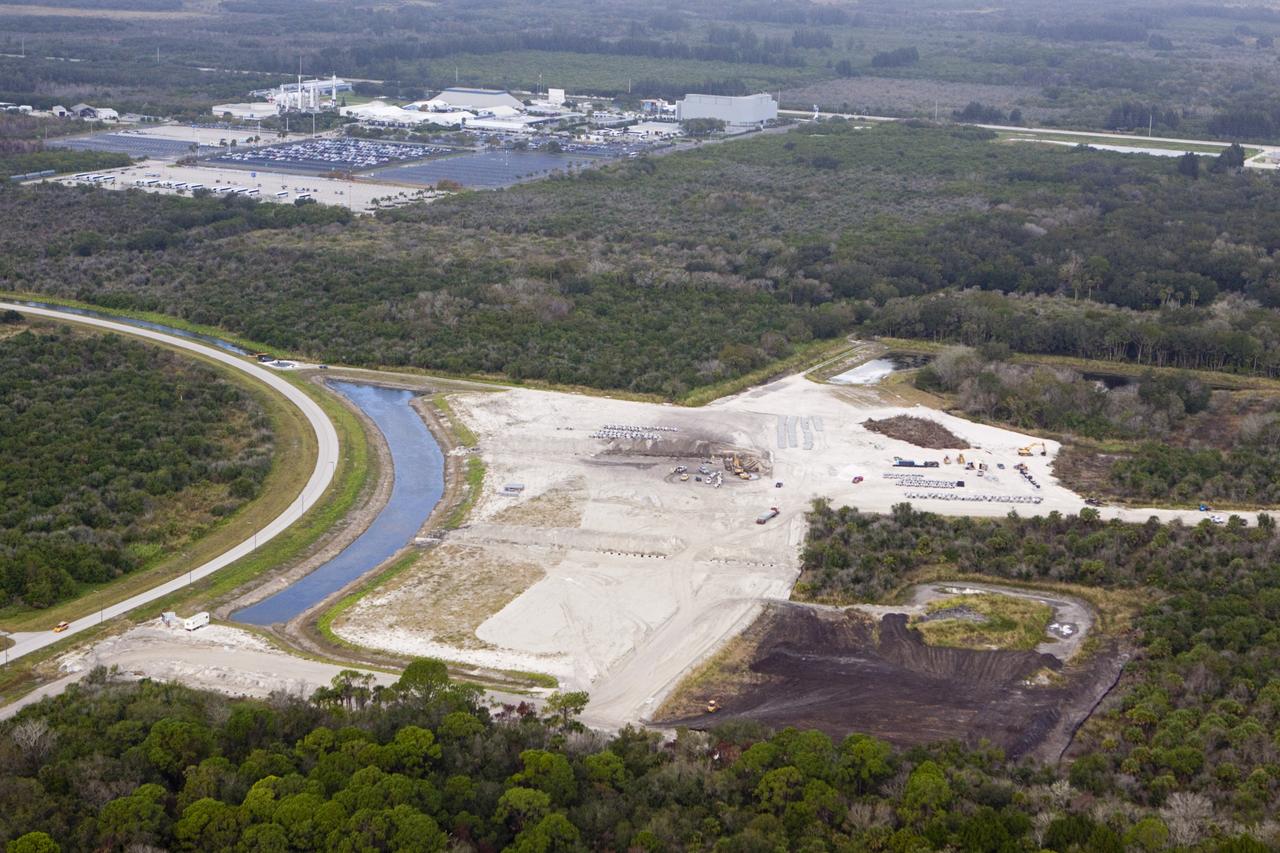
CAPE CANAVERAL, Fla. - The Exploration Park site near the Space Life Sciences Laboratory (SLSL) at NASA's Kennedy Space Center in Florida. The first phase will encompass 60 acres just outside Kennedy’s security gates. Nine buildings will provide 350,000-square feet of work space, including educational, office, research and lab, and high-bay facilities. Each building is expected to be certified in the U.S. Green Building Council’s Leadership in Environmental and Energy Design (LEED). Exploration Park is designed to be a strategically located complex, adjacent to the SLSL, for servicing diverse tenants and uses that will engage in activities to support space-related activities of NASA, other government agencies and the U.S. commercial space industry. The SLSL will be the anchor facility for the park. Photo credit: NASA/Kim Shiflett
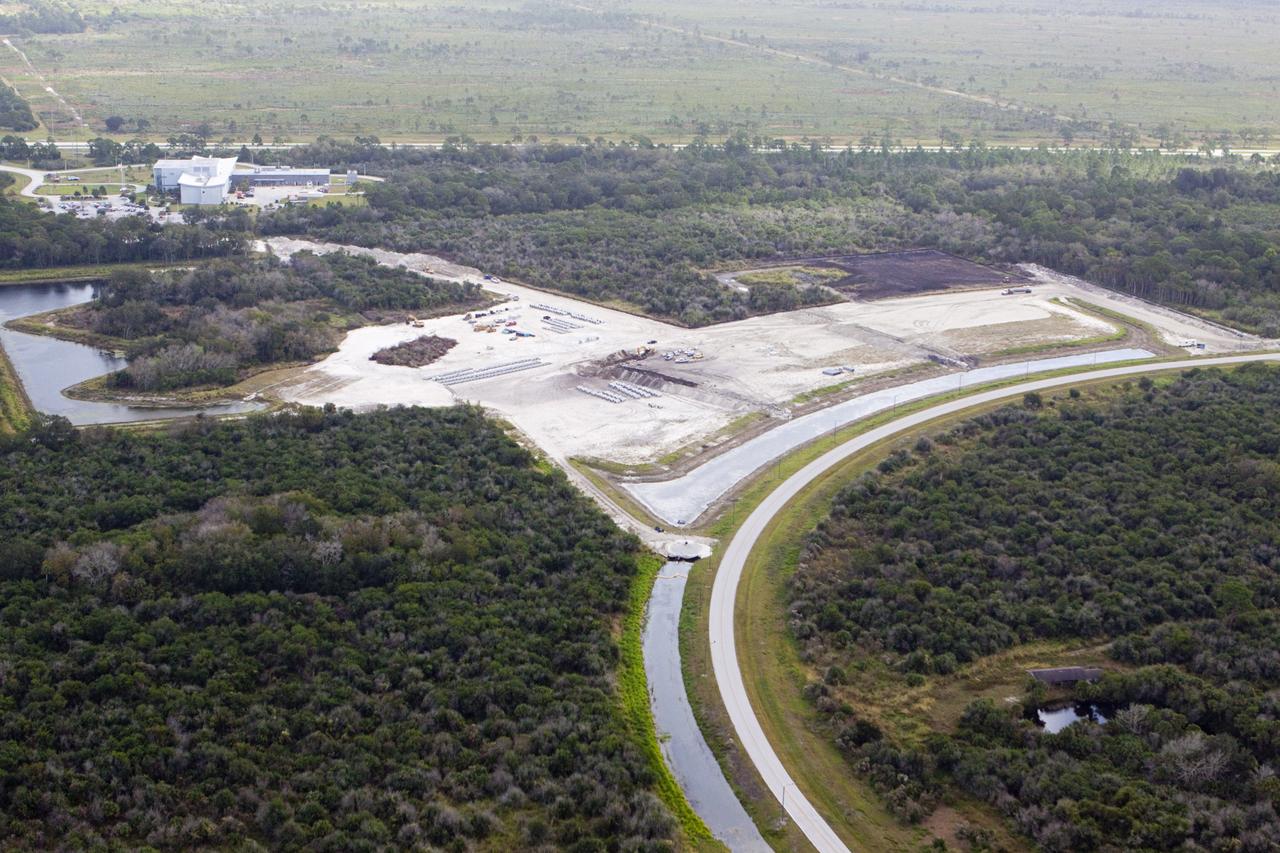
CAPE CANAVERAL, Fla. - The Exploration Park site near the Space Life Sciences Laboratory (SLSL) at NASA's Kennedy Space Center in Florida. The first phase will encompass 60 acres just outside Kennedy’s security gates. Nine buildings will provide 350,000-square feet of work space, including educational, office, research and lab, and high-bay facilities. Each building is expected to be certified in the U.S. Green Building Council’s Leadership in Environmental and Energy Design (LEED). Exploration Park is designed to be a strategically located complex, adjacent to the SLSL, for servicing diverse tenants and uses that will engage in activities to support space-related activities of NASA, other government agencies and the U.S. commercial space industry. The SLSL will be the anchor facility for the park. Photo credit: NASA/Kim Shiflett
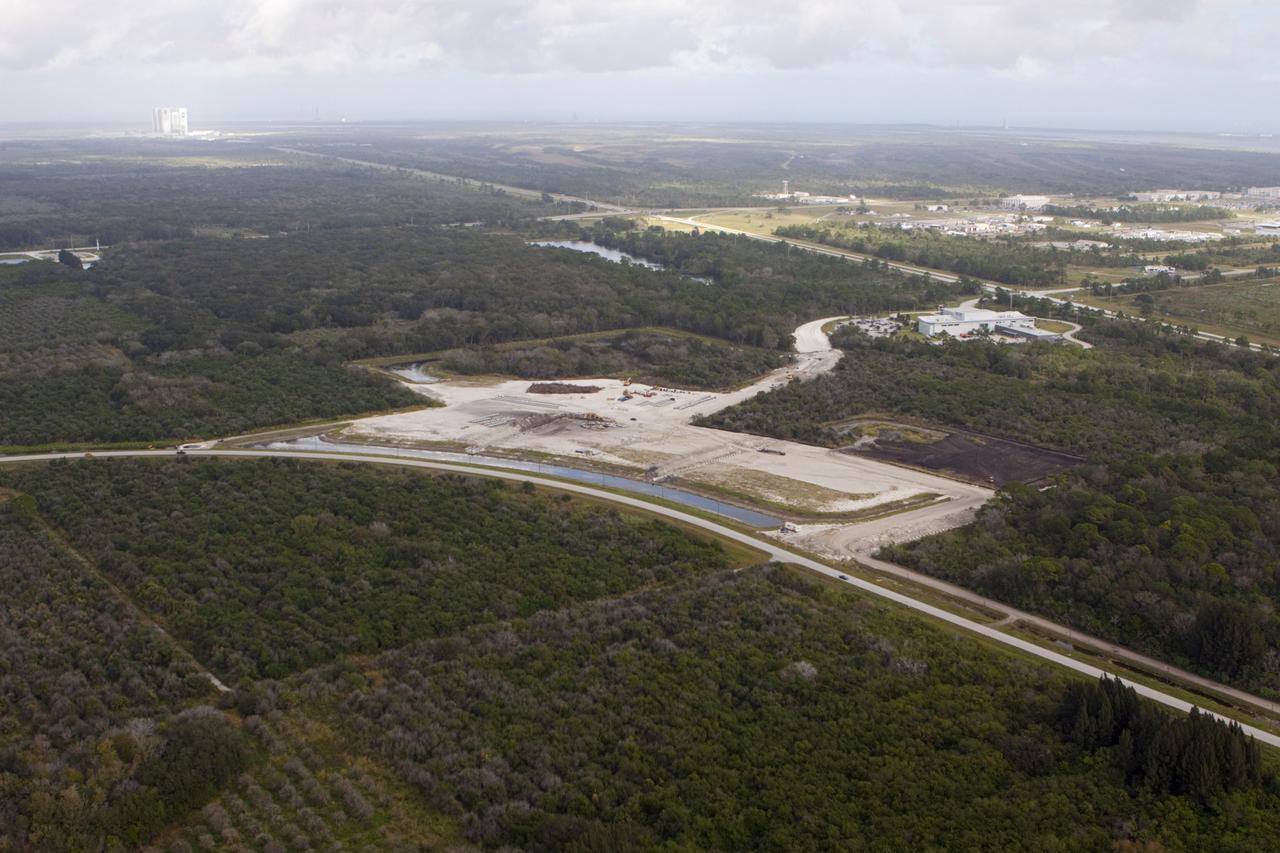
CAPE CANAVERAL, Fla. - The Exploration Park site near the Space Life Sciences Laboratory (SLSL) at NASA's Kennedy Space Center in Florida. The first phase will encompass 60 acres just outside Kennedy’s security gates. Nine buildings will provide 350,000-square feet of work space, including educational, office, research and lab, and high-bay facilities. Each building is expected to be certified in the U.S. Green Building Council’s Leadership in Environmental and Energy Design (LEED). Exploration Park is designed to be a strategically located complex, adjacent to the SLSL, for servicing diverse tenants and uses that will engage in activities to support space-related activities of NASA, other government agencies and the U.S. commercial space industry. The SLSL will be the anchor facility for the park. Photo credit: NASA/Kim Shiflett
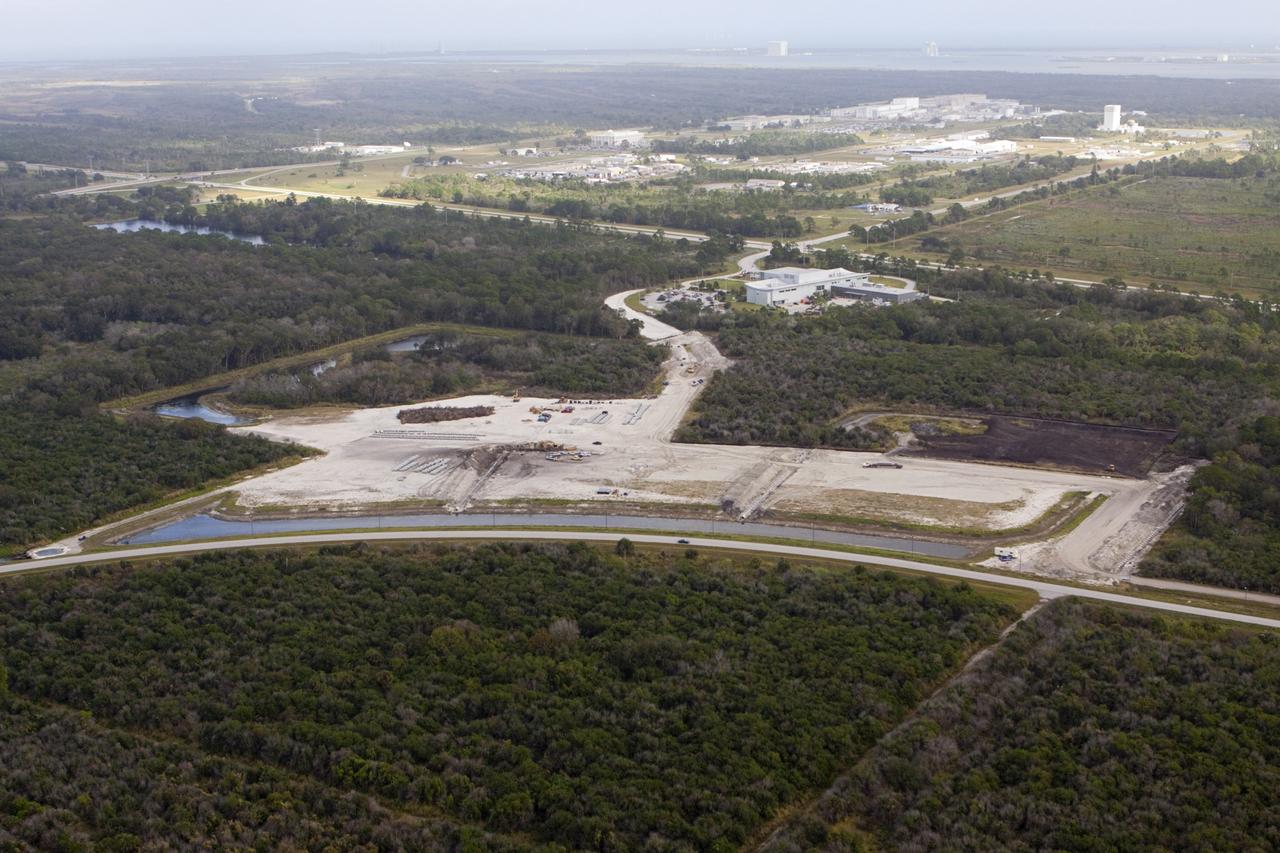
CAPE CANAVERAL, Fla. - The Exploration Park site near the Space Life Sciences Laboratory (SLSL) at NASA's Kennedy Space Center in Florida. The first phase will encompass 60 acres just outside Kennedy’s security gates. Nine buildings will provide 350,000-square feet of work space, including educational, office, research and lab, and high-bay facilities. Each building is expected to be certified in the U.S. Green Building Council’s Leadership in Environmental and Energy Design (LEED). Exploration Park is designed to be a strategically located complex, adjacent to the SLSL, for servicing diverse tenants and uses that will engage in activities to support space-related activities of NASA, other government agencies and the U.S. commercial space industry. The SLSL will be the anchor facility for the park. Photo credit: NASA/Kim Shiflett
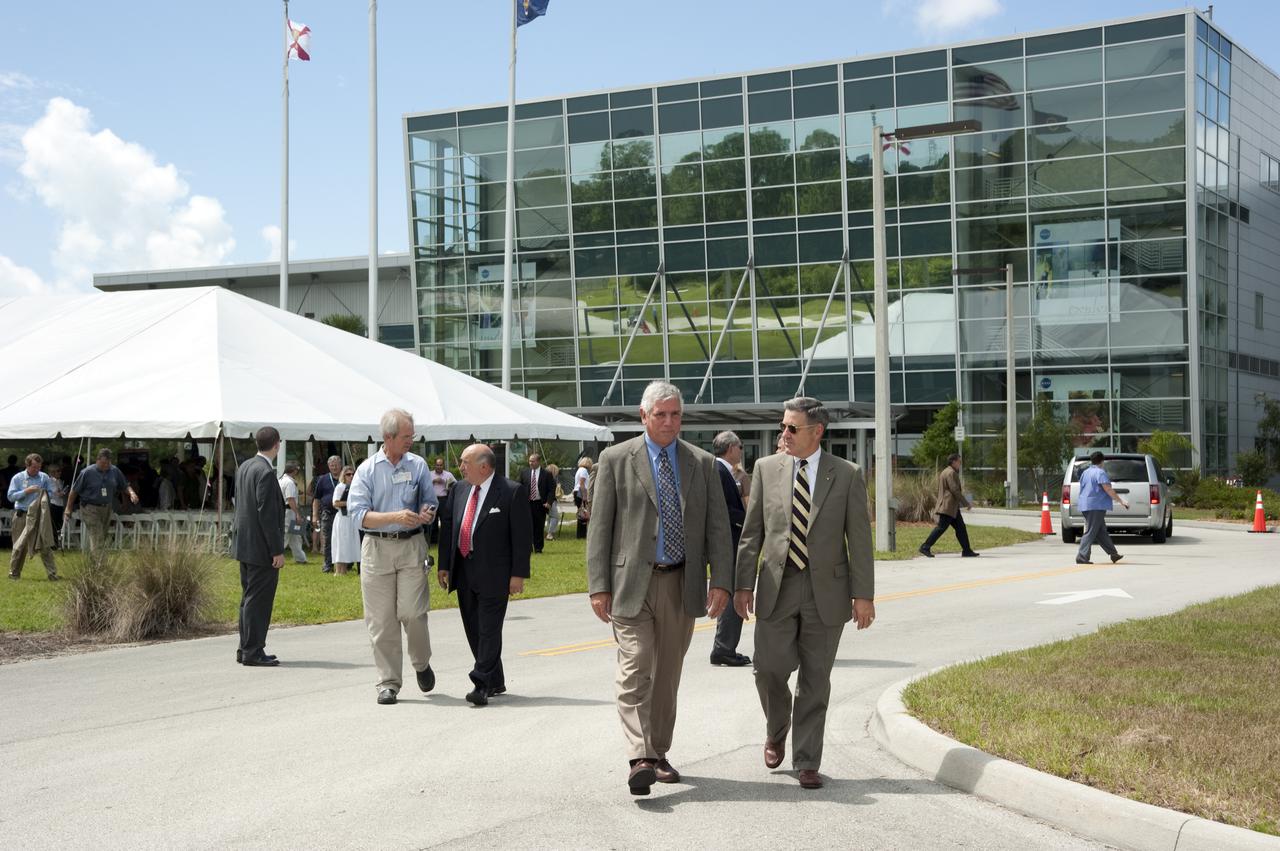
CAPE CANAVERAL, Fla. – At NASA's Kennedy Space Center in Florida, Kennedy Center Director Bob Cabana, right, walks with Program Manager for Strategic Partnerships at Kennedy Jim Ball to the ground breaking site of Exploration Park outside of the Space Life Sciences Laboratory, or SLSL. To their left, are The Pizzuti Companies Chairman and CEO Ron Pizzuti and Patrick Peterson, a space reporter with Florida Today. Exploration Park is designed to be a strategically located complex, adjacent to the SLSL, for servicing diverse tenants and uses that will engage in activities to support space-related activities of NASA, other government agencies and the U.S. commercial space industry, as well as bring new aerospace work to the Space Coast. The SLSL will be the anchor facility for the park, which is expected to open its first new facility in early 2012. Photo Credit: NASA_Kim Shiflett
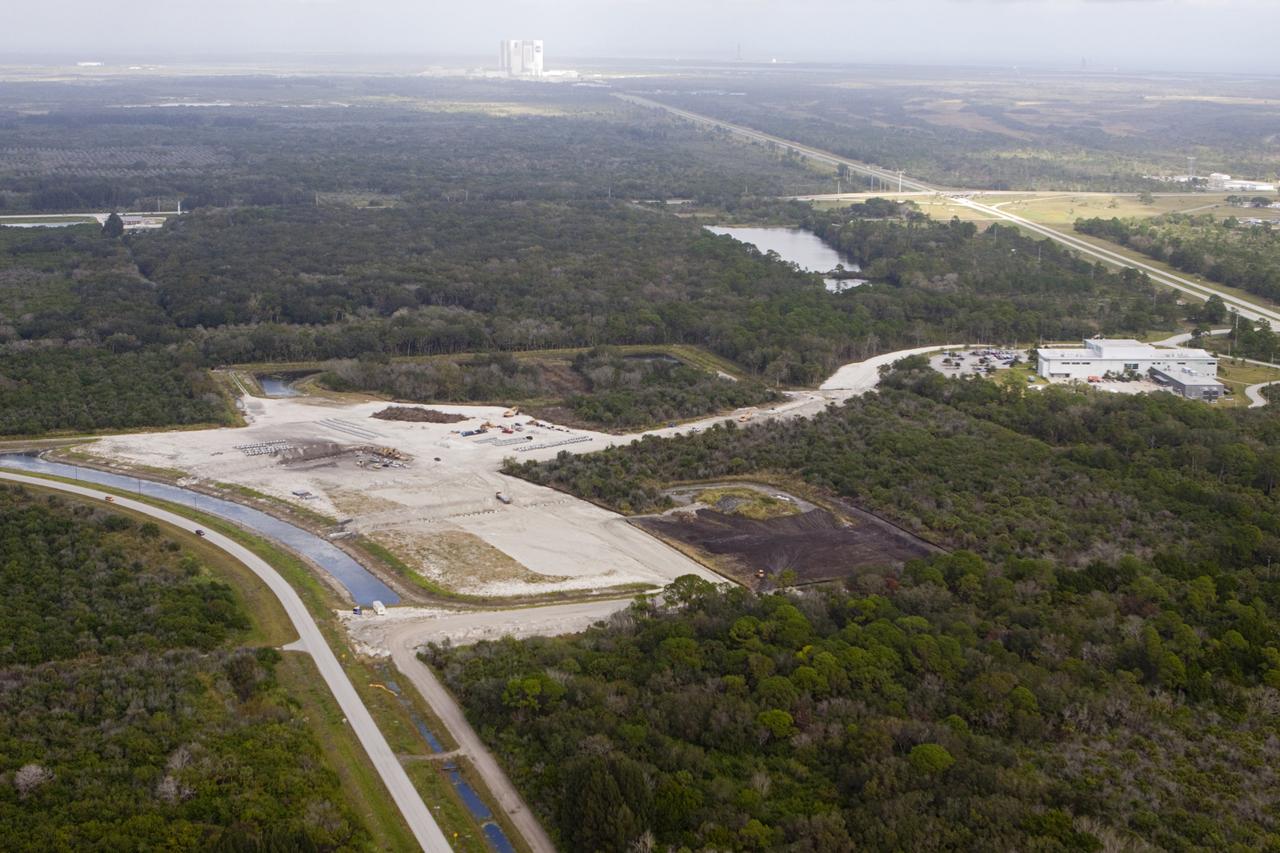
CAPE CANAVERAL, Fla. - The Exploration Park site near the Space Life Sciences Laboratory (SLSL) at NASA's Kennedy Space Center in Florida. The first phase will encompass 60 acres just outside Kennedy’s security gates. Nine buildings will provide 350,000-square feet of work space, including educational, office, research and lab, and high-bay facilities. Each building is expected to be certified in the U.S. Green Building Council’s Leadership in Environmental and Energy Design (LEED). Exploration Park is designed to be a strategically located complex, adjacent to the SLSL, for servicing diverse tenants and uses that will engage in activities to support space-related activities of NASA, other government agencies and the U.S. commercial space industry. The SLSL will be the anchor facility for the park. Photo credit: NASA/Kim Shiflett
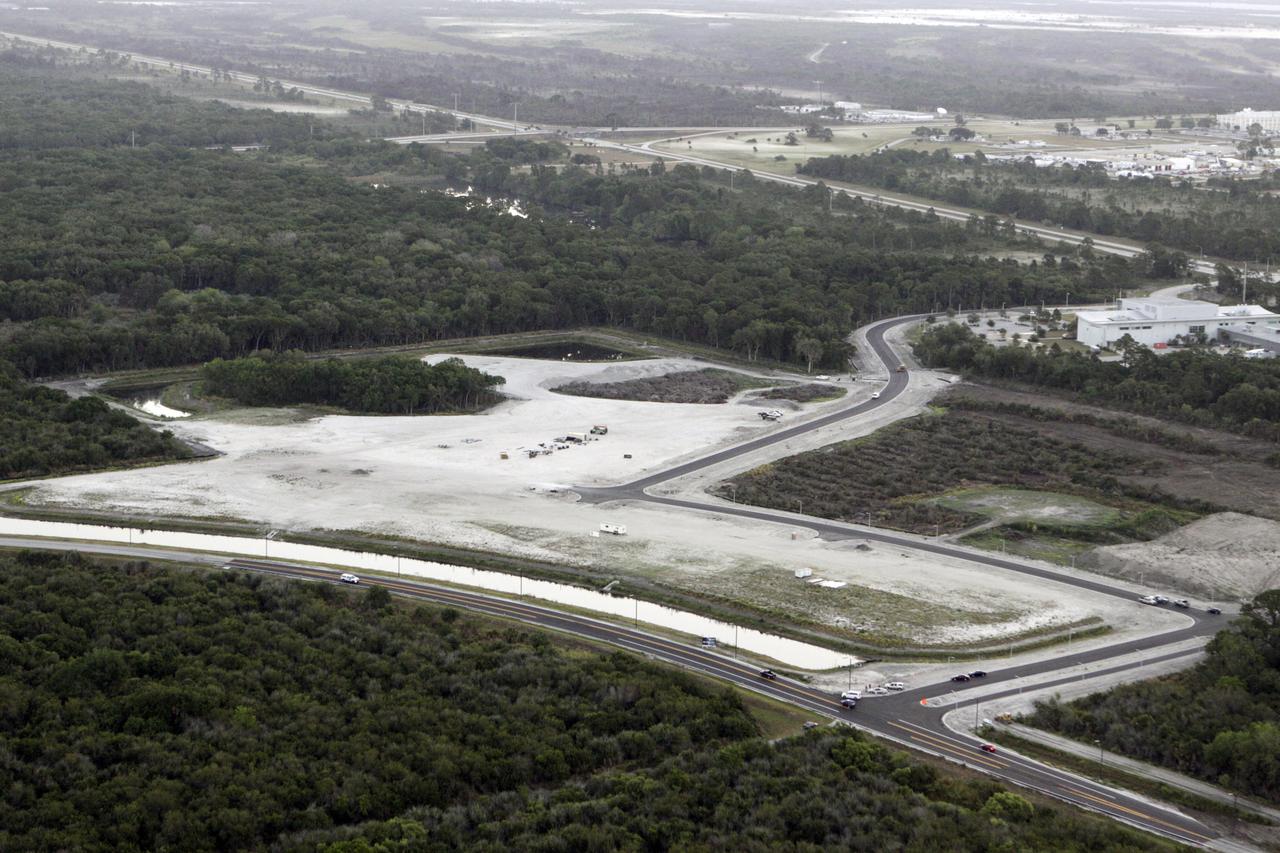
CAPE CANAVERAL, Fla. – This aerial view over NASA’s Kennedy Space Center in Florida reveals a new road winding its way from Space Commerce Way, in the foreground, past the construction site for the new Exploration Park, to the Space Life Sciences Laboratory SLSL, at right. In the background, at far right, is Kennedy’s Industrial Area. The land was cleared for the first phase of construction following the park’s groundbreaking in June 2010. The park encompasses 60 acres just outside Kennedy’s security gates near the Kennedy Space Center Visitor Complex. Exploration Park is designed to be a strategically located complex, adjacent to the SLSL, for servicing diverse tenants and uses that will engage in activities to support the space-related activities of NASA, other government agencies and the U.S. commercial space industry, as well as attract new aerospace work to the Space Coast. Its nine sustainable, state-of-the-art buildings will include educational, office, research and laboratory, and high-bay facilities and provide 350,000-square feet of work space. Each building is expected to qualify for the U.S. Green Building Council’s Leadership in Environmental and Energy Design LEED certification. The SLSL will be the anchor facility for the park. Photo credit: NASA/Glenn Benson
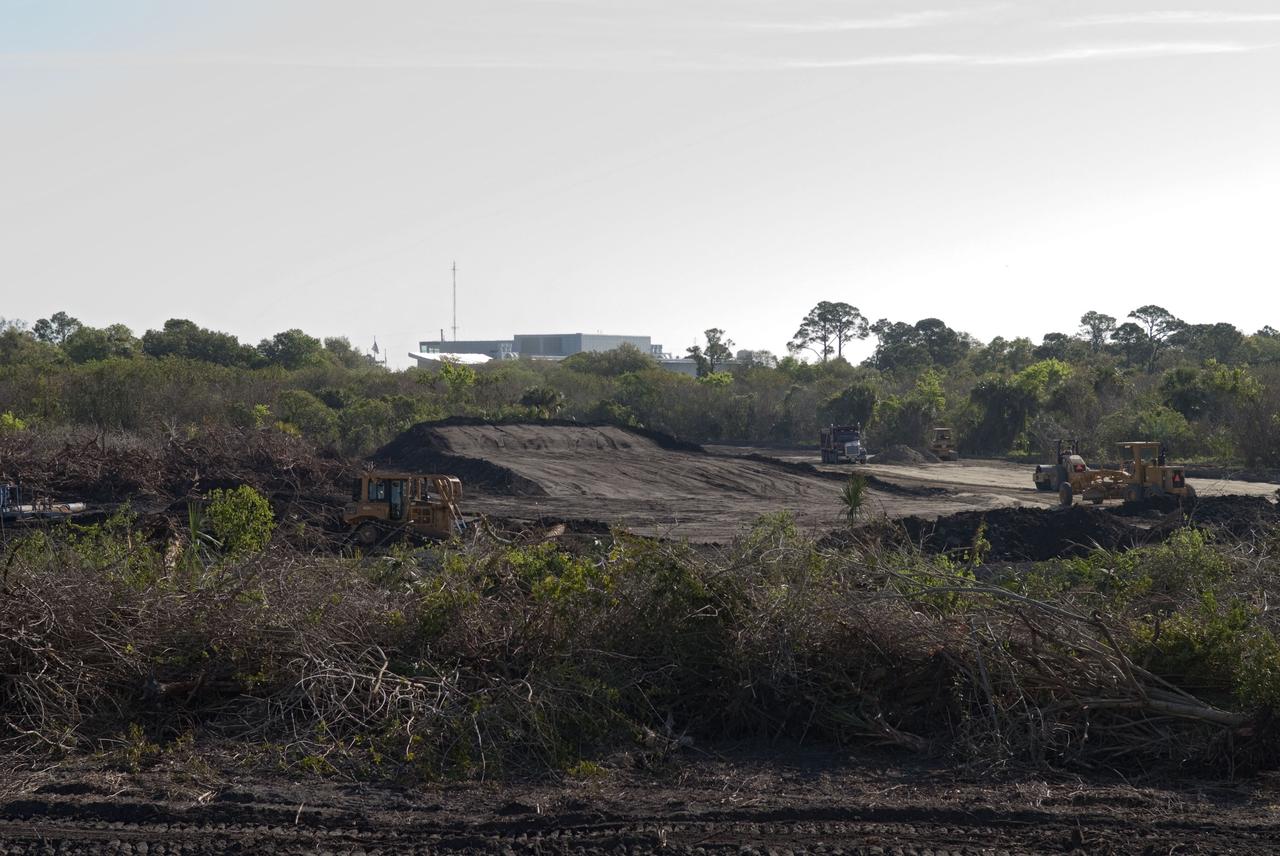
CAPE CANAVERAL, Fla. -- Land clearing and construction of a new road at the Exploration Park site begins outside of the Space Life Sciences Laboratory (SLSL) at NASA's Kennedy Space Center in Florida. The fill dirt being used to develop the first phase was donated by Port Canaveral as part of an agreement between the port and Space Florida, the park’s partner developer. The first phase will encompass 60 acres just outside Kennedy’s security gates. Nine buildings will provide 350,000-square feet of work space, including educational, office, research and lab, and high-bay facilities. Each building is expected to be certified in the U.S. Green Building Council’s Leadership in Environmental and Energy Design (LEED).Exploration Park is designed to be a strategically located complex, adjacent to the SLSL, for servicing diverse tenants and uses that will engage in activities to support space-related activities of NASA, other government agencies and the U.S. commercial space industry. It also is expected to bring new aerospace work to the Space Coast. The SLSL will be the anchor facility for the park, which is expected to open its first new facility in early 2012. Photo credit: NASA/Jim Grossmann
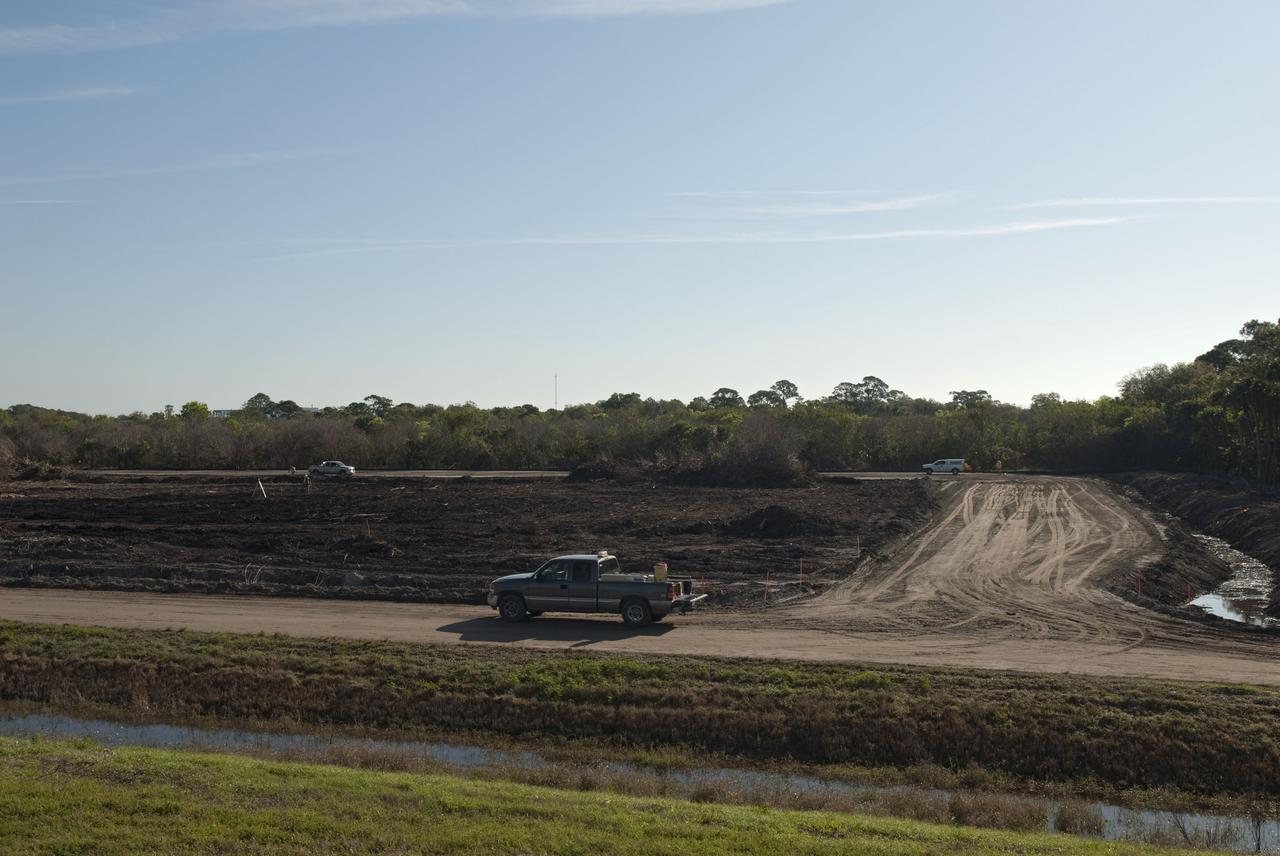
CAPE CANAVERAL, Fla. -- Land clearing and construction of a new road at the Exploration Park site begins outside of the Space Life Sciences Laboratory (SLSL) at NASA's Kennedy Space Center in Florida. The fill dirt being used to develop the first phase was donated by Port Canaveral as part of an agreement between the port and Space Florida, the park’s partner developer. The first phase will encompass 60 acres just outside Kennedy’s security gates. Nine buildings will provide 350,000-square feet of work space, including educational, office, research and lab, and high-bay facilities. Each building is expected to be certified in the U.S. Green Building Council’s Leadership in Environmental and Energy Design (LEED).Exploration Park is designed to be a strategically located complex, adjacent to the SLSL, for servicing diverse tenants and uses that will engage in activities to support space-related activities of NASA, other government agencies and the U.S. commercial space industry. It also is expected to bring new aerospace work to the Space Coast. The SLSL will be the anchor facility for the park, which is expected to open its first new facility in early 2012. Photo credit: NASA/Jim Grossmann
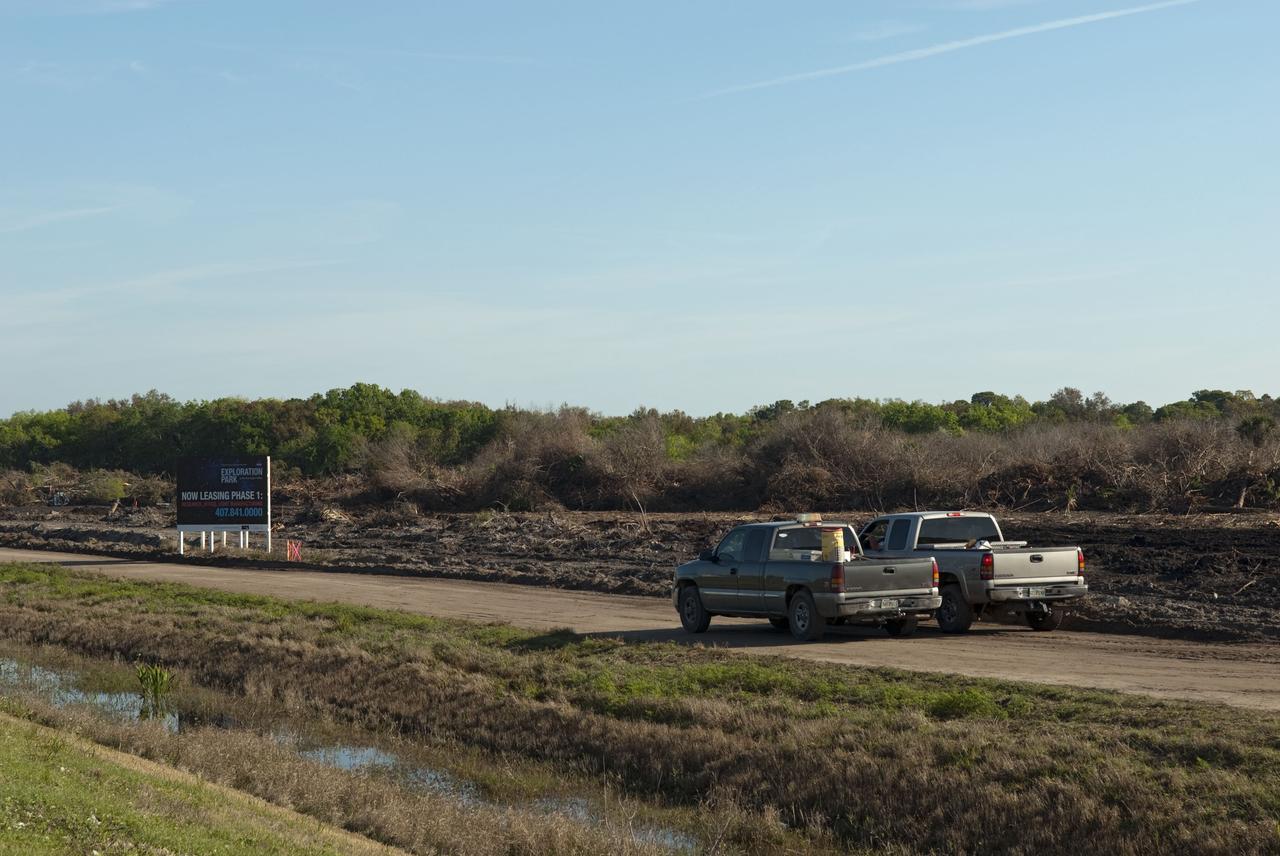
CAPE CANAVERAL, Fla. -- Land clearing and construction of a new road at the Exploration Park site begins outside of the Space Life Sciences Laboratory (SLSL) at NASA's Kennedy Space Center in Florida. The fill dirt being used to develop the first phase was donated by Port Canaveral as part of an agreement between the port and Space Florida, the park’s partner developer. The first phase will encompass 60 acres just outside Kennedy’s security gates. Nine buildings will provide 350,000-square feet of work space, including educational, office, research and lab, and high-bay facilities. Each building is expected to be certified in the U.S. Green Building Council’s Leadership in Environmental and Energy Design (LEED).Exploration Park is designed to be a strategically located complex, adjacent to the SLSL, for servicing diverse tenants and uses that will engage in activities to support space-related activities of NASA, other government agencies and the U.S. commercial space industry. It also is expected to bring new aerospace work to the Space Coast. The SLSL will be the anchor facility for the park, which is expected to open its first new facility in early 2012. Photo credit: NASA/Jim Grossmann
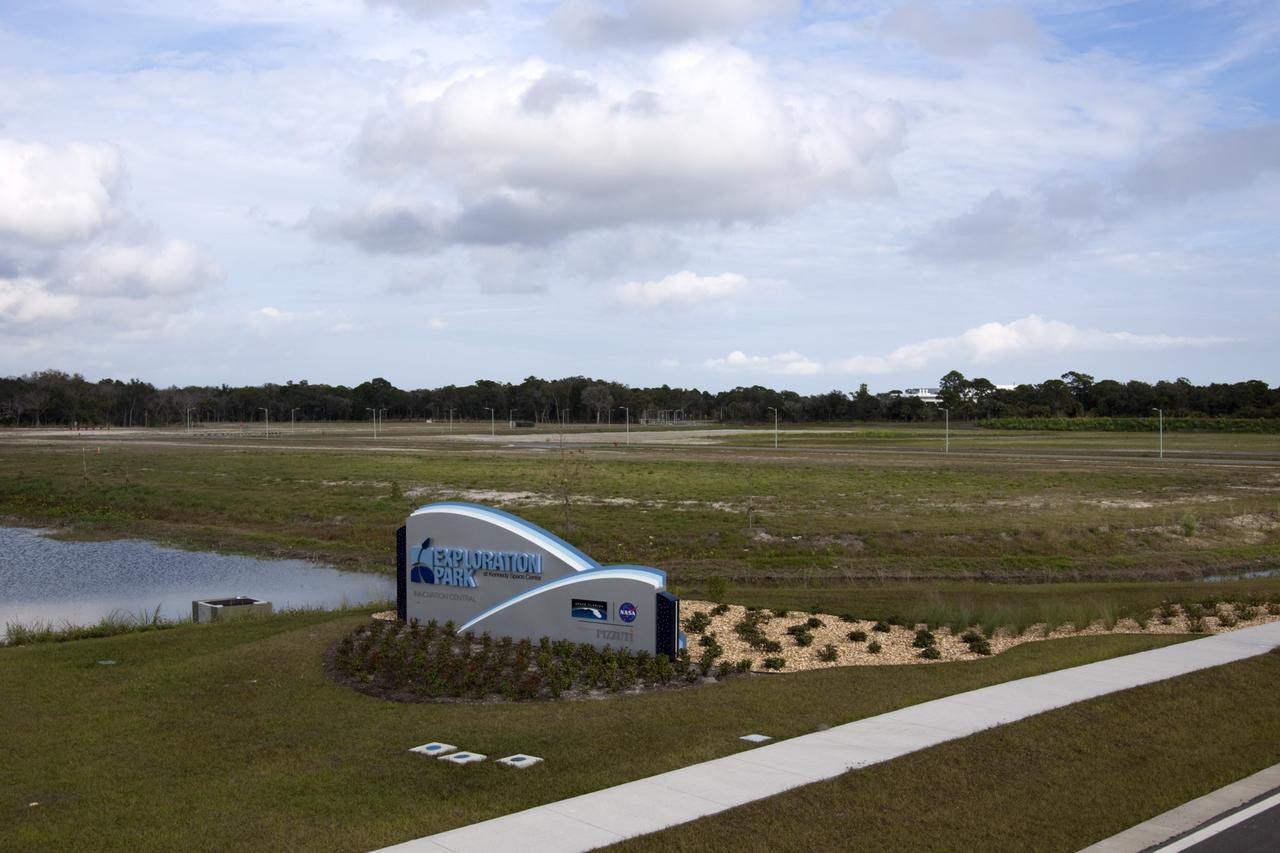
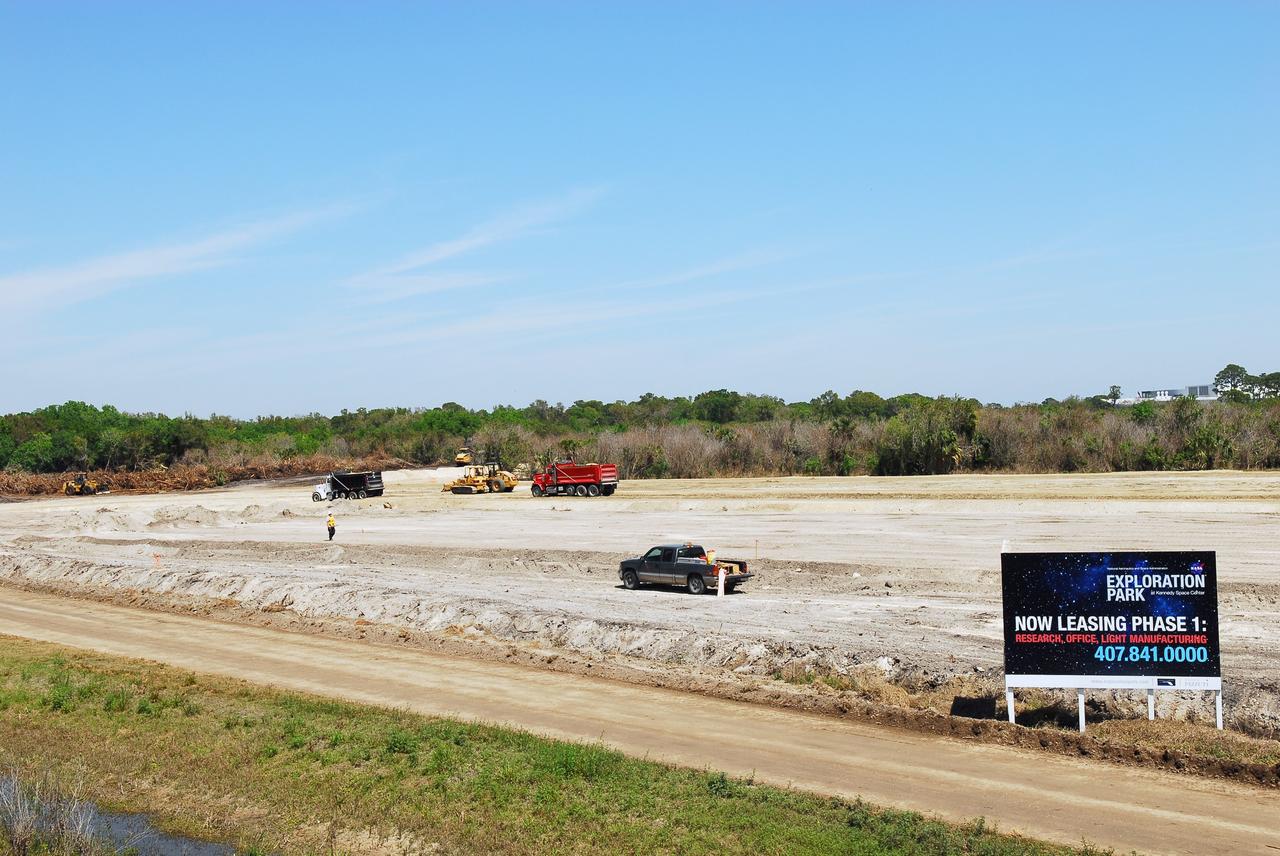
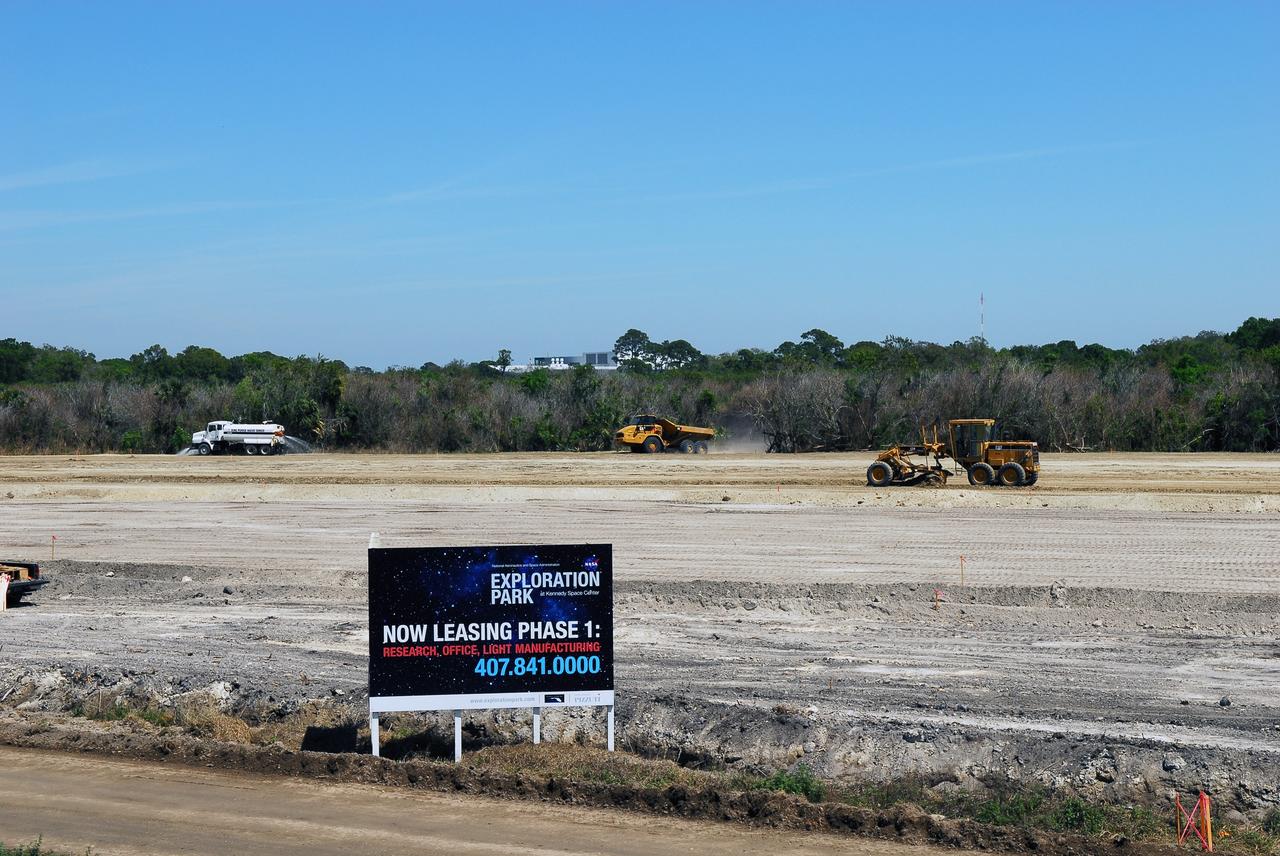
CAPE CANAVERAL, Fla. - A new sign on Space Commerce Way marks the entrance to Exploration Park near NASA’s Kennedy space Center in Florida. Land in the background has been cleared for the first phase of construction. Exploration Park encompasses 60 acres just outside Kennedy’s security gates. The park is designed to be a strategically located complex, adjacent to the Space Life Sciences Laboratory, for servicing diverse tenants and uses that will engage in activities to support the space-related activities of NASA, other government agencies and the U.S. commercial space industry. Its nine sustainable, state-of-the art buildings will include educational, office, research and laboratory, and high bay facilities and provide 350,000-square-feet of work space. Photo credit: NASA/Jim Grossmann
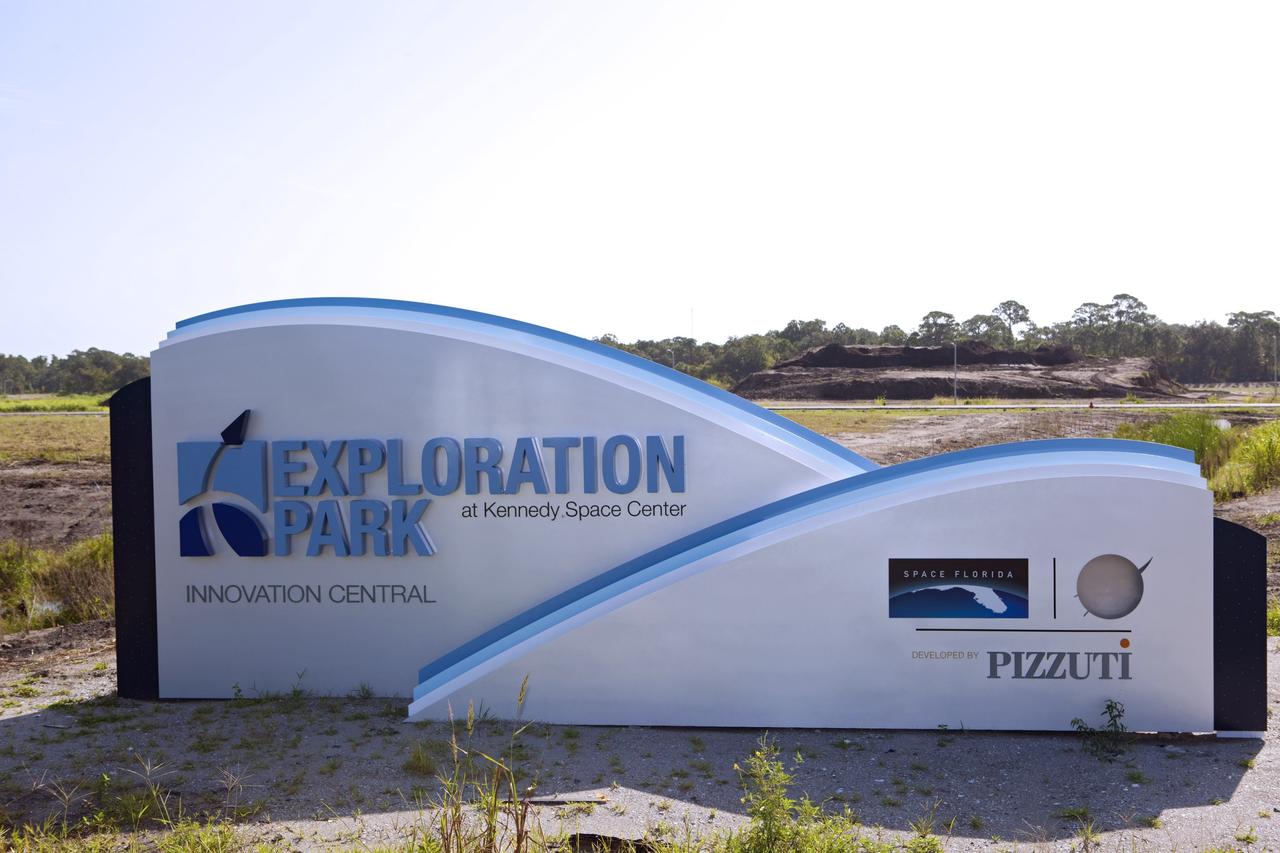
CAPE CANAVERAL, Fla. -- A new sign on Space Commerce Way marks the entrance to Exploration Park near NASA’s Kennedy Space Center in Florida. Land in the background has been cleared for the first phase of construction. Exploration Park encompasses 60 acres just outside Kennedy’s security gates. The park is designed to be a strategically located complex, adjacent to the Space Life Sciences Laboratory, for servicing diverse tenants and uses that will engage in activities to support the space-related activities of NASA, other government agencies and the U.S. commercial space industry. Its nine sustainable, state-of-the art buildings will include educational, office, research and laboratory, and high bay facilities and provide 350,000-square-feet of work space. Photo credit: NASA/Dimitri Gerondidakis
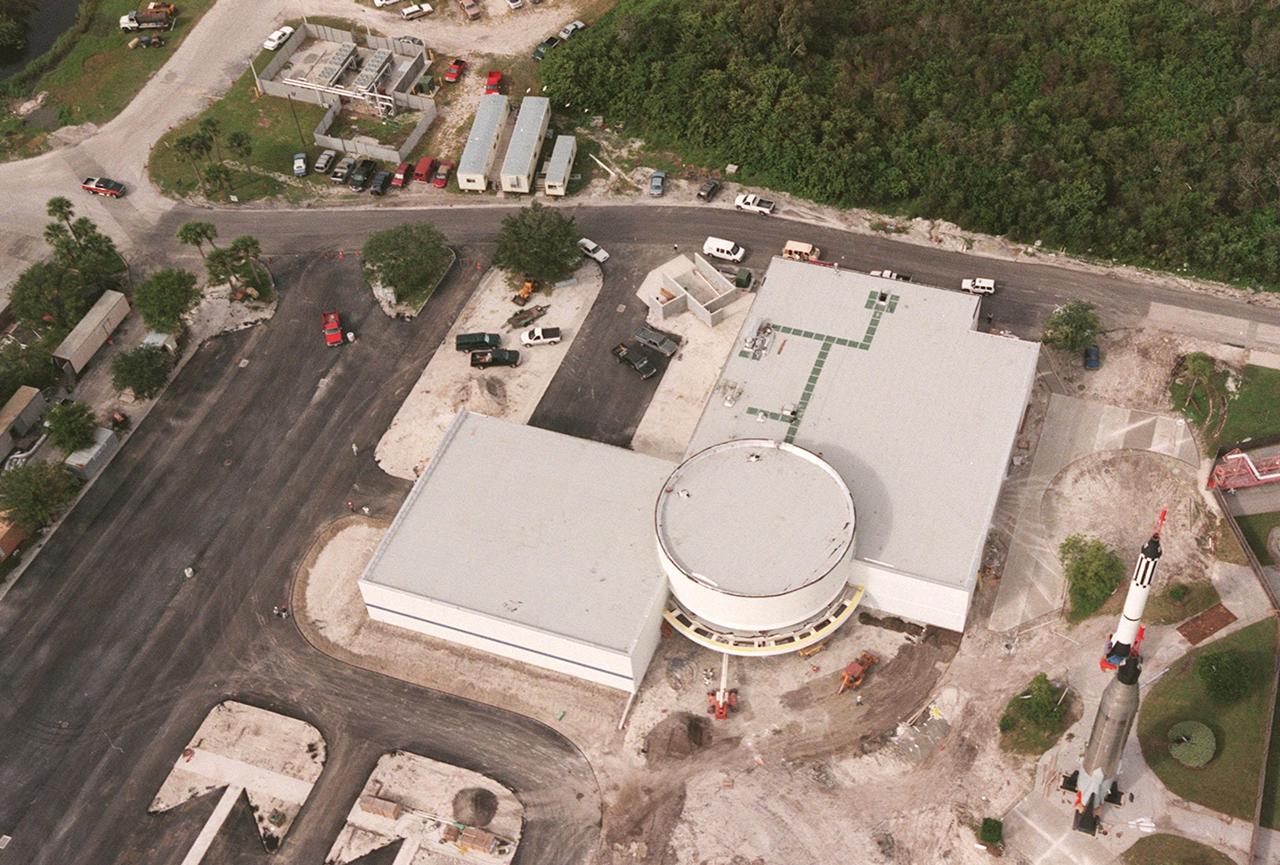
Seen from above, construction of a new site at KSC's Visitor Complex, The Early Space Exploration and Conference Center, is nearly finished. It is expected to be open to the public by mid-November. The space exploration facility will feature Mercury and Gemini capsules and the recently relocated Mission Control Center. Attached to it is a state-of-the-art conference center. Built by Delaware North Park Services, the facility is located between the Rock Garden and the Center for Space Education
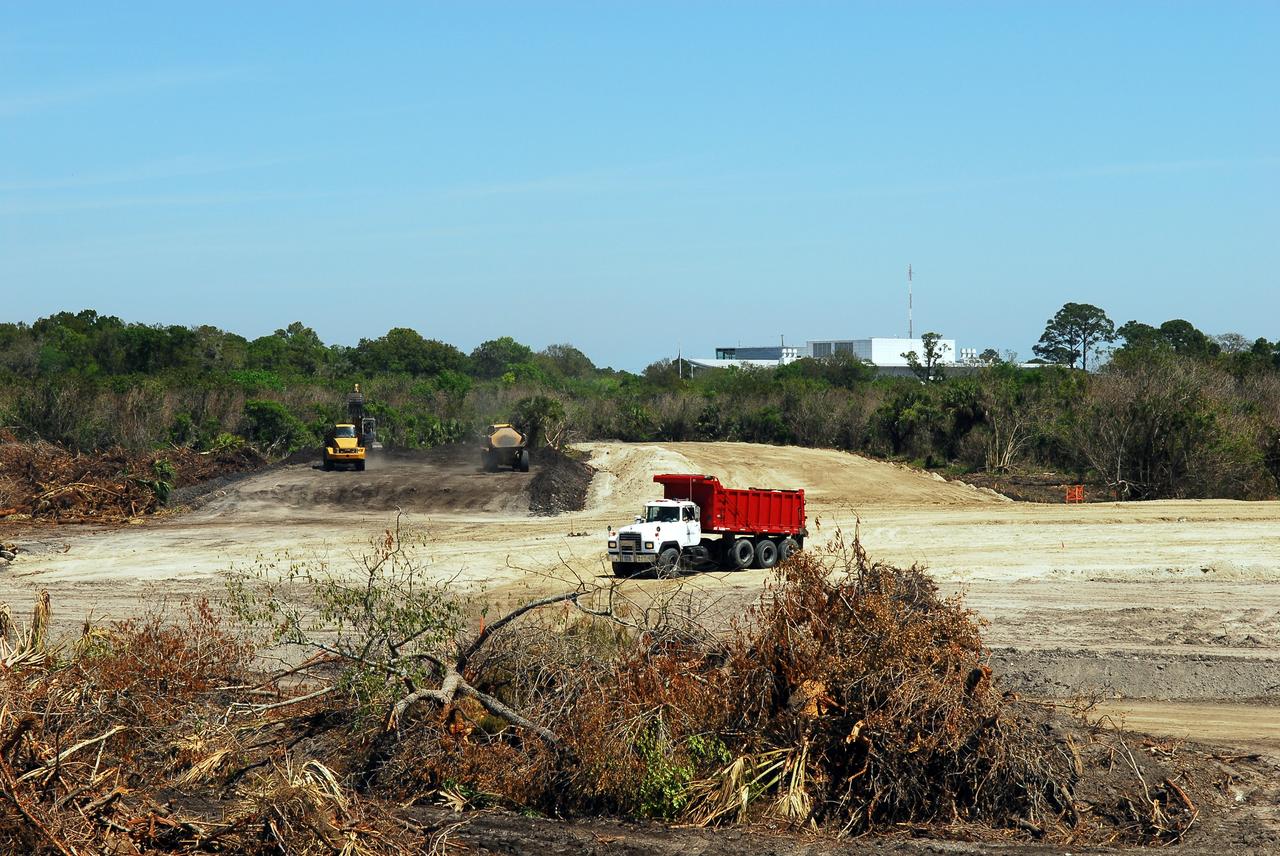
CAPE CANAVERAL, Fla. -- Crews continue to clear land and prepare for the construction of a new road at the Exploration Park site near the Space Life Sciences Laboratory (SLSL) at NASA's Kennedy Space Center in Florida. The first phase will encompass 60 acres just outside Kennedy’s security gates. Nine buildings will provide 350,000-square feet of work space, including educational, office, research and lab, and high-bay facilities. Each building is expected to be certified in the U.S. Green Building Council’s Leadership in Environmental and Energy Design (LEED). Exploration Park is designed to be a strategically located complex, adjacent to the SLSL, for servicing diverse tenants and uses that will engage in activities to support space-related activities of NASA, other government agencies and the U.S. commercial space industry. It also is expected to bring new aerospace work to the Space Coast. The SLSL will be the anchor facility for the park, which is expected to open its first new facility in early 2012. Photo credit: NASA/Jim Grossmann
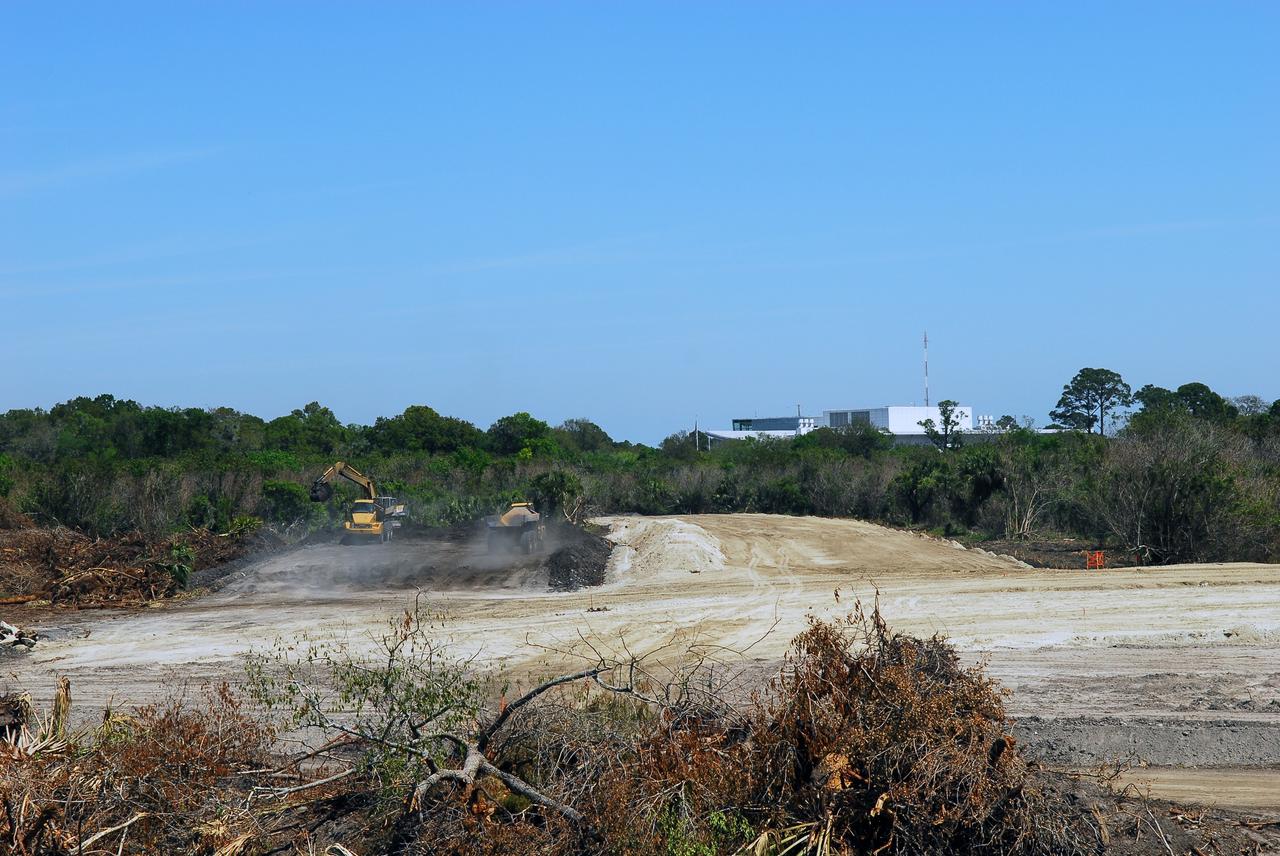
CAPE CANAVERAL, Fla. -- Crews continue to clear land and prepare for the construction of a new road at the Exploration Park site near the Space Life Sciences Laboratory (SLSL) at NASA's Kennedy Space Center in Florida. The first phase will encompass 60 acres just outside Kennedy’s security gates. Nine buildings will provide 350,000-square feet of work space, including educational, office, research and lab, and high-bay facilities. Each building is expected to be certified in the U.S. Green Building Council’s Leadership in Environmental and Energy Design (LEED). Exploration Park is designed to be a strategically located complex, adjacent to the SLSL, for servicing diverse tenants and uses that will engage in activities to support space-related activities of NASA, other government agencies and the U.S. commercial space industry. It also is expected to bring new aerospace work to the Space Coast. The SLSL will be the anchor facility for the park, which is expected to open its first new facility in early 2012. Photo credit: NASA/Jim Grossmann
CAPE CANAVERAL, Fla. -- Crews continue to clear land and prepare for the construction of a new road at the Exploration Park site near the Space Life Sciences Laboratory (SLSL) at NASA's Kennedy Space Center in Florida. The first phase will encompass 60 acres just outside Kennedy’s security gates. Nine buildings will provide 350,000-square feet of work space, including educational, office, research and lab, and high-bay facilities. Each building is expected to be certified in the U.S. Green Building Council’s Leadership in Environmental and Energy Design (LEED). Exploration Park is designed to be a strategically located complex, adjacent to the SLSL, for servicing diverse tenants and uses that will engage in activities to support space-related activities of NASA, other government agencies and the U.S. commercial space industry. It also is expected to bring new aerospace work to the Space Coast. The SLSL will be the anchor facility for the park, which is expected to open its first new facility in early 2012. Photo credit: NASA/Jim Grossmann
CAPE CANAVERAL, Fla. -- Crews continue to clear land and prepare for the construction of a new road at the Exploration Park site near the Space Life Sciences Laboratory (SLSL) at NASA's Kennedy Space Center in Florida. The first phase will encompass 60 acres just outside Kennedy’s security gates. Nine buildings will provide 350,000-square feet of work space, including educational, office, research and lab, and high-bay facilities. Each building is expected to be certified in the U.S. Green Building Council’s Leadership in Environmental and Energy Design (LEED). Exploration Park is designed to be a strategically located complex, adjacent to the SLSL, for servicing diverse tenants and uses that will engage in activities to support space-related activities of NASA, other government agencies and the U.S. commercial space industry. It also is expected to bring new aerospace work to the Space Coast. The SLSL will be the anchor facility for the park, which is expected to open its first new facility in early 2012. Photo credit: NASA/Jim Grossmann
CAPE CANAVERAL, Fla. -- Crews continue to clear land and prepare for the construction of a new road at the Exploration Park site near the Space Life Sciences Laboratory (SLSL) at NASA's Kennedy Space Center in Florida. The first phase will encompass 60 acres just outside Kennedy’s security gates. Nine buildings will provide 350,000-square feet of work space, including educational, office, research and lab, and high-bay facilities. Each building is expected to be certified in the U.S. Green Building Council’s Leadership in Environmental and Energy Design (LEED). Exploration Park is designed to be a strategically located complex, adjacent to the SLSL, for servicing diverse tenants and uses that will engage in activities to support space-related activities of NASA, other government agencies and the U.S. commercial space industry. It also is expected to bring new aerospace work to the Space Coast. The SLSL will be the anchor facility for the park, which is expected to open its first new facility in early 2012. Photo credit: NASA/Jim Grossmann
CAPE CANAVERAL, Fla. -- Crews continue to clear land and prepare for the construction of a new road at the Exploration Park site near the Space Life Sciences Laboratory (SLSL) at NASA's Kennedy Space Center in Florida. The first phase will encompass 60 acres just outside Kennedy’s security gates. Nine buildings will provide 350,000-square feet of work space, including educational, office, research and lab, and high-bay facilities. Each building is expected to be certified in the U.S. Green Building Council’s Leadership in Environmental and Energy Design (LEED). Exploration Park is designed to be a strategically located complex, adjacent to the SLSL, for servicing diverse tenants and uses that will engage in activities to support space-related activities of NASA, other government agencies and the U.S. commercial space industry. It also is expected to bring new aerospace work to the Space Coast. The SLSL will be the anchor facility for the park, which is expected to open its first new facility in early 2012. Photo credit: NASA/Jim Grossmann
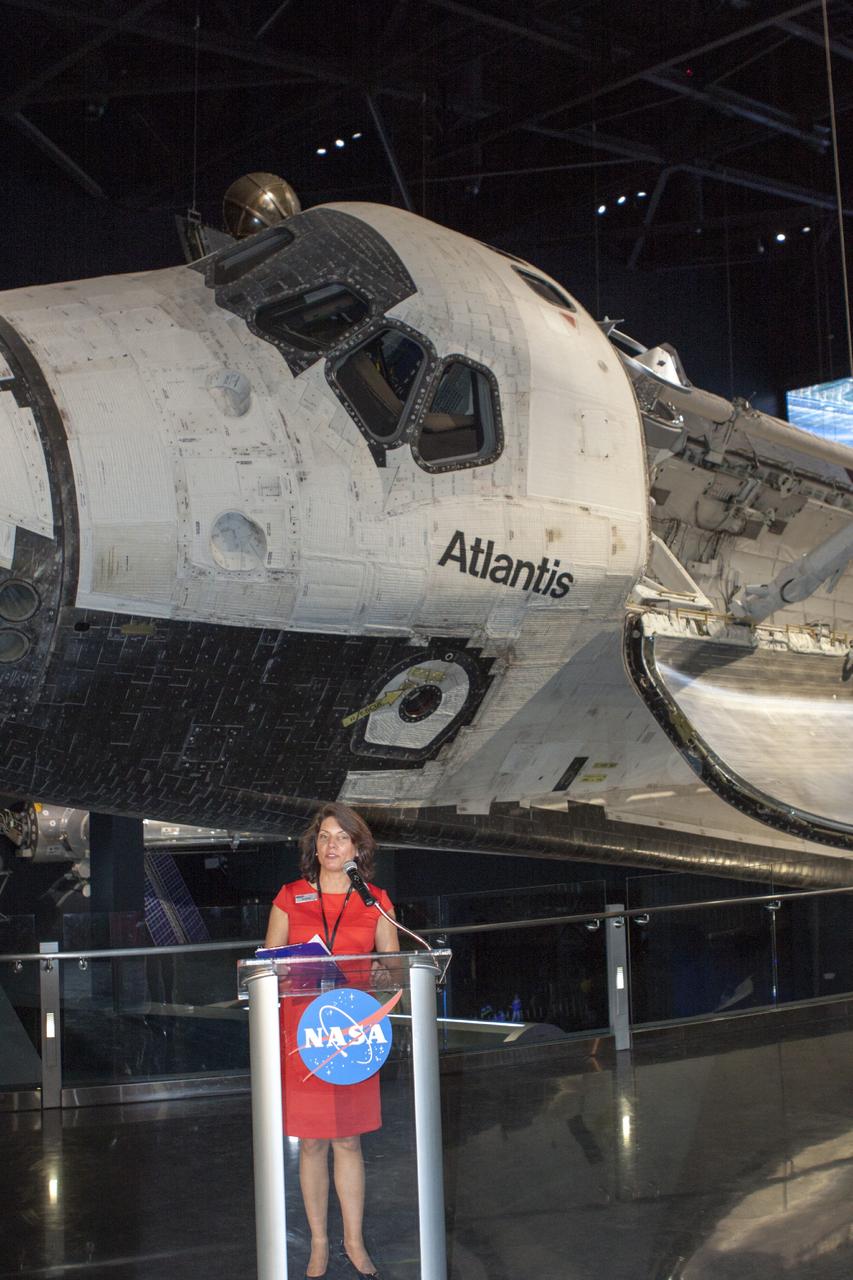
CAPE CANAVERAL, Fla. -- At the Kennedy Space Center Visitor Complex in Florida, Andrea Farmer, Delaware North Parks and Resorts manager of Public Relations speaks to news media representatives during the opening of the 90,000-square-foot "Space Shuttle Atlantis" facility. The new $100 million facility includes interactive exhibits that tell the story of the 30-year Space Shuttle Program and highlight the future of space exploration. The "Space Shuttle Atlantis" exhibit formally opened to the public on June 29, 2013.Photo credit: NASA/Jim Grossmann
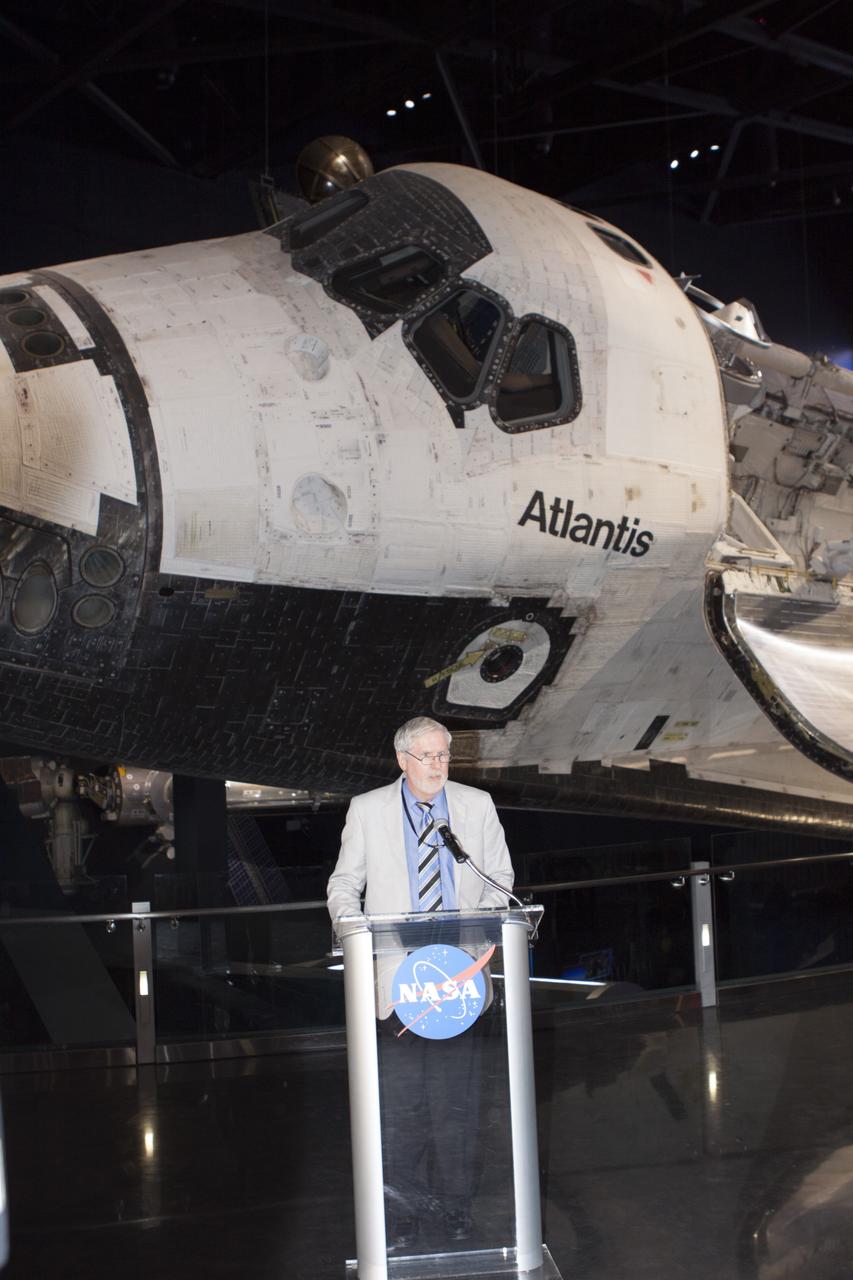
CAPE CANAVERAL, Fla. -- At the Kennedy Space Center Visitor Complex in Florida, Bill Moore, Delaware North Parks and Resorts chief operating officer speaks to news media representatives during the opening of the 90,000-square-foot "Space Shuttle Atlantis" facility. The new $100 million facility includes interactive exhibits that tell the story of the 30-year Space Shuttle Program and highlight the future of space exploration. The "Space Shuttle Atlantis" exhibit formally opened to the public on June 29, 2013.Photo credit: NASA/Jim Grossmann
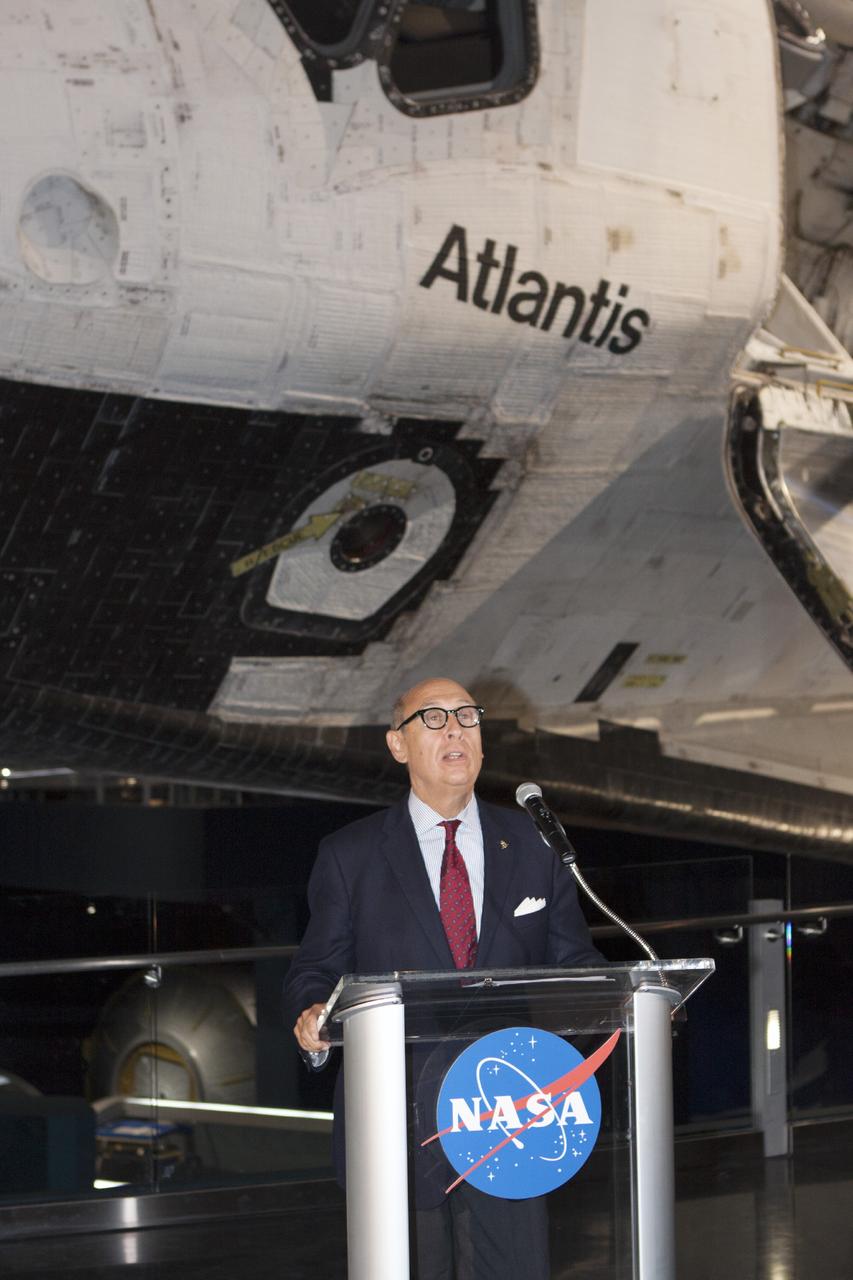
CAPE CANAVERAL, Fla. -- At the Kennedy Space Center Visitor Complex in Florida, Rick Abramson, Delaware North Parks and Resorts president speaks to news media representatives during the opening of the 90,000-square-foot "Space Shuttle Atlantis" facility. The new $100 million facility includes interactive exhibits that tell the story of the 30-year Space Shuttle Program and highlight the future of space exploration. The "Space Shuttle Atlantis" exhibit formally opened to the public on June 29, 2013.Photo credit: NASA/Jim Grossmann
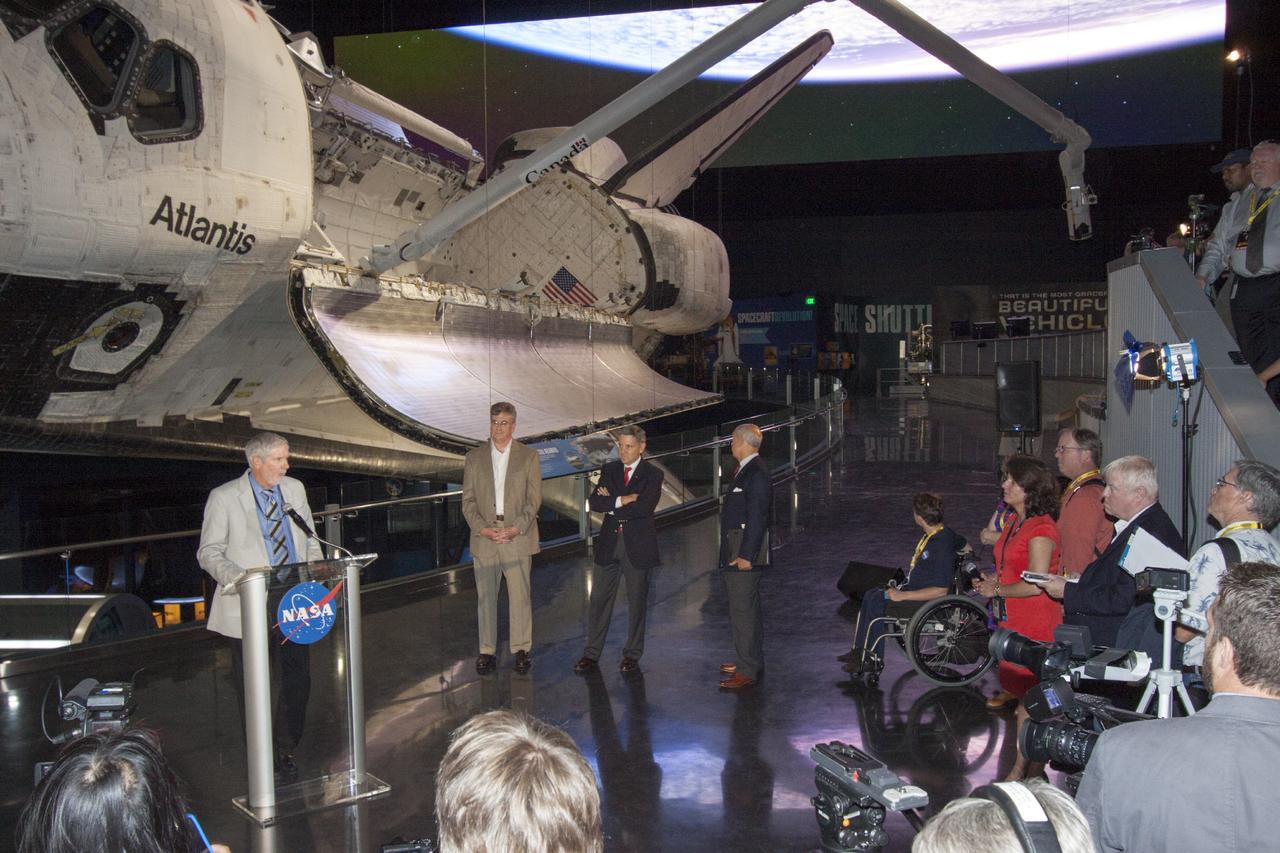
CAPE CANAVERAL, Fla. -- At the Kennedy Space Center Visitor Complex in Florida, Bill Moore, Delaware North Parks and Resorts chief operating officer speaks to news media representatives during the opening of the 90,000-square-foot "Space Shuttle Atlantis" facility. The new $100 million facility includes interactive exhibits that tell the story of the 30-year Space Shuttle Program and highlight the future of space exploration. The "Space Shuttle Atlantis" exhibit formally opened to the public on June 29, 2013.Photo credit: NASA/Jim Grossmann
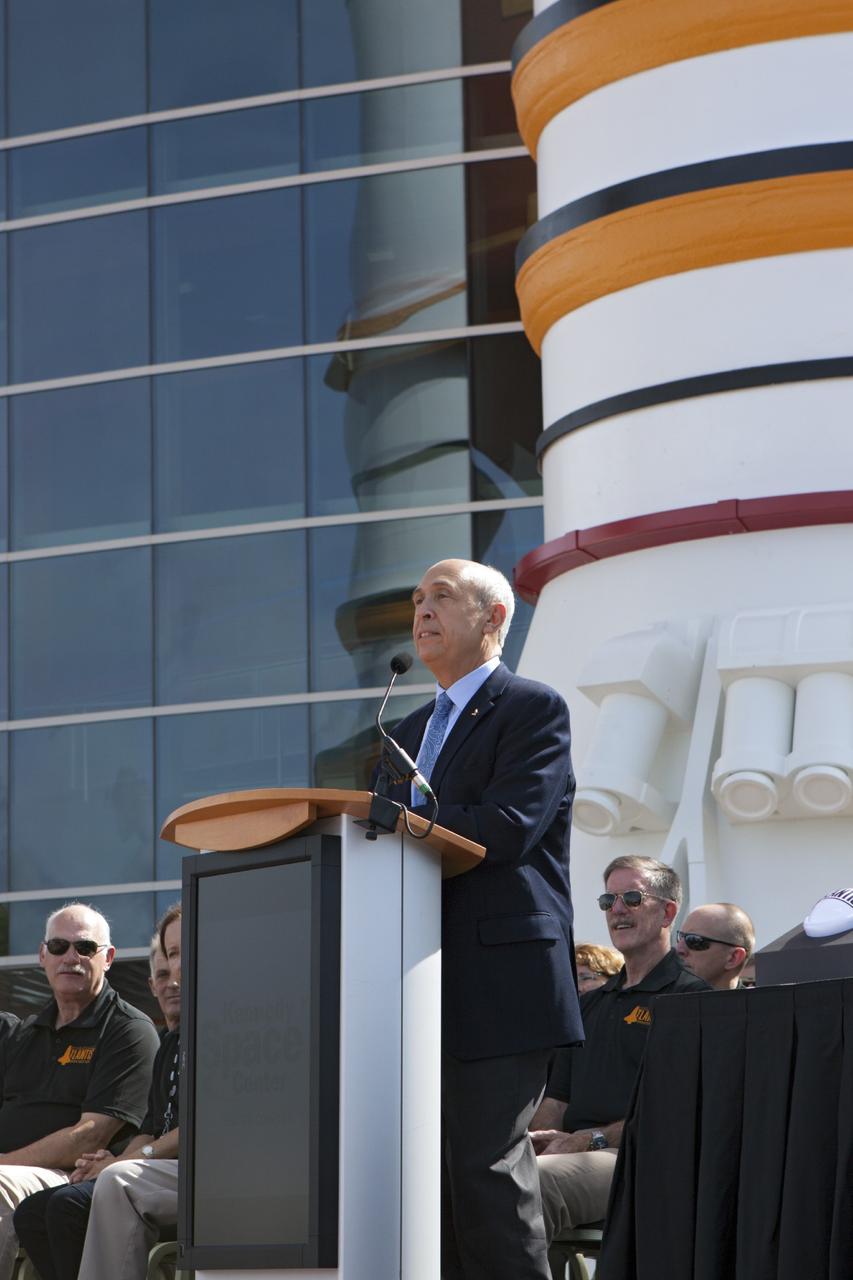
CAPE CANAVERAL, Fla. -- At the Kennedy Space Center Visitor Complex in Florida, Rick Abramson, Delaware North Parks and Resorts president, speaks to guests during the opening of the 90,000-square-foot "Space Shuttle Atlantis" facility. The new $100 million facility includes interactive exhibits that tell the story of the 30-year Space Shuttle Program and highlight the future of space exploration. The "Space Shuttle Atlantis" exhibit formally opened to the public on June 29, 2013.Photo credit: NASA/Jim Grossmann
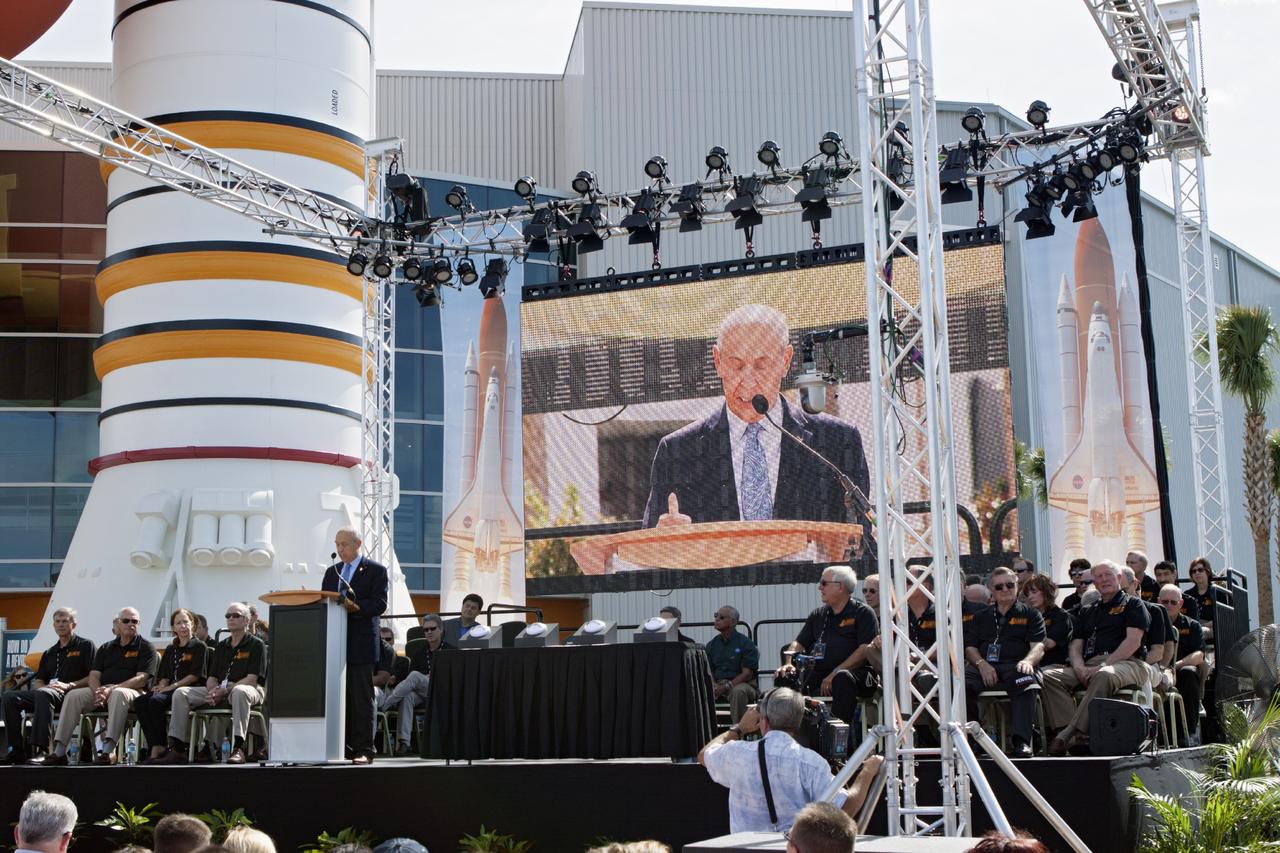
CAPE CANAVERAL, Fla. -- At the Kennedy Space Center Visitor Complex in Florida, Rick Abramson, Delaware North Parks and Resorts president, speaks to guests during the opening of the 90,000-square-foot "Space Shuttle Atlantis" facility. The new $100 million facility includes interactive exhibits that tell the story of the 30-year Space Shuttle Program and highlight the future of space exploration. The "Space Shuttle Atlantis" exhibit formally opened to the public on June 29, 2013.Photo credit: NASA/Jim Grossmann
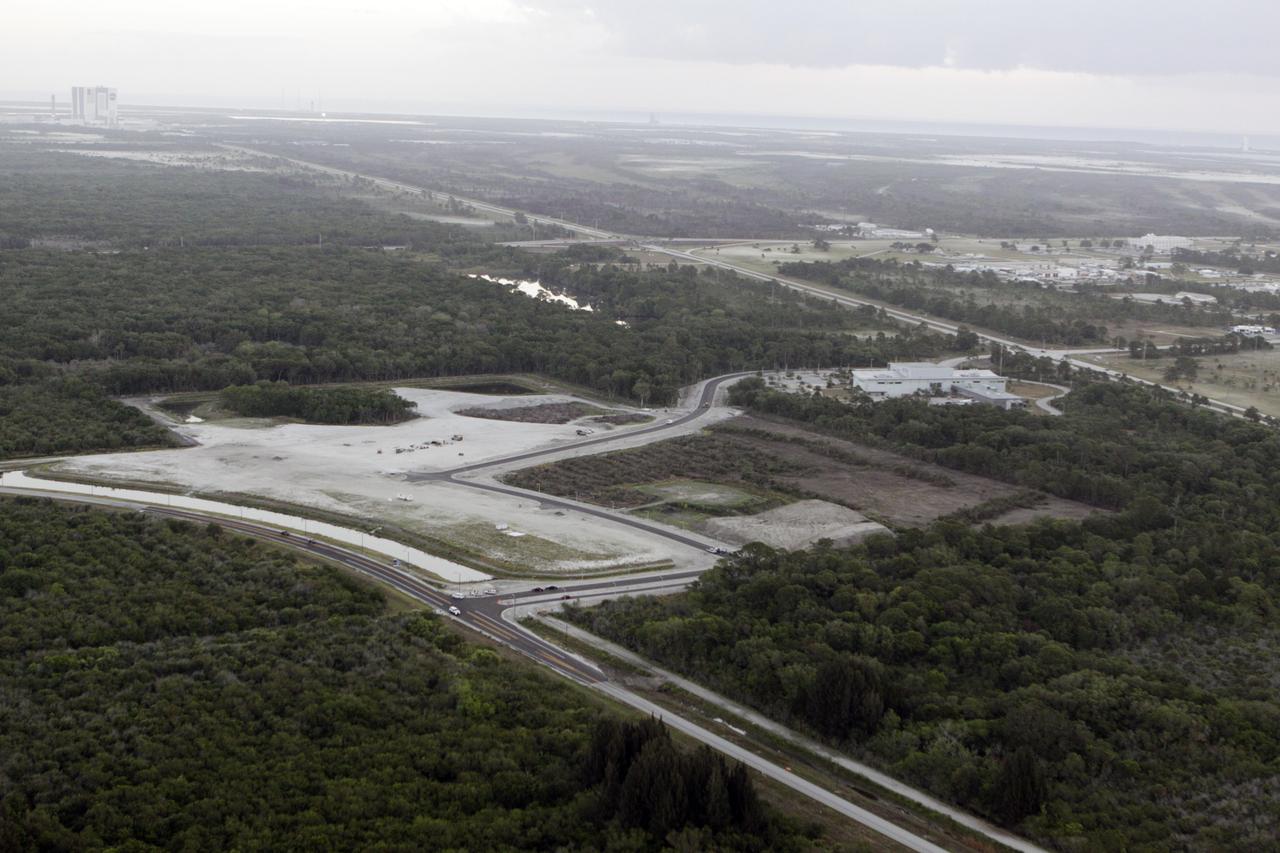
CAPE CANAVERAL, Fla. – This aerial view over NASA’s Kennedy Space Center in Florida reveals a new road winding its way from Space Commerce Way, in the foreground, past the construction site for the new Exploration Park, to the Space Life Sciences Laboratory SLSL. At right is Kennedy’s Industrial Area. Spanning the background is the Atlantic Ocean. In the distance, the facilities in Launch Complex 39 are, from left, the Vehicle Assembly Building, Pad 39B, Pad 39A, and Space Launch Complex-41 on Cape Canaveral Air Force Station. The land was cleared for the first phase of construction following the park’s groundbreaking in June 2010. The park encompasses 60 acres just outside Kennedy’s security gates near the Kennedy Space Center Visitor Complex. Exploration Park is designed to be a strategically located complex, adjacent to the SLSL, for servicing diverse tenants and uses that will engage in activities to support the space-related activities of NASA, other government agencies and the U.S. commercial space industry, as well as attract new aerospace work to the Space Coast. Its nine sustainable, state-of-the-art buildings will include educational, office, research and laboratory, and high-bay facilities and provide 350,000-square feet of work space. Each building is expected to qualify for the U.S. Green Building Council’s Leadership in Environmental and Energy Design LEED certification. The SLSL will be the anchor facility for the park. Photo credit: NASA/Glenn Benson
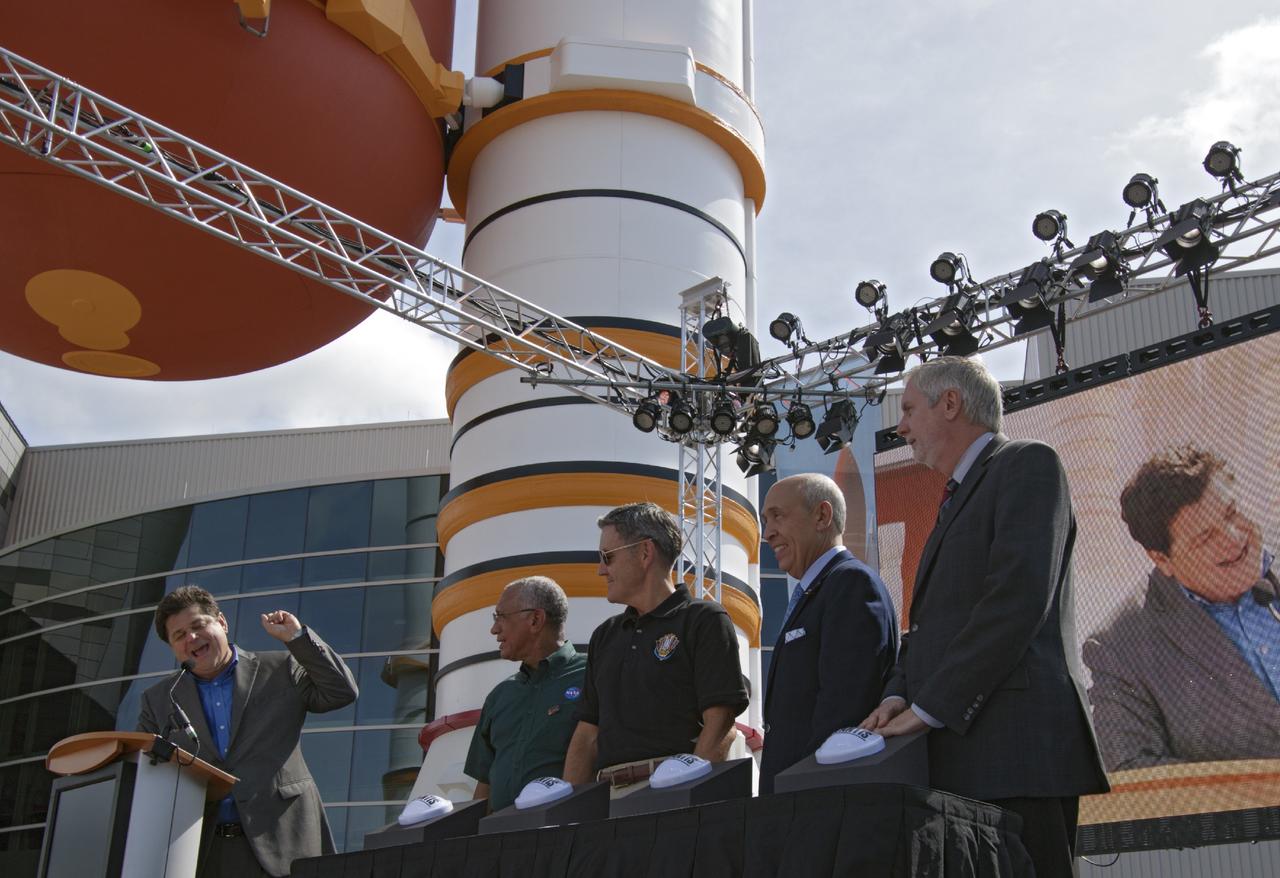
CAPE CANAVERAL, Fla. -- At the Kennedy Space Center Visitor Complex in Florida, CNN correspondent John Zarrella counts down for the ceremonial opening of the new "Space Shuttle Atlantis" facility. Ready to press buttons to mark the opening the new exhibit, from the left, are Charlie Bolden, NASA administrator, Bob Cabana, Kennedy director, Rick Abramson, Delaware North Parks and Resorts president, and Bill Moore, Delaware North Parks and Resorts chief operating officer. The new $100 million facility includes interactive exhibits that tell the story of the 30-year Space Shuttle Program and highlight the future of space exploration. The "Space Shuttle Atlantis" exhibit formally opened to the public on June 29, 2013.Photo credit: NASA/Jim Grossmann
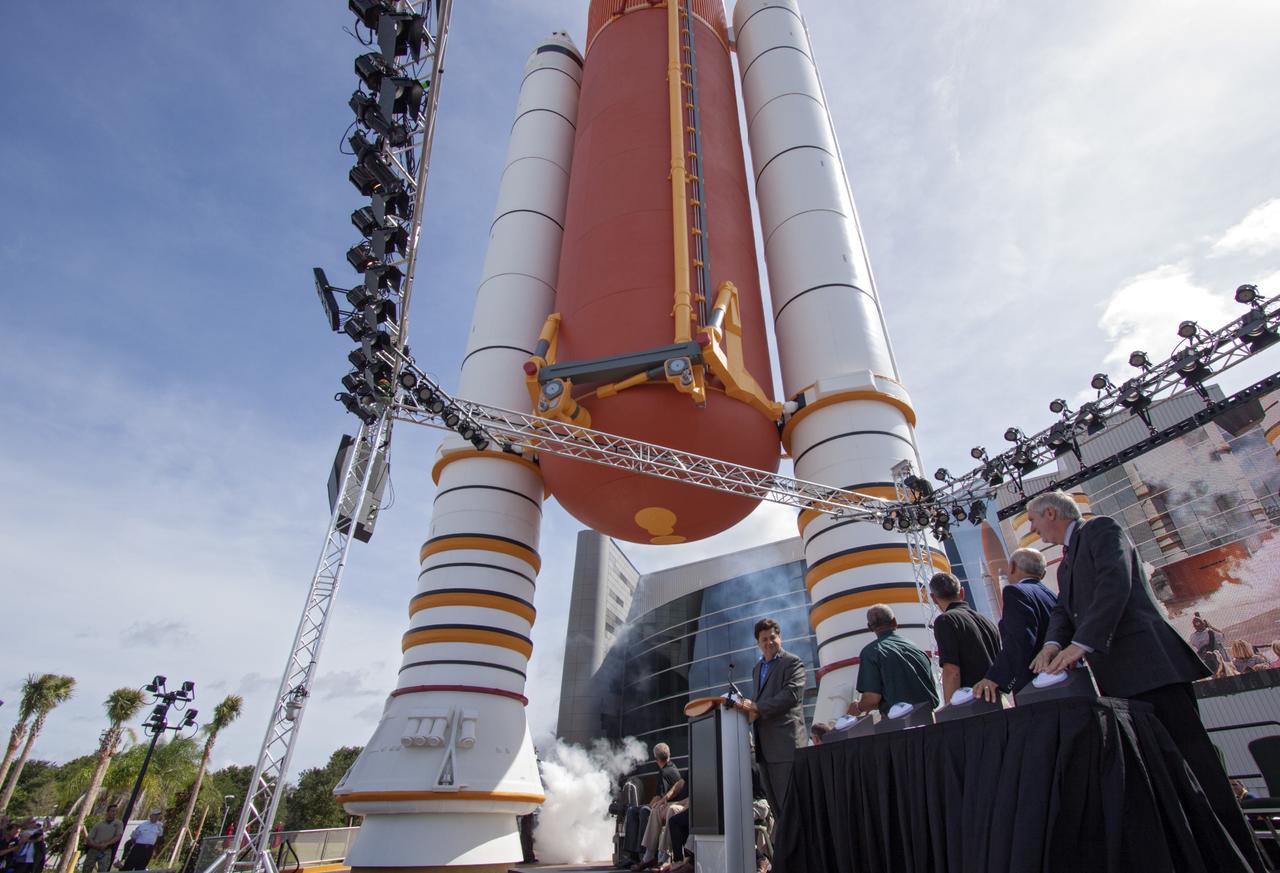
CAPE CANAVERAL, Fla. -- At the Kennedy Space Center Visitor Complex in Florida, CNN correspondent John Zarrella counted down for the ceremonial opening of the new "Space Shuttle Atlantis" facility. Smoke bellows near a full-scale set of space shuttle twin solid rocket boosters and external fuel tank at the entrance to the exhibit building. Looking on after pressing buttons to mark the opening the new exhibit, are, from the left, Charlie Bolden, NASA administrator, Bob Cabana, Kennedy director, Rick Abramson, Delaware North Parks and Resorts president, and Bill Moore, Delaware North Parks and Resorts chief operating officer. The new $100 million facility includes interactive exhibits that tell the story of the 30-year Space Shuttle Program and highlight the future of space exploration. The "Space Shuttle Atlantis" exhibit formally opened to the public on June 29, 2013.Photo credit: NASA/Jim Grossmann
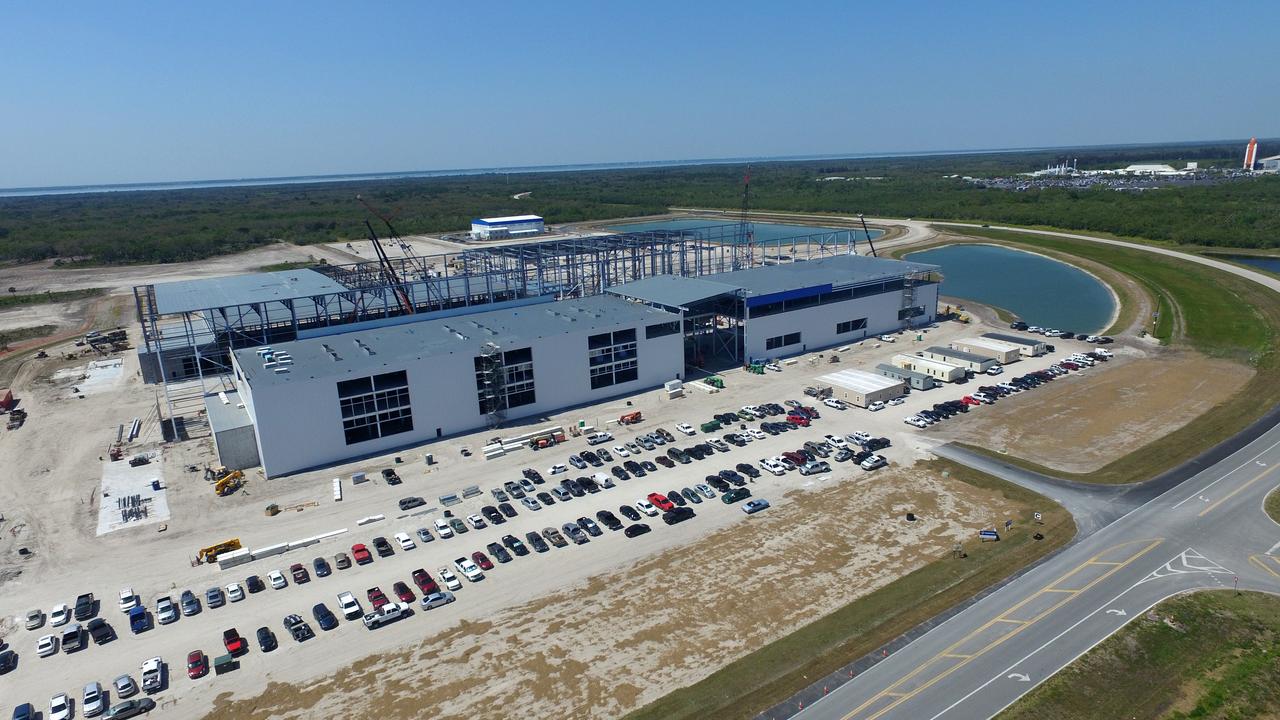
Construction is progressing on Blue Origin's 750,000-square-foot facility being built at Exploration Park on NASA Kennedy Space Center property in Florida. Blue Origin will use the factory to manufacture its two-stage super-heavy-lift New Glenn launch vehicle and launch the vehicles from Space Launch Complex 46 at Cape Canaveral Air Force Station.
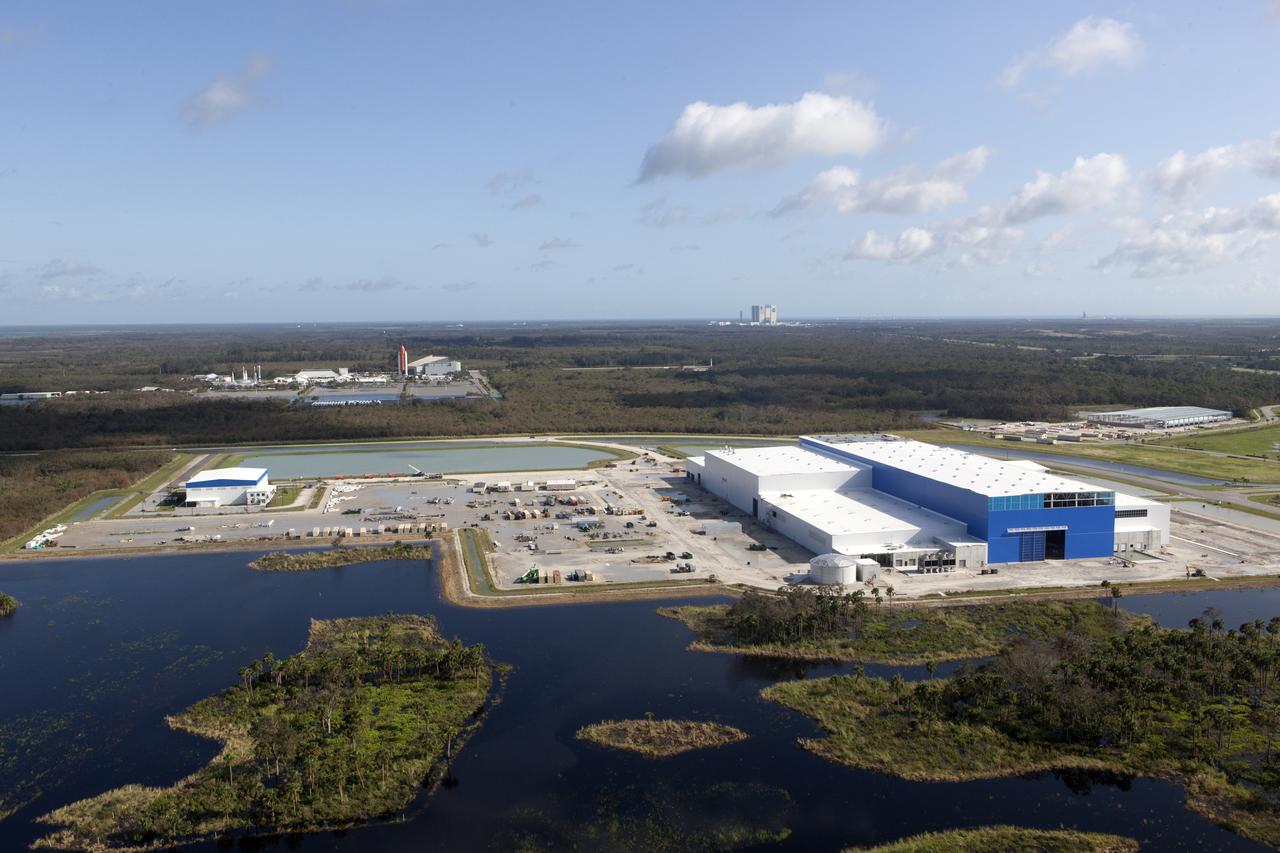
The Blue Origin construction site at Exploration Park is seen during an aerial survey of NASA's Kennedy Space Center in Florida on September 12, 2017. The survey was performed to identify structures and facilities that may have sustained damage from Hurricane Irma as the storm passed Kennedy on September 10, 2017. NASA closed the center ahead of the storm's onset and only a small team of specialists known as the Rideout Team was on the center as the storm approached and passed.
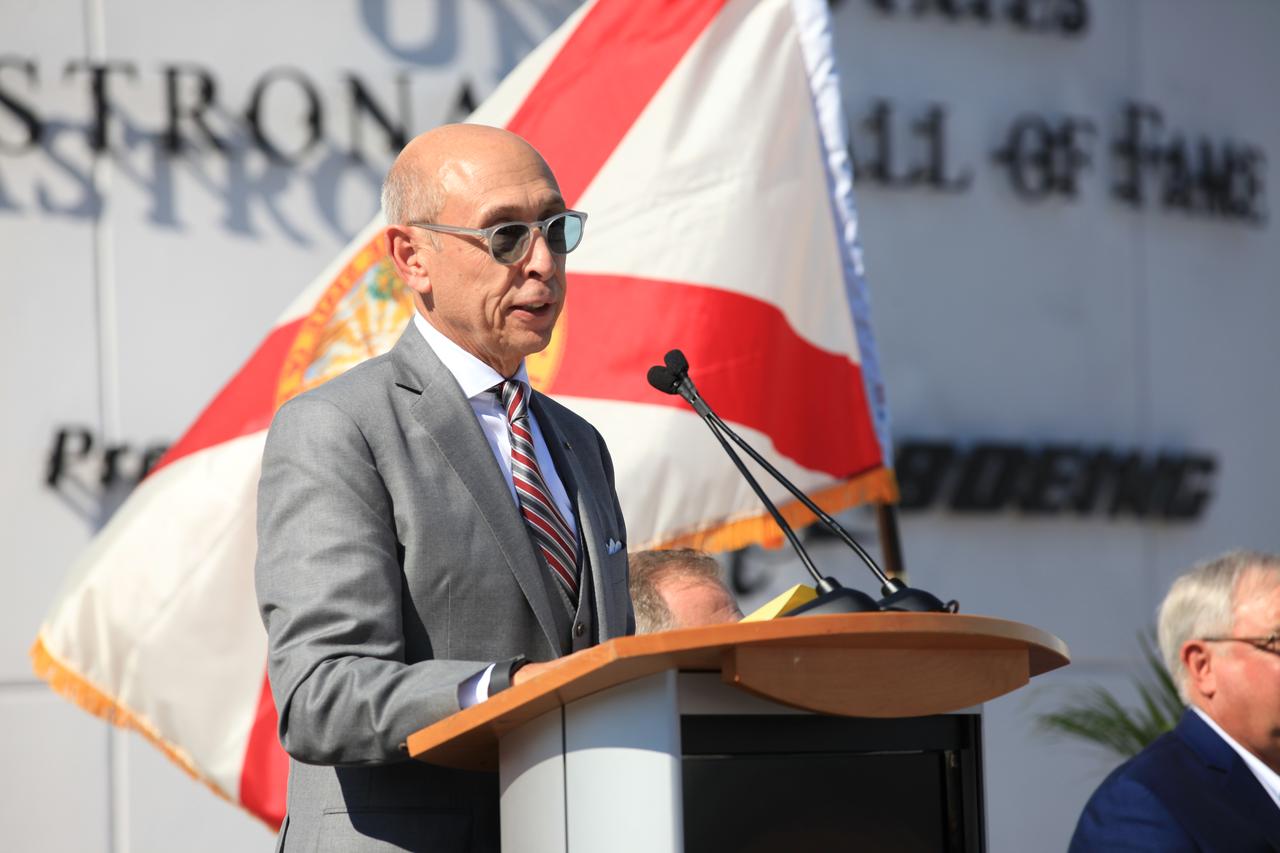
Rick Abramson, executive vice president and chief operating officer of Delaware North Companies Parks and Resorts, speaks to guests during the opening of the Heroes and Legends attraction at the Kennedy Space Center Visitor Complex. The new facility includes the U.S. Astronaut Hall of Fame and looks back to the pioneering efforts of Mercury, Gemini and Apollo. It sets the stage by providing the background and context for space exploration and the legendary men and women who pioneered the nation's journey into space.
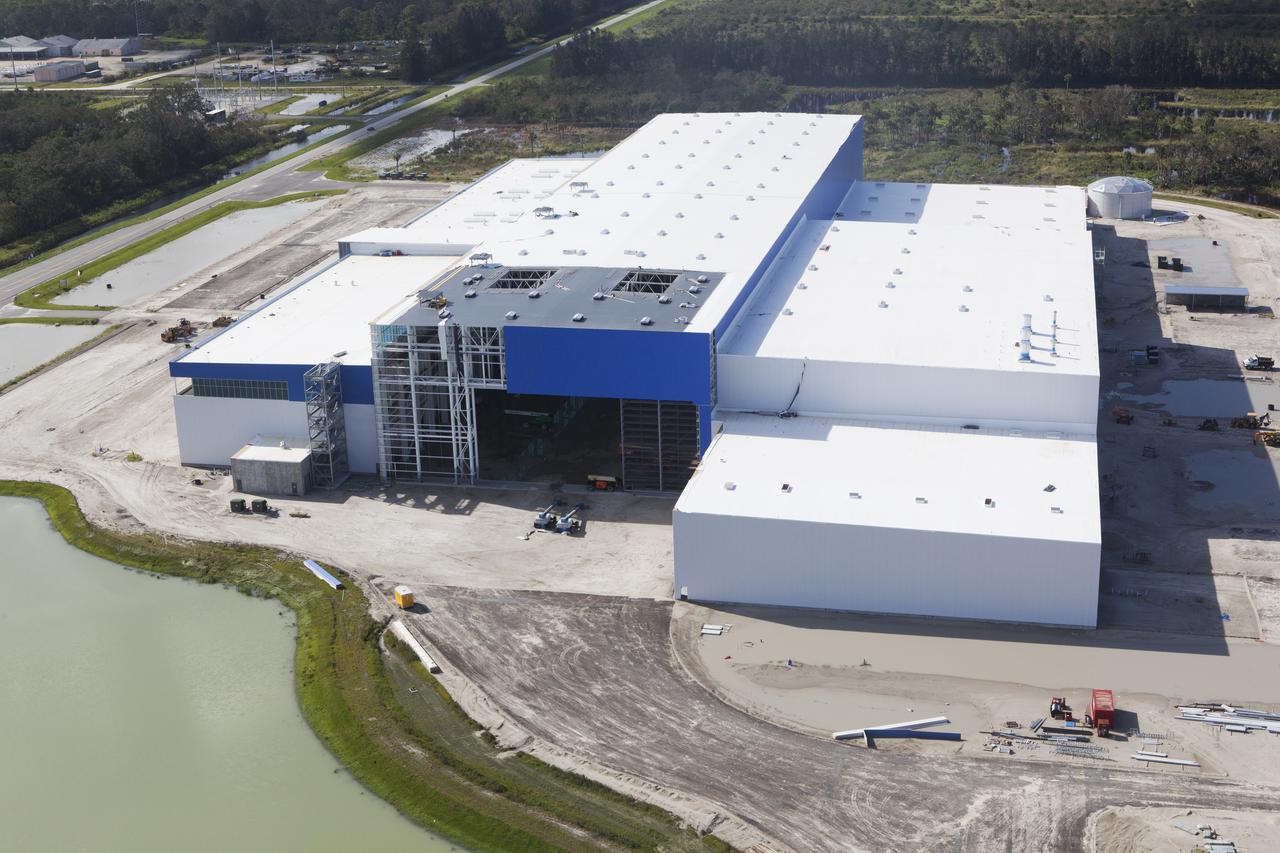
The Blue Origin construction site at Exploration Park is seen during an aerial survey of NASA's Kennedy Space Center in Florida on September 12, 2017. The survey was performed to identify structures and facilities that may have sustained damage from Hurricane Irma as the storm passed Kennedy on September 10, 2017. NASA closed the center ahead of the storm's onset and only a small team of specialists known as the Rideout Team was on the center as the storm approached and passed.
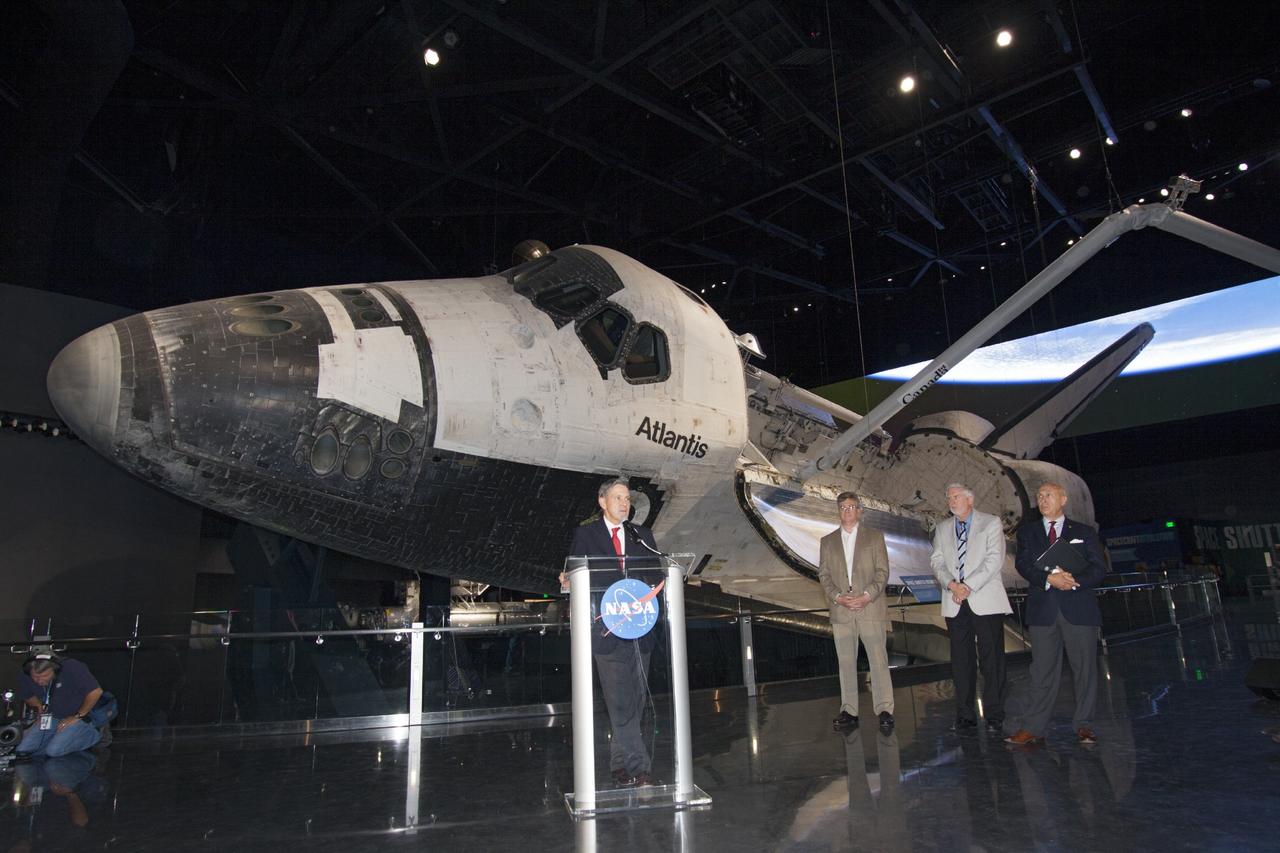
CAPE CANAVERAL, Fla. -- At the Kennedy Space Center Visitor Complex in Florida, center director Bob Cabana speaks to news media representatives during the opening of the 90,000-square-foot "Space Shuttle Atlantis" facility. Also participating in the news briefing are, from the left, Mike Konzen of PGAV Destinations, Bill Moore, Delaware North Parks and Resorts chief operating officer, and Rick Abramson, Delaware North president. The new $100 million facility includes interactive exhibits that tell the story of the 30-year Space Shuttle Program and highlight the future of space exploration. The "Space Shuttle Atlantis" exhibit formally opened to the public on June 29, 2013.Photo credit: NASA/Jim Grossmann
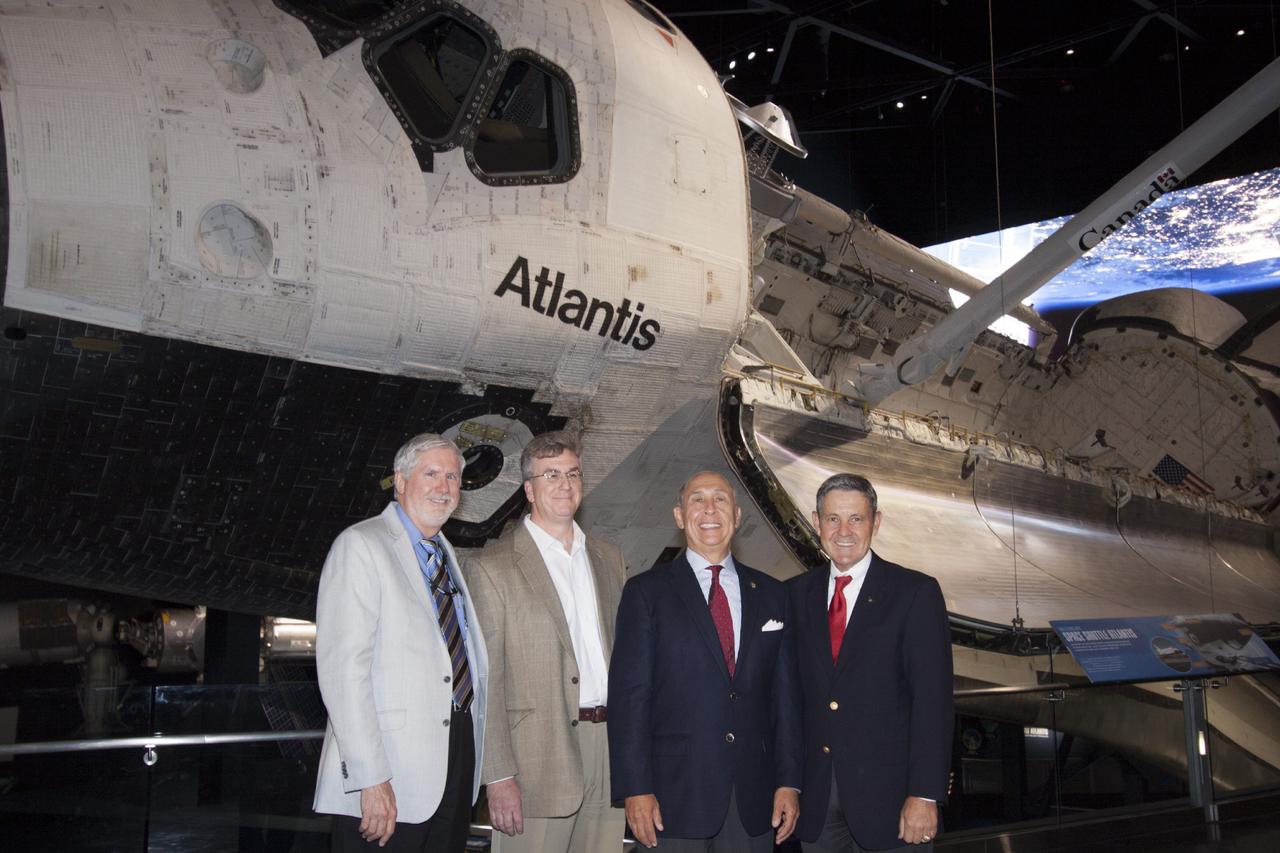
CAPE CANAVERAL, Fla. -- At the Kennedy Space Center Visitor Complex in Florida, from the left, Delaware North Parks and Resorts Chief Operating Officer Bill Moore, Mike Konzen of PGAV Destinations, Rick Abramson, Delaware North president and Kennedy director Bob Cabana participated in a news briefing prior to the opening of the 90,000-square-foot "Space Shuttle Atlantis" facility. The new $100 million facility includes interactive exhibits that tell the story of the 30-year Space Shuttle Program and highlight the future of space exploration. The "Space Shuttle Atlantis" exhibit formally opened to the public on June 29, 2013.Photo credit: NASA/Jim Grossmann
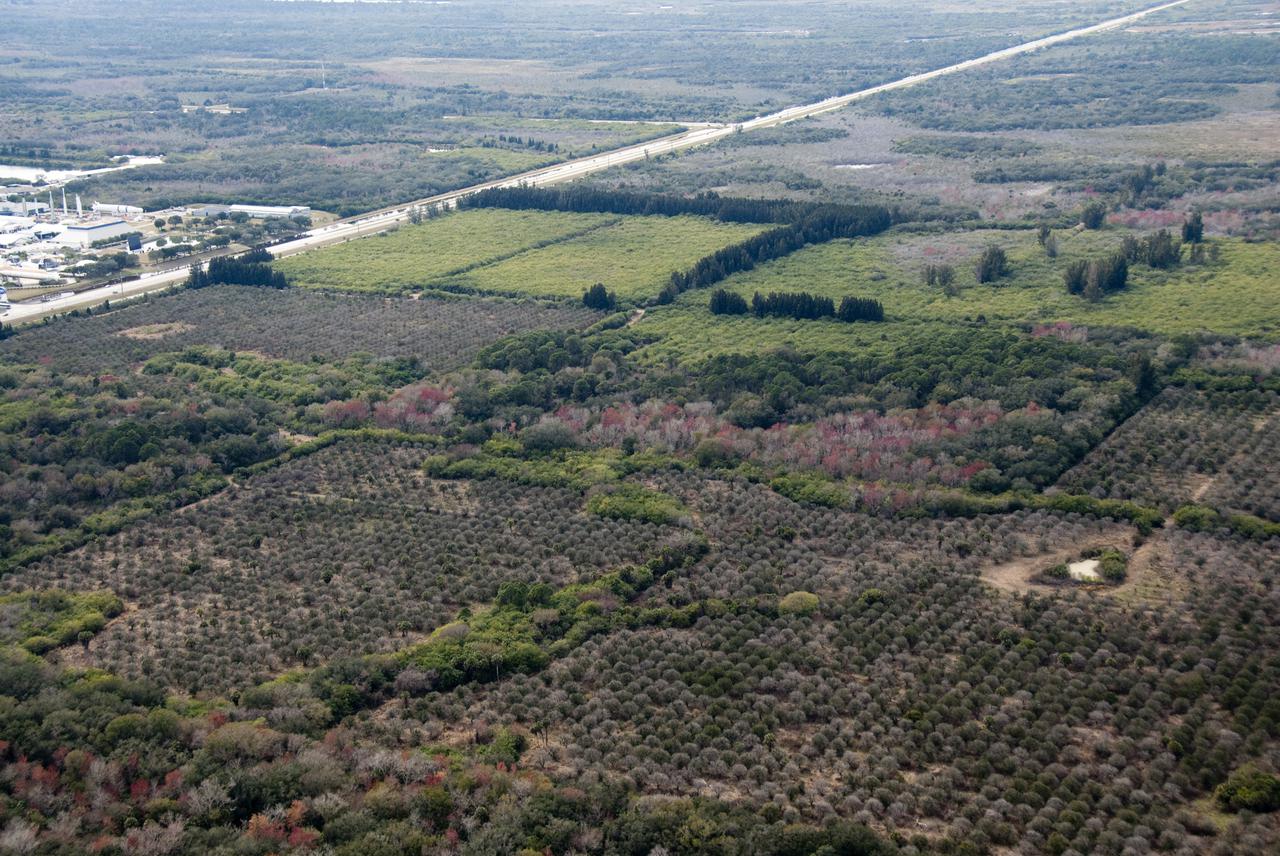
CAPE CANAVERAL, Fla. - This aerial view combines NASA's Kennedy Space Center Visitor Complex (left) and the proposed 500-acre site for one of the largest solar power plants of its kind. The planned 100-megawatt photovoltaic solar plant would use similar panels to those already built at Kennedy by the SunPower Corp. The energy produced by the proposed facility would be used to provide power to Florida Power and Light customers. Kennedy Center Director Bob Cabana, FPL Vice President and Chief Development Officer Eric Silagy and a SunPower Corp. representative made a joint announcement regarding the new construction during a ceremony held in November 2009 to commission a 1-megawatt solar plant. Included in the announcement were plans to establish a permanent renewable energy research and development center at Exploration Park, Kennedy's new business complex. The dedicated RandD facility proposed for Exploration Park could result in at least 50 high-salary science and engineering positions permanently established at Kennedy by SunPower and FPL's other partners, a potential for solar panel manufacturing located nearby and as many as 1,000 new construction jobs. FPL and Kennedy have initiated environmental studies and a plan to support the next project, which could be initiated before the end of 2010. Photo credit: NASA_Kim Shiflett
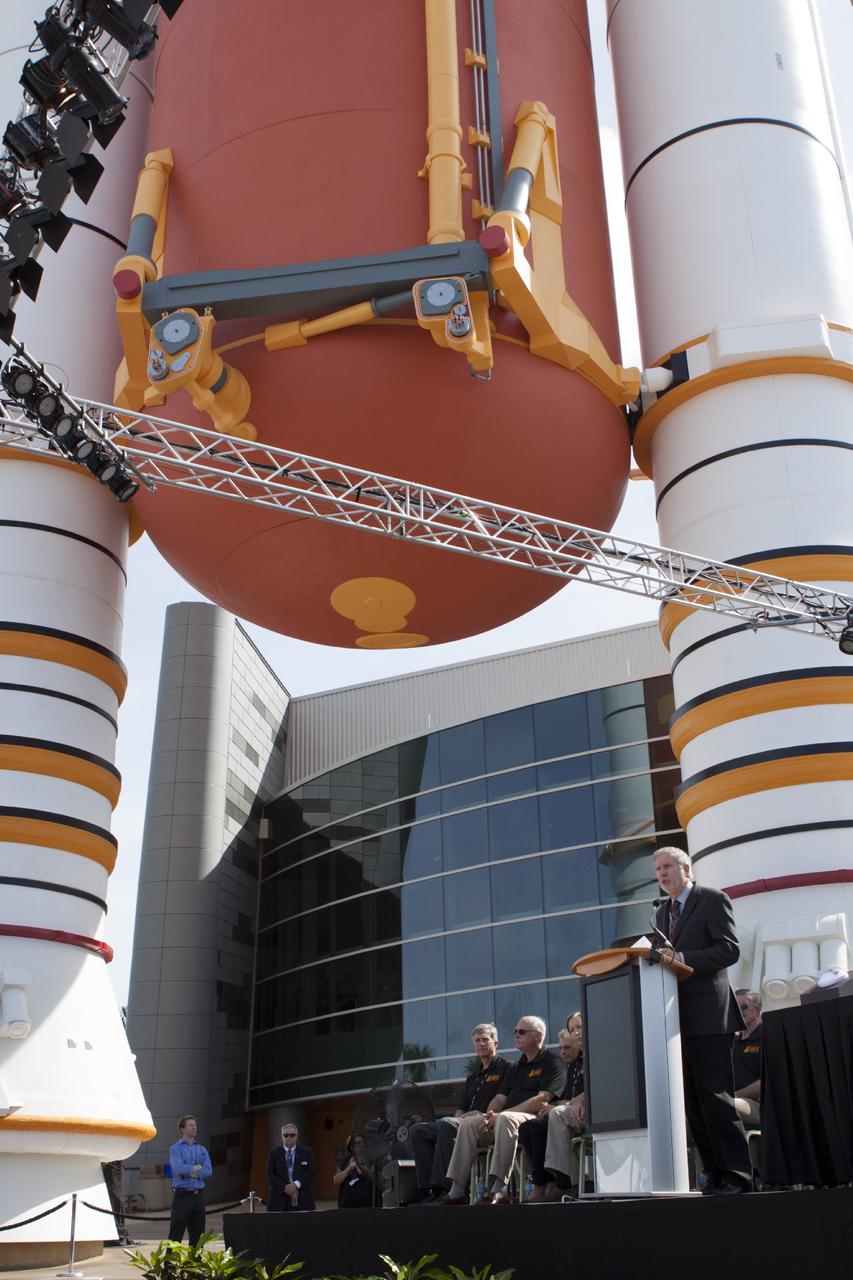
CAPE CANAVERAL, Fla. -- At the Kennedy Space Center Visitor Complex in Florida, Bill Moore, Delaware North Parks and Resorts chief operating officer speaks to guests at the opening of the new "Space Shuttle Atlantis" facility. The ceremony took place under a full-scale set of space shuttle twin solid rocket boosters and external fuel tank at the entrance to the 90,000-square-foot facility. Visitors will be able to walk beneath the 184-foot-tall boosters and tank as they enter the facility. The new $100 million facility includes interactive exhibits that tell the story of the 30-year Space Shuttle Program and highlight the future of space exploration. The "Space Shuttle Atlantis" exhibit formally opened to the public on June 29, 2013.Photo credit: NASA/Jim Grossmann
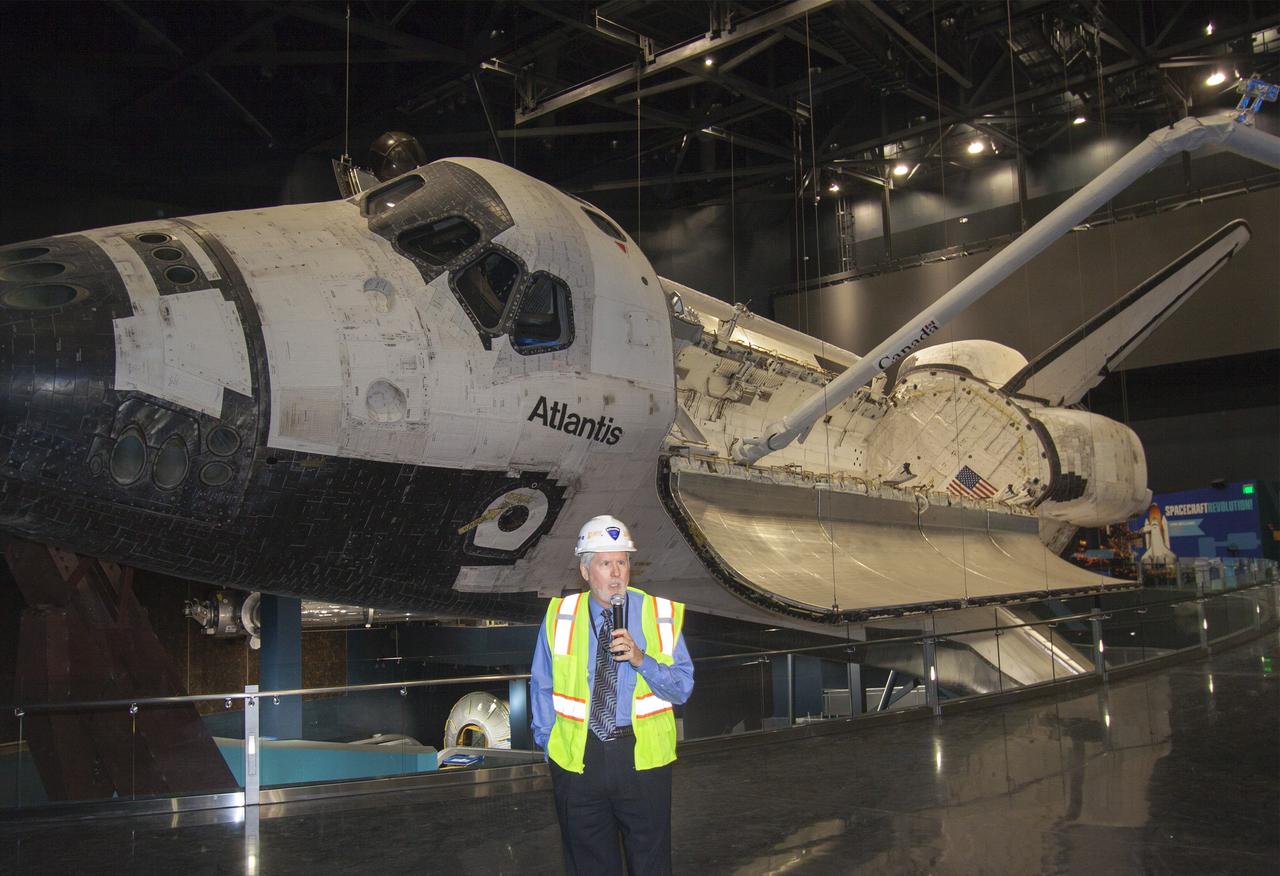
CAPE CANAVERAL, Fla. – At the Kennedy Space Center Visitor Complex in Florida, Bill Moore, chief operating officer with Delaware North Companies Parks & Resorts, speaks to members of the media during a tour of the new “Space Shuttle Atlantis” exhibit, a 90,000-square-foot facility, scheduled to open June 29, 2013. Behind Moore, space shuttle Atlantis’ payload bay doors are open and the orbiter has been tilted at a 43.21 angle to the portside and supported by special jacks to elevate it 26 feet from the ground. The robotic arm has been installed in the payload bay. The new $100 million facility will include interactive exhibits that tell the story of the 30-year Space Shuttle Program and highlight the future of space exploration. Visitors to the exhibit will get an up close look at Atlantis with its payload bay doors open, similar to how it looked in space. Photo credit: NASA/Jim Grossmann
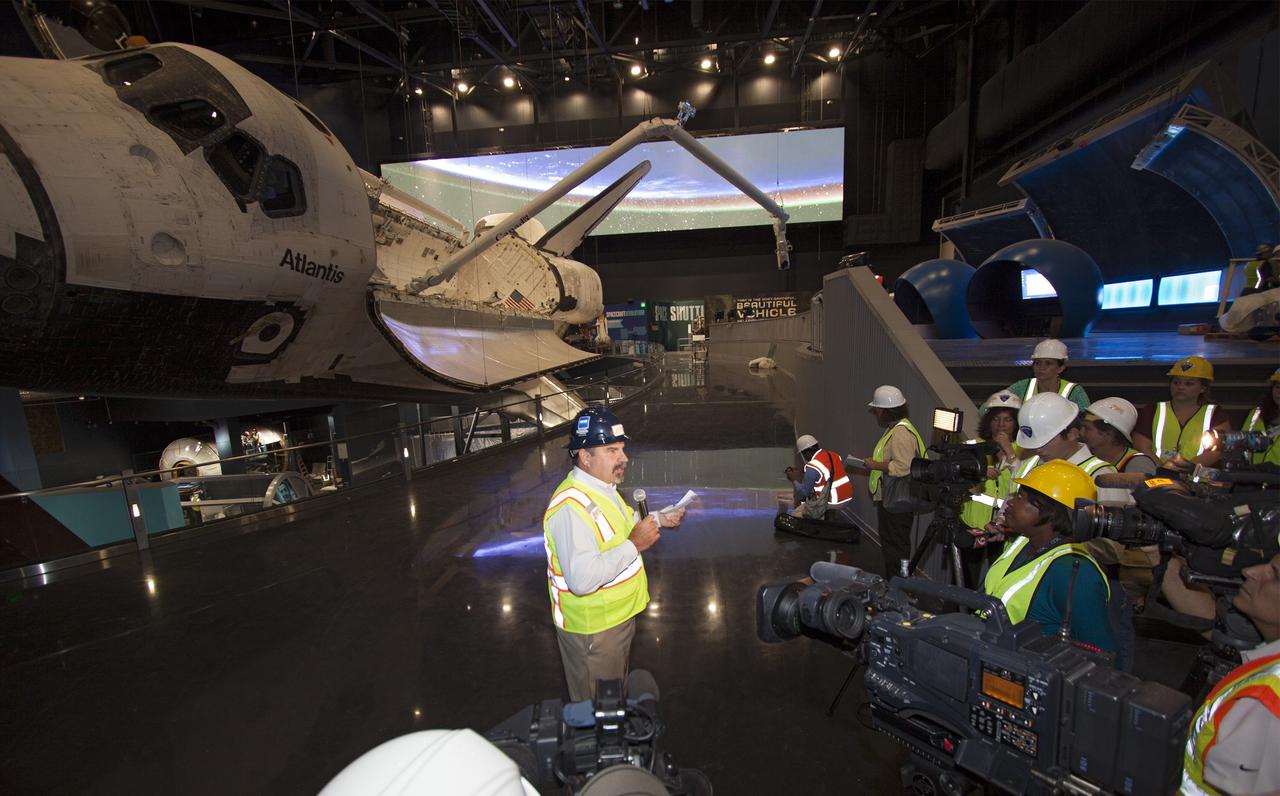
CAPE CANAVERAL, Fla. – At the Kennedy Space Center Visitor Complex in Florida, Tim Macy, the director of project development and construction for Delaware North Companies Parks & Resorts, speaks to members of the media during a tour of the new “Space Shuttle Atlantis” exhibit, a 90,000-square-foot facility, scheduled to open June 29, 2013. Behind Moore, space shuttle Atlantis’ payload bay doors are open and the orbiter has been tilted at a 43.21 angle to the portside and supported by special jacks to elevate it 26 feet from the ground. The robotic arm has been installed in the payload bay. The new $100 million facility will include interactive exhibits that tell the story of the 30-year Space Shuttle Program and highlight the future of space exploration. Visitors to the exhibit will get an up close look at Atlantis with its payload bay doors open, similar to how it looked in space. Photo credit: NASA/Jim Grossmann
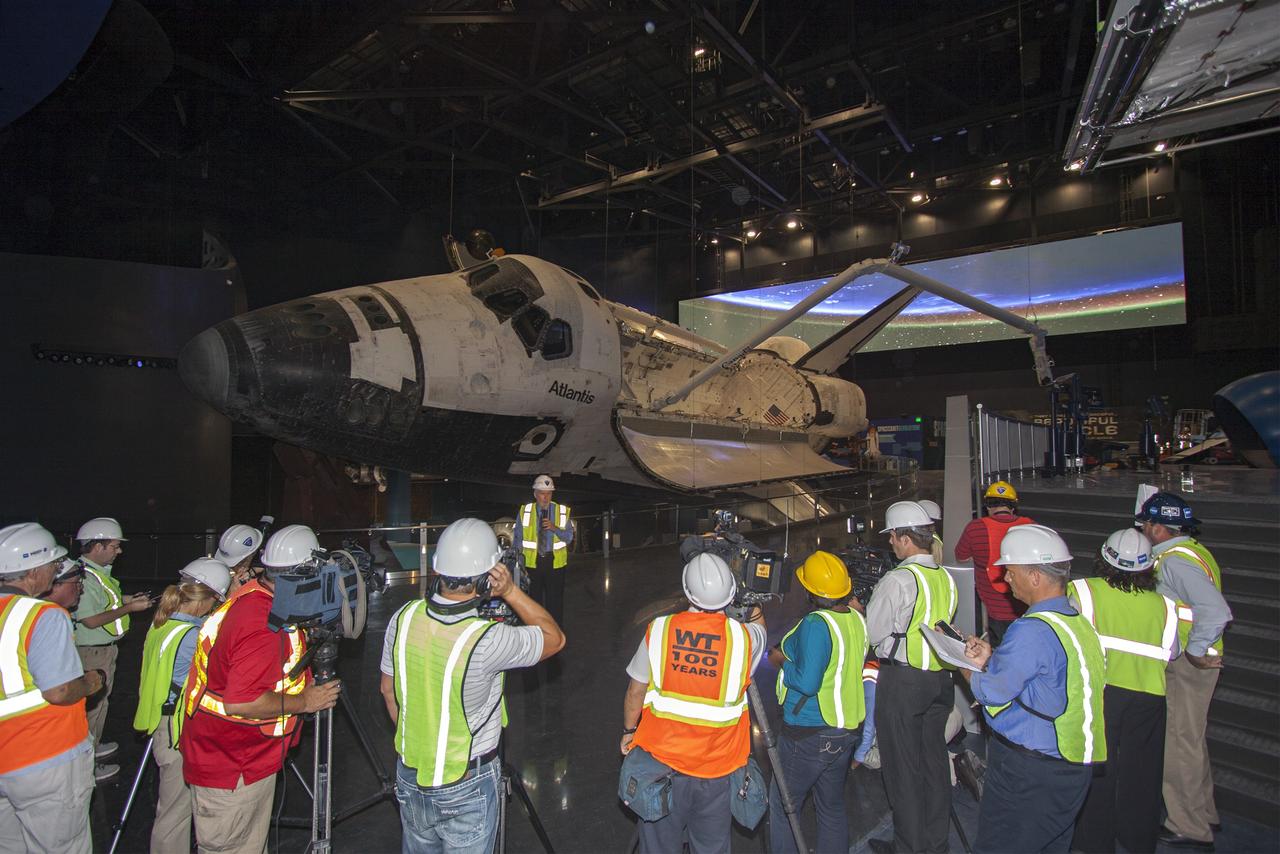
CAPE CANAVERAL, Fla. – At the Kennedy Space Center Visitor Complex in Florida, Bill Moore, chief operating officer with Delaware North Companies Parks & Resorts, speaks to members of the media during a tour of the new “Space Shuttle Atlantis” exhibit, a 90,000-square-foot facility, scheduled to open June 29, 2013. Behind Moore, space shuttle Atlantis’ payload bay doors are open and the orbiter has been tilted at a 43.21 angle to the portside and supported by special jacks to elevate it 26 feet from the ground. The robotic arm has been installed in the payload bay. The new $100 million facility will include interactive exhibits that tell the story of the 30-year Space Shuttle Program and highlight the future of space exploration. Visitors to the exhibit will get an up close look at Atlantis with its payload bay doors open, similar to how it looked in space. Photo credit: NASA/Jim Grossmann
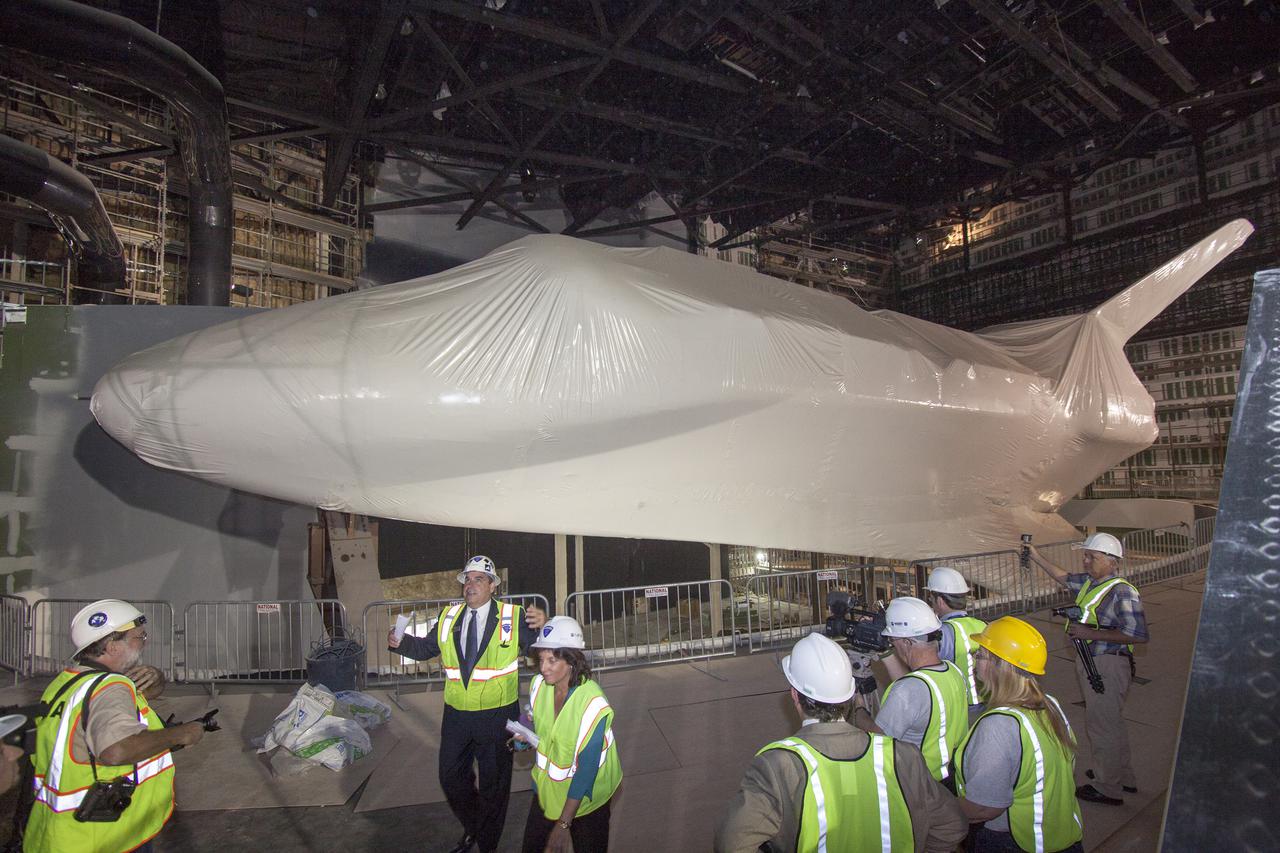
CAPE CANAVERAL, Fla. -- Tim Macy, Delaware North Companies Parks and Resorts director of project development, described the Atlantis exhibit to members of the news media who media gather at the Kennedy Space Center Visitor Complex for the announcement of the opening date of the date the facility will officially open and for the unveiling of the exhibit's newly designed logo. The space shuttle is wrapped in plastic to protect it during completion of construction. The 'Space Shuttle Atlantis' exhibit will open June 29, 2013. Last November, the space shuttle Atlantis made its historic final journey to its new home, traveling 10 miles from the Kennedy Space Center's Vehicle Assembly Building to the spaceport's visitor complex. The new $100 million Atlantis facility will be a 90,000-square-foot, interactive exhibit that tells the story of the 30-year Space Shuttle Program and highlights the future of space exploration. Photo credit: NASA_Jim Grossmann
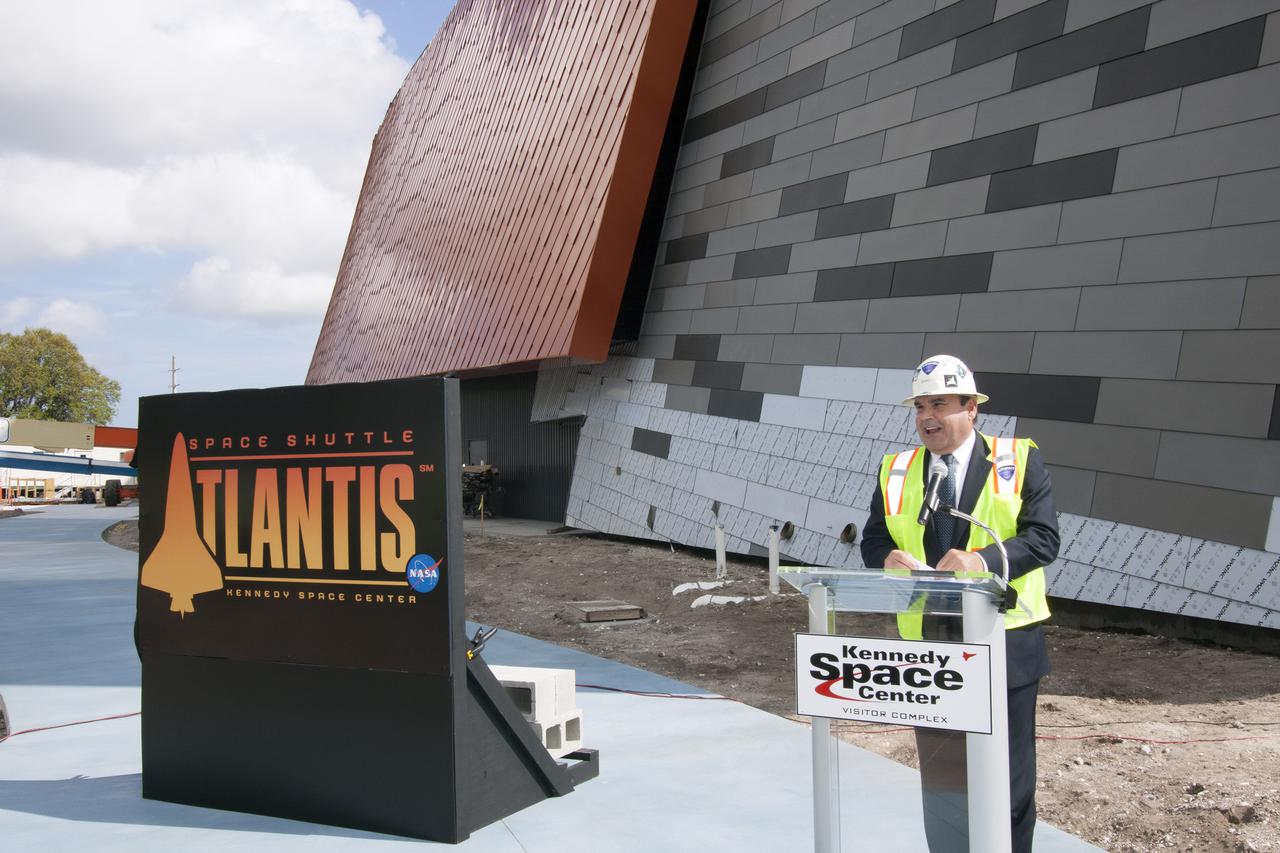
CAPE CANAVERAL, Fla. -- Tim Macy, Delaware North Companies Parks and Resorts director of project development, described the Atlantis exhibit to members of the news media who media gather at the Kennedy Space Center Visitor Complex for the announcement of the opening date of the date the facility will officially open and for the unveiling of the exhibit's newly designed logo. Last November, the space shuttle Atlantis made its historic final journey to its new home, traveling 10 miles from the Kennedy Space Center's Vehicle Assembly Building to the spaceport's visitor complex. The new $100 million Atlantis facility will be a 90,000-square-foot, interactive exhibit that tells the story of the 30-year Space Shuttle Program and highlights the future of space exploration. Photo credit: NASA_Jim Grossmann
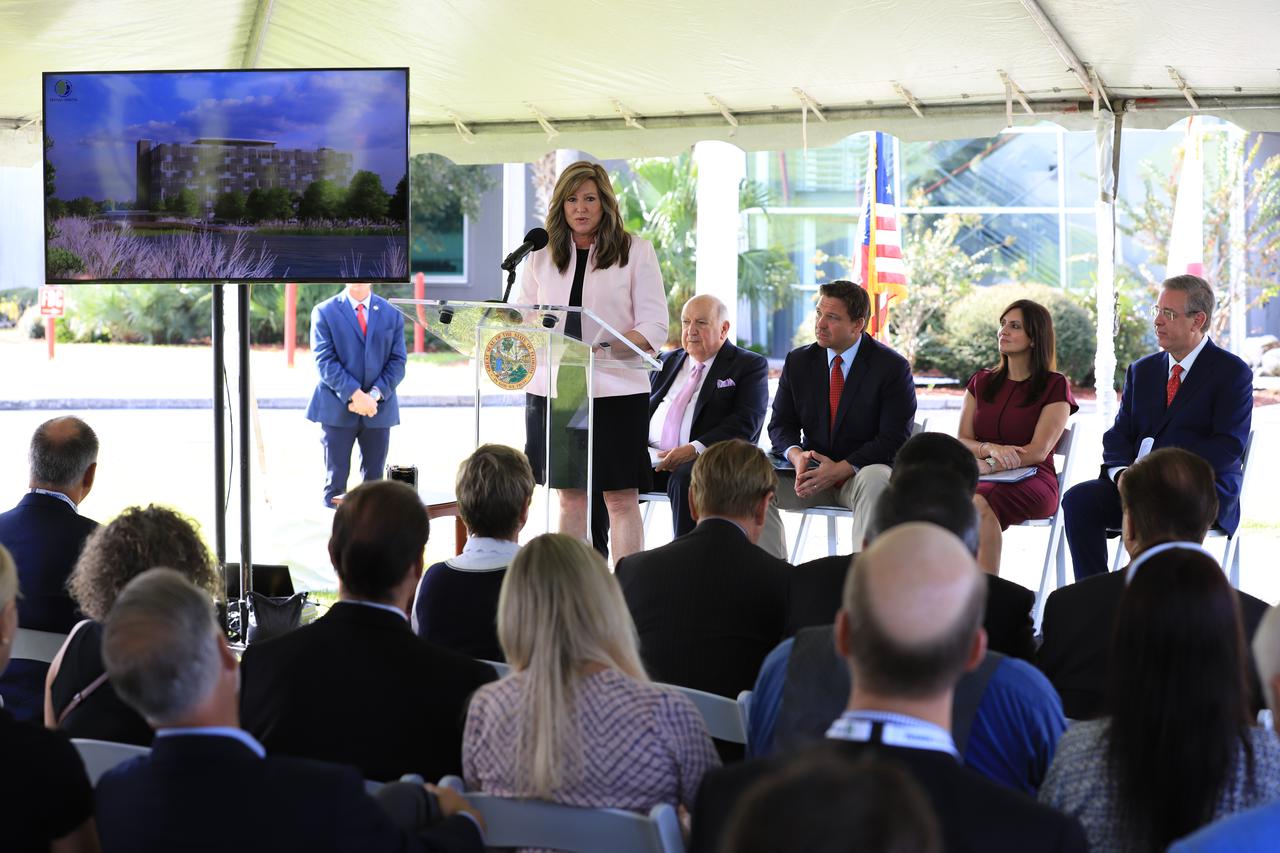
Kennedy Space Center Associate Director, Technical, Jennifer Kunz speaks at an event Sept. 27, 2021, announcing that Terran Orbital will locate its Commercial Spacecraft and Constellation Facility on NASA’s Kennedy Space Center in Florida. The new manufacturing facility will be built near the center’s Launch and Landing Facility, which is being managed and developed by Space Florida under a long-term agreement with NASA. Terran Orbital develops end-to-end satellite solutions as well as commercial spacecraft. The 660,000 square foot manufacturing facility will consist of ten automated and augmented hangers capable of producing thousands of different types of space vehicles and electro-mechanical devices per year. The project is expected to create about 2,100 new jobs, with a planned completion date in 2025. The announcement ceremony was held at Space Florida’s Space Life Sciences Lab in Exploration Park, Florida. Seated directly behind Kunz is Space Florida President and CEO Frank DiBello (left) and Florida Gov. Ron DeSantis (second from left).
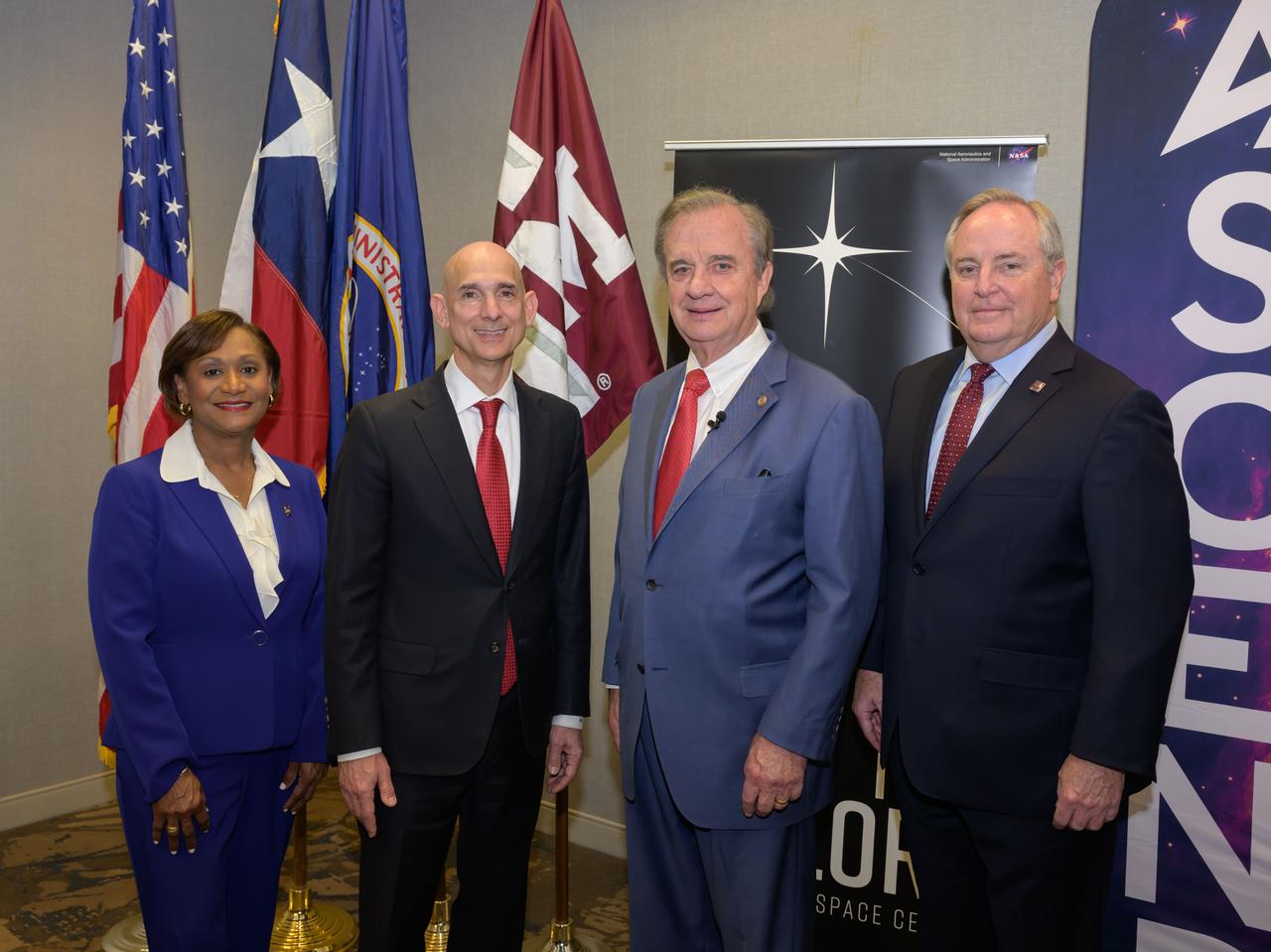
jsc2024e013586 (Feb. 15, 2024) NASA and the Texas A&M University System sign an agreement for a 240-acre Exploration Park on underutilized land at NASA’s Johnson Space Center in Houston. From left: NASA Johnson Director Vanessa Wyche, Texas State Rep. Greg Bonnen, Texas A&M University System Chancellor John Sharp, and Texas A&M University President Mark Welsh III. The announcement of the new lease agreement will allow the A&M System and others to use NASA Johnson land to create facilities for a collaborative environment that increases commercial access and enhances the United States’ commercial competitiveness in the space and aerospace industries. The announcement took place at the AIAA-hosted Ascend Texas (ASCENDxTexas) Conference at South Shore Harbour Conference Center.
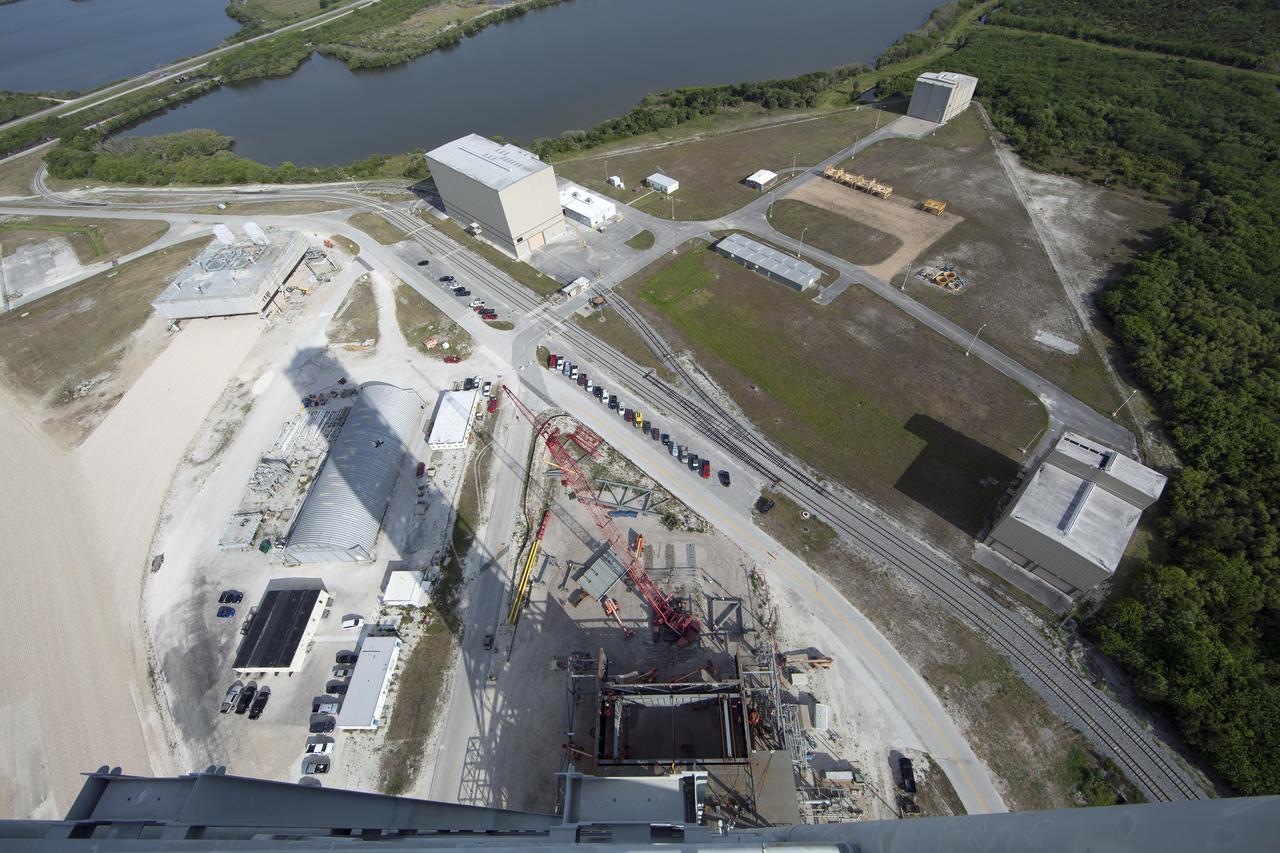
CAPE CANAVERAL, Fla. -- Modifications continue on the Mobile Launcher, or ML, at the Mobile Launcher Park Site at NASA’s Kennedy Space Center in Florida. In a view looking down from the top of the ML is the base of the ML and various facilities in the Launch Complex 39 area. The ML is being modified and strengthened to accommodate the weight, size and thrust at launch of NASA's Space Launch System, or SLS, and Orion spacecraft. In 2013, the agency awarded a contract to J.P. Donovan Construction Inc. of Rockledge, Fla., to modify the ML, which is one of the key elements of ground support equipment that is being upgraded by the Ground Systems Development and Operations Program office at Kennedy. The existing 24-foot exhaust hole is being enlarged and strengthened for the larger, heavier SLS rocket. The ML will carry the SLS rocket and Orion spacecraft to Launch Pad 39B for its first mission, Exploration Mission-1, in 2017. Photo credit: NASA/Daniel Casper
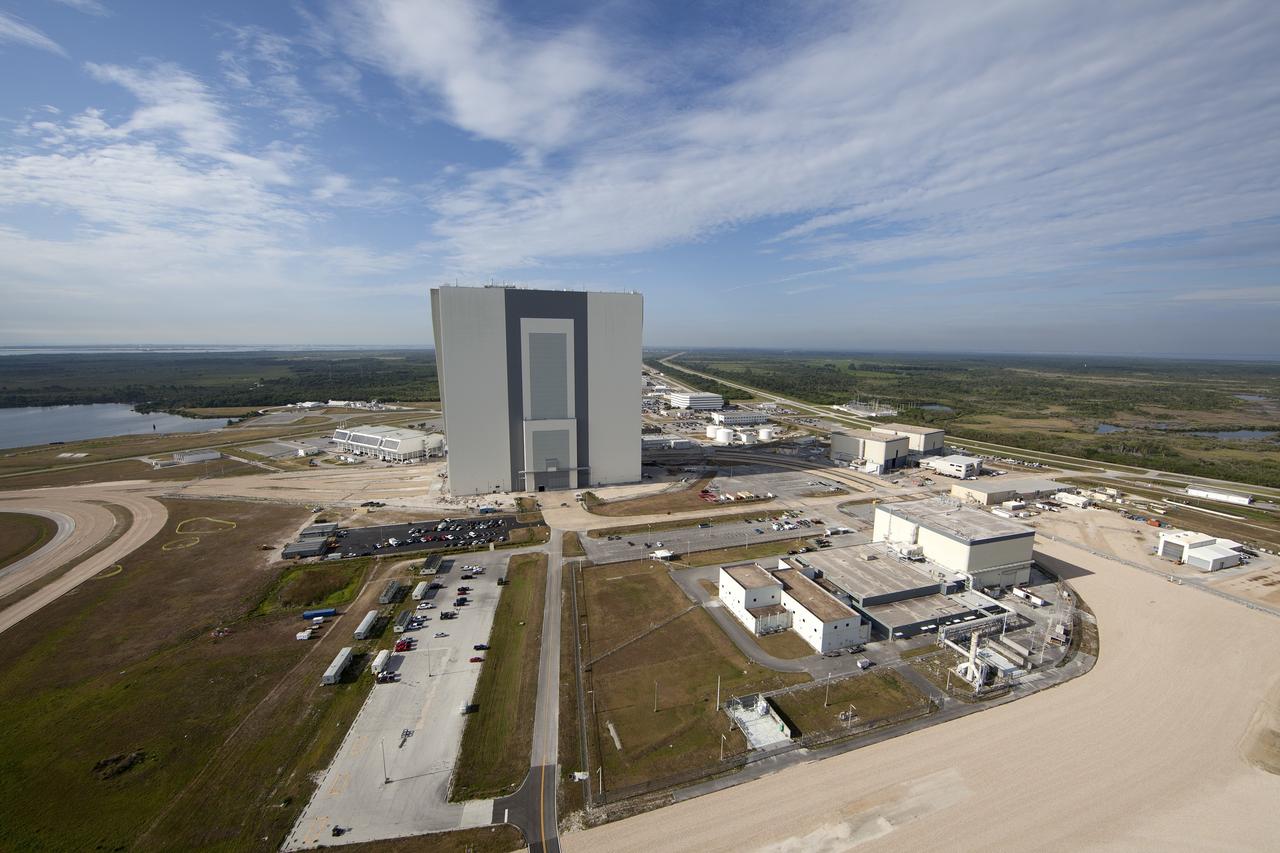
CAPE CANAVERAL, Fla. -- Modifications continue on the Mobile Launcher, or ML, at the Mobile Launcher Park Site at NASA’s Kennedy Space Center in Florida. In view from the top of the ML is the Vehicle Assembly Building, the Launch Control Center at left and various other facilities in the Launch Complex 39 area. The ML is being modified and strengthened to accommodate the weight, size and thrust at launch of NASA's Space Launch System, or SLS, and Orion spacecraft. In 2013, the agency awarded a contract to J.P. Donovan Construction Inc. of Rockledge, Fla., to modify the ML, which is one of the key elements of ground support equipment that is being upgraded by the Ground Systems Development and Operations Program office at Kennedy. The existing 24-foot exhaust hole is being enlarged and strengthened for the larger, heavier SLS rocket. The ML will carry the SLS rocket and Orion spacecraft to Launch Pad 39B for its first mission, Exploration Mission-1, in 2017. Photo credit: NASA/Daniel Casper
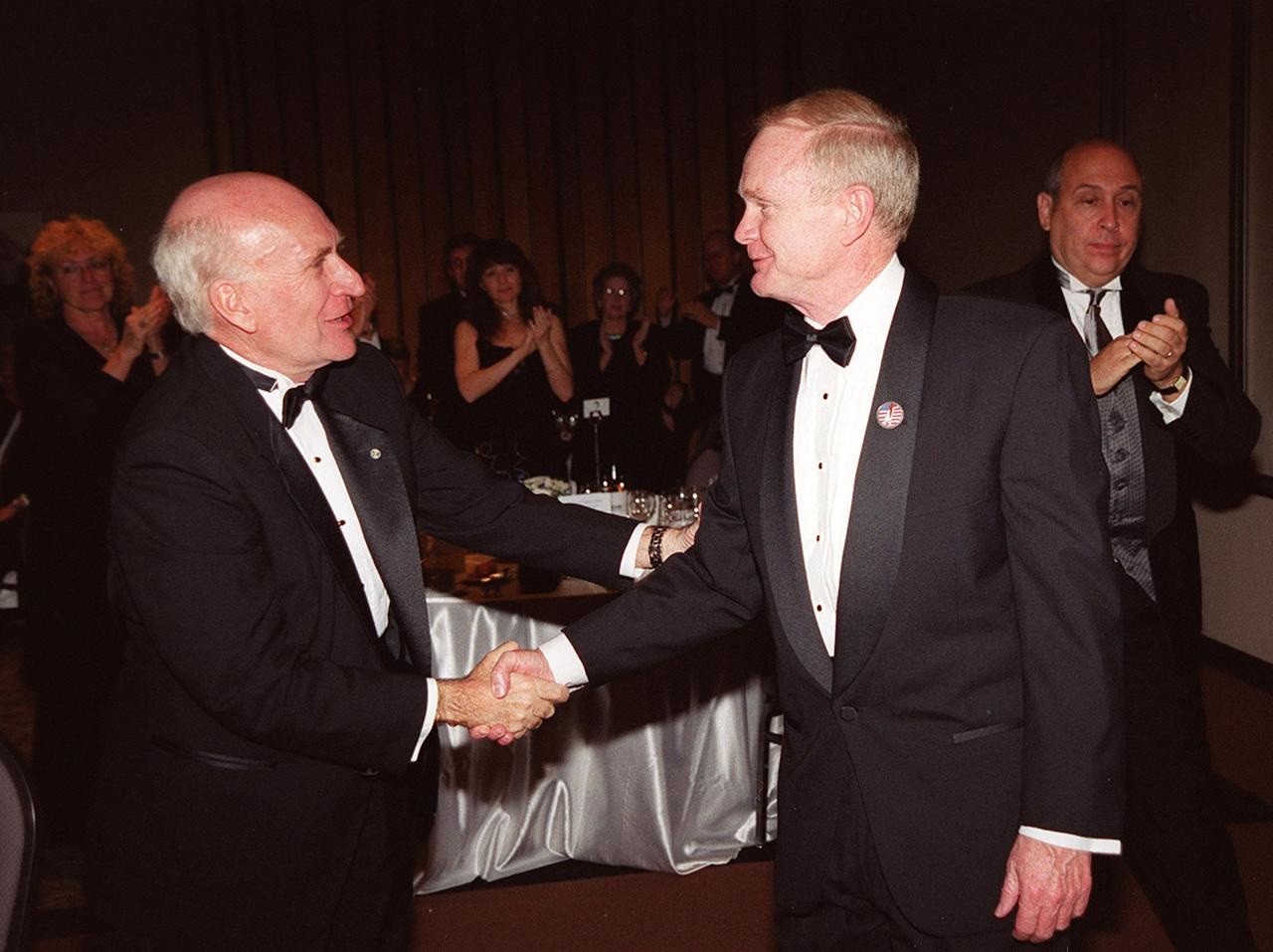
Center Director Roy Bridges (center) is congratulated by Spaceport Florida Authority Executive Director Ed Gormel (left) at the 12th annual Dr. Kurt H. Debus Award Dinner held at the KSC Visitor Complex’s Debus Conference Facility. At right is Rick Abramson, president of Delaware North Parks Services of Spaceport, Inc. Bridges was presented with the 2001 Dr. Kurt H. Debus Award honoring his progressive, visionary leadership and contributions to space technology and exploration. The Florida Committee of the National Space Club presented the award. The Debus Award was first given in 1980. Created to recognize significant achievements and contributions made in Florida to the American aerospace effort, the award is named for the KSC’s first Director, Dr. Kurt H. Debus
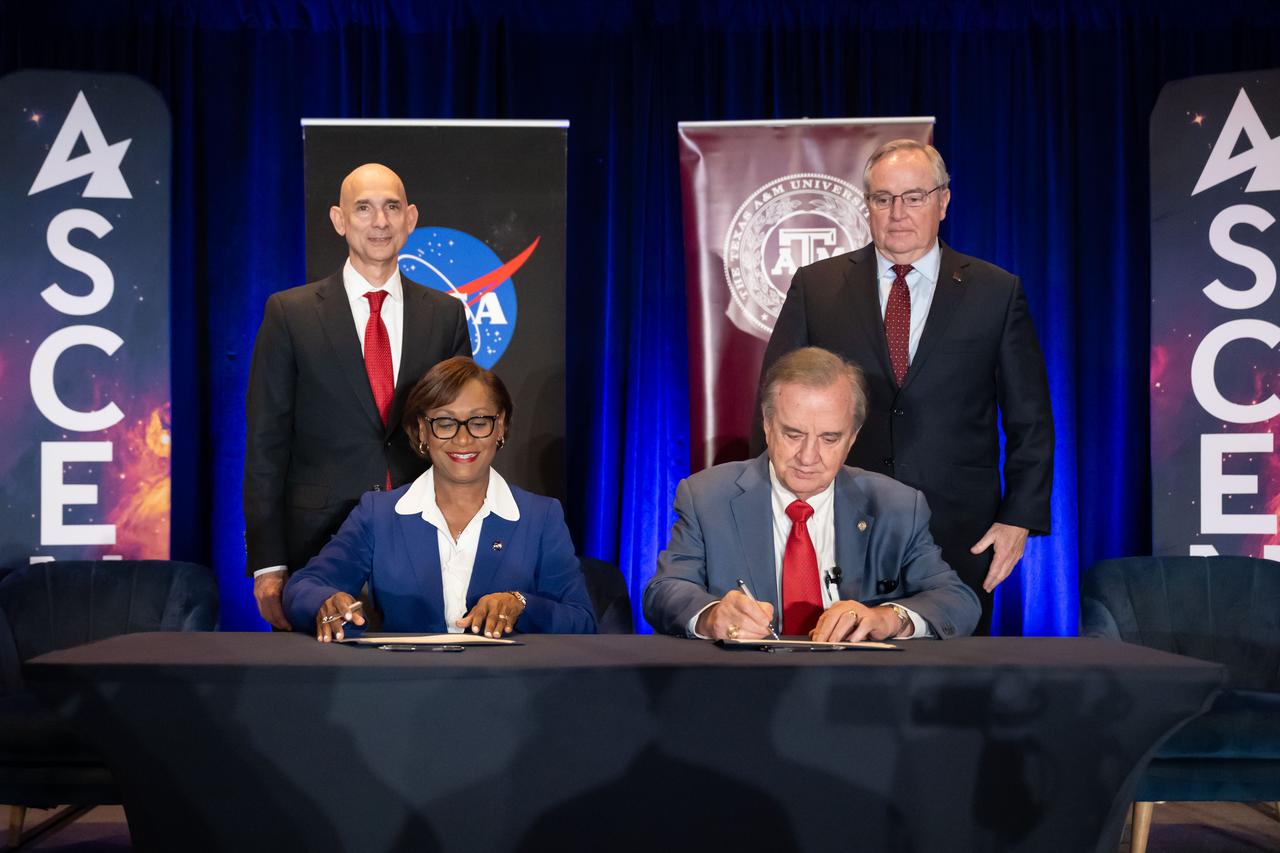
jsc2024e013569 (Feb. 15, 2024) NASA and the Texas A&M University System sign an agreement for a 240-acre Exploration Park on underutilized land at NASA’s Johnson Space Center in Houston. From left: Texas State Rep. Greg Bonnen, NASA Johnson Director Vanessa Wyche, Texas A&M University System Chancellor John Sharp, and Texas A&M University President Mark Welsh III. The announcement of the new lease agreement will allow the A&M System and others to use NASA Johnson land to create facilities for a collaborative environment that increases commercial access and enhances the United States’ commercial competitiveness in the space and aerospace industries. The announcement took place at the AIAA-hosted Ascend Texas (ASCENDxTexas) Conference at South Shore Harbour Conference Center.
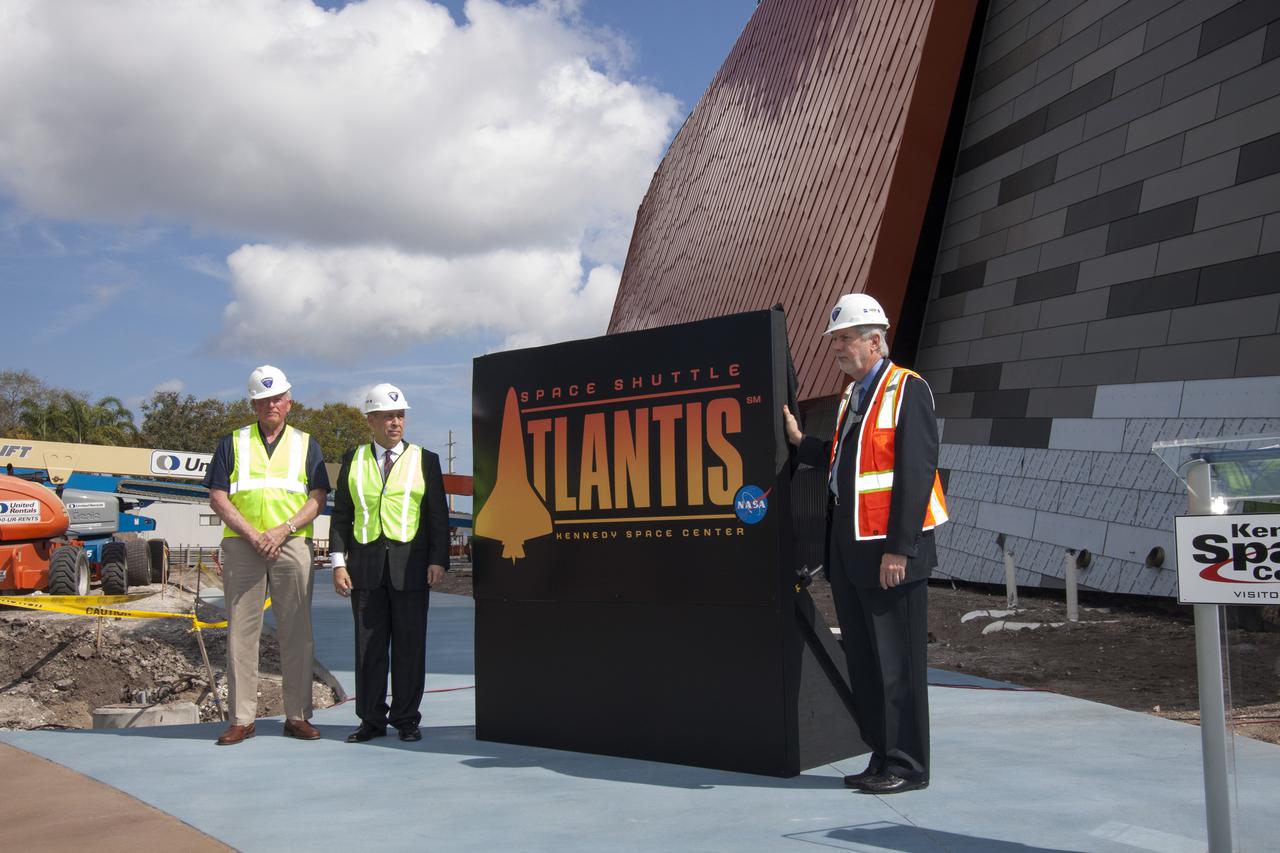
CAPE CANAVERAL, Fla. -- From the left, former NASA astronaut Jon McBride, Rick Abramson, president of Delaware North Companies Parks and Resorts, and Bill Moore, Delaware North's chief operating officer of the visitor complex, pose with the Atlantis exhibit's newly designed logo. Last November, the space shuttle Atlantis made its historic final journey to its new home, traveling 10 miles from the Kennedy Space Center's Vehicle Assembly Building to the spaceport's visitor complex. The new $100 million Atlantis facility will be a 90,000-square-foot, interactive exhibit that tells the story of the 30-year Space Shuttle Program and highlights the future of space exploration. Photo credit: NASA_Jim Grossmann
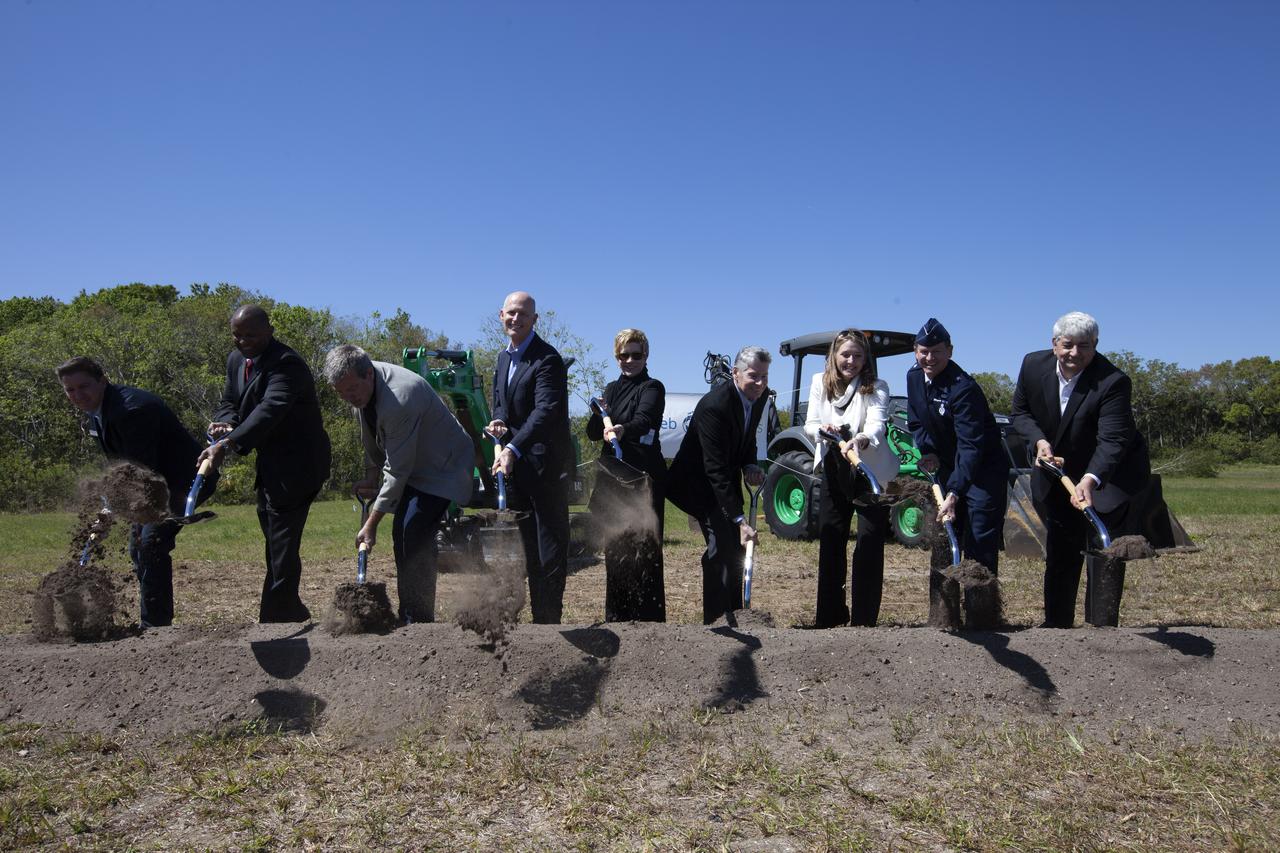
Officials break ground for a 150,000-square-foot manufacturing facility for OneWeb Satellites at Exploration Park at NASA's Kennedy Space Center. The company, in partnership with Airbus, is building a 150,000-square-foot factory to manufacture satellites that will connect all areas of the world to the Internet wirelessly. The officials are, from left, John Saul, operations manager of Hensell-Phelps; Kelvin Manning, associate director of NASA's Kennedy Space Center; Brian Holz, CEO of OneWeb Satellites; Rick Scott, governor of Florida; Lynda Weatherman, president and CEO of the Economic Development Council of the Space Coast; Mike Cosentino, president, Airbus Defense and Space; Cissy Procter, executive director of the Florida Department of Economic Activity; Gen. Wayne Monteith, commander of the 45th Space Wing of the U.S. Air Force; and Jim Kuzma, COO of Space Florida. Photo credit: NASA/Kim Shiflett
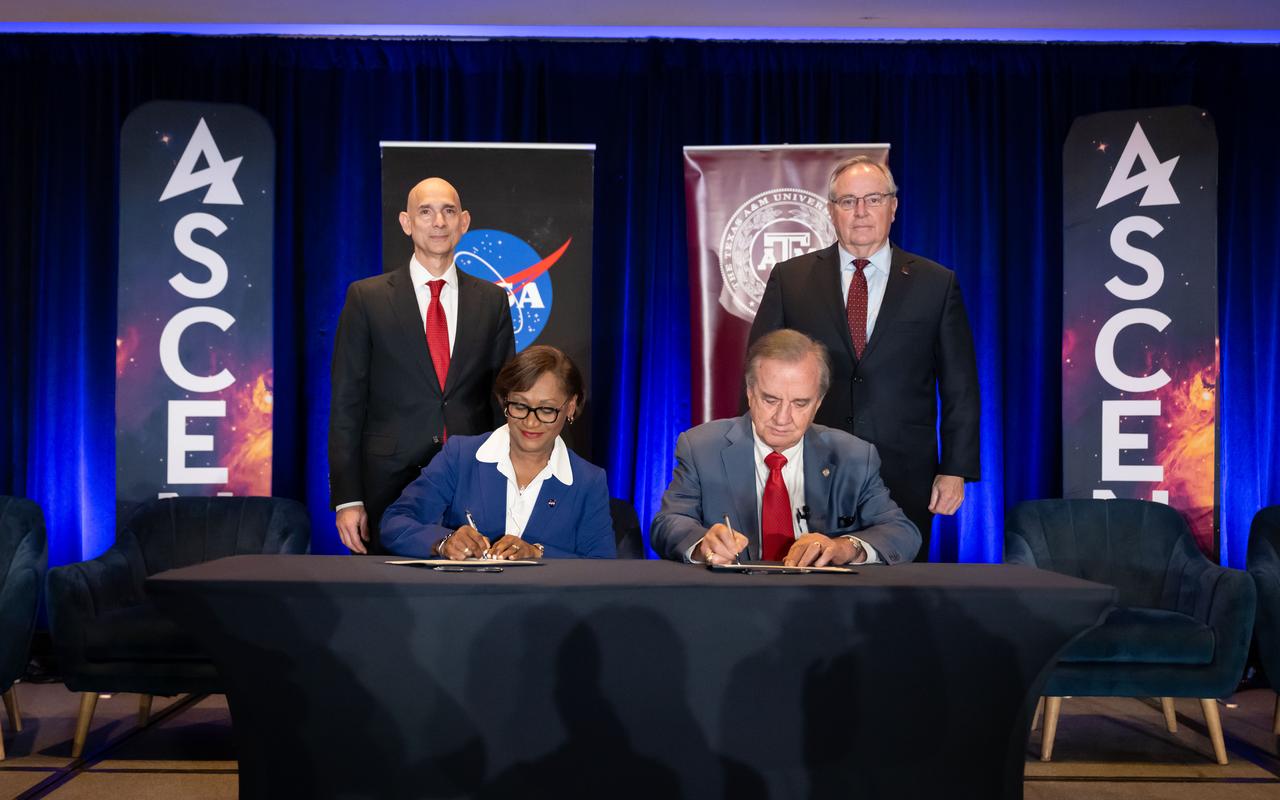
jsc2024e013573 (Feb. 15, 2024) NASA and the Texas A&M University System sign an agreement for a 240-acre Exploration Park on underutilized land at NASA’s Johnson Space Center in Houston. From left: Texas State Rep. Greg Bonnen, NASA Johnson Director Vanessa Wyche, Texas A&M University System Chancellor John Sharp, and Texas A&M University President Mark Welsh III. The announcement of the new lease agreement will allow the A&M System and others to use NASA Johnson land to create facilities for a collaborative environment that increases commercial access and enhances the United States’ commercial competitiveness in the space and aerospace industries. The announcement took place at the AIAA-hosted Ascend Texas (ASCENDxTexas) Conference at South Shore Harbour Conference Center.
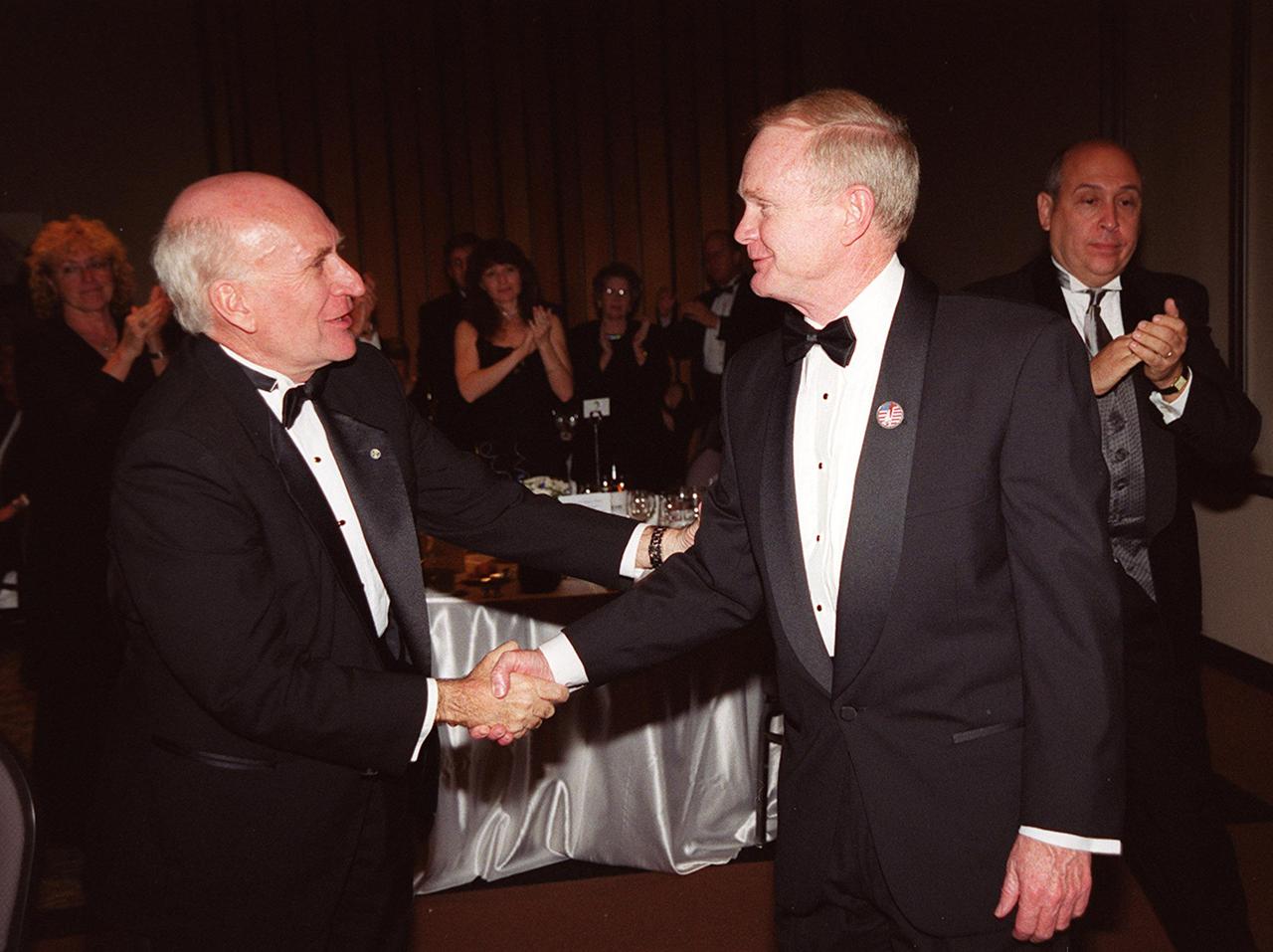
Center Director Roy Bridges (center) is congratulated by Spaceport Florida Authority Executive Director Ed Gormel (left) at the 12th annual Dr. Kurt H. Debus Award Dinner held at the KSC Visitor Complex’s Debus Conference Facility. At right is Rick Abramson, president of Delaware North Parks Services of Spaceport, Inc. Bridges was presented with the 2001 Dr. Kurt H. Debus Award honoring his progressive, visionary leadership and contributions to space technology and exploration. The Florida Committee of the National Space Club presented the award. The Debus Award was first given in 1980. Created to recognize significant achievements and contributions made in Florida to the American aerospace effort, the award is named for the KSC’s first Director, Dr. Kurt H. Debus
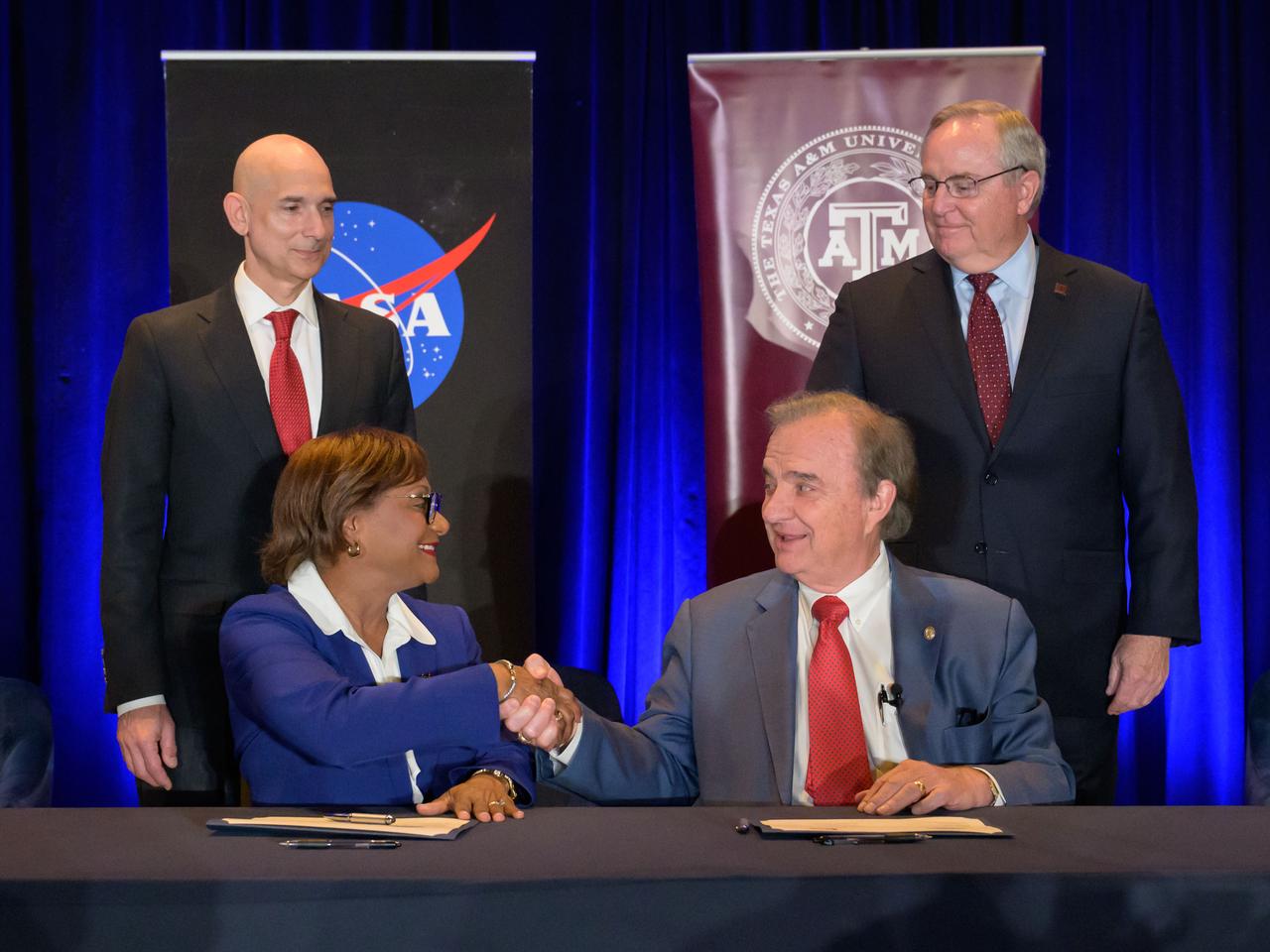
jsc2024e013573 (Feb. 15, 2024) NASA and the Texas A&M University System sign an agreement for a 240-acre Exploration Park on underutilized land at NASA’s Johnson Space Center in Houston. From left: Texas State Rep. Greg Bonnen, NASA Johnson Director Vanessa Wyche, Texas A&M University System Chancellor John Sharp, and Texas A&M University President Mark Welsh III. The announcement of the new lease agreement will allow the A&M System and others to use NASA Johnson land to create facilities for a collaborative environment that increases commercial access and enhances the United States’ commercial competitiveness in the space and aerospace industries. The announcement took place at the AIAA-hosted Ascend Texas (ASCENDxTexas) Conference at South Shore Harbour Conference Center.
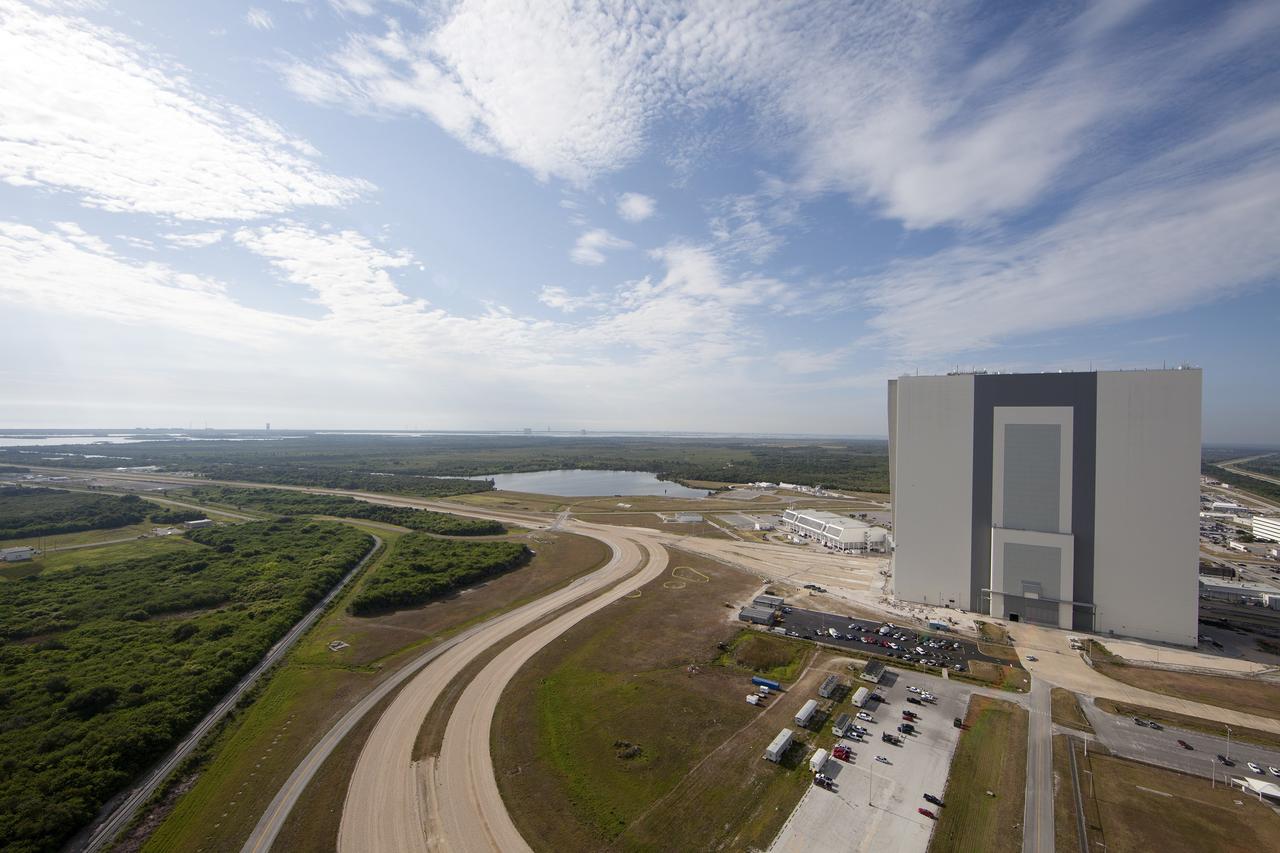
CAPE CANAVERAL, Fla. -- Modifications continue on the Mobile Launcher, or ML, at the Mobile Launcher Park Site at NASA’s Kennedy Space Center in Florida. In view from the top of the ML is the Vehicle Assembly Building, the Launch Control Center at left and various other facilities in the Launch Complex 39 area. The ML is being modified and strengthened to accommodate the weight, size and thrust at launch of NASA's Space Launch System, or SLS, and Orion spacecraft. In 2013, the agency awarded a contract to J.P. Donovan Construction Inc. of Rockledge, Fla., to modify the ML, which is one of the key elements of ground support equipment that is being upgraded by the Ground Systems Development and Operations Program office at Kennedy. The existing 24-foot exhaust hole is being enlarged and strengthened for the larger, heavier SLS rocket. The ML will carry the SLS rocket and Orion spacecraft to Launch Pad 39B for its first mission, Exploration Mission-1, in 2017. Photo credit: NASA/Daniel Casper
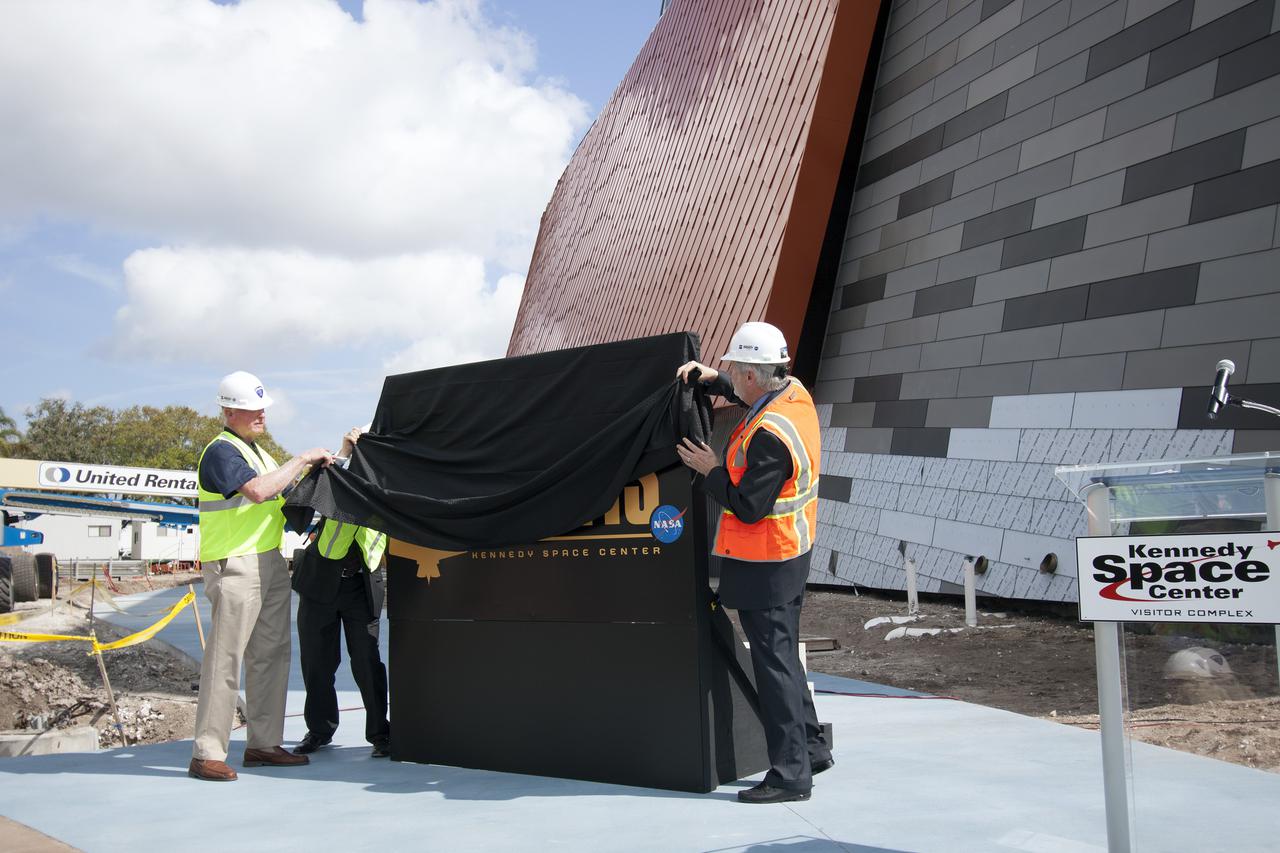
CAPE CANAVERAL, Fla. -- From the left, former NASA astronaut Jon McBride, Rick Abramson, president of Delaware North Companies Parks and Resorts partially hidden, and Bill Moore, chief operating officer of the visitor complex, unveil the Atlantis exhibit's newly designed logo. Last November, the space shuttle Atlantis made its historic final journey to its new home, traveling 10 miles from the Kennedy Space Center's Vehicle Assembly Building to the spaceport's visitor complex. The new $100 million Atlantis facility will be a 90,000-square-foot, interactive exhibit that tells the story of the 30-year Space Shuttle Program and highlights the future of space exploration. Photo credit: NASA_Jim Grossmann
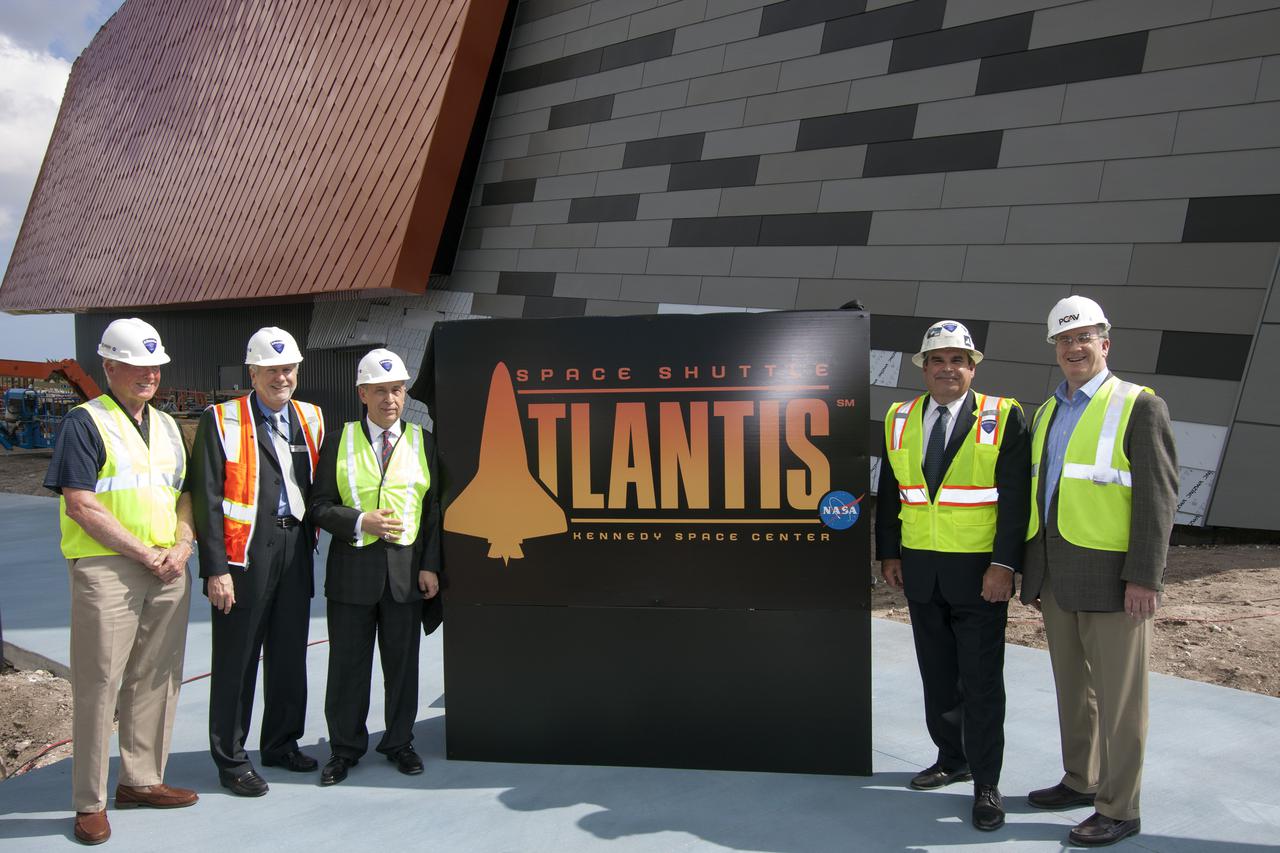
CAPE CANAVERAL, Fla. -- Posing with the newly unveiled logo for the 'Space Shuttle Atlantis' exhibit are, from the left, former NASA astronaut Jon McBride, Bill Moore, Delaware North Companies Parks and Resorts chief operating officer of the visitor complex, Rick Abramson, Delaware North president, Tim Macy, Delaware North director of project development and Mike Konzen, PGAV Destinations chairman and chief Executive Officer. Last November, the space shuttle Atlantis made its historic final journey to its new home, traveling 10 miles from the Kennedy Space Center's Vehicle Assembly Building to the spaceport's visitor complex. The new $100 million Atlantis facility will be a 90,000-square-foot, interactive exhibit that tells the story of the 30-year Space Shuttle Program and highlights the future of space exploration. Photo credit: NASA_Jim Grossmann
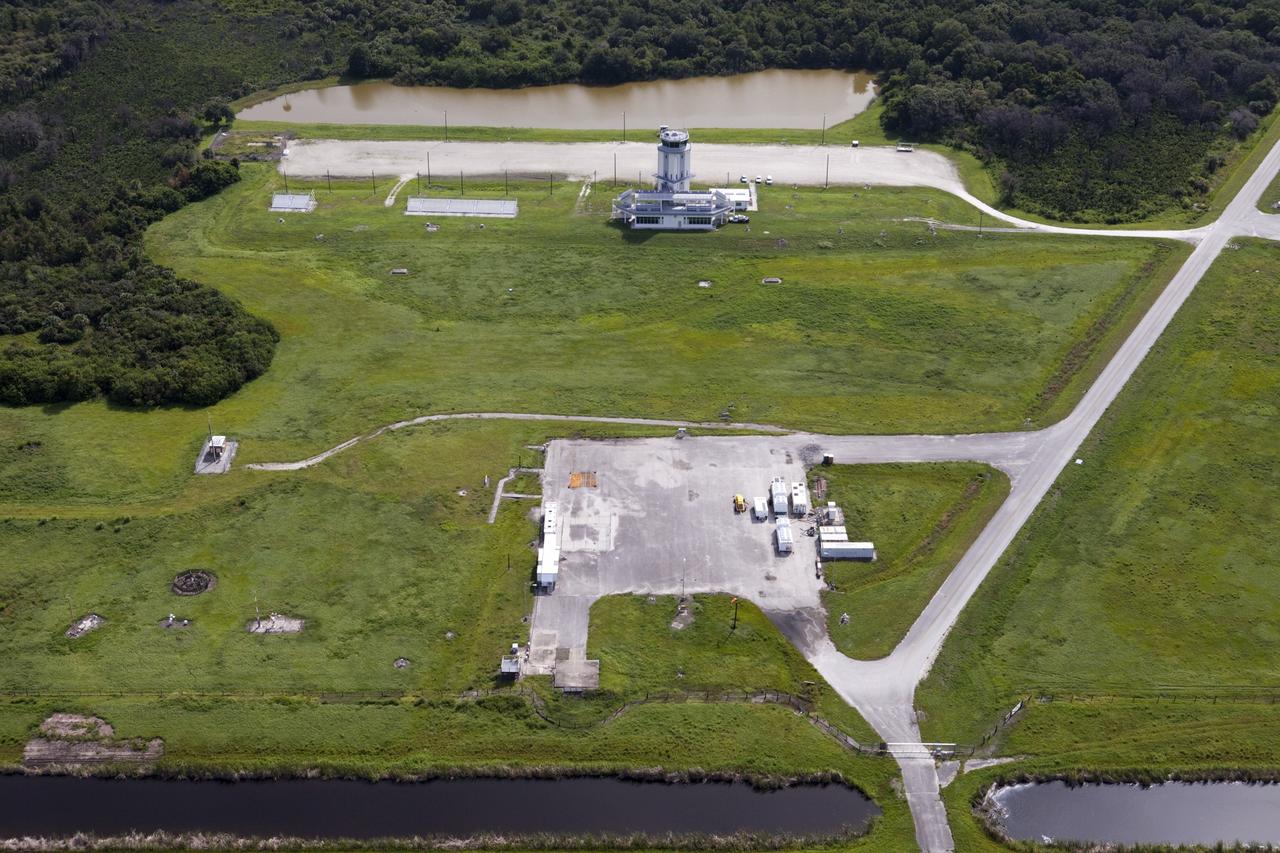
CAPE CANAVERAL, Fla. – This aerial view shows the Shuttle Landing Facility’s air traffic control tower at the Kennedy Space Center in Florida. Just below the tower is the mid-field park site used for runway support vehicles. At the north end of the runway, a rock and crater-filled planetary scape has been built so engineers can test the Autonomous Landing and Hazard Avoidance Technology, or ALHAT system on the Project Morpheus lander. Testing will demonstrate ALHAT’s ability to provide required navigation data negotiating the Morpheus lander away from risks during descent. Checkout of the prototype lander has been ongoing at NASA’s Johnson Space Center in Houston in preparation for its first free flight. The SLF site will provide the lander with the kind of field necessary for realistic testing. Project Morpheus is one of 20 small projects comprising the Advanced Exploration Systems, or AES, program in NASA’s Human Exploration and Operations Mission Directorate. AES projects pioneer new approaches for rapidly developing prototype systems, demonstrating key capabilities and validating operational concepts for future human missions beyond Earth orbit. For more information on Project Morpheus, visit http://www.nasa.gov/centers/johnson/exploration/morpheus/index.html Photo credit: NASA/Kim Shiflett
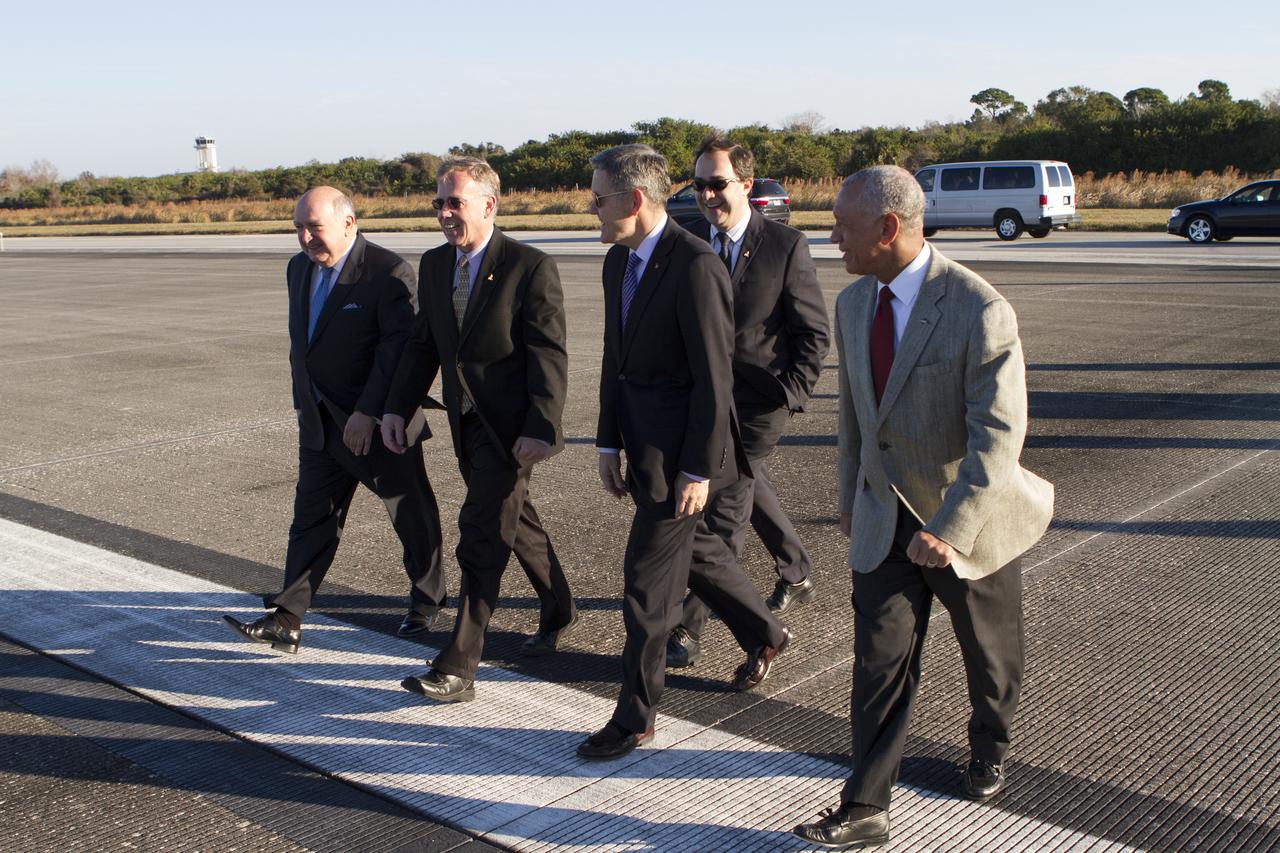
CAPE CANAVERAL, Fla. – NASA and aerospace industry representatives tour facilities along Florida’s Space Coast prior to announcements made by Sierra Nevada Corporation, or SNC, Space Systems, to prepare for a November 2016 orbital flight of its Dream Chaser spacecraft. Walking along the 3.5-mile-long runway at Kennedy Space Center’s Shuttle Landing Facility are, from left, Frank DiBello, president and CEO of Space Florida Steve Lindsey, Dream Chaser program manager for SNC Space Systems Bob Cabana, director of NASA’s Kennedy Space Center Mark Sirangelo, corporate vice president and head of SNC Space Systems and Charlie Bolden, administrator of NASA. The announcements made during a news conference at Kennedy are considered substantial for SNC and important to plans by NASA and Space Florida for Kennedy’s transformation into a multi-user spaceport for both commercial and government customers. SNC announced it plans to work with United Launch Alliance, or ULA, to launch the Dream Chaser spacecraft into orbit atop an Atlas V rocket from Space Launch Complex 41 at Cape Canaveral Air Force Station intends to land the winged spacecraft at the Shuttle Landing Facility lease office space at Exploration Park, right outside Kennedy’s gates and process the spacecraft in the high bay of the Operations and Checkout Building at Kennedy, with Lockheed Martin performing the work. Photo credit: NASA/Cory Huston
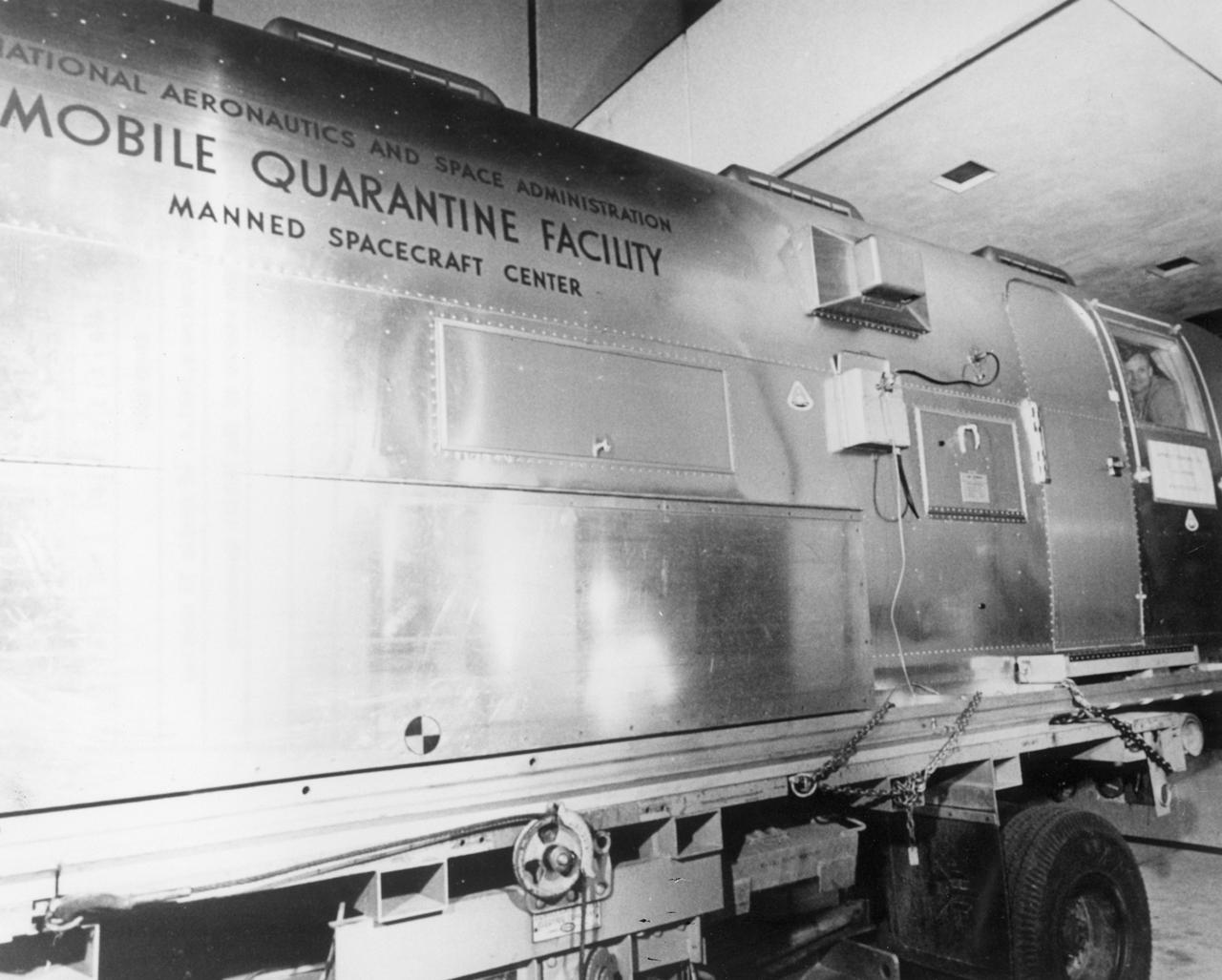
The Apollo 11 mission, the first manned lunar mission, launched from the Kennedy Space Center, Florida via the Marshall Space Flight Center (MSFC) developed Saturn V launch vehicle on July 16, 1969 and safely returned to Earth on July 24, 1969. Aboard the space craft were astronauts Neil A. Armstrong, commander; Michael Collins, Command Module (CM) pilot; and Edwin E. Aldrin Jr., Lunar Module (LM) pilot. The CM, piloted by Michael Collins remained in a parking orbit around the Moon while the LM, named “Eagle’’, carrying astronauts Neil Armstrong and Edwin Aldrin, landed on the Moon. During 2½ hours of surface exploration, the crew collected 47 pounds of lunar surface material for analysis back on Earth. The recovery operation took place in the Pacific Ocean where Navy para-rescue men recovered the capsule housing the 3-man Apollo 11 crew. The crew was airlifted to safety aboard the U.S.S. Hornet, where they were quartered in a Mobile Quarantine Facility (MQF) which served as their home until they reached the NASA Manned Spacecraft Center (MSC) Lunar Receiving Laboratory in Houston, Texas. In this close up of the MQF, commander Armstrong can be seen through the facility window after its arrival at the MSC.
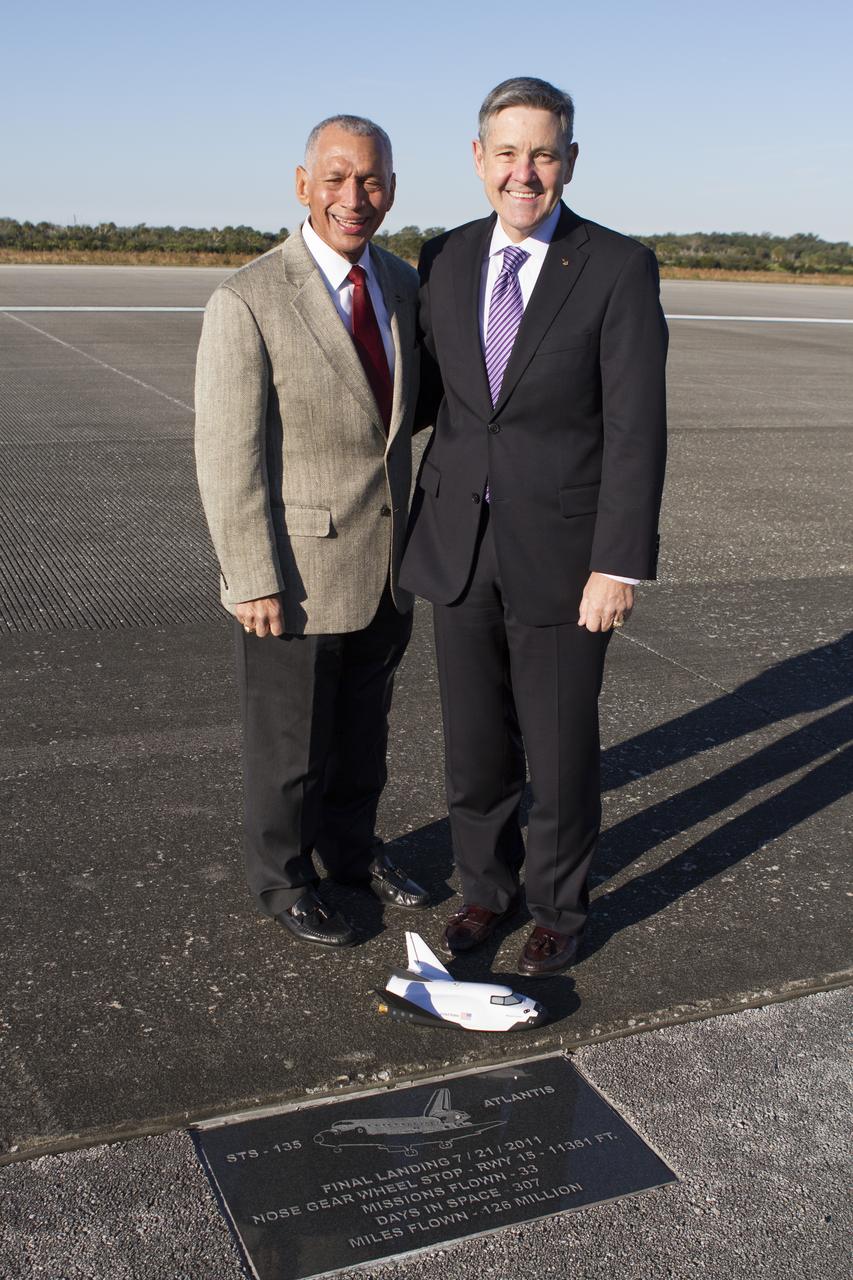
CAPE CANAVERAL, Fla. – NASA Administrator Charlie Bolden and Kennedy Space Center Director Bob Cabana pose for a photo at the plaque marking space shuttle Atlantis’ final mission, STS-135, along the 3.5-mile-long runway at Kennedy’s Shuttle Landing Facility. Also in the photo is a model of the Sierra Nevada Corporation, or SNC, Dream Chaser. SNC announced it plans to work with United Launch Alliance, or ULA, to launch the Dream Chaser spacecraft into orbit atop an Atlas V rocket from Space Launch Complex 41 at Cape Canaveral Air Force Station in November 2016 intends to land the winged spacecraft at the Shuttle Landing Facility lease office space at Exploration Park, right outside Kennedy’s gates and process the spacecraft in the high bay of the Operations and Checkout Building at Kennedy, with Lockheed Martin performing the work. The announcements made during a news conference at Kennedy are considered substantial for SNC and important to plans by NASA and Space Florida for Kennedy’s transformation into a multi-user spaceport for both commercial and government customers. Photo credit: NASA/Cory Huston

CAPE CANAVERAL, Fla. – A model of the Sierra Nevada Corporation, or SNC, Dream Chaser spacecraft stands next to a plaque honoring the final landing of space shuttle Discovery on the 3.5-mile-long runway at Kennedy Space Center’s Shuttle Landing Facility. Dream Chaser’s program manager, Steve Lindsey is a former astronaut who commanded Discovery on its final mission, STS-133. SNC announced it plans to work with United Launch Alliance, or ULA, to launch the Dream Chaser spacecraft into orbit atop an Atlas V rocket from Space Launch Complex 41 at Cape Canaveral Air Force Station in November 2016 intends to land the winged spacecraft at the Shuttle Landing Facility lease office space at Exploration Park, right outside Kennedy’s gates and process the spacecraft in the high bay of the Operations and Checkout Building at Kennedy, with Lockheed Martin performing the work. The announcements made during a news conference at Kennedy are considered substantial for SNC and important to plans by NASA and Space Florida for Kennedy’s transformation into a multi-user spaceport for both commercial and government customers. Photo credit: NASA/Cory Huston
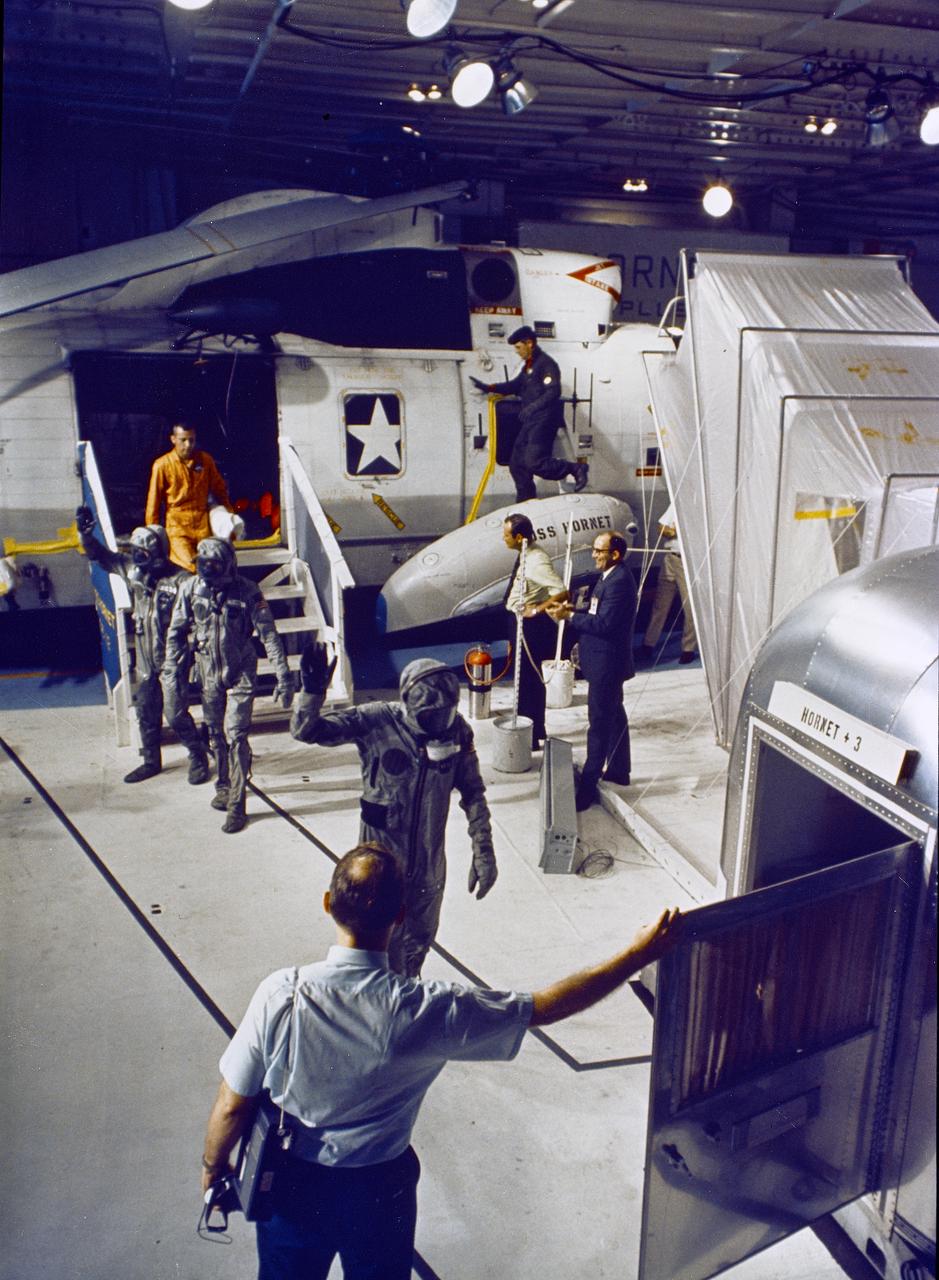
The Apollo 11 mission, the first manned lunar mission, launched from the Kennedy Space Center, Florida via a Saturn V launch vehicle on July 16, 1969 and safely returned to Earth on July 24, 1969. The Saturn V vehicle was developed by the Marshall Space Flight Center (MSFC) under the direction of Dr. Wernher von Braun. Aboard were Neil A. Armstrong, commander; Michael Collins, Command Module (CM) pilot; and Edwin E. Aldrin Jr., Lunar Module (LM) pilot. The CM, piloted by Michael Collins remained in a parking orbit around the Moon while the LM, named “Eagle’’, carrying astronauts Neil Armstrong and Edwin Aldrin, landed on the Moon. Armstrong was the first human to ever stand on the lunar surface, followed by Edwin (Buzz) Aldrin. During 2½ hours of surface exploration, the crew collected 47 pounds of lunar surface material for analysis back on Earth. The recovery operation took place after splash down in the Pacific Ocean. Navy para-rescue men recovered the capsule housing the 3-man Apollo 11 crew. The crew was taken to safety aboard the USS Hornet, where they were quartered in a mobile quarantine facility. Here the astronauts are shown waving as they enter the quarantine facility. With the success of Apollo 11, the national objective to land men on the Moon and return them safely to Earth had been accomplished.
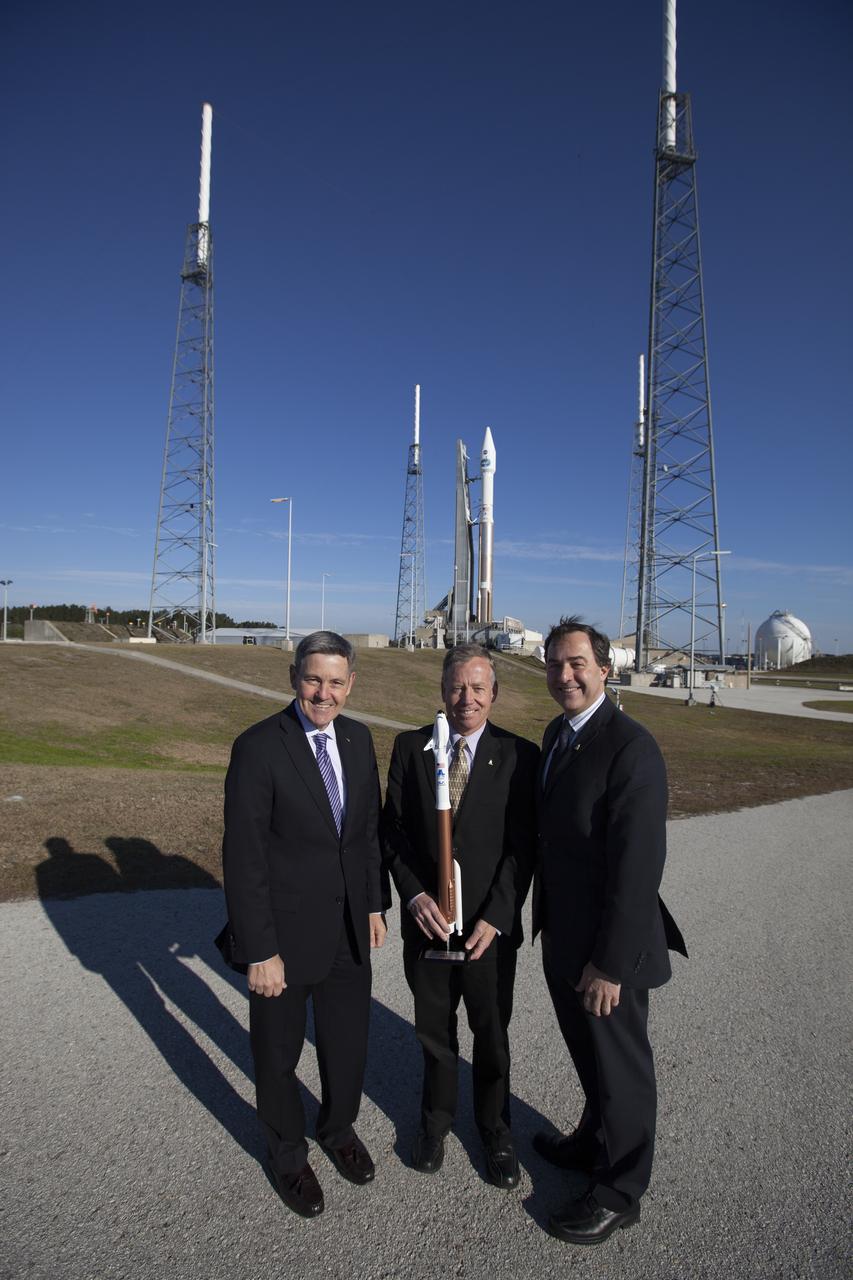
CAPE CANAVERAL, Fla. – NASA and aerospace industry representatives tour facilities along Florida’s Space Coast prior to announcements made by Sierra Nevada Corporation, or SNC, Space Systems, to prepare for a November 2016 orbital flight of its Dream Chaser spacecraft. Posing for a photo in front of a United Launch Alliance, or ULA, Atlas V rocket are, from left, Bob Cabana, director of NASA’s Kennedy Space Center Steve Lindsey, Dream Chaser program manager for SNC Space Systems and Mark Sirangelo, corporate vice president and head of SNC Space Systems. The announcements made during a news conference at Kennedy are considered substantial for SNC and important to plans by NASA and Space Florida for Kennedy’s transformation into a multi-user spaceport for both commercial and government customers. SNC announced it plans to work with ULA to launch the Dream Chaser spacecraft into orbit atop an Atlas V rocket from Space Launch Complex 41 at Cape Canaveral Air Force Station intends to land the winged spacecraft at the 3.5-mile-long runway at Kennedy’s Shuttle Landing Facility lease office space at Exploration Park, right outside Kennedy’s gates and process the spacecraft in the high bay of the Operations and Checkout Building at Kennedy, with Lockheed Martin performing the work. Photo credit: NASA/Cory Huston
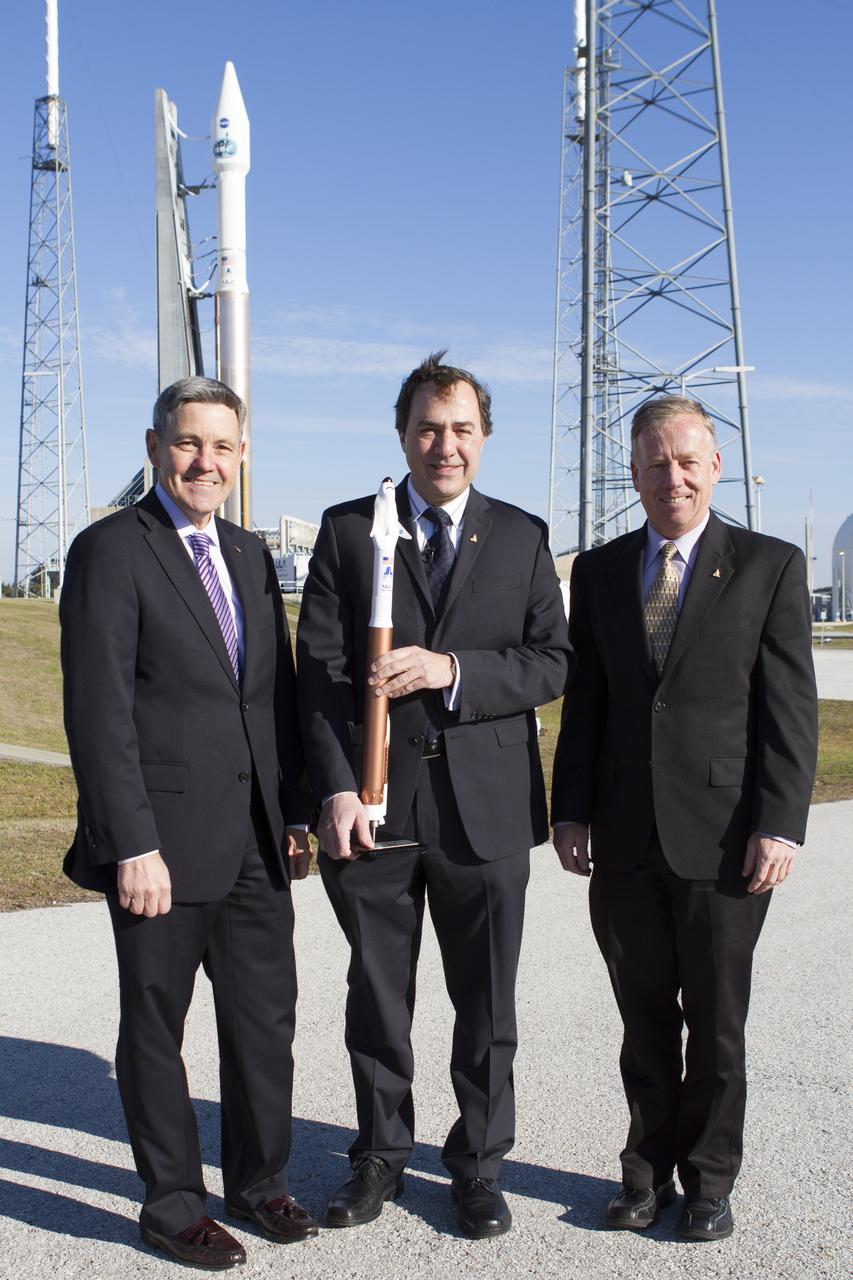
CAPE CANAVERAL, Fla. – NASA and aerospace industry representatives tour facilities along Florida’s Space Coast prior to announcements made by Sierra Nevada Corporation, or SNC, Space Systems, to prepare for a November 2016 orbital flight of its Dream Chaser spacecraft. Posing for a photo in front of a United Launch Alliance, or ULA, Atlas V rocket are, from left, Bob Cabana, director of NASA’s Kennedy Space Center Mark Sirangelo, corporate vice president and head of SNC Space Systems and Steve Lindsey, Dream Chaser program manager for SNC Space Systems. The announcements made during a news conference at Kennedy are considered substantial for SNC and important to plans by NASA and Space Florida for Kennedy’s transformation into a multi-user spaceport for both commercial and government customers. SNC announced it plans to work with ULA to launch the Dream Chaser spacecraft into orbit atop an Atlas V rocket from Space Launch Complex 41 at Cape Canaveral Air Force Station intends to land the winged spacecraft at the 3.5-mile-long runway at Kennedy’s Shuttle Landing Facility lease office space at Exploration Park, right outside Kennedy’s gates and process the spacecraft in the high bay of the Operations and Checkout Building at Kennedy, with Lockheed Martin performing the work. Photo credit: NASA/Cory Huston
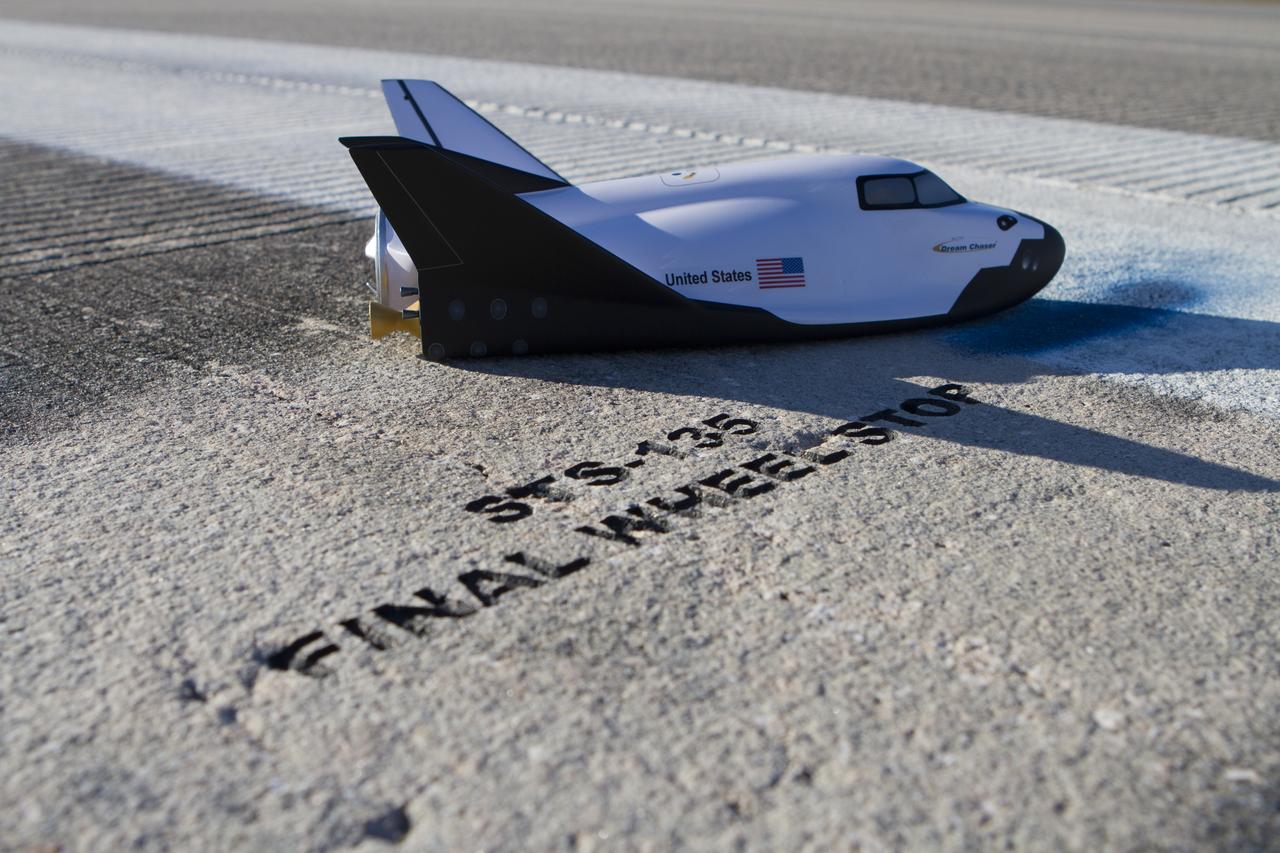
CAPE CANAVERAL, Fla. – A model of the Sierra Nevada Corporation, or SNC, Dream Chaser spacecraft stands next to the final wheelstop location of space shuttle Atlantis, the final shuttle to land on the 3.5-mile-long runway at Kennedy Space Center’s Shuttle Landing Facility. SNC announced it plans to work with United Launch Alliance, or ULA, to launch the Dream Chaser spacecraft into orbit atop an Atlas V rocket from Space Launch Complex 41 at Cape Canaveral Air Force Station in November 2016 intends to land the winged spacecraft at the Shuttle Landing Facility lease office space at Exploration Park, right outside Kennedy’s gates and process the spacecraft in the high bay of the Operations and Checkout Building at Kennedy, with Lockheed Martin performing the work. The announcements made during a news conference at Kennedy are considered substantial for SNC and important to plans by NASA and Space Florida for Kennedy’s transformation into a multi-user spaceport for both commercial and government customers. Photo credit: NASA/Cory Huston
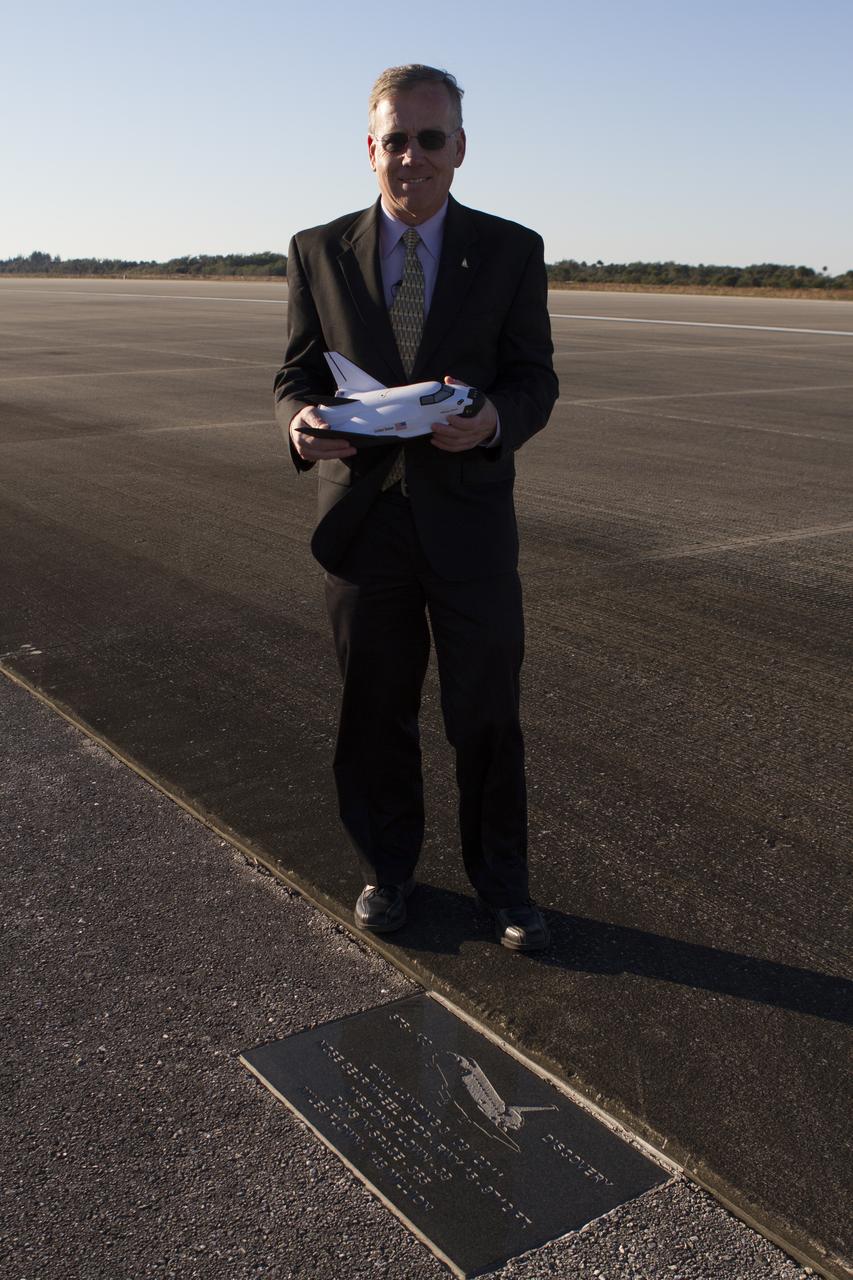
CAPE CANAVERAL, Fla. – Steve Lindsey, former NASA astronaut and Dream Chaser program manager for Sierra Nevada Corporation, or SNC, Space Systems stands at a plaque honoring the final landing of space shuttle Discovery on the 3.5-mile-long runway at Kennedy Space Center’s Shuttle Landing Facility. Lindsey, who was the commander of Discovery’s STS-133 mission, is holding a model of SNC’s Dream Chaser. SNC announced it plans to work with United Launch Alliance, or ULA, to launch the Dream Chaser spacecraft into orbit atop an Atlas V rocket from Space Launch Complex 41 at Cape Canaveral Air Force Station in November 2016 intends to land the winged spacecraft at the Shuttle Landing Facility lease office space at Exploration Park, right outside Kennedy’s gates and process the spacecraft in the high bay of the Operations and Checkout Building at Kennedy, with Lockheed Martin performing the work. The announcements made during a news conference at Kennedy are considered substantial for SNC and important to plans by NASA and Space Florida for Kennedy’s transformation into a multi-user spaceport for both commercial and government customers. Photo credit: NASA/Cory Huston
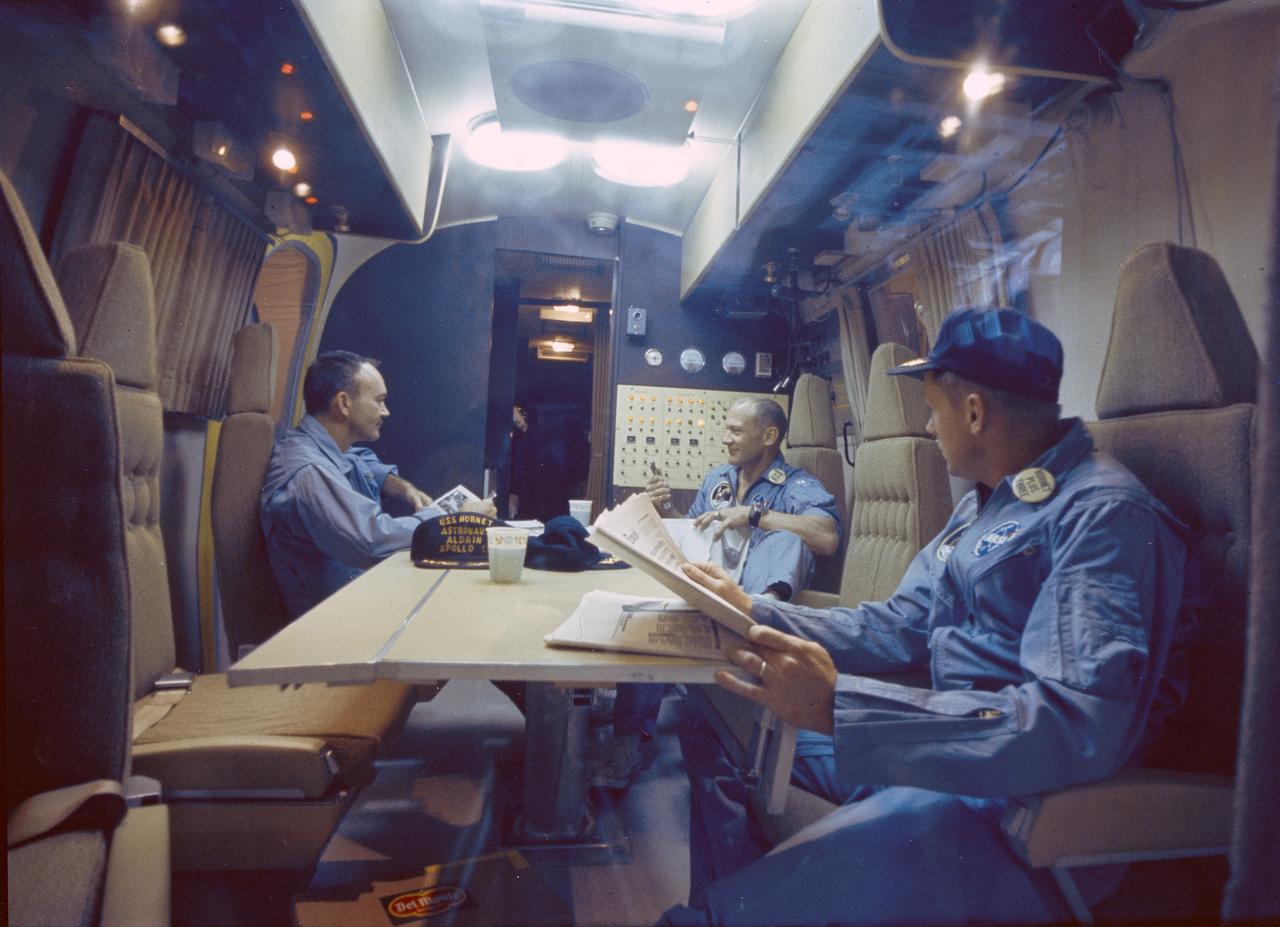
The Apollo 11 mission, the first manned lunar mission, launched from the Kennedy Space Center, Florida via a Saturn V launch vehicle on July 16, 1969 and safely returned to Earth on July 24, 1969. The Saturn V vehicle was developed by the Marshall Space Flight Center (MSFC) under the direction of Dr. Wernher von Braun. Aboard were Neil A. Armstrong, commander; Michael Collins, Command Module pilot; and Edwin E. Aldrin Jr., Lunar Module pilot. The Command Module (CM), piloted by Michael Collins remained in a parking orbit around the Moon while the Lunar Module (LM), named “Eagle’’, carrying astronauts Neil Armstrong and Edwin Aldrin, landed on the Moon. Armstrong was the first human to ever stand on the lunar surface, followed by Edwin (Buzz) Aldrin. The surface exploration was concluded in 2½ hours, in which the crew collected 47 pounds of lunar surface material for analysis back on Earth. Upon splash down in the Pacific Ocean, Navy para-rescue men recovered the capsule housing the 3-man Apollo 11 crew. The crew was taken to safety aboard the USS Hornet, where they were quartered in a mobile quarantine facility. Shown here is the Apollo 11 crew inside the quarantine facility. With the success of Apollo 11, the national objective to land men on the Moon and return them safely to Earth had been accomplished.
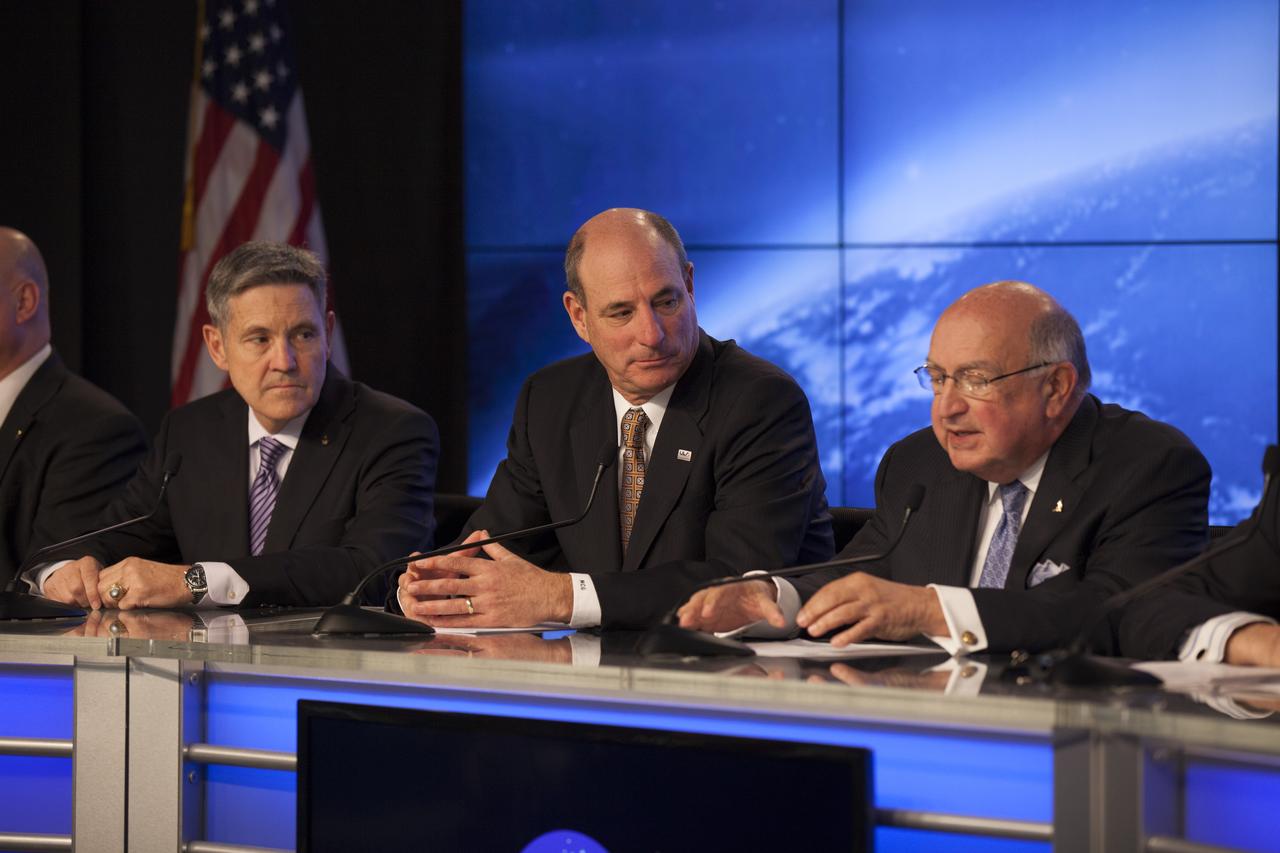
CAPE CANAVERAL, Fla. – Frank DiBello, right, president and CEO of Space Florida, joins Sierra Nevada Corporation, or SNC, Space Systems, as the company announces the steps it will take to prepare for a November 2016 orbital flight of its Dream Chaser spacecraft from Florida’s Space Coast. The steps are considered substantial for SNC and important to plans by NASA and Space Florida for Kennedy Space Center’s transformation into a multi-user spaceport for both commercial and government customers. SNC said it plans to work with United Launch Alliance, or ULA, to launch the Dream Chaser spacecraft into orbit atop an Atlas V rocket from Space Launch Complex 41 at Cape Canaveral Air Force Station intends to land the winged spacecraft at Kennedy’s 3.5-mile long runway at the Shuttle Landing Facility lease office space at Exploration Park, right outside Kennedy’s gates and process the spacecraft in the high bay of the Operations and Checkout Building at Kennedy, with Lockheed Martin performing the work. Photo credit: NASA/Kim Shiflett
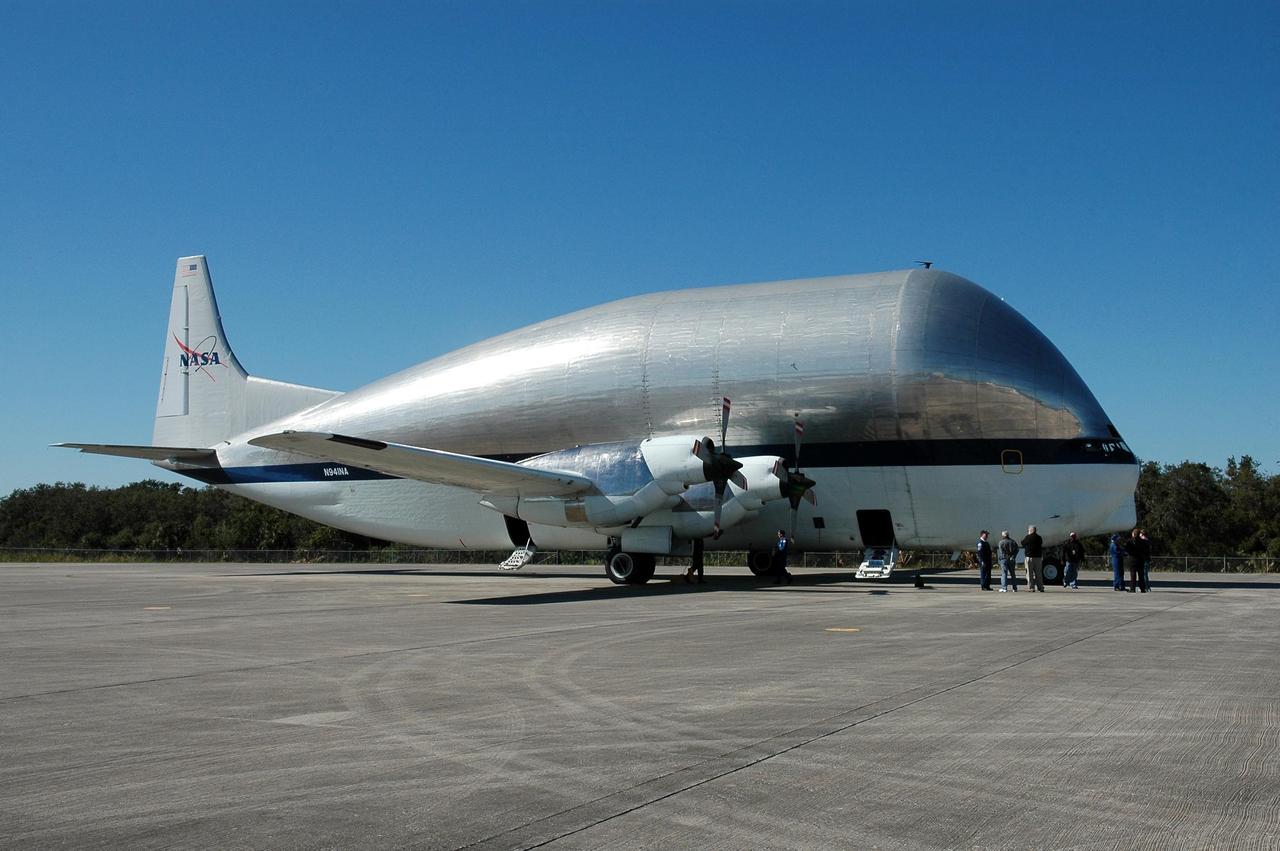
KENNEDY SPACE CENTER, FLA. - This Super Guppy aircraft is parked on NASA Kennedy Space Center’s Shuttle Landing Facility after landing. It has flown to the Center to pick up and transport the common module structural test element to NASA's Marshall Space Flight Center in Huntsville, Ala. The common module is an aluminum canister used as a structural test element for an actual Space Station flight element. At Marshall, the module will be used to conduct advanced environmental control and life support testing for future NASA exploration missions. The Super Guppy aircraft has a unique hinged nose that can open more than 200 degrees, allowing large pieces of cargo to be loaded and unloaded from the front. Guppy aircraft were used in several past space programs, including Gemini, Apollo and Skylab, to transport spacecraft components. NASA personnel at Ellington Field outfitted the Super Guppy with a specially designed cradle to be used when carrying International Space Station components. The first Guppy aircraft was developed in 1962, designed specifically for NASA operations by Aero Spacelines of California. Photo credit: NASA/Kim Shiflett
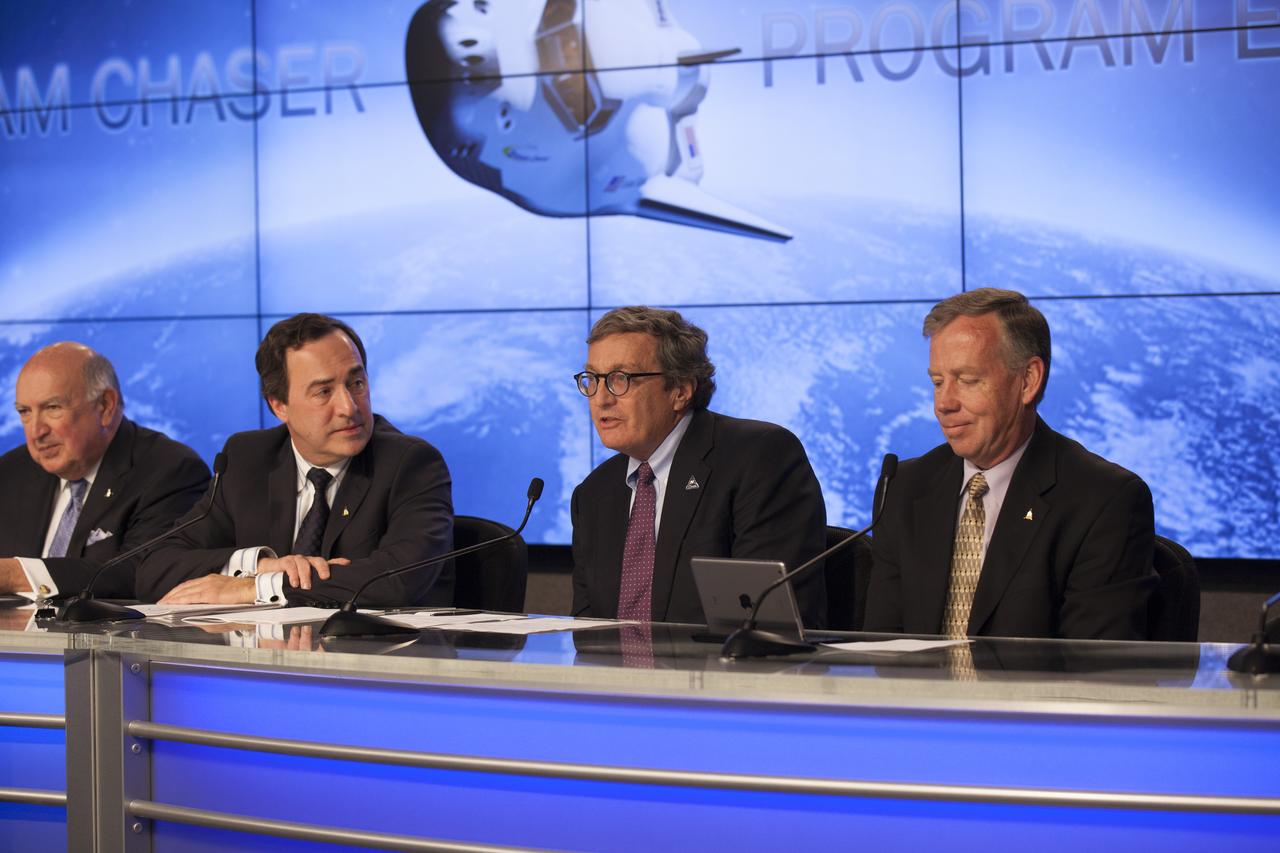
CAPE CANAVERAL, Fla. – Larry Price, Lockheed Martin Space Systems deputy program manager for NASA's Orion spacecraft, joins Sierra Nevada Corporation, or SNC, Space Systems, as the company announces the steps it will take to prepare for a November 2016 orbital flight of its Dream Chaser spacecraft from Florida’s Space Coast. The steps are considered substantial for SNC and important to plans by NASA and Space Florida for Kennedy Space Center’s transformation into a multi-user spaceport for both commercial and government customers. SNC said it plans to work with United Launch Alliance, or ULA, to launch the Dream Chaser spacecraft into orbit atop an Atlas V rocket from Space Launch Complex 41 at Cape Canaveral Air Force Station intends to land the winged spacecraft at Kennedy’s 3.5-mile long runway at the Shuttle Landing Facility lease office space at Exploration Park, right outside Kennedy’s gates and process the spacecraft in the high bay of the Operations and Checkout Building at Kennedy, with Lockheed Martin performing the work. Photo credit: NASA/Kim Shiflett
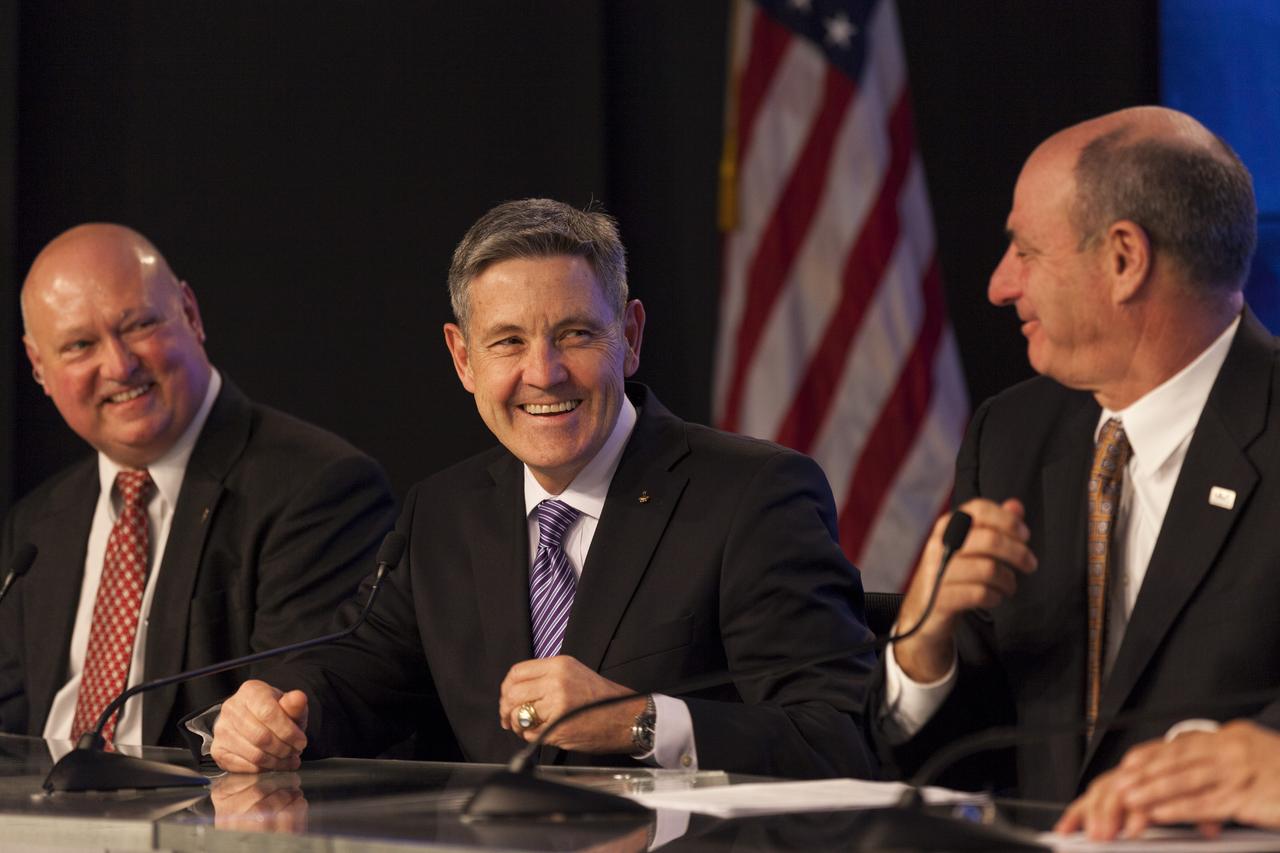
CAPE CANAVERAL, Fla. – Bob Cabana, center, director of Kennedy Space Center in Florida, joins Sierra Nevada Corporation, or SNC, Space Systems, as the company announces the steps it will take to prepare for a November 2016 orbital flight of its Dream Chaser spacecraft from Florida’s Space Coast. The steps are considered substantial for SNC and important to plans by NASA and Space Florida for Kennedy’s transformation into a multi-user spaceport for both commercial and government customers. SNC said it plans to work with United Launch Alliance, or ULA, to launch the Dream Chaser spacecraft into orbit atop an Atlas V rocket from Space Launch Complex 41 at Cape Canaveral Air Force Station intends to land the winged spacecraft at Kennedy’s 3.5-mile long runway at the Shuttle Landing Facility lease office space at Exploration Park, right outside Kennedy’s gates and process the spacecraft in the high bay of the Operations and Checkout Building at Kennedy, with Lockheed Martin performing the work. Photo credit: NASA/Kim Shiflett
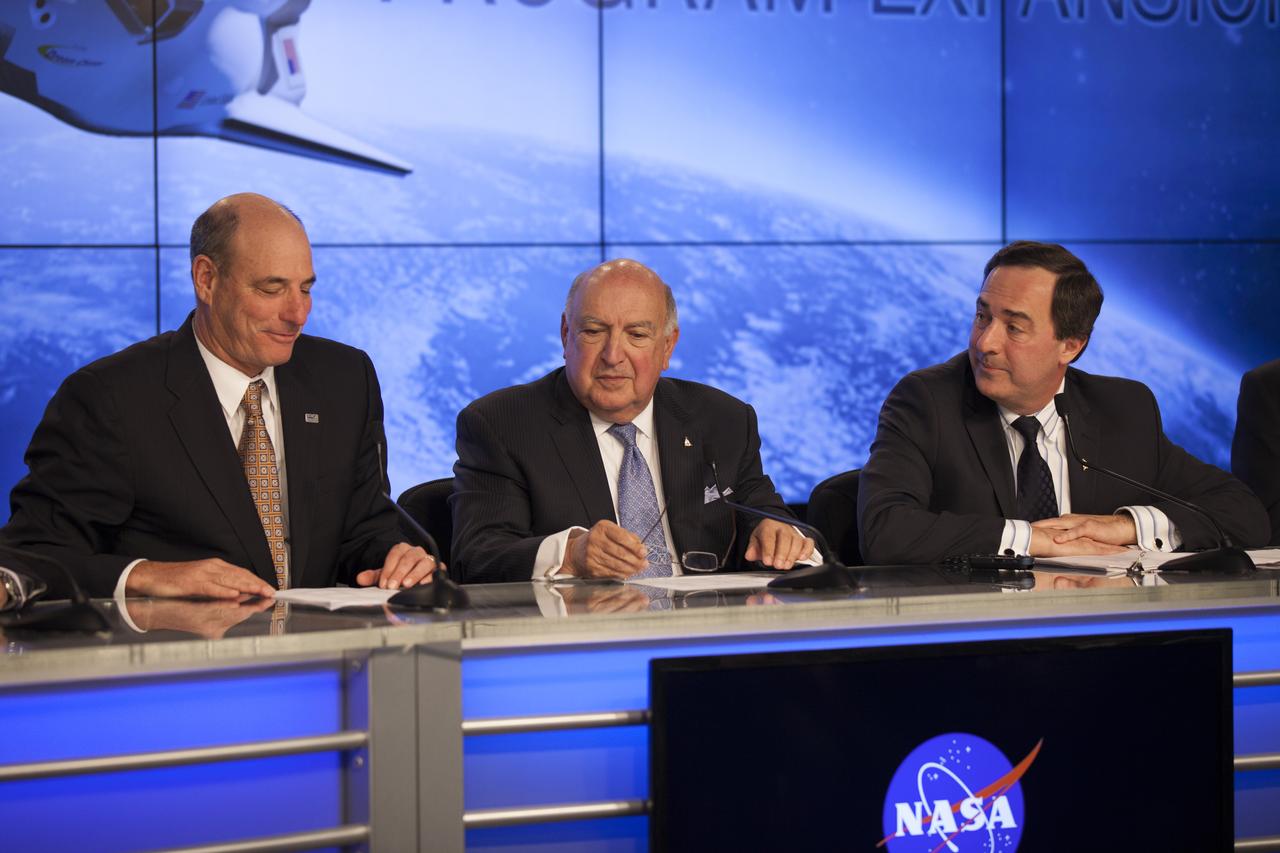
CAPE CANAVERAL, Fla. – Frank DiBello, president and CEO of Space Florida, joins Sierra Nevada Corporation, or SNC, Space Systems, as the company announces the steps it will take to prepare for a November 2016 orbital flight of its Dream Chaser spacecraft from Florida’s Space Coast. The steps are considered substantial for SNC and important to plans by NASA and Space Florida for Kennedy Space Center’s transformation into a multi-user spaceport for both commercial and government customers. SNC said it plans to work with United Launch Alliance, or ULA, to launch the Dream Chaser spacecraft into orbit atop an Atlas V rocket from Space Launch Complex 41 at Cape Canaveral Air Force Station intends to land the winged spacecraft at Kennedy’s 3.5-mile long runway at the Shuttle Landing Facility lease office space at Exploration Park, right outside Kennedy’s gates and process the spacecraft in the high bay of the Operations and Checkout Building at Kennedy, with Lockheed Martin performing the work. Photo credit: NASA/Kim Shiflett
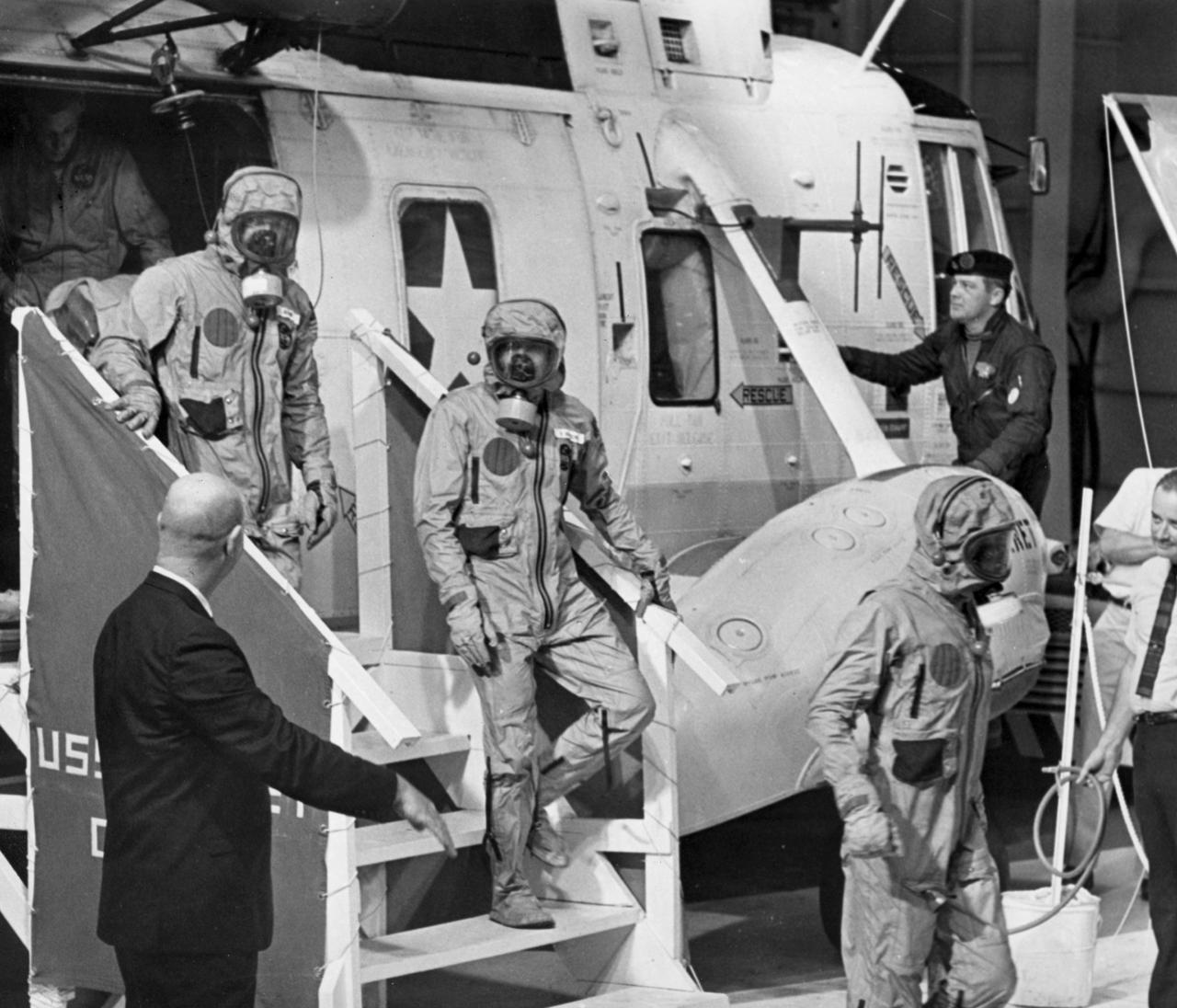
The Apollo 11 mission, the first manned lunar mission, launched from the Kennedy Space Center, Florida via the Marshall Space Flight Center (MSFC) developed Saturn V launch vehicle on July 16, 1969 and safely returned to Earth on July 24, 1969. Aboard the space craft were astronauts Neil A. Armstrong, commander; Michael Collins, Command Module (CM) pilot; and Edwin E. Aldrin Jr., Lunar Module (LM) pilot. The CM, piloted by Michael Collins remained in a parking orbit around the Moon while the LM, named “Eagle’’, carrying astronauts Neil Armstrong and Edwin Aldrin, landed on the Moon. During 2½ hours of surface exploration, the crew collected 47 pounds of lunar surface material for analysis back on Earth. Shown here are the three astronauts (L-R) Aldrin, Armstrong, and Collins leaving the recovery helicopter aboard the U.S.S. Hornet after their splashdown in the Pacific Ocean. Wearing biological isolation garments donned before leaving the spacecraft, the three went directly into the Mobile Quarantine Facility (MQF) on the aircraft carrier. The MQF served as their home for 21 days following the mission. With the success of Apollo 11, the national objective to land men on the Moon and return them safely to Earth had been accomplished.
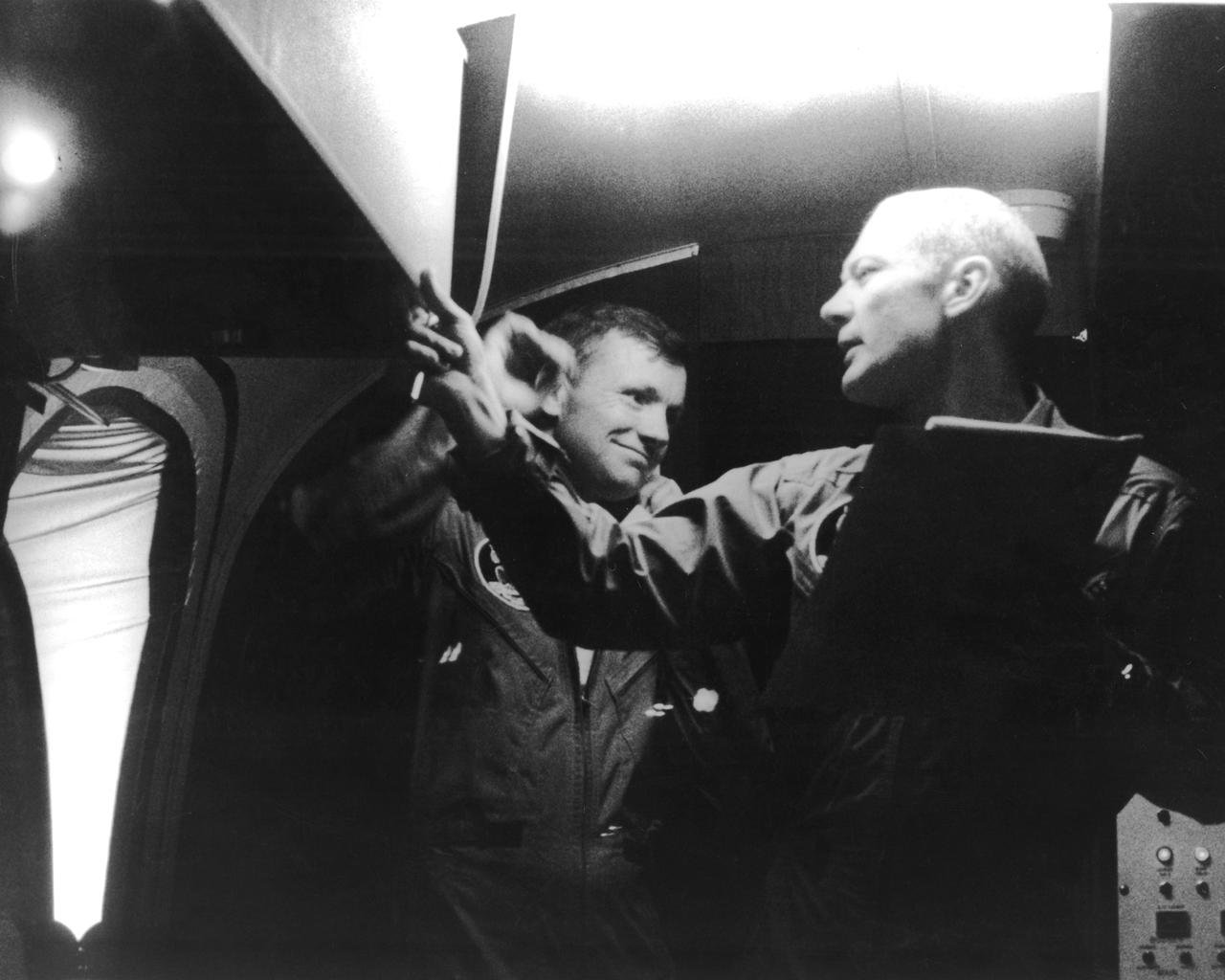
The Apollo 11 mission, the first manned lunar mission, launched aboard the Saturn V launch vehicle from the Kennedy Space Center, Florida on July 16, 1969 and safely returned to Earth on July 24, 1969. Aboard were astronauts Neil A. Armstrong, commander; Michael Collins, Command Module (CM) pilot; and Edwin E. Aldrin Jr., Lunar Module (LM) pilot. The CM, piloted by Michael Collins, remained in a parking orbit around the Moon while the LM, named “Eagle’’, carrying astronauts Neil Armstrong and Edwin Aldrin, landed on the Moon. Armstrong was the first human to ever stand on the lunar surface, followed by Edwin (Buzz) Aldrin. The surface exploration was concluded in 2½ hours. Once the crew collected 47 pounds of lunar surface material for analysis back on Earth, the LM redocked with the CM for the crew’s return to Earth. Following splash down in the Pacific Ocean, Navy para-rescue men recovered the capsule housing the 3-man crew. The crew was airlifted to safety aboard the U.S.S. Hornet, where they were quartered in a Mobile Quarantine Facility (MQF). Astronaut Collins took this snapshot of astronauts Armstrong (center) and Aldrin inside of the MQF.
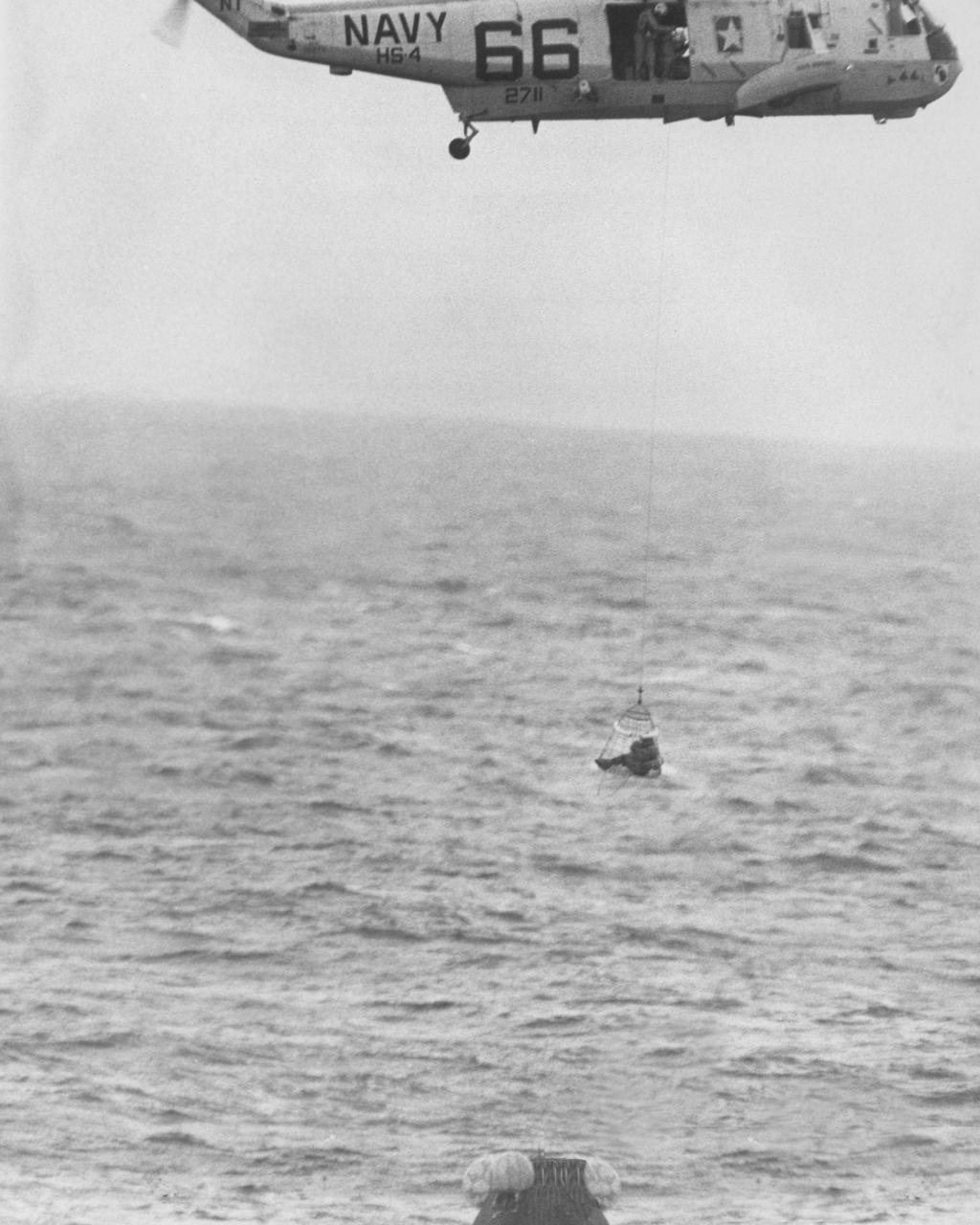
The Apollo 11 mission, the first manned lunar mission, launched from the Kennedy Space Center, Florida via the Saturn V launch vehicle on July 16, 1969 and safely returned to Earth on July 24, 1969. The Saturn V vehicle was developed by the Marshall Space Flight Center (MSFC) under the direction of Dr. Wernher von Braun. Aboard were Neil A. Armstrong, commander; Michael Collins, Command Module (CM) pilot; and Edwin E. Aldrin Jr., Lunar Module (LM) pilot. The CM, piloted by Michael Collins remained in a parking orbit around the Moon while the LM, named “Eagle’’, carrying astronauts Neil Armstrong and Edwin Aldrin, landed on the Moon. Armstrong was the first human to ever stand on the lunar surface, followed by Edwin (Buzz) Aldrin. During 2½ hours of surface exploration, the crew collected 47 pounds of lunar surface material for analysis back on Earth. Shown here is the recovery operation of the capsule in the Pacific Ocean after splashdown. One of the three astronauts is airlifted from the life raft into a helicopter. The helicopter airlifted the crew to safety aboard the prime recovery ship, the U.S.S. Hornet, where they were quartered in a Mobile Quarantine Facility (MQF). With the success of Apollo 11, the national objective to land men on the Moon and return them safely to Earth had been accomplished.

KENNEDY SPACE CENTER, FLA. -- A U.S. Air Force F-22 Raptor is parked on the Shuttle Landing Facility at NASA's Kennedy Space Center. The plane is participating in the World Space Expo being held from Nov. 1 to Nov. 4 at the NASA Kennedy Space Center Visitor Complex. Other aircraft joining in the salute include U.S. Air Force Thunderbirds Aerial Demonstration Squadron, U.S. Navy F-18 Super Hornets, the P-51 Mustang Heritage Flight and the U.S. Air Force 920th Rescue Wing, which was responsible for Mercury and Gemini capsule recovery. The U.S. Army Golden Knights also will demonstrate precision skydiving. The World Space Expo is an event to commemorate humanity's first 50 years in space while looking forward to returning people to the moon and exploring beyond. The expo will showcase various panels, presentations and educational programs. It also is a part of NASA's 50th anniversary celebrations, highlighting the 45th Anniversary of the Mercury Program celebration featuring original NASA astronauts John Glenn and Scott Carpenter and the Pioneering Women of Aerospace forum featuring Eileen Collins and other prominent female space veterans. The agency was founded Oct. 1, 1958. Photo credit: NASA/Jack Pfaller
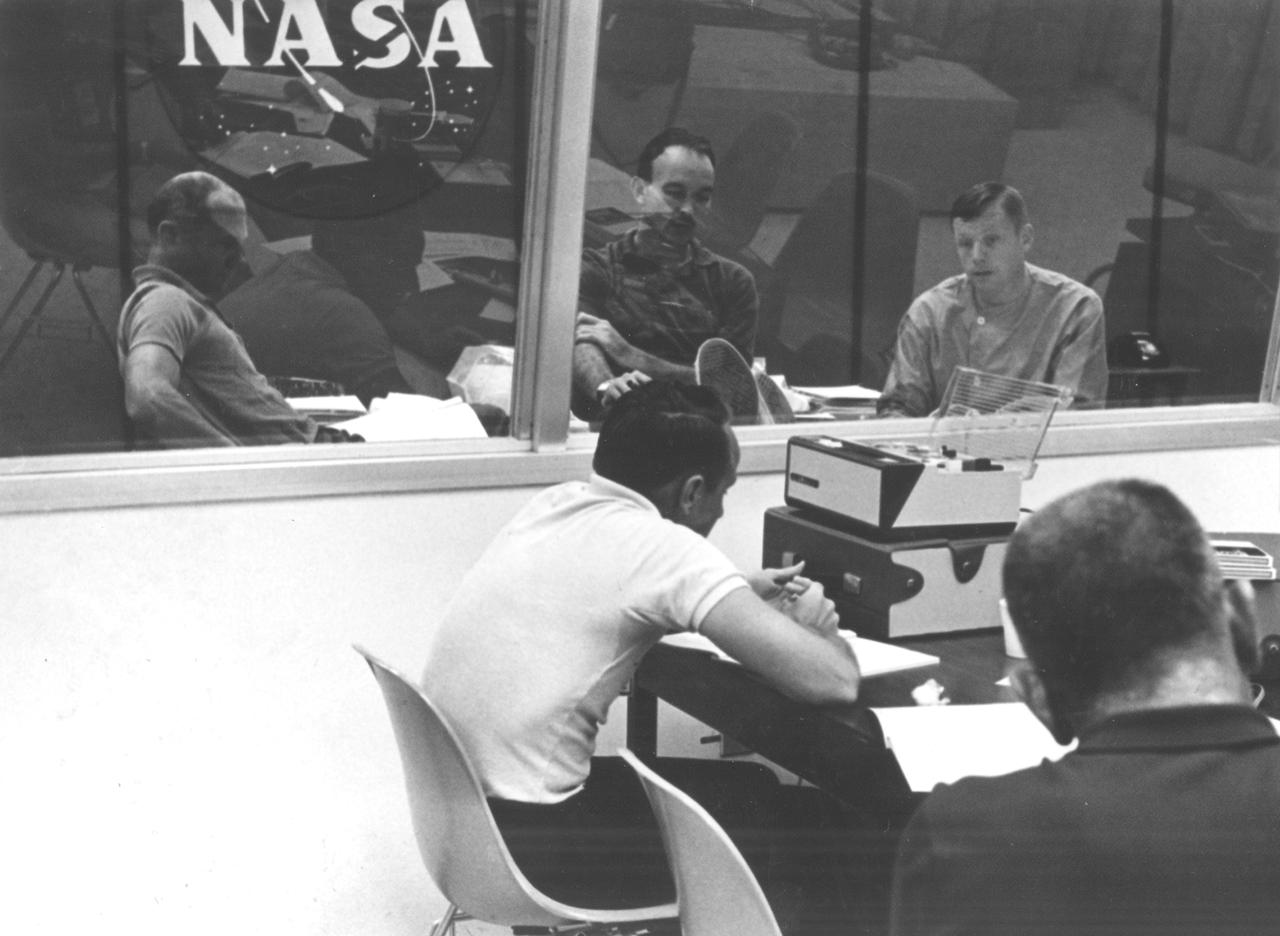
The Apollo 11 mission, the first manned lunar mission, launched from the Kennedy Space Center, Florida via the Marshall Space Flight Center (MSFC) developed Saturn V launch vehicle on July 16, 1969 and safely returned to Earth on July 24, 1969. Aboard the space craft were astronauts Neil A. Armstrong, commander; Michael Collins, Command Module (CM) pilot; and Edwin E. Aldrin Jr., Lunar Module (LM) pilot. The CM, piloted by Michael Collins remained in a parking orbit around the Moon while the LM, named “Eagle’’, carrying astronauts Neil Armstrong and Edwin Aldrin, landed on the Moon. During 2½ hours of surface exploration, the crew collected 47 pounds of lunar surface material for analysis back on Earth. The recovery operation took place in the Pacific Ocean where Navy para-rescue men recovered the capsule housing the 3-man Apollo 11 crew. The crew was airlifted to safety aboard the U.S.S. Hornet, where they were quartered in a Mobile Quarantine Facility (MQF) which served as their home until they reached the NASA Manned Spacecraft Center (MSC) Lunar Receiving Laboratory in Houston, Texas. The three are seen here at the MSC, still inside the MQF, undergoing their first debriefing on Sunday, August 3, 1969. Behind the glass are (L-R): Edwin Aldrin, Michael Collins, and Neil Armstrong.
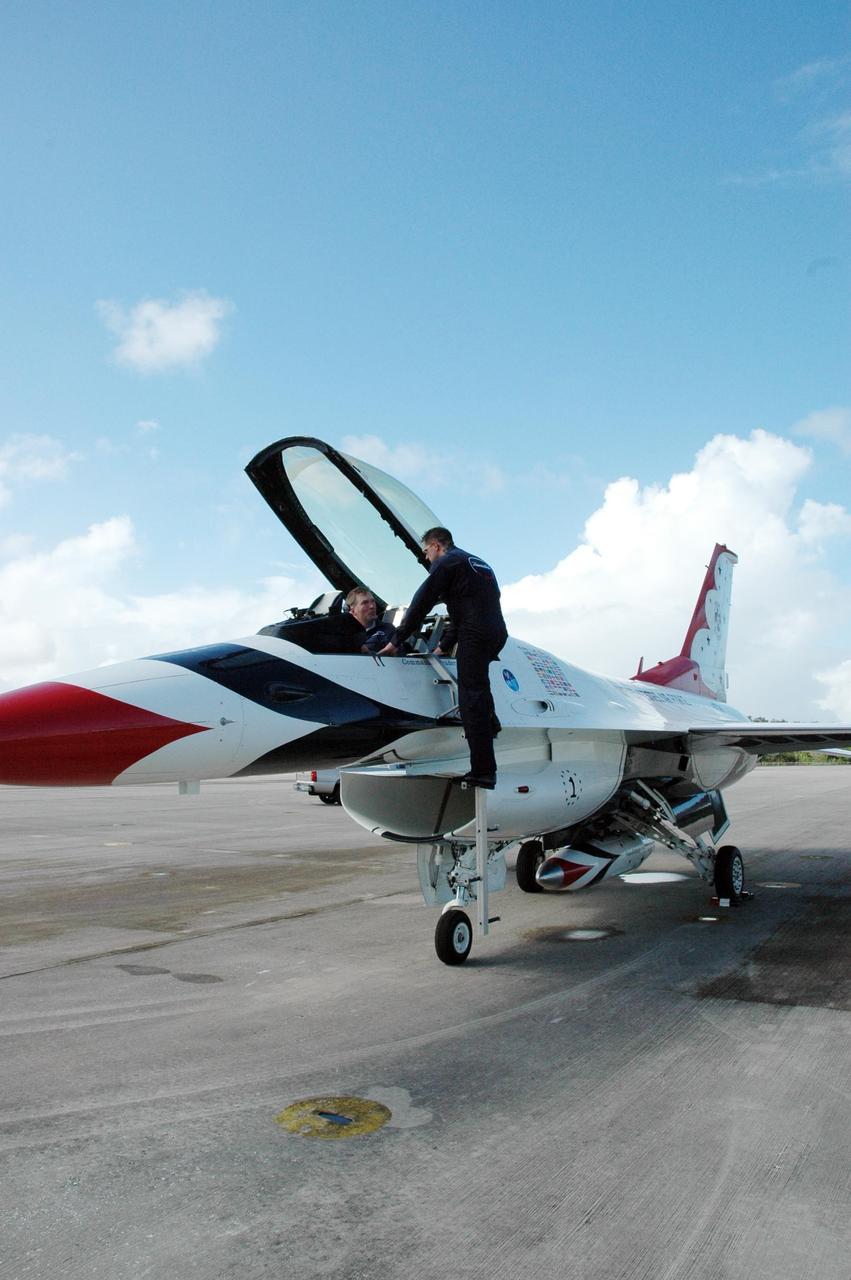
KENNEDY SPACE CENTER, FLA. -- Another of the U.S. Air Force Thunderbirds is parked on the Shuttle Landing Facility at NASA's Kennedy Space Center. The aerial demonstration squadron is performing for the World Space Expo being held from Nov. 1 to Nov. 4 at the NASA Kennedy Space Center Visitor Complex. Other aircraft participating in the salute include U.S. Air Force F-22 Raptor, U.S. Navy F-18 Super Hornet, U.S. Air Force F-15 Eagle, the P-51 Mustang Heritage Flight and the U.S. Air Force 920th Rescue Wing, which was responsible for Mercury and Gemini capsule recovery. The U.S. Army Golden Knights also will demonstrate precision skydiving. The World Space Expo is an event to commemorate humanity's first 50 years in space while looking forward to returning people to the moon and exploring beyond. The expo will showcase various panels, presentations and educational programs. It also is a part of NASA's 50th anniversary celebrations, highlighting the 45th Anniversary of the Mercury Program celebration featuring original NASA astronauts John Glenn and Scott Carpenter and the Pioneering Women of Aerospace forum featuring Eileen Collins and other prominent female space veterans. The agency was founded Oct. 1, 1958. Photo credit: NASA/Jack Pfaller
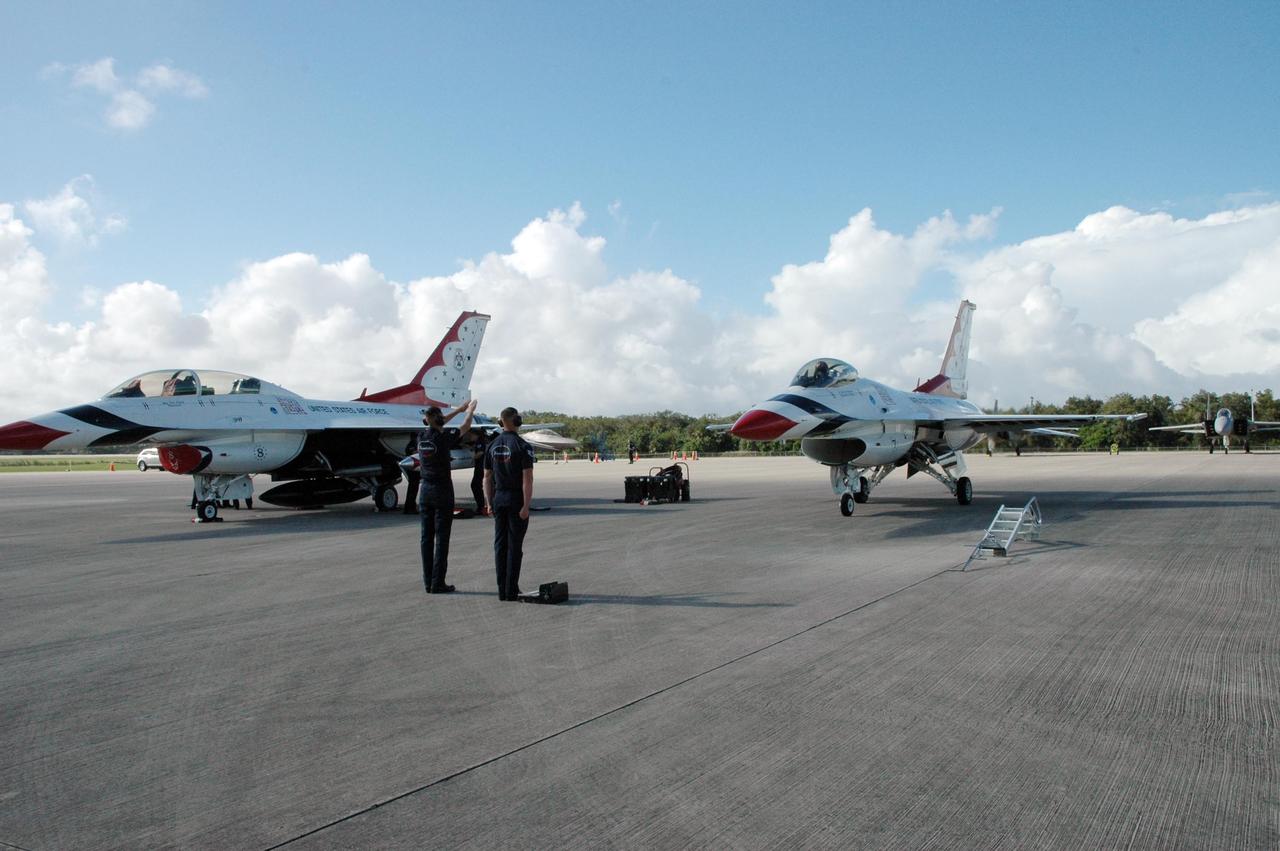
KENNEDY SPACE CENTER, FLA. -- Another of the U.S. Air Force Thunderbirds is parked on the Shuttle Landing Facility at NASA's Kennedy Space Center. The aerial demonstration squadron is performing for the World Space Expo being held from Nov. 1 to Nov. 4 at the NASA Kennedy Space Center Visitor Complex. Other aircraft participating in the salute include U.S. Air Force F-22 Raptor, U.S. Navy F-18 Super Hornet, U.S. Air Force F-15 Eagle, the P-51 Mustang Heritage Flight and the U.S. Air Force 920th Rescue Wing, which was responsible for Mercury and Gemini capsule recovery. The U.S. Army Golden Knights also will demonstrate precision skydiving. The World Space Expo is an event to commemorate humanity's first 50 years in space while looking forward to returning people to the moon and exploring beyond. The expo will showcase various panels, presentations and educational programs. It also is a part of NASA's 50th anniversary celebrations, highlighting the 45th Anniversary of the Mercury Program celebration featuring original NASA astronauts John Glenn and Scott Carpenter and the Pioneering Women of Aerospace forum featuring Eileen Collins and other prominent female space veterans. The agency was founded Oct. 1, 1958. Photo credit: NASA/Jack Pfaller
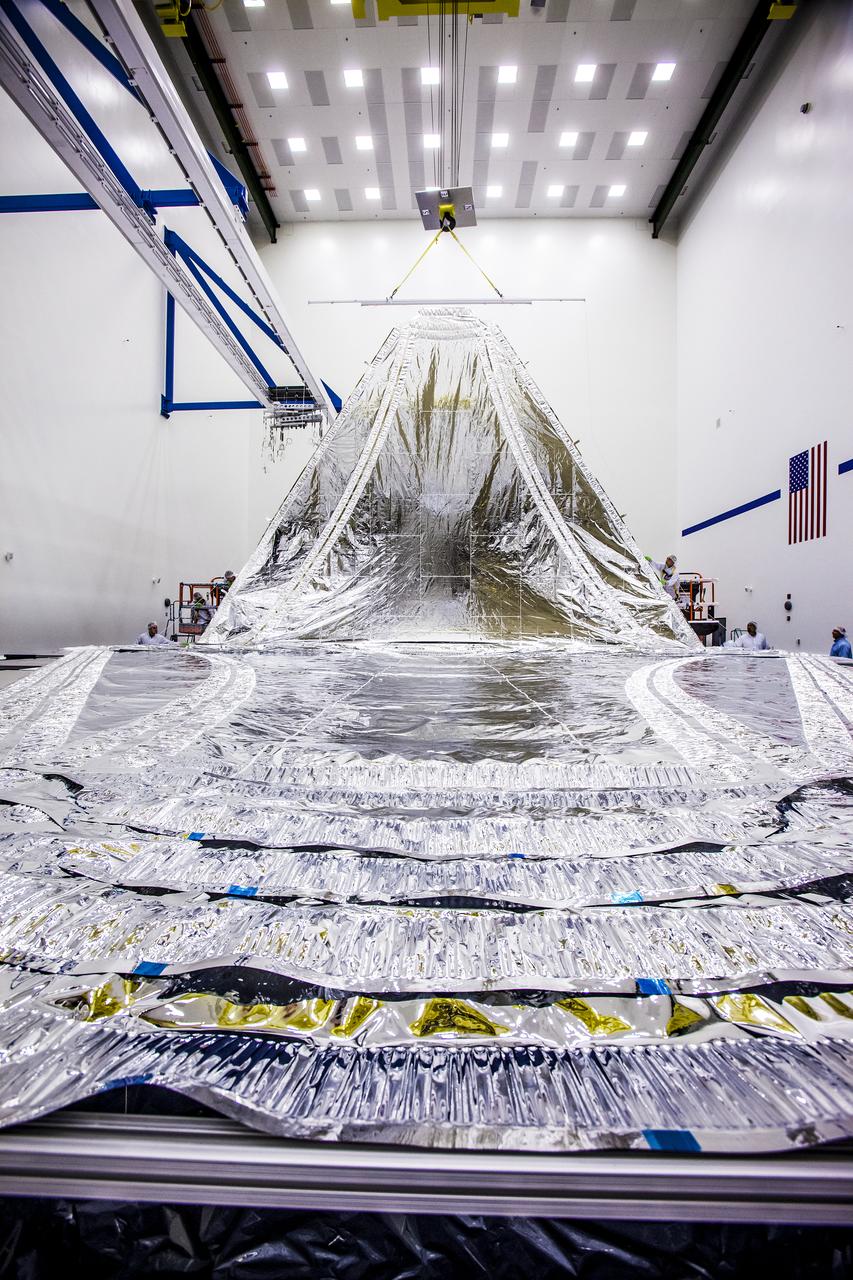
This shiny silver "waterfall" is actually the five layers of the full-scale engineering model of NASA's James Webb Space Telescope sunshield being laid out by technicians at the Northrop Grumman Aerospace Systems Space Park facility in Redondo Beach, Calif. who are conducting endurance tests on them. For more information, visit: jwst.nasa.gov Credit: Northrop Grumman <b><a href="http://www.nasa.gov/audience/formedia/features/MP_Photo_Guidelines.html" rel="nofollow">NASA image use policy.</a></b> <b><a href="http://www.nasa.gov/centers/goddard/home/index.html" rel="nofollow">NASA Goddard Space Flight Center</a></b> enables NASA’s mission through four scientific endeavors: Earth Science, Heliophysics, Solar System Exploration, and Astrophysics. Goddard plays a leading role in NASA’s accomplishments by contributing compelling scientific knowledge to advance the Agency’s mission. <b>Follow us on <a href="http://twitter.com/NASA_GoddardPix" rel="nofollow">Twitter</a></b> <b>Like us on <a href="http://www.facebook.com/pages/Greenbelt-MD/NASA-Goddard/395013845897?ref=tsd" rel="nofollow">Facebook</a></b> <b>Find us on <a href="http://instagram.com/nasagoddard?vm=grid" rel="nofollow">Instagram</a></b>
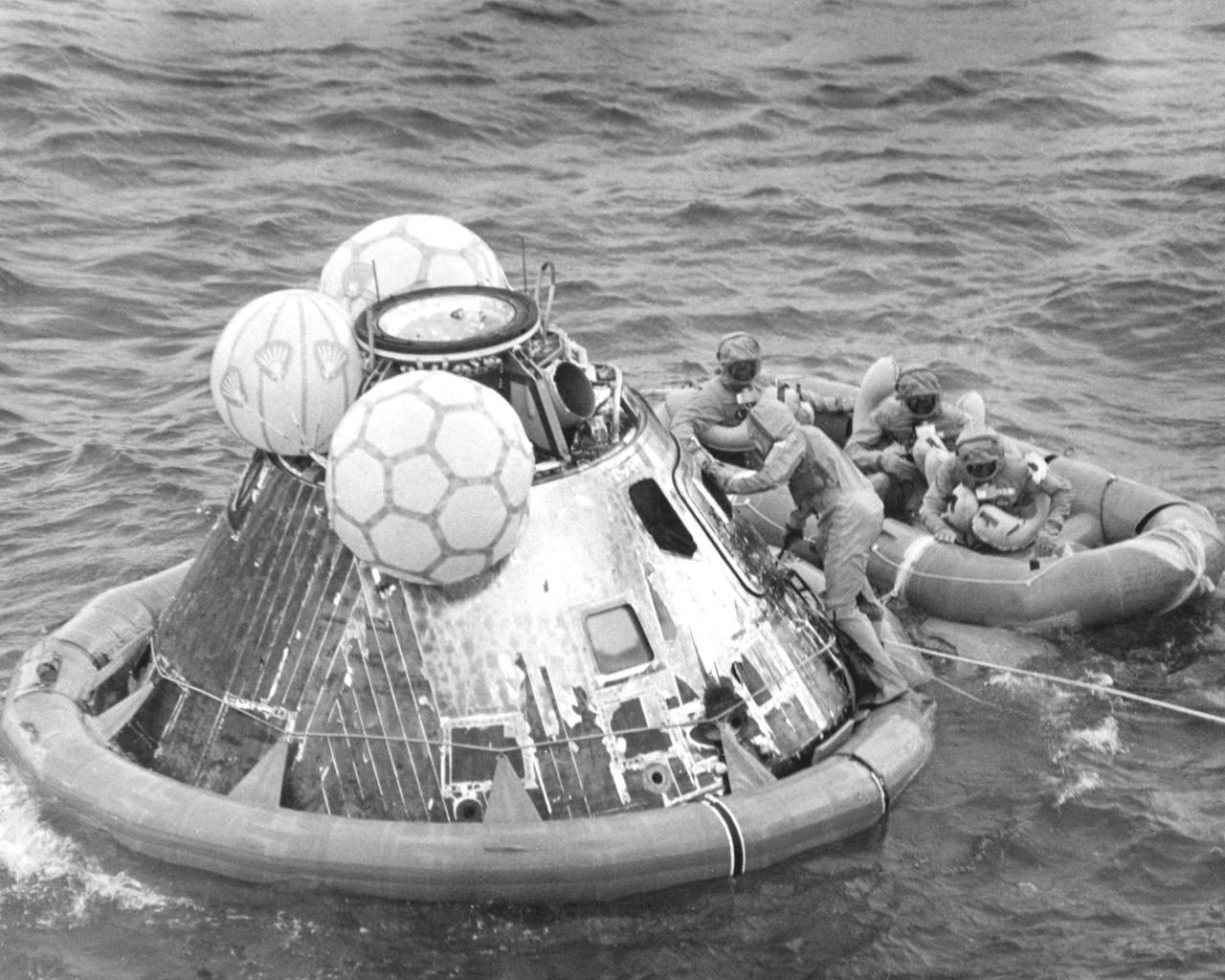
The Apollo 11 mission, the first manned lunar mission, launched from the Kennedy Space Center, Florida via the Saturn V launch vehicle on July 16, 1969 and safely returned to Earth on July 24, 1969. The Saturn V vehicle was developed by the Marshall Space Flight Center (MSFC) under the direction of Dr. Wernher von Braun. Aboard were astronauts Neil A. Armstrong, commander; Michael Collins, Command Module (CM) pilot; and Edwin E. Aldrin Jr., Lunar Module (LM) pilot. The CM, piloted by Michael Collins remained in a parking orbit around the Moon while the LM, named “Eagle’’, carrying astronauts Neil Armstrong and Edwin Aldrin, landed on the Moon. Armstrong was the first human to ever stand on the lunar surface, followed by Edwin (Buzz) Aldrin. During 2½ hours of surface exploration, the crew collected 47 pounds of lunar surface material for analysis back on Earth. Shown here is the recovery operation of the capsule in the Pacific Ocean after splashdown. The three astronauts wait in the life raft as a pararescue man closes and secures the capsule hatch. The crew was then air lifted to the prime recovery ship, the U.S.S. Hornet, where they were housed in a Mobile Quarantine Facility (MQF).
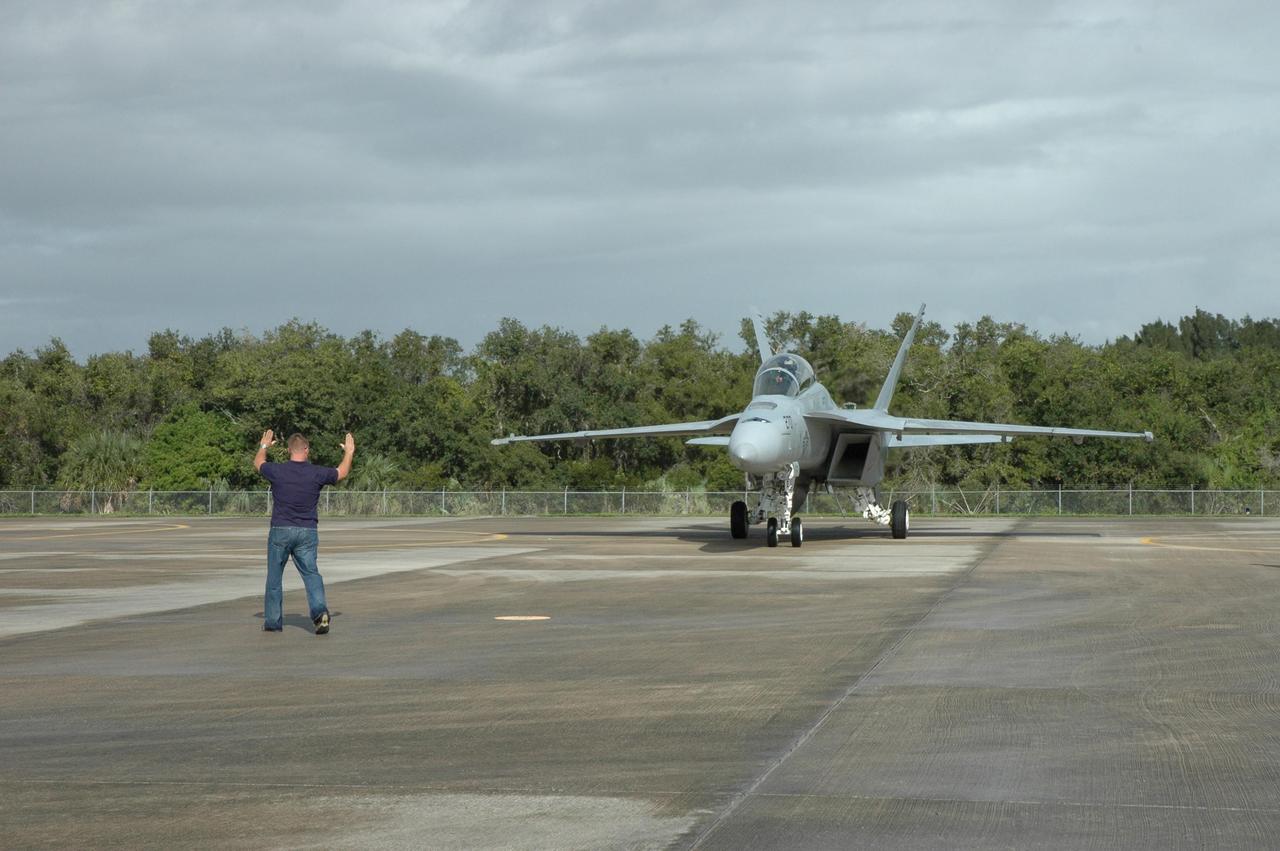
KENNEDY SPACE CENTER, FLA. -- A U.S. Navy F-18 Super Hornet is parked on the Shuttle Landing Facility at NASA's Kennedy Space Center. Several of the planes are participating in the World Space Expo being held from Nov. 1 to Nov. 4 at the NASA Kennedy Space Center Visitor Complex. Other aircraft joining in the salute include U.S. Air Force Thunderbirds Aerial Demonstration Squadron , U.S. Air Force F-22 Raptor, U.S. Air Force F-15 Eagle, the P-51 Mustang Heritage Flight and the U.S. Air Force 920th Rescue Wing, which was responsible for Mercury and Gemini capsule recovery. The U.S. Army Golden Knights also will demonstrate precision skydiving. The World Space Expo is an event to commemorate humanity's first 50 years in space while looking forward to returning people to the moon and exploring beyond. The expo will showcase various panels, presentations and educational programs. It also is a part of NASA's 50th anniversary celebrations, highlighting the 45th Anniversary of the Mercury Program celebration featuring original NASA astronauts John Glenn and Scott Carpenter and the Pioneering Women of Aerospace forum featuring Eileen Collins and other prominent female space veterans. The agency was founded Oct. 1, 1958. Photo credit: NASA/Jack Pfaller
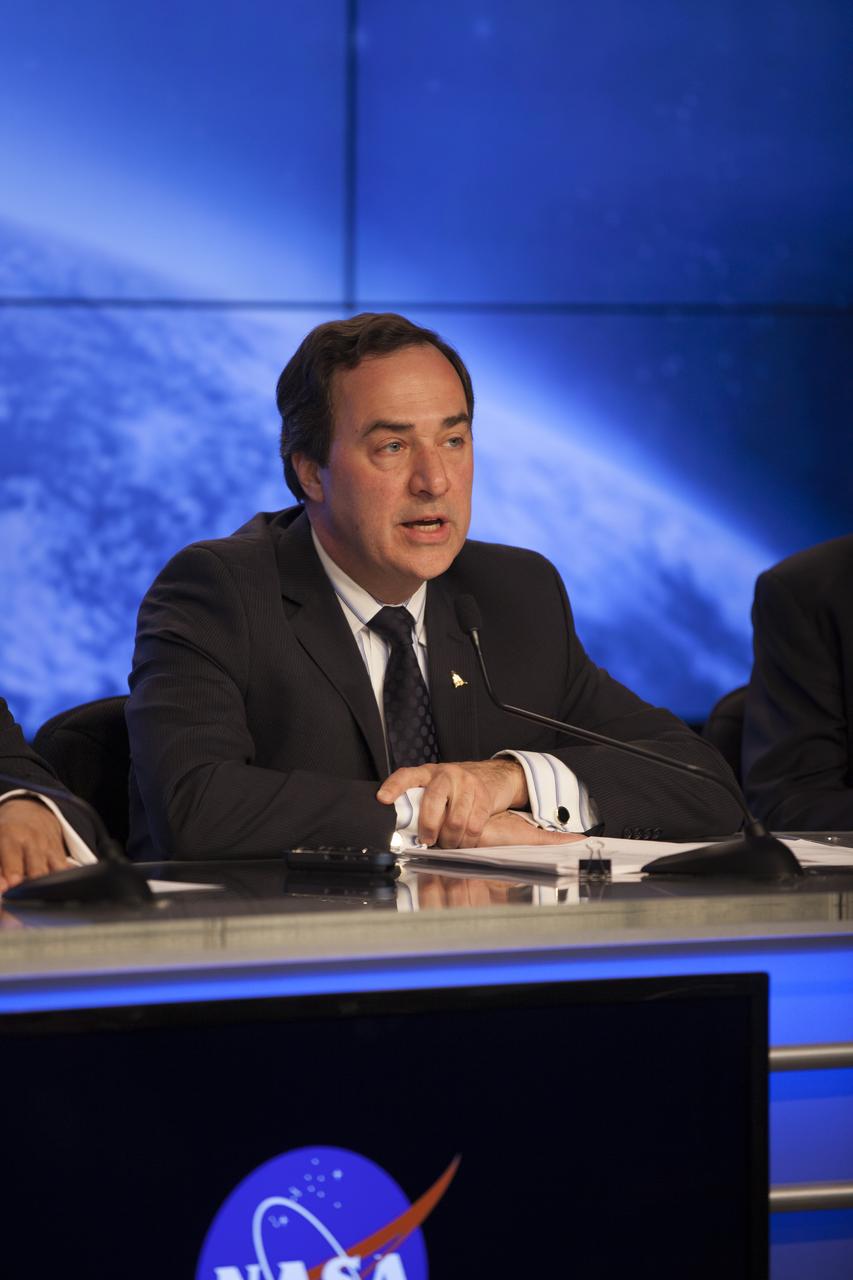
CAPE CANAVERAL, Fla. – Mark Sirangelo, corporate vice president and head of Sierra Nevada Corporation, or SNC, Space Systems, announces the steps the company will take to prepare for a November 2016 orbital flight of its Dream Chaser spacecraft from Florida’s Space Coast. The steps are considered substantial for SNC and important to plans by NASA and Space Florida for Kennedy Space Center’s transformation into a multi-user spaceport for both commercial and government customers. SNC said it plans to work with United Launch Alliance, or ULA, to launch the Dream Chaser spacecraft into orbit atop an Atlas V rocket from Space Launch Complex 41 at Cape Canaveral Air Force Station intends to land the winged spacecraft at Kennedy’s 3.5-mile long runway at the Shuttle Landing Facility lease office space at Exploration Park, right outside Kennedy’s gates and process the spacecraft in the high bay of the Operations and Checkout Building at Kennedy, with Lockheed Martin performing the work. Photo credit: NASA/Kim Shiflett
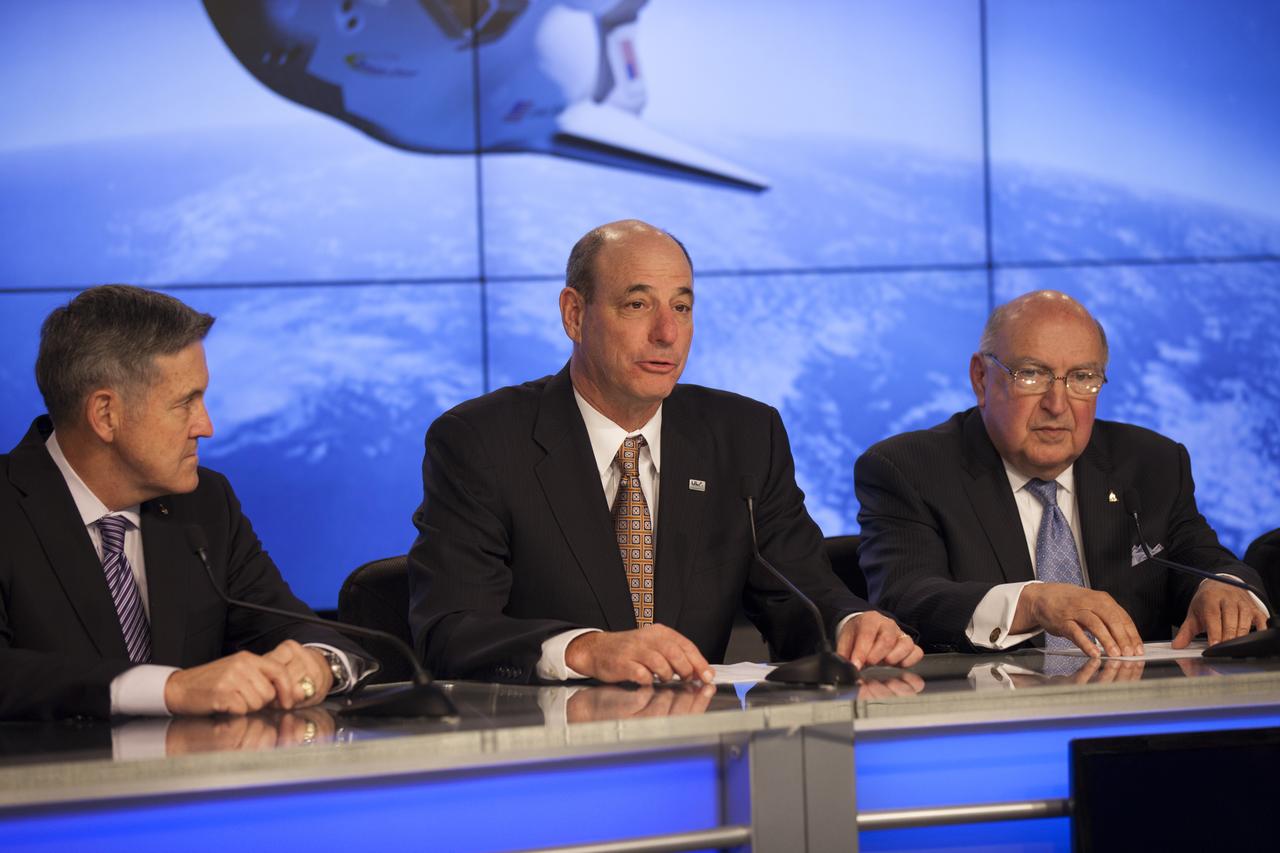
CAPE CANAVERAL, Fla. – Michael Gass, president and CEO of United Launch Alliance, or ULA, joins Sierra Nevada Corporation, or SNC, Space Systems, as the company announces the steps it will take to prepare for a November 2016 orbital flight of its Dream Chaser spacecraft from Florida’s Space Coast. The steps are considered substantial for SNC and important to plans by NASA and Space Florida for Kennedy Space Center’s transformation into a multi-user spaceport for both commercial and government customers. SNC said it plans to work with ULA to launch the Dream Chaser spacecraft into orbit atop an Atlas V rocket from Space Launch Complex 41 at Cape Canaveral Air Force Station intends to land the winged spacecraft at Kennedy’s 3.5-mile long runway at the Shuttle Landing Facility lease office space at Exploration Park, right outside Kennedy’s gates and process the spacecraft in the high bay of the Operations and Checkout Building at Kennedy, with Lockheed Martin performing the work. Photo credit: NASA/Kim Shiflett
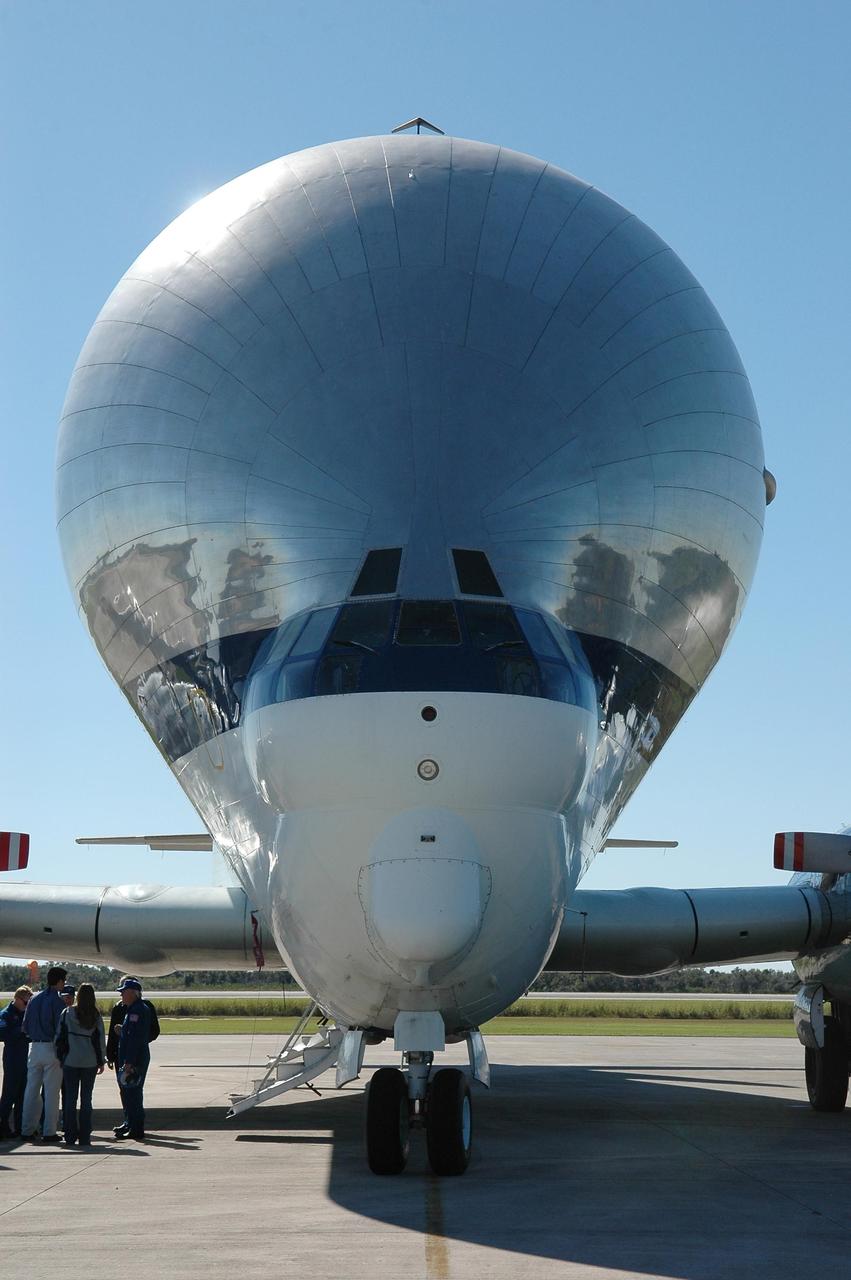
KENNEDY SPACE CENTER, FLA. - This front view of the Super Guppy aircraft, parked on NASA Kennedy Space Center’s Shuttle Landing Facility, appears more like a hot air balloon. In fact, it is the bulbous nose which, when unhinged, can open more than 200 degrees and allow large pieces of cargo to be loaded and unloaded from the front. The aircraft has flown to the Center to pick up and transport the common module structural test element to NASA's Marshall Space Flight Center in Huntsville, Ala. The common module is an aluminum canister used as a structural test element for an actual Space Station flight element. At Marshall, the module will be used to conduct advanced environmental control and life support testing for future NASA exploration missions. Guppy aircraft were used in several past space programs, including Gemini, Apollo and Skylab, to transport spacecraft components. NASA personnel at Ellington Field in Texas outfitted the Super Guppy with a specially designed cradle to be used when carrying International Space Station components. The first Guppy aircraft was developed in 1962, designed specifically for NASA operations by Aero Spacelines of California. Photo credit: NASA/Kim Shiflett
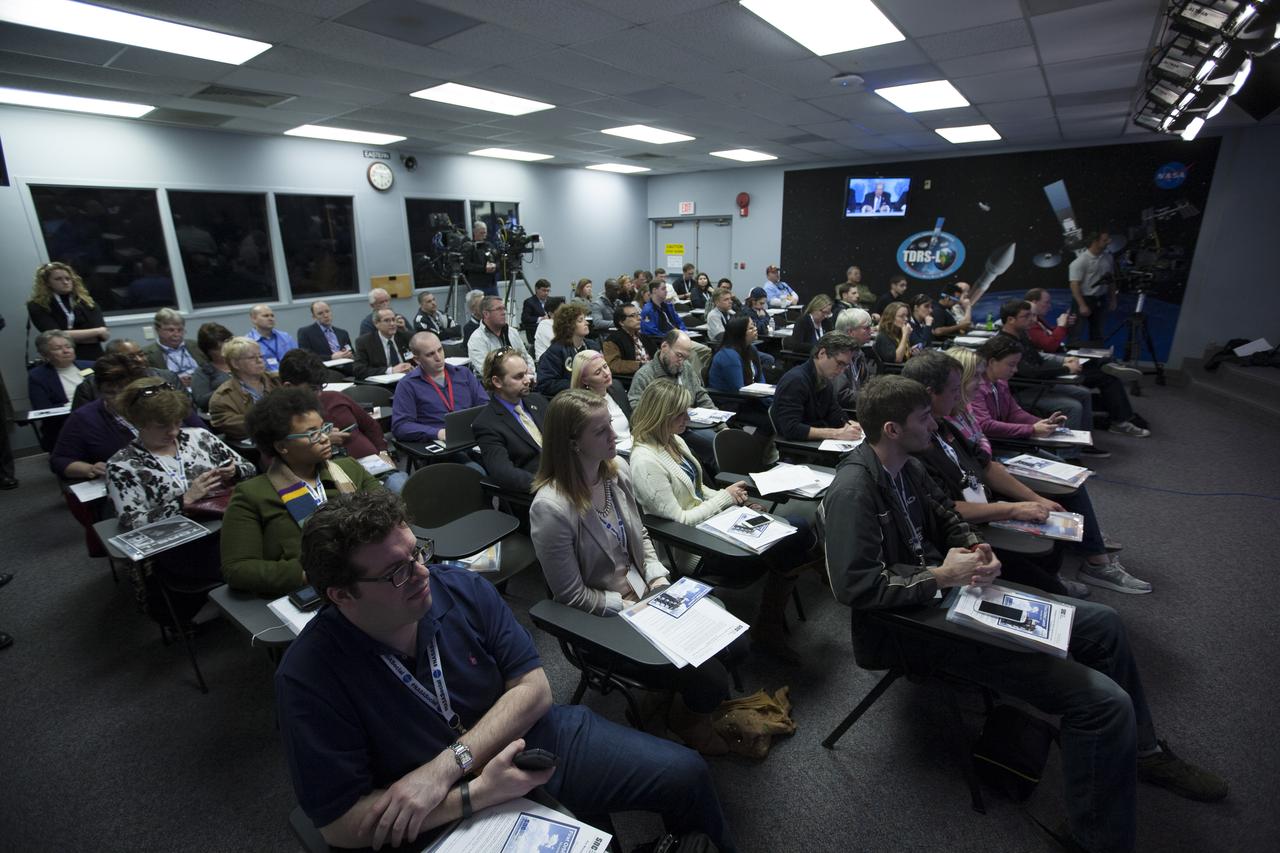
CAPE CANAVERAL, Fla. – Sierra Nevada Corporation, or SNC, Space Systems, announces the steps the company will take to prepare for a November 2016 orbital flight of its Dream Chaser spacecraft from Florida’s Space Coast during a news conference at NASA’s Kennedy Space Center in Florida. The steps are considered substantial for SNC and important to plans by NASA and Space Florida for Kennedy’s transformation into a multi-user spaceport for both commercial and government customers. SNC said it plans to work with ULA to launch the Dream Chaser spacecraft into orbit atop an Atlas V rocket from Space Launch Complex 41 at Cape Canaveral Air Force Station intends to land the winged spacecraft at Kennedy’s 3.5-mile long runway at the Shuttle Landing Facility lease office space at Exploration Park, right outside Kennedy’s gates and process the spacecraft in the high bay of the Operations and Checkout Building at Kennedy, with Lockheed Martin performing the work. Photo credit: NASA/Kim Shiflett
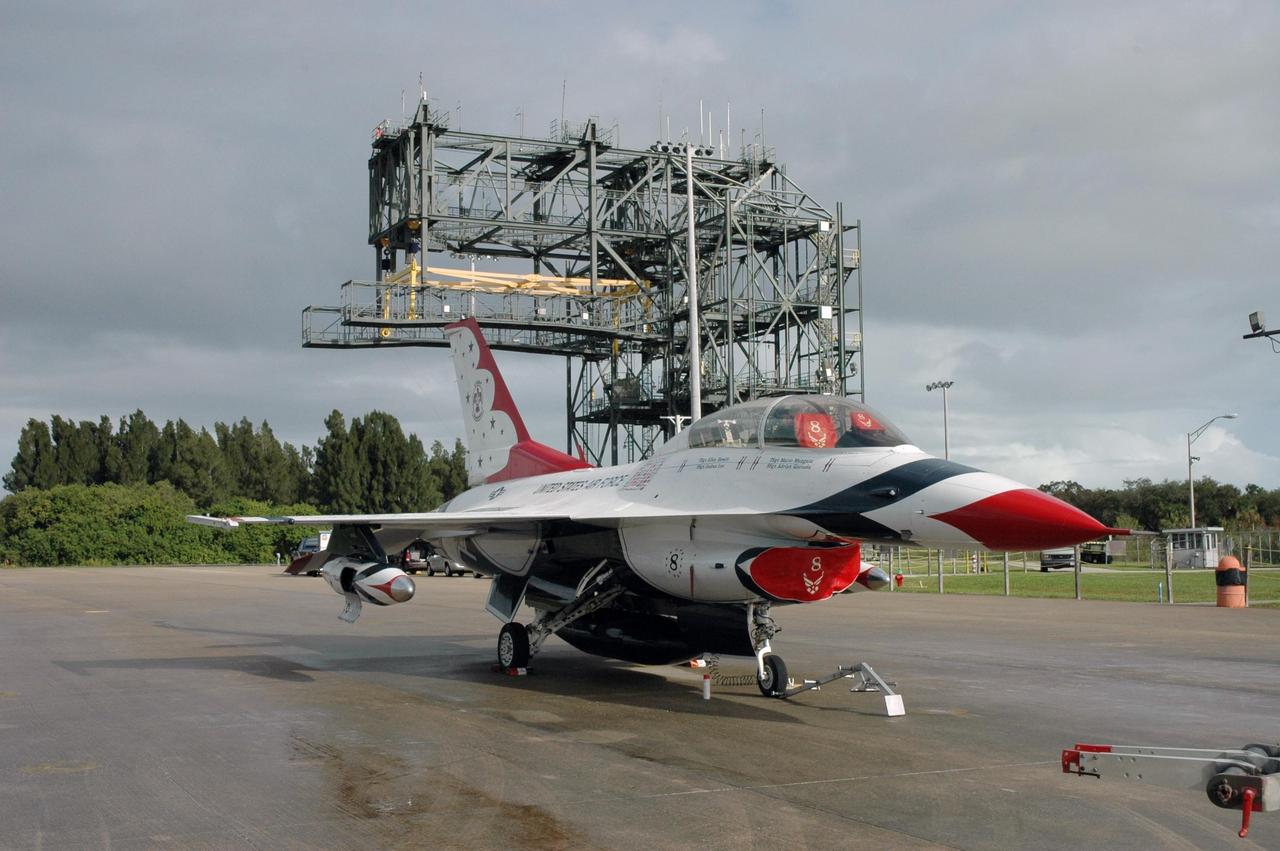
KENNEDY SPACE CENTER, FLA. -- The first of the U.S. Air Force Thunderbirds is parked on the Shuttle Landing Facility at NASA's Kennedy Space Center. The aerial demonstration squadron is performing for the World Space Expo being held from Nov. 1 to Nov. 4 at the NASA Kennedy Space Center Visitor Complex. Other aircraft participating in the salute include U.S. Air Force F-22 Raptor, U.S. Navy F-18 Super Hornet, U.S. Air Force F-15 Eagle, the P-51 Mustang Heritage Flight and the U.S. Air Force 920th Rescue Wing, which was responsible for Mercury and Gemini capsule recovery. The U.S. Army Golden Knights also will demonstrate precision skydiving. The World Space Expo is an event to commemorate humanity's first 50 years in space while looking forward to returning people to the moon and exploring beyond. The expo will showcase various panels, presentations and educational programs. It also is a part of NASA's 50th anniversary celebrations, highlighting the 45th Anniversary of the Mercury Program celebration featuring original NASA astronauts John Glenn and Scott Carpenter and the Pioneering Women of Aerospace forum featuring Eileen Collins and other prominent female space veterans. The agency was founded Oct. 1, 1958. Photo credit: NASA/Jack Pfaller
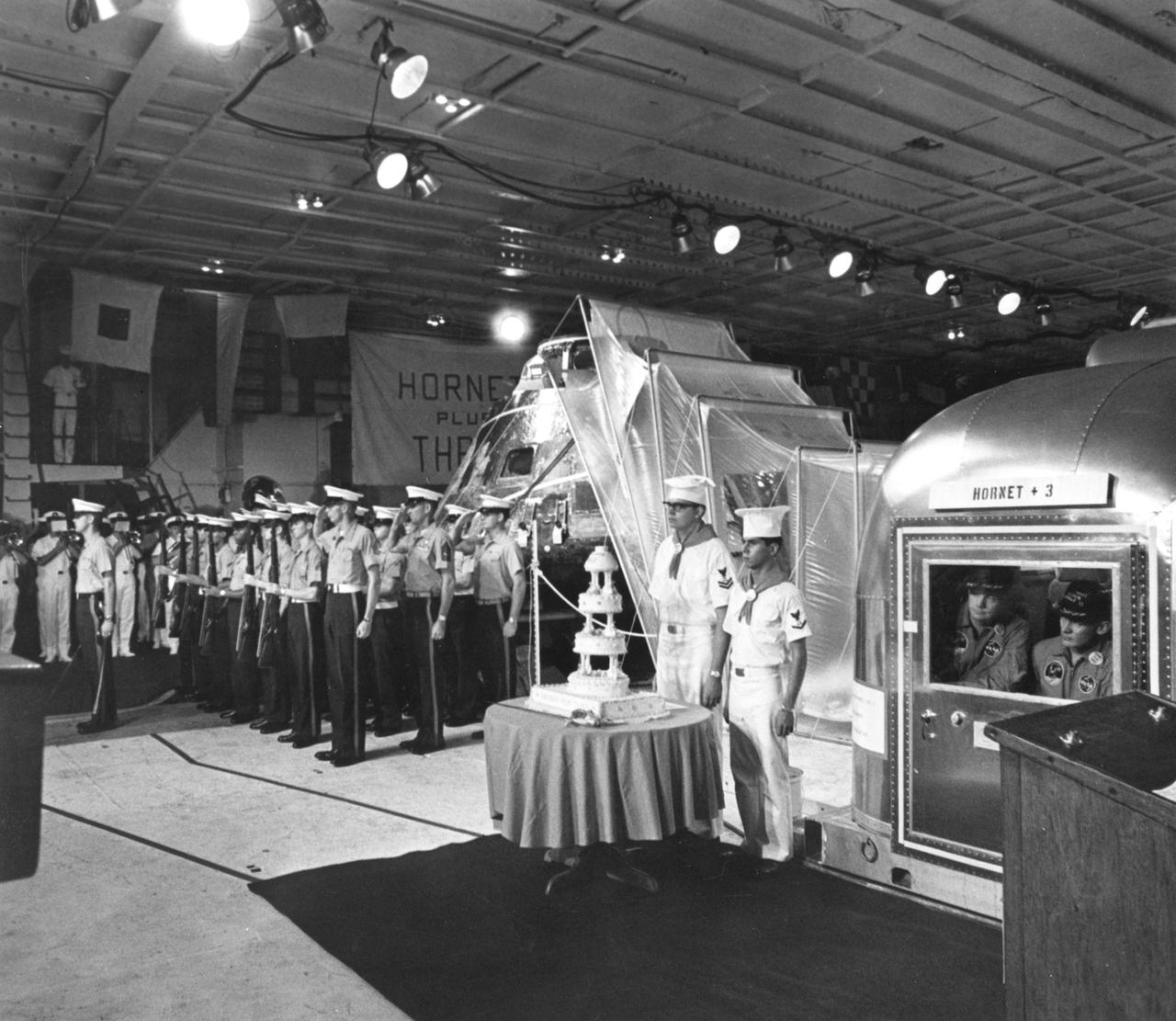
The Apollo 11 mission, the first manned lunar mission, launched from the Kennedy Space Center, Florida via the Space Flight Center (MSFC) developed Saturn V launch vehicle on July 16, 1969 and safely returned to Earth on July 24, 1969. Aboard the space craft were astronauts Neil A. Armstrong, commander; Michael Collins, Command Module (CM) pilot; and Edwin E. Aldrin Jr., Lunar Module (LM) pilot. The CM, piloted by Michael Collins remained in a parking orbit around the Moon while the LM, named “Eagle’’, carrying astronauts Neil Armstrong and Edwin Aldrin, landed on the Moon. During 2½ hours of surface exploration, the crew collected 47 pounds of lunar surface material for analysis back on Earth. The recovery operation took place in the Pacific Ocean where Navy para-rescue men recovered the capsule housing the 3-man Apollo 11 crew. The crew was airlifted to safety aboard the U.S.S. Hornet recovery ship, where they were quartered in a Mobile Quarantine Facility (MQF) which served as their home for 21 days following the mission. In this photograph, the Hornet crew and honor guard snap to attention to begin the official cake cutting ceremony for the Apollo 11 astronauts. Astronauts Armstrong and Aldrin are visible in the window of the MQF.
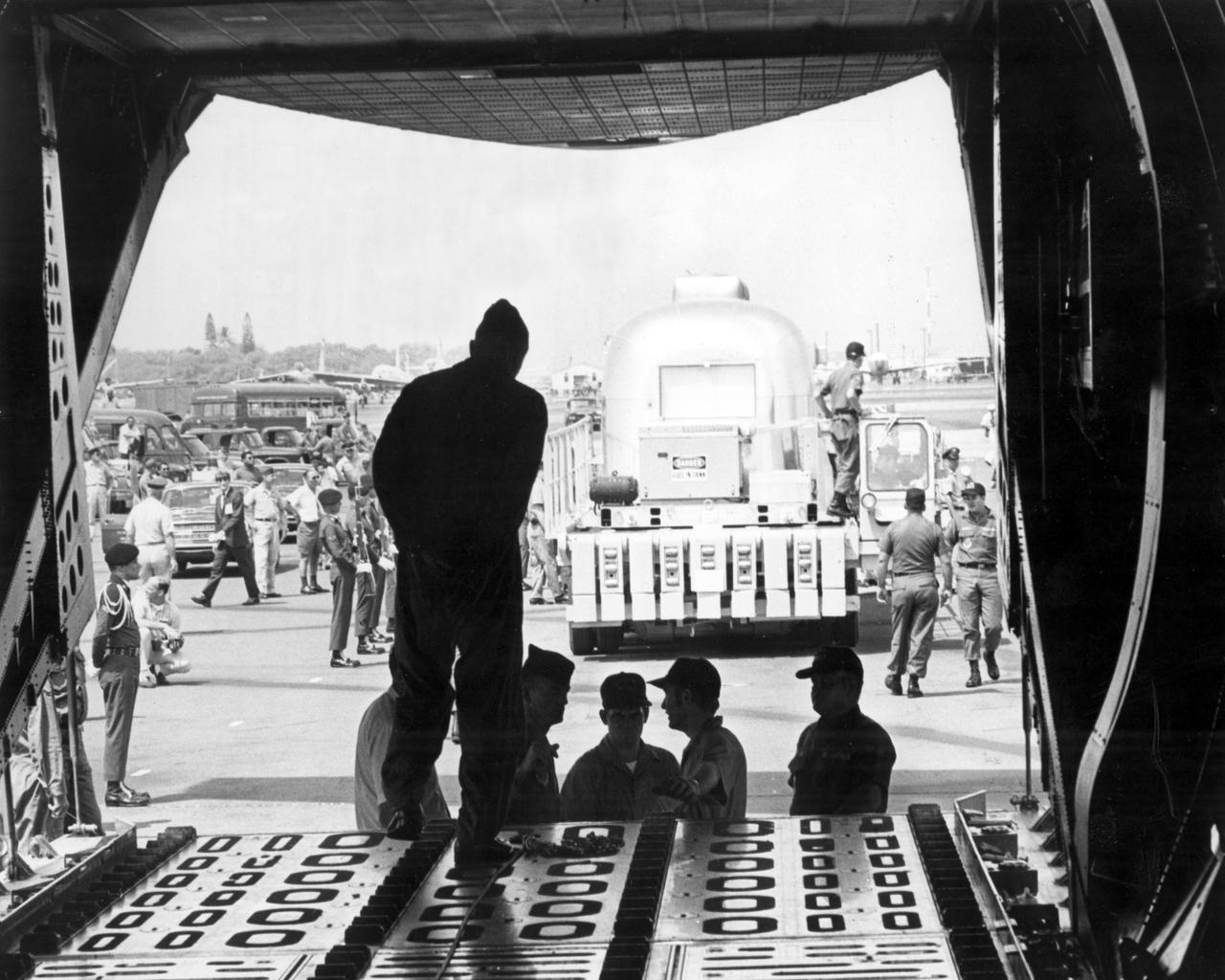
The Apollo 11 mission, the first manned lunar mission, launched from the Kennedy Space Center, Florida via the Marshall Space Flight Center (MSFC) developed Saturn V launch vehicle on July 16, 1969 and safely returned to Earth on July 24, 1969. Aboard the space craft were astronauts Neil A. Armstrong, commander; Michael Collins, Command Module (CM) pilot; and Edwin E. Aldrin Jr., Lunar Module (LM) pilot. The CM, piloted by Michael Collins remained in a parking orbit around the Moon while the LM, named “Eagle’’, carrying astronauts Neil Armstrong and Edwin Aldrin, landed on the Moon. During 2½ hours of surface exploration, the crew collected 47 pounds of lunar surface material for analysis back on Earth. The recovery operation took place in the Pacific Ocean where Navy para-rescue men recovered the capsule housing the 3-man Apollo 11 crew. The crew was airlifted to safety aboard the U.S.S. Hornet, where they were quartered in a Mobile Quarantine Facility (MQF) which served as their home until they reached the NASA Manned Spacecraft Center (MSC) Lunar Receiving Laboratory in Houston, Texas. In this photo taken at Pearl Harbor, Hawaii, the inhabited MQF is prepared for loading into an Air Force C-141 jet transport for the flight back to Ellington Air Force Base Texas and then on to the MSC.
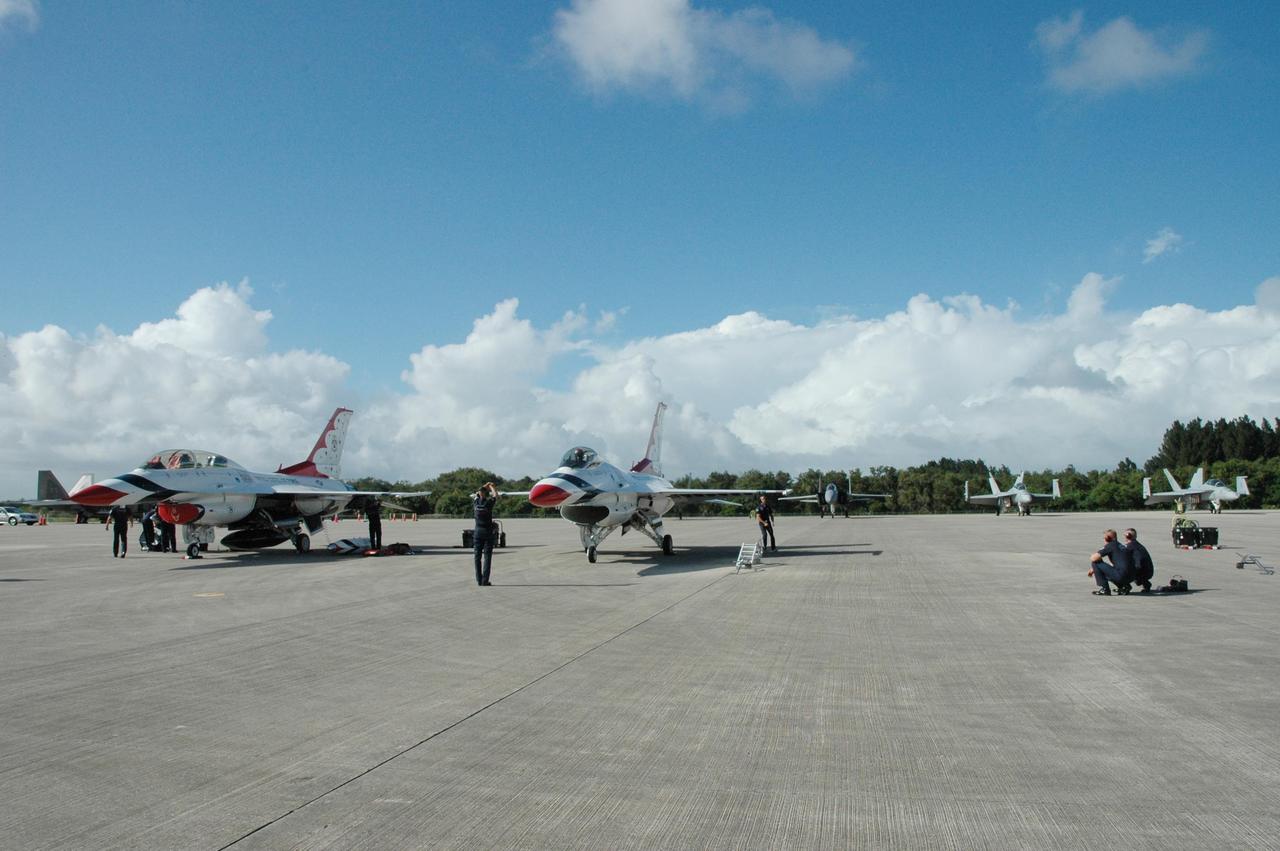
KENNEDY SPACE CENTER, FLA. -- Another of the U.S. Air Force Thunderbirds is parked on the Shuttle Landing Facility at NASA's Kennedy Space Center. The aerial demonstration squadron is performing for the World Space Expo being held from Nov. 1 to Nov. 4 at the NASA Kennedy Space Center Visitor Complex. Other aircraft participating in the salute include U.S. Air Force F-22 Raptor, U.S. Navy F-18 Super Hornet, U.S. Air Force F-15 Eagle, the P-51 Mustang Heritage Flight and the U.S. Air Force 920th Rescue Wing, which was responsible for Mercury and Gemini capsule recovery. The U.S. Army Golden Knights also will demonstrate precision skydiving. The World Space Expo is an event to commemorate humanity's first 50 years in space while looking forward to returning people to the moon and exploring beyond. The expo will showcase various panels, presentations and educational programs. It also is a part of NASA's 50th anniversary celebrations, highlighting the 45th Anniversary of the Mercury Program celebration featuring original NASA astronauts John Glenn and Scott Carpenter and the Pioneering Women of Aerospace forum featuring Eileen Collins and other prominent female space veterans. The agency was founded Oct. 1, 1958. Photo credit: NASA/Jack Pfaller
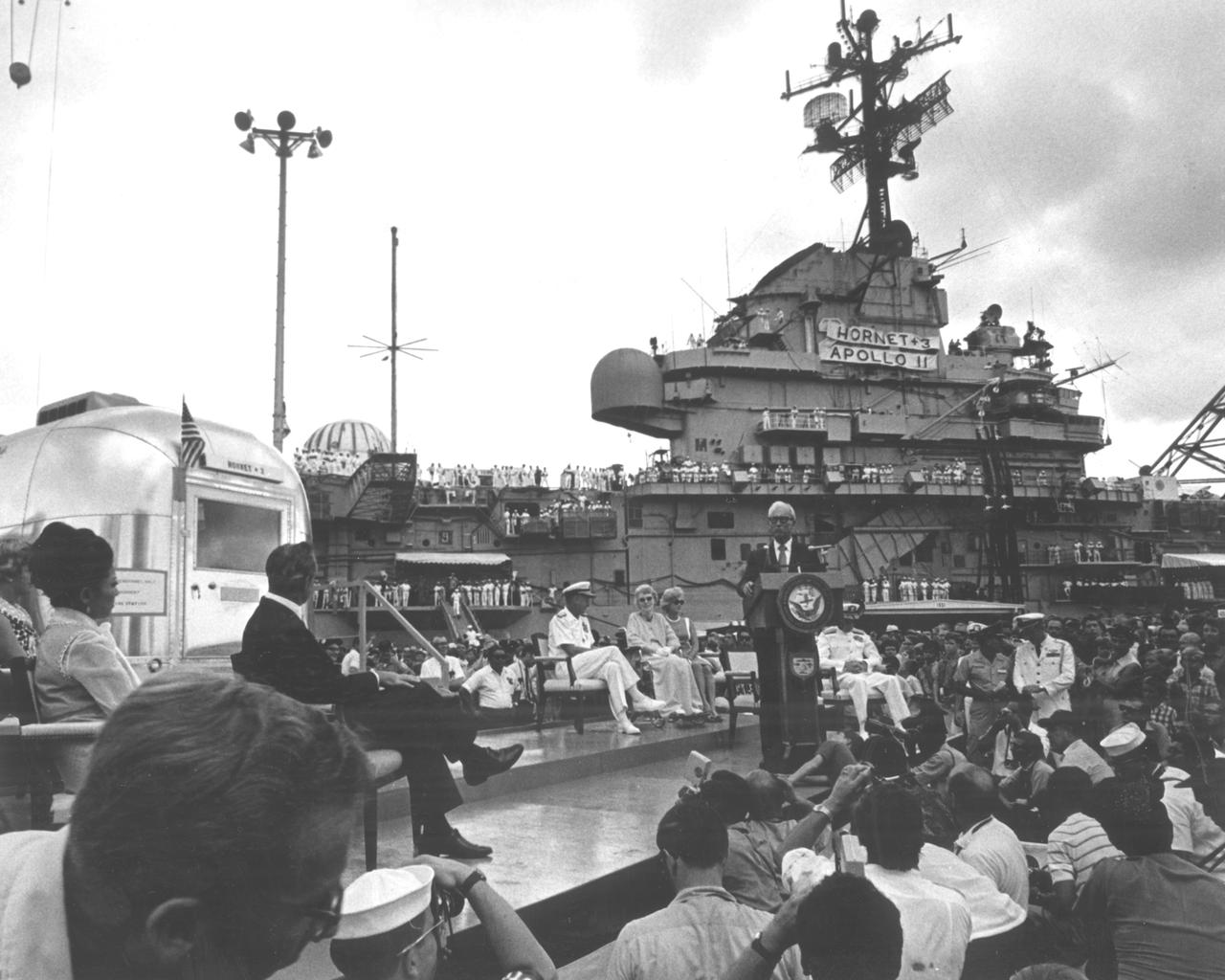
The Apollo 11 mission, the first manned lunar mission, launched from the Kennedy Space Center, Florida via the Marshall Space Flight Center (MSFC) developed Saturn V launch vehicle on July 16, 1969 and safely returned to Earth on July 24, 1969. Aboard the space craft were astronauts Neil A. Armstrong, commander; Michael Collins, Command Module (CM) pilot; and Edwin E. Aldrin Jr., Lunar Module (LM) pilot. The CM, piloted by Michael Collins remained in a parking orbit around the Moon while the LM, named “Eagle’’, carrying astronauts Neil Armstrong and Edwin Aldrin, landed on the Moon. During 2½ hours of surface exploration, the crew collected 47 pounds of lunar surface material for analysis back on Earth. The recovery operation took place in the Pacific Ocean where Navy para-rescue men recovered the capsule housing the 3-man Apollo 11 crew. The crew was airlifted to safety aboard the U.S.S. Hornet recovery ship, where they were quartered in a Mobile Quarantine Facility (MQF) for 21 days. The recovery vessel docked in Pearl Harbor Hawaii, where the occupied MQF was transferred for transport to the to NASA Manned Spacecraft Center (MSC) Lunar Receiving Laboratory in Houston, Texas. In this photo the quarantined astronauts are addressed by Hawaiian Governor John Burns upon their arrival at Pearl Harbor.